
User Manual
Document Version: V1.0
Manufacturer: QUZHOU SANMAX HARDWARE
TECHNOLOGY CO., LTD.
FCC ID: 2BQG6-B100

1. Product Overview
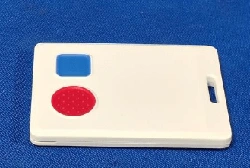
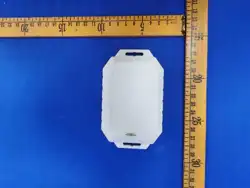
The Model B100 is a 2.4GHz ISM band Bluetooth Low Energy (BLE)
broadcasting beacon. It is widely applied in indoor positioning, asset tracking,
personnel management, and proximity sensing scenarios.
This device is powered by two ER18505 3.6V lithium thionyl chloride primary
batteries connected in parallel. The non-rechargeable battery solution
provides ultra-long service life, low self-discharge rate, and stable power
supply in wide temperature environments.
2. Basic Technical Specifications
Item Specification
Model Number B100
Wireless Protocol Bluetooth Low Energy (BLE)
Operating Frequency Band 2402 MHz ~ 2480 MHz (2.4 GHz ISM Band)
Power Supply
Two ER18505 Li-SOCl₂ batteries, parallel
connection, 3.6V nominal voltage

Item Specification
Battery Type
Non-rechargeable primary lithium battery, NO
recharge allowed
Operating Temperature
Range
-40°C ~ +85°C
Storage Temperature
Range
-55°C ~ +85°C
Installation Method Wall-mounted, fixed by side mounting holes
Certification Compliance FCC Part 15.247
3. Safety Instructions
3.1 Battery Safety Warnings
1.
The ER18505 batteries inside the device are non-rechargeable primary lithium
batteries. DO NOT attempt to recharge, heat, crush, puncture, disassemble or

solder the batteries. Recharging will cause fire, explosion, battery leakage and
permanent damage.
2. Do not short-circuit the positive and negative electrodes of the battery.
3. Do not mix use new batteries and old batteries, do not mix batteries of different
types. When replacing batteries, replace the two parallel batteries at the same
time.
4. Keep the device and batteries away from open flame, high temperature
environment and direct sunlight exposure.
5. Battery disposal: Please dispose of waste batteries in accordance with local
environmental protection regulations. Do not discard batteries into domestic
garbage, do not incinerate batteries.
6. Prevent children from touching and swallowing the batteries.
3.2 General Operation Safety
1.
Install the device in a well-ventilated dry environment. Avoid long-term soaking in
water, heavy dust and corrosive gas environment.
2. Do not make unauthorized disassembly, modification and transformation of the
internal circuit of the device.
3. Do not knock, drop or violently vibrate the device.

4. FCC Compliance Statements (Mandatory
FCC Warning Clauses)
This device complies with Part 15 Subpart C of the FCC Rules.
4.1 FCC Operation Conditions
Operation is subject to the following two conditions:
(1) This device may not cause harmful interference.
(2) This device must accept any interference received, including interference
that may cause undesired operation.
4.2 FCC Caution Statement
CAUTION: Any changes or modifications to this device not expressly
approved by the party responsible for FCC compliance will void the user's
authority to operate this equipment.
4.3 FCC Interference Statement
This equipment has been tested and found to comply with the limits for a
Class B digital device, pursuant to Part 15 of the FCC Rules. These limits are
designed to provide reasonable protection against harmful interference in a
residential installation.

This equipment generates, uses and can radiate radio frequency energy. If
not installed and used in accordance with the instructions, it may cause
harmful interference to radio communications. However, there is no guarantee
that interference will not occur in a particular installation.
If this equipment does cause harmful interference to radio or television
reception (which can be determined by turning the equipment off and on), the
user is encouraged to try to correct the interference by one or more of the
following measures:
Reorient or relocate the receiving antenna.
Increase the separation distance between the equipment and the receiver.
Connect the equipment to a circuit different from that to which the receiver is
connected.
4.4 FCC RF Exposure Statement
This portable BLE beacon device complies with FCC RF radiation exposure
limits set forth for an uncontrolled environment. The internal antenna of the
device is integrated inside the housing, and normal operation of the device will
not exceed the FCC RF exposure requirement.

4.5 FCC ID Label Information
The permanent FCC ID label of this product is marked on the rear outer
surface of the device, inside the central recessed area of the housing.
The label content is permanently engraved by laser marking process:
FCC ID: 2BQG6-B100
The laser-engraved label is durable, wear-resistant, non-falling, clearly visible
without disassembly, and fully meets the FCC permanent marking
requirements.
5. Installation & Use Instructions
1.
Mounting Installation: Use the reserved mounting holes on both sides of the
housing to fix the device on the wall or target surface with screws.
2. After installation, ensure the rear FCC ID label is completely exposed, without
being blocked by wall, bracket or other obstacles.
3. The device will automatically broadcast BLE signal after power on. Users can
configure broadcast parameters (UUID, major/minor, broadcast interval, transmit
power) through the matching BLE configuration mobile APP.
4. No manual operation is required after normal power-on installation, the device
works continuously with battery power supply.
6. Maintenance & Troubleshooting

1.
Daily maintenance: Wipe the device shell with dry soft cloth. Do not use corrosive
chemical cleaners.
2. No signal broadcast: Check whether the battery is exhausted, replace two new
ER18505 batteries at the same time.
3. Weak wireless signal: Check battery remaining power, check whether the
installation position is blocked by metal obstacles.
4. Battery abnormal leakage: Immediately stop using the device, properly dispose of
the waste battery, clean the battery compartment before installing new batteries.
7. Warranty Note
The manufacturer warrants that the product is free from defects in materials
and workmanship under normal use within the warranty period. The warranty
does not cover damage caused by unauthorized modification, improper
operation, battery abuse, natural disasters and man-made damage.