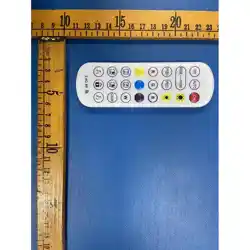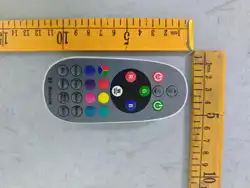
REMOTE CONTROL INSTRUCTIONS
BATTERY INSTALLATION
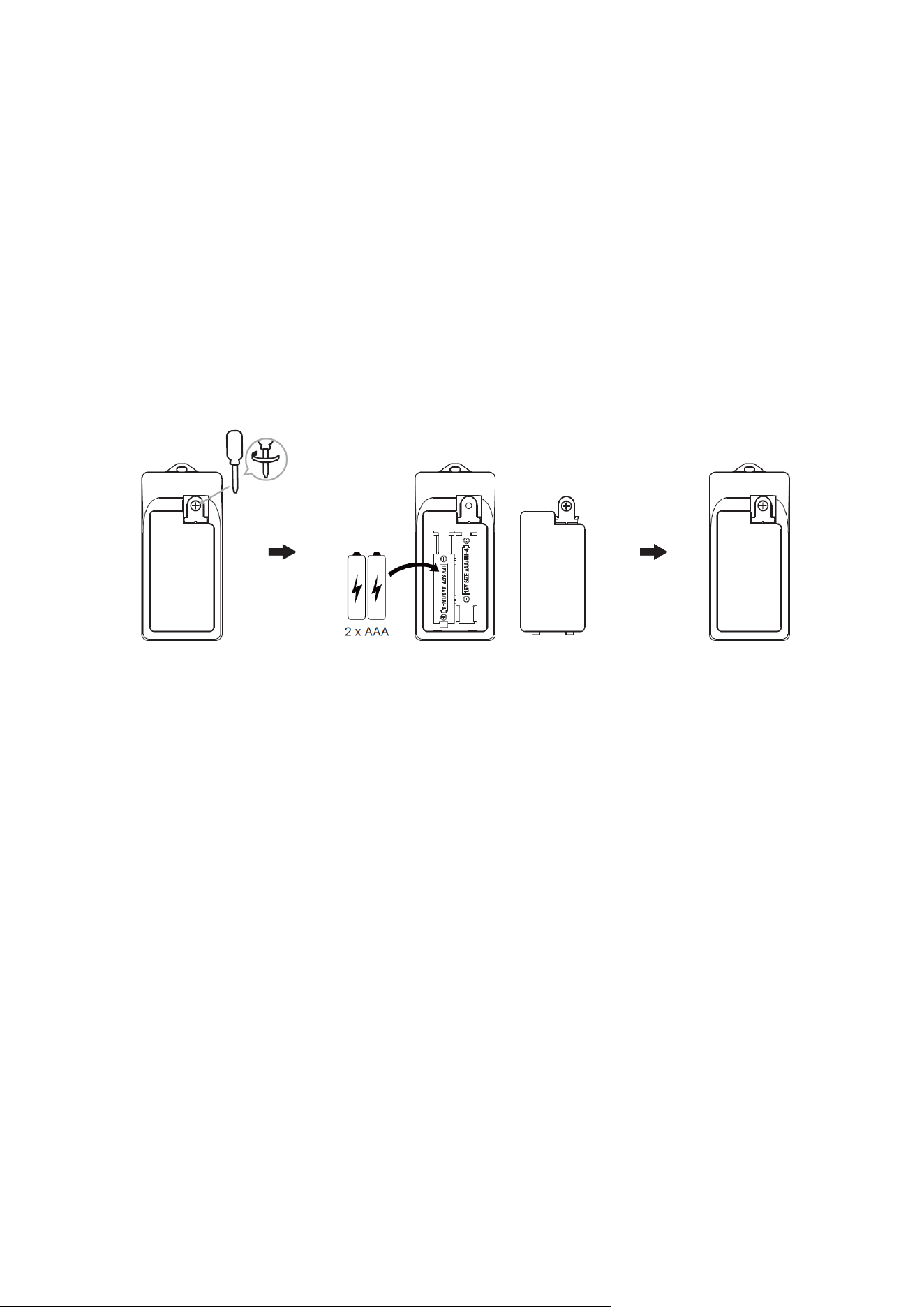
Before the first use, insert 2 x AAA batteries (not included) into the battery compartment of
the remote control.
1. Locate the screw at the rear of the remote control.
2. Using your own small screwdriver (PH1 Cross-head Screwdriver), twist open the screw until
the tray cover becomes loose. Then completely remove the tray cover.
3. Insert 2 x new AAA batteries. Ensure the new batteries are installed with the correct
polarity (+ and -).
4. Insert the tray cover back into the remote control.
5. Screw the tray cover back into place securely with a screwdriver.
BATTERY INSTRUCTIONS
• Ensure the batteries are installed correctly with regard to polarity (+ and -).
• Replace all batteries of a set at the same time.
• Do not mix old and new batteries, different brands or types of batteries, such as alkaline,
carbon-zinc, or rechargeable batteries.
• Removed batteries from equipment that is not to be used for an extended period of time.
• Do not dispose of batteries in fire – Batteries may explode or leak.
• Non-rechargeable batteries are not to be recharged.
• Do not short circuit batteries as this may lead to high temperatures, leakage, or rupture.
• Do not force discharge, recharge, disassemble, heat or incinerate. Doing so may result in
injury due to venting, leakage, or explosion resulting in chemical burns.
• Small parts, keep batteries out of reach of children.
• Immediately seek medical attention if a cell or battery has been swallowed. Also, contact
your local poison control center.
• Dispose of used batteries properly by following directions on batteries, and local laws and
regulations regarding the disposal of hazardous waste.
• Always purchase the correct size and grade of battery most suitable for the intended use.
• Remove used batteries promptly.
• Clean the battery contacts and also those of the device prior to battery installation.
• Always completely secure the battery compartment. If the battery compartment does not
close securely, stop using the product, remove the batteries, and keep them away from
children.

Any Changes or modifications not expressly approved by the party responsible for
compliance could void the user's authority to operate the equipment.
This device complies with part 15 of the FCC Rules. Operation is subject to the following two
conditions: (1) This device may not cause harmful interference, and (2) this device must
accept any interference received, including interference that may cause undesired operation.
Note: This equipment has been tested and found to comply with the limits for a Class B
digital device, pursuant to part 15 of the FCC Rules. These limits are designed to provide
reasonable protection against harmful interference in a residential installation. This
equipment generates, uses and can radiate radio frequency energy and, if not installed and
used in accordance with the instructions, may cause harmful interference to radio
communications. However, there is no guarantee that interference will not occur in a
particular installation. If this equipment does cause harmful interference to radio or television
reception, which can be determined by turning the equipment off and on, the user is
encouraged to try to correct the interference by one or more of the following measures:
—Reorient or relocate the receiving antenna.
—Increase the separation between the equipment and receiver.
—Connect the equipment into an outlet on a circuit different from that to which the receiver
is connected.
—Consult the dealer or an experienced radio/TV technician for help.
This device complies with Innovation, Science, and Economic Development Canada’s licence-
exempt RSS standard(s). Operation is subject to the following two conditions:
(1) this device may not cause interference, and
(2) this device must accept any interference, including interference that may cause
undesired operation of the device.
Le présent appareil est conforme aux CNR d' Innovation, Sciences et Développement
économique Canada applicables aux appareils radio exempts de licence. L'exploitation est
autorisée aux deux conditions suivantes :
(1) l'appareil nedoit pas produire de brouillage, et
(2) l'utilisateur de l'appareil doit accepter tout brouillage radioélectrique subi, même si le
brouillage est susceptible d'en compromettre le fonctionnement.
This equipment complies with FCC/ISED radiation exposure limits set forth for an
uncontrolled environment.
L'appareil est conforme aux limites d'exposition aux rayonnements spécifiées par la FCC/ISED
pour les environnements non contrôlés.
MODEL / HVIN
PDT-019-01, PDT-019-02, PDT-019-03, PDT-019-04, PDT-019-05, PDT-019-06,
PDT-019-07, PDT-019-08, PDT-019-09, PDT-019-10, PDT-019-11, PDT-019-12,
PDT-019-13, PDT-019-14, PDT-019-15, PDT-019-16, PDT-019-17, PDT-019-18.