
This manual contains important safety, performance and maintenance
information. Read the manual before taking your first ride on your
new bicycle, and keep the manual handy for future reference.
To register your bike visit
schwinnbikes.com/register
Owner’s Manual
Kids Bike
Contents
1 Safety ............................................4
Safety Signal Words ...............................4
User Responsibility................................4
Bicycle Setup ....................................5
Personal Safety...................................8
Riding Safety....................................11
Before You Ride Safety Checklist ...................13
2 Parts Idencaon . . . . . . . . . . . . . . . . . . . . . . . . . . . . . . . . 14
3 Assembly . . . . . . . . . . . . . . . . . . . . . . . . . . . . . . . . . . . . . . . . 16
Tools Required . . . . . . . . . . . . . . . . . . . . . . . . . . . . . . . . . . 16
Geng Started..................................17
Aach the Handlebar.............................18
Aach the Front Brake Cable . . . . . . . . . . . . . . . . . . . . . . 21
Aach the Front Wheel ...........................21
Aach the Seat..................................23
Aach the Pedals ................................24
Aach the Training Wheels ........................25
Aach the Pegs..................................28
4 Adjustments......................................29
Tools Required . . . . . . . . . . . . . . . . . . . . . . . . . . . . . . . . . . 29
Adjusng the Brakes . . . . . . . . . . . . . . . . . . . . . . . . . . . . . 30
Adjusng the Seat Height . . . . . . . . . . . . . . . . . . . . . . . . . 37
Adjusng the Handlebar . . . . . . . . . . . . . . . . . . . . . . . . . . 38
Adjusng the Headset ............................39
Adjusng the Boom Bracket......................41
5 Use..............................................42
Brake Operaon .................................42
Security ........................................44
6 Maintenance . . . . . . . . . . . . . . . . . . . . . . . . . . . . . . . . . . . . . 45
Basic Maintenance ...............................45
Lubricaon Schedule .............................46
Parts Maintenance . . . . . . . . . . . . . . . . . . . . . . . . . . . . . . 47
Hub Bearings....................................50
Inang the Tire Tube . . . . . . . . . . . . . . . . . . . . . . . . . . . . 50
Repairing a Flat Tire ..............................51
Troubleshoong Guide ...........................52
7 Warranty.........................................55
Purchase Record.................................56

2
Congratulaons
on your new bicycle! Proper assembly and operaon of your
bicycle is important for your safety and enjoyment. Our
customer service department is dedicated to your sasfacon
with Pacic Cycle and its products. If you have quesons or need
advice regarding assembly, parts, performance, or returns,
please contact the experts at Pacic Cycle. Enjoy the ride!
Toll free: 1-800-626-2811.
Customer Service hours: Monday - Friday 8 AM- 5 PM Central
Standard Time (CST)
You may also reach us at:
Web: www.pacic-cycle.com
Email: customerservice@pacic-cycle.com
Mail: P. O. Box 344
4730 E. Radio Tower Lane
Olney, IL 62450
Do not return this item to the store. Please call Pacic Cycle
customer service if you need assistance. You will need your
model number and date code located on the service scker near
the boom bracket area. See Secon 7: Purchase Record for the
locaon of the model number on your bicycle.
About This Manual
It is important for you to understand your new bicycle.
By reading this manual before you go out on your rst ride, you’ll
know how to get beer performance, comfort, and enjoyment
from your new bicycle. It is also important that your rst ride on
your new bicycle is taken in a controlled environment, away from
cars, obstacles and other cyclists.
This manual contains important informaon regarding safety,
assembly, use, and maintenance of the bicycle but is not
intended to be a complete or comprehensive manual covering all
aspects concerning bicycle ownership. We recommend
consulng a bicycle specialist if you have any doubts or concerns
regarding your experience or ability to properly assemble and
maintain the bicycle.
A Special Note For Parents and Guardians
It is a tragic fact that most bicycle accidents involve children.
As a parent or guardian, you bear the responsibility for the
acvies and safety of your minor child. Among these
responsibilies are to make sure that the bicycle which your
child is riding is properly ed to the child; that it is in good
repair and safe operang condion; that you and your child
have learned, understand and obey not only the applicable local
motor vehicle, bicycle, and trac laws, but also the common
sense rules of safe and responsible bicycling. As a parent, you
should read this manual before leng your child ride the
bicycle. Please make sure that your child always wears an
approved bicycle helmet when riding.
3
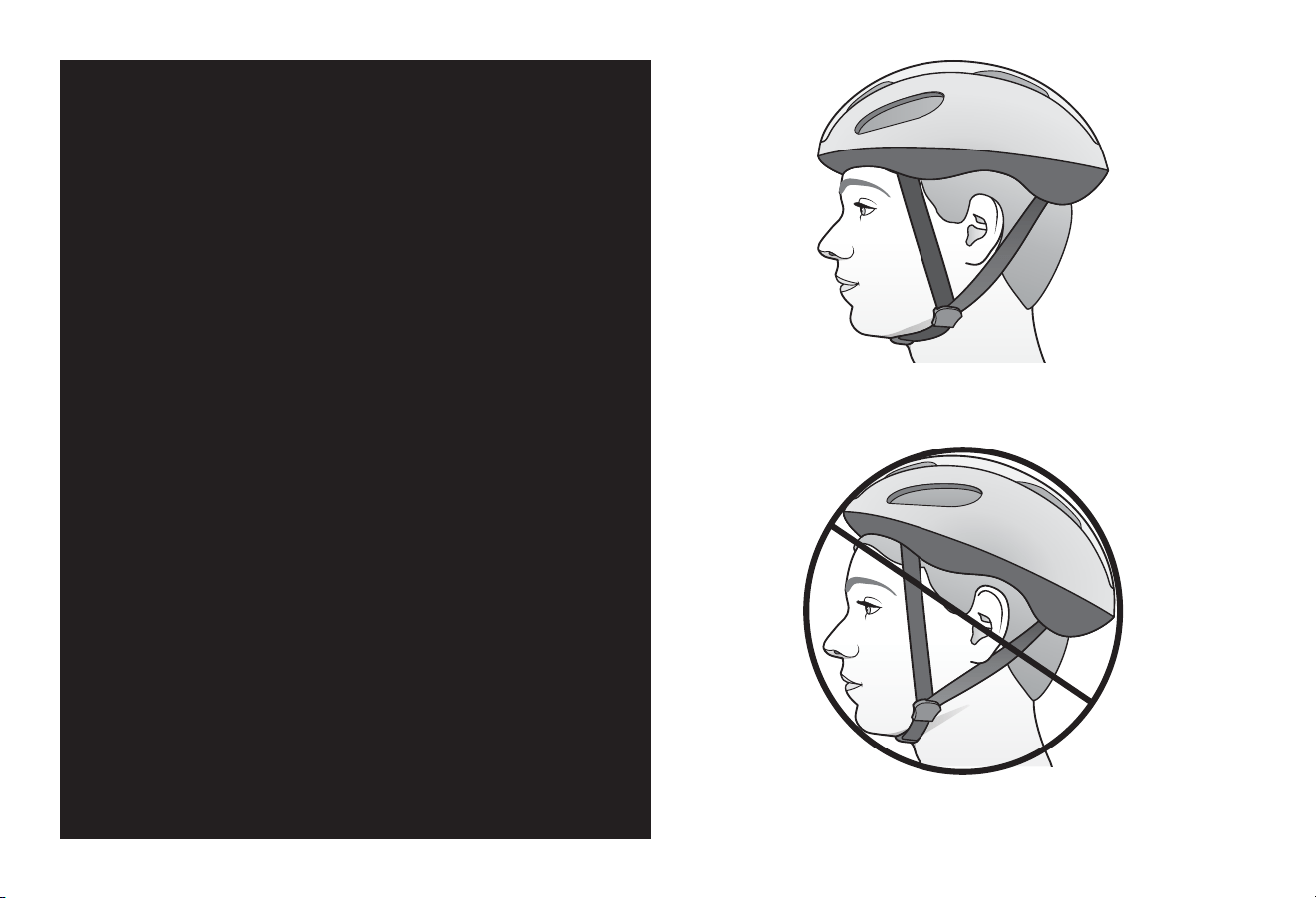
Correct Fing
Make sure your helmet covers your forehead
Incorrect Fing
Forehead is exposed and vulnerable to serious injury
• ALWAYS WEAR A PROPERLY FITTED
HELMET WHEN RIDING YOUR BICYCLE
• DO NOT RIDE AT NIGHT
• AVOID RIDING IN WET CONDITIONS
Helmets
Save
Lives!
4
1 Safety
WARNING!
CAUTION!
SAFETY SIGNAL WORDS
The following safety signal words indicate a safety message.
The symbol alerts you to potenal hazards. Failure to follow the
warning may result in damage to property, injury, or death.
This manual contains many Warnings and Cauons concerning
the consequences of failure to follow safety warnings. Because
any fall can result in serious injury or even death, we do not
repeat the warning of possible injury or death whenever the risk
of falling is menoned.
Indicates a hazard or unsafe pracce that will result in severe
injury or death. Failure to read, understand and follow the safety
informaon in this manual may result in serious injury or death.
Indicates a hazard or unsafe pracce that could result in
minor injury.
Indicates a hazard unrelated to personal injury, such as
property damage.
❶ Safety
NOTICE
USER RESPONSIBILITY
All persons assembling, using, and maintaining the bicycle must
read and understand the safety warnings and operang
instrucons in this manual before using the bicycle.
It is the responsibility of the user, or in the case of a child rider,
an adult, to ensure the bicycle is properly maintained and in
proper operang condion. Doing so will reduce the risk of
injury. Always conduct regular maintenance and inspecon of
your bicycle. Complete the Safety Checklist at the end of this
secon before each use.
A responsible adult must always supervise the use of the bicycle
by a child. You must ensure:
WARNING!
• The child is wearing the proper protecve are and approved
bicycle helmet.
• The child is seated securely and the bicycle is properly ed
to the child.
• The child understands applicable laws and common sense
rules of safe responsible bicycling.
Do not install any kind of power plant or internal combuson
engine to a bicycle. Adapng a bicycle in this manner poses an
extreme safety risk to rider and could result in loss of control
or death.
Safety 1
5
Figure 1.1
BICYCLE SETUP
Correct Bicycle Size
Riding a bicycle that is not correctly sized to the rider may result
in the rider’s feet not being able to touch the ground and
balance the bicycle, properly reach the handlebar for steering or
braking, and loss of control when pedaling.
Use the wheel size in the following table as a guide to match
the rider and bicycle. For example, bicycles with a wheel size
of 12 inches t a rider that is 28 to 38 inches tall. Note: Some
bicycles such as folding bicycles may have smaller wheels but
sll t adults.
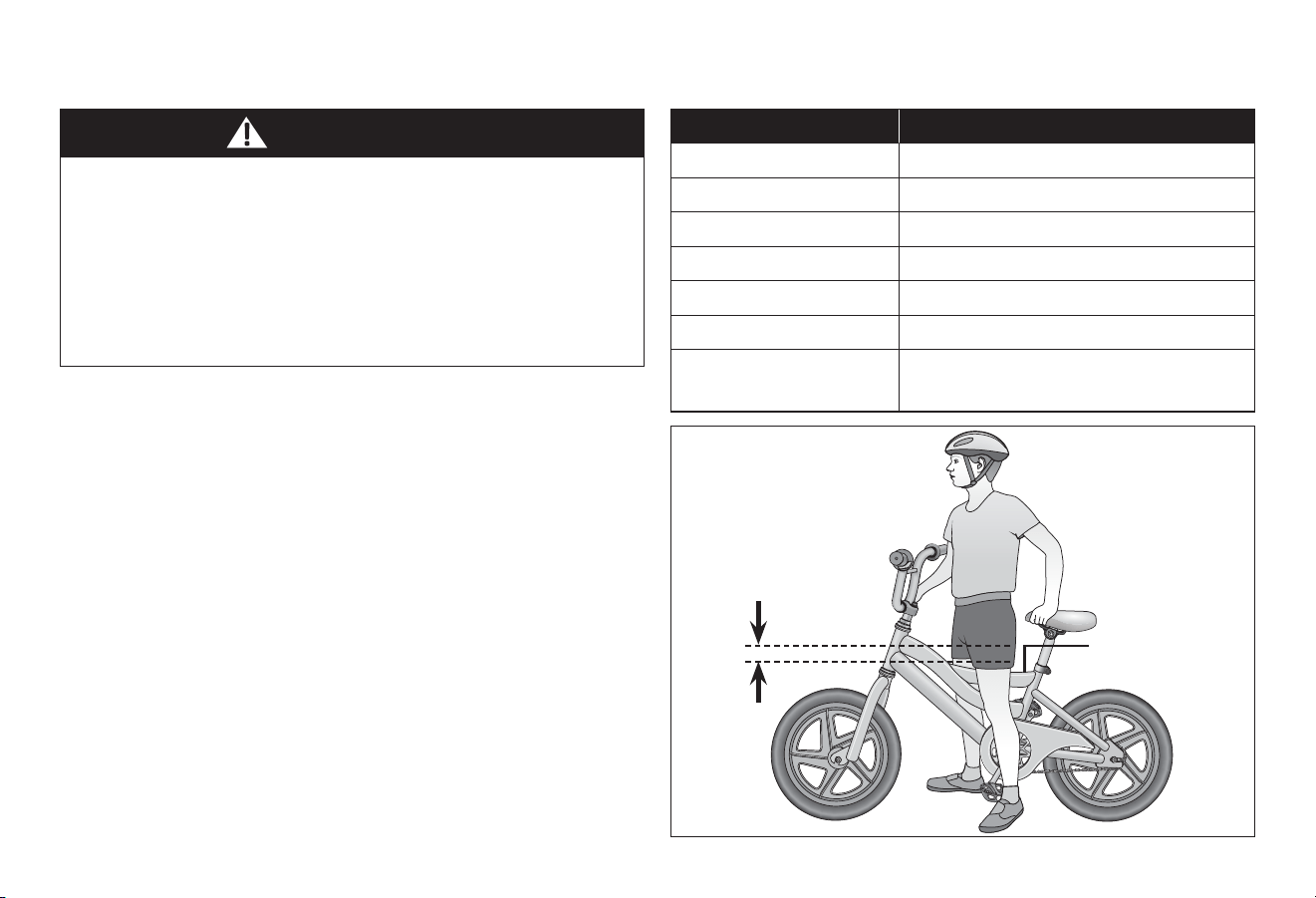
If the bicycle has a top tube on the frame, check that there is
one to three inches of clearance between the rider and the top
tube. Figure 1.1
Inability to safely reach the handlebars and dismount the
bicycle may result in loss of control of the bicycle. If the
bicycle has a top tube on the frame, ensure there is one to
three inches of clearance between the rider and the top tube.
Improper setup or maintenance of the bicycle may result in
an unexpected movement, loss of control, and serious injury
or death.
WARNING!
Wheel Size Riders Approximate Height
12 inch 28 - 38 inches tall
14 inch 36 - 40 inches tall
16 inch 38 - 48 inches tall
18 inch 42 - 52 inches tall
20 inch 48 - 60 inches tall
24 inch 56 - 66 inches tall
26 inch, 27.5 inch,
29 inch, 700c
64 - 74 inches tall
1 to 3 inch
clearance
Top tube
6
1 Safety
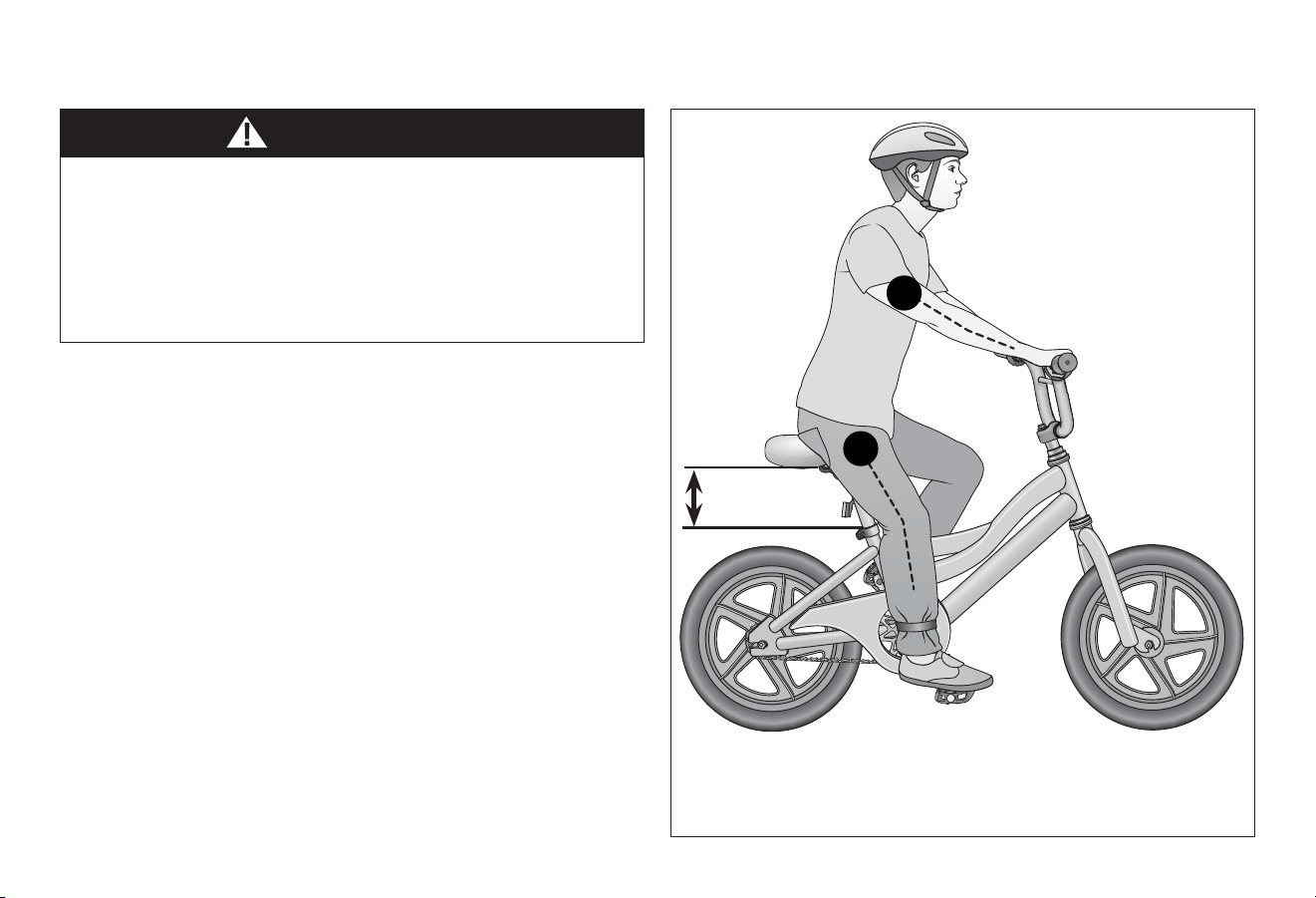
Figure 1.2
Seat Height and Handlebar Reach
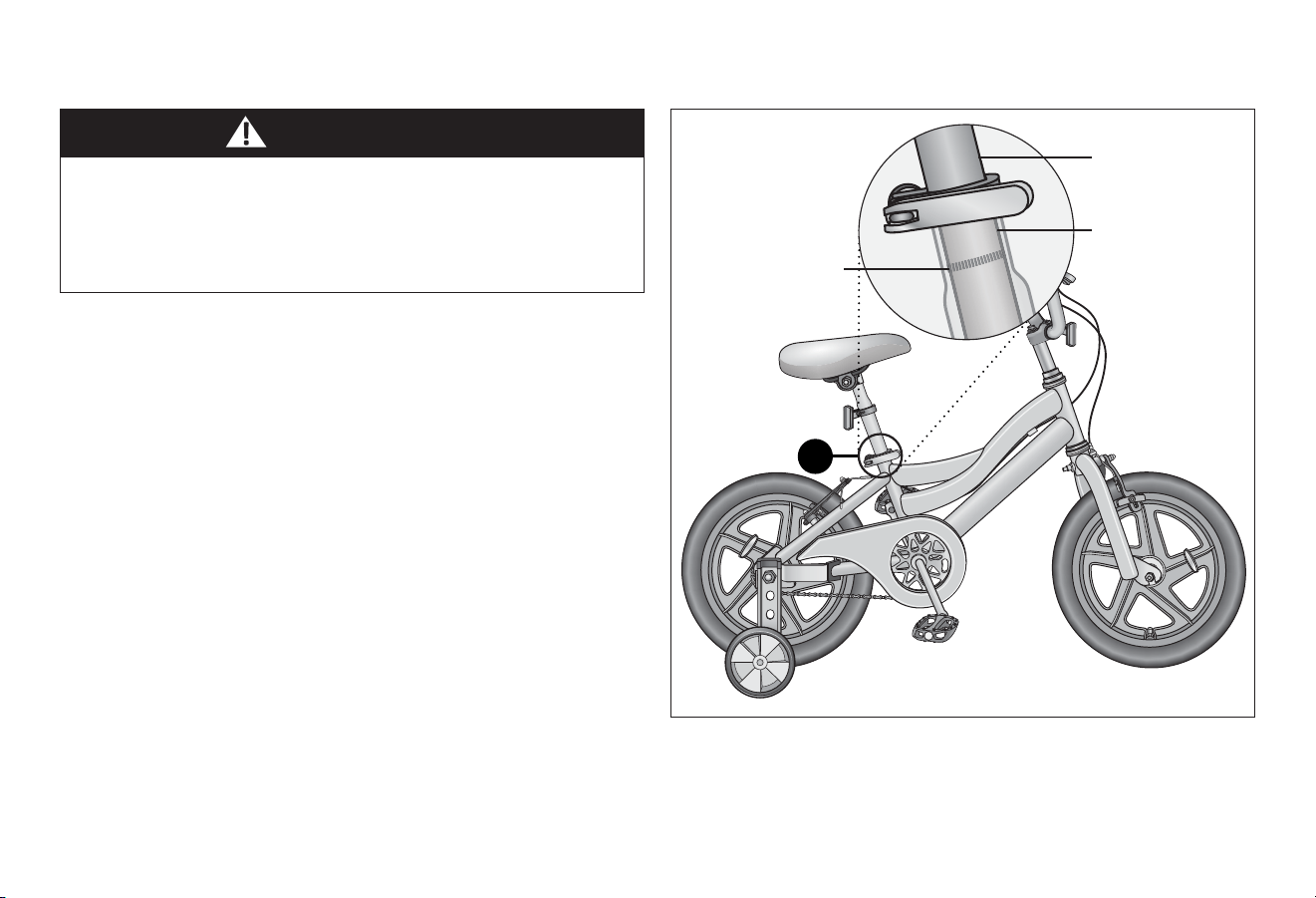
Improperly adjusted seat height could aect the rider’s ability
to reach the handlebar and pedals may result in an unexpected
movement, loss of control, and serious injury or death. Follow
these guidelines when adjusng the seat height. Always
ensure the seat post minimum inseron marks are below the
seat clamp and cannot be seen. Ensure the seat clamp is
locked and the seat cannot move.
WARNING!
❶ Your legs should be almost completely straight when the
pedal is in the down most posion, just a slight bend in
the knee. Figure 1.2
Note: The rider’s feet may not touch the ground easily. If
this is the case the rider can simply move forward o the
seat to mount and dismount the bicycle or the seat can be
adjusted lower if the rider is uncomfortable with the height,
but note that riding is more dicult with the seat too low,
as the legs are in an unnatural posion.
Do not raise the seat so much the knees lock straight when
pedaling or you have to move forward o the seat to pedal.
This is unsafe and the bicycle cannot be controlled in this
condion.
❷ You should be able to safely reach the handlebar with
your arms bent slightly (approximately 10 degrees) at
the elbow.
Adjust the seat
height
1
2
Safety 1
7
Figure 1.3
Improper setup or maintenance of the quick-release levers
may result in an unexpected movement, loss of control, and
serious injury or death. Before riding always check that the
quick-release lever is rmly locked in place and the seat does
not move.
Seat Post
❷ Ensure the seat post’s minimum inseron marks are not
visible above the seat clamp and the clamp is locked in
place. Figure 1.3
Note: See Secon 4: Adjusng the Seat Height if
adjustments are needed.
Quick-release Lever
WARNING!
Minimum inseron
marks are located
on the seat post
Quick-release
seat clamp
2
Seat post
Seat tube
8
1 Safety
Figure 1.4
Riding a bicycle without protecve gear, clothing, or a helmet
may result in serious injury or death. Always wear protecve
gear, clothing, and helmet when riding the bicycle. Ensure
protecve gear does not interfere with steering, braking, and
pedaling.
WARNING!
PERSONAL SAFETY
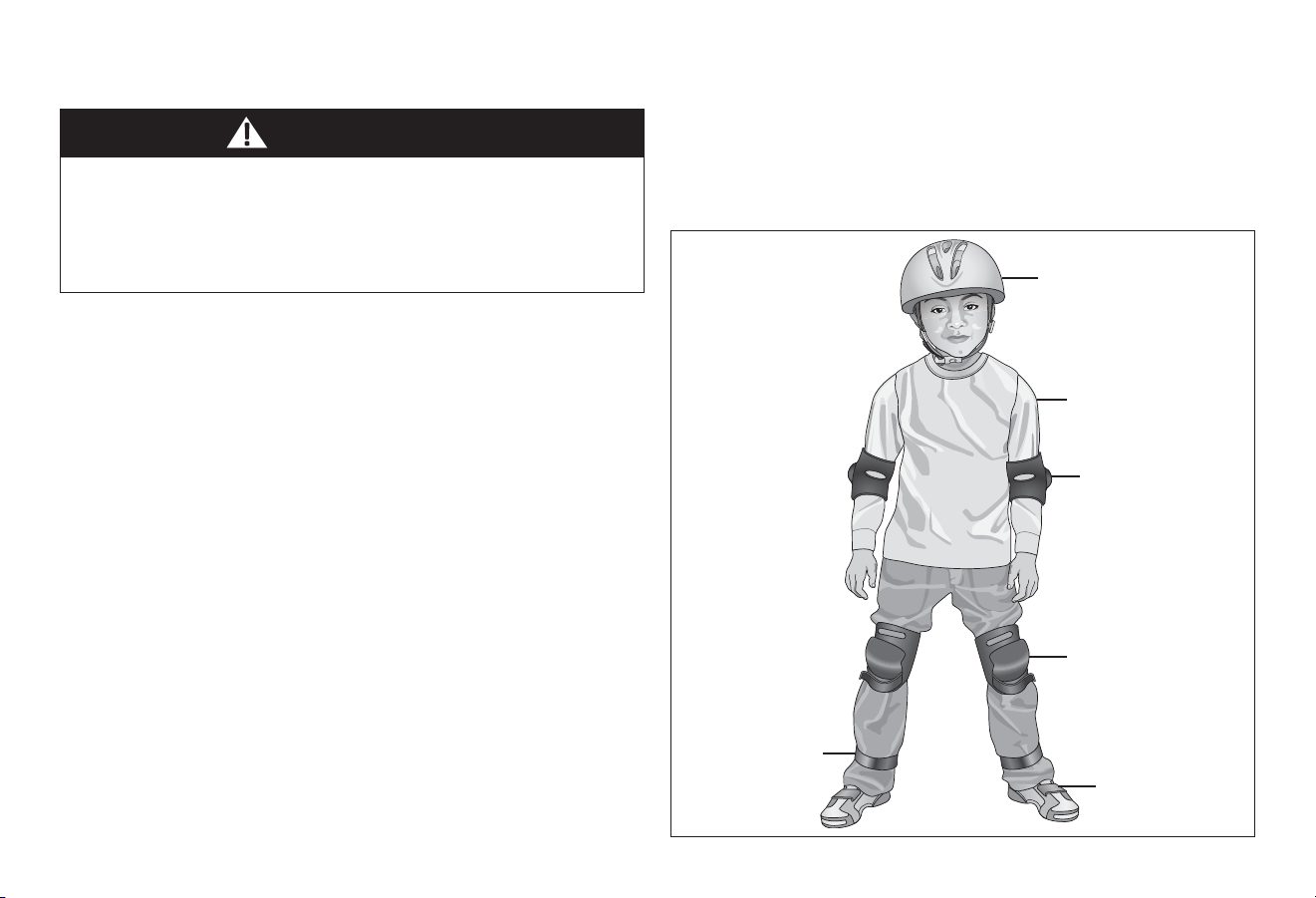
Protecve Gear and Clothing
Always wear: Figure 1.4
• Colors that are easily seen and, if possible, reecve clothing.
• Clothing appropriate for the weather condions.
• Use of protecve gear such as pads for the knees and elbows
is highly recommended for children.
• A properly ed, ASTM or SNELL approved, bicycle helmet
shall be worn at all mes by riders of the bicycle. For
informaon regarding how to properly t a helmet visit:
hp://www.nhtsa.gov/people/injury/pedbimot/bike/
easystepsweb
Do not wear:
• Loose clothing parts, strings, or jewelry that may become
entangled with moving parts on the bicycle or interfere with
handling of the bicycle.
• Pants with loose pant legs. If necessary, always tuck pant legs
into a sock or use a leg band to avoid the clothing becoming
caught in the drive chain.
• Shoes with uned shoe laces.
Properly ed helmet
Elbow pads
Knee pads
Leg band
Shoes fastened
or ed
Easily seen or
reecve clothing
Safety 1
9
Figure 1.6
Figure 1.5
Helmet Use
Important! Many states have passed helmet laws regarding
children. Make sure you know your state’s helmet laws. It is your
job to enforce these rules with your children. Even if your state
does not have a children’s helmet law, it is recommended that
everyone wear a helmet when cycling. When riding with a child
carrier seat or trailer, children must wear a helmet.
It is strongly advised that a properly ng, ASTM or SNELL
approved, bicycle safety helmet be worn at all mes when riding
your bicycle. In addion, if you are carrying a passenger in a
child safety seat, they must also be wearing a helmet.
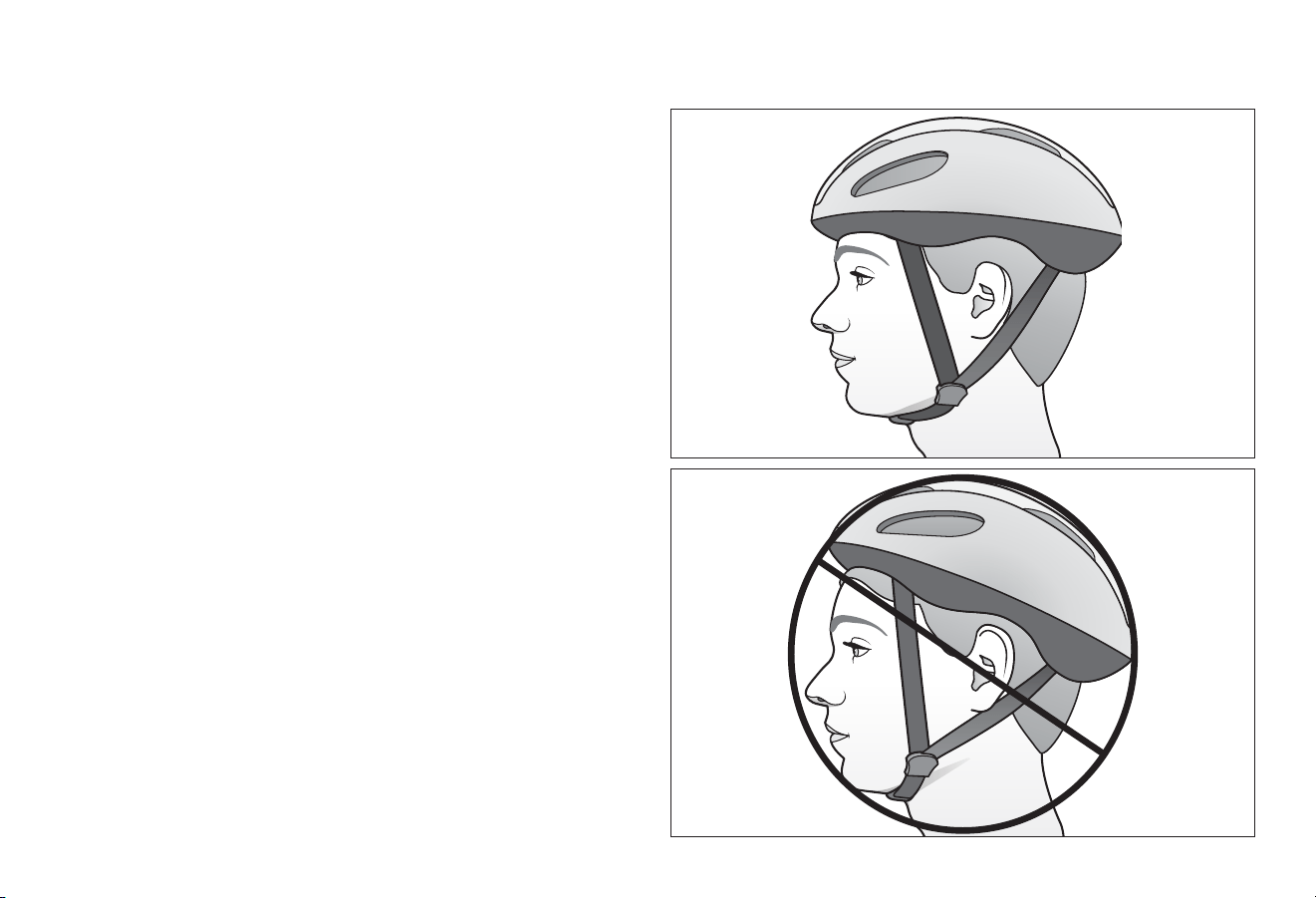
The correct helmet should: Figure 1.5
• Be comfortable
• Have good venlaon
• Fit correctly
• Cover forehead
Incorrect helmet posion: Figure 1.6
• Helmet does not cover the forehead
10
1 Safety
Figure 1.7
Missing, damaged, or dirty reectors will aect the ability of
others to see and recognize you as a moving bicyclist, increasing
the risk of being hit, serious injury or death. Always check the
reectors are in place and make sure they are clean, straight,
unbroken and securely mounted before riding the bicycle.
WARNING!
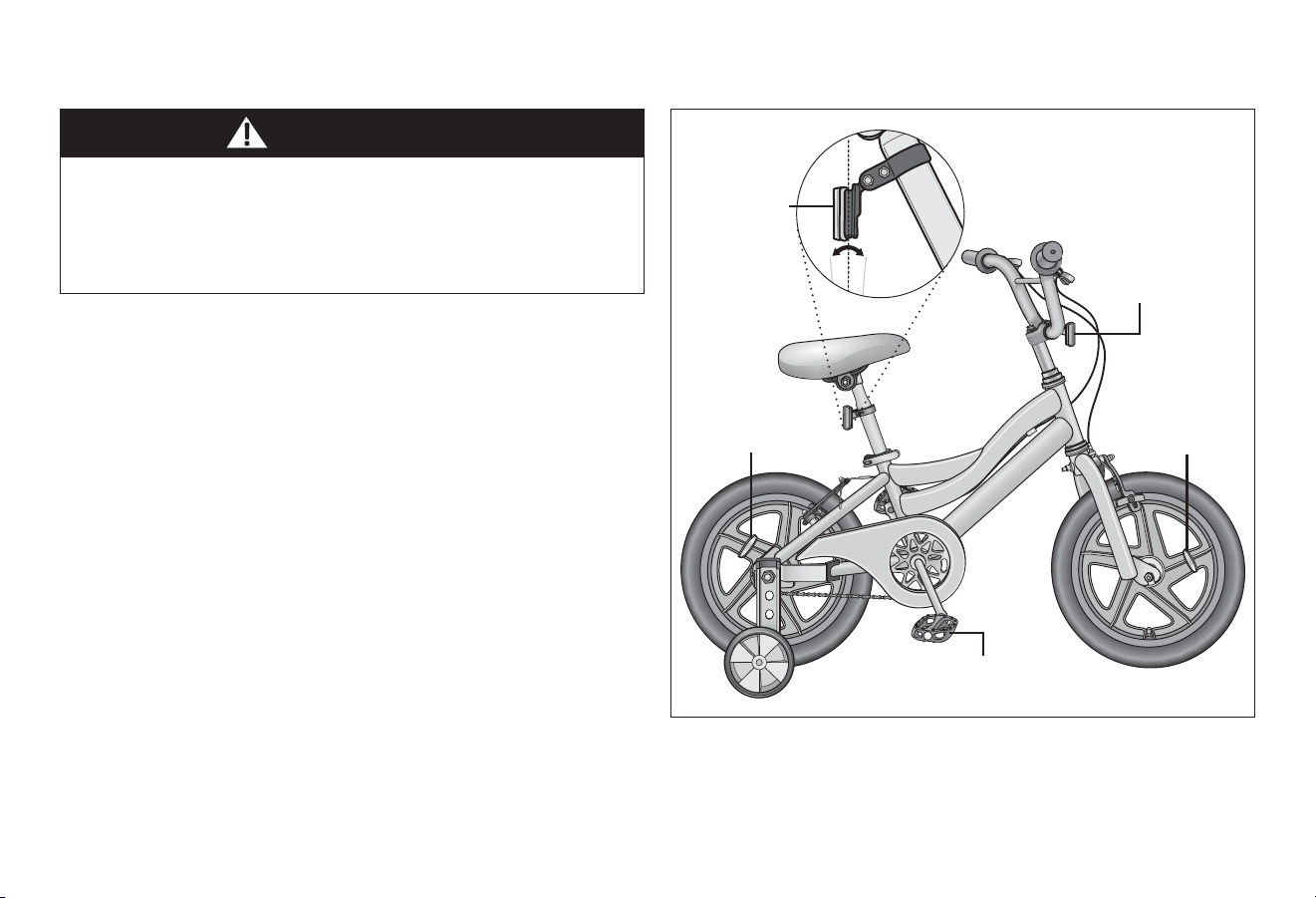
Important! Federal regulaons require every bicycle over 16
inches to be equipped with front, rear, wheel, and pedal
reectors. Many states require specic safety devices. It is your
responsibility to familiarize yourself with the laws of the state
where you ride and to comply with all applicable laws, including
properly equipping yourself and your bike as the law requires.
Bicycles under 16 inches are considered “sidewalk bicycles” and
may not be ed with reectors. These bicycles should not be
ridden on streets, at night or unsupervised by an adult.
Check and conrm the front and rear reectors are in the
correct posion: Figure 1.7
• Front Reector: Should aim forward (when viewed from
above) and be mounted so it is within 5 degrees of vercal.
• Rear Reector: Should aim straight back (when viewed from
above) and be mounted so it is within 5 degrees of vercal.
Reectors
Rear (red)
Plus or minus
5 degrees of
vercal
Front wheel
(white)
Rear wheel
(white)
Pedal (orange)
Front (white)
Safety 1
11
General Safety
• Familiarize yourself with all the bicycle’s features before
riding. Pracce gear shis, braking, and the use of toe clips
and straps, if installed.
• Always ride defensively in a predictable, straight line. Never
ride against trac.
• Expect the unexpected (e.g. opening car doors or cars backing
out of concealed driveways).
• Take extra care at intersecons and when preparing to pass
other vehicles.
• Maintain a comfortable stopping distance from all other
riders, vehicles and objects. Safe braking distances and forces
are subject to the prevailing weather condions. Do not lock
up the brakes. When braking, always apply the rear brake
rst, then the front. The front brake is more powerful and if it
is not correctly applied, you may lose control and fall.
• Always use the correct hand signals to indicate turning
or stopping.
• Obey the trac laws (e.g., stopping at a red light or stop sign,
giving way to pedestrians).
• Wear proper riding are, reecve if possible, and avoid
open toe shoes.
• Do not use items that may restrict your hearing and vision.
• Do not carry packages or passengers that will interfere with
your visibility or control of the bicycle.
Road Condions
• Be aware of road condions. Concentrate on the path ahead.
Avoid pot holes, gravel, wet road markings, oil, curbs, speed
bumps, drain grates and other obstacles.
• Cross train tracks at a 90 degree angle or walk your bicycle
across.
Wet Weather
• When riding in wet weather always wear reecve clothing
and use safety lights to enhance visibility.
• Exercise extreme cauon when riding in wet condions.
• Ride at a slower speed. Turn corners gradually and avoid
sudden braking.
• Brake earlier, it will take a longer distance to stop.
• Pot holes and slippery surfaces such as line markings and train
tracks all become more hazardous when wet.
WARNING!
RIDING SAFETY
Riding the bicycle in unsafe condions (i.e. at night), in an unsafe
manner, or disregarding trac laws may result in an unexpected
movement, loss of control, and serious injury or death.

12
1 Safety
Night Riding
• Important! Riding a bicycle at night is not recommended.
Check your local laws regarding night riding.
• Ensure bicycle is equipped with a full set of correctly
posioned and clean reectors.
• Use a white light on the front and a red light on the rear.
Use lights with ashing capability for enhanced visibility.
• If using baery powered lights, make sure baeries are
well charged.
• Wear reecve and light colored clothing. Wear reecve
clothing and use safety lights for increased visibility.
• Ride at night only if necessary. Slow down and use familiar
roads with street lighng.
Hill Technique
• Gear down before a climb and connue gearing down as
required to maintain pedaling speed.
• If you reach the lowest gear and are struggling, stand up on
your pedals. You will then obtain more power from each
pedal revoluon.
• On the descent, use the high gears to avoid rapid pedaling.
• Do not exceed a comfortable speed; maintain control and
take addional care.
• Braking will require addional distance. Iniate braking slowly
and earlier than usual.
Cornering Technique
• Brake slightly before cornering and prepare to lean your body
into the corner.
• Maintain the inside pedal at the 12 o’clock posion and
slightly point the inside knee in the direcon you are turning.
• Keep the other leg straight, do not pedal through fast or ght
corners.
• Decrease your riding speed, avoid sudden braking and
sharp turns.
Safe Riding Rules for Children
• Many states require that children wear a helmet while cycling.
Always wear a properly ed helmet.
• Do not play in driveways or the road.
• Do not ride on busy streets.
• Do not ride at night.
• Obey all the trac laws, especially stop signs and red lights.
• Be aware of other road vehicles behind and nearby.
• Before entering a street: Stop, look le, right, and le again
for trac. If there’s no trac, proceed into the roadway.
• If riding downhill, be extra careful. Slow down using the
brakes and maintain control of the steering.
• Never take your hands o the handlebars, or your feet o the
pedals when riding downhill.

Safety 1
13
BEFORE YOU RIDE SAFETY CHECKLIST
Before every ride, it is important to carry out the following
safety checks. Do not ride a bicycle that is not in proper
working condion!
Accessories
□ The reectors are properly placed and not obscured. Note:
Bicycles 16” and under may not be equipped with reectors
since small children should not ride at night.
□ All other ngs on the bike are properly and securely
fastened, and funconing.
□ The rider is wearing a properly ed helmet (protecve gear
if necessary) and that clothing and loose items are properly
constrained.
Bearings
□ All bearings are lubricated, run freely and display no excess
movement, grinding or raling.
Brakes
□ The front and rear brakes work properly.
□ The brake shoe pads are not overly worn and are correctly
posioned in relaon to the rims.
□ The brake control cables are lubricated, correctly adjusted
and display no obvious wear.
□ The brake control levers are lubricated and ghtly secured
to the handlebar.
Chains
□ The chain is oiled, clean and runs smoothly.
Cranks and Pedals
□ The pedals are securely ghtened to the crank arms.
□ The crank arms are secured to the axle and are not bent.
Frame and Fork
□ The frame and fork are not bent or broken.
□ The quick-release clamps are locked in place.
Steering
□ The handlebar and post are correctly adjusted and
ghtened, and allow proper steering.
□ The handlebars are set correctly in relaon to the forks and
the direcon of travel.
□ The handlebar binder bolt is ghtened.
Wheels and Tires
□ The rims do not have dirt or grease on them.
□ The wheels are properly aached to the bicycle and axle.
□ The res are properly inated within the recommended
pressures displayed on the res sidewall.
□ The res have the proper amount of tread, no bulges or
excessive wear.
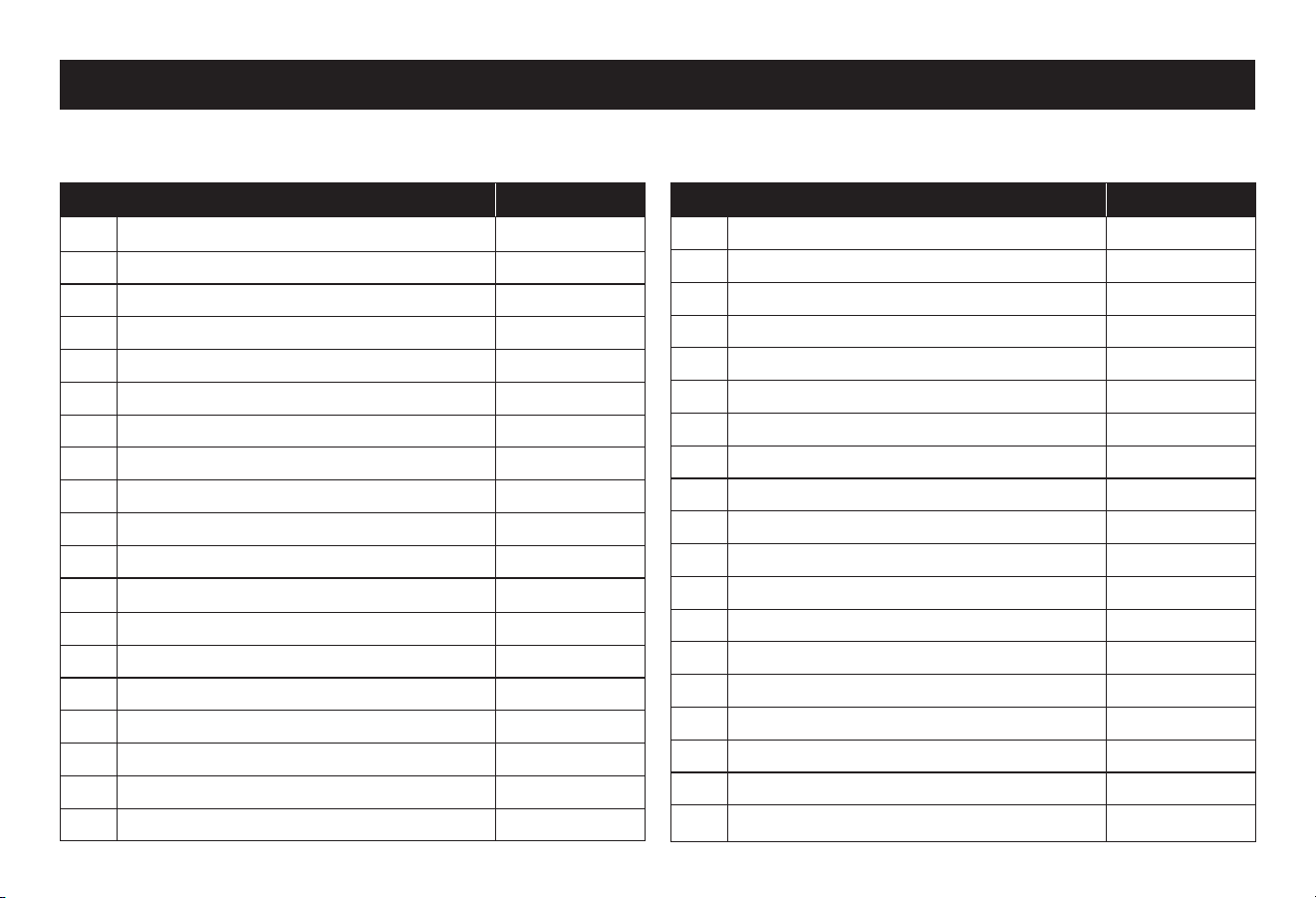
Part name Torque (in.-lb)
1 Handlebar grip -
2 Rear brake lever 55 - 70
3 Brake cable -
4 Handlebar -
5 Handlebar binder bolt(s) 145 - 200
6 Stem -
7 Stem binder bolt 100 - 120
8 Headset 175 - 260
9 Caliper brake assembly 50 - 70
9A Brake cable pinch bolt 50 - 70
9B Brake pads -
9C Brake pads hardware 50 - 60
10 Caliper brake aaching nut 70-85
11 Wheel axle nut (front) 180-240
11A Wheel axle nut (rear) 240-300
12 Tire -
13 Rim -
14 Spoke -
15 Valve stem -
Part name Torque (in.-lb)
16 Fork dropout -
17 Fork -
18 Pedal 300-360
19 Crank arm (1-piece) 300
19A Crank arm (3-piece) 390
20 Chain -
21 Chainwheel -
22 Boom bracket lockring 300
23 Seat post -
24 Seat post aaching hardware 130-170
25 Saddle (seat) -
26 Seat post clamp 60-80
27 Linear brake assembly -
27A Brake cable pinch bolt 50 -70
27B Brake pad -
27C Brake pad hardware 50-60
27D Brake spring -
27E Brake pivot bolt 17-20
28 Freewheel -
Juvenile Bicycle
Get to know the parts of your bicycle. This will help with assembly, maintenance, and troubleshoong. Models vary in color and style.
❷ Parts Idencaon
14
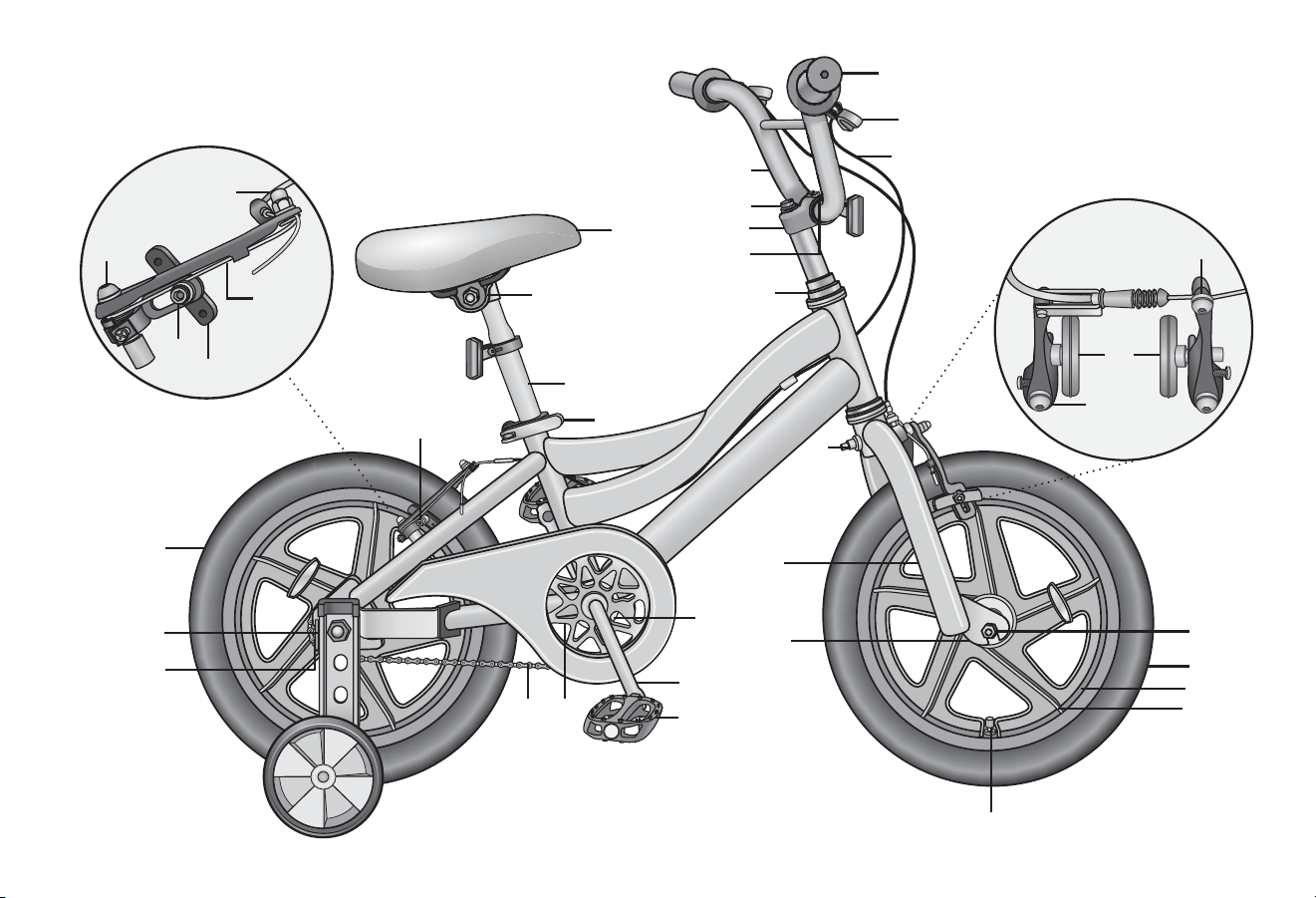
Parts Idencaon 2
15
2
1
5
3
13
21
25
26
23
15
17
19, 19A
14
20
6
24
7
12
11
18
4
9C
8
12
9
27C
27B
27A
9B
9A
10
11A
16
22
27D
27E
28
27E
27
3 Assembly
16
Figure 3.1
Figure 3.1
If you need replacement parts or have quesons pertaining to
the assembly of your bicycle, call the service line direct at:
1-800-626-2811. Monday - Friday 8:00 am to 5:00 pm Central
Standard Time (CST).
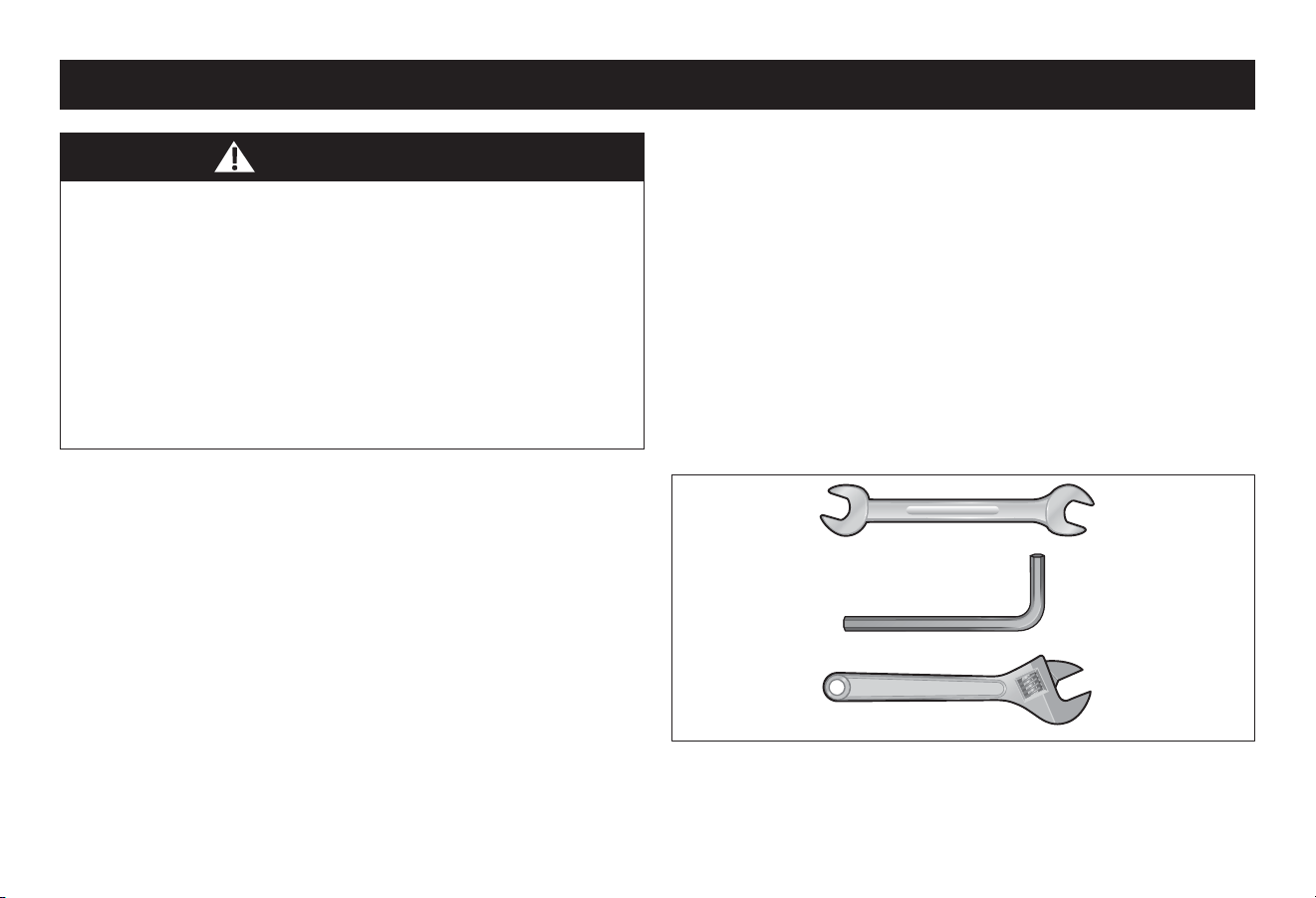
TOOLS REQUIRED
• Phillips head screw driver
• 4 mm, 5 mm, 6 mm and 8 mm Allen wrench
• Adjustable wrench or a 9 mm, 10 mm, 14 mm and 15 mm
open and box end wrenches
• A pair of pliers with cable cung ability
Your new bicycle was assembled and tuned in the factory and
then parally disassembled for shipping. You may have
purchased the bicycle already fully assembled and ready to
ride or in the shipping carton in the parally disassembled
form. The following instrucons will enable you to prepare
your bicycle for years of enjoyable cycling.
For more details on inspecon, lubricaon, maintenance and
adjustment of any area please refer to the relevant secons in
this manual. If you have quesons about your ability to
properly assemble this unit, please consult a qualied specialist
before riding.
❸ Assembly
WARNING!
• Improper assembly of this product may result in serious
injury or death. Always follow the instrucons in this
manual and check crical components (e.g. wheels, seat,
pedals, brakes, derailleurs, res) before each use.
• We recommend that you consult a bicycle specialist if you
have doubts or concerns as to your experience or ability to
properly assemble, repair, or maintain your bicycle. If your
bicycle was obtained assembled, we recommend that you
read these instrucons and perform checks specied in
this manual before riding.
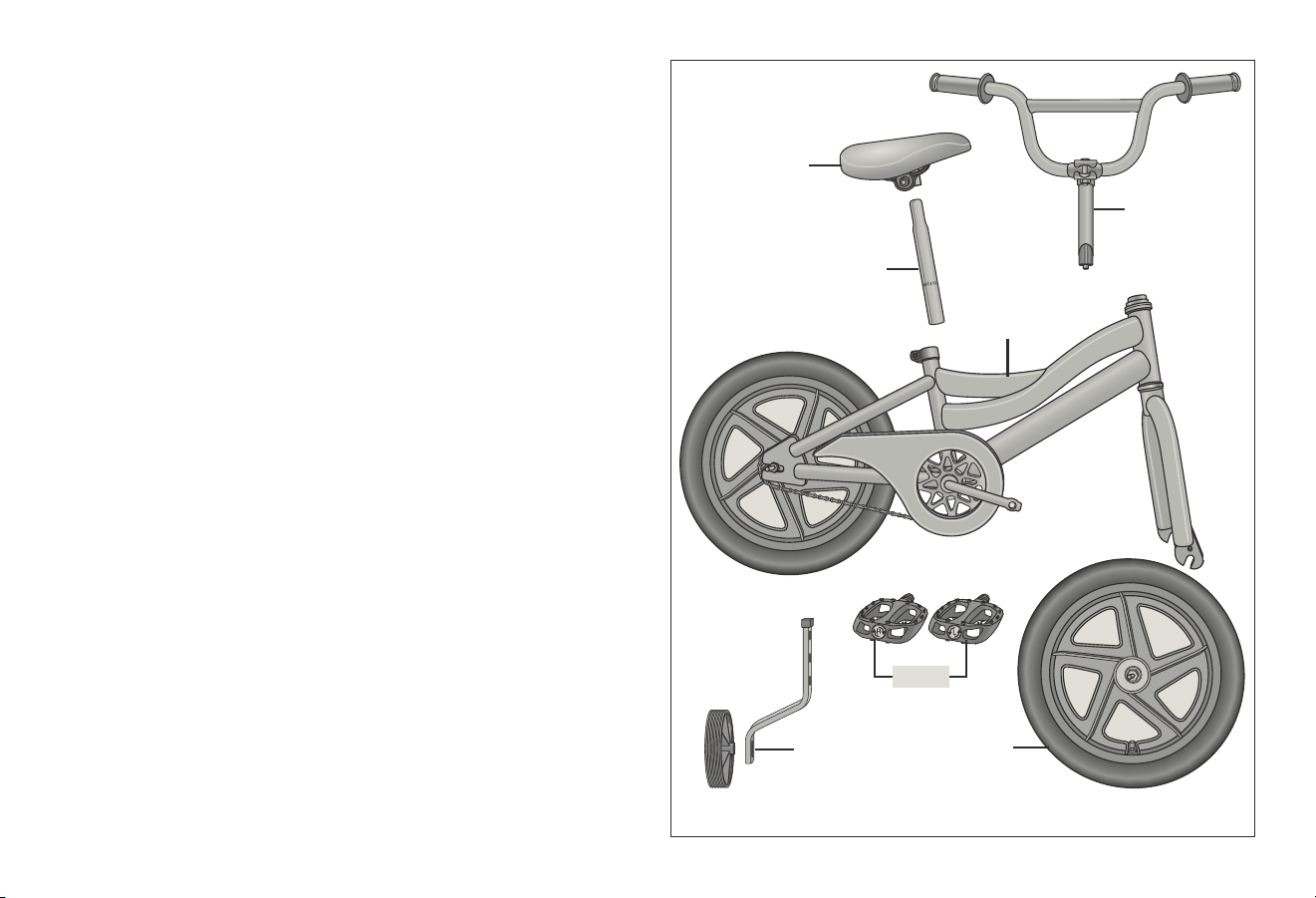
Assembly 3
17
17
Figure 3.2
GETTING STARTED
❶ Open the carton from the top and remove the bicycle.
Figure 3.2
❷ Remove the straps and protecve packaging from the
bicycle. Important! Do not discard packing materials unl
assembly is complete to ensure that no required parts are
accidentally discarded.
❸ Inspect the bicycle and all accessories and parts for possible
shortages. It is recommended that the threads and all moving
parts in the parts package be lubricated prior to installaon.
Note: We recommend using a lithium based grease on the
parts before assembly.
Pedals
Seat
Frame
Seat post
Training
wheels (2)
Front
wheel
Handlebar
assembly
3 Assembly
18
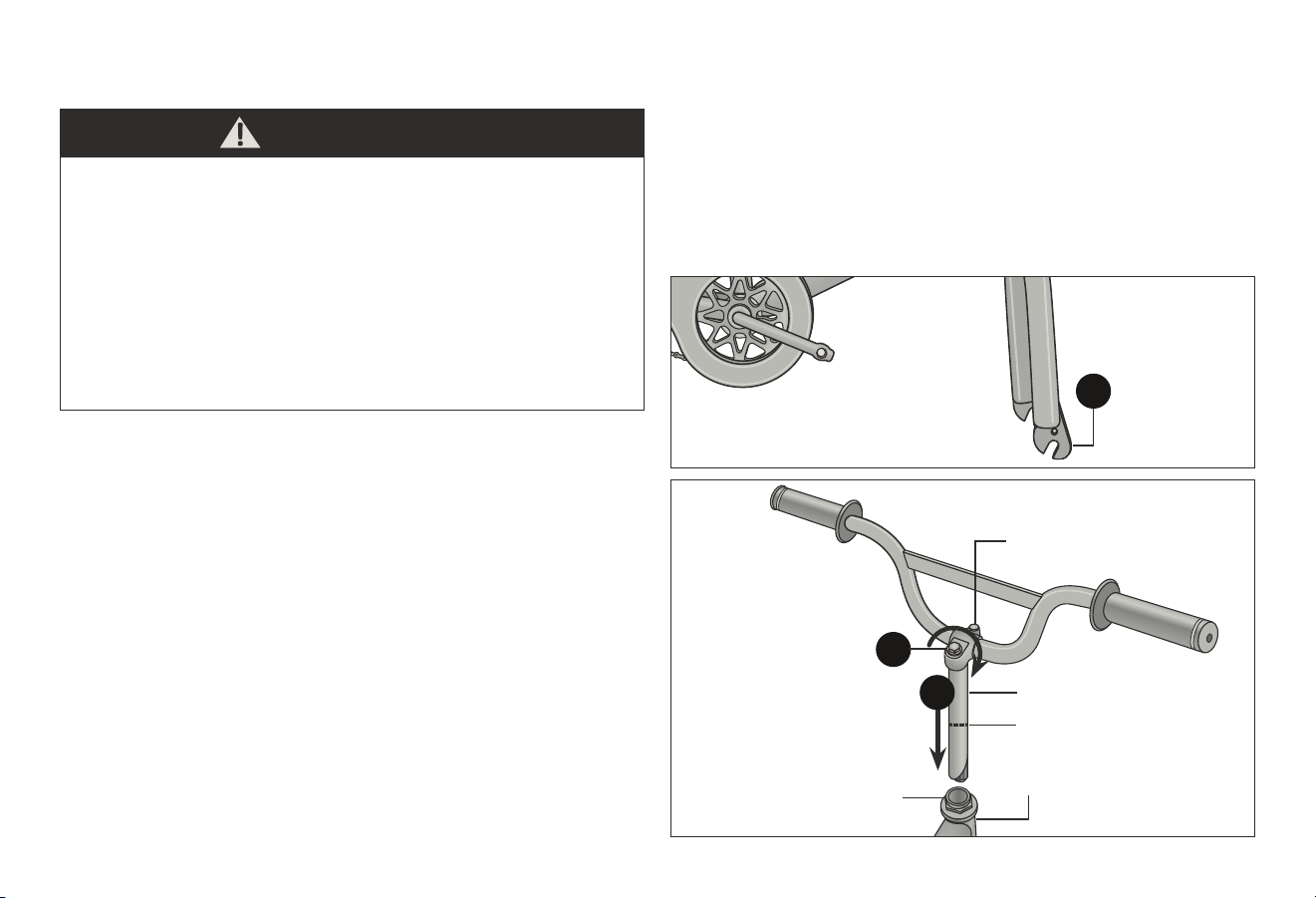
Figure 3.4
Figure 3.3
ATTACH THE HANDLEBAR
There are two types of stems that aach the handlebar to the
steerer tube. It is either a quill or clamp (threadless) stem.
Aaching a Quill Stem
❶ Turn the front fork to face forward. Figure 3.3
Posion the handlebar assembly over the steerer tube. Look
at all the cables to be sure they run in a smooth arc from
the shier or brake lever to the front brake or cable stop on
the frame. Important! If they are twisted or kinked, the
shiing and braking will not work. Figure 3.4
❷ Insert the stem post into the steerer tube and adjust the
handlebar height unl the rider feels they have control of
the bicycle and are comfortable. See Secon 1, Fig. 1.2:
Seat Height and Handlebar Reach for guidelines.
WARNING!
• Improper aachment of the handlebar may result in
damage to the stem post, steering tube and result in loss of
control, serious injury or death. Ensure the minimum
inseron marks on the stem post are not visible above the
top of the headset.
• Failure to properly ghten handlebar components may
result in loss of control, serious injury or death. Always
check the handlebar cannot move and is secured to the
frame before riding the bicycle.
Important! Be sure the minimum inseron marks do not go
above the top of the headset and are not visible.
❸ Using a 6 mm Allen wrench ghten the stem binder bolt at
the top of the stem post. Check the handlebar binder bolt(s)
to be sure they are properly ghtened and the handlebar is
clamped in place. Note: See Secon 4: Adjusng the
Handlebar if adjustments are needed.
Stem binder bolt
Minimum inseron marks
Handlebar binder bolt(s)
Front fork
facing forward
Headset
Steerer
tube
Stem post
1
2
3
Assembly 3
19
19
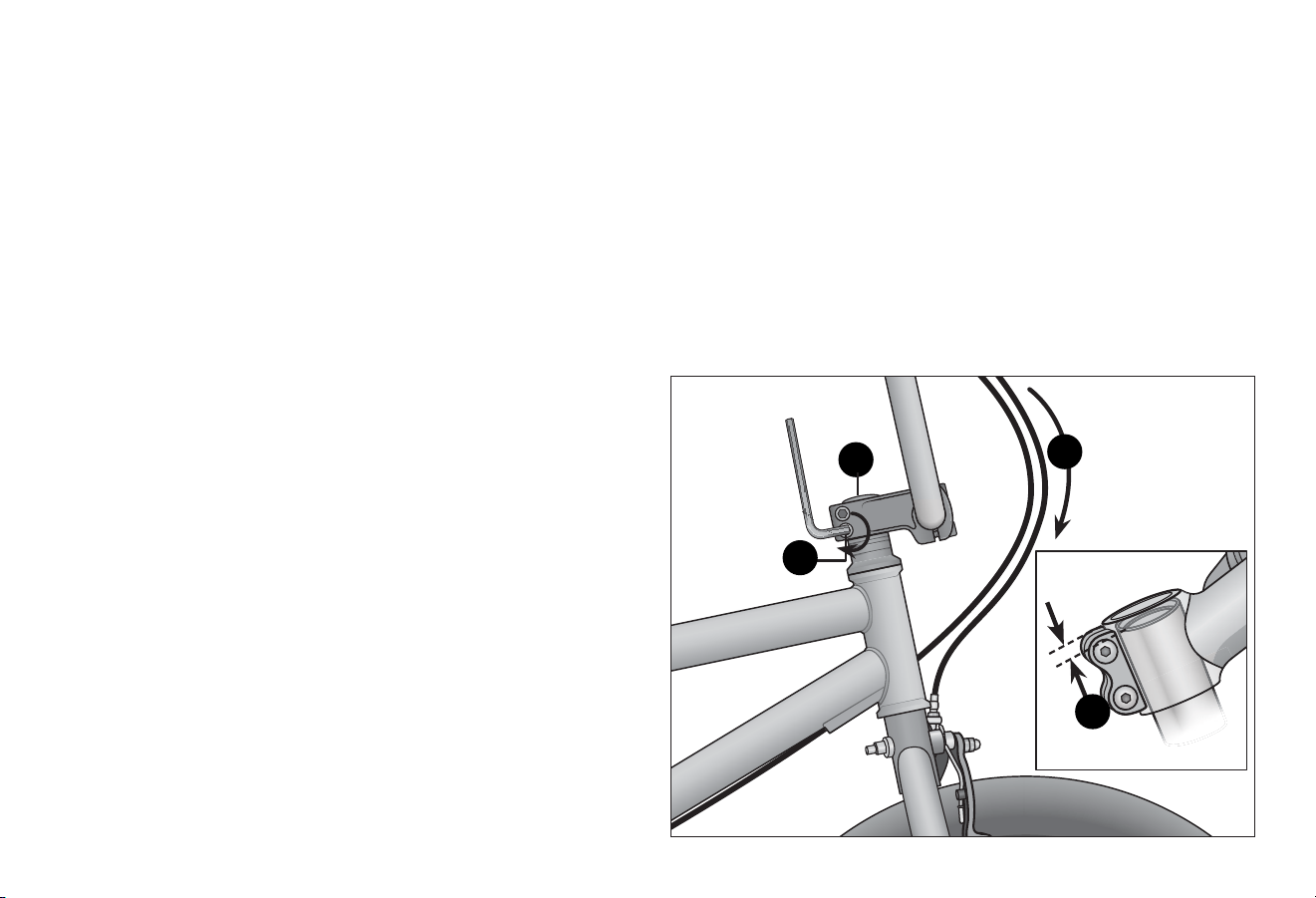
Figure 3.6
Figure 3.5
Aaching a Threadless Stem
Important! Do not disassemble the headset or lose any parts.
Be sure the end of the fork is on the ground or being held with
your free hand, because once you loosen the top cap the fork
assembly may fall out of the frame.
❶ Turn the front fork to face forward (ie: the fork dropout is in
the furthest forward posion). Figure 3.3
❷ Using a 5 mm Allen wrench loosen the top cap bolt on the
steerer tube and remove the top cap and bolt. Important!
Do not remove the spacers. Figure 3.5
❸ Posion the handlebar assembly over the steerer tube.
Look at all the cables to be sure they run in a smooth arc
from the shier or brake lever to the front brake or cable
stop on the frame. Important! If they are twisted or kinked,
the shiing and braking will not work.
❹ While holding the fork assembly in place, use a 6 mm Allen
wrench and loosen the stem pinch bolts. Slide the handlebar
assembly onto the steerer tube.
❺ Align and center the stem to the fork and wheel. Tighten the
stem pinch bolts unl there is no play between the stem and
stem tube. Note: There should be a 3 to 5 mm (1/8" - 3/16")
gap between the top of the stem and stem post. Figure 3.6
❻ Place the top cap onto the top of the steerer tube. Insert
and tighten the top cap bolt until it is snug. Do not over
tighten.
❼ Using a 5 mm Allen wrench ghten the top cap bolt. Do the
following checks to determine if the headset is properly set.
Tighten or loosen the top cap bolt if necessary.
• Li up the front wheel of the bicycle, if the wheel does
not move freely le to right the headset is too ght.
• Hold the handlebar, close the brakes and rock the fork
back and forth. If you hear a knock or clunking sound the
headset is too loose.
Note: If needed, see Secon 4: Adjusng the Headset for
more detailed informaon. See Secon 4: Adjusng the
Handlebar for informaon on aligning the handlebar.
Stem pinch
bolts
3
2
Top cap
and bolt
1/8" - 3/16"
(3 - 5 mm)
5
5
3 Assembly
20
WARNING!
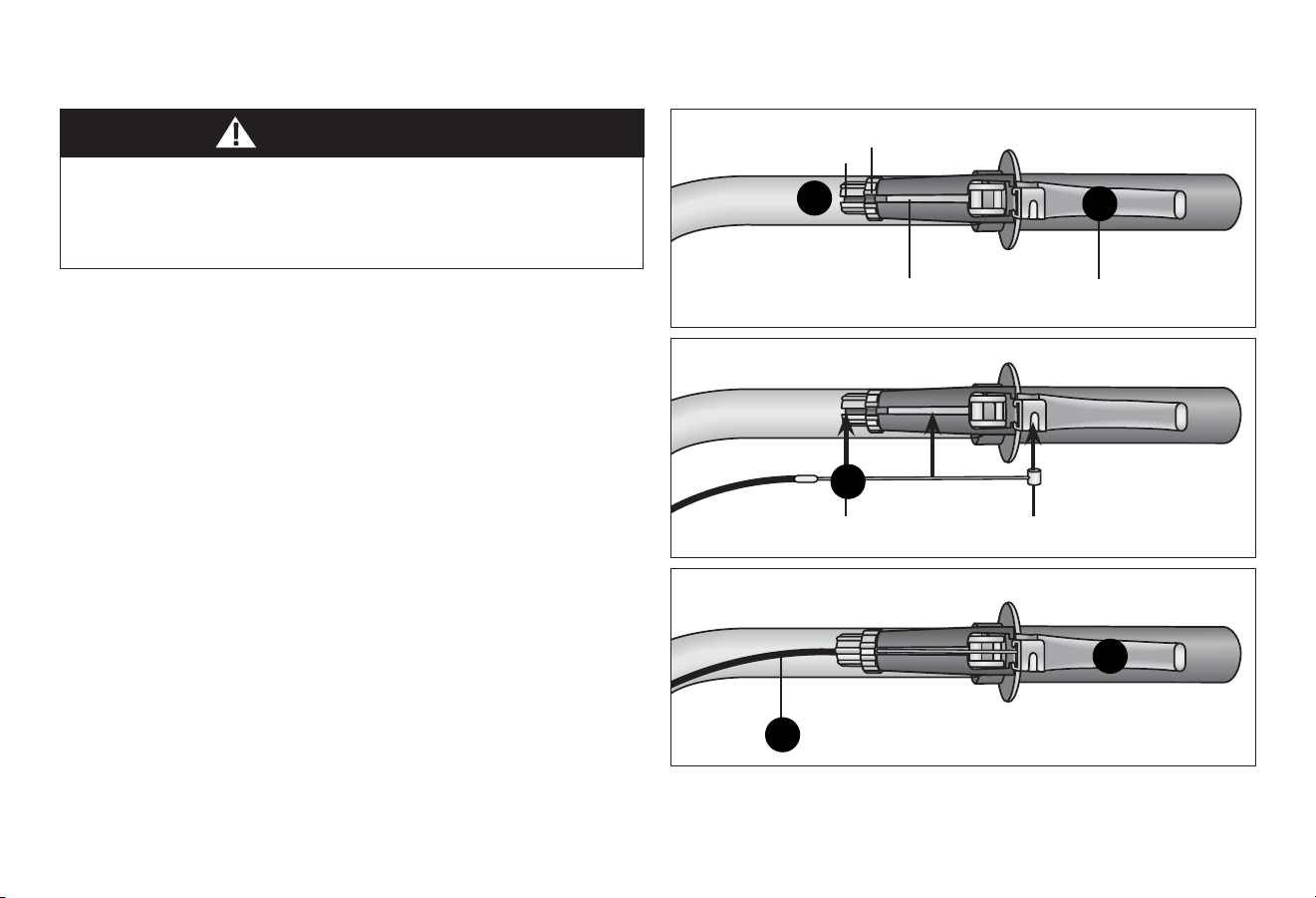
Figure 3.7
Figure 3.8
Figure 3.9
ATTACH THE FRONT BRAKE CABLE
Failure to properly set the brakes may result in the inability to
stop the bicycle movement and cause serious injury or death.
Be sure the brakes are funconing properly before using the
bicycle.
If the brakes are not aached follow these steps:
❶ Rotate the cable adjustment barrel and cable nut unl the
slots are aligned with the slot on the brake lever body.
Figure 3.7
❷ Press the brake lever towards the grip.
❸ Slide the brake cable through the slots and place the cable
head into the brake lever. Figure 3.8
❹ Release the brake lever. Figure 3.9
❺ Lightly pull on the cable, and rotate the cable nut and cable
barrel so they are no longer aligned.
Note: See Secon 4: Adjusng the Brakes if adjustments are
needed.
Cable adjustment
barrel slot
Cable nut slot
Brake cable slot
Brake lever
Cable head
Brake cable
4
2
5
3
1
Assembly 3
21
21
Figure 3.10
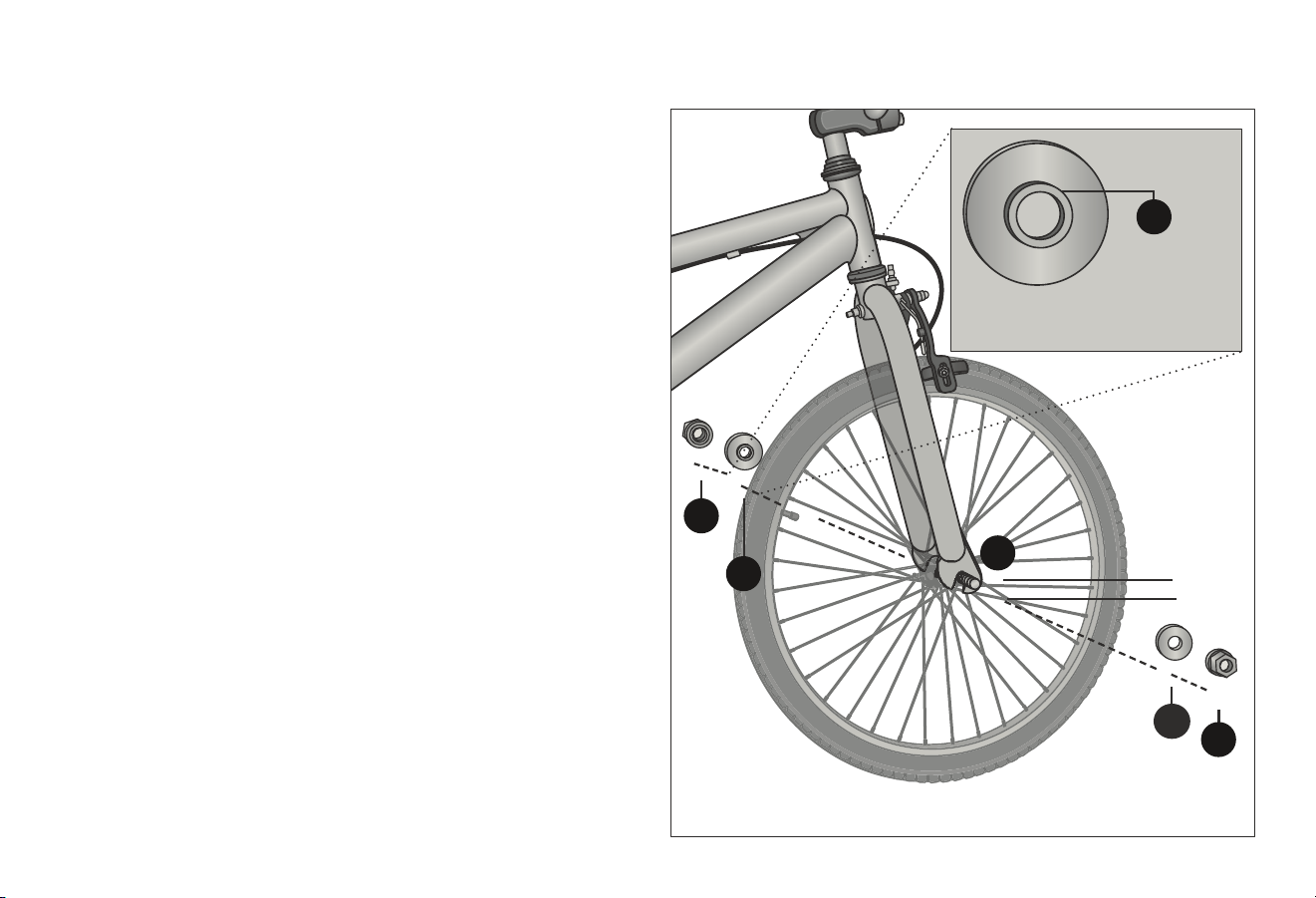
ATTACH THE FRONT WHEEL
There are two types of front wheel assemblies; nued with step
retaining washer, and nued with clip retaining washer.
Note: Quick-release wheels may be on both the front and rear
wheels or just one. Also, some re tread paerns have a
direcon, so compare your front re and rear re of the bicycle
so that both tread paerns face the same way.
Nued with Step Retaining Washer
❶ Posion the front wheel between the front fork legs with
the axle resng inside the fork drop outs. Important! Be
sure the wheel is as centered as possible between the fork
legs. Figure 3.10
❷ Place a step washer on each end of the axle. Note: The at
side of the step washer must be facing out, and the
protrusion on the washer must t into the fork drop out.
Figure 3.11
❸ Aach the two axle nuts on the axle. Tighten one nut part
way, then ghten the other nut. Repeat unl both sides are
ghtened securely. Be sure that the wheel is centered
between the fork legs.
❹ If the wheel is o center, loosen the axle nut on the side that
has a smaller gap between re and fork leg, and use your
hand to push the wheel to a centered posion; hold the
wheel with one hand, and ghten the axle nut and check
again. Repeat if needed to be sure the wheel is centered
and securely ghtened.
Axle
Fork
dropout
Step
retaining
washer
Axle
nut
Step
retaining
washer
Protrusion on
step retaining
washer ts into
the fork dropout
Axle
nut
Figure 3.11
2
3
1
2
3
2
3 Assembly
22
Figure 3.12
Figure 3.13
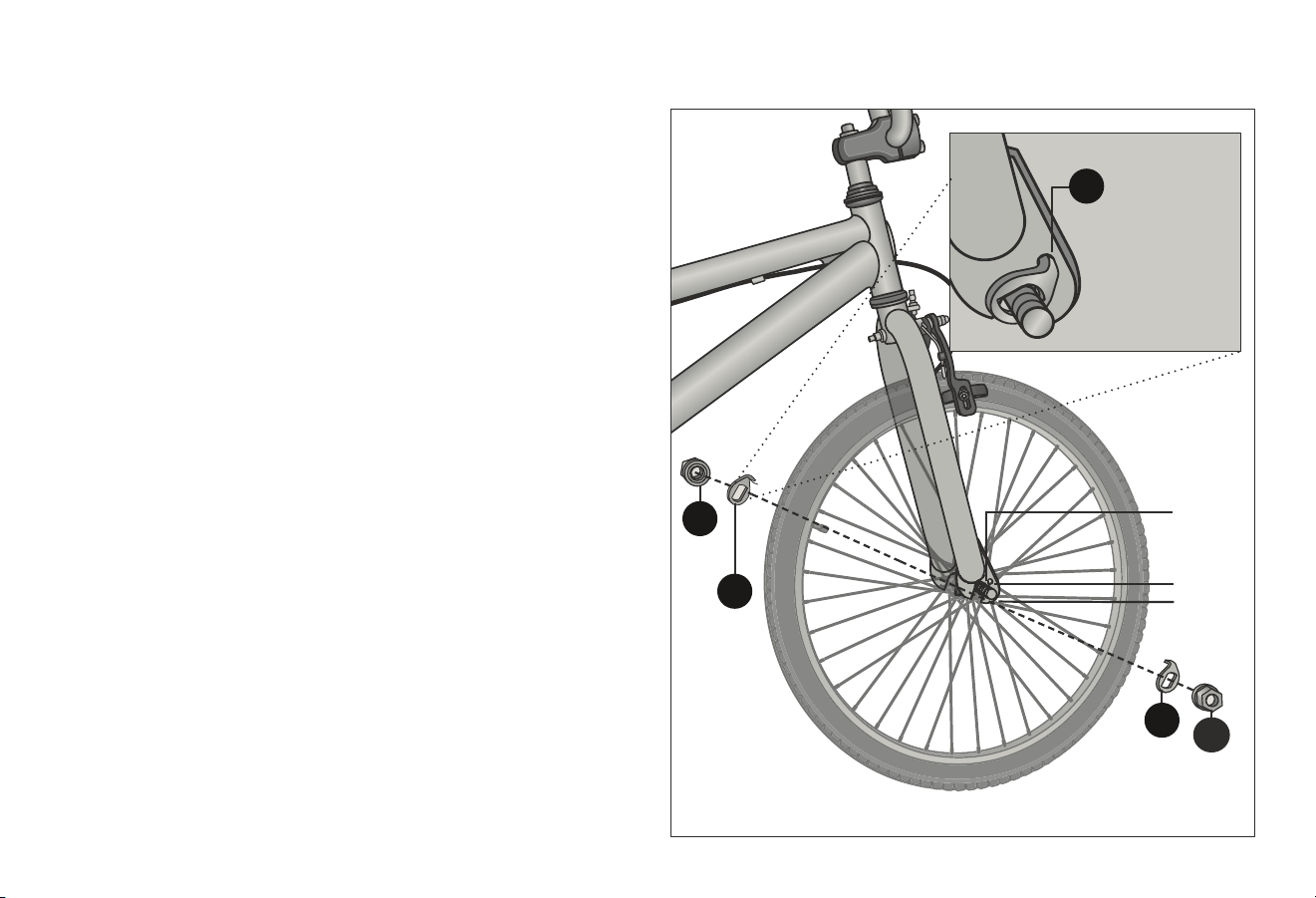
Nued with Clip Retaining Washer
❶ Loosen the axle nuts on the front wheel. If there is a washer
inside of the axle nut, it belongs outside of the fork
dropouts. Figure 3.12
❷ Posion the front wheel between the front fork legs with
the axle resng inside the fork drop out.
Important! Be sure the wheel is as centered as possible
between the fork legs.
❸ Place the clip retaining washer on the axle and slide it up
against the fork drop out. Make sure the hooked end is
inside the small hole of the fork dropout. Figure 3.13
❹ Place the two outer axle nuts on and ghten evenly. Tighten
one side part way, then ghten the other side and repeat
unl both sides are ghtened securely. Be sure that the
wheel remained centered between the fork legs.
❺ If it is o center, loosen the axle nut on the side that has a
smaller gap between re and fork leg and use your hand to
push the wheel to a centered posion; hold the wheel with
one hand and ghten the axle nut and check again.
Repeat if needed to be sure the wheel is centered and
securely ghtened.
Axle
nut
Axle
nut
Clip
retaining
washer
Clip
retaining
washer
Dropout
hole
Axle
Fork
dropout
Clip retaining
washer
inserted into
dropout hole
4
3
4
3
3
Assembly 3
23
23
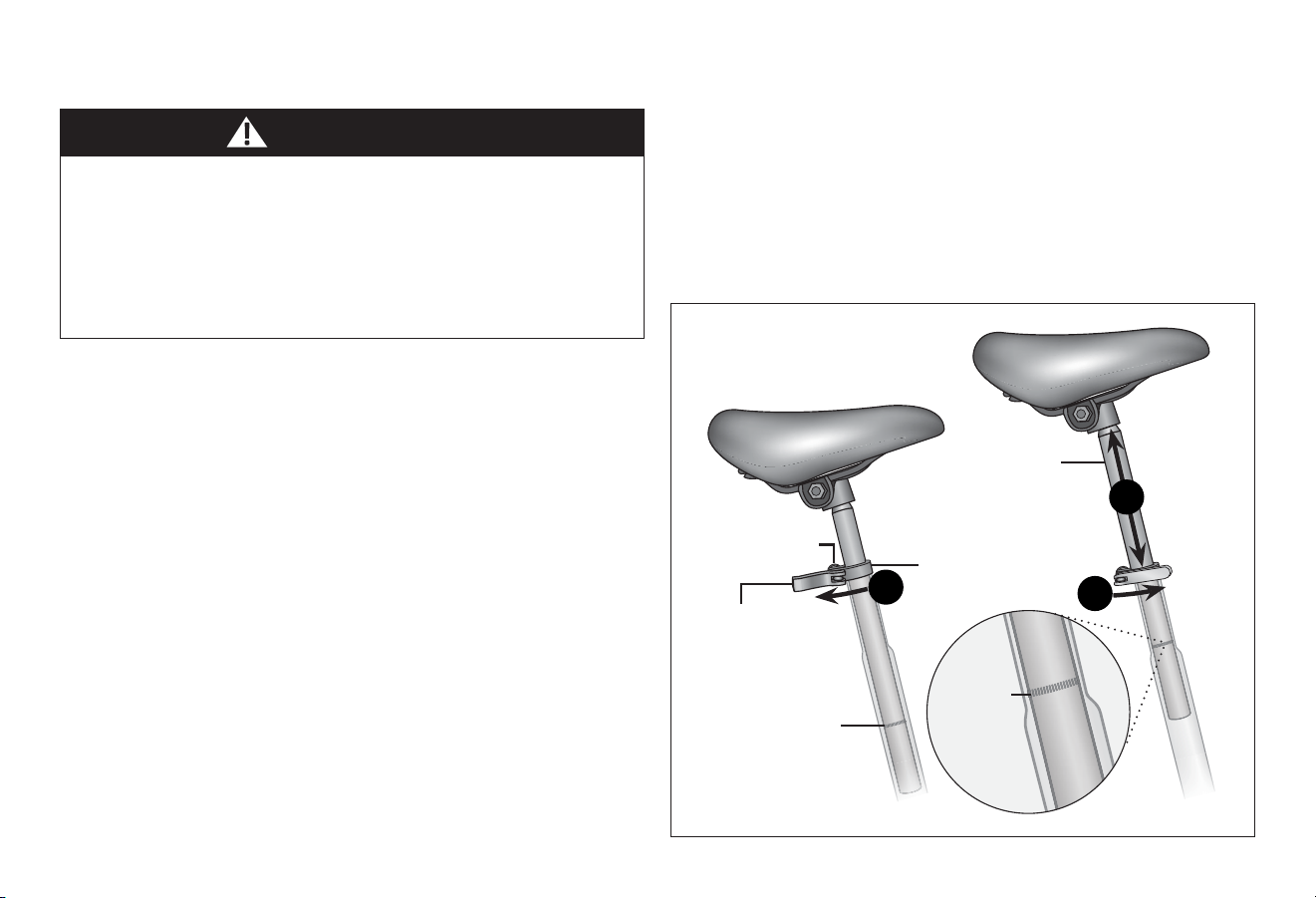
Figure 3.14
ATTACH THE SEAT
Improperly adjusted seat height could aect the rider’s ability
to reach the handlebar and pedals resulng in unexpected
movement, loss of control, and serious injury or death. Follow
these guidelines when adjusng the seat height. Always
ensure the seat post minimum inseron marks are below the
seat clamp and cannot be seen. Ensure the seat clamp is
locked and the seat cannot move.
WARNING!
❶ Unlock the quick-release lever and insert the seat post into
the seat tube. Figure 3.14
❷ Adjust the seat height up or down unl the rider feels they
have control of the bicycle and is comfortable.
Important! Be sure the minimum inseron marks do not go
past the top of the seat clamp and are not visible. See
Secon 1, Fig. 1.2: Seat Height and Handlebar Reach.
❸ Close the quick-release lever and lock the seat in place.
If there is not enough pressure to hold the seat in place
open the quick-release lever. With one hand on the quick-
release lever and one hand on the adjustment nut, start to
hand ghten the adjustment nut unl you start to feel some
resistance against the post clamp. Do not aempt to ghten
by turning the quick-release lever. The quick-release lever is
for closing, the adjustment nut is for adjusng the pressure.
❹ Try to close the quick-release lever. If it closes easily, open it
up and ghten the adjustment nut further. If it is too dicult
to close, open the quick-release lever up and loosen the
adjustment nut a lile and try again.
Important! You should feel resistance when you close
the quick-release lever that should leave a temporary
impression on your ngers. Open and close the handle to
ensure the seat is securely locked in place.
Minimum
inseron marks on
the seat post
Seat post
Minimum
inseron
marks
Quick-release
lever
Quick-release
seat clamp
Adjustment nut
2
1
3
3 Assembly
24
WARNING!
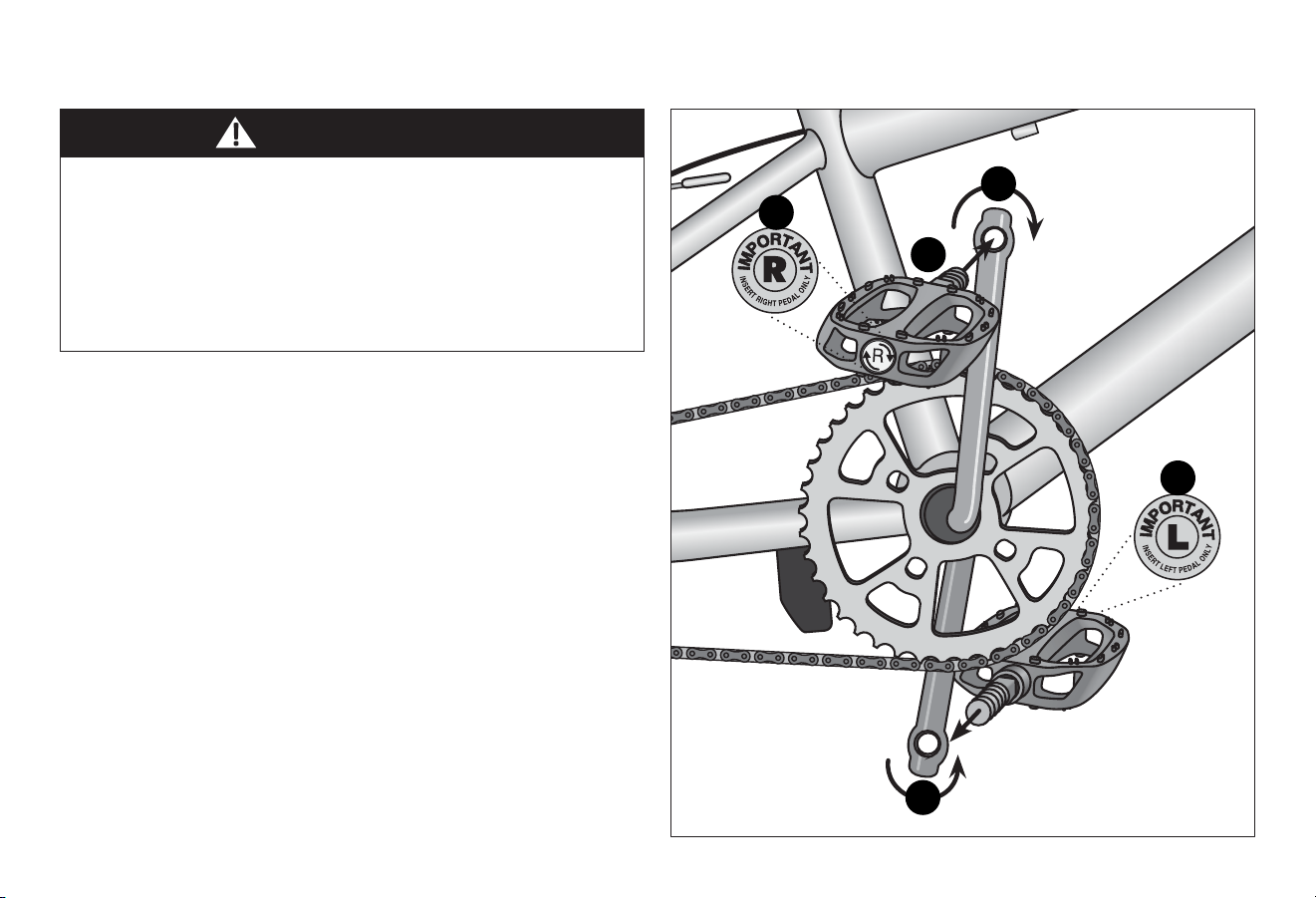
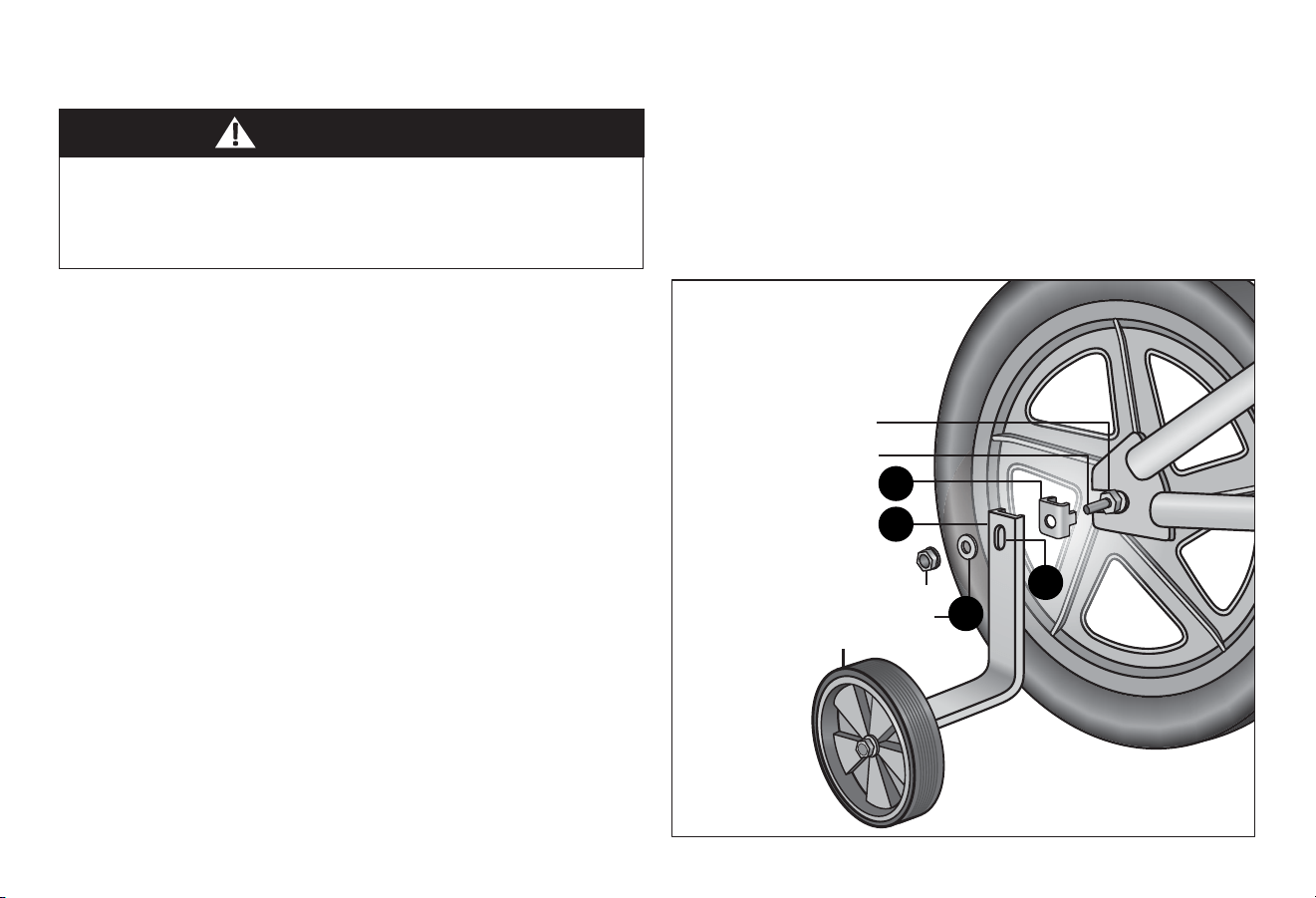
Figure 3.15
❶ Match the pedal marked R with the right-hand crank arm,
and match the pedal marked L with the le-hand crank arm.
Figure 3.15
❷ Place the threaded pedal into the threaded hole on the
crank arm.
❸ By hand, slowly turn the spindle the correct direcon.
Clockwise for right side pedal, counterclockwise for le side
pedal. Important! Stop if you feel resistance! This may be
an indicaon the spindle is entering the hole at an
angle. Remove the spindle and repeat step two and three.
❹ If the spindle is entering the hole cleanly then use a 15 mm
wrench or pliers to ghten completely.
❺ Repeat steps 1- 4 for the remaining pedal.
ATTACH THE PEDALS
• Aachment of an incorrect pedal into a crank arm can strip
pedal threads and cause irreparable damage. Visually
match the R and L sckers on the pedal and crank arm
before aaching the pedals. Before your rst ride, please
check to ensure your pedals are aached correctly.
• It is very important that you check the crank set for correct
adjustment and ghtness before riding your bicycle.
The left pedal turns
counter-clockwise and
the right pedal turns
clockwise.
1
1
2
3
3
Assembly 3
25
25
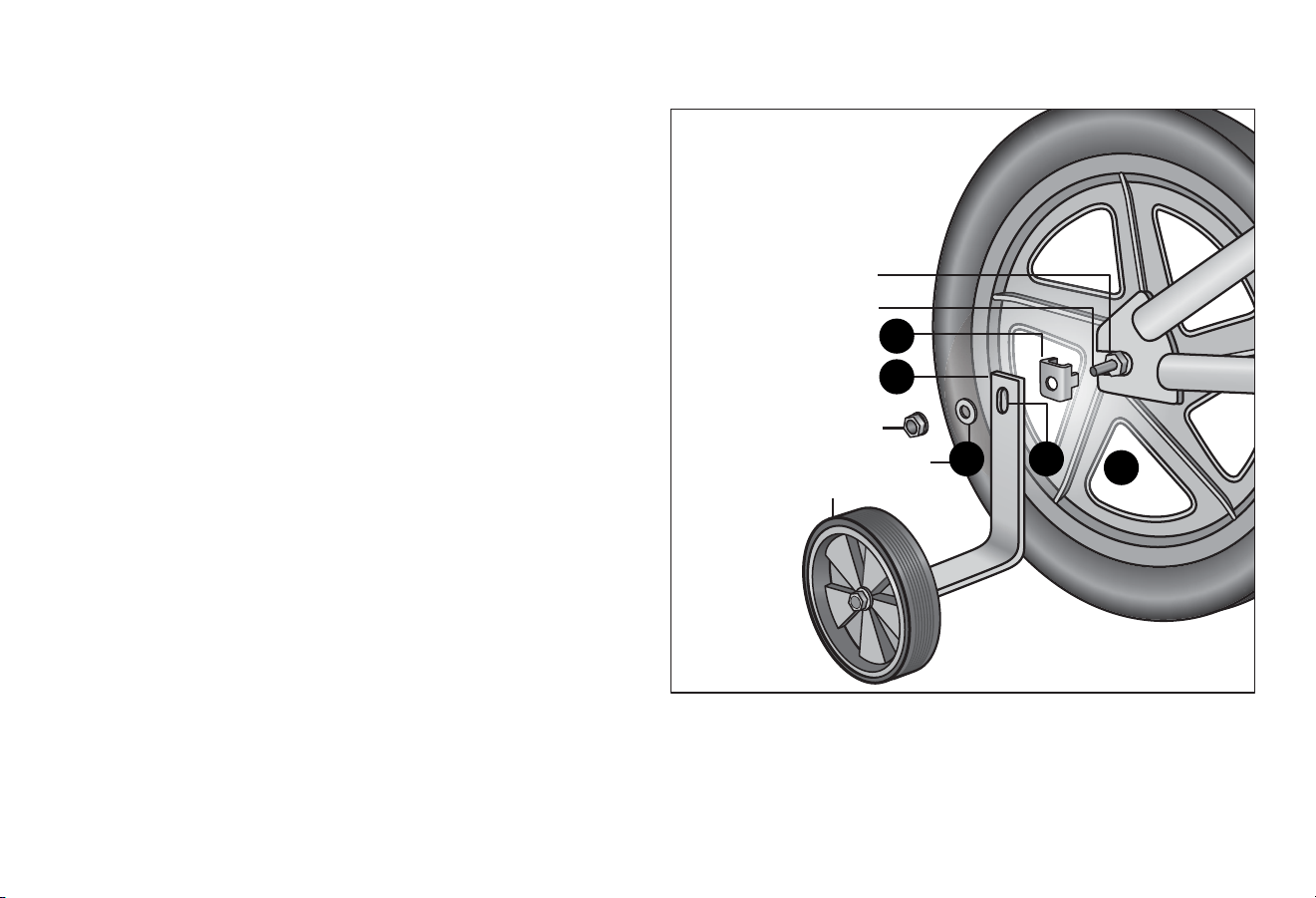
Figure 3.16
Note: Not all bicycles will accept training wheels. If your bicycle
did not come stock with training wheels, please call Pacic Cycle
to help determine if aer-market training wheels can be
aached.
There are three dierent braces used to aach the training
wheels to the bicycle: the c-shape brace, the at brace and the
at brace with stabilizer. Determine which brace was included
with your bicycle and follow the instrucons below.
C-Shape Brace
❶ Remove the outer axle nut and washer from the rear wheel
axle. Figure 3.16
❷ Place the brace stabilizer washer onto the axle and align the
washer so that the notch on the washer ts into the frame
drop out.
❸ Place the C-shaped wheel brace onto the axle.
ATTACH THE TRAINING WHEELS
Failure to properly assemble and set up the training wheels
may cause instability and p over resulng in serious injury or
death. Always check the training wheels before using the
bicycle.
❹ Replace the washer and axle nut. Tighten the axle nut
securely, making sure that the wheel brace stays in the
proper vercal posion.
❺ The elongated hole on the wheel brace allows the training
wheel height to be adjusted for proper t.
WARNING!
Brace stabilizer washer
C-shaped wheel brace
Axle nut
Training wheel
Rear wheel axle
Inner axle nut
DO NOT REMOVE!
2
3
Washer
4
5
3 Assembly
26
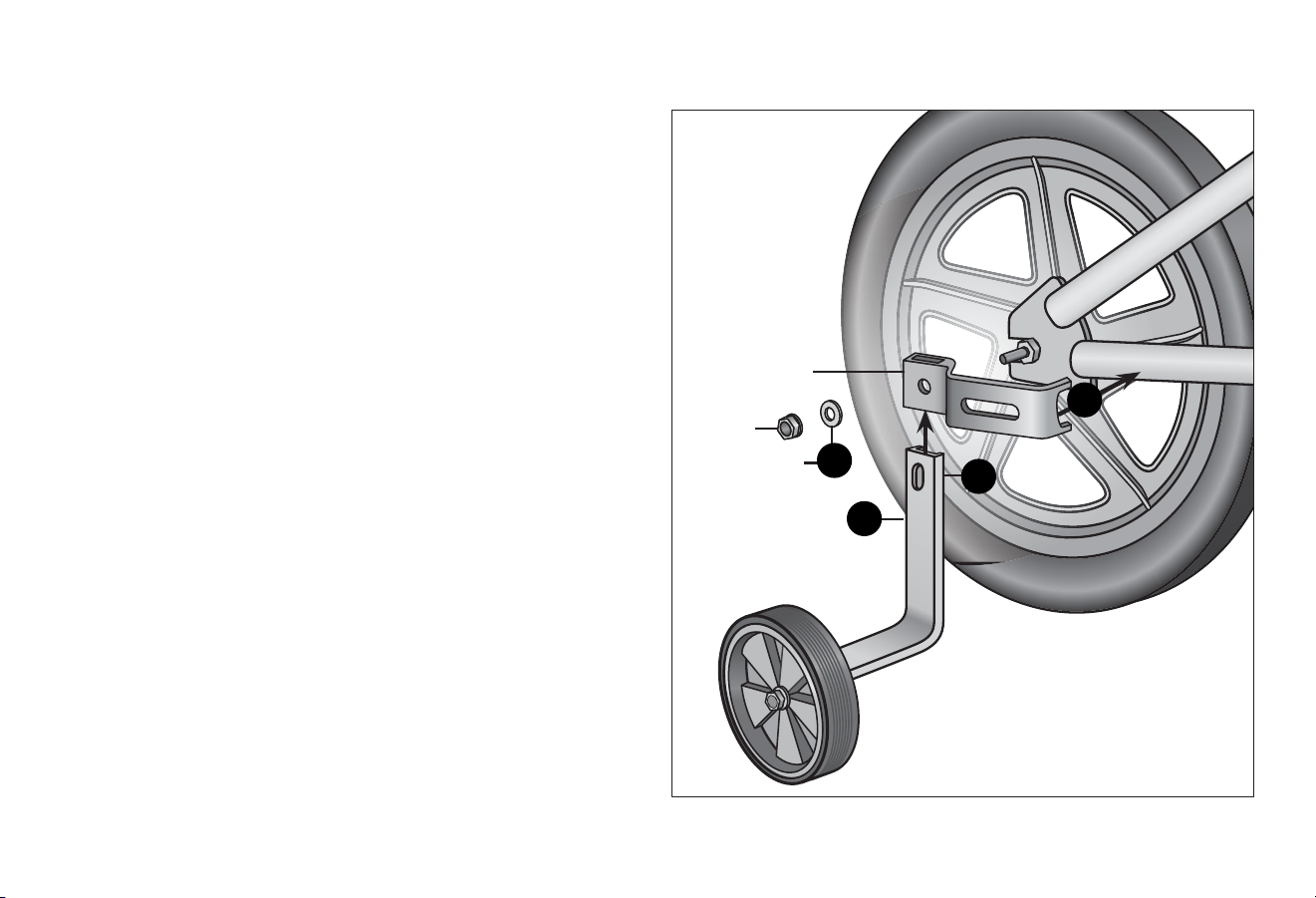
Flat Brace
❶ Remove the outer axle nut and washer from the rear
wheel axle. Figure 3.17
❷ Place the at wheel brace onto the axle.
❸ Place the brace stabilizer washer onto the axle and align it
so that the notch ts into the rear frame drop out.
❹ Replace the washer and axle nut.
❺ Tighten the axle nut securely, making sure that the wheel
brace stays in the proper vercal posion. The elongated
hole on the wheel brace allows the training wheel height to
be adjusted for proper t.
Brace stabilizer washer
C-shaped wheel brace
Axle nut
Training wheel
Rear wheel axle
Inner axle nut
DO NOT REMOVE!
2
3
Washer
4 5
4
Figure 3.17
Assembly 3
27
27
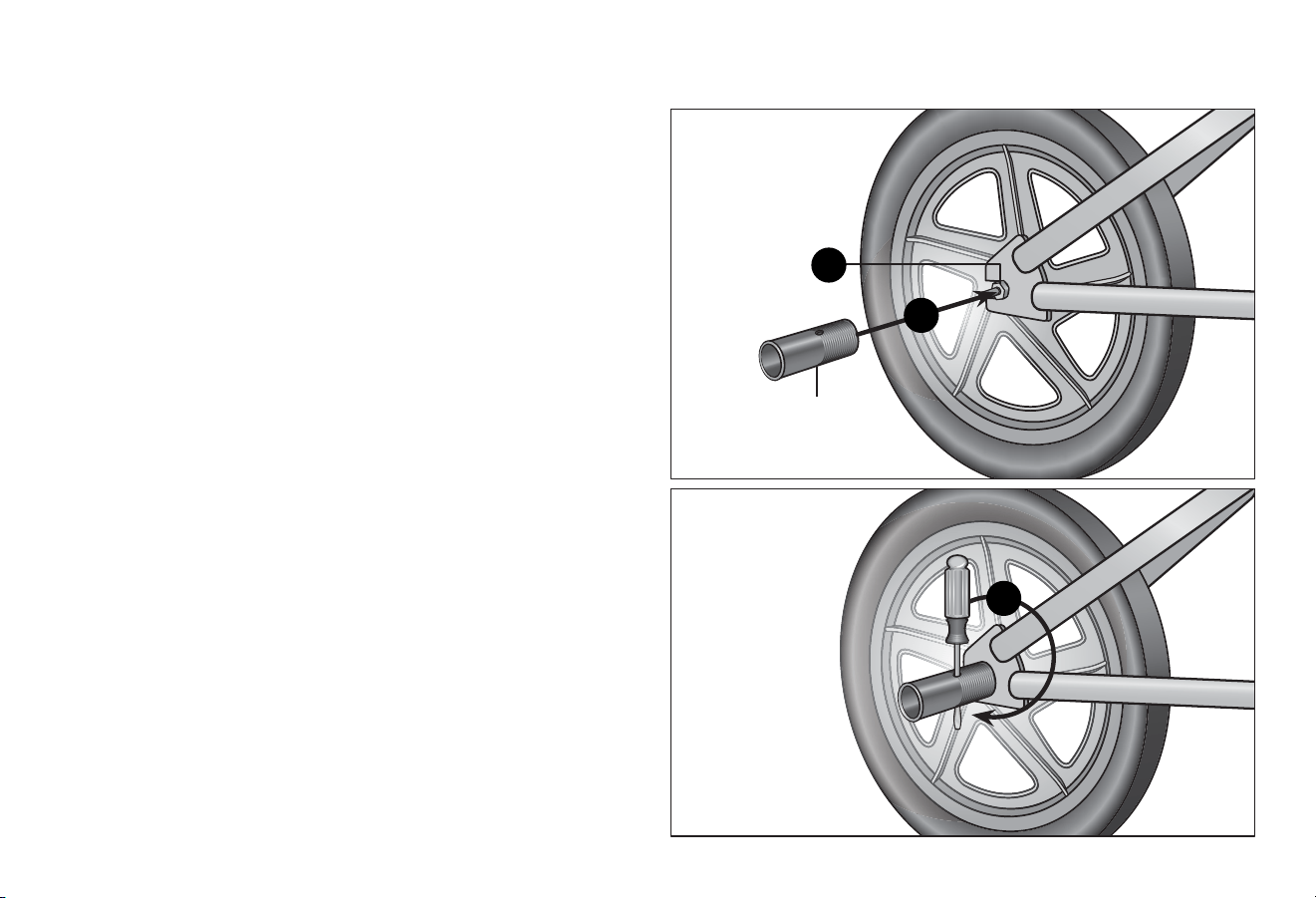
Figure 3.18
Training Wheel Stabilizer Bracket
❶ Remove the outer axle nut and washer from the rear
wheel axle. Figure 3.18
❷ Insert the training wheel brace into the stabilizer bracket so
that the forked end of the stabilizer bracket faces in.
❸ Slide assembly onto the rear axle so that the forked end
hooks around the chain stay of the bicycle.
❹ Replace the axle nut and washer, secure ghtly.
❺ The elongated hole on the brace allows for raising and
lowering the training wheel to the proper height.
Stabilizer brace
Wheel brace
Axle nut
Washer
5
2
3
4
3 Assembly
28
Figure 3.20
ATTACH THE PEGS
Important! Periodically check to make sure pegs are ght.
Some models may come equipped with 2 or 4 pegs. To install:
❶ Do not loosen or remove axle nuts. Figure 3.19
❷ Check to make sure axle nuts are properly ghtened before
installing pegs.
❸ Thread the pegs on the axle over the axle nut.
❹ Insert a screwdriver or similar tool through the peg holes
and ghten by turning the peg with the tool. Figure 3.20
❺ Repeat steps three and four for the remaing pegs.
Figure 3.19
Axle nut
3
Peg
4
2
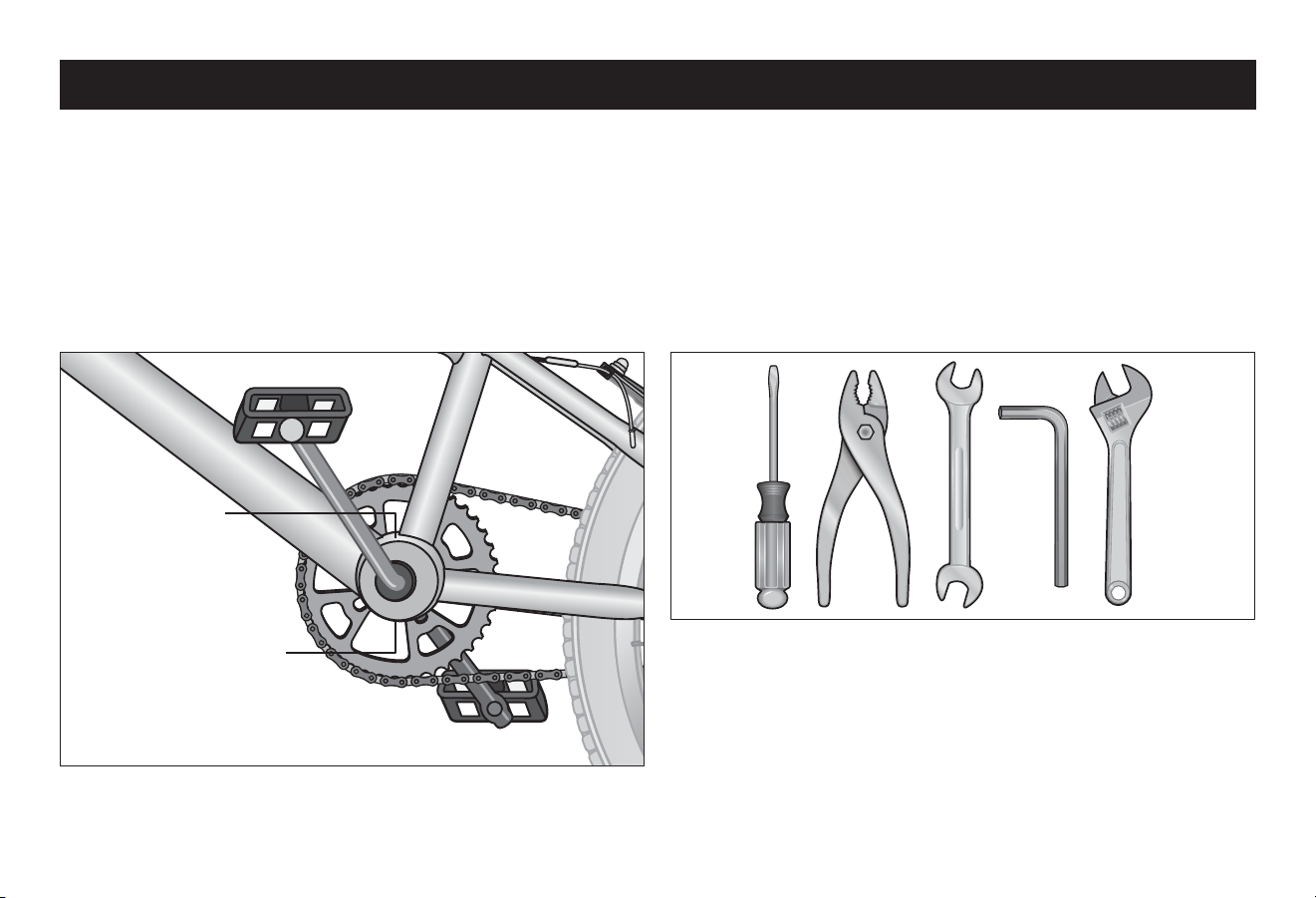
Adjustments 4
29
29
Figure 4.1
Figure 4.2
Aer your bicycle is assembled you will need to make
adjustments. If you need replacement parts or have quesons
pertaining to the assembly of your bicycle, call the service line
direct at: 1-800-626-2811. Monday - Friday 8:00 am to 5:00 pm
Central Standard Time (CST).
Note: You will need your model number and date code located
on the service scker near the boom bracket area. Figure 4.1
TOOLS REQUIRED
• Phillips head screw driver
• 4 mm, 5 mm, 6 mm and 8 mm Allen wrench
• Adjustable wrench or a 9 mm, 10 mm, 14 mm and 15 mm
open and box end wrenches
• A pair of pliers with cable cung ability
Service scker is
located above
the boom
bracket area.
The serial number is
located under the
boom bracket.
❹ Adjustments
4 Adjustments
30
Figure 4.3 Figure 4.4
ADJUSTING THE BRAKES
Failure to properly set the brakes may result in the inability
to stop the bicycle movement and cause serious injury or
death. Be sure the brakes are funconing properly before
using the bicycle.
WARNING!
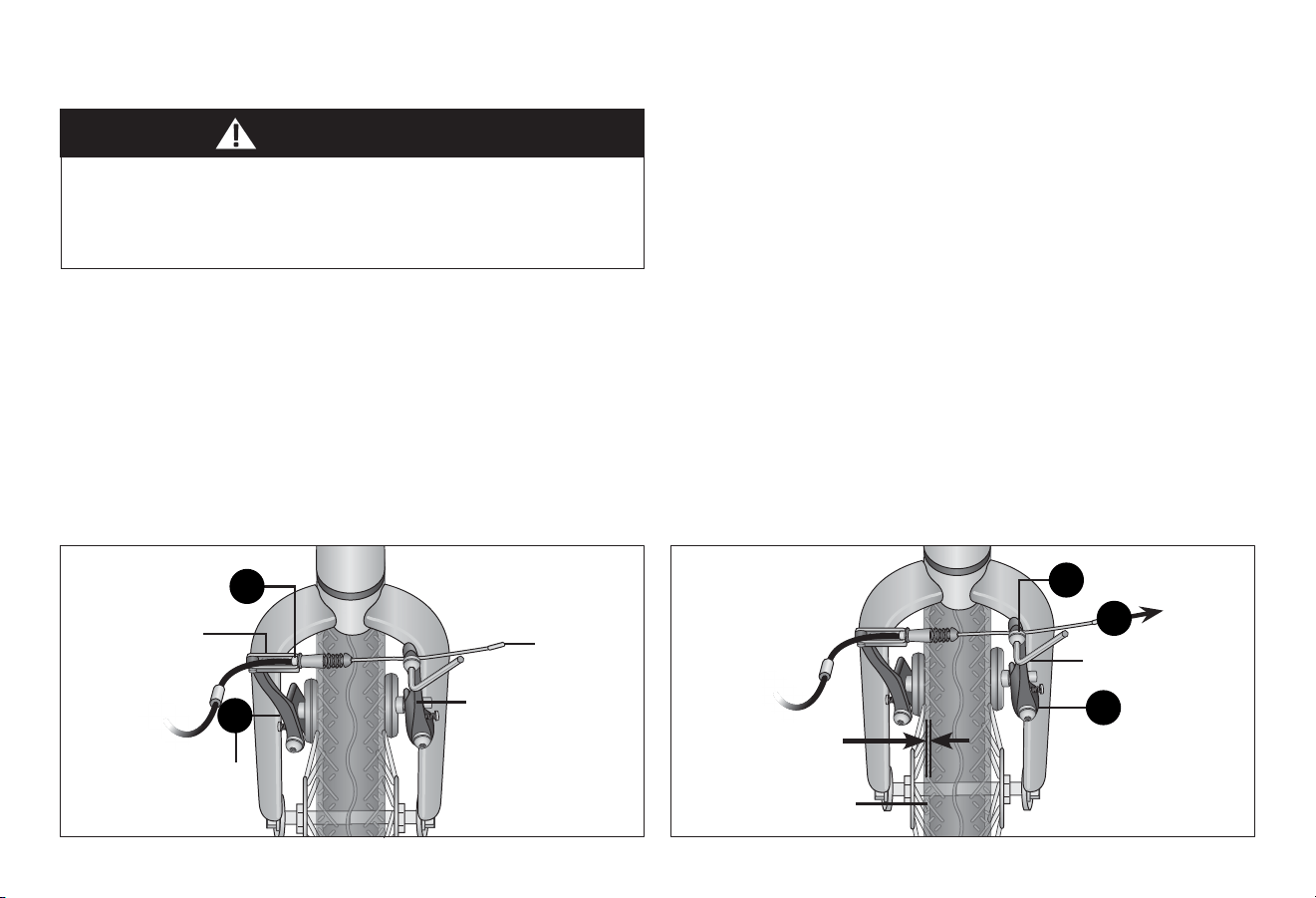
Adjusng Linear Pull Brakes
Aaching the Brake Cable to the Brake Carrier
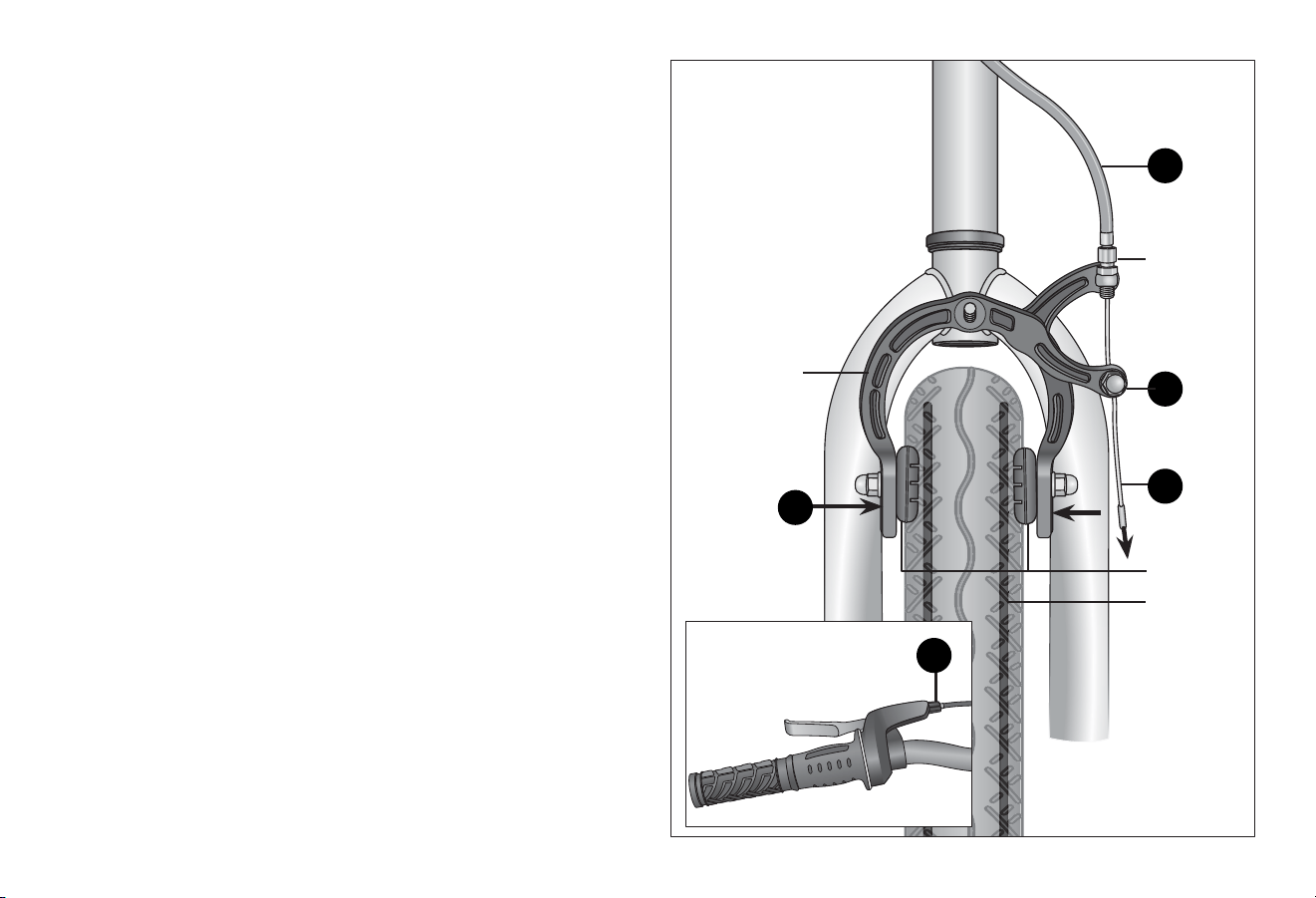
❶ Squeeze the two brake arms together unl the brake pads
touch the wheel rim. Figure 4.3
❷ With your other hand, pull on the brake cable and insert the
end of the “noodle” into the brake carrier.
Adjusng the Brake Pads
❸ Check the brake cable is seated in the brake lever. Using a 5
mm allen wrench loosen the cable anchor bolt enough so
the brake cable can move freely. Figure 4.4
❹ Pull the brake cable through the cable anchor so the
le brake arm moves towards the rim and there is
approximately a 1/8” (3 mm) gap between the brake
pad and rim.
❺ Move the right brake arm towards the rim unl there is
approximately a 1/8” (3 mm) gap between the brake pad
and rim.
❻ Using the 5 mm allen wrench, rmly ghten the cable
anchor bolt completely.
Cable anchor bolt
Wheel rim
5 mm Allen wrench
1/8” gap
(both pads)
Brake carrier
End of “noodle” in
the brake carrier
Brake arm
Brake cable
Brake arm
4
2
3
5
1
Adjustments 4
31
31
Figure 4.5
Figure 4.6
Important! Before riding the bicycle it is important to check the
brakes. If you squeeze the brake lever and one brake arm moves
more than the other (or not at all) the brake is not centered. You
will need to ne-tune the brake pads. Mulple adjustments may
be necessary to center the brake pads, correctly set the brake
pressure, and set the gap between the brake pad and rim.
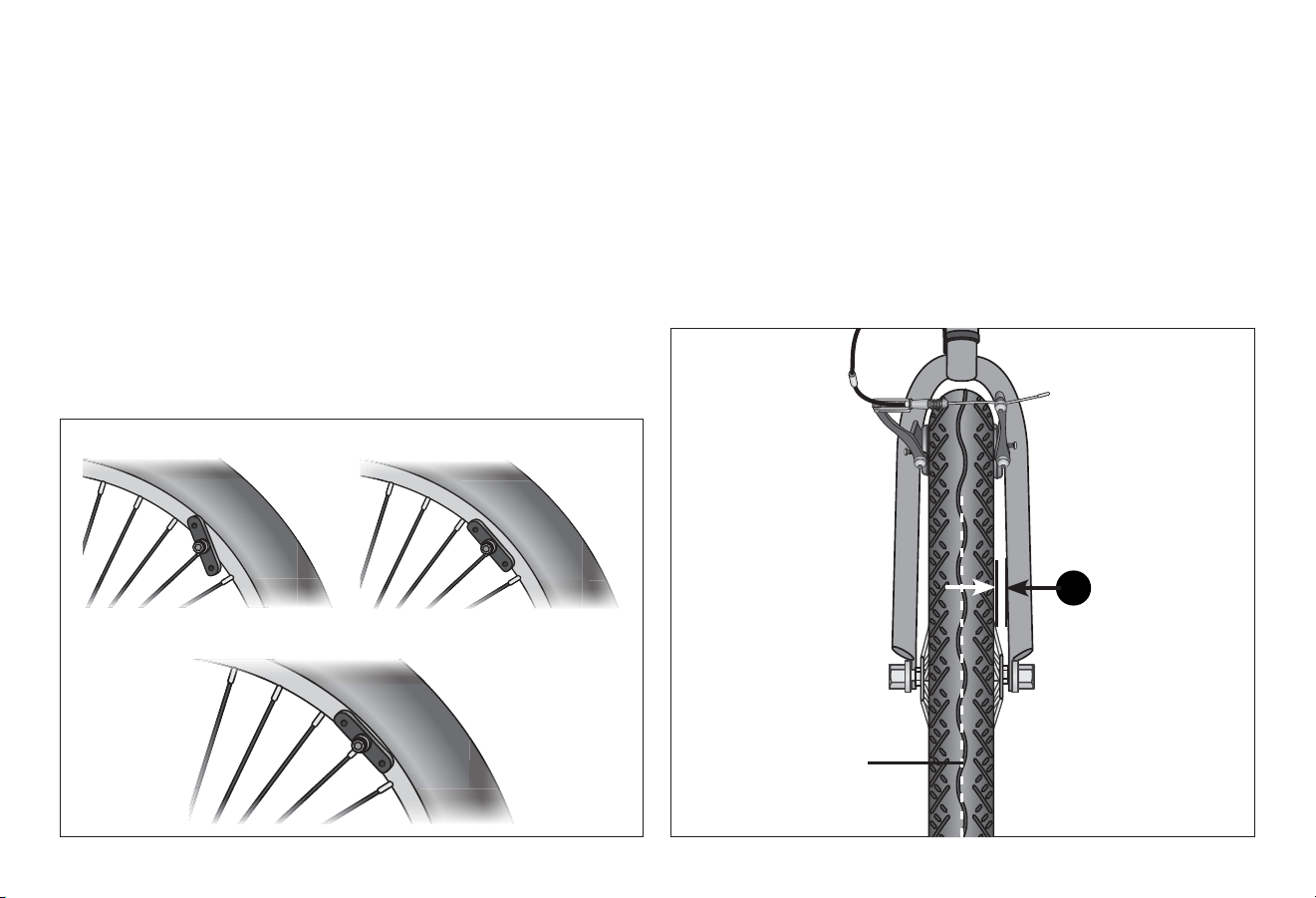
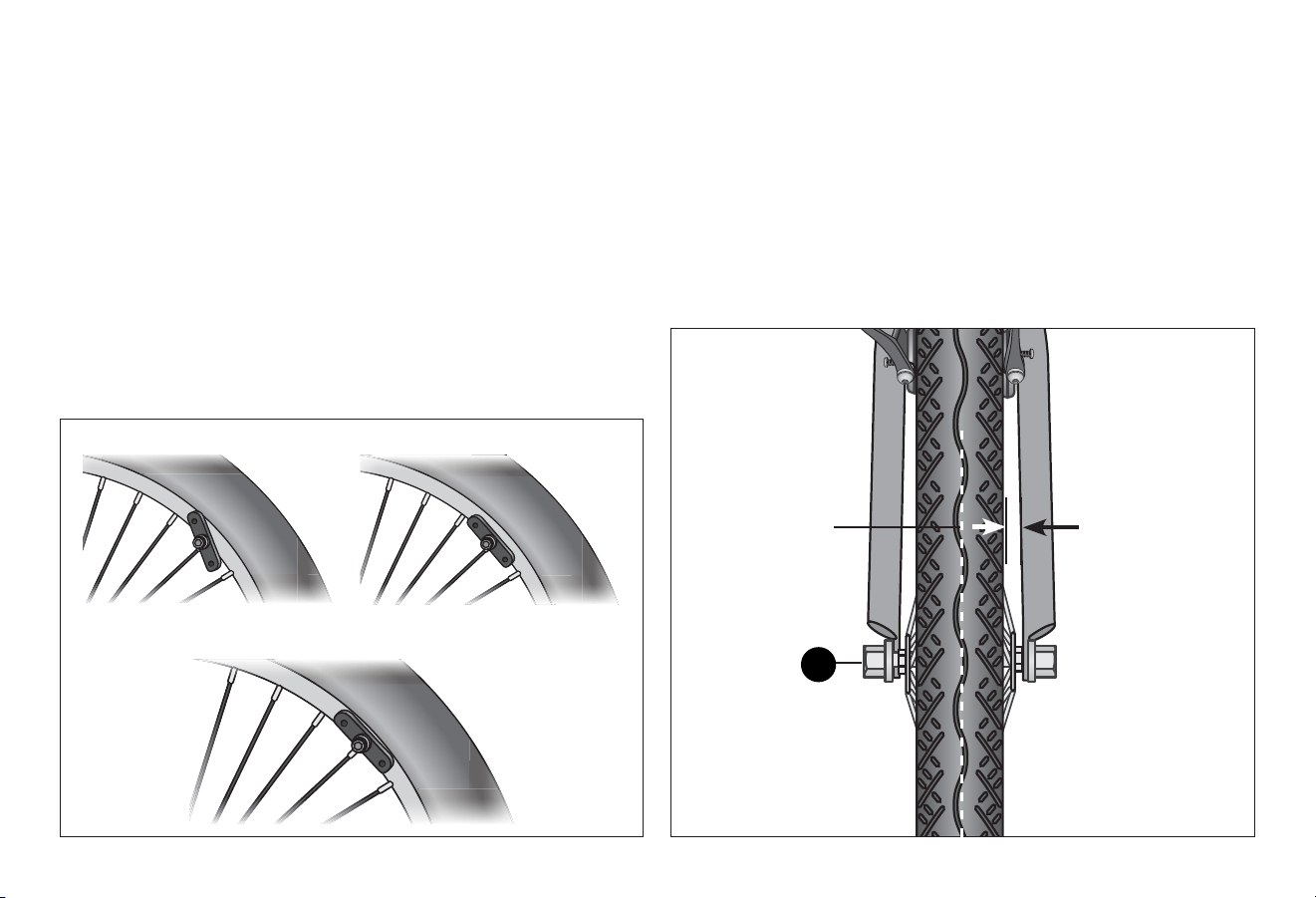
Adjust the Brake Pad Alignment
Check that all brake pads are aligned correctly. If not, use a
5 mm allen wrench and loosen the bolt enough so you can
reposion the pad. Posion the pad so it is evenly centered on
the rim. Reghten the bolt aer posioning the pad correctly.
Figure 4.5
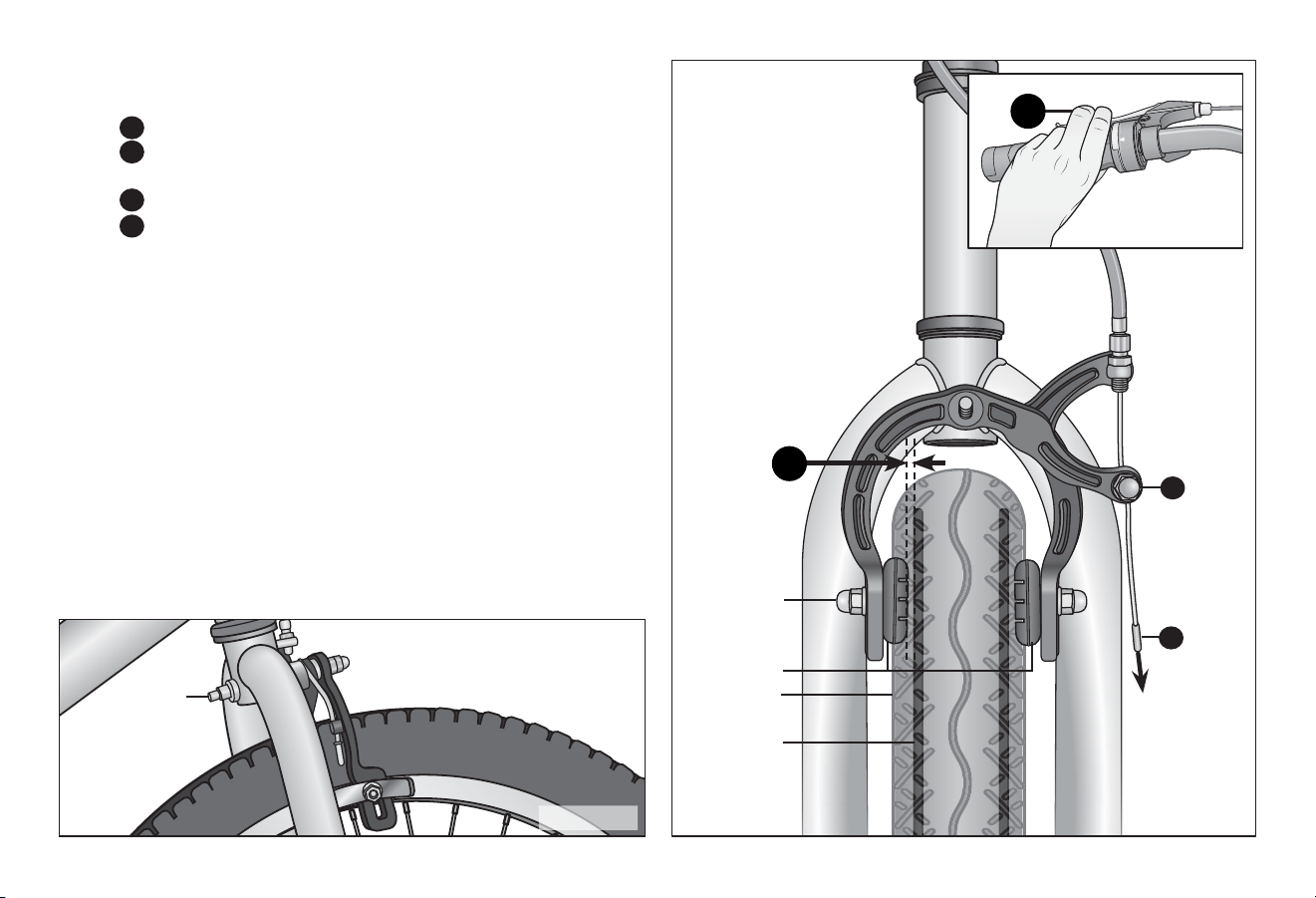
Center the Brake Pads
Rotate the wheel and look straight down at the gap between
the rim, brake pads, and fork. If you nd the gap between these
are uneven it indicates the wheel, the brake pads, or both are
not centered.
❶ If you see the gap between the fork and wheel is uneven
loosen the axle nuts and adjust the wheel unl centered.
Figure 4.6
1
Incorrect Alignment
Correct Alignment
Even space
between
wheel and fork
(both sides)
Wheel should
be centered
4 Adjustments
32
Figure 4.7
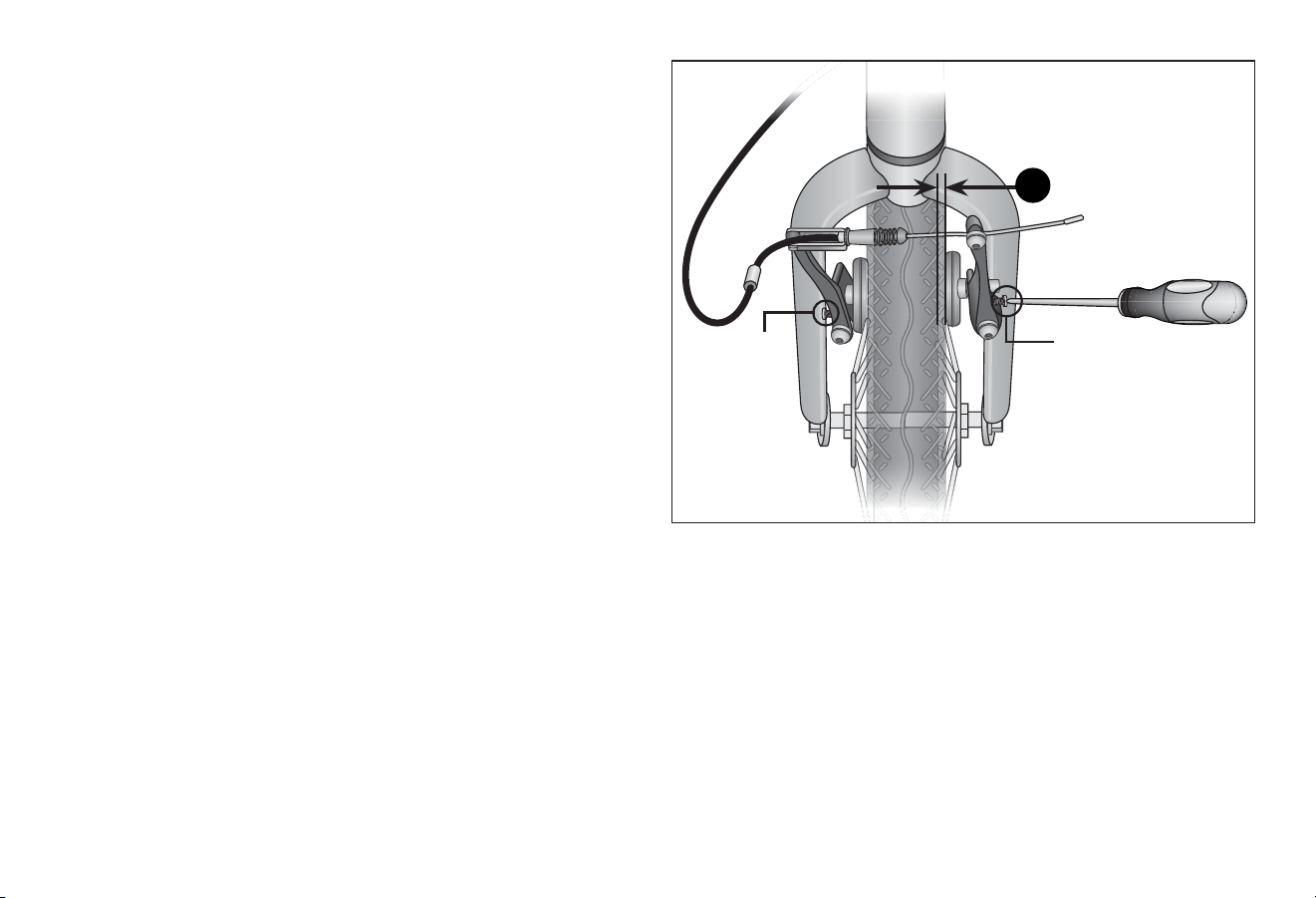
❷ If the gap between the brake pad and wheel is uneven,
adjust the posion of the brake pad.
• Using a phillips head screwdriver, adjust the brake arm
screws on either side of the brake arm. Note: Turning the
screw clockwise moves the pad away from the rim.
Turning the screw counterclockwise moves the pad
towards the rim. Figure 4.7
• Start with the side where the pad is closest to the rim or
is not moving properly. Turn the screw to move the pad
towards or away from the rim.
• Adjustments to these screws should be made in small
increments, one-quarter to one-half turn then checked
by acvang the brake lever three to four mes aer
each adjustment. If you connue to adjust the screw unl
you have noceable movement you will run out of
adjustment.
❸ Pull and release the brake lever a few mes and check if the
pads are centered.
❹ If necessary, repeat steps one through three unl the brake
pads are centered and the gap between the pads and rim is
close to 1/8 inch.
Note: If you run out of adjustment capability on one side,
adjust the screw on the opposite side. If you run out of
adjustment capability on both screws do a minor
adjustment to the brake cable. Adjustments should be made
to each side as equally as possible to prevent running out of
adjustment capability.
Even space between
brake pad and wheel
Brake arm screw
Brake arm
screw
2
Adjustments 4
33
33
Figure 4.8
Figure 4.9
Adjusng the Side-pull Caliper Brake
Aaching the Brake Cable to the Brake Carrier
❶ If the brake cable is disconnected at the caliper, thread the
brake wire through the adjustment barrel. Figure 4.8
❷ Loosen the cable anchor bolt unl you can see a gap large
enough for the cable wire.
❸ Thread the cable wire through the gap. By hand, screw the
cable anchor bolt snug enough to hold the cable wire.
❹ Check the cable end is seated in the brake lever.
❺ With one hand squeeze the caliper arms unl both brake
pads contact the rim. Loosen the cable anchor bolt just
enough to allow the cable wire to move freely.
❻ While holding the caliper closed, use your other hand to pull
the brake cable ght (through the cable anchor bolt).
Check that the cable end is seated in the brake lever and the
barrel adjuster of the brake.
❼ Tighten the cable anchor bolt as much as you can by hand
and then while sll squeezing the caliper arms unl both
brake pads contact the rim, ghten the cable anchor bolt
fully with a 10 mm box wrench. Note: Use the adjustment
barrel(s) to ne-tune the brake cable tension. Turning the
barrel clockwise will loosen the brake cable tension, counter-
clockwise will ghten the brake cable tension. Figure 4.9
Brake cable end at
brake lever
4
Cable
anchor bolt
Brake pad
Cable wire
Brake cable
Side-pull
caliper brake
Wheel rim
1
2
3
Cable
adjustment
barrel
5
Caliper
arms
4 Adjustments
34
Figure 4.11Figure 4.10
Adjusng the Brake Pads
Important! Before riding the bicycle it is important to check the
brakes. If you squeeze the brake lever and one brake arm moves
more than the other (or not at all) the brake is not centered. You
will need to ne-tune the brake pads. Mulple adjustments may
be necessary to center the brake pads, correctly set the brake
pressure and set the gap between the brake pad and rim.
❶ Check that all brake pads are aligned correctly. If not, use a
5 mm Allen wrench and loosen the bolt enough so you can
reposion the pad. Posion the pad so it is evenly centered
on the rim. Reghten the bolt aer posioning the pad
correctly. Figure 4.10
Center the Brake Pads
Rotate the wheel and look straight down at the gap between
the rim, brake pads and fork. If you nd the gap between these
are uneven it indicates the wheel, the brake pads, or both are
not centered.
❶ If you see the gap between the fork and wheel is uneven
loosen the axle nuts and adjust the wheel unl centered.
Figure 4.11
Even space
between
wheel and fork
(both sides)
Wheel should
be centered
Incorrect Alignment
Correct Alignment
Axle nut
1
Adjustments 4
35
35
1
Figure 4.13
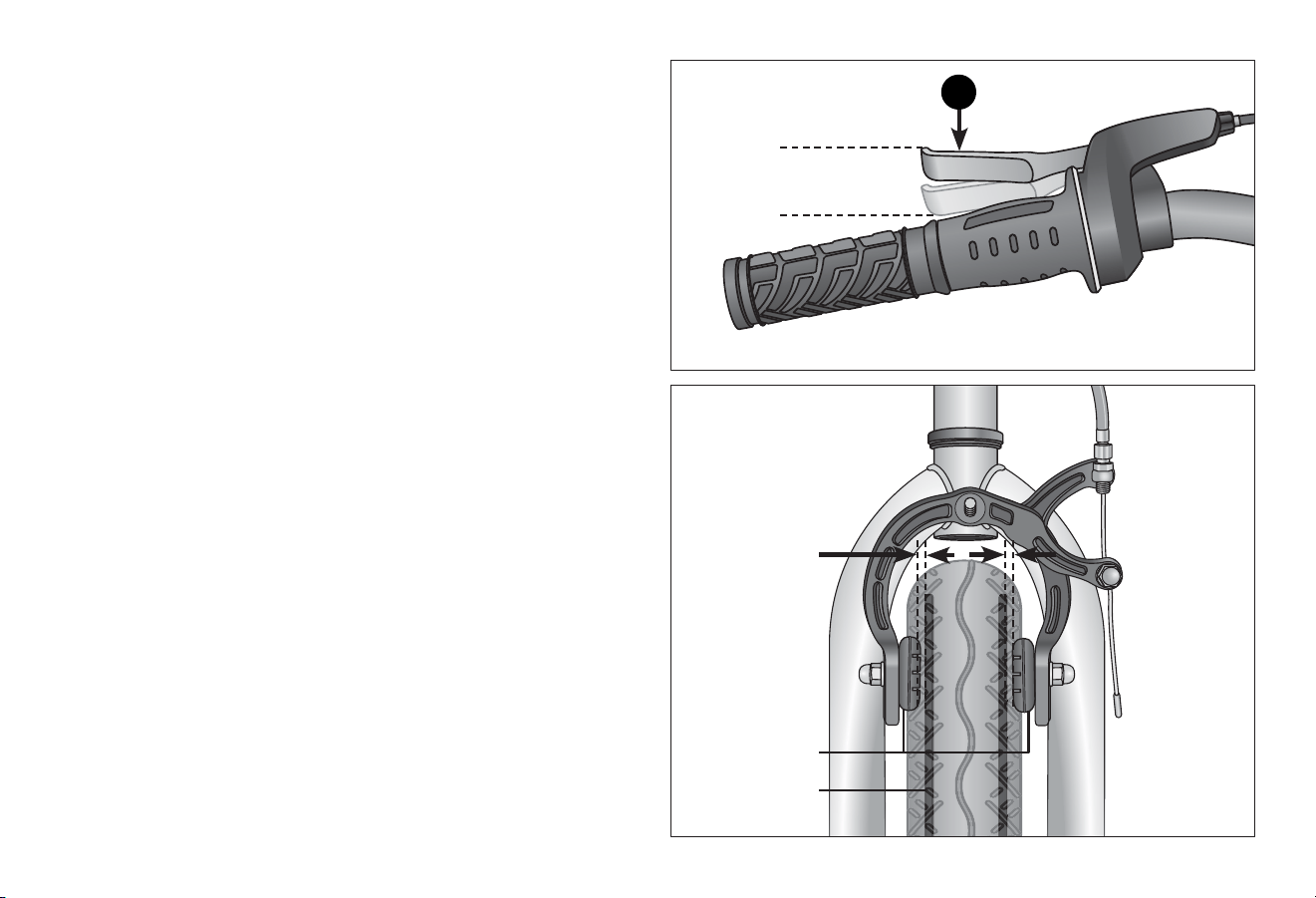
❷ If the gap between the brake pad and wheel is uneven,
adjust the cable tension. Figure 4.13
2a
Loosen the cable anchor nut.
2b
Using one hand, squeeze the brake pads against
the rim.
2c
Pull the slack out of the cable.
2d
While holding tension on the cable, ghten the cable
anchor nut.
Note: Watch the brake if it begins to shi or rotate, then
release the brake lever and use your hand to rotate the
brake caliper back unl both sides of the brake move
equally. Somemes it is necessary to over-rotate the brake
slightly, so that as you ghten the caliper locknut, the brake
will end up centered. Figure 4.12
❸ Pull and release the brake lever a few mes and check if the
pads are centered.
❹ If necessary, repeat steps one through three unl the brake
pads are centered and the gap between the pads and rim is
close to 1/8 inch.
Brake pad
locknut
Brake pads
Tire
Wheel rim
Distance from
brake pad to
wheel rim 1/8”
Caliper
locknut
Cable
anchor
nut
2a
2c
3
4
Cable
Figure 4.12
4 Adjustments
36
Figure 4.15
Figure 4.14
Check the Brakes
❶ Aer adjusng the brake, squeeze the brake lever as hard as
you can several mes and re-inspect the brake pads,
centering and brake lever travel. If the brake pads are no
longer square to the rim, repeat brake pad adjustments.
Figure 4.14
❷ Be sure that brake pads return to a centered posion by
spinning the wheel and listening for the brake pad rubbing
the rim on either side. Re-adjust as needed.
❸ Check that the brake cable tension allows the brake lever
about 1/3 of the travel before the brake pads contact the
rim. If the cable has stretched or slipped, re-adjust the brake
cable tension by loosening cable anchor bolt and pulling
more cable through the anchor or use brake adjustment
barrels for ne tuning brake cable tension.
Brake is correctly adjusted when:
• The brake pads do not drag on the rim when the brake is
open. Figure 4.15
• Both brake pads move away from the rim equally when the
brake is released.
• When the brake is applied, the brake pads contact the rim
before the brake lever reaches about 1/3 of the way to the
handlebar.
Equal space
between brake
pad and the rim
on both sides
Brake pads
Wheel rim
1/3 distance to
handlebar
1
Adjustments 4
37
37
Figure 4.16
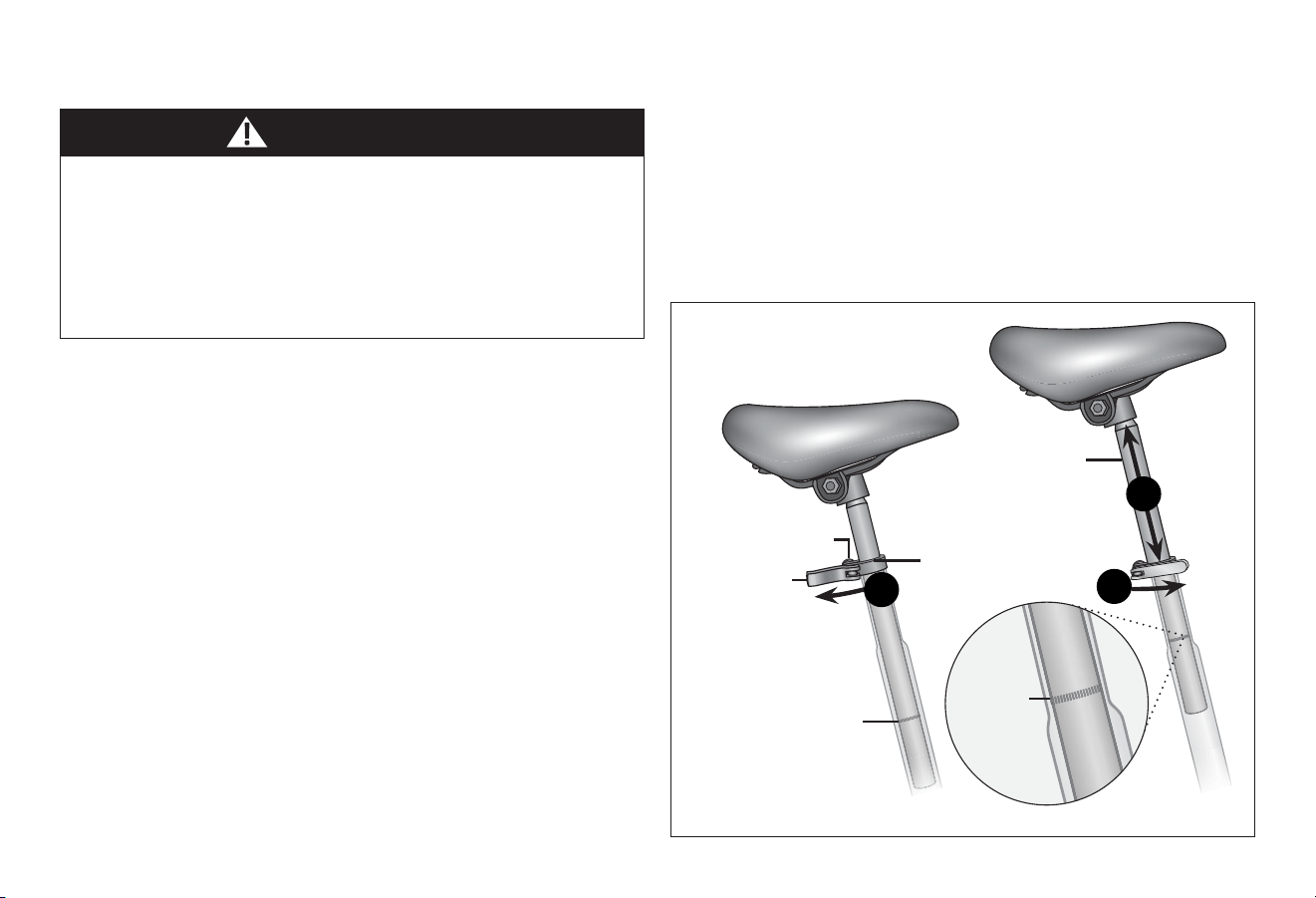
ADJUSTING THE SEAT HEIGHT
Improperly adjusted seat height could aect the rider’s ability
to reach the handlebar and pedals resulng in unexpected
movement, loss of control, and serious injury or death. Follow
these guidelines when adjusng the seat height. Always
ensure the seat post minimum inseron marks are below the
seat clamp and cannot be seen. Ensure the seat clamp is
locked and the seat cannot move.
WARNING!
❶ Unlock the quick-release lever. Figure 4.16
❷ Adjust the seat height up or down unl the rider feels they
have control of the bicycle and are comfortable.
Important! Be sure the minimum inseron marks do not go
past the top of the seat clamp and are not visible. See
Secon 1, Fig. 1.2: Seat Height and Handlebar Reach.
❸ Close the quick-release lever and lock the seat in place.
If there is not enough pressure to hold the seat in place
open the quick-release lever. With one hand on the quick-
release lever and one hand on the adjustment nut, start to
hand ghten the adjustment nut unl you start to feel some
resistance against the seat clamp. Do not aempt to ghten
by turning the quick-release lever. The quick-release lever is
for closing, the adjustment nut is for adjusng the pressure.
❹ Try to close the quick-release lever. If it closes easily, open it
up, and ghten the adjustment nut further. If it is too
dicult to close, open the quick-release lever up, and loosen
the adjustment nut a lile and try again.
Important! You should feel resistance when you close
the quick-release lever that should leave a temporary
impression on your ngers. Open and close the handle to
ensure the seat is securely locked in place.
Minimum
inseron marks on
the seat post
Seat post
Quick-release
lever
Quick-release
seat clamp
Adjustment nut
2
1
3
Minimum
inseron
marks
4 Adjustments
38
Figure 4.17
WARNING!
• Improper adjustment of the handlebar may result in
damage to the stem post, steering tube and result in loss of
control, serious injury or death. Ensure the minimum
inseron marks on the stem post are not visible above the
top of the headset.
• Failure to properly ghten handlebar components may
result in loss of control, serious injury or death. Always
check the handlebar is funconing properly and secured to
the frame before riding the bicycle.
ADJUSTING THE HANDLEBAR
Adjusng the Handlebar Height
Instrucons for adjusng the handlebar height depend on
whether your bicycle has a quill or clamp (threadless) stem.
Refer to Secon 3: Aach the Handlebar for instrucons on
adjusng the handlebar height.
Align the Handlebar
❶ Stand in front of the handlebar and hold the front wheel
between your legs.
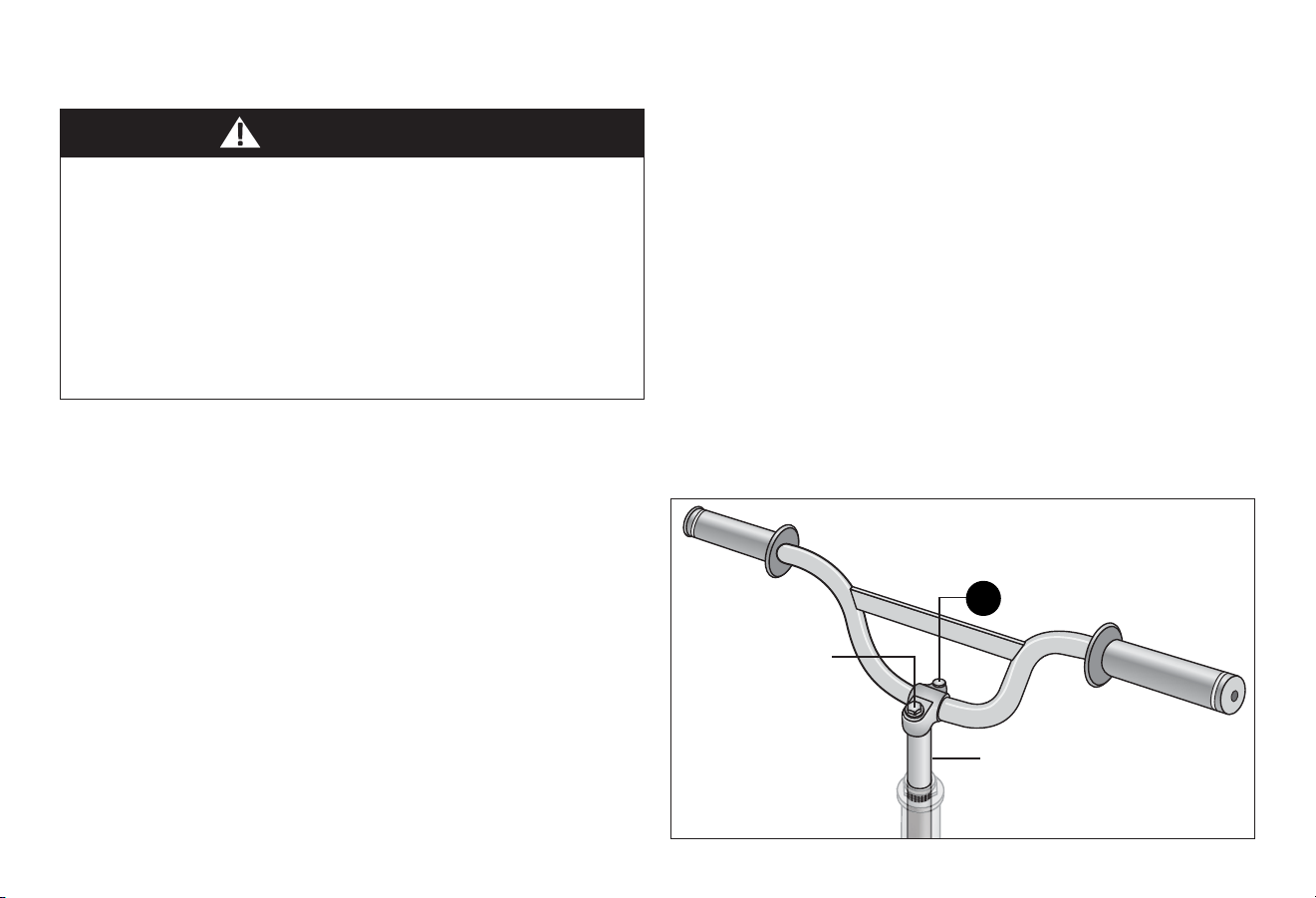
❷ Using a 6 mm Allen wrench, loosen the stem binder bolt, or
pinch binder bolts, and move the handlebar le or right
unl it is aligned with the front wheel. Figure 4.17
❸ Tighten the stem binder bolt and check the handlebar is
securely aached and funconing properly.
Adjust the Handlebar Angle
❶ Using a 6 mm Allen wrench loosen the handlebar binder
bolt(s). Figure 4.17
❷ Rotate the handlebar into the desired posion.
❸ Check that the handlebar is centered to the frame and front
wheel. Sit on the seat and check your reach to grips,
shiers, and brakes. Refer to Secon 1: Seat Height and
Handlebar Reach for guidelines.
❹ Tighten the handlebar binder bolt(s) and check the
handlebar is securely aached and funconing properly.
Stem binder bolt
Note: The clamp
on threadless
stems have two
pinch binder bolts.
Handlebar binder bolt(s)
Stem post
4
Adjustments 4
39
39
ADJUSTING THE HEADSET
Threadless headsets are similar to threaded headsets, they use
two sets of bearings and bearing cups. Unlike a threaded
headset, a threadless headset does not have an upper threaded
race or use a threaded steerer tube. Instead the steerer tube
extends from the fork all the way through the head tube and
above the headset and is held in place by the stem clamped
on top.
Conduct the following checks to determine if there is play in the
headset:
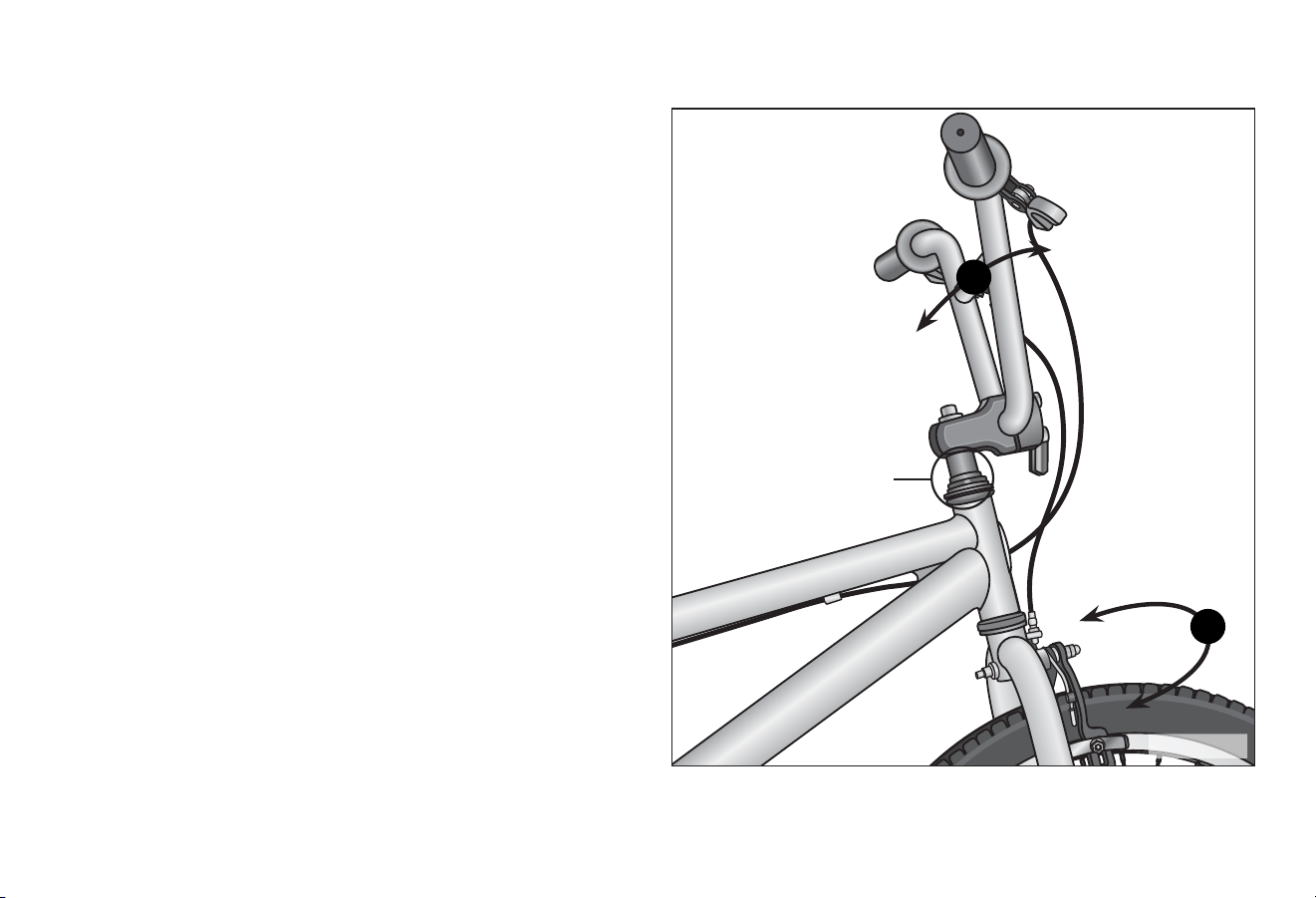
❶ Shakiness: Apply the front brake and push the handlebars
back and forth, front to back. Or if the bicycle is on a
workstand and the front wheel removed, push and pull on
the forks. If you feel a knocking sensaon or "clunk" it
means the headset is too loose.
❷ Sness: Li the front of the frame so the front wheel is
o the ground. The handlebar and wheel should op to
one side or another. If there is drag or binding the headset
is too ght.
Figure 4.18
Headset
1
2
4 Adjustments
40
Figure 4.20
Figure 4.19
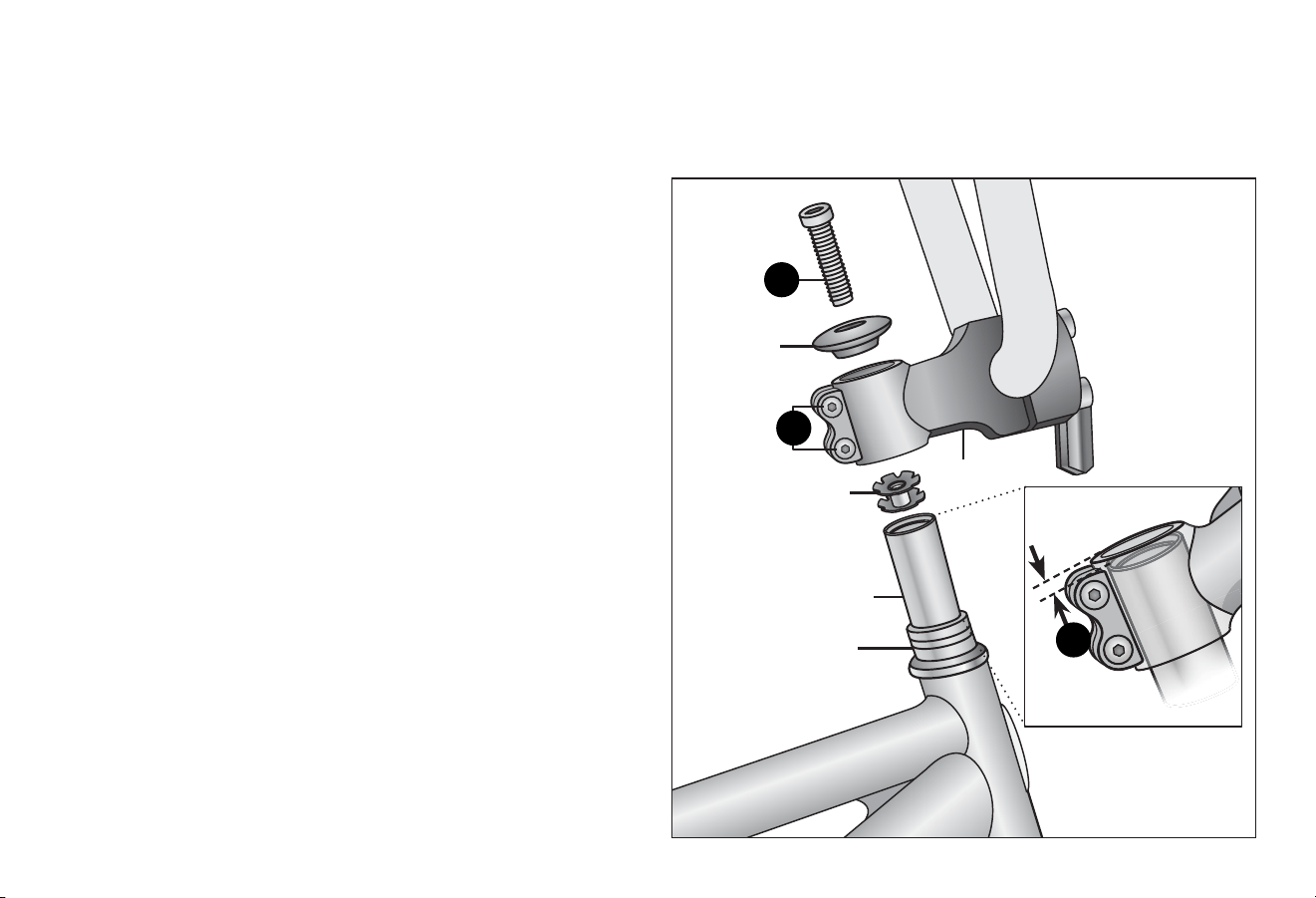
❶ Loosen the top cap bolt and remove the top cap.
Important! Do not disassemble the headset or lose any
parts. Be sure the end of the fork is on the ground or being
held with your free hand, because once you loosen the top
cap the fork assembly may fall out of the frame. Figure 4.19
❷ Check that the gap between the top of the steerer tube and
top of the stem is between 3 - 5 mm (1/8" - 3/16").
Figure 4.20
If the gap is not correct add or remove spacers unl it is.
The stem needs to press down on the spacers in order to
adjust the bearings. If the gap is correct then re-install the
top cap and tighten the top cap bolt until it is snug. Do not
over tighten.
❸ Slightly loosen the stem pinch bolts. The stem probably
won't move but make sure the stem remains aligned with
the fork and wheel.
❹ Re-install and ghten the top cap down with a 1/4 to 1/2
turn of the top cap screw and test for shakiness in the
headset. If there is sll play in the headset then turn the top
cap bolt another 1/4 to 1/2 turn. Repeat this process unl
the shakiness is gone.
❺ Li up the front wheel of the bicycle, if the wheel does not
move freely le to right the top cap bolt is too ght. If this is
the case turn the top cap bolt back some.
❻ Repeat steps 3 and 4 unl there is no play in the headset. If
the play in the headset cannot be reced with these
adjustments see a qualied bicycle mechanic for these
repairs.
Top cap
Star nut
Steerer tube
Stem pinch
bolts
Stem
Top cap
bolt
Spacers
1/8" - 3/16"
(3 - 5 mm)
2
1
3
Adjustments 4
41
41
Figure 4.21
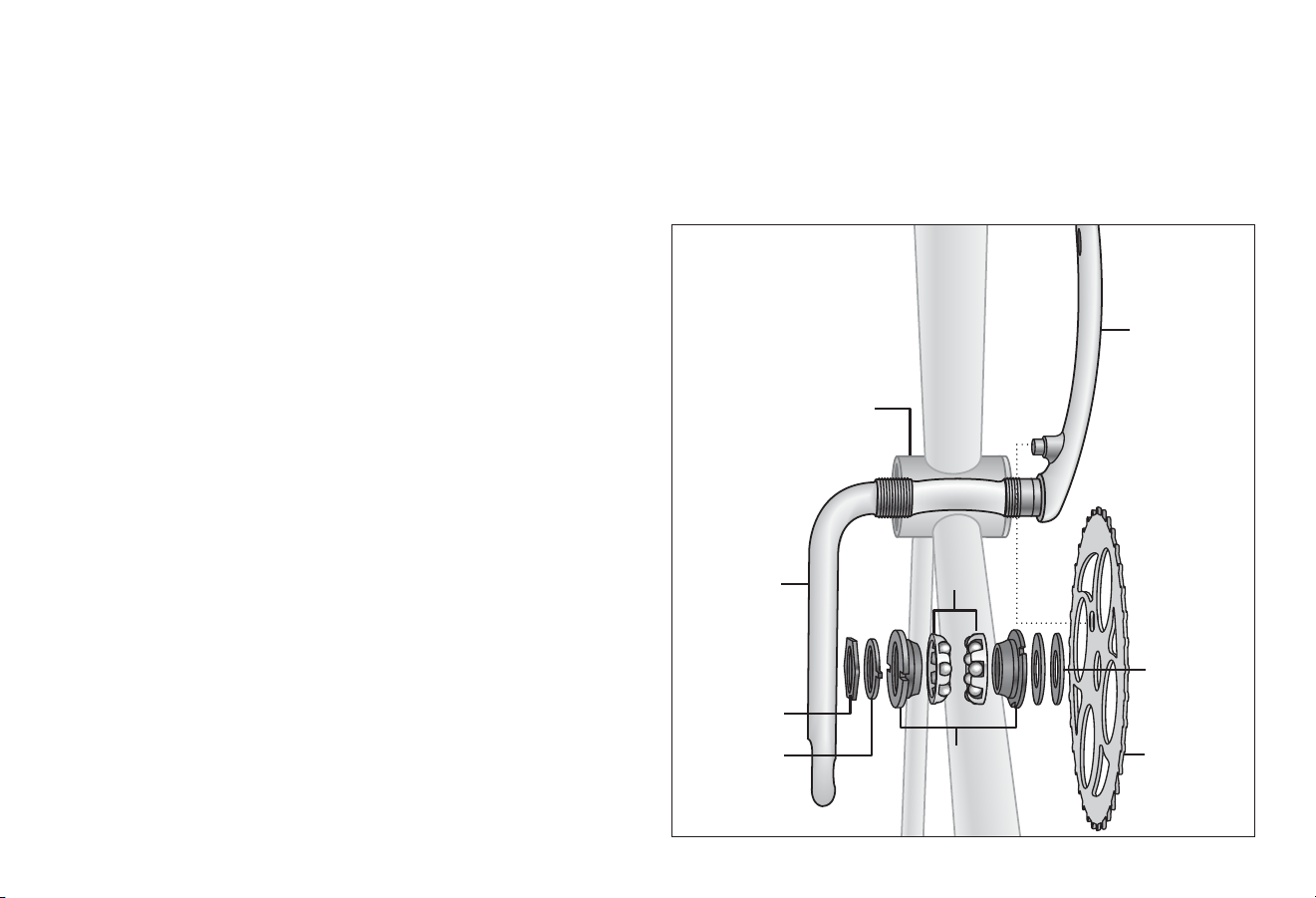
ADJUSTING THE BOTTOM BRACKET
Typically the boom bracket contains four major pieces:
lockring, adjustable cone, bearings, and washers. The lockring
has notches. The adjustable cone will have notches for a
spanner wrench or boom bracket tool. The cones can be
removed and replaced separately. A set of round ball bearings
are found in each adjustable cone. A typical ball bearing is 5/16"
in diameter and contains nine balls. This type of boom bracket
may be cleaned, greased and adjusted.
Bearing Adjustment
The basic concept for bearing adjustments is to get the bearings
adjusted as loose as possible but without play. Start by
purposely beginning with play in the adjustment and then
ghtening in small increments unl play is gone. Note: Extended
use may cause the bearings, cups (or cones) to become worn
and pied. In this case, bearing adjustment will not be possible.
If boom bracket is correctly adjusted, but grinds when spun,
cups and/or cones are worn and should be replaced. Figure 4.21
❶ Loosen the locknut. Turn adjusng cone counter-clockwise
unl it hits the ball bearing, then turn back clockwise to
loosen 1/4 turn.
❷ Secure the locknut.
❸ Grab the end of the crank arms and rock it sideways to
check for play. If play is present, loosen locknut and turn
adjusng cone counter-clockwise slightly to ghten.
Re-secure locknut and check again.
❹ Repeat process of checking for play and re-ghtening cone a
slight amount unl no play is felt. Note: The one-piece crank
systems do not use a polished bearing system. There will be
some roughness to a correctly adjusted boom bracket.
Adjust as loose as possible but without play in the crank
assembly.
Boom bracket shown
with crank arm
removed
Locknut
Ball bearings
Crank arm
Chainwheel
Adjustable cones
Lockring
Crank arm
Washers
5 Use
42
WARNING!
Figure 5.1
BRAKE OPERATION
Failure to follow all local and state regulaons and laws
pertaining to bicycle use as well as the safety warnings in this
manual may result in serious injury or death. Always follow all
local and state regulaons and laws pertaining to bicycle use,
follow the safety warnings in this manual and use common
sense when riding the bicycle. Always conduct a pre-ride
check of the bicycle condion before riding.
There are two types of braking systems for bicycles; foot
operated and hand operated.
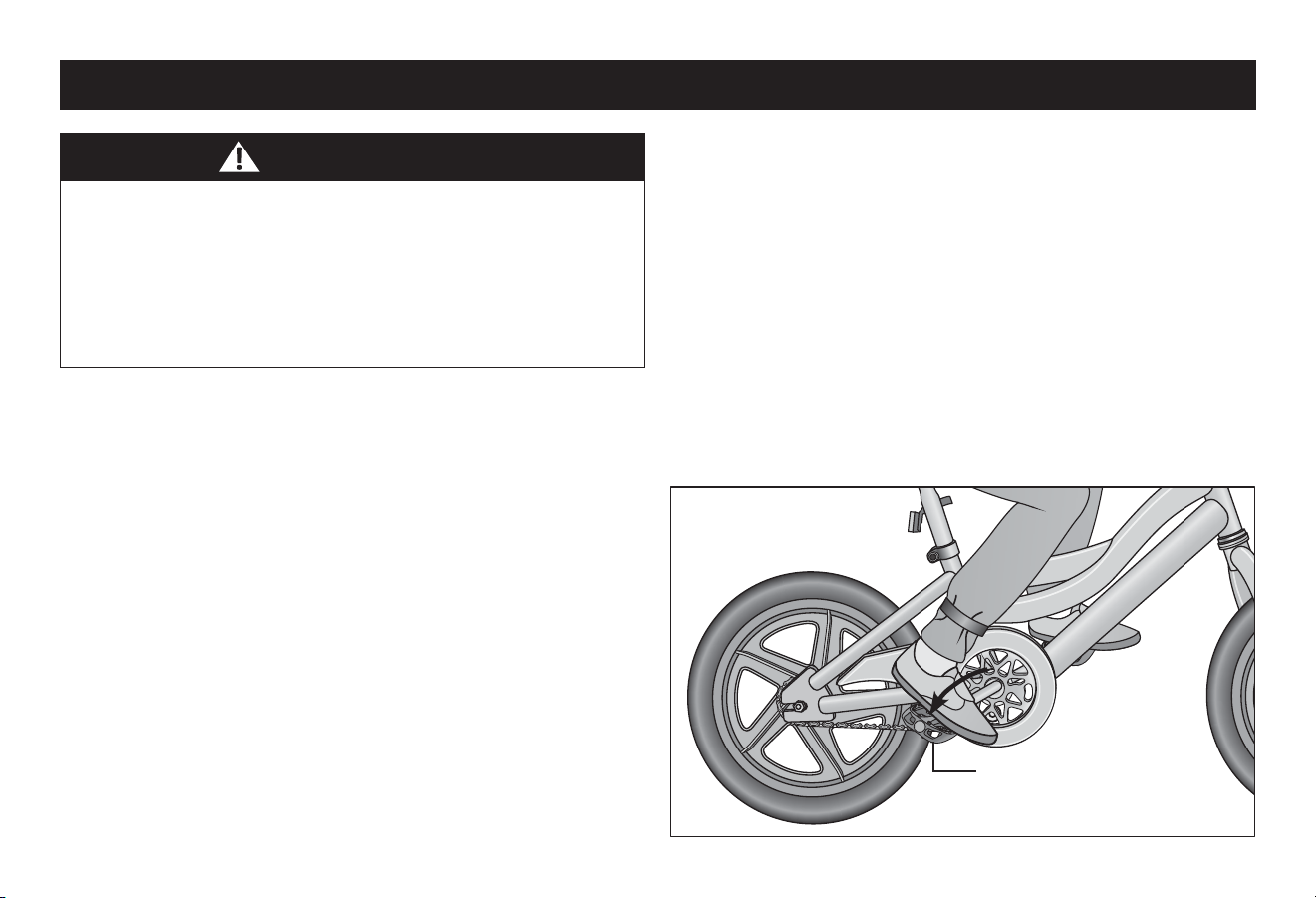
Foot Operated Brakes
Foot operated brakes allow the rider to pedal forward to
accelerate the bicycle, and pedal backwards to brake. The
harder you push back on the pedals, the more braking force is
applied to the rear wheel. Figure 5.1
In most cases a foot operated brake is strong enough to lock up
(stop the wheel from turning) the rear wheel and cause the re
to skid. While this will decelerate the bicycle quickly, it will also
cause unnecessary wear on the re, and terrain, and can cause a
loss of steering control.
It is recommended to pracce braking so that you have control
over how quickly the bicycle comes to a stop. It is also important
to know the environment that you are riding on. For example, a
dry paved road is very predictable when stopping. But if you add
rain, gravel, snow or anything else, the rider needs to be extra
careful, and allow extra stopping distance, and slow down
before turning. The rider should also be careful as terrain
changes to keep the bicycle at a controllable speed.
Some models may have a combinaon of foot and hand
operated brakes. It is OK to operate them at the same me or
independently. However, if the bicycle is equipped with a front
wheel hand brake, be careful to use front and rear brake
simultaneously, and avoid locking up the front wheel, as this can
cause a loss of steering control, and cause a crash. See hand
operated brakes on the next page for more detail.
❺ Use
Push backwards
to brake
Use 5
43
43
Figure 5.2
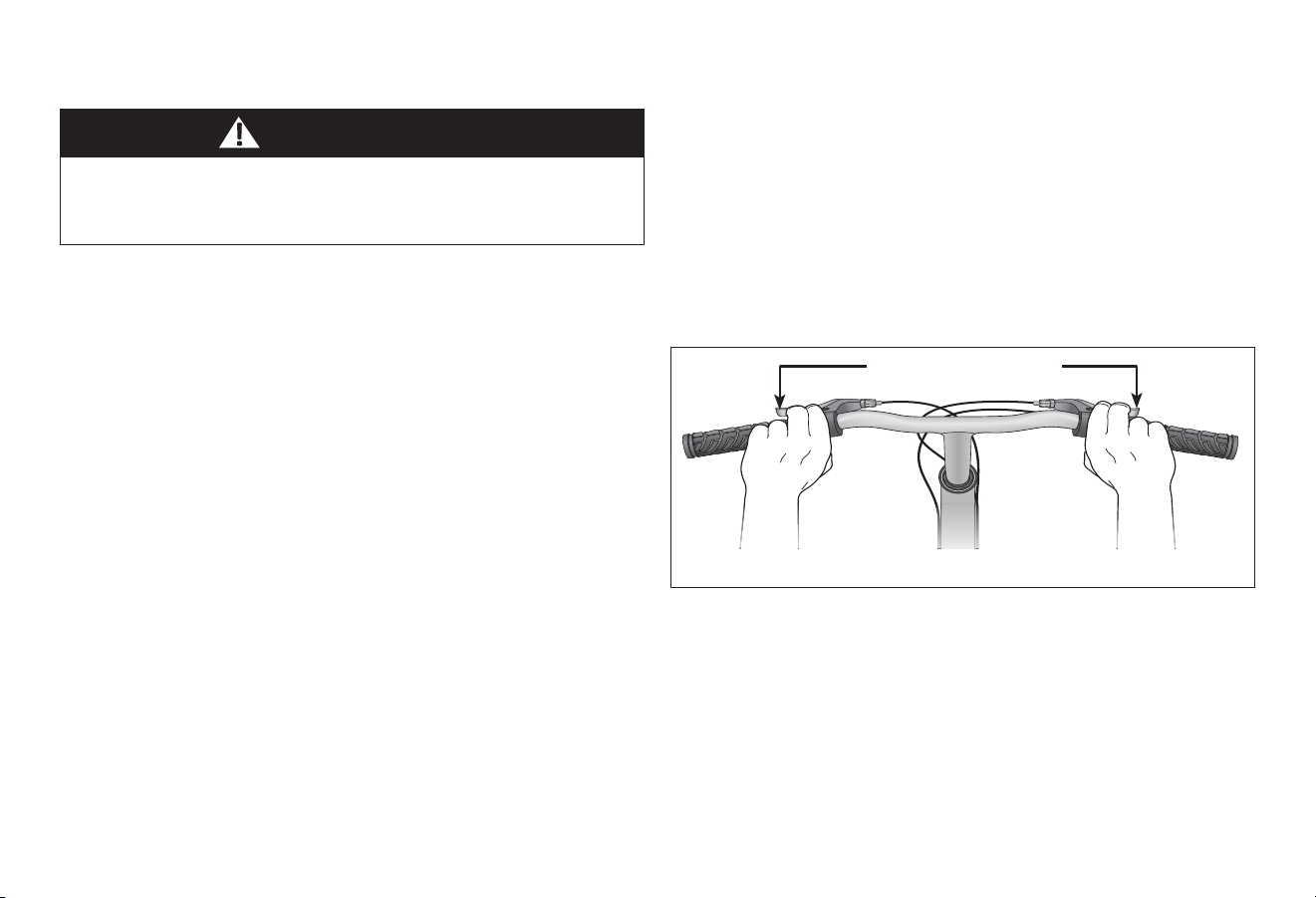
Hand operated brakes have a separate hand lever to operate
front and rear brakes. Front hand brake levers are located on
the le side of the handlebar, and rear hand brake levers are
located on the right side of the handlebar. Figure 5.2
Hand operated brakes may be used alone or on some models in
conjuncon with foot operated brakes. It is OK to operate one
brake at a me or all together, depending on your style,
comfort, and riding condions, however, be careful to pay close
aenon to front brakes locking up.
To best avoid this:
• Apply the front and rear brakes simultaneously, while shiing
your body weight back slightly to compensate for braking
force.
• As terrain changes, the rider must pracce and learn how the
bicycle will respond in a new terrain or weather change. The
same bicycle will react dierently if it is wet, or if there is
gravel on the road etc.
If the front brake is applied too quickly or too hard, the front
wheel can stop turning resulng in a front pitch over or cause
the bicycle to lose steering funcon leading to a crash.
Hand Operated Brakes
• Always test the brakes and be sure you feel comfortable with
the reacon. If the riding condions are too steep (o road
for example) and you are unsure, dismount the bicycle and
walk past the quesonable terrain before riding again.
• Remember that as you apply the brakes your weight will want
to shi forward, and the wheels will want to stop.
Note: See Secon 4: Adjusng the Brakes for informaon on
brake adjustment.
WARNING!
Pull to engage brakes
5 Use
44
Figure 5.4
Figure 5.3
SECURITY
You just bought a new bicycle! Don’t lose it. It is advisable that
the following steps be taken to prepare for and help prevent
possible the:
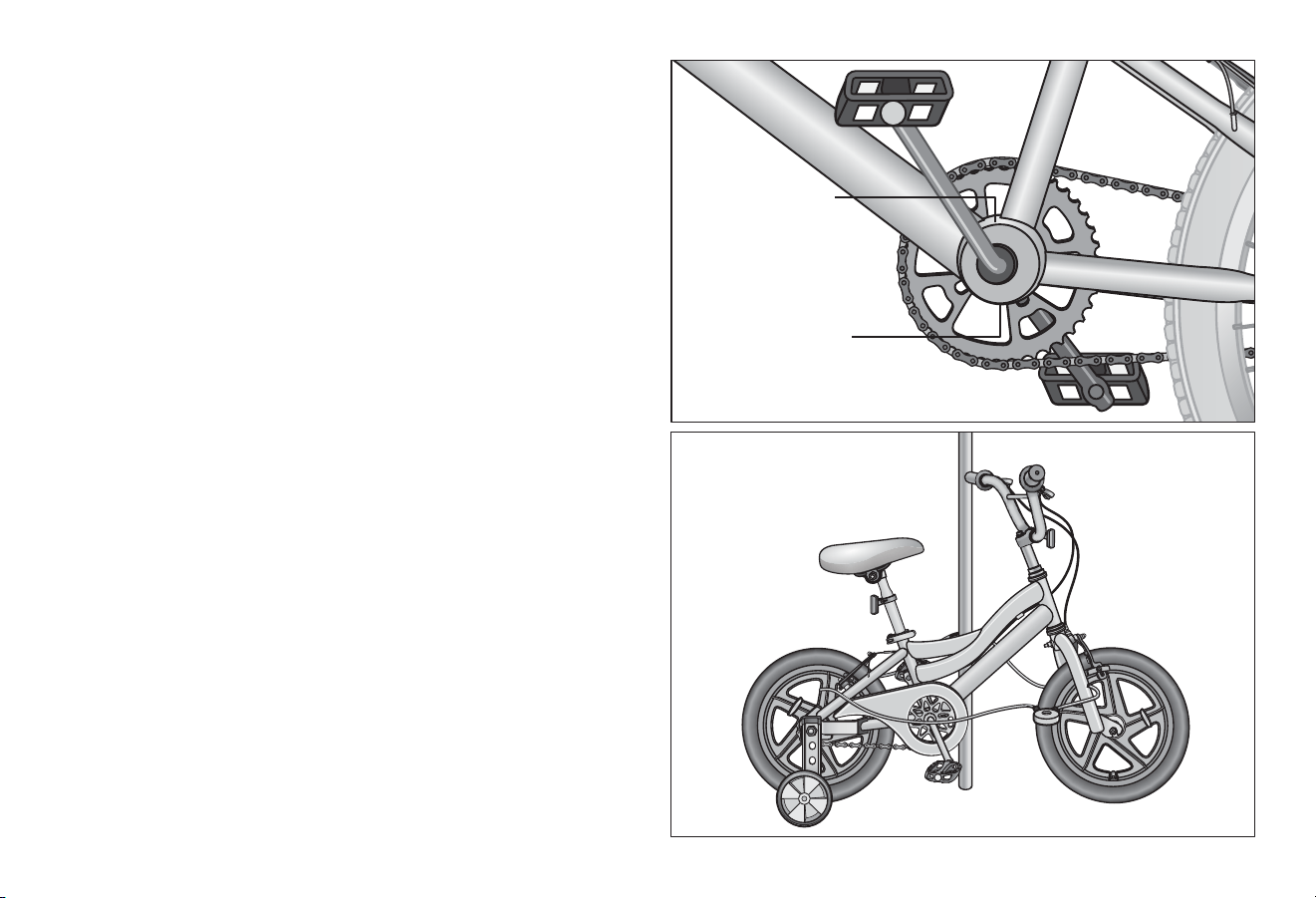
• Maintain a record of the bicycle’s model number. Serial
number is underneath the boom bracket. Model number is
above the boom bracket. Figure 5.3
• Register the bicycle with the local police and/or bicycle
registry.
• Invest in a high quality bicycle lock that will resist hacksaws
and bolt cuers.
• Always lock your bicycle to an immovable object if it is le
unaended. Keep in mind that individual parts of a bicycle
may be stolen. Most commonly, if you lock just a wheel or just
the frame, other parts may be removed from the bicycle.
Although it is impossible to lock all the parts, it is suggested
to lock the major components if possible. Figure 5.4
• Use a lock that is long enough to lock the frame and both
wheels if possible. Some models with quick-release front
wheels allow the front wheel to be placed beside the frame
so a smaller lock can be used to lock all 3 components.
• Be aware that a quick-release seat post can be stolen. It is
recommended to remove the seat post and saddle and carry
it with you if you believe that this is a risk.
Service scker
and model
number is located
above the boom
bracket area.
The serial number
is located under the
boom bracket.
Maintenance 6
45
• Failure to conduct maintenance on the bicycle may result
in malfuncon of a crical part and serious injury or death.
Proper maintenance is crical to the performance and safe
operaon of the bicycle.
• The recommended intervals and need for lubricaon and
maintenance may vary depending on condions the bicycle
is exposed to. Always inspect the bicycle and conduct
necessary maintenance before each use of the bicycle.
This secon presents important informaon on maintenance
and will assist you in determining the proper course of acon to
take if you do have a problem with the operaon of the bicycle.
If you have quesons regarding maintenance please call our
customer service, toll free, at 1-800-626-2811 or see a qualied
bicycle mechanic. Do not call the store where the bicycle was
purchased.
Correct roune maintenance of your new bike
will ensure:
• Smooth running
• Longer lasng components
• Safer riding
• Lower running costs
BASIC MAINTENANCE
The following procedures will help you maintain your bicycle for
years of enjoyable riding.
• For painted frames, dust the surface and remove any loose
dirt with a dry cloth. To clean, wipe with a damp cloth soaked
in a mild detergent mixture. Dry with a cloth and polish with
car or furniture wax. Use soap and water to clean plasc
parts and rubber res. Chrome plated bikes should be wiped
over with a rust preventave uid.
• Store your bicycle under shelter. Avoid leaving it in the rain
or exposed to corrosive materials.
• Riding on the beach or in coastal areas exposes your bicycle
to salt which is very corrosive. Wash your bicycle frequently
and wipe or spray all unpainted parts with an an-rust
treatment. Make sure wheel rims are dry so braking
performance is not aected. Aer rain, dry your bicycle and
apply an-rust treatment. If the hub and boom bracket
bearings of your bicycle have been submerged in water, they
should be taken out and re-greased. This will prevent
accelerated bearing deterioraon.
• If paint has become scratched or chipped to the metal, use
touch up paint to prevent rust. Clear nail polish can also be
used as a preventave measure.
• Regularly clean and lubricate all moving parts, ghten
components and make adjustments as required.
❻ Maintenance
WARNING!
6 Maintenance
46
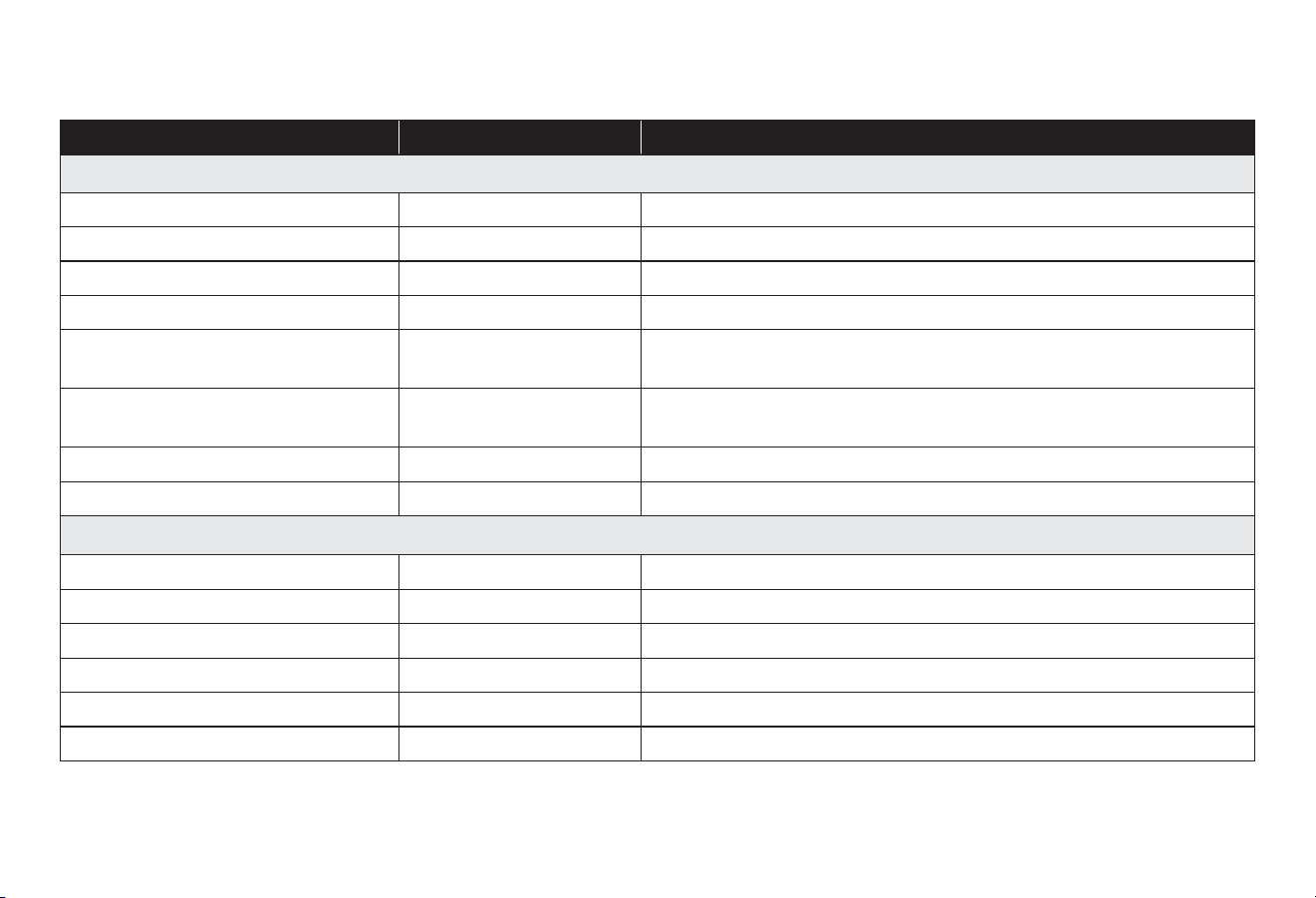
LUBRICATION SCHEDULE
Note: The frequency of maintenance should increase with use in wet or dusty condions. Do not over lubricate. Remove excess
lubricant to prevent dirt build up. Never use a degreaser to lubricate your chains (WD-40®).
Component Lubricant Method
Weekly
Chains Chain lube or light oil Brush on or squirt
Brake calipers Oil Three drops from oil can
Brake levers Oil Two drops from oil can
Freewheel Oil Two drops from oil can
Derailleur Systems Light oil or grease All pivot points should be lubricated (more oen in severely rainy
or muddy condions). Wipe o any excess oil.
Brake cables Lithium based grease Remove cable from casing. Grease enre length. Wipe o excess
lubricaon from other surfaces.
Brake lever and caliper pivot points Light oil Two to three drops from oil can
Shiing cables Thin layer of grease Clean and grease
Yearly
Boom bracket Lithium based grease Disassemble
Pedals Lithium based grease Disassemble
Wheel bearings Lithium based grease Disassemble
Headset Lithium based grease Disassemble
Seat stem Lithium based grease Disassemble
Pedals: that can be disassembled See bicycle mechanic for maintenance.
Maintenance 6
47
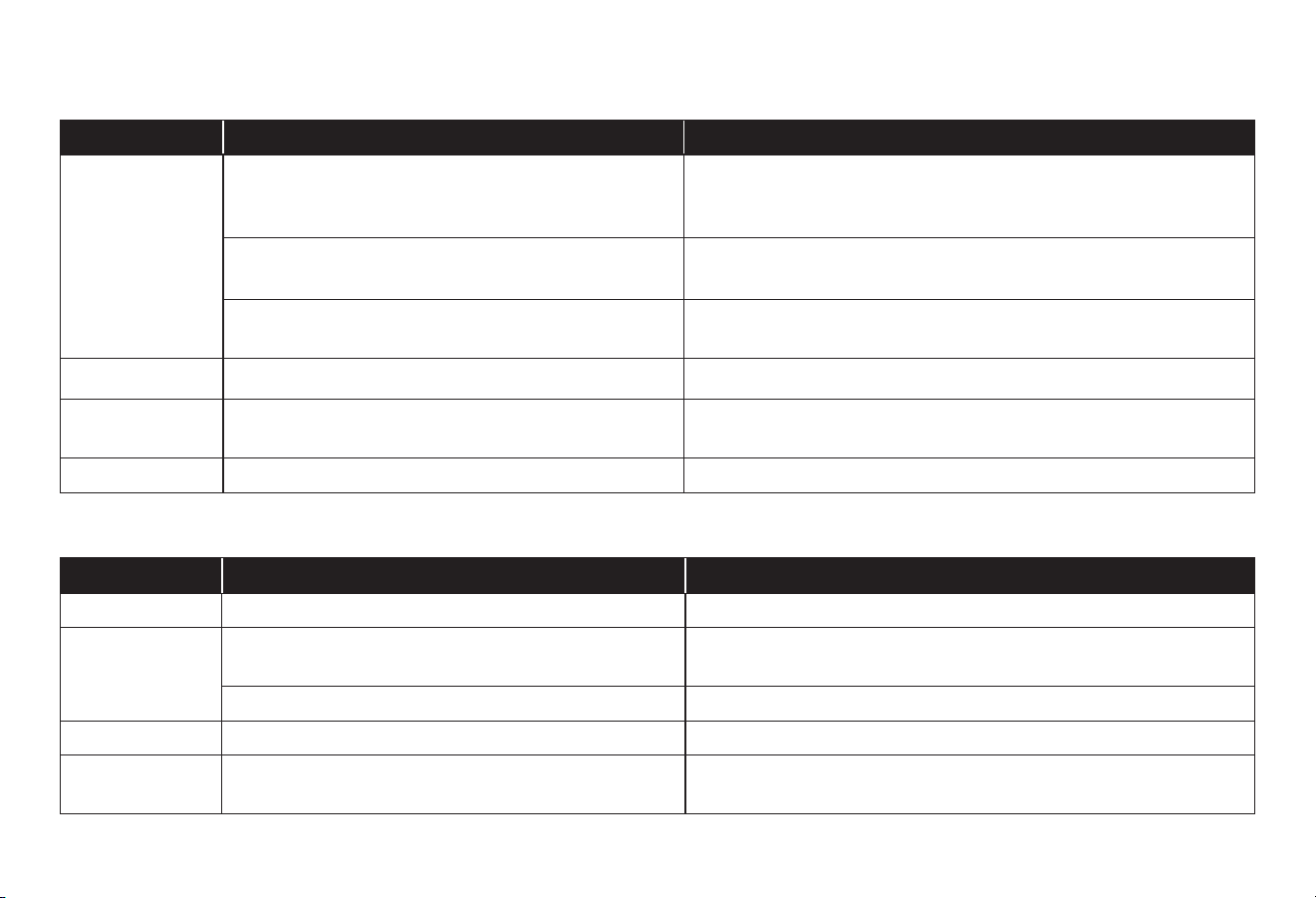
PARTS MAINTENANCE
Inspect Acon Maintenance
Tire Inaon Check re pressure. Inate re to the pressure indicated on the re sidewall. See
“Inang a Tire Tube” for more detail. If the re is at see
“Fixing a Flat Tire” for more detail.
Check the bead is properly seated while inang
or reng the re.
Reduce air pressure in the tube and re-seat the bead.
Spin wheel and check rotaon / alignment
is smooth and even.
Loosen axle nut(s) and adjust unl properly seated. If the hub
bearings need repair see a bicycle mechanic for repair.
Bead Seang Check for broken or loose spokes. See bicycle mechanic for repair.
Tread Inspect for signs of excessive wear, at spots or
cuts and damage.
Replace re.
Valves Check that valve caps are ed and free of dirt. Clean dirt from the valve.
Inspect Acon Maintenance
Rims Inspect for dirt and grease. Use a clean rag or wash with soapy water, rinse, and air dry.
Wheels Check the wheels are securely fastened to the
bicycle and axle nuts are ght.
Adjust if necessary and ghten axle nuts.
Spin wheel and check rotaon / alignment is true See bicycle mechanic for repair.
Spokes Check for broken or loose spokes. See bicycle mechanic for repair.
Hub Bearings Li each wheel and see if there is movement side
to side.
See bicycle mechanic for repair.
Frequency: Inspect and maintain at least each use
Frequency: Inspect and maintain at least each use
Tires
Wheels
6 Maintenance
48
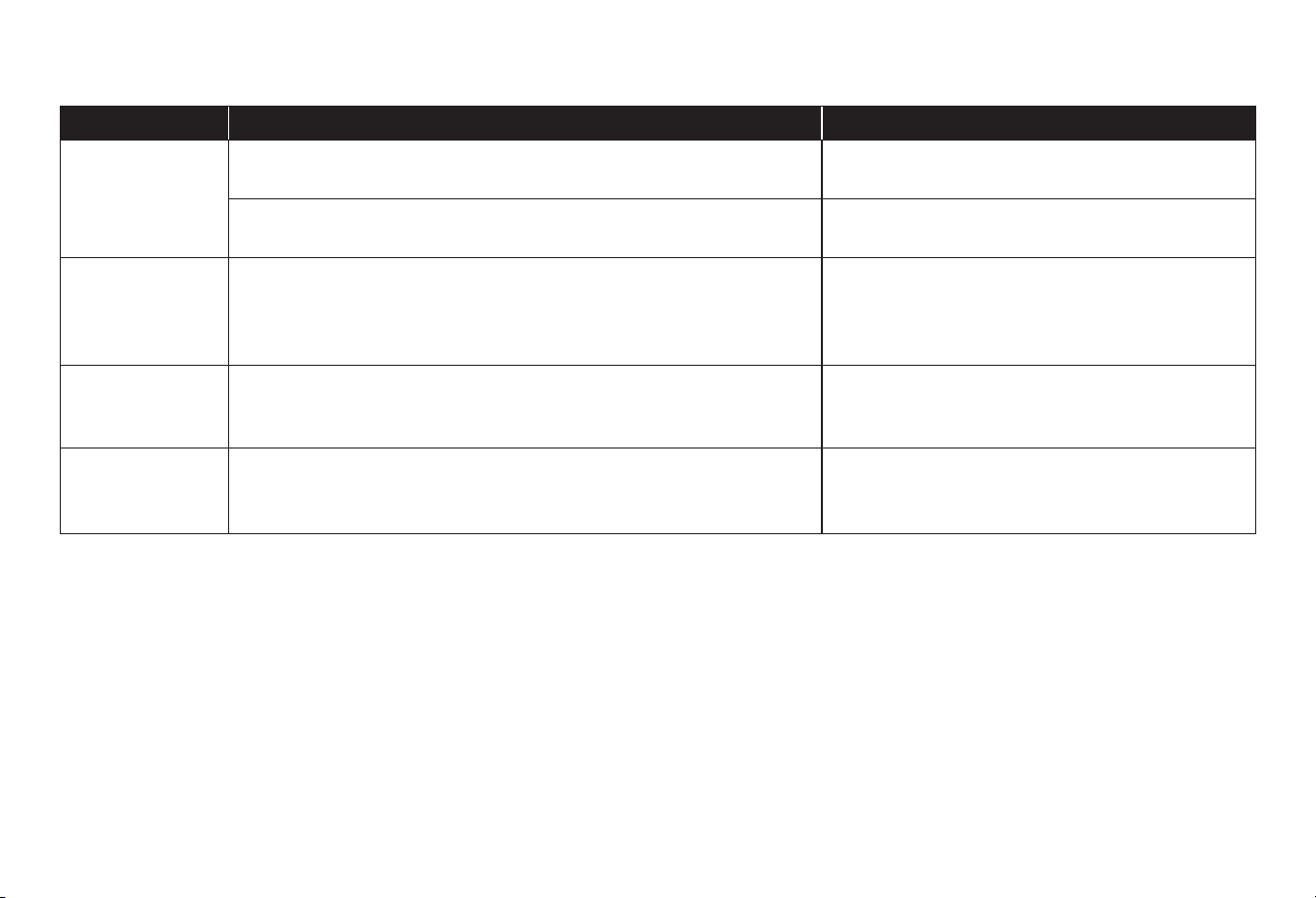
Drivetrain (pedals, chains, chainwheel, crank set, freewheel)
Inspect Acon Maintenance
Pedals Every month, check each pedal is securely set and ghten into
the crank arm.
If necessary, re-set and ghten.
Before each ride, check each front and rear pedal reectors are
clean and in place.
Clean or replace.
Pedal Bearings Every ride, check the pedal bearings are properly adjusted.
Move the pedal up and down, le and right. If looseness or
roughness is detected adjustment, lubricaon or replacement
is required.
See bicycle mechanic for repair.
Chains Every week, check the chain is clean, properly lubricated,
rust-free, and is not stretched, broken, or has s links.
Lubricate if necessary. Replace if rusted,
stretched, or broken.
Crank Set Every month, check the crank set (crank arms, chain rings, and
boom bracket axle and bearings) is correctly adjusted and
ght.
See bicycle mechanic for repair.
Frequency: as noted
Maintenance 6
49
Brakes
Inspect Acon Maintenance
Levers Check the levers are securely fastened to the handlebar. Posion the levers to t the rider’s grip and
screw ght to handlebar.
Pads Check pad posion, gap and pressure. See Secon 4: Adjusng the Brakes
Cables Check the outer casing for kinks, stretched coils and damage.
Check cables for kinks, rust, broken strands or frayed ends.
Check the outer casing for kinks, stretched coils and damage.
Replace cable.
Check the housing is seated properly into each cable stop of
the bicycle.
It is recommended that the cables and
housing be replaced every riding season.
Frequency: Inspect and maintain before each use
6 Maintenance
50
INFLATING THE TIRE TUBEHUB BEARINGS
Hub bearings require special thin wrenches called cone
wrenches. If you do not own these tools, do not aempt hub
bearing adjustments. Have a qualied bicycle mechanic perform
the adjustment if you have any doubts.
❶ Check to make sure neither locknut is loose.
❷ To adjust, remove wheel from bicycle and loosen the locknut
on one side of the hub while holding the bearing cone on
the same side with a cone wrench.
❸ Rotate the adjusng cone as needed to eliminate free play.
❹ Re-ghten the locknut while holding the adjusng cone in
posion.
❺ Re-check that the wheel can turn freely without excessive
side play.
Follow these steps to inate a re:
❶ Remove the valve cap and add air.
❷ Be sure the re is evenly seated on the rim, both sides.
❸ Spin the wheel and check for high and low areas.
❹ Complete inaon to the recommended psi found on the
sidewall of the re.
❺ Be sure the re is evenly seated on the rim, both sides.
If not, release some air and repeat steps three through six.
❻ Check for dirt in the valve cap or stem. Clean dirt from cap
or stem.
❼ Securely replace the valve cap on the stem.
• An unseated re can rupture unexpectedly and cause
serious injury or death. Be sure the re is properly seated
when inang the tube.
• Over inaon or inang the tube too quickly may result
in the re blowing o the rim and damaging the bicycle or
causing injury to the rider. Always use a hand pump to
inate the tube. Do not use a gas staon service pump to
inate the tube.
WARNING!
Maintenance 6
51
An unseated re can rupture unexpectedly and cause serious
injury or death. Be sure the re is properly seated when
inang the tube.
Follow these steps to x a at re:
❶ Match tube size and re size (see re sidewall for size).
❷ Remove the wheel from the bicycle. Deate the re tube
completely.
❸ Squeeze the re beads into the center of the rim.
❹ Opposite the valve, use a bicycle re lever to pry the re
bead up and out of the rim. Repeat around the wheel unl
one bead is o the rim.
❺ Remove tube. Release second re bead.
❻ Remove re.
❼ Carefully inspect inside of the rim and re for the cause of
the at.
❽ Inate the tube ¼ full and place inside re.
❾ Insert the valve stem through valve stem hole in rim.
REPAIRING A FLAT TIRE
❿ Start at the valve stem and install the rst bead onto the
rim. Repeat for the second bead.
⓫ Slowly inate the re tube, checking the re is seated
properly and not pinched as the re tube is inated.
⓬ Inate to recommended pressure (see re sidewall).
WARNING!
6 Maintenance
52
Problem Possible Cause Remedy
Slipping chain • Excessively worn/chipped chainring or freewheel sprocket
teeth
• Chain worn/stretched
• S link in chain
• Non compable chain/chainring freewheel
• Replace chainring, sprockets and chain
• Replace chain
• Lubricate or replace link
• Seek advice at a bicycle shop
Chain jumping o
freewheel sprocket
or chainring
• Chainring out of true
• Chainring loose
• Chainring teeth bent or broken
• Rear or front derailleur side-to-side travel out of adjustment
• Cross chaining and shiing under load
• Re-true if possible, or replace
• Tighten mounng bolts
• Repair or replace chainring/set
• Adjust derailleur travel
Constant clicking
noises when
pedaling
• S chain link
• Loose pedal axle/bearing
• Loose boom bracket axle/bearings
• Bent boom bracket or pedal axle
• Loose crankset
• Lubricate chain/adjust chain link
• Adjust bearings/axle nut
• Adjust boom bracket
• Replace boom bracket axle or pedals
• Tighten crank bolts
Grinding noise when
pedaling
• Pedal bearings too ght
• Boom bracket bearings too ght
• Chain fouling derailleurs
• Derailleur jockey wheels dirty/binding
• Adjust bearings
• Adjust bearings
• Adjust chain line
• Clean and lubricate jockey wheels
Freewheel does not
rotate
• Freewheel internal pawl pins are jammed • Lubricate. If problem persists, replace
freewheel
TROUBLESHOOTING GUIDE
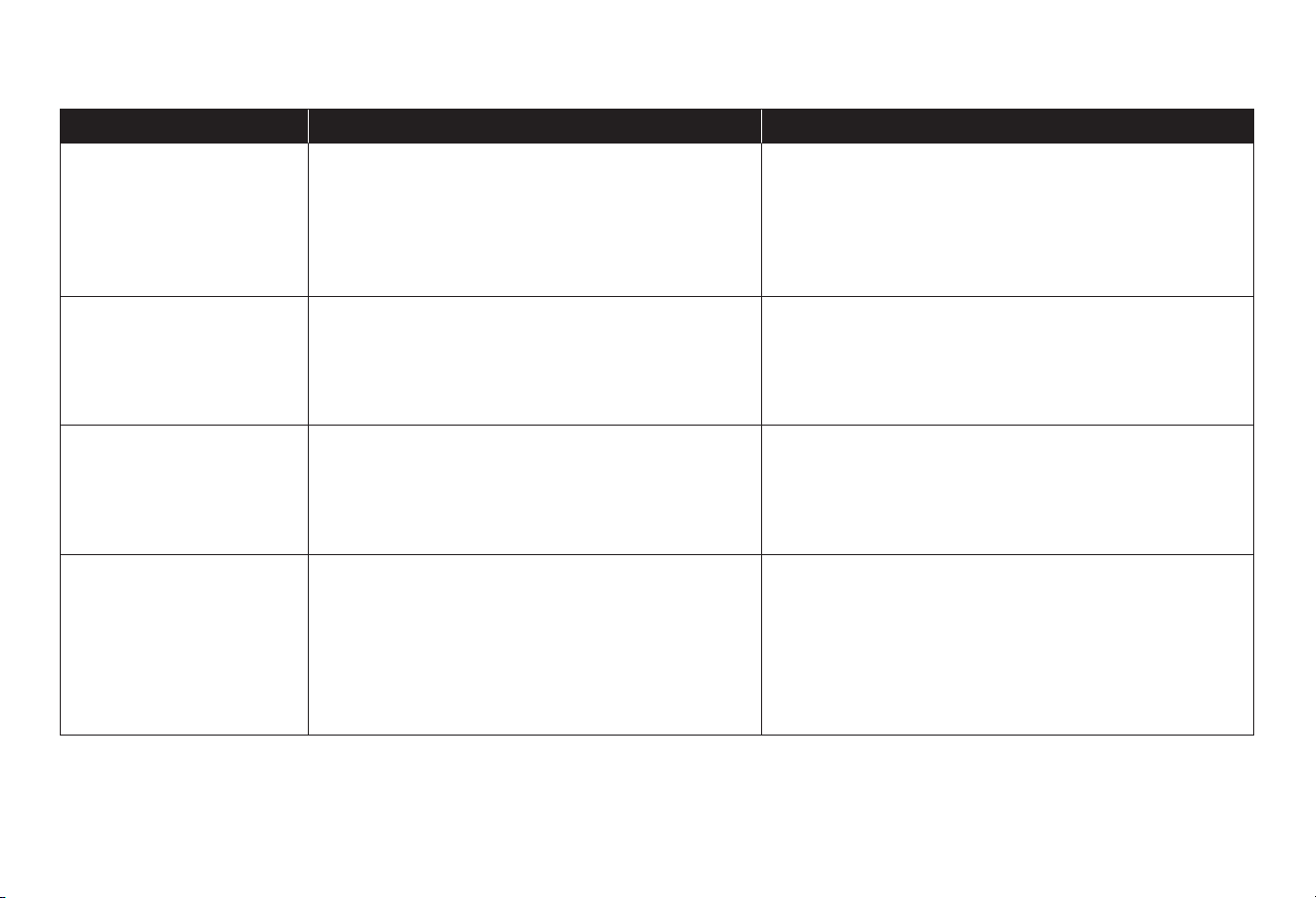
Maintenance 6
53
Problem Possible Cause Remedy
Brakes not working
eecvely
• Brake pads worn down
• Brake pads/rim greasy, wet or dirty
• Brake cables are binding/stretched/damaged
• Brake levers are binding
• Brakes out of adjustment
• Replace brake pads
• Clean pads and rim
• Clean/adjust/replace cables
• Adjust brake levers
• Center brakes
When applying the
brakes they squeal/
squeak
• Brake pads worn down
• Brake pads toe-in incorrect
• Brake pads/rim dirty or wet
• Brake arms loose
• Replace pads
• Correct pads toe-in
• Clean pads and rim
• Tighten mounng bolts
Knocking or shuddering
when applying brakes
• Bulge in the rim or rim out of true
• Brake mounng bolts loose
• Brakes out of adjustment
• Fork loose in head tube
• True wheel or take to a bike shop for repair
• Tighten bolts
• Center brakes and/or adjust brake pads toe-in
• Tighten headset
Wobbling wheel • Axle broken
• Wheel out of true
• Hub comes loose
• Headset binding
• Hub bearings collapsed
• Quick-release mechanism loose
• Replace axle
• True wheel
• Adjust hub bearings
• Adjust headset
• Replace bearings
• Adjust quick-release mechanism
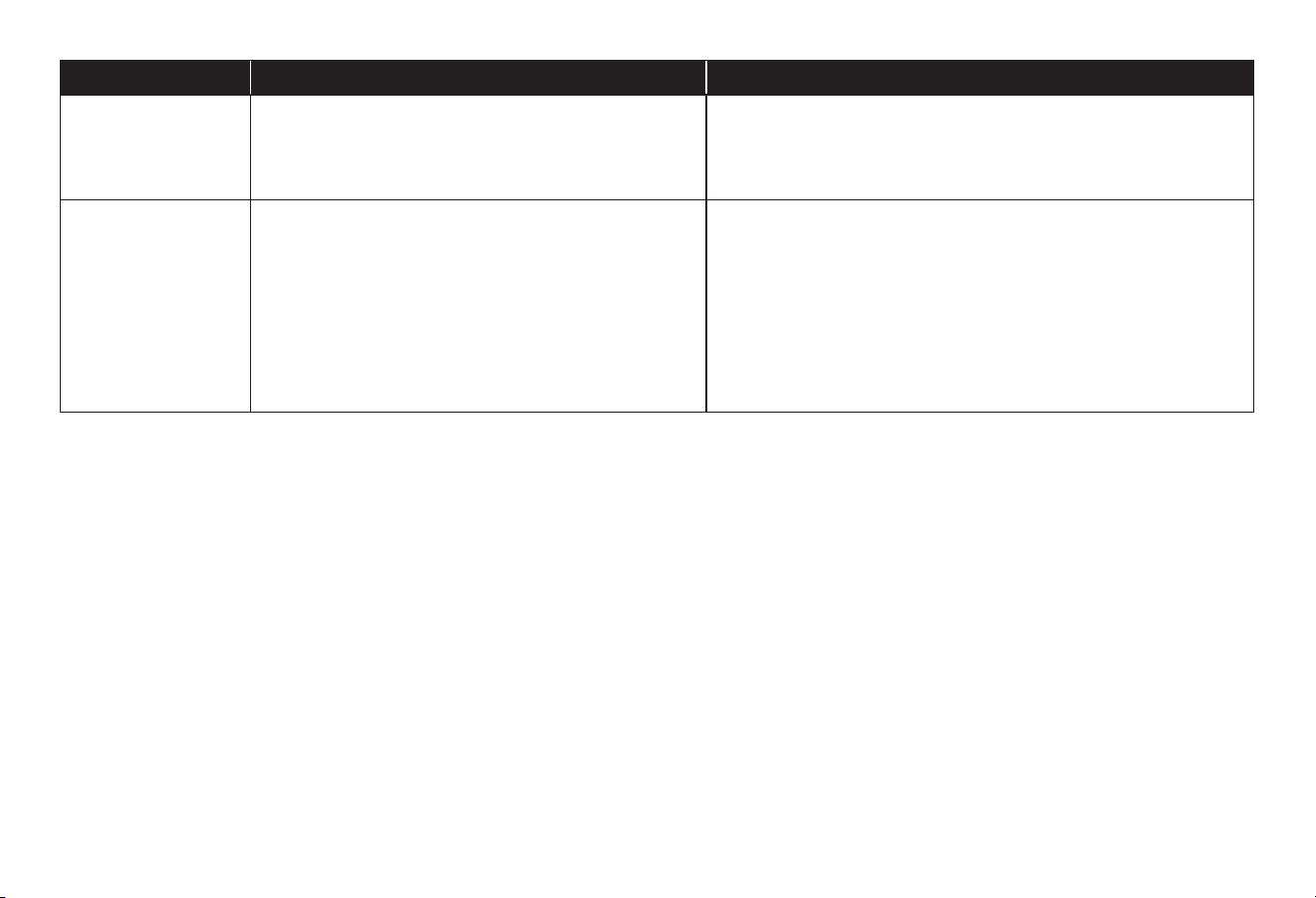
6 Maintenance
54
Problem Possible Cause Remedy
Steering not
accurate
• Wheels not aligned in frame
• Headset loose or binding
• Front forks or frame bent
• Align wheels correctly
• Adjust/ghten headset
• Take bike to a bike shop for possible frame realignment
Frequent
punctures
• Inner tube old or faulty
• Tire tread/casing worn
• Tire unsuited to rim
• Tire not checked aer previous puncture
• Tire pressure too low
• Spoke protruding into rim
• Replace inner tube
• Replace re
• Replace with correct re
• Remove sharp object embedded in re
• Correct re pressure
• File down spoke
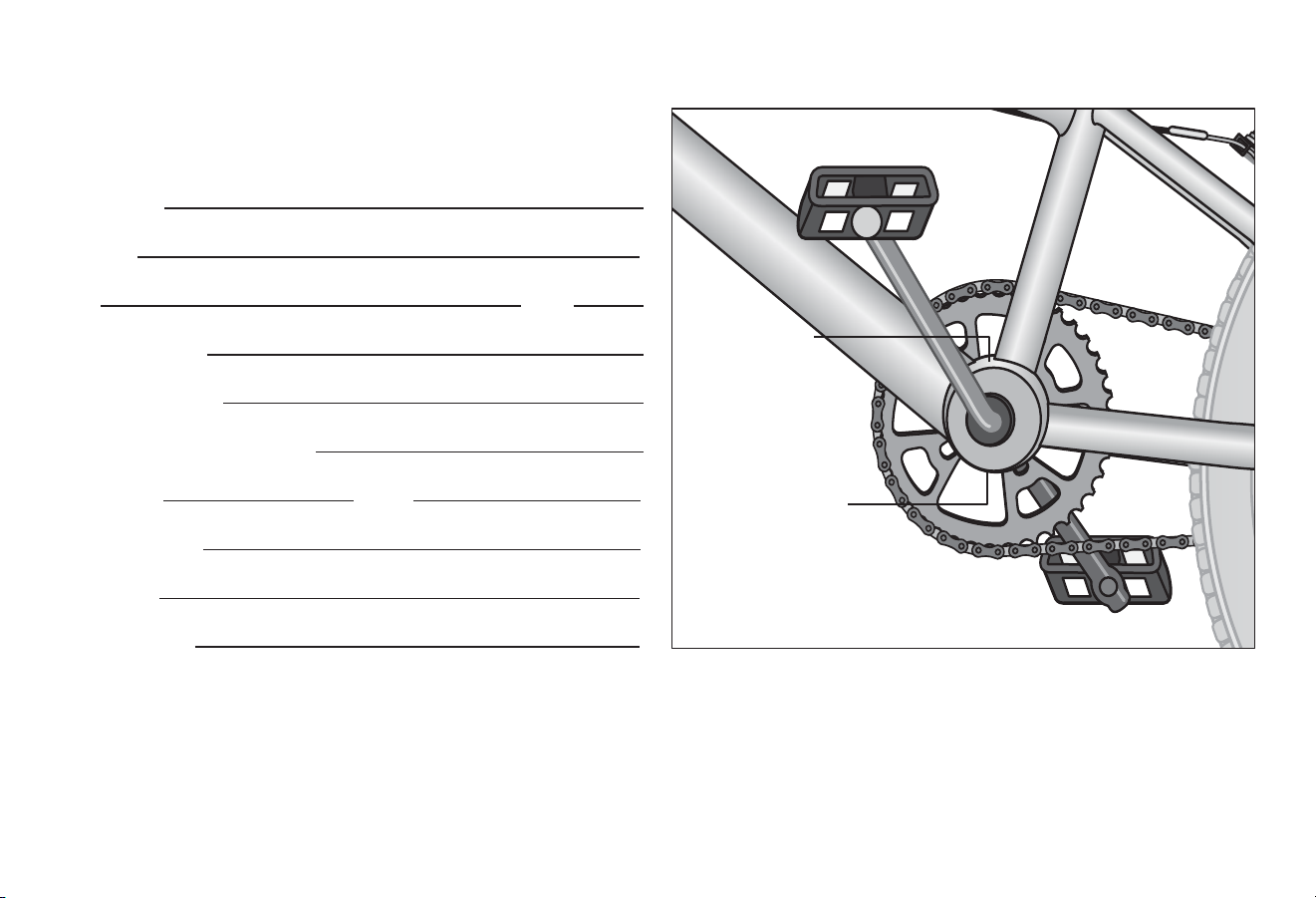
7 Warranty
56
Figure 7.1
PURCHASE RECORD
Fill in immediately and retain as a record of your purchase.
Please retain your sales receipt for any possible warranty claims.
Your Name:
Address:
City: State:
Date Purchased:
Place of Purchase:
Model & Brand Informaon:
Wheel Size: Color:
Model Number:
Date Code:
Serial Number:
Service scker
is located above
the boom
bracket area
The serial number is
located below the
boom bracket

US 1-800-626-2811
Canada 1-877-758-4741
schwinnbikes.com
OMSCJUV
WARNING: This product can expose you to chemicals including lead and lead
compounds, which is known to the State of California to cause cancer, birth defects
and other reproductive harm. For more information go to www.P65Warnings.ca.gov
© 2021 PACIFIC CYCLE, INC. SCHWINN
®
is a registered trademark of Pacic Cycle, Inc.
Limited
Lifetime
Warranty
For as long as you own the bike.
Some restrictions apply.
Details at schwinnbikes.com