Instruction Manual
DIESEL WATER PUMP
DHY50E, DHYC50LE, DHY80LE, DHYT80E
WARNING: Read the instructions carefully before use. Iss.Oct/24

2
CONTENTS
PAGE NO.S
1
SAFETY
3 - 8
2
PART LOCATIONS
9
3
ASSEMBLY
10 - 13
4
PRE OPERATION CHECKS
14 - 15
5
OPERATION
15 - 17
6
STARTING PROCEDURE
18 - 19
7
STOPPING PROCEDURE
19
8
DRAINING THE WATERPUMP
20
9
MAINTENANCE
21 - 23
10
TROUBLE SHOOTING
24
11
TRANSPORTATION & STORAGE
25 - 26
12
SPECIFICATION
26
13
PRODUCT DISPOSAL & RECYCLING
27
14
DECLARATION OF CONFORMITY
28
15
CONTACT / WARRANTY / MANUAL UPDATES
29
INDEX
3
1.1 General Safety Notes.
1.2 The operator of the machine is responsible for, and has a duty of care in making sure
that the machine is operated safely and in accordance with the instructions in this user
manual. Keep the manual safe and pass it on if the machine is loaned or sold to another
user.
1.3 Please note the following safety points.
1.4 The machine should never be left it in a condition which would allow an untrained or
unauthorised person/s to operate this machine.
1.5 All due care and diligence should be taken by the operator for the safety of and with
regard to those around whilst using the machine.
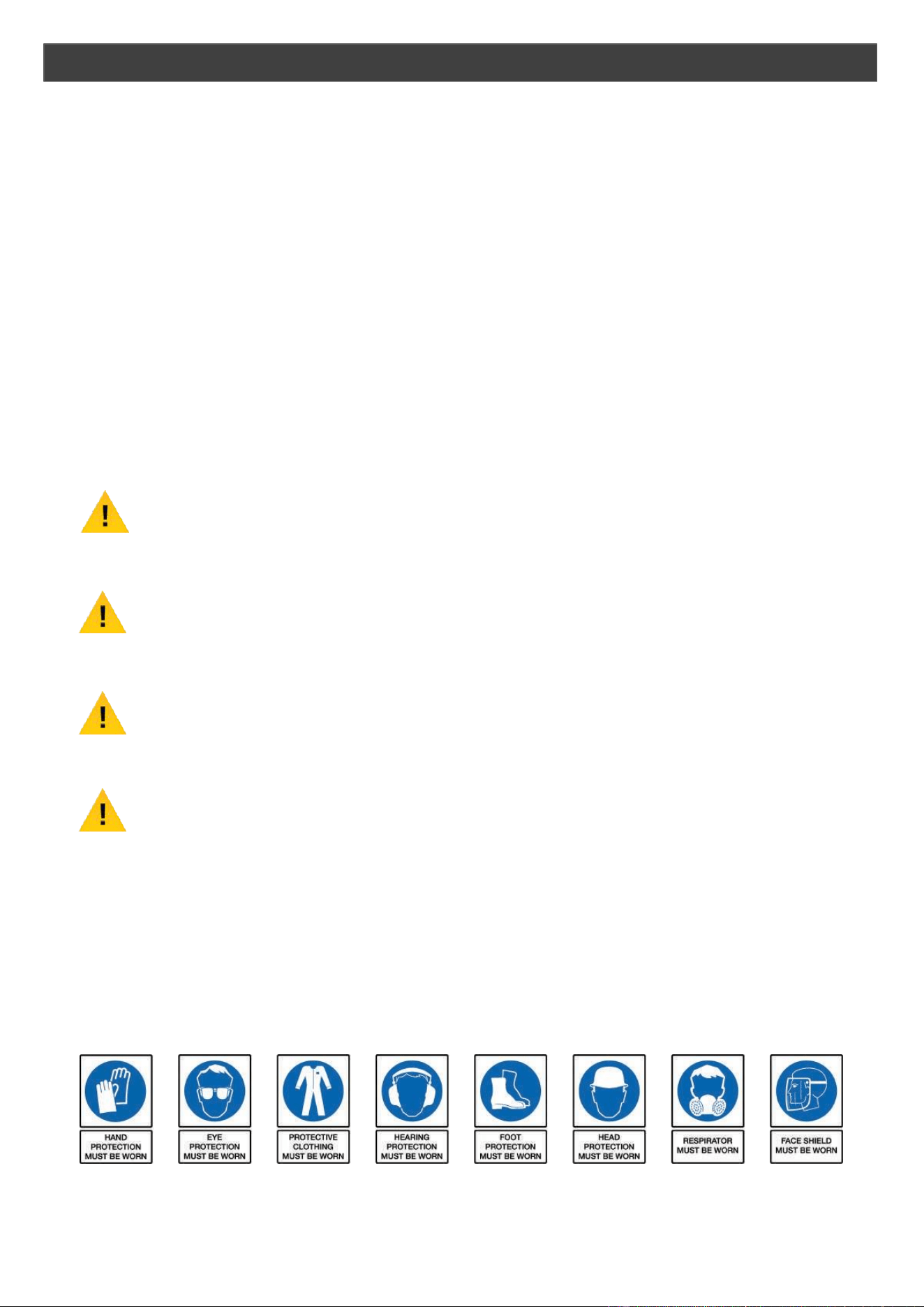
1.6 Some or all of the following - warning signs, symbols and/or PPE pictograms may ap-
pear throughout this manual. You MUST adhere to their warnings. Failure to do so
may result in personal injury to yourself or those around you.
DANGER
Indicates a hazard, which, if not avoided, could result in serious injury or death.
WARNING
Indicates a hazard, which, if not avoided, could result in serious injury.
CAUTION
Indicates a hazard which, if not avoided, might result in minor or moderate injury.
NOTE
Indicates a situation that could easily result in equipment damage.
READ and keep the manual safe and pass it on if the machine is loaned or sold to another user.
You MUST fully understand all instructions to ensure you use and operate the machine safely.
Appropriate Personal Protective Equipment (PPE), MUST be worn at all times when operating or
repairing the machine.
1. SAFETY

4
1.10 Carbon Monoxide (where applicable).
1.11 Carbon monoxide is a colourless and odourless gas. Inhaling this gas can cause
death as well as serious long term health problems such as brain damage.
1.12 The symptoms of carbon monoxide poisoning can include but are not limited to the
following;
Headaches, dizziness, nausea, breathlessness, collapsing or loss of consciousness.
1.13 Carbon monoxide poisoning symptoms are similar to flue, food poisoning, viral
infections and simply tiredness. It is quite common for people to mistake this very
dangerous poisoning for something else.
1.14 To avoid carbon monoxide poisoning DO NOT use Petrol/Diesel powered equipment
inside any of the following; Home, garage, tent, camper van, mobile home, caravan
or boat. This is not exhaustive and if you are in any doubt contact your dealer.
1.15 If you think you have or someone around you has been affected by carbon monoxide
poisoning;
1.16 Get them fresh air immediately, by leaving the affected area or by opening doors and
windows. If safe and practical to do so make sure that the machine is turned off.
DO NOT enter a room you suspect of having carbon monoxide present – instead call
the emergency services.
1.17 Contact a Doctor immediately or go to Hospital – let them know that you suspect
carbon monoxide poisoning.
1.18 DO NOT use in an enclosed area or moving vehicle.
5
1.20 General Fuel Safety (where applicable).
CAUTION
ALL FUELS ARE FLAMABLE
1.21 Fire Hazard – keep fuel away from all sources of ignition for example heaters.
Lamps, sparks from grinding or welding.
1.22
DO NOT carry out hot work on tanks that have contained fuel.
1.23 ALWAYS keep the work area tidy.
1.24 ALWAYS clean up spills promptly using absorbent granules and a lidded bin.
1.25 ALWAYS dispose of waste fuels correctly.
1.30 Fueling/De-fueling (where applicable).
CAUTION
ALL FUELS ARE FLAMABLE
1.31 ALWAYS fuel and defuel in a well ventilated area outside of buildings.
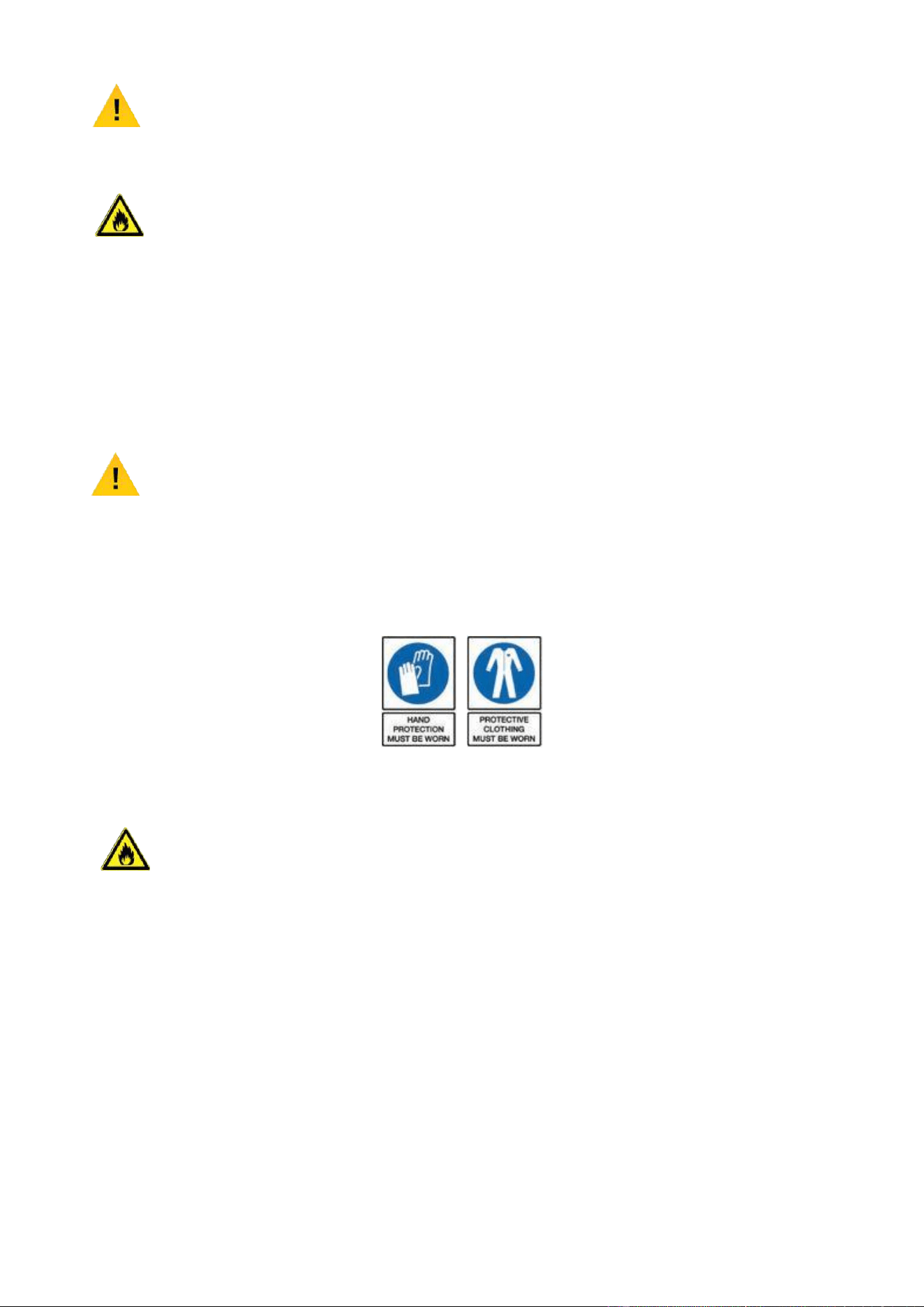
1.32 ALWAYS wear correct, suitable and fit for purpose Personal Protective Equipment
(PPE), suggested items are but not limited to safety gloves, overalls.
1.33 When fueling/de-fueling ALWAYS avoid inhaling fumes.
1.34 When de-fueling ALWAYS use a proper fuel retriever.
1.35 ALWAYS carry fuel in the correct and clearly marked container.
1.40 Electrical Safety (where applicable).
1.41 Electricity can kill – NEVER work on LIVE/ENERGISED equipment.
1.42 Prior to carrying out any maintenance work you MUST identify electrical isolation
methods and isolate all electrical supplies.
1.43 Prior to use and with all electrical supplies isolated, you MUST check all electrical
cables, plugs and connectors for the following;
1.44 Are intact and have no signs of damage, to include but not limited to bare wires,
chaffing, cuts and loose wiring.
1.45 If there are any signs of damage, the damaged item MUST be taken out of service
until the damage has been repaired by an electrically competent person.

6
1.46 All trailing cables should be routed so as not to cause any kind of trip hazard.
1.47 NEVER work on or near electricity with wet hands, wet clothing and wet gloves.
1.50 Batteries (where present).
1.51 Batteries present a risk if they become damaged by the possible leaking of
electrolyte. This electrolyte is an acid and can cause serious burn injuries. Care
should be taken when working on or near them. NOTE the electrolyte may be in
a liquid or gel form.
1.52 Should you come in to contact with electrolyte you should;
1.53 Remove all clothing contaminated with electrolyte. If you cannot remove then
saturate them in water.
1.54 Get medical assistance as soon as possible. You must advise the medical staff of
the type of acid.
1.55 Lead/acid battery = dilute sulphuric acid.
1.56 Nickel/cadmium = potassium hydroxide alkali electrolyte.
1.57 Use fresh running water to wash off excess electrolyte, continue this until medical
assistance arrives. Make sure that you do not was the electrolyte to another part of
your body or face.
1.58 If electrolyte comes in to contact with Eyes the electrolyte needs to be immediately
washed away with large amounts of water. Make sure that you do not wash the
electrolyte to another part of your face or body.
1.59 Gasses from charging batteries are highly flammable and great care should be taken
to charge in well ventilated areas.
1.59.1 There is an explosion risk if the battery terminals are short circuited, when
connecting/disconnecting ALWAYS exercise great care so that the terminals or
battery leads are NOT allowed to touch and cause a spark. ALWAYS use suitable
insulated tools.
1.60 Vibrations (where applicable).
1.61 Prolonged use of hand held (operated) machines will cause the user to feel the
effects of/from vibrations. These vibrations can lead to white finger (Raynaud’s
phenomenon) or carpal tunnel syndrome. This condition reduces the ability of the
hand to feel and regulate temperature, causing numbness and heat sensations and
may cause never damage and circulatory tissue death.
1.62 Not all factors that lead to white finger disease are known, but cold weather, smoking
and other diseases that affect blood vessels and blood circulation as well as large
and long-lasting impact of shocks are considered factors in the formation of white
finger. Note the following to reduce the risk of white finger and carpal tunnel
syndrome;
1.63 Wear gloves and keep your hands warm.
1.64 Take regular breaks.
1.65 All of the above precautions may help reduce the risk of white finger disease but not
rule out the carpal tunnel syndrome. Long-term and regular users are therefore

7
recommended to observe the condition of your hands and fingers. Seek medical
attention immediately if any of the above symptoms should occur.
1.70 Noise (where applicable).
1.71 The operating noise of the machine can damage your hearing. Wear hearing
protection such as earplugs or ear defenders to protect your hearing. Long-term
and regular users are advised to have hearing checked regularly. Be especially
vigilant and cautious when hearing ear protection because your ability to hear alarm
warnings will be reduced.
1.72 Noise emissions for this equipment is unavoidable. Carry out noisy work at approved
times and for certain periods. Limit the working time to a minimum. For your personal
protection and protection of people working nearby it is also advisable for them to
wear hearing protection.
1.73 See Certificate of Conformity section for Outdoor Noise declaration of
conformity.
1.80 General Machine Safety.
1.81 Read the owner’s manual carefully to understand how to operate this machine
properly.
1.82 You should NEVER use the machine when;
1.83 Wearing loose clothing, barefoot or sandals.
1.84 Under the influence of drink or drugs or as a result of having taken medication for
cold or flu, or any other times when a possibility exists that your judgement might be
impaired or that you might not be able to operate the machine properly and in a safe
manner.
1.85 Suffering from exhaustion or lack of sleep.
1.86 When the ground is slippery or when other conditions exist which might make it not
possible to maintain a steady posture.
1.87 At night, at times of heavy fog, or at any other times when your field of vision might
be limited and it would be difficult to gain a clear view of the area.
1.88 During rain storms, lighting storms, at times of strong or gale force winds, or at
any other times when the weather conditions might make it unsafe to use this
product.
1.89 NEVER run the engine indoors. The exhaust gasses contain harmful carbon
monoxide.
1.90 When using this machine for the first time and before actual work, you MUST learn
how to handle the machine from an experienced or skilled person.
1.91 Limit the amount of time using the machine continuously to somewhere around 10
minutes per session and take 10 to 20 minutes of rest between sessions. Also try to
keep the total amount of work in a single day limited to 2 hours or less.
MACHINE SPECIFIC SAFETY

8
1.92 NEVER allow children or anyone unable to fully understand the directions given in
this manual to operate this product.
1.93 Make sure you keep this manual handy so you may refer to it whenever questions
arise and ensure you pass this manual on if the machine is loaned or sold.
1.94 Correct Personal Protective Equipment (PPE) MUST be worn at all times when
operating or repairing this machine. This should include but is not limited to;
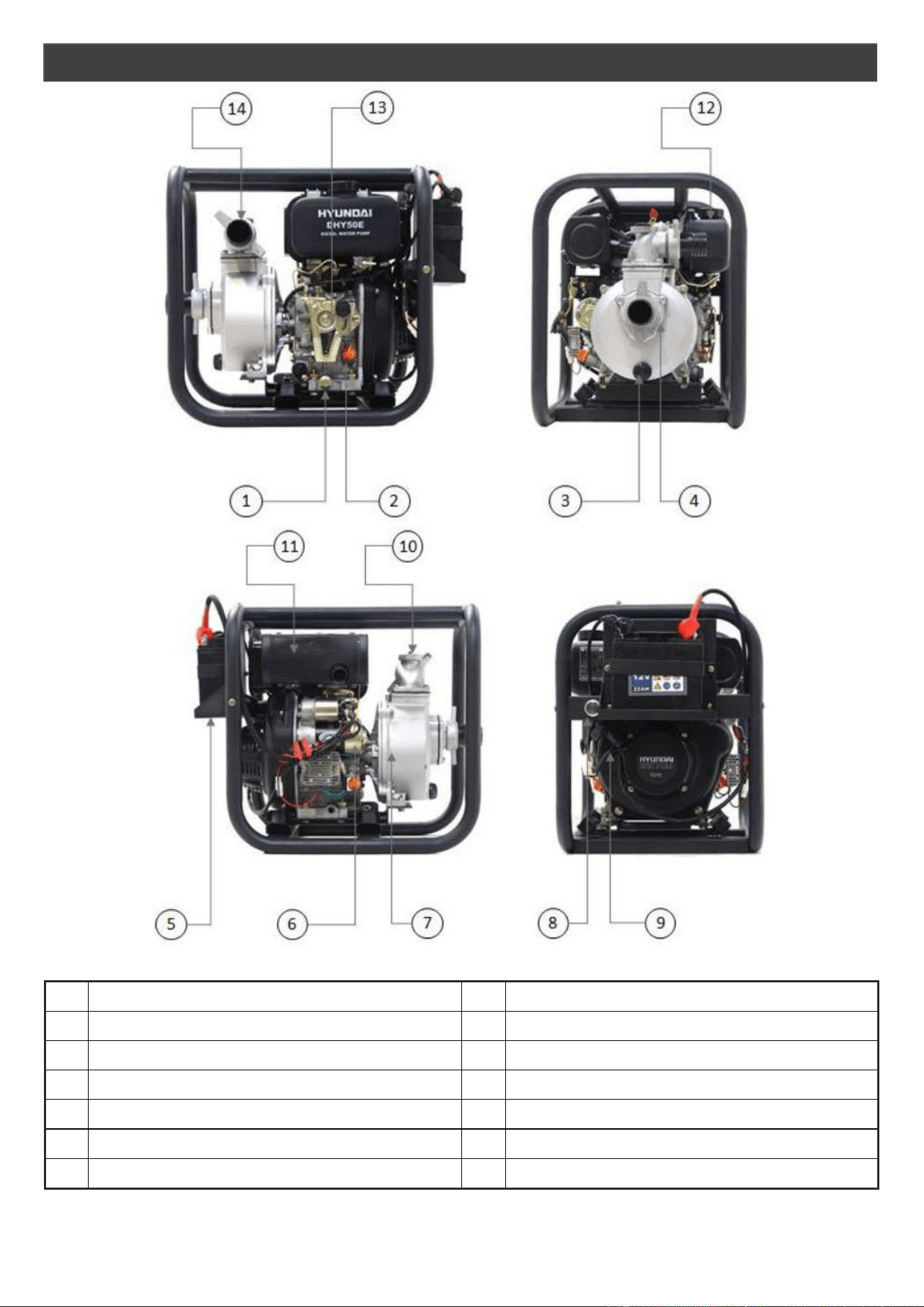
9
1
Oil Drain Plug
8
On/Off Key Switch
2
Oil Filler Cap / Dipstick
9
Recoil Starter
3
Pump Drain Plug
10
Pump Priming Cap
4
Pump Inlet
11
Exhaust
5
Battery
12
Fuel Tank
6
Starter Motor
13
Stop / Run
7
Pimp Housing
14
Pump Outlet
2. PART LOCATIONS
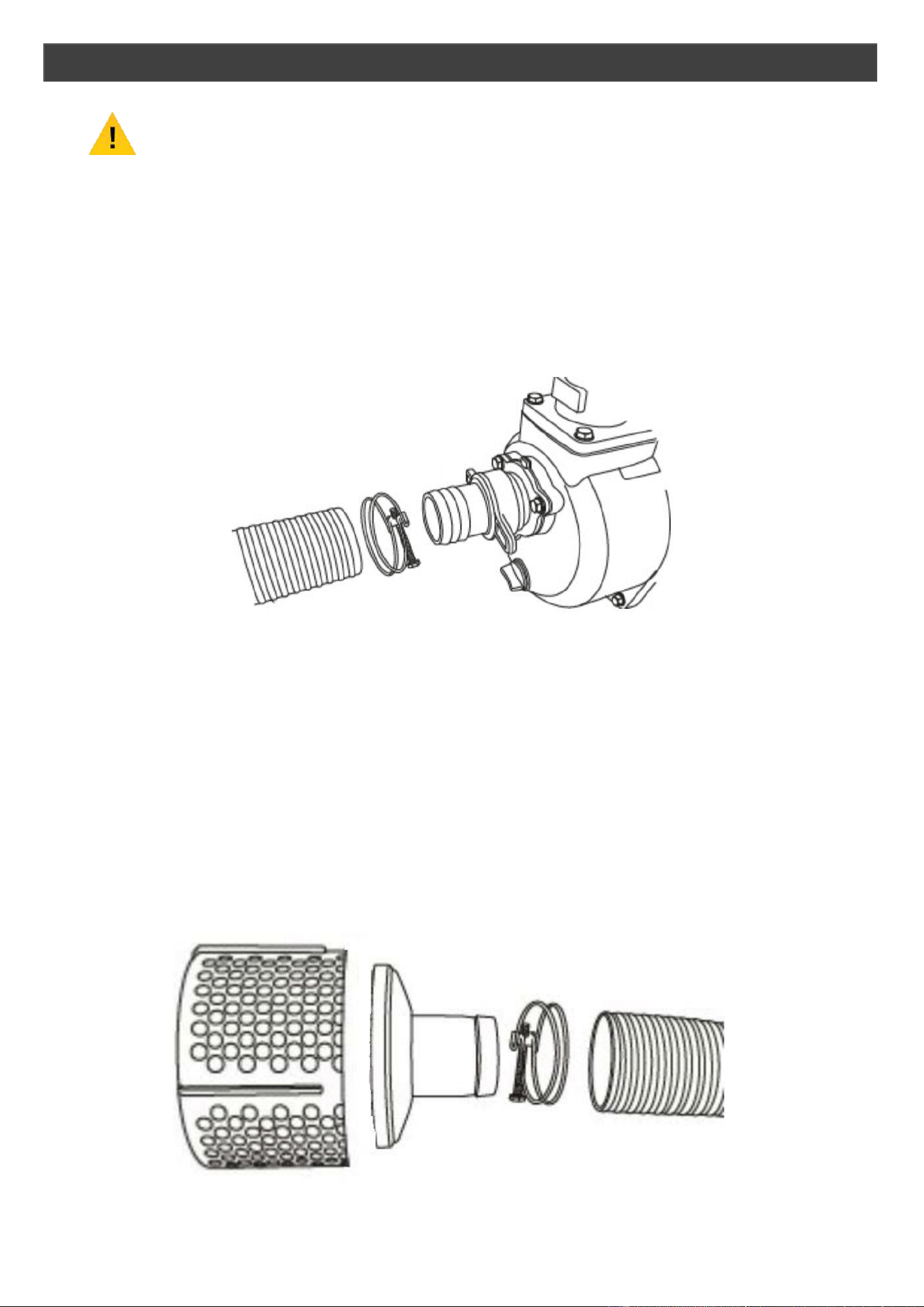
10
NOTE
Hose connections are supplied as standard with this pump.
Hoses are NOT supplies as standard with this pump.
3.0 Connecting the Suction Hose to the Pump
3.1 Slide hose clamp over the end of hose.
3.2 Slide the suction hose onto the hose barb.
3.3 Tighten the hose clamp securely to the hose.
3.4
3.5
3.6
Connecting the Suction Hose to the Strainer Basket Slide the hose clamp over the
hose.
Click together the 2 parts of the strainer then attach the open end of the suction hose
to the strainer.
Tighten the hose clamp securely.
For the DHYT80E the 2 parts of the strainer screw together.
3. ASSEMBLY
11
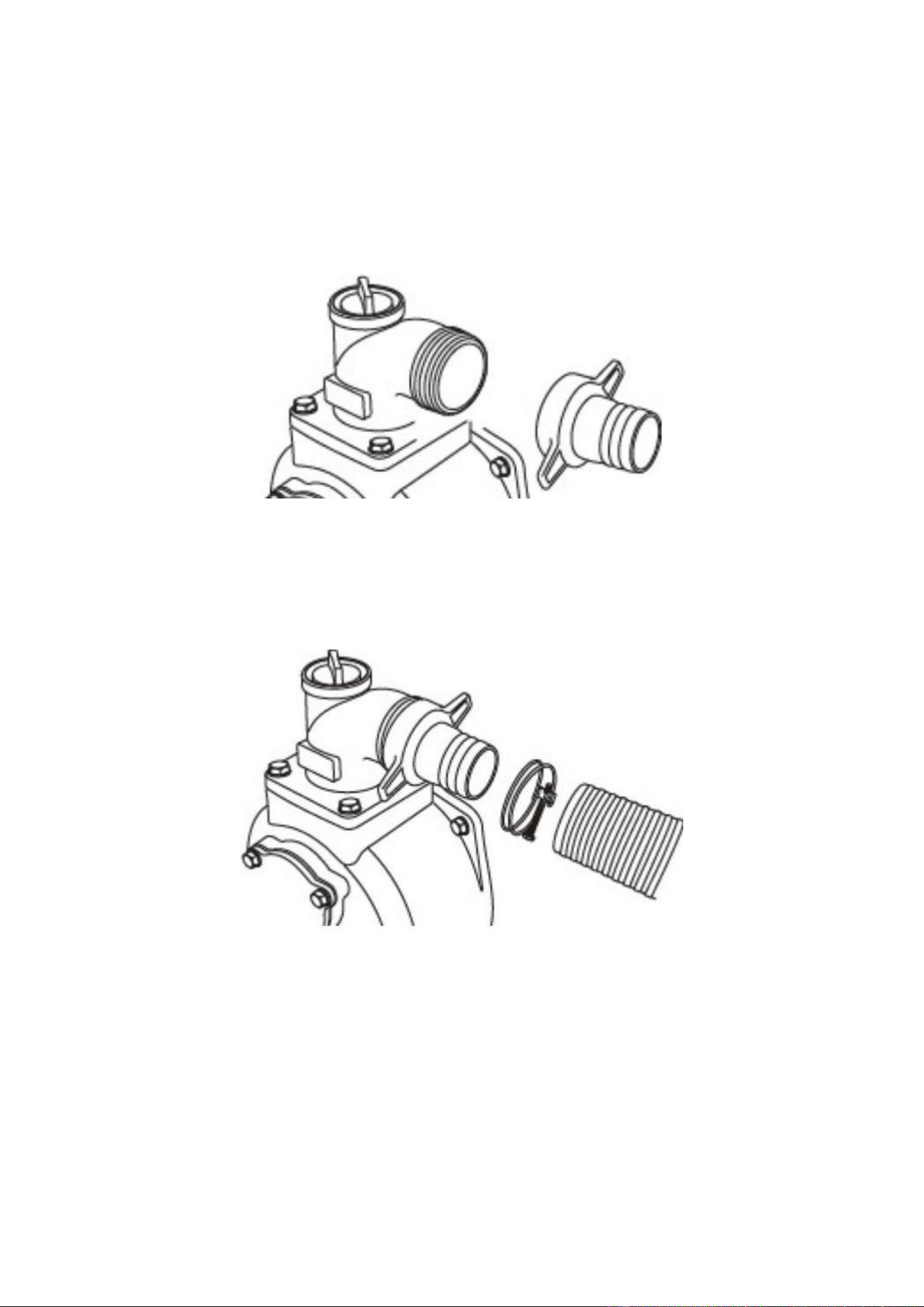
3.8 Insert connect discharge hose (optional)
3.9 If desired, use a commercially available hose.
3.10 DO NOT use a hose with an inside diameter smaller than the pumps discharge port.
3.11 Slide the cuff over the hose bar.
3.12 Insert a rubber seal into the end of the barb cuff.
3.13 Screw the hose barb assembly onto the pump in a clockwise direction until the hose
barb is tightened securely.
3.14
3.15
3.16
Slide the hose clamp over the end of the discharge
hose. Slide the discharge hose onto the hose barb.
Tighten the hose clamp securely.
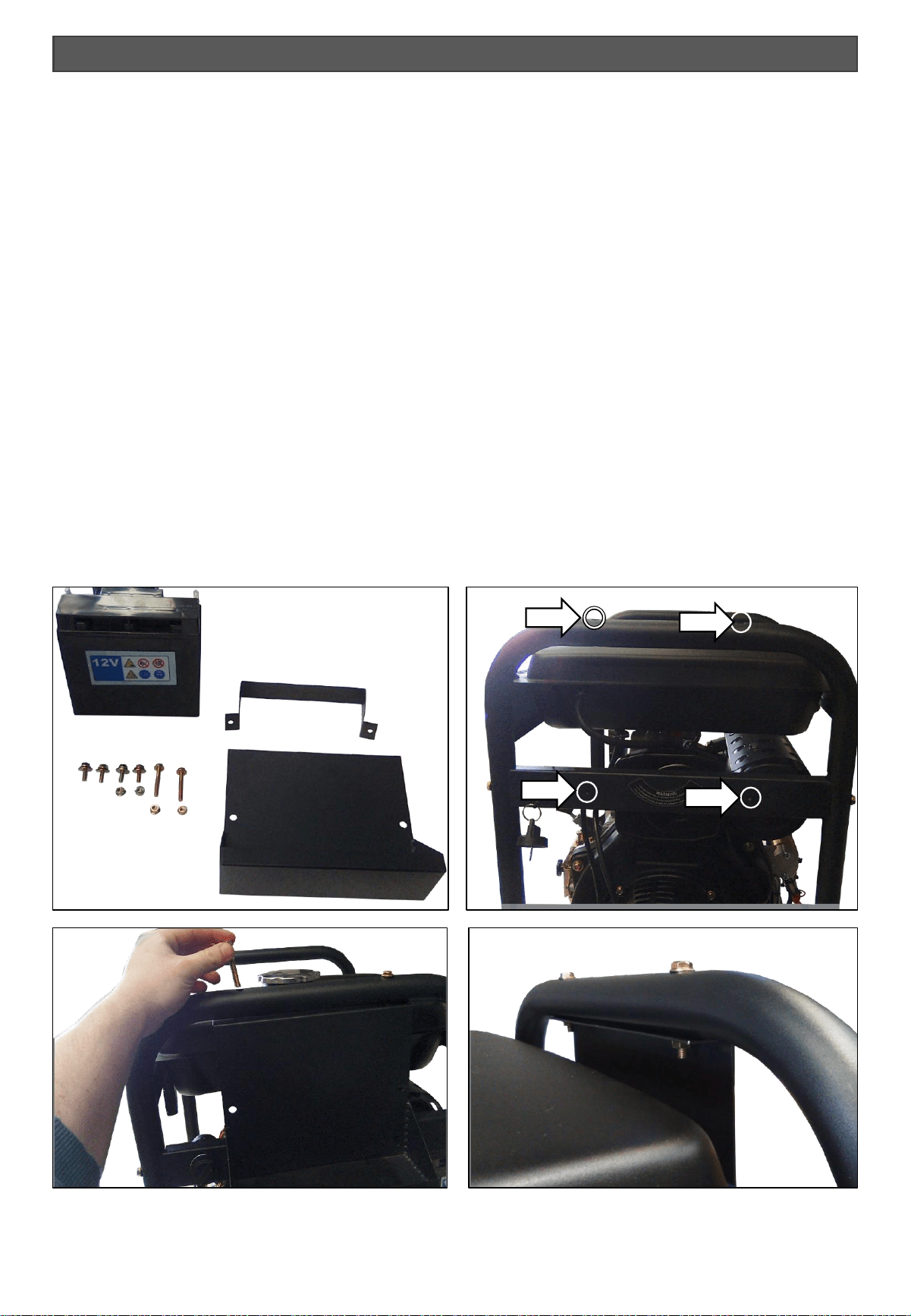
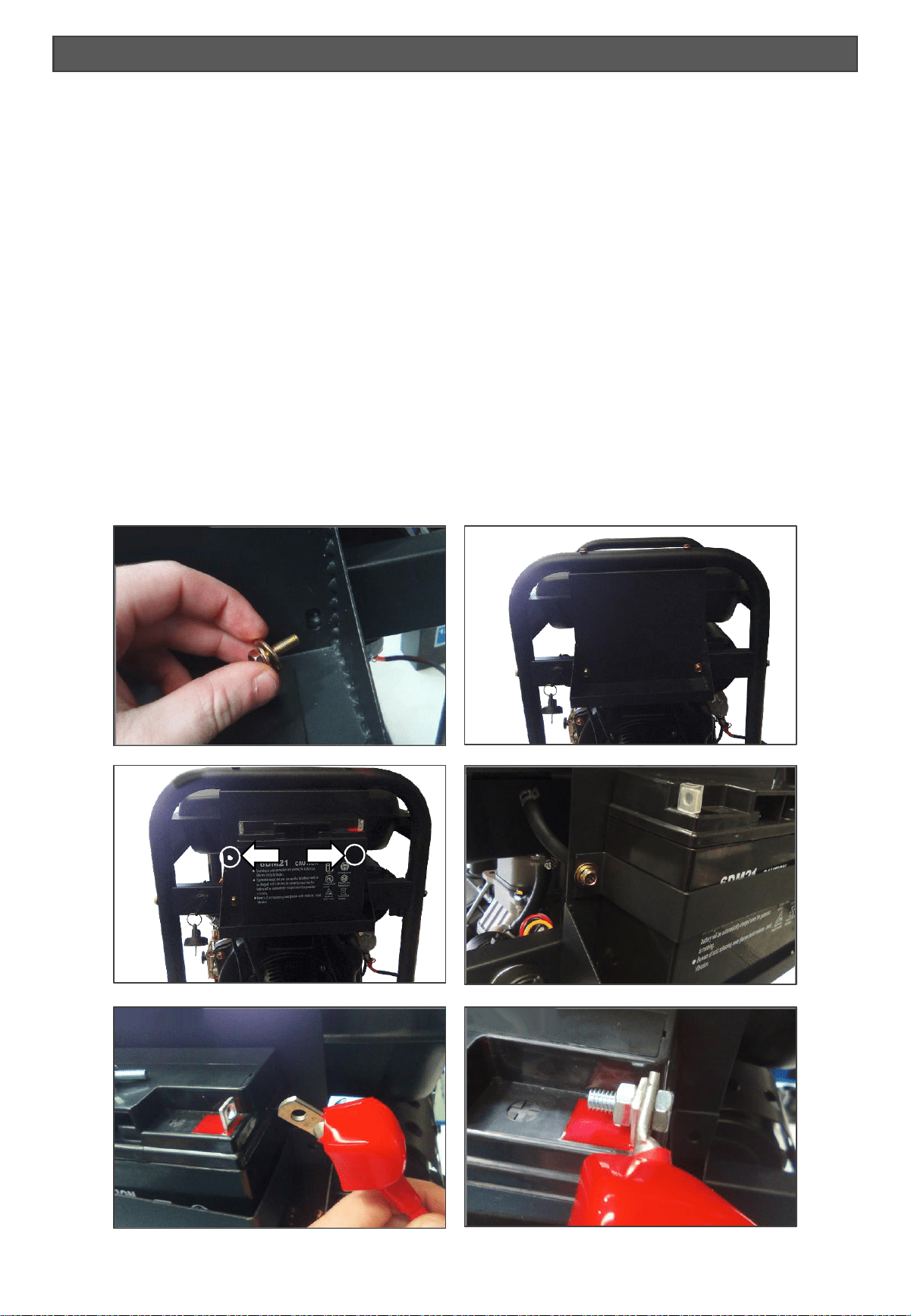
3. Assembly –Battery Tray
3.2
3.22
3.23
3.24
3.25
Ensure you have all the components for the battery tray assembly:
1 x Battery Tray
1 x Securing Bracket
4 x Short bolts
2 x Long Bolts
4 x Nuts
Locate the 4 holes used to secure the Battery tray.
Place the Battery below the upper holes.
Insert the longer bolts through the upper holes through the bottom of the
tray.
Secure into place with 2 nuts.
12
3. Assembly –Battery Tray
3.26
3.27
3.28
3.29
Secure bottom of the battery tray to the frame using 2 of the short bolts.
The frame has inbuilt thread which the bolts are secured into.
The battery tray is no secured. Place the battery into the tray, with the
positive terminal (red) on the right hand side.
Place the Securing bracket around the middle and use the remaining 2
short bolts and nuts to fix into place.
Connect the terminals of the battery to the relevant wires (Positive =
Red/+, Negative = Black/-). Secure the Positive terminal first, followed by
the Negative.
13
14
NOTE
This machine is shipped without fuel and oil.
It is essential that fuel and oil levels are checked and maintained before each operation.
ALWAYS check the fuel and oil level with the machine on flat level ground.
Fuel Type
Diesel
Oil Type
SAE30 Mineral Oil or SAE15W40 Mineral Oil
CAUTION
FOR OUTDOOR USE ONLY
This machine produces carbon monoxide – a poisonous, colourless and odourless
gas that can cause death or serious injury.
CAUTION
ALL FUELS ARE FLAMMABLE
ALWAYS handle with extreme care and in a well-ventilated area.
Allow the engine to cool and remove the spark plug HT lead cap before refuelling or
defueling.
DHY50E
DHYC50LE
DHY80E
DHYT80E
Oil Capacity (L)
0.6
0.6
1.1
1.1
Oil Type
SAE30 Mineral Oil or SAE15W40 Mineral Oil
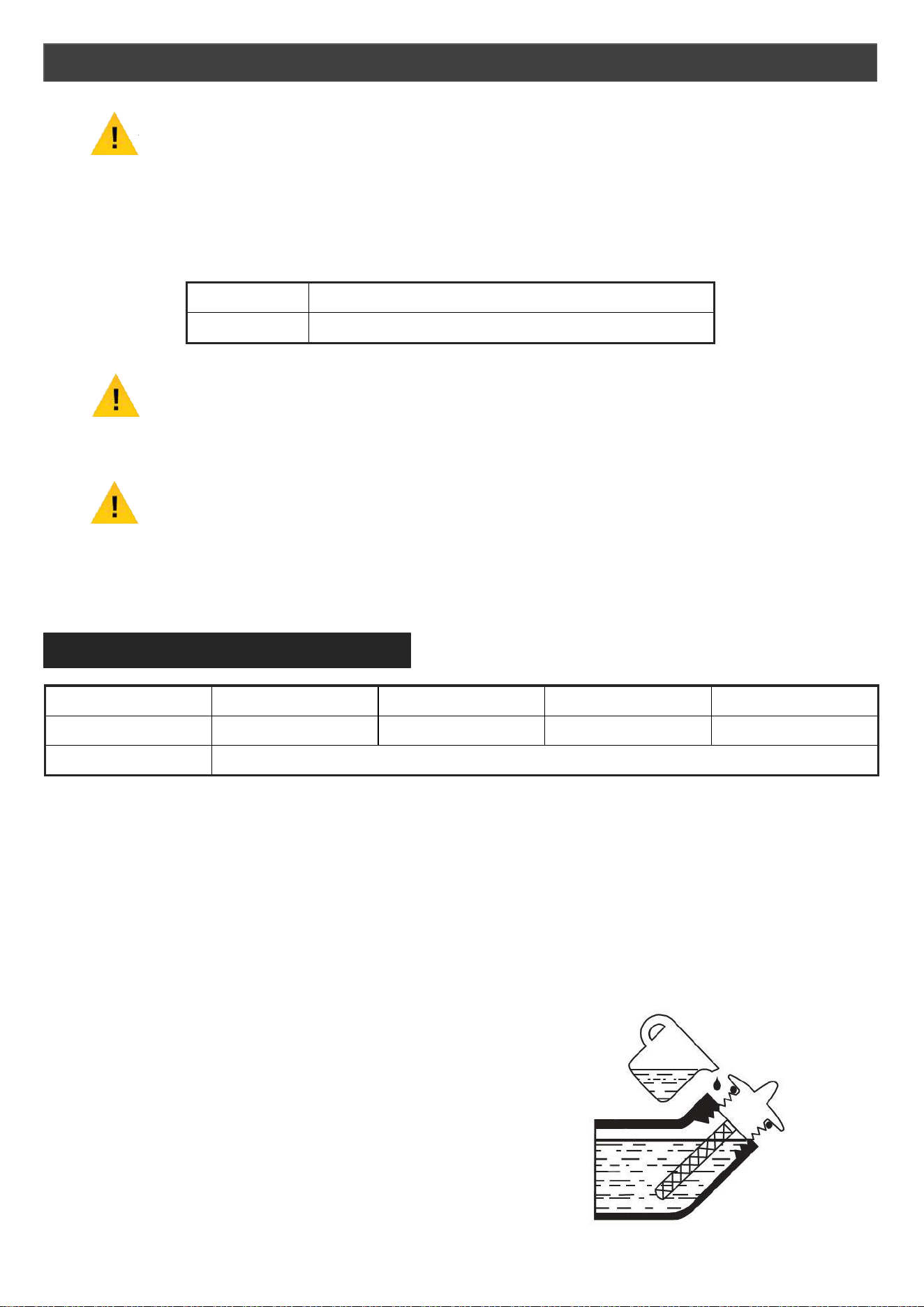
4.0 Place the machine on flat level ground.
4.1 Clean the area around the fuel filler cap to prevent any dirt or debris from entering
the engine.
4.2 Remove the oil filler cap / dipstick.
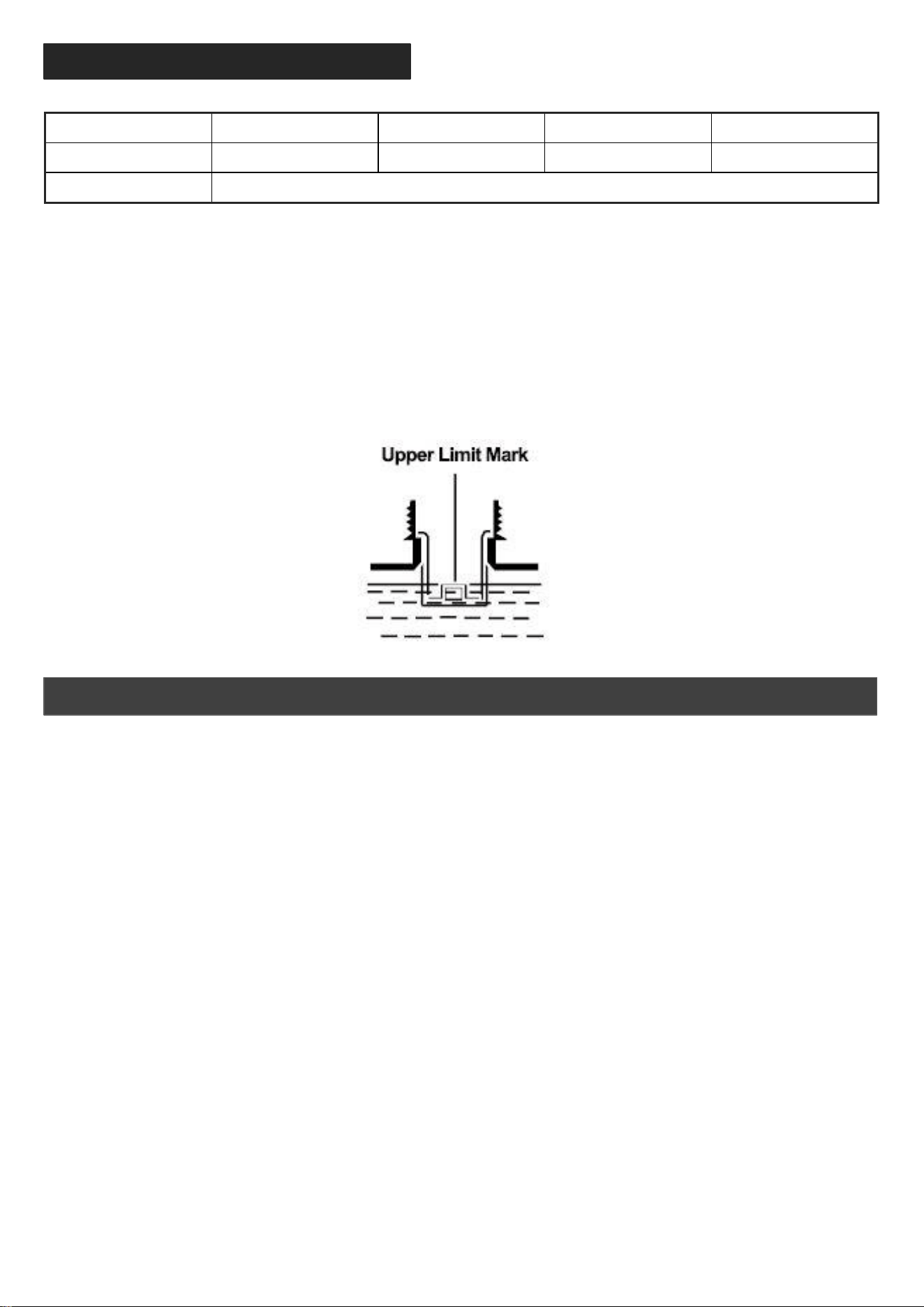
4.3 For machines without a dipstick, the oil level is determined by filling to the upper
thread level.
For machines with a dipstick, the oil level is determined by the upper level limit mark
on the dipstick.
4.4 Slowly fill with oil to the correct level.
Stop occasionally to check the level.
DO NOT overfill.
4.5 Once full, refit the oil filler cap/dipstick and
tighten securely.
4. PRE OPERATION CHECKS
OIL
15
DHY50E
DHYC50LE
DHY80E
DHYT80E
Fuel Capacity (L)
3.6
3.6
3.6
3.6
Fuel Type
Diesel or Red Diesel
4.6 Place the machine on flat level ground.
4.7 Clean the area around the fuel filler cap to any prevent dirt or debris from entering
the fuel system.
4.8 Unscrew the fuel filler cap and slowly fill with diesel.
YOU MUST allow a 25mm gap between the fuel and the top of the fuel tank to allow
for fuel expansion.
4.9 Refit the fuel filler cap securely.
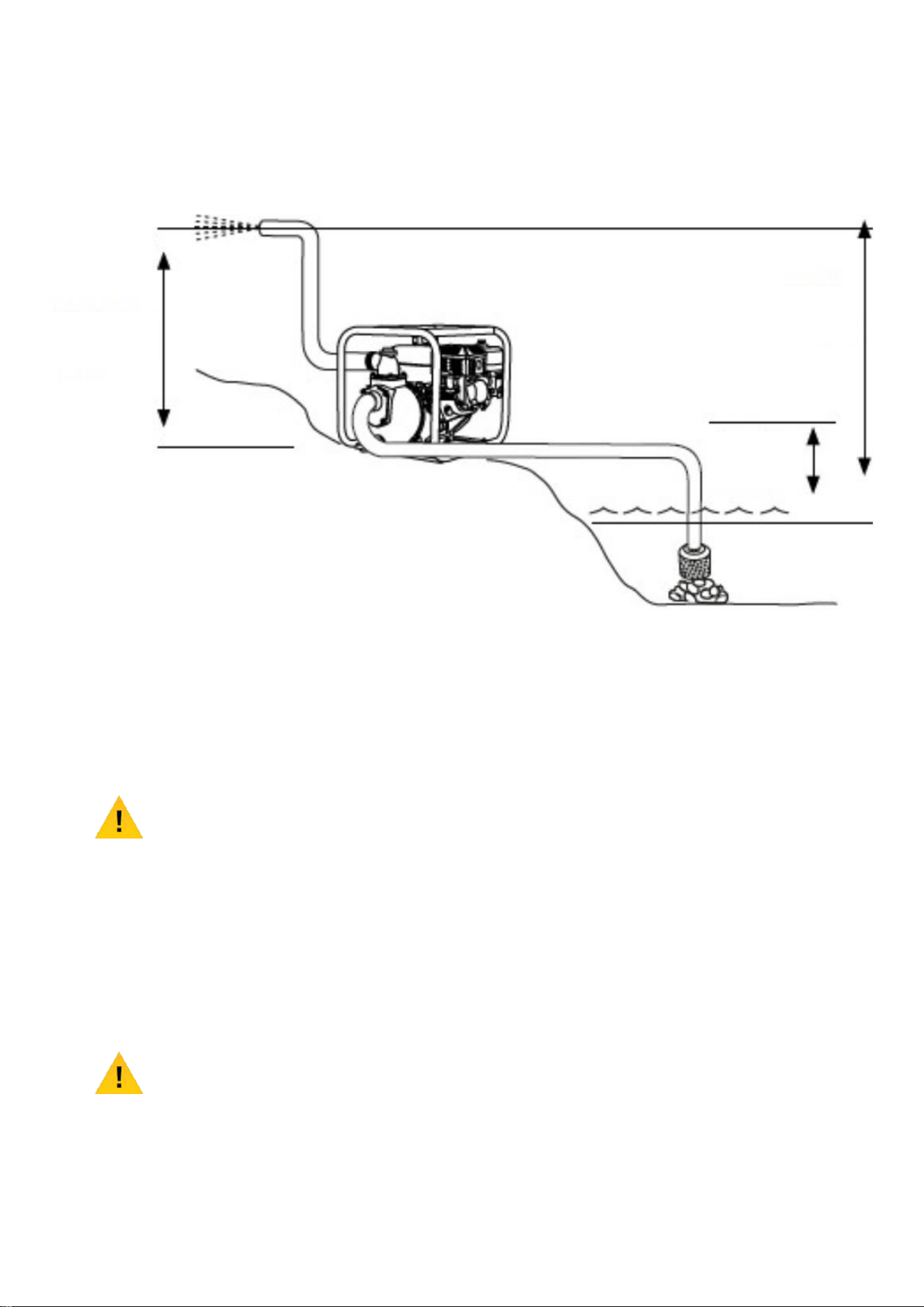
What is head?
5.0 Head refers to the height of a column of water that can be delivered by the discharge of
the pump.
5.1 Suction Head is the vertical distance between the centre of the pump and the surface
of the liquid on the suction side of the pump. May also be referred to as ‘suction lift’.
5.2 The atmospheric pressure of 14.7psi at sea level limits suction head lift to less than
approximately 26 feet for any pump.
5.3 Discharge Head is the vertical distance between the pumps discharge port and the
point of discharge, which is the liquid surface if the hose is submerged or pumping into
the bottom of a tank.
5.4 Total Head is the sum of the suction head value plus the discharge head value.
5.5 As water pumping height increases, pump output decreases.
The length, type and size of the suction and discharge hoses can also significantly
affect pump output.
5.6 It is important for the suction operation to be the shorter part of the total pumping action.
FUEL
5. OPERATION
16
5.7 This will decrease priming time and improve pump performance by increasing the
discharge head.
5.8 Suction head is a maximum of 25 feet and discharge head should be a maximum of 81
feet.
5.9 Total head cannot be more than 106 feet.
Pump Positioning
5.10 For best pump performance, locate the pump on a flat, level surface as close as
possible (but avoiding soft edges) to the water to be pumped.
5.11 Secure the water pump to prevent it from tipping over.
5.12 Use hoses that are no longer than necessary.
NOTE
Direct the open end of the discharge hose away from property, electrical supply sources
and any other equipment that you do not want to get wet.
5.13 This water pump is not for use in mobile equipment or marine applications.
5.14 DO NOT top the engine or equipment at an angle that may cause the fuel to spill.
5.15 Secure the water pump, loads from hoses may cause the machine to tip over.
Priming the Pump
NOTE
The improper treatment of the water pump can cause damage and shorten the pumps
lifespan.
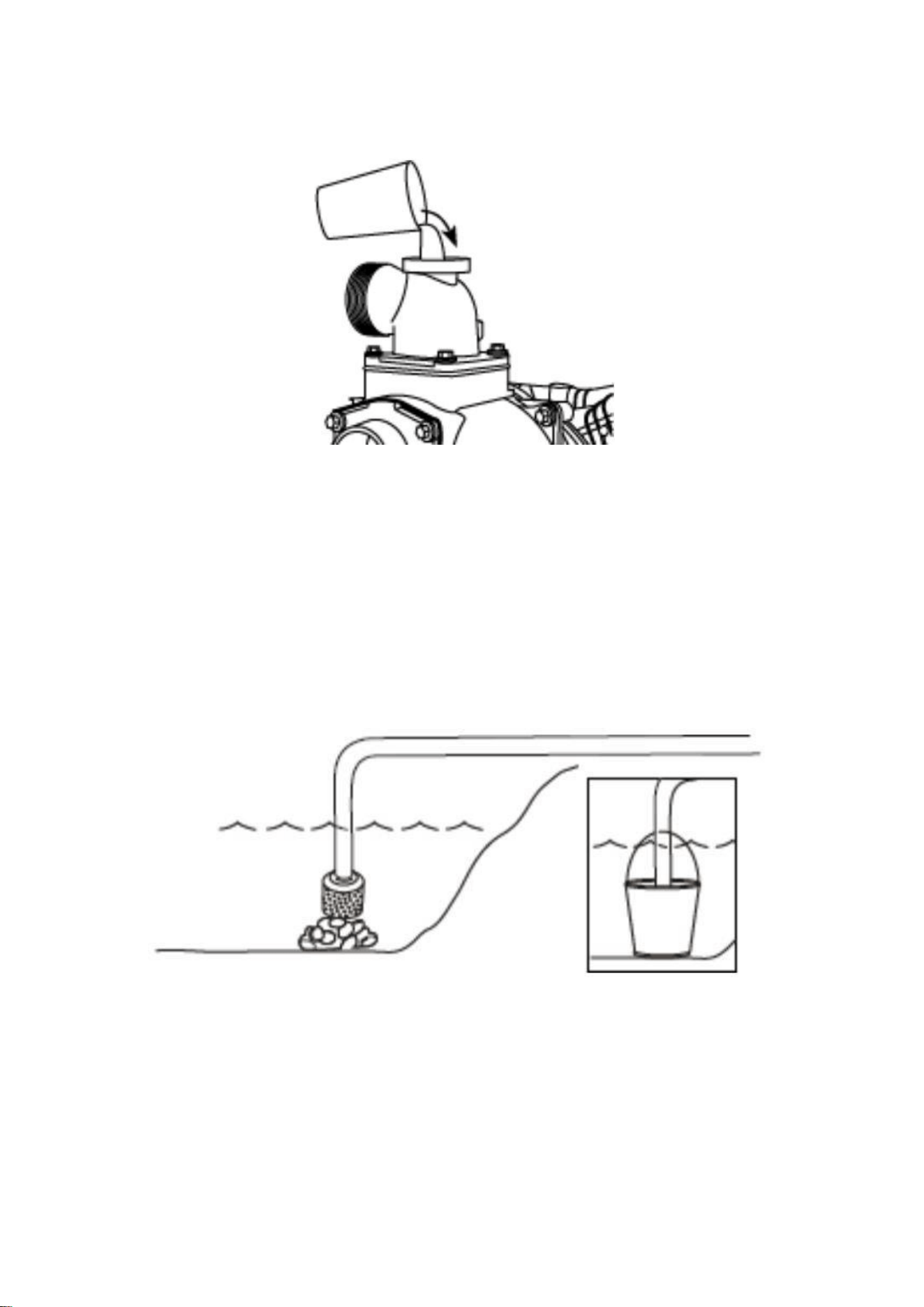
5.16 Be sure the priming chamber has been filled with water before starting
NEVER run the pump without priming.
Suction
Head
Total
Head
Discharge
Head
17
5.17 Remove the priming plug from the top of the pump.
5.18 Fill the pump with clean water up to the top of the discharge outlet.
5.19 Replace the priming plug.
Locating the Strainer Basket into the Water Source
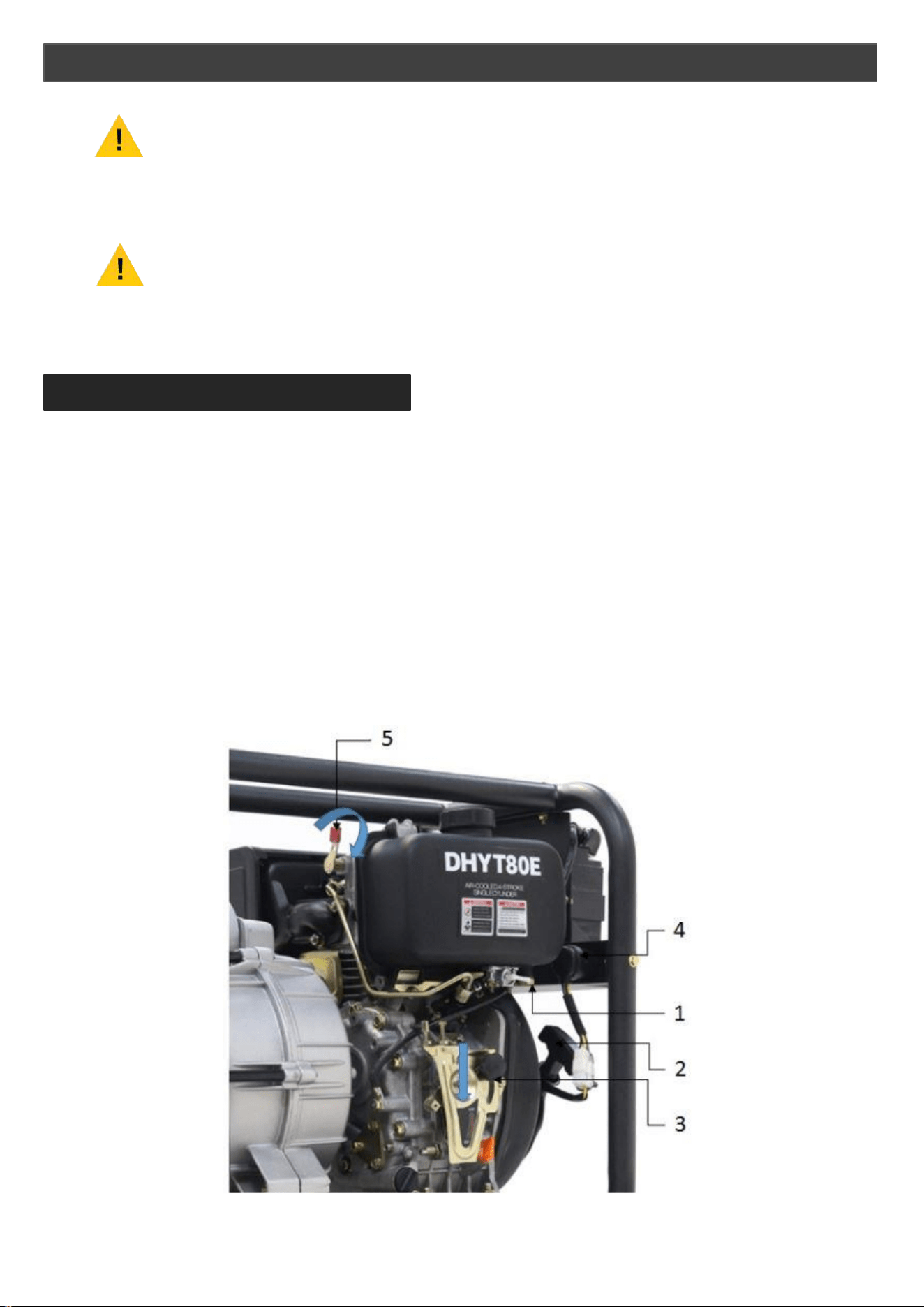
5.20 Place the strainer into the water to be pumped, the basket MUST be fully immersed
in water.
5.21 NEVER operate the pump without the strainer connected to the end of the suction hose.
5.22 Keep the strainer out of sand or silt, place in a bucket or on top of stones.
5.23 DO NOT let the pump run dry as damage to the seals may result.
18
NOTE
This machine is shipped without fuel and oil.
It is essential that fuel and oil levels are checked and maintained before each operation.
ALWAYS check the fuel and oil level with the machine on flat level ground.
CAUTION
FOR OUTDOOR USE ONLY
This machine produces carbon monoxide – a poisonous, colourless and odourless
gas that can cause death or serious injury.
5.24 Make sure the water pump is on a flat stable surface.
5.25 Make sure the water pump has been filled with both fuel and oil to the correct levels.
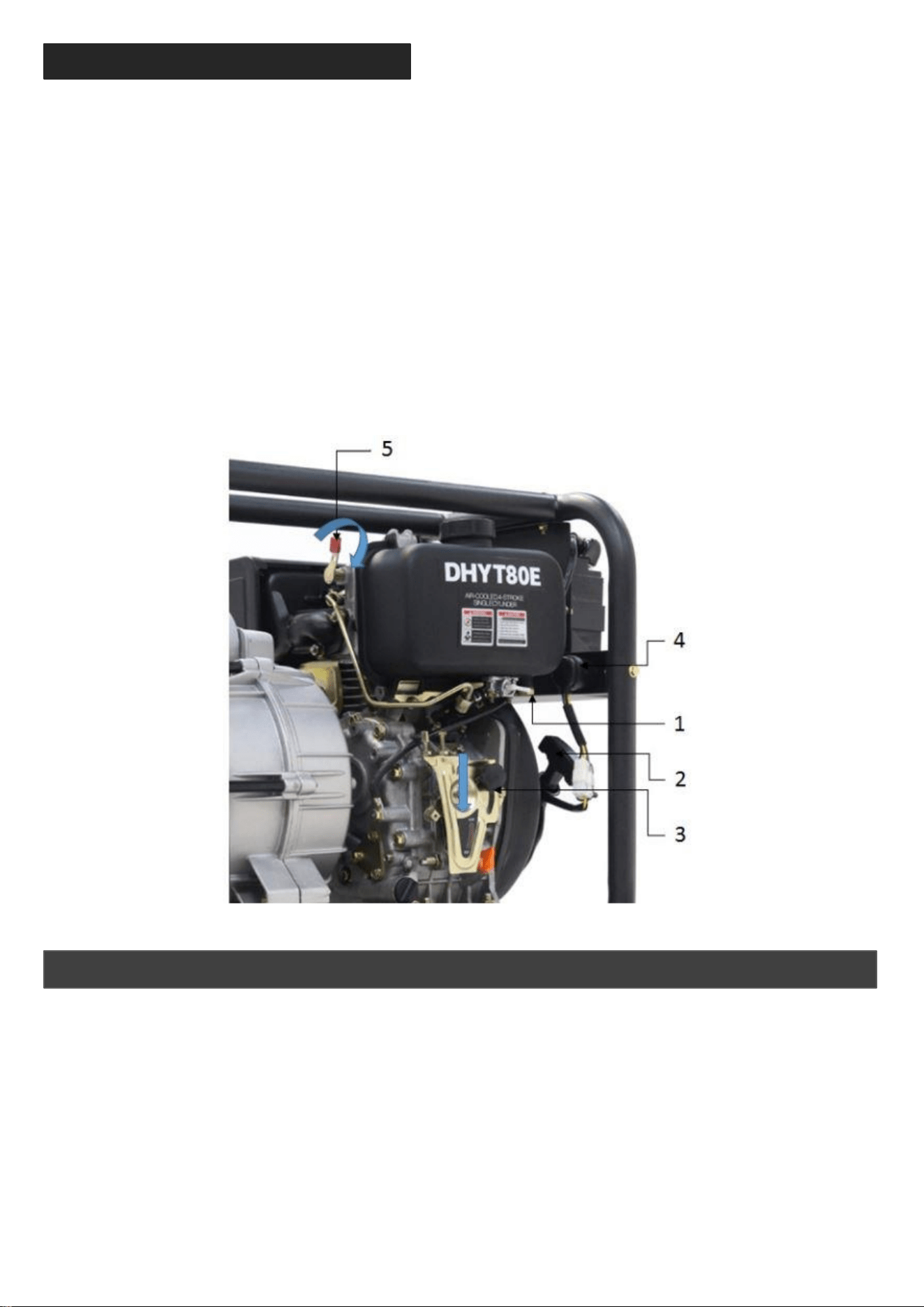
5.26 Turn the fuel tap (1) to the ‘ON’ position.
5.27 Unscrew the STOP/RUN lever (3) and move it to the RUN position, then lock it in
position by tightening the screw.
5.28 Turn the key switch (4) in a clockwise direction against the spring tension.
5.29 Once the engine has started, release the key.
5.30 Adjust the water pump speed to the desired working speed by moving the STOP/RUN
lever to suit the load.
6. STARTING PROCEDURE
ELECTRIC START
19
5.31 Make sure the water pump is on a flat stable surface.
5.32 Make sure the water pump has been filled with both fuel and oil to the correct levels.
5.33 Turn the fuel tap (1) to the ‘ON’ position.
5.34 Unscrew the STOP/RUN lever (3) and move it to the RUN position, then lock it in
position by tightening the screw.
5.35 Slowly pull the recoil start handle (2) until you feel resistance, then move the
decompression lever (5) to the down position.
5.36 Pull the recoil handle swiftly until the machine starts.
DO NOT let the recoil handle snap back but return it to the start position slowly.
5.37 Adjust the water pump speed to the desired working speed by moving the STOP/RUN
lever to suit the load.
5.38 Move the STOP/RUN lever (3) to the STOP position.
5.39 Turn the key switch (4) anti-clockwise to the OFF position.
5.40 Turn the fuel valve (1) to the OFF position.
RECOIL START
7. STOPPING PROCEDURE
20
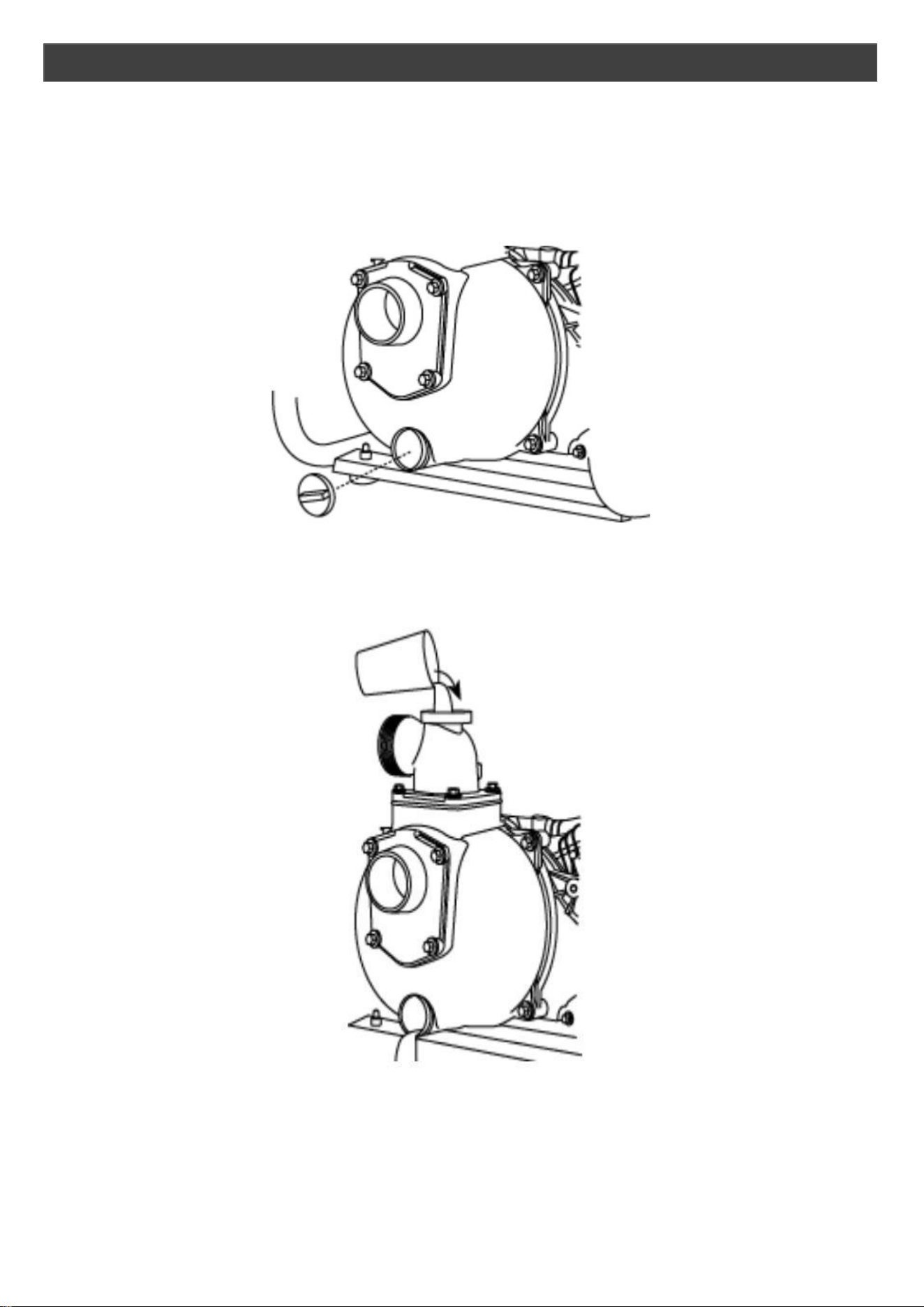
8.0 Disconnect and drain the suction and discharge hoses.
8.1 Remove the drain plug from the bottom of the pump.
8.2 To protect the unit from damage caused by freezing temperatures, ensure the unit
has been fully drained of water.
8.3 Remove the primer plug from the top of the pump and flush the internal components
of the water pump with clean water.
8.4 Replace both plugs and finger tighten.
8. DRAINING & FLUSHING THE WATER PUMP
21
NOTE
Service and maintenance must be performed by an authorised agent.
DO NOT tamper with, or attempt to adjust the pressure switch or safety valve.
Before moving, carrying or carrying out any maintenance on the machine, ensure the
ignition switch is in the OFF position and the spark plug HT lead cap has been
removed.
9.0 For all engine maintenance, please refer to the engine manual handbook
supplied.
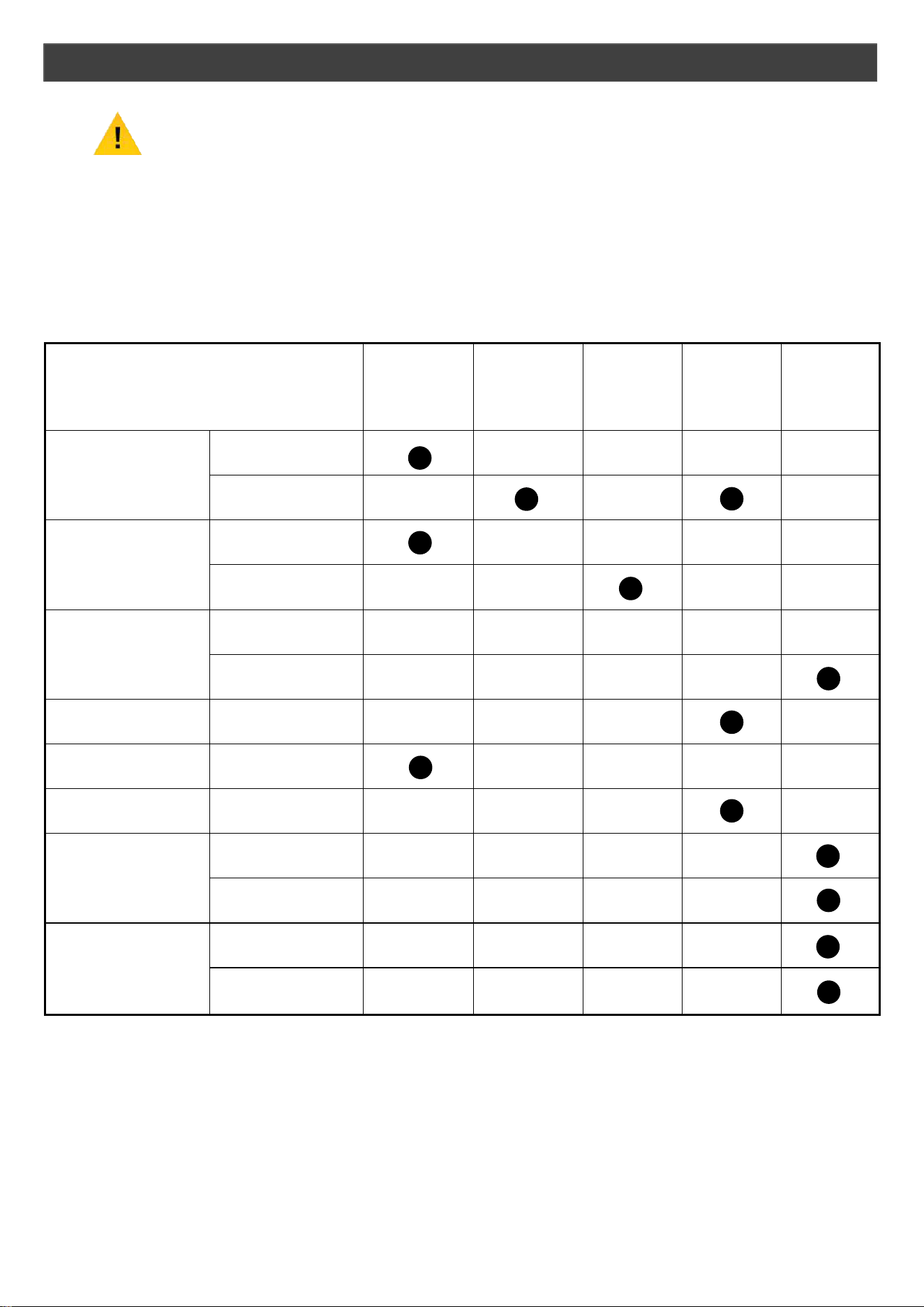
Each Use
1
st
Month
or
20 Hours
Every 50
Hours
Every 6
Months
or 100
Hours
Every
Year
or 300
Hours
Engine Oil
Check
Replace
Air Filter
Check
Replace
Fuel Filter
Clean
Replace
Spark Arrestor
Clean
Fuel Lines
Check
Fuel Tank
Check
Idle Speed
Check
#
Adjust
#
Valve Clearance
Check
#
Adjust
#
9. MAINTENANCE
22
CAUTION
Risk of burn from hot engine oil.
Allow the oil to cool to WARM before changing.
Warn engine oil will drain more effectively.
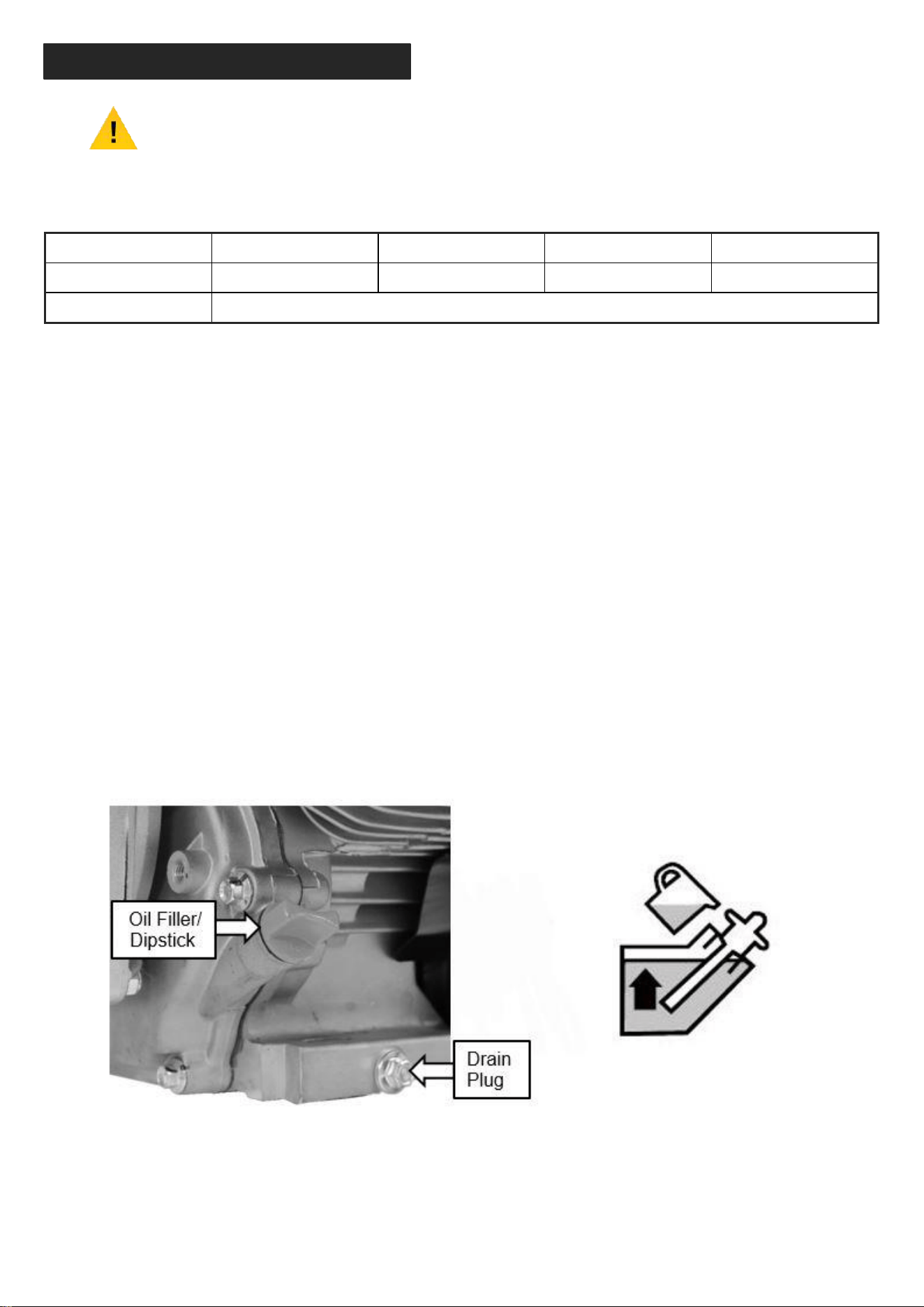
9.0 Drain the engine oil while the engine is warm. Warm oil drains more effectively.
9.1 Clean the area around the oil filler/dipstick and do not allow any dirt or debris to enter
the engine.
9.2 Remove the oil filler/dipstick and place a suitable container underneath the oil drain
plug.
9.3 Unscrew the oil drain plug and allow the oil to drain.
9.4 Once the oil has drained, check the drain plug for damage and replace if necessary.
9.5 Reinstall the drain plug by hand to avoid cross threading and then tighten securely.
9.6 With the machine on flat level ground, slowly fill the engine with fresh engine oil.
Stop occasionally to check the level.
9.7 For machines fitted with a dipstick, fill to the upper level mark on the dipstick.
For machines without a dipstick, fill to the upper thread level on the oil fill hole.
9.8 Refit the oil filler cap/dipstick securely.
9.9 Wipe up any spilt oil.
DHY50E
DHYC50LE
DHY80E
DHYT80E
Oil Capacity (L)
0.6
0.6
1.1
1.1
Oil Type
SAE30 Mineral Oil or SAE15W40 Mineral Oil
OIL
23
9.10
9.11
9.12
9.13
9.14
9.15
9.16
9.17
9.18
NOTE
NEVER run the machine without an air filter being installed.
A dirty air filter element affects the engine performance, increases fuel consumption
and will make it difficult to start.
If you notice a loss in power, check the air filter.
You must ensure the air filter housing is free of dust and debris. DO NOT allow any
dirt or debris to enter the carburettor.
For the DHYC50LE you will need to remove the battery tray to access the air filter.
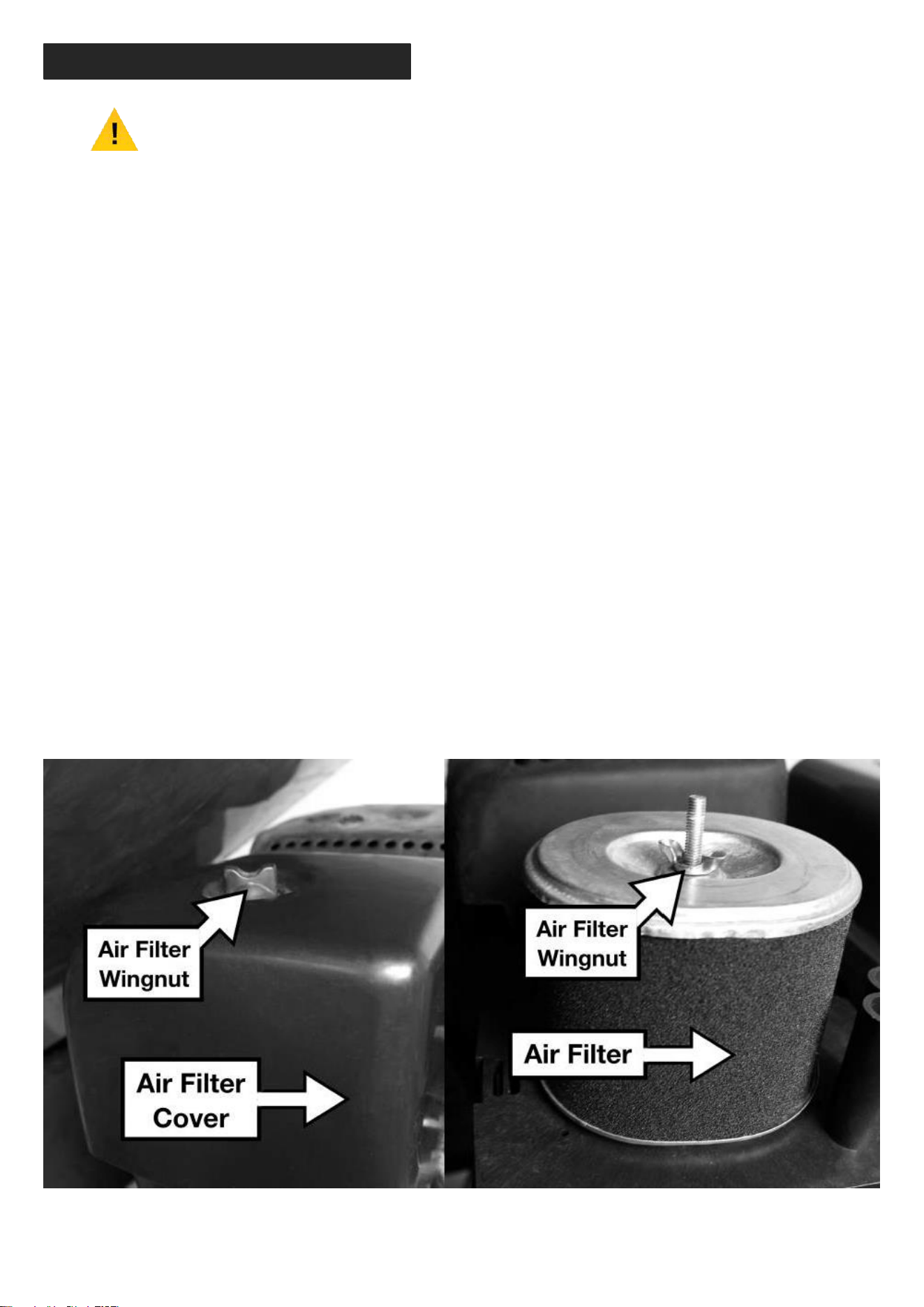
Remove the air filter cover by unscrewing the air filter cover wing nut and remove the
cover.
Undo the air filter element wing nut and remove the air filter element.
Ensure that no dirt and debris can enter the carburettor chamber.
Remove the foam filter element (if installed) from the paper element.
Inspect the air filter and if it shows any signs of damage or wear, replace
immediately.
Tap the paper element to remove dirt or debris and use a low pressure airline to blow
from the inside of the element to remove the reaming dust.
If installed, wash the foam element in a warm soap solution and allow to air dry.
DO NOT twist the element.
Once dry, soak the foam element in fresh engine oil and remove any excess.
Reinstall the foam element over the paper element and reinstall back on to the
machine.
AIR FILTER
24
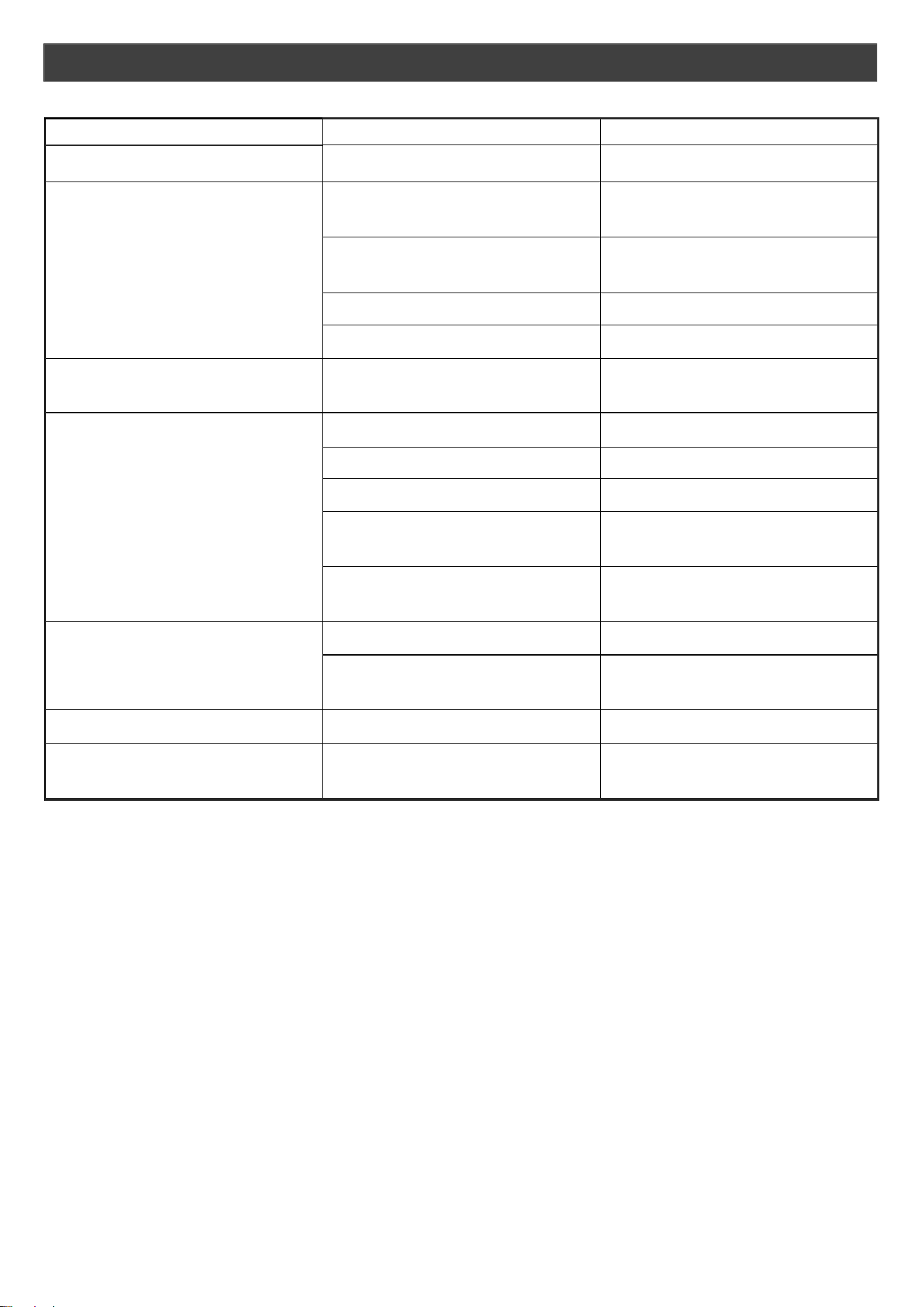
Problem
Possible Cause
Possible Solution
Engine lacks power
Dirty air filter
Replace air filter
Engine will not start
STOP/RUN lever in STOP
position
Move lever to RUN position
No fuel in the engine
Fill fuel tank or turn of fuel
supply
Battery discharged
Charge or replace battery
Faulty starter solenoid/motor
Check and replace as required
Engine runs well at no load but
‘bogs’ down under full load
Engine speed is too slow
Adjust STOP/RUN lever to suit
load
Engine will not start; or starts
and runs rough
Low oil level
Fill crankcase to proper level
Dirty air cleaner
Clean or replace air cleaner
Out of diesel
Fill fuel tank
Water in diesel
Drain diesel tank, fill with fresh
fuel
STOP/RUN lever incorrectly
set
Move STOP/RUN lever
Engine shuts down during
operation
Out of diesel
Fill fuel tank
Low oil level
Fill crankcase with oil to proper
level
Engine lacks power
Dirty air filter
Replace air filter
Engine falters
STOP/RUN lever incorrectly
set
Move STOP/RUN lever until
engine runs smoothly
10. TROUBLESHOOTING

25
CAUTION
ALWAYS allow the engine to cool completely before storage or transportation.
11.0 Drain the fuel tank using a siphon or similar fuel retrieval device.
11.1 Store the fuel in a suitable container for transport.
11.2 Allow the engine to cool completely.
11.3 Ensure the fuel tap and engine switch are in the off position.
11.4 Secure the machine upright in the vehicle so it cannot move during transportation.
11.5 Fuel and its vapours are highly flammable, ensure the machine is transported away
from sources of possible ignition.
NOTE
If the machine is to be stored for periods of 30 days or more then it is essential to
prepare the machine for storage correctly.
Failure to do so could result in issues making the machine difficult to start or cause
poor running.
11.6 Drain the fuel tank using a siphon or similar fuel retrieval device, into a suitable
container.
11.7 Run the engine under no load until the machine stops to remove any remaining fuel
from the carburettor and fuel lines.
11.8 Allow the engine to cool completely.
11.9 Drain and replace the engine oil following the procedure laid out in this user manual.
11.10 Clean the area around the spark plug and remove the spark plug following the
procedure laid out in this user manual.
11.11 Pour a teaspoon of fresh engine oil down the spark plug hole into the cylinder bore.
11.12 Gently pull the recoil start handle 4 to 5 times to coat the cylinder wall with a layer of
fresh engine oil.
11.13 Refit the spark plug but leave the spark plug HT lead cap removed.
11.14 Clean the machine using a brush to remove large pieces of debris and a most cloth
for other areas.
DO NOT use a pressure washer or hose pipe to clean the machine. Water could
penetrate the engine causing serious damage.
11. TRANSPORTATION & STORAGE
TRANSPORTATION
STORAGE
26
11.15 DO NOT use solvent based cleaning products as these could damage plastic
components.
11.16 Check the tightness of all nuts, bolts and screws.
11.17 Use a silicone based grease to lubricate any moving parts.
11.18 Store upright in a cool dry place away from extremes of temperature change and
away from any possible sources of ignition.
11.19 DO NOT store other items on top of the machine.
Model
DHY50E
DHYC50LE
DHY80E
DHYT80E
Engine
Hyundai D200 4 Stroke Single
Cylinder
Hyundai D300 4 Stroke Single
Cylinder
Displacement (cc)
221
221
296
296
Fuel Tank
Capacity (L)
3.6
3.6
3.6
3.6
Net Installed
Power @
3600rpm (hp/kw)
3.8/2.8
3.8/2.8
5.5/4.00
5.5/4.00
Engine Oil
Capacity
0.6
0.6
1.1
1.1
Pump
Aluminium housing with a cast iron impeller
Total Head (m)
30
30
25
25
Suction Lift (m)
8
8
6
6
Max Flow (l/hr)
36,000
36,000
60,000
60,000
Weight (kg)
54
51
61
69
Dimensions
(LxWxH)
570 x 470 x 670
540 x 450 x 540
590 x 490 x 590
590 x 490 x 590
Noise Level (db)
105
105
109
109
12. SPECIFICATION

27
13.0 We do not offer a take back scheme for the recovery or Waste Electrical Electronic
Equipment (WEEE) & Batteries.
Instead the responsibility to dispose of WEEE and or batteries is passed onto you by
us.
So when it becomes necessary to dispose of your machine you must take it to your
Local Civic Amenity Site.
For further information please contact your Local Authority for disposal advice.
13.1 You MUST make sure that all unused oil and fuel is disposed of correctly either
beforehand or at your Local Civic Amenity Site.
Under NO circumstances must any fuel or oil be put down any drains.
13.2 Certain products contain WEEE waste which should not be disposed
of in your domestic waste.
13.3 You MUST recycle WEEE in accordance with your local authority or
recycling centre.
13.4 Certain products contain batteries which should not be disposed of
in your domestic waste.
13.5 You MUST recycle batteries in accordance with your local authority or
recycling centre.
13.6 Unwanted packaging and materials should be stored and taken to a recycling centre
so it can be disposed of in a manner which is compatible with the environment.
13.7 The following symbol means you should ‘Reduce – Reuse -
Recycle’.
13.8 We are a member of the VALPAK National Compliance Scheme and our registration
number is RM08660.
13.9 For further information about disposal please contact your Local Authority.
13.10 You can also get more advice and guidance about recycling at the following website
http://recycle-more.co.uk
13.11 Should you pass this product on to another user either sold or loaned, you MUST
pass on this user manual.
This will make sure that all other users can use and maintain this machine safely.
13. PRODUCT DISPOSAL & RECYCLING

28
14.0 Genpower Ltd confirms that this Hyundai product conforms to the following
CE Directives;
2006/42/EC Machinery Directive
2004/108/EC EMC Machinery Directive
2000/14/EC Amended by 2005/88/EC Noise Emissions Directive
97/68/EC 2010/26/EC NRMM Emissions Directive
EC DECLARATION OF CONFORMITY
The undersigned. As authorised by: Genpower Ltd
Declares that the following equipment manufactured under licence by Hyundai Korea
Conforms to the Directive:-
2000/14/EC (as amended)
Of the European Parliament and of the council on the approximation of the laws of the Member
States relating to the noise emission in the environment by equipment for the use outdoors.
Equipment Category: Water Pump
Product Name/Model: DHY50E / DHYC50LE
DHY80E / DHYT80E
Type/Serial No: Diesel Powered Water Pumps
Net installed power: DHY50E / DHYC50LE : 221cc
DHY80E / DHYT80E : 296cc
The technical documentation is kept by: Roland Llewellin, Genpower Ltd
Isaac Way, Pembroke Dock,
Pembrokeshire, SA72 4RW.
The conformity assessment procedure followed was in accordance with annex V of the Directive.
Notified Body: Ministerio De Industria Comercio
160 Paseo de la Castellana, C.P. 28046
Madrid, Espana
Certification n° e9*2016/1628*2016/1628EC1/D*1210*00
Measured Sound Power Level: DHY50E / DHYC50LE : 105dB
DHY80E / DHYT80E : 109dB
Guaranteed Sound Power Level: DHY50E / DHYC50LE : 105dB
DHY80E / DHYT80E : 109dB
A copy of this certificate has been submitted to the European Commission and the EU Member
State United Kingdom.
Place of Declaration:
Date:
Signed by:
Pembroke Dock, SA73 4RW
01/10/2024
Roland Llewellin
Position in Company: Managing Director
Name and address of manufacturer or Authorised representative:
Genpower Ltd
Isaac Way, Pembroke Dock,
Pembrokeshire, SA72 4RW
14. DECLARATION OF CONFORMITY

29
15.0 CONTACT DETAILS Genpower Ltd, Isaac Way,
London Road, Pembroke Dock,
Pembrokeshire.
SA72 4RW. UK
15.1 FAX +44 (0) 1646 686198
15.3 WEBSITE www.hyundaipowerequipment.co.uk
16.0 To register your product for the manufacturer’s warranty, please visit;
www.hyundapowerequipment.co.uk/warranty
16.1 For full warranty terms and conditions, please visit;
www.hyundaipowerequipment/support/warranty-information
17.0 Our manuals are constantly being reviewed and updated.
However if you find and error, omission or something you find unclear, please contact
your dealer for assistance.
17.1 Our latest manuals are also placed online.
15. CONTACT DETAILS
16. WARRANTY
17. MANUAL UPDATES

For Inquiries, Please Contact:
GENPOWER LTD
Isaac Way, London Road,
Pembroke Dock, UK, SA72 4RW.
T: +44 (0) 1646 687 880
E: info@hyundaipowerproducts.co.uk
www.hyundaipowerproducts.co.uk
Imported / Distributed by Genpower Ltd for
the United Kingdom & Ireland
Licensed by Hyundai Corporation Holdings, Korea