SAFETY DATA SHEET
Page 1 of 6
HFT-69242
Prepared to OSHA, ACC, ANSI, NOHSC, WHMIS, 2001/58 & 1272/2008/EC Standards SDS Revision: 1.2 SDS Revision Date: 7/25/2015
1. PRODUCT & COMPANY IDENTIFICATION
1.1 Product Name:
24 IN SOLID ALUMINUM LEVEL
1.2 Chemical Name:
Petroleum Naphtha
1.3 Synonyms:
P/N 69242
1.4 Trade Names:
Exxsol D60 (S) Fluid
1.5 Product Uses & Restrictions:
Solvent
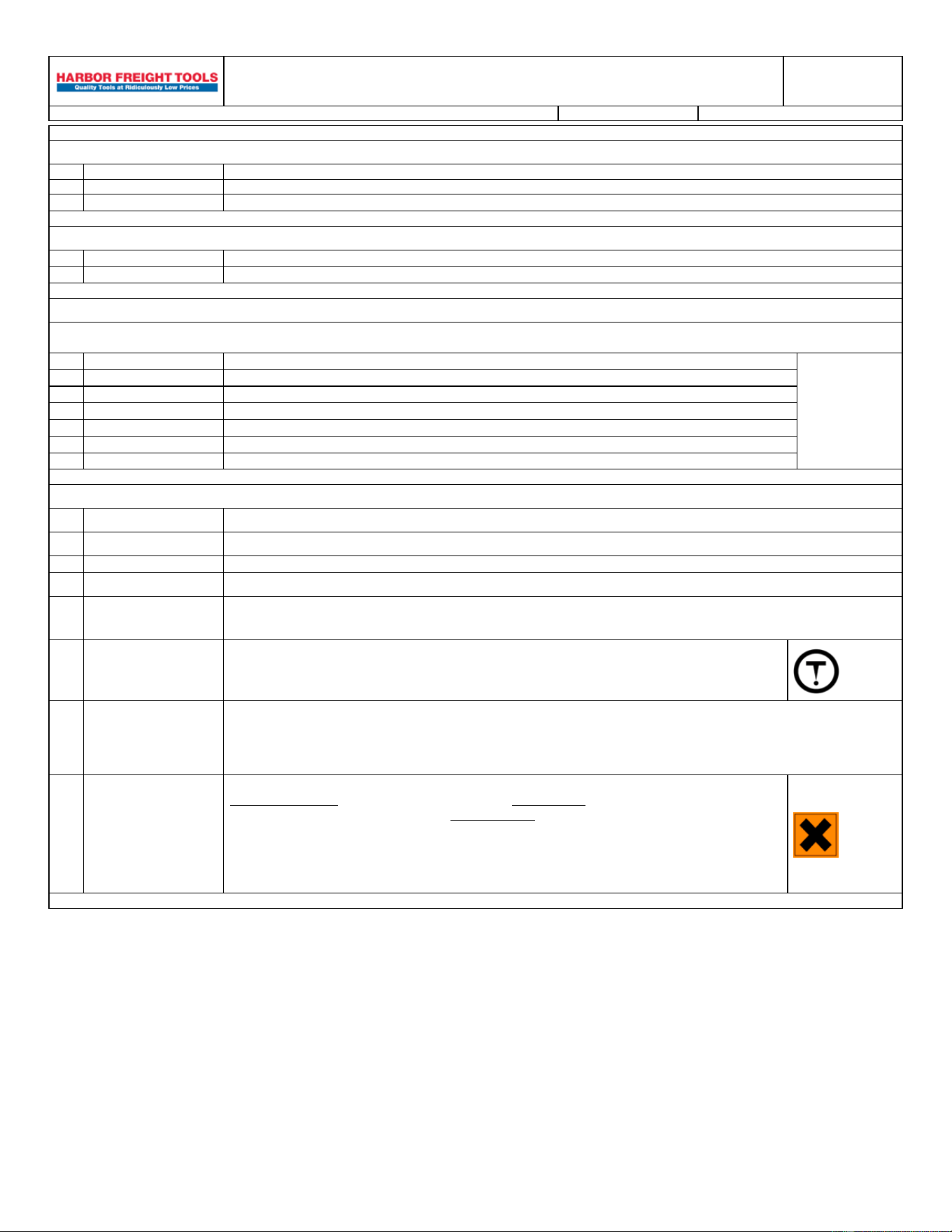
1.6 Distributor’s Name:
Harbor Freight Tools USA, Inc.
1.7 Distributor’s Address:
26541 Agoura Road, Calabasas, CA 91302 USA
1.8 Emergency Phone:
CHEMTREC: +1 (703) 527-3887 / +1 (800) 424-9300 (CCN 676687)
1.9 Business Phone / Fax:
+1 (805) 388-1000
2. HAZARDS IDENTIFICATION
2.1 Hazard Identification:
This product is classified as a HAZARDOUS SUBSTANCE, but not as DANGEROUS GOODS
according to the classification criteria of NOHSC: 1088 (2004) and ADG Code (Australia).
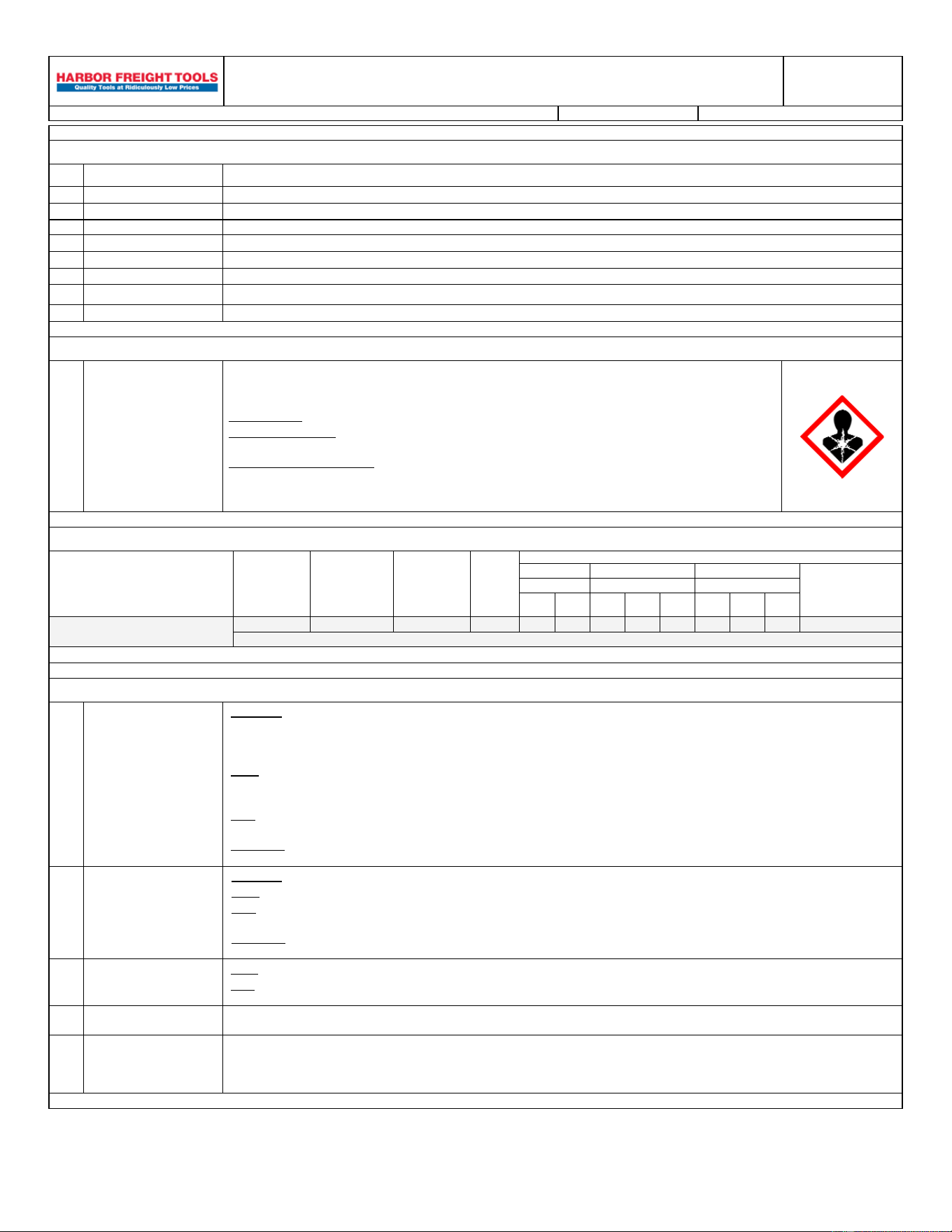
DANGER! MAY BE FATAL IF SWALLOWED AND ENTERS AIRWAYS.
Classification
: Asp. Tox. 1;
Hazard Statements
(H): H304 – May be fatal if swallowed and enters airways. H350 – May cause
cancer.
Precautionary Statements
(P): P280 – Wear protective gloves/eye protection. P301+P310 – IF
SWALLOWED: Immediately call a POISON CENTER/doctor. P331 – Do NOT induce vomiting.
P405 – Store locked up. P501 – Dispose of contents/ container to an approved waste disposal
plant.
3. COMPOSITION & INGREDIENT INFORMATION
CHEMICAL NAME(S) CAS No. RTECS No.
EINECS No. %
EXPOSURE LIMITS IN AIR (mg/m
3
)
ACGIH NOHSC OSHA
OTHER
ppm ppm ppm
TLV STEL
ES-
TWA
ES-
STEL
ES-
PEAK
PEL STEL IDLH
NAPTHA, PETROLEUM
HYDROTREATED HEAVY *
64742-48-9 NA 265-150-3 5-10
NA 5 NF NF NF NA 5 10 OIL MIST
Carc. 1B; Muta. 1B; Asp. Tox. 1; H350, H340, H304
* < 3% DIMETHYL SULFOXDE (DMSO)
4. FIRST AID MEASURES
4.1 First Aid:
Ingestion: DO NOT INDUCE VOMITING. Contact ChemTrec at +1 (703) 527-3887 or the nearest Poison Control
Center or local emergency telephone number for assistance and instructions. Seek immediate medical
attention. If vomiting occurs spontaneously, keep victim’s head lowered (forward) to reduce the risk of
aspiration.
Eyes
: If product gets in the eyes, flush eyes thoroughly with copious amounts of water for at least 15 minutes,
holding eyelid(s) open to ensure complete flushing. If the eyes or face become swollen during or following
use, consult a physician or emergency room immediately.
Skin
: Remove contaminated clothing and wash affected areas with soap and water. If irritation persists, seek
prompt medical attention. Do not wear contaminated clothing until after it has been properly cleaned.
Inhalation
: Remove victim to fresh air at once. If breathing is difficult, administer supplemental oxygen and seek
immediate medical attention. If breathing stops, perform artificial respiration.
4.2 Effects of Exposure:
Ingestion: If product is swallowed, may cause nausea, vomiting and/or diarrhea.
Eyes
: May cause transient mild-eye irritation with short-term contact with liquid, spray or mist.
Skin
: This product can cause mild, transient skin irritation with short-term exposure. This product can cause
allergic skin reactions (e.g., rashes, welts, dermatitis) upon prolonged or repeated exposure.
Inhalation
: No significant adverse health effects are expected to occur upon short-term exposure to this product.
Aspiration of liquid into the lungs can cause severe lung damage or death.
4.3 Symptoms of Overexposure:
Eyes: Overexposure in eyes may cause redness, itching and watering.
Skin
: Symptoms of skin overexposure may include redness, itching, and irritation of affected areas The product
can cause allergic skin reactions (e.g., rashes, welts, dermatitis) upon prolonged or repeated exposure.
4.4 Acute Health Effects:
Moderate irritation to eyes and skin near affected areas. Additionally, high concentrations of vapors can cause
drowsiness, dizziness, headaches and nausea.
4.5 Chronic Health Effects:
Contains a petroleum-based mineral oil. Prolonged or repeated skin contact can cause mild irritation and inflammation
characterized by drying, cracking, (dermatitis) or oil acne. Repeated or prolonged inhalation of petroleum-based mineral
oil mists at concentrations above applicable workplace exposure levels can cause respiratory irritation or other
pulmonary effects.
SAFETY DATA SHEET
Page 2 of 6
HFT-69242
Prepared to OSHA, ACC, ANSI, NOHSC, WHMIS, 2001/58 & 1272/2008/EC Standards SDS Revision: 1.2 SDS Revision Date: 7/25/2015
4. FIRST AID MEASURES – cont’d
4.6 Target Organs:
Eyes, Skin, Respiratory System
4.7 Medical Conditions
Aggravated by Exposure:
Pre-existing dermatitis, other skin conditions, and disorders of the
target organs (eyes, skin, and respiratory system).
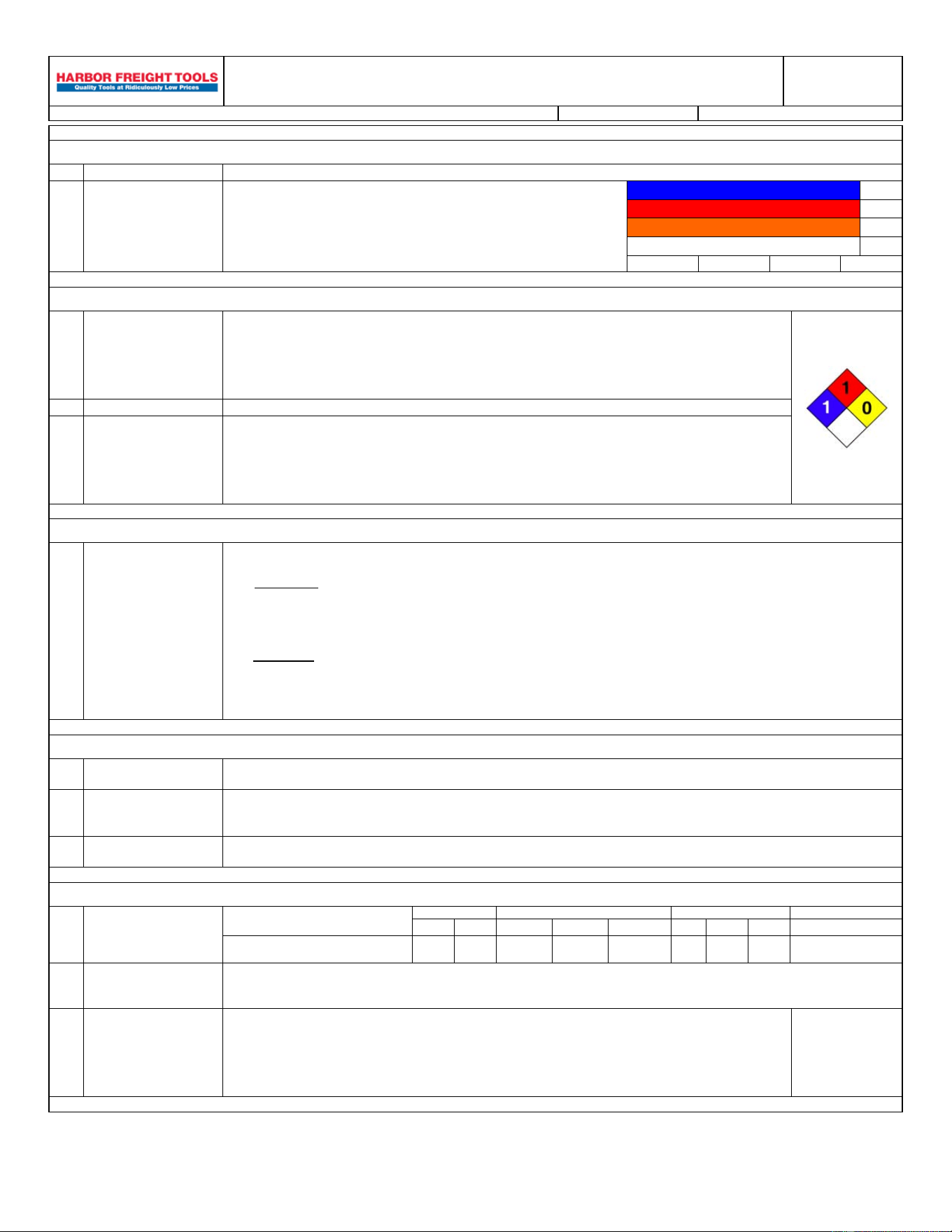
HEALTH
1
FLAMMABILITY
1
PHYSICAL HAZARDS
0
PROTECTIVE EQUIPMENT
B
EYES SKIN
5. FIREFIGHTING MEASURES
5.1 Fire & Explosion Hazards:
This material can burn but will not readily ignite. This material will release vapors when heated above
the flash point temperature that can ignite when exposed to a source of ignition. In enclosed spaces,
heated vapor can ignite with explosive force. Mists or sprays may burn at temperatures below the
flash point. Carbon dioxide, carbon monoxide, smoke, fumes, unburned hydrocarbons and trace
oxides of sulfur, phosphorus, zinc and nitrogen. Also, depending upon the conditions of use, low
concentrations of hydrogen sulfide can be released.
5.2 Extinguishing Methods:
Dry Chemical, Foam, Carbon Dioxide, Water Fog
5.3 Firefighting Procedures:
Keep containers cool until well after the fire is out. Use water spray to cool fire-exposed surfaces
and to protect personnel. Avoid spraying water directly into storage containers because of danger of
boil over. Prevent runoff from fire control or dilution from entering sewers, drains, drinking water
supply, or any natural waterway. Firefighters must use full bunker gear including NIOSH-approved
positive pressure self-contained breathing apparatus to protect against potential hazardous
combustion or decomposition products and oxygen deficiencies.
6. ACCIDENTAL RELEASE MEASURES
6.1 Spills:
Before cleaning any spill or leak, individuals involved in spill cleanup must wear appropriate Personal Protective
Equipment.
For small spills
(e.g., < 1 gallon (3.8 L)) wear appropriate personal protective equipment (e.g., goggles, gloves).
Maximize ventilation (open doors and windows) and secure all sources of ignition. Remove spilled material with
absorbent material and place into appropriate closed container(s) for disposal. Dispose of properly in accordance with
local, state and federal regulations. Wash all affected areas and outside of container with plenty of warm water and
soap. Remove any contaminated clothing and wash thoroughly before reuse.
For large spills
(e.g., ≥ 1 gallon (3.8 L)), deny entry to all unprotected individuals. Dike and contain spill with inert
material (e.g., sand or earth). Use ONLY non-sparking tools for recovery and cleanup. Transfer liquid to containers for
recovery or disposal and solid diking material to separate containers for proper disposal. Remove contaminated clothing
promptly and wash affected skin areas with soap and water. Keep spills and cleaning runoffs out of drains, municipal
sewers and open bodies of water.
7. HANDLING & STORAGE INFORMATION
7.1 Work & Hygiene Practices:
Use normal hygiene practices. Avoid breathing vapors. Avoid direct skin contact. Wash hands thoroughly after using
this product and before eating, drinking, or smoking.
7.2 Storage & Handling:
Use and store in a cool, dry, well-ventilated area. Keep away from excessive heat, open flames, sparks, and other
possible sources of ignition. Do not store in unmarked containers or storage devices.
Recommended maximum shelf life: 36 months.
7.3 Special Precautions:
Empty containers may contain product residue. Do not pressurize, cut, heat or weld empty containers. Do not reuse
empty containers without commercial cleaning or reconditioning.
8. EXPOSURE CONTROLS & PERSONAL PROTECTION
8.1 Exposure Limits:
ppm (mg/m
3
)
CHEMICAL NAME(S)
ACGIH NOHSC OSHA OTHER
TLV STEL ES-TWA ES-STEL ES-PEAK PEL STEL IDLH
NAPTHA, PETROLEUM
HYDROTREATED HEAVY
NA 5 NF NF NF NA 5 10 OIL MIST
8.2
Ventilation & Engineering
Controls:
The use of mechanical dilution ventilation is recommended to maintain airborne concentrations below the recommended
occupational exposure limits, whenever this material is used in a confined space, is heated above normal temperatures
(up to 38 ºC) or is agitated.
8.3 Respiratory Protection:
Vaporization or misting is not expected at ambient temperatures. Therefore, the need for respiratory
protection is not anticipated under normal use conditions and with adequate ventilation. If elevated
airborne concentrations above applicable workplace exposure levels are anticipated, a NIOSH-
approved organic vapor respirator equipped with a dust/mist pre-filter should be used. Protection
factors vary depending upon the type of respirator used. Respirators should be used in accordance
with OSHA requirements (29 CFR 1910.134).
SAFETY DATA SHEET
Page 3 of 6
HFT-69242
Prepared to OSHA, ACC, ANSI, NOHSC, WHMIS, 2001/58 & 1272/2008/EC Standards SDS Revision: 1.2 SDS Revision Date: 7/25/2015
8. EXPOSURE CONTROLS & PERSONAL PROTECTION – cont’d
8.4 Eye Protection:
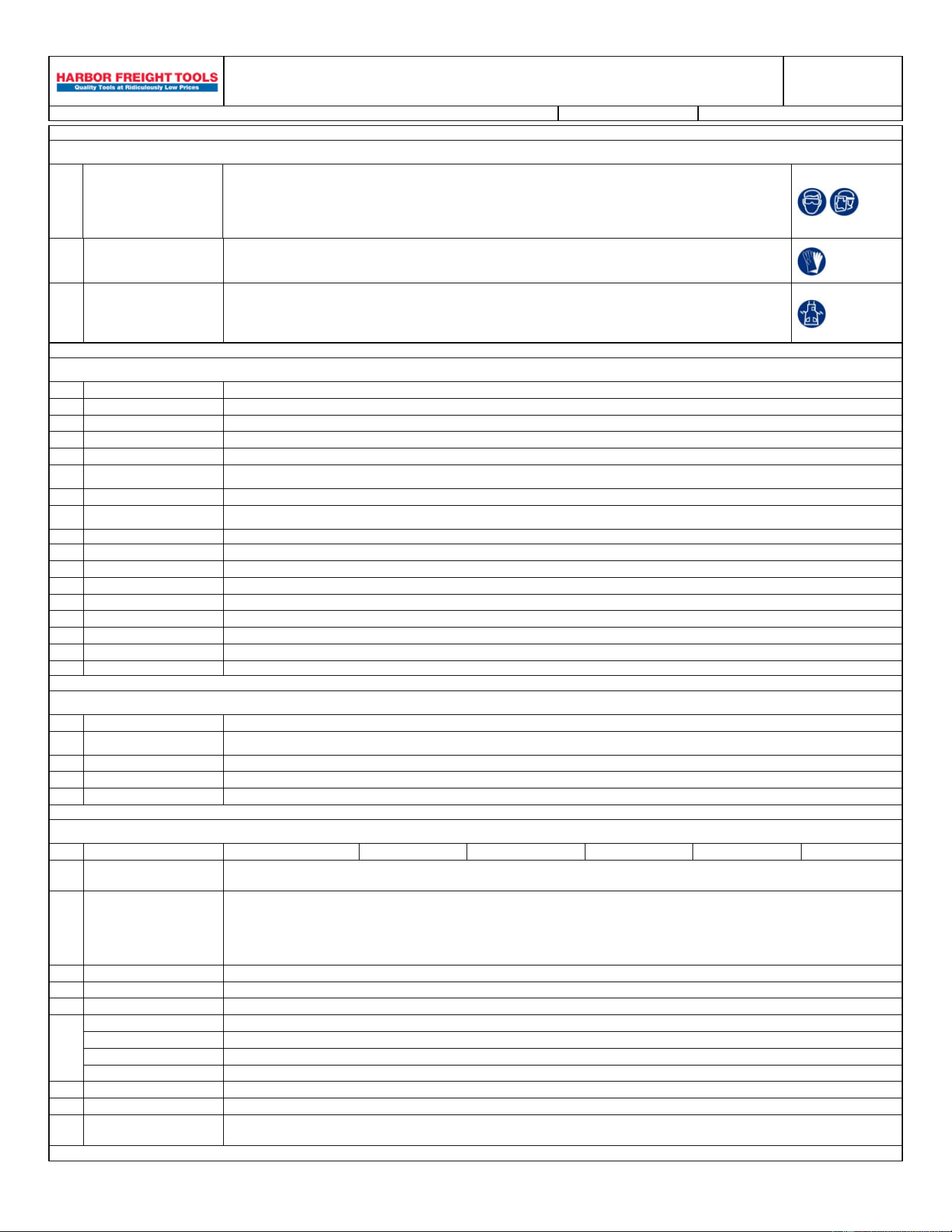
Wear protective eyewear (e.g., safety glasses with side-shield) at all times when handling this
product. Always use protective eyewear when cleaning spills or leaks. Contact lenses pose a
special hazard; soft lenses may absorb and concentrate irritants. Have suitable eye wash water
available. Use equipment for eye protection tested and approved under appropriate government
standards such as NIOSH (US) or EN 166(EU).
8.5 Hand Protection:
Use gloves constructed of chemical-resistant materials such as neoprene or heavy nitrile rubber if
frequent or prolonged contact is expected. If necessary, refer to U.S. OSHA 29 CFR §1910.138, the
appropriate standards of Canada, or the EU member states.
8.6 Body Protection:
Avoid prolonged and/or repeated skin contact. Use clean and impervious protective clothing (e.g.,
neoprene or Tyvek
®
). Protective clothing should include long-sleeves, apron, boots and additional
facial protection. If necessary, refer to appropriate standards of Canada, the EU member states, or
U.S. OSHA.
9. PHYSICAL & CHEMICAL PROPERTIES
9.1 Appearance:
Clear colorless liquid
9.2 Odor:
Characteristic mild petroleum/solvent odor
9.3 Odor Threshold:
NA
9.4 pH:
NA
9.5 Melting Point/Freezing Point:
NA
9.6 Initial Boiling Point/Boiling
Range:
183 ºC (361 ºF) - 208 ºC (406 ºF)
9.7 Flashpoint:
> 63 ºC (145 ºF) [ ASTM D-93]
9.8 Upper/Lower Flammability
Limits:
LEL: 0.7 / UEL: 5.3
9.9 Vapor Pressure:
0.07 kPa (0.53 mm Hg) at 20 °C | 0.24 kPa (1.8 mm Hg) at 38 ºC | 0.5 kPa (3.75 mm Hg) at 50 ºC
9.10 Vapor Density:
> 1 at 101 kPa
9.11 Relative Density:
776 kg/m³ (6.48 lbs/gal, 0.78 kg/dm³)
9.12 Solubility:
Negligible
9.13 Partition Coefficient (log P
ow
):
NA
9.14 Autoignition Temperature:
NA
9.15 Decomposition Temperature:
NA
9.16 Viscosity:
1.3 cSt (1.3 mm2/sec) at 40 ºC | 1.64 cSt (1.64 mm2/sec) at 25 ºC
9.17 Other Information:
Evaporation Rate (n-Butyl Acetate = 1): 0.05
10. STABILITY & REACTIVITY
10.1 Stability:
Stable at normal temperatures.
10.2 Hazardous Decomposition
Products:
Fumes, smoke, carbon monoxide, silicon oxides.
10.3 Hazardous Polymerization:
Will not occur.
10.4 Conditions to Avoid:
Open flames, sparks, high heat, and close proximity to incompatible substances.
10.5 Incompatible Substances:
Strong oxidizing agents.
11. TOXICOLOGICAL INFORMATION
11.1 Routes of Entry: Inhalation:
NO
Absorption:
YES
Ingestion:
YES
11.2 Toxicity Data:
Based on animal testing from similar materials & products, the acute toxicity of this product is expected to be: Petroleum
Oils - LD50 (oral, rat) > 5,000 mg/kg; LD50 (dermal, rabbit) > 2,000 mg/kg; LD50 (inhalation, rat) > 5,000 mg/m3.
11.3 Acute Toxicity:
Mineral oil mists derived from highly refined oils are reported to have low acute and sub-acute toxicities in animals.
Effects from single and short-term repeated exposures to high concentrations of mineral oil mists well above applicable
workplace exposure levels include lung inflammatory reaction, lipoid granuloma formation and lipoid pneumonia. In acute
and sub-acute studies involving exposures to lower concentrations of mineral oil mists at or near current work place
exposure levels produced no significant toxicological effects.
11.4 Chronic Toxicity:
In long term studies (up to two years) no carcinogenic effects have been reported in any animal species tested.
11.5 Suspected Carcinogen:
NA
11.6 Reproductive Toxicity:
This product is not reported to produce reproductive toxicity in humans.
Mutagenicity:
This product is not reported to produce mutagenic effects in humans.
Embryotoxicity:
This product is not reported to produce embryotoxic effects in humans.
Teratogenicity:
This product is not reported to produce teratogenic effects in humans.
Reproductive Toxicity:
This product is not reported to produce reproductive effects in humans.
11.7 Irritancy of Product:
The product can cause allergic skin reactions (e.g., rashes, welts, dermatitis) upon prolonged or repeated exposure.
11.8 Biological Exposure Indices:
NE
11.9 Physician Recommendations:
Treat symptomatically. Careful gastric lavage or emesis may be considered to evacuate large quantities of material.
Subcutaneous or intramuscular injection requires prompt surgical debridement.
SAFETY DATA SHEET
Page 4 of 6
HFT-69242
Prepared to OSHA, ACC, ANSI, NOHSC, WHMIS, 2001/58 & 1272/2008/EC Standards SDS Revision: 1.2 SDS Revision Date: 7/25/2015
12. ECOLOGICAL INFORMATION
12.1 Environmental Stability:
There are no specific data available for this product.
12.2 Effects on Plants & Animals:
There are no specific data available for this product.
12.3 Effects on Aquatic Life:
There are no specific data available for this product.
13. DISPOSAL CONSIDERATIONS
13.1 Waste Disposal:
Dispose of in accordance with federal, state, provincial and local regulations.
13.2 Special Considerations:
NA
14. TRANSPORTATION INFORMATION
The basic description (ID Number, proper shipping name, hazard class & division, packing group) is shown for each mode of transportation. Additional
descriptive information may be required by 49 CFR, IATA/ICAO, IMDG and the CTDGR.
14.1 49 CFR (GND):
NOT REGULATED
14.2 IATA (AIR):
NOT REGULATED
14.3 IMDG (OCN):
NOT REGULATED
14.4 TDGR (Canadian GND):
NOT REGULATED
14.5 ADR/RID (EU):
NOT REGULATED
14.6 SCT (MEXICO):
NOT REGULATED
14.7 ADGR (AUS):
NOT REGULATED
15. REGULATORY INFORMATION
15.1 SARA Reporting
Requirements:
This product does not contain any substances subject to SARA Title III, Section 313 reporting requirements.
15.2 SARA Threshold Planning
Quantity:
There are no specific Threshold Planning Quantities for the components of this product.
15.3 TSCA Inventory Status:
The components of this product are listed on the TSCA Inventory or are otherwise exempt.
15.4 CERCLA Reportable Quantity
(RQ):
NA
15.5 Other Federal Requirements:
None of the ingredients are listed as Hazardous Air Pollutants (HAPs). None of the ingredients are listed as Toxic
Pollutants under the Clean Water Act (CWA). None of the ingredients are listed as Priority Pollutants under the Clean
Water Act (CWA). This product does not contain any Class 1 or Class 2 ozone depletors.
15.6 Other Canadian Regulations:
This product has been classified according to the hazard criteria of the CPR and the SDS contains
all of the information required by the CPR. The components of this product are listed on the
DSL/NDSL. None of the components of this product are listed on the Priorities Substances List.
WHMIS D2B (Other Toxic Effects)
15.7 State Regulatory Information:
No ingredients in this product, present in a concentration of 1.0% or greater, are listed on any of the following state
criteria lists: California Proposition 65 (CA65), Delaware Air Quality Management List (DE), Florida Toxic Substances
List (FL), Massachusetts Hazardous Substances List (MA), Michigan Critical Substances List (MI), Minnesota Hazardous
Substances List (MN), New Jersey Right-to-Know List (NJ), New York Hazardous Substances List (NY), Pennsylvania
Right-to-Know List (PA), Washington Permissible Exposures List (WA), Wisconsin Hazardous Substances List (WI).
15.8 Other Requirements:
The primary components of this product are not listed in Annex I of EU Directive 67/548/EEC:
Petroleum Distillate
: Flammable, Harmful (F, Xn). Risk Phrases (R): 10-65 – Flammable. Harmful:
may cause lung damage if swallowed. Safety Phrases
(S): 2-23-24-62 – Keep away from children.
Do not breathe gas, fumes, vapor or spray. Avoid contact with skin. If swallowed, do not induce
vomiting: seek medical advice immediately and show this SDS or the container label. Colorless,
volatile liquid with ethereal and faint sweetish odor. Overexposure may cause dizziness and loss of
concentration. At higher levels, CNS depression and cardiac arrhythmia may result from exposure.
Vapors displace air and can cause asphyxiation in confined spaces.
SAFETY DATA SHEET
Page 5 of 6
HFT-69242
Prepared to OSHA, ACC, ANSI, NOHSC, WHMIS, 2001/58 & 1272/2008/EC Standards SDS Revision: 1.2 SDS Revision Date: 7/25/2015
16. OTHER INFORMATION
16.1 Other Information:
DANGER! MAY BE FATAL IF SWALLOWED AND ENTERS AIRWAYS. Wear protective gloves/eye protection/face
protection. IF ON SKIN: Wash with soap and water. If skin irritation or a rash occurs – Get medical advice/attention.
Store in a well-ventilated place. Keep cool. Use only as directed. KEEP LOCKED UP AND OUT OF REACH OF
CHILDREN.
16.2 Terms & Definitions:
See last page of this Safety Data Sheet.
16.3 Disclaimer:
This Safety Data Sheet is offered pursuant to OSHA’s Hazard Communication Standard, 29 CFR §1910.1200. Other
government regulations must be reviewed for applicability to this product. To the best of ShipMate's & Harbor Freight
Tools USA, Inc.’s knowledge, the information contained herein is reliable and accurate as of this date; however,
accuracy, suitability or completeness is not guaranteed and no warranties of any type, either expressed or implied, are
provided. The information contained herein relates only to the specific product(s). If this product(s) is combined with
other materials, all component properties must be considered. Data may be changed from time to time. Be sure to
consult the latest edition.
16.4 Prepared for:
Harbor Freight Tools USA, Inc.
26541 Agoura Road
Calabasas, CA 91302 USA
Tel: +1 (805) 388-1000
http://www.harborfreight.com
16.5 Prepared by:
ShipMate, Inc.
P.O. Box 787
Sisters, Oregon 97759-0787 USA
Tel: +1 (310) 370-3600
Fax: +1 (310) 370-5700
http://www.shipmate.com
SAFETY DATA SHEET
Page 6 of 6
HFT-69242
Prepared to OSHA, ACC, ANSI, NOHSC, WHMIS, 2001/58 & 1272/2008/EC Standards SDS Revision: 1.2 SDS Revision Date: 7/25/2015
DEFINITION OF TERMS
A large number of abbreviations and acronyms appear on a SDS. Some of these that are commonly used include the following:
GENERAL INFORMATION:
CAS No. Chemical Abstract Service Number
EXPOSURE LIMITS IN AIR:
ACGIH American Conference on Governmental Industrial Hygienists
C Ceiling Limit
ES Exposure Standard (Australia)
IDLH Immediately Dangerous to Life and Health
OSH
A
U.S. Occupational Safety and Health Administration
PEL Permissible Exposure Limit
STEL Short-Term Exposure Limit
TLV Threshold Limit Value
TW
A
Time Weighted Average
FIRST AID MEASURES:
CPR Cardiopulmonary resuscitation - method in which a person whose heart has
stopped receives manual chest compressions and breathing to circulate blood
and provide oxygen to the body.
HMIS-III HEALTH, FLAMMABILITY & REACTIVITY RATINGS:
0 Minimal Hazard
HEALTH
1 Slight Hazard
FLAMMABILITY
2 Moderate Hazard
PHYSICAL HAZARDS
3 Severe Hazard
PERSONAL PROTECTION
4 Extreme Hazard
PERSONAL PROTECTION RATINGS:
A
G
B
H
C
I
D
J
E
K
F
X
Consult your supervisor or SOPs fo
r
special handling directions.
Safety Glasses
Splash Goggles
Face Shield &
Protective Eyewear
Gloves
Boots
Synthetic Apron
Protective Clothing
& Full Suit
Dust Respirator
Full Face Respirator
Dust & Vapor Half-
Mask Respirator
Full Face
Respirator
Airline Hood/Mask
or SCBA
OTHER STANDARD ABBREVIATIONS:
ML Maximum Limit
mg/m3 milligrams per cubic meter
N
A
Not Available
ND Not Determined
NE Not Established
NF Not Found
NR No Results
ppm parts per million
SCB
A
Self-Contained Breathing Apparatus
NATIONAL FIRE PROTECTION ASSOCIATION: NFPA
FLAMMABILITY LIMITS IN AIR:
Autoignition
Temperature
Minimum temperature required to initiate combustion in air with no other
source of ignition
LEL Lower Explosive Limit - lowest percent of vapor in air, by volume, that will
explode or ignite in the presence of an ignition source
UEL Upper Explosive Limit - highest percent of vapor in air, by volume, that will
explode or ignite in the presence of an ignition source
HAZARD RATINGS:
0 Minimal Hazard
1 Slight Hazard
2 Moderate Hazard
3 Severe Hazard
4 Extreme Hazard
ACD Acidic
ALK Alkaline
COR Corrosive
W Use No Water
OX Oxidizer
TREFOIL Radioactive
TOXICOLOGICAL INFORMATION:
LD
50
Lethal Dose (solids & liquids) which kills 50% of the exposed animals
s
LC
50
Lethal concentration (gases) which kills 50% of the exposed animal
ppm Concentration expressed in parts of material per million parts
TD
lo
Lowest dose to cause a symptom
TCLo Lowest concentration to cause a symptom
TD
lo
, LD
lo
, & LD
o
or
TC, TC
o
, LC
lo
, & LC
o
Lowest dose (or concentration) to cause lethal or toxic effects
IARC International Agency for Research on Cancer
NTP National Toxicology Program
RTECS Registry of Toxic Effects of Chemical Substances
BCF Bioconcentration Factor
TL
m
Median threshold limit
log
K
OW
or log
K
OC
Coefficient of Oil/Water Distribution
REGULATORY INFORMATION:
WHMIS Canadian Workplace Hazardous Material Information System
DOT U.S. Department of Transportation
TC Transport Canada
EP
A
U.S. Environmental Protection Agency
DSL Canadian Domestic Substance List
NOHSC National Occupational Health and Safety Commission (Australia)
NDSL Canadian Non-Domestic Substance List
PSL Canadian Priority Substances List
TSC
A
U.S. Toxic Substance Control Act
EU European Union (European Union Directive 67/548/EEC)
WG
K
Wassergefährdungsklassen (German Water Hazard Class)
HMIS-III National Paint & Coatings Association Hazardous Materials Identification System
WORKPLACE HAZARDOUS MATERIALS IDENTIFICATION (WHMIS) SYSTEM:
Class A Class B Class C Class D1 Class D2 Class D3 Class E Class F
Compressed Flammable Oxidizing Toxic Irritation Infectious Corrosive Reactive
EC (67/548/EEC) INFORMATION:
C E F N O T Xi Xn
Corrosive Explosive Flammable Harmful Oxidizing Toxic Irritant Harmful
CLP/GHS (1272/2008/EC) PICTOGRAMS:
GHS01 GHS02 GHS03 GHS04 GHS05 GHS06 GHS07 GHS08 GHS09
Explosive Flammable Oxidizer Pressurized Corrosive Toxic
Harmful
Irritating
Health
Hazard
Environ-
ment