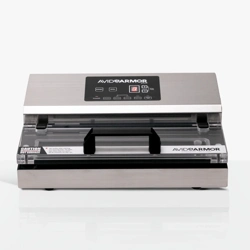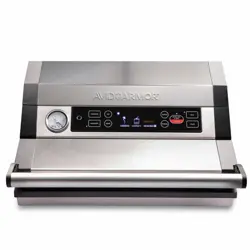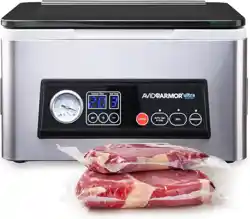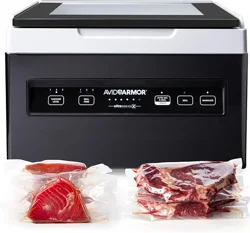
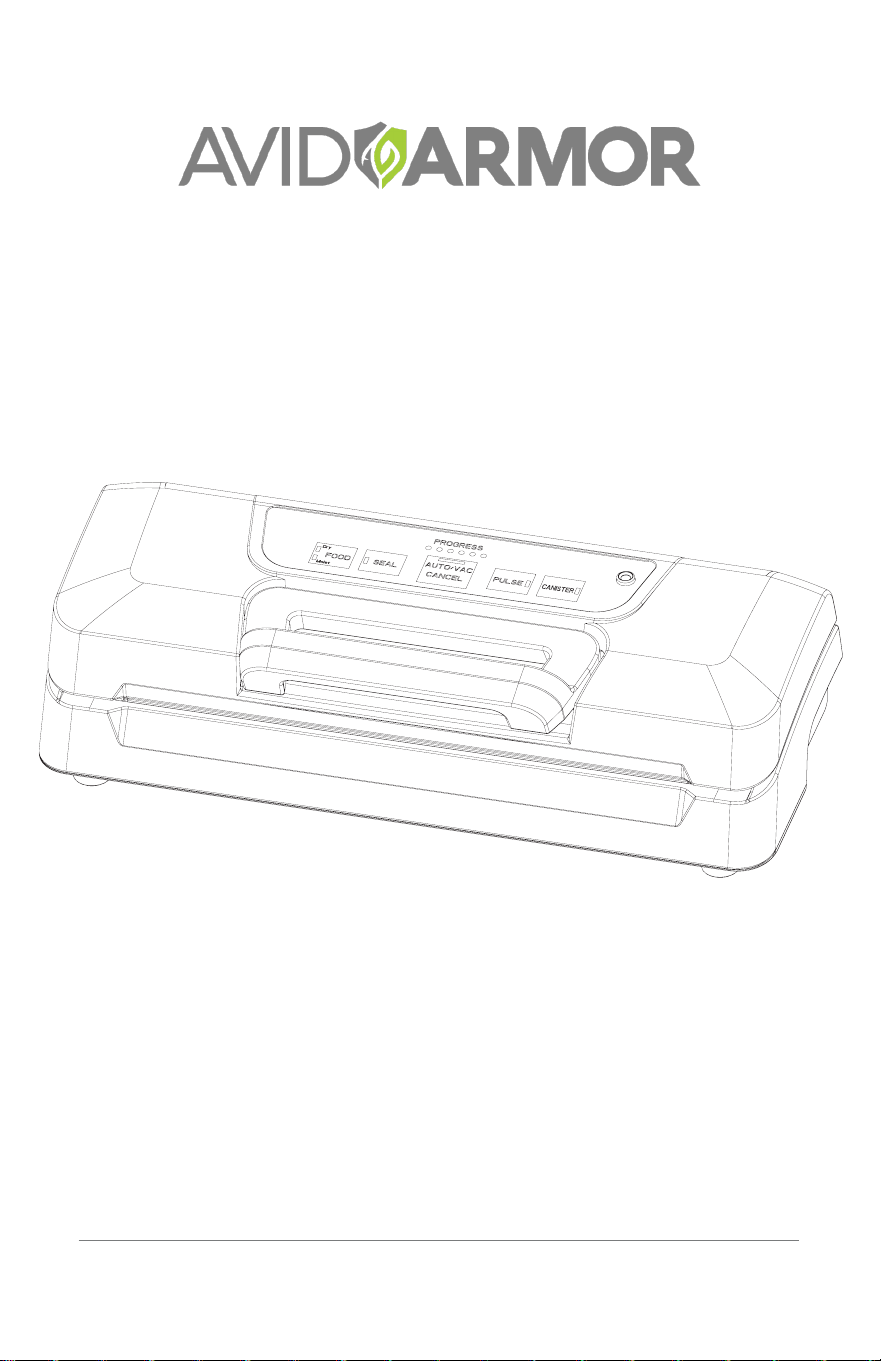
VACUUM SEALER
USER MANUAL
MODEL: AVS7900
processing fresh . . . eld to sealed!

1
Table of Contents
IMPORTANT SAFEGUARDS
When using electrical appliance, basic safety precautions should always be
followed including the following:
1. Read all instructions.
2. Do not use the vacuum sealer near a heat source or on a wet or hot
surface.
3. To protect against electrical shock, do not immerse any part of the vacuum
sealer, plug or power cord in water or other liquid.
4. Unplug vacuum sealer from outlet when not in use, before putting on or
taking of parts and before cleaning.
5. To disconnect, unplug the power cord from the electrical outlet. Do not
disconnect by pulling on cord.
6. Do not operate the vacuum sealer if it has a damaged cord or plug.
7. Do not operate the vacuum sealer if it malfunctions or is damaged.
Contact Customer Service for more information.
8. Use the vacuum sealer only for its intended use.
9. Closely supervise children using any electrical appliance. Do not allow the
vacuum sealer to be used as a toy.
10. The vacuum sealer has a grounded plug. Use only a grounded electrical
outlet. To reduce risk of electrical shock, do not modify the plug I any way.
11. Do not use extension cord.
12. Do not let the cord hang over edge or table or counter.
13. Do not place or operate near an electrical / gas burner or a heated oven.
14. Do not use vacuum sealer outdoors.
15. Extreme caution and care must be used when sealing or handling any bags
or containers containing hot liquids or food.
16. This product is designed for household use only.
SAVE THESE INSTRUCTIONS
Important Safeguards ........................................................................................................... 1
Important Tips ........................................................................................................................2
Features ................................................................................................................................3-4
How To ................................................................................................................................. 5-6
Troubleshooting ..................................................................................................................... 7
Cleaning Instructions ...........................................................................................................8
Vacuum Packaging Guidelines ..........................................................................................8
Notes ..................................................................................................................................9-10
Warranty ............................................................................................................................Back

2
Important Tips
1. Read this manual carefully before using your vacuum sealer.
2. Vacuum packaging is not a substitute for canning. All perishable foods
still need to be refrigerated or frozen.
3. Follow all food safety regulations as outlined by FDA at www.FDA.gov.
4. Use only Avid Armor vacuum bags, rolls and accessories.
5. Do not use the vacuum sealer on a wet or hot surface or near a heat
source.
6. Some vegetables and fruits may release gases, known as outgassing.
When packaging these vegetables and fruits, outgassing can cause the
vacuum to be gradually lost over time. Blanching or freezing before
vacuuming helps prevent this from occurring.
7. Delicate foods can be frozen prior to packaging to protect from being
crushed by the vacuum.
8. If packaging fresh meats without pre-freezing, place a folded paper
towel or blotter paper between the meat and top of the bag to help
absorb the moisture.
9. To vacuum liquids, pre-freeze in a dish or pan first.
10. Cover sharp edges or points with bone guard or paper towels to prevent
the bag from puncturing.
11. Avid Armor bags and rolls are boilable, microwavable, freezable and
perfect for sous vide cooking.
12. Do not reuse bags that have stored fish or greasy foods. Do not cross
contaminate.
13. Allow foods and liquids to cool prior to vacuum packaging.
14. Ensure liquids are not sucked into the vacuum sealer. This will void
warranty.
Features
3
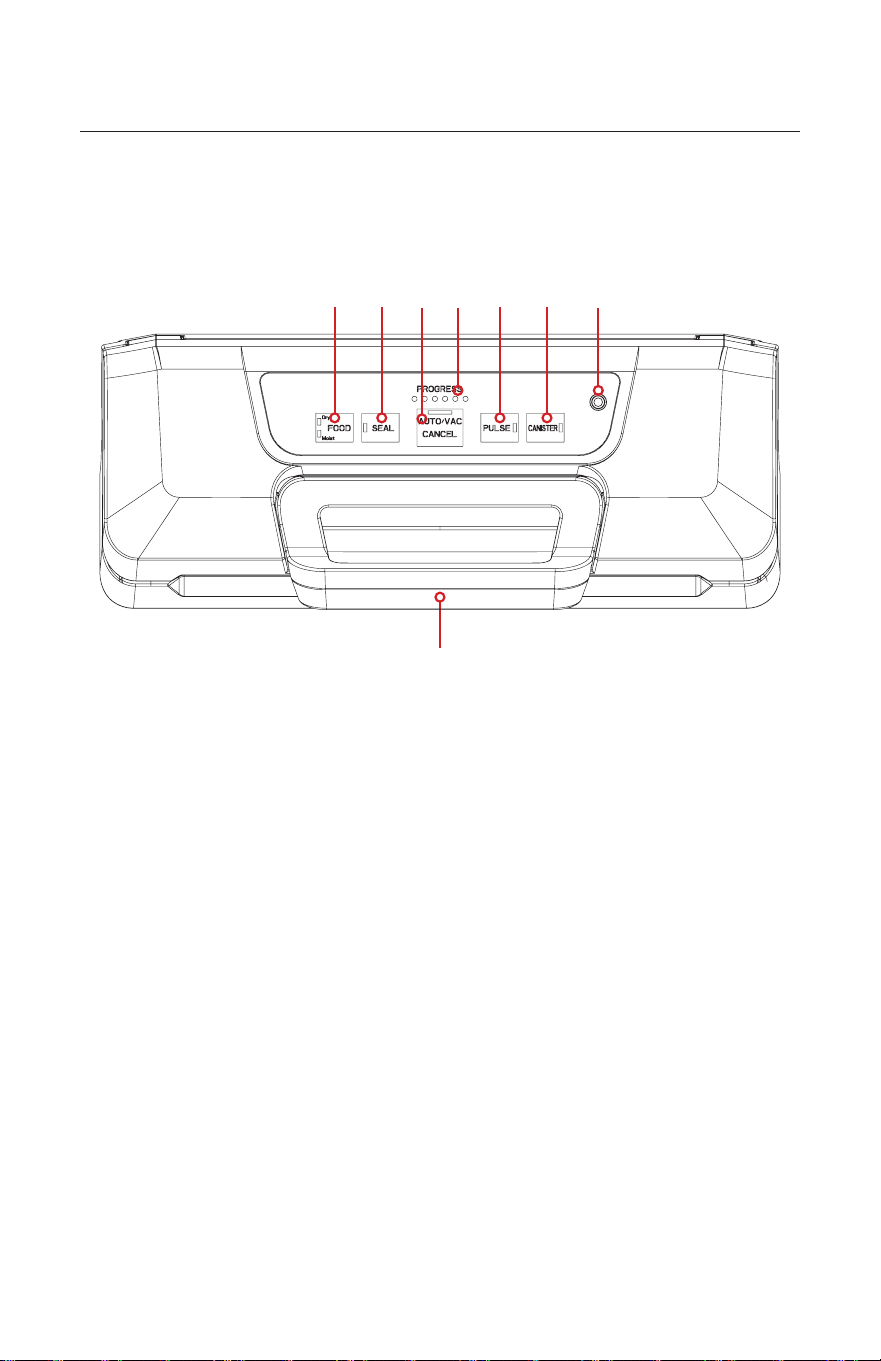
1. Auto Vacuum & Seal / Cancel - This button has two functions.
a. Press to start the automatic vacuum and seal cycle.
b. Press to stop the sealer while in auto vacuum and seal mode.
2. Food - This button has two settings for determining seal time setting.
a. Dry - For sealing dry food with a shorter heat seal time.
b. Moist - For sealing moisture rich foods needing a longer heat seal
time.
3. Canister - Use to vacuum with a hose through the accessory port for
canisters, jar attachments, or other accessories.
4. Pulse - Used to prevent crushing of delicate items. Press and release to
control the vacuum process. Press the ‘seal’ button to manually seal bag
after reaching desired vacuum level.
5. Seal - This button has two functions:
a. Use to seal open end of bag when making bag from a roll.
b. To avoid crusing delicate items: When the ‘Auto Vac & Seal” function is
in progress, press “Seal” to interupt the vacuum cycle, and immediately
go into seal mode to seal the bag.
6. LED Indicator Lights - Shows the progress of the vacuum & seal cycle.
7. Handle - Lift to open and press down to lock for operating sealer.
8. Accessory Port - Place the end of the accessory hose into port when
using the ‘canister’ function.
7
Control Panel
2 5 4 3
1 6 8
Features
12
13
14
15
11
10
9
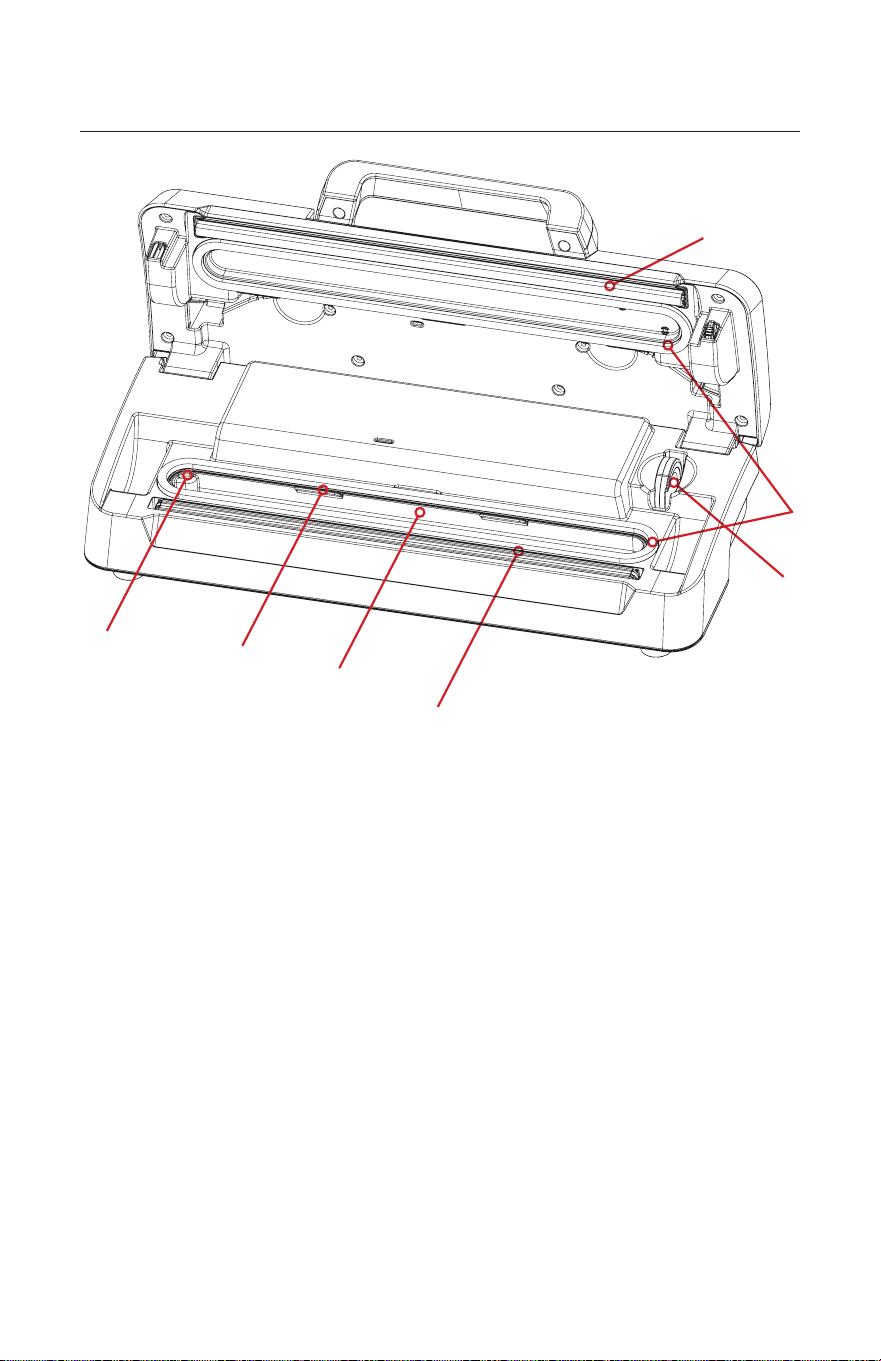
9. Seal Strip - Used in conjunction with teflon seal tape to create seal on
bags.
10. Gaskets - Used to form a vacuum in the vacuum channel. Keep clean
and dry. Replace if they become compressed or damaged.
11. Bag Cutter - Use to cut bag from roll or to open sealed bag.
12. Air Intake - Located under removable drip tray. Used to draw air from
vacuum channel. Do not cover intake with bag if operating sealer
without drip tray.
13. Removable Drip Tray - Collects excess or overflow liquid when vacuum
sealing. Remove tray to clean.
14. Vacuum Channel - Position the open end of the bag inside the channel,
draws air out of bag and catches any liquid overflow from the bag.
15. Seal Tape - Place the bag to be sealed over this teflon-coated strip.
Seal tape gets hot and seals the bag. Keep clean and dry. Replace if it
becomes damaged.
4

How to Vacuum Package with Avid Armor Bags
5
1. Choose a suitable sized Avid Armor bag and place item to be vacuum
packaged into the bag.
2. Allow at least 3” of head space between item and top of the bag.
3. Open vacuum sealer lid and position the open end of the bag across the
seal tape, keeping the opening within the vacuum channel.
4. Close the lid and press down on handle to lock.
5. Check the LED status of the “food” button to confirm sealing time based
on the moisture content of food (standard/extended).
6. Press the ‘Auto Vac & Seal button to start the vacuum and seal cycle. The
LED indicator lights will show cycle progress.
7. When the indicator lights turn o, the vacuum & seal cycle is complete. Lift
handle to open lid.
8. Remove the bag and inspect the vacuum and seal quality.
NOTE: For best sealing results, it is recommended to allow sealer to cool down for
60 seconds between each cycle.
How to Make a Bag from Avid Armor Rolls
1. Open the lid and take out the bag cutter.
2. Pull out desired length of bag material from roll and use the bag cutter to
cut the bag.
3. Put one end of the bag over sealing tape, but not into the vacuum channel.
4. Close the lid and press handle to lock the lid.
5. Press “Seal” button to begin the sealing cycle. The LED indicator lights will
show the sealing progress.
6. When the indicator lights turn o, the seal cycle is complete. Lift the
handle to open the lid and take remove bag. The bag ready to be vacuum
sealed.
7. To vacuum seal the bag, follow the instructions under “How to Vacuum
with Avid Armor Vacuum Bags”.
Not applicable when using pre-cut bags.

6
How to Vacuum Package Delicate Items
Delicate items, such as fresh fruit, baked goods, etc, can be crushed during
vacuum packaging. In this case, you can use the “Pulse” vacuum function to
control the vacuum time and pressure. This function can also be used when
packaging liquid rich items, to help prevent liquid from being drawn into the
vacuum sealer.
1. Follow steps 1-5 under “How to Vacuum Package with Avid Armor Bags” on
page 5.
2. Press and release the “Pulse” button continuously to control amount of
vacuum being removed from the bag.
3. Once desired vacuum level is achieved, press “Seal” button to begin the
sealing cycle. The LED indicator lights will show the sealing progress.
4. When the indicator lights turn o, the seal cycle is complete. Lift the
handle to open the lid and take remove bag. The bag ready to be vacuum
sealed.
How to Vacuum Package with Canisters
1. Place items to be packaged in the canister. Make sure the lid of the
canister is dry and free of food particles and debris. Do not overfill. Allow
at least 1” of headspace between the item and canister lid.
2. Place the lid on top of the canister (the lid sits on rim of the canister until
the vacuum process begins).
3. Attach the accessory hose to the port on the canister lid and attach the
opposite end of the hose to the accessory port on the vacuum sealer.
4. Press “Accessory” button while slightly pressing down on the canister lid for
3-5 seconds to start the vacuum cycle.
5. The sealer will automatically stop when an adequate vacuum level is
achieved.
6. Disconnect hose.

Troubleshooting
7
Problem Solutions
Machine is vacuuming
well, but not creating
a seal.
Check if the opening of the bag has liquid or moisture?
If yes, dry the opening of bag and try again.
Check if the seal tape is wrinkled or damaged?
If damaged, replace seal tape.
Check if the sealing strip is damaged and properly
installed?
If damaged, replace the sealing strip and ensure it is
properly installed.
Check if the opening of the bag is wrinkled across seal
tape?
If yes, remove food from bag so there is enough head-
space to lay the bag flat across the seal tape.
Machine is not
vacuuming, but seal
function works.
Check to ensure lid is closed tightly and forms seal with
lid gasket.
Check if bag is properly placed into the vacuum channel?
If not, place the opening of bag into the vacuum channel.
Check to ensure the food doesn’t have sharp or rough
edges?
If yes, double bagging your food may be necessary to
prevent puncture holes in the bag.
Check if the opening of the bag is covereing the air in-
take? If yes, reposition bag to prevent covering air intake.
Bag inflates after
vacuum sealing.
Check if the food is outgassing (letting o gas after
vacuum sealing)? This will cause bag to inflate or lose
vacuum. To prevent outgassing, immediately refrigerate
or freeze after vacuum sealing to slow down or stop the
outgassing.
The bag melts when
sealed.
Check the seal ‘Food’ setting. If ‘Food’ setting is on ‘Moist’
(extended), reset the setting to ‘Dry’ (standard).

8
Cleaning and Care
1. Disconnect the power cord from the electrical outlet by unplugging it.
DO NOT disconnect by pulling on the cord.
2. DO NOT immerse in water or spray directly with liquid.
3. Check the vacuum chamber and gasket making sure they are clean and
free of debris. If needed, use a clean cloth with mild soap.
a. Remove drip tray to clean.
b. Wipe the vacuum channel clean.
c. Wipe the gasket clean.
d. Wipe the seal area clean.
4. Do not store the vacuum sealer outside.
NOTE: Always leave the lid in resting position when storing. DO NOT stack
items on top of the lid or vacuum sealer. If the lid is closed or forced down,
the gasket will become compressed and the vacuum sealer may not operate
properly.
Vacuum Packaging Guidelines
• Follow all food safety regulations as outlined by the FDA at
www.FDA.gov.
• Vacuum packaging is NOT a substitute for canning.
• Vacuum packaging cannot reverse the deterioration of foods.
• Vacuum packaging is NOT a substitute for refrigeration or freezing.
• Some fruits and vegetables may release gases, known as outgassing. When
packaging these fruits and vegetables, outgassing can cause the vacuum
to be gradually lost over time. Blanching or freezing before vacuum
packaging helps prevent this from occurring.
NOTE: Due to the risk of anaerobic bacteria, soft cheeses, fresh mushrooms,
garlic and onions should never be vacuum packaged.
• It is critical that food handling and storage are maintained at low
temperatures. You can reduce the growth of microorganisms
at temperatures of 40°F or less (4°C). Freezing at 0°F will not kill
microorganisms, but reduces the chances of them growing. For long-term
food storage, always freeze foods that have been vacuumed packaged.
NOTE: Beef and other proteins may look darker after being vacuum packaged.
This is due to the removal of oxygen and is not an indication
of spoilage.
• Before vacuum packaging liquids such as soups, stews, and broths, make
sure to pre-freeze in a dish, bowl or ice tray until solid. Remove the frozen
liquid and vacuum package. Store in your freezer until ready to use.

9
Notes

Notes
10

www.AvidArmor.com
720-724-7808
Warranty
Avid Armor takes pride in the quality of our products and guarantees that
the vacuum sealer will be free from defects in material and workmanship
for one year following the purchase date. During this period, your exclusive
remedy is repair or replacement of this product or any component found
to be defective, at our discretion. Components including seal Teflon tape,
sealing wire, gaskets, or any parts tampered or altered are NOT covered
under the one year warranty.
This warranty applies only to products purchased and used in the United
States, with a valid proof of purchase from an authorized seller.
To make a warranty claim: go to AvidArmor.com/contact or call us at 720-
724-7808. If the product qualifies for warranty repair or replacement, we
will bear the cost of all shipping charges to and from our warehouse for
repair. We are not responsible for shipping damage.
Before returning the product for any repair or service: it must be clean and
free from any food particles or other debris; otherwise, we will return it or
impose a $50 cleaning surcharge, at our discretion.
To register your warranty, go to www.AvidArmor.com and click on
“Product Registration”