ASUS_Confidential
ASUS_Confidential
2.4G Proprietary/BLE Module
MP RF MODULE3
Manual

Page 2 of 20
ASUS_Confidential
ASUS_Confidential
Revision history
Version
Date
Description
1.0
2026/5/27
First release
1.1
2026/9/08
Gains have been changed from 3.28 to 3.24.
1.2
2026/9/28
Make some adjustments to the details.

Page 3 of 20
ASUS_Confidential
ASUS_Confidential
Index
PRODUCT INTRODUCTION ............................................................................................... 3
1.1 INTRODUCTION ................................................................................................................................. 4
1.2 FEATHER ......................................................................................................................................... 4
1.3 CERTIFICATION ................................................................................................................................. 4
PRODUCT DESCRIPTIONS ................................................................................................ 4
2.1 DIMENSION....................................................................................................................................... 5
2.2 PIN DEFINITION ................................................................................................................................. 5
2.3 FOOTPRINT ...................................................................................................................................... 8
ELECTRICAL SPECIFICATION .......................................................................................... 9
3.1 ABSOLUTE MAXIMUM RATINGS .......................................................................................................... 9
3.2 RECOMMENDED OPERATING CONDITIONS........................................................................................... 9
3.3 GENERAL RADIO CHARACTERISTICS ................................................................................................ 10
3.4 RADIO CURRENT CONSUMPTION (TRANSMITTER) .............................................................................. 10
3.5 TRANSMITTER SPECIFICATION ......................................................................................................... 10
3.6 RECEIVER OPERATION .................................................................................................................... 12
3.7 RX SELECTIVITY ............................................................................................................................. 13
3.8 RX INTERMODULATION ................................................................................................................... 15
3.9 RECEIVED SIGNAL STRENGTH INDICATOR (RSSI) SPECIFICATIONS .................................................... 15
ANTENNA .......................................................................................................................... 16
4.1 ANTENNA TYPE AND GAINS ............................................................................................................ 16
4.2 ANTENNA PLACEMENT WITHIN THE HOST PLATFORM ...................................................................... 16
4.3 RECOMMENDED METHOD FOR RETENTION OF CABLE ..................................................................... 16
RF WARNING MESSAGE ................................................................................................. 16
5.1 RF EXPOSURE INFORMATION (SAR) ............................................................................................... 16
5.2 CLASS B DEVICE INTERFERENCE STATEMENT ................................................................................. 16
5.3 INFORMATION FOR OEMS AND HOST INTEGRATORS ........................................................................ 17
5.4 SIMULTANEOUS TRANSMISSION OF ASUS WIRELESS MODULE WITH OTHER INTEGRATED OR PLUG-IN
TRANSMITTERS ......................................................................................................................................... 17
Product Introduction

Page 4 of 20
ASUS_Confidential
ASUS_Confidential
Introduction
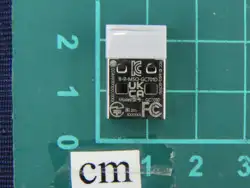
MPRFMODULE3 is a BLE 5.4/ 2.4G proprietary module based on Airoha AB1625M SoC
with a 156 MHz ARM
®
Cortex
®
M33 with Floating Point Unit (FPU) and Memory Protection
Unit (MPU). The module comes with a coaxial connector for an external PIFA antenna.
Feather
▪ ARM
®
Cortex
®
M33 up to 156 MHz
▪ 384KB system RAM (SYSRAM) with a maximum speed of 156MHz. It can be
Tightly Couple Memory (TCM) with zero wait state and data RAMs
▪ Bluetooth
®
6.0
▪ & 2.4 GHz transceiver
▪ BLE 5.4 data rate: 2 Mbps
▪ 2.4G proprietary data rate: 4 Mbps
▪ Flexible power mangement:
1.8V to 3.3V supply voltage range
On-chip DC/DC and LDO regulators with automated low current modes
1.8V to 3.3V regulated supply for external components
Certification
▪ FCC ID:MSQMPRFMODULE3
▪ ISED ID: 3568A-MPRFMODULE3
Product Descriptions
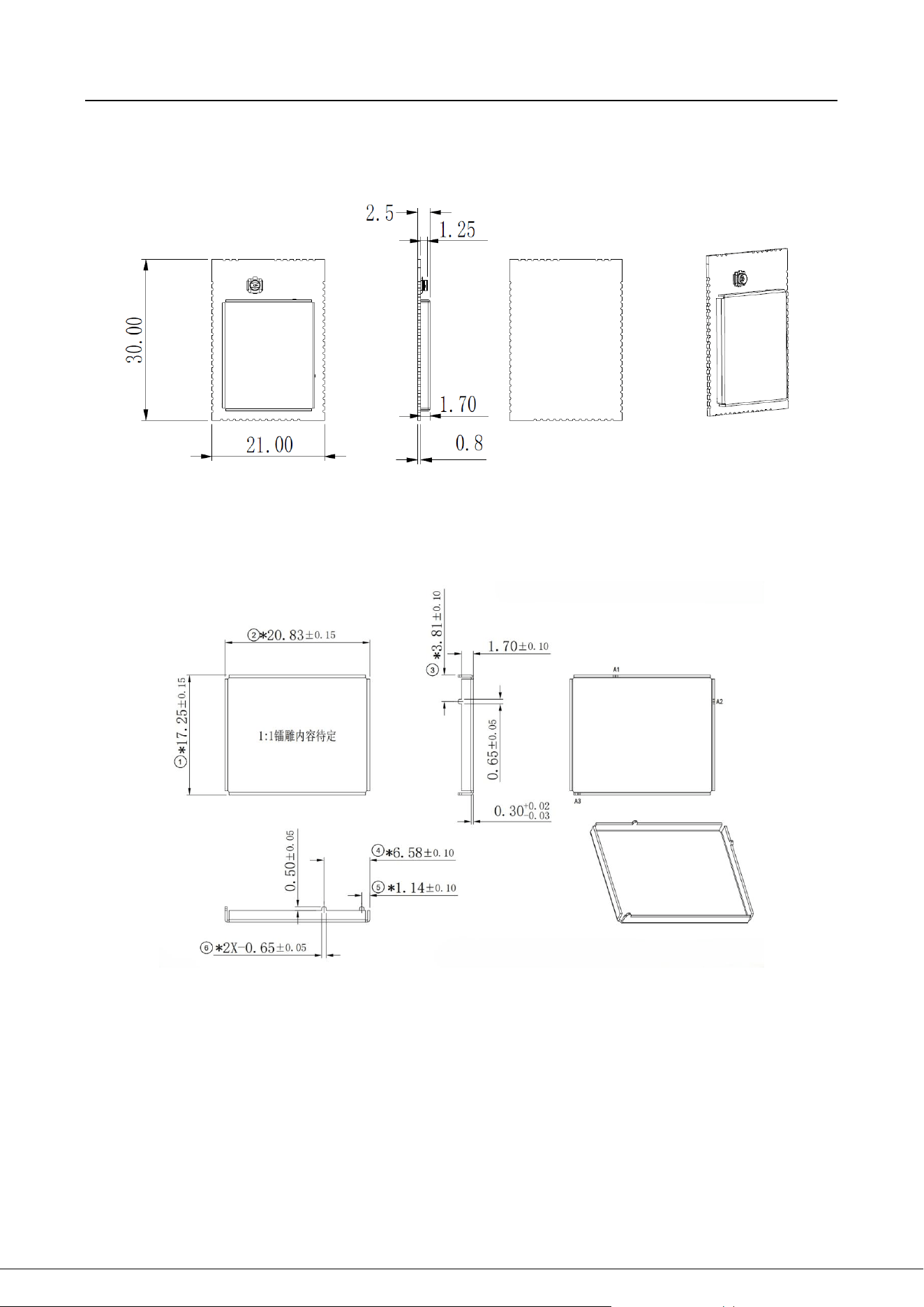
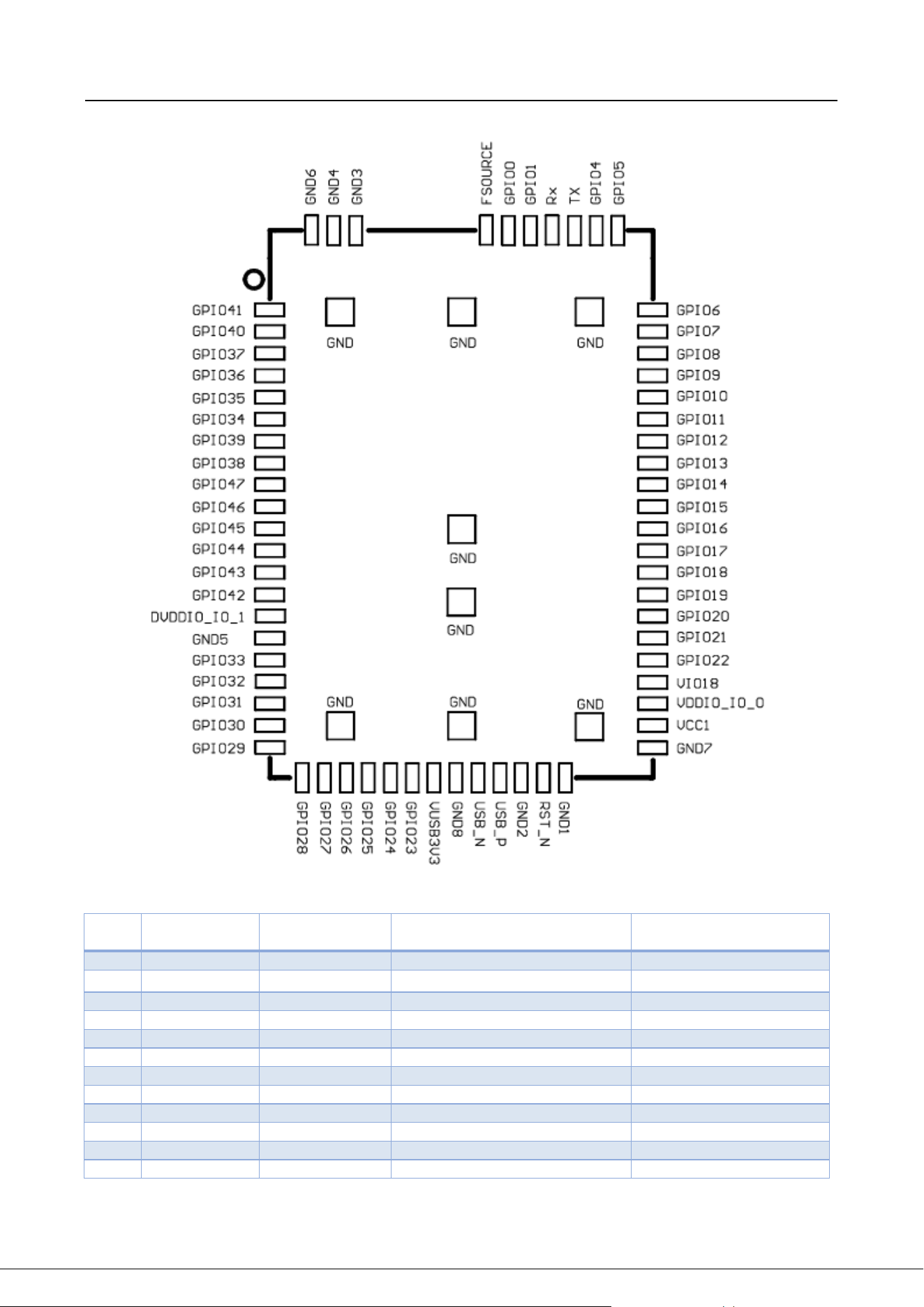
Page 6 of 20
ASUS_Confidential
ASUS_Confidential
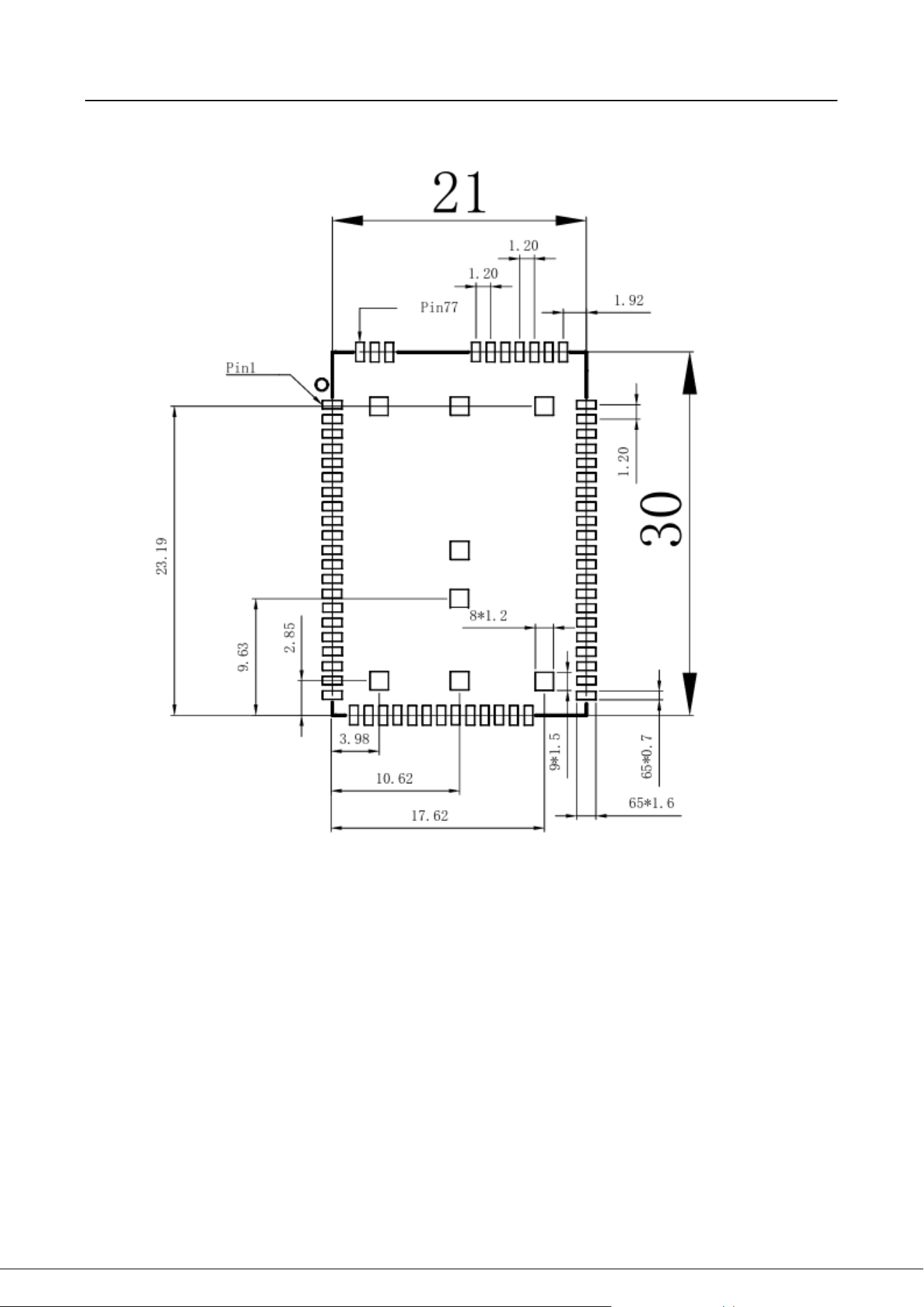
Pin
No.
Name
Function
Description
Recommended
usage
1
GPIO41
Digital I/O
General purpose I/O
2
GPIO40
Digital I/O
General purpose I/O
3
GPIO37
Digital I/O
General purpose I/O
4
GPIO36
Digital I/O
General purpose I/O
5
GPIO35
Digital I/O
General purpose I/O
6
GPIO34
Digital I/O
General purpose I/O
7
GPIO39
Digital I/O
General purpose I/O
8
GPIO38
Digital I/O
General purpose I/O
9
GPIO47
Digital I/O
General purpose I/O
10
GPIO46
Digital I/O
General purpose I/O
11
GPIO45
Digital I/O
General purpose I/O
12
GPIO44
Digital I/O
General purpose I/O

Page 7 of 20
ASUS_Confidential
ASUS_Confidential
13
GPIO43
Digital I/O
General purpose I/O
14
GPIO42
Digital I/O
General purpose I/O
15
DVDD_IO_1
Power
Power input of GPIO group 1
16
GND
Ground
Ground
17
GPIO33
Digital I/O
General purpose I/O
18
GPIO32
Digital I/O
General purpose I/O
19
GPIO31
Digital I/O
General purpose I/O
20
GPIO30
Digital I/O
General purpose I/O
21
GPIO29
Digital I/O
General purpose I/O
22
GPIO28
Digital I/O
General purpose I/O
23
GPIO27
Digital I/O
General purpose I/O
24
GPIO26
Digital I/O
General purpose I/O
25
GPIO25
Digital I/O
General purpose I/O
26
GPIO24
Digital I/O
General purpose I/O
27
GPIO23
Digital I/O
General purpose I/O
28
VUSB3V3
Power
USB Power PIN
29
GND
Ground
Ground
30
USB_N
USB D-
USB signal DM
31
USB_P
USB D+
USB signal DP
32
GND
Ground
Ground
33
RST_N
Reset
RST_N button
34
GND
Ground
Ground
35
GND
Ground
Ground
36
VCC1
Power
Power supply of LD0_VI018
37
VDDIO_IO_0
Power
Power input of GPIO group 0
38
VIO18
Power
VIO18 output voltage
39
GPIO22
Digital I/O
General purpose I/O
40
GPIO21
Digital I/O
General purpose I/O
41
GPIO20
Digital I/O
General purpose I/O
42
GPIO19
Digital I/O
General purpose I/O
43
GPIO18
Digital I/O
General purpose I/O
44
GPIO17
Digital I/O
General purpose I/O
45
GPIO16
Digital I/O
General purpose I/O
46
GPIO15
Digital I/O
General purpose I/O
47
GPIO14
Digital I/O
General purpose I/O
48
GPIO13
Digital I/O
General purpose I/O
49
GPIO12
Digital I/O
General purpose I/O
50
GPIO11
Digital I/O
General purpose I/O
51
GPIO10
Digital I/O
General purpose I/O
52
GPIO09
Digital I/O
General purpose I/O
53
GPIO08
Digital I/O
General purpose I/O
54
GPIO07
Digital I/O
General purpose I/O
55
GPIO06
Digital I/O
General purpose I/O
56
GPIO05
Digital I/O
General purpose I/O
57
GPIO04
Digital I/O
General purpose I/O
58
TX
Digital I/O
UART
59
RX
Digital I/O
UART
60
GPIO01
Digital I/O
General purpose I/O
61
GPIO00
Digital I/O
General purpose I/O
62
FSOURCE
Power
eFuse power source
63
GND
Ground
Ground
64
GND
Ground
Ground
65
GND
Ground
Ground
Page 8 of 20
ASUS_Confidential
ASUS_Confidential
Footprint
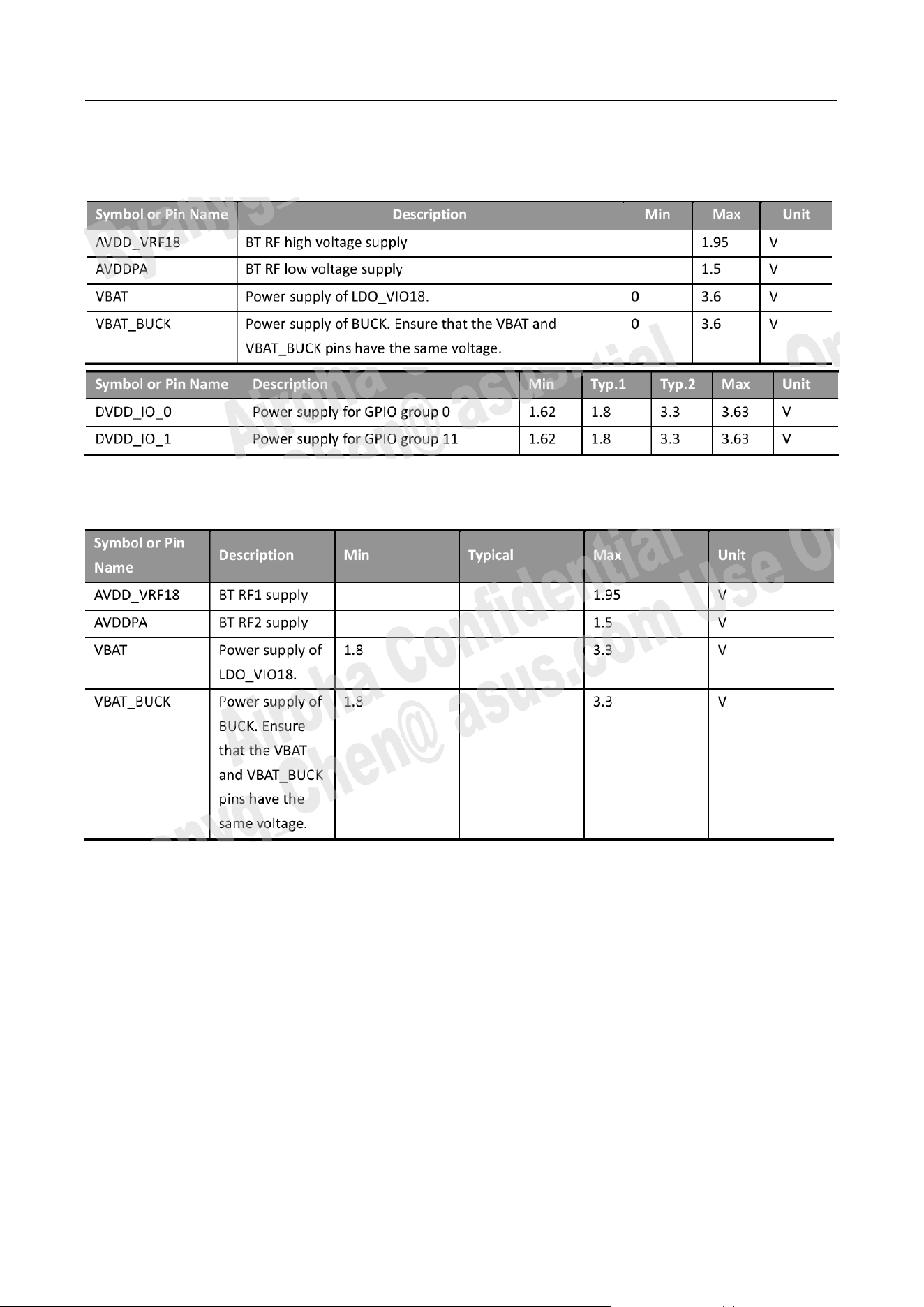
Page 9 of 20
ASUS_Confidential
ASUS_Confidential
Electrical specification
Absolute maximum ratings
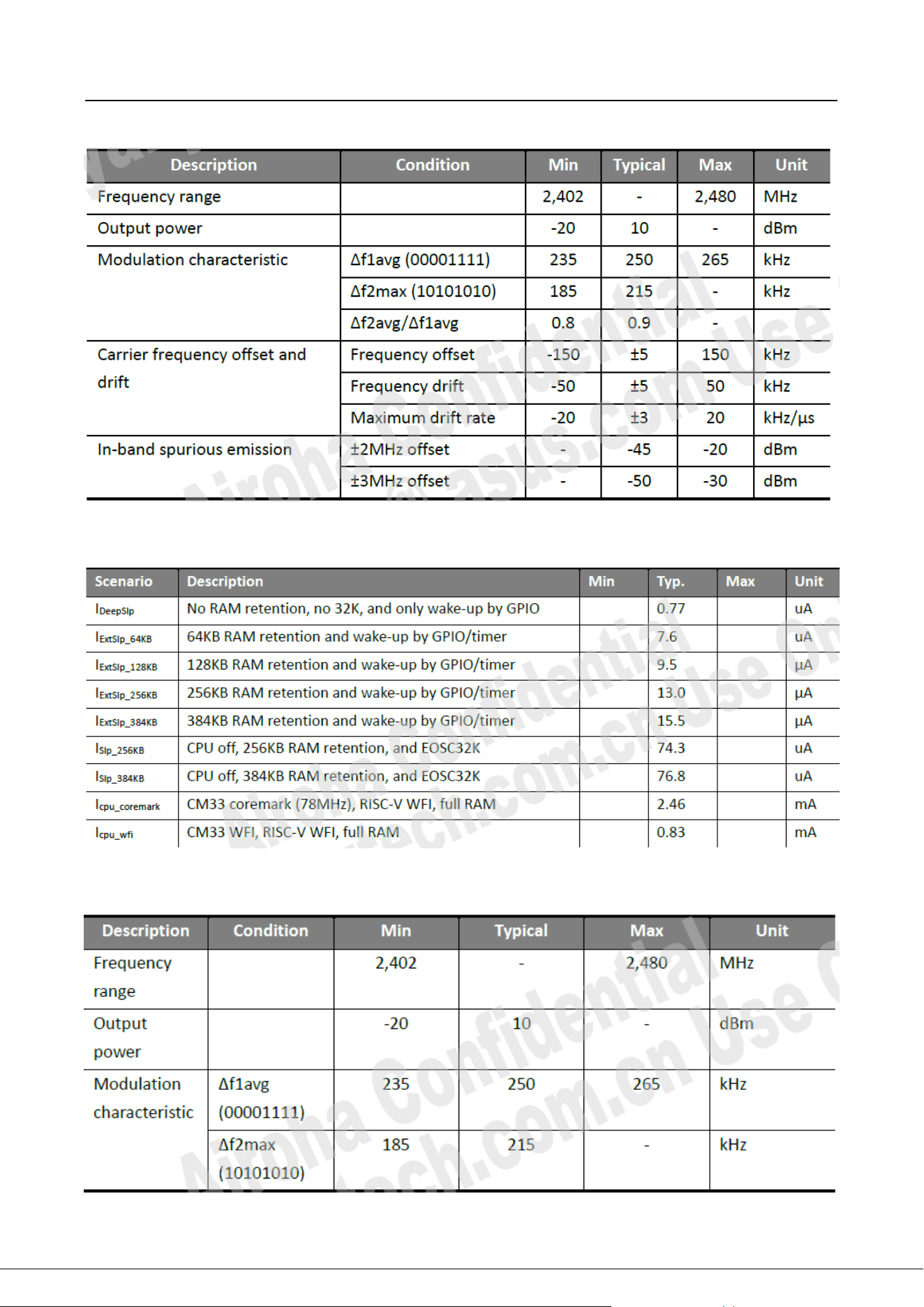
Recommended operating conditions
Page 10 of 20
ASUS_Confidential
ASUS_Confidential
General radio characteristics
Radio current consumption (transmitter)
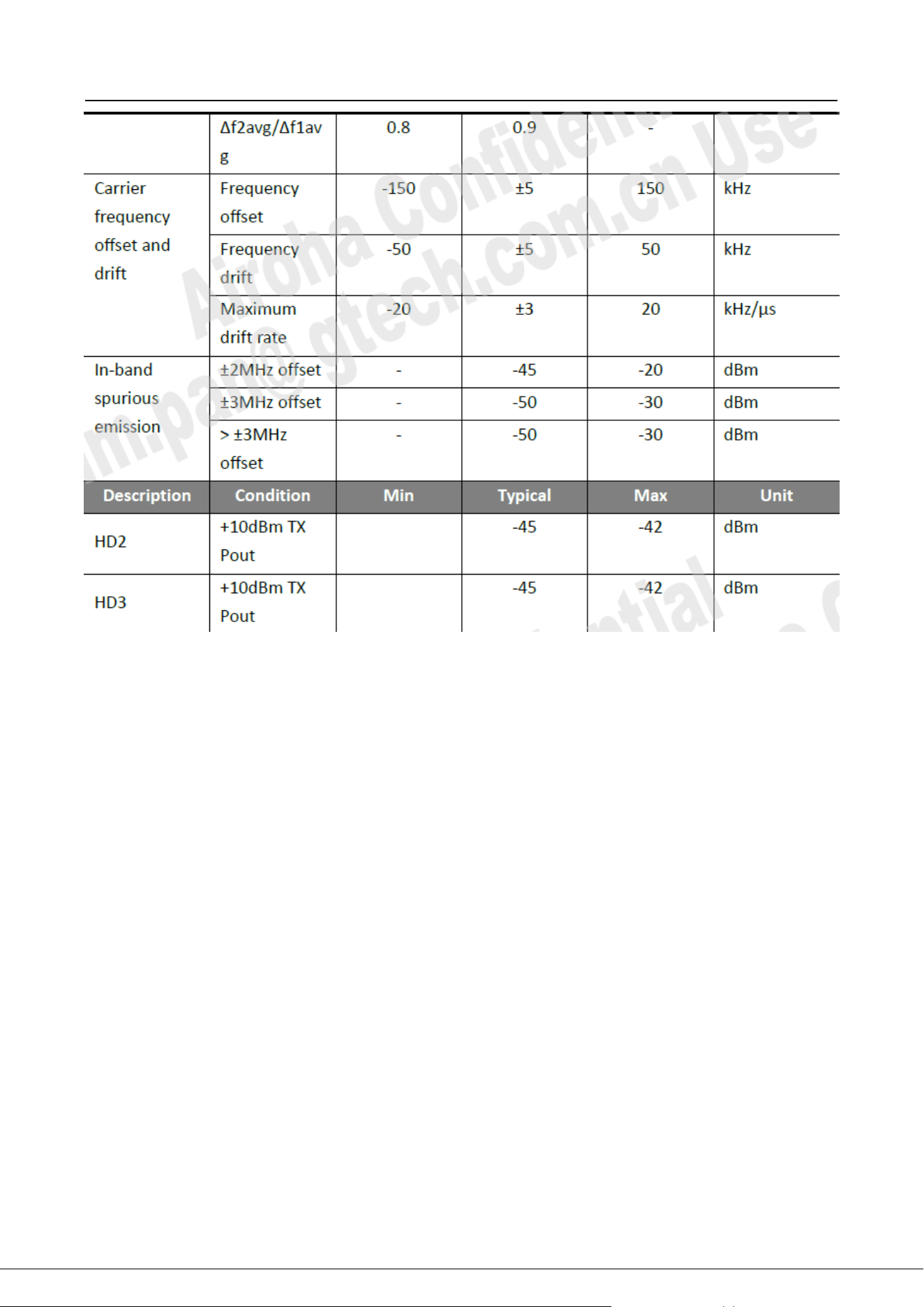
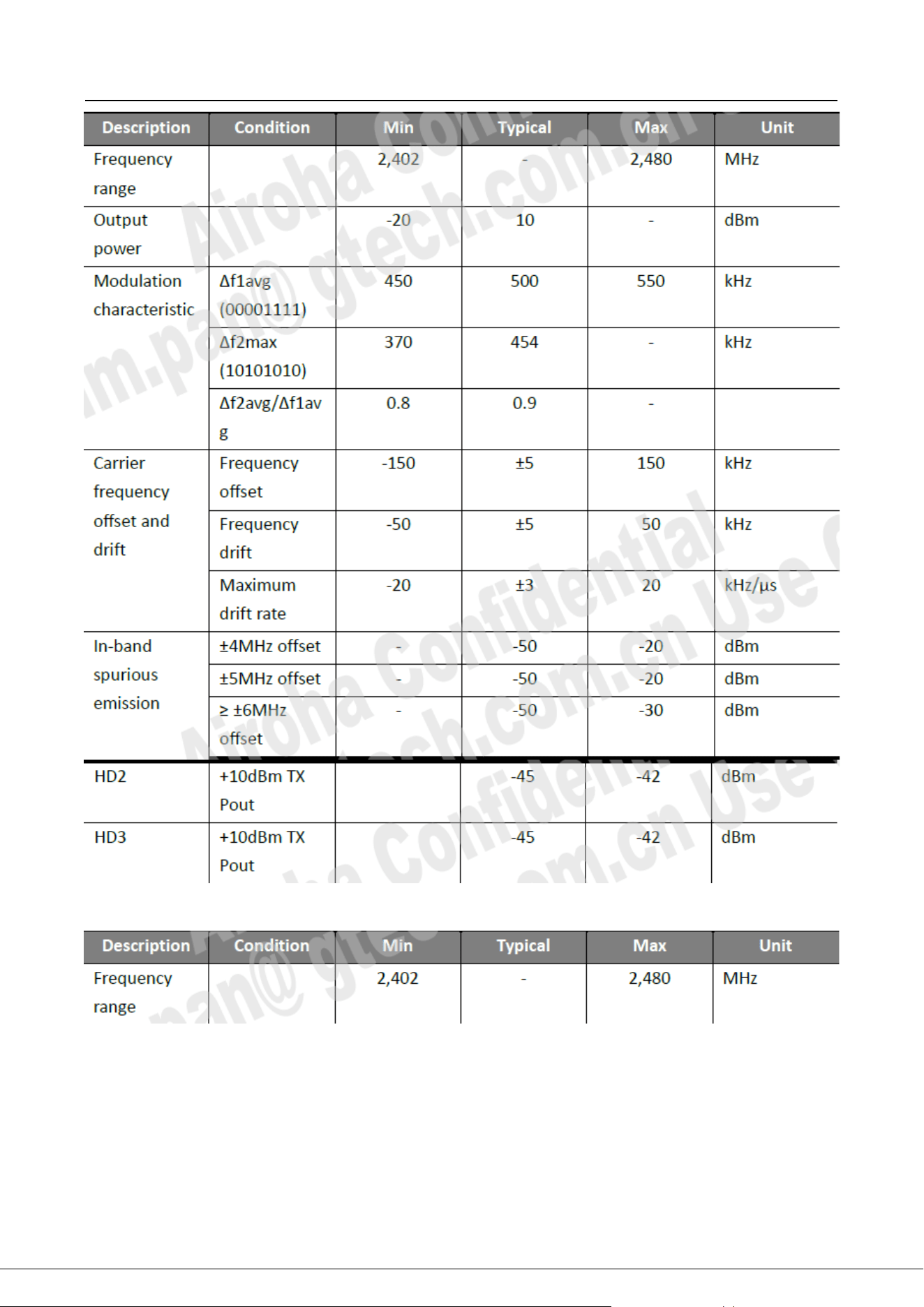
Transmitter specification
Page 11 of 20
ASUS_Confidential
ASUS_Confidential
Page 12 of 20
ASUS_Confidential
ASUS_Confidential
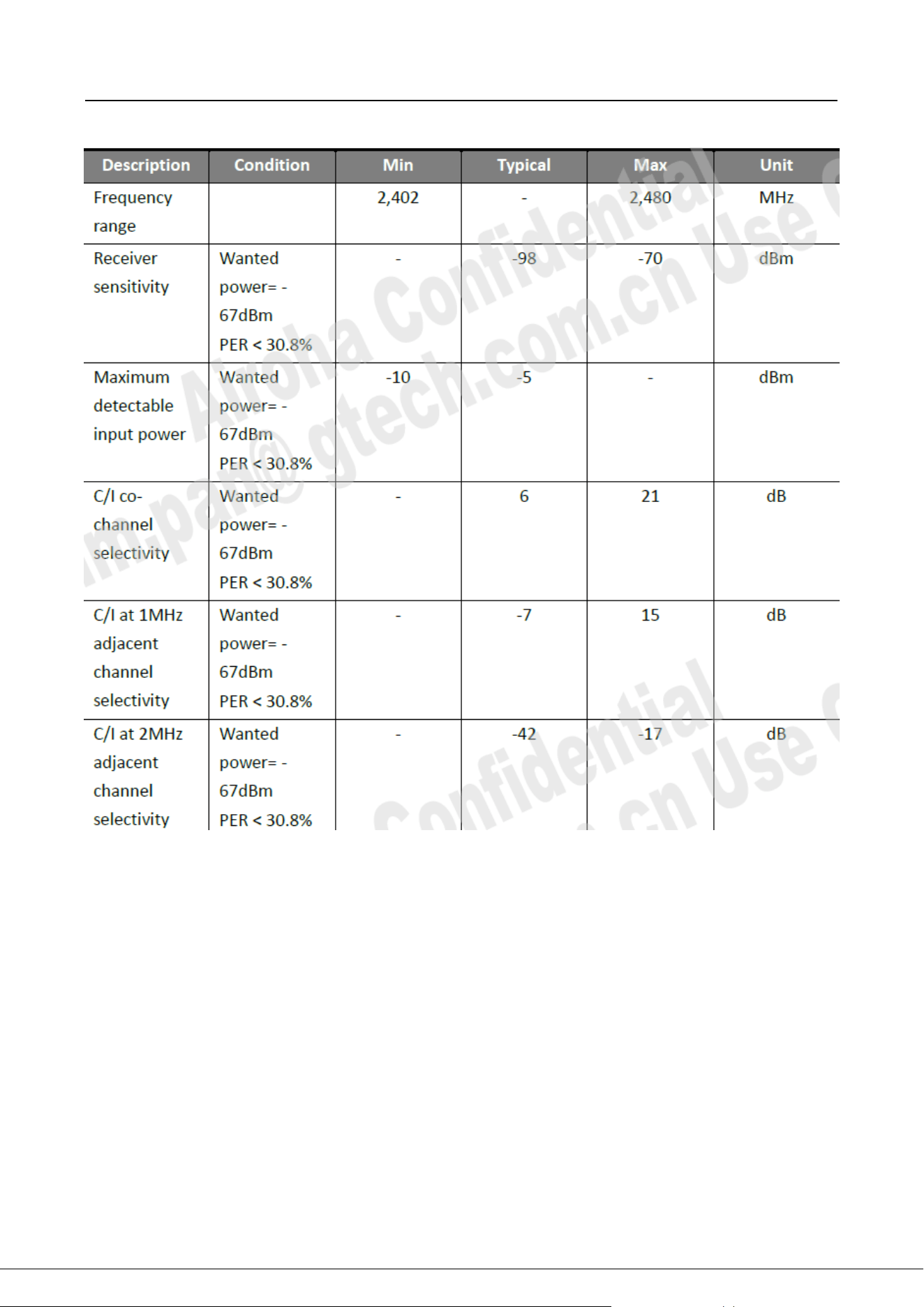
Receiver operation
Page 13 of 20
ASUS_Confidential
ASUS_Confidential
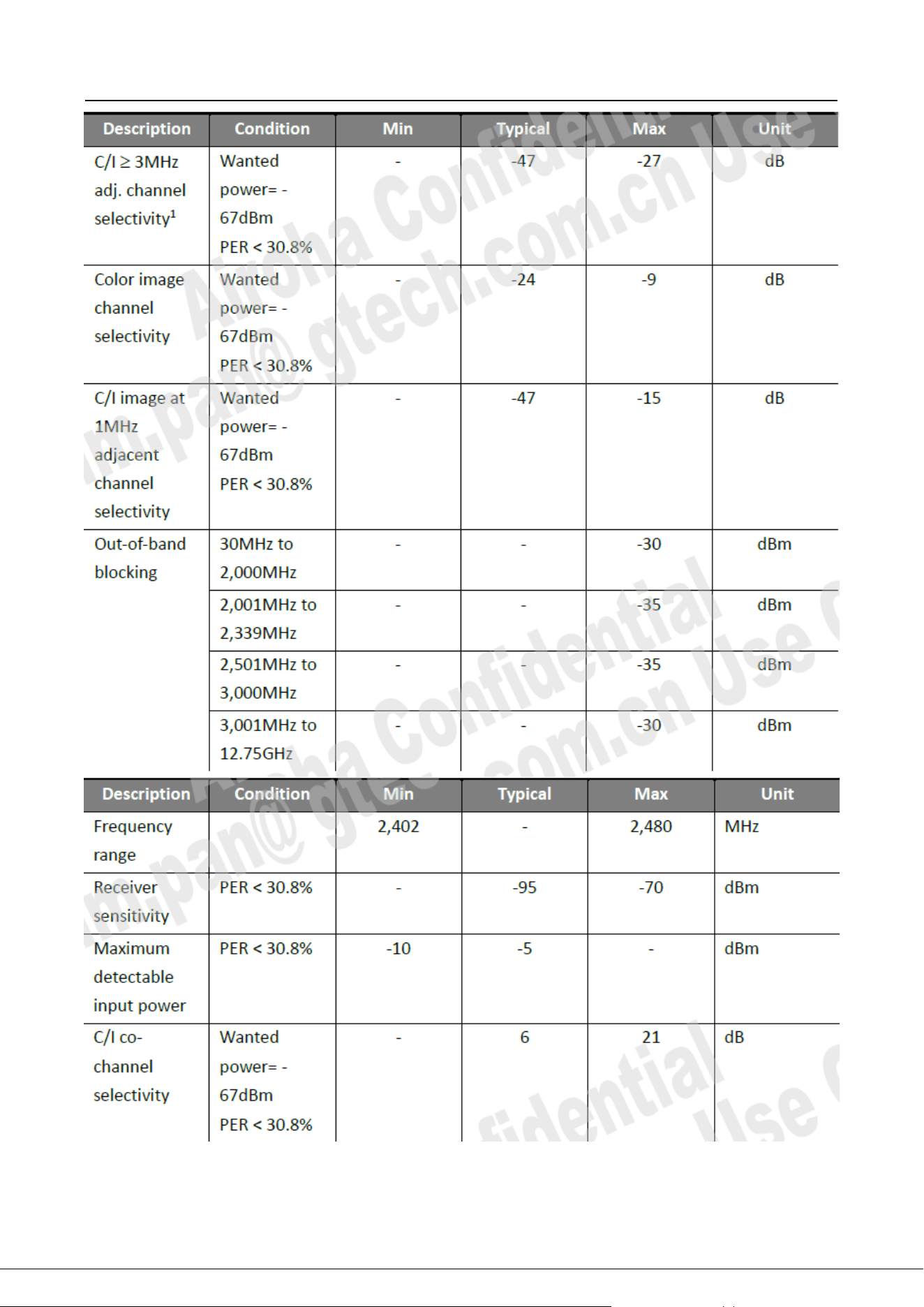
RX selectivity
Page 14 of 20
ASUS_Confidential
ASUS_Confidential
Page 15 of 20
ASUS_Confidential
ASUS_Confidential
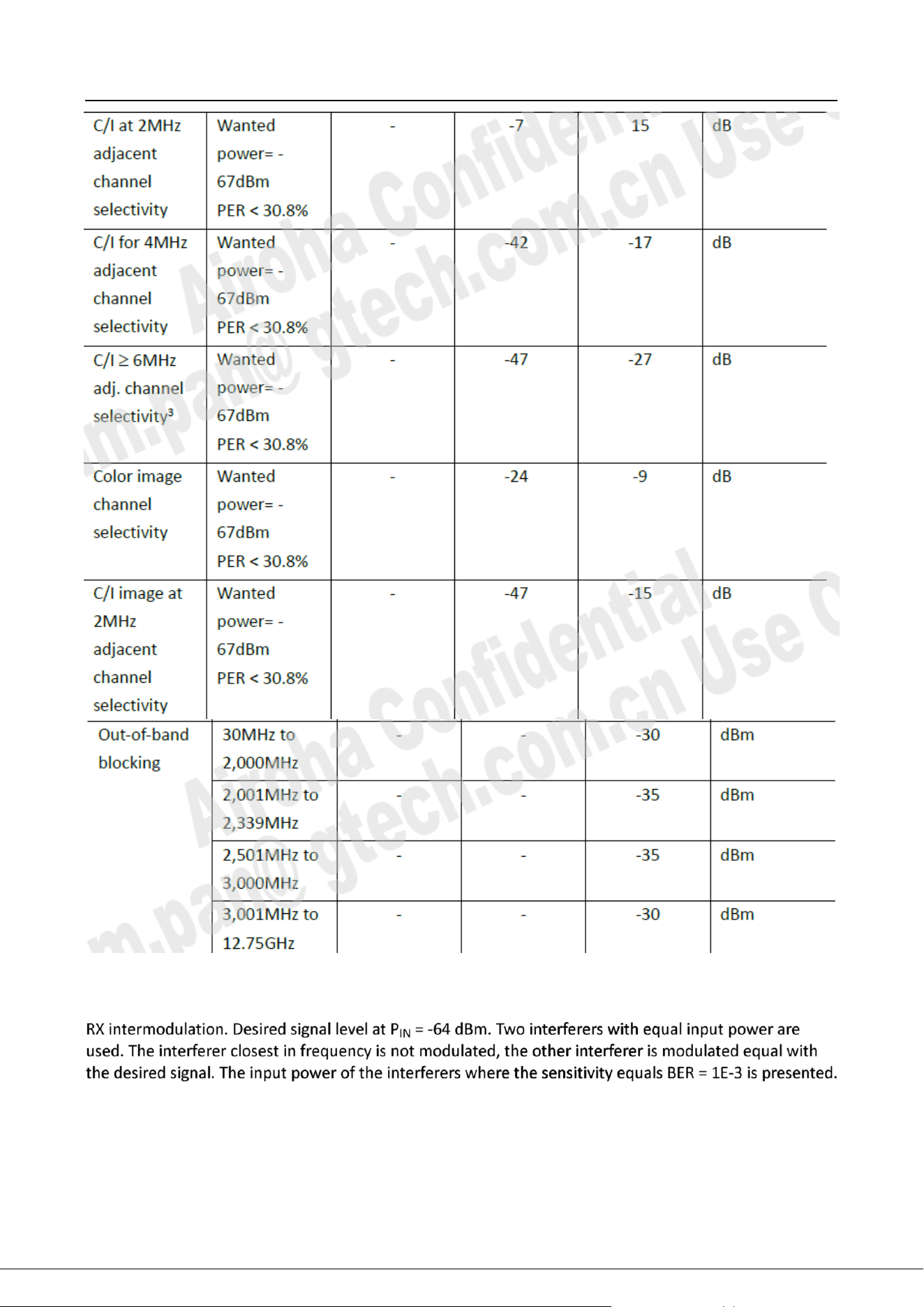
RX intermodulation
Received signal strength indicator (RSSI) specifications

Page 16 of 20
ASUS_Confidential
ASUS_Confidential
Antenna
Antenna Type and Gains
Only antennas of the same type and with equal or less gains as 3.24 dBi for the 2.4GHz band shall be used
with the MPRFMODULE3. Other types of antennas and/or higher gain antennas may require additional
authorization for operation. For testing purposes the following dual band antenna that approximates closely
the above limits was used:
No.
Manufacturer
Part No.
Antenna Type
Peak Gain (dBi)
Freq. Range
(GHz)
Connector
Type
1
ASUS
20LT0-
000UZ000
PIFA
3.24
2.4~2.4835
i-pex (MHF)
Antenna Placement Within the Host Platform
To ensure RF exposure compliance the antenna used with the ASUS wireless module must be installed in
host platforms to provide a minimum separation distance from all persons, in all operating modes and
orientations of the host platform, with strict adherence to the table below. The antenna separation distance
applies to both horizontal and vertical orientation of the antenna when installed in the host system.
ASUS Wireless Module
Minimum required antenna-to-user separation distance
MPRFMODULE3
0 mm
Recommended Method For Retention Of Cable
It is recommended to restrain the antenna cables of products of cable length leaving the RF connectors on the
module.
It is recommended to use a robust tape or adhesive to secure the cables so they do not move or pull on the
connector during shock and vibration of the system.
RF warning message
RF Exposure Information (SAR)
This device meets the government’s requirements for exposure to radio waves. This device is designed
and manufactured not to exceed the emission limits for exposure to radio frequency (RF) energy set by the
Federal Communications Commission of the U.S. Government.
The exposure standard employs a unit of measurement known as the Specific Absorption Rate, or SAR.
The SAR limit set by the FCC is 1.6 W/kg. Tests for SAR are conducted using standard operating positions
accepted by the FCC with the EUT transmitting at the specified power level in different channels.
The FCC has granted an Equipment Authorization for this device with all reported SAR levels evaluated
as in compliance with the FCC RF exposure guidelines. SAR information on this device is on file with the FCC
and can be found under the Display Grant section of www.fcc.gov/eot/ea/fccid after searching on FCC ID:
MSQMPRFMODULE3
Class B Device Interference Statement
This wireless module has been tested and found to comply with the limits for a Class B digital device,
pursuant to Part 15 of the FCC Rules. These limits are designed to provide reasonable protection against
harmful interference in a residential installation. This wireless module generates, uses, and can radiate radio
frequency energy. If the wireless module is not installed and used in accordance with the instructions, the

Page 17 of 20
ASUS_Confidential
ASUS_Confidential
wireless module may cause harmful interference to radio communications. There is no guarantee, however,
that such interference will not occur in a particular installation. If this wireless module does cause harmful
interference to radio or television reception (which can be determined by turning the equipment off and on),
the user is encouraged to try to correct the interference by taking one or more of the following measures:
Reorient or relocate the receiving antenna of the equipment experiencing the interference.
Increase the distance between the wireless module and the equipment experiencing the interference.
Connect the computer with the wireless adapter to an outlet on a circuit different from that to which the
equipment experiencing the interference is connected.
Consult the dealer or an experienced radio/TV technician for help.
NOTE: The adapter must be installed and used in strict accordance with the manufacturer's instructions
as described in the user documentation that comes with the product. Any other installation or use will
violate FCC Part 15 regulations.
Information for OEMs and Host Integrators
The guidelines described within this document are provided to OEM integrators installing ASUS wireless
module in keyboard and mouse devices. Adherence to these requirements is necessary to meet the
conditions of compliance with FCC rules, including RF exposure. When all antenna type and placement
guidelines described herein are fulfilled the ASUS wireless module may be incorporated into keyboard and
mouse devices with no further restrictions. If any of the guidelines described herein are not satisfied it may be
necessary for the OEM or integrator to perform additional testing and/or obtain additional approval. The OEM
or integrator is responsible to determine the required host regulatory testing and/or obtaining the required host
approvals for compliance.
ASUS wireless module are intended for OEMs and host integrators only.
The ASUS wireless module FCC Grant of Authorization describes any limited conditions of modular
approval.
The ASUS wireless module must be operated with an access point that has been approved for the
country of operation.
Changes or modification to ASUS wireless module by OEMs, integrators or other third parties is not
permitted. Any changes or modification to ASUS wireless module by OEMs, integrators or other third
parties will void authorization to operate the adapter.
Simultaneous Transmission of ASUS Wireless Module with Other Integrated or
Plug-In Transmitters
Based upon FCC Knowledge Database publication number 616217, when there are multiple transmitting
devices installed in a host device, an RF exposure transmitting assessment shall be performed to determine
the necessary application and test requirements. OEM integrators must identify all possible combinations of
simultaneous transmission configurations for all transmitters and antennas installed in the host system. This
includes transmitters installed in the host as mobile devices (>20 cm separation from user) and portable
devices (<20 cm separation from user). OEM integrators should consult the actual FCC KDB 616217
document for all details in making this assessment to determine if any additional requirements for testing or
FCC approval is necessary.
Canada, Innovation, Science and Economic Development Canada (ISED)
Notices
This device contains licence-exempt transmitter(s)/receiver(s) that comply with Innovation, Science and
Economic Development Canada’s licence-exempt RSS(s). Operation is subject to the following two
conditions:
(1) This device may not cause interference.
(2) This device must accept any interference, including interference that may cause undesired operation of
the device.
Avis du Canada, Innovation, Sciences et Développement économique Canada (ISED)
L’émetteur/récepteur exempt de licence contenu dans le présent appareil est conforme aux CNR
d’Innovation, Sciences et Développement économique Canada applicables aux appareils radio exempts de
licence. L’exploitation est autorisée aux deux conditions suivantes :
(1) L’appareil ne doit pas produire de brouillage;
Page 18 of 20
ASUS_Confidential
ASUS_Confidential
(2) L’appareil doit accepter tout brouillage radioélectrique subi, même si le brouillage est susceptible d’en
compromettre le fonctionnement.
Radio Frequency (RF) Exposure Information
The radiated output power of the Wireless Device is below the Innovation, Science and Economic
Development Canada (ISED) radio frequency exposure limits. The Wireless Device should be used in such a
manner such that the potential for human contact during normal operation is minimized.
This device has been evaluated for and shown compliant with the ISED Specific Absorption Rate (“SAR”)
limits when operated in portable exposure conditions.
Informations concernant l'exposition aux fréquences radio (RF)
La puissance de sortie rayonnée du dispositif sans fil est inférieure aux limites d'exposition aux
radiofréquences d'Innovation, Sciences et Développement économique Canada (ISED). Le dispositif sans fil
doit être utilisé de manière à minimiser le potentiel de contact humain pendant le fonctionnement normal.
Cet appareil a été évalué et montré conforme aux limites de DAS (Débit d'Absorption Spécifique) de l'ISED
lorsqu'il est utilisé dans des conditions d'exposition portables.
If the ISED certification number is not visible when the module is installed inside another device,
then the outside of the device into which the
module is installed must also display a label referring to the enclosed module. This exterior label
can use wording such as the following: “Contains IC: 3568A-MPRFMODULE3”.
Si le numéro de certification ISDE n'est pas visible lorsque le module est installé à l'intérieur d'un
autre appareil, alors l'extérieur de l'appareil dans lequel le module est installé doit également
afficher une étiquette faisant référence au module inclus. Cette étiquette extérieure peut
utiliser un libellé comme celui-ci: “ Contient IC: 3568A-MPRFMODULE3“.
Plaque signalétique du produit final:
Le produit final doit être étiqueté dans un endroit visible avec l'inscription suivante: "Contient des IC:
3568A-MPRFMODULE3 ".
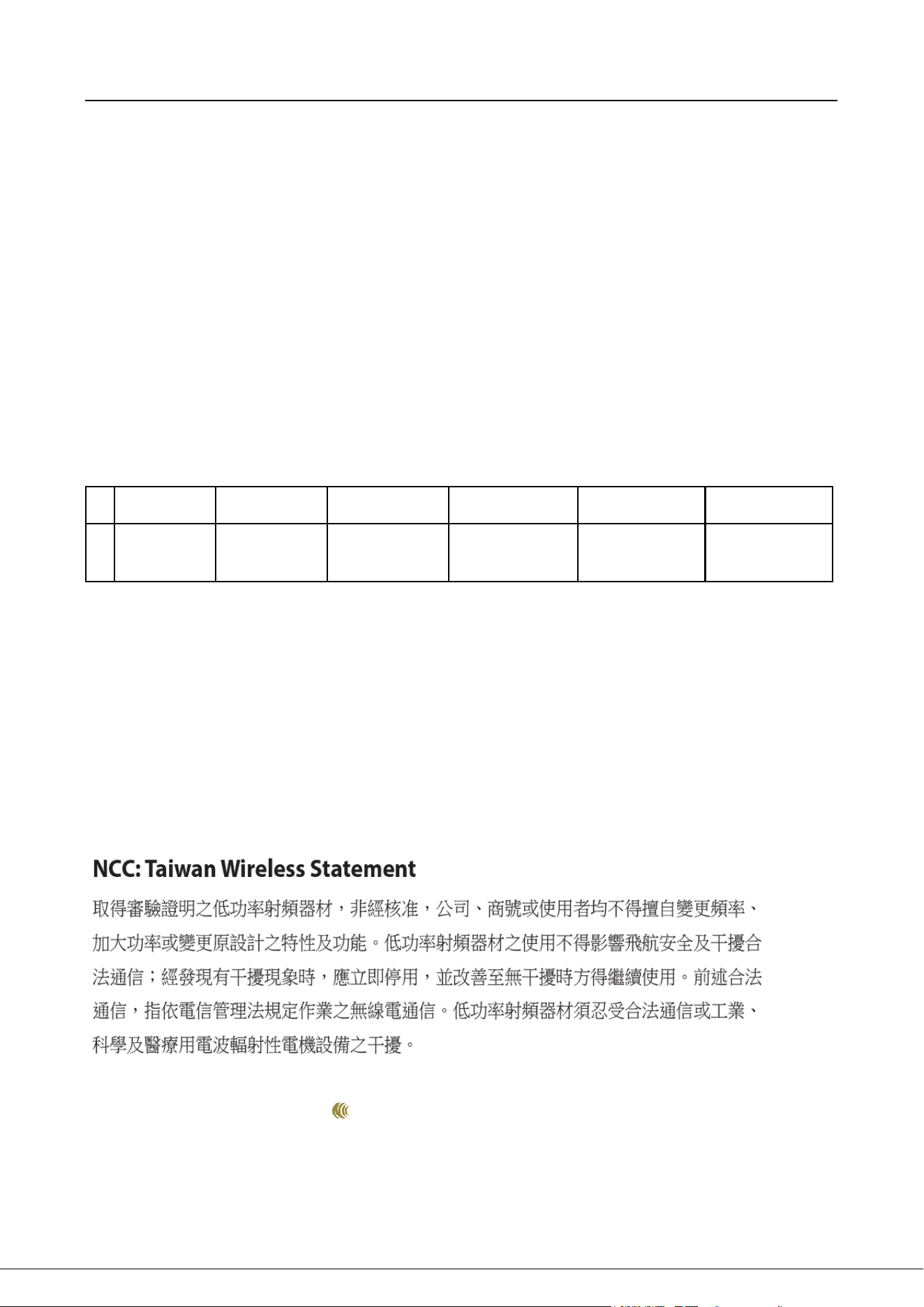
本模組於取得認證後將依規定於模組本體標示審驗合格標籤,並要求最終產品平台廠商(OEM Integrator)於
最終產品平台(End Product)上標示:
” 本產品內含射頻模組,其 NCC 型式認證號碼為: CCXXxxYYyyyZzW ”
Antenna List
No.
Manufacturer
Part No.
Antenna Type
Peak Gain (dBi)
Freq. Range
(GHz)
Connector
Type
1
ASUS
20LT0-
000UZ000
PIFA
3.24
2.4~2.4835
i-pex (MHF)
Page 19 of 20
ASUS_Confidential
ASUS_Confidential
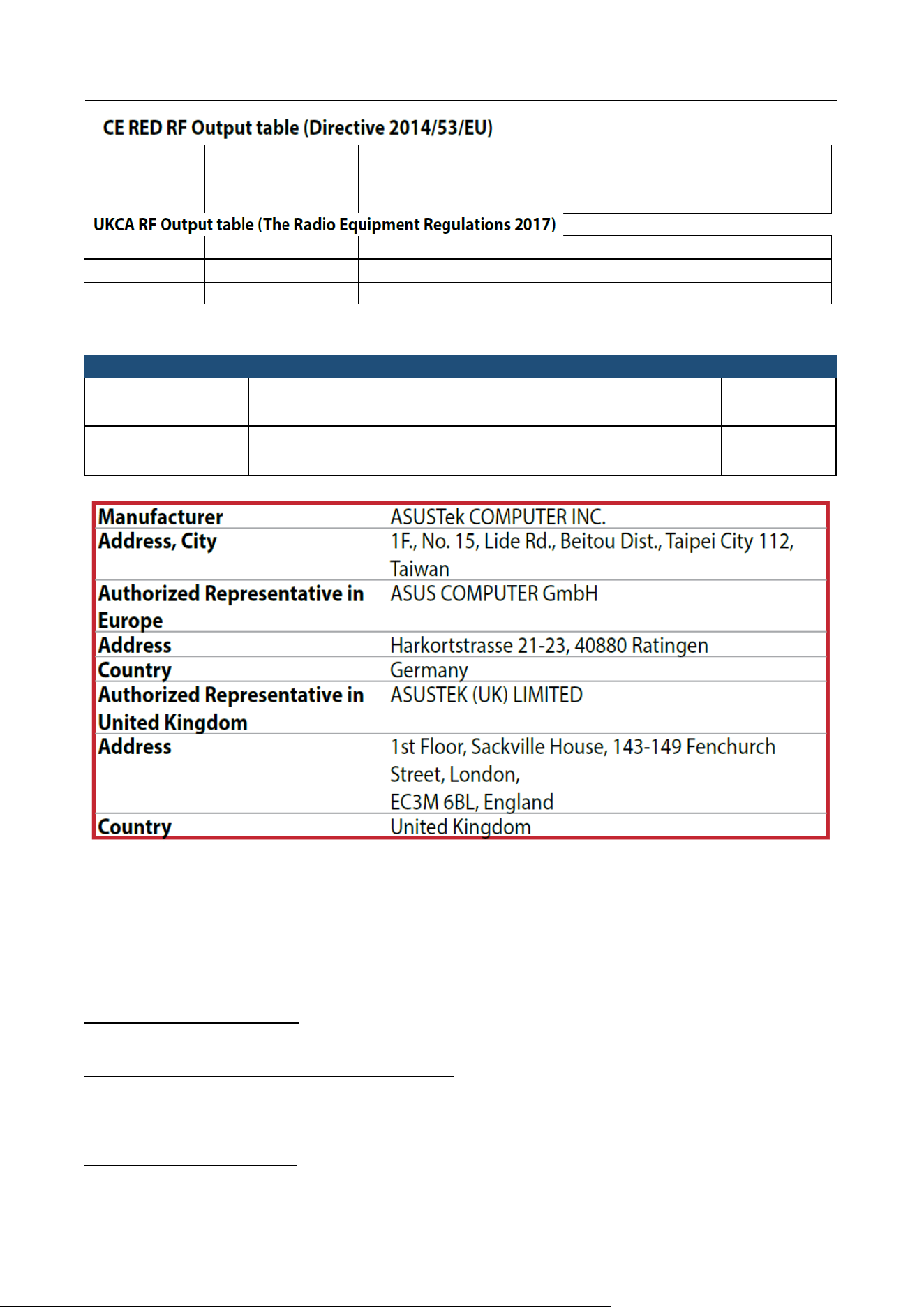
Function
FREQUENCY
Maximum Output Power(EIRP)
2.4GHZ wireless
2402-2480MHz
10 dBm
BLE
2402-2480 MHz
10 dBm
Function
FREQUENCY
Maximum Output Power(EIRP)
2.4GHZ wireless
2402-2480 MHz
10 dBm
BLE
2402-2480 MHz
10 dBm
KC RF Output Table
Function
Frequency
Power
2.4GHz wireless
2402-2480 MHz-Module
특정소출력 무선기기(무선데이터통신시스템용 무선기기)
10mW
BLE
2402-2480 MHz-Module
특정소출력 무선기기(무선데이터통신시스템용 무선기기)
10mW
This device complies with Part 15 of the FCC Rules. Operation is subject to the following two conditions: (1)
this device may not cause harmful interference, and (2) this device must accept any interference received,
including interference that may cause undesired operation.
CAUTION:
Any changes or modifications not expressly approved by the grantee of this device could void the user's
authority to operate the equipment.
2.2 List of applicable FCC rules
This module has been tested for compliance to FCC Part 15 Subpart C (15.247).
2.3 Summarize the specific operational use conditions
The module is tested for standalone portable RF exposure use condition. Any other usage conditions such as
co-location with other transmitter(s) will need a separate reassessment through a class II permissive change
application or new certification.
2.4 Limited module procedures
Not applicable, this device is a single modular approval and meets FCC 47 CFR 15.212 requirement.

Page 20 of 20
ASUS_Confidential
ASUS_Confidential
2.5 Trace antenna designs
Not applicable. This module has its own antenna, and does not need a host’s printed board micro strip trace
antenna, etc.
2.6 RF exposure considerations
This device was tested for typical body operations. To comply with RF exposure requirements, a minimum
separation distance of 0 mm must be maintained between the user’s body a including the antenna.
Accessories that do not meet these requirements may not comply with RF exposure requirements and should
be avoided.
2.7 Antennas
This module has been approved to operate with the antenna types listed below, with the maximum
permissible gain indicated.
No.
Manufacturer
Part No.
Antenna Type
Peak
Gain (dBi)
Freq. Range (GHz)
Connector
Type
1
ASUS
20LT0-
000UZ000
PIFA
3.24
2.4~2.4835
i-pex (MHF)
IMPORTANT: The final host product must have an integral antenna which is not removable by the end-user.
2.8 Label and compliance information
Label of the end product:
The final end product must be labeled in a visible area with the following: “Contains FCC ID:
MSQMPRFMODULE3”. The grantee's FCC ID can be used only when all FCC compliance requirements are
met
2.9 Information on test modes and additional testing requirements
This transmitter is tested in a standalone portable RF exposure condition and any co-located or simultaneous
transmission with other transmitter(s) class II permissive change re-evaluation or new certification.
2.10 Additional testing, Part 15 Subpart B disclaimer
This transmitter module is tested as a subsystem and its certification does not cover the FCC Part 15 Subpart
B (unintentional radiator) rule requirement applicable to the final host. The final host will still need to be
reassessed for compliance to this portion of rule requirements if
applicable. As long as all conditions above are met, further transmitter test will not be required. However, the
OEM integrator is still responsible for testing their end-product for any additional compliance requirements
required with this module installed.
IMPORTANT NOTE: In the event that these conditions cannot be met (for example certain laptop
configurations or co-location with another transmitter), then the FCC authorization is no longer considered
valid and the FCC ID cannot be used on the final product. In these circumstances, the OEM integrator will be
responsible for re-evaluating the end product (including the transmitter) and obtaining a separate FCC
authorization.
Manual Information To the End User
The OEM integrator has to be aware not to provide information to the end user regarding how to install or
remove this RF module in the user’s manual of the end product which integrates this module.The end user
manual shall include all required regulatory information/warning as show in this manual.
OEM/Host manufacturer responsibilities
OEM/Host manufacturers are ultimately responsible for the compliance of the Host and Module. The final
product must be reassessed against all the essential requirements of the FCC rule such as FCC Part 15
Subpart B before it can be placed on the US market. This includes reassessing the transmitter module for
compliance with the Radio and EMF essential requirements of the FCC rules. This module must not be
incorporated into any other device or system without retesting for compliance as multi-radio and combined
equipment.
i