
Technical Support and E-Warranty Certificate www.vevor.com/support
VALVE REGULATED GEL BATTERY
USER MANUAL
We continue to be committed to provide you tools with competitive price.
"Save Half", "Half Price" or any other similar expressions used by us only represents an
estimate of savings you might benefit from buying certain tools with us compared to the major
top brands and doses not necessarily mean to cover all categories of tools offered by us. You
are kindly reminded to verify carefully when you are placing an order with us if you are
actually saving half in comparison with the top major brands.

- 1 -
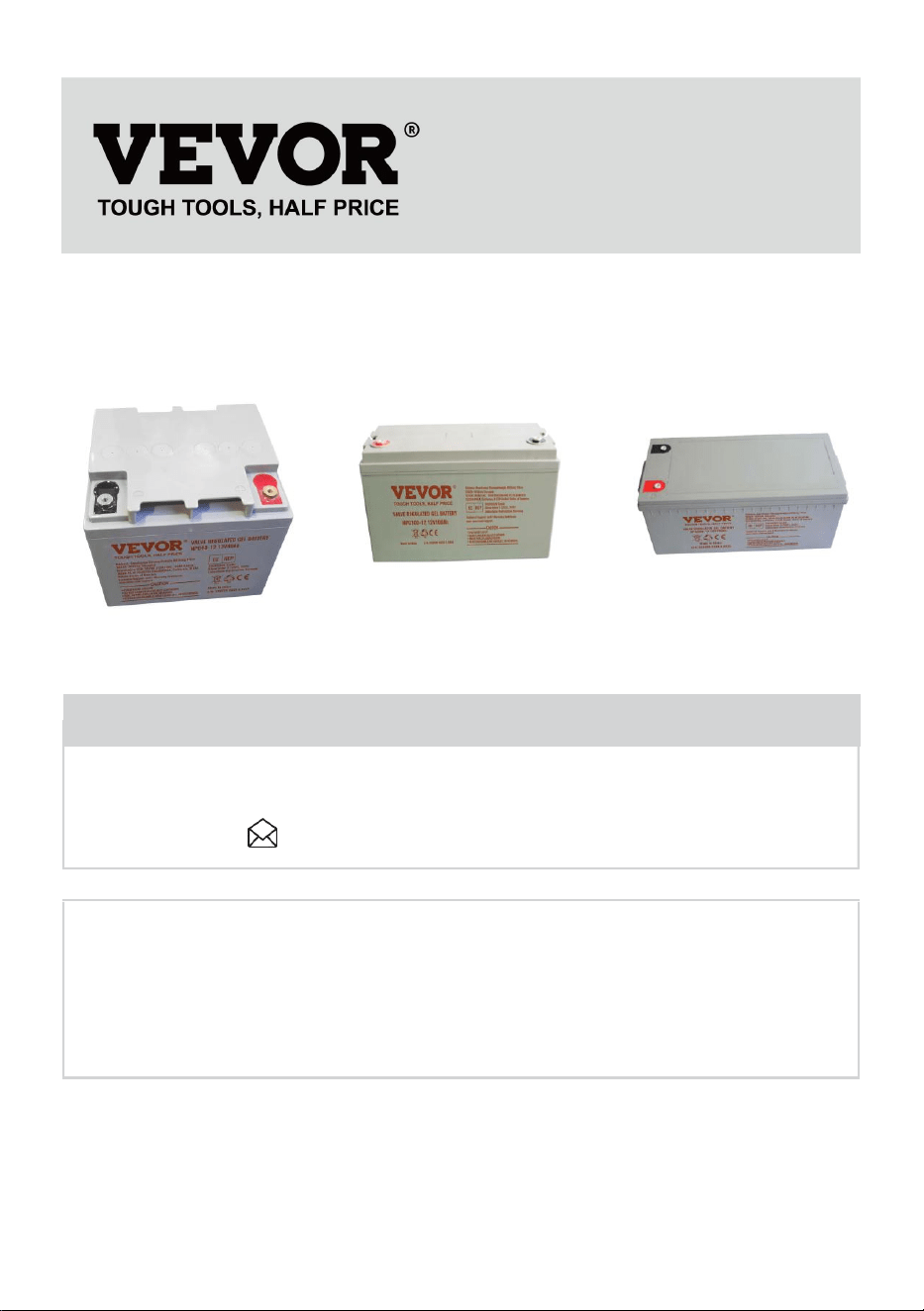
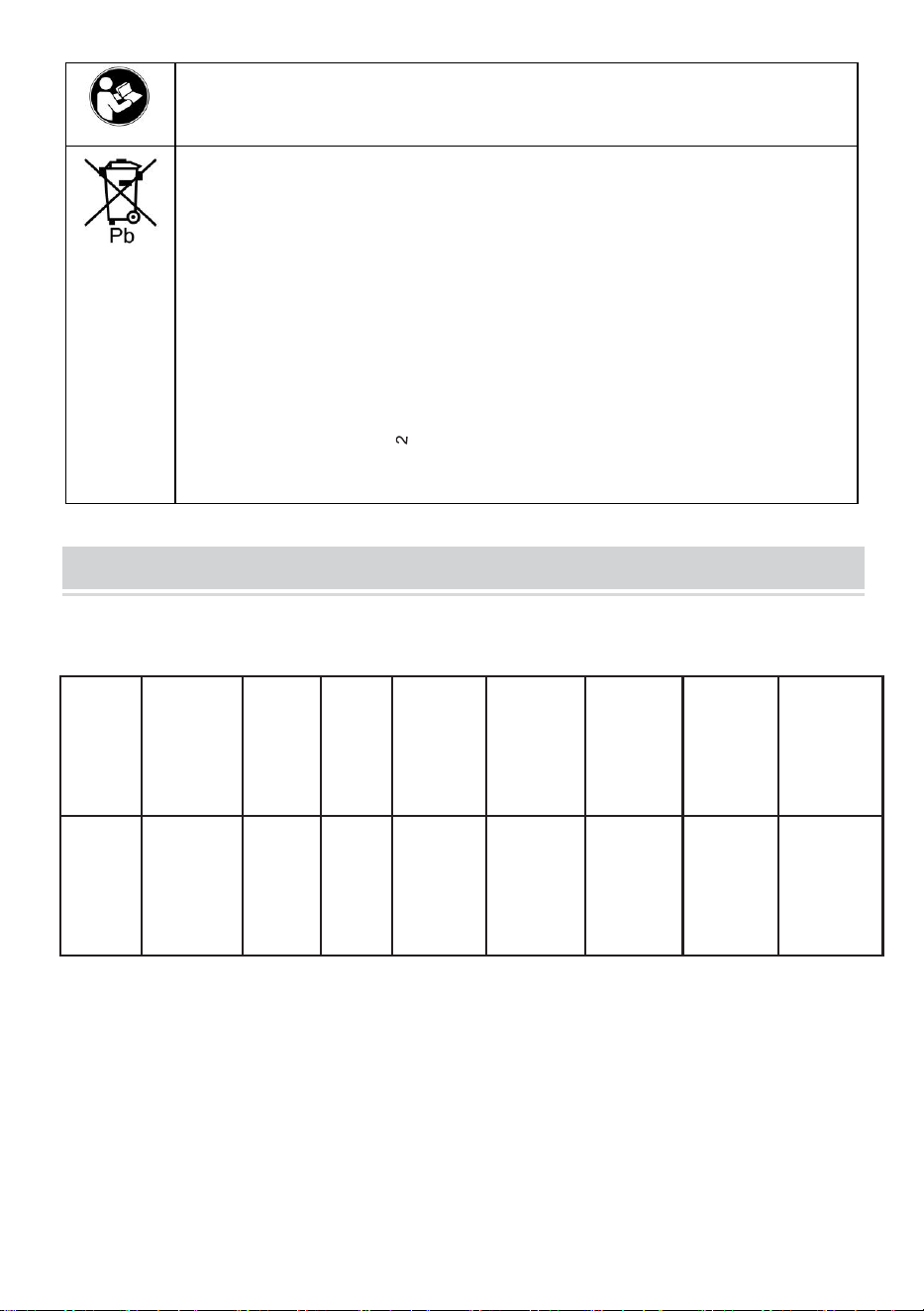
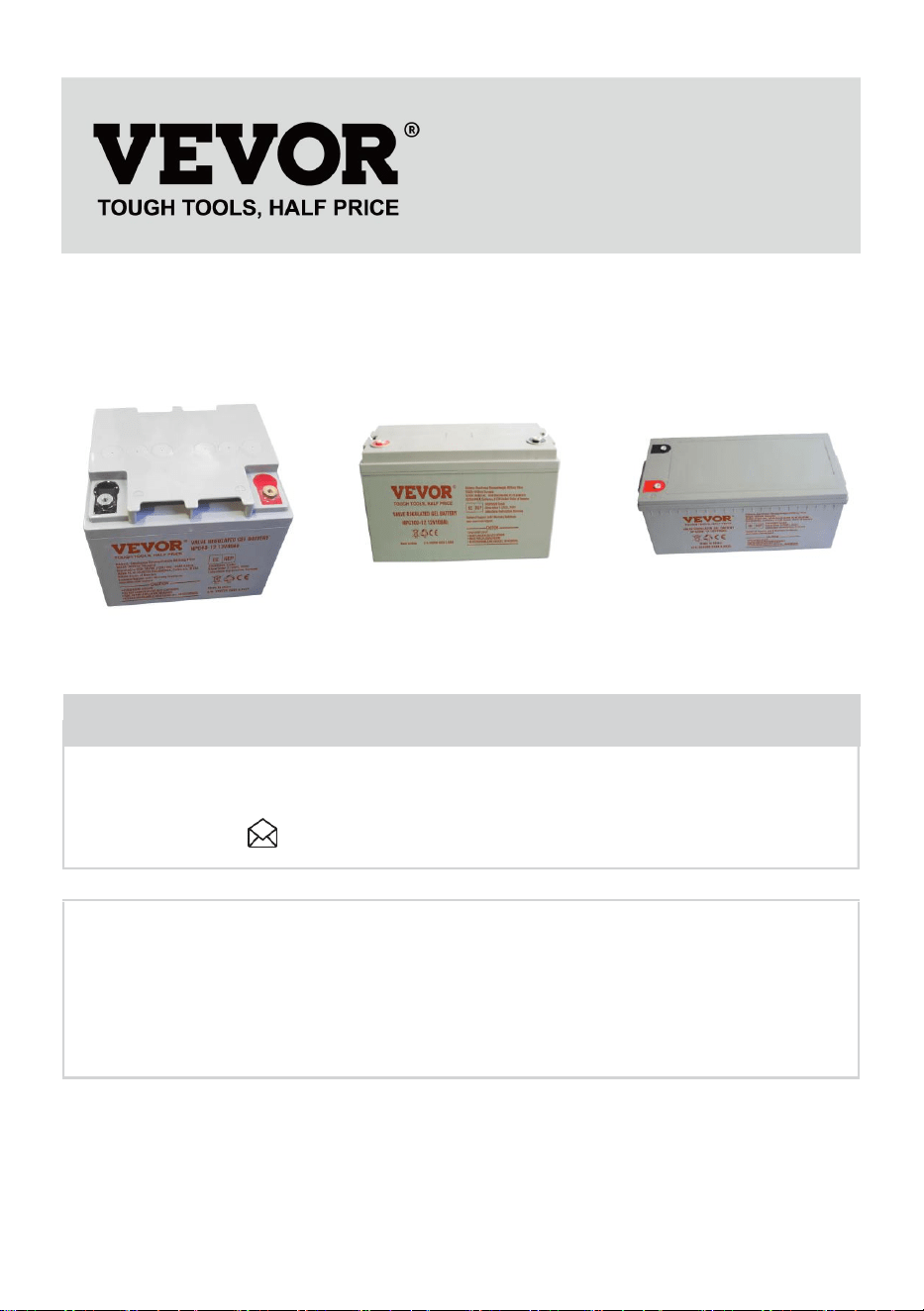
NPG12-40Ah
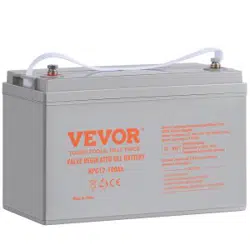
NPG12-100Ah
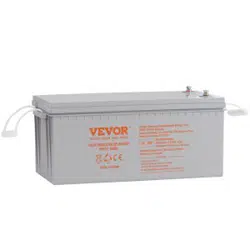
NPG12-200Ah
Have product questions? Need technical support? Please feel free to
contact us:
CustomerService@vevor.com
NEED HELP? CONTACT US!
This is the original instruction, please read all manual instructions
carefully before operating. VEVOR reserves a clear interpretation of our
user manual. The appearance of the product shall be subject to the
product you received. Please forgive us that we won't inform you again if
there are any technology or software updates on our product.
VALVE REGULATED GEL
BATTERY
- 2 -
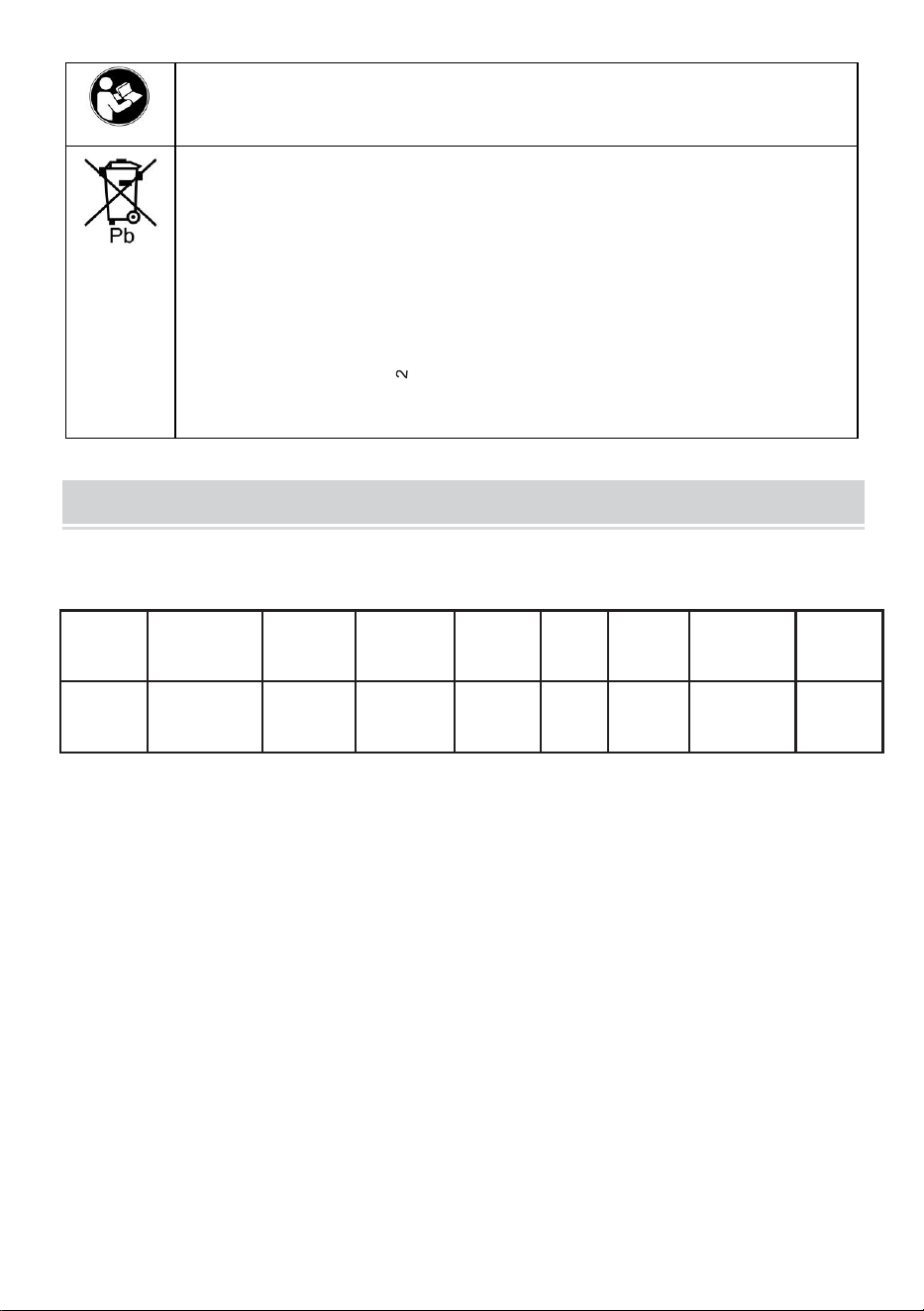
Warning-To reduce the risk of injury, user must read
instructions manual carefully.
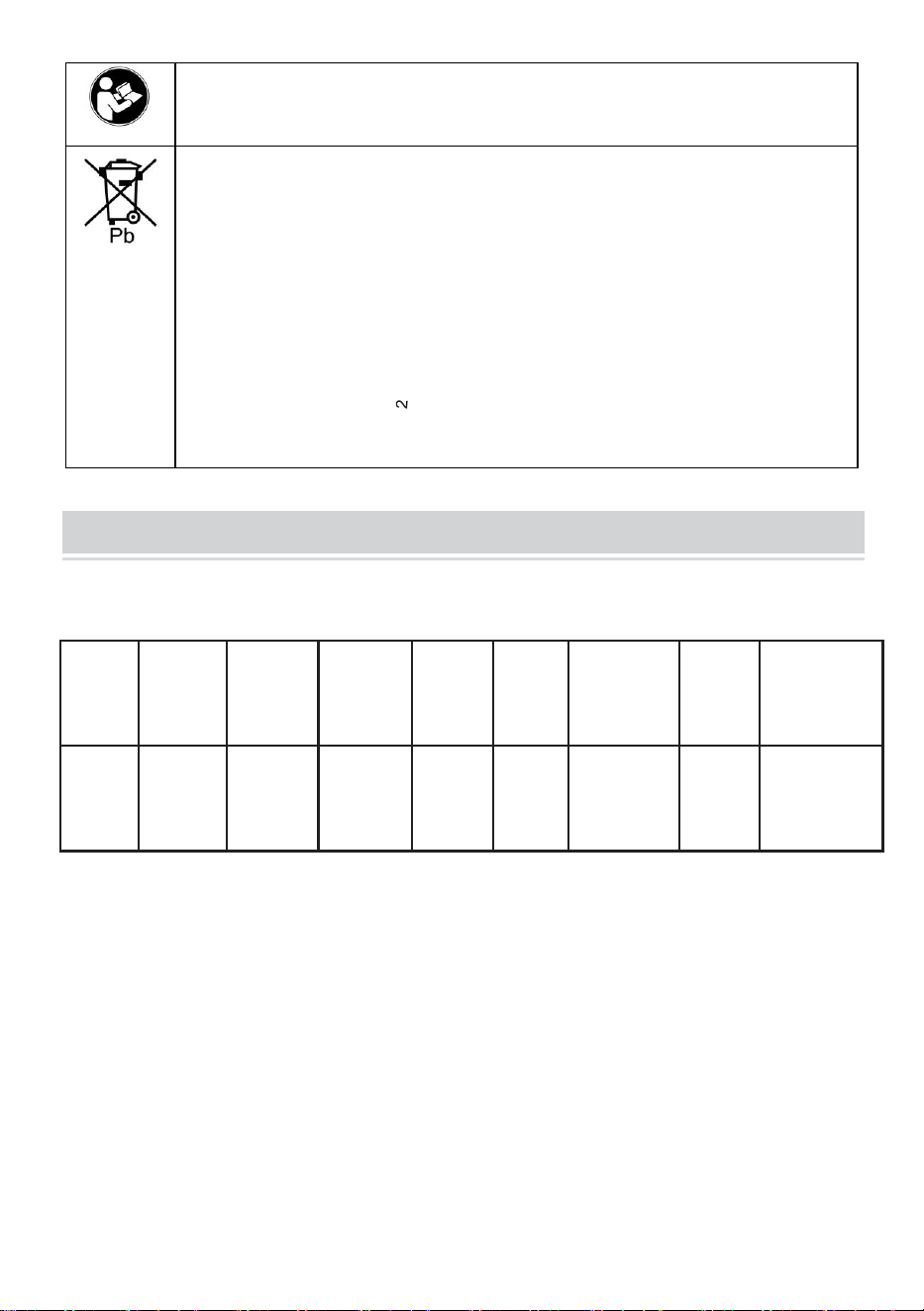
This product is subject to the provision of European Directive
2012/19/EC. The symbol showing a wheelie bin crossed
through indicates that the product requires separate refuse
collection in the European Union. This applies to the product
and all accessories marked with this symbol. Products
marked as such may not be discarded with normal domestic
waste, but must be taken to a collection point for recycling
electrical and electronic devices
CHARGING
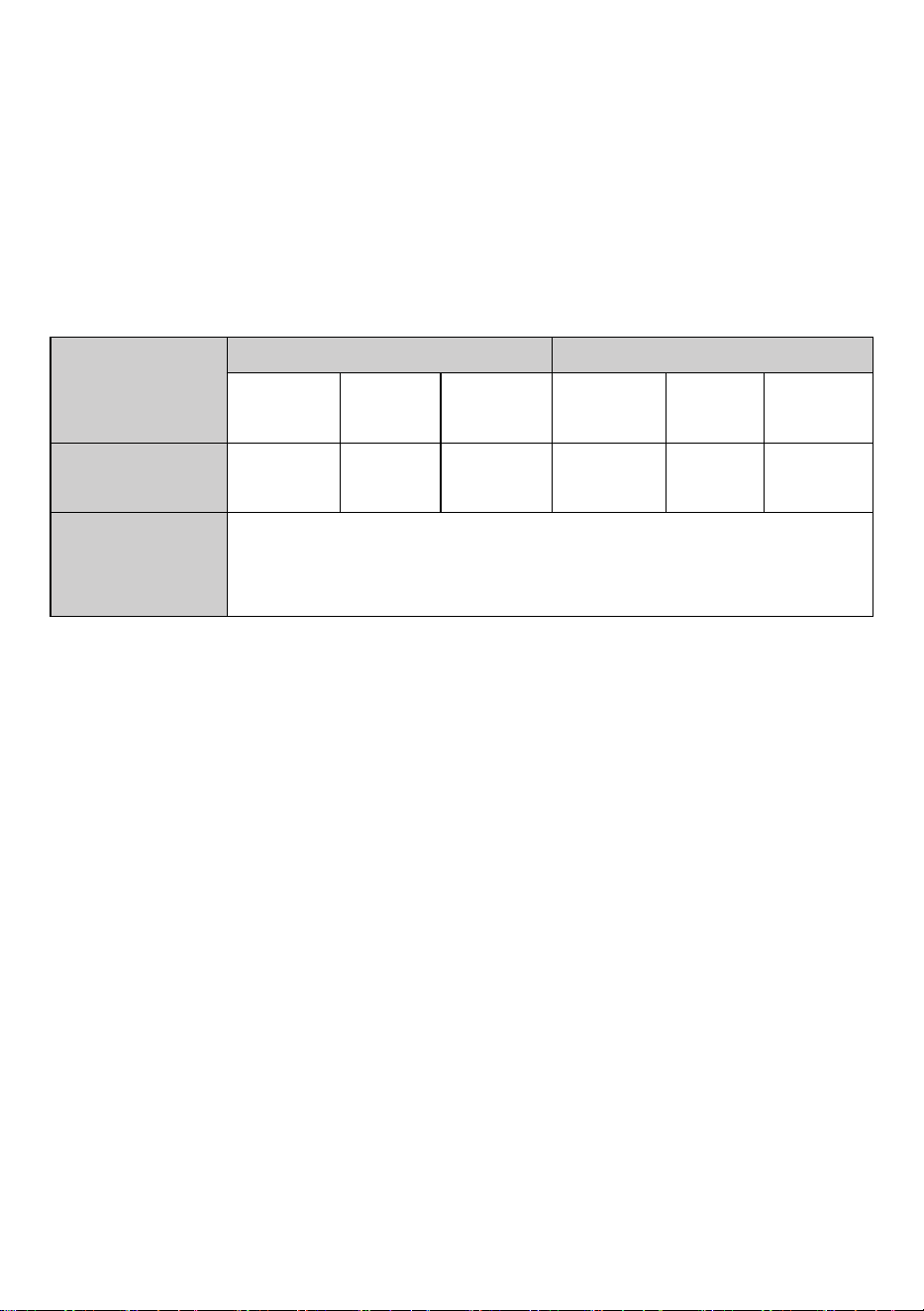
Construction
Terminal
Component
Positive
plate
Negative
plate
Contaier
Cover
Separar
Electrolyte
Safety
valve
Copper
Rawmaterial
Lead
dioxide
Lead
ABS
ABS
AGM
Sulfuric
acid
Rubber

- 3 -
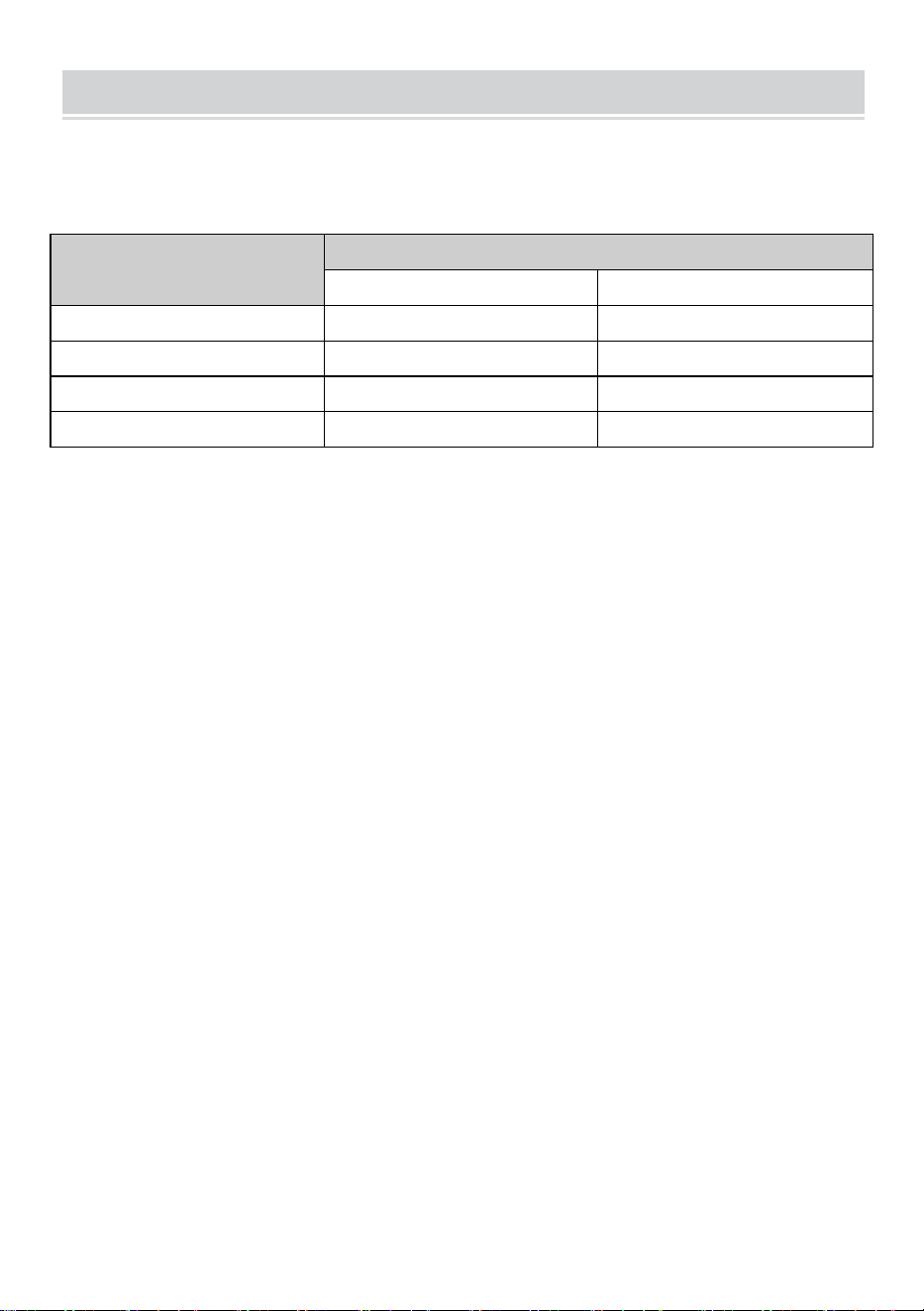
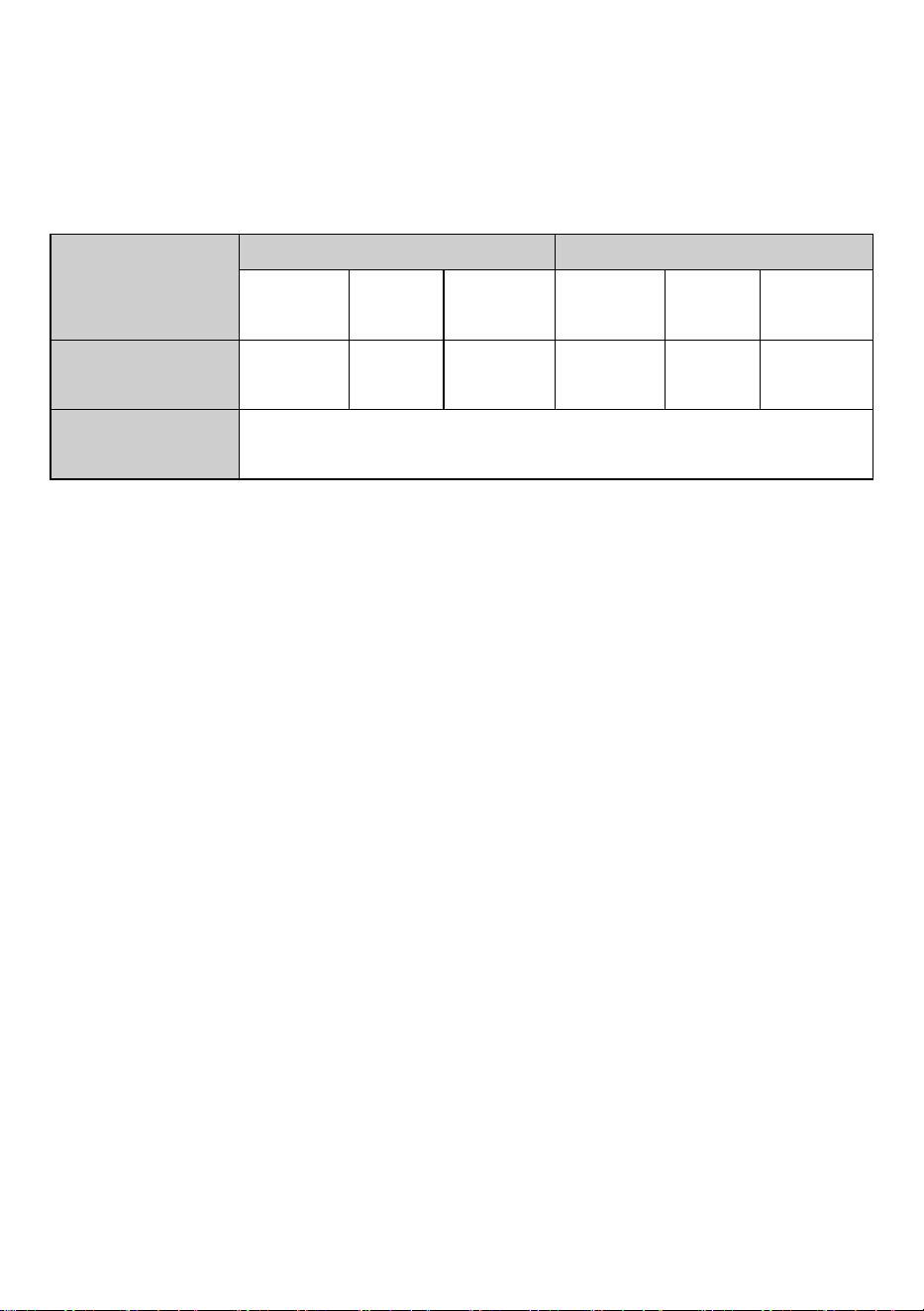
Table 1 ambient temperature:25℃
Usage
For Floating Charge
For Cycle Use
2V battery
6Vbattery
12V battery
2V battery
6V battery
12V battery
Charging Voltage/V
2.23~2.25V
6.8~6.9V
13.6~13.7V
2.40~2.50V
7.3~7.5V
14.5~15.0V
Max
Charging Current/A
0.1C~0.25C
Note:
1)C: means Ah value of battery's rated capacity.
2)When ambient temperature is below 15
℃
or above 35
℃
, the
recommended compensation factor is -3mV/
℃
/cell
(Floating Charge ) or-4m V/
℃
/cell(Cycle)staring from the standard center
point-25
℃
.
3) Battery temperature in charging should be in the range of- 15
℃
~50
℃
.
- 4 -
DISCHARGE
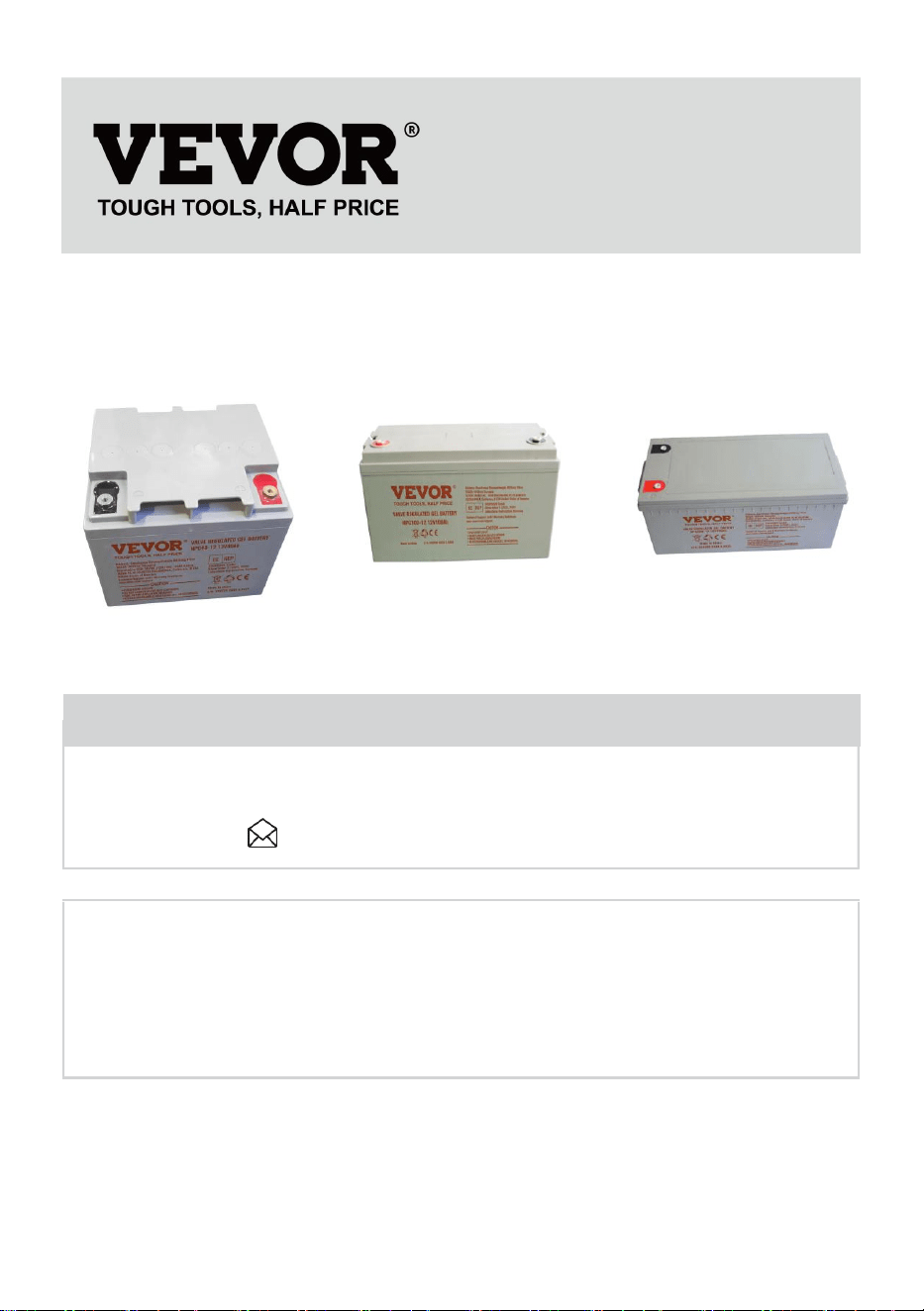
Table 2
Relationship between Discharge Current and Final Discharge Voltage
Discharge Curent/A
Final Discharge Voltage
6V/12V Series
2V Series
0.2C or below
1.75V/cell
1.80V
From 0.2C to 0.5C
1.70V/cell
1.75V
From 0.5C to 1.0C
1.55V/cell
1.70V
Above 1.0C
1.30V/cell
1.60V
Note:
1) See above table,Final Discharge Voltage should vary with the change of
Discharge Current.
Attention: When discharge, voltage must not be lower than its
corresponding Final Discharge Voltage;
2) Immediate charge after discharge or over-discharge is charge for
retaining battery life;
3)Battery temperature in discharge should be in the range of- 15℃~50℃.

- 5 -
ATTENTIONS
1)Examine the appearance of the battery before use.
2)Store the battery in a cool place(best below 20℃ or 68°F)
3)Recharge the battery that has been stored for more than 3 months.
4)Charge the battery in a well-ventilated environment.
5)Regularly survey batteries' Charging voltage to make sure it is in the
range of Chart 1.
6)Secure the battery firmly installed in equipments.
PROHIBITIONS
1) Burn the battery or put it near fire.
2) Short circuit the battery.
3) Use the battery in an airtight cabinet.
4) Dissect the battery.
5) Load and unload the battery roughly.
6) Attempt to use a cracked,deformed,or leaky battery.
7)Subject the battery to excess vibration or violent jolts.
8)Mixed use different batches of the battery.
Made In China



- 3 -
We continue to be committed to provide you tools with competitive price.
"Save Half", "Half Price" or any other similar expressions used by us only represents an
estimate of savings you might benefit from buying certain tools with us compared to the major
top brands and doses not necessarily mean to cover all categories of tools offered by us. You
are kindly reminded to verify carefully when you are placing an order with us if you are
actually saving half in comparison with the top major brands.
- 1 -
NPG12-40Ah
NPG12-100Ah
NPG12-200Ah
Have product questions? Need technical support? Please feel free to
contact us:
CustomerService@vevor.com
NEED HELP? CONTACT US!
This is the original instruction, please read all manual instructions
carefully before operating. VEVOR reserves a clear interpretation of our
user manual. The appearance of the product shall be subject to the
product you received. Please forgive us that we won't inform you again if
there are any technology or software updates on our product.
VALVE REGULATED GEL
BATTERY
- 2 -
Avertissement - Pour réduire le risque de blessure,
l'utilisateur doit lire attentivement le manuel d'instructions.
Ce produit est soumis aux dispositions de la directive
européenne 2012/19/CE. Le symbole représentant une
poubelle à roulettes barrée indique que le produit doit faire
l'objet d'une collecte sélective des déchets dans l'Union
européenne. Cela s'applique au produit et à tous les
accessoires marqués de ce symbole. Les produits marqués
comme tels ne peuvent pas être jetés avec les déchets
ménagers normaux, mais doivent être déposés dans un point
de collecte pour le recyclage des appareils électriques et
électroniques.
CHARGING
Construction
Termin
al
Composa
nt n t
Positif
plaque
Négati
f
plaqu
e
Contene
ur
Couvertur
e
Séparer
Électrolyt
e
Soupape
de sécurité
Cuivre
Matière
première
Dioxyd
e de
plomb
Plomb
ABS
ABS
Assemblé
e
générale
annuelle
Acide
sulfuriqu
e
Caoutchou
c
- 3 -
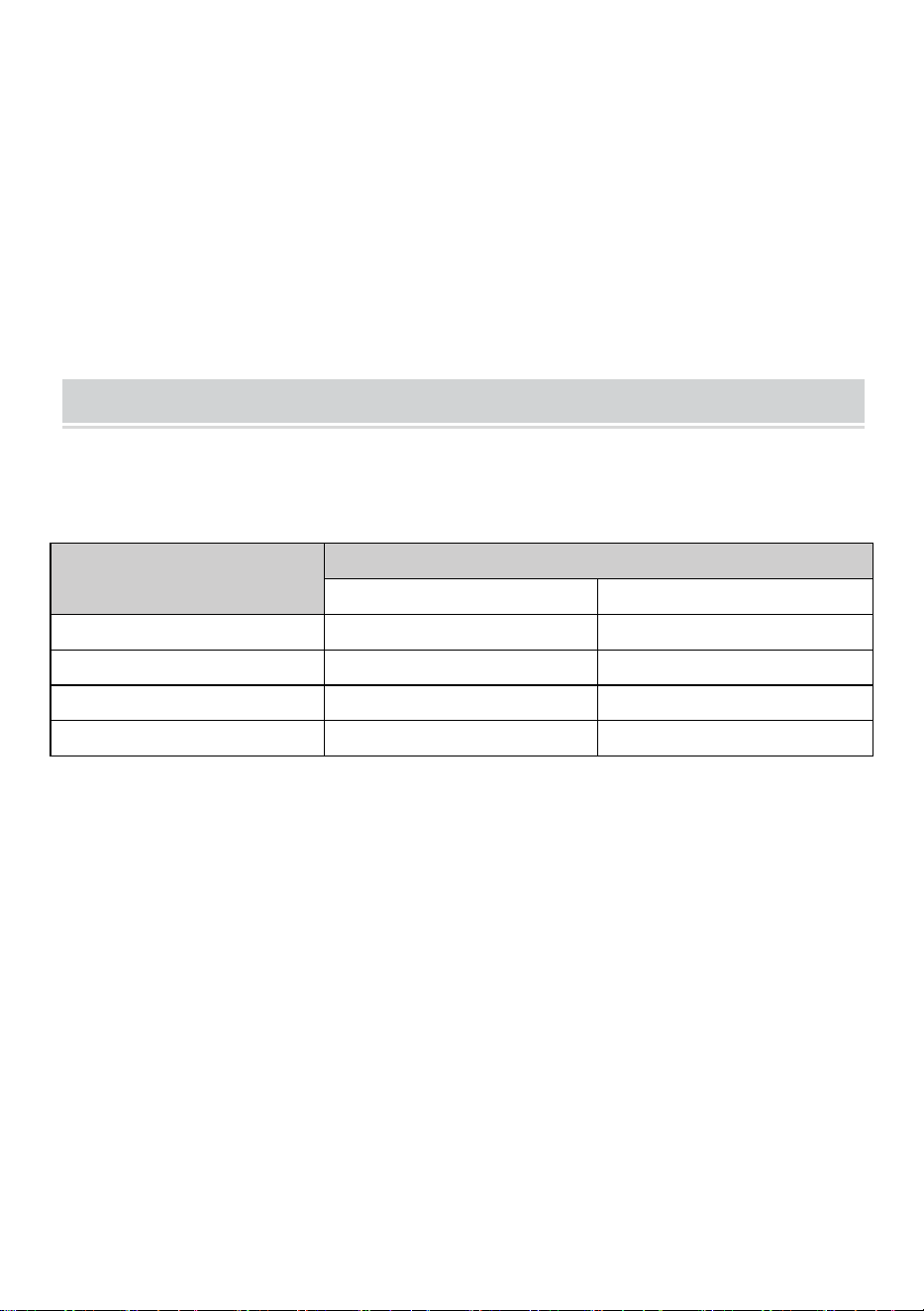
Tableau 1 température ambiante : 25℃
Usage
Pour charge flottante
Pour une utilisation à vélo
Batterie 2V
Batterie
6V
1 pile 2V
Batterie 2V
6V
batterie
1 pile 2V
Tension de
charge/V
2,23 à 2,25
V
6,8 à 6,9
V
1 3,6~13,7
V
2,40 à 2,50
V
7,3 à 7,5
V
14,5 ~ 15,0
V
Max
Courant de
charge/A
0,1 °C à 0,25 °C
Note:
1)C : signifie la valeur Ah de la capacité nominale de la batterie.
2) Lorsque la température ambiante est inférieure à 15 ℃ ou supérieure à
35 ℃, le facteur de compensation recommandé est -3 mV/℃ /cellule
(Charge flottante ) ou -4 m V/℃/cellule (cycle) à partir du point central
standard -25℃.
4) La température de la batterie pendant la charge doit être comprise
entre 15℃ et 50℃.
- 4 -
DISCHARGE
Tableau 2
Relation entre le courant de décharge et Tension de décharge finale
Courant de décharge/A
Tension de décharge finale
Série 6V/12V
Série 2V
0,2 °C ou moins
1,75 V/élément
1,80 V
À partir de 0,2 °C à 0,5 °C
1,70 V/élément
1,75 V
À partir de 0,5 °C à 1,0 °C
1,55 V/élément
1,70 V
Au-dessus de 1,0 °C
1,30 V/élément
1,60 V
Note:
1) Voir le tableau ci-dessus, la tension de décharge finale doit varier en
fonction du changement du courant de décharge.
Attention : Lors de la décharge, la tension ne doit pas être inférieure à sa
tension de décharge finale correspondante ;
2) Charge immédiate après décharge ou décharge excessive est charge
pour conserver la durée de vie de la batterie ;
3) La température de la batterie lors de la décharge doit être comprise
entre 15℃ et 50℃.

- 5 -
ATTENTIONS
1) Examinez l’apparence de la batterie avant utilisation.
2) Conservez le Conservez la batterie dans un endroit frais (de préférence
à une température inférieure à 20 ℃ ou 68 °F)
3)Rechargez la batterie qui a été stockée pendant plus de 3 mois.
4) Chargez la batterie dans un environnement bien ventilé.
5) Inspectez régulièrement les batteries Tension de charge pour s'assurer
qu'elle est dans la plage du tableau 1.
6) Fixez fermement la batterie installée dans les équipements.
PROHIBITIONS
1) Brûlez la batterie ou placez-la près du feu.
2) Court-circuitez la batterie.
3) Utilisez la batterie dans une armoire hermétique.
4) Disséquez la batterie.
5) Chargez et déchargez la batterie de manière approximative.
6) Essayez d’utiliser une batterie fissurée, déformée ou qui fuit.
7)Soumettre la batterie à des vibrations excessives ou à des secousses

- 6 -
violentes.
8) Utilisation mixte de différents lots de batteries.
Fabriqué en Chine


- 2 -
Technisch Support und E-Garantie-Zertifikat www.vevor.com/support
VENTILGEREGELTE GEL-BATTERIE
BEDIENUNGSANLEITUNG
We continue to be committed to provide you tools with competitive price.
"Save Half", "Half Price" or any other similar expressions used by us only represents an
estimate of savings you might benefit from buying certain tools with us compared to the major
top brands and doses not necessarily mean to cover all categories of tools offered by us. You
are kindly reminded to verify carefully when you are placing an order with us if you are
actually saving half in comparison with the top major brands.

- 3 -
- 1 -
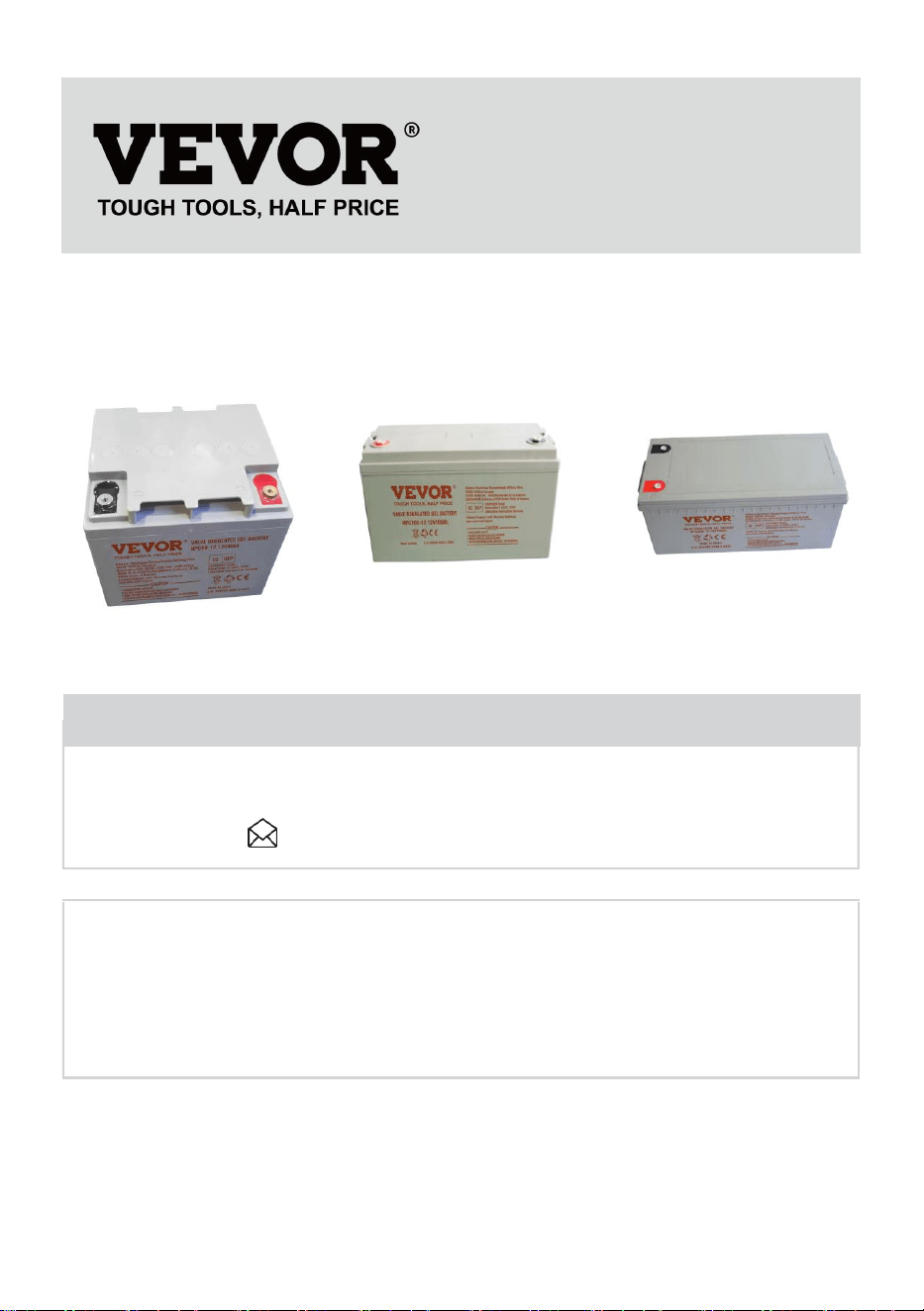
NPG12-40Ah
NPG12-100Ah
NPG12-200Ah
Have product questions? Need technical support? Please feel free to
contact us:
CustomerService@vevor.com
NEED HELP? CONTACT US!
This is the original instruction, please read all manual instructions
carefully before operating. VEVOR reserves a clear interpretation of our
user manual. The appearance of the product shall be subject to the
product you received. Please forgive us that we won't inform you again if
there are any technology or software updates on our product.
VALVE REGULATED GEL
BATTERY
- 2 -
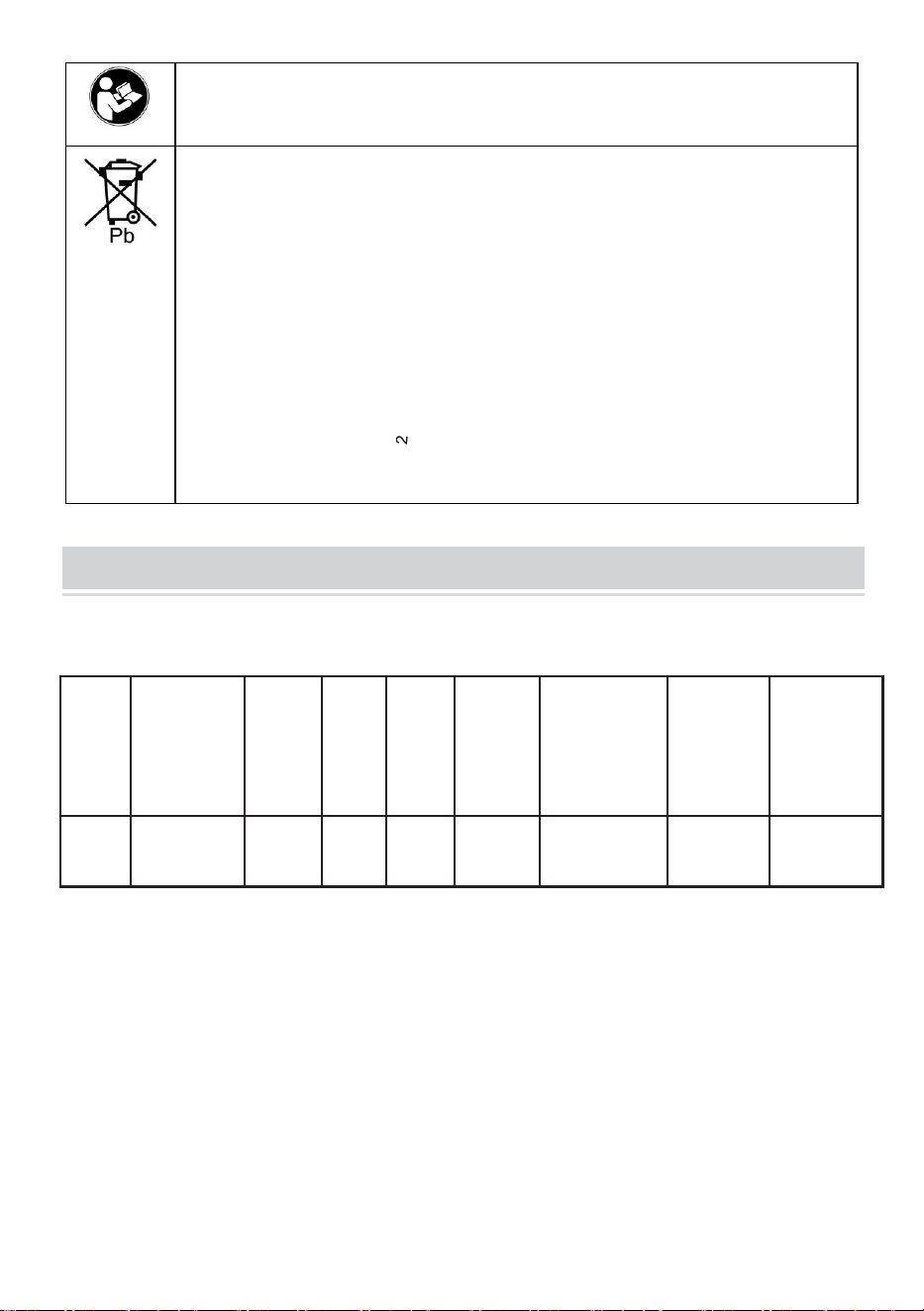
Warnung: Um das Verletzungsrisiko zu verringern, muss der
Benutzer die Bedienungsanleitung sorgfältig lesen.
Dieses Produkt unterliegt den Bestimmungen der
europäischen Richtlinie 2012/19/EU. Das Symbol einer
durchgestrichenen Mülltonne weist darauf hin, dass das
Produkt in der Europäischen Union einer getrennten
Müllentsorgung unterliegt. Dies gilt für das Produkt und alle
mit diesem Symbol gekennzeichneten Zubehörteile. So
gekennzeichnete Produkte dürfen nicht im normalen
Hausmüll entsorgt werden, sondern müssen an einer
Sammelstelle für das Recycling von elektrischen und
elektronischen Geräten abgegeben werden.
CHARGING
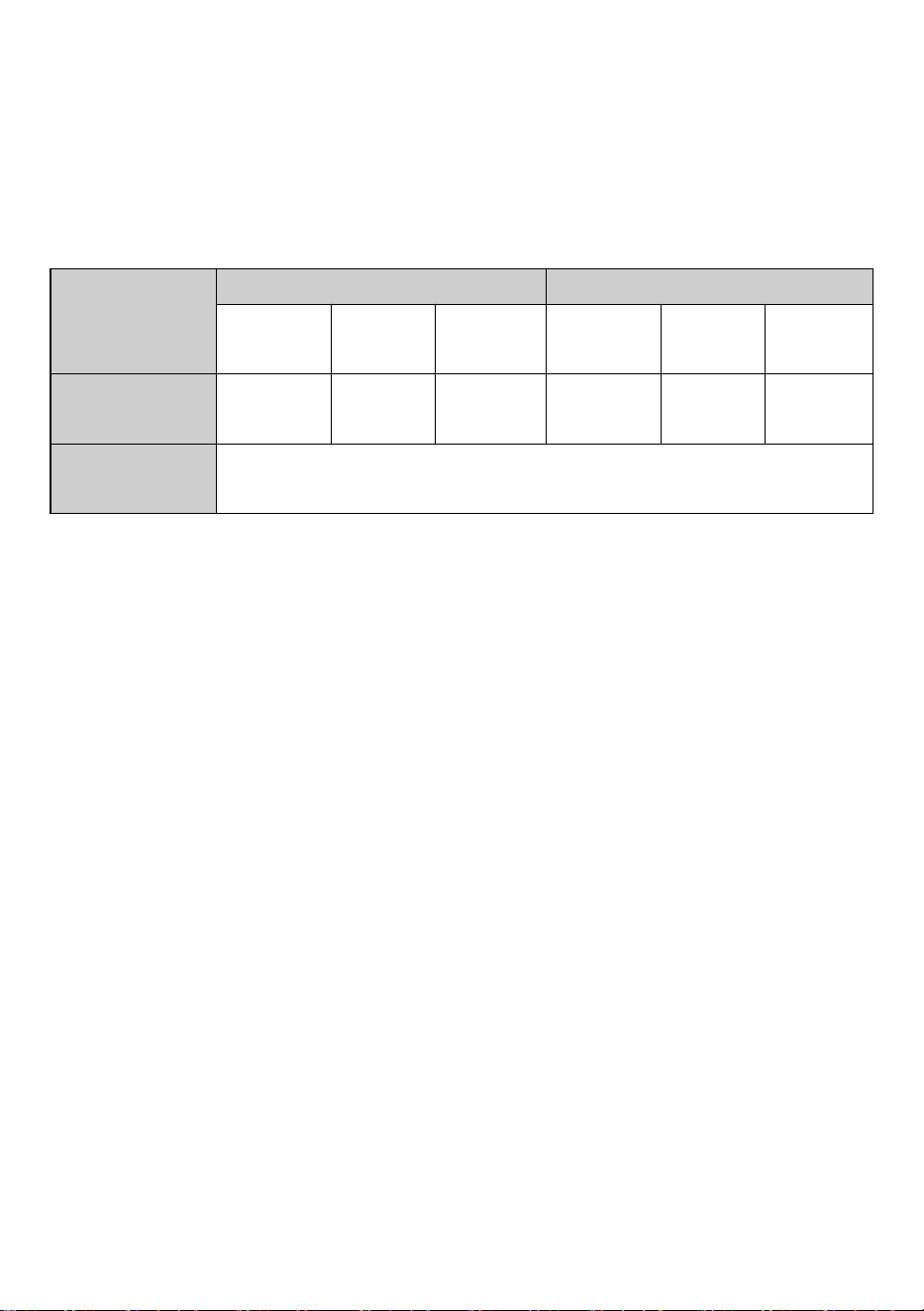
Konstruktion
Termi
nal
Komponent
e
Positiv
Platte
Nega
tiv
Platt
e
Behäl
ter
Abdeck
ung
Trennen
Elektrolyt
Sicherheits
ventil
Kupfe
r
Rohstoffe
Bleidio
xid
Führ
en
ABS
ABS
Hauptversam
mlung
Schwefels
äure
Gummi
- 3 -
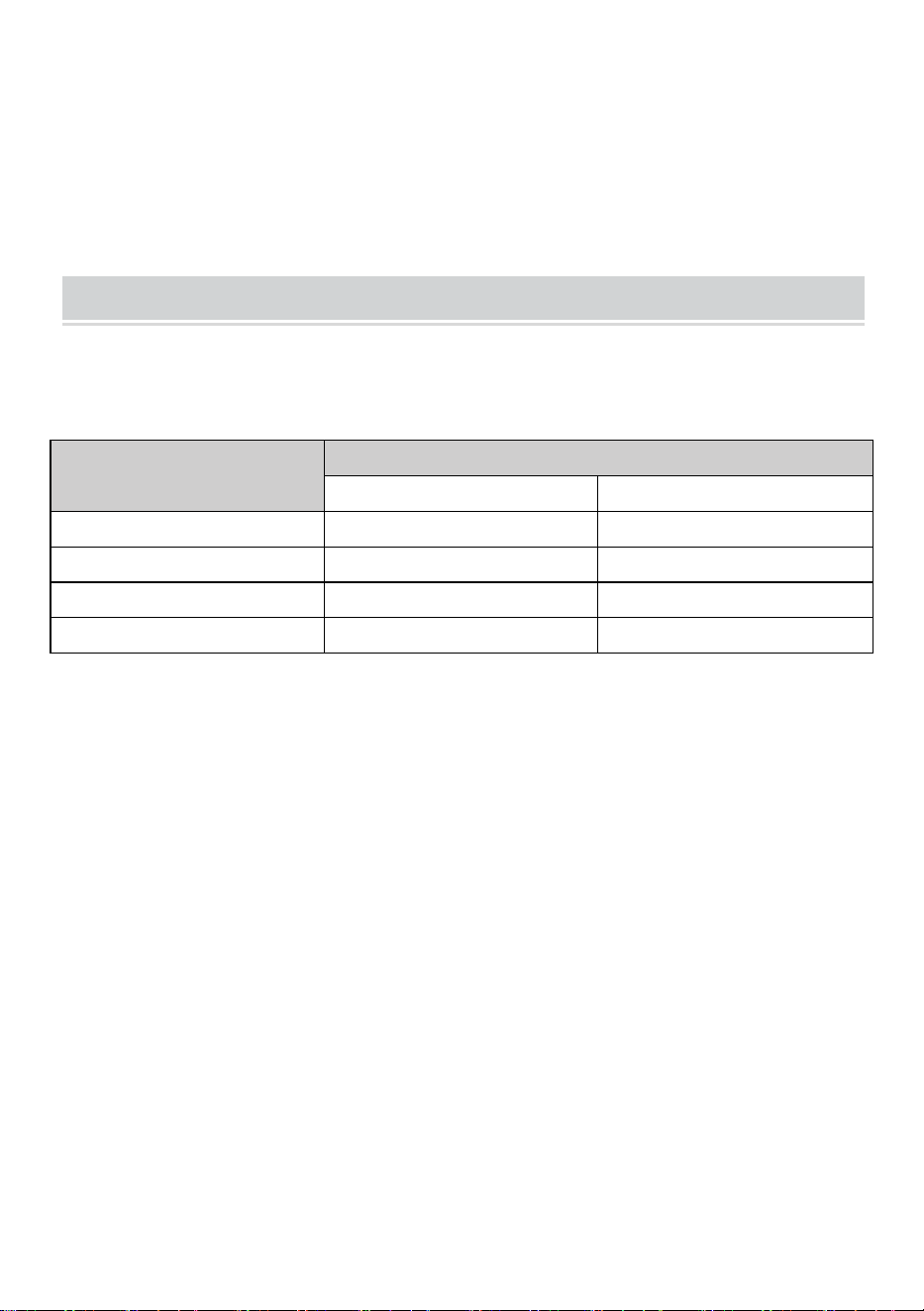
Tabelle 1 Umgebungstemperatur: 25℃
Verwendung
Für Floating Charge
Für den Fahrradgebrauch
2V Batterie
6V
Batterie
1 2V
Batterie
2V Batterie
6V
Batterie
1 2V
Batterie
Ladespannung/V
2,23 bis
2,25 V
6,8 bis 6,9
V
1 3,6 ~ 13,7
V
2,40 bis
2,50 V
7,3 bis 7,5
V
14,5 ~ 15,0
V
Max
Ladestrom/A
0,1 °C bis 0,25 °C
Notiz:
1)C: steht für den Ah-Wert der Nennkapazität der Batterie.
2)Wenn die Umgebungstemperatur unter 15℃ oder über 35℃ liegt,
beträgt der empfohlene Kompensationsfaktor Ist -3 mV/℃ /Zelle
(Floating Charge ) oder -4 m V/°C/Zelle (Zyklus), ausgehend vom
Standard-Mittelpunkt –25°C.
5) Die Batterietemperatur beim Laden sollte im Bereich zwischen 15 und
50 °C liegen.
- 4 -
DISCHARGE
Tabelle 2
Zusammenhang zwischen Entladestrom und Entladeschlussspannung
Entladestrom/A
Entladeschlussspannung
6V/12V-Serie
Serie 2V
0,2 °C oder weniger
1,75 V/Zelle
1,80 V
Ab 0,2 °C bis 0,5 °C
1,70 V/Zelle
1,75 V
Ab 0,5 °C bis 1,0 °C
1,55 V/Zelle
1,70 V
Über 1,0 °C
1,30 V/Zelle
1,60 V
Notiz:
1) Siehe Tabelle oben. Die endgültige Entladespannung sollte mit der
Änderung des Entladestroms variieren.
Achtung: Beim Entladen darf die Spannung nicht niedriger sein als die
entsprechende Entladeschlussspannung.
) Sofortiges Laden nach Entladung oder Tiefentladung Ist Aufladen zum
Erhalt der Batterielebensdauer;
3) Die Batterietemperatur beim Entladen sollte im Bereich zwischen 15 und
50 °C liegen.

- 5 -
ATTENTIONS
1)Untersuchen Sie vor der Verwendung das Aussehen der Batterie.
2)Speichern Sie die Batterie an einem kühlen Ort (am besten unter 20℃
oder 68°F)
länger als 3 Monate gelagert wurde .
4)Laden Sie den Akku in einer gut belüfteten Umgebung.
5) Überprüfen Sie regelmäßig die Batterien. Ladespannung, um
sicherzustellen, dass sie im Bereich von Diagramm 1 liegt .
6) Sichern Sie die im Gerät installierte Batterie.
PROHIBITIONS
1) Verbrennen Sie die Batterie oder bringen Sie sie in die Nähe von Feuer.
2) Schließen Sie die Batterie kurz.
3) Verwenden Sie die Batterie in einem luftdichten Schrank.
4) Zerlegen Sie die Batterie.
5) Be- und Entladen Sie den Akku vorsichtig.
6) Versuchen Sie, eine gerissene, verformte oder undichte Batterie zu
verwenden.
7)Setzen Sie die Batterie übermäßigen Vibrationen oder heftigen Stößen
aus.

- 6 -
8) Gemischte Verwendung verschiedener Batteriechargen.
In China hergestellt



- 3 -
We continue to be committed to provide you tools with competitive price.
"Save Half", "Half Price" or any other similar expressions used by us only represents an
estimate of savings you might benefit from buying certain tools with us compared to the major
top brands and doses not necessarily mean to cover all categories of tools offered by us. You
are kindly reminded to verify carefully when you are placing an order with us if you are
actually saving half in comparison with the top major brands.
- 1 -
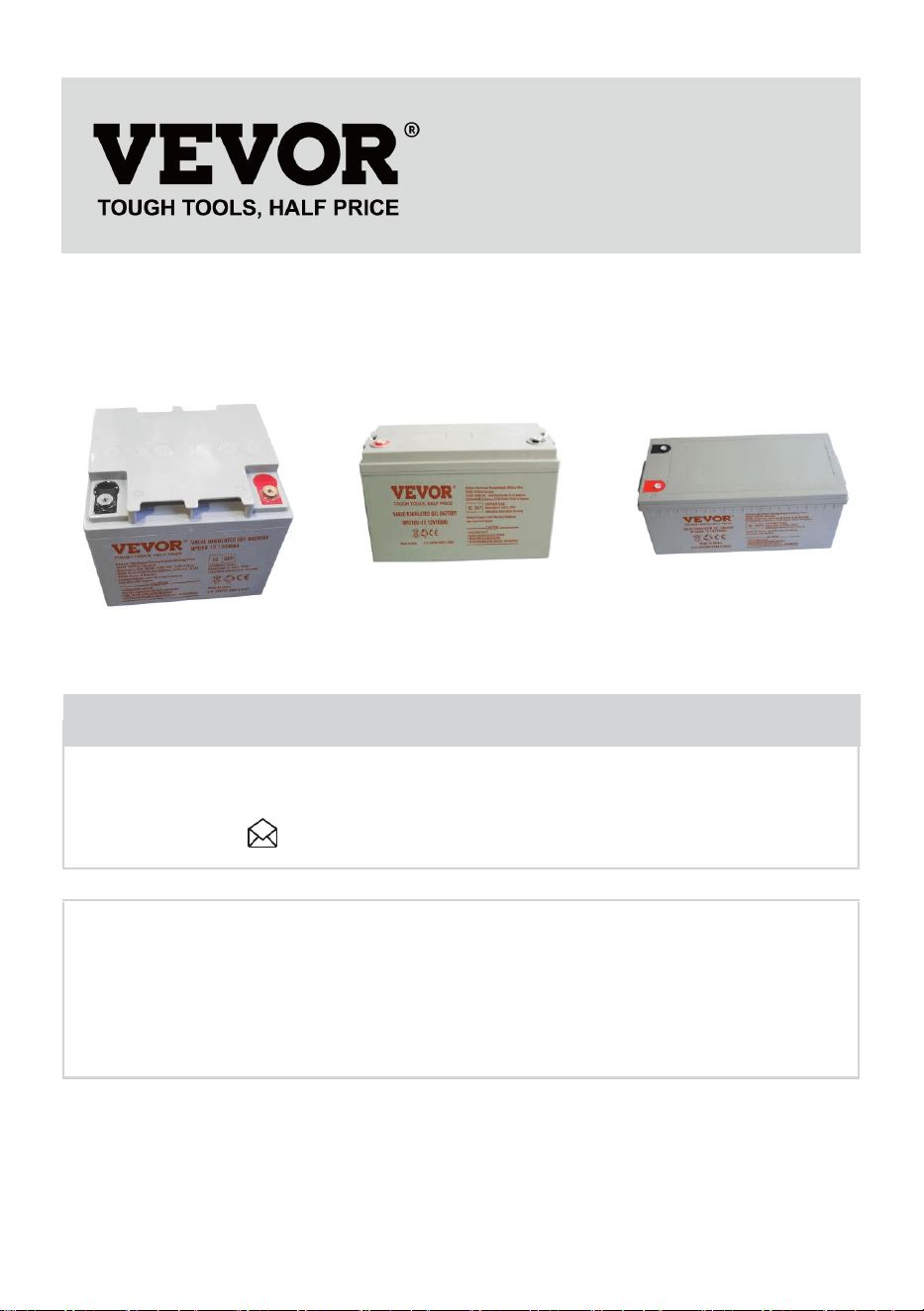
Batteria NPG12-40Ah
Batteria NPG12-100Ah
Batteria NPG12-200Ah
Have product questions? Need technical support? Please feel free to
contact us:
CustomerService@vevor.com
NEED HELP? CONTACT US!
This is the original instruction, please read all manual instructions
carefully before operating. VEVOR reserves a clear interpretation of our
user manual. The appearance of the product shall be subject to the
product you received. Please forgive us that we won't inform you again if
there are any technology or software updates on our product.
VALVE REGULATED GEL
BATTERY
- 2 -
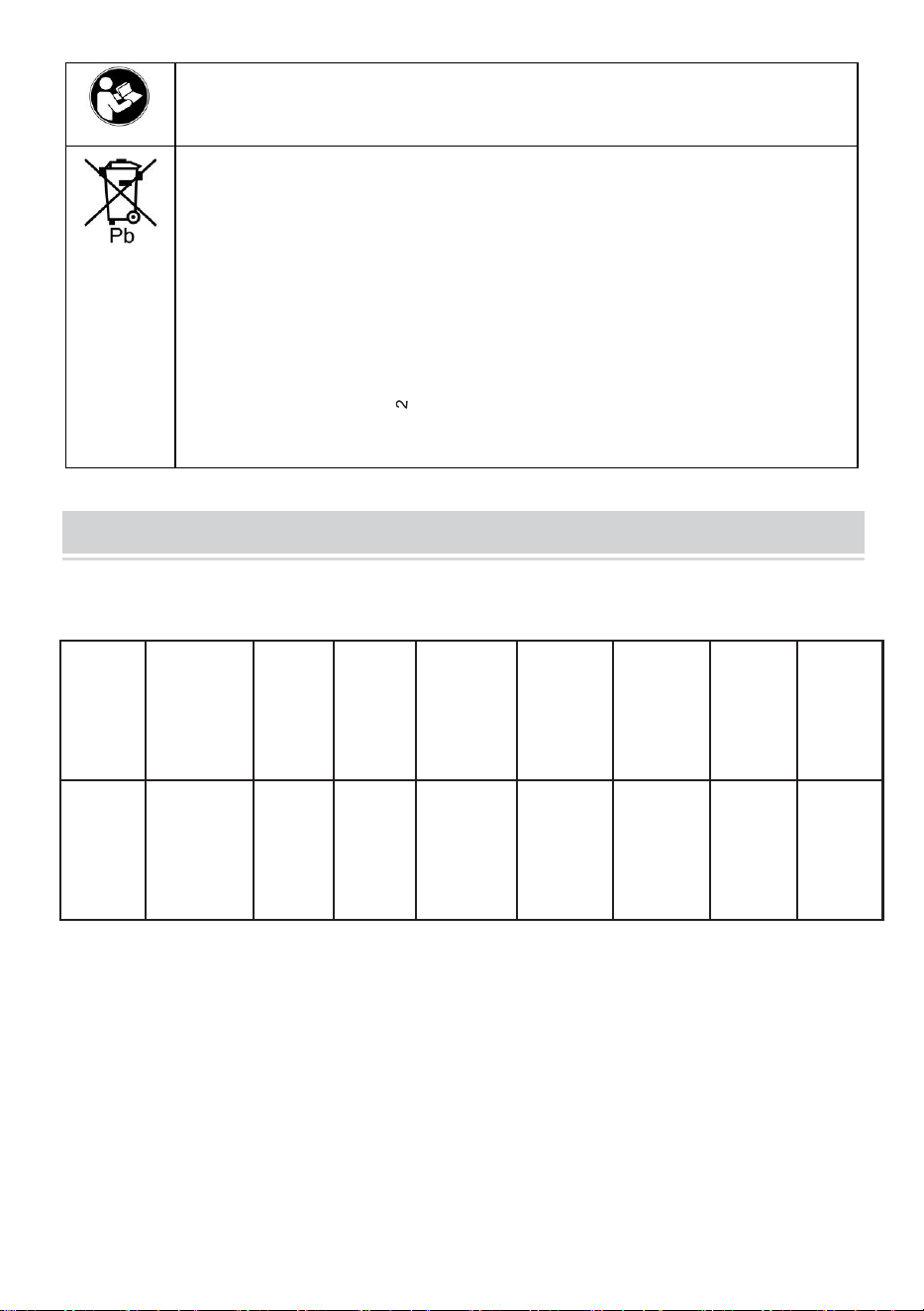
Attenzione: per ridurre il rischio di lesioni, l'utente deve
leggere attentamente il manuale di istruzioni.
Questo prodotto è soggetto alle disposizioni della Direttiva
Europea 2012/19/CE. Il simbolo raffigurante un bidone della
spazzatura barrato indica che il prodotto richiede la raccolta
differenziata dei rifiuti nell'Unione Europea. Ciò si applica al
prodotto e a tutti gli accessori contrassegnati con questo
simbolo. I prodotti contrassegnati come tali non possono
essere smaltiti con i normali rifiuti domestici, ma devono
essere portati in un punto di raccolta per il riciclaggio di
dispositivi elettrici ed elettronici
CHARGING
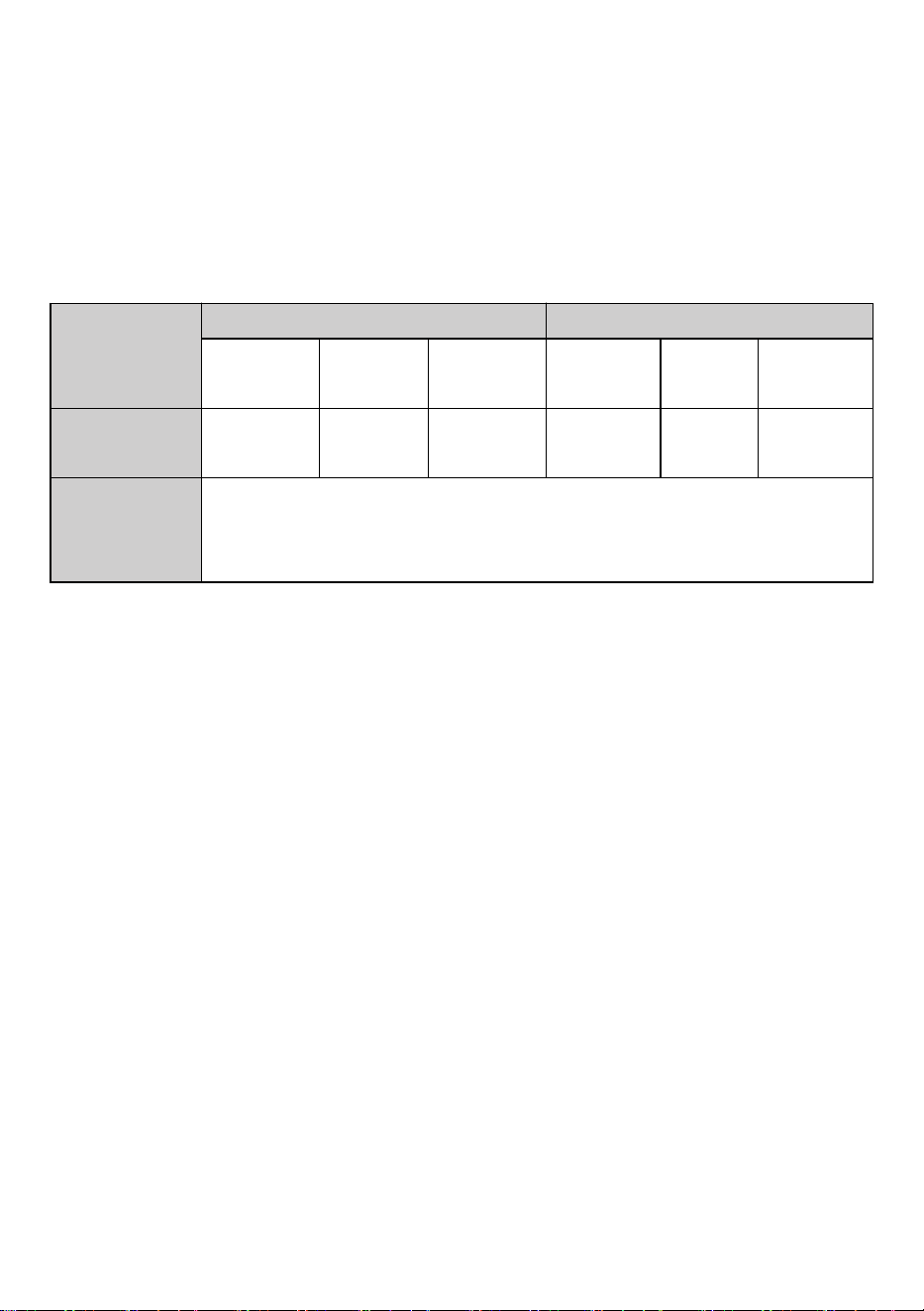
Costruzione
terminal
e
Componen
te n t
Positiv
o piatto
Negativ
o piatto
Contenito
re
Copertina
Separare
Elettrolit
a
Valvola
di
sicurezz
a
Rame
Materia
prima
biossid
o di
piombo
Guida
addominal
i
addomin
ali
Assembl
ea
generale
annuale
Acido
solforic
o
Gomma
- 3 -
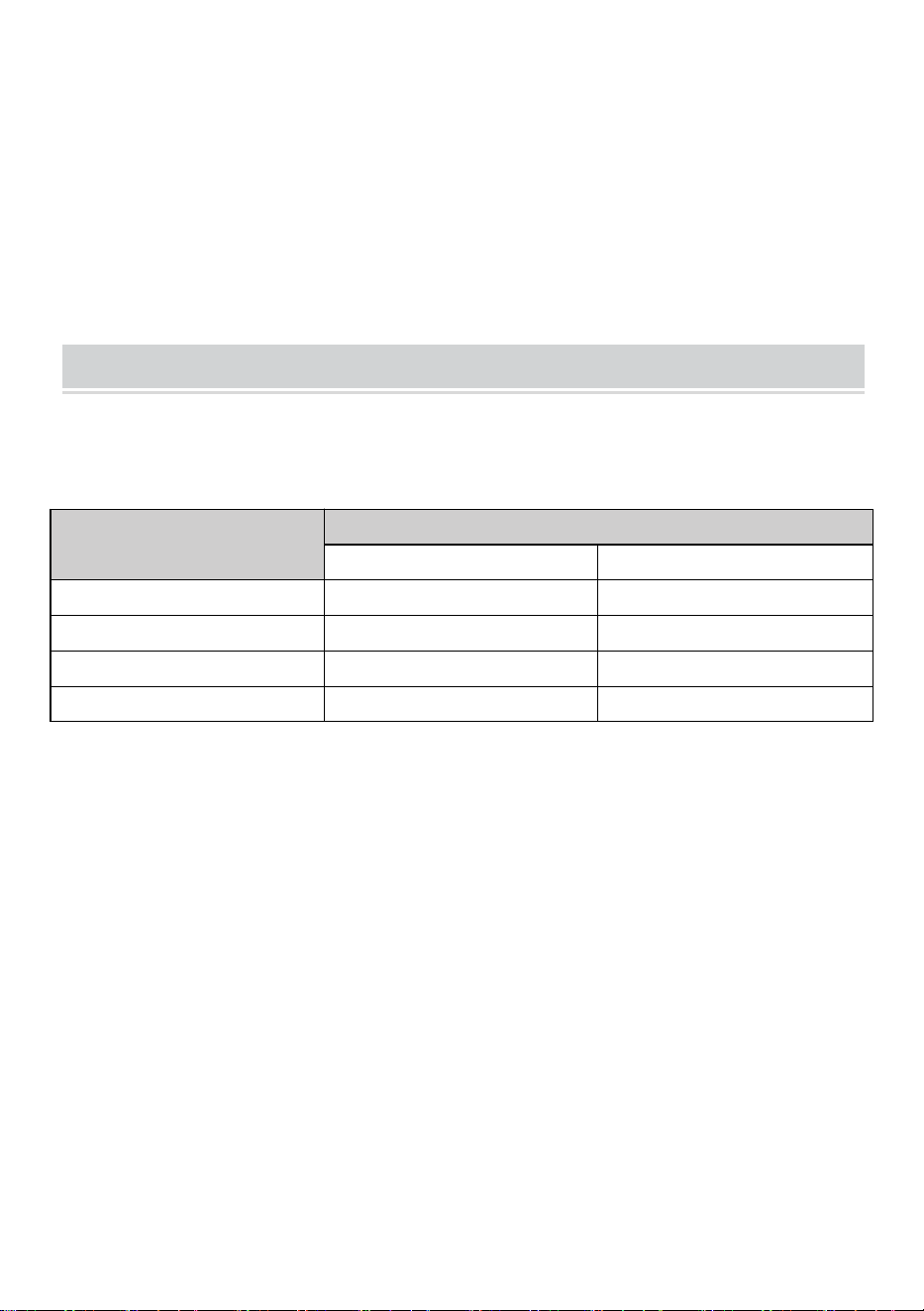
Tabella 1 temperatura ambiente: 25℃
Utilizzo
Per carica flottante
Per uso ciclistico
Batteria da 2
V
Batteria da
6 V
1 batteria da
2V
Batteria da
2V
6V
batteria
1 batteria da
2V
Tensione di
carica/V
2,23~2,25 V
6,8~6,9
Volt
1 3,6~13,7 V
2,40~2,50 V
7,3~7,5
Volt
14.5 ~
15.0V
Massimo
Corrente di
carica/A
0,1C~0,25C
Nota:
1)C: indica il valore Ah della capacità nominale della batteria.
2) Quando la temperatura ambiente è inferiore a 15℃ o superiore a 35℃, il
fattore di compensazione consigliato È -3mV/℃ /cella
(Carica fluttuante ) oppure -4m V/℃/cella (ciclo) a partire dal punto
centrale standard -25℃.
6) La temperatura della batteria durante la carica dovrebbe essere
compresa tra 15℃ e 50℃.
- 4 -
DISCHARGE
Tabella 2
Relazione tra corrente di scarica e Tensione di scarica finale
Corrente di scarica/A
Tensione di scarica finale
Serie 6V/12V
Serie 2V
0,2 °C o inferiore
1,75 V/cella
1,80 V
Da 0,2 °C a 0,5 °C
1,70 V/cella
1,75 V
Da 0,5 °C a 1,0 °C
1,55 V/cella
1,70 V
Sopra 1,0C
1,30 V/cella
1,60 V
Nota:
1) Vedere la tabella sopra, la tensione di scarica finale dovrebbe variare
con la variazione della corrente di scarica.
Attenzione: durante la scarica, la tensione non deve essere inferiore alla
corrispondente tensione di scarica finale;
2) Carica immediata dopo scarica o sovrascarica È addebito per
preservare la durata della batteria;
3) La temperatura della batteria durante la scarica deve essere compresa
tra 15℃ e 50℃.

- 5 -
ATTENTIONS
1) Esaminare l'aspetto della batteria prima dell'uso.
2) Conservare il batteria in un luogo fresco (meglio se sotto i 20℃ o 68°F)
3) Ricaricare la batteria se è stata conservata per più di 3 mesi.
4) Caricare la batteria in un ambiente ben ventilato.
5) Controllare regolarmente le batterie Tensione di carica per assicurarsi
che sia compresa nell'intervallo della Tabella 1.
6) Fissare saldamente la batteria installata nelle apparecchiature.
PROHIBITIONS
1) Bruciare la batteria o metterla vicino al fuoco.
2) Cortocircuitare la batteria.
3) Utilizzare la batteria in un armadio ermetico.
4) Sezionare la batteria.
5) Caricare e scaricare la batteria in modo approssimativo.
6) Tentare di utilizzare una batteria rotta, deformata o che perde.
7) Non sottoporre la batteria a vibrazioni eccessive o scosse violente.
8) Utilizzare in modo misto lotti diversi di batterie.

- 6 -
Made in China



- 3 -
We continue to be committed to provide you tools with competitive price.
"Save Half", "Half Price" or any other similar expressions used by us only represents an
estimate of savings you might benefit from buying certain tools with us compared to the major
top brands and doses not necessarily mean to cover all categories of tools offered by us. You
are kindly reminded to verify carefully when you are placing an order with us if you are
actually saving half in comparison with the top major brands.
- 1 -
Batería NPG12-40Ah
Batería NPG12-100Ah
Batería NPG12-200Ah
Have product questions? Need technical support? Please feel free to
contact us:
CustomerService@vevor.com
NEED HELP? CONTACT US!
This is the original instruction, please read all manual instructions
carefully before operating. VEVOR reserves a clear interpretation of our
user manual. The appearance of the product shall be subject to the
product you received. Please forgive us that we won't inform you again if
there are any technology or software updates on our product.
VALVE REGULATED GEL
BATTERY
- 2 -
Advertencia: Para reducir el riesgo de lesiones, el usuario
debe leer atentamente el manual de instrucciones.
Este producto está sujeto a las disposiciones de la Directiva
Europea 2012/19/CE. El símbolo que muestra un contenedor
de basura tachado indica que el producto requiere una
recogida selectiva de residuos en la Unión Europea. Esto se
aplica al producto y a todos los accesorios marcados con
este símbolo. Los productos marcados como tales no pueden
desecharse con los residuos domésticos normales, sino que
deben llevarse a un punto de recogida para reciclar
dispositivos eléctricos y electrónicos.
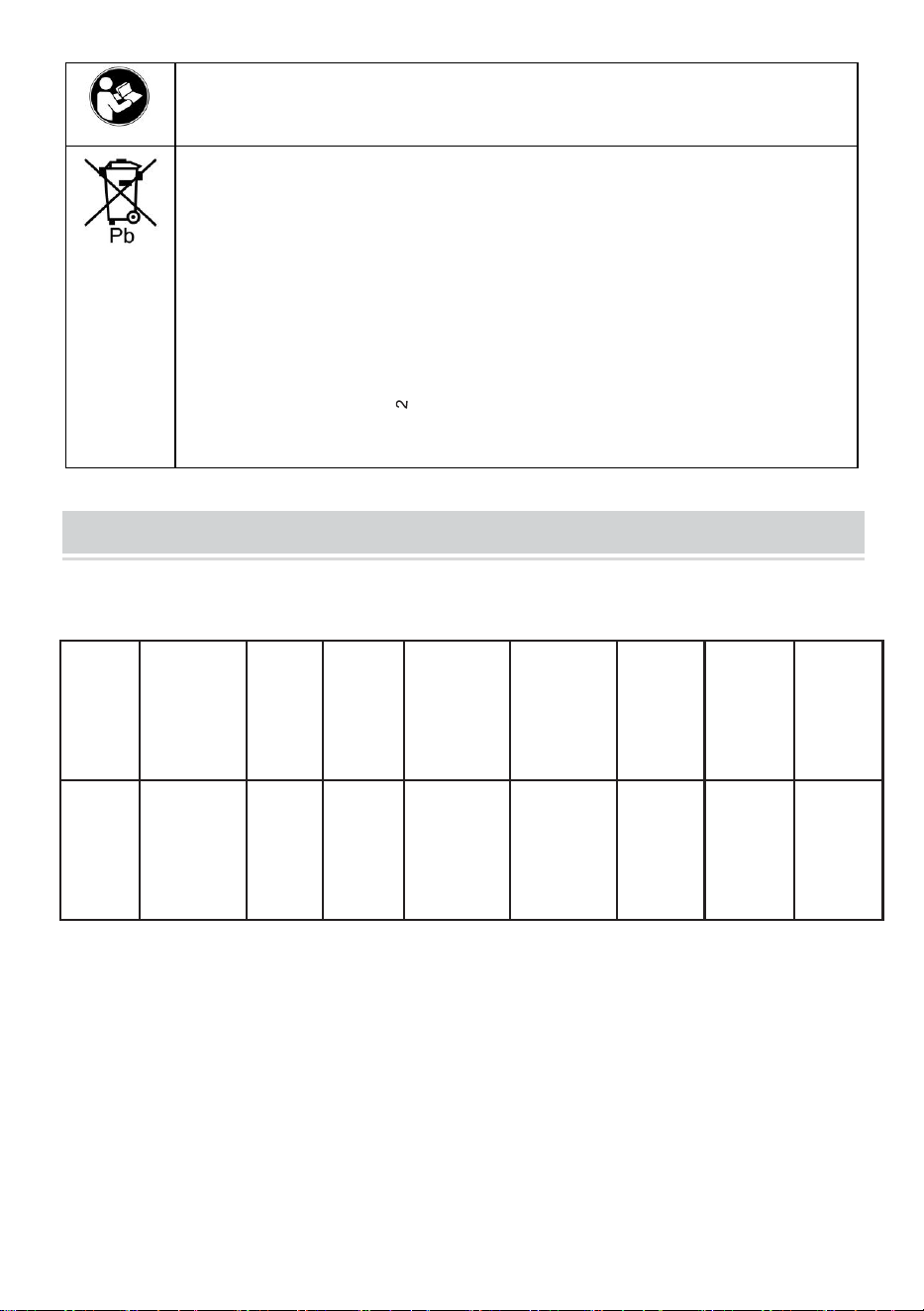
CHARGING
Construcción
Termin
al
Componen
te n t
Positiv
o
lámina
Negativ
o
lámina
Contenedo
r
Cubrir
Separar
Electrólit
o
Válvula
de
segurida
d
Cobre
Materia
prima
Dióxid
o de
plomo
Dirigir
abdominal
es
abdominal
es
Asambl
ea
General
Anual
Ácido
sulfúrico
Goma
- 3 -
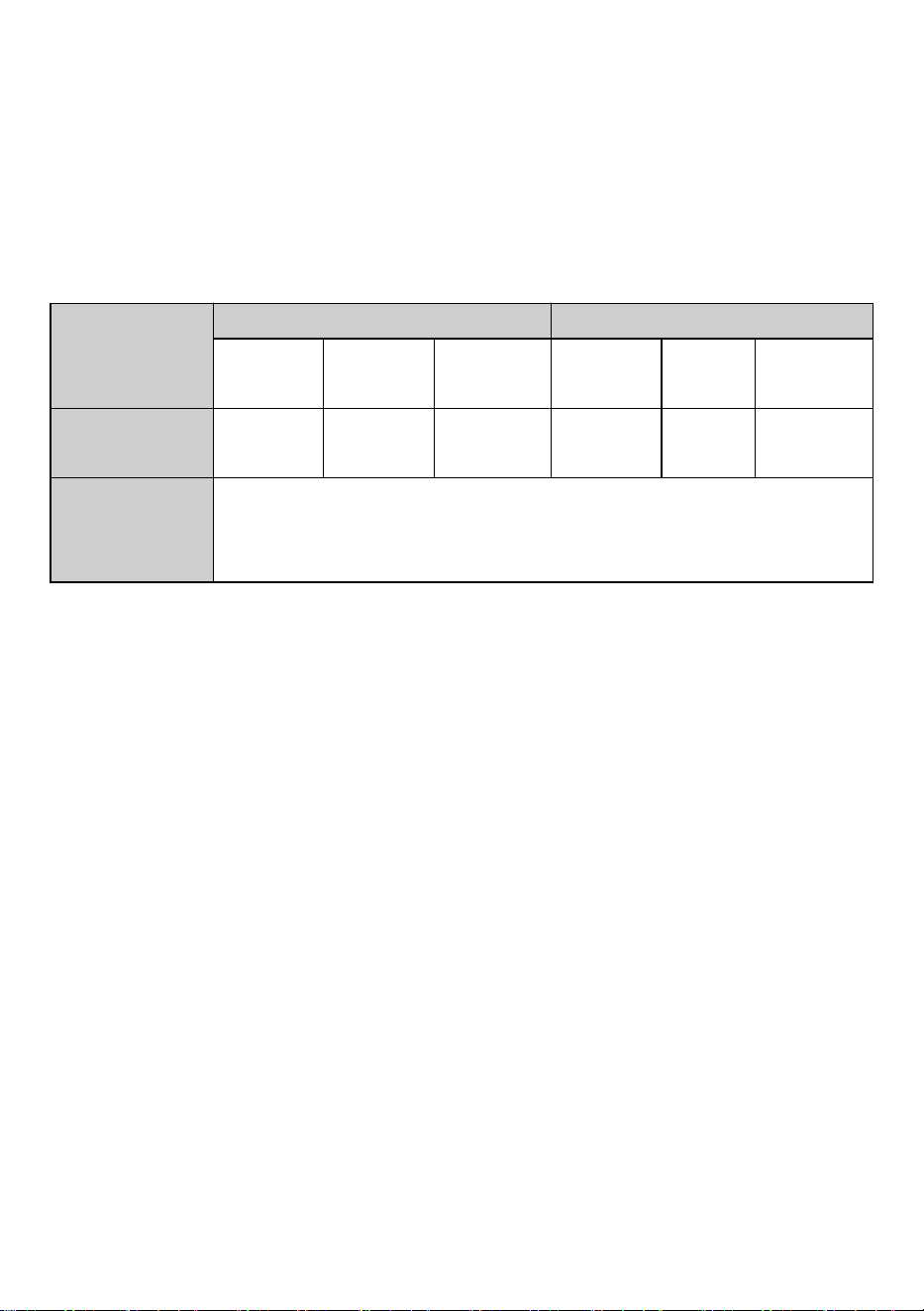
Tabla 1 Temperatura ambiente: 25 ℃
Uso
Para carga flotante
Para uso en bicicleta
Batería de
2 V
Batería de
6 V
1 batería de
2 V
Batería de
2 V
6 V
batería
1 batería de
2 V
Voltaje de
carga/V
2,23 ~ 2,25
V
6,8 ~ 6,9 V
1 3,6 ~ 13,7
V
2,40 ~ 2,50
V
7,3 ~ 7,5
V
14,5 ~ 15,0
V
Máximo
Corriente de
carga/A
0,1 °C ~ 0,25 °C
Nota:
1)C: significa el valor Ah de la capacidad nominal de la batería.
2) Cuando la temperatura ambiente sea inferior a 15 ℃ o superior a 35 ℃,
el factor de compensación recomendado es -3 mV/℃ /celúla
(Cargo flotante ) o -4m V/℃/celda (ciclo) comenzando desde el punto
central estándar -25℃.
7) La temperatura de la batería durante la carga debe estar en el rango de
-15℃~50℃.
- 4 -
DISCHARGE
Tabla 2
Relación entre la corriente de descarga y Voltaje de descarga final
Corriente de descarga/A
Voltaje de descarga final
Serie 6V/12V
Serie 2V
0,2 °C o menos
1,75 V/celda
1,80 V
A partir de 0,2 °C hasta 0,5 °C
1,70 V/celda
1,75 V
A partir de 0,5C hasta 1,0 °C
1,55 V/celda
1,70 V
Por encima de 1,0 °C
1,30 V/celda
1,60 V
Nota:
1) Consulte la tabla anterior, el voltaje de descarga final debe variar con el
cambio de la corriente de descarga.
Atención: Al realizar la descarga, el voltaje no debe ser inferior a su Voltaje
Final de Descarga correspondiente;
2) Carga inmediata tras descarga o sobredescarga es cargar para
mantener la vida útil de la batería;
3) La temperatura de la batería en descarga debe estar en el rango de -
15℃~50℃.

- 5 -
ATTENTIONS
1)Examine la apariencia de la batería antes de usarla.
2)Guardar el Batería en un lugar fresco (mejor por debajo de 20 ℃ o
68 °F)
3)Recargue la batería que haya estado almacenada durante más de 3
meses.
4)Cargue la batería en un ambiente bien ventilado.
5) Inspeccione periódicamente las baterías. Voltaje de carga para
asegurarse de que esté dentro del rango de la Tabla 1.
6)Asegure la batería firmemente instalada en los equipos.
PROHIBITIONS
1) Queme la batería o colóquela cerca del fuego.
2) Cortocircuitar la batería.
3) Utilice la batería en un armario hermético.
4) Desmontar la batería.
5) Cargue y descargue la batería de forma aproximada.
6) Intente utilizar una batería agrietada, deformada o con fugas.
7) Someter la batería a vibraciones excesivas o sacudidas violentas.

- 6 -
8) Uso mixto de diferentes lotes de batería.
Hecho en china



- 3 -
We continue to be committed to provide you tools with competitive price.
"Save Half", "Half Price" or any other similar expressions used by us only represents an
estimate of savings you might benefit from buying certain tools with us compared to the major
top brands and doses not necessarily mean to cover all categories of tools offered by us. You
are kindly reminded to verify carefully when you are placing an order with us if you are
actually saving half in comparison with the top major brands.
- 1 -
NPG12-40Ah
NPG12-100Ah
NPG12-200Ah
Have product questions? Need technical support? Please feel free to
contact us:
CustomerService@vevor.com
NEED HELP? CONTACT US!
This is the original instruction, please read all manual instructions
carefully before operating. VEVOR reserves a clear interpretation of our
user manual. The appearance of the product shall be subject to the
product you received. Please forgive us that we won't inform you again if
there are any technology or software updates on our product.
VALVE REGULATED GEL
BATTERY
- 2 -
Ostrzeżenie: Aby zminimalizować ryzyko obrażeń, użytkownik
powinien uważnie przeczytać instrukcję obsługi.
Ten produkt podlega postanowieniom Dyrektywy Europejskiej
2012/19/WE. Symbol przedstawiający przekreślony kosz na
śmieci na kółkach oznacza, że produkt wymaga oddzielnej
zbiórki odpadów w Unii Europejskiej. Dotyczy to produktu i
wszystkich akcesoriów oznaczonych tym symbolem.
Produktów oznaczonych w ten sposób nie można wyrzucać
razem ze zwykłymi odpadami domowymi, ale należy je oddać
do punktu zbiórki w celu recyklingu urządzeń elektrycznych i
elektronicznych.
CHARGING
Budownictwo
Termin
al
Część
Pozytyw
ny płyta
Negatyw
ny płyta
Konten
er
Okład
ka
Oddzielić
Elektro
lit
Zawór
bezpieczeńst
wa
Miedź
Surowie
c
Dwutlen
ek
ołowiu
Ołów
ABS
ABS
Walne
zgromadze
nie
Kwas
siarko
wy
Guma
- 3 -
Tabela 1 temperatura otoczenia: 25℃
Stosowanie
Do ładunku pływającego
Do użytku rowerowego
bateria 2V
bateria
6V
1 bateria
2V
bateria 2V
6V
bateria
1 bateria 2V
Napięcie
ładowania/V
2,23~2,25
V
6,8~6,9 V
1 3,6~13,7
V
2,40~2,50
V
7,3~7,5 V
14,5 ~ 15,0
V
Maksymalnie
Prąd ładowania/A
0,1C~0,25C
Notatka:
1)C: oznacza wartość Ah znamionowej pojemności akumulatora.
2) Jeśli temperatura otoczenia jest niższa niż 15℃ lub wyższa niż 35℃,
zalecany jest współczynnik kompensacji Jest -3mV/℃ /komórka
(Ładunek pływający ) lub -4m V/℃/ogniwo (cykl), zaczynając od
standardowego punktu środkowego -25℃.
8) Temperatura akumulatora podczas ładowania powinna mieścić się w
zakresie -15℃~50℃.
- 4 -
DISCHARGE
Tabela 2
Związek między prądem rozładowania a Końcowe napięcie rozładowania
Prąd rozładowania/A
Końcowe napięcie rozładowania
Seria 6V/12V
Seria 2V
0,2C lub poniżej
1,75 V/ogniwo
1,80 V
Od 0,2C do 0,5C
1,70 V/ogniwo
1,75 V
Od 0,5C do 1,0C
1,55 V/ogniwo
1,70 V
Powyżej 1,0C
1,30 V/ogniwo
1,60 V
Notatka:
1) Patrz tabela powyżej, końcowe napięcie rozładowania powinno
zmieniać się wraz ze zmianą prądu rozładowania.
Uwaga: Podczas rozładowywania napięcie nie może być niższe niż
odpowiadające mu końcowe napięcie rozładowania;
2) Natychmiastowe ładowanie po rozładowaniu lub nadmiernym
rozładowaniu Jest opłata za podtrzymanie żywotności baterii;
3) Temperatura akumulatora podczas rozładowywania powinna mieścić się
w zakresie -15℃~50℃.

- 5 -
ATTENTIONS
1) Przed użyciem należy sprawdzić wygląd baterii.
2) Przechowuj akumulator w chłodnym miejscu (najlepiej w temperaturze
poniżej 20℃ lub 68°F)
3) Naładuj akumulator, który był przechowywany przez okres dłuższy niż 3
miesiące.
4) Ładuj akumulator w dobrze wentylowanym pomieszczeniu.
5) Regularnie sprawdzaj stan baterii Napięcie ładowania należy sprawdzić,
czy mieści się w zakresie podanym w tabeli 1.
6) Zabezpiecz akumulator mocno zamontowany w urządzeniu.
PROHIBITIONS
1) Spal baterię lub umieść ją w pobliżu ognia.
2) Spowoduj zwarcie akumulatora.
3) Używaj akumulatora w szczelnej szafce.
4) Rozłóż baterię.
5) Ładuj i rozładowuj akumulator w sposób mniej więcej regularny.
6) Próba użycia pękniętej, zdeformowanej lub nieszczelnej baterii.
7) Nie narażaj akumulatora na nadmierne wibracje i gwałtowne wstrząsy.
8) Mieszane użycie różnych partii baterii.

- 6 -
Wyprodukowano w Chinach


- 2 -
Technisch Ondersteuning en E-garantiecertificaat www.vevor.com/support
KLEPGEREGULEERDE GEL-ACCU
GEBRUIKSAANWIJZING
We continue to be committed to provide you tools with competitive price.
"Save Half", "Half Price" or any other similar expressions used by us only represents an
estimate of savings you might benefit from buying certain tools with us compared to the major
top brands and doses not necessarily mean to cover all categories of tools offered by us. You
are kindly reminded to verify carefully when you are placing an order with us if you are
actually saving half in comparison with the top major brands.

- 3 -
- 1 -
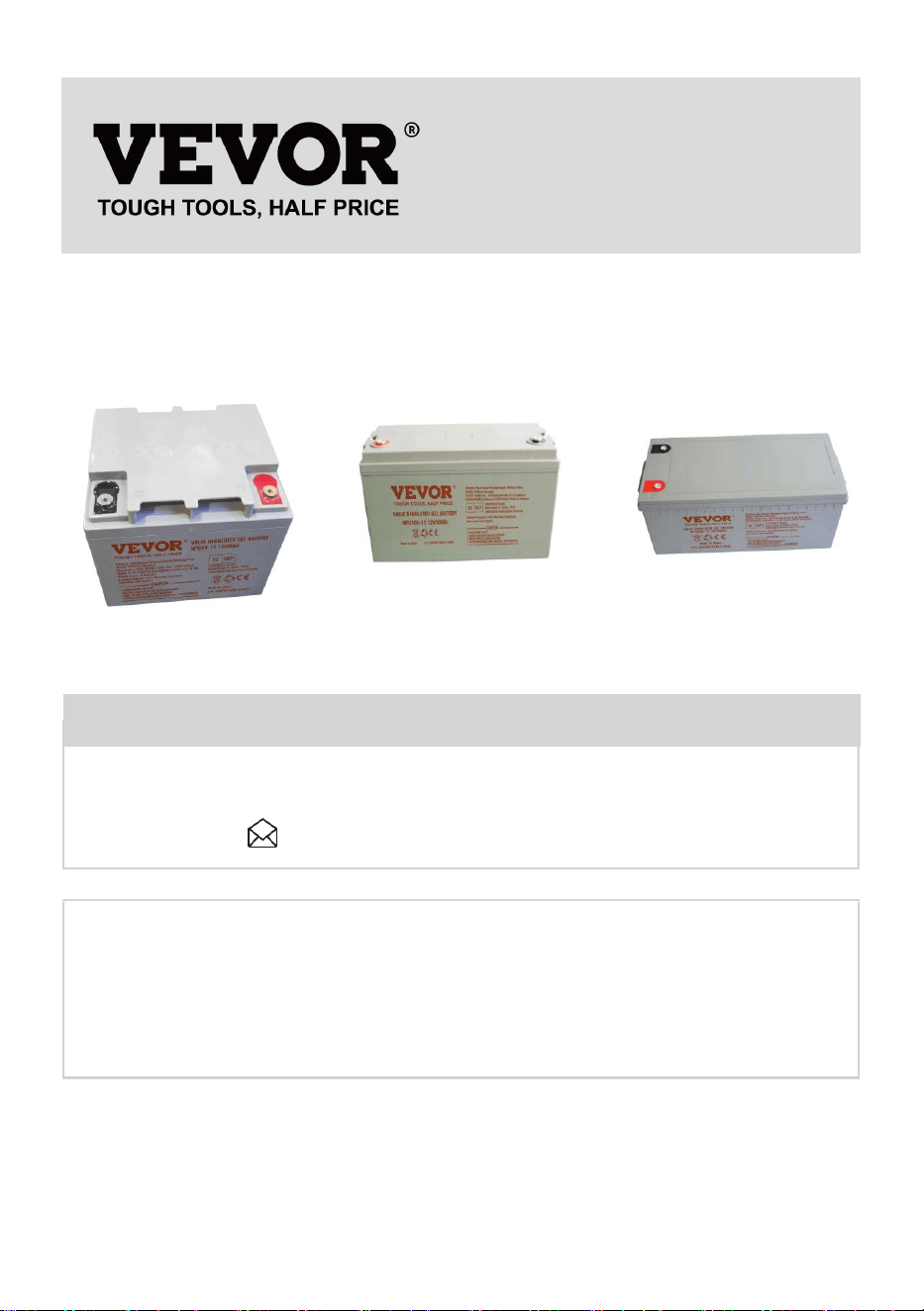
NPG12-40Ah
NPG12-100Ah
NPG12-200Ah
Have product questions? Need technical support? Please feel free to
contact us:
CustomerService@vevor.com
NEED HELP? CONTACT US!
This is the original instruction, please read all manual instructions
carefully before operating. VEVOR reserves a clear interpretation of our
user manual. The appearance of the product shall be subject to the
product you received. Please forgive us that we won't inform you again if
there are any technology or software updates on our product.
VALVE REGULATED GEL
BATTERY
- 2 -
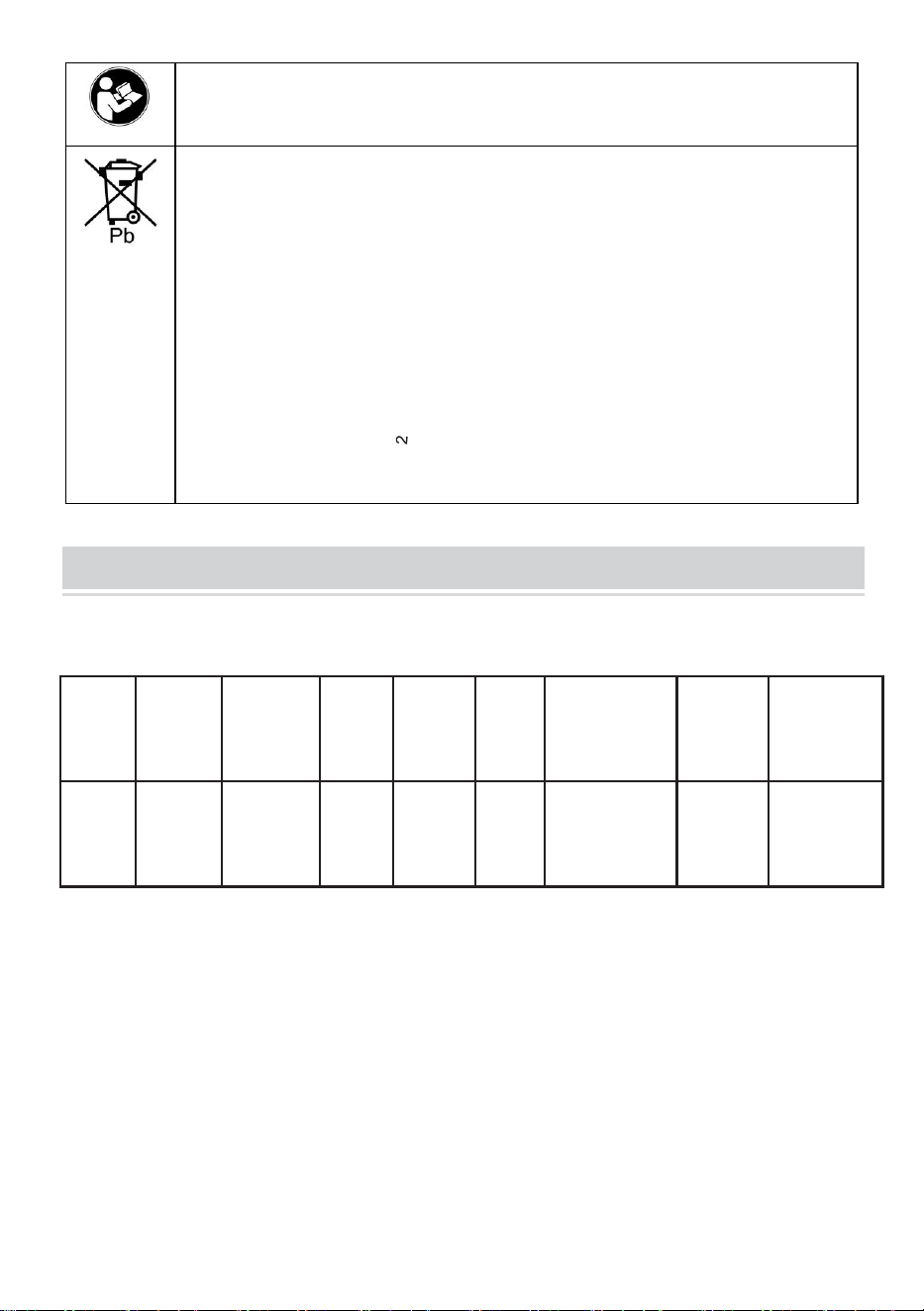
Waarschuwing: om het risico op letsel te verkleinen, moet de
gebruiker de gebruiksaanwijzing zorgvuldig lezen.
Dit product is onderworpen aan de bepalingen van de
Europese richtlijn 2012/19/EG. Het symbool met een
doorgestreepte afvalbak geeft aan dat het product in de
Europese Unie gescheiden afvalinzameling vereist. Dit geldt
voor het product en alle accessoires die met dit symbool zijn
gemarkeerd. Producten die als zodanig zijn gemarkeerd,
mogen niet met het normale huishoudelijke afval worden
weggegooid, maar moeten worden ingeleverd bij een
inzamelpunt voor recycling van elektrische en elektronische
apparaten.
CHARGING
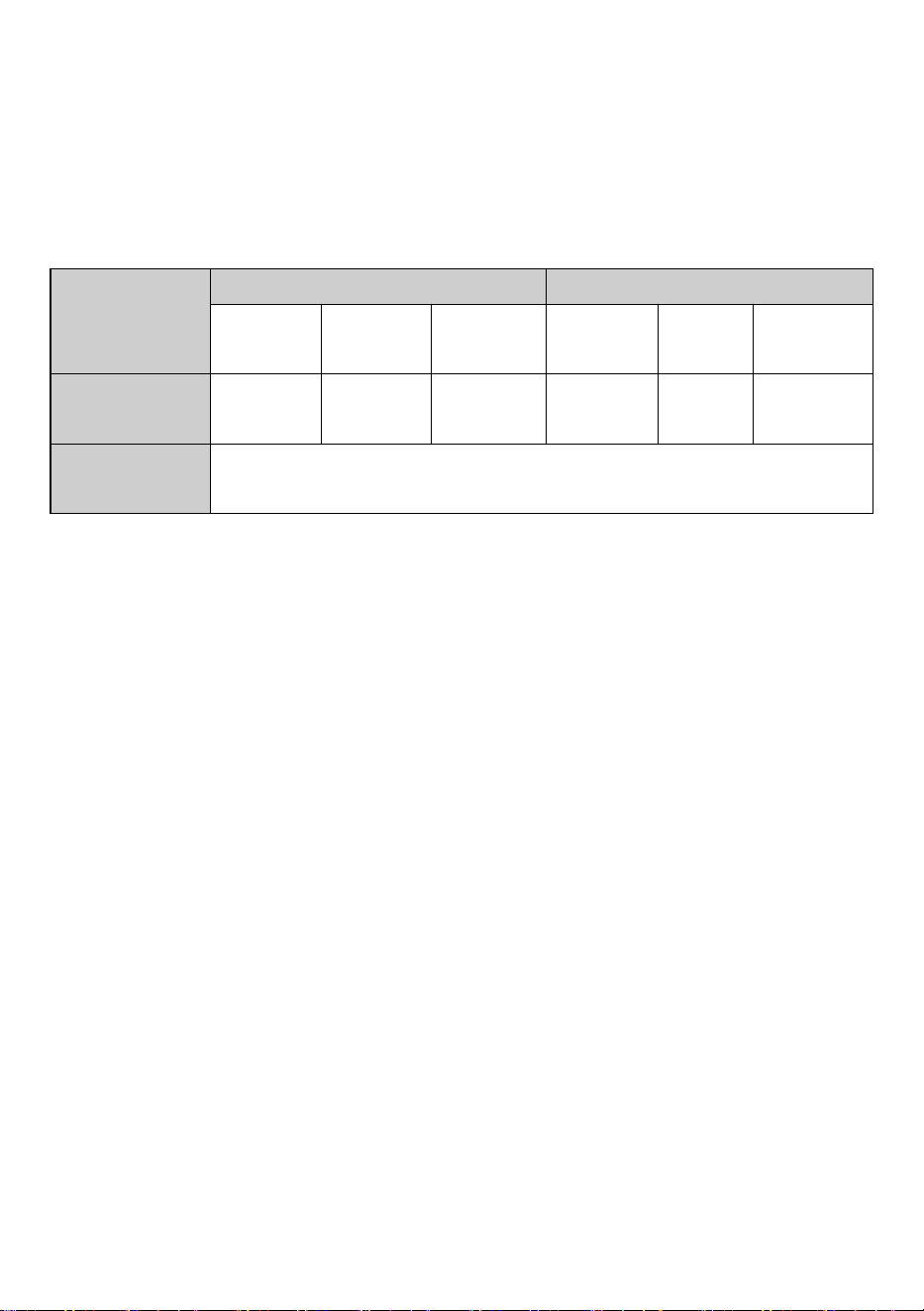
C onstructie
Termin
al
Onderd
eel n t
Positief
bord
Negati
ef
bord
Contain
er
Omsl
ag
Scheiden
Elektroly
t
Veiligheidsk
lep
Koper
Grondst
of
Looddioxi
de
Leidin
g
ABS
ABS
Algemene
Ledenvergade
ring
Zwavelz
uur
Rubber
- 3 -
Tabel 1 omgevingstemperatuur: 25℃
Gebruik
Voor zwevende lading
Voor gebruik tijdens de cyclus
2V-batterij
6Vbatterij
1 2V-batterij
2V-batterij
6V
batterij
1 2V-batterij
Laadspanning/V
2,23~
2,25V
6,8~6,9
Volt
1 3,6
~13,7V
2,40~
2,50V
7,3~ 7,5V
14.5 ~ 15.0
V
Maximaal
Laadstroom/A
0,1C~0,25C
Opmerking:
1)C: betekent de Ah-waarde van de nominale capaciteit van de batterij.
2) Wanneer de omgevingstemperatuur lager is dan 15℃ of hoger dan 35℃,
is de aanbevolen compensatiefactor is -3mV/℃ /cel
(Vlottende lading ) of -4m V/℃/cel (cyclus) beginnend vanaf het standaard
middelpunt -25℃.
9) De temperatuur van de batterij tijdens het opladen moet tussen de 15℃
en 50℃ liggen.
- 4 -
DISCHARGE
Tabel 2
Relatie tussen ontladingsstroom en Eindontladingsspanning
Ontladingsstroom/A
Eindontladingsspanning
6V/12V-serie
2V-serie
0,2C of lager
1,75V/cel
1,80V
Vanaf 0,2C tot 0,5C
1,70V/cel
1,75V
Vanaf 0,5C tot 1.0C
1,55V/cel
1,70V
Boven 1,0C
1,30V/cel
1,60V
Opmerking:
1) Zie bovenstaande tabel. De uiteindelijke ontladingsspanning moet
variëren met de verandering van de ontladingsstroom.
Let op: Bij het ontladen mag de spanning niet lager zijn dan de
corresponderende uiteindelijke ontladingsspanning;
2) Direct opladen na ontlading of overontlading is opladen om de
levensduur van de batterij te behouden;
3) De temperatuur van de batterij tijdens het ontladen moet tussen de 15℃
en 50℃ liggen.

- 5 -
ATTENTIONS
1) Controleer het uiterlijk van de batterij voordat u deze gebruikt.
2) Bewaar de batterij op een koele plaats (het beste onder de 20℃ of 68°F)
langer dan 3 maanden is opgeslagen .
4) Laad de accu op in een goed geventileerde omgeving.
5) Controleer regelmatig de batterijen Controleer of de laadspanning
binnen het bereik van Tabel 1 ligt .
6) Zorg ervoor dat de batterij stevig in de apparatuur is geïnstalleerd.
PROHIBITIONS
1) Verbrand de batterij of houd deze in de buurt van vuur.
2) Sluit de batterij kort.
3) Gebruik de batterij in een luchtdichte kast.
4) Ontleed de batterij.
5) Laad en ontlaad de accu ruwweg.
6) Probeer een gebarsten, vervormde of lekkende batterij te gebruiken.
7) Stel de accu niet bloot aan overmatige trillingen of heftige schokken.
8) Verschillende partijen batterijen gemengd gebruiken.

- 6 -
Gemaakt in China


- 2 -
Teknisk Support och e-garanticertifikat www.vevor.com/support
VENTILREGLERAD GEL-BATTERI
ANVÄNDARMANUAL
We continue to be committed to provide you tools with competitive price.
"Save Half", "Half Price" or any other similar expressions used by us only represents an
estimate of savings you might benefit from buying certain tools with us compared to the major
top brands and doses not necessarily mean to cover all categories of tools offered by us. You
are kindly reminded to verify carefully when you are placing an order with us if you are
actually saving half in comparison with the top major brands.

- 3 -
- 1 -
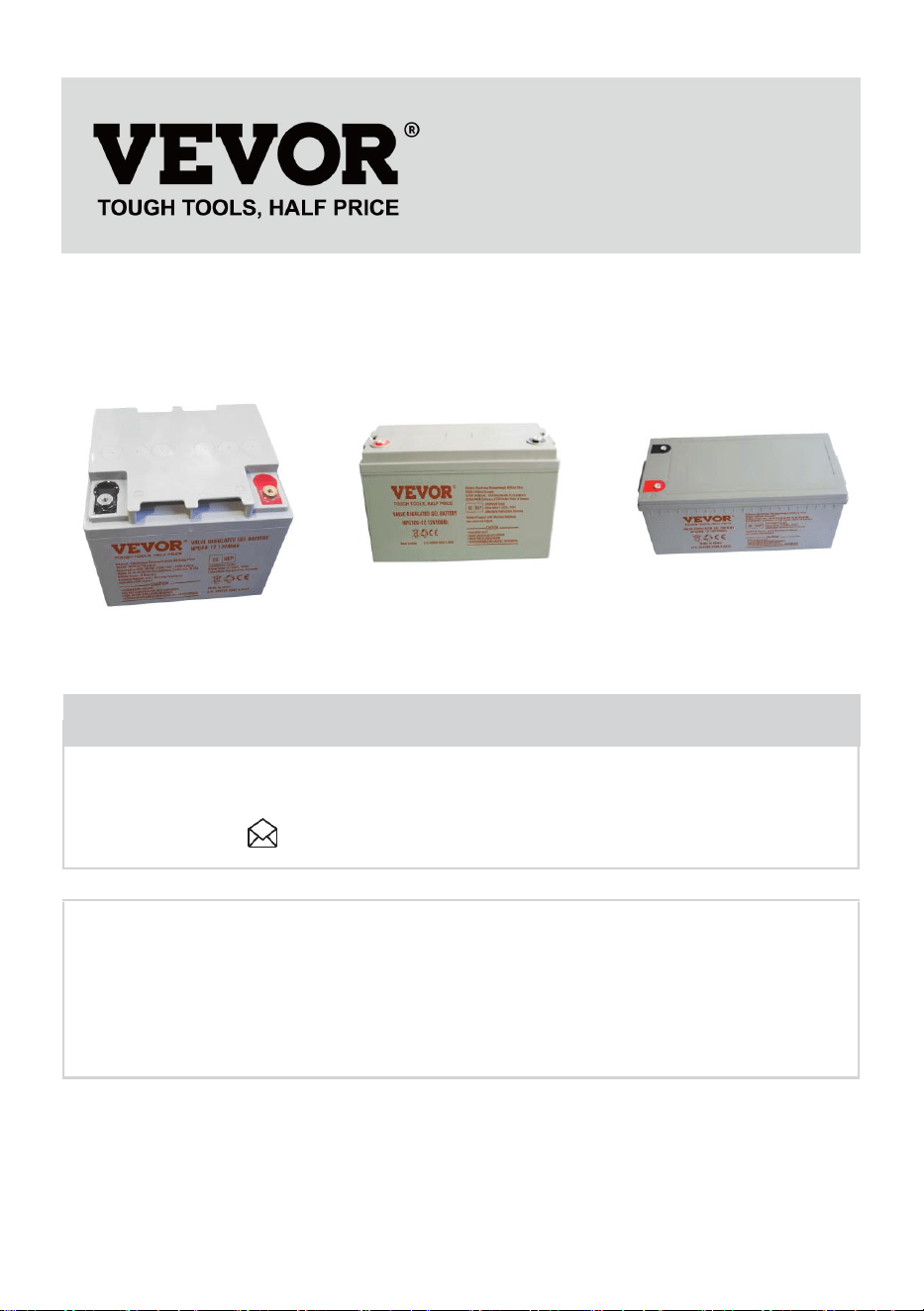
NPG12-40Ah
NPG12-100Ah
NPG12-200Ah
Have product questions? Need technical support? Please feel free to
contact us:
CustomerService@vevor.com
NEED HELP? CONTACT US!
This is the original instruction, please read all manual instructions
carefully before operating. VEVOR reserves a clear interpretation of our
user manual. The appearance of the product shall be subject to the
product you received. Please forgive us that we won't inform you again if
there are any technology or software updates on our product.
VALVE REGULATED GEL
BATTERY
- 2 -
Varning - För att minska risken för skada måste användaren
läsa instruktionerna noggrant.
Denna produkt omfattas av bestämmelserna i det europeiska
direktivet 2012/19/EC. Symbolen som visar en soptunna
korsad anger att produkten kräver separat sophämtning i EU.
Detta gäller för produkten och alla tillbehör märkta med denna
symbol. Produkter märkta som sådana får inte slängas
tillsammans med vanligt hushållsavfall, utan måste lämnas till
en insamlingsplats för återvinning av elektriska och
elektroniska apparater
CHARGING
C konstruktion
Termina
l
Compone
n t
Positiv
tallrik
Negati
v
tallrik
Contaie
r
Täck
a
Separar
Elektrolyt
Säkerhetsvent
il
Koppar
Råmateri
al
Blydioxi
d
Leda
ABS
ABS
årsstämm
a
Svavelsyr
a
Gummi
- 3 -
Tabell 1 omgivningstemperatur: 25 ℃
Användande
För flytande laddning
För cykelbruk
2V batteri
6V
batteri
1 2V
batteri
2V batteri
6V
batteri
1 2V batteri
Laddningsspänning/V
2,23~2,25
V
6,8~6,9
V
1 3,6~13.
7V
2,40~2,50
V
7,3~7,5
V
14,5 ~ 15,0
V
Max
Laddningsström/A
0,1C~0,25C
Notera:
1)C: betyder Ah-värdet för batteriets nominella kapacitet.
2) När omgivningstemperaturen är under 15 ℃ eller över 35 ℃, den
rekommenderade kompensationsfaktorn är -3mV/℃ /cell
(Flytande laddning ) eller -4m V/℃/cell (cykel) stirrar från
standardcentrumpunkten -25 ℃.
10) Batteritemperaturen vid laddning bör ligga inom intervallet -15℃~50℃.
- 4 -
DISCHARGE
Tabell 2
Förhållande mellan Urladdningsström och Slutlig urladdningsspänning
Urladdningsström/A
Slutlig urladdningsspänning
6V/12V-serien
2V-serien
0,2C eller lägre
1,75V/cell
1,80V
Från 0,2C till 0,5C
1,70V/cell
1,75V
Från 0,5C till 1,0C
1,55V/cell
1,70V
Över 1,0C
1,30V/cell
1,60V
Notera:
1) Se ovanstående tabell, den slutliga urladdningsspänningen bör variera
med ändringen av urladdningsströmmen.
Observera: Vid urladdning får spänningen inte vara lägre än motsvarande
slutliga urladdningsspänning;
2) Omedelbar laddning efter urladdning eller överurladdning är ladda för att
behålla batteritiden;
3) Batteriets temperatur vid urladdning bör vara i intervallet - 15 ℃ ~ 50 ℃.

- 5 -
ATTENTIONS
1) Undersök batteriets utseende före användning.
2) Lagra batteri på en sval plats (bäst under 20 ℃ eller 68 ° F)
3) Ladda batteriet som har lagrats i mer än 3 månader.
4) Ladda batteriet i en välventilerad miljö.
5) Kontrollera regelbundet batterier Laddningsspänning för att säkerställa
att den ligger inom intervallet för diagram 1.
6) Säkra batteriet ordentligt installerat i utrustning.
PROHIBITIONS
1) Bränn batteriet eller ställ det nära eld.
2) Kortslut batteriet.
3) Använd batteriet i ett lufttätt skåp.
4) Dissekera batteriet.
5) Ladda och ladda ur batteriet grovt.
6) Försök att använda ett sprucket, deformerat eller läckande batteri.
7)Utsätt batteriet för kraftiga vibrationer eller våldsamma skakningar.
8) Blandad användning av olika batcher av batteriet.
Tillverkad i Kina

- 6 -