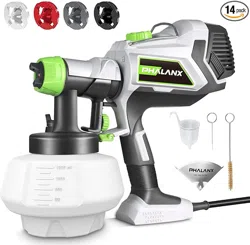

PSG0082-US
MANUAL OF INSTRUCTIONS
WARNING: READ INSTRUCTIONS MANUAL BEFORE USING PRODUCT
ELECTRIC SPRAY GUN

1
HVLP ELECTRIC SPRAY GUN
PSG0082-US
High Speed Motor Drive
MANUAL OF INSTRUCTIONS
Contents Page
S a f e t y I n s t r u c t i o n ______________________________ _ 2
P r o d u c t I n t r o d u c t i o n _ _ _ ____ _ ___ _ _ _____ _ ____ _ ____ _ 4
O p e r a t i o n I n s t r u c t i o n _ _ _ _ _ _ _ _ _ _ _ _ _ _ _ _ _ _ _ _ _ _ _ _ _ _ _ _ _ 7
C l e a n i n g a n d Mai n t e n a n c e ______ _____ _____________ __ _ _ 1 0
C u s t o m e r S e r v i c e & G u a r a n t e e _ _ _ _ _ _ _ _ _ _ _ _ _ _ _ _ _ _ _ _ _ 1 4
WARNING: READ INSTRUCTIONS MANUAL BEFORE USING PRODUCT.

2
SAFETY GULDELINE - DEFINITIONS
It is important for you to read and understand this manual. The information it contains relates to protecting
YOUR SAFETY and PREVENTING PROBLEMS. The symbols below are used to help you recognize this
information.
Danger! Indicates an imminently hazardous
situation which, if not avoided, will result in death or serious
injury.
Warning! Indicates a potentially hazardous situation which, if not avoided, could result in death or serious
injury.
Caution! Indicates a potentially hazardous
situation which, if not avoided, may result in minor or
moderate injury.
Notice! Used without the safety alert symbol
indicates a
potentially hazardous situation which, if not avoi
ded,
may result in property damage.
The following are explanations of important safety hazard pictorials in this manual.
Read and understand the instruction manual.
Fire hazard.
Explosion hazard.
Respiratory hazard
_Electric shock hazard.
IMPORTANT SAFETY INSTRUCTIONS
SAVE THESE INSTRUCTIONS: To reduce the risks of fire or explosion, electrical shock and the injury to
persons, read and understand all instructions included in this manual. Be familiar with the controls and the
proper usage of the equipment.
This product is intended for household use only.
Warning! Fire or explosion hazard. Solvent and spray material fumes can explode or ignite.
Severe
injury or property damage can
occur.
To avoid these risks, take the following preventions:
•
Exhaust and fresh air introduction must be provided to keep the air within the spray are free from
accumulation of flammable vapors.
•
Avoid all ignition sources such as static electricity sparks, open flames, pilot lights, hot objects, lit
tobacco products, and sparks from connecting and dis
connecting power cords or working light switches.
•
Fire extinguisher equipment shall be present and working.
•
Keep area clean and free of paint or solvent containers, rags, and other flammable material
•
Follow the material and solvent manufacturer’s safety precautions and warnings.
•
Do not spray flammable or combustible materials near an open flame or sources of ignition such

3
as lit tobacco products, motors, and electrical equipment.
•
Know the contents of the spray materials and their cleaning solvents. Read all Material Safety
Data Sheets (MSDS) and container labels provided with the spray materials and solvents. Follow
the spray material and
solvent manufacturer’s safety instructions.
•
Do not smoke in spray area.
•
Do not use materials with a flashpoint below 21°C (70°F). Flashpoint is the temperature (see
coating supplies). Flashpoint is the temperature that a liquid can produce enough vapors to ignite.
Warning! Explosion hazard due to incompatible materials. Severe injury or property
damage can occur.
To avoid these risks, take the following preventions:
► Do not use bleach.
► Do not use halog enate d hy droc arb on solvents such as methylene chloride and 1,1,1
- trichloroethane.
They are not compatible with aluminum and may cause an explosion. If you are unsure of
a material’s compatibility with aluminum, contact your coating supplier.
GENERAL SAFETY WARNINGS
Warning! Hazardous vapors. Spray materials, solvents, and other materials can be harmful if
inhaled or come in contact with the body. Vapors can cause severe nausea, fainting, or
poisoning.
To avoid these risks, take the following preventions:
•
Use a respirator or mask if vapors can be inhaled. Read all instructions supplied with the mask to be sure
it will provide the necessary prote
ction.
•
Wear protective eyewear.
•
Wear protective clothing as required by coating manufacturer.
Warning! Electric shock hazard. May cause severe injury.
To avoid these risks, take the following preventions
•
Keep electrical cord plug and sprayer trigger free from spray material and other liquids. Never hold cord
at plug connections to support cord. Failure to observe may result in an electrical shock
•
Never immerse electrical parts in water or any other liquid. Wipe the exterior of the sprayer with a damp
cloth for cleaning. Always make sure the sprayer is unplugged before taking it apart for cleaning.
•
Do not expose unit to rain or wet conditions.
•
Do not abuse the cord. Never use the cord to carry the unit or pull the plug from an outlet. Keep cord
away from heat, oil, sharp edges or moving parts.
•
Replace damaged cords immediately.
Warning! General. To Reduce the risk of
severe injury or property
damage.
To avoid these risks, take the following preventions:
•
Do not aim the gun at, or spray any person, including self, or animal.
4
•
Do not spray outdoors on windy days
•
Wear protective clothing to keep spray material off skin and hair.
•
Hose may become hot and cause skin burn.
•
Follow all appropriate local, state, and national codes governing ventilation, fire prevention, and
operation.
•
Always use appropriate gloves, eye protection and a respirator or mask when spraying, thinning, mixing,
pouring, or cleaning.
•
Do not operate or spray near children. Keep children away from equipment at all times. Keep sprayer
out of the reach of children.
•
Do not overreach or stand on an unstable support. Keep effective footing and balance at all times.
•
Stay alert and watch what you are doing. Do not operate the unit when fatigued or under the influence of
drugs or alcohol.
•
Read all instructions and safety precautions for equipment and spray m ateri al before operating
any equipment.
•
Hearing protection is recommended for extended use.
ELECTRIAL SAFETY
This tool is double insulated therefore no earth wire is required. Always check that the power supply
corresponds to the voltage on the rating plate.
•
If the supply cord is damaged, it must be replaced by the manufacturer or an authorized Service Centre
in order to avoid a hazard.
•
When using the tool outdoors, only use extension cables intended for outdoor use. A suitable rated
extension c
able of up to 30 meters can be used without loss of power
•
Electric safety can be further improved by using a high sensitivity.
INFORMATION ABOUT OUR HVLP SPRAY GUN TECHNICAL DATA
EXTENSION CODE
When using an extension cord, be sure to use one heavy enough to carry the current your product will
draw. An undersized cord will cause a drop in line voltage resulting in loss of power and overheating. If an
extension cord is to be used outdoors, it must be marked with the suffix W-A after the cord type
designation. For example, a designation of SJTW -A would indicate that the cord w
ould be appropriate
for outdoor use.
Flow Rate 1100 ml/min
Max. Viscosity
150 DIN-s
(Runout time: 150 seconds)
Voltage
120 V
Current 5.0 A
Canister Capacity
1200 ml

5
For proper size cords see chart guide for extension cord usage.
Type of cable
Up to 5 meters from 5 to 10 meters
Parallel
18AWG
16AWG
COMPONENTS
SET – UP
Warning! Be sure to use approp riate protective gear and unplug unit.
Warning! Make sure area is well ventilated and free of flammable vapors.
Never point the spray gun at any part of the body.
Attaching spray unit to spray gun handle
1.
Find and aim at the “lock” position on the main housing assembly, and insert the spray gun into the main
housing assembly into place. Then turn to the end as clockwise direction
2. Turn the buckle on main housing to lock the gun set into place.

6
Aligning the pickup tube (Suction tube)
Note: By pointing the pickup tube in the proper direction, you will not have to refill the canister as often.
If you are going to be spraying in a downward direction, the angled end of the pickup tube should be pointing
toward the front of gun.
If you are going to be spraying in an upward direction. The angled end of the pickup tube should be
pointing to
ward the rear of the gun as below left photo shown.
If you are going to be spraying in a downward direction, the angled end of the pickup tube should be pointing
toward the front of gun as above right photo shown.
MATERIAL PREPARATION
Liquid material preparation Tip:
Make sure the type of material you use can be cleaned with either mineral spirits or paint thinner (for oil-based
paints) or a warm water and soap solution (for water soluble paints like latex). Use drop cloths during pouring,
mixing, and viscosity testing of materials to be sprayed to protect your floors and anything else in the spraying
area that
you wish to remain untouched.
The liquid being sprayed may need to be thinned (diluted) before starting. When thinning, use the proper liquid thinner
recommended on the container by the material Manufacturer.
Warning! Do not use materials with a flashpoint below than 21°C (70°F).
A viscosity test cup is provided to determine the “runout time” of the material being used.
Warning! Some spray materials contain chemicals known to the State of California to cause cancer,
birth defects or other reproductive harm. To reduce your exposure, wear appropriate safety equipment such as
face masks, gloves, and other appropriate protective equipment. Please review and follow the safety
precautions on the paint container.
7
1. Before measuring for the proper viscosity, stir the material thoroughly.
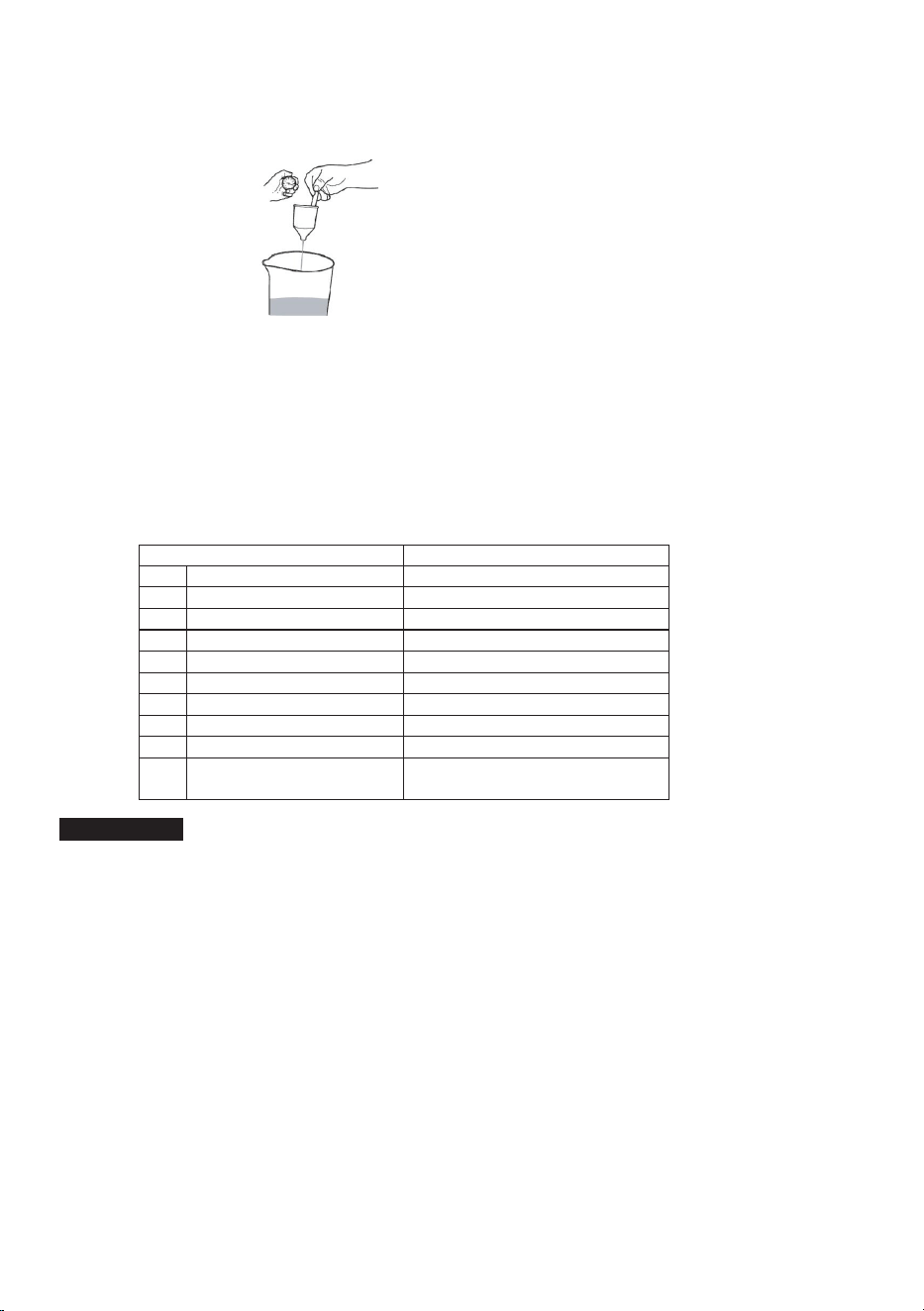
2. Dip the viscosity cup into the material being sprayed and fill the cup completely.
3. With the cup held over the material container, measure the amount of time it takes for the stream of
material flowing out to “break” or stop being a constant stream out of the bottom of the cup ( 150 seconds
or less). This is the “runout time”
. Refer to the thinning table below for information on the thinning required
for different materials. If material needs thinning, add the appropriate liquid thinning material
recommended by the manufacturer.
4. It is possible to spray latex paint with this unit, however, the required thinning may exceed material
manufacturer’s recommendation. Thin latex paint so that it runs through viscosity cup within150 sec
onds.
The operator should consider the type of application and final location of the project when spraying a
material that requires more than 150 seconds to
run through the viscosity cup.
Thinning Table
OPERATION
<BEFORE SPRAYING>
Preparation tips
Always stir and strain the material thoroughly before use. If need, please use the included paper filter to filter
out the impurities.
With any spraying job you should always ensure that you have properly prepared the surface to get the best
finish. That is, all surfaces are free from dust, dirt, rust and grease.
Lightly pressure wash decks or exterior
surfaces and ensure that they
are dry before spraying.
Even though HVLP sprayers have very little overspray, it is recommended that you mask all edges and
other areas and use drop cloths to protect your floors and anything else in the spraying area that you
wish to remain untouched.
Material
Runout Time
1
Oil Enamel
25-40
2
Oil based primer
30-45
3
Oil stain
No thinning required
4
Clear sealer
No thinning required
5
Polyurethane
No thinning required
6
Varnish
20-50
7
Lacquer sanding sealer
25-35
8
Lacquer
25-35
9
Automotive finishes
20-40
10
Latex paint
Follow manufacture’s
recommendations

8
Skin that forms on the top of paint can clog the sprayer. Remove skin before mixing. Strain with a funnel
with a filter attached or through hosiery to remove any impurities that could clog system.
Before starting have gloves, paper towels, rags etc. available for unexpected spills.
Filing the Canister
1.Unscrew the Canister.
Stand the canister on a smooth and horizontal surface.
2.Pour the prop erly th
inned and strained material to be sprayed i
nto the canister.
3.Clean any residual liquid from the threads or sides of the canister and sprayer.
4.Starting the threads evenly, screw the lid, completely onto the top fill canister. Check the lid to
make sure it is threaded on squarely and completely before picking up the sprayer.
<SPRAYING>
Adjust Spray Pattern
The spray pattern shape is adjusted by turni
ng the ears of the air cap to either the vertical, horizontal, or
diagonal position. The position o
f the air cap and the corresponding spray pattern shape are shown below.
Material Flow Adjustment
Set the material volume by turning the regulator on the trigger of the spray gun.
Turn to “+” mark direction increases the flow of liquid and turn to “- “direction decrease the flow of liquid.
For thicker m
aterials, it is recommended that you start with the highest material flow setting and then gradually
decrease the flow to suit your particular spraying needs.
For thinner materials, it is recommended that you start with a low material flow setting and then gradually
increase the flow to suit your particular spraying needs.
Always test the spray pattern on scrap cardboard or similar material first, Beg
in with flow control
knob on highest flow setting. If less flow is desired, dial the flow control knob to decease the flow of liquid.
Heavier, thicker material should be sprayed with the flow control knob on high flow setting. Thinner material

9
should be sprayed with the flow control knob on low flow setting.
Proper Spraying Technique
If spraying with an HVLP spray system is new or unfamiliar to you. It is advisable to practice on a piece of
scrap wood or cardboard before beginning on your intended workpiece.
Surface Preparation
All objects to be sprayed should be thoroughly cleaned before spraying material on them. Areas not to be
sprayed may
, in certain cases, need to be masked or covered.
Spray Area Preparation
The spray area must be clean and free of dust in order to avoid blowing dust onto your freshly sprayed surface.
Nozzle size pickup
Select right size of nozzle based upon the material you are going to use and the surface targeting finishing.
The small size of nozzle reflected to finer coating. Dilute material if needed for better q
uality of the coating
Nozzle
Recommended
Material
Project Example
1.5
sealers, stains,
enamel, varnish, dyes
Table, chair, bicycle, shutter, cabinets, wooden
toy, model
2.0
polyurethane, chalk
and milk type paint
Railings, multi-frame window frames, heating
pipes, boats, yard furniture, garage doors, metal
garden fences.
2.5
low viscosity primer,
wall paint
Internal wall, wooden garden fence, wooden pile,
corridor
3.0
Latex plus primers,
primer, wall paint,
latex, oil enamels
External walls, outdoor floors, deck
Never trying spray material which viscosity higher than the spray gun can withstand, PSG0082 viscosity spec
at MAX 150-DINs
HOW TO SPRAY PROPERLY
Position the spray gun perpendicular to and 2 or more inches from the spray surface, depending on the spray
pattern size desired
Spray parallel to the surface with smooth passes at a consistent speed as shown below, doing this will avoid
irregularities in the fi
nish. (.i e runs and sags)
Always apply a thin coat of materi
al on the first pass and allow to dry befo re applying a second, slightly heavier
coat.
Keep stroke smooth and at an even speed
Always spray area from a minimum of 50mm (2 inches) to a maximum of 300mm (12 inches). To get an even
spray distribution. Always keep your arm at the same distance from the surface you are spraying and avoid flex
wrist
while spraying
Light coat Heavy coat Light coat

10
When spraying, always trigger the spray gun after spray pass has begun and release trigger before stopping
the pass. Always keep the gun pointed squarely at the spray surface and overlap passes slightly to obtain the
most consistent and professional finish possible.
When you quit spraying for any length of time, turn the power unit OFF and place the spray gun into the built-in
dock on the power unit.
A commonly used method for spraying a large surface is the “crisscross” pattern. This is done by spraying in
horizontal strips and then crossing over these strips with vertical strips.
Avoid spraying too heavily in any one area. Several lighter coats are better than one heavy coat which can
lead to running and dripping. Remember that the flow control knob regulates the amount of liquid that can be
sprayed. If r
uns or drips do occur, have a dry paint brush on hand to smooth them out.
<AFTER SPRAYING>
CLEAN UP
Before you begin:
When cleaning, use the appropriate cleaning solution (warm, soapy water for latex materials; mineral sprits for
oil-based material)
Special cleanup instruction for use with flammable solvents (must have a flashpoint above 70°F
(21°C)
•
Always flush spray gun outside
•
Area must be free of flammable vapors
•
Cleaning area must be well-ventilated
•
Do not submerge power unit
1.
Unplug tool. Trigger the spray gun s
o that the material inside the spray gun flows back into the canister
2. Unscrew the canister. Empty any remaining material back into the material container.
3. Pour a small amount of the appropriate cleaning solution into the canister. Clean canister and pickup tube
and properly dispose of cleaning solution. Refill the canister with NEW cleaning solution.
4. Attach the canister to the gun, plug in the cord.

11
5. Spray the solution through the gun for 2 or 3 seconds in a safe area. Unplug tool and trigger the spray
gun so that the material inside the spray gun flows back to canister. Wipe the exterior of the cup and gun
until clean.
6. Unscrew tip collar, air cap, Nozzle, pickup tube, check valve if there is any paint inside or outside.
7. Clean the canister, pickup tube, air
cap, tip collar and nozzle with a cleaning brush and appropriate
cleaning solution.
IMPORTANT: Never clean nozzle or air holes in the spray gun with sharp metal objects. Do not use
solvents or lubricants containing silicone.
8. Twist and separate the spray gun from the handle. Clean the rear of the spray gun (a) with the
appropriate cleaning solution. Use a thin layer of petroleum jelly to lubricate the O-ring
(b).
9. Dry all parts thoroughly.
10. Place a drop of household oil into the inside of the sprayer from the hole for assembling the spray tip.
11.
Reassemble spray gun
Note: Spray nozzle can only be assembled in one direction that the notch of the nozzle must align with the skirt
on spray unit housing.
Note: The spray tip must be assembled in the sprayer with the bumps on the spray tip in vertica
l direction.

12
Note: Assemble the pickup tube by firmly pushing them onto the inlet in the spray.
Attention! The check valve muse be put back in place by right direction with nipper point upward. Otherwise,
tool might get slog very easily. If check valve is damaged or missing, please replace with new one (3x
included)
MAINTENANCE
Use only mild soap and damp cloth to clean the power unit. Never let any liquid get inside the power unit;
never immerse any part of the power unit into a liquid.
Important! To assure product SAFETY and RELIABILITY, repairs, maintenance and adjustment
(other than those listed in this manual) should be performed by authorized s erv ice c ent ers or
other qualified s ervice personnel, always using identi
cal replacement parts.
The power unit contains washable / reusable filter. Check the filter before and after each use. If dirty,
wash with warm water and allow to air dry before re-installing or replace it if it is excessively dirty by
below two steps.
1. Press at the middle tap area on each side of filter cover as arrow pointed to remove the filter cover.
2. Replace the dirty filter from the power uni
t and replace with new ones. Secure the covers back onto
the power unit.
IMPORTANT: Never operate your unit without the air filter. Di
rt could be sucked in and interfere with the
function of the unit.
STORAGE
Make sure unit is clean and dry before storing. Store unit indoors in a dry location, to prevent damage, wrap
the electrical cord so that it is not crimped during storage.
ACCESSORIES
Recommended accessories for use with your product are available from your local deale r or authorized service
center.
Warning: The use of any accessory not recommended for use with this product could be hazardous.
PROTECTING THE ENVIRONMENT
Separate collection. This product must not be disposed of with normal household waste. Should you
find one day that your product needs replacement, or if it is of no further use to you. Do not dispose of it
with household waste. Make this product available for separate collection.
Separate collection of used products and packaging allows materials to be recycled and used again.
Re-use of recycled materials helps prevent environmental pollution and reduce
s the demand for raw
materials. Local regulations may provide for separate collection of electrical products from the
household, at municipal waste sites or by the retailer when you purchase a new product
16
19
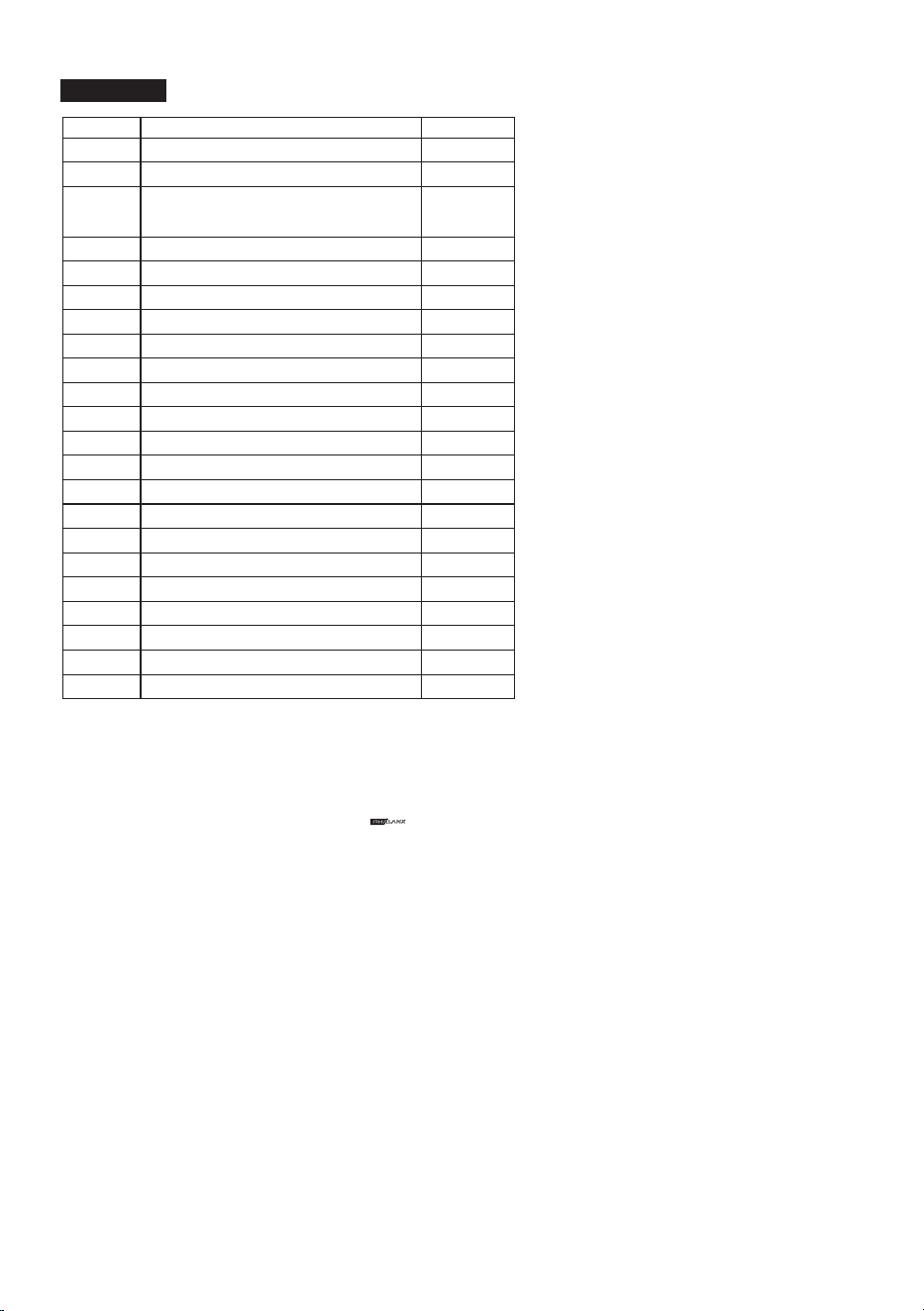
PART LIST
Part #
Part Description
Quantity
1
Nut
1
2
Air Cap
1
3
Nozzles
(
Φ
1.5, 2.0, 2.5, 3.0 mm )
4
4
Spray tip
1
5
Spray unit housing
1
6
Trigger holder
1
7
Check valve tube seat
1
8
Material flow adjust knob
1
9
Check valve tube
1
10
Check valve cap
1
11
Check valve
1
12
Check valve seat
1
13
Suction tube
1
14
Sealing cup
1
15
Container
1
16
Power pressure adjust knob
1
17
Hook
1
18
Filter cover
1
19
Quick release lock
1
20
Viscosity cup
1
21
Cleaning needle
1
22
Cleaning brush
1
13
14
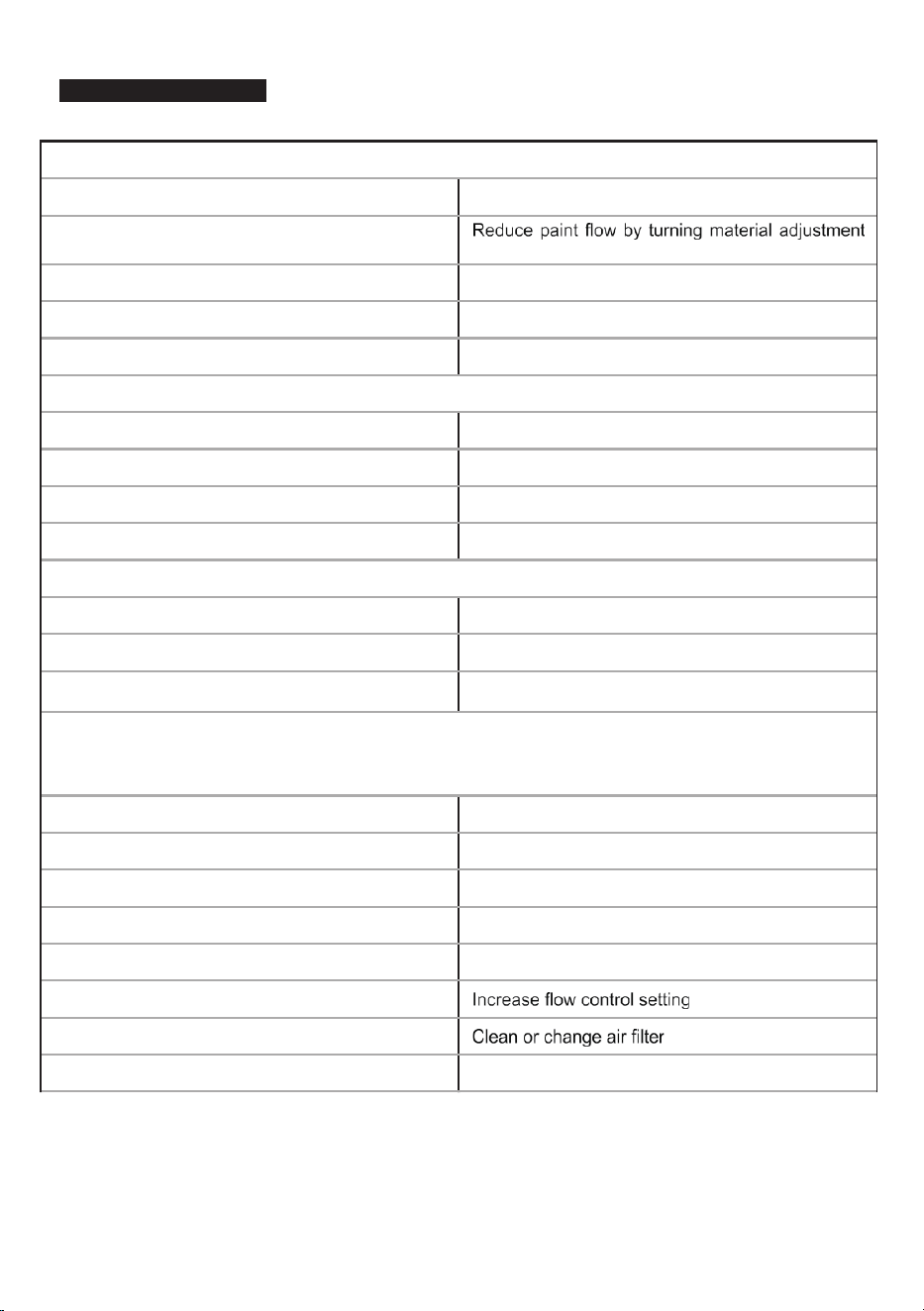
TROUBLESHOOTING
TROUBLE! MATERIAL RUNS OR DRIPS.
WHAT’S WRONG? WHAT TO DO…
Spraying too much material.
knob.
Spraying too slowly. Increase speed of application.
Spraying too close. Increase distance from surface.
Viscosity too thin. Check dilution recommendation.
TROUBLE! MATERIAL DRIPS FROM NOZZLE
WHAT’S WRONG? WHAT TO DO…
Nozzle loose Screw nozzle tight
Nozzle breaks Change
Material accumulated /clog inside nozzle Clean
TROUBLE! TOO MUCH OVER SPRAY.
WHAT’S WRONG? WHAT TO DO…
Sprayer too far from surface. Reduce distance to surface.
Too much material being sprayed.
Reduce paint flow by turning flow control knob
TROUBLE! LITTLE OR NO MATERIAL BEING RELEASED.
WHAT’S WRONG? WHAT TO DO…
Spray nozzle/tip clogged. Clean nozzles.
Pickup tube loose or clogged. Check tube.
Canister loose Screw canister tightly in place
Air hose split or disconnected Check air hose
Flow control knob setting too low.
Air inlet blocked
Material too thick. Thin material per manufacturer recommendation.
15
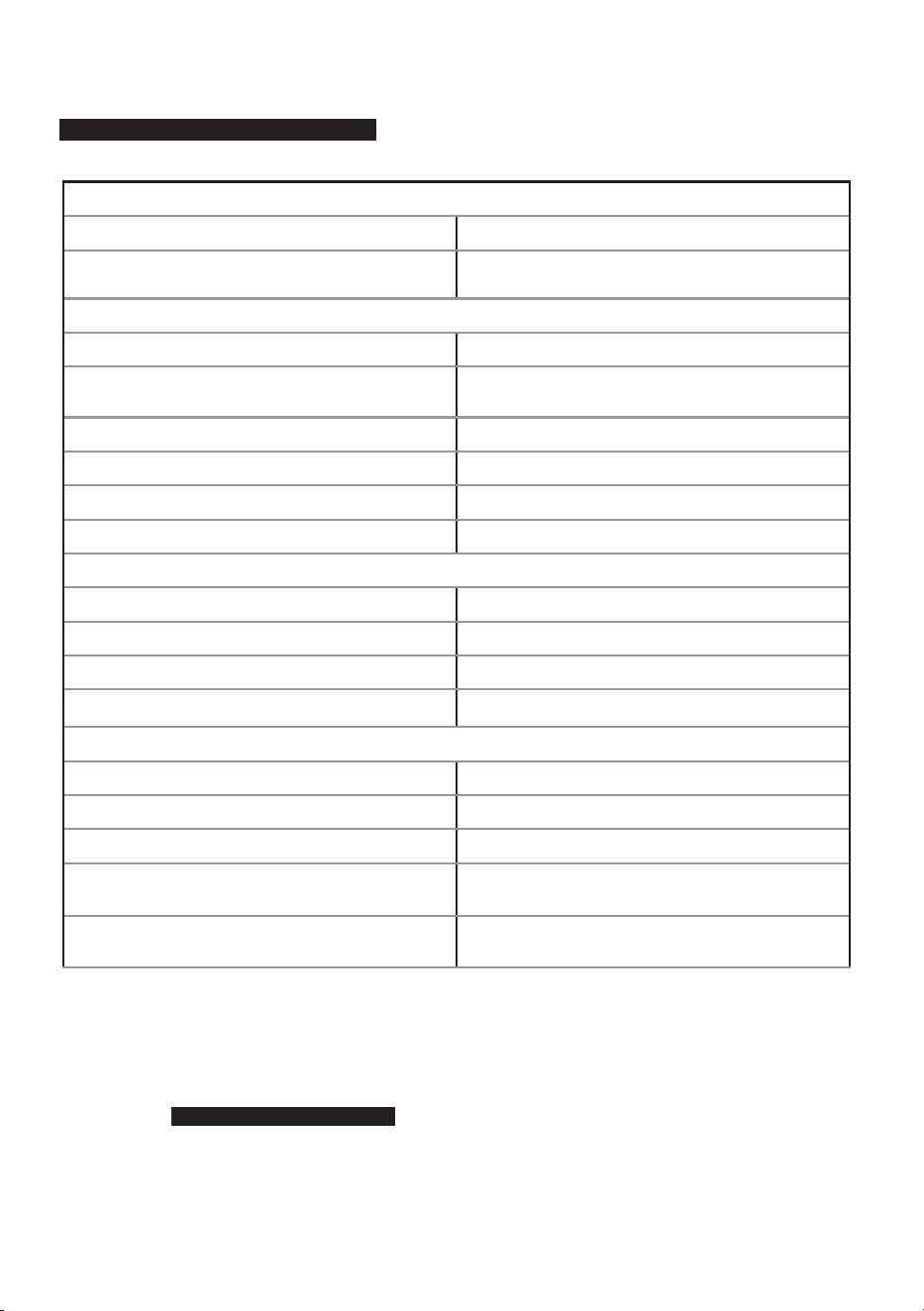
TROUBLESHOOTING-CONTINUE
Have you tried the recommendations above and are still having problems? In the United
States, to contact to a customer service representative, mail our Technical Service at
se
vr ice@ phalanxtools.com 24/7. We will get back to you within 24 hours.
TROUBLE! MATERIAL BEING SPRAYED IS SPLATTERING
WHAT’S WRONG? WHAT TO DO…
Viscosity of material is too high. Thin material per manufacturer
recommendation.
TROUBLE! ATOMIZATION IS TOO COARSE
WHAT’S WRONG?
WHAT TO DO…
Viscosity of material too high. Thin material per manufacturer
recommendation.
Flow control knob setting too high
Decrease flow control setting
Material accumulated /clog inside nozzle
Clean
Air inlet blocked Clean or change air filter
Canister loose
Screw canister tightly in place
TROUBLE! SPRAYER PULSATES.
WHAT’S WRONG?
WHAT TO DO…
Air filter clogged
Clean or change air filter
Material in canister almost empty.
Refill canister.
Canister loose Screw canister tightly in place
TROUBLE! SPRAY MATERIAL DOES NOT COVER PROPERLY
WHAT’S WRONG?
WHAT TO DO…
Flow control knob setting too low. Increase flow control setting
Clearance to target area too large
Reduce spray distance
Too few spray paths sprayed over target area Apply more spray paths sprayed over target
area
Viscosity of material too high. Thin material per manufacturer
recommendation.

16
GUARANTEE
This tool is guaranteed for 1 years from the date of purchase, if bought in store, delivered or if bought
online. You may only make a claim under this guarantee upon presentation of your sales receipt or
purchase invoice. Please keep your proof of purchase in a safe place.
This guarantee covers product failures and malfunctions provide PHALANX power tool was used for
the purpose for which it is intended and subj
ect to installation, cleaning, care and maintenance in
accordance with standard practice and with the information contained above and in the user manual.
This guarantee does not cover defects and damages caused by or resulting from:
• Normal wear and tear
• Overload, misuse or neglect
• Repairs attempted by anyone other than an authorized agent
• Cosmetic damage
• Damage caused by foreign object, substance or a
ccident
• Accidental damage or modification
• Failure to follow manufacture’s guidelines
The product is designed for home usage only. If used for commercial or rental purposes. This warranty
applies only for 30 days from the date of purchase.

Model: PSG0082-USMade in China
service@phalanxtools.com
