1
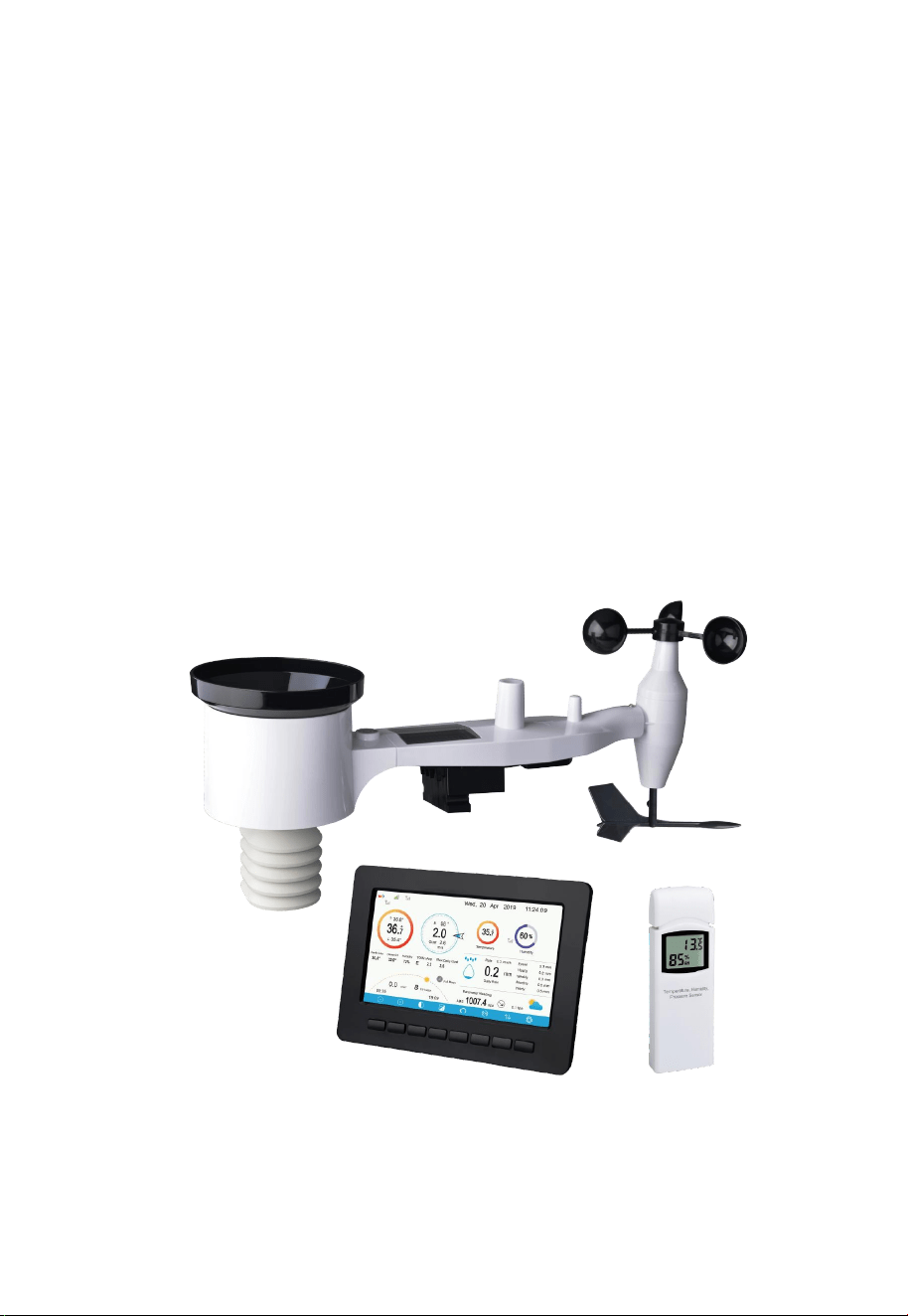
PROFESSIONAL WIFI WEATHER STATION
Operation Manual
Model: HP2551
Thank you for purchasing this Professional WIFI Weather Station! This
device provides accurate weather readings and is Wi-Fi capable to stream
data from the weather station to Internet based weather services.
This manual will guide you, step-by-step, through setting up your weather
station and console, and understanding the operation of your weather station.
Use this manual to become familiar with your professional weather station
and save it for future reference.
2
*
Please scan the QR code to
read English manual and keep it
for future reference
*
Bitte scannen Sie den QR-Code
zudeutsche Anleitung lesen und
aufbewahren füZukunftsbezug
*Si prega di scansionare il codice
QR perleggi il manuale italiano e
conservalo perReferenza futura
Instruction manuals
https://www.ecowitt.com/support/download/1
Help
Our product is continuously changing and improving, particularly online se-
rvices and associated applications. To download the latest manual and addit-
ional help, please contact our technical support team:
support@ecowitt.com
support.eu@ecowitt.net (EU/UK)

3
Table of Contents
1 WARNINGS AND CAUTIONS ...........................................................................5
2 UNPACKING ........................................................................................................ 5
3 OVERVIEW .......................................................................................................... 7
3.1 DISPLAY CONSOLE ............................................................................................7
3.2 INDOOR SENSOR ................................................................................................8
3.3 FEATURES ......................................................................................................... 9
4 SET UP GUIDE ................................................................................................... 11
4.1 PRE INSTALLATION CHECKOUT ......................................................................11
4.2 SITE SURVEY .................................................................................................. 12
4.3 SENSOR PACKAGE ASSEMBLY ........................................................................13
4.3.1 Install U-bolts and metal plate ................................................................13
4.3.2 Install wind vane .....................................................................................14
4.3.3 Install wind speed cups ...........................................................................15
4.3.4 Install Batteries in sensor package ......................................................... 15
4.3.5 Mount assembled outdoor sensor package ............................................. 16
4.3.6 Reset Button and Transmitter LED ........................................................ 18
4.4 INDOOR SENSOR SET UP ................................................................................ 19
4.5 MULTI-CHANNEL TEMPERATURE AND HUMIDITY SENSOR (OPTIONAL)......... 20
4.5.1 Install batteries ........................................................................................20
4.5.2 Sensor Placement ....................................................................................22
4.6 BEST PRACTICES FOR WIRELESS COMMUNICATION ...................................... 23
4.7 CONSOLE DISPLAY ......................................................................................... 24
4.7.1 Initial Display Console Set Up ............................................................... 26
4.7.2 Key functions ..........................................................................................27
4.7.3 Main interface icons explain .................................................................. 29
4.8 MULTIPLE CHANNEL SELECTION AND SCROLL MODE ...................................31
4.9 HISTORY MODE .............................................................................................. 32
4.9.1 View and Reset MAX/MIN ....................................................................32
4.9.2 History Record Mode ............................................................................. 33
4.9.3 Graph Mode ............................................................................................36
4.9.4 Optional Sensor Display Mode .............................................................. 37
4.10 SETTING MODE .............................................................................................37
4.10.1 Date and Time setting ...........................................................................39
4.10.2 Time Format setting ............................................................................. 40
4.10.3 Date Format setting .............................................................................. 41
4.10.4 Temperature unit setting .......................................................................41

4
4.10.5 Barometric unit ..................................................................................... 41
4.10.6 Wind speed unit .................................................................................... 41
4.10.7 Rainfall unit .......................................................................................... 41
4.10.8 Solar Rad. Unit ..................................................................................... 41
4.10.9 Multi Channel Sensor ........................................................................... 41
4.10.10 Backlight setting ................................................................................. 43
4.10.11 Longitude: Latitude setting .................................................................45
4.10.12 Barometric display ..............................................................................45
4.10.13 Rainfall season (default: January) ...................................................... 45
4.10.14 Storing Interval (1-240minutes Selectable) ........................................46
4.10.15 Weather Server ................................................................................... 46
4.10.16 Connect Console to Your Router: Wi-Fi scan ....................................63
4.10.17 Background .........................................................................................65
4.11 ALARM SETTING MODE ............................................................................... 65
4.12 CALIBRATION MODE .................................................................................... 67
4.13 MORE ............................................................................................................72
4.14 FACTORY RESET ........................................................................................... 76
4.14.1 Re-register indoor transmitter ...............................................................76
4.14.2 Re-register outdoor transmitter .............................................................76
4.14.3 Automatic Clear Max/Min ................................................................... 77
4.14.4 Reset to Factory .................................................................................... 77
4.14.5 Clear History ........................................................................................ 77
4.14.6 Clear Max/Min ..................................................................................... 77
4.14.7 Backup data .......................................................................................... 78
4.14.8 About information ................................................................................ 78
5 OTHER CONSOLE FUNCTIONS ................................................................... 79
5.1 BEAUFORT WIND FORCE SCALE .................................................................... 79
5.2 WEATHER FORECASTING ................................................................................79
5.3 LIGHTNING ALERT.......................................................................................... 80
5.4 WEATHER FORECASTING DESCRIPTION AND LIMITATIONS ........................... 81
5.5 MOON PHASE ................................................................................................. 81
6 MAINTENANCE ................................................................................................ 83
7 TROUBLESHOOTING GUIDE ....................................................................... 84
8 SPECIFICATIONS ............................................................................................. 87
9 WARRANTY INFORMATION ........................................................................ 89
5
1 Warnings and Cautions
Warning:
Any metal object may attract a lightning strike, including your
weather station mounting pole. Never install the weather station in a
storm.
If you are mounting the weather station to a house or structure,
consult a licensed electrician for proper grounding. A direct
lightning strike to a metal pole can damage or destroy your home.
Installing your weather station in a high location may result in
injury or death. Perform as much of the initial check out and
operation on the ground and inside a building or home. Only install
the weather station on a clear, dry, day.
2 Unpacking
Open your weather station box and inspect that the contents are intact
(nothing broken) and complete (nothing missing). Inside you should find the
following:
QT
Item Description
1
Display Console
1
Outdoor Sensor Body with built-in: Thermo-hygrometer / Rain
Gauge / Wind Speed Sensor/ Wind Direction Sensor, Light and UV
sensor, Solar panel
1
Wind speed cups (to be attached to outdoor sensor body)
1
Wind vane (to be attached to outdoor sensor body)
1
Indoor sensor unit(temp/humidity/pressure)
2
U-Bolts for mounting on a pole
4
Threaded nuts for U-Bolts (M6 size)
1
Metal mounting plate to be used with U-Bolts
1
Wrench for M6 bolts
1
AC adapter
1
User manual (this manual)
Table: Package content

6
If components are missing from the package, or broken, please contact
customer service to resolve the issue.
Note: Batteries for the outdoor sensor package are not included. You will
need 2 AA size batteries, alkaline or Lithium batteries (Lithium
recommended for colder climates).
Note: The console operates using an AC adapter. The included adapter is
a switching-type adapter and can generate a small amount of
electrical interference with the RF reception in the console, when
placed too close to the console. Please keep the console display at
least 2 ft. or 0.5 m away from the power adapter to ensure best RF
reception from the outdoor sensor package.
Note: The console can store historical data on a memory card. This
memory card is not included. If you want to use one you will need
a microSD memory card. The supported max capacity of the card is
32G (Format: FAT32). A 1GB card will store more than 10 years’
worth of data, so you do not need a very large capacity card. There
is also no requirement on the speed class of this card as data writing
happens infrequently and is not speed critical.
7
3 Overview
3.1 Display console
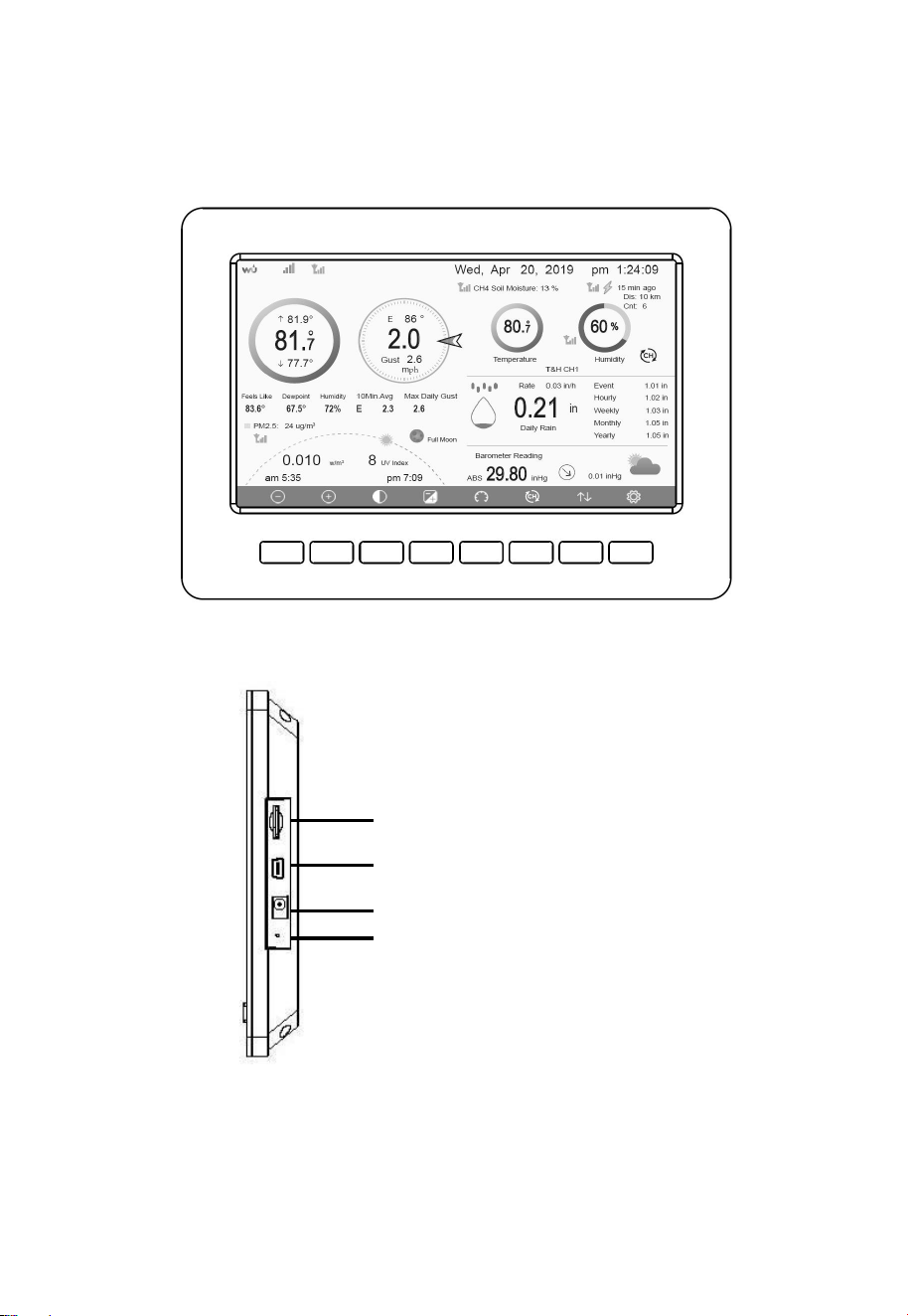
Figure 1: Display console screen
Figure 2: Display console side views
Memory card slot
Power jack
Reset
USB port
8
Note: The USB port in the console of weather station is only for firmware
update, not for data communication (USB cable not included).
You can use a micro SD card (max 32G, Fat 32) for the firmware
update.(SD card not included).
Update firmware process:
1.Visit www.ecowitt.com for available update
2.On the navigation bar, select Manual & Firmware under Support
3.Search "HP2551" - find the firmware option and download it on your
computer
4.Take out your micro SD card from the console
5.Drag the unzipped file(user.bin) under the root directory of your micro SD
card.
6. Insert the card into the console, then it will update the firmware
automatically.
3.2 Indoor sensor
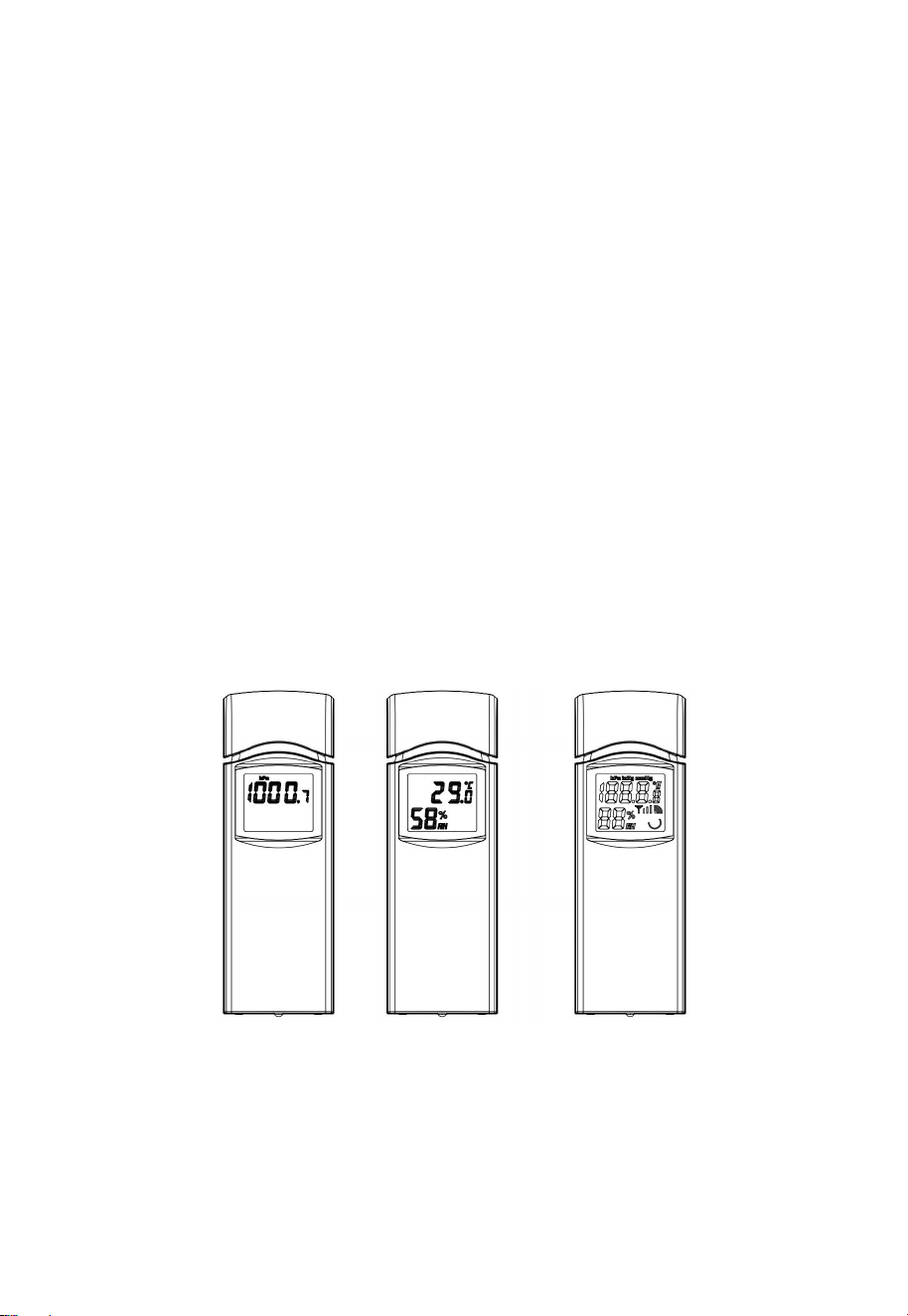
Figure 3: Indoor sensor 2 display variations
The indoor sensor will display indoor temperature, humidity and barometric
pressure alternately.

9
3.3 Features
7" large TFT (high resolution) colored display console
Two background (dark/light) themes selectable
Indoor temperature, humidity
Absolute and Relative barometric pressure
Wind speed, wind direction, rainfall, outdoor temperature and humidity,
solar radiation and UV.
Calculates dew point, wind chill, heat index, moon phase and
sunset/sunrise time
Weather forecast & alarm
View historical records of sensors and graph directly on the console
Collects sensor data from various supported wireless sensors.
Additional/optional sensors:
Up to 8 WH31 multi-channel temperature and humidity sensors
Or 8 WN30 multi-channel temp sensors
Up to 8 WN34 Temperature Sensors
Up to 4 WH41/WH43 PM2.5 air quality sensors
One WH45 PM2.5/PM10/CO2/temperature and humidity all-in-1
sensor
Up to 8 WH51 soil moisture sensors
Up to 4 WH55 water leak sensors
One WH57 lightning sensor
Future sensors to be developed
Pushes sensor data to cloud weather services:
https://www.ecowitt.net
https://www.wunderground.com
https://www.weathercloud.com/
https://www.wow.com

10
Custom own server data hosting possible when server data
exchange is compatible with either Wunderground or Ecowitt
protocol.
Manage sensor calibration setup.
Manage sensor via sensor ID.
Data storage service on Ecowitt server: https://ecowitt.net
Data storing interval:
by day: 5 minutes
by week: 30 minutes
by month: 4 hours
by year: 1 day
Stores data for past three months at 5-minute intervals
Stores data for past one year at 30-minute intervals
Stores data for past two year at 4-hour intervals
Note: The optional sensors can be purchased separately. If more info
needed, please visit our website: http://www.ecowitt.com. Make
sure to select the model of the units with the same RF frequency as
your gateway (the frequency is different for various countries
because of regulations).
Note: To pair the optional sensors with the HP2551 console, please follow
the below operations:
1. Place the optional sensor next to the console(keep 5-10ft away
from each other).
2. Install batteries on the sensor and wait for 1-2 minutes.
3. Check whether the console will pick up the sensor data
automatically and display it on the screen.
4. If not, press the gear icon and go to Setup page - find More and
enter its Setup page - find Sensors ID and enter its Setup page.

11
5. In the Sensors ID Setup page, find the sensor you want to pair -
select the ID number box and register it.
6. Once successfully, you may return to the main interface to check
the data.
7. If you know exactly the sensor ID, and want console to pair that
sensor only, you may enter the sensor ID, and save the change to
make it effect.
4 Set up Guide
4.1 Pre Installation Checkout
To complete assembly you will need a Philips screwdriver (size PH0) and a
wrench (size M6; included in package).
Note: We suggest you assemble all components of the weather station,
including console in one location so you can easily test functionality.
After testing, place the outdoor sensor package in the desired
location. Note, however, that movement during assembly, and
movement after assembly can cause the rain sensor to “falsely”
register rain. It is therefore best if you do not connect the console to
any Internet services until you have reset these false readings using
the console. The errant values may be hard to remove from Internet
services if you do not reset first.
Attention:
Follow suggested order for battery installation (outdoor sensor first,
console second)
Ensure batteries are installed with correct polarity (+/-)
Do not mix old and new batteries
Do not use rechargeable batteries
If outdoor temperature may go below 32F or 0C for prolonged periods,
Lithium based batteries are suggested over alkaline type batteries for the
outdoor sensor array

12
4.2 Site Survey
Perform a site survey before installing the weather station. Consider the
following:
1. You must clean the rain gauge every few months and change the
batteries every 2-3 years. Provide easy access to the weather station.
2. Avoid radiant heat transfer from buildings and structures. In general,
install the sensor array at least 5’ or 1.52m from any building,
structure, ground, or roof top.
3. Avoid wind and rain obstructions. The rule of thumb is to install the
sensor array at least four times the distance of the height of the
tallest obstruction. For example, if the building is 20’ or 6.10m tall
and the mounting pole is 6’ or 1.83m tall, install the sensor array 4 x
(20 – 6)’ = 56’ or 4 x (6.1-1.83)=17.08m away.
4. Mount the sensor array in direct sunlight for accurate temperature
readings.
5. Installing the weather station over sprinkler systems or other
unnatural vegetation may affect temperature and humidity readings.
We suggest mounting the sensor array over natural vegetation.
6. Wireless Range. Radio communication between receiver and
transmitter in an open field can reach a distance of up to 330 feet or
100 meter, providing there are no interfering obstacles such as
buildings, trees, vehicles and high voltage lines. Wireless signals
will not penetrate metal buildings. Under most conditions, the
maximum wireless range is 100’ or 30m.
7. Radio Interference. Computers, radios, televisions and other sources
can interfere with radio communications between the sensor array
and console. Please take this into consideration when choosing
console or mounting locations. Make sure your display console is at
least five feet or 1.52 meter away from any electronic device to
avoid interference.
13
4.3 Sensor Package Assembly
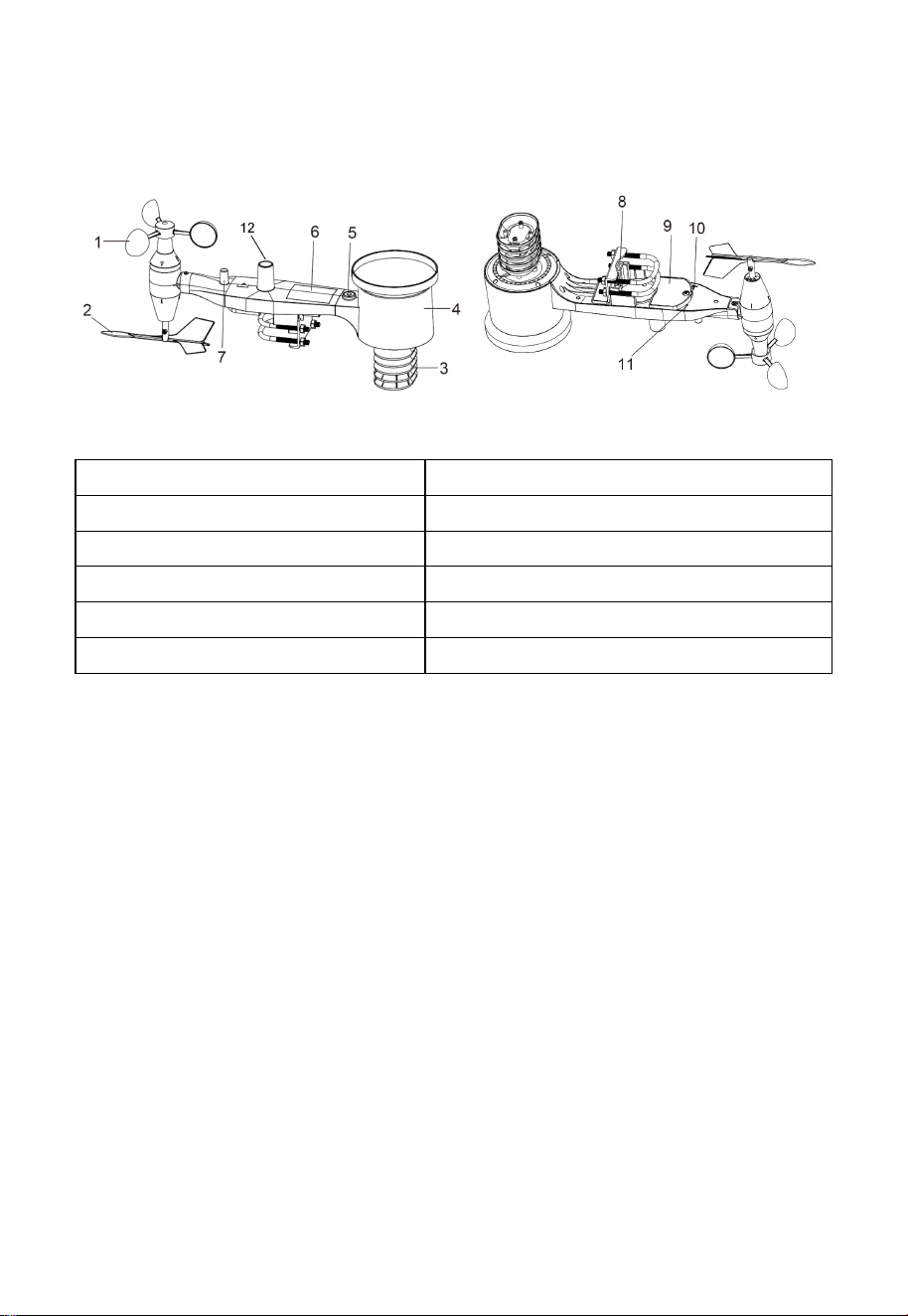
See Figure 5 to locate and understand all the parts of the outdoor sensor
package once fully assembled.
Figure 5: Sensor assembly components
1. Wind Speed cups
7. Antenna
2. Wind Vane
8. U-Bolts
3. Thermo- and hygro-meter sensors
9. Battery compartment door
4. Rain collector
10. Reset button
5. Bubble level
11. LED (red) to indicate data transmission
6. Solar panel
12.Light sensor and UV sensor
Table: Sensor assembly detailed items
4.3.1 Install U-bolts and metal plate
Installation of the U-bolts, which are in turn used to mount the sensor
package on a pole, requires installation of an included metal plate to receive
the U-bolt ends. The metal plate, visible in Figure 6 on the right side, has
four holes through which the ends of the two U-Bolts will fit. The plate
itself is inserted in a groove on the bottom of the unit (opposite side of solar
panel). Note that one side of the plate has a straight edge (which goes into
the groove), the other side is bent at a 90-degree angle and has a curved
profile (which will end up “hugging” the mounting pole). Once the metal
plate is inserted, remove nuts from the U-Bolts and insert both U-bolts
through the respective holes of the metal plate as shown in Figure 6 .
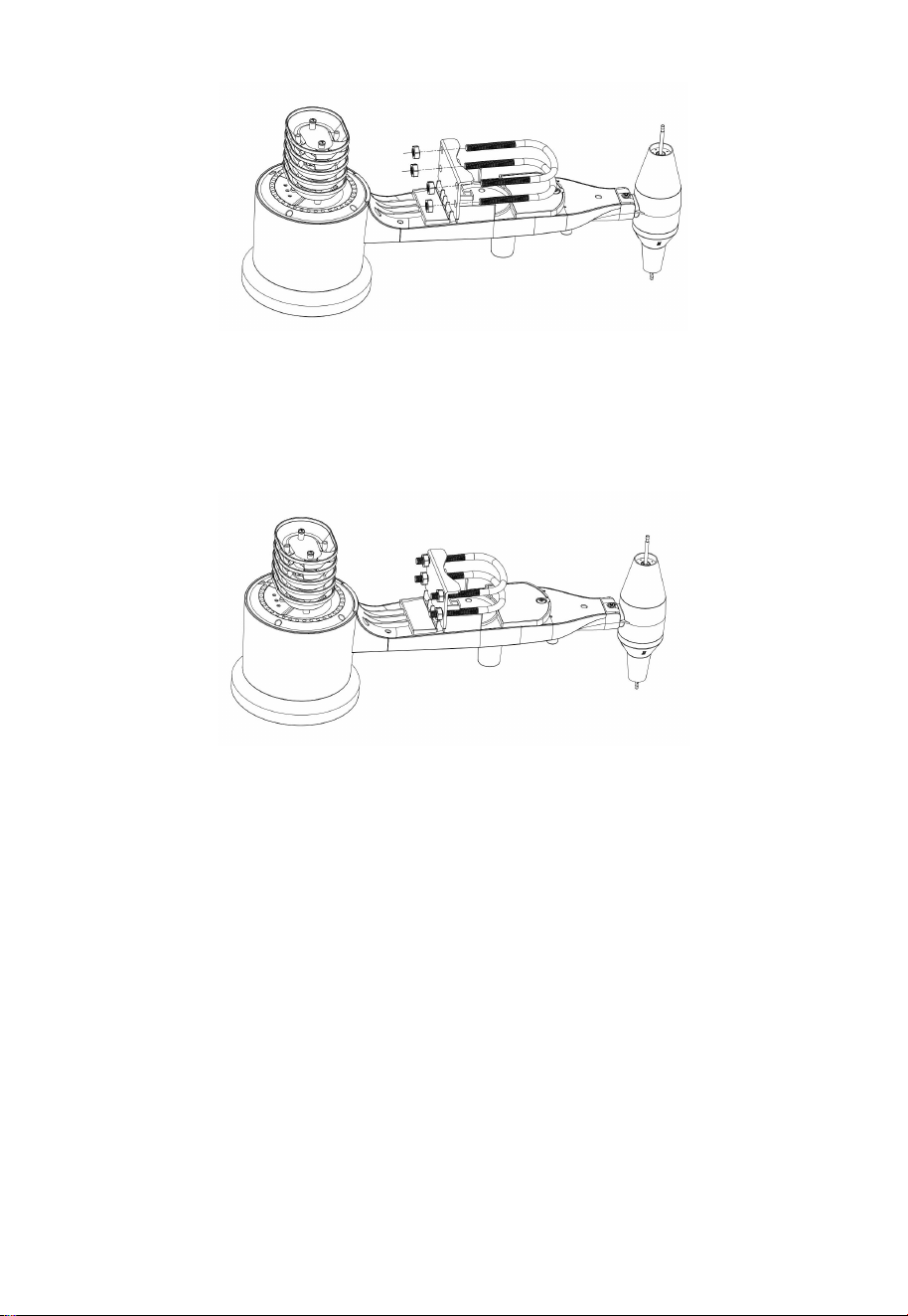
14
Figure 6: U-Bolt installation
Loosely screw on the nuts on the ends of the U-bolts. You will tighten these
later during final mounting. Final assembly is shown in Figure 7 .
Figure 7: U-Bolts and nuts installed
The plate and U-Bolts are not yet needed at this stage but doing this now
may help avoid damaging wind vane and wind speed cups later on.
Handling of the sensor package with wind vane and speed cups installed to
install these bolts is more difficult and more likely to lead to damage.
4.3.2 Install wind vane
Push the wind vane onto the shaft on the bottom side of the sensor package,
until it goes no further, as shown on the left side in Figure 8 . Next, tighten
the set screw, with a Philips screwdriver (size PH0), as shown on the right
side, until the wind vane cannot be removed from the axle. Make sure the
wind vane can rotate freely. The wind vane’s movement has a small amount
of friction, which is helpful in providing steady wind direction
measurements.
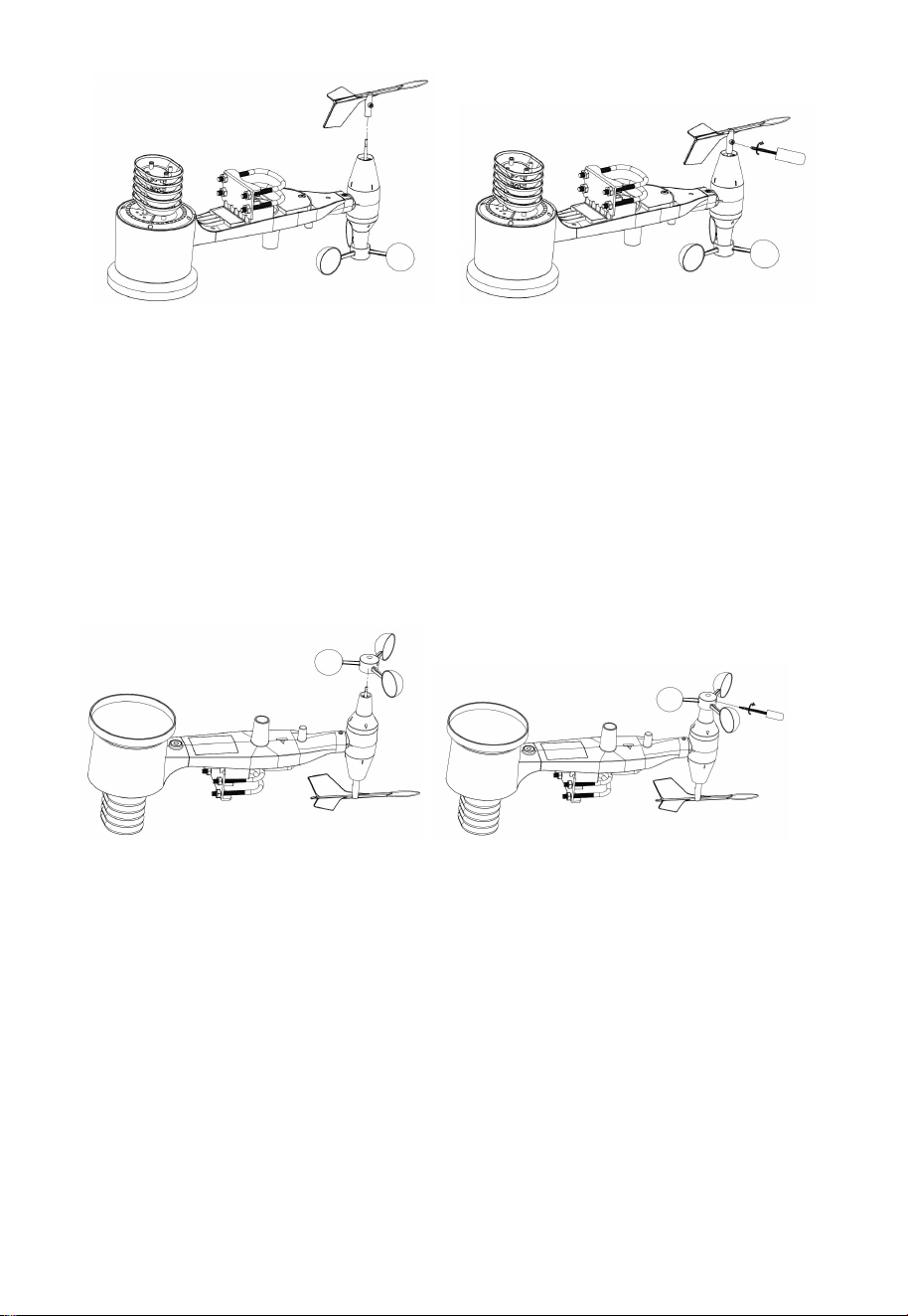
15
Figure 8: Wind vane installation diagram
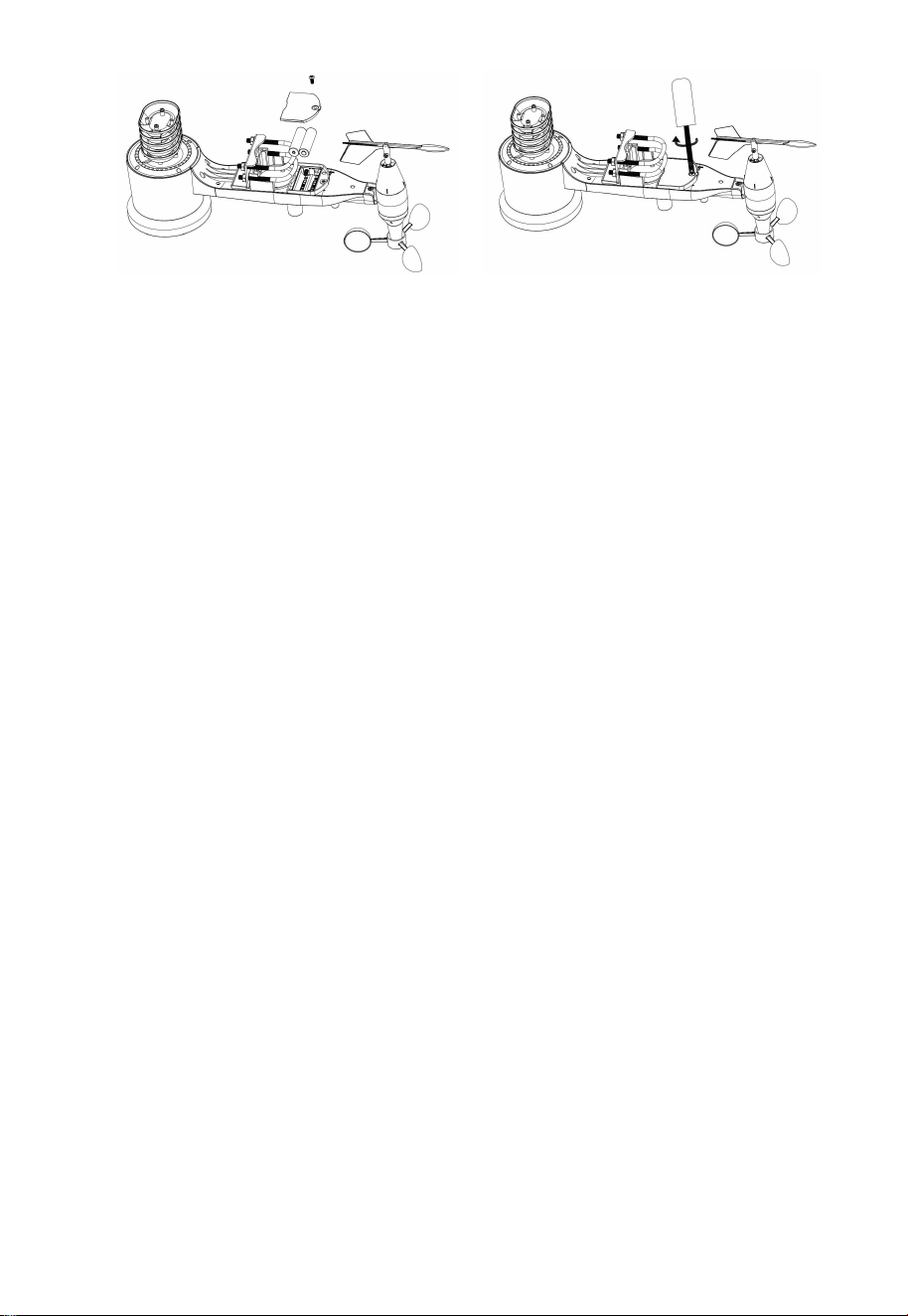
4.3.3 Install wind speed cups
Push the wind speed cup assembly onto the shaft on the opposite side of the
wind vane, as shown in Figure 9 on the left side. Tighten the set screw, with
a Philips screwdriver (size PH0), as shown on the right side. Make sure the
cup assembly can rotate freely. There should be no noticeable friction when
it is turning.
Figure 9: Wind speed cup installation diagram
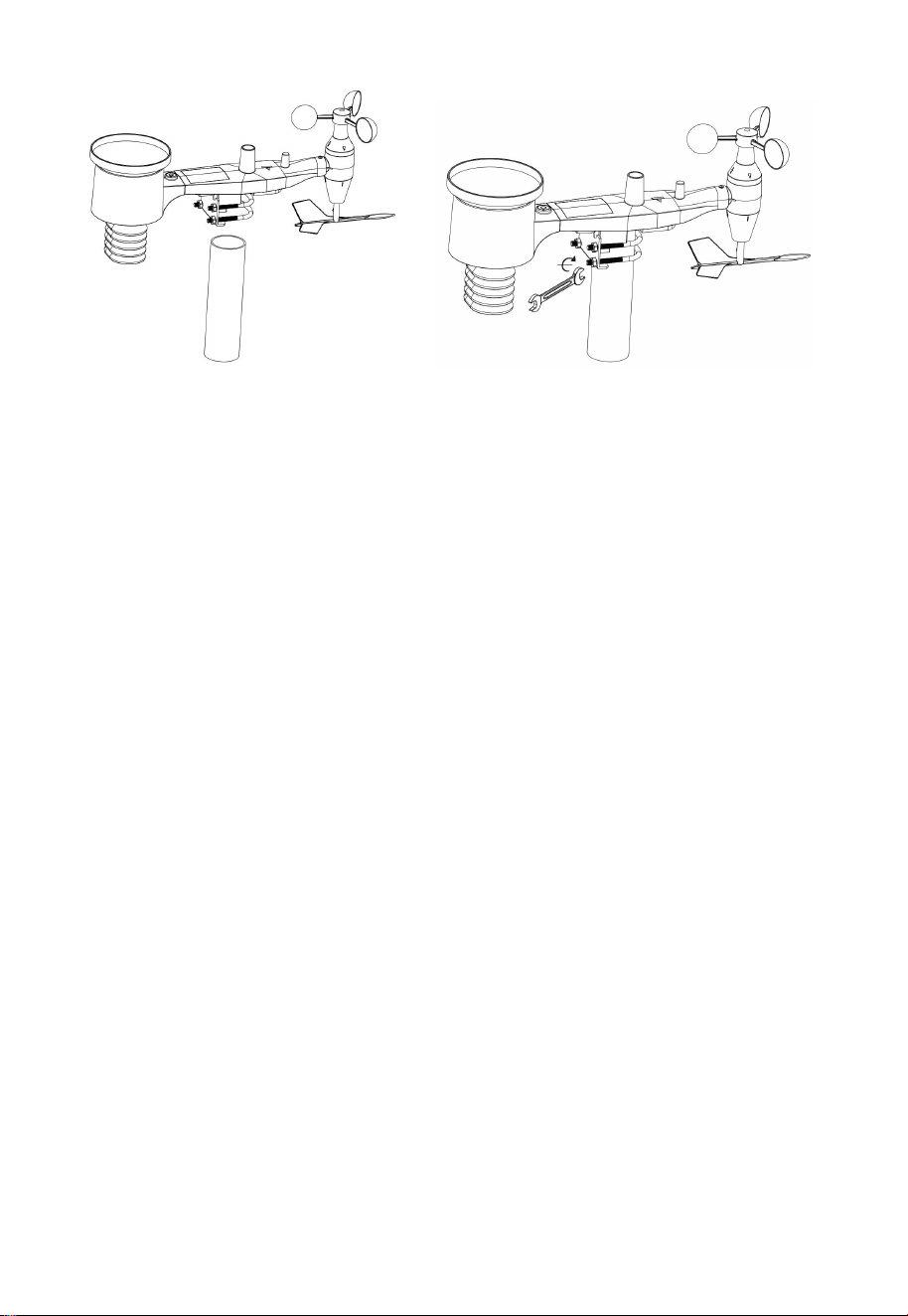
4.3.4 Install Batteries in sensor package
Open the battery compartment with a screwdriver and insert 2 AA batteries
in the battery compartment. The LED indicator on the back of the sensor
package (item 9) will turn on for four seconds and then flash once every 16
seconds indicating sensor data transmission. If you did not pay attention,
you may have missed the initial indication. You can always remove the
batteries and start over, but if you see the flash once every 16 seconds,
everything should be OK.
16
Figure 10: Battery installation diagram
Note: If LED does not light up or is on permanently, make sure the battery
is inserted the correct way and inserted fully, starting over if
necessary. Do not install the batteries backwards as it may
permanently damage the outdoor sensor.
Note: We recommend Lithium batteries for cold weather climates, but
alkaline batteries are sufficient for most climates. Rechargeable
batteries have lower voltages and should never be used.
4.3.5 Mount assembled outdoor sensor package
4.3.5.1 Before you mount
Before proceeding with the outdoor mounting detailed in this section, you
may want to skip to setup instructions in section 5.7 and onwards first,
while you keep the assembled outdoor sensor package nearby (although
preferably not closer than 5 ft. from the console). This will make any
troubleshooting and adjustments easier and avoids any distance or
interference related issues from the setup.
After setup is complete and everything is working, return here for outdoor
mounting. If issues show up after outdoor mounting they are almost
certainly related to distance, obstacles etc.
4.3.5.2 Mounting
You can attach a pipe to a permanent structure and then attach the sensor
package to it (see Figure 11). The U-Bolts will accommodate a pipe diameter of
1-2 inches (pipe not included).
17
Figure 11: Sensor package mounting diagram
Make sure the mounting pipe is vertical, or very close to it. Use a level if
needed.
Finally, place the sensor package on top of the prepared mounting pipe. The
U-Bolts should be loose enough to allow this but loosen the nuts as
necessary. Once placed, hand tightens all four nuts, taking care to do so
evenly. Do not use a wrench yet!
Now you will need to align the whole package in the proper direction by
rotating it on top of the mounting pipe as needed. Locate the arrow labeled
“WEST” that you will find on top of the sensor package right next to the
light sensor, on the opposite side of the solar panel. You must rotate the
whole sensor package until this arrow points due west. To achieve proper
alignment, it is helpful to use a compass (many cell phones have a compass
application). Once rotated in the correct orientation, lightly tighten the bolts
a little more (use a wrench) to prevent further rotation.
Note: The orientation to WEST is necessary for two reasons. The most
important one is to position the solar panel and light sensor in the
most advantageous position for recording solar radiation and
charging internal capacitors. Secondly it causes a zero reading for
wind direction to correspond to due NORTH, as is customary. This
orientation is correct for installations in the northern hemisphere. If
you are installing in the southern hemisphere, the correct orientation
to achieve the same optimal positioning is to have the “WEST”

18
arrow actually point due EAST! This has the side effect, however,
of lining up the 0 reading of the wind direction with SOUTH. This
needs to be corrected using a 180-degree offset in the calibration
settings (see section 5.12 Calibration Mode).
Now look at the bubble level. The bubble should be fully inside the red
circle. If it is not, wind direction, speed, and rain readings may not operate
correctly or accurately. Adjust the mounting pipe as necessary. If the bubble
is close, but not quite inside the circle, and you cannot adjust the mounting
pipe, you may have to experiment with small wooden or heavy cardboard
shims between the sensor package and the top of the mounting pole to
achieve the desired result (this will require loosening the bolts and some
experimentation).
Make sure you check, and correct if necessary, the westerly orientation as
the final installation step, and now tighten the bolts with a wrench. Do not
over tighten, but make sure strong wind and/or rain cannot move the sensor
package.
Note: If you tested the full assembly indoors and then came back here for
instructions and mounted to sensor package outdoor you may want
to make some further adjustments on the console. The
transportation from indoor to outdoor and handling of the sensor is
likely to have “tripped” the rainfall sensing bucket one or more
times and consequently the console may have registered rainfall that
did not really exist. You can use console functions to clear this from
history. Doing so is also important to avoid false registration of
these readings with weather services.
4.3.6 Reset Button and Transmitter LED
In the event the sensor array is not transmitting, reset the sensor array.
Using a bent-open paperclip, press and hold the RESET BUTTON (see
Figure 12) to affect a reset: the LED turns on while the RESET button is
depressed, and you can now let go. The LED should then resume as normal,
flashing approximately once every 16 seconds.
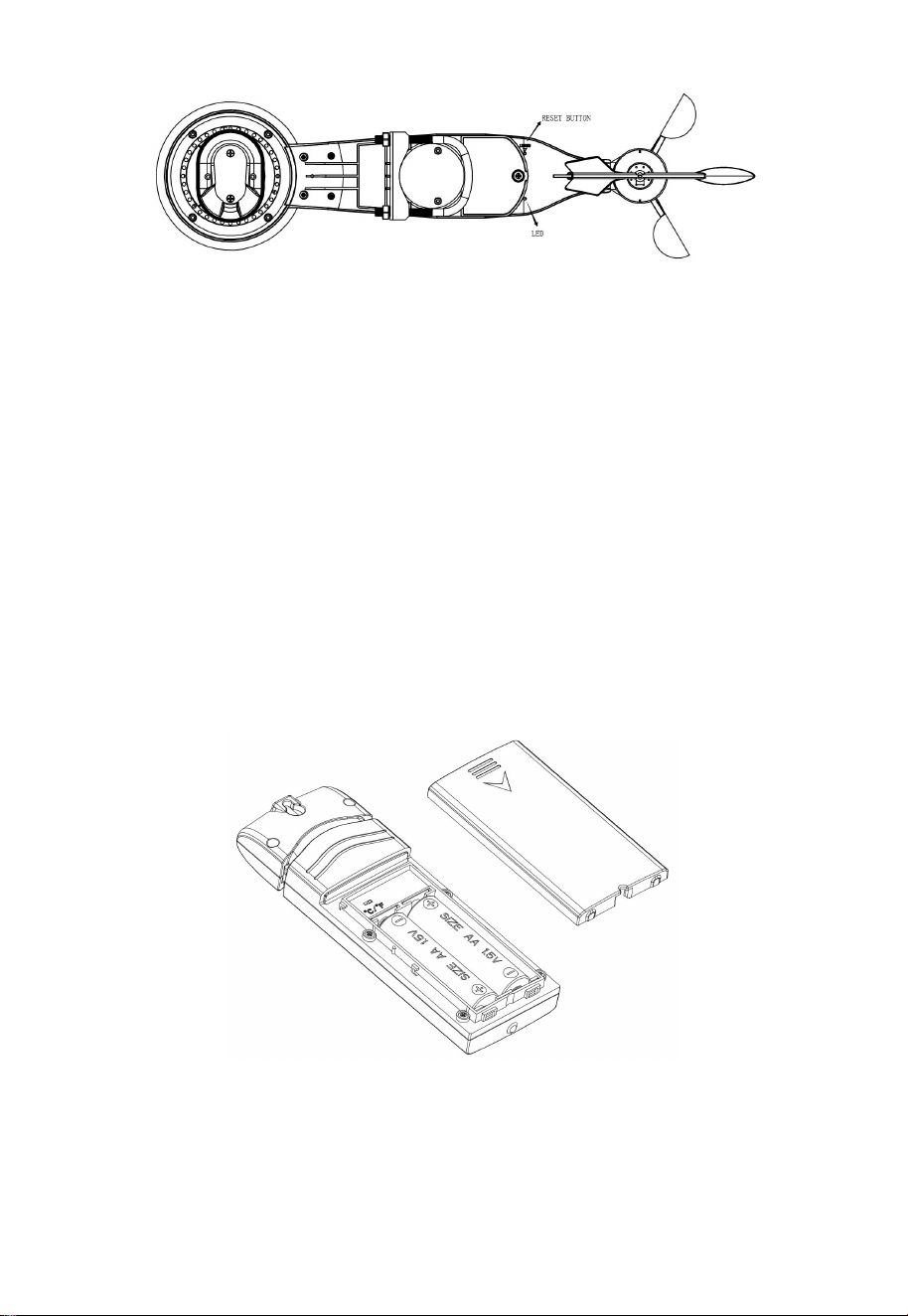
19
Figure 12: Reset button and Transmitter LED location
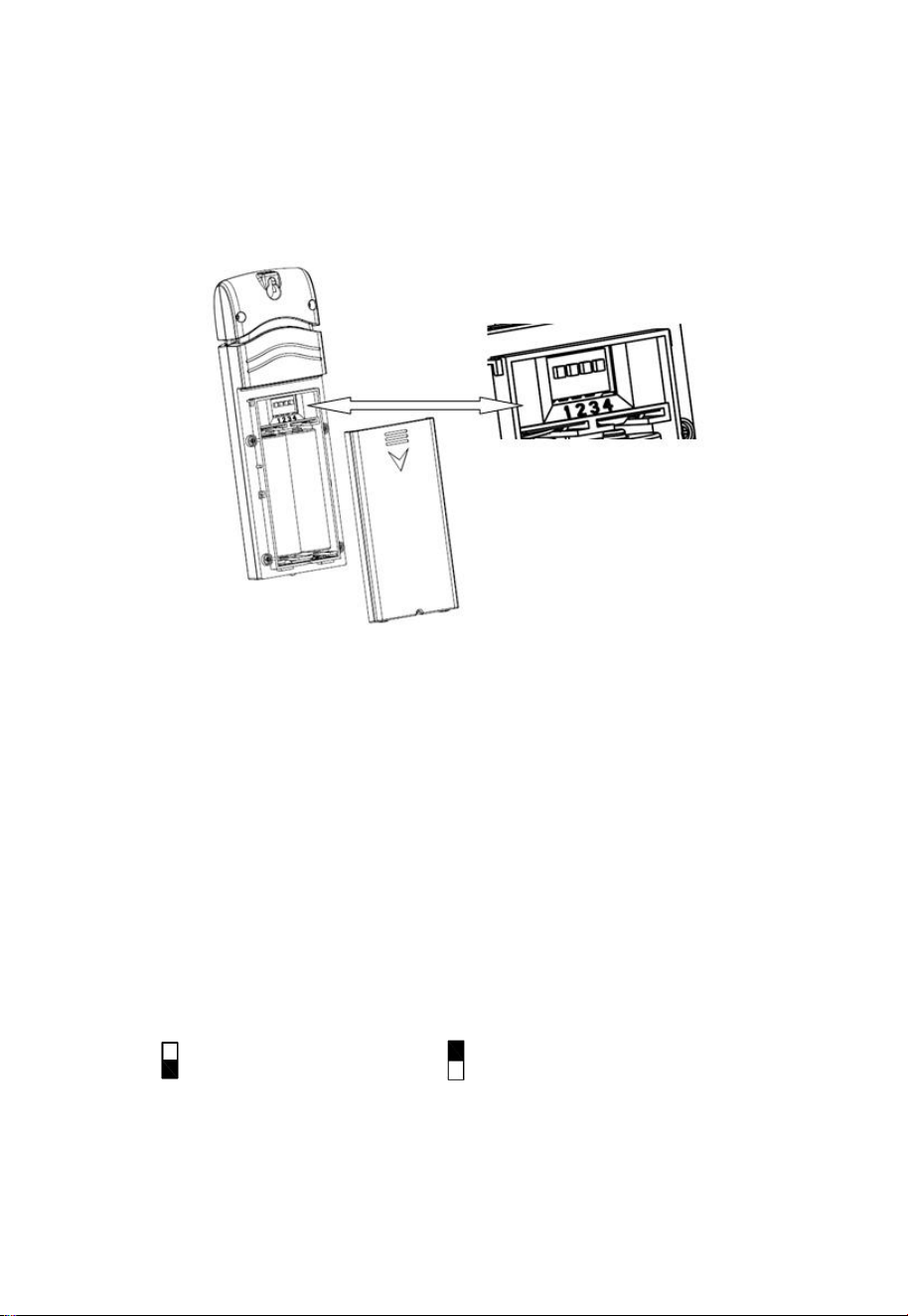
4.4 Indoor Sensor Set Up
Note: To avoid permanent damage, please take note of the battery polarity
before inserting the batteries. Looking at Figure 13 from left to right
the left-most (or bottom) battery is to be installed with its + terminal
pointing down, and the other battery with its + terminal pointing up.
Remove the battery door on the back of the sensor by sliding it in the
direction of the arrow. Insert two AA batteries as described and put
compartment door back and slide it in the opposite direction to lock.
Switch to select temperature display in Celsius or Fahrenheit.
Figure 13: Indoor sensor battery installation
20
4.5 Multi-channel temperature and humidity sensor (Optional)
4.5.1 Install batteries
1. Remove the battery door on the back of the transmitter(s) by sliding
down the battery door, as shown in Figure 14 .
Figure 14: Battery installation for Multi-channel sensor
2. BEFORE inserting the batteries, locate the dip switches on the
inside cover of the lid of the transmitter.
3. Channel Number: The device supports up to eight sensors. To set
each channel number,change Dip Switches 1, 2 and 3, as referenced
in Figure 15 .
4. Temperature Units of Measure: To change the transmitter display
units of measure (°F vs. °C), change Dip Switch 4, as referenced in
Figure 15 .
5.
6. Switch in down position. Switch in up position.
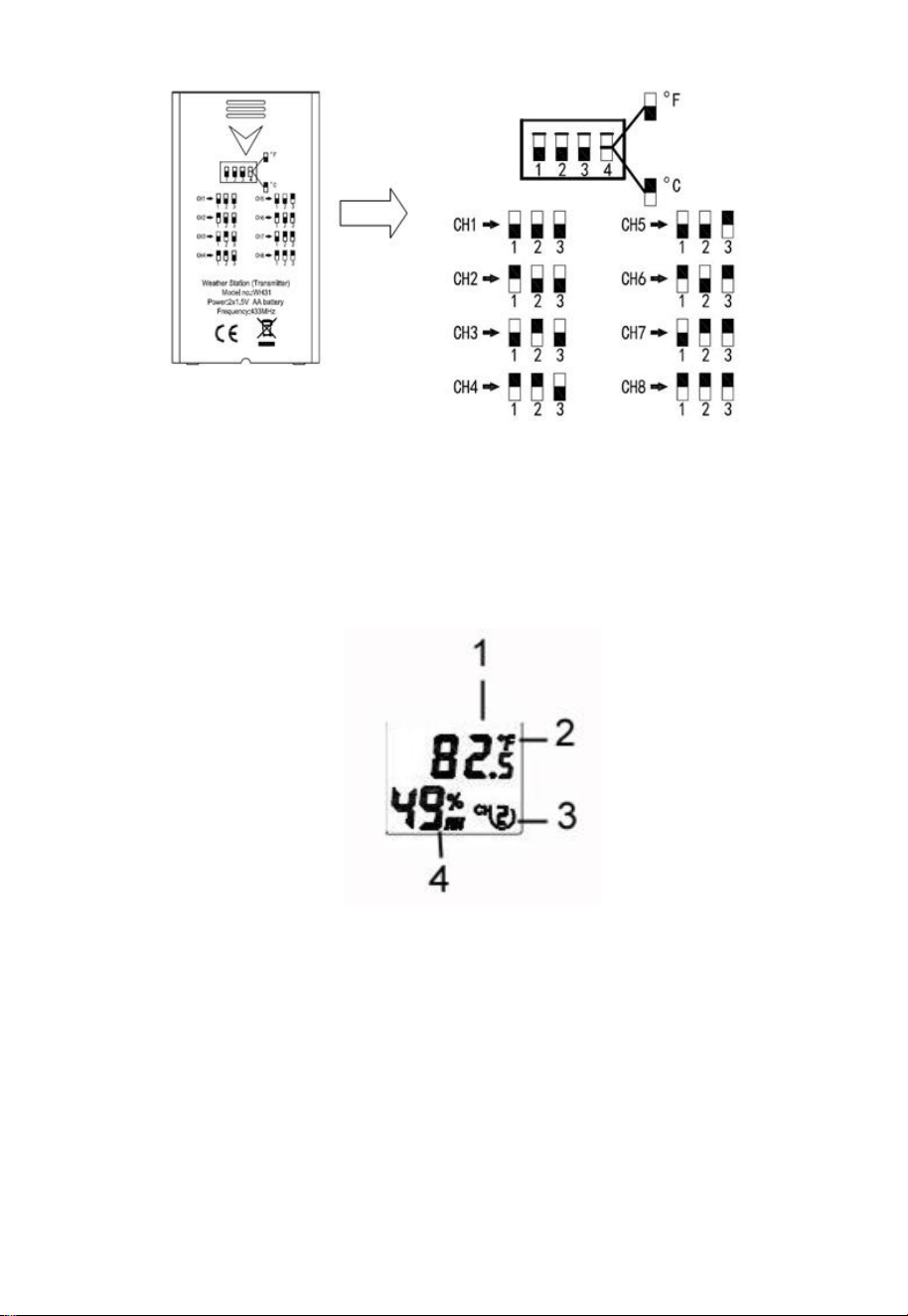
21
Figure 15: Dip Switch diagram
7. Insert two AA batteries.
8. Verify the correct channel number (CH) and temperature units of
measure (°F vs. °C) are on the display, as shown in Figure 16 .
Figure 16: sensor LCD display
(1) temperature
(2) temperature units (°F vs. °C)
(3) channel number
(4) relative humidity
9. Close the battery door.
Repeat for the additional remote transmitters, verifying each remote is on a
different channel.
22
4.5.2 Sensor Placement
The best mounting location for the indoor sensor is in a location that never
receives direct sunlight, not even through windows. Also, do not install in a
location where a nearby radiant heat source (radiator, heaters, etc.) will
affect it. Direct sunlight and radiant heat sources will result in inaccurate
temperature readings.
The sensor is meant to provide indoor conditions for display on the console,
but if you would rather have a second source for outdoor conditions instead,
you can mount this unit outside. The unit is weatherproof, but besides
heeding the placement instructions above, you should also attempt to mount
the unit under cover (eve or awning or similar).
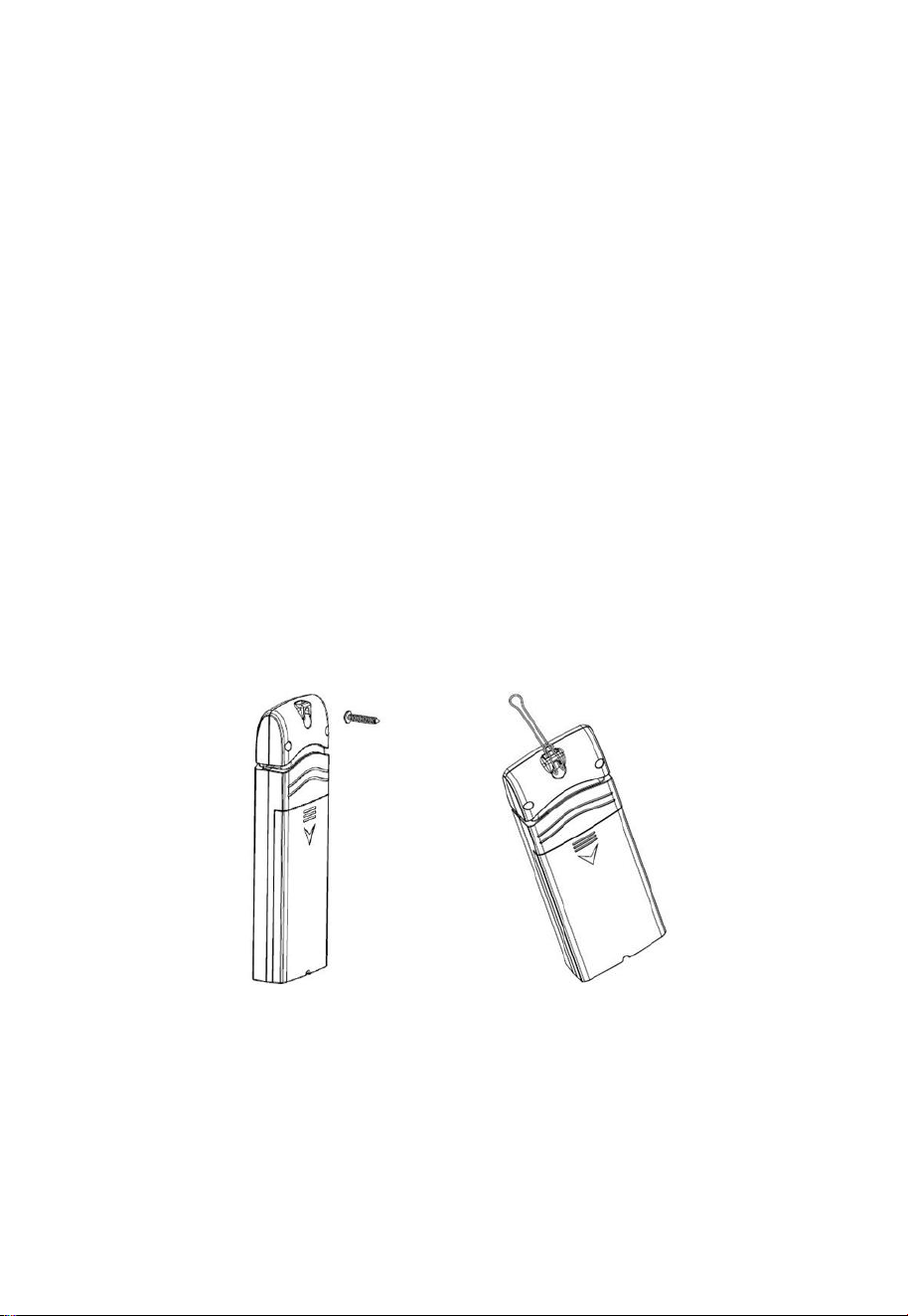
To mount or hang the unit on a wall or wood beam:
Use a screw or nail to affix the remote sensor to the wall, as shown on
the left side of Figure 17, or
Hang the remote sensor using a string, as shown in right side of Figure
17
Figure 17: Indoor sensor mounting
Note: Make sure the sensor is mounted vertically and not lying down on a
flat surface. This will insure optimum reception. Wireless signals
are impacted by distance, interference (other weather stations,
wireless phones, wireless routers, TVs and computer monitors), and

23
transmission barriers, such as walls. In general, wireless signals will
not penetrate solid metal and earth (down a hill, for example).
4.6 Best Practices for Wireless Communication
Wireless (RF) communication is susceptible to interference, distance, walls
and metal barriers. We recommend the following best practices for trouble
free wireless communication between both sensor packages and the console:
Indoor sensor placement: The sensor will have the longest reach for
its signal when mounted or hung vertically. Avoid laying it down on a
flat surface.
Electro-Magnetic Interference (EMI). Keep the console several feet
away from computer monitors and TVs.
Radio Frequency Interference (RFI). If you have other devices
operating on the same frequency band as your indoor and/or outdoor
sensors and experience intermittent communication between sensor
package and console, try turning off these other devices for
troubleshooting purposes. You may need to relocate the transmitters or
receivers to avoid the interference and establish reliable communication.
The frequencies used by the sensors are one of (depending on your
location): 433, 868, or 915 MHz (915 MHz for United States, 868 MHz
for European, 433 MHz for other area).
Line of Sight Rating. This device is rated at 300 feet line of sight
(under ideal circumstances; no interference, barriers or walls), but in
most real-world scenarios, including a wall or two, you will be able to
go about 100 feet.
Metal Barriers. Radio frequency will not pass through metal barriers
such as aluminum siding or metal wall framing. If you have such metal
barriers and experience communication problems, you must change the
placement of sensor package and or console.
The following table shows different transmission media and expected signal
strength reductions. Each “wall” or obstruction decreases the transmission
range by the factor shown below.
24
Medium
RF Signal Strength Reduction
Glass (untreated)
5-15%
Plastics
10-15%
Wood
10-40%
Brick
10-40%
Concrete
40-80%
Metal
90-100%
Table: RF Signal Strength reduction
4.7 Console Display
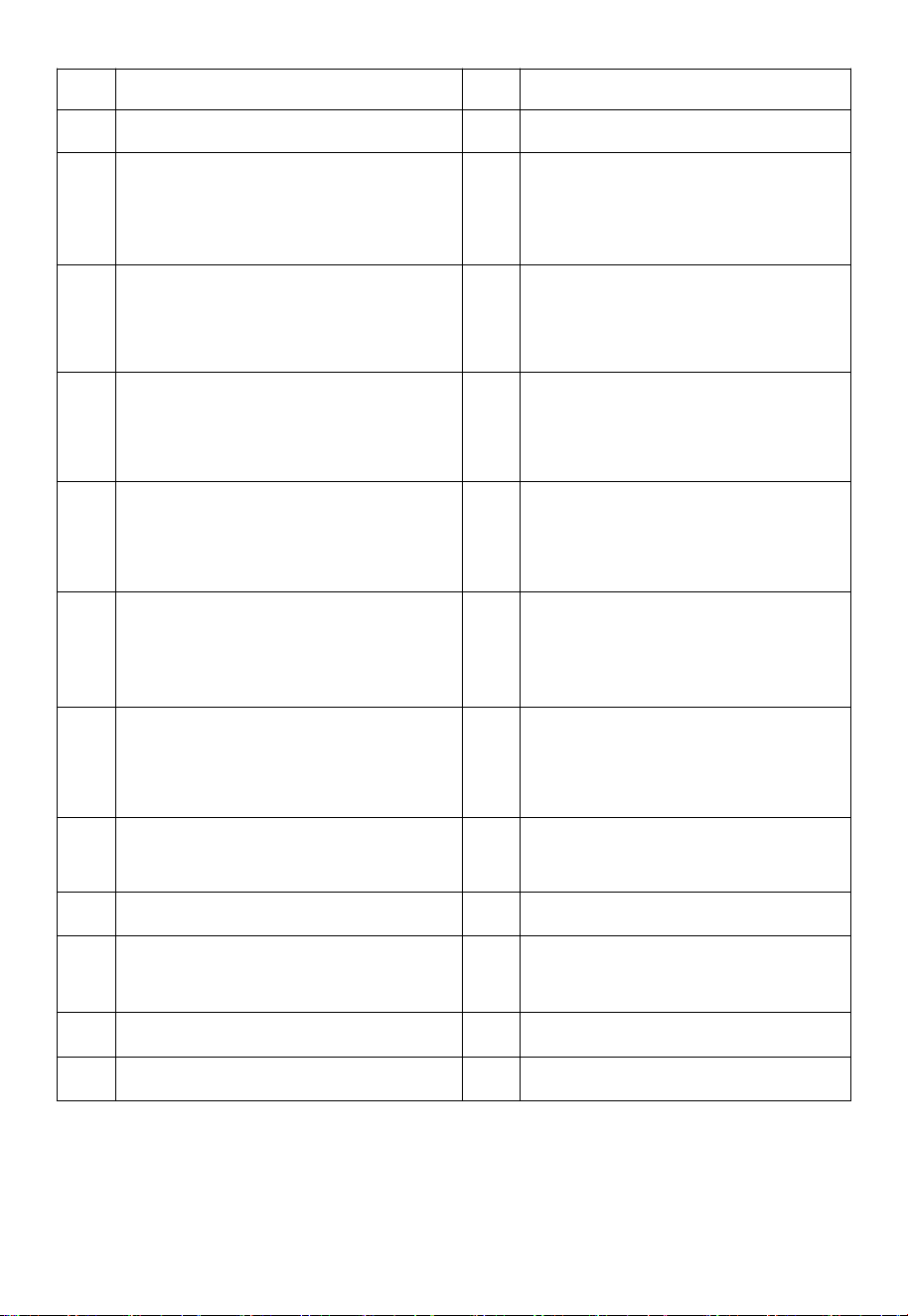
See Figure 18 to help you identify elements of the console’s display screen.
Figure 18: Display Console Screen Layout
25
No
Description
No
Description
1
Outdoor temperature
13
Soil moisture(optional sensor)
2
Outdoor Feels Like/Dew
point/Humidity/10Min. Average
Wind Direction/Max Daily Gust
14
Last lightning strikes detected
time / distance; daily counts
(optional sensor)
3
WH41/WH43/WH45 particle det
ection sensor cycle display(optio
nal sensor)
15
Indoor humidity
4
RF signal bar for PM2.5
sensor(optional sensor)
16
RF signal bar for multi-channel
temperature and humidity
sensor(optional sensor)
5
Sunrise / Sunset Time
17
Multi-channel temperature and
humidity sensor cycle display
mode icon(optional sensor)
6
Wi-Fi signal bar
18
Multi-channel temperature and
humidity sensor channel
number (optional sensor)
7
Low battery power indicator for
each sensor
19
Rain fall
Daily/Event/Hourly/Weekly/
Monthly/Yearly
8
RF signal bar for outdoor sensor
array
20
Weather forecast
9
Wind direction/Wind speed/Gust
21
ABS/REL Barometer
10
Multi-Channel water leak sensor
(optional Sensor)
22
Moon Phase
11
Indoor temperature
23
UV
12
Date and time
24
Solar Radiation
Table:Display console detailed items
26
Note: If you have purchased the optional WH55 water leak sensor, please
check the following instructions for the display color:
Green - normal
Red & Flash - leaking
Yellow - low battery alert
Orange - offline over 10 mins
If you have purchased the optional WH34 Temperature Sensor, please check
and view it on Optional Sensor Display Mode. Because WH34 Temperature
Sensor won’t display on the main screen of the console.
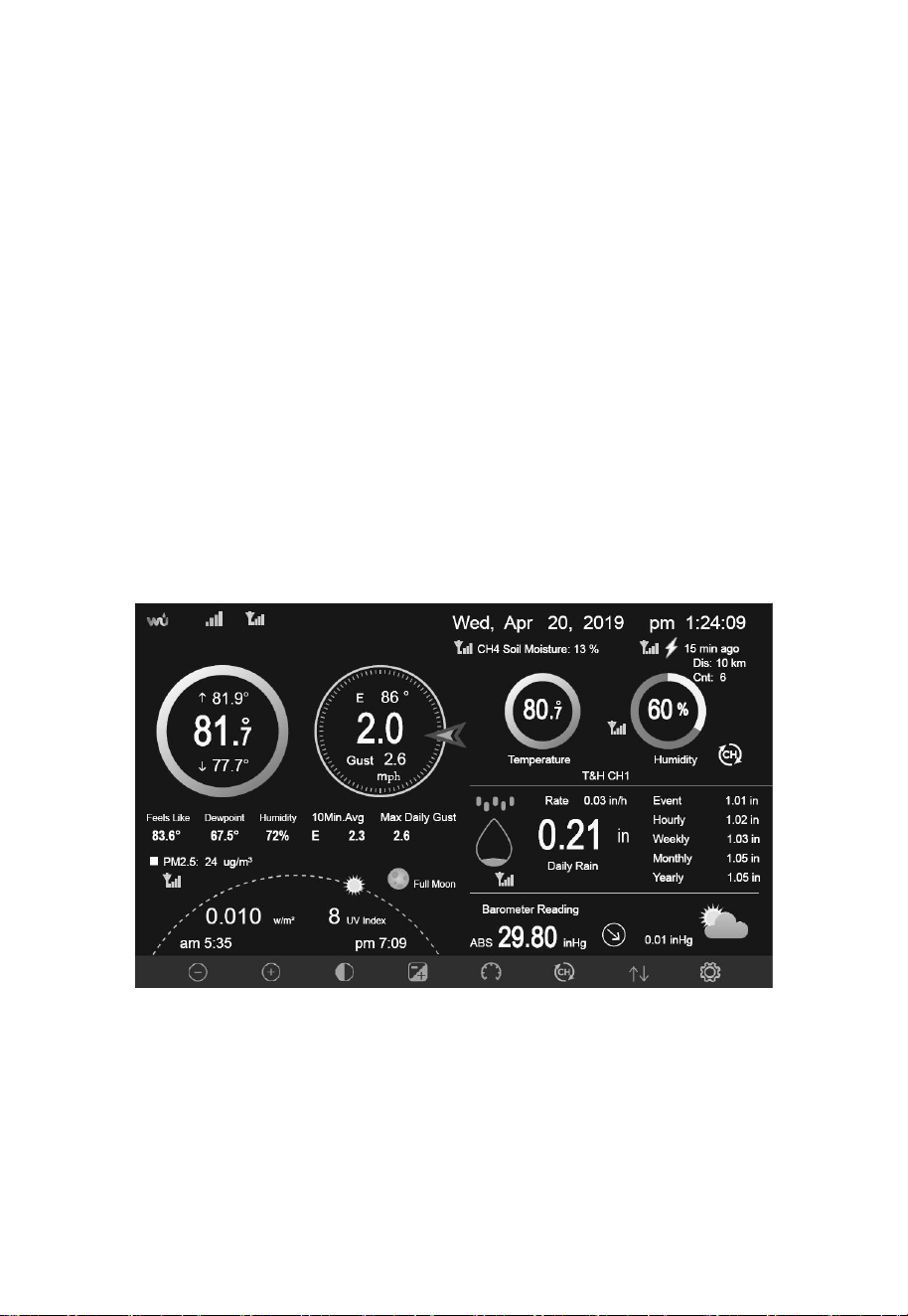
4.7.1 Initial Display Console Set Up
Immediately after power up (inserting power adapter), the unit will turn on
the display, and the unit will start to look for reception of the indoor and
outdoor sensor data. This may take up to 3 minutes.
Dark Background Display
27
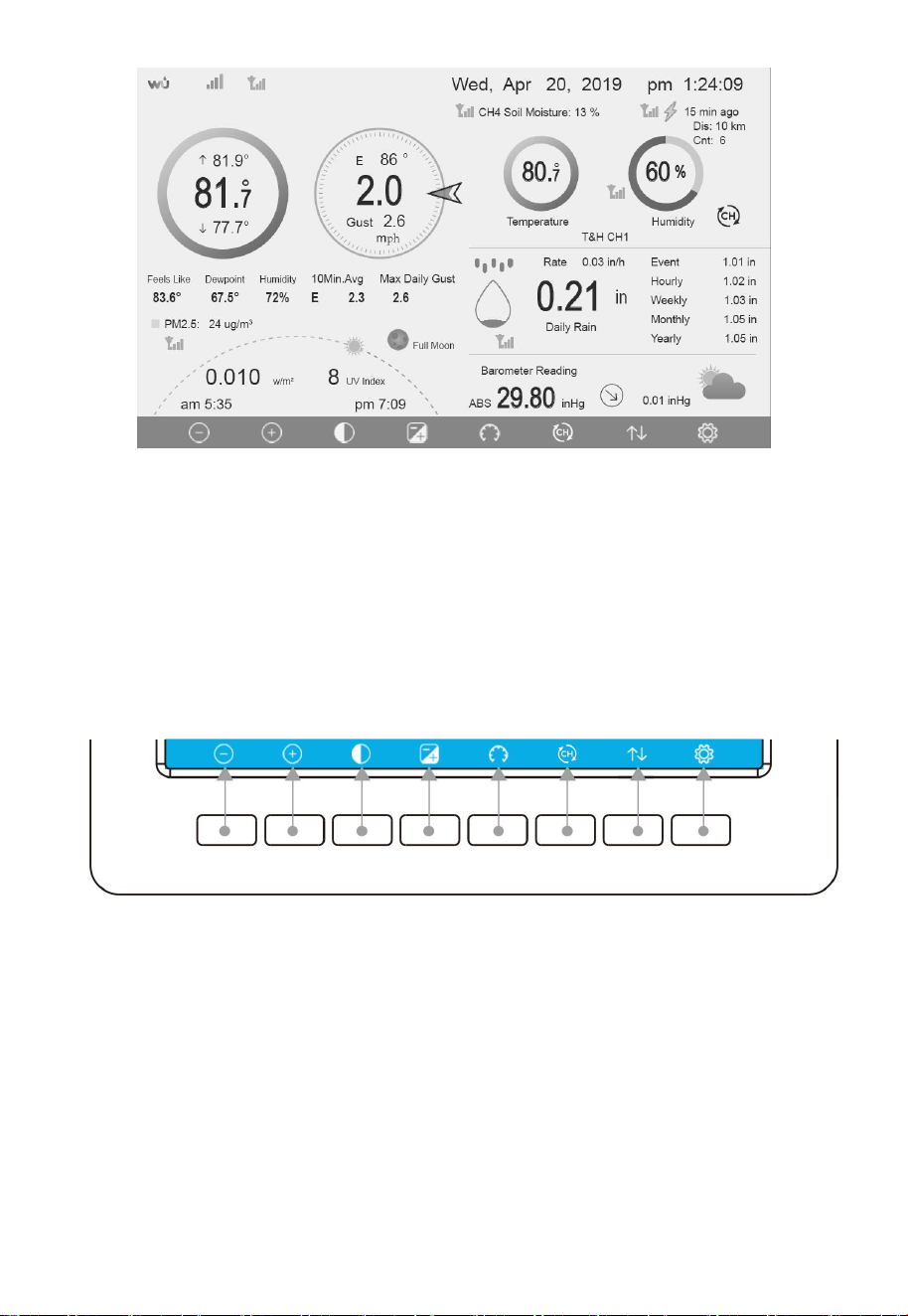
Light Background Display
Note: Sunrise/sunset time display will only work properly when GEO
location has been set up correctly. GEO setup can be carried out under setup
menu.
4.7.2 Key functions
Figure 19: Buttons around the display
There is a set of eight keys on the bottom of the display console. The
following tables briefly explains the function of these keys.
28
Icon
Description
Brightness control key
Press this key to decrease the brightness
Brightness control key
Press this key to enhance the brightness
Backlight on/off key
Press this key to on/off the backlight
Background key
Press this key to choose between dark background display and light
background display
Pressure display key
Press this key to choose the display between Absolute pressure and
Relative pressure.
Channel key
Press this key to Shift the display between indoor temp & humidity,
Multiple Channel temp& humidity and scroll automatically mode
History key
Press this key once to view Max/Min record; Press twice to enter
History mode;Press three times to enter Graph Mode.
Setting key
Press this key to enter Setting Mode
Table: Console buttons
29
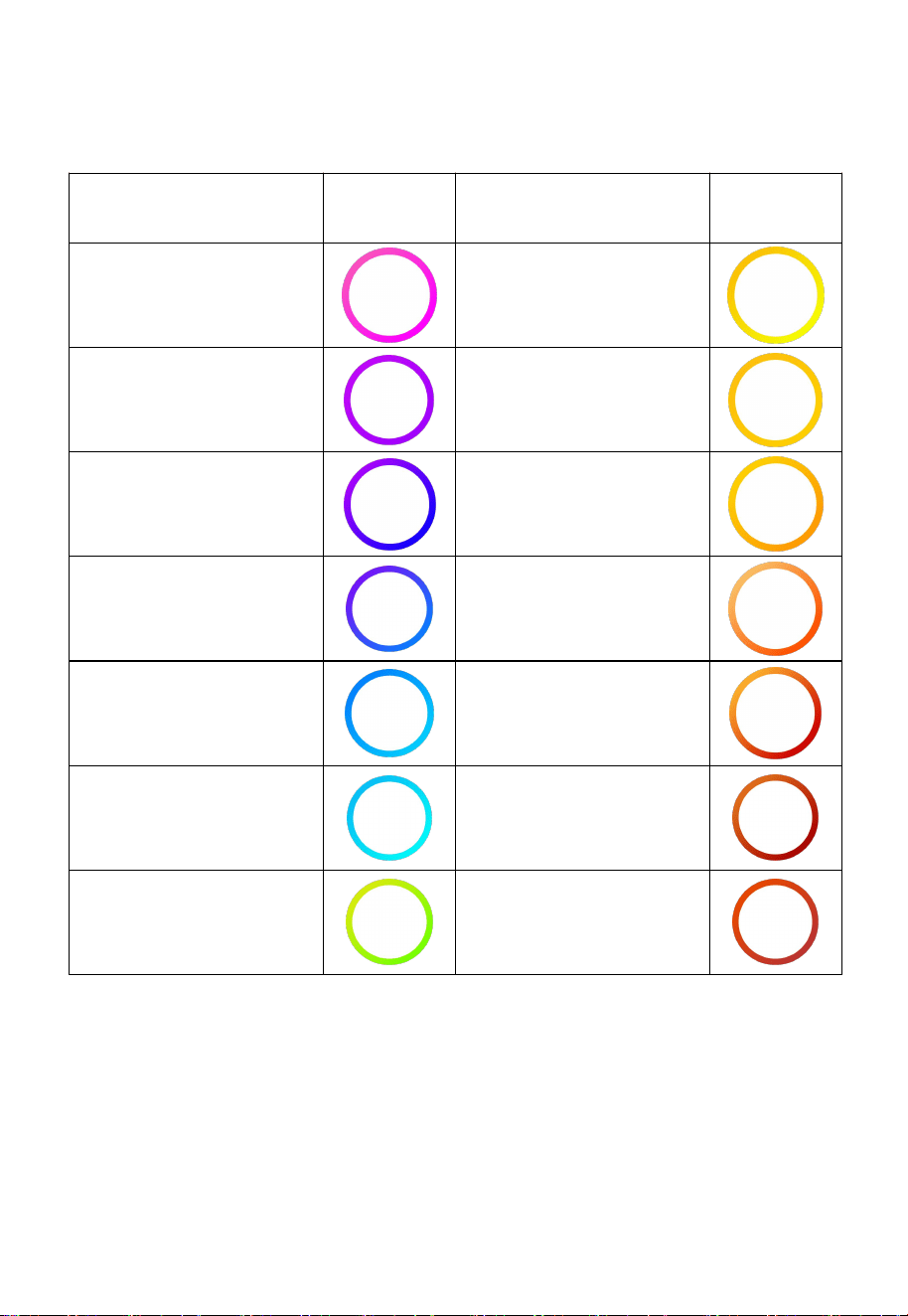
4.7.3 Main interface icons explain
4.7.3.1 Temperature Icon
Temperature Range
(degF)
Color
Ring
Temperature Range
(degF)
Color
Ring
< -10
50-60
-10 to 0
60-70
0 to 10
70-80
10-20
80-90
20-30
90-100
30-40
100-110
40-50
> 110
Note: please refer to the online manual for colorful display.
30
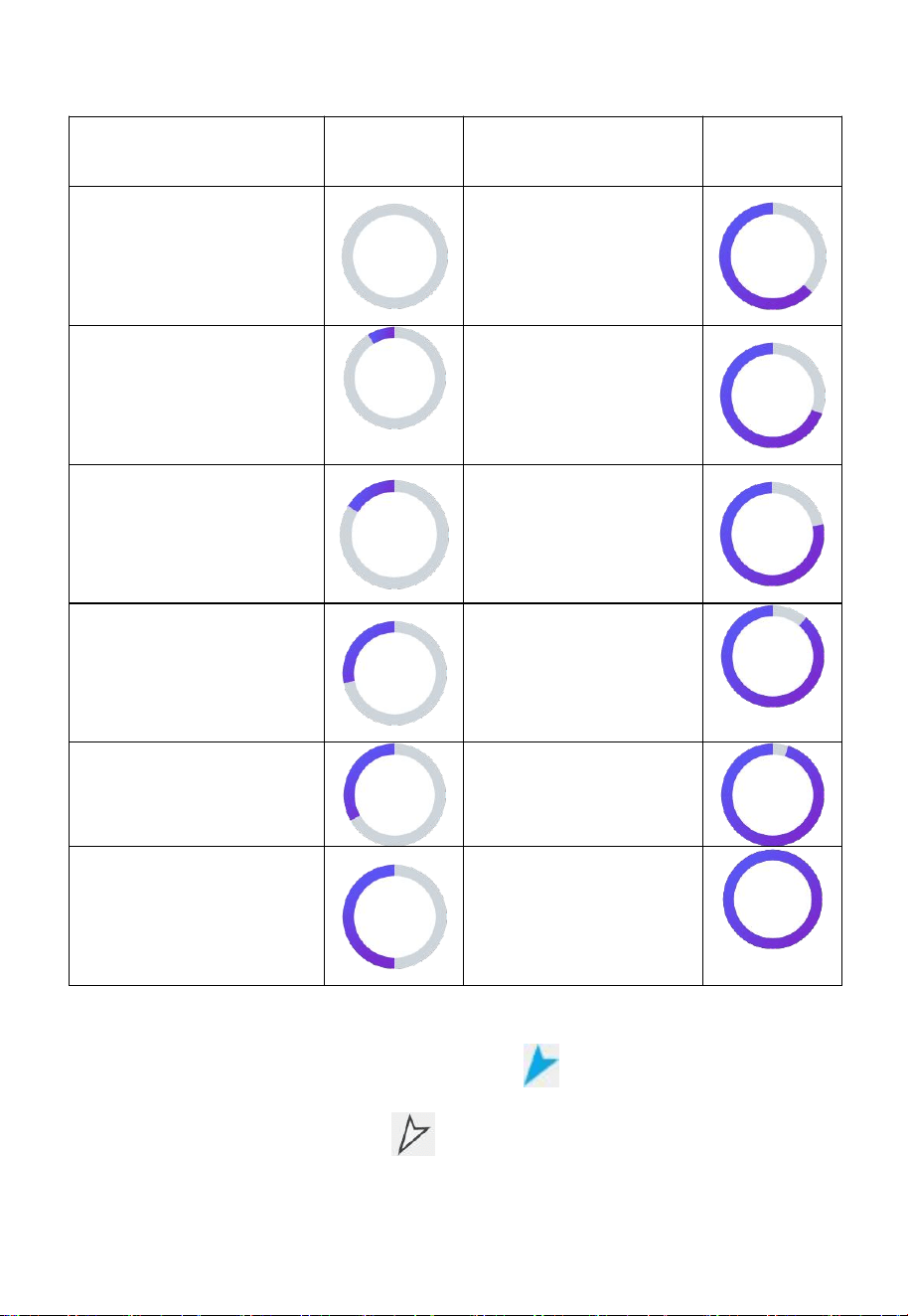
4.7.3.2 Humidity Icon
Humidity Range (%)
Color
Ring
Humidity Range
(%)
Color
Ring
0%, No signal or
dashes
50 to 60
1 to 10
60 to 70
10 to 20
70 to 80
20 to 30
80 to 90
30 to 40
90 to 99
40 to 50
100%
4.7.3.3 Current wind direction indication , 10-minute average wind
direction indication .
31
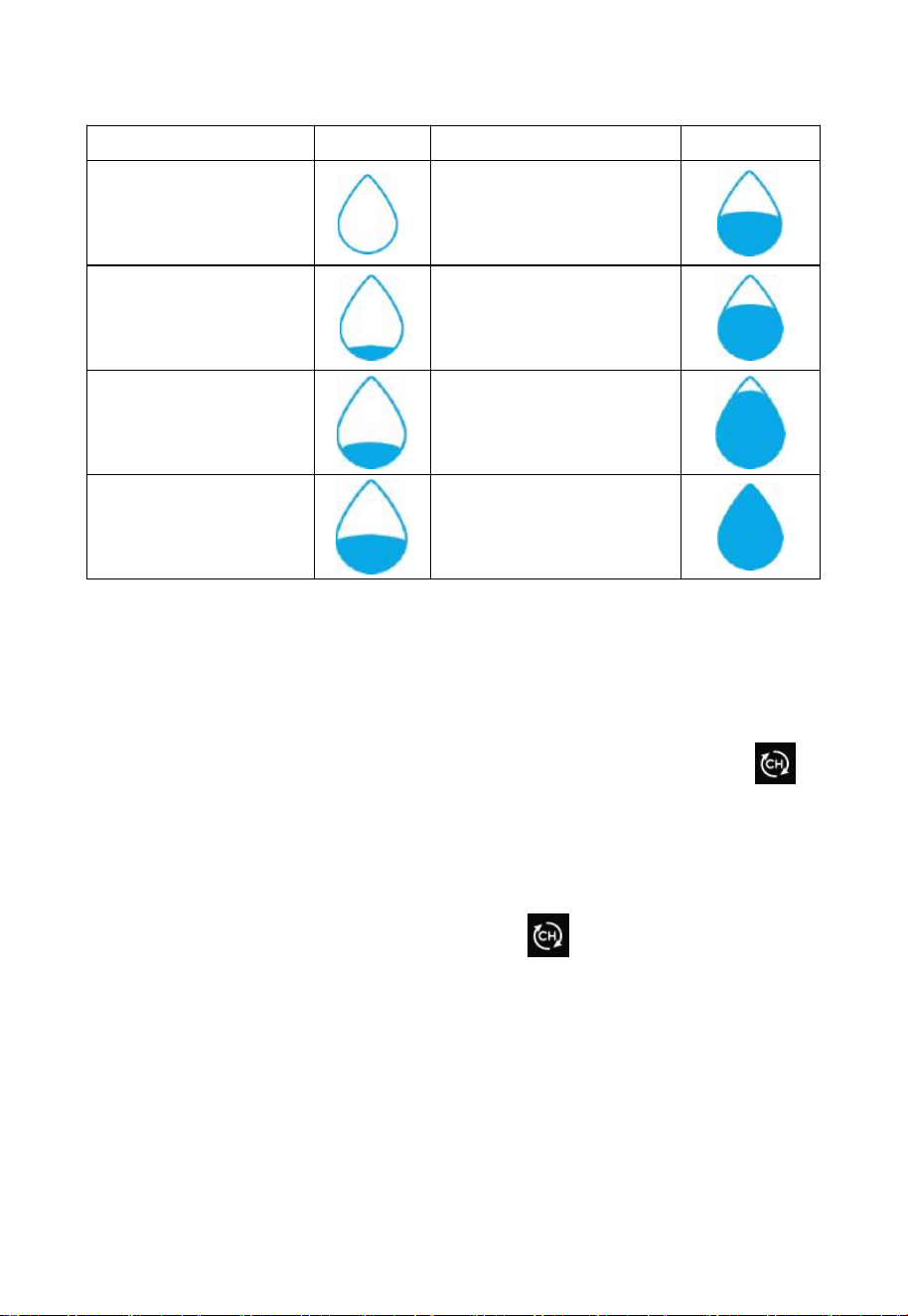
4.7.3.4 Hourly Rainfall Icon
Hourly Rain (in)
Icon
Hourly Rain (in)
Color Ring
0.0
0.6 to 0.8
0 to 0.2
0.8 to 1
0.2 to 0.4
1 to 1.2
0.4 to 0.6
1.2 to 1.4
4.8 Multiple Channel Selection and Scroll Mode
Multi-channel sensor is an optional sensor, not included in the package. If
you have multiple wireless sensors, while in normal mode, press the
key to toggle display in sequence of indoor, ch1, ch2….ch8, scroll display.
Please note if only CH2 is received, it will skip CH1, and toggle only
between indoor and already learned sensors.
While in Scroll display mode, the scroll icon will be displayed next to
the indoor humidity, and will scroll every 5 seconds.
Note: For multi channel sensor, the history data will be saved to a SD
card(not included).
32
4.9 History Mode
4.9.1 View and Reset MAX/MIN
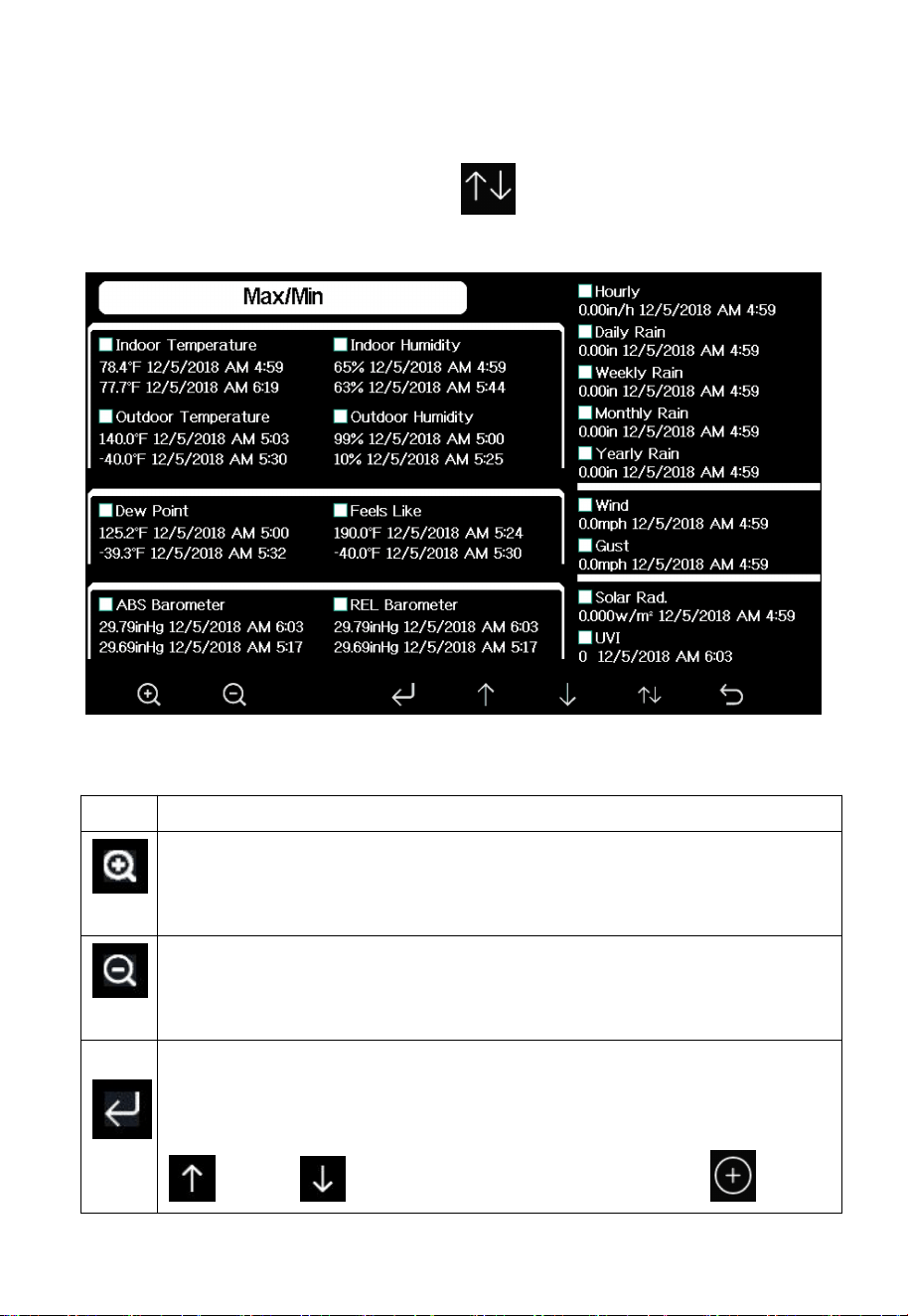
While in normal display, press the key once to view and reset
minimum and maximums.
Figure 20: Max/Min Screen
Icon
Description
Selection key
Press this key to select the weather MAX/MIN record which need
to clear
Selection key
Press this key to select the weather MAX/MIN record which need
to clear
Enter key
While the desired weather MAX/MIN record selected , press this
key to popup Message Box “Clear the Max/Min record?”. Press
key or key to select YES or NO. Press the key or
33
key to confirm the selection.
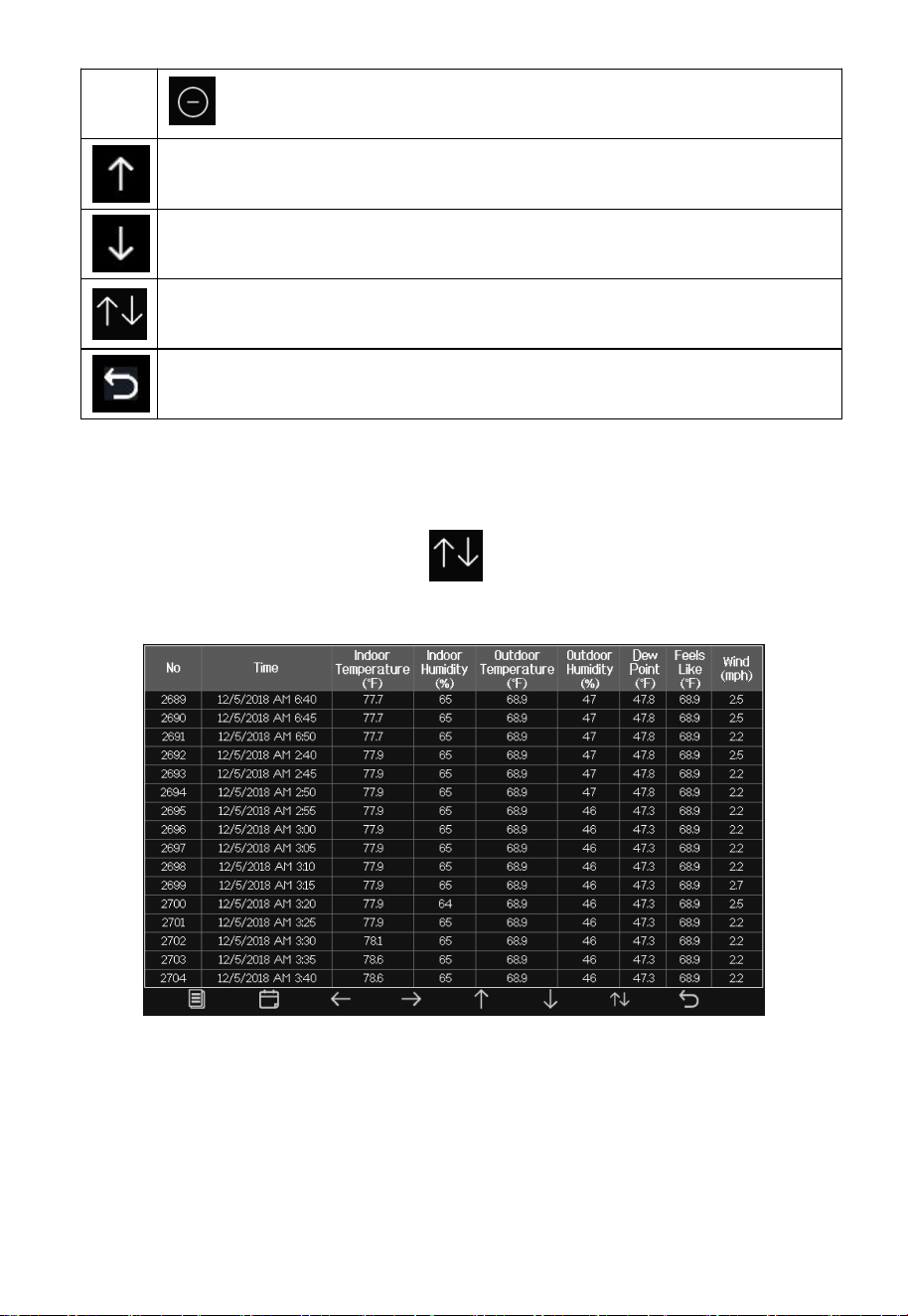
Up arrow key
Press this key to change the activated option field
Down arrow key
Press this key to change the activated option field
History key
Press this key to select History data display.
Return key
Press this key to return to normal display mode
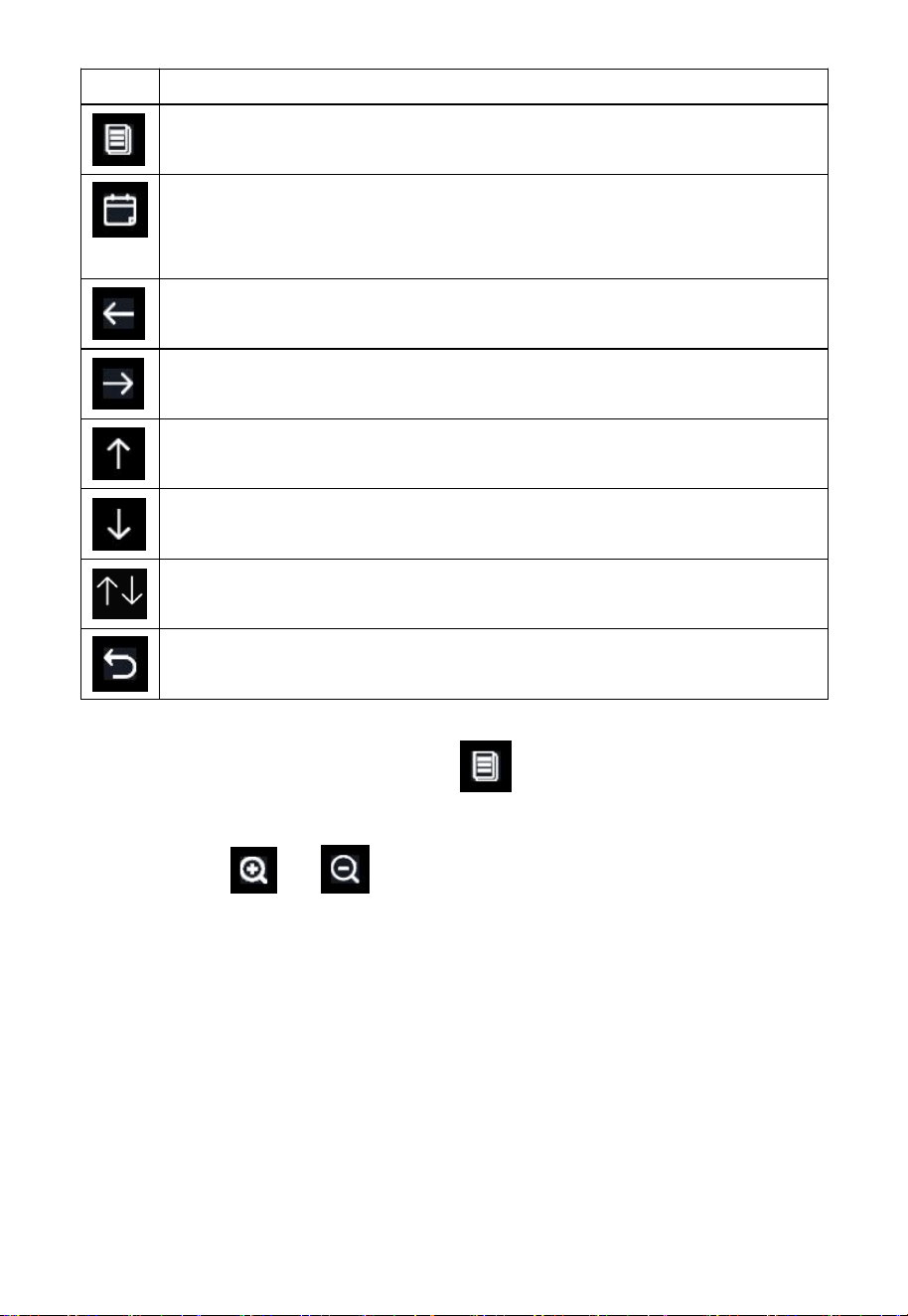
4.9.2 History Record Mode
While in normal display, press the key twice to enter History Record
Mode.
Figure 21: History record Screen
34
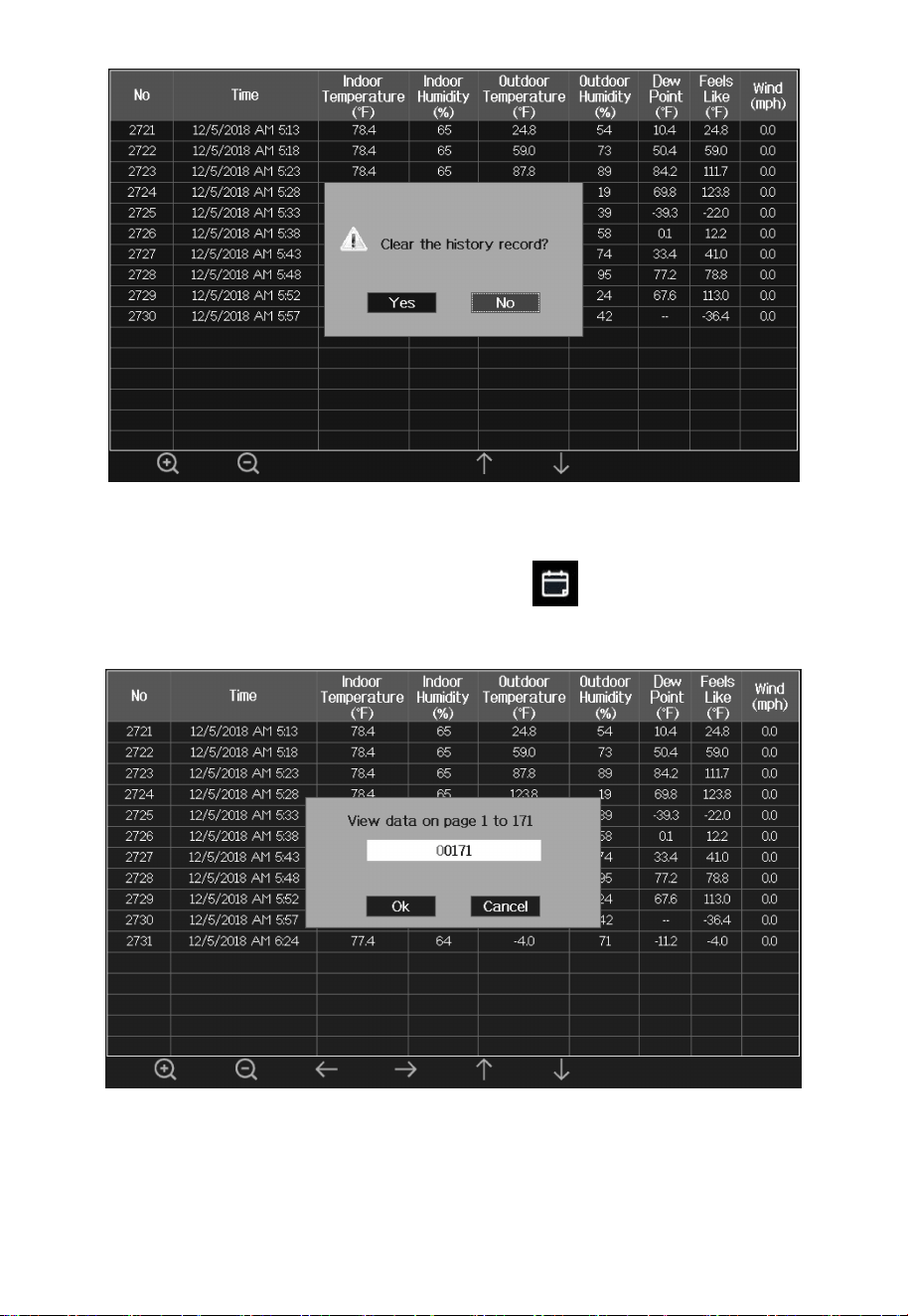
Icon
Description
File Select key
Press this key to clear all history record
Page Select key
Press this key to enter particular page of the history data. Each
page contains 16sets data.
Scroll left key
Press this key to view the left of the scrollable area.
Scroll right key
Press this key to view the right of the scrollable area.
Page up key
Press this key to scroll up the page you are viewing
Page down key
Press this key to scroll down the page you are viewing
History key
Press this key to select the Max/Min record or History.
Return key
Press this key to return to previous mode
While in History Record Mode, press key to popup the Message Box:
“Clear the history record?” Press “Yes” to clear all history records saved on
console. Press or key to return to History record Mode.
35
Figure 22: Clear History Record Screen
While in History Record Mode, press the key to enter the page
selection mode:
Figure 23: view a specific page of history Screen
36
Press or to select a digit in a number, press or key
to change the number. Press or to change the activated option
field, toggle OK or Cancel then press or key to confirm.
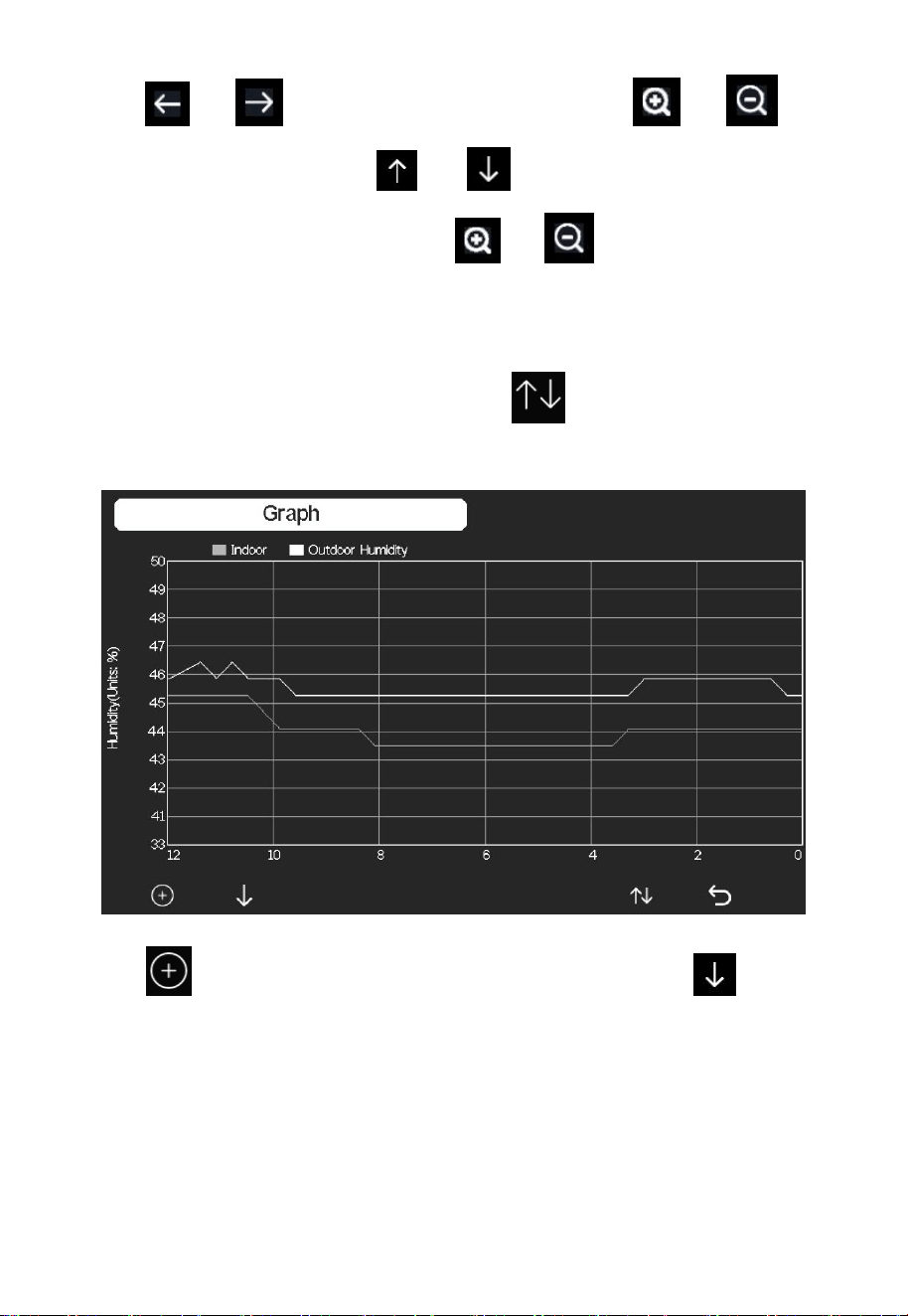
4.9.3 Graph Mode
While in History Record Mode, press the key once to enter Graph
Mode.
Press to shift the data display of 12/24/48/72H. Press to view
the graph of the following data:
Indoor Outdoor humidity
Dew Point and Feels like
Indoor Outdoor temperature
Wind speed and Gust
Wind Direction
37
UVI
Solar Radiation
Rainfall hourly and daily
Barometer(REL & ABS)
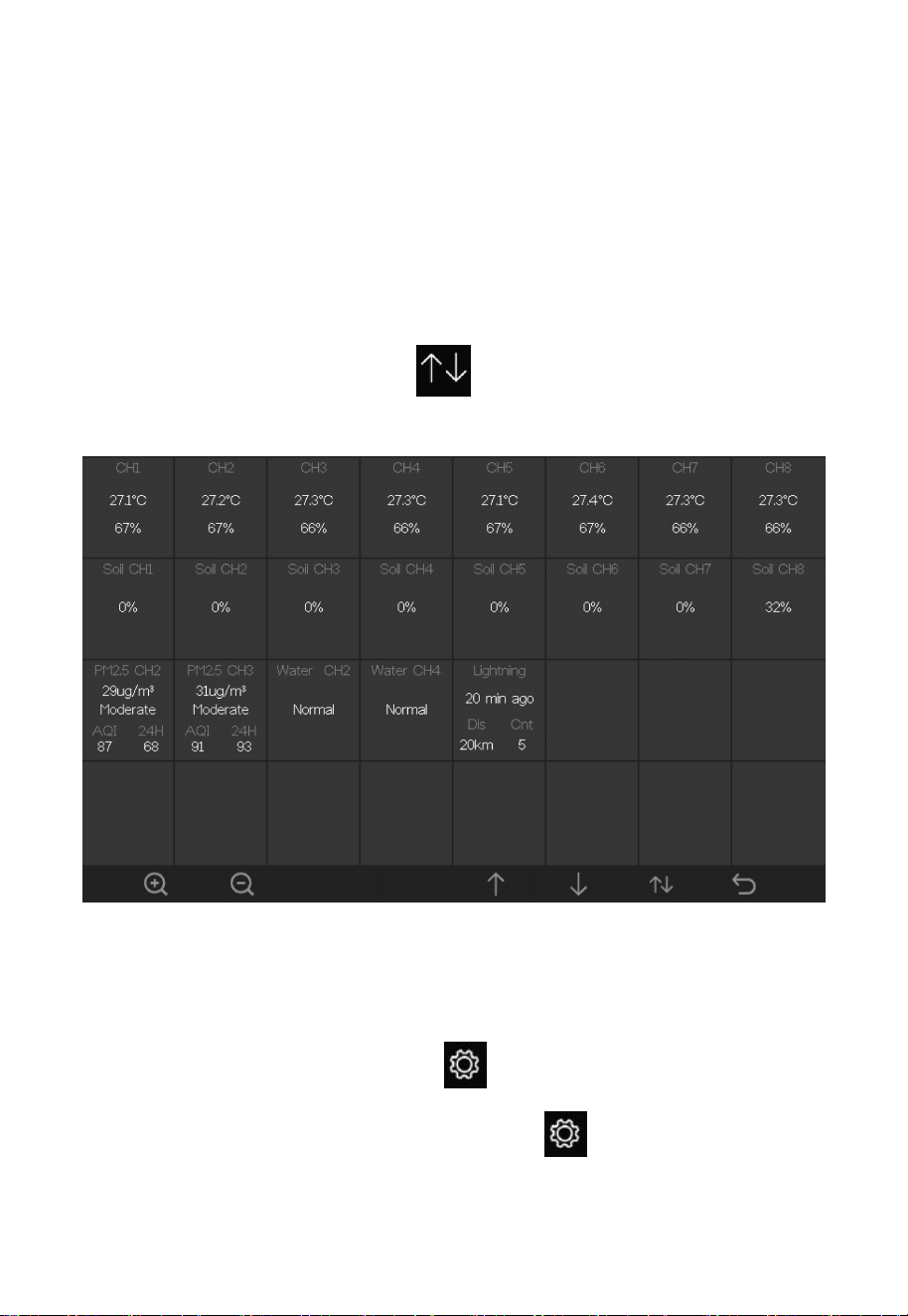
4.9.4 Optional Sensor Display Mode
To view the full display of multi-channel sensors you can do this:
While in Graph Mode, press the key once to enter Optional Sensor
Display Mode.
Note: Channel names can be edited on this page.
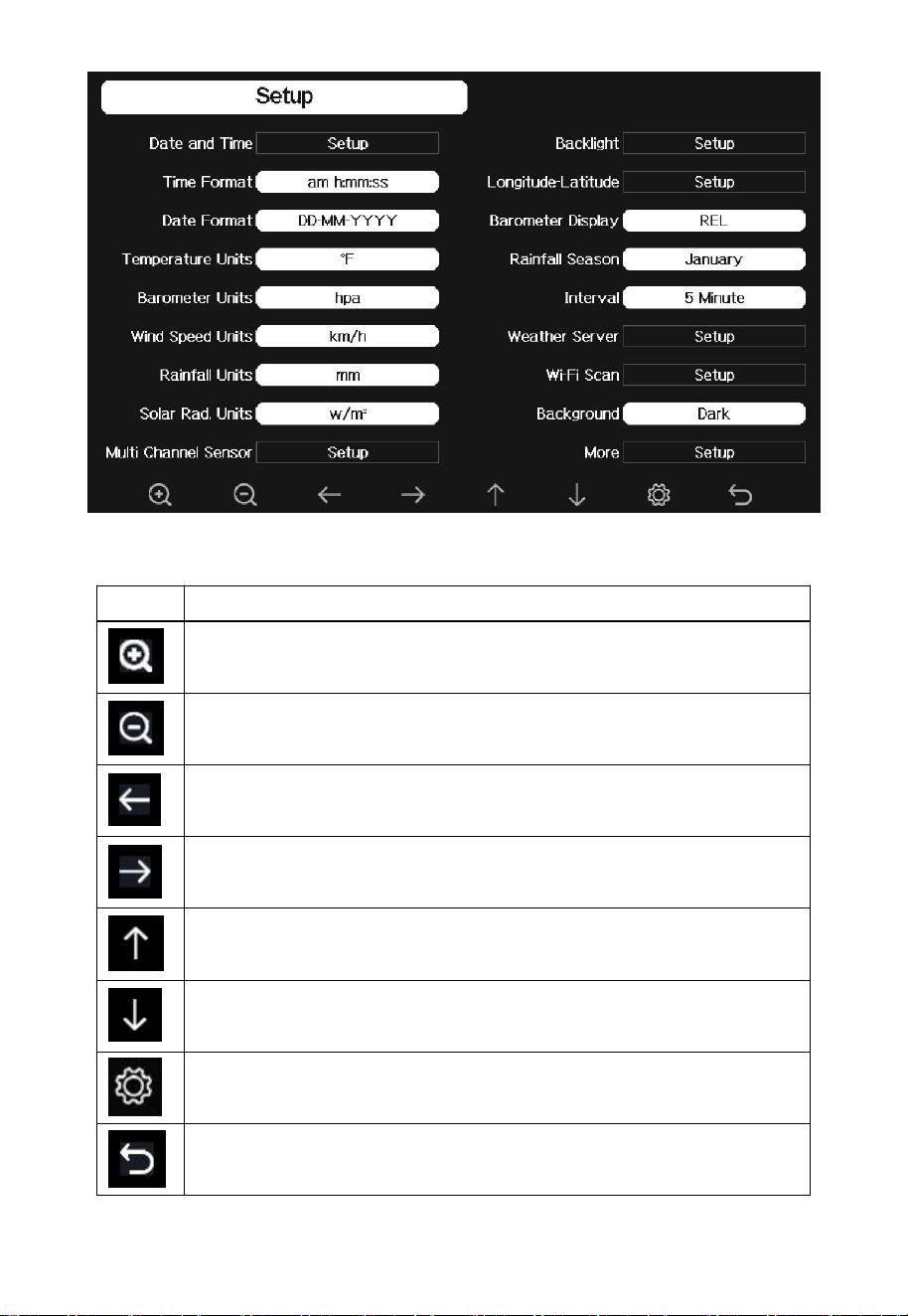
4.10 Setting Mode
While in normal display, press the key to enter Setting Mode. You
can select the below sub-mode by pressing the key
38
Figure 24: Setup Menu Screen
Icon
Description
Select key
Press this key to select the unit or scrolls the value
Select key
Press this key to select the unit or scrolls the value.
Left key
Press this key to select the set value.
Right key
Press this key to select the set value.
Up arrow key
Press this key to change the activated option field
Down arrow key
Press this key to change the activated option field
Set key
Press this key to select the Setting sub-Mode
Return key
Press this key to return to previous mode
39
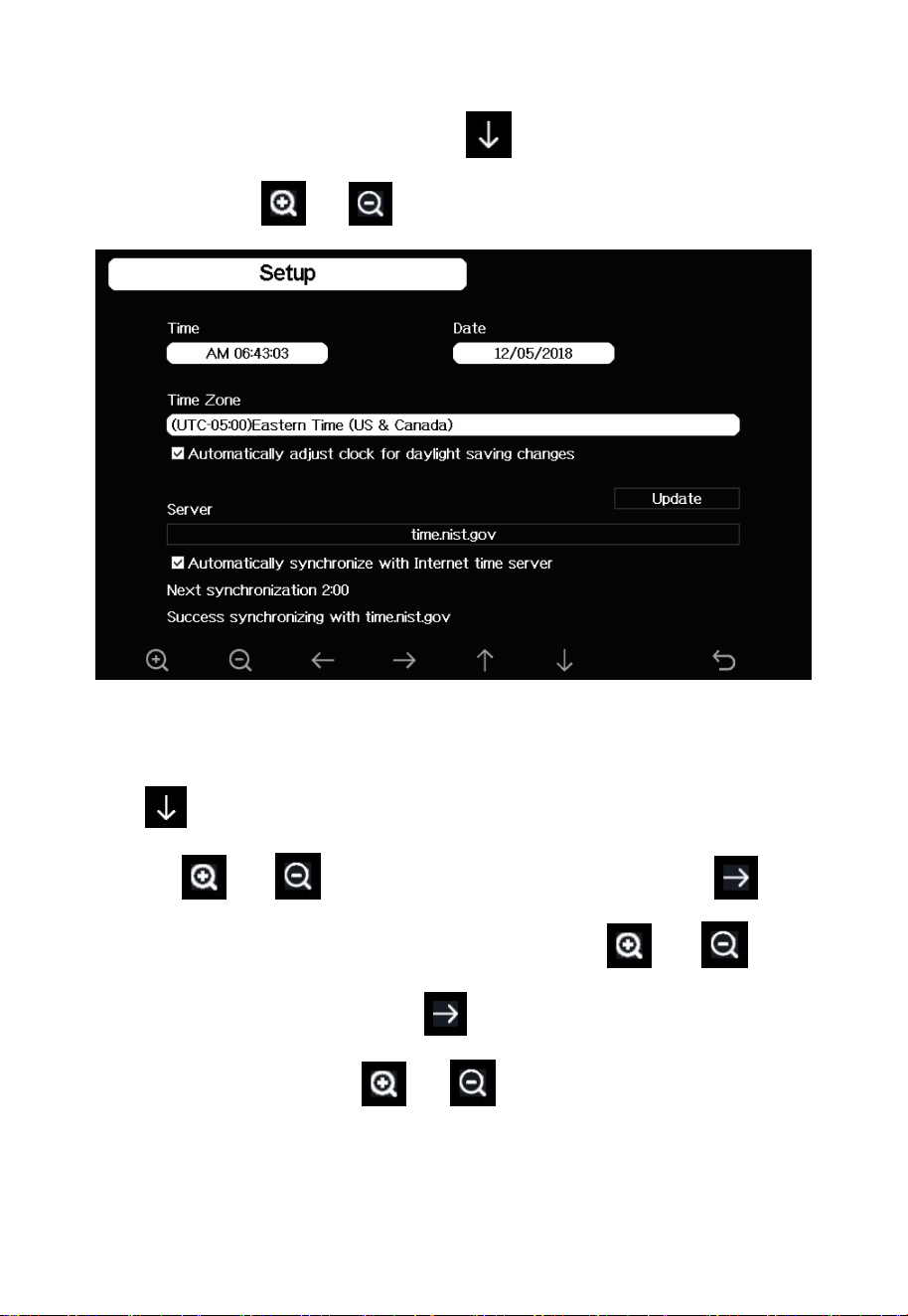
4.10.1 Date and Time setting
While in Menu Setting Mode, press key to select Date and Time
Setup field, press or key to enter Date and Time Setup mode:
Figure 25: Time and date Setup Screen
1) Time setting (hour/minute/second)
Press key to select time setting field, and the hour digit will turn red,
press the or key to change the hour setting. Press to set
the minute, the minute digit will turn red, press the or key to
change the minute setting. Press to set the second, and the second
digit will turn red, press the or key to change the second setting
2) Date setting
40
Press key to select Date setting field, the day digit on focus turns red,
press the or key to change the day setting. Press to set the
month, then month digit focused will turn red, press the or key
to change the month setting. Press to set the year, the year digit on
focus will turn red, press the or key to change the year setting
3) Time zone setting
Press key to select Time zone setting field, press the or
key to change the time zone setting. Press key to select Update field,
press the or key to update the time immediately.
4) Automatically synchronize with internet time server
The time server is time.nist.gov. Press the or key to tick”
Automatically synchronize with internet time server” and press” update” to
synchronize with time server immediately. Console time will be updated at
2:01am automatically when internet access is possible.
4.10.2 Time Format setting
Press to change the time format between hour: minute: second
(h:mm:ss), hour: minute: second AM (h:mm:ss AM) and AM hour: minute:
second (AM h:mm:ss).
41
4.10.3 Date Format setting
Press to change the time format between DD-MM–YYYY,
YYYY-MM- DD and MM-DD-YYYY
4.10.4 Temperature unit setting
Press to change the temperature units of measure between °F and °C.
4.10.5 Barometric unit
Press to change the temperature units of measure between inHg,
mmHg and hpa
4.10.6 Wind speed unit
Press to change the wind speed units of measure between mph, bft
(Beaufort scale), ft/s, m/s, km/h and knot.
4.10.7 Rainfall unit
Press to change the rainfall units of measure between in and mm
4.10.8 Solar Rad. Unit
Press to change the solar radiation units of measure between W/m^2,
lux and fc.
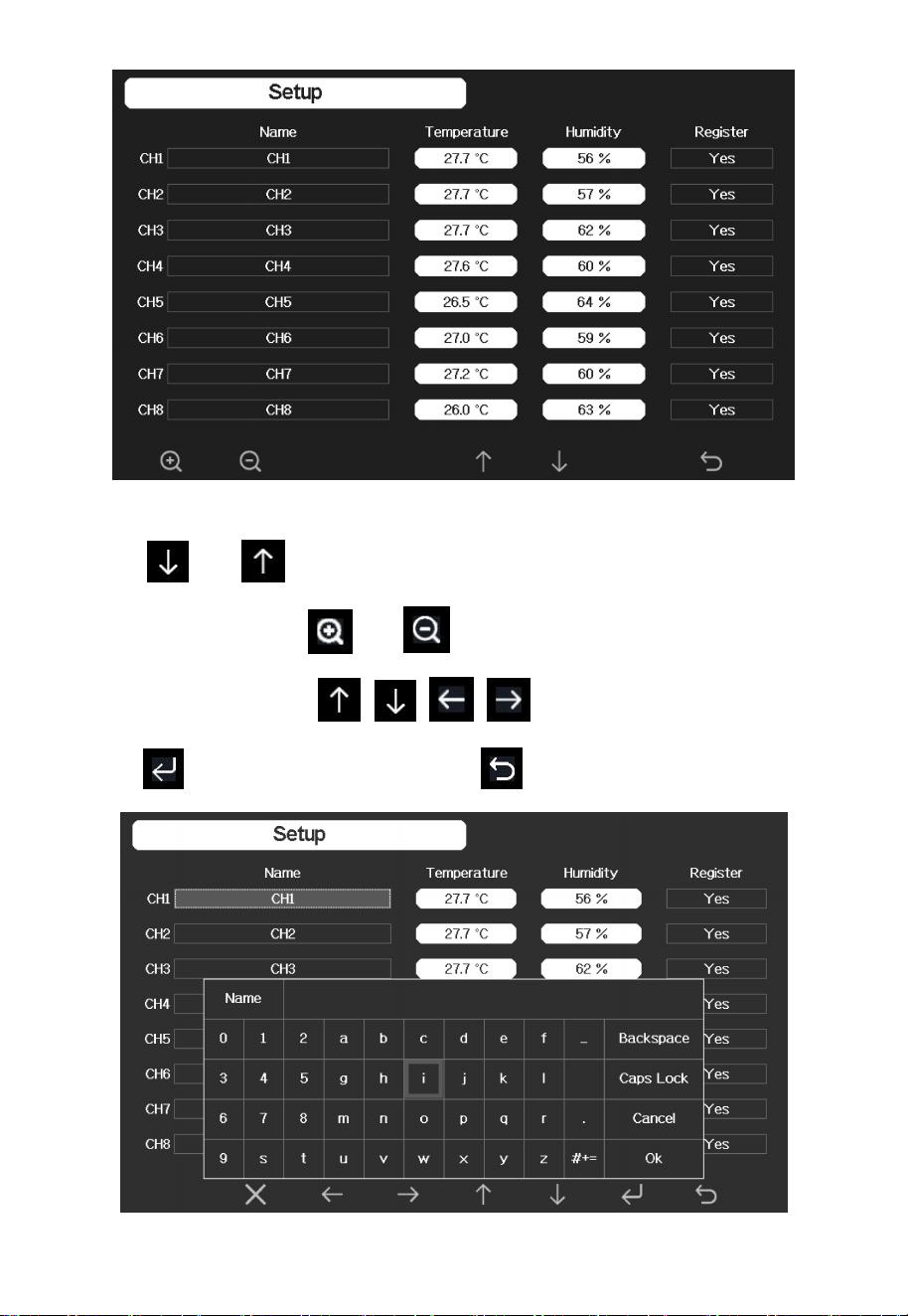
4.10.9 Multi Channel Sensor
In Multi channel sensor Setup Screen, you can rename the sensor or register
the sensor again while the sensor lost connection to console display.
42
Figure 26: Multi channel sensor Setup Screen
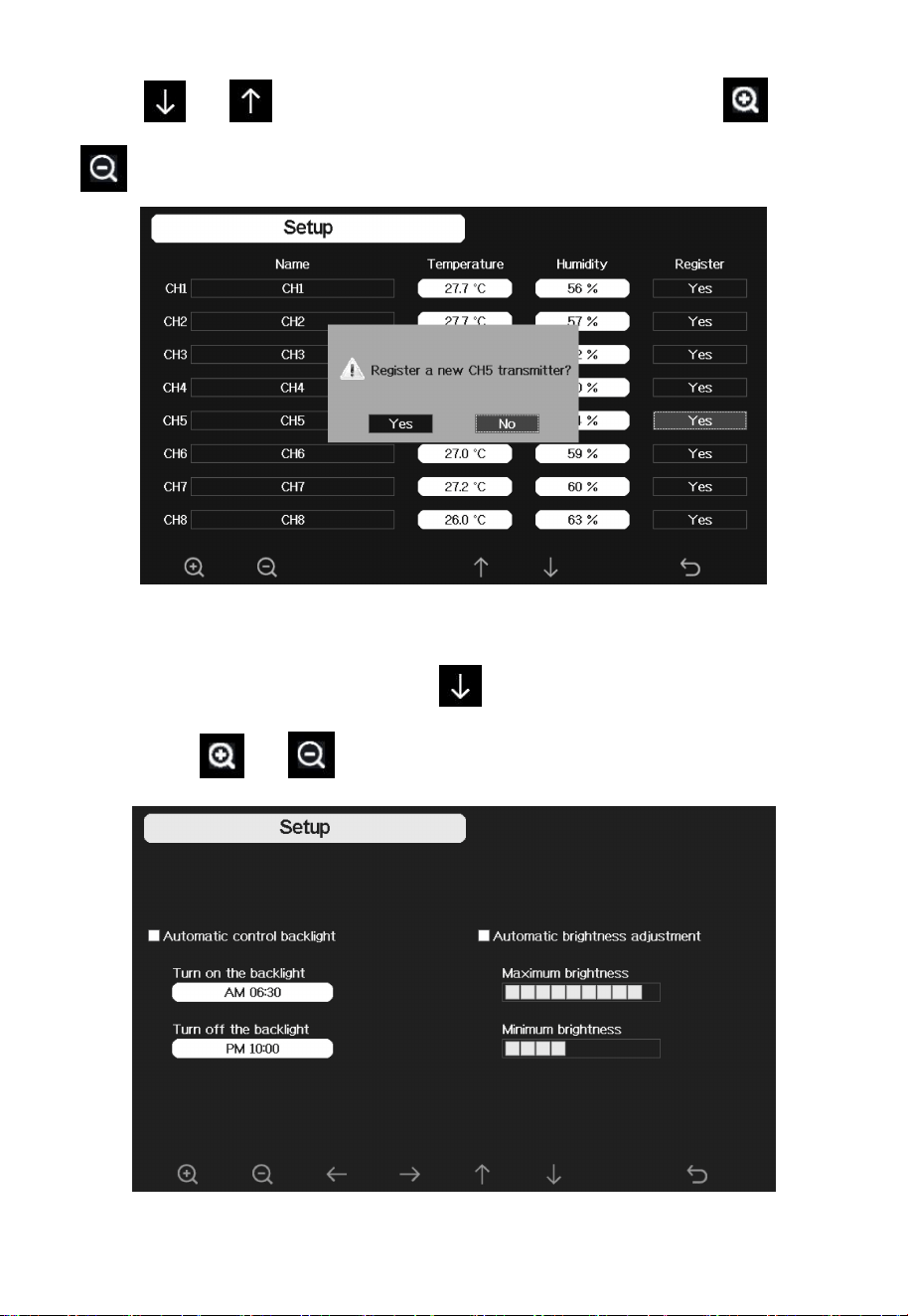
Press or key to select Name setting field, the name on focus
turns green, press the or key to pop up the keyboard to enter
the sensor name. Press to scroll to the character and
press to select the character. Press to return to the setup page.
Figure 27: rename the sensor Screen
43
Press or key to select Register setting field, press the or
key to register the selected sensor
4.10.10 Backlight setting
While in Menu Setting Mode, press key to select Backlight Setup
field, press or key to enter backlight Setup mode:
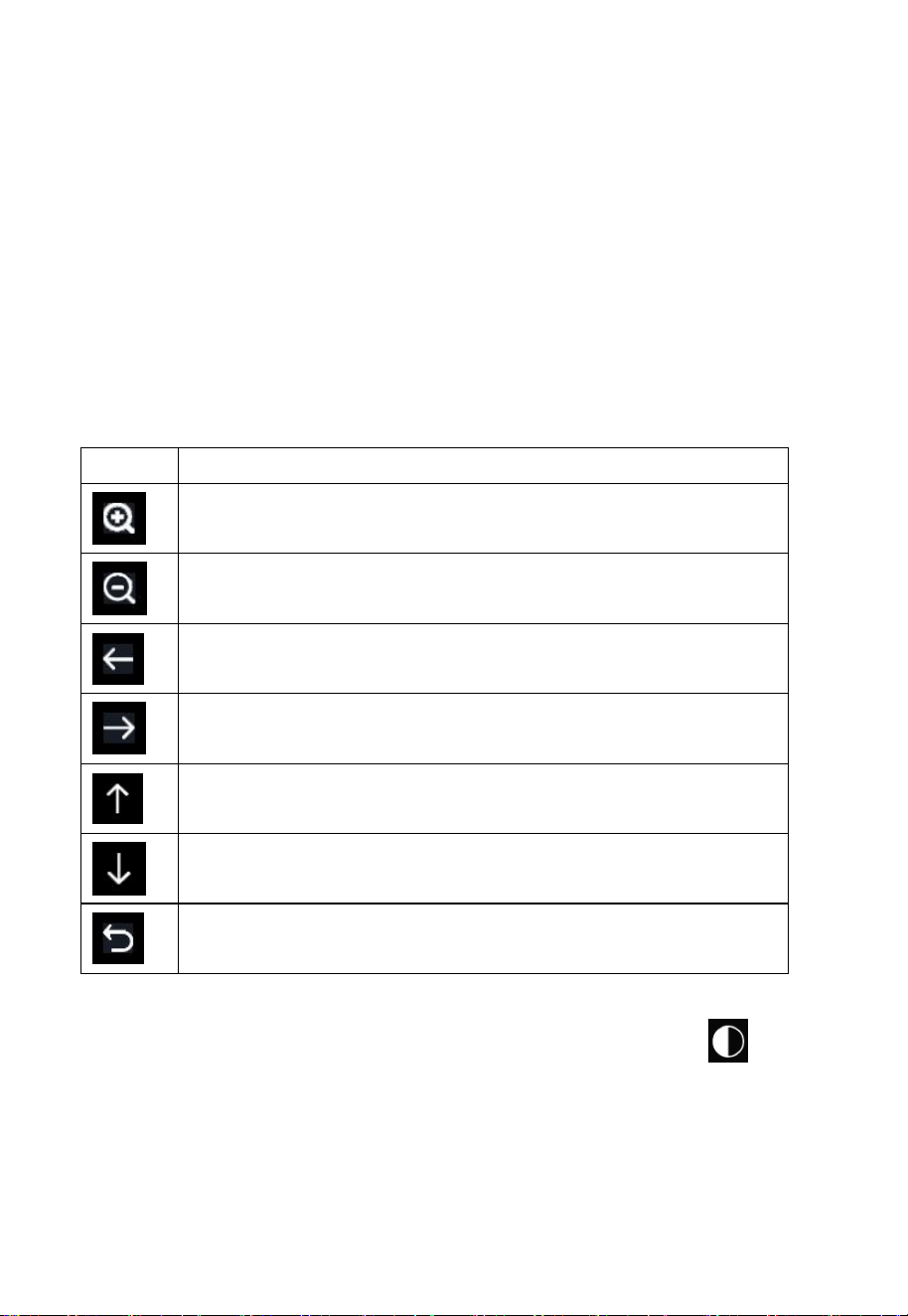
Figure 28: Backlight Setting Screen
44
Automatic control backlight: select this option, the backlight will auto turn
on and off according the set time
Turn on the backlight: set the time of turning on backlight
Turn off the backlight: set the time of turning off backlight
Automatic brightness adjustment: select this option, the brightness will
change according to the light intensity measured from outdoor sensor
Maximum brightness: set the maximum brightness while it is the highest
light intensity
Minimum brightness: set the minimum brightness while it is the weakest
light intensity
Icon
Description
Select key
Press this key to select the unit or scrolls the value
Select key
Press this key to select the unit or scrolls the value.
Left key
Press this key to select the set value.
Right key
Press this key to select the set value.
Up arrow key
Press this key to change the activated option field
Down arrow key
Press this key to change the activated option field
Return key
Press this key to return to previous mode
If the auto backlight turn-on time has been set, you can press key to
turn off the backlight within the turn on time. Backlight will turn on again
automatically at next turn on time. You can press any key to turn on the
backlight for 60s within the turn off time
45
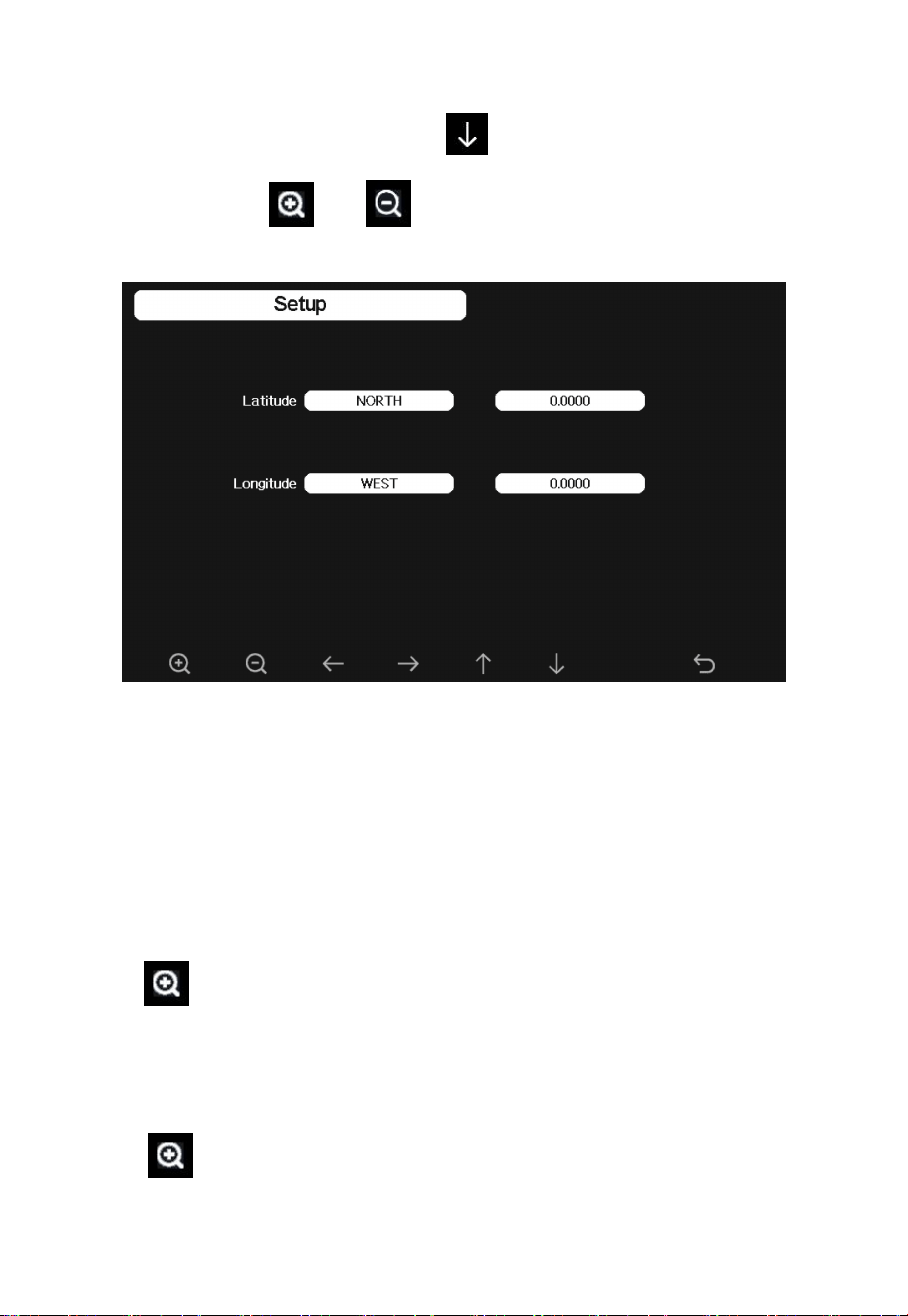
4.10.11 Longitude: Latitude setting
While in Menu Setting Mode, press key to select Longitude: Latitude
Setup field, press or key to enter Longitude Latitude Setup
mode:
Figure 29: Longitude and Latitude Setting Screen
The sunrise/sunset times will be calculating automatically base on the
Longitude and Latitude. Your location GEO info can be found on mobile
compass page. Two digits after decimal should be enough for this feature to
be working correctly.
4.10.12 Barometric display
Press to change the barometer display between REL (relative pressure)
and ABS (absolute pressure)
4.10.13 Rainfall season (default: January)
Press to change the beginning of the rainfall yearly season month.
The default is January. Rainfall season influence the annual rainfall
46
maximum, minimum and total value. When one month was selected, the
annual rainfall and annual max/min rainfall were zero clearing at 0:00 of the
first day of the selected month.
4.10.14 Storing Interval (1-240minutes Selectable)
4.10.15 Weather Server
You may jump to section 5.10.16 now to have your console connected with
your Wi-Fi network first. Then back to section 5.10.15 to have cloud data
hosting setup completed.
Your console is capable of sending your sensor data to select internet-based
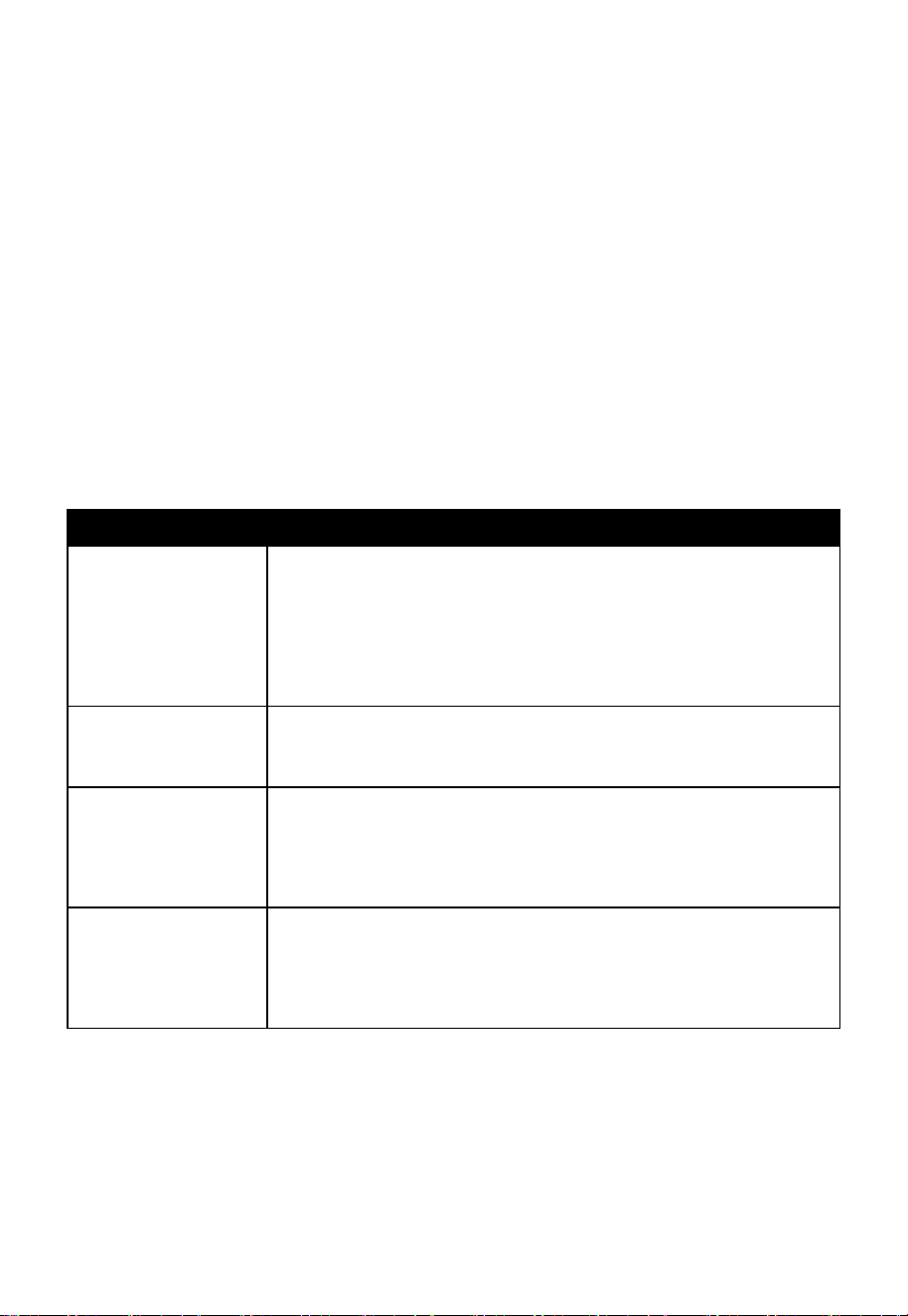
weather services. The supported services are shown in the table below:
Service
Description
Weather
Underground
Site: https://wunderground.com
provides local & long-range weather forecasts, weather
reports,maps & tropical weather conditions for locations
worldwide.
WOW
Site: https://wow.metoffice.gov.uk
A UK based weather observation website.
Weather Cloud
Site: https://weathercloud.net
A large network of weather stations reporting data in
real time from all over the world.
Ecowitt Weather
Site: https://www.ecowitt.net
Ecowitt’s new weather server that can host a bunch of
sensors that other services don’t support at this time.
Table: Supported weather services
Note: If you are testing the setup with the outdoor sensor package nearby
and indoor, you may want to consider connecting to Wi-Fi, but not yet
configuring any of the weather services. The reason is that while indoor the
temperatures and humidity recorded by the outdoor sensor, and as reported
47
to the weather service(s) will reflect indoor conditions, and not outdoor
conditions. Therefore, they will be incorrect. Furthermore, the rainfall
bucket may be tripped during handling, causing rain to register while it may
not actually have been raining. One way to prevent this is to follow all
instructions, except to use an incorrect password, on purpose! Then, after
final outdoor installation, come back and change the password after clearing
console history. That will start uploading to the services with a clean slate.
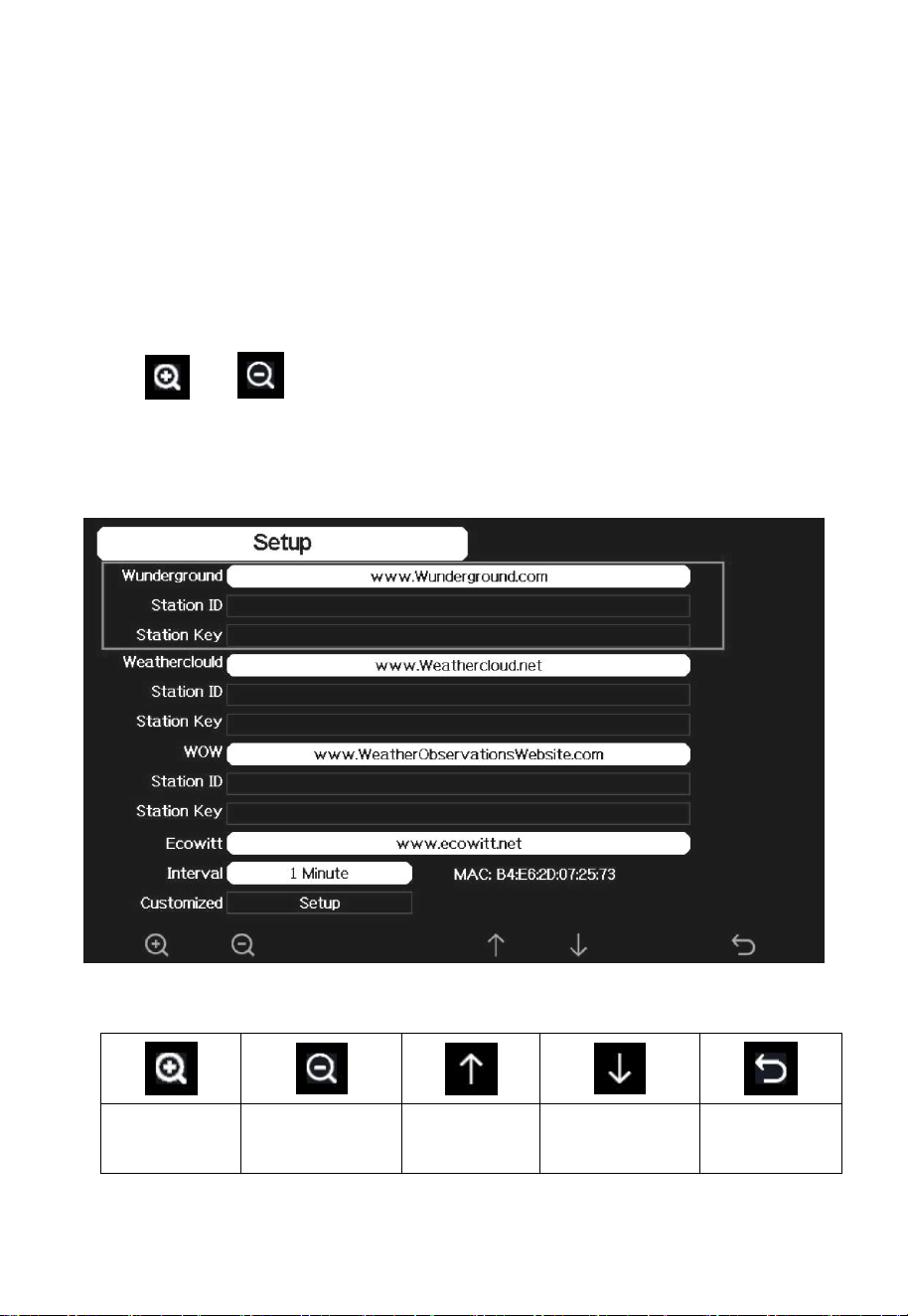
Press or key to enter Weather Server set up mode. The device
can be configured to send real-time data to wunderground.com®. Enter the
Station ID and Password obtained from Wunderground.com.
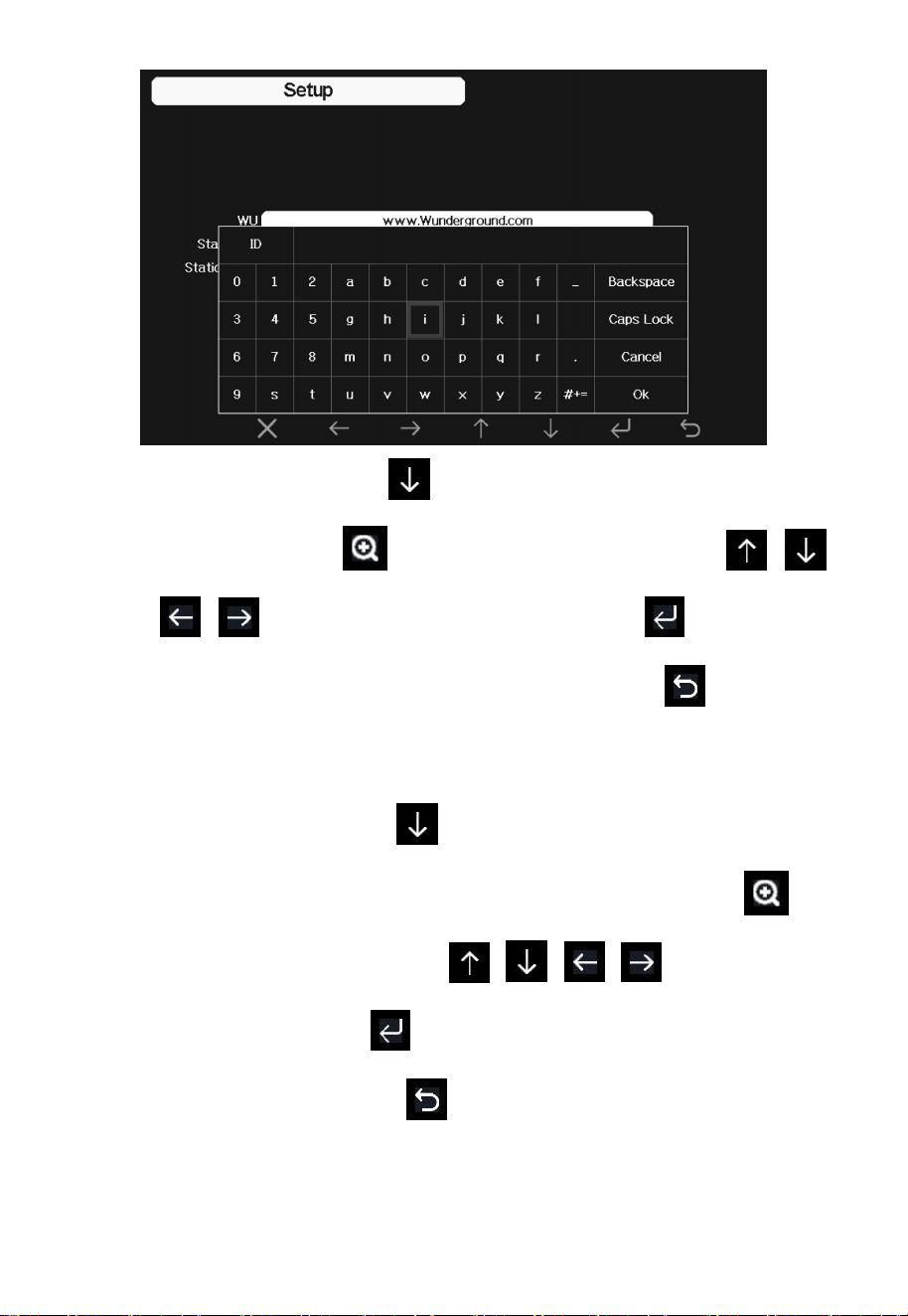
Figure 30: Weather Server setup screen
scroll value
up
scroll value
down
Scroll field
up
Scroll field
down
return to
Setup
48
1) Set Station ID. Press to highlight the Station ID. Enter your
station ID. Press to display the keyboard. Press
to scroll to the character and press to select the
character. Press the “OK” button to confirm. Press to return to
the setup page.
2)
3) Set Station Key. Press to highlight the station key. Enter your
password obtained from according weather server. Press to
display the keyboard. Press to scroll to the
character and press to select the character. Press the “OK”
button to confirm. Press to return to the setup page.
49
4.10.15.1 Registering with and using wunderground.com
Perform the following steps to get the Station ID and Password on
wunderground.com:
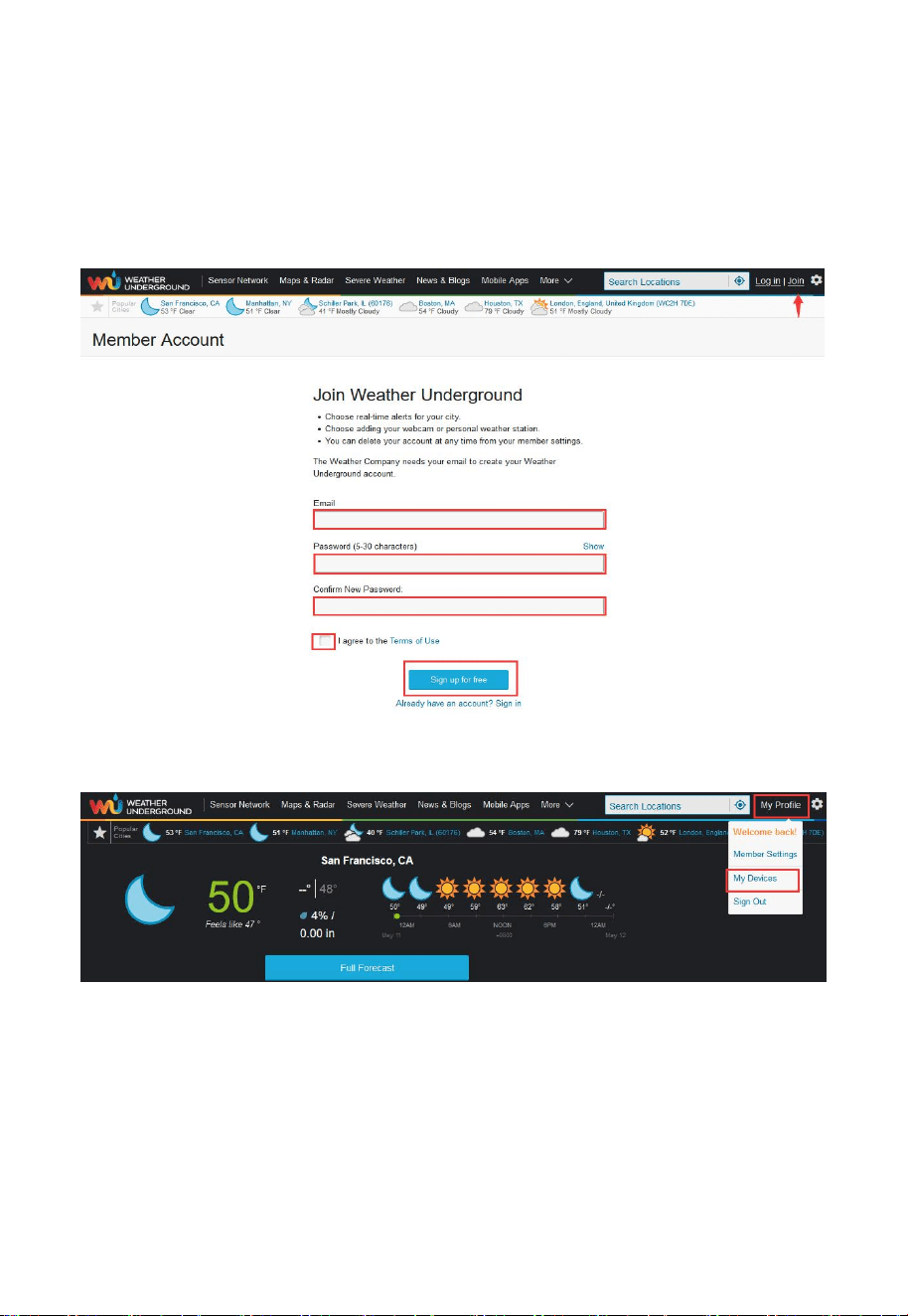
1. Visit Wunderground.com and select the Join link at the top of the page
and sign up.
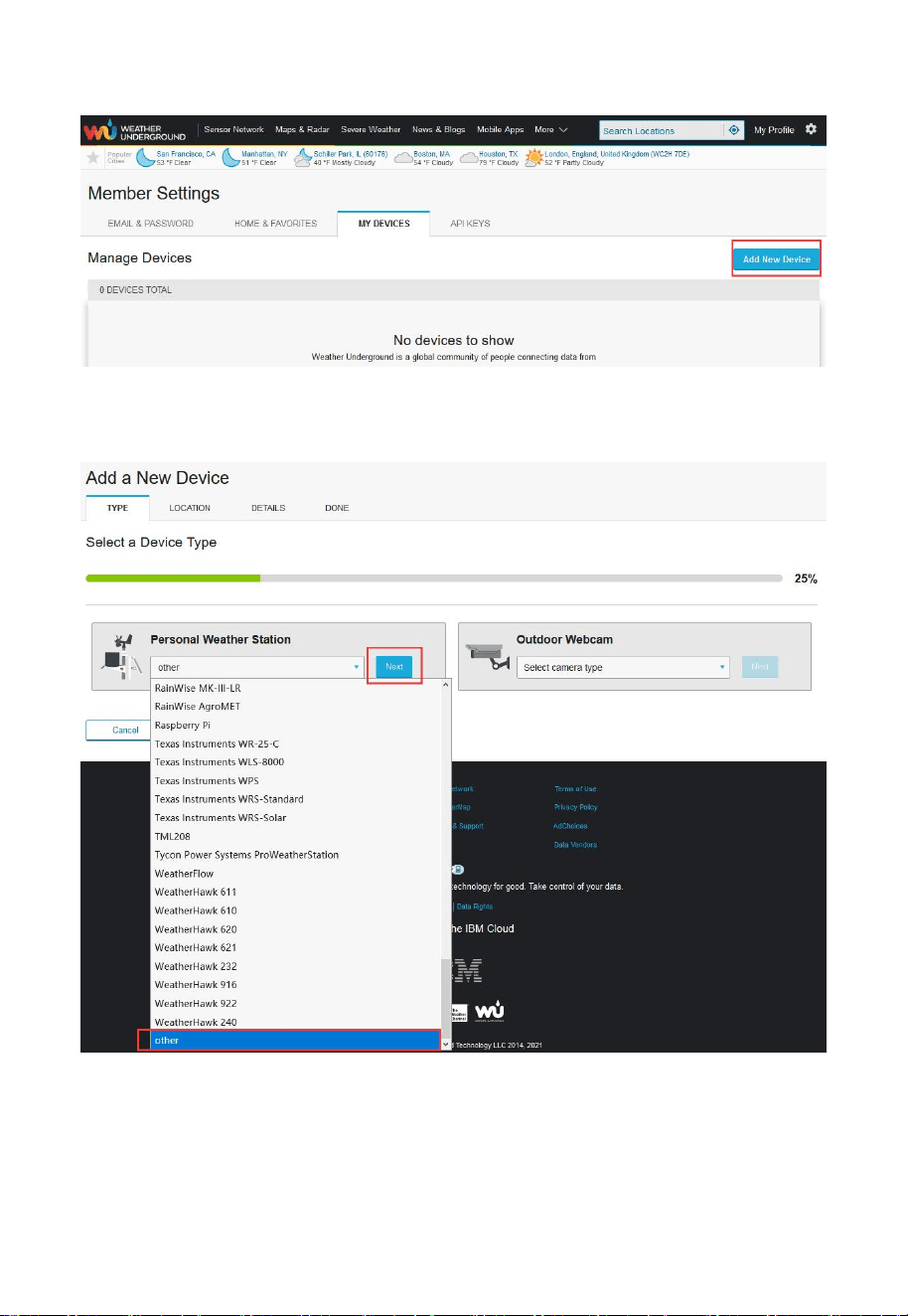
2. Click My Profile and select My Devices to register your station
50
3. Select Add New Device.
4. Find Personal Weather Station. Select ‘other’ and click ‘Next’.
51
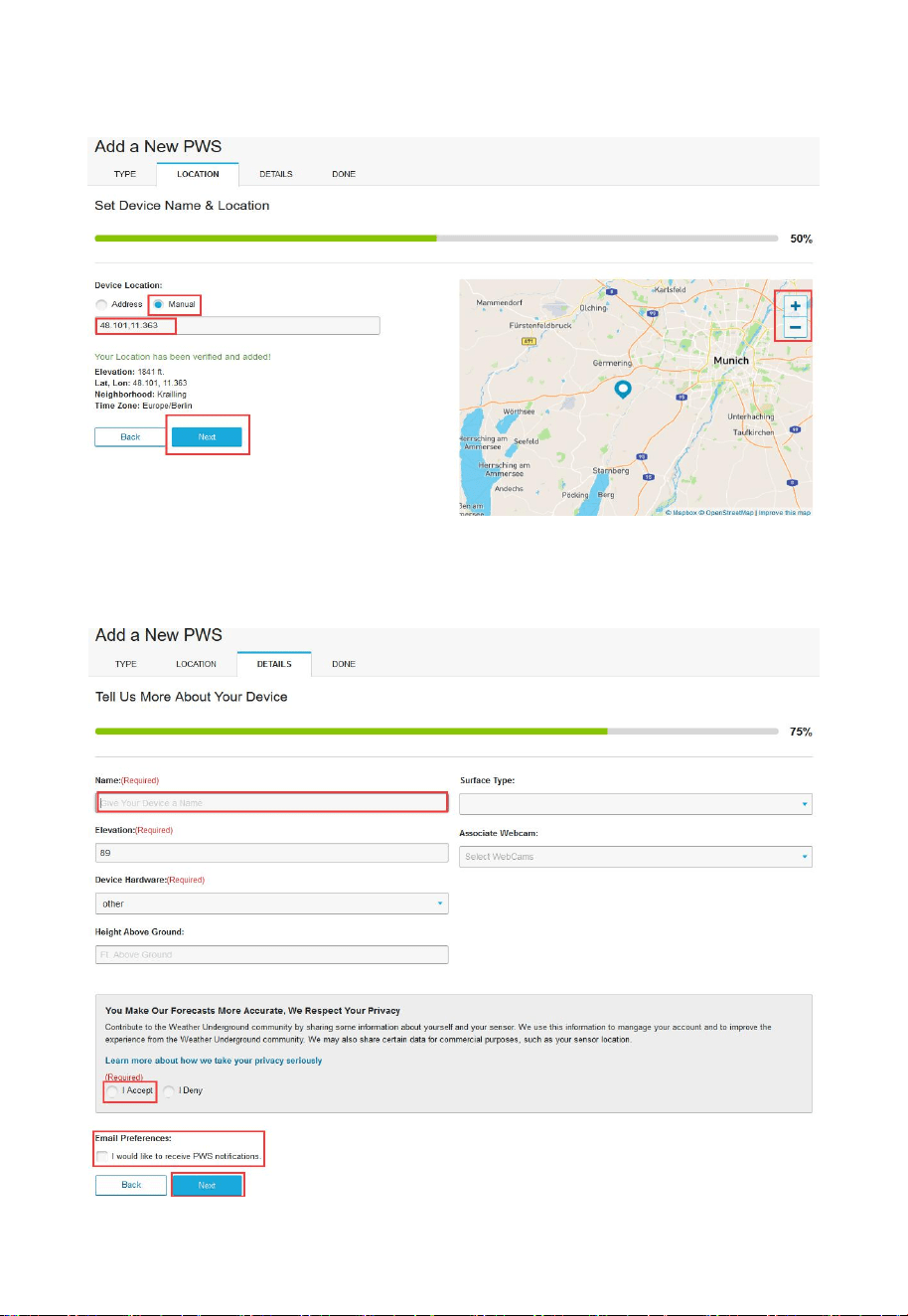
5. Select ‘Address’ or ‘Manual’ option, and find your local position. Press
‘Next’.
6. This time you will be asked details about your weather station. Go
ahead and fill out the form.
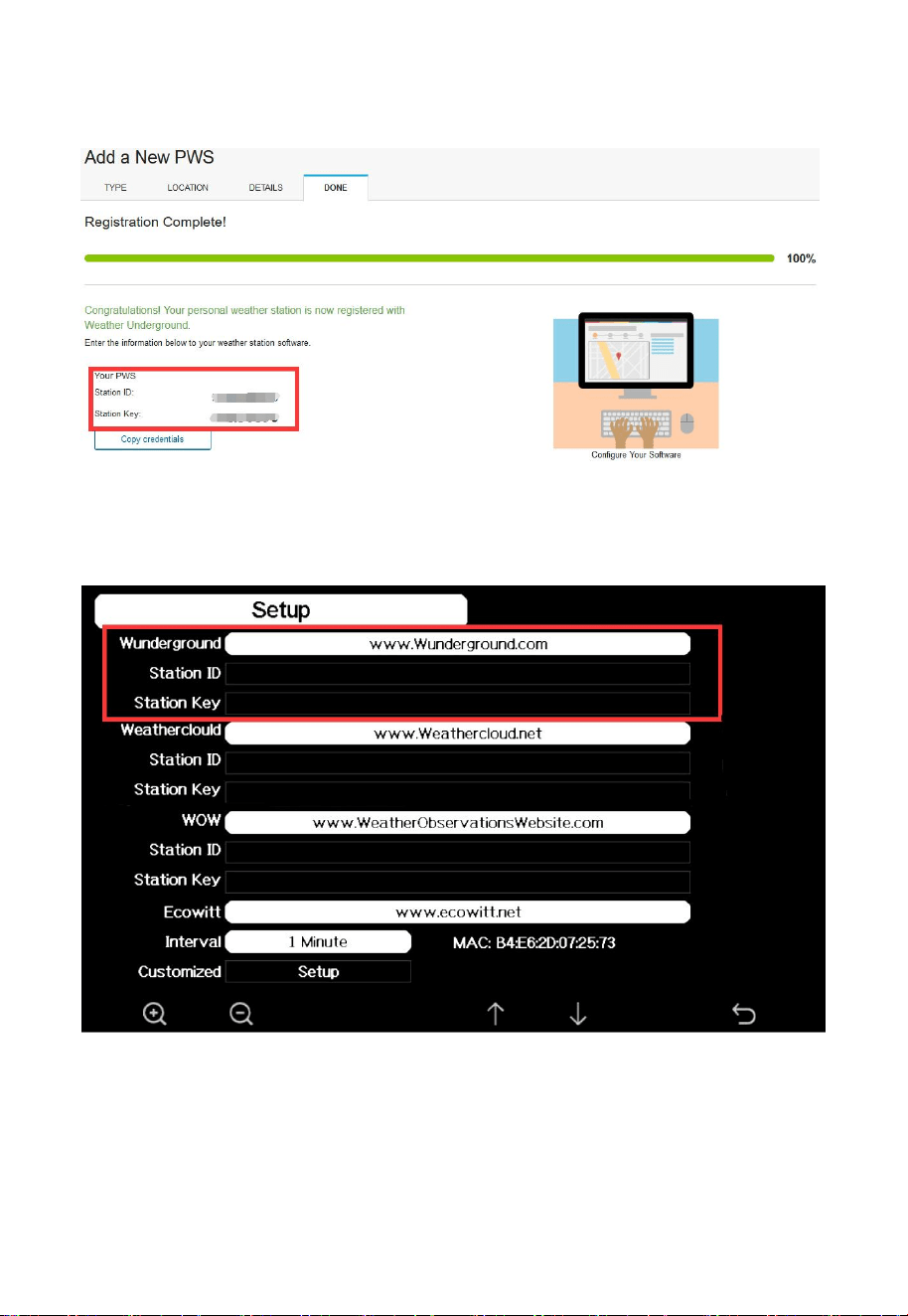
52
7. After completing the weather station, you will see station ID and
key/password.
8. Take note of the station ID and key/password and enter it in the
Weather Server:
Figure 31: Weather Server setup screen
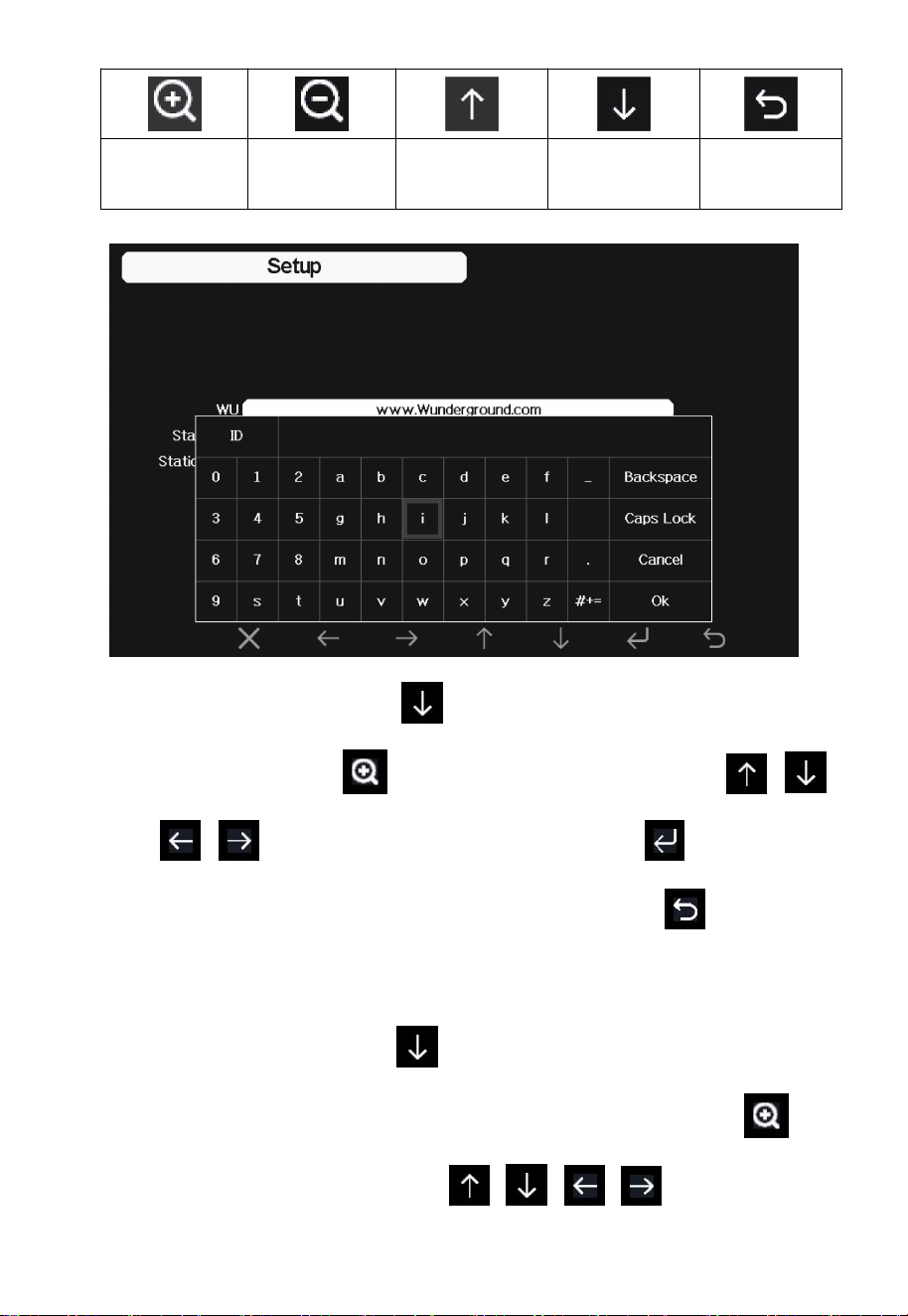
53
scroll value
up
scroll value
down
Scroll field
up
Scroll field
down
return to
Setup
1) Set Station ID. Press to highlight the Station ID. Enter your
station ID. Press to display the keyboard. Press
to scroll to the character and press to select the
character. Press the “OK” button to confirm. Press to return to
the setup page.
2)
3) Set Station Key. Press to highlight the station key. Enter your
password obtained from according weather server. Press to
display the keyboard. Press to scroll to the
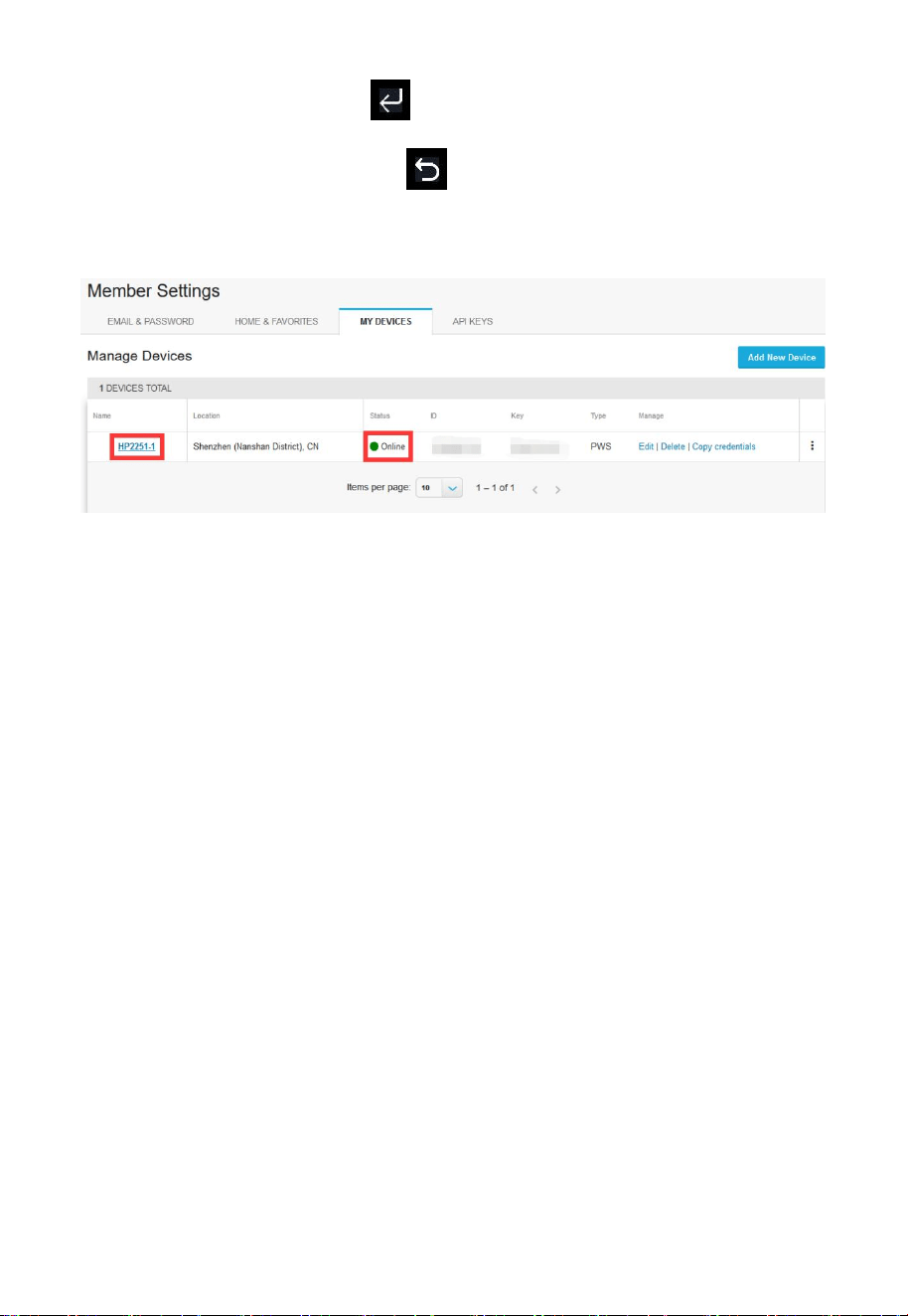
54
character and press to select the character. Press the “OK”
button to confirm. Press to return to the setup page.
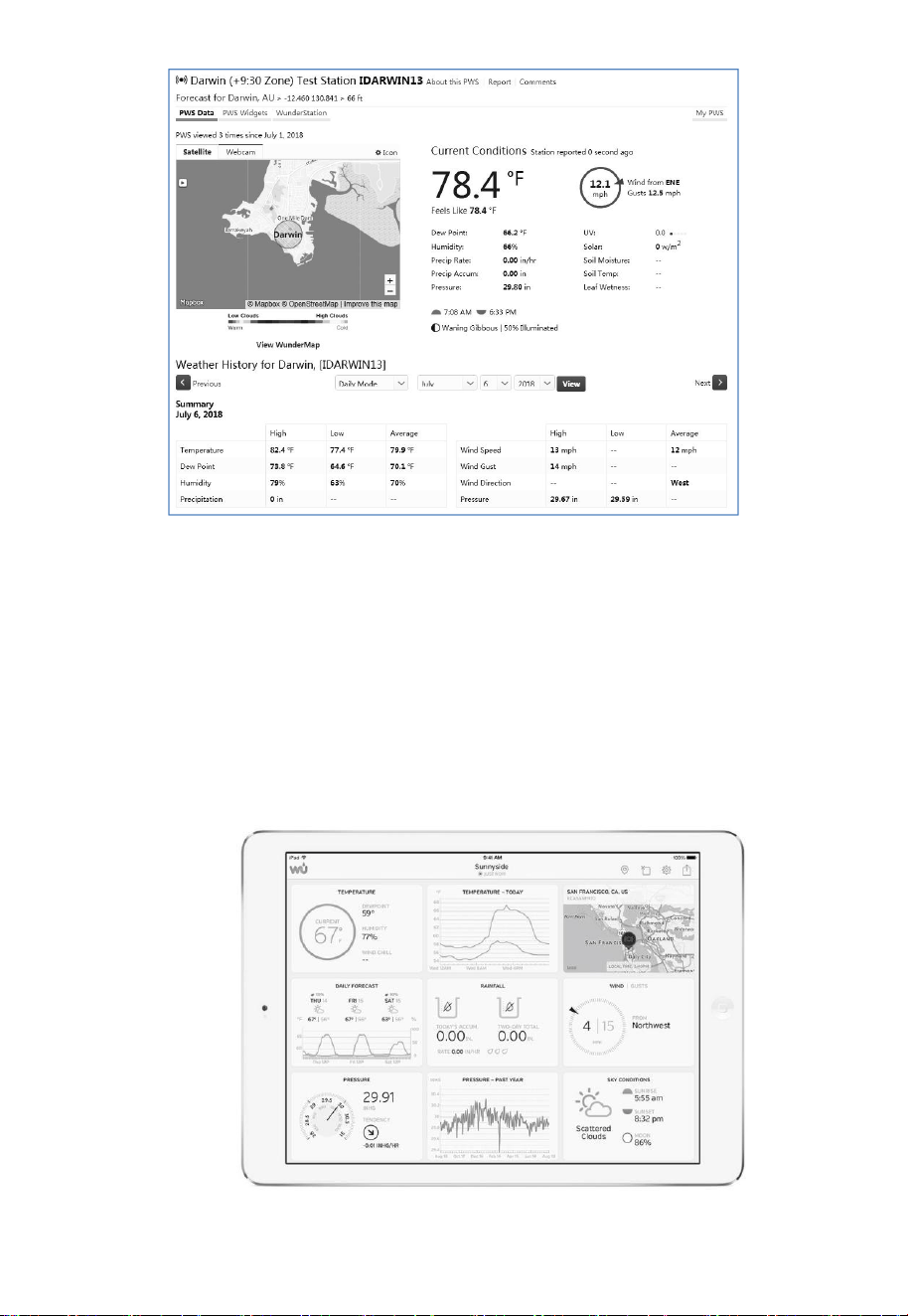
9. Refresh the page, you may have to wait about a few minutes until the
status becomes ‘Online’. Then you can click device name to view data.
4.10.15.2 Viewing data on wunderground.com
The most basic way to observe your weather station’s data is by using the
wunderground.com web site. You will use a URL like this one, where your
station ID replaces the text “STATIONID”:
http://www.wunderground.com/personal-weather-station/dashboard?ID=ST
ATIONID
It will show a page such as this, where you can look at today’s data and
historical data as well:
55
There are also some very useful mobile apps. The URLs provided here go to
the Web version of the application pages. You can also find them directly
from the iOS or Google Play stores:
WunderStation: iPad application for viewing your station’s data and
graphs
https://itunes.apple.com/us/app/wunderstation-weather-from-your-neigh
borhood/id906099986
56
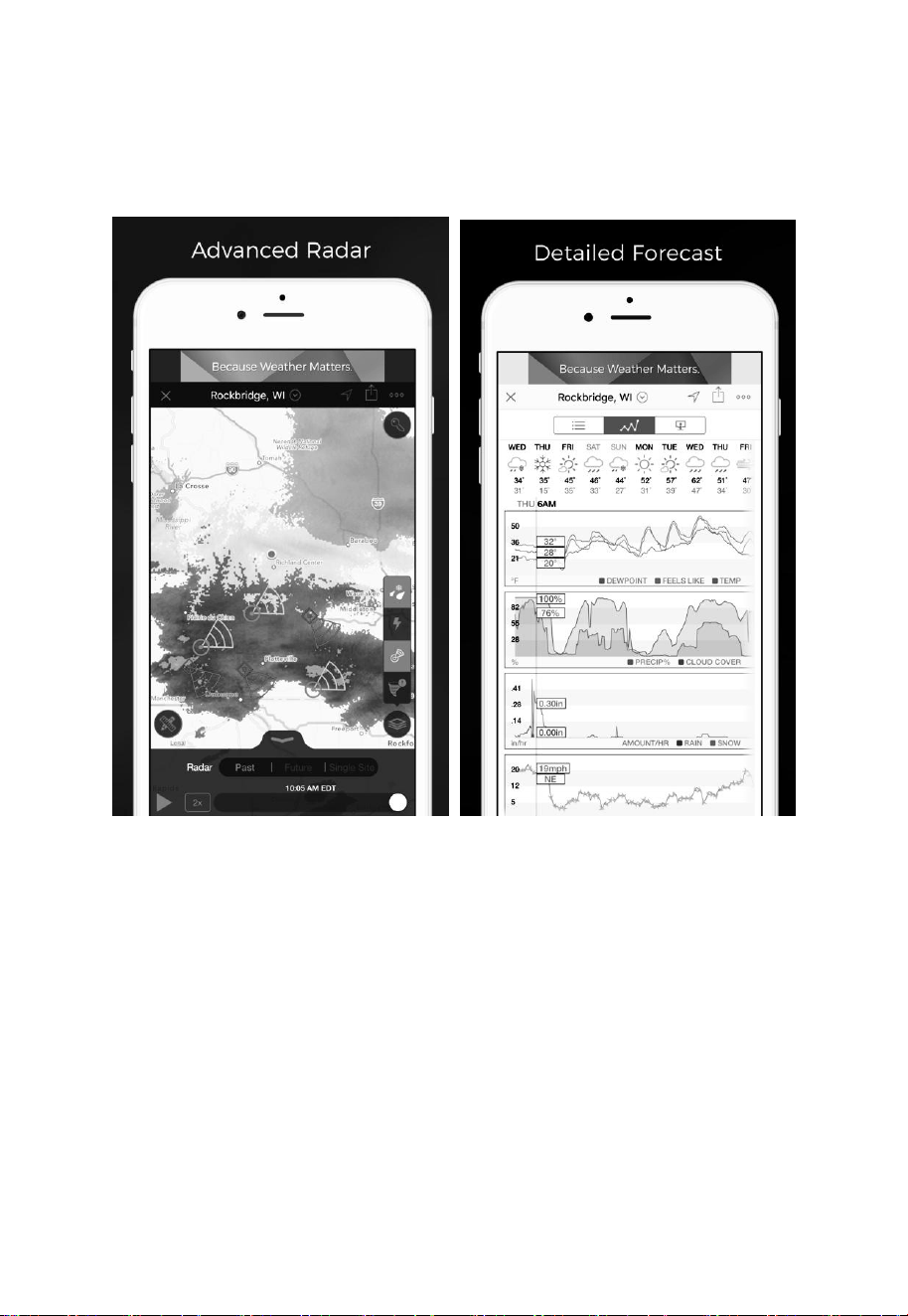
WU Storm: iPad and iPhone application for viewing radar images,
animated wind, cloud coverage and detailed forecast, and PWS station
data
https://itunes.apple.com/us/app/wu-storm/id955957721
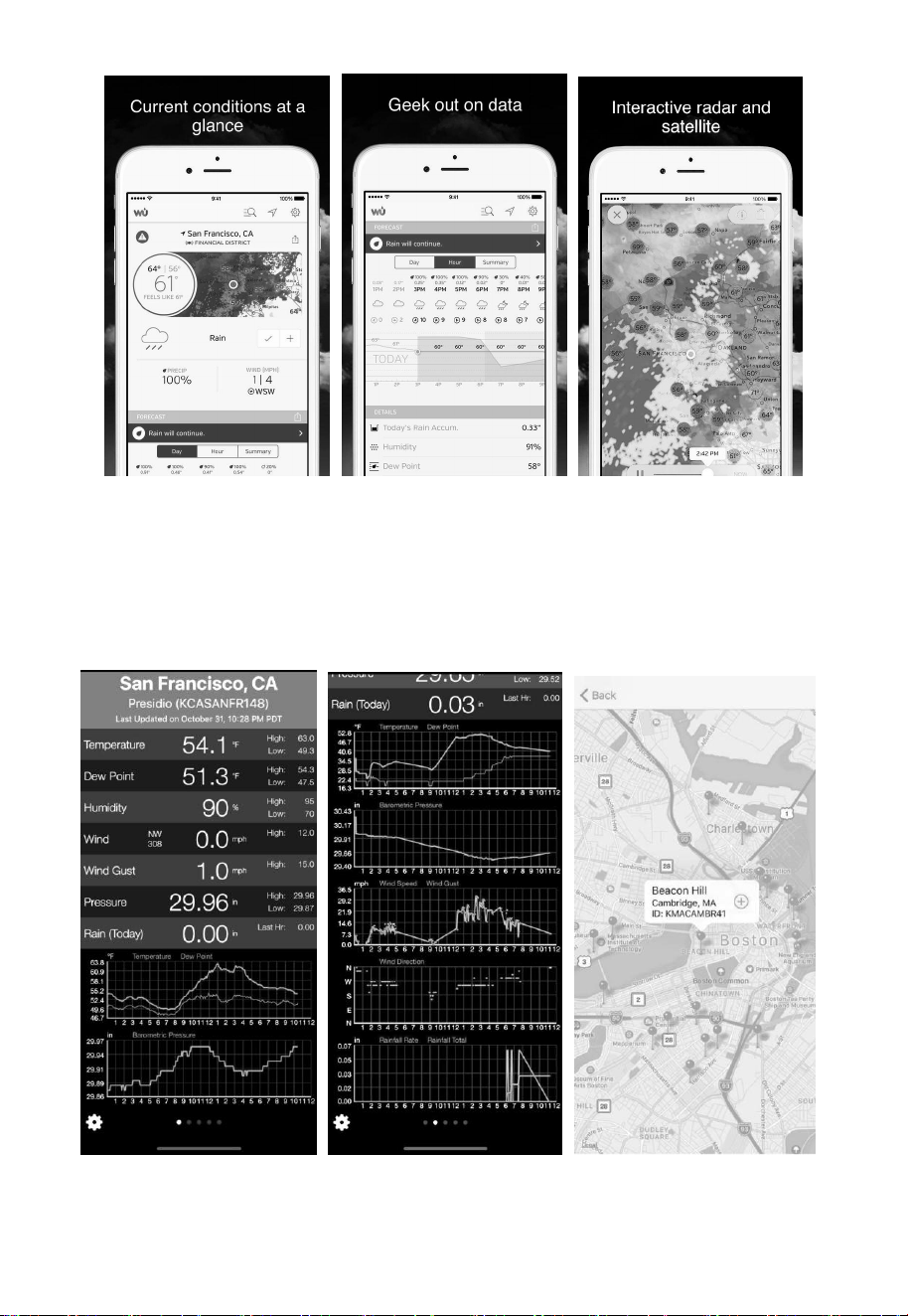
Weather Underground: Forecast: iOS and Android application for
forecasts
https://itunes.apple.com/us/app/weather-underground-forecast/id486154
808
https://play.google.com/store/apps/details?id=com.wunderground.andro
id.weather&hl=en
57
PWS Weather Station Monitor: View weather conditions in your nei
ghborhood, or even right in your own backyard. Connects to wunderg
round.com
https://itunes.apple.com/us/app/pws-weather-station-monitor/id713705929

58
4.10.15.3 Registering with and using Ecowitt Weather
You can also use the Ecowitt Weather server to monitor and record all your
sensors’ data. Configure as follows:
On the Weather Server page, set the reporting interval time(default: 1
minute).
Visit the website: https://www.ecowitt.net on your computer and finish
the registration on the page.
Press the upper left menu button and select Devices.
Press Add Device and input all the information needed(The MAC
address can be found on the Weather Server page).
Press Save.
Press Dashboard on the menu. Your sensor data would be available
on the dashboard within several minutes.
Note: When select device address on map, please wait until the map
displays before selecting your address.
You may add a shortcut to the ecowitt.net website on the home page of your
phone so that you can visit it just like opening an app.
4.10.15.4 Viewing data on ecowitt.net
You can observe your sensor’s data by using the ecowitt.net web site. You
will use a URL like this one, where your station ID replaces the text
“STATIONID”.
https://www.ecowitt.net/home/index?id=STATIONID
Note: If you want to share your station data with other users, you may use
the Share option under the Menu to create a share link.
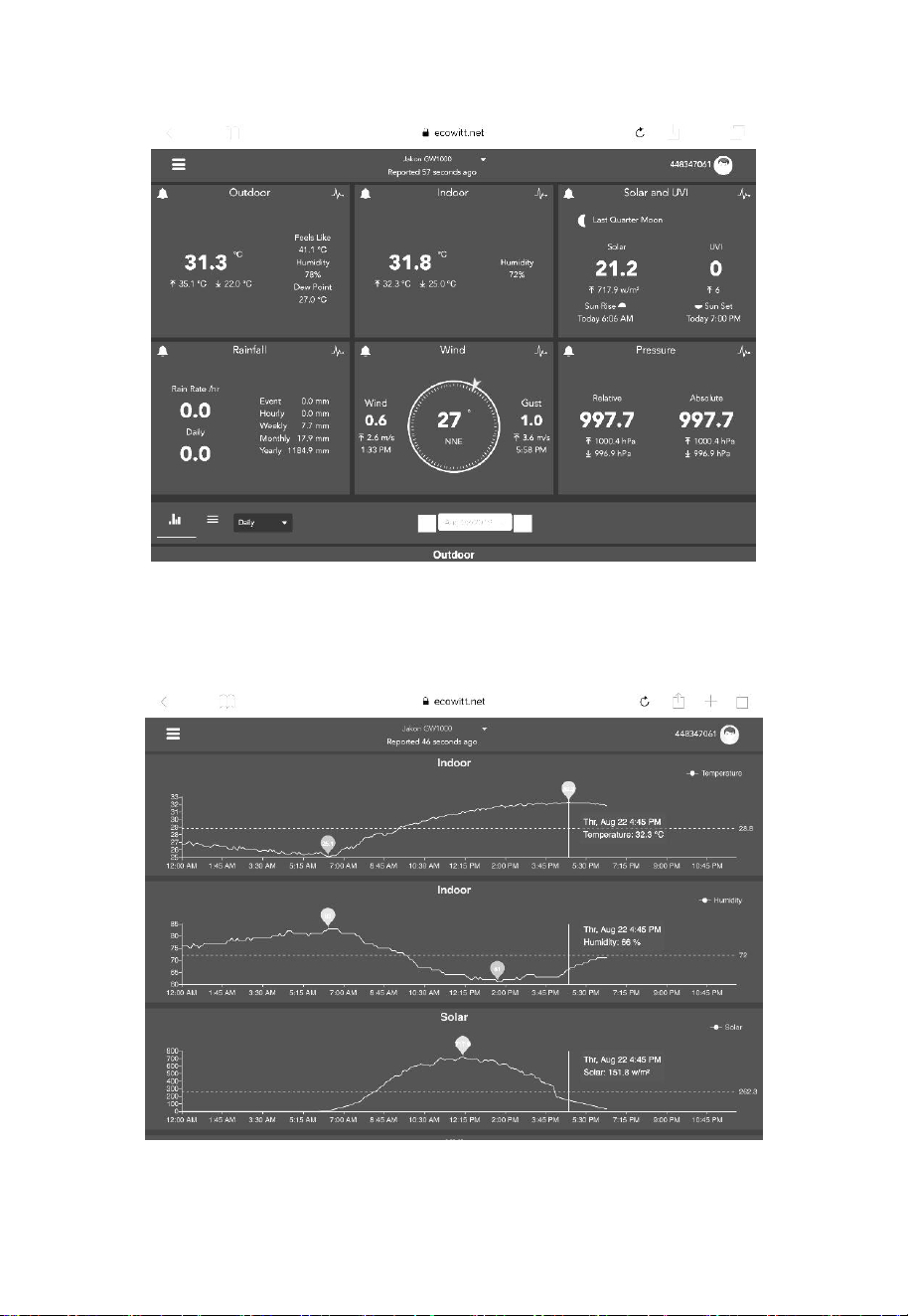
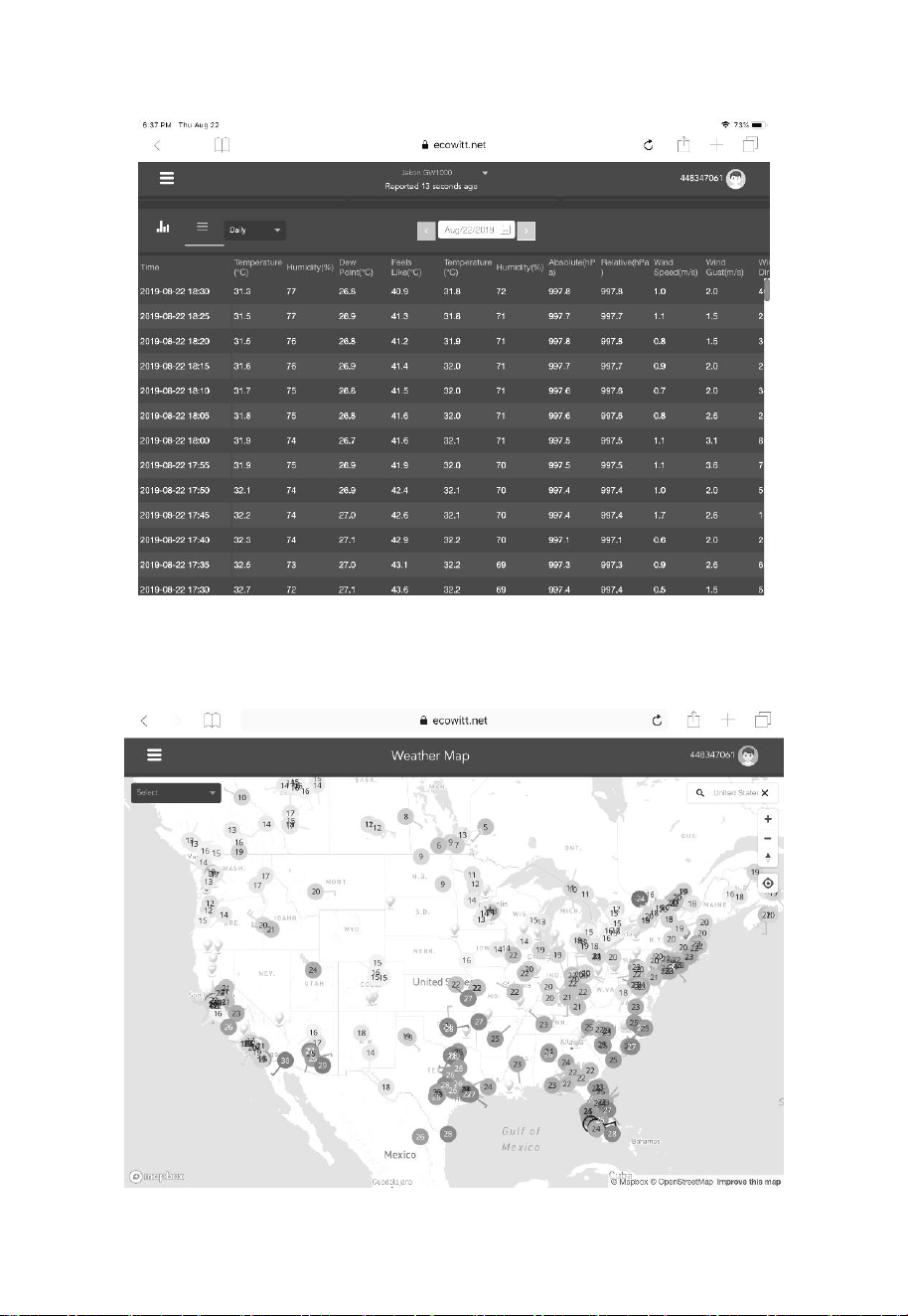
It will show a page such as this, where you can look at today’s data and
historical data as well.
59
Dashboard
Graph display
60
List display
Weather Map
61
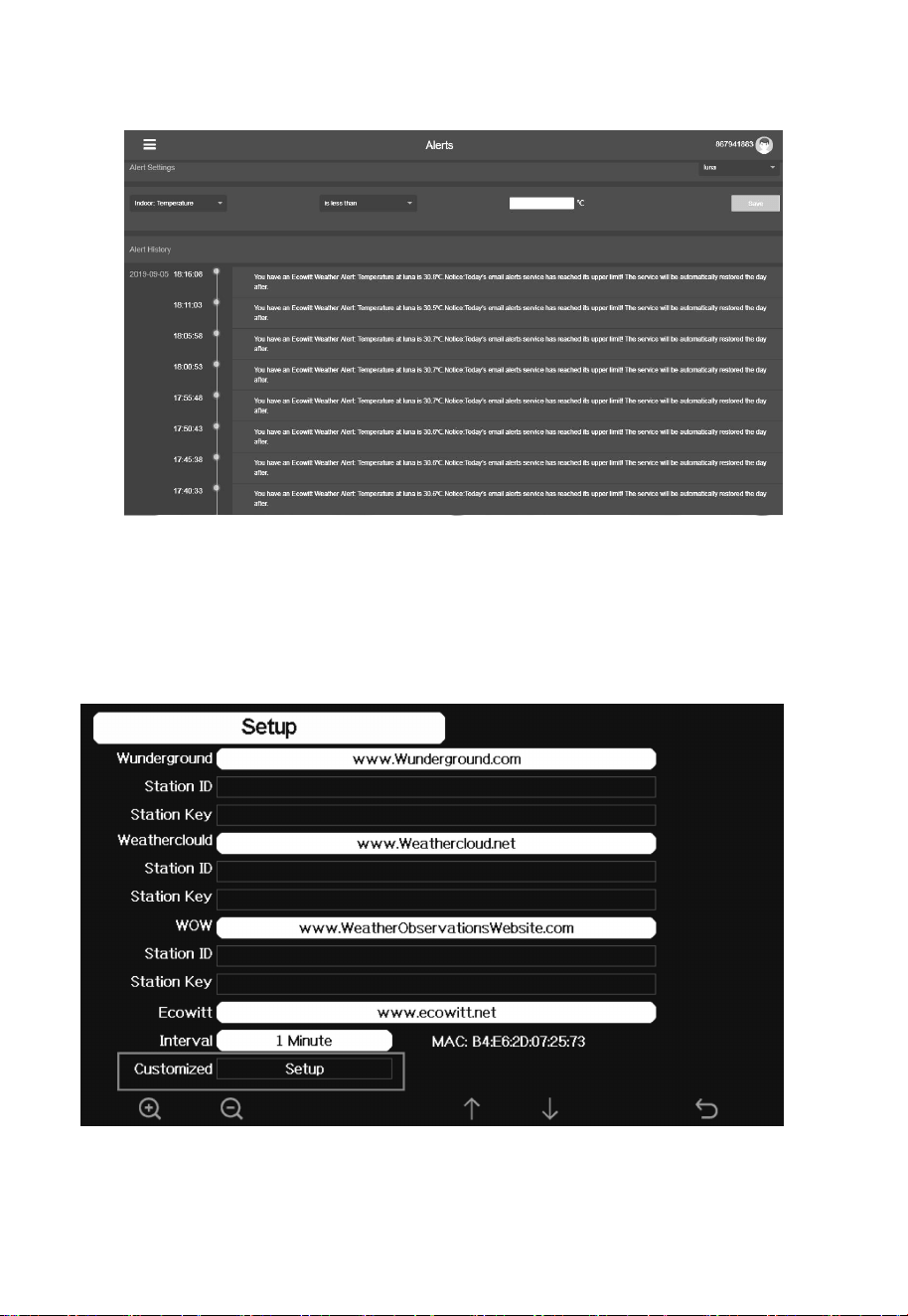
Email Alerts
4.10.15.5 Customized server setup
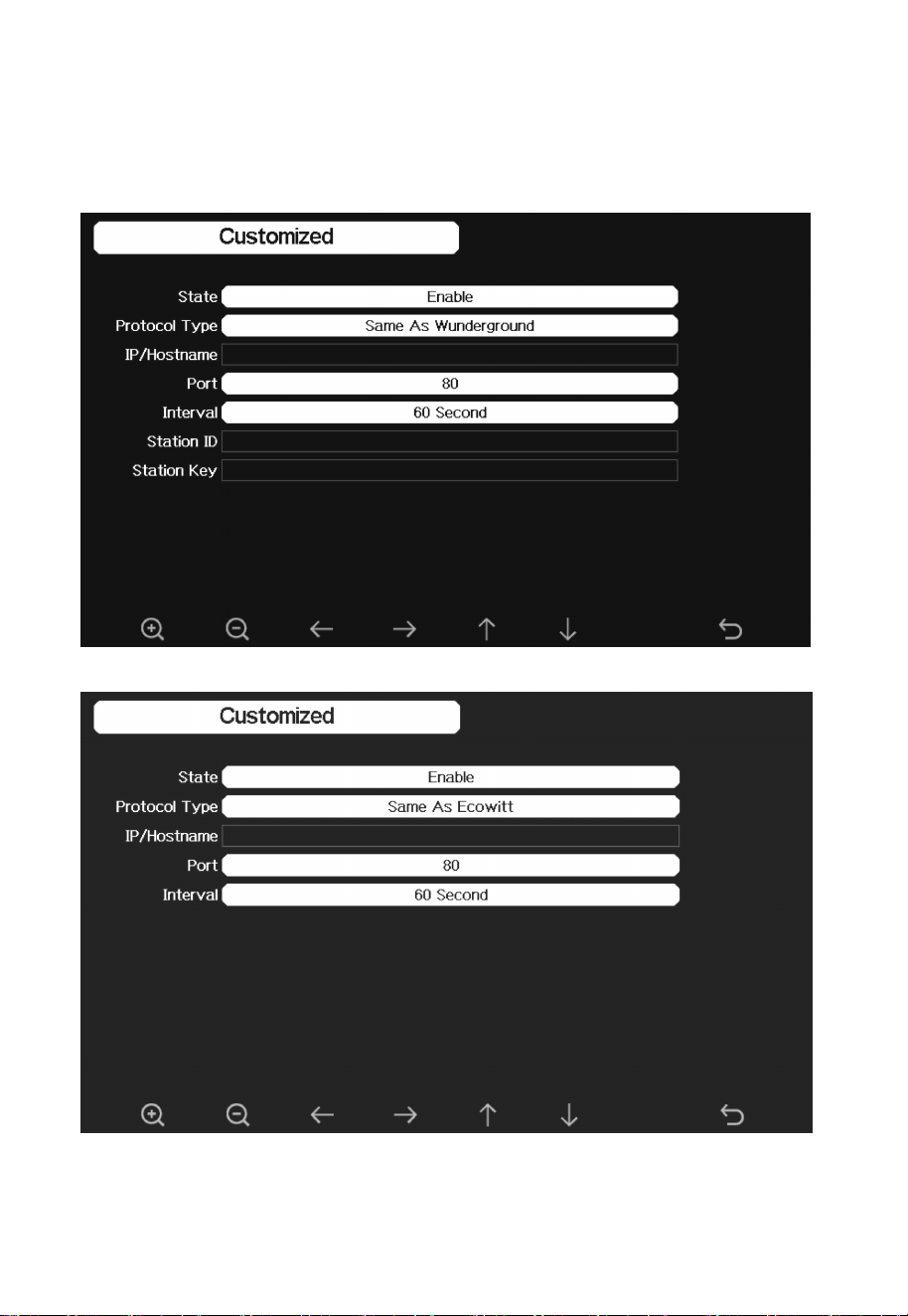
For highly experienced users, it offers the option to send data to the user’s
own server. Press the “setup” button to enter Customized setup screen,
Figure 32 : Server setup screen
62
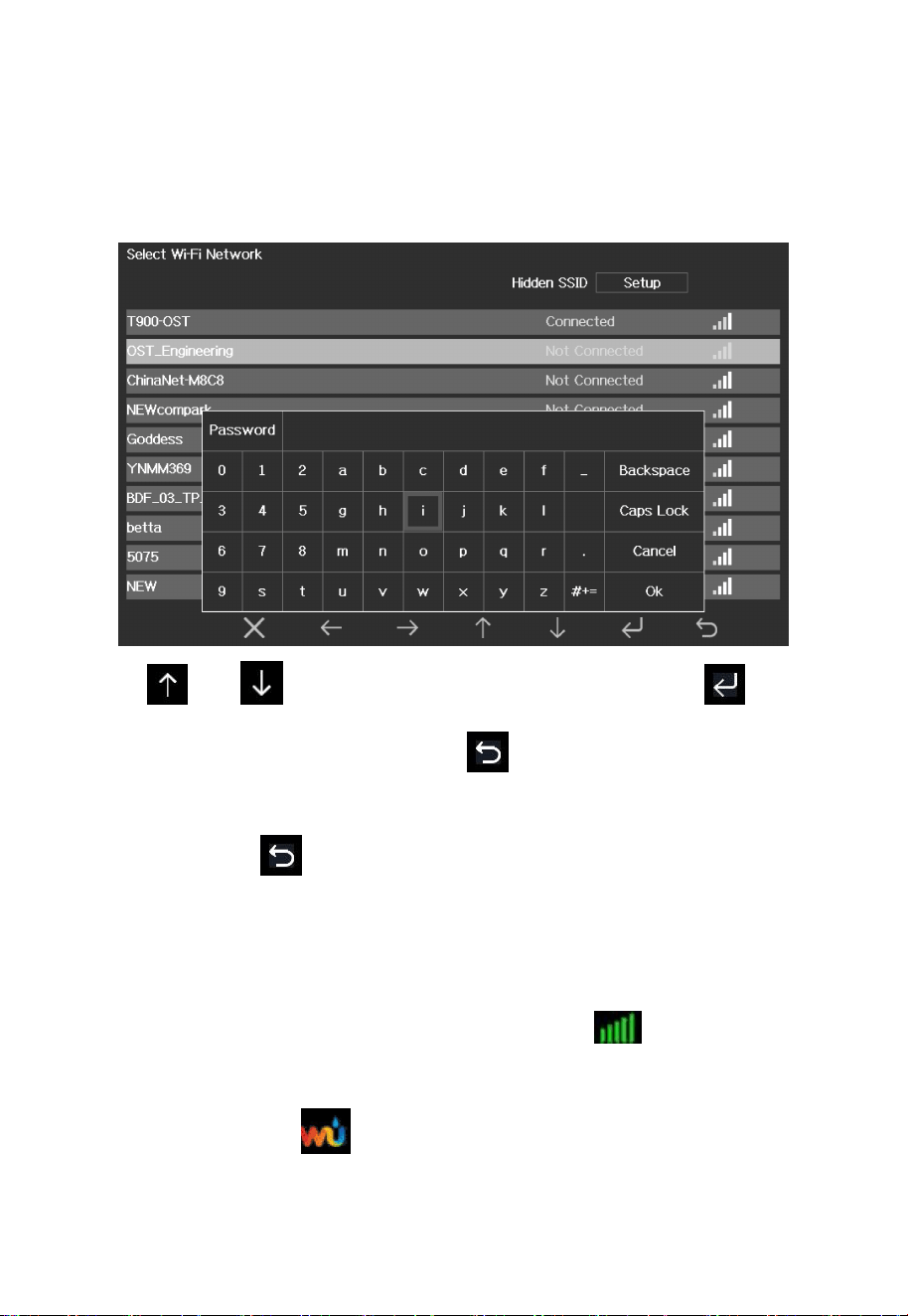
Select Enable button and select the protocol type. The website should has
the same protocol with Wunderground or Ecowitt. Input all the information
needed.
63
4.10.16 Connect Console to Your Router: Wi-Fi scan
Entering this mode, system will display all the available Wi-Fi networks.
Select the SSID that you want console to be connected with (only supports
2.4GHz band Wi-Fi network ) , and enter passer word as required.
Press or key to select the Wi-Fi network. Press key to
confirm and enter the password. Press key to return to normal display
mode. It is possible that your network is not listed when Wi-Fi Scan is
performed. Press button and restart Wi-Fi Scan, this will usually solve
the problem.
Only after connect to WLAN you can upload the data to weather website. If
the Wi-Fi network connects successfully, the icon will show on the
left top of the console display. If the data upload to Wunderground.com
successfully, the icon will show on the left top of the console display.
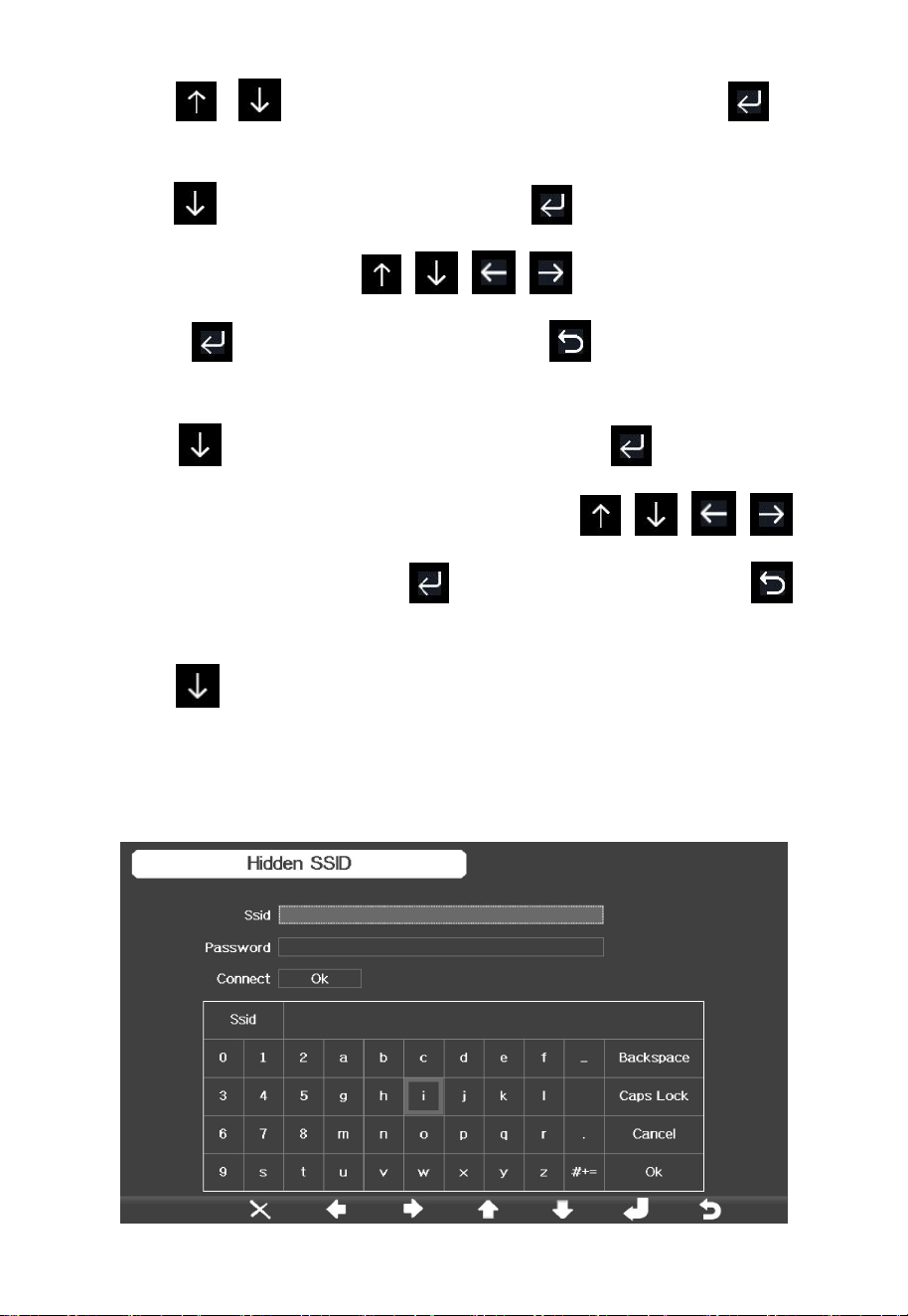
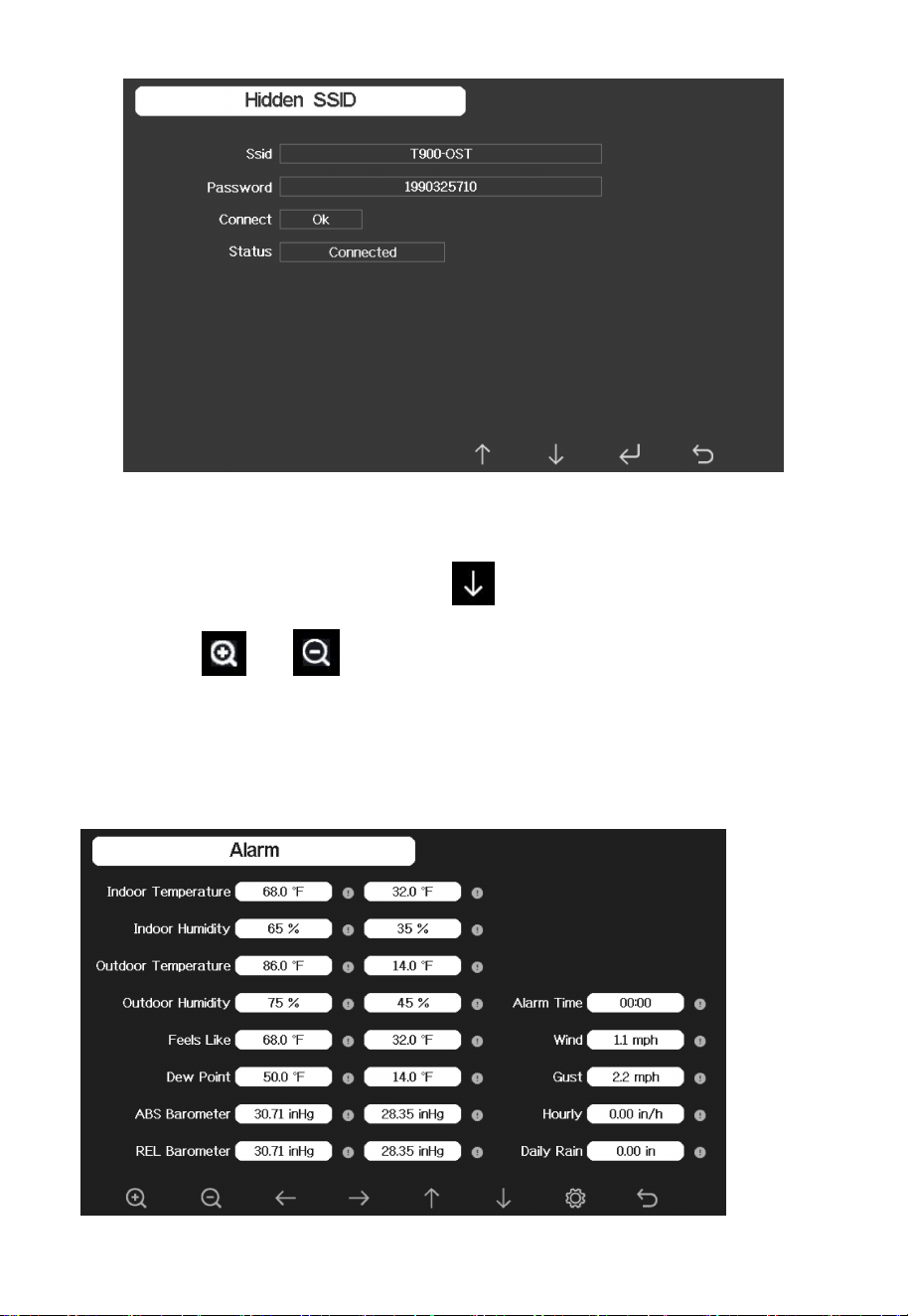
If the Wi-Fi network you would like to connect is with a hidden SSID,
please follow below steps to connect:
64
1).Press to select Hidden SSID setup, and press key
directly to enter.
2).Press to highlight the SSID. Press to display the keyboard
and enter your SSID. Press to scroll to the character
and press to enter the character. Press to return to the setup
page.
3).Press to highlight the Password. Press to display the
keyboard and start to enter your password.. Press to
scroll to the character and press to enter the character. Press to
return to the setup page.
4).Press to highlight the “OK” button beside “Connect ” to start
connecting.
After connected successfully, the status will display” Connected”.
65
4.10.17 Background
While in Menu Setting Mode, press key to select Background Setup
field, press or key to choose between dark background display
and light background display
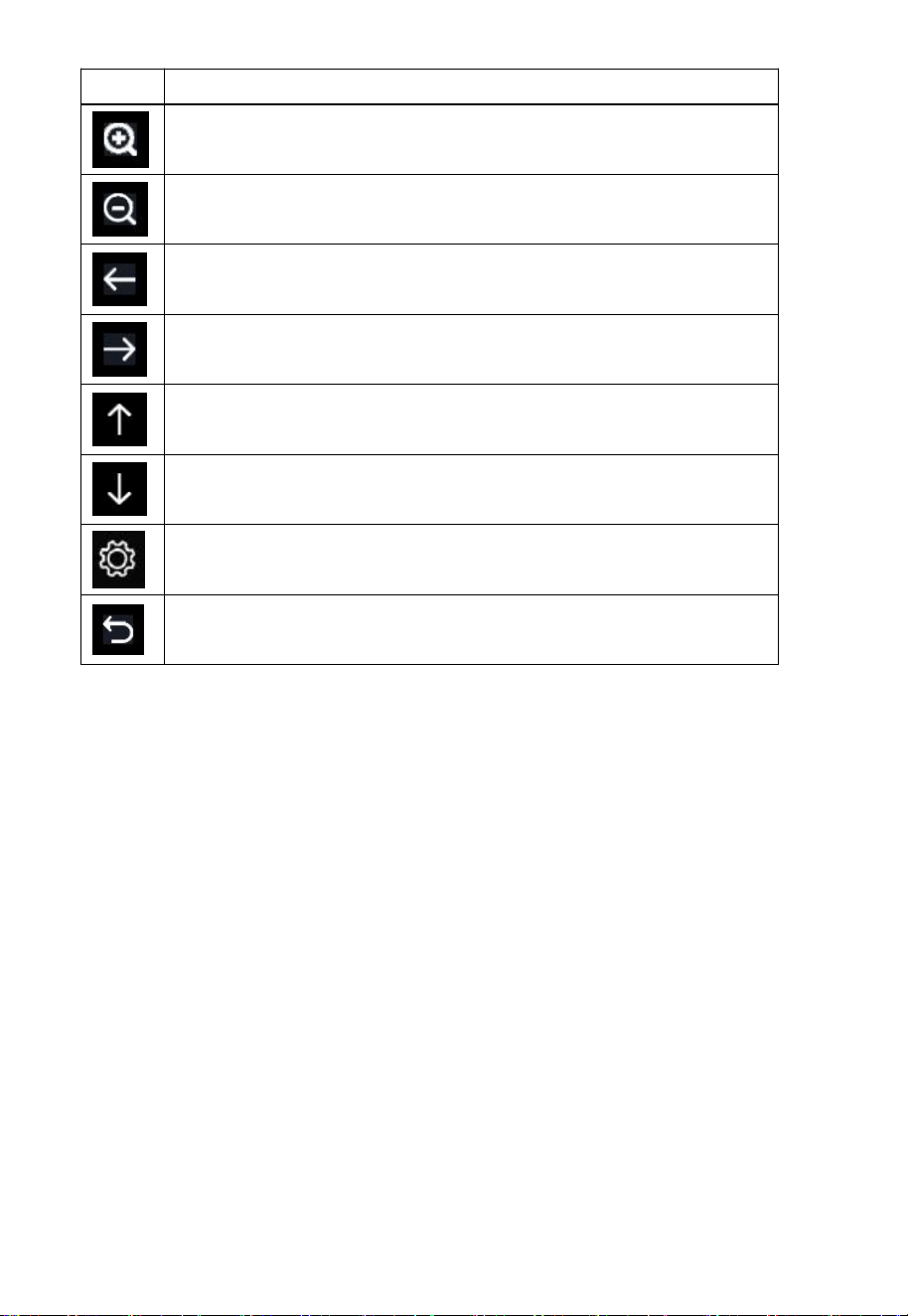
4.11 Alarm Setting Mode
66
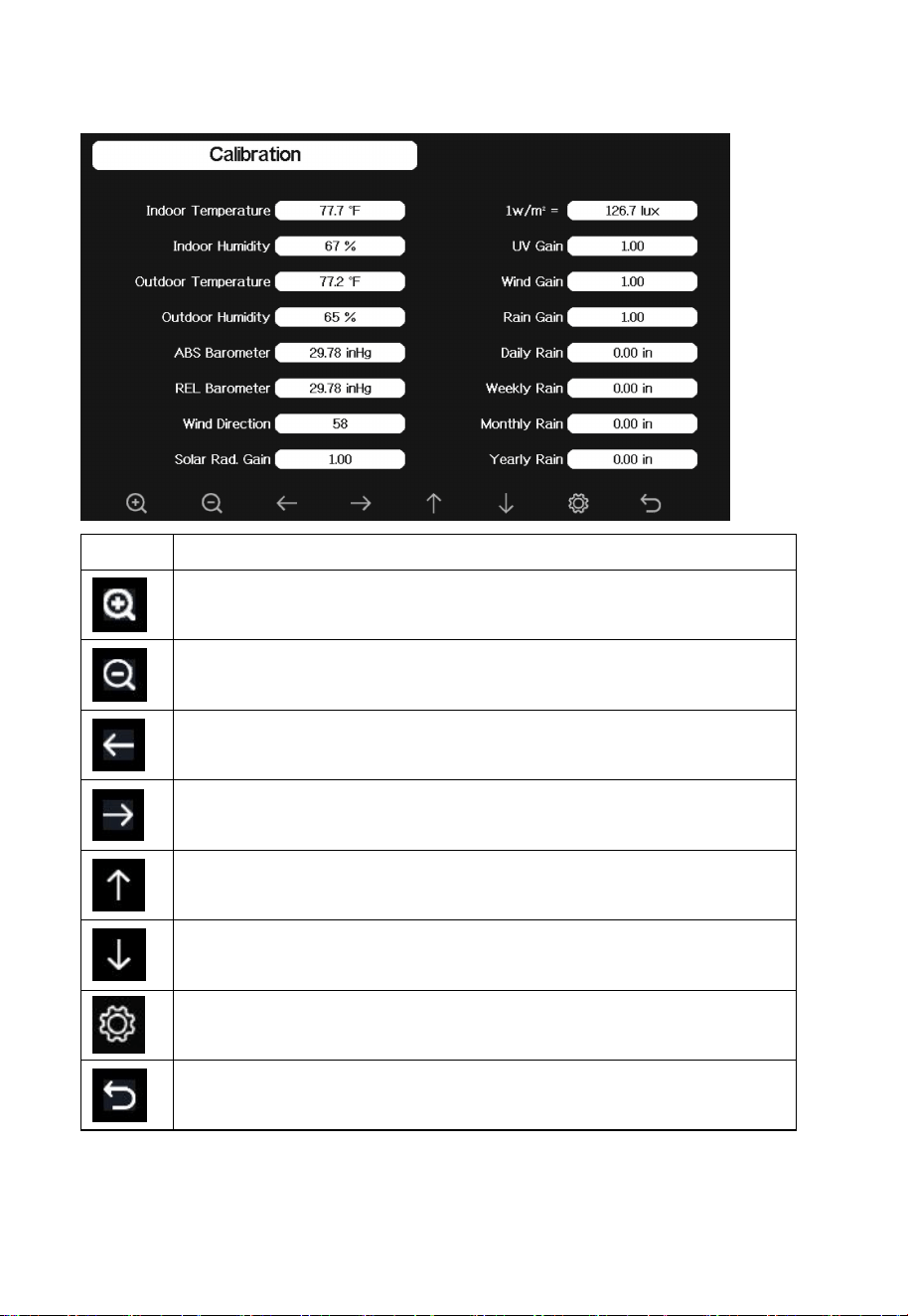
Icon
Description
Select key
Press this key to select the unit or scrolls the value
Select key
Press this key to select the unit or scrolls the value.
Left key
Press this key to select the set value.
Right key
Press this key to select the set value.
Up arrow key
Press this key to change the activated option field
Down arrow key
Press this key to change the activated option field
Set key
Press this key to select the Setting sub-Mode
Return key
Press this key to return to previous mode
The first row is high alarm value and the second row is low alarm value.
When weather alarm condition has been triggered, that particular
alarm will sound for 120 second and the corresponding icon will flash
until the weather condition doesn’t meet the user set level. Press any
key to mute the alarm.
67
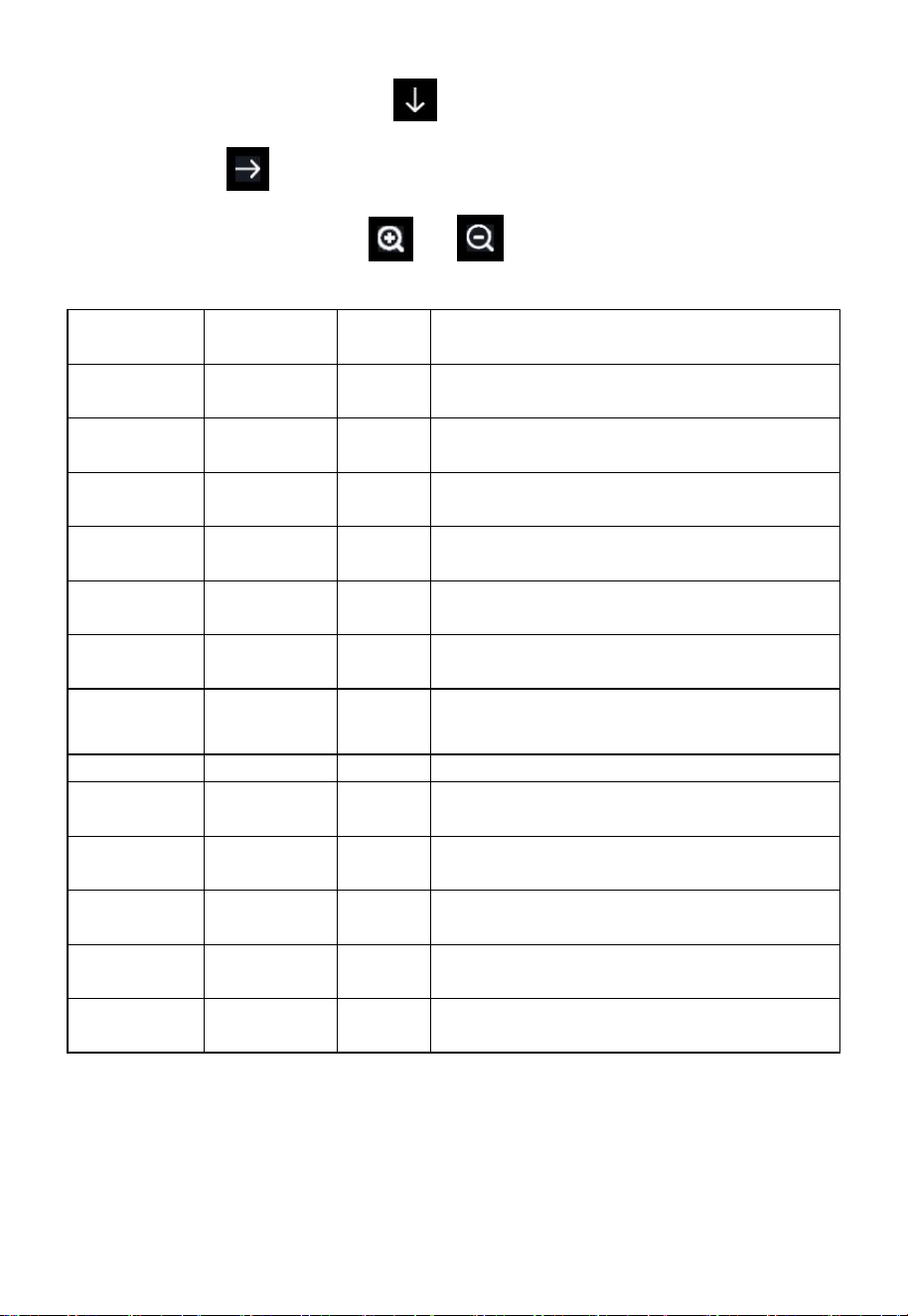
4.12 Calibration Mode
Icon
Description
Select key
Press this key to select the unit or scrolls the value
Select key
Press this key to select the unit or scrolls the value.
Left key
Press this key to select the set value.
Right key
Press this key to select the set value.
Up arrow key
Press this key to change the activated option field
Down arrow key
Press this key to change the activated option field
Set key
Press this key to select the Setting sub-Mode
Return key
Press this key to return to previous mode
68
To adjust the parameter, press to scroll to the parameter you wish to
change. Press to highlight the sign (positive vs. negative, if applicable)
and significant digit. Press or to change the calibrated value.
Parameter
Type of
Calibration
Default
Typical Calibration Source
Temperature
Offset
Current
Value
Red Spirit or Mercury Thermometer (1)
Humidity
Offset
Current
Value
Sling Psychrometer (2)
ABS
Barometer
Offset
Current
Value
Calibrated laboratory grade barometer
REL
Barometer
Offset
Current
Value
Local airport (3)
Wind
Direction
Offset
Current
Value
GPS, Compass (4)
Solar
Radiation
Gain
1.00
Calibrated laboratory grade solar radiation
sensor
1 w/m
2
Gain
126.7
lux
Solar radiation conversion from lux to
w/m
2
for wavelength correction (5)
Wind
Gain
1.00
Calibrated laboratory grade wind meter (6)
Rain
Gain
1.00
Sight glass rain gauge with an aperture of
at least 4” (7)
Daily Rain
Offset
Current
Value
Apply an offset if the weather station was
not operating for the entire day.
Weekly
Rain
Offset
Current
Value
Apply an offset if the weather station was
not operating for the entire week.
Monthly
Rain
Offset
Current
Value
Apply an offset if the weather station was
not operating for the entire month.
Yearly Rain
Offset
Current
Value
Apply an offset if the weather station was
not operating for the entire year.
(1) Temperature errors can occur when a sensor is placed too close to a
heat source (such as a building structure, the ground or trees).
(2)

69
(3) To calibrate temperature, we recommend a mercury or red spirit
(fluid) thermometer. Bi-metal (dial) and digital thermometers (from
other weather stations) are not a good source and have their own
margin of error. Using a local weather station in your area is also a
poor source due to changes in location, timing (airport weather
stations are only updated once per hour) and possible calibration
errors (many official weather stations are not properly installed and
calibrated).
(4)
(5) Place the sensor in a shaded, controlled environment next to the
fluid thermometer, and allow the sensor to stabilize for 3 hours.
Compare this temperature to the fluid thermometer and adjust the
console to match the fluid thermometer.
(6)
(7) Humidity is a difficult parameter to measure electronically and
drifts over time due to contamination. In addition, location has an
adverse affect on humidity readings (installation over dirt vs. lawn
for example).
(8)
(9) Official stations recalibrate or replace humidity sensors on a yearly
basis. Due to manufacturing tolerances, the humidity is accurate
to ± 5%. To improve this accuracy, the indoor and outdoor humidity
can be calibrated using an accurate source, such as a sling
psychrometer.
(10)
(11) The display console displays two different pressures: absolute
(measured) and relative (corrected to sea-level).
To compare pressure conditions from one location to another,
meteorologists correct pressure to sea-level conditions. Because the
air pressure decreases as you rise in altitude, the sea-level corrected
pressure (the pressure your location would be at if located at
sea-level) is generally higher than your measured pressure.

70
Thus, your absolute pressure may read 28.62 inHg (969 mb) at an
altitude of 1000 feet (305 m), but the relative pressure is 30.00 inHg
(1016 mb).
The standard sea-level pressure is 29.92 in Hg (1013 mb). This is
the average sea-level pressure around the world. Relative pressure
measurements greater than 29.92 inHg (1013 mb) are considered
high pressure and relative pressure measurements less than 29.92
inHg are considered low pressure.
To determine the relative pressure for your location, locate an
official reporting station near you (the internet is the best source for
real time barometer conditions, such as Weather.com or
Wunderground.com), and set your weather station to match the
official reporting station.
(12) Only use this if you improperly installed the weather station sensor
array, and did not point the direction reference to true north.
(13)
(14) The default conversion factor based on the wavelength for bright
sunlight is 126.7 lux / w/m
2
. This variable can be adjusted by
photovoltaic experts based on the light wavelength of interest, but
for most weather station owners, is accurate for typical applications,
such as calculating evapotransporation and solar panel efficiency.
(15)
(16) Wind speed is the most sensitive to installation constraints. The
rule of thumb for properly installing a wind speed sensor is 4 x the
distance of the tallest obstruction. For example, if your house is 20’
tall and you mount the sensor on a 5’ pole:
Distance = 4 x (20 – 5)’ = 60’ or =4 x (6.10-1.52)=18.32m.
Many installations are not perfect and installing the weather station
on a roof can be difficult. Thus, you can calibrate for this error with
a wind speed multiplier.

71
In addition to the installation challenges, wind cup bearings
(moving parts) wear over time.
Without a calibrated source, wind speed can be difficult to measure.
We recommend using a calibrated wind meter (not included) and a
constant speed, high speed fan.
Note: If located in southern hemisphere, please follow the steps to
calibrate the wind direction:
1. Install the outdoor sensor package with the West arrow on the
sensor pointing due East.
2. Check the wind direction offset (Default: equals to the current
wind direction )
If:
Current wind direction offset < 180, then it should be calibrated to
be: current wind direction + 180
If:
Current wind direction offset > 180, then it should be calibrated to
be: current wind direction - 180
For example, if the current wind direction is 288, then you’ll need to
set the wind direction offset to be: 288-180=108.
If the current wind direction is 12, then you’ll need to set the wind
direction offset to be: 12+180=192.
(17) The rain collector is calibrated at the factory based on the funnel
diameter. The bucket tips every 0.01” or 0.1m of rain (referred to as
resolution). The accumulated rainfall can be compared to a sight
glass rain gauge with an aperture of at least 4” or 0.1m.
(18) Make sure you periodically clean the rain gauge funnel.
Note: The purpose of calibration is to fine tune or correct for any sensor
error associated with the devices margin of error. Errors can occur due to
electronic variation (example, the temperature sensor is a resistive thermal
72
device or RTD, the humidity sensor is a capacitance device), mechanical
variation, or degradation (wearing of moving parts, contamination of
sensors).
Calibration is only useful if you have a known calibrated source you can
compare it against, and is optional. This section discusses practices,
procedures and sources for sensor calibration to reduce manufacturing and
degradation errors. Do not compare your readings obtained from sources
such as the internet, radio, television or newspapers. The purpose of your
weather station is to measure conditions of your surroundings, which vary
significantly from location to location.
NOTE: UV Calibration MUST be performed every 2 to 3 months to
improve results. Over time, UV Index may alter results based on bright and
strong sunlight conditions. This is why diligent UV Calibration is
recommended.
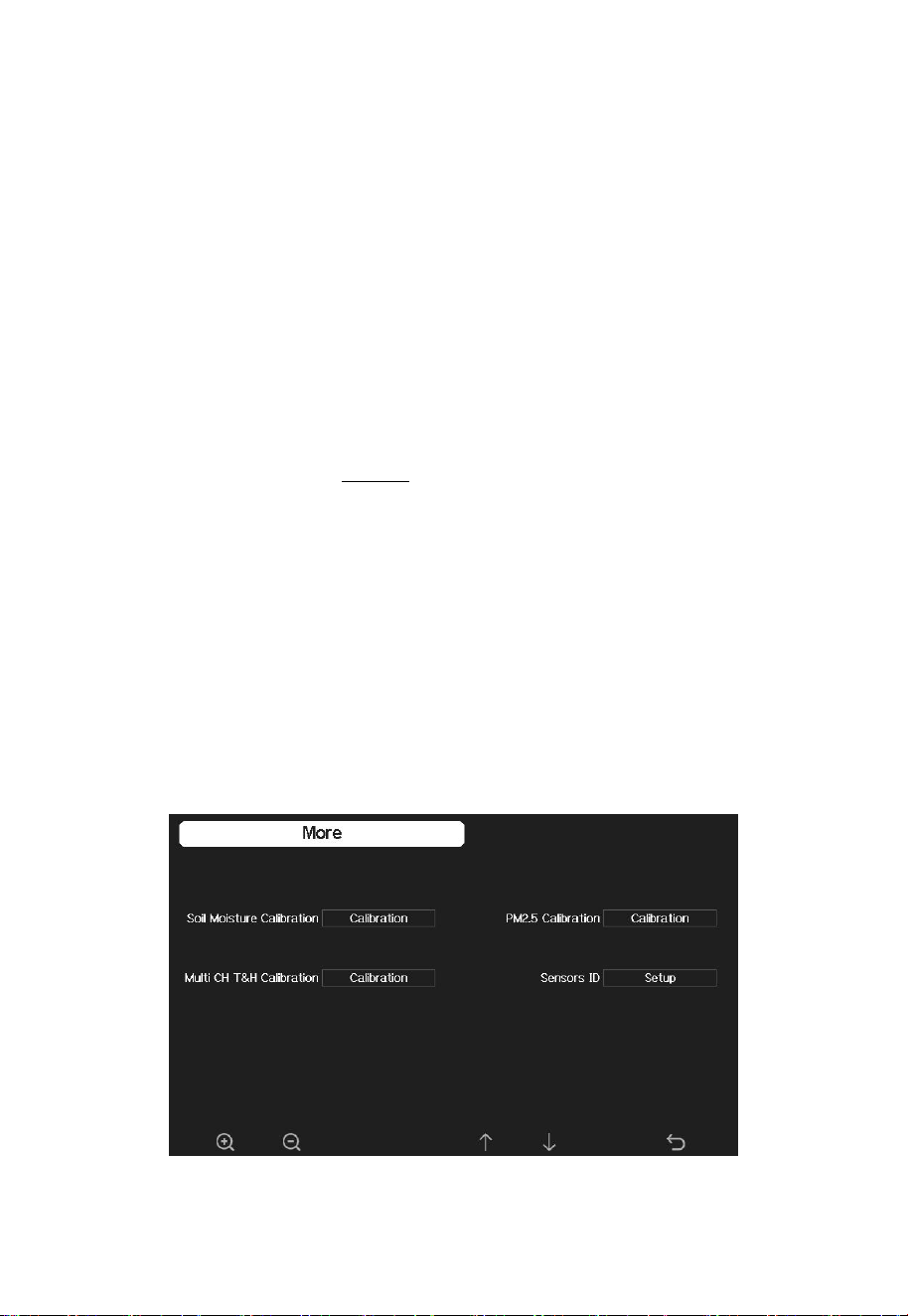
4.13 More
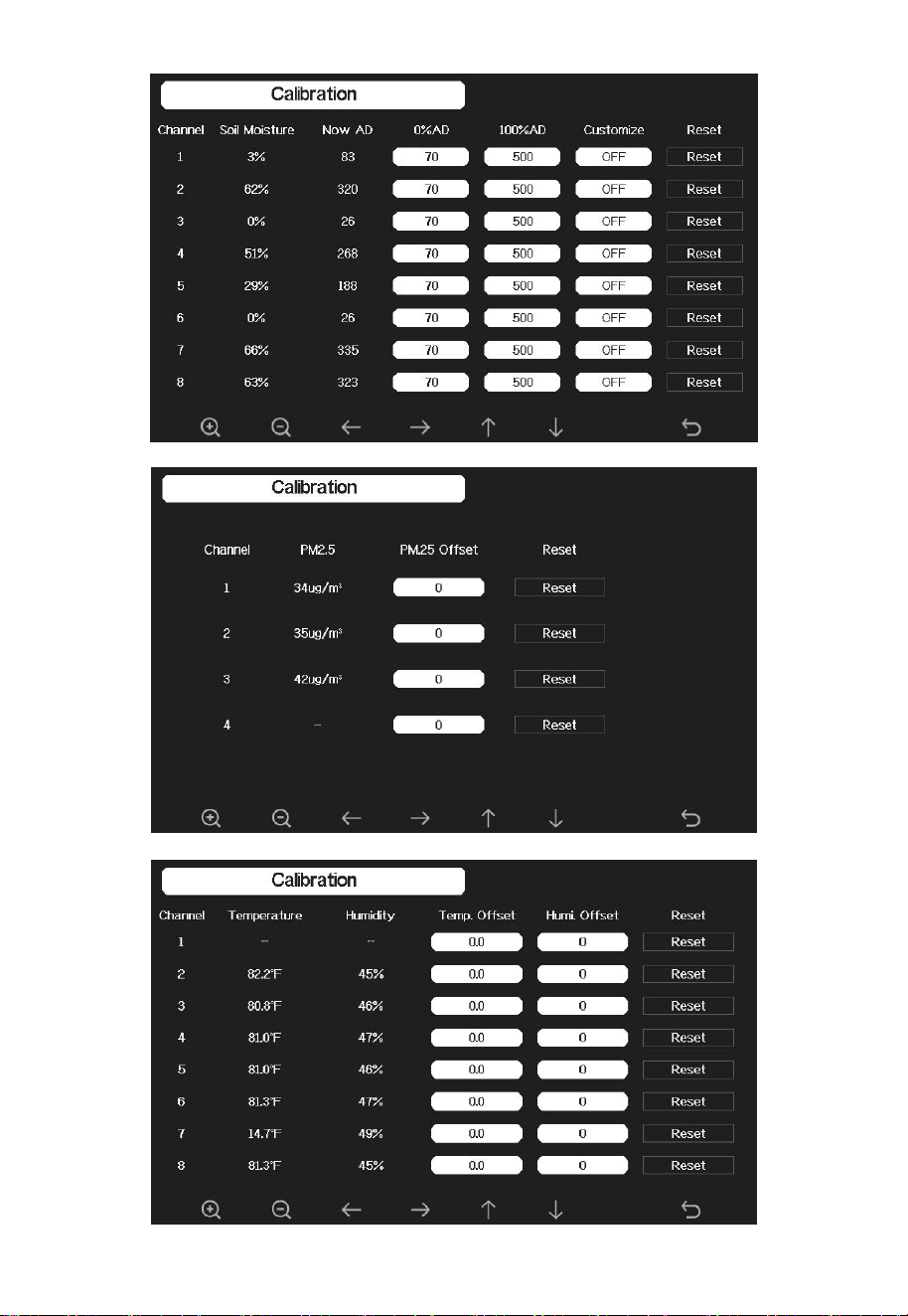
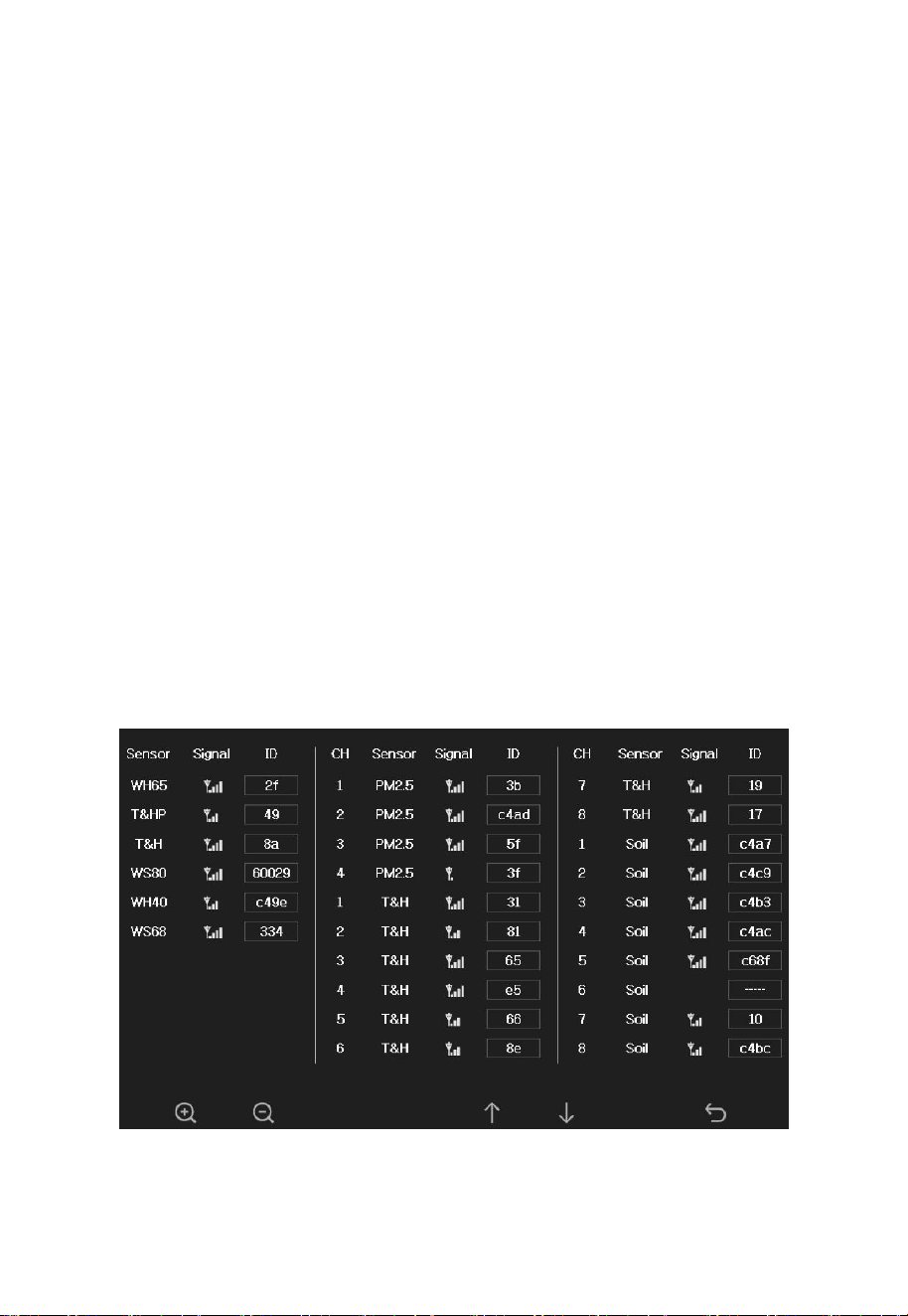
On the More page, you can set the Calibration for the optional
multi-channel soil moisture/PM2.5/temp and humidity sensor. You can also
view or manage all the sensors ID on the Sensors ID Setup page.
73
74
Note:
To calibrate the optional soil moisture sensor, please refer to the manual of
the WH51 soil moisture senor.
To calibrate the PM2.5 sensor, you’ll need to find a reliable source, such as
professional devices from your local air quality service.
To calibrate the temp and humidity sensor, please refer to section 4.9.19.
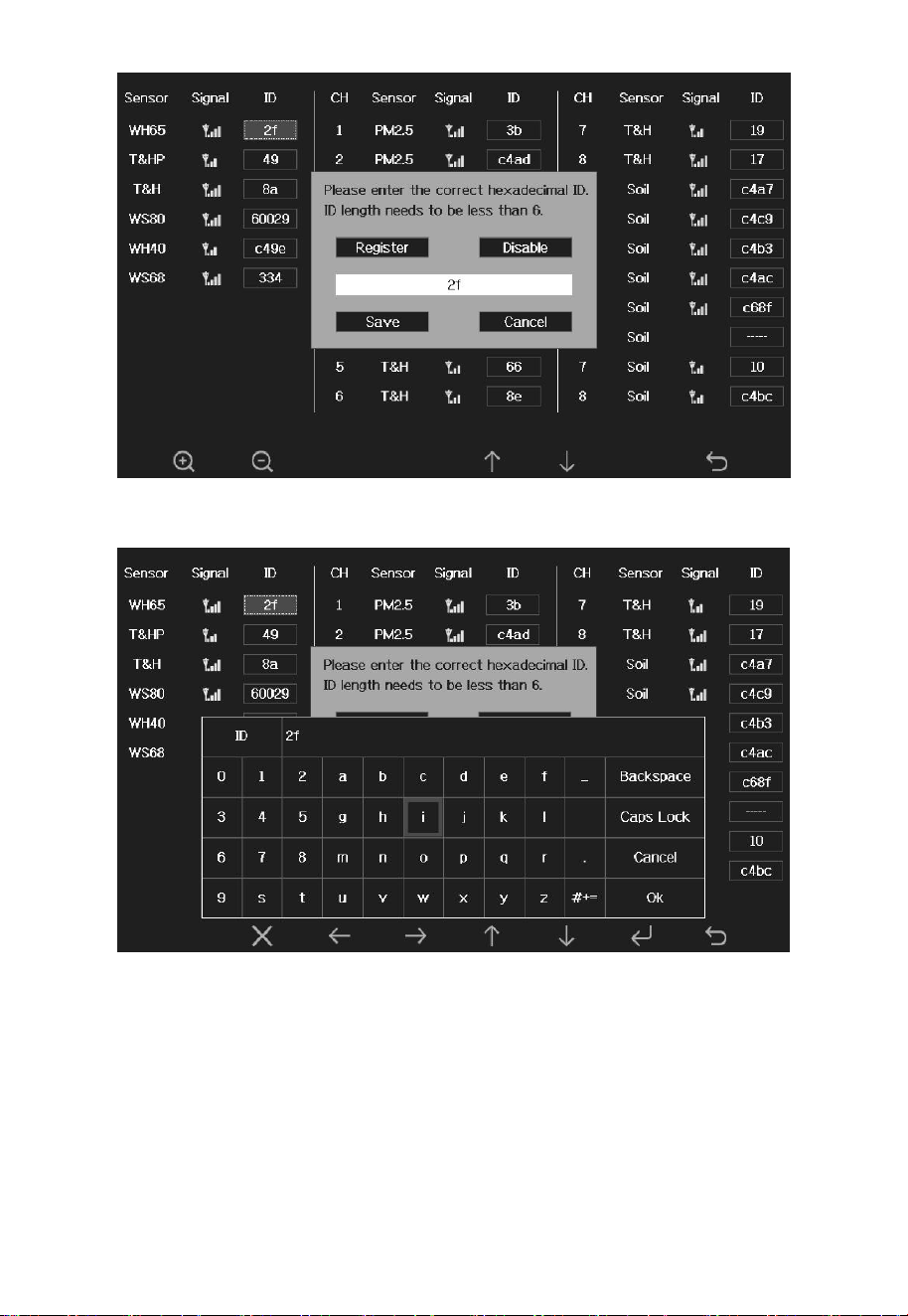
Sensor ID Setup
On this page you can set the following:
View sensor ID, signal strength and battery power condition. 1-4 bars
means 1-4 successful successive signal receptions without missed ones.
Register the sensor when a new sensor is to be paired with.
Stop unwanted sensor( like from your neighbor) to be received by
disable that sensor type.
Make console receiving data from a pre-defined sensor ID.
75
76
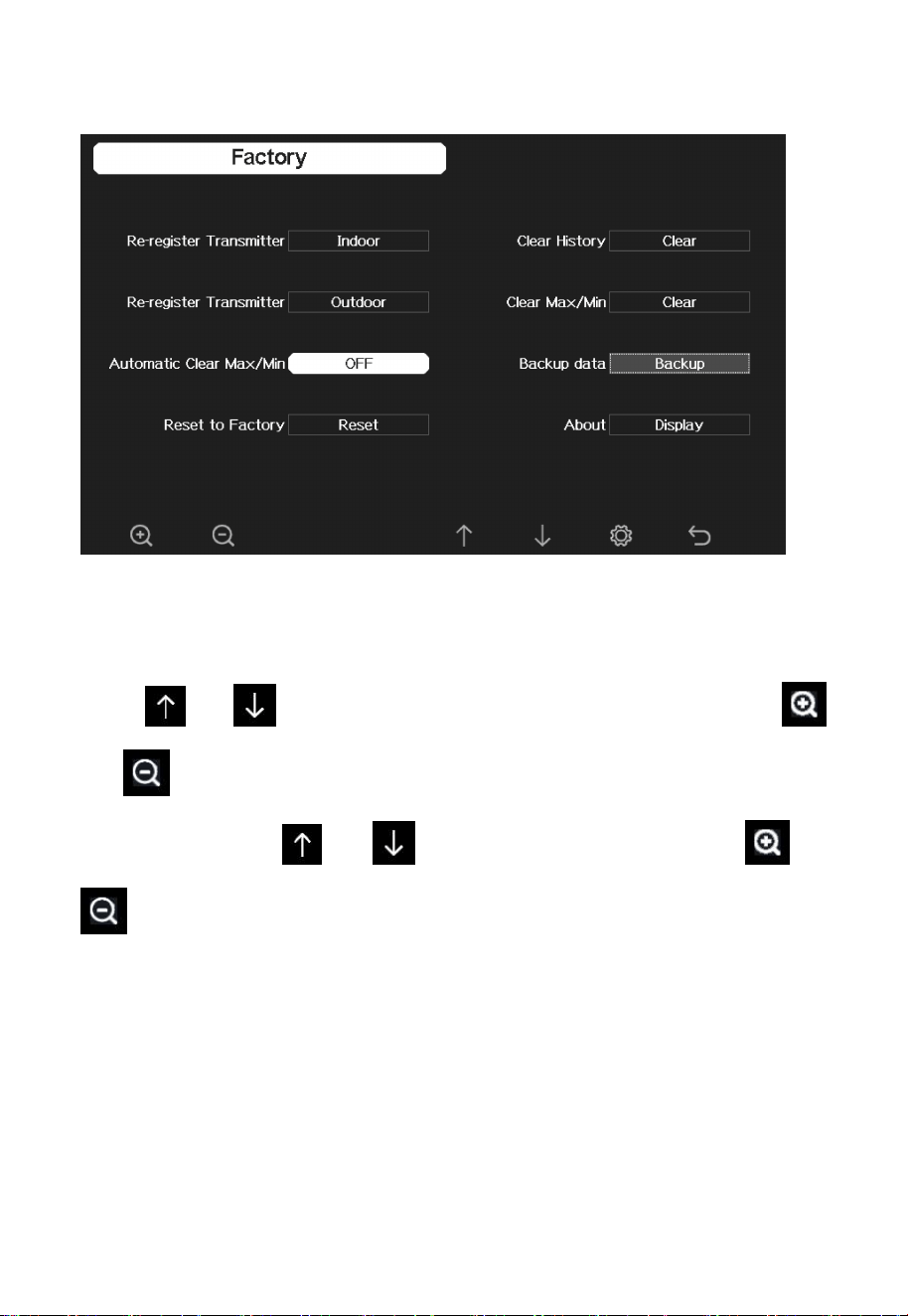
4.14 Factory reset
4.14.1 Re-register indoor transmitter
Press or key to select re-register indoor transmitter. Press
or key to popup the Message Box ”Register a new indoor
transmitter?” Press or to select Yes or No. Press the or
key to confirm the selection.
4.14.2 Re-register outdoor transmitter
Please reference section 5.13.1. Procedures and settings are similar to
re-register indoor transmitter.
77
4.14.3 Automatic Clear Max/Min
To turn on/off automatically clear Max/Min record at 0:00hr every day.
Press or key to select Automatic clear Max/Min. Press or
key to switch on/off.
When it is selected with ON option, min/max will be presented as daily
min/max, and with OFF option selected, it is for history min/max record.
4.14.4 Reset to Factory
Press or key to select Reset to Factory. Press or key
to popup the Message Box ”Reset to factory default?” Press or
to select Yes or No. Press the or key to confirm the selection.
4.14.5 Clear History
Press or key to select Clear History. Press or key to
popup the Message Box ”Clear the history record?” Press or to
select Yes or No. Press the or key to confirm the selection.
4.14.6 Clear Max/Min
Press or key to select Clear Max/Min. Press or key
to popup the Message Box ”Clear the max/min record?” Press or
to select Yes or No. Press the or key to confirm the selection.
78
4.14.7 Backup data
Press or key to select Backup data. Press or key to
popup the Message Box ”Copy history data to SD card?” Press or
to select OK or Cancel. Press the or key to confirm the
selection.
Note: You need to insert a SD card(not included) into the console before
using this function.
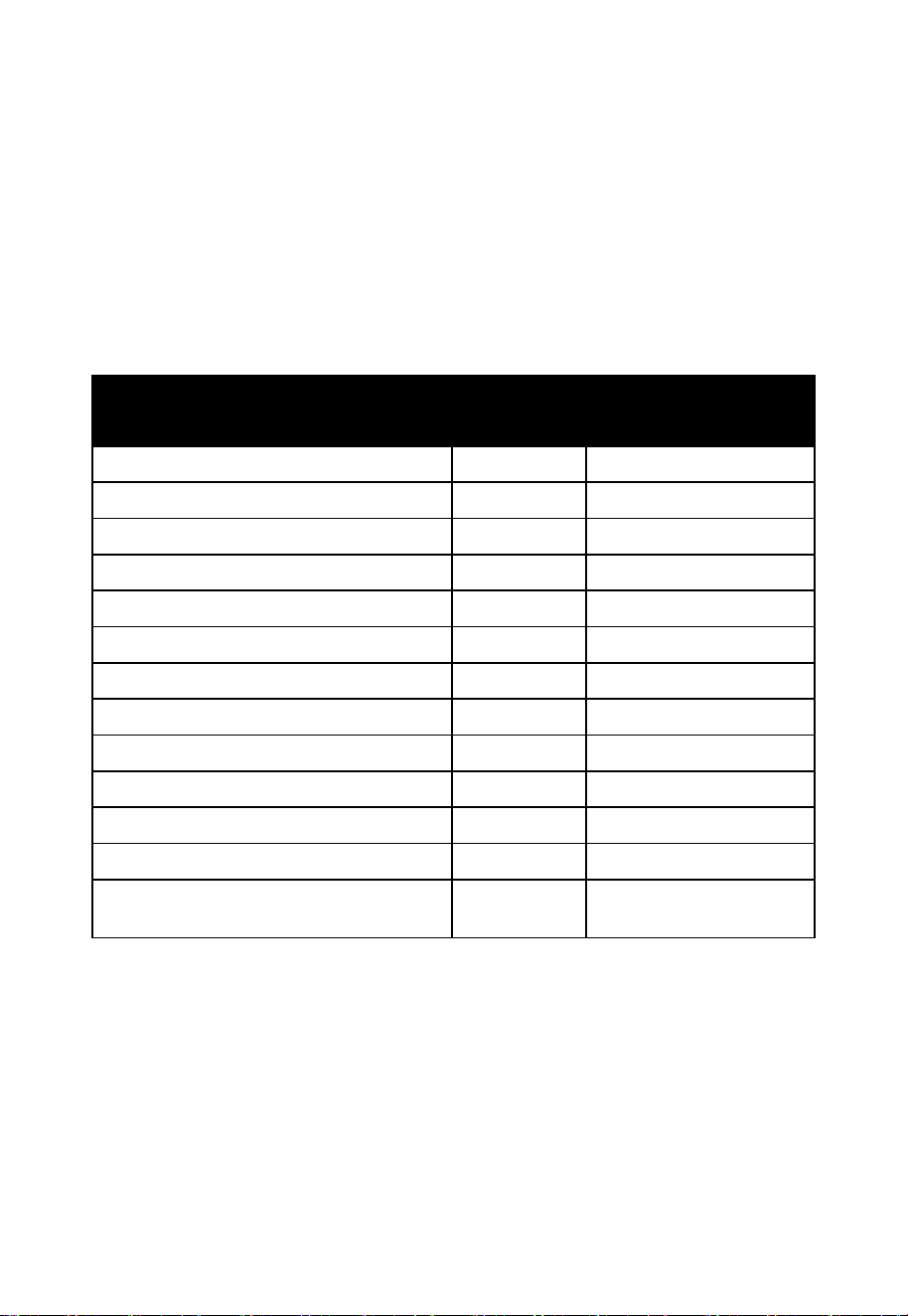
4.14.8 About information
Note: This figure is just for reference(model and frequency will change
according to different market). The actual display console may be with
higher firmware version than this manual described because we will update
the firmware occasionally.
79
5 Other Console Functions
5.1 Beaufort Wind Force Scale
If you have selected the use of Beaufort wind speed units, you can use the
table below for reference. The Beaufort scale is based on qualitative wind
conditions and how they would affect a ship’s (frigate) sails (so yes, it is an
“old” standard). It is therefore less precise than the other scales but is still in
use in various locales.
Wind speed
Beaufort
number
Description
0 - 1 mph, or 0 - 1.6 km/h
0
Calm
1 - 3 mph, or 1.6 - 4.8 km/h
1
Light air
3 - 7 mph, or 4.8 - 11.3 km/h
2
Light breeze
7 - 12 mph, or 11.3 -1 9.3 km/h
3
Gentile breeze
12 - 18 mph, or 19.3 - 29.0 km/h
4
Moderate breeze
18 - 24 mph, or 29.0 - 38.6 km/h
5
Fresh breeze
24 - 31 mph, or 38.6 - 49.9 km/h
6
String breeze
31 - 38 mph, or 49.9 - 61.2 km/h
7
Near gale
38 - 46 mph, or 61.2 - 74.1 km/h
8
Gale
46 - 54 mph, or 74.1 - 86.9 km/h
9
Strong gale
55 - 63 mph, or 88.5 - 101.4 km/h
10
Storm
64 - 73 mph, or 103 - 117.5 km/h
11
Violent storm
74 mph and above, or 119.1 km/h
and above
12
Hurricane
Table 1: Beaufort wind force scale
5.2 Weather Forecasting
The seven weather icons are Sunny, Partly Cloudy, Cloudy, Rainy, Stormy,
Snowy and Storm Snowy.
The forecast icon is based on the rate of change of barometric pressure.
Please allow at least one month for the weather station to learn the
barometric pressure over time.
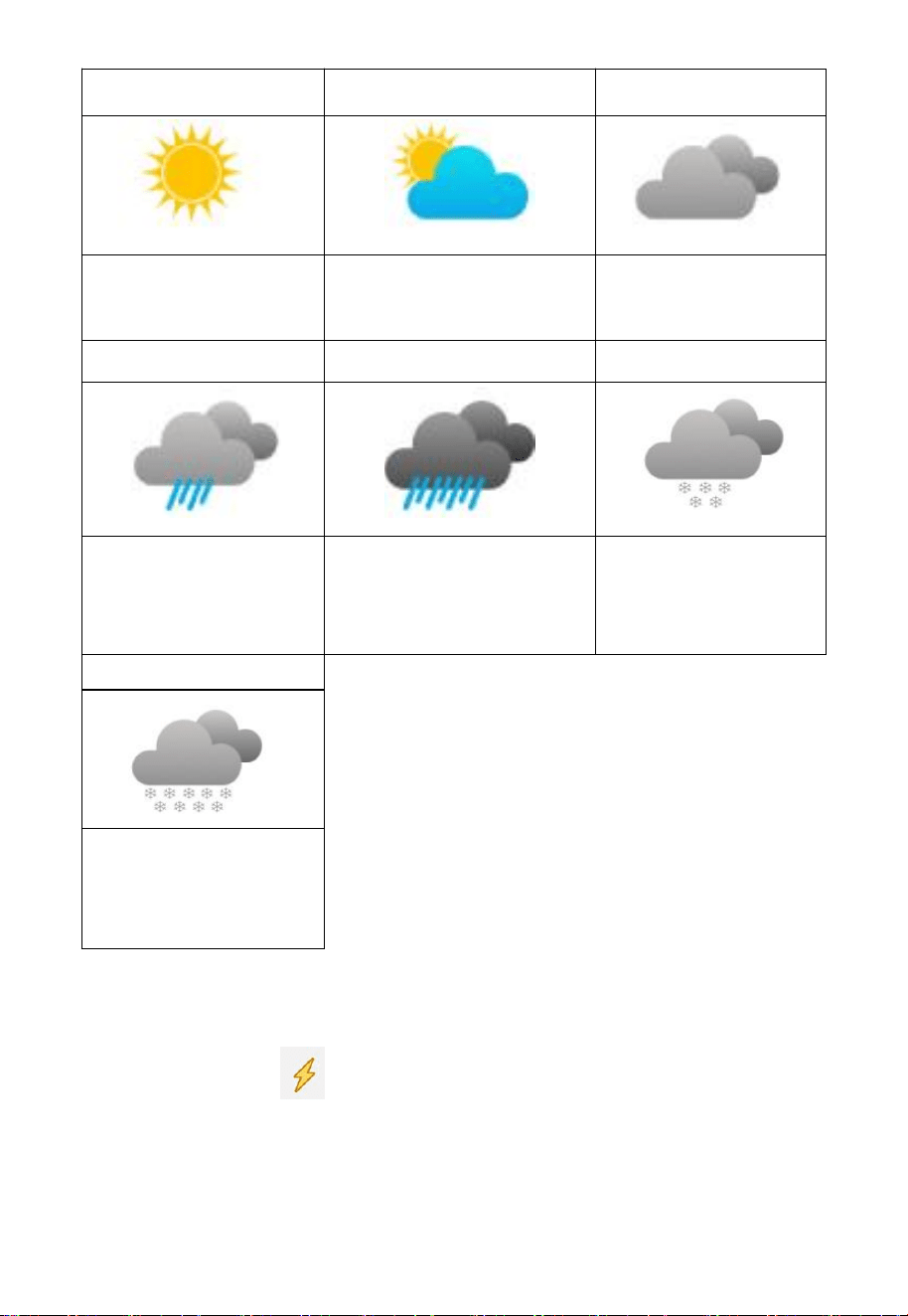
80
Sunny
Partly Cloudy
Cloudy
Pressure increases for a
sustained period of time
Pressure increases slightly
or initial power up
Pressure decreases
slightly
Rainy
Stormy
Snowy
Pressure decreases for
a sustained period of
time
Pressure rapidly
decreases
Pressure decreases for
a sustained period of
time, and temperature
≤0℃
Storm Snowy
Pressure rapidly
decreases, and
temperature≤0℃
5.3 Lightning Alert
The lightning icon will appear if the Dew Point exceeds 70 F. This
means there is a chance of lightning storms forming.
81
5.4 Weather Forecasting Description and Limitations
In general, if the rate of change of pressure increases, the weather is
generally improving (sunny to partly cloudy). If the rate of change of
pressure decreases, the weather is generally degrading (cloudy, rainy or
stormy). If the rate of change is relatively steady, it will read partly cloudy.
The reason the current conditions do not match the forecast icon is because
the forecast is a prediction 24-48 hours in advance. In most locations, this
prediction is only 70% accurate and it is a good idea to consult the National
Weather Service for more accurate weather forecasts. In some locations, this
prediction may be less or more accurate. However, it is still an interesting
educational tool for learning why the weather changes.
The National Weather Service (and other weather services such as
Accuweather and The Weather Channel) have many tools at their disposal
to predict weather conditions, including weather radar, weather models, and
detailed mapping of ground conditions.
5.5 Moon Phase
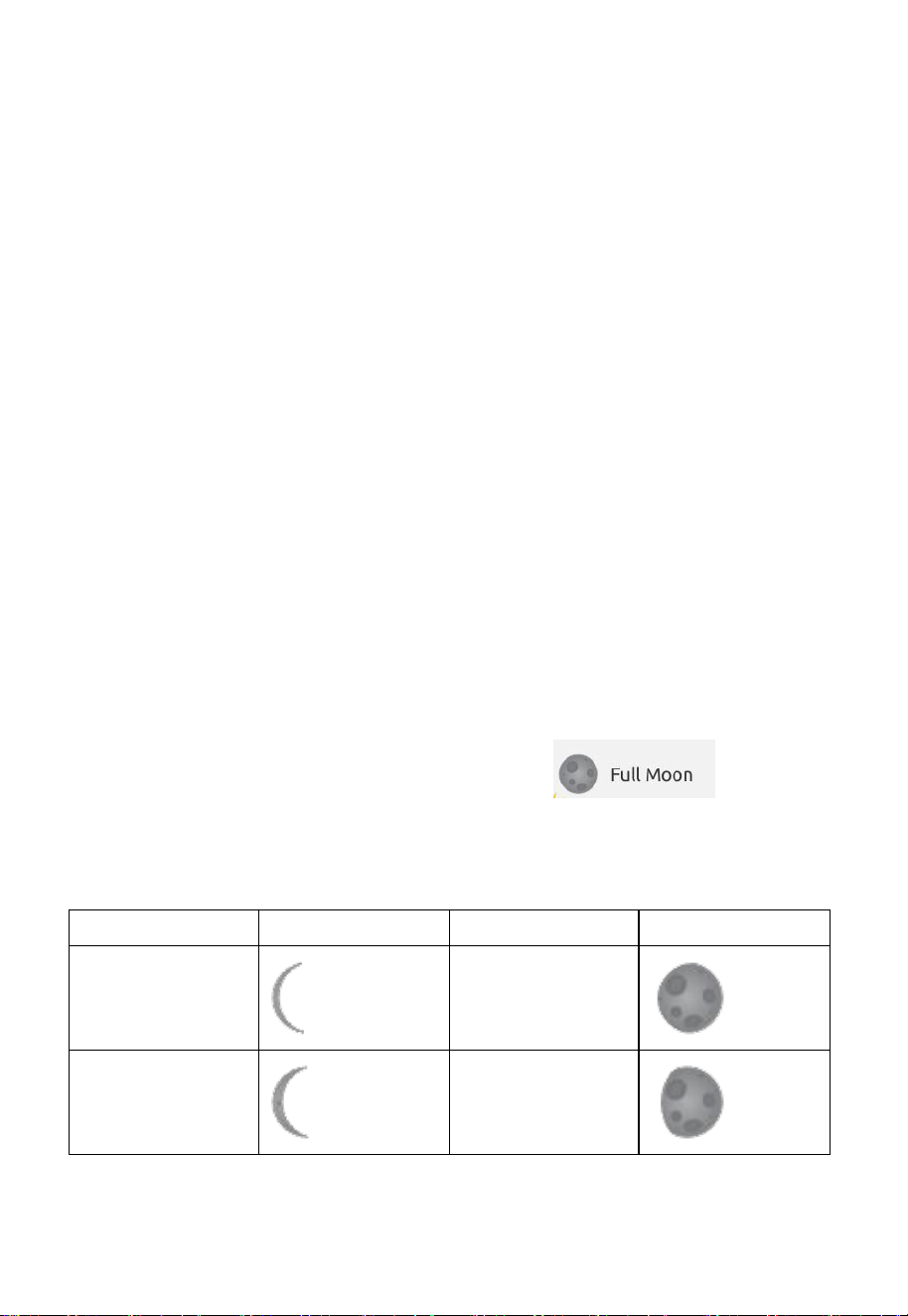
In the event the moon phase is 100%, the icon will appear
in its place. In the event of 0%, the word “New Moon” will appear in its
place.
Moon Phase
Image
Moon Phase
Image
Day 1
Day 14
Day 2
Day 15
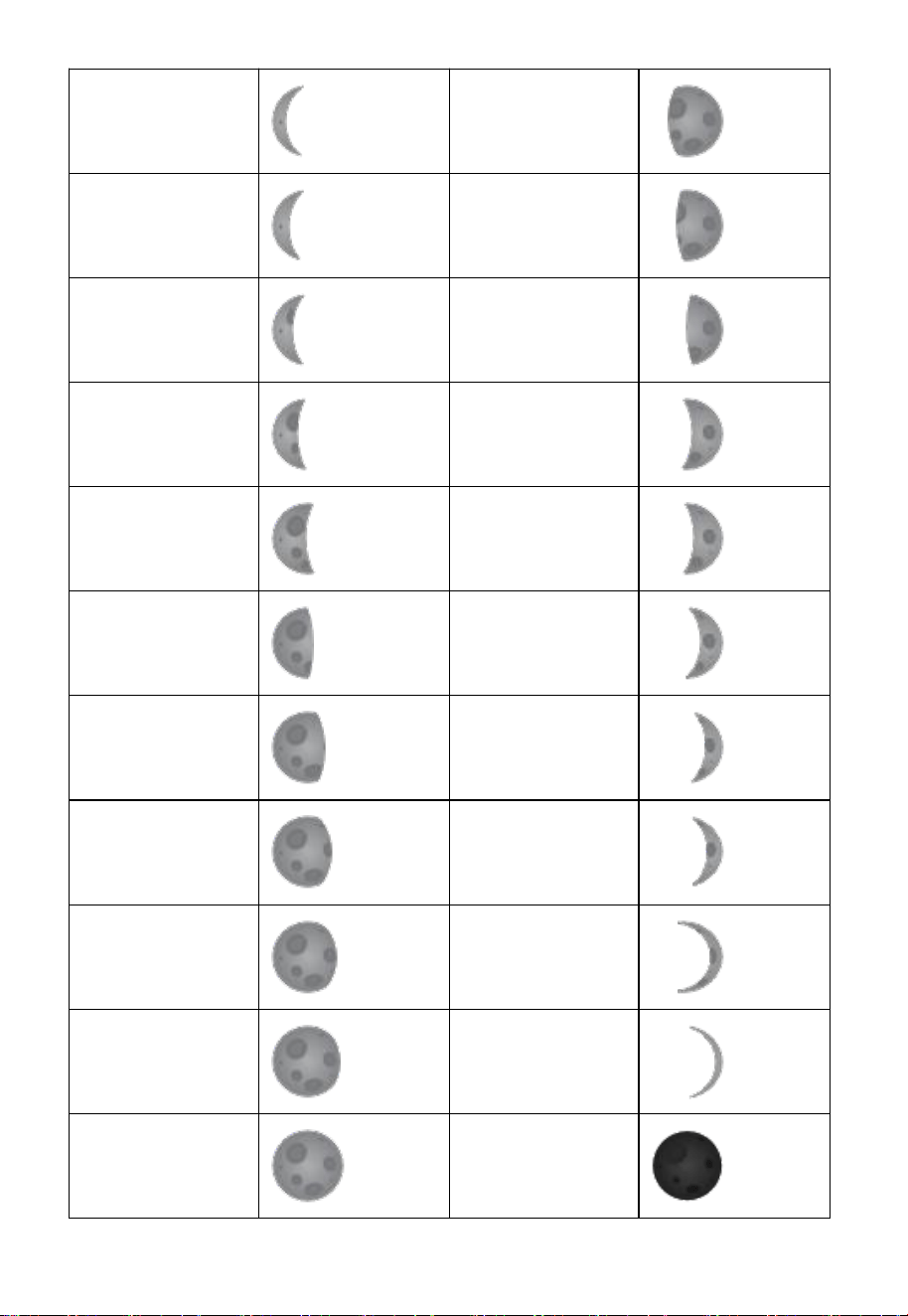
82
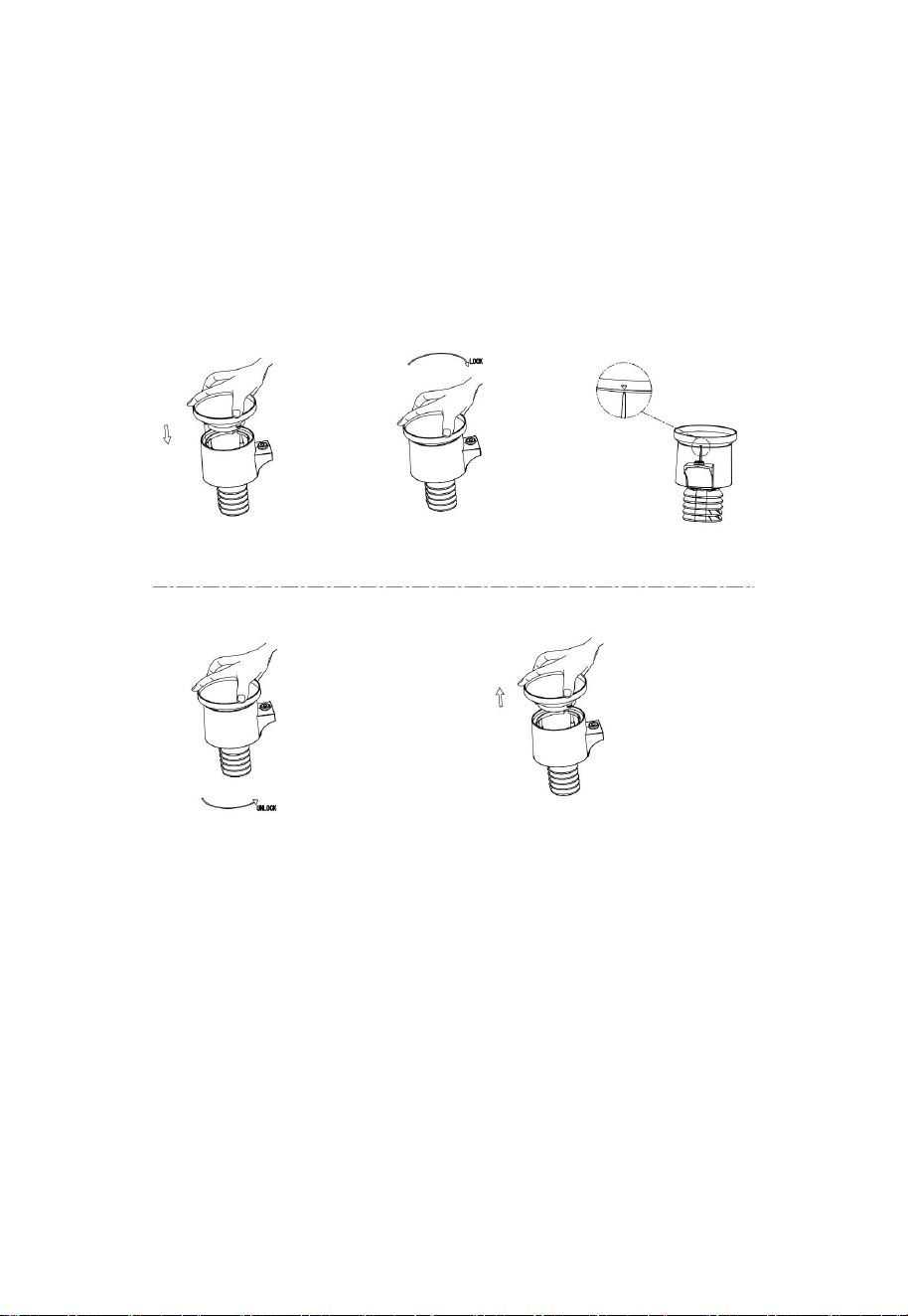
Day 3
Day 16
Day 4
Day 17
Day 5
Day 18
Day 6
Day 19
Day 7
Day 20
Day 8
Day 21
Day 9
Day 22
Day 10
Day 23
Day 11
Day 24
Day 12
Day 25
Day 13
Full Moon
Day 26
New Moon
83
6 Maintenance
The following steps should be taken for proper maintenance of your station
1. Clean the rain gauge once every 3 months. Rotate the funnel
counter-clockwise and lift to expose the rain gauge mechanism, and
clean with a damp cloth. Remove any dirt, debris and insects. If bug
infestation is an issue, spray the array lightly with insecticide.
Figure 33: Rain gauge installation and maintenance
2. Clean the solar radiation sensor and solar panel every 3 months with a
non-abrasive slightly damp cloth.
3. Replace batteries every 1-2 years. If left in too long, the batteries may
leak due to environmental challenges. In harsh environments, inspect
the batteries every 3 months (while cleaning the solar panel).
4. When replacing the batteries, apply a corrosion preventing compound
on the battery terminals, available at Amazon and most hardware
stores.
5. In snowy environments, spray the top of the weather station with
anti-icing silicon spray to prevent snow build up.
84
7 Troubleshooting Guide
Look through the following table and locate an issue or problem you are
experiencing in the left column and read possible solutions in the right
column.
Problem
Solution
Wireless remote
(thermo-hygrometer) not
reporting in to console.
There are dashes on the
display console.
The maximum line of sight communication range is about
300’. Move the sensor assembly closer to the display
console.
Resynchronize the remote sensor(s). Reference Section
5.13.2
Install a fresh set of batteries in the remote sensor(s).
Make sure the remote sensors are not transmitting through
solid metal (acts as an RF shield), or earth barrier (down a
hill).
Radio Frequency (RF) Sensors cannot transmit through
metal barriers (example, aluminum siding) or multiple,
thick walls.
Move the display console around electrical noise generating
devices, such as computers, TVs and other wireless
transmitters or receivers.
Outdoor sensor array does not
communicate to the display
console.
The sensor array may have initiated properly and the data is
registered by the console as invalid, and the console must
be reset. Press the reset button as described in Section
Installation.
With an open ended paperclip, press the reset button for 3
seconds to completely discharge the voltage.
Take out the batteries and wait one minute, while covering
the solar panel to drain the voltage.
Put batteries back in and re-sync with console by powering
down and up the console with the sensor array about 10 feet
away.
Bring the sensor array inside the house (you can disconnect
it from the rest of the sensors). The LED next to the battery
85
Problem
Solution
compartment will flash every 16 seconds. If the LED is
not flashing every 16 seconds…
Replace the batteries in the outside sensor array.
If the batteries were recently replaced, check the polarity.
If the sensor is flashing every 16 seconds, proceed to the
next step.
There may be a temporary loss of communication due to
reception loss related to interference or other location
factors,
or the batteries may have been changed in the sensor array
and the console has not been reset. The solution may be as
simple as powering down and up the console.
Replace the batteries in the outside sensor array.
With the sensor array and console 10 feet away from each
other, remove AC power from the display console and wait
10 seconds. Re-connect power.
Temperature sensor reads too
high in the day time.
Make certain that the sensor array is not too close to heat
generating sources or strictures, such as buildings,
pavement, walls or air conditioning units.
Use the calibration feature to offset installation issues
related to radiant heat sources. Reference 5.12.
Absolute pressure does not
agree with official reporting
station
You may be viewing the relative pressure, not the absolute
pressure.
Select the absolute pressure. Make sure you properly
calibrate the sensor to an official local weather station.
Reference Section 5.12 for details.
Rain gauge reports rain when
it is not raining
An unstable mounting solution (sway in the mounting pole)
may result in the tipping bucket incorrectly incrementing
rainfall. Make sure you have a stable, level mounting
solution.
Data not reporting to
Wunderground.com
1. Confirm your password is correct. It is the
password you registered on Wunderground.com.
Your Wunderground.com password cannot begin
with a non-alphanumeric character (a limitation of
Wundeground.com, not the station). Example,
86
Problem
Solution
$oewkrf is not a valid password, but oewkrf$ is
valid.
2.
3. Confirm your station ID is correct. The station ID
is all caps, and the most common issue is
substituting an O for a 0 (or visa versa). Example,
KAZPHOEN11, not KAZPH0EN11
4.
5. If there's a number "1" on the station key, try to i
nput the lower case of letter "L" to replace it.
6. Make sure the date and time is correct on the
console. If incorrect, you may be reporting old
data, not real time data.
7.
8. Make sure your time zone is set properly. If
incorrect, you may be reporting old data, not real
time data.
9.
10. Check your router firewall settings. The console
sends data via Port 80.
No WiFi connection
1. Check for WiFi signal strength symbol on the
display . If wireless connectivity is
successful and reporting to Wunderground.com,
the WiFi icon will be displayed the home
page.
2.
3. Make sure your modem WiFi settings are correct
(network name, password and security settings).
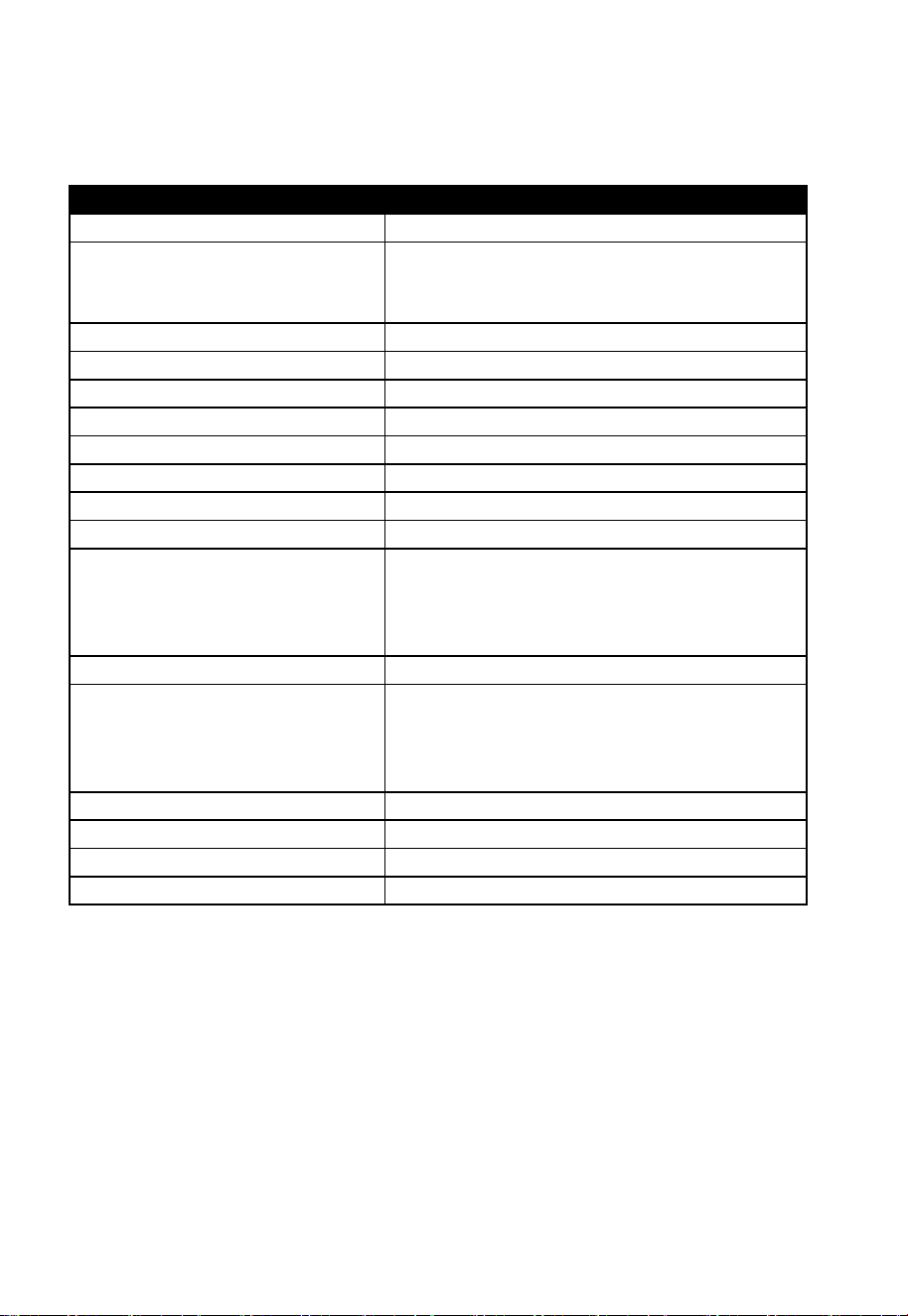
87
8 Specifications
Note: Out of range values will be displayed using “---”:
Outdoor sensor
Specification
Transmission distance in open field
100 m (330 ft.)
RF Frequency
433/868/915MHz depending on location
(North American:915MHz; Europe:868MHz;
Other areas:433MHz)
Temperature range
-40°C – 60°C (-40°F - 140°F)
Temperature accuracy
± 1°C, or ± 2°F
Temperature resolution
0.1°C, or 0.1°F
Humidity range
10% ~ 99%
Humidity accuracy
± 5%
Humidity resolution
1%
Rain volume display range
0 – 9999 mm
Rain volume accuracy
± 10%
Rain volume resolution
0.3 mm (for volume < 1,000 mm)
1 mm (for volume ≥ 1,000 mm), or
0.01 in (for volume < 100 in)
1 mm (for volume ≥ 100 in)
Wind speed range
0 – 50 m/s (0 ~ 100 mph)
Wind speed accuracy
± 1 m/s (speed < 5 m/s)
± 10% (speed ≥ 5 m/s), or
± 0.1 mph (speed < 11 mph)
± 10% (speed ≥ 11 mph)
UV-Index range
0 - 15
Light range
0 – 200 kLux
Light accuracy
± 15%
Sensor reporting interval
16 seconds
Table: Outdoor sensor specification
88
Indoor sensor
Specification
Temperature range
-10°C – 60°C (14°F - 140°F)
Temperature resolution
0.1°C, or 0.1°F
Humidity range
10% ~ 99%
Humidity resolution
1%
Barometric pressure range
300 – 1,100 hPa (8.85 – 32.5 inHg)
Barometric pressure accuracy
± 3 hPa in 700 – 1,100 hPa range
Barometric pressure resolution
0.1 hPa (0.01 inHg)
Sensor reporting interval
60 seconds
Alarm Duration
120 seconds
Table: Indoor sensor specification
Power
Specification
Base station/console
5V DC Adapter (included)
Indoor sensor
2 x AA 1.5 Alkaline batteries (not included)
Outdoor sensor
Solar panel (built-in)
Outdoor sensor (backup)
2 x AA 1.5V LR6 Alkaline (not included), or
2 x AA 1.5V Lithium battery (not included)
Table: Power specification
The primary power source for the outdoor sensor is the solar panel. When
available solar power (light over recent period) is insufficient, the batteries
will be used. In outdoor climates that frequently have sustained
temperatures below 0°C (or 32°F) the use of Lithium batteries is strongly
suggested as these are performing better than Alkaline batteries under such
circumstances.

89
9 Warranty Information
We disclaim any responsibility for any technical error or printing error,
or the consequences thereof.
All trademarks and patents are recognized.
We provide a 1-year limited warranty on this product against manufacturing
defects, or defects in materials and workmanship.
This limited warranty begins on the original date of purchase, is valid only
on products purchased, and only to the original purchaser of this product. To
receive warranty service, the purchaser must contact us for problem
determination and service procedures.
This limited warranty covers only actual defects within the product itself
and does not cover the cost of installation or removal from a fixed
installation, normal set-up or adjustments, or claims based on
misrepresentation by the seller, or performance variations resulting from
installation-related circumstances.