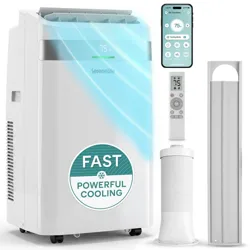
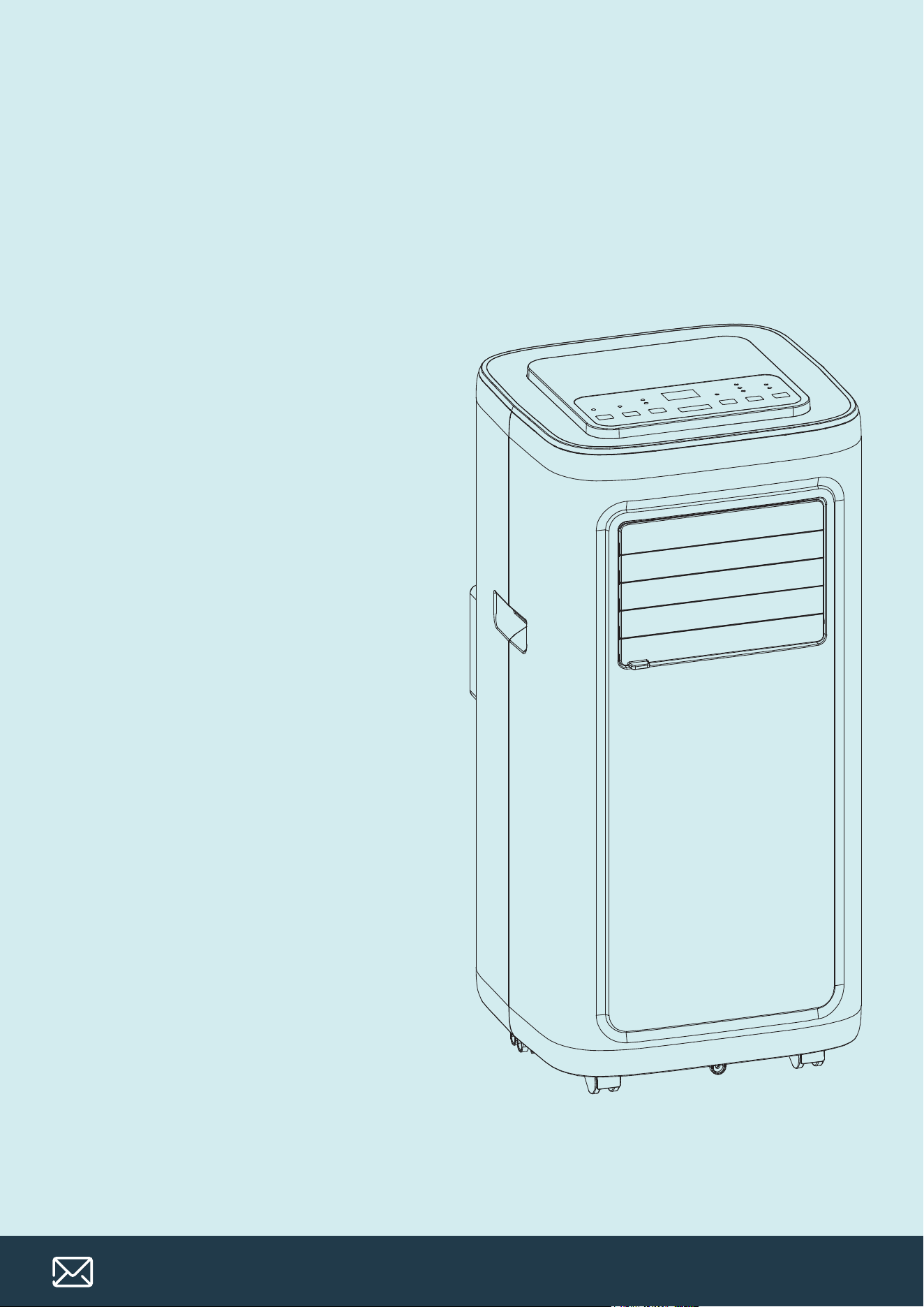
Portable Air
Conditioner
Instruction Manual
SKU: PAC001-8KWH-USZX-WM
MODEL: AC-8
Email: [email protected]
Congratulations on purchasing your new product. To ensure proper opera-
tion, please read this instruction manual carefully before using this product.
Keep this manual in a safe placefor future reference.


Congratulations
Dear Customer:
Welcome to the our family. Thank you for purchasing one of our products.
Our goal is to provide you with superior service. If there is anything missing from or wrong with
your order, or if you have any questions about using our product, PLEASE contact us.
Email: [email protected]
Our team is available 24/7 to address your questions, comments, and concerns. Your satisfaction
is our ultimate goal. We want to make everything right so you'll share your positive experience
with other shoppers on Amazon.
lf you experience any problems, please send an email to [email protected]
Our mission:
* To be the most trusted appliance brand.
* To create practical, compact appliances that better your life.


TABLE OF CONTENTS
lmportant Safety Instructions
Features and Components
Installation and Adjustment
Drainage Instructions
Maintenance
Unit Storage
Troubleshooting
Addendum
Warranty
2-10
11-16
17-19
20-21
22
23
24
25
26
01

Important Safety Instructions
1 General Safety Instructions
02
The air conditioning is only suitable for indoor use, and is not suitable for other applications.
Follow local grid interconnection rules while installing the air conditioning and ensure that it is
properly grounded. If you have any question on electrical installation, follow the instructions of
the manufacturer, and if necessary, ask a professional electrician to install it.
Place the machine in a flat and dry place and keep a distance of above 50cm between the machine
and the surrounding objects or walls.
After the air conditioning is installed, ensure that the power plug is intact and firmly plugged into
the power outlet, and place the power cord orderly to prevent someone from being tripped or
pulling out the plug.
Do not put any object into the air inlet and outlet of the air conditioning. Keep the air inlet and
outlet free from obstructions.
When drainage pipes are installed, ensure that the drainage pipes are properly connected, and
are not distorted or bended.
While adjusting the upper and lower wind-guide strips of the air outlet, pluck it with hands gently
to avoid damaging wind-guide strips.
When moving the machine, make sure that it is in an upright position.
The machine should stay away from gasoline, flammable gas, stoves and other heat sources.
Don't disassemble, overhaul and modify the machine arbitrarily, otherwise it will cause a machine
malfunction or even bring harm to persons and properties. To avoid danger, if a machine failure
occurs, ask the manufacturer or professionals to repair it.
Do not install and use the air conditioning in the bathroom or other humid environments.
Do not pull the plug to turn off the machine.
Do not place cups or other objects on the body to prevent water or other liquids from spilling
into the air conditioning.
Do not use insecticide sprays or other flammable substances near the air conditioning.
Do not wipe or wash the air conditioning with chemical solvents such as gasoline and alcohol.
When you need to clean the air conditioning, you must disconnect the power supply, and clean
it with a half-wet soft cloth. If the machine is really dirty, scrub with a mild detergent.
The appliance can be used by children aged from 8 years and above and persons with reduced
physical, sensory or mental capabilities if they have been given supervision or instruction
concerning use of the appliance in a safe way and understand the hazards involved. Children
shall not play with the appliance. Cleaning and maintenance shall not be made by children
without supervision.
If the supply cord is damaged,it must be replaced by the manufacturer,its service agent or similarly
qualified persons in order to avoid a hazard.
The appliance shall be stored so as to prevent mechanical damage from occurring.
The appliance shall be installed in accordance with national wiring regulations.
Do not operate your air conditioner in a wet room such as a bathroom or laundry room.

Compliance with the transport regulations
Compliance with local regulations
Important Safety Instructions
2.1 Special Safety Instructions for using flammable refrigerant
03
1. Transport of equipment containing flammable refrigerants
2. Marking of equipment using signs
Compliance with national regulations
3. Disposal of equipment using flammable refrigerants
The storage of equipment should be in accordance with the manufacturer’s instructions.
4. Storage of equipment/appliances
Storage package protection should be constructed such that mechanical damage to the
equipment inside the package will not cause a leak of the refrigerant charge.
The maximum number of pieces of equipment permitted to be stored together will be
determined by local regulations.
5. Storage of packed (unsold) equipment
Prior to beginning work on systems containing flammable refrigerants, safety checks are
necessary to ensure that the risk of ignition is minimised.
For repair to the refrigerating system, the following precautions shall be complied with
prior to conducting work on the system.
Work shall be undertaken under a controlled procedure so as to minimise the risk of a
flammable gas or vapour being present while the work is being performed.
6.Information on servicing
6-1 Checks to the area
6-2 Work procedure
All maintenance staff and others working in the local area shall be instructed on the
nature of work being carried out. Work in confined spaces shall be avoided.
The area around the workspace shall be sectioned off. Ensure that the conditions within
the area have been made safe by control of flammable material.
6-3 General work area
The area shall be checked with an appropriate refrigerant detector prior to and during
work, to ensure the technician is aware of potentially flammable atmospheres.
Ensure that the leak detection equipment being used is suitable for use with flammable
refrigerants, i.e. non-sparking, adequately sealed or intrinsically safe.
6-4 Checking for presence of refrigerant
If any hot work is to be conducted on the refrigeration equipment or any associated parts,
appropriate fire extinguishing equipment shall be available to hand.
Have a dry powder or CO2 fire extinguisher adjacent to the charging area.
6-5 Presence of fire extinguisher

Important Safety Instructions
04
No person carrying out work in relation to a refrigeration system which involves exposing
any pipe work that contains or has contained flammable refrigerant shall use any sources
of ignition in such a manner that it may lead to the risk of fire or explosion.
All possible ignition sources, including cigarette smoking, should be kept sufficiently far
away from the site of installation, repairing, removing and disposal, during which flammable
refrigerant can possibly be released to the surrounding space.
Prior to work taking place, the area around the equipment is to be surveyed to make sure
that there are no flammable hazards or ignition risks. “No Smoking” signs shall be displayed.
6-6 No ignition sources
Ensure that the area is in the open or that it is adequately ventilated before breaking into
the system or conducting any hot work. A degree of ventilation shall continue during the
period that the work is carried out.
The ventilation should safely disperse any released refrigerant and preferably expel it
externally into the atmosphere.
6-7 Ventilated area
Where electrical components are being changed, they shall be fit for the purpose and to
the correct specification.
At all times the manufacturer’s maintenance and service guidelines shall be followed. If in
doubt consult the manufacturer’s technical department for assistance.
The following checks shall be applied to installations using flammable refrigerants:
— The charge size is in accordance with the room size within which the refrigerant
containing parts are installed;
— The ventilation machinery and outlets are operating adequately and are not obstructed;
— If an indirect refrigerating circuit is being used, the secondary circuit shall be checked for
the presence of refrigerant;
— Marking to the equipment continues to be visible and legible. Markings and signs that
are illegible shall be corrected;
— Refrigeration pipe or components are installed in a position where they are unlikely to
be exposed to any substance which may corrode refrigerant containing components,unless
the components are constructed of materials which are inherently resistant to being orroded
or are suitably protected against being so corroded.
6-8 Checks to the refrigeration equipment
Repair and maintenance to electrical components shall include initial safety checks and
component inspection procedures.
If a fault exists that could compromise safety, then no electrical supply shall be connected
to the circuit until it is satisfactorily dealt with.
If the fault cannot be corrected immediately but it is necessary to continue operation, an
adequate temporary solution shall be used.
This shall be reported to the owner of the equipment so all parties are advised.
6-9 Checks to electrical devices

During repairs to sealed components, all electrical supplies shall be disconnected from the
equipment being worked upon prior to any removal of sealed covers, etc.
If it is absolutely necessary to have an electrical supply to equipment during servicing, then
a permanently operating form of leak detection shall be located at the most critical point to
warn of a potentially hazardous situation.
Particular attention shall be paid to the following to ensure that by working on electrical
components, the casing is not altered in such a way that the level of protection is affected.
This shall include damage to cables, excessive number of connections, terminals not made
to original specification, damage to seals, incorrect fitting of glands, etc.
Ensure that apparatus is mounted securely.
Ensure that seals or sealing materials have not degraded such that they no longer serve the
purpose of preventing the ingress of flammable atmospheres.
Replacement parts shall be in accordance with the manufacturer’s specifications.
Do not apply any permanent inductive or capacitance loads to the circuit without ensuring
that this will not exceed the permissible voltage and current permitted for the equipment
in use.
Intrinsically safe components are the only types that can be worked on while live in the
presence of a flammable atmosphere. The test apparatus shall be at the correct rating.
Replace components only with parts specified by the manufacturer.
Other parts may result in the ignition of refrigerant in the atmosphere from a leak.
Check that cabling will not be subject to wear, corrosion, excessive pressure, vibration,sharp
edges or any other adverse environmental effects.
The check shall also take into account the effects of aging or continual vibration from
sources such as compressors or fans.
The use of silicon sealant may inhibit the effectiveness of some types of leak detection
equipment. Intrinsically safe components do not have to be isolated prior to working on them.
7.Repairs to sealed components
8.Repair to intrinsically safe components
9.Cabling
NOTE:
— That capacitors are discharged: this shall be done in a safe manner to avoid possibility
of sparking;
— That there no live electrical components and wiring are exposed while charging, recovering
or purging the system;
— That there is continuity of earth bonding.
Important Safety Instructions
05
Initial safety checks shall include:

Under no circumstances shall potential sources of ignition be used in the searching for or
detection of refrigerant leaks.
A halide torch (or any other detector using a naked flame) shall not be used.
The following leak detection methods are deemed acceptable for systems containing
flammable refrigerants:
10.Detection of flammable refrigerants
11. Leak detection methods
When breaking into the refrigerant circuit to make repairs – or for any other purpose –
conventional procedures shall be used. However, for flammable refrigerants it is important
that the best practice is followed since flammability is a consideration. Opening of the
refrigeration systems shall not be done by brazing.
The following procedure shall be adhered to:
The refrigerant charge shall be recovered into the correct recovery cylinders.
The system shall be “flushed” with OFN to render the unit safe.
This process may need to be repeated several times.
Compressed air or oxygen shall not be used for this task.
12.Removal and evacuation
— Electronic leak detectors shall be used to detect flammable refrigerants, but the sensitivity
may not be adequate, or may need re-calibration. (Detection equipment shall be calibrated
in a refrigerant-free area.)
— Ensure that the detector is not a potential source of ignition and is suitable for the
refrigerant used.
— Leak detection equipment shall be set at a percentage of the LFL of the refrigerant and
shall be calibrated to the refrigerant employed and the appropriate percentage of gas
(25 % maximum) is confirmed.
— Leak detection fluids are suitable for use with most refrigerants but the use of detergents
containing chlorine shall be avoided as the chlorine may react with the refrigerant and
corrode the copper pipe-work.
— If a leak is suspected, all naked flames shall be removed/extinguished.
— If a leakage of refrigerant is found which requires brazing, all of the refrigerant shall be
recovered from the system, or isolated (by means of shut off valves) in a part of the system
remote from the leak.
— Oxygen free nitrogen (OFN) shall then be purged through the system both before and
during the brazing process.
- Remove refrigerant;
- Purge the circuit with inert gas;
- Evacuate;
- Purge again with inert gas;
- Open the circuit by cutting or brazing.
Important Safety Instructions
06

13.Charging procedures
14.Decommissioning
— Ensure that contamination of different refrigerants does not occur when using charging
equipment.
— Hoses or lines shall be as short as possible to minimise the amount of refrigerant
contained in them.
— Cylinders shall be kept upright.
— Ensure that the refrigeration system is earthed prior to charging the system with
refrigerant.
— Label the system when charging is complete (if not already).
— Extreme care shall be taken not to overfill the refrigeration system.
— Mechanical handling equipment is available, if required, for handling refrigerant cylinders;
— All personal protective equipment is available and being used correctly;
— The recovery process is supervised at all times by a competent person;
— Recovery equipment and cylinders conform to the appropriate standards.
Important Safety Instructions
07
Flushing shall be achieved by breaking the vacuum in the system with OFN and continuing
to fill until the working pressure is achieved, then venting to atmosphere, and finally pulling
down to a vacuum.
This process shall be repeated until no refrigerant is within the system. When the final OFN
charge is used, the system shall be vented down to atmospheric pressure to enable work to
take place.
This operation is absolutely vital if brazing operations on the pipe-work are to take place.
Ensure that the outlet for the vacuum pump is not close to any ignition sources and there
is ventilation available.
In addition to conventional charging procedures, the following requirements shall be
followed:
Prior to recharging the system it shall be pressure tested with OFN.
The system shall be leak tested on completion of charging but prior to commissioning.
A follow up leak test shall be carried out prior to leaving the site.
Before carrying out this procedure, it is essential that the technician is completely familiar
with the equipment and all its detail.
It is recommended good practice that all refrigerants are recovered safely.
Prior to the task being carried out, an oil and refrigerant sample shall be taken in case
analysis is required prior to re-use of reclaimed refrigerant. It is essential that electrical
power is available before the task is commenced.
a) Become familiar with the equipment and its operation.
b) Isolate system electrically.
c) Before attempting the procedure ensure that:

15. Labelling
d) Pump down refrigerant system, if possible.
e) If a vacuum is not possible, make a manifold so that refrigerant can be removed from various
parts of the system.
f) Make sure that cylinder is situated on the scales before recovery takes place.
g) Start the recovery machine and operate in accordance with manufacturer's instructions.
h) Do not overfill cylinders. (No more than 80 % volume liquid charge).
i) Do not exceed the maximum working pressure of the cylinder, even temporarily.
j) When the cylinders have been filled correctly and the process completed, make sure that the
cylinders and the equipment are removed from site promptly and all isolation valves on the
equipment are closed off.
k) Recovered refrigerant shall not be charged into another refrigeration system unless it has
been cleaned and checked.
Important Safety Instructions
08
Equipment shall be labelled stating that it has been de-commissioned and emptied of
refrigerant.
16. Recovery
When removing refrigerant from a system, either for servicing or decommissioning, it is
recommended good practice that all refrigerants are removed safely.
When transferring refrigerant into cylinders, ensure that only appropriate refrigerant
recovery cylinders are employed.
Ensure that the correct number of cylinders for holding the total system charge is available.
All cylinders to be used are designated for the recovered refrigerant and labelled for that
refrigerant (i.e. special cylinders for the recovery of refrigerant).
Cylinders shall be complete with pressure relief valve and associated shut-off valves in
good working order.
Empty recovery cylinders are evacuated and, if possible, cooled before recovery occurs.
The recovery equipment shall be in good working order with a set of instructions concerning
the equipment that is at hand and shall be suitable for the recovery of flammable refrigerants.
In addition, a set of calibrated weighing scales shall be available and in good working order.
Hoses shall be complete with leak-free disconnect couplings and in good condition.
Before using the recovery machine, check that it is in satisfactory working order, has been
properly maintained and that any associated electrical components are sealed to prevent
ignition in the event of a refrigerant release.
Consult manufacturer if in doubt.
The recovered refrigerant shall be returned to the refrigerant supplier in the correct recovery
cylinder, and the relevant Waste Transfer Note arranged.
The label shall be dated and signed.
Ensure that there are labels on the equipment stating the equipment contains flammable
refrigerant.

Important Safety Instructions
09
Do not mix refrigerants in recovery units and especially not in cylinders.
If compressors or compressor oils are to be removed, ensure that they have been evacuated
to an acceptable level to make certain that flammable refrigerant does not remain within
the lubricant.
The evacuation process shall be carried out prior to returning the compressor to the
suppliers.
Only electric heating to the compressor body shall be employed to accelerate this process.
When oil is drained from a system, it shall be carried out safely.
This appliance is not intended for use by persons (including children) with reduced physical,
sensory or mental capabilities, or lack of experience and knowledge, unless they have been
given supervision or instruction concerning use of the appliance by a person responsible for
their safety. Children should be supervised to ensure that they do not play with the appliance.
When moving or relocating the air conditioner,consult experienced service technicians for
disconnection and reinstallation of the unit.
Do not place any other electrical products or household belongings under the unit.
Condensation dripping from the unit might get them wet,and may cause damage or
malfunction of your property.
To keep ventilation openings clear of obstruction.
The appliance shall be stored in a well-ventilated area where the room size corresponds to
the room area as specified for operation.
The appliance shall be stored in a room without continuously operating open flames (for
example:an operating gas appliance )and ignition sources(for example operating electric
heater).
Any person who is involved with working on or breaking into a refrigerant circuit should
hold a current valid certificate from an industry-accredited assessment authority, which
authorises their competence to handle refrigerants safely in accordance with an industry
recognised assessment specification.
Servicing shall only be performed as recommended by the equipment manufacturer.
Maintenance and repair requiring the assistance of other skilled personnel shall be carried
out by the person competent in the use of flammable refrigerants.
The pipe-work shall be complianced with national gas regulations.
The maximum refrigerant charge amount is 0.45kg.
The installation of pipe-work shall be kept to minimum.
If the refrigerant is flammable the air conditioning equipment shall have red, Pantone®
Matching System (PMS) #185 marked service ports, pipes, hoses, and other devices through
which the refrigerant is serviced. This colour shall be present at all service ports and where
service puncturing or otherwise creating an opening from the refrigerant circuit to the
atmosphere might be expected (e.g., process tubes). The colour mark shall extend at least
25 mm (1 inch) from the refrigerant servicing point and shall be replaced if removed.
Important Safety Instructions
10
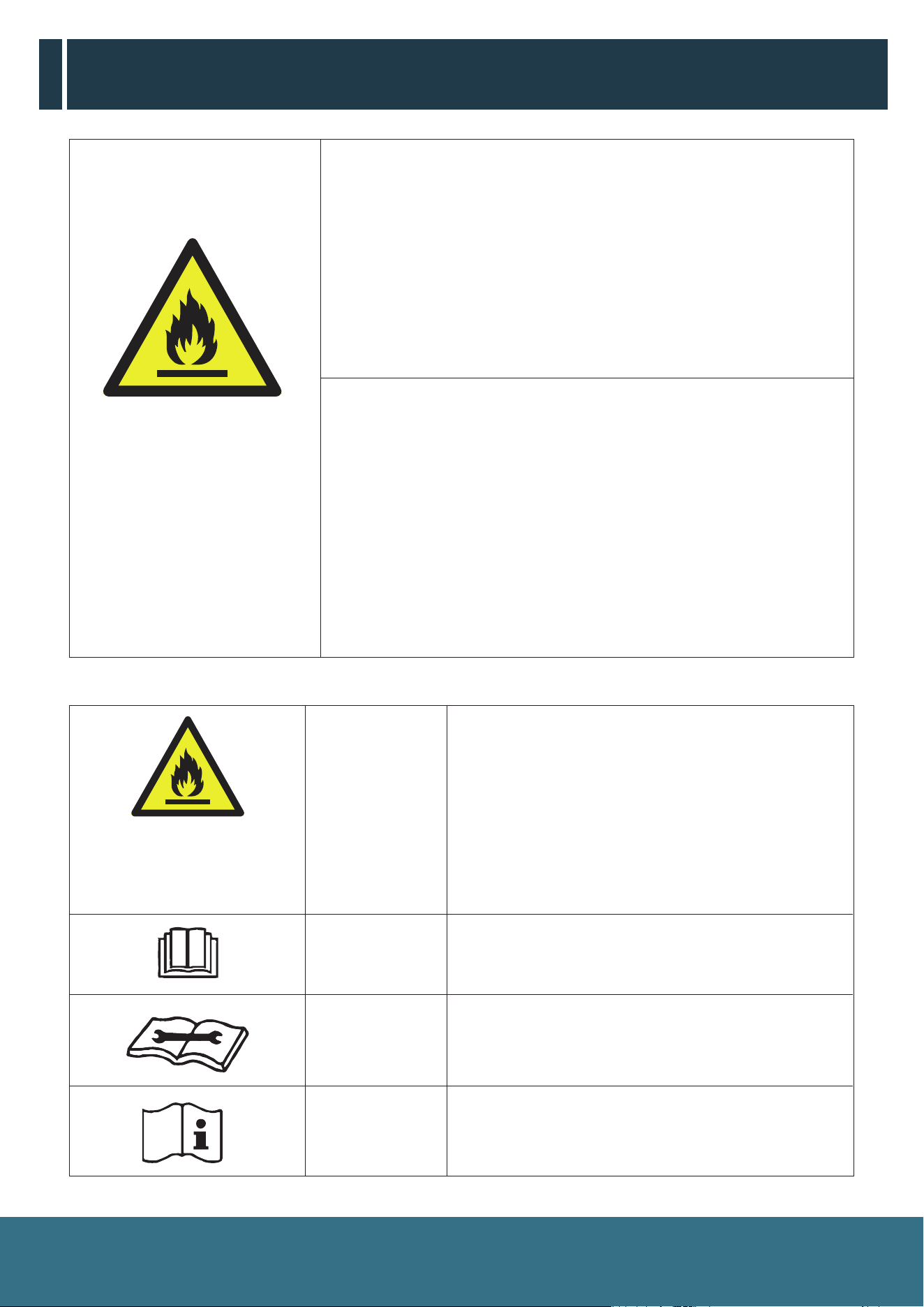
1.3 Explanation of symbol displayed on the unit.
WARNING
• Do not use means to accelerate the defrosting process or to
clean,other thanthose recommended by the manufacturer.
• The appliance shall be stored in a room without continuously
operating ignition sources (for example: open flames, an
operating gas appliance or an operating electric heater).
• Do not pierce or burn.
• Be aware that refrigerants may not contain an odour.
AVERTISSEMENT
• Ne pas utiliser de produits permettant d’accélérer le dégel ou de
produits de nettoyage autres que ceux recommandés par le
fabricant.
• L’appareil doit être entreposé dans un endroit sans source
d’allumage fonctionnant en continu (par exemple : flamme nue,
appareil au gaz en marche ou radiateur électrique en marche).
• Ne pas percer ni brûler.
• Attention : les frigorigènes peuvent être inodores.
Caution, risk of fire
Avertissement : risque
d’incendie/matériaux
inflammables
Caution, risk of fire
Avertissement : risque
d’incendie/matériaux
inflammables
• This symbol shows that the operation manual
should be read carefully.
• This symbol shows that a service personnel
should be handling this equipment with
reference to the installation manual.
• This symbol shows that information is available
such as the operating manual or installation
manual.
• This symbol shows that this appliance uses a
flammable refrigerant.
• If the flammable refrigerant is leaked and
exposed to an external ignition source,there is
a risk of fire.
CAUTION
WARNING
CAUTION
CAUTION
Features and Components
11
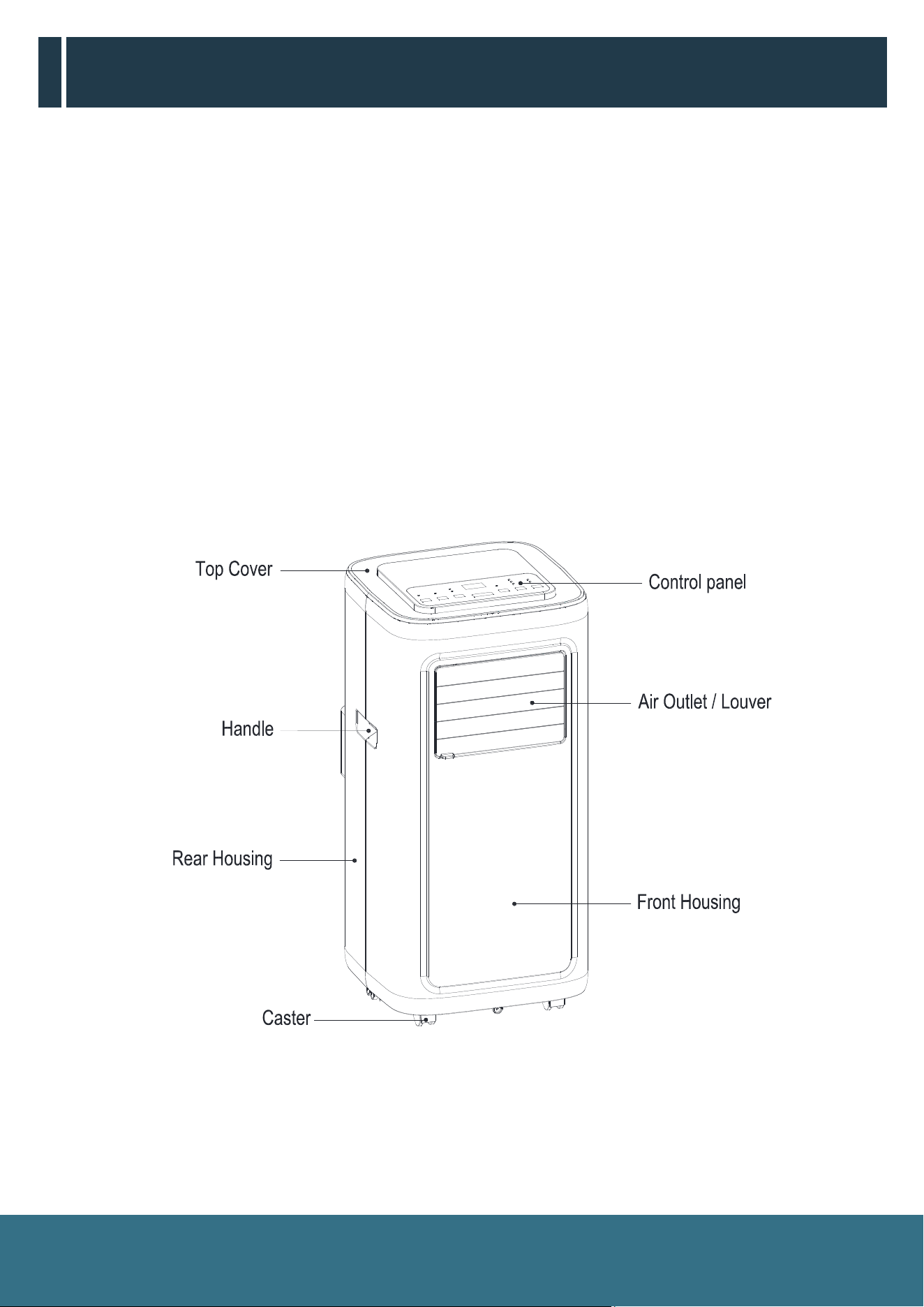
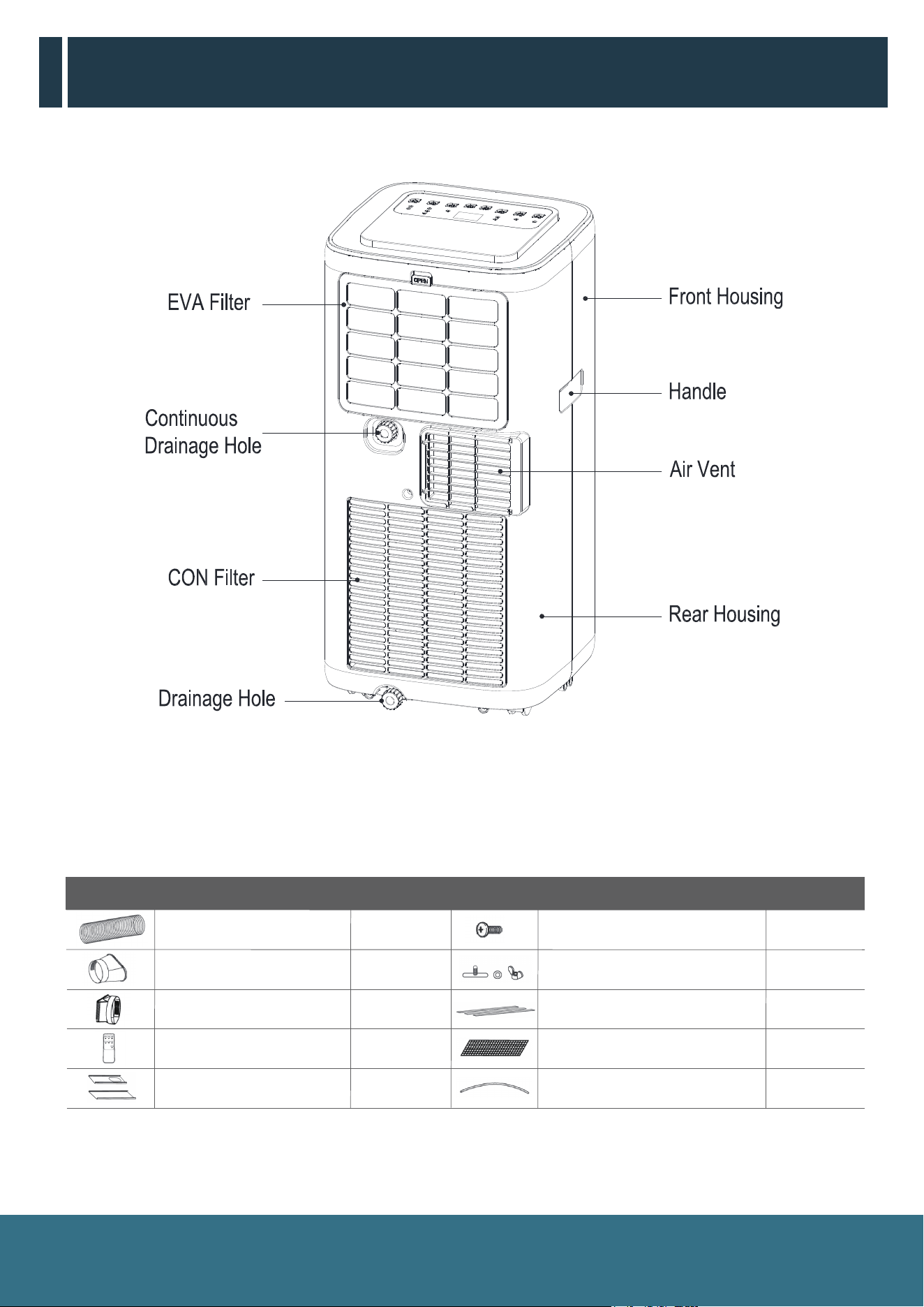
1 Features
*Brand new appearance, compact structure, smooth line, simple and generous shape.
*Functions of refrigeration, dehumidification, air supply and continuous drainage.
*Outdoor interface is set high to facility assembly and keep the smooth flow of the heat pipe.
*LED displays the control panel, beautiful and fashionable, with high-quality remote control.
It adopts a user-friendly remote control design.
*Air filtration capability.
*Timing switch function.
*Protection function of automatically restarting the compressor after three minutes, a variety
of other protection functions.
*Temperature setting range is 61°F - 88°F (16°C -31°C)
Features and Components
12
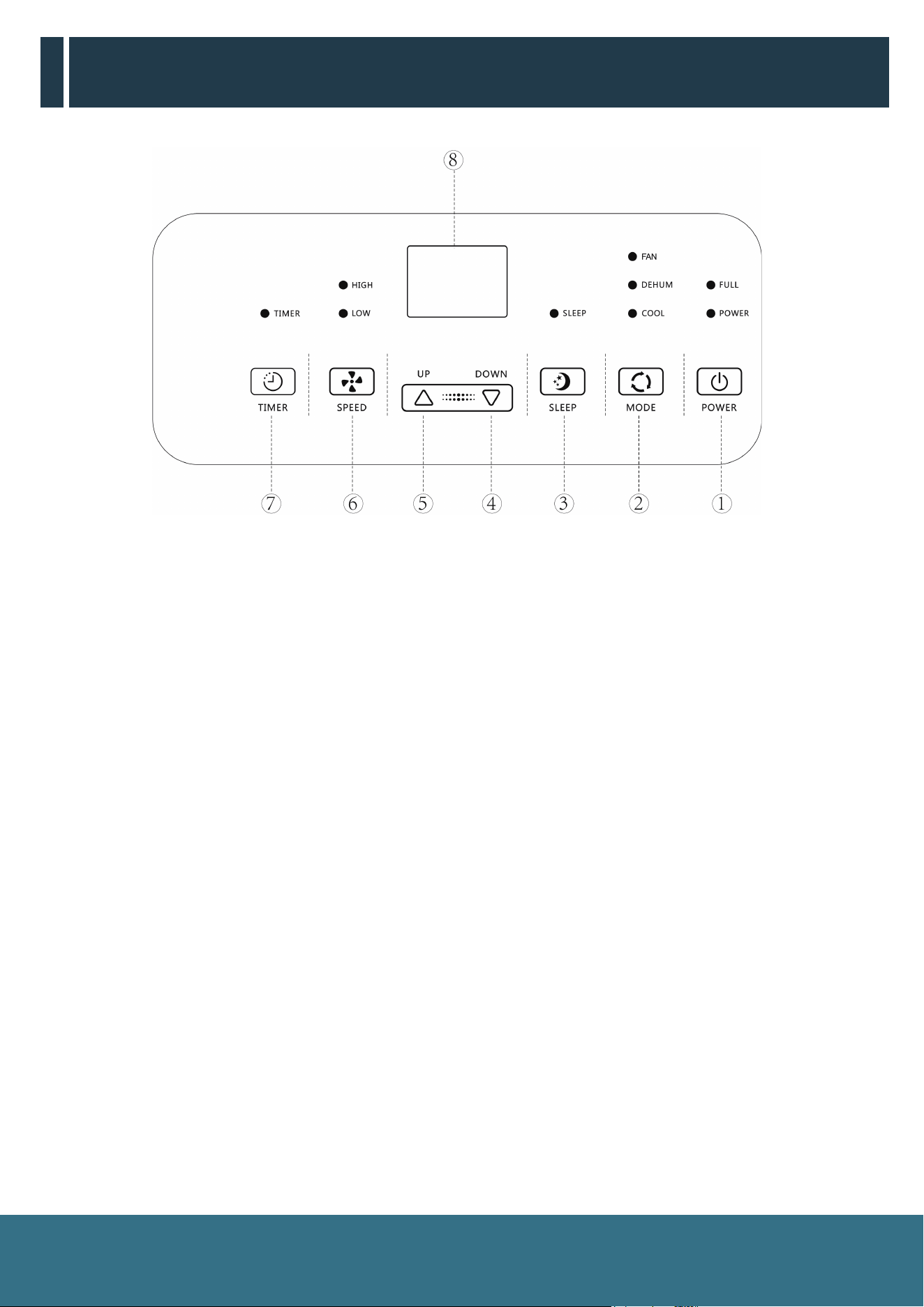
INCLDE ACCESSORIES
Name of Accessories
Qty.
Shape
Name of Accessories
Qty.
Shape
1 pcRemote control Grille
Drain hose
1 pc 1 setExtendable hose Type A screw
1 pc 1 pcWindow adapter Wing nut and bolt
1 pc 3 pcHose connectior Foam seal
1 pc2 pcWindow slider
1 pc
Features and Components
13
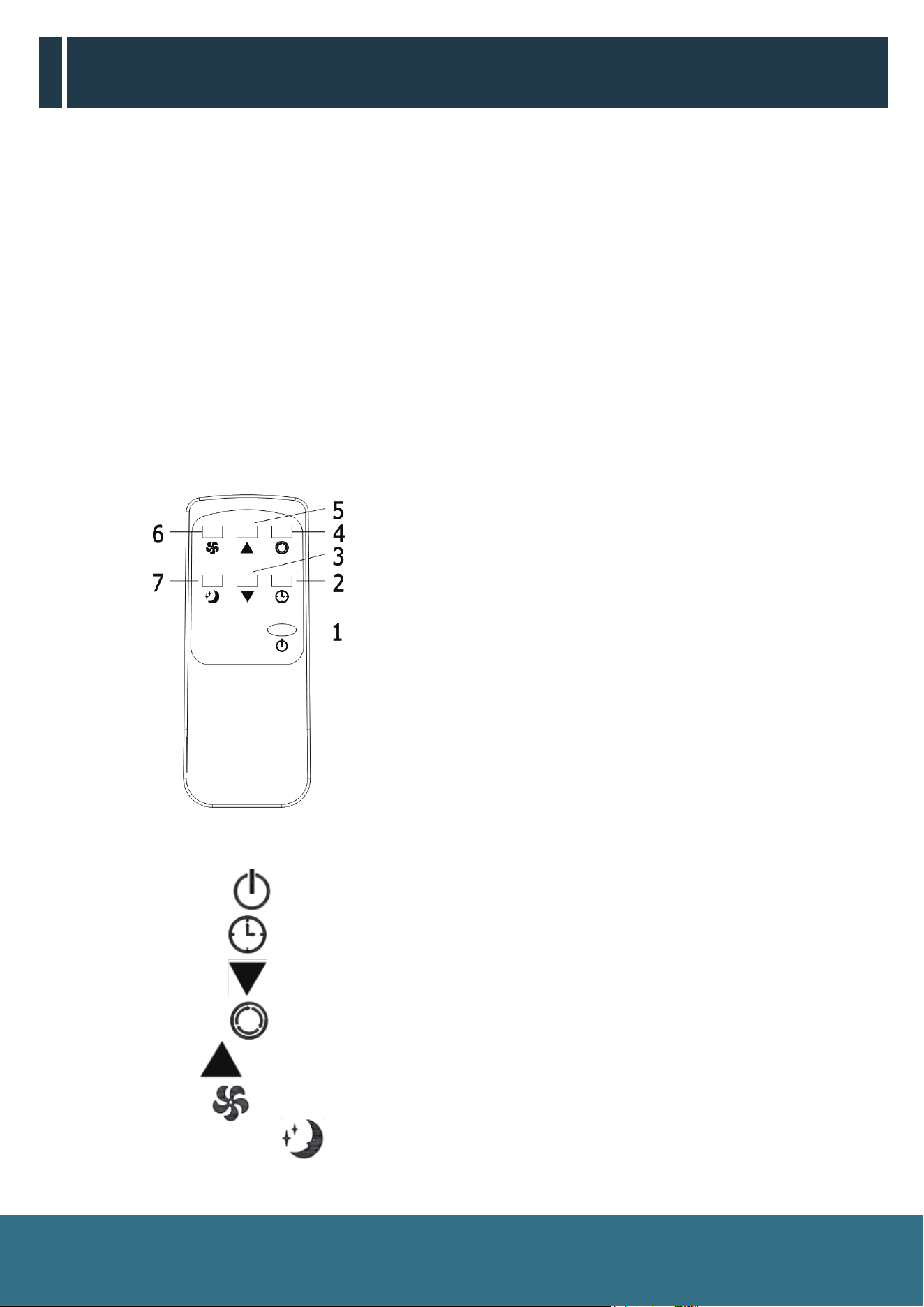
1.Control panel operation instructions
1)operation interface:
1: Power Key:
press the key to turn on and turn off the machine. In the case of power on, press the key to
turn off the machine; in the case of power off, press the key to turn on the machine.
2: Mode Selection Key:
In the case of power on, press the key to switch between cooling → fan →
dehumidifying mode.
3: Sleep Mode:
In the cooling Mode,Press the Sleep Key to turn on the sleep mode,then the unit
will work on Energy-Saving and quiet type.
4:Up Key and Down Key:
press the two keys to change the setting temperature or setting time, operate as follows:
While setting temperature, press up key or down key to select the required temperature
(not available in fan or dehumidifying mode).
While setting time, press up key or down key to select the required time.
Press the temperature up and down adjustment keys at the same time to switch between
Fahrenheit and Celsius
When the machine is powered on for the first time, the buzzer will shout, and then the
machine will get into standby status.
1. Power Key 2. Mode Selection Key Fan 3. Sleep Key 4.Down Key
5. Up Key 6.Fan Speed Selection Key 7. Timer Key 8.LED Display
2 Control Setting
Features and Components
14
5:Wind Speed Selection Key:
1)In cooling and fan mode, press the key to select high,low wind speed operation. But
limited by anti-cold conditions, under certain conditions, it may not run according to the
set wind speed.
2)In dehumidifying mode, pressing the key is invalid, and the fan will forcibly choose low
wind speed operation.
6:Timing Key:
In the case of power on, press the key to close timing; in the case of power off, press the
key to open timing.Press the key, when the timing symbol flashes, press up and down key
to select the required timing value.Timing values can be set in 1-24 hours and the timing
value is adjusted up or down by one hour.
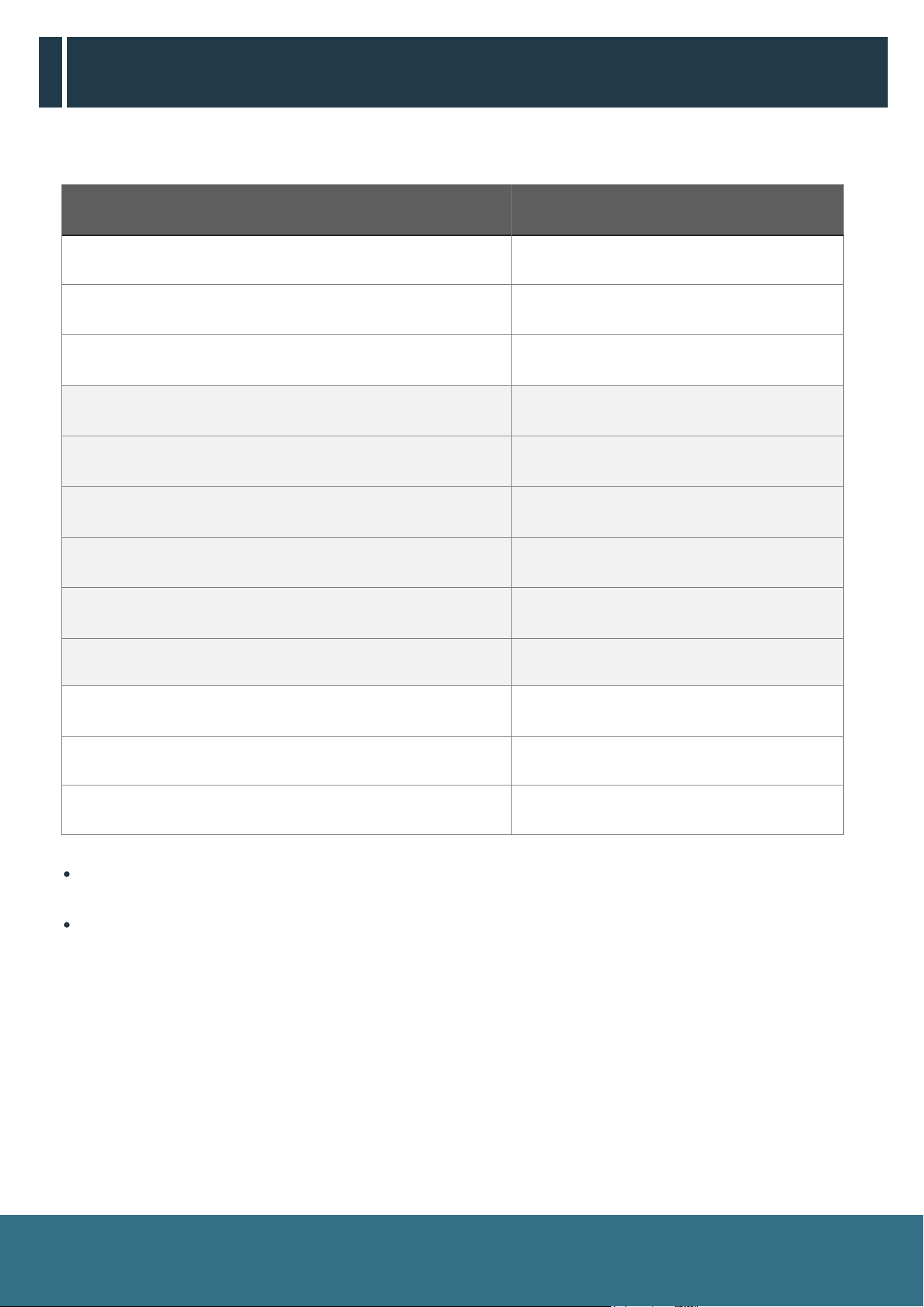
1) The remote control Panel is as follows:
2.operation instructions of remote control
Instructions of key operation of the high-quality remote control are as follows:
1.Power: Press the key to turn on or turn off the machine.
2.Timer: press the key to set timing.
3.Down: press the key to reduce temperature and timing set value.
4.Mode: press the key to switch between cooling, fan, dehumidifying mode.
5.Up: press the key to increase temperature and timing set value.
6.Fan: press the key to select high, low wind speed.
7.Sleep Mode: Press the key to turn on the sleep mode.

Features and Components
15
3 Protection Functions
1 . Frost Protection Function:
In cooling, if the temperature of the EVA pipe sensor is too low, the machine will automatically
enter protection status; if the temperature of the EVA pipe sensor rises to a certain temperature,
it can automatically revert to normal operation.
2 .Overflow Protection Function:
When water in the water pan exceeds the warning level, the machine will automatically sound
an alarm, and the W.F indicator will flash. At this point, you need to drainage the water (details
see Drainage Instructions at the end of this chapter). After the water is emptied, the machine
will get into standby status.
3. Automatic Defrosting:
In heating, the machine has automatic defrosting function. After defrosting, the machine will
automatically return to the original status.
4. Overheat Protection:
To protect the service life of the machine, the machine has overheat protection in heating
mode. During the protection period, the compressor and the lower motor will stop operation
and will automatically return to normal heating state after the temperature of the machine
recovers.
5. Protection Function of the Compressor
To increase the service life of the compressor, it has a 3-minute delay booting protection
function after the compressor is turned off.
SPECIFICATIONS
Features and Components
16
Specifications are standard values based on rated operating conditions. Values will vary in different
operating conditions.
Because we continually strive to improve our products, we cannot give notice regarding any changesto
technical data. Please read the nameplate on the portable air conditioner.
SKU PAC001-8KWH-USZX-WM
Power Supply
MODEL AC-8
Cooling Capacity(*)
Total Input Current(Cooling)
SACC(^)
CEER(^)
Max. Operating Pressure(High side)
Max. Operating Pressure(Low side)
Maximum
Refrigerant/Charge
Fan Motor FLA
Motor Compressor (RLA/LRA)
115V~ 60Hz,1PH
8,000 BTU/h
7.5A
5,100 BTU/h
6.50
3.72 MPa(540psig)
2.07 MPa(300psig)
4.00 MPa(580psig)
R32 200g (7.06oz)
1.35A
5.1A/29A
Installation and adjustment
17
1.Installation:
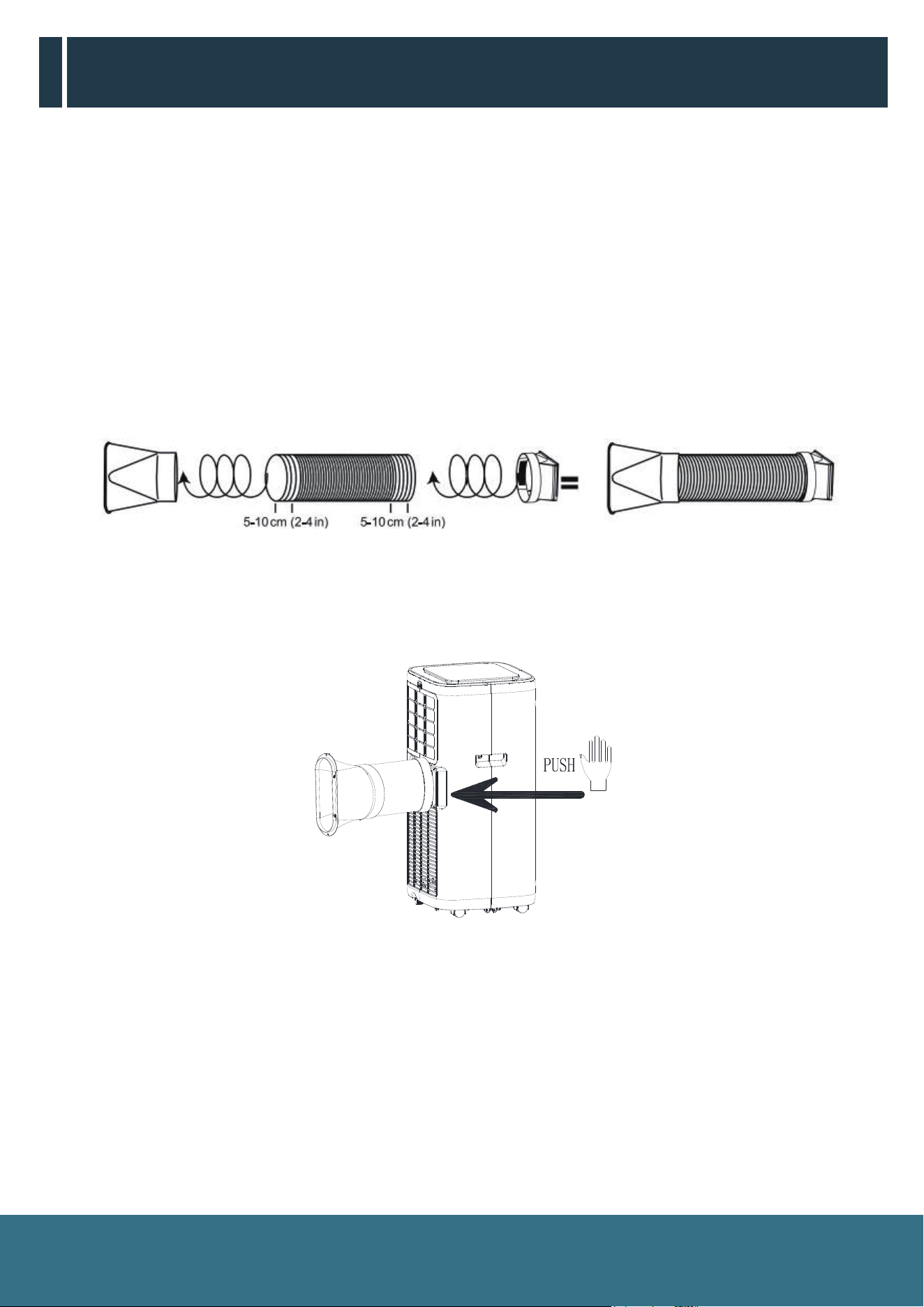
1.1 ASSEMBLING THE EXHAUST HOSE
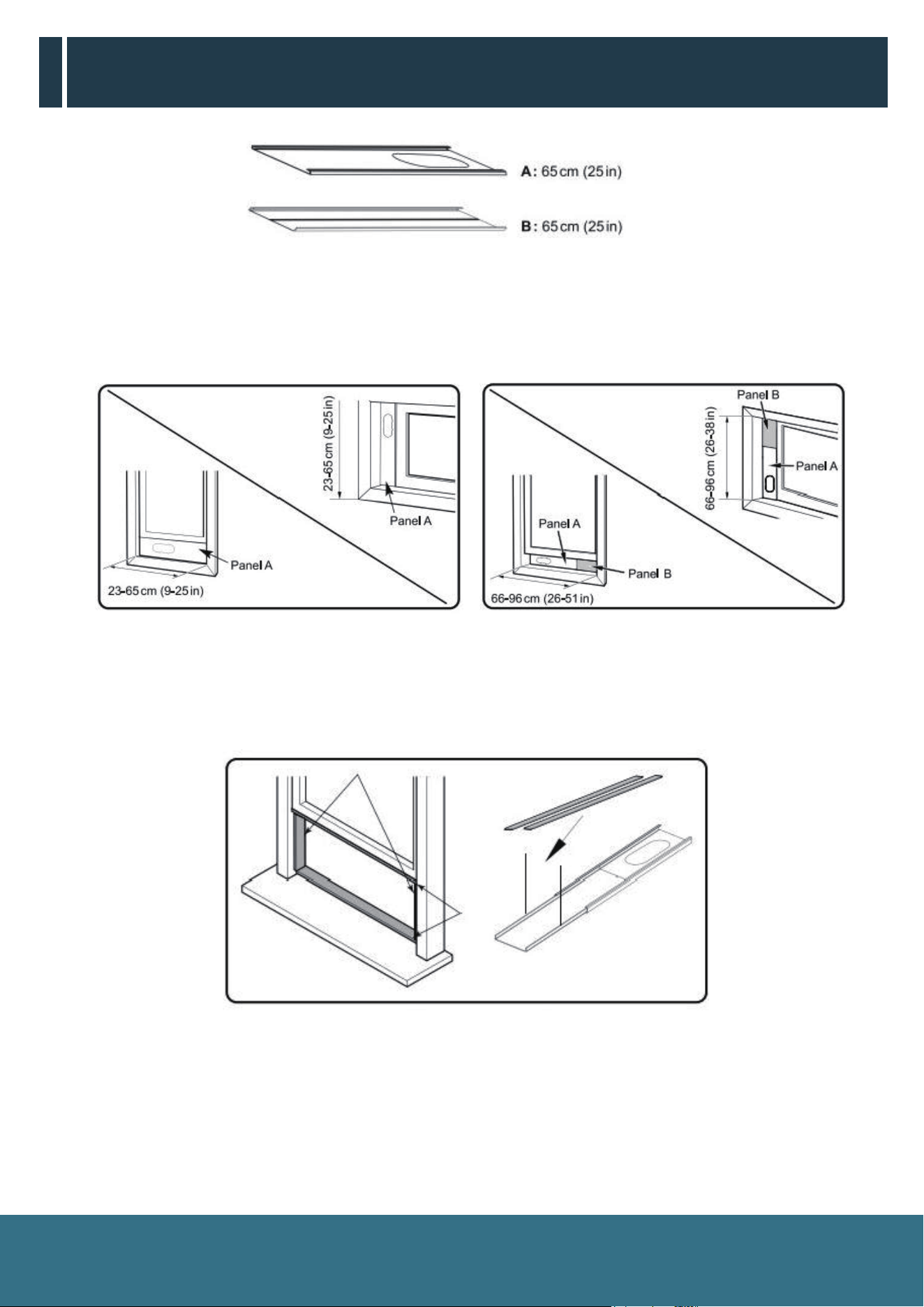
1.2 ASSEMBLING AND INSTALLING THE WINDOW KIT
Warning: before using the mobile air conditioning, keep it upright for at least two hours.
The air conditioning can be easily moved in the room. In the moving process, ensure that the
air conditioning is in the upright position and the air conditioning should be placed on a flat
surface. Do not install and use the air conditioning in the bathroom or other humid
environments.
1)Screw on the window adapter unto the extendable hose on one end,and the hose connector
on the other (as show in Figure 1).Ensure proper fit on both ends.The supplied exhaust hose
can be extended to a maximum of 150cm (59in).
2)Install the heat pipe assembly (as shown in Fig.2)
Your window kit has been designed to fit most standard vertical and horizontal window
applications,however it may be necessary for you to improvise or modify some aspect of the
installation procedures for certain types of window.Adjust the panels to the desired length
and use provided metal wing nuts and bolts to secure (see table for minimum and maximum
window openings).
Stretch both ends of the exhaust hose for 10 to 15cm (4 to 6in)
Installation and adjustment
18
Notes:
• If the window opening is less than 65cm (25in),the minimum length of the panel A,shorten the
panel by cutting off the exceeding length in order to fit the window opening.
•Never cut out the hole from panel A.
There maybe poor sealing due to gaps left by some non-standard windows.Please purchase
appropriate foam weatherstripping (not included)in order to enhance the cooling efficiency of
the air conditioner.
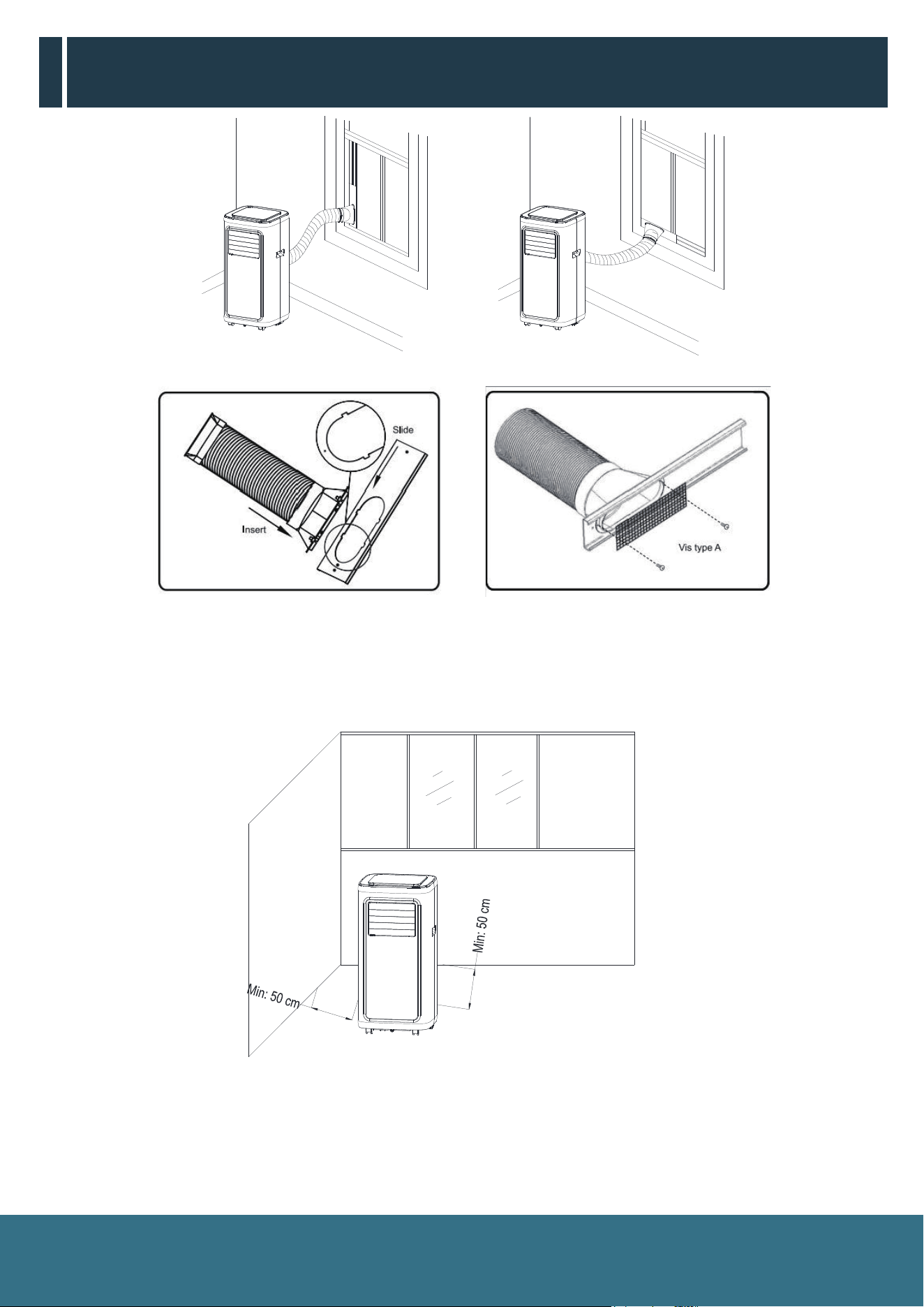
Extend the exhaust hose,connect the end with the window adapter to the window kit then finally
attach the grill to prevent large insects and small animals from entering
Installation and adjustment
19
Connect to window panel
Slide to lock
1.3 Install the body
1)Move the machine with installed heat pipe and fittings before the window, and the
distance between the body and walls or other objects shall be least 50 CM.
Important Notice:
The length of the exhaust hose shall be 280~1,500mm, and this length is based on the
specifications of the air conditioning. Do not use extension tubes or replace it with other
different hoses, or this may cause a malfunction. Exhaust host must be not blocked;
otherwise it may cause overheating.
Fix the grill to the adapter with screws
Drainage Instructions
20
Drainage Instructions
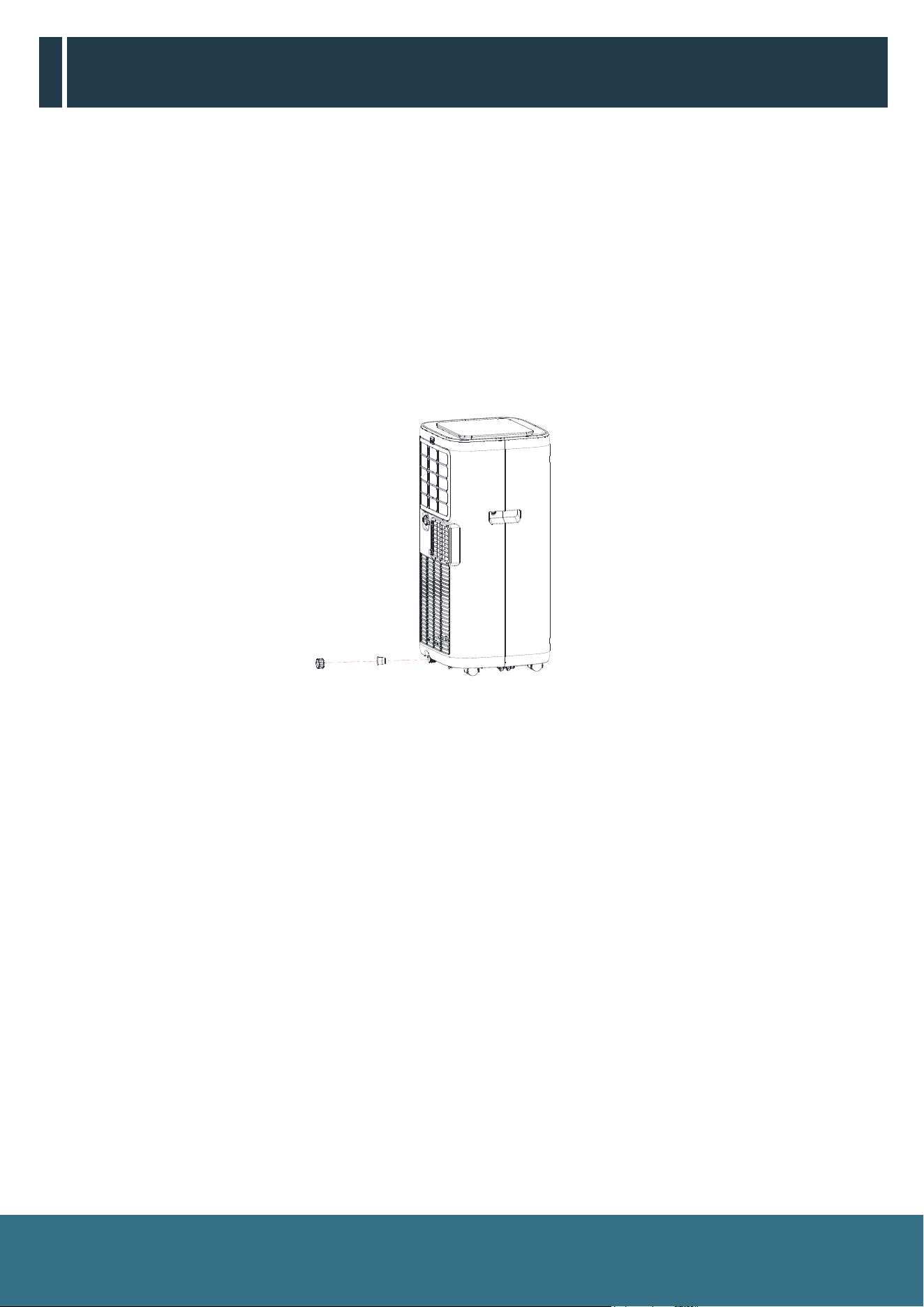
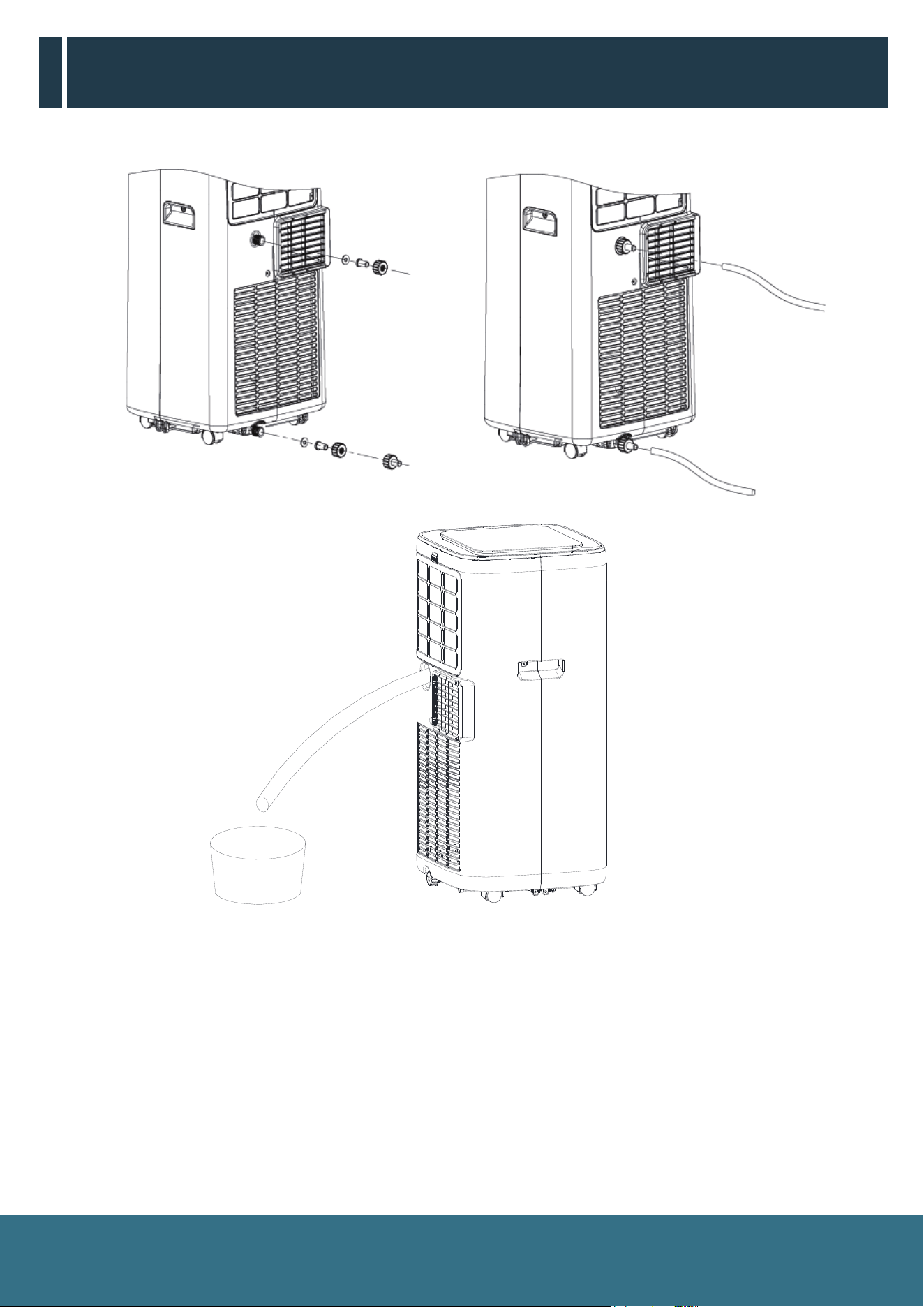
1.Manual drainage:
2.Continuous drainage (Optional) (only applicable to
dehumidifying mode), as shown in figure:
This machine has two drainage methods: manual drainage and continuous drainage.
1) When the machine stops after the water is full, turn off the machine power and unplug the
power plug. Notes:Please move the machine carefully, so as not to spill the water in the water
pan at the bottom of the body.
2) Place the water container below the side water outlet behind the body.
3) Unscrew the drainage cover and unplug the water plug, the water will automatically flow
into the water container.
Notes:1)Keep the drainage cover and the water plug properly.
1) Unscrew the drainage cover, and unplug the water plug.
2) Set the drainage pipe into the water outlet.
3) Connect the drainage pipe to the bucket.
2)During drainage, the body can be tilted slightly backwards.
3)If the water container cannot hold all the water, before the water container is full,
stuff the water outlet with the water plug as soon as possible to prevent water from
flowing to the floor or the carpet.
4)When the water is discharged, stuff the water plug, and tighten the drainage cover.
Drainage Instructions
21
Maintenance
22
Maintenance
Cleaning: before cleaning and maintenance, turn off the machine and unplug the plug.
1.Clean the surface
2.Clean the filter screen
Clean with surface of machine with a wet soft cloth. Don't use chemicals, such as benzene,
alcohol, gasoline, etc; otherwise, the surface of the air conditioning will be damaged or even
the whole machine will bedamaged.
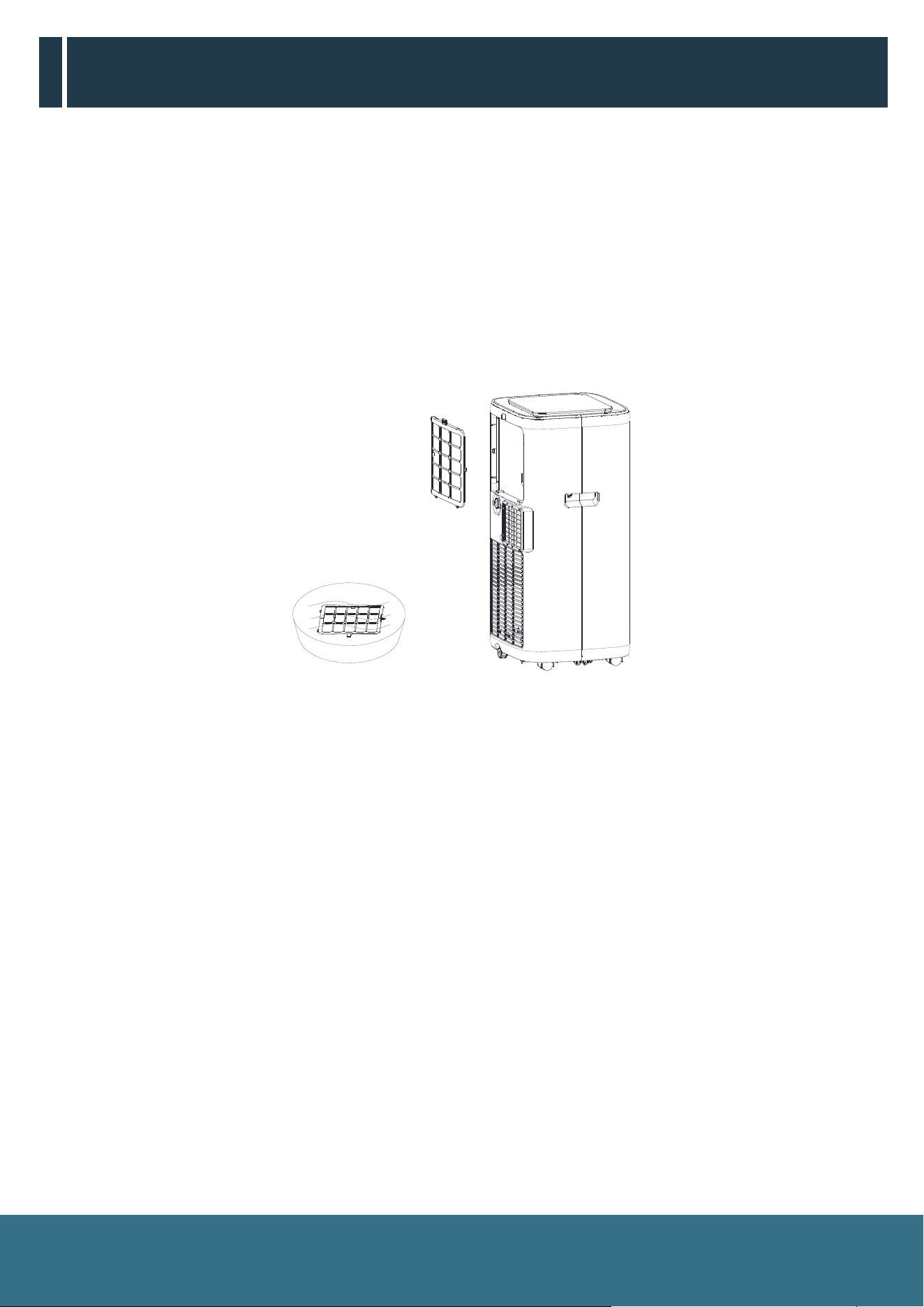
If the filter screen is clogged with dust, and the effectiveness of the air conditioning is
reduced, be sure to clean the filter screen once every two weeks.
3.Clean the upper filter screen frame
1)Unscrew one screw fixed by EVA filter net and back shell with screwdriver, and take
out EVA filter net.
2)Put the EVA filter screen into warm water with neutral detergent (about 40℃ / 104℉)
and dry it in the shade after rinsing clean.

Unit Storage
23
Unit Storage
1:Unscrew the drainage cover, unplug the water plug, and discharge the water in the water pan
into other water containers or directly tilt the body to discharge the water into other containers.
2:Turn on the machine, adjust it to low-wind ventilation mode, and maintain this state until the
drainage pipe becomes dry, so as to keep the inside of the body in a dry state and prevent it
from mildewing.
3:Turn off the machine, unplug the power plug, and wrap the power cord around the wrapping
post; install the water plug and the drainage cover.
4:Remove the exhaust pipe and keep it properly.
5:Cover the air conditioning with a plastic bag. Put the air conditioning in a dry place, keep it
out of the reach of children, and take dust control measures.
6:Remove batteries of the remote control and keep them properly.
Note: ensure that the body is placed in a dry place and keep all machine components properly.
Troubleshooting
24
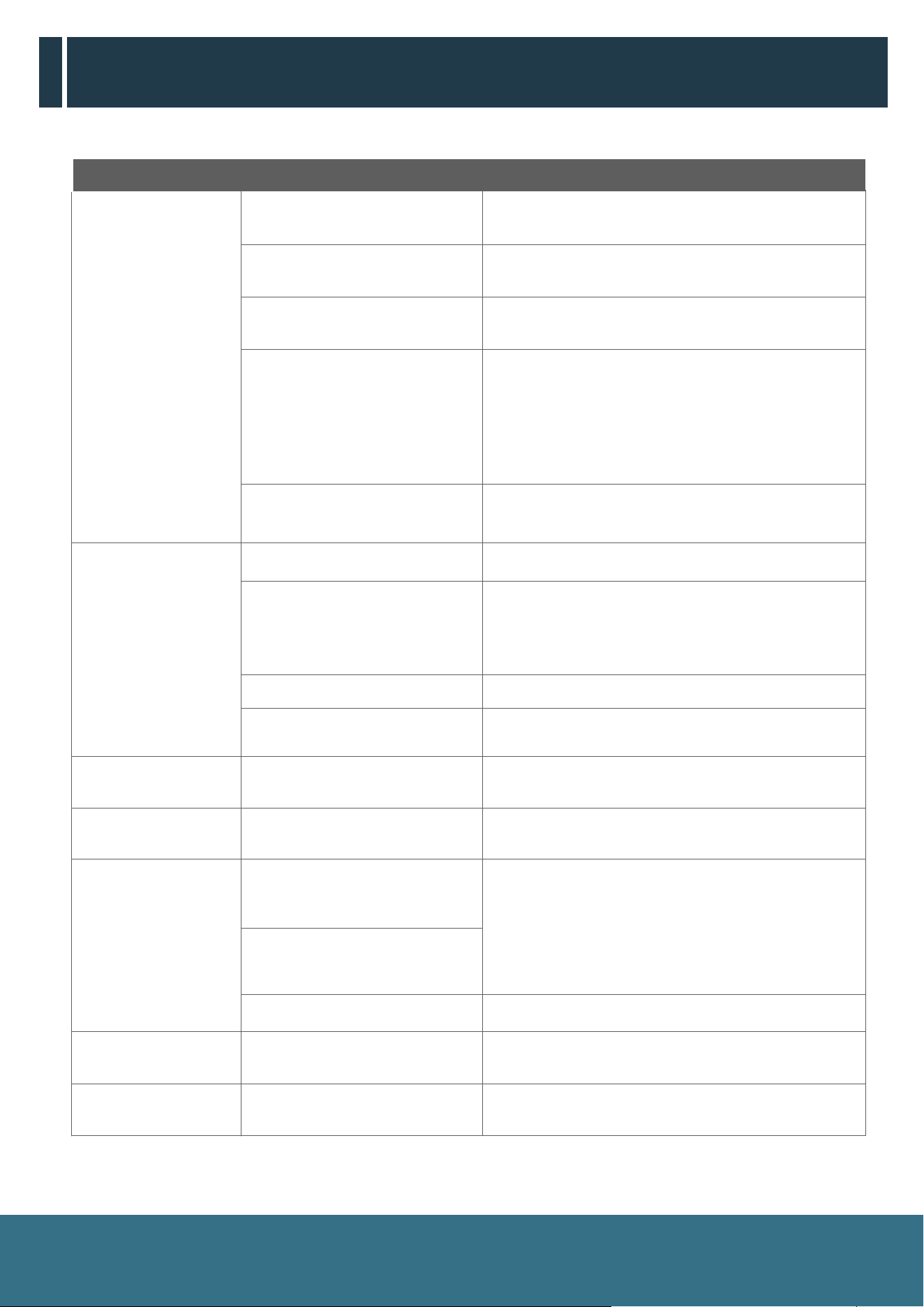
Do not repair or disassemble the air conditioning by yourself. Unqualified repair will lead to failure
of the warranty card, and may cause damage to users or their properties.
Note: If problems not listed in the table occur or recommended solutions do not work, please
contact the professional service organization.
Fuse type:50CT or 50T, Rated 250 V, 3.15 A
Problems Reasons Solutions
The air
conditioning does
not work.
The cooling effect
is not good
Big Noise
compressor does
not work.
The remote control
does not work.
Displays 'E1'.
Displays 'E2'
There is no electricity.
Turn it on after connecting it to a socket with
electricity.
The overflow indicator
displays "FL".
Discharge the water inside.
The ambient temperature
is too low or too high.
In dehumidification mode, the
ambient temperature is low.
There is direct sunlight.
Doors or windows are open;
there are a lot of people; or in
cooling mode, there are other
sources of heat.
The filter screen is dirty.
The air inlet or outlet is
blocked.
The air conditioning is not
placed on a flat surface.
Overheat protection starts.
The distance between the
machine and the remot
control is too far.
The remote control is not
aligned with the direction
of the remote control receiver.
Batteries are dead.
The room temperature
sensor is abnormal.
The pipe temperature sensor
is abnormal.
Replace batteries.
Check the room temperature sensor and related
circuitry.
Check the pipe temperature sensor and related
circuitry.
In cooling mode, the room
temperature is lower than
the set temperature; in
heating mode, the room
temperature is higher than
the set temperature.
Recommend to use the machine in at the
temperature of 7-35 ℃ (44-95 ℉).
Change the set temperature.
The machine is placed in a room with an ambient
temperature of greater than 17 ℃ (62 ℉).
Pull the Curtain.
Clean or replace the filter screen.
Clear obstructions.
Put the air conditioning on a flat and hard place
(to reduce noise).
Wait for 3 minutes until the temperature is
lowered, and then restart the machine.
Let the remote control get close to the air
conditioning, and make sure that the remote
control directly faces to the direction of the
remote control receiver.
Close doors and windows, and add new air
conditioning.
Addendum
25
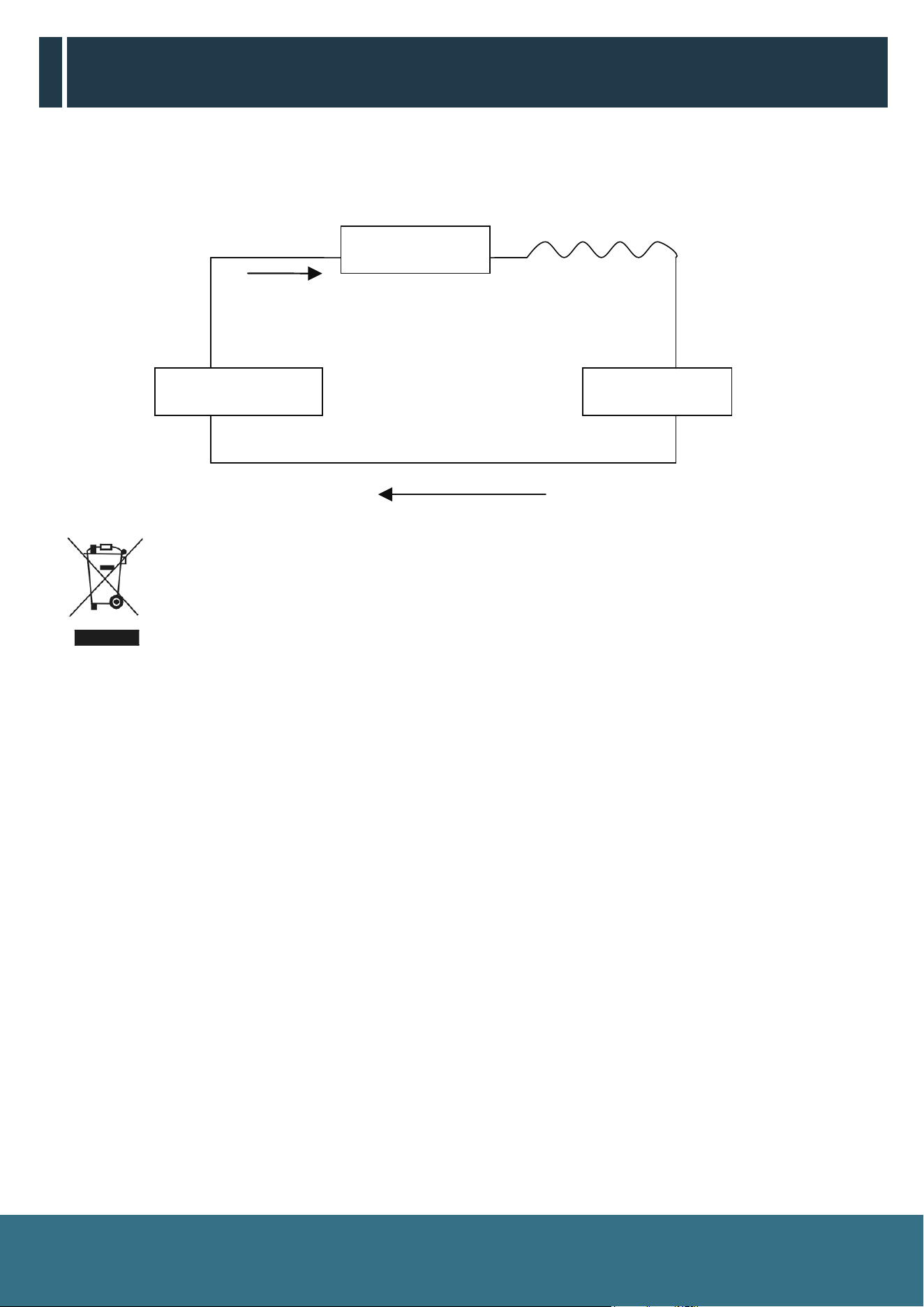
Schematic diagram for air conditioning
(The specific technical parameters of the machine shall be subject to the nameplate on the product)
Treatment: Don't put the abandoned machine with other unsorted waste together.
Such waste shall be placed separately for other special use.
Condense
r
Compresso
r
Evaporat
or
Capillary

Warranty
26
We offer a limited 1-year warranty ("warranty period" on all of our products purchased
new and unused from our company, with an original proof of purchase and where a
defect has arisen, wholly or substantially, as a result of faulty manufacture, parts, or work-
manship during the warranty period. The warranty does not apply where damage is
caused by other factors, including without limitation:
(a) normal wear and tear.
(b) ab use, mishandling, accident, or failure to follow operating instructions.
(c) exposure to liquid or infiltration of foreign particles;
(d) servicing or modifications of the product other than by us.
(e) commercial or non-household use.
Our warranty covers all costs related to restoring the proven defective product through
repair or replacement of any defective part and necessary labor so that it con forms to its
original specifications. A replacement product may be provided instead of repairing a
defective product.Our exclusive obligation under this warranty is limited to such repair or
replacement. A receipt indicating the purchase date is required for any claim, so please
keep all receipts in a safe place.Although greatly appreciated, the product registration is
not required to activate any warranty, and product registration does not eliminate the
need for the original proof of purchase. The warranty becomes void if attempts at repair
are made by non-authorized third parties and/or if spare parts,other than those provided
by us, are used .You may also arrange for service after the warranty expires, at an addi-
tional cost. These are our general terms for warranty service, but we always urge our
customers to reach out to us with any issue, regardless of warranty terms. if you have an
issue with a product, please contact us ([email protected]), and we will do our best
to resolve it for you.


Email:[email protected]