A5P | 01
3500361
Please read all instructions carefully before use and retain for
future reference.
Veuillez lire attentivement ces instructions avant utilisation
et conservez-les pour pouvoir les consulter à l’avenir.
Bitte lesen Sie die Anleitung sorgfältig und bewahren Sie sie
als Referenz auf.
Leed todas las instrucciones detenidamente antes de usar y
retened para futuras consultas.
Si prega di leggere attentamente tutte le istruzioni prima
dell’uso e conservarle per una futura consultazione.
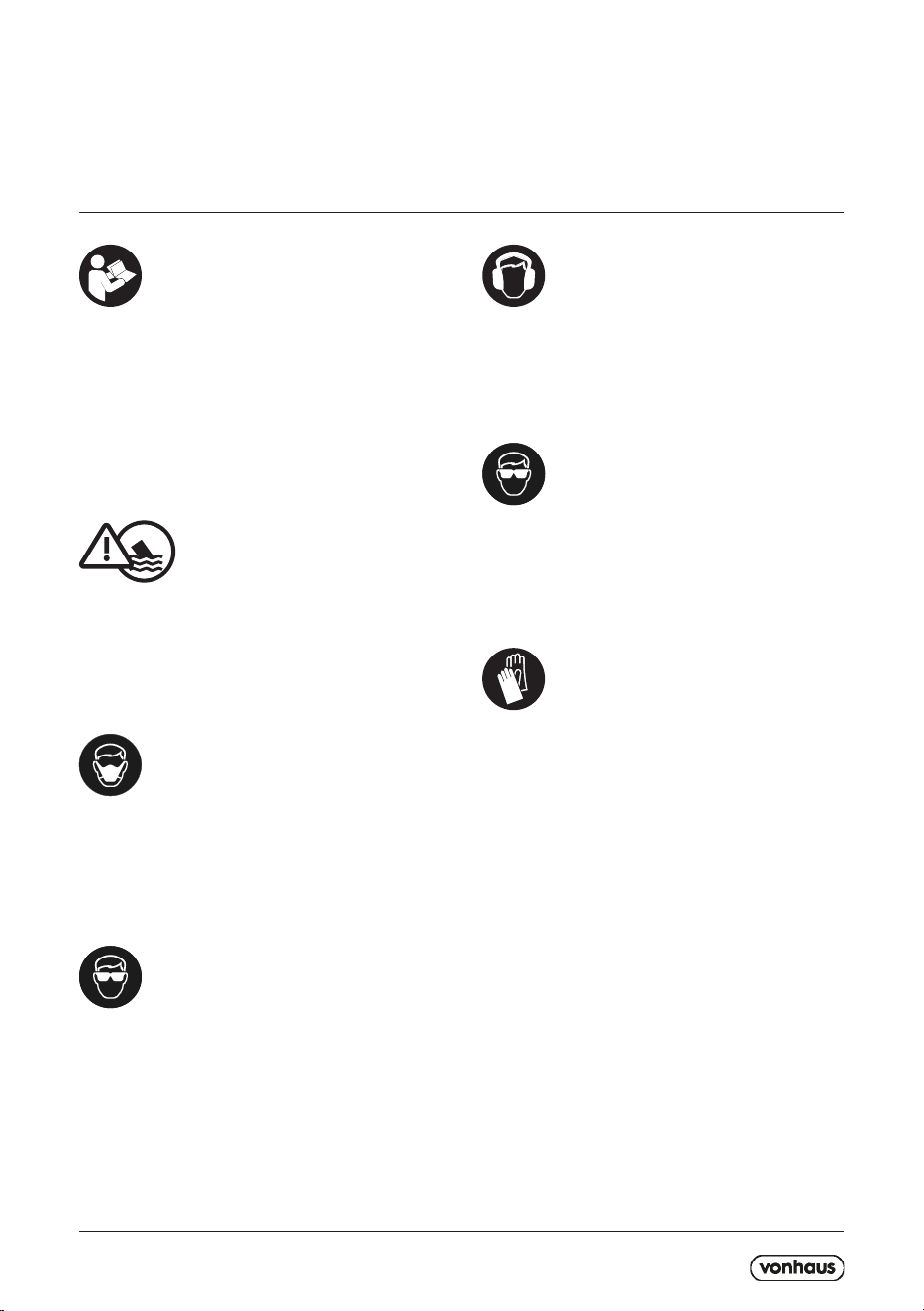
CAUTION Do not immerse in water.
ATTENTION Ne pas immerger dans l’eau.
VORSICHT Nicht in Wasser tauchen.
PRECAUCIÓN No sumergid en agua.
AVVERTENZA Non immergere nell’acqua.
Protect your eyes.
Protégez vos yeux.
Schützen Sie Ihre Augen.
Protejed sus ojos.
Proteggere gli occhi.
Protect your ears.
Protégez vos oreilles.
Schützen Sie Ihre Ohren.
Protejed vuestros oídos.
Proteggere le orecchie.
Protect your eyes.
Protégez vos yeux.
Schützen Sie Ihre Augen.
Protejed sus ojos.
Proteggere gli occhi.
Protect your hands.
Protégez vos mains.
Schützen Sie Ihre Hände.
Protejed vuestras manos.
Proteggere le mani.
Wear a dust mask.
Portez un masque anti-poussière.
Tragen Sie eine Staubmaske.
Usad una máscara de polvo.
Indossare una mascherina antipolvere.
A5P | 01
EN
Please read and understand these instructions before you use
your product. Failure to do this may result in personal injury
or damage to the product. This manual should be kept with
the product.
The safety precautions and warnings are to ensure your safety
and protect you from harm or damage to the product.
The information contained in this manual was accurate
at the time of production, however, VonHaus may make
modications to the product without notication.
WARNING! You must read these instructions carefully before
operating the machine. Make sure that you are familiar with
the controls and properly operate the machine. You must
learn how to stop the machine quickly. If you do not follow
the warnings and instructions, it may result in re and/or
serious injury. Make sure to save all warnings and instructions
for future reference.
Read this manual and labels axed to the machine to
understand its limitations and potential hazards.
Be thoroughly familiar with the controls and their proper
operation. Know how to stop the machine and disengage the
controls quickly.
If the unit is to be used by someone other than original
purchaser, or is to be loaned, rented, or sold, always provide
this manual and any needed safety training before operation.
The user can prevent and is responsible for accidents or
injuries that may occur to themselves, to other people, or to
property.
Do not force the machine beyond its limits. Use the correct
machine for your application.
Know how to stop the machine quickly in case of emergency.
Understand the use of all controls.
ALL MAINTENANCE other than that listed in this manual,
should be carried out by professionally trained and certied
personnel.
When using this machine for the rst time and before actual
work, you MUST learn how to handle the machine from an
experienced or skilled person.
PLUGS & CABLES
Prior to carrying out any maintenance work you MUST
identify electrical isolation methods and isolate all electrical
supplies.
Prior to use and with all electrical supplies isolated, you
MUST check all electrical cables, plugs and connectors for the
following -
Are intact and have no signs of damage, to include but not
limited to bare wires, chang, cuts and loose wiring.
If there are any signs of damage, the damaged item MUST be
taken out of service until the damage has been repaired by an
PRODUCT DISPOSAL INFORMATION For electrical products
sold within the European Community, at the end of the
electrical product’s useful life, it should not be disposed of
with household waste. Please recycle where facilities exist.
Contact your local authority for details of collection schemes
in your area.
In all circumstances:
Do not dispose of in domestic waste.
Do not incinerate.
Do not abandon in the environment.
Do not dispose of WEEE as unsorted municipal waste.
INFORMATIONS SUR L’ÉLIMINATION DU PRODUIT Pour
la Communauté européenne, il ne doit pas être éliminé
avec les ordures ménagères. S’il vous plaît recycler où les
installations existent. Contactez votre autorité locale.
En toutes circonstances:
Ne pas jeter avec les ordures ménagères.
Ne pas incinérer.
Ne pas abandonner dans l’environnement.
Ne jetez pas les DEEE avec les déchets ménagers non triés.
INFORMATIONEN ZUR ENTSORGUNG VON
PRODUKTEN Für die Europäische Gemeinschaft sollte es
nicht mit dem Hausmüll entsorgt werden. Bitte recyceln Sie,
wo Einrichtungen vorhanden sind. Wenden Sie sich an Ihre
örtliche Behörde.
In allen Fällen:
Darf nicht im Hausmüll entsorgt werden.
Nicht verbrennen
Verlassen Sie sich nicht in der Umwelt.
Entsorgen Sie Elektro- und Elektronik-Altgeräte nicht im
Hausmüll.
INFORMACIÓN DE DESECHO DEL PRODUCTO Para la
Comunidad Europea, no debe desecharse con la basura
doméstica. Por favor recicle donde existan las instalaciones.
Póngase en contacto con su autoridad local.
En cualquier circunstancia:
No desechar en la basura doméstica.
No incinere.
No abandones en el medio ambiente.
No deseche los RAEE como residuos municipales sin
clasicar.
INFORMAZIONI SULLO SMALTIMENTO DEL
PRODOTTO Per i prodotti elettrici venduti all’interno della
Comunità Europea, alla ne della vita utile del prodotto
elettrico, non deve essere smaltito con i riuti domestici.
Si prega di riciclare dove esistono strutture. Contattare
l’autorità locale per i dettagli degli schemi di raccolta nella
propria area.
In tutte le circostanze:
Non smaltire nei riuti domestici.
Non incenerire.
Non abbandonare nell’ambiente.
Non smaltire i RAEE come riuti urbani indierenziati.
INFORMACIÓN SOBRE LA ELIMINACIÓN DEL
PRODUCTO para los productos eléctricos vendidos en la
Comunidad Europea, al nal de la vida útil del producto
eléctrico, no debe desecharse con residuos domésticos. Por
favor, recicla donde existan instalaciones. Comuníquese con
su autoridad local para obtener detalles de los planes de
recolección en su área.
en todas las circunstancias:
No se deseche en los desechos domésticos.
No incinere.
No abandonan en el medio ambiente.
No elimine los RAEE como residuos municipales no
clasicados.

A5P | 01
electrically competent person.
All trailing cables should be routed so as not to cause any
kind of trip hazard.
NEVER work on or near electricity with wet hands, wet
clothing and wet gloves.
Power tools plug must match the outlet. Never modify the
plug in any way.
DO NOT use any adapter plugs with earthed (grounded)
power tools. Unmodied plugs and matching outlets will
reduce risk of electric shock.
DO NOT expose this power tool to rain or wet conditions.
Water entering a power tool will increase the risk of electric
shock. DO NOT abuse the power cord. Never use the cord
for carrying, pulling or unplugging the power tool. Keep the
cord away from heat, oil and sharp edges or moving parts.
Damaged or entangled cords increase the risk of electric
shock. When operating a power tool, use an extension cord
suitable for outdoor use. Use of a cord suitable for outdoor
use reduces the risk of electric shock.
IMPORTANT: Make sure that the electric circuit is fused,
and that the power, voltage and frequency of the motor is
supported by your mains supply. Also, make sure that your
power supply is earthed. Connect your machine to earth.
Never open the ON/OFF switchbox. However, if it should
become necessary to do so, contact a qualied electrician.
Make sure that you will never touch live contacts, specically
when you plug or unplug your machine. This machine and its
power cord must never get into contact with water.
Avoid body contact with earthed or grounded surfaces
such as pipes, radiators, ranges and refrigerators. There is
an increased risk of electric shock if your body is earthed or
grounded.
To prevent electric shock, use only with an extension cord
suitable for outdoor use. For additional protection, the
installation of a residual current device (RCD) having a rated
residual operating current not exceeding 30mA is advisable.
Before use, check that the extension cord is in good condition.
When using an extension cord, make sure to use one heavy
enough to carry the current your product will draw. An
undersized cord will cause a drop in line voltage resulting in
loss of power and overheating.
DO NOT allow any part of the machine to make contact with
water while it is in operation. If the appliance becomes wet
while turned o, wipe dry before starting. DO NOT touch
the appliance or its plug with wet hands or while standing in
water. Wearing rubber boots oers some protection.
Before use, check the supply and extension cord for signs
of damage or aging. If the cord becomes damaged during
use, disconnect the cord from the supply immediately. If
the supply cord is damaged, it must be replaced by the
manufacturer or a qualied person in order to avoid a hazard.
INTENDED USE
WARNING! Never allow children or people unfamiliar with
these instructions to use the product. Local regulations can
restrict the minimum age of the operator.
Keep children, pets, and other people not using the unit
away from the work area (at least 15m). Be alert and shut o
the unit if anyone enters work area. Keep children under the
watchful care of a responsible adult.
Stay alert, watch what you are doing and use common sense
when operating the machine. Never operate the machine
when unwell or tired, or if you have taken alcohol, medicine,
drugs or any substances which may slow your reexes and
compromise judgment. A moment of inattention while
operating the machine may result in serious personal injury.
Appropriate Personal Protective Equipment (PPE), MUST be
worn at all times when operating or repairing the machine.
The rotating brushes can throw foreign objects into your
eyes and cause permanent eye damage. Always wear safety
goggles (not glasses) that comply with ANSI safety standard
Z87.1. Every day glasses have only impact resistant lenses.
The operating noise of the Grass Sweeper can damage your
hearing. When wearing protection such as earplugs or ear
defenders to protect your hearing. Long-term and regular
users are advised to have hearing checked regularly. Be
especially vigilant and cautious when wearing ear protection
because your ability to hear alarm warnings will be reduced.
Noise emissions for this equipment is unavoidable. Carry out
noisy work at approved times and for certain periods. Limit
the working time to a minimum. For your personal protection
and protection of people working nearby it is also advisable
for them to wear hearing protection.
Protective equipment such as dust mask, non-skid safety
shoes, hard hat, or hearing protection used for appropriate
conditions will reduce personal injuries.
Always wear anti-slip and resistant work footwear and long
trousers while using the machine. Do not use the machine
when barefoot, wearing sandals or similar lightweight
footwear.
Do not wear chains, bracelets or clothing that is loose tting
or hanging ties or cords. Tie long hair back. Always wear
protective earplugs. Loose clothes, jewellery, or long hair can
be caught in moving parts. Protect eyes, face, and head from
objects that may be thrown from the unit. Always wear safety
goggles or safety glasses with side shields when operating.
Always keep hands and feet away from all moving parts
during operation. Moving parts can cut or crush body parts.
Always keep hands and feet away from all pinch points.
Do not touch parts that might be hot from operation. Allow
parts to cool before attempting to maintain, adjust, or service.
Do not overreach. Keep proper footing and balance at
all times. This enables better control of the machine in
unexpected situations. Extending your body too far can result
in a loss of balance and you may fall which will result in injury.
Never place any part of your body where it would be in danger
if movement should occur during assembly, installation, and
operation, maintenance, repairing or moving.
Keep in mind that the operator or user is responsible for
accidents, hazards or unexpected events involving the
machine that occur to other people or their property. It is
the responsibility of the user to assess the potential risk of
the area where work is being carried out. The operator or
user must take all necessary precautions to ensure their
own safety and that of others, especially on slopes or rough,
slippery and unstable ground.
This machine was designed and manufactured for brushing
articial grass, renewing attened and matted articial grass;
separating the bres. It also sweeps garden debris such as
leafs and small twigs.
INSPECTING THE GRASS SWEEPER
Check your machine before starting it. Keep guards in place
and in working order. Make sure all nuts, bolts, etc., are
securely tightened.
You must check the general condition of the machine before
use.
Never operate the machine when it is in need of repair or is
in poor mechanical condition. Replace damaged, missing,
or failed parts before using it. Check for fuel leaks. Keep the
machine in safe working condition.
Do not use the machine if the machine’s switch does not
turn o the machine when running. Any machine that can’t
be controlled with the switch is dangerous and must be
replaced.
Regularly check to see that keys and adjusting wrenches are
removed from the machine area before starting it. A wrench
or a key that is left attached to a rotating part of the machine
may result in personal injury.
If the machine should start to vibrate abnormally, stop the
machine and check immediately for the cause. Vibration is
generally a warning sign of trouble.
Avoid accidental starting. Be sure the switch is o before
transporting the machine or performing any maintenance or
service on the unit. Transporting or performing maintenance
or service on a machine with its switch on invites accidents.
Do not tamper with or disable safety systems.
Only use manufacturer-recommended attachments.
Before using, always visually inspect to see that the tools are
not worn out or damaged. Replace worn out or damaged
elements and bolts in set to preserve balance.
Keep the machine in good operating condition. Operating
the machine in poor or questionable condition could result
in serious injury.
Be sure all safety devices are in working order and warning
labels are in place. These items are installed for your safety.

A5P | 01
WORK AREA SAFETY
You must only work in daylight or with good articial light
in good visibility conditions. Do not work at night, at times
of heavy fog, or at any other times when your eld of vision
might be limited and it would be dicult to gain a clear view
of the area.
Keep people, children and animals away from the working
area.
Operate on at, level ground.
DO NOT work on wet ground. If there has been heavy rain on
the working site, wait until the ground has dried up. You will
achieve better results on a dy lawn.
Never park the machine in a place with unstable ground
which could give way.
You must be careful near ravines, ditches or embankments.
Exercise extreme caution when operating on or crossing
gravel drives, walks, or roads. Stay alert for hidden hazards
or trac.
Do not work in the rain, when there is a thunderstorm or
lightning risk, at times of strong or gale force winds, or at
any other times when the weather conditions might make it
unsafe to use this product. If there is bad weather conditions,
do not use the machine.
Make sure you thoroughly inspect the entire work area and
remove all objects and anything that could be thrown by the
machine or could damage the machine (branches, stones,
wire, toys, etc).
Attempting to clear the work area whilst using the machine
will reduce your concentration and creates a trip hazard. .
Find and locate all xed objects in the ground, such as
sprinkler systems, poles, water valves, bases for washing lines
etc. Make sure that you check for hidden electrical cables or
similar on the surface of the lawn.
ALWAYS run the machine around these objects.
NEVER run the machine over foreign objects.
DO NOT operate power tools in explosive atmospheres, such
as in the presence of ammable liquids, gases or dust. Power
tools may create sparks, which may ignite the dust or fumes.
This machine is only for outdoor use.
RISK OF PERSONAL INJURY
Stay alert, watch what you are doing and use common sense
when operating a power machine.
Take extra care when starting the Sweeper as the brushes
cause the machine to pull.
Before starting the tool, make sure the wheels are not
touching any object and are free to move.
Grip the Push Bar rmly with both hands. Never operate with
one hand.
Walk, never run with the machine.
Do not use the tool for extended periods of time. Use in short
periods with rest in between.
GENERAL USE AND CARE
Do not force the Grass Sweeper. Do not use if the switch does
not turn it on and o.
Any machine that cannot be controlled with the switch is
dangerous and must be repaired.
Disconnect the plug from the power source before making
any adjustments, changing accessories, or storing power
tool/machine tools. Such preventive safety measures reduce
the risk of starting the machine accidentally.
Store idle machines out of the reach of children and do not
allow persons unfamiliar with the Grass Sweeper or these
instructions to operate the machine.
Maintain the Grass Sweeper. Check for misalignment or
binding of moving parts, breakage of parts and any other
condition that may aect the machines operation. If
damaged, have the machine repaired before use
Use the machine accessories in accordance with these
instructions, take into account the working conditions and
the work to be performed.
Do not use of the machine for operations dierent from those
intended could result in a hazardous situation.
CLEANING & MAINTENANCE Never soak or immerse electrical
components and or a component that has a plug attached.
Disconnect the plug from the power source before making
any adjustments, changing accessories, or storing. Such
preventive safety measures reduce the risk of starting the
power tool accidentally.
Ensure the motor has fully stopped before cleaning, clearing
a blockage, checking, or carrying out any maintenance on
the tool.
Maintain your power tool. Check for misalignment or binding
of moving parts, breakage of parts and any other condition
that may aect the power tool’s operation. If damaged, have
the power tool repaired by a qualied repair person before
use. Many accidents are caused by poorly maintained power
tools.
Keep cutting tools sharp and clean. Properly maintained
cutting tools with sharp cutting edges are less likely to bind
and are easier to control.
Regularly check external nuts and xings to ensure vibration
caused by normal use has not begun to loosen them.
Store idle machines out of reach of children and do not allow
persons unfamiliar with this item or these instructions to
operate.
Make sure that the cord is located so that it will not be
stepped on, tripped over, or otherwise subjected to damage
or stress.
Remove the plug from the mains socket / battery (where
applicable) before carrying out any adjustment or
maintenance.
Always store the power tool/machine in a dry place.
If the power cord is damaged, it must be replaced by a
qualied service technician.

A5P | 01
Keep the ventilation slots and motor housing as free of dirt
and dust as possible (where applicable).
Clean the Grass Sweeper by rubbing it with a clean cloth
and blow it clean using low-pressure compressed air is
recommended.
Ensure you have all the pieces listed. If you are missing any
components, contact our customer services department at
DO NOT proceed with assembly if any components are
missing.
TECHNICAL SPECIFICATION
Rated Voltage :20V DC
No load :1200/min
BATTERY WARNINGS (INCLUDING BUTTON CELLS,
AA BATTERYS, LITHIUM PACKS)
WARNING The use, and particularly abuse of portable
sealed secondary lithium cells and batteries may result
in the creation of hazards and may cause harm.
Do not dismantle, open or shred secondary cells or batteries.
Keep batteries out of the reach of children.
NOTE the battery pack is not fully charged out of the
box. Secondary cells and batteries need to be charged
before use, always refer to the cell or battery manufacturer’s
instructions and use the correct charging procedure.
Recharge only with the charger specified by the
manufacturer. A charger that is suitable for one type of
battery pack may create a risk of fire when used with
another battery pack. Use the appliance/power tool/
machines only with specifically designated battery packs.
Use of any other battery packs may create a risk of injury and
fire.
First read the safety instructions and then follow the
charging notes and procedures.
Incorrect reassembly may result in a risk of electric shock or
fire.
Protect the battery and charger against water and
moisture. Always keep cells and batteries clean and dry.
Wipe the cell or battery terminals with a clean dry cloth if they
become dirty.
Protect the battery from heat and fire. Place the charger
in a position away from any heat source and avoid
storage in direct sunlight.
Do not maintain secondary cells and batteries on charge
when not in use.
After extended periods of storage, it may be necessary
to charge and discharge the cells or batteries several
times to obtain maximum performance.
Do not short-circuit a cell or battery.
Do not store cells or batteries haphazardly in a box or
drawer where they may short-circuit each other or be short-
circuited by conductive materials. When the battery pack is
not in use, keep it away from other metal objects such as
paper clips, coins, keys, nails, screws or other small metal
objects that can make a connection from one terminal to
another. Short-circuiting the battery terminals together
may result in burns or a fire.
Do not expose cells or batteries to mechanical shock.
Never attempt to open the battery pack for any reason
or if the plastic housing of the battery pack breaks or
cracks, immediately discontinue use and do not recharge.
When possible, remove the battery from the
appliance/power tool/machine when not in use.
Do not leave a battery on prolonged charge when not
in use or stored for extended periods of time as this may
cause damage to the battery.
To facilitate cooling of the battery pack after use,
avoid placing the charger or battery pack in a warm
environment such as a metal shed or an uninsulated trailer.
To reduce the risk of electric shock, unplug the charger from
the outlet before attempting any cleaning. Removing the
battery pack will not reduce this risk.
In the event of a cell leaking, do not allow the liquid to come
into contact with the skin or eyes. If contact has been made,
wash the aected area with copious amounts of water and
seek medical advice.
Seek medical advice immediately if a cell or battery has been
swallowed.
Always observe the polarity marks (+) and (-) on the cell,
battery and equipment and ensure correct use.
Retain the original cell and battery literature for future
reference
When disposing of secondary cells or batterie, keep cells or
batteries of dierent electrochemical systems separate from
each other.
Do not use any cell or battery which is not designed for use
with the equipment.
Do not mix any cells of dierent manufacturers, capacity, size
or type within a device.
Always purchase the battery recommended by the
device manufacturer for the equipment.
ADDITIONAL SAFETY INFORMATION FOR BATTERY
CHARGERS.
This appliance should not be used by children and/or persons
with reduced physical, sensory or mental capabilities or lack
of experience and knowledge. Children shall not play with
the appliance.
Do not place any object on top of the charger or place the
charger on a soft surface that may result in excessive internal
heat.
Do not attempt to disassemble the charger. Take it to an
electrician or tool repairer when service or repair is required.
Appliances/power tools/machines with Lithium-ion batteries
shall only be charged with the specically designed Lithium-
ion battery charger purchased with this tool. Do not attempt
to charge the battery with any charger other than the one
supplied as this is potentially dangerous.
Before using the charger, read all instructions, labels and
cautionary markings on the charger.
The charger is not intended to be used for any purpose other
than charging the battery pack for this tool. Any other use
may result in risk of re or electric shock. Do not attempt to
use the charger on any other voltage or rating than those
stated on the rating plate.
Do not use the charger for any purpose other than that for
which it is intended.
Do not use the charger to charge any device other than the
appliance/power tool/machine it was sold with.
Do not use an extension cord unless absolutely necessary.
The use of an improper extension cord could result in re or
electric shock.
Never attempt to connect two chargers together.
Use the battery charger indoors only.
Make sure that the charger cable is positioned where it will
not be stepped on, tripped over or otherwise subjected
to damage or stress. Keep the cord away from operating
appliance/power tool/machine.
Do not operate the charger in a cabinet or other enclosure
unless ventilation is adequate.
Do not place any object onto the charger or allow any object
to rest on the charger.
Never place the appliance/power tool/machine or charger
near or over a heat source such as radiator or heater.
WARNING Never charge your Lithium-ion battery below or
above temperatures recommended as this may result in re
or permanent damage to the battery.
The most suitable temperatures to charge the battery are
between 20°C/68°F and 25°C/77°F.
WARNING Do not allow water or any other liquid to come into
contact with the charger as this may result in electric shock.
Do not position the t
ool or battery charger near water. Take
care not to spill liquid of any kind on the tool or charger.

A5P | 01
CONTENTS / CONTENU / INHALT / CONTENIDOS / CONTENUTO
DANGER Do not use the charger if it has been subjected to
a heavy knock, dropped, or otherwise damaged in any way.
Take the charger to an authorised service centre for it to be
checked and repaired.
Do not attempt to disassemble the charger by opening or
removing covers.
To reduce risk of damage to the electric plug and cord, pull
by the plug rather than the cord when disconnecting the
charger.
FR
AVERTISSEMENTS LIÉS AUX BATTERIES (DONT LES PILES
BOUTON, LES PILES AA, LES BLOCS-BATTERIES AU LITHIUM)
ATTENTION L’utilisation, et à plus forte raison l’abus, des piles
et batteries secondaires à boîte scellée au lithium peut être
source de dangers et entraîner des blessures.
Ne démontez pas, n’ouvrez pas et ne broyez pas les
accumulateurs ou les piles secondaires.
Tenez les piles hors de portée des enfants.
NOTE Le bloc-batterie n’est pas totalement chargé au sortir
de la boîte. Les accumulateurs et piles secondaires doivent
être chargés avant utilisation. Consultez toujours les
instructions du fabricant de l’accumulateur ou de la pile, et
utilisez la procédure de chargement adéquate.
Rechargez uniquement avec le chargeur spécié par le
fabricant. Un chargeur qui convient à un type de bloc-
batterie pourrait créer un risque d’incendie lorsque utilisé
avec un autre bloc-batterie.
Utilisez les appareils/outils électriques/machines uniquement
avec les blocs-batteries spéciquement désignés. Utiliser
d’autres blocs-batteries peut créer un risque de blessures et
d’incendie.
Lisez tout d’abord les consignes de sécurité, puis suivez les
notes et procédures de chargement.
Un remontage incorrect peut créer un risque de choc
électrique ou d’incendie.
Protégez la batterie et le chargeur contre l’eau et l’humidité.
Conservez toujours les piles et batteries propres et sèches.
Si elles étaient sales, essuyez les bornes des piles et batteries
à l’aide d’un chion propre et sec.
Protégez la batterie contre la chaleur et le feu. Placez le
chargeur à un endroit éloigné de toute source de chaleur et
évitez de stocker à la lumière directe du soleil..
Ne conservez pas les piles et batteries secondaires en charge
lorsque vous ne les utilisez pas.
Après une période de stockage prolongée, il pourrait être
nécessaire de charger puis décharger plusieurs fois les piles
ou les batteries pour obtenir une performance optimale.
Ne court-circuitez pas une pile ou une batterie.
Ne stockez pas les piles ou les batteries en vrac dans une
boîte ou un tiroir. En eet, elles pourraient causer un court-
circuit l’une avec l’autre ou être court-circuitées par des
matériaux conducteurs. Lorsque le bloc-batterie n’est pas
utilisé, conservez éloigné d’autres objets métalliques tels
que les trombones, les pièces, les clés, les clous, les boulons
ou les autres petits objets électriques pouvant réaliser une
connexion d’un terminal à un autre. Réaliser un court-circuit
entre les bornes de la batterie peut causer des brûlures ou
un incendie.
N’exposez pas les piles ni les batteries à un choc mécanique.
N’essayez jamais d’ouvrir le bloc-batterie, pour quelque
raison que ce soit ou, si le boîtier plastique du bloc-batterie
se brise ou craque, stoppez immédiatement de l’utiliser et ne
rechargez pas.
Lorsque cela est possible, retirez les piles des appareils/outils
électriques/machines lorsque vous ne les utilisez pas.
Ne laissez pas une batterie en charge prolongée lorsque vous
ne l’utilisez pas et ne la stockez pas pendant une période
de temps prolongée. En eet, ceci pourrait endommager la
batterie.
Pour faciliter le refroidissement du bloc-batterie après
utilisation, éviter de placer le chargeur ou le bloc-batterie
dans un environnement chaud, par exemple un hangar en
métal ou une remorque non protégée.
Pour réduire le risque de choc électrique, débranchez
le chargeur du secteur avant de réaliser n’importe quel
nettoyage. Retirer le bloc-batterie ne réduira pas les risques.
En cas de fuite d’une cellule, ne laissez pas le liquide entrer
en contact avec la peau ou les yeux. En cas de contact, lavez
abondamment la zone touchée avec de l’eau et consultez
un médecin.
Consultez immédiatement un médecin si une pile ou une
batterie a été avalée.
Respectez toujours les marques de polarité (+) et (-) de la
pile, la batterie et l’équipement et assurez-vous de toujours
les utiliser correctement.
Consultez la documentation originale des piles et des
batteries pour pouvoir la consulter ultérieurement.
Lorsque vous jetez une pile ou une batterie secondaire,
conservez les piles ou les batteries de systèmes
électrochimiques diérents séparées l’une de l’autre.
N’utilisez pas une pile ou une batterie qui n’est pas conçue
pour être utilisée avec l’équipement.
Ne mélangez pas les piles de fabricants, de capacité, de
taille ou de type diérents dans un même appareil.
Achetez toujours la batterie recommandée par le fabricant
de l’appareil.
CONSIGNES DE SÉCURITÉ SUPPLÉMENTAIRES POUR LES
CHARGEURS DE BATTERIE.
Cet appareil ne doit pas être utilisé par des enfants, non plus
que par des personnes sourant de capacités physiques,
sensorielles ou mentales réduites, non plus que par celles
qui manquent de connaissances et d’expérience. Les
enfants ne doivent pas jouer avec l’appareil.
Ne placez aucun objet sur le chargeur et ne placez pas le
chargeur sur une surface molle : ceci pourrait conduire à
une chaleur interne trop importante.
N’essayez pas de démonter le chargeur. Lorsqu’un entretien
ou une réparation sont nécessaires, portez-le chez un
électricien ou un réparateur d’outils.
Ces appareils/outils électriques/machines sont alimentés à
l’aide de batteries lithium-ion ne pouvant être chargées qu’à
l’aide du chargeur de batterie lithium-ion spéciquement
conçu pour ça et acheté avec cet outil. N’essayez pas de
charger la batterie avec un chargeur diérent de celui
fourni. Ceci pourrait être dangereux.
Avant d’utiliser le chargeur, lisez toutes les instructions, les
étiquettes et les mises en garde gurant sur le chargeur.
Le chargeur n’est pas conçu pour être utilisé à d’autres
ns que la charge du bloc-batteries de cet outil. L’utiliser
autrement peut créer un risque d’incendie ou de choc
électrique. N’essayez pas d’utiliser le chargeur sur un
voltage ou une tension diérents de ceux indiqués sur la
plaque signalétique.
N’utilisez pas le chargeur à d’autres ns que ce pour quoi
il a été conçu.
N’utilisez pas le chargeur pour alimenter un autre appareil
que l’appareil/l’outil électrique/la machine avec lequel il a
été vendue.
N’utilisez pas de rallonge sauf en cas d’absolue nécessité.
L’utilisation d’une rallonge inadéquate peut créer un risque
d’incendie ou de choc électrique.
N’essayez jamais de connecter deux chargeurs l’un à l’autre.
N’utilisez la batterie qu’en intérieur.
Assurez-vous que le l du chargeur se trouve à un endroit où
vous ne marcherez pas dessus, où vous ne trébucherez pas
dessus et où il ne sera soumis à aucun dégâts ni à aucune
tension. Conservez le l à distance lorsque l’appareil/l’outil
électrique/la machine fonctionne.

A5P | 01
Ne faites pas fonctionner le chargeur dans un meuble ou
un autre endroit clos, sauf si une ventilation adéquate est
disponible.
Ne placez aucun objet sur le chargeur et ne laissez aucun
objet reposer contre le chargeur.
Ne placez jamais l’appareil/l’outil électrique/la machine ni le
chargeur près d’une source de chaleur telle qu’un radiateur
ou d’un système de chauage.
ATTENTION ! Ne chargez jamais votre batterie lithium-
ion sous ou au-dessus des températures conseillées ; ceci
pourrait entraîner des incendies ou des dégâts permanents
de la batterie.
Les températures les plus adaptées à la charge d’une batterie
se situent entre 20ºC/68ºF et 25ºC/77ºF.
ATTENTION ! Évitez que l’eau ou tout autre liquide entre en
contact avec le chargeur. Ceci pourrait conduire à un choc
électrique. Ne placez ni l’outil ni la batterie près d’une source
d’eau. Attention à ne pas renverser de liquide, de quelque
sorte que ce soit, sur l’outil ou le chargeur.
DANGER ! N’utilisez pas le chargeur s’il a été soumis à un
gros choc, s’il est tombé ou s’il a été endommagé de quelque
manière que ce soit. Portez le chargeur dans un centre de
service agréé pour qu’il soit examiné et réparé.
N’essayez pas de démonter le chargeur en ouvrant ou en
retirant les capots.
Pour réduire le risque de dégâts sur la che et le l électriques,
lorsque vous déconnectez le chargeur, tirez par la che plutôt
que par le l.
DE
AKKU-WARNUNGEN (EINSCHLIESSLICH KNOPFZELLEN, AA-
BATTERIEN, LITHIUM-PACKS)
WARNUNG Die Verwendung und insbesondere der
Missbrauch von versiegelten Lithium-Sekundärzellen und
-Akkus kann zu Gefahren führen und Schäden verursachen.
Zerlegen oder önen Sie keine Sekundärzellen oder Akkus.
Halten Sie Akkus von Kindern fern.
HINWEIS Der Akku ist im Karton nicht vollständig
aufgeladen. Sekundärzellen und Akkus müssen vor dem
Gebrauch geladen werden. Beziehen Sie sich immer auf
die Anweisungen des Zellen- oder Batterieherstellers und
verwenden Sie das korrekte Ladeverfahren.
Laden Sie das Gerät nur mit dem Ladegerät auf, das vom
Hersteller angegeben wurde. Ein Ladegerät, das für eine Art
von Akku geeignet ist, kann ein Brandrisiko darstellen, wenn
es mit einem anderen Akku genutzt wird.
Verwenden Sie das Gerät / Elektrowerkzeug / die Maschine
nur mit speziell dafür geeigneten Akkus. Die Verwendung
anderer Akkus kann zu Verletzungen und Feuer führen.
Lesen Sie zuerst die Sicherheitshinweise und befolgen Sie
dann die Informationen und Vorgänge zum Auaden.
Falscher Zusammenbau kann zu Stromschlag oder Feuer
führen.
Schützen Sie Akku und Ladegerät vor Wasser und
Feuchtigkeit. Halten Sie die Zellen und Batterien immer
sauber und trocken.
Wischen Sie die Zellen- oder Batterieklemmen mit einem
sauberen, trockenen Tuch ab, wenn sie schmutzig werden.
Schützen Sie den Akku vor Hitze und Feuer. Platzieren Sie das
Ladegerät entfernt von Hitzequellen und vermeiden Sie eine
Platzierung in direktem Sonnenlicht.
Bewahren Sie keine Sekundärzellen und Batterien auf, wenn
sie nicht in Gebrauch sind.
Nach längerer Lagerung kann es erforderlich sein, die Zellen
oder Batterien mehrmals zu laden und zu entladen, um die
maximale Leistung zu erzielen.
Schließen Sie keine Zelle oder Batterie kurz.
Lagern Sie Zellen oder Batterien nicht wahllos in einer Kiste
oder Schublade, wo sie sich gegenseitig kurzschließen
oder durch leitfähige Materialien kurzgeschlossen werden
können. Bewahren Sie den Akku entfernt von metallischen
Objekten auf. Büroklammern, Münzen, Schlüssel, Nägeln,
Schrauben oder andere kleine metallische Objekte können
eine Verbindung von einem Akkuterminal zum anderen
herstellen. Ein Kurzschließen der Akkuterminals kann zu
Verbrennungen oder Feuer führen.
Setzen Sie Zellen oder Batterien keinen mechanischen
Stößen aus. Versuchen Sie niemals, den Akku zu önen, aus
welchem Grund auch immer. Wenn das Plastikgehäuse des
Akkus kaputt ist oder Risse hat, verwenden Sie ihn nicht mehr
und laden Sie ihn dann auch nicht auf.
Entfernen Sie wenn möglich die Batterie aus dem Gerät /
Elektrowerkzeug / Maschine, wenn es/sie nicht benutzt wird.
Lassen Sie eine Batterie bei längerer Auadung nicht liegen,
wenn sie nicht verwendet oder für längere Zeit gelagert wird,
da dies die Batterie beschädigen kann.
Um das Abkühlen des Akkus nach der Nutzung zu
vereinfachen, legen Sie das Ladegerät oder den Akku nicht
in eine warme Umgebung wie eine Metall-Hütte oder einen
ungedämmten Anhänger.
Um das Risiko von Stromschlägen zu verhindern, ziehen Sie
den Stecker aus der Steckdose, bevor Sie mit dem Reinigen
beginnen. Eine Entfernung des Akkus verringert dieses Risiko
nicht.
Falls die Zelle ausläuft, darf die Flüssigkeit nicht mit der
Haut oder den Augen in Berührung kommen. Wenn Kontakt
besteht, waschen Sie den betroenen Bereich mit reichlich
Wasser und suchen Sie einen Arzt auf.
Holen Sie sofort ärztlichen Rat ein, wenn eine Zelle oder
Batterie verschluckt wurde.
Beachten Sie immer die Polaritätsmarkierungen (+) und (-)
an der Zelle, der Batterie und den Geräten und stellen Sie die
korrekte Verwendung sicher.
Bewahren Sie die Original-Literatur zu Zellen und Batterien
zur späteren Verwendung auf
Bei der Entsorgung von Sekundärzellen oder Batterien sind
die Zellen oder Batterien verschiedener elektrochemischer
Systeme voneinander zu trennen.
Verwenden Sie keine Zellen oder Batterien, die nicht für die
Verwendung mit dem Gerät vorgesehen sind.
Mischen Sie keine Zellen verschiedener Hersteller, Kapazität,
Größe oder Typ in einem Gerät.
Kaufen Sie immer die vom Gerätehersteller empfohlene
Batterie für das Gerät.
ZUSÄTZLICHE SICHEHEITSHINWEISE FÜR LADEGERÄTE.
Dieses Gerät darf nicht von Personen mit eingeschränkten
physischen, sensorischen oder mentalen Fähigkeiten oder
Mangel an Erfahrung und Wissen benutzt werden, es sei
denn, diese Personen Kinder dürfen nicht mit dem Gerät
spielen!
Stellen Sie nichts auf das Ladegerät, legen Sie das Ladegerät
nicht auf eine weiche Oberäche, die zu überschüssiger
innerer Hitze führen könnte.
Versuchen Sie nicht, das Ladegerät auseinanderzubauen.
Bringen Sie es zu einem Elektriker oder einem Reparaturdienst
für Elektrogeräte, wenn ein Service oder eine Reparatur nötig
ist.
Geräte / Werkzeuge / Maschinen mit Lhium-Ionen-Akkus
sollten nur mit dem im Lieferumfang enthaltenen und
speziell für Lithium-Ion Akkus entwickelten Ladegerät
aufgeladen werden. Versuchen Sie nicht, den Akku mit einem
anderen Ladegerät als mit dem im Lieferumfang enthaltenen
aufzuladen, da dies potenziell gefährlich ist.
Lesen Sie alle Anweisungen, Aufkleber und Warnhinweise auf
dem Ladegerät, bevor Sie das Ladegerät verwenden.
Das Lagegerät darf nur zum Auaden von wieder
auadbaren Batterien verwendet werden. Eine andere
Nutzung des Ladegeräts kann zu Feuer oder Stromschlag
führen. Versuchen Sie nicht, das Ladegerät mit einer anderen
als der auf dem Typenschild angegebenen Spannung oder
Nennleistung zu betreiben.
Verwenden Sie das Ladegerät nicht für andere als die
vorgesehenen Zwecke.
Verwenden Sie das Ladegerät nicht, um andere Geräte als das
Werkzeug / das Elektrowerkzeug / die Maschine, mit dem es
verkauft wurde, aufzuladen.
Verwenden Sie kein Verlängerungskabel, wenn es nicht

A5P | 01
absolut notwendig ist. Die Verwendung eines ungeeigneten
Verlängerungskabels kann zu Feuer oder Stromschlag führen.
Versuchen Sie nie, 2 Ladegeräte miteinander zu verbinden.
Verwenden Sie das Ladegerät nur im Innenbereich.
Achten Sie darauf, dass das Kabel des Ladegeräts so
platziert ist, dass niemand darauf tritt oder darüber stolpert
oder das sonstiges. Halten Sie das Kabel vom Gerät / vom
Elektrowerkzeug / von der Maschine fern.
Bedienen Sie das Ladegerät nicht in einem Schrank oder
einem anderen Gehäuse, es sei denn es besteht ausreichende
Luftzirkulation.
Stellen Sie keine Gegenstände auf das Ladegerät und lassen
Sie keine Gegenstände auf dem Ladegerät liegen.
Stellen Sie das Gerät / Elektrowerkzeug / die Maschine
oder das Ladegerät niemals über eine Hitzequelle wie eine
Heizung oder ein Heizgerät.
WARNUNG Laden Sie den Lithium-Ion-Akku niemals unter
oder über der empfohlenen Temperatur aus, da dies zu Feuer
oder ernsthaften Schäden am Akku führen könnte.
Die am besten geeigneten Temperaturen zum Laden der
Batterie liegen zwischen 20ºC/68ºF und 25ºC/77ºF.
WARNUNG Lassen Sie kein Wasser oder andere Flüssigkeiten
in Kontakt mit dem Ladegerät kommen, da dies zu
Stromschlägen führen kann. Stellen Sie das Werkzeug oder
das Akku-Ladegerät nicht in die Nähe von Wasser. Achten Sie
darauf, dass Sie keinerlei Flüssigkeit auf das Werkzeug oder
das Ladegerät schütten.
GEFAHR Verwenden Sie das Ladegerät nicht, wenn es heftig
gestoßen, fallengelassen oder auf andere Art und Weise
beschädigt wurde. Bringen Sie das Ladegerät zu einer
autorisierten Servicestelle und lassen Sie es prüfen und
reparieren.
Versuchen Sie nicht, das Ladegerät auseinanderzubauen,
indem Sie die Abdeckungen entfernen oder önen.
Um das Risiko von Schäden am Stecker und am Kabel zu
verhindern, ziehen Sie am Stecker und nicht am Kabel, wenn
Sie das Ladegerät ausstecken.
ES
ADVERTENCIAS SOBRE LAS BATERÍAS (PILAS DE BOTONES,
BATERIAS AA, PAQUETES DE LITIO)
ADVERTENCIA El uso, y particular abuso de pilas de litio
portátil de sellado seundario y baterías puede resultar risgoso
y puede causar daño.
No desmanteléis, abráis o desgarréis pilas o baterías.
Mantened las baterías fuera del alcance de los niños.
NOTA el paquete de batería no está comletamente cargado
fuera de la caja. Las pilas y baterías secundarias necesitan ser
cargadas antes de su uso, siempre consultad las instrucciones
del fabricante de las baterías y pilas y usad el procedimiento
de carga.
Recargad sólo con el cargador espeicado por el fabricante.
Un cargador que es adecuado para un tipo de paquete
batería puede crear un riesgo de incendio cuando es usado
con otro paquete batería distinto.
Usad el artefacto/energía herramienta/máquinas sólo con
paquetes de batería especícamente asignados. El uso de
otros paquetes de baterías puede crear un riesgo de lesiones
e incendios.
Leed primero las instrucciones de seguridad y luego seguid
las notas y procedimientos de carga.
Un montaje incorrecta puede resultar en riesgo de descarga
eléctrica o incendio.
Proteged la batería y el cargador contra el agua y la humedad.
Mantened siempre las pilas y baterías limpias y secas.
Limpiad los terminales de las pilas o baterías con un paño
limpio si se ensucian.
Proteged la batería del calor y el fuego. Poned el cargador
en una posición lejos de cualquier fuente de calor y evitad
almacenarlo en contacto directo con la luz del sol.
No mantengáis las pilas y baterías secundarias cargándose
cuando no estén en uso.
Luego de largos periodos de almacenamiento, puede ser
necesario cargar y descargar las pilas o baterías varias veces
para obtener un máximo rendimiento.
No cortocircuitéis una pila o batería.
No almacenéis pilas o baterías desmesuradamente en cajas
o gavetas donde puedan hacer cortocircuito entre sí o ser
cortocircuitadas por materiales conductores. Cuando el
paquete de baterías no esté en uso, mantenedlo alejado de
otros objetos metálicos como clips, monedas, llaves, clavos,
tornillos u otros objetos pequeños de metal que puedan
hacer conexión de un terminal a otro. Los cortocircuitos de
los terminales de las baterías pueden causar quemaduras o
incendios.
No expongáis las pilas o baterías a golpes mecánicos. Nunca
intentéis abrir un paquete de batería por ninguna razón o si la
carcasa de plástico del paquete de batería se rompe o agrieta,
descontinuad el uso inmediatamente y no lo recarguéis.
Cuando sea posible, retirad la batería del artefacto artefacto/
energía herramienta/máquinas cuando no esté en uso.
No dejéis una batería cargando prolongadamennte cuando
no esté en uso o almacenada por extensos periodos de
tiempo ya que esto puede causar daño a la batería.
Para facilitar el enfriamieto del paquete de batería luego
del uso, evitad colocar el cargador o el paquete de batería
en un ambiente caliente como un cobertizo de metal o un
remolque sin aislamiento.
Para reducir el riesgo de descarga elétrica, desenchufad el
cargador de la toma de corriente antes de intentar limpiarlo.
Removed el paquete de batería no reducirá este riesgo.
En caso de ltraciones en una pila, no permitáis que el líquido
entre en contacto con la piel o los ojos. Si se ha producido
el contacto, lavad el área afectada con abundante agua y
buscad atención médica.
Buscad atención médica inmediata si os habéis tragado una
pila o batería.
Siempre observad las marcas de polaridad (+) y (-) en la pila,
batería y equipo y aseguraos de hacer uso correcto.
Conservad las instrucciones orginales de la pila y batería para
futuras consultas.
Al desechar las pilas o baterías secundarias, mantened
las pilas o baterías de sistemas electroquímicos distintos
separadas unas de otras.
No utilicéis ninguna pila o batería que no esté diseñada para
ser usada con el equipo.
No mezcléis ninguna pila o batería de diferentes fabricantes,
capacidad, tamaño o tipo dentro de un dispositivo.
Comprad siempre la batería recomendada por el fabricante
del dispositivo para el equipo.
INFORMACIÓN DE SEGURIDAD ADICIONAL PARA
CARGADORES DE BATERÍA.
Este artefacto no debe ser usado por niños y/o personas con
capacidades físicas, sensoriales o mentales reducidas o falta
de experiencia y conocimiento. Los niños no deben jugar con
el artefacto.
No coloquéis ningún objeto encima del cargador o pongáis el
cargador sobre una supericie blanda que pueda terminar en
calentamiento interno excesivo.
No intentéis desensamblar el cargador. Llevadlo a un
electricista o reparador cuando un servicio o reparación sean
requeridos.
Artefactos/energía herramienta/máquinas de baterías de
iones de litio sólo deben ser cargadas especícamente
con un cargador de baterías de iones de litio comprado
con esta herramienta. No intentéis cargar la batería con
ningún otro cargador que el suminstrado ya que puede ser
potencnialmente peligroso.
Antes de utlizar el cargador, leed las instrucciones, etiquetas y
marcas de precaución en el cargador.
El cargador no está destinado para ser usado para otro
propósito distinto que el de cargar el paquete de batería para
esta herramienta. Cualquier uso distinto puede causar riesgo
de incendios o una descarga eléctrica. No intentéis usar el
cargador en otro voltaje o clasicación que los indicados en
la placa de características.
No utilicéis el cargador para un propósito distinto para el que

A5P | 01
está destinado.
No utilicéis el cargador para cargar un dispositvo distinto al
Artefactos/energía herramienta/máquinas con el que ha sido
vendido.
No uséis un cable de extención a menos que sea
absolutamente necesario. El uso de una extención inadecuada
puede causar un incendio o una descarga eléctrica.
Nunca intentéis conectar dos cargadores juntos.
Usad el cargador de batería en interiores solamente.
Aseguraos de que el cable del cargador está colocado donde
no vayáis a pisarlo, tropezaros o que éste vaya a sufrir daños
o tensiones.
Mantened el cable alejado del Artefacto/energía herramienta/
máquinas en funcionamiento.
No utilicéis el cargador en un gabinete o recinto a menos que
la ventilación sea la adecuada.
No coloquéis ningún objeto sobre el cargador o permita que
cualquier objeto repose sobre el cargador.
Nunca coloquéis el Artefacto/energía herramienta/máquinas
o cargador cerca o encima de una fuente de calor como un
radiador o calentador.
ADVERTENCIA Nunca carguéis vuestra batería de iones de litio
por debajo o por encima de las temperaturas recomendadas
ya que esto puede provocar un incendio o un daño
permanente a la batería.
Las temperaturas más adecuadas para cargar la batería son
entre 20ºC/68ºF y 25ºC/77ºF.
ADVERTENCIA No permitáis que agua o cualquier otro
líquido entre en contacto con el cargador ya que esto puede
causar una descarga eléctrica. No coloquéis la herramienta
o el cargador cerca del agua. Tened cuidado de no derramar
líquidos de ningún tipo sobre la herramienta o el cargador.
PELIGRO No uséis el cargador si ha sufrido golpes fuertes,
se ha caído o dañado de algún modo. Llevad el cargador a
un centro de servicio autorizado para que sea revisado y
reparado.
No intentéis desarmar el cargador abriéndolo o removiendo
las cubiertas.
Para reducir el riesgo de daños al enchufe eléctrico y al cable,
tirad del enchufe en lugar del cable cuando desconecte el
cargador.
IT
AVVERTENZE PER BATTERIE (INCLUSE BATTERIE A BOTTONE,
BATTERIE AA, PACCHI AL LITIO)
ATTENZIONE L’uso, e in particolar modo l’abuso delle pile e
batterie a litio secondarie sigillate portatili può provocare
pericoli e causare danni.
Non smontare, aprire o distruggere le pile secondarie o
batterie.
Tenere le batterie lontane dalla portata dei bambini.
NOTA Il pacco batteria non è completamente carico fuori
dalla scatola. Le pile secondarie e le batterie devono essere
ricaricate prima dell’uso, fare sempre riferimento alle
istruzioni del produttore relative alle pile o batterie e usare la
corretta procedura di ricarica.
Ricaricare solo con il carica batterie indicato dal produttore.
Un caricabatterie adatto per un tipo di pacco batteria può
creare un rischio di incendio quando si utilizza con un altro
pacco batteria.
Utilizzare l’apparecchio/attrezzo elettrico/macchine solo
con i pacchi batteria appositamente indicati. L’uso di un
qualsiasi altro pacco batteria può causare un rischio di lesioni
e incendio.
Leggere innanzitutto le istruzioni di sicurezza e poi seguire le
note e le procedure di ricarica.
Un riassemblaggio errato può provocare un rischio di shock
elettrico o incendio.
Proteggere la batteria e il caricabatterie dall’acqua e
dall’umidità. Tenere sempre le pile e le batterie pulite e
asciutte.
Se si sporcano, pulire i terminali delle pile o delle batterie con
una panno asciutto.
Proteggere la batteria dal calore e dal fuoco. Posizionare il
caricabatterie lontano da qualsiasi fonte di calore ed evitare
di conservare sotto la luce diretta del sole.
Non tenere le pile secondarie o le batterie sotto carica
quando non sono in uso.
Dopo lunghi periodi di conservazione, può essere necessario
caricare e scaricare le pile o le batterie più volte per ottenere
la massima performance.
Non cortocircuitare una pila o una batteria.
Non conservare le pile o le batterie a casaccio in una scatola
o in un cassetto in cui possono cortocircuitare l’un l’altra
o essere cortocircuitate da materiali conduttivi. Quando
non si utilizza il pacco batteria, tenerlo lontano da altri
oggetti di metallo come graette, monete, chiavi, chiodi,
viti o altri piccoli oggetti di metallo che possono creare un
collegamento da un terminale all’altro. Il cortocircuito dei
terminali delle batterie insieme può provocare ustioni o
incendio.
Non esporre le pile o le batterie a uno shock meccanico.
Non tentare mai di aprire per alcun motivo il pacco batterie
o se l’alloggiamento in plastica del pacco batteria si rompe,
interrompere immediatamente l’uso e non ricaricare.
Quando è possibile, rimuovere la batteria dall’apparecchio/
attrezzo elettrico/macchina quando non si utilizza.
Non lasciare una batteria a caricare per lunghi periodi quando
non si utilizza o è riposta poiché questo può provocare danni
alla batteria.
Per facilitare il rareddamento del pacco batterie dopo l’uso,
evitare di posizionare il caricabatterie o il pacco batterie in
un ambiente caldo come un capannone di metallo o un
rimorchio non isolato.
Per ridurre il rischio di scossa elettrica, scollegare il
caricabatterie dall’uscita prima di tentare di pulirlo. La
rimozione del pacco batterie ridurrà questo rischio.
In caso di perdita da una pila, non consentire che il liquido
entri in contatto con la pelle o con gli occhi. In caso di
contatto accidentale, sciacquare l’area colpita con grandi
quantità di acqua e consultare un medico.
Nel caso in cui si dovesse ingoiare una pila o una batteria,
consultare immediatamente un medico.
Osservare sempre i segni della polarità (+) e (-) sulla pila,
sulla batteria e sull’attrezzatura e accertarsi di usarle
correttamente.
Conservare le istruzioni originali della pila e della batteria per
una futura consultazione
Quando si smaltiscono le pile secondarie o batterie, tenere
le pile o le batterie di diversi sistemi elettrochimici separati
le une dalle altre.
Non utilizzare alcuna pila o batteria non progettata per l’uso
con l’attrezzatura.
Non mescolare pile di diversi produttori, capacità, formati o
tipologie in un dispositivo.
Acquistare sempre la batteria consigliata dal produttore del
dispositivo per l’attrezzatura.
INFORMAZIONI AGGIUNTIVE SULLA SICUREZZA PER I CARICA
BATTERIE.
Questo apparecchio non deve essere utilizzato da bambini
e/o persone con ridotte capacità siche, sensoriali o mentali,
oppure senza esperienza e conoscenza. I bambini non
devono giocare con l’apparecchio.
Non posizionare alcun oggetto sul caricatore né posizionare
il caricatore su una supercie morbida che può provocare un
eccessivo calore interno.
Non tentare di smontare il caricatore. In caso di manutenzione
o riparazione, rivolgersi a un tecnico o a un riparatore.
Gli apparecchi/attrezzi elettrici/macchine con batterie agli
ioni di litio devono essere caricati solo con i carica batteria
appositamente progettati per questo strumento. Non tentare
di caricare la batteria con un qualsiasi caricatore diverso da
quello fornito poiché ciò potrebbe provocare potenziali
danni.
Prima di utilizzare il caricatore, leggere tutte le istruzioni,
etichette e segnali di avvertimento sul carica batterie.
Il carica batterie non può essere utilizzato per alcuno scopo

A5P | 01
diverso da quello di caricare il pacco batteria per questo
strumento. Qualsiasi altro uso può provocare un rischio di
incendio o scossa elettrica. Non tentare di usare il caricatore
per qualsiasi altro voltaggio diverso da quello indicato sulla
targhetta.
Non utilizzare questo caricatore per nessun altro scopo
diverso da quello per cui è stato progettato.
Non usare il caricatore per caricare qualsiasi dispositivo
diverso dall’apparecchio/attrezzo elettrico/macchina per cui
è stato venduto.
Non utilizzare una prolunga se non assolutamente necessario.
L’uso di una prolunga non idonea può provocare incendio o
scossa elettrica.
Non tentare mai di collegare due caricatori insieme.
Usare il carica batterie solo all’interno.
Accertarsi che il cavo del caricatore sia posizionato in modo
da non inciampare o provocare in alcun modo danni o
tensioni. Tenere il cavo lontano dall’apparecchio/attrezzo
elettrico/macchina in funzione.
Non utilizzare il caricatore in un armadio o altro luogo in cui
non vi sia l’adeguata ventilazione.
Non posizionare alcun oggetto nel caricatore né consentire
ad alcun oggetto di poggiarsi sul carica batterie.
Non posizionare mai l’apparecchio/attrezzo elettrico/
macchina o caricatore vicino o sopra a una fonte di calore
come un radiatore o termosifone.
ATTENZIONE Non caricare mai la batteria agli ioni di litio al di
sopra o al di sotto delle temperature raccomandate poiché
questo può provocare un incendio o danni permanenti alla
batteria.
Le temperature più idonee per caricare la batteria sono tra
20°C/68°F e 25°C/77°F.
ATTENZIONE Non consentire all’acqua né a qualsiasi altro
liquido di entrare in contatto con il caricatore poiché ciò
potrebbe provocare una scossa elettrica. Non posizionare
l’attrezzo o il carica batterie vicino all’acqua. Fare attenzione
a non versare qualsiasi tipo di liquido sullo strumento o sul
caricatore.
PERICOLO Non usare il caricatore in caso di colpo forte, caduta
o se in qualsiasi modo danneggiato. Portare il caricatore
presso un centro specializzato per farlo controllare e riparare.
Non tentare di smontare il caricatore aprendo o rimuovendo
la copertura.
Per ridurre il rischio di danni alla presa elettrica e al cavo, per
scollegare il caricatore tirare la presa e non il cavo
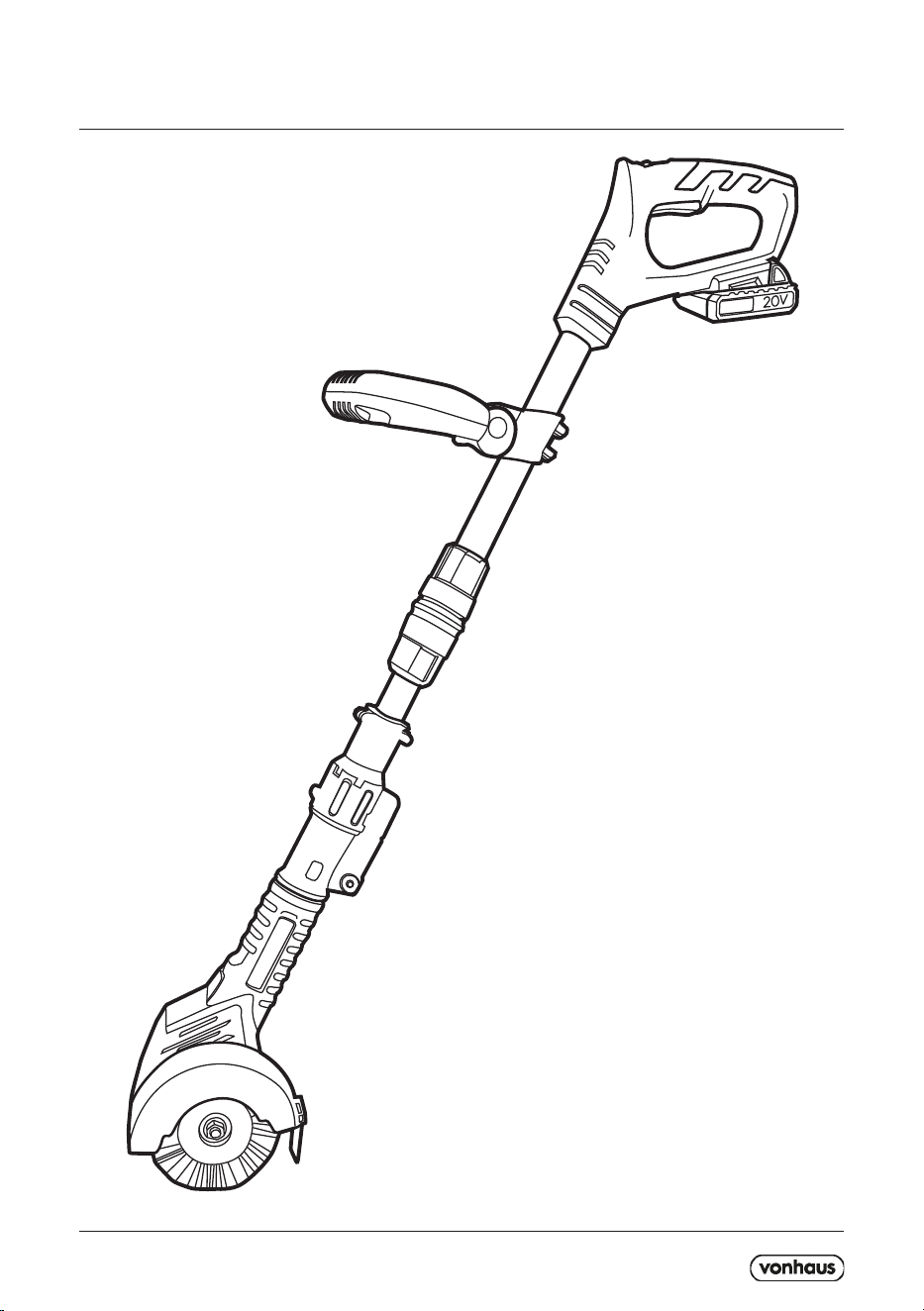
A5P | 01
COMPONENTS / COMPOSANTS/ KOMPONENTEN/ COMPONENTES/ COMPONENTI
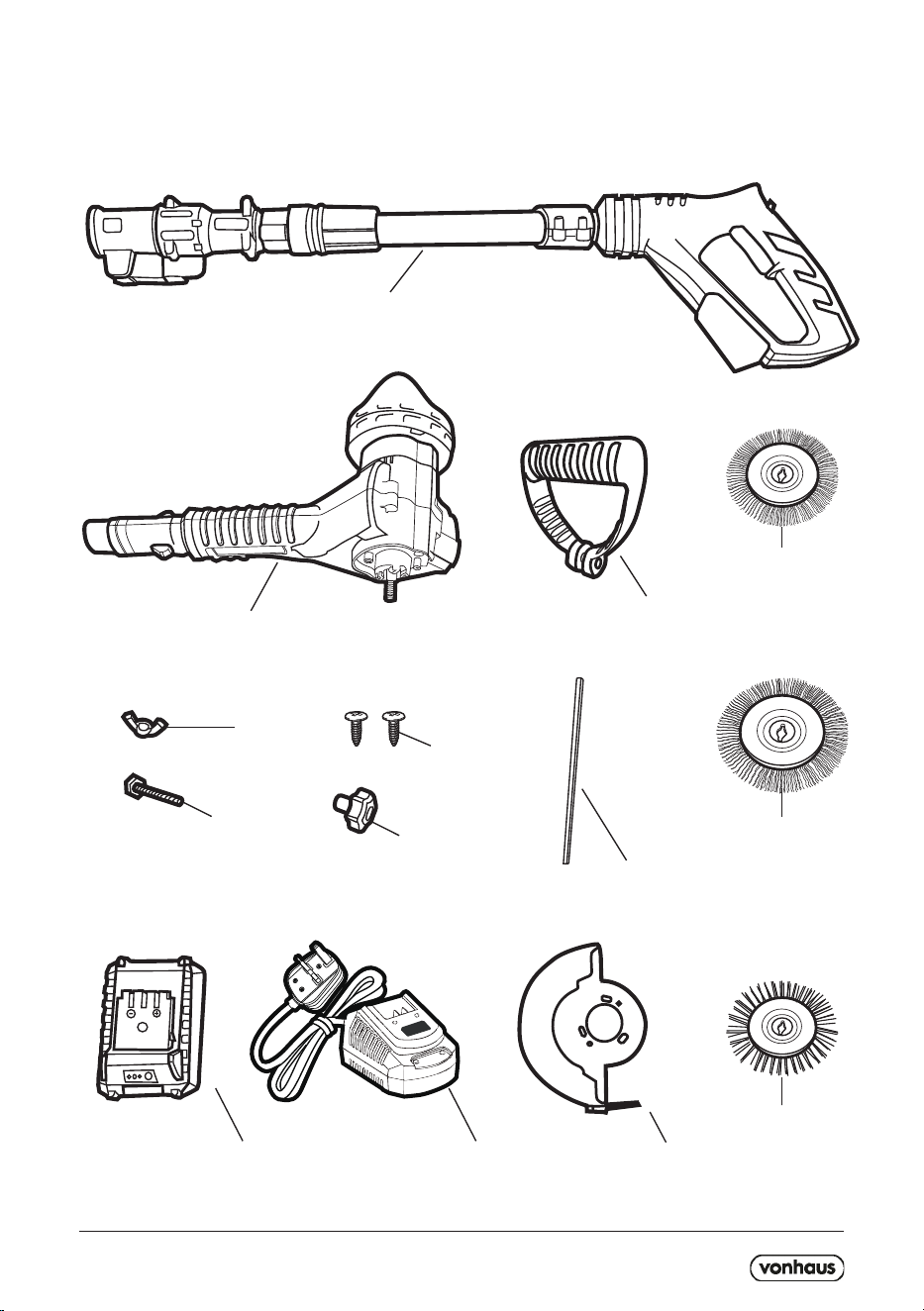
A5P | 01
COMPONENTS / COMPOSANTS/ KOMPONENTEN/ COMPONENTES/ COMPONENTI
8mm steel
wire brush
15mm steel
wire brush
8mm
Nylon brush
A
B
C
L
D
E
F
M
N
G
H
I J K
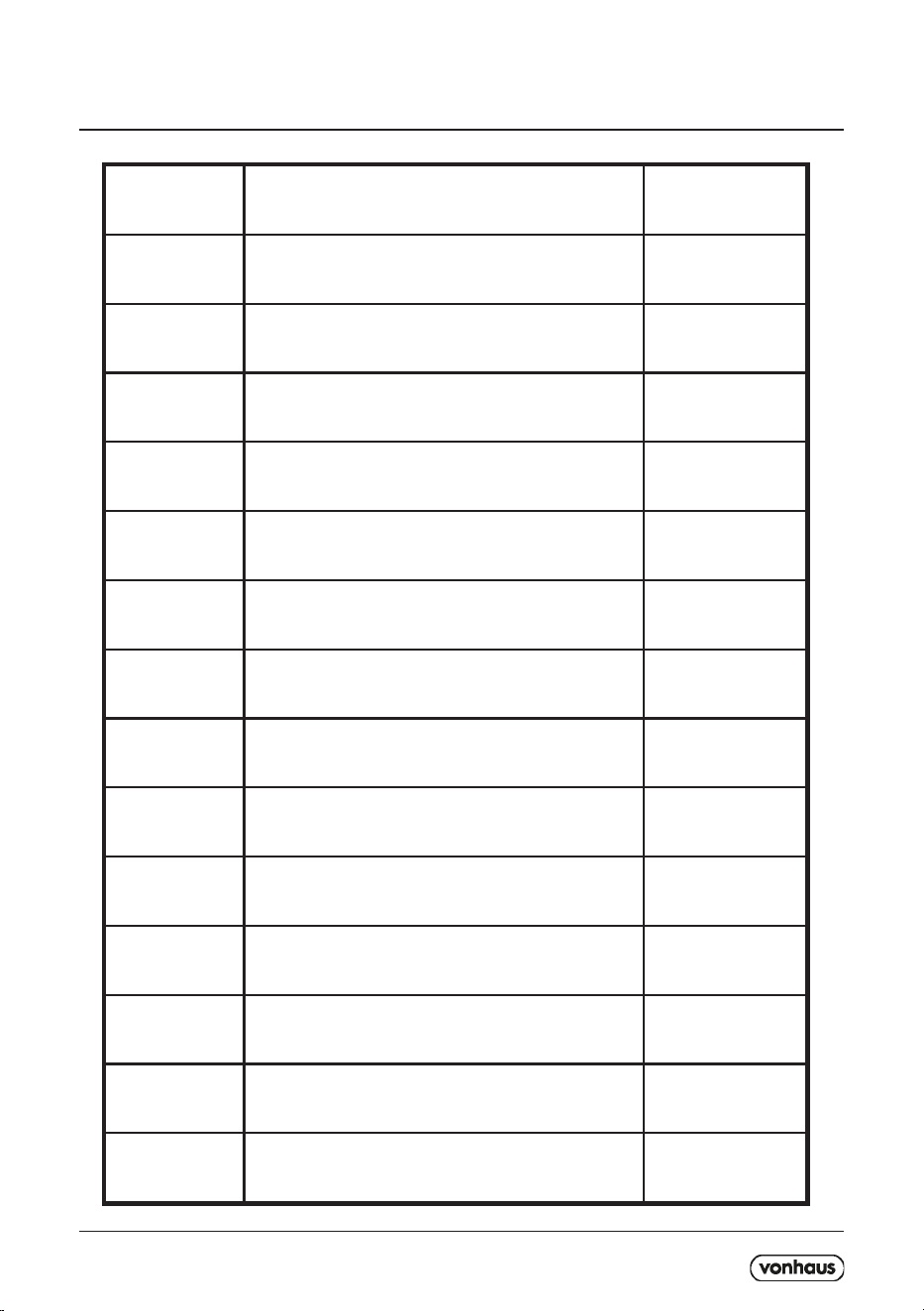
A5P | 01
ASSEMBLY / ASSEMBLÉ/ MONTAGE/ ASAMBLEA/ ASSEMBLEA
Part No. Part Description QTY
A Telescopic Pole 1
B Motor Housing 1
C Auxillary Handle 1
D Fastener 1
E Bolt 1
F Locking Bolt 1
G Screws 2
H Rod 1
I Battery 1
J Fast Charger 1
K Guard 1
L 8mm Steel Wire Brush 1
M 15mm Steel Wire Brush 1
N 8mm Nylon Brush 1
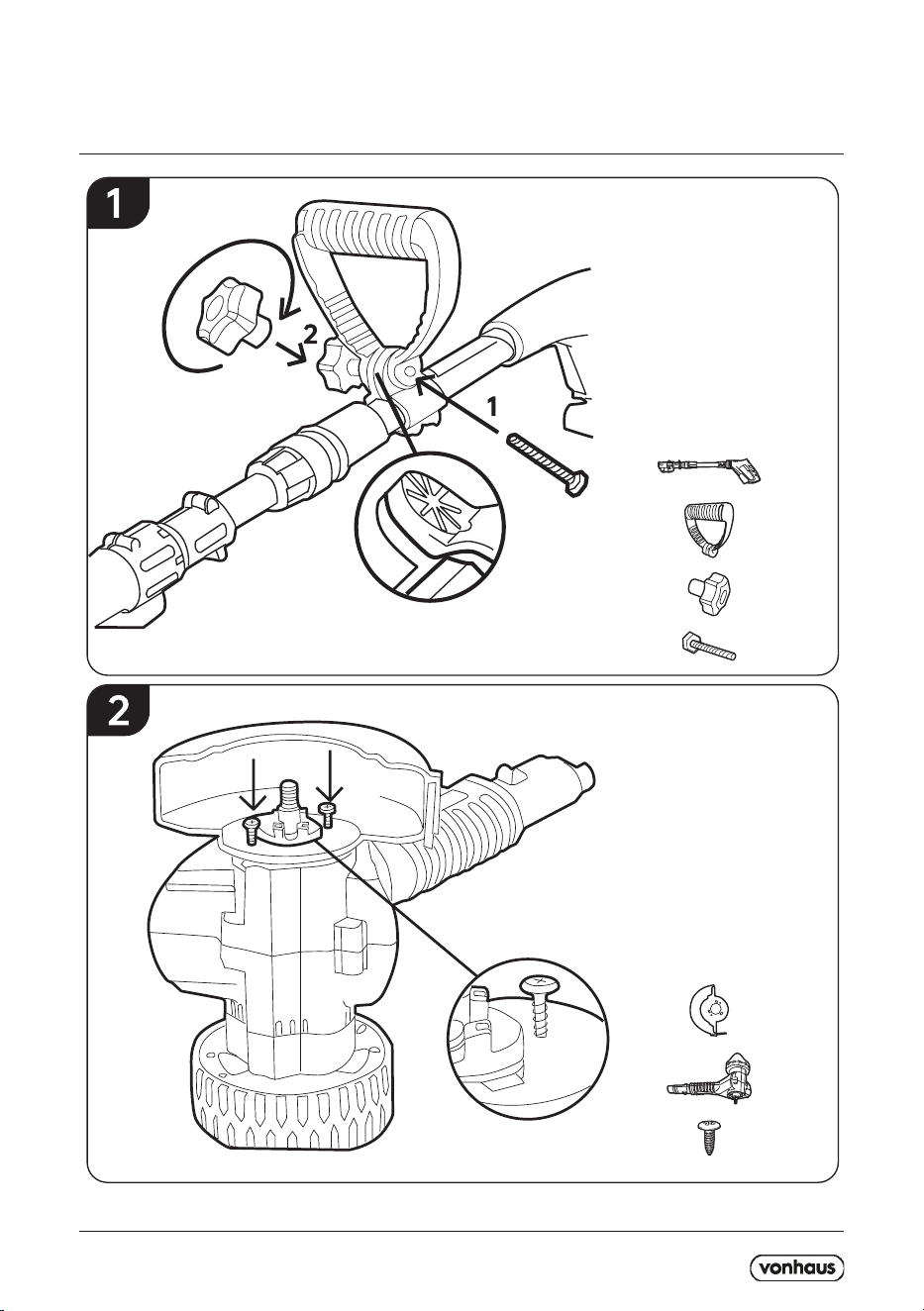
A5P | 01
ASSEMBLY / ASSEMBLÉ/ MONTAGE/ ASAMBLEA/ ASSEMBLEA
F x1
E x1
A x1
C x1
B x1
K x1
G x2
A5P | 01
ASSEMBLY / ASSEMBLÉ/ MONTAGE/ ASAMBLEA/ ASSEMBLEA
D x1
H x1
N x1
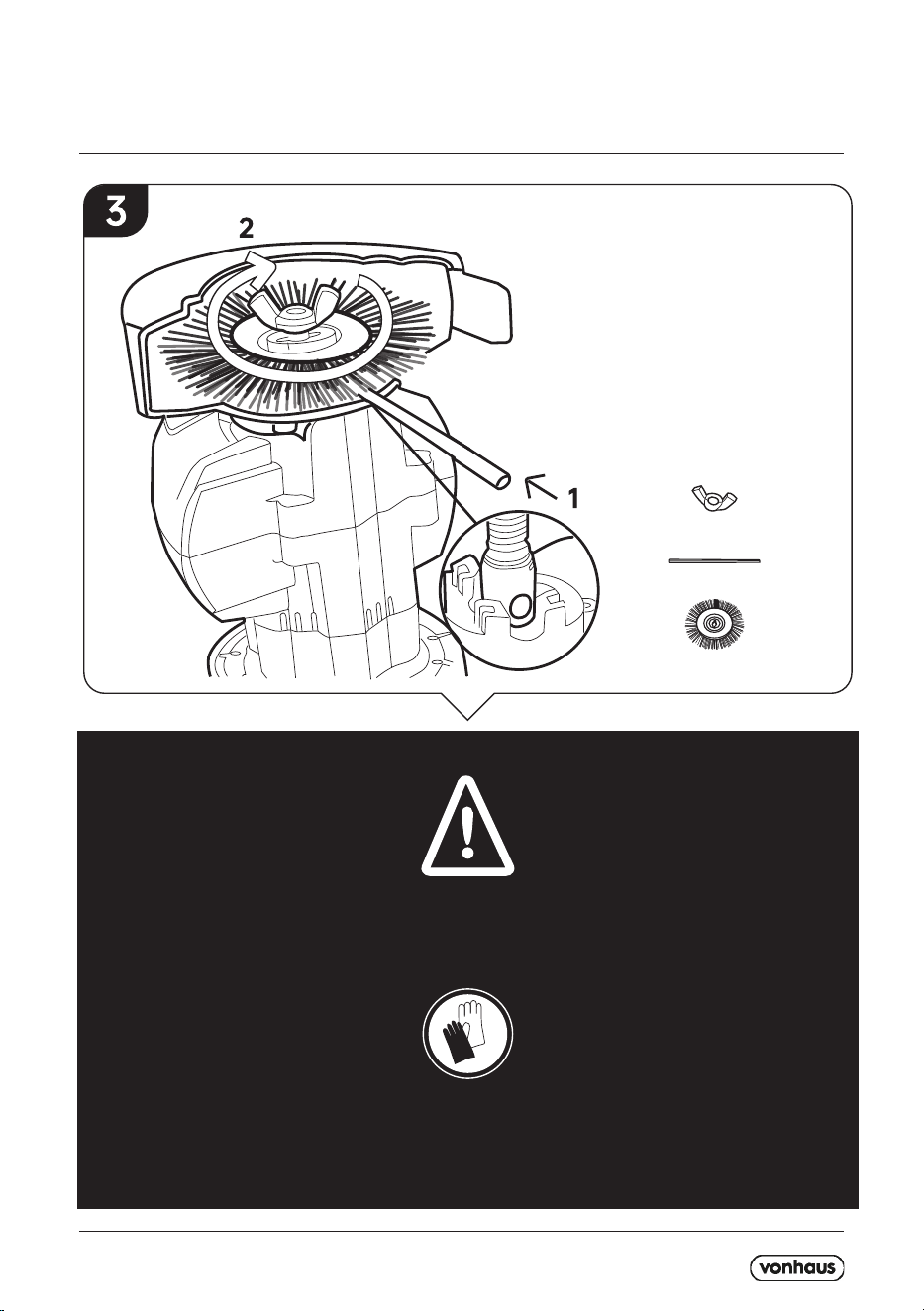
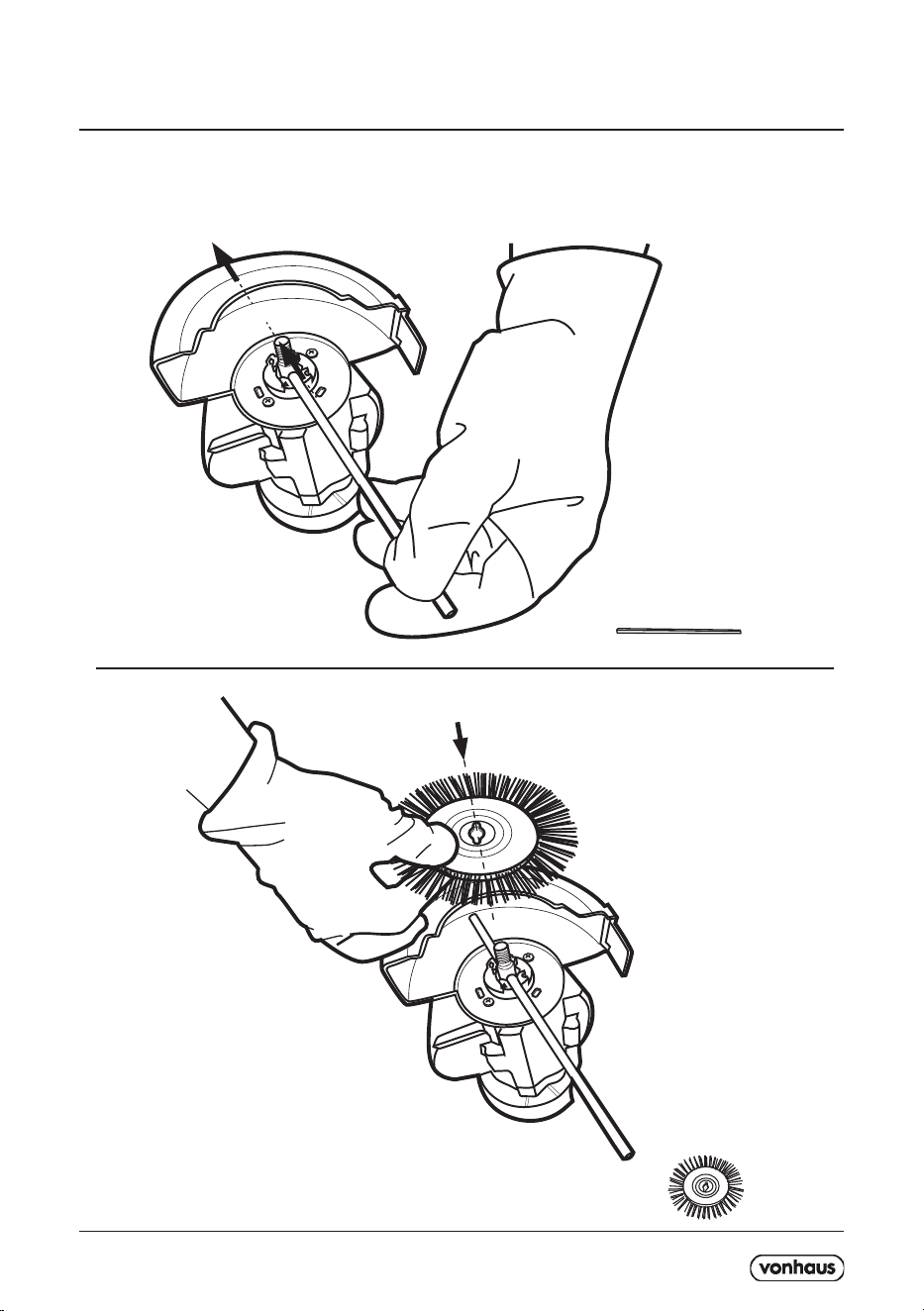
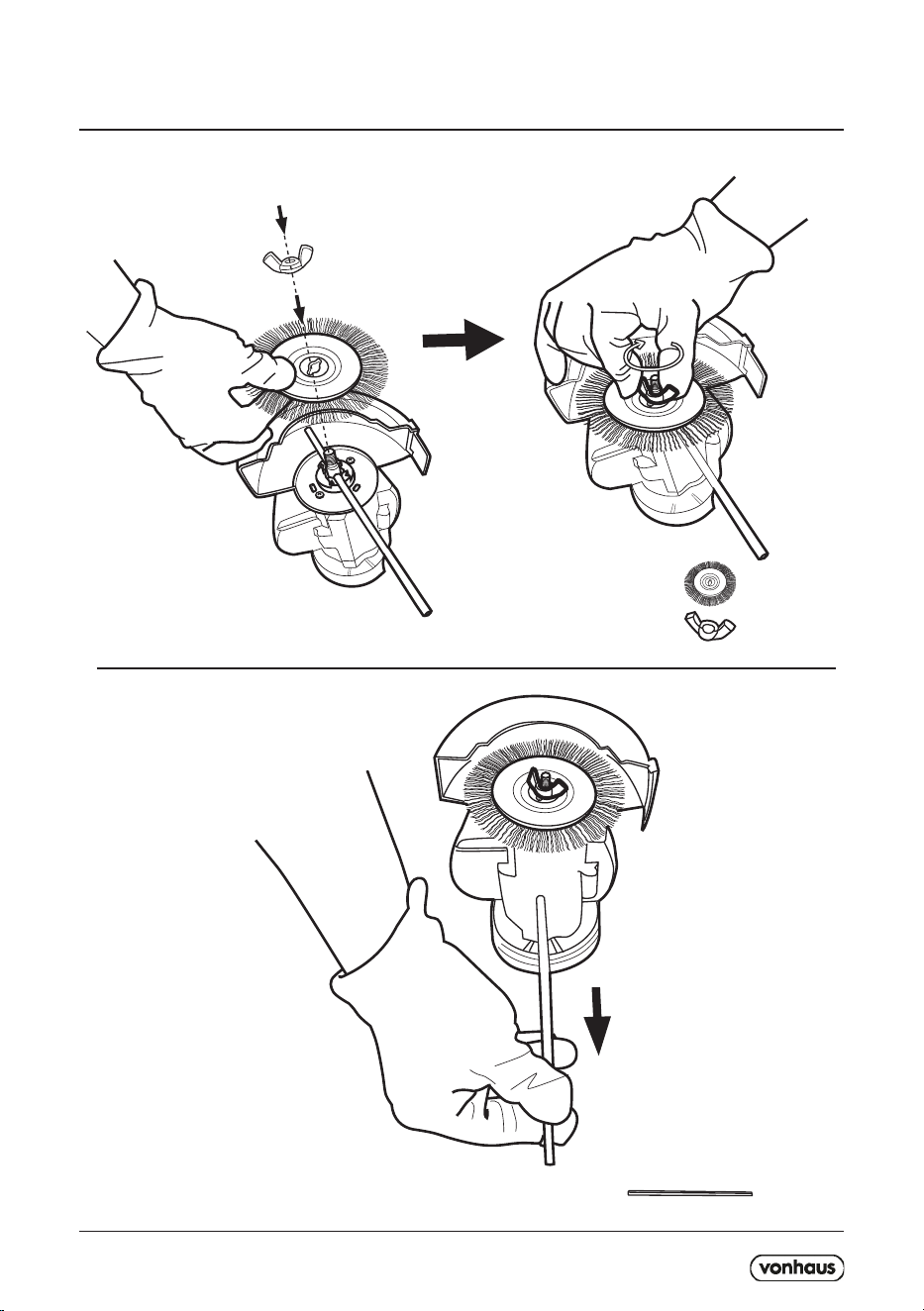
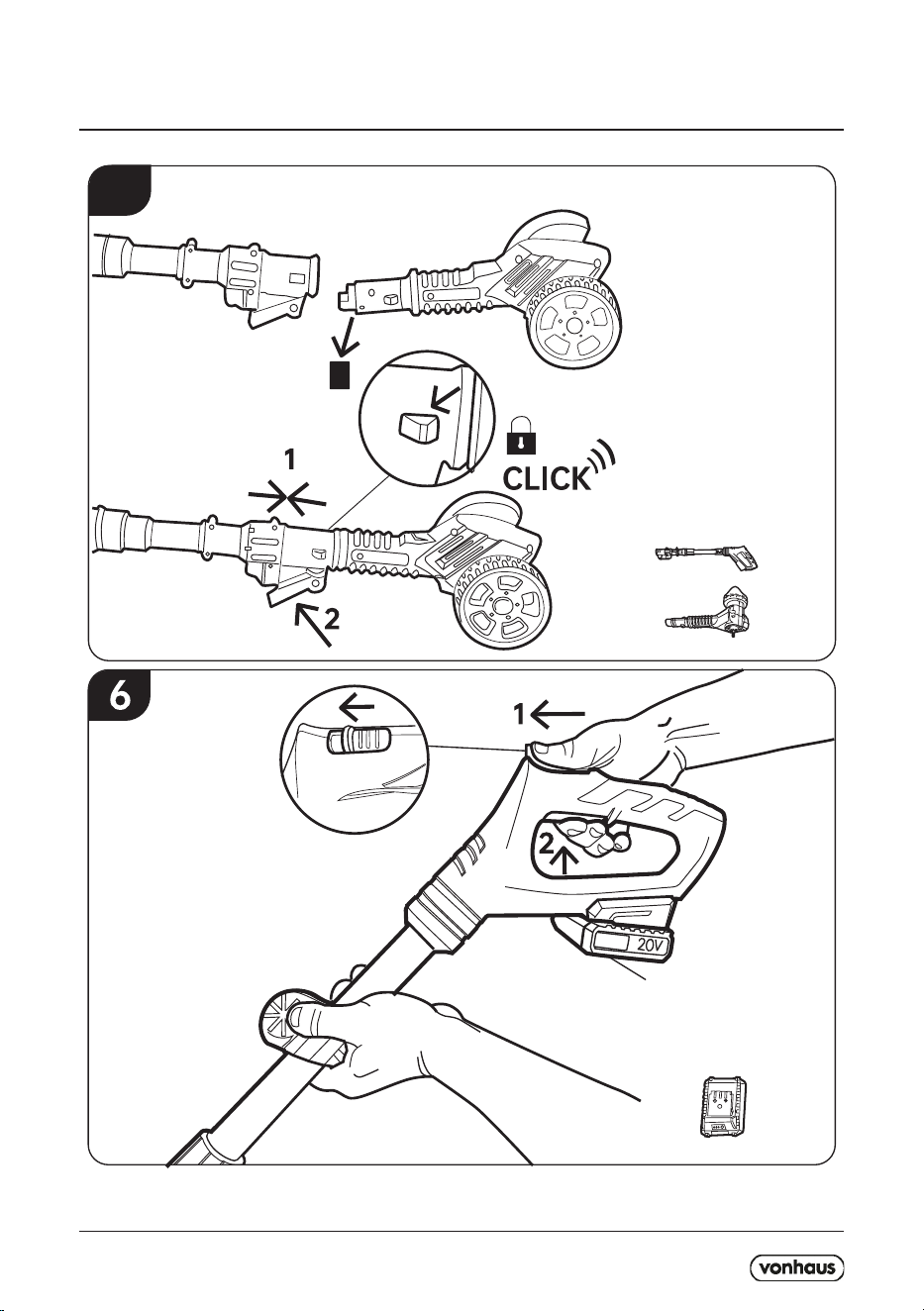
PLEASE NOTE: The metal-brush is sharp!
Always wear safety gloves when
mounting and removing the metal brush.
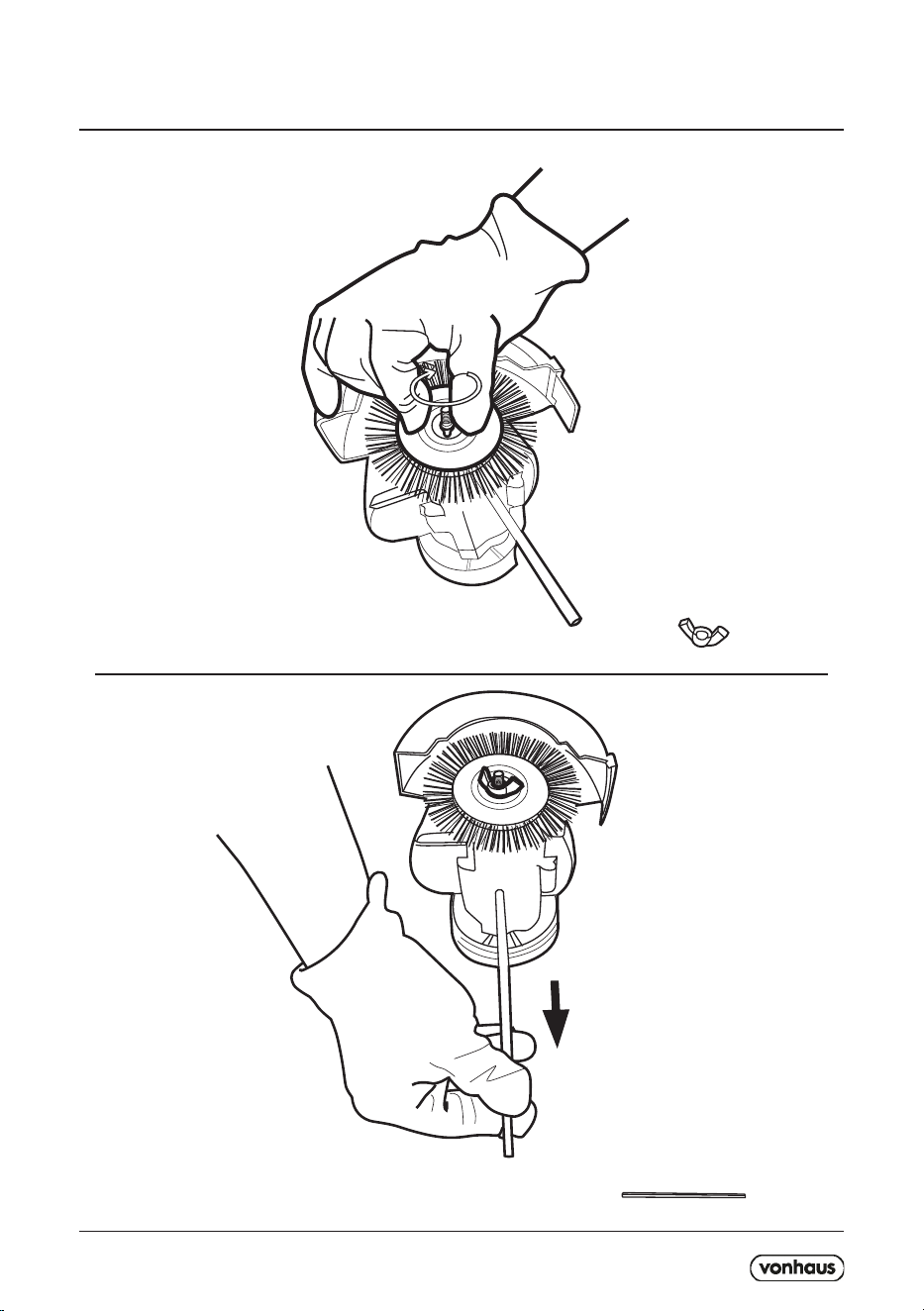
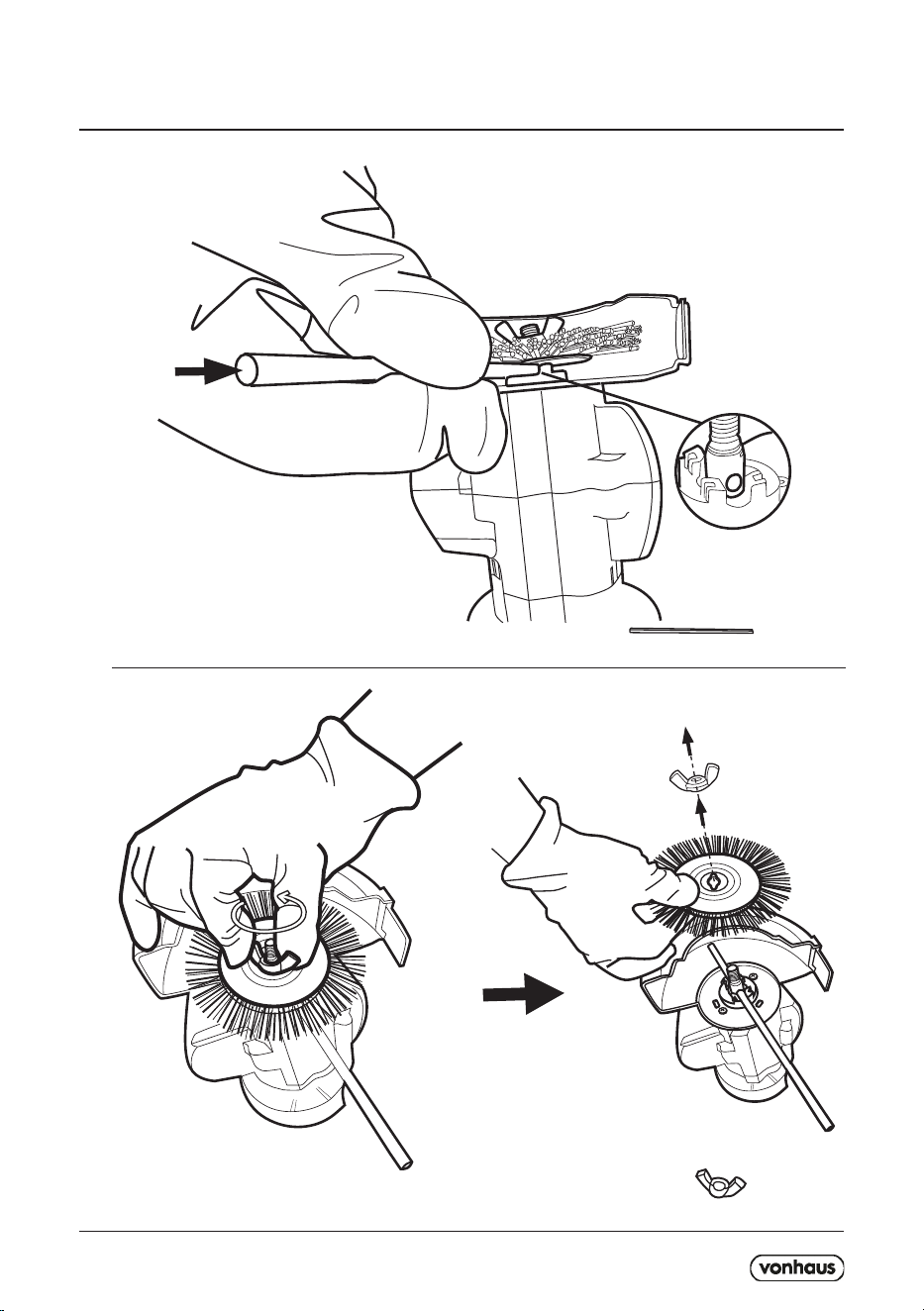
Please note, rod is used to lock
wheel to allow user to tighten
or loosen fastener for brush
installation or removal.
A5P | 01
ASSEMBLY / ASSEMBLÉ/ MONTAGE/ ASAMBLEA/ ASSEMBLEA
3-2
3-1
Installation and replacement of weed brush
H x1
N x1
A5P | 01
ASSEMBLY / ASSEMBLÉ/ MONTAGE/ ASAMBLEA/ ASSEMBLEA
3-4
D x1
H x1
3-3
A5P | 01
ASSEMBLY / ASSEMBLÉ/ MONTAGE/ ASAMBLEA/ ASSEMBLEA
4-2
4-1
D x1
H x1
A5P | 01
ASSEMBLY / ASSEMBLÉ/ MONTAGE/ ASAMBLEA/ ASSEMBLEA
4-3
D x1
M x1
H x1
4-4
A5P | 01
ASSEMBLY / ASSEMBLÉ/ MONTAGE/ ASAMBLEA/ ASSEMBLEA
B x1
I x1
5
A x1
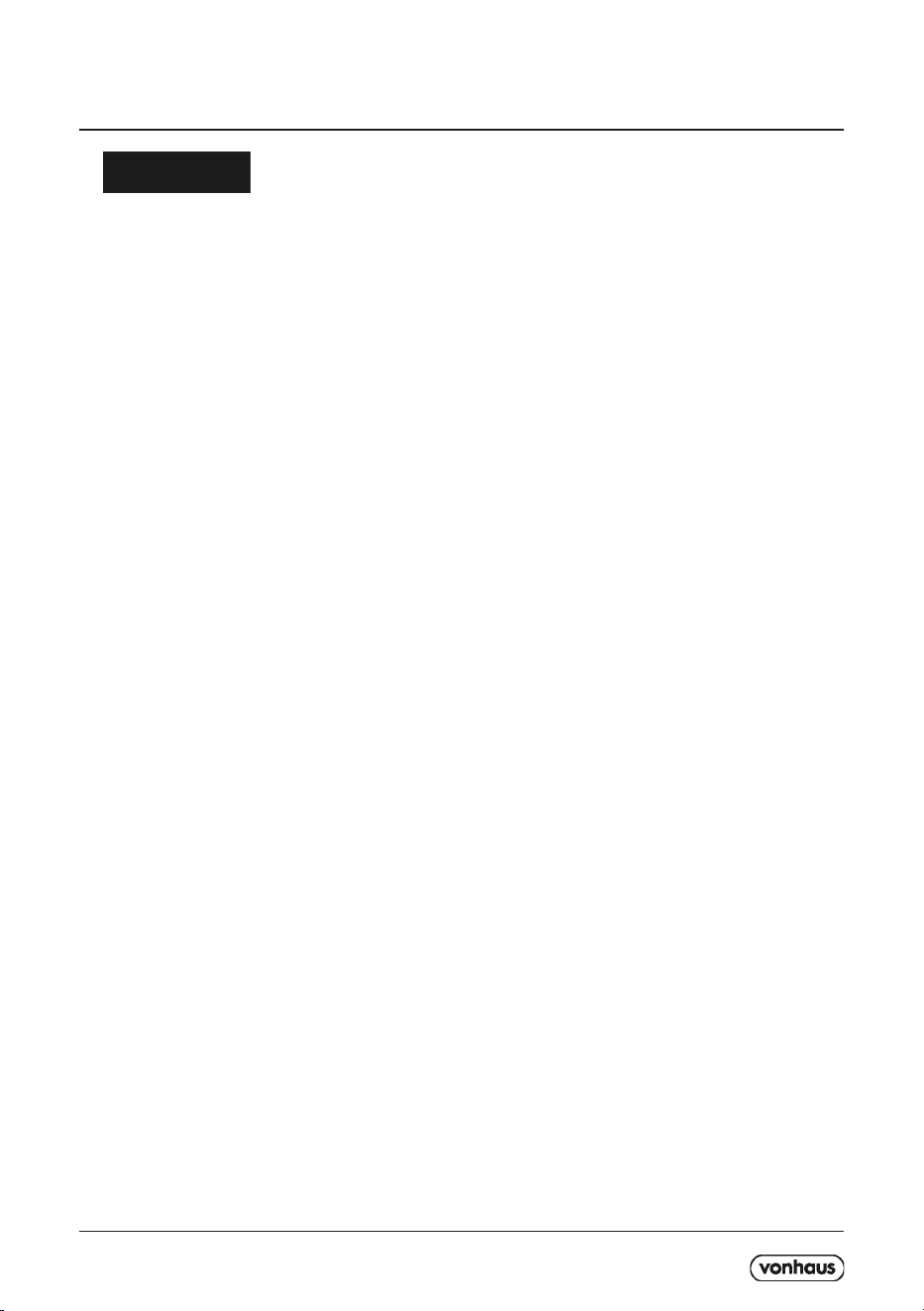
Operation
Insert Battery
A5P | 01
USAGE AND SAFETY INSTRUCTIONS
First Use:
Always use both hands to operate the equipment. Maintain a rm grip and stance
when starting the machine as the brush can self-propel and pull you forward. Guide
the equipment along the joints at a walking pace. For uniform results carry out your
work at a constant speed. If necessary, guide the equipment along the same joint
several times for stubborn weeds/moss.
Usage Warnings:
1. Always maintain a secure footing while working. Be especially careful when
working on a sloping terrain. This enables you to control the equipment better in
unexpected environments
2. Do not operate the equipment if you are tired or lack concentration or under the
inuence of alcohol or medication. Always take regular breaks to reduce fatigue
3. Carelessness when using the equipment can result in serious injury
4. Do not use the equipment while it is raining, in poor weather conditions and when
the surrounding area is wet. Only use equipment when the light conditions are good
5. Keep the brush away from all body parts and in particular hands and feet when
starting the motor or when the motor is running
6. Never start the equipment when it is turned over or not in the correct working
position
7. Switch off the motor and disconnect the battery from the tool:
*Whenever you are not using the equipment
*If the equipment is left unattended
*When the equipment is being cleaned, maintained or is to be inspected
*When relocating the equipment
*When you remove or exchange the cutting device or manually adjust the length of
the pole
8. Never try to stop the brush with your hands.
9. Always wait until the brush stops rotating and the battery is disconnected before
inspecting brush
10. Do not use the device for re-moving weed or moss not growing on the ground,
i.e.moss growing on walls or rocks etc.
11. Always inspect the brush before starting the device. Never use damaged brushes.
Replace any damaged or worn brush, replacement brushes are available
12. The brush must not be mounted on any other devices
13. Do not traverse gravel paths while the equipment is operating. Gravel can be
thrown up and result in injury
14.Do not operate the equipment in the vicinity of inammable liquids or gases as
this could give rise to the danger of a re or explosion
15. Store the equipment in a dry place that is not accessible to children.

A5P | 01
USAGE AND SAFETY INSTRUCTIONS
How to use different types of brushes:
The machine has two types of brushes:
Steel Wire Brushes - 15mm or 8mm are for use on hard stone, while nylon brush
is to be used on soft stone types or tiles with an imprint, the steel wire brushes
may damage these materials. Always test a small, inconspicuous part rst to check
whether or not the metal brush damages the material to be worked on.
8mm brush is to be used on thinner gaps between paving that the 15mm brush
cannot reach.
8mm Nylon Brush – Wears away easier but protects surfaces better. Steel wire
brushes, last longer than Nylon but are coarser so can have a sanding effect on
patios, therefore better on stone ags.
Note: Spare brush heads are available from Vonhaus.
Operational Warnings:
The equipment is designed to remove weeds from between paving stones and slabs.
It is not intended for use on sensitive surfaces like tiles or for removing long grass/
weeds between paving. Long grass/weeds can get tangled around the axel of the
brush causing poor performance.
Equipment is designed for outdoor home use and is unsuitable for use in public areas
such as parks, roadways or agriculture and forestry. The operating instructions are
supplied by the manufacturer and must be obeyed to ensure that the equipment
is used properly and warranty kept in tact. Misuse will result in a voided warranty.
The equipment is to be used only for its prescribed purpose. Any other use is deemed
to be a case of misuse. The user / operator and not the manufacturer will be liable for
any damage or injuries of any kind caused as a result of this.
Please note that our equipment has not been designed for use in commercial, trade
or industrial applications. Our warranty will be voided if the machine is used in
commercial, trade or industrial businesses or for equivalent purposes.
A5P | 01
USAGE AND SAFETY INSTRUCTIONS
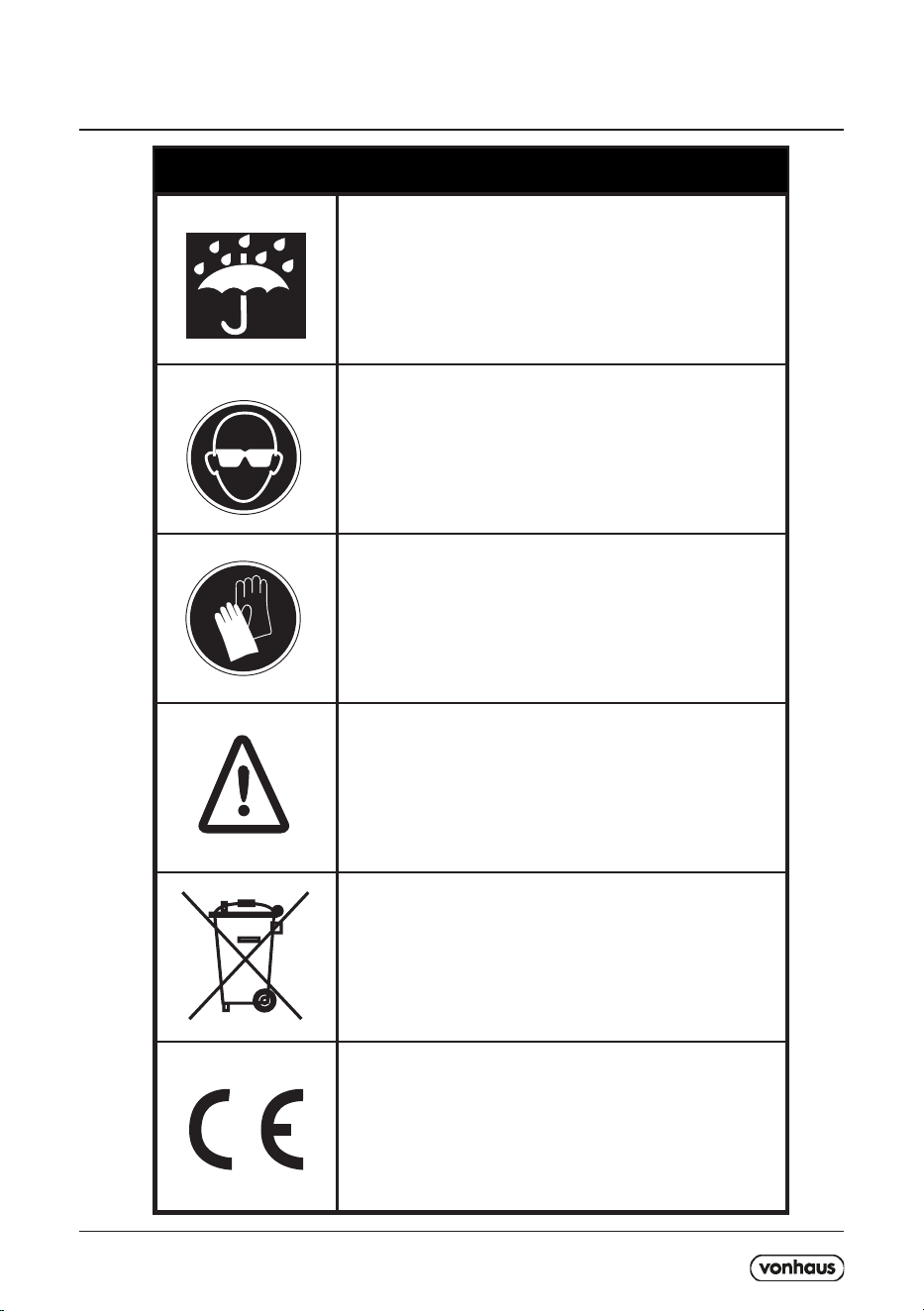
Do not expose to rain or water.
Wear safety glasses. When working
with electric power tools, sparks, splinters,
chips and dust particles may be generated
and these can cause loss of sight.
Wear safety gloves.
Denotes risk of personal injury, loss of life
or damage to the tool in case of non-
observance of the instructions in this
manual.
Do not dispose ofelectric power tools with
domestic refuse.
CE stands ror “Conformité Européenne”,
which means “in accordance with EU
Regula-tions”. With the CE marking, the
manufacturer conrms that this Electric
tool complies with the applicable European
directives.
Warnings
A5P | 01
USAGE AND SAFETY INSTRUCTIONS
How to maintain:
Only use spare parts and accessories that have been supplied or
recommended by the manufacturer. Always inspect the equipment
before it is to be used. Do not operate the equipment if safety devices,
parts of the cutting device or bolts are missing, worn out or damaged.
Always inspect the brush before starting the device. Never use damaged
brushes. Replace any damaged or worn brush.
Troubleshoot:
No power
Check the battery is fully charged.
Check the charger is charging the battery properly.
Check the connection between the charger and
battery is not damaged.
Check the battery if fully inserted into the sweeper
and the connection between both is not damaged.
Sweeper Function
Inadequate
Check brush head is tightly locked into correct
position.
If brush head is old, replace with new brush head.
Check application type, longer weeds/grass will
tangle around axel.
A5P | 01
EN
DISPOSAL INFORMATION Please recycle where
facilities exist. Check with your local authority for
recycling advice.
CUSTOMER SERVICE If you are having diculty using this
product and require support, please contact
WARRANTY To register your product and nd out if you
qualify for a free extended warranty please go to
www.vonhaus.com/warranty. Please retain a proof of
purchase receipt or statement as proof of the purchase date.
The warranty only applies if the product is used solely in the
manner indicated in the warnings page of this manual, and all
other instructions have been followed accurately. Any abuse
of the product or the manner in which it is used will invalidate
the warranty. Returned goods will not be accepted unless
re-packaged in its original packaging and accompanied by
a relevant and completed returns form. This does not aect
your statutory rights. No rights are given under this warranty
to a person acquiring the appliance second-hand or for
commercial or communal use.
COPYRIGHT All material in this instruction manual are
copyrighted by DOMU Brands.Any unauthorised use may
violate worldwide copyright, trademark, and other laws.
FR
INFORMATIONS RELATIVES AU RECYCLAGE
Veuillez recycler là où il existe des installations adéquates.
Vériez auprès de vos autorités locales pour obtenir des
conseils sur le recyclage.
SERVICE CLIENT Si vous rencontrez des dicultés pour utiliser
ce produit et avez besoin d’assistance, veuillez contacter
GARANTIE Pour enregistrer votre produit et découvrir si
vous vous qualiez pour une extension gratuite de garantie,
rendez-vous sur www.vonhaus.com/warranty. Conservez
une preuve d’achat, reçu ou attestation, pour prouver la date
de l’achat. La garantie ne s’applique que si le produit a été
utilisé de la manière indiquée dans la section de la page des
avertissements de ce manuel et que toutes les instructions
ont été suivies de manière précise. Tous les abus réalisés sur
le produit, dans la manière dont il a été utilisé, rendront la
garantie caduque. Les marchandises renvoyées ne seront
acceptées que si elles sont remballées dans leur emballage
d’origine et accompagnées d’un formulaire de retour adéquat
et rempli. Ceci n’aecte pas vos droits statutaires. Cette
garantie n’accorde aucun droit à une personne obtenant
le produit de seconde main ou à des ns d’utilisation
commerciale ou communale.
DROITS D’AUTEUR Toutes les informations de ce manuel
d’utilisation sont protégées par droit d’auteur par DOMU
Brands. Toute utilisation non autorisée pourrait enfreindre
les lois mondiales de droit d’auteur, de marque déposée ainsi
que d’autres lois.
DE
ENTSORGUNG Bitte entsorgen Sie das Produkt an geeigneten
Entsorgungsstellen. Fragen Sie bei Ihrer Gemeinde nach.
KUNDENSERVICE Wenn Sie Schwierigkeiten mit diesem
Produkt haben und Unterstützung benötigen, wenden Sie
sich bitte an
GARANTIE Um Ihr Produkt zu registrieren und zu erfahren,
ob eine kostenlose verlängerte Garantie möglich ist, gehen
Sie bitte auf www.vonhaus.com/warranty. Bitte behalten
Sie eine Rechnung oder den Kassenzettel als Nachweis
des Einkaufdatums auf. Die Garantie gilt nur, wenn das
Produkt nur wie in dieser Anleitung beschrieben verwendet
wurde und wenn alle Anweisungen befolgt wurden.
Jeglicher Missbrauch des Produkts oder der Art und Weise,
in der es verwendet wird, macht die Garantie ungültig.
Zurückgegebene Artikel werden nur akzeptiert, wenn sie sich
in der Originalverpackung benden und wenn ein relevantes
und vollständig ausgefülltes Rücksendeformular enthalten
ist. Dies betrit nicht Ihre gesetzlichen Ansprüche. Für Artikel,
die gebraucht erworben wurden, oder die kommerzielle
oder gemeinschaftlich genutzt werden, entstehen keinerlei
Ansprüche auf Garantie.
COPYRIGHT Alle Materialien in dieser Anleitung stehen
unter Copyright von DOMU Brands Ltd.Jede unautorisierte
Verwendung kann das weltweite Copyright, die
Handelsmarke und andere Gesetze verletzen.
ES
INFORMACION DE DESECHO Por favor, reciclad en las
instalaciones correspondientes. Consultad con vuestra
autoridad local para obtener consejos de reciclaje.
SERVICIO AL CLIENTE Si tiene dicultades para utilizar este
producto y necesita asistencia, contacte con
GARANTÍA Para registrar vuestro producto y averiguar si
calica para una garantía extendida gratuita, vaya a www.
vonhaus.com/warranty. Conservad un comprobante de
recibo de compra o extracto como prueba de la fecha
de compra. La garantía solo se aplica si el producto se
utiliza únicamente de la manera indicada en la página de
advertencias de este manual, y todas las demás instrucciones
se han seguido con precisión. Cualquier abuso del producto o
la manera en que se use invalidará la garantía. Los productos
devueltos no se aceptarán a menos que se vuelvan a
empaquetar en su embalaje original y acompañados por
un formulario de devolución completo y pertinente. Esto no
afecta sus derechos legales. No se otorgan derechos bajo esta
garantía a una persona que adquiere el aparato de segunda
mano o para uso comercial o comunitario
DERECHOS DE AUTOR Todo el material en este manual de
instrucciones está protegido por DOMU Brands. Cualquier
uso no autorizado puede violar los derechos de autor, marcas
comerciales y otras leyes en todo el mundo.
IT
INFORMAZIONI SULLO SMALTIMENTO Si prega di riciclare
nelle apposite strutture. Chiedere una consulenza alle
autorità competenti per il riciclo.
SERVIZIO CLIENTI Se si riscontrano dicoltà nell’utilizzo di
questo prodotto e si richiede supporto, contattare support@
domu.co.uk
GARANZIA Per registrare il prodotto e capire se hai diritto
all’estensione di garanzia, vai su
www.vonhaus.com/warranty. Si prega di conservare la
ricevuta del pagamento quale prova della data d’acquisto.
La garanzia si applica solo se il prodotto viene utilizzato
esclusivamente come indicato nella pagina delle Avvertenze
C

A5P | 01
del presente manuale e se tutte le altre informazioni vengano
accuratamente seguite. Qualsiasi abuso nell’utilizzo di questo
prodotto invaliderà la garanzia. I resi non saranno accettati se
non riposti nella confezione originale ed accompagnati da un
modulo di reso completo. Ciò non pregiudica i propri diritti
obbligatori. La presente garanzia non attribuisce alcun diritto
a coloro che acquistano prodotti di seconda mano o per ni
commerciali o condivisi.
COPYRIGHT Tutto il materiale contenuto nel presente
manuale delle istruzioni è protetto da copyright di DOMU
Brands. Qualsiasi uso non autorizzato potrebbe violare il
copyright a livello mondiale, marchio ed altre leggi.
THANK YOU
Thank you for purchasing your product/appliance.
Should you require further assistance with your purchase,
you can contact us at
VonHaus is a registered trademark of DOMU Brands Ltd.
Made in China for DOMU Brands. DOMU Brands Ltd. Unit 30,
Stakehill Industrial Estate, Middleton, Manchester M24 2RW.
EU Representative - DOMU Brands B.V Hofplein 20, 3032 AC,
Rotterdam.
MERCI
Merci d’avoir acheté notre produit/appareil.
Si vous aviez besoin d’aide suite à votre achat, vous pouvez
nous contacter a
VonHaus est une marque déposée de DOMU Brands Ltd.
Fabriqué en Chine pour DOMU Brands. DOMU Brands Ltd.
Unit 30, Stakehill Industrial Estate, Middleton, Manchester
M24 2RW. EU Representative - DOMU Brands B.V Hofplein 20,
3032 AC, Rotterdam.
VIELEN DANK
Vielen Dank, dass Sie das Produkt/Gerät gekauft haben.
Sollten Sie weitere Unterstützung benötigen,
können Sie uns gerne unter (email) kontaktieren.
VonHaus ist eine registrierte Handelsmarke von DOMU
Brands Ltd. Hergestellt in China für DOMU Brands. DOMU
Brands Ltd. Unit 30, Stakehill Industrial Estate, Middleton,
Manchester M24 2RW. EU Representative - DOMU Brands B.V
Hofplein 20, 3032 AC, Rotterdam.
GRACIAS
Gracias por comprar vuestro producto/aparato
Si requiere asistencia con vuestra compra, podeis
contactarnos a
VonHaus es una marca registrada de DOMU Brands Ltd.
Hecha en China para DOMU Brands. DOMU Brands Ltd. Unit
30, Stakehill Industrial Estate, Middleton, Manchester M24
2RW. EU Representative - DOMU Brands B.V Hofplein 20,
3032 AC, Rotterdam.
GRAZIE
Grazie per aver acquistato il prodotto.
Per ulteriore assistenza sul tuo acquisto, puoi
contattarci all’indirizzo email
VonHaus è un marchio registrato di DOMU Brands Ltd. Made
in Cina per DOMU Brands. Unit 30, Stakehill Industrial Estate,
Middleton, Manchester M24 2RW. EU Representative - DOMU
Brands B.V Hofplein 20, 3032 AC, Rotterdam.
GRAZIE
Grazie per aver acquistato il prodotto.
Per ulteriore assistenza sul tuo acquisto, puoi
contattarci all’indirizzo email
VonHaus è un marchio registrato di DOMU Brands Ltd.
Made in Cina per DOMU Brands. DOMU Brands Ltd. Unit 30,
Stakehill Industrial Estate, Middleton, Manchester M24 2RW.
EU Representative - DOMU Brands B.V Hofplein 20, 3032 AC,
Rotterdam.
.