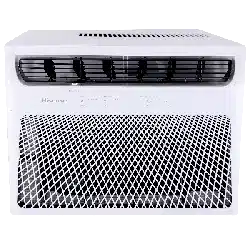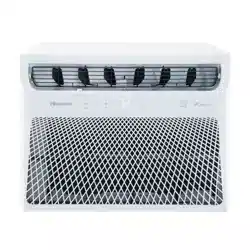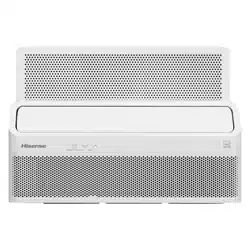
USE AND INSTALLATION MANUAL
INSTRUCCIONES DE INSTALACIÓN Y USO
For questions about features, operation/ performance, parts or service,
call: 1-877-465-3566
Para consultas sobre las características, funcionamiento/ rendimiento,
piezas o servicio, llame al: 1-877-465-3566
Model/ Modelo: AWUS1225TW
2
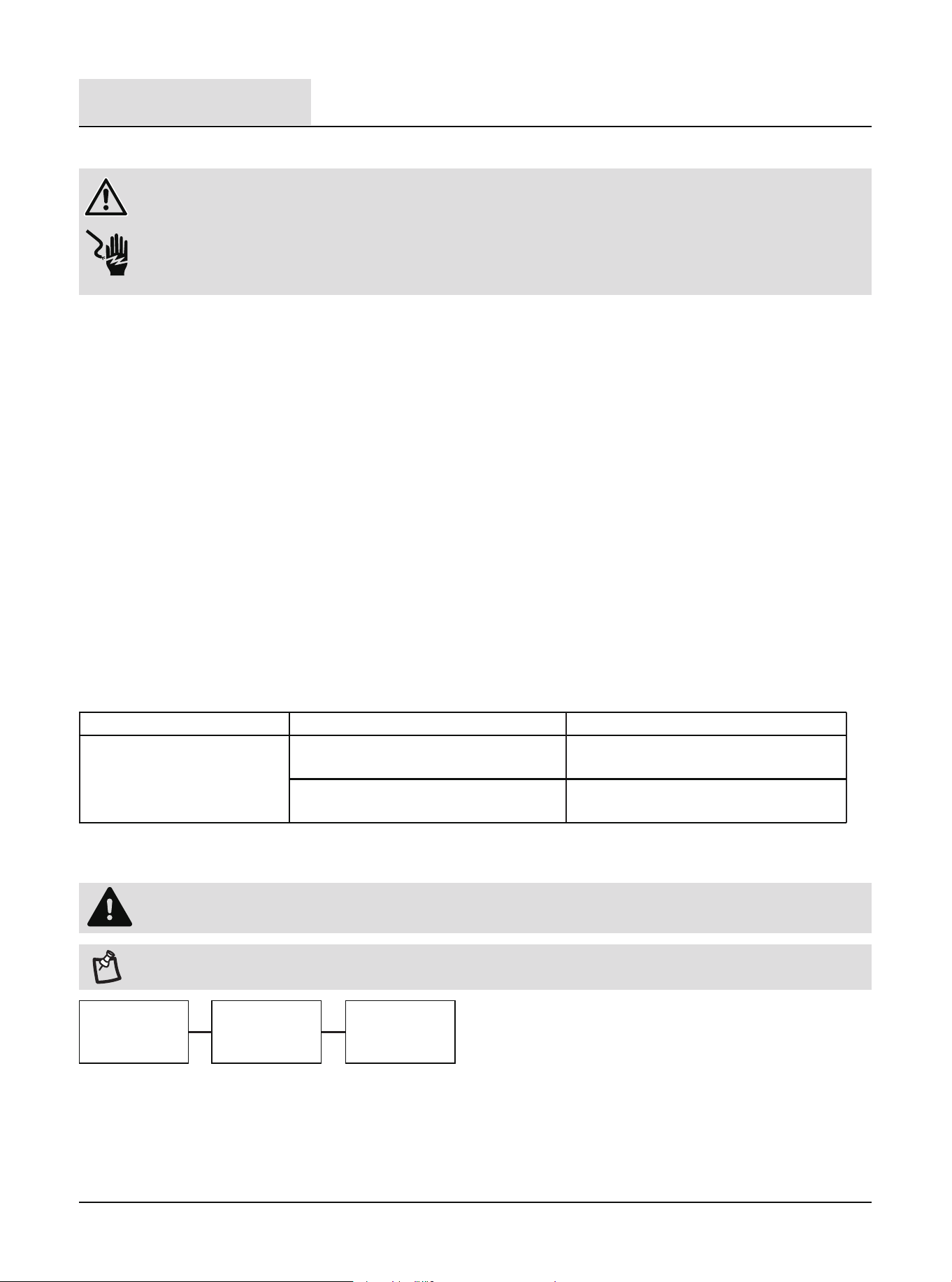
Safety Information ................................ ......
Pre-Installation ..................................... . ..
Installation ..................................... .......
Operation ..................................... ..... . ..
Care and Cleaning ......................................
Troubleshooting ........................................
3
8
14
17
22
23
Table of Contents
3
Safety Information
We have provided many important safety messages in this manual and on your appliance. Always read and obey all safety messages.
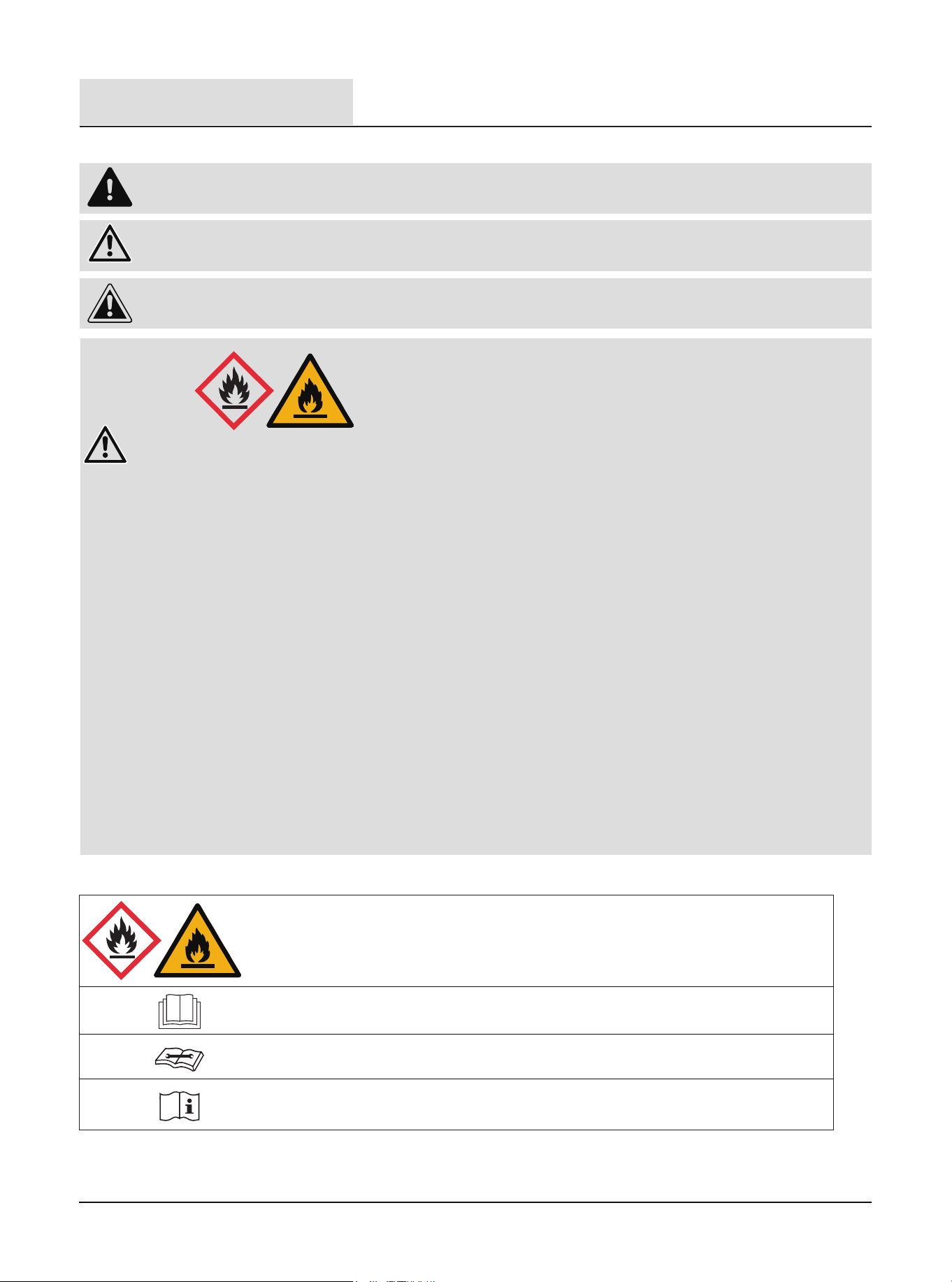
DANGER: This symbol alerts you to a potential hazard, that if not avoided, will result in death or serious injury.
WARNING: This symbol alerts you to a potential hazard, that if not avoided, could result in death or serious Injury.
CAUTION: This symbol alerts you to a potential hazard, that if not avoided, may result in minor or moderate injury.
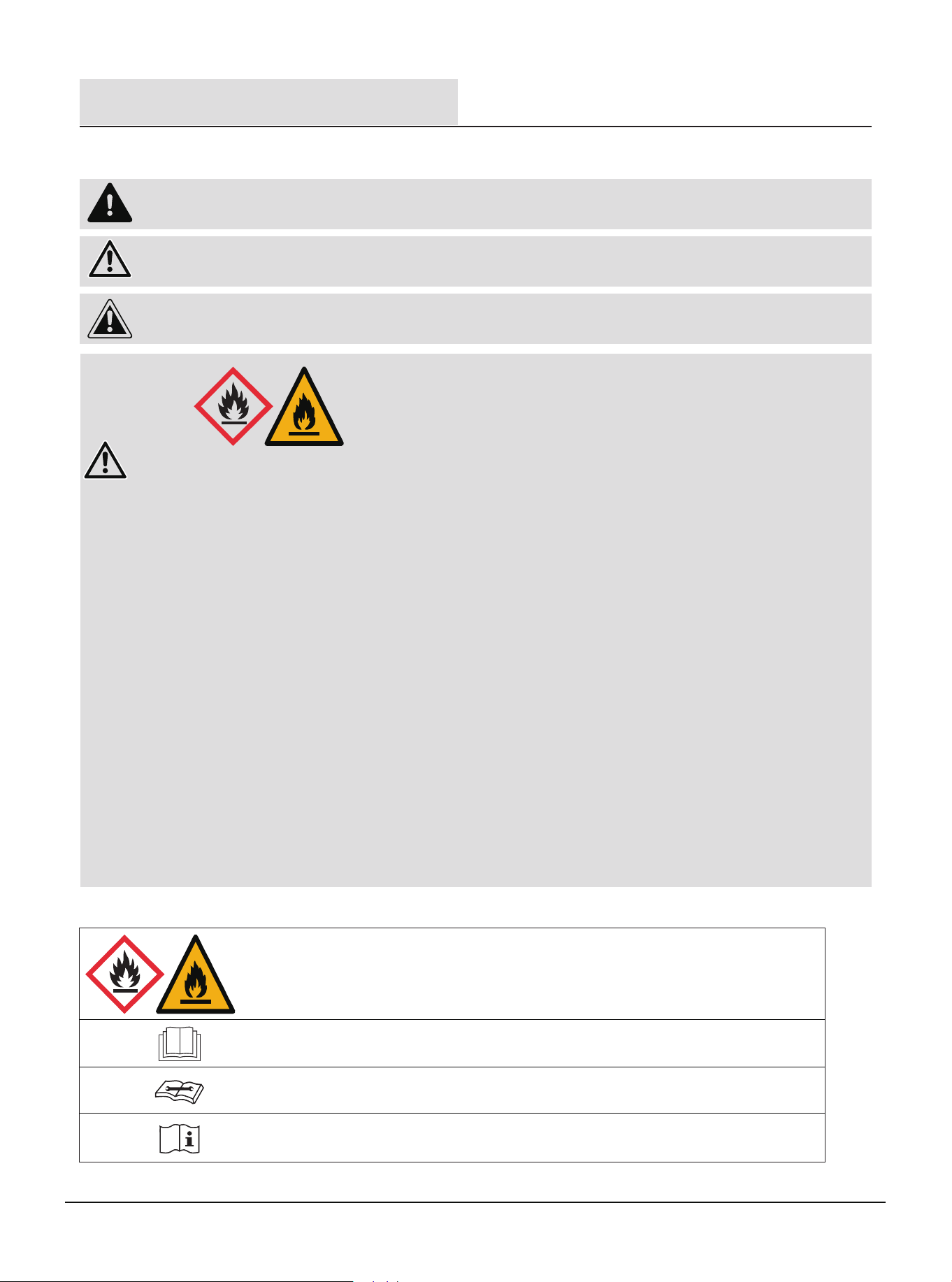
Explanation of symbols displayed on the unit.
WARNING: Risk of Fire or Explosion. This unit contains ammable refrigerant.
Additional safety precautions must be followed.
1. Do not use means to accelerate the defrosting process or to clean, other than those recommended by the manufacturer.
2. The appliance shall be stored in a room without continuously operating ignition sources (for example: open ames, an operating
gas appliance or anoperating electric heater).
3. Do not pierce or burn refrigerant tubing. Be aware that refrigerants may not contain an odor.
4. Compliance with national gas regulations shall be observed.
5. Keep ventilation openings clear of obstruction.
6. When handling, installing, and operating the appliance, care should be taken to avoid damage to the refrigerant tubing.
7. The maximum refrigerant charge amount is shown on nameplate on the air conditioner.
8. Do not drill holes in the unit.
9. Maintenance, cleaning, and service should only be performed by technicians properly trained and qualied
in the use of ammable refrigerants.
10. Dispose of air conditioner in accordance with Federal and Local Regulations. Flammable refrigerants require special disposal
procedures. Contact your local authorities for the environmentally safe disposal of your air conditioner.
11. The appliance shall be stored so as to prevent mechanical damage from occurring.
12. The appliance shall be stored in a well-ventilated area where the room size corresponds to the room area as specied for operation.
13. This product contains small parts such as (batteries, battery cover and screws) that may cause suffocation if swallowed by children.
14. Do not place items on the air conditioner or bracket.
15. Do not play with the air conditioner or bracket, especially for children.
16. Do not drink water discharged from the air conditioner, it may contain mold and bacteria that can lead to death if ingested.
17. When the air lter is to be removed, do not touch the metal parts of the unit, it may cause injury.
WARNING
This symbol shows that this appliance uses a ammable refrigerant.
If the refrigerant is leaked and exposed to an external ignition source, there is a risk of re.
CAUTION
This symbol shows that the operation manual should be read carefully.
CAUTION
This symbol shows that a service personnel should be handling this equipment with reference to the installation manual.
CAUTION
This symbol shows that information is available such as the operating manual or installation manual.
A2L
A2L
4
Safety Information (continued)
IMPORTANT SAFETY INSTRUCTIONS
To reduce the risk of re, electrical shock or injury when using your air conditioner, follow these basic precautions:
1. Plug into a grounded 3-prong outlet.
2. Do not remove ground prong.
3. Do not use an adapter.
4. Do not use an extension cord.
5. Unplug air conditioner before servicing.
6. Use two or more people to move and install air conditioner.
7. If the SUPPLY CORD is damaged, it must be replaced by the manufacturer, its service agent or similarly qualied persons in
order to avoid a hazard.
DISPOSING OF THE UNIT
1. Before throwing out the device, it is necessary to remove the battery cells and dispose or recycle them properly.
2. When you need disposal of the unit consult our dealer. If pipes are removed incorrectly, refrigerant may blow out and come into
contact with your skin, causing injury. Releasing refrigerant into the atmosphere also damages the environments.
3. Please recycle or dispose of the product packaging material in an environmentally responsible manner.
4. Never store or ship the air conditioner upside down or sideways to avoid damage to the compressor.
5. This appliance is not intended for use by persons (including children) with reduced physical, sensory or mental capabilities, or
lack of experience and knowledge, unless they have been given supervision or instruction concerning use of the appliance by a
person responsible for their safety. Children should be supervised to ensure that they do not play with the appliance.
6. The wiring diagram is shown on nameplate on the air conditioner.
At least 10 cm air space between left/right sides of window air conditioner and adjacent obstacle, at least 50 cm air space
between front/rear sides of window air conditioner and adjacent obstacle, and at least 10 cm air space between top side of
window air conditioner and adjacent obstacle should be maintained during normal operation.
Maintenance, service, and repair personnel must be trained according to UL/CSA 60335-2-40 Ed 4.0
Annex HH and possess the required qualications. Every working procedure that affects safety means
shall only be carried out by competent persons according to “Competence of service personnel”.
Examples for such working procedures are:
· breaking into the refrigerating circuit;
· opening of sealed components;
· opening of ventilated enclosures.
PRECAUTIONS FOR USING R32 REFRIGERANT
The basic installation work procedures are the same as the conventional refrigerant (R22 or R410A).
However, pay attention to the following:
1. Transport of equipment containing ammable refrigerants
Attention is drawn to the fact that additional transportation regulations may exist with respect to equipment containing ammable
gas. The maximum number of pieces of equipment or the conguration of the equipment permitted to be transported together will
be determined by the applicable transport regulations.
2. Marking of equipment using signs
Signs for similar appliances used in a work area are generally addressed by local regulations and give the minimum requirements
for the provision of safety and/or health signs for a work location.
All required signs are to be maintained and employers should ensure that employees receive suitable and sufcient instruction
and training on the meaning of appropriate safety signs and the actions that need to be taken in connection with these signs.The
effectiveness of signs should not be diminished by too many signs being placed together. Any pictograms used should be as
simple as possible and contain only essential details.
3. Disposal of equipment using ammable refrigerants
See national regulations.
4. Storage of equipment/appliances
The storage of the appliance should be in accordance with the applicable regulations or instructions, whichever is more stringent.
5. Storage of packed (unsold) equipment
Storage package protection should be constructed in such a way that mechanical damage to the equipment inside the package
will not cause a leak of the refrigerant charge.
The maximum number of pieces of equipment permitted to be stored together will be determined by local regulations.
5
Safety Information (continued)
6. Information on servicing
Where electrical components are being changed, they shall be t for the purpose and to the correct specication. At all times the
manufacturer’s maintenance and service guidelines shall be followed. If in doubt, consult the manufacturer’s technical department
for assistance.
The following checks shall be applied to installations using FLAMMABLE REFRIGERANTS:
· the actual REFRIGERANT CHARGE is in accordance with the room size within which the refrigerant containing parts are installed;
· the ventilation machinery and outlets are operating adequately and are not obstructed;
· if an indirect refrigerating circuit is being used, the secondary circuit shall be checked for the presence of refrigerant;
· marking to the equipment continues to be visible and legible. Markings and signs that are illegible shall be corrected;
· refrigerating pipe or components are installed in a position where they are unlikely to be exposed to any substance which may
corrode refrigerant containing components, unless the components are constructed of materials which are inherently resistant to
being corroded or are suitably protected against being so corroded.
For Models employing Flammable Refrigerant, the user instruction shall also contain the following
information:
1. Prior to beginning work on systems containing FLAMMABLE REFRIGERANTS, safety checks are necessary to ensure that the risk
of ignition is minimised.
2. For repair to the REFRIGERATING SYSTEM, the following shall be completed prior to conducting work on the system.
· Work shall be undertaken under a controlled procedure so as to minimise the risk of a ammable gas or vapour being present
while the work is being performed.
· All maintenance staff and others working in the local area shall be instructed on the nature of work being carried out. Work in
conned spaces shall be avoided.
· The area shall be checked with an appropriate refrigerant detector prior to and during work, to ensure the technician is aware of
potentially toxic or ammable atmospheres. Ensure that the leak detection equipment being used is suitable for use with all
applicable refrigerants, i.e. non-sparking, adequately sealed or intrinsically safe.
· If any hot work is to be conducted on the refrigerating equipment or any associated parts, appropriate re extinguishing equipment
shall be available to hand. Have a dry powder or CO2 re extinguisher adjacent to the charging area.
· No person carrying out work in relation to a REFRIGERATING SYSTEM which involves exposing any pipe work shall use any sources
of ignition in such a manner that it may lead to the risk of re or explosion. All possible ignition sources, including cigarette
smoking, should be kept sufciently far away from the site of installation, repairing, removing and disposal, during which refrigerant
can possibly be released to the surrounding space. Prior to work taking place, the area around the equipment is to be surveyed to
make sure that there are no ammable hazards or ignition risks. “No Smoking” signs shall be displayed.
Repair and maintenance to electrical components shall include initial safety checks and component inspection procedures. If a fault
exists that could compromise safety, then no electrical supply shall be connected to the circuit until it is satisfactorily dealt with. If the
fault cannot be corrected immediately but it is necessary to continue operation, an adequate temporary solution shall be used. This
shall be reported to the owner of the equipment so all parties are advised.
Initial safety checks shall include:
· that capacitors are discharged: this shall be done in a safe manner to avoid possibility of sparking;
· that no live electrical components and wiring are exposed while charging, recovering or purging the system;
· that there is continuity of earth bonding.
7. Sealed electrical components shall be replaced. 8. Intrinsically safe components must be replaced.
9. Cabling
Check that cabling will not be subject to wear, corrosion, excessive pressure, vibration, sharp edges or any other adverse
environmental effects. The check shall also take into account the effects of aging or continual vibration from sources such as
compressors or fans.
10. Detection of ammable refrigerants
Under no circumstances shall potential sources of ignition be used in the searching for or detection of refrigerant leaks. A halide torch
(or any other detector using a naked ame) shall not be used.
11. Leak detection methods
The following leak detection methods are deemed acceptable for all refrigerant systems.
Electronic leak detectors may be used to detect refrigerant leaks but, in the case of FLAMMABLE REFRIGERANTS, the sensitivity
may not be adequate, or may need re-calibration. (Detection equipment shall be calibrated in a refrigerant-free area.) Ensure that
the detector is not a potential source of ignition and is suitable for the refrigerant used. Leak detection equipment shall be set at a
percentage of the LFL of the refrigerant and shall be calibrated to the refrigerant employed, and the appropriate percentage of gas
(25 % maximum) is conrmed.
Leak detection uids are also suitable for use with most refrigerants but the use of detergents containing chlorine shall be avoided
as the chlorine may react with the refrigerant and corrode the copper pipe-work.
If a leak is suspected, all naked ames shall be removed/extinguished.
If a leakage of refrigerant is found which requires brazing, all of the refrigerant shall be recovered from the system, or isolated (by
means of shut off valves) in a part of the system remote from the leak.
12. Removal and evacuation
When breaking into the refrigerant circuit to make repairs - or for any other purpose - conventional procedures shall be used.
However, for ammable refrigerants it is important that best practice be followed, since ammability is a consideration.
The following procedure shall be adhered to:
- safely remove refrigerant following local and national regulations;
- evacuate;
- purge the circuit with inert gas (optional for A2L);
- evacuate (optional for A2L);
- continuously ush or purge with inert gas when using ame to open circuit;
- open the circuit.
The refrigerant charge shall be recovered into the correct recovery cylinders if venting is not allowed by local and national codes.
For appliances containing ammable refrigerants, the system shall be purged with oxygen - free nitrogen to render the appliance
safe for ammable refrigerants. This process might need to be repeated several times. Compressed air or oxygen shall not be used
for purging refrigerant systems.
For appliances containing ammable refrigerants, refrigerants purging shall be achieved by breaking the vacuum in the system
with oxygen - free nitrogen and continuing to ll until the working pressure is achieved, then venting to atmosphere, and nally
pulling down to a vacuum (optional for A2L). This process shallbe repeated until no refrigerant is within the system (optional for
A2L). When the nal oxygen - free nitrogen charge is used, the system shall be vented down to atmospheric pressure to enable
work to take place.
The outlet for the vacumm pump shall not be close to any potential ignition sources, and ventilation shall be available.
13. Charging procedures
In addition to conventional charging procedures, the following requirements shall be followed.
· Ensure that contamination of different refrigerants does not occur when using charging equipment. Hoses or lines shall be as
short as possible to minimise the amount of refrigerant contained in them.
· Cylinders shall be kept in an appropriate position according to the instructions.
· Ensure that the REFRIGERATING SYSTEM is earthed prior to charging the system with refrigerant.
· Label the system when charging is complete (if not already).
· Extreme care shall be taken not to overll the REFRIGERATING SYSTEM.
Prior to recharging the system, it shall be pressure-tested with the appropriate purging gas. The system shall be leak-tested on
completion of charging but prior to commissioning. A follow up leak test shall be carried out prior to leaving the site.
NOTE: Examples of leak detection uids are
· bubble method,
· uorescent method agents.
6
Safety Information (continued)
加了 9 和 11 点小标题
7
Safety Information (continued)
14. Decommissioning
Before carrying out this procedure, it is essential that the technician is completely familiar with the equipment and all its detail. It
is recommended good practice that all refrigerants are recovered safely. Prior to the task being carried out, an oil and refrigerant
sample shall be taken in case analysis is required prior to re-use of recovered refrigerant. It is essential that electrical power is
available before the task is commenced.
a) Become familiar with the equipment and its operation.
b) Isolate system electrically.
c) Before attempting the procedure, ensure that:
· mechanical handling equipment is available, if required, for handling refrigerant cylinders;
· all personal protective equipment is available and being used correctly;
· the recovery process is supervised at all times by a competent person;
· recovery equipment and cylinders conform to the appropriate standards.
d) Pump down refrigerant system, if possible.
e) If a vacuum is not possible, make a manifold so that refrigerant can be removed from various parts of the system.
f) Make sure that cylinder is situated on the scales before recovery takes place.
g) Start the recovery machine and operate in accordance with instructions.
h) Do not overll cylinders (no more than 80 % volume liquid charge).
i) Do not exceed the maximum working pressure of the cylinder, even temporarily.
j) When the cylinders have been lled correctly and the process completed, make sure that the cylinders and the equipment are
removed from site promptly and all isolation valves on the equipment are closed off.
k) Recovered refrigerant shall not be charged into another REFRIGERATING SYSTEM unless it has been cleaned and checked.
15. Labelling
Equipment shall be labelled stating that it has been de-commissioned and emptied of refrigerant. The label shall be dated and
signed. For appliances containing FLAMMABLE REFRIGERANTS, ensure that there are labels on the equipment stating the
equipment contains FLAMMABLE REFRIGERANT.
16. Recovery
When removing refrigerant from a system, either for servicing or decommissioning, it is recommended good practice that all
refrigerants are removed safely.
When transferring refrigerant into cylinders, ensure that only appropriate refrigerant recovery cylinders are employed. Ensure that
the correct number of cylinders for holding the total system charge is available. All cylinders to be used are designated for the
recovered refrigerant and labelled for that refrigerant (i.e. special cylinders for the recovery of refrigerant). Cylinders shall be
complete with pressure-relief valve and associated shut-off valves in good working order. Empty recovery cylinders are evacuated
and, if possible, cooled before recovery occurs.
The recovery equipment shall be in good working order with a set of instructions concerning the equipment that is at hand and
shall be suitable for the recovery of the ammable refrigerant. If in doubt, the manufacturer should be consulted. In addition, a set
of calibrated weighing scales shall be available and in good working order. Hoses shall be complete with leak-free disconnect
couplings and in good condition.
The recovered refrigerant shall be processed according to local legislation in the correct recovery cylinder, and the relevant waste
transfer note arranged. Do not mix refrigerants in recovery units and especially not in cylinders.
If compressors or compressor oils are to be removed, ensure that they have been evacuated to an acceptable level to make certain
that ammable refrigerant does not remain within the lubricant. The compressor body shall not be heated by an open ame or
other ignition sources to accelerate this process. When oil is drained from a system, it shall be carried out safely.
8
1. Plug into a grounded 3-prong outlet.
2. Do not remove ground prong.
3. Do not use an adapter.
4. Do not use an extension cord.
5. Failure to follow these instructions can result in death, re, or electrical shock.
DANGER: ELECTRICAL SHOCK HAZARD
RECOMMENDED GROUNDING METHOD
Copies of the standards listed may be obtained from:
National Fire Protection Association
1 Batterymarch Park
Quincy, Massachusetts U.S.
02169-7471
www.nfpa.org
WIRING REQUIREMENT
ELECTRONIC WORK
Power supply
Model
Time-delay fuse (or circuit breaker)
115V
103.5V min.
126.5 V max.
12K BTU cooling only
15A
13A
8K BTU cooling only
It is the customer’s responsibility:
1. To contact a qualied electrical installer.
2. To assure that the electrical installation is adequate and conforms to the Nation Electrical Code, ANSI/NFPA 70-last edition, and all local codes
and ordinances.
ELECTRICAL REQUIREMENTS
Pre-Installation
This air conditioner must be grounded. This air conditioner is equipped with a power supply cord with a three-prong grounding plug. The cord must
be plugged into a three-prong outlet, grounded in accordance with all local codes and ordinances. If a grounded outlet is not available, it is the
customer’s responsibility to have a properly grounded three-prong outlet installed by a qualied electrical installer.
NOTE: The cographs are for explanation purpose only. You machine may be slightly different. The actual shape shall prevail.
WARNING: Before performing any electrical or wiring work, turn off the main power to the system.
Display
Main control
Power
supply cord
9
POWER SUPPLY CORD
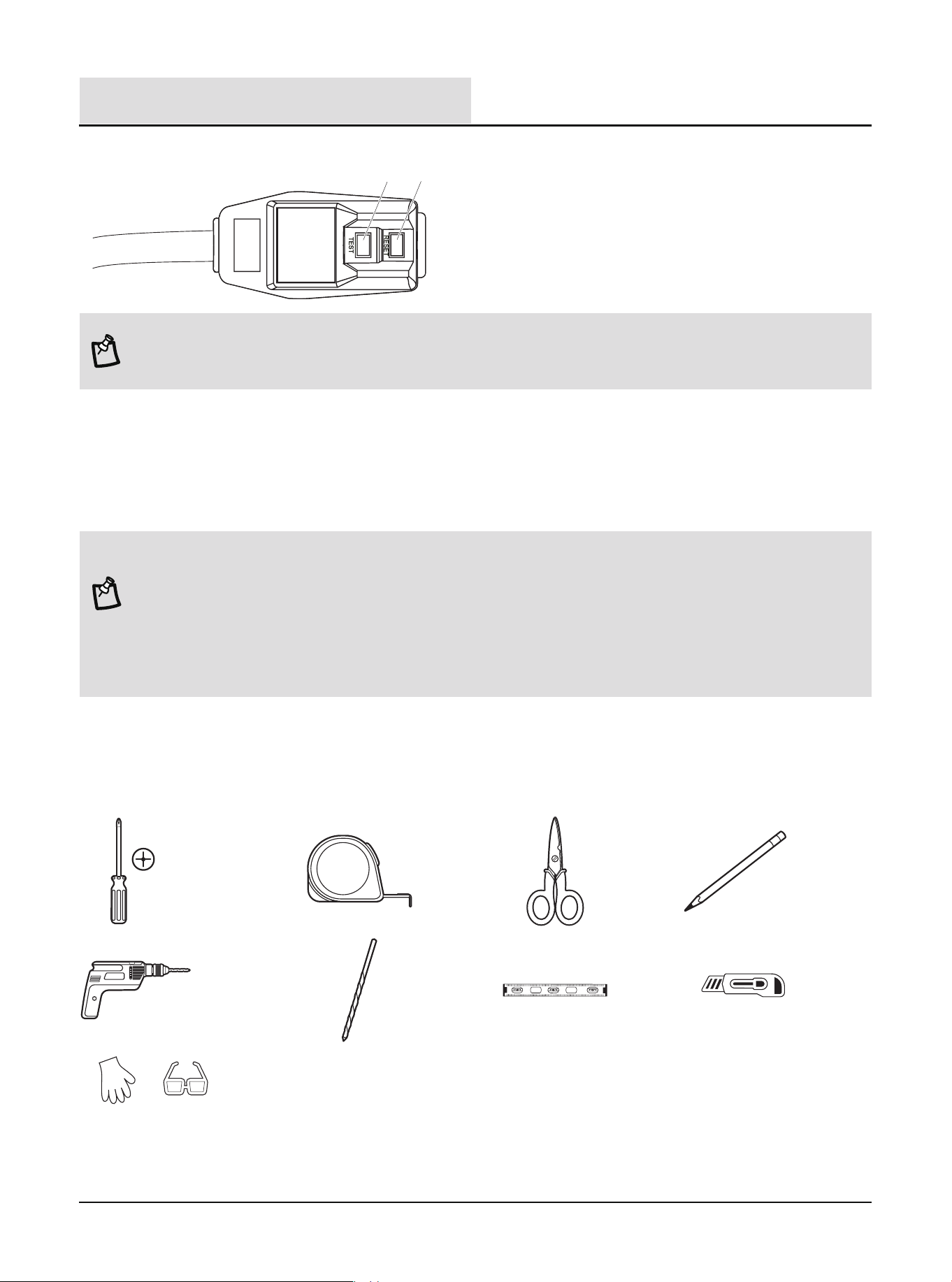
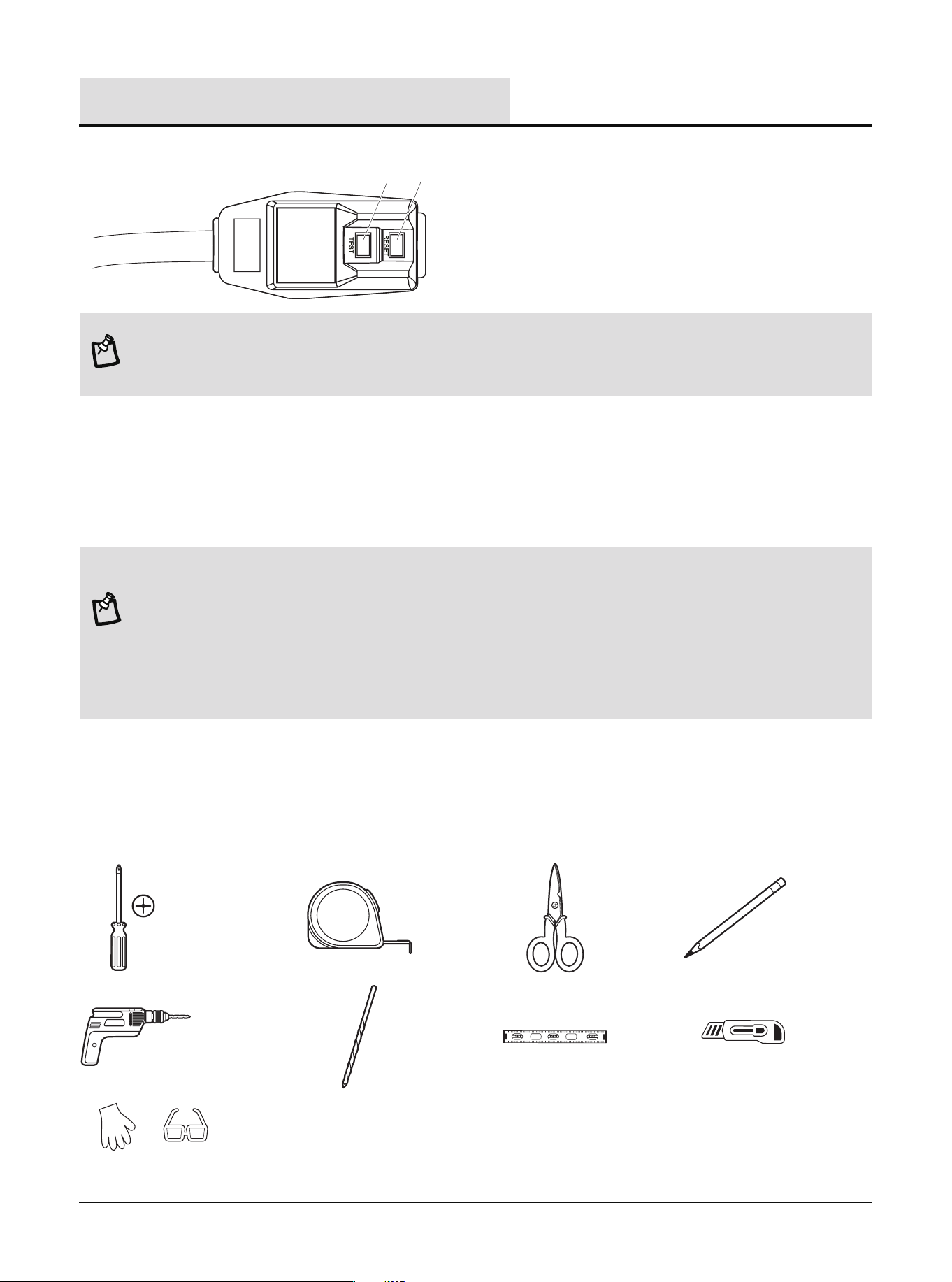
1
2
To test your power supply cord:
1. Plug power supply cord into a grounded 3-prong outlet.
2. Press RESET (2) (on some devices, a green light will turn on).
3. Press TEST (1) and listen for click. The RESET button will trip and on some devices, a green light will turn off.
4. Press and release RESET (2) and listen for click. The RESET button will latch, and on some devices, a green light will turn on.
The power supply cord is ready for operation.
NOTE:
The RESET button must be pushed in for proper operation.
1. The power supply cord must be replaced if it fails to trip when the test button is pressed or fails to reset.
2. Do not use the power supply cord as an off/on switch. The power supply cord is designed as a protective device.
3. A damaged power supply cord must be replaced with a new power supply cord obtained from the product manufacturer and
must not be repaired.
4. The power supply cord contains no user serviceable parts. Opening the tamper-resistant case voids all warranty and
performance claims.
NOTE: Your air conditioner’s device may differ from the one shown. This room air conditioner is equipped with a power supply cord
required by UL. This power supply cord contains state-of-the-art electronics that sense leakage current. If the cord is crushed, the
electronics detect leakage current and power will be disconnected in a fraction of a second.
PLANNING INSTALLATION
Gather the required tools and parts before starting installation. Read and follow the instructions provided with any tools listed here.
TOOLS REQUIRED
Phillips
screwdriver
Tape
measure
Scissors Pencil
Knife
Cordless drill 1/8 in. bit Level
Proper PPE
Pre-Installation (continued)
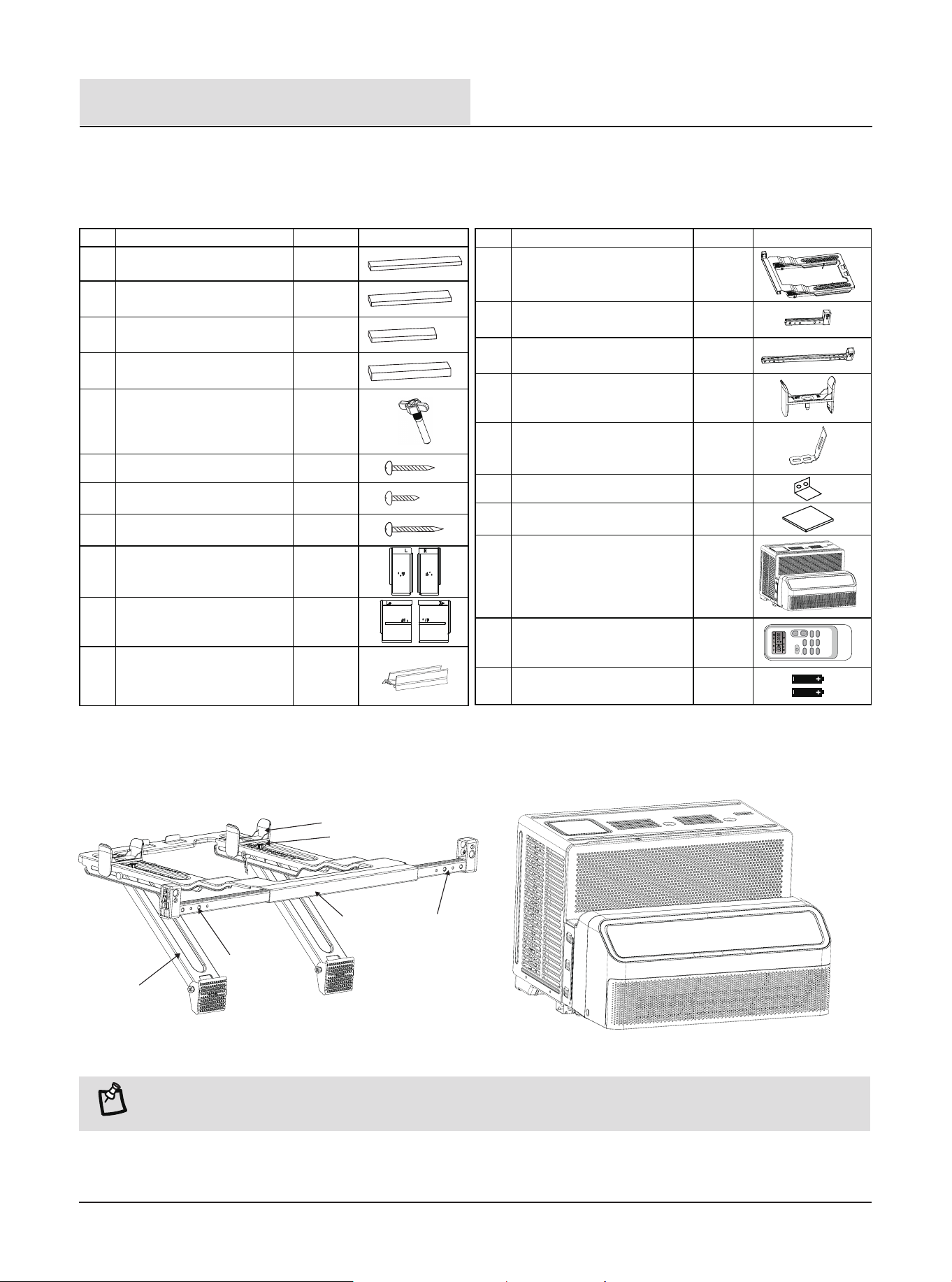
* One of the Extension arm (long) has been installed on the Main bracket to
demonstrate how to insert or remove.
10
HARDWARE INCLUDED
NOTE: All the illustrations in the manual are for explanation purpose only. The actual installation may vary.
Pre-Installation (continued)
Support leg
Extension arm
Extension arm
Main bracket
Back plate
Screw bolt
Part
A1 1
1
1
1
2
6
6
6
1+1
1+1
1
A2
A3
BB
CC
DD
EE
FF
GG
G1
Description
Adhesive seal (gray)
Adhesive seal (black-long)
Adhesive seal (black-short)
Foam seal (gray)
Screw bolt
1/2″screw
3/8″screw
3/4″screw
Short side curtain (left/right)
Wide side curtain (left/right)
G2 Spare curtain (left/right)
Quantity Sketch Map
Part
H1 1
1
2*
2
2
1
2
1
1
H2
H3
H4
H5
II
JJ
KK
LL
Description
Main bracket
Extension arm (short)
Extension arm (long)
Back plate
Sash lock
(for air conditioner)
Sash lock (for window)
Eva foam (white)
Air conditioner
Remote control
2MM
Batteries
(standard AAA 1.5Volt)
Quantity Sketch Map
FILTER
FAN
QUIET
SWING
TIMER
SUPER
DIMMER
Sleep[5 sec]
MODE
F/ C[5 sec]
11
UNPACK THE AIR CONDITIONER
WARNING
Excessive Weight Hazard
1. Use two or more people to move and install air conditioner. Failure to do so can result in back or other injury.
2. You must use the supplied parts and use proper installation procedures as described in these instructions when installing the air
conditioner.
3. Becareful to avoid cuts from sharp metal edgea. please wear cut-resistant gloves. Support bracket should only used for its
intended purpose. If not, the warranty will be voided.
Remove packaging materials
1. Remove and dispose of recycle packaging materials.
Remove tape and glue residue from surfaces before
turning on the ai conditioner. Rub a small amount of
liquid dish soap over the a dhesive with your ngers.
Wipe with warm water and dry.
2. Do not use sharp instruments, rubbing alcohol,
ammable uids, or abrasive cleaners to remove tape
or glue. These products can damage the surface of
your air conditioner.
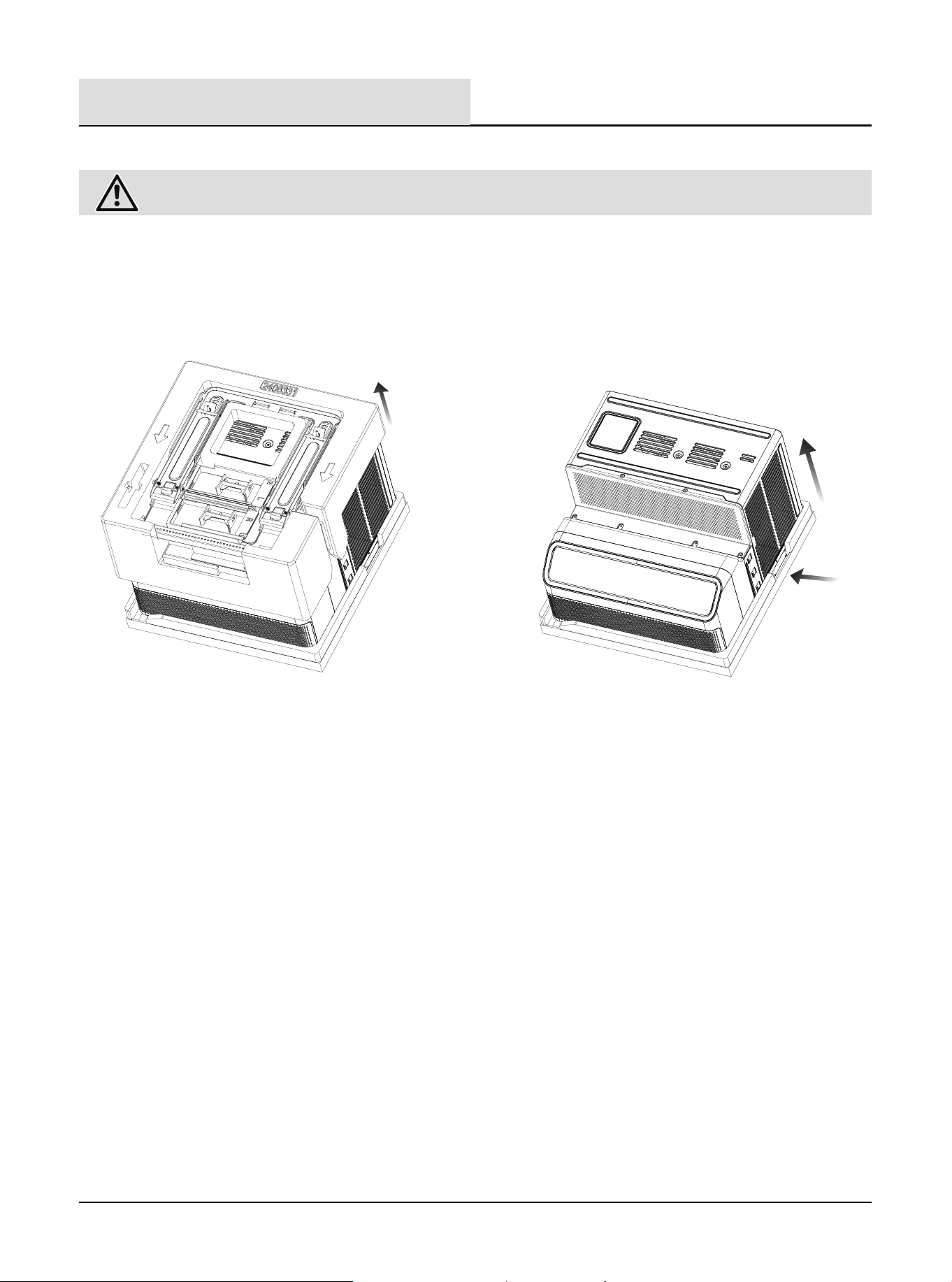
3. Remove main bracket and other hardwares from
the packaging material.
4. Tack out the power supply cord, then move the
packaging on the top of the air conditioner.
5. Place both hands in the positions indicated by the
arrows and remove the air conditioner from the
front of the product.
HANDLE
Pre-Installation (continued)
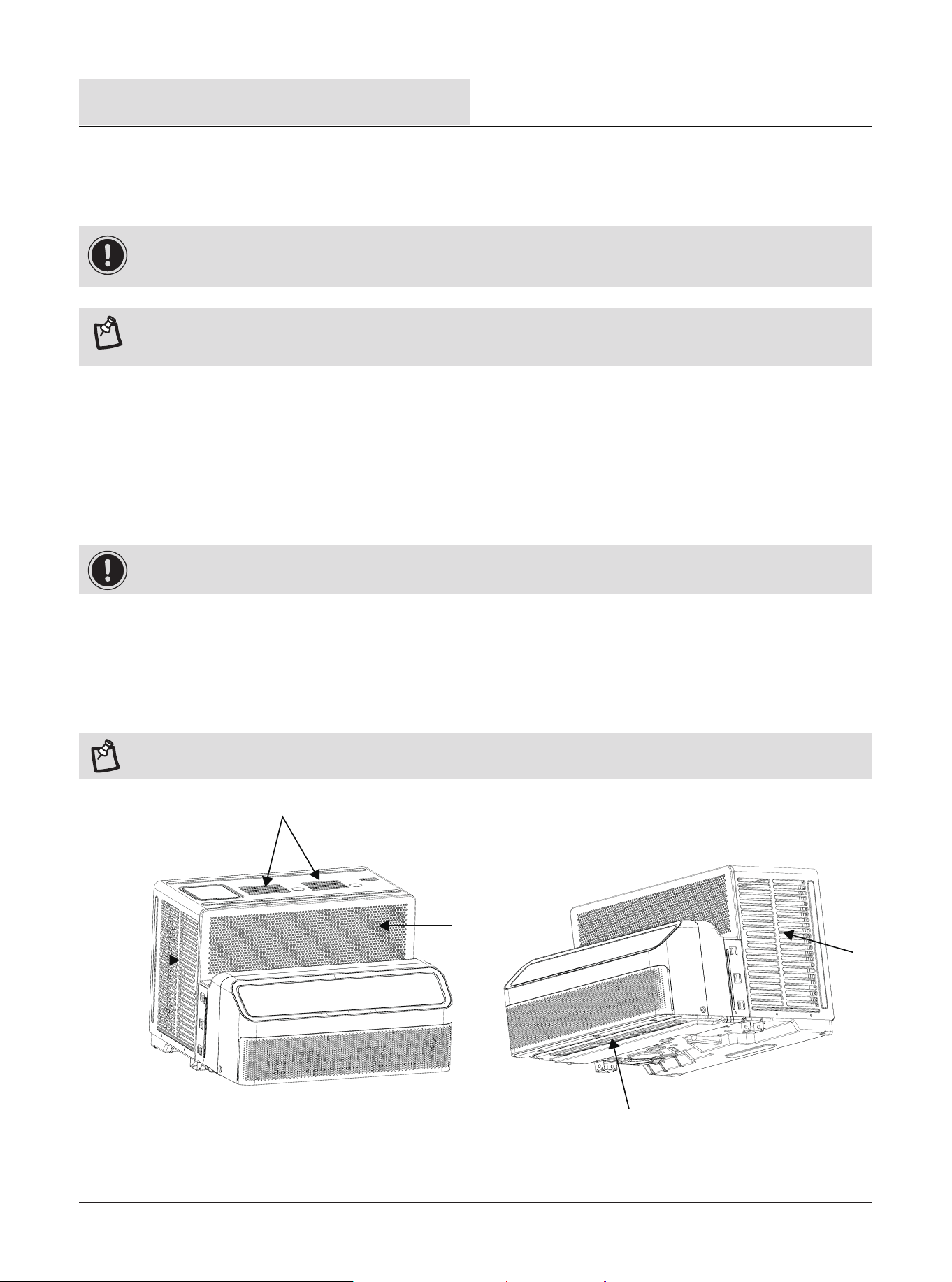
1. Completion time: Around 20 min.
2. We recommend that two people install this product.
3. Proper installation is the responsibility of the installer.
4. Product failure due to improper installation is not covered under the warranty.
5. You MUST use all supplied parts and use proper installation procedures as described in these instructions when installing this air
conditioner.
NOTE: Cabinet louvers (A-B-C-D) must not be obstructed. Air must be able to pass freely through the cabinet louvers.
12
Check the location where air conditioner will be installed. Proper installation is your responsibility. Make sure you have everything
necessary for correct installation.
The location should provide:
1. Do not use an extension cord. The appliance shall be installed in accordance with national wiring regulations.
2. Free movement of air in room to be cooled.
3. A large enough opening for the air conditioner.
Pre-Installation (continued)
IMPORTANT: Observe all governing codes and ordinances.
B
A
A
C
D
LOCATION REQUIREMENTS
Before You Begin
Read these instructions completely and carefully.
IMPORTANT: Save these instructions for local inspector’s use. Observe all governing codes and ordinances.
NOTE: Installer, be sure to leave these instructions with the Consumer.
Consumer, keep these instructions for future reference.
13
WINDOW OPENING MEASUREMENTS
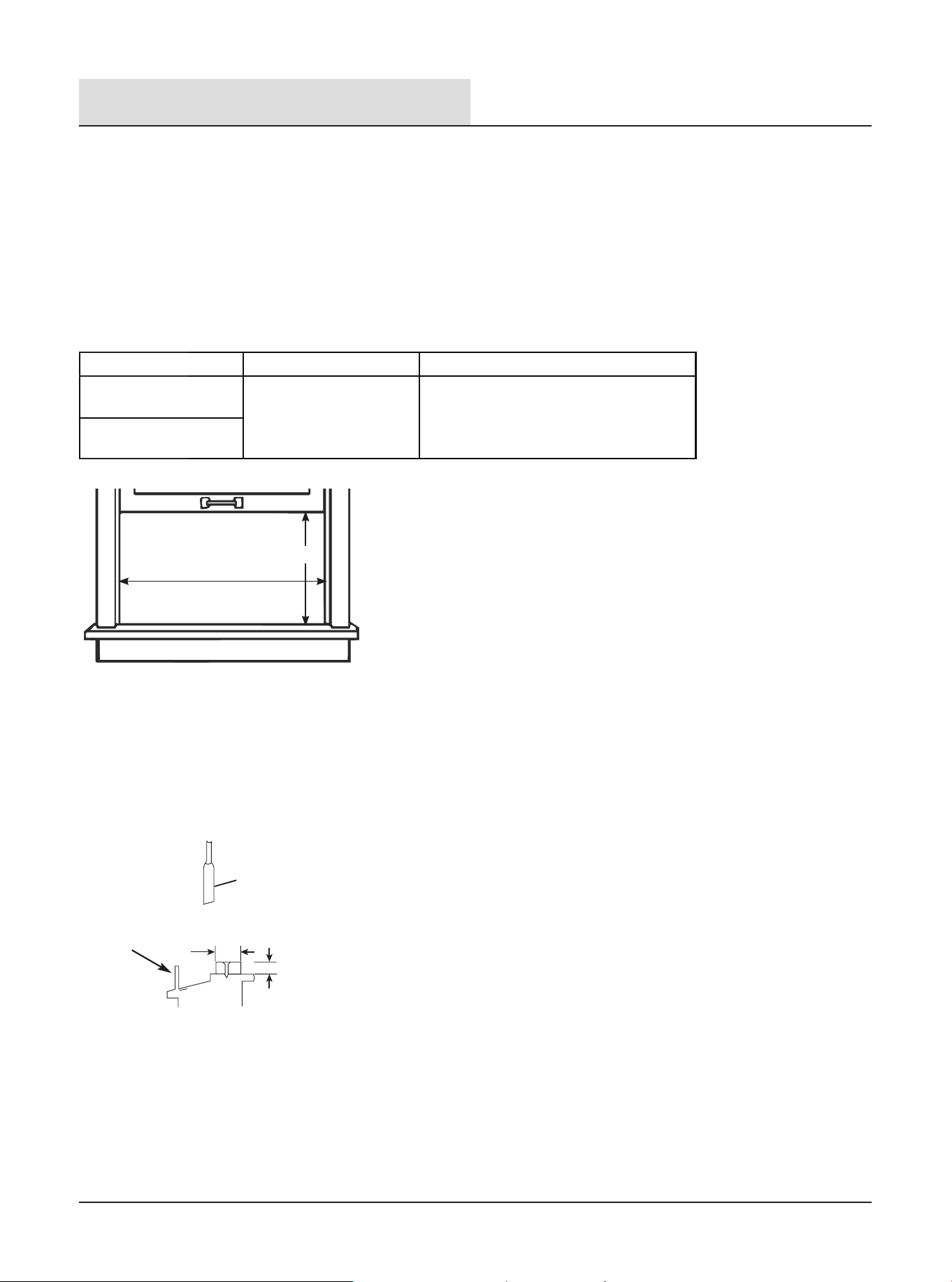
1. These instructions are for a standard double-hung window. You will need to modify them for other types of windows.
2. The air conditioner can be installed without the side curtain panels if needed to t in a narrow window.
See the window opening dimensions.
3. All supporting parts must be secured to rm wood, masonry or vinyl-clad.
4. Aluminum house wiring may present special problems-consult a qualied electrician.
5. The electrical outlet must be within reach of the power cord.
6. Follow the dimensions in the table and illustration for your model.
Add wood as shown, or remove storm window before air conditioner is installed.
If storm window frame must remain, be sure the drain holes or slots are not caulked or painted shut. Accumulated rain water or
condensation must be allowed to drain out.
IF AC IS BLOCKED BY STORM WINDOW
Board thickness as required, for proper pitch to rear, along entire sill.
Fasten with nails or screws.
Storm window
frame or other
obstruction.
1 - 1/2 in. min
(38 mm)
Sash
A
B
(With side curtain panels)
Models A B
8K BTU cooling only
15″(385 mm) min 25″ (635 mm) - 38″(980 mm)
12K BTU cooling only
Pre-Installation (continued)
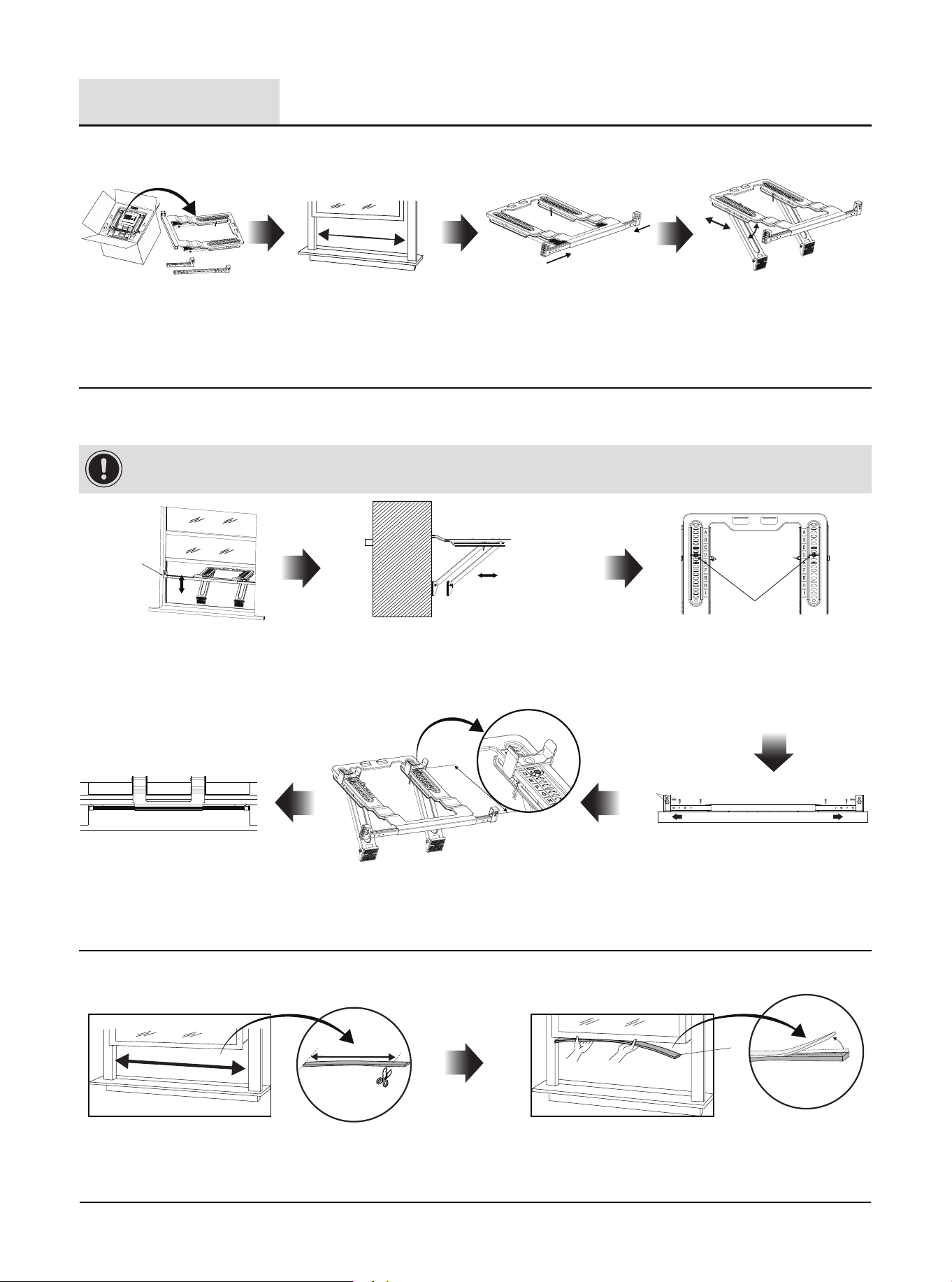
Remove the backing from the seal and attach the seal
to the bottom of the lower window sash.
Prepare Support Bracket
Install Support Bracket
14
1
2
B
A1
3
Attaching the Adhesive Seal
Installation
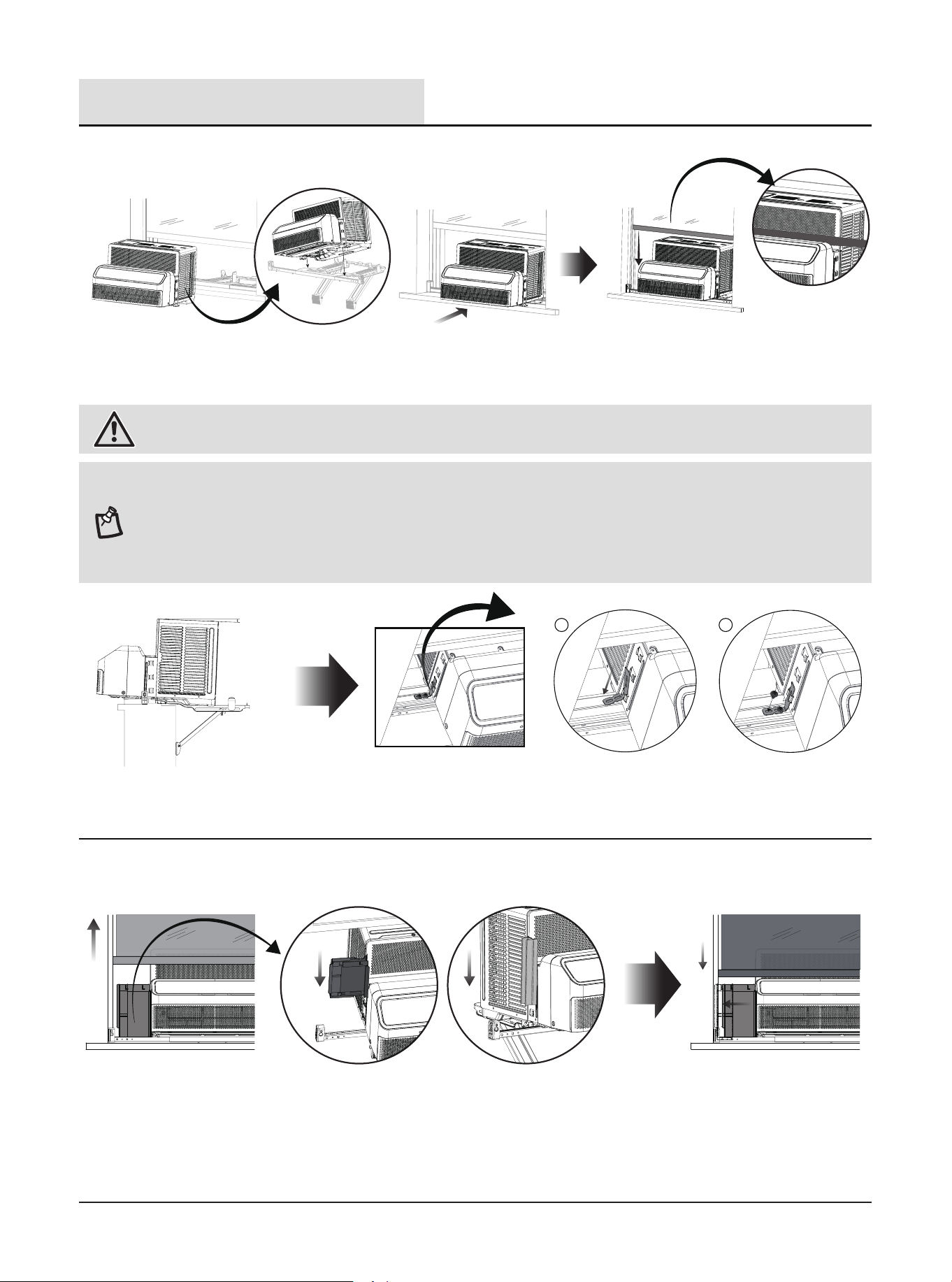
Remove main bracket and
hardware from the carton,
set on the at surface.
Install support bracket into the
opening window. And ensure
extension arms are located on the
indoor side of the window.
Measure the width of the window
to choose between two long
extension arms (H3) or one long
extension arm (H3) and one short
extension arm (H2).
The support legs slide
forward and backward along
the guide slot on the mail
bracket, and can also rotate.
Insert the extension arm (H2 or H3)
into left and right ends respectively.
The extension arm (H2 or H3) can
slide freely under external force.
Lock the screw bolt (CC), and visually
ensure thant the support bracket is
slightly tilted toward the outside.
Secure support bracket to the
windowsill by drilling 3/8" and
1/2" type screws (DD and EE).
Back plate (H4) is installed on the support bracket,
one on each side. The distance from the indoor side
of support bracket is greater than 13".
Attach the seal (A3) to the top of
the secure support.
IMPORTANT: Maintain control of the support until installation is complete.
Cut the adhesive seal (gray) (A1) to the width
of the lower window sash (B).
A1
A1
Lock screw bolt (CC)
Ensure extension
arms are located
on the indoor side
of the window
Move support leg
Move the two support legs toward the exterior wall
until the feet of the support legs touch the wall. It is
recommended to align the two support legs according
to the marking on the support bracket.
13"
3/8"
1/2" 1/2"
1/2" 1/2"
5
Attaching Side Curtains to Window
4
Placing Air Conditioner in Window
15
Installation (continued)
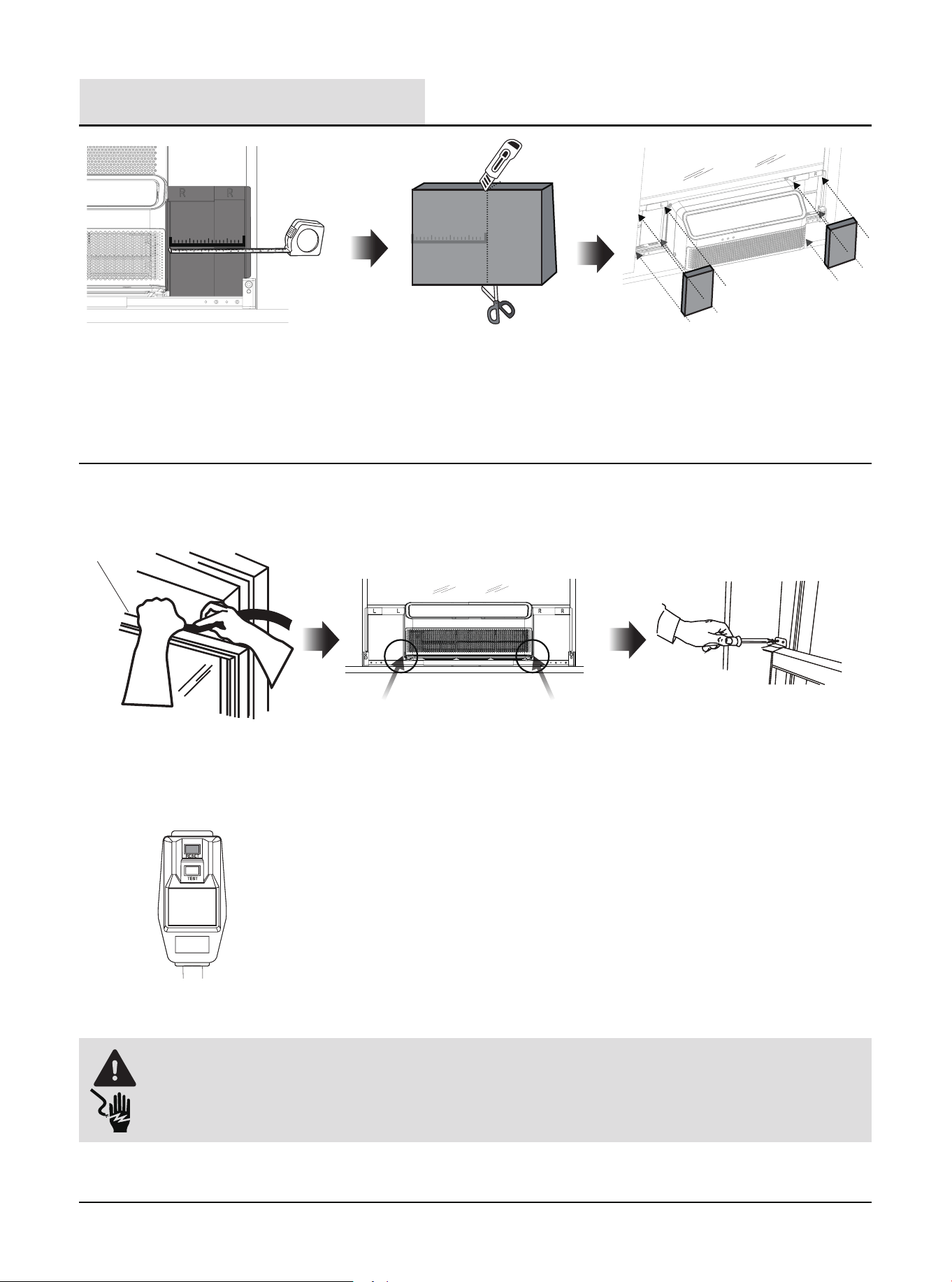
Keeping a rm grip on the air conditioner, carefully place the unit into the window
opening so the bottom of the air conditioner frame is against the support bracket
and make sure the unit is staying center of the support bracket. Then slowly push
the air conditioner towards the outside of the room.
Insert the Sash lock (for air conditioner) into both sides of the air conditioner, and
secure it with 3/8" or 3/4" type screws (EE or FF).
Carefully open the window up.
Install Short side curtain (left
and right) into the air
conditioner, from top to
bottom.Repeat for the
right-hand curtain.
a) When the gap between the air conditioner and the side of the
window (left or right) is greater than 6.5" (165mm), use the Wide
side curtain L+ or R+ (G1) (rst remove the corresponding L or R).
b) When the gap between the air conditioner and the side of the
window (left or right) is less than 3.5" (90mm), use the Spare
curtain (G2).
Open side curtains (left and
right) until touch the side of
window.
Carefully close the window
down.
NOTES:
1. Handle air conditioner gently.
2. Be sure your air conditioner does not fall out of the opening during installation or removal.
3. Do not block the louvers in the front panel.
4. Do not block the louvers on the outside of the air conditioner.
5. Your model may differ from the one shown.
WARNING: Excessive Weight Hazard
Use two or more people to move and install air conditioner. Failure to do so can result in back or other injury.
1 2
Carefully close the window down into the top
of the air conditioner help align the air
conditioner in the correct location, and heip
support the air conditioner during installtion.
The air conditioner is tilted about
3° toward outside of the room.
About 3°
DANGER: ELECTRICAL SHOCK HAZARD
1. Plug into a grounded 3-prong outlet.
2. Do not remove ground prong.
3. Do not use an adapter.
4. Do not use an extension cord.
5. Failure to follow these instructions can result in death, re, or electrical shock.
6
Completing Installation
BB
A
16
Installation (continued)
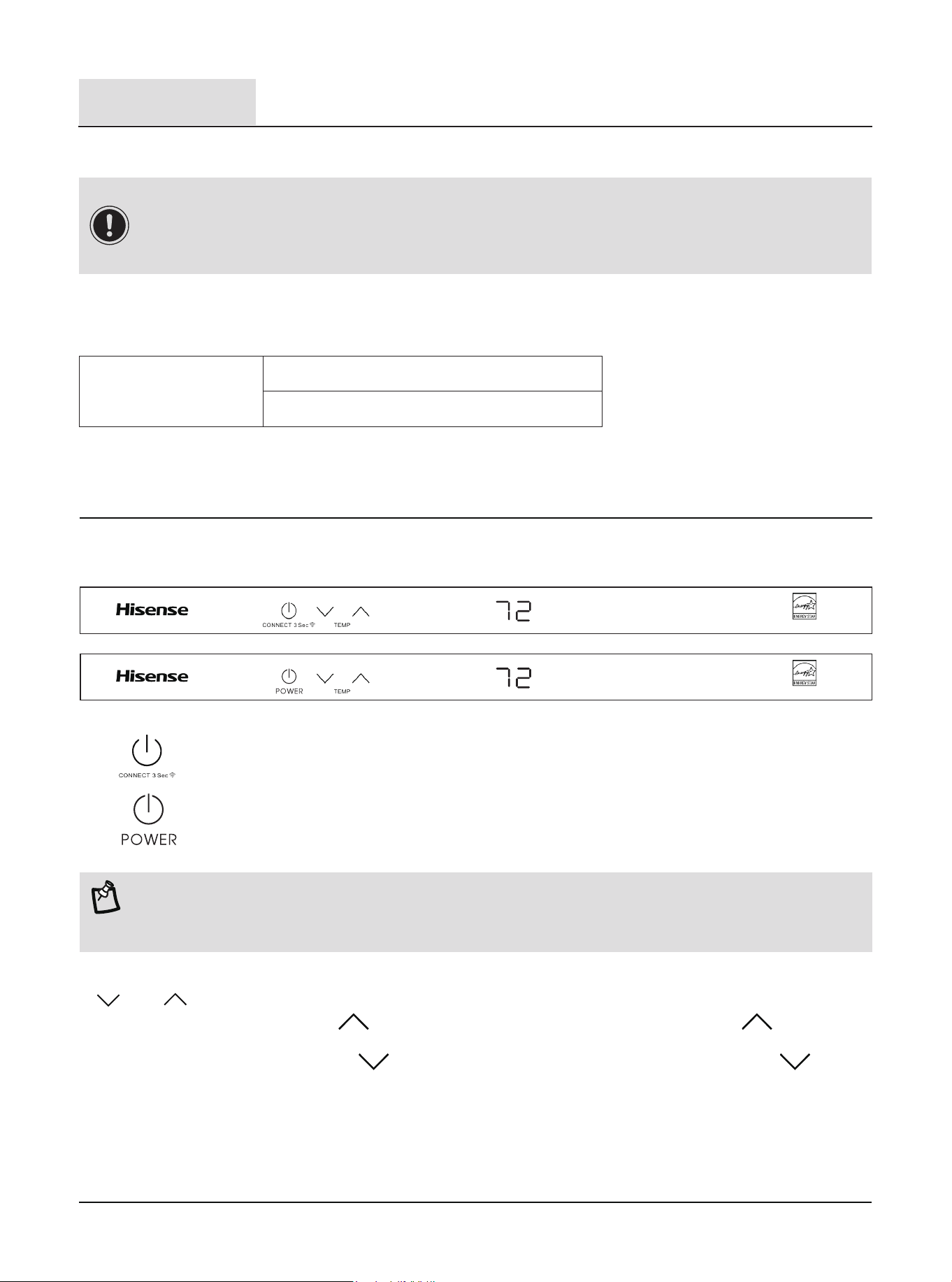
Put one EVA foam (JJ) on the curtain housing.
In order to minimize air leaks and ensure optimal
insulation, it is necessary to install the EVA Foam
(JJ) on the curtain housing.
After the unit is installed on the window frame,
measure the inner width of the side curtain as
shown.
Check the gap around the unit and seal it with
the adhesive seal (black) (A2) attached.
Insert foam seal (BB) behind the top of
the lower window sash (A) and against
the glass of the upper window.
1. Plug into a grounded 3-prong outlet.
2. Press RESET on the power supply cord.(See “ELECTRICAL REQUIREMENTS”.)
To secure lower sash in place, attach
sash lock (II) with 3/4 inch (20 mm)
screw (FF) as shown.
Glass is fragile and should be protected
during installation.
Remark a line on the EVA foam (JJ)
according to he measured width, then
cut the EVA foam (JJ) along the line,
use scissors or knife.
Install the EVA foam (JJ) into the Side
curtains (left/right).
JJ
JJ
JJ
A2 A2
17
AIR CONDITIONER USE
IMPORTANT:
1. If you turn off the air conditioner, wait at least 3 minutes before turning it back on.
This prevents the air conditioner from blowing a fuse or tripping a circuit breaker.
2. In the event of a power failure, your air conditioner will operate at the previous settings when the power is restored.
NOTE:
When the air conditioner is turned on for the rst time after it is plugged in, the display will show the current set temperature
and will run in the ECO control.
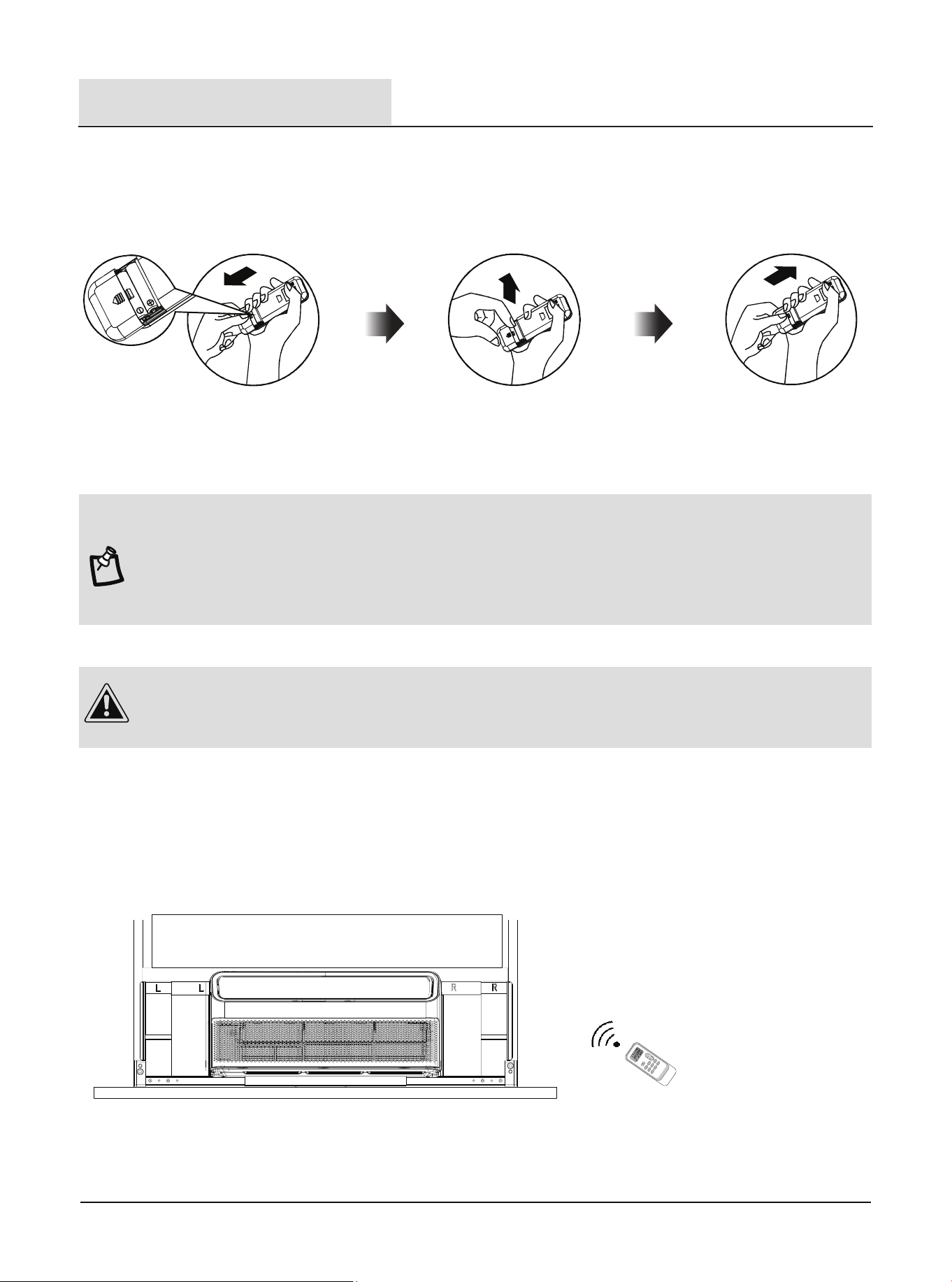
Press and hold the POWER button for 3 seconds to enter WiFi pairing mode. (valid for some models)
ON/ OFF SETTINGS
Press the POWER button to turn on or off the air conditioner.
1. Operating your air conditioner properly helps you to obtain the best possible results.
2. This section explains proper air conditioner operation.
Operation
Using the Control Panel
1
TEMPERATURE SETTINGS
1. Press the UP button to raise the temperature. Each time you press or hold the UP button, the
temperature will go up 1 °F (1 °C) until it reaches 86 °F (30 °C).
2. Press the DOWN button to lower the temperature. Each time you press or hold the DOWN button,
the temperature will go down 1 °F (1 °C) until it reaches 61 °F (16 °C).
TEMP
T E MP
P O W E R
T E MP
P O W E R
Cool mode operation
Indoor: 62.6-89.6 °F (17-32 °C), ≤ 80% RH
Outdoor: 64.4-109.4 °F (18-43 °C), ≤ 80% RH
Air conditioner in the Cool mode operation the better limits:
18
2
Using the Remote Control
INSERT THE BATTERIES
HOW TO USE
Signal receptor/display
NOTE: 1. Use 2 standard AAA (1.5 volt) batteries. Do not use rechargeable batteries.
2. Replace batteries with new ones of the same type when the display becomes dim, or after 6 months.
3. When replacing batteries, always replace both batteries with new batteries. Do not mix old and new batteries.
4. Do not mix alkaline, standard (carbon-zinc), or rechargeable (ni-cd, ni-mh, etc) batteries.
5. If the air conditioner will not be used for an extended period of time, remove the batteries from the remote.
1. To operate the room air conditioner, aim the remote control at the signal receptor. The remote control will operate the air conditioner at a
distance of up to 23' (7m) when pointed at the signal receptor.
1. Remove the battery cover
along the arrow direction.
2. Insert new batteries making sure that the
(+) and (-) of battery are matched correctly.
3. Re-attach the cover by
sliding it back into position.
Operation (continued)
1. Do not use the remote if the batteries have leaked.
2. The chemicals in batteries could cause burns or other health hazards.
3. Do not dispose of batteries in a fire. Batteries may explode or leak.
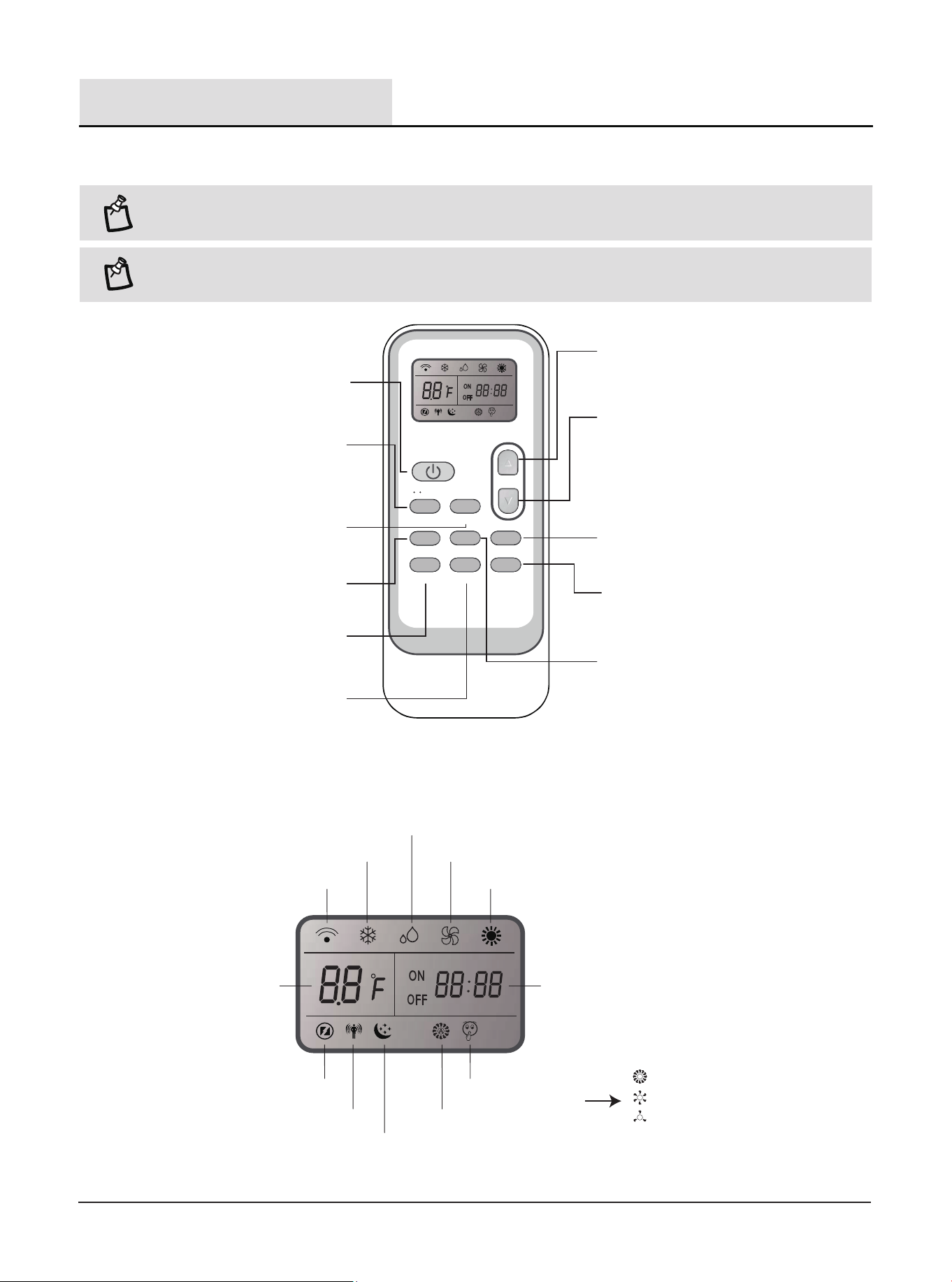
FILTER
SUPER
MODE FAN
QUIET
TIMER DIMMER
Sleep [ 5 sec ]
SWING
F / C
[ 5 sec ]
FILTERSUPERQUIET
MODE FAN
SWING TIMER DIMMER
Sleep [ 5 sec ]
F / C [ 5 sec ]
19
BUTTON AND FUNCTION
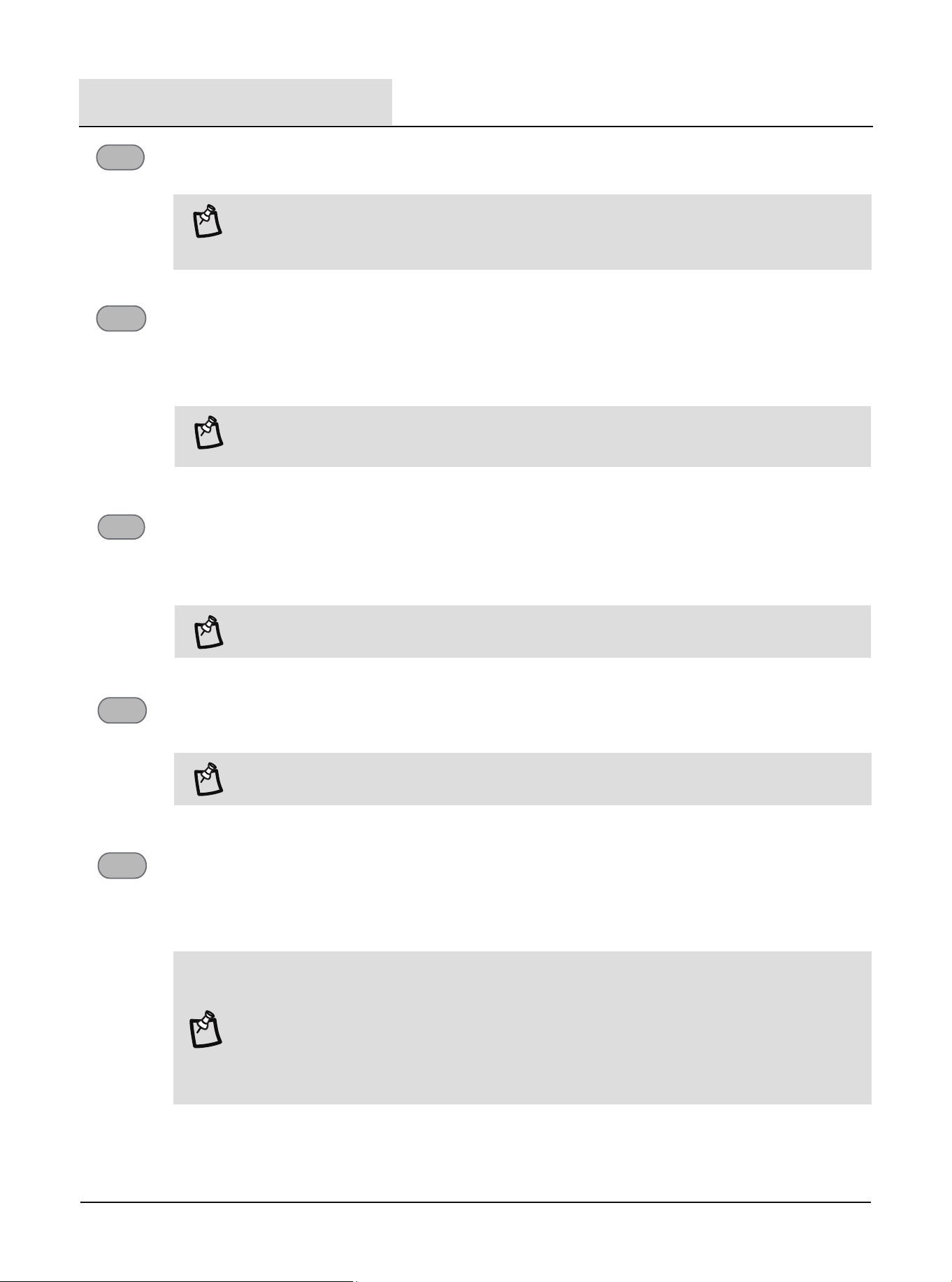
INDICATION SYMBOLS
NOTE: Remote control may differ in appearance.
Heating indicator is not available on this models.
NOTE: Press and hold the MODE button on the remote for 5 seconds to switch the temperature display from degrees
Fahrenheit (°F) to degrees Celsius (°C).
Operation (continued)
UP
Increase temperature in 1
°F
(1
°C
) increment
Max temperature is 86
°F
(30
°C
)
DOWN
Decrease temperature in 1
°F
(1
°C
) increment
Min temperature is 61
°F
(16
°C
)
FILTER
Reset the lter cleaning tips
(There is not corresponding indicator light on the unit.)
DIMMER
Sleep[
5 sec]
Switch the DIMMER mode to SLEEP mode
SUPER
Start or stop fast cooling
TIMER
Set time to turn the unit on or off
(There is not corresponding indicator light on the unit.)
SWING
Start or stop the Level Vane movement
QUIET
Set or cancel the quiet mode
FAN
Switch the fan speed as follows:
High - Medium - Low
MODE
Switch the operating modes as follows:
ECO - Heat - Cool - Dry - Fan
(Change the temperature mode between °F and °C.)
ON/OFF
Turn on or off the unit
Display set timer
Heating indicator
Dry indicator
Fan only indicator
Display temperature
Quiet indicator
Super indicator
Signal transmission
ECO indicator
Cooling indicator
(Not available for the unit.)
Displays selected fan speed
:
Medium fan speed
Low fan speed
High fan speed
(The unit can not be adjusted in Auto
fan speed mode.)
Fan speed display
Sleep indicator
(Not available for the unit.)
20
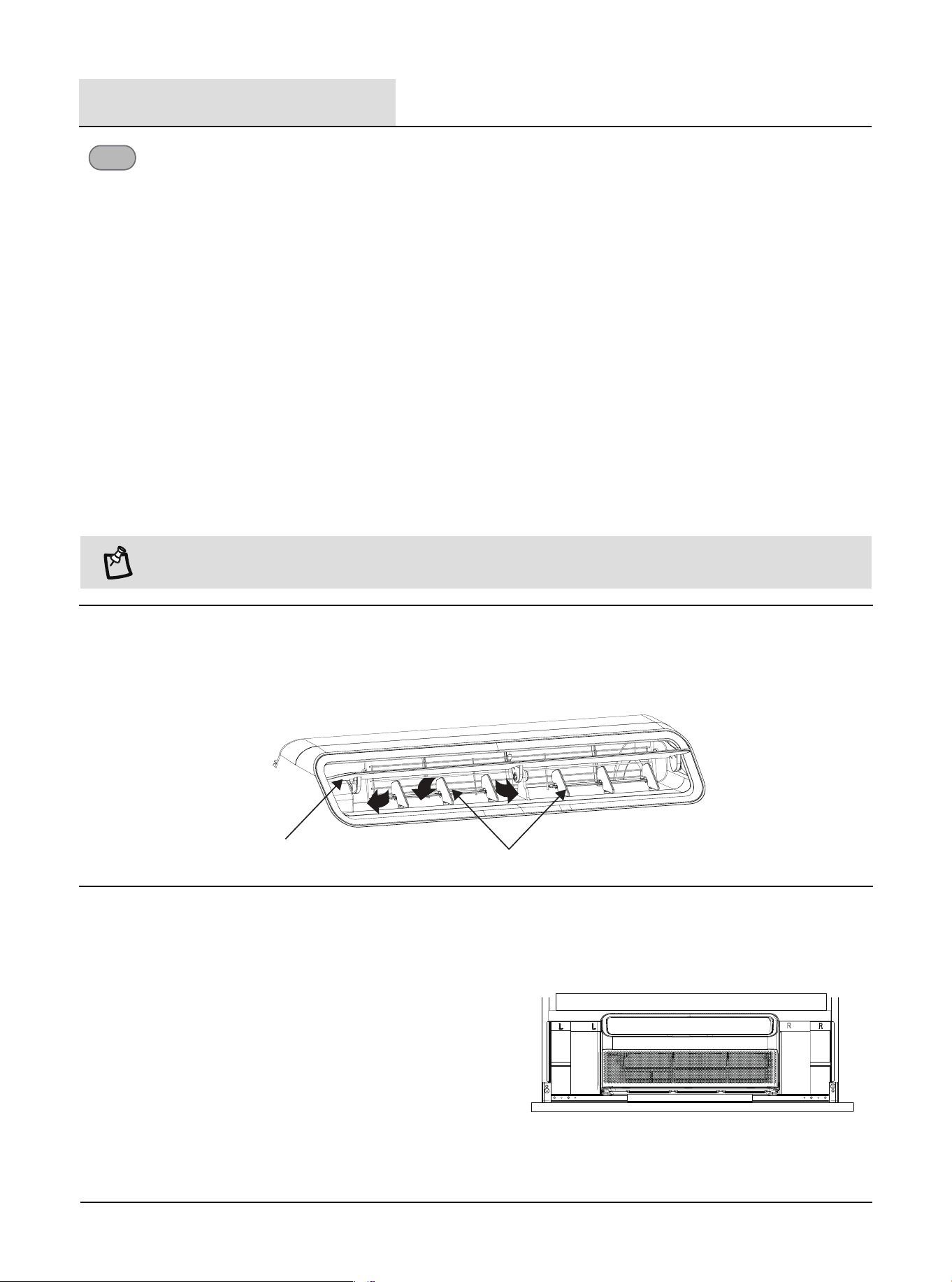
DIMMER
DIMMER sleep [ 5 sec ]
DIMMER
sleep [ 5 sec ]
1. Press the DIMMER button to turn off the control panel display.
1. Press and hold the DIMMER button on the remote for 5 seconds to switch the DIMMER mode to SLEEP mode.
2. After 10 seconds, the light on the control panel display will dim.
3. To turn off Sleep control, press MODE, FAN, SLEEP or wait 8 hours for Sleep control to turn off automatically
DIMMER
sleep [ 5 sec ]
1. Press the Quiet button to set or cancel the Quiet Mode operation.
QUIET
QUIET
SUPER
FILTER (valid for some models)
1. When "FC" appears on the air conditioner display, please clean or replace the air lter. See “CLEANING THE AIR FILTER”.
2. Press Power button on the machine or FILTER button on remote to reset the lter after cleaning and replacing the air lter.
FILTER
SUPER
The SUPER button is used to start or stop fast cooling.
1. Press the SUPER button. The air conditioner automatically sets the fan speed to High and the temperature to 61 °F (16 °C).
2. To turn off Super control, press MODE, FAN, QUIET or SUPER button on the remote control.
NOTE: 1. It takes about 2 to 3 minutes to fully enter the quiet mode.
2. Sometimes it cannot enter the quiet mode because of some protection.
3. The QUIET button is disabled in dry mode.
NOTE: When you press sleep button
1. The appliance will stop operation automatically after operating for 8 hours.
2. Fan speed is automatically set at low speed.
3. In the Cooling mode, Dry mode, and ECO mode, the set temperature will increase by 4 °F (2 °C)
at most, during 2 hours, and continues running at that temperature until auto shut off.
4. Sleep control cannot be selected in Fan mode.
NOTE: 1. In the SUPER mode, you can set the timer.
2. SUPER button is ineffective in ECO mode.
NOTE: FC display will switch to normal display after 5 seconds.
NOTE: When in DIMMER mode, new control inputs will return display to normal.
Operation (continued)
21
3
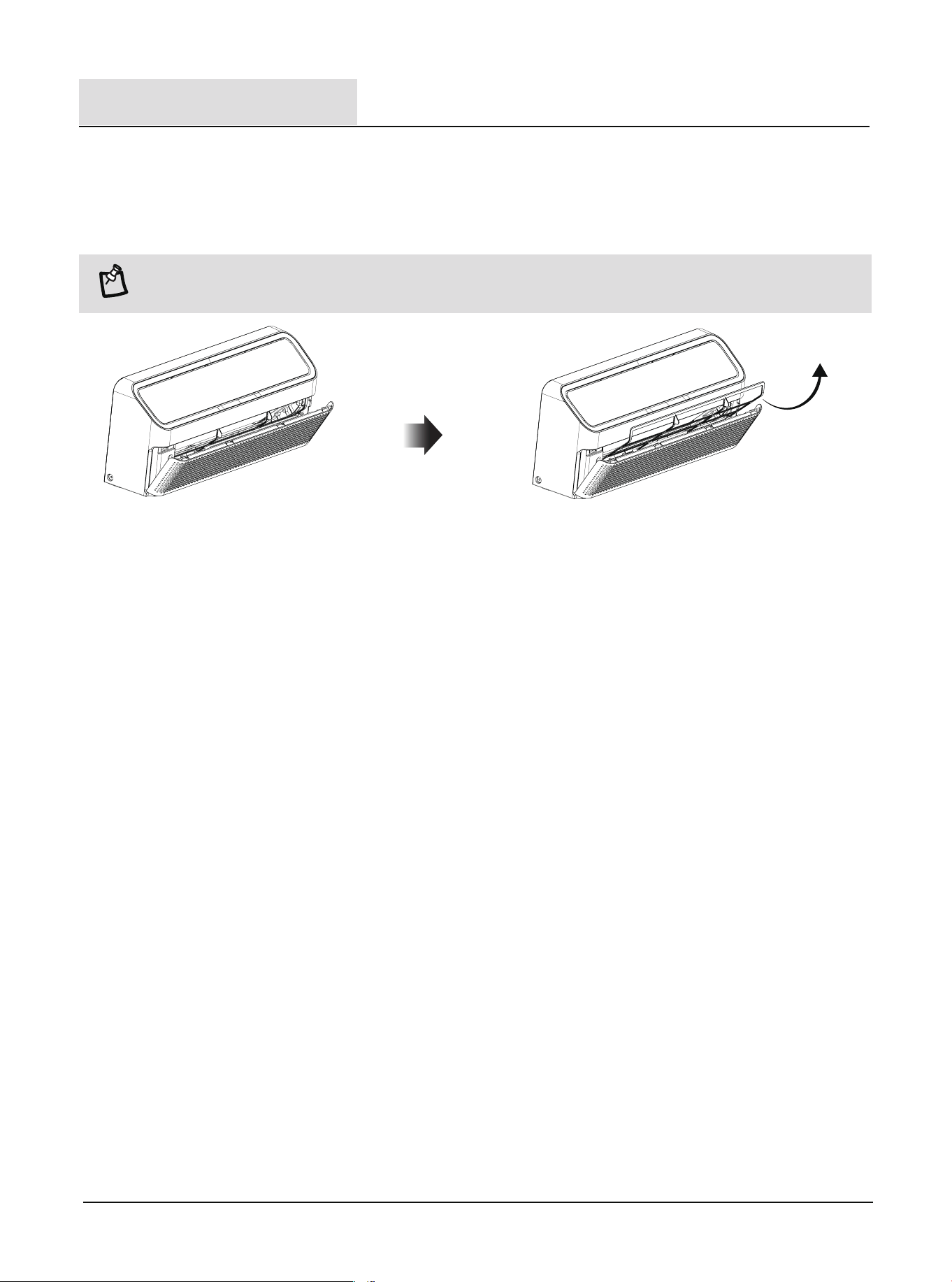
Changing Air Direction
1. Use the Vertical Vane to direct the air right or left.
2. Use the Level Vane to direct air up, down or straight ahead.
TIMER
TIMER
Use the TIMER function to turn the air conditioner ON/OFF automatically.
Setting the Air Conditioner to Turn On:
1. Plug in the air conditioner and use the remote to power it ON.
2. Use the remote to set the desired mode, temperature, fan speed, etc.
3 .Use the remote to power OFF the air conditioner.
4. Press TIMER on the remote and use the UP/ DOWN buttons to set the desired delay time.
The delay time can be set from 0 to 24 hours in one-hour increments.
5. Press TIMER again to confirm the delay time.
Setting the Air Conditioner to Turn Off:
1. Plug in the air conditioner and use the remote to power it ON.
2. Use the remote to set the desired mode, temperature, fan speed, etc.
3. Press TIMER on the remote and use the UP/ DOWN buttons to set the desired delay time.
The delay time can be set from 0 to 24 hours in one-hour increments.
4. Press TIMER again to confirm the delay time.
To Cancel Timer:
1. Press the TIMER button again. Once a “beep” is heard and the indicator disappears, the Timer mode has been canceled.
The Level Vane The Vertical Vane
4
Normal Sounds
NOTE:The TIMER function can only be set using the remote.
Operation (continued)
When your air conditioner is operating normally, you
may hear sounds such as:
1. Droplets of water hitting the condenser, causing a pinging or clicking
sound. The water droplets help cool the condenser.
2. Air movement from the fan.
3. Clicks from the thermostat cycle.
4. Vibrations or noise due to poor wall or window construction.
5. A high-pitched hum or pulsating noise caused by the modern
high-efciency compressor cycling on and off.
3. Use a vacuum cleaner to clean the air lter. If the air lter is very dirty,
wash it in warm water with a mild detergent. Do not wash the air lter in the
dishwasher or use any chemical cleaners. Air dry the lter completely before
replacing to ensure maximum efciency.
4. Replace the air lter back into the air conditioner.
22
Your new air conditioner is designed to give you many years of dependable service. This section tells you how to clean and care for your
air conditioner properly. Call your local authorized dealer for an annual checkup. Remember the cost of this service call is your responsibility.
The air lter is removable for easy cleaning. A clean lter helps remove dust, lint, and other particles from the air and is important for
best cooling and operating efciency. Check the lter every 2 weeks to see whether it needs cleaning.
CLEANING THE AIR FILTER
1. Turn off the air conditioner.
2. Open the front panel. Grasp the lter
by the handle and pull it out.
CLEANING THE FRONT PANEL
1. Turn off the air conditioner.
2. Clean the front panel with a soft, damp cloth.
3. Air dry the front panel completely.
REPAIRING PAINT DAMAGE
Check once or twice a year for paint damage. This is very important, especially in areas near oceans or where rust is a problem.
If needed, touch up with a good grade enamel paint.
ANNUAL MAINTENANCE
Your air conditioner needs annual maintenance to help ensure steady, top performance throughout the year. Call your local authorized
dealer to schedule an annual checkup. The expense of an annual inspection is your responsibility.
REMOVING AC FROM WINDOW
1. Turn AC off, and disconnect power cord.
2. Remove the EVA foam.
3. Remove sash seal from between windows and unscrew safety lock.
4. Remove screws installed through frame and frame lock.
5. Close the curtain housing.
6. Keeping a rm grip on air conditioner, raise sash and carefully remove.
7. Be careful not to spill any standing water while lifting unit from window.
8. Remove the support bracket.
9. Store parts with the AC.
NOTE: 1. Do not operate the air conditioner without the lter in place.
2. Do not toutch the metal parts of the unit, when the air lter is to be removed. It may cause injury.
Care and Cleaning
23
Problem Solution
Air conditioner will not operate
DANGER: ELECTRICAL SHOCK HAZARD
1. Plug into a grounded 3-prong outlet.
2.
Do not remove ground prong.
3. Do not use an adapter.
4. Do not use an extension cord.
5. Failure to follow these instructions can result in
death, re, or electrical shock.
1. The power supply cord is unplugged. Plug into grounded 3-prong
outlet. See “ELECTRICAL REQUIREMENTS”.
2. The power supply cord has tripped (RESET button has popped out).
Press and release RESET to resume operation.
3. A household fuse has blown, or circuit breaker has tripped.
Replace the fuse or reset the circuit breaker. If the problem
continues, call an electrician. See “ELECTRICAL REQUIREMENTS”.
4. The Power button has not been pressed. Press the Power button.
5. The local power has failed. Wait for power to be restored.
Air conditioner blows fuses or trips circuit breakers
1. Too many appliances are being used on the same circuit.
Unplug or relocate appliances that share the same circuit.
2. Time-delay fuse or circuit breaker of the wrong capacity is being
used. Replace with a time-delay fuse or circuit breaker of the correct
capacity. See “ELECTRICAL REQUIREMENTS”.
3. An extension cord is being used. Do not use an extension cord with
this or any other appliance.
4.
You are trying to restart the air conditioner too soon after turning off
the air conditioner. Wait at least 3 minutes after turning off the air
conditioner before trying to restart the air conditioner.
Air conditioner power supply cord trips
(Reset button pops out)
1. Disturbances in your electrical current can trip (RESET button will
pop out) the power supply cord. Press and release RESET to resume
operation.
2. Electrical overloading, overheating, cord pinching or aging can trip
(RESET button will pop out) the power supply cord.
After correcting the problem, press and release RESET to resume
operation.
NOTE: A damaged power supply cord must be replaced
with a new power supply cord obtained from the product
manufacturer and must not be repaired.
Troubleshooting
24
Problem Solution
Air conditioner seems to run too much
Air conditioner cycles on and off too much or does
not cool
Water drips from cabinet into your house
NOTE: Do not drill a hole in the bottom of the metal
base and condensate pan.
Troubleshooting
1. The air conditioner is not properly sized for your room. Check the
cooling capabilities of your room air conditioner. Room air conditioners
are not designed to cool multiple rooms.
2. The lter is dirty or obstructed by debris. Clean the lter.
3. The inside evaporator and outside condenser coils are dirty or obstructed
by debris. See “ANNUAL MAINTENANCE”.
4. There is excessive heat or moisture (open container cooking, showers,
etc.) in the room. Use a fan to exhaust heat or moisture from the room.
Try not to use heat producing appliances during the hottest part of the
day.
5. The louvers are blocked. Install the air conditioner in a location where the
louvers are free from curtains, blinds, furniture, etc.
6. The temperature of the room you are trying to cool is extremely hot. Allow
extra time for the air conditioner to cool off a very hot room.
7. Windows or doors to the outside are open. Close all windows and doors.
8. The Temp control is not at a cool enough setting. Adjust the Temp control
to a cooler setting by pressing the minus button to reduce the
temperature. Set the Fan Speed control to the highest setting.
1.The air conditioner is not properly leveled. The air conditioner should
slope slightly downward toward the outside. Level the air conditioner to
provide a downward slope toward the outside to ensure proper drainage.
See the Installation Instructions.
1. The current air conditioner replaced an older model. The use of more
efcient components may cause the air conditioner to run longer than an
older model, but the total energy consumption will be less. Newer air
conditioners do not emit the “blast” of cold air you may be accustomed to
from older air conditioners, but this is not an indication of lesser cooling
capacity or efciency. Refer to the efciency rating (EER) and capacity
rating (in Btu/h) marked on the air conditioner.
2. The air conditioner is in a heavily occupied room, or heat producing
appliances are in use in the room. Use exhaust vent fans while cooking or
bathing and try not to use heat producing appliances during the hottest
part of the day. A higher capacity air conditioner may be required,
depending on the size of the room being cooled.
25
Información de Seguridad...........................................................
Pre-Instalación..........................................................................
Instalación................................................................................
Operación.................................................................................
Limpieza y Cuidado....................................................................
Resolución de problemas............................................................
26
31
37
40
45
46
Tabla de Contenidos
26
Información de Seguridad
Hemos proporcionado mensajes de seguridad importantes en este manual y en el aparato. Lea y siga siempre todos los mensajes
de seguridad.
PELIGRO: Este símbolo le alerta de un peligro potencial que, si no se evita, resultará en la muerte o lesiones graves.
ADVERTENCIA: Este símbolo le alerta de un peligro potencial que, si no se evita, podría resultar en la muerte o
lesiones graves.
PRECAUCIÓN: Este símbolo le alerta de un peligro potencial que, si no se evita, podría resultar en lesiones
leves o moderadas.
Explicación de los símbolos mostrados en el aparato.
ADVERTENCIA: Riesgo de Incendio o Explosión. Esta unidad contiene refrigerante inflamable.
Debe seguir las medidas de precaución adicionales.
1. No utilice medios para acelerar el proceso de descongelación o de limpieza que no sean los recomendados por el fabricante.
2. Se debe almacenar el aparato en una sala sin fuentes de ignición en funcionamiento continuo (por ejemplo, llamas vivas,
aparatos de gas o calentadores eléctricos en funcionamiento).
3. No perfore ni queme la tubería de refrigerante. Tenga en cuenta que es posible que los refrigerantes no tengan olor.
4. Se debe respetar la normativa nacional sobre gases.
5. Mantenga los orificios de ventilación libres de obstrucciones. La cantidad máxima de carga del refrigerante se muestra en la
placa del aire acondicionado.
6. Debe tener mucho cuidado para evitar dañar la tubería refrigerante al manipular, instalar y operar el aparato.
7. La cantidad máxima de carga del refrigerante se muestra en la placa del aire acondicionado.
8. No perfore orificios en la unidad.
9. El mantenimiento, la limpieza y el servicio deben ser realizados solo por técnicos capacitados y calificados en el uso de
refrigerantes inflamables.
10. Deseche el aire acondicionado en conformidad con las Normas Federales y Locales. Los refrigerantes inflamables requieren
procedimientos de eliminación especiales. Contacte a las autoridades locales para el desecho ambientalmente seguro de su
aire acondicionado.
11. El aparato debe almacenarse de forma que no sufra daños mecánicos.
12. Debe almacenar el aparato en una zona bien ventilada donde el tamaño de la sala corresponda a la zona de la sala especificada
para la operación.
13. Este producto contiene piezas pequeñas como (pilas, tapa de las pilas y tornillos) que pueden provocar asfixia si son ingeridas
por niños.
14. No coloque objetos sobre el aire acondicionado o el soporte.
15. No juegue con el aire acondicionado o el soporte, especialmente los niños.
16. No beba el agua descargada del aire acondicionado, ya que puede contener moho y bacterias que pueden causar la muerte si
se ingiere.
17. Al retirar el filtro de aire, no toque las partes metálicas de la unidad, ya que puede causar lesiones.
ADVERTENCIA
Este símbolo muestra que este aparato utiliza un refrigerante inflamable.
Si hay una fuga de refrigerante y queda expuesto a una fuente de ignición externa, existe el riesgo
de incendio.
PRECAUCIÓN
Este símbolo muestra que se debe leer detenidamente el manual de operación.
PRECAUCIÓN
Este símbolo muestra que el técnico de mantenimiento debe manipular este equipo en referencia al
manual de instalación.
PRECAUCIÓN
Este símbolo muestra que hay información disponible, como el manual de funcionamiento o el manual
de instalación.
A2L
A2L
INSTRUCCIONES IMPORTANTES DE SEGURIDAD
Para reducir el riesgo de incendio, descarga eléctrica o lesiones al usar el aire acondicionado, siga estas precauciones básicas:
1. Enchúfelo a una toma con 3 clavijas con conexión a tierra.
2. No retire la clavija con conexión a tierra.
3. No utilice el adaptador.
4. No utilice el cable de extensión.
5. Desenchufe el aire acondicionado antes del mantenimiento.
6. Se necesitan dos o más personas para mover e instalar el aire acondicionado.
7. Si el CABLE DE ALIMENTACIÓN está dañado, debe ser reemplazado por el fabricante, su agente de servicio o personas
debidamente calicadas a n de evitar peligro.
ELIMINACIÓN DEL APARATO
1. Antes de desechar el aparato, hay que quitar las pilas y eliminarlas o reciclarlas adecuadamente.
2. Cuando necesite eliminar el aparato, consulte con nuestro distribuidor. Si las tuberías se retiran incorrectamente, podría soplar
refrigerante que entre en contacto con su piel, provocándole lesiones. La liberación de refrigerante a la atmósfera también daña el
medio ambiente.
3. Recicle o elimine el material de embalaje del producto de manera responsable con el medio ambiente.
4. Nunca almacene ni envíe el aire acondicionado boca abajo ni de lado para evitar daños en el compresor.
5. Este aparato no ha sido diseñado para que lo utilicen personas (incluidos niños) con capacidades físicas, sensoriales o mentales
reducidas, o con falta de experiencia o conocimientos, a menos que estén supervisados o reciban instrucciones acerca del uso del
aparato por una persona responsable por su seguridad. Se debe supervisar a los niños para asegurarse de que no jueguen con el
aparato.
6. El diagrama de cableado se muestra en la placa de características del aire acondicionado.
Durante el funcionamiento normal, se debe mantener un espacio de aire de al menos 10 cm entre los lados izquierdo/derecho del
aire acondicionado de ventana y los obstáculos adyacentes, al menos 50 cm de espacio de aire entre los lados frontal/trasero del
aire acondicionado de ventana y los obstáculos adyacentes, y al menos 10 cm de espacio de aire entre la parte superior del aire
acondicionado de ventana y los obstáculos adyacentes.
El personal de mantenimiento, servicio y reparación debe estar capacitado según la UL/CSA
60335-2-40 Ed 4.0 Anexo HH y poseer las cualicaciones requeridas. Cada procedimiento de trabajo
que afecte a los medios de seguridad solo podrá ser realizado por personas competentes según la
"Competencia del personal de servicio".
Ejemplos de tales procedimientos de trabajo son:
· irrupción en el circuito de refrigeración;
· apertura de componentes sellados;
· apertura de recintos ventilados.
PRECAUCIONES PARA USAR EL REFRIGERANTE R32
Los procedimientos de trabajo básico de instalación son los mismos que con refrigerante convencional (R22 o R410A).
Sin embargo, preste atención a los siguientes:
1. Transporte de equipo que contenga refrigerantes inamables
Es importante tener en cuenta que pueden existir normativas de transporte adicionales para equipos que contengan gases inam
ables. El número máximo y la conguración de los equipos permitidos para ser transportados juntos serán determinados por la
normativa de transporte aplicable.
2. Marcas de equipo usando señalización
Las señales de aparatos similares utilizados en la zona de trabajo suelen estar reguladas por normativas locales y establecen los
requisitos mínimos para proporcionar señales de seguridad y/o salud para el lugar de trabajo.
Deben mantenerse todas las señales requeridas y los empresarios deben asegurarse de que los empleados reciben instrucción y
formación apropiadas y adecuadas sobre el signicado de las señales de seguridad apropiadas y las acciones requeridas en
relación con estas señales. La ecacia de las señales no debe verse reducida por la colocación de demasiadas señales juntas. Los
pictogramas utilizados deben ser lo más sencillos posible y contener solo los detalles necesarios.
3. Eliminación de equipo que use refrigerantes inamables
Consulte las normativas nacionales.
4. Almacenamiento de equipo/aparatos
El almacenamiento del aparato debe realizarse de acuerdo con las normativas o instrucciones aplicables, lo que sea más estricto.
5. Almacenamiento del equipo embalado (no vendido)
La protección del embalaje de almacenamiento se debe construir de forma que los daños mecánicos al equipo de su interior del
embalaje no cause una fuga de la carga de refrigerante.
El número máximo de piezas de equipo permitidas para que se almacenen juntas estará determinado por las normativas locales.
6. Información Sobre El Mantenimiento
Cuando se cambien componentes eléctricos, éstos deben ser adecuados para su nalidad y según la especicación correcta. Se
deben seguir en todo momento las pautas de mantenimiento y servicio del fabricante. Si tiene dudas, consulte al departamento
técnico del fabricante.
Las siguientes comprobaciones deben aplicarse a las instalaciones que utilicen REFRIGERANTES
INFLAMABLES:
· El tamaño de la CARGA DE REFRIGERANTE debe conformarse al tamaño de la sala donde estén instaladas las piezas que conten
gan refrigerante;
· La maquinaria de ventilación y las salidas deben operarse adecuadamente y no estar obstruidas;
· Si se utiliza un circuito de refrigeración indirecta, se debe comprobar la presencia de refrigerante en el circuito secundario;
· Las marcas del equipo deben seguir siendo visibles y legibles. Se corregirán las marcas y señales que sean ilegibles;
· La tubería de refrigeración o los componentes deben estar instalados en una posición en la que es improbable que se vean
expuestos a sustancias que puedan corroer los componentes que contienen refrigerante, excepto si los componentes están
construidos con materiales que sean inherentemente resistentes a la corrosión o estén protegidos adecuadamente contra la
corrosión.
Para los modelos con Refrigerantes Inamables, las instrucciones de uso también deben contener la
siguiente información:
1. Antes de empezar el trabajo en sistemas que contienen REFRIGERANTES INFLAMABLES, son necesarias las comprobaciones de
seguridad para garantizar que el riesgo de ignición esté minimizado.
2. Para realizar reparaciones en el SISTEMA DE REFRIGERACIÓN, se deben respetar las siguientes precauciones antes de trabajar
en el sistema.
· El trabajo debe realizarse bajo un procedimiento controlado para minimizar el riesgo de que haya presentes gases o vapores
inamables mientras se realiza el trabajo.
· Todo el personal de mantenimiento y de otros departamentos que trabajan en la zona local debe estar instruido sobre la naturaleza
del trabajo a realizar. Se debe evitar trabajar en espacios connados.
· Se debe comprobar la zona con un detector de refrigerante adecuado antes y durante el trabajo para garantizar que el técnico
conozca la presencia de atmósferas potencialmente tóxicas o inamables. Asegúrese de que el equipo de detección de fugas uti
lizado sea adecuado para refrigerantes aplicables, es decir, que no produzca chispas, esté sellado adecuadamente o sea seguro
intrínsecamente.
· Si se debe realizar trabajos en caliente con el equipo de refrigeración o alguna pieza asociada, el equipo de extinción de incendios
adecuado debe estar accesible. Tenga un extintor de incendios de polvo seco o de CO2 adyacente a la zona de carga.
· Ninguna persona que realice trabajos relacionados con un SISTEMA DE REFRIGERACIÓN que implique la exposición de tuberías
utilizará fuentes de ignición que puedan provocar un incendio o una explosión. Todas las fuentes de ignición, entre ellas cigarrillos,
deben mantenerse lo sucientemente alejadas del sitio del trabajo de instalación, reparación, retirada o eliminación, durante el
que pueda liberarse refrigerante al espacio adyacente. Antes de que tenga lugar el trabajo, se debe inspeccionar la zona alrededor
del equipo para asegurarse de que no existan peligros inamables ni riesgos de ignición. Debe haber presentes señales de "No
fumar".
La reparación y el mantenimiento de los componentes eléctricos deben incluir las comprobaciones iniciales de seguridad y los pro
cedimientos de inspección de los componentes. Si existe algún fallo que pudiera comprometer la seguridad, no se debe conectar
la alimentación eléctrica al circuito hasta que se gestione de forma satisfactoria. Si no se puede corregir inmediatamente el fallo,
pero es necesario continuar con la operación, se debe usar una solución temporal adecuada. Se debe informar al propietario del
equipo para que todas las partes lo conozcan.
Las comprobaciones iniciales de seguridad incluyen:
· Que los condensadores estén descargados: esto debe realizarse de manera segura para evitar la posibilidad de creación de chispas;
· Que no haya componentes eléctricos con carga eléctrica ni cables expuestos durante la carga, recuperación o purga del sistema;
· Que se mantenga la conexión a tierra.
7. Los componentes eléctricos sellados deben reemplazarse.
8. Los componentes intrínsecamente seguros deben reemplazarse.
9. Cables
Compruebe que el cableado no esté sujeto a desgaste, corrosión, presión excesiva, vibraciones, bordes alados u otros efectos
adversos del entorno. La comprobación debe tener en cuenta los efectos del envejecimiento o la vibración continua originados por
compresores o ventiladores.
10. Detección de refrigerantes inamables
Bajo ninguna circunstancia deben usarse fuentes potenciales de ignición para buscar o detectar fugas de refrigerante. No se deben
usar linternas de halógenos (ni otros detectores que usen llamas vivas).
11. Métodos de detección de fugas
Los siguientes métodos de detección de fugas se consideran aceptables para todos los sistemas de refrigerante.
Se pueden usar detectores electrónicos de fugas para detectar fugas de refrigerante, pero en el caso de los REFRIGERANTES
INFLAMABLES, la sensibilidad podría no ser adecuada o podría ser necesario recalibrarlos. (El equipo de detección debe calibrarse
en una zona sin refrigerante.) Asegúrese de que el detector no sea una fuente potencial de ignición y que sea adecuado para el
refrigerante usado. El equipo de detección de fuga se establecerá en un porcentaje del Límite Inferior de Inamabilidad del refriger
ante y se calibrará para el refrigerante empleado y se conrmará el porcentaje de gas (máximo 25%) adecuado.
Los líquidos de detección de fugas también son adecuados para usar con la mayoría de refrigerantes, pero se debe evitar usar
detergentes que contengan cloro, ya que podría reaccionar con el refrigerante y corroer las tuberías de cobre.
Si se sospecha que hay fugas, se debe retirar/extinguir todas las llamas vivas.
Si se encuentra una fuga de refrigerante que requiera soldadura, se debe recuperar todo el refrigerante del sistema o aislarlo
(mediante válvulas de cierre) en una parte del sistema alejada de la fuga.
12. Retirada y evacuación
Al acceder al circuito de refrigerante para realizar las reparaciones, o con otros nes, se deben utilizar los procedimientos
convencionales. Sin embargo, si se trata de refrigerantes inamables, es importante seguir las buenas prácticas, ya que se tiene
en cuenta la inamabilidad. Se debe respetar el siguiente procedimiento:
- eliminar el refrigerante de forma segura de acuerdo con la normativa local y nacional;
- evacuar;
- purgar el circuito con gas inerte (opcional para A2L);
- evacuar (opcional para A2L);
- lavar o purgar continuamente con gas inerte cuando utilice la llama para abrir el circuito;
- abrir el circuito.
Si la ventilación no está permitida por las normativas locales y nacionales, la carga de refrigerante debe recuperarse en el cilindro
de recuperación adecuado. Para aparatos que contengan refrigerantes inamables, el sistema debe purgarse con oxígeno -
nitrógeno libre para que el aparato sea seguro para refrigerantes. Es posible que sea necesario repetir este proceso varias veces.
No debe utilizarse aire comprimido ni oxígeno para purgar el sistema de refrigerante.
Para los aparatos que contengan refrigerantes inamables, la purga del refrigerante se realizará rompiendo el vacío del sistema
con oxígeno - nitrógeno libre y continuando el llenado hasta alcanzar la presión de trabajo, descargándolo después a la atmósfera
y reduciéndolo nalmente al vacío (opcional para A2L). Este proceso debe repetirse hasta que no quede refrigerante en el sistema
(opcional para A2L). Cuando se use una carga de oxígeno - nitrógeno libre, se debe ventilar el sistema con una presión atmosféri
ca para permitir que tenga efecto.
La salida de la bomba de vacío no debe estar cerca de ninguna fuente potencial de ignición y debe puede ventilarse.
13. Procedimientos de carga
Además de los procedimientos de carga convencionales, se debe cumplir los siguientes requisitos.
· Garantizar que no haya contaminación de diferentes refrigerantes al usar el equipo de carga. Hacer que las mangueras o tuberías
sean lo más cortas posibles para minimizar la cantidad de refrigerante contenido en ellas.
· Los cilindros se mantendrán en una posición adecuada de acuerdo con las instrucciones.
· Garantizar que el SISTEMA DE REFRIGERACIÓN esté conectado a tierra antes de cargar el sistema con refrigerante.
· Etiquetar el sistema cuando la carga esté completa (si no lo está ya).
· Tener mucho cuidado para no sobrecargar el SISTEMA DE REFRIGERACIÓN.
Antes de recargar el sistema, éste debe someterse a una prueba de presión con un gas de purga adecuado. Se debe comprobar si
hay fugas en el sistema al nalizar la carga pero antes de ponerlo en marcha. Se debe realizar una segunda prueba de fugas antes
de abandonar el sitio.
NOTA: Algunos ejemplos de uidos de detección de fugas son
· método de la burbuja,
· agentes del método uorescente.
14. Desmantelamiento
Antes de llevar a cabo este procedimiento, es fundamental que el técnico esté completamente familiarizado con el equipo y todos
sus detalles. Una buena práctica recomendada es recuperar de forma segura todos los refrigerantes. Antes de llevar a cabo la
tarea, se debe tomar una muestra de aceite y de refrigerante en caso de que sea necesario un análisis antes de reutilizar el
refrigerante recuperado. Es fundamental disponer de alimentación eléctrica antes de comenzar la tarea.
a) Familiarícese con el equipo y su funcionamiento.
b) Aísle eléctricamente el sistema.
c) Antes de intentar el procedimiento, asegúrese de que:
· Haya disponibles equipos de manipulación mecánica, si es necesario, para manipular los cilindros de refrigerante;
· Todo el equipo de protección personal esté disponible y se utilice correctamente;
· El proceso de recuperación esté supervisado en todo momento por una persona competente;
· El equipo y los cilindros de recuperación sean conformes a la normativa pertinente.
d) Bombee el sistema del refrigerante, si es necesario.
e) Si no es posible realizar un vacío, utilice un distribuidor de forma que se pueda retirar el refrigerante desde varias piezas del
sistema.
f) Asegúrese de que el cilindro esté situado en las escalas antes de llevar a cabo la recuperación.
g) Inicie la máquina de recuperación y opérela siguiendo las instrucciones.
h) No sobrecargue los cilindros (no más de un 80% de volumen de carga de líquido).
i) No exceda la presión de trabajo máxima del cilindro, ni siquiera temporalmente.
j) Cuando se hayan llenado correctamente los cilindros y se haya completado el proceso, asegúrese de retirar inmediatamente los
cilindros y el equipo del sitio y que todas las válvulas de aislamiento estén cerradas.
k) No se debe cargar el refrigerante recuperado en otro SISTEMA DE REFRIGERACIÓN excepto si se ha limpiado y comprobado.
15. Etiquetado
Se debe etiquetar el equipo indicando que ha sido desmantelado y vaciado de refrigerante. La etiqueta debe indicar la fecha y
estar rmada. Para los aparatos que contengan REFRIGERANTES INFLAMABLES, asegúrese de que el aparato esté etiquetado para
indicar que contiene REFRIGERANTES INFLAMABLES.
16. Recuperación
Al retirar refrigerante de un sistema, ya sea para realizar el mantenimiento o desmantelarlo, una buena práctica recomendada es
retirar de forma segura todos los refrigerantes.
Al transferir refrigerante a los cilindros, asegúrese de emplear únicamente cilindros de recuperación de refrigerante adecuados.
Asegúrese de disponer del número correcto de cilindros para contener la carga total del sistema. Todos los cilindros a usar están
designados para el refrigerante recuperado y etiquetados para ese refrigerante (es decir, cilindros especiales para recuperar
refrigerante). Se completará los cilindros con una válvula de alivio de presión y válvulas de cierre relacionadas en buen funciona
miento. Los cilindros de recuperación vacíos se evacuan y, si es posible, enfrían antes de la recuperación.
El equipo de recuperación debe estar en buen funcionamiento con un conjunto de instrucciones relativas al equipo disponible y
debe ser adecuado para la recuperación de refrigerantes inamables. En caso de duda, consulte al fabricante. Además, se debe
disponer de un juego de básculas de pesaje calibradas y en buen funcionamiento. Las mangueras deben estar completadas con
acoples de desconexión sin fugas y en buen funcionamiento.
El refrigerante recuperado se procesará de acuerdo con la legislación local en el cilindro de recuperación correcto, y se dispondrá
la correspondiente nota de transferencia de residuos. No mezcle refrigerantes en unidades de recuperación y, especialmente, en
cilindros.
Si es necesario retirar los compresores o los aceites compresores, asegúrese de que hayan sido evacuados a un nivel aceptable
para garantizar que no quede refrigerante inamable dentro del lubricante. El cuerpo del compresor no deberá calentarse con una
llama abierta u otras fuentes de ignición para acelerar este proceso. El drenaje de aceite de un sistema debe realizarse de forma
segura.
30
31
1. Enchúfelo a una toma con 3 clavijas con conexión a tierra.
2. No retire la clavija con conexión a tierra.
3. No utilice el adaptador.
4. No utilice el cable de extensión.
5. Pueden producirse incendios, descargas eléctricas o la muerte si no se siguen estas instrucciones.
PELIGRO: PELIGRO DE DESCARGA ELÉCTRICA
MÉTODO DE CONEXIÓN A TIERRA RECOMENDADO
Las copias de las normas mencionadas se pueden obtener de:
Asociación Nacional de Protección contra el Fuego
1 Parque de Batterymarch
Quincy, Massachusetts EE.UU.
02169-7471
www.nfpa.org
REQUISITO PARA EL CABLEADO
TRABAJOS ELECTRÓNICOS
Fuente de alimentación
Modelo
Fusible de acción retardada (o disyuntor)
115 V
103,5 V mín.
126,5 V máx.
12K BTU solo enfriamiento
15 A
13 A
8K BTU solo enfriamiento
Es responsabilidad del cliente:
1. Contactar con un instalador eléctrico cualificado.
2. Garantizar que la instalación eléctrica sea adecuada y conforme al código eléctrico nacional, la última edición de ANSI/NFPA 70 y todos los
códigos y ordenanzas locales.
REQUISITOS ELÉCTRICOS
Pre-Instalación
Este aire acondicionado debe conectarse a tierra. Este aire acondicionado está equipado con un cable de alimentación con un enchufe de tres
clavijas con conexión a tierra. El cable debe estar enchufado a una toma de tres clavijas y debe tener una conexión a tierra de conformidad con
todos los códigos y ordenanzas locales. En caso de no disponer de un tomacorriente, es responsabilidad del cliente solicitar a un instalador
eléctrico cualificado instale una toma de tres clavijas con conexión a tierra adecuada.
NOTA: Los gráficos son solo explicativos. Su máquina puede diferir un poco. La forma real prevalecerá.
ADVERTENCIA: Antes de realizar cualquier trabajo eléctrico o de cableado, desconecte la alimentación principal
del sistema.
Pantalla
Control
principal
Cable de
alimentación
32
CABLE DE ALIMENTACIÓN
1
2
Para probar su cable de alimentación:
1. Enchufe el cable de alimentación a un tomacorriente de 3 clavijas con conexión a tierra.
2. Presione RESET (2) (en algunos dispositivos se enciende una luz verde).
3. Presione TEST (1) y escuche el clic. El botón RESET se activará y, en algunos dispositivos, se apagará la luz verde.
4. Presione y suelte RESET (2) y escuche el clic. El botón RESET se activará y, en algunos dispositivos, se apagará la luz verde.
El cable de alimentación está listo para funcionar.
NOTA:
Para un funcionamiento correcto, debe presionar el botón RESET.
1. Se debe reemplazar el cable de alimentación si falla o se activa al momento de presionar el botón de prueba o si falla al reiniciar.
2. No utilice un cable de alimentación como un interruptor off/on. El cable de alimentación está diseñado como un dispositivo de
protección.
3. Se debe reemplazar el cable de alimentación dañado por un cable nuevo que se obtiene del fabricante; no se debe reparar.
4. El cable de alimentación contiene piezas que el usuario no puede reparar. Si abre la caja a prueba de alteraciones, anulará todas
las garantías y demandas de rendimiento.
NOTA: Su aire acondicionado puede diferir del que se muestra aquí. Este aire acondicionado está equipado con un cable de
alimentación por UL. Este cable de alimentación contiene componentes electrónicos más avanzados que detectan la corriente de
fuga. Si el cable está aplastado, los componentes electrónicos detectan la corriente residual y la energía se desconectará en una
fracción de segundo.
PLANIFICACIÓN DE LA INSTALACIÓN
Reúna las herramientas y piezas necesarias antes de empezar la instalación. Lea y siga las instrucciones proporcionadas con las
herramientas aquí descritas.
HERRAMIENTAS REQUERIDAS
Destornillador
Phillips
Cinta métrica Tijeras Lápiz
Cuchillo
Taladro inalámbrico broca de 1/8 pulg. Nivel
EPI adecuado
Pre-Instalación (continuación)
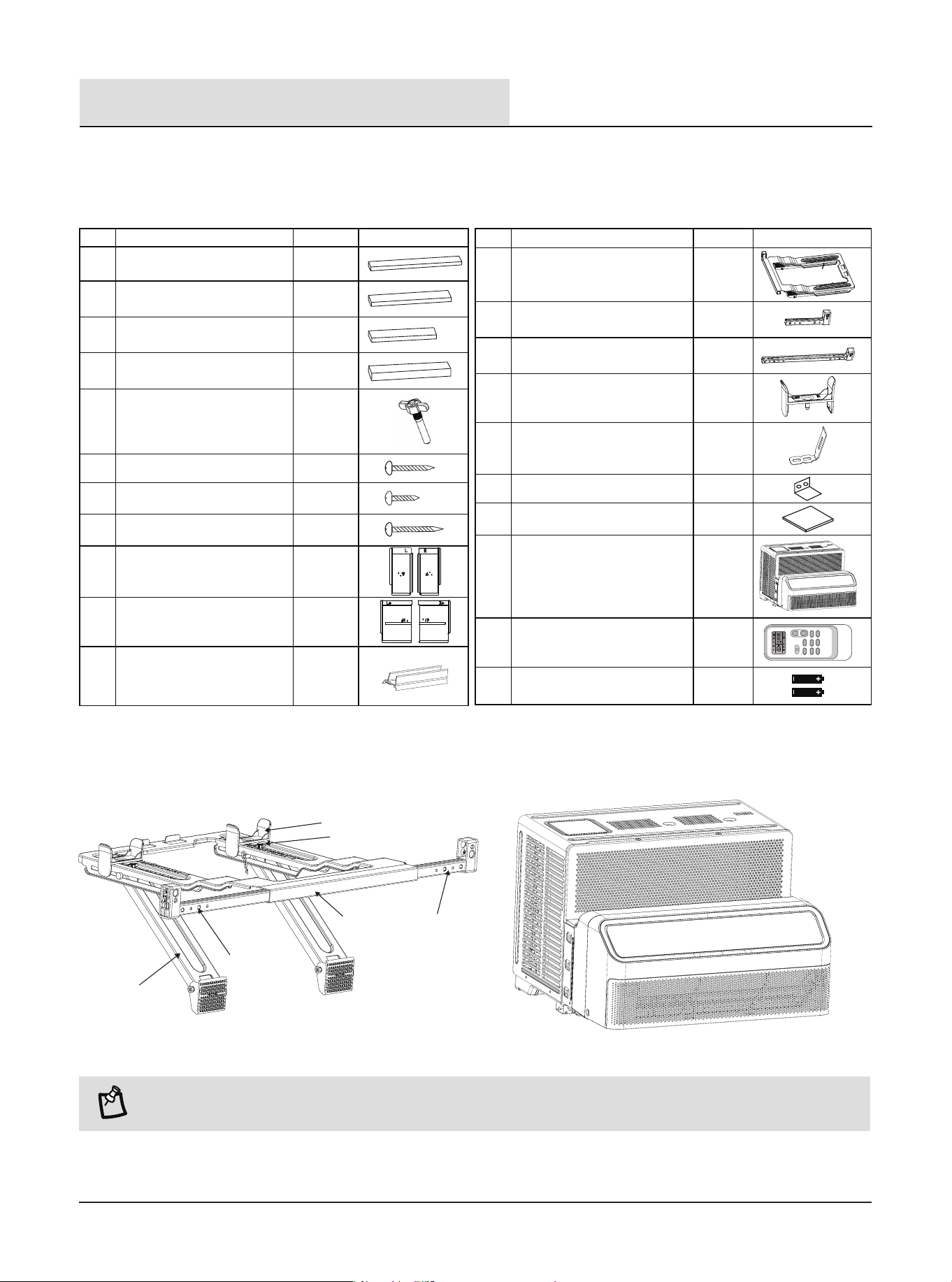
* Uno de los brazos de extensión (largo) se ha instalado en el soporte
principal para demostrar cómo insertarlo o quitarlo.
33
HARDWARE INCLUIDO
NOTA: Todas las ilustraciones en este manual son solo a modo explicativo. La instalación real puede variar.
Pre-Instalación (continuación)
Pata de soporte
Brazo de extensión
Brazo de extensión
Soporte principal
Placa posterior
Tornillo
Pieza
A1 1
1
1
1
2
6
6
6
1+1
1+1
1
A2
A3
BB
CC
DD
EE
FF
GG
G1
Descripción
Sello adhesivo (gris)
Sello adhesivo (negro-largo)
Sello adhesivo (negro-corto)
Sello de espuma (gris)
Tornillo
Tornillo de 1/2 pulg.
Tornillo de 3/8 pulg.
Tornillo de 3/4 pulg.
Cortina lateral corta
(izquierda/derecha)
Cortina lateral ancha
(izquierda/derecha)
G2
Cortina de repuesto
(izquierda/derecha)
Cantidad
Mapa de croquis
Pieza
H1 1
1
2*
2
2
1
2
1
1
H2
H3
H4
H5
II
JJ
KK
LL
Descripción
Soporte principal
Brazo de extensión (corto)
Brazo de extensión (largo)
Placa posterior
Cerradura de guillotina
(para aire acondicionado)
Cerradura de guillotina (para ventana)
Espuma Eva (blanca)
Aire acondicionado
Control remoto
2MM
Pilas (estándar AAA de 1,5 voltios)
Cantidad Mapa de croquis
FILTER
FAN
QUIET
SWING
TIMER
SUPER
DIMMER
Sleep[5 sec]
MODE
F/ C[5 sec]
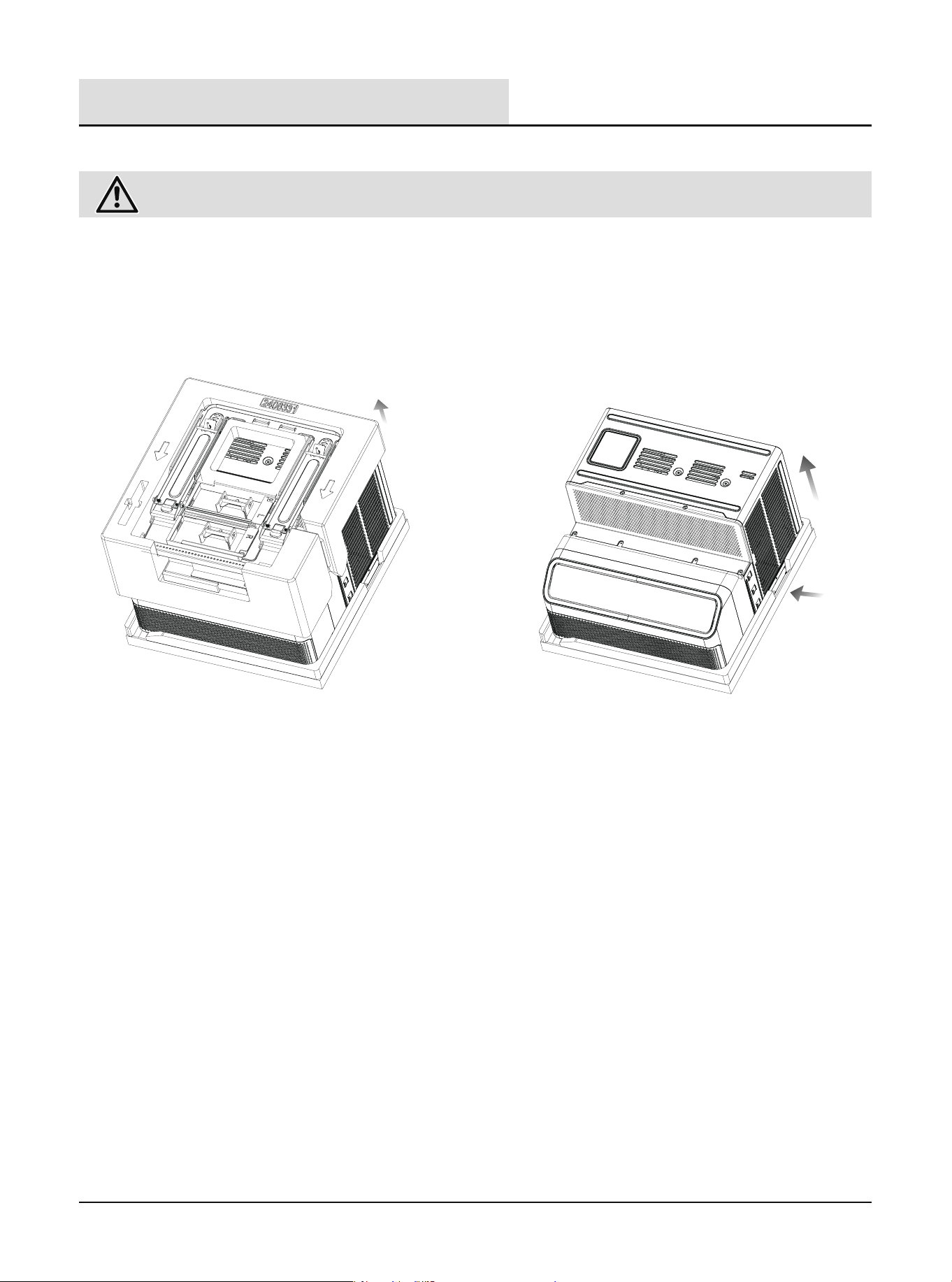
34
DESEMBALAJE DEL AIRE ACONDICIONADO
ADVERTENCIA
Riesgo de Exceso de Peso
1. Se necesitan dos o más personas para mover e instalar el aire acondicionado. De lo contrario, podría resultar en lesiones en la
espalda o de otro tipo.
2. Al momento de instalar este aire acondicionado, usted debe utilizar todas las piezas suministradas y seguir correctamente los
procedimientos de instalación como se describen en estas instrucciones.
3. Tenga cuidado para evitar cortes por bordes metálicos afilados. Utilice guantes resistentes a los cortes. El soporte solo debe
utilizarse para el fin previsto. De lo contrario, se anulará la garantía.
Retirada de los materiales de embalaje
1. Retire y elimine/recicle los materiales de
embalaje. Retire la cinta y los residuos de
pegamento de las superficies antes de encender el
aire acondicionado. Frote una pequeña cantidad de
jabón líquido para lavar platos en el adhesivo con
los dedos. Limpie con agua templada y séquelo.
2. No utilice instrumentos afilados, ni frote alcohol,
líquidos inflamables o limpiadores abrasivos para
eliminar la cinta o el pegamento. Estos productos
pueden dañar la superficie del aire acondicionado.
3. Retire el soporte principal y otros hardwares
del material de embalaje.
4. Desconecte el cable de alimentación, luego retire el
embalaje que está encima del aire acondicionado.
5. Coloque ambas manos en las posiciones indicadas
por las flechas y extraiga el aire acondicionado
desde la parte frontal del producto.
MANIJA
Pre-Instalación (continuación)
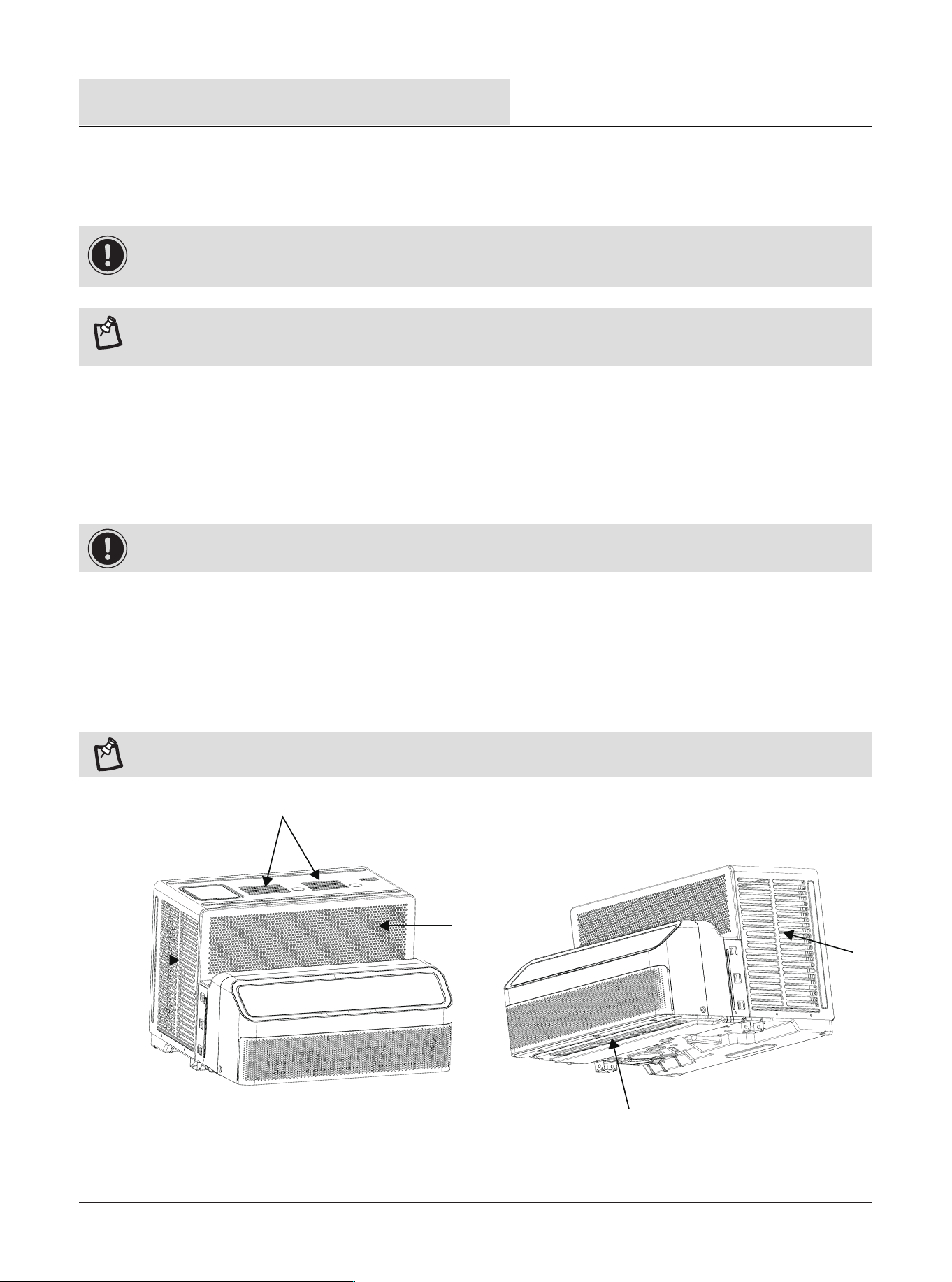
1. Tiempo de finalización: Alrededor de 20 minutos.
2. Recomendamos que dos personas instalen el producto.
3. La instalación correcta es responsabilidad de la persona que lo instala.
4. La falla del producto debido a la instalación incorrecta no está cubierta por la garantía.
5. Al momento de instalar este aire acondicionado, usted DEBE utilizar todas las piezas suministradas y seguir correctamente
los procedimientos de instalación como se describen en estas instrucciones.
NOTA: No se deben obstruir las rejillas (A-B-C-D) del gabinete. El aire debe pasar libremente por las rejillas del gabinete.
35
Compruebe el lugar donde instalará el aire acondicionado. Es su responsabilidad que la instalación sea correcta. Asegúrese de
tener todo lo necesario para realizar una instalación correcta.
La ubicación debe brindar:
1. No utilice el cable de extensión. El aparato debe instalarse de acuerdo con las normas nacionales de cableado.
2. Buena ventilación del aire en la habitación a ser enfriada.
3. Una abertura lo suficientemente grande para el aire acondicionado.
Pre-Instalación (continuación)
IMPORTANTE: Siga todas las normas y ordenanzas.
B
A
A
C
D
REQUISITOS DE UBICACIÓN
Antes de comenzar
Lea completa y cuidadosamente estas instrucciones.
IMPORTANTE: Guarde estas instrucciones para uso del inspector local. Siga todas las normas y ordenanzas.
NOTA: Para el instalador, asegúrese de dejar estas instrucciones al Consumidor.
Para el consumidor, guarde estas instrucciones para referencias futuras.
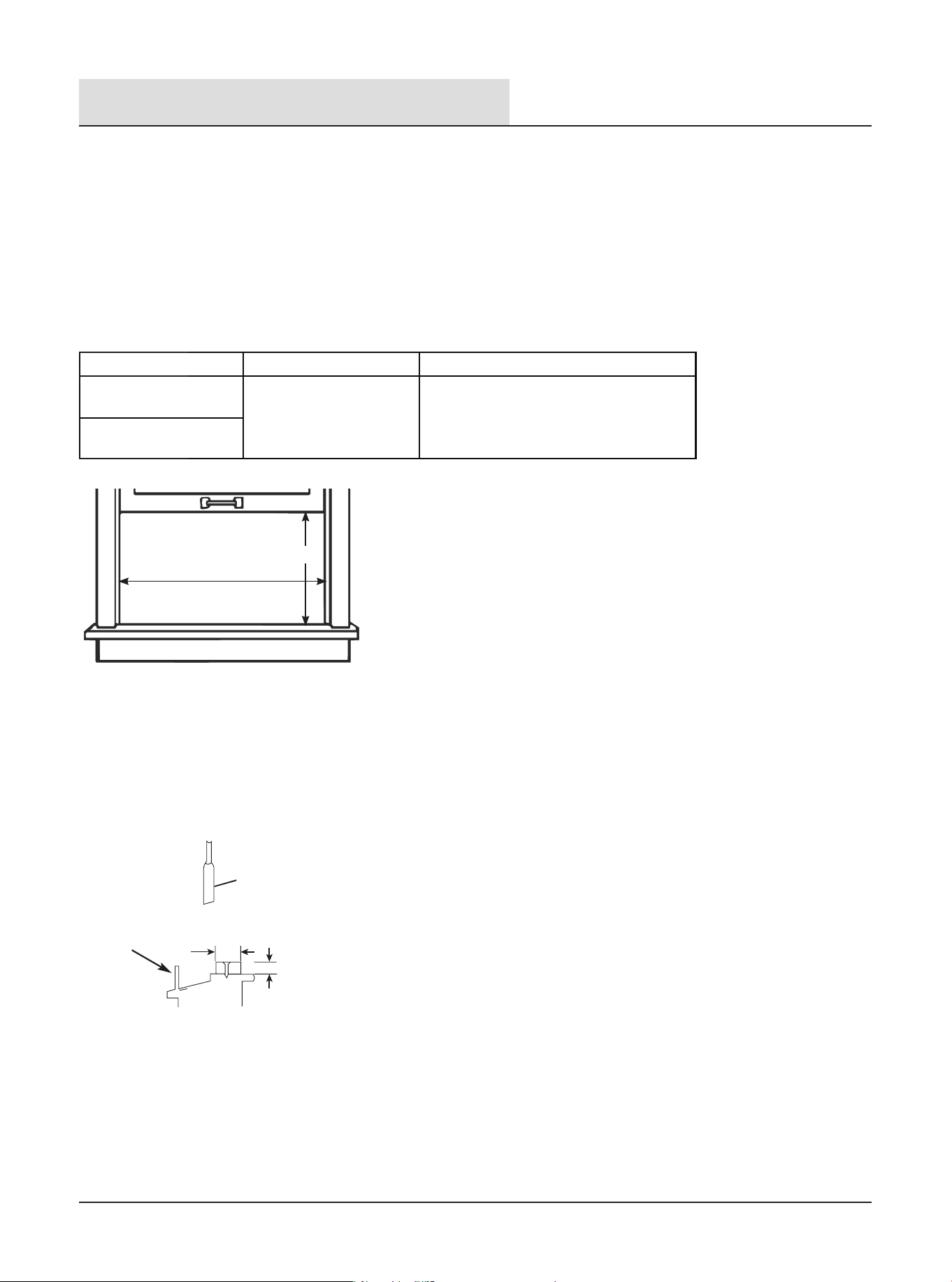
36
MEDIDAS DE APERTURA DE LA VENTANA
1. Estas instrucciones son para una ventana con doble hojas. Debe modificarlas para otro tipo de ventanas.
2. Si es necesario instalarlo en una ventana estrecha, el aire acondicionado se puede instalar sin los paneles de las
cortinas laterales.
Consulte a las dimensiones de la abertura de la ventana.
3. Todas las piezas de soporte deben fijarse a madera firme, mampostería o revestimiento de vinilo.
4. El cableado de aluminio de la casa puede presentar problemas especiales, consulte a un electricista cualificado.
5. El tomacorriente debe estar dentro del alcance del cable de alimentación.
6. Siga las dimensiones de la tabla y las ilustraciones para su modelo.
Añada madera como se muestra aquí o quite la ventana antes de instalar el aire acondicionado.
Si el marco de la ventana de tormenta debe permanecer, asegúrese de que los orificios o ranuras de drenaje no
estén tapados con masilla o pintura. Se debe permitir que se drene el agua de lluvia acumulada o la condensación.
SI EL AIRE ACONDICIONADO ESTÁ BLOQUEADO POR LA VENTANA
DE TORMENTA
Espesor del panel requerido, para una inclinación correcta hacia atrás por el
alféizar. Se asegura con clavos o tornillos.
Marco de la ventana
de tormenta u otra
obstrucción.
1 - 1/2 pulg. mín
(38 mm)
Guillotina
A
B
(Con paneles de cortinas
laterales)
Modelos
A B
8K BTU solo enfriamiento
15 pulg. (385 mm) min 25 pulg. (635 mm) - 38 pulg. (980 mm)
12K BTU solo enfriamiento
Pre-Instalación (continuación)
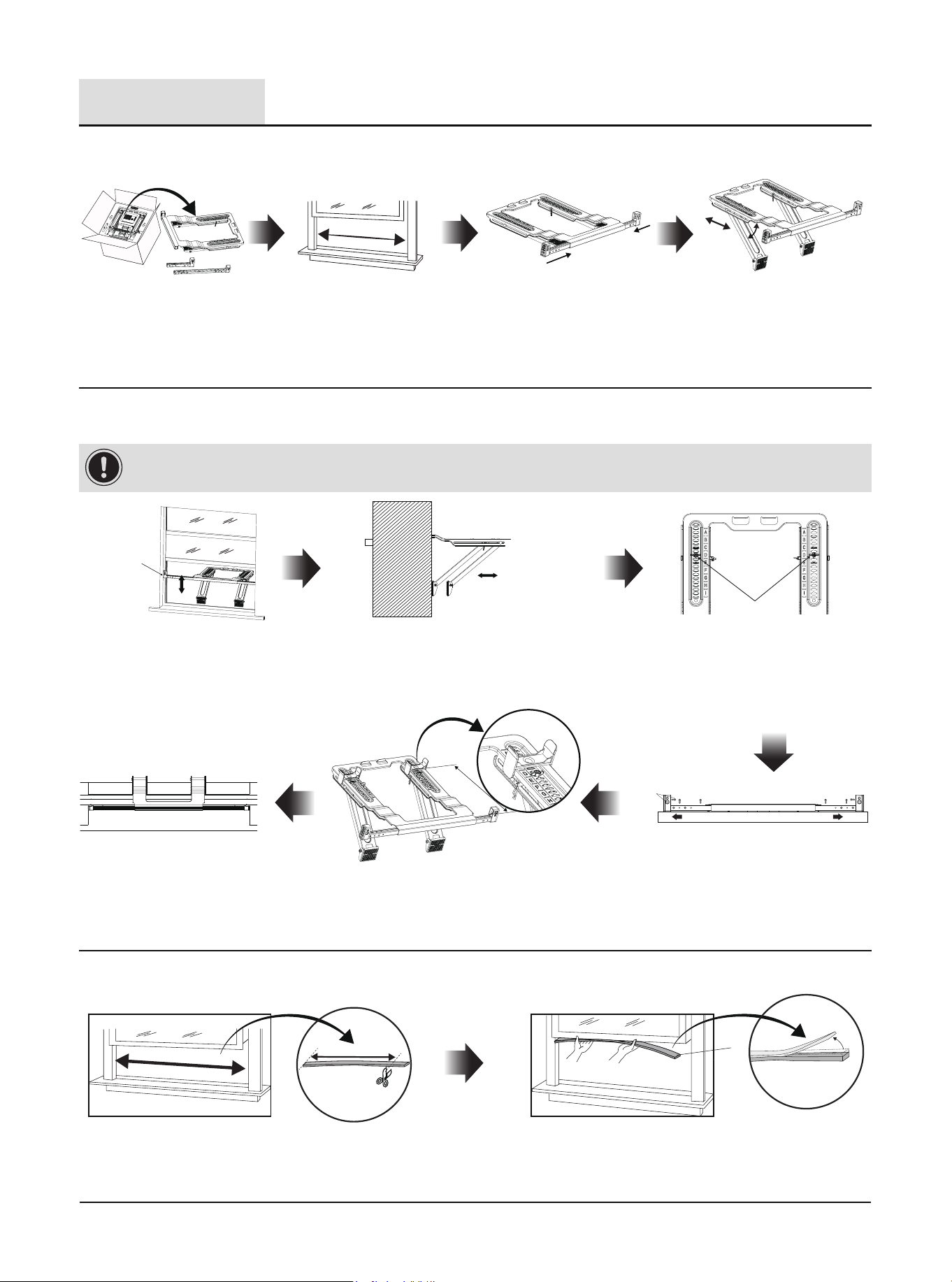
Quite el reverso del sello y fije el sello a la parte
de abajo de la guillotina inferior de la ventana.
Preparación del Soporte
Instalación del Soporte
37
1
2
B
A1
3
Fijación del Sello Adhesivo
Instalación
Retire el soporte
principal y las piezas de
hardware de la caja de
cartón y colóquelos en
una superficie plana.
Instale el soporte en la
ventana abierta. Y asegúrese
de que los brazos de extensión
están situados en el lado
interior de la ventana
Mida la anchura de la ventana
para elegir entre dos brazos de
extensión largos (H3) o un brazo
de extensión largo (H3) y un
brazo de extensión corto (H2).
Las patas de soporte se
deslizan hacia adelante y
hacia atrás a lo largo de las
ranuras guía en el soporte
de correo y también pueden
girar.
Inserte los brazos de extensión (H2
o H3) en los extremos izquierdo y
derecho, respectivamente. Los
brazos de extensión (H2 o H3)
pueden deslizarse libremente bajo
la acción de una fuerza externa.
Bloquee el tornillo (CC) y
asegúrese visualmente de que el
soporte esté ligeramente
inclinado hacia el exterior.
Fije el soporte al alféizar de la
ventana taladrando tornillos de tipo
3/8 pulg. y 1/2 pulg. (DD y EE).
La placa posterior (H4) se instala en el soporte,
una a cada lado. La distancia desde el lado interior
del soporte es superior a 13 pulg.
Coloque la junta (A3) en la parte
superior del soporte seguro.
IMPORTANTE: Mantenga el control del soporte hasta completar la instalación.
Corte el sello adhesivo (gris) (A1) al ancho
de la guillotina inferior de la ventana (B).
A1
A1
Bloquear el tornillo
(CC)
Asegúrese de que los
brazos de extensión
están situados en
el lado interior de
la ventana
Mover las patas de soporte
Mueva las dos patas de soporte hacia la pared
exterior hasta que los pies de las patas de soporte
toquen la pared. Se recomienda alinear las dos
patas de soporte según las marcas en el soporte.
13 pulg.
3/8 pulg.
1/2 pulg. 1/2 pulg.
1/2 pulg. 1/2 pulg.
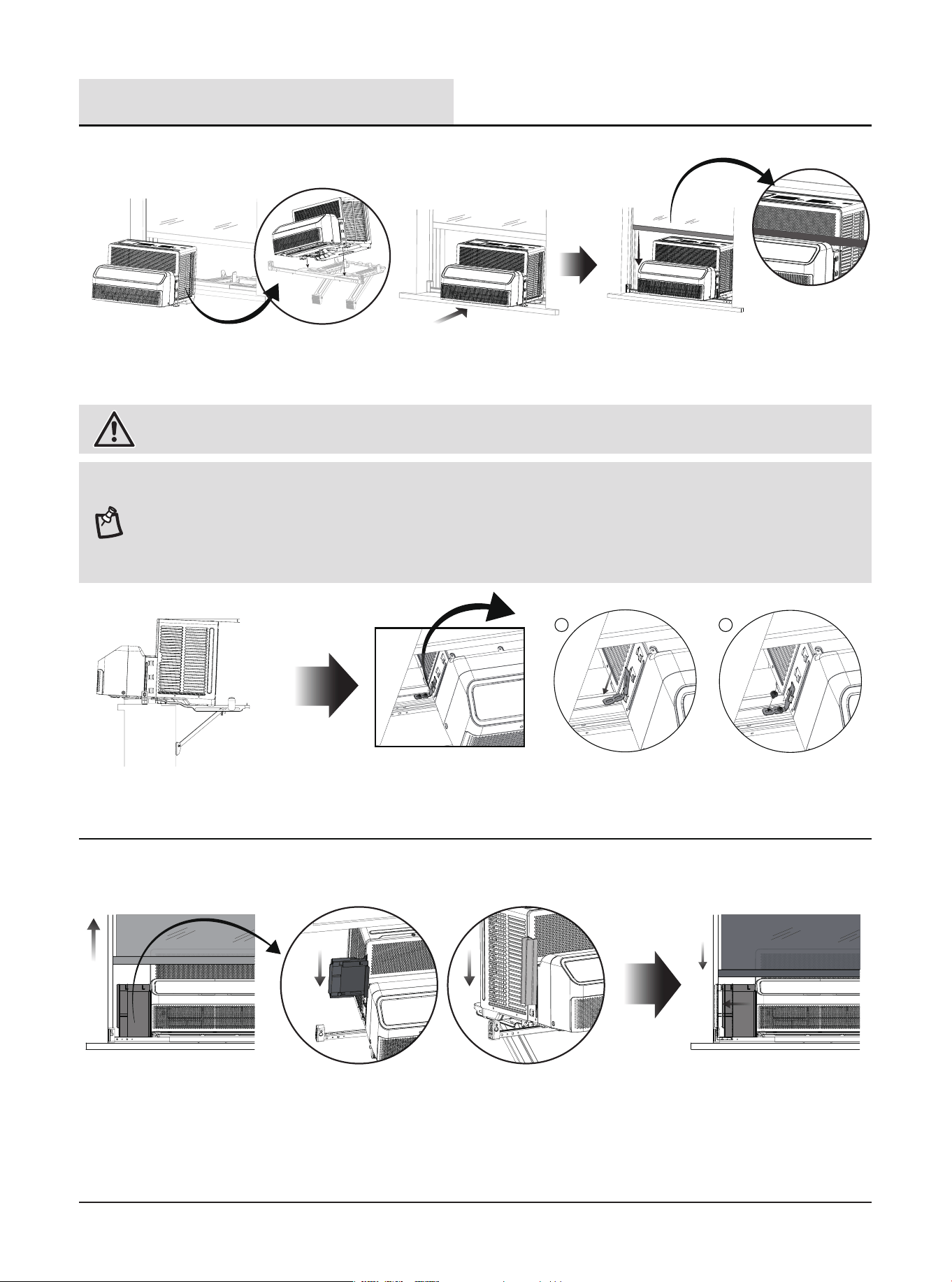
5
Fijación de las Cortinas Laterales a la Ventana
4
Colocación del Aire Acondicionado en la Ventana
38
Instalación (continuación)
Sostenga firmemente el aire acondicionado; coloque cuidadosamente la unidad en la
abertura de la ventana de tal manera que la parte inferior del marco del aire acondicionado
quede contra el soporte y asegúrese de que la unidad quede centrada en el soporte.
Luego, empuje lentamente el aire acondicionado hacia el exterior de la habitación.
Inserte el cierre de guillotina (para el aire acondicionado) en ambos lados del
aire acondicionado y fíjelo con tornillos del tipo 3/8 pulg. o 3/4 pulg. (EE o FF).
Abra la ventana con cuidado
hacia arriba. Instale la cortina
lateral corta (izquierda y derecha)
en el aire acondicionado, de
arriba hacia abajo. Repita para
la cortina derecha.
a) Cuando la brecha entre el aire acondicionado y el lado de
la ventana (izquierda o derecha) sea mayor a 6,5 pulg.
(165 mm), use la cortina lateral ancha L+ o R+ (G1)
(primero retire la correspondiente L o R).
b) Cuando la brecha entre el aire acondicionado y el lado de
la ventana (izquierda o derecha) sea menor a 3,5 pulg.
(90 mm), use la cortina de repuesto (G2).
Abra las cortinas laterales
(izquierda y derecha) hasta
tocar el borde de la ventana.
Cierre la ventana con
cuidado hacia abajo.
NOTAS:
1. Manipule el aire acondicionado con cuidado.
2. Asegúrese de que el aire acondicionado no se caiga durante la instalación o la extracción.
3. No bloquee las rejillas del panel frontal.
4. No bloquee las rejillas de la parte exterior del aire acondicionado.
5. Su modelo puede diferir del que se muestra aquí.
ADVERTENCIA: Riesgo de Peso Excesivo
Se necesitan dos o más personas para mover e instalar el aire acondicionado. De lo contrario, podría resultar en lesiones en la
espalda o de otro tipo.
1 2
Cierre cuidadosamente la ventana sobre la parte
superior del aire acondicionado para alinear
correctamente la unidad y ayudar a soportar el
aire acondicionado durante la instalación.
El aire acondicionado está
inclinado aproximadamente 3°
hacia el exterior de la habitación.
Aproximadamente 3°
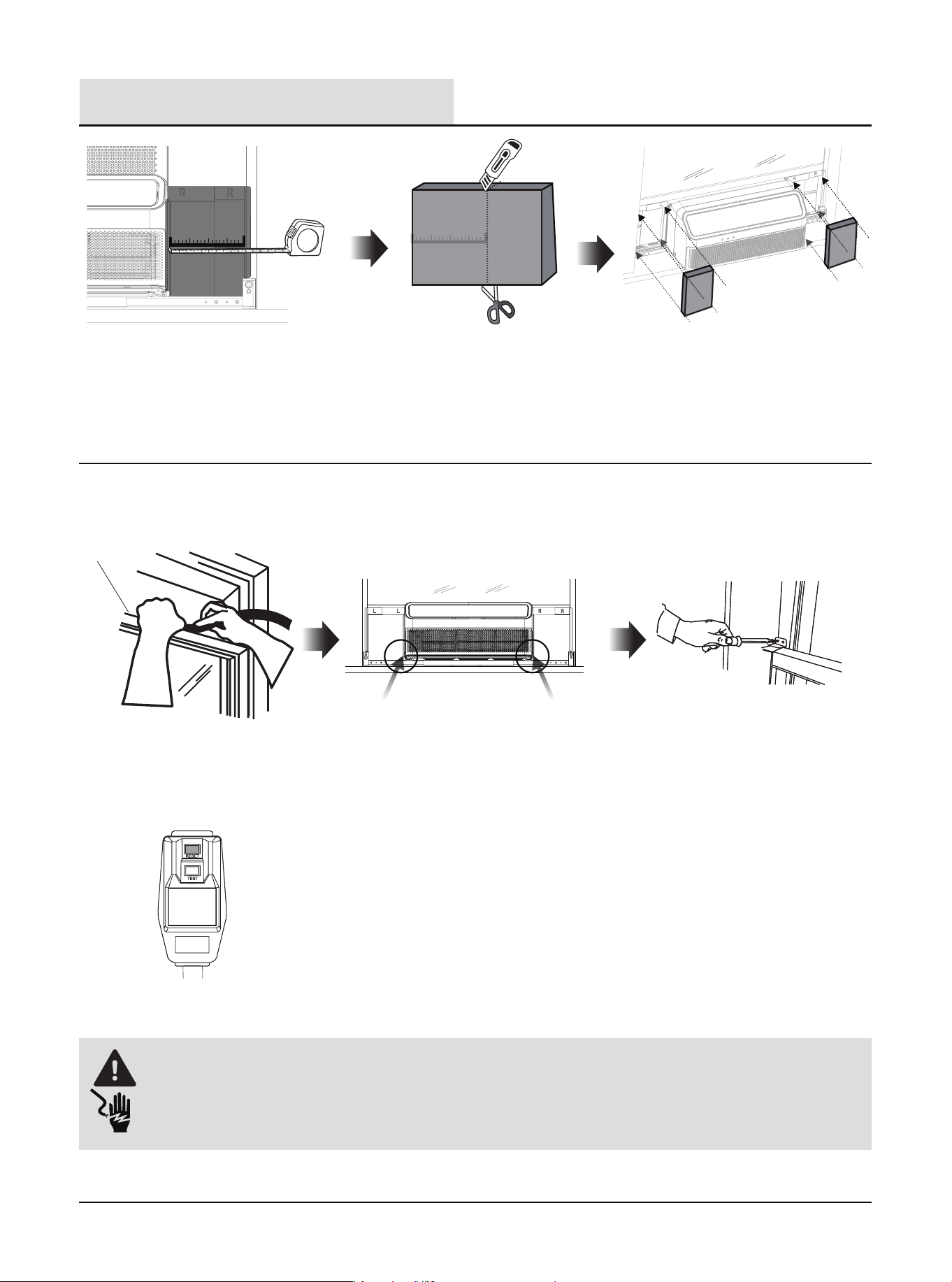
PELIGRO: PELIGRO DE DESCARGA ELÉCTRICA
1. Enchúfelo a una toma con 3 clavijas con conexión a tierra.
2. No retire la clavija con conexión a tierra.
3. No utilice el adaptador.
4. No utilice el cable de extensión.
5. Pueden producirse incendios, descargas eléctricas o la muerte si no se siguen estas instrucciones.
6
Finalización de la instalación
BB
A
39
Instalación (continuación)
Coloque una espuma EVA (JJ) en la carcasa de la
cortina.
Para minimizar las fugas de aire y garantizar un
aislamiento óptimo, si es necesario, instale la
Espuma EVA (JJ) en la carcasa de la cortina.
Después de instalar la unidad en la ventana, mida el
ancho interno de la cortina lateral como se muestra.
Compruebe el espacio alrededor de la
unidad y séllelo con el sello adhesivo
(negro) (A2) adjunto.
Coloque el sello de espuma (BB) detrás
de la parte superior de la guillotina
inferior de la ventana (A) y contra el
vidrio de la ventana superior.
1. Enchúfelo a una toma con 3 clavijas con conexión a tierra.
2. Presione RESET en el cable de alimentación. (Consulte "REQUISITOS ELÉCTRICOS".)
Para asegurar la guillotina inferior en
su lugar, fije el bloqueo de la guillotina
(II) utilizando el tornillo de 3/4 pulgada
(20 mm) (FF) como se muestra.
El vidrio es frágil y debe protegerse
durante la instalación.
Marque una línea en la espuma EVA
(JJ) según el ancho medido y luego
corte la espuma EVA (JJ) a lo largo
de la línea usando tijeras o un
cuchillo.
Instale la espuma EVA (JJ) en las
cortinas laterales (izquierda/derecha).
JJ
JJ
JJ
A2 A2
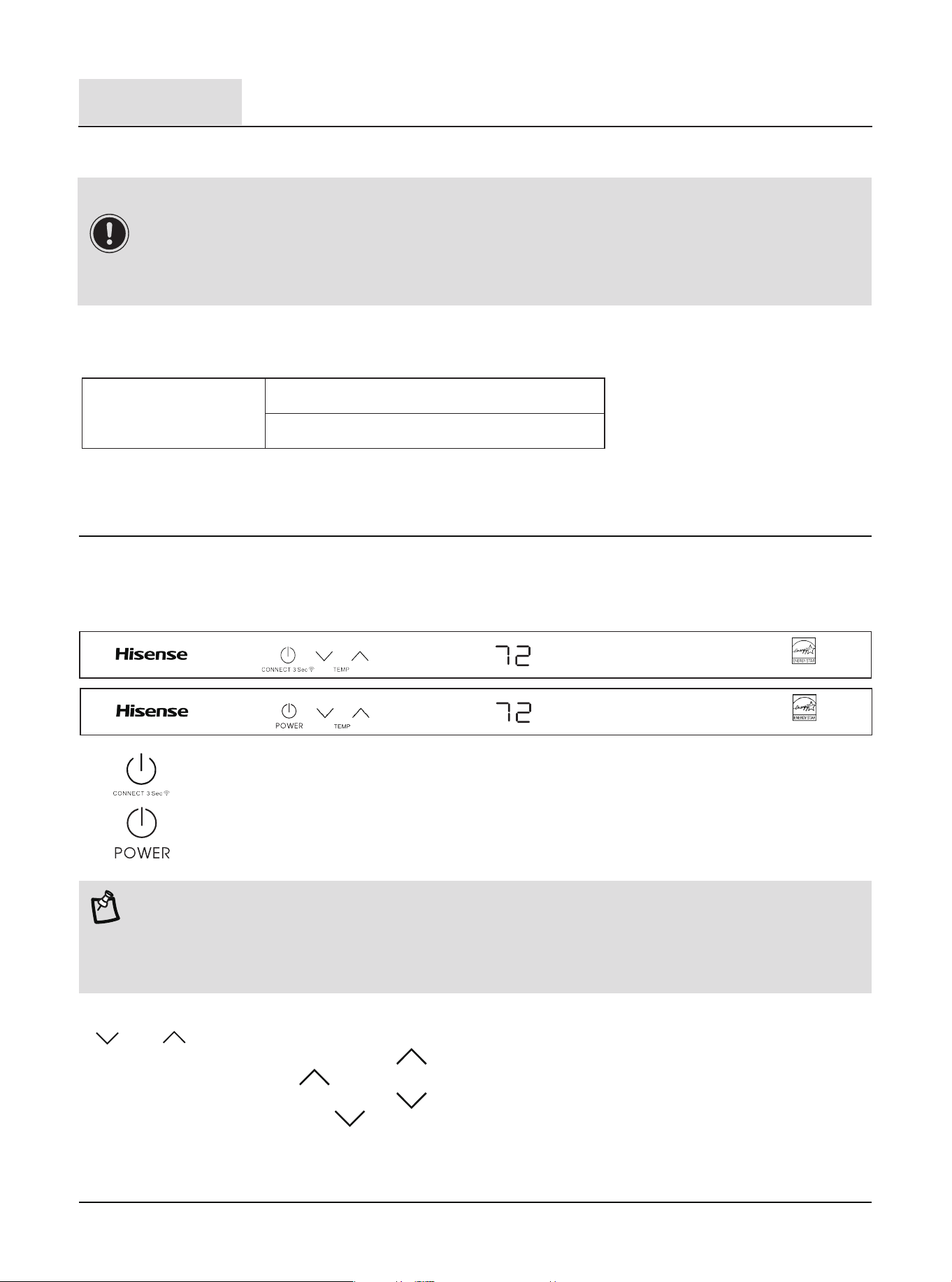
40
USO DEL AIRE ACONDICIONADO
IMPORTANTE:
1. Si apaga el aire acondicionado, espere al menos 3 minutos antes de volver a encenderlo.
Esto evita que el aire acondicionado queme un fusible o haga saltar el disyuntor.
2. En caso de fallo de alimentación, el aire acondicionado funcionará con los ajustes previos cuando se restaure la
alimentación.
NOTA:
Cuando se enciende el aire acondicionado por primera vez después de conectarlo, la pantalla mostrará la temperatura
establecida actual y funcionará en ECO.
Mantenga pulsado el botón de encendido durante 3 segundos para entrar en el modo de emparejamiento WiFi.
(válido para algunos modelos)
CONFIGURACIONES DE ENCENDIDO/APAGADO
Presione el botón POWER para encender o apagar el aire acondicionado.
1. El uso adecuado del aire acondicionado le ayudará a obtener los mejores resultados posibles.
2. Esta sección explica el uso adecuado del aire acondicionado.
Operación
1 Uso del Panel de Control
CONFIGURACIONES DE TEMPERATURA
1. Presione el botón ARRIB para subir la temperatura. Cada vez que presione o mantenga presionado el botón
ARRIB
, la temperatura aumentará de a un 1°F (1°C) hasta llegar a los 86°F (30°C).
2. Presione el botón ABAJO para bajar la temperatura. Cada vez que presione o mantenga presionado el
botón ABAJO , la temperatura disminuirá de a un 1 °F (1 °C) hasta llegar a los 61 °F (16°C).
TEMP
TEMP
POWER
Funcionan en
modo de Refrigeración
Interior
: 62.6-89.6 °F (17-32 °C), ≤ 80% RH
Exterior: 64.4-109.4 °F (18-43 °C), ≤ 80% RH
Mejores límites para aires acondicionados que funcionan en modo de Refrigeración:
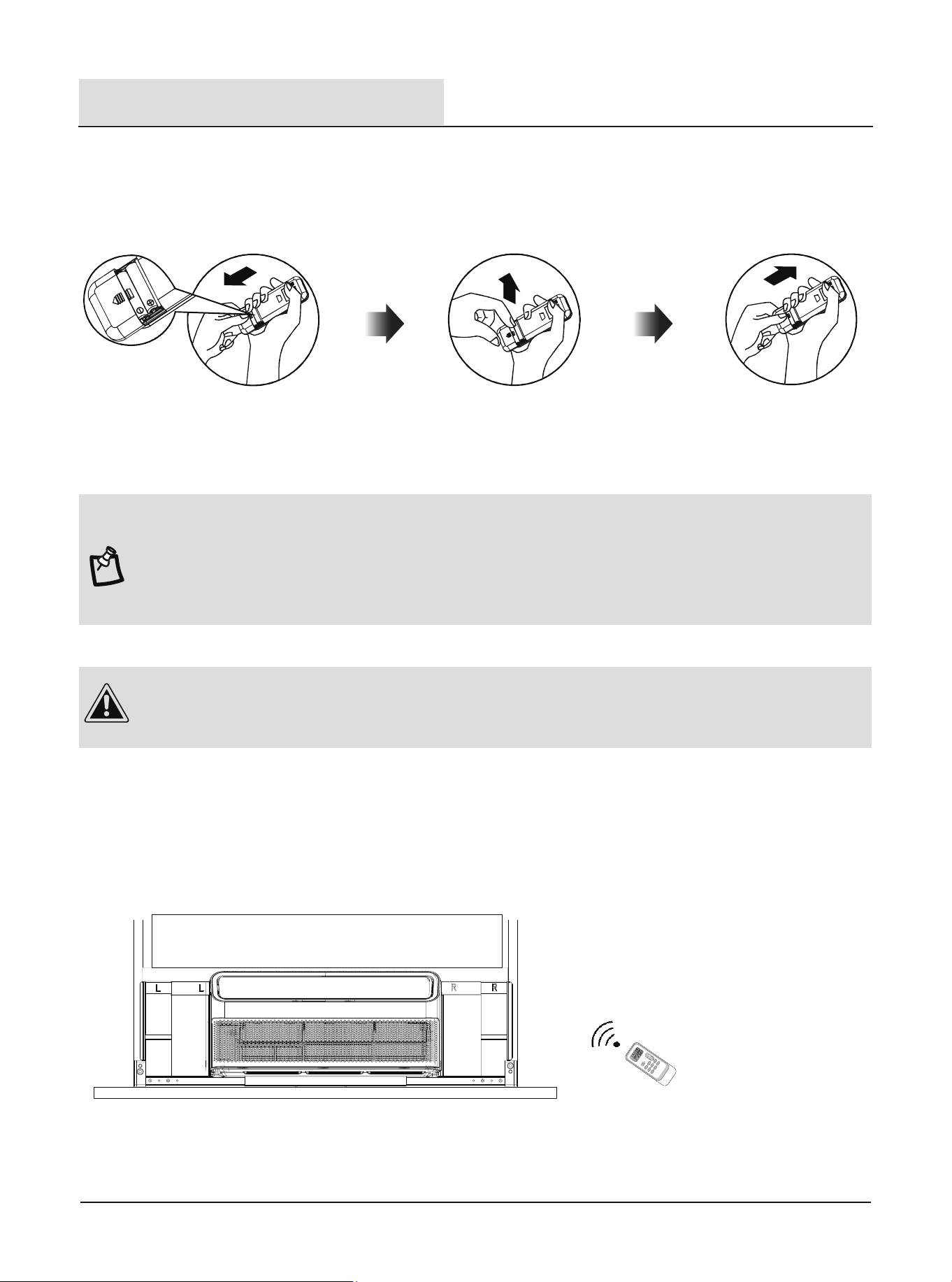
41
2 Uso del Control Remoto
COLOCACIÓN DE LAS PILAS
MODO DE USO
Receptor de señal/pantalla
NOTA: 1. Utilice 2 pilas AAA estándar (1,5 voltios). No utilice pilas recargables.
2. Reemplace las pilas por unas nuevas del mismo tipo cuando la pantalla se atenúe o al cabo de 6 meses.
3. Al reemplazar las pilas, siempre reemplace ambas pilas con las nuevas. No mezcle pilas viejas y nuevas.
4. No mezcle pilas alcalinas, estándar (carbono-zinc) ni recargables (ni-cd, ni-mh, etc.).
5. Si no se utiliza el aire acondicionado durante un periodo de tiempo prolongado, retire las pilas del control remoto.
1. Para operar el aire acondicionado, dirija el control remoto a la señal del receptor. El control remoto operará el aire acondicionado a
una distancia de hasta 23 pies (7 m) cuando apunte al receptor de señal del aire acondicionado.
1. Retire la tapa de las pilas
en la dirección de la flecha.
2. Inserte pilas nuevas asegurándose
de que las marcas (+) y (-) de las pilas
coincidan.
3. Vuelva a colocar la tapa
volviendo a deslizarla en
su posición.
Operación (continuación)
1. No utilice el control remoto si las pilas tienen fugas.
2. Los productos químicos de las pilas podrían causar quemaduras u otros peligros para la salud.
3. No tire las pilas al fuego. Las pilas pueden explotar o tener fugas.
FILTER
SUPER
MODE FAN
QUIET
TIMER DIMMER
Sleep [ 5 sec ]
SWING
F / C
[ 5 sec ]
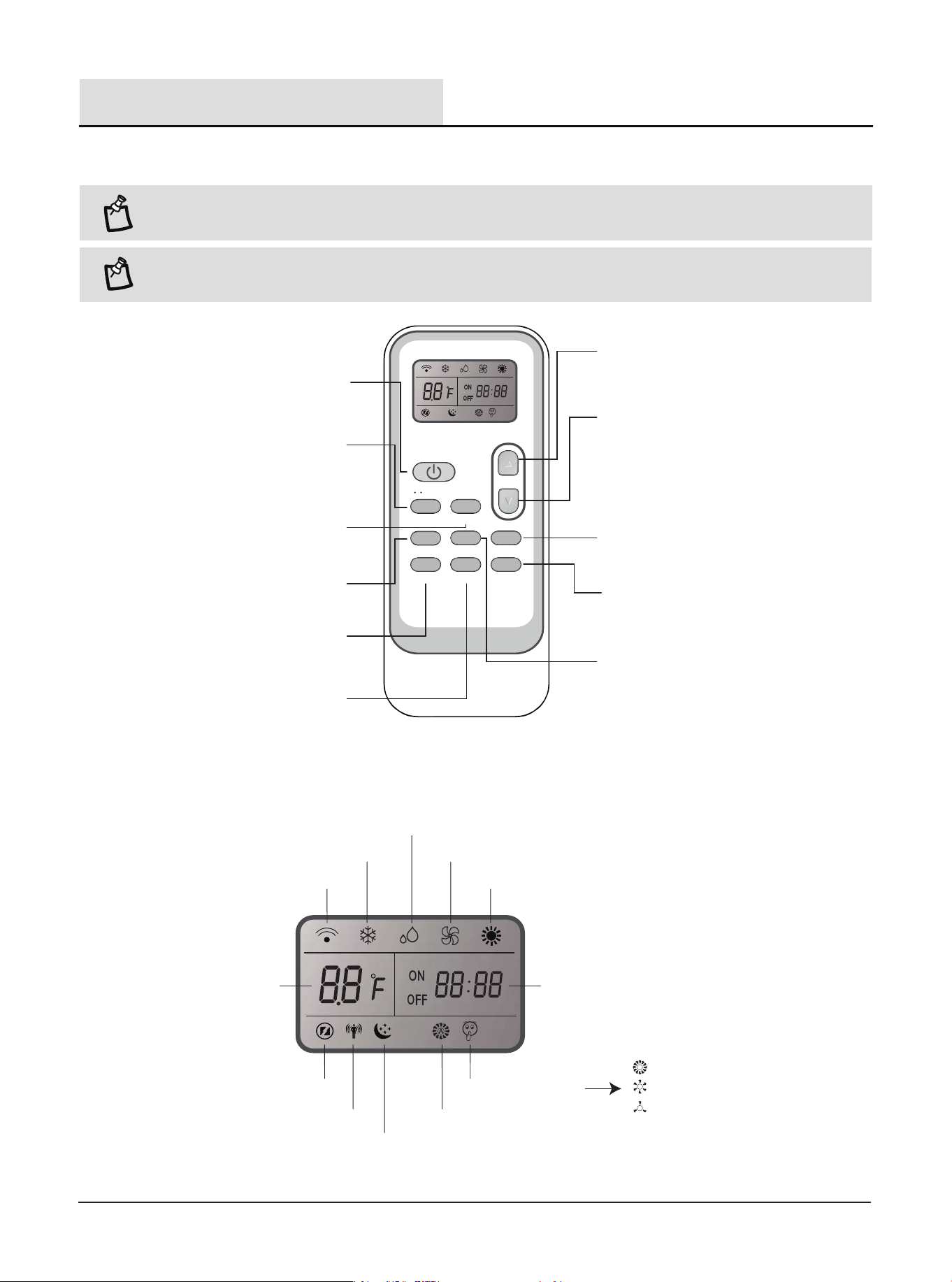
42
BOTÓN Y FUNCIÓN
SÍMBOLOS DE INDICACIÓN
NOTA: El control remoto puede tener un aspecto diferente.
El indicador de calefacción no está disponible en este modelo.
NOTA: Mantenga presionado el botón MODE en el control remoto durante 5 segundos para cambiar la visualización
de la temperatura de grados Fahrenheit (°F) a grados Celsius (°C).
Operación (continuación)
FILTERSUPERQUIET
MODE FAN
SWING TIMER DIMMER
Sleep [ 5 sec ]
F / C [ 5 sec ]
ARRIBA
Aumentar la temperatura en incrementos de 1°F
(1°C). La temperatura máxima es 86°F (30°C)
ABAJO
Disminuir la temperatura en incrementos de 1°F
(1°C). La temperatura mínima es 61°F (16°C)
FILTRO
Restablecer las indicaciones de limpieza del filtro
(No hay luz indicadora correspondiente en la unidad.)
ATENUADOR
Suspensión [5 seg]
Cambiar el modo ATENUADOR al modo SUSPENSIÓN
SÚPER
Iniciar o detener enfriamiento rápido
TEMPORIZADOR
Establecer la hora para encender o apagar la unidad
(No hay luz indicadora correspondiente en la unidad.)
OSCILACIÓN
Iniciar o detener el movimiento de la
Válvula de Nivel
SILENCIO
Activar o desactivar el modo silencioso
VENTILADOR
Cambiar la velocidad del ventilador de la siguiente manera:
Alto - Medio - Bajo
MODO
Cambiar los modos de funcionamiento de la
siguiente manera:
ECO - Calor - Frío - Secado - Ventilador
(Cambiar el modo de temperatura entre °F y °C.)
ENCENDIDO/APAGADO
Encender o apagar la unidad
Mostrar temporizador ajustado
Indicador de calefacción
Indicador de seco
Indicador de modo ventilador solo
Mostrar temperatura
Indicador de silencio
Indicador súper
Transmisión de señal
Indicador de enfriamiento
(No disponible para la unidad.)
Muestra la velocidad del ventilador
seleccionada
Velocidad de ventilador alta
Velocidad de ventilador media
Velocidad de ventilador baja
(La unidad no se puede ajustar en modo
de velocidad automática del ventilador.)
Indicador de velocidad
de ventilador
Indicador de suspensión
Indicador ECO
(No disponible para la unidad.)
43
ATENUADOR
ATENUADOR Suspensión [ 5 seg ]
DIMMER
sleep [ 5 sec ]
1. Presione el botón DIMMER para apagar la pantalla del panel de control.
1. Mantenga presionado el botón DIMMER del control remoto durante 5 segundos para cambiar el modo ATENUADOR al
modo SUSPENSIÓN.
2. Al cabo de 10 segundos, la luz del panel de control se atenuarán.
3. Para desactivar el control de Suspensión, presione MODE, FAN, SLEEP o espere 8 horas para que el control de
Suspensión se desactive automáticamente.
DIMMER
sleep [ 5 sec ]
1. Presione el botón Quiet para configurar o cancelar la operación del Modo Silencio.
SILENCIO
QUIET
SUPER
FILTRO (no válido para algunos modelos)
1. Cuando aparezca "FC" en la pantalla del aire acondicionado, por favor limpie o reemplace el filtro de aire. Consulte
"LIMPIEZA DEL FILTRO DE AIRE".
2. Presione el botón Power en la máquina o el botón FILTER en el control remoto para reiniciar el filtro después de realizar
la limpieza y el cambio del filtro del aire.
FILTER
SÚPER
El botón SUPER se utiliza para iniciar o detener el enfriamiento rápido.
1. Presione el botón SUPER. El aire acondicionado ajusta automáticamente la velocidad del ventilador a Alta y la
temperatura a 61°F (16°C).
2. Para desactivar el control Súper, presione los botones MODE, FAN, QUIET o SUPER en el control remoto.
NOTA: 1. Toma cerca de 2 a 3 minutos para ingresar al modo de silencio.
2. A veces, no se puede ingresar al modo de silencio debido a la protección.
3. El botón QUIET está deshabilitado en modo seco.
NOTA: Cuando presiona el botón sleep:
1. El aparato dejará de funcionar automáticamente después de funcionar 8 horas.
2. La velocidad del ventilador se ajusta automáticamente a velocidad baja.
3. En los modos Enfriamiento, Secado y ECO, la temperatura establecida aumentará a
4°F (2°C) como máximo durante 2 horas y continuará funcionando a esa temperatura
hasta que el auto se apague.
4. El control de suspensión no se puede seleccionar en el modo Ventilador.
NOTA: 1. En el modo SÚPER, puede configurar el temporizador.
2. El botón SUPER no funciona en modo ECO.
NOTA: La pantalla FC cambiará a la pantalla normal después de 5 segundos.
NOTA: En el modo ATENUADOR, los nuevos ingresos del control volverán la pantalla a normal.
Operación (continuación)
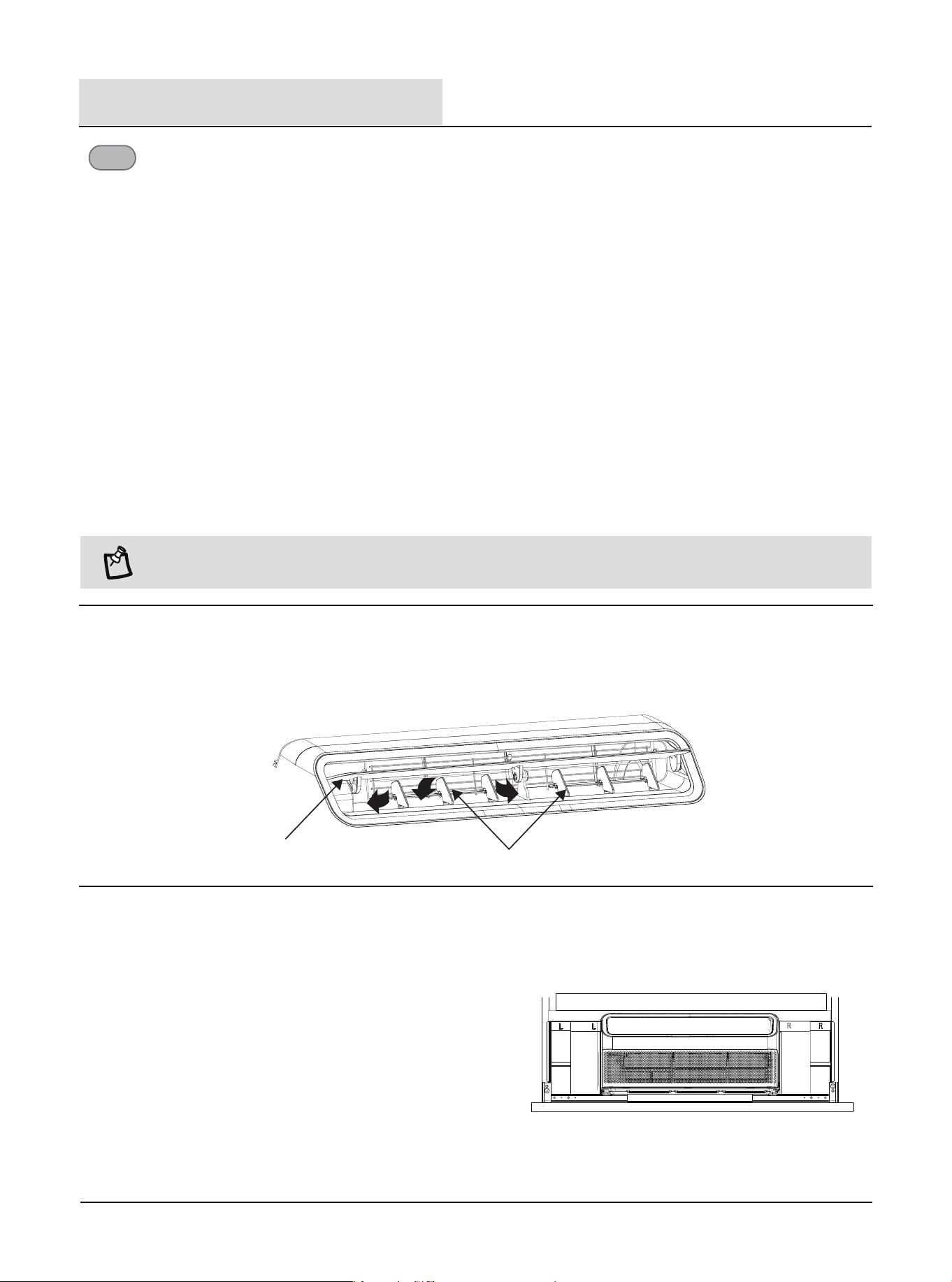
44
3
Cambio en la Dirección del Aire
1. Utilice la aleta vertical para dirigir el aire hacia la derecha o hacia la izquierda.
2. Utilice la aleta horizontal para dirigir el aire hacia arriba, hacia abajo o en línea recta.
TIMER
TEMPORIZADOR
Utilice la función TEMPORIZADOR para encender o apagar automáticamente el aire acondicionado.
Configuración del Aire Acondicionado para que Se Encienda:
1. Enchufe el aire acondicionado y utilice el control remoto para encenderlo.
2. Utilice el control remoto para configurar el modo, temperatura, velocidad del ventilador, etc. deseados.
3. Utilice el control remoto para apagar el aire acondicionado.
4. Presione TIMER en el control remoto y utilice los botones ARRIBA, ABAJO para establecer el tiempo de retraso deseado.
El tiempo de retraso se puede configurar de 0 a 24 horas en incrementos de una hora.
5. Presione TIMER de nuevo para introducir el tiempo de retraso.
Configuración del Aire Acondicionado para que Se Apague:
1. Enchufe el aire acondicionado y utilice el control remoto para encenderlo.
2. Utilice el control remoto para configurar el modo, temperatura, velocidad del ventilador, etc. deseados.
3. Presione TIMER en el control remoto y utilice los botones ARRIBA, ABAJO para establecer el tiempo de retraso deseado.
El tiempo de retraso se puede configurar de 0 a 24 horas en incrementos de una hora.
4. Presione TIMER de nuevo para introducir el tiempo de retraso.
Para cancelar el Temporizador:
1. Presione el botón TIMER nuevamente. Si se oye un "bip" y el indicador desaparece, el modo Temporizador se ha
cancelado.
La aleta horizontal
La aleta vertical
4
Sonidos Normales
NOTA: La función TEMPORIZADOR solo puede configurarse con el control remoto.
Operación (continuación)
Cuando el aire acondicionado funciona con
normalidad, es posible que escuche sonidos como:
1. Gotas de agua golpeando el condensador, causando un sonido de
clic o un tintineo. Las gotas de agua ayudan a enfriar el condensador.
2. El movimiento del aire desde el ventilador.
3. Clics del ciclo del termostato.
4. Vibraciones o ruido por una mala construcción de la pared o la
ventana.
5. Un zumbido agudo o un ruido de pulsación debido al encendido y
apagado cíclico del compresor.
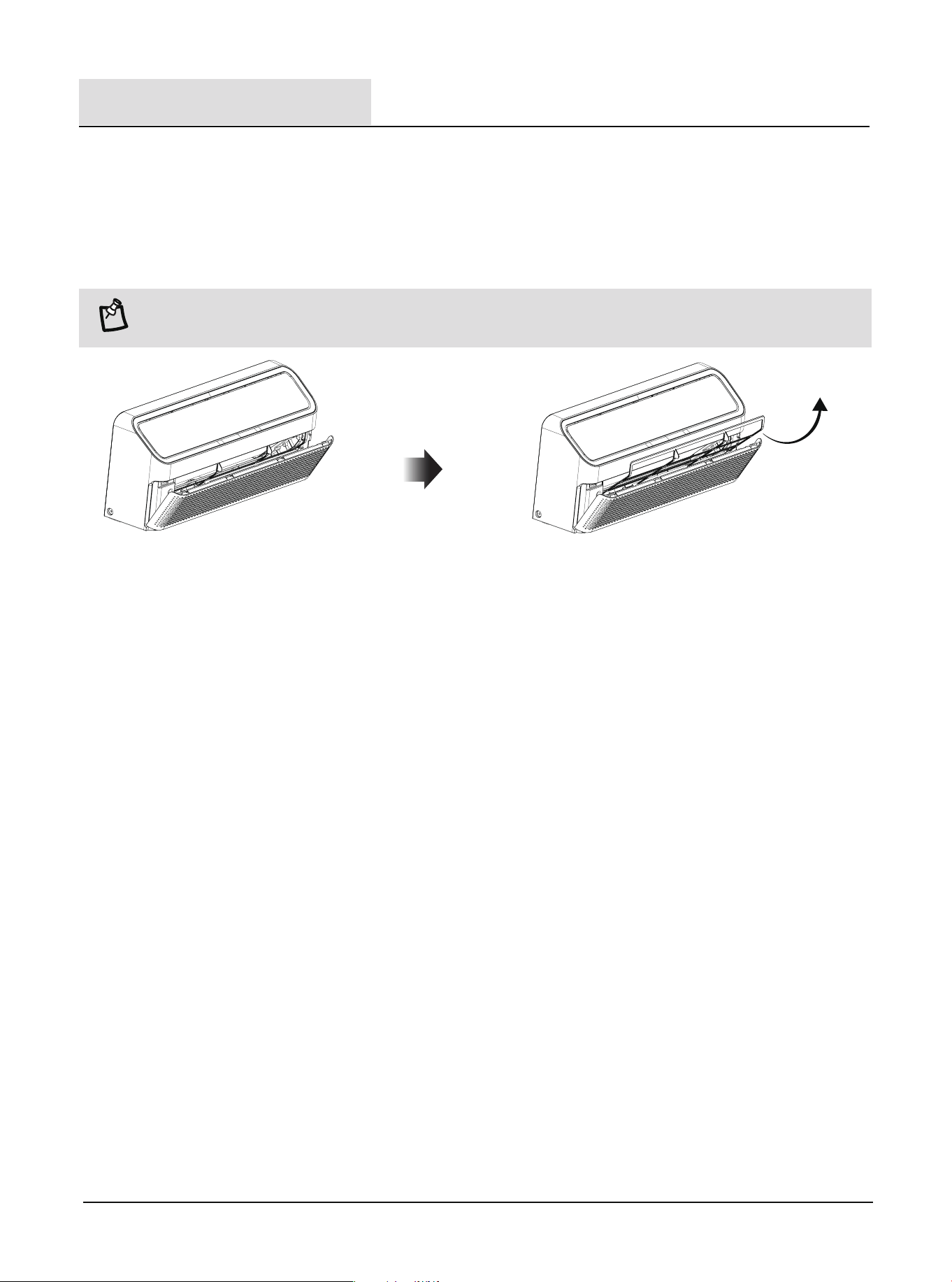
3. Utilice una aspiradora para limpiar el filtro del aire. Si el filtro está muy
sucio, lávelo con agua tibia y detergente suave. No lave el filtro de
aire en el lavavajillas ni utilice limpiadores químicos. Deje que el
filtro se seque completamente al aire antes de volver a colocarlo
para garantizar la máxima eficacia.
4. Vuelva a colocar el filtro de aire en el aire acondicionado.
45
Su aire acondicionado nuevo está diseñado para brindarle muchos años de servicio confiable. Esta sección le dice cómo limpiar y cuidar
su aire acondicionado correctamente. Llame a su vendedor local autorizado para realizar el control anual. Recuerde que el costo de la
llamada del servicio corre por su cuenta.
Es posible extraer el filtro de aire para limpiarlo fácilmente. Un filtro limpio ayuda a remover el polvo, las pelusas y otras partículas del aire
y es importante para una mejor refrigeración y funcionamiento eficiente. Compruebe el filtro cada 2 semanas para ver si necesita una
limpieza.
LIMPIEZA DEL FILTRO DE AIRE
1. Apague el aire acondicionado.
2. Abra el panel frontal. Agarre el filtro por
la manija y quítelo.
LIMPIEZA DEL PANEL FRONTAL
1. Apague el aire acondicionado.
2. Limpie el panel frontal con un paño húmedo y suave.
3. Deje secar completamente el panel frontal.
REPARACIÓN DE LA PINTURA DAÑADA
Compruebe una o dos veces al año si hay daños en la pintura. Esto es muy importante, especialmente en áreas cerca de
océanos o donde haya problemas de oxidación.
Si es necesario, retoque con una pintura de esmalte de buena calidad.
MANTENIMIENTO ANUAL
Su aire acondicionado necesita mantenimiento anual para garantizar un rendimiento estable y superior durante el año. Llame
a su vendedor local autorizado para programar el control anual. El costo de la inspección anual corre por su responsabilidad.
EXTRACCIÓN DEL AIRE ACONDICIONADO DE LA VENTANA
1. Apague el aire acondicionado y desconecte el cable de alimentación.
2. Retire la espuma EVA.
3. Quite el sello de la guillotina entre las ventanas y desatornille el seguro.
4. Quite los tornillos instalados en el marco y en el seguro.
5. Cierre la carcasa de la cortina.
6. Sostenga firmemente el aire acondicionado, levante la guillotina y retírela cuidadosamente.
7. Tenga cuidado de no derramar agua mientras levantan la unidad de la ventana.
8. Quite el soporte.
9. Guarde las piezas junto con el aire acondicionado.
NOTA: 1. No opere el aire acondicionado sin el filtro en su lugar.
2. No toque las partes metálicas de la unidad cuando vaya a retirar el filtro de aire. Podría causar lesiones.
Limpieza y Cuidado
46
Solución
Problema
El aire acondicionado no funciona
PELIGRO: PELIGRO DE DESCARGA ELÉCTRICA
1. Enchúfelo a una toma con 3 clavijas con conexión a tierra.
2. No retire la clavija con conexión a tierra.
3. No utilice el adaptador.
4. No utilice el cable de extensión.
5. Pueden producirse incendios, descargas eléctricas o la
muerte si no se siguen estas instrucciones.
1. El cable eléctrico está desenchufado. Conéctelo a un tomacorriente
de 3 clavijas con conexión a tierra. Consulte "REQUISITOS
ELÉCTRICOS".
2. El cable de alimentación salta (el botón RESET salta). Presione y
suelte RESET para reanudar la operación.
3. Se quemó un fusible o el disyuntor saltó. Reemplace el fusible o
restablezca el interruptor. Si el problema persiste, llame a un
electricista. Consulte "REQUISITOS ELÉCTRICOS".
4. No se ha presionado el botón Power. Presione el botón Power.
5. Ha habido un fallo eléctrico local. Espere a que se restaure la
alimentación.
El aire acondicionado hace que salten los fusibles
o se dispare el interruptor
1. Se están utilizando demasiados aparatos en el mismo circuito.
Desenchufe o reubique los aparatos que compartan el mismo circuito.
2. Se utiliza un fusible de retardo o el interruptor de una capacidad
incorrecta. Reemplácelo por un fusible de retardo o el interruptor
de la capacidad correcta. Consulte "REQUISITOS ELÉCTRICOS".
3. Se utiliza un cable de extensión. No utilice un cable de extensión
con este u otro aparato.
4. Está tratando de reiniciar el aire acondicionado demasiado rápido
después de haberlo apagado. Espere al menos 3 minutos después
de apagar el aire acondicionado antes de intentar reiniciarlo.
El cable de alimentación del aire
acondicionado salta (el botón Reset salta)
1. Las alteraciones en la corriente eléctrica pueden hacer saltar (el
botón RESET saltará) el cable de alimentación. Presione y suelte
RESET para reanudar la operación.
2. La sobrecarga eléctrica, el sobrecalentamiento, el cable apretado
o uno viejo pueden hacer saltar (el botón RESET saltará) el cable
de alimentación.
Después de corregir el problema, presione y suelte RESET para
reanudar la operación.
NOTA: Se debe reemplazar el cable de alimentación
dañado por un cable nuevo que se obtiene del
fabricante; no se debe reparar.
Resolución de problemas
47
Problema
Solución
El aire acondicionado parece funcionar demasiado.
El aire acondicionado que se apaga y se enciende
con frecuencia o no enfría
Caen gotas de agua desde el gabinete en su hogar
NOTA: No perfore un orificio en la parte inferior
de la base de metal ni la bandeja de condensado.
Resolución de problemas
1. El aire acondicionado no tiene un tamaño adecuado para la sala.
Compruebe las capacidades de enfriado de su aire acondicionado.
Los aires acondicionados no están diseñados para refrigerar
múltiples habitaciones.
2. El filtro está sucio u obstruido por residuos. Limpie el filtro.
3. Las bobinas del evaporador interno y del condensador externo están
sucias u obstruidas por residuos. Consulte el "MANTENIMIENTO ANUAL".
4. Hay calor o humedad excesiva (cocinas abiertas, duchas, etc.) en la
habitación. Utilice un ventilador para extraer el calor o la humedad de
la sala. Intente no utilizar aparatos que produzcan calor durante las
horas más cálidas del día.
5. Las rejillas están bloqueadas. Instale el aire acondicionado en un lugar
donde las rejillas no estén obstruidas por cortinas, persianas,
muebles, etc.
6. La temperatura de la habitación que está intentando enfriar es
extremadamente calurosa. Permita más tiempo para que el aire
acondicionado enfríe la habitación calurosa.
7. Las ventanas o las puertas están abiertas. Cierre las ventanas y las
puertas.
8. El control de temperatura no está en una configuración lo
suficientemente fría. Modifique el control de temperatura a un ajuste
más frío al presionar el botón menos para reducir la temperatura.
Establezca el control de la velocidad del ventilador a un ajuste más alto.
1. El aire acondicionado no está correctamente nivelado. El aire
acondicionado debería inclinarse un poco hacia afuera. Nivele el aire
acondicionado para brindar la inclinación hacia afuera y garantizar
un drenaje correcto. Consulte Instrucciones de Instalación.
1. El aire acondicionado actual ha reemplazado un modelo antiguo. El uso
de componentes más eficientes podría provocar que el aire acondicionado
funcione más tiempo que un modelo antiguo, pero que el consumo
energético total sea inferior. Los aires acondicionados más nuevos no
emiten la "ráfaga" de aire frío a la que puede estar acostumbrado por
los aires acondicionados viejos, pero esto no indica menos capacidad
de enfriado o eficiencia. Consulte el coeficiente de eficiencia energética
(EER) y la calificación de capacidad (en Btu/h) marcados en el aire
acondicionado.
2. El aire acondicionado se encuentra en una sala muy ocupada, o se
están utilizando aparatos que producen calor en la sala. Utilice
ventiladores de extracción mientras cocine o se bañe y no utilice
aparatos que produzcan calor durante las horas más cálidas del día. Es
posible que sea necesaria una mayor capacidad del aire acondicionado,
según el tamaño de la sala a enfriar.

4376355-01