86433800-A 01/28/19
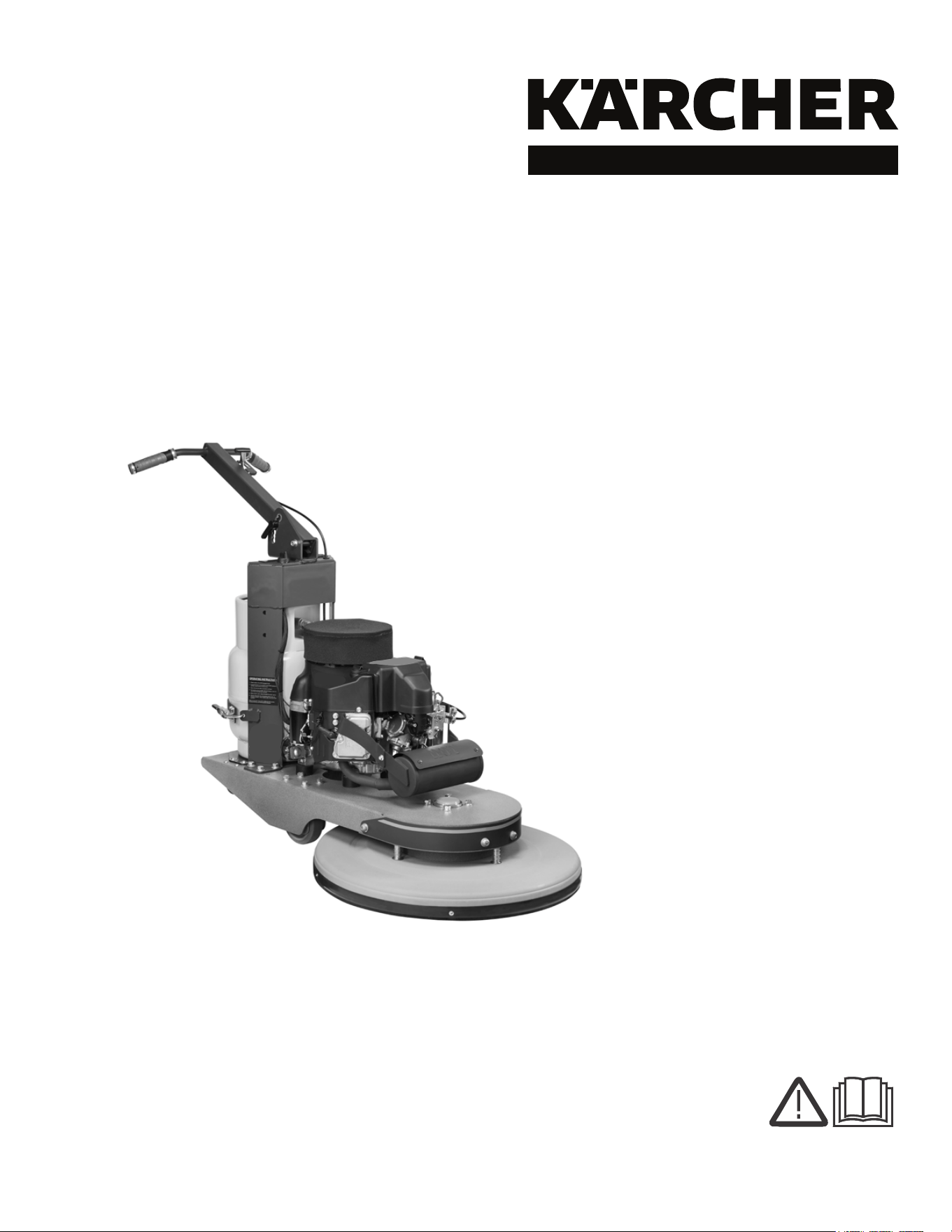
Propane Powered Burnisher
Operating Instructions (ENG)
MODELS: 1.022-324.0
BDP 61/1800 LPG
1.022-325.0
BDP 68/1800 LPG
2 8.643-380.0 Operators Manual - BDP Propane Burnisher
Machine Data Label

3
Table of Contents
Machine Data Label . . . . . . . . . . . . . . . . . . . . . . . . . .2
Table of Contents . . . . . . . . . . . . . . . . . . . . . . . . . . . 3
How To Use This Manual . . . . . . . . . . . . . . . . . . . . .4
Safety
Introduction . . . . . . . . . . . . . . . . . . . . . . . . . . . . . . . .5
Safety Hazard Intensity Level . . . . . . . . . . . . . . . . . .6
Description of Safety Symbols . . . . . . . . . . . . . . . . .7
IMPORTANT SAFETY INSTRUCTIONS . . . . . . . . .8
Propane Safety . . . . . . . . . . . . . . . . . . . . . . . . . . . .10
Carbon Monoxide (CO) Safety . . . . . . . . . . . . . . . . 11
Potential Effects of Carbon Monoxide Exposure . .12
Industry Guidelines for Acceptable Carbon Monoxide
Exposure . . . . . . . . . . . . . . . . . . . . . . . . . . . . . . . 12
Measuring Carbon Monoxide Exposure . . . . . . . . . 13
Understanding Factors that Determine Carbon
Monoxide Levels . . . . . . . . . . . . . . . . . . . . . . . . . 14
Methods to Reduce Carbon Monoxide Exposure . .16
Air Exchange And CO Diffusion . . . . . . . . . . . . . . . 16
Examples of CO Management in Spaces . . . . . . . .17
Maintenance of Equipment . . . . . . . . . . . . . . . . . . . 19
Propane
Propane Basics. . . . . . . . . . . . . . . . . . . . . . . . . . . .20
Propane Cylinders (Tanks) . . . . . . . . . . . . . . . . . . . 20
Filling Propane Cylinders . . . . . . . . . . . . . . . . . . . . 21
Purging Propane Cylinders . . . . . . . . . . . . . . . . . . 22
Storing & Transporting Propane Cylinders . . . . . . .22
Operations
Machine Specifications . . . . . . . . . . . . . . . . . . . . . . 23
Components & Controls . . . . . . . . . . . . . . . . . . . . . 23
Preparation . . . . . . . . . . . . . . . . . . . . . . . . . . . . . . . 24
Starting Engine . . . . . . . . . . . . . . . . . . . . . . . . . . . .24
Stopping Engine . . . . . . . . . . . . . . . . . . . . . . . . . . . 25
Handle Adjustment . . . . . . . . . . . . . . . . . . . . . . . . . 25
Wheel Position Adjustment . . . . . . . . . . . . . . . . . . . 26
Maintenance
Maintenance Schedule . . . . . . . . . . . . . . . . . . . . . .27
Battery Maintenance . . . . . . . . . . . . . . . . . . . . . . .28
Dust Collection Maintenance . . . . . . . . . . . . . . . . . 28
How to Change Pad . . . . . . . . . . . . . . . . . . . . . . . . 28
Storage . . . . . . . . . . . . . . . . . . . . . . . . . . . . . . . . . . 29
Troubleshooting . . . . . . . . . . . . . . . . . . . . . . . . . . .29
8.643-380.0 Operators Manual - BDP Propane Burnisher

4
How To Use This Manual
This manual contains the following sections:
• How to Use This Manual
•Safety
• Propane
• Operations
• Maintenance
The HOW TO USE THIS MANUAL section will tell you
how to find important information for ordering correct
repair parts.
Parts may be ordered from authorized dealers. When
placing an order for parts, the machine model and
machine serial number are important. Refer to the
MACHINE DATA box which is filled out during the
installation of your machine. The MACHINE DATA box
is located on the inside of the front cover of this manual.
The model and serial number of your machine is
located on the bottom back-end of the machine.
The SAFETY section contains important information
regarding hazardous or unsafe practices of the
machine. Levels of hazards are identified that could
result in product damage, personal injury, or severe
injury resulting in death.
The PROPANE section is to familiarize the operator
with propane basics, safety, filling and storage.
The OPERATIONS section is to familiarize the operator
with the operation and function of the machine.
The MAINTENANCE section contains preventive main-
tenance to keep the machine and its components in
good working condition. They are listed in this general
order:
• Maintenance Schedule
• Battery Maintenance
• Dust Collection Maintenance
• How to Change Pad
• Storage
• Troubleshooting
NOTE: If a service or option kit is installed on your
machine, be sure to keep the KIT INSTRUCTIONS
which came with the kit. It contains replacement parts
numbers needed for ordering future parts.
NOTE: The manual part number is located on the
lower right corner of the front cover.
Note: In addition to this Operator Manual, the
following supplemental literature is provided with
this machine:
Gasoline Engine Owner's Manual
Propane Engine Operator Manual
Illustrated Parts List
Wiring Schematic
Introduction
This Operator Manual provides important information
about your propane powered floor machine. Read and
understand this information, and save this Operator
Manual for future reference. Propane burnishers are
best defined as ultra high speed burnishers with the
staying power to produce superior high gloss floor
surfaces. Upon contact with the floor, the burnisher
should always be kept moving. The speed at which you
walk will determine the results that you will obtain.
Slower speeds create more heat and therefore more
shine. Kärcher recommends a moderate pace for best
results and safe operation. NEVER RUN WITH THE
BURNISHER!! While a credible shine will still result,
Model:
Date of Purchase:
Serial Number:
Dealer:
Address:
Phone Number:
Sales Representative:
8.643-380.0 Operators Manual - BDP Propane Burnisher

5
Safety
the danger of trying to stop the machine in an emergency situation is unacceptable. When buffing, avoid loose tile,
electric outlets, door thresholds and any object which may come in contact with the pad other than the floor itself.
REMEMBER, the pad is turning very rapidly.
Proper care and maintenance will protect your investment and keep your machine serving you for many years to
come. It is essential that these issues are closely followed:
Overfilling the propane tank is the number one cause of problems with a propane machine. This can cause the
engine to run poorly or not at all. In addition, overfilling allows liquid propane to enter the fuel control system,
possibly ruining the lock off / regulator assembly. This voids the warranty on affected parts of the machine. To avoid
problems, read and understand fully, the section "Filling and Storing Propane Tanks."
OVERHEATING is a major cause of engine failure. Keep the cooling air bonnet filter clean. Protect your machine;
don’t allow wax dust/lint to build up on the cooling fins of the engine cylinder(s). A good high pressure spray wash
directed at the fins when the engine is cold will prevent this from happening.
LOW OIL AND DIRTY OIL account for most of the other failures. It is recommended changing the oil on a regular
schedule, perhaps exceeding that which is found in the engine manufacturers' manual. Checking the oil daily,
before putting the machine to work, is a good habit to get into and could save you the downtime and expense of
replacing the engine due to oil starvation. AFTER AN OIL CHANGE, MAKE SURE YOU HAVE REPLACED THE
OIL SUPPLY BEFORE RESTARTING THE ENGINE.
Failure to read the Operator Manual prior to operating or attempting any service or maintenance procedure
to your machine could result in death or injury to you or others, or damage to the machine or to other
property. You must have training in the operation of this machine before using it. If you or your operator/
operators cannot read English, have this manual explained fully before attempting to operate this
machine.
It is the owner/operator's responsibility to ensure that the air-exchange system installed in any location
where a propane floor care machine is being operated is of sufficient capacity and quality to support the
use of such a machine. OSHA and other County, State, or Federal Agencies publish guidelines on this
subject that are usually most readily found in the possession of the respective owners and/or parent
companies of any location or chain of locations. Failure on the part of the owner/operator to ensure that a
propane floor care machine can be operated safely in a given location may lead to injury, sickness or even
loss of life.
This product contains one or more chemicals known to the State of California to cause cancer and birth
defects or other reproductive harm. Wash hands after handling.
8.643-380.0 Operators Manual - BDP Propane Burnisher
6
Safety
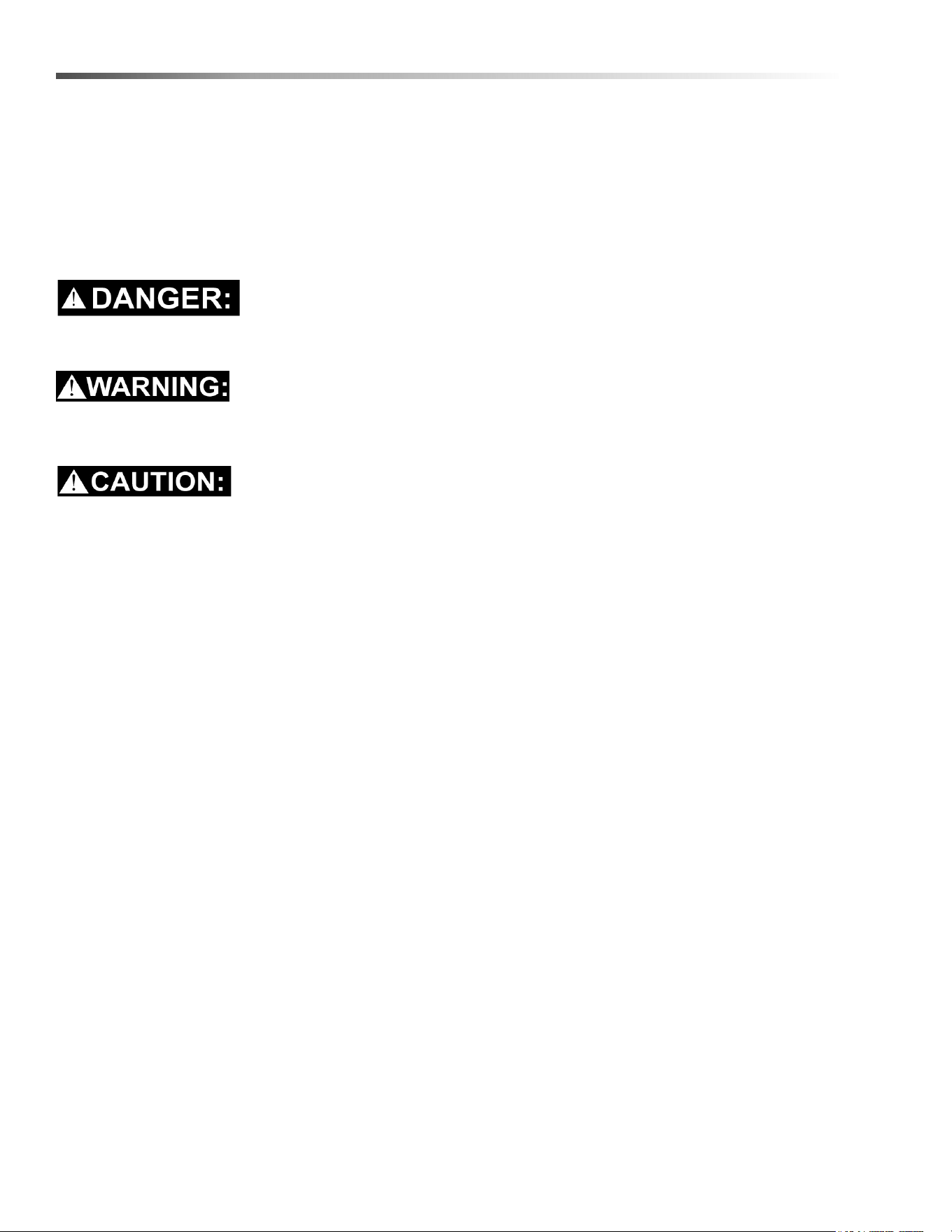
The following symbols are used throughout this guide as indicated in their descriptions:
Safety Hazard Intensity Level
The following terms and symbols are used to identify statements of potential hazards which affect safety of yourself
and others. Read and observe all safety statements found on this Operator Manual and on your engine.
There are three levels of hazard intensity identified by signal words - DANGER, WARNING, CAUTION. The level of
hazard intensity is determined by the following definitions:
DANGER - indicates a hazardous situation in which death or serious bodily injury can occur if the DANGER state-
ments found on your machine or in this Owner's Manual are ignored or are not adhered to.
WARNING - Hazards or unsafe practices which COULD result in severe personal injury or death if the WARNING
statements found on your machine or in this Owner's Manual are ignored or are not adhered to..
CAUTION - Hazards or unsafe practices which could result in minor personal injury or product or property damage
if the CAUTION statements found on your machine or in this Owner's Manual are ignored or are not adhered to.
8.643-380.0 Operators Manual - BDP Propane Burnisher
7
Safety
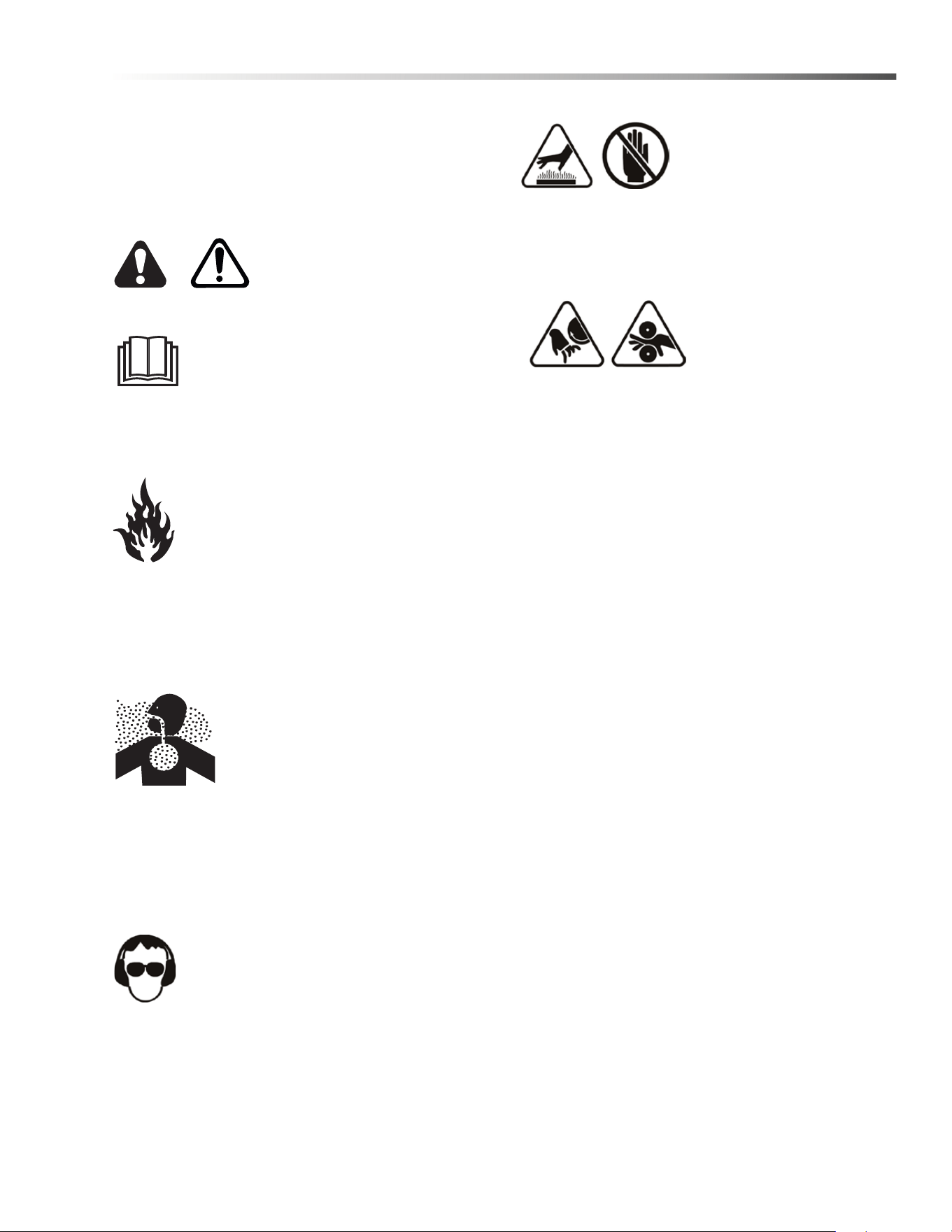
Description of Safety Symbols
The following safety symbols are used on the product
and in this manual to alert the operator of potential
safety hazards. Read them carefully, and understand
their meaning.
Indicates DANGER, WARNING, or CAUTION
Read Operator Manual before operating this machine.
Failure to follow directions could result in death or
serious injury.
Propane is highly flammable. Follow all Propane Safety
instructions in this Operator Manual, Propane Engine
Supplemental Operator Manual, and on machine.
Failure to follow directions could result in death or
serious injury.
Engine exhaust contains carbon monoxide, an
odorless and deadly gas. Follow all Carbon Monoxide
Safety instructions in this Operator Manual, Propane
Engine Supplemental Operator Manual, and on
machine. Failure to follow directions could result in
death or serious injury.
Wear eye and hearing protection when operating this
machine.
Do NOT touch hot muffler, exhaust pipe, or cylinder.
These parts are extremely hot from operation and may
remain hot after operation. Severe burn or injury could
occur if you touch these parts.
There are rotating pads and parts under machine
frame, which can cause serious injury. Keep hands and
feet away.
8.643-380.0 Operators Manual - BDP Propane Burnisher

8
Safety
IMPORTANT SAFETY INSTRUCTIONS
When using a propane powered appliance, basic precaution must always be followed, including the
following:
• Moving parts of this machine can cause serious injury and/or damage. Do not allow contact of
clothing, hair, hands, feet, or other body parts with the rotating pad. Keep other people away from
the machine while it's in operation. DO NOT leave the machine or engine running unattended.
• Operate the machine at a slow or moderate pace. DO NOT run when operating the machine.
• Keep bystanders away from the engine while it is in operation.
• Injury to the operator or bystanders could occur if the machine's power is on while changing the
buffing pad or making machine adjustments. Never try to change the buffing pad or attempt to make
machine adjustments while the engine is running.
• Cigarette lighters, pilot lights and any other sources ignition can create an explosion if it comes in
contact with propane. Propane is a highly flammable fuel. All sources of ignition should be extin-
guished or removed entirely if possible from the work area. DO NOT SMOKE in the vicinity of a
propane burnisher.
• This machine emits carbon monoxide. Asphyxiation could occur if the unit is used in an area with
poor or inadequate ventilation. Operate machine in a well ventilated area only. If a headache
develops, shut off the machine. Have it checked for carbon monoxide emissions by a qualified shop
before using it again.
• Dangerous carbon monoxide emissions from this machine are greatly increased due to a dirty com-
bustion air cleaner. Follow the engine's manufacturer’s air cleaner service instructions.
• Propane is highly flammable. If you smell propane gas, shut off the machine and move it outside.
Determine the source of the leak before using it again. NEVER vent propane gas inside a building. It
is UNLAWFUL to store a propane bottle inside a building.
• Long or continuous exposure to high noise levels may cause permanent hearing loss. Always wear
hearing protection while using this machine.
• Injury to the eyes and/or body can occur if protective clothing and/or equipment is not worn while
using this machine. Always wear safety goggles and safety clothing while using this machine.
• Severe burn or injury could occur if you touch the hot muffler or exhaust pipe. DO NOT TOUCH THE
HOT MUFFLER OR EXHAUST PIPE.
• Any alterations or modifications of this machine could result in damage to the machine or injury to
the operator or other bystanders. Alterations or modifications not authorized by the manufacturer
voids any and all warranties and liabilities.
• To avoid injury or property damage, do not leave the machine where it can be tampered with or
started by persons untrained in its operation. You must have training in the operation of this
machine before using it. DO NOT leave the machine running unattended.
• Substantial damage to the floor, the machine, or personnel may result if the machine is operated
with the pad off center, damaged or missing. Do not operate the machine if the pad is off center,
damaged or missing.
• Operating a machine that has loose parts could result in injury or property damage. Do not operate
this machine if there are loose parts. Inspect the machine for loose parts frequently. This will
promote safe operation and a long life for the machine.
• Vibration from machinery may cause numbness or tingling of the fingers in certain people.
Smoking, dampness, diet, and heredity may contribute to the symptoms. Wearing warm clothing,
gloves, exercising and refraining from smoking can reduce the effects of vibration. If the symptoms
still persist, discontinue operation of the machine.
8.643-380.0 Operators Manual - BDP Propane Burnisher

9
Safety
• Overfilling the propane tank is the number one cause of problems with a propane machine. This can
cause the engine to run poorly or not at all. In addition, overfilling allows liquid propane to enter the
fuel control system, possibly ruining the lock off / regulator assembly. This voids the warranty on
affected parts of the machine. To avoid problems, read and understand fully, the section "Filling
and Storing Propane Tanks."
• OVERHEATING is a major cause of engine failure. Keep the cooling air bonnet filter clean. Protect
your machine; don’t allow wax dust/lint to build up on the cooling fins of the engine cylinder(s). A
good high pressure spray wash directed at the fins when the engine is cold will prevent this from
happening.
• LOW OIL AND DIRTY OIL account for most of the other failures. It is recommended changing the oil
on a regular schedule, perhaps exceeding that which is found in the engine manufacturers' manual.
Checking the oil daily, before putting the machine to work, is a good habit to get into and could save
you the downtime and expense of replacing the engine due to oil starvation. AFTER AN OIL
CHANGE, MAKE SURE YOU HAVE REPLACED THE OIL SUPPLY BEFORE RESTARTING THE
ENGINE.
8.643-380.0 Operators Manual - BDP Propane Burnisher

10
Safety
Propane Safety
This machine is powered by an engine that uses propane fuel. Additional information about propane basics,
propane cylinders, filling propane cylinders, and storing and transporting propane cylinders is provided in the
"Propane" section of this operator manual.
The following propane safety instructions should be fully understood and followed at all times when using this
machine or propane cylinders. Failure to follow directions could result in death or serious injury.
Propane is a highly flammable fuel. Cigarette lighters, pilot lights, and any other sources of ignition can
create an explosion when in contact with propane. All sources of ignition should be extinguished or
removed entirely from the work area. DO NOT SMOKE in the vicinity of a propane powered engine,
machine, or propane cylinder.
NEVER release or bleed propane inside any building or other enclosed space or near an open pit. Check for
fuel leaks and damage to the propane cylinder prior to operating machine and storage. Turn off service
valve on propane cylinder when machine is not in use. Always store propane cylinder in an approved
outside location. It is UNLAWFUL to store a propane cylinder inside a building.
If you smell propane gas, shut off the machine and turn off service valve on propane cylinder and move
machine outside. Determine the source of the leak before using it again.
Escaping propane can freeze skin and cause frostbite and damage eyesight. Always wear safety gloves
and safety glasses when filling propane cylinders.
8.643-380.0 Operators Manual - BDP Propane Burnisher
11
Safety
Carbon Monoxide (CO) Safety
This machine and the engine that powers it have been specifically calibrated to operate safely in indoor spaces.
This is accomplished by calibrating the engine to run with a very "lean" air/fuel ratio which minimizes the production
of carbon monoxide. Additionally, a catalyst muffler is provided with the engine which specifically targets and elimi-
nates carbon monoxide.
In order to maintain a safe working environment, and minimize risk of carbon monoxide poisoning, the following
safety information and instruction in this section must be strictly adhered to:
All LPG (Liquid Propane Gas) powered engines, including this engine, produce Carbon Monoxide (CO), a
DEADLY, colorless, odorless, tasteless, non-irritating, and poisonous gas. Failure to provide for proper
venting of CO produced during the operation of combustion powered engines may result in SERIOUS
INJURY OR DEATH to the operator and those in the contaminated area.
Do not operate this machine without catalyst muffler installed.
Do not tamper with regulator or other settings which would alter air/fuel ratio.
Dangerous carbon monoxide emissions from this engine will increase greatly due to a dirty air cleaner.
Follow the engine manufacturer's air cleaner service instructions.
The purpose of this section is to provide helpful information to explain how carbon monoxide can be managed to
reduce risk of carbon monoxide poisoning:
• Potential effects of CO exposure
• Industry guidelines for acceptable CO exposure
• Measuring CO exposure
• Understanding factors that determine CO exposure
• Methods to reduce CO exposure
8.643-380.0 Operators Manual - BDP Propane Burnisher

12
Safety
Potential Effects of Carbon Monoxide Exposure
Symptoms of carbon monoxide (CO) poisoning include headaches, irritability, confusion, dizziness,
drowsiness, visual disturbance, nausea, vomiting, asphyxiation, or lack of consciousness. If you or any
bystander experience any of these symptoms, shut off the machine immediately and go outside for fresh
air. Do NOT operate the machine again until it has been tested by a qualified technician.
The toxic effects of carbon monoxide in the blood are the result of tissue hypoxia (lack of oxygen). Carbon
monoxide combines with hemoglobin to form carboxyhemoglobin. Since CO and oxygen react with the same group
in the hemoglobin molecule, carboxyhemoglobin is incapable of carrying Oxygen. The affinity of hemoglobin for CO
is 200 to 240 times greater than for oxygen. The extent of saturation of hemoglobin with CO depends on the
concentration of the gas, the quantity of inspired air and on the time of exposure. The severity depends on the state
of activity of the individual and his tissue oxygen needs.
The effects of CO can be experienced at different exposure levels, depending on the health of the individual. Condi-
tions that affect the tolerance of the individual are smoking, age, temperature, humidity, and other conditions.
According to Harrison's Principles of Internal Medicine 7th edition:
• No symptoms will develop at a concentration of 0.01 % CO (100ppm) in inspired air, since this will not raise
blood saturation above 10 %.
• Exposure to 0.05% (500ppm) for 1 hour during light activity will produce a blood concentration of 20%
carboxyhemoglobin and result in a mild or throbbing headache.
• Greater activity or longer exposure causes a blood saturation of 30 to 50 %. At this point head ache, irrita-
bility, confusion, dizziness, visual disturbance, nausea, vomiting, and fainting can be experienced.
• Exposure for one hour to concentrations of 0.1 % (1000ppm) in inspired air the blood will contain 50 to 80%
carboxyhemoglobin which results in coma, convulsions, respiratory failure and death.
• On inhalation of high concentrations of CO, saturation of the blood proceeds so rapidly that unconsciousness
may occur suddenly without warning.
Industry Guidelines for Acceptable Carbon Monoxide Exposure
Limits for permissible exposure to Carbon Monoxide vary substantially from region to region. Consult local,
regional, and national workplace safety standards to determine limits for carbon monoxide exposure in your area,
prior to use of any propane machines.
The current Occupational Safety and Health Administration (OSHA) Permissible Exposure Limit (PEL) for CO is 35
ppm, as an 8-hour time weighted average (TWA). This is computed by making measurements at intervals over 8
hours, then adding the sums of the concentrations and the intervals, and dividing by 8 hours. For example:
Time Interval PPM
8:00-9:00 1 HR 100
9:00-10:00 1 HR 25
10:00-11:00 1 HR 25
11:00-12:00 1 HR 50
12:00-1:00 1 HR 50
1:00-2:00 1 HR 50
2:00-3:00 1 HR 50
3:00-4:00 1 HR 50
Time intervals = 8 HR
Total ppm = 400
Time Weighted Average (TWA) = 400 ppm / 8 HR = 50 PPM/Hr
8.643-380.0 Operators Manual - BDP Propane Burnisher

13
Safety
The current National Institute for Occupational Health and Safety (NIOSH) has determined that concentrations
above the 1,200 ppm is "immediately dangerous to life and health" (IDLH). NIOSH defines the IDLH exposure level
as the concentration that could result in irreversible health effects or death, or prevent escape from the contami-
nated environment within 30 minutes.
Measuring Carbon Monoxide Exposure
Deployment of a monitor/detector is essential for the safe operation of any equipment that has the potential
to produce carbon monoxide.
CO sensors/detectors became available on the mass market around 1978. The main differences between the tech-
nologies involved are battery or electric and Semiconductor or Biomimetic types. Detectors for carbon monoxide
(CO) are manufactured and marketed for use in either the home or occupational industrial settings. The detectors
for home use are devices that will sound an alarm before CO concentrations in the home become hazardous. There
is an Underwriters Laboratories, Inc., performance standard (UL 2034) for residential CO detectors. Detectors
currently available on the market are battery-powered, plug-in, or hardwired. Some models incorporate a visual
display of the parts per million (ppm) concentration of CO present in the home. For more information on CO
detectors for home use, call the Consumer Product Safety Commission:
Commission Hotline at 1-800-638-2772
CO detectors for use in residential settings are not designed for use in workplace settings. Monitoring requirements
in an occupational setting are different from monitoring requirements in the home. In the workplace, it is frequently
necessary to monitor a worker's exposure to carbon monoxide over an entire work shift and determine the time-
weighted average (TWA) concentration of the exposure. It may also be necessary to have carbon monoxide
monitors with alarm capabilities in the workplace. The direct reading instruments are frequently equipped with audio
and/or visual alarms and may be used for area and/or personal exposure monitoring. Some have microprocessors
and memory for storing CO concentration readings taken during the day. It is significant to note that some of the
devices mentioned for workplace CO monitoring are not capable of monitoring TWAs, and not all are equipped with
alarms. The appropriate monitor must be chosen on an application-by-application basis. For more information on
the availability of workplace CO monitors or their application, call the National Institute for Occupational Safety and
Health at 1-800-35-NIOSH (1-800-356-4674).
8.643-380.0 Operators Manual - BDP Propane Burnisher

14
Safety
Understanding Factors that Determine Carbon Monoxide Levels
The primary factors that ultimately determine the expected level of Carbon Monoxide in a space where a propane
machine is operating are as follows:
• Room air volume
• Air Exchange Rate (ventilation rate)
• Carbon Monoxide Production Rate
Room air volume can be determined by multiplying the length, width, and height of a room, and then reducing for
any material in the room. For example:
A room that is 100 ft x 100 ft with a 10 ft ceiling has a volume of: 100 x 100 x 10 = 100,000 cubic feet, when
empty.
If the room consists of 80% open air, and 20% material, the total room air volume = 100,000 * 80% = 80,000
cubic feet.
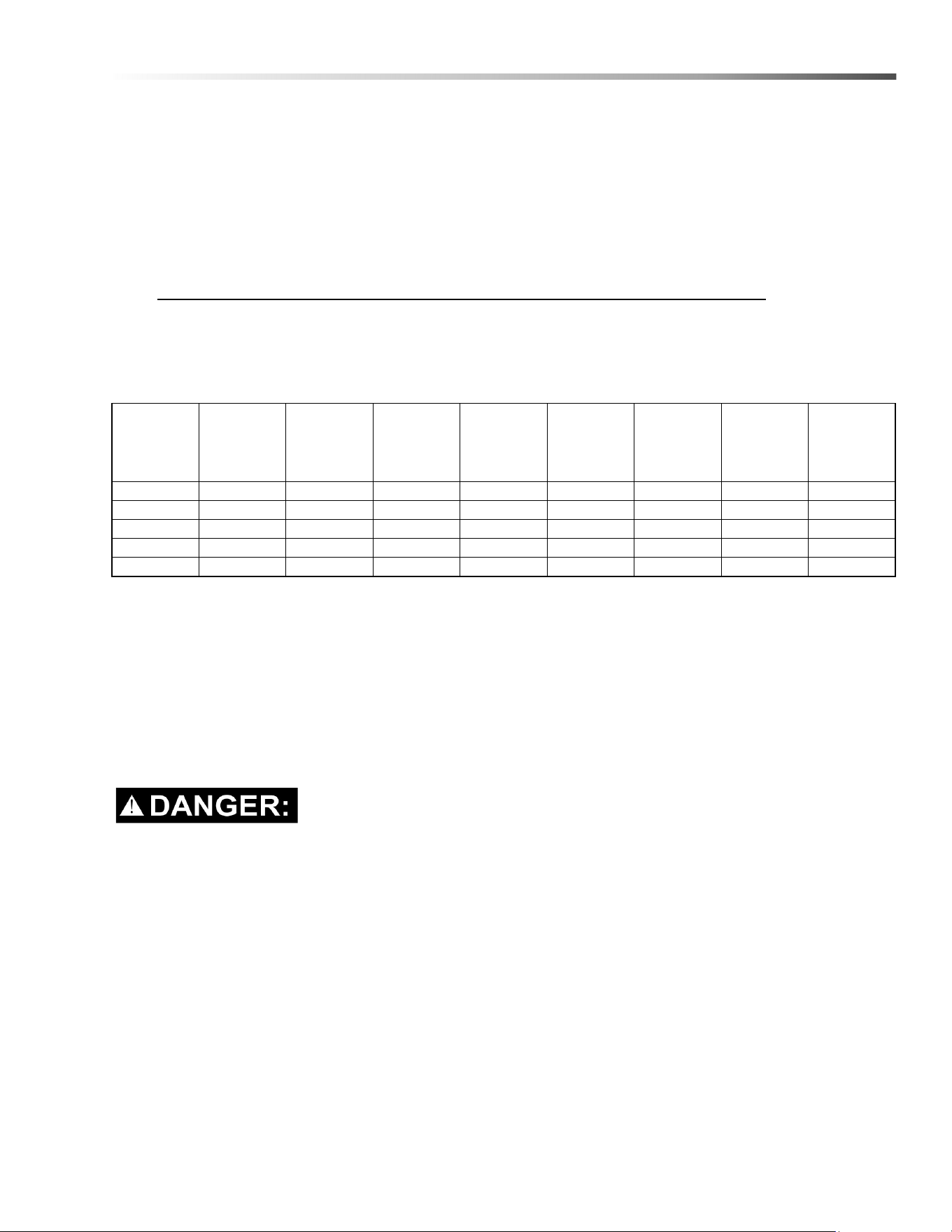
Air Exchange Rate is a measure of the room's ventilation. Air exchange rate is typically measured in terms of the
qty of air changes per hour (ACPH). In other words, the Air Exchange Rate when expressed as ACPH, measures
the frequency (per hour) that the room's air is replaced by fresh air. The higher the ACPH, the more frequently air is
being ventilated, for example:
In a room with ACPH = 6, the room's air would be completely extracted and replaced by fresh air 6 times every
hour, or once every 10 minutes.
Here are some air exchange rates, expressed in ACPH, that would be expected in different types of industrial and
commercial spaces:
Carbon Monoxide Production Rate is, itself, the result of several factors:
• The total flow of engine exhaust, which is determined by the relative amount of engine load of application
• The amount of Carbon Monoxide present in the exhaust, expressed as PPM
• The quantity of propane engines in operation
Basement Parking 15–30 Restaurant Food Staging Area 10-12
Residential Basement 3–4 Restaurant Bar 15-20
Bedroom 5-6 Public Hallway 6-8
Residential Bathroom 6-7 Public Retail Store 6-10
Residential Living Rooms 6-8 Public Foyer 8-10
Residential Kitchen 7-8 Church 8-12
Residential Laundry 8-9 Public Auditorium 1 2-14
Business Offices 6-8 Commercial kitchens & Restrooms 15-30
Business Lunch Break Rooms 7-8 Smoking rooms 15-20
Business Conference Rooms 8-12 Laboratories 6-12
Business Copy Rooms 10-12 Classrooms 3-4
Computer Rooms 10-14 Warehousing 3-10
Restaurant Dining Area 8-10
8.643-380.0 Operators Manual - BDP Propane Burnisher
15
Safety
A 603cc propane engine under normal operating conditions (50% of maximum load) will produce total exhaust at a
rate of 13 CFM (cubic feet per minute), with Carbon Monoxide making up 50 PPM of the total exhaust.
Therefore, the CO production rate (in CFM) is calculated as follows:
Qty of Engines * Exhaust Flow per Engine (CFM) * CO Level of Exhaust (PPM)
Calculating the CO production rate of one 603cc engine operating under normal conditions is as follows:
1 engine * 13 cubic ft / min per engine * 50 / 1,000,000 = 0.00065 cubic feet/min
Knowing all of these factors, we can calculate the equilibrium carbon monoxide level of a room (in PPM) as follows:
Total CO production rate (in cubic feet / min) * Air Exchange Rate (expressed in minutes)
* 1,000,000
Room air volume (in cubic feet)
This table shows the calculated equilibrium carbon monoxide level under different examples with varying inputs:
There are several important notes to take away from these calculations:
• More engines running in a space leads to higher room CO level. This is shown comparing Examples No. 1
& 2.
• Smaller room size leads to higher room CO level. This is shown comparing Examples No. 2 & 3.
• Lower ventilation (Air Exchange Rate) leads to higher room CO level. This is shown comparing Examples
No. 3 & 4.
• Higher CO level in the exhaust leads to higher room CO level. This is shown comparing Examples No. 4
& 5.
Operating this machine or any propane powered engine in a space with NO ventilation (a sealed space), is
guaranteed to result in dangerously high level of CO, that will cause serious injury or death to the operator
and bystanders. Never operate the machine in a sealed space with no ventilation
Example
No.
Qty of
Engines
CO in
Exhaust
(PPM)
Exhaust
Flow per
Engine
(CFM)
Total CO
Production
Rate (CFM)
Air
Exchange
Rate
(ACPH)
Air
Exchange
Time (min)
Room Air
Volume, ft3
Room CO
Level
(PPM)
1 1 50 13 0.00065 3 20 80000 0.163
2 5 50 13 0.00325 3 20 80000 0.813
3 5 50 13 0.00325 3 20 8000 8.13
4 5 50 13 0.00325 1 60 8000 24.4
5 5 500 13 0.0325 1 60 8000 244
8.643-380.0 Operators Manual - BDP Propane Burnisher

16
Safety
Methods to Reduce Carbon Monoxide Exposure
Reviewing the previous section, we already know that to reduce CO exposure the following action should be taken:
• Limit the quantity of engines running in a space. Insure adequate ventilation. Higher ventilation rates
(higher air exchange rate) will always result in lower CO exposure.
• Insure proper maintenance and performance of engine to avoid high CO content in engine exhaust.
• All of these tips are especially important to follow when using the machine in small spaces.
This section offers additional considerations and best practices to reducing Carbon Monoxide exposure:
• Air Exchange and CO Diffusion
• Application Considerations
• Examples of CO Management in Spaces
• Maintenance of Equipment
Air Exchange And CO Diffusion
The most reliable method to prevent CO Poisoning is to ensure all the CO produced is vented outside. With wood
stoves or gas heaters this is performed with ductwork that carries the exhaust and CO outside. Non-stationary
combustion type equipment must be used in such a way that CO is not allowed to rise to a harmful or dangerous
level. CO does not readily dissipate or mix with air on its own. Air currents can "stir" the CO and dilute the concen-
tration or ppm values by mixing it with the available air. When using equipment over a large area in a short time
"stirring" occurs as you walk, or to say it another way, your Effective Operating Zone is large. When activity is
concentrated to a smaller area as in a stripping application, the Effective Operating Zone is small, and "stirring"
must be forced by the use of fans to increase the Effective Operating Zone and reduce high concentrations of CO.
“Air" exchange rates (air exchange is defined as the exhausting of internal air to the external atmosphere), the size
of the Effective Operating Zone, amount of CO produced, level of human activity, and the duration of exposure are
all factors in the determination of the production of carboxyhemoglobin and the amount of CO blood saturation.
Type of Work Considerations
Different types of work (applications) present varying risk of CO exposure.
The highest risk is associated with types of work that require slow movement, such as floor stripping or polishing.
Due to slow movement, the activity and engine exhaust is concentrated to a relatively small area which results in
higher CO levels for the operator. Types of work that require high movement, such as burnishing, will naturally stir
the air and diffuse the engine exhaust and result in lower CO levels for the operator.
The term "Effective Operating Zone" is used to visualize this concept. The Effective Operating Zone can be defined
by the amount of area covered during a given time frame. Small Effective Operating Zones result the greatest risk
of CO Exposure.
When using equipment over a large area in a short time, as in most burnishing applications, your Effective
Operating Zone is large. When activity is concentrated to a smaller area as in stripping applications, the Effective
Operating Zone is small and stirring or CO mixing MUST be forced by the use of fans to increase the Effective
Operating Zone and reduce high concentrations of CO. The Effective Operating Zone can be defined as the area
covered in a given time.
When the Effective Operating Zone is small, fans must be used to force the mixing/stirring of air and reduce
high concentrations of CO. Proper ventilation must be combined with air mixing/stirring to reduce CO to a
safe level.
8.643-380.0 Operators Manual - BDP Propane Burnisher
17
Safety
Examples of CO Management in Spaces
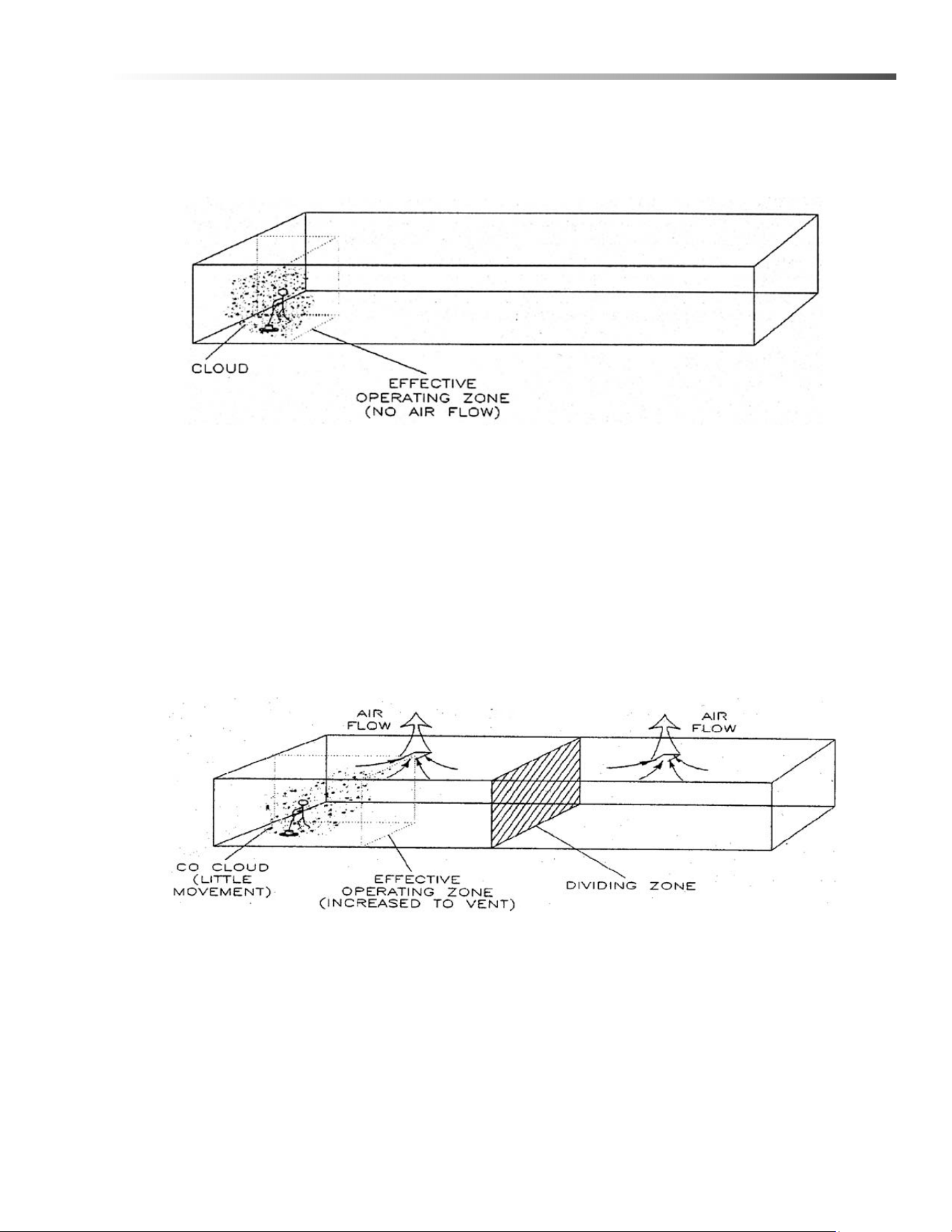
MODEL 1: Worst Case CO Management
Model 1 illustrates the worst case of CO management for several reasons:
• The room is not properly ventilated
• The air in the room is not mixed/stirred with any fans
• The type of work shown (stripping) requires low speed movement and results in a smaller "Effective
Operating Zone".
NOTE: Even though the room is large, due to these worst practices, the engine exhaust is concentrated near the
operator, resulting in high CO exposure.
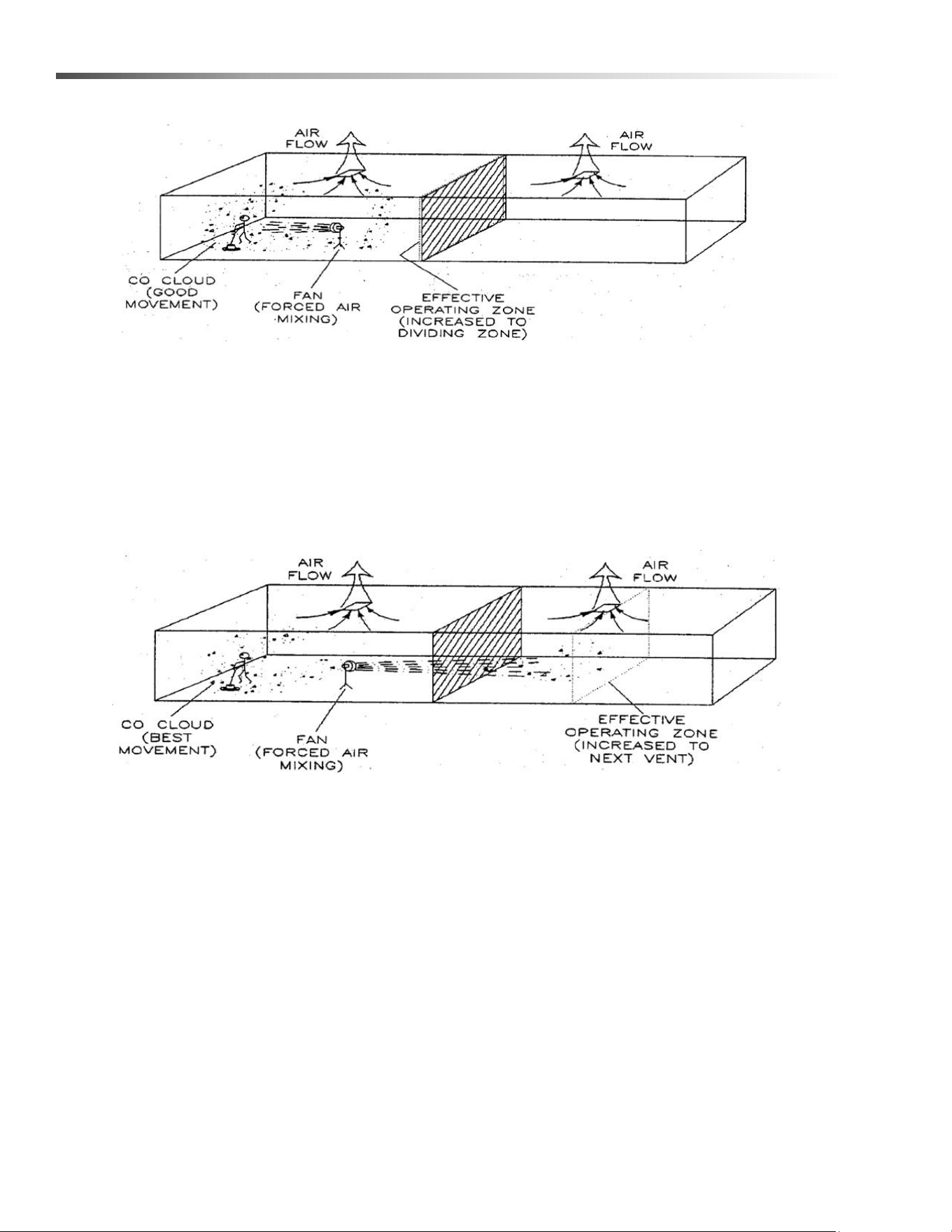
MODEL 2: Poor CO Management
Model 2 illustrates a slightly improved case of CO management, compared with Model 1, because air ventilation is
introduced. As a result, the Effective Operating Zone is slightly increased and slightly lower levels of CO concentra-
tion would be expected. However, because air is not mixed/stirred, and because the type of work shown (stripping)
requires low speed movement, there is still a potential risk of high CO exposure. The CO cloud is still concentrated
in a small area. Note the "Dividing Zone" shown above, this is the line where airflow changes direction. Because all
of the CO exists on one side of the dividing zone, only half of the room's ventilation is effectively evacuating CO.
8.643-380.0 Operators Manual - BDP Propane Burnisher
18
Safety
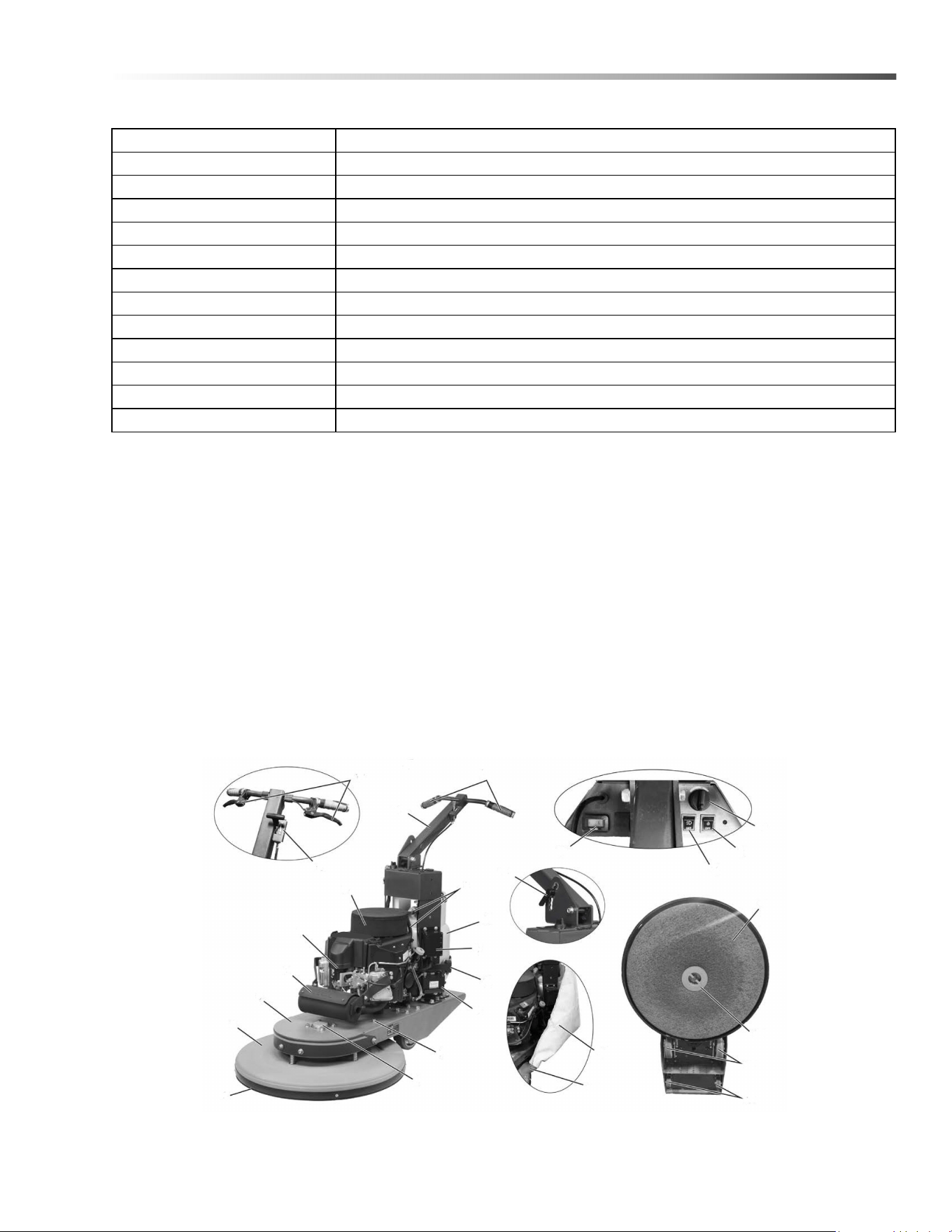
MODEL 3: Better CO Management
Model 3 illustrates an even more improved case of CO management, compared with Model 2, because the air is
being mixed/stirred with fan(s). Notice the CO concentration and the Effective Operating Zone (Expanded to the
Dividing zone) due to the forced air mixing. The CO cloud is still concentrated on one side of the Dividing zone. As
in Model 2, because all of the CO exists on one side of the dividing zone, only half of the room's ventilation is effec-
tively evacuating CO.
MODEL 4: Best CO Management
Model 4 illustrates the best case of CO management, because the forced mixing/stirring of air causes the diffusion
of CO across the Dividing zones, and maximizes the Effective Operating Zone. This method maximizes the amount
of diffusion and maximizes the amount of CO that will be effectively evacuated by the room's ventilation, and thus
minimizes the operator's potential exposure to CO.
8.643-380.0 Operators Manual - BDP Propane Burnisher

19
Safety
Maintenance of Equipment
There are several components and systems on the propane engine of this equipment that ensure minimal CO
output:
Catalytic Muffler: A three-way type catalytic converter to scrub CO, Hydro Carbons (HC), and Nitrous Oxide (NOx)
from the engine exhaust providing the lowest possible emissions.
Propane Fuel System: The regulator/carburetor of this engine (the fuel system) are specifically calibrated for the
engine to run with a very "lean" air/fuel ratio which minimizes the production of carbon monoxide.
Air Cleaner: The engine is equipped with an air-cleaner that filters dust and contaminates from the air used for
combustion, resulting in a full and clean burn during engine ignition.
The proper maintenance of equipment is vital to safe operation. LPG engines are dependent on engine tune
up, and air filter replacement. CO concentration (production) skyrockets when the air to fuel ratio becomes
fuel rich. Follow the recommended Maintenance found in the Engine Operator Manual as well as in this
Operator Manual.
8.643-380.0 Operators Manual - BDP Propane Burnisher

20
Propane
Propane Basics
Propane is commonly available and has proven to be a dependable, safe, economical, and clean burning fuel. It
can be used as a household fuel, industrial fuel, and fuel for internal combustion engines. Propane has been used
as a fuel since 1910.
The molecular formula of propane is C3H8, and it is in the family of liquefied petroleum gases (LP gases). The other
LP gases include butane, propylene, butadiene, butylene, isobutylene and mixtures thereof.
At atmospheric pressure, propane boils at -44 degrees Fahrenheit, meaning it typically exists as a vapor. However,
when contained under pressure, such as in a propane cylinder, it can exist as a liquid.
Propane is naturally odorless, but includes an additive odorant, usually mercaptan, which gives it a distinct odor
similar to rotten eggs or skunk.
Vapor propane is heavier than air, meaning it will settle in low areas such as along the ground or in drains.
Propane Cylinders (Tanks)
Only use D.O.T. certified propane cylinders intended for engine fuel applications. NEVER use a cylinder not
intended engine fuel applications. DO NOT substitute cylinders that are used with a barbecue grill, etc
DO NOT tamper with cylinder gauges or safety relief valves
At time of propane cylinder fill or exchange, ensure tank is in operable condition and meets all certification
requirements. Discontinue use of any cylinder that is damaged or rusted or does not comply with certifica-
tion requirements. Your propane service company will assist with compliance
Propane cylinders are constructed according to ASME and Federal DOT #4ET20 pressure safety codes. All valves
and fittings are UL Listed. Propane gas is noncorrosive and will not rust the inside of a cylinder. It is recommended
to have propane cylinders inspected regularly during re-fill by an authorized National LP Gas Association propane
dealer. The fuel cylinder is supplied directly from the manufacturer and is void of propane.
Propane cylinders are constructed to function in specific configurations. The primary configuration options are:
• Propane Withdrawal: Vapor or Liquid
• Cylinder Orientation: Horizontal or Vertical
IMPORTANT: Different cylinder configurations are not interchangeable.
This machine uses Vapor cylinders with Vertical orientation.
Do not use incorrect propane cylinders, such as liquid withdrawal cylinders for fork lift trucks or other
liquid withdrawal applications
Use only vertical orientation propane cylinders. Always install cylinders on the machine in the proper
orientation.
Failure to use a proper cylinder or failure to install cylinder in proper orientation will result in liquid
propane withdrawal and cause damage the regulator.
8.643-380.0 Operators Manual - BDP Propane Burnisher

21
Propane
Filling Propane Cylinders
Propane cylinders should only be filled by your propane provider or by individuals who have been properly
trained and certified.
Escaping propane can freeze skin and cause frostbite and damage eyesight. Always wear safety gloves
and safety glasses when filling propane cylinders.
Overfilling propane cylinders is the number one cause of damage to the propane fuel system. This fuel
system is designed to run off vapor propane, not liquid propane. When the cylinder is overfilled, liquid
propane will enter the fuel system and can damage lock-off and regulator, in addition to causing the engine
to run poorly or not at all. This voids the warranty on affected parts of the engine. To avoid problems, read
and understand fully, the section "FILLING PROPANE CYLINDERS".
Only use HD-5 grade propane to operate this engine
Propane cylinders must be purged at the time of the first fill. Your propane suppliers should be familiar
with this operation and will provide this service. Purging instructions are provided in the next section.
The maximum fill volume of a propane cylinder is ALWAYS considered 80% of the total cylinder volume to allow for
expansion and to ensure proper vapor withdrawal from the cylinder.
For example, if your propane cylinder is referred to as a "20 lb cylinder", this means that when the propane cylinder
is 80% full, the weight of the propane is 20 lb.
Cylinders should be filled in the vertical position.
When filling a propane cylinder, the fixed liquid level gauge should be opened (unscrewed counterclockwise) so it
can be used to determine when propane has reached 80% full. As propane is added during filling, vapor will escape
the small hole in this gauge. When the cylinder reaches 80% full, the escaping propane will turn to liquid propane.
When this happens, the filling should be immediately stopped and the gauge should be closed (turned clockwise).
8.643-380.0 Operators Manual - BDP Propane Burnisher

22
Propane
Purging Propane Cylinders
New containers may contain vapor, air, or other contaminants. It is essential that these be removed before
filling the container and placing it into service. Air in the container will cause abnormally high pressure,
with the result that the pressure relief valve may open. Air in the system is also likely to cause lean mixture,
making ignition difficult. If a cylinder is suspected of being depressurized or open to the atmosphere for a
period of time, it must be re-purged as if it were a new container.
Symptoms of a non-purge cylinder:
• Relief valve opens due to over pressurized cylinder creating hazardous situation.
• Moisture in the cylinder.
• Machine operates initially but shuts down when fuel mixture becomes too lean.
To purge a container, the following steps should be taken.
1. Purging of containers should be performed in an approved area (see NFPA 05 8) using NPGA #13 3.89(a)
procedure.
2. Determine if the container pressure is zero. Should the cylinder contain only pressurized air, the air may be
vented directly to the atmosphere through the service valve using an adapter and the outage valve. Pressurize
the container to approximately 15 psig with LP-gas vapor. Never purge with liquid LP-gas! To do so will cause
the moisture vapor to chill and remain in the cylinder. LP gas liquid also expands 270 times to vapor making the
purge process ineffective. Use LP-gas vapor only!
3. Make the connection to the quick coupler (A purge manifold system is most effective). Fully open the cylinder
service valve as well as the outage valve. Vent to a safe atmosphere. A vent stack is recommended.
4. On Overfill Prevention Device cylinders, the purge time is increased as a result of the new valve design.
Opening the outage valve will help improve the speed of the purge.
5. Repeat #3 and #4 for a total of FIVE purges.
6. Re-pressurize the container with odorized LP-gas vapor to 15 psig.
7. The container is now ready to be filled with LP-gas.
8. Once filled, check all fittings and tank openings for leaks using an approved leak detector solution.
9. The container is now ready to be placed in service. Add DOT and OSHA labels.
Storing & Transporting Propane Cylinders
The NFPA Technical Committee prohibits the storage of such containers in buildings. There are few exceptions to
this rule. In other words, propane tanks should NOT be stored in buildings used by the public or frequented by
anyone passing through or who is working in the building. Full or empty, never leave tanks in small enclosed areas.
The tank(s) must be in a secure, tamper-proof storage enclosure that provides safety from accident or vandalism.
Propane cylinders should always be transported either secured to the machine using cylinder straps, or secured in
an upright position during transportation.
8.643-380.0 Operators Manual - BDP Propane Burnisher
23
Operations
Machine Specifications
* Varies by Model
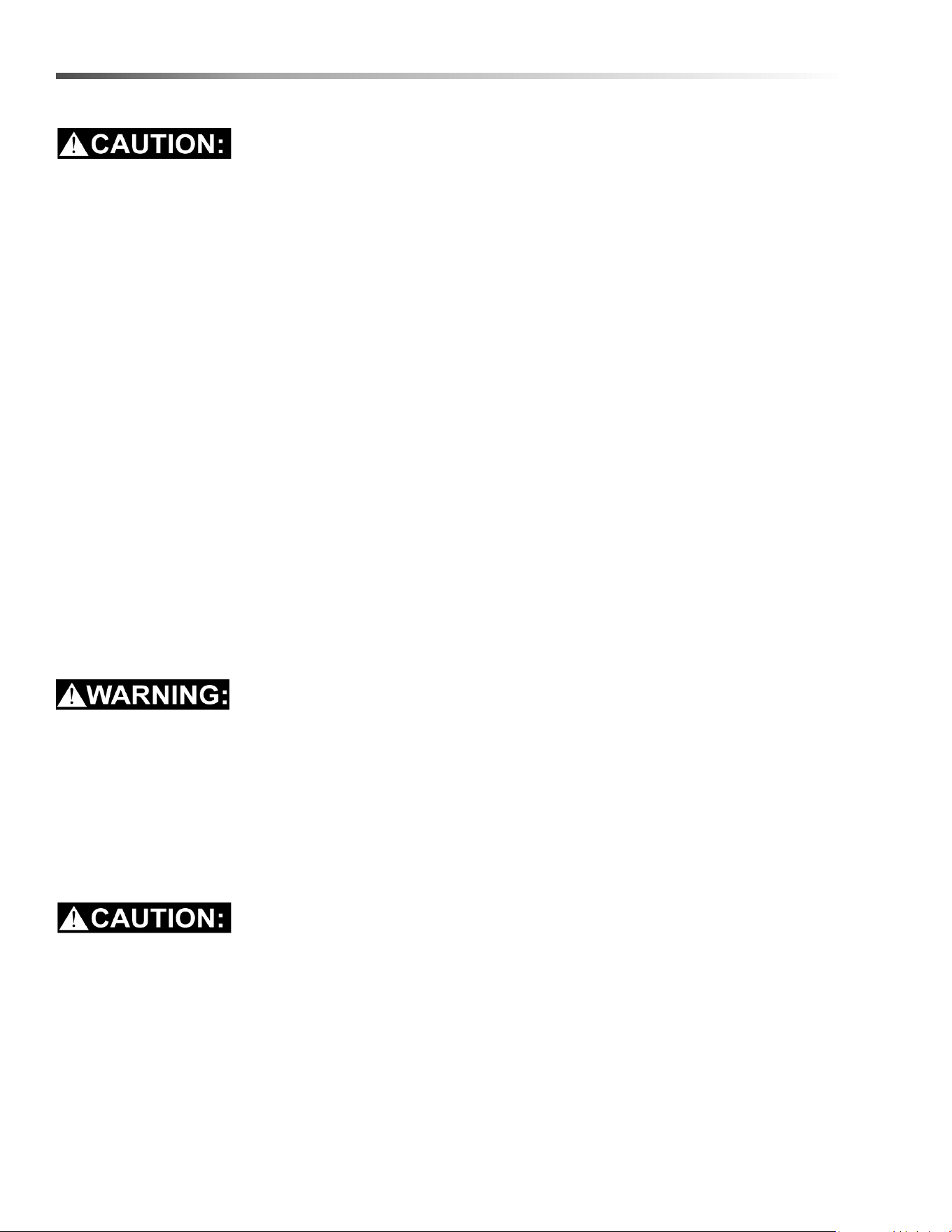
Components & Controls
ITEM DIMENSION/CAPACITY
Engine Size 603 CC
Pad Diameter 21 in. / 24 in. / 27 in. *
Net Weight 272 lb
Gross Weight 330 lb
Packaged Dimension 52 in. (L) x 30 in. (W) x 44 in. (H)
Front Wheels 6 x 1.5 in. (x2)
Pulley Ratio 4:8
Belt BX51
Engine Idle RPM 2000
Engine MAX RPM 2900 to 3500*
PAD RPM 1000 to 1800
Propane Cylinder 20 LB Vertical Vapor
1. Engine 11.Tank Strap 21 Water Switch*
2. Catalytic Muffler 12. Propane Hose w/REGO Valve 22. Ignition Switch & Key
3. Machine Deck 13. Handle 23. Pad
4. Shroud 14. Grips 24. Pad Holer
5. Shroud Seal 15. Bonnet Fileter 25. Front Wheels
6. Front Bearing Housing 16. Engine Trhottle Control 26. Rear Casters
7. Belt Tensioner 17. Clutch Handles* 27. Dust Bag*
8. Battery 18. Handle Adjustment Knob 28. Dust Chute*
9. Electric Box & Cover 19. Hour Meter / Tachmonmeter
10. Propane Tank 20. Headlight Switch* * Not included on all models
17
16
15
1
13
2
3
4
13
19
20
21
12
10
9
11
8
7
6
27
28
26
25
24
23
22
18
5
8.643-380.0 Operators Manual - BDP Propane Burnisher
24
Operations
OVERHEATING is a major cause of engine failure. Keep the engine clean and free of debris build up.
Low oil levels and dirty oil account for most of the other failures. Follow the engine manual’s recom-
mended oil change schedule.
Preparation
1. Check engine oil level according to Engine Operator Manual
2. Ensure propane cylinder has been properly filled according to section "Filling Propane Cylinders"
3. Check for any sign of wear or damage such as cracks, corrosion, punctures, etc. to the fuel system including
propane cylinder, fuel hoses, fittings, regulator, carburetor, and electrical components.
4. Ensure main service valve on propane cylinder is closed (turned clockwise).
5. Screw the REGO fitting of the high-pressure propane hose onto the cylinder service valve and hand tighten.
This connection MUST be tight and secure and fully seated to function.
6. Ensure propane tank is secured with clamping strap
7. Ensure handle is secure and at a comfortable position
8. Ensure all machine parts (belt, pad, handle, wheels, etc.) are in place and secure.
9. Ensure the pad is at least 1/3 inch thick, and that the pad holder is tight.
10. Ensure the pad driver is secure to the drive shaft.
11. Ensure the battery cable is connected
Starting Engine
Before attempting to start engine, become familiar with all controls of the machine.
1. Slowly open the main service valve on propane cylinder to the fully open position.
2. Set throttle to Idle position.
3. Ensure machine is rocked back on its rear casters, so the pad is not in contact with the floor.
4. Turn Ignition Switch to "Start", which will engage starter. Allow cranking for a maximum of 6 seconds or until the
engine fires. If engine fails to fire on the first attempt, repeat this step. It will likely fire on the second attempt
due to internal fuel priming.
Serious starter damage will result if starter is engaged for more than 6 seconds, and will void warranty.
5. Once engine has started, slowly increase throttle. Allow for a warm-up period for 30 Seconds before applying
full load to the engine.
NOTE: If the engine fails to start, see the Troubleshooting Guide.
8.643-380.0 Operators Manual - BDP Propane Burnisher

25
Operations
Stopping Engine
Normal Stop
Follow these stopping procedures under normal use, including when the engine will be stored or transported:
1. Set throttle to Idle position.
2. Close the service valve on propane cylinder (turn clockwise fully).
3. Allow the remaining propane in the regulator and fuel hose to be consumed by engine, until engine stops.
4. Turn engine key switch to off.
5. Disconnect fuel line from propane cylinder.
6. If storing or transporting the machine, follow instructions in section "STORING & TRANSPORTING PROPANE
CYLINDERS"
Immediate Stop
Follow these stopping procedures only when an immediate stop is required:
1. Turn engine key switch to off.
2. Close the service valve on propane cylinder (turn clockwise fully).
3. Disconnect fuel line from propane cylinder.
Handle Adjustment
The handle on this machine can be adjusted to several heights, to accommodate different sized operators and
different operator preferences. To adjust the handle:
1. Stop the engine.
2. Loosen the Handle Adjustment Knob, until the Handle is allowed to pivot freely. Note: Do not fully remove this
knob.
3. Adjust the Handle to desired position.
4. Tighten the Handle Adjustment Knob.
8.643-380.0 Operators Manual - BDP Propane Burnisher
26
Operations
Wheel Position Adjustment
The position of the two front wheels has significant affect on the performance and handling of the machine,
including:
Pad pressure = The amount of force the pad has against the floor
Forward propulsion = The feeling of forward pull or drive caused by pad friction
Machine torque = The feeling that the machine wants to constantly turn, usually toward the left
When your machine was assembled, the wheels were installed in positions determined to allow for best perfor-
mance under most conditions. However, depending on floor type, floor finish type, pad type, and operator prefer-
ence, these wheel positions can be changed to affect machine performance.
For the purpose of clarity, the following terms will be used in this section:
Forward = closer to the front of the machine
Rearward = closer to the rear of the machine
Up = closer to the sky
Down = closer to the ground
Left = the left side when viewed from the Operator's position
Right = the right side when viewed from the Operator's position
Through wheel adjustment, the following changes can be made to the machine performance
To change the wheel position:
1. Stop the engine.
2. Adjust handle position to highest position and rock machine back, until handle grips are resting on ground.
Whenever working on a machine in the rocked back position, ask an assistant to hold the handle and
prevent the machine from falling forward.
3. Remove the small cotter pin / hair pin from the wheel axle.
4. Remove the wheel axle.
5. Remove the wheel and any spacer.
6. Reposition the wheel and spacer in desired hole.
7. Insert the wheel axle.
8. Insert the cotter pin / hair pin.
Desired Change Adjustment to Make
Increase pad pressure Move both wheels (left and right) Rearward
Decrease pad pressure Move both wheels (left and right) Forward
Increase forward propulsion Offset the two wheels, so the right wheel is Higher (more “up”) than left
Decrease forward propulsion Align the two wheels, so the left and right wheel are the same height
Increase machine torque Move both wheels (left and right) Down
Decrease machine torque Move both wheels (left and right) Up
8.643-380.0 Operators Manual - BDP Propane Burnisher

27
Maintenance
To ensure personal safety, adjustments should ONLY be made by a qualified technician or an authorized service center.
Prior to any maintenance, ensure engine is turned off and disconnect spark plug wire from spark plug. Never attempt
service or maintenance on a running engine.
Maintenance Schedule
For engine maintenance instructions and service intervals, refer to Engine Operator Manual.
Maintenance Daily 25 Hr 200 Hr
Check engine Oil Level *
Check for Loose Hardware *
Check for Fuel or Oil Leakage *
Check / Clean Intake Air Filter *
Check / Clean Bonnet Filter *
Check, Clean, and / or Replace Dust Bag *
Check Pad *
Check Shroud & Shroud Seal *
Check Engine Mounts *
Check Belt for Wear or Slippage *
Check Pulleys, Drive Shaft, and Bearings *
Check Wheels & Bearings *
Overall Checkup at Authorized Service Center *
8.643-380.0 Operators Manual - BDP Propane Burnisher

28
Maintenance
Battery Maintenance
The equipment uses an onboard charging system integrated within the wiring harness which charges battery during
normal use.
The battery can be recharged offline with any off-the-shelf battery charger with the following specs:
Voltage = 12 volts
Charging Amperage = 0.5 to 15 Amps
Battery Charging Procedures:
1. Disconnect the plastic battery cable terminal on equipment, and remove battery from equipment.
2. Connect the charger clamps to the battery posts:
• Red clamp on the positive "+" post
• Black clamp on the negative "-" (ground) post
3. If the charger has settings, set the output voltage and amperage within the ranges noted above.
4. Plug in the battery charger to standard wall outlet in a well ventilated area.
5. For best results, leave the charger connected for minimum of 8 hours.
6. Disconnect battery from charger by reversing steps 5-2
7. Reinstall battery on equipment, and connect the plastic battery cable terminal.
Dust Collection Maintenance
If equipped with a dust collection system, the dust bag should be serviced frequently as follows:
1. Stop engine.
2. Remove the bag from the dust chute, but pulling the elbow out of the dust chute.
3. Unzip the back of the bag.
4. Empty the contents of the bag into a garbage receptacle and shake out any debris. This is best done outside.
5. Reinstall the bag onto the dust chute, and secure the bag to machine via the rope loop and velcro on bag.
NOTE: The bag will remain functional for approximately 20-30 cycles, after which the bag should be replaced.
How to Change Pad
1. Stop the engine.
2. Adjust handle position to highest position and rock machine back, until handle grips are resting on ground.
Battery Specs
Model HJTZ5S-30-GFP
Voltage (V) 12.8
Capacity (Ah) 3
Weight 0.7 kg / 1.5 lb
Charging Current 0.5A to 15A
Charging Voltage 14.4±0.5 V
Cold Cranking Voltage 180
Cycle Life ≥1000
8.643-380.0 Operators Manual - BDP Propane Burnisher
29
Maintenance
Whenever working on a machine in the rocked back position, ask an assistant to hold the handle and
prevent the machine from falling forward.
3. Remove the Pad Holder by turning it counterclockwise.
4. Remove the Pad, by pealing it off of the gripper surface
5. Install a new Pad onto the gripper surface, paying attention to keep it centered and aligned with the gripper
surface.
6. Reinstall the Pad Holder, and tighten it by turning it clockwise.
Storage
Take the following steps when storing the machine:
1. Ensure the ignition switch is turned to "off".
2. Remove the propane tank, and store in an approved outside location.
3. Disconnect battery cable connectors, to prevent battery drain. When disconnected, the battery will keep its
charge in storage for approximately 12 months.
4. Store machine in an indoor, climate controlled location with low humidity.
Troubleshooting
NOTE: When troubleshooting, always first check for simple causes which may at first seem too obvious. For
example, an engine unable to start may be caused by an empty propane cylinder or an unopened service valve.
(continued on following page)
SYMPTOM CAUSE CORRECTIVE ACTION
Engine does not turn
over
Weak or dead battery Recharge or replace battery.
Battery cable is disconnected Connect battery cable at connector.
Ignition switch faulty Check switch, replace if necessary.
Faulty starter Check starter, replace if necessary.
Damaged or disconnected wire in wiring
harness
Check wiring harness to identify faulty connec-
tion, replace or reconnect as required.
Numerous other causes See engine manual or dealer.
Engine turns over, but
does not start or run.l
Propane cylinder is empty Refill cylinder or replace with full cylinder.
Main fuel service valve on propane
cylinder is closed
Manually open main fuel service valve on
propane cylinder.
REGO fitting (fuel hose to cylinder
connector) is not fully seated
Manually close main fuel service valve. Discon-
nect REGO fitting. Reconnect and hand tighten
to ensure secure connector is fully seated.
Slowly open main fuel service valve.
Propane cylinder OPD (overflow protec-
tion device) has been triggered.
Manually close main fuel service valve. Discon-
nect REGO fitting. Wait 5 seconds. Reconnect
and hand tighten to ensure secure connector is
fully seated. Slowly open main fuel service
valve.
Propane regulator out of adjustment or
faulty
Have certified dealer inspect regulator and
adjust or replace.
8.643-380.0 Operators Manual - BDP Propane Burnisher

30
Maintenance
Troubleshooting - continued
SYMPTOM CAUSE CORRECTIVE ACTION
Engine turns over, but
does not start or run,
continued
Poor quality propane causes deposits of
particles in regulator or valves
Have certified dealer inspect regulator and clean
or replace. Service engine valves according to
engine manual instructions. Contact propane
supplier to provide clean HD5 propane.
Spark plug not firing Replace spark plug.
Faulty oil pressure switch Check or replace oil pressure switch.
Numerous other causes See engine manual or dealer.
Propane regulator
freezes and prevents
flow of propane.
Liquid propane is entering regulator.
•Ensure cylinder is designed for VAPOR with-
drawal.
•Ensure cylinder is designed for the correct
orientation (horizontal or vertical).
•Ensure cylinder is installed in correct orienta-
tion. Make sure locator pin is inserted into posi-
tioning slot on cylinder collar, and follow
orientation arrow indications/labels on cylinder.
•Ensure propane cylinder is not overfilled.
•Ensure use of application does not allow
operating angles to exceed equipment OEM
instructions.
Low ambient temperature
It is normal condition for propane regulator to
operate at colder temperature than ambient,
which may cause condensation or frost
formation depending on ambient temperature
and humidity levels.
Propane cylinder forms
condensation or ice
Propane fuel is leaking
Close propane main fuel service valve. Check
fuel lines, REGO fitting, and regulator for any
leaks.
Propane consumption is abnormally
high
Refer to section "Inconsistent or short cylinder
run time" below.
Low ambient temperature
It is normal condition for propane cylinder to
operate at colder temperature than ambient,
which may cause condensation or ice formation
depending on ambient temperature and
humidity levels.
Inconsistent or short
cylinder run time
Propane cylinders not filled consistently
Use cylinders that are properly and consistently
filled to the 80% maximum level.
Propane regulator out of adjustment or
faulty
Have certified dealer inspect regulator and
adjust.
Dirty air filter Service air filter.
Excessive engine load See engine manual or dealer.
Excessive engine RPM See engine manual or dealer.
8.643-380.0 Operators Manual - BDP Propane Burnisher
31
Maintenance
SYMPTOM CAUSE CORRECTIVE ACTION
Engine backfires,
difficult to start,
reduced power, over-
heating, or other poor
performance
Propane regulator out of adjustment or
faulty
Have certified dealer inspect regulator and
adjust.
Propane flow restricted
Refer to section "Engine turns over, but does not
start or run", above.
Dirty air filter Service air filter.
Dirty propane filter Service propane filter.
Ignition system faulty Check or replace ignition coils.
Poor compression See engine manual or dealer.
Engine timing issue See engine manual or dealer.
Cooling Fins Clogged See engine manual or dealer.
Numerous causes See engine manual or dealer.
Excessive machine
vibration
Pad is not centered on pad driver
Remove pad and reinstall, paying attention to
center it on pad driver.
Pad driver is damaged Inspect pad driver and replace if necessary.
Front end bearings are worn/damaged
Inspect front end bearings and replace if neces-
sary.
Clutch failure
Blown fuse
Check fuses in Electronic Box and replace if
necessary.
Disconnected wire at clutch
Check wires that connect the actual clutch to the
wiring harness. Reconnect if necessary.
Disconnected wire under ignition switch
Check wires that connect clutch handles to
wiring harness located under the ignition switch.
Reconnect if necessary.
Engine monitor shuts
down machine.
Engine is running rich
Have certified dealer inspect regulator and
adjust.
Engine monitor is faulty Replace engine monitor.
Battery does not hold a
charge
Battery is faulty Replace battery
Battery is not being
charged during
machine running.
Faulty voltage regulator Replace voltage regulator
Damaged or disconnected wire in wiring
harness
Check wiring harness to identify faulty connec-
tion, replace or reconnect as required.
8.643-380.0 Operators Manual - BDP Propane Burnisher