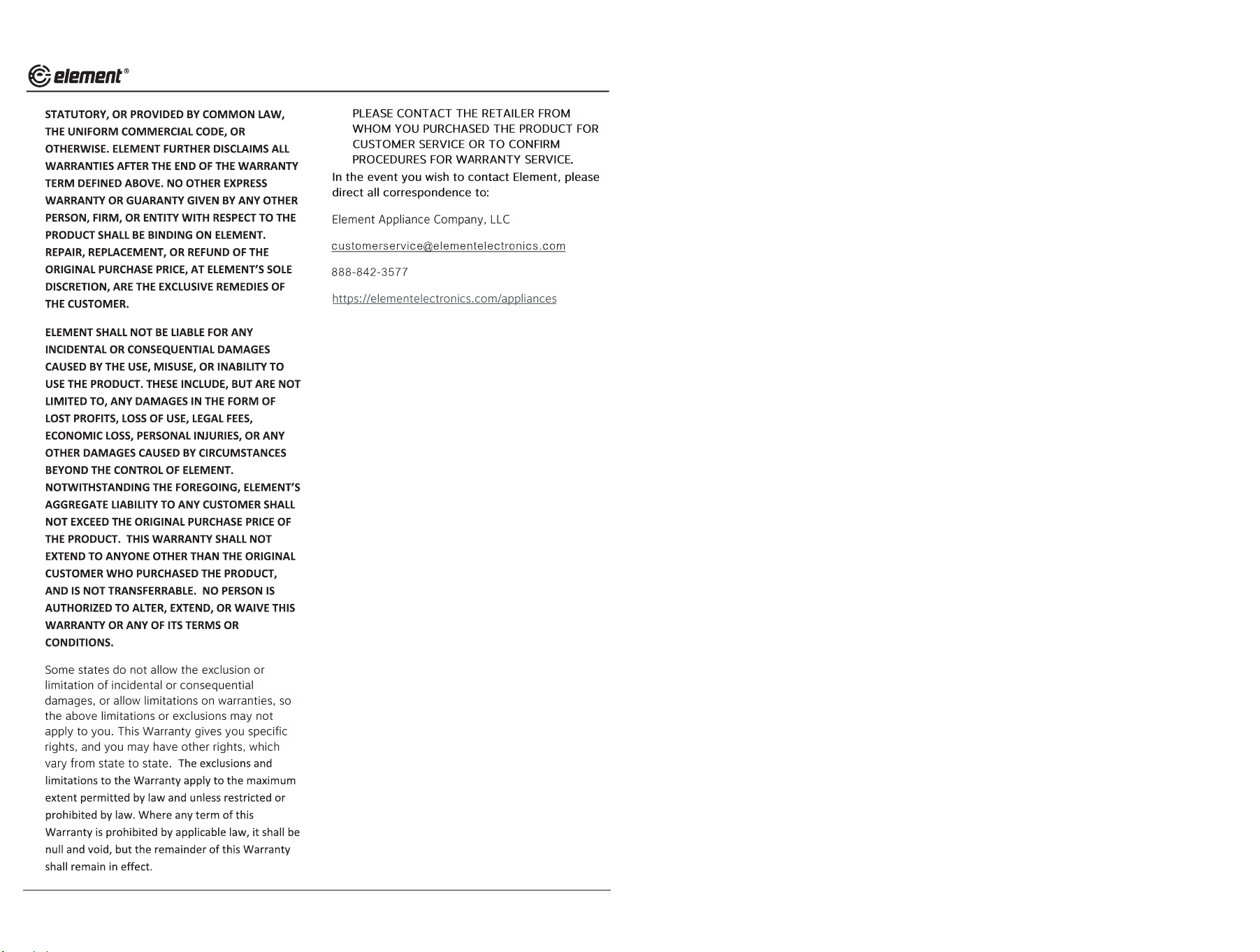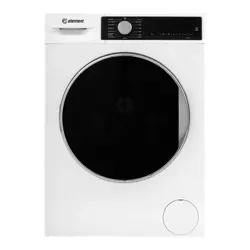
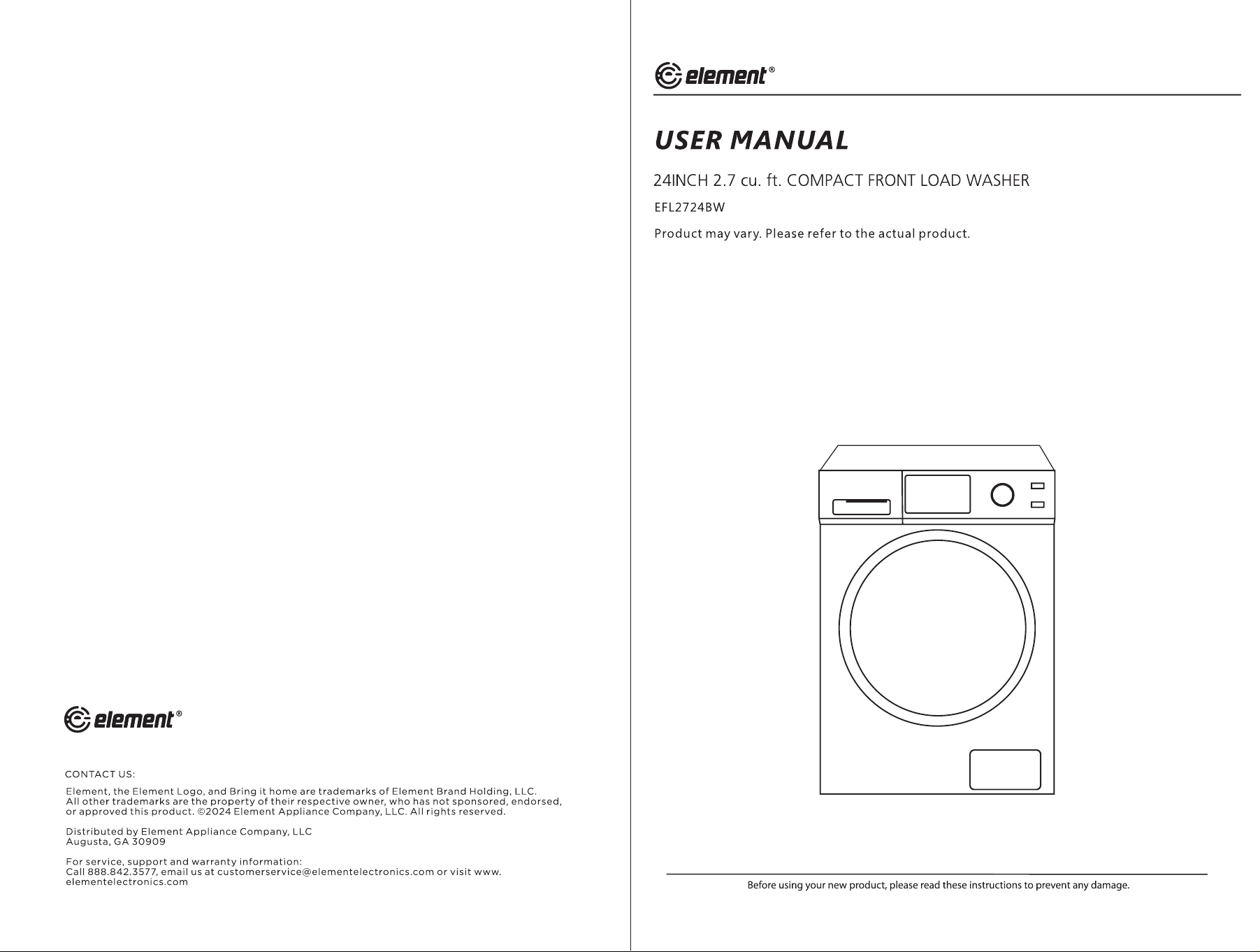
24Inch 2.7 cu. ft. Compact Front Load Washer.
P.03
P.04
SAVE THESE INSTRUCTIONS
WARNING
WARNING - To reduce the risk of fire, electrical shock, or injury to persons
when using your appliance, follow basic precautions, including the following:
- Read all instructions before using the appliance.
- Do not wash articles that have been previously cleaned, washed, soaked,
or spotted with gasoline, dry-cleaning solvents, or other flammable or
explosive substances, as they give off vapors that could ignite or explode.
- Do not add gasoline, dry-cleaning solvents, or other flammable or explosive
substances to the wash water. These substances give off vapors that could
ignite or explode.
- Under certain conditions, hydrogen gas may be produced in a hot-water
system that has not been used for 2 weeks or more. HYDROGEN GAS IS
EXPLOSIVE. If the hot-water system has not been used for such a period,
before using a washing machine, turn on all hot-water faucets and let the
water flow from each for several minutes. This will release any accumulated
hydrogen gas. As the gas is flammable, do not smoke or use an open flame
during this time.
- Always unplug the washing machine from the power supply before attempting
any service. Disconnect the power cord by grasping the plug, not the cord.
- To reduce the risk of fire, clothes, cleaning rags, mop heads and the like which
have traces of any flammable substance, such as vegetable oil, cooking oil,
petroleum based oils or distillates,waxes,fats,ect.,must not be placed in the
washing machine.These items may contain flammable substances which ,
even after washing, may smoke or catch fire.
- Never place items in the washer that have been dampened with gasoline or
any combustible or explosive substance. Do not wash or dry anything that
has been soaked in or spotted with any type of oil (including cooking oils).
Doing so can result in fire , explosion, or death.
- Do not allow children to play on or in the appliance. Close supervision of
children is necessary when the appliance is used near children.
- Pets and kids may climb into the machine. Check the machine before every
operation.
- Glass door or protector may be very hot during the operation. Keep kids and
pets far away from the machine during the operation.
- This machine is not intended for use by persons (including kids) with reduced
physical, sensory or mental capabilities, or lack of experience and knowledge,
unless they have been given supervision or instruction concerning use of the
machine by a person responsible for their safety.
- Kids should be supervised to ensure that they do not play with the machine.
- When children become old enough to operate the appliance, it is legal
responsibility of the parents or legal guardians to ensure that they are instructed
in safe practices by qualified persons.
This manual contains important information on the installation, use, and care of your
appliance. Please read this manual carefully before installation and operation of this
machine to prevent injury and property damage.
WHAT YOU NEED TO KNOW ABOUT SAFETY INSTRUCTIONS
Warnings and Important Safety Instructions in this manual DO NOT cover all possible conditions and
situations that may occur. It is your responsibility to use common sense, caution and care when installing,
maintaining and operating your washer.
IMPORTANT SAFETY SYMBOLS AND PRECAUTIONS
WARNING
This indicates that hazards or unsafe practices may cause
serious personal injury or death.
To reduce the risk of fire, explosion, electric shock, or
personal injury when using your washer, these basic safety
precautions SHOULD be followed.
State of California Proposition 65 Warnings
WARNING
The California Safe Drinking Water and Toxic Enforcement Act requires the Governor
of California to publish a list of substances known to the State of California to cause
cancer, birth defects, or other reproductive harm, and requires business to warn of
potential exposure to such substances.
This product contains a chemical known to the State of California to cause cancer,
birth defects, or other reproductive harm. This appliance can cause low-level
exposure to some of the substances listed, including benzene, formaldehyde, and
carbon monoxide.
Safety and precautions
P.05
P.06
SAVE THESE INSTRUCTIONS
- If connected to a circuit protected by fuses, use time-delay fuses with this
appliance.
- Do not use fabric softeners or products to eliminate static unless recommended
by the manufacturer of the fabric softener or product.
WARNING
Important safety instructions
SAVE THESE INSTRUCTIONS
WARNING
- Do not machine wash fiberglass materials (such as curtains and window
coverings that use fiberglass materials). Small particles may remain in the
washing machine and stick to fabrics in subsequent wash loads causing skin
irritation.
- Before the appliance is removed from service or discarded, remove the door
and cut off the power cord.
- Do not reach into the appliance if the tub or agitator is moving.
- Do not install or store this appliance where it will be exposed to the weather.
- Do not tamper with controls.
- Do not repair or replace any part of the appliance or attempt any servicing
unless specifically recommended in the user-maintenance instructions or in
published user-repair instructions that you understand and have the skills to
carry out.
- Pull the plug out from the power socket before cleaning or maintenance.
- Make sure that all pockets are emptied.
- Sharp and rigid items such as coins, nails, screws, or stones etc. may
cause serious damages to this machine.
- Pull the plug out and cut off water supply after the operation.
- Check whether the water inside the drum has been drained before
opening its door. Do not open the door if there is any water visible.
- Do not try to repair the machine by yourself. The machine may be damaged or
more troublesome repair work may be caused and even dangerous operation
may take place if it is repaired by any inexperienced or unqualified staff.
- If the plug (power cord) is damaged, it should be replaced by the manufacturer
or a service agent to avoid any danger.
- Take care that power voltage and frequency should be identical to those of
washing machine.
- Do not use any socket with rated current less than that of washing machine.
- Never pull the power plug out with wet hands.
- To ensure your safety, the power plug must be inserted into an earthed three-
pole socket. Check carefully and make sure that your socket is properly and
reliably earthed.
- This machine should be repaired only by an authorized service center and only
authentic accessories can be used.
- An appliance should be clearly and permanently marked with a warning that the
appliance is intended for use only with fabrics that have been washed with
water as a cleaning agent.
- To reduce the risk of fire, do not dry articles containing foam rubber or similarly
textured rubber like materials.
P.07
P.08
Cautions when washing clothes
- Cold city water should be used and hot water may be also connected according to
the local situations.
- Your washing machine is only for home use and is only designed for the textiles
suitable for machine washing.
- Flammable and explosive or toxic solvents are forbidden. Gasoline and alcohol
etc. should not be used as detergents. Only select the detergents suitable
for machine washing, especially for front loading.
- It is forbidden to wash carpets.
- Be careful of burning when washing machine drains hot washing water.
- Never refill the water by hand during washing.
- After the program is completed, open the door after the bell or
disconnect the power supply to the machine.
- Remember to disconnect water and power supply immediately after the
clothes are washed.
- Always follow the fabric care instructions recommended by the clothing
manufacturer.
- Do not use the washing machine if it has a worn power cord or loose plug.
Contact an authorized service agent.
- Do not operate the washing machine if any guards, panels and/or fasteners
except transport fixing bolts have been removed. Check the fill hose
connections on a regular basis to ensure that they are tight and not leaking.
- Do not operate the washing machine if parts are missing or broken.
- Do not touch the door if washing at high temperatures.
Note:
- The Important Safeguards and Warnings indicated in this manual do not cover
all possible conditions which may occur. Common sense, caution and care
must be exercised when installing, maintaining or operating the washing
machine.
- Always contact your dealer, distribute, service agent or the manufacturer
about any problems or conditions that you do not understand.
Before operating this machine
- Packing materials may be dangerous to the kids. Keep all packing
materials (plastic bags, foams etc) far away from children.
- Washing machine should not be installed in a bathroom or very wet rooms as well
as in the rooms with explosive or caustic gases.
- The water and electrical devices must be connected by a qualified
technician in accordance with the manufacturer's instructions and local safety
regulations.
- Before operating this machine, all packages and transport bolts must be removed.
Otherwise, the washing machine may be seriously damaged while washing the
clothes.
- Before washing the clothes for the first time, the washing machine should be operated
in cotton and hot water procedures without the clothes inside .
- This washing machine is for indoor use only.
WARNING
WARNING
WARNING
- Do not climb up and sit on top cover of the machine.
- Do not lean against machine door.
-Do not close the door with excessive forces. If it is found difficult to close
the door, check if the excessive clothes are put in or distributed well.
WARNING
- Transport bolts should be reinstalled to the machine by a specialized person.
- The accumulated water should be drained out of the machine.
- Handle the machine carefully. Never hold each protruded part on the machine
while lifting.
-Machine door can not be used as the handle during the conveyance.
Grounding instructions
- This appliance must be grounded . In the event of a malfunction or breakdown,
grounding will reduce the risk of electric shock by providing a path of least
resistance for the electric current. This appliance is equipped with a cord that has
an equipment gurounding conductor and a grounding plug. The plug must be plugged
into an appropriate outlet that is properly installed and grounded in accordance with all
local codes and ordinances.
WARNING-Improper connection of the equipment grounding conductor can result
in electric shock. Connect to individual branch Circuit. Check with a qualified
electrician or serviceman if you are in doubt as to whether the washer is properly
grounded.
DO NOT modify the plug provided with the appliance if it will not fit the outlet .
Please have a proper outlet installed by a proper outlet installed by a qualified
electrician.
Attention should be paid to protecting the machine
Cautions during Handling Machine
20-100 (137.9-689.6 kPa).
90°
120°
49°
Otherwise, the power
P.11
P.12
Dispose the packing materials
The packing materials of this machine may be dangerous to children. Dispose of them
properly and avoid easy touch by children. Dispose the related packing materials
according to the relevant local regulations. Do not throw the packing materials away
together with the other daily living rubbishes.
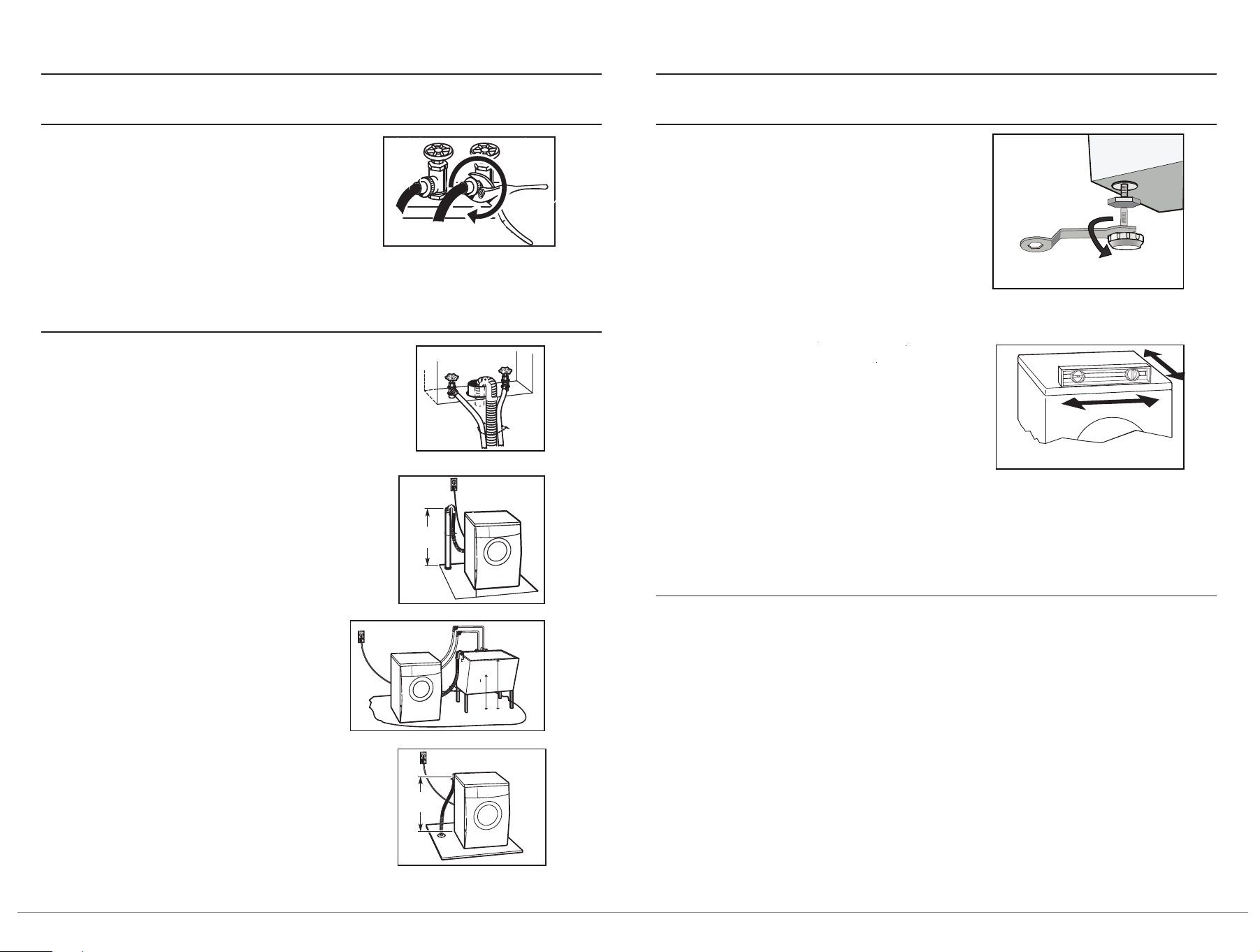
Remove transport bolts and foam
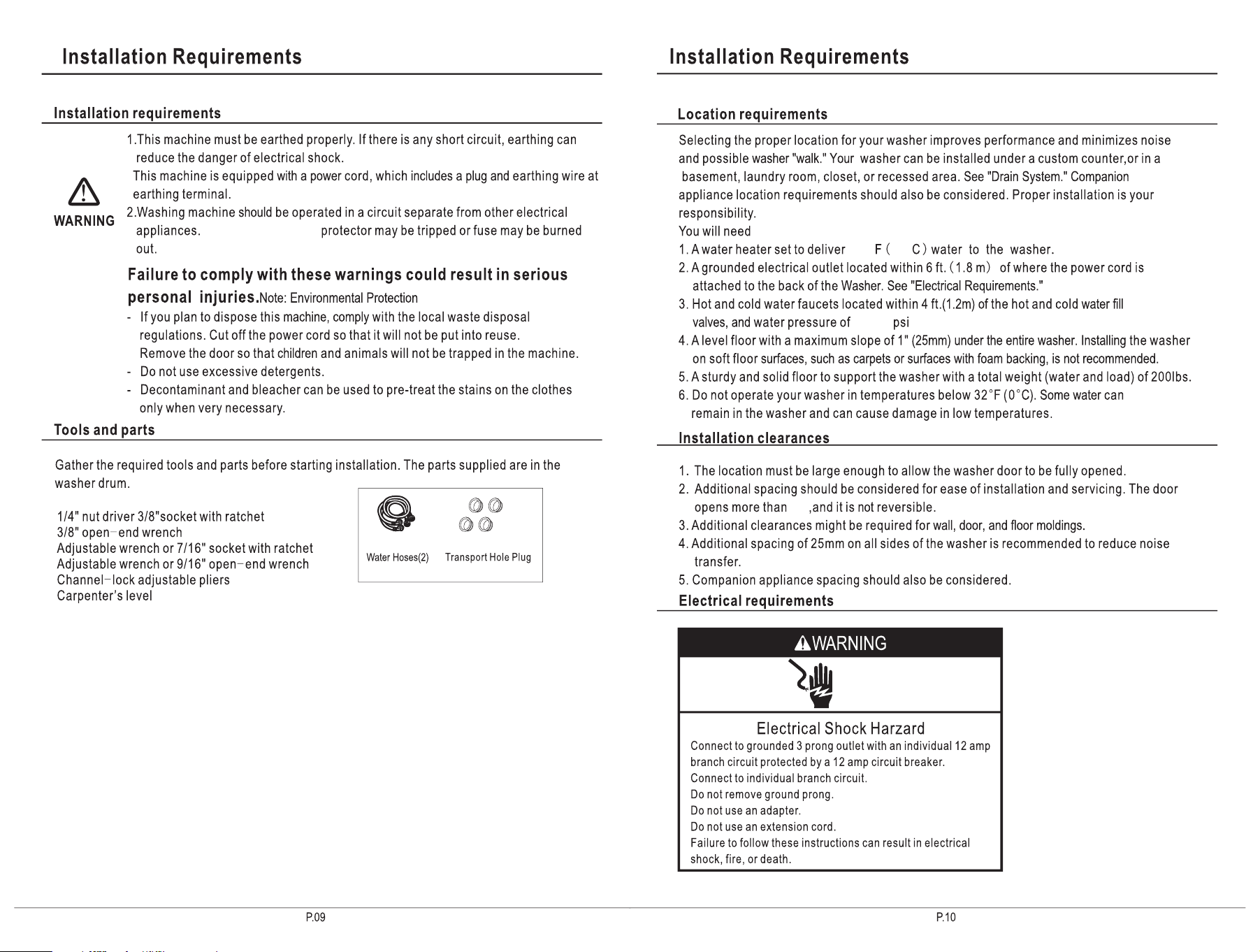
Before using this washing machine, transport bolts
must be removed from the backside of
this machine. Take the following steps to
remove the bolts:
1.Loosen all bolts with spanner and then remove them.
2.Cover the holes with transport hole plugs.
3.Keep the transport bolts properly for future use.
Make sure the small triangle foam is removed with the
bottom one together. If not, lay the unit down with side
surface, then remove the small foam from the unit bottom
manually.
Select the location
Before installing the washing machine, the location characterized as follows should be
selected:
- Rigid, dry, and level surface (if not level, please make it level with reference to the
following figure “Adjust Leg”)
- Avoid direct sunlight
- Sufficient ventilation
- Room temperature is above 32℉
- Keep far away from the heat resources such as coal or gas.
- Make sure that the washing machine will not stand on power cord.
- Do not install the washing machine on the carpet floor.
Connect inlet pipe
Connect the inlet pipe as indicated in the figure.
For the model which has a hot valve, connect
the hot valve to hot water tap.
H
C
Installation InstructionsInstallation Requirements
1.A 120v. 60Hz, a conly, 15-or 20amp, fused electrical supply is required. A time-delay fuse or
circuit serving only this appliance be provided .
2.This washer is equipped with a power supply cord having a 3 prong grounding plug.
3.To minimize possible shock hazard ,the cord must be plugged into a mating, 3 prong,
grounding type outlet, grounded in accordance with local codes and ordinances.
If a mating outlet is not available, it is the personal responsibility and obligation
of the customer to have the properly grounded outlet installed by a qualified electrician.
4.If codes permit and a separate ground wire is used, it is recommended that a qualified
electrician determine that the ground path is adequate.
5.Do not ground to a gas pipe.
6.Check with a qualified electrician if you are not sure the washer is properly grounded.
7.Do not have a fuse in the neutral or ground circuit.
Electrical requirements
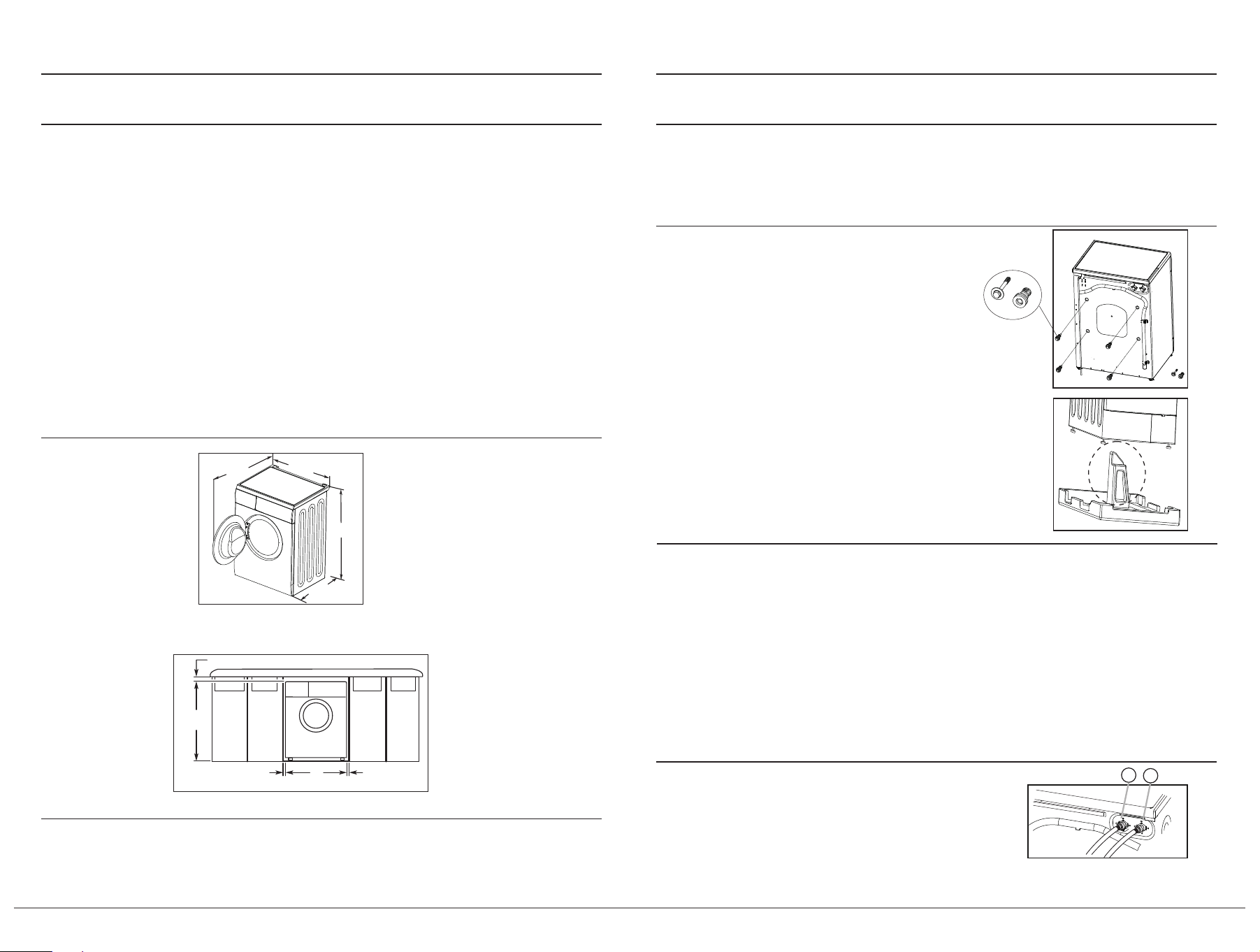
Washer dimensions
The dimensions shown are for the recommended spacing. Custom counter installation
23
"
( 595 mm)
1
"
(25 mm)
1
"
(25 mm)
2
" (50 mm)
" min.
(850 mm)
1
/2
1
/2
1
/2
4
2
"
(1080 mm)
1
/2
23
"
(595 mm)
33
33
"
(850mm)
Unpacking the washing machine
Unpack your washing machine and check if there is any damage during the transportation.
Also make sure that all the items (as shown in Page 5) in the attached bag are received.
If there is any damage to the washing machine during the transportation, or any item is
missing, contact the local dealer immediately.
1
/2
1
/2
23
"
(595 mm)
P.13
P.14
Installation Instructions
Level the washer
5.Put a solid cylinder (e.g. pop cans) opposite on the
top cover of the washing machine from in the left, right,
front and back directions. If the cylinder keeps stable, the washing machine is
positioned level. If it rolls, the washing machine is positioned unlevel.The rolling direction is
the direction of lower ground surface.Then the two legs in this direction should be raised at the
same time until the washing machine is level. Steps 1~3 are repeated to make the bottom legs
closely against the ground and the nuts should be locked tightly.
3.Ensure the positioning status of washing machine.
Loosen the lock nut with spanner and turn the leg
with hand until it closely contacts with the floor. Press
the leg with one hand and fasten the nut closely to the
cabinet with the other hand.
4.After being locked properly, press four corners again to
make sure that they has been adjusted properly. If it is
still unstable, it has to repeat Steps 2 and 3.
1.When positioning the washing machine,
first check if the legs are closely attached to the
cabinet. If not, turn them to their original
positions with hand or spanner and tighten the
nuts with spanner.
2.After positioning the washing machine, press
four corners on top cover of washing machine
in sequence. If the washing machine is not
stable when being pressed, this leg should be adjusted.
Electrical connection
- The maximum current through the unit is 12A when you are using its heating function,
make sure the power supply system (current, power voltage and wire) at your
home can meet the normal loading requirements of the electrical appliances.
- Connect the power to a socket which is correctly installed and properly earthed.
- Make sure the power voltage at your place is same to that in the machine's rating label.
- Power plug must match the socket and cabinet must be properly and effectively earthed.
- Do not use multi-purpose plug or socket as extension cord.
- Do not connect and pull the plug out with wet hands.
- When connecting and pulling the plug out, hold the plug tightly and then pull it out. Do
not pull power cord forcibly.
- If power cord is damaged or has any sign of being broken, special power cord must be
selected or purchased from its manufacturer or service center for replacement.
Installation Instructions
Install inlet pipe
1.Connect the elbow to the tap and fasten it
clockwise.
2.Connect the other end of inlet pipe to the inlet
valve at the backside of washing machine and
fasten the pipe tightly clockwise.
Note: after connection, if there is any leakage with the hose, then repeat the steps to connect inlet
pipe. The most common type of tap should be used to supply water. the tap is square or too big,
then standard tap should be changed.
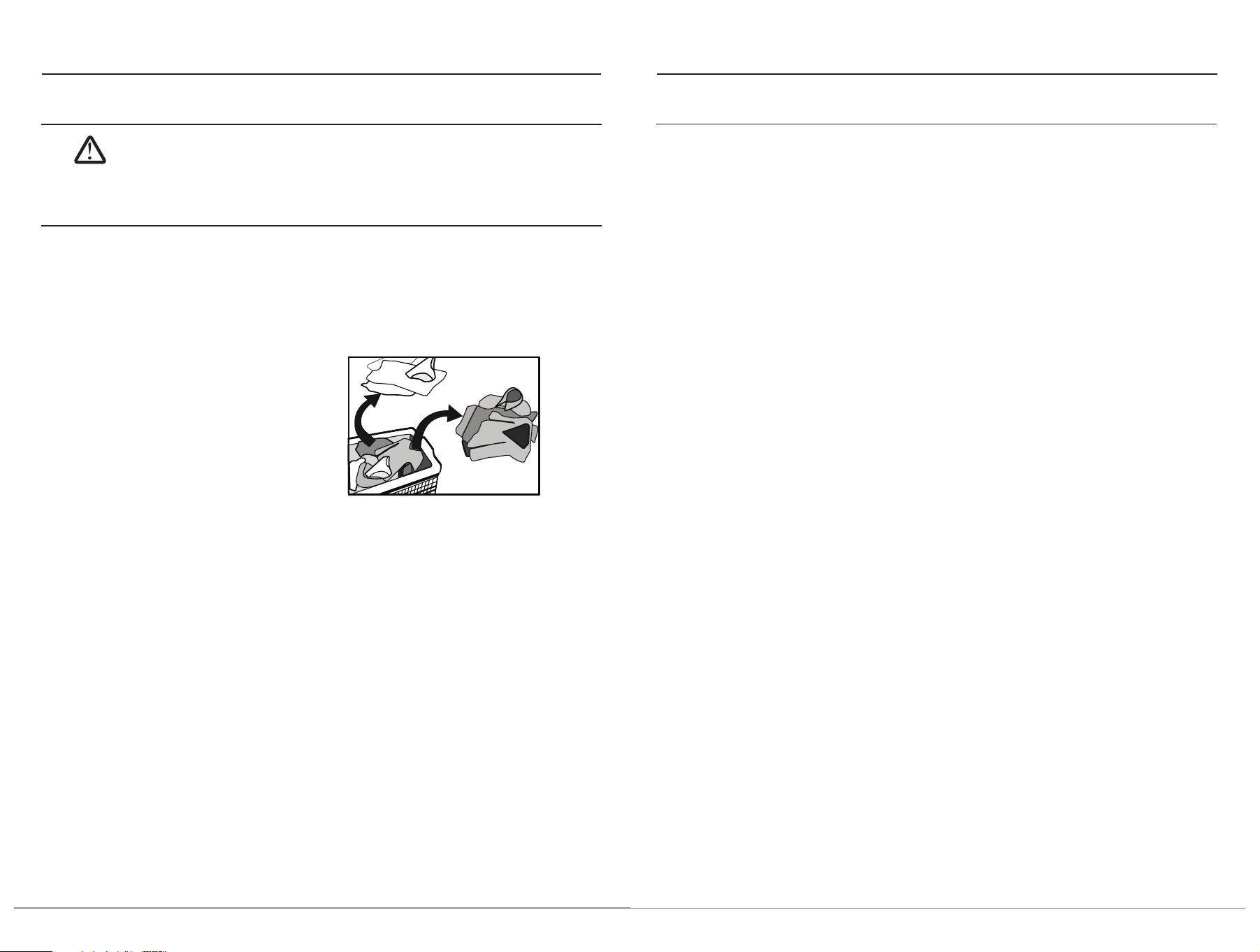
Drain system options
A
Floor drain system (view D). The floor drain system requires
a siphon break that may be purchased separately.
See "Tools and parts." The siphon break must be a minimum
of 28" (710mm) from the bottom of the washer.
Additional hoses might be needed.
Min 60
Max 100
B
Laundry tub drain system (view C)
The laundry tub needs a minimum 20gal (76L)
capacity. The top of the laundry tub must be
at least 60cm above the foor.
Min.60cm
Max.100cm
C
28
" min.
(710 mm)
D
Standpipe drain system -wall or floor (views A & B).
The standpipe drain requires a minimum diameter
standpipe of 2" (50mm). The minimum carry-away
capacity can be no less than 17 gal. (64 L)per minute.
The top of the standpipe must be at least 60cm high and
no higher than 100cm from the bottom of the washer.
P.15
P.16
Checklist and preparation before washing clothes
Operating Instructions
Operating Instructions
WARNING
WARNING – To reduce the risk of fire, electric shock, or injury to
persons, read the IMPORTANT SAFETY INSTRUCTIONS before
operating this appliance.
Operating instructions
Checklist and preparation before washing clothes
Please read this operation method carefully to avoid the troubles of washing machine and
damages of clothes.
Check if the first-washed clothes will bed decolorized.
After a white towel touched with liquid detergent is used to wash the invisible corners of the
clothes, check if the white towel is stained with
clothes' original color.
As for the scarves and those clothes that easily
get decolorized among imported clothes,
wash them separately before washing.
As for the stains on sleeves, collars and pockets,
use the liquid detergent and gently wash it with a
put them into the washing machine
to achieve more ideal washing effects.
As for temperature-sensitive clothes, they should
be washed as required in the labels. Otherwise,
it may cause color change or distortion.
Keep in mind:
Never put the clothes to be washed in washing machine for a long period of time.
Otherwise it may get moldy and cause spots. Therefore, wash the clothes in time.
The clothes also may get color changed or distorted if they are not washed according to
the stated washing temperature.
Clothes that cannot be washed by washing machine
The clothes that may get distorted if being immersed in water:
Ties, waistcoats, western-style clothes, outer garments etc. may have obvious shrinkage
if being immersed in water; the decolorized clothes such as blended spinning clothes of
artificial fiber etc.
-
-
-
brush.Finally,
-
- Wrinkle-style, embossed, resin clothes etc. may get distorted when being
immersed in water. Among cotton and wool materials, the clothes that get easily distorted
are wrinkle-style silk, fur products and fur decorations.
- Clothes with decoration, long dress and traditional clothes etc are the products to get
decolorized easily.
- Do not wash clothes without material labels and washing requirements.
- Never wash clothes stained with chemicals such as gasoline, petroleum, benzene,
paint thinner and alcohol.
Pay attention in regards to detergents
“Low bubble” detergent or washing powder or washing powder special for drum washing
machine should be selected according to fiber types (cotton, synthetic fiber, soft products and
wool products), colors, washing temperatures, dirty degrees and types. Otherwise,
excessive bubbles may be generated and overflowed out of the drawer so that accidents
may take place.
Bleacher belongs to alkali type and can damage clothes, so it is suggested to use as little
as possible.
Powder detergents can easily leave residues in the clothes and generate a bad
smell, so they should be sufficiently rinsed.
Detergent cannot easily completely dissolve if there is too much detergent or water
temperature is rather low. It can remain in clothes, pipes and washing machines to
pollute the clothes.
Washing shall follow the weight of clothes, dirty degrees, local water hardness as well as
the recommendations from the detergent manufacturers. Please consult the water
company if you are not clear of water hardness.
Note:
Keep detergents and additives in safe and dry places out of touch by kids.
Take items out of pockets:
Check clothes pockets that are to be washer and empty the rigid items such as
decorations and coins, otherwise the washing machine may be damaged or have abnormal
troubles.
For the clothes to be washed, they are classified according to the following
characteristics:
The symbol types of care labels: the clothes to be washed are classified into cotton, blended
fiber, synthetic fiber, silk, wool and artificial fiber.
Color: white and colorful colors should be identified. All new colorful articles should be washed
in a separate way.
-
-
-
-
-
P.17
P.18
Operating Instructions Operating Instructions
WARNING
Checklist and preparation before washing clothes
Size: the articles of different sizes are washed together to increase the washing effects.
Sensitivity: soft articles shall be washed separately. As for new pure wool textiles, curtains
and silks, the soft washing procedure shall be selected. Check the labels in all washing articles.
The clothes should be sorted before being put into washing machine. As for the curtains with
hooks, the hooks should be removed before being washed.
The decorations on the clothes may damage the washing machine. As for the clothes with
buttons or embroideries, they should be turned over before being washed.
Clean up fasteners:
Zippers should be zipped closed and buttons or hooks should be fixed. The loose band or ribbon
should be bound together.
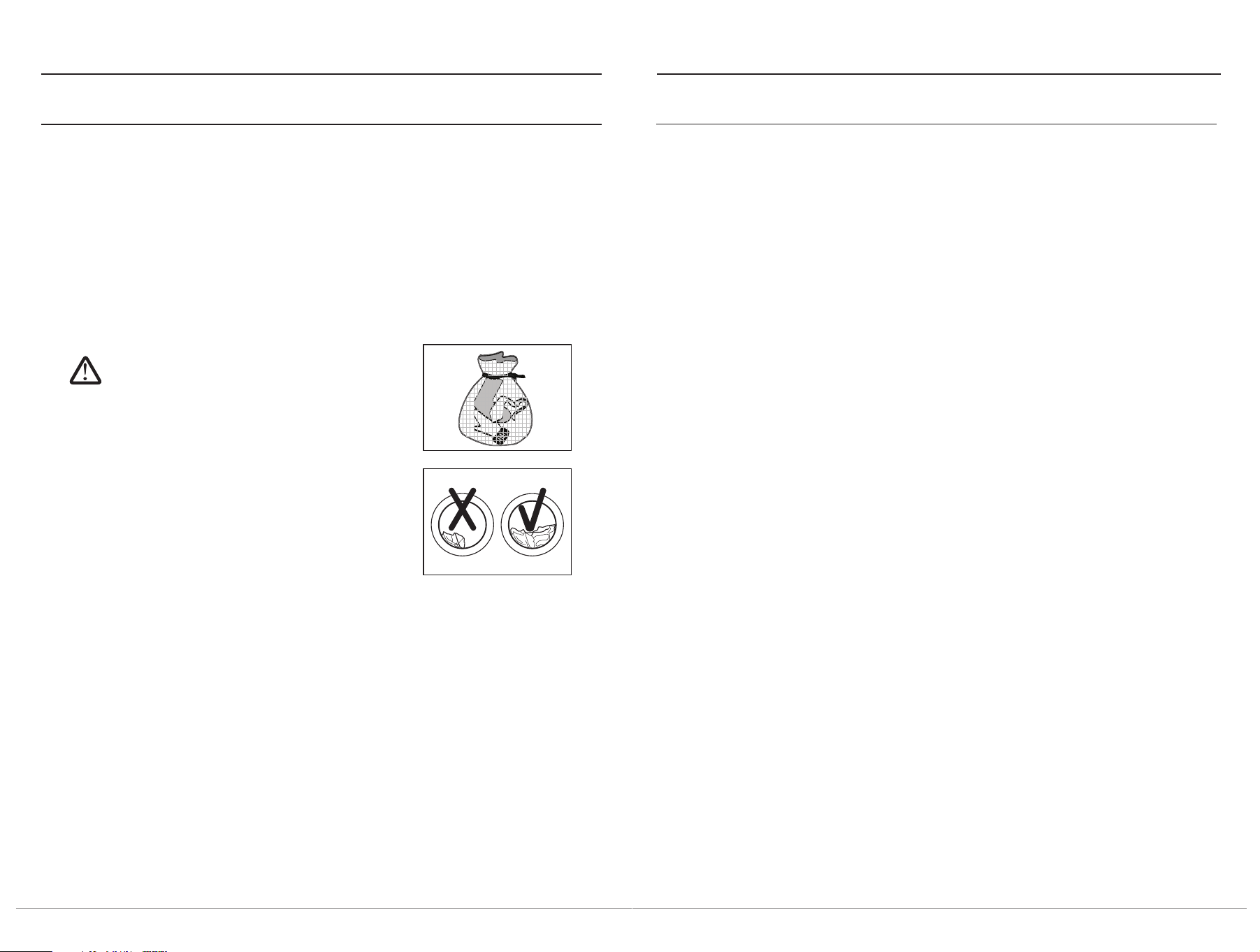
It is suggested to put bras into the pillow slip
with zip or buttons sealed to prevent the steel
wire from popping out of bras into the drum and
damaging the machine.
Especially delicate textiles such as laced curtains,
straightjackets, small articles (tight socks,
handkerchiefs, ties etc.) should be put into string
bag for washing.
When washing a single big and heavy dress such
as Turkish towels, jeans, wadded jackets etc.,
it may easily cause great eccentricity and give
alarm due to great unbalance. Therefore it is
suggested to add one or two more clothes to be
washed together so that draining can be done
smoothly.
Clean away dusts, stains and pet hairs from the clothes.
The clothes may be damaged and disturb washing effects during the friction between dusts,
stains and clothes.
To protect baby skin
Baby articles (baby clothes and towels) including napkins should be washed separately.
If they are washed together with the adults' clothes, they may be infected. Rinsing times should
be increased to ensure the thorough rinsing and cleaning without the detergent residues.
It is suggested that the parts that are easily stained such as white sockets, collars and
sleeves etc. should be hand washed before being put into washing machine to achieve
more ideal washing effects.
Use powder or liquid detergents. The residues of the soap could remain in the gaps of
the clothes if soap is used.
Checklist and preparation before washing clothes
The clothes which easily get fuzzed shall be turned over for washing
The clothes which easily get fuzzed should be washed separately; otherwise the other
articles can be stained with dust and thrum etc. Preferably, black clothes and cotton
clothes should be washed separately because they can easily get stained with the thrums
of other colors when being washed together.
Check before washing.
Washing machine should not wash water-proof materials (ski suits, outside napkin
pads, curtains).
As for the fiber products that water can not get soaked easily into such as water-proof
cushions, and clothes, it is better not to wash. Otherwise there will be water bursting out
or abnormal vibration to cause danger while rinsing and draining so that the clothes also
may be damaged (such as outside napkin pads, raincoats, umbrella, ski suits, car covers,
sleeping sacks etc.).
Cautions during draining
Draining of normal clothes:
Moistures of washings are drained through drain hole.
Draining of water-proof clothes and fiber products:
In the normal washing and draining status, moistures of water-proof clothes and fiber
products cannot be drained while water is gathered in one direction so that the
eccentricity of washing machine is too great and vibration or moving is caused.
°C
26Ib
Ib
Ib
1.76Ib
2.21Ib
6.61Ib
26
26
13
26
13
13
26
26
26
13
26
26
4.41
5.51
4.41
Ib
°F
°F
Ib
26
26/13
13/6.61
26/13
13
26
26
13
13
26
4.41
5.51
4.41
1.76/2.21/6.61
13
P.25
P.26
WARNING
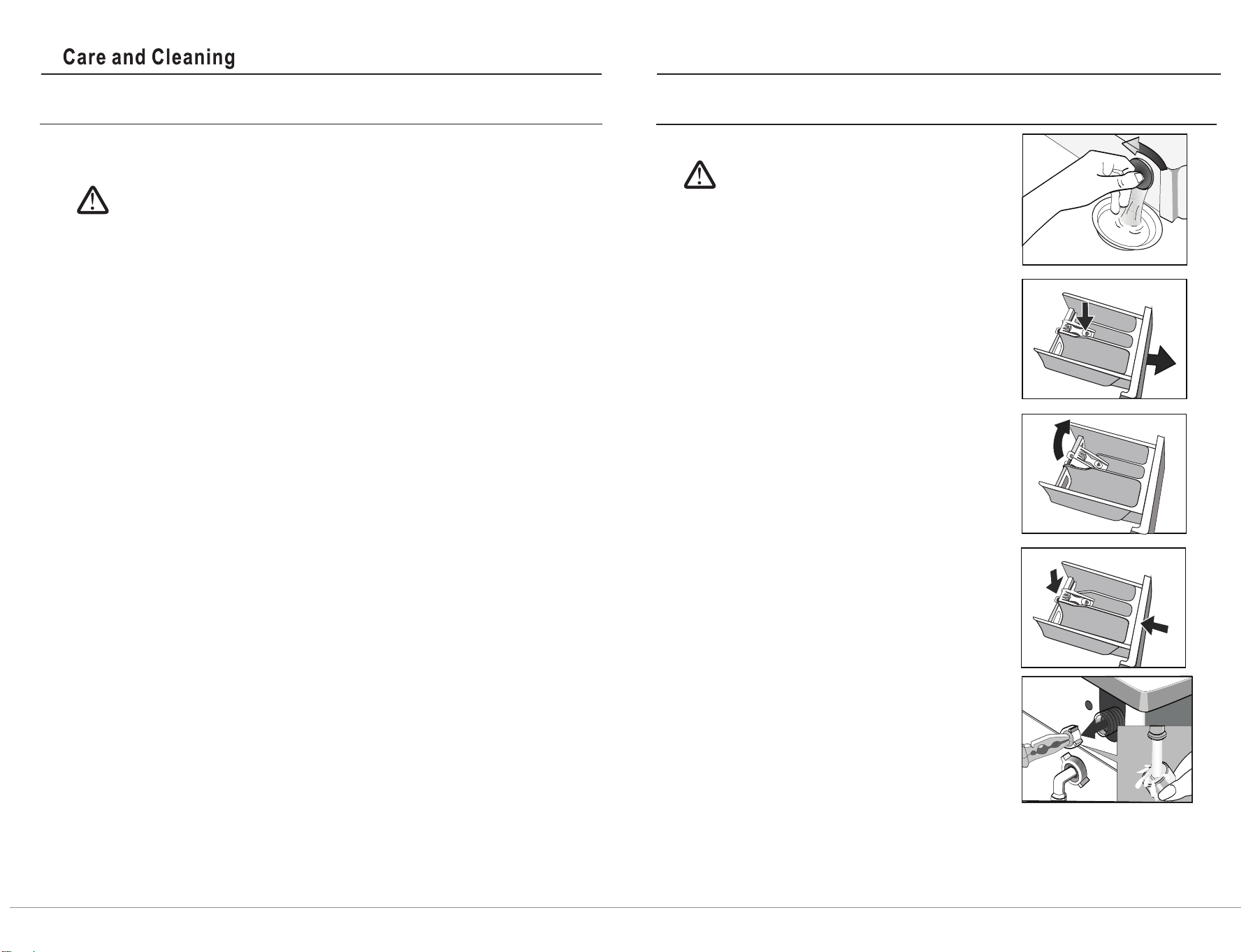
Clean detergent box and grooves
Clean detergent drawer and grooves
1.Press down the arrow location on softener cover
inside the drawer.
2.Lift the clip up and take out softener cover and wash
all grooves with water.
3.Restore the softener cover and push the drawer into
position.
Clean inlet filter
Inlet filter should be cleaned if there is not any or
insufficient water in when the tap is opened.
Clean the tap filter:
1.Close the tap.
2.Select any procedure except “Wash” or “Drain”
procedure.
3.Press the button “Start/Pause” and keep the
procedure running for about 40 seconds.
4.Remove the inlet pipe from the tap.
5.Use water to wash the filter.
6.Reconnect the inlet pipe.
Washing the filter in washing machine:
1.Screw off the inlet pipe from the backside of the
machine.
2.Pull the filter out with long nose pliers and reinstall
it back after being washed.
3.Reconnect the inlet pipe.
4.Open the tap and make sure there is no water leakage.
5.Close the tap.
Care and cleaning
Before your maintenance start, pull the power plug out or disconnect the power
and close the tap.
WARNING
- Solvents are forbidden to avoid that the washing machine is damaged, and
toxic gases are generated or exploded.
- Never use water to wash the washing machine.
- It is forbidden that the detergents containing PCMX are used to clean the
washing machine.
- Certain internal parts are intentionally not grounded and may present a risk of
electric shock only during service. Service Personnel-Do not contact the
following parts while the appliance is energized: Electrical Valve, Drain Pump,
Door Lock, Dry Heater (Combo), Fan Motor (Combo).
Maintenance and cleaning of washing machine cabinet
Proper maintenance on the washing machine can extend its working life. The surface can
be cleaned with diluted non-abrasive neutral detergents when necessary. If there is any
water overflow, use the wet cloth to wipe it off immediately. No sharp items are allowed to
strike the cabinet.
Notes: formic acid and its diluted solvents or equivalent are forbidden.
Clean internal drum
The rust left inside the drum by the metal articles should be removed immediately with
chlorine-free detergents.
Never use steel wool.
Disposing a frozen washing machine
When the temperature drops below zero and your washing machine gets frozen, you may:
1.Disconnect the power supply for the washing machine.
2.Wash the tap with warm water to loosen inlet pipe.
3.Take down inlet pipe and immerse it in warm water.
4.Pour warm water into washing drum and wait for 10 minutes.
5.Reconnect inlet pipe to the tap and check whether inlet and outlet are working normally.
Note:when the washing machine is reused, make sure the ambient temperature is above 32℉
Anti-freeze
If the washing machine is located in the room where it can easily freeze, throughly drain
Remove the remaining water in inlet pipe:
1.Close the tap.
2.Screw off the inlet pipe from tap and put its end into the container.
3.Start up any procedure except single Wash or Drain
procedure. Water will be drained out of inlet pipe if any
for about 40 seconds.
4.Reconnect the inlet pipe to tap.
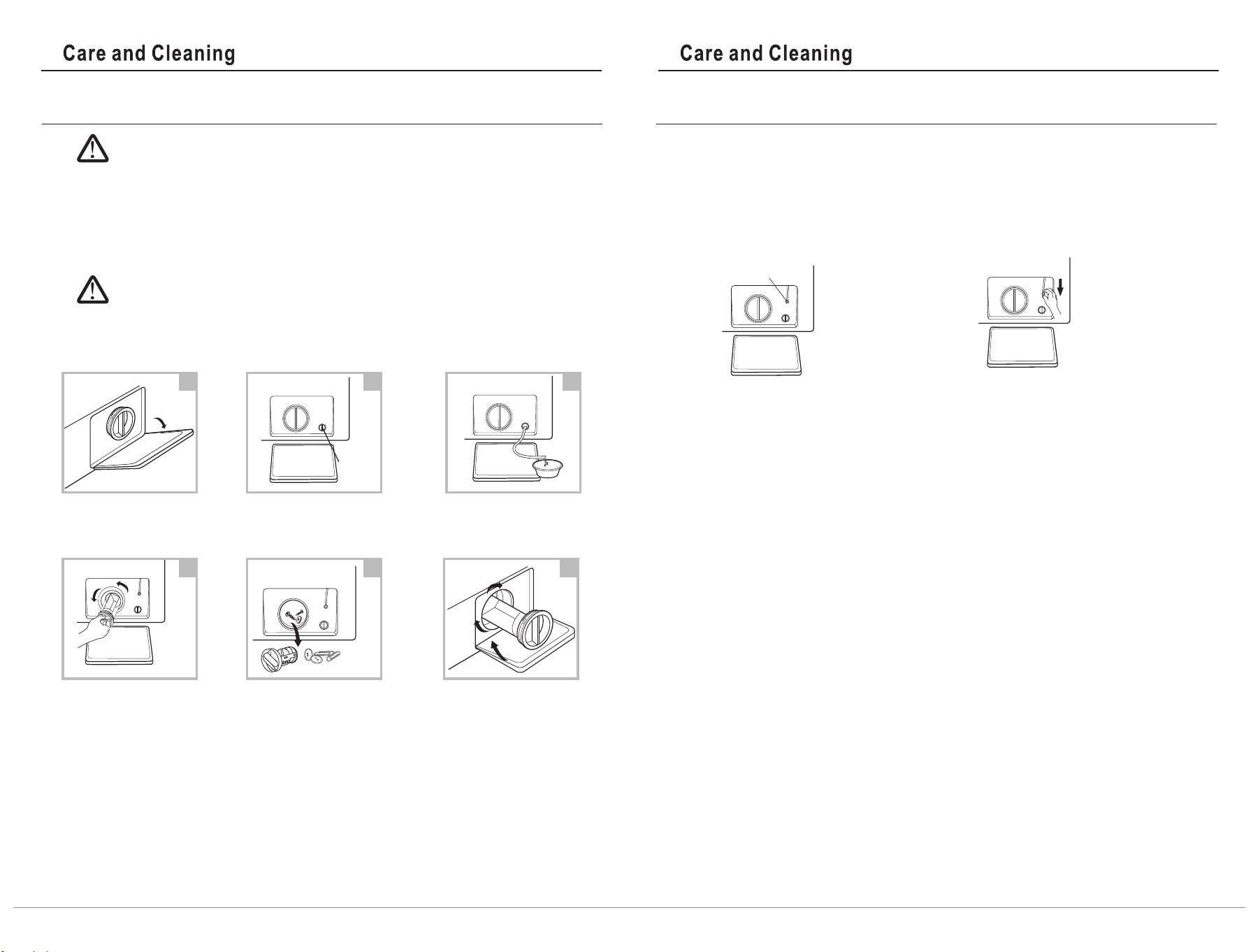
the remaining water inside the drain and inlet pipe.
Remove the remaining water in drain pump
To avoid burning, it shall be done after the hot water
inside the machine cools down.
Care and Cleaning
Care and cleaning
P.27
P.28
Care and cleaning
WARNING
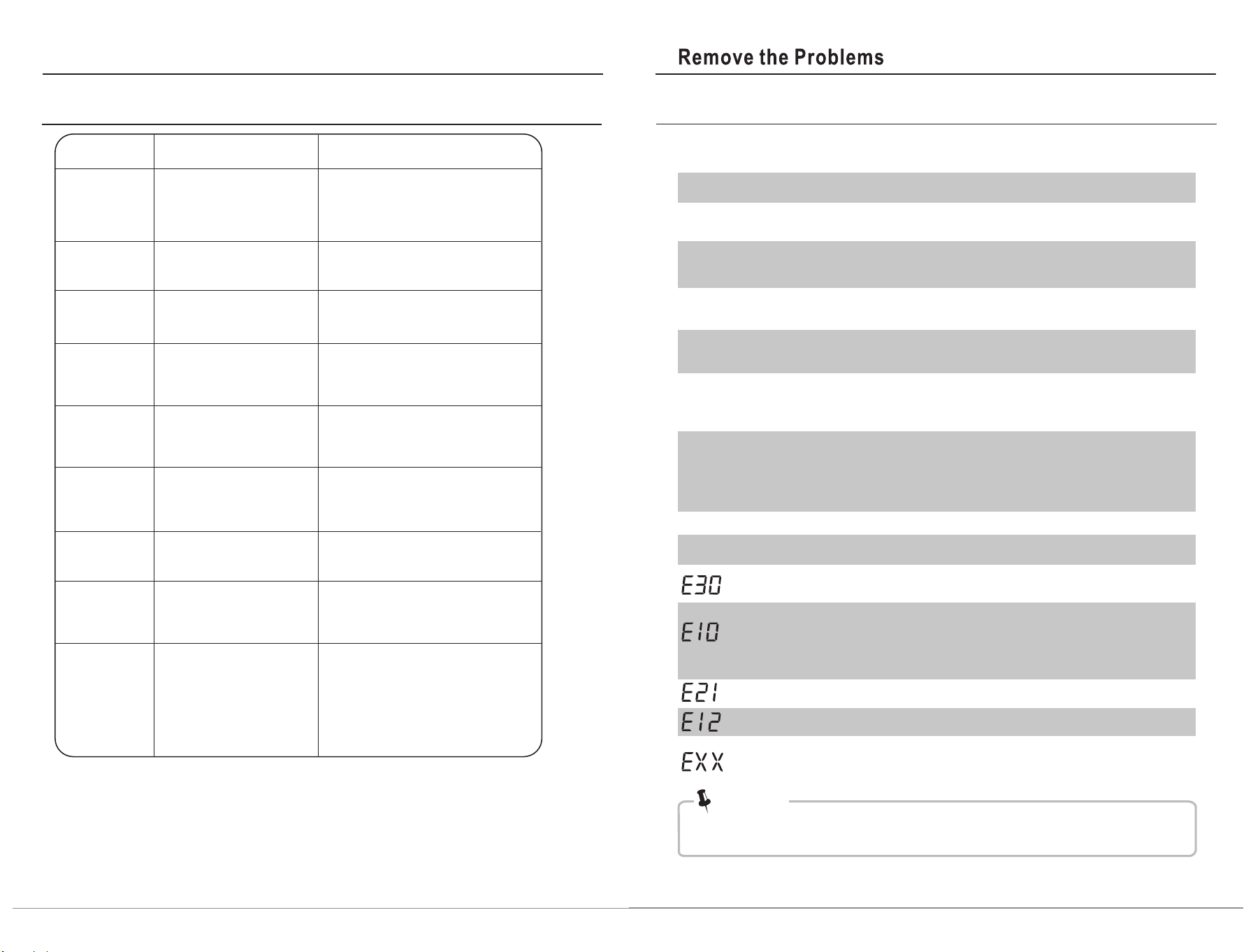
The service panel proceed as follows:
When the appliance is in use and depending on the selected program, there can be hot water
in the
pump. Never remove the pump cover during a wash cycle, always wait until the appliance has finished
the cycle, and is empty. When replacing the cover, ensure it is securely tightened.
Warning!
Open the lower cover cap
Rotate 90° and pull out
the emergency drain hose,
and take off the hose cap
Open the filter by turning
to the counterclockwise
Remove extraneous matter
1
2
3
Close the lower cover cap
6
5
4
Emergency
drain hose
After water runs out,reset
the drain hose
1.Open filter door
Emergency door pull cord
2.Emergency pull cord
Emergency Door Release
Care and cleaning
In case of power failure or other circumstances and door cannot be opened. If it is
necessary to open the door under this circumstances, pull down the pull cord
inside emergency door and restore the pull cord after opening the door.
The machine is not allowed to use the emergency switch pull cord during washing. If the washer needs to run,
it is recommended to open door after water is cooled to avoid getting a burn caused by high
temperature residual water outflow from the machine tub.
Warning!
WARNING
Pull out the power plug to avoid electrical shock before washing.
After using the washing machine, pull out the power cord and close the door
tightly to avoid pinching the kids.
Remove foreign matters
Drain pump filter:
Drain pump filter can filter the yarns and small foreign matters from the washings.
Clean the filter periodically to ensure the normal operation of washing machine.
According to the soil level within the cycles and the frequency of the cycles, you have
to inspect and clean the filter regularly.
The pump should be inspected if the machine does not empty and/or spin;
The machine makes an unusual noise during draining due to objects such as safety
pins, coins etc. blocking the pump.
P.29
P.30
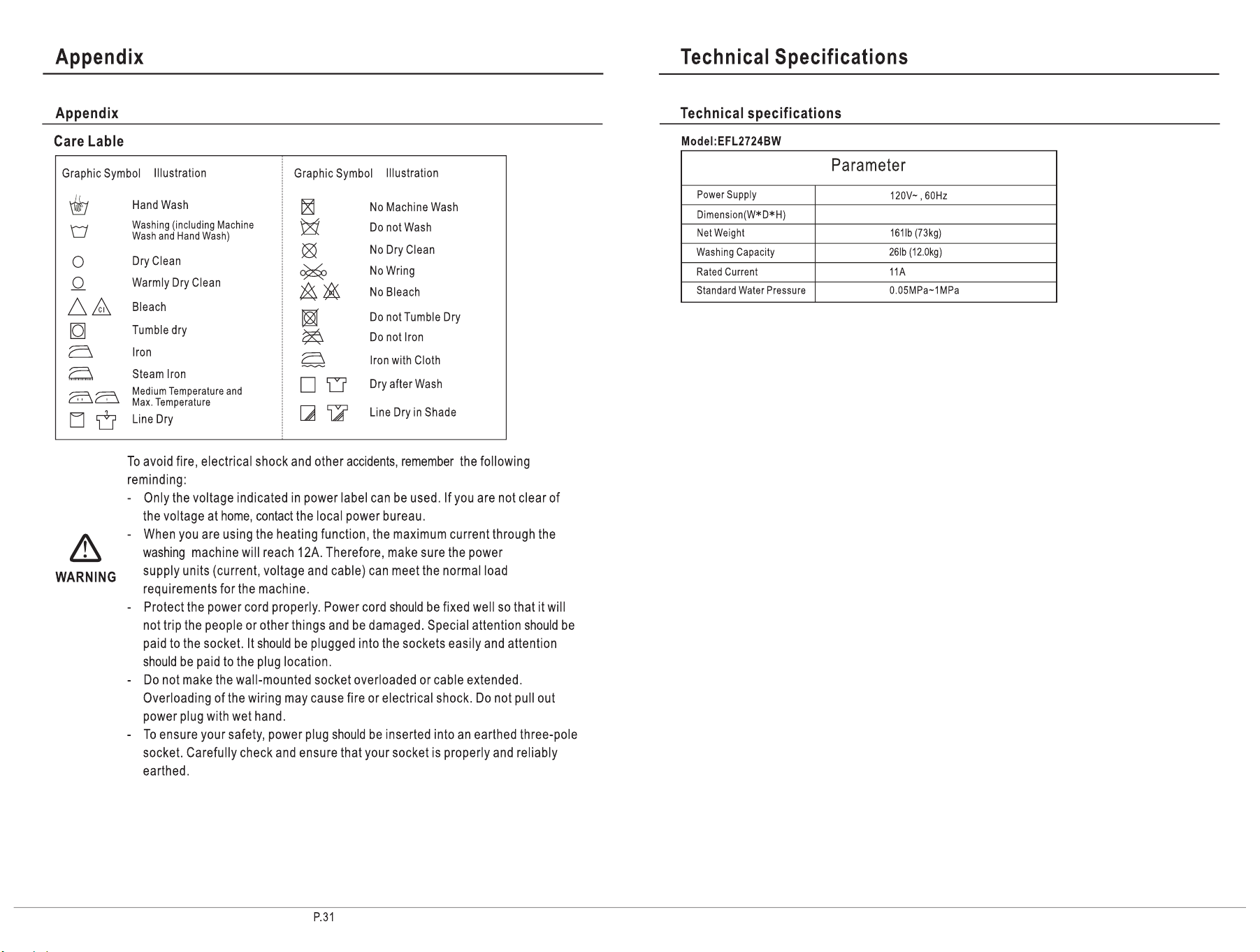
Remove the problems
• or the display
shows other alarm codes
After the check, activate the appliance. If the problem occurs
again, contact the service.
The start of the appliance does not work or it stops during operation.
First try to find a solution to the problem. If not, contact a serviceman.
Note!
Description
Reason
Solution
Restart after the door is closed
Check if the clothes is stuck
Door is not closed properly
Door can’t be
opened
Washer's safety
protection design is working
Disconnect the power, restart
the product
Water leakage
The connection between inlet
pipe or outlet hose is not tight
Check and fasten water pipes
Clean up outlet hose
Clean and wipe the detergent
box
Abnormal noise
Check if the fixing (bolts) have
been removed
it’s installed on a solid
and level floor
Check
Indicator or display
does not light
Disconnect the power
PC board or harness has
connection problem
Check if the power is shut
down and the power plug is
connected correctly
Washing machine
cannot start up
Detergent residues
in the box
Detergent is dampened
or agglomerated
Description
Reason
Solution
Check if the water pressure is
too low
Straighten the water pipe
Check if the inlet valve filter is blocked
Check if the drain hose is blocked
Water injecting
problem while
washing
Overtime water draining
Please try again first, call up
service line if there are still
troubles
Others
Water overflow
Restart the washer
Restart after the door is closed
Check if the clothes is stuck
Door is not closed properly
Check if the door is closed tightly.
Check if power plug is inserted well.
Check if water supply tap is opened.
Check if button “On/Off” is pressed.
Check if button “Start/Pause” is pressed.
Check if the fixing (bolts) has been removed.
If cabinet is installed on the solid and level
floor.
Check if there are any barrettes or metal
articles inside.
Check if the legs in the washing machine
are level.
Can normally wash the clothes.
Only cannot wash with heating.
Contact the service center promptly.
Clean and wipe the box.
Use liquid detergents or the detergents
special for drum.
Check and fasten water pipes.
Clean up outlet hose and ask a
specialized person to repair it when
necessary.
Check if the power is shut down and
power plug is connected correctly.
If not, call the service center.
Select a proper procedure.
Add the proper detergent quantity
according to the instructions in
detergent package.
Disconnect the power.
Fix the inlet pipe.
Replace the drain hose.
Solution
The connection between inlet
pipe or outlet hose and tap or
washing machine is not tight.
Drain pipe in the room is blocked.
The clothes are too dirty.
Insufficient detergent quantity.
The inlet pipe is not connected
firmly.
Outlet hose has water leakage.
Washing powder is dampened
and agglomerated.
NTC is damaged and heating
pipe is aging.
Machine's safety protection
design is working.
Power is disconnected.
PC board has problems.
Harness has connection
problem.
Reason
Washing machine
cannot start up
Water is
overflown from
the bottom of the
machine
Door cannot be
opened
Detergent
residues in the
box
Washing effects
are not good
Abnormal noise
Great vibration
Heating fault
Water leakage
Indicator or
display does
not light.
Troubles
Troubleshooting Tips
Troubleshooting tips
302°F
23.5*24*33.5 in
P.33