
EE
EE
nn
nn
gg
gg
ll
ll
ii
ii
ss
ss
hh
hh
K 3000 Cut-n-Br
eak
Oper
ator
′
s manual
Please r
ead the operator’s manual carefully and make sure you understand the instructions
before using the machine.
KEY
T
O SYMBOLS
2
–
English
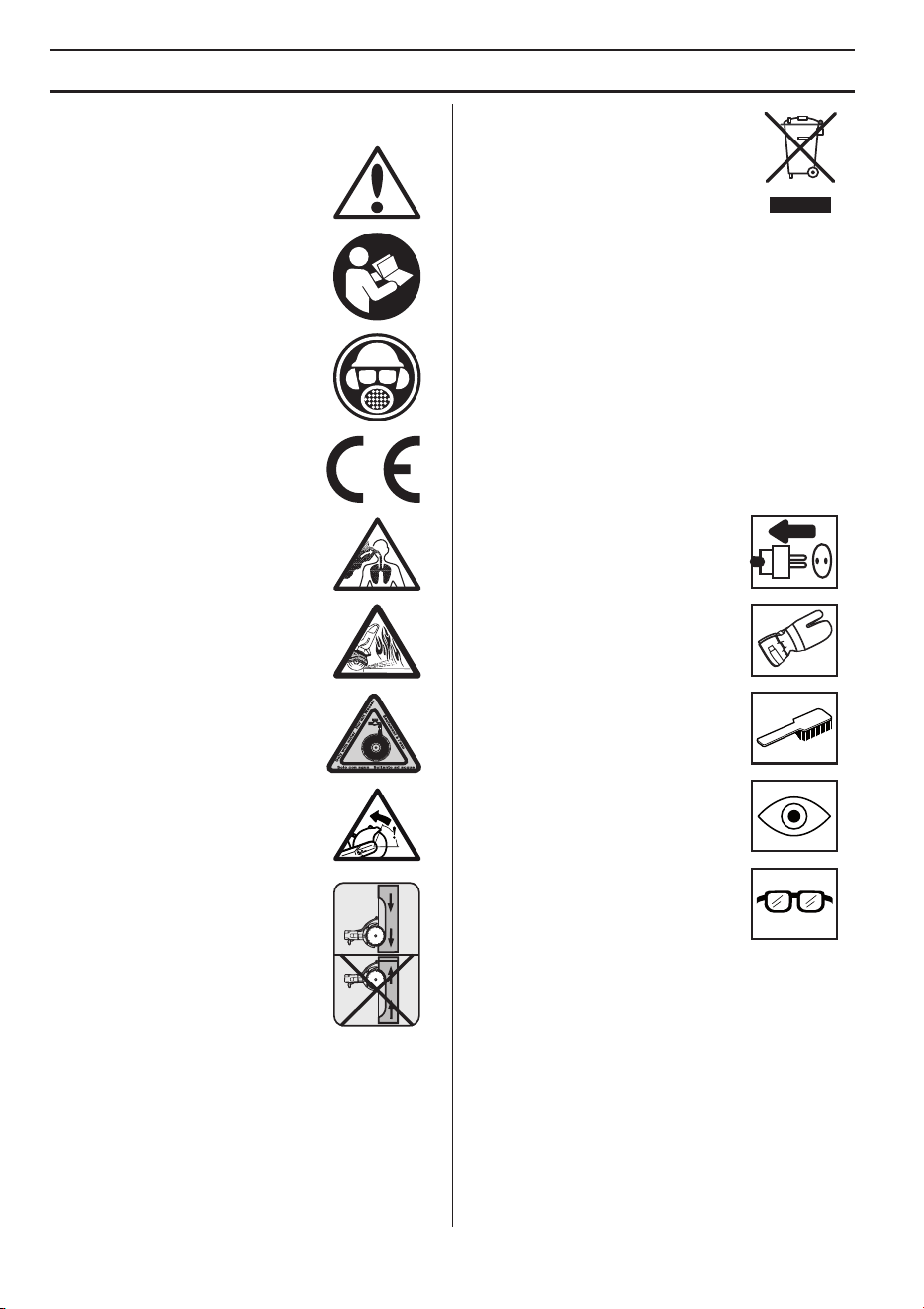
Symbols on the mac
hine:
W
ARNING! The machine can be a
dangerous tool if used incorrectly or
carelessly, which can cause serious or
fatal injury to the operator or others.
Please read the operator’s manual
carefully and make sure you
understand the instructions before
using the machine.
Always wear:
• Approved protective helmet
• Approved hearing protection
• Protective goggles or a visor
This product is in accordance with
applicable EC directives.
WARNING! Dust forms when cutting,
which can cause injuries if inhaled. Use
an approved breathing mask. Always
provide for good ventilation.
WARNING! Sparks from the cutting
blade can cause fire in combustible
materials such as: petrol (gas), wood,
dry grass etc.
Water cooling must always be used.
WARNING! Kickbacks can be sudden,
rapid and violent and can cause life
threatening injuries. Read and
understand the instructions in the
manual before using the machine.
Always cut in the correct direction. See
safety instructions!
En
vironmental marking.
Symbols on
the product or its packaging indicate that
this product cannot be handled as
domestic waste. It must instead be
submitted to an appropriate recycling
station for the recovery of electrical and
electronic equipment.
By ensuring that this product is taken care of correctly, you
can help to counteract the potential negative impact on
the environment and people that can otherwise result
through the incorrect waste management of this product.
For more detailed information about recycling this
product, contact your municipality, your domestic waste
service or the shop from where you purchased the
product.
Other symbols/decals on the mac
hine refer to special
certification requirements for certain markets.
Symbols in the operator’
s
manual:
Inspection and/or maintenance should
be carried out with the motor switched
off and the plug disconnected.
Always wear approved protective
gloves.
Regular cleaning is required.
Visual check.
Protective goggles or a visor must be
worn.

CONTENTS
English
–
3
Contents
KEY
TO SYMBOLS
Symbols on the machine:
..................................... 2
Symbols in the operator’s manual: ....................... 2
CONTENTS
Contents
............................................................... 3
WHA
T IS WHAT?
What is what on the po
wer cutter? ....................... 4
GENERAL SAFETY PRECA
UTIONS
Steps bef
ore using a new power cutter ................ 5
Personal protective equipment ............................. 5
SAFETY INSTR
UCTIONS
Gener
al safety warnings ....................................... 6
Machine
′
s safety equipment ................................. 7
Diamond blades ................................................... 8
General working instructions ................................ 9
ASSEMBL
Y
Assemb
ly .............................................................. 12
ST
ARTING AND STOPPING
Bef
ore starting ...................................................... 13
Starting ................................................................. 13
Stopping ............................................................... 13
MAINTENANCE
Gener
al ................................................................. 14
Cleaning ............................................................... 14
Inspecting and adjusting the drive belt ................. 14
Replacing the drive belt ........................................ 15
Cooling system ..................................................... 16
Replacing the carbon brushes .............................. 16
Water tap .............................................................. 16
Electrical Feed ...................................................... 16
Daily maintenance ................................................ 16
TECHNICAL D
ATA
Cutting equipment
................................................ 17
Recommended cable dimensions ........................ 17
EC-declaration of conformity ................................ 18
4
–
English
WHA
T IS
WHA
T?
What is what on the po
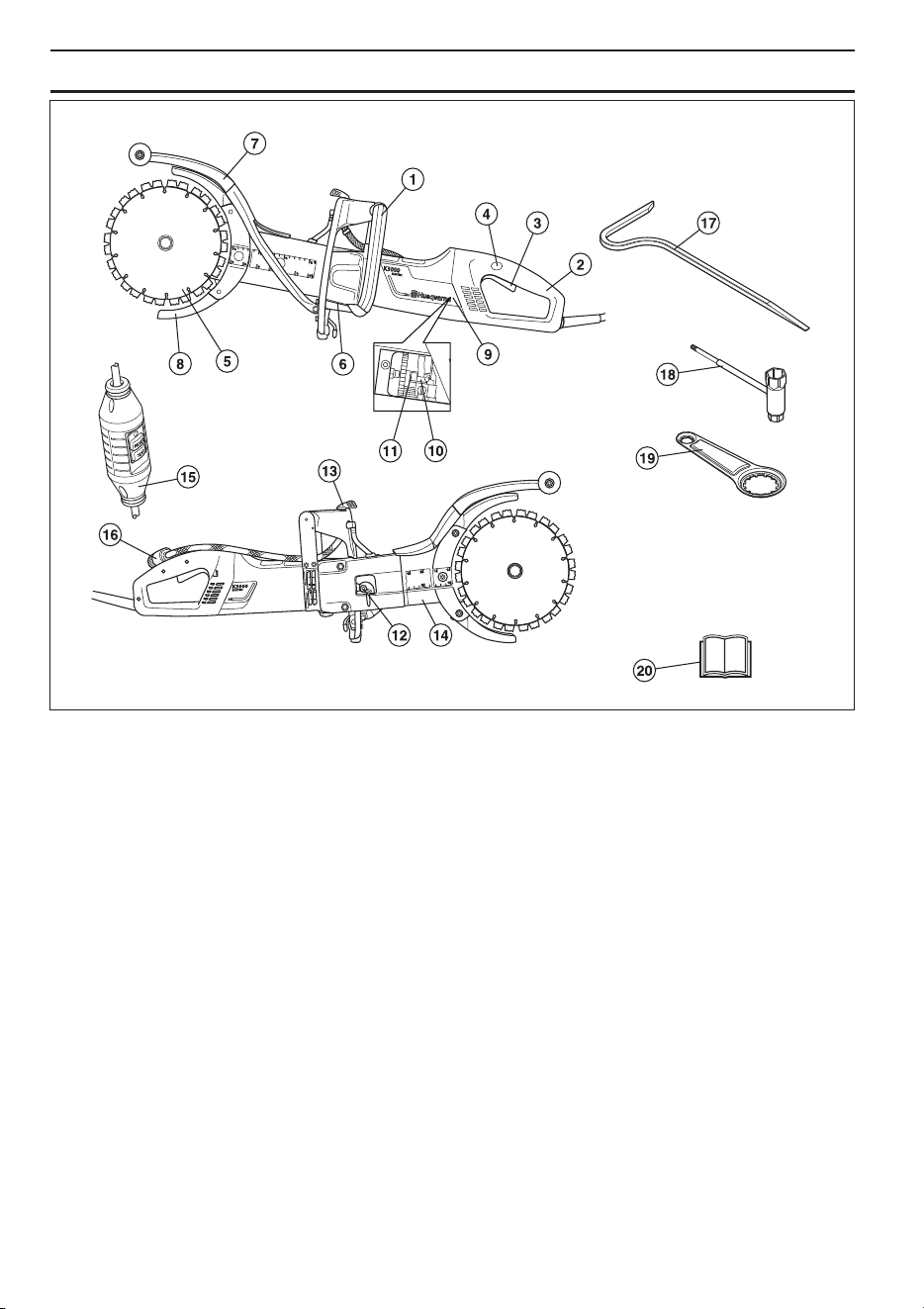
wer cutter?
1
Front handle
2 Rear handle
3 Switch
4 Power switch lock
5 Blades
6 Rating plate
7 Splash guard
8 Blade guards
9 Inspection covers
10 Carbon brushes
11 Brush retainer
12 Belt tensioner
13 Water tap
14 Cutting arm
15 Ground fault circuit interrupter (not for GB)
16 Water connector
17 Breaking tool
18 Combination spanner
19 Bearing tool
20 Operator
′
s manual
GENERAL SAFETY PRECA
UTIONS
English
–
5
Steps bef
ore using a new power
cutter
•
Please read the operator’s manual carefully and make
sure you understand the instructions before using the
machine.
• The machine is only designed for cutting hard
materials, such as concrete, brick, masonry as well as
cast iron and cement pipes.
• Let your Husqvarna dealer regularly check the power
cutter and make essential adjustments and repairs.
Husqvarna Construction Products has a policy of
continuous product development. Husqvarna reserves
the right to modify the design and appearance of products
without prior notice and without further obligation
introduce design modifications.
All information and all data in the Operator’s Manual were
applicable at the time the Operator’s Manual was sent to
print.
P
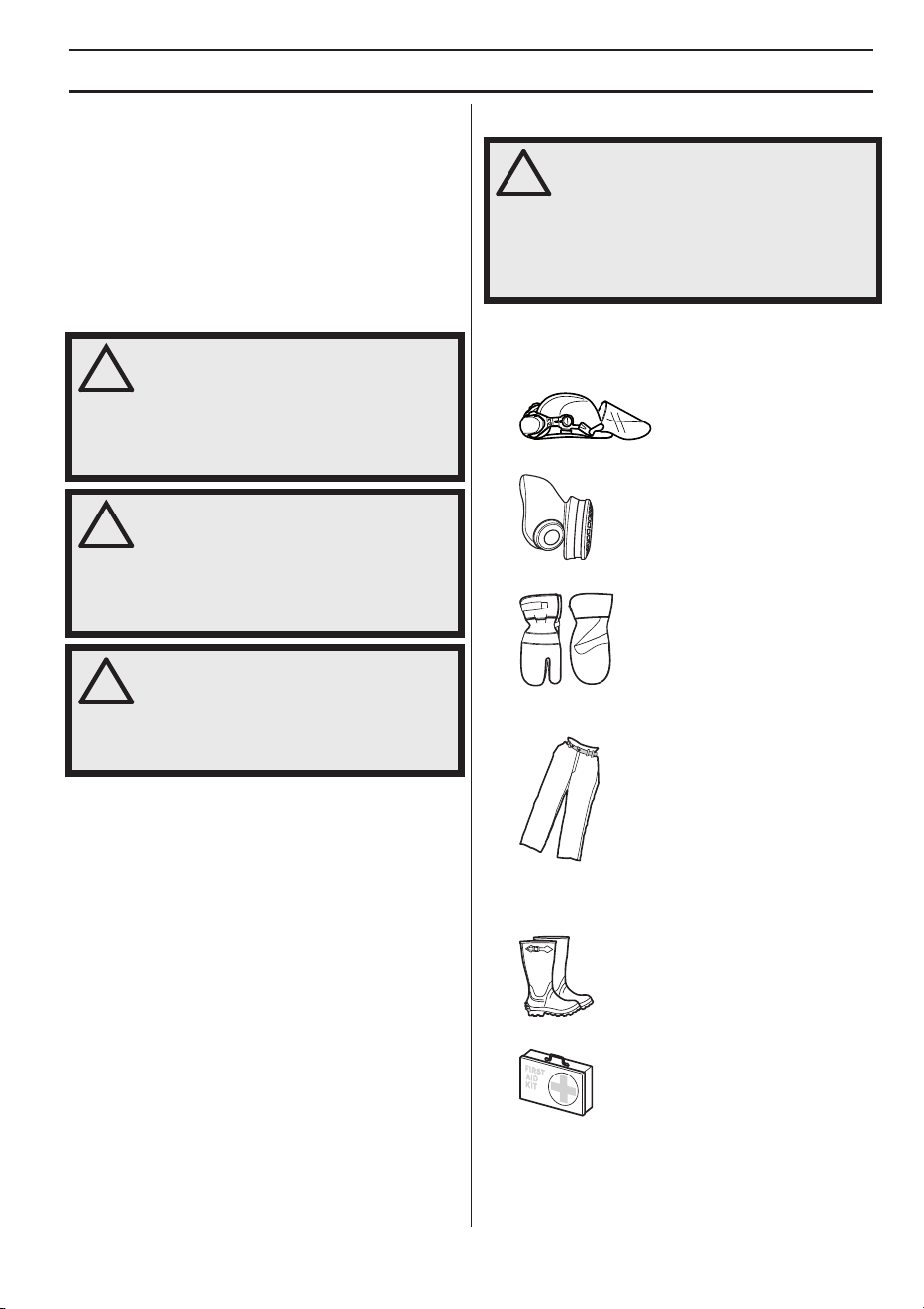
ersonal protective equipment
•
Protective helmet
• Hearing protection
• Protective goggles or a visor
• Breathing mask
• Heavy-duty, firm grip gloves.
• Tight-fitting, heavy-duty and comfortable clothing that
permits full freedom of movement.
• Use leg-guards recommended for the material to be
cut.
• Boots with steel toe-caps and non-slip sole.
• Always have a first aid kit nearby.
!
W
ARNING! Under no circumstances
should you modify the original design of
the machine without approval from the
manufacturer. Always use original spare
parts. Unauthorized modifications and/or
accessories may lead to serious injury or
death to the user or others.
!
W
ARNING! Use of products which cut,
grind, drill, sand or shape material can
generate dust and vapors which may
contain harmful chemicals. Know the
nature of the material being worked on
and wear appropriate dust mask or
respirator protection.
!
W
ARNING! A power cutter is a
dangerous tool if used carelessly or
incorrectly and can cause serious, even
fatal injuries. It is extremely important
that you read and understand the
contents of this Operator’s Manual.
!
W
ARNING! You must use approved
personal protective equipment whenever
you use the machine. Personal protective
equipment cannot eliminate the risk of
injury but it will reduce the degree of
injury if an accident does happen. Ask
your dealer for help in choosing the right
equipment.
SAFETY INSTR
UCTIONS
6
–
English
General saf
ety warnings
Sa
ve all warnings and instructions for future reference.
The term ”power tool” in the warnings refers to your
mains-operated (corded) power tool or battery-operated
(cordless) power tool.
W
ork area safety
•
Keep work area clean and well lit. Cluttered or dark
areas invite accidents.
• Do not operate power tools in explosive atmospheres,
such as in the presence of flammable liquids, gases or
dust. Power tools create sparks which may ignite the
dust or fumes.
• Keep children and bystanders away while operating a
power tool. Distractions can cause you to lose control.
• Do not use the machine in bad weather, such as
dense fog, rain, strong wind, intense cold, etc.
Working in bad weather is tiring and can lead to
dangerous conditions, e.g. slippery surfaces.
• Ensure when cutting that no material can become
loose and fall, causing operating injury. Take great
care when working on sloping ground.
Electrical saf
ety
•
Power tool plugs must match the outlet. Never modify
the plug in any way. Do not use any adapter plugs with
earthed (grounded) power tools. Unmodified plugs
and matching outlets will reduce the risk of electric
shock.
• Avoid body contact with earthed or grounded
surfaces, such as pipes, radiators, ranges and
refrigerators. There is an increased risk of electric
shock if your body is earthed or grounded.
• The power tool should not be exposed to more
moisture than what is supplied by the low flushing
water system. Do not expose the power tool to rain.
Water entering a power tool will increase the risk of
electric shock.
• Do not abuse the cord. Never use the cord for
carrying, pulling or unplugging the power tool. Keep
cord away from heat, oli, charp edges or moving parts.
Damaged or entangled cords increase the risk of
electric shock.
• When operating a power tool outdoors, use an
extension cord suitable for outdoor use. Use of cord
suitable for outdoor use reduces the risk of electric
shock.
• Check that the cord and extension cord are intact and
in good condition. Never use the machine if the cord is
damaged, hand it in to an authorized service
workshop for repair.
• Do not use an extension cord while it is rolled up to
avoid overheating.
• When using an extension cable, use only certified
extension cables with sufficient reach. For more
information, see "Recommended cable dimensions"
in the "Technical data" section. An undersized cable
means a risk of reduced machine capacity and
overheating.
• The machine should be connected to an earthed
outlet socket. Check that the mains voltage
corresponds with that stated on the rating plate on the
machine.
• Ensure the cord is behind you when you start to use
the machine so that the cord will not be damaged.
P
ersonal safety
•
Stay alert, watch what you are doing and use common
sense when operaing a power tool. Do not use a
power tool while you are tired or under the influence of
drugs, alcohol or medication. A moment of inattention
while operating power tools may result in serious
personal injury.
• Use personal protective equipment. Always wear eye
protection. Protetctive equipment such as dust mask,
non-skid safety shoes, hard hat, or hearing protection
used for appropriate conditions will reduce personal
injuries.
• Prevent unintentional starting. Ensure the switch is in
the OFF-position before connecting to power source
and/or battery pack, picking up or carrying the tool.
Carrying power tools with your finger on the switch or
energising power tools that have the switch on invites
accidents.
• Remove any adjusting key or wrench before turning
the power tool on. A wrench or a key left attached to a
rotating part of the power tool may result in personal
injury.
• Do not overreach. Keep proper footing and balance at
all times. This enables better control of the power tool
in unexpected situations.
• Dress properly. Do not wear loose clothing or
jewellery. Keep your hair, clothing and gloves away
from moving parts. Loose clothes, jewellery or long
hair can be caught in moving parts.
!
W
ARNING! Read all safety warnings and
all instructions. Failure to follow the
warnings and instructions may result in
electrtic shock, fire and/or serious injury.
!
W
ARNING! The safety distance for the
power cutter is 15 metres. You are
responsible to ensure that animals and
onlookers are not within the working
area. Do not start cutting until the
working area is clear and you are
standing firmly.
!
W
ARNING! The machine (Great Britain
110V) is not equipped with a ground fault
circuit interrupter. The machine must
always be used with an isolating
transformer for protection in case an
electrical fault should occur.
SAFETY INSTR
UCTIONS
English
–
7
•
If devices are provided for the connection of dust
extraction and collection facilities, ensure that these
are connected and properly used. Use of dust
collection can reduce dust-related hazards.
• Remain at a distance from the blades when the
engine is running.
P
ower tool use and care
•
Do not force the power tool. Use the correct power tool
for your application. The correct power tool will do the
job better and safer at the rate for which it was
designed.
• Do not use the power tool if the switch does not turn it
on and off. Any power tool that cannot be controlled
with the switch is dangerous and must be repaired.
• Disconnect the plug from the power source and/or the
battery pack from the power tool before making any
adjustments, changing accessories, or storing power
tools. Such preventive safety measures reduce the
risk of starting the power tool accidentally.
• Store idle power tools out of the reach of children and
do not allow persons unfamiliar with the power tool or
these instructions to operate the power tool. Power
tools are dangerous in the hands of untrained users.
• Maintain power tools. Check for misalignment or
binding of moving parts, breakage of parts and any
other condition that may affect the power tool´s
operation. If damaged, have the power tool repaired
before use. Many accidents are caused by poorly
maintained power tools.
• Keep cutting tools sharp and clean. Properly
maintained cutting tools with sharp cutting edges are
less likely to bind and are easier to control.
• Use the power tool, accessories and tool bits etc. in
accordance with these instructions, taking into
account the working conditions and the work to be
performed. Use of the power tool for operations
different from those intended could result in
hazardous situations.
• Never use a machine that has been modified in any
way from its original specification.
• Make sure that no pipes or electrical cables are routed
in the working area or in the material to be cut.
• Always check and mark out where gas pipes are
routed. Cutting close to gas pipes always entails
danger. Make sure that sparks are not caused when
cutting in view of the risk of explosion. Remain
concentrated and focused on the task. Carelessness
can result in serious personal injury or death.
• Inspect new blades for transport or storage damage.
• The guard for the cutting equipment must always be
on when the machine is running.
Ser
vice
•
Have your power tool serviced by a qualified repair
person unsing only identical replacement parts. This
will ensure that the safety of the power tool is
maintained.
Mac
hine
′′
′′
s safety equipment
This section descr
ibes the machine
′
s safety equipment,
its purpose, and how checks and maintenance should be
carried out to ensure that it operates correctly. See the
”What is what?” section to locate where this equipment is
positioned on your machine.
Switc
h
The po
wer switch should be used to start and stop the
machine.
Chec
king the power switch
•
Start the machine, release the power switch and
check that the engine and the cutting blade stop.
• A defective power switch should be replaced by an
authorized service workshop.
!
W
ARNING! Overexposure to vibration
can lead to circulatory damage or nerve
damage in people who have impaired
circulation. Contact your doctor if you
experience symptoms of overexposure
to vibration. These symptoms include
numbness, loss of feeling, tingling,
pricking, pain, loss of strength, changes
in skin colour or condition. These
symptoms normally appear in the
fingers, hands or wrists.
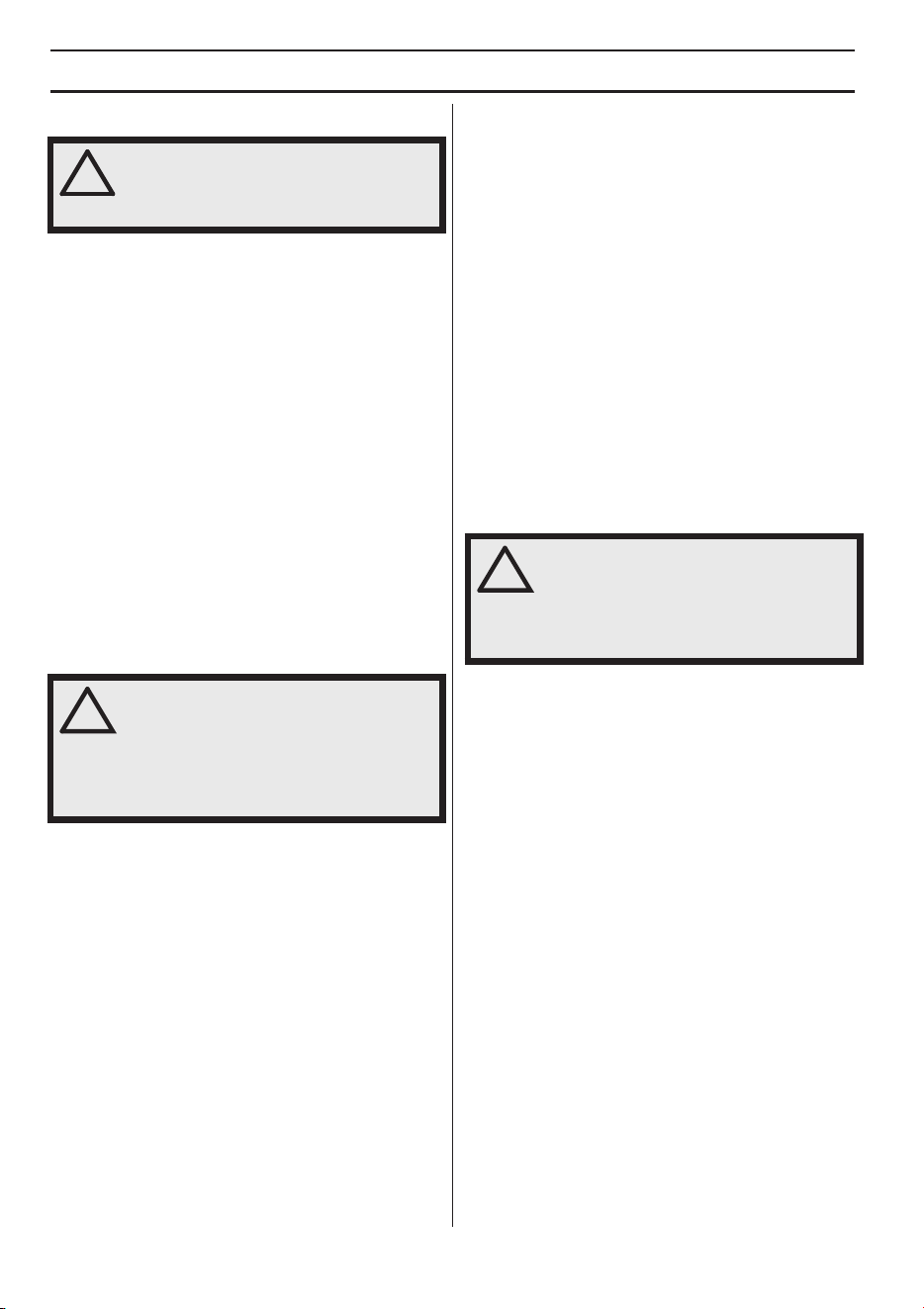
!
WARNING! Never use a machine that has
faulty safety equipment! Carry out the
inspection, maintenance and service
routines listed in this section.
All servicing and repair work on the
machine requires special training. This is
especially true of the machine
′′
′′
s safety
equipment. If your machine fails any of
the checks described below you must
contact your service agent. When you
buy any of our products we guarantee
the availability of professional repairs
and service. If the retailer who sells your
machine is not a servicing dealer, ask
him for the address of your nearest
service agent.
SAFETY INSTRUCTIONS
8 – English
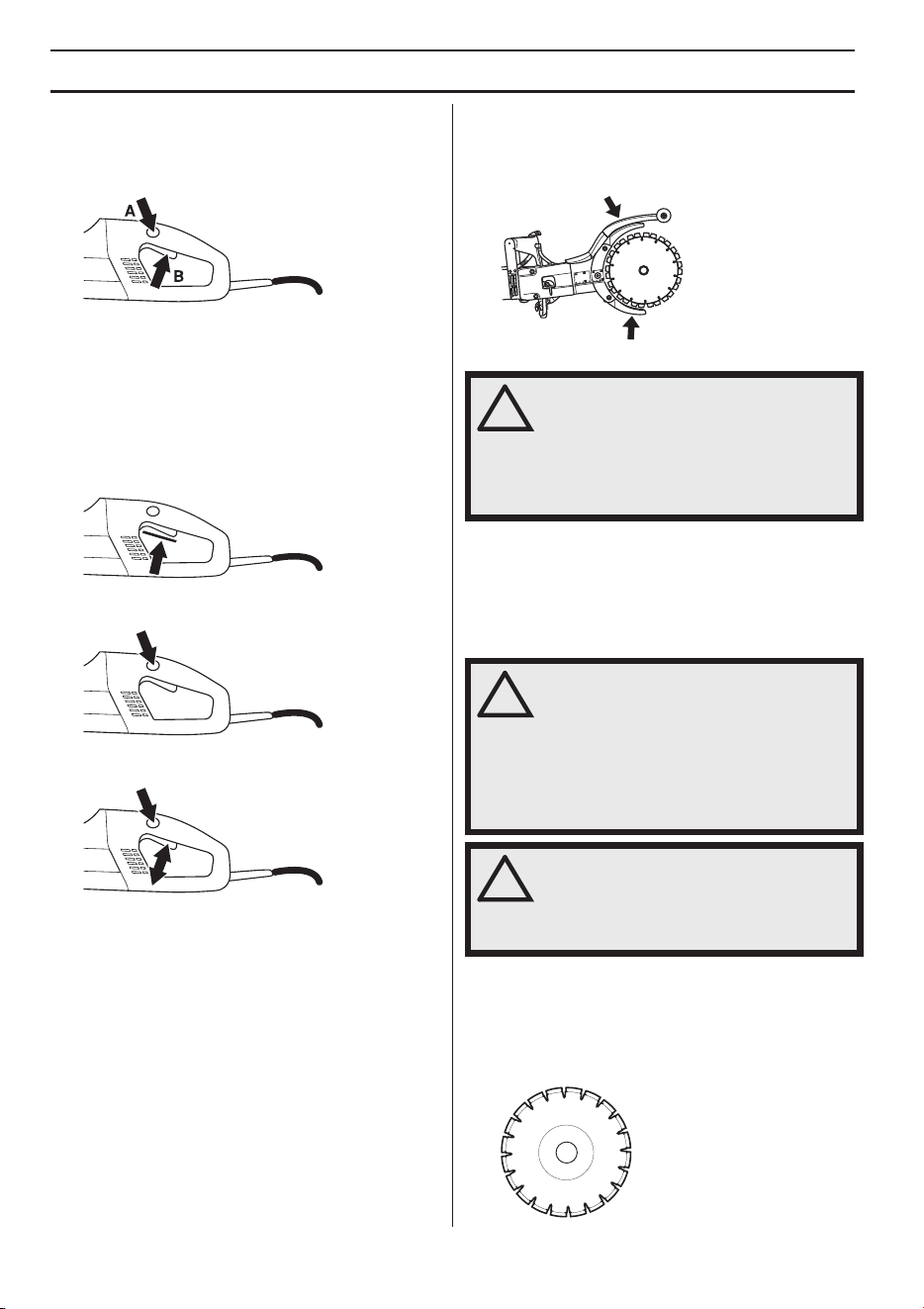
Power switch lock
The power switch lock is designed to prevent accidental
operation of the switch. When the lock (A) is pressed in
the power switch (B) is released.
The power switch lock remains depressed as long as the
power switch is depressed. When the grip on the handle
is released both the power switch and power switch lock
are reset. This movement is controlled by two
independent return springs. This position results in the
machine stopping and the power switch being locked.
Checking the power switch lock
• Make sure the power switch is locked when the power
switch lock is in its original position.
• Press in the power switch lock and make sure it
returns to its original position when you release it.
• Check that the power switch and power switch lock
move freely and that the return springs work properly.
• Switch on the machine, release the switch, and check
that the engine and blades stop.
Gradual start and overload protection
The machine is equipped with electronically controlled
gradual start and overload protection.
The engine starts to pulsate if the machine is loaded
above a specific level. If the load is reduced the engine
reverts to its normal state and cutting can resume.
The electronics will cut the current after a set time if the
machine continues to be run with a pulsating engine. The
higher load the faster the shutoff.
The electronics cut the current immediately if the blade
jams.
Blade guards
This guard is fitted above and below the cutting blade and
is designed to prevent parts of the blade or cutting
fragments from being thrown towards the user.
Checking the blade guards
• Check that the guard is complete and without any
cracks or deformations.
• Never use a defective guard or a guard that has not
been fitted correctly.
Diamond blades
General
• Only use special diamond blades with integrated belt
pulley halves on this machine.
• Diamond blades consist of a steel core provided with
segments that contain industrial diamonds.
!
WARNING! Always check that the guard
is correctly fitted before starting the
machine. Check that the cutting blade is
fitted correctly and does not show signs
of damage. A damaged cutting blade can
cause personal injury. See instructions
under the heading Assembly.
!
WARNING! Blades can break and cause
serious injuries to the user.
Never use blades other than original
blades designed for the machine.
Never use blades on a material other
than the one they are intended for.
!
WARNING! Cutting plastics with
diamond blades can cause kickback
when the material melts, due to the heat
produced when cutting, and sticks to the
blades. Avoid cutting plastics.
SAFETY INSTRUCTIONS
English – 9
• Always use a sharp diamond blade.
• Ensure the blades are not cracked or damaged in any
other way. Replace blades if necessary.
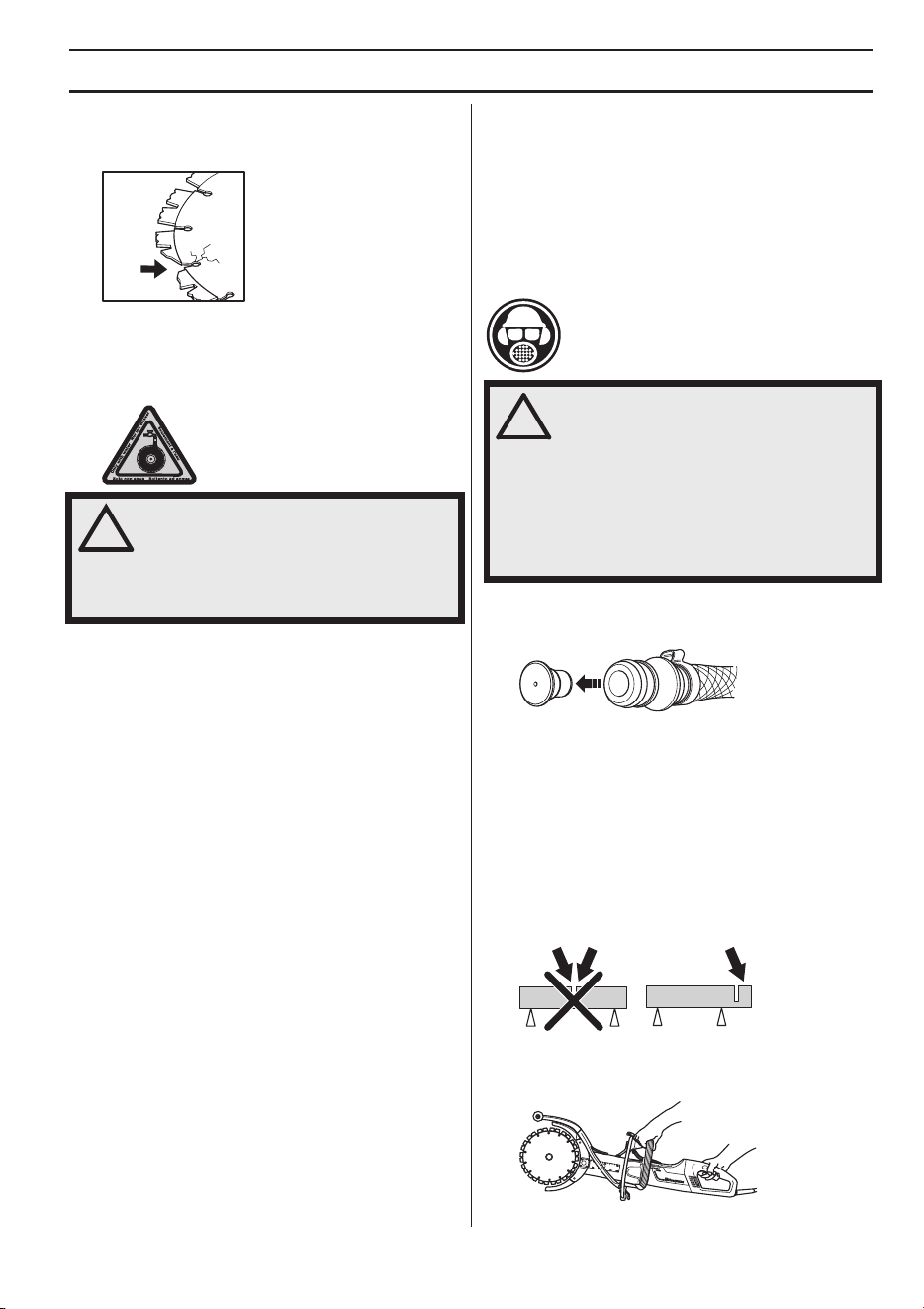
Water cooling
• Water cooling must always be used. This cools the
blades and increases their life and prevents dust build-
up.
Blade vibrations
• The blades can become out of true and vibrate if a too
high feed pressure is used.
• A lower feed pressure can stop the vibration.
Otherwise replace the blades. See the instructions
under the heading Assembling the blades.
• The blades shall be intended for the material to be cut.
Material
• Diamond blades are ideal for masonry, reinforced
concrete and other composite materials.
• Diamond blades are available in several hardness
classes. The blades shall be intended for the material
to be cut. A "soft" diamond blade has a relatively short
service life and large cutting capacity. It is used for
hard materials such as granite and hard concrete. A
"hard" diamond blade has a longer service life and
reduced cutting capacity, and should be used for soft
materials such as brick and asphalt.
Sharpening diamond blades
• Diamond blades can become dull when the wrong
feeding pressure is used or when cutting certain
materials such as heavily reinforced concrete.
Working with a blunt diamond blade causes
overheating, which can result in the diamond
segments coming loose.
• Sharpen the blade by cutting in a soft material such as
sandstone or brick.
High speed handheld machines
• Only use special blades with integrated belt pulley
halves on this machine.
• The blades should be marked with the same or a
higher speed than that stated on the machine’s rating
plate. Never use blades at a lower speed rating than
that of the power cutter.
General working instructions
Water cooling
Water cooling must always be used.
At a low water pressure, for example when the water tank
is used, the restrictor can be dismantled to give the
correct water flow.
NOTE!
It is important not to use a too high water flow without
throttling as the belt can then slip.
Cutting technique
• Support the work piece in such a way that it is possible
to predict what will happen, and so that the cut
remains open while cutting.
• Always hold the machine in a firm grip with both
hands. Hold it so that the thumbs and fingers grip
round the handles.
!
WARNING! Cool diamond blades
designed for wet cutting continuously
with water to prevent heating, which can
deform the diamond blade resulting in
damage to the machine and personal
injury.
!
WARNING! This section describes basic
safety directions for using a power
cutter. This information is never a
substitute for professional skills and
experience. If you get into a situation
where you feel unsafe, stop and seek
expert advice. Contact your dealer,
service agent or an experienced power
cutter user. Do not attempt any task that
you feel unsure of!
SAFETY INSTRUCTIONS
10 – English
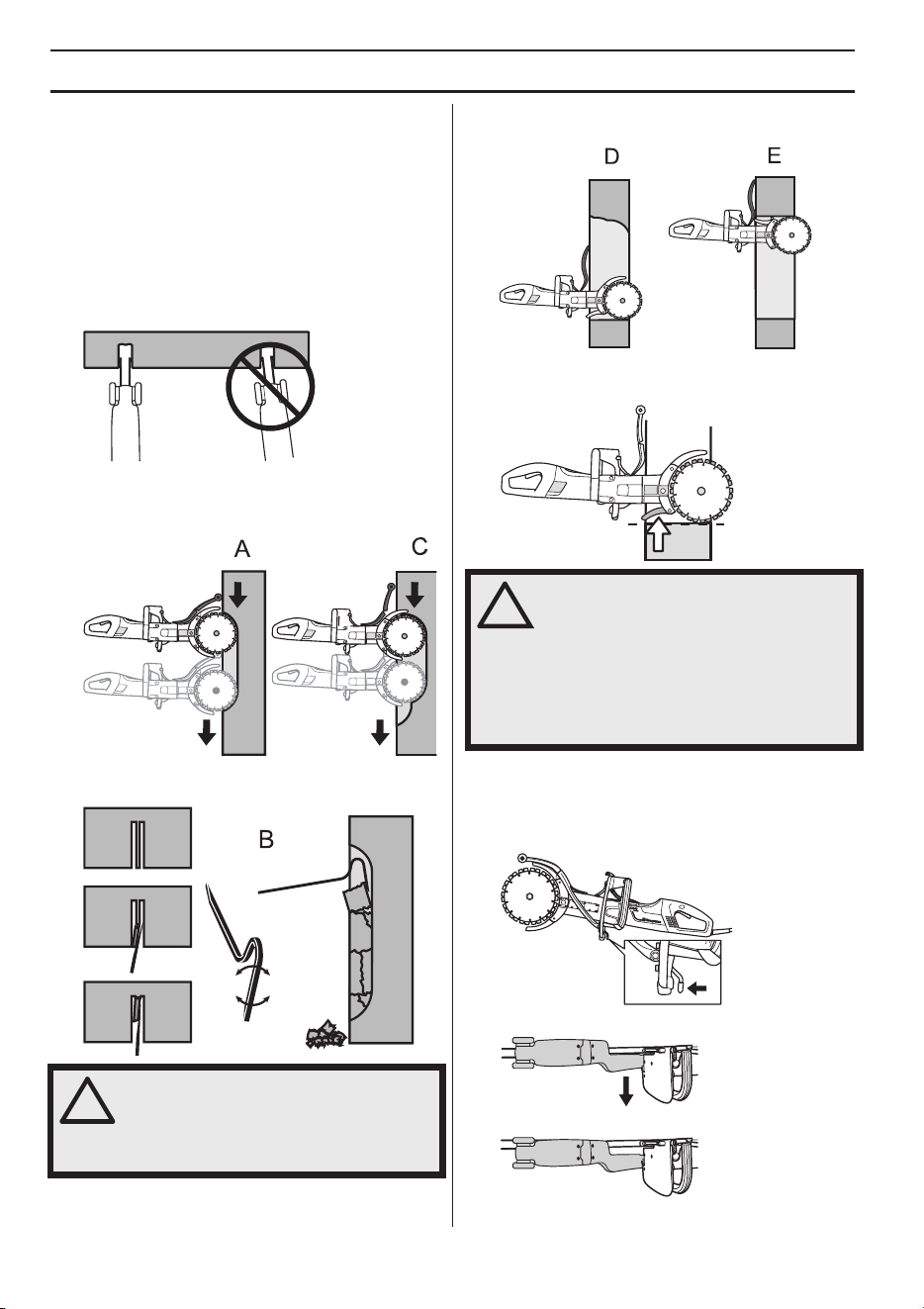
• Check that the blade is not in contact with anything
when the machine is started
• Start cutting with the machine running at maximum
speed.
• Start cutting smoothly, allowing the machine to work
without forcing or pressing in the blade. Always cut at
maximum speed.
• Cut in the same direction when cutting into an existing
cut. Avoid cutting at an angle to the previous cut
otherwise there is a risk of the blade jamming or that
the machine can ”climb in the cut”.
• Always cut from top to bottom (A).
• Remove the cutter and use a crowbar to remove the
material that remains between the cut (B).
• Follow the same saw cut, but further in the work piece
(C), and repeat the work with the crowbar.
• Repeat this working method until the required cutting
depth is achieved (D, E).
• The blade guards are designed to easily adapt to how
deep in the work piece the power cutter is moved.
Smooth cutting
To enable smooth cutting, the splash guard must be
adjusted.
• Release the latch.
• Slide the splash guard sideways.
• Lock the latch.
!
WARNING! When cutting vertically,
always cut from the top of the cut and
down. Never cut from the bottom of the
cut and up. This can cause a kickback
and result in personal injury.
!
WARNING! Under all circumstances
avoid grinding using the side of the
blade; it will almost certainly be
damaged, break and can cause immense
damage. Only use the cutting section.
Do not pull the power cutter to one side,
this can cause the blade to jam or break
resulting in injury to people.
SAFETY INSTRUCTIONS
English – 11
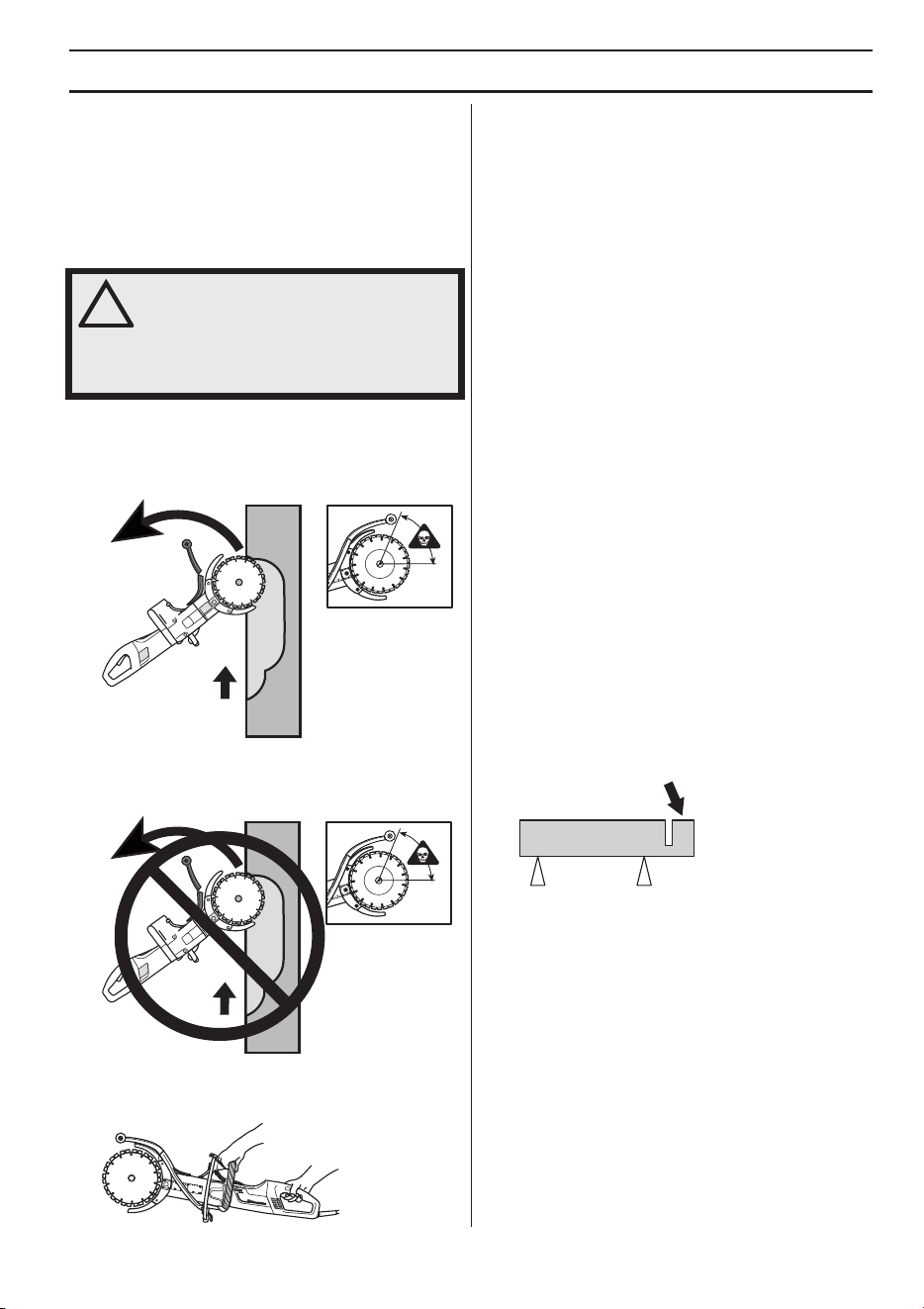
Kickback
Kickback is a sudden, rearward motion of the saw that can
occur if the blades are stalled (pinched, jammed, twisted)
in the so called kickback zone. Most kickbacks are small
and felt as small ”jerks” in the front handle. However,
kickback can be very powerful. If you are not paying
attention or have a poor grip the saw can be thrown all the
way back at you.
Cause of kickback
Kickback is caused if you are cutting with the kickback
zone of the blade for example when cutting ”upwards” or
towards you.
General rules
• Never cut upwards or towards you so that the kickback
zone becomes actively cutting.
• Always hold the machine in a firm grip with both
hands. Hold it so that the thumbs and fingers grip
round the handles.
• Keep a good balance and a firm foothold.
• When cutting vertically, always cut from the top of the
cut and down.
• Always cut at maximum speed.
• Do not cut with the upper quadrant (kickback zone) of
the blade. Avoid twisting or pushing the blades
sideways in the cut. This can cause kickback.
• Take care when inserting the blade in an existing cut.
Make certain that the cut is wide enough and that the
blades are not angled in the cut. This can cause
kickback.
• Stand at a comfortable distance from the work piece.
• Never cut above shoulder height.
• Never cut from a ladder. Use a platform or scaffold
when working at high altitude.
• Be alert to movement of the work piece or anything
else that can occur, which could cause the cut to close
and pinch the blade.
Pull in
Pull in occurs when the blades’ lower sections suddenly
stop or when the cut closes. (To avoid, see the
instructions under the heading ”Basic rules” and
”Jamming/rotation”, here below.).
Pinching/rotation
If the cut is pressed together this can lead to jamming.
The machine can be pulled down suddenly with a very
powerful jerk.
How to avoid pinching
Support the work piece in such a way that the cut remains
open during the cutting operation and when the cut is
finished.
Check the engine speed
Use a revolution counter regularly to check the engine
speed at the working temperature, at full throttle and
without a load.
!
WARNING! Kickback can be very sudden
and viloent, throwing the saw back at
you. It can cause serious or even fatal
injuries. It is vital you understand what
causes kickback and how to aviod it
using proper cutting techique.
ASSEMBLY
12 – English
Assembly
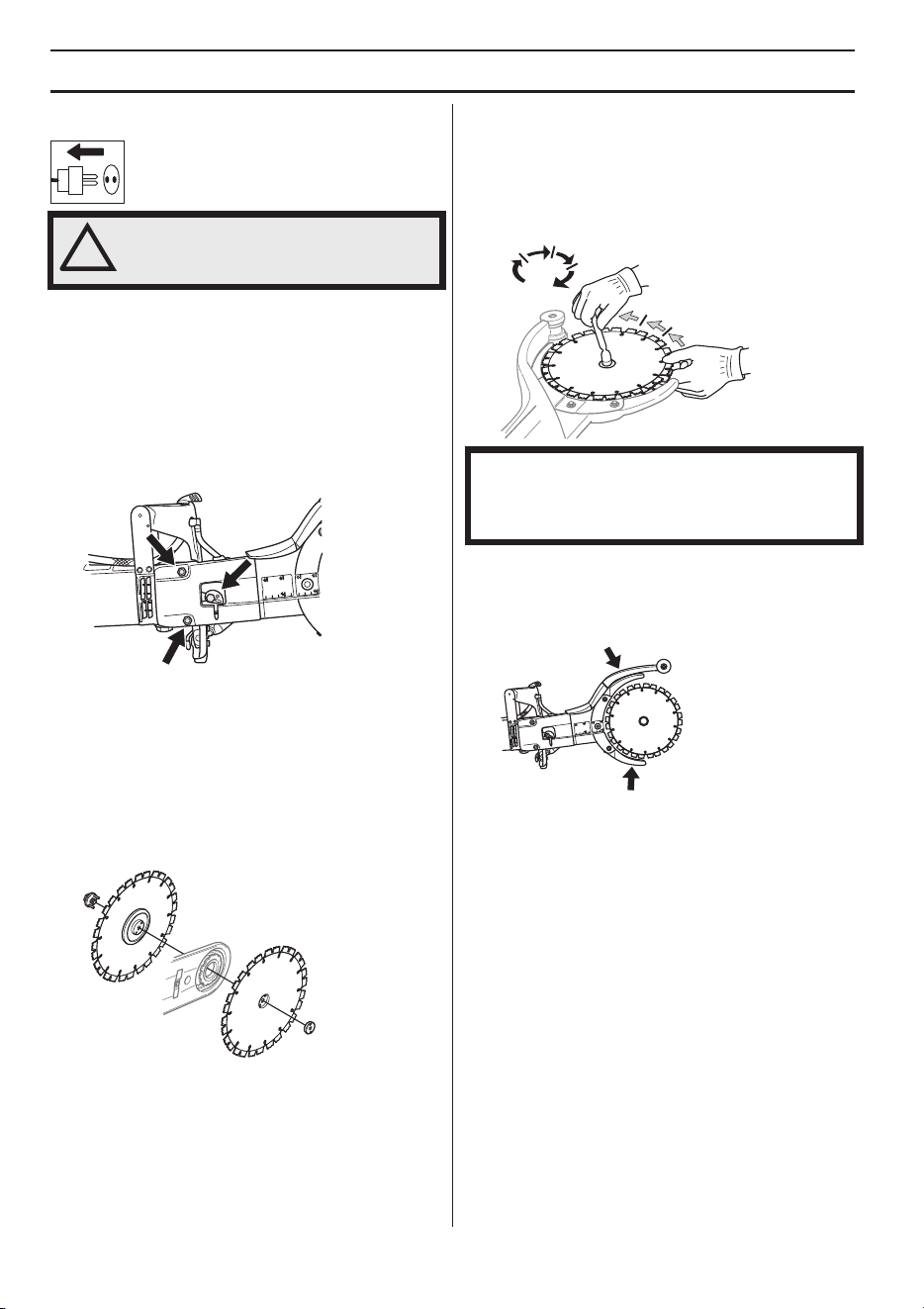
Assembling the blades
• Husqvarna blades are especially manufactured and
approved for freehand cutting with the K3000 Cut-n-
Break. The blades have integrated belt pulley halves
and are to be changed in pairs.
• Loosen the nuts and clamping bolt which release the
bar. This will position the drive belt in a more
favourable position with regard to assembling the new
blades.
The drive belt is not clamped so easily.
• Dismantle the old blades by loosening the centre nut.
Check the drive belt for wear when the blades are
dismantled. When changing the drive belt see the
instructions under the heading ”Replacing the drive
belt”.
• Position the blades on each side of the cutting arm.
Make sure that the holes for both guide pins in the
drive belt halves are aligned so that they correspond
with the holes in the washer, and the nut too. Now fit
the bolt and washer unit with guide pins.
NOTE!
It is very important that the blades rotate when the nut is
tightened. This is to ensure that the belt is not clamped
between the integrated drive belt halves on the blades
when the blades/drive belt are pulled together with the
nut. Ideally this is done alternately, i.e. tighten a little,
rotate a little and repeat until the blades are secured.
Protection for the blades
• The guards should always be fitted on the machine.
Check that the guards are properly secured and work
before starting to cut.
!
WARNING! Always pull out the plug from
the outlet socket before cleaning,
maintenance or assembly.
IMPORTANT! Do not forget to tighten the belt and check
the belt adjustment before cutting. See the instructions
under the heading ”Inspecting and adjusting the drive
belt”.
STARTING AND STOPPING
English – 13
Before starting
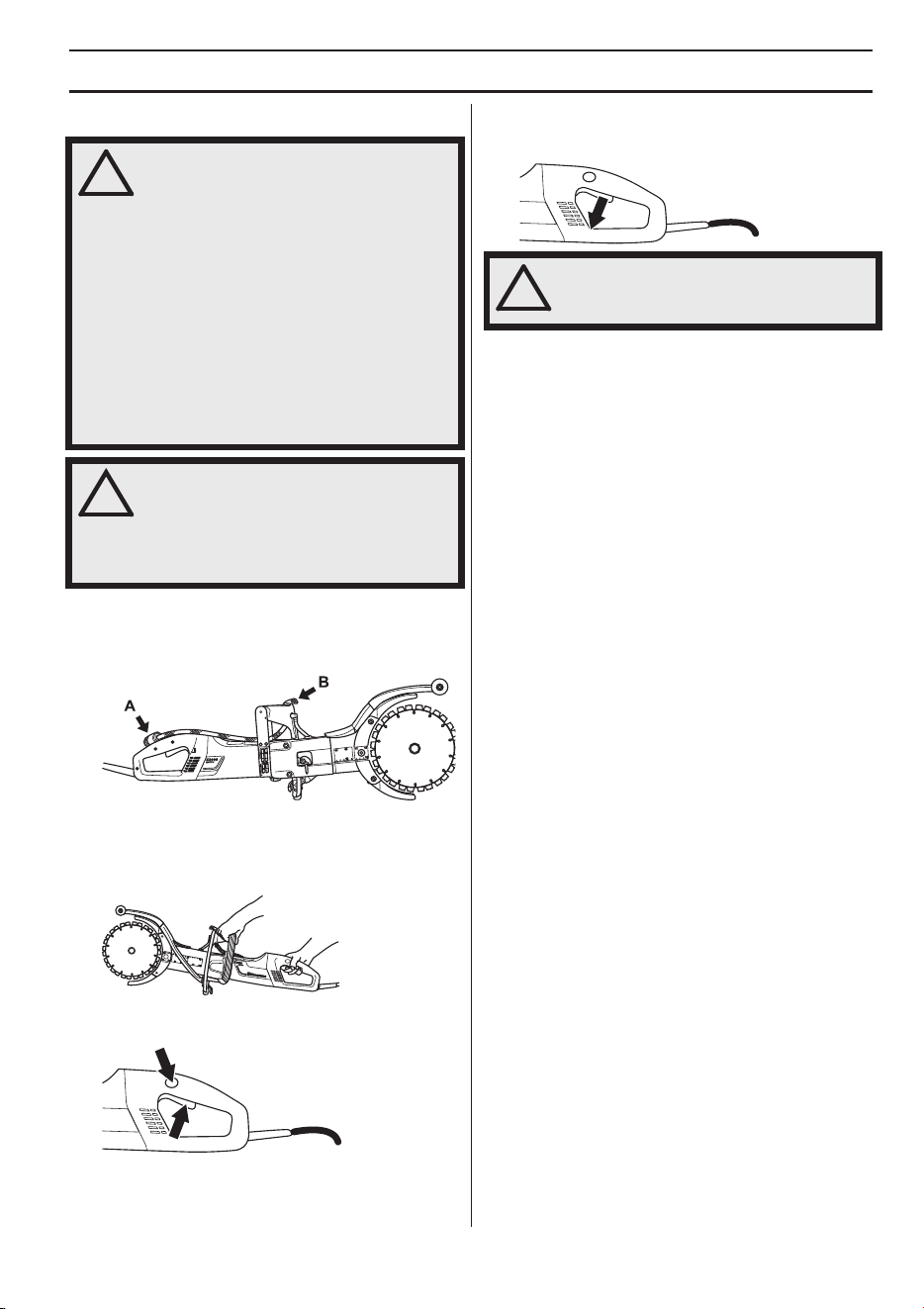
Water connector
• Connect the water hose to the water supply (A). The
water flow is regulated using the water tap (B).
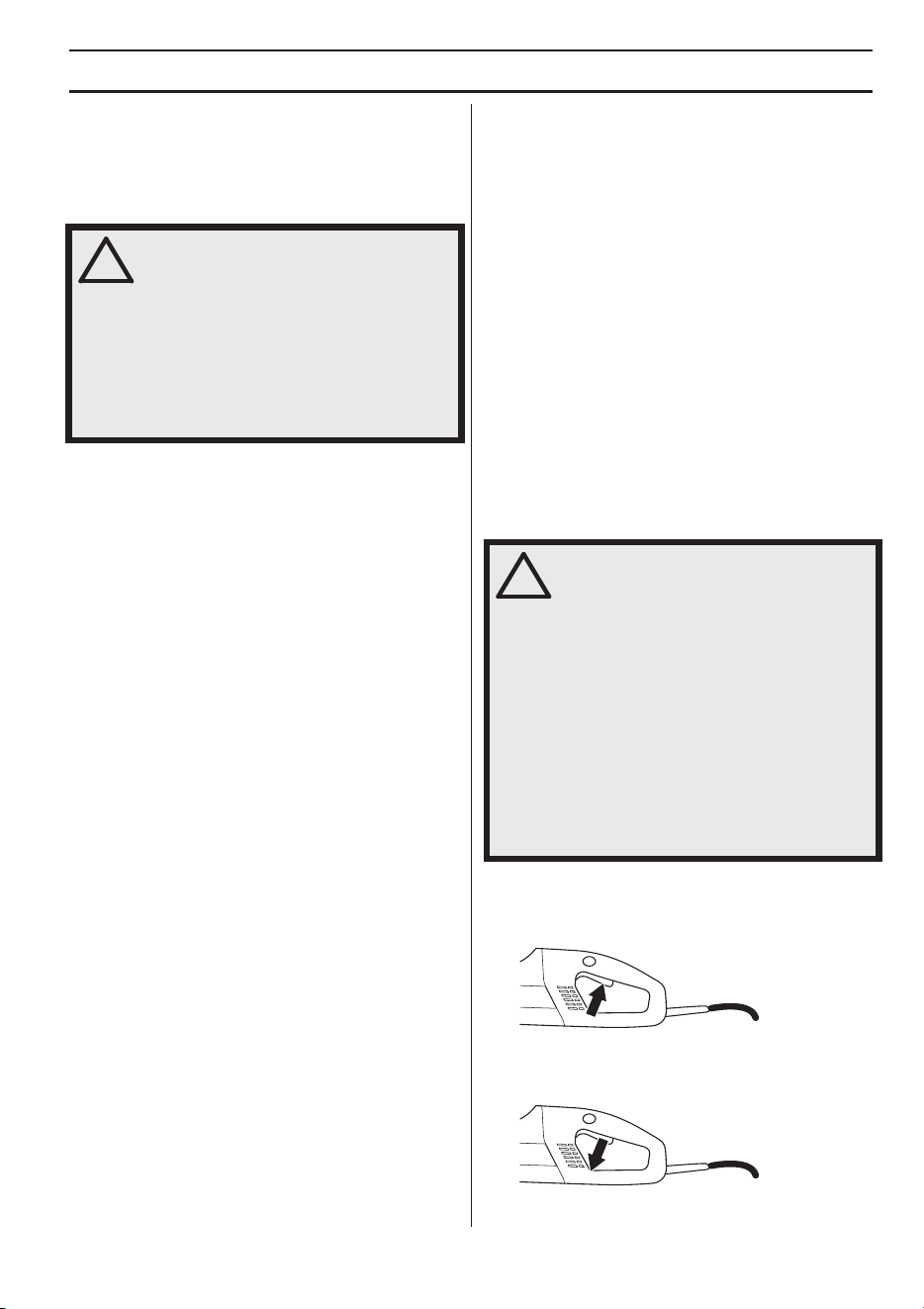
Starting
• Grip the front handle with the left hand.
• Grip the rear handle with your right hand.
• Press in the power switch lock with your right-hand
thumb and press in the power switch.
• Run the machine unloaded and in a safe manner for
at least 30 seconds.
Stopping
• Stop the motor by releasing the power switch.
!
WARNING! Note the following before
starting:
The machine should be connected to an
earthed outlet socket.
Check that the mains voltage
corresponds with that stated on the
rating plate on the machine.
Make sure you have a secure footing and
that the cutting blade cannot touch
anything.
Keep people and animals well away from
the working area.
!
WARNING! The machine (Great Britain
110V) is not equipped with a ground fault
circuit interrupter. The machine must
always be used with an isolating
transformer for protection in case an
electrical fault should occur.
!
WARNING! The cutting blade continues
to rotate for some time after the motor
has stopped.
MAINTENANCE
14 – English
General
Cleaning
The machine can withstand taking in damp air and
splashes during the cutting process. Clean water does not
affect the machine’s function.
When cutting materials such as concrete or brick, which
can contain salt, you must rinse the machine after the
work is finished. The cleaning reduces the risk for
accretions building up inside the engine, which can cause
leakage current between electric components, which in
turn can cause the ground fault circuit interrupter to turn
off without intention.
• Clean the machine daily by rinsing it with clean water
after the work is finished.
• Place the machine with the rear handle facing
upwards. Rinse the air intakes at the rear handle with
clean water. The water will run out through the front air
outlets.
• Connect the plug and run the engine dry for approx.
30 sec in order to speed up the drying of the engine.
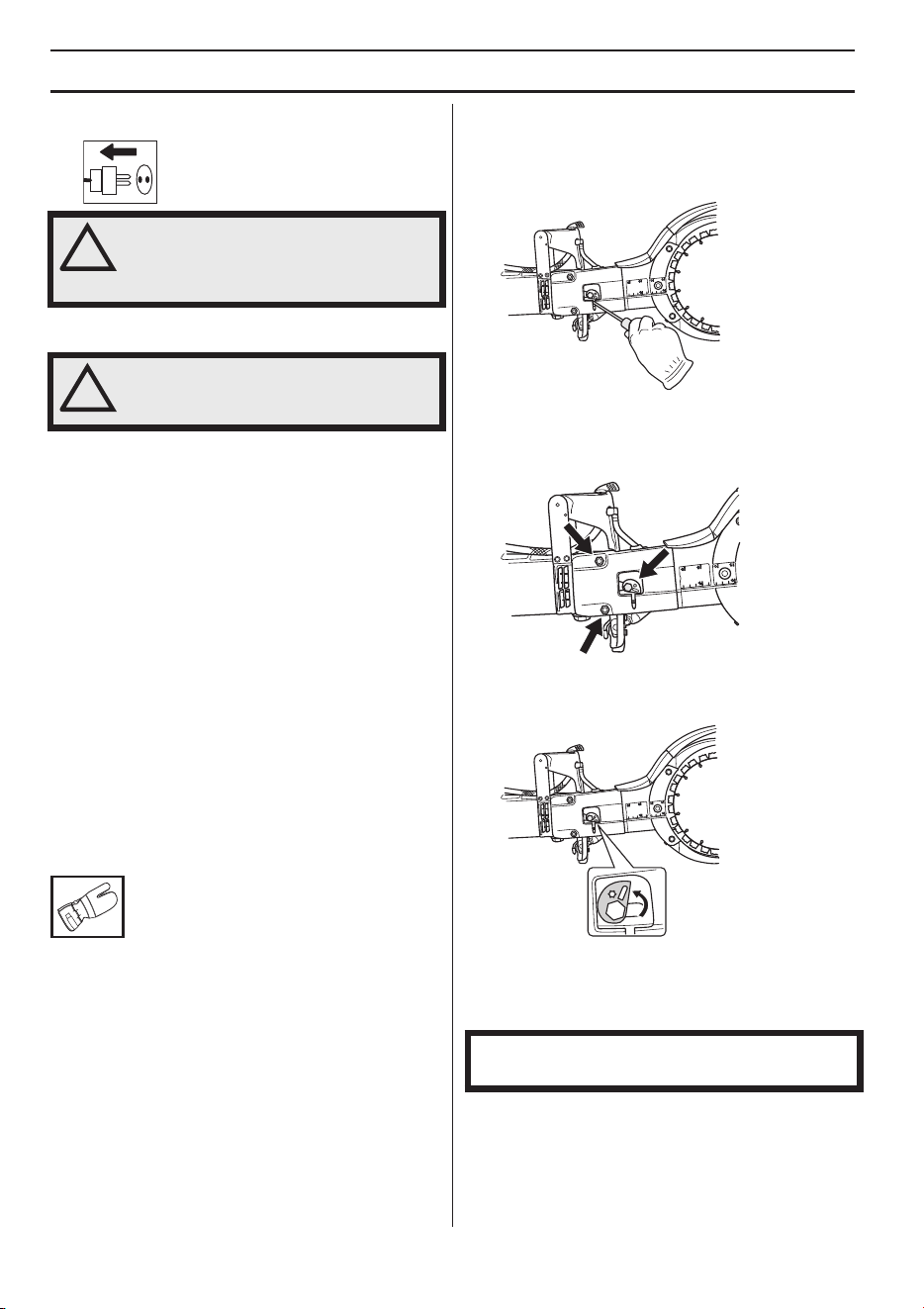
Inspecting and adjusting the drive
belt
• The drive belt is fully enclosed and well-protected
from dust, dirt and mechanical damage when cutting.
Check the tension of the drive belt
• Stick a screwdriver in the notch.
• A correctly adjusted drive belt should have about 5
mm of movement.
Tighten the drive belt
• Loosen the two nuts.
• Loosen the clamping bolt.
• Turn the eccentric plate anti-clockwise with a
screwdriver or a torx driver. This tightens the drive belt
by pushing the bar forwards.
• Tighten the nuts.
• Screw the bolt tight. Hold still the eccentric plate so
that it doesn’t move along when you tighten the
screws.
!
WARNING! Inspection and/or
maintenance should be carried out with
the motor switched off and the plug
disconnected.
!
WARNING! Do not use a high pressure
washer when rinsing the inside of the
machine.
IMPORTANT! A new drive belt shall be tightened once
after 30-60 minutes operation.
MAINTENANCE
English – 15
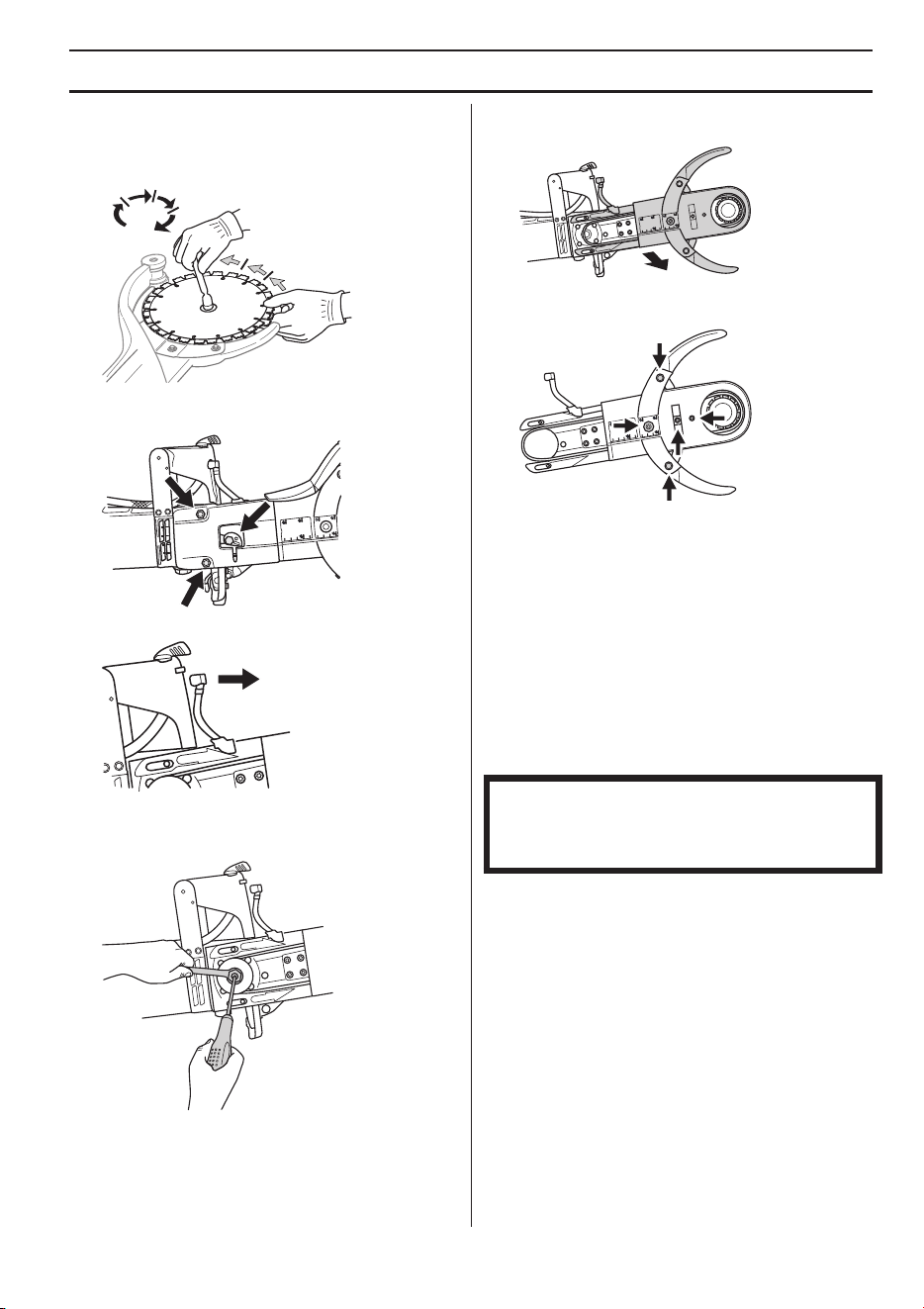
Replacing the drive belt
• Release the belt tension.
• Remove the blades.
• Remove the belt cover by loosening the nuts, the
clamping bolt and the eccentric cam.
• Loosen water hose.
• Loosen the drive gear. Use a spanner as a
counterhold. (The combination spanner or bearing
tool can be used as a counterhold.)
• Remove the cutting arm by pulling it straight out from
the machine.
• Loosen the five screws holding the guards on the
cutting arm.
• Remove the old drive belt and put in a new one.
• Refit the guards on the cutting arm.
• Fit the cutting arm on the machine while fastening the
drive wheel.
• Replace the water hose.
• Refit the belt cover, the nuts, the clamping bolt and the
eccentric cam.
• Refit the blades and tighten the nut. See instructions
under Heading ”Assembling the blades”.
• Tighten the drive belt and the nuts and bolt. See the
instructions under the heading ”Inspecting and
adjusting the drive belt”.
IMPORTANT! Do not forget to tighten the belt and check
the belt adjustment before cutting. See the instructions
under the heading ”Inspecting and adjusting the drive
belt”.
MAINTENANCE
16 – English
Cooling system
• The machine is equipped with an efficient fan to cool
the motor. Cooling air which is drawn in through the
grille by the machines rear handle passes over the
stator and rotor and out through the front of the motor
housing.
• In order for the machine to always be cooled
sufficiently the cooling air openings must be kept clear
and clean. Blow down the machine regularly with
compressed air.
Replacing the carbon brushes
• Check the carbon brushes at least once a month. The
carbon brushes should be replaced with new brushes
if they are worn, cracked or in any other way
deformed.
• All carbon brushes must be replaced when the
brushes are replaced.
• Remove both inspection covers by loosening both
screws.
• Unscrew the cable holding the carbon brush. Now lift
up the spring and then lift out the carbon brush from
the brush retainer.
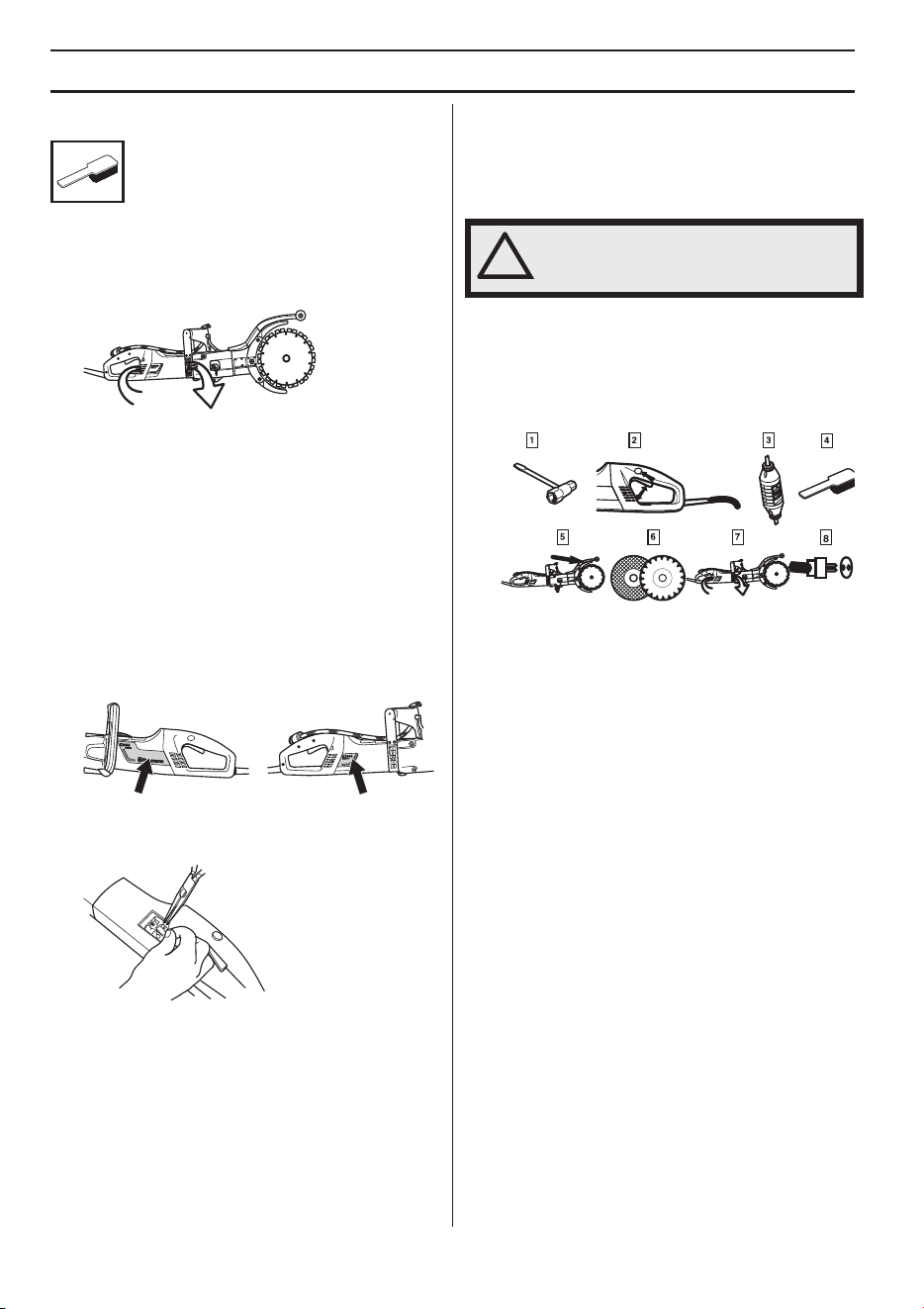
• Clean the brush retainers with a dry brush.
• Carefully blow away the dust.
• Fit the new carbon brushes and, at the same time,
check that they slide easily in the brush retainers.
• Fold down the springs and tighten the cable.
• New carbon brushes must be run in for approximately
40 minutes while idling.
Water tap
• Check and clean the restrictor if necessary. Do not
use hoses that are distorted, worn or damaged.
Electrical Feed
• Check that the cord and extension cord are intact and
in good condition. Never use the machine if the cord is
damaged, hand it in to an authorized service
workshop for repair.
Daily maintenance
1 Check that nuts and screws are tight.
2 Check that the power switch unit works smoothly.
3 Check the ground fault circuit interrupter
4 Clean the outside of the machine.
5 Checking the blade guard
6 Check the condition of the cutting blade.
7 Check and clean the cooling air openings.
8 Check that the cord and extension cord are intact and
in good condition.
!
WARNING! Never use damaged cables.
They can cause serious, even fatal,
personal injuries.
English – 17
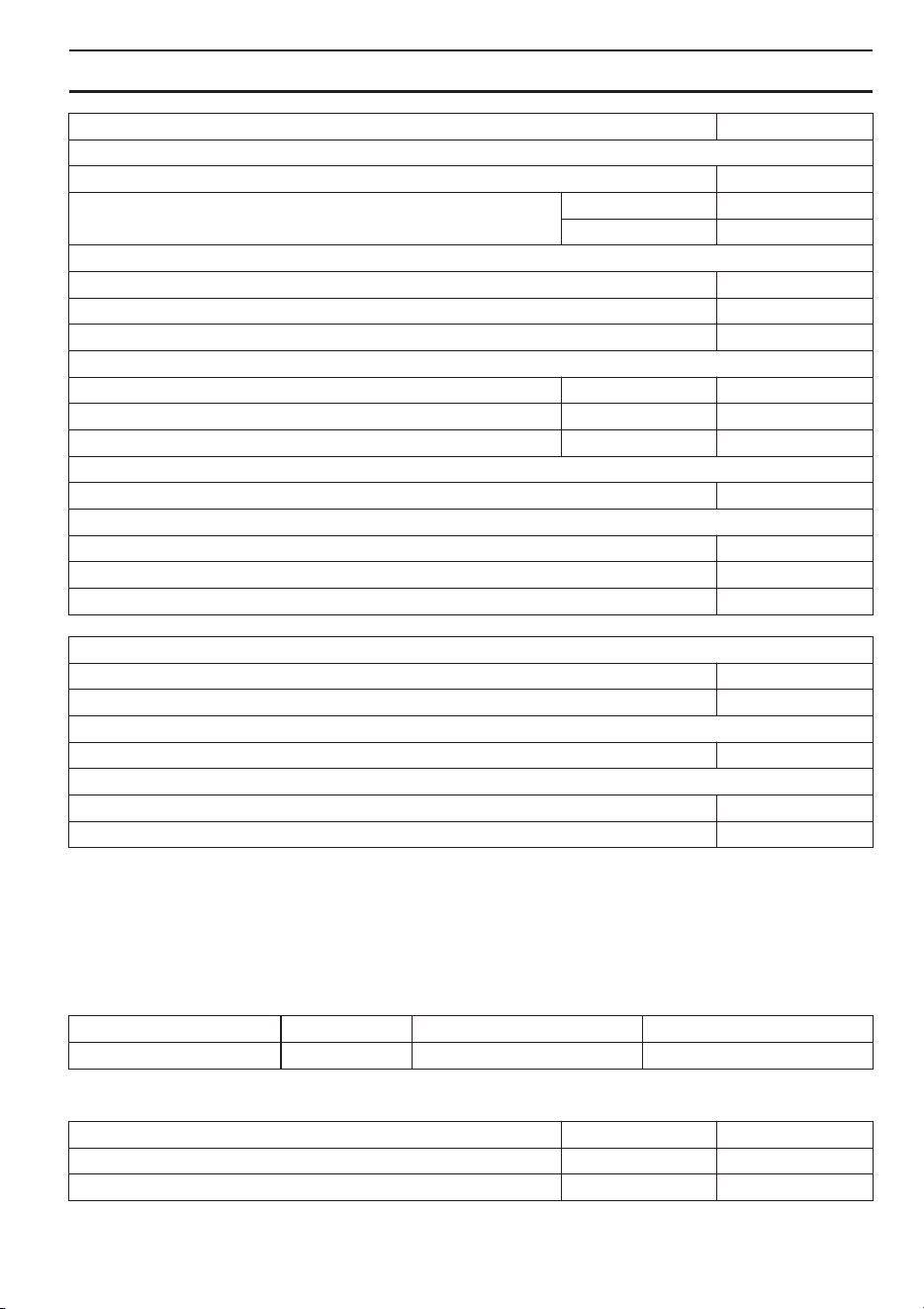
TECHNICAL DATA
Note 1: Noise emissions in the environment measured as sound power (L
WA
) in conformity with EN 60745-2-3.
Note 2: Noise pressure level according to EN 60745-2-3. Reported data for noise pressure level has a typical statistical
dispersion (standard deviation) of 1.0 dB(A).
Note 3: Vibration level according to EN EN 60745-2-3. Reported data for vibration level has a typical statistical dispersion
(standard deviation) of 1 m/s
2
.
Cutting equipment
Recommended cable dimensions
Technical data K 3000 Cut-n-Break
Engine
Protection class I
Max. blade speed, rpm
230V, 50Hz 4250
120V, 60Hz 4460
Rated voltage, V
Europe 230
Great Britain 110
USA / Canada / Japan 100-120
Rated output, W
Europe 230V, 50Hz 2700/12 A
Great Britain 110V, 50Hz 2200/20 A
USA / Canada / Japan 100-120V, 50-60Hz 15 A
Weight
Power cutter without blades, kg 7,9
Water cooling
Water cooling Ye s
Water connector Type ”Gardena”
Water pressure - max, bar 8
Noise emissions (see note 1)
Sound power level, measured dB (A) 108
Sound power level, guaranteed dB(A) 109
Sound levels (see note 2)
Sound pressure level at the operators ear, dB(A) 95
Vibration levels (see note 3)
Front handle, m/s
2
3,2
Rear handle, m/s
2
3,4
Cutting blade, mm/inches Gear ratio Max. peripheral speed, m/s Cutting depth, mm/inches
225/9 45/79 60 400/16
Cable area 1,5 mm
2
2,5 mm
2
Input voltage 100-120 V 20 m 40 m
Input voltage 220-240 V 30 m 50 m
18 – English
TECHNICAL DATA
EC Declaration of Conformity
(Applies to Europe only)
Husqvarna AB, SE-433 81 Göteborg, Sweden, tel: +46-31-949000, declares under sole responsibility that the power
cutter
Husqvarna 3000 Cut-n-Break dating from 2010 serial numbers and onwards (the year is clearly stated on the
rating plate, followed by the serial number), complies with the requirements of the COUNCILíS DIRECTIVE:
• of May 17, 2006 ”relating to machinery” 2006/42/EC.
• of December 15, 2004 ”relating to electromagnetic compatibility” 2004/108/EC.
• of December 12, 2006 ”relating to electrical equipment” 2006/95/EC.
• of June 08, 2011 on the 'restriction of use of certain hazardous substances' 2011/65/EU
The following standards have been applied: EN ISO 12100:2010, EN 55014-1:2006, EN 55014-2/A1:2001, EN 61000-
3-2:2006, EN 61000-3-3/A1/A2:2005, EN 60745-1:2009, IEC 60745-2-22:2009.
Gothenburg 5 January 2015
Helena Grubb
Vice President, Construction Equipment Husqvarna AB
(Authorized representative for Husqvarna AB and responsible for technical documentation.)


1153344-26
´®z+UBJ¶6l¨
´®z+UBJ¶6l¨
2015-01-30 rev. 2
Original instructions