
Full-Color LED Splicing Display Unit
Installation Guide

Full-Color LED Splicing Display Unit Installation Guide
i
Legal Information
©2022 Hangzhou Hikvision Digital Technology Co., Ltd. All rights reserved.
About this Manual
The Manual includes instructions for using and managing the Product. Pictures, charts, images and
all other information hereinafter are for description and explanation only. The information
contained in the Manual is subject to change, without notice, due to firmware updates or other
reasons. Please find the latest version of this Manual at the Hikvision website
(https://www.hikvision.com/).
Please use this Manual with the guidance and assistance of professionals trained in supporting the
Product.
Trademarks
and other Hikvision's trademarks and logos are the properties of
Hikvision in various jurisdictions.
Other trademarks and logos mentioned are the properties of their respective owners.
: The terms HDMI and HDMI High-Definition Multimedia Interface, and the HDMI
Logo are trademarks or registered trademarks of HDMI Licensing Administrator, Inc. in the United
States and other countries.
Disclaimer
TO THE MAXIMUM EXTENT PERMITTED BY APPLICABLE LAW, THIS MANUAL AND THE PRODUCT
DESCRIBED, WITH ITS HARDWARE, SOFTWARE AND FIRMWARE, ARE PROVIDED "AS IS" AND
"WITH ALL FAULTS AND ERRORS". HIKVISION MAKES NO WARRANTIES, EXPRESS OR IMPLIED,
INCLUDING WITHOUT LIMITATION, MERCHANTABILITY, SATISFACTORY QUALITY, OR FITNESS FOR
A PARTICULAR PURPOSE. THE USE OF THE PRODUCT BY YOU IS AT YOUR OWN RISK. IN NO EVENT
WILL HIKVISION BE LIABLE TO YOU FOR ANY SPECIAL, CONSEQUENTIAL, INCIDENTAL, OR INDIRECT
DAMAGES, INCLUDING, AMONG OTHERS, DAMAGES FOR LOSS OF BUSINESS PROFITS, BUSINESS
INTERRUPTION, OR LOSS OF DATA, CORRUPTION OF SYSTEMS, OR LOSS OF DOCUMENTATION,
WHETHER BASED ON BREACH OF CONTRACT, TORT (INCLUDING NEGLIGENCE), PRODUCT
LIABILITY, OR OTHERWISE, IN CONNECTION WITH THE USE OF THE PRODUCT, EVEN IF HIKVISION
HAS BEEN ADVISED OF THE POSSIBILITY OF SUCH DAMAGES OR LOSS.
YOU ACKNOWLEDGE THAT THE NATURE OF THE INTERNET PROVIDES FOR INHERENT SECURITY
RISKS, AND HIKVISION SHALL NOT TAKE ANY RESPONSIBILITIES FOR ABNORMAL OPERATION,
PRIVACY LEAKAGE OR OTHER DAMAGES RESULTING FROM CYBER-ATTACK, HACKER ATTACK,
VIRUS INFECTION, OR OTHER INTERNET SECURITY RISKS; HOWEVER, HIKVISION WILL PROVIDE
TIMELY TECHNICAL SUPPORT IF REQUIRED.
YOU AGREE TO USE THIS PRODUCT IN COMPLIANCE WITH ALL APPLICABLE LAWS, AND YOU ARE
SOLELY RESPONSIBLE FOR ENSURING THAT YOUR USE CONFORMS TO THE APPLICABLE LAW.
ESPECIALLY, YOU ARE RESPONSIBLE, FOR USING THIS PRODUCT IN A MANNER THAT DOES NOT
INFRINGE ON THE RIGHTS OF THIRD PARTIES, INCLUDING WITHOUT LIMITATION, RIGHTS OF

Full-Color LED Splicing Display Unit Installation Guide
ii
PUBLICITY, INTELLECTUAL PROPERTY RIGHTS, OR DATA PROTECTION AND OTHER PRIVACY RIGHTS.
YOU SHALL NOT USE THIS PRODUCT FOR ANY PROHIBITED END-USES, INCLUDING THE
DEVELOPMENT OR PRODUCTION OF WEAPONS OF MASS DESTRUCTION, THE DEVELOPMENT OR
PRODUCTION OF CHEMICAL OR BIOLOGICAL WEAPONS, ANY ACTIVITIES IN THE CONTEXT RELATED
TO ANY NUCLEAR EXPLOSIVE OR UNSAFE NUCLEAR FUEL-CYCLE, OR IN SUPPORT OF HUMAN
RIGHTS ABUSES.
IN THE EVENT OF ANY CONFLICTS BETWEEN THIS MANUAL AND THE APPLICABLE LAW, THE
LATTER PREVAILS.
Full-Color LED Splicing Display Unit Installation Guide
i
Symbol Conventions
The symbols that may be found in this document are defined as follows.
Symbol
Description
Danger
Indicates a hazardous situation which, if not avoided, will or could
result in death or serious injury.
Caution
Indicates a potentially hazardous situation which, if not avoided,
could result in equipment damage, data loss, performance
degradation, or unexpected results.
Note
Provides additional information to emphasize or supplement
important points of the main text.
Safety Instruction
For safety concerns, the device has been strictly tested before shipment. However, incorrect
installation or usage may lead to hazardous results such as electric shock and fire. To ensure the
service life and best performance of the device, please read the notice and plate signs carefully
and follow the safety instructions. Keep this guide properly for later use.
Caution
● To ensure safety, the installation parts and the wall should support four times the weight of the
device.
● Install the device no more than 5 mm away from the wall or other metal racks in case of lamp
board drop resulting in electric shock.
● Please set the brightness of the LED display within 500 nits to avoid power overload.
● The device may generate radio interference in indoor environment. Necessary precautions may
be required.
● To reduce the risk of fire or electric shock, please do not expose the device to rain or humid
environment.
● Electric discharge may last for a short period of time after the power is shut down. Please wait
two minutes after the power is shut down before operating the device.
● To avoid the risk of electric shock, please do not operate when the power is on.
● Please do not plug and unplug the power cable when the power is on.
● Ensure the correct wire sequence of the terminals connected to the AC power supply.
● Do not place anything containing liquid on the device to avoid the risk of fire or electric shock
caused by liquid-splashing.
● The device is only suitable for installation on the concrete or non-flammable surfaces, to
prevent molten material from dripping to the bottom during fire caused by internal failure.
● Keep 90 degrees when moving and using the device.
Full-Color LED Splicing Display Unit Installation Guide
ii
● After installation, there should be no openings around the LED module. The bottom bracket
under the wire outlet position should completely cover the bottom hole only to let the wire out,
to prevent the molten material from dripping to the bottom during fire caused by internal
failure.
Warning
● In the use of the product, you must be in strict compliance with the electrical safety regulations
of the nation and region.
● Disconnect the power plug before maintenance.
● Make sure the power supply is well-grounded.
● The protective grounding of the device should be reliably connected to the building protective
grounding.
● To reduce the risk of electric shock, install protective shield on the exposed connector after
installing LED screen.
● Disconnect the power plug before installing the protective shield.
● A disconnecting device should be provided on the outside of the equipment. A single device is
recommended for AC 220 V / 230 V / 240 V, 6 A circuit breakers. When multiple devices are
superimposed, a suitable circuit breaker should be selected according to the total rated current,
but it must not exceed the building equipped circuit specifications.
● To prevent injury, the device must be securely fixed to the ground, wall, ceiling, or steel frame.
The all-in-one rack should be fixed to the ground with expansion screws.
● The supporting rack can only be used with the device. Using it with other devices may cause
instability and injury.
● The device can only be used with the supporting rack. Using it with other equipment (such as a
cart, shelf, or handling device) may cause instability and injury.
● Please strictly follow the installation method in this guide.
● The external wire connection between device and hazardous electronic terminals should be
operated by professionals.
● This is a class A product and may cause radio interference in which case the user may be
required to take adequate measures.
● The socket-outlet shall be installed near the device and easily accessible.
● This equipment is not suitable for use in locations where children are likely to be present.
● This product can work normally only at the altitude below 5000 meters.

Full-Color LED Splicing Display Unit Installation Guide
iii
● WARNING
1. Do not ingest battery. Chemical Burn Hazard!
2. This product contains a coin/button cell battery. If the coin/button cell battery is swallowed, it
can cause severe internal burns in just 2 hours and can lead to death.
3. Keep new and used batteries away from children.
4. If the battery compartment does not close securely, stop using the product and keep it away
from children.
5. If you think batteries might have been swallowed or placed inside any part of the body, seek
immediate medical attention.
6. CAUTION: Risk of explosion if the battery is replaced by an incorrect type.
7. Improper replacement of the battery with an incorrect type may defeat a safeguard (for
example, in the case of some lithium battery types).
8. Do not dispose of the battery into fire or a hot oven, or mechanically crush or cut the battery,
which may result in an explosion.
9. Do not leave the battery in an extremely high temperature surrounding environment, which
may result in an explosion or the leakage of flammable liquid or gas.
10. Do not subject the battery to extremely low air pressure, which may result in an explosion or
the leakage of flammable liquid or gas.
11. Dispose of used batteries according to the instructions.

Full-Color LED Splicing Display Unit Installation Guide
iv
Contents
Chapter 1 Product Introduction .................................................................................................. 1
1.1 Overview ................................................................................................................................ 1
1.2 Product Components............................................................................................................. 1
Chapter 2 Rack Installation ......................................................................................................... 2
2.1 About Rack ............................................................................................................................. 2
2.2 Install the Rack ...................................................................................................................... 2
2.2.1 Precautions ................................................................................................................. 2
2.2.2 Install the Wall-Mounted Rack .................................................................................. 2
2.2.3 Install the Ultrathin Rack ......................................................................................... 10
2.2.4 Install the All-in-One Rack ....................................................................................... 24
Chapter 3 Cabinet Installation .................................................................................................. 43
3.1 Introduction ......................................................................................................................... 43
3.2 Install the Cabinets .............................................................................................................. 43
3.2.1 Precautions ............................................................................................................... 43
3.2.2 Stitch Cabinet Frames .............................................................................................. 43
3.2.3 Wiring ....................................................................................................................... 47
3.2.4 Install Lamp Boards on the Cabinets ....................................................................... 54
Chapter 4 Software Debugging ................................................................................................. 57
4.1 Activation ............................................................................................................................. 57
4.2 Login ..................................................................................................................................... 59
4.3 Configure Signal Cables ....................................................................................................... 59
4.4 Configure Screen Splicing .................................................................................................... 60
Chapter 5 Installation Guide QR Code ....................................................................................... 62

Full-Color LED Splicing Display Unit Installation Guide
1
Chapter 1 Product Introduction
1.1 Overview
The full-color LED splicing display unit adopts thin and die-casting cabinet design. The four
cabinets can be spliced into a 2K standard resolution display quickly. The large cabinet design can
not only reduce the spliced seams and installation difficulty, but also make the display surface
flatter. The device simulates the display application mode with embedded and integrated control
system, making it easy to debug. The input signal can be displayed instantly after the
corresponding input signal is connected. The remote controller can control the device
conveniently. The humanized user interface makes it easy to operate. The device is widely
applicable to the medium and small-sized splicing video wall scenes including monitoring centers,
seminar rooms, commercial chains places, government and enterprise exhibition halls, etc.
1.2 Product Components
An LED control system includes sending and receiving cards. The sending card packages images
and sends them to the receiving card. The receiving card unpackages and processes the images,
and then displays the images on the LED display unit.
The center distance between two pixels is called pixel pitch. The smaller pixel pitch results in
higher pixel density per unit area, higher resolution and higher cost. For example, P1.2 indicates
1.2 mm pixel pitch.
The product are rack-mount system. Its installation process consists rack installation and cabinet
installation. The following two chapters describe how to install the rack and cabinets in details.

Full-Color LED Splicing Display Unit Installation Guide
2
Chapter 2 Rack Installation
2.1 About Rack
There are three types of racks for installing our full-color LED products: wall-mounted rack,
ultrathin rack and all-in-one rack. The wall-mounted rack is used for installing front-maintenance
cabinets only. The ultrathin rack and all-in-one rack can be used for installing both front-
maintenance cabinets and back-maintenance cabinets. Different rack models are applied to
different project scales and installation environment. Thus, the illustrations of racks in this manual
are for reference only.
2.2 Install the Rack
2.2.1 Precautions
● Installation personnel must wear protective gear.
● Take safety measures when working at height.
● Make sure that the rack is mounted vertically to the flat ground without tilting or twisting.
● Check that all structural parts and fasteners are fully mounted without missing.
● After all the accessories are mounted, clean all the debris in the rack and avoid metal debris
being remained.
2.2.2 Install the Wall-Mounted Rack
The wall-mounted rack is used for installing front-maintenance cabinets only.
Install the Base Frame
Steps
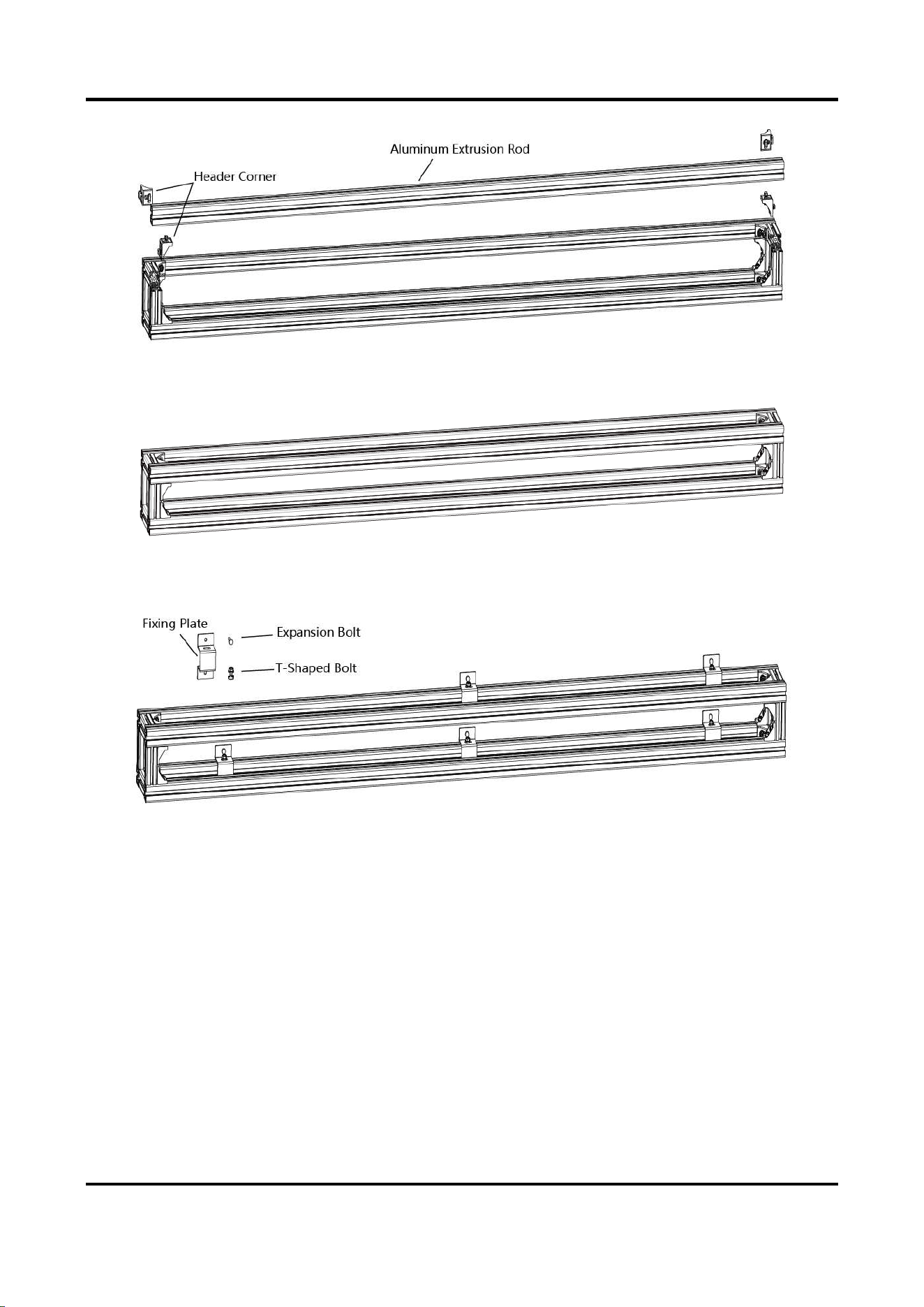
1. Use header corners to connect aluminum extrusion rods from bottom to top.
Full-Color LED Splicing Display Unit Installation Guide
3
Figure 2-1 Assemble the Base Frame
Figure 2-2 Base Frame Assembled
2. Use expansion bolts, T-Shaped bolts, and fixing plates to fix the base frame onto the wall.
Figure 2-3 Fix the Base Frame onto the Wall
Install the Rack Frame
Steps
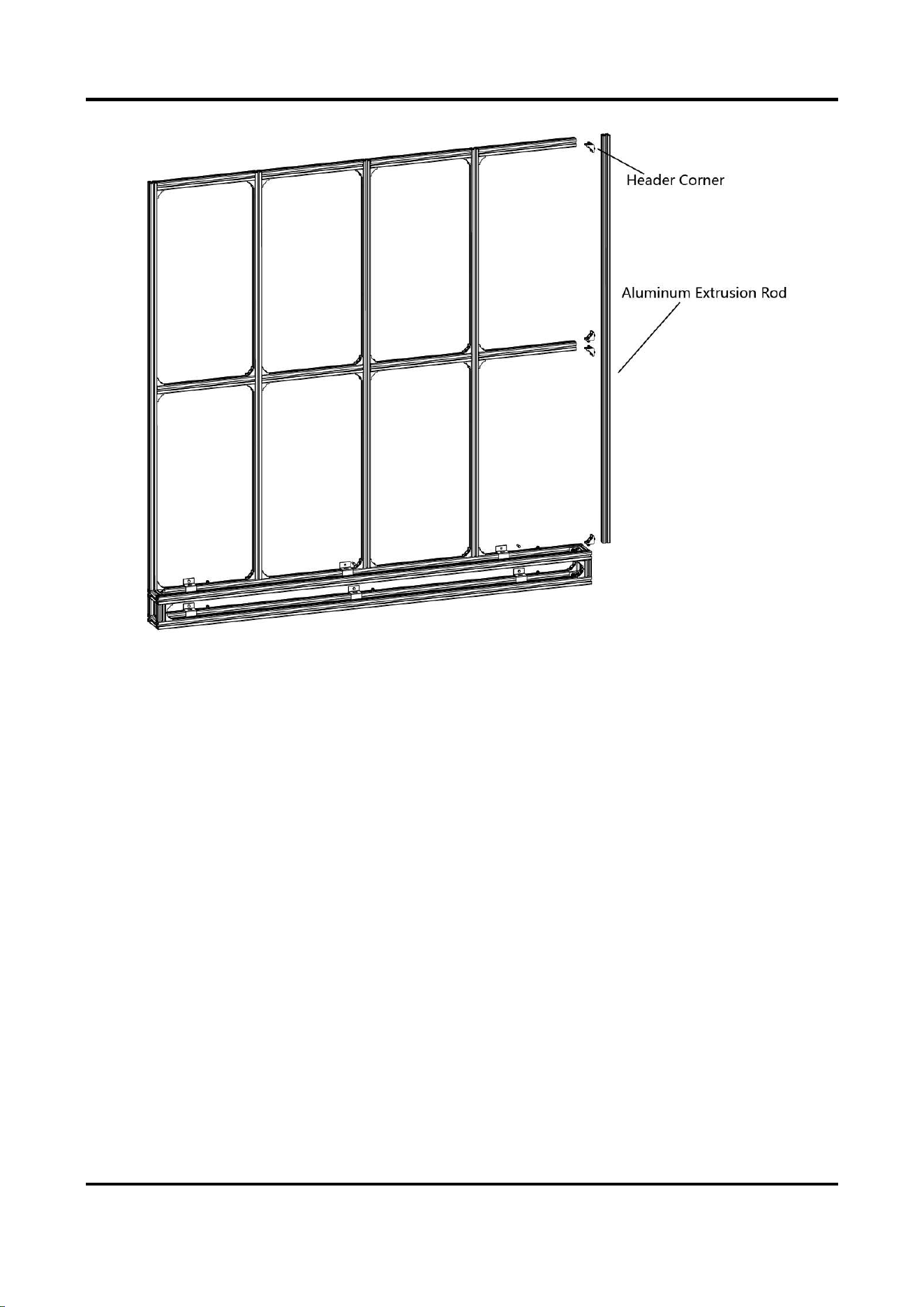
1. Use the header corners to connect aluminum extrusion rods to the base frame from left to
right.
Full-Color LED Splicing Display Unit Installation Guide
4
Figure 2-4 Assemble the Rack Frame
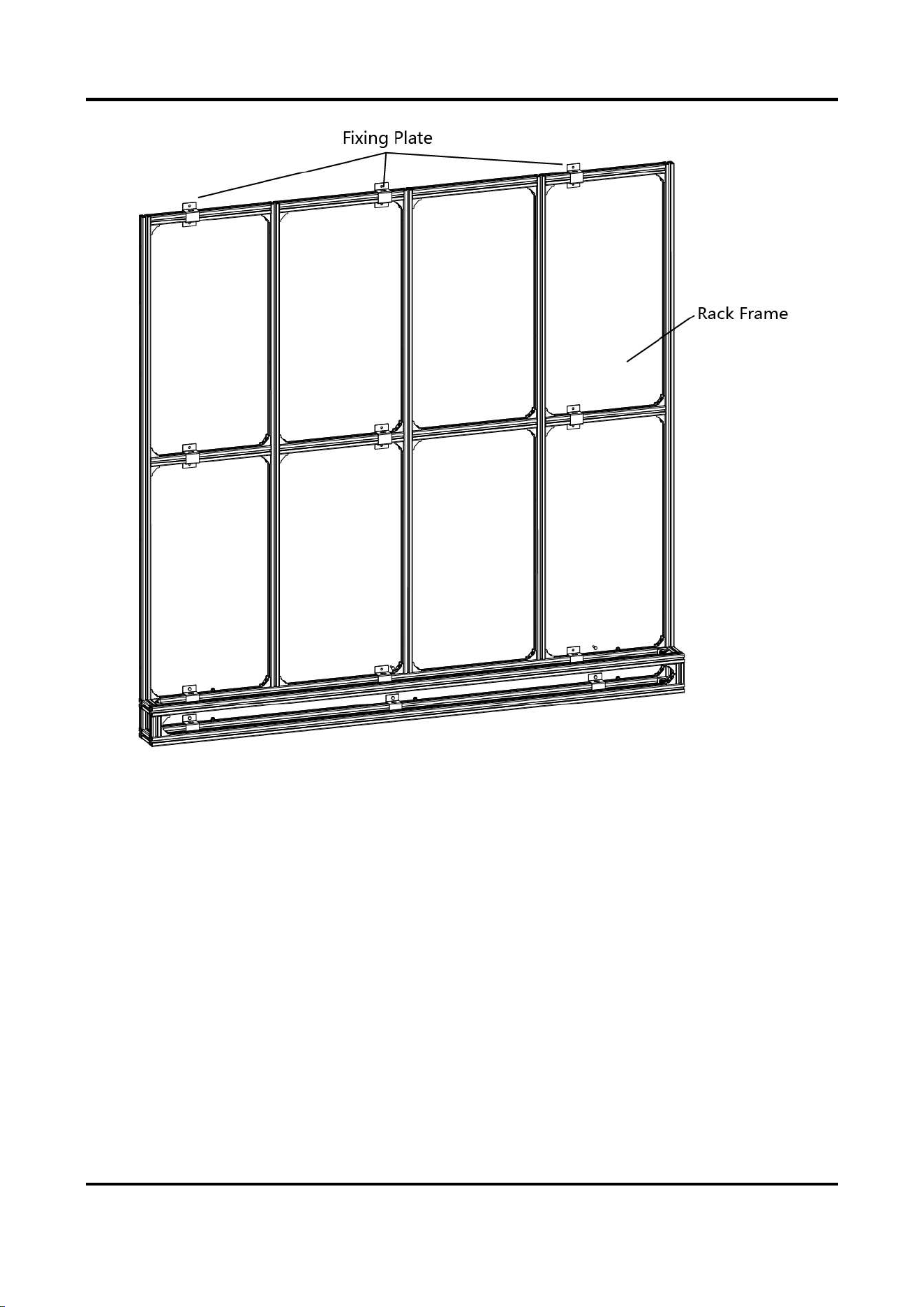
2. Use expansion bolts, T-Shaped bolts and fixing plates to fix the rack frame onto the wall.
Full-Color LED Splicing Display Unit Installation Guide
5
Figure 2-5 Fix the Rack Frame onto the Wall
Install Cabinets into the Rack Frame
After the base frame and rack frame are well installed, take the following steps to install the
cabinets into the rack frame:
Steps
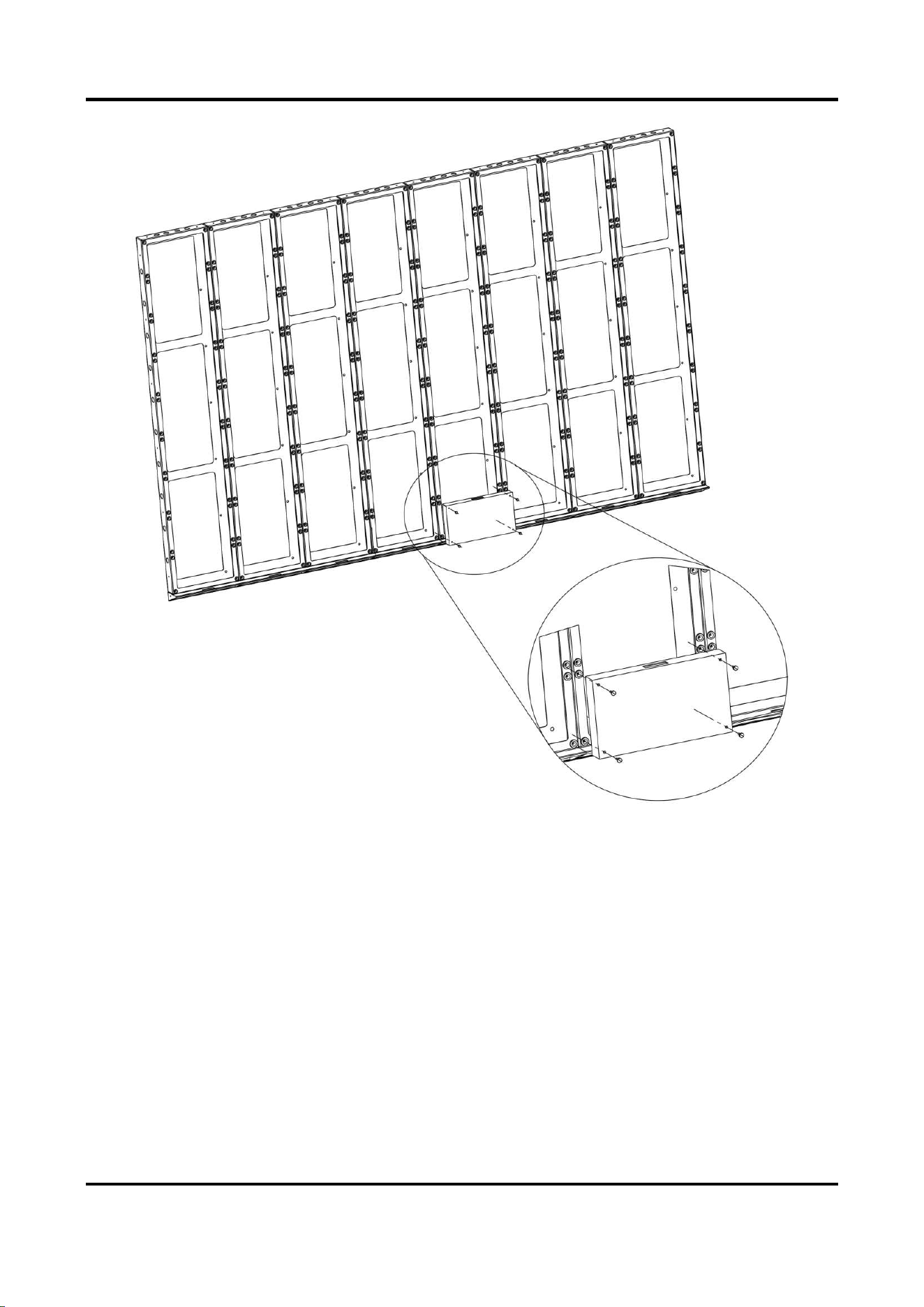
1. Place the mounting screws in the holes on the front side of the cabinet and lock the floating
nuts on the rack frame.
Full-Color LED Splicing Display Unit Installation Guide
6
Figure 2-6 Fix the Screen
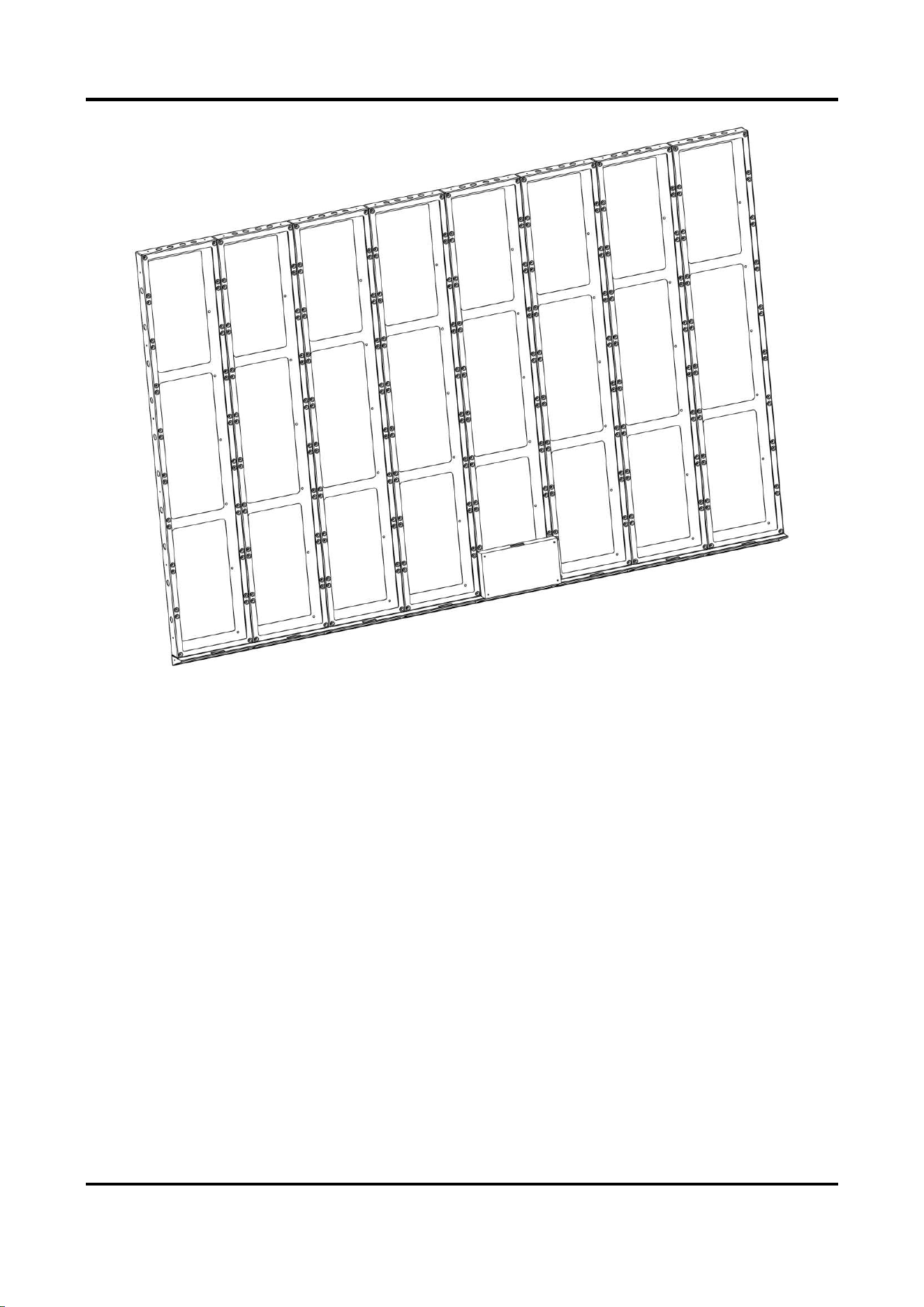
Full-Color LED Splicing Display Unit Installation Guide
7
Figure 2-7 Screen Fixed
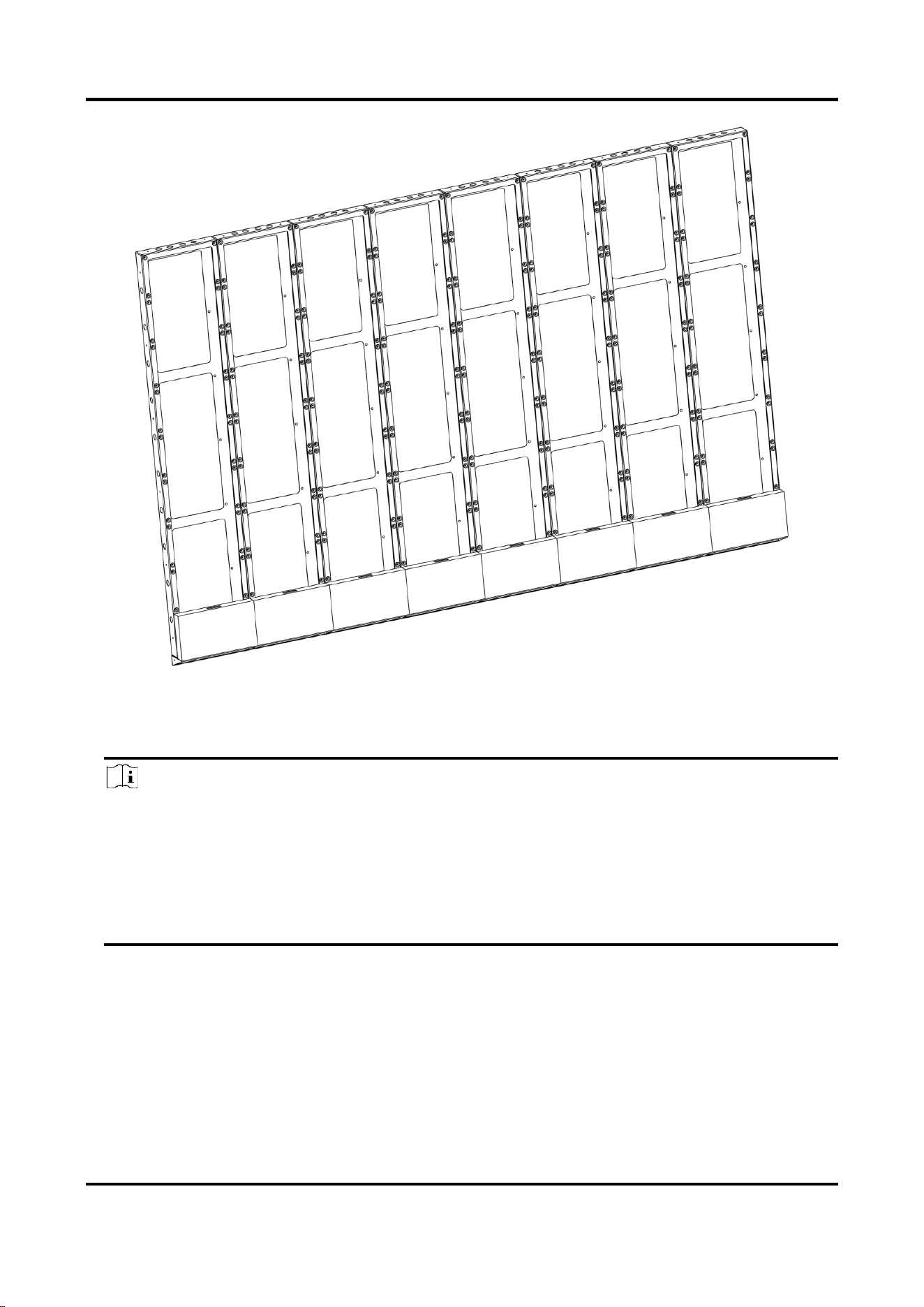
2. Install the cabinets from middle to both sides until the first row of cabinets are installed.
Full-Color LED Splicing Display Unit Installation Guide
8
Figure 2-8 Screens Fixed
3. Repeat the above steps to install other cabinets on the above rows.
4. Use a level to measure and ensure that the cabinets are flat and vertical.
Note
● Do not fix the screws between the connectors in case that cabinets are too tight for future
adjustment.
● In normal cases, lock out LED lamp boards after they are adjusted horizontally or vertically as
the boards will probably be moved during the installation of other lamp boards.
● Ensure that the screen is flat and there is no obvious gap between screens. Otherwise, make
some adjustments.
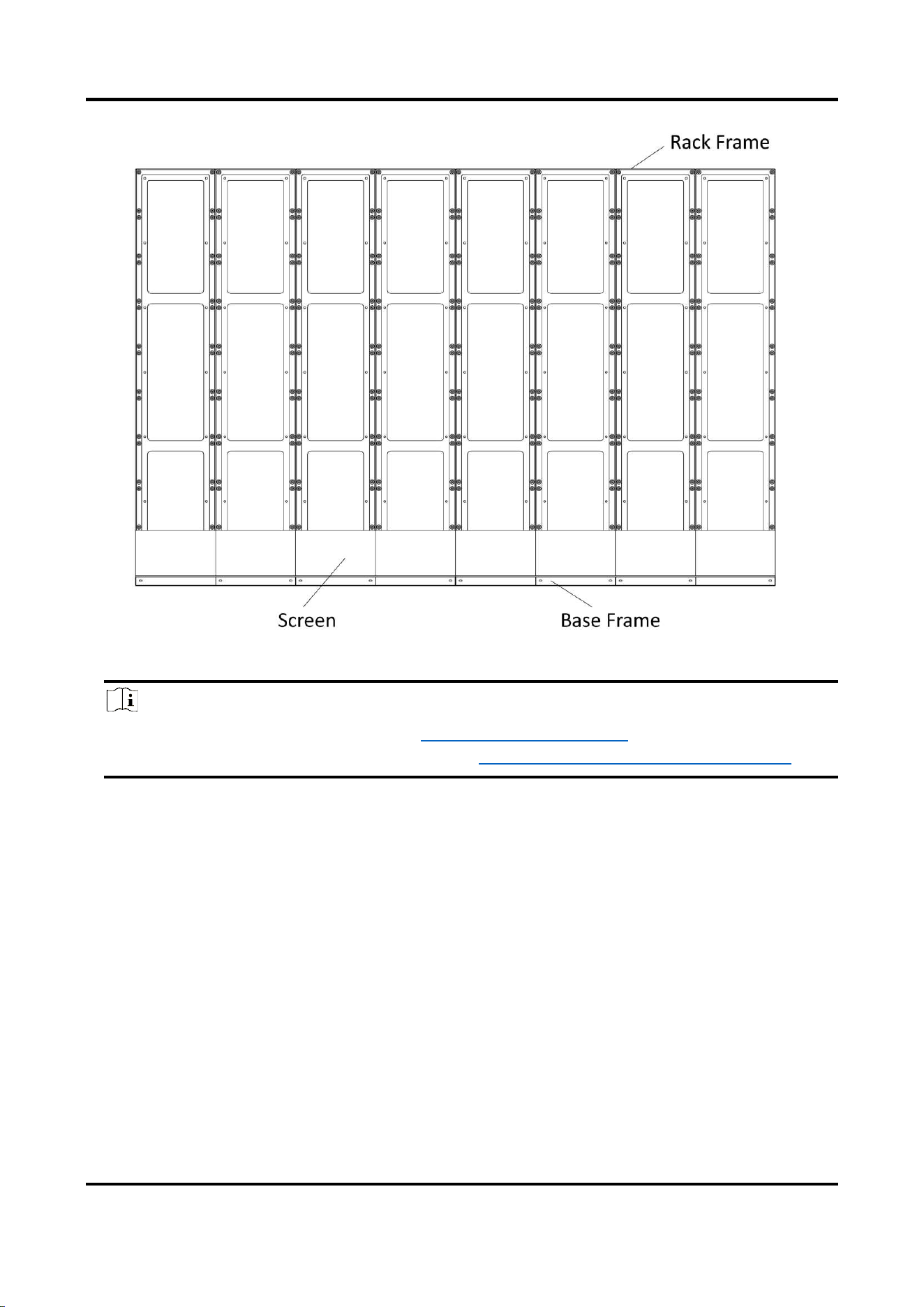
Full-Color LED Splicing Display Unit Installation Guide
9
Figure 2-9 First Row of Fixed Screens
Note
● For details about cabinet stitching, see 3.2.2 Stitch Cabinet Frames.
● For details about lamp boards installation, see 3.2.4 Install Lamp Boards on the Cabinets.
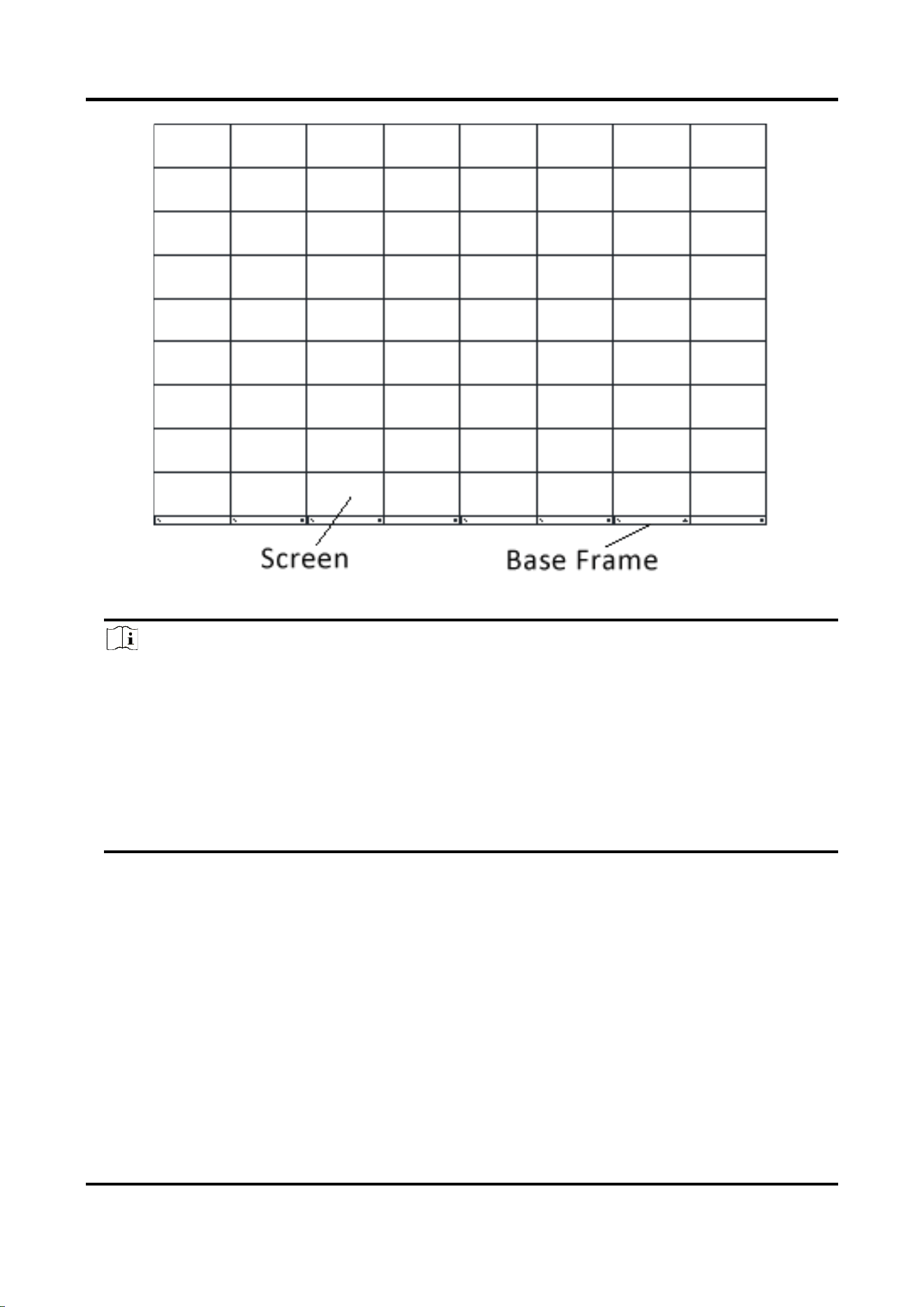
5. Repeat the above steps to install other cabinets.
Full-Color LED Splicing Display Unit Installation Guide
10
Figure 2-10 Screen Installation Finished
Note
● Install the device no more than 5 mm away from the wall or other metal racks, in case of
lamp board drop resulting in electric shock.
● After installation, there should be no openings around the LED modules. The bottom bracket
under the wire outlet should completely cover the bottom hole only to let the wire out, to
prevent the molten material from dripping to the bottom in case of fire caused by internal
failure.
● To ensure safety, the installation parts and the wall should support four times the weight of
the device.
2.2.3 Install the Ultrathin Rack
The ultrathin racks are used for mounting front-maintenance products and back-maintenance
products.
Install the Bottom Chassis
Steps
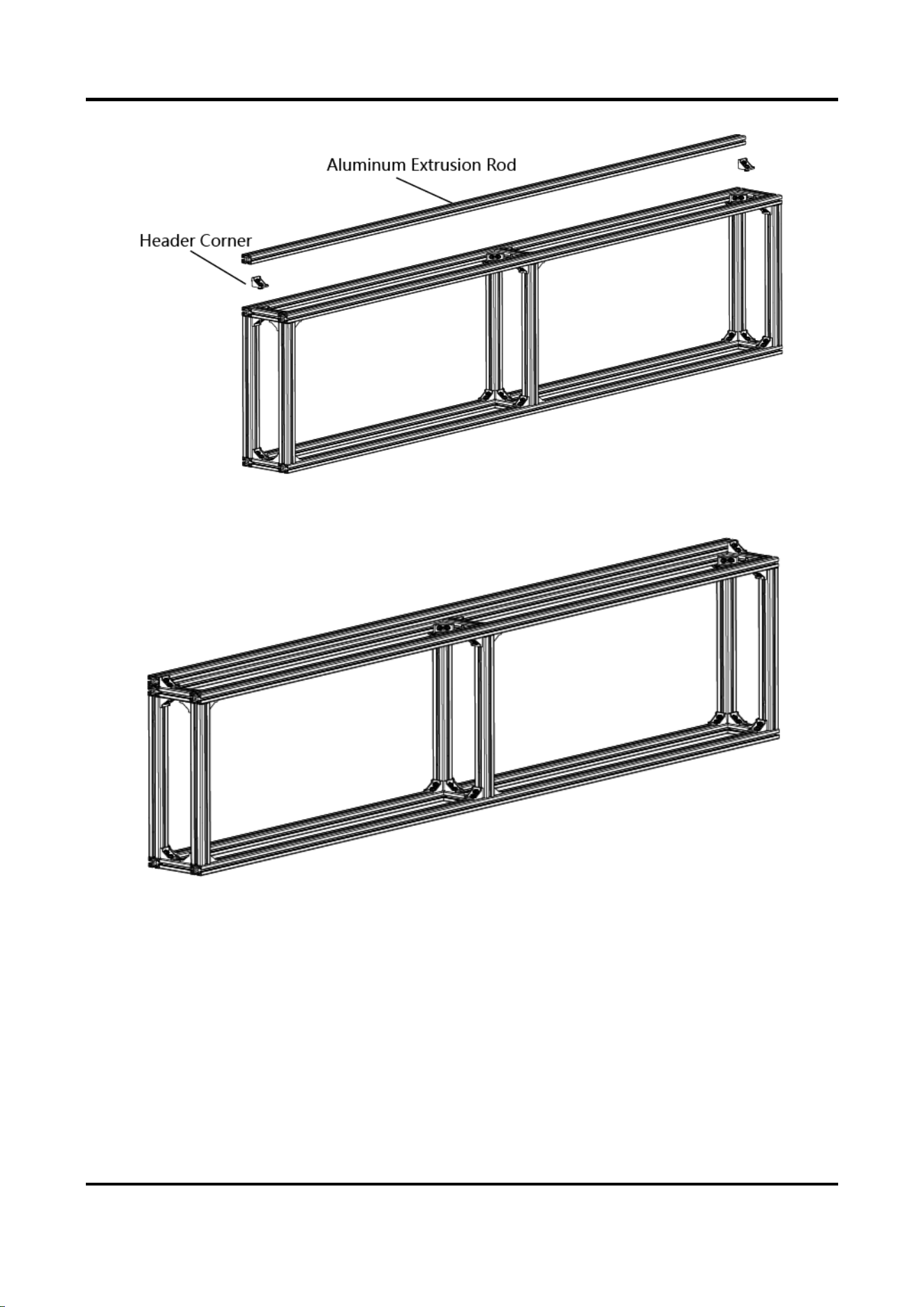
1. Use header corners to connect aluminum extrusion rods from bottom to top.
Full-Color LED Splicing Display Unit Installation Guide
11
Figure 2-11 Assemble the Base Frame Unit
Figure 2-12 Base Frame Unit Assembled
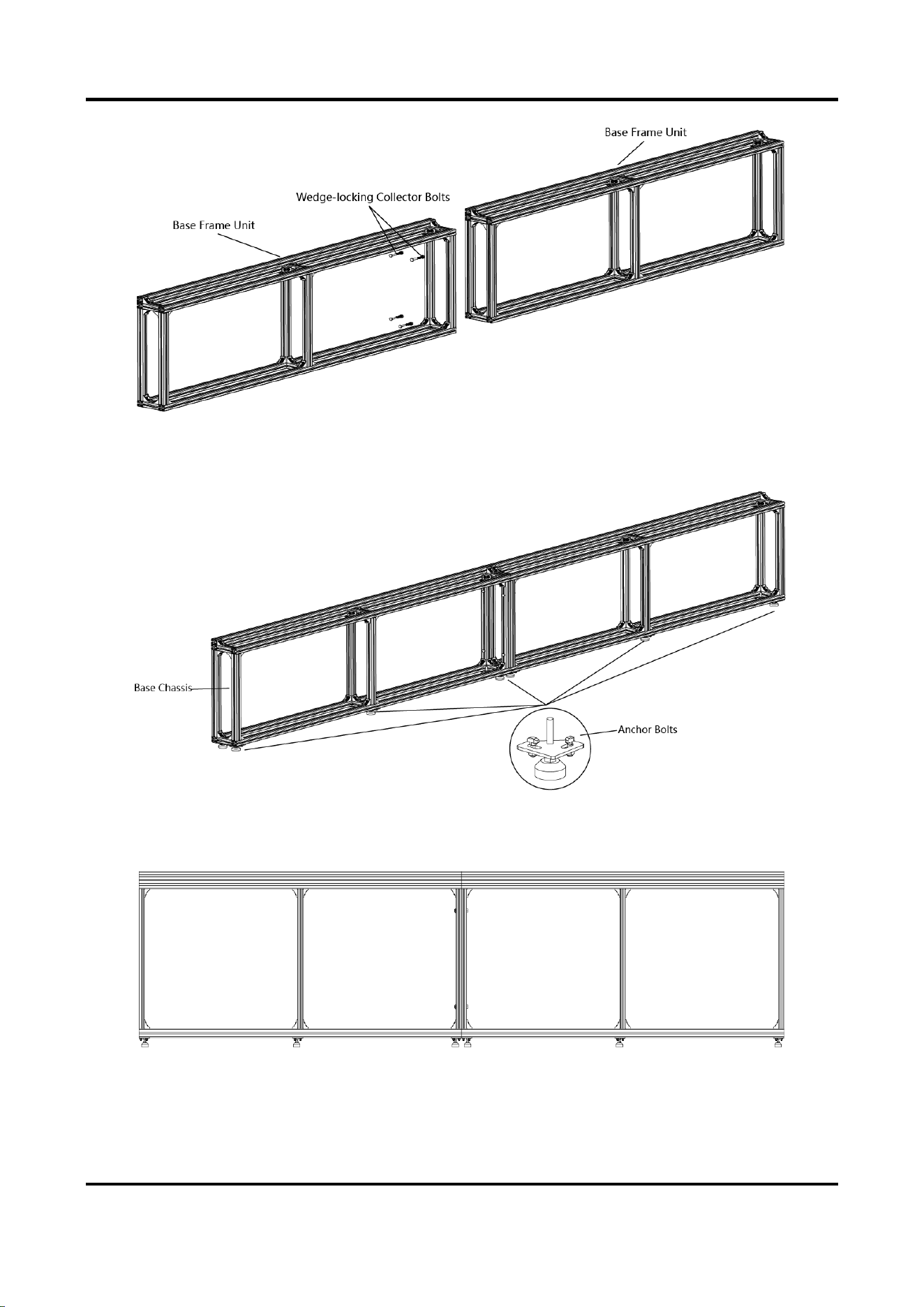
2. Use wedge-locking collector bolts to connect the base frame units.
Full-Color LED Splicing Display Unit Installation Guide
12
Figure 2-13 Connect the Base Frame Units
3. Insert the anchor bolts into the base frame and tighten the bolts.
Figure 2-14 Assemble the Base Frame
4. Level the bottom chassis and then tighten the bolts.
Figure 2-15 Leveled Bottom Chassis

Full-Color LED Splicing Display Unit Installation Guide
13
Install the Rack Frame
Steps
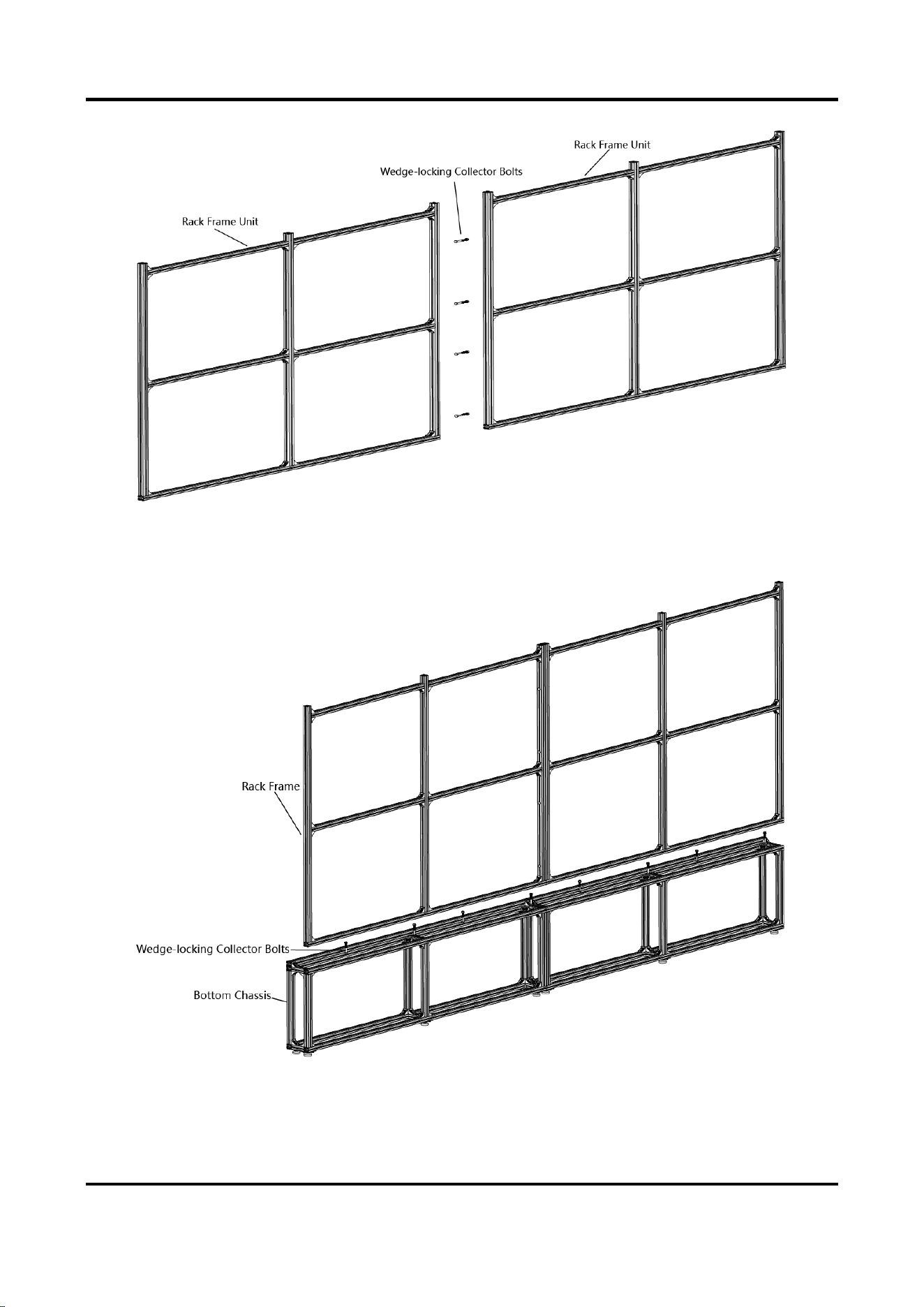
1. Use header corners to connect aluminum extrusion rods from bottom to top.
Figure 2-16 Assemble the Rack Frame Unit
2. Use wedge-locking collector bolts to connect the rack frame units.
Full-Color LED Splicing Display Unit Installation Guide
14
Figure 2-17 Connect the Rack Frame Units
3. Align the rack frame to the base chassis and use wedge-locking collector bolts to fix the frames.
Figure 2-18 Align the Rack Frame to the Base Chassis

Full-Color LED Splicing Display Unit Installation Guide
15
Figure 2-19 Frames Aligned
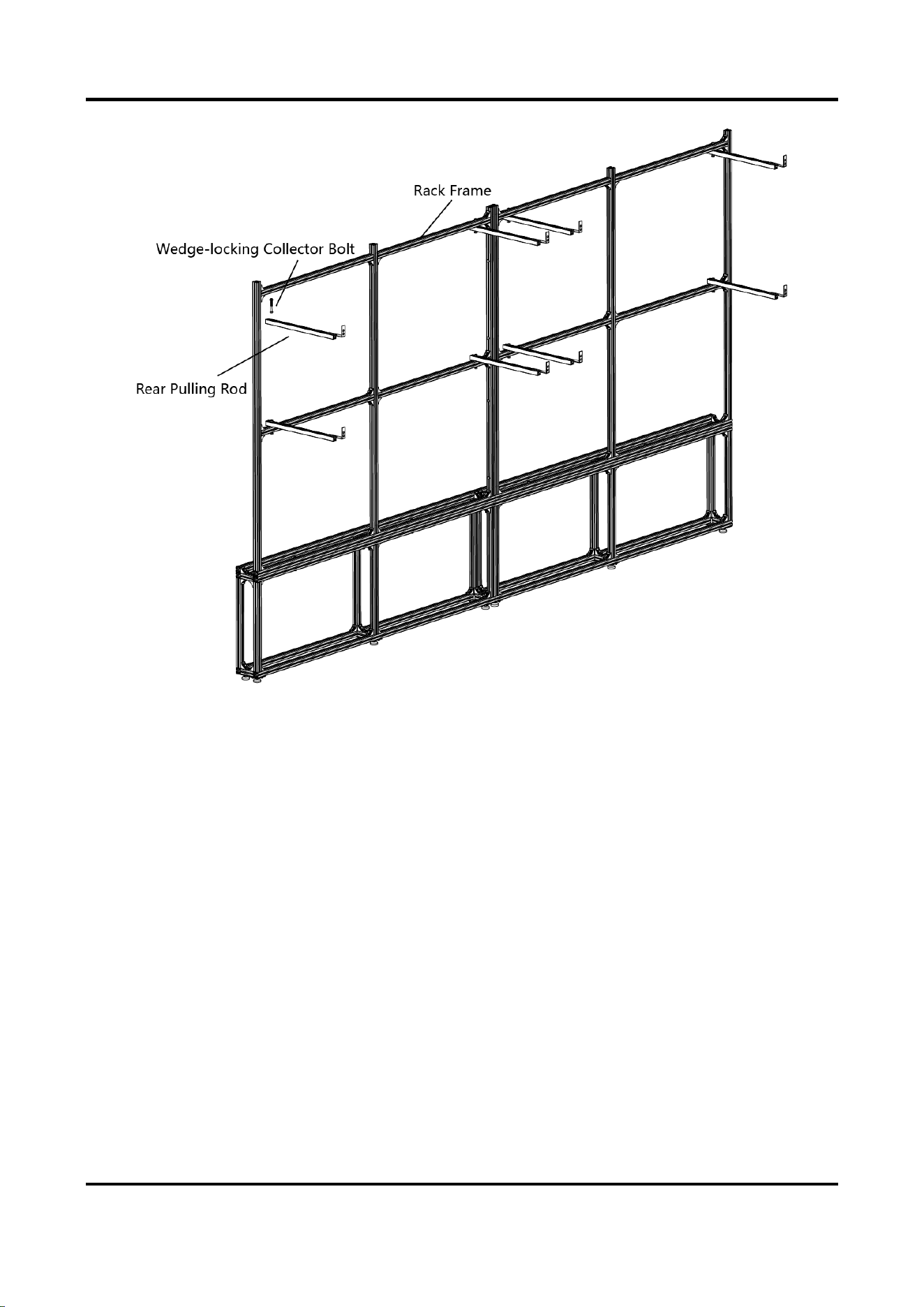
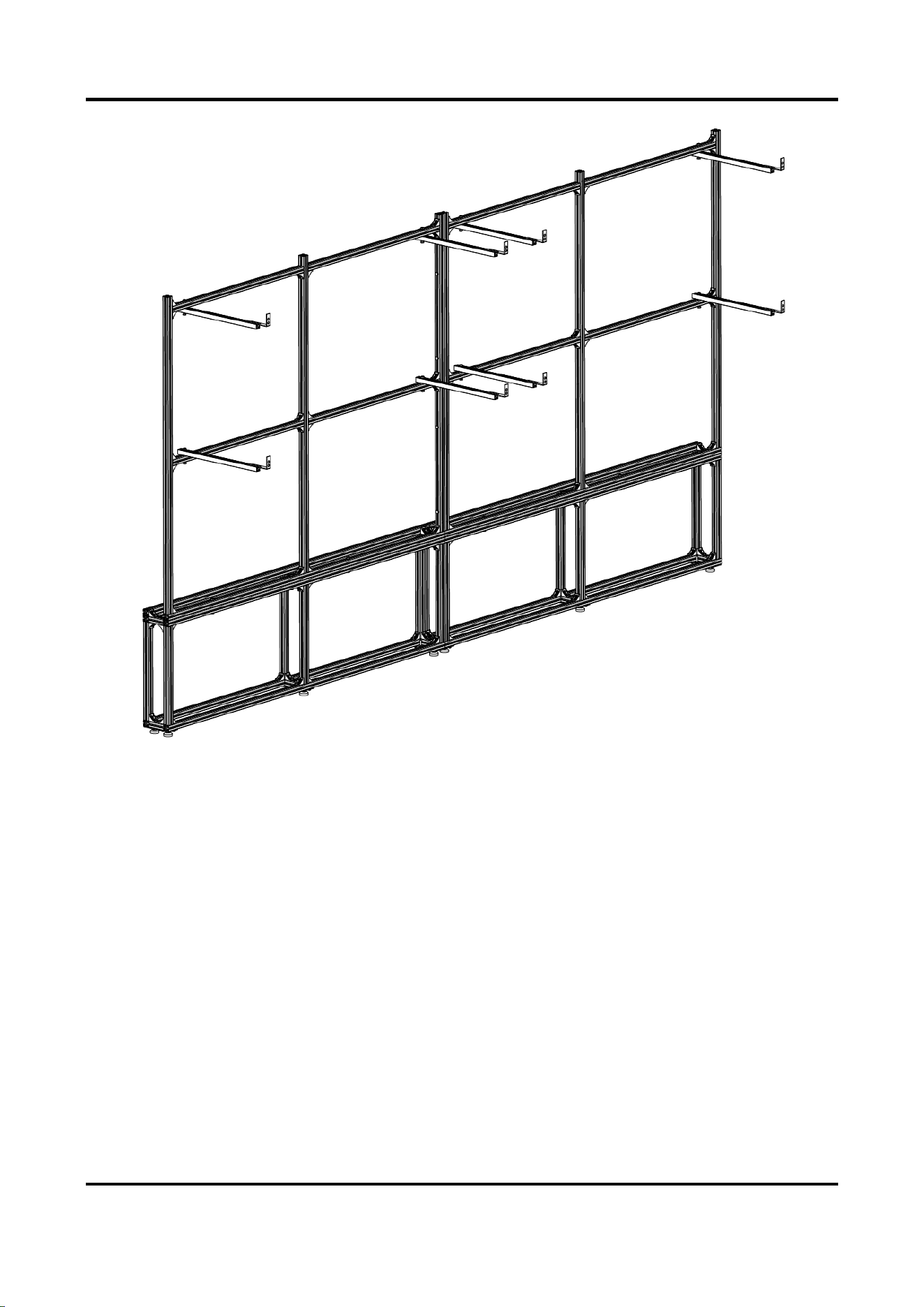
Install the Rear Pulling Rods (for Large-scale Projects)
Steps
1. Use the wedge-locking collector bolts to fix the rear pulling rods into the rack frame.
Full-Color LED Splicing Display Unit Installation Guide
16
Figure 2-20 Fix the Rear Pulling Rods into the Rack frame
Full-Color LED Splicing Display Unit Installation Guide
17
Figure 2-21 Rear Pulling Rods Fixed
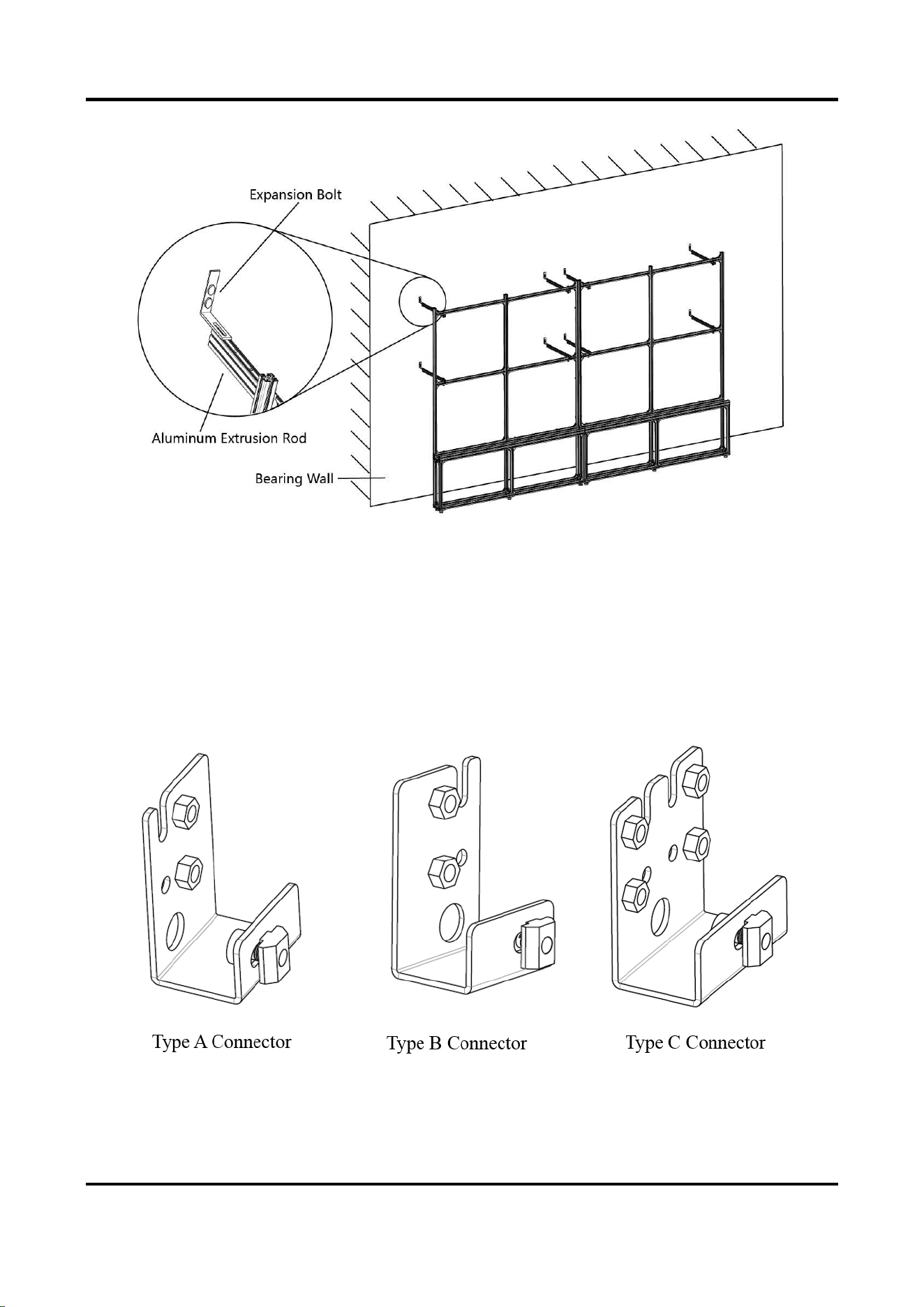
2. Use the expansion bolts to fix the rear pulling rods onto the bearing wall.
Full-Color LED Splicing Display Unit Installation Guide
18
Figure 2-22 Fix the Rear Pulling Rods onto the Bearing Wall
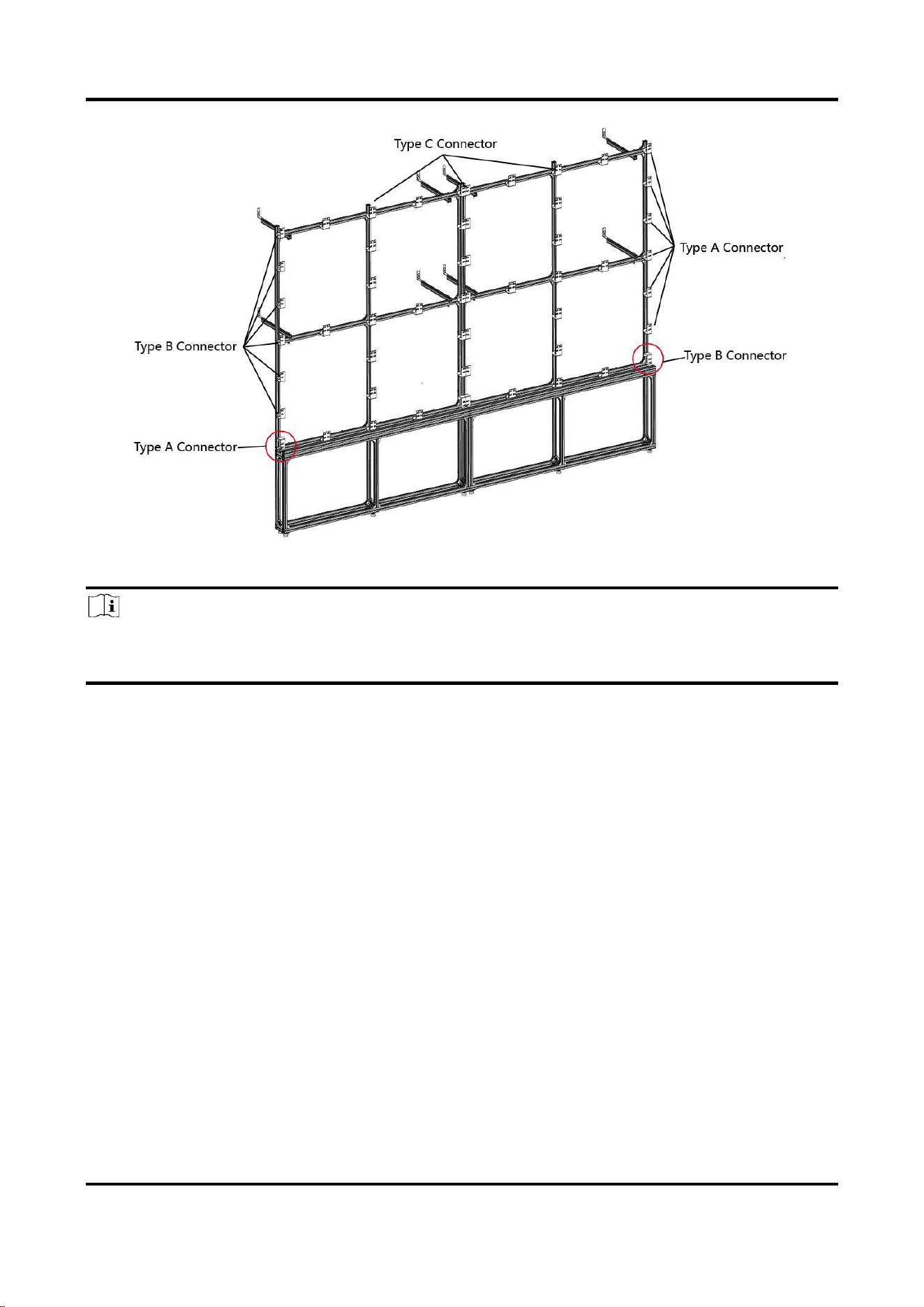
Install the Connectors
The connectors are divided into two parts: customized front joint piece which is used to connect
the screens, and back connecting component which is used to connect the rack frame. The
following figures list three types of connectors and the locating positions of the connectors
respectively.
Figure 2-23 Connectors
Full-Color LED Splicing Display Unit Installation Guide
19
Figure 2-24 Connectors Installed
Note
Please pay attention to the types of outermost connectors between rack frame and bottom
chassis.
Steps
1. Twist the hexagonal screws into the T-Shaped nuts.
2. Insert the T-Shaped nuts into the slots of aluminum extrusion rods, and move the connectors to
the suitable place.
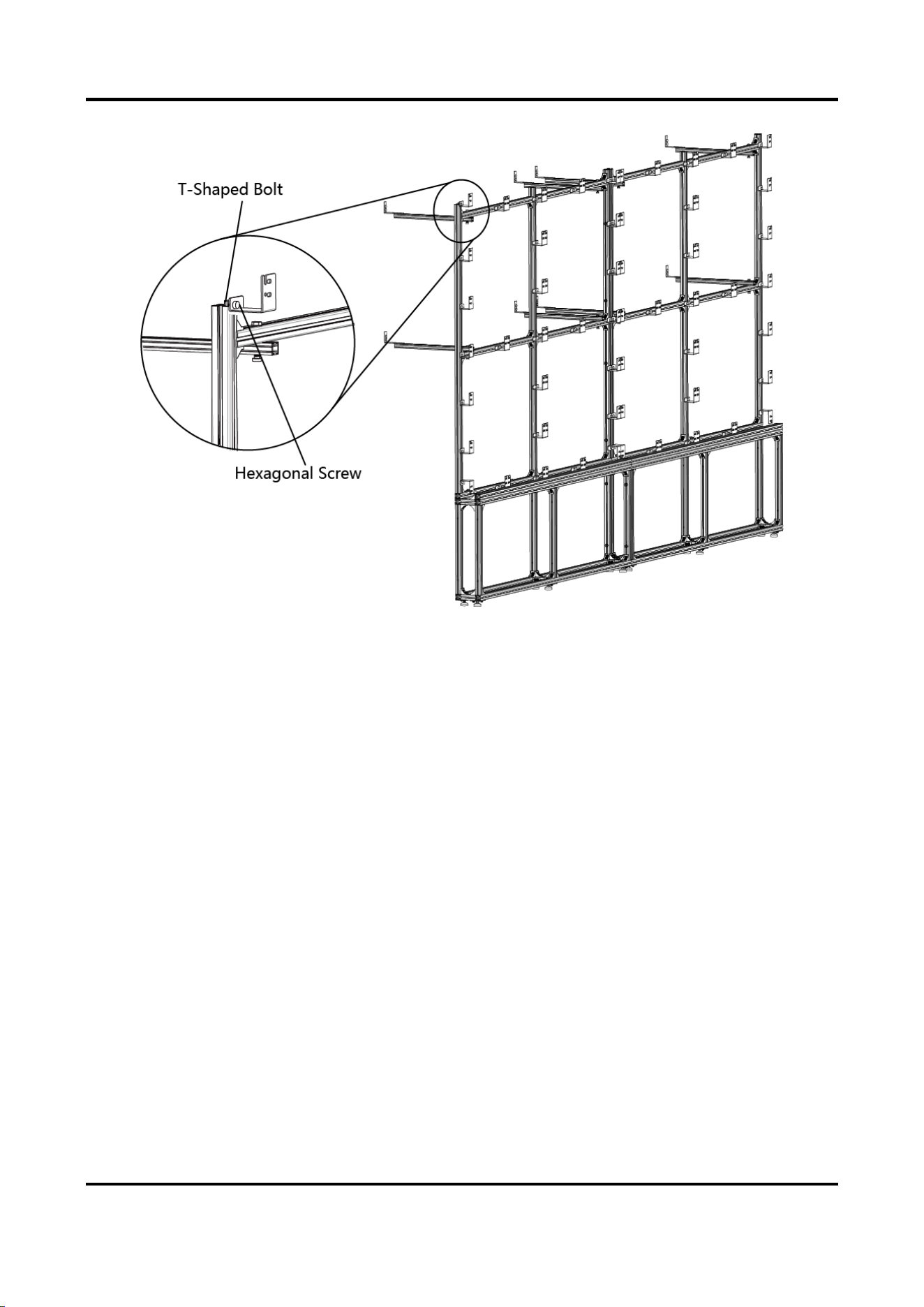
Full-Color LED Splicing Display Unit Installation Guide
20
Figure 2-25 Install the Connectors
3. Secure the connectors to the rack frame with screws.
Install Cabinets into the Rack Frame
After the bottom chassis, rack frame and connectors are well installed, take the following steps to
install the cabinets into the rack frame:
Steps
1. Install the first cabinet from the lower middle part. Level and secure the cabinet to the
connectors on the rack frame. For screens do not have connectors near the rear, use joint
pieces to fix the screens.
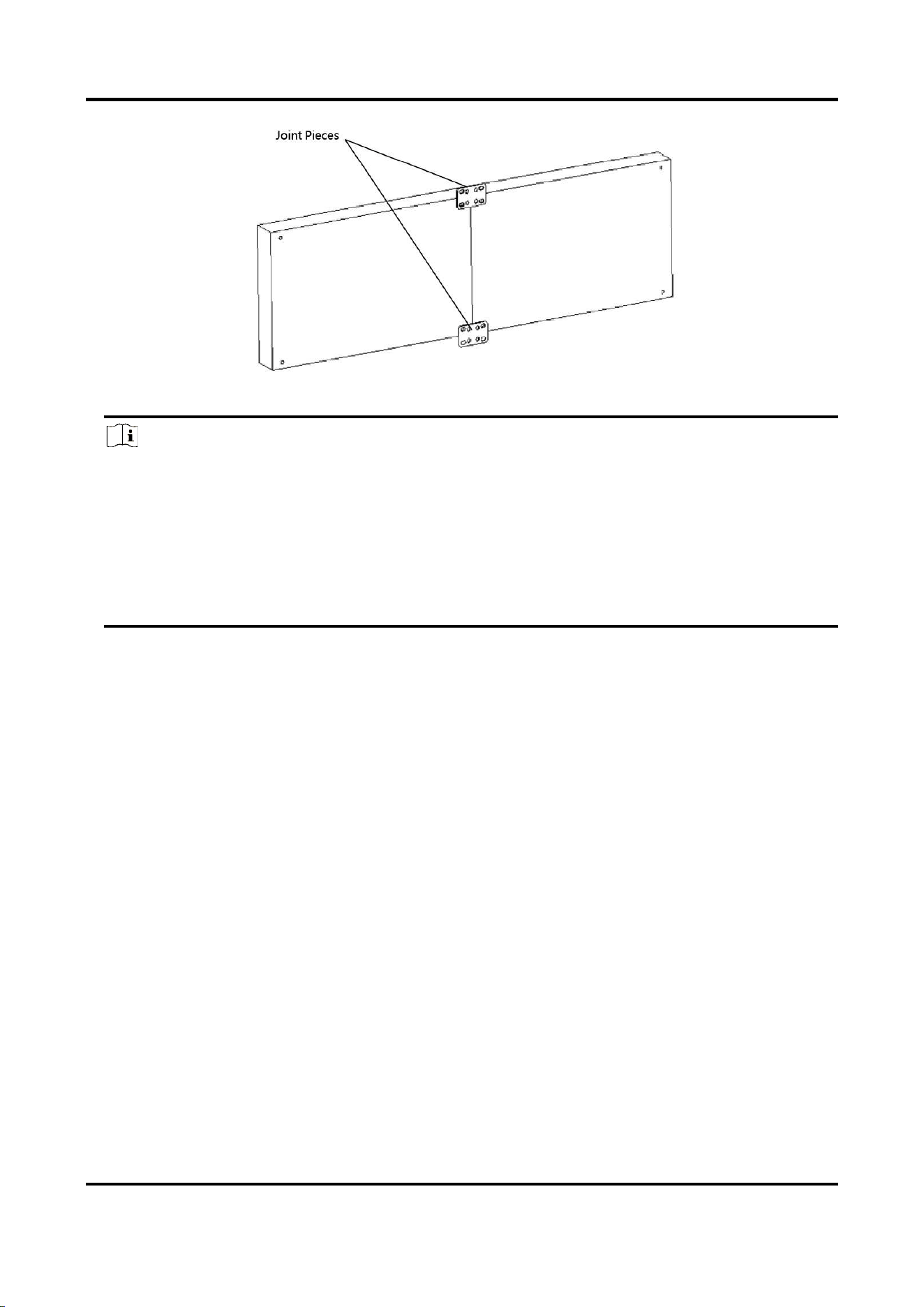
Full-Color LED Splicing Display Unit Installation Guide
21
Figure 2-26 Fix the Screen with Joint Pieces
Note
● Install the cabinets from the bottom to the top, from the middle to the sides.
● Do not fix the screws between the connectors in case that cabinets are too tight for future
adjustment.
● In normal cases, lock out LED lamp boards after they are adjusted horizontally or vertically as
the boards will probably be moved during the installation of other lamp boards.
● Ensure that the screen is flat and there is no obvious gap between screens. Otherwise, make
some adjustments.
2. Repeat the above steps to install the other cabinets in the lowest row.
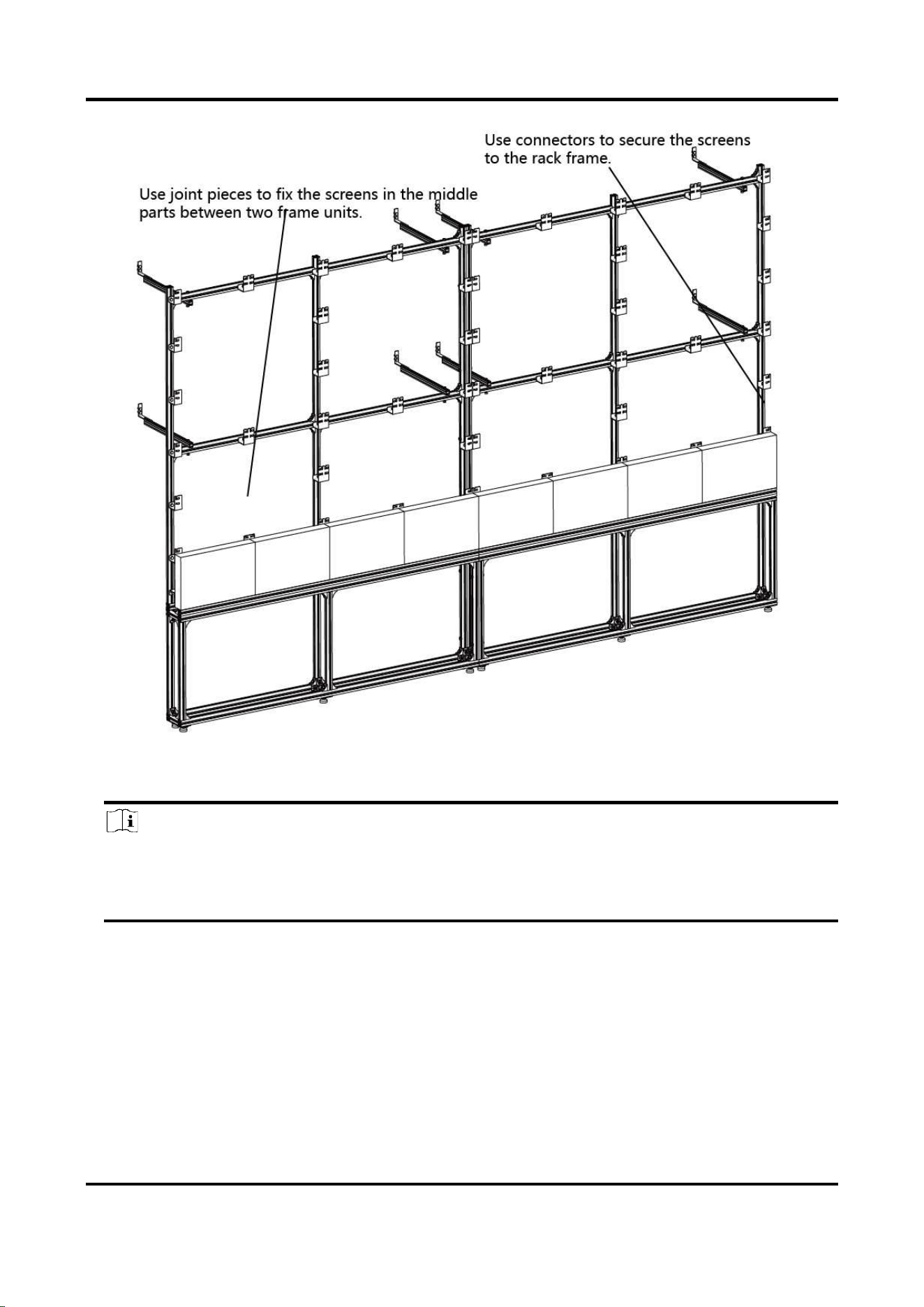
Full-Color LED Splicing Display Unit Installation Guide
22
Figure 2-27 Fix the Screens
3. Use a level to measure and ensure that the cabinets are flat and vertical.
Note
When there is a deviation in height, simply place a thin iron sheet under the bottom. Do not try
to resolve the deviation by hitting the cabinets on the top because it will result in larger
deviation afterwards.
4. Repeat the above steps to complete the installation of other cabinets.
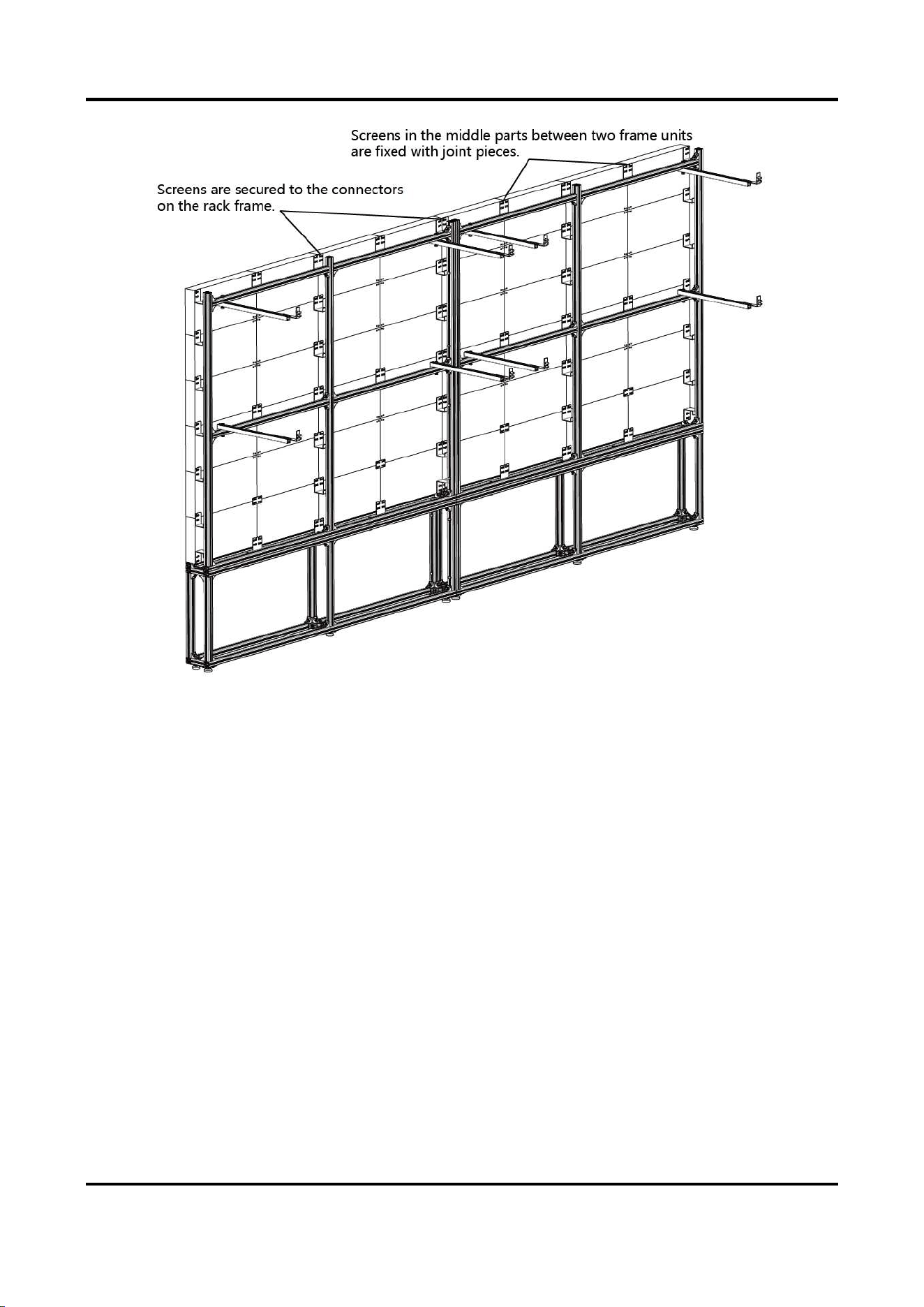
Full-Color LED Splicing Display Unit Installation Guide
23
Figure 2-28 Screens Fixed
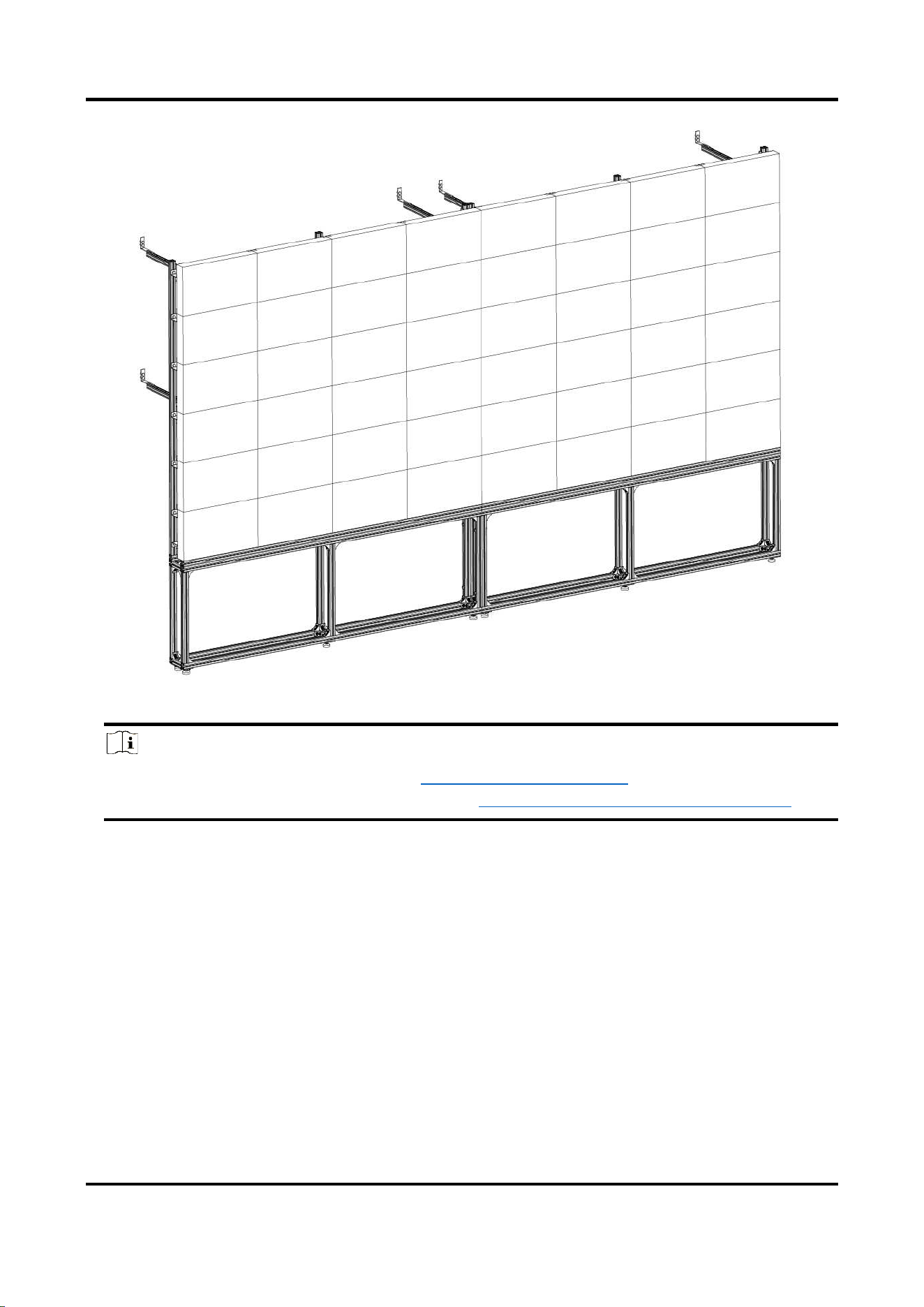
5. Ensure that all the cabinets are flat and vertical and the seams between the cabinets are even.
Then tighten the screws to complete the installation.
Full-Color LED Splicing Display Unit Installation Guide
24
Figure 2-29 Screen Installation Finished
Note
● For details about cabinet stitching, see 3.2.2 Stitch Cabinet Frames.
● For details about lamp boards installation, see 3.2.4 Install Lamp Boards on the Cabinets.
2.2.4 Install the All-in-One Rack
The all-in-one racks are used for mounting front-maintenance products and back-maintenance
products.
Install the Bottom Chassis
Steps
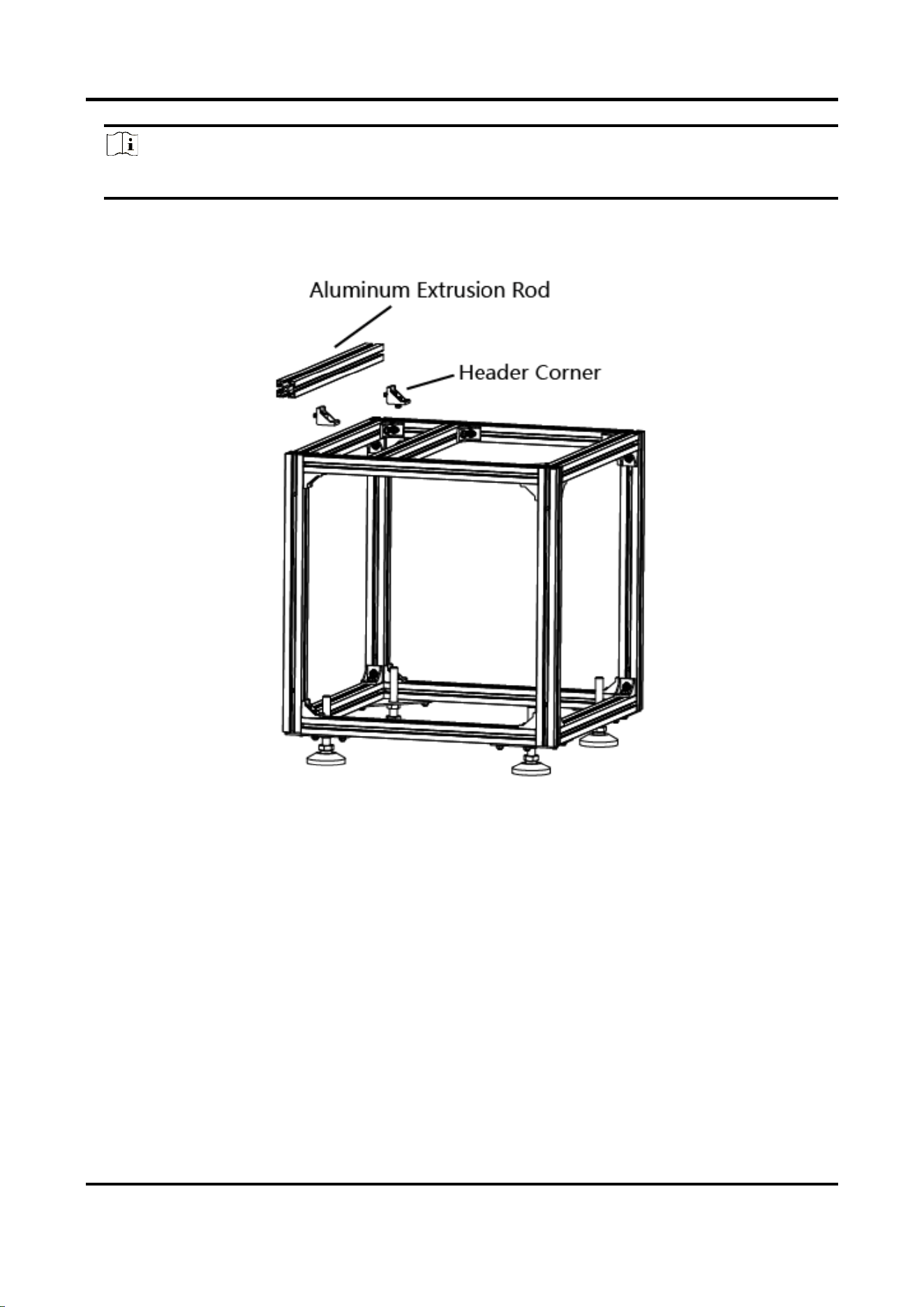
1. Use header corners to connect aluminum extrusion rods.
Full-Color LED Splicing Display Unit Installation Guide
25
Note
It is recommended to assemble the base frame units from bottom to top.
Figure 2-30 Assemble the Base Frame Unit
Full-Color LED Splicing Display Unit Installation Guide
26
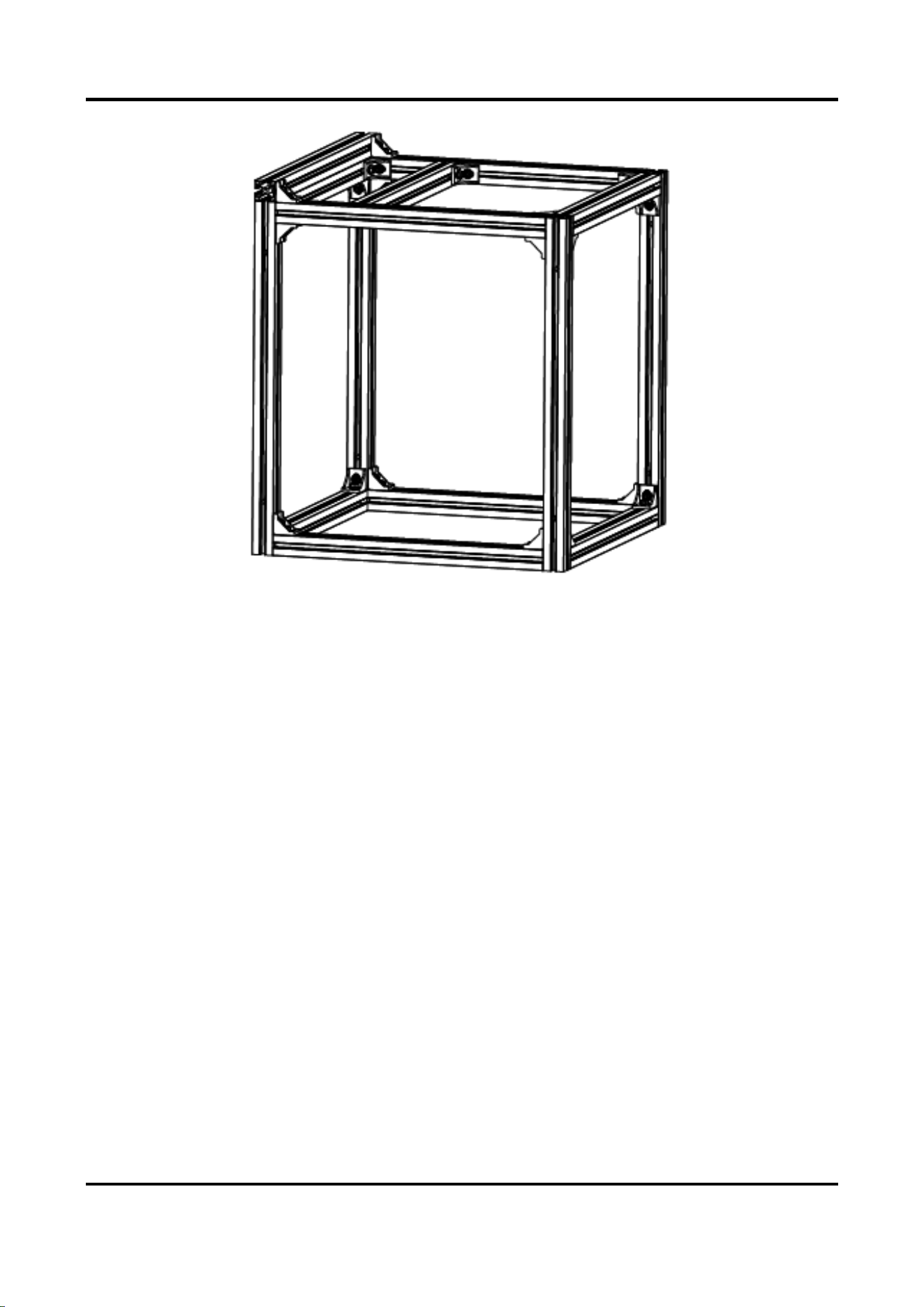
Figure 2-31 Base Frame Unit Assembled
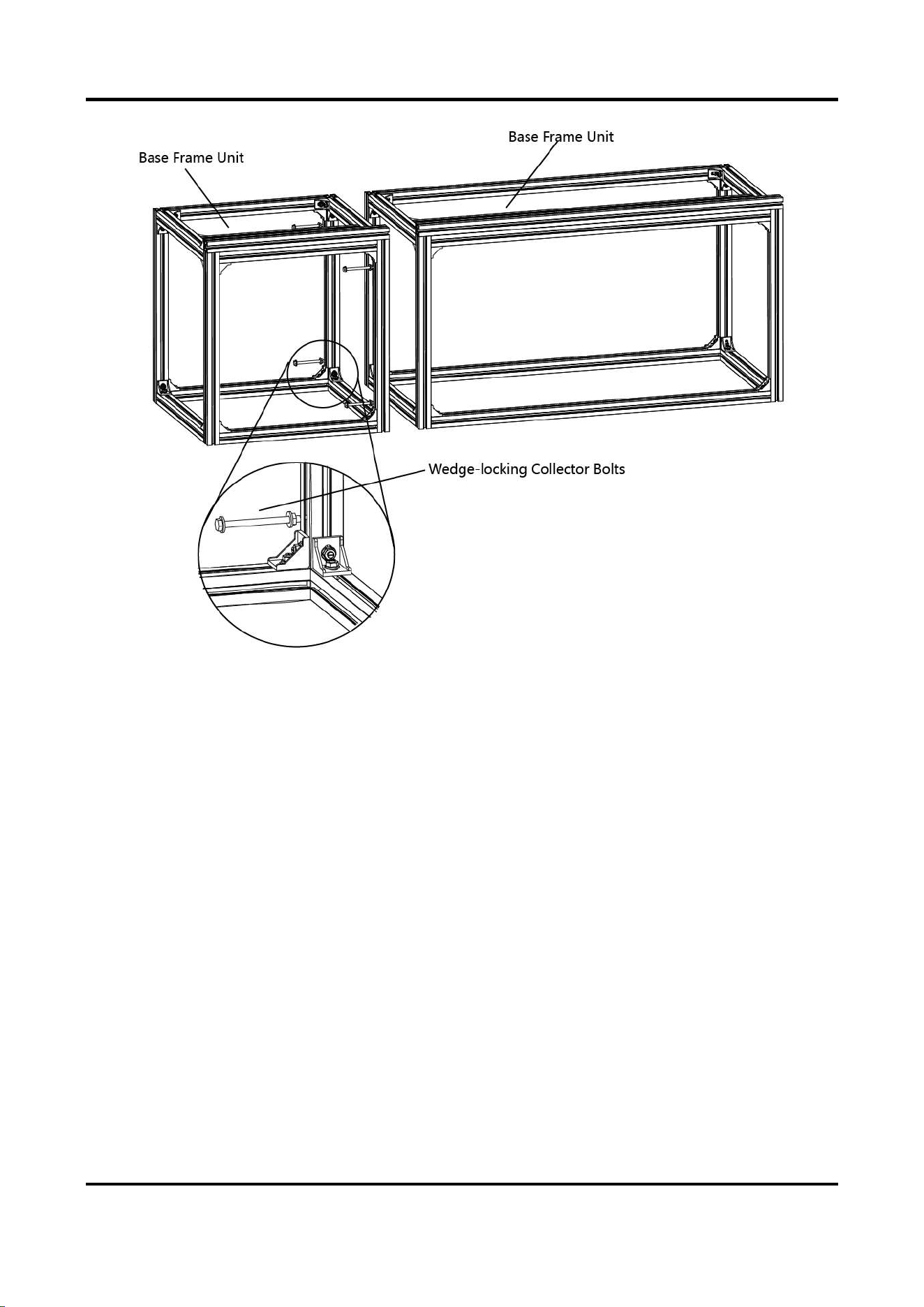
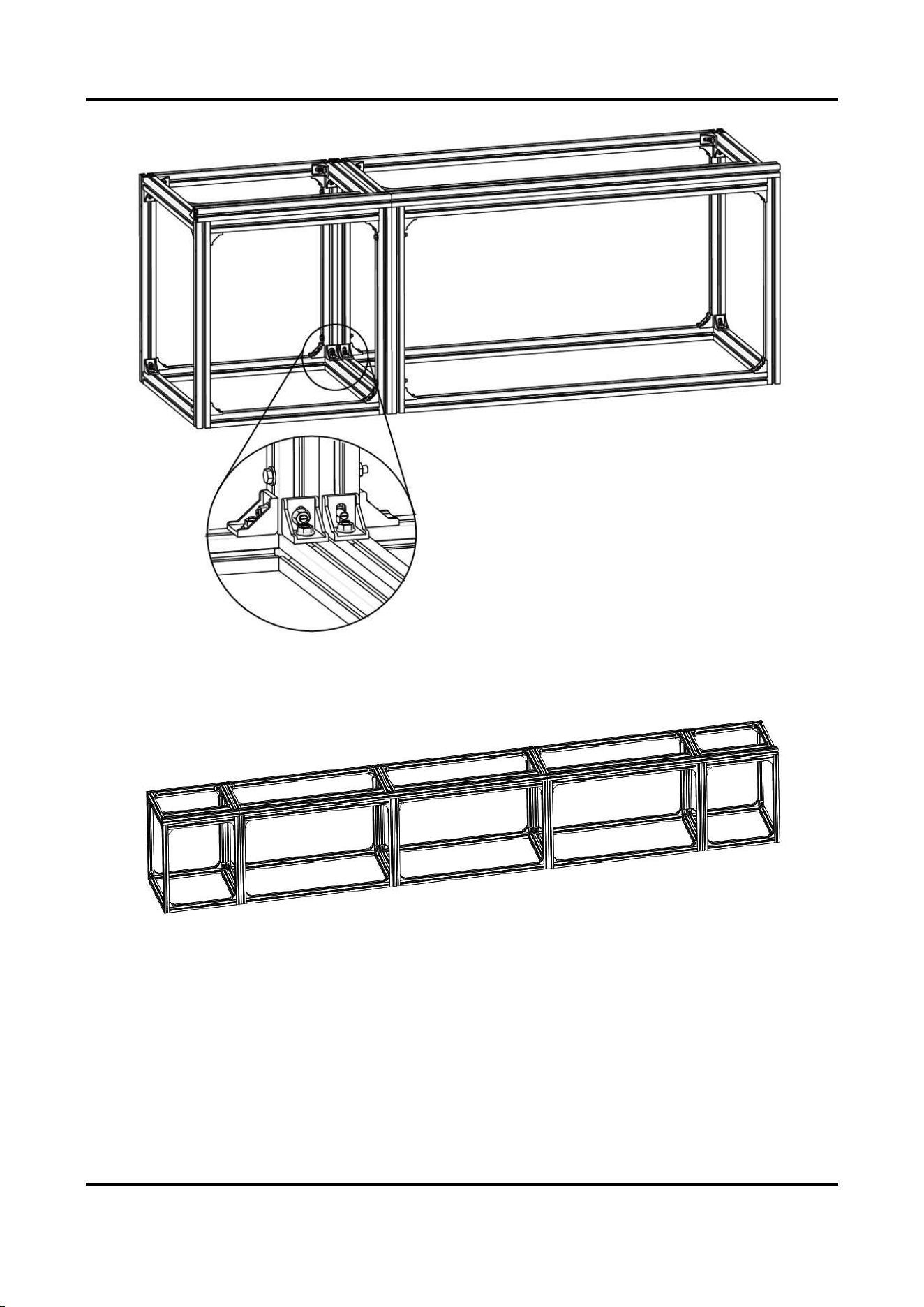
2. Use wedge-locking collector bolts to connect the base frame units.
Full-Color LED Splicing Display Unit Installation Guide
27
Figure 2-32 Connect the Base Frame Units
Full-Color LED Splicing Display Unit Installation Guide
28
Figure 2-33 Base Frame Units Connected
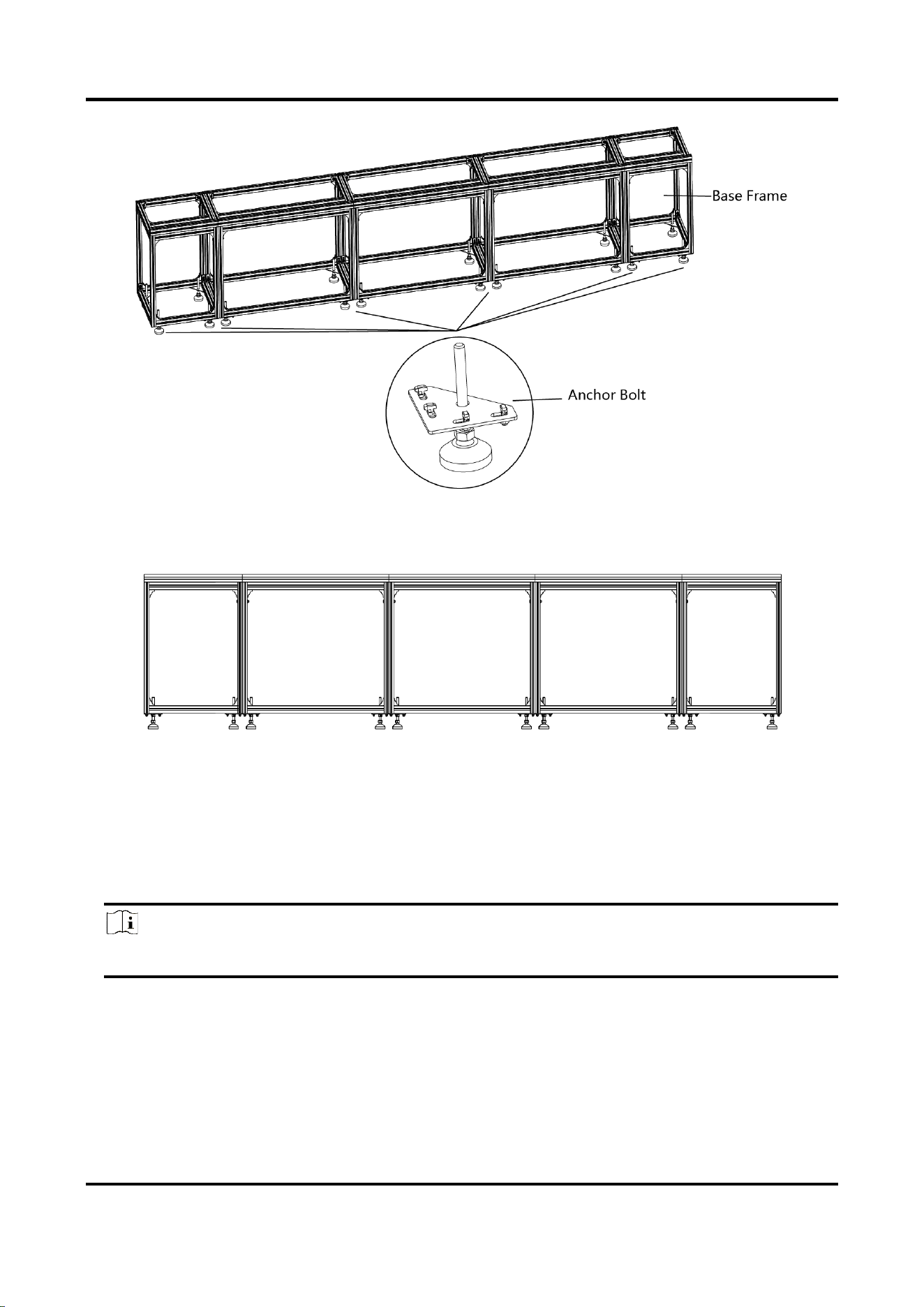
3. Repeat the above steps to connect other base frame units.
Figure 2-34 Base Frame
4. Insert the anchor bolts into the base frame and tighten the bolts.
Full-Color LED Splicing Display Unit Installation Guide
29
Figure 2-35 Assemble the Base Frame
5. Level the bottom chassis and then tighten the bolts.
Figure 2-36 Leveled Bottom Chassis
Install the Rack Frame
Steps
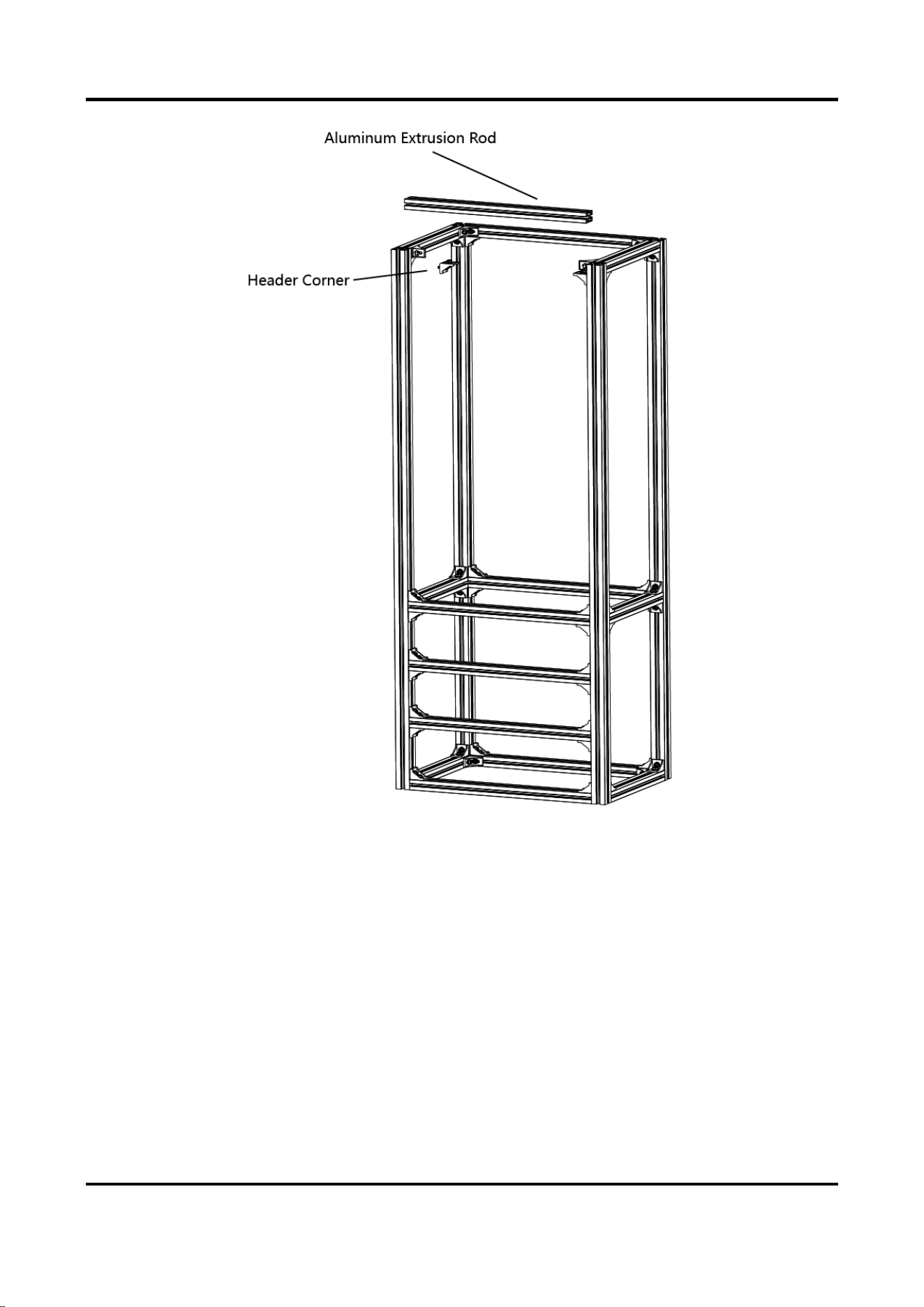
1. Use header corners to connect aluminum extrusion rods.
Note
It is recommended to assemble the rack frame units from bottom to top.
Full-Color LED Splicing Display Unit Installation Guide
30
Figure 2-37 Assemble the Rack Frame Unit
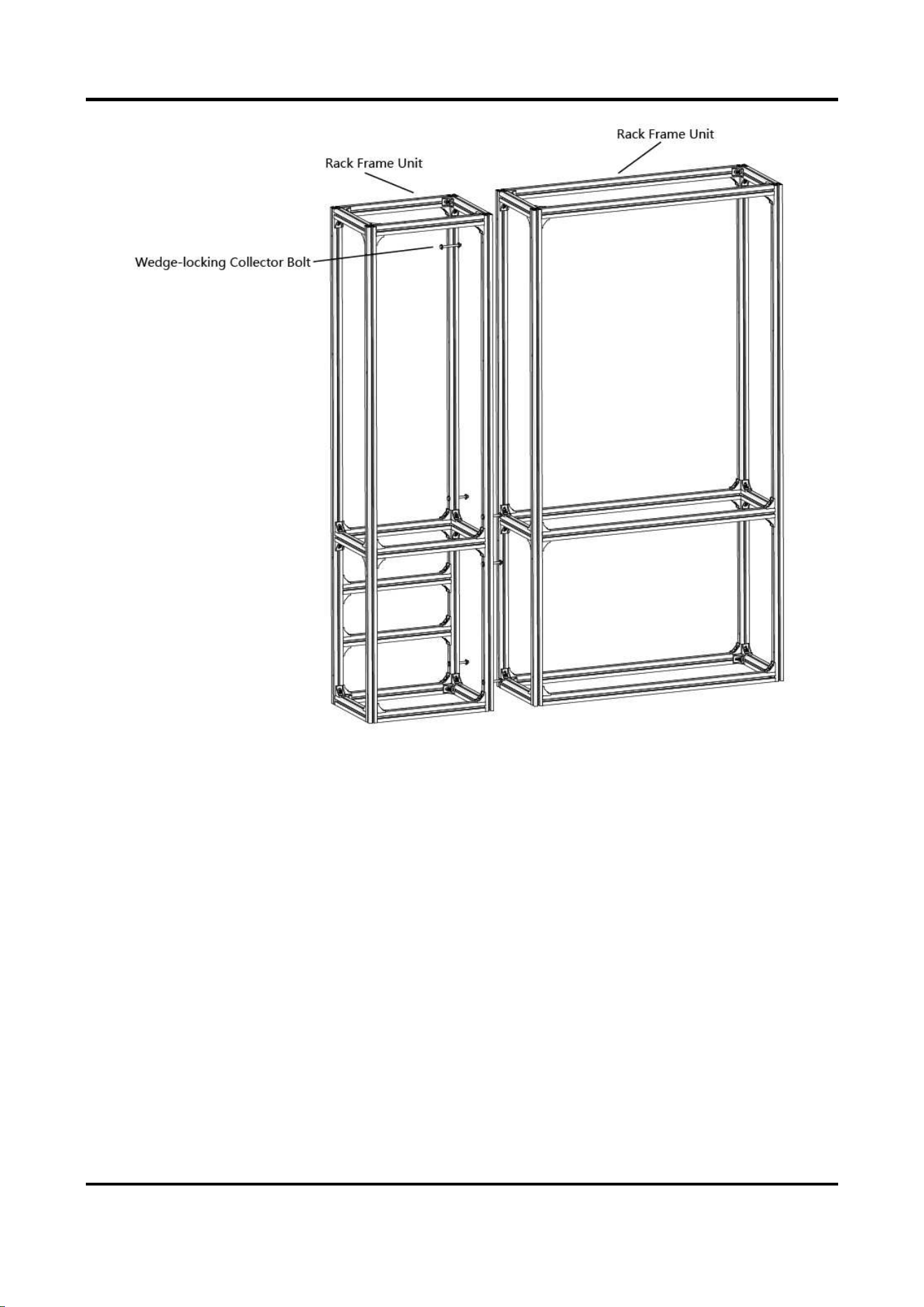
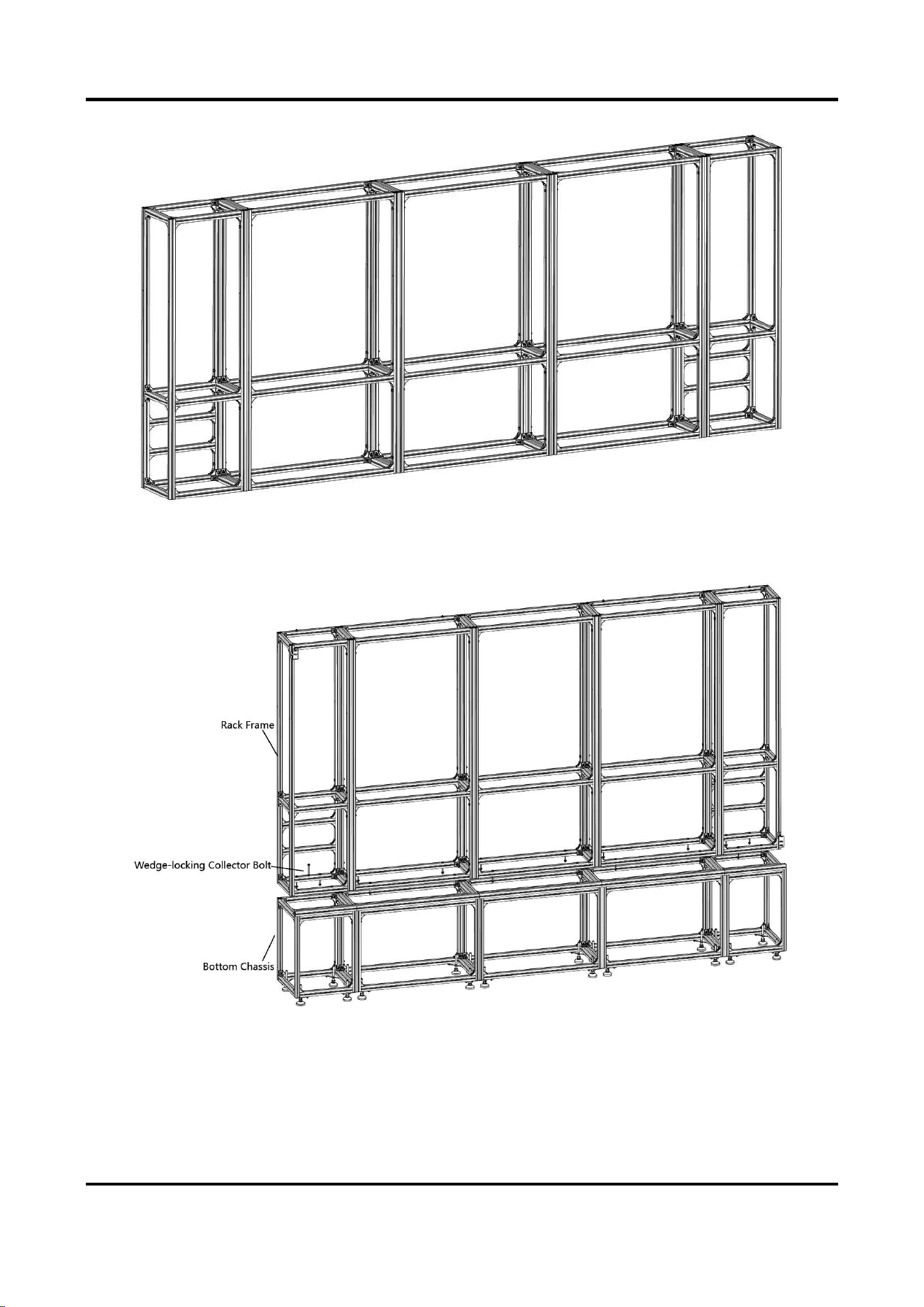
2. Use wedge-locking collector bolts to connect the rack frame units.
Full-Color LED Splicing Display Unit Installation Guide
31
Figure 2-38 Connect the Rack Frame Units
3. Repeat the above steps to connect the other rack frame units.
Full-Color LED Splicing Display Unit Installation Guide
32
Figure 2-39 Rack Frame
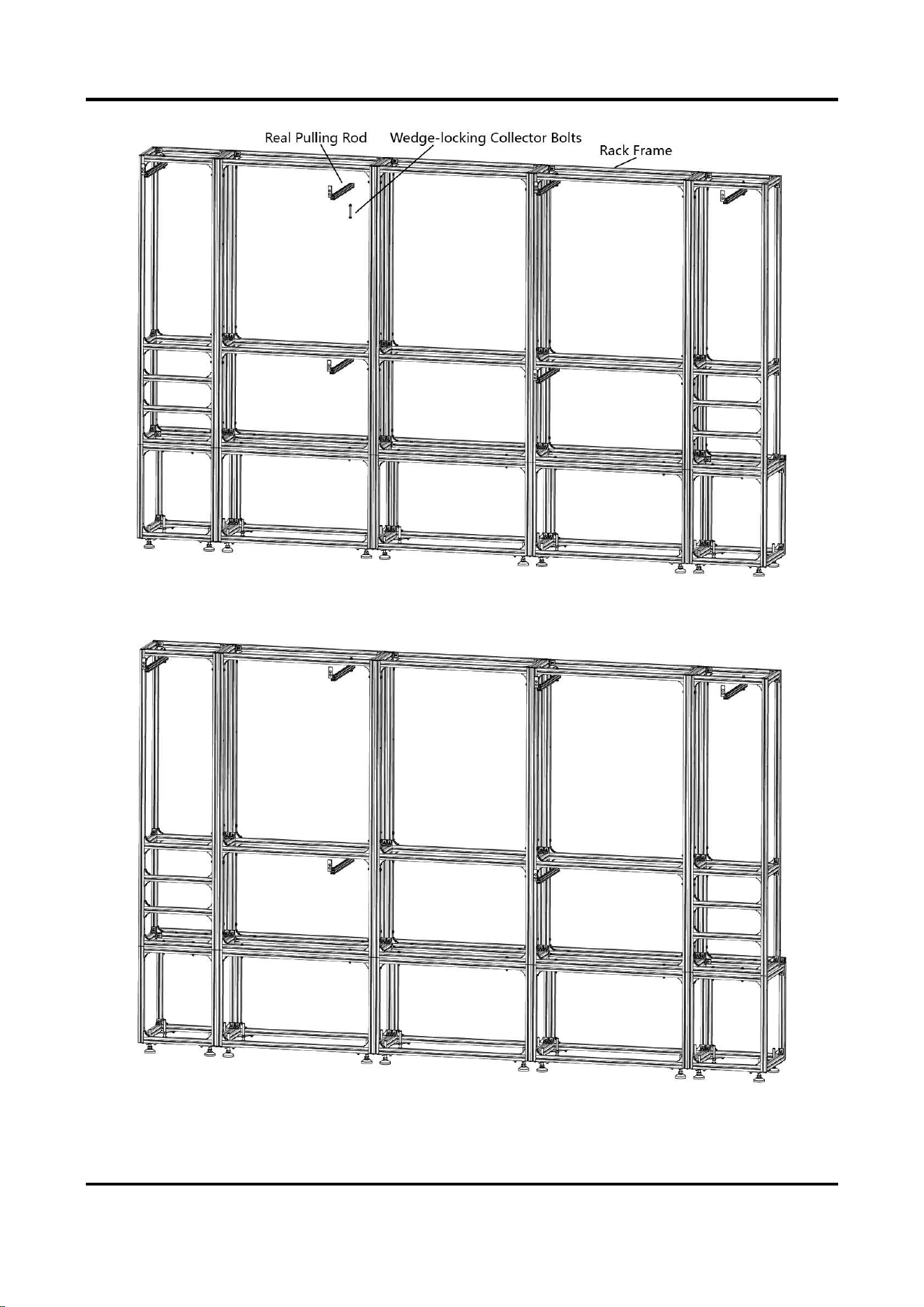
4. Align the rack frame to the base chassis and use wedge-locking collector bolts to fix the frames.
Figure 2-40 Align the Rack Frame to the Base Chassis

Full-Color LED Splicing Display Unit Installation Guide
33
Figure 2-41 Frames Aligned
Install the Rear Pulling Rods (for Large-scale Projects)
Steps
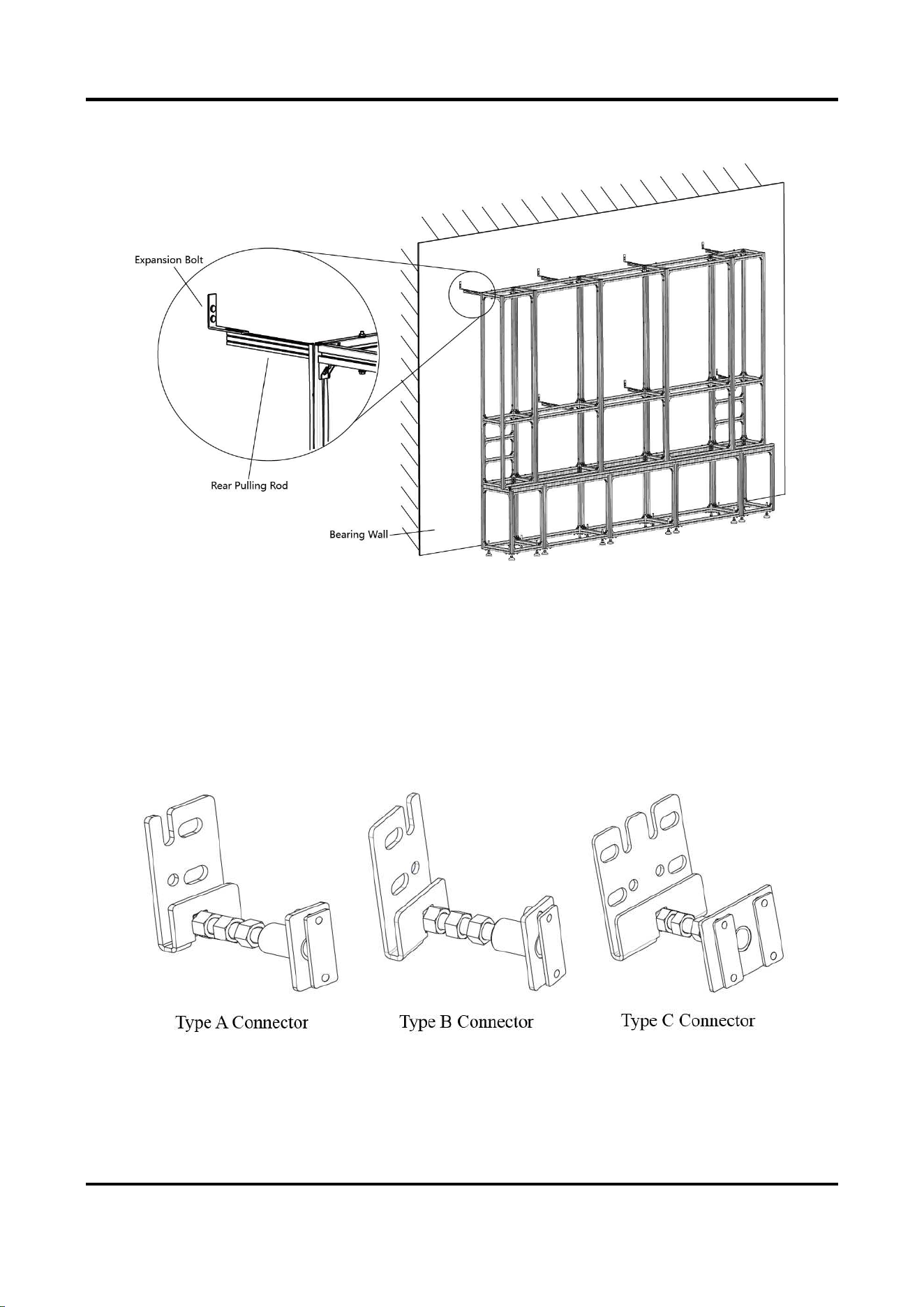
1. Use the wedge-locking collector bolts to fix the rear pulling rods into the rack frame.
Full-Color LED Splicing Display Unit Installation Guide
34
Figure 2-42 Fix the Rear Pulling Rods into the Rack Frame
Figure 2-43 Rear Pulling Rods Fixed
Full-Color LED Splicing Display Unit Installation Guide
35
2. Use the expansion bolts to fix the rear pulling rods onto the bearing wall.
Figure 2-44 Fix the Rear Pulling Rods onto the Bearing Wall
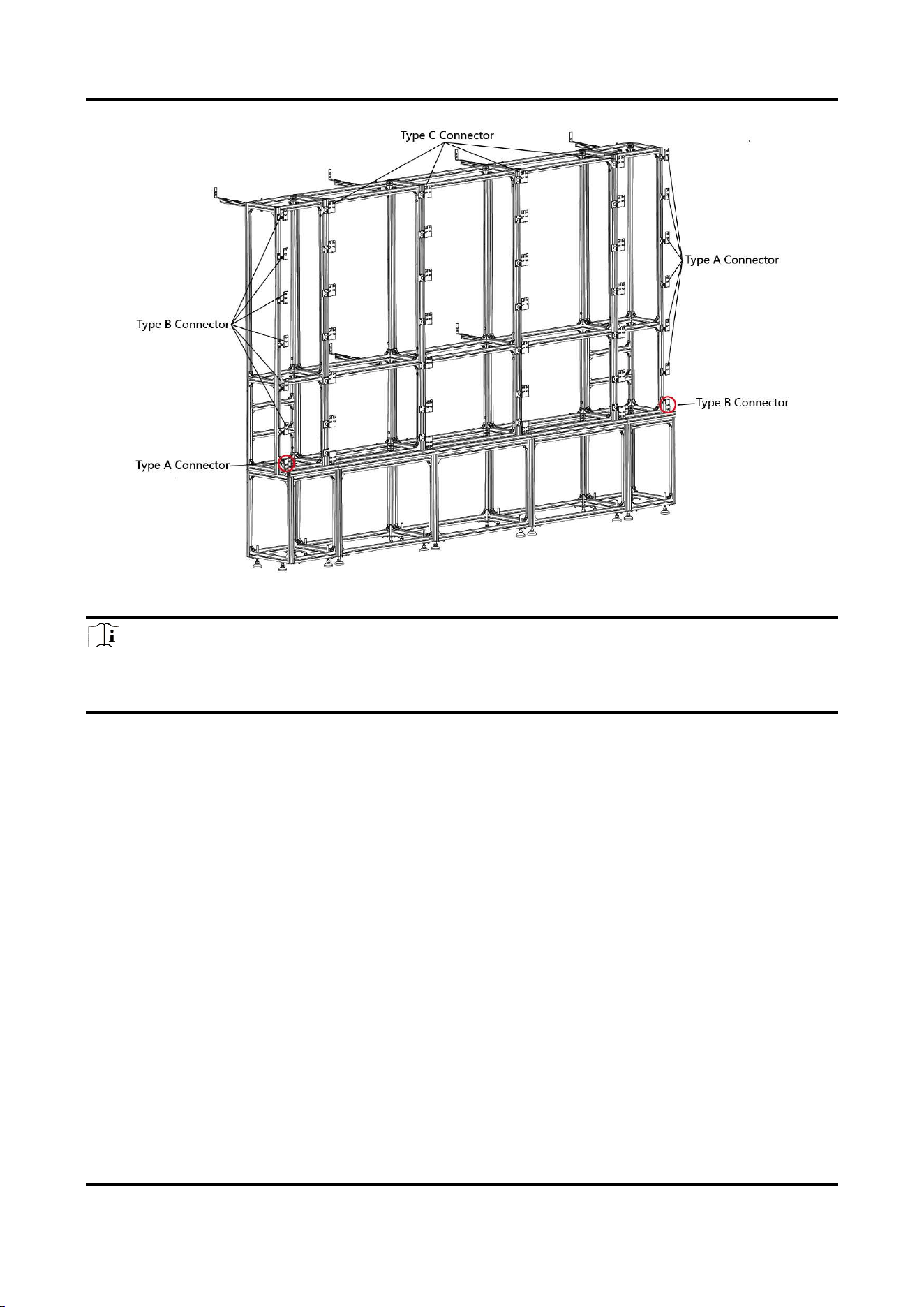
Install the Connectors
The connectors are divided into two parts: customized front joint piece which is used to connect
the screens, and back connecting component which is used to connect the rack frame. The
following figures list three types of connectors and the locating positions of the connectors
respectively.
Figure 2-45 Connectors
Full-Color LED Splicing Display Unit Installation Guide
36
Figure 2-46 Connectors Installed
Note
Please pay attention to the types of outermost connectors between rack frame and bottom
chassis.
Steps
1. Twist the hexagonal screws into the screw thread plates.
2. Insert the screw thread plates into the slots of aluminum extrusion rods, and move the
connectors to the suitable place.
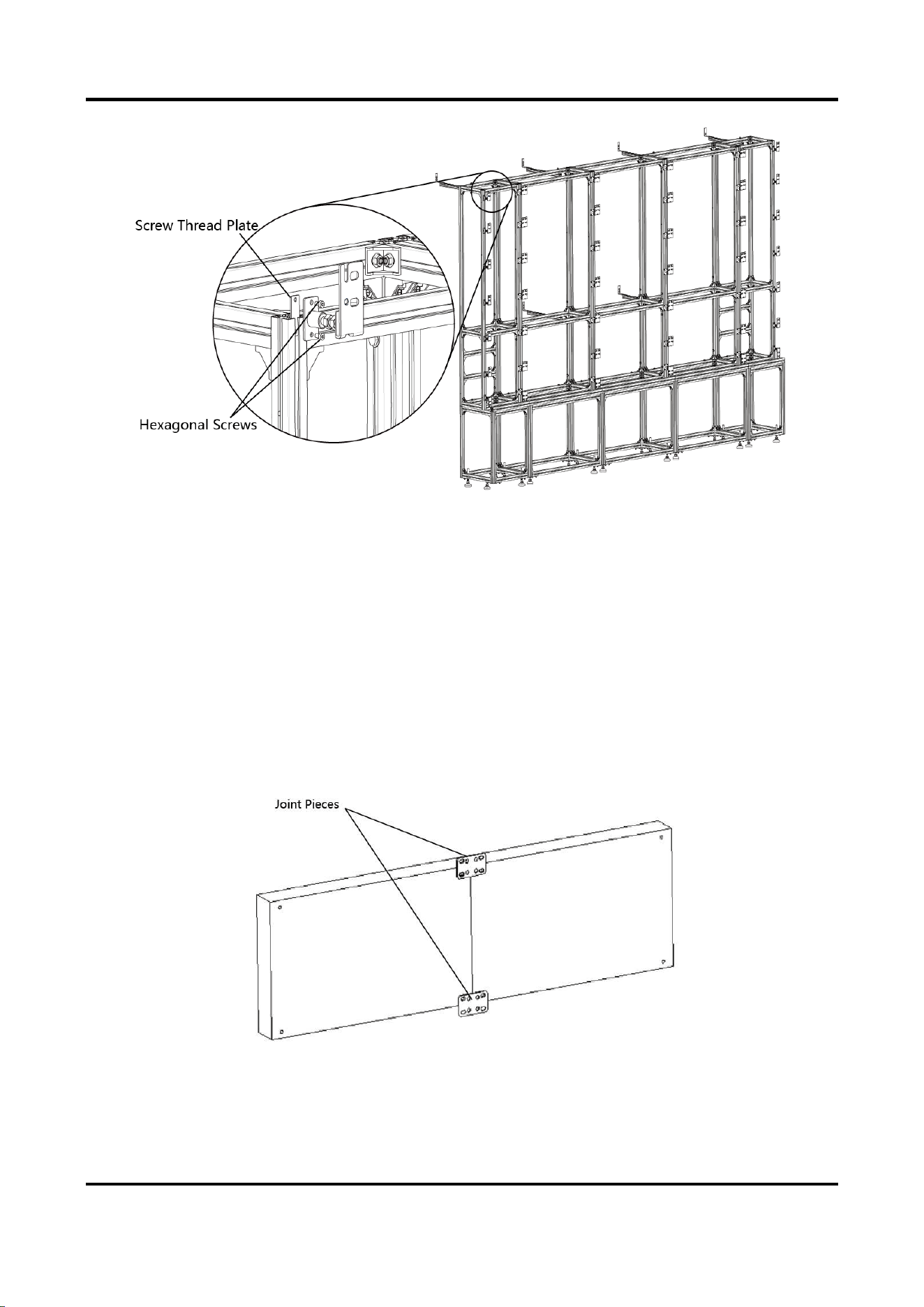
Full-Color LED Splicing Display Unit Installation Guide
37
Figure 2-47 Install the Connectors
3. Secure the connectors to the rack frame with screws.
Install Cabinets into the Rack Frame
After the bottom chassis, rack frame and connectors are well installed, take the following steps to
install the cabinets into the rack frame:
Steps
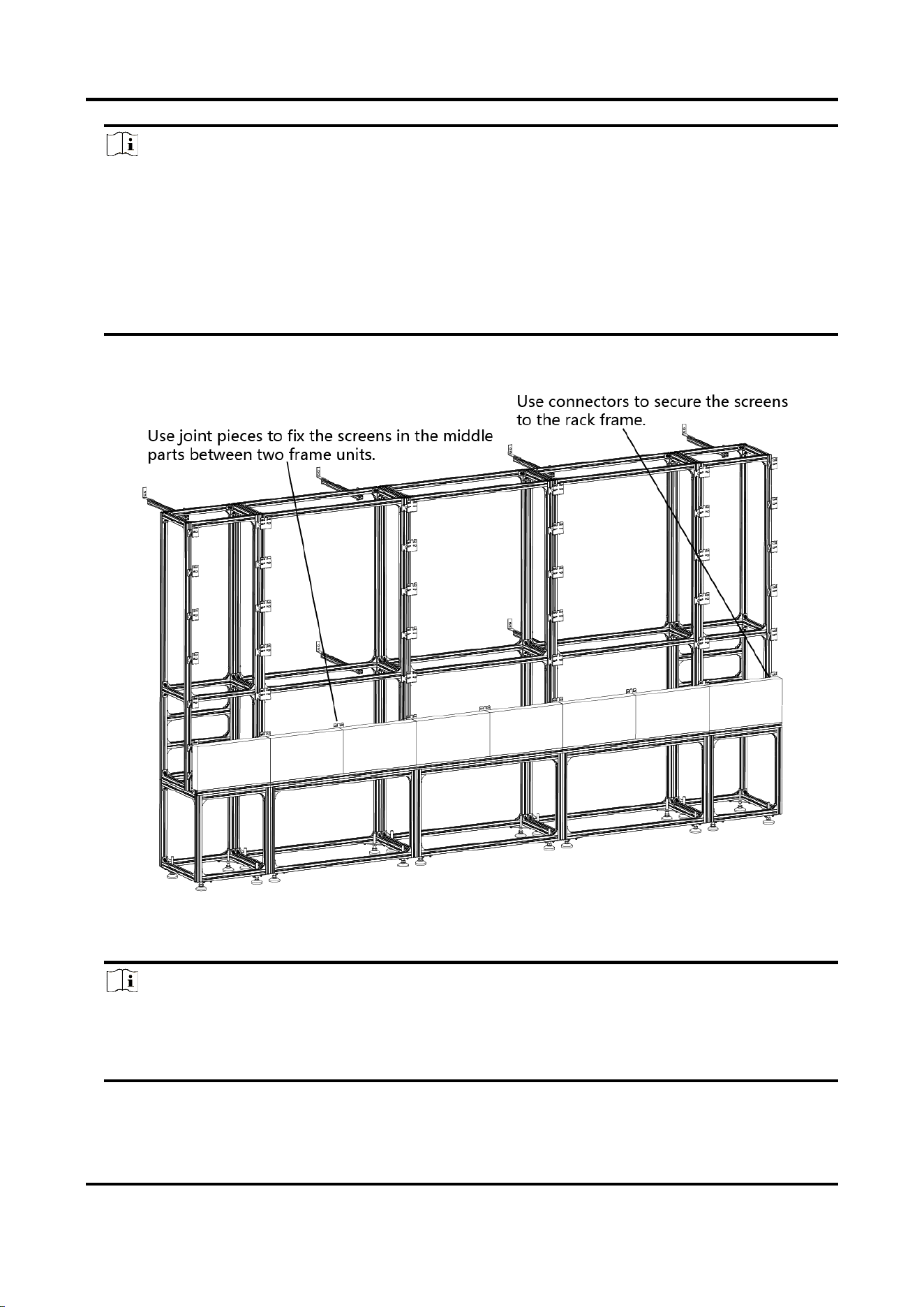
1. Install the first cabinet from the lower middle part. Level and secure the cabinet to the
connectors on the rack frame. For the screens without connectors near the rear, use joint pieces
to fix the screen.
Figure 2-48 Fix the Screen with Joint Pieces
Full-Color LED Splicing Display Unit Installation Guide
38
Note
● Install the cabinets from the bottom to the top, from the middle to the sides.
● Do not fix the screws between the connectors in case that cabinets are too tight for future
adjustment.
● In normal cases, lock out LED lamp boards after they are adjusted horizontally or vertically as
the boards will probably be moved during the installation of other lamp boards.
● Ensure that the screen is flat and there is no obvious gap between screens. Otherwise, make
some adjustments.
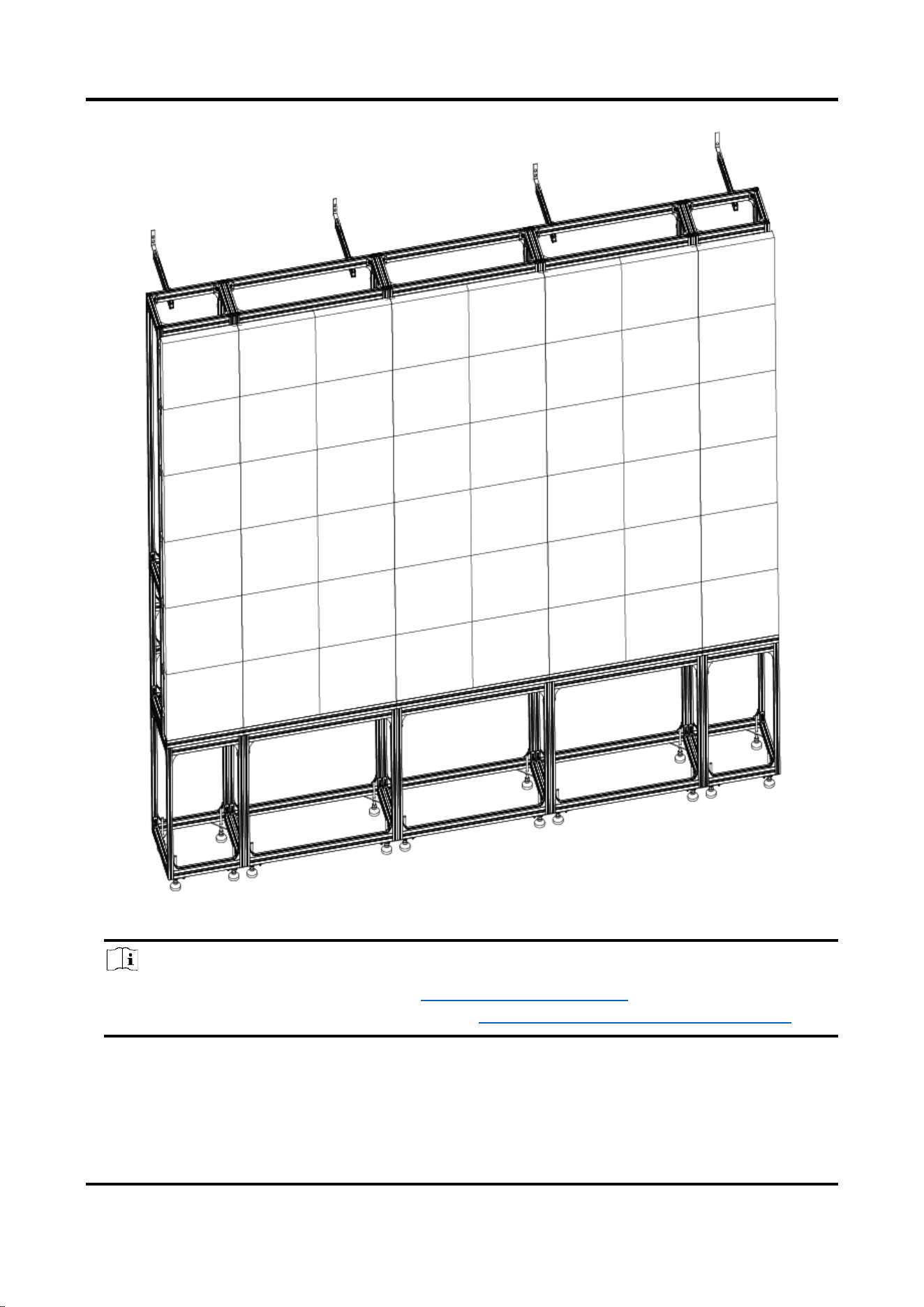
2. Repeat the above steps to install other cabinets in the lowest row.
Figure 2-49 Fix the Screens
3. Use a level to measure and ensure that the cabinets are flat and vertical.
Note
When there is a deviation in height, simply place a thin iron sheet under the bottom. Do not try
to resolve the deviation by hitting the cabinets on the top because it will result in larger
deviation afterwards.
4. Repeat the above steps to complete the installation of other cabinets.

Full-Color LED Splicing Display Unit Installation Guide
39
Figure 2-50 Screens Fixed
5. Ensure that all the cabinets are flat and vertical and the seams between the cabinets are even.
Then tighten the anchor bolts to complete the installation.
Full-Color LED Splicing Display Unit Installation Guide
41
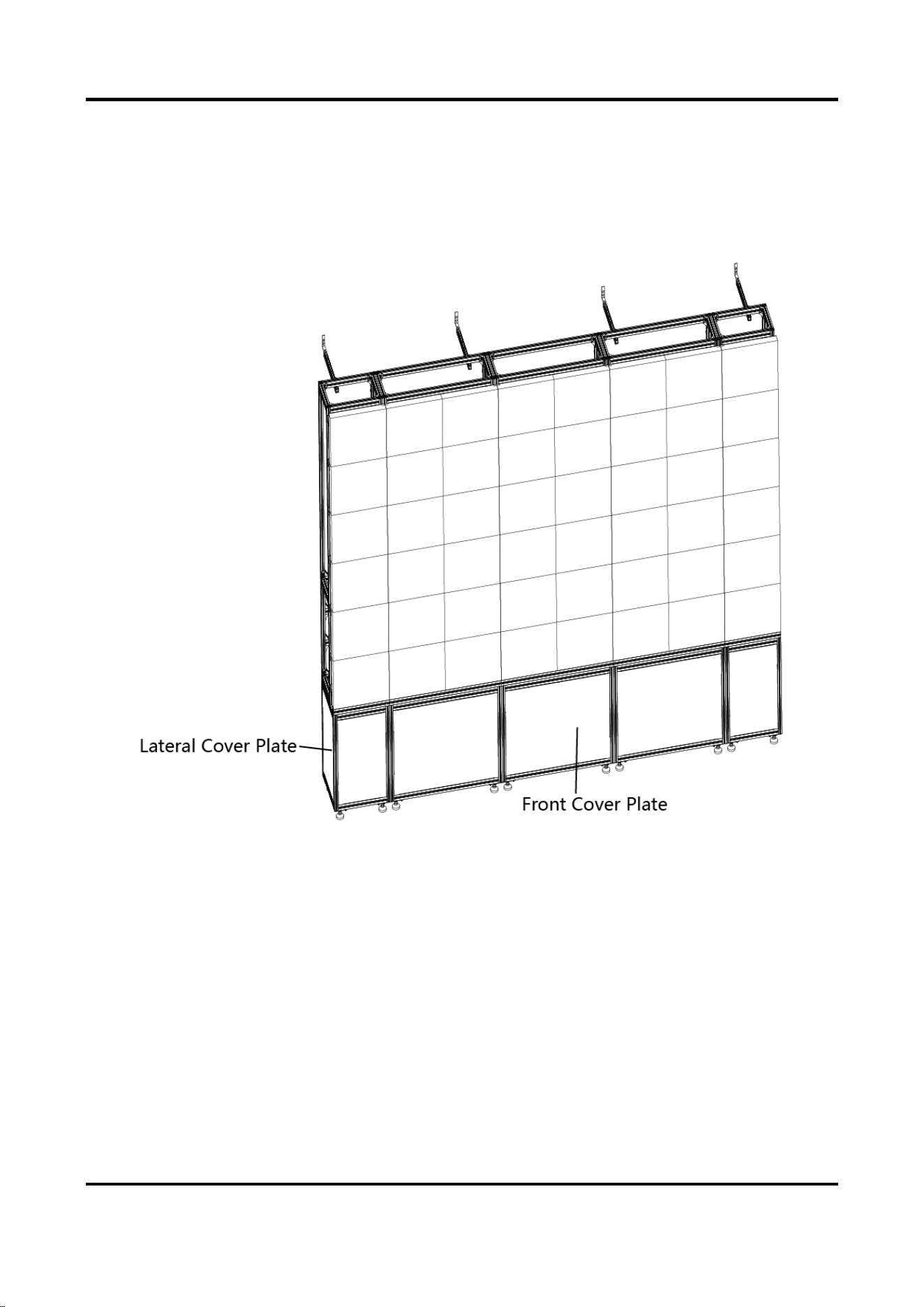
Install the Cover Plates and Door Plates for Bottom Chassis
Steps
1. Use T-Shaped bolts to install the front cover plates and lateral cover plates for bottom chassis
respectively.
Figure 2-52 Install the Cover Plates
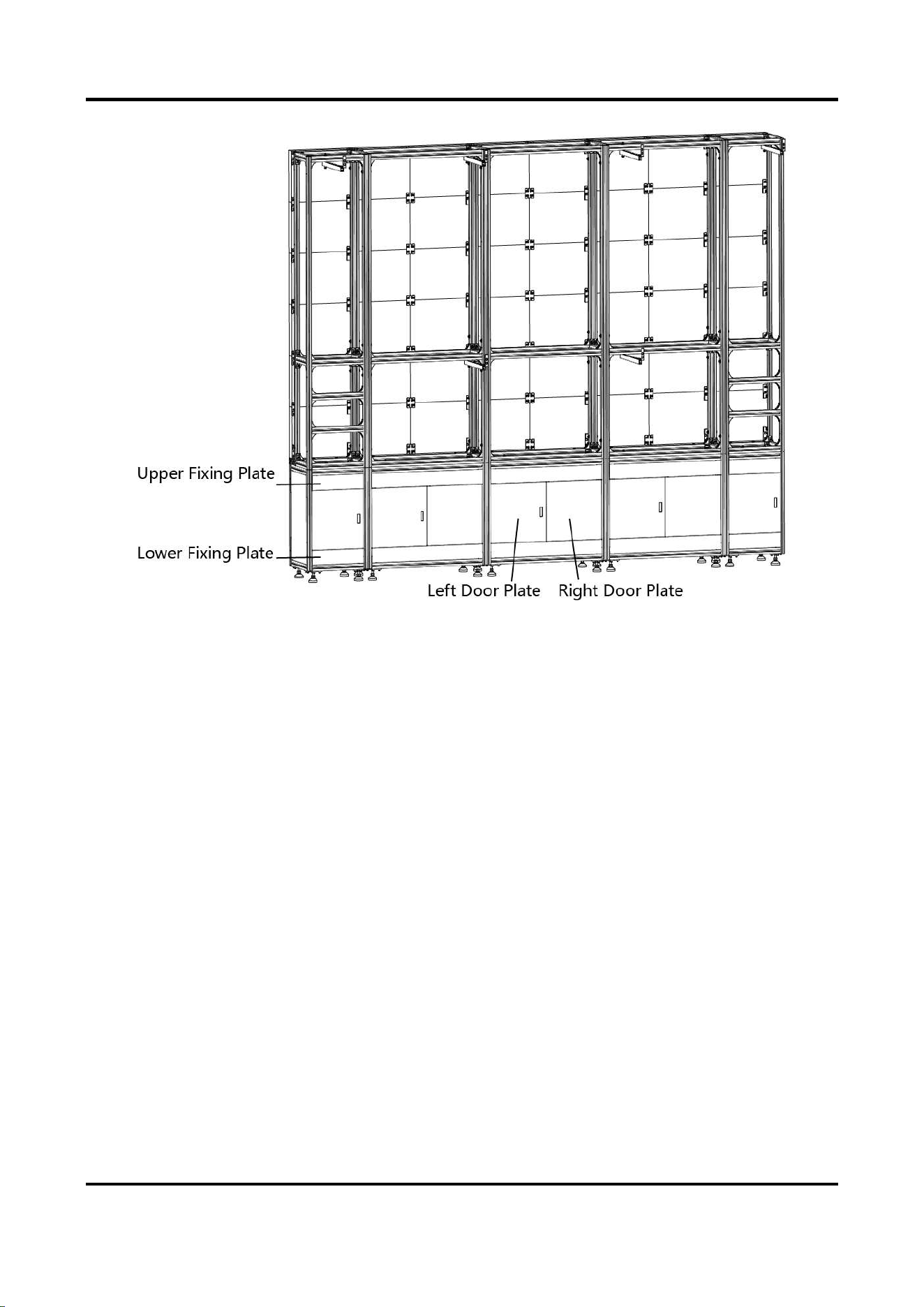
2. Use T-shaped bolts or door hinge to install the door plates including upper fixing plates, lower
fixing plates, left door plates and right door plates.
Full-Color LED Splicing Display Unit Installation Guide
42
Figure 2-53 Install the Door Plates

Full-Color LED Splicing Display Unit Installation Guide
43
Chapter 3 Cabinet Installation
3.1 Introduction
A cabinet is a basic unit for LED engineering installation in which LED modules are neatly mounted
on a metal sheet (cast aluminum) box, with a built-in independent receiving card and switching
power supply, an engineering installation structure, and independent display.
3.2 Install the Cabinets
3.2.1 Precautions
Read the following precaution tips before you install the LED screens:
● Install the LED screens after the decoration construction is completed.
● Avoid humid or high-pH environment to prevent damage to the LED lamps.
● Do not expose the device to rain or humid environment to reduce the risk of fire or electric
shock.
● Electric discharge may last for a short period of time after the power is shut down. Please wait
two minutes after the power is shut down to operate the device.
● Only use the original power cable delivered with the device. Contact authorized dealer to
purchase power cable with same specifications.
● Please do not frequently plug and unplug the power cable when the power is on.
3.2.2 Stitch Cabinet Frames
Before installing the cabinets, you need to stitch the cabinet frames first.
Locate Cabinet Frames
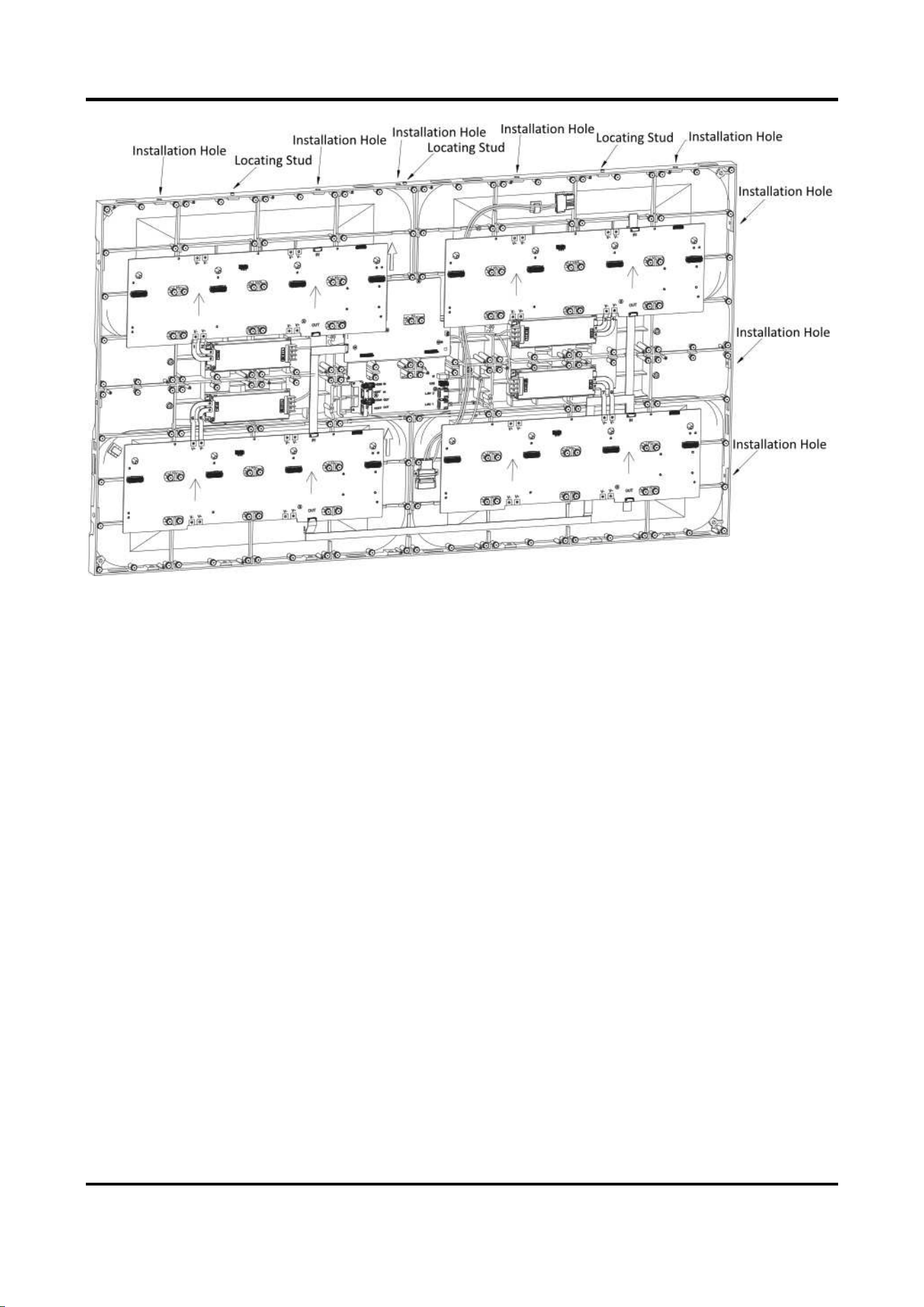
Align two cabinet frames with the locating studs and installation holes. Each cabinet frame is
equipped with two locating studs, five installation holes, and six lock connectors. Positions of the
locating studs and installation holes are shown as follows.
Full-Color LED Splicing Display Unit Installation Guide
44
Figure 3-1 Locating Studs and Installation Holes
Stitch Cabinet Frames Horizontally
Steps
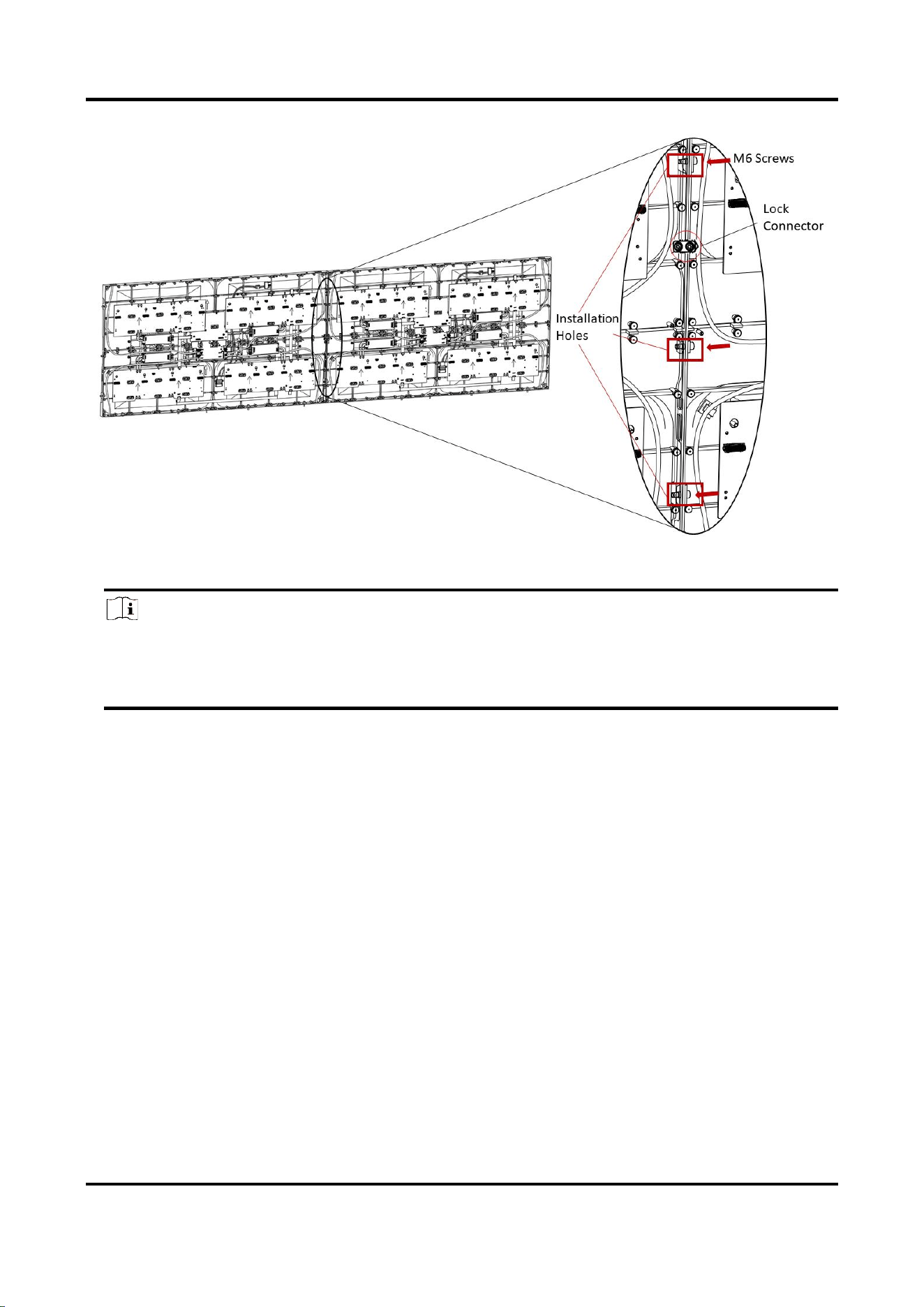
1. Align the installation holes in the horizontal direction of the two adjacent cabinet frames, and
adjust the cabinet frames horizontally against each other.
2. Insert M6 screws into the installation holes to lock the cabinet frames, and do not tighten the
screws yet.
3. Fix the lock connectors with M5 screws and adjust the flatness of the cabinet frames.
4. Tighten the M6 screws inserted in Step 2.
Full-Color LED Splicing Display Unit Installation Guide
45
Figure 3-2 Align the Cabinet Horizontally
Note
● Lock connectors, screws, and a wrench can be found in the accessory box.
● Adjust the flatness of the cabinet frames to ensure the horizontal and vertical alignment
between the cabinet frames.
Stitch Cabinet Frames Vertically
Steps
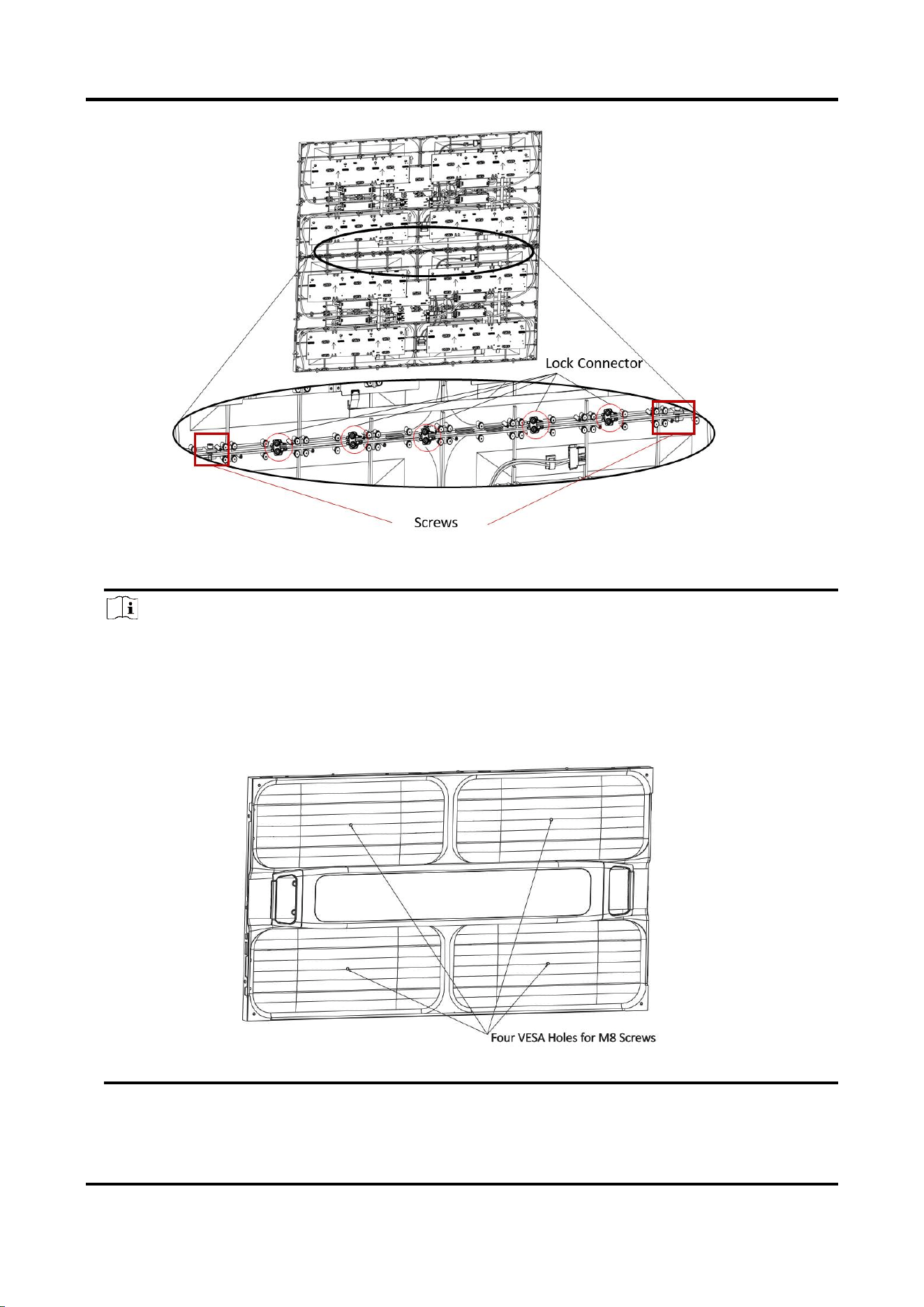
1. Align the locating studs vertically to the locating holes of the adjacent cabinet frame, and adjust
the cabinet frames vertically against each other.
2. Insert two M6 screws into the installation holes to lock the cabinet frames, and do not tighten
the screws yet.
3. Fix the lock connectors with M5 screws and adjust the flatness of the cabinet frames.
4. Tighten the M6 screws inserted in Step 2.
Full-Color LED Splicing Display Unit Installation Guide
46
Figure 3-3 Stitch Cabinet Frames Vertically
Note
● There are five installation holes reserved for stitching the cabinet frames vertically. Stitch the
cabinet frames from top to bottom.
● Adjust the flatness of the cabinet frames to ensure the horizontal and vertical alignment
between the cabinet frames.
● Four VESA holes for M8 screws are reserved on the back of the cabinet, which makes the
standard bracket installation compatible.
Figure 3-4 Cabinet Back
Full-Color LED Splicing Display Unit Installation Guide
47
3.2.3 Wiring
After the cabinet frames are stitched, connect network cables, signal lines, and power cords
before further installation.
About the Cabinets
Load Capability of Network Interfaces
The load capability of a single network interface of the sending card is limited. You can calculate
the max load of a single network interface by the following formula.
Max Load of a Network Interface = Pixel Capacity of a Network Interface/Cabinet Resolution
Example
If equipped with a sending card of 650,000 pixels, the max load of a single network interface for a
P1.2 cabinet of 480 × 270 resolution is five cabinets.
Note
You can choose sending cards of different pixels and cabinets of different resolution, and
calculate the load capability by the formula.
Load Capability of Power Cords
The load capability of a single power cord is limited. You can calculate the max load of a single
power cord by the following formula.
Max Load of a Single Power cord = Power of the Cord/Power of the Cabinet
Note
You can choose power cords and cabinets of different specifications, and calculate the load
capability by the formula.
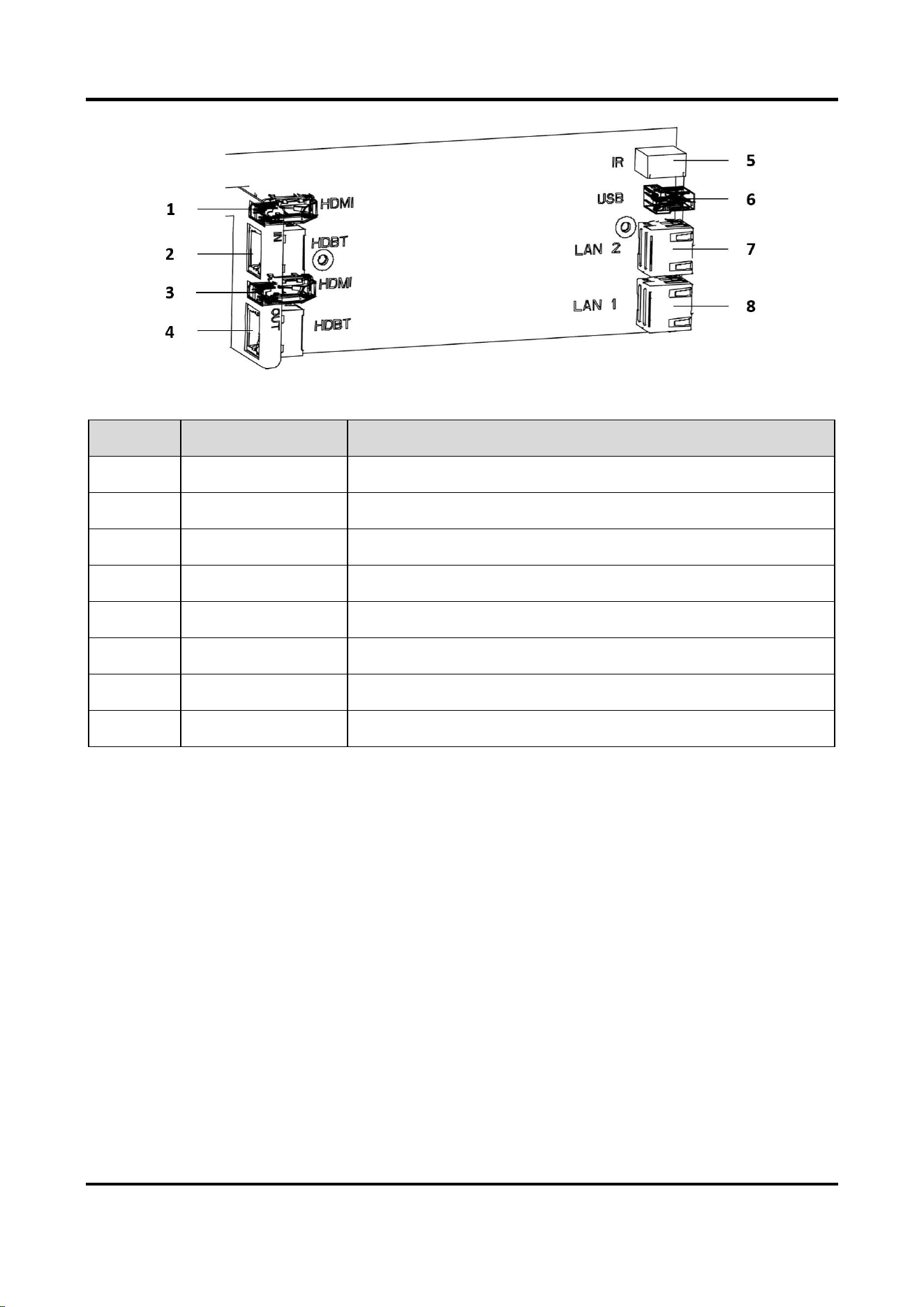
Interfaces of Embedded Sending Card
An embedded sending card is installed at the center of each cabinet. Refer to the figure and the
table below for the interfaces on the sending card.
Full-Color LED Splicing Display Unit Installation Guide
48
Figure 3-5 Interfaces on Sending Card
Table 3-1 Interface Description
No.
Name
Description
1
HDMI IN
HDMI signal input
2
HDBT IN
HDBT signal input
3
HDMI OUT
HDMI signal output
4
HDBT OUT
HDBT signal output
5
IR
Infrared interface
6
USB
USB interface
7
LAN 2
LAN 2 for network access
8
LAN 1
LAN 1 for network access
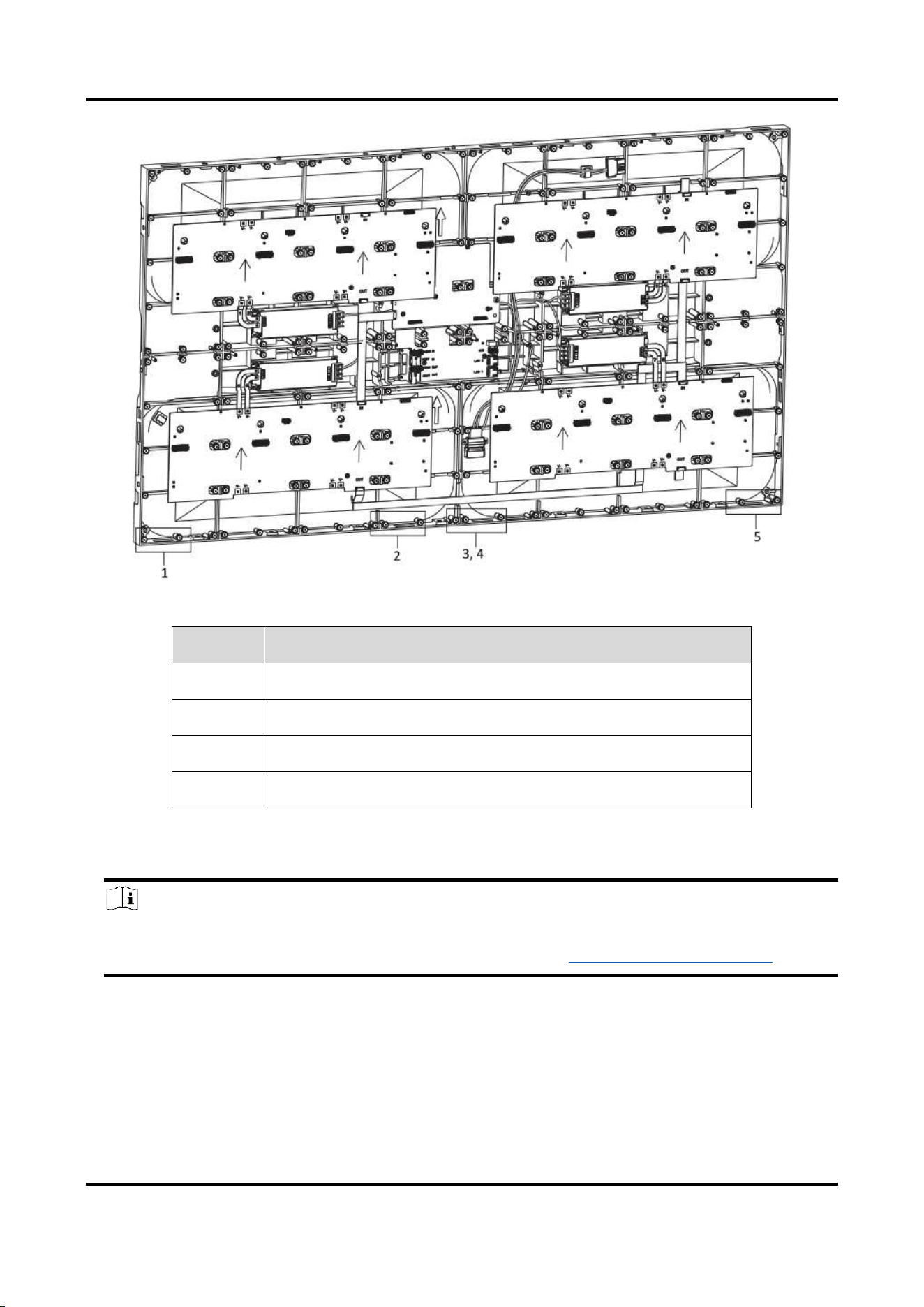
Cabinet Cable Holes
There are five cable holes on the top and at the bottom of the cabinet frame respectively.
Full-Color LED Splicing Display Unit Installation Guide
49
Figure 3-6 Cabinet Cable Holes
Table 3-2 Usage Suggestion for Cable Holes
No.
Description
1
For HDMI/HDBT cables.
2
Reserved holes.
3, 4
For power cords.
5
For network cables/IR lines.
Connect Network Cables
Note
The connection of network cables and signal lines should be consistent with the sending card
configuration on the software client. For more details, see
4.3 Configure Signal Cables.
Steps
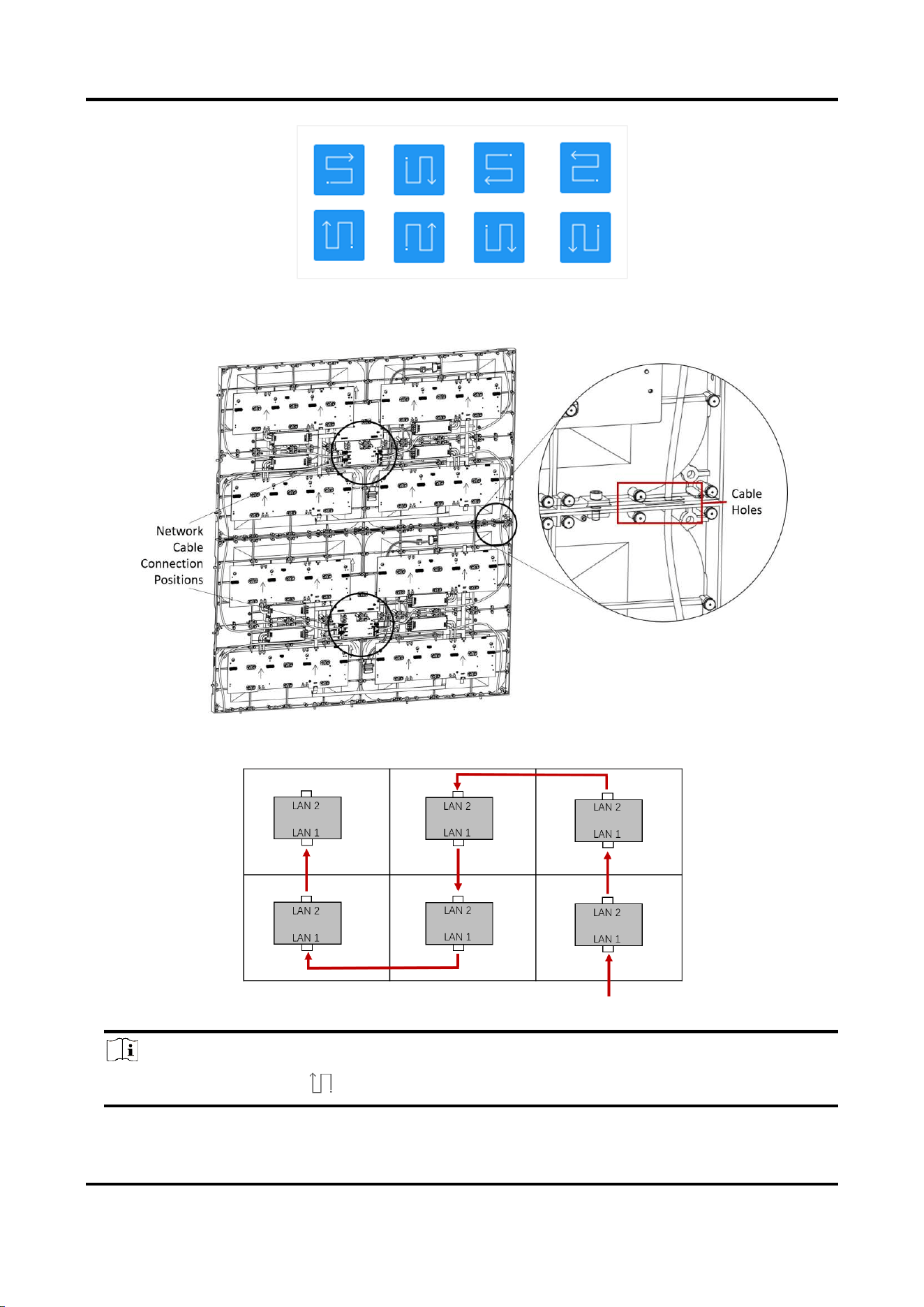
1. There are eight ways to connect network cables. Choose one according to your actual needs.
Full-Color LED Splicing Display Unit Installation Guide
50
Figure 3-7 Network Cable Connection Mode
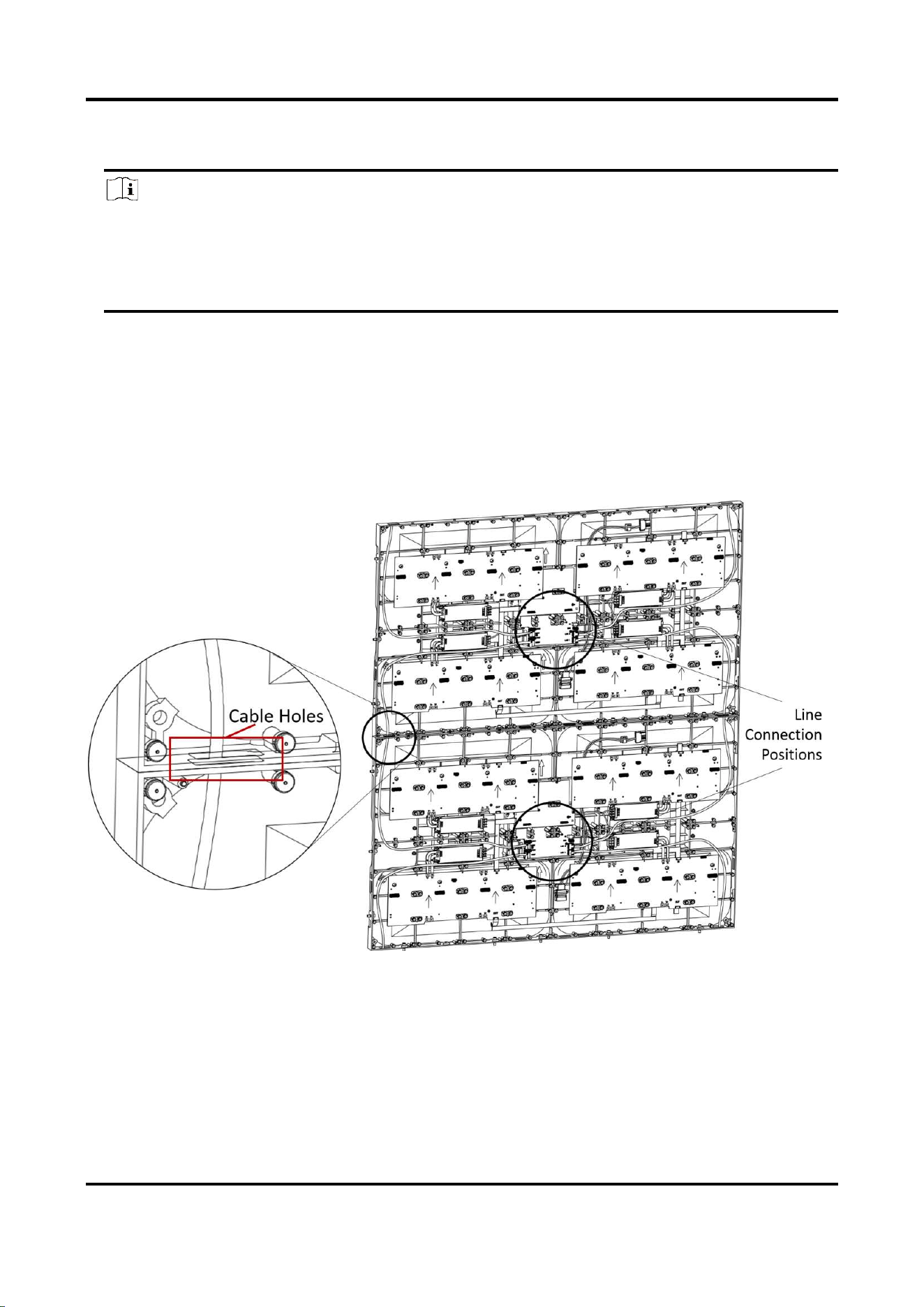
2. Pull network cables through the cable holes to connect to the LAN interfaces of sending cards in
different cabinets.
Figure 3-8 Network Cable Connection
3. Connect all cabinets in cascade.
Figure 3-9 Network Cable Connection Diagram
Note
This figure above takes for example.
Full-Color LED Splicing Display Unit Installation Guide
51
Connect Signal Lines
Note
The display is stitched by 16 cabinets of 4 × 4 layout. You can stitch the cabinets and divide
them into groups according to your actual needs. For example, you can divide the display into
four groups of 2 × 2 layout for each group, and these groups will display images from four
different signals respectively.
Steps
1. Choose the screen splicing mode.
● Automatic splicing: After you set the splicing scale, the screen will be divided into groups at
your settings automatically. The division will start from the screen in the upper left corner.
● Manual splicing: Set the splicing scale and groups manually.
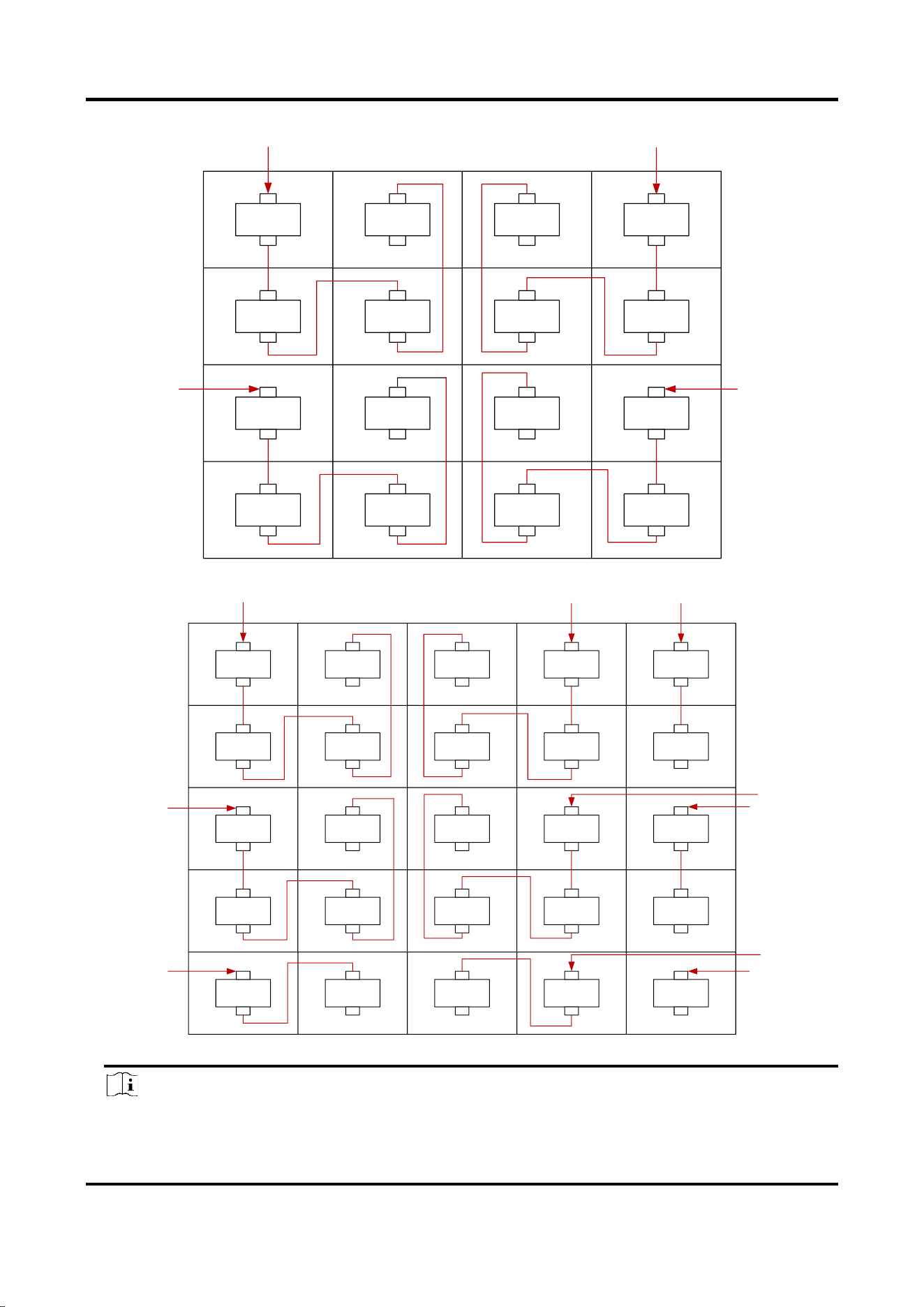
2. Pull the signal lines through the cable holes and connect to the signal input interfaces of sending
cards in different cabinet groups.
Figure 3-10 Signal Line Connection
3. Connect all cabinets. Make sure that every cabinet group is connected to a signal input and all
the cabinets in one group are connected in cascade.
Full-Color LED Splicing Display Unit Installation Guide
52
IN
OUT
IN
OUT
IN
OUT
IN
OUT
IN
OUT
IN
OUT
IN
OUT
IN
OUT
IN
OUT
IN
OUT
IN
OUT
IN
OUT
IN
OUT
IN
OUT
IN
OUT
IN
OUT
Input Signal of Cabinet Group 1
Input Signal of Cabinet Group 2
Input Signal of
Cabinet Group 4
Input Signal of
Cabinet Group 3
Figure 3-11 Signal Line Connection Diagram (4 × 4)
IN
OUT
IN
OUT
IN
OUT
IN
OUT
IN
OUT
IN
OUT
IN
OUT
IN
OUT
IN
OUT
IN
OUT
IN
OUT
IN
OUT
IN
OUT
IN
OUT
IN
OUT
IN
OUT
Input Signal of Cabinet Group 1
Input Signal of Cabinet Group 2
Input Signal of
Cabinet Group 9
Input Signal of Cabinet Group 3
IN
OUT
IN
OUT
IN
OUT
IN
OUT
IN
OUT
IN
OUT
IN
OUT
IN
OUT
IN
OUT
Input Signal of
Cabinet Group 4
Input Signal of
Cabinet Group 5
Input Signal of
Cabinet Group 6
Input Signal of
Cabinet Group 7
Input Signal of
Cabinet Group 8
Figure 3-12 Signal Line Connection Diagram (5 × 5)
Note
● The splicing scale is recommended to be set as 4 × 4. If you need other settings, please
Full-Color LED Splicing Display Unit Installation Guide
53
contact our technical support.
● Figures above are for reference. You can adjust the connection within each cabinet group, as
long as the output interface of a cabinet is connected to the input interface of its adjacent
cabinet.
● For automatic splicing, connect the input signal from the cabinet in the upper left corner.
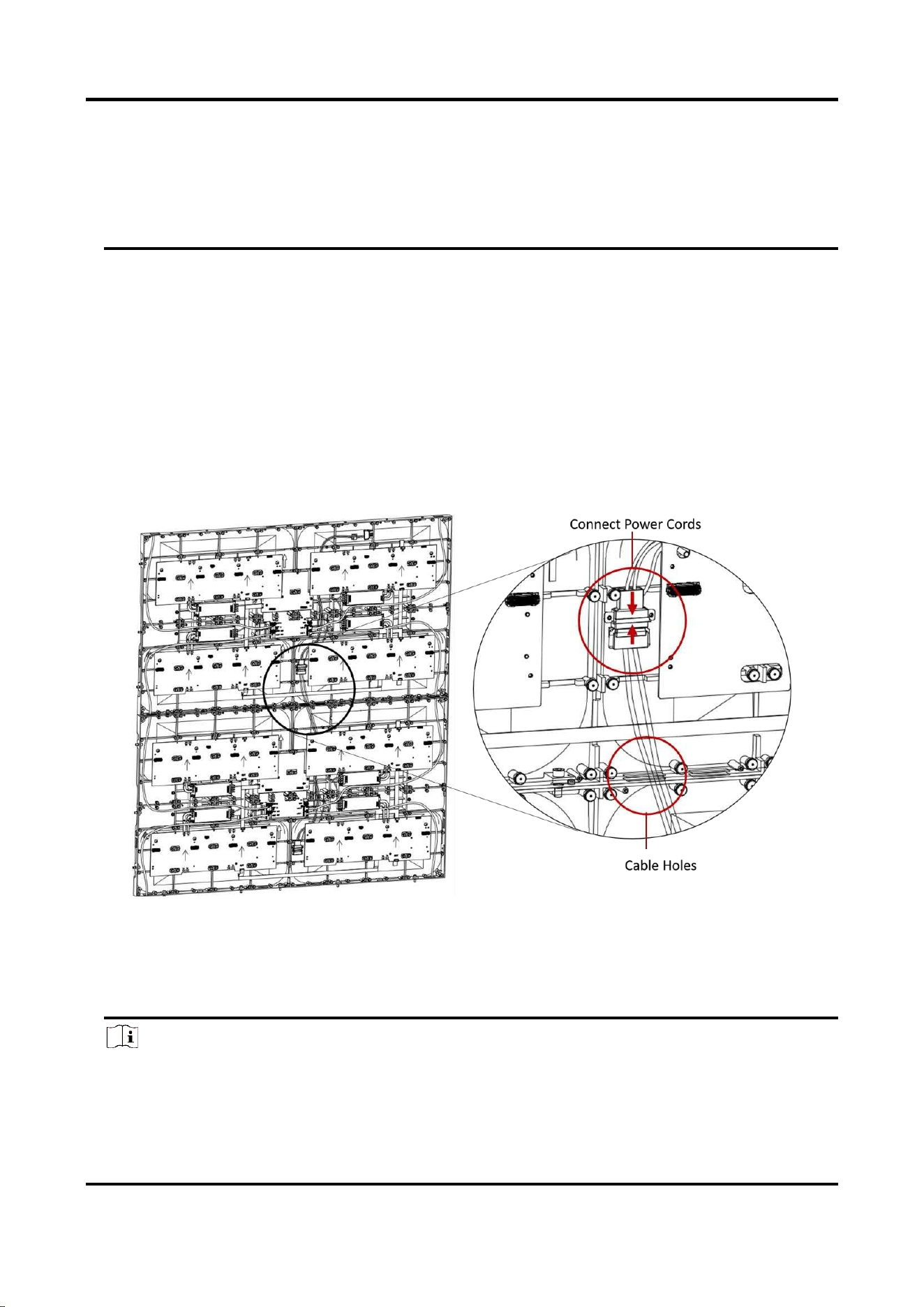
Connect Power Cords
Within Max. Load
If the number of cabinets is within the maximum load of the power cord, one power cord is
enough to connect the cabinets.
● Internal Connection: Pull the power cords through the cable holes and connect the power
cords between two cabinets.
● External Connection: Pull the power cords through the cable holes on the bottom of the first
row of cabinets, and connect one end of the cords to the power cords in the upper cabinets
and the other end to the external power supply.
Figure 3-13 Power Cord Connection
Beyond Max. Load
If the number of cabinets exceeds the maximum load of the power cord, you need to pull extra
power cords through the reserved holes next to the original power cords and connect other
cabinets in the same way.
Note
After the power cords are connected, attach the electrical warning label next to the cable
hole for external power supply at the bottom of the first row of cabinets. The label is packed
with the device.
Full-Color LED Splicing Display Unit Installation Guide
54
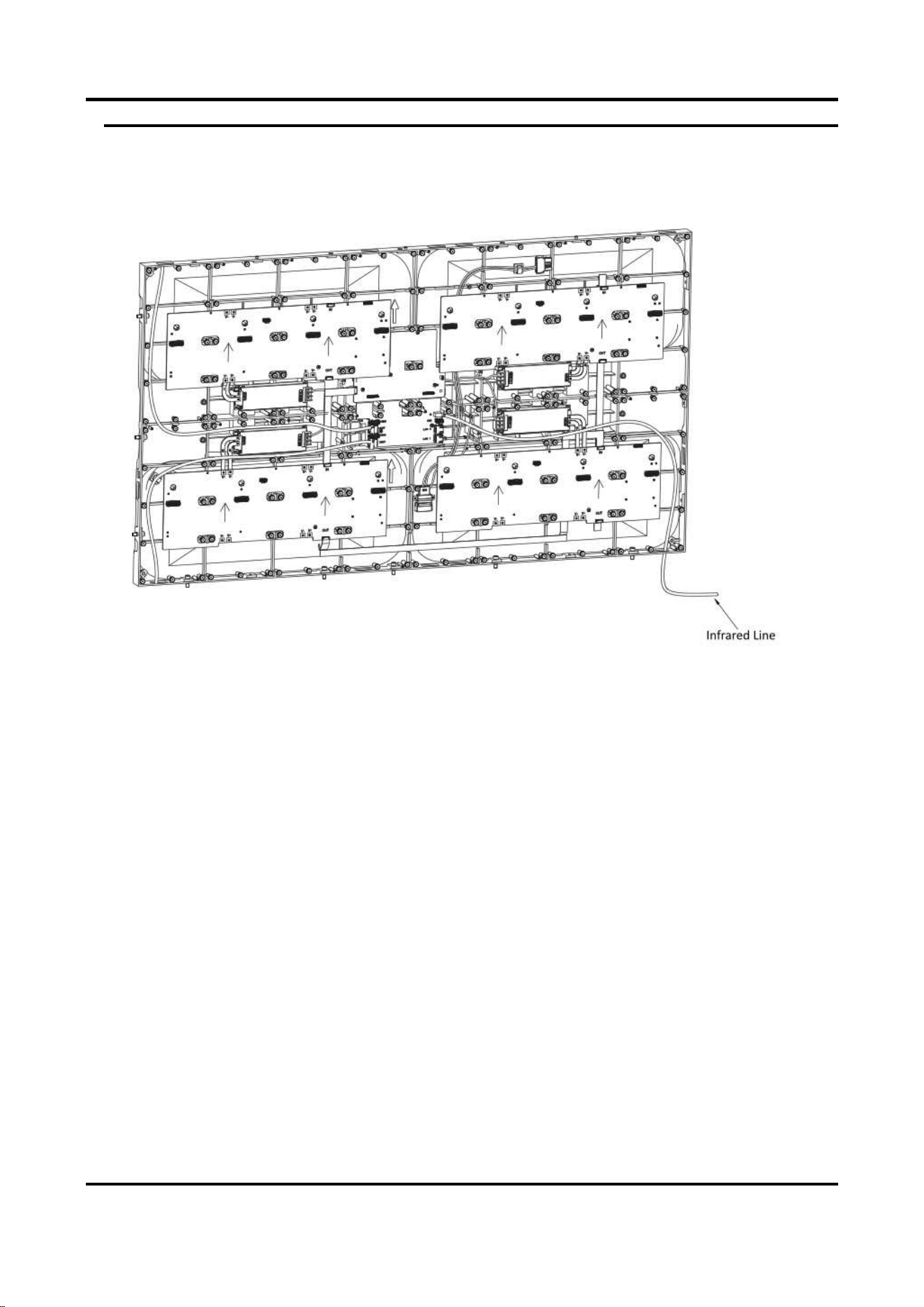
Connect Infrared Lines
Pull the infrared line through the hole on the first bottom cabinet from the left or the right.
Figure 3-14 Infrared Connection
3.2.4 Install Lamp Boards on the Cabinets
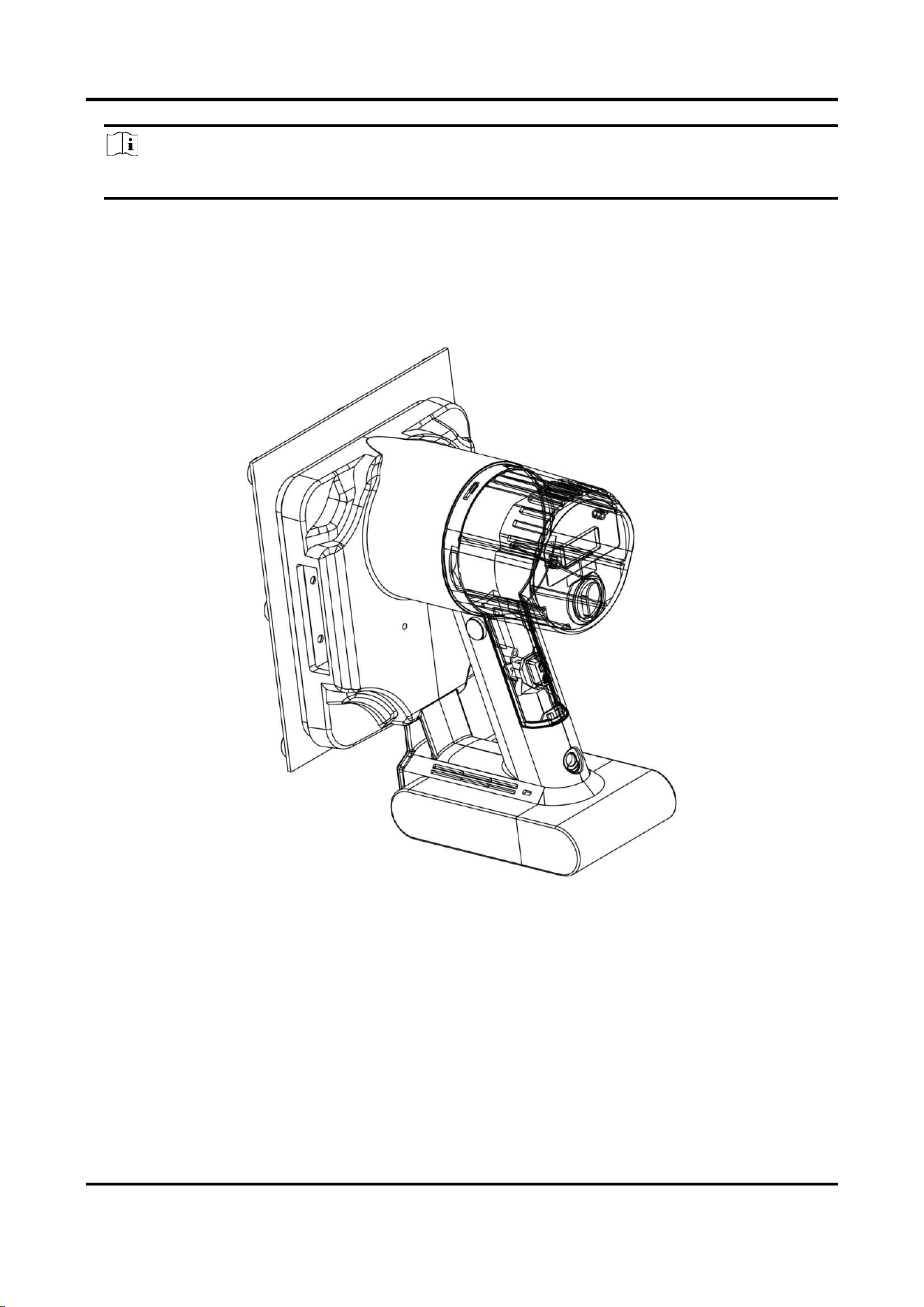
Fix the lamp boards on the cabinet frames by magnetic attraction.

Full-Color LED Splicing Display Unit Installation Guide
55
Figure 3-15 Lamp Board
Steps
1. Place the lamp boards on the front of the cabinet frames. Align the lamp boards and the edges
of the cabinet frames.
Figure 3-16 Adsorb Lamp Board
Full-Color LED Splicing Display Unit Installation Guide
56
Note
Please align the connectors and keep the arrow sign upright when adsorbing the lamp boards.
2. Align and adsorb the lower edges of the lamp boards with the cabinet frames, and then align
the locating studs on the lamp boards to the locating holes on the cabinets. Absorb the
remaining three sides of the lamp boards. The lamp board adsorbs to the cabinet automatically.
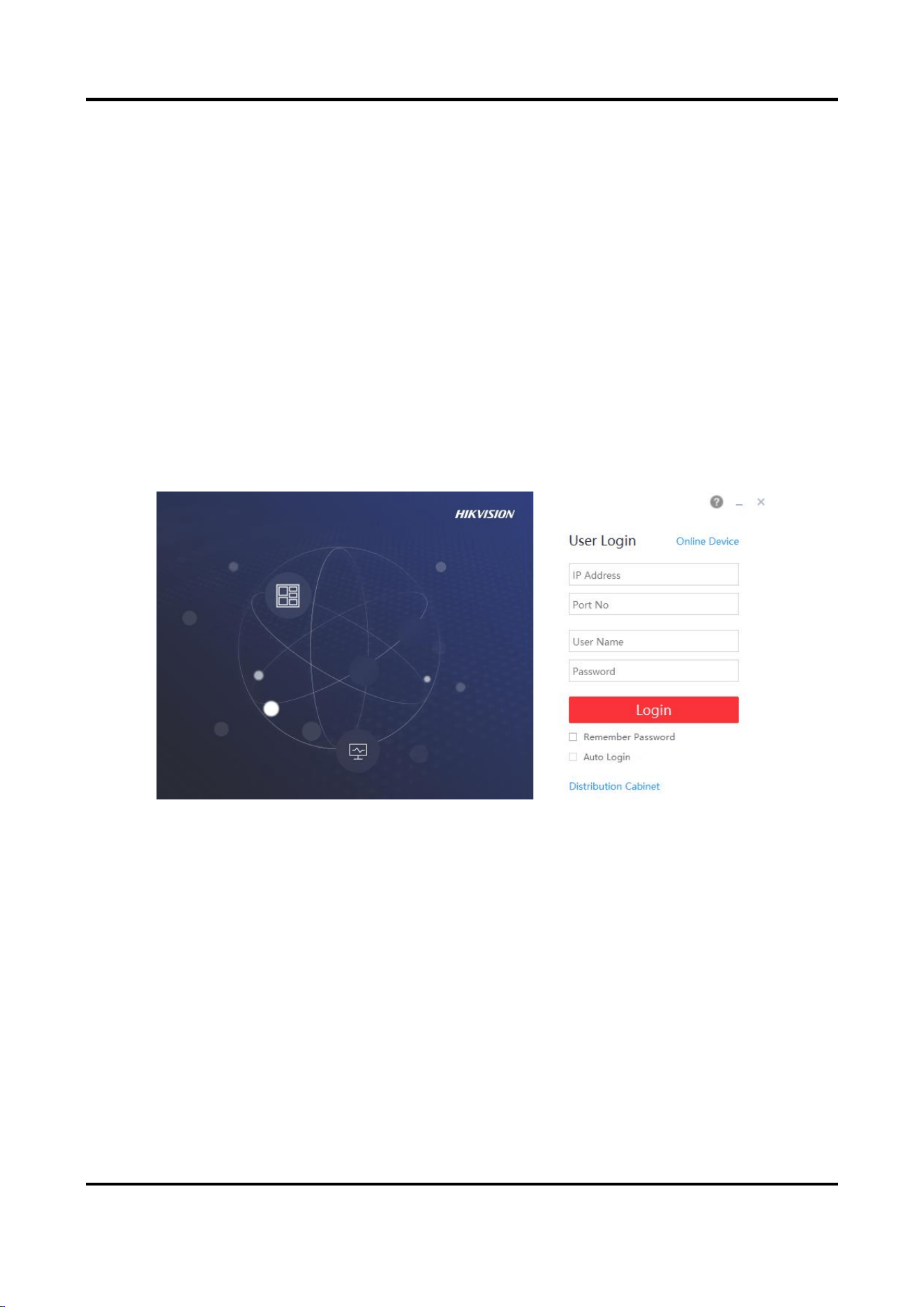
3. Optional: If you need to remove lamp boards, use LED vacuum pump to remove the first lamp
board, and remove other lamp boards by hand.
Figure 3-17 LED Vacuum Pump
Full-Color LED Splicing Display Unit Installation Guide
57
Chapter 4 Software Debugging
4.1 Activation
The client can only control the screen when it is used in conjunction with the sending card. Please
activate the corresponding sending card in the client first when using it for the first time.
Before You Start
● The client software has been installed correctly.
● PC and the device are in the same LAN.
Steps
1. Run the client.
Figure 4-1 Client Interface
2. Click Online Device to show all online devices in the current network segment.
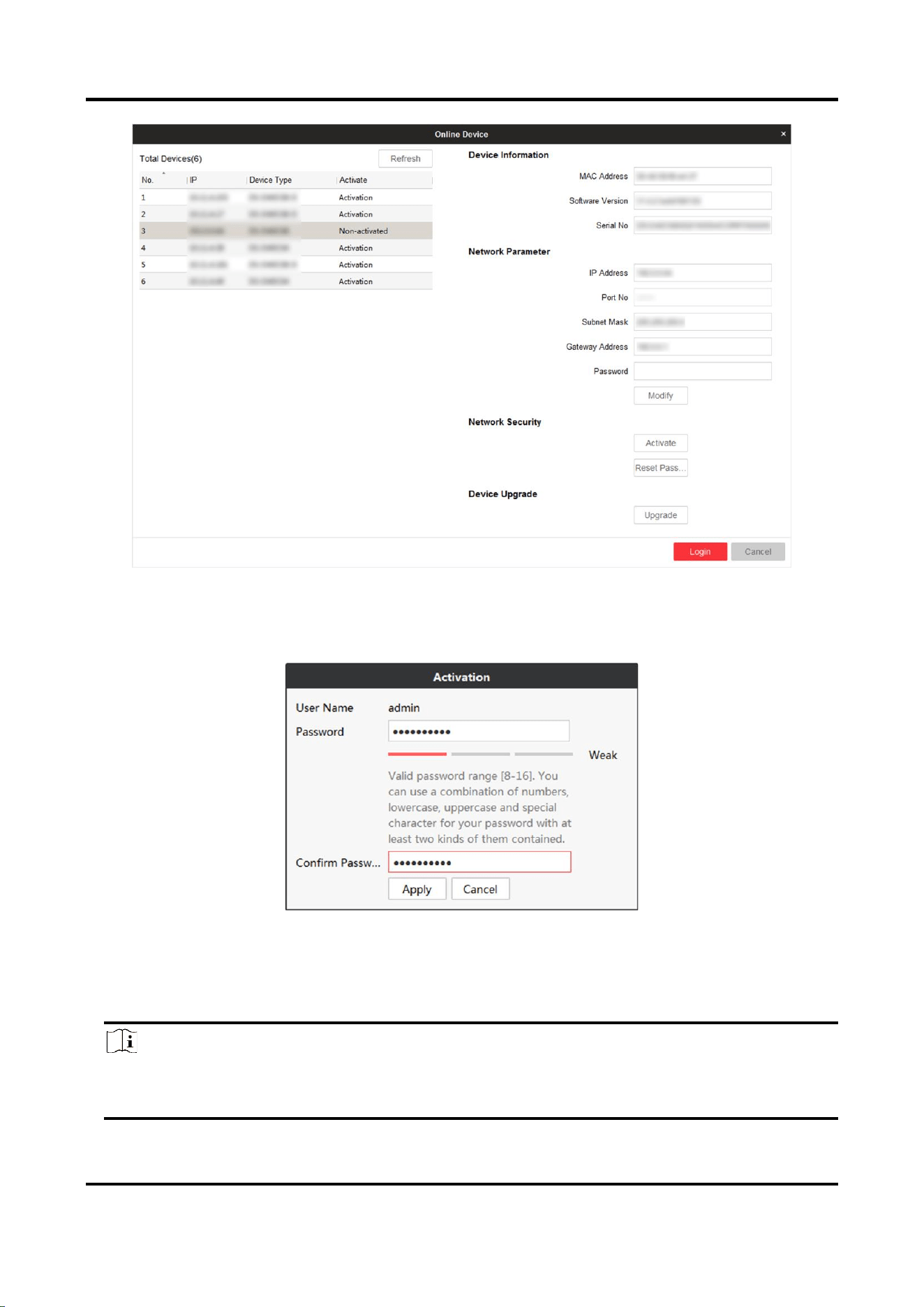
Full-Color LED Splicing Display Unit Installation Guide
58
Figure 4-2 Activate Online Device
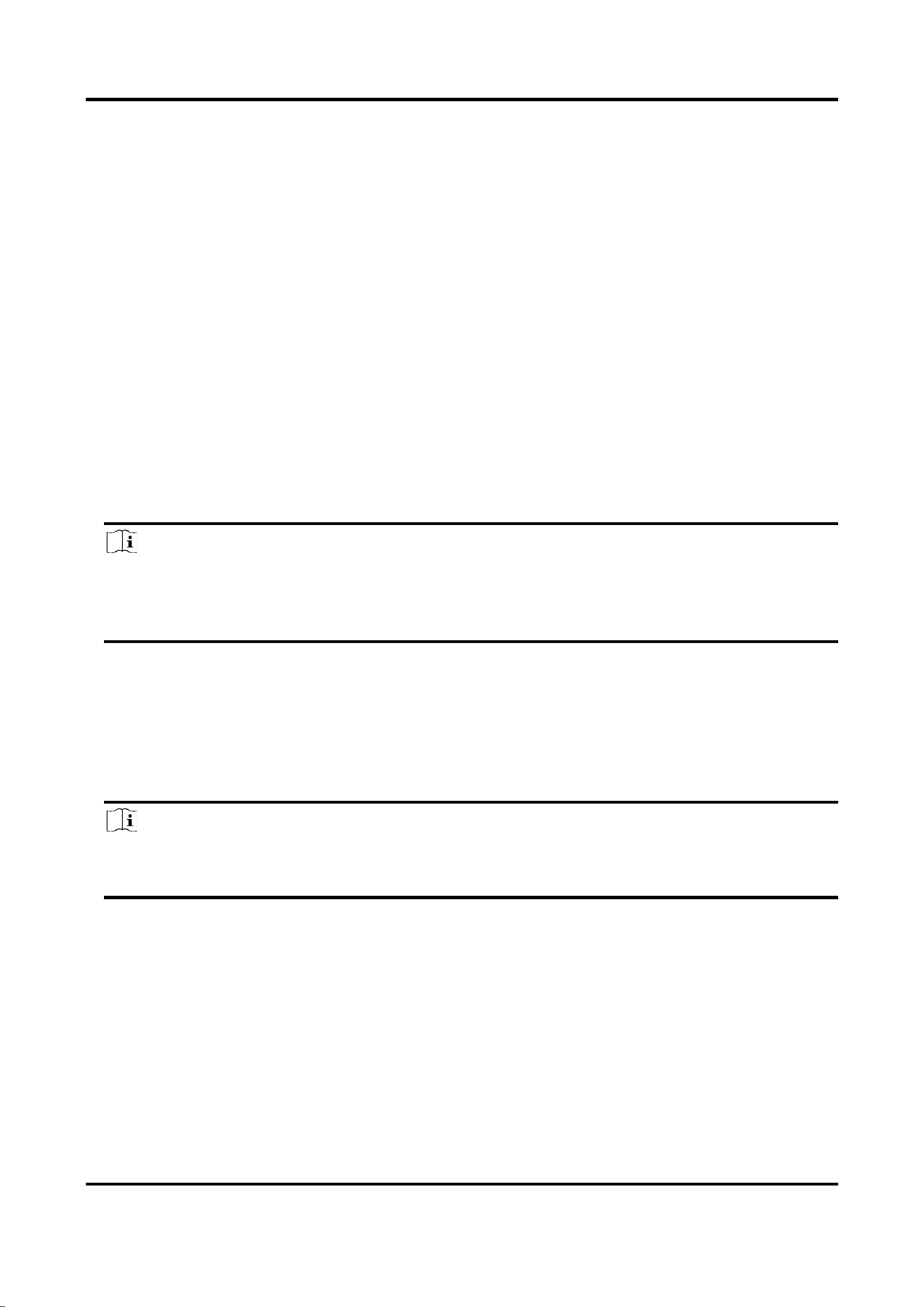
3. Select the device to be activated and click Activate.
4. Enter Password and confirm the password in the popup window.
Figure 4-3 Activation
5. Click Apply to activate the device.
6. Select the activated device on Online Device interface. Modify network parameters and enter
Password. Click Modify to save the modifications.
Note
If the device network segment has DHCP function, it will allocate the IP address by default. You
can skip step 6.
Full-Color LED Splicing Display Unit Installation Guide
59
4.2 Login
Before any operation, you need to log in to the LED client.
Steps
1. Run the client to enter the login interface.
2. Enter IP Address, User Name, and Password.
3. Click Login.
4. Optional: Check remember password to remember the login password, so there is no need to
enter password for the next login.
5. Optional: Check Auto Login to Log into the client automatically.
4.3 Configure Signal Cables
Configure signal cables according to the actual receiving card connection between LED cabinets.
Steps
Note
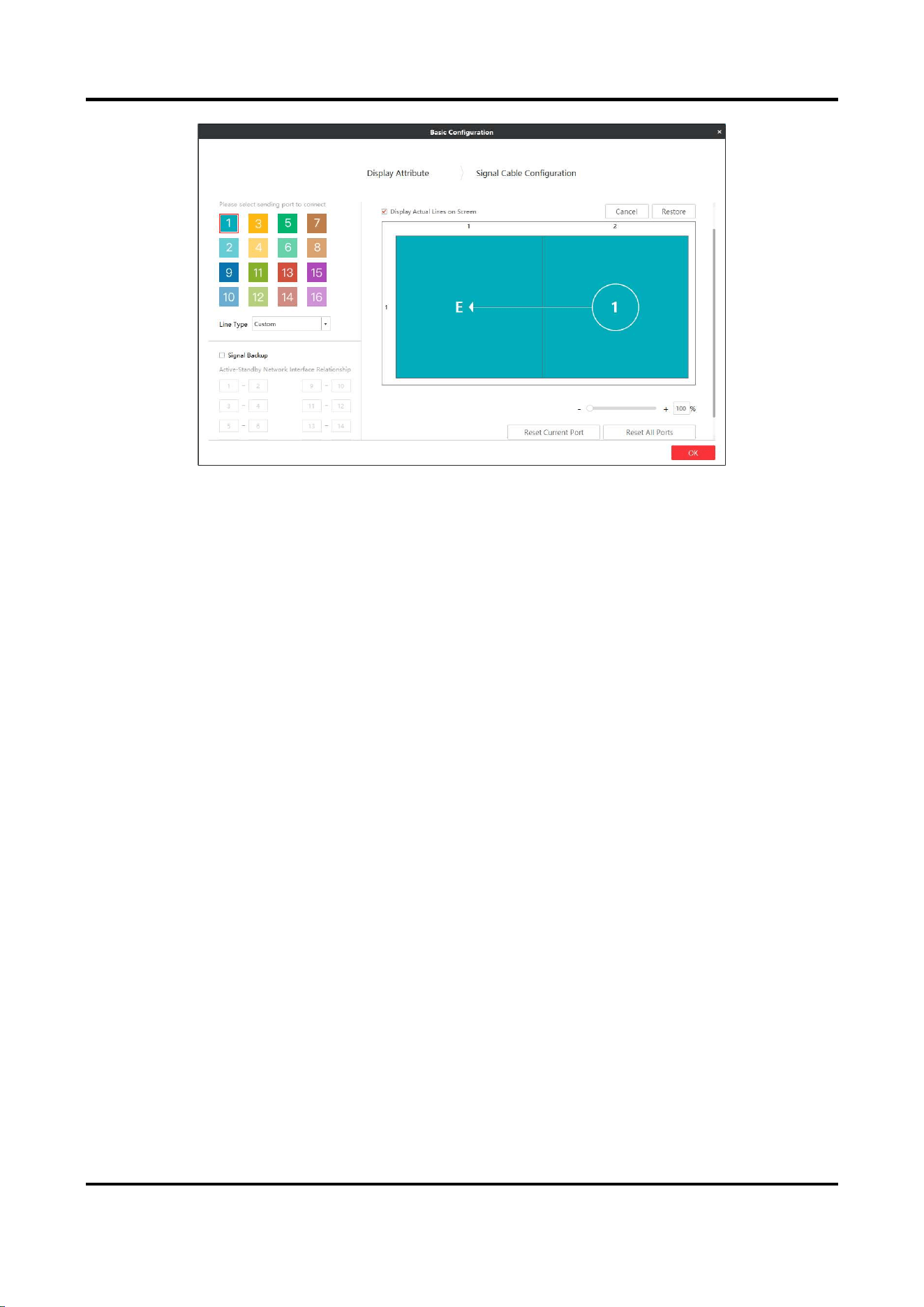
After configuring the screen scale, LED screen will show the signal cable connection. The
connection of signal cables set via the client should be consistent with that of the actual screen
connection.
1. Go to the Signal Cable Configuration interface.
– Click Next in the Display Attribute interface.
– Click Basic Configuration → Signal Cable Configuration.
2. Check Display Actual Lines on Screen. You need to connect the cable according to the position
prompt on the screen.
3. Select sending port below Please select sending port to connect.
Note
The location prompt of each screen will indicate you to connect the signal cable. If the position
prompt is 2-1, the screen is the first screen to connect to No. 2 sending port.
Full-Color LED Splicing Display Unit Installation Guide
60
Figure 4-4 Signal Cable Connection
4. Connect signal lines.
– Click the screen on the right side of the interface to connect signal lines.
– Select Line Type, and select starting port and end port on the right side of the interface.
5. Right click on the right side of the interface after connection.
6. Select Complete Signal Cable Connection.
7. Click OK.
4.4 Configure Screen Splicing
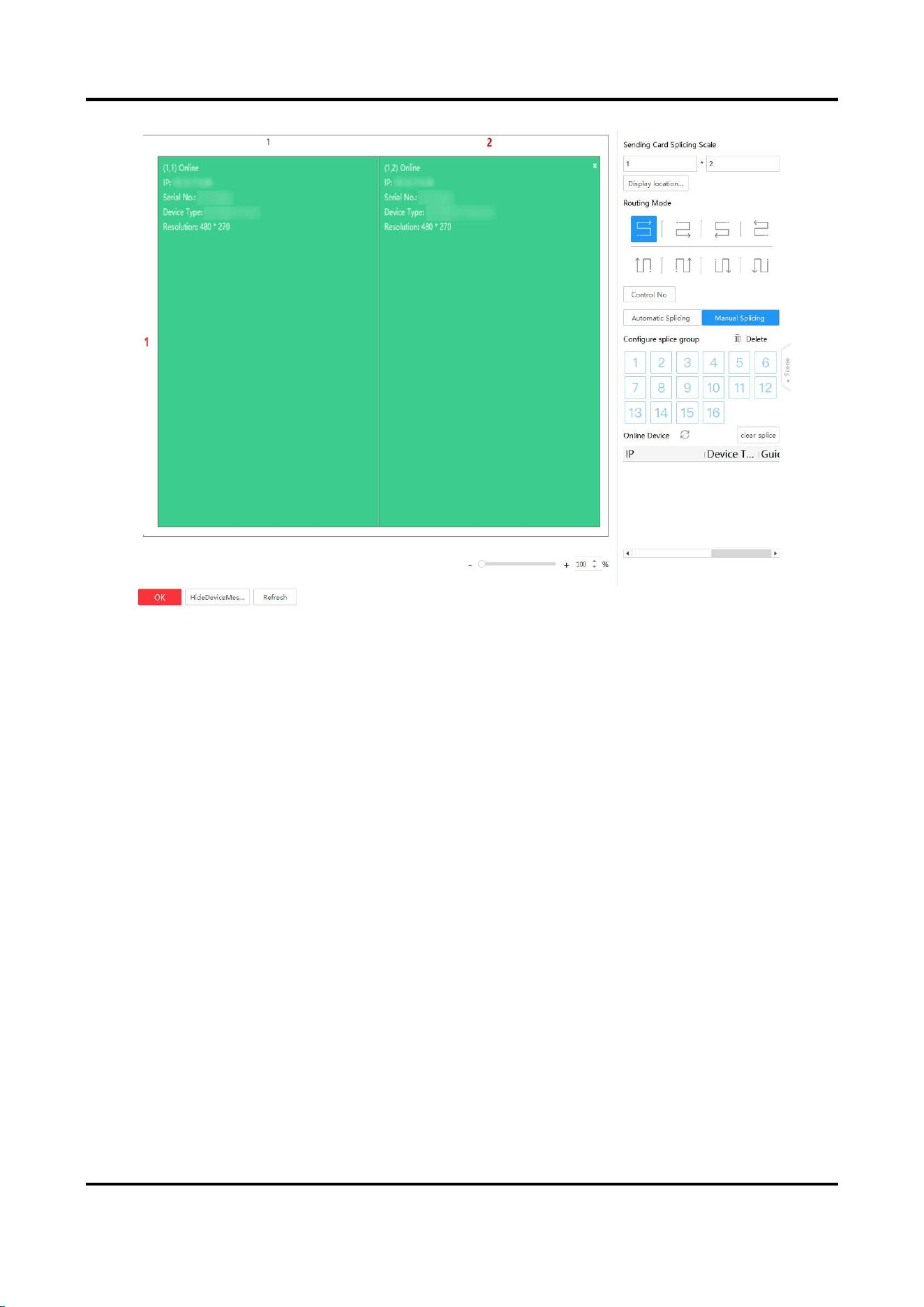
You can configure splicing scale and cabinet groups via manual splicing.
Steps
1. Go to Multi-screen Display Configuration > Manual Splicing.
Full-Color LED Splicing Display Unit Installation Guide
61
Figure 4-5 Screen Splicing Configuration
2. Click to choose the cabinets and add them to corresponding cabinet groups.
3. Click OK. The display will be set according to your splicing configuration.
4. Optional: Click Delete to remove the cabinets you do not need in the cabinet groups.
Full-Color LED Splicing Display Unit Installation Guide
62
Chapter 5 Installation Guide QR Code
Scan the QR code to read the installation guide online.
Figure 5-1 Installation Guide QR Code

UD30158B-C