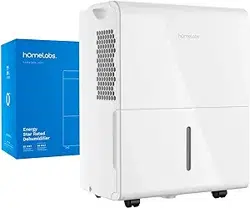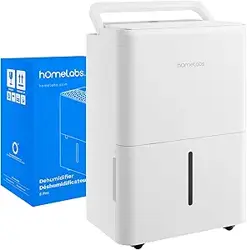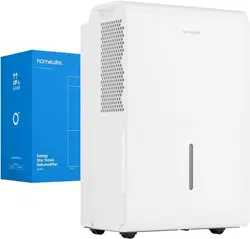
Energy
Star Rated
Dehumidifier
22 Pint, 50 Pint and
50 Pint with Pump
Thank you for purchasing our appliance.
Please be sure to read the entirety of
this user manual carefully prior to using
this appliance. If you have any questions
regarding the use of this product,
please contact Customer Service
at homelabs.com/help
or help@homelabs.com
Model Numbers:
HME1001
HME1003
HME1004
Before First Use
To prevent any internal damage, it is very important to
keep the units upright throughout its journey. Please leave it standing
upright and outside the box for 24 HOURS before plugging it in.
In the event this product malfunctions, or you believe it is
defective, please contact Customer Service at homelabs.com/help,
or [email protected] and hold onto the defective product
(pending further instruction). A defective product should
be clearly marked or stored where it cannot be used by mistake.
Failure to keep the product in its original quality from the time of
receipt may impede hOmeLabs’s ability to correct any legitimate
problem and may limit the extent to which hOmeLabs
may provide recourse.
Important Safety Instructions............................................
Parts Description.....................................................................
Operation.............................................................................
Care & Cleaning.......................................................................
Troubleshooting.......................................................................
FCC Regulatory Conformance...............................................
Warranty...................................................................................
Manufacturing Info..................................................................
Contact Us................................................................................
4–9
10
11–15
16
17
18
19
19
19
Table of Contents
on bringing home your new appliance!
Congratulations
Don’t forget to register your product at homelabs.com/reg
for updates, coupons, and other relevant information.
Although greatly appreciated, product registration is not
required to activate any warranty.

Before First Use
To prevent any internal damage, it is very important to
keep the units upright throughout its journey. Please leave it standing
upright and outside the box for 24 HOURS before plugging it in.
In the event this product malfunctions, or you believe it is
defective, please contact Customer Service at homelabs.com/help,
or help@homelabs.com and hold onto the defective product
(pending further instruction). A defective product should
be clearly marked or stored where it cannot be used by mistake.
Failure to keep the product in its original quality from the time of
receipt may impede hOmeLabs’s ability to correct any legitimate
problem and may limit the extent to which hOmeLabs
may provide recourse.
Important Safety Instructions............................................
Parts Description.....................................................................
Operation.............................................................................
Care & Cleaning.......................................................................
Troubleshooting.......................................................................
FCC Regulatory Conformance...............................................
Warranty...................................................................................
Manufacturing Info..................................................................
Contact Us................................................................................
4–9
10
11–15
16
17
18
19
19
19
Table of Contents
on bringing home your new appliance!
Congratulations
Don’t forget to register your product at homelabs.com/reg
for updates, coupons, and other relevant information.
Although greatly appreciated, product registration is not
required to activate any warranty.
4 5
To prevent injury to the user or other people and property damage, the following instructions must be followed
when using the Dehumidifier. Incorrect operation due to disregard of instructions may cause harm or damage.
1. Do not exceed the rating of the Power Outlet or connection device.
2. Do not operate or turn off the Dehumidifier by plugging in or unplugging the device.
Use the Control Panel instead.
3. Do not use if the Power Cord is broken or damaged.
4. Do not modify the Power Cord length or share the outlet with other appliances.
5. Do not touch the Plug with wet hands.
6. Do not install the Dehumidifier in a location that may be exposed to combustible gas.
7. Do not place the Dehumidifier near a heat source.
8. Disconnect the power if strange sounds, smell, or smoke comes from the Dehumidifier.
9. You should never try to modify, take apart, or repair the Dehumidifier by yourself.
10. Make sure to turn off and unplug the Dehumidifier before cleaning.
11. Do not use the Dehumidifier near flammable gas or combustibles, such as gasoline, benzene,
thinner, etc. If combustible gas accumulates around the Dehumidifier, it may cause fire.
12. Do not drink or use the water drained from the Dehumidifier.
13. Do not take the Water Bucket out during operation.
14. Do not use the Dehumidifier in small spaces.
15. Do not place the Dehumidifier in places where it may be splashed by water.
16. Place the Dehumidifier on a level, sturdy section of the floor.
17. Do not cover the intake or exhaust openings of the Dehumidifier with cloths or towels.
18. Do not clean the appliance with any chemicals or organic solvent, e.g., Ethyl acetate, gasoline.
19. This appliance is not intended for locations near to flammable or combustible gas.
20. Care should be taken when using the Dehumidifier in a room with the following persons: infants,
children and the elderly.
21. For people who are sensitive to humidity, do not set the humidity level too low on the Dehumidifier.
22. Never insert your finger or other foreign objects into grills or openings. Take special care to warn
children of these dangers.
23. Do not place a heavy object on the Power Cord and make sure that the cord is not compressed.
24. Do not climb on or sit on the Dehumidifier.
25. Always insert the filters securely. Make sure to clean the filter once every month.
26. If water enters the Dehumidifier, turn the Dehumidifier off and disconnect the power, contact Customer
Service in order to avoid a hazard.
27. Do not place flower vases or other water containers on top of the Dehumidifier.
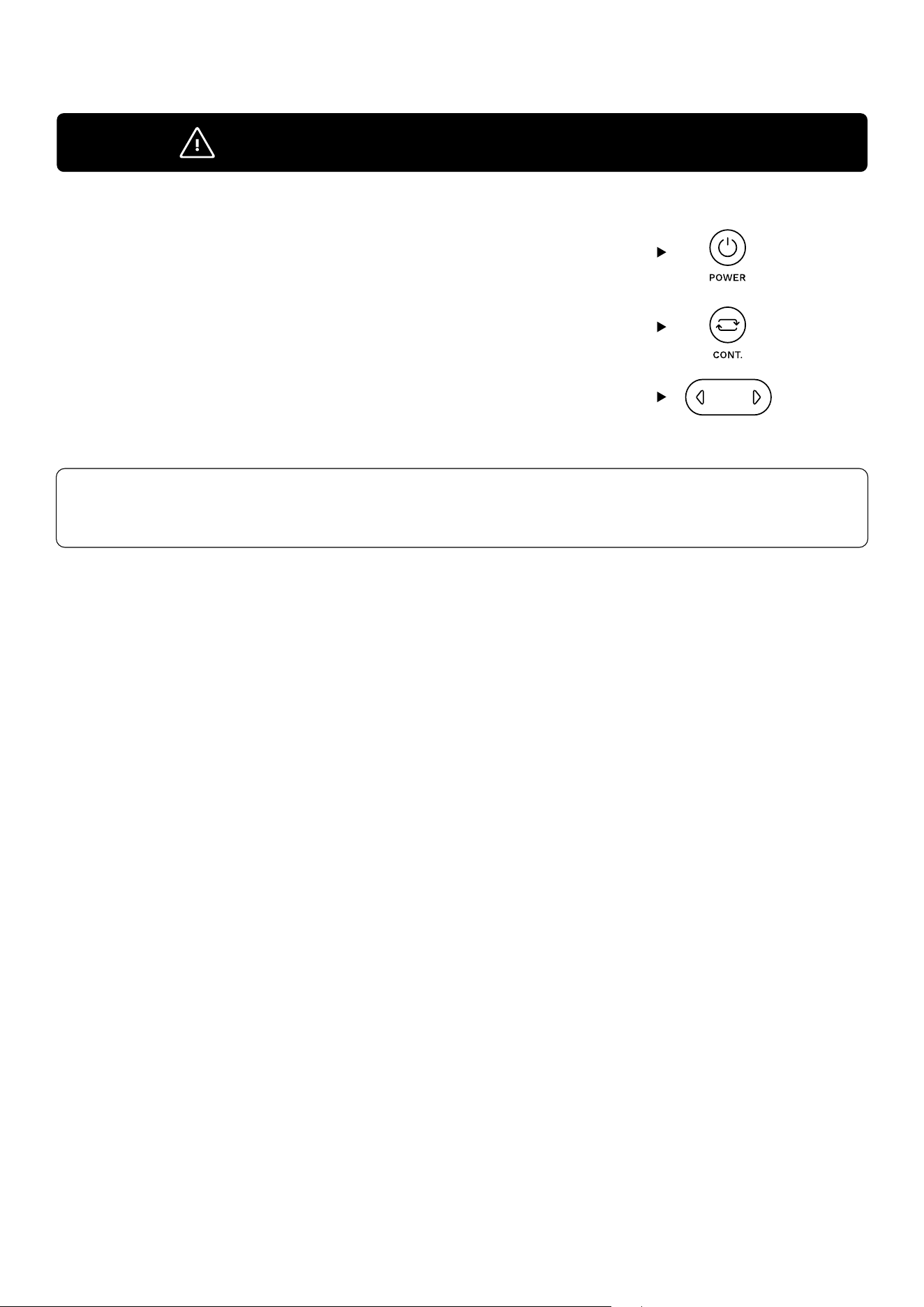
PLEASE NOTE:
This Dehumidifier defaults to
“Continuous” mode, disabling
use of the “Le/Right” buons.
To regain use of the buttons, confirm
“Continuous” mode is turned off.
TURN ON
Dehumidifier
TURN OFF
CONTINUOUS MODE
BEGIN USING
“LEFT”/”RIGHT” BUTTONS
IMPORTANT NOTICE FOR FIRST TIME USE
• The hOmeLabs nameplate is located on the rear panel of the Dehumidifier and
contains electrical and other technical data specific to this Dehumidifier.
• Be sure the Dehumidifier is properly grounded. To minimize shock and fire hazards,
proper grounding is important. This Power Cord is equipped with
a three-prong grounding Plug for protection against shock hazards.
• Your Dehumidifier must be used in a properly grounded wall socket. If your
wall socket is loose, not adequately grounded or protected by a time delay
fuse or circuit breaker, have a qualified electrician install the proper socket.
Ensure socket is accessible and you can easily plug and unplug
the unit after installation.
• Avoid fire hazard or electric shock. Do not use an extension cord or an adapter
plug. Do not remove any prong from the Power Cord.
ELECTRICAL INFORMATION
• This Dehumidifier should be used by children 8 years or older and persons with reduced physical, sensory or
mental capabilities or lack of experience and knowledge with supervision or instruction concerning use of the
Dehumidifier. Cleaning and user maintenance shall not be done by children without supervision. Children should
not play with or around the unit.
• If the supply cord is damaged, it must be replaced by qualified personnel. Please contact Customer Service
to avoid a hazard.
• Prior to cleaning or other maintenance, the Dehumidifier must be disconnected from the outlet.
• If the Dehumidifier is knocked over during use, turn off the Dehumidifier and unplug it from the main power
supply immediately. Visually inspect the Dehumidifier to ensure there is no damage. If you suspect the
Dehumidifier has been damaged, contact Customer Service for repair or replacement.
• During a thunderstorm, the power must be cut off to avoid damage to the Dehumidifier due to lightning.
• Do not run the cord under carpeting. Do not cover the cord with throw rugs, runners, or similar coverings. Do not route
the cord under furniture or appliances. Arrange the cord away from traffic area and where it will not be tripped over.
• To reduce the risk of fire or electric shock, do not use this Dehumidifier with any solid-state speed control
device.
• The Dehumidifier shall be installed in accordance with national wiring regulations.
• Contact Customer Service for repair or maintenance of this Dehumidifier.
CAUTION
Important Safety Instructions
• Servicing shall only be performed as recommended by the equipment manufacturer. Maintenance and repair
should only be performed by a licensed and qualified individual, who is authorized to handle flammable
refrigerants in accordance with industry standards.
• Do not modify the length of the Power Cord or use an extension cord to power the unit. Do not share the outlet
with other electrical appliances. Improper power supply can cause a fire or an electrical shock.
• Please follow the instruction carefully to handle, install, clear, service the Dehumidifier to avoid any damage, or
hazard. Flammable Refrigerant R32 is used within Dehumidifier.
• When maintaining or disposing the Dehumidifier, the refrigerant (R32) shall be recovered properly. Contact your
local sanitation department for guidance on disposing of the unit. Do not discharge refrigerant to air directly.
• Compliance with national gas regulations shall be observed.
• Keep ventilation openings clear of obstruction.
• The appliance shall be stored in a location that will not be damaged mechanically.
• Refrigerant is flammable. Do not modify the length of the Power Cord or use an extension cord to power the unit.
Do not share a single out with other electrical appliances. Improper power supply may generate spark/arcing
resulting in the possible ignition of the flammable refrigerants. Please follow the instruction carefully to store or
maintain the Dehumidifier to prevent mechanical damage from occurring.
• Do not use any unapproved or unauthorized products or processes to accelerate the defrosting process. Please
consult the instruction manual or Customer Support before cleaning.
• Avoid storing the unit near continuously operating ignition sources (for example: open flames, an operating gas
appliance) or ignition sources (for example: an operating electric heater).
• Do not pierce or burn.
R32 REFRIGENT SAFETY INSTRUCTIONS
important safety instructions
SAVE THESE INSTRUCTIONS
For Household Use Only
4 5
To prevent injury to the user or other people and property damage, the following instructions must be followed
when using the Dehumidifier. Incorrect operation due to disregard of instructions may cause harm or damage.
1. Do not exceed the rating of the Power Outlet or connection device.
2. Do not operate or turn off the Dehumidifier by plugging in or unplugging the device.
Use the Control Panel instead.
3. Do not use if the Power Cord is broken or damaged.
4. Do not modify the Power Cord length or share the outlet with other appliances.
5. Do not touch the Plug with wet hands.
6. Do not install the Dehumidifier in a location that may be exposed to combustible gas.
7. Do not place the Dehumidifier near a heat source.
8. Disconnect the power if strange sounds, smell, or smoke comes from the Dehumidifier.
9. You should never try to modify, take apart, or repair the Dehumidifier by yourself.
10. Make sure to turn off and unplug the Dehumidifier before cleaning.
11. Do not use the Dehumidifier near flammable gas or combustibles, such as gasoline, benzene,
thinner, etc. If combustible gas accumulates around the Dehumidifier, it may cause fire.
12. Do not drink or use the water drained from the Dehumidifier.
13. Do not take the Water Bucket out during operation.
14. Do not use the Dehumidifier in small spaces.
15. Do not place the Dehumidifier in places where it may be splashed by water.
16. Place the Dehumidifier on a level, sturdy section of the floor.
17. Do not cover the intake or exhaust openings of the Dehumidifier with cloths or towels.
18. Do not clean the appliance with any chemicals or organic solvent, e.g., Ethyl acetate, gasoline.
19. This appliance is not intended for locations near to flammable or combustible gas.
20. Care should be taken when using the Dehumidifier in a room with the following persons: infants,
children and the elderly.
21. For people who are sensitive to humidity, do not set the humidity level too low on the Dehumidifier.
22. Never insert your finger or other foreign objects into grills or openings. Take special care to warn
children of these dangers.
23. Do not place a heavy object on the Power Cord and make sure that the cord is not compressed.
24. Do not climb on or sit on the Dehumidifier.
25. Always insert the filters securely. Make sure to clean the filter once every month.
26. If water enters the Dehumidifier, turn the Dehumidifier off and disconnect the power, contact Customer
Service in order to avoid a hazard.
27. Do not place flower vases or other water containers on top of the Dehumidifier.
PLEASE NOTE:
This Dehumidifier defaults to
“Continuous” mode, disabling
use of the “Le/Right” buons.
To regain use of the buttons, confirm
“Continuous” mode is turned off.
TURN ON
Dehumidifier
TURN OFF
CONTINUOUS MODE
BEGIN USING
“LEFT”/”RIGHT” BUTTONS
IMPORTANT NOTICE FOR FIRST TIME USE
• The hOmeLabs nameplate is located on the rear panel of the Dehumidifier and
contains electrical and other technical data specific to this Dehumidifier.
• Be sure the Dehumidifier is properly grounded. To minimize shock and fire hazards,
proper grounding is important. This Power Cord is equipped with
a three-prong grounding Plug for protection against shock hazards.
• Your Dehumidifier must be used in a properly grounded wall socket. If your
wall socket is loose, not adequately grounded or protected by a time delay
fuse or circuit breaker, have a qualified electrician install the proper socket.
Ensure socket is accessible and you can easily plug and unplug
the unit after installation.
• Avoid fire hazard or electric shock. Do not use an extension cord or an adapter
plug. Do not remove any prong from the Power Cord.
ELECTRICAL INFORMATION
• This Dehumidifier should be used by children 8 years or older and persons with reduced physical, sensory or
mental capabilities or lack of experience and knowledge with supervision or instruction concerning use of the
Dehumidifier. Cleaning and user maintenance shall not be done by children without supervision. Children should
not play with or around the unit.
• If the supply cord is damaged, it must be replaced by qualified personnel. Please contact Customer Service
to avoid a hazard.
• Prior to cleaning or other maintenance, the Dehumidifier must be disconnected from the outlet.
• If the Dehumidifier is knocked over during use, turn off the Dehumidifier and unplug it from the main power
supply immediately. Visually inspect the Dehumidifier to ensure there is no damage. If you suspect the
Dehumidifier has been damaged, contact Customer Service for repair or replacement.
• During a thunderstorm, the power must be cut off to avoid damage to the Dehumidifier due to lightning.
• Do not run the cord under carpeting. Do not cover the cord with throw rugs, runners, or similar coverings. Do not route
the cord under furniture or appliances. Arrange the cord away from traffic area and where it will not be tripped over.
• To reduce the risk of fire or electric shock, do not use this Dehumidifier with any solid-state speed control
device.
• The Dehumidifier shall be installed in accordance with national wiring regulations.
• Contact Customer Service for repair or maintenance of this Dehumidifier.
CAUTION
Important Safety Instructions
• Servicing shall only be performed as recommended by the equipment manufacturer. Maintenance and repair
should only be performed by a licensed and qualified individual, who is authorized to handle flammable
refrigerants in accordance with industry standards.
• Do not modify the length of the Power Cord or use an extension cord to power the unit. Do not share the outlet
with other electrical appliances. Improper power supply can cause a fire or an electrical shock.
• Please follow the instruction carefully to handle, install, clear, service the Dehumidifier to avoid any damage, or
hazard. Flammable Refrigerant R32 is used within Dehumidifier.
• When maintaining or disposing the Dehumidifier, the refrigerant (R32) shall be recovered properly. Contact your
local sanitation department for guidance on disposing of the unit. Do not discharge refrigerant to air directly.
• Compliance with national gas regulations shall be observed.
• Keep ventilation openings clear of obstruction.
• The appliance shall be stored in a location that will not be damaged mechanically.
• Refrigerant is flammable. Do not modify the length of the Power Cord or use an extension cord to power the unit.
Do not share a single out with other electrical appliances. Improper power supply may generate spark/arcing
resulting in the possible ignition of the flammable refrigerants. Please follow the instruction carefully to store or
maintain the Dehumidifier to prevent mechanical damage from occurring.
• Do not use any unapproved or unauthorized products or processes to accelerate the defrosting process. Please
consult the instruction manual or Customer Support before cleaning.
• Avoid storing the unit near continuously operating ignition sources (for example: open flames, an operating gas
appliance) or ignition sources (for example: an operating electric heater).
• Do not pierce or burn.
R32 REFRIGENT SAFETY INSTRUCTIONS
important safety instructions
SAVE THESE INSTRUCTIONS
For Household Use Only
6 7
Important Safety Instructions
• Be aware! Refrigerants may not contain an odor. Contact Customer Support immediately if you believe your unit
has a refrigerant leak.
1. Transport of Equipment Containing Flammable Refrigerants
Check the local transport regulations.
2. Marking of Equipment Using Signs
Check the local regulations.
3. Disposal of Equipment Using Flammable Refrigerants
Check the national regulations.
4. Storage of Equipment
The storage of this equipment should be in accordance with the manufacturer’s instructions.
5. Storage of Packed (Unsold) Equipment
Storage package protection should be constructed such that mechanical damage to the equipment inside the
package will not cause a leak of the refrigerant charge. The maximum number of pieces of equipment permitted
to be stored together will be determined by local regulations.
6. Information on Servicing
1) Checks to the area
Before working on systems containing flammable refrigerants, it is necessary to ensure that the risk of
ignition is minimized. Comply with the following precautions before working on or repairing the refrigerating
system.
2) Work procedure
Work shall be undertaken under a controlled procedure to minimize the risk of a flammable gas or vapor
being present while the work is being performed.
3) General work area
All maintenance staff and other people working in the local area shall be instructed on the nature of
work being carried out. Work in confined spaces shall be avoided. The area around the workspace shall
be sectioned off. Ensure that the conditions within the area have been made safe through control of the
flammable material.
4) Checking for the presence of refrigerants
The area shall be checked with an appropriate refrigerant detector prior to and during work to ensure that
the technician is aware of potentially flammable atmospheres. Ensure that the leak detection equipment
being used is suitable for use with flammable refrigerants, i.e., non-sparking, adequately sealed, or
intrinsically safe.
5) Presence of a fire extinguisher
If any hot work is to be conducted on the refrigeration equipment or any associated parts, appropriate fire
extinguishing equipment shall be on hand. Be sure to have a dry powder or CO2 fire extinguisher adjacent to
the charging area.
6) No ignition sources
No person carrying out work in relation to a refrigeration system which involves exposing any pipe work that
contains or used to contain flammable refrigerant shall use any sources of ignition in such a manner that
may lead to the risk of fire or an explosion. All possible ignition sources including cigarette smoking should
be kept at a sufficient distance from the site of installation, repair, removal, and disposal, during which
flammable refrigerant can possibly be released to the surrounding space. Prior to work taking place, the area
around the equipment is to be surveyed to make sure that there are no flammable hazards or ignition risks.
No Smoking signs shall be displayed.
7) Ventilated area
Ensure that the area is an open space or that it is adequately ventilated before breaking into the system or
conducting any hot work. There should be a degree of continuous ventilation while the work is being carried
out. The ventilation should safely disperse any released refrigerant and preferably expel it externally into the
atmosphere.
8) Checks to the refrigeration equipment
Where electrical components are being changed, they shall be fit for the purpose and to the correct
specification. At all times, the manufacturer’s maintenance and service guidelines shall be followed. When in
doubt, consult Customer Service for assistance. The following checks shall be applied to installations using
flammable refrigerants:
The charge size is in accordance with the room size within which the parts containing refrigerants
are installed.
The ventilation machinery and outlets should operate adequately and should not obstructed; ifan indirect
refrigerating circuit is being used, the secondary circuit shall be checked for the presence of refrigerants.
Any marking to the equipment should continue to be visible and legible. Markings and signs that are illegible
shall be corrected.
Refrigeration pipes or components are installed in a position where they are unlikely to be exposed to any
substance which may corrode refrigerant containing components, unless the components are constructed of
materials which are inherently resistant to being corroded or are suitably protected against being corroded.
9) Checks to electrical devices
Repair and maintenance to electrical components shall include initial safety checks and component
inspection procedures. If a fault exists that could compromise safety, then no electrical supply shall be
connected to the circuit until it is satisfactorily dealt with. If the fault cannot be corrected immediately, but
it is necessary to continue operation, an adequate temporary solution shall be used. This shall be reported
to the owner of the equipment, so all parties are advised. Initial safety checks shall include:
Ensuring that capacitors are discharged: this shall be done in a safe manner to avoid possible sparking;
Ensuring that no live electrical components and wiring are exposed while charging, recovering, or purging the
system; Ensuring that there is continuity of earth bonding;
7. Repairs to Sealed Components
1) During repairs to sealed components, all electrical supplies shall be disconnected from the unit being
worked on prior to the removal of sealed covers and other parts (if any). If it is necessary to have an
electrical supply connected to the unit during servicing, then a permanently operating form of leak detection
shall be located at the most critical point to warn of a potentially hazardous situation.
2) Particular attention shall be paid to the following to ensure that when working on electrical components, the
casing is not altered in such a way that the level of protection is affected. This shall include damage
to the cables, an excessive number of connections, terminals not made to the original specification,
damage to seals, incorrect fitting of glands, etc.
Ensure that the unit is mounted securely.
Ensure that the seals or sealing materials have not been degraded to a point that they no longer serve the
purpose of preventing the ingress of flammable atmospheres. Replacement parts shall be in accordance with
the manufacturer’s specifications.
Important Safety Instructions
NOTE:
The use of silicon sealant may inhibit the effectiveness of some types of leak detection equipment.
Intrinsically safe components do not have to be isolated prior to working on them.
A2L
ISO 817
IMPORTANT NOTE: Read this manual
carefully before installing or operating your
new air conditioning unit. Keep this manual
for future reference.
CAUTION: Risk of fire/ flammable
materials

6 7
Important Safety Instructions
• Be aware! Refrigerants may not contain an odor. Contact Customer Support immediately if you believe your unit
has a refrigerant leak.
1. Transport of Equipment Containing Flammable Refrigerants
Check the local transport regulations.
2. Marking of Equipment Using Signs
Check the local regulations.
3. Disposal of Equipment Using Flammable Refrigerants
Check the national regulations.
4. Storage of Equipment
The storage of this equipment should be in accordance with the manufacturer’s instructions.
5. Storage of Packed (Unsold) Equipment
Storage package protection should be constructed such that mechanical damage to the equipment inside the
package will not cause a leak of the refrigerant charge. The maximum number of pieces of equipment permitted
to be stored together will be determined by local regulations.
6. Information on Servicing
1) Checks to the area
Before working on systems containing flammable refrigerants, it is necessary to ensure that the risk of
ignition is minimized. Comply with the following precautions before working on or repairing the refrigerating
system.
2) Work procedure
Work shall be undertaken under a controlled procedure to minimize the risk of a flammable gas or vapor
being present while the work is being performed.
3) General work area
All maintenance staff and other people working in the local area shall be instructed on the nature of
work being carried out. Work in confined spaces shall be avoided. The area around the workspace shall
be sectioned off. Ensure that the conditions within the area have been made safe through control of the
flammable material.
4) Checking for the presence of refrigerants
The area shall be checked with an appropriate refrigerant detector prior to and during work to ensure that
the technician is aware of potentially flammable atmospheres. Ensure that the leak detection equipment
being used is suitable for use with flammable refrigerants, i.e., non-sparking, adequately sealed, or
intrinsically safe.
5) Presence of a fire extinguisher
If any hot work is to be conducted on the refrigeration equipment or any associated parts, appropriate fire
extinguishing equipment shall be on hand. Be sure to have a dry powder or CO2 fire extinguisher adjacent to
the charging area.
6) No ignition sources
No person carrying out work in relation to a refrigeration system which involves exposing any pipe work that
contains or used to contain flammable refrigerant shall use any sources of ignition in such a manner that
may lead to the risk of fire or an explosion. All possible ignition sources including cigarette smoking should
be kept at a sufficient distance from the site of installation, repair, removal, and disposal, during which
flammable refrigerant can possibly be released to the surrounding space. Prior to work taking place, the area
around the equipment is to be surveyed to make sure that there are no flammable hazards or ignition risks.
No Smoking signs shall be displayed.
7) Ventilated area
Ensure that the area is an open space or that it is adequately ventilated before breaking into the system or
conducting any hot work. There should be a degree of continuous ventilation while the work is being carried
out. The ventilation should safely disperse any released refrigerant and preferably expel it externally into the
atmosphere.
8) Checks to the refrigeration equipment
Where electrical components are being changed, they shall be fit for the purpose and to the correct
specification. At all times, the manufacturer’s maintenance and service guidelines shall be followed. When in
doubt, consult Customer Service for assistance. The following checks shall be applied to installations using
flammable refrigerants:
The charge size is in accordance with the room size within which the parts containing refrigerants
are installed.
The ventilation machinery and outlets should operate adequately and should not obstructed; ifan indirect
refrigerating circuit is being used, the secondary circuit shall be checked for the presence of refrigerants.
Any marking to the equipment should continue to be visible and legible. Markings and signs that are illegible
shall be corrected.
Refrigeration pipes or components are installed in a position where they are unlikely to be exposed to any
substance which may corrode refrigerant containing components, unless the components are constructed of
materials which are inherently resistant to being corroded or are suitably protected against being corroded.
9) Checks to electrical devices
Repair and maintenance to electrical components shall include initial safety checks and component
inspection procedures. If a fault exists that could compromise safety, then no electrical supply shall be
connected to the circuit until it is satisfactorily dealt with. If the fault cannot be corrected immediately, but
it is necessary to continue operation, an adequate temporary solution shall be used. This shall be reported
to the owner of the equipment, so all parties are advised. Initial safety checks shall include:
Ensuring that capacitors are discharged: this shall be done in a safe manner to avoid possible sparking;
Ensuring that no live electrical components and wiring are exposed while charging, recovering, or purging the
system; Ensuring that there is continuity of earth bonding;
7. Repairs to Sealed Components
1) During repairs to sealed components, all electrical supplies shall be disconnected from the unit being
worked on prior to the removal of sealed covers and other parts (if any). If it is necessary to have an
electrical supply connected to the unit during servicing, then a permanently operating form of leak detection
shall be located at the most critical point to warn of a potentially hazardous situation.
2) Particular attention shall be paid to the following to ensure that when working on electrical components, the
casing is not altered in such a way that the level of protection is affected. This shall include damage
to the cables, an excessive number of connections, terminals not made to the original specification,
damage to seals, incorrect fitting of glands, etc.
Ensure that the unit is mounted securely.
Ensure that the seals or sealing materials have not been degraded to a point that they no longer serve the
purpose of preventing the ingress of flammable atmospheres. Replacement parts shall be in accordance with
the manufacturer’s specifications.
Important Safety Instructions
NOTE:
The use of silicon sealant may inhibit the effectiveness of some types of leak detection equipment.
Intrinsically safe components do not have to be isolated prior to working on them.
A2L
ISO 817
IMPORTANT NOTE: Read this manual
carefully before installing or operating your
new air conditioning unit. Keep this manual
for future reference.
CAUTION: Risk of fire/ flammable
materials

8 9
8. Repair to Intrinsically Safe Components
Do not apply any permanent inductive or capacitive loads to the circuit without ensuring that this will not exceed
the permissible voltage and current for the unit in use. Intrinsically safe components are the only types that can be
worked on while live and in the presence of a flammable atmosphere. The test apparatus shall be at the correct
rating. Replace the components only with parts specified by the manufacturer. Other parts may result in the ignition
of refrigerant in the atmosphere from a leak.
9. Cabling
Check that the cabling will not be subject to wear, corrosion, excessive pressure, vibration, sharp edges, or any other
adverse environmental effects. The check shall also consider the effects of aging or continual vibration from sources
such as compressors or fan.
10. Detection of Flammable Refrigerants
Under no circumstances shall potential sources of ignition be used in searching for or detecting refrigerant leaks.
A halide torch (or any other detector using a naked flame) shall not be used.
11. Leak Detection Methods
The following leak detection methods are deemed acceptable for systems containing flammable refrigerants.
Electronic leak detectors shall be used to detect flammable refrigerants, but the sensitivity may not be
adequate, or may need re-calibration. (Detection equipment shall be calibrated in a refrigerant-free area.)
Ensure that the detector is not a potential source of ignition and is suitable for the refrigerant used. Leak
detection equipment shall be set at a percentage of the LFL of the refrigerant and shall be calibrated to the
refrigerant employed and the appropriate percentage of gas (25% maximum) is confirmed. Leak detection fluids
are suitable for use with most refrigerants, but the use of detergents containing chlorine shall be avoided as
the chlorine may react with the refrigerant and corrode the copper pipework. If a leak is suspected, all naked
flames shall be removed/extinguished. If a refrigerant leak is found (which requires brazing), all refrigerants
shall be recovered from the system, or isolated (by means of shut off valves) in a part of the system that is
situated remotely from the leak. Removal of refrigerant shall be according to Removal and evacuation.
12. Removal and Evacuation
When breaking into the refrigerant circuit to make repairs or for any other purpose, conventional
procedures shall be used. Considering flammability, follow best practices. Adherence to the
following procedures is a must:
• Removing the refrigerant following local and national regulations;
• Purging the circuit with inert gas;
• Evacuation;
• Purging again with inert gas;
• Opening the circuit by cutting or brazing;
The refrigerant charge shall be recovered into the correct recovery cylinders if venting is not allowed by
local and national codes. For appliances containing flammable refrigerants, the system shall be purged with
oxygen-free nitrogen to render the appliance safe for flammable refrigerants. This process might need to
be repeated several times. Compressed air or oxygen shall not be used for purging refrigerant systems. For
appliances containing flammable refrigerants, refrigerants purging shall be achieved by breaking the vacuum
in the system with oxygen-free nitrogen and continuing to fill until the working pressure is achieved, then
venting to atmosphere, and finally pulling down to a vacuum. This process shall be repeated until no refrigerant
is within the system. When the final oxygen-free nitrogen charge is used, the system shall be vented down to
atmospheric pressure to enable work to take place. Ensure that the outlet for the vacuum pump is not
close to any potential ignition sources and that ventilation is available.
13. Charging Procedures
In addition to conventional charging procedures, the following requirements shall be followed. Ensure that
contamination of different refrigerants does not occur when using the charging equipment. Hoses or lines
shall be as short as possible to minimize the amount of refrigerant contained in them.
Cylinders shall be kept in an appropriate position according to the instructions.
Ensure that the refrigeration system is earthed before charging the system with the refrigerant.
Label the system when the charging is complete (in case it has not been labeled yet).
Extreme care shall be taken to avoid overfilling the refrigeration system.
Important Safety Instructions Important Safety Instructions
CONTROL PANEL (CONT.)
• Become familiar with the equipment and its operation.
• Isolate the system electrically.
• Before attempting the procedure, ensure that:
Mechanical handling equipment is available, if required, for handling refrigerant cylinders; Allpersonal protective
equipment is available and being used correctly;
The recovery process is always supervised by a competent person and recovery equipment and cylinders conform
to the required standards.
• Pump down the refrigerant system, if possible.
• If a vacuum is not possible, make a manifold so that refrigerants can be removed from various
parts of the system.
• Make sure that the cylinder is situated on the scales before recovery takes place.
• Start the recovery machine and operate in accordance with the manufacturer’s instructions.
• Do not overfill the cylinders. (No more than 80% volume liquid charge).
• Do not exceed the maximum working pressure of the cylinder, even temporarily.
• When the cylinders have been filled correctly and the process is completed, make sure that
the cylinders and the equipment are removed from the site promptly and all isolation valves
on the equipment are closed off.
• Recovered refrigerant shall not be charged into another refrigeration system unless it has
been cleaned and checked.
15. Labeling
The unit shall be labeled stating that it has been decommissioned and emptied of the refrigerant.
The label shall be dated and signed. Ensure that there are labels on the unit stating that
it contains flammable refrigerants.
16. Recovery
When removing the refrigerant from a system, either for servicing or decommissioning, it is recommended that all
refrigerants are removed safely.
When transferring the refrigerant into the cylinders, ensure that only appropriate refrigerant recovery cylinders are
used. Ensure that the correct number of cylinders for holding the total system charge is available. All cylinders to
be used are designated for the recovered refrigerant and labeled for that refrigerant (i.e., special cylinders refrigerant
recovery). Cylinders shall be complete with pressure relief valves and associated shut-off valves in good working
order. Empty recovery cylinders should be evacuated and, if possible, cooled before the recovery occurs.
The recovery equipment shall be in good working order with a set of instructions concerning the equipment that
is at hand and shall be suitable for the recovery of flammable refrigerants. In addition, a set of calibrated weighing
scales shall be available and in good working order. Hoses shall be complete with leak-free disconnect couplings and
in good condition. Before using the recovery machine, check that it is in satisfactory working order, has been properly
maintained, and that any associated electrical components are sealed to prevent ignition if a refrigerant is released.
Consult Customer Service when in doubt.
The recovered refrigerant shall be returned to the refrigerant supplier in the correct recovery cylinder, and the
relevant Waste Transfer Note arranged. Do not mix refrigerants in recovery units and especially not in cylinders. If the
compressors or the compressor oils are to be removed, ensure that they have been evacuated to an acceptable level
so that the flammable refrigerant does not remain within the lubricant. The evacuation process shall be carried out
prior to returning the compressor to the suppliers. Only electric heating to the compressor body shall be employed
to accelerate this process. When oil is drained from the system, it shall be carried out safely.
Prior to recharging the system, the pressure test with OFN must first be conducted.
The system leak test shall be performed upon completion of charging, but should be done prior
to commissioning. A follow up leak test shall be carried out before leaving the site.
14. Decommissioning
Before carrying out this procedure, it is essential that the technician is completely familiar with
the equipment and all necessary details. It is good practice that all refrigerants be recovered safely.
Prior to carrying out this task, an oil and refrigerant sample shall be taken in case analysis is
required before reusing the reclaimed refrigerant. It is essential that electrical power is available
before this task commences.

8 9
8. Repair to Intrinsically Safe Components
Do not apply any permanent inductive or capacitive loads to the circuit without ensuring that this will not exceed
the permissible voltage and current for the unit in use. Intrinsically safe components are the only types that can be
worked on while live and in the presence of a flammable atmosphere. The test apparatus shall be at the correct
rating. Replace the components only with parts specified by the manufacturer. Other parts may result in the ignition
of refrigerant in the atmosphere from a leak.
9. Cabling
Check that the cabling will not be subject to wear, corrosion, excessive pressure, vibration, sharp edges, or any other
adverse environmental effects. The check shall also consider the effects of aging or continual vibration from sources
such as compressors or fan.
10. Detection of Flammable Refrigerants
Under no circumstances shall potential sources of ignition be used in searching for or detecting refrigerant leaks.
A halide torch (or any other detector using a naked flame) shall not be used.
11. Leak Detection Methods
The following leak detection methods are deemed acceptable for systems containing flammable refrigerants.
Electronic leak detectors shall be used to detect flammable refrigerants, but the sensitivity may not be
adequate, or may need re-calibration. (Detection equipment shall be calibrated in a refrigerant-free area.)
Ensure that the detector is not a potential source of ignition and is suitable for the refrigerant used. Leak
detection equipment shall be set at a percentage of the LFL of the refrigerant and shall be calibrated to the
refrigerant employed and the appropriate percentage of gas (25% maximum) is confirmed. Leak detection fluids
are suitable for use with most refrigerants, but the use of detergents containing chlorine shall be avoided as
the chlorine may react with the refrigerant and corrode the copper pipework. If a leak is suspected, all naked
flames shall be removed/extinguished. If a refrigerant leak is found (which requires brazing), all refrigerants
shall be recovered from the system, or isolated (by means of shut off valves) in a part of the system that is
situated remotely from the leak. Removal of refrigerant shall be according to Removal and evacuation.
12. Removal and Evacuation
When breaking into the refrigerant circuit to make repairs or for any other purpose, conventional
procedures shall be used. Considering flammability, follow best practices. Adherence to the
following procedures is a must:
• Removing the refrigerant following local and national regulations;
• Purging the circuit with inert gas;
• Evacuation;
• Purging again with inert gas;
• Opening the circuit by cutting or brazing;
The refrigerant charge shall be recovered into the correct recovery cylinders if venting is not allowed by
local and national codes. For appliances containing flammable refrigerants, the system shall be purged with
oxygen-free nitrogen to render the appliance safe for flammable refrigerants. This process might need to
be repeated several times. Compressed air or oxygen shall not be used for purging refrigerant systems. For
appliances containing flammable refrigerants, refrigerants purging shall be achieved by breaking the vacuum
in the system with oxygen-free nitrogen and continuing to fill until the working pressure is achieved, then
venting to atmosphere, and finally pulling down to a vacuum. This process shall be repeated until no refrigerant
is within the system. When the final oxygen-free nitrogen charge is used, the system shall be vented down to
atmospheric pressure to enable work to take place. Ensure that the outlet for the vacuum pump is not
close to any potential ignition sources and that ventilation is available.
13. Charging Procedures
In addition to conventional charging procedures, the following requirements shall be followed. Ensure that
contamination of different refrigerants does not occur when using the charging equipment. Hoses or lines
shall be as short as possible to minimize the amount of refrigerant contained in them.
Cylinders shall be kept in an appropriate position according to the instructions.
Ensure that the refrigeration system is earthed before charging the system with the refrigerant.
Label the system when the charging is complete (in case it has not been labeled yet).
Extreme care shall be taken to avoid overfilling the refrigeration system.
Important Safety Instructions Important Safety Instructions
CONTROL PANEL (CONT.)
• Become familiar with the equipment and its operation.
• Isolate the system electrically.
• Before attempting the procedure, ensure that:
Mechanical handling equipment is available, if required, for handling refrigerant cylinders; Allpersonal protective
equipment is available and being used correctly;
The recovery process is always supervised by a competent person and recovery equipment and cylinders conform
to the required standards.
• Pump down the refrigerant system, if possible.
• If a vacuum is not possible, make a manifold so that refrigerants can be removed from various
parts of the system.
• Make sure that the cylinder is situated on the scales before recovery takes place.
• Start the recovery machine and operate in accordance with the manufacturer’s instructions.
• Do not overfill the cylinders. (No more than 80% volume liquid charge).
• Do not exceed the maximum working pressure of the cylinder, even temporarily.
• When the cylinders have been filled correctly and the process is completed, make sure that
the cylinders and the equipment are removed from the site promptly and all isolation valves
on the equipment are closed off.
• Recovered refrigerant shall not be charged into another refrigeration system unless it has
been cleaned and checked.
15. Labeling
The unit shall be labeled stating that it has been decommissioned and emptied of the refrigerant.
The label shall be dated and signed. Ensure that there are labels on the unit stating that
it contains flammable refrigerants.
16. Recovery
When removing the refrigerant from a system, either for servicing or decommissioning, it is recommended that all
refrigerants are removed safely.
When transferring the refrigerant into the cylinders, ensure that only appropriate refrigerant recovery cylinders are
used. Ensure that the correct number of cylinders for holding the total system charge is available. All cylinders to
be used are designated for the recovered refrigerant and labeled for that refrigerant (i.e., special cylinders refrigerant
recovery). Cylinders shall be complete with pressure relief valves and associated shut-off valves in good working
order. Empty recovery cylinders should be evacuated and, if possible, cooled before the recovery occurs.
The recovery equipment shall be in good working order with a set of instructions concerning the equipment that
is at hand and shall be suitable for the recovery of flammable refrigerants. In addition, a set of calibrated weighing
scales shall be available and in good working order. Hoses shall be complete with leak-free disconnect couplings and
in good condition. Before using the recovery machine, check that it is in satisfactory working order, has been properly
maintained, and that any associated electrical components are sealed to prevent ignition if a refrigerant is released.
Consult Customer Service when in doubt.
The recovered refrigerant shall be returned to the refrigerant supplier in the correct recovery cylinder, and the
relevant Waste Transfer Note arranged. Do not mix refrigerants in recovery units and especially not in cylinders. If the
compressors or the compressor oils are to be removed, ensure that they have been evacuated to an acceptable level
so that the flammable refrigerant does not remain within the lubricant. The evacuation process shall be carried out
prior to returning the compressor to the suppliers. Only electric heating to the compressor body shall be employed
to accelerate this process. When oil is drained from the system, it shall be carried out safely.
Prior to recharging the system, the pressure test with OFN must first be conducted.
The system leak test shall be performed upon completion of charging, but should be done prior
to commissioning. A follow up leak test shall be carried out before leaving the site.
14. Decommissioning
Before carrying out this procedure, it is essential that the technician is completely familiar with
the equipment and all necessary details. It is good practice that all refrigerants be recovered safely.
Prior to carrying out this task, an oil and refrigerant sample shall be taken in case analysis is
required before reusing the reclaimed refrigerant. It is essential that electrical power is available
before this task commences.
10 11
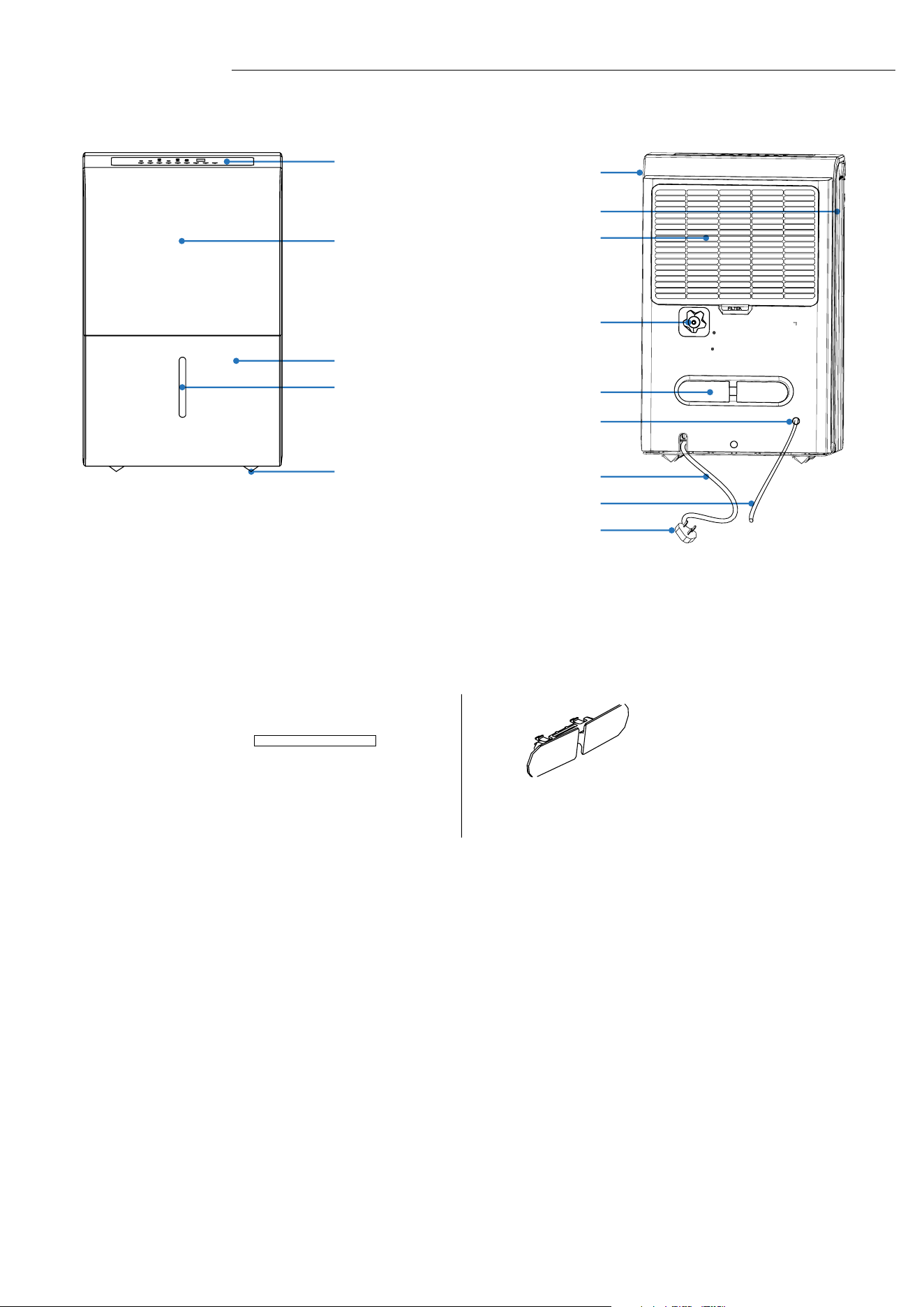
Control Panel
FRONT
ACCESSORIES
(Placed in the Bucket of the Dehumidifier)
REAR
Panel
Bucket
Caster
Pump Drain Hose (1 pc)
(Only for the Dehumidifier with Pump Feature)
Power Cord Storage
Bracket (1 pc)
Water Level
Window
Handle
(Both Sides)
Air intake Grille / Air Filter
Continuous Drain
Hose Outlet
Power Cord
Storage Bracket
Pump Drain Hose Outlet
(Only Applicable to
HME1004)
Power Cord
Pump Drain Hose
Power Plug
Air Outlet Grille
• Auto Shut Off
When the Bucket is full and/or the humidity
setting is reached, the Dehumidifier will
automatically shut off.
• Power on Delay
To avoid any damage to the Dehumidifier, the
Dehumidifier will not start operation following
a complete cycle until after three (3) minutes.
Operation will automatically start after
three (3) minutes.
• This unit may have been tilted or placed upside down during
shipping. To ensure this device works properly, allow unit
to sit upright for at least 24 hours before initial use.
• This Dehumidifier is designed to operate with a working
environment between 41°F (5°C) and 90°F (32°C).
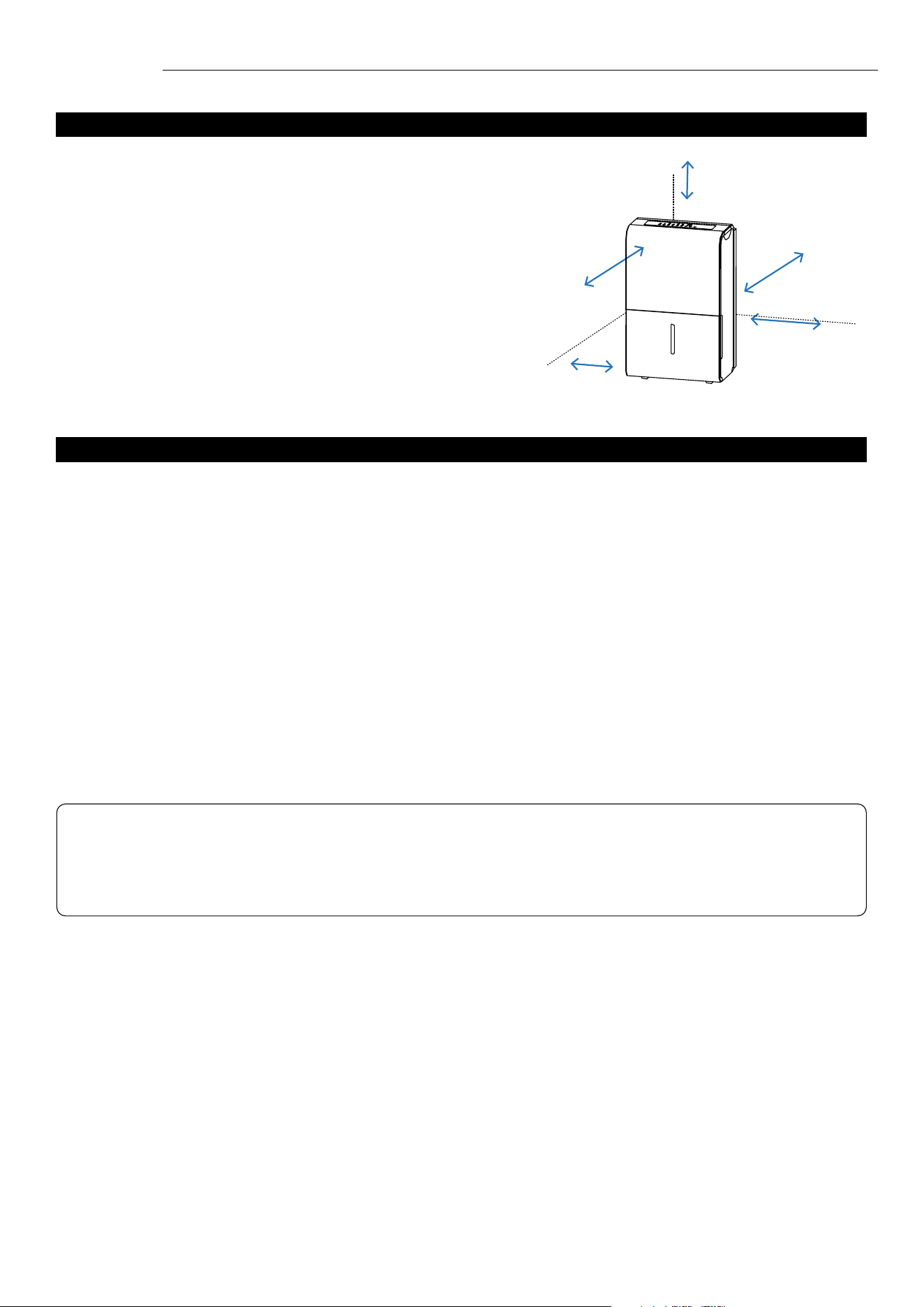
Casters (installed at four points on the bottom
of the Dehumidifier)
• Do not force Casters to move over carpet, or move
the Dehumidifier with water in the Bucket.
(The Dehumidifier may tip over and spill water.)
PLACEMENT
SMART FUNCTIONS
• Auto Defrost
When frost builds up on the evaporator coils, the
compressor will cycle off and the fan will continue
to run until the frost disappears.
• Auto-Restart
If the Dehumidifier shuts off unexpectedly due to
power being cut, the Dehumidifier will restart with
the previous function setting automatically when
the power resumes.
• Bucket Full Indicator Light
The Full indicator glows when the Bucket is
ready to be emptied.
More than
7.9 in (20 cm)
More than
7.9 in (20 cm)
More than
7.9 in (20 cm)
More than
15.7 in (40 cm)
More than
15.75 in (40 cm)
NOTE:
All the illustrations in the manual are for explanation purpose only. Your Dehumidifier may vary slightly.
The design and specifications are subject to change without prior notice for product improvement.
Consult Customer Service for details.
Parts Description Operation
10 11
Control Panel
FRONT
ACCESSORIES
(Placed in the Bucket of the Dehumidifier)
REAR
Panel
Bucket
Caster
Pump Drain Hose (1 pc)
(Only for the Dehumidifier with Pump Feature)
Power Cord Storage
Bracket (1 pc)
Water Level
Window
Handle
(Both Sides)
Air intake Grille / Air Filter
Continuous Drain
Hose Outlet
Power Cord
Storage Bracket
Pump Drain Hose Outlet
(Only Applicable to
HME1004)
Power Cord
Pump Drain Hose
Power Plug
Air Outlet Grille
• Auto Shut Off
When the Bucket is full and/or the humidity
setting is reached, the Dehumidifier will
automatically shut off.
• Power on Delay
To avoid any damage to the Dehumidifier, the
Dehumidifier will not start operation following
a complete cycle until after three (3) minutes.
Operation will automatically start after
three (3) minutes.
• This unit may have been tilted or placed upside down during
shipping. To ensure this device works properly, allow unit
to sit upright for at least 24 hours before initial use.
• This Dehumidifier is designed to operate with a working
environment between 41°F (5°C) and 90°F (32°C).
Casters (installed at four points on the bottom
of the Dehumidifier)
• Do not force Casters to move over carpet, or move
the Dehumidifier with water in the Bucket.
(The Dehumidifier may tip over and spill water.)
PLACEMENT
SMART FUNCTIONS
• Auto Defrost
When frost builds up on the evaporator coils, the
compressor will cycle off and the fan will continue
to run until the frost disappears.
• Auto-Restart
If the Dehumidifier shuts off unexpectedly due to
power being cut, the Dehumidifier will restart with
the previous function setting automatically when
the power resumes.
• Bucket Full Indicator Light
The Full indicator glows when the Bucket is
ready to be emptied.
More than
7.9 in (20 cm)
More than
7.9 in (20 cm)
More than
7.9 in (20 cm)
More than
15.7 in (40 cm)
More than
15.75 in (40 cm)
NOTE:
All the illustrations in the manual are for explanation purpose only. Your Dehumidifier may vary slightly.
The design and specifications are subject to change without prior notice for product improvement.
Consult Customer Service for details.
Parts Description Operation
12 13
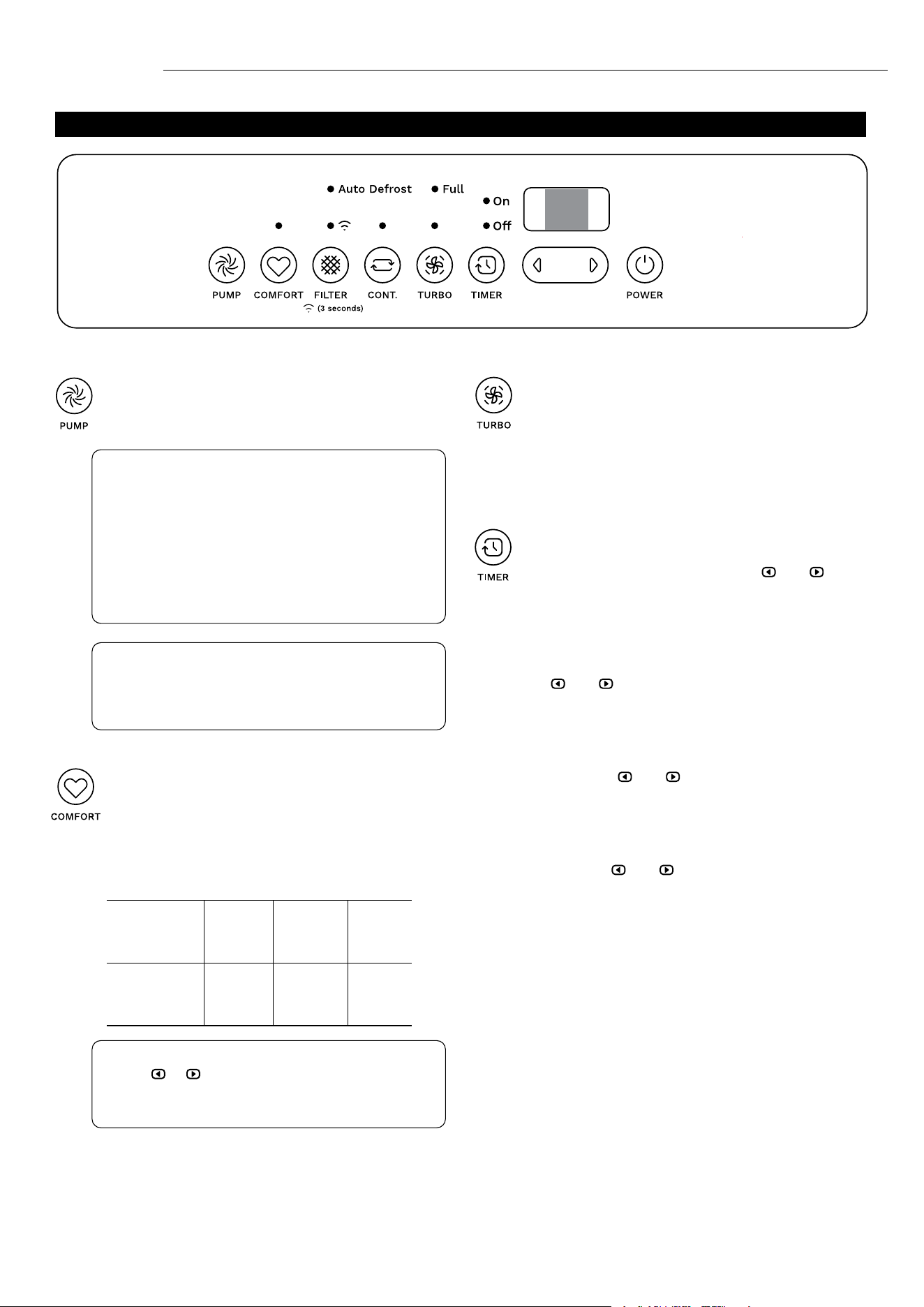
CONTROL PANEL
“Timer” buon
Press to set an “Auto On” or an “Auto Off” timer
(0–24 hours) in conjunction with the
and
buttons. The timer runs only one cycle, thus
remember to set a timer before next time’s use.
“Pump” buon (Only applicable to HME1004)
Press to activate the “Pump” operation.
“Turbo” buon
Controls the fan speed. Press to select
either “High” or “Normal” fan speed. Set
the fan control to “High” for maximum
moisture removal When the humidity has
been reduced and quiet operation is
preferred, set the fan control to “Normal”.
“Le”/”Right” buons
“Humidity Set Control” buons
• The humidity level can be set within a range
of 35% RH (Relative Humidity) to 85% RH
(Relative Humidity) in 5% increments.
• For drier air, press the
button and set to
a lower percent value (%).
For damper air, press the
button and set
a higher percent value (%).
“Timer Set Control” buons
• Press to initiate the auto start and “Auto
Stop” feature, in conjunction with
the
and buttons.
Indicator Lights
• ON .....................
Timer ON light
• OFF ...................
Timer OFF light
• FULL .................
The water tank is full and should be emptied
• DEFROST .........
The appliance is on “Defrost” mode
CONTROL PANEL (CONT.)
LED Display
Shows the set % humidity level from 35% to 85%
or auto start/stop time (0~24) while setting, then
shows the actual (±5% accuracy) room % humidity
level in a range of 30% RH (Relative Humidity) to
90% RH (Relative Humidity).
Error Codes:
AS – Humidity sensor error
ES – Temperature sensor error
Protection Codes:
P2 – Bucket is full or Bucket is not in right
position.
Empty the Bucket and replace it in the right
position.
Eb – Bucket is removed or not in right position.
Replace the Bucket in the right position.
(Only applicable to the unit with “Pump”
feature.)
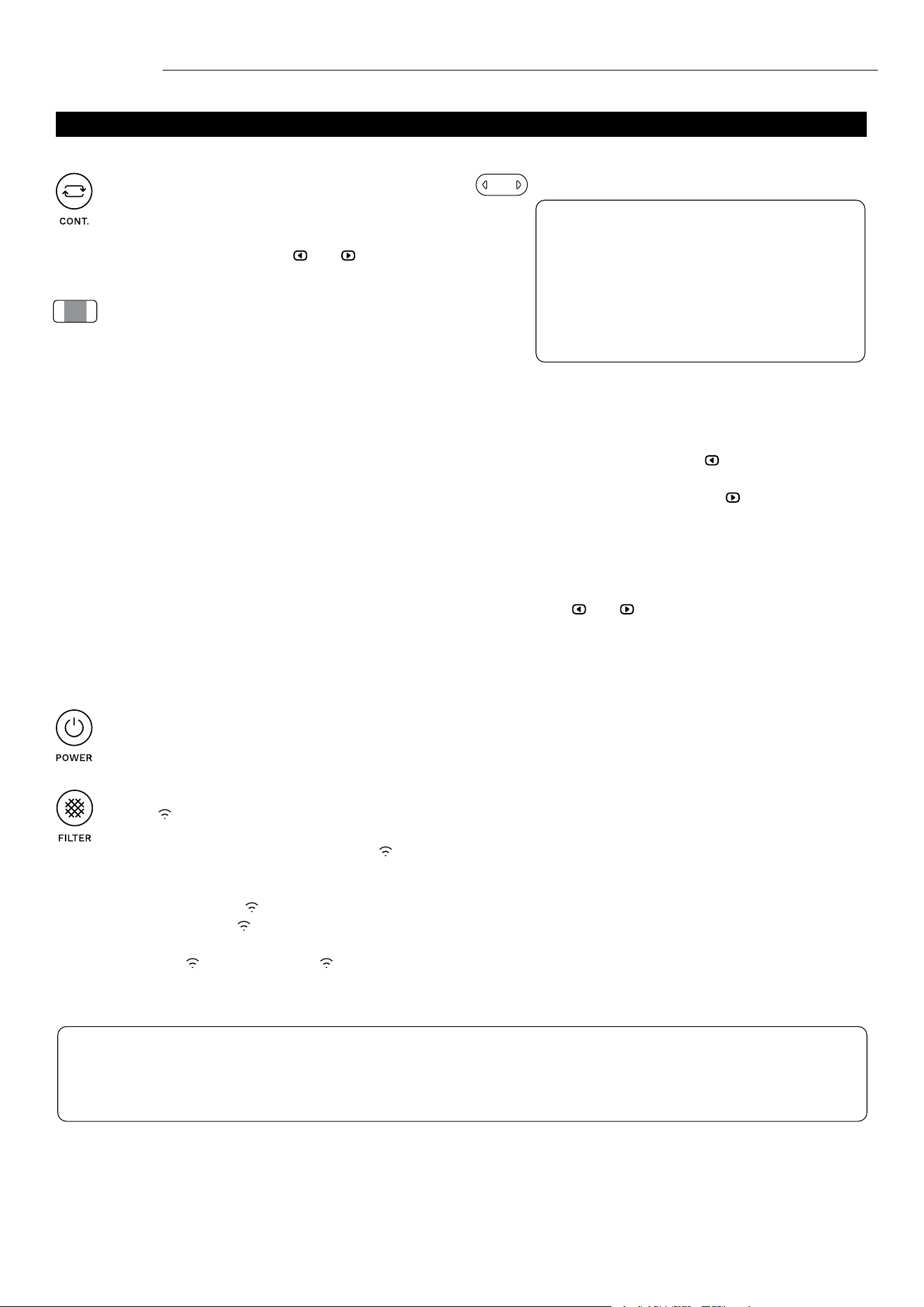
“Power” buon
Press to turn the Dehumidifier on and off.
“Comfort” buon
Press this button to turn the comfort function
“On/Off”. Under this mode, the humidity cannot
be adjusted manually but will be preset to a
recommended comfortable level based on the
ambient temperature. The level will be
controlledas per below table:
Ambient <65°F 65 –7 7 °F >77 °F
Relative
Humidity
55% 50% 45%
Operation Operation
NOTE:
Press or button, the “Comfort”
mode will be canceled, and the humidity
level can be adjusted.
NOTE:
Before starting Pump, make sure the
Pump Drain Hose is attached, the
continuous Drain Hose is removed and the
plastic cover of the Continuous Drain Hose
Outlet is replaced tightly. When the Bucket
is full, the Pump starts to work. Refer
to the next pages for removing
the collected water.
NOTE:
It needs time before water was pumped
at the beginning.
“Continuous” buon
Press to activate the continuous dehumidifying
operation. The appliance will work continuously
and will not stop except that the Bucket is full.
In “Continuous” mode, the
and buttons
are locked.
“Filter” buon
“Filter”
button and light combine Wi-fi Pairing
and Filter Cleaning reminder features. To enter
pairing mode, please press the “Filter”
button for
3 seconds. Please refer to the Pairing Instructions
and APP for more details. Once the product is paired
and turned on, the “
” (clean filter light) will be on
continuously. The “
” light will flash after 250 hours
of operation. To reset after cleaning the Filter, press
the “Filter”
button and the “ ” light will be on
continuously if the product turned on.
NOTE:
When the Dehumidifier is first turned on,
it will go on “Continuous” mode by
default. This will disable use of the
“Left/Right” buttons. Make sure
to turn off “Continuous” mode to
regain function in these buttons.
• After plugging in the appliance, press “Timer”
button, the “Timer Off” indicator will light up,
meaning the “Auto Off” timer setting is activated.
Use
and buttons to set the value of time you
want to shut down the appliance. The one-off “Auto
Off” timer setting is finished.
• Press “Timer” button again, the “Timer On” indicator
will light up, meaning the “Auto On” timer setting is
activated. Use
and buttons to set the value of
time you want to turn on the appliance next time.
The one-off “Auto Off” timer setting is finished.
• To change the timer settings, repeat the above
operations.
• Press or hold
and buttons to change the “Auto
Time” by 0.5 hour increments, up to 10 hours, then
at 1 hour increments up to 24 hours. The control will
count down the time remaining until start.
• The selected time will register in 5 seconds and the
system will automatically revert back to display the
previous humidity setting.
• To cancel a “Timer”, adjust the “Timer” value to
0.0. The corresponding timer indicator will light
off, meaning the timer is canceled. Another way
to cancel a “Timer” is restart the appliance, the
one-off timer will also become invalid.
• When the Bucket is full, the screen displays “P2”
error code, the appliance will then shut down
automatically. Both the “Auto On” / “Auto Off”
timer will be canceled.
NOTE: When one of the above malfunctions occurs, turn off the Dehumidifier, and check for any obstructions.
Restart the Dehumidifier, if the malfunction is still present, turn off the Dehumidifier and unplug the Power
Cord. Contact Customer Service for repair and/or replacement.
12 13
CONTROL PANEL
“Timer” buon
Press to set an “Auto On” or an “Auto Off” timer
(0–24 hours) in conjunction with the
and
buttons. The timer runs only one cycle, thus
remember to set a timer before next time’s use.
“Pump” buon (Only applicable to HME1004)
Press to activate the “Pump” operation.
“Turbo” buon
Controls the fan speed. Press to select
either “High” or “Normal” fan speed. Set
the fan control to “High” for maximum
moisture removal When the humidity has
been reduced and quiet operation is
preferred, set the fan control to “Normal”.
“Le”/”Right” buons
“Humidity Set Control” buons
• The humidity level can be set within a range
of 35% RH (Relative Humidity) to 85% RH
(Relative Humidity) in 5% increments.
• For drier air, press the
button and set to
a lower percent value (%).
For damper air, press the
button and set
a higher percent value (%).
“Timer Set Control” buons
• Press to initiate the auto start and “Auto
Stop” feature, in conjunction with
the
and buttons.
Indicator Lights
• ON .....................
Timer ON light
• OFF ...................
Timer OFF light
• FULL .................
The water tank is full and should be emptied
• DEFROST .........
The appliance is on “Defrost” mode
CONTROL PANEL (CONT.)
LED Display
Shows the set % humidity level from 35% to 85%
or auto start/stop time (0~24) while setting, then
shows the actual (±5% accuracy) room % humidity
level in a range of 30% RH (Relative Humidity) to
90% RH (Relative Humidity).
Error Codes:
AS – Humidity sensor error
ES – Temperature sensor error
Protection Codes:
P2 – Bucket is full or Bucket is not in right
position.
Empty the Bucket and replace it in the right
position.
Eb – Bucket is removed or not in right position.
Replace the Bucket in the right position.
(Only applicable to the unit with “Pump”
feature.)
“Power” buon
Press to turn the Dehumidifier on and off.
“Comfort” buon
Press this button to turn the comfort function
“On/Off”. Under this mode, the humidity cannot
be adjusted manually but will be preset to a
recommended comfortable level based on the
ambient temperature. The level will be
controlledas per below table:
Ambient <65°F 65 –7 7 °F >77 °F
Relative
Humidity
55% 50% 45%
Operation Operation
NOTE:
Press or button, the “Comfort”
mode will be canceled, and the humidity
level can be adjusted.
NOTE:
Before starting Pump, make sure the
Pump Drain Hose is attached, the
continuous Drain Hose is removed and the
plastic cover of the Continuous Drain Hose
Outlet is replaced tightly. When the Bucket
is full, the Pump starts to work. Refer
to the next pages for removing
the collected water.
NOTE:
It needs time before water was pumped
at the beginning.
“Continuous” buon
Press to activate the continuous dehumidifying
operation. The appliance will work continuously
and will not stop except that the Bucket is full.
In “Continuous” mode, the
and buttons
are locked.
“Filter” buon
“Filter”
button and light combine Wi-fi Pairing
and Filter Cleaning reminder features. To enter
pairing mode, please press the “Filter”
button for
3 seconds. Please refer to the Pairing Instructions
and APP for more details. Once the product is paired
and turned on, the “
” (clean filter light) will be on
continuously. The “
” light will flash after 250 hours
of operation. To reset after cleaning the Filter, press
the “Filter”
button and the “ ” light will be on
continuously if the product turned on.
NOTE:
When the Dehumidifier is first turned on,
it will go on “Continuous” mode by
default. This will disable use of the
“Left/Right” buttons. Make sure
to turn off “Continuous” mode to
regain function in these buttons.
• After plugging in the appliance, press “Timer”
button, the “Timer Off” indicator will light up,
meaning the “Auto Off” timer setting is activated.
Use
and buttons to set the value of time you
want to shut down the appliance. The one-off “Auto
Off” timer setting is finished.
• Press “Timer” button again, the “Timer On” indicator
will light up, meaning the “Auto On” timer setting is
activated. Use
and buttons to set the value of
time you want to turn on the appliance next time.
The one-off “Auto Off” timer setting is finished.
• To change the timer settings, repeat the above
operations.
• Press or hold
and buttons to change the “Auto
Time” by 0.5 hour increments, up to 10 hours, then
at 1 hour increments up to 24 hours. The control will
count down the time remaining until start.
• The selected time will register in 5 seconds and the
system will automatically revert back to display the
previous humidity setting.
• To cancel a “Timer”, adjust the “Timer” value to
0.0. The corresponding timer indicator will light
off, meaning the timer is canceled. Another way
to cancel a “Timer” is restart the appliance, the
one-off timer will also become invalid.
• When the Bucket is full, the screen displays “P2”
error code, the appliance will then shut down
automatically. Both the “Auto On” / “Auto Off”
timer will be canceled.
NOTE: When one of the above malfunctions occurs, turn off the Dehumidifier, and check for any obstructions.
Restart the Dehumidifier, if the malfunction is still present, turn off the Dehumidifier and unplug the Power
Cord. Contact Customer Service for repair and/or replacement.
14 15
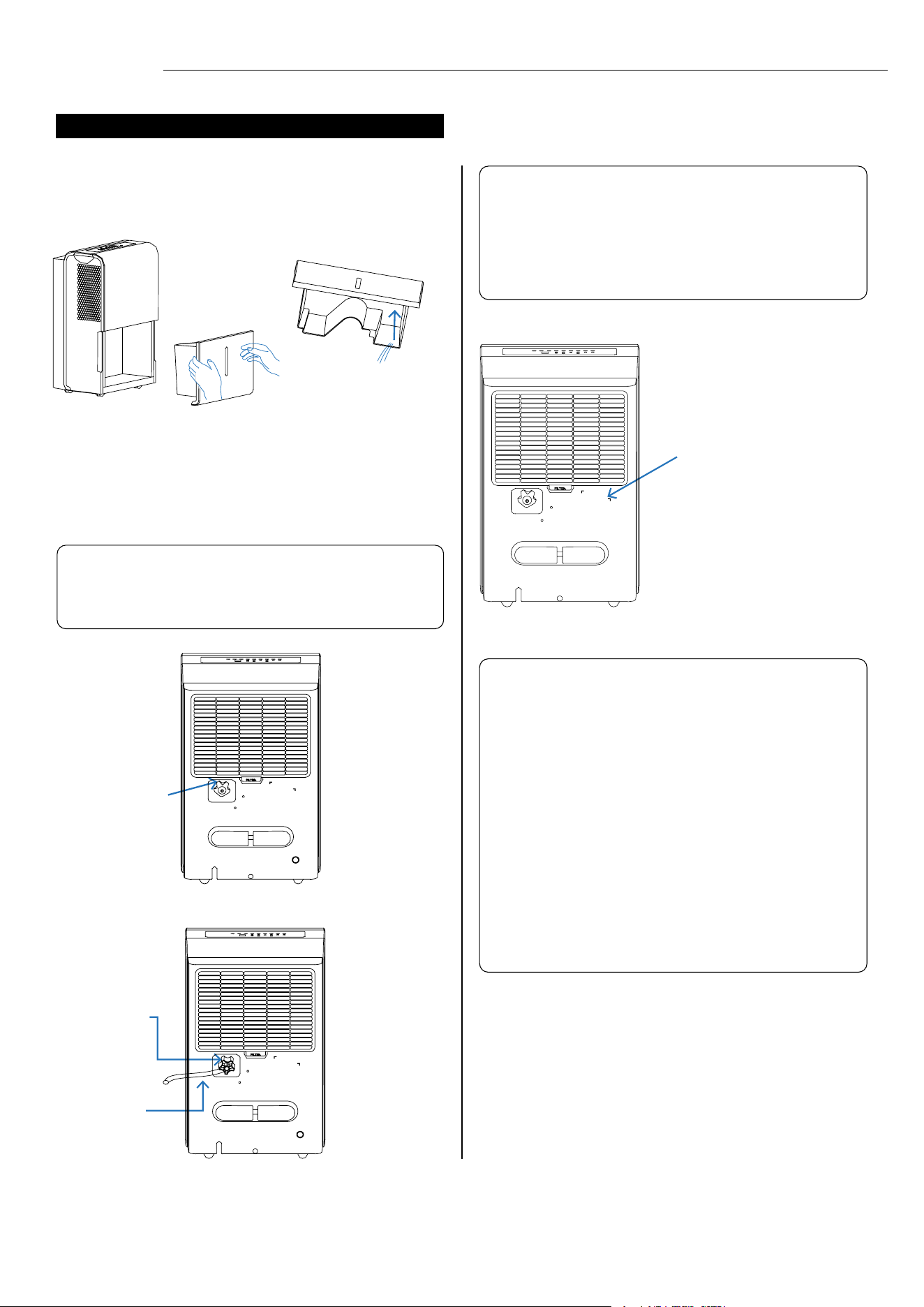
REMOVING THE COLLECTED WATER
1. Use the Bucket
When the Bucket is full, remove the Bucket
and empty it.
2. Continuous Draining
Water can be automatically be emptied into a floor
drain by attaching the Dehumidifier to a Water Hose
with a female threaded end.
Water
Outlet
Remove the
Plastic Cover
by Counter-
Clockwise
Rotation
Female
Threaded
End
Water
Hose
NOTE:
• Make sure the connection is tight
and there is no leaking.
• Lead the Water Hose to a floor drain or a suitable
drainage facility. If there is no pump, the drainage
facility should be lower than the Drain Outlet of
the Dehumidifier.
• Be sure to run the Water Hose
sloping downward to let the
water flow out smoothly.
• When the “Continuous Drain” feature is
not being used, remove the Drain Hose
from the outlet and replace the plastic
cover of the Continuous Drain
Hose Outlet tightly.
Press the Power Cord
Storage Bracket into the
Rear Cover.
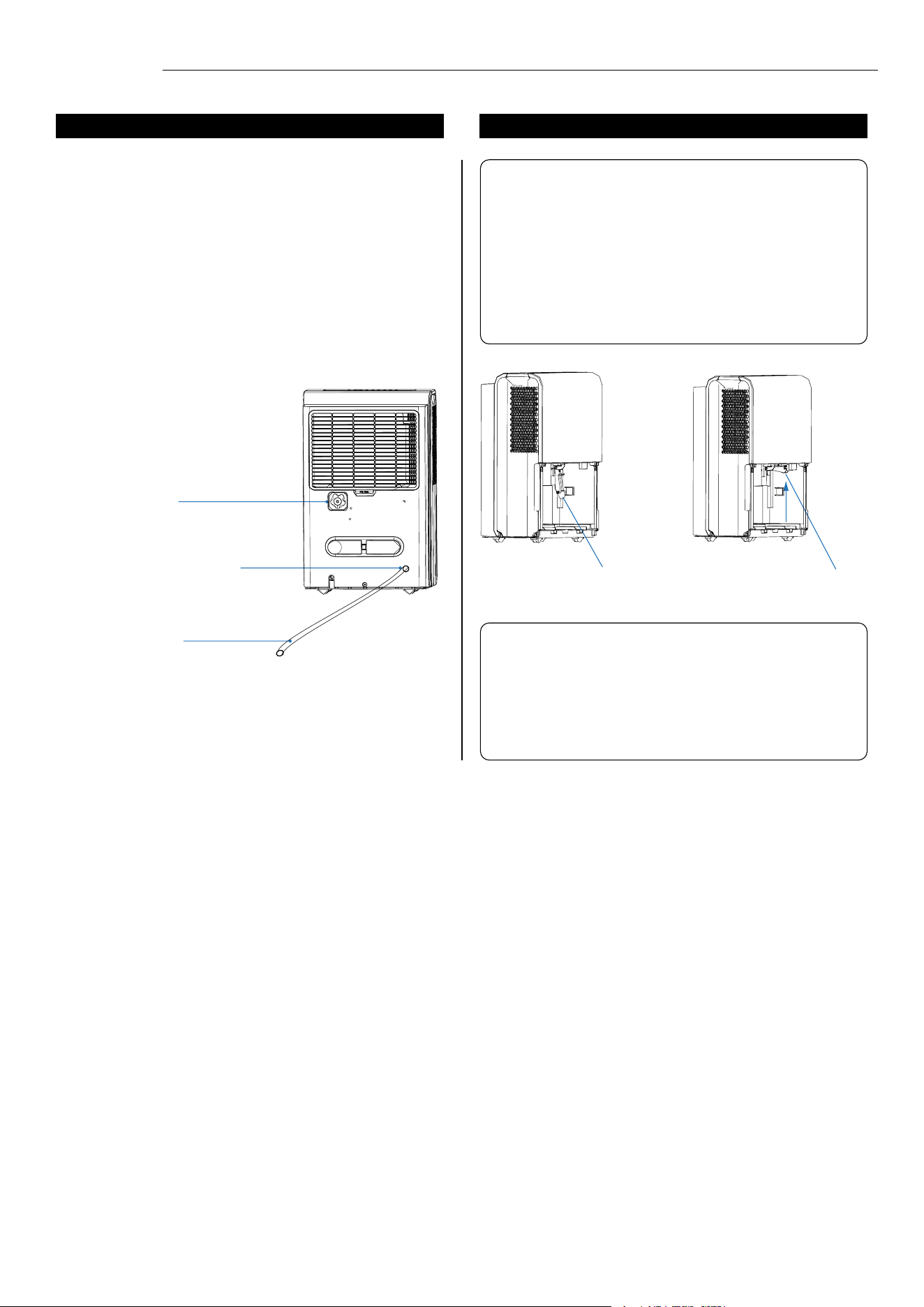
3. Pump Draining (Only applicable to HME1004)
• Remove the Continuous Drain Hose from the unit.
Replace the plastic cover of the Continuous Drain
Hose Outlet tightly.
• Attach the Pump Drain Hose (Outer diameter: 1/4 in;
length: 16.4 ft) to the Pump Drain Hose Outlet. The
insert depth should not be less than 0.59 inch.
Lead the Drain Hose to the floor drain
or a suitable drainage facility.
• If there is a pump, the appliance does not need to be
higher than the hose (the pump will push the water
instead of relying upon gravity drainage).
REMOVING THE COLLECTED WATER (CONT.)
NOTE:
• Make sure the connection is
tight and there is no leaking.
• If the Pump Hose drops when
removing the Bucket, you must install
the Pump Hose to the unit before
replacing the Bucket into the unit.
• The maximum pumping elevation is 16.4 ft (5 m).
NOTE:
Do not use the Pump when the outdoor
temperature is equal to or less than 32°F (0°C),
otherwise the water will freeze, causing the
Water Hose to block up and the Dehumidifier
may be damaged.
Pump Hose Drops
Reinstall Pump
Hose Properly
Operation Operation
ELECTRICAL INFORMATION
NOTE:
Do not use “Continuous Draining” when
the outdoor temperature is equal to or less
than 32°F (0°C), otherwise the water will
freeze, causing the Water Hose to block up
and the Dehumidifier may be damaged.
Reinstall the
Plastic Cover
Pump Drain Hose
Outlet (Only applicable to
HME1004 – Dehumidifier
with “Pump” Feature)
Pump Drain Hose
• Press “Pump” button to pump the water. When the
Bucket is full, the Pump will start to work. It is normal
that the Pump makes loud noises at first
3~5 minutes of work.
NOTE:
On some models, the female threaded
end is not included.
14 15
REMOVING THE COLLECTED WATER
1. Use the Bucket
When the Bucket is full, remove the Bucket
and empty it.
2. Continuous Draining
Water can be automatically be emptied into a floor
drain by attaching the Dehumidifier to a Water Hose
with a female threaded end.
Water
Outlet
Remove the
Plastic Cover
by Counter-
Clockwise
Rotation
Female
Threaded
End
Water
Hose
NOTE:
• Make sure the connection is tight
and there is no leaking.
• Lead the Water Hose to a floor drain or a suitable
drainage facility. If there is no pump, the drainage
facility should be lower than the Drain Outlet of
the Dehumidifier.
• Be sure to run the Water Hose
sloping downward to let the
water flow out smoothly.
• When the “Continuous Drain” feature is
not being used, remove the Drain Hose
from the outlet and replace the plastic
cover of the Continuous Drain
Hose Outlet tightly.
Press the Power Cord
Storage Bracket into the
Rear Cover.
3. Pump Draining (Only applicable to HME1004)
• Remove the Continuous Drain Hose from the unit.
Replace the plastic cover of the Continuous Drain
Hose Outlet tightly.
• Attach the Pump Drain Hose (Outer diameter: 1/4 in;
length: 16.4 ft) to the Pump Drain Hose Outlet. The
insert depth should not be less than 0.59 inch.
Lead the Drain Hose to the floor drain
or a suitable drainage facility.
• If there is a pump, the appliance does not need to be
higher than the hose (the pump will push the water
instead of relying upon gravity drainage).
REMOVING THE COLLECTED WATER (CONT.)
NOTE:
• Make sure the connection is
tight and there is no leaking.
• If the Pump Hose drops when
removing the Bucket, you must install
the Pump Hose to the unit before
replacing the Bucket into the unit.
• The maximum pumping elevation is 16.4 ft (5 m).
NOTE:
Do not use the Pump when the outdoor
temperature is equal to or less than 32°F (0°C),
otherwise the water will freeze, causing the
Water Hose to block up and the Dehumidifier
may be damaged.
Pump Hose Drops
Reinstall Pump
Hose Properly
Operation Operation
ELECTRICAL INFORMATION
NOTE:
Do not use “Continuous Draining” when
the outdoor temperature is equal to or less
than 32°F (0°C), otherwise the water will
freeze, causing the Water Hose to block up
and the Dehumidifier may be damaged.
Reinstall the
Plastic Cover
Pump Drain Hose
Outlet (Only applicable to
HME1004 – Dehumidifier
with “Pump” Feature)
Pump Drain Hose
• Press “Pump” button to pump the water. When the
Bucket is full, the Pump will start to work. It is normal
that the Pump makes loud noises at first
3~5 minutes of work.
NOTE:
On some models, the female threaded
end is not included.
16 17
CARE AND CLEANING OF THE DEHUMIDIFIER
Clean the Dehumidifier with water and mild detergent.
Do not use bleach, cleaning supplies, or other abrasives.
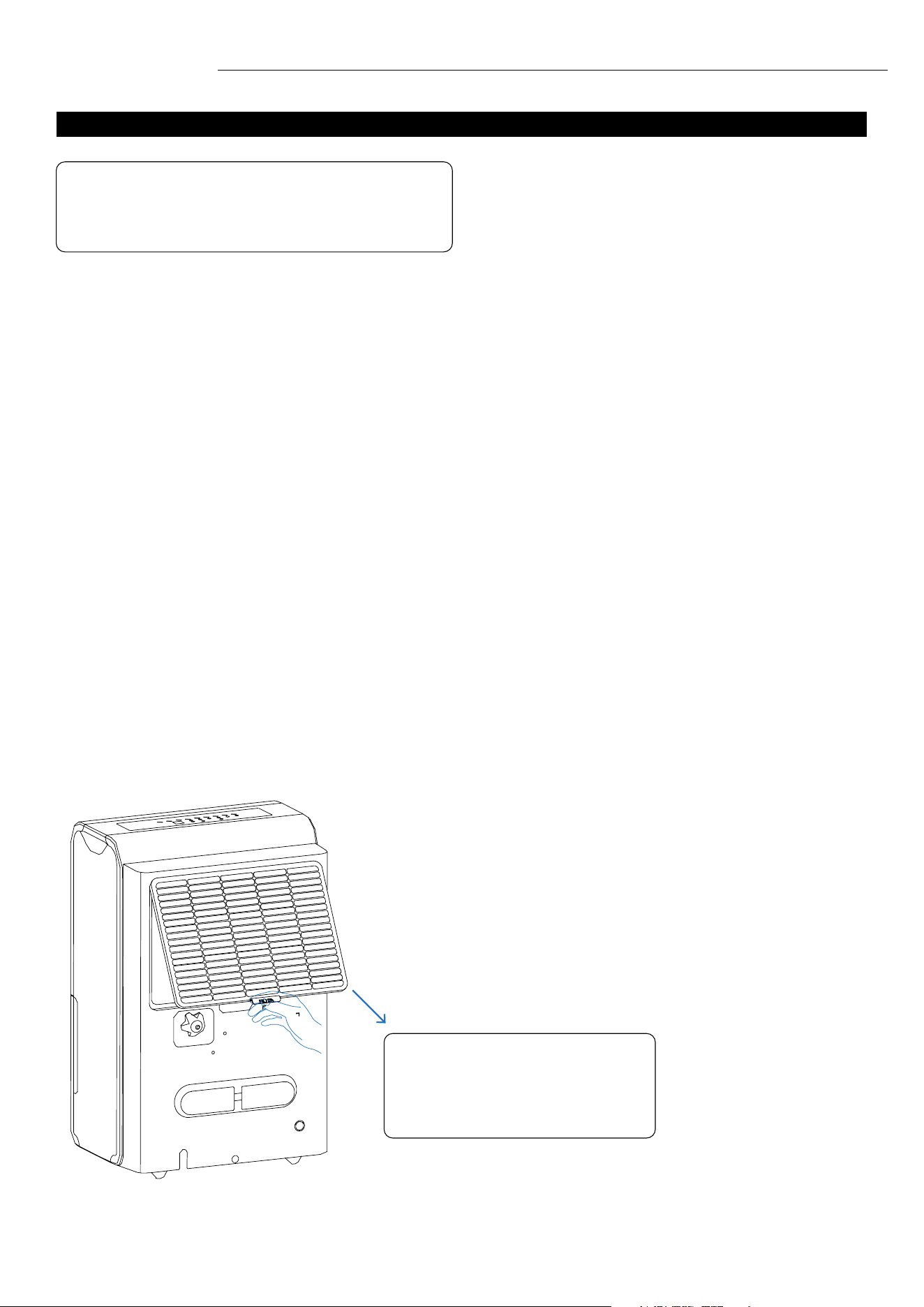
1. Clean the Grille and Case
• Do not splash water directly onto the main unit. Doing so may cause: an electrical shock,
the insulation to deteriorate, or the unit to rust.
• The air intake and outlet grilles get soiled easily. Use a vacuum brush attachment
or brush to clean.
2. Clean the Bucket
Clean the Bucket with water and mild detergent every two weeks.
3. Clean the Air Filter
Clean the filter with potable water at least once every 30days.
4. Storing the Dehumidifier
Store the Dehumidifier when it will not be used for a long time.
• After turning off the Dehumidifier, wait one day until all water in the internal
of the Dehumidifier flows into the Bucket, and then empty the Bucket.
• Clean the main Dehumidifier, Bucket, and air filter.
• Wrap the cord and bundle it with the band.
• Cover the Dehumidifier with a plastic bag.
• Store the Dehumidifier upright in a dry, well-ventilated area.
CAUTION:
Do not operate the Dehumidifier
without a filter. Dirt and lint will
clog it and reduce performance.
Before contacting Customer Service, reviewing this list can save time. This list includes the most common
occurrences that are not the result of defective workmanship or materials in this Dehumidifier.
Please contact Customer Service at homelabs.com/help or help@homelabs.com if Dehumidifier operates abnormally
or does not operate, and the solutions above are not useful.
Care & Cleaning Troubleshooting
PROBLEM CAUSE/SOLUTION
Dehumidifier does
not start
• Make sure the Dehumidifier’s Plug is inserted completely into the outlet.
• Check the house fuse/circuit breaker box.
• Dehumidifier has reached its preset level
or Bucket is full.
• Bucket is not in the proper position.
Dehumidifier does not
dry the air as it should
• Make sure allow enough time to remove the moisture.
• Make sure there are no curtains, blinds or furniture blocking the front
or back of the Dehumidifier.
• The humidity level may not be set low enough.
• Check that all doors, windows and other openings are securely closed.
• Room temperature is too low, below 41°F (5°C).
• There is a kerosene heater or something giving off water vapor in the room.
The Dehumidifier makes
a loud noise when
operating
• The air filter is clogged.
• The Dehumidifier is tilted instead of
upright as it should be.
• The floor surface is not level.
Frost appears on the
coils
• This is normal. The Dehumidifier has “Auto Defrost” feature.
Water on floor
• The Dehumidifier was placed on uneven floor.
• Hose to connector or Hose connection may be loose.
• Intend to use the Bucket to collect water, but the back drain plug is
removed.
Water does not drain
from the Hose
• Hoses more than 5 feet long may not drain properly. It is recommended to
keep the hose as short as possible for proper draining. For dehumidifiers
without a pump, the Hose must empty water lower than the bottom of the
Dehumidifier, and be kept flat and smooth without kinks.
The Pump Indicator
blinks.
(Only applicable
to HME1004)
• The filter is dirty (See > “Care & Cleaning” Page 16).
• The Pump Drain Hose is not attached to the rear of the Dehumidifier
(See > Page 15).
• The Bucket is not in the right position. Place the Bucket properly.
• The Pump Hose has dropped to a lower level. Reinstall the Pump Hose
in the proper position (See > Page 15). If the error repeats, please call
Customer Service.
The Pump operates
when it reaches a certain
level, but the Bucket still
retains 2/3 of the water
inside it. (Only applicable
to HME1004)
• This is normal. The Bucket will collect water with the Pump Hose in the
Bucket. Unlike manually emptying a Bucket fully (on units without a pump),
using a pump will leave water in the Bucket. The Pump starts operating
when the water reaches a set level. The Pump will then remove collected
water, but some water will remain in the Bucket.
WARNING: Turn the Dehumidifier off and remove
the Plug from the wall outlet before cleaning.
NOTE: The Pump lifetime is also increased when it operates in water.
You only need to empty the Bucket manually to clean it or for storage.
The Pump Hose Drops must be in water to function.
16 17
CARE AND CLEANING OF THE DEHUMIDIFIER
Clean the Dehumidifier with water and mild detergent.
Do not use bleach, cleaning supplies, or other abrasives.
1. Clean the Grille and Case
• Do not splash water directly onto the main unit. Doing so may cause: an electrical shock,
the insulation to deteriorate, or the unit to rust.
• The air intake and outlet grilles get soiled easily. Use a vacuum brush attachment
or brush to clean.
2. Clean the Bucket
Clean the Bucket with water and mild detergent every two weeks.
3. Clean the Air Filter
Clean the filter with potable water at least once every 30days.
4. Storing the Dehumidifier
Store the Dehumidifier when it will not be used for a long time.
• After turning off the Dehumidifier, wait one day until all water in the internal
of the Dehumidifier flows into the Bucket, and then empty the Bucket.
• Clean the main Dehumidifier, Bucket, and air filter.
• Wrap the cord and bundle it with the band.
• Cover the Dehumidifier with a plastic bag.
• Store the Dehumidifier upright in a dry, well-ventilated area.
CAUTION:
Do not operate the Dehumidifier
without a filter. Dirt and lint will
clog it and reduce performance.
Before contacting Customer Service, reviewing this list can save time. This list includes the most common
occurrences that are not the result of defective workmanship or materials in this Dehumidifier.
Please contact Customer Service at homelabs.com/help or help@homelabs.com if Dehumidifier operates abnormally
or does not operate, and the solutions above are not useful.
Care & Cleaning Troubleshooting
PROBLEM CAUSE/SOLUTION
Dehumidifier does
not start
• Make sure the Dehumidifier’s Plug is inserted completely into the outlet.
• Check the house fuse/circuit breaker box.
• Dehumidifier has reached its preset level
or Bucket is full.
• Bucket is not in the proper position.
Dehumidifier does not
dry the air as it should
• Make sure allow enough time to remove the moisture.
• Make sure there are no curtains, blinds or furniture blocking the front
or back of the Dehumidifier.
• The humidity level may not be set low enough.
• Check that all doors, windows and other openings are securely closed.
• Room temperature is too low, below 41°F (5°C).
• There is a kerosene heater or something giving off water vapor in the room.
The Dehumidifier makes
a loud noise when
operating
• The air filter is clogged.
• The Dehumidifier is tilted instead of
upright as it should be.
• The floor surface is not level.
Frost appears on the
coils
• This is normal. The Dehumidifier has “Auto Defrost” feature.
Water on floor
• The Dehumidifier was placed on uneven floor.
• Hose to connector or Hose connection may be loose.
• Intend to use the Bucket to collect water, but the back drain plug is
removed.
Water does not drain
from the Hose
• Hoses more than 5 feet long may not drain properly. It is recommended to
keep the hose as short as possible for proper draining. For dehumidifiers
without a pump, the Hose must empty water lower than the bottom of the
Dehumidifier, and be kept flat and smooth without kinks.
The Pump Indicator
blinks.
(Only applicable
to HME1004)
• The filter is dirty (See > “Care & Cleaning” Page 16).
• The Pump Drain Hose is not attached to the rear of the Dehumidifier
(See > Page 15).
• The Bucket is not in the right position. Place the Bucket properly.
• The Pump Hose has dropped to a lower level. Reinstall the Pump Hose
in the proper position (See > Page 15). If the error repeats, please call
Customer Service.
The Pump operates
when it reaches a certain
level, but the Bucket still
retains 2/3 of the water
inside it. (Only applicable
to HME1004)
• This is normal. The Bucket will collect water with the Pump Hose in the
Bucket. Unlike manually emptying a Bucket fully (on units without a pump),
using a pump will leave water in the Bucket. The Pump starts operating
when the water reaches a set level. The Pump will then remove collected
water, but some water will remain in the Bucket.
WARNING: Turn the Dehumidifier off and remove
the Plug from the wall outlet before cleaning.
NOTE: The Pump lifetime is also increased when it operates in water.
You only need to empty the Bucket manually to clean it or for storage.
The Pump Hose Drops must be in water to function.
18 19
hOmeLabs offers a limited one-year warranty (“warranty period”) on all of our products purchased new and
unused from hOmeLabs Technologies, LLC or an authorized reseller, with an original proof of purchase and
where a defect has arisen, wholly or substantially, as a result of faulty manufacture, parts or workmanship
during the warranty period. The warranty does not apply where damage is caused by other factors, including
without limitation: (a) normal wear and tear; (b) abuse, mishandling, accident, or failure to follow operating
instructions; (c) exposure to liquid or infiltration of foreign particles; (d) servicing or modifications of the product
other than by hOmeLabs; (e) commercial or non-household use.
The hOmeLabs warranty covers all costs related to restoring the proven defective product through repair or
replacement of any defective part and necessary labor so that it conforms to its original specifications. A
replacement product may be provided instead of repairing a defective product. hOmeLabs’s exclusive obligation
under this warranty is limited to such repair or replacement.
A receipt indicating the purchase date is required for any claim, so please keep all receipts in a safe place. We
recommend that you register your product on our website, homelabs.com/reg. Although greatly appreciated,
the product registration is not required to activate any warranty and product registration does not eliminate the
need for the original proof of purchase.
The warranty becomes void if attempts at repair are made by non-authorized third parties and/or if spare parts,
other than those provided by hOmeLabs, are used.
You may also arrange for service after the warranty expires at an additional cost.
These are our general terms for warranty service, but we always urge our customers to reach out to us with
any issue, regardless of warranty terms. If you have an issue with a hOmeLabs product, please contact
Customer Service at homelabs.com/help or help@homelabs.com.
This warranty gives you specific legal rights, and you may have other legal rights which vary from state to state,
country to country or province to province. The customer may assert any such rights at their sole discretion.
This manual is to be used with all items with the model numbers
Manufacturer, distributor, importer and seller are not liable
for ANY damage caused by improper use, storage, care or failure
to follow warnings associated with this product.
HME1001
HME1003
HME1004
homelabs.com/help
help@homelabs.com
CHAT WITH US
EMAIL US
Warranty
Manufacturing Info
Contact Us
WARNING: Keep all plastic bags
away from children.
This device complies with Part 15 of the FCC Rules. Operation is subject to the following two conditions:
(1) This device may not cause harmful interference.
(2) This device must accept any interference received, including interference that may cause undesired operation.
FCC Regulatory Conformance
NOTE: This equipment has been tested and found to comply with the limits for a Class B digital device,
pursuant to part 15 of the FCC Rules. These limits are designed to provide reasonable protection against harmful
interference in a residential installation. This equipment generates uses and can radiate radio frequency energy
and, if not installed and used in accordance with the instructions, may cause harmful interference to radio
communications. However, there is no guarantee that interference will not occur in a particular installation.
If this equipment does cause harmful interference to radio or television reception, which can be determined
by turning the equipment off and on, the user is encouraged to try to correct the interference by one or more
of the following measures:
• Reorient or relocate the receiving antenna.
• Increase the separation between the equipment and receiver.
• Connect the equipment into an outlet on a circuit different from that to which the receiver is connected.
• Consult the dealer or an experienced radio/TV technician for help
WARNING: Any changes or modifications not expressly approved by the party responsible for compliance could
void the user’s authority to operate the equipment.
RF EXPOSURE
This equipment complies with FCC radiation exposure limits set forth for an uncontrolled environment. This
equipment should be installed and operated with a minimum distance of 20 cm between the radiator and your
body. This transmitter must not be co-located or operating in conjunction with any other antenna or transmitter.
18 19
hOmeLabs offers a limited one-year warranty (“warranty period”) on all of our products purchased new and
unused from hOmeLabs Technologies, LLC or an authorized reseller, with an original proof of purchase and
where a defect has arisen, wholly or substantially, as a result of faulty manufacture, parts or workmanship
during the warranty period. The warranty does not apply where damage is caused by other factors, including
without limitation: (a) normal wear and tear; (b) abuse, mishandling, accident, or failure to follow operating
instructions; (c) exposure to liquid or infiltration of foreign particles; (d) servicing or modifications of the product
other than by hOmeLabs; (e) commercial or non-household use.
The hOmeLabs warranty covers all costs related to restoring the proven defective product through repair or
replacement of any defective part and necessary labor so that it conforms to its original specifications. A
replacement product may be provided instead of repairing a defective product. hOmeLabs’s exclusive obligation
under this warranty is limited to such repair or replacement.
A receipt indicating the purchase date is required for any claim, so please keep all receipts in a safe place. We
recommend that you register your product on our website, homelabs.com/reg. Although greatly appreciated,
the product registration is not required to activate any warranty and product registration does not eliminate the
need for the original proof of purchase.
The warranty becomes void if attempts at repair are made by non-authorized third parties and/or if spare parts,
other than those provided by hOmeLabs, are used.
You may also arrange for service after the warranty expires at an additional cost.
These are our general terms for warranty service, but we always urge our customers to reach out to us with
any issue, regardless of warranty terms. If you have an issue with a hOmeLabs product, please contact
Customer Service at homelabs.com/help or help@homelabs.com.
This warranty gives you specific legal rights, and you may have other legal rights which vary from state to state,
country to country or province to province. The customer may assert any such rights at their sole discretion.
This manual is to be used with all items with the model numbers
Manufacturer, distributor, importer and seller are not liable
for ANY damage caused by improper use, storage, care or failure
to follow warnings associated with this product.
HME1001
HME1003
HME1004
homelabs.com/help
help@homelabs.com
CHAT WITH US
EMAIL US
Warranty
Manufacturing Info
Contact Us
WARNING: Keep all plastic bags
away from children.
This device complies with Part 15 of the FCC Rules. Operation is subject to the following two conditions:
(1) This device may not cause harmful interference.
(2) This device must accept any interference received, including interference that may cause undesired operation.
FCC Regulatory Conformance
NOTE: This equipment has been tested and found to comply with the limits for a Class B digital device,
pursuant to part 15 of the FCC Rules. These limits are designed to provide reasonable protection against harmful
interference in a residential installation. This equipment generates uses and can radiate radio frequency energy
and, if not installed and used in accordance with the instructions, may cause harmful interference to radio
communications. However, there is no guarantee that interference will not occur in a particular installation.
If this equipment does cause harmful interference to radio or television reception, which can be determined
by turning the equipment off and on, the user is encouraged to try to correct the interference by one or more
of the following measures:
• Reorient or relocate the receiving antenna.
• Increase the separation between the equipment and receiver.
• Connect the equipment into an outlet on a circuit different from that to which the receiver is connected.
• Consult the dealer or an experienced radio/TV technician for help
WARNING: Any changes or modifications not expressly approved by the party responsible for compliance could
void the user’s authority to operate the equipment.
RF EXPOSURE
This equipment complies with FCC radiation exposure limits set forth for an uncontrolled environment. This
equipment should be installed and operated with a minimum distance of 20 cm between the radiator and your
body. This transmitter must not be co-located or operating in conjunction with any other antenna or transmitter.

Distributed by hOmeLabs™, LLC
350 Springfield Avenue, Suite #200,
Summit, NJ 07901
help@homelabs.com
homelabs.com/help
All rights reserved, hOmeLabs™
Made in China.
For Household Use Only