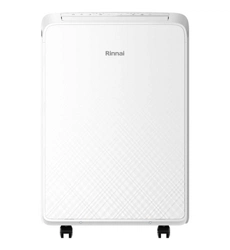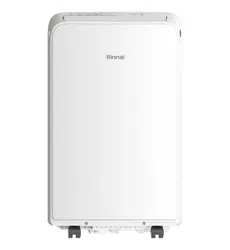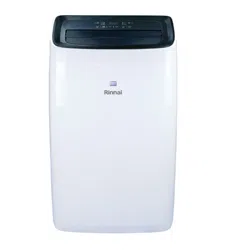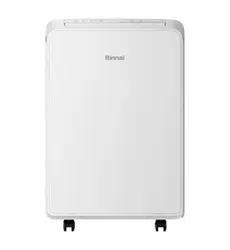
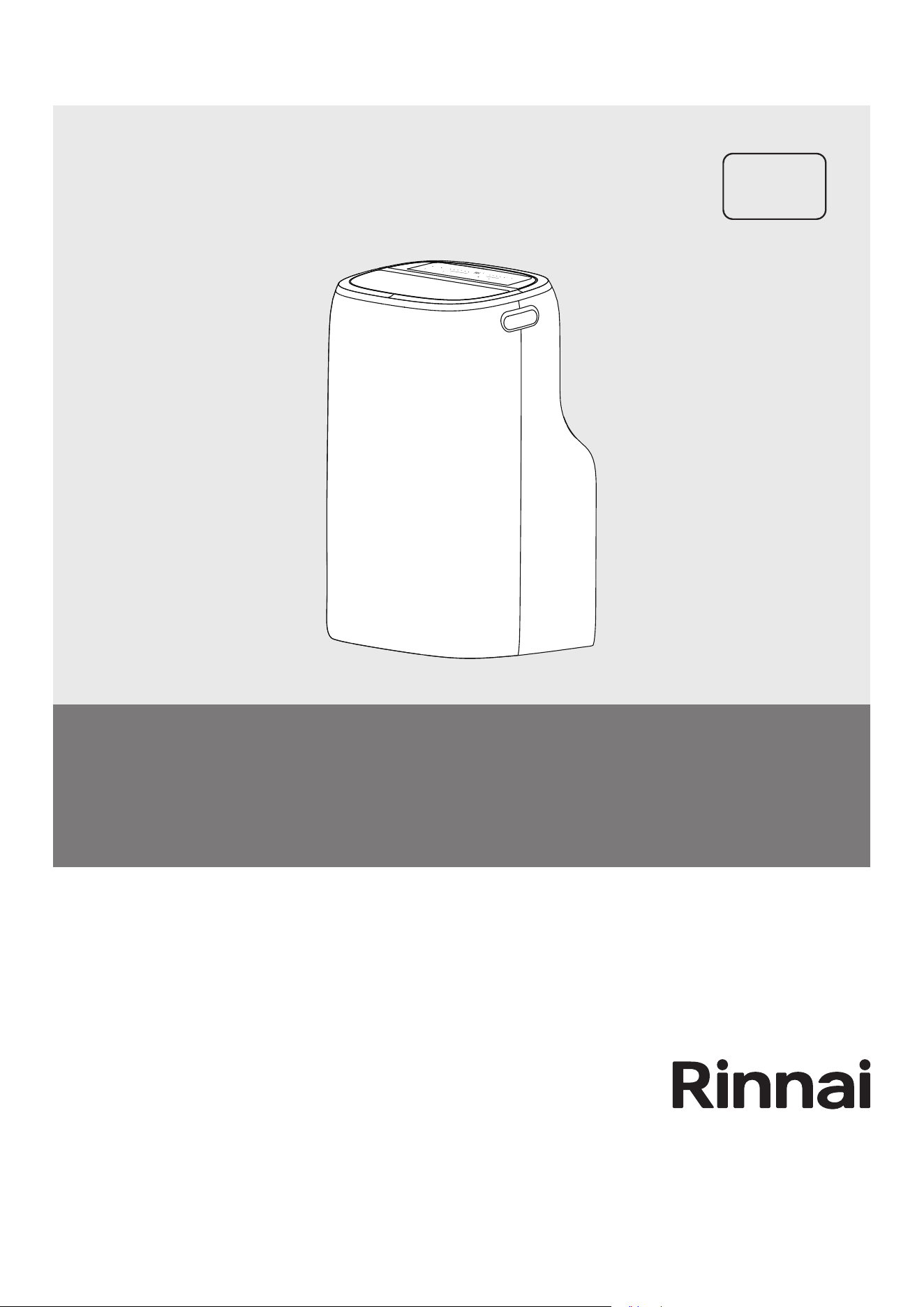
Portable Room Air Conditioner
Operation & Installation Manual
REFRIGERANT
R290
MODEL
RPC41MCWF
Rinnai 2 Portable Room AC OIM
For continued safety of this appliance it must
be installed and maintained in accordance with
the manufacturer’s instructions.
Before proceeding with the operation of your
new Rinnai Portable Room Air Conditioner,
please read this manual thoroughly and gain a
full understanding of the requirements,
features and operation of your new appliance.
REFRIGERANT
R290

Rinnai 3 Portable Room AC OIM
TABLE OF CONTENTS
Safety & Important Information 4
Specications 10
Introduction ������������������������������������������������������������������������������������������������������������������������������������������������������� 10
Specications ��������������������������������������������������������������������������������������������������������������������������������������������������� 10
AirConditionerBasics 11
Appliance Components ������������������������������������������������������������������������������������������������������������������������������������ 11
Operation 12
Control Panel ���������������������������������������������������������������������������������������������������������������������������������������������������� 12
Basic Operation ������������������������������������������������������������������������������������������������������������������������������������������������ 12
Basic Operation Control Panel ������������������������������������������������������������������������������������������������������������������������� 12
Auto �������������������������������������������������������������������������������������������������������������������������������������������������������������� 12
Cool �������������������������������������������������������������������������������������������������������������������������������������������������������������� 12
Dry ���������������������������������������������������������������������������������������������������������������������������������������������������������������� 13
Fan ��������������������������������������������������������������������������������������������������������������������������������������������������������������� 13
Filter Reset ��������������������������������������������������������������������������������������������������������������������������������������������������� 13
Sleep ������������������������������������������������������������������������������������������������������������������������������������������������������������ 13
Swing ������������������������������������������������������������������������������������������������������������������������������������������������������������ 13
Wi-Fi Operation ������������������������������������������������������������������������������������������������������������������������������������������������ 13
RemoteControl 14
Remote Control Overview �������������������������������������������������������������������������������������������������������������������������������� 14
Button Description and Operation �������������������������������������������������������������������������������������������������������������������� 14
Fitting Batteries ����������������������������������������������������������������������������������������������������������������������������������������������� 15
Care&Maintenance 16
General Maintenance ��������������������������������������������������������������������������������������������������������������������������������������� 16
Cleaning the Air Filter ��������������������������������������������������������������������������������������������������������������������������������������� 16
Save a Service Call ������������������������������������������������������������������������������������������������������������������������������������������ 17
When to Call for Service ����������������������������������������������������������������������������������������������������������������������������������� 17
Installation 18
Location ������������������������������������������������������������������������������������������������������������������������������������������������������������ 18
Duct Assembly �������������������������������������������������������������������������������������������������������������������������������������������������� 18
Exhaust Ducting Options ���������������������������������������������������������������������������������������������������������������������������������� 19
Window Installations ������������������������������������������������������������������������������������������������������������������������������������� 19
Semi-Permanent Wall Installation ���������������������������������������������������������������������������������������������������������������� 20
Condensate Drainage �������������������������������������������������������������������������������������������������������������������������������������� 20
Internal Condensate Tank ���������������������������������������������������������������������������������������������������������������������������� 20
Fixed Condensate Drainage Hose ��������������������������������������������������������������������������������������������������������������� 20
Warranty 21
Contacts 28

Rinnai 4 Portable Room AC OIM
WARNING
READ ALL INSTRUCTIONS BEFORE USING THE APPLIANCE.
Alwayscomplywiththefollowingprecautionstoavoiddangeroussituationsandtoensure
optimumperformance.
Failure to carefully read and follow all instructions in this manual can result in equipment
malfunction,propertydamage,personalinjuryand/ordeath.
DANGER:Indicatesanimminentlyhazardoussituationwhich,ifnotavoided,willresultin
personalinjuryordeath.
WARNINGS:Indicatesapotentiallyhazardoussituationwhich,ifnotavoided,couldresultin
personalinjuryordeath.
CAUTIONS:Indicatesapotentiallyhazardoussituationwhich, ifnotavoided,couldresult
inminorormoderateinjuryordamagetotheappliance.Itmayalsobeusedtoalertagainst
unsafepractices.
WARNING
The appliance is tted with an Australian exible cord and plug intended for connection to an Australian
10 Amp socket outlet. It is not suitable for connection in other countries or alternative power supplies.
Ensure that the voltage and frequency of the power supply correspond to the ratings on the dataplate of
the appliance.
This appliance is not intended for use by persons (including children) with reduced physical, sensory or
mental capabilities, or lack of experience and knowledge, unless they have been given supervision or
instruction concerning use of the appliance by a person responsible for their safety.
Young children should be supervised to ensure they do not play with the appliance.
DO NOT allow children or persons with reduced physical, sensory or mental capabilities to sleep directly
in front of this appliance.
DO NOT allow children to ‘post articles’ into the louvres of the appliance.
DO NOT use power boards or double adaptors with this appliance.
DO NOT coil or bundle the electric cord to reduce it’s length as overheating of the cord may occur which
could result in a re hazard.
The exible cord and plug must not be modied. If the cord or plug are damaged, they must be replaced
by Rinnai or a Rinnai appointed service agent.
DO NOT cover or place articles on or against any parts of this appliance, to avoid overheating.
DO NOT sit on this appliance
DO NOT use this appliance in the immediate surroundings of a bath, a shower or a swimming pool.
DO NOT move this appliance whilst it is turned on.
DO NOT unplug the appliance by pulling on the exible cord.
DO NOT handle any parts of this appliance, including the plug and exible cord, with wet or damp hands.
DO NOT immerse the appliance, exible cord and plug in water or any other liquid.
DO NOT place containers of any liquid or wax on top of this appliance.
Turn o the appliance and unplug from the power socket outlet when not in use.
DO NOT use in areas where ammable liquids are stored.
This appliance is suitable for indoor use only.
Never dismantle the appliance. Tampering with electrical connections and components is highly
dangerous and may cause appliance malfunction, property damage, personal injury and/or death.
SAFETY & IMPORTANT INFORMATION

Rinnai 5 Portable Room AC OIM
WARNING
WARNINGINFORMATIONREGARDINGAPPLIANCESWITHR290REFRIGERANTGAS
Thoroughly read all of the warnings.
This appliance contains up to 240g of R290 refrigerant gas.
This appliance uses R290 refrigerant, which is class 3 ammability and must be handled by a refrigeration
mechanic with appropriate Australian refrigerant handling licence.
The appliance must be installed, used and stored in a ventilated area that is greater than 12 m
2
.
When cleaning the appliance, do not use any tools other than those recommended by the manufacturing
company.
DO NOT use means to accelerate the defrosting process or to clean, other than those recommended
by the manufacturer.
The appliance must be placed in an area without any continuous sources of ignition (for example: open
ames, gas or electrical appliances in operation).
DO NOT puncture and DO NOT burn.
Refrigerant gases can be odourless.
If the appliance is installed, operated or stored in a non-ventilated area, the room must be designed to
prevent the accumulation of refrigerant leaks resulting in a risk of re or explosion due to ignition of the
refrigerant caused by electric heaters, stoves, or other sources of ignition.
Compliance with national gas regulations shall be observed. Keep ventilation openings clear of
obstruction.
A warning that the appliance shall be stored in a well-ventilated area where the room size corresponds
to the room area as specied for operation.
Any person who is involved with working on or breaking into a refrigerant circuit should hold a current
valid certicate from an industry-accredited assessment authority, which authorises their competence to
handle refrigerants safely in accordance with an industry recognised assessment specication.
Servicing shall only be performed as recommended by the equipment manufacturer. Maintenance and
repair requiring the assistance of other skilled personnel shall be carried out under the supervision of the
person competent in the use of ammable refrigerants.
The appliance MUST be stored in such a way as to prevent mechanical failure.
Repairs must be performed based on the recommendations from the manufacturing company.
Maintenance and repairs that require the assistance of other qualied personnel must be performed
under the supervision of an individual specied in the use of ammable refrigerants.
IMPORTANT
MANDATORY INSPECTION PRIOR TO INSTALLATION
Immediately report any damage or discrepancies to the Supplier of the appliance. This appliance was
inspected and tested at the time of manufacture and packaging, and released for transportation without
known damage. Upon receipt, inspect the exterior for evidence of rough handling in shipment. Ensure
that the appliance is labelled correctly for the gas and electrical supply, and/or other services it is intended
to be connected to.
For safety and warranty purposes, appliances that may be damaged or incorrect MUST NOT be installed
or operated under any circumstances. Installation of damaged or incorrect appliances may contravene
local government regulations. Rinnai disclaims any liability or responsibility whatsoever in relation to the
installation or operation of damaged or incorrect appliances.
NOTE
A NOTE ON ILLUSTRATIONS
The illustrations used in this manual are for explanatory purposes only and the shape of your indoor unit
may vary slightly from that which is shown in this manual.
SAFETY & IMPORTANT INFORMATION
Rinnai 6 Portable Room AC OIM
WARNING
EXPLANATION OF SYMBOLS DISPLAYED ON THE UNIT
WARNINGRiskofre/ammablematerial.Iftherefrigerantisleaked,togetherwithan
externalignitionsource,thereisapossibilityofignition.
ReadtheOPERATINGINSTRUCTIONScarefullybeforeoperation.
Service personnel are required to carefully read the OPERATING INSTRUCTIONS and
INSTALLATIONMANUALbeforeoperation.
Further information is available in the OPERATING INSTRUCTIONS, INSTALLATION
MANUAL,andthelike.
1. Transportofequipmentcontainingammablerefrigerants
See transport regulations.
2. Markingofequipmentusingsigns
See local regulations.
3. Disposalofequipmentusingammablerefrigerants
See national regulations.
4. Storageofequipment/appliances
The storage of equipment should be in accordance with the manufacturer’s instructions.
5. Storageofpacked(unsold)equipment
Storage package protection should be constructed such that mechanical damage to the equipment inside the
package will not cause a leak of the refrigerant charge. The maximum number of pieces of equipment permitted to
be stored together will be determined by local regulations.
•
General work area
All maintenance sta and others working in the local area shall be instructed on the nature of work being carried
out. Work in conned spaces shall be avoided. The area around the workspace shall be sectioned o. Ensure that
the conditions within the area have been made safe by control of ammable material.
6. Informationonservicing
1) Checks to the area Prior to beginning work on systems containing ammable refrigerants, safety checks
are necessary to ensure that the risk of ignition is minimised. For repair to the refrigerating system, the
following precautions shall be complied with prior to conducting work on the system.
2) Work procedure
Work shall be undertaken under a controlled procedure so as to minimise the risk of a ammable gas or vapour
being present while the work is being performed.
3) General work area
All maintenance sta and others working in the local area shall be instructed on the nature of work being carried
out. Work in conned spaces shall be avoided. The area around the workspace shall be sectioned o. Ensure that
the conditions within the area have been made safe by control of ammable material.
4) Checking for presence of refrigerant
The area shall be checked with an appropriate refrigerant detector prior to and during work, to ensure the technician
is aware of potentially ammable atmospheres. Ensure that the leak detection equipment being used is suitable for
use with ammable refrigerants, i.e. non-sparking, adequately sealed or intrinsically safe.
5) Presence of re extinguisher
If any hot work is to be conducted on the refrigeration equipment or any associated parts, appropriate re
extinguishing equipment shall be available to hand. Have a dry powder or CO
2
re extinguisher adjacent to the
charging area.
SAFETY & IMPORTANT INFORMATION

Rinnai 7 Portable Room AC OIM
6) No ignition sources
No person carrying out work in relation to a refrigeration system which involves exposing any pipe work that
contains or has contained ammable refrigerant shall use any sources of ignition in such a manner that it may lead
to the risk of re or explosion. All possible ignition sources, including cigarette smoking, should be kept suciently
far away from the site of installation, repairing, removing and disposal, during which ammable refrigerant can
possibly be released to the surrounding space. Prior to work taking place, the area around the equipment is to be
surveyed to make sure that there are no ammable hazards or ignition risks. No Smoking signs shall be displayed.
7) Ventilated area
Ensure that the area is in the open or that it is adequately ventilated before breaking into the system or conducting
any hot work. A degree of ventilation shall continue during the period that the work is carried out. The ventilation
should safely disperse any released refrigerant and preferably expel it externally into the atmosphere.
8) Checks to the refrigeration equipment
Where electrical components are being changed, they shall be t for the purpose and to the correct specication.
At all times the manufacturer’s maintenance and service guidelines shall be followed. If in doubt consult the
manufacturer’s technical department for assistance. The following checks shall be applied to installations using
ammable refrigerants:
The charge size is in accordance with the room size within which the refrigerant containing parts are installed;
The ventilation machinery and outlets are operating adequately and are not obstructed;
If an indirect refrigerating circuit is being used, the secondary circuit shall be checked for the presence of refrigerant;
Marking to the equipment continues to be visible and legible. Markings and signs that are illegible shall be corrected;
Refrigeration pipe or components are installed in a position where they are unlikely to be exposed to any substance
which may corrode refrigerant containing components, unless the components are constructed of materials which
are inherently resistant to being corroded or are suitably protected against being so corroded.
9) Checks to electrical devices
Repair and maintenance to electrical components shall include initial safety checks and component inspection
procedures. If a fault exists that could compromise safety, then no electrical supply shall be connected to the
circuit until it is satisfactorily dealt with. If the fault cannot be corrected immediately but it is necessary to continue
operation, an adequate temporary solution shall be used. This shall be reported to the owner of the equipment so
all parties are advised.
Initial safety checks shall include:
That capacitors are discharged: this shall be done in a safe manner to avoid possibility of sparking;
That there no live electrical components and wiring are exposed while charging, recovering or purging the system;
That there is continuity of earth bonding.
7. Repairstosealedcomponents
1) During repairs to sealed components, all electrical supplies shall be disconnected from the equipment
being worked upon prior to any removal of sealed covers, etc. If it is absolutely necessary to have an
electrical supply to equipment during servicing, then a permanently operating form of leak detection shall
be located at the most critical point to warn of a potentially hazardous situation.
2) Particular attention shall be paid to the following to ensure that by working on electrical components, the
casing is not altered in such a way that the level of protection is aected. This shall include damage to
cables, excessive number of connections, terminals not made to original specication, damage to seals,
incorrect tting of glands, etc. Ensure that apparatus is mounted securely. Ensure that seals or sealing
materials have not degraded such that they no longer serve the purpose of preventing the ingress of
ammable atmospheres. Replacement parts shall be in accordance with the manufacturer’s specications.
NOTE: The use of silicon sealant may inhibit the eectiveness of some types of leak detection equipment.
Intrinsically safe components do not have to be isolated prior to working on them.
SAFETY & IMPORTANT INFORMATION

Rinnai 8 Portable Room AC OIM
8. Repairtointrinsicallysafecomponents
Do not apply any permanent inductive or capacitance loads to the circuit without ensuring that this will not exceed
the permissible voltage and current permitted for the equipment in use. Intrinsically safe components are the only
types that can be worked on while live in the presence of a ammable atmosphere. The test apparatus shall be at
the correct rating. Replace components only with parts specied by the manufacturer. Other parts may result in the
ignition of refrigerant in the atmosphere from a leak.
9. Cabling
Check that cabling will not be subject to wear, corrosion, excessive pressure, vibration, sharp edges or any other
adverse environmental eects. The check shall also take into account the eects of aging or continual vibration
from sources such as compressors or fans.
10. Detectionofammablerefrigerants
Under no circumstances shall potential sources of ignition be used in the searching for or detection of refrigerant
leaks. A halide torch (or any other detector using a naked ame) shall not be used.
11. Leakdetectionmethods
The following leak detection methods are deemed acceptable for systems containing ammable refrigerants.
Electronic leak detectors shall be used to detect ammable refrigerants, but the sensitivity may not be adequate,
or may need re-calibration. (Detection equipment shall be calibrated in a refrigerant-free area.) Ensure that the
detector is not a potential source of ignition and is suitable for the refrigerant used. Leak detection equipment
shall be set at a percentage of the LFL of the refrigerant and shall be calibrated to the refrigerant employed and
the appropriate percentage of gas (25 % maximum) is conrmed. Leak detection uids are suitable for use with
most refrigerants but the use of detergents containing chlorine shall be avoided as the chlorine may react with
the refrigerant and corrode the copper pipe-work. If a leak is suspected, all naked ames shall be removed/
extinguished.
If a leakage of refrigerant is found which requires brazing, all of the refrigerant shall be recovered from the system,
or isolated (by means of shut o valves) in a part of the system remote from the leak. Oxygen free nitrogen (OFN)
shall then be purged through the system both before and during the brazing process.
12. Removalandevacuation
When breaking into the refrigerant circuit to make repairs or for any other purpose conventional procedures shall
be used. However, it is important that best practice is followed since ammability is a consideration. The following
procedure shall be adhered to:
Remove refrigerant; Purge the circuit with inert gas; Evacuate; Purge again with inert gas; Open the circuit by
cutting or brazing.
The refrigerant charge shall be recovered into the correct recovery cylinders. The system shall be ushed with
OFN to render the unit safe. This process may need to be repeated several times. Compressed air or oxygen
shall not be used for this task. Flushing shall be achieved by breaking the vacuum in the system with OFN and
continuing to ll until the working pressure is achieved, then venting to atmosphere, and nally pulling down to a
vacuum. This process shall be repeated until no refrigerant is within the system.
When the nal OFN charge is used, the system shall be vented down to atmospheric pressure to enable work to
take place. This operation is absolutely vital if brazing operations on the pipe-work are to take place. Ensure that
the outlet for the vacuum pump is not close to any ignition sources and there is ventilation available.
13. Chargingprocedures
In addition to conventional charging procedures, the following requirements shall be followed. Ensure that
contamination of dierent refrigerants does not occur when using charging equipment. Hoses or lines shall be as
short as possible to minimise the amount of refrigerant contained in them.
Cylinders shall be kept upright.
Ensure that the refrigeration system is earthed prior to charging the system with refrigerant.
Label the system when charging is complete (if not already).
Extreme care shall be taken not to overll the refrigeration system. Prior to recharging the system it shall be
pressure tested with OFN. The system shall be leak tested on completion of charging but prior to commissioning.
A follow up leak test shall be carried out prior to leaving the site.
SAFETY & IMPORTANT INFORMATION

Rinnai 9 Portable Room AC OIM
14. Decommissioning
Before carrying out this procedure, it is essential that the technician is completely familiar with the equipment and
all its detail. It is recommended good practice that all refrigerants are recovered safely.
Prior to the task being carried out, an oil and refrigerant sample shall be taken in case analysis is required prior
to re-use of reclaimed refrigerant. It is essential that electrical power is available before the task is commenced.
a) Become familiar with the equipment and its operation.
b) Isolate system electrically.
c) Before attempting the procedure ensure that: Mechanical handling equipment is available, if required, for
handling refrigerant cylinders; All personal protective equipment is available and being used correctly;
The recovery process is supervised at all times by a competent person; Recovery equipment and cylinders
conform to the appropriate standards.
d) Pump down refrigerant system, if possible.
e) If a vacuum is not possible, make a manifold so that refrigerant can be removed from various parts of the
system.
f) Make sure that cylinder is situated on the scales before recovery takes place.
g) Start the recovery machine and operate in accordance with manufacturer’s instructions.
h) Do not overll cylinders. (No more than 80% volume liquid charge).
i) Do not exceed the maximum working pressure of the cylinder, even temporarily.
j) When the cylinders have been lled correctly and the process completed, make sure that the cylinders and
the equipment are removed from site promptly and all isolation valves on the equipment are closed o.
k) Recovered refrigerant shall not be charged into another refrigeration system unless it has been cleaned and
checked.
15. Labelling
Equipment shall be labelled stating that it has been de-commissioned and emptied of refrigerant. The label shall
be dated and signed. Ensure that there are labels on the equipment stating the equipment contains ammable
refrigerant.
16. Recovery
When removing refrigerant from a system, either for servicing or decommissioning, it is recommended good
practice that all refrigerants are removed safely. When transferring refrigerant into cylinders, ensure that only
appropriate refrigerant recovery cylinders are employed. Ensure that the correct number of cylinders for holding
the total system charge is available. All cylinders to be used are designated for the recovered refrigerant and
labelled for that refrigerant (i.e. special cylinders for the recovery of refrigerant). Cylinders shall be complete
with pressure relief valve and associated shut-o valves in good working order. Empty recovery cylinders are
evacuated and, if possible, cooled before recovery occurs. The recovery equipment shall be in good working
order with a set of instructions concerning the equipment that is at hand and shall be suitable for the recovery of
ammable refrigerants.
In addition, a set of calibrated weighing scales shall be available and in good working order. Hoses shall be
complete with leak-free disconnect couplings and in good condition. Before using the recovery machine, check
that it is in satisfactory working order, has been properly maintained and that any associated electrical components
are sealed to prevent ignition in the event of a refrigerant release.
Consult manufacturer if in doubt. The recovered refrigerant shall be returned to the refrigerant supplier in the
correct recovery cylinder, and the relevant Waste Transfer Note arranged. Do not mix refrigerants in recovery units
and especially not in cylinders. If compressors or compressor oils are to be removed, ensure that they have been
evacuated to an acceptable level to make certain that ammable refrigerant does not remain within the lubricant.
The evacuation process shall be carried out prior to returning the compressor to the suppliers. Only electric heating
to the compressor body shall be employed to accelerate this process. When oil is drained from a system, it shall
be carried out safely.
SAFETY & IMPORTANT INFORMATION
Rinnai 10 Portable Room AC OIM
INTRODUCTION
This portable air conditioner can alter the room temperature and humidity. It has multiple functions of cooling
dehumidifying (drying) and fan ventilation and can be moved from room to room and transported from building to
building easily.
The air conditioner can maintain set room indoor air temperatures between 16°C and 32°C. The set room
temperature is displayed on the remote control and in the control panel on the unit. This does not mean that the air
conditioner will necessarily reduce the actual room temperature to the set room temperature.
•
Do not place the air conditioner or plastic window slider in direct sunlight. Close all curtains in the room being
cooled.
•
For maximum cooling (COOLING MODE), set the temperature at 18°C and the fan at HIGH. After
approximately 3 minutes, the compressor will turn on and cooled air will come out of the front air outlet.
Warm air will also come out of the rear outlet and into the exhaust hose.
•
In COOLING MODE the air conditioner will not cool unless the set temperature is below the existing room
temperature.
•
In COOLING MODE once the existing room temperature reaches the set temperature, the fan continues
operating and the compressor switches on and o to maintain the set temperature within the room.
•
For maximum cooling output keep the exhaust hose as short and as straight as possible. Minimise bends
which can reduce the maximum cooling capacity of the air conditioner. Elevate the air conditioner if necessary.
•
Make sure the air intake and outlet grills are unobstructed.
•
Clean the lters at least once every two weeks.
SPECIFICATIONS
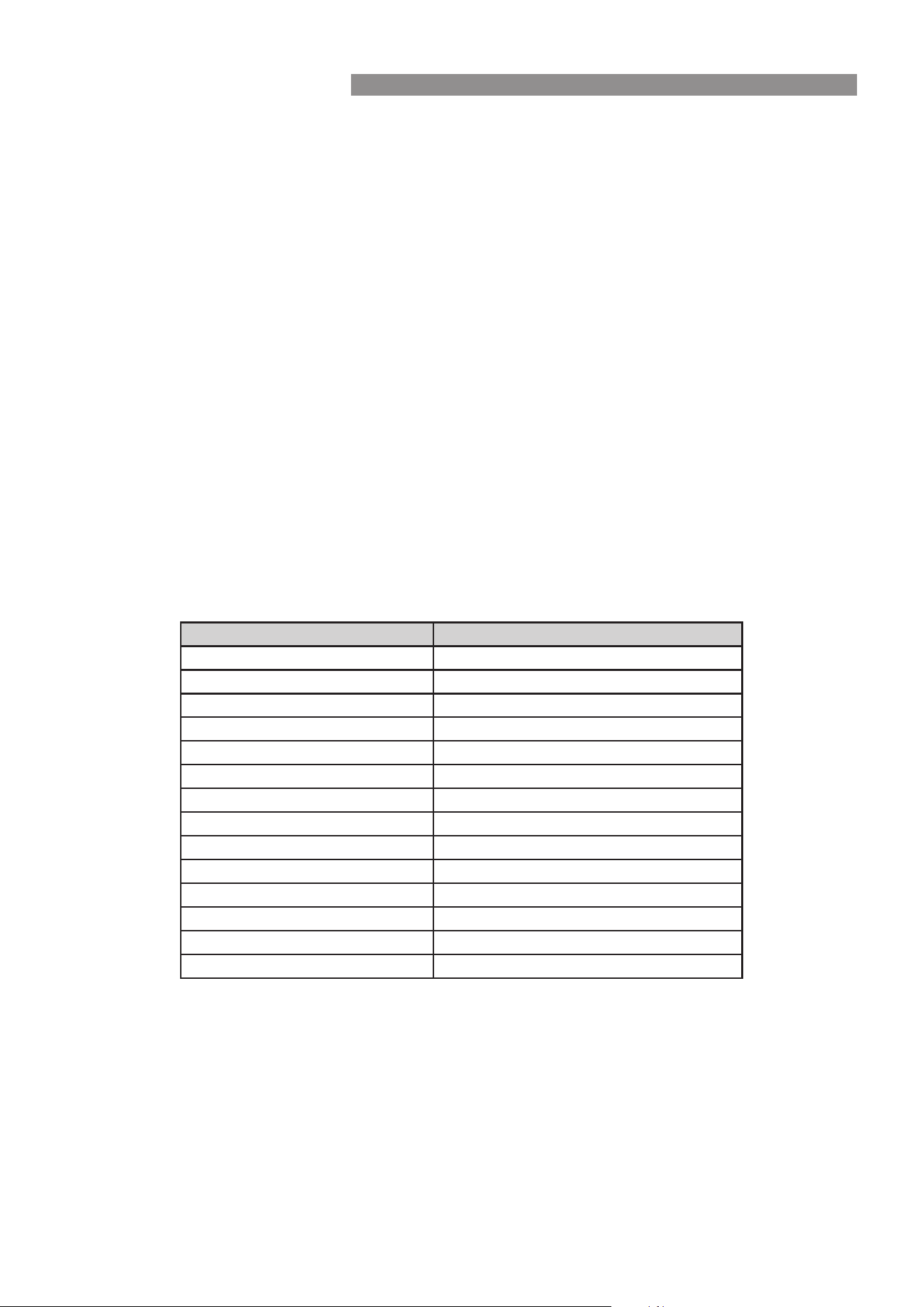
MODEL RPC41MCWF
Function Cooling Only
Control Remote and Wi-Fi via App
Power Supply 220V-240V~ / 50Hz
Maximum Input Power 1700W
Maximum Input Current 8.5A
Dimensions - Net (H x W x D) 802mm x 493mm x 415mm
Dimensions - Packing (H x W x D) 885mm x 570mm x 515mm
Weight 36.5kg
Nominal Cooling Capacity 4.1kW
Rated Input Current 6.8A
Rated Input Power 1640W
Refrigerant Type R290
Refrigerant Volume 240g
Noise Level 64dB(A)
SPECIFICATIONS
Rinnai 11 Portable Room AC OIM
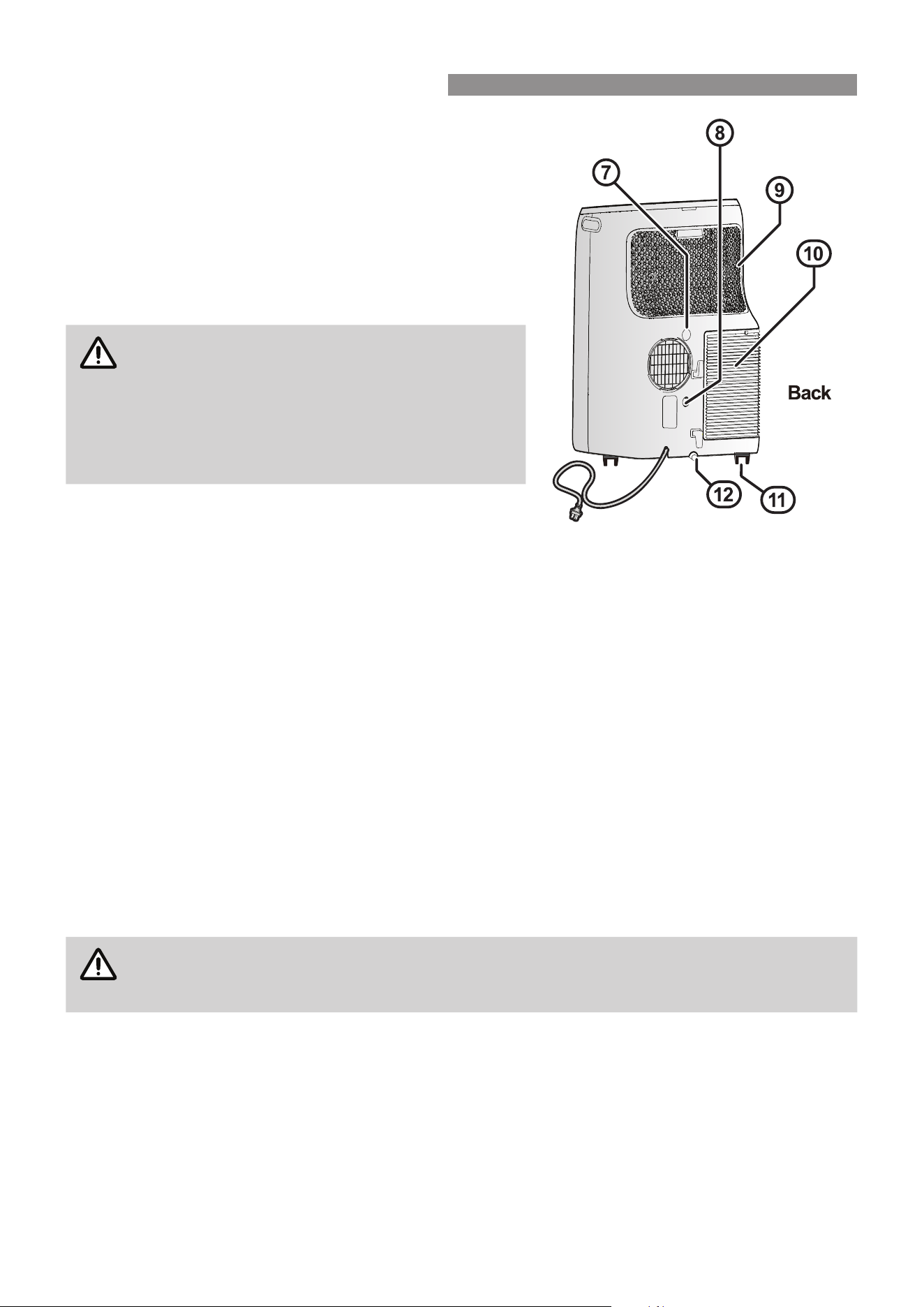
APPLIANCE COMPONENTS
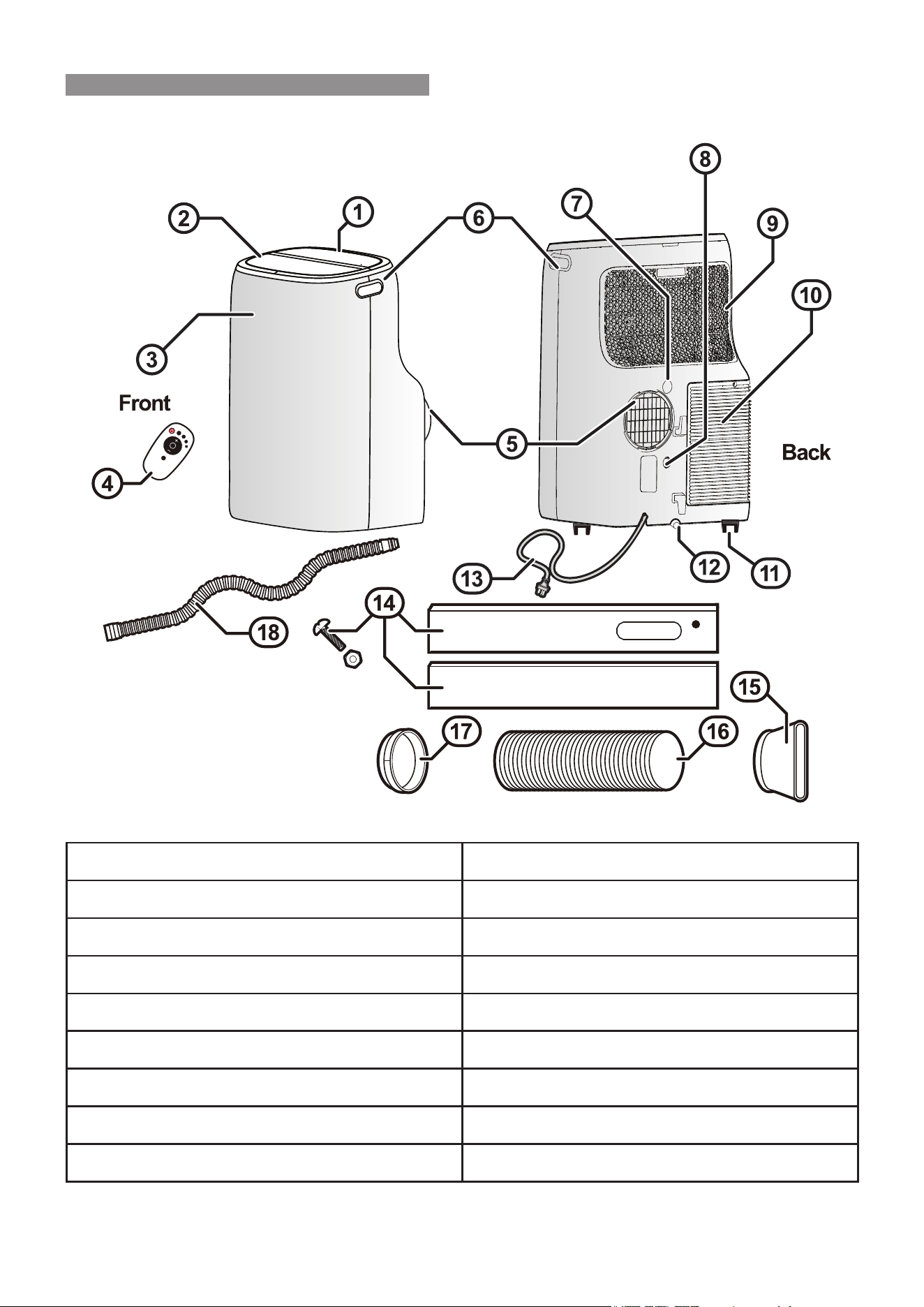
1. Control panel 10. Lower air intake (lter located behind grill)
2. Cool air outlet 11. Swivel casters (x4)
3. Receiver window 12. Drain tray outlet
4. Remote control 13. 1.7m exible 2 pin cord 220-240V 50Hz 10A
5. Exhaust outlet 14. Adjustable window slide kit
6. Carry handles 15. Window exhaust duct window adaptor.
7. Drain outlet 1 16. Exhaust duct (extends to 1.8M)
8. Drain outlet 2 (not used on this model) 17. Duct to appliance adaptor
9. Room air intake (lter located behind grill) 18. Condensate drain hose
AIR CONDITIONER BASICS
Rinnai 12 Portable Room AC OIM
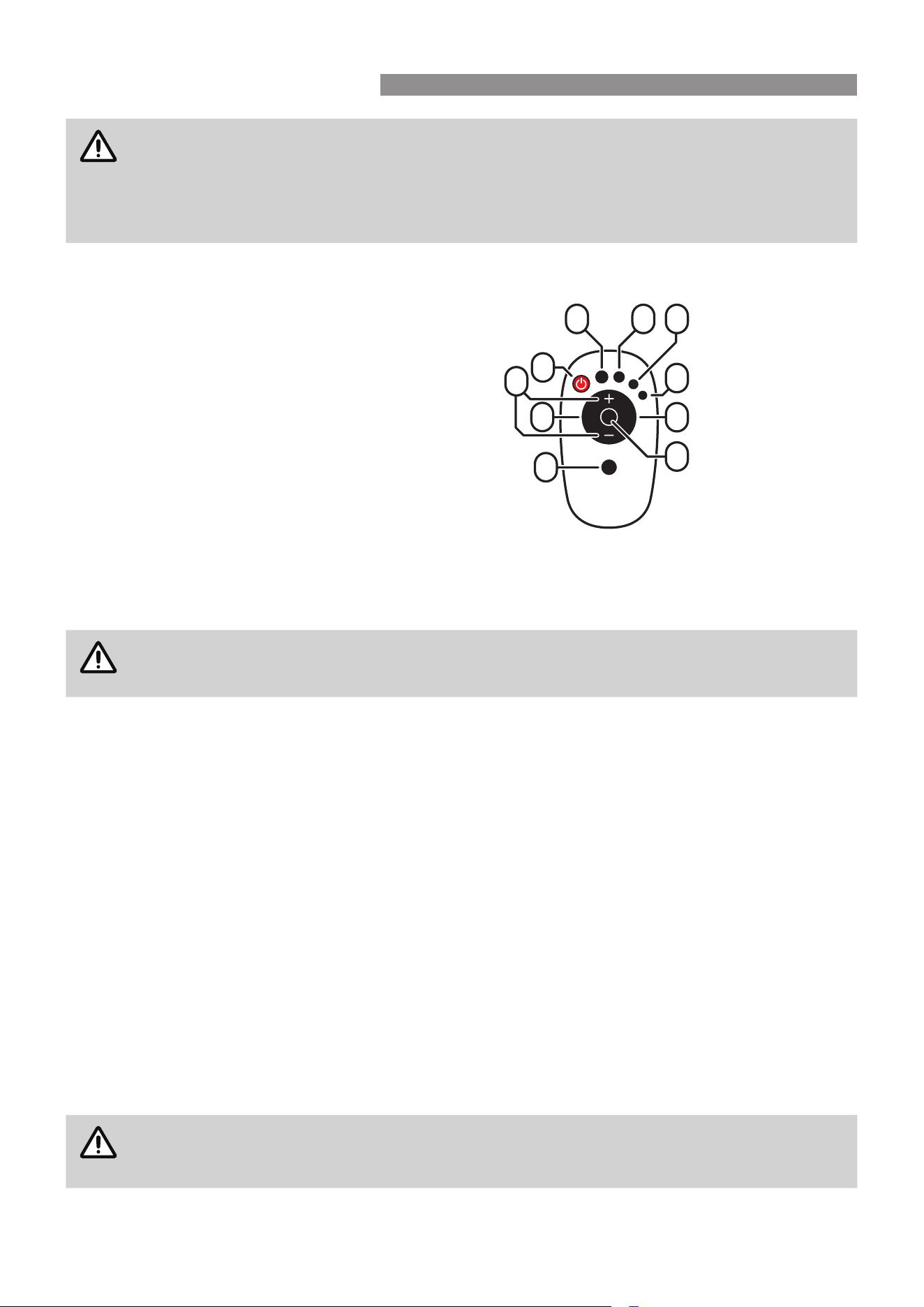
CONTROL PANEL
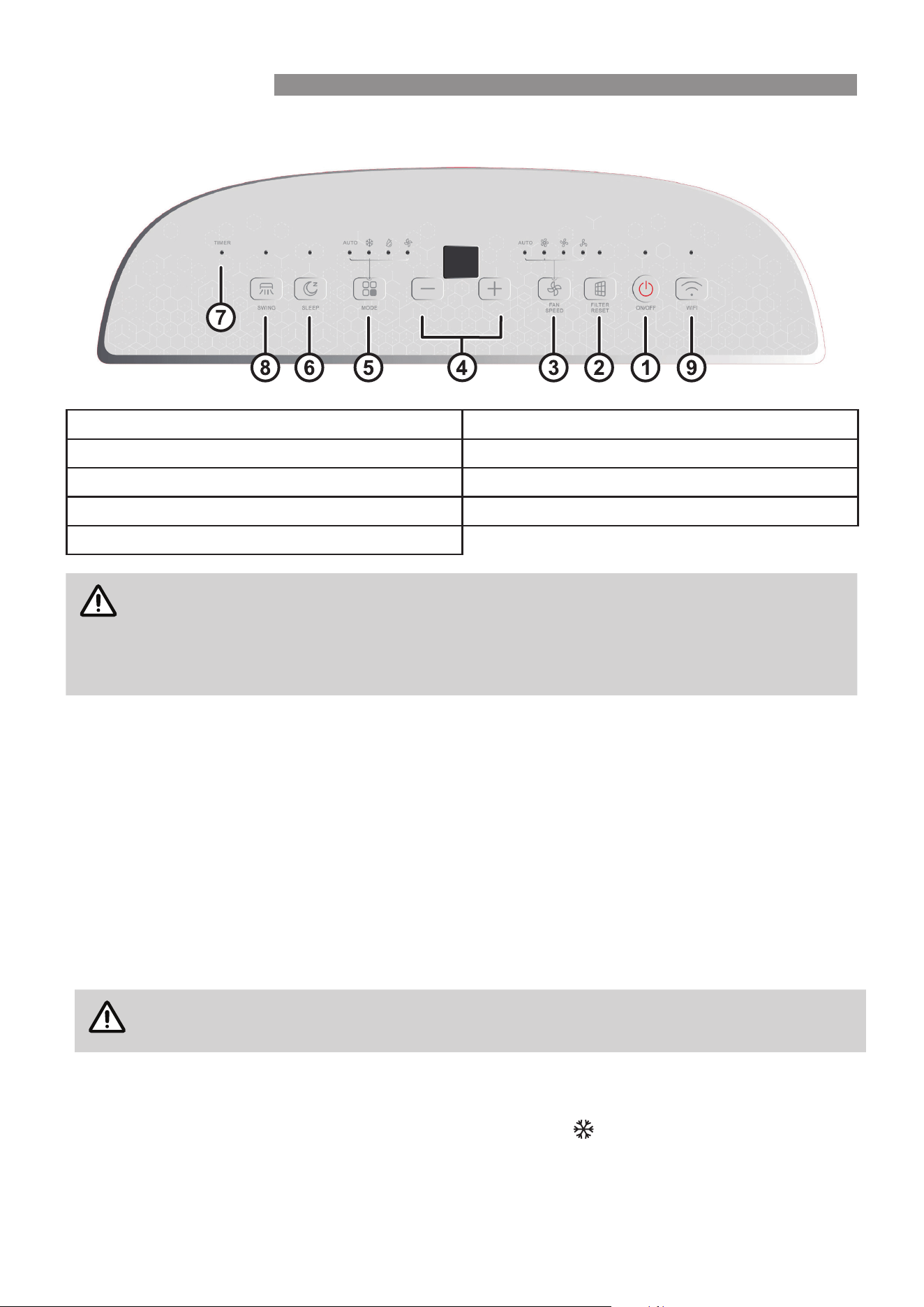
1. ON/OFF Button 6. Sleep Mode Button
2. Filter Reset Button 7. Timer Indicator Light
3. Fan Speed Button 8. Swing Button
4. Temperature Button 9. Wi-Fi Button
5. Mode Selection Button
IMPORTANT
Before operating this appliance ensure that the location, installation and condensation
requirementshavebeenmet,refertoinstallationinstructionsstartingonpage19fordetails.
Forthebestcoolingresultsensurethattheltersareclean,referpage17fordetails.
Whentheapplianceispluggedandthepowerpointisturnedonasinglebeepwillbeheardand
thecoolairoutletlouvrewillcycleopenandclosedonce,thisisnormal.
BASIC OPERATION
There are four basic operational modes available, these are AUTO, COOL (chilled air operation), DRY (chilled and
dehumidied operation) and FAN (fan only operation).
BASIC OPERATION CONTROL PANEL
AUTO
1. Press the ON/OFF button (1).
2. Press the mode selection button (5) until the AUTO mode indicator is illuminated. Use temperature buttons (4)
to select the desired temperature (16°C to 32°C).When the room temperature is higher than set temperature,
Cool mode;When the room temperature is lower than set temperature, Fan mode.
3. Press the ON/OFF button (1) to stop operation.
NOTE
Inthismode,youcannotadjustthefanspeeds.
COOL
1. Press the ON/OFF (1) button.
2. Press the mode selection (5) button until the COOL mode indicator
is illuminated.
3. Use temperature buttons (4) to select the desired temperature (16°C to 32°C)
4. Use fan speed button (3) to select the desired fan speed (AUTO, LOW, MED or HIGH).
5. Press the ON/OFF button (1) to stop operation.
OPERATION
Rinnai 13 Portable Room AC OIM
DRY
1. Press the ON/OFF (1) button.
2. Press the mode selection button (5) until the DRY mode indicator is illuminated.
3. Press the ON/OFF button (1).
FAN
1. Press the ON/OFF button (1).
2. Press the mode selection button (5) until the FAN mode indicator
is illuminated.
3. Use fan speed buttons (3) to select the desired fan speed (LOW, MED or HIGH).
NOTE
AUTOfanspeedisnotavailableonFANmode.
4. Press the ON/OFF button (1).
NOTE
Themostrecentbasicoperationalsettingsarestoredintheappliancesmemory.
If the appliance is not disconnected from the mains power supply then these setting will be
availablethenexttimetheapplianceisturnedonviatheON/OFFbutton.
FILTER RESET
When lter reset indicator light on, it means the air lter should be cleaned.
After cleaning the air lter, press the Filter Reset button to reset the countdown timer, the indicator light o.
NOTE
Theltercleanreminderisforgeneralusepurpose;Ifperiodsofheavyuse,airltersshouldbe
checkedandcleanedeveryweek.
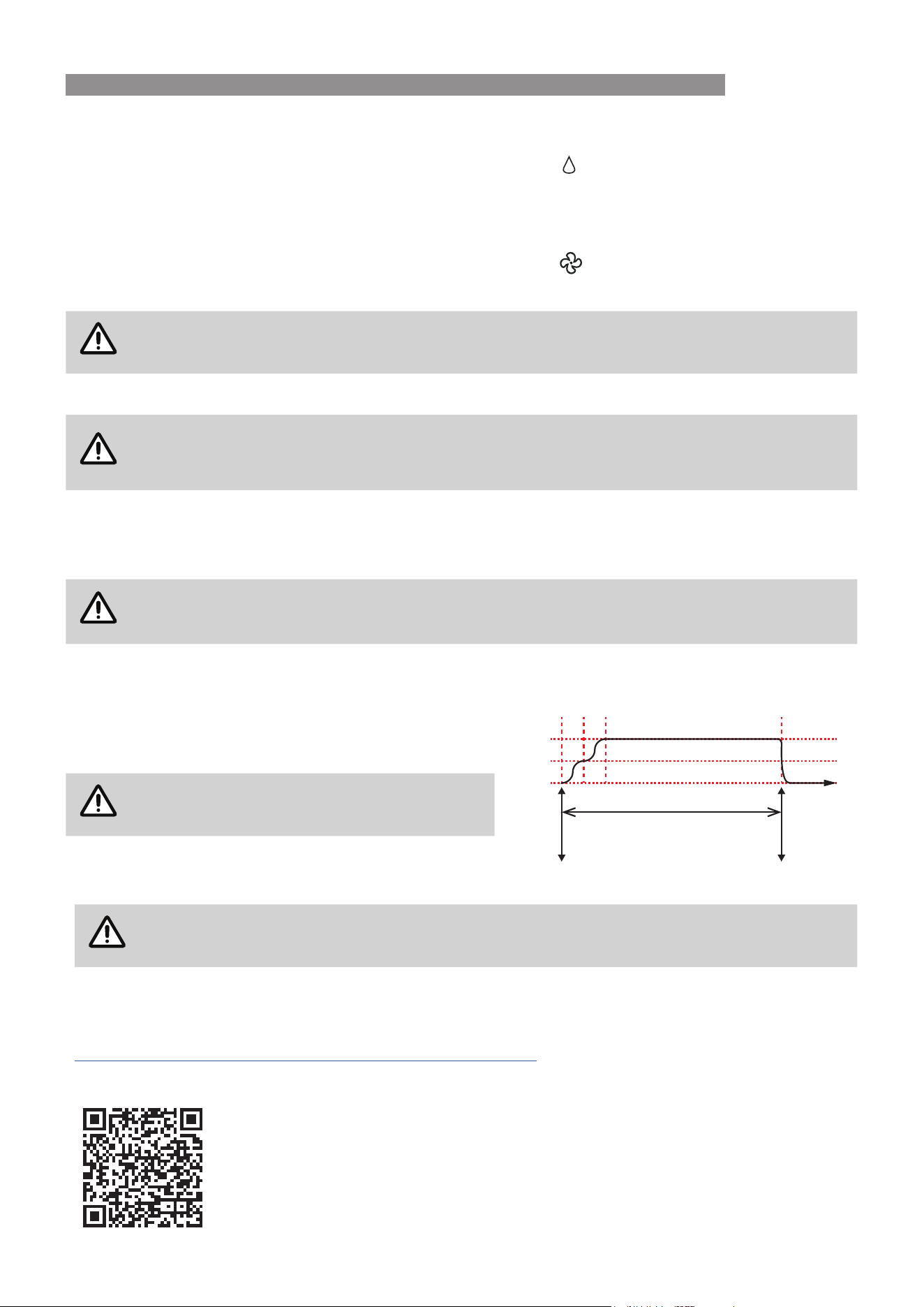
SLEEP
The SLEEP function allows the set temperature to increase
and decrease over an 8 hour period at pre-set time intervals
to maintain your comfort while saving energy after the 8 hours
has passed the appliance will resume normal operation.
NOTE
Sleep mode is not available in FAN only and
DRY mode
SWING
Press this button (8) to adjust the air ow direction.
NOTE
Onlyonemodeofoperationisavailableatanytime.
WI-FI OPERATION
Refer to the Wireless Operation Manual for App connectivity and operation.
A copy of the manual may be downloaded from the Rinnai Website:
https://www.rinnai.com.au/air-conditioning/portable-air-conditioners/ or by scanning this QR code
C°C = Set cooling temperature
1
Sleep mode 8 hours
0.5 8
1°C
Set temp
1°C
Sleep Mode
Finishes
Sleep Mode
Starts
0
OPERATION
Rinnai 14 Portable Room AC OIM
NOTE
BeforeproceedingwiththeoperationofyournewRinnaiPortableRoomAirConditionerRemote
Controller, please read these instructions thoroughly and gain a full understanding of the
requirementsfeaturesandoperationofyournewRemoteController.
PleasekeeptheOperationandInstallationManualforyournewPortableRoomAirConditioner
handysoitcanbereferredtoatanytimeinconjunctionwiththeseinstructions.
REMOTE CONTROL OVERVIEW
1. ON/OFF Button
2. Fan Speed Button
3. Swing Button
4. Timer Button
5. Sleep Button
6. Temperature UP/DOWN Buttons
7. Fan Only Button
8. Cool Button
9. Dry (Dehumidifying) Button
10. This button has no function on this model.
BASIC OPERATION REMOTE CONTROLLER
The Rinnai Remote Controller allows for convenient operation of the appliance within a 8 metre range.
NOTE
Aconrmationbeepsoundstoconrmthatasuccessfulcontrollerinputhasbeenreceivedby
theappliance.
BUTTON DESCRIPTION AND OPERATION
1. "ON/OFF" Button
Press "ON/OFF" button to turn "ON" or "OFF" the Air Conditioner.
2. "SPEED" Button
Press "SPEED" to set the fan speed (LOW, MEDIUM or HIGH).
3. "+" and "-" Button to adjust temperature or time
(a) Press “+”and “-” to regulate the temperature (the unit is 1°C) and set the time (the unit is 1h).
The temperature ranges from 16° to 32°, and the time ranges from 1h to 24h.
4. "SWING" Button
Press "SWING" to turn "ON" or "OFF" the swing function.
5. "TIMER" Button
(a) When the air conditioner is turned "OFF", press "TIMER" to set a time to turn "ON" the Air Conditioner.
Press "+" or "-" to set the time, and press "TIMER" again to conrm it.
(b) When the air conditioner is turned "ON", press "TIMER" to set a time to turn "OFF" the Air Conditioner.
Press "+" or "-" to set the time, and press "TIMER" again to conrm it.
(c) After setting the time, press "TIMER" again to cancel the set time.
NOTE
After setting the time,press “TIMER” againto conrm itin 5 seconds. Withoutanyoperation
in 5 seconds, the air conditioner will conrm the time automatically. Pressing “TIMER” after
conrmingthetimethiswillcancelthesettime.
2 3
1
9
6
4
5
7
8
10
REMOTE CONTROL
Rinnai 15 Portable Room AC OIM
6. “SLEEP” Button
(a) In operating mode, press “SLEEP” to enter the 10-hour intelligent sleep mode. After 10 hours, the air
conditioner will exit the sleep mode and restore its previous mode.
(b) In sleep mode, press “SLEEP” again, or press “MODE” or “ON/OFF” to exit the sleep mode.
NOTE
Thesleepmodecannotbestartedinfanonlymode.
7. “FAN” button - Press “FAN” to start the Ventilation mode.
8. “COOL” button - Press “COOL” to start the Refrigeration mode.
9. “DRY” button - Press “DRY” to start the Dehumidication mode.
NOTE
Onlywhentemperaturereaches16°canyouturnonthedehumidicationmode.
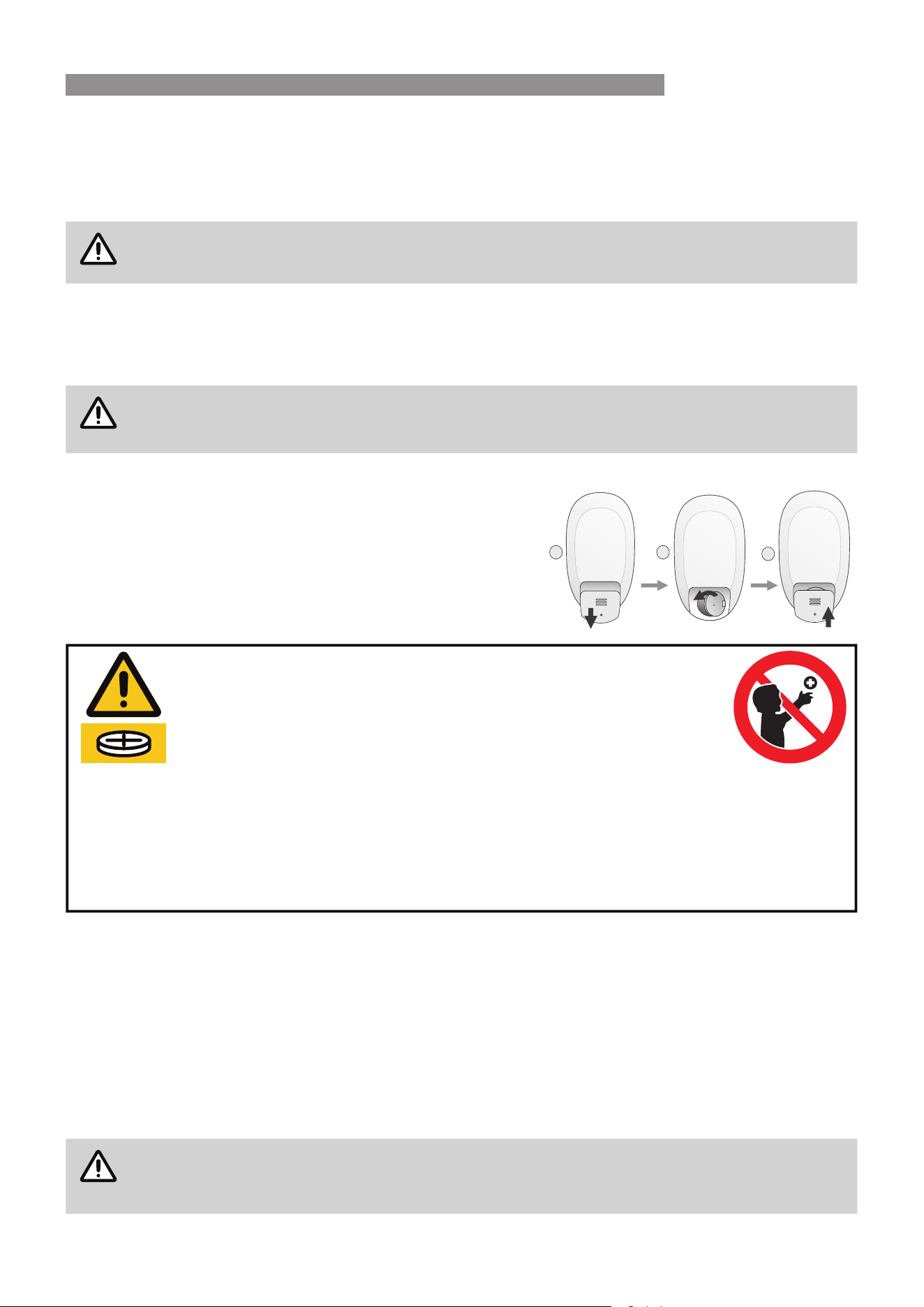
FITTING BATTERIES
1. Remove retaining screw of the cover. Slide down to open the
cover according to the direction indicated by the arrow head.
2. Install the button battery (CR2032/3V). Make sure the positive
pole faces up.
3. Put back the cover and replace the retaining screw.
IMPORTANT
1. Aim the remote control towards the receiver on the front of Air Conditioner.
2. The remote control should be within 8 meters away from the receiver.
3. Ensure there are no obstacles between the remote control and the receiver.
4. Do not drop or throw the remote control.
5. Do not leave the remote control in the sun or near heating devices.
6. Only use the button battery (CR2032/3V). Ensure the battery cover is securely in place.
NOTE
RemoteControllersmaybeslightlydierentfromillustrateddiagramdependingonwhichmodel
purchased.
Dispose of used button batteries immediately and safely. Flat batteries can still be dangerous and may be a choking hazard.
Inform others about the risk associated with button batteries and how to keep their children safe.
Remove the batteries if the remote is not going to be use for prolonged periods. This will help prevent damage from leaking
batteries. If leakage has occurred and corrosion is evident the remote will need to be replaced.
Leaking chemicals are toxic and MUST NOT be touched or ingested.
NEVER mix old and new batteries.
DO NOT immerse the remote control in any liquid, this will damage the remote control, rendering it inoperable and voiding
its warranty.
WARNING KEEP BATTERIES OUT OF REACH OF CHILDREN.
Swallowing may lead to serious injury in as little as 2 hours or death, due to chemical burns
and potential perforation of the oesophagus.
If you suspect your child has swallowed or inserted a button battery immediately call the
24-hour Poisons Information Centre on 13 11 26 for fast, expert advice.
Examine devices and make sure the battery compartment is correctly secured, e.g.
that the screws or other mechanical fasteners are tight. DO NOT use if compartment is not secure.
2
0
3
R
2
C
2
0
3
R
2
C
1
2
3
REMOTE CONTROL
Rinnai 16 Portable Room AC OIM
GENERAL MAINTENANCE
It is recommended that after each cooling season the exterior
panels and display of the appliance are cleaned with a soft damp
cloth.
Air lters should be checked and cleaned every week during
periods of heavy use. For intermittent use this can be extended to
2 to 3 weeks.
If storing the appliance for a prolong period remove the plugs and
hoses from the drain outlets (7) , (8) and (12).
CAUTION
ALWAYSturnothepowerbeforeyouperformany
maintenance.
DO NOTusesolvents,alcoholorharshcleanerson
thisapplianceorthelters.
NEVER use water that is hotter than 40°C when
you clean the lters. It may cause deformation or
discolouration.
CLEANING THE AIR FILTER
There are two air lters in this appliance, there is one lter each tted to the inside of the Room Air Intake Grill (9),
and the Lower Air Intake (10).
Before removing the grills, ensure the power cord is disconnected from the power supply.
1. Remove the grills:
To remove the Room Air Intake Grill (9) pull down on the top tab and un-clip the grill.
To remove the Lower Air Intake Grill (10) use a Philips head screw driver to remove the securing screw and
un-clip the grill.
2. Un-clip the lters from each of the grills. Clean the lters with a vacuum cleaner or with warm water. If dirt is
dicult to remove, wash the lter in lukewarm water with a mild detergent.
3. Ensuring that the lters are dry before replacing, then clip the lters back into the grill covers.
4. Re-attach the grills:
To re-attach the Room Air Intake Grill (9) ensure that all the tabs are properly seated and that the grill is
securely clipped back into place.
To re-attach the Lower Air Intake Grill (10) ensure that all the tabs are properly seated and that the grill is
securely clipped back into place and that the securing screw is replaced.
The power may now be reconnected.
NOTE
Failuretocleantheltersregularlycancauseexcessivecondensationtoformandreducethe
applianceseciency.
Ifyouneedreplacementlters,pleasecontactRinnai.
CARE & MAINTENANCE
Rinnai 17 Portable Room AC OIM
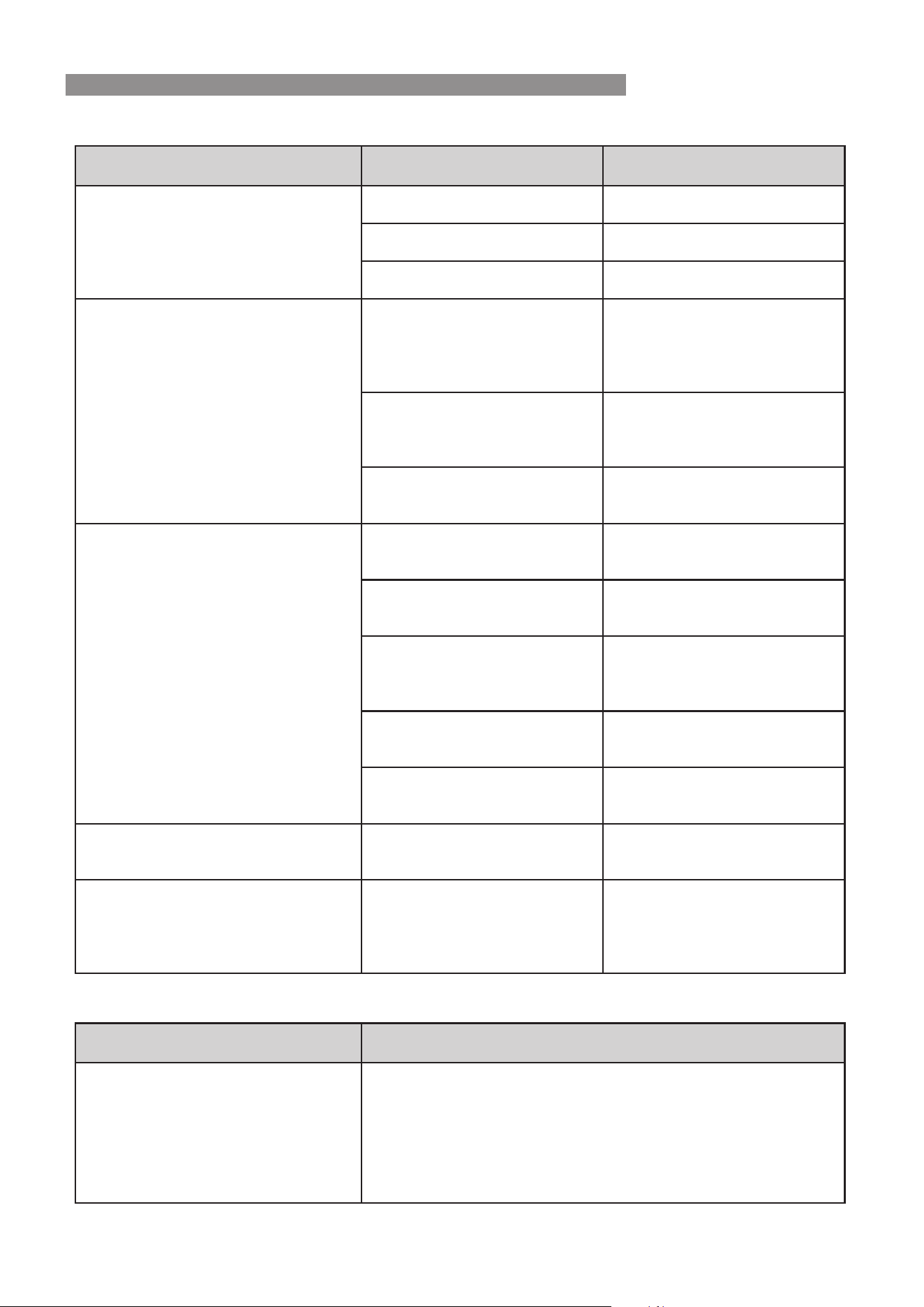
SAVE A SERVICE CALL
SYMPTOM POSSIBLE CAUSES POSSIBLE SOLUTIONS
Appliance will not operate.
Not plugged into power. Plug into power.
Power switch OFF. Switch power ON.
Timer Function set. Wait or reset timer function.
Power to Appliance but it will not start.
After switching o the
appliance there may be a 3
minute delay before it may
be re-started.
Wait 3 minutes.
Room temperature is lower
than the set temperature.
Adjust the set temperature
to be lower than the room
temperature.
P1 appears on the display. Drain the water from the
drain outlets.
The air conditioner does not generate
enough cool air.
The air intake lters are
blocked
Clean air lters.
The set temperature is too
high.
Adjust the set temperature to
a lower temperature.
Drafts from open windows
and doors.
Close windows and doors
in the area you want to be
cooled.
Other heat sources in the
room.
Remove or turn o heat
sources.
Cooling space too big. Operate the appliance within
the required cooling capacity.
Too noisy or vibrating.
Operating surface not level Move the appliance to level a
operating surface.
Splashing sound.
High level of condensate
being generated.
This is normal. This appliance
has a pump that evaporates
some condensate through
the exhaust duct.
WHEN TO CALL FOR SERVICE
SYMPTOM CAUSE
There is a burning smell and a
strange sound coming from the
unit.
When operated if a circuit breaker
(safety, ground) is thrown or a fuse
is blown.
Turn o the air conditioner, and contact Rinnai.
CARE & MAINTENANCE
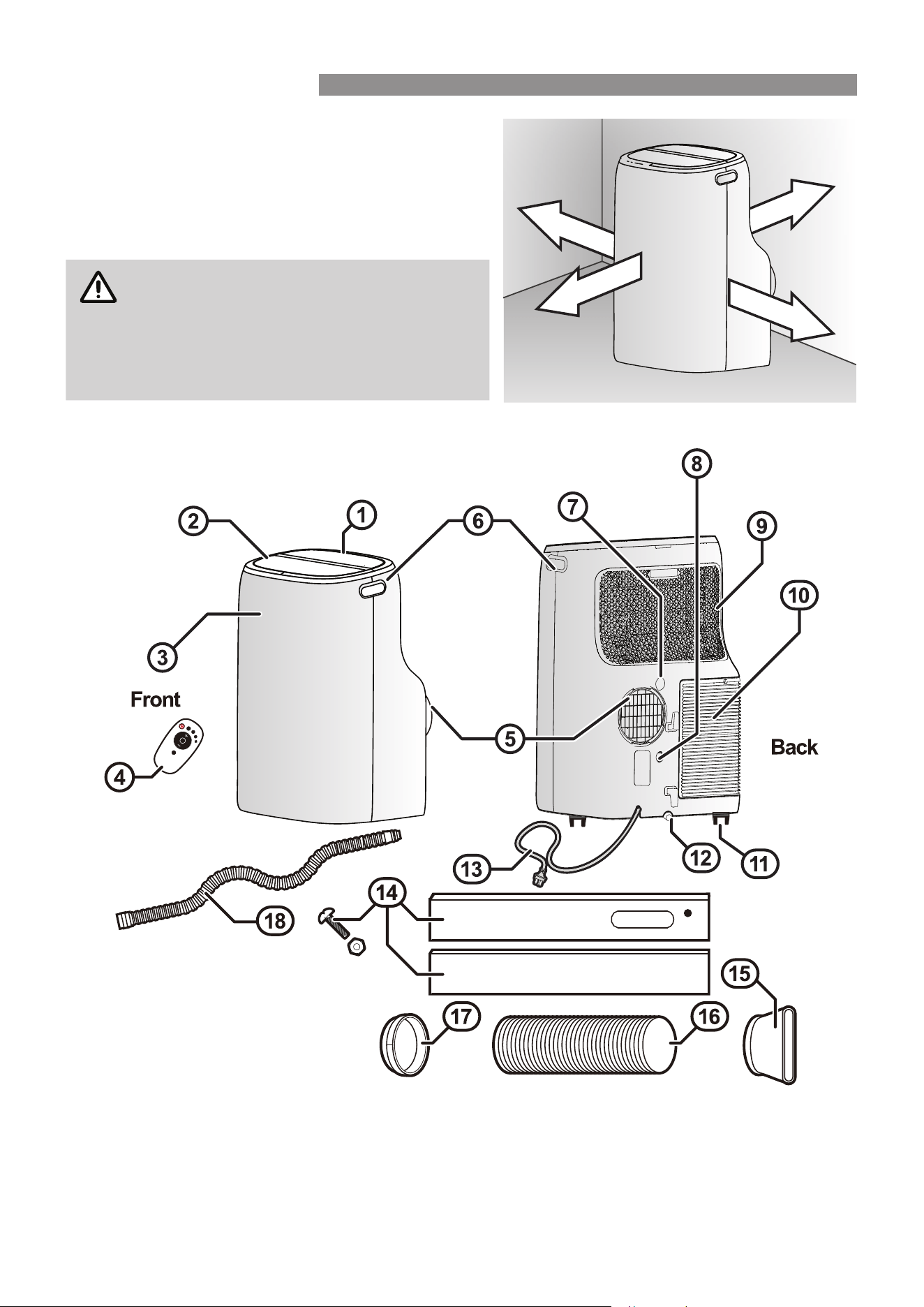
LOCATION
This portable air conditioner must be installed on a at and
dry surface. A minimum clearance of 500mm from walls or
other appliances is required as well as easy access to a
power point (GPO).
The air outlets and the ducting system must not be obstructed.
IMPORTANT
Theapplianceisttedwitha1.7mexiblecord
220-240V50Hz10A.
Themaximumductextensionis1.8mintotal.
Bothfactorsaretobetakenintoaccountwhen
determiningthelocationthattheappliancewill
beoperatedin.
DUCT ASSEMBLY
1. Place the Duct to Unit Adaptor (17) over the Exhaust Outlet (5), push it downwards to ensure it engages the
Exhaust Outlet tabs.
2. Screw one end of the Exhaust Duct (16) into the Duct to Unit Adaptor (17).
3. On the other end of the Exhaust Duct (16) x the Window Exhaust Duct Adaptor (15).
500mm
500mm
500mm
500mm
INSTALLATION
Rinnai 18 Portable Room AC OIM
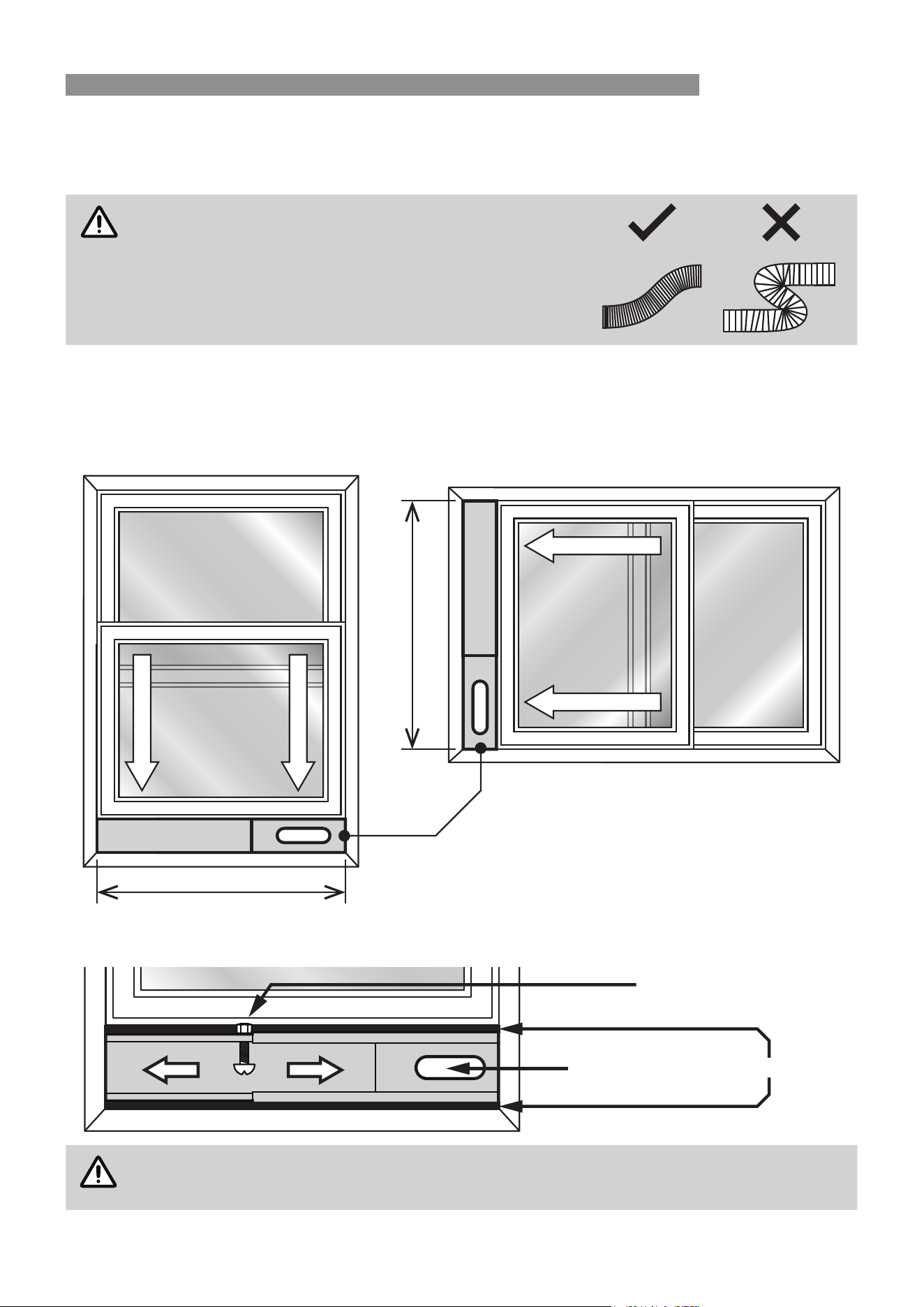
EXHAUST DUCTING OPTIONS
There are two ducting options available for this appliance, these are a Window installation or an optional Semi-
permanent wall installation.
IMPORTANT
DONOToverextendtheexhaustduct.
Overextensionoftheexhaustductcanleadtokinking.
Kinkedductingcausesairowrestrictionsandlowersthe
eciencyoftheappliance.
Keepingtheexhaustductasshortaspossibleavoidsthis
issue.
WINDOW INSTALLATIONS
The window kit has been designed to t most standard vertical and horizontal window applications. There may be
some cases where you may need to modify some aspects of this installation procedure for certain window types.
Minimum and maximum horizontal / vertical window opening dimensions:
1. Once a suitable window has been chosen, t the Adjustable Slider Kit (14) into the window areas and x the
length of the kit using the supplied slide lock nut and bolt.
NOTE
Itisrecommendedtoplacealengthoffoamdraftsealingstripalongthetopandbottomedgesof
thekitortheinsidethewindowopeningtoformaseal.
2. Connect the Window Exhaust Duct Adaptor (15) to the Adjustable Slider Kit (14).
Foam seal
Insert window
exhaust duct
adaptor here
Slide lock nut and bolt
Horizontal
Window
Installation
A - Minimum = 675mm
A - Maximum = 1250mm
Vertical
Window
Installation
Window
Installation
kit
A
A
INSTALLATION
Rinnai 19 Portable Room AC OIM
SEMI-PERMANENTWALLINSTALLATION
In some cases a window opening might not be assessable; therefore Wall Exhaust Adaptor and Wall Exhaust
Terminal are required that can be connected the Exhaust Duct. Note: Wall Exhaust Adaptor (PN 94320029) and
Wall Exhaust Terminal (PN 94320031) are not supplied, please order separately.
WARNING
Thepositioningandinstallationofthewallangeshouldbecompletedbyanauthorisedperson
andmustcomplywithallmunicipalbuildingcodesandOH&Sguidelines.
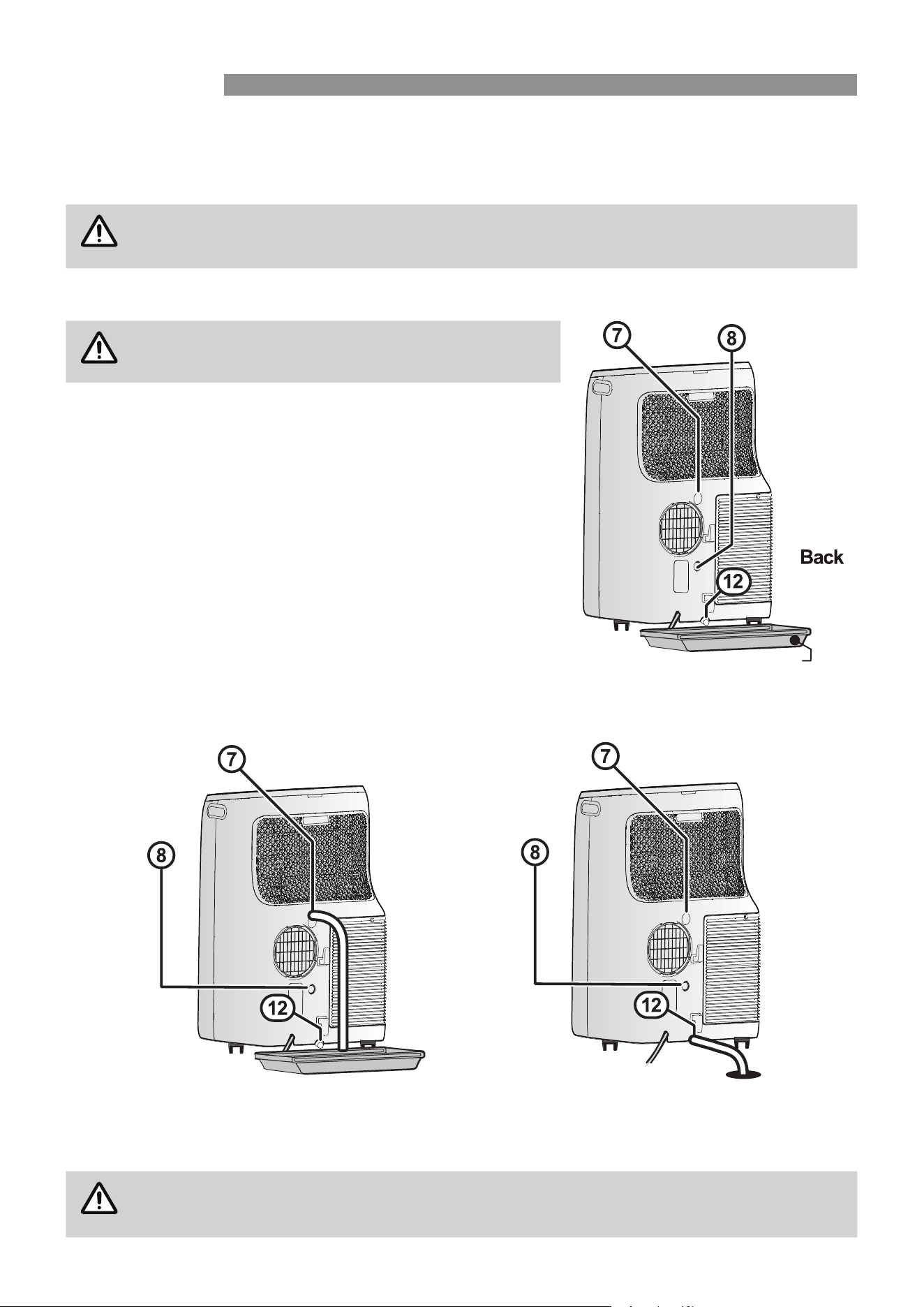
CONDENSATE DRAINAGE
NOTE
CondensateproducedbythisapplianceisNOTpotable,
disposeofviawasteoutletorallowtoevaporate.
INTERNAL CONDENSATE TANK
During operation the appliance may produce small amounts of condensate.
The appliance has an inbuilt condensate tank. If all three drain outlets
(7), (8) and (12) are plugged, then this tank may reach capacity. If this
happens, the appliance will stop operation and the condensate full code
“P1” will be shown on the control panel display and the condensate tank
will need to be drained before operation can be resumed. To do this:
1. Place shallow tray such as an oven baking tray or similar (with at
least a 1 litre volume) under Drain Tray Outlet (12).
2. Remove the plug from Drain Tray Outlet (12) and drain out the
condensate water, once the condensate is drained replace the plug,
the appliance will now be able to then resume operation.
FIXED CONDENSATE DRAINAGE HOSE
As an alternative to using the appliances internal condensate tank, a condensate drain hose (18) may de tted.
Option 1 - External Drain Tray: with drain outlets (8) and (12) plugged, t the condensate drain hose (18) to drain
outlet (7) and drain the condensate into a drain tray.
Option 2 - Existing Waste Outlet: with drain outlets (7) and (8) plugged, t the condensate drain hose (18) to drain
outlet (12) and drain the condensate into a drain tray or waste outlet.
NOTE
ThepointtowhichthecondensateistobedrainedMUST BElowerthanthedrainageoutletpoint.
Whenusingadraintrayoption,ensurethatthecapacityofthetrayisgreaterthanthatofthe
condensatebeingproduced.
Shallow baking tray
Option
1
Option
2
INSTALLATION
Rinnai 20 Portable Room AC OIM

TERMS OF WARRANTY – AUSTRALIA
Rinnai Australia Pty. Ltd. ABN 74 005 138 769, 100 Atlantic Drive, Keysborough VIC 3173.
1 DEFINITIONS
The terms listed below shall have the following meanings:
1 “Authorised Service Representative” means an independent service contractor authorised by Rinnai or
Rinnai service personnel.
2 “Rinnai” means Rinnai Australia Pty Ltd (ABN 74 005 138 769) and any related company.
3 “Certicate(s) of Compliance” means certicate(s) issued by licensed personnel (including plumbers,
refrigeration mechanics, electricians or other relevant tradespeople) to certify that any prescribed works comply
with applicable regulatory requirements.
4 “Certicate(s) of Occupancy” means certicate(s) issued by the local government authority (or similar
organisation) which certies that a home can be occupied.
5 “InstallationSite” means the site at which the Product is originally installed.
6 “NormalBusinessHours” means 8:30am to 5:00pm Monday to Friday, excluding public holidays.
7 “Operating/Installation Instructions” means the user manual or other documentation which provides detailed
instructions on the proper operation and maintenance of the Product.
8 “Other Applications” means any Product used for purposes other than Residential & Light Commercial
Applications. Other Applications may include but are not limited to factory, IT/Server room, telephone exchange,
processing area (e.g. bakery, kitchen, warehouse, swimming pool, agricultural facilities such as a nursery).
Any Product which has been installed, for whatever purpose, as a retrot component to an existing system, will
also be classed as being part of an “Other Application” regardless of the purpose of use of the existing system
into which such product has been installed.
9 “Purchaser” means the end user of the Product, the person named as owner in the Warranty certicate, the
holder of the Proof of Purchase or the holder of a property transfer document where the Product is included
as part of the chattels.
10 “Product” means the equipment purchased by the Purchaser and described in Section 2 of this document.
11 “ProofofPurchase” means a Tax Invoice or Receipt in respect of the Product. In the case of new constructions,
a Certicate of Occupancy or a Certicate of Compliance that details the date of installation or commissioning
will suce.
12 “Qualied Installer” means the qualied installation contractor who is responsible for performing the
installation work in the manner prescribed by local and statutory regulations, including compliance with any
relevant and to Rinnai specications, including Australian Standards.
13 “Residential&LightCommercialApplications” means any Product for use in residential or light commercial
applications where
a) the Product is solely used for the purpose of human comfort; and
b) the ambient temperature of the space the Product is intended to heat or cool is inuenced solely or
primarily by natural exterior weather conditions rather than by man-made or mechanical heat sources.
Examples of Residential & Light Commercial Applications include, homes, oces, hotels, apartments,
nursing homes, hospitals, health care premises, shopping centres, and retail stores.
WARRANTY
Rinnai 21 Portable Room AC OIM
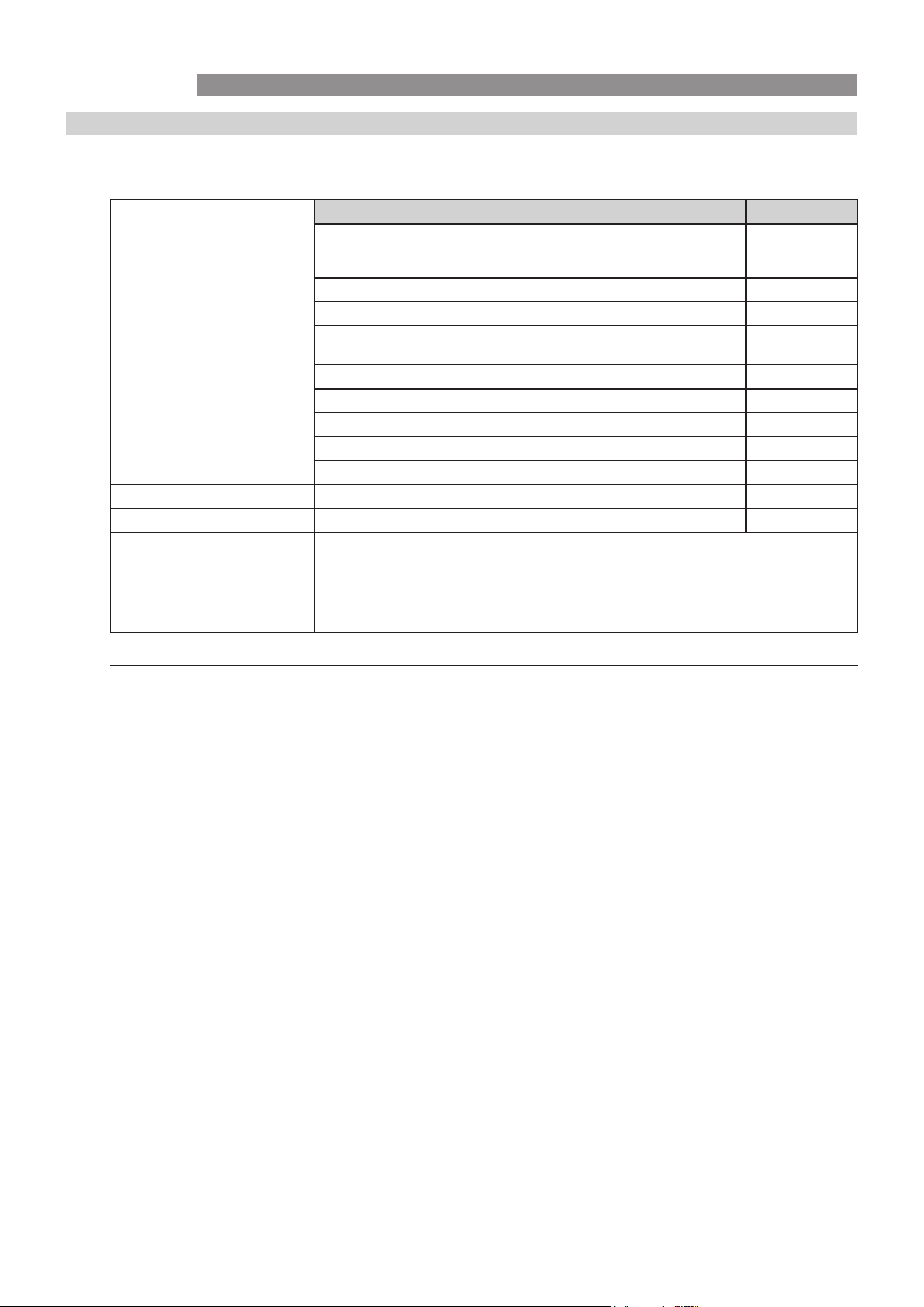
2 TERMS OF WARRANTY
2.1 Subject to the Terms of Warranty set out in this document, eective from the date of purchase by the Purchaser,
the Product is warranted to be free from defects in materials & factory workmanship for the period set out in
table below:
PRODUCT GROUPS PARTS LABOUR
Residential and Light Commercial
Evaporative Coolers & Ducted Gas Heaters (excluding
Compact Classic Series)
5 Years
*Extended 4
Years Option
5 Years
*Extended 4
Years Option
Ducted Gas Heaters - Compact Classic Series 3 Years 3 Years
Refrigerated Air conditioning Products 5 Years 5 Years
Ducted Gas Heaters - Heat Exchangers and Burners
Evaporative Coolers - Structural components only
10 Years N/A
Portable Air conditioning / Dehumidier / Air Purier 2 Years N/A
Electric Panel Heaters
(1)
7 Years N/A
Outdoor Radiant Heater 3 Years 1 Year
Electric Fire Heater 5 Years 5 Years
Wi-Fi Devices 1 Year 1 Year
Other Applications All Product Groups 2 Years 1 Year
After Market Spare Parts 1 Year N/A
*Extended Warranty Option
Up to 4 year extended warranty (in addition to the standard warranty period listed above) applies
on selected products when you opt in to the Rinnai Service Advantage program. This program
has terms and conditions, including the requirement for scheduled servicing of the product by
Rinnai.
To participate in the program you must register your product online at: www.rinnai.com.au/
support-resources/ warranty-registration/ within the rst 12 months of the product being installed.
(1)
To make a claim under this warranty, please contact your place of purchase within the warranty period.
2.2 Rinnai will determine in its sole discretion, which classication the Product ts into and the corresponding
Warranty that shall apply.
2.3 An Authorised Service Representative will repair or replace, at its option, the Product or any part of the
Product that its examination shows to be defective. The repair or replacement shall be performed during
Normal Business Hours by an Authorised Service Representative. Repair by persons other than an Authorised
Service Representatives may void the Warranty.
2.4 Alternatively to clause 2.3 above, Rinnai can at its discretion elect to pay you an amount equivalent to the cost
of repairing or replacing the Product.
2.5 If Rinnai provides you with either the replacement costs or replacement product, ownership of the original
Product shall immediately transfer to Rinnai.
2.6 Rinnai is responsible for reasonable costs associated with legitimate warranty claims, including call-out of an
Authorised Service Representative to inspect the Product. Rinnai is not responsible for:
a) costs for tradespeople engaged by you that are not Rinnai Authorised Service Representatives.
b) any costs, including call out costs for a Rinnai Authorised Service Representatives, associated with a
Product which is determined upon inspection not to be covered by this warranty.
2.7 Rinnai will reimburse any reasonable costs associated with making a legitimate warranty claim against Rinnai
which are not otherwise specied above.
2.8 The Warranty of the Product requires that, in addition to all other conditions, the Purchaser conducts regular
and/or preventative maintenance as may be specied by the Operating/Installation Instructions or otherwise
directed by Rinnai and required by the level of usage and the usage environment, including the use of
correct and uncontaminated refrigerants and lubricants. Refrigeration, plumbing and electrical works must be
undertaken by licensed personnel.
2.9 Where a Product or failed component is replaced under warranty, the time remaining on the original Product
warranty period will continue to apply and the replacement product or part will be subject to the original
warranty period only.
WARRANTY
Rinnai 22 Portable Room AC OIM

3 CONDITIONS OF WARRANTY
3.1 The Purchaser may only obtain the benet of the Warranty if the Purchaser:
a) maintains and has the Product serviced in accordance with the instructions set out in the service section
of the relevant Service or Owner’s Manual;
b) complies with clause 7 “Purchaser’s Responsibilities” on page 24;
c) noties Rinnai within 30 days of a defect occurring or, in the case of a latent defect, becoming apparent,
that a claim is being made under this Warranty; and
d) provides, in support of the claim made under this Warranty, a Proof of Purchase.
3.2 This document (and any statutory consumer guarantees) represents the only Warranty given by Rinnai in
respect of the Product. No other person or organisation is authorised to oer any alternative warranty on
behalf of Rinnai.
3.3 If the date of purchase cannot be established to Rinnai’s satisfaction, the date shall be deemed to be 2
months after the date of manufacturer or the date of sale by Rinnai, whichever is the latter.
3.4 This warranty applies to Products which are manufactured on or after the date of publication of this warranty
but before the next date of publication of this warranty.
4 EXCLUSIONS
4.1 This Warranty doesNOT cover:
a) damage, problems or failure resulting from improper operation and/or inadequate maintenance by the
Purchaser (refer Purchaser’s Responsibilities section below);
b) damage, problems or failure resulting from improper or faulty installation. The Product must be installed
by a Qualied Installer in accordance with applicable regulations. Where applicable, Certicate(s)
of Compliance must be obtained by the purchaser from the Qualied Installer and presented to the
Authorised Service Representative;
c) damage, problems or failure caused by factors external to the Product including, but not limited to, faulty
or poor external electrical wiring, incorrect or faulty power supply, voltage uctuations, over voltage
transients or electromagnetic interference, inadequate or faulty gas, drainage services, or water services,
including water pressure, and non-potable water;
d) damage, problems or failure caused by acts of God, re, wind, lightning, ood, storm, hail storm fallout,
vandalism, earthquake, war, civil insurrection, misuse, abuse, negligence, accident, pests, animals, pets,
vermin, insects, spiders/bugs or entry of foreign objects or matter into the Product such as dirt, debris,
soot or moisture;
e) damage, problems or failure caused by environmental conditions including, but not limited to, excessive
moisture, salt or other corrosive substances or atmospheric conditions;
f) Product which has been installed in a portable or mobile building, structure or application including, but
not limited to, a caravan, boat or trailer;
g) Product which has been re-installed at a location other than the original site;
h) any consumable item supplied with the Product including, but not limited to, an air lter, battery, fan belt,
igniter or cooler pad;
i) installation of third-party components that may be attached to the Product. These include, but are
not limited to, control wiring, ducting, return air lter(s) grille, register, diuser, zone motors, controls/
thermostats, pipe work and fabricated or added components. These items remain solely the responsibility
of the Qualied Installer;
j) installations where electrics/electronics may be subjected to moisture/chemicals (e.g. swimming pools
or nurseries);
k) any repair, which is needed as a result of an accident, misuse, abuse or negligence;
l) Product that is utilised in an environment (indoor and outdoor) outside its specied operating range; and
m) fair wear and tear to the Product.
n) On-site labour warranty on portable (non-xed installation) Products – In respect of such Products the
Purchaser must return the Product to the supplier for repair or replacement).
5 LIMITATIONS
5.1 Third parties are often involved in providing advice to consumers about the climate control solutions best
suited to the consumer’s needs. Any advice or recommendations given by such parties, including advice
about Product tness for purpose and overall system design, sizing and application are not the responsibility
of Rinnai. This includes but is not limited to the heat load calculations, airow and system balancing.
5.2 This Warranty does not apply to any Product installed at an Installation Site which is outside Australia.
5.3 Except where inconsistent with the purchaser’s statutory rights and the rights given by this Warranty, all
liabilities of Rinnai for any direct, special, indirect or consequential loss or damage, any damage or expense
for personal injury or any loss or destruction of property, arising directly or indirectly from the use or inability
to use the Product or any of its parts and/or servicing the Product, are expressly excluded.
WARRANTY
Rinnai 23 Portable Room AC OIM

6 TRAVEL, TRANSPORT & ACCESS COSTS
6.1 The Purchaser must pay freight charges, in-transit insurance expenses and travelling costs for repairs/
replacements under this Warranty, that are required to be performed 50km from the nearest Rinnai branch or
Authorised Service Representative.
6.2 Subject to clause 6.3, Rinnai will pay freight charges, in-transit insurance expenses and travelling costs for
repairs/replacements that are required to be performed less than 50km from the nearest Rinnai branch or
Authorised Service Representative, subject to the following:
a) Rinnai will arrange for such repairs/replacements and make any payment directly to the third party to
provide the freight, in-transit insurance or travel services; or
b) if Rinnai considers appropriate, it will authorise the Purchaser in writing to pay for the relevant freight
charges, in-transit insurance expenses or travelling costs and then, upon provision by the Purchaser to
Rinnai of a tax invoice showing those costs have been incurred, reimburse the Purchaser for such costs
which are within the terms of the authorisation. If the Purchaser pays for the relevant freight charges,
in-transit insurance expenses or travelling costs without written authorisation from Rinnai, Rinnai will not
reimburse the Purchaser for such costs.
6.3 The Purchaser must pay all costs and expenses in respect of:
a) any service call out fee if the Product is not accessible for service
b) making the Product accessible for service, for example, restricted access or working at heights, or the
labour cost for an additional person due to OHS requirements.
c) providing a safe working environment for installation, service, maintenance or repair of the Product;
d) any surcharge applicable in respect of supplying replacement parts outside Normal Business Hours; and
e) any other costs and expenses in relation to claiming the Warranty that is not covered by clause 6.2.
7 PURCHASER’S RESPONSIBILITIES
7.1 The Purchaser must operate and maintain the Product in accordance with the Operating Instructions and
service maintenance schedule, including conducting an appropriate number of services to the unit during the
Warranty period, based on usage and the usage environment including but not limited to;
a) regularly cleaning the air lter(s) and replacing them where necessary;
b) replacing expired batteries or other consumables as required;
c) ensuring that the condensate drain is kept clean and clear of obstructions.
HOW TO MAKE A WARRANTY CLAIM:
If you wish to make a warranty claim in respect of any Portable Product, please return it to the place of purchase,
or if that is not possible, contact Rinnai to enquire about alternative arrangements.
If you wish to make a warranty claim in respect of any xed Product, please contact Rinnai on the details set out
below to make arrangements for an Authorised Service Representative to inspect the product.
As per clause 2.6 of the Terms and Conditions of Warranty, purchasers are responsible for the costs of any repair
and/or call out fee where, on inspection, the alleged defect is found by Rinnai’s Authorised Service Representative
not to be covered by this warranty or any statutory consumer guarantee applicable to the Product.
The Terms and Conditions of Warranty contain important information about your rights and obligations under this
warranty. Please read them fully and carefully before making a claim.
NOTICE TO CONSUMERS UNDER AUSTRALIAN CONSUMER LAW
Our goods and services come with guarantees that cannot be excluded under the Australian Consumer Law.
For a major failure with a good, you are entitled to a replacement or refund and compensation for any other
reasonable foreseeable loss or damage. If the failure does not amount to a major failure and if the goods fail to
be of acceptable quality, you are also entitled to have the goods repaired or replaced.
For a major failure with the service, you are entitled to cancel your service contract with us and obtain a refund
for the unused portion, or to compensation for its reduced value. You are also entitled to be compensated for any
other reasonably foreseeable loss or damage. If the failure does not amount to a major failure you are entitled to
have problems with the service rectied in a reasonable time and, if this is not done, to cancel your contract and
obtain a refund for the unused portion of the contract.
The benets provided by this Warranty are in addition to any other rights and remedies available to a consumer
under the Australian Consumer Law and any other law which may apply to the goods and or services.
WARRANTY
Rinnai 24 Portable Room AC OIM

NOTES
Rinnai 25 Portable Room AC OIM

NOTES
Rinnai 26 Portable Room AC OIM

NOTES
Rinnai 27 Portable Room AC OIM

Rinnai 28 Portable Room AC RPC41MCWF OIM Issue 1 - August 2024
CONTACTS
Rinnai Australia Pty Ltd
ABN 74 005 138 769 | AU45204
100 Atlantic Drive, Keysborough, Victoria 3173
P.O. Box 460, Braeside, Victoria 3195
Tel: (03) 9271 6625
National Help Line
Tel: 1300 555 545*
Monday to Friday, 8.00 am to 5.00 pm EST.
*Cost of a local call may be higher from a mobile phone.
(National calls from public phones in Australia are free.)
For further information visit www.rinnai.com.au
or email [email protected]
Rinnai has a Service and Spare Parts network with
personnel who are fully trained and equipped to give
the best service on your Rinnai appliance. If your
appliance requires service, please call our National
Help Line. Rinnai recommends that this appliance be
serviced every 2 years.
With our policy of continuous improvement, we
reserve the right to change, or discontinue at any time,
specifications or designs without notice.