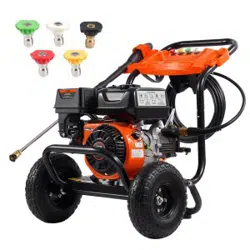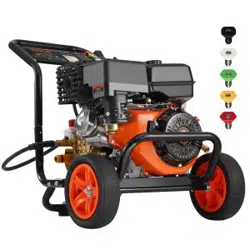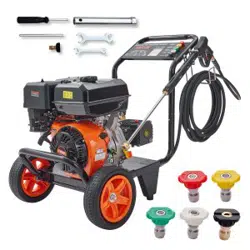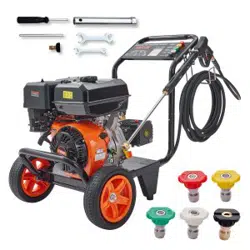

Technical Support and E-Warranty Certificate www.vevor.com/support
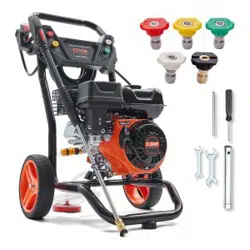
GASOLINE HIGH PRESSURE WASHER
USER'S MANUAL
MODEL:170D/180D
We continue to be committed to provide you tools with competitive price.
"Save Half", "Half Price" or any other similar expressions used by us only represents an
estimate of savings you might benefit from buying certain tools with us compared to the major
top brands and doses not necessarily mean to cover all categories of tools offered by us. You
are kindly reminded to verify carefully when you are placing an order with us if you are
actually saving half in comparison with the top major brands.

- 1 -
MODEL: IMN1000-UL
170D/180D
Have product questions? Need technical support? Please feel free to
contact us:
CustomerService@vevor.com
NEED HELP? CONTACT US!
This is the original instruction, please read all manual instructions
carefully before operating. VEVOR reserves a clear interpretation of our
user manual. The appearance of the product shall be subject to the
product you received. Please forgive us that we won't inform you again if
there are any technology or software updates on our product.
GASOLINE HIGH
PRESSURE WASHER

- 2 -
Please read and understand all instructions before use. Retain this manual
for future reference.
GENERAL SAFETY INSTRUCTIONS
■ Read instructions carefully before operating this product.
■ Keep bystanders away.
■ This product is for outdoor use only.
■ Ensure the engine is stopped before adjusting,
cleaning or maintenance.
■ Always turn off the engine and water supply when finished.
■ Do not use the product if found to be damaged.
■ Only use detergents specified by the manufacturer. Other chemicals may
compromise the safety of the product.
■ Do not direct the pressure jet towards mechanical parts containing lubricant
grease.
■ Clean vehicle tires from a minimum of 50cm to avoid damage by the
high-pressure jet.
■ Do not point high pressure jets at people, animals, live electrical parts or the
product itself.
■ Do not use accessories such as hoses and connections that the manufacturer
does not advise.
■ Engage the high pressure safety catch located on the gun when not in use.
■ Do not step/stand on the high pressure hose.
■ Ensure the nozzle is securely attached before using the Product. High-pressure
can cause it to be fired from the lance with considerable force, and could cause
injury damage.
■ Be ready for the kick-back force and the sudden torque on the spray assembly
when operating the trigger.
■ A high pressure jet can remove paint and other surface finish. It can also
damage tarmac and grouting.
■ Switch off completely when not attended.
■ The hose is designed specifically for operation with high pressures, lake care to
- 3 -
avoid damage that may prevent correct operation of the product.
■ This product is not to be used by children or anyone with reduced capabilities.
■ Always completely unwind the high-pressure hose before operation.
■ Make sure that the machine is switched off before unwinding the high-pressure
hose, and take care not to pull the machine over.
■ Do not let the high-pressure hose contact the hot engine exhaust.
■ Do not use this product indoors.
■ Keep exhaust emissions away from air intakes.
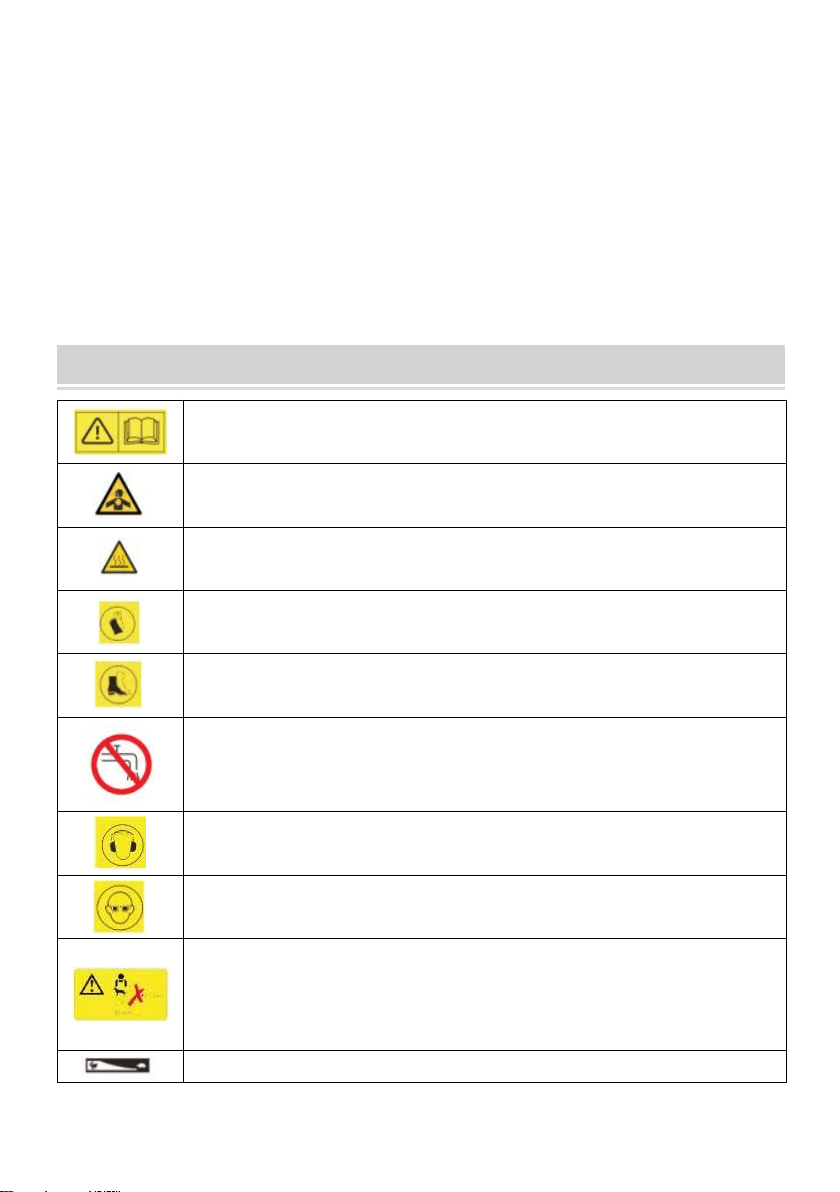
EXPLANATION OF THE SYMBOLS ON THE APPLIANCE!
Warning! Read the operating instructions before use!
Warning! Do not inhale exhaust fumes!
Attention! Hot surfaces! Risk of burns!
Wear protective gloves!
Wear safety shoes!
Machine not suitable for connection to the potable water mains
Wear hearing protection!
Wear safety goggles!
High-pressure jets can be dangerous if misused. Do not aim at
people, animals, active electrical equipment or at the appliance
itself.
Regulate engine speed!

- 4 -
Choke :open/close,petrol:on/off
Forbidden to adjust pressure valve
TECHNICAL PARAMETERS
Model
170D
Model
170D
Pressure
3400psi
Fuel tank
3.0L
Max.flow
2.6GPM
Oil volume - engine
0.6L
Rated power
7HP
Self-pumping start
time
1min
Engine speed
3600RPM
Suction height
1 m
Allowable
temperature
0-60°C
Cut-out function at
low oil level
Yes
Weight
approx. 26kg
Size(L*W*H)
650*520*895mm
Model
180D
Model
180D
Pressure
3600psi
Fuel tank
3.0L
Max.flow
2.6GPM
Oil volume - engine
0.6L
Rated power
7HP
Self-pumping start
time
1min
Engine speed
3600RPM
Suction height
1 m
Allowable
temperature
0-60°C
Cut-out function at
low oil level
Yes
Weight
approx. 26kg
Size(L*W*H)
650*520*895mm
MAINTENANCE AND STORAGE
■ Do not attempt to modify the product in any way.
■ To ensure good operating conditions arrange regular servicing from an
authorising agent.

- 5 -
■ Only use replacement parts supplied by the manufacturer
■ Only use fresh,clean and good quality fuel in the engine.
■ Never operate the engine without oil.
■ Never refuel close to naked flames, sparks,or other ignition sources, e.g.,
cigarettes.
■ Do not refuel when the engine is hot.
■ Wipe up and correctly dispose of fuel spillage immediately with a suitable
medium.
■ Move away from the refueling areas before restarting the engine. Store fuel for
short periods only in a suitable container away from heat and direct sunlight.
■ Clean the pressure washer thoroughly after each use.
■ Regularly check external nuts and fixings to ensure vibration caused by normal
use has not begun loosen them. Remove the spark plug ignition lead from the
back of the spark plug and position the lead to avoid accidental reconnection.
■ Store the machine in a secure dry location out of reach of children.
■ Empty the fuel tank before storage.
GETTING TO KNOW YOUR PETROL PRESSURE WASHER

- 6 -
1.Engine 2.Pump 3.Lower frame 4.Handle 5.Panel 6.Wheel
7.Lance 8.Hand spray gun 9.Nozzle 10.Hose
ASSEMBLY
NOTE: Every machine is tested during production, so there may a few drops of
water inside the pump assembly.
TO ASSEMBLE THE WHEELS (Figs. 1-2):
FIG. 1
Insert the axle into the axle tube at the
bottom of the frame, then fix it with M6
screws.
FIG. 2
Assemble the wheel on the axle and fix
it with a nut.
FIG. 3
Install the hook for hose.
FIG. 4
Install the panel on the upper frame.
- 7 -
FIG. 5
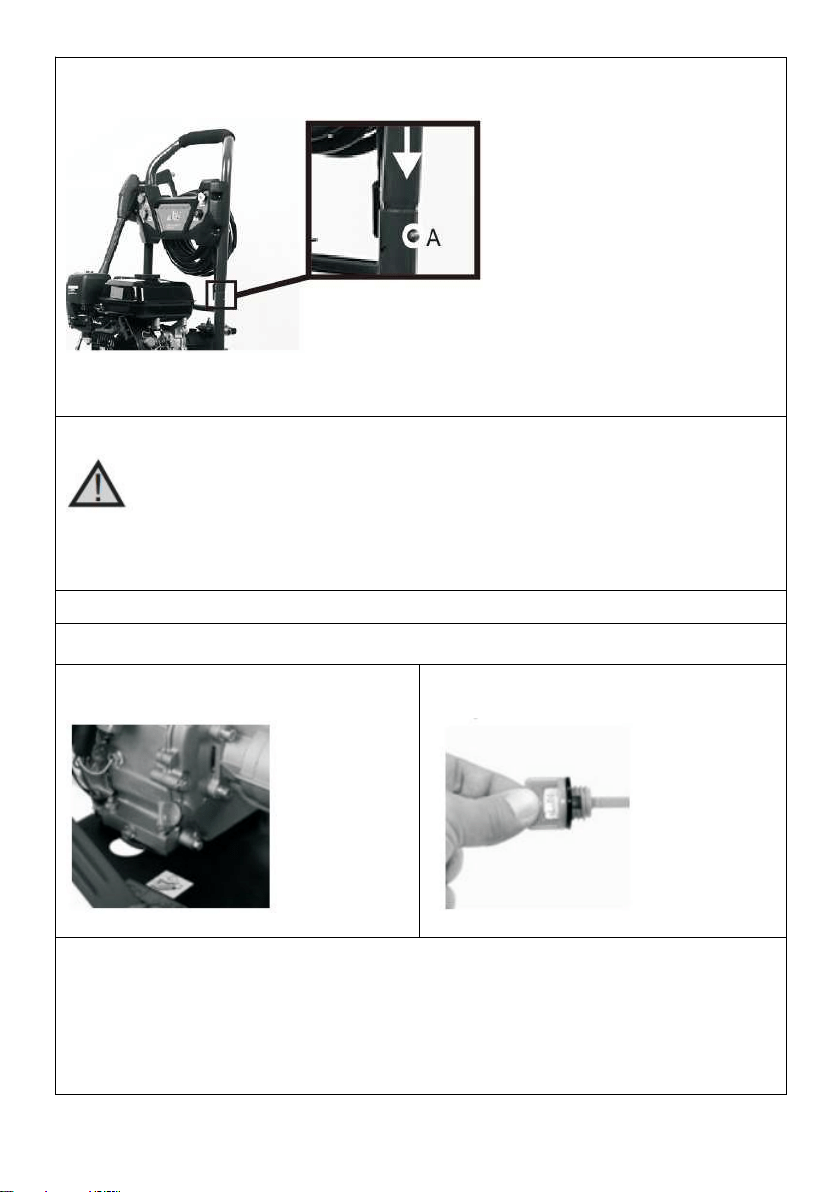
Press the Lock A, install the upper frame into lower frame.
WARNING:engine is not provided with oil. It is necessary to fill the unit
before starting the engine.
ENGINE OIL (FIG. 6 & 7):
FIG. 6
FIG. 7
WARNING:
The engine is not provided with oil. Therefore, it is necessary to fill the unit
before starting the engine. The machine has two oil fill inlets at the front and
back. Remove the desired cap and serve with the engine oil specified to the
upper-level mark. Then, replace the oil filler cap.

- 8 -
FIG. 8
PUMP (FIG8):
WARNING:
If you buy a machine with a red
breathing plug, be sure to remove the
yellow plastic from the plug before
using it.
FIG. 9
PUMP(FIG.9):
If you buy a machine without a red
breathing plug, please ignore FIG.8
FIG. 10
HIGH PRESSURE CONNECTION
Connect the high pressure hose A to
the high pressure outlet.
FIG. 11
Connect the high pressure hose to the
trigger B. Insert the lance C into the
trigger Press firmly against the spring
tension and twist the coupling into the
locked position. Insert the required
nozzle by retracting the coupling at the
end of the lance, ensure the nozzle is
inserted securely.

- 9 -
FIG. 12
INSERTING A NOZZLE (Fig 12):
lb insert a nozzle, pull back the locking
collar at the end of the lance, insert
nozzle and release the collar. This will
lock the nozzle in place. Ensure the
nozzle is inserted correctly. If not it can
fly out and injure personnel or damage
property.
FIG. 13
CONNECTING THE HOSE (Fig13):
Connect the hose to the water inlet
connector(MAX.20PSI, max.
temperature 60°C ) and turn the
water on completely.
OPERATION AND USE
WARNING: The engine is not filled with oil. It is necessary to fill the unit before
starting the engine. The engine will not produce a spark unless sufficient oil is
inside.
CAUTION: Do not run the engine with high or low oil levels, as this can cause
engine damage.
CAUTION: Only use unleaded gasoline.
CAUTION: Avoid damaging your hose by ensuring it does not touch the hot
exhaust during and after use.
CAUTION: Avoid damaging your pump by ensuring the water supply is clean and
free of any foreign objects.
CAUTION: Inlet water temperature must not exceed 40 C and 20PSI.
CAUTION: Never let the appliance operate for more than 2 minutes with the spray
gun in the closed position.
CAUTION: Never operate the pressure washer with repeated and rapid on and off
movements of the trigger.

- 10 -
WATER SUPPLY FROM THE WATER MAIN
■ Connect a water supply hose (not supplied) to the water inlet connection of the
pressure washer.
■ Machine is not suitable for connection to the potable water mains.
■ Turn on the water supply and pull the trigger until water. is continually flowing out
of the nozzle.
WATER SUPPLIER FROM A CONTAINER
■ Unscrew the coupling part for the water inlet
■ Screw the suction hose with filter (not included) onto the water connection of the
unit.
■ Hang the filter in the container.
■ Vent the unit before operation.
■ Unscrew the high pressure line at the high pressure outlet of the unit.
■ Switch on the unit and let it run until water is free of bubbles at the high pressure
outlet.
■ Switch off the unit and screw on the high pressure hose again.
FIG. 14
Pull the trigger to eliminate trapped air
and wait for a steady flow of water to
emerge from the spray nozzle.
FIG. 15
To prevent accidental operation the
trigger is fitted with a locking facility.

- 11 -
NOTE:
In order to assist the first startup it is
recommended to press the trigger
during the pulling of the starter handle.
STARTING THE ENGINE (FIG. 16-19):
FIG. 16
Push the fuel lever A to the right (On
position).
FIG. 17
Push the choke lever B to the left;
Close the choke for initial start-up.
NOTE: Do not use the choke if the
engine or air temperature is warm.
FIG. 18
Turn the engine switch clockwise to
the ON position.
FIG. 19
Pull the black starting rope handle
gradually until you feel resistance; then
make a rapid pull.
NOTE: Return the starting rope handle

- 12 -
gently to prevent damage to the starter
assembly.
Do not pull the rope all the way out as
this can damage the starter assembly.
FIG. 20
Let the engine idle for a short while
preheating before pushing the choke
lever C to the right.
FIG. 21
When the appliance is in operation, the
speed can be adjusted by moving the
throttle D control lever to the high
position (indicated by a hare). NOTE:
There is a stop bracket on the throttle
control lever, do not force this bracket
as it can damage the engine.
STOPPING THE ENGINE (Fig 22-23):
FIG. 22
FIG. 23

- 13 -
In an emergency,turn the engine
switch anticlockwise to the OFF
position to stall the engine.lb stop the
appliance normally use the following
sequence.
Turn the engine switch anticlockwise to
the OFF position. Then slide the fuel
lever E to the right; OFF position.
CAUTION: When you have finished
working,tum off the engine. When the
machine is switched off, always
discharge the pressure by pressing the
trigger.
ADJUSTING THE SPRAY PATTERN (Fig.24)
FIG. 24
You have the choice of 4 different colour coded nozzles giving you different
spray patterns to choose from:
0° nozzle (Red):This nozzle delivers a pinpoint stream and is extremely
powerful. It covers a minimal area of cleaning. This nozzle should only be used
on a surface that can withstand this high pressure such as metal or concrete. Do
not use on wood.
15°nozzle (Yellow):This nozzle delivers a powerful 5 degree spray pattern for
FIG. 24
intense cleaning of small areas. This nozzle should only be used on areas that
can withstand the high pressure from this nozzle.
25°nozzle-green. This nozzle delivers a 25 degree spray pattern for intense
cleaning of larger areas. This nozzle should only be used on areas that can
withstand the pressure from this nozzle.
40°nozzle (White):This nozzle delivers a 40 degree spray pattern and a less
powerful stream of water. It covers a wide area of cleaning. This nozzle should
be used for most general cleaning jobs.
Low pressure nozzle (Black): This nozzle is used to apply chemicals or cleaning

- 14 -
solutions. It has a minor power stream.
NOTE:
Before using the pressure washer to clean patio paving slabs it is advisable to
test a small area first, some paving slabs are manufactured from inferior
materials and the use of a pressure washer could damage the surface.
USING THE DETERGENT FACILITY
Fill a suitable container with pressure water detergent. Do not use washing
up liquid as it contains salt. We recommend using good quality pressure
washer detergent for use with this pressure washer. Most automobile
detergents are a combination of a detergent and a wax solution. The
viscosity (thickness) of the detergent will increase in cold weather. This
type of detergent is recommended to be diluted with water before filling
the container. When using combination wash and wax solutions we
recommend that they are diluted before use. As a general guide we would
recommend a dilution rate of 50/50. However a trial and error process
would determine the ideal dilution rate for a particular detergent.
NOTES:
A thick viscous detergent would not flow freely from the detergent tank
and the residue would cause a blockage flow system. After using the
detergent facility it should be flushed thoroughly using copious amount of
water. To activate detergent delivery, fit the Black LOW PRESSURE nozzle
to the and of the lance. Submerge the and of the detergent pick up pipe
into your container of pressure water detergent. Suction and mixing will
occur automatically as the water flows through the pump.
CLEARING A BLOCKAGE (Fig. 25)
FIG. 25

- 15 -
If the flow rate stutters or is inconsistent at any time, release the trigger and
switch OFF the machine.
Squeeze the trigger to relieve any pressure and check the jet in the end of the
lance for any blockage.
If a blockage is suspected use some wire to clean the inside of the nozzle.
SAFETY INSTRUCTIONS FOR THE WASHER
1. Before operating the engine, be sure to read all instructions carefully as
injury or permanent damage to equipment may occur.
2. Run the engine in a well ventilated area.
3.Ensure the appliance is at least one meter from from building walls or other
equipment.
4.Not to be used in explosive environment, keep the appliance away from
flammable liquids such as petrol.
5.Refuel in a well ventilated area with the engine switched off and avoid sparks or
naked flames.
6.When refueling, ensure you do not overfill the fuel tank.
7.If any fuel is spilled ensure it is deaned up thoroughly before restarting.
8.Ensure the fuel cap Is located securely.
9. The exhaust mufflers, engine case, pump get very hot and will remain hot
for some time after the engine is switched off.
10.Ensure the appliance is cooled before transporting or storing.
11. Sound pressure level:94dB; Sound power level:109dB.

- 16 -
wear ear protection to prevent hearing damage!
12.High-pressure jets can be dangerous if misused. Do not aim at people, animals,
active electrical equipment or at the appliance itself. .)
Wear protective gloves! Wear safety shoes! safety goggles!
13. Forbidden to adjust pressure valve, Otherwise it will cause pump
damage.
14. 60 degrees hot water will be ejected from thermal relief valve before water gun
closed for about 1 minute. Careful burns.
15.WARNING Do not use the machine within range of persons unless they wear
protective clothing.
16.WARNING Do not direct the jet against yourself or others in order to clean
clothes or foot-wear
17.WARNING Risk of explosion 一 Do not spray flammable liquids.
18.WARNING High pressure hoses, fittings and couplings are important for the
safety of the machine. Use only hoses, fittings and couplings recommended by the
manufacturer.
19.WARNING lb ensure machine safety, use only original spare parts from the
manufacturer or approved by the manufacturer.
20.WARNING Water that has flowed through backflow preventers is considered to
be nonpotable.

- 17 -
PRE-OPERATION INSPECTION
CAUTION: Engine oil is a key factor in deciding the engine s performance. Do not
use engine oil with additives or 2-stroke gasoline engine oil, as they do not have
enough lubricating properties, which may shorten the engine s service life.
1. Check the engine is on level ground.
2.0.6L 15W-30 is recommended for general all-temperature use. (FIG. 26)
3.Remove the dipstick and clean it.
4.Reinsert the dipstick into the oil filler without screwing it in and check the oil level.
5.If the oil level is too low add the required engine oil to the oil filler mark.
6.Replace the dipstick securely.
CAUTION: Running with insufficient engine oil may damage the engine severely.
FIG. 26
FUEL AND FUEL TANK:
Only use unleaded petrol or fuel with an octane number over 86. Using unleaded
gasoline or fuel will decrease the possibility of producing carbon deposit and

- 18 -
prolong the engine's service life. Never use old or polluted petrol or fuel or a
mixture of petrol and engine oil. Make sure the fuel is free of dirt and water.
CAUTION:
Handle fuel with care because it can damage plastic and painted
surfaces.Remove the fuel filler cap and check the fuel level. If the fuel lever is too
low, refuel the tank. Remember, do not fill over the fuel filter shoulder when adding
fuel.
WARNING:
Petrol is extremely flammable and is explosive under certain conditions. Refuel in
a well ventilated area with the engine stopped. Do not smoke or allow flames and
sparks in the area where petrol is stored or where the fuel tank is refuelled. After
refueling; make sure the fuel cap is returned securely.Be careful not to spill fuel
when refuelling. Spilled fuel or fuel vapor may ignite. If any fuel is spilled,ensure
the area is dry before starting the engine.
FUEL TANK FILTER (Fig.27):
After every 150 hours of running or every three months the fuel tank filter should
be removed and cleaned. Remove the fuel tank filler cap and the filter, clean the
filter thoroughly using environmentally friendly water based degreasing agent and
re-fit.
OIL LEVEL SWITCH:
The engine oil alarm is designed to prevent the operator from starting the engine
when the oil in the crankcase is insufficient Running with insufficient oil will
damage the engine. Once the oil level in the crankcase is too low, the engine oil
alarm will stall the engine automatically to avoid damage while the engine switch is
still ON.
FIG. 27 FIG. 28

- 19 -
AIR FILTER (Fig28):
After every 100 hours of running or every month, the air filter should be removed,
examined for deterioration, and deaned. Clean the air filter thoroughly using an
environmentally friendly water-based degreasing agent Allow to dry thoroughly;
then replace the air filter. Only run the engine with the air filter fitted.
STORAGE:
If the engine is not to be used or is to be stored for more than one month the
following storage procedure should be carried out
1.Drain all the fuel from the fuel tank and the carburetor ensure that all the fuel has
been removed.
2.Remove the spark plug and pour approximately one tablespoon full of clean
engine oil into the spark plug hole.
3.With the ignition turned OFF gently pull on the recoil starter cord several times.
4.Re-fit the spark plug and continue to pull the recoil starter cord until the piston is
on the compression stroke (when resistance is felt) then stop pulling.
5.Store the pressure washer in a dry well ventilated place under a cover to prevent
any dust or debris from accumulating on the pressure washer.
WINTER AND LONG TERM STORAGE:
If the pressure washer is not to be used for more than 3 months or if there is a
danger of ice or frost during winter months the pump unit will require protection to
prevent seizing and damage caused by freezing.
MAINTENANCE
EXHAUST CONTROL SYSTEM
With the engine running, carbon monoxide, nitrogen oxide and hydrocarbon are
produced, and in certain conditions nitrogen oxide and hydrocarbon will react
together to make smoke while carbon monoxide is toxic, so exhaust control is very
important. The manufacturer decreases exhaust emissions by introducing
poor-fuel carburetors and other devices to solve the problem. To keep the exhaust

- 20 -
of your engine within the standard exhaust emission values, pay attention to the
following:
MAINTENANCE
Maintain the engine periodically following the maintenance schedule. The
maintenance schedule is made out on the basis of normal use in normal conditions.
For example, more frequent maintenance will be necessary if used under heavy
loads, dusty or wet conditions, or in high temperatures.
REPLACEMENT OF PARTS
We recommend you use parts supplied by the manufacturer or equivalent quality
parts. Replacement parts of inferior quality may impair the effectiveness of the
exhaust control system.
MODIFYING
Modifying the exhaust control system may make exhaust emissions exceed
statutory limits. Illegal modifications are:
1.Dismantling or modifying any part of the air inlet or outlet system.
2.Modifying or removing speed adjustment controls or connections which may
result in the engine running outside its set parameters.
PROBLEMS AFFECTING EXHAUST EMISSIONS
1.Difficulty in starting or stopping.
2.Erratic idling.
3.Giving off black smoke or excessive fuel consumption.
4.Poor ignition spark or no spark.
5.Ignition too advanced. If you have any of these above problems please contact
your dealer.
CAUTION:
Before carrying out any maintenance to the machine release any pressure and
remove the water connection.
WATER SUCTION FILTER CHECKING

- 21 -
Check periodically in order to avoid deposits clogging it.
SPARK PLUG MAINTENANCE
After every 50 hours clean the spark plug with a brush. If the insulator on the spark
plug is damaged replace it immediately. Check the spark plug gap with a feeler
gauge, the gap should be 0.7 - 0.8mm. If adjustment is necessary bend the side
electrode carefully. Check the spark plug gasket is in good condition or replace it
with a new one. Screw the spark plug to the bottom by hand and then tighten it
using a spark plug wrench.
If a new spark plug is used, twist a 1/2 more turn after impacting the gasket. If
using the original one twist 1/8 -1/4 more turn.
CAUTION:
The spark plug eliminator should be serviced at least once every 100 hours of
operation so as to keep it in good condition.
WARNING:
The muffler is very hot while running the engine and for a prolonged period after
stopping. Only service after the engine cools down completely.
Unscrew two nuts and remove the exhaust elbow from the engine body.
Unscrew five screws from the muffler guard and take it out.
Unscrew the spark plug eliminator and separate the muffler.
Clean the spark eliminator mesh with a wire brush.
Reinstall the spark eliminator in reverse order of removal.
CAUTION:
Be careful not to damage the spark eliminator. Never use a damaged spark
eliminator.
CARBURETTOR IDLING ADJUSTMENT:
Start and pre-heat the engine until it reaches normal working temperature. Obtain
standard idling by adjusting the throttle fixing screw under the engine, Standard
idling: 3400 ±300rpm.

- 22 -
TRANSPORT
Transport with the fuel switch in the off position. Ensure the engine is cooled to
avoid the risk of burns or fire.
CAUTION:
Do not tilt the engine to avoid spilling fuel. Spilled fuel or fuel vapor may ignite.
STORAGE
If the engine is not to be used for a long period of time ensure it is stored correctly.
Make sure the storage area is dry and free of dust.
PREPARE FOR STORAGE
Disconnect the spark plug. Put a spoonful of fresh engine oil into the cylinder and
rotate the engine to distribute the oil evenly. Replace the spark plug. Pull the
starting rope until you feel resistance and then keep pulling to align the arrow of
the starting sleeve with the hole of the starter: This will close both the inlet and
outlet valves to help prevent the engine from rusting inside.Cover the engine to
keep it free of dust.
REMOVAL FROM STORAGE
Before re-using, service the engine the instructions in the following table.

- 23 -
following
STORAGE TIME
SERVICE ITEM
Within one month
No service needed.
One - Two months
Drain out original fuel of the fuel tank and refuel.
Two months - One
year
Drain out original fuel of the fuel tank and refuel.
Drain out the fuel in the carburettor 1.
Empty the deposit cup 2.
Above One year
Drain out original fuel of the fuel tank and refuel.
Drain out the fuel in the carburettor 1.
Empty the deposit cup 2.
Move the engine from the storage place, and start up.
1.Unscrew the drain plug and drain out the fuel in the carburetor
2.Turn off the engine switch first, disconnect the deposit cup and empty it.
NOTE:
Do not dump oil containers or discarded engine oil into the ground. For
environmental protection take discarded engine oil in a closed container to a
recycling station.
WARNING:
Fuel is highly flammable and explosive under certain conditions. Keep cigarettes,
naked flames and sparks away from operating site.

- 24 -
To keep the engine in sound condition, the user should maintain it according to the
table below.
CAUTION:
Use parts that the manufacturer supplies; otherwise, damage to the engine may
occur.
WARNING:
Stop the engine before servicing. If servicing is required with the engine running,
ensure there is good ventilation in the area. Exhaust emissions contain toxic
carbon monoxide which may cause injury or be fatal if inhaled. ENGINE OIL
REPLACEMENT
Place the machine on a level surface and warm up the engine for several minutes.
Then stop the engine. Remove the oil filler cap.
Place an oil pan under the engine. Remove the oil drain plug so that the oil can be
completely drained. You will need to use a tube or other similar device to prevent
the oil from leaking onto the frame of the pressure washer.
Check the oil drain plug, gasket oil filler cap, and O-ring; if damaged, replace them.
Reinstall the oil drain plug.
Add engine oil up to the upper level of the dipstick.
NOTE:
Do not dump oil containers or discard engine oil into rubbish boxes or into the
ground. For environmental protection take discarded engine oil in a closed
container to a recycling station.
NOTES:
* Only for inside ventilating double-core carburetors.
**Only for paper core air cleaners.
I.More often than in schedule if used in dusty conditions
2.Items to be done by dealer unless you are fully trained and equipped to do so
.
Item
Each
time
First month
or 20 hours
Each
month or
50 hours
Each 6
months or
100 hours
Each year
or
300 hours

- 25 -
Engine oil
Oil level check
√
Replace
√
√
Reduction
gear oil
Oil level check
√
Replace
√
Clean
Check
√
Air cleaner
√1
√1*
Replace
√**
Deposit cup
Clean
√
Spark plug
Clean, adjust
√
Replace
√
Spark
eliminator
Clean
√
Idling
Clean, adjust
√2
Valve
clearance
Clean, adjust
√2
Fuel tank &
fuel filter
Clean
√2
Fuel supply
line
Check
PUMP NOTICE
1 .For the convenience of transport, Pump without machine oil, and breather plug
is not installed. Please add
15W/40 or 30 machine oil before using. Machine oil quantity is subject to slightly
not too oil lens center line, then install the breather plug.
2.After using 20 hours of the new machine, pour the machine oil out, and add the
appropriate amount of kerosene, fuel is according to standard a little than oil lens
center line. Operate the pump without load in 10-15 seconds, then close the
machine and pour out the kerosene,and add the new oil.

- 26 -
3.Please check the oil mass before using .If the oil level is less than 1/2 oil lens , it
needs to add the oil to the oil lens center line.
Accumulative use after 100 hours , change the oil similarly. And every 100 hours to
change the oil . It's very important to Extend the service life of the pump.
TROUBLESHOOTING PUMP TROUBLESHOOTING
TROUBLE
PROBABLE CAUSE
REMEDY
Fluctuating pressure
Pump sucking in air
Check connections are tight
Valves dirty, worn out or seize
contact customer helpline
Blocked jet
Remove blockage using jet
cleaning tool
Water leakage from
pump
Seals wore
Contact customer helpline
The pump does
not reach the
required pressure
Pump sucking in air from
connections or hose
Check tightness of all connections
Suction/delivery valves are
clogged
Clear or replace valves.
Have machine checked by Service
Centre
Unload valves are stuck
Loosen and re-tighten regulating
screw
Lance or nozzle is worn
Check and/or replace
Pump is running but
no water delivery
Kinked inlet and or pressure
hose
Check, straighten and replace if
required
Blocked inlet filter
Remove and clean filter
Blocked jet
Remove blockage using the jet
cleaning tool

- 27 -
ENGINE TROUBLESHOOTING
FAULT
PROBABLE CAUSE
REPAIR
Engine
won't start
Low engine
output
Engine
runs
erratically
Insufficient
compression
Loose spark plug
Tighten plug
Loose cylinder head bolt
Tighten bolt
Damaged gasket
Replace gasket
Sufficient
compression
FUEL SYSTEM PROBLEMS
No fuel
supplied to
combustion
chamber
Insufficient pulling speed
for starting rope
Pull rope sharply
Foreign matter in fuel tank
Clean tank
Clogged fuel line
Clean fuel line with
dealers advice
No fuel in tank
Supply fuel
Fuel tap not open
Open tap
FUEL SYSTEM PROBLEMS
Combustion
chamber
supplied with
fuel
Poor
spark
Spark plug dirty
with carbon or wet
with fuel
Remove carbon or
dry spark plug
Damaged spark
plug
Replace spark plug
Faulty magneto
Consult dealer
Good
spark
Improper
adjustment of
carburetor
Insufficient pulling
speed for starting
rope
Pull rope sharply
Wrong grade of fuel used
Check grade of fuel
Overloaded
Check the working
conditions
Overheating

- 28 -
PUMP PARTS DRAWING
No
name
QTY
No
name
QTY
No
name
QTY
1
oil seal
1
30
valve plank
3
59
ball
1
2
flange plate
1
31
valve spring
6
60
valve seat
1
3
51108-F
bearing(loose)
1
32
valve washer
6
61
spring
1
4
51109-F bearing
1
33
valve base
6
62
nozzle
1
5
51110-F
bearing(close)
1
34
O-ring
6
63
O-ring
1
6
steel lagging
1
35
pump head
1
64
nipple
1
7
O-ring
1
36
temperature control
valve
1
65
O-ring
1
8
cam
1
37
oil cap washer
4
66
nut
1
9
51108-E(loose)
1
38
screw
4
67
nut
1
10
51109-E bearing
1
39
O-ring
i
68
spring
1
11
51110-E(close)
1
40
inlet pipe
1
69
washer
1

- 29 -
12
spring plate
3
41
gasket
1
70
O-ring
1
13
piston spring
3
42
ring nut
1
71
vale cap
1
14
piston
3
43
ring nut
1
72
O-ring
1
15
O-ring
1
44
valve plank
3
73
uncork ring 1
1
16
pump crankcase
1
45
O-ring
4
74
O-ring
1
17
O-ring
1
46
plug2
1
75
valve
1
18
oil plug seat
1
47
O-ring
1
76
valve spring
1
19
oil plug cover
1
48
pump body
1
77
pin
1
20
oil seal
3
49
spring
1
78
O-ring
1
21
assistant water seal
mat
3
50
ball
1
79
uncork ring 2
1
22
assistant water seal
3
51
O-ring
1
80
top seat
1
23
pilot seat
3
52
O-ring
1
81
O-ring
1
24
O-ring
3
53
connector
1
82
ball
1
25
main water seal mat
3
54
oil cap washer
7
83
base
1
26
main water seal
3
55
screw
7
84
Plug1
1
27
water seal washer
3
56
O-ring
1
85
u-plug
1
28
bilging valve bonnet
3
57
valve
1
86
29
O-ring
3
58
O-ring
1
87