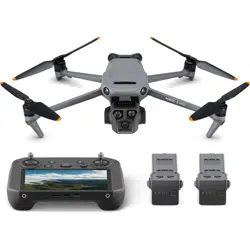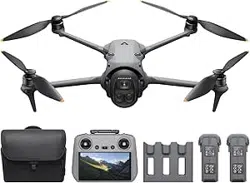

User Manual
2023.04
v1.0
2
©
2023 DJI All Rights Reserved.
Searching for Keywords
Search for keywords such as “battery” and “install” to nd a topic. If you are using Adobe
Acrobat Reader to read this document, press Ctrl+F on Windows or Command+F on Mac
to begin a search.
Navigating to a Topic
View a complete list of topics in the table of contents. Click on a topic to navigate to that
section.
Printing this Document
This document supports high resolution printing.
This document is copyrighted by DJI with all rights reserved. Unless otherwise authorized by
DJI, you are not eligible to use or allow others to use the document or any part of the document
by reproducing, transferring or selling the document. Users should only refer to this document
and the content thereof as instructions to operate DJI UAV. The document should not be used
for other purposes.
DJI Mavic 3 Pro User Manual
©
2023 DJI All Rights Reserved.
3
Using this Manual
Legend
Important Hints and Tips Reference
Read Before the First Flight
DJI
TM
provides users with tutorial videos and the following documents:
1. Safety Guidelines
2. Quick Start Guide
3. User Manual
It is recommended to watch all tutorial videos and read the safety guidelines before using for
the rst time. Prepare for your rst ight by reviewing the Quick Start Guide and refer to this
User Manual for more information.
Video Tutorials
According to the corresponding aircraft, visit the link or scan the QR code below to watch the
tutorial videos, which demonstrate how to use DJI MAVIC
TM
3 Pro safely:
Download the DJI Fly App
Make sure to use DJI Fly during ight. Scan the QR code above to download the latest version.
• The DJI RC Pro and DJI RC remote controllers have the DJI Fly app already installed.
Users are required to download the DJI Fly app to their mobile device when using the
DJI RC-N1 remote controller.
• The Android version of DJI Fly is compatible with Android v7.0 and later. The iOS version
of DJI Fly is compatible with iOS v11.0 and later.
* For increased safety, ight is restricted to a height of 98.4 ft (30 m) and a range of 164 ft (50 m) when not
connected or logged into the app during flight. This applies to DJI Fly and all apps compatible with DJI
aircraft.
MAVIC 3 PRO CINE
https://s.dji.com/guide57
MAVIC 3 PRO
https://s.dji.com/guide56

DJI Mavic 3 Pro User Manual
4
©
2023 DJI All Rights Reserved.
Download DJI Assistant 2
Download DJI ASSISTANT
TM
2 (Consumer Drones Series)
https://www.dji.com/mavic-3-pro/downloads
• The operating temperature of this product is -10° to 40° C. It does not meet the
standard operating temperature for military-grade application (-55° to 125° C), which is
required to endure greater environmental variability. Operate the product appropriately
and only for applications that meet the operating temperature range requirements of
that grade.

©
2023 DJI All Rights Reserved.
5
Using this Manual 3
Legend 3
Read Before the First Flight 3
Video Tutorials 3
Download the DJI Fly App 3
Download DJI Assistant 2 4
Product Profile 9
Introduction 9
Feature Highlights 9
Using for the First Time 10
Preparing the Aircraft 10
Preparing the Remote Controller 11
Activating the DJI Mavic 3 Pro Aircraft 12
Binding the Aircraft and Remote Controller 12
Updating Firmware 12
Overview 13
Aircraft 13
DJI RC Pro 14
DJI RC Remote Controller 17
Flight Safety 20
Flight Environment Requirements 20
Operating the Aircraft Responsibly 20
Flight Restrictions 21
GEO (Geospatial Environment Online) System 21
Flight Limits 21
GEO Zones 23
Pre-Flight Checklist 23
Basic Flight 23
Auto Takeoff/Landing 23
Starting/Stopping the Motors 24
Controlling the Aircraft 25
Takeoff/Landing Procedures 26
Video Suggestions and Tips 26
Intelligent Flight Modes 27
FocusTrack 27
MasterShots 31
Contents

DJI Mavic 3 Pro User Manual
6
©
2023 DJI All Rights Reserved.
QuickShots 32
Hyperlapse 34
Waypoint Flight 36
Cruise Control 40
Aircraft 42
Flight Modes 42
Aircraft Status Indicators 43
Return to Home 44
Smart RTH 44
Low Battery RTH 47
Failsafe RTH 48
Landing Protection 49
Precision Landing 49
Vision Systems and Infrared Sensing System 50
Detection Range 50
Using the Vision System 51
Advanced Pilot Assistance Systems (APAS 5.0) 53
Landing Protection 53
Flight Recorder 54
Propellers 54
Attaching the propellers 54
Detaching the propellers 54
Intelligent Flight Battery 55
Battery Features 55
Using the Battery 56
Charging the Battery 57
Inserting/Removing the Battery 60
Gimbal and Camera 61
Gimbal Profile 61
Gimbal Operation Modes 61
Camera Profile 62
Storing and Exporting Photos and Videos 63
QuickTransfer 63
Usage 63
Remote Controller 66
DJI RC Pro 66
Operation 66
Remote Controller LEDs 71

DJI Mavic 3 Pro User Manual
©
2023 DJI All Rights Reserved.
7
Remote Controller Alert 71
Optimal Transmission Zone 71
Linking the Remote Controller 72
Operating the Touchscreen 73
Advanced Features 75
DJI RC 76
Operation 76
Remote Controller LEDs 80
Remote Controller Alert 81
Optimal Transmission Zone 81
Linking the Remote Controller 82
Operating the Touchscreen 83
Advanced Features 85
DJI Fly App 87
Home 87
Camera View 88
Buttons Description 88
Screen Shortcuts 91
Settings 92
Safety 92
Control 93
Camera 93
Transmission 95
About 95
Appendix 97
Specifications 97
Camera Function Matrix 105
Firmware Update 106
Using DJI Fly 106
Using DJI Assistant 2 (Consumer Drones Series) 106
Post-Flight Checklist 107
Maintenance Instructions 107
Troubleshooting Procedures 108
Risk and Warnings 108
Disposal 109
C2 Certification 109
FAR Remote ID Compliance Information 114
After-Sales Information 114

8
©
2023 DJI All Rights Reserved.
Product Prole
This chapter introduces the major
features of the product.
DJI Mavic 3 Pro User Manual
©
2023 DJI All Rights Reserved.
9
Product Prole
Introduction
DJI Mavic 3 Pro features both an infrared sensing system and omnidirectional vision systems,
allowing for hovering and ying indoors, outdoors, and for automatic Return to Home while
avoiding obstacles in all directions. The aircraft has a maximum flight speed of 47 mph
(75.6 kph) and a maximum ight time of 43 minutes.
The DJI RC Pro and DJI RC remote controllers have a built-in 5.5-in screen with a resolution
of 1920×1080 pixels. Users can connect to the internet via Wi-Fi, while the Android operating
system includes Bluetooth and GNSS. The remote controllers come with a wide range of aircraft
and gimbal controls as well as customizable buttons. DJI RC Pro has a high-bright screen and
has a maximum operating time of 3 hours. DJI RC has a maximum operating time of 4 hours.
Feature Highlights
Gimbal and Camera: DJI Mavic 3 Pro has a 4/3 CMOS sensor Hasselblad camera, capable
of shooting 12-bit RAW format photos and the dynamic range is up to 12.8 stops. It is also
equipped with a 1/1.3-in medium tele camera and a 1/2-in tele camera, which can shoot 4K
60fps video with 3x or 7x optical zoom. The newly added 10-bit D-Log M color mode provides a
more convenient experience for post-production color correction.
Video Transmission: with DJI’s long-range transmission O3+ technology, DJI Mavic 3 Pro oers
a maximum transmission range of 15 km and video quality at up to 1080p 60fps from the
aircraft to the DJI Fly app. The remote controller works at both 2.4 and 5.8 GHz, and is capable
of selecting the best transmission channel automatically.
Intelligent Flight Modes: the user can focus on operating the aircraft, while the Advanced
Pilot Assistance System 5.0 (APAS 5.0) helps the aircraft avoid obstacles in all directions. With
Intelligent Flight Modes such as FocusTrack, MasterShots, Hyperlapse, QuickShots, or Waypoint
Flight, the user can enjoy taking photos or videos with ease.
• Only the DJI Mavic 3 Pro Cine aircraft comes with a built-in 1TB SSD, which supports
the recording and storing of Apple ProRes 422 HQ, Apple ProRes 422, and Apple
ProRes 422 LT video. Otherwise, the features and functions described in this manual
apply to both DJI Mavic 3 Pro and DJI Mavic 3 Pro Cine.
• The maximum ight time was tested in an environment without wind while ying at a
consistent ight speed of 20.1 mph (32.4 kph). The maximum ight speed was tested at
sea level altitude without wind.
• The remote control devices reach their maximum transmission distance (FCC) in a wide
open area with no electromagnetic interference at an altitude of about 120 m (400 ft).
The maximum transmission distance refers to the maximum distance that the aircraft
can still send and receive transmissions. It does not refer to the maximum distance
the aircraft can y in a single ight. The maximum runtime was tested in a laboratory
environment. This value is for reference only.
• 5.8 GHz is not supported in certain regions. Observe local laws and regulations.
DJI Mavic 3 Pro User Manual
10
©
2023 DJI All Rights Reserved.
Using for the First Time
DJI Mavic 3 Pro is folded before being packaged. Follow the steps below to unfold the aircraft
and prepare the remote controller.
Preparing the Aircraft
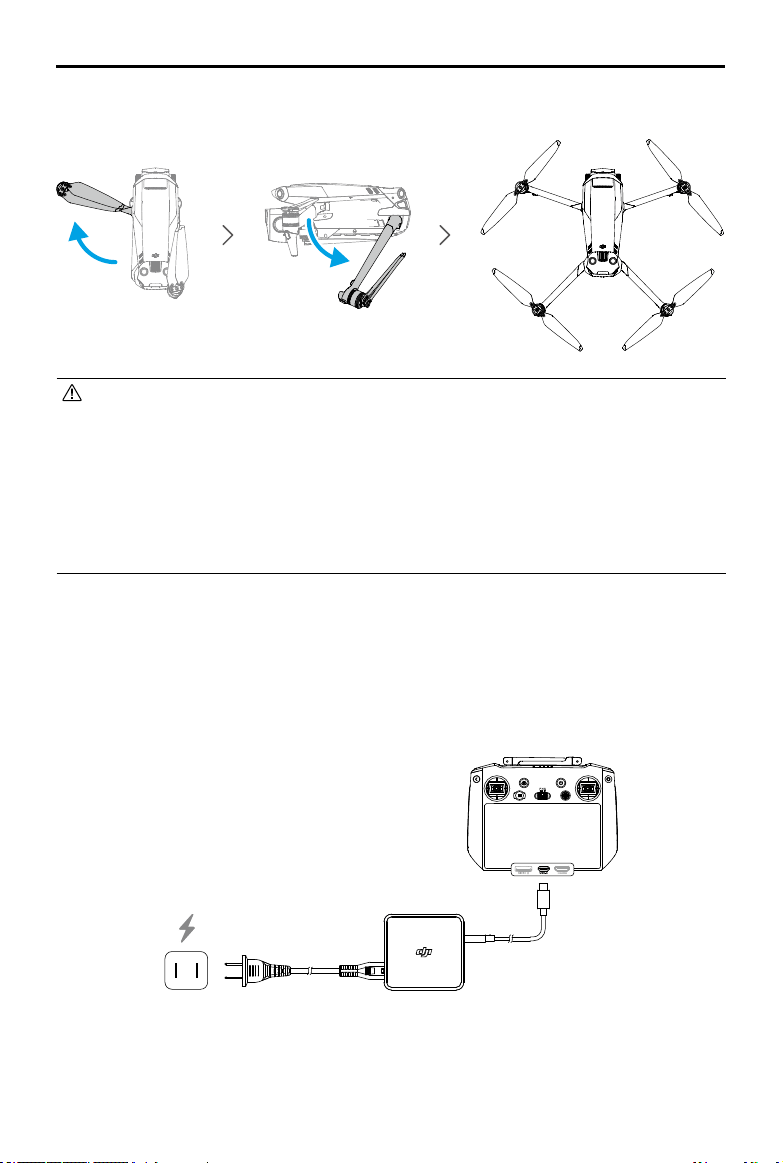
1. Remove the storage cover.
2. All Intelligent Flight Batteries are in hibernation mode before shipment to ensure safety. Use
the provided charger to charge and activate the Intelligent Flight Batteries for the rst time.
a. If using DJI 100W USB-C Power Adapter, it takes approximately 1 hour and 20 minutes to
fully charge an Intelligent Flight Battery.
100W
b. If using DJI 65W Portable Charger, it takes approximately 1 hour and 36 minutes to fully
charge an Intelligent Flight Battery. Charging time is tested when using the xed cable of
the charger. It is recommended to use this cable to charge the Intelligent Flight Battery.
65W
1
2
DJI Mavic 3 Pro User Manual
©
2023 DJI All Rights Reserved.
11
3. Unfold the front arms, followed by the rear arms, and then the propeller blades.
• Charger is not included with Mavic 3 Pro (Drone Only). It is recommended to use a PD
65W (or above) charger to charge the Intelligent Flight Battery.
• Use a power cable with compatible specications for charging, and use a power adapter
if necessary.
• Make sure to unfold the front arms before unfolding the rear arms.
• Make sure the gimbal protector is removed and all arms are unfolded before powering
on the aircraft. Otherwise, it may aect the aircraft self-diagnostics.
• Attach the storage cover when the aircraft is not in use.
Preparing the Remote Controller
Follow the steps below to prepare the DJI RC Pro remote controller.
1. Use the provided charger to charge the remote controller via the USB-C port to activate the
battery.
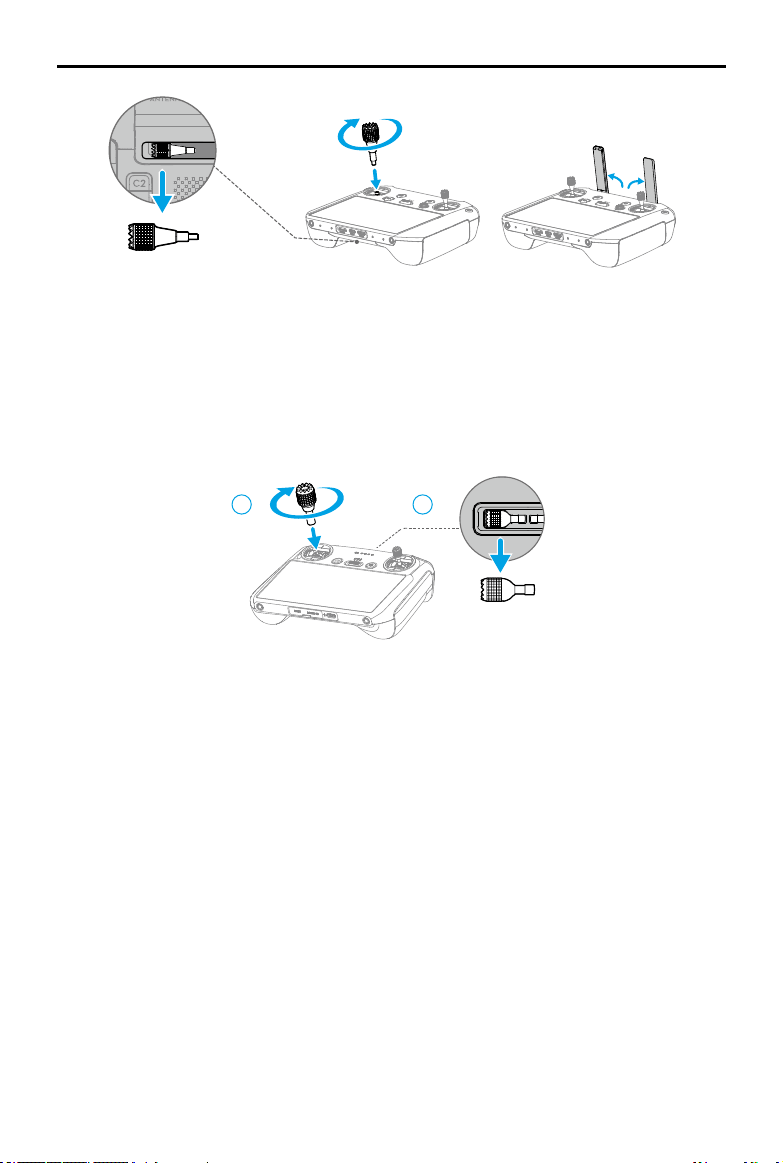
2. Remove the control sticks from the storage slots on the remote controller and screw them
into place.
3. Unfold the antennas.
DJI Mavic 3 Pro User Manual
12
©
2023 DJI All Rights Reserved.
4. The remote controller needs to be activated before rst use and an internet connection is
required for activation. Press, and then press again and hold the power button to power on
the remote controller. Follow the on-screen prompts to activate the remote controller.
Follow the steps below to prepare the DJI RC remote controller.
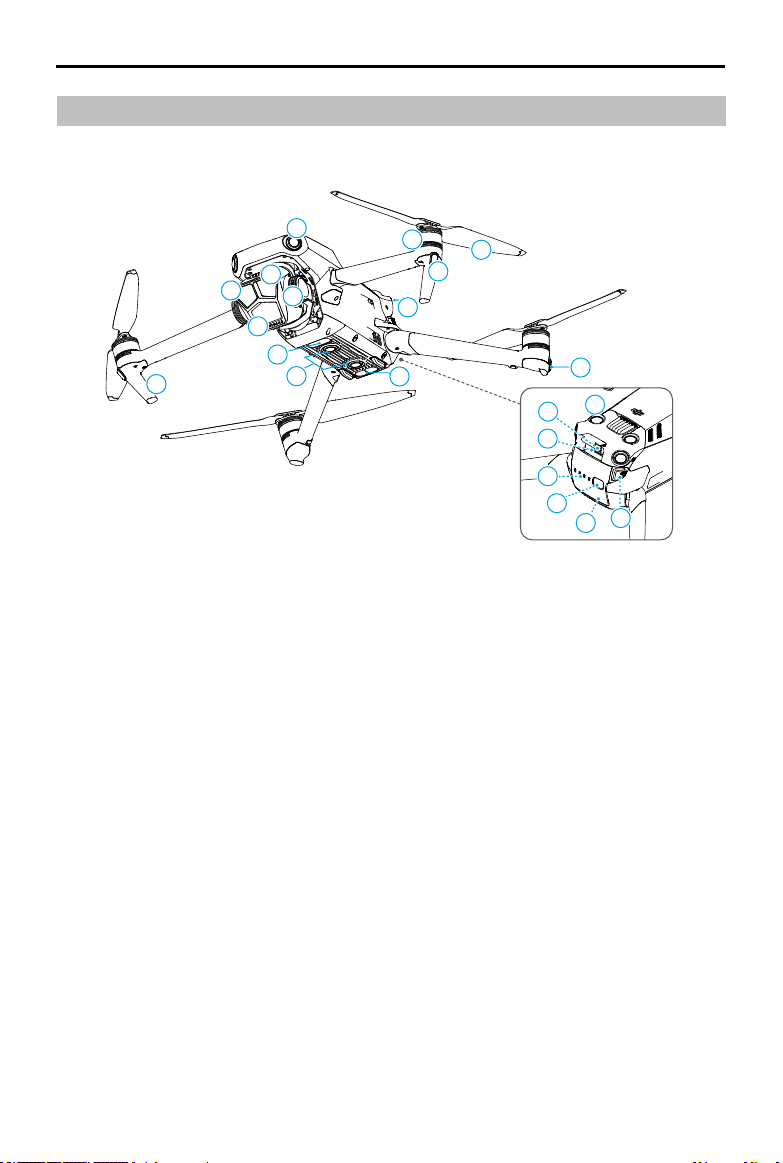
1. Remove the control sticks from the storage slots on the remote controller and screw them
into place.
2. The remote controller needs to be activated before rst use and an internet connection is
required for activation. Press, and then press again and hold the power button to power on
the remote controller. Follow the on-screen prompts to activate the remote controller.
Activating the DJI Mavic 3 Pro Aircraft
DJI Mavic 3 Pro requires activation before rst use. After powering on the aircraft and remote
controller, follow the on-screen prompts to activate DJI Mavic 3 Pro using DJI Fly. An internet
connection is required for activation.
Binding the Aircraft and Remote Controller
It is recommended to bind the aircraft and remote controller to help ensure the best possible
after-sales service. Follow the on-screen prompts after activation to bind the aircraft and
remote controller.
Updating Firmware
A prompt will appear in DJI Fly when new rmware is available. Update the rmware whenever
prompted to ensure optimal user experience.
12
DJI Mavic 3 Pro User Manual
©
2023 DJI All Rights Reserved.
13
Overview
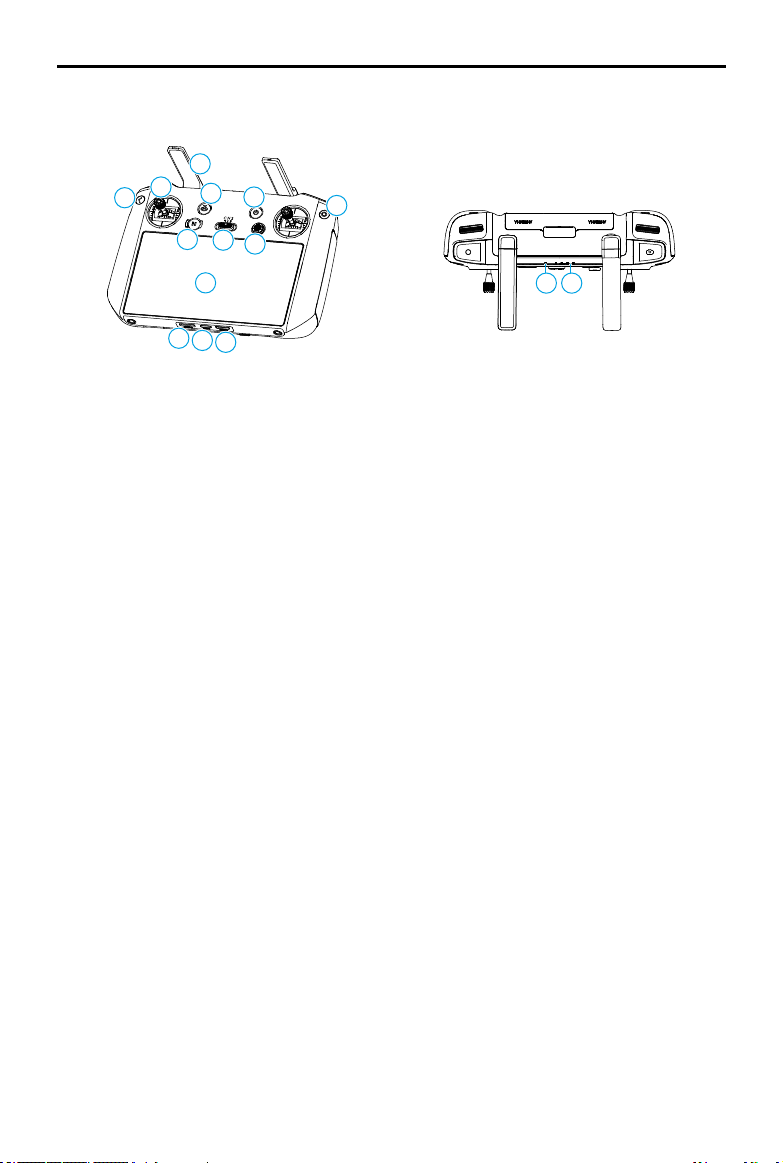
Aircraft
1. Gimbal and Camera
A. Tele Camera
B. Medium Tele Camera
C. Hasselblad Camera
2. Horizontal Omnidirectional Vision
System
3. Auxiliary Light
4. Downward Vision System
5. Infrared Sensing System
6. Front LEDs
7. Motors
8. Propellers
9. Aircraft Status Indicators
10. Landing Gear (Built-in antennas)
11. Upward Vision System
12. Intelligent Flight Battery
13. Battery Level LEDs
14. Power Button
15. Battery Buckles
16. USB-C Port
17. Camera microSD Card Slot
11
16
12
17
13
14
15
A
5
2
1
2
3
4
6
7
8
9
10
B
C
DJI Mavic 3 Pro User Manual
14
©
2023 DJI All Rights Reserved.
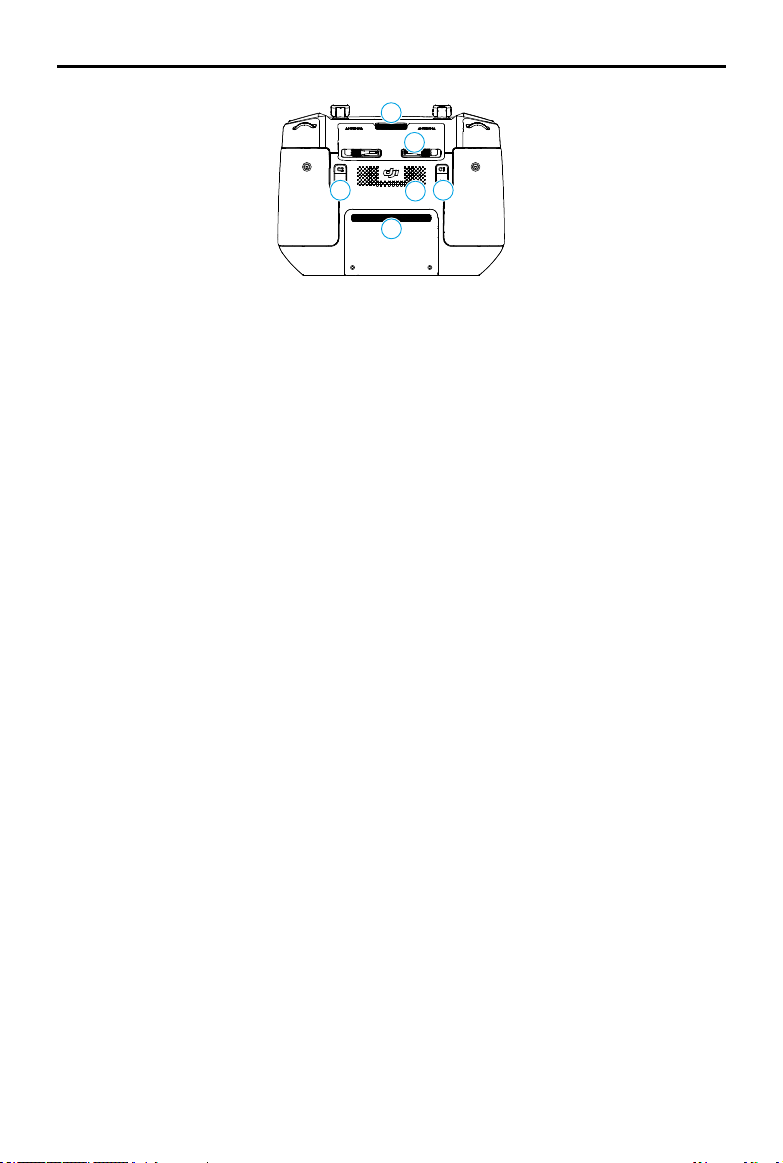
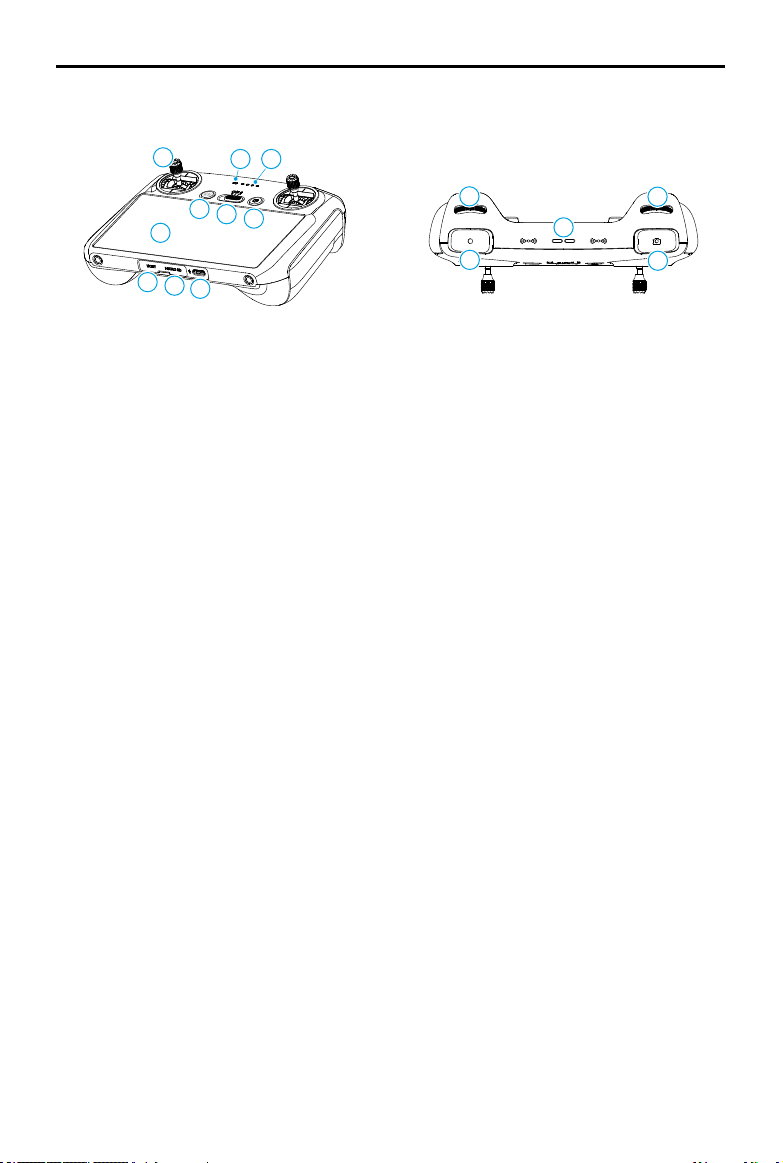
DJI RC Pro
1. Antennas
Transmit control and video wireless signals between the remote controller and the aircraft.
2. Back/Function Button
Press once to return to the previous screen. Press twice to return to the home screen.
Use the back button in combinations with other buttons for additional functions. Refer to
the Remote Controller Button Combinations section for more information.
3. Control Sticks
Use the control sticks to control the aircraft movements. Set the stick mode in DJI Fly. The
control sticks are removable and easy to store.
4. Return to Home (RTH) Button
Press and hold to initiate RTH. Press again to cancel RTH.
5. Flight Pause Button
Press once to make the aircraft brake and hover in place (only when GNSS or Vision Systems
are available).
6. Flight Mode Switch
For switching between three ight modes: Switch between Cine, Normal, and Sport mode.
7. 5D Button
View and set the 5D button features in DJI Fly by entering Camera View > Settings > Control
> Button Customization.
8. Power Button
Press once to check the current battery level. Press, and then press and hold to power the
remote controller on or o. When the remote controller is powered on, press once to turn
the touchscreen on or o.
9. Conrm/Customizable C3 Button
Press once to conrm a selection. The button does not have a function by default when
using DJI Fly. Set the function in DJI Fly by entering Camera View > Settings > Control >
Button Customization.
1
2
3
4
5
10
11
12
13
6
7
8
9
16 17

DJI Mavic 3 Pro User Manual
©
2023 DJI All Rights Reserved.
15
10. Touchscreen
Touch the screen to operate the remote controller. Note that the touchscreen is not
waterproof. Operate with caution.
11. microSD Card Slot
For inserting a microSD card.
12. USB-C Port
For charging and connecting the remote controller to the computer.
13. Mini HDMI Port
For outputting HDMI signal to an external monitor.
14. Gimbal Dial
Controls the tilt of the camera.
15. Record Button
Press once to start or stop recording.
16. Status LED
Indicates the status of the remote controller.
17. Battery Level LEDs
Display the battery level of the remote controller.
18. Focus/Shutter Button
Press halfway down on the button to autofocus and press all the way down to take a photo.
Press once to switch to photo mode when in record mode.
19. Camera Control Dial
Control zoom in/out by default. Set the function in DJI Fly by entering Camera View >
Settings > Control > Button Customization.
DJI Mavic 3 Pro User Manual
16
©
2023 DJI All Rights Reserved.
20. Air Vent
For heat dissipation. Do not block the air vent during usage.
21. Control Sticks Storage Slot
For storing the control sticks.
22. Customizable C1 Button
Switch between recentering the gimbal and pointing the gimbal downward. Set the function
in DJI Fly by entering Camera View > Settings > Control > Button Customization.
23. Speaker
Outputs sound.
24. Customizable C2 Button
Press once to turn the auxiliary light on or o. Set the function in DJI Fly by entering Camera
View > Settings > Control > Button Customization.
25. Air Intake
For heat dissipation. Do not block the air intake during usage.
20
24
22
23
25
21
DJI Mavic 3 Pro User Manual
©
2023 DJI All Rights Reserved.
17
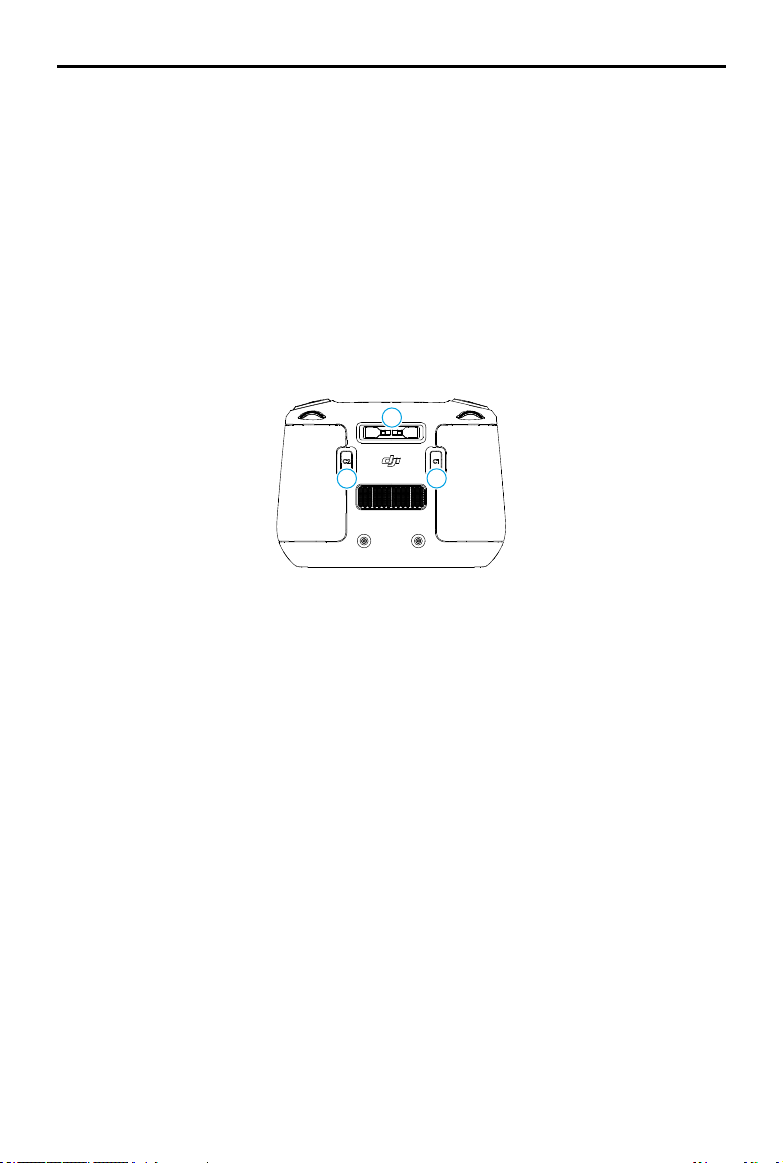
DJI RC Remote Controller
1. Control Sticks
Use the control sticks to control the aircraft movements. Set the stick mode in DJI Fly. The
control sticks are removable and easy to store.
2. Status LED
Indicates the status of the remote controller.
3. Battery Level LEDs
Display the battery level of the remote controller.
4. Flight Pause/RTH Button
Press once to make the aircraft brake and hover in place (only when GNSS or Vision Systems
are available). Press and hold to initiate RTH. Press again to cancel RTH.
5. Flight Mode Switch
For switching between three ight modes: Switch between Cine, Normal, and Sport mode.
6. Power Button
Press once to check the current battery level. Press, and then press and hold to power the
remote controller on or o. When the remote controller is powered on, press once to turn
the touchscreen on or o.
7. Touchscreen
Touch the screen to operate the remote controller. Note that the touchscreen is not
waterproof. Operate with caution.
8. USB-C Port
For charging and connecting the remote controller to the computer.
9. microSD Card Slot
For inserting a microSD card.
10. Host Port (USB-C)
Reserved.
11. Gimbal Dial
Controls the tilt of the camera.
1
32
5
4
6
7
8
9
10
11
12
13
14
15
DJI Mavic 3 Pro User Manual
18
©
2023 DJI All Rights Reserved.
12. Record Button
Press once to start or stop recording.
13. Camera Control Dial
Control zoom in/out by default. Set the function in DJI Fly by entering Camera View >
Settings > Control > Button Customization.
14. Focus/Shutter Button
Press halfway down on the button to autofocus and press all the way down to take a photo.
Press once to switch to photo mode when in record mode.
15. Speaker
Outputs sound.
16. Control Sticks Storage Slot
For storing the control sticks.
17. Customizable C2 Button
Press once to turn the auxiliary light on or o. Set the function in DJI Fly by entering Camera
View > Settings > Control > Button Customization.
18. Customizable C1 Button
Switch between recentering the gimbal and pointing the gimbal downward. Set the function
in DJI Fly by entering Camera View > Settings > Control > Button Customization.
16
18
17

©
2023 DJI All Rights Reserved.
19
Flight Safety
This section describes safe flight
practices and ight restrictions.

DJI Mavic 3 Pro User Manual
20
©
2023 DJI All Rights Reserved.
Flight Safety
Once pre-flight preparation is complete, it is recommended to hone your flight skills and
practice ying safely. Pick a suitable area to y in according to the following ight requirements
and restrictions. Make sure you understand and comply with the local laws and regulations
before ying. Read the Safety Guidelines before ight to ensure the safe use of the product.
Flight Environment Requirements
1. DO NOT operate the aircraft in severe weather conditions, including wind speeds exceeding
12 m/s, snow, rain, and fog.
2. Only y in open areas. Tall buildings and large metal structures may aect the accuracy of
the onboard compass and GNSS system. It is recommended to keep the aircraft at least 5 m
away from structures.
3. Avoid obstacles, crowds, trees, and bodies of water (recommended height is at least 3 m
above water).
4. Minimize interference by avoiding areas with high levels of electromagnetism, such as
locations near power lines, base stations, electrical substations, and broadcasting towers.
5. DO NOT take off from an altitude more than 6000 m (19,685 ft) above sea level. The
performance of the aircraft and its battery is limited when flying at high altitudes. Fly with
caution.
6. GNSS cannot be used on the aircraft in polar regions. Use the vision system instead.
7. DO NOT take o from moving objects, such as cars and ships.
8. DO NOT use the aircraft, remote controller, battery, and battery charger near accidents,
fires, explosions, floods, tsunamis, avalanches, landslides, earthquakes, dust, or
sandstorms.
9. Use the battery charger in a temperature range of 5° to 40° C (41° to 104° F).
10. Operate the aircraft, battery, remote controller, and battery charger in a dry environment.
11. DO NOT use the battery charger in humid environments.
Operating the Aircraft Responsibly
To avoid serious injury and property damage, observe the following rules:
1. Make sure you are NOT under the inuence of anesthesia, alcohol, or drugs or suering
from dizziness, fatigue, nausea, or other conditions that could impair the ability to operate
the aircraft safely.
2. When landing, power o the aircraft rst, then switch o the remote controller.
3. DO NOT drop, launch, fire, or otherwise project any dangerous payloads on or at any
buildings, persons, or animals, which could cause personal injury or property damage.

DJI Mavic 3 Pro User Manual
©
2023 DJI All Rights Reserved.
21
4. DO NOT use an aircraft that has been crashed or accidentally damaged or an aircraft that is
not in good condition.
5. Make sure to train sufficiently and have contingency plans for emergencies or when an
incident occurs.
6. Make sure to have a ight plan. DO NOT y the aircraft recklessly.
7. Respect the privacy of others when using the camera. Make sure to comply with local
privacy laws, regulations, and moral standards.
8. DO NOT use this product for any reason other than general personal use.
9. DO NOT use it for illegal or inappropriate purposes such as spying, military operations, or
unauthorized investigations.
10. DO NOT use this product to defame, abuse, harass, stalk, threaten, or otherwise violate
legal rights such as the right to privacy and publicity of others.
11. DO NOT trespass onto the private property of others.
Flight Restrictions
GEO (Geospatial Environment Online) System
DJI’s Geospatial Environment Online (GEO) System is a global information system that provides
real-time information on ight safety and restriction updates and prevents UAVs from ying in
restricted airspace. Under exceptional circumstances, restricted areas can be unlocked to allow
ights in. Prior to that, the user must submit an unlocking request based on the current restriction
level in the intended flight area. The GEO system may not fully comply with local laws and
regulations. Users shall be responsible for their own ight safety and must consult with the local
authorities on the relevant legal and regulatory requirements before requesting to unlock a ight
in a restricted area. For more information about the GEO system, visit https://y-safe.dji.com.
Flight Limits
For safety reasons, ight limits are enabled by default to help users operate this aircraft safely.
Users can set ight limits on height and distance. Altitude limits, distance limits, and GEO zones
function concurrently to manage flight safety when GNSS is available. Only altitude can be
limited when GNSS is unavailable.
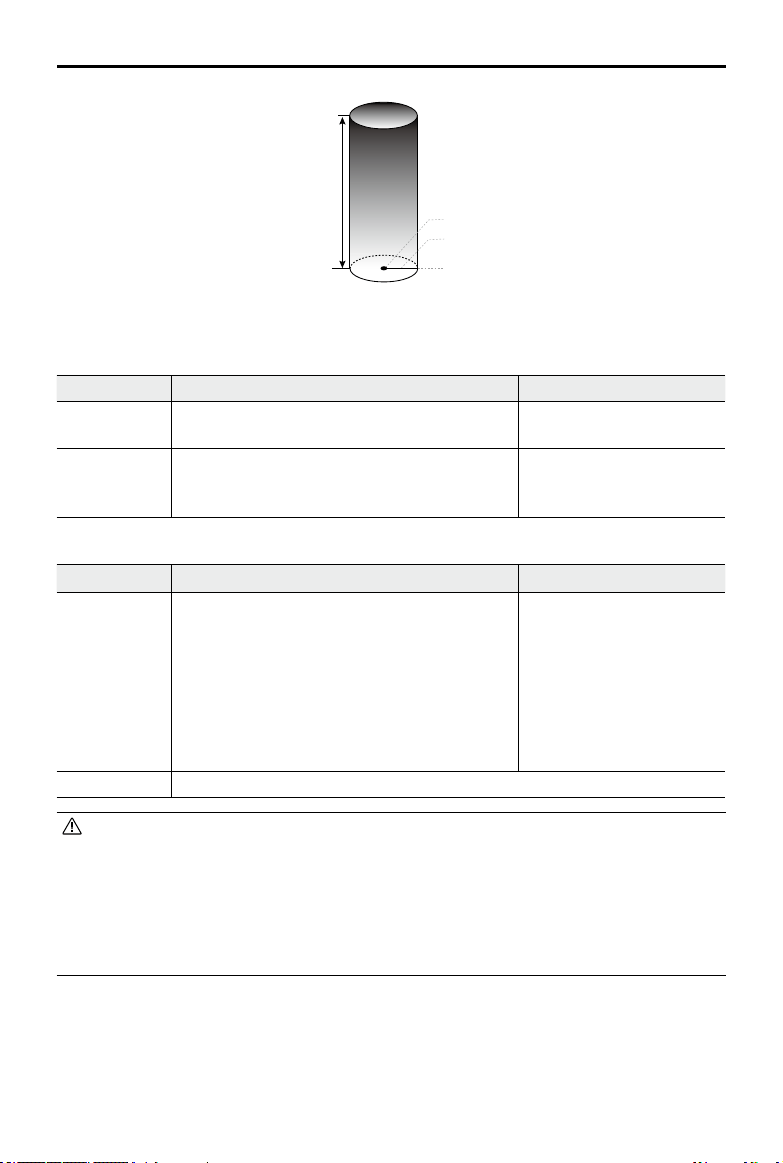
Flight Altitude and Distance Limits
Max altitude restricts an aircraft’s ight altitude, while max distance restricts an aircraft’s ight
radius around the Home Point. These limits can be changed in the DJI Fly app for improved
ight safety.
DJI Mavic 3 Pro User Manual
22
©
2023 DJI All Rights Reserved.
Strong GNSS Signal
Flight Restrictions Prompt in DJI Fly App
Max Altitude
Altitude of the aircraft cannot exceed the value
set in the DJI Fly app.
Max ight altitude reached.
Max Distance
The straight-line distance from the aircraft to
the Home Point cannot exceed the max flight
distance set in the DJI Fly app.
Max ight distance reached.
Weak GNSS Signal
Flight Restrictions Prompt in DJI Fly App
Max Altitude
• Height is restricted to 30 m from the takeoff
point if lighting is sucient.
• Height is restricted to 5 m above the ground
if lighting is not sufficient and the Infrared
Sensing System is operating.
• Height is restricted to 30 m from the takeoff
point if lighting is not sufficient and the
Infrared Sensing System is not operating.
Max ight altitude reached.
Max Distance No limits
• The altitude limit when the GNSS is weak will not be restricted if there was a strong
GNSS signal (GNSS signal strength ≥ 2) when the aircraft was powered on.
• If an aircraft exceeds a specied limit, the pilot can still control the aircraft but cannot
y any closer to the restricted area.
• For safety reasons, DO NOT y the aircraft close to airports, highways, railway stations,
railway lines, city centers, or other sensitive areas. Only y the aircraft within a visual
line of sight.
Max Altitude
Max Distance
Home Point
Height of aircraft
when taking off
Home Point not manually updated during flight

DJI Mavic 3 Pro User Manual
©
2023 DJI All Rights Reserved.
23
GEO Zones
DJI’s GEO system designates safe flight locations, provides risk levels and safety notices for
individual flights and offers information on restricted airspace. All restricted flight areas are
referred to as GEO Zones, which are further divided into Restricted Zones, Authorization Zones,
Warning Zones, Enhanced Warning Zones, and Altitude Zones. Users can view such information
in real-time in the DJI Fly app. GEO Zones are specic ight areas, including but not limited to
airports, large event venues, locations where public emergencies have occurred (such as forest
res), nuclear power plants, prisons, government properties, and military facilities. By default,
the GEO system limits takeos and ights in zones that may cause safety or security concerns.
A GEO Zone map that contains comprehensive information on GEO Zones around the globe is
available on the ocial DJI website: https://y-safe.dji.com/nfz/nfz-query.
Pre-Flight Checklist
1. Make sure the remote controller, mobile device, and Intelligent Flight Battery are fully
charged.
2. Make sure the Intelligent Flight Battery and the propellers are mounted securely.
3. Make sure the aircraft arms are unfolded.
4. Make sure the gimbal and camera are functioning normally.
5. Make sure that there is nothing obstructing the motors and that they are functioning
normally.
6. Make sure that the DJI Fly is successfully connected to the aircraft.
7. Make sure all camera lenses and sensors are clean.
8. Only use genuine DJI parts or DJI authorized parts. Unauthorized parts may cause system
malfunctions and compromise ight safety.
Basic Flight
Auto Takeo/Landing
Auto Takeo
Use the Auto Takeo function:
1. Launch DJI Fly and enter the camera view.
2. Complete all steps in the pre-ight checklist.
3. Tap
. If conditions are safe for takeo, press and hold the button to conrm.
4. The aircraft will take o and hover approx. 1.2 m (3.9 ft) above the ground.
DJI Mavic 3 Pro User Manual
24
©
2023 DJI All Rights Reserved.
Auto Landing
Use the Auto Landing function:
1. Tap
. If conditions are safe for landing, press and hold the button to conrm.
2. Auto landing can be cancelled by tapping
.
3. If the Downward Vision System is working normally, Landing Protection will be enabled.
4. Motors will stop automatically after landing.
• Choose the proper place for landing.
Starting/Stopping the Motors
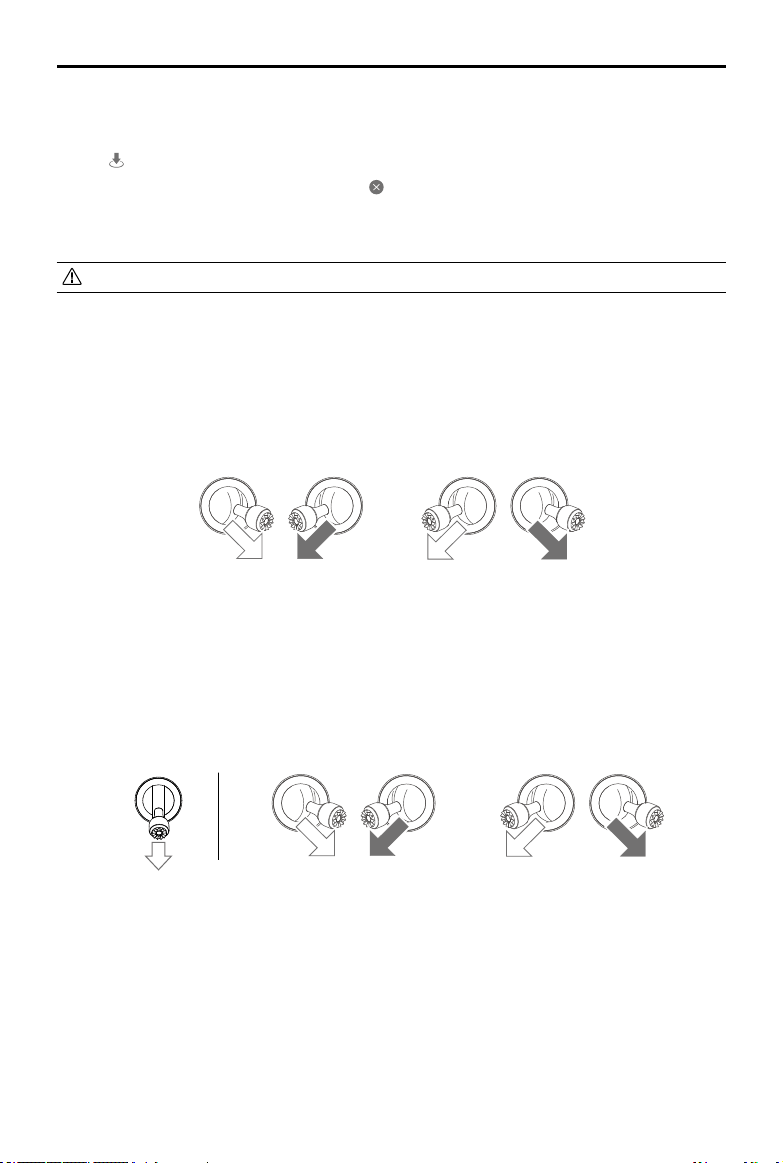
Starting the Motors
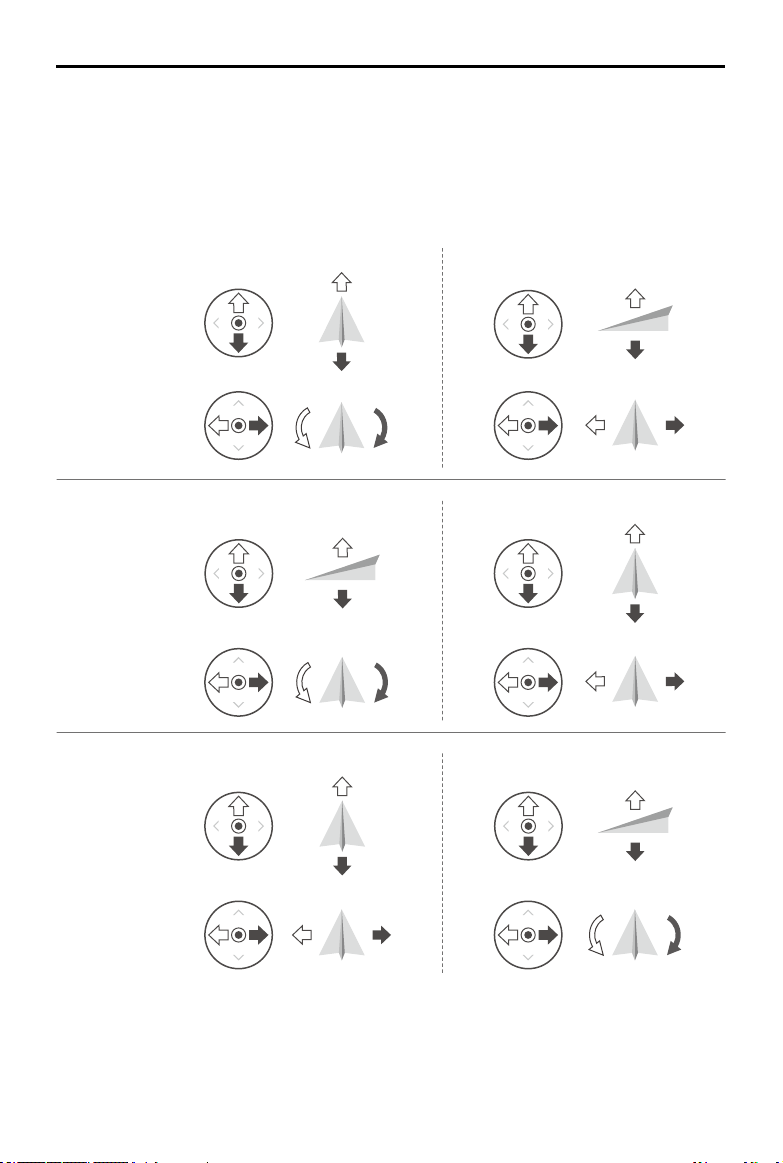
Perform the Combination Stick Command (CSC) as shown below to start the motors. Once the
motors start spinning, release both sticks simultaneously.
OR
Stopping the Motors
The motors can be stopped in two ways:
Method 1: When the aircraft has landed, push the throttle stick down and hold until the motors
stop.
Method 2: When the aircraft has landed, perform the same CSC used to start the motors until
the motors stop.
Method 1 Method 2
OR
Stopping the Motors Mid-Flight
Stopping motors mid-ight will cause the aircraft to crash. The motors should only be stopped
mid-flight in an emergency situation such as if the aircraft is involved in a collision, a motor
has stalled, the aircraft is rolling in the air, or the aircraft is out of control and is ascending or
descending very quickly. To stop the motors mid-ight, perform the same CSC that was used to
start the motors for two seconds. The default setting can be changed in DJI Fly.
DJI Mavic 3 Pro User Manual
©
2023 DJI All Rights Reserved.
25
Controlling the Aircraft
The control sticks of the remote controller can be used to control the aircraft movements. The
control sticks can be operated in Mode 1, Mode 2, or Mode 3, as shown below. The default
control mode of the remote controller is Mode 2. Refer to the Remote Controller section for
more details.
Up
Down
Turn RightTurn Left
RightLeft
Forward
Backward
Left Stick Right Stick
Right Stick
Left Stick
Turn RightTurn Left
Up
Down
RightLeft
Forward
Backward
Right Stick
Up
Down
Forward
Backward
Left Stick
Turn RightTurn Left
RightLeft
Mode 1
Mode 2
Mode 3
DJI Mavic 3 Pro User Manual
26
©
2023 DJI All Rights Reserved.
Takeo/Landing Procedures
1. Place the aircraft in an open, at area with the aircraft rear facing towards the user.
2. Power on the remote controller and the aircraft.
3. Launch DJI Fly and enter the camera view.
4. Tap Settings > Safety, and then set the Obstacle Avoidance Action to Bypass or Brake. Make
sure to set an appropriate Max Altitude and RTH Altitude.
5. Wait for the aircraft self-diagnostics to complete. If DJI Fly does not show any irregular
warning, the user can start the motors.
6. Push the throttle stick up slowly to takeo.
7. To land, hover over a level surface and push the throttle stick down to descend.
8. After landing, push the throttle down and hold until the motors stop.
9. Power o the aircraft before the remote controller.
Video Suggestions and Tips
1. The pre-ight checklist is designed to help the user y safely and shoot videos during ight.
Go through the full pre-ight checklist before each ight.
2. Select the desired gimbal operation mode.
3. It is recommended to take photos or record videos when ying in Normal or Cine mode.
4. DO NOT y in bad weather such as on rainy or windy days.
5. Choose the camera settings that best suit your needs.
6. Perform ight tests to establish ight routes and preview scenes.
7. Push the control sticks gently to ensure smooth and stable movement of the aircraft.
• Make sure to place the aircraft on a flat and steady surface before takeoff. DO NOT
launch the aircraft from your palm or while holding it with your hand.
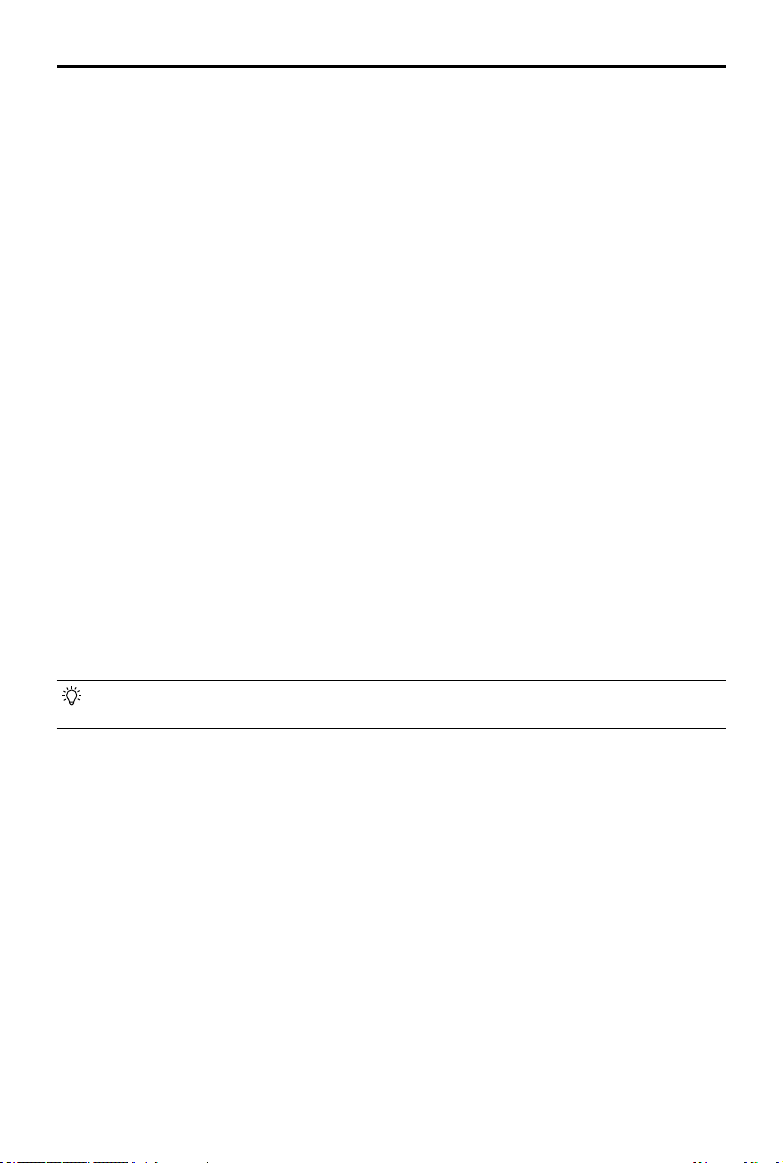
©
2023 DJI All Rights Reserved.
27
Intelligent Flight Modes
FocusTrack
FocusTrack includes Spotlight 2.0, Point of Interest 3.0, and ActiveTrack 5.0.
• Refer to the Remote Controller and Controlling the Aircraft sections for more information about the roll, pitch, throttle, and yaw control sticks.
Spotlight 2.0 Point of Interest 3.0 (POI 3.0) ActiveTrack 5.0
Description Control the aircraft manually while the camera
remains locked on the subject.
The aircraft tracks the subject in a circle
based on the set radius and ight speed.
The max ight speed is 12 m/s and the
ight speed may be adjusted dynamically
according the actual radius.
The aircraft keeps a certain distance
and altitude from the tracked subject,
and there are two modes: Trace and
Parallel.
The max ight speed is 12 m/s.
Supported
Subjects
• Stationary subjects
• Moving subjects such as vehicles, boats, and people
• Moving subjects such as vehicles,
boats, and people
Control Using the control sticks to move the aircraft:
• Move the roll stick to circle the subject
• Move the pitch stick to alter the distance from
the subject
• Move the throttle stick to change the altitude
• Move the yaw stick to adjust the frame
Using the control sticks to move the aircraft:
• Move the roll stick to change the circling
speed of the aircraft around the subject
• Move the pitch stick to alter the distance
from the subject
• Move the throttle stick to change the
altitude
• Move the yaw stick to adjust the frame
Using the control sticks to move the
aircraft:
Move the roll stick to circle the subject
Move the pitch stick to alter the
distance from the subject
Move the throttle stick to change the
altitude
Move the yaw stick to adjust the frame
Obstacle
Avoidance
When the vision systems are working normally,
the aircraft will hover if an obstacle is detected,
regardless of whether the obstacle avoidance
action is set to Bypass or Brake in DJI Fly.
Note: obstacle avoidance is disabled in Sport mode.
The aircraft will bypass obstacles regardless of the flight modes or obstacle
avoidance action settings in DJI Fly when the vision systems are working normally.
DJI Mavic 3 Pro User Manual
DJI Mavic 3 Pro User Manual
28
©
2023 DJI All Rights Reserved.
• In Trace mode, the direction setting is only available when the subject is moving in a
stable direction. The direction of tracking can be adjusted during tracking.
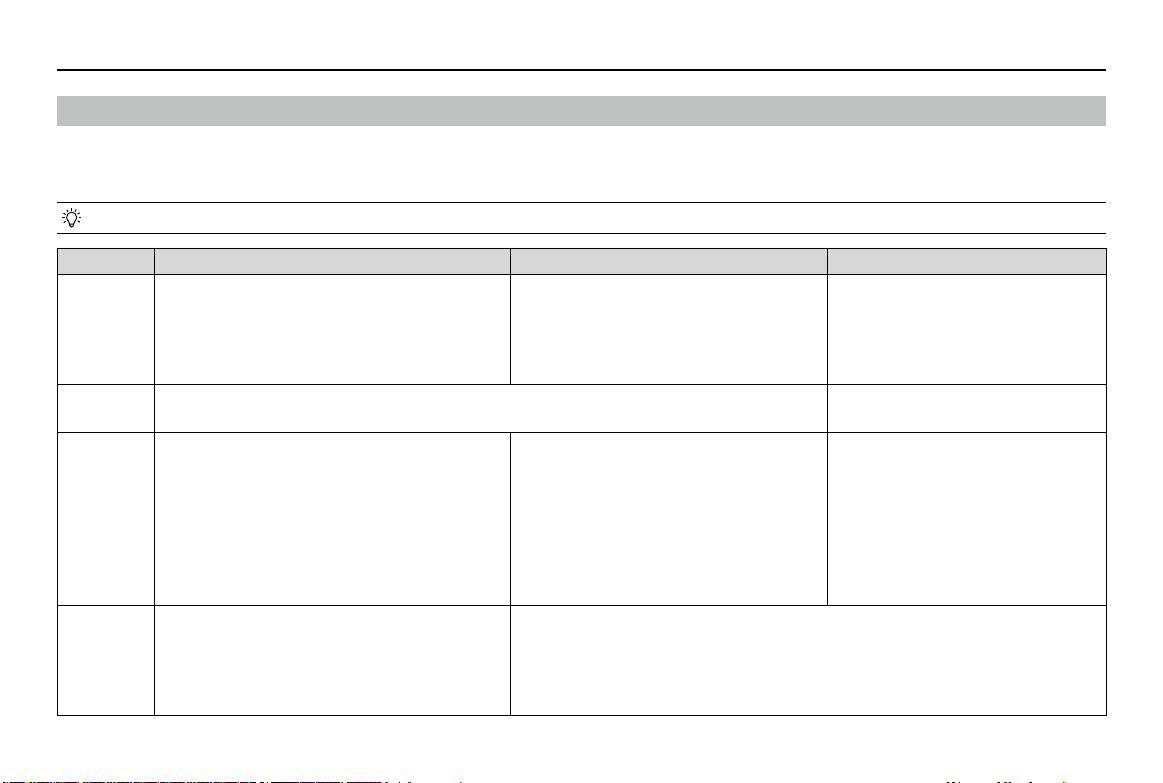
In ActiveTrack, the supported follow ranges of the aircraft and subject are as follows:
Subject People Vehicles/Boats
Camera Hasselblad Camera
Medium Tele
Camera
Hasselblad Camera
Medium Tele
Camera
Distance
4-20 m
(Optimal: 5-10 m)
7-20 m
6-100 m
(Optimal: 20-50 m)
16-100 m
Altitude 2-20 m (Optimal: 2-10 m) 6-100 m (Optimal: 10-50 m)
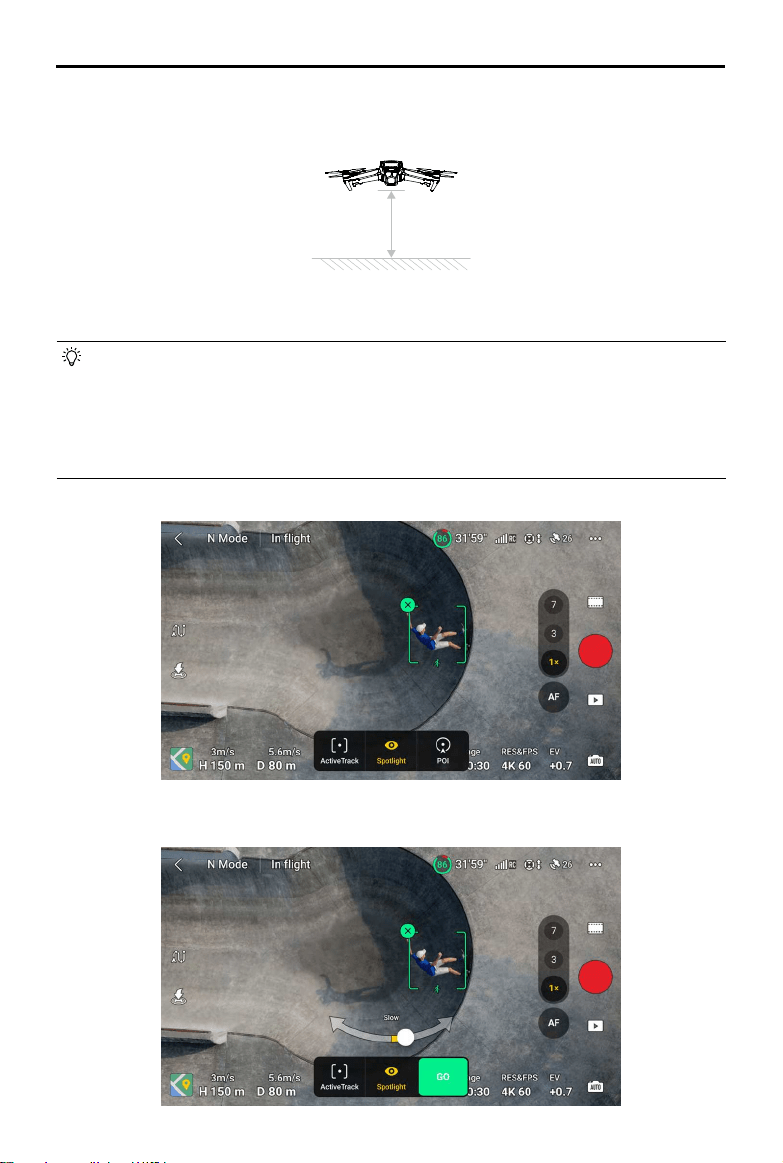
• The aircraft will fly to the supported distance and altitude range if the distance and
altitude is out of range when ActiveTrack begins. Fly the aircraft at the optimal distance
and altitude for the best performance.
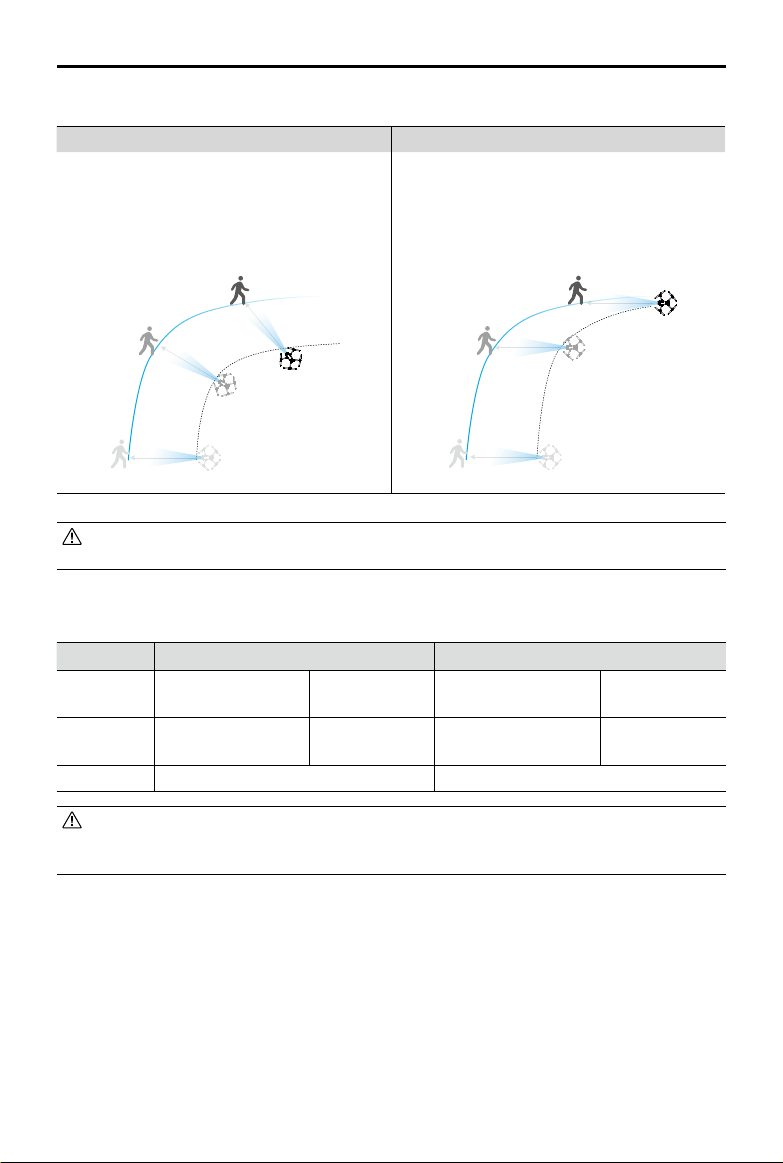
ActiveTrack 5.0
Trace Parallel
After setting the tracking direction (the
default direction is Back), the aircraft tracks
the subject as its moving direction, and
the orientation towards the subject keeps
constant as the tracking direction.
The aircraft tracks the subject at a constant
angle and distance from the side as the
tracking starts.
DJI Mavic 3 Pro User Manual
©
2023 DJI All Rights Reserved.
29
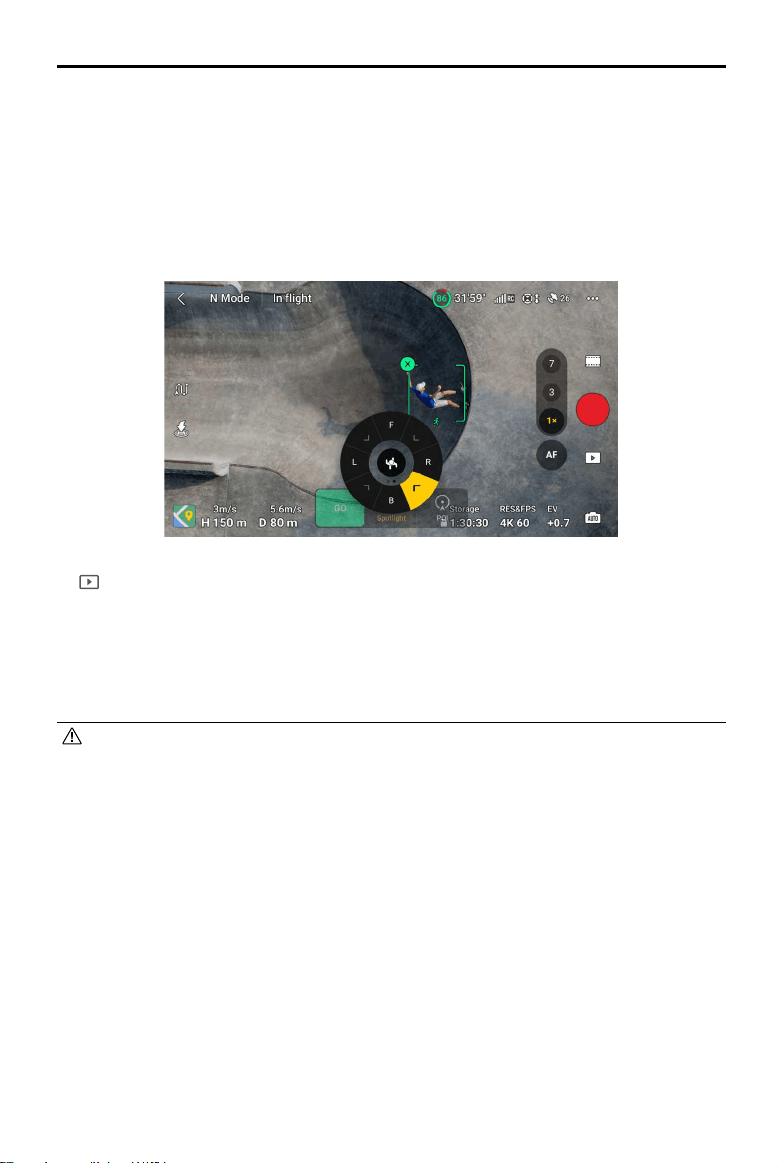
Using FocusTrack
1. Takeo.
2. Drag-select the subject in the camera view, or enable Subject Scanning under Control
settings in DJI Fly and tap the recognized subject to enable FocusTrack.
• FocusTrack must be used within the supported zoom ratio as follows, otherwise it will
aect subject recognition:
a. Spotlight/Point of Interest: supports moving subjects such as vehicles, boats, people,
and stationary subjects up to 7x zoom. The tele camera only supports stationary
subjects.
b. ActiveTrack: supports moving subjects such as vehicles, boats, and people up to 3x zoom.
a. The aircraft will enter Spotlight by default.
b. Tap on the bottom of the screen to switch to Point of Interest. After setting the direction
and speed, tap GO to start ying.
DJI Mavic 3 Pro User Manual
30
©
2023 DJI All Rights Reserved.
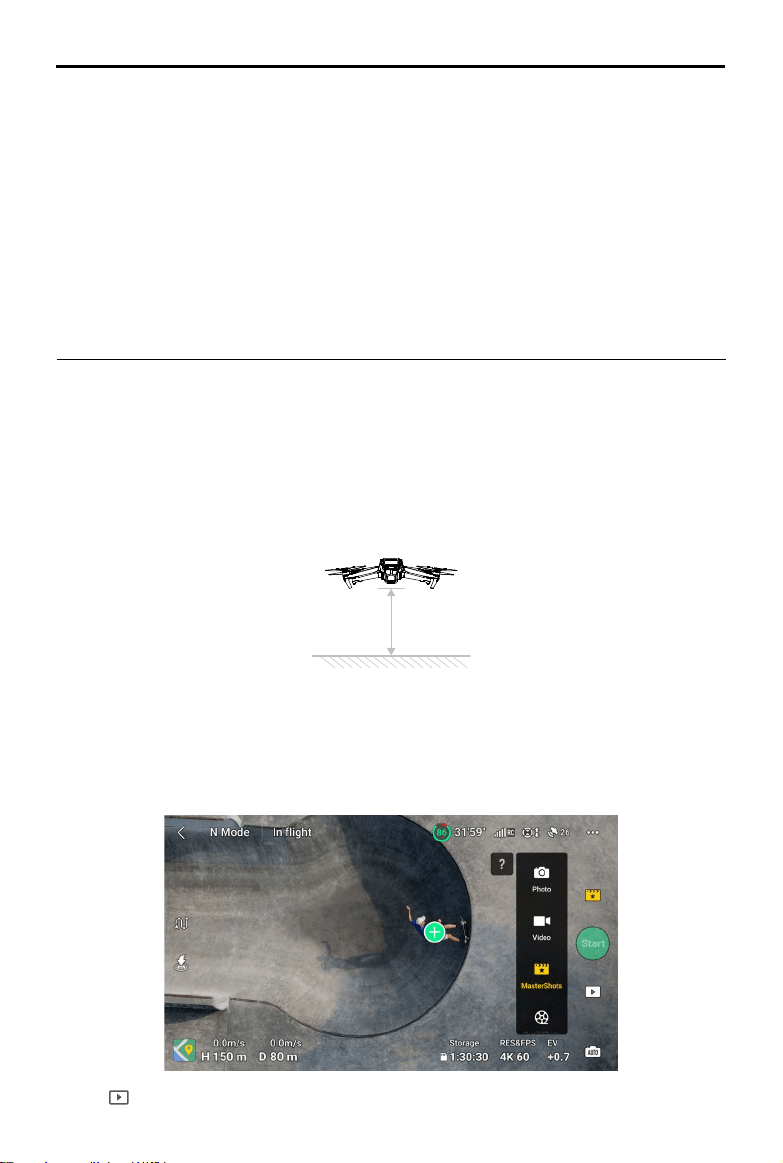
c. Tap on the bottom of the screen to switch to ActiveTrack. In Trace mode, the tracking
direction can be changed using the direction wheel (Front, Back, Left, Right, Front
Diagonal Left, Front Diagonal Right, Back Diagonal Left, and Back Diagonal Right). The
direction wheel will be minimized if there is no operation for an extended period or any
other area of the screen is tapped.
Swipe the mode icon left or right to switch between Trace or Parallel once the direction
wheel is minimized. The tracking direction will be reset to back once Trace is selected
again. Tap GO to start tracking.
3. Tap the shutter/record button to take photos or start recording. View the footage in Playback
.
Exiting FocusTrack
In Point of Interest or ActiveTrack, press the Flight Pause button once on the remote controller
or tap Stop on the screen to return to Spotlight.
In Spotlight, press the Flight Pause button once on the remote controller to exit FocusTrack.
• DO NOT use FocusTrack in areas with people and animals running or vehicles moving.
• DO NOT use FocusTrack in areas with small or ne objects (e.g., tree branches or power
lines), or transparent objects (e.g., water or glass).
• Operate the aircraft manually. In an emergency, press the Flight Pause button or tap
Stop in DJI Fly.
• Be extra vigilant when using FocusTrack in any of the following situations:
a. The tracked subject is not moving on a level plane.
b. The tracked subject changes shape drastically while moving.
c. The tracked subject is out of sight for an extended period.
d. The tracked subject is moving on a snowy surface.
e. The tracked subject has a similar color or pattern to its surrounding environment.
f. The lighting is extremely low (<300 lux) or high (>10,000 lux).
• Make sure to follow local privacy laws and regulations when using FocusTrack.
• It is recommended to only track vehicles, boats, and people. Fly with caution when
tracking other subjects.
DJI Mavic 3 Pro User Manual
©
2023 DJI All Rights Reserved.
31
• In supported moving subjects, vehicles and boats refer to cars and small to medium-
sized yachts. DO NOT track a remotely controlled model car or boat.
• The tracking subject may inadvertently swap to another subject if they pass by each other.
• FocusTrack is disabled in Explore mode, or when recording in 5.1K and 120fps and
above, and Apple ProRes 422HQ/422/422LT.
• When lighting is insucient and the vision systems are unavailable, Spotlight and POI
can still be used for static subjects, but obstacle sensing will be unavailable. ActiveTrack
can not be used.
• FocusTrack is unavailable when the aircraft is on the ground.
• FocusTrack may not function properly when the aircraft is ying near ight limits or in a
GEO Zone.
MasterShots
MasterShots keeps the subject at the center of the frame while executing dierent maneuvers
in sequence to generate a short cinematic video.
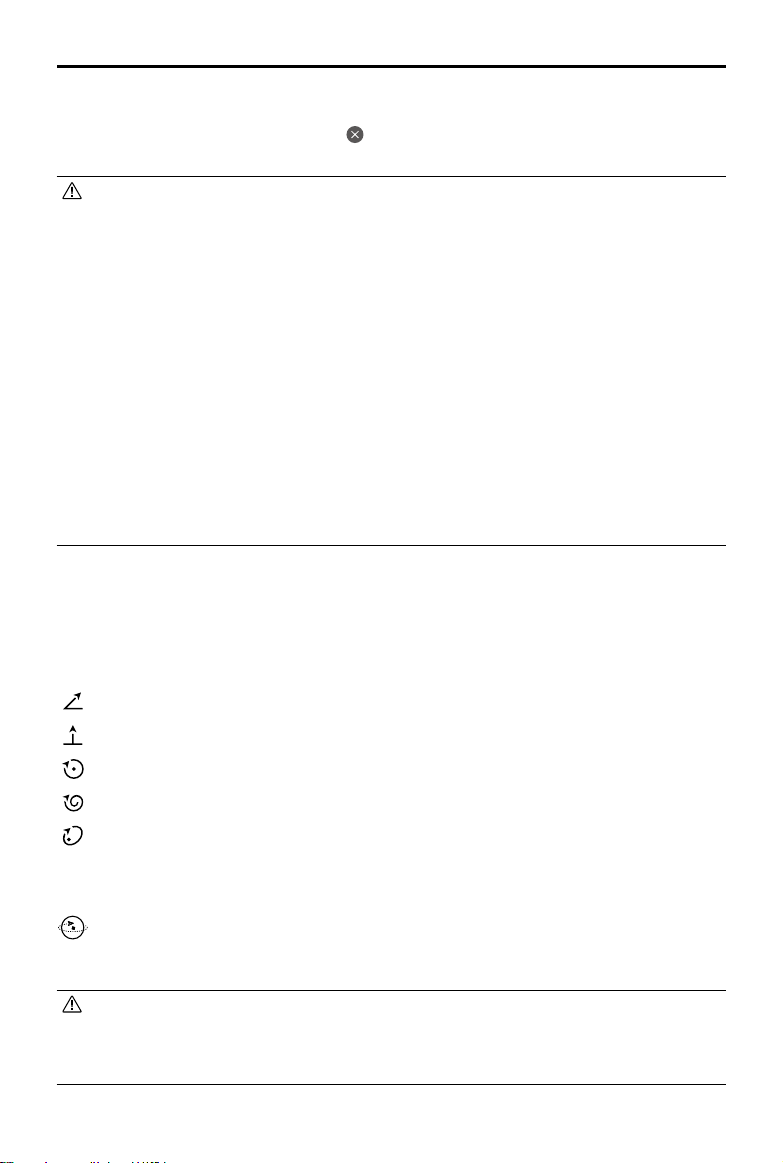
Using MasterShots
1. Launch the aircraft and make it hover at least 2 m (6.6 ft) above ground.
2. In DJI Fly, tap the shooting mode icon to select MasterShots and read the instructions.
Make sure you understand how to use the shooting mode and there are no obstacles in the
surrounding area.
3. Drag-select your target subject in the camera view, set the ight range. Tap Start to begin
recording. The aircraft will y back to its original position once shooting is nished.
2 m
4. Tap to access, edit, or share the video to social media.
DJI Mavic 3 Pro User Manual
32
©
2023 DJI All Rights Reserved.
Exiting MasterShots
Press the ight pause button once or tap in DJI Fly to exit MasterShots. The aircraft will brake
and hover.
• Use MasterShots at locations that are clear of buildings and other obstacles. Make sure
there are no humans, animals, or other obstacles in the ight path. When the lighting is
sucient and the environment is suitable for vision systems, the aircraft will brake and
hover in place if there is an obstacle detected.
• Pay attention to objects around the aircraft and use the remote controller to avoid
collisions with the aircraft.
• DO NOT use MasterShots in any of the following situations:
a. When the subject is blocked for an extended period or outside the line of sight.
b. When the subject is similar in color or pattern with the surroundings.
c. When the subject is in the air.
d. When the subject is moving fast.
e. When the lighting is extremely low (<300 lux) or high (>10,000 lux).
• DO NOT use MasterShots in places close to buildings or where the GNSS signal is weak,
otherwise the ight path may become unstable.
• Make sure to follow local privacy laws and regulations when using MasterShots.
QuickShots
QuickShots shooting modes include Dronie, Rocket, Circle, Helix, Boomerang, and Asteroid. The
aircraft records according to the selected shooting mode and automatically generates a short
video. The video can be viewed, edited, or shared to social media from playback.
Dronie: The aircraft ies backward and ascends with the camera locked on the subject.
Rocket: The aircraft ascends with the camera pointing downward.
Circle: The aircraft circles around the subject.
Helix: The aircraft ascends and spirals around the subject.
Boomerang: The aircraft flies around the subject in an oval path, ascending as it flies
away from its starting point and descending as it ies backward. The starting point of the
aircraft forms one end of the long axis of the oval, while the other end is at the opposite
side of the subject from the starting point.
Asteroid: The aircraft flies backward and upward, takes several photos, and then flies
back to the starting point. The video generated starts with a panorama of the highest
position and then shows the view from the aircraft as it descends.
• Make sure there is sucient space when using Boomerang. Allow a radius of at least
30 m (99 ft) around the aircraft and a space of at least 10 m (33 ft) above the aircraft.
• Make sure there is sufficient space when using Asteroid. Allow at least 40 m (131 ft)
behind and 50 m (164 ft) above the aircraft.
DJI Mavic 3 Pro User Manual
©
2023 DJI All Rights Reserved.
33
Using QuickShots
1. Launch the aircraft and make it hover at least 2 m (6.6 ft) above ground.
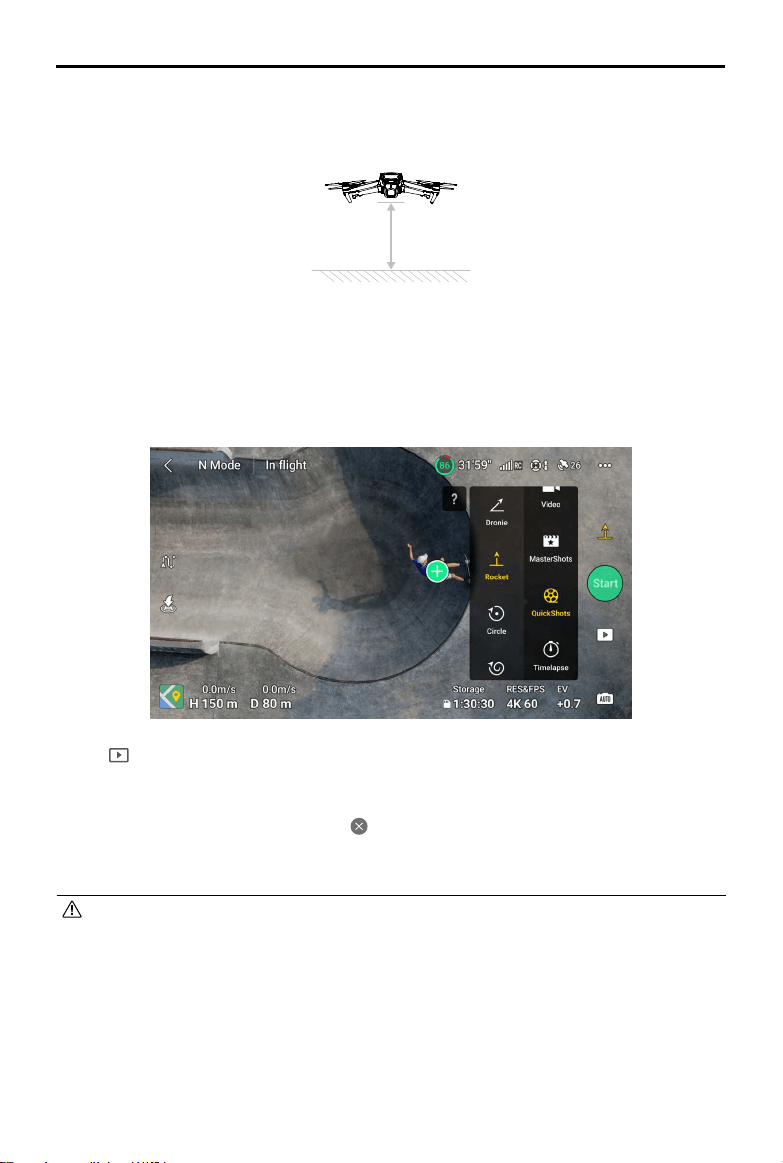
2. In DJI Fly, tap the shooting mode icon to select QuickShots and follow the prompts. Make
sure you understand how to use the shooting mode and there are no obstacles in the
surrounding area.
3. Choose a shooting mode, drag-select your target subject in the camera view, and tap Start
to begin recording. The aircraft will y back to its original position once shooting is nished.
2 m
4. Tap to access, edit, or share the video to social media.
Exiting QuickShots
Press the ight pause button once or tap in DJI Fly to exit QuickShots. The aircraft will brake
and hover. Tap the screen again and the aircraft will continue shooting.
Note: if you accidentally move a control stick, the aircraft will exit QuickShots and hover in place.
• Use QuickShots at locations that are clear of buildings and other obstacles. Make sure
there are no humans, animals, or other obstacles in the ight path. When the lighting is
sucient and the environment is suitable for vision systems, the aircraft will brake and
hover in place if there is an obstacle detected.
• Pay attention to objects around the aircraft and use the remote controller to avoid
collisions with the aircraft.
• DO NOT use QuickShots in any of the following situations:
a. When the subject is blocked for an extended period or outside the line of sight.
b. When the subject is more than 50 m away from the aircraft.
DJI Mavic 3 Pro User Manual
34
©
2023 DJI All Rights Reserved.
c. When the subject is similar in color or pattern with the surroundings.
d. When the subject is in the air.
e. When the subject is moving fast.
f. When the lighting is extremely low (<300 lux) or high (>10,000 lux).
• DO NOT use QuickShots in places close to buildings or where the GNSS signal is weak,
otherwise the ight path will become unstable.
• Make sure to follow local privacy laws and regulations when using QuickShots.
Hyperlapse
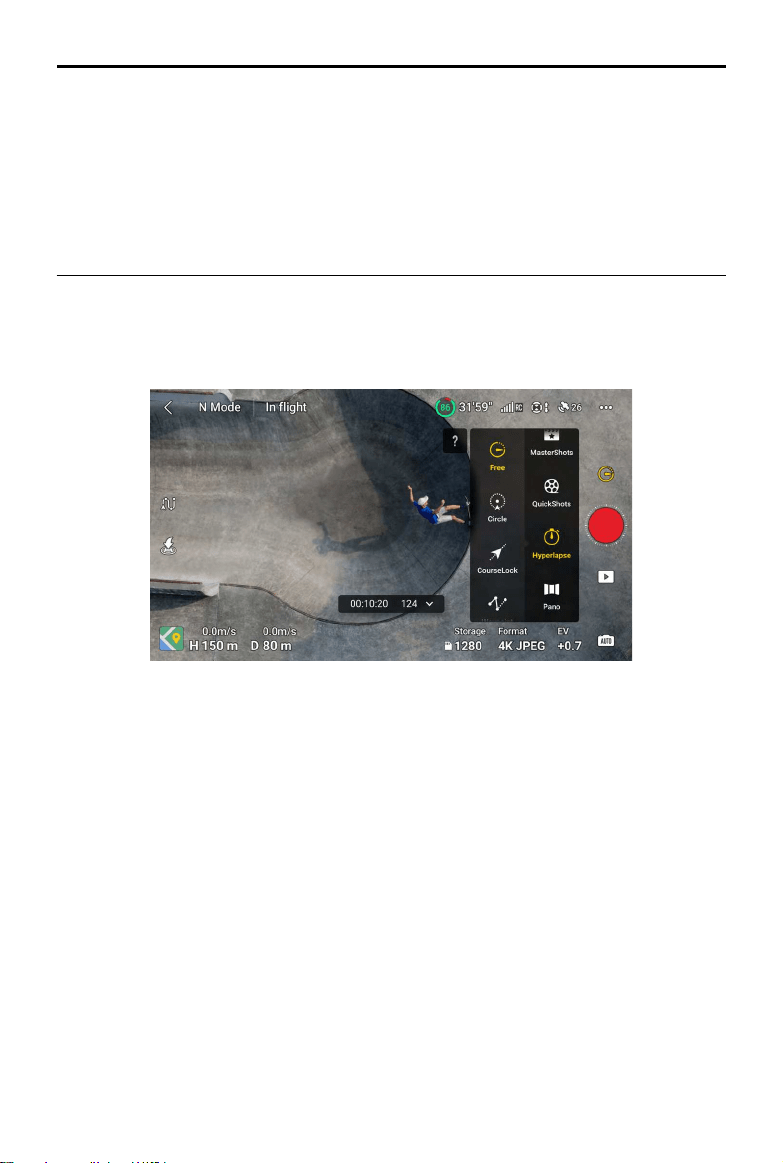
Hyperlapse shooting modes include Free, Circle, Course Lock, and Waypoint.
Free
The aircraft automatically takes photos and generates a timelapse video. Free mode can be
used while the aircraft is on the ground. After takeoff, control the aircraft’s movements and
gimbal angle using the remote controller.
Follow the steps below to use Free:
1. Set the interval time, video duration, and max speed. The screen displays the number of
photos that will be taken and the shooting duration.
2. Tap the shutter/record button to begin.
Circle
The aircraft automatically takes photos while ying around the selected subject to generate a
timelapse video.
Follow the steps below to use Circle:
1. Set the interval time, video duration, and max speed. Circle can be set to either the clockwise
or counter-clockwise direction. The screen displays the number of photos that will be taken
and the shooting duration.

DJI Mavic 3 Pro User Manual
©
2023 DJI All Rights Reserved.
35
2. Drag-select a subject on the screen. Use the yaw stick and gimbal dial to adjust the frame.
3. Tap the shutter/record button to begin.
Course Lock
Course Lock allows the user to x the ight direction. When using Course Lock, the user may
either select an object so that the camera will always face the subject or not select an object so
that the user can control the aircraft orientation and gimbal.
Follow the steps below to operate Course Lock:
1. Set the interval time, video duration, and speed. The screen displays the number of photos
that will be taken and the shooting duration.
2. Set a ight direction.
3. If applicable, drag-select a subject. After selecting the subject, the aircraft will automatically
control the orientation or gimbal to center the subject. At this time, the frame cannot be
adjusted manually.
4. Tap the shutter/record button to begin.
Waypoints
The aircraft automatically takes photos on a ight path of two to ve waypoints and generates a
timelapse video. The aircraft can y in sequence from waypoints 1 to 5 or 5 to 1.
Follow the steps below to use Waypoints:
1. Set the desired waypoints and the lens direction.
2. Set the interval time and video duration. The screen displays the number of photos that will
be taken and the shooting duration.
3. Tap the shutter/record button to begin.
The aircraft will generate a timelapse video automatically, which is viewable in playback. Users
can select Photo Type in Settings > Camera page in DJI Fly.
• For optimal performance, it is recommended to use Hyperlapse at an altitude higher
than 50 m and to set a difference of at least two seconds between the interval and
shutter time.
• It is recommended to select a static subject (e.g., high-rise buildings, mountainous
terrain) located at a safe distance from the aircraft (further than 15 m). DO NOT select a
subject that is too near the aircraft.
• When the lighting is sucient and the environment is suitable for the vision systems,
the aircraft will brake and hover in place if an obstacle is detected during Hyperlapse.
If the lighting becomes insufficient or the environment is not suitable for the vision
systems during Hyperlapse, the aircraft will continue to shoot without obstacle
avoidance. Fly with caution.
• The aircraft will only generate a video after at least 25 photos have been taken, which
is the amount required to generate a one-second video. The video will be generated by
default regardless of whether Hyperlapse concludes normally or the aircraft exits from
the mode unexpectedly (such as when Low Battery RTH is triggered).
DJI Mavic 3 Pro User Manual
36
©
2023 DJI All Rights Reserved.
Waypoint Flight
Waypoint Flight enables the aircraft to capture images during a ight according to the waypoint
flight route generated by the preset waypoints. Points of Interest (POI) can be linked to the
waypoints. The heading will point toward the POI during ight. A waypoint ight route can be
saved and repeated.
Using Waypoint Flight
1. Enable Waypoint Flight
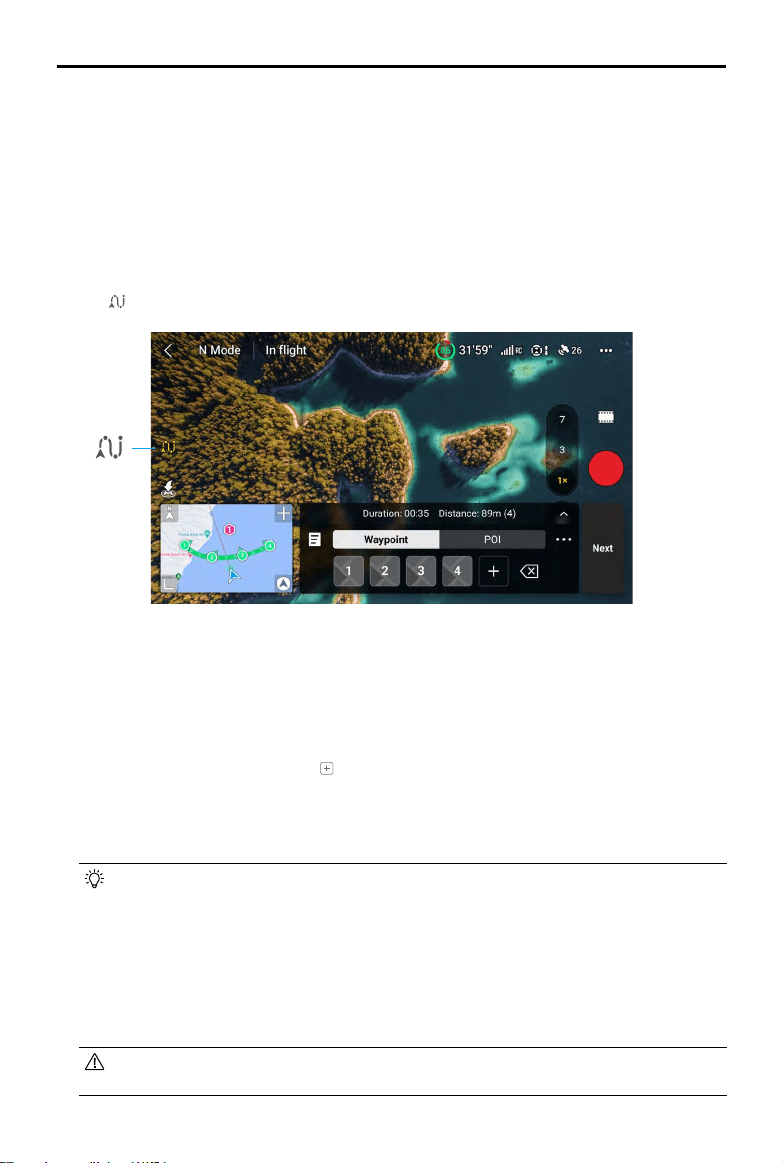
Tap
on the left of the camera view in DJI Fly to enable Waypoint Flight.
2. Waypoint Settings
Pin Waypoint
Waypoints can be pinned via the map before take o.
Waypoints can be pinned via the following methods after take o, GNSS is required.
• Using the Remote Controller: press once on the C1 button to pin a waypoint.
• Using the Operation Panel: tap
on the operation panel to pin a waypoint.
• Using the Map: enter and tap on the map to pin a waypoint. The default altitude of a
waypoint via the map is set to 50 m from the take-o point.
Tap and hold on a waypoint to move its position on the map.
• It is recommended to pin waypoints when ying to the location for a more accurate
and smoother imaging result.
• The aircraft horizontal GNSS position, altitude from the take-off point, heading, and
gimbal tilt will be recorded if the waypoint is pinned via the remote controller and
operation panel.
• Connect the remote controller to the internet and download the map before using
the map to pin a waypoint. When the waypoint is pinned via the map, only the
aircraft horizontal GNSS position can be recorded.
• The ight route will curve between waypoints, and the aircraft altitude may decrease
during the ight route. Make sure to avoid any obstacles below when setting a waypoint.
DJI Mavic 3 Pro User Manual
©
2023 DJI All Rights Reserved.
37
Settings
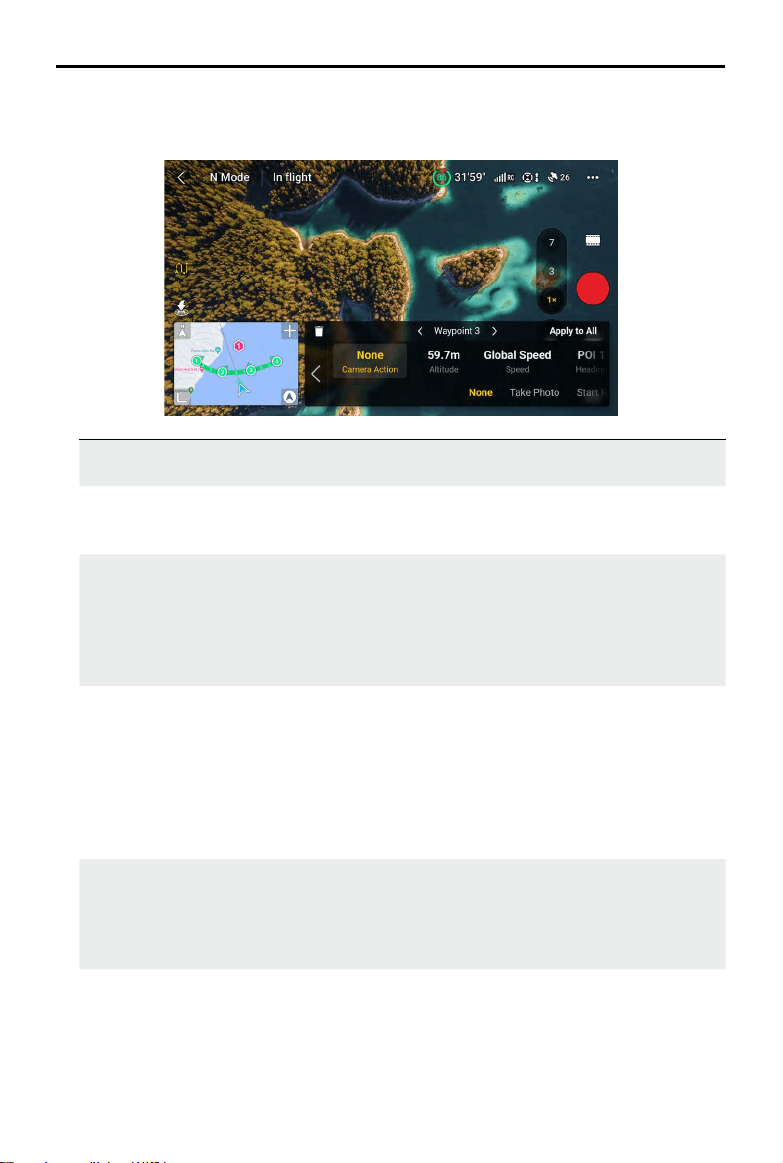
Tap the waypoint number for settings, the waypoint parameters are described as follows:
Camera
Action
The camera action at the waypoint. Choose between None, Take Photo, and
Start or Stop Recording.
Altitude The altitude at the waypoint from the take-o point. Ensure to take o at the
same take-o altitude to obtain better performance when a Waypoint Flight
is repeated.
Speed The ight speed at the waypoint.
• Global Speed: the aircraft will y at the same speed during the waypoint
ight route.
• Custom: the aircraft will accelerate or decelerate at a steady speed when
flying between waypoints. The preset speed will be reached when the
aircraft is at the waypoint.
Heading The aircraft heading at the waypoint.
• Follow Course: the heading of the aircraft at a horizontal tangent to the
ight route.
• POI*: tap the number of the POI to point the aircraft heading toward the POI.
• Manual: the aicraft heading can be adjusted by the user during a
Waypoint Flight.
• Custom: drag the bar to adjust the heading. The heading can be
previewed in the map view.
Gimbal Tilt The gimbal tilt at the waypoint.
• POI*: tap the POI number to point the camera toward the specic POI.
• Manual: the gimbal tilt can be adjusted by the user during a Waypoint
Flight.
• Custom: drag the bar to adjust the tilt of the gimbal.
Zoom • The camera zoom at the waypoint.
• Digital (1-3x): drag the bar to adjust the zoom ratio.
• Manual: the zoom ratio can be adjusted by the user during a Waypoint
Flight.
• Auto: the zoom ratio will be adjusted by the aircraft when ying between
two waypoints.
DJI Mavic 3 Pro User Manual
38
©
2023 DJI All Rights Reserved.
Hovering
Time
The duration of the aircraft hovering time at the current waypoint.
* Before selecting POI for heading or gimbal tilt, make sure there are POIs in the ight route. If a POI is
linked to a waypoint, the heading and gimbal tilt of the waypoint will be reset to toward the POI.
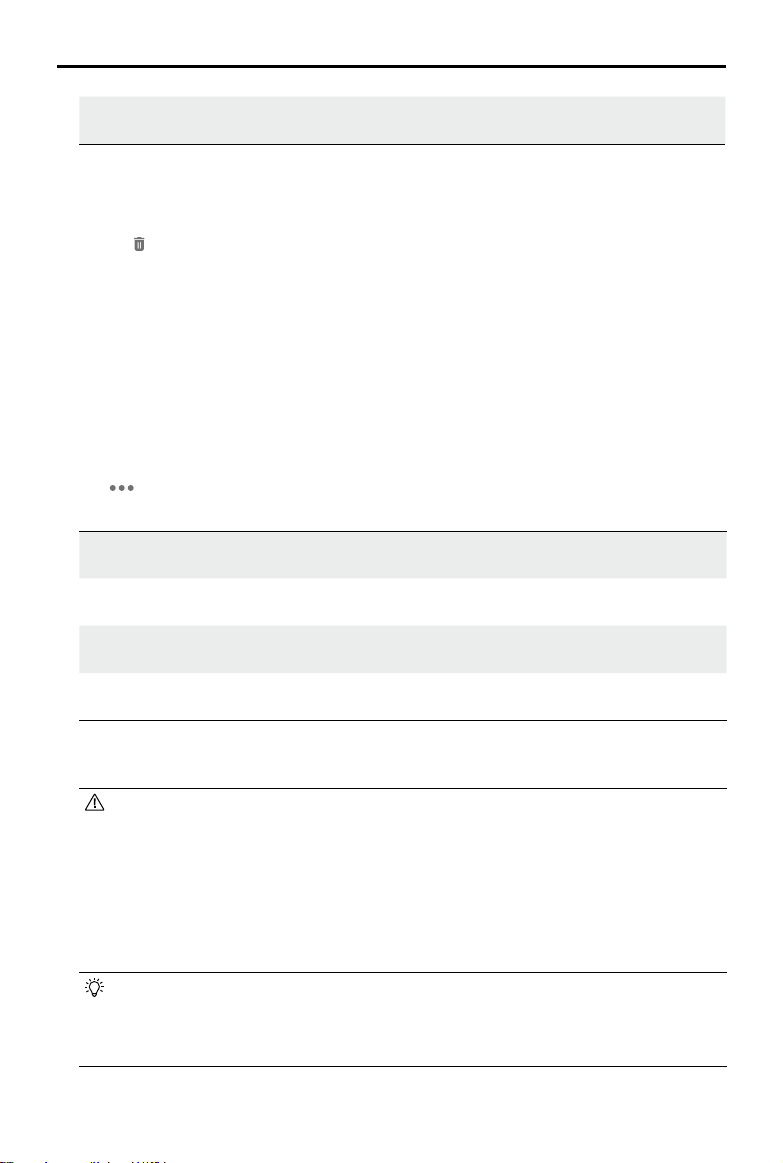
All the settings except camera action can be applied to all waypoints after selecting Apply to
All. Tap to delete the current selected waypoint.
3. POI Settings
Tap POI on the operation panel to switch to POI settings. Use the same method to pin a POI
as used with a waypoint.
Tap the number of the POI to set the altitude of the POI, the POI can be linked to a waypoint.
Multiple waypoints can be linked to the same POI, the camera will point toward the POI
during the Waypoint Flight.
4. Plan a Waypoint Flight
Tap
or Next to set parameters for the ight route such as Global Speed, the behavior of
End of Flight, On Signal Lost, and Start Point. The settings apply to all waypoints.
Global Speed The ight speed during the entire ight route. After setting, the speed of
all waypoints will be set to this speed.
End of Flight The behavior of the aircraft after the flight task ends. It can be set to
Hover, RTH, Land, or Back to Start.
On Signal Lost The behavior of the aircraft when the remote controller signal is lost
during ight. It can be set to RTH, Hover, Land, or Continue.
Start Point After selecting the start waypoint, the ight route will be started from this
waypoint to the subsequent waypoints.
5. Perform a Waypoint Flight
• Check the Obstacle Avoidance Action settings in the Settings > Safety page of DJI Fly before
performing the Waypoint Flight. When set to Bypass or Brake, the aircraft will brake and
hover in place if an obstacle is detected during the Waypoint Flight. The aircraft cannot
sense obstacles if the Obstacle Avoidance Action is disabled. Fly with caution.
• Observe the environment and ensure there are no obstacles on the route before
performing Waypoint Flight.
• Make sure to maintain visual line of sight (VLOS) with the aircraft. Press the ight
pause button in an emergency situation.
• When the signal is lost during ight, the aircraft will perform the action set in On
Signal Lost.
• When the Waypoint Flight is nished, the aircraft will perform the action set in End
of Flight.
DJI Mavic 3 Pro User Manual
©
2023 DJI All Rights Reserved.
39
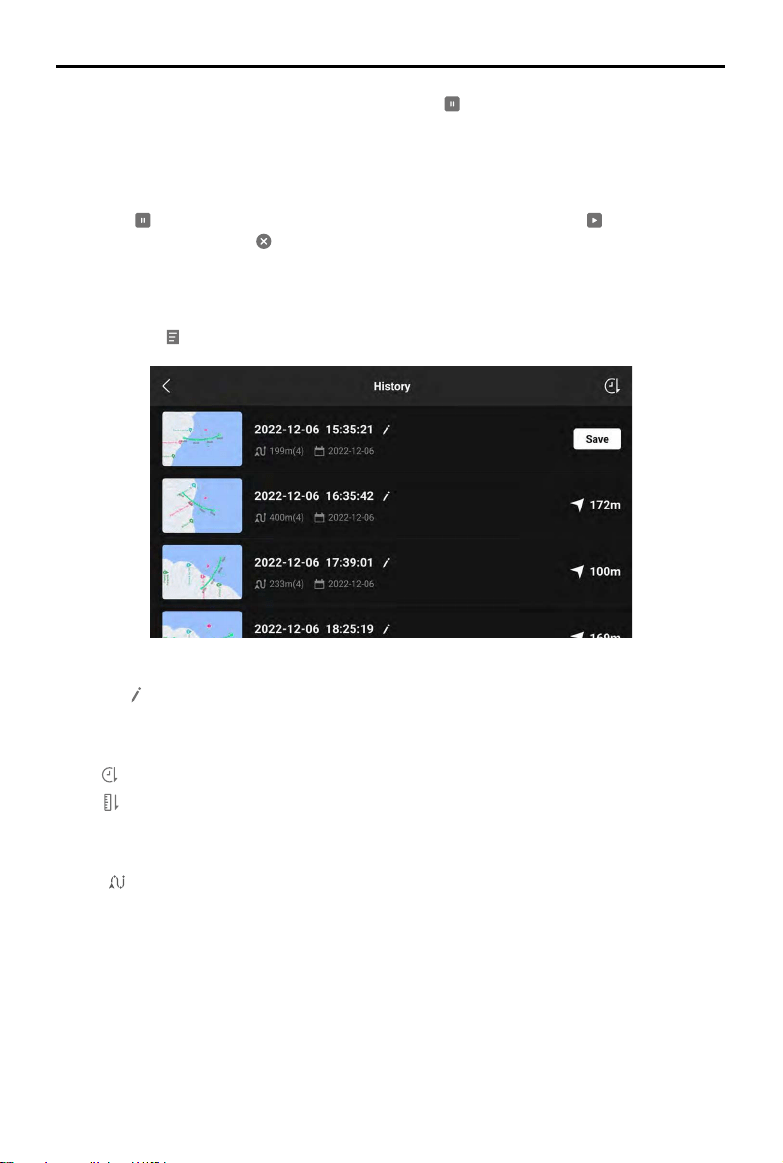
• In the ight route library, users can check the saved tasks, and tap to open or edit a task.
• Tap
to edit the name of the task.
• Slide left to delete a task.
• Tap the icon on the top right corner to change the order of the tasks.
: tasks will be sorted by the time.
: tasks will be sorted by the distance between the start waypoint and the current
position of the aircraft from shortest to farthest.
7. Exit Waypoint Flight
Tap to exit Waypoint Flight. Tap Save and Exit to save the task to Library and exit.
a. Tap GO to upload the waypoint ight task. Tap to cancel the uploading process and
return to the waypoint ight parameter settings.
b. The waypoint flight task will be performed after being uploaded, the flight duration,
waypoints, and distance and will be displayed on the camera view. The control stick input
will change the ight speed during a Waypoint Flight.
c. Tap
to pause the Waypoint Flight after the task begins. Tap to continue the
Waypoint Flight. Tap
to stop Waypoint Flight and return to the waypoint flight edit
status.
6. Library
When planning a Waypoint Flight, the task will be generated automatically and saved every
minute. Tap
on the left to enter Library and save the task manually.

DJI Mavic 3 Pro User Manual
40
©
2023 DJI All Rights Reserved.
Cruise Control
The cruise control function enables the aircraft to lock the current control stick input of the
remote controller when conditions permit. Fly at the speed corresponding to the current control
stick input without continually using control stick movements. The cruise control feature also
supports aircraft movements such as spiraling up by increasing the control stick input.
Using Cruise Control
1. Set the Cruise Control Button
Go to DJI Fly, select Settings > Control > Button Customization, and then set the C1, C2 or C3
button to Cruise Control.
2. Enter Cruise Control
• Press the Cruise Control button while pushing the control stick, then the aircraft will y
at the current speed according to the control stick input. Once Cruise Control is set, the
control stick can be released and will automatically return to the center.
• Before the control stick returns to the center, press the Cruise Control button again to
reset the ight speed based on the current control stick input.
• Push the control stick after it returns to the center, the aircraft will y at the increased
speed based on the previous speed. In this case, press the Cruise Control button again,
and the aircraft will y at the increased speed.
3. Exit Cruise Control
Press the Cruise Control button without a control stick input, press the ight pause button
on the remote controller, or tap
on the screen to exit cruise control. The aircraft will brake
and hover.
• Cruise control is available in Normal, Cine, and Sport mode or APAS, Free
Hyperlapse, and FocusTrack.
• Cruise control cannot be started without a control stick input.
• The aircraft cannot enter or will exit Cruise Control in the following situations:
a. When near the max altitude or max distance.
b. When the aircraft disconnects from the remote controller or DJI Fly.
c. When the aircraft senses an obstacle and will hover in place.
d. During RTH or auto landing.
• Cruise control will exit automatically when switching ight modes.
• The obstacle sensing in Cruise Control follows the current flight mode. Fly with
caution.

©
2023 DJI All Rights Reserved.
41
Aircraft
DJI Mavic 3 Pro contains a flight
controller, video downlink system,
vision systems, infrared sensing system,
propulsion system, and an Intelligent
Flight Battery.

DJI Mavic 3 Pro User Manual
42
©
2023 DJI All Rights Reserved.
Aircraft
DJI Mavic 3 Pro contains a flight controller, video downlink system, vision systems, infrared
sensing system, propulsion system, and an Intelligent Flight Battery.
Flight Modes
DJI Mavic 3 Pro supports the following ight modes. The ight modes can be switched via the
Flight Mode switch on the remote controller.
Normal Mode
The aircraft utilizes GNSS, the Horizontal, Upward, and Downward Vision Systems, and the
Infrared Sensing System to locate and stabilize itself. When the GNSS signal is strong, the
aircraft uses GNSS to locate and stabilize itself. When the GNSS is weak, but the lighting and
other environmental conditions are sufficient, it uses the vision systems. When the vision
systems are enabled, and lighting and other environmental conditions are sufficient, the
maximum tilt angle is 30° and the maximum ight speed is 15 m/s.
Sport Mode
In Sport Mode, the aircraft uses GNSS for positioning and the aircraft responses are optimized
for agility and speed, making it more responsive to control stick movements. Note: Obstacle
Avoidance is disabled and the maximum ight speed is 21 m/s.
Cine Mode
Cine mode is based on Normal mode with a limited ight speed, making the aircraft more stable
during shooting.
If the aircraft is ying in the EU, the aircraft will switch to Low Speed mode when the ight mode
is switched to C on the remote controller. Low Speed mode limits the maximum horizontal ight
speed to 2.8 m/s based on Normal mode, and there is no limit for the ascent or descent speed.
The aircraft automatically changes to Attitude (ATTI) mode when the vision systems are
unavailable or disabled and when the GNSS signal is weak or the compass experiences
interference. In ATTI mode, the aircraft may be more easily affected by its surroundings.
Environmental factors such as wind can result in horizontal shifting, which may present
hazards, especially when flying in confined spaces. The aircraft will not be able to hover or
brake automatically. Therefore the pilot should land the aircraft as soon as possible to avoid
accidents.
• The ight modes are is only valid for manual ight and cruise control.
• The vision systems are disabled in Sport mode, which means the aircraft cannot sense
obstacles on its route automatically. The user must stay alert to the surrounding
environment and control the aircraft to avoid obstacles.
• The maximum speed and braking distance of the aircraft signicantly increase in Sport
mode. A minimum braking distance of 30 m is required in windless conditions.
DJI Mavic 3 Pro User Manual
©
2023 DJI All Rights Reserved.
43
• A minimum braking distance of 10 m is required in windless conditions while the
aircraft is ascending and descending in Sport mode or Normal mode.
• The responsiveness of the aircraft signicantly increases in Sport mode, which means a
small control stick movement on the remote controller translates into the aircraft moving
a large distance. Make sure to maintain adequate maneuvering space during ight.
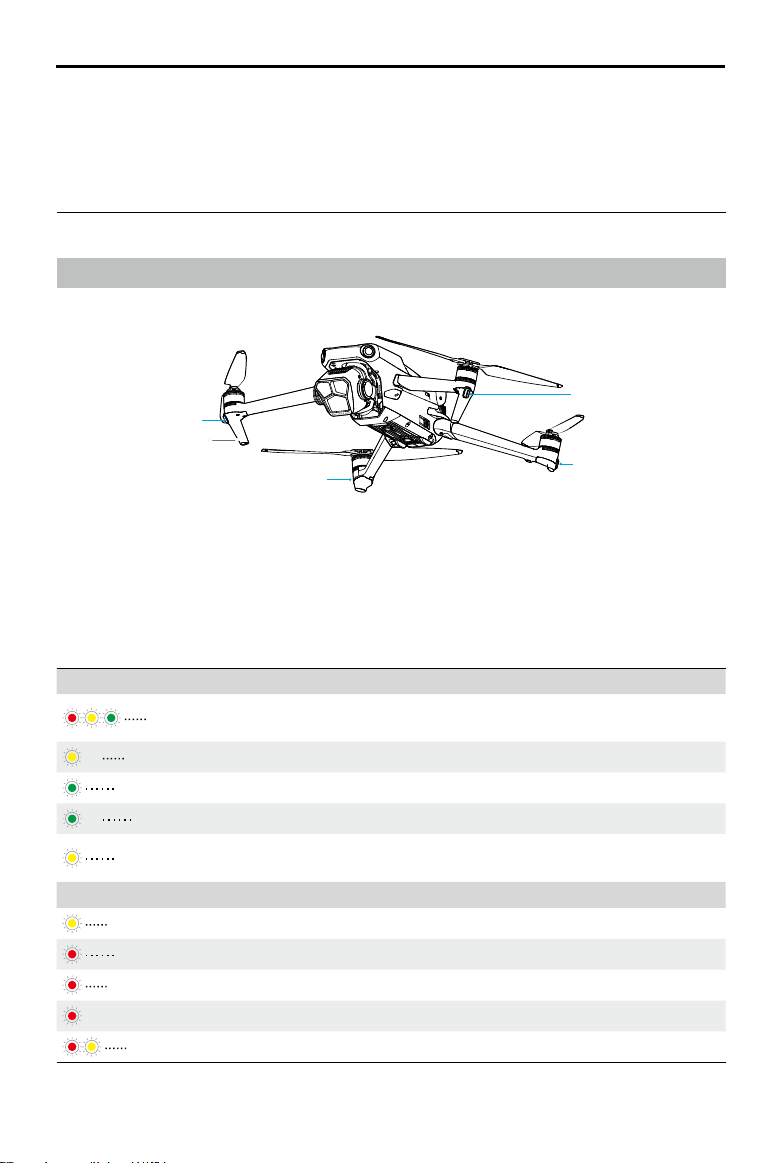
Aircraft Status Indicators
DJI Mavic 3 Pro has front LEDs and aircraft status indicators.
When the aircraft is powered on but the motors are not running, the front LEDs glow solid red
to display the orientation of the aircraft.
When the aircraft is powered on, but the motors are not running, the aircraft status indicators
will display the current status of the ight control system. Refer to the table below for more
information about the aircraft status indicators.
Aircraft Status Indicators Descriptions
Normal States
Blinks red, yellow, and green
alternately
Powering on and performing self-diagnostic
tests
×4 Blinks yellow four times Warming up
Blinks green slowly GNSS enabled
×2 Blinks green twice repeatedly Vision systems enabled
Blinks yellow slowly
GNSS and vision systems disabled (ATTI
mode enabled)
Warning States
Blinks yellow quickly Remote controller signal lost
Blinks red slowly Takeo is disabled, e.g. low battery*
Blinks red quickly Critically low battery
—
Solid red Critical error
Blinks red and yellow alternately Compass calibration required
* If the aircraft cannot takeo while the status indicators are blinking red slowly, launch DJI Fly on the remote
controller to view the details.
Front LED
Aircraft Status Indicator
Front LED
Aircraft Status Indicator
DJI Mavic 3 Pro User Manual
44
©
2023 DJI All Rights Reserved.
After the motors start, the front LEDs blink red and green alternately, and the aircraft status
indicators blink green. The green lights indicate the aircraft is a UAV and the red lights indicate
the heading and position of the aircraft.
• To obtain better footage, the front LEDs turn off automatically when shooting if the
front LEDs are set to auto in DJI Fly. Lighting requirements vary depending on the
region. Observe local laws and regulations.
Return to Home
Return to Home (RTH) brings the aircraft back to the last recorded Home Point when the
positioning system is functioning normally. There are three types of RTH: Smart RTH, Low
Battery RTH, and Failsafe RTH. The aircraft automatically ies back to the Home Point and lands
when Smart RTH is initiated, the aircraft enters Low Battery RTH, or the signal between the
remote controller and the aircraft is lost during ight.
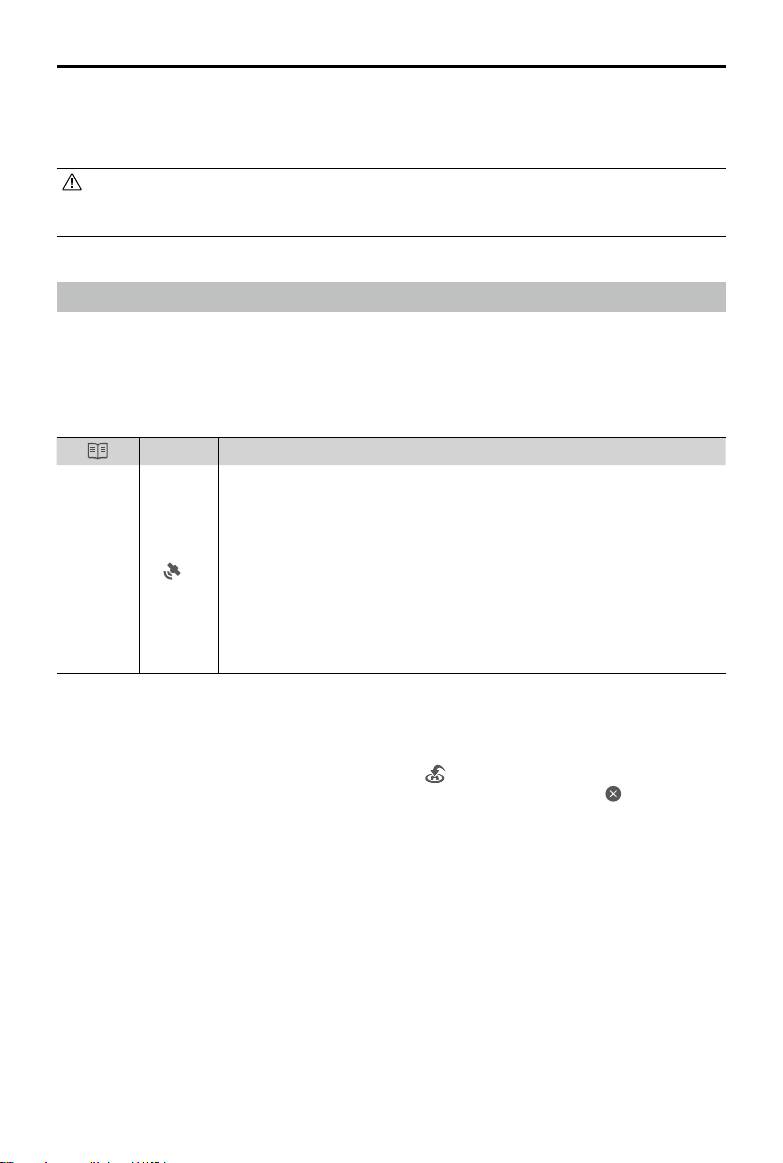
GNSS
Description
Home
Point
10
The first location where the aircraft receives a strong to moderately strong
GNSS signal (indicated by a white icon) will be recorded as the default
Home Point. The Home Point can be updated before takeoff as long as the
aircraft receives another strong to moderately strong GNSS signal. If the
signal is weak, the Home Point will not be updated. After the Home Point is
recorded, a prompt will appear in DJI Fly.
If it is necessary to update the Home Point during a flight (such as where
the position of the user has changed), the Home Point can be manually
updated in Settings > Safety page in DJI Fly.
Smart RTH
If the GNSS signal is suciently strong, Smart RTH can be used to bring the aircraft back to the
Home Point. Smart RTH is initiated either by tapping
in DJI Fly or by pressing and holding the
RTH button on the remote controller until it beeps. Exit Smart RTH by tapping
in DJI Fly or by
pressing the RTH button on the remote controller. After exiting RTH, users will regain control of
the aircraft.
Advanced RTH
Advanced RTH is enabled if the lighting is sucient and the environment is suitable for vision
systems when Smart RTH is triggered. The aircraft will automatically plan the best RTH path,
which will be displayed in DJI Fly and will adjust according to the environment.
RTH Settings
RTH settings are available for Advanced RTH. Go to the camera view in DJI Fly, tap System >
Safety, and then RTH.
1. Optimal: regardless of the RTH Altitude settings, the aircraft automatically plans the optimal
RTH path and adjusts the altitude according to environmental factors such as obstacles
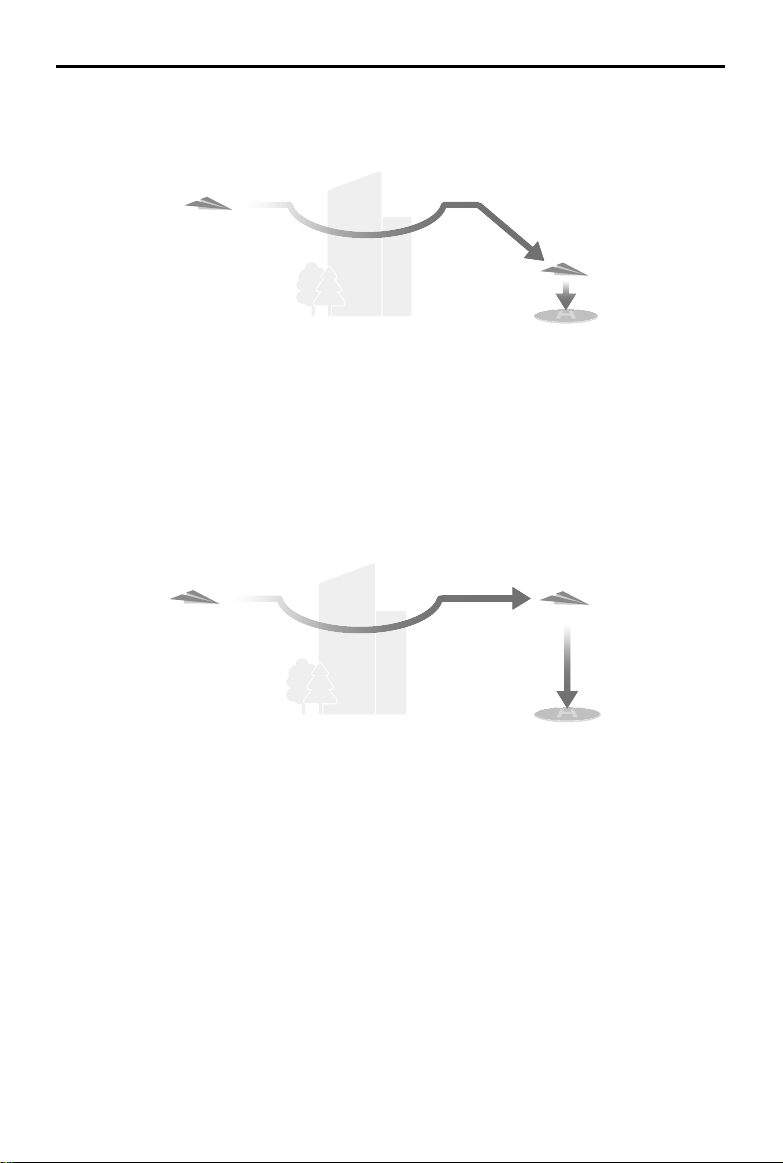
DJI Mavic 3 Pro User Manual
©
2023 DJI All Rights Reserved.
45
and transmission signals. The optimal RTH path means the aircraft will travel the shortest
distance possible, reducing the amount of battery power used and increasing ight time.
2. Preset: if the aircraft is further than 50 m from the Home Point when RTH begins, the aircraft
will plan the RTH path, fly to an open area while avoiding obstacles, ascend to the RTH
Altitude, and return to home using the best path.
When the aircraft is at a distance of 5 to 50 m from the home point when RTH begins, the
aircraft will not ascend to the RTH Altitude and instead return to home using the best path at
the current altitude.
When the aircraft is near the Home Point, the aircraft will descend while ying forward if the
current altitude is higher than the RTH Altitude.
Advanced RTH Procedure
1. The Home Point is recorded.
2. Advanced RTH is triggered.
3. The aircraft brakes and hover in place.
a. The aircraft lands immediately if it is less than 5 m from the Home Point when RTH
begins.
b. If the aircraft is farther than 5 m from the home point when RTH begins, the aircraft will
plan the best path according to the RTH settings and y to the Home Point while sensing
obstacles and avoiding GEO zones. The aircraft front will always point in the same
direction as the ight direction.
4. The aircraft will fly automatically according to the RTH settings, environment, and
transmission signal during RTH.
5. The aircraft lands and the motors stop after reaching the Home Point.

DJI Mavic 3 Pro User Manual
46
©
2023 DJI All Rights Reserved.
Straight Line RTH
The aircraft will enter Straight Line RTH when the lighting is not sucient and the environment
is not suitable for Advanced RTH.
Straight Line RTH Procedure:
1. The Home Point is recorded.
2. Straight Line RTH is triggered.
3. The aircraft brakes and hover in place.
a. If the aircraft is farther than 50 m from the Home Point when RTH begins, the aircraft rst
ascends to a height of 20 m (this step is skipped if the current height is higher than 20 m),
then the aircraft adjusts its orientation and ascends to the preset RTH altitude and ies to
the Home Point. If the current altitude is higher than the RTH altitude, the aircraft will y
to the Home Point at the current altitude.
b. If the aircraft is at a distance of 5 to 50 m from the Home Point when RTH begins, the
aircraft adjusts its orientation and ies to the Home Point at the current altitude. If the
current altitude is lower than 2 m when RTH begins, the aircraft will ascend to 2 m and
ies back to the Home Point.
c. The aircraft lands immediately if it is less than 5 m from the Home Point when RTH
begins.
4. The aircraft lands and the motors stop after reaching the Home Point.
• During Advanced RTH, the aircraft will adjust the flight speed automatically to suit
environmental factors such as wind speed and obstacles.
• The aircraft cannot avoid small or ne objects such as tree branches or power lines. Fly
the aircraft to an open area before using Smart RTH.
• Set Advanced RTH as Preset if there are power lines or towers that the aircraft cannot
avoid on the RTH path and make sure the RTH Altitude is set higher than all obstacles.
• The aircraft will brake and return to home according to the latest settings if the RTH
settings are changed during RTH.
• If the max altitude is set below the current altitude during RTH, the aircraft will descend
to the max altitude and return to home.
• The RTH Altitude cannot be changed during RTH.
• If there is a large dierence in the current altitude and the RTH altitude, the amount
of battery power used cannot be calculated accurately due to wind speeds at dierent
altitudes. Pay extra attention to the battery power and warning prompts in DJI Fly.
• Advanced RTH will not be available if the lighting condition and environment are not
suitable for vision systems during takeo or RTH.
• During Advanced RTH, the aircraft will enter Straight Line RTH if the lighting condition
and environment are not suitable for vision systems and the aircraft cannot sense
obstacles. An appropriate RTH altitude must be set before entering RTH.

DJI Mavic 3 Pro User Manual
©
2023 DJI All Rights Reserved.
47
• When the remote controller signal is normal during Advanced RTH, the pitch stick
can be used to control the flight speed, but the orientation and altitude cannot be
controlled and the aircraft cannot be own left or right. Acceleration uses more power.
The aircraft cannot sense obstacles if the flight speed exceeds the effective sensing
speed. The aircraft will brake and hover in place and exit from RTH if the pitch stick is
pulled all the way down. The aircraft can be controlled after the pitch stick is released.
• If the home point is in the Altitude Zones while the aircraft is outside, the advanced
RTH will y the aircraft below the altitude limit, which may be lower than the set RTH
altitude. Fly with caution.
• When the remote controller signal is normal during Straight Line RTH, the ight speed
and altitude can be controlled using the remote controller, but the orientation of the
aircraft cannot be controlled and the aircraft cannot be own left or right. The aircraft
cannot sense obstacles if the pitch stick is used to accelerate and the flight speed
exceeds the eective sensing speed. When the aircraft is ascending or ying forward,
push the control stick in the opposite direction to exit RTH. Release the control stick to
regain control of the aircraft.
• If the aircraft reaches the max altitude while it is ascending during RTH, the aircraft
stops and returns to the Home Point at the current altitude.
• The aircraft will hover in place if it reaches the max altitude while it is ascending after
detecting obstacles in front of the aircraft.
Low Battery RTH
When the Intelligent Flight Battery level is too low and there is not enough power to return
home, land the aircraft as soon as possible.
To avoid unnecessary danger caused by insucient power, the aircraft automatically calculates
if the battery power is sucient to return to the Home Point according to the current position,
environment, and ight speed. A warning prompt will appear in DJI Fly when the battery level is
low and only enough to complete an RTH ight. The aircraft will automatically y to the Home
Point if no action is taken after a 10-second countdown.
The user can cancel RTH by pressing the RTH button on the remote controller. A low battery
level warning will be prompted only once during a flight. If RTH is canceled following the
warning, the Intelligent Battery may not have enough power for the aircraft to land safely, which
may lead to the aircraft crashing or being lost.
The aircraft will land automatically if the current battery level can only support the aircraft long
enough to descend from its current altitude. Auto landing cannot be canceled, but the remote
controller can be used to alter the horizontal movement and the speed of descent of the aircraft
during landing. If there is sucient power, the throttle stick can be used to make the aircraft
ascend at a speed of 1 m/s.
During auto landing, move the aircraft horizontally to nd an appropriate place to land as soon
as possible. The aircraft will fall if the user keeps pushing the throttle stick upward until the
power is depleted.

DJI Mavic 3 Pro User Manual
48
©
2023 DJI All Rights Reserved.
Failsafe RTH
The action of the aircraft when the remote controller signal is lost can be set to RTH, land,or
hover in Setting > Safety > Advanced Safety Settings in DJI Fly. If the Home Point was successfully
recorded and the compass is functioning normally, Failsafe RTH automatically activates after
the remote controller signal is lost for more than six seconds.
When the lighting is sucient and the vision systems are working normally, DJI Fly will display
the RTH path that was generated by the aircraft before the remote controller signal was lost
using Advanced RTH according to the RTH settings. The aircraft will remain in RTH even if the
remote controller signal is restored. DJI Fly will update the RTH path accordingly.
When the lighting is not sucient and the vision systems are not available, the aircraft will enter
Original Route RTH.
Original Route RTH Procedure:
1. The aircraft brakes and hover in place.
2. a. If the aircraft is farther than 50 m from the Home Point, the aircraft adjusts its orientation
and ies backward for 50 m on its original ight route before entering Straight Line RTH.
b. If the aircraft is farther than 5 m but less than 50 m from the Home Point, it enters
Straight Line RTH.
c. The aircraft lands immediately if it is less than 5 m from the Home Point when RTH
begins.
3. The aircraft lands and the motors stop after reaching the Home Point.
The aircraft will enter or remain in Straight Line RTH if the remote controller signal is restored
during RTH.
• If the RTH is triggered through DJI Fly and the aircraft is farther than 5 m from the Home
Point, a prompt will appear in the app to select a landing option.
• The aircraft may not be able to return to the Home Point normally if the GNSS signal
is weak or unavailable. The aircraft may enter ATTI mode if the GNSS signal becomes
weak or unavailable after entering Failsafe RTH. The aircraft will hover in place for a
while before landing.
• It is important to set a suitable RTH altitude before each ight. Launch DJI Fly and set
the RTH altitude. The default RTH altitude is 100 m.
• The aircraft cannot sense obstacles during Failsafe RTH if the vision systems are
unavailable.
• GEO zones may aect the RTH. Avoid ying near GEO zones.
• The aircraft may not be able to return to the Home Point when the wind speed is too
high. Fly with caution.
• Be aware of small or ne objects (such as tree branches or power lines) or transparent
objects (such as water or glass) during RTH. Exit RTH and control the aircraft manually
in an emergency.
• RTH may not be available in some environments even if the vision systems are working.
The aircraft will exit RTH in such cases.

DJI Mavic 3 Pro User Manual
©
2023 DJI All Rights Reserved.
49
Landing Protection
If the user triggers RTH or auto landing using the remote controller or the app, Landing
Protection will activate during Smart RTH.
Landing Protection is enabled once the aircraft begins to land.
1. During Landing Protection, the aircraft will automatically detect and carefully land on
suitable ground.
2. If the ground is determined unsuitable for landing, the aircraft will hover and wait for pilot
conrmation.
3. If Landing Protection is not operational, DJI Fly will display a landing prompt when the
aircraft descends to 0.5 m from the ground. Tap conrm or push the throttle stick all the way
down and hold for one second, and the aircraft will land.
Precision Landing
The aircraft automatically scans and attempts to match the terrain features below during RTH.
The aircraft will land when the current terrain matches the Home Point. A prompt will appear in
DJI Fly if the terrain match fails.
• Landing Protection is activated during Precision Landing.
• The performance of Precision Landing is subject to the following conditions:
a. The Home Point must be recorded upon takeo and must not be changed during
ight. Otherwise, the aircraft will have no record of the terrain features of the Home
Point.
b. During takeo, the aircraft must ascend at least 7 m before moving horizontally.
c. The Home Point terrain features must remain largely unchanged.
d. The terrain features of the Home Point must be suciently distinctive. Terrain such
as a snow-covered eld is not suitable.
e. The lighting conditions must not be too light or too dark.
• The following actions are available during Precision Landing:
a. Press the throttle stick down to accelerate landing.
b. Move the control sticks in any direction apart from the throttle direction to stop
Precision Landing. The aircraft will descend vertically after the control sticks are
released.
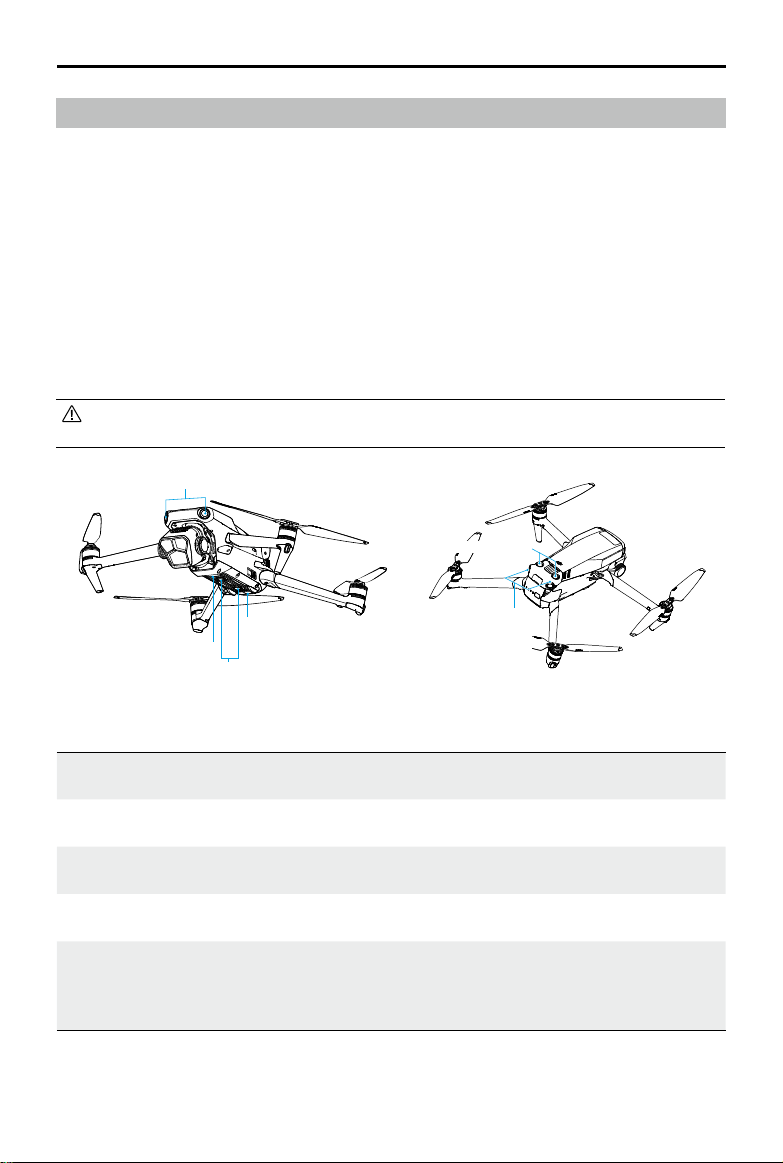
DJI Mavic 3 Pro User Manual
50
©
2023 DJI All Rights Reserved.
Vision Systems and Infrared Sensing System
DJI Mavic 3 Pro is equipped with both an infrared sensing system and horizontal, upward, and
downward vision systems.
The upward and downward vision systems consist of two cameras each, and the forward,
backward, and lateral vision systems consist of four cameras in total.
The infrared sensing system consists of two 3D infrared modules. The downward vision
system and infrared sensing system help the aircraft maintain its current position, hover more
precisely, and y indoors or in other environments where GNSS is unavailable.
The auxiliary light located at the bottom of the aircraft can assist the downward vision system.
It will automatically turn on by default in low-light environments when the flight altitude is
under 5 m. Users can also turn it on or o manually in the DJI Fly app. Each time the aircraft is
restarted, the auxiliary bottom light will revert back to the default setting Auto.
• The auxiliary LED is set to auto when used in the EU and cannot be changed. The
aircraft Front Arm LEDs are always on when used in the EU and cannot be changed.
Detection Range
Forward Vision System Precision Measurement Range: 0.5-20 m; FOV: 90° (horizontal),
103° (vertical)
Backward Vision System Precision Measurement Range: 0.5-16 m; FOV: 90° (horizontal),
103° (vertical)
Lateral Vision System Precision Measurement Range: 0.5-25 m; FOV: 90° (horizontal),
85° (vertical)
Upward Vision System Precision Measurement Range: 0.2-10 m; FOV: 100° (front and
back), 90° (left and right)
Downward Vision System Precision Measurement Range: 0.3-18 m; FOV: 130° (front and
back), 160° (left and right)
The Downward Vision System works best when the aircraft is at
an altitude of 0.5 to 30 m.
Upward Vision System
Horizontal
Omnidirectional
Vision System
Horizontal Omnidirectional Vision System
Infrared Sensing System
Auxiliary Bottom Light
Downward Vision System
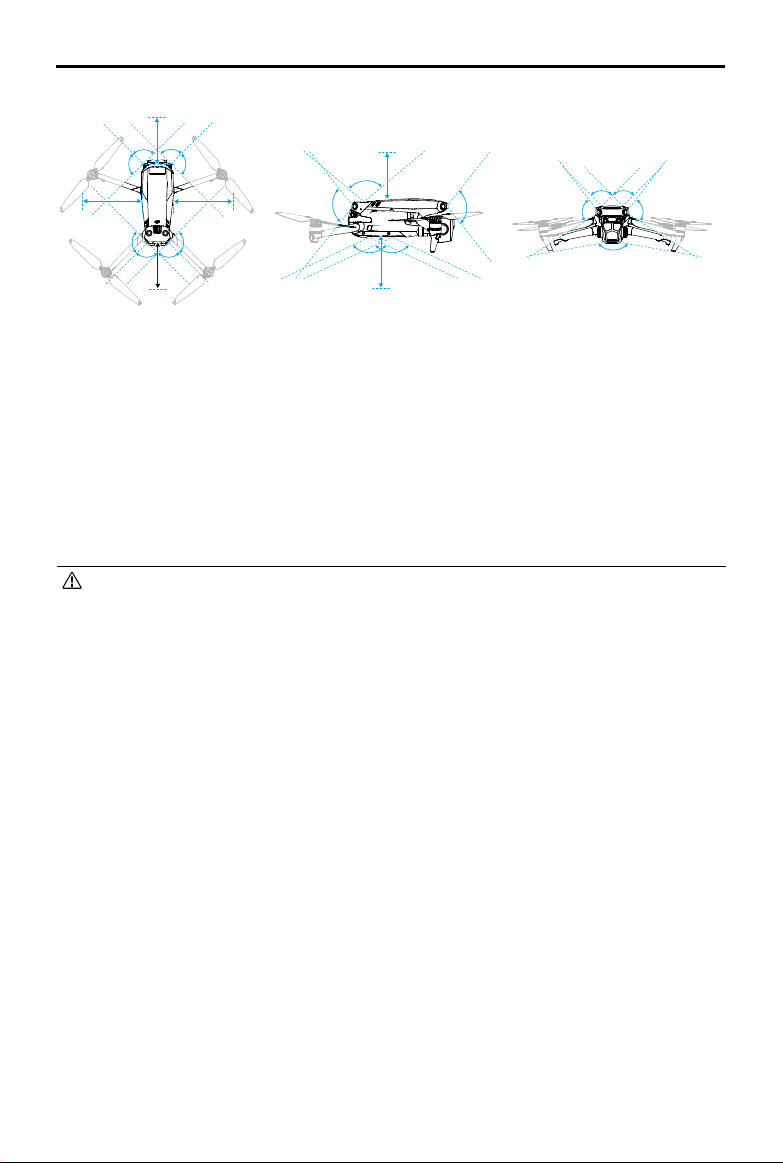
DJI Mavic 3 Pro User Manual
©
2023 DJI All Rights Reserved.
51
90°
90°
90°
90° 90°
90°
90° 90°
0.5-20 m
0.5-16 m
0.5-25 m
0.5-25 m
0.5-30 m
103°
130°130°
100°
103°
0.2-10 m
90°
85°
160°
85°
90°
Using the Vision System
The positioning function of the downward vision system is applicable when GNSS signals are
unavailable or weak. It is automatically enabled in Normal or Cine mode.
The horizontal and upward vision systems will activate automatically when the aircraft is
powered on if the aircraft is in Normal or Cine mode and Obstacle Avoidance is set to Bypass
or Brake in DJI Fly. The aircraft can actively brake when detecting obstacles when using the
horizontal and upward vision systems. The horizontal and upward vision systems work best
with adequate lighting and clearly marked or textured obstacles. Due to inertia, users must
make sure the aircraft brakes within a reasonable distance.
• Pay attention to the ight environment. The vision systems and infrared sensing system
only work in certain scenarios and cannot replace human control and judgment. During
a ight, always pay attention to the surrounding environment and the warnings on DJI
Fly, and be responsible for and maintain control of the aircraft at all times.
• The downward vision system works best when the aircraft is at an altitude from 0.5 to
30 m if there is no GNSS available. Extra caution is required if the altitude of the aircraft
is above 30 m as the vision positioning performance may be aected.
• In low-light environments, the vision systems may not achieve optimal positioning
performance even if the auxiliary bottom light is turned on. Fly with caution if the GNSS
signal is weak in such environments.
• The downward vision system may not work properly when the aircraft is flying near
water. Therefore, the aircraft may not be able to actively avoid water below it when
landing. It is recommended to maintain flight control at all times, make reasonable
judgments based on the surrounding environment, and avoid over-relying on the
downward vision system.
• The vision system cannot work properly near surfaces without clear pattern variations
or where the light is too weak or too strong. The vision system cannot work properly in
the following situations:
a. Flying near monochrome surfaces (e.g., pure black, white, red, or green).
b. Flying near highly reective surfaces.
c. Flying near water or transparent surfaces.
d. Flying near moving surfaces or objects.

DJI Mavic 3 Pro User Manual
52
©
2023 DJI All Rights Reserved.
e. Flying in an area with frequent and drastic lighting changes.
f. Flying near extremely dark (< 10 lux) or bright (> 40,000 lux) surfaces.
g. Flying near surfaces that strongly reect or absorb infrared waves (e.g., mirrors).
h. Flying near surfaces without clear patterns or textures.
i. Flying near surfaces with repeating identical patterns or textures (e.g., tiles with the
same design).
j. Flying near obstacles with small surface areas (e.g., tree branches).
• Keep the sensors clean at all times. DO NOT scratch or tamper with the sensors. DO
NOT use the aircraft in dusty or humid environments.
• Vision system cameras may need to be calibrated after being stored for an extended
period. A prompt will appear in DJI Fly and calibration will be performed automatically.
• DO NOT y when it is rainy, smoggy, or the visibility is lower than 100 m.
• Check the following each time before takeo:
a. Make sure there are no stickers or any other obstructions over the glass of the
infrared sensing systems and vision systems.
b. Use soft cloth if there is any dirt, dust, or water on the glass of the vision systems
and infrared sensing system. DO NOT use any cleaning product that contains
alcohol.
c. Contact DJI Support if there is any damage to the lenses of the infrared sensing and
vision systems.
• DO NOT obstruct the infrared sensing system.

DJI Mavic 3 Pro User Manual
©
2023 DJI All Rights Reserved.
53
Advanced Pilot Assistance Systems (APAS 5.0)
The Advanced Pilot Assistance Systems 5.0 (APAS 5.0) feature is available in Normal mode and
Cine mode. When APAS is enabled, the aircraft will continue to respond to user commands and
plan its path according to both control stick inputs and the ight environment. APAS makes it
easier to avoid obstacles, obtain smoother footage, and provide a better ying experience.
Keep moving the control sticks in any direction. The aircraft will avoid obstacles by ying above,
below, or to the left or right of the obstacle. The aircraft can also respond to the control stick
inputs while avoiding obstacles.
When APAS is enabled, the aircraft can be stopped by pressing the Flight Pause button on the
remote controller. The aircraft brakes and hovers for three seconds and awaits further pilot
commands.
To enable APAS, open DJI Fly, enter Settings > Safety, and enable APAS by selecting Bypass.
Select Normal or Nifty mode when using Bypass. In Nifty mode, the aircraft can fly faster,
smoother, and closer to obstacles obtaining better footage while avoiding obstacles. However,
the risk of crashing into obstacles will increase. Fly with caution.
Nifty mode cannot work normally in the following situations:
1. When aircraft orientation changes rapidly ying near obstacles.
2. When ying through narrow obstacles such as canopies or bushes at high speed.
3. When ying near obstacles that are too small to detect.
4. When ying with the propeller guard.
Landing Protection
Landing Protection will activate if Obstacle Avoidance is set to Bypass or Brake and the user
pulls the throttle stick down to land the aircraft. Landing Protection is enabled once the aircraft
begins to land.
1. During Landing Protection, the aircraft will automatically detect if an area is suitable for
landing, and then land the aircraft.
2. If the ground is determined to be unsuitable for landing, the aircraft will hover when the
aircraft descends to 0.8 m above ground. Pull down on the throttle stick for at least five
seconds, and the aircraft will land without obstacle sensing.
• Make sure to use APAS when the vision systems are available. Make sure there are no
people, animals, objects with small surface areas (e.g., tree branches), or transparent
objects (e.g., glass or water) along the desired ight path.
• Make sure to use APAS when the downward vision systems are available or the GNSS
signal is strong. APAS may not function properly when the aircraft is ying over water or
snow-covered areas.
• Be extra cautious when flying in extremely dark (<300 lux) or bright (>10,000 lux)
environments.
• Pay attention to DJI Fly and make sure APAS is working normally.
• APAS may not function properly when the aircraft is ying near ight limits or in a GEO zone.
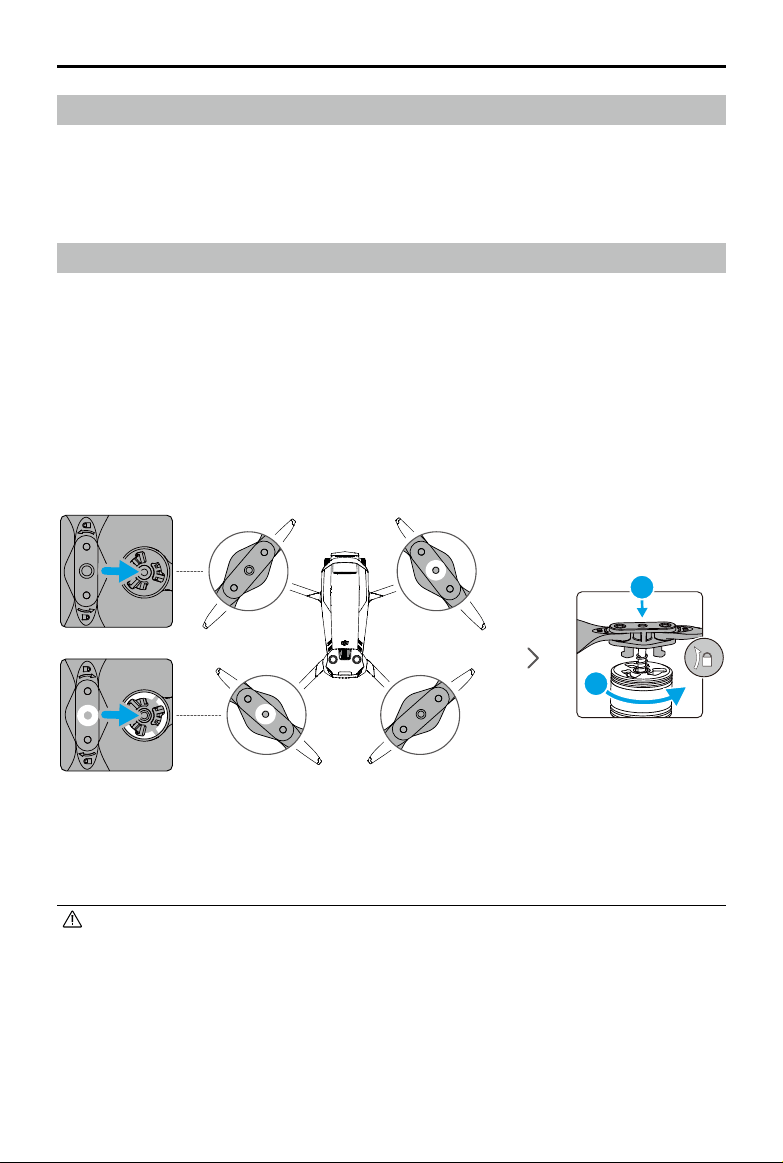
DJI Mavic 3 Pro User Manual
54
©
2023 DJI All Rights Reserved.
Flight Recorder
Flight data, including flight telemetry, aircraft status information, and other parameters, are
automatically saved to the internal data recorder of the aircraft. The data can be accessed using
DJI Assistant 2 (Consumer Drones Series).
Propellers
There are two types of DJI Mavic 3 Pro Quick-Release Propellers designed to spin in dierent
directions. Marks are used to indicate which propellers should be attached to which motors.
Make sure to match the propeller and motor following the instructions.
Attaching the propellers
Attach the propellers with marks to the motors with marks and the unmarked propellers to the
motors without marks. Hold the motor, press the propeller down, and rotate in the direction
marked on the propeller until it pops up and locks in place.
Detaching the propellers
Hold the motor, press the propeller down, and rotate in the opposite direction to the one
marked on the propeller until it pops out.
• The propeller blades are sharp. Handle with care.
• Only use ocial DJI propellers. DO NOT mix propeller types.
• Propellers are consumable components. Purchase additional propellers if necessary.
• Make sure that the propellers and motors are installed securely before each ight.
• Make sure that all propellers are in good condition before each flight. DO NOT use
aged, chipped, or broken propellers.
• To avoid injury, stay away from rotating propellers or motors.
B A
A B
1
2
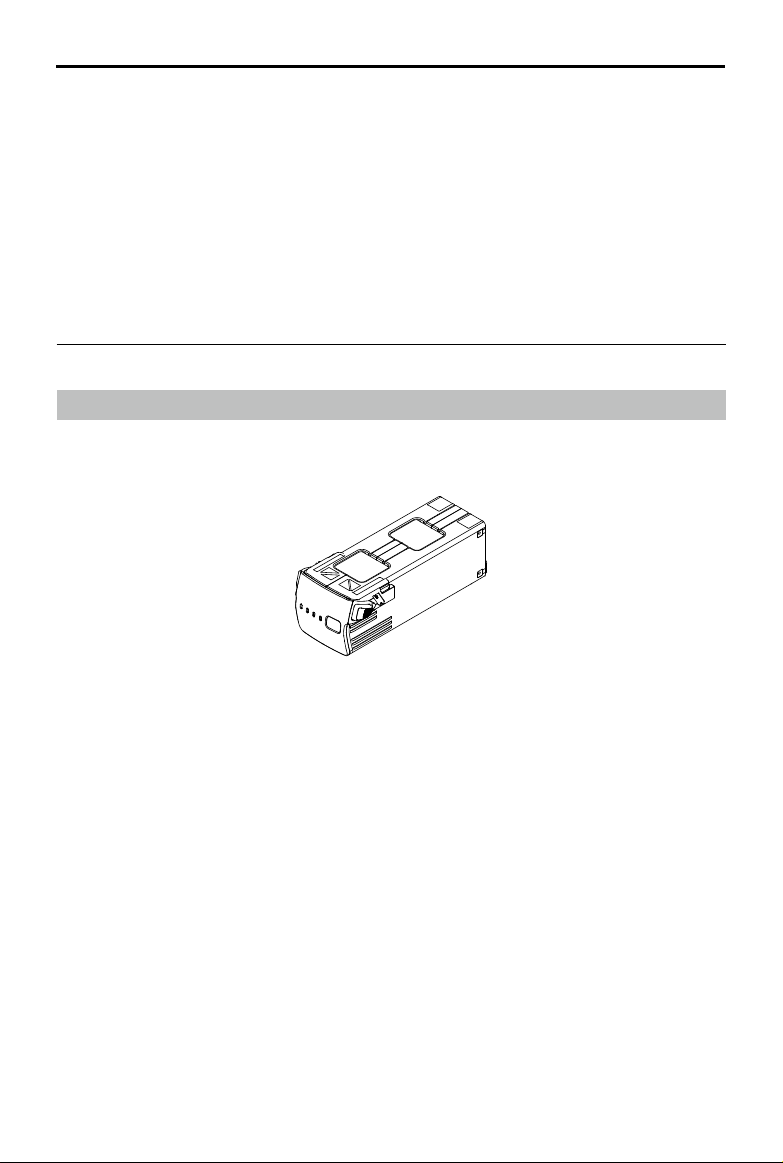
DJI Mavic 3 Pro User Manual
©
2023 DJI All Rights Reserved.
55
• To avoid damaging the propellers, place the aircraft in the direction shown in the
carrying case during transportation or storage. DO NOT squeeze or bend the propellers.
If propellers are damaged, the ight performance may be aected.
• Make sure the motors are mounted securely and rotating smoothly. Land the aircraft
immediately if a motor is stuck and unable to rotate freely.
• DO NOT attempt to modify the structure of the motors.
• DO NOT touch or let hands or body parts come in contact with the motors after ight,
as they may be hot.
• DO NOT block any of the ventilation holes on the motors or the body of the aircraft.
• Make sure the ESCs sound normal when powered on.
Intelligent Flight Battery
The Mavic 3 Intelligent Flight Battery is a 15.4V, 5000mAh battery with smart charging and
discharging functionality.
Battery Features
1. Battery Level Display: the battery level LEDs display the current battery level.
2. Auto-Discharging Function: to prevent swelling, the battery automatically discharges to 96%
of the battery level when it is idle for three days, and automatically discharges to 60% of the
battery level when it is idle for nine days. It is normal to feel moderate heat being emitted
from the battery during the discharging process.
3. Balanced Charging: during charging, the voltages of the battery cells are automatically
balanced.
4. Overcharge Protection: the battery stops charging automatically once fully charged.
5. Temperature Detection: to prevent damage, the battery only charges when the temperature
is between 5° and 40° C (41° and 104° F).
6. Overcurrent Protection: the battery stops charging if an excess current is detected.
7. Over-Discharge Protection: discharging stops automatically to prevent excess discharge
when the battery is not in use. Over-discharge protection is not enabled when the battery is
in use.
8. Short Circuit Protection: the power supply is automatically cut if a short circuit is detected.
9. Battery Cell Damage Protection: the app will display a warning prompt when a damaged
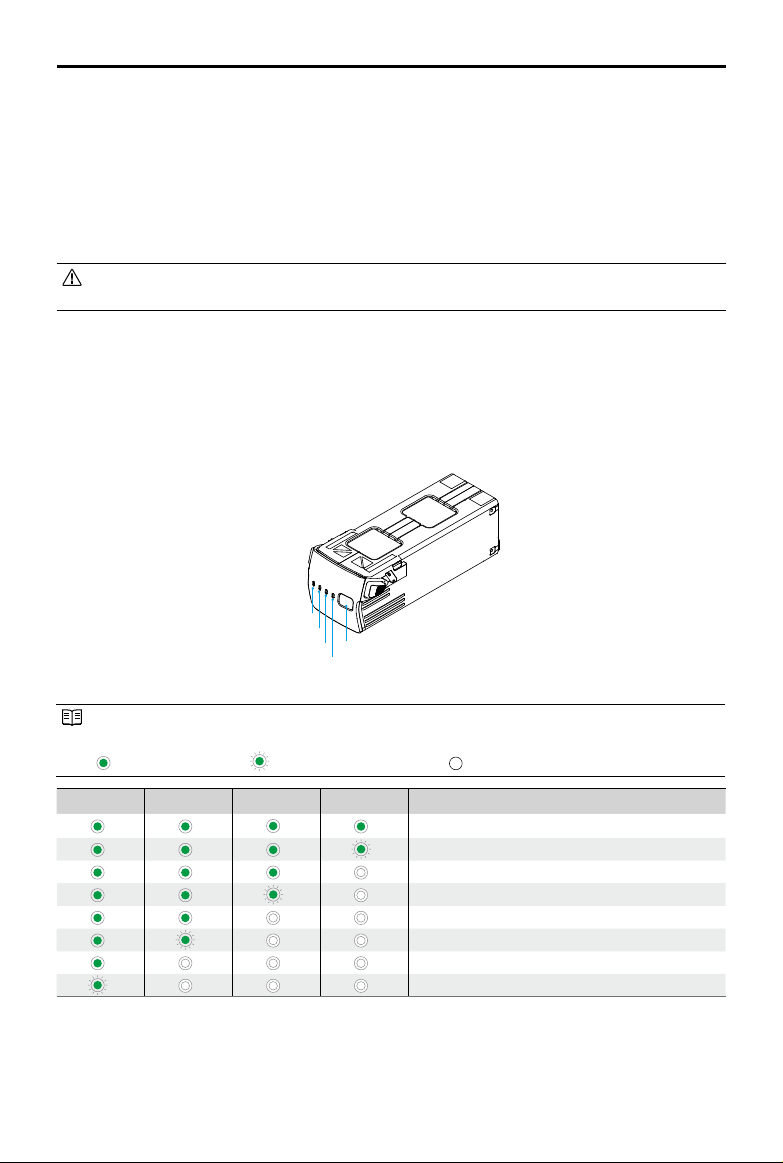
DJI Mavic 3 Pro User Manual
56
©
2023 DJI All Rights Reserved.
LED1
LED2
LED3
LED4
Power Button
The battery level LEDs display the power level of the battery during discharging. The
statuses of the LEDs are dened below:
: LED is on : LED is ashing :
LED is o
LED1 LED2 LED3 LED4 Battery Level
88%-100%
76%-87%
63%-75%
51%-62%
38%-50%
26%-37%
13%-25%
0%-12%
Powering On/O
Press the power button once, then press again, and hold for two seconds to power the battery
on or o. The battery level LEDs display the battery level when the aircraft is powered on.
battery cell is detected.
10. Hibernation Mode: the battery switches o after 20 minutes of inactivity to save power. If
the battery level is less than 5%, the battery will enter Hibernation mode after six hours to
prevent over-discharge. In Hibernation mode, the battery level indicators do not illuminate.
Charge the battery to wake it from hibernation.
11. Communication: information about the voltage, capacity, and current of the battery is
transmitted to the aircraft.
• Refer to the Safety Guidelines and the stickers on the battery before use. Users shall
take full responsibility for all operations and usage.
Using the Battery
Checking the Battery Level
Press the power button once to check the battery level.
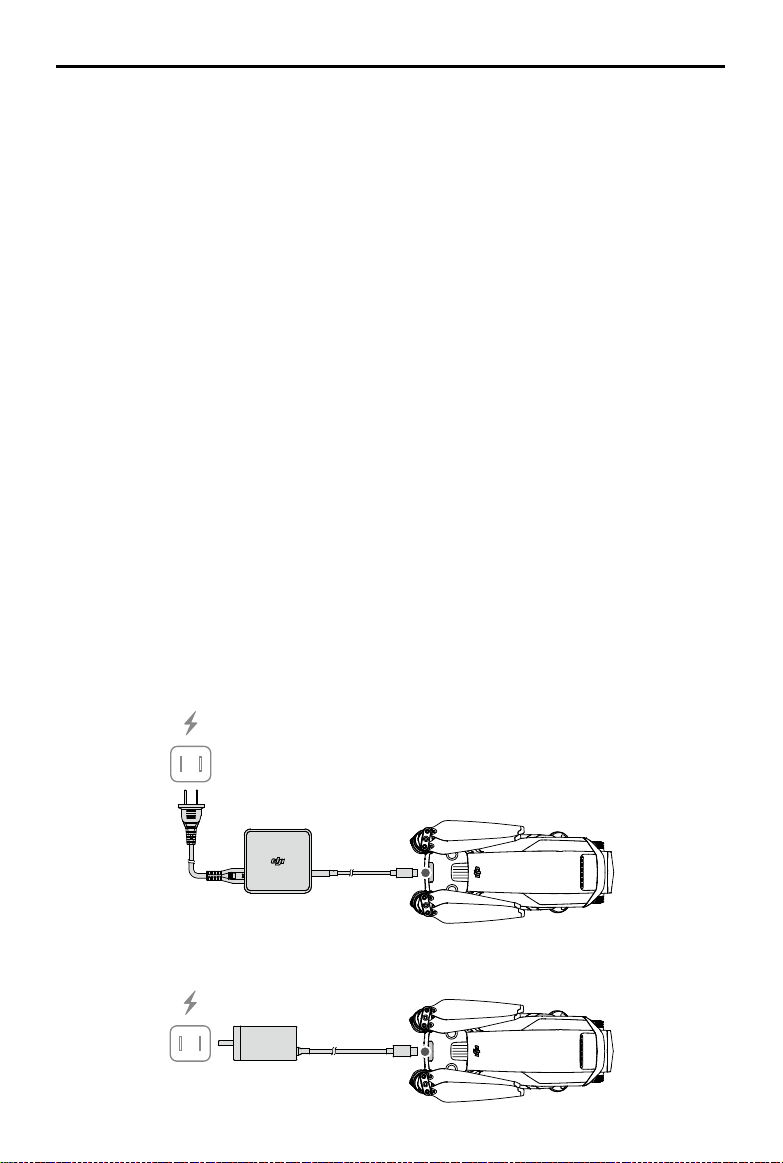
DJI Mavic 3 Pro User Manual
©
2023 DJI All Rights Reserved.
57
Low-Temperature Notice
1. Battery capacity is signicantly reduced when ying at low temperatures from -10° to 5° C
(14° to 41° F). It is recommended to hover the aircraft in place for a while to heat the battery.
Make sure to fully charge the battery before takeo.
2. Batteries cannot be used in extremely low-temperature environments of lower than -10° C (14° F).
3. When in low-temperature environments, end the ight as soon as DJI Fly displays the low
battery level warning.
4. To ensure optimal performance, keep the battery temperature above 20° C (68° F).
5. The reduced battery capacity in low-temperature environments reduces the wind speed
resistance performance of the aircraft. Fly with caution.
6. Take extra caution when at high altitudes.
Charging the Battery
Fully charge the battery before each use. It is recommended to use the charging devices
provided by DJI, such as the DJI 100W USB-C Power Adapter, DJI 65W Portable Charger, or other
USB Power Delivery chargers.
Using A Charger
1. Connect the charger to an AC power supply (100-240V, 50/60 Hz; use a power cable with
suitable specications for charging, and use a power adapter if necessary).
2. Attach the aircraft to the charger using the battery charging cable with the battery powered o.
3. The battery level LEDs display the current battery level during charging.
4. The Intelligent Flight Battery is fully charged when all the battery level LEDs are o. Detach
the charger when the battery is fully charged.
OR
100W
65W
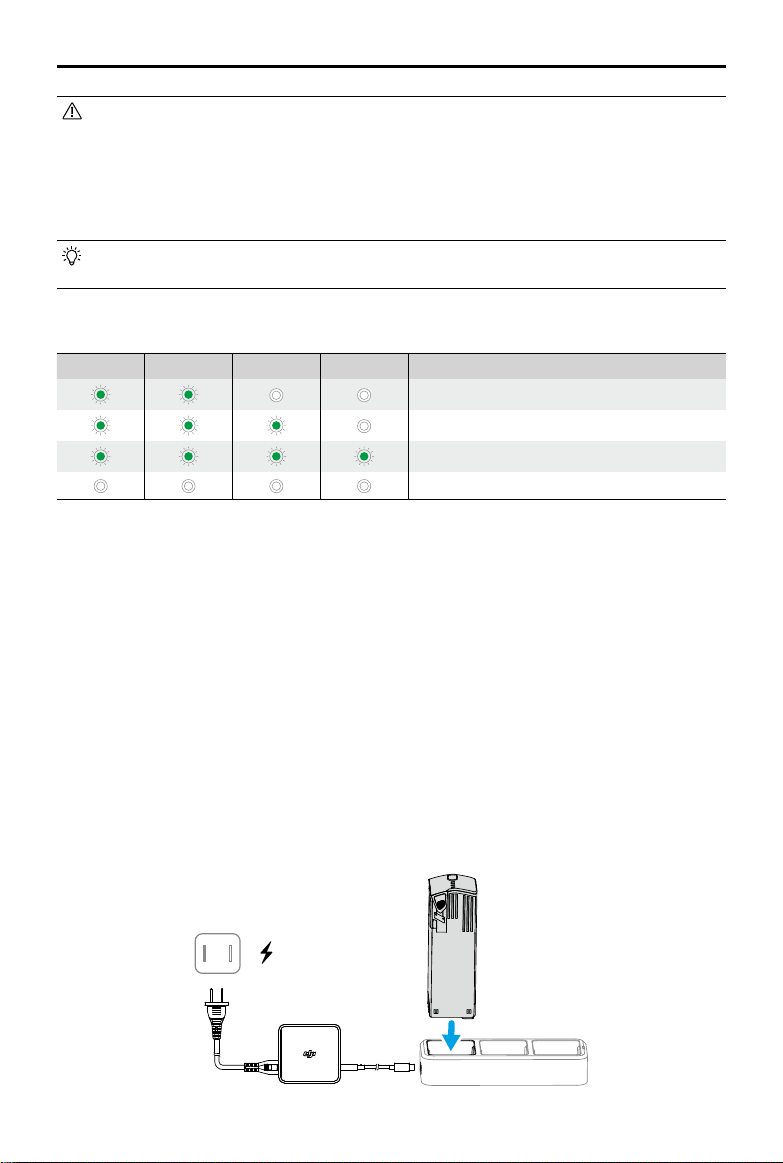
DJI Mavic 3 Pro User Manual
58
©
2023 DJI All Rights Reserved.
• DO NOT charge an Intelligent Flight Battery immediately after ight as it may be too hot.
Wait for the battery to cool down to the operating temperature before charging again.
• The charger stops charging the battery if the battery cell temperature is not within the
operating range of 5° to 40° C (41° to 104° F). The ideal charging temperature is from
22° to 28° C (71.6° to 82.4° F).
• Fully charge the battery at least once every three months to maintain battery health.
• For safety purposes, keep the batteries at a low power level in transit. Before
transportation, it is recommended to discharge the batteries to 30% or lower.
The table below shows the battery level during charging.
LED1 LED2 LED3 LED4 Battery Level
0%-50%
51%-75%
76%-99%
100%
Using the Charging Hub
DJI Mavic 3 Series 100W Battery Charging Hub is designed for use with Mavic 3 Intelligent
Flight Batteries. When used with the DJI 100W USB-C Power Adapter, it can charge up to three
Intelligent Flight Batteries in sequence from high to low power level. The charging time for one
battery is approximately 1 hour and 10 minutes.
How to Charge
1. Insert the Intelligent Flight Battery into the battery port. Connect the charging hub to a
power outlet (100-240 V, 50-60 Hz) using the DJI 100W USB-C Power Adapter.
2. The Intelligent Flight Battery with the highest power level will be charged rst, and then the rest
will be charged in sequence according to their power levels. Refer to the Status LED Indicator
Descriptions for more information about the blinking patterns of the status LED indicator.
3. The Intelligent Flight Battery can be disconnected from the charging hub when charging is
complete.
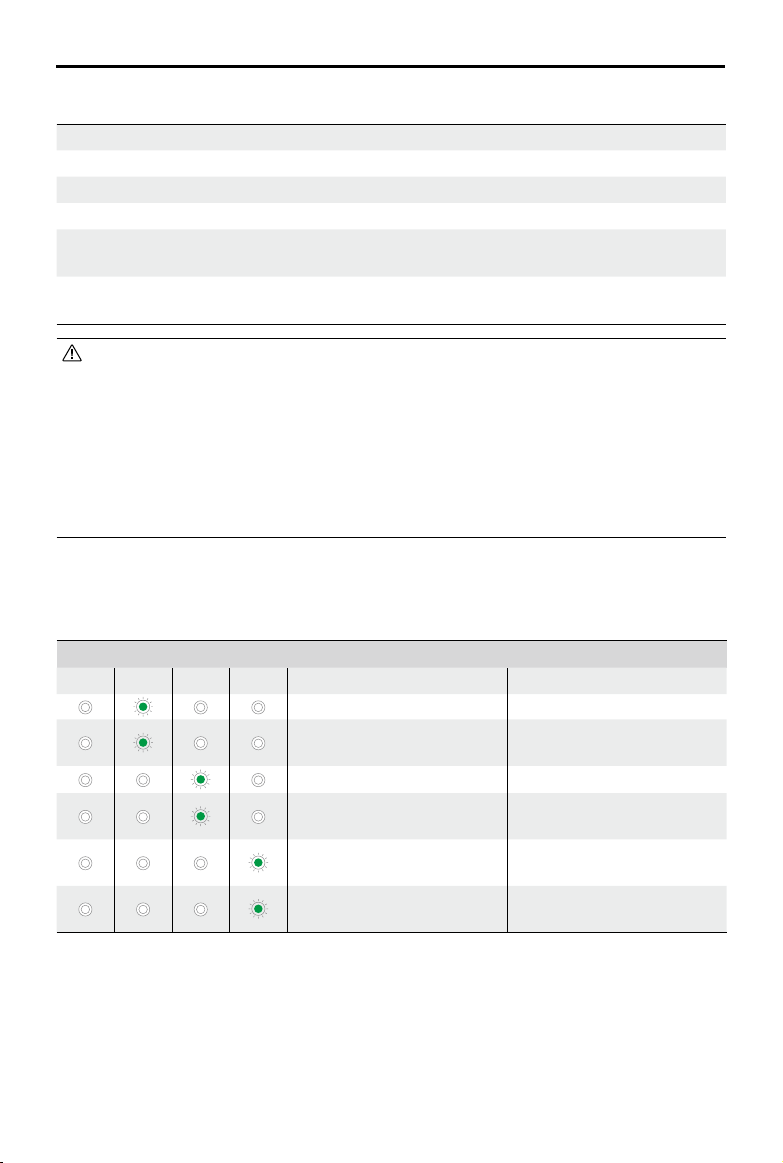
DJI Mavic 3 Pro User Manual
©
2023 DJI All Rights Reserved.
59
Status LED Indicator Descriptions
Blinking Pattern Description
Solid yellow No battery is inserted.
Pulses green Charging
Solid green All batteries fully charged
Blinks yellow Temperature of batteries too low or too high (no further operation
needed)
Solid red Power supply or battery error (remove and reinsert the batteries or
unplug and plug in the charger)
• It is recommended to use a DJI 100W USB-C Power Adapter when using the charging
hub to charge Mavic 3 Intelligent Flight Batteries.
• The charging hub is only compatible with BWX260-5000-15.4 Intelligent Flight Batteries.
DO NOT attempt to use the charging hub with other battery models.
• Place the charging hub on a at and stable surface when in use. Make sure the device is
properly insulated to prevent re hazards.
• DO NOT attempt to touch the metal terminals on the battery ports.
• Clean the metal terminals with a clean, dry cloth if there is any noticeable buildup.
Battery Protection Mechanisms
The battery level LEDs can display battery protection notifications triggered by abnormal
charging conditions.
Battery Protection Mechanisms
LED1 LED2 LED3 LED4 Blinking Pattern Status
LED2 blinks twice per second Overcurrent detected
LED2 blinks three times per
second
Short circuit detected
LED3 blinks twice per second Overcharge detected
LED3 blinks three times per
second
Over-voltage charger detected
LED4 blinks twice per second
Charging temperature is too
low
LED4 blinks three times per
second
Charging temperature is too
high
If any of the battery protection mechanisms are activated, unplug the charger, and plug it in
again to resume charging. If the charging temperature is abnormal, wait for it to return to
normal. The battery will automatically resume charging without the need to unplug and plug
the charger again.
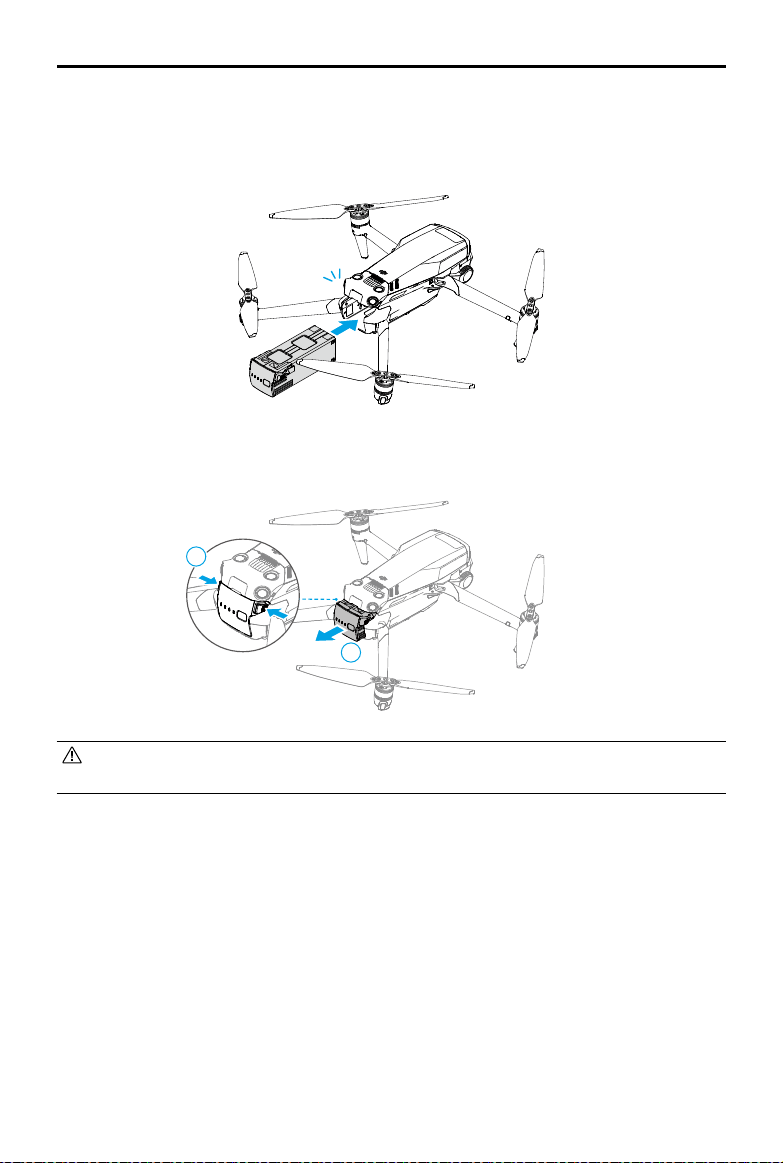
DJI Mavic 3 Pro User Manual
60
©
2023 DJI All Rights Reserved.
Inserting/Removing the Battery
Insert the Intelligent Flight Battery into the battery compartment of the aircraft. Make sure it is
mounted securely and that the battery buckles are clicked into place.
Click
Press and hold the textured part of the battery buckles on the sides of the battery to remove it
from the compartment.
1
2
• DO NOT insert or remove the battery while the aircraft is powered on.
• Make sure the battery is mounted securely.
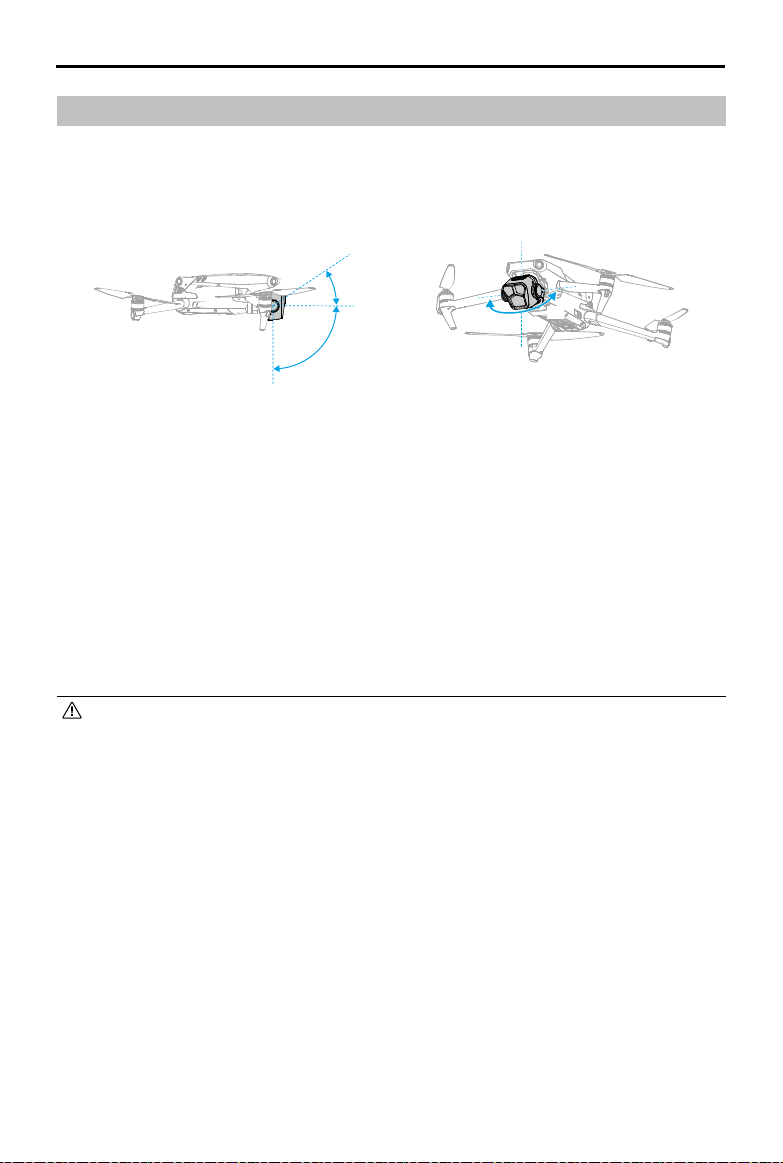
DJI Mavic 3 Pro User Manual
©
2023 DJI All Rights Reserved.
61
Gimbal and Camera
Gimbal Prole
The 3-axis gimbal provides stabilization for the camera, allowing you to capture clear and stable
images and video. The control tilt range is -90° to +35° and the control pan range is -5° to +5°.
Use the gimbal dial on the remote controller to control the tilt of the camera. Alternatively, do
so through the camera view in DJI Fly. Press and hold the screen until the camera adjustment
bar appears. Drag the bar up or down to control the tilt and left or right to control the pan.
Gimbal Operation Modes
Two gimbal operation modes are available. Switch between the operation modes in Settings >
Control in DJI Fly.
Follow Mode: the angle of the gimbal remains stable relative to the horizontal plane. Users can
adjust the gimbal tilt. This mode is suitable for shooting stills.
FPV Mode: when the aircraft is ying forward, the gimbal synchronizes with the movement of
the aircraft to provide a rst-person ying experience.
• DO NOT tap or knock the gimbal after the aircraft is powered on. Launch the aircraft
from open and at ground to protect the gimbal during takeo.
• After installing the wide-angle lens, make sure the gimbal is level and forward before
takeo, so that the aircraft can correctly detect the installation status of the Wide-Angle
Lens. The gimbal will be level when the aircraft is powered on, if the gimbal rotates,
recenter the gimbal using the remote controller or DJI Fly, as follows:
a. Tap Recenter Gimbal on the Settings > Control page of DJI Fly.
b. Press the Customizable C1 Button on the remote controller (the default function
recenters the gimbal and points the gimbal downward, this can be customized).
• Pano and Asteroid functions will not be available after the Wide-Angle Lens is installed.
• Precision elements in the gimbal may be damaged by a collision or impact, which may
cause the gimbal to function abnormally.
• Avoid getting dust or sand on the gimbal, especially in the gimbal motors.
• A gimbal motor may enter protection mode in the following situations: a. The aircraft
is on uneven ground, and the gimbal is obstructed. b. The gimbal experiences an
excessive external force, such as during a collision.
-5°
5°
-90°
0°
35°
DJI Mavic 3 Pro User Manual
62
©
2023 DJI All Rights Reserved.
• DO NOT apply external force to the gimbal after the gimbal is powered on. DO NOT add
any extra payload other than an ocial accessory to the gimbal, as this may cause the
gimbal to function abnormally or lead to permanent motor damage.
• Remove the gimbal protector before powering on the aircraft. Attach the gimbal
protector when the aircraft is not in use.
• Flying in heavy fog or clouds may make the gimbal wet, leading to temporary failure.
The gimbal will recover full functionality once it is dry.
Camera Prole
DJI Mavic 3 Pro is equipped with 3 cameras, capable of switching freely between dierent focal
lengths to adapt to the shooting composition of various scenes.
DJI Mavic 3 Pro uses a 4/3 CMOS sensor Hasselblad L2D-20c camera, which can take 20MP
photos and record at 5.1K 50fps/DCI 4K 120fps Apple ProRes 422 HQ, Apple ProRes 422, Apple
ProRes 422 LT and H.264/H.265 format videos. The camera also supports 10-bit D-Log video,
has a dynamic range of 12.8 stops and an adjustable aperture of f/2.8 to f/11. The equivalent
focal length is 24 mm and shoots from 1 m to innity.
The medium tele camera boasts a 1/1.3-in CMOS sensor, with an aperture of f/2.8, 3x optical
zoom and up to 7x digital zoom. It can take 48MP photos and 4K 60fps videos. The equivalent
focal length is 70 mm and shoots from 3 m to innity.
The tele camera boasts a 1/2-in CMOS sensor, with an aperture of f/3.4 and 7x optical zoom. It
can take 12MP photos and 4K 60fps videos. The equivalent focal length is 166 mm and shoot
from 3 m to innity. When in Explore mode, the tele camera can zoom at 28x.
• Make sure the temperature and humidity are within suitable ranges for the camera
during use and storage.
• Use a lens cleanser to clean the lens to avoid damage or poor image quality.
• DO NOT block any ventilation holes on the camera as the heat generated may damage
the device or injure the user.
• Only the DJI Mavic 3 Pro Cine supports the recording and storing of Apple ProRes 422
HQ, Apple ProRes 422, and Apple ProRes 422 LT video.
• Mavic 3 Pro uses SmartPhoto mode by default in Single Shot, which integrates features
such as scene recognition or HDR for optimal results. SmartPhoto needs to take
multiple shots continuously for image synthesis. When the aircraft is moving or using
the medium tele camera at 48MP resolution, SmartPhoto will not be supported, and the
photo performance will dier.
• The cameras may not focus correctly in the following situations:
a. Shooting dark objects far away.
b. Shooting objects with repeating identical patterns and textures or without clear
patterns and textures.
c. Shooting shiny or reective objects (such as street lighting and glass).
d. Shooting ashing objects.
e. Shooting fast-moving objects.
f. When the aircraft/gimbal is moving fast.
g. Shooting objects with varying distances in the focus range.
DJI Mavic 3 Pro User Manual
©
2023 DJI All Rights Reserved.
63
Storing and Exporting Photos and Videos
Storing Photos and Videos
DJI Mavic 3 Pro has 8GB of built-in storage and supports the use of a microSD card to store
photos and videos. A SDXC, or UHS-I microSD card is required due to the fast read and write
speeds necessary for high-resolution video data. Refer to the Specications section for more
information about recommended microSD cards.
In addition, DJI Mavic 3 Pro Cine aircraft comes with a built-in 1TB SSD. The footage can be
output quickly via the DJI 10Gbps Lightspeed Data Cable.
Exporting Photos and Videos
Use QuickTransfer to export the footage to a mobile phone. Connect the aircraft to a computer
or use a card reader to export the footage to a computer.
• DO NOT remove the microSD card from the aircraft when taking photos or videos.
Otherwise, the microSD card may be damaged.
• To ensure the stability of the camera system, single video recordings are limited to 30
minutes.
• Check camera settings before use to ensure they are congured correctly.
• Before shooting important photos or videos, shoot a few images to test whether the
camera is operating correctly.
• Photos and videos cannot be transmitted or copied from the camera if the aircraft is
powered o.
• Make sure to power o the aircraft correctly. Otherwise, the camera parameters will
not be saved, and any recorded videos may be aected. DJI is not responsible for any
loss caused by an image or video recorded in a way that is not machine-readable.
QuickTransfer
DJI Mavic 3 Pro can connect directly to mobile devices via Wi-Fi, enabling users to download
photos and videos from the aircraft to the mobile device through DJI Fly without using the
remote controller. Users can enjoy faster and more convenient downloads with a transmission
rate of up to 80 MB/s.
Usage
1. Power on the aircraft and wait until the self-diagnostic tests of the aircraft are complete.
2. Make sure Bluetooth and Wi-Fi are enabled on the mobile device. Launch DJI Fly and a
prompt will appear to connect to the aircraft.
3. Tap Connect. Once successfully connected, the files on the aircraft can be accessed and
downloaded at high speed. When connecting the mobile device to the aircraft for the rst
time, press and hold the power button of the aircraft for two seconds to conrm.

DJI Mavic 3 Pro User Manual
64
©
2023 DJI All Rights Reserved.
• The maximum download rate can only be achieved in countries and regions where
the 5.8 GHz frequency is permitted by local laws and regulations. To achieve the
maximum download rate, the device must support a 5.8 GHz frequency band and
Wi-Fi 6 connection, and the footage must be using the internal storage of aircraft in
an environment without interference or obstruction. If 5.8 GHz is not allowed by local
regulations (such as in Japan), or the mobile device of the user does not support the
5.8 GHz frequency band, then QuickTransfer will use the 2.4 GHz frequency band and
its maximum download rate will reduce to 10 MB/s.
• Make sure that Bluetooth, Wi-Fi, and location services are enabled on the mobile device
before using QuickTransfer.
• When using QuickTransfer, it is not necessary to enter the Wi-Fi password on the
settings page of the mobile device in order to connect. Launch DJI Fly and a prompt will
appear to connect the aircraft.
• Use QuickTransfer in an unobstructed environment with no interference and stay
away from sources of interference such as wireless routers, Bluetooth speakers, or
headphones.

©
2023 DJI All Rights Reserved.
65
Remote Controller
This section describes the features of
the remote controller and includes
instructions for controlling the aircraft
and the camera.
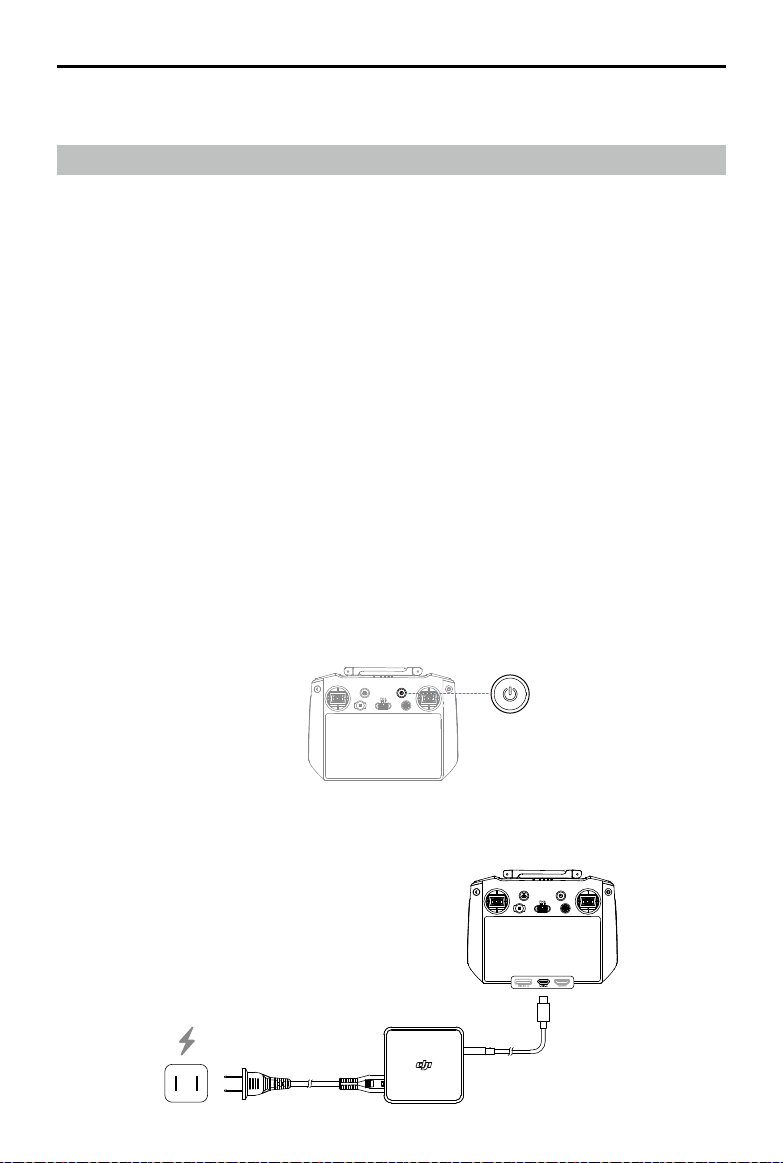
DJI Mavic 3 Pro User Manual
66
©
2023 DJI All Rights Reserved.
Remote Controller
DJI RC Pro
The DJI RC Pro remote controller features O3+, works at both 2.4 GHz and 5.8 GHz, is capable of
selecting the best transmission channel automatically, and can transmit a live HD view from the
camera of the aircraft at a distance of up to 15 km (compliant with FCC standards, measured in
a wide open area without interference). The built-in 5.5-in high brightness 1000 cd/m
2
screen
boasts a resolution of 1920×1080 pixels while the remote controller comes with a wide range
of aircraft and gimbal controls as well as customizable buttons. Users can connect to the
internet via Wi-Fi and the Android 10 operating system comes with a variety of functions such
as Bluetooth and GNSS (GPS+GLONASS+Galileo).
With the built-in speaker, the remote controller supports H.264 4K/120fps and H.265 4K/120fps
video, which also supports video output via the Mini HDMI port. The internal storage of the
remote controller is 32 GB and also supports the use of microSD cards to store the photos and
videos.
The 5000mAh 36Wh battery provides the remote controller with a maximum operating time of
three hours.
Operation
Powering On/O
Press the power button once to check the current battery level.
Press, then press and hold the power button to power the remote controller on or o.
Charging the Battery
Use a USB-C cable to connect the charger to the USB-C port of the remote controller.
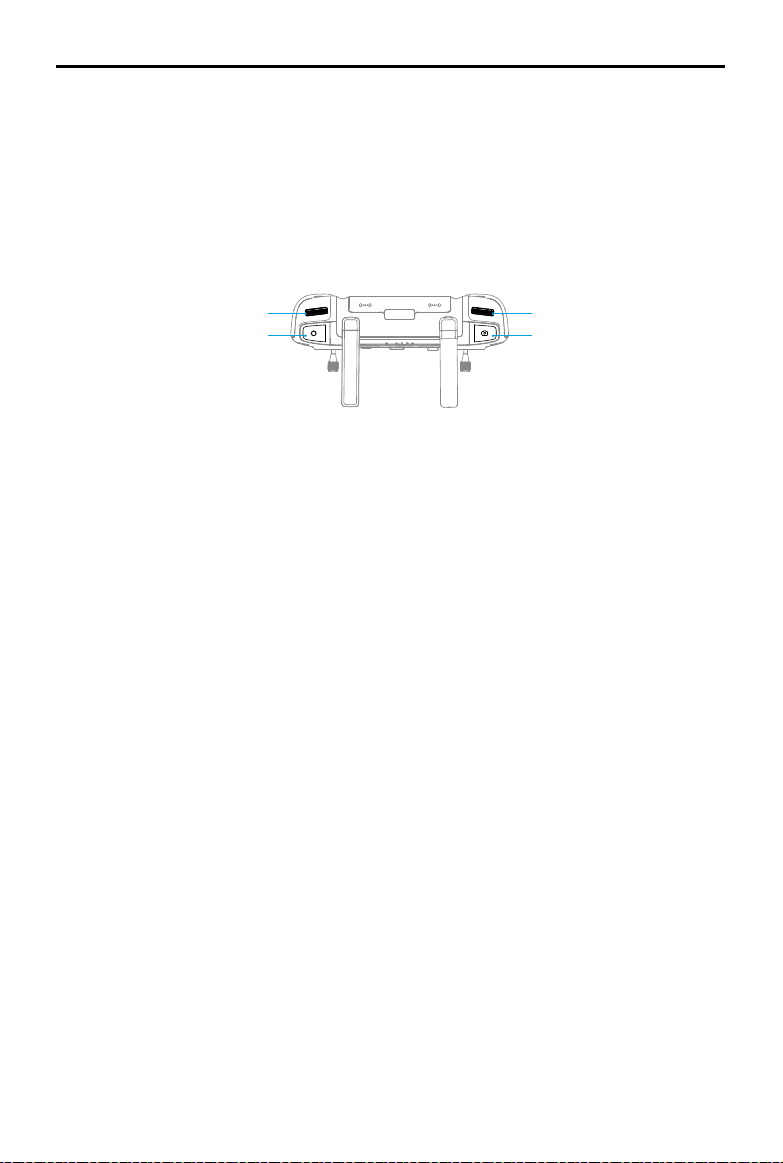
DJI Mavic 3 Pro User Manual
©
2023 DJI All Rights Reserved.
67
Controlling the Gimbal and Camera
Focus/Shutter Button: press halfway down to auto-focus, and press all the way down to take a
photo.
Record Button: press once to start or stop recording.
Camera Control Dial: use to adjust the zoom by default. The dial function can be set to adjust
the focal length, EV, aperture, shutter speed, and ISO.
Gimbal Dial: control the tilt of the gimbal.
Gimbal Dial
Record Button Focus/Shutter Button
Camera Control Dial
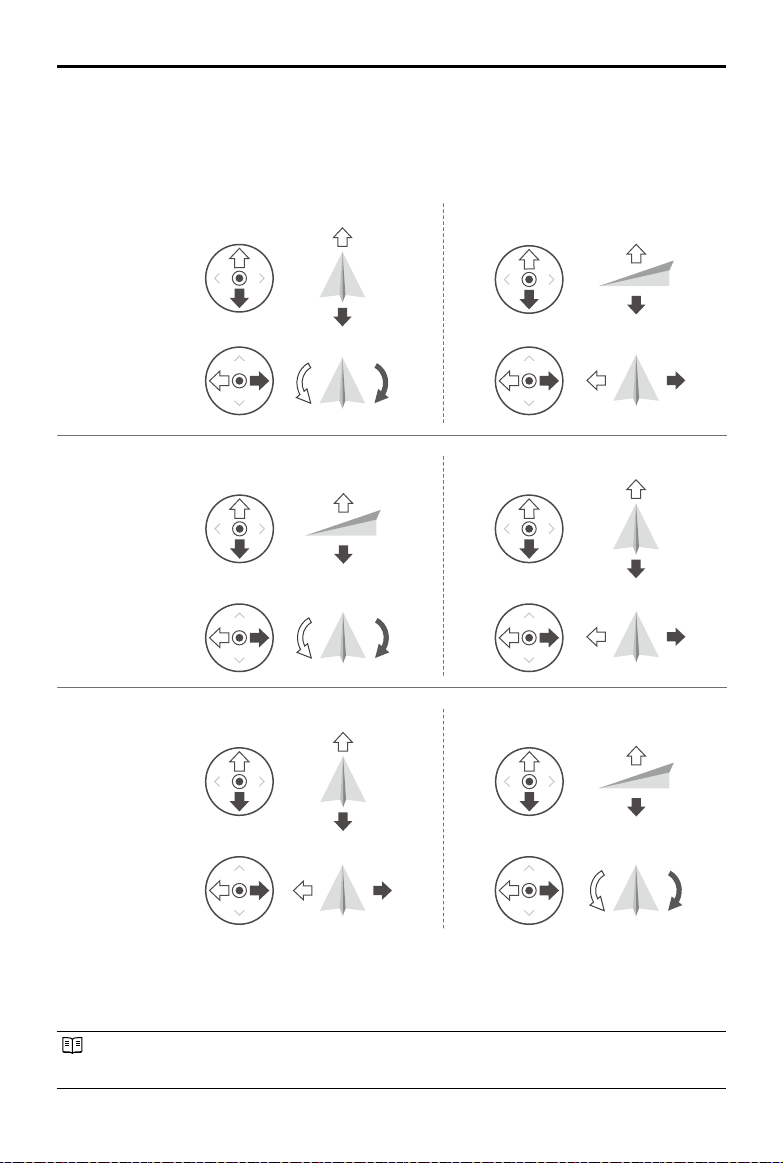
DJI Mavic 3 Pro User Manual
68
©
2023 DJI All Rights Reserved.
Controlling the Aircraft
Three preprogrammed modes (Mode 1, Mode 2, and Mode 3) are available and custom modes
can be congured in the DJI Fly app.
Up
Down
Turn RightTurn Left
RightLeft
Forward
Backward
Left Stick Right Stick
Right Stick
Left Stick
Turn RightTurn Left
Up
Down
RightLeft
Forward
Backward
Right Stick
Up
Down
Forward
Backward
Left Stick
Turn RightTurn Left
RightLeft
Mode 1
Mode 2
Mode 3
The default control mode of the remote controller is Mode 2. In this manual, Mode 2 is used as
an example to illustrate how to use the control sticks.
• Stick Neutral/Center Point: control sticks are in the center.
• Moving the control stick: the control stick is pushed away from the center position.
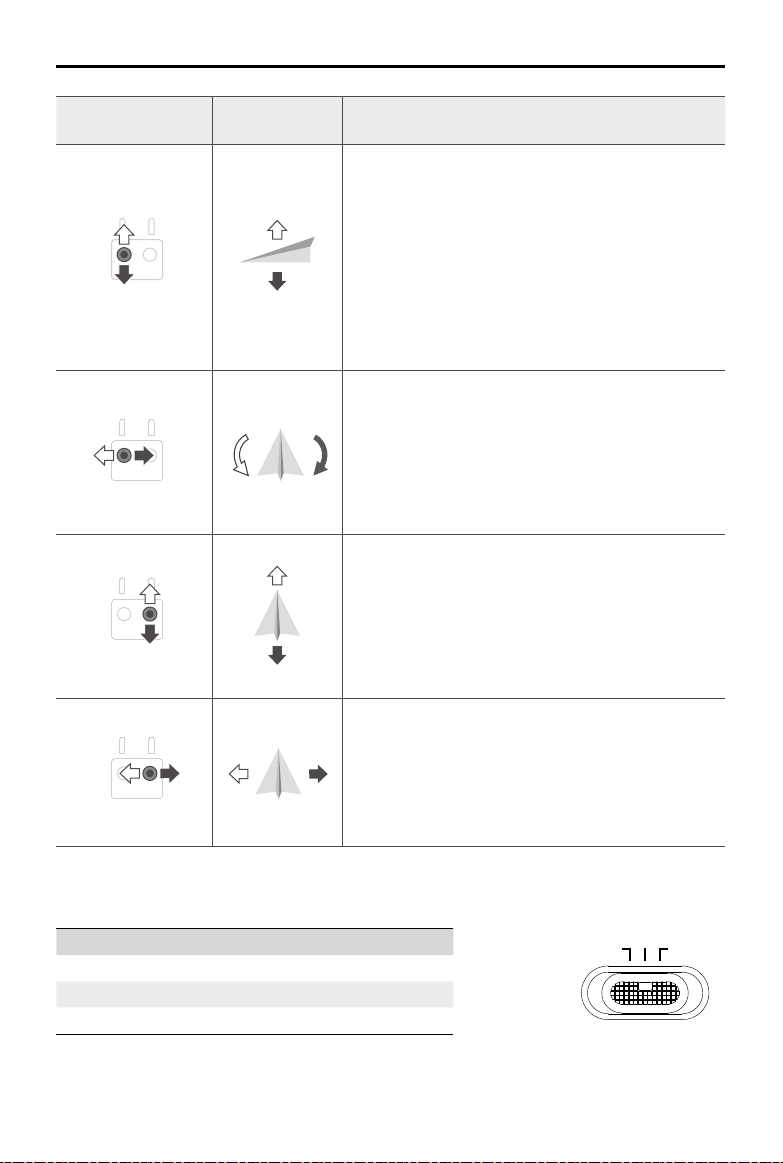
DJI Mavic 3 Pro User Manual
©
2023 DJI All Rights Reserved.
69
Remote Controller
(Mode 2)
Aircraft Remarks
Throttle Stick: moving the left stick up or down
changes the altitude of the aircraft.
Push the stick up to ascend and push down to
descend. The aircraft hovers in place if the stick is
in the center. Use the left stick to take o when the
motors are spinning at an idle speed.
The more the stick is pushed away from the center,
the faster the aircraft changes elevation. Push the
stick gently to prevent sudden and unexpected
changes in altitude.
Yaw Stick: moving the left stick to the left or right
controls the orientation of the aircraft.
Push the stick left to rotate the aircraft counterclockwise
and right to rotate the aircraft clockwise. The aircraft
hovers in place if the stick is in the center.
The more the stick is pushed away from the center, the
faster the aircraft rotates.
Pitch Stick: moving the right stick up and down to
change the pitch of the aircraft.
Push the stick up to fly forward and down to fly
backward. The aircraft hovers in place if the stick is in
the center.
The more the stick is pushed away from the center,
the faster the aircraft moves.
Roll Stick: moving the right stick to the left or right
changes the roll of the aircraft.
Push the stick left to fly left and right to fly right. The
aircraft hovers in place if the stick is in the center.
The more the stick is pushed away from the center,
the faster the aircraft moves.
Flight Mode Switch
Toggle the switch to select the desired ight mode.
Position Flight Mode
S Sport Mode
N Normal Mode
C Cine Mode*
* Low Speed mode in EU.
CNS
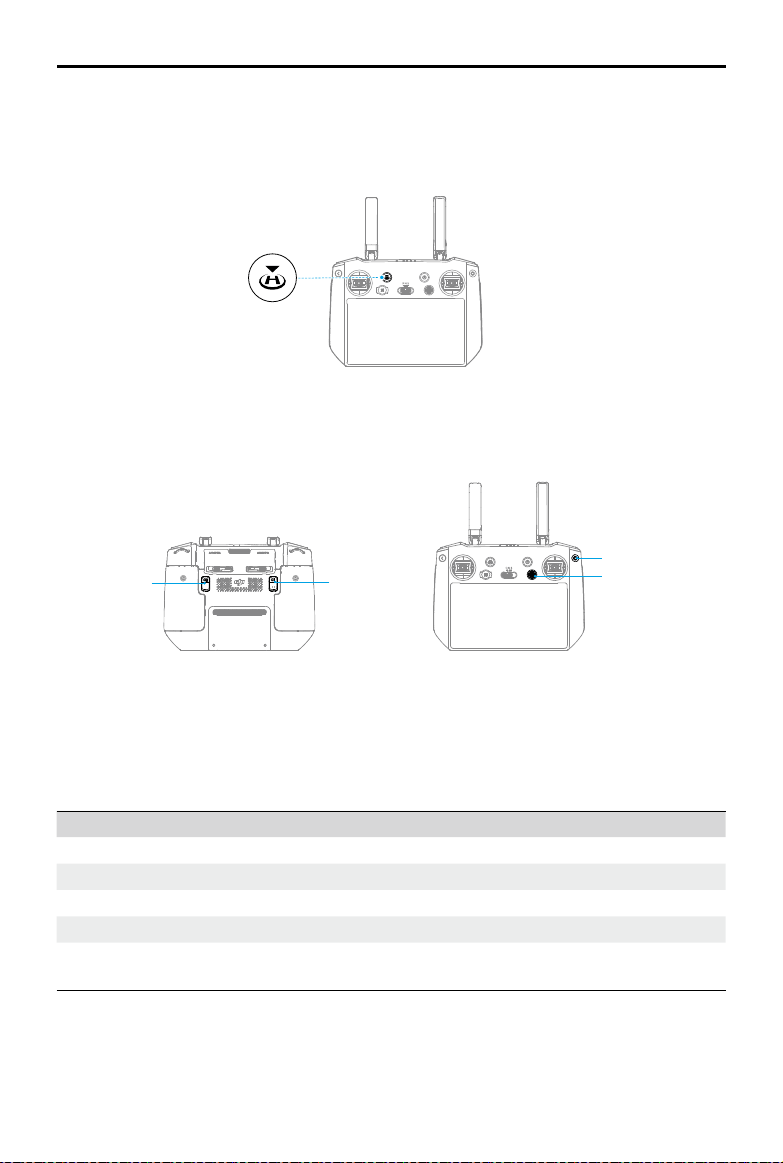
DJI Mavic 3 Pro User Manual
70
©
2023 DJI All Rights Reserved.
RTH Button
Press and hold the RTH button until the remote controller beeps to start RTH. The aircraft will
y to the last updated Home Point. Press the button again to cancel RTH and regain control of
the aircraft.
Customizable Buttons
Including C1, C2, C3, and the 5D button. Go to Settings > Control in DJI Fly to customize the
function of the button.
Customizable
Button C2
Customizable
Button C1
Customizable
Button C3
5D Button
Combination Buttons
Some frequently used features can be activated by using combination buttons. To use
combination buttons, press and hold the back button and operate the other button in the
combination. In actual use, enter the home page of the remote controller and tap Tips to check
all available combination buttons quickly.
Combination Operation Function
Back Button + Left Dial Adjust Brightness
Back Button + Right Dial Adjust Volume
Back Button + Record Button Record Screen
Back Button + Shutter Button Screenshot
Back Button + 5D Button Toggle up - Home; Toggle down - Shortcut settings; Toggle
left - Recently opened apps
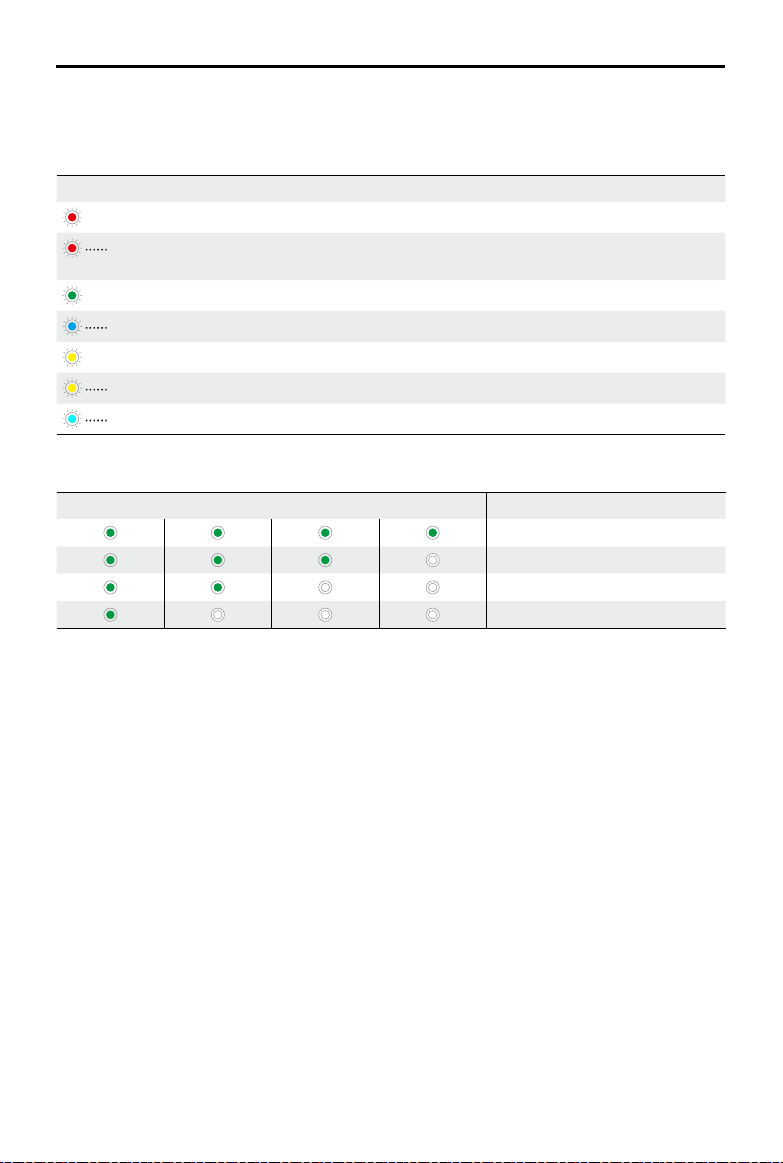
DJI Mavic 3 Pro User Manual
©
2023 DJI All Rights Reserved.
71
Remote Controller LEDs
Status LED
Blinking Pattern Descriptions
—
Solid red Disconnected from the aircraft
Blinks red The temperature of the remote controller is too high, or the
battery level of the aircraft is low
—
Solid green Connected with the aircraft
Blinks blue The remote controller is linking to an aircraft
—
Solid yellow Firmware update failed
Blinks yellow The battery level of the remote controller is low
Blinks cyan Control sticks not centered
Battery Level LEDs
Blinking Pattern Battery Level
76%-100%
51%-75%
26%-50%
0%-25%
Remote Controller Alert
The remote controller vibrates or beeps twice to indicate an error or warning. Pay attention
when prompts appear on the touchscreen or in DJI Fly. Slide down from the top of the screen
and select Do Not Disturb or Mute to disable alerts.
The remote controller sounds an alert during RTH. The alert cannot be canceled. The remote
controller sounds an alert when the battery level of the remote controller is low (6% to 10%).
A low battery level alert can be canceled by pressing the power button. The critical low battery
level alert, which is triggered when the battery level is less than 5%, cannot be canceled.
Optimal Transmission Zone
The signal between the aircraft and the remote controller is most reliable when the antennas
are positioned in relation to the aircraft, as illustrated below.
The optimal transmission range is where the antennas face the aircraft, with the angle between
the antennas and the back of the remote controller being 180° or 270°.
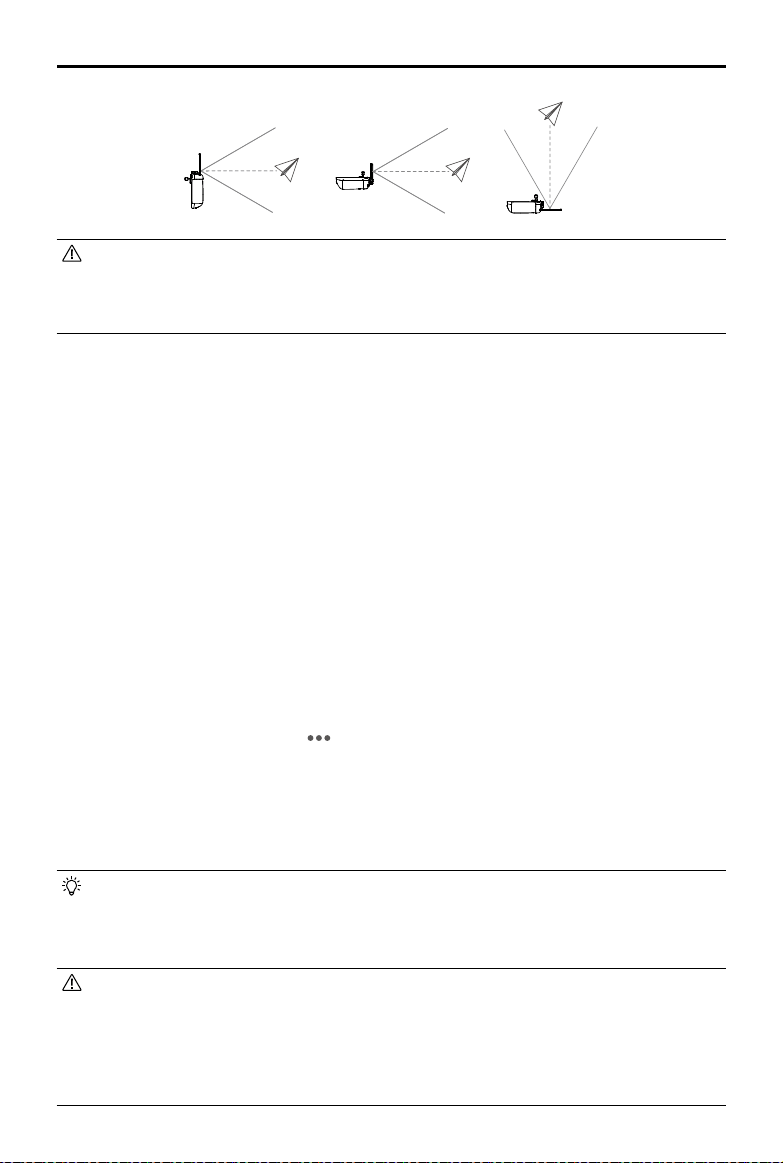
DJI Mavic 3 Pro User Manual
72
©
2023 DJI All Rights Reserved.
• DO NOT operate other wireless devices at the same frequency as the remote controller
to avoid signal interference.
• A prompt will be displayed in DJI Fly if the transmission signal is weak during flight.
Adjust the antennas to make sure that the aircraft is in the optimal transmission range.
Linking the Remote Controller
The remote controller is already linked to the aircraft when purchased together as a combo.
Otherwise, follow the steps below to link the remote controller and the aircraft after activation.
Method 1: Using Button Combinations
1. Power on the aircraft and the remote controller.
2. Press the C1, C2, and Record buttons simultaneously until the status LED blinks blue and the
remote controller beeps.
3. Press and hold the power button of the aircraft for more than four seconds. The aircraft
beeps twice after a short beep, and its battery level LEDs blink in sequence to indicate it is
ready to link. The remote controller will beep twice, and its status LED will turn solid green to
indicate linking is successful.
Method 2: Using DJI Fly
1. Power on the aircraft and the remote controller.
2. Launch DJI Fly, in camera view tap
and select Control and then Connect to the Aircraft. During
linking, the status LED of the remote controller blinks blue and the remote controller beeps.
3. Press and hold the power button of the aircraft for more than four seconds. The aircraft
beeps twice after a short beep, and its battery level LEDs blink in sequence to indicate it is
ready to link. The remote controller will beep twice, and its status LED will turn solid green to
indicate linking is successful.
• Make sure the remote controller is within 0.5 m of the aircraft during linking.
• The remote controller will automatically unlink from an aircraft if a new remote
controller is linked to the same aircraft.
• Turn o the Bluetooth and Wi-Fi of the remote controller for optimal video transmission.
• Fully charge the remote controller before each ight. The remote controller sounds an
alert when the battery level is low.
• If the remote controller is powered on and is not in use for ve minutes, an alert will
sound. After six minutes, the aircraft automatically powers o. Move the control sticks
or press any button to cancel the alert.
• Fully charge the battery at least once every three months to maintain battery health.
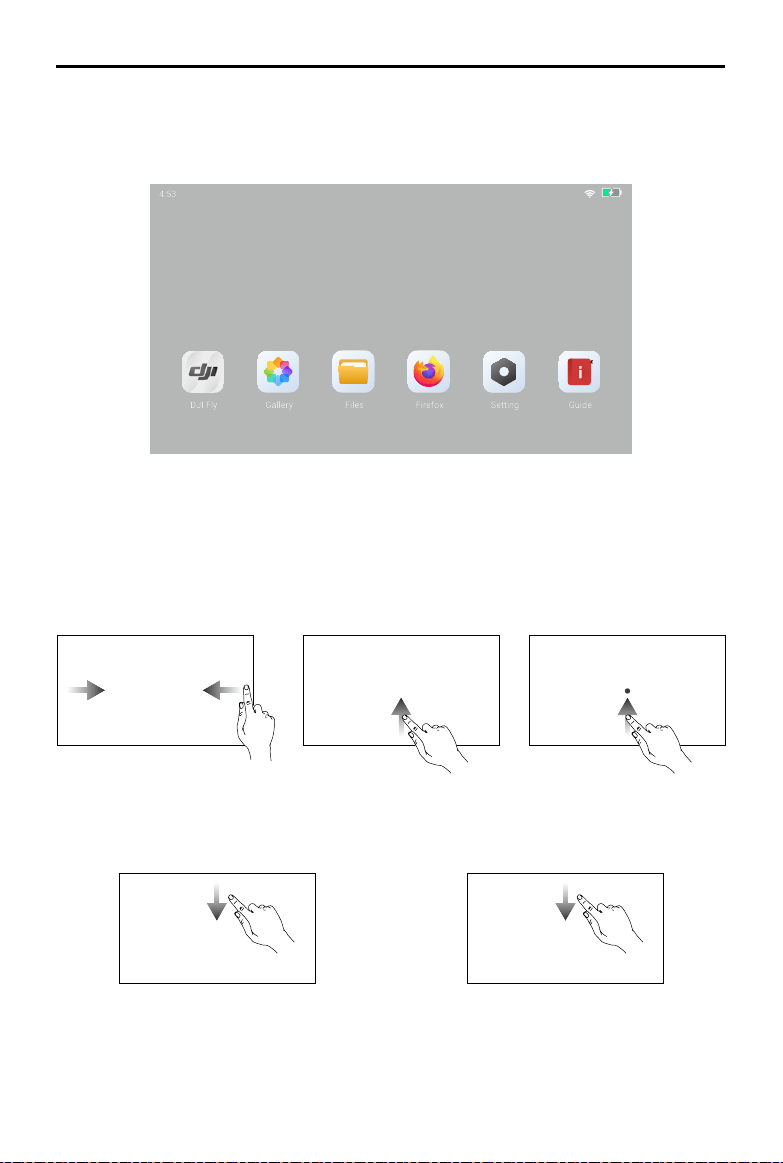
DJI Mavic 3 Pro User Manual
©
2023 DJI All Rights Reserved.
73
Operating the Touchscreen
Home
4:53
DJI Fly
Firefox
Guide
Setting
Gallery
Files
The top of the touchscreen displays the time, Wi-Fi signal, and battery level of the remote
controller.
Some apps are already installed by default such as DJI Fly, Gallery, Files, Firefox, Settings, and
Tips. Settings includes network, display, voice, and Bluetooth congurations. Users can quickly
learn about the features under Tips.
Screen Gestures
Slide up from the bottom of
the screen and hold to access
recently opened apps.
Slide from the left or right to
the center of the screen to
return to the previous screen.
Slide up from the bottom of
the screen to return to the
homepage.
Slide down from the top of the screen to
open the status bar when in DJI Fly. The status
bar displays information such as time, Wi-Fi
signal, and remote controller battery level.
Open Quick Settings: slide down twice from
the top of the screen to open Quick Settings
when in DJI Fly. Slide down once from the top
of the screen to open Quick Settings when
not in DJI Fly.
×2
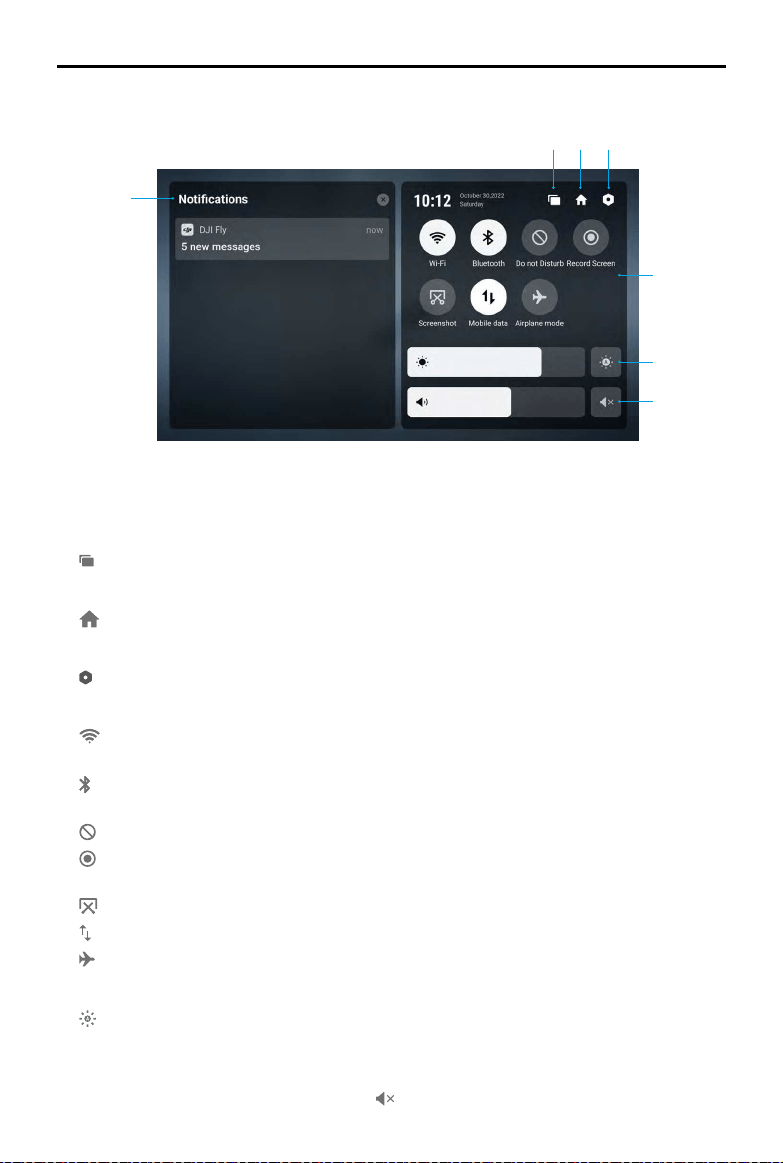
DJI Mavic 3 Pro User Manual
74
©
2023 DJI All Rights Reserved.
Quick Settings
1. Notications
Tap to check system notications.
2. Recent
Tap to check recently opened apps.
3. Home
Tap to return to the home screen.
4. System Settings
Tap to access system settings.
5. Shortcuts
: Tap to enable or disable Wi-Fi. Hold to enter settings and connect to or add a Wi-Fi
network.
: Tap to enable or disable Bluetooth. Hold to enter settings and connect with nearby
Bluetooth devices.
: Tap to enable Do Not Disturb mode. In this mode, system prompts will be disabled.
: Tap to start recording the screen. While recording, the screen displays the recording
time. Tap Stop to stop recording.
: Tap to screenshot the screen.
: Mobile data.
: Tap to enable Airplane mode. Wi-Fi, Bluetooth, and mobile data will be disabled.
6. Adjusting Brightness
: The screen is in auto brightness mode when the icon is highlighted. Tap or slide the bar
will switch to manual brightness mode.
7. Adjusting Volume
Slide the bar to adjust the volume and tap
to mute.
2 3 4
5
7
6
1

DJI Mavic 3 Pro User Manual
©
2023 DJI All Rights Reserved.
75
Advanced Features
Calibrating the Compass
The compass may need to be calibrated after the remote controller is used in areas with
electromagnetic interference. A warning prompt will appear if the compass of the remote
controller requires calibration. Tap the warning prompt to start calibrating. In other cases,
follow the steps below to calibrate your remote controller.
1. Power on the remote controller and enter the home page.
2. Select System Settings
, scroll down, and tap Compass.
3. Follow the on-screen instructions to calibrate the compass.
4. A prompt will be displayed when the calibration is successful.
HDMI Settings
The touchscreen can be shared with a display screen via an HDMI cable.
The resolution can be set in Settings > Display, and then HDMI.
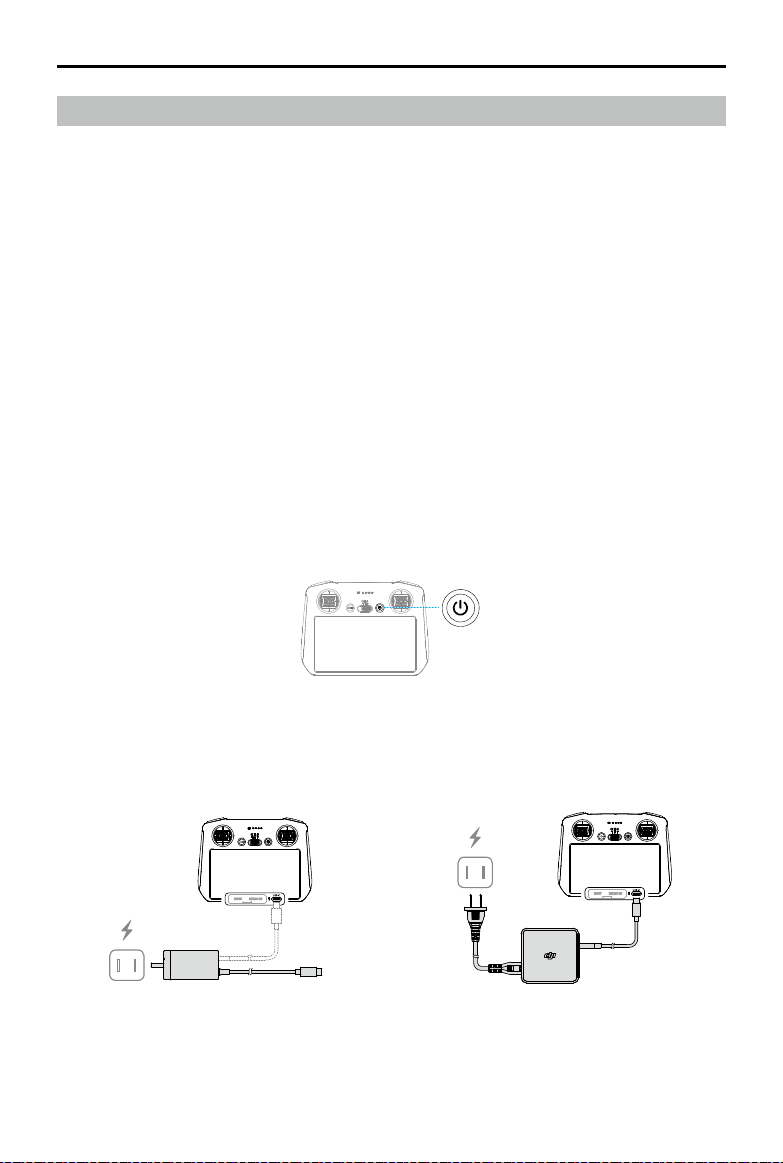
DJI Mavic 3 Pro User Manual
76
©
2023 DJI All Rights Reserved.
Charging the Battery
Use a USB-C cable to connect the charger to the USB-C port of the remote controller. The
battery can be fully charged in about 1 hour and 30 minutes with a maximum charging power
of 15 W (5V/3A).
100W
65W
OR
DJI RC
When used with DJI Mavic 3 Pro, DJI RC remote controller features O3+ video transmission,
works at both 2.4 GHz and 5.8 GHz frequency bands. It is capable of selecting the best
transmission channel automatically and can transmit up to 1080p 60fps HD live view from the
aircraft to the remote controller at a distance of up to 15 km (compliant with FCC standards,
and measured in a wide open area without interference). The DJI RC is also equipped with a
5.5-in touchscreen (1920×1080 pixel resolution) and a wide range of controls and customizable
buttons, enabling users to easily control the aircraft and remotely change the aircraft settings.
The built-in 5200 mAh battery with a power of 18.72 Wh provides the remote controller with a
maximum operating time of four hours. The DJI RC comes with many other functions such as
Wi-Fi connection, built-in GNSS (GPS+BeiDou+Galileo), Bluetooth, built-in speakers, detachable
control sticks, and microSD storage.
Operation
Powering On/O
Press the power button once to check the current battery level.
Press, then press and hold the power button for two seconds to power the remote controller on
or o.
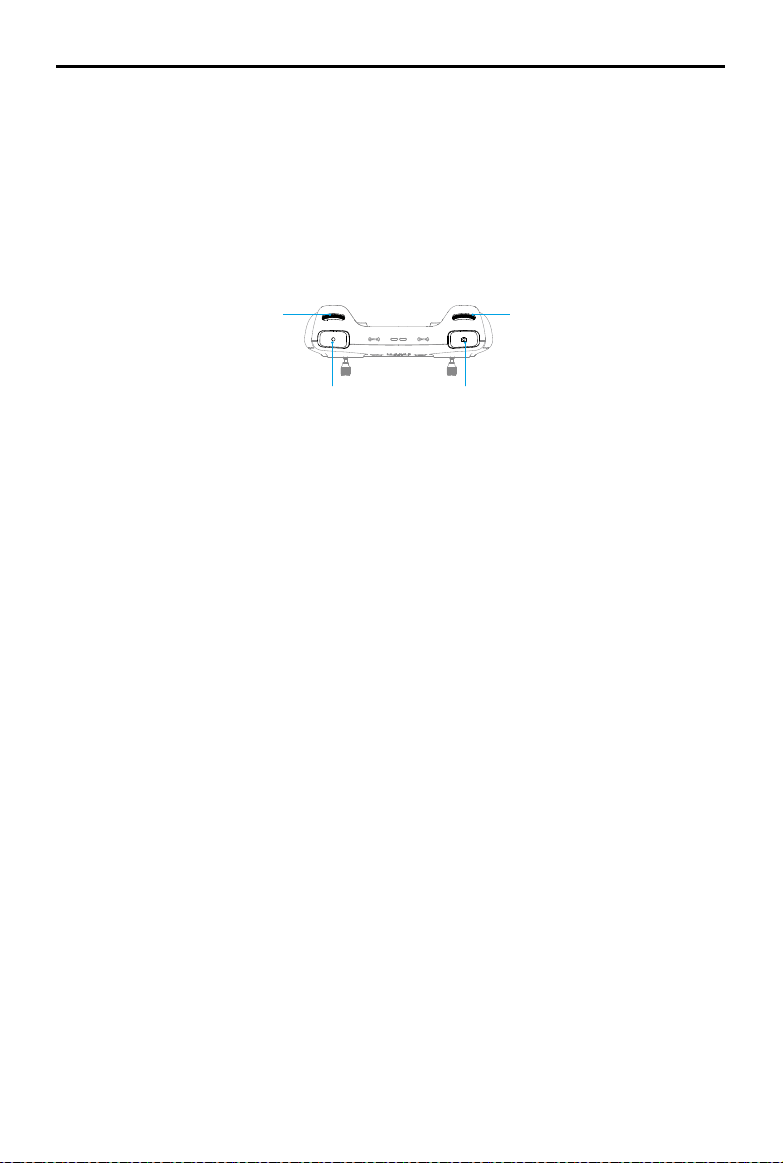
DJI Mavic 3 Pro User Manual
©
2023 DJI All Rights Reserved.
77
Controlling the Gimbal and Camera
Focus/Shutter Button: press halfway down to auto-focus and press all the way down to take a
photo.
Record Button: press once to start or stop recording.
Camera Control Dial: Use to adjust the zoom by default. The dial function can be set to adjust
the focal length, EV, aperture, shutter speed, and ISO.
Gimbal Dial: control the tilt of the gimbal.
Gimbal Dial
Record Button
Camera Control Dial
Focus/Shutter Button
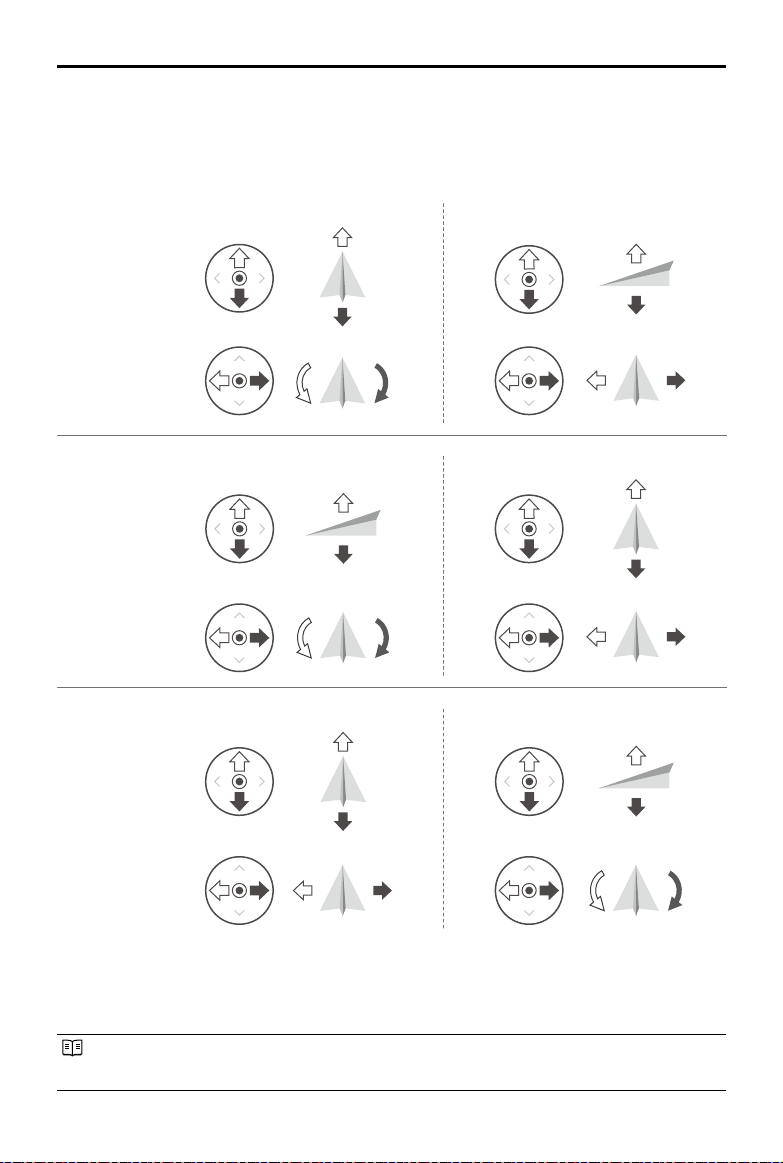
DJI Mavic 3 Pro User Manual
78
©
2023 DJI All Rights Reserved.
Controlling the Aircraft
Three preprogrammed modes (Mode 1, Mode 2, and Mode 3) are available and custom modes
can be congured in DJI Fly.
Up
Down
Turn RightTurn Left
RightLeft
Forward
Backward
Left Stick Right Stick
Right Stick
Left Stick
Turn RightTurn Left
Up
Down
RightLeft
Forward
Backward
Right Stick
Up
Down
Forward
Backward
Left Stick
Turn RightTurn Left
RightLeft
Mode 1
Mode 2
Mode 3
The default control mode of the remote controller is Mode 2. In this manual, Mode 2 is used as
an example to illustrate how to use the control sticks.
• Stick Neutral/Center Point: control sticks are in the center.
• Moving the control stick: the control stick is pushed away from the center position.
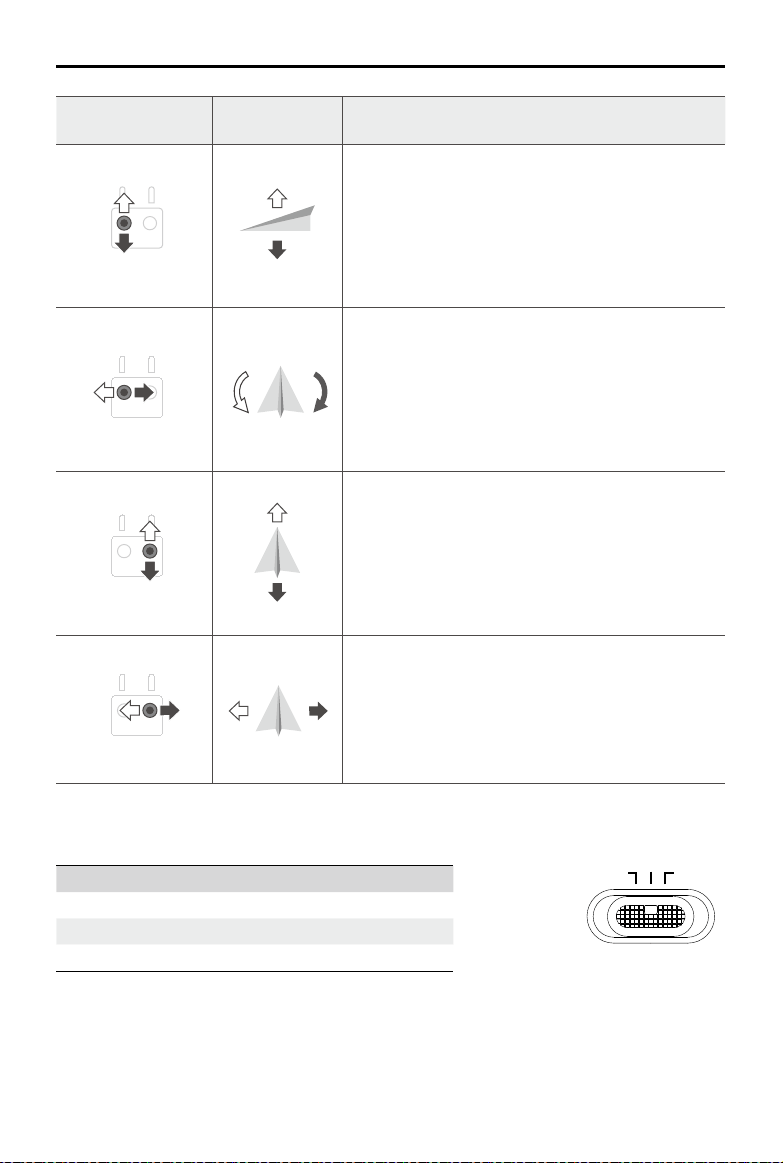
DJI Mavic 3 Pro User Manual
©
2023 DJI All Rights Reserved.
79
Remote Controller
(Mode 2)
Aircraft Remarks
Throttle Stick: moving the left stick up or down
changes the altitude of the aircraft.
Push the stick up to ascend and down to descend.
The more the stick is pushed away from the center
position, the faster the aircraft will change altitude.
Push the stick gently to prevent sudden and
unexpected changes in altitude.
Yaw Stick: moving the left stick to the left or right
controls the orientation of the aircraft.
Push the stick left to rotate the aircraft counterclockwise
and right to rotate the aircraft clockwise. The aircraft
hovers in place if the stick is in the center.
The more the stick is pushed away from the center, the
faster the aircraft rotates.
Pitch Stick: moving the right stick up and down to
change the pitch of the aircraft.
Push the stick up to fly forward and down to fly
backward. The aircraft hovers in place if the stick is in
the center.
The more the stick is pushed away from the center,
the faster the aircraft moves.
Roll Stick: moving the right stick to the left or right
changes the roll of the aircraft.
Push the stick left to fly left and right to fly right. The
aircraft hovers in place if the stick is in the center.
The more the stick is pushed away from the center,
the faster the aircraft moves.
Flight Mode Switch
Toggle the switch to select the desired ight mode.
Position Flight Mode
S Sport Mode
N Normal Mode
C Cine Mode*
* Low Speed mode in EU.
CNS
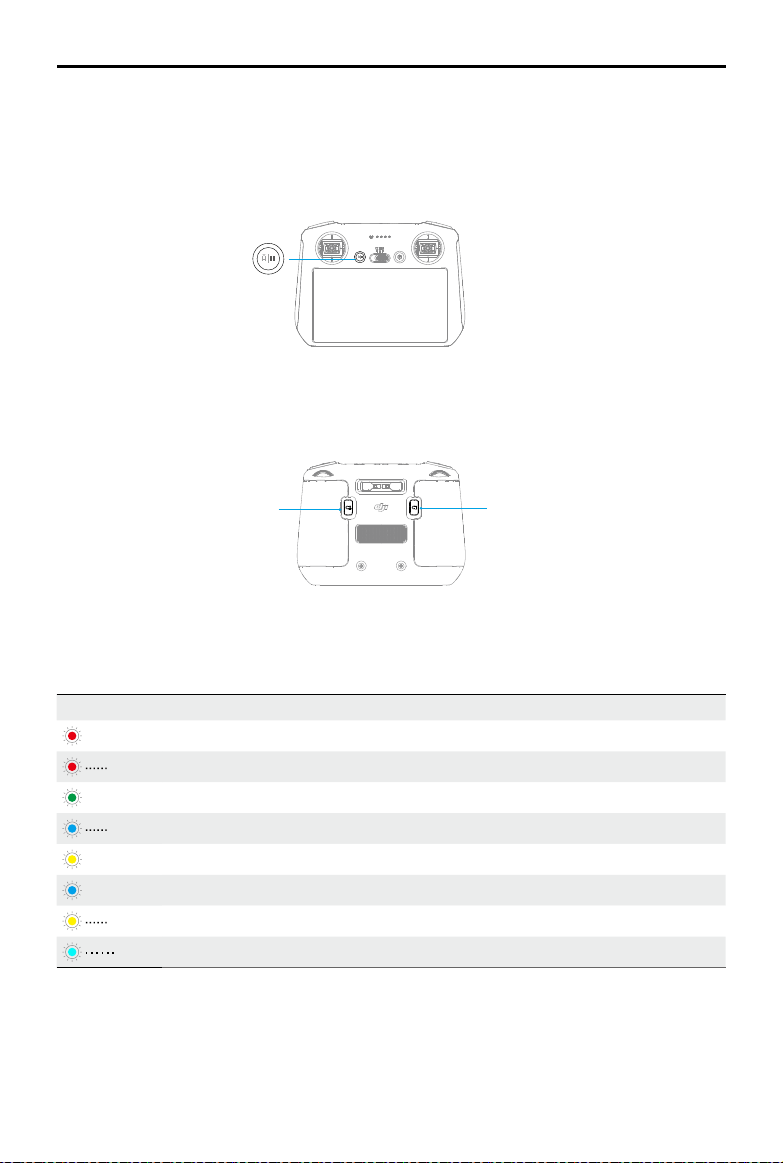
DJI Mavic 3 Pro User Manual
80
©
2023 DJI All Rights Reserved.
Flight Pause/RTH Button
Press once to make the aircraft brake and hover in place. Press and hold the button until the
remote controller beeps and starts RTH, the aircraft will return to the last recorded Home Point.
Press this button again to cancel RTH and to regain control of the aircraft.
Customizable Buttons
Go to Settings > Control in DJI Fly to set the functions of the customizable C1 and C2 buttons.
Remote Controller LEDs
Status LED
Blinking Pattern Descriptions
—
Solid red Disconnected from the aircraft
Blinking red The battery level of the aircraft is low
—
Solid green Connected with the aircraft
Blinking blue The remote controller is linking to an aircraft
—
Solid yellow Firmware update failed
—
Solid blue Firmware update successful
Blinking yellow The battery level of the remote controller is low
Blinking cyan Control sticks not centered
Customizable
Button C2
Customizable
Button C1
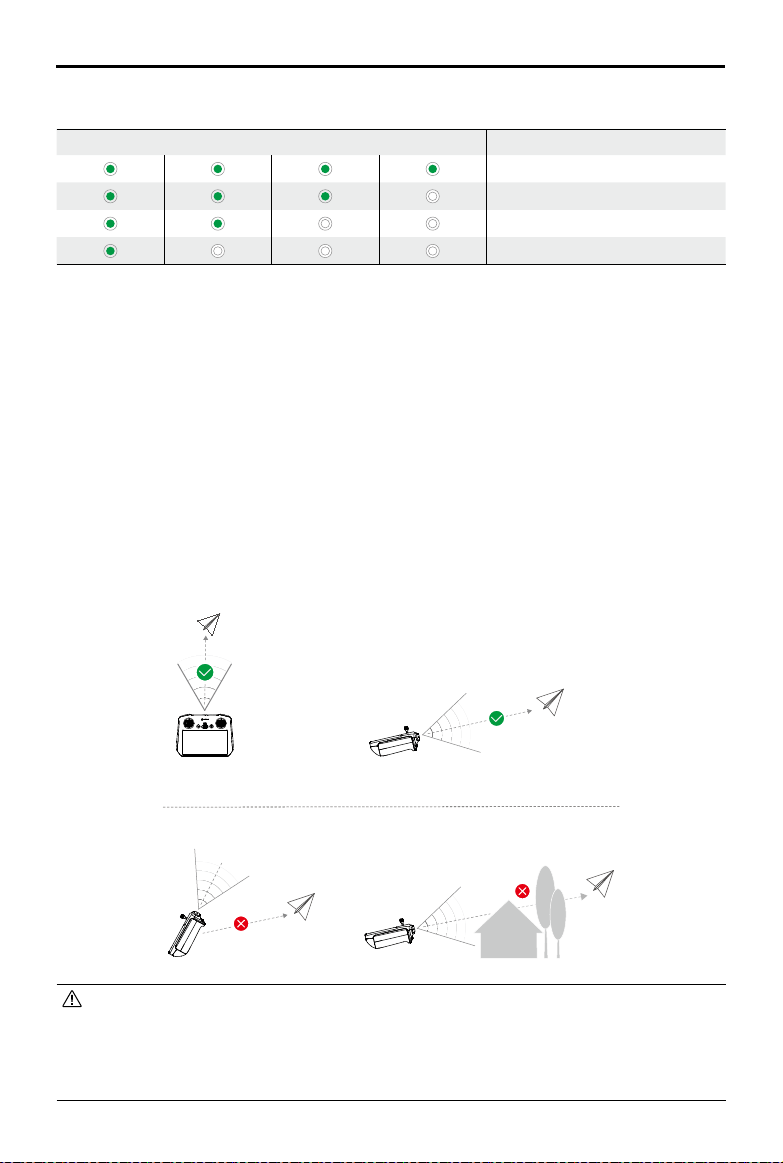
DJI Mavic 3 Pro User Manual
©
2023 DJI All Rights Reserved.
81
Battery Level LEDs
Blinking Pattern Battery Level
76%-100%
51%-75%
26%-50%
0%-25%
Remote Controller Alert
The remote controller beeps to indicate an error or warning. Pay attention when prompts
appear on the touchscreen or in DJI Fly. Slide down from the top of the screen and select Mute
to disable all alerts, or slide the volume bar to 0 to disable some alerts.
The remote controller sounds an alert during RTH. The alert cannot be canceled. The remote
controller sounds an alert when the battery level of the remote controller is low (6% to 10%).
A low battery level alert can be canceled by pressing the power button. The critical low battery
level alert, which is triggered when the battery level is less than 5%, cannot be canceled.
Optimal Transmission Zone
The signal between the aircraft and the remote controller is most reliable when the remote
controller is positioned towards the aircraft as depicted below.
Optimal Transmission
Weak Signal
• DO NOT operate other wireless devices at the same frequency as the remote controller
to avoid signal interference.
• A prompt will be displayed in DJI Fly if the transmission signal is weak during flight.
Adjust the remote controller orientation to make sure that the aircraft is in the optimal
transmission range.
DJI Mavic 3 Pro User Manual
82
©
2023 DJI All Rights Reserved.
Linking the Remote Controller
The remote controller is already linked to the aircraft when purchased together as a combo.
Otherwise, follow the steps below to link the remote controller and the aircraft after activation.
1. Power on the aircraft and the remote controller.
2. Launch DJI Fly.
3. In camera view, tap
and select Control and then Connect to the Aircraft. During linking,
the status LED of the remote controller blinks blue and the remote controller beeps.
4. Press and hold the power button of the aircraft for more than four seconds. The aircraft
beeps twice after a short beep, and its battery level LEDs blink in sequence to indicate it is
ready to link. The remote controller will beep twice, and its status LED will turn solid green to
indicate linking is successful.
• Make sure the remote controller is within 0.5 m of the aircraft during linking.
• The remote controller will automatically unlink from an aircraft if a new remote
controller is linked to the same aircraft.
• Turn off the Bluetooth and Wi-Fi of the remote controller for optimal video
transmission.
• Fully charge the remote controller before each ight. The remote controller sounds an
alert when the battery level is low.
• If the remote controller is powered on and not in use for five minutes, an alert will
sound. After six minutes, the aircraft automatically powers o. Move the control sticks
or press any button to cancel the alert.
• Fully charge the battery at least once every three months to maintain battery health.
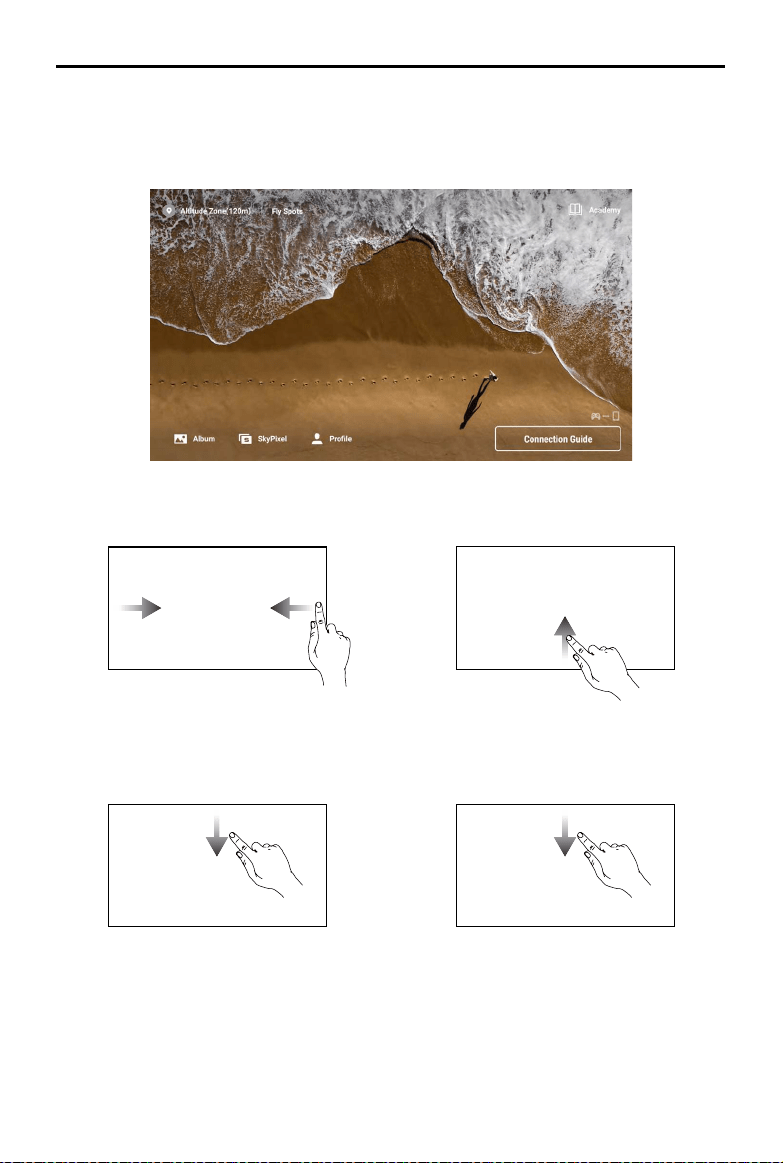
DJI Mavic 3 Pro User Manual
©
2023 DJI All Rights Reserved.
83
Operating the Touchscreen
Home
Slide down from the top of the
screen to open the status bar
when in DJI Fly.
The status bar displays the time,
Wi-Fi signal, battery level of the
remote controller, etc.
Slide down twice from the top
of the screen to open Quick
Settings when in DJI Fly.
×2
Slide from the left or right to
the center of the screen to
return to the previous screen.
Slide up from the bottom of
the screen to return to DJI Fly.
Screen Gestures
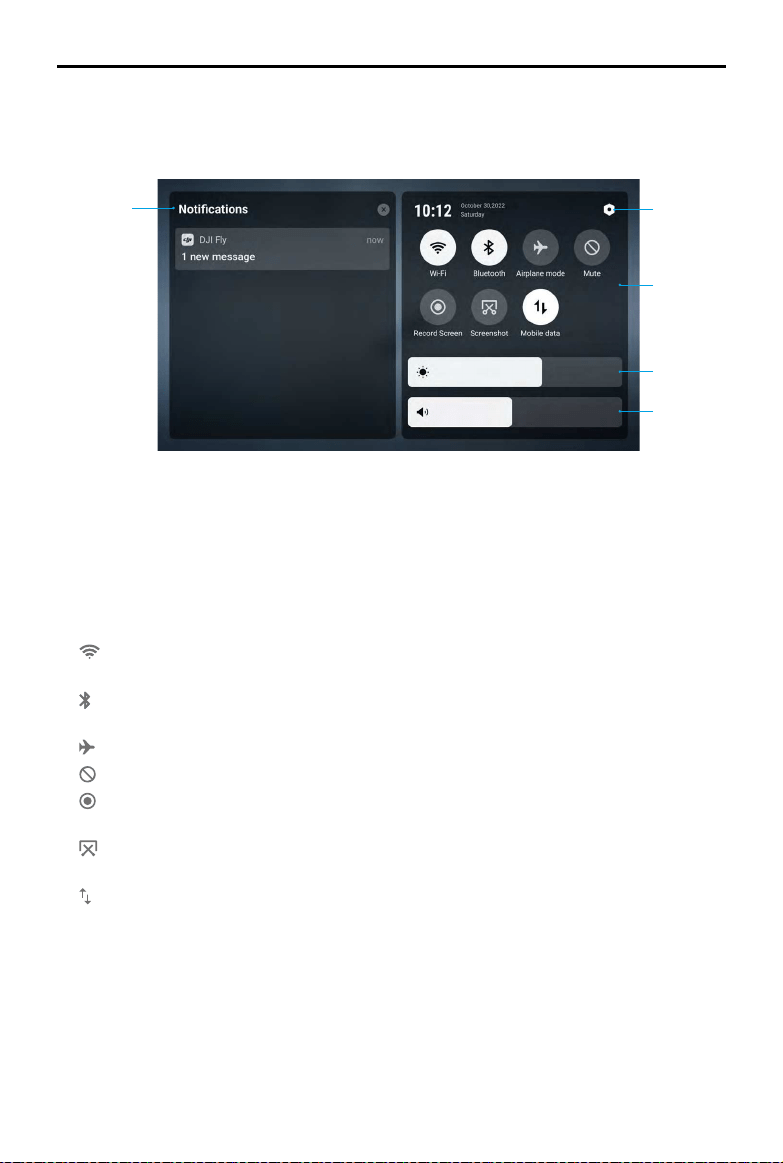
DJI Mavic 3 Pro User Manual
84
©
2023 DJI All Rights Reserved.
Quick Settings
1. Notications
Tap to check system notications.
2. System Settings
Tap to access system settings and configure settings such as Bluetooth, volume, and
network. You can also view the Guide to learn more about the controls and status LEDs.
3. Shortcuts
: Tap to enable or disable Wi-Fi. Hold to enter settings and then connect to or add a Wi-Fi
network.
: Tap to enable or disable Bluetooth. Hold to enter settings and connect with nearby
Bluetooth devices.
: Tap to enable Airplane mode. Wi-Fi and Bluetooth will be disabled.
: Tap to turn o system notications and disable all alerts.
: Tap to start recording the screen. The function will be available only after a microSD card
is inserted into the microSD slot on the remote controller.
: Tap to take a screenshot. The function will be available only after a microSD card is
inserted into the microSD slot on the remote controller.
: Mobile data.
4. Adjusting Brightness
Slide the bar to adjust the screen brightness.
5. Adjusting Volume
Slide the bar to adjust the volume.
2
3
5
4
1

DJI Mavic 3 Pro User Manual
©
2023 DJI All Rights Reserved.
85
Advanced Features
Calibrating the Compass
The compass may need to be calibrated after the remote controller is used in areas with
electromagnetic interference. A warning prompt will appear if the compass of the remote
controller requires calibration. Tap the warning prompt to start calibrating. In other cases,
follow the steps below to calibrate the remote controller.
1. Power on the remote controller, and enter Quick Settings.
2. Select System Settings
, scroll down, and tap Compass.
3. Follow the on-screen instructions to calibrate the compass.
4. A prompt will be displayed when the calibration is successful.

86
©
2023 DJI All Rights Reserved.
DJI Fly App
This section introduces the main
functions of the DJI Fly app.
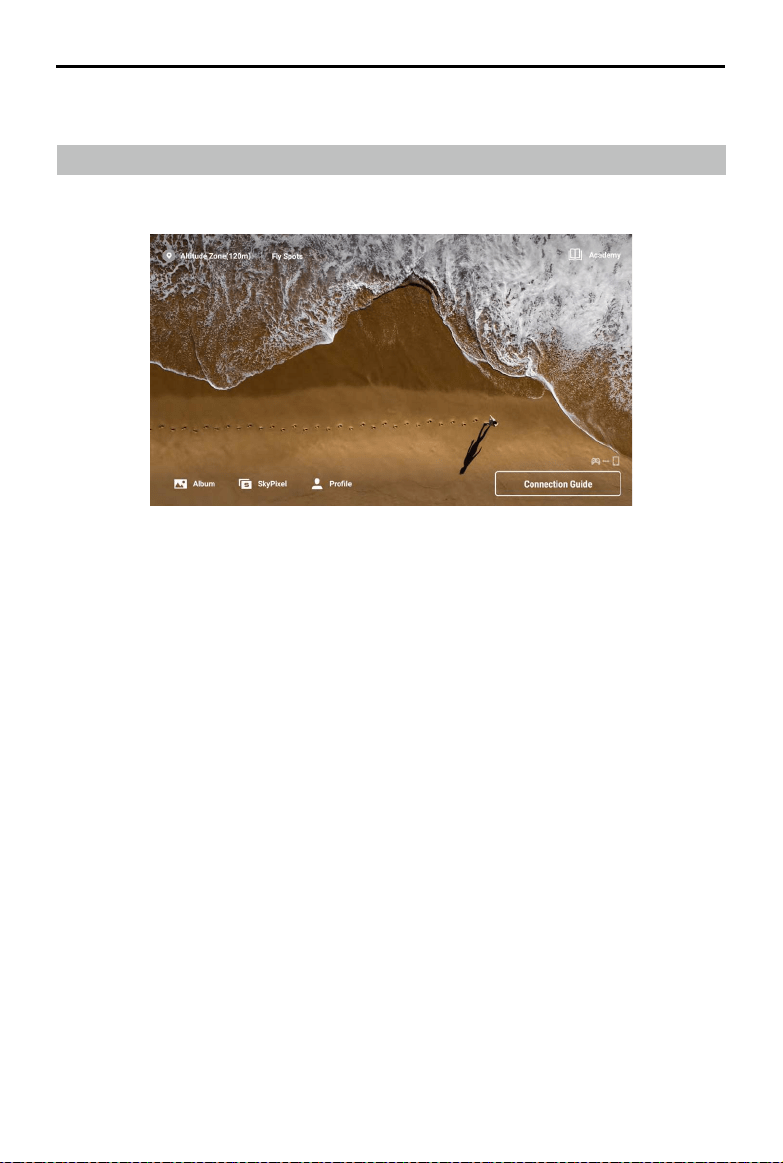
DJI Mavic 3 Pro User Manual
©
2023 DJI All Rights Reserved.
87
DJI Fly App
Home
Launch DJI Fly and enter the home screen.
Fly Spots
View or share ight and shooting locations nearby, learn more about GEO Zones, and preview
aerial photos of dierent locations taken by other users.
Academy
Tap the icon in the top right corner to enter Academy and view product tutorials, ight tips,
ight safety notices, and manual documents.
Album
Allows you to view photos and videos from the aircraft album or saved on the local device.
Tap Create and select Templates or Pro. Templates provides an auto-edit feature for imported
footage. Pro allows users to edit footage manually.
SkyPixel
Enter SkyPixel to view videos and photos shared by other users.
Prole
View account information and flight records, visit the DJI forum and online store, access the
Find My Drone feature, oine maps, and other settings such as rmware updates, camera view,
cached data, account privacy, and language.
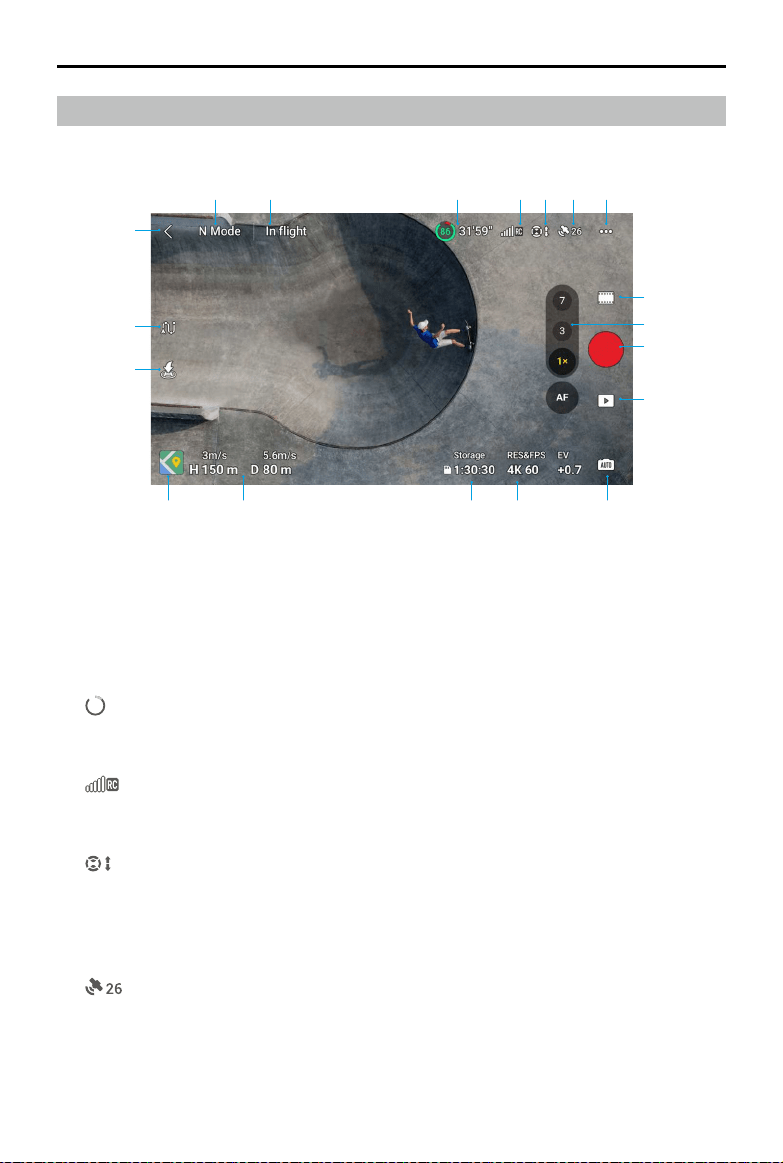
DJI Mavic 3 Pro User Manual
88
©
2023 DJI All Rights Reserved.
Camera View
Buttons Description
1. Flight Mode
N Mode: displays the current ight mode.
2. System Status Bar
In Flight: displays aircraft ight status and various warning messages.
3. Battery Information
80
31'59"
: displays the current battery level and remaining ight time. Tap to view more
information about the battery.
4. Video Downlink Signal Strength
: displays the video downlink signal strength between the aircraft and the remote
controller.
5. Vision System Status
: the left side of the icon indicates the status of the horizontal vision system and the
right side of the icon indicates the status of the upward and downward vision systems. The
icon is white when the vision system is working normally and turns red when the vision
system is unavailable.
6. GNSS Status
: displays the current GNSS signal strength. Tap to check the GNSS signal status. The
Home Point can be updated when the icon is white, which indicates the GNSS signal is
strong.
1 2 3 4 5 6 7
8
9
10
11
1213141516
17
18
19
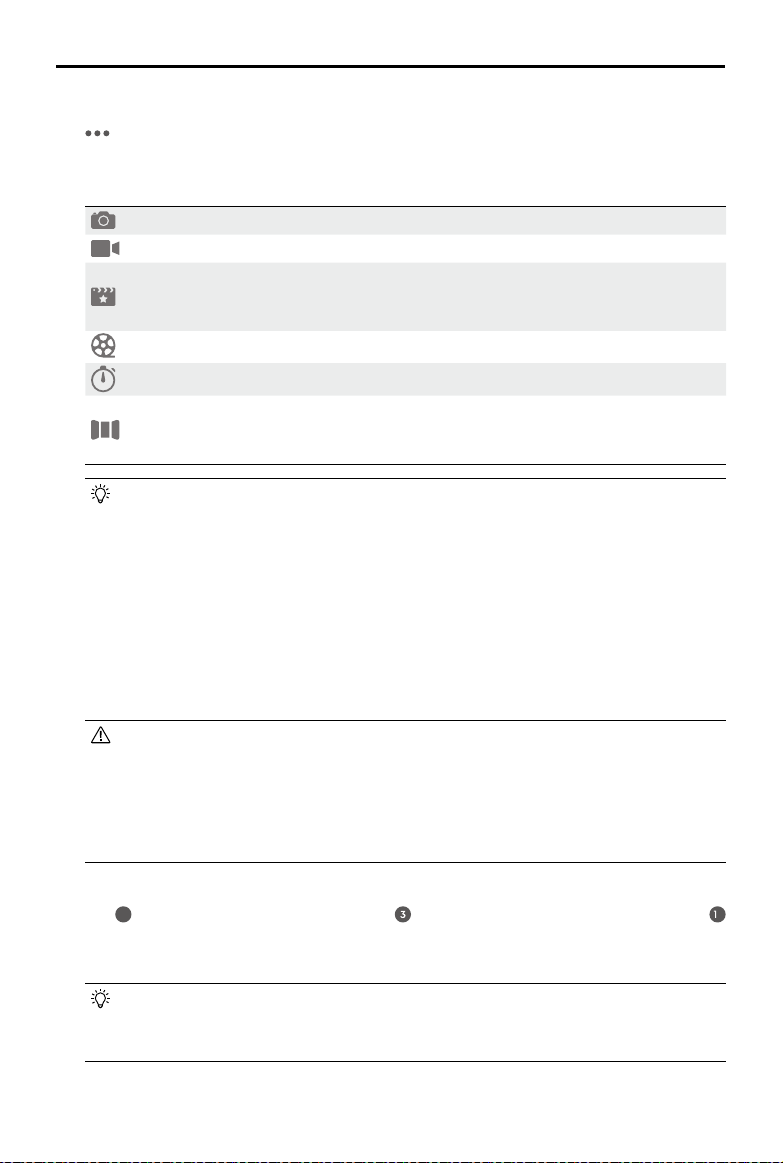
DJI Mavic 3 Pro User Manual
©
2023 DJI All Rights Reserved.
89
7. Settings
: tap to view or set parameters for safety, control, camera, and transmission. Refer to
the Settings section for more information.
8. Shooting Modes
Photo: Single, Explore, AEB, Burst Shooting, and Time Shot.
Video: Normal, Night, Explore, and Slow Motion.
MasterShots: drag-select a subject. The aircraft will record while executing
dierent maneuvers in sequence and keep the subject in the center of the frame.
A short cinematic video will be generated afterward.
QuickShots: Dronie, Rocket, Circle, Helix, Boomerang, and Asteroid.
Hyperlapse: Free, Circle, Course Lock, and Waypoints.
Pano: Sphere, 180°, Wide Angle, and Vertical. The aircraft will automatically
take several photos and synthesize a panoramic photo based on the selected
panoramic photo type.
• Explore mode uses the tele and medium tele cameras of Mavic 3 Pro as a safer way
to explore views from farther distances. In Explore mode, users can use the hybrid
zoom in any of the following ways:
a. Tap the zoom button and switch between a series of zooms, including 1x, 3x, 7x,
14x, and 28x.
b. Tap and hold the zoom button and drag up and down to adjust camera zoom.
c. Use two ngers on the screen to zoom in or out.
d. Use the camera control dial of the remote controller to zoom in or out.
• Night mode provides better noise reduction and cleaner footage, supports up to
12800 ISO.
• Night mode currently supports 4K 24/25/30fps.
• Obstacle sensing will be disabled in Night mode. Fly with caution.
• Night mode will be exited automatically when RTH or landing is started.
• During RTH or auto landing, Night mode is not available.
• FocusTrack is not supported in Night mode.
9. Camera Switch/Focus Button
Tap
7
to switch to the tele camera, and tap to switch to the medium tele camera. Tap
x
to switch to the Hasslebald camera.
Press and hold the camera button to bring up the zoom bar and adjust the digital zoom.
• Digital zoom is only supported in Normal video and Explore mode.
• When zooming in or out, the larger the zoom ratio, the slower the aircraft will
rotate, to achieve a smooth view.
AF/MF: tap to switch between AF and MF. Press and hold the icon to display the focus bar.
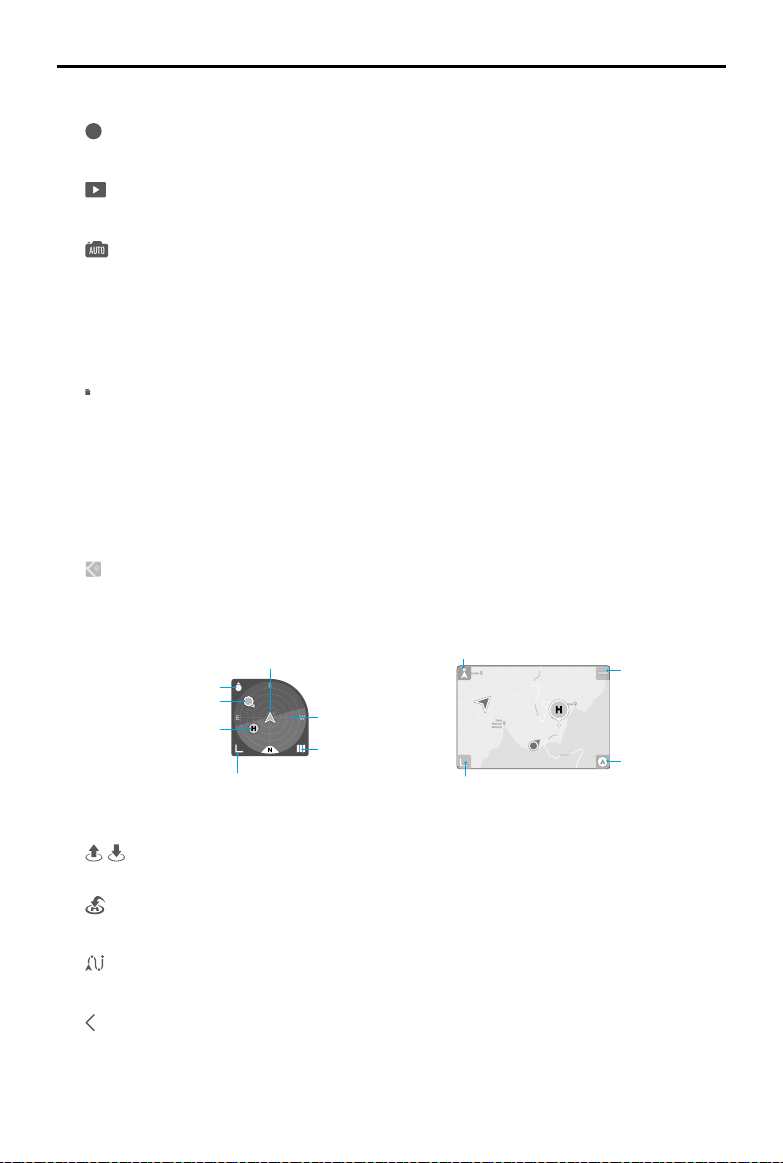
DJI Mavic 3 Pro User Manual
90
©
2023 DJI All Rights Reserved.
10. Shutter/Record Button
: tap to take a photo or to start or stop recording a video.
11. Playback
: tap to enter playback and preview photos and videos as soon as they are captured.
12. Camera Modes Switch
: tap to switch between Auto and Pro mode. Dierent parameters can be set in dierent
modes.
13. Shooting Parameters
RE
S&
FP
S
4K 60
: displays the current shooting parameters. Tap to access parameter settings.
14. Storage Information
1:30:3
0
S
torag
e
: displays the remaining number of photos or videos recording time of the current
storage. Tap to view the available capacity of the microSD card or the aircraft internal
storage.
15. Flight Telemetry
Displays the horizontal distance (D) and speed as well as vertical distance (H) and speed
between the aircraft and the Home Point.
16. Map
: tap to switch to the Attitude Indicator, which supports being centered by the aircraft or
the remote controller, and displays information such as the orientation and tilt angle of the
aircraft, as well as the locations of the remote controller and the Home Point.
Switch to Attitude
Indicator
Smart scale
Collapse
Locked to North
Collapse
Switch to
minimap
Aircraft tilt
angle
Home Point
Remote controller position
Centered by the
remote controller
Aircraft orientation
17. Auto Takeo/Landing/RTH
/ : tap the icon. When the prompt appears, press and hold the button to initiate auto
takeo or landing.
: tap to initiate Smart RTH and have the aircraft return to the last recorded Home Point.
18. Waypoint Flight
: tap to enable/disable Waypoint Flight.
19. Back
: tap to return to the home screen.

DJI Mavic 3 Pro User Manual
©
2023 DJI All Rights Reserved.
91
Screen Shortcuts
Tap to Aim
During ight double-tap the point of interest on the screen, the aircraft will automatically move
the point of interest to the center of the frame.
Gimbal Angle Adjustment
Press and hold on the screen to bring up the gimbal adjustment bar to adjust the gimbal angle.
Focus/Spot Metering
Tap on the screen to enable focus or spot metering. Focus or spot metering will display
dierently depending on the shooting mode, focus mode, exposure mode, and spot metering
mode.
After using spot metering:
• Drag
next to the box up and down to adjust the EV (exposure value).
• Press and hold on the screen to lock the exposure. To unlock the exposure, tap and hold on
the screen again or tap on another area of the screen.
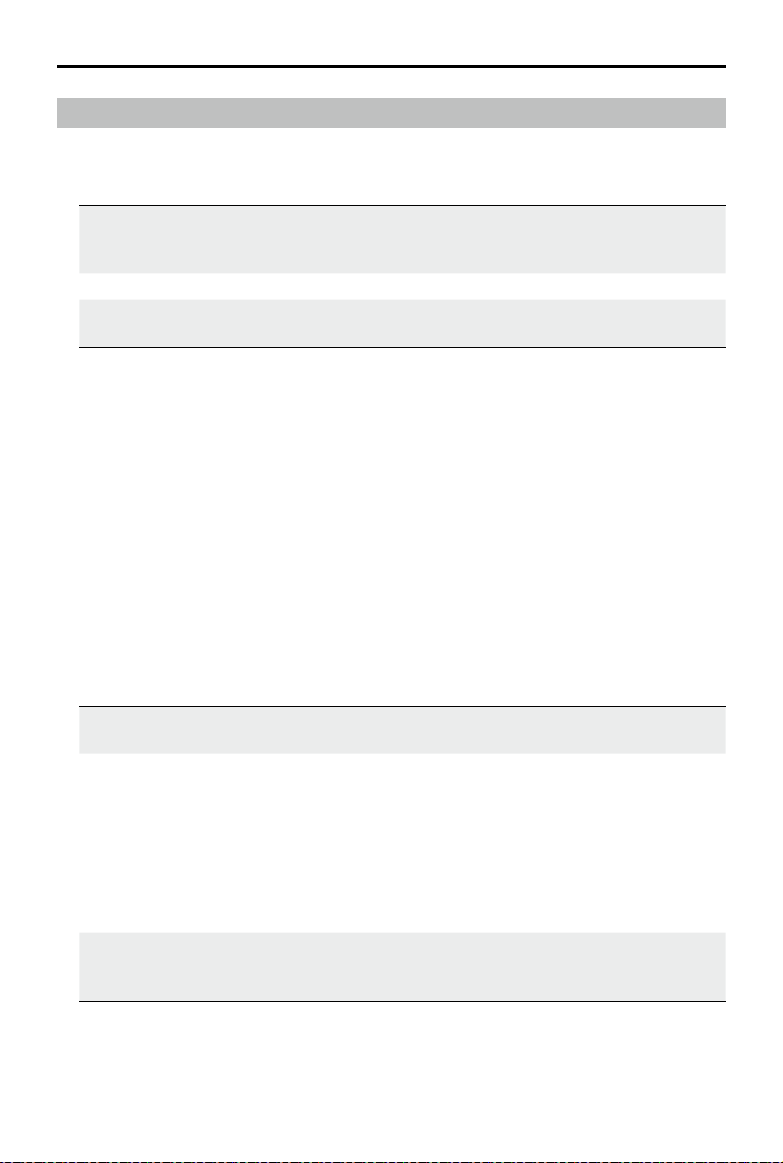
DJI Mavic 3 Pro User Manual
92
©
2023 DJI All Rights Reserved.
Settings
Safety
• Flight Assistance
Obstacle Avoidance
Action
Horizontal vision system is enabled after setting Obstacle Avoidance
Action to Bypass or Brake. The aircraft cannot sense obstacles if
Obstacle Avoidance is disabled.
Bybassing Options Select Normal or Nifty mode when using Bypass.
Display Radar Map When enabled, the real-time obstacle detection radar map will be
displayed.
• Return to Home (RTH): tap to set Advanced RTH, Auto RTH Altitude, and to update the Home
Point.
• Flight Protection: tap to set the max altitude and the max distance for ights.
• Sensors: tap to view the IMU and compass statuses and start calibration if necessary.
• Battery: tap to view battery information such as battery cell status, serial number, and
number of times charged.
• Auxiliary LED: tap to set the auxiliary LED to auto, on, or o. DO NOT turn on the Auxiliary
LED before takeo.
• Aircraft Front Arm LEDs: tap to set the aircraft front arm LEDs to auto or on. In auto mode,
the aircraft front LEDs will be disabled during shooting to ensure the quality is not aected.
• Unlock GEO Zone: tap to view information about unlocking GEO Zones.
• Find My Drone: this feature helps to nd the location of the aircraft, either by enabling the
aircraft LEDs, beeping, or by using the map.
• Advanced Safety Settings
Signal Lost The behavior of the aircraft when the remote controller signal is lost
can be set to RTH, Descend, or Hover.
Emergency
Propeller Stop
Emergency Only, indicates that the motors can only be stopped
by performing a combination stick command (CSC) mid-flight in
an emergency situation such as if there is a collision, a motor has
stalled, the aircraft is rolling in the air, or the aircraft is out of control
and is ascending or descending very quickly. Anytime, indicates that
the motors can be stopped mid-ight anytime once user performs a
CSC.
Stopping the motors mid-ight will cause the aircraft to crash.
Airsense An alert will appear in DJI Fly when a manned aircraft is detected if
AirSense is enabled. Read the disclaimer in the DJI Fly prompt before
using AirSense.
DJI Mavic 3 Pro User Manual
©
2023 DJI All Rights Reserved.
93
Control
• Aircraft Settings
Units Can be set to metric or imperial.
Subject Scanning When enabled, the aircraft automatically scans and displays
subjects in the camera view (only available for single-shot and
normal video modes).
Gain and Expo Tuning Supports the gain and expo settings to be fine-tuned for the
aircraft and the gimbal in dierent ight modes, including the
max horizontal speed, max ascent speed, max descent speed,
max angular velocity, yaw smoothness, brake sensitivity, expo,
and the gimbal max tilt control speed and tilt smoothness.
• When releasing the control stick, an increased brake sensitivity reduces the braking
distance of the aircraft, while a decreased brake sensitivity increases the braking
distance. Fly with caution.
• Gimbal Settings: tap to set the gimbal mode, perform gimbal calibration, and recenter or
move the gimbal downward.
• Remote Controller Settings: tap to set the function of the customizable button, calibrate the
remote controller, switch control stick modes. Make sure to understand the operations of a
stick mode before changing the control stick mode.
• Flight Tutorial: view the ight tutorial.
• Re-pair to Aircraft (Link): tap to start linking when the aircraft is not linked to the remote
controller.
Camera
• Camera Parameter Settings: displays dierent settings according to the shooting mode.
Shooting Modes Settings
Photo Mode Format, Aspect Ratio
Record Mode Format, Color, Coding Format, Video Bitrate, Video Subtitles
MasterShots Format, Color, Coding Format, Video Bitrate, Video Subtitles
QuickShots Format, Color, Coding Format, Video Bitrate, Video Subtitles
Hyperlapse Photo Type, Shot Frame, Format
Pano Photo Type
DJI Mavic 3 Pro User Manual
94
©
2023 DJI All Rights Reserved.
• General Settings
Anti-Flicker When enabled, the footage icker caused by the light source will
be reduced when shooting in environments with lights.
In Pro mode, anti-flicker will only take effect when shutter
speed and ISO are set to auto.
Histogram When enabled, users can check the screen to view whether the
exposure is appropriate.
Peaking Level When enabled in MF mode, the objects in focus will be outlined
in red. The higher the peaking level, the thicker the outline.
Overexposure Warning When enabled, the overexposure area will be indentified with
diagnol lines.
Gridlines Enable gridlines such as diagonal lines, nine-square grids, and
center point.
White Balance Set to auto, or manually adjust the color temperature.
• Storage
Storage Store the recorded les to the microSD card on the aircraft or
the internal storage of the aircraft.
Mavic 3 Pro has an internal storage of 8 GB. While Mavic 3 Pro
Cine has a built-in 1TB SSD.
Custom Folder Naming When changed, a new folder will be automatically created on the
aircraft storage to store future les.
Custom File Naming When changed, the new name will be applied to future les on
the aircraft storage.
Cache When Recording When enabled, the liveview on the remote controller will be
stored in the remote controller storage when recording video.
Max Video Cache
Capacity
When the cache limit is reached, the earliest caches will be
automatically deleted.
• Reset Camera Settings: tap to restore camera parameters to the default settings.
• USB Mode: Mavic 3 Pro Cine supports USB mode, enabling users to copy footage when the
battery level of the aircraft is low. Power on the aircraft, enable USB mode in DJI Fly, and
connect the aircraft to a computer to use USB mode. During this time, the storage of the
aircraft can be accessed.
Disconnect the aircraft from the computer and restart the aircraft to exit USB mode. USB
mode will be enabled once again when the aircraft is restarted and connected to a computer
if it was disabled via DJI Assistant 2.
• In USB mode, the aircraft will disconnect from the remote controller, the frame arm
light will turn o, and the fan inside the aircraft will stop.
DJI Mavic 3 Pro User Manual
©
2023 DJI All Rights Reserved.
95
Transmission
A livestreaming platform can be selected to broadcast the camera view in real time. The HDMI
output, frequency band, and channel mode can also be set in the transmission settings.
• Live streaming platforms and HDMI output are not supported when using DJI RC.
About
Displays information such as the Device Name, Wi-Fi Name, Model, App Version, Aircraft
Firmware, RC Firmware, FlySafe Data, SN, etc.
Tap Reset All Settings to reset settings including camera, gimbal and safety settings to default.
Tap Clear All Data to reset all settings to default, and delete all the data stored in internal
storage and microSD card, including ight log. It is recommended to provide proof (ight log)
when claiming compensation. Contact DJI support before clearing the ight log if an accident
occurs during ight.
• Fully charge the device before launching DJI Fly.
• Mobile cellular data is required when using DJI Fly. Contact your wireless carrier for data
charges.
• DO NOT accept phone calls or use texting features during flight if you are using a
mobile phone as your display device.
• Read all safety prompts, warning messages, and disclaimers carefully. Familiarize
yourself with relevant regulations in your area. You are solely responsible for being
aware of all relevant regulations and ying in a way that is compliant.
a. Read and understand the warning messages before using the auto-takeo and auto-
landing features.
b. Read and understand the warning messages and disclaimers before setting the
altitude beyond the default limit.
c. Read and understand the warning messages and disclaimers before switching ight
modes.
d. Read and understand the warning messages and disclaimer prompts near or in GEO
zones.
e. Read and understand the warning messages before using the Intelligent Flight
modes.
• Land the aircraft immediately at a safe location if a prompt appears in the app
instructing you to do so.
• Review all warning messages on the checklist displayed in the app before each ight.
• Use the in-app tutorial to practice your flight skills if you have never operated the
aircraft or if you do not have sufficient experience to operate the aircraft with
condence.
• The app is designed to assist your operation. Use sound discretion and DO NOT rely on
the app to control the aircraft. The use of the app is subject to DJI Fly Terms of Use and
DJI Privacy Policy. Read them carefully in the app.

96
©
2023 DJI All Rights Reserved.
Appendix

DJI Mavic 3 Pro User Manual
©
2023 DJI All Rights Reserved.
97
Appendix
Specications
Aircraft
Takeo Weight Mavic 3 Pro: 958 g
Mavic 3 Pro Cine: 963 g
Dimensions Folded (without propellers): 231.1×98×95.4 mm
Unfolded (without propellers): 347.5×290.8×107.7 mm
Max Ascent Speed 8 m/s
Max Descent Speed 6 m/s
Max Horizontal Speed (at
sea level, no wind)
21 m/s
Max Takeo Altitude 6000 m
Max Flight Time
[1]
43 minutes
Max Hovering Time
[2]
37 minutes
Max Flight Distance 28 km
Max Wind Speed
Resistance
12 m/s
Max Tilt Angle 35°
Operating Temperature -10° to 40° C (14° to 104° F)
GNSS GPS + Galileo + BeiDou
Hovering Accuracy Range Vertical: ±0.1 m (with vision positioning), ±0.5 m (with GNSS
positioning)
Horizontal: ±0.3 m (with vision positioning), ±0.5 m (with high-
precision positioning system)
Internal Storage Mavic 3 Pro: 8 GB (approx. 7.9GB available space)
Mavic 3 Pro Cine: 1 TB (approx. 934.8GB available space)
Camera
Image Sensor Hasselblad Camera: 4/3 CMOS, Eective Pixels: 20 MP
Medium Tele Camera: 1/1.3-inch CMOS, Eective Pixels: 48 MP
Tele Camera: 1/2-inch CMOS, Eective Pixels: 12 MP
Lens Hasselblad Camera
FOV: 84°
Format Equivalent: 24 mm
Aperture: f/2.8-f/11
Focus: 1 m to ∞
Medium Tele Camera
FOV: 35°
Format Equivalent: 70 mm
Aperture: f/2.8
Focus: 3 m to ∞

DJI Mavic 3 Pro User Manual
98
©
2023 DJI All Rights Reserved.
Tele Camera
FOV: 15°
Format Equivalent: 166 mm
Aperture: f/3.4
Focus: 3 m to ∞
ISO Range Video
Normal and Slow Motion:
100-6400 (Normal)
400-1600 (D-Log)
100-1600 (D-Log M)
100-1600 (HLG)
Night:
800-12800 (Normal)
Photo
100-6400
Shutter Speed Hasselblad Camera: 8-1/8000 s
Medium Tele Camera: 2-1/8000 s
Tele Camera: 2-1/8000 s
Max Image Size Hasselblad Camera: 5280×3956
Medium Tele Camera: 8064×6048
Tele Camera: 4000×3000
Still Photography Modes Hasselblad Camera
Single Shot: 20 MP
Burst Shooting: 20 MP, 3/5/7 frames
Automatic Exposure Bracketing (AEB): 20 MP, 3/5 frames at 0.7 EV
step
Timed: 20 MP, 2/3/5/7/10/15/20/30/60 s
Medium Tele Camera
Single Shot: 12 MP or 48 MP
Burst Shooting: 12 MP or 48 MP, 3/5/7 frames
Automatic Exposure Bracketing (AEB): 12 MP or 48 MP, 3/5 frames
at 0.7 EV step
Timed:
12 MP: 2/3/5/7/10/15/20/30/60 s
48 MP: 7/10/15/20/30/60 s
Tele Camera
Single Shot: 12 MP
Burst Shooting: 12 MP, 3/5/7 frames
Automatic Exposure Bracketing (AEB): 12 MP, 3/5 frames at 0.7 EV
step
Timed: 12 MP, 2/3/5/7/10/15/20/30/60 s
Photo Format JPEG/DNG (RAW)

DJI Mavic 3 Pro User Manual
©
2023 DJI All Rights Reserved.
99
Video Resolution Hasselblad Camera
Apple ProRes 422 HQ
Apple ProRes 422
Apple ProRes 422 LT
5.1K: 5120×2700@24/25/30/48/50fps
DCI 4K: 4096×2160@24/25/30/48/50/60/120*fps
4K: 3840×2160@24/25/30/48/50/60/120*fps
H.264/H.265
5.1K: 5120×2700@24/25/30/48/50fps
DCI 4K: 4096×2160@24/25/30/48/50/60/120*fps
4K: 3840×2160@24/25/30/48/50/60/120*fps
FHD: 1920×1080@24/25/30/48/50/60/120*/200*fps
* Recording frame rates. The corresponding video plays as slow-motion
video.
Medium Tele Camera
Apple ProRes 422 HQ
Apple ProRes 422
Apple ProRes 422 LT
4K: 3840×2160@24/25/30/48/50/60fps
H.264/H.265
4K: 3840×2160@24/25/30/48/50/60fps
FHD: 1920×1080@24/25/30/48/50/60fps
Tele Camera
Apple ProRes 422 HQ
Apple ProRes 422
Apple ProRes 422 LT
4K: 3840×2160@24/25/30/48/50/60fps
H.264/H.265
4K: 3840×2160@24/25/30/50/60fps
FHD: 1920×1080@24/25/30/50/60fps
Video Format MP4/MOV (MPEG-4 AVC/H.264, HEVC/H.265)
MOV (Apple ProRes 422 HQ/422/422 LT)
Max Video Bitrate H.264/H.265: 200 Mbps
Apple ProRes 422 HQ: 3772 Mbps
Apple ProRes 422: 2514 Mbps
Apple ProRes 422 LT: 1750 Mbps
Supported File System exFAT

DJI Mavic 3 Pro User Manual
100
©
2023 DJI All Rights Reserved.
Color Mode and Sampling
Method
Hasselblad Camera
Normal:
10-bit 4:2:2 (Apple ProRes 422 HQ/422/422 LT)
8-bit 4:2:0 (H.264/H.265)
D-Log:
10-bit 4:2:2 (Apple ProRes 422 HQ/422/422 LT)
10-bit 4:2:0 (H.264/H.265)
HLG/D-Log M:
10-bit 4:2:2 (Apple ProRes 422 HQ/422/422 LT)
10-bit 4:2:0 (H.265)
Medium Tele Camera
Normal:
10-bit 4:2:2 (Apple ProRes 422 HQ/422/422 LT)
8-bit 4:2:0 (H.264/H.265)
HLG/D-Log M:
10-bit 4:2:2 (Apple ProRes 422 HQ/422/422 LT)
10-bit 4:2:0 (H.265)
Tele Camera
Normal:
10-bit 4:2:2 (Apple ProRes 422 HQ/422/422 LT)
8-bit 4:2:0 (H.264/H.265)
Digital Zoom (only in
Normal Video Mode and
Explore Mode)
Hasselblad Camera: 1-3×
Medium Tele Camera: 3-7×
Tele Camera: 7-28×
Gimbal
Stabilization 3-axis mechanical gimbal (tilt, roll, pan)
Mechanical Range Tilt: -140° to 50°
Roll: -50° to 50°
Pan: -23° to 23°
Controllable Range Tilt: -90° to 35°
Pan: -5° to 5°
Max Control Speed (tilt) 100°/s
Angular Vibration Range Hovering Without Wind: ±0.001°
Normal Mode: ±0.003°
Sport Mode: ±0.005°
Sensing
Sensing Type Omnidirectional binocular vision system, supplemented with an
infrared sensor at the bottom of the aircraft
Forward Measurement Range: 0.5-20 m
Detection Range: 0.5-200 m
Eective Sensing Speed: Flight Speed ≤ 15 m/s
FOV: Horizontal 90°, Vertical 103°

DJI Mavic 3 Pro User Manual
©
2023 DJI All Rights Reserved.
101
Backward Measurement Range: 0.5-16 m
Eective Sensing Speed: Flight Speed ≤ 12 m/s
FOV: Horizontal 90°, Vertical 103°
Lateral Measurement Range: 0.5-25 m
Eective Sensing Speed: Flight Speed ≤ 15 m/s
FOV: Horizontal 90°, Vertical 85°
Upward Measurement Range: 0.2-10 m
Eective Sensing Speed: Flight Speed ≤ 6 m/s
FOV: Front and Back 100°, Left and Right 90°
Downward Measurement Range: 0.3-18 m
Eective Sensing Speed: Flight Speed ≤ 6 m/s
FOV: Front and Back 130°, Left and Right 160°
Operating Environment Forward, Backward, Left, Right, and Upward: surfaces with
discernible patterns and adequate lighting (lux > 15)
Downward: surfaces with discernible patterns, diuse reectivity >
20% (e.g. walls, trees, people), and adequate lighting (lux > 15)
Video Transmission
Video Transmission
System
O3+
Live View Quality Remote Controller: 1080p/30fps, 1080p/60fps
Operating Frequency
[3]
2.400-2.4835 GHz, 5.725-5.850 GHz
Transmitter Power (EIRP) 2.4 GHz: <33 dBm (FCC), <20 dBm (CE/SRRC/MIC)
5.8 GHz: <33 dBm (FCC), <14 dBm (CE), <30 dBm (SRRC)
Max Transmission
Distance (unobstructed,
free of interference)
[4]
15 km (FCC), 8 km (CE/SRRC/MIC)
Max Transmission
Distance (unobstructed,
with interference)
[5]
Strong Interference: urban landscape, approx. 1.5-3 km
Medium Interference: suburban landscape, approx. 3-9 km
Low Interference: suburb/seaside, approx. 9-15 km
Max Transmission
Distance (obstructed,
with interference)
[6]
Low Interference and Obstructed by Buildings: approx. 0-0.5 km
Low Interference and Obstructed by Trees: approx. 0.5-3 km
Max Download Speed O3+:
5.5 MB/s (with DJI RC-N1 Remote Controller)
15 MB/s (with DJI RC Pro)
5.5 MB/s (with DJI RC)
Wi-Fi 6: 80 MB/s*
* Measured in a laboratory environment with little interference in countries/
regions that support both 2.4 GHz and 5.8 GHz, with footage saved to the
internal storage. Download speeds may vary depending on the actual
conditions.

DJI Mavic 3 Pro User Manual
102
©
2023 DJI All Rights Reserved.
Lowest Latency
[7]
130 ms (with DJI RC-N1 Remote Controller)
120 ms (with DJI RC Pro)
130 ms (with DJI RC)
Antenna 4 antennas, 2T4R
Storage
Recommended microSD
Cards
Lexar 1066x 64GB V30 A2 microSDXC
Lexar 1066x 128GB V30 A2 microSDXC
Lexar 1066x 256GB V30 A2 microSDXC
Lexar 1066x 512GB V30 A2 microSDXC
SanDisk High Endurance 64GB V30microSDXC
SanDisk High Endurance 128GB V30microSDXC
SanDisk High Endurance 256GB V30microSDXC
KingstonCanvas Go! Plus 64GB V30 A2microSDXC
KingstonCanvas Go! Plus 128GB V30 A2microSDXC
KingstonCanvas Go! Plus 256GB V30 A2microSDXC
KingstonCanvas Go! Plus 512GB V30 A2microSDXC
SamsungEVO Plus 512GBV30 A2microSDXC
Samsung PRO Plus 256GBV30 A2microSDXC
Samsung PRO Plus 512GBV30 A2microSDXC
Intelligent Flight Battery
Capacity 5000 mAh
Weight 335.5 g
Nominal Voltage 15.4 V
Max Charging Voltage 17.6 V
Type Li-ion 4S
Chemical System LiCoO2
Energy 77 Wh
Charging Temperature 5° to 40° C (41° to 104° F)
Charging Time Use the included data cable of the DJI 65W Portable Charger:
Approx. 96 minutes
Use the DJI 100W USB-C Power Adapter and DJI Mavic 3 Series
100W Battery Charging Hub:
Approx. 70 minutes
Charger
Input DJI 65W Portable Charger: 100-240 V AC, 50-60 Hz, 2 A
DJI 100W USB-C Power Adapter: 100-240 V AC, 50-60 Hz, 2.5 A
Output DJI 65W Portable Charger:
USB-C: 5 V
5 A / 9 V 5 A / 12 V 5 A / 15 V 4.3 A / 20 V 3.25 A
/ 5 V~20 V 3.25 A
USB-A:
5.0 V 2.0 A
DJI Mavic 3 Pro User Manual
©
2023 DJI All Rights Reserved.
103
DJI 100W USB-C Power Adapter:
Max 100 W (total)
When both ports are used, the max output power of one port is 82
W, and the charger will dynamically allocate the output power of
the two ports according to the power load.
Rated Power DJI 65W Portable Charger: 65 W
DJI 100W USB-C Power Adapter: 100 W
DJI RC Pro
Operating Temperature -10° to 40° C (14° to 104° F)
GNSS GPS + Galileo + GLONASS
Battery Li-ion (5000 mAh @ 7.2 V)
Battery Type Li-ion
Chemical System LiNiMnCoO2
Operating Time Approx. 3 hours
Storage Capacity Internal Storage (ROM): 64 GB
Support microSD card to expand capacity
Video Transmission
Video Transmission
System
O3+
Operating Frequency
[3]
2.400-2.4835 GHz, 5.725-5.850 GHz
Transmitter Power (EIRP) 2.4 GHz: <33 dBm (FCC), <20 dBm (CE/SRRC/MIC)
5.8 GHz: <33 dBm (FCC), <14 dBm (CE), <23 dBm (SRRC)
Wi-Fi
Protocol 802.11 a/b/g/n/ac/ax
Support 2×2 MIMO Wi-Fi
Operating Frequency
[3]
2.400-2.4835 GHz, 5.725-5.850 GHz
Transmitter Power (EIRP) 2.4 GHz: <26 dBm (FCC), <20 dBm (CE/SRRC/MIC)
5.8 GHz: <26 dBm (FCC/SRRC), <14 dBm (CE)
Bluetooth
Protocol Bluetooth 5.1
Operating Frequency 2.400-2.4835 GHz
Transmitter Power (EIRP) <10 dBm
DJI RC
Operating Temperature -10° to 40° C (14° to 104° F)
GNSS GPS + Galileo + BeiDou
Battery 5200 mAh
Battery Type Li-ion
Chemical System LiNiMnCoO2
DJI Mavic 3 Pro User Manual
104
©
2023 DJI All Rights Reserved.
Operating Time Approx. 4 hours
Storage Capacity Support microSD card to expand capacity
Video Transmission
Video Transmission
System
When used with dierent aircraft hardware congurations, the DJI
RC Remote Controller will automatically select the corresponding
firmware version for updating. It supports the O3+ transmission
technology when linked with DJI Mavic 3 Pro.
Operating Frequency
[3]
2.400-2.4835 GHz, 5.725-5.850 GHz
Transmitter Power (EIRP) 2.4 GHz: <26 dBm (FCC), <20 dBm (CE/SRRC/MIC)
5.8 GHz: <26 dBm (FCC), <14 dBm (CE), <23 dBm (SRRC)
Wi-Fi
Protocol 802.11 a/b/g/n
Operating Frequency
[3]
2.400-2.4835 GHz, 5.150-5.250 GHz, 5.725-5.850 GHz
Transmitter Power (EIRP) 2.4 GHz: <23 dBm (FCC), <20 dBm (CE/SRRC/MIC)
5.1 GHz: <23 dBm (FCC/CE/SRRC/MIC)
5.8 GHz: <23 dBm (FCC/SRRC), <14 dBm (CE)
Bluetooth
Protocol Bluetooth 4.2
Operating Frequency 2.400-2.4835 GHz
Transmitter Power (EIRP) <10 dBm
[1] Measured in a controlled test environment. Specic test conditions are as follows: ying at a constant
speed of 32.4 kph in a windless environment at sea level, with APAS o, AirSense o, camera parameters
set to 1080p/24fps, video mode o, and from 100% battery level until 0%. Results may vary depending on
the environment, actual use, and rmware version.
[2] Measured in a controlled test environment. Specic test conditions are as follows: hovering in a windless
environment at sea level, with APAS o, AirSense o, camera parameters set to 1080p/24fps, video mode
o, and from 100% battery level until 0%. Results may vary depending on the environment, actual use,
and rmware version.
[3] In some countries and regions, the 5.8 and 5.1GHz frequencies are prohibited, or the 5.1GHz frequency is
only allowed for indoor use. Check local laws and regulations for more information.
[4] Measured in an unobstructed outdoor environment free of interference. The above data shows the
farthest communication range for one-way, non-return ights under each standard. During your ight,
please pay attention to RTH reminders in the DJI Fly app.
[5] Data tested under FCC standard in unobstructed environments with typical interference. Used for
reference purposes only and provides no guarantee for actual transmission distance.
[6] Data tested under FCC standard in environments with typical low interference. Used for reference
purposes only and provides no guarantee for actual transmission distance.
[7] Depending on the actual environment and mobile device.
DJI Mavic 3 Pro User Manual
©
2023 DJI All Rights Reserved.
105
Camera Function Matrix
Hasselblad Camera
Medium Tele
Camera
Tele Camera
Photo
Single Shot √ √ √
Burst Shooting √ √ √
AEB √ √ √
Timed √ √ √
DNG √ √ √
Pano √ × ×
Hyperlapse √ √ ×
Video
Slow Motion
4K 120fps
C4K 120fps
1080p 200fps
× ×
Color Mode
Hasselblad HNCS
D-Log
D-Log M
HLG
Normal
D-Log M
HLG
Normal
Night Mode √ × ×
QuickShots √ × ×
MasterShots √ × ×
FocusTrack √ √
Only supports
Spotlight and POI,
ActiveTrack is not
supported

DJI Mavic 3 Pro User Manual
106
©
2023 DJI All Rights Reserved.
Firmware Update
Use DJI Fly or DJI Assistant 2 (Consumer Drones Series) to update the aircraft rmware.
Using DJI Fly
When connecting the aircraft or remote controller to DJI Fly, you will be notified if a new
rmware update is available. To start updating, connect your remote controller or mobile device
to the internet and follow the on-screen instructions. Note that you cannot update the rmware
if the remote controller is not linked to the aircraft. An internet connection is required.
Using DJI Assistant 2 (Consumer Drones Series)
Update the aircraft and remote controller rmware separately using DJI Assistant 2 (Consumer
Drones Series).
Follow the instructions below to update the aircraft rmware:
1. Launch DJI Assistant 2 (Consumer Drones Series) and log in with your DJI account.
2. Power on the aircraft and connect the aircraft to the computer via the USB-C port within 20
seconds.
3. Select DJI Mavic 3 Pro and click Firmware Updates.
4. Select the rmware version.
5. Wait for the rmware to download. The rmware update will start automatically.
6. The aircraft will reboot automatically after the rmware update is complete.
Follow the instructions below to update the remote controller rmware:
1. Launch DJI Assistant 2 (Consumer Drones Series) and log in with your DJI account.
2. Power on the remote controller and connect it to the computer via the USB-C port.
3. Select DJI Mavic 3 Pro Remote Controller and click Firmware Updates.
4. Select the rmware version.
5. Wait for the rmware to download. The rmware update will start automatically.
6. Wait for the rmware update to be completed.
• The battery rmware is included in the aircraft rmware. Be sure to update all batteries.
• Make sure follow all the steps to update rmware. Otherwise, the update may fail.
• Make sure the computer is connected to the internet during the update.
• Before performing an update, make sure the Intelligent Flight Battery is at least 40%
charged and the remote controller is at least 30% charged.
• DO NOT unplug the USB-C cable during an update.
• The rmware update will take approximately ten minutes. It is normal that the gimbal
goes limp, aircraft status indicators blink, and the aircraft reboots. Wait patiently until
the update is complete.
Refer to the Mavic 3 Pro Release Notes for more rmware update information for Traceability.

DJI Mavic 3 Pro User Manual
©
2023 DJI All Rights Reserved.
107
Post-Flight Checklist
• Make sure to perform a visual inspection so that the aircraft, remote controller, gimbal
camera, Intelligent Flight Batteries, and propellers are in good condition. Contact DJI support
if any damage is noticed.
• Make sure that the camera lens and vision system sensors are clean.
• Make sure to store aircraft correctly before transporting it.
Maintenance Instructions
To avoid serious injury to children and animals, observe the following rule:
1. Small parts, such as cables and straps, are dangerous if swallowed. Keep all parts out of
reach of children and animals.
2. Store the Intelligent Flight Battery and remote controller in a cool, dry place away from
direct sunlight to ensure the built-in LiPo battery does NOT overheat. Recommended
storage temperature: between 22° and 28° C (71° and 82° F) for storage periods of more
than three months. Never store in environments outside the temperature range of 14° to
113° F (-10° to 45° C).
3. DO NOT allow the camera to come into contact with or become immersed in water or
other liquids. If it gets wet, wipe dry with a soft, absorbent cloth. Turning on an aircraft that
has fallen in water may cause permanent component damage. DO NOT use substances
containing alcohol, benzene, thinners, or other ammable substances to clean or maintain
the camera. DO NOT store the camera in humid or dusty areas.
4. DO NOT connect this product to any USB interface older than version 3.0. DO NOT connect
this product to any “power USB” or similar devices.
5. Check every aircraft part after any crash or serious impact. If there are any problems or
questions, contact a DJI authorized dealer.
6. Regularly check the Battery Level Indicators to see the current battery level and overall
battery life. The battery is rated for 200 cycles. It is not recommended to continue use
afterward.
7. Make sure to transport the aircraft with the arms folded when powered o.
8. Make sure to transport the remote controller with antennas folded when powered o.
9. The battery will enter sleep mode after long-term storage. Charge the battery to exit from
sleep mode.
10. Use the ND lter if the exposure time needs to prolonged. Refer to the product information
on how to install the ND lters.
11. Store and transport the aircraft, remote controller, battery, and charger in a dry
environment. It is recommended to store and transport the product in an environment with
an ambient temperature of 15° to 25° C and a humidity of about 40%.
12. Remove the battery before servicing the aircraft (e.g., cleaning or attaching and detaching
the propellers). Make sure that the aircraft and the propellers are clean by removing any
dirt or dust with a soft cloth. Do not clean the aircraft with a wet cloth or use a cleanser that

DJI Mavic 3 Pro User Manual
108
©
2023 DJI All Rights Reserved.
contains alcohol. Liquids can penetrate the aircraft housing, which can cause a short circuit
and destroy the electronics.
13. Make sure to turn o the battery to replace or to check the propellers.
Troubleshooting Procedures
1. Why can the battery not be used before the rst ight?
The battery must be activated by charging before using it for the rst time.
2. How to solve the gimbal drift issue during ight?
Calibrate IMU and compass in DJI Fly. If the problem persists, contact DJI Support.
3. No function
Check if the Intelligent Flight battery and the remote controller are activated by charging. If
the problems persist, contact DJI support.
4. Power-on and start-up problems
Check if the battery has power. If yes, contact DJI support if it cannot be started normally.
5. SW update issues
Follow the instructions in the user manual to update the rmware. If the rmware update
fails, restart all the devices and try again. If the problem persists, contact DJI support.
6. Procedures to reset to factory default or last known working conguration
Use the DJI Fly app to reset to factory default.
7. Shutdown and power-o problems
Contact DJI support.
8. How to detect careless handling or storage in unsafe conditions
Contact DJI support.
Risk and Warnings
When the aircraft detects a risk after powering on, there will be a warning prompt on DJI Fly.
Pay attention to the list of situations below.
1. If the location is not suitable for takeo.
2. If an obstacle is detected during ight.
3. If the location is not suitable for landing.
4. If the compass and IMU experience interference and need to be calibrated.
5. Follow the on-screen instructions when prompted.
DJI Mavic 3 Pro User Manual
©
2023 DJI All Rights Reserved.
109
Disposal
Observe the local regulations related to electronic devices when disposing of the aircraft and
remote controller.
Battery Disposal
Dispose of the batteries in specific recycling containers only after a complete discharge. DO
NOT dispose of the batteries in regular trash containers. Strictly follow the local regulations
regarding the disposal and recycling of batteries.
Dispose of a battery immediately if it cannot be powered on after over-discharging.
If the power on/o button on the Intelligent Flight Battery is disabled and the battery cannot be
fully discharged, contact a professional battery disposal/recycling agency for further assistance.
C2 Certication
Mavic 3 Pro is comply with C2 certification, there are some requirements and restrictions
when using Mavic 3 Pro in European Economic Area (EEA, i.e. EU plus Norway, Iceland and
Liechtenstein). Mavic 3 Pro/Mavic 3 Pro Cine and its similar products are distinguished by model
name.
UAS Class C2
Sound Power Level 82 dB
Maximum Propeller Speed 7500 RPM
MTOM Statement
The MTOM of Mavic 3 Pro (Model L2S)/Mavic 3 Pro Cine (Model L2E), including the SD card, is
958 g (Model L2S)/963 g (Model L2E) to comply with C2 requirements.
Users must follow the instructions below to comply with the MTOM C2 requirements.
Otherwise, the aircraft cannot be used as a C2 UAV:
1. DO NOT add any payload to the aircraft, such as the propeller guards, etc.
2. DO NOT use any non-qualified replacement parts, such as Intelligent Flight Batteries or
propellers, etc.
3. DO NOT retrot the aircraft.
• The prompt "Low Battery RTH" will not appear in case of a horizontal distance between
the pilot and aircraft is lower than 5 m.
• FocusTrack will exit automatically if the horizontal distance between the subject and the
aircraft is further than 50 m (only available when using FocusTrack in the EU).
• The auxiliary LED is set to auto when used in the EU and cannot be changed. The
aircraft Front Arm LEDs are always on when used in the EU and cannot be changed.
DJI Mavic 3 Pro User Manual
110
©
2023 DJI All Rights Reserved.
• The maximum ight speed of RTH is 16 m/s, and the maximum ight speed of Waypoint
Flight is 15 m/s.
Direct Remote ID
1. Transport Method: Wi-Fi Beacon
2. Method of uploading the UAS Operator Registration Number to the aircraft: Enter DJI Fly >
Safety > UAS Remote Identication, and then upload UAS Operator Registration Number.
List of Items, including qualied accessories
1. DJI Mavic 3 Low-Noise Propellers (Model: 9453F, 8.5g)
2. DJI Mavic 3 Pro ND Filters Set (ND 8/16/32/64) (5.1 g)
3. DJI Mavic 3 Intelligent Flight Battery (Model: BWX260-5000-15.4, 335.5 g)
List of Spare and Replacement Parts
1. DJI Mavic 3 Low-Noise Propellers (Model: 9453F)
2. DJI Mavic 3 Intelligent Flight Battery (Model: BWX260-5000-15.4)
Remote Controller Warnings
The remote controller indicator will glow red after disconnecting from the aircraft for more than
two seconds.
DJI Fly will prompt a warning after disconnecting from the aircraft for more than 4.5 seconds.
The remote controller will beep and power off automatically after disconnecting from the
aircraft or without operation for a long time.
• Avoid interference between the remote controller and other wireless equipment.
Make sure to turn o the Wi-Fi on nearby mobile devices. Land the aircraft as soon as
possible if there is interference.
• DO NOT operate the aircraft if lighting conditions are too bright or dark when using a
mobile phone to monitor the ight. Users are responsible for correctly adjusting the
display brightness when using the monitor in direct sunlight during ight operation.
• Release the control sticks or press the ight pause button if an unexpected operation
occurs.
GEO Awareness
GEO Awareness contains the features listed below.
UGZ (Unmanned Geographical Zone) Data update: user can update the y safe data through
GPS by using the data update feature and store the data in the aircraft.
GEO Awareness Map Drawing: after the latest UGZ data is updated, a flight map with a
restricted zone will be displayed in the DJI Fly app. Name, eective time, height limit, etc., can be
viewed by tapping the area.
GEO Awareness Pre-Warning: the app will prompt the user with warning information when the
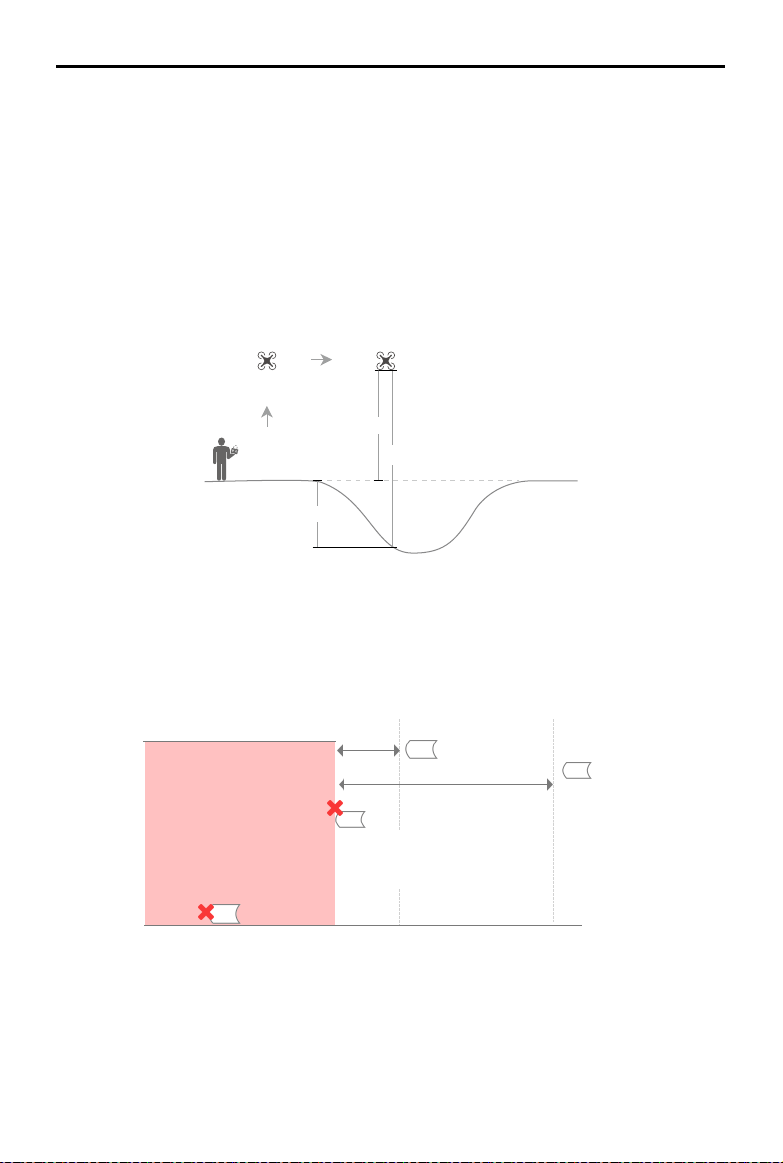
DJI Mavic 3 Pro User Manual
©
2023 DJI All Rights Reserved.
111
aircraft is near or in a restricted area, the horizontal distance is less than 160 m, or the vertical
distance is less than 40 m from the zone to remind the user to y with caution.
AGL (Above Ground Level) Statement
The vertical part of ‘‘Geo-awareness’’ may use the AMSL altitude or the AGL height. The choice
between these two references is specied individually for each UGZ. Neither AMSL altitude nor
the AGL height is supported by DJI Mavic 3 Pro. The height H appears in the DJI Fly app camera
view, which is the height from the aircraft takeo point to the aircraft. The height above the
takeoff point may be used as an approximation but may differ more or less from the given
altitude/height for a specic UGZ. The remote pilot remains responsible for not breaching the
vertical limits of the UGZ.
Takeoff
AGL (not supported)
H
Height error
Restricted Zones
Appear red in the DJI app. Users will be prompted with a warning, and flight is prevented.
UA cannot y or takeo in these zones. Restricted Zones may be unlocked, to unlock contact
[email protected] or go to Unlock A Zone at dji.com/ysafe.
Restricted Zones
Receiving a warning
Limit maximum speed
Ground
When approaching:
1. Receiving a warning
2. Can not fly in
3. User can apply on the DJI official website
after manual approval
When taking off:
1. Receiving a warning
2. Can not take off
3. User can apply on the DJI official website after manual approval
100 m
20 m
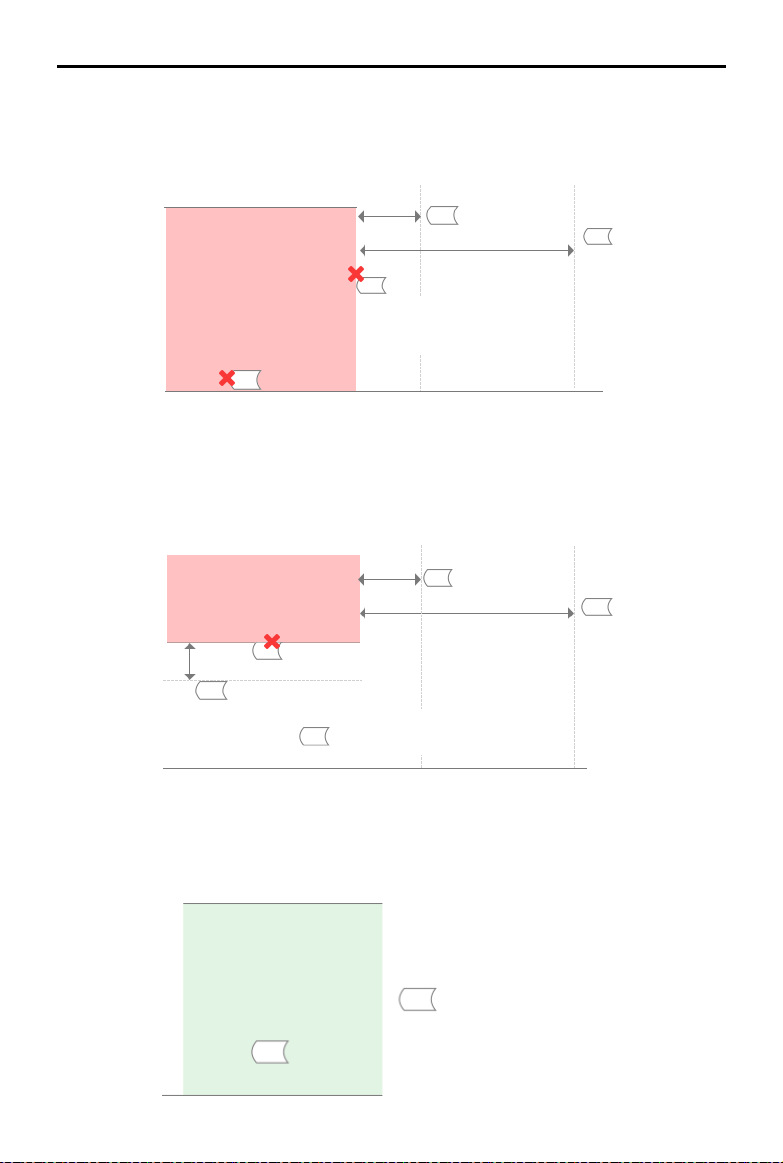
DJI Mavic 3 Pro User Manual
112
©
2023 DJI All Rights Reserved.
Authorization Zones
Receiving a warning
Limit maximum speed
Ground
When approaching:
1. Receiving a warning
2. Can not fly in
3. User can quickly apply on the DJI App
with a phone number
100 m
20 m
Altitude Zones
Altitude zones are zones with a limited altitude and appear in gray on the map. When
approaching, users receive warnings in the DJI app.
Altitude Zone
20 m
100 m
10 m
Receiving a warning
Limit maximum speed
Limit maximum speed
1. UA can take off and fly into these zones in
specific height with a warning message
2. User can apply for permission on the DJI
official website after manual approval
Ground
Limited altitude
Ground
1. UA can take off and fly into these zones with a warning
message which needs user confirmation
Enhanced Warning
Zones
Enhanced Warning Zones
A warning message will prompt users when the drone reaches the edge of the zone.
Authorization Zones
Appear blue in the DJI app. Users will be prompted with a warning, and flight is limited by
default. UA cannot y or takeo in these zones unless authorized. Authorization Zones may be
unlocked by authorized users using a DJI veried account.
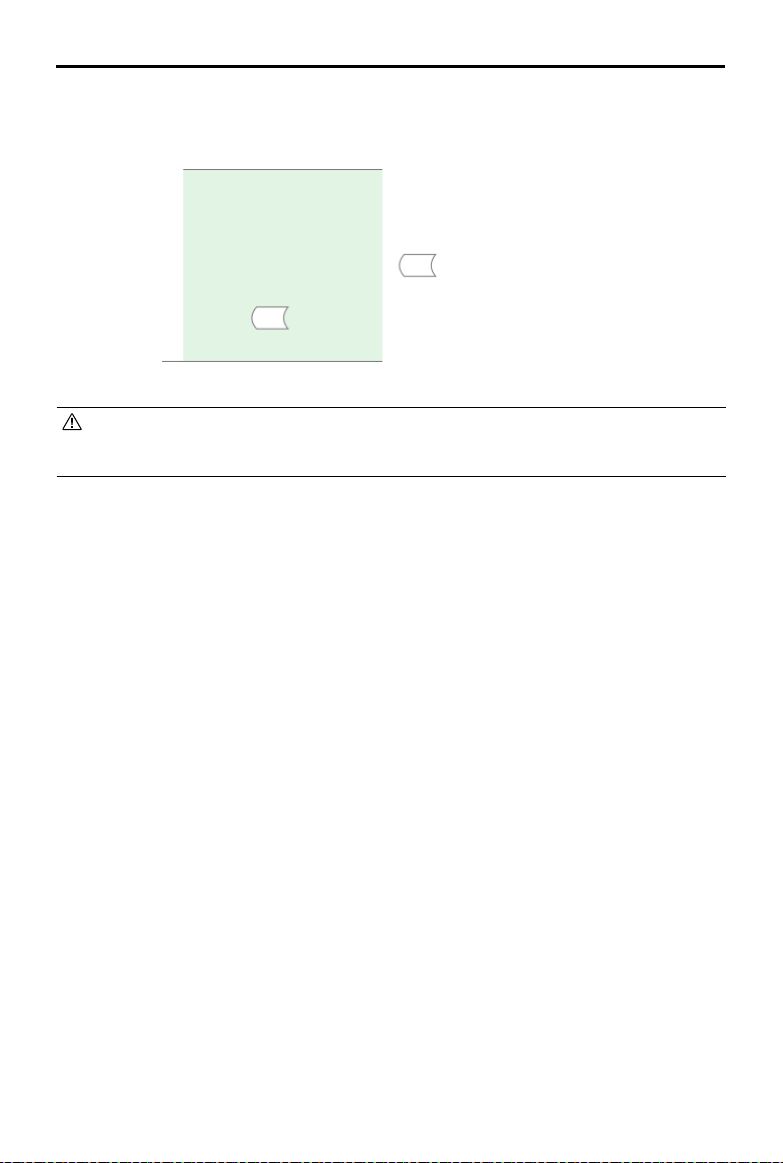
DJI Mavic 3 Pro User Manual
©
2023 DJI All Rights Reserved.
113
Ground
1. UA can take off and fly into these zones with a warning
message
Warning Zones
Warning Zones
A warning message will prompt users when the drone reaches the edge of the zone.
• When the aircraft and DJI Fly app cannot obtain a GPS signal, the GEO awareness
function will be inoperative. Interference of the aircraft antenna or disabling the GPS
authorization in DJI Fly will cause the GPS signal fails to be obtained.
EASA Notice
Make sure to read the Drone Information Notices document included in the package before
use.
Visit the link below for more EASA notice information on traceability.
https://www.easa.europa.eu/en/document-library/general-publications/drones-information-
notices
Original Instructions
This manual is provided by SZ DJI Technology, Inc., and the content is subject to change.
Address: Lobby of T2, DJI Sky City, No. 53 Xianyuan Road, Xili Community, Xili Street, Nanshan
District, Shenzhen, China, 518055.

DJI Mavic 3 Pro User Manual
114
©
2023 DJI All Rights Reserved.
FAR Remote ID Compliance Information
The aircraft complies with the requirements of 14 CFR Part 89:
• The aircraft automatically broadcasts Remote ID messages from takeo to shut down. An
external device such as a cell phone or tablet is required to be connected as a location
source to DJI mobile devices without an integrated GNSS system
[1]
, and must run the DJI
ight control app such as DJI Fly in the foreground and always allow the DJI ight control app
to obtain its accurate location information. The connected external device must minimally be
one of the following:
1) FCC Certified personal wireless device that uses GPS with SBAS (WAAS) for location
services; or
2) FCC Certied personal wireless device with integrated GNSS.
Also, the external device must be operated in a way that does not interfere with the location
reported and its correlation to the operator location.
• The aircraft automatically initiates a pre-flight self-test (PFST) of the Remote ID system
before takeo and cannot take o if it does not pass the PFST
[2]
. The results of the PFST of
the Remote ID system can be viewed in either a DJI ight control app such as DJI Fly or DJI
goggles.
• The aircraft monitors the Remote ID system functionality from pre-ight to shut down. If the
Remote ID system malfunctions or has a failure, an alarm will be displayed in either a DJI
ight control app such as DJI Fly or DJI goggles.
Footnotes
[1] DJI mobile devices without an integrated GNSS system such as DJI RC-N1, DJI FPV Goggles V2, and DJI
Goggles 2.
[2] The pass criterion for PFST is that the hardware and software of the Remote ID required-data source and
radio transmitter in the Remote ID system are functioning properly.
After-Sales Information
Visit https://www.dji.com/support to learn more about after-sales service policies, repair
services, and support.

This content is subject to change.
https://www.dji.com/mavic-3-pro/downloads
Trademark Recognition
The Adopted Trademarks HDMI, HDMI High-Definition Multimedia Interface,
and the HDMI Logo are trademarks or registered trademarks of HDMI Licensing
Administrator, Inc. in the United States and other countries
WE ARE HERE FOR YOU
Contact
DJI SUPPORT
If you have any questions about this document, please
contact DJI by sending a message to [email protected].
DJI and MAVIC are trademarks of DJI.
Copyright © 2023 DJI All Rights Reserved.