208-0916
Owner’s Manual
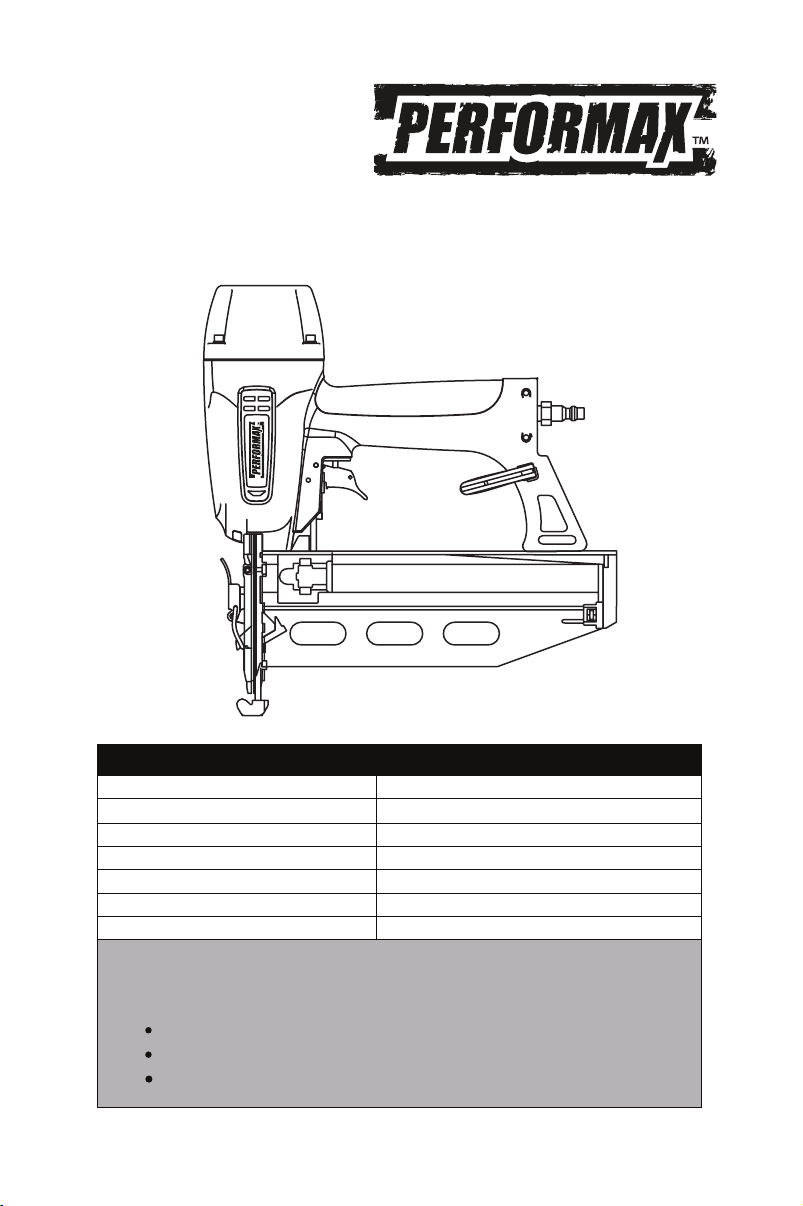
2-1/2" 16 GAUGE
FINISH NAILER
Need Assistance?
call us on our toll free customer support line:
1-866-915-8626
Technical questions
Replacement parts
Parts missing from package
PRODUCT SPECIFICATIONS
OPERATING PRESSURE: 70-110 PSI
MAX PRESSURE: 120 PSI
MAGAZINE CAPACITY:110 PCS
NAIL LENGTH : 1-1/4"
NAIL TYPE : 16 GA-STRAIGHT
~2-1/2"(32~64mm )
NAIL GAUGE: 16 GA
AIR INLET : 1/4"(6mm) NPT
2
TABLE OF CONTENTS
Symbols Page 2
Rules for safe operation& Important safety instructions Page 3-7
Carton contents …………..……………………………………………
…………..…………………………………………………
…………..…………………………………………………
…………..…………………………………………
…………..……………………………………………
…………..……………………………………………
Page 13-14
………..……………………………………
…..……………………………………………
…………..……………………………………………………
………………
Page 7
Functional description Page 8
Page 8-13
Trouble shooting Page 14
Parts list
Exploded view
Page 15
Page 16
Warranty Page 17
Maintenance
SYMBOLS
Some of the following symbols may be used on this tool. Please study
them and learn their meaning. Proper interpretation of these symbols
will allow you to operate the tool better and safer.
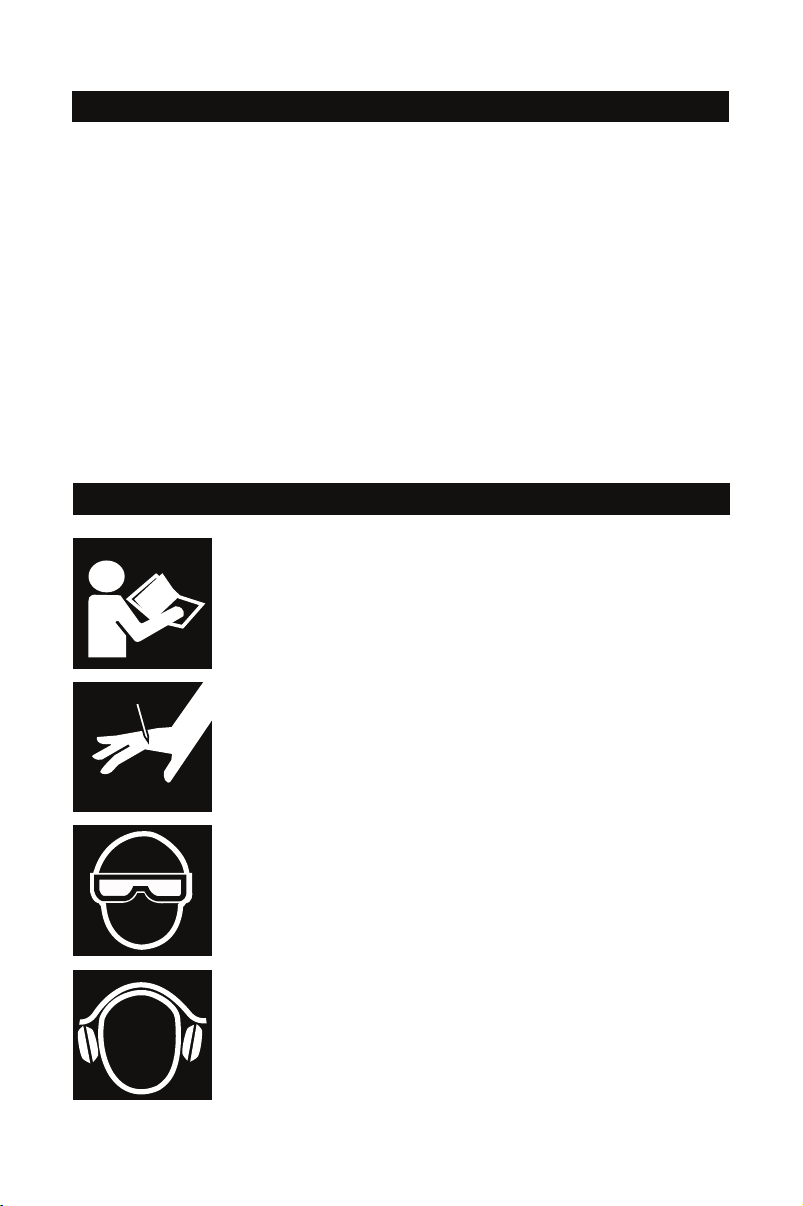
Read operator's manual: To reduce the risk of injury, user must read
and understand operator's manual before using this product.
Risk of serious personal injury: Never place hands or any other body
parts in the fastener discharge area of the nailer. The tool might eject
a fastener and could result in death or serious personal injury.
Eye protection: Always wear safety goggles, safety glasses with side
shields, or a full face shield when operating this product.
Risk to hearing: Always wear ear protection when using this tool.
Failure to do so may result in hearing loss.
Operating procedures

3
IMPORTANT SAFETY INSTRUCTIONS
INSTRUCTIONS PERTAINING TO A RISK OF FIRE, OR INJURY TO PERSONS.
WORK AREA
Keep the work area clean and well lit. Cluttered benches and dark areas
increase the risk of electric shock, fire, and injury to persons.
Do not operate the tool in explosive atmospheres, such as in the presence of
flammable liquids, gases, or dust. The tool is able to create sparks resulting
in the ignition of the dust or fumes.
Keep by standers, children, and visitors away while operating the tool.
Distractions are able to result in the lost of control of the tools.
PERSONAL SAFETY
Always wear eye protection. Operator and others in the work area should
always wear ANSI-approved safety goggles with side shields. Eye protection
is used to guard against flying fasteners and debris, which may cause severe
Always wear hearing protection when using the tool. Extended exposure to
eye injury.
high intensity noise is able to cause hearing loss.
Use safety equipment. A dust mask, non-skid safety shoes and a hard hat
must be used for the applicable conditions.
Dress properly. Do not wear loose clothing or jewelry. Contain long hair. Keep
your hair, clothing, and gloves away from moving parts. Loose clothes,
jewelry, or long hair can be caught in moving parts.
Stay alert, watch what you are doing and use common sense when operating
the tool while tried or under the influence of drugs, alcohol, or medication. A
WARNING: When using tools, basic precautions should always be followed,
including the following.
Avoid unintentional firing. Keep fingers away from trigger when not driving
fasteners, especially when connecting the tool to the air supply.Be sure the
hammer cap is off before connecting to the air supply. Do not carry the tool
with your finger on the hammer cap or connect the tool to the air supply with
the trigger on.
Keep proper footing and balance at all times. Do not overreach. Do not use
on a ladder or unstable support. Proper footing and balance enable better
control of the tool in unexpected situation.
Make sure the hose is free of obstructions or snags. Entangled or snarled
hoses can cause loss of balance or footing and may become damaged,
resulting in possible injury.
Do not attach the hose or tool to your body. Attach the hose to the structure
persons.
moment of inattention while operating the tool increase the risk of injury to
to reduce the risk of loss of balance if the hose shifts.
4
WARNING: Do not fire a nail on top of another nail. This may cause the nail
to be deflected and hit someone, or cause the tool to react which may result
in a risk of injury to persons.
RULES FOR SAFE OPERATION
TOOL USE AND CARE
Know this tool. Read manual carefully, learn its application and limitations,
as well as the specific potential hazards related to this tool.
Use only fasteners listed in the Accessories section of this manual.
Fasterners not identified for use with this tool by the tool manufacturer may
result in a risk of injury to persons or tool damage when use in this tool.
Check for misalignment or binding of moving parts, breakage of parts, and
any other condition that may affect the tool’s operation. If damaged, have
the tool serviced before using. Many accidents are caused by poorly
maintained tools. There is a risk of bursting if the tool is damaged.
Maintain the tools with care. Keep a cutting tool sharp and clean. A properly
WARNING: Remove finger from the trigger when not driving fasteners. Never
carry the tool with finger on trigger, the tool may fire a fastener.
WARNING: Disconnect the tool from the air source before making adjustments,
doing tool maintenance, clearing jams, leaving work area, or unloading the
tool. Such precautionary measures reduce the risk of injury to persons.
maintained tool, with sharp cutting edges reduces the risk of binding and is
easier to control.
Store the tools when it is idle out of reach of children and other untrained
persons.A tool is dangerous in the hands of untrained users.
Do not use the tool if the hammer cap does not turn the tool on or off. Any
tool that can not be controlled with the hammer cap is dangerous and must
Do not force tool. Use the correct tool for your application. The correct tool
be repaired.
will do the job better and safer at the rate for which it is designed.
Use clamps or another practical way to secure and support the workpiece to
a stable platform. Holding a tool by hand or against the body is unstable and
may lead to loss of control.
Keep the tool and its handle dry, clean and free from oil and grease. Always
use a clean cloth when cleaning. Never use brake fluids, gasoline,
petroleum-based products, or any strong solvents to clean your tool.
Always assume that the tool contains fasteners. Do not point the tool toward
yourself or anyone whether it contains fasteners or not.
Wash hands after handling. This product or its power cord may contain
chemicals to cause cancer and birth defects or other reproductive harm.

5
Never use this tool in a manner that could cause a fastener to be directed
toward anything other than the workpiece.
Never use gasoline or other flammable liquids to clean the tool. Never use
the tool in the presence of flammable liquids or gases. Vapours could ignite
by a spark and cause an explosion which will result in death or serious
Do not remove, tamper with, or otherwise cause the trigger lock or trigger to
personal injury.
become inoperable. Do not operate any tool which has been modified in a
like fashion. Death or serious personal injury could result.
Do not touch the trigger unless driving fasteners. Never attach air line to tool
or carry tool while touching the trigger. The tool could eject a fastener which
will result in death or serious personal injury. Also actuate the trigger lock to
the safe position when not in use.
Always fit tool with a fitting or hose coupling on or near the tool in such a
manner that all compressed air in the tool is discharged at the time the
fitting or hose coupling is disconnected. Do not use a heck valve or any other
fitting which allows air to remain in the tool. Death or serious personal injury
Never place hands or any other body parts in the fastener discharge area of
could occur.
the tool. The tool might eject a fastener and could result in death or serious
personal injury.
Never carry the tool by the air hose or pull the hose to move the tool away
from a compressor. Keep hoses away from heat, oil and sharp edges.
Replace any hose that is damaged, weak or worn. Personal injury or tool
damage could occur.
Do not use the tool as a hammer.
IMPORTANT SAFETY INSTRUCTIONS
Always assume the tool contains fasteners. Respect the tool as a working
implement; no horseplay. Always keep others at a safe distance from the
work area in case of accidental discharge of fasteners. Do not point the tool
toward yourself or anyone whether it contains fasteners or not. Accidental
triggering of the tool could result in death or serious personal injury.
Do not drop or throw the tool. Dropping or throwing the tool can result in
damage that will make the tool unusable or unsafe. If the tool has been
dropped or thrown, examine the tool closely for bent, cracked or broken parts
and air leaks. Stop and repair before using, or serious injury could occur.
Avoid using the tool when the magazine is empty. Accelerated wear on the
tool may occur.
Clean and check all air supply hoses and fittings before connecting the tool
to an air supply. Replace any damaged or worn hoses or fittings. Tool
performance or durability may be reduced.

6
Do not use the tool if it leaks air or does not function properly.
Do not operate the tool if it does not contain a legible warning label.
TOOL SERVICE
Use only accessories that are identified by the manufacturer for the specific
tool model.
When servicing a tool, use only identical replacement parts. Use only
authorized parts.
Use only the lubricants supplied with the tool or specified by the
manufacturer.
Tool service must be performed only by qualified repair personnel.
OPERATION
Do not drive fasteners near edge of material. The workpiece may split
causing the fastener to ricochet, injuring you or others around you.
Do not carry the tool from place to place holding the trigger. Accidental
discharge could result. Choice of triggering method is important. Check
manual for triggering options.
During normal use the tool will recoil immediately after driving a fastener.
This is a normal function of the tool. Do not attempt to prevent the recoil by
holding the tool against the work. Restriction to the recoil can result in a
second fastener being driven from the tool. Grip the handle firmly and let the
injury.
tool do the work. Failure to heed this warning Can result in serious personal
Do not drive fasteners on top of other fasteners or with the tool at an overly
steep angle as this may cause deflection of fasteners which could cause
injury.
Do not actuate the tool unless you intend to drive a fastener into the
workpiece.
Always handle the tool with care:
a. Respect the tool as a working implement.
b. Never engage in horseplay.
c. Never pull the trigger unless nose is directed toward the work.
d. Keep others a safe distance from the tool while tool is in operation as
accidental actuation may occur, possibly causing injury.
AIR SUPPLY AND CONNECTIONS
The air supply connection must not hold pressure when air supply is
disconnected. If an incorrect fitting is used, the tool can remain charged with
air after disconnecting and thus will be able to drive a fastener even after the
air line is disconnected, possibly causing injury.
7
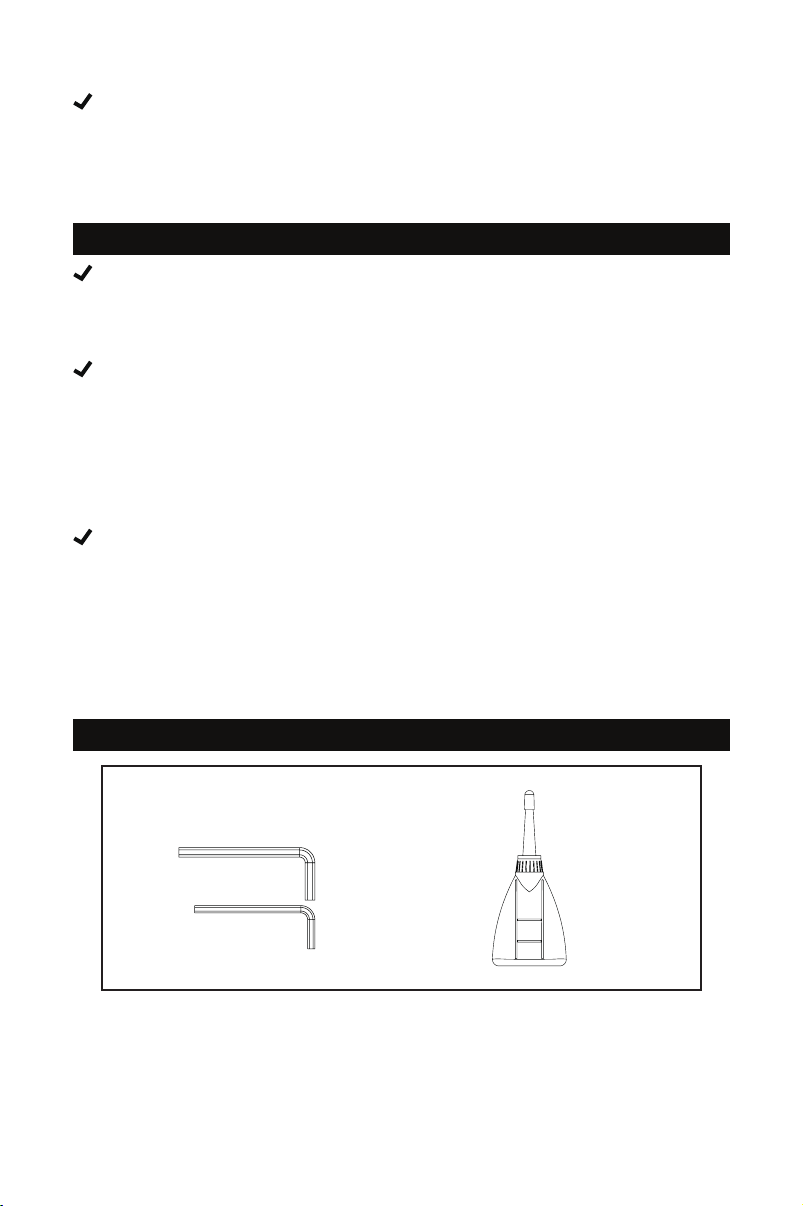
A. 2 Hex Keys
B. Oil Bottle
Use only a pressure-regulated compressed air source to limit the air pressure
supplied to the tool. The regulated pressure must not exceed 110 PSI. If the
regulator fails, the pressure delivered to the tool must not exceed 120 PSI.
The tool could explode which will cause death or serious personal injury.
Always disconnect air resource:
a) Before making adjustments.
b) When servicing the tool.
c) When clearing a jam.
d) When tool is not in use.
e) When moving to a different work area, as accidental actuation may occur,
causing injury.
Never connect tool to an air source that may exceed 180 PSI. Over
pressurizing the tool may result in bursting, abnormal operation, breakage of
the tool or serious injury to persons. Use only clean, dry, regulated
compressed air at the rated pressure or within the rated pressure range as
marked on the tool. Always verify prior to using the tool that the air source
has been adjusted to the rated air pressure or within the rated air-pressure
range.
IMPORTANT SAFETY INSTRUCTIONS
A B
Do not use any type of reactive gases, including, but not limited to, oxygen
carbon dioxide and combustible gases, as a power source. Use filtered,
lubricated, regulated compressed air only. Use of a reactive gas instead of
compressed air may cause the tool to explode which will cause death or
serious personal injury.
The following items are to be provided in the shipping box:
CARTON CONTENTS:
8
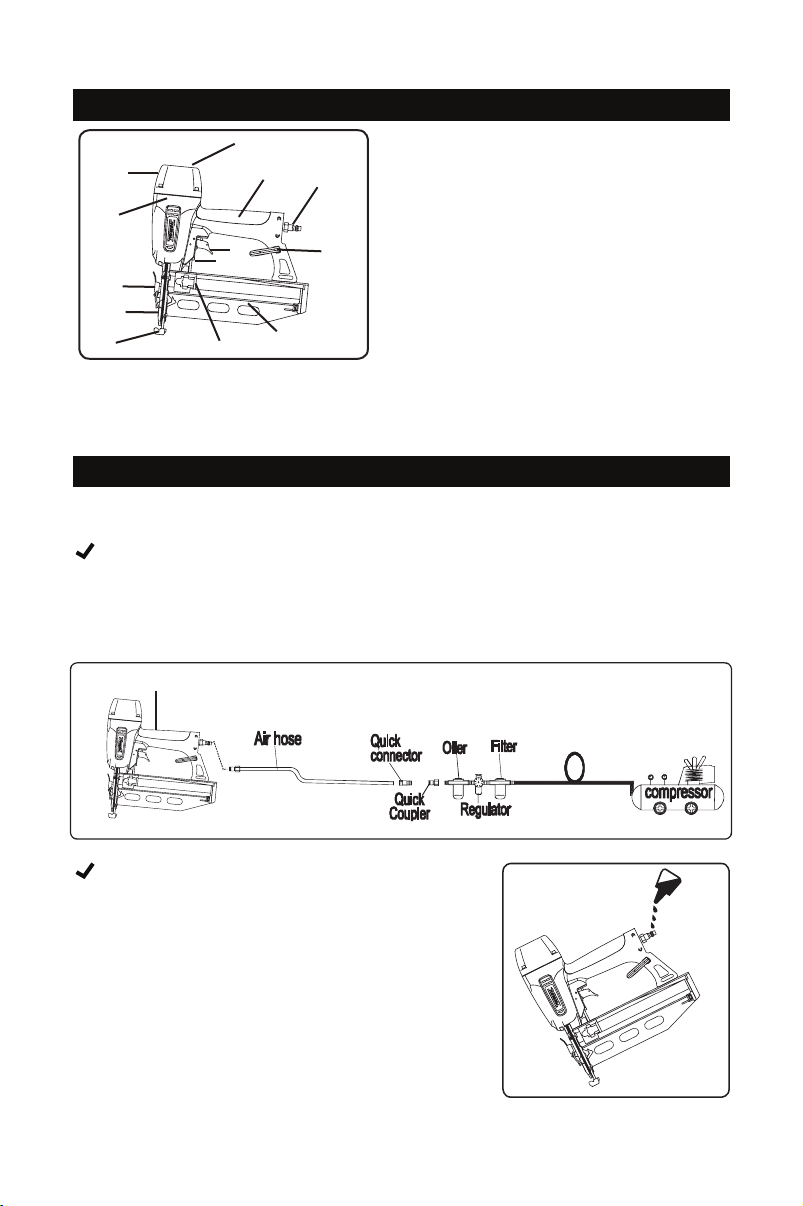
Figure 1 names the major components
of the PERFORMAX 2-1/2” Finish Nailer.
A. Adjustable Exhaust Deflector
B. Body
C. No-Mar Tip
D. Pusher
E. Magazine
F. 1/4" NPT Air Plug
G. Trigger
H. Quick Release Lever
I. Top Cap
J. Hand Grip
K. Safety
L. Depth Adjustment Knob
M. Belt clip
FUNCTIONAL DESCRIPTION
Fig.1
A
F
M
J
B
I
H
K
G
L
E
D
C
OPERATING PROCEDURES
SET UP
AIR SOURCE
The PERFORMAX 2-1/2” finish nailer is designed to operate on clean, dry,
compressed air, regulated at 70-110 PSI. The preferred system would
include a filter, a pressure regulator, and an automatic oiler located as close
to the tool as possible. Within 15 feet (5 m) is ideal. Do not use bottled air or
gases. Please see below:
All compressed air contains moisture and other
contaminants that can harm the internal
components of the tool. An air line filter will
remove most of these and significantly extend
the life of the tool. Ensure the in-line oiler has
sufficient oil. If an in-line oiler is not available,
place 2 drops of oil into the tool’s air inlet at
the beginning of each workday. More than
this will be expelled from the tool’s exhaust
during firing.
2-1/2" finish nailer
Fig.2
Fig.3
9
PREPARING THE TOOL
1. After reading and understanding this entire manual, connect tool to the air
supply.
2. Turn on the air compressor and adjust the regulator to the proper pressure for
the fastner size you are using.
CAUTION:
Keep tool pointed away from yourself and others at all times.
Always disconnect tool to air supply before loading fasteners.
Do not load fasteners with trigger or safety pressed.
Always disconnect tool to air supply before loading fasteners.
or operating the tool.
Never use a tool that leaks air or needs repair.
CAUTION:
All air line components (including hoses, pipe, connectors, filters,
& regulators, etc.) must be rated for a minimum working pressure
of 150 PSI or 150% of the maximum system pressure, whichever is
greater.
Disconnect the tool from the air supply before performing
maintenance, clearing a jammed fastener, leaving the work area,
moving the tool to another location, or handing it to another person.
Air fitting: The nailer is equipped with a ¼” NPT male industrial style plug.The
plug can be connected to a ¼”Universal style female coupler.To prevent
accidental firing,the air supply connection must not hold pressure when air
supply is disconnected. If an incorrect fitting is used, the tool can remain
charged with air after disconnecting and thus will be able to drive a fastener
even after the air line is disconnected, possibly causing injury.
10
OPERATING PROCEDURES
LOADING NAILS
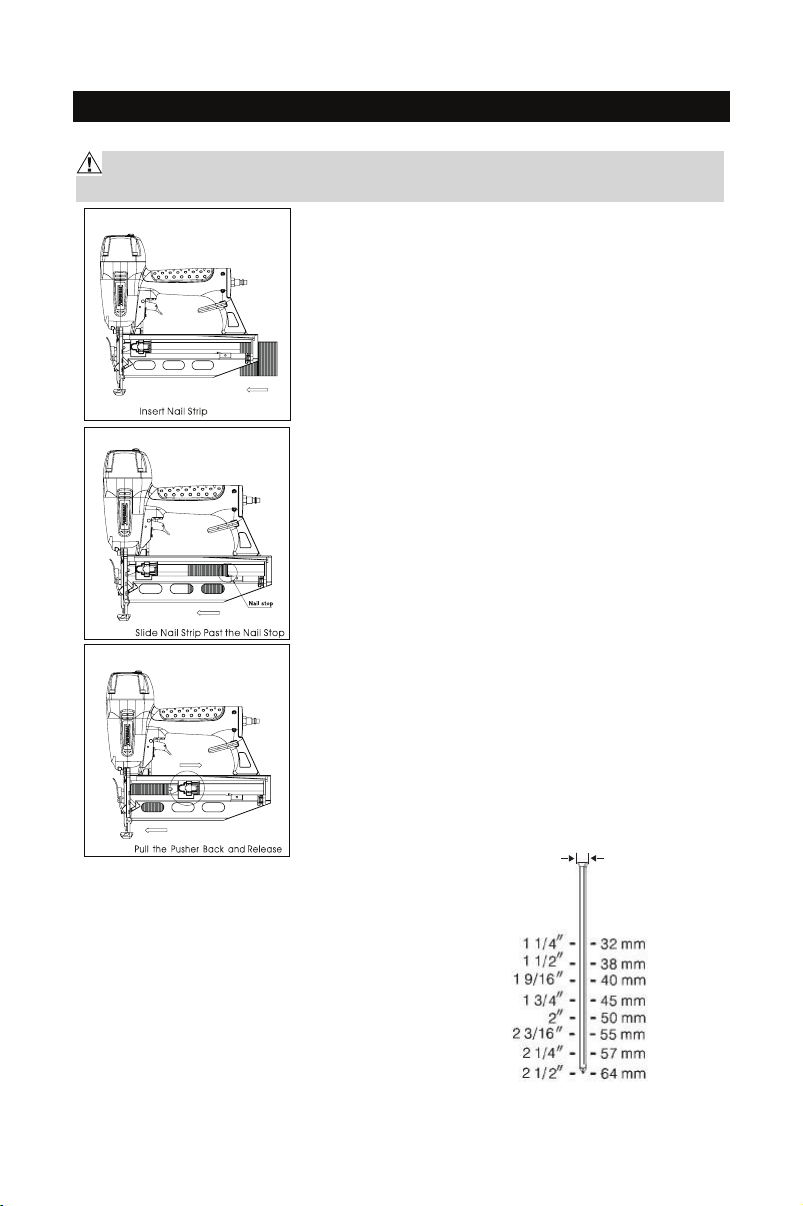
1.
Insert nail strip into slot located on the end of
the magazine( Fig.4 ).
2.
Slide nail strip towards the front of the
magazine, making sure strip is past the nail
stop(Fig.5).
3.
Depress the latch on the pusher and pull the
pusher completely behind the nail strip.
Release the latch and the nail strip will be
pushed to the front of the magazine (Fig.6).
Fig.4
CAUTION: Do not load with contact safety mechanism or trigger
depressed.
Fig.5
Fig.6
NOTE: This 2-1/2" finish nailer
accepts below nails.
16GA Straight Nail.
3mm(0. 12“)
11
CAUTION:
Keep the tool pointed in a safe direction at all times.
The fastener can ricochet causing personal injury.
Disconnect tool from air supply before doing any disassembly,
maintenance, clearing a jammed fastener.
Disconnect tool from air supply when leaving the work area,
moving the tool to another location, or handing the tool to another
person.
Do not use the tool unless both the trigger and the safety
mechanism are functional, or if the tool is leaking air or needs any
other repair.
Clean and inspect the tool daily.
Carefully check for proper operation of trigger and safety
mechanism.
OPERATING THE TOOL
Never attempt to drive fasteners into materials too hard to
penetrate, at too steep an angle, or too near the edge of the
workpiece.
OPERATING PROCEDURES
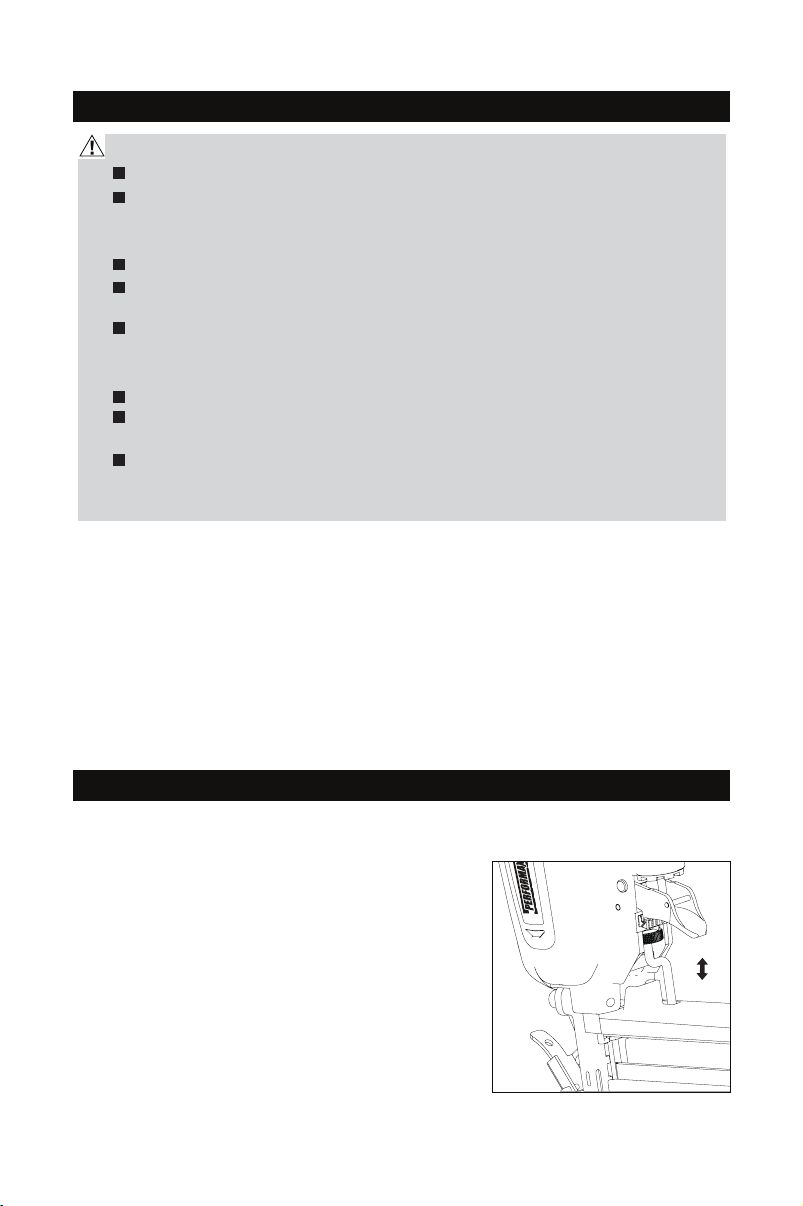
Fig.7
upward
downward
BASIC OPERATION
1. Make sure the air compressor is set correctly.
2. Hold the body ( Fig.1, page 8, B ) and press safety ( Fig.1, K ) against the work
surface, the safety will now engage. Ensure the tool is perpendicular
to the surface.
3. Hold the hand grip firmly ( Fig.1, J ) and gently squeeze the
trigger ( Fig.1, G ) to drive the fastener.
4. Lift the tool off the work surface.
ADJUSTING THE AIR PRESSURE
The depth to which a fastener is driven is determined by the air
pressure and the depth adjustment (Fig.7).

12
2. Open magazine and remove any remaining fasteners.
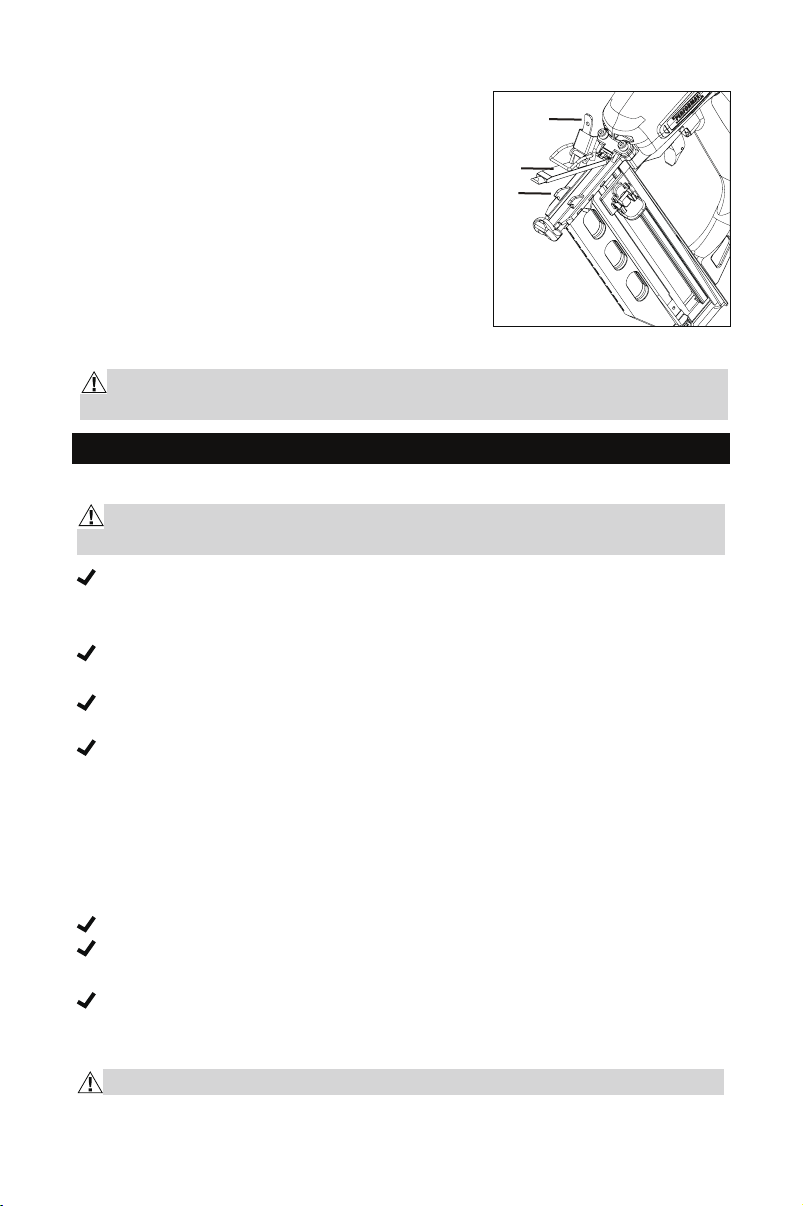
3. Grasp nose cover on both sides and pull the clip (A, Fig.8 ) of the quick
release lever outwards until the quick release lever is unhooked from
both hooks (B, Fig.8) .
4. Swing the guide plate (C, Fig.8) away from the nail magazine.
1. Disconnect tool from air supply before clearing a jammed fastener.
CLEARING A JAMMED FASTENER
SEQUENTIAL FIRING
To operate a sequential firing tool, first position the No-Mar Tip (Fig. 1, C) on
the work surface WITHOUT PULLING THE TRIGGER(Fig.1, G). Depress the safety
nosepiece and then pull the trigger to fire a fastener. As long as the safety
nosepiece is contacting the work surface and is held depressed, the tool will
fire a fastener each time the trigger is depressed. If the safety nosepiece is
allowed to leave the work surface, the sequential firing described above must
be repeated to fire another fastener.
ADJUSTING THE DEPTH DRIVE
3. Test fire a few fasteners into a sample piece of the material with which
you will be working, and check the depth of the fastener.
the air supply and increase the pressure. If the fastener is driven too deep,
adjust the pressure regulator on the air supply and decrease the pressure.
5. Repeat this adjustment until the desired depth is reached.
1. Test fire a few fasteners into a sample piece of the material with which
you will be working.
2. If the depth of drive needs to be changed, rotate the depth adjustment
knob upward to increase; or rotate the depth adjustment knob downward
to decrease.
3. Fire a few new fasteners to check if the accurate depth is reached.
4. Repeat this adjustment until the accurate depth is reached.
NOTE: For different operations, you may need to adjust the air pressure
and depth adjustment knob.
2. First setting the air pressure at 90PSI.
1. The operating air pressure of this tool is 70 to 110PSI. Do not exceed
maximum 120PSI.
The depth adjustment feature provides close control of the fastener drive depth;
from flush with the work surface to shallow or deep countersink. After the air
pressure is set, then use the depth adjustment knob (Fig.7) to give the accurate
depth of drive.
4. If the fastener is not driven deep enough, adjust the pressure regulator on
13
5. Remove the jammed nail and ensuring the
slot of the nail magazine is free of nail rests.
6. Push the guide plate (C, Fig.8) back to the
nail magazine and hook the quick release
lever behind the both hooks (B, Fig.8) at the
nail magazine.
7. Push the clip (A, Fig.8 ) back to direction of
the nail magazine.
8. Ensure that the guide plate is fixed well
before the operating of the tool will be
continued.
CAUTION: Disconnect tool from the air supply before removing or
installing the contact tip.
Fig.8
A
C
B
MAINTENANCE
CLEAN AND INSPECT BEFORE EACH USE
CAUTION: Disconnect tool from air supply before cleaning and
inspection. Correct all problems before putting the tool back in service.
Wipe tool clean and inspect for wear or damage. Use non-flammable
cleaning solutions to wipe exterior of tool only if necessary. Do not soak tool
with cleaning solutions. Such solutions can damage internal parts.
Inspect trigger and safety mechanism to assure system is complete and
functional: no loose or missing parts, no binding or sticking parts.
Keep all screws tight. Loose screws can cause personal injury or damage
the tool.
If the tool is used without an in-line oiler, place 2 drops of air tool oil into the
air inlet of the tool at the beginning of each workday and after about 1 hour
of continuous use. Frequent but not excessive lubrication is required for
best performance. Oil added through the airline connection will lubricate all
CAUTION: Such solutions may damage O-rings and other parts.
internal parts. Use only air tool oil. Do not use oil with detergents or other
additives. These can cause damage through accelerated wear to the seals
in the tool.
Use a small amount of oil on all exterior moving parts and pivots.
Dirt and water in the air supply are major causes of pneumatic tool wear.
See the section setup air source above for more information.
Keep tools clean for better and safer performance.Use non-flammable
cleaning solutions sparingly and only if necessary.Do not soak parts in the
solutions.
MAINTENANCE
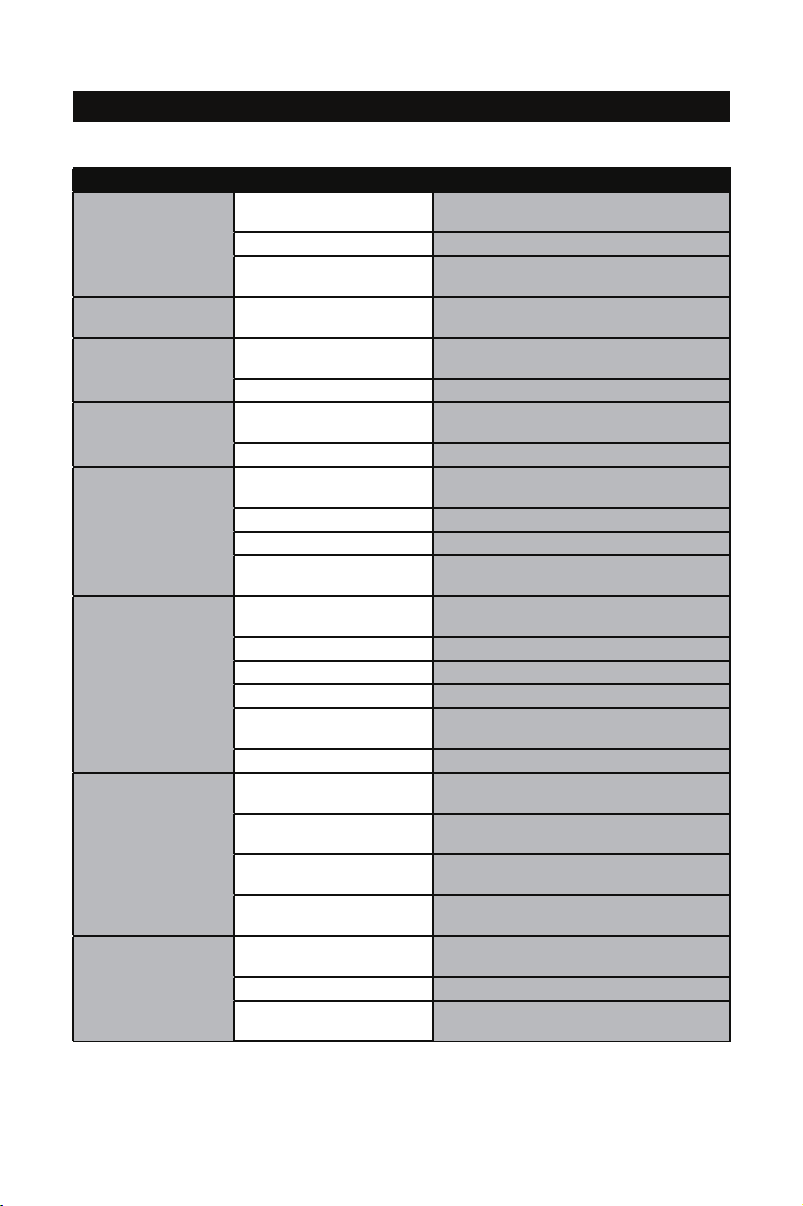
TROUBLESHOOTING
NOITULOSESUACMELBORP
Air leak at trigger area O-ring in trigger valve
damaged or cracked
Check and replace O-ring
Trigger valve head damaged Check and replace trigger valve head
Trigger valve stem, seal, or
O-ring damaged
Check and replace trigger valve stem
Air leak between body
and front plate
Piston O-ring or bumper
damaged
Check and replace O-ring or bumper
Air leak between body
and cylinder cap
Screw loose Tighten screws
Damaged seal Check and replace seal
Tool driving fasteners
too deeply
Worn bumper Replace bumper
Air pressure too high Adjust air pressure at regulator
Tool runs slowly or has
power loss
Add oil as instructecl
Check air supply
Insufficient Iubrication
Insufficient air supply
Check hose and compressor fittingsInadequate airflow to tool
Broken spring in cylinder cap Replace spring
Exhaust port in cylinder head
is blocked
Replace damaged internal parts
Tool skips fasteners Worn bumper or damaged
spring
Replace bumper or pusher spring
Dirt in front plate Clean drive channel in front plate
Worn or dry O-ring on piston Replace or lubricate O-ring
Damaged O-ring on trigger
valve
Replace O-ring
Cylinder cap is leaking Replace seal
Fasteners jam in tool
or in magazine
Joint guide is worn Replace joint guide
Fasteners in tool are the
wrong size or damaged
Use only recommended fasteners
Magazine screws or front
plate clamp are loose
Tighten all
Blade in piston assembly is
damaged
Replace piston assembly
Tool will not drive
fasteners down tight
Worn blade in piston
assembly
Replace piston assembly
Lack of power Adjust regulator to adequate pressure
Slow cycling and loss of
power
Check cylinder cap spring for broken coils,
reduced length, or if exhaust port is blocked
14
15
.strap tnemecalper tnempiuqe lanigiro ylno esu ,gnicivres nehW :GNINRAW
The use of any other parts may create a safety hazard or cause damage to the
2-1/2" FINISH NAILER .
Any attempt to repair or replace spare parts on this finish nailer may create
a safety hazard unless repairs are performed by a qualified technician. For
more information, call the toll-free helpline, at 1-866-915-8626.
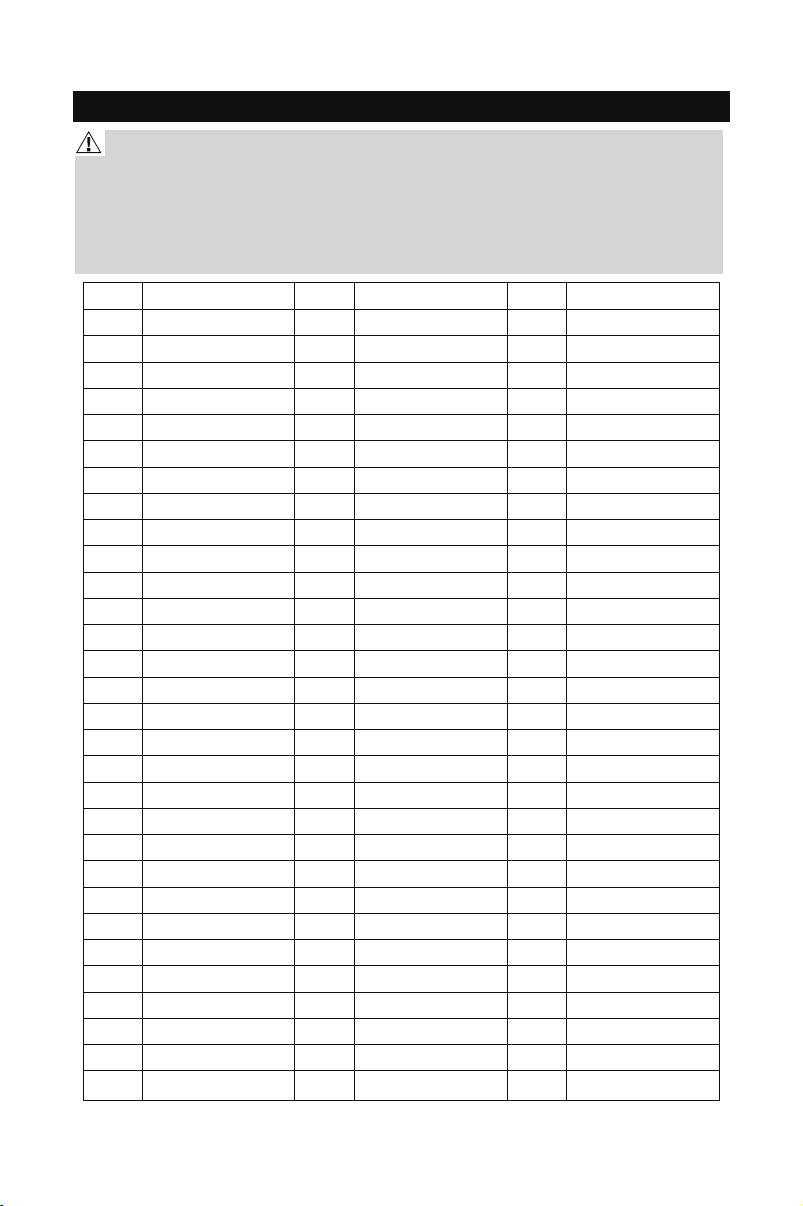
PARTS LIST
Part No. Description Part No. Description Part No. Description
1
2
3
4
5
6
7
8
9
10
11
12
13
14
15
16
17
18
19
20
21
22
23
24
25
26
27
28
29
30
31
32
33
34
35
36
37
38
39
40
41
42
43
44
45
46
47
48
49
50
51
52
53
54
55
56
57
58
59
60
61
62
63
64
65
66
67
68
69
70
71
72
73
74
75
76
77
78
79
80
Screw 5*6 Pusher
Washer Spring Spring
O-Ring 16*1.7 O-Ring 3.5*1.6
Trigger valve Head
Spring
Exhaust Cover Spring Holder
Screw 5*25 O-Ring 12.5*1.8 Pusher
Washer #6 Screw 5*20
Cylinder Cap O-Ring 15*2 Magazine
Gasket RELEASING BLADE Spring plate
Seal, Air Spring Nail rail
O-Ring 48*2.5 Trigger
Trigger valve stem
Spring plate
Spring Pin 2.5*16.8 Rack
O-Ring 13.8*2.4 Pin Screw 5*14
Head Valve Piston Catch Guide Plate Nylon Nut (M5)
O-Ring 37.5*3.55 Pin 3*24 Screw 5*10
O-Ring 26*3 Air Plug Nozzle Cover
O-Ring 31.5*3.55 Tail cover Driver blade set
Piston Head O-Ring 38.5*3.1 Trigger Valve set
Pin 5*14.8 Pin 3*38 Trigger set
Driver Blade Pin 3*36 Washer
Collar Stopper Belt clip
O-Ring 61.5*2.65 Pin 3*14
O-Ring 41.8*2.2 Driver Guide Cover
Cylinder Pin 3*22
O-Ring 41.2*3.55 Click Lever Set
Bumper Spring
Handle Grip Release Catch (B)
O-Ring φ5.5*2
Adjusting Knob
Body Driver Guide
NOZZLE Spring 4.1*47
O-Ring 8*1.8 Release Catch (A)
Trigger valve guide
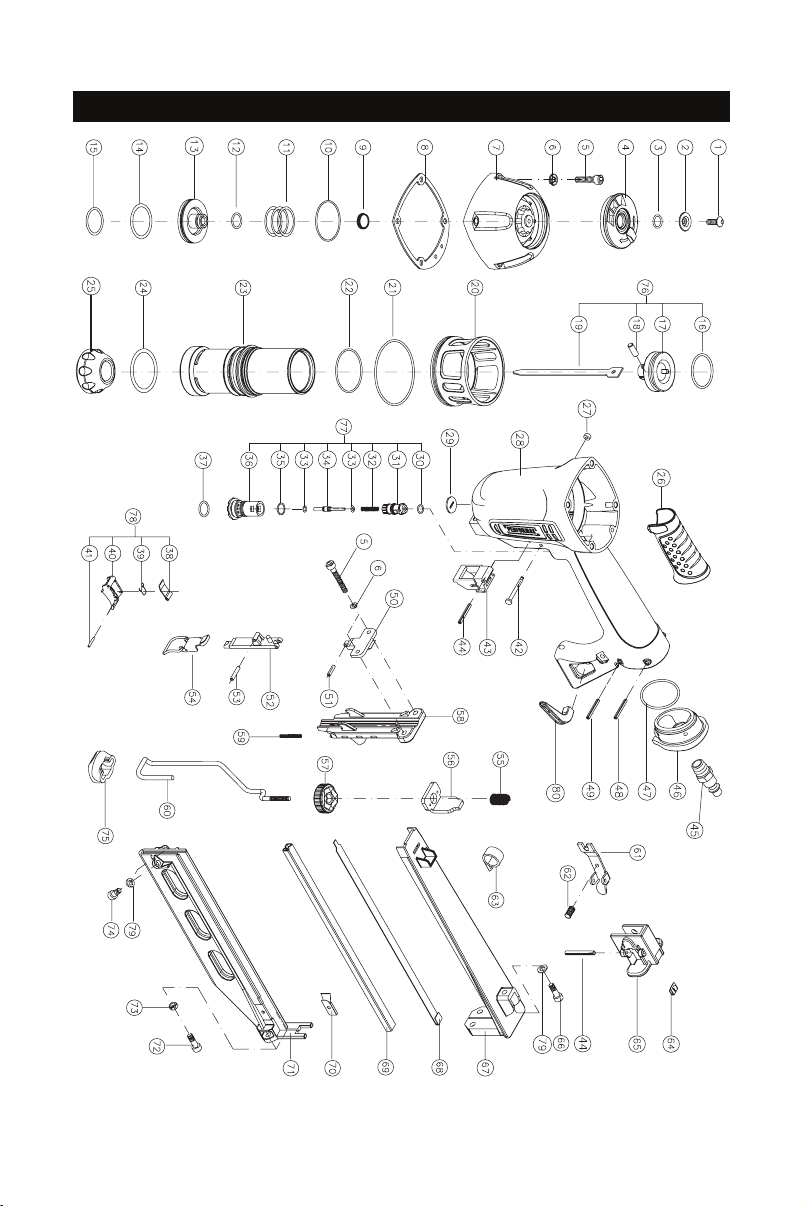
SCHEMATIC DRAWING
16
17
For questions / comment
s, technical assistance or repair parts –
Please Call Toll Free at: 1-866-915-8626 (M-F 9am – 5pm)
SAVE YOUR RECEIPTS. THIS WARRANTYY IS VOID WITHOUTT THEM.
Rev 1.3 12/09/2015
Distributed by: Menard, Inc., Eau Claire, WI 54703
PERFORMAX
TM
30-DAY MONEY BACK GUARANTEE:
:
This PERFORMAX
TM
brand power tool carries our 30-Day Money Back
Guarantee. If you are not completely satisfied with your PERFORMAX
TM
brand
power tool for any reason within thirty (30) days from the date of purchase, return
the tool with your original receipt to any MENARDS
®
retail store, and we will
provide you a refund – no questions asked.
2
-YEAR LIMITED WARRANTY:
This PERFORMAX brand power tool carries a 2-Year Limited Warranty to the
original purchaser. If, during normal use, this PERFORMAX power tool breaks
or fails due to a defect in material or workmanship within two (2) years from the
date of original purchase, simply bring this tool with the original sales receipt
back to your nearest MENARDS retail store. At its discretion, PERFORMAX
agrees to have the tool or any defective part(s) repaired or replaced with the
same or similar PERFORMAX product or part free of charge, within the stated
warranty period, when returned by the original purchaser with original sales
receipt. Notwithstanding the foregoing, this limited warranty does not cover any
damage that has resulted from abuse or misuse of the Merchandise. This
warranty: (1) excludes expendable parts including but not limited to driver blades,
O rings, blades, brushes, belts, bits, light bulbs, and/or batteries; (2) shall be void
if this tool is used for commercial and/or rental purposes; and (3) does not cover
any losses, injuries to persons/property or costs. This warranty does give you
specific legal rights and you may have other rights, which vary from state to
state. Be careful, tools are dangerous if improperly used or maintained. Seller’s
employees are not qualified to advise you on the use of this Merchandise. Any
oral representation(s) made will not be binding on seller or its employees. The
rights under this limited warranty are to the original purchaser of the Merchandise
and may not be transferred to any subsequent owner. This limited warranty is in
lieu of all warranties, expressed or implied including warranties or merchantability
and fitness for a particular purpose. Seller shall not be liable for any special,
incidental, or consequential damages. The sole exclusive remedy against the
seller will be for the replacement of any defects as provided herein, as long as
the seller is willing or able to replace this product or is willing to refund the
purchase price as provided above. For insurance purposes, seller is not allowed
TM
TM
®
TM
TM
16 GAUGE 2-1/2” FINISH NAILER WARRANTY