INSTRUCTIONS FOR USE
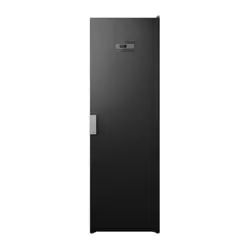
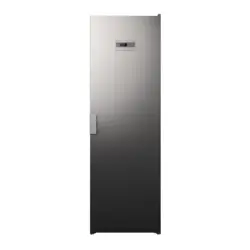
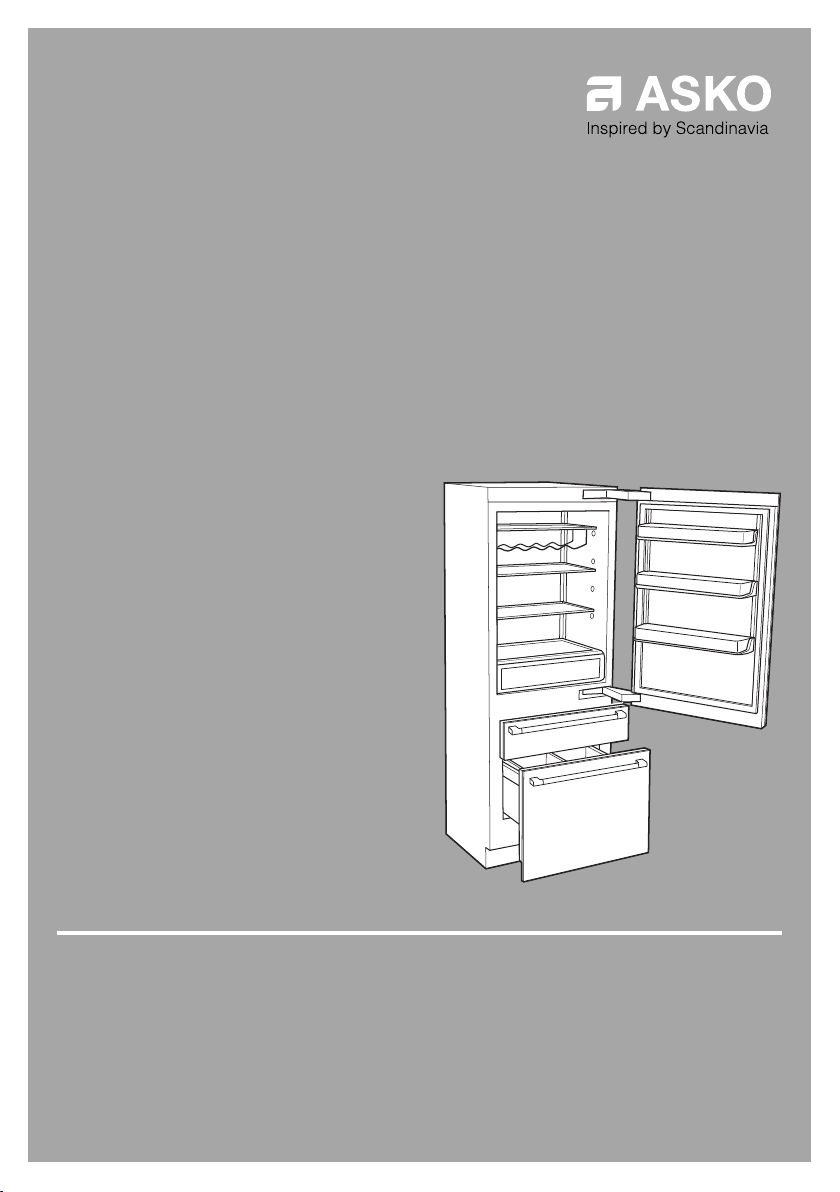
REFRIGERATOR WITH FREEZER
EN (GB) (IE)
RFN2826S
3Introduction ................................................
3Dear customer! ............................................
4Safety instructions .....................................
4Safety of children and vulnerable people .....
4General safety ..............................................
6Installation ....................................................
6Electrical connection ...................................
7Use ...............................................................
8Care and cleaning .......................................
8Disposal .......................................................
10Installation and connection ......................
10Selecting the location ..................................
11How to connect electricity ...........................
11Refrigerator location ....................................
11Clearances ...................................................
12Description of the appliance .....................
12Vegetable pan .............................................
13Lighted vegetable drawer shelf ...................
13Adjustable shelves .......................................
14Door bins .....................................................
14Wine/ beverage rack ....................................
15Customizable drawer ...................................
15LED lighting .................................................
15
Accessing the icemaker and freezer
drawer ..........................................................
16Water filter cartridge ....................................
17Operating the appliance ............................
18Alarm ............................................................
18Automatic icemaker .....................................
19Child control lockout ....................................
19External moisture control .............................
20Storing and freezing food .........................
20Recommended distribution .........................
20Avoid contamination of food ........................
21Storing fresh food in the refrigerator ............
21Freezing and storing foods in the freezer .....
22Thawing frozen food ....................................
23Maintenance ...............................................
23Cleaning outside ..........................................
23Cleaning inside ............................................
23Preparing for vacation .................................
23Interior light replacement .............................
24Faults table .................................................
Contents
Dear customer!
Congratulations on choosing this Asko refrigerator with freezer. This product is designed with simple
operation and optimum comfort in mind.
These instructions for use explain how you can make best use of this appliance. These instructions
contain information about the operation of the appliance and background information that may be
of help to you during its use.
WARNING!
Read the safety instructions before using the appliance!
Read these instructions thoroughly before you first use the appliance, and keep the instructions
for future use.
Carefully read the instructions for use before using the appliance.
Link to the EU EPREL database
The QR code on the energy label supplied with the appliance provides a web link to the registration
of this appliance in the EU EPREL database. Keep the energy label for reference together with the
user manual and all other documents provided with this appliance. It is possible to find information
related to the performance of the product in the EU EPREL database using the link
https://eprel.ec.europa.eu and the model name and product number that you can find on the rating
plate of the appliance. For more detailed information about the energy label, visit
www.theenergylabel.eu.
The following symbols are used throughout the manual and they have the following meanings:
INFORMATION!
Information, advice, tip, or recommendation
WARNING!
Warning – general danger
ELECTRIC SHOCK!
Warning – danger of electric shock
DANGER OF FIRE!
Warning – danger of fire
3
Introduction
Before the installation and use of the appliance, carefully read the
supplied instructions. The manufacturer is not responsible if an
incorrect installation and use causes injuries and damages. Always
keep the instructions with the appliance for future reference.
Safety of children and vulnerable people
• The appliance is not intended for use by persons (including
children) with reduced physical, sensory or mental capabilities,
or lack of experience and knowledge, unless they have been
given supervision or instruction concerning use of the appliance
by a person responsible for their safety.
• Children should be supervised to ensure that they do not play
with the appliance.
• Cleaning and user maintenance shall not be made by children
without supervision.
• Keep all packaging away from children.
For European markets only
• This appliance can be used by children aged from 8 years and
above and persons with reduced physical, sensory or mental
capabilities or lack of experience and knowledge if they have
been given supervision or instruction concerning use of the
appliance in a safe way and understand the hazards involved.
• Children shall not play with the appliance.
• Cleaning and user maintenance shall not be made by children
without supervision.
• Children aged from 3 to 8 years are allowed to load and unload
refrigerating appliances.
General safety
• The lamp in this household appliance is only suitable for
illumination of this appliance. The lamp is not suitable for
household room illumination.
• WARNING! This appliance is intended to be used in household
and similar applications such as:
4
Safety instructions
- staff kitchen areas in shops, offices and other working
environments;
- farm houses and by clients in hotels, motels and other
residential type environments;
- bed and breakfast type environments;
- catering and similar non-retail applications.
WARNING!
• Keep ventilation openings, in the appliance enclosure or in the
built-in structure, clear of obstruction.
• Do not use mechanical devices or other means to accelerate
the defrosting process, other than those recommended by the
manufacturer.
• Do not damage the refrigerant circuit.
• Do not use electrical appliances inside the food storage
compartments of the appliance, unless they are of the type
recommended by the manufacturer.
• Do not use water spray and steam to clean the appliance.
• Clean the appliance with a moist soft cloth. Only use neutral
detergents. Do not use abrasive products, abrasive cleaning
pads, solvents or metal objects.
• Do not store explosive substances such as aerosol cans with
a flammable propellant in this appliance.
• If the supply cord is damaged, it must be replaced by the
manufacturer, its service agent or similarly qualified persons in
order to avoid a hazard.
WARNING!
Connect to potable water supply only.
5
Safety instructions
Installation
WARNING!
This appliance should only be connected by a registered installer.
• Remove all the packaging.
• Do not install or use a damaged appliance.
• Obey the installation instruction supplied with the appliance.
• WARNING! To avoid any hazard resulting from poor stability of
the appliance, make sure it is installed as instructed.
• Always be careful when you move the appliance because it is
heavy. Always wear safety gloves.
• Make sure the air can circulate around the appliance.
• Wait at least 4 hours before connecting the appliance to the power
supply. This is to allow the oil to flow back in the compressor.
• Do not install the appliance close to radiators or cookers, oven
or hobs.
• Do not install the appliance where there is direct sunlight.
• Do not install this appliance in areas that are too humid or too
colds, such as the construction appendices, garages or wine
cellars.
• When you move the appliance, lift it by the front edge to avoid
scratching the floor.
WARNING!
When positioning the appliance, ensure the supply cord is not
trapped or damaged.
Electrical connection
WARNING!
Risk of fire and electrical shock.
• The appliance must be earthed.
6
Safety instructions
• All electrical connections should be made by a qualified
electrician.
• Make sure that the electrical information on the rating plate agrees
with the power supply. If not, contact an electrician.
• Always use a correctly installed shockproof socket.
• Do not use multi-plug adapters and extension cables.
• Make sure not to cause damage to the electrical components
(e.g. mains plug, mains cable, compressor). Contact the Service
or an electrician to change the electrical components.
• The mains cable must stay below the level of the mains plug.
• Connect the mains plug to the mains socket only at the end of
the installation. Make sure that there is access to the mains plug
after the installation.
• Do not pull the mains cable to disconnect the appliance. Always
pull the mains plug.
• WARNING! Do not locate multiple portable socket-outlets or
portable power supplies at the rear of the appliance.
• If a stationary appliance is not fitted with a supply cord and a
plug, or with other means for disconnection from the supply mains
having a contact separation in all poles that provide full
disconnection under overvoltage category III conditions, the
means for disconnection must be incorporated in the fixed wiring
in accordance with the wiring rules. This is also applicable for
appliances with a supply cord and plug when the plug is not
accessible after installing the appliance. Using an omnipolar
switch with a contact separation of at least 3 mm fitted in the fixed
wiring will fulfil this requirement.
Use
WARNING!
Risk of injury, burns, electrical shock or fire.
• Do not change the specification of this appliance.
7
Safety instructions
• Do not put electrical appliances (e.g. ice cream makers) in the
appliance unless they are stated applicable by the manufacturer.
• Be careful not to cause damage to the refrigerant circuit. It
contains isobutene (R600a), a natural gas with a high level of
environmental compatibility. This gas is flammable.
• If damage occurs to the refrigerant circuit, make sure that there
are no flames and sources of ignition in the room. Ventilate the
room.
• Do not let hot items to touch the plastic parts of the appliance.
• Do not store flammable gas and liquid in the appliance.
• Do not put flammable products or items that are wet with
flammable products in, near or on the appliance.
• Do not touch the compressor or the condenser. They are hot.
Care and cleaning
WARNING!
Risk of injury or damage to the appliance.
• Before maintenance, deactivate the appliance and disconnect
the mains plug from the mains socket.
• This appliance contains hydrocarbons in the cooling unit. Only a
qualified person must do the maintenance and the recharging of
the unit.
• Regularly examine the drain of the appliance and if necessary,
clean it. If the drain is blocked, defrosted water collects in the
bottom of the appliance.
Disposal
WARNING!
Risk of injury or suffocation.
• Disconnect the appliance from the mains supply.
• Cut off the mains cable and discard it.
8
Safety instructions
• Remove the door to prevent children and pets to be closed inside
of the appliance.
• The refrigerant circuit and the insulation materials of this appliance
are ozone friendly.
• The insulation foam contains flammable gas. Contact your
municipal authority for information on how to discard the appliance
correctly.
• Do not cause damage to the part of the cooling unit that is near
the heat exchanger.
9
Safety instructions
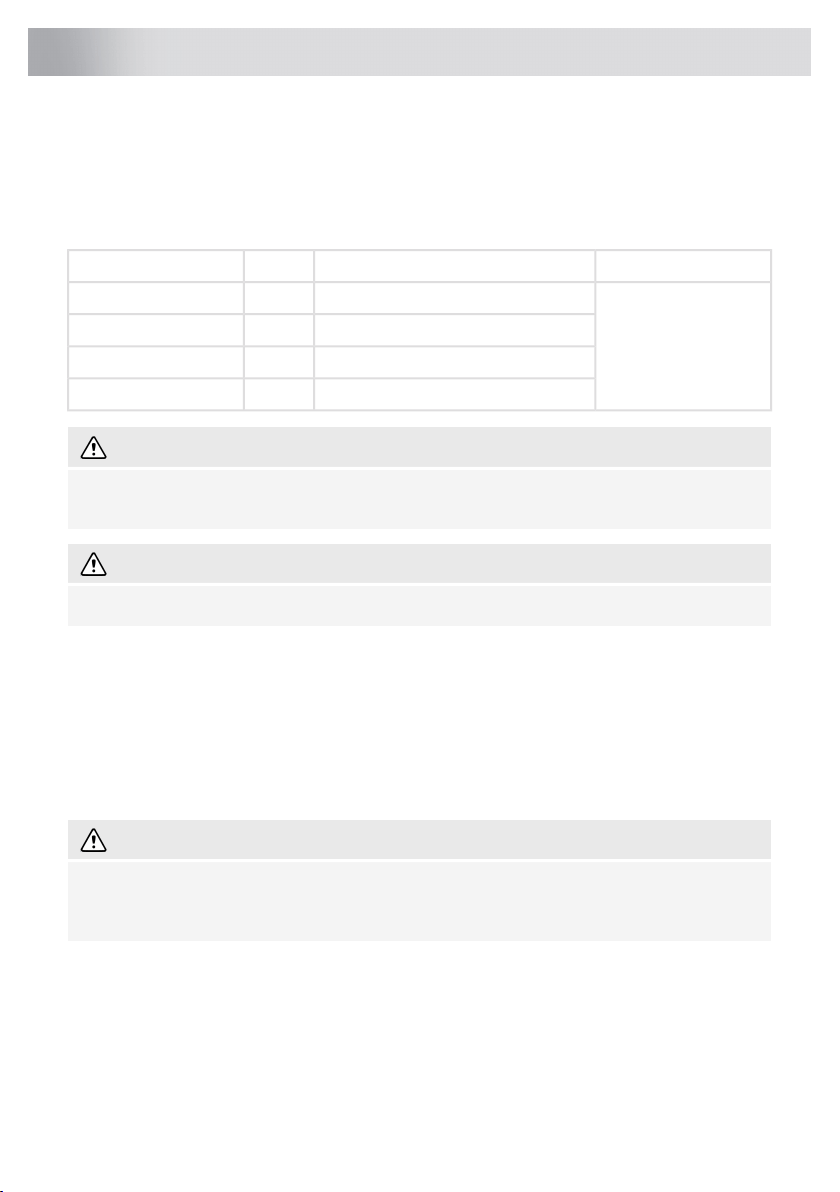
Selecting the location
• Place the appliance in a dry and well aired room. The permitted ambient temperature range for
the appliance depends on the appliance's climate class, which is shown on the type plate.
• Do not place the appliance near a source of heat, such as a gas cooker, radiator or boiler, etc.,
and do not expose it to direct sunlight.
Relative humidityAmbient temperature range °CClassDescription
≤75%
+10 to +32SNExtended temperate
+16 to +32NTemperate
+16 to +38STSubtropical
+16 to +43TTropical
WARNING!
Do not place the appliance in a room where the temperature can fall below 5 °C: the appliance
may not work properly or become defective!
WARNING!
The appliance is not suitable for outdoor use and it may not be exposed to rain.
• The appliance must be placed at a distance of at least 5 cm from an electrical or gas cooker
and at least 30 cm from a radiator or heater. An insulation panel must be fitted when these
distances cannot be kept.
• The appliance must be placed at a distance of about 5 cm from the wall, back and sides of a
cupboard. A kitchen cupboard above the refrigerator must have a gap of at least 5 cm between
the back of the cupboard and the wall. This is needed to make sure that there is sufficient cooling
air for the condenser.
• The plug of the installed appliance must remain accessible!
WARNING!
Place the appliance in a room with a sufficient volume of air. The room must have a volume of at
least 1 m
3
of air for every 8 grams of refrigerant. The quantity of refrigerant is shown on the type
plate on the inside of the appliance.
• The kitchen unit in which the appliance is to be built in must have an opening of at least 200 cm
2
in its base to allow sufficient air to circulate.
• The appliance's air outlet is at the top. Make sure that the outlet is not blocked. Blocking the
outlet can result in damage to the appliance.
10
Installation and connection
How to connect electricity
Connect the appliance to the power mains using a connection cable. The wall outlet should be fitted
with a ground contact (safety socket). Nominal voltage and frequency are indicated on the rating
plate/label with basic information on the appliance.
The appliance must be connected to the power mains and grounded in compliance with the effective
standards and regulations. The appliance will withstand short-term deviations from the nominal
voltage, but not more than +/- 6%.
WARNING!
DO NOT USE AN EXTENSION CORD WITH THIS APPLIANCE.
This provides the best performance and also prevents overloading house wiring circuits, which could
cause a fire hazard from overheated wires.
Never unplug your refrigerator by pulling on the power cord. Always grip plug firmly and pull straight
out from the outlet.
Repair or replace immediately all power cords that have become frayed or otherwise damaged. Do
not use a cord that shows cracks or abrasion damage along its length or at either end.
When moving the refrigerator away from the wall, be careful not to roll over or damage the power
cord.
Refrigerator location
Do not install the refrigerator where temperatures will be below 16°C because it will not maintain
proper temperatures, and the refrigerator could develop high internal humidity.
For proper installation, the refrigerator must be placed on a level surface of hard material the same
height as the rest of the flooring. This surface should be strong enough to support a fully loaded
refrigerator, or approximately 500 kg each. See the Installation Instructions for complete directions.
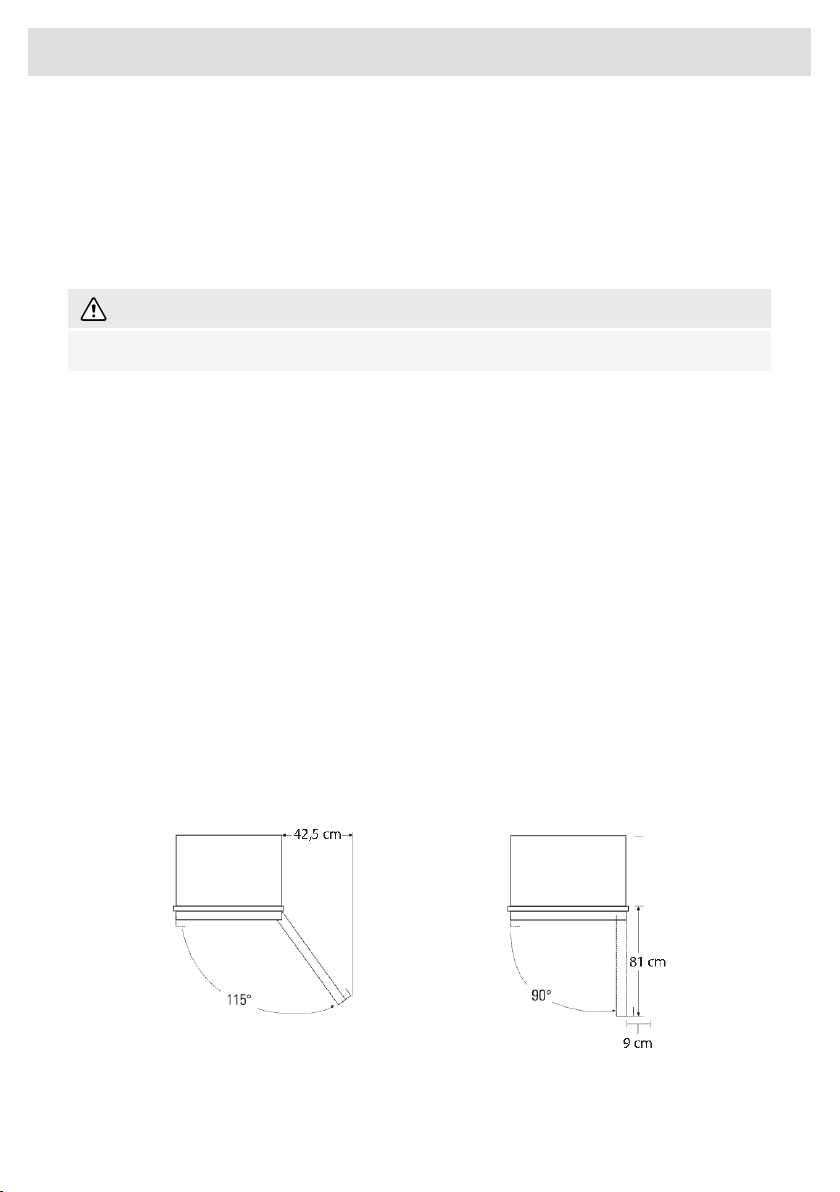
Clearances
Allow 42,5 cm minimum clearance between the door and wall for a full 115° door swing. Allow 9 cm
min. clearance to a wall for a 90° door swing for Stainless Steel panel.
11
Installation and connection
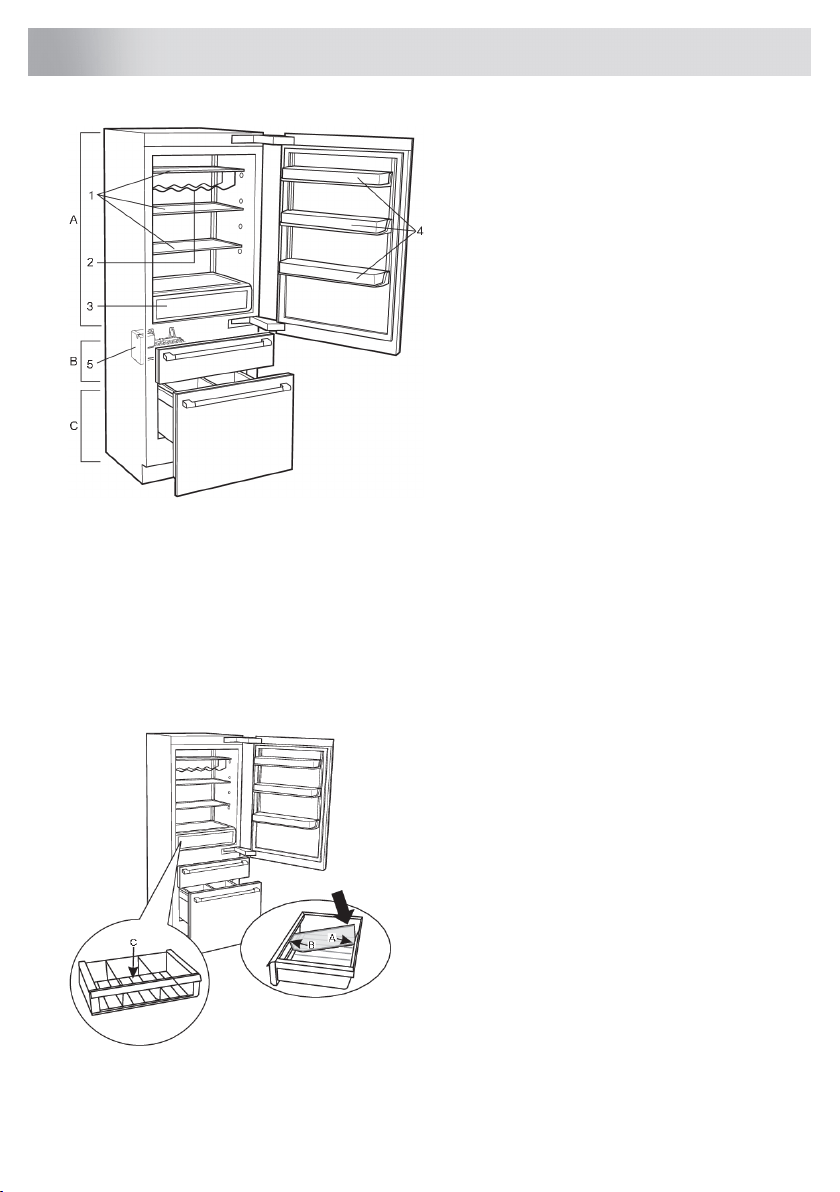
A Fresh food section
1. Fresh Food Shelves
2. Wine rack
3. Vegetable bin
4. Fresh Food Door Bins
B Freezer Drawer
5. Icemaker
C Customizable Drawer
Vegetable pan
The Vegetable Pan in the fresh-food section of the refrigerator has LED strip lighting above the
drawer.
There are adjustable dividers with several different position options. The divider is held in place by
a tab located under the handle, a slot located on the back wall and a stabilizing rib on the bottom
of the drawer for each position.
To change the divider position:
A. Slot
B. Tab
C. Ribs
1. Pull up on the back of the divider to
release it from the slot in the back and off
of the tab in the front.
2. Slide the divider into a new location,
making sure it seats into the rib on the
bottom of the drawer.
3. Pull up on the back of the divider to locate
the front under the tab at the new location.
4. Push down on the back of the divider to
seat it into the slot at the new location.
12
Description of the appliance
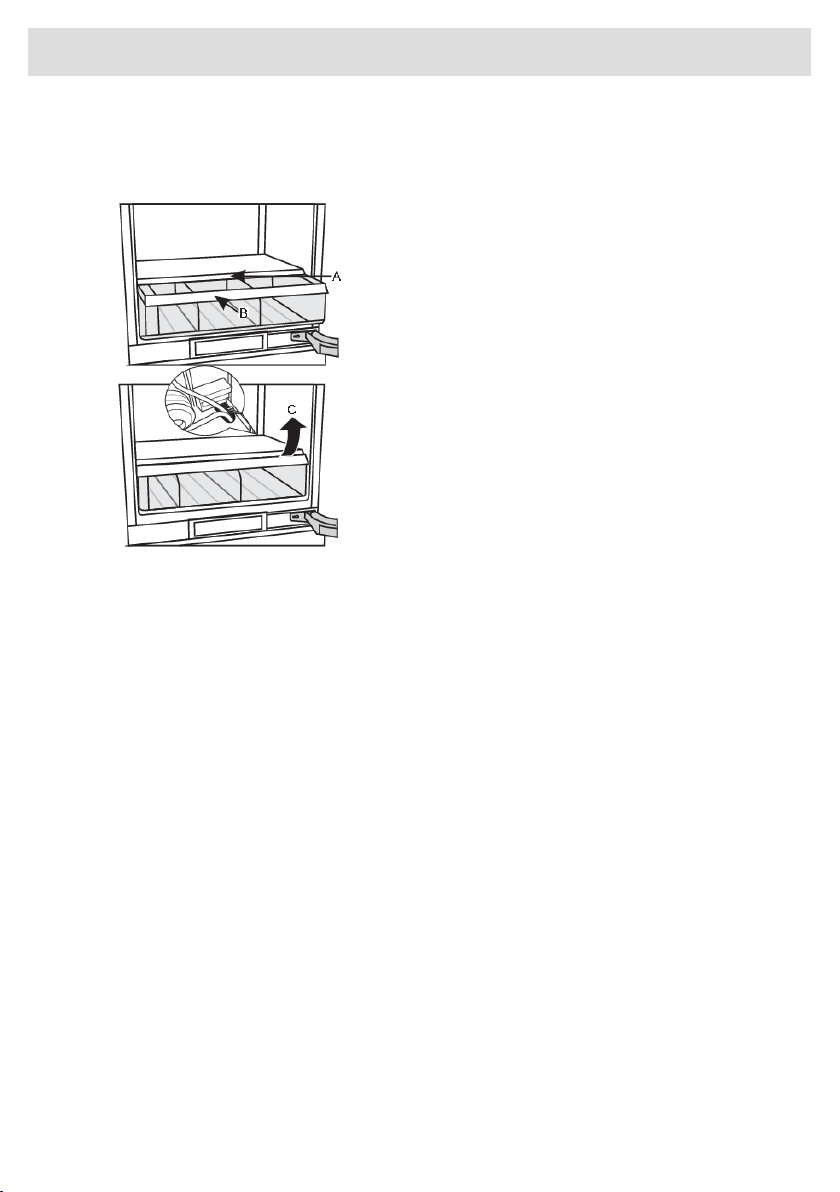
Lighted vegetable drawer shelf
The lighted vegetable drawer shelf provides lighting for the lower compartments. The lights are
recessed into the shelf to illuminate the drawers below.
A. Lighted Vegetable Drawer Shelf
B. LED lights are located under the shelf at
the front
C. Lift shelf and pull forward
To remove the shelf:
1. Lift the shelf and carefully pull forward to
expose the wires.
2. Unplug the shelf and carefully remove it
from the refrigerator.
To replace the shelf:
1. Carefully set the shelf onto the side rails,
leaving the plug exposed.
2. Plug the shelf into the refrigerator.
3. Carefully slide the shelf into place.
Adjustable shelves
Tempered glass shelves in the fresh food section enable you to make efficient shelf arrangements
to fit your family’s food storage needs.
13
Description of the appliance
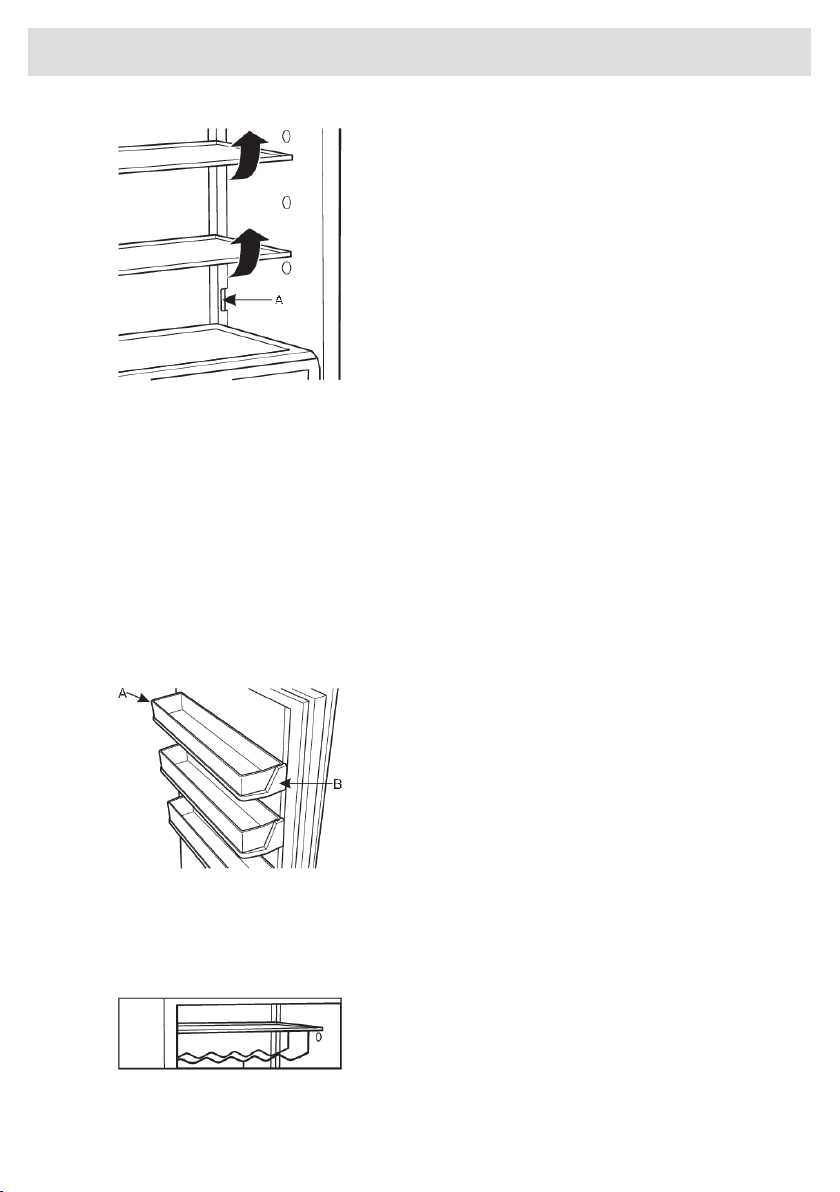
To adjust shelves: Tilt the shelf up at the front
and slide it up or down along the back wall to
the placement you want. Handle glass
shelves carefully. Rough handling of
tempered glass can cause it to shatter.
To remove shelves:
NOTE: To remove a shelf, all shelves under it
must first be removed.
1. Remove any food from the shelf.
2. Remove covers at the bottom of each track
(A).
3. Tilt the first shelf up at the front.
4. Slide the shelf down along the back wall
until you reach the bottom where the notch
is located. Slide the shelf through the
notch.
5. Repeat for removing the other shelves.
To replace shelves:
Replace shelves by perform steps 1 through
4 in reverse.
Door bins
A. Door Bin
B. Bin Bracket
The door bins are removable. Lift bin out of
the bin bracket to remove.
The bin brackets are adjustable and can move
up and down to meet your storage needs.
Do this by tilting the bin up at the front and
sliding it up or down along the door to the
placement you desire.
Wine/ beverage rack
The wine/beverage rack fits onto one of the
glass shelves in the fresh-food compartment.
The rubber coating on the portions of the rack
that sit on top of the shelf keeps the rack from
slipping or scratching the shelf. The
wine/beverage rack will hold 2-liter bottles,
wine bottles and champagne bottles.
14
Description of the appliance
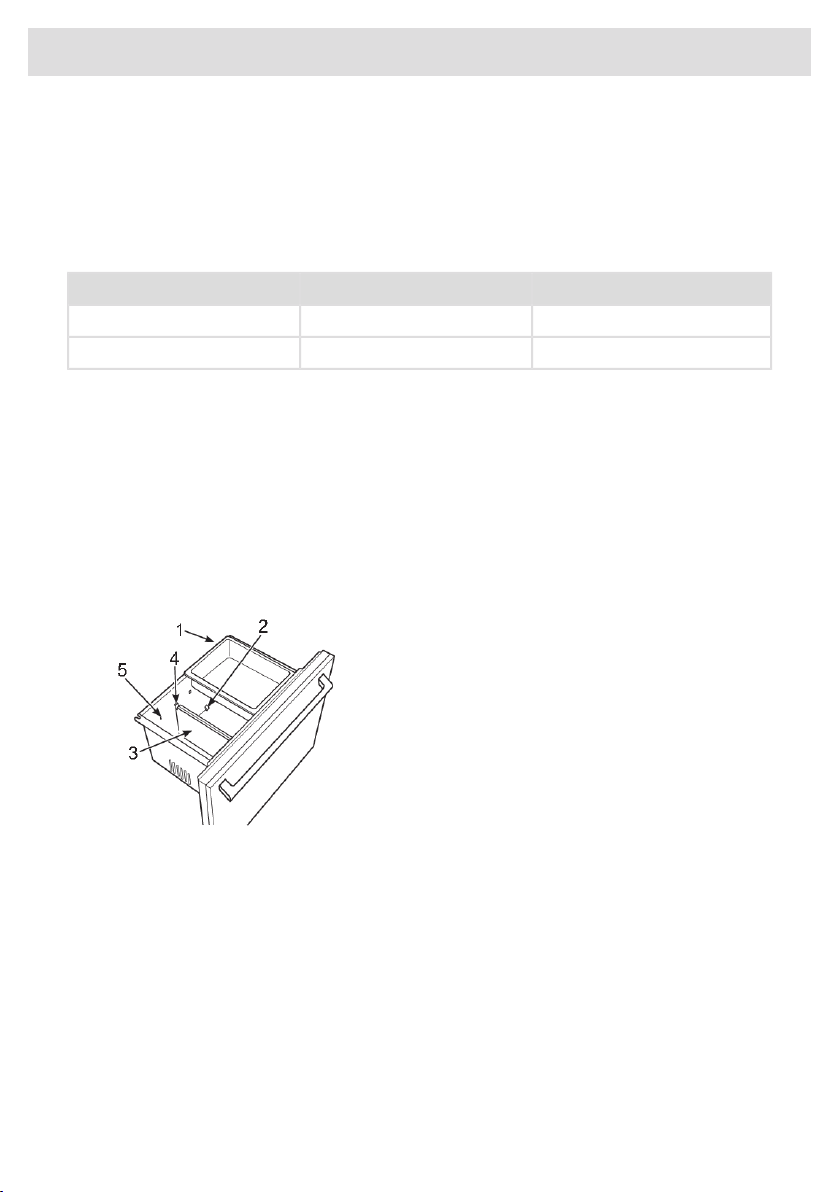
Customizable drawer
The customizable drawer can be used as a freezer or as a fresh-food refrigerator.
To customize your drawer:
Press the ZONE indicator on the control pad to select the customizable drawer.
Recommended Temperatures for Customizable Drawer:
TemperatureFunctionButton
3°CFresh FoodChill
-18°CFreezerFreeze
This drawer has LED strip lighting above it . There is also one adjustable divider that can be placed
in different positions and a bin that can slide left or right in the drawer.
To change the divider position:
1. Pull in the tabs at the top of the divider to release it from the tab holes at the front and back of
the drawer.
2. Lift the divider off of the raised tabs at the bottom of the drawer.
3. Move the divider to its new location and slide it onto the raised tabs.
4. Pull in the tabs at the top of the divider and position the divider so the tabs will fit into the tab
holes. Release the tabs so they lock into place.
1. Removable sliding bin
2. Raised Tab
3. Divider
4. Tab
5. Tab Hole
LED lighting
This refrigerator has LED lighting on both sides of the interior as well as above the freezer drawer
and above the customizable drawer.
Accessing the icemaker and freezer drawer
The icemaker is located on the ceiling of the freezer drawer and to the left rear. There is an LED strip
in the freezer drawer ceiling. The freezer drawer contains 1 ice bin.
15
Description of the appliance
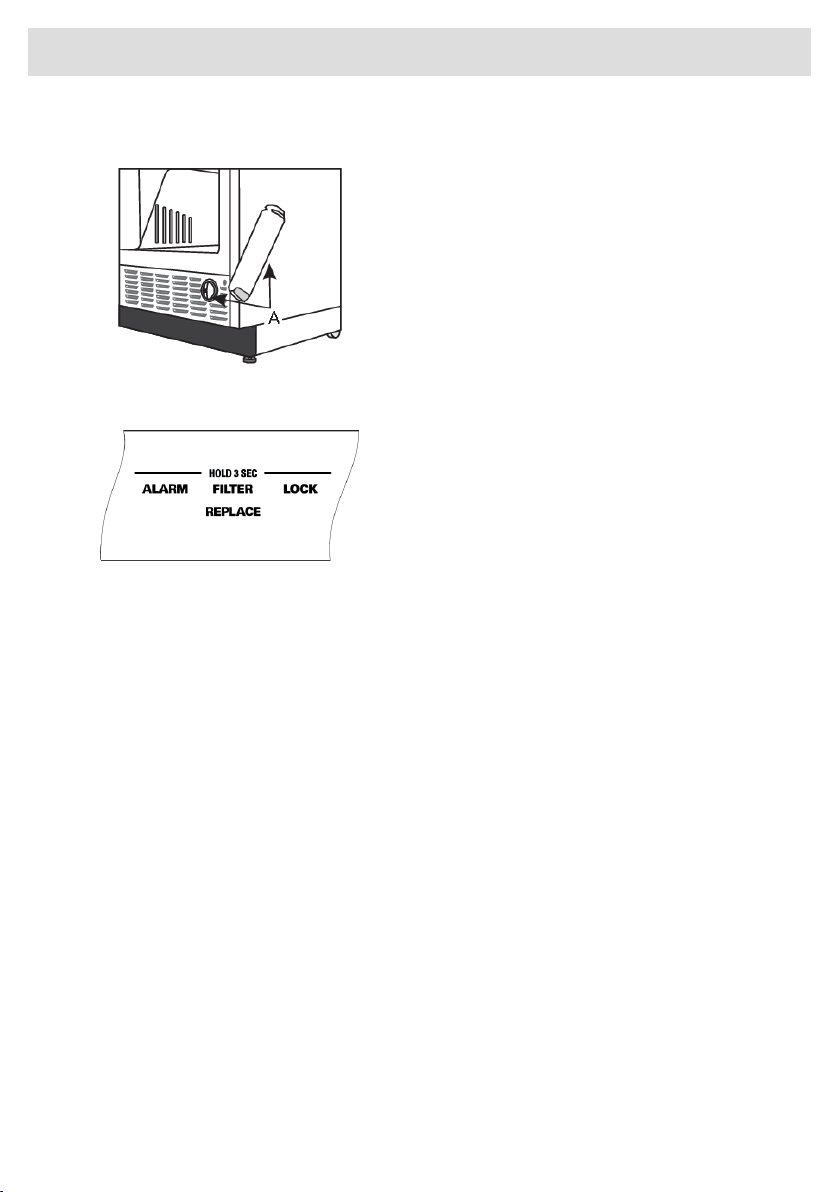
Water filter cartridge
A. Water filter cartridge
The water filter cartridge is located below the
customizable drawer on the lower-right side
of the appliance.
To Replace the Filter:
While the filter cartridge may last up to 1 year,
replacement frenquency will depend on ice
usage. There is a replacement indicator light
for the water filter cartridge on the control
panel. The filter cartridge should be replaced
when the word REPLACE appears beneath
FILTER on the control panel.
Installing the Filter Cartridge:
1. Open the customizable drawer to gain access to the water filter cartridge.
2. Remove the old cartridge by twisting counterclockwise. Pull forward on the filter to remove.
3. Insert the new filter into the compartment and twist clockwise until the cartridge stops.
To Reset the Filter Status Light:
Press and hold the FILTER button for 3 seconds.
Filter Bypass Plug:
You must use the filter bypass plug if:
1. You have a household reverse osmosis water system and/or another form of home water filtration
system.
2. A replacement filter is not available.
The icemaker will not operate without the filter or filter bypass plug installed.
The bypass plug and mini manual are located in the bottom machine compartment.
IMPORTANT NOTE: Remove the water filter to immediately stop any water leak from the icemaker.
16
Description of the appliance
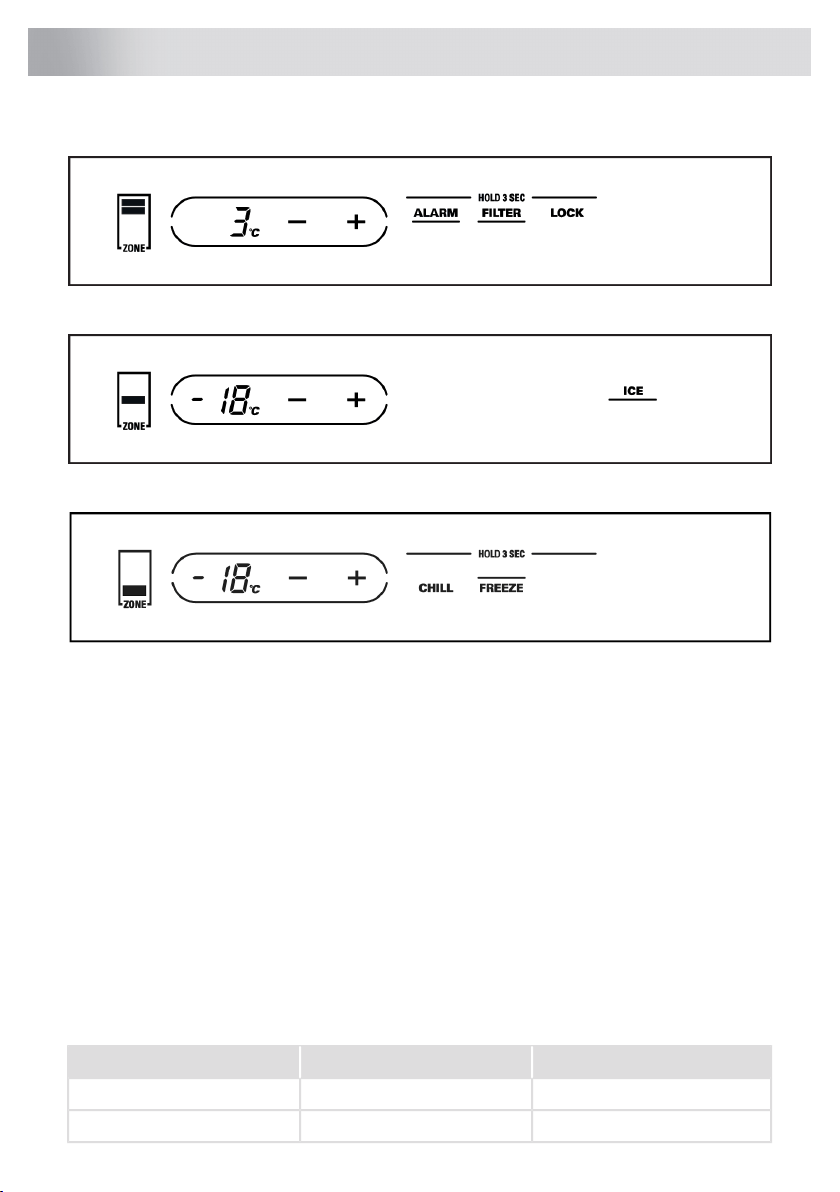
Fresh Food - Solid Door Unit
Upper Drawer - Freezer
Lower Drawer - Customizable
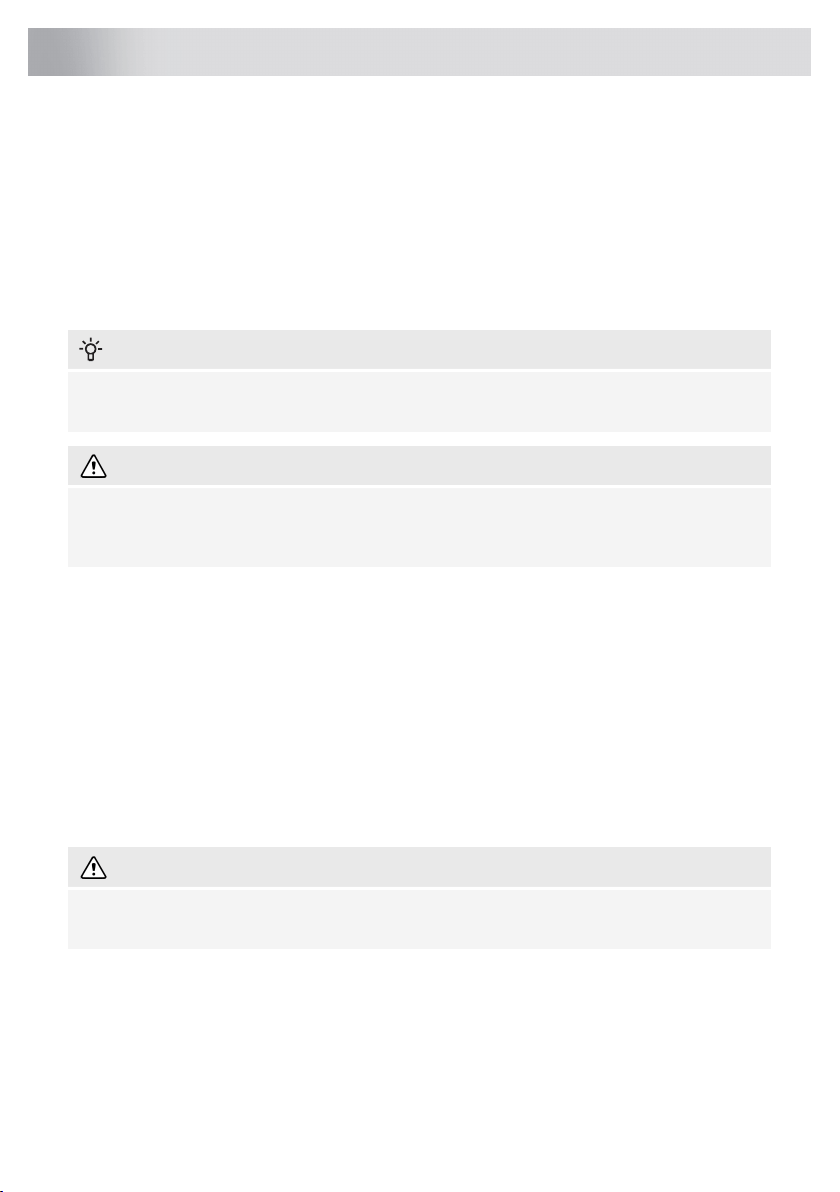
The temperature display shows the actual temperature of the fresh-food compartment, freezer
drawer or customizable drawer when each one is selected by toggling the ZONE indicator. The
actual temperature will vary from the set temperature based on factors such as frequency of door
openings, amount of food, defrost cycling and room temperature.
NOTE: Frequent door openings or doors left open for periods of time may increase the internal
temperature of the compartments temporarily.
To turn off the cooling system, toggle the ZONE indicator to the fresh-food mode. Press the plus
(+) pad until the display shows OFF.
To turn the cooling system on, toggle the ZONE indicator to the fresh-food mode and press the
minus (–) pad until the desired temperature is displayed. The preset temperature of -18°C for the
freezer or 3°C for the fresh-food unit will appear in the display.
To check the current temperature setting for a compartment , press the plus (+) or minus (–)
pad once. After 5 seconds, the display will return to the actual temperature.
To change the temperature settings, press the plus (+) or minus (–) pad for each increment to the
desired temperature set point. Allow 24 hours for the unit to reach the temperature you have set.
Temperature Ranges
HighLow
8°C1°CFresh Food
-14°C-21°CFreezer Drawer
17
Operating the appliance
Customizable Drawer Temperature Ranges
HighLow
-14°C-21°CFreezer
8°C1°CChill
NOTE: Setting the controls to OFF stops cooling, but does not shut off electrical power to the unit .
All readings in °C will be rounded.
Alarm
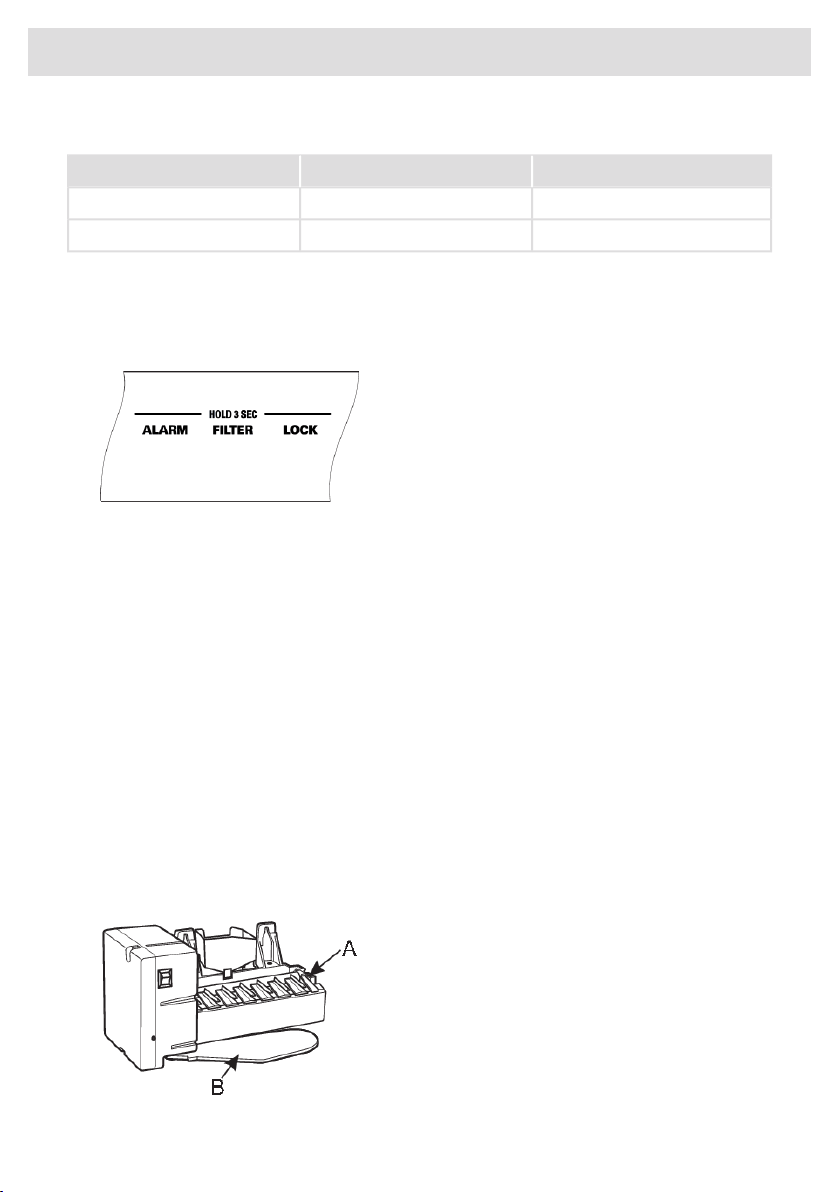
To turn the Alarm feature on, press and hold
the ALARM button for 3 seconds. ALARM will
be underlined when active. To turn off , press
and hold the ALARM button for 3 seconds.
The underline will disappear. When the
ALARM is active, the alarm will flash and beep
if you keep the door open for more than 2
minutes.
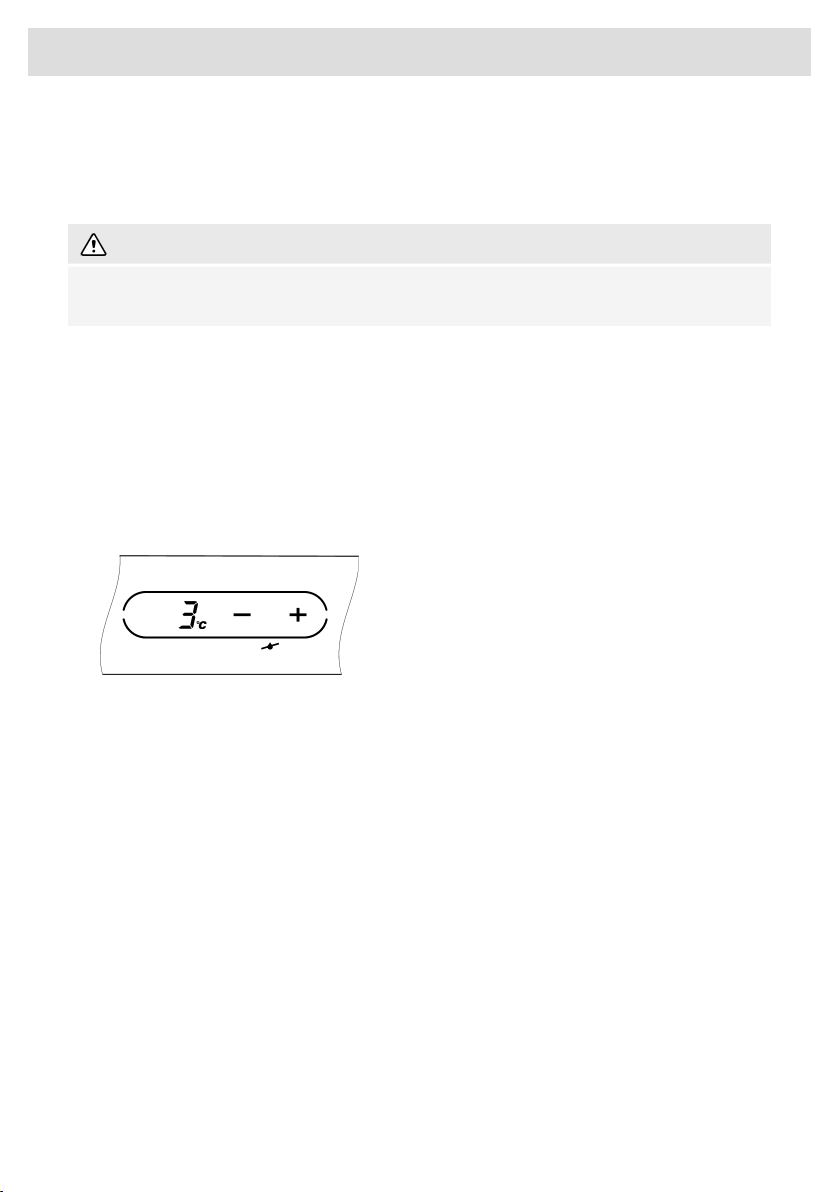
Automatic icemaker
A newly installed refrigerator may take 12–24 hours to begin making ice. The refrigerator is
shipped with the icemaker set to ON.
The icemaker will produce seven cubes per cycle — approximately 15 cycles in a 24-hour period,
depending on freezer compartment temperature, room temperature, number of door openings and
other use conditions.
If the refrigerator is operated before the water connection is made to the icemaker, set the icemaker
to OFF. To set the icemaker to OFF, press the ZONE indicator on the control pad twice to select the
freezer drawer. Press the ICE icon to the right . The line under ICE will disappear and the word OFF
will show under ICE. Throw away the first full bucket of ice. Be sure nothing interferes with the sweep
of the feeler arm.
When the bin fills to the level of the feeler arm, the icemaker will stop producing ice.
It is normal for several cubes to be joined together.
If ice is not used frequently, old ice cubes will become cloudy, taste stale and shrink.
A Icemaker
B Feeler Arm
18
Operating the appliance
After the icemaker has been turned on again, there will be a delay of about 45 minutes before the
icemaker resumes operations.
NOTE: In homes with lower-than-average water pressure, you may hear the icemaker water valve
cycle on several times when making one batch of ice.
WARNING!
Icemaker works best between 300 kPa (3 bar inlet water pressure) and 800 kPa (8 bar inlet
water pressure) home water pressure.
Child control lockout
This child control lockout feature prevents unwanted changes to your temperature settings.
After the desired temperature is set , the temperature can be locked. To lock, press and hold the
LOCK button for 3 seconds. To unlock, press and hold the LOCK button for 3 seconds.
External moisture control
This product is equipped with an external moisture control feature. The refrigerator is shipped with
the external moisture control feature off.
In some humid environments, moisture can
form on the front surface of the refrigerator
cabinet. If moisture does appear on the front
surface of the refrigerator cabinet, turn on the
external moisture control feature by pressing
and holding the ALARM and LOCK buttons
on the control panel for 5 seconds. When
activated, a small picture of a water droplet
with a line through it will appear below the (+)
and (–) signs on the control panel.
19
Operating the appliance
Recommended distribution
Fresh food section
• Upper section: canned food, bread, wine and pastas, etc.
• Middle section: dairy products, ready-to-cook meals, desserts, soft drinks, beer and cooked
food, etc.
• Lower section: meat, meat produce, delicatessen.
• Vegetable bin: fresh fruit, vegetables, salads, root vegetables, potatoes, onions, garlic, tomatoes,
sauerkraut, turnips etc.
INFORMATION!
Store food that spoils rapidly at the back of a shelf or at the back of the drawer at the lowest
temperature.
WARNING!
Do not store fruit (bananas, pineapples, papaya, citrus fruits) and vegetables (courgettes,
tomatoes, aubergines, cucumber, sweet peppers and potatoes) that are sensitive to low
temperatures in the refrigerator.
Sections of the door
• Top/middle door compartment: eggs, butter, cheese and sauces, etc.
• Bottom door compartment: drinks, cans and bottles, etc.
Freezer drawer with icemaker
• ice, ice cream, frozen product.
Customizable drawer
• set as Freeze: leftovers, ice, pizza, meat, fish, bread,...
• set as Chill: dairy products, ready-to-cook meals, desserts, soft drinks, beer and cooked food,
meat, meat produce, delicatessen etc.
WARNING!
Do not store lettuce, eggs, apples, pears, grapes, peaches, yoghurt, buttermilk, sour cream or
mayonnaise in the freezer.
Avoid contamination of food
To avoid contamination of food, please respect the following instructions:
• Opening the door for long periods can cause a significant increase of the temperature in the
compartments of the appliance.
• Regularly clean surfaces that can come in contact with food and accessible drainage systems.
20
Storing and freezing food
• Clean water tanks if they have not been used for 48 h; flush the water system connected to a
water supply if water has not been drawn for 5 days.
• Store raw meat and fish in suitable containers in the refrigerator, so that it is not in contact with
or drip onto other food.
• If the refrigerating appliance is left empty for long periods, switch off, defrost, clean, dry, and
leave the door open to prevent mould developing within the appliance.
Storing fresh food in the refrigerator
Important recommendations for storing fresh food
• To ensure the quality of fresh food, it is important that:
- the food is well-packaged;
- the appliance is at the correct temperature;
- the appliance is clean.
• Take good note of the use-by date stated on the food packaging.
• Put food in the refrigerator in sealed containers or in suitable packaging. This will prevent the
food from picking up or spreading odours and will keep it dry.
• Do not store flammable, unstable or explosive materials in the refrigerator.
• Store bottles that have been opened upright and close them tightly.
• Some organic solutions, such as essential oils, in the skin of lemons and oranges, and butyric
acid, that come into long-term contact with plastics can eat into the material and cause premature
ageing.
• A disagreeable odour is an indication that the appliance is not clean or that it contains food that
has spoiled (see the chapter ‘Maintenance’).
• Take perishable foods out of the refrigerator when you will be away from home for a longer time.
Freezing and storing foods in the freezer
Important recommendations for freezing fresh food
• Use only good-quality fresh food that is suitable for freezing.
• Allow hot food to cool to room temperature.
• Food needs to be frozen quickly. It is recommended that you use small packs.
• Use air and watertight packaging to prevent the food from drying out and lose its vitamins.
• Note the type and quantity of the food on the packaging, together with the date on which it was
frozen.
• Do not allow fresh food to come into contact with frozen food.
Important recommendations for storing frozen food
• Follow the manufacturer’s instructions for the storage and use of frozen food. Take note of the
recommended storage temperature and use-by date stated on the packaging.
• Use only food in undamaged packaging that has been stored at a temperature of -18 °C or
lower.
• Do not buy food covered in frost. This indicates that the food has thawed or partially thawed
several times and, as a result, is of inferior quality.
21
Storing and freezing food
• Make sure that the food does not thaw during transport. An increase in its temperature will shorten
the storage life and harm the quality of the food.
Recommended storage times of frozen food in the freezer
Storage lifeType of food
10 to 12 monthsFruit, beef
8 to 10 monthsVegetables, veal, poultry
6 to 8 monthsVenison
4 to 6 monthsPork
4 monthsFinely chopped or minced meat
3 monthsBread, pastas, cooked dishes,
whitefish
2 monthsOffal
1 monthSmoked sausage, bluefish
Thawing frozen food
• Thawing is an important step in storing food preserved by freezing. Food must be thawed in the
correct way.
• Suitable methods of thawing food are:
- in the refrigerator;
- in cold water;
- in a microwave or conventional oven with a suitable thaw program.
• Some frozen products can be prepared without needing to thaw them first. The manufacturer
will state this on the packaging.
• The food needs to be packed in small portions. In this way the food thaws faster.
• Use partially or completely thawed food as quickly as possible. The bacteria in thawed food are
reactivated and the food will spoil rapidly. This applies in particular to fruit, vegetables and
ready-made food.
• Do not refreeze partially or completely thawed food.
22
Storing and freezing food
Cleaning outside
Door handles and trim
Clean with a cloth dampened with soapy water. Dry with a soft cloth.
Keep the outside clean. Wipe with a clean cloth lightly dampened with mild liquid dish detergent.
Dry with a clean, soft cloth.
Do not wipe the refrigerator with a soiled dish cloth or wet towel. These may leave a residue that can
damage the finish. Do not use scouring pads, powdered cleaners, bleach or cleaners containing
bleach because these products can scratch and damage the finish.
Stainless steel
Regularly clean and polish the Stainless Steel Door Panels and Handles (on some models) with a
commercially available stainless steel cleaner to preserve and protect the fine finish.
Do not use appliance wax or polish on the stainless steel.
Custom Wood Panels
Please contact your custom panel supplier for direction on cleaning and care.
Cleaning inside
Turn off power at the circuit breaker or fuse box before cleaning. If this is not practical, wring
excess moisture out of sponge or cloth when cleaning around switches, lights or controls.
Use warm water and baking soda solution— about a tablespoon (15 ml) of baking soda to a quart
(1 liter) of water. This both cleans and neutralizes odors. Thoroughly rinse and wipe dry.
Other parts of the refrigerator—including door gaskets, vegetable drawer, ice storage bins and all
plastic parts— can be cleaned the same way. After cleaning the door gaskets, apply a thin layer of
petroleum jelly to the door gaskets at the hinge side. This helps keep the gaskets from sticking and
bending out of shape.
Avoid cleaning cold glass shelves with hot water because the extreme temperature diff erence may
cause them to break. Handle glass shelves carefully. Rough handling of tempered glass can cause
it to shatter.
Do not wash any plastic parts in the dishwasher.
Preparing for vacation
For long vacations or absences, remove food from the refrigerator. Adjust the temperature up (+)
until the unit turns off . Clean the interior with a baking soda solution of one tablespoon (15 ml) of
baking soda to one quart (1 liter) of water. Leave the door open.
For shorter vacations, remove perishable foods and leave the control at the regular setting. However,
if the room temperature is expected to drop below 16°C, follow the same instructions as for extended
vacations.
Turn off the icemaker and shut off the water supply to the freezer.
Interior light replacement
Do not try to replace a burned-out LED light. An authorized technician will need to replace the
LED lights.
23
Maintenance
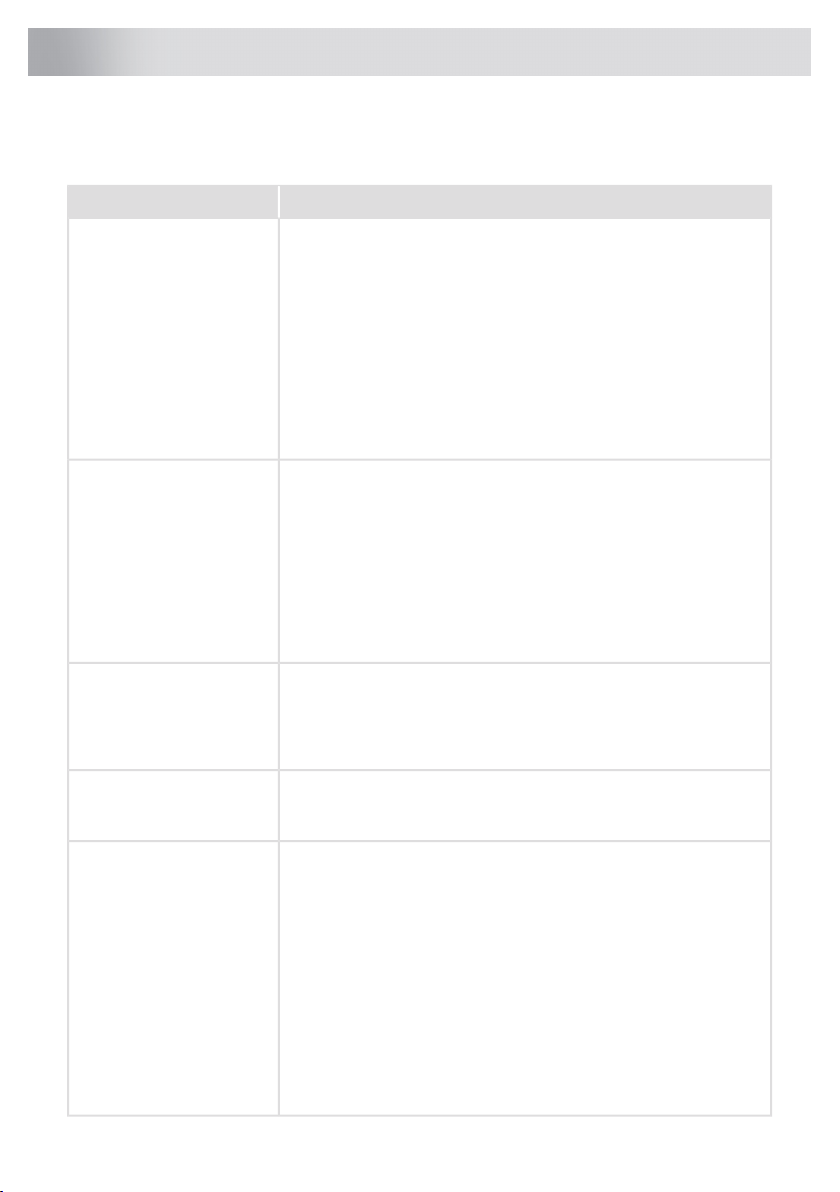
Questions?
Use this problem solver!
POSSIBLE CAUSEPROBLEM
Refrigerator system does not
operate
• May be in defrost cycle when refrigerating system does not
operate for about 45 minutes.
• Temperature control in the OFF position.
• If interior light is not on, refrigerator may not be plugged in at wall
outlet .
• The house fuse is blown/house circuit breaker is tripped. Replace
fuse or reset the breaker.
• If your control panel says SHO, then your showroom mode was
enabled. To turn this off , hold the ALARM button and (-) pad
simultaneously for 5 seconds.
Refrigerating system
operates for long periods or
cycles on frequently
• Normal when refrigerator is first plugged in. Wait 24 hours for the
refrigerator to completely cool down.
• Often occurs when large amounts of food are placed in
refrigerator. This is normal.
(Modern refrigerators and
freezers with more storage
• Door left open or package holding door open.
space and a larger freezer
• Hot weather or frequent door openings. This is normal.
require more operating time.
• Temperature control set at the coldest setting. See Temperature
Control.
They start and stop often to
maintain even temperatures.)
Vibration or rattling (Slight
vibration is normal)
• Refrigerator may not be properly installed.
- Anti-tip bracket may be loose.
- Unit may not be level.
Thumping sound when
closing door
• This is a normal operating sound.
• Closing the door slowly will minimize the sound.
Operating sounds
• The variable speed compressor.
• Normal fan air flow—multiple fans blow cold air through the
fresh-food and freezer compartments—other fans cool the
compressor.
• The fans change speeds in order to provide optimal cooling and
energy savings.
• These NORMAL sounds will also be heard from time to time:
- You may hear a whooshing or gurgling sound when the door
closes. This is due to pressure equalizing within the
refrigerator.
- A water dripping sound may occur during the defrost cycle
as ice melts from the evaporator and flows into the drain pan.
24
Faults table
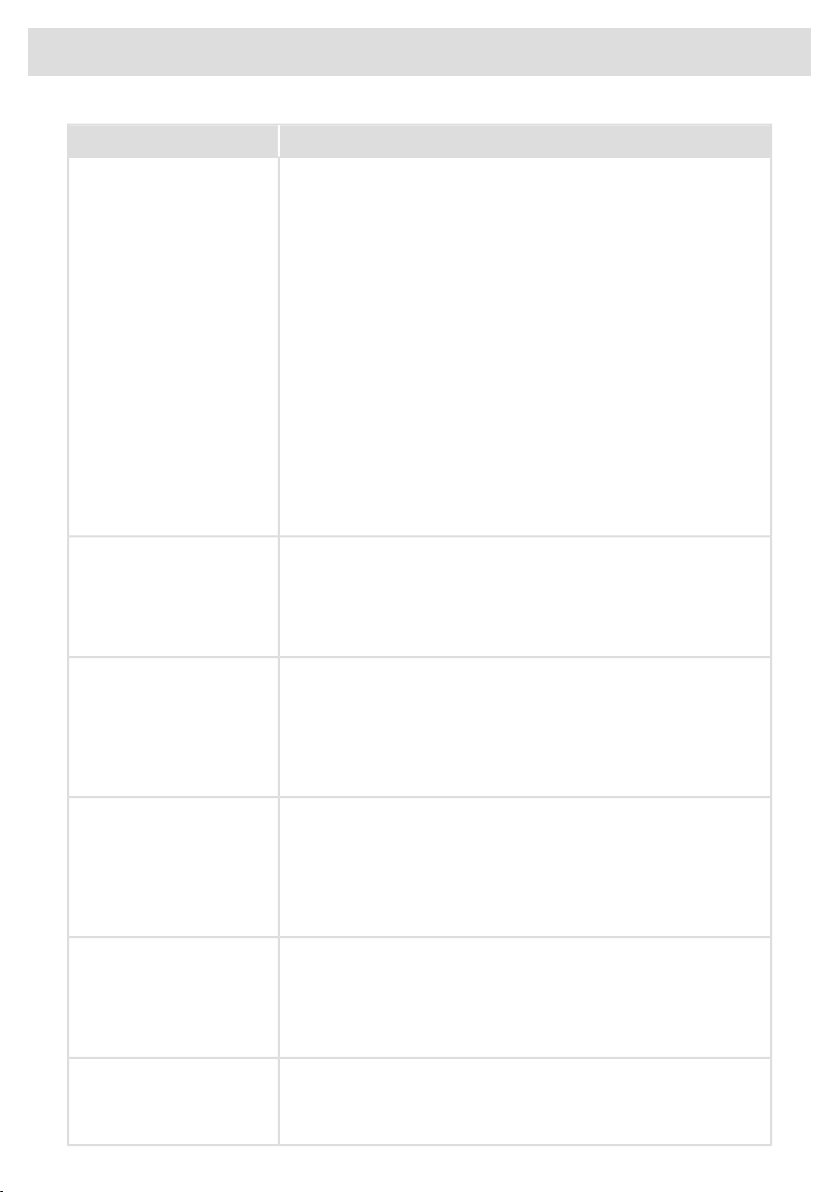
POSSIBLE CAUSEPROBLEM
- The flow of refrigerant through the freezer cooling coils may
make a gurgling sound like boiling water.
- Water dropping on the defrost heater can cause a sizzling,
popping or buzzing sound during the defrost cycle.
- You may hear cracking or popping sounds when the
refrigerator is first plugged in or during/after the defrost cycle.
This happens as the refrigerator cools to the correct
temperature.
- The compressor may cause a clicking or chirping sound
when attempting to restart (this could take up to 5 minutes).
- The electronic control board may cause a clicking sound
when relays activate to control refrigerator components.
- Ice cubes dropping into the bin and water running in pipes
as icemaker refills.
- The icemaker water valve will buzz when the icemaker fills
with water.
Door not closing properly
• Package or bottle may be holding door open.
• Check the door gasket; it may be out of position.
• Refrigerator is not level. See Installation Instructions.
• Hinge springs deactived. See Installation Instructions.
Refrigerator too warm
• Temperature control not set cold enough. See Temperature
Control.
• Hot weather or frequent door openings.
• Door left open for long time.
• Package may be holding door open.
Actual temperature not equal
to set temperature
• Refrigerator just plugged in. Allow 24 hours for system to stabilize.
• Door open for too long. Allow 24 hours for system to stabilize.
• Warm food added to refrigerator. Allow 24 hours for system to
stabilize.
• Defrost cycle is in process. Allow 24 hours for system to stabilize.
Frost or ice crystals on frozen
food
• Drawer left open or package holding door open.
• Too frequent or too long door openings.
(Frost within package is
normal)
• Drawer may have been left open.
• Ice cubes or some other object may be stuck behind the drawer.
Slow ice cube freezing
• Drawer may have been left open.
• Turn temperature control to a colder setting.
• Package may be holding drawer open.
Table continued from last page
25
Faults table
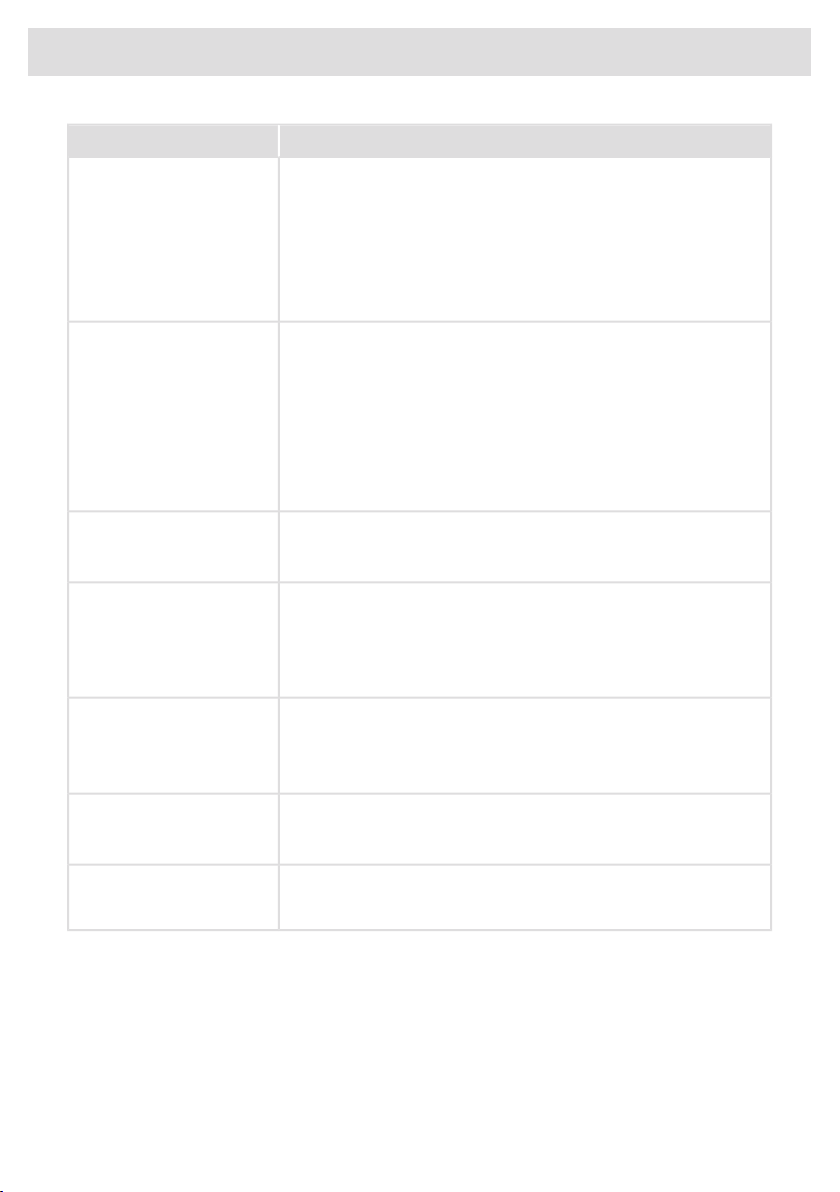
POSSIBLE CAUSEPROBLEM
Ice cubes have odor/taste
• Old cubes need to be discarded.
• Ice storage bin needs to be emptied and washed.
• Unsealed packages in freezer may be transmitting odor/taste to
ice cubes.
• Interior of freezer needs cleaning. See Care and Cleaning.
• Poor-tasting incoming water. Change the water filter.
Automatic icemaker does not
work
• Icemaker is turned off .
• Water supply turned off or not connected.
• Freezer too warm.
• Piled up cubes in storage bin may cause icemaker to shut off too
soon. Level cubes by hand.
• Ice bin is not in position.
• Clogged water filter.
Moisture forms on outside of
refrigerator
• Not unusual during periods of high humidity. Wipe surface dry.
• Turn on the External Moisture Control feature.
Moisture collects inside
• Too frequent or too long door openings.
• In humid weather, air carries moisture into refrigerator when doors
are opened.
• Lower drawer switched from (freezer) to chill or wine.
Refrigerator has odor
• Foods with strong odors should be tightly covered.
• Check for spoiled food.
• Interior needs cleaning. See Care and Cleaning.
Interior lights do not work
• No power at outlet .
• LEDs need replacing. See Consumer Service Section.
Door difficult to reopen
immediately after closing
• Tight door seal is due to pressure equalizing within the
refrigerator. After closing the door, wait 5–30 seconds to reopen.
Table continued from last page
26
Faults table
826969
The instructions for use can also be found on our website: www.asko.com
-a2