
T609J

1
Note:
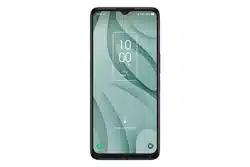
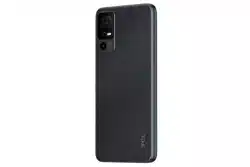
This is a user manual for TCL 40 XE 5G (T609J).
There may be certain differences between the user manual description and the
phone’s operation, depending on the software release of your phone or specific
carrier services.
Help
Refer to the following resources to get more FAQ, software, and service information:
Consulting FAQ
- Website: https://support.tcl.com/ca
- Call Support: 1-855-224-4228 (US and Canada)
Finding your serial number or IMEI
You can find your serial number or International Mobile Equipment Identity (IMEI)
on the packaging materials. Alternatively, choose Settings > System > About
phone > Status > IMEI information on the phone itself.
Obtaining warranty service
For information on warranty of your device, visit the Canada website at https://www.
tcl.com/ca/en/mobile/warranty
Viewing legal information
On the phone, go to Settings > System > About phone > Legal information.

2
Table of Contents
1 Basics ............................................................................................................4
1.1 Device overview ....................................................................................4
1.2 Getting started ....................................................................................... 7
1.3 Home screen .........................................................................................9
1.4 Text input .............................................................................................16
2 Multimedia applications .............................................................................19
2.1 Camera................................................................................................19
2.2 Photos .................................................................................................23
3 Apps and features ......................................................................................25
3.1 Phone ..................................................................................................25
3.2 Contacts ..............................................................................................30
3.3 Messages ............................................................................................34
3.4 Calendar .............................................................................................. 36
3.5 Clock ...................................................................................................37
3.6 Calculator ............................................................................................41
3.7 TCL apps .............................................................................................42
3.8 Other applications ..............................................................................42
3.9 Google applications .............................................................................42
4 Settings.......................................... .............................................................. 45
4.1 Wi-Fi ....................................................................................................45
4.2 Bluetooth .............................................................................................46
4.3 Mobile network ....................................................................................47
4.4 Connections ........................................................................................47
4.5 Home screen & lock screen ................................................................50
4.6 Display.................................................................................................50
4.7 NXTVISION .........................................................................................51

3
4.8 Sound & vibration ................................................................................ 52
4.9 Notifications ......................................................................................... 53
4.10 Button & gestures ...............................................................................53
4.11 Advanced features ..............................................................................54
4.12 Smart Manager ...................................................................................54
4.13 Security & biometrics ..........................................................................54
4.14 Location ............................................................................................... 55
4.15 Privacy.................................................................................................55
4.16 Safety & emergency ............................................................................ 55
4.17 Apps ....................................................................................................55
4.18 Storage ................................................................................................ 56
4.19 Accounts..............................................................................................56
4.20 Digital Wellbeing & parental controls ..................................................56
4.21 Google ................................................................................................. 56
4.22 Accessibility ......................................................................................... 56
4.23 System ................................................................................................57
5 FOTA upgrade .............................................................................................58
6 Troubleshooting .......................................................................................... 59
7 Specifications .............................................................................................64
8 Accessories .................................................................................................66
Safety and use .....................................................................................................67
Radio waves ......................................................................................................... 71
Licenses ...............................................................................................................74
General information ............................................................................................76
Disclaimer ............................................................................................................77
4
1
Basics
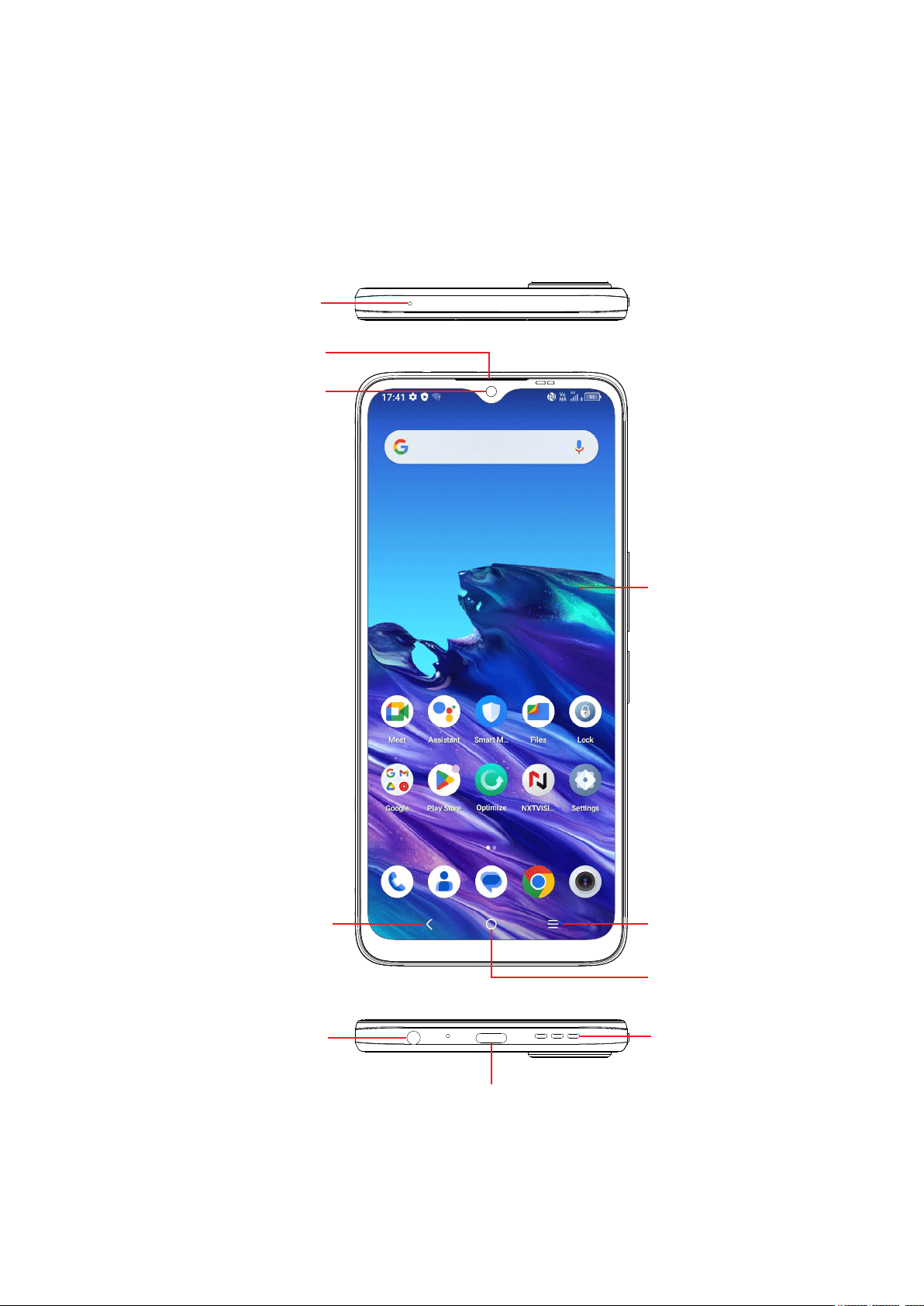
1.1 Device overview
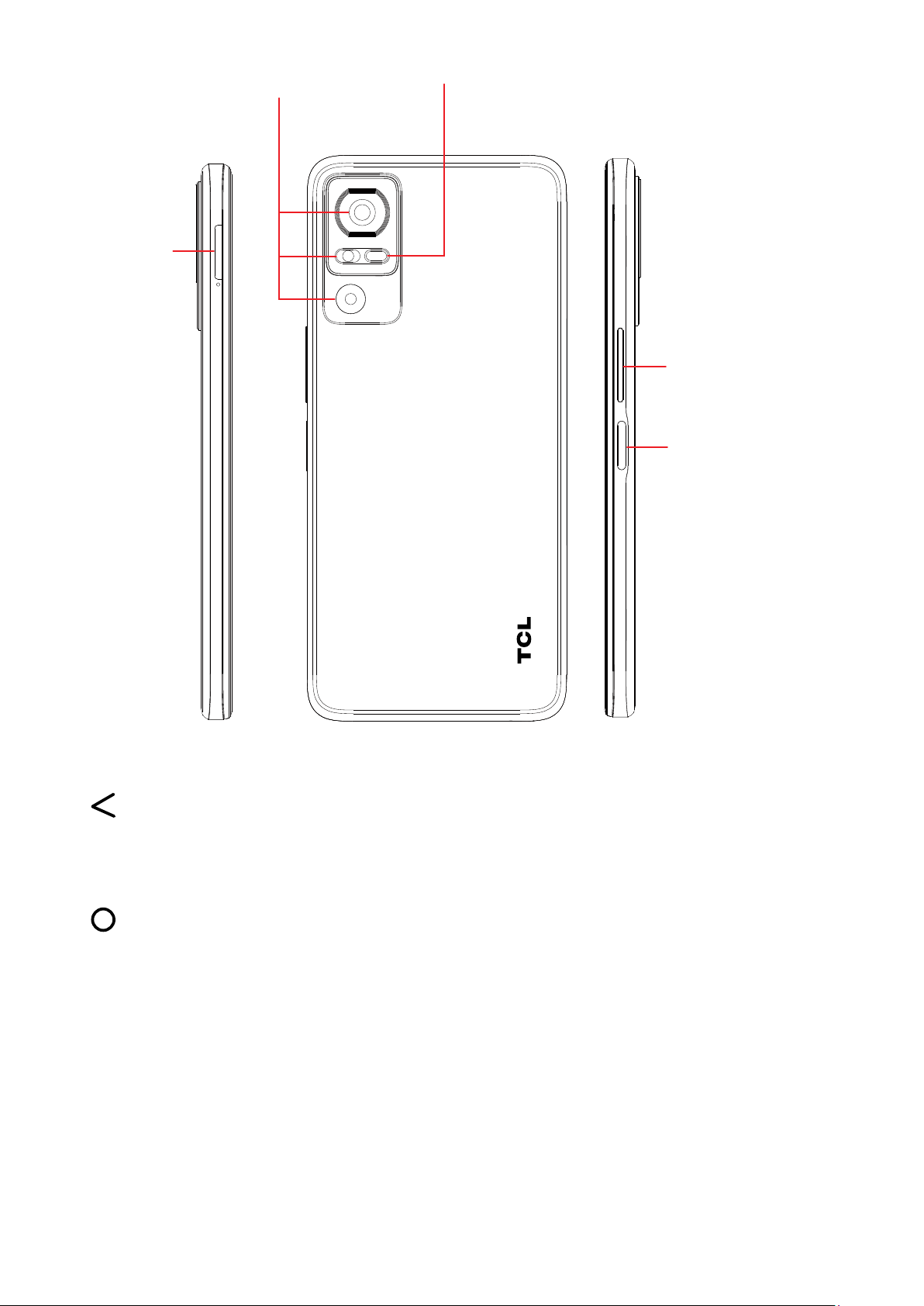
Receiver
USB Type-C connector
Microphone
Front Camera
Back button
Home button
Touch screen
Recent apps
Speaker
Headset connector
5
Rear camera
LED flash
SIM and
microSD
TM
tray
Volume keys
Fingerprint &
Power/Lock key
Back button
• Tap to return to the previous screen, to close a dialog box, options menu,
the notification panel, etc.
Home button
• From any application or screen, tap to return to the Home screen.
• Touch and hold to open Google Assistant. You can get help such as
getting directions and restaurant information based on the content
detected on the screen.

6
Recent apps
• Tap to view applications you’ve recently accessed.
Power key
• Press: Lock the screen/Light up the screen.
Note: Additional shortcuts and customizable settings are available at
Settings > Button & gestures > Power key.
• Press and hold: Show the popup menu to select from Power off/Restart/
Airplane mode/Cast.
• Press the Power key and Volume down key at the same time to take a
screenshot.
• Press and hold the Power key for at least 8 seconds to force reboot.
Volume Keys
• In call mode, adjusts the earpiece or headset volume.
• In Music/Video/Streaming mode, adjusts the media volume.
• In general mode, adjusts the ring volume.
• Mutes the ringtone of an incoming call.
• In camera preview mode, press the Volume up or Down key to take
a photo or press and hold to take burst shots. To set, tap Camera >
Settings > Volume button function.
7
1.2 Getting started
Setting up
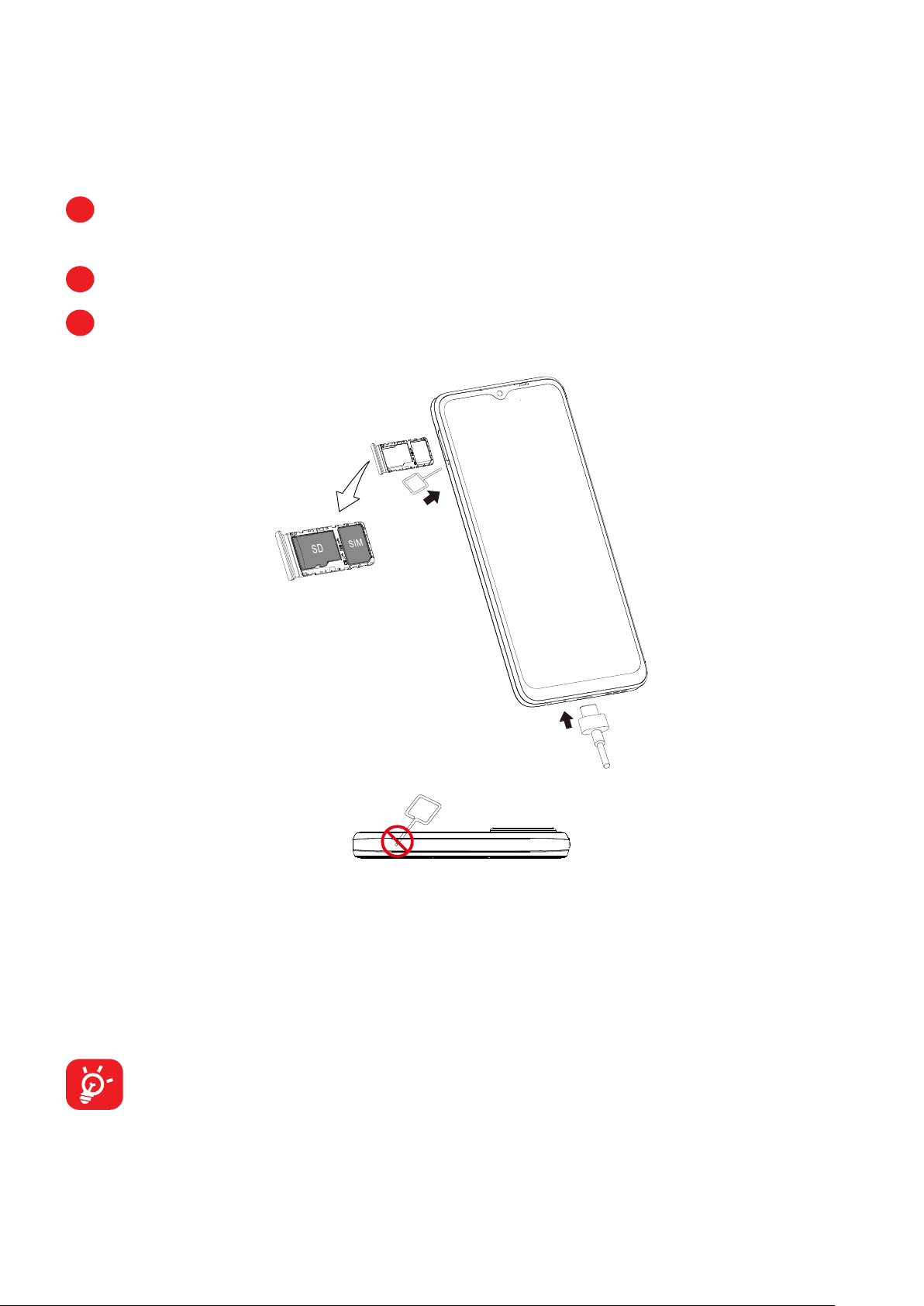
1
Your new phone is partially charged. Charge the battery by using the USB-C
cable and charger provided.
2
Use the provided SIM pin to open the SIM tray.
3
Place the Nano SIM card and/or microSD
TM
card into the tray, then slide the
SIM tray into the slot.
①
③
②
Caution: Do not insert the SIM pin into the small hole on top or bottom of the
phone.
You must insert your SIM card to make phone calls. You do not need to power off
your phone before inserting or removing the SIM card as this phone supports hot
swap.
MicroSD
TM
cards are sold separately. Your phone only supports Nano SIM
cards. Do not attempt to insert other SIM types; otherwise this may cause
damage to your phone.
8
Charging the battery
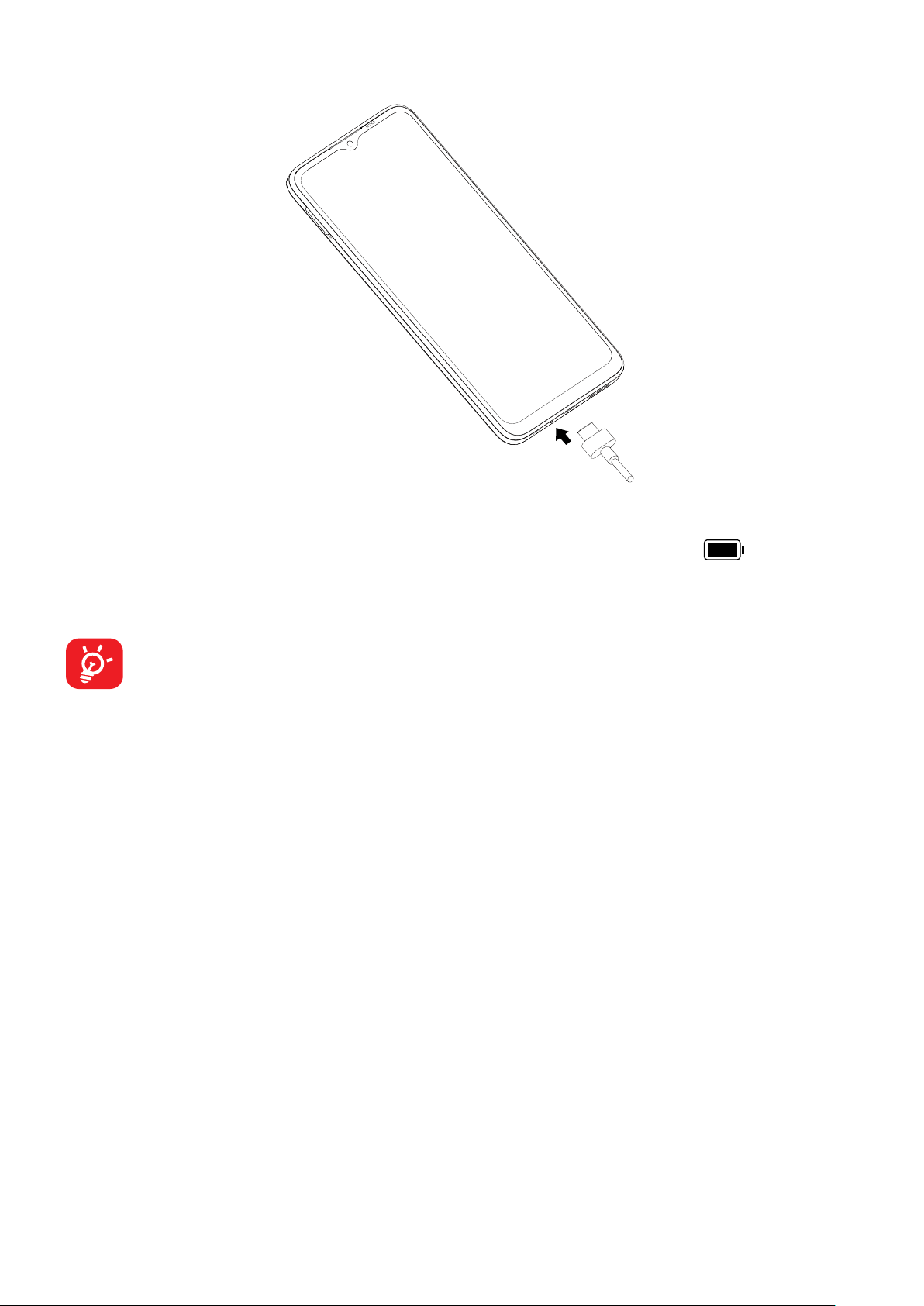
Your new phone is partially charged. Charge the battery by using the USB-C cable
and charger provided. You are advised to fully charge the battery (
). Charging
status is indicated by a percentage displayed on screen while the phone is powered
off. The percentage increases as the phone is charged.
To reduce power consumption and energy waste when the battery is fully
charged, disconnect your charger from the plug; switch off Wi-Fi, GPS,
Bluetooth or background-running applications when not in use; reduce the
backlight time, etc.
Reverse Charging
On-The-Go (OTG) reverse charging is a USB transmitting technology that allows a
phone to connect to an external device with the help of an USB-C data cable.
You can use your phone to charge other devices using a USB-C data cable.
1. Connect your phone with the device to be charged using a USB-C data cable.
2. After connecting, a reminder box will pop up indicating that your phone can charge
the other phone and that the battery will reduce quickly during the charging.
3. Swipe down from the status bar to open the notification panel; tap Charging
connected device via USB, and then check that Supply power is selected by
default.
9
Powering on your phone
Hold down the Power key until the phone powers on. Unlock your phone (Swipe,
PIN, Password, Pattern, Fingerprint or Face recognition) if necessary and confirm.
The Home screen is displayed.
If you do not know your PIN code or forget it, contact your network carrier. Be sure
to keep your PIN code secure.
Powering off your phone
Press and hold the Power key until options appear, then select Power off.
1.3 Home screen
You can bring all the items (applications, shortcuts, folders and widgets) you love
or use most frequently to your Home screen for quick access. Tap the Home button
to switch to the Home screen.
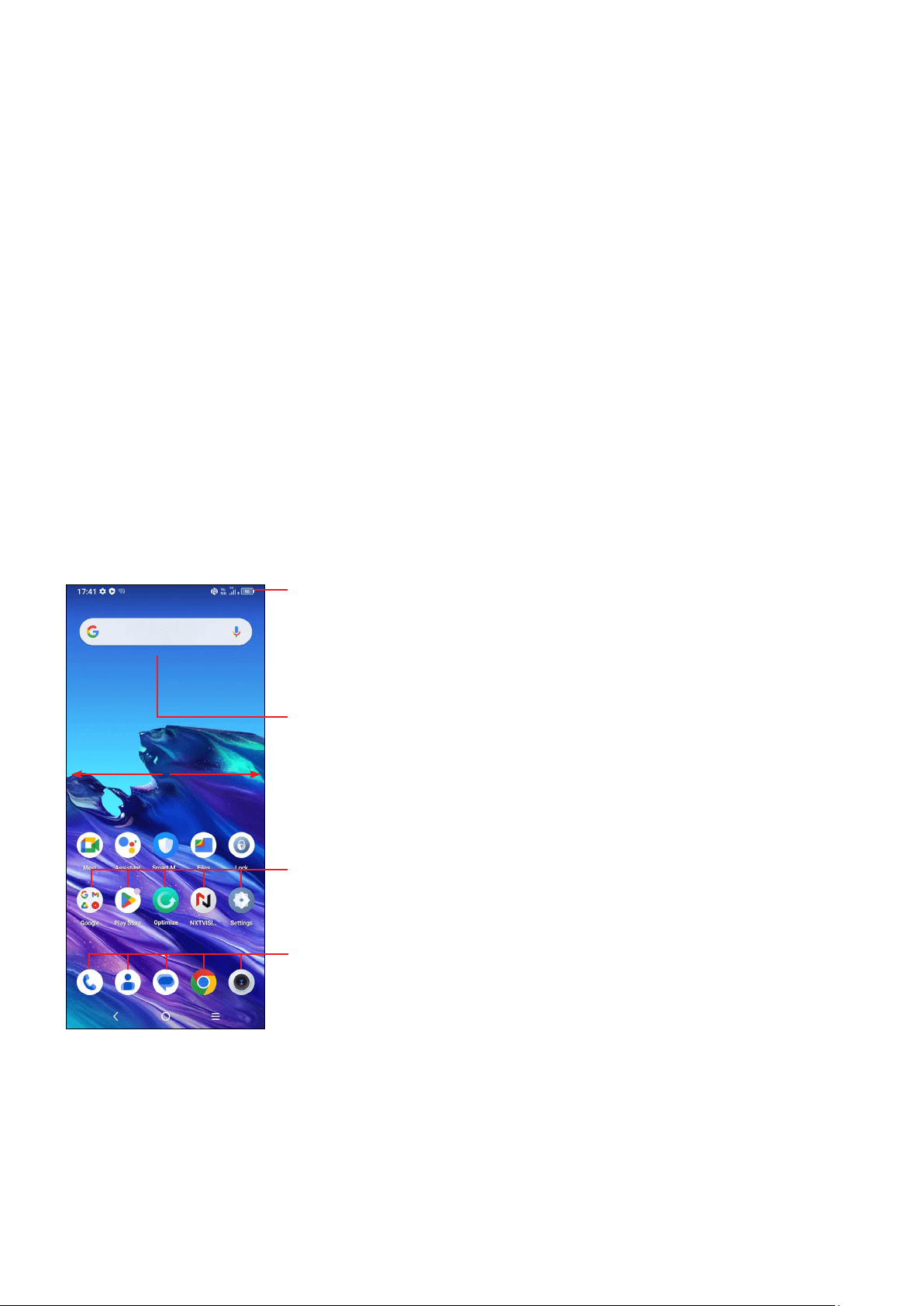
Status bar
• Status/Notification icons
• Drag down to open the notification panel
Search bar
• Tap
to enter text search screen
• Tap
to enter voice search screen
Tap an icon to open an application, folder, etc.
Favourite tray applications
• Tap to enter the application.
• Touch and hold to move or remove applications.
The Home screen is provided in an extended format to allow more space for adding
applications, shortcuts etc. Slide the Home screen horizontally left and right to get
a complete view.
10
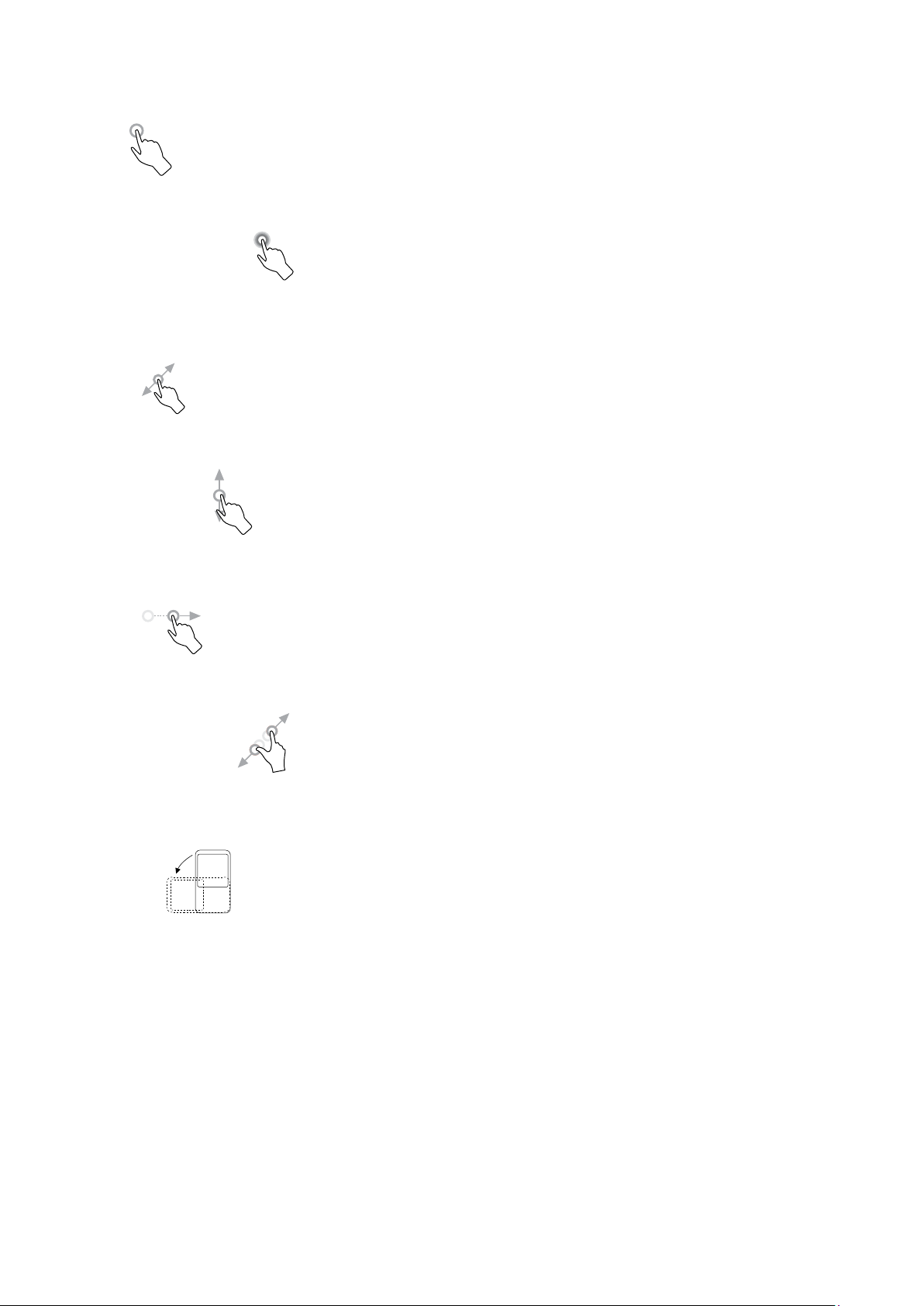
Using the touchscreen
Tap
To access an application, tap it with your finger.
Touch and hold
To enter the available options for an item, Touch and hold the item. For example.
Select a contact in Contacts and Touch and hold it. An options list will then appear.
Drag
Place your finger on the screen to drag an object to another location.
Slide/Swipe
Slide the screen to scroll up and down the applications, images, and web pages.
You can slide the screen horizontally too.
Flick
Similar to swiping, but flicking makes it move quicker.
Pinch/Spread
Place two fingers on the screen surface and draw them apart or together to scale
an element on the screen.
Rotate
Automatically change the screen orientation from portrait to landscape by turning
the phone sideways to have a better screen view.
11
Status bar
From the status bar, you can view both phone status (on the right side) and
notification information (on the left side).
Drag down the status bar to view notifications and drag again to enter the quick
settings panel.
Tap and drag up to close it. When there are notifications, they can be accessed by
tapping them.
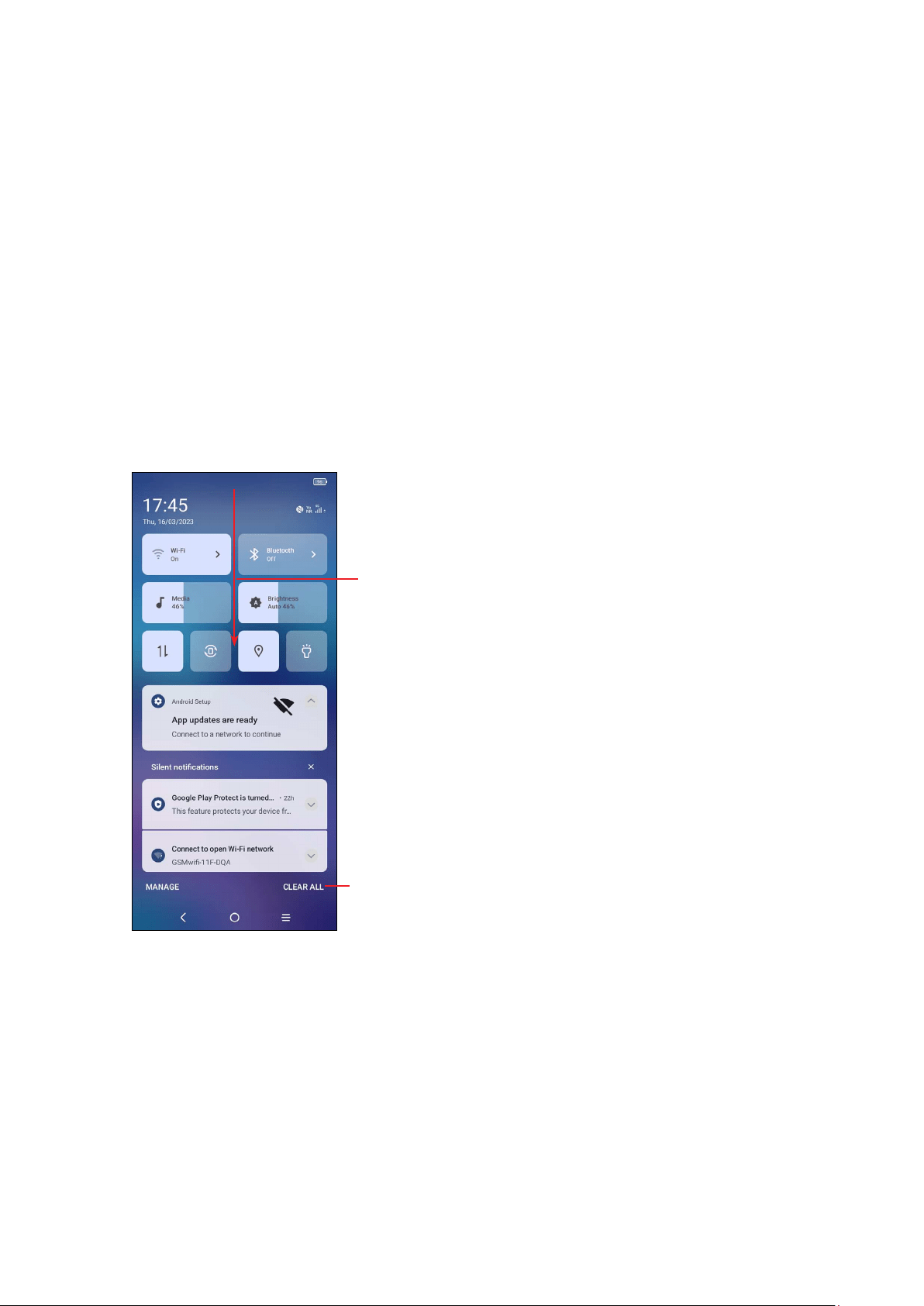
Notification panel
When there are notifications, drag down the Status bar to open the Notification
panel to read the detailed information. Tap on the notification directly to open the
notification within the respective app.
Tap to clear all event–based notifications
(other ongoing notifications will remain).
With the Notification panel open, drag down
again to see the Quick Settings menu.
12
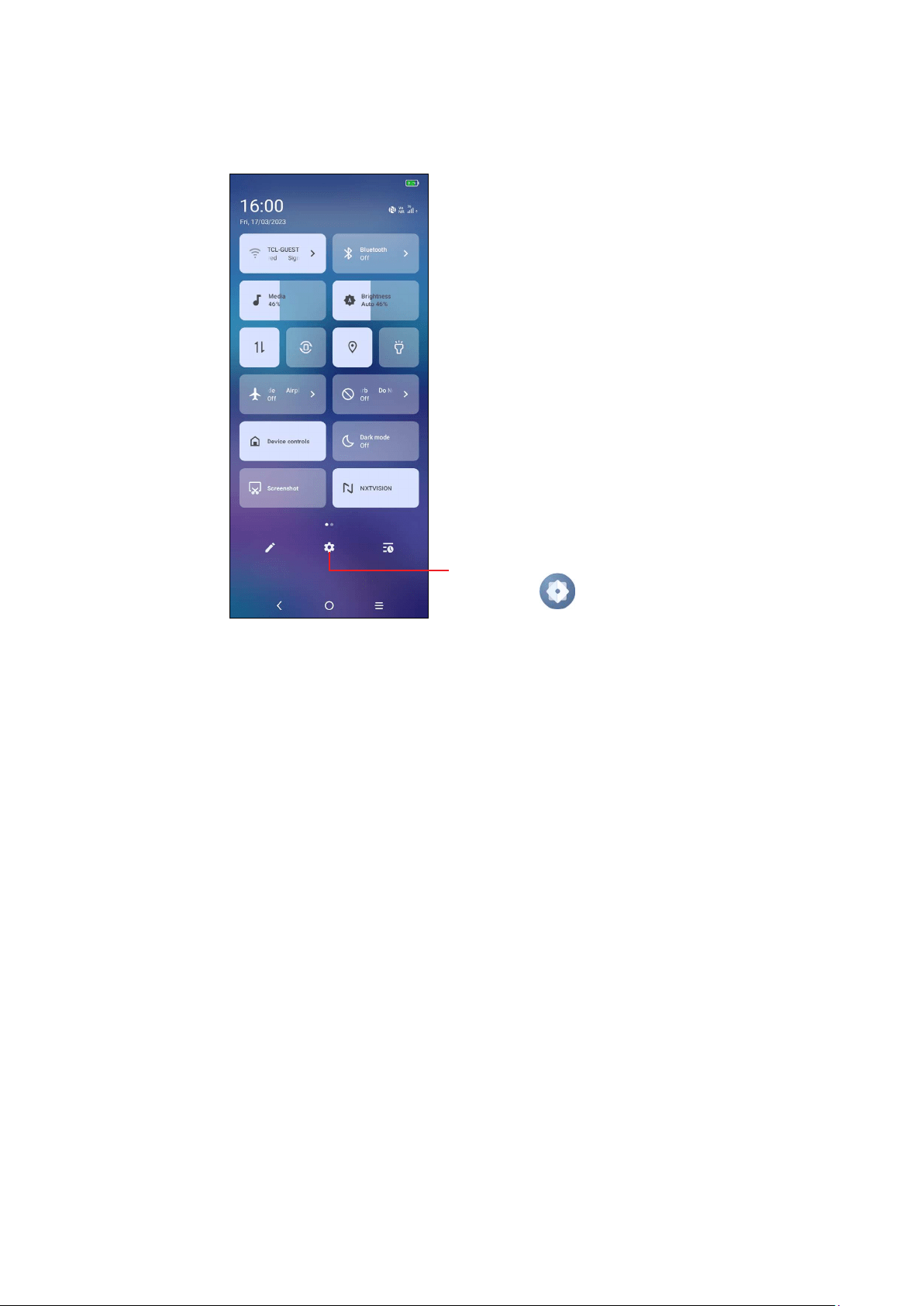
Quick settings panel
Drag down the Notification panel to open the Quick Settings panel, where you can
enable or disable functions or change modes by tapping the icons.
Tap to open the full
Settings
menu.
Lock/Unlock your screen
To protect your phone and privacy, you can lock the screen with a pattern, PIN,
password, registered fingerprint or face
(1)
.
To create a screen unlock, tap Settings > Security & biometrics > Screen lock.
To lock the phone screen
• If your phone remains inactive for a period of time, it will automatically lock the
screen and enter sleep mode to save power. Go to Settings > Display > Sleep
and select a screen timeout period.
• You can also manually lock the screen by pressing the Power key once.
(1)
Fingerprint and Face unlock may not be as secure as Pattern, PIN, or Password
locks. We may use Fingerprint and Face unlock methods only for the purpose to
unlock the phone. The data collected from you through such methods will be stored
in your device and will not be disclosed to any third-party. You may delete your data
anytime.
13
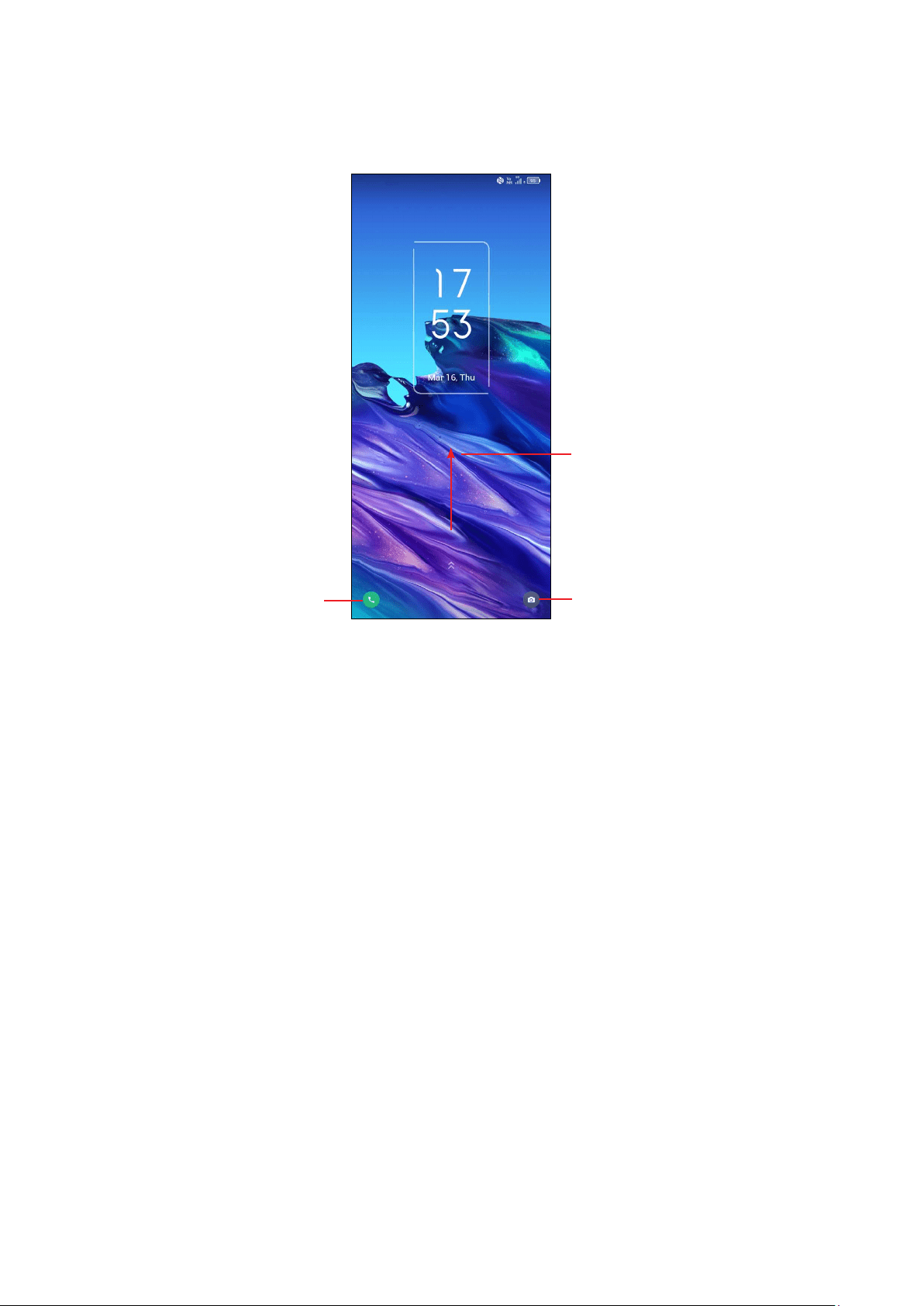
Swipe to unlock the screen
Press the Power key once to light up the screen. Swipe up the screen to unlock
the screen.
(1)
Swipe right to
enter Phone
(1)
Swipe left to
enter Camera
(1)
Swipe up to
unlock the screen
Enter a password to unlock the screen
Once the screen is turned on, swipe up the screen to display the password input
panel. Then enter your lock screen password.
Use pattern unlock
Draw the same pattern you have set to unlock the screen.
Use Face unlock
• From the app list, tap Settings > Security & biometrics > Face unlock. Before
using the face unlock, you need to set a pattern/PIN/password.
• Hold your phone 20-50 cm from your face. Position your face in the square
shown on the screen. For best results, we suggest that the face key is enrolled
indoors and away from direct sunlight.
• Enable Face unlock when your screen turns on, otherwise you will have to swipe
up on the screen first of all.
(1)
Customized by tapping Settings > Home screen & lock screen > Lock screen
shortcut.

14
Use Fingerprint unlock
• For the best result, begin with the index finger on your dominant hand.
• Put your finger on the sensor and lift after you feel a vibration. Keep lifting your
finger to add the different parts of your fingerprint.
• Follow theses steps until fingerprints are fully registered.
Personalizing your Home screen
Add
You can touch and hold a folder, an application or a widget and drag the item to
your preferred Home screen.
Reposition
Touch and hold an item and drag it to the desired position and then release. You
can move items both on the Home screen and the Favourite tray. Hold the icon on
the left or right edge of the screen to drag the item to another Home screen.
Remove
Touch and hold the item to be removed to activate the Move mode, drag the item
up to the top of the Remove icon then release it.
Create folders
To improve the organization of shortcuts or applications on the Home screen and
the Favourite tray, you can add them to a folder by stacking one item on top of
another. To rename a folder, open it and tap the folder’s title bar to input the new
name.
Wallpaper customization
Touch and hold the Home screen, then tap Wallpaper & style to customize
wallpaper.
15
Widgets and recently used applications
Consult Widgets
Touch and hold the idle area of Home screen to enter an options list, and tap
Widgets
to enter the widgets list. Slide up and down to view all widgets.
To return to the Home screen, tap the Home
button .
Consult recently used applications
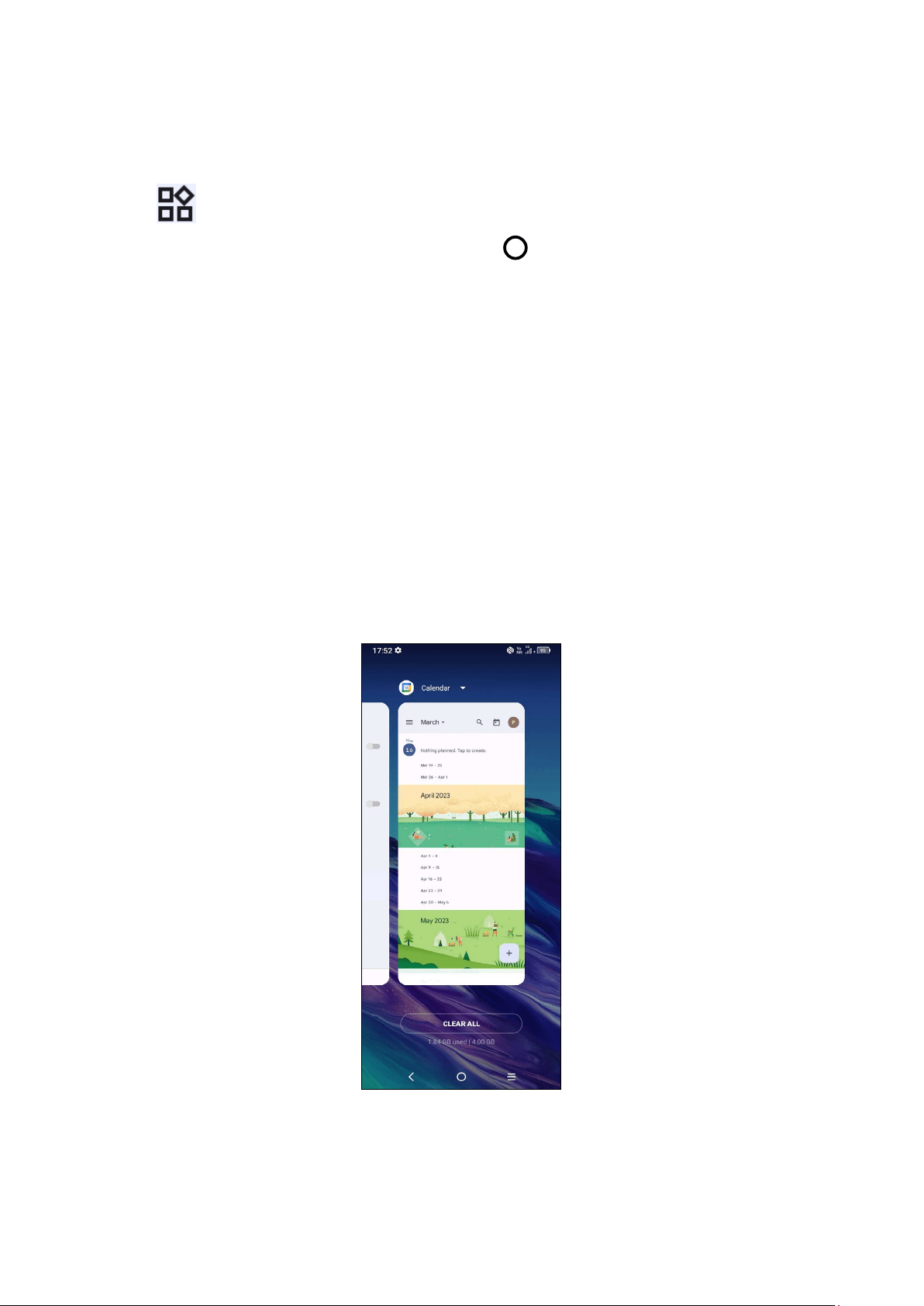
To consult recently used applications:
Tap the Recent apps key.
If Settings > Button & gestures > System navigation > Gesture navigation is
set, swipe up from the bottom of the screen and hold for at least 0.3s.
Tap a thumbnail in the window to open the application.
Tap one thumbnail and slide it up to close the application, slide it right/left to switch
between the applications.
Tap CLEAR ALL at the bottom of the screen to close all the running applications.
16
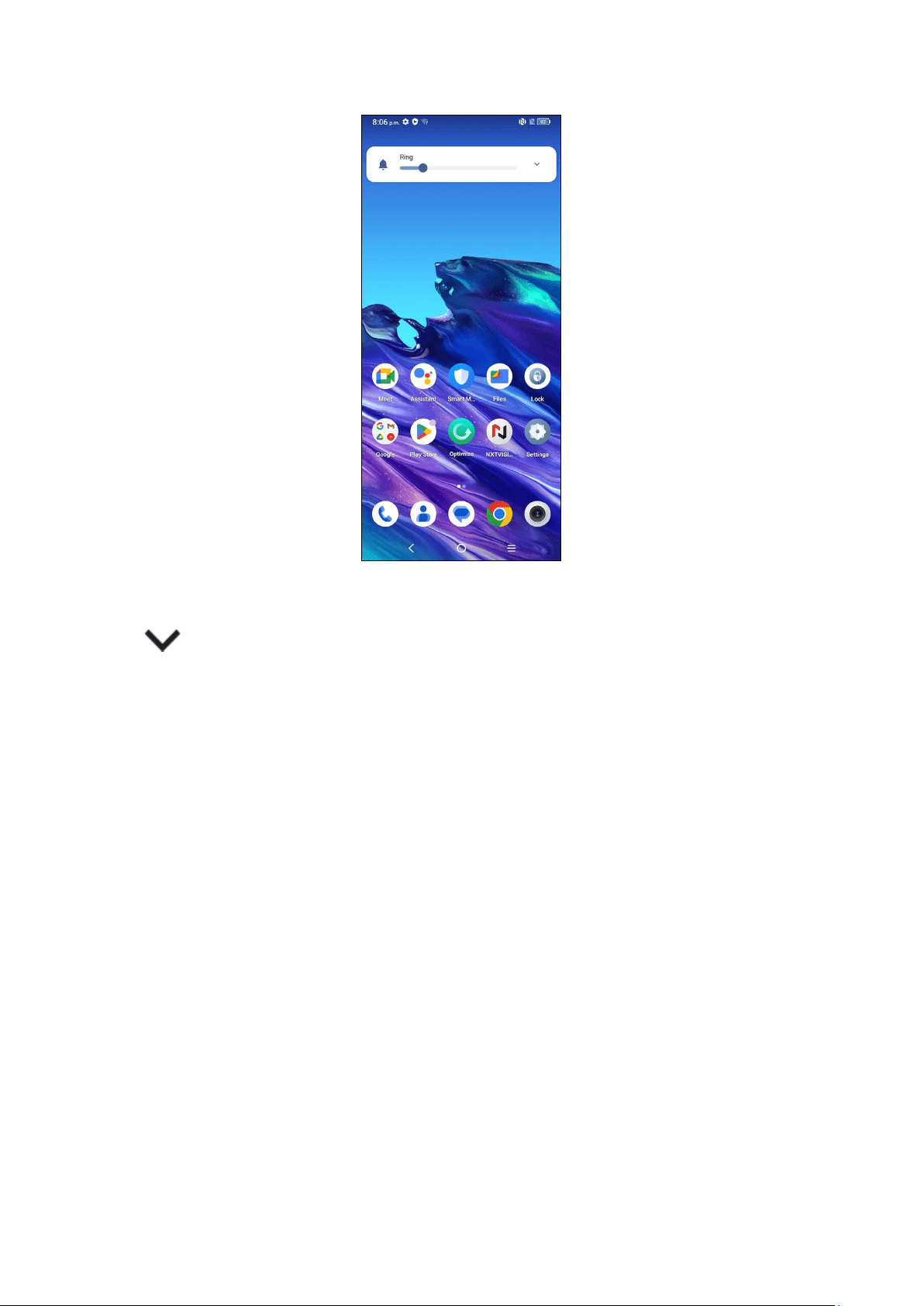
Volume adjustment
Press the Volume key to adjust the Ring volume.
Tap the
icon to adjust Media, Alarm and Notification volume.
1.4 Text input
Using the Onscreen Keyboard
Onscreen Keyboard settings
Swipe up on the Home screen, and select Settings > System > Languages &
input > Virtual Keyboard. A series of settings will become available for your
selection.
Adjust the Onscreen Keyboard orientation
Turn the phone sideways or upright to adjust the onscreen keyboard orientation.
You can adjust it by changing the settings (Tap on/off Settings > Display > Auto-
rotate screen).
17
Android keyboard
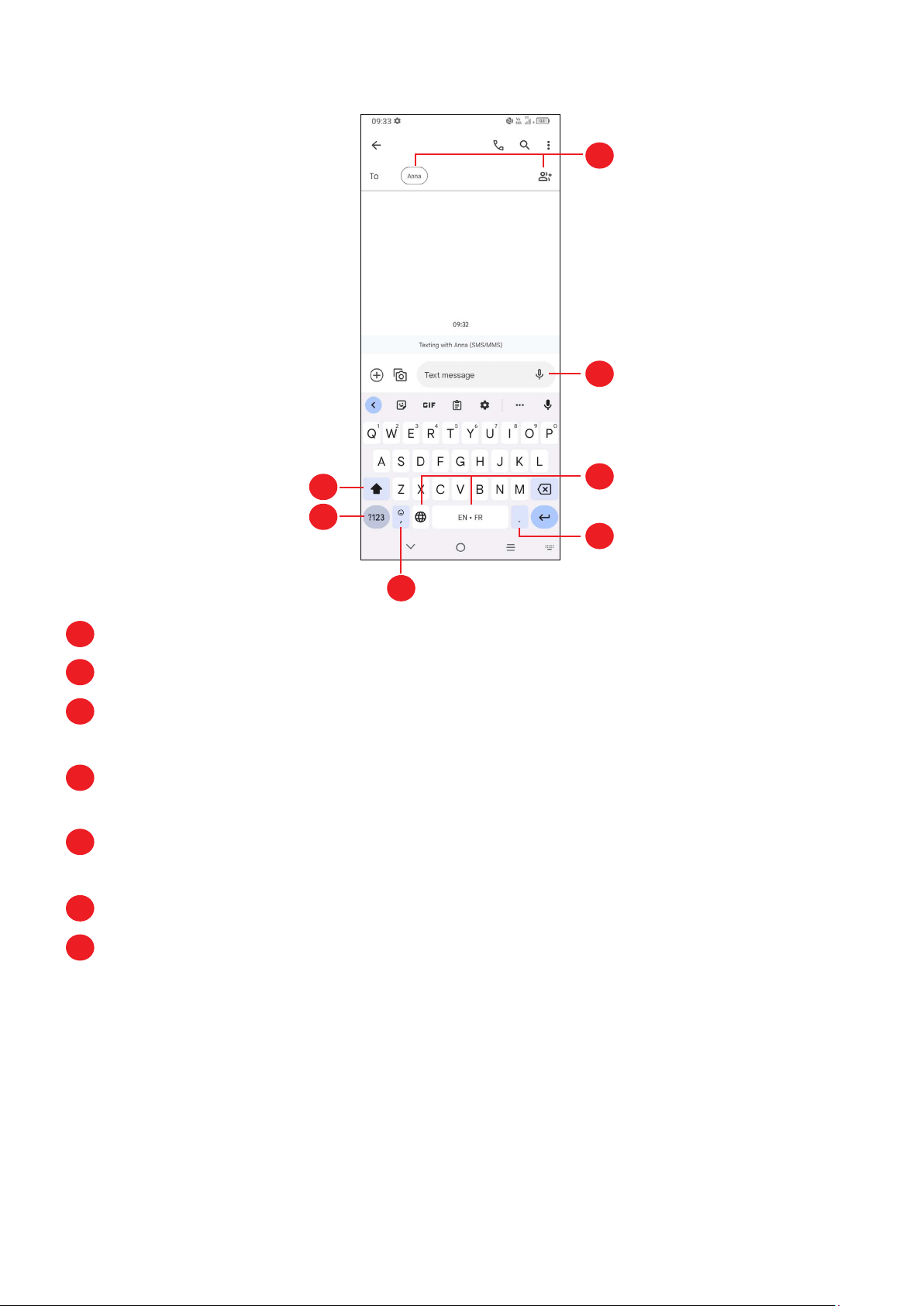
1
2
3
4
5
6
7
1
Enter recipient numbers or select from contacts
2
Touch and hold to record audio
3
Touch and hold to switch language (if additional language keyboards are
activated).
4
Tap to insert a period
Touch and hold to select symbols
5
Tap to switch between "abc/Abc" mode
Touch and hold to switch to "ABC" mode
6
Tap to access the symbols and numbers keyboards
7
Tap to insert a comma
Touch and hold to access keyboard settings, insert an emoji, or view input
options.
18
Text editing
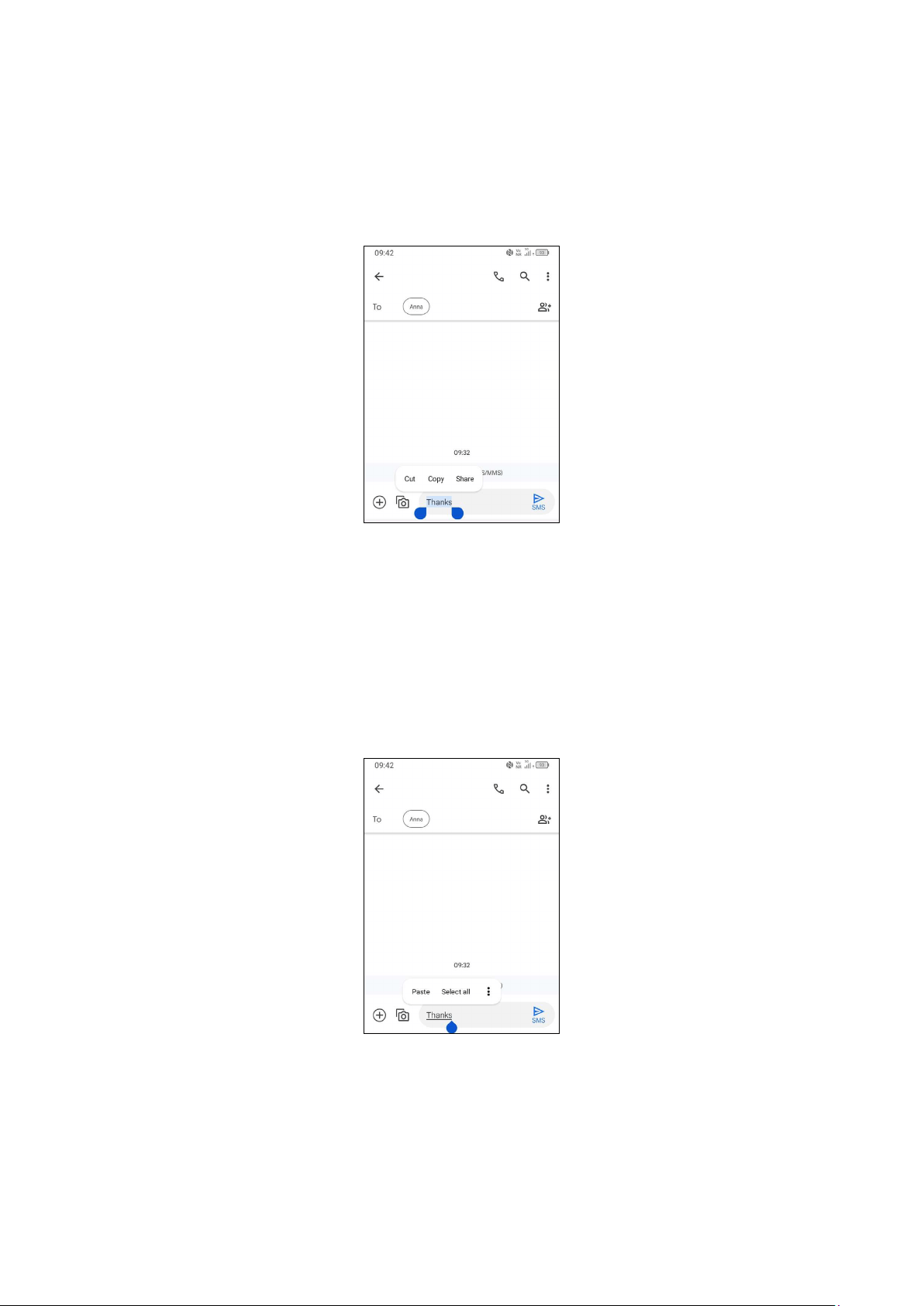
• Touch and hold or double tap within the text you want to edit.
• Drag the tabs to change the amount of text to edit.
• The following options will appear: Cut, Copy, and Share.
Insert new text
• Tap where you want to type, or touch and hold a blank area. The cursor will blink
and the tab will appear. Drag the tab to move the cursor.
• If you have cut or copied any text, tap the tab to show the Paste and Select all
option which allows you to complete pasting immediately.
19
2
Multimedia applications
2.1 Camera ...........................................................
Launch Camera
There are multiple ways to open the Camera app.
From the Home Screen
From the home screen, tap Camera
.
From the Lock Screen
When the screen is locked, press the Power key once to light up the screen, then
swipe left on the camera icon in the lower right corner to open the camera.
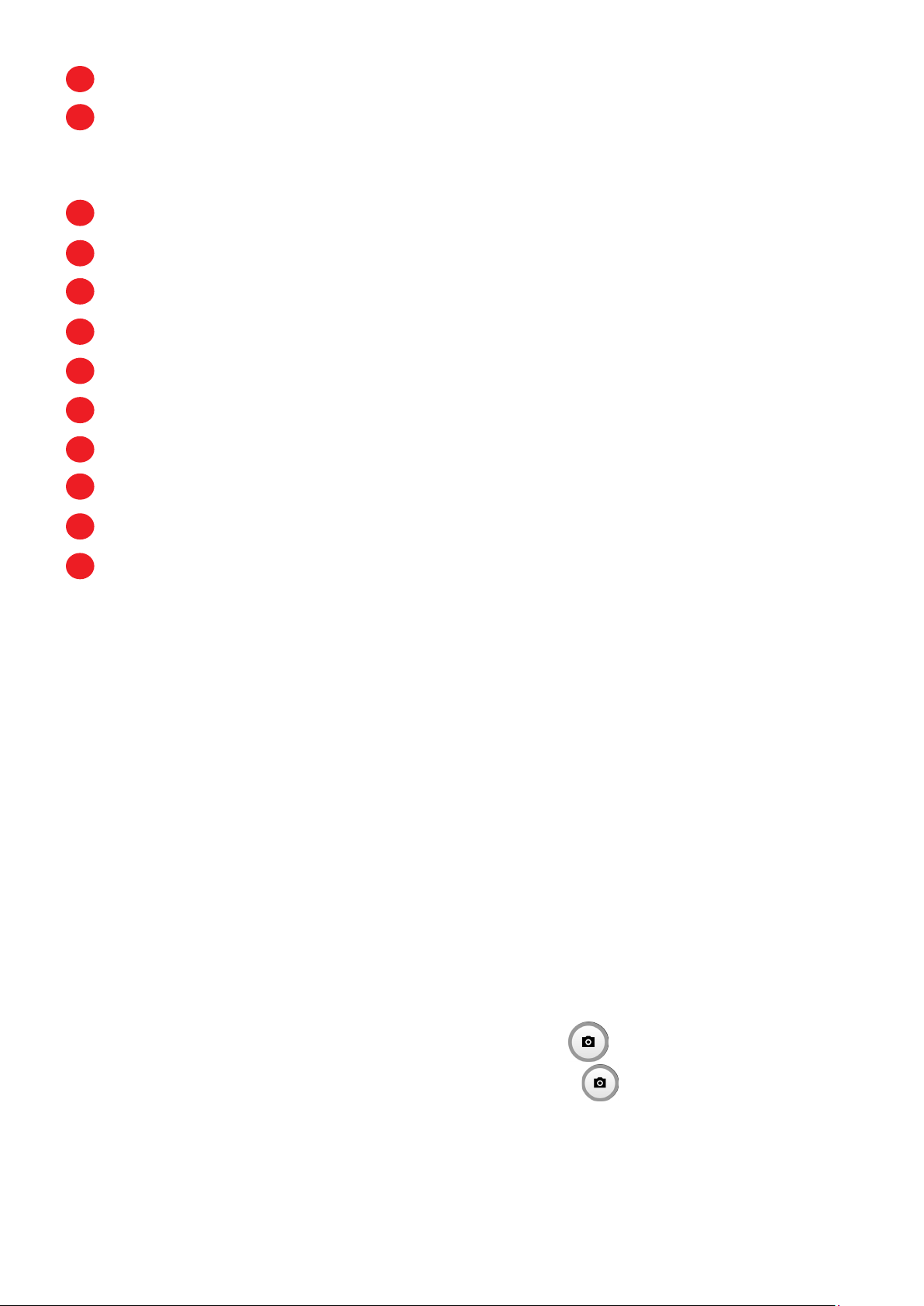
1
2
3
4
5
6
7
8
9
10
11
12
20
1
Select filter s
2
Flash mode: Tap to turn on/off the camera flash
WARNING: Keep a safe distance when using the flash. Do not point the flash
toward people’s or animals’ eyes.
3
AI scene detection
4
Take HDR photos
5
Zoom in/out
6
Switch between front/back camera
7
Take a photo
8
Touch to access settings
9
Select picture size
10
Pinch fingers together to zoom out, or spread fingers apart to zoom in
11
View the photos or videos you have taken
12
Google Lens
Google Lens
(1)
Google Lens is a free tool that uses Google to:
• Translate/Copy text
• Search for similar products
• Identity places & buildings
• Discover books & media
• Scan barcodes
To take a photo
The screen acts as the viewfinder. First, position the object or landscape in the
viewfinder, tap the screen to focus if necessary. Tap to capture. The photo will
be automatically saved. You can also touch and hold to take burst shots.
(1)
Your phone must also be connected to a network.
21
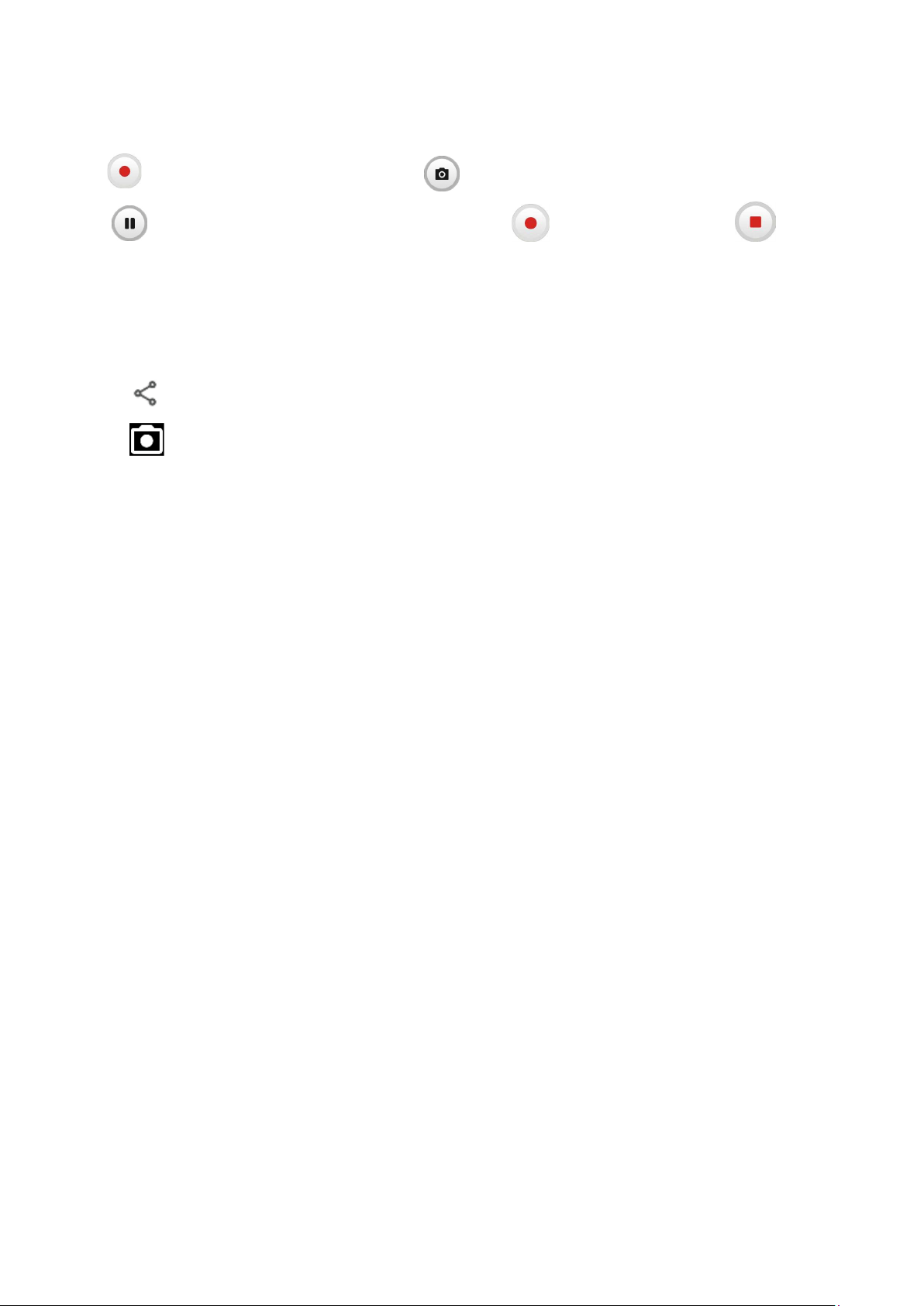
To take a video
Tap VIDEO to change the camera mode to video.
Tap
to start video recording. Tap to take a picture during video recording.
Tap
to pause video recording and tap to continue. Tap to stop
recording. The video will be automatically saved.
Further operations when viewing a photo/video you have taken
• Slide left or right to view the photos or videos you have taken.
• Tap , then Gmail/Bluetooth/MMS/etc. to share the photo or video.
• Tap
to return to Camera.
Modes and settings
Modes
Slide left or right to switch between modes.
• AUTO: Auto is the default mode for Camera.
• VIDEO: Access video mode.
• ONE SHOT: One shot is a process of taking multiple types of photos with one
press through AI. You can shoot 5, 10 or 15 seconds of video at a time, and
output photos with various types of effects such as different filters.
• PRO: Pro camera mode lets you fine-tune parameters and gives you full control
over ISO, WB exposure time, aperture, shutter speed and so on.
• PORTRAIT: Create a depth of field effect. You can compose an image that
highlights your subject while producing a gorgeously blurred background.
• PANO: Capture a panoramic image. Tap the shutter button to start taking a
panoramic photo and move the phone steadily along in the direction indicated by
the onscreen line. Once the slots are filled, the photo will be automatically saved.
If the slots are not fully filled, tap the shutter button again to save the photo.

22
• MORE: By tapping
, you can access more modes. These modes can be
moved to the main screen by tapping
.
STOP MOTION: Capture a number of photos of a certain scene, then convert
them into a speeded-up video.
SLO-MO: Record special occasions and fast moving scenes, then play them
back at a slow frame rate.
LIGHT TRACE: Capture creative movements of light using a long exposure
photograph.
MOVIE VIDEO: Capture a 21:9 frame video with film texture filter and easily
share on social media.
SUPER MACRO: Access super macro mode. 4cm is the best macro shooting
distance.
VLOG: Capture short videos with several types of filters, transitions and music
to record your amazing life.
ART EFFECTS: Create videos with rich video art effect templates.
Settings
Tap
to set more options:
• Photo size: Select photo size.
• Video quality: Select video quality.
• Video stabilisation (EIS): Enable the Electronic Image Stabilisation (EIS)
feature. It helps reduce blurring associated with the motion of a camera during
exposure.
• Calorie detection
(1)
: Detect the calorie content of a captured object.
• Smart guideline
(1)
: This feature provides AI-powered facial detection and
composition guides for portrait shots. It only works when using the main camera.
• Intelligent mode recommendation: Enabling this function will recommend you
appropriate modes based on scenario when taking photos or videos.
• Dark shot: Capture clear pictures in a dark environment.
• Quick snap: When activated, double press the volume down key to take a photo
without unlocking or turning on the screen.
• Volume button function: Customize the Volume button to Shutter, Zoom or
Volume when using camera.
(1)
Only available when the AI scene detection is turned on.
23
• Gesture to capture: When activated, show your palm to the camera and it will
automatically take a photo or video in a few seconds.
• Storage: Choose between phone and microSD
TM
card storage when an
microSD
TM
card is inserted. The default is phone storage.
• Save location information: Tag photos and videos with your location. This
option is available when the GPS location service is enabled.
• Shutter sound: Turn on/off shutter sound when capturing.
• Watermark: Turn on/off Watermark.
• Reset settings: Reset the camera to its factory default settings.
More options are available when you switch to using the front camera:
• Mirror camera: This feature allows you to save selfies as appearing in the
preview without flipping them.
2.2 Photos ...........................................................
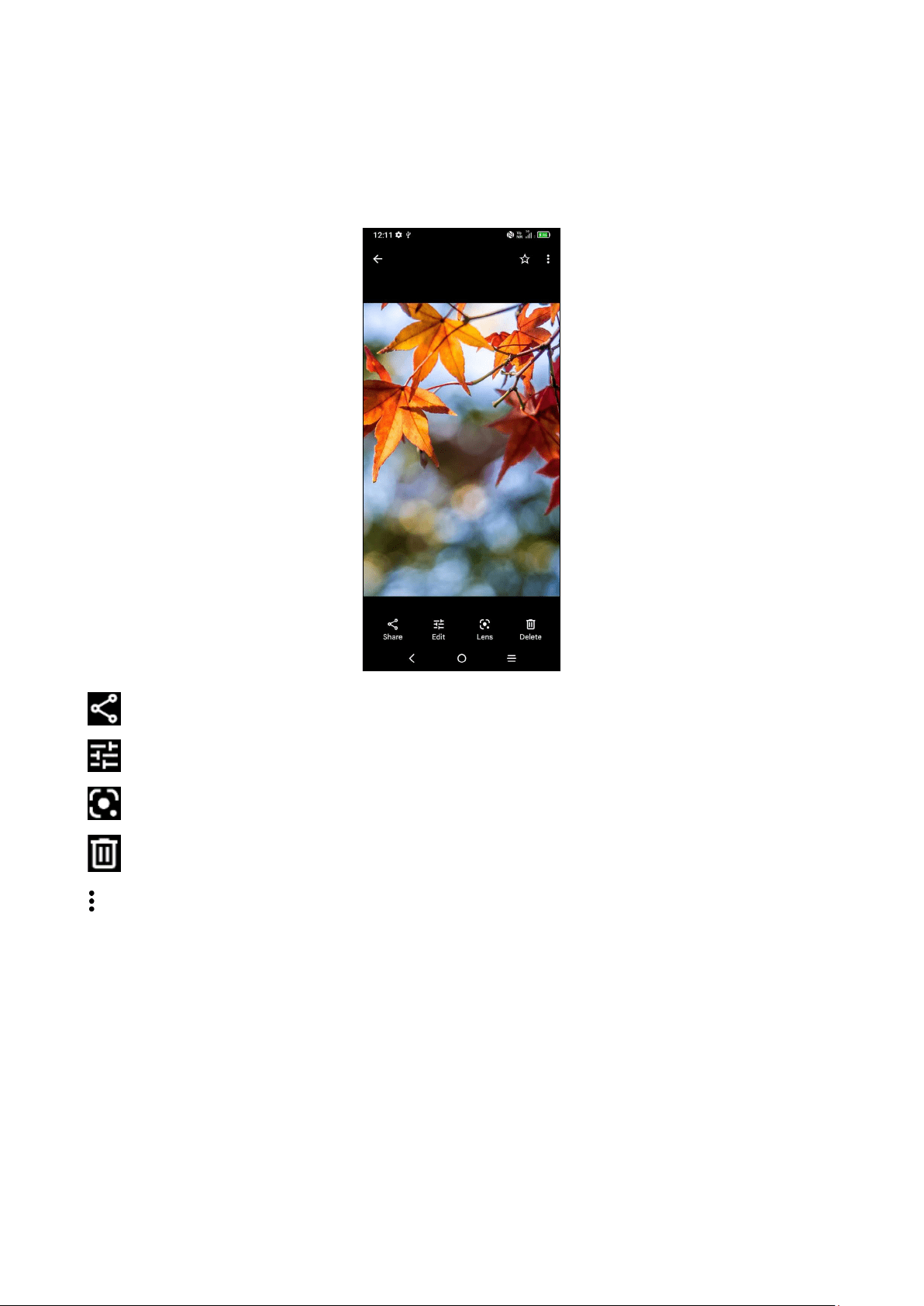
Google Photos acts as a media player for you to view photos and play videos.
In addition, a set of further operations to pictures and videos are available for
selection.
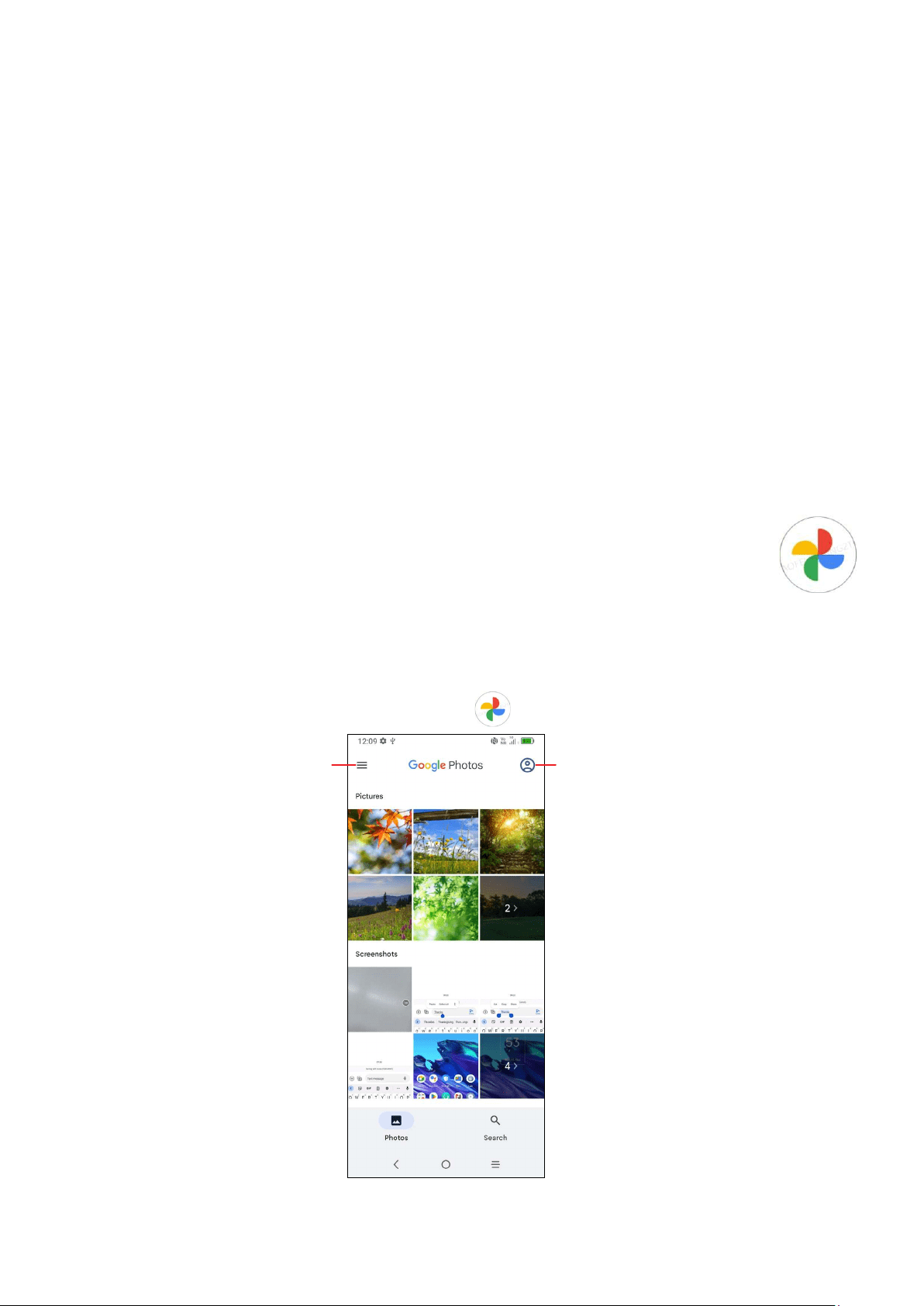
To view the photos you have taken, touch
from the Home screen.
Tap to access more
options
Tap to access
Photos, Trash or
PhotoScan
24
Working with pictures
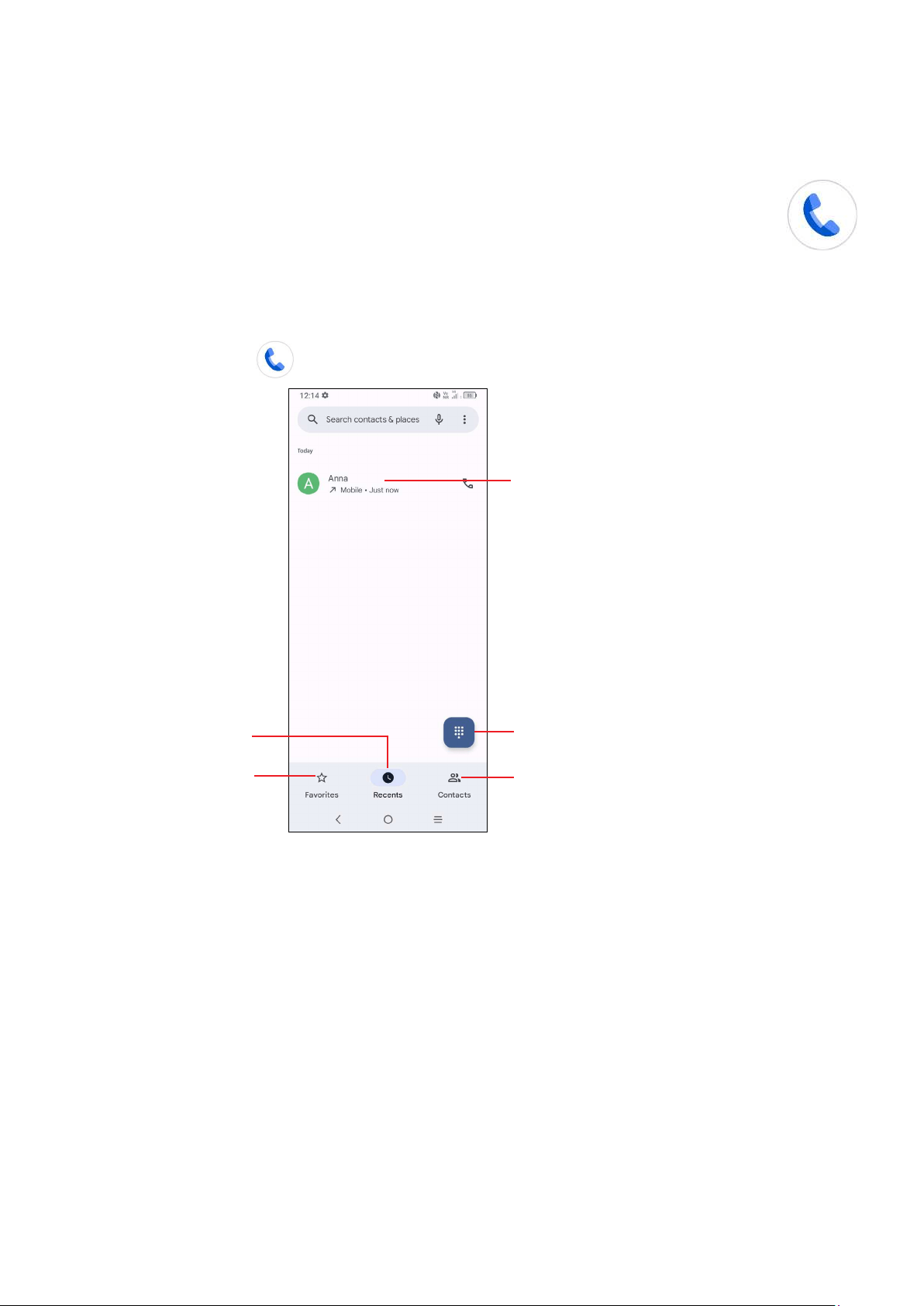
You can work with pictures by rotating or cropping them, sharing them with friends,
setting them as a contact photo or wallpaper, etc.
Find the picture you want to work on, and touch the picture.
• Share the picture.
•
Edit the picture.
•
Access Google Lens.
•
Delete the picture.
•
> Use as to set the picture as a Contact photo or Wallpaper.
25
3
Apps and features
3.1 Phone .............................................................
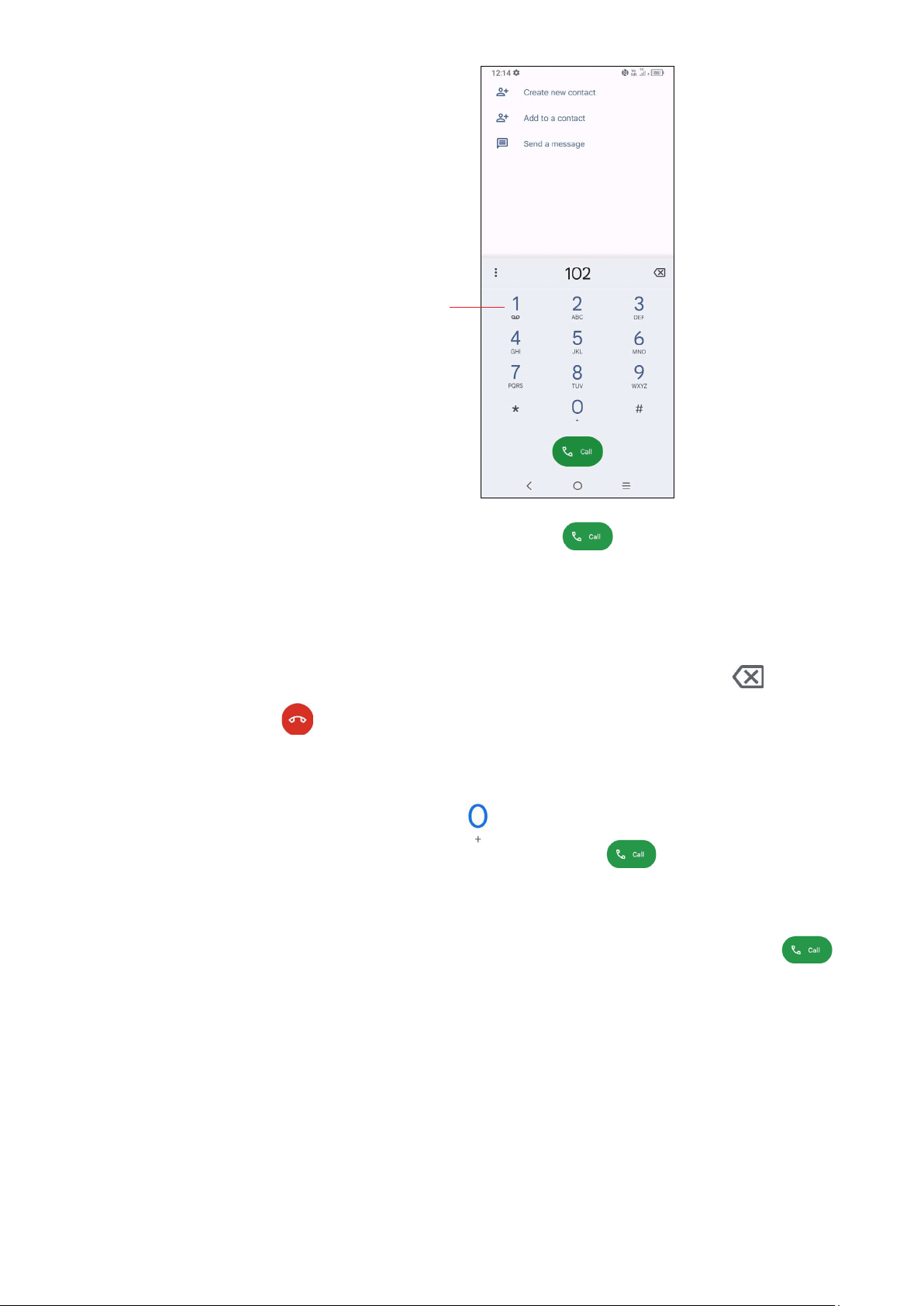
Making a call
To make a call, tap in the Favourites tray.
Contacts
View the call's detailed information
Call logs
Favourite numbers
Show the dial pad
26
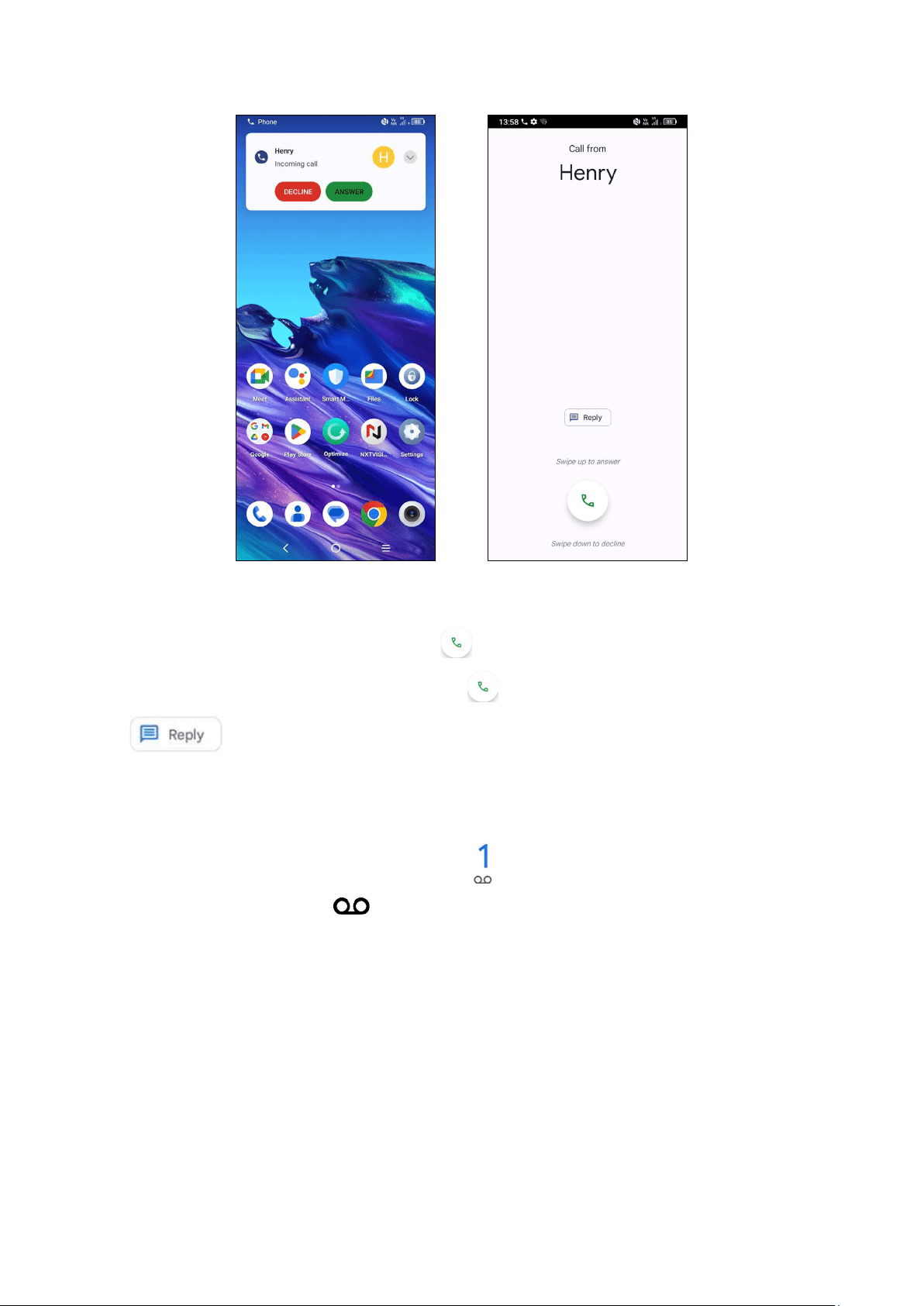
Touch and hold to
access voicemail
Enter the desired number from the dial pad and tap to place the call or select
a contact from Contacts or Call logs by sliding or tapping tabs, then make the call.
The number you entered can be saved to Contacts by tapping Create new contact
or Add to a contact.
If you make a mistake, you can delete the incorrect digits by tapping
.
To hang up a call, tap
.
International call
To dial an international call, touch and hold to enter “+”, then enter the international
country prefix followed by the full phone number and tap
.
Emergency call
If your phone has network coverage, dial the emergency number and tap
to
make an emergency call. Depending on your network and country this could even
work without a SIM card and without typing in the SIM PIN code.
27
Answering or rejecting a call
When you receive a call:
• Tap ANSWER, or swipe up the icon
to answer;
• Tap DECLINE, or swipe down the icon
to reject;
• Tap
to reject the call by sending a preset message.
Calling your voicemail
To access your voicemail, touch and hold .
If you receive a voicemail,
appears on the Status bar. Open the Notification
panel and touch New voicemail.
28
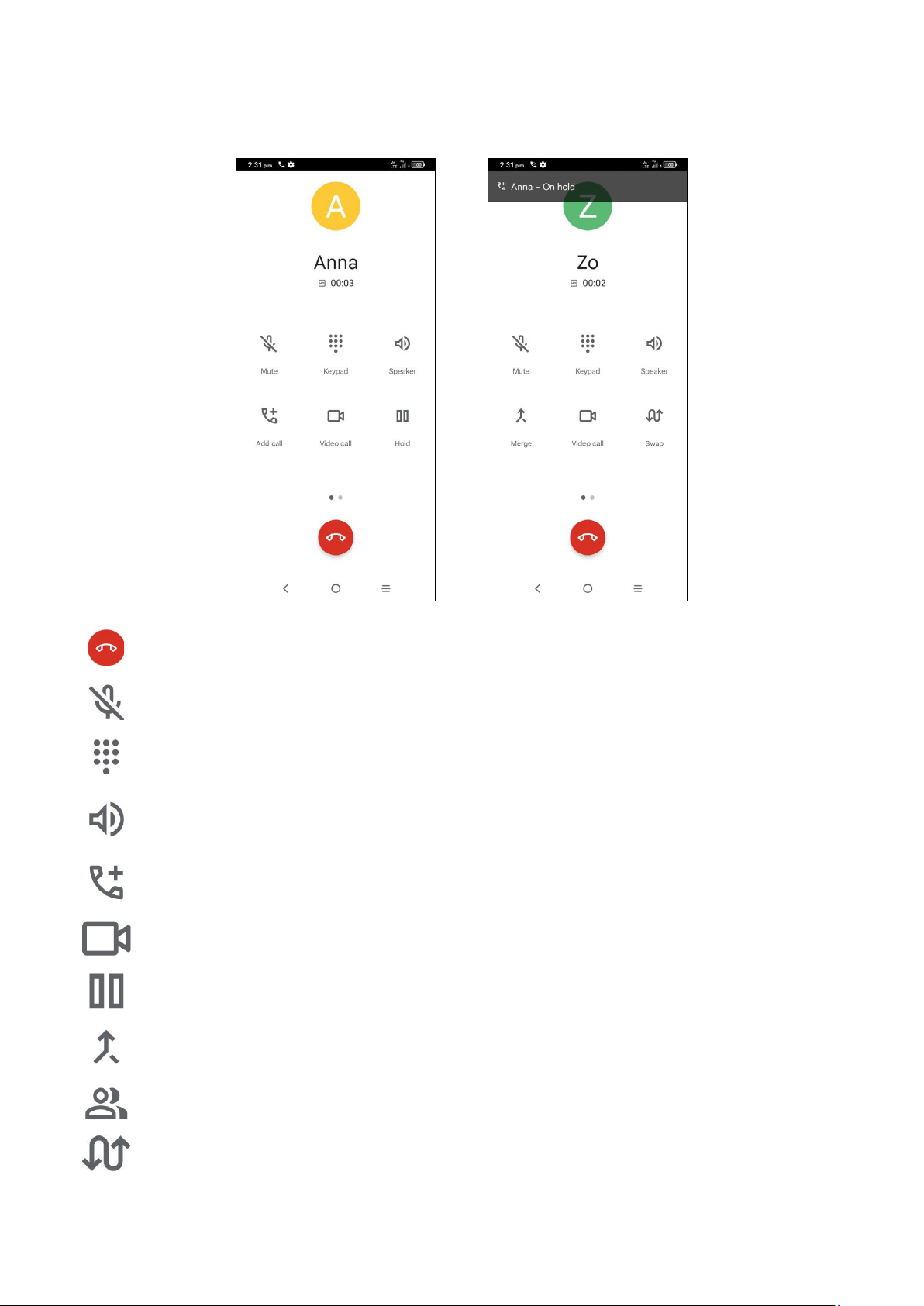
During a call
To adjust the volume during a call, press the Volume up/down key.
End the current call.
Mute the current call. Tap again to unmute the call.
Display the dial pad.
Activate the speaker during the current call. Tap again to deactivate the
speaker.
Make another call.
Make a video call.
Put a call on hold.
Merge calls to start a conference call.
Manage conference calls.
Swap the calls.
29
To avoid accidental operation of the touchscreen during a call, the screen
will be locked automatically when you put the cellphone close to your ear;
and it will be unlocked when the cellphone is taken away from your ear.
Managing multiple calls
Swap calls
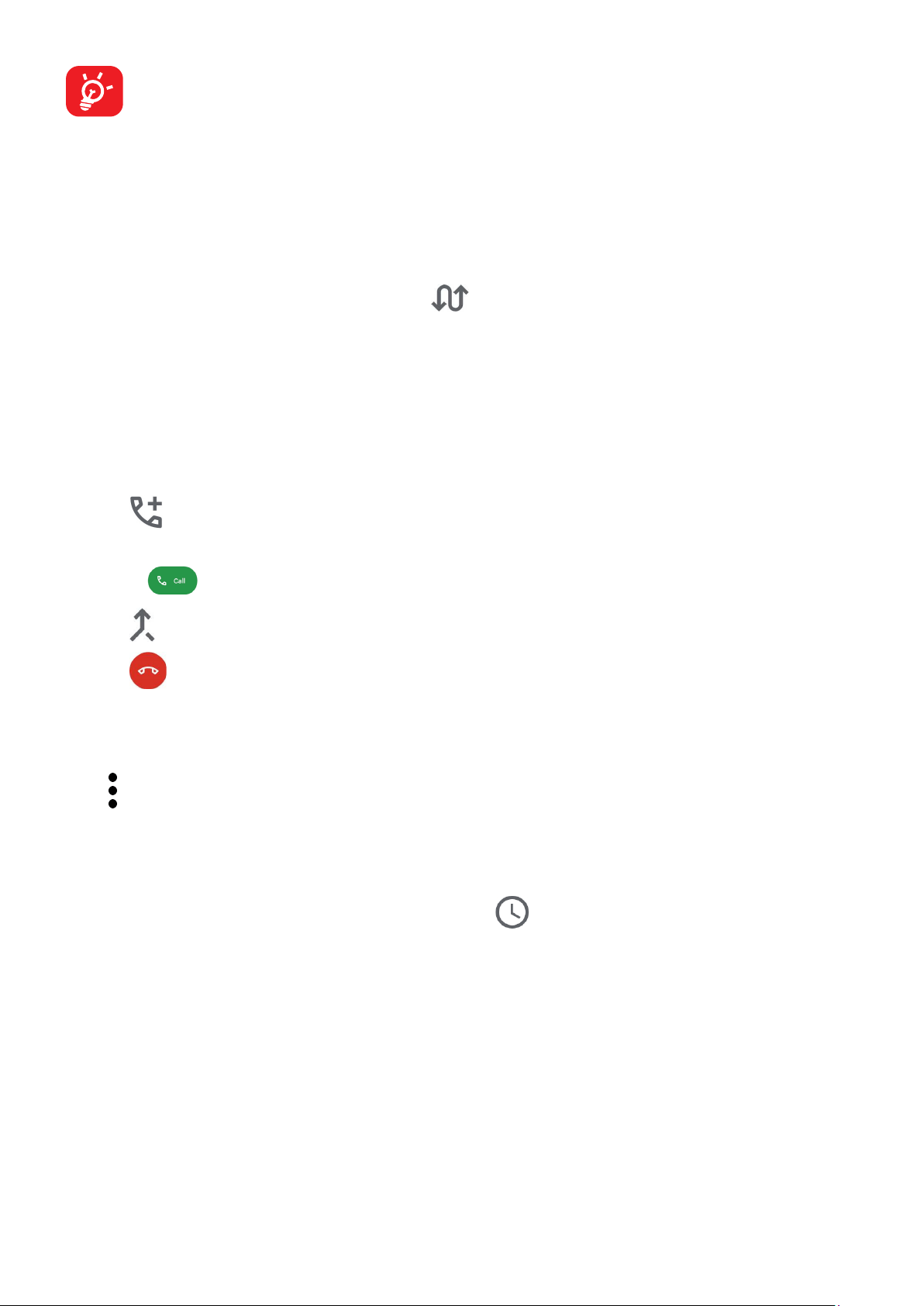
When you accept two calls, tap the
icon to switch between two lines. The
current call will be put on hold and you are able to join the other call.
Conference calls
(1)
You can set up a conference call as follows.
• Place a call to the first participant of the conference call.
• Tap
to add another call.
• Enter the phone number of the person you want to add to the conference and
touch
. You can also add participants from Call logs or Contacts.
• Tap
to start the conference.
• Tap
to end the conference call and disconnect all callers.
Call settings
Tap from the Phone screen, then tap Settings to set phone and contact settings.
Call log
You can access your call logs by tapping from the Phone screen to view
missed calls, outgoing calls and incoming calls.
Tap one call to view information or further operations. You can launch a new call,
send a message to the contact or number, or view detailed information of the call.
To delete the call history of a selected contact or number, touch and hold the call
log and choose Delete.
(1)
Depending on your network carrier.
30
3.2 Contacts .........................................................
Contacts enables quick and easy access to the contact you want to reach.
You can view and create contacts on your phone and synchronize these with your
Gmail contacts or other applications on the web or on your phone.
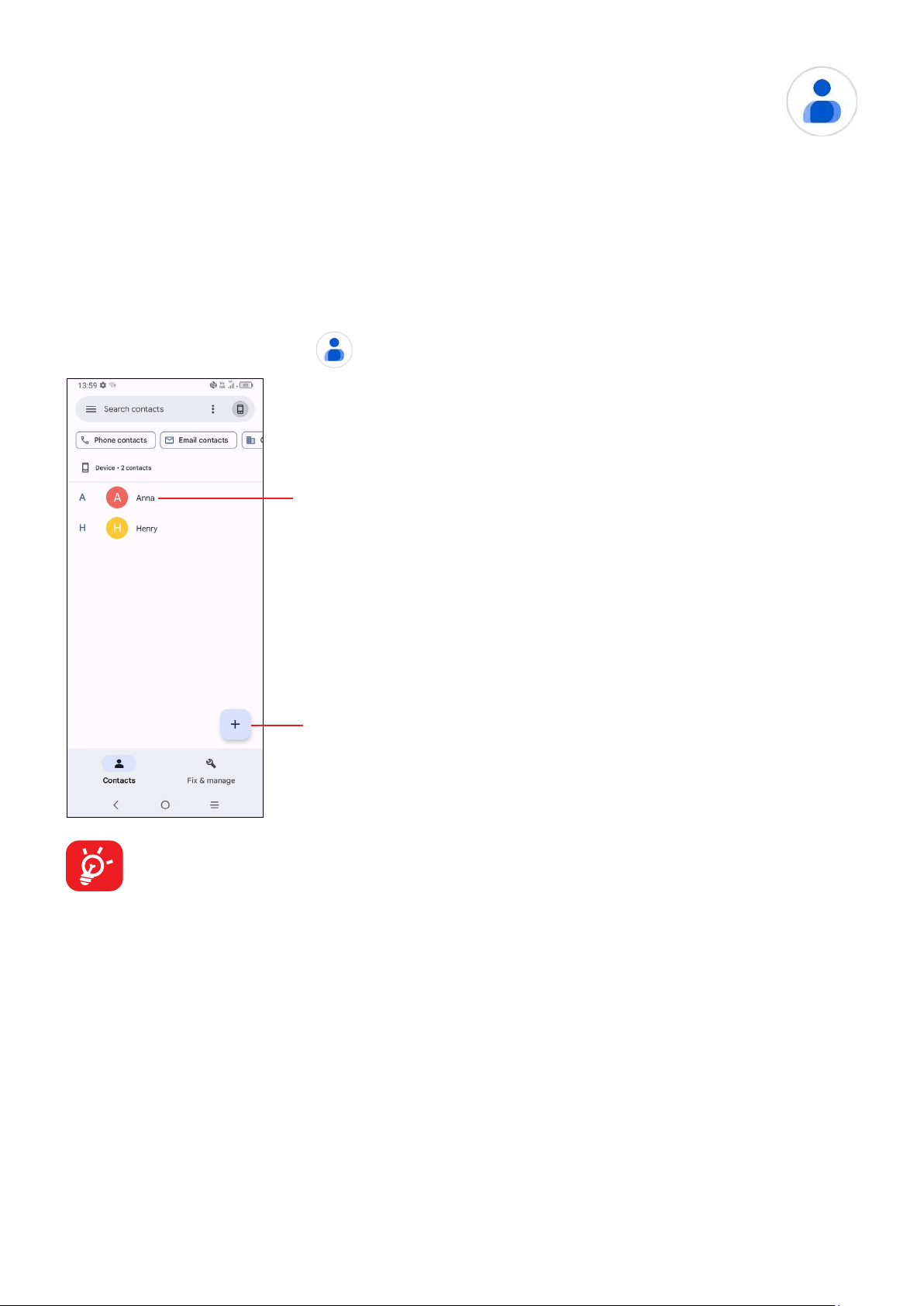
Consult your Contacts
To see your contacts, tap from the App drawer.
Add new contact
• Tap to open the Quick contact panel
• Touch and hold to share or delete the selected contact
Deleted contacts will also be removed from other applications on the phone
or web the next time you synchronize your phone.
31
Adding a contact
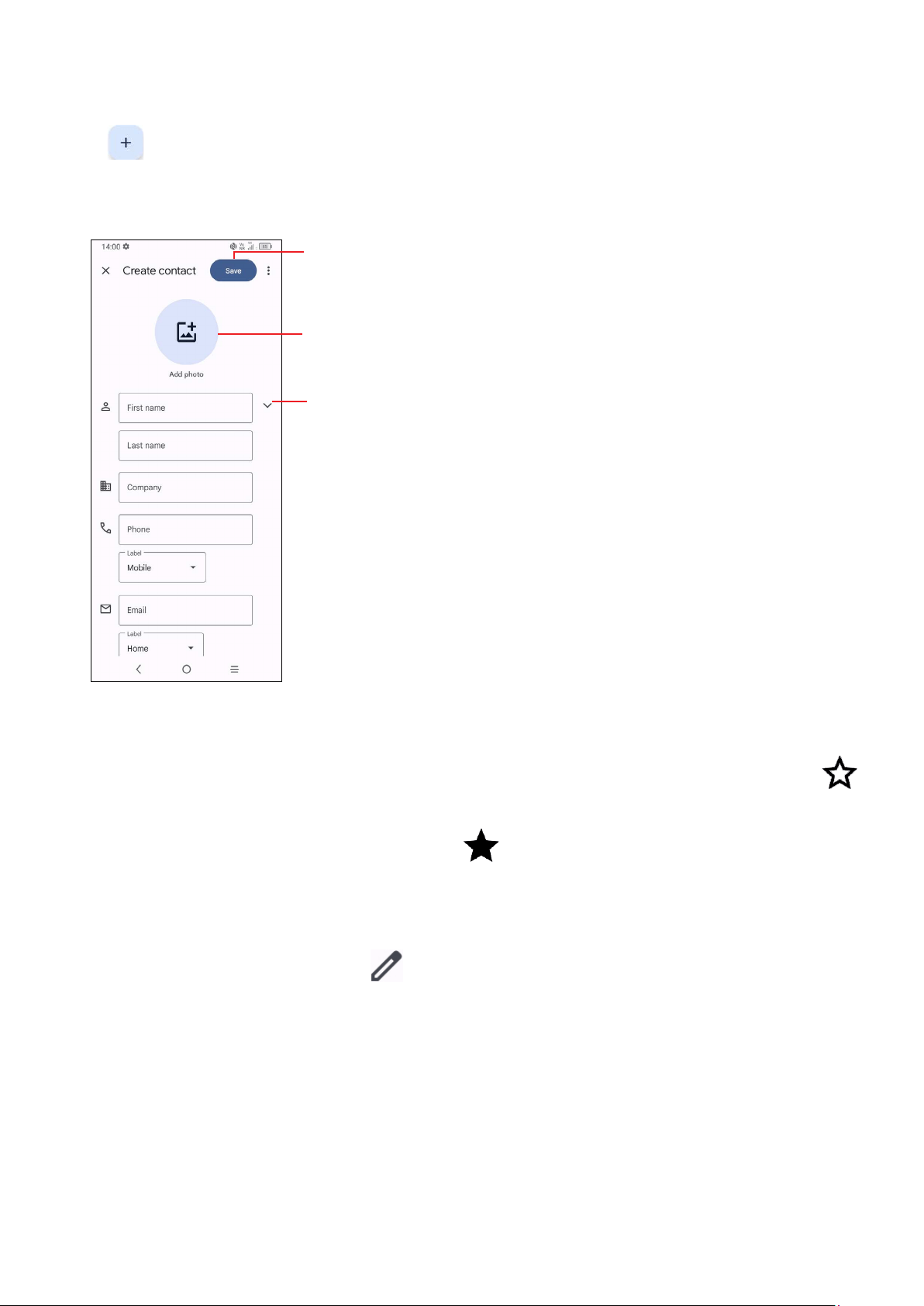
Tap in the contact list to create a new contact.
You are required to enter the contact's name and other contact information. By
scrolling up and down the screen, you can move from one field to another.
Select a picture or take a photo for the Phone contact
Tap to save
Tap to open available labels
Add to/remove from Favourites
(1)
To add a contact to favourites, you can tap a contact to view details then tap
to add the contact to favourites.
To remove a contact from favourites, tap
on the contact details screen.
Editing your contacts
To edit contact information, tap in the contact details screen.
When finished, tap Save.
(1)
Phone and Gmail contacts can be added to favourites.
32
Using the Quick contact panel
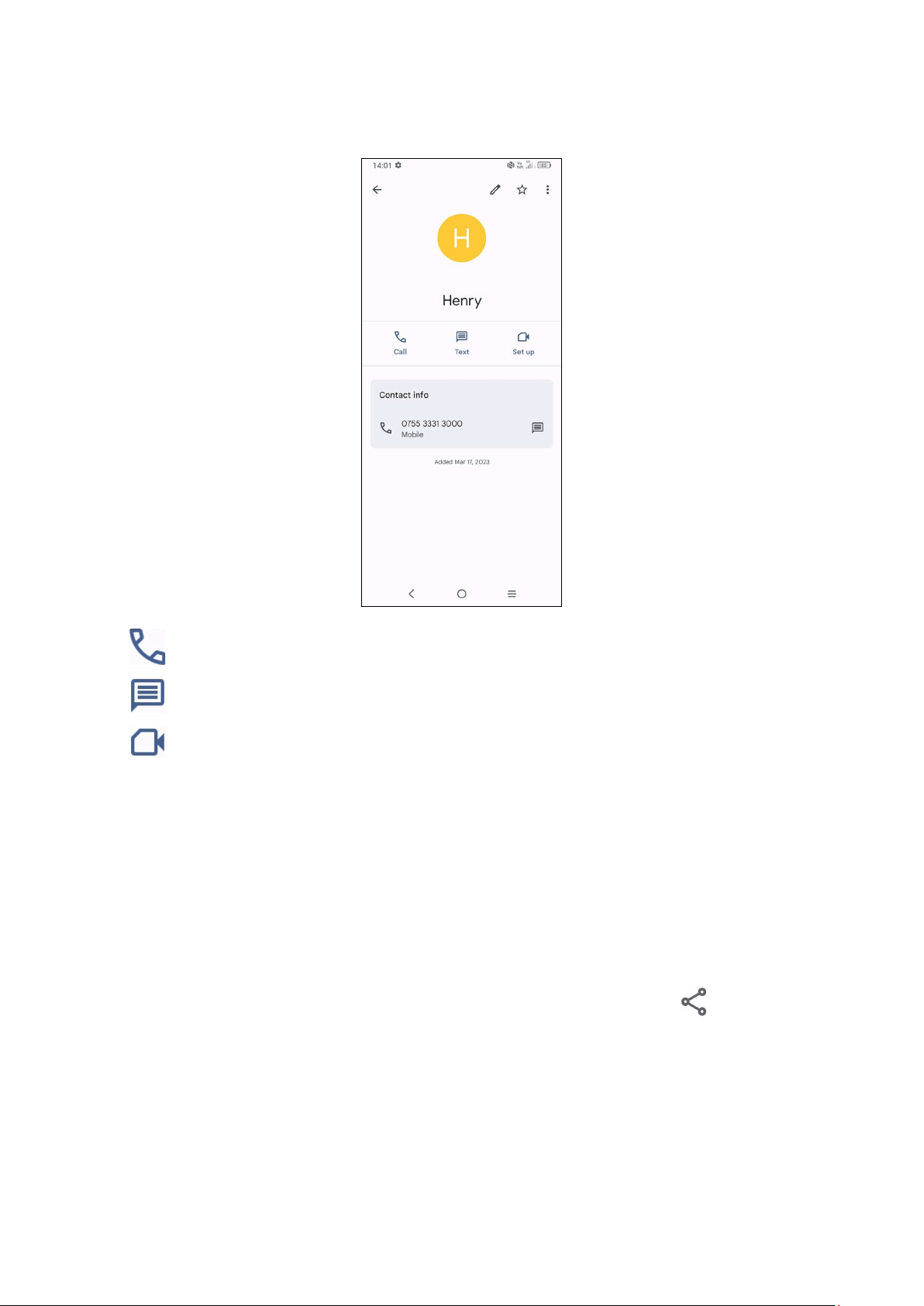
Tap a contact to open the Quick contact panel.
• Tap or the number to make a call.
• Tap
to send a message.
• Tap
to make a video call.
The icons available on the Quick contact panel depend on the information you have
for the contact and the applications and accounts on your phone.
Sharing contacts
You can share a single contact or contacts with others by sending the contact's
vCard to them via Bluetooth, Gmail, etc.
• From the Contacts screen, touch and hold a contact and tap
.
• Select the application to perform this action.

33
Accounts
Contacts, data or other information can be synchronised from multiple accounts,
depending on the applications installed on your phone.
To add an account:
- From the contacts list, tap
> Settings > Contacts app settings > Accounts >
Add account
- From the home screen, tap Settings > Accounts > Add account.
You are required to select the type of account you are adding, like Google, etc.
As with any other account setup, you need to enter detailed information, like
username, password, etc.
Auto-sync
On the Accounts screen, turn on Automatically sync data
. When activated,
all changes to information on the phone or online will be automatically synchronized
with each other.
34
3.3 Messages ......................................................
Writing a new message
You can create, edit, send and receive SMS and MMS with this phone.
To access Messages, tap
from the App drawer.
On the message list screen, tap
to write text/multimedia messages.
Sending a text message
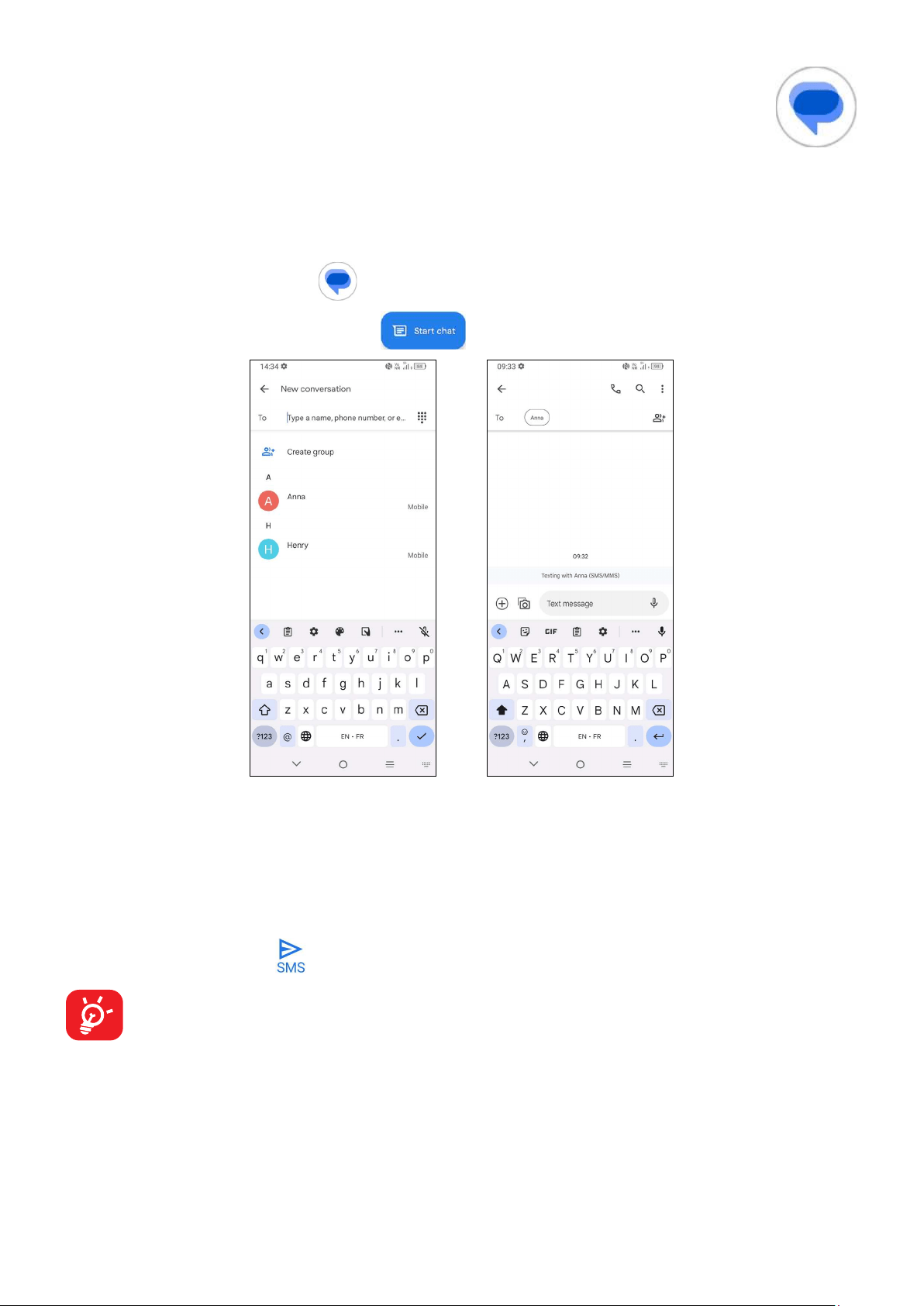
• To add recipients, enter a mobile phone number or select a contact in the To bar.
• Tap the Text message bar to enter the text of the message.
• When finished, tap
to send the text message.
Specific letters (accented) will also increase the size of the SMS. This may
cause multiple SMS to be sent to your recipient.
Sending a multimedia message
MMS enables you to send video clips, images, photos, animations, and sounds to
other compatible mobiles and e-mail addresses.
35
An SMS will be converted to MMS automatically when media files (image, video,
audio, slides, etc.) are attached or subject or email addresses are added.
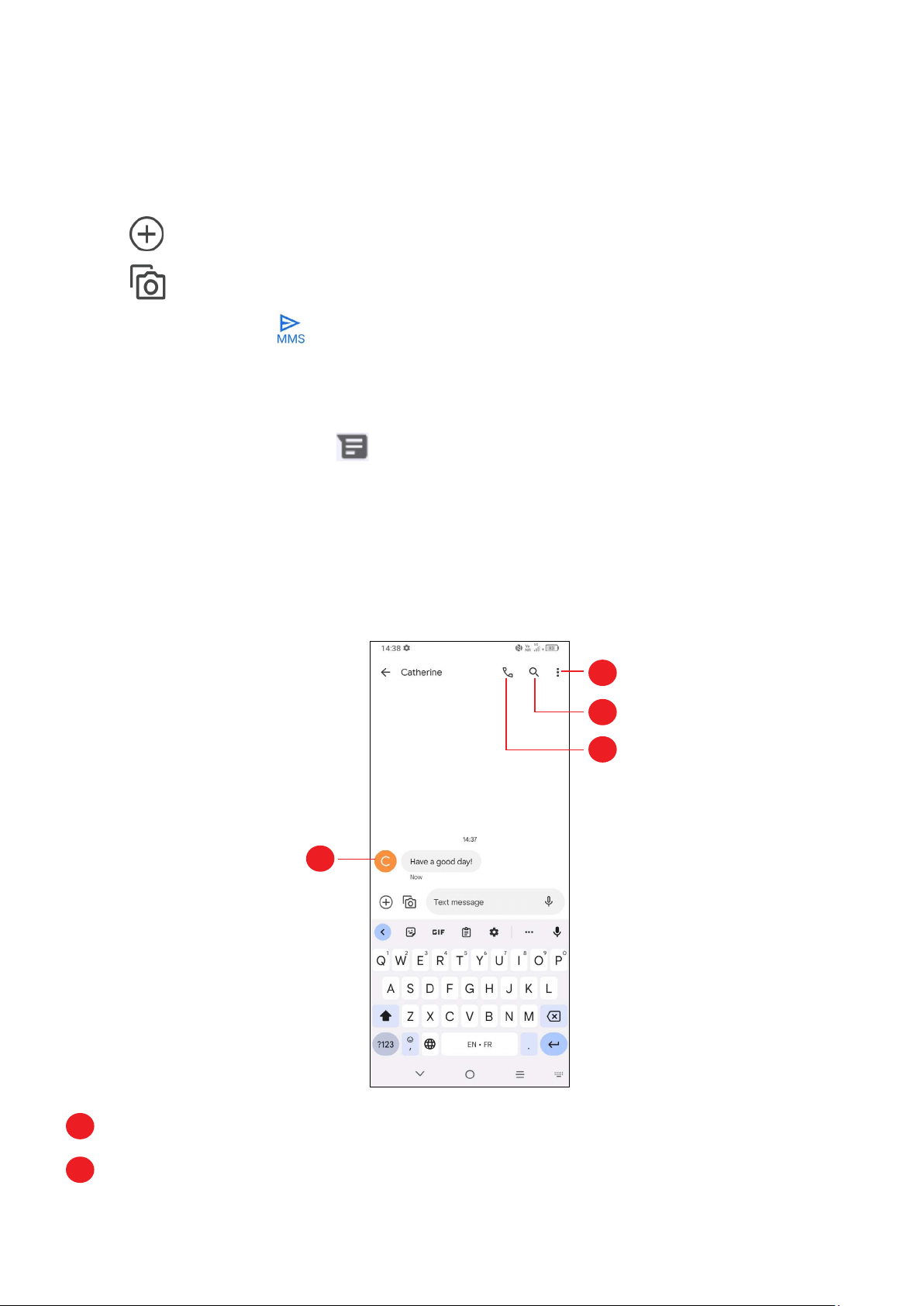
• To send a multimedia message, enter the recipient's phone number in the To bar.
• Write the text of the message in the Text message bar.
• Tap
to give access to your location, share a contact or attach files.
• Tap
to take a photo/video or attach a photo/video you have taken.
• When finished, tap
to send the multimedia message.
Manage messages
When receiving a message, will appear on the Status bar as a notification. Drag
down the Status bar to open the Notification panel. Tap the new message to open
and read it. You can also access the Messages application and tap the message
to open it.
Messages are displayed as a conversation.
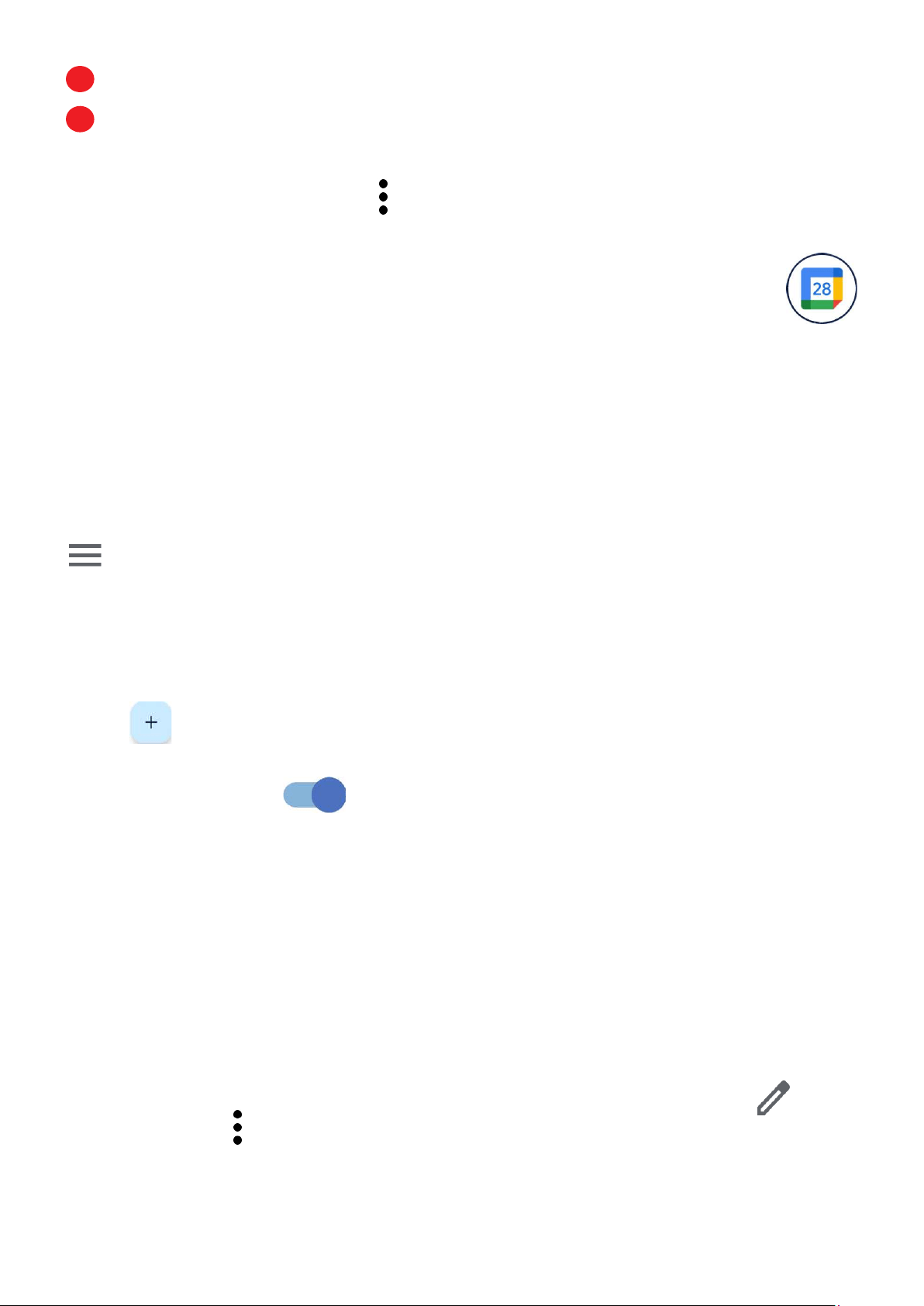
Tap a message to enter the message composing screen:
1
2
3
4
1
More options
2
Search within a conversation
36
3
Call the number
4
Save the number to Contacts or view the contact details if the number has
been saved
To adjust message settings, tap and select Settings on the message list screen.
3.4 Calendar .........................................................
Use Calendar to keep track of important meetings, appointments, etc.
To view the calendar and create events, open the Google apps folder from the
Home screen, then tap Calendar.
Multimode view
You can display the Calendar by Schedule, Day, 3 days, Week, or Month, touch
to select.
To create new events
You can add new events from any Calendar view.
• Tap
.
• Fill in all required information for this new event. If it is a whole-day event, you
can turn on All-day
.
• Invite guests to the event. Enter the email addresses of the guests you want to
invite. The guests will receive an invitation from Calendar and Email.
• When finished, tap Save at the top of the screen.
To quickly create an event from the Day, 3 days and Week view screens, tap an
empty spot to select a target area, then touch again to create a new event.
To delete or edit an event
To delete or edit an event, tap the event to enter its details screen. Tap to edit
the event, or tap
> Delete to delete.
37
Event reminder
If a reminder is set for an event, the upcoming event icon will appear on the
Status bar as a notification when the reminder time arrives.
Tap and drag down the Status bar to open the notification panel, tap an event name
to view the Calendar notification list. Tap the Back button to keep the reminders
pending in the Status bar and the notification panel.
3.5 Clock...............................................................
Your mobile phone has a built-in clock.
To view the current time, swipe up the Home screen, then tap Clock, or tap time
on the Home screen to access it.
Alarm
From the Clock screen, touch Alarm to enter.
• Turn on
to enable the alarm.
• Tap
to add a new alarm, tap to save.
• Tap a currently existing alarm to enter the alarm editing screen.
• Tap Delete and confirm to delete the selected alarm.
Clock
To view the date and time, tap Clock.
• Tap
to search for a city.
38
Timer
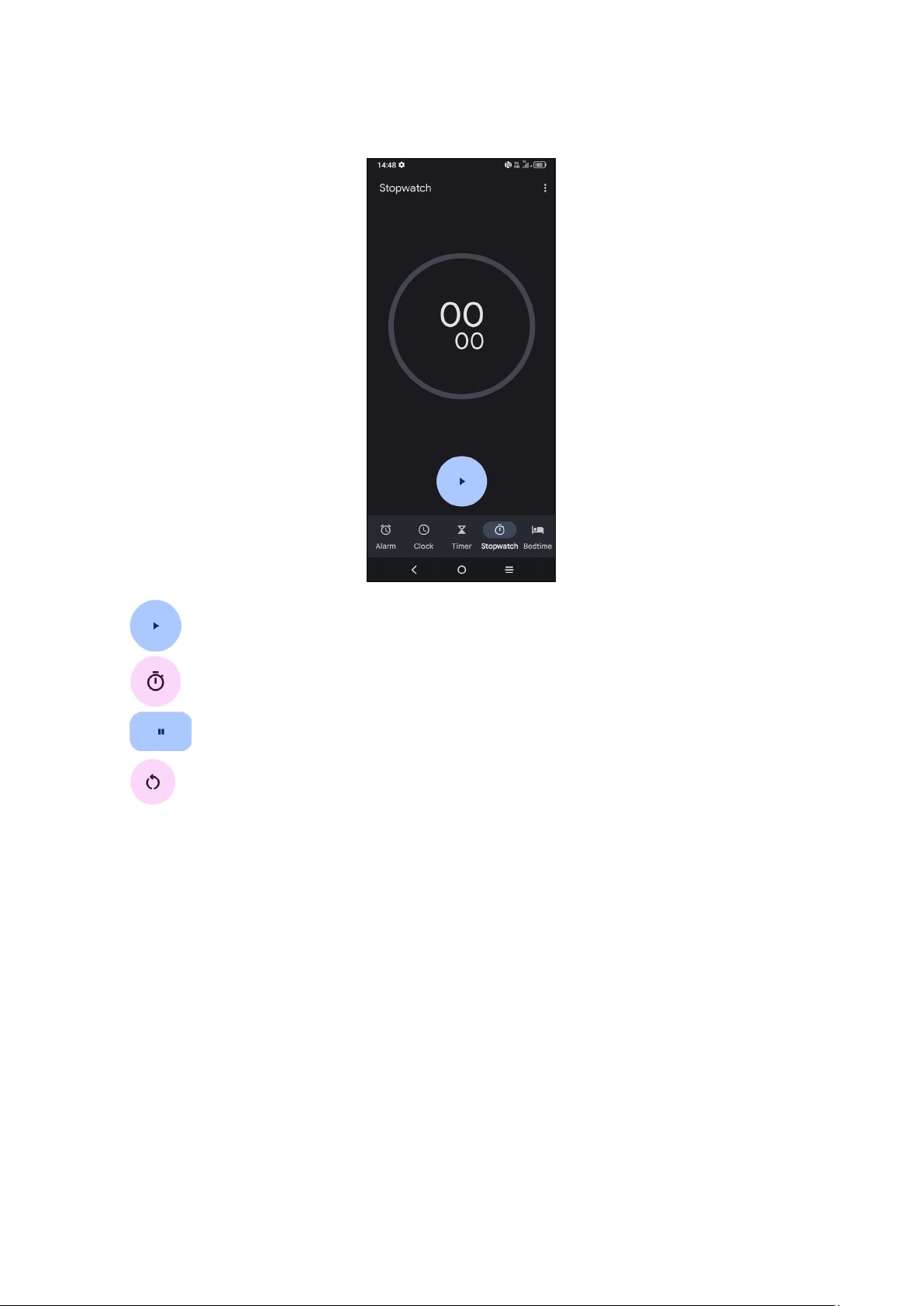
From the Clock screen, tap Timer to enter.
• Set the time. Tap to start the countdown.
• Tap
to pause.
• Tap
to reset.
39
Stopwatch
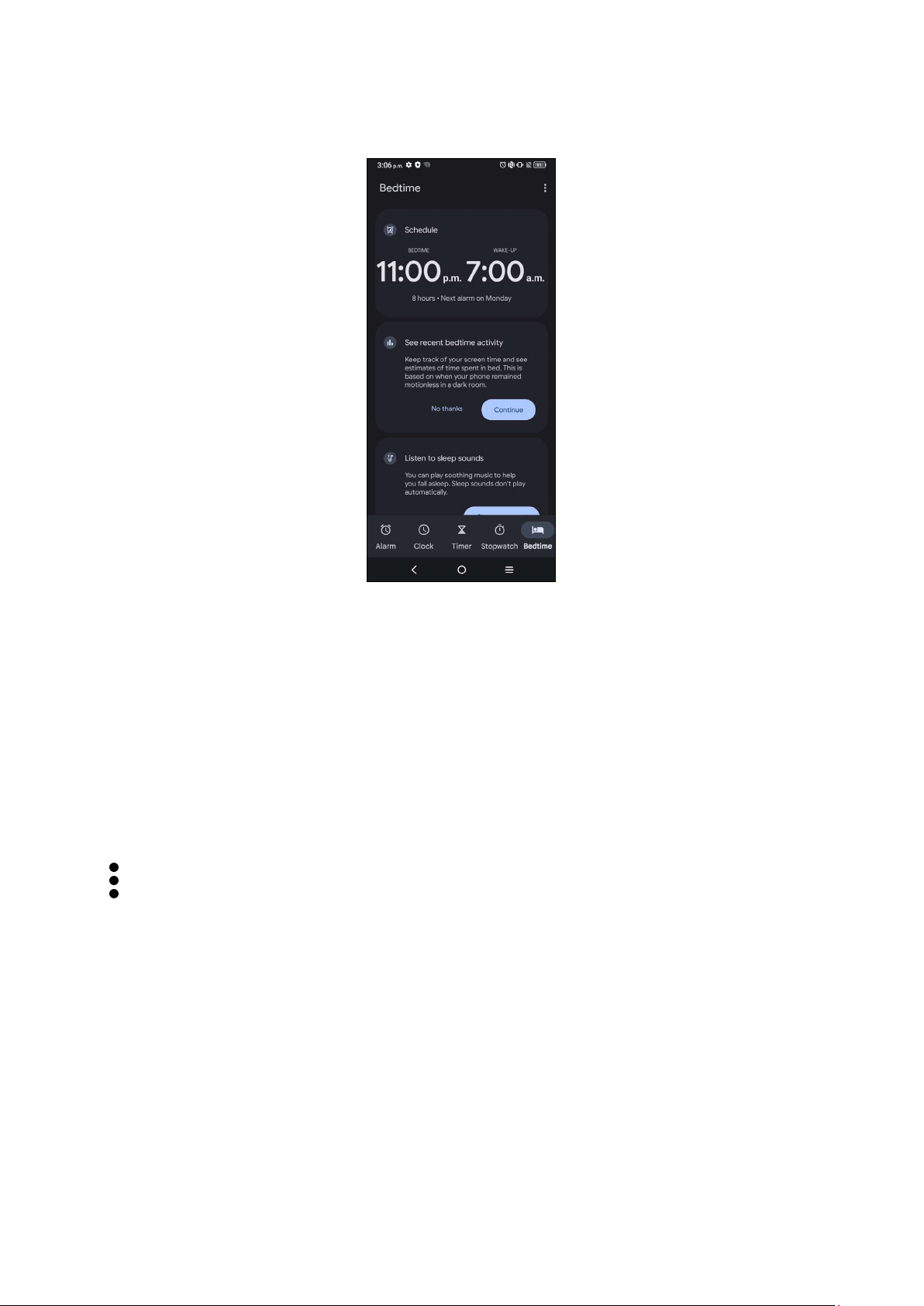
From the Clock screen, tap Stopwatch to enter.
• Tap to start the Stopwatch.
• Tap
to show a list of records according to the updated time.
• Tap to pause.
• Tap
to reset.
40
Bedtime
From the Clock screen, tap Bedtime to enter.
• Set a regular wake-up alarm
• Set bedtime and reminder notification
• You can set a certain bedtime mode, such as turning on Do Not Disturb mode,
changing the screen to black and white or keeping the screen dark.
• Tap Done to finish your bedtime setting.
Adjust Clock settings
Tap to access Clock and Alarm settings.
41
3.6 Calculator .......................................................
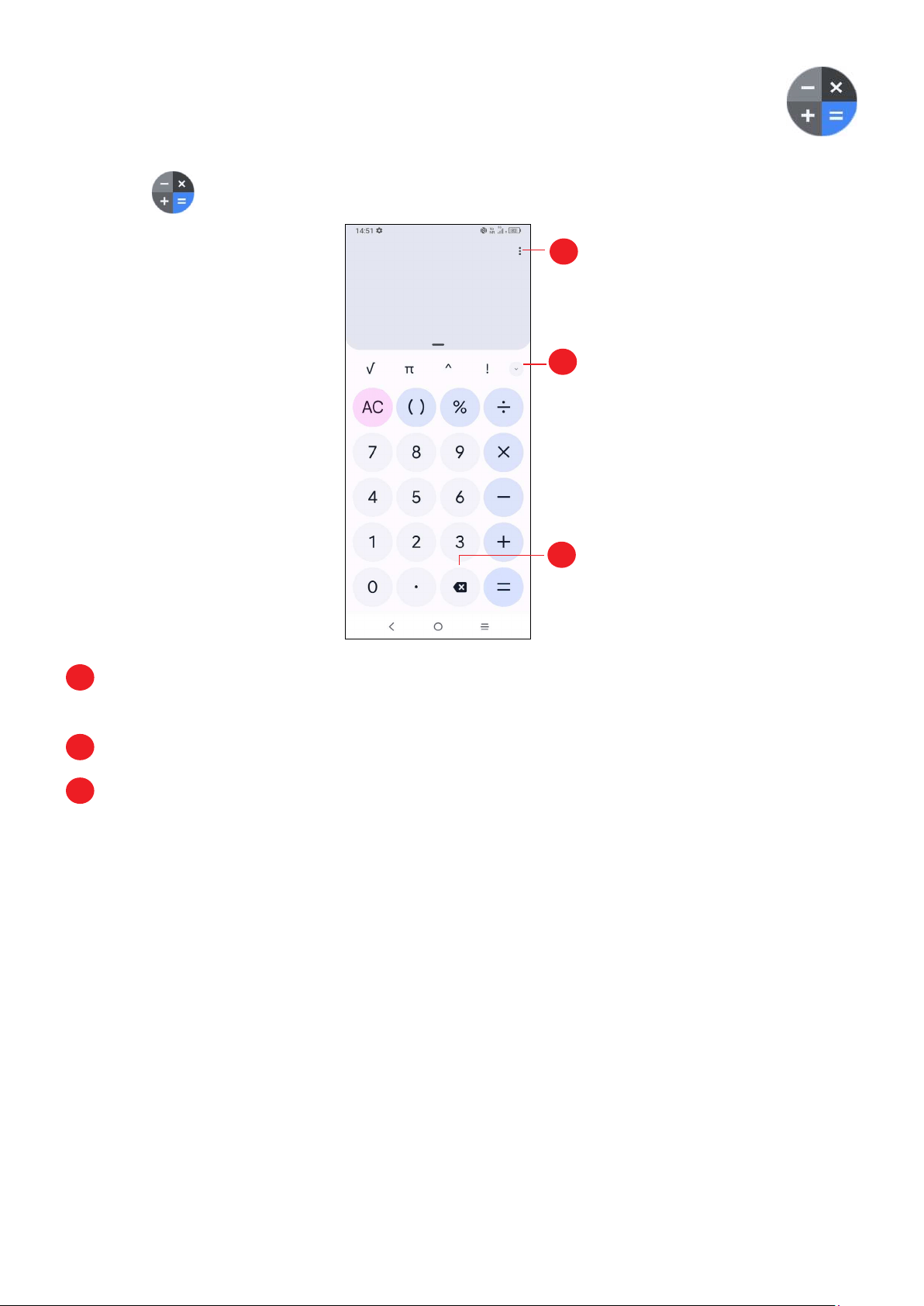
To solve mathematical problems with Calculator, swipe up from the home screen,
then tap
.
1
2
3
1
Tap to review calculation history, choose theme, send feedback, search for
help.
2
Tap to switch between Basic calculation and Scientific calculation
3
Tap to delete digits one by one

42
3.7 TCL apps
NXTVISION .....................................................................................
NXTVISION provides image enhancement, video & game enhancement and other
screen functions, helping your screen to come alive with a wonderful visually
enhanced experience.
Support Center .............................................................................
Support Center helps you to learn more about Hot FAQs, operation instructions,
troubleshooting, etc. Use it to send us your feedback.
3.8 Other applications
(1)
The previous applications in this section are preinstalled on your phone. To download
and install more 3rd party applications, use the Google Play Store application.
3.9 Google applications
Google apps are preinstalled on your phone to improve work efficiency and help
you enjoy life.
This manual briefly introduces the apps. For detailed features and user guides,
refer to the related websites or the introduction provided in the apps.
You are recommended to register with a Google account to enjoy all the functions.
Google
Google keeps you updated with the latest news happening in the world. You can
view Google anywhere on your device and get information by this search engine.
Your bookmarks, browsing history, and settings across all devices on which the
browser is installed can be synchronized with your Google Account.
(1)
Application availability depends on country and carrier.

43
Chrome
Surf the web using the Chrome browser.
Your bookmarks, browsing history, and settings across all devices with the browser
installed can be synchronized with your Google account.
Gmail
As Google's web-based email service, Gmail is configured when you first set up
your phone. With this application you can send and receive emails, manage emails
by labels, archive emails, etc. Emails can be automatically synchronized with your
Gmail account.
Maps
Google Maps offers satellite imagery, street maps, 360° panoramic views of streets,
real-time traffic conditions, and route planning for traveling by foot, car, or public
transportation. By using this application, you can find your own location, search for
a place, and get suggested route planning for your trips.
YouTube
YouTube is an online video-sharing application where users can upload, view, and
share videos. Available content includes video clips, TV clips, music videos, and
other content such as video blogging, short original videos, and educational videos.
It supports a streaming function that allows you to start watching videos almost as
soon as they begin downloading from the internet.
Play Store
Serves as the official app store for the Android operating system, allowing users
to browse and download applications and games. Applications are either free of
charge or at a cost.
In Play Store, search for the app you need, download it and then follow the
installation guide to install the app. You can also uninstall, update an app, and
manage your downloads.

44
Meet
Google Meet is a video chat mobile app. With phone numbers verified, users can
easily video call people from their contact list. The app will automatically control the
video quality by sensing the network connectivity.
Photos
Google Photos stores and backs up your photos and videos. It also automatically
analyzes photos and organizes them into groups, so that you can quickly find the
photos you need.
Assistant
Touch and hold the Home button to quickly ask for help, check the news, make a
phone call, and more.
Files
Files displays all data stored on the phone, including both external microSD
TM
card
and internal storage, such as applications, media files downloaded from Google
Play Store, YouTube or other locations; Videos, pictures or audios you have
captured; other data transferred via Bluetooth, USB cable, etc.
Safety
Google Safety helps you prepare for an emergency, and if an emergency occurs, the
app can connect you to help and the information you need. This app has features
like car crash detection and location sharing with your emergency contacts. You
can also get crisis alerts about nearby natural disasters or public emergencies.

45
4
Settings..........................................
To go to Settings, tap from the Home screen or swipe up from the Home
screen and then tap .
You can also swipe down from the notification panel and tap
.
4.1 Wi-Fi
You can connect to the internet when your phone is within range of a wireless
network. Wi-Fi can be used on your phone even without a SIM card inserted.
To turn Wi-Fi on and connect to a wireless network
• Settings > Wi-Fi > tap to turn on.
• Once Wi-Fi is turned on, detected Wi-Fi networks are listed.
• Tap a Wi-Fi network to connect to it. If the network you selected is secured, you
are required to enter a password or other credentials (you should contact the
network carrier for details). When finished, tap CONNECT.
To add a Wi-Fi network
When Wi-Fi is on, you can add new Wi-Fi networks according to your preference.
• Settings > Wi-Fi > Add network.
• Enter the name of the network and any required network information.
• Tap CONNECT.
To forget a Wi-Fi network
The following steps prevent automatic connection to networks which you no longer
wish to use.
• Turn on Wi-Fi, if it’s not already on.
• On the Wi-Fi screen, tap the name of the saved network.
• Tap FORGET in the dialog that opens.

46
4.2 Bluetooth
Bluetooth is a short-range wireless communication technology that you can use to
exchange data, or connect to other Bluetooth devices for various uses.
To turn on Bluetooth
• Settings > Bluetooth > tap to turn on.
Your device name will appear on screen.
To rename your device
• Tap Settings > Bluetooth.
• Tap Device name.
• Enter a name, and tap RENAME to confirm.
To pair/connect your phone with a Bluetooth device
To exchange data with another device, you need to turn Bluetooth on and pair your
phone with the Bluetooth device with which you want to exchange data.
• Tap Settings > Bluetooth > + Pair new device.
• Tap a Bluetooth device you want to pair your phone with in the list.
• In the dialog that pops up, tap PAIR to confirm.
• If the pairing is successful, your phone will be connected to the device.
To unpair from a Bluetooth device
• Tap
beside the device you want to unpair from.
• Tap FORGET to confirm.

47
4.3 Mobile network
Data roaming
If you don’t need to transmit data on other provider’s mobile networks, unmark the
checkbox to avoid incurring significant roaming charges.
VoLTE
Use LTE services to improve voice and other communications (recommended)
Network
Set automatically select network
Access Point Names
Select your preferred network with this menu.
4.4 Connections
Airplane mode
Use Airplane mode to simultaneously disable all wireless connections including
Wi-Fi, Bluetooth and more.
You can also open Airplane mode by tapping Airplane mode on the Quick setting
bar or in phone options when long pressing Power key.
Hotspot & tethering
To share your phone's data connection via Wi-Fi, Bluetooth and USB, or as a
mobile hotspot, go to Settings > Connections > Hotspot & tethering to activate
these functions.
To rename or secure your mobile hotspot
When your mobile hotspot is activated, you can rename your phone's Wi-Fi network
(SSID) and secure its Wi-Fi network.

48
• Touch Settings > Connections > Hotspot & tethering > Mobile hotspot.
• Touch Hotspot name to rename the network SSID or set your network security.
• Touch OK.
The functions above may incur additional network charges from your network
operator. Extra fees may also be charged in roaming areas.
Data usage
View settings related to your data usage. Mark the checkbox to set cellular data
limit. Your cellular data connection will be disabled when the specified limit is
reached. You can also choose a data usage cycle to view the statistics and related
applications of used data by your phone.
Data usage is measured by your phone, and your provider may count
differently. Please consider using a conservative limit.
VPN
Virtual private networks (VPNs) allow you to connect to the resources inside a
secured local network from outside that network. VPNs are commonly deployed
by corporations, schools, and other institutions so that their users can access local
network resources when not inside that network, or when connected to a wireless
network.
To add a VPN
• Touch Settings > Connections > VPN.
• On the screen that opens, follow your network administrator's instructions to
configure each component of the VPN settings.
• Touch SAVE.
The VPN is added to the list on the VPN settings screen.
Before adding a VPN, you should set a screen lock for your phone.
Private DNS
Select the Private DNS Mode of the device.

49
NFC
Turn on to enable NFC.
The function allows data exchange when the phone touches another device.
Cast
You can use Cast to display your device's screen on your TV, and display content
like TV shows, movies, photos, games, and websites from supported apps.
USB connection
With a USB cable, you can charge your device, transfer files or photos (PTP)
between your phone and a computer.
To connect your phone to the computer
• Use the USB cable that came with your phone to connect the phone to a USB
port on your computer. You will receive a notification that the USB is connected.
• Open the Notification panel and choose the way which you want to transfer files
or tap Settings > Connections > USB connection to select. By default, Charge
this device is selected.
Printing
Tap Printing to activate Print services. You can select your Default print service.
Chromebook
Link your phone to chromebook so that you can text from your computer, share
your phone's Internet connection and simplify unlocking.
Nearby Share
The device location setting needs to be on for Bluetooth and Wi-Fi to detect nearby
devices.
Android Auto
Use apps on your car screen.

50
4.5 Home screen & lock screen
With this menu, set your home apps, choose your favourite wallpapers and theme
styles, etc.
4.6 Display
Brightness level
Adjust screen brightness manually.
Adaptive brightness
Turn on to adjust screen brightness automatically.
Darker display mode
Turn on to lower screen brightless in dark light environment.
Dark mode
Empty screen space will become black in this mode, making it easier to look at your
screen or read in dim light.
Eye comfort mode
Eye comfort mode can effectively reduce blue light radiation and adjust the colour
temperature to relieve eye fatigue. You can also create a custom schedule to turn
it on.
Sleep
Set screen timeout.
Color mode & temperature
With this menu, you can change display gamut based on display content like Vivid,
Nature, etc.

51
Refresh rate
Select the refresh rate of the screen. When a high refresh rate is set, the screen
will scroll more smoothly. You can also set the standard refresh rate to save battery.
Font size
Slide to make the text on screen smaller or larger.
Auto-rotate screen
Select whether the screen rotates automatically or not.
Status bar & notch
Set the style of the status bar:
- Allow notification icons to group in a folder
- Change how the battery percentage is displayed
Turn on the notch for full screen apps to get the best experience on the phone.
4.7 NXTVISION
Image enhancement
Enhance image contrast automatically, sharpness and dark details.
Video enhancement
Enhance the color, contrast and depth of detail of video to provide HDR-quality
viewing.
Game enhancement
Improve the shadow detail and enhance overall gaming graphics.

52
Reading mode
Optimize the screen display to make the reading experience as comfortable as
physical books.
Eye comfort mode
Filter out blue light and adjust the color temperature of your display to reduce eye
strain.
Darker display mode
Lower screen brightness in a dark light environment.
Sunlight display mode
Increase readability under sunlight
Color mode & temperature
Change display gamut based on display content like Vivid, Nature, etc.
4.8 Sound & vibration
Use the Sound & vibration settings to configure many aspects of call ringtones,
music, and other audio settings.
Phone ringtone & vibrate
Set your incoming call ringtone, turn on/off also vibrate for calls, or opt for the
phone to vibrate only.
Notification ringtone
Set the default sound for notifications.
Alarm ringtone
Set your alarm ringtone.

53
Live Caption
Live Caption detects speech on your device and automatically generates captions.
Do Not Disturb
If you do not want to be disturbed by your phone or information ringtones during
work or rest, you can set the Do Not Disturb mode.
Swipe down the Status bar twice to access the Quick Settings panel and tap
to turn on Do Not Disturb.
More sound settings
Set dial pad tones, screen locking sounds, touch sounds, vibration on touch,
emergency alerts.
4.9 Notifications
Manage app notifications. You can set permission of apps notification, the authority
to show the notifications on the lock screen, etc.
4.10 Button & gestures
System navigation
Select your favourite navigation and button layout (only use for buttons navigation).
Gestures
Set some gestures for convenient use, such as 3-finger screenshot, split-screen,
etc.
Power key
Turn on/off the quick short functions about the Power key, as well as the Power key
menu.

54
4.11 Advanced features
With this menu, you can set App Cloner or Screen Recorder.
4.12 Smart Manager
Smart Manager ensures your phone is operating in top form by automatically
scanning and providing recommendations to optimize your phone to preserve
battery levels, manage storage and protect against security threats.
Restricting auto-start apps can make the system run faster and extend battery life.
To ensure applications that require push notification continue to work as expected,
turn off All Automatically manage to configure each applications individually.
You can also do some options manually for further optimization.
4.13 Security & biometrics
Screen lock
Select one method such as Swipe, Pattern, PIN, or Password to unlock the
screen.
Fingerprint
Use your Fingerprint to unlock the screen or app.
Access to add fingerprint or turn on/off more options.
Face unlock
Face unlock allows you to unlock your device with your facial data. Set it according
to the on-screen steps.
Ensure that you are facing the phone screen when using face recognition.
NOTE: Another screen lock method must be enabled before configuring Face
unlock.

55
Smart Lock
With a Screen lock method enabled, your phone will detect when it’s safe with you,
such as in your pocket or at your home.
Others
You can also set Device admin apps, SIM card lock, Encryption & credentials,
Trust agents, Screen pinning, etc. under this menu.
4.14 Location
Allow an app to access your device's location. You can set to allow continual
access, or only while the app is in use.
4.15 Privacy
To protect your privacy, you can set an app to be allowed or forbidden access to
your location, SMS, phone, etc. Also whether or not to show passwords, choose
the activities and info that you want Google to save.
4.16 Safety & emergency
Access Settings > Safety & emergency > OPEN PERSONAL SAFETY to set
medical information and emergency contacts.
Adding medical information and emergency contacts can help first responders in
an emergency.
Anyone can read this information from your lock screen and dial your contacts by
tapping their names, without unlocking your phone.
You can also set Emergency SOS, Crisis alerts, Emergency Location Service
or Wireless Emergency Alerts in this interface.
4.17 Apps
View details about the applications installed on your phone, to manage their data
usage or force them to stop.

56
In the Permission manager menu of an application, you can grant permissions for
the app, such as allowing the app to access your Camera, Contacts, Location,
etc.
4.18 Storage
Enter Settings > Storage to check the usage of storage space and free up more
when necessary.
4.19 Accounts
Add, remove, and manage your email and other supported accounts. You can also
use these settings to control the options for how all applications send, receive and
synchronize data; i.e. if this is done automatically, according to a schedule for each
app, or not at all.
Tap Add account to add an account for the selected app.
4.20 Digital Wellbeing & parental controls
In this menu you can find how much time you have spent on the phone and even on
each app. You can customize the time limit for using the phone to ensure a healthy
and balanced life.
In addition, parents are able to restrict their children's usage time to manage their
browsing habits.
4.21 Google
Configure your Google account and service settings.
4.22 Accessibility
Use the Accessibility settings to configure any accessibility plug-ins you have
installed on your phone.

57
4.23 System
About phone
View basic information for your phone such as model name, CPU, camera,
resolution, etc.
You can also check legal information, build number, status and other specs.
System Update
If you want to update the system, touch CHECK FOR UPDATES (refer to “5 FOTA
upgrade”).
Languages & input
Configure language settings, the on-screen keyboard, voice input settings, pointer
speed, etc.
Date & time
Use Date & time settings to customize your preferences for how date and time are
displayed.
Backup
Turn on to back up your phone’s settings and other application data to
Google servers. If you replace your phone, the settings and data you’ve backed up
will be restored onto the new phone when you sign in with your Google account.
Reset
Reset all network settings and app preferences, you won't lose your data with these
settings.
If Erase all data (factory reset) is selected, all data in your phone's internal
storage will be erased, please back up your data before reset.
Regulatory & safety
View product information such as Product model, Manufacturer name,
Manufacturer address, IMEI, CU reference, Bluetooth Declaration ID, etc.

58
5
FOTA upgrade
Use the FOTA (Firmware Over The Air) upgrade to update your phone's software.
To access updates, from the app list, tap Settings > System > System Update.
Turn on data connection or Wi-Fi before searching for updates.
With Wi-Fi turned on, the system is able to discover if a new firmware version is
available and if so, begin to download it automatically. Once finished, a pop up
dialog will give you the option of updating your phone now or later.
If Settings > System > System Update > > Update settings > Automatically
update is turned off, a pop up dialog will ask if you want to download a new
firmware version which the phone has discovered, or if you want to ignore it.
If you only have a cellular network connection, you will only receive a notification
which will appear in the Status bar.
During FOTA downloading or updating, to avoid errors in locating the correct update
packages, do not change your default storage location.

59
6
Troubleshooting
Before contacting the service centre, here are some instructions to help you
troubleshoot your device:
• For optimal operation, fully charge the battery.
• To improve the phone’s performance, remove unnecessary files or apps on your
phone.
• Update your phone's software via Settings > System > System Update.
• Reset your phone via Settings > System > Reset > Erase all data (factory
reset). Another method is to hold down the Power key and the Volume up key
at the same time when your phone is powered off. Release the power key when
the device vibrates, then select Wipe data / factory reset > Factory data reset
to reset. All your phone data will be lost permanently. It is strongly advised to fully
back up your phone data before resetting.
and carry out the following checks:
My phone can't be switched on or is frozen
• When the phone can't be switched on, charge for at least 20 minutes to ensure
the minimum battery power needed. Then switch it on again.
• When the phone falls into a loop during power on animation and the user interface
can't be accessed, press and hold the Power key to reset. This eliminates any
abnormal OS booting issues caused by third party applications.
• If neither method is effective, reset the phone by pressing the Power key and
the Volume up key at the same time. Release the power key when the device
vibrates, then select Wipe data / factory reset > Factory data reset to reset.
My phone has not responded for several minutes
• If your phone doesn’t respond, turn off your phone by pressing and holding the
Power key until it turns off and then restart it again.
• If it still doesn't work, reset the phone.
My phone turns off by itself
• Check that your screen is locked when you are not using your phone, and make
sure that the Power key is not accidentally pressed while the screen is unlocked.
• Check the battery charge level.
• If it still doesn't work, reset the phone or update software.

60
My phone can't charge properly
• Make sure that you are using the TCL charger that comes with the phone.
• Make sure that your battery is not completely discharged; if the battery power
has been empty for a long time, it may take around 20 minutes to display the
battery charging indicator on the screen.
• Make sure that charging is carried out under normal conditions 0°C (32°F) to
40°C (104°F).
• When abroad, check that the voltage input is compatible.
My phone can't connect to a network or "No service" is displayed
• Try connecting to the network by moving to another physical location.
• Verify the network coverage with your carrier.
• Check with your carrier that your SIM card is valid.
• Try connecting at a later time if the network is overloaded.
My phone can't connect to the internet
• Make sure that the internet access service of your SIM card is available.
• Check your phone's internet connection settings.
• Make sure that you are in a place with network coverage.
• Try connecting at a later time or another location.
Invalid SIM card
• Make sure that the SIM card has been correctly inserted.
• Make sure that the chip on your SIM card is not damaged.
• Make sure that the service of your SIM card is available.
My phone can't make outgoing calls
• Make sure that you have dialled a valid number and have touched .
• For international calls, check the country and area codes.
• Make sure that your phone is connected to a network, and the network is not
overloaded or unavailable.
• Check your subscription status with your carrier (credit, SIM card valid, etc.).
• Make sure that you have not barred outgoing calls.
• Make sure that your phone is not in Airplane mode.

61
My phone can't receive incoming calls
• Make sure that your phone is switched on and connected to a network (check for
overloaded or unavailable network).
• Check your subscription status with your carrier (credit, SIM card valid, etc.).
• Make sure that you have not forwarded incoming calls.
• Make sure that you have not barred certain calls.
• Make sure that your phone is not in Airplane mode.
The caller’s name/number doesn't appear when a call is received
• Check that you have subscribed to this service with your carrier.
• Your caller may have concealed his name or number.
I can't find my contacts
• Make sure that your SIM card is not broken.
• Make sure that your SIM card is inserted properly.
The sound quality of the calls is poor
• Adjust the volume during a call by pressing the Volume key.
• Check the network strength. Move to a location with stronger signal strength.
• Make sure that the receiver, connector and speaker on your phone are clean.
I can't use the features described in the manual
• Check with your carrier to make sure that your subscription includes this service.
• Make sure that this feature doesn't require a TCL accessory.
When I select a number from my contacts, the number can't be dialled
• Make sure that you have correctly recorded the number in your contacts.
• Make sure that you have selected the country code when calling an international
number.
I can't add a contact
• Make sure that your SIM card contacts are not full; delete some contacts or save
the contacts to the phone.
My callers can't leave messages on my voicemail
• Contact your network carrier to check service availability.

62
I can't access my voicemail
• Make sure that your carrier’s voicemail number is correctly entered in "Voicemail
number".
• Try later if the network is busy.
I can't send and receive MMS
• Check your phone storage as it might be full.
• Contact your network carrier to check service availability and MMS parameters.
• Verify the server centre number or your MMS profile with your carrier.
• The server centre may be swamped. Try again later.
SIM card PIN locked
• Contact your network carrier to obtain the PUK (Personal Unblocking Key) code.
I can't connect my phone to my computer
• Check to make sure the USB port is not broken. If it’s not working, try another
USB port on your computer.
• Make sure USB drivers are properly installed.
• If you are using a Windows computer, make sure it supports MTP mode. If you
are using a Mac, make sure to install Android File Transfer from www.android.
com/filetransfer/.
I can't download new files
• Make sure that there is sufficient phone storage space for your download.
• Select the microSD
TM
card as the location to store downloaded files.
• Check your subscription status with your carrier.
The phone can't be detected by others via Bluetooth
• Make sure that Bluetooth is turned on and your phone is visible to other users.
• Make sure that the two phones are within Bluetooth’s detection range.
The battery drains too fast
• Make sure that you follow the complete charge time (minimum 150 minutes).
• After a partial charge, the battery level indicator may not be exact. Wait for at
least 20 minutes after removing the charger to obtain an exact indication.
• Adjust the brightness of screen as appropriate.
• Extend the email auto-check interval for as long as possible.

63
• Update news and weather information on manual demand, or increase their
auto-check interval.
• Exit background-running applications if they are not being used for extended
periods of time.
• Turn off Bluetooth, Wi-Fi, or GPS when not in use.
The phone becomes warm following prolonged calls, game playing, internet
surfing or running other complex applications
• This heating is a normal consequence of the CPU handling excessive data.
Ending the above actions will make your phone return to normal temperature.
After a factory data reset is performed, I can't use my phone without entering
Google account credentials
• After a reset is performed, you must enter the original Google account credentials
that were used on this phone.
• If you don’t remember your Google account credentials, complete Google
account recovery procedures.
• If you still cannot access your phone, apply to the authorized repair centre, but
remember that it will not be regarded as a warranty case.
I forgot some passwords/codes/keys on my phone
• Perform a factory data reset.
• If you still cannot access your phone, apply to the authorized repair centre, but
remember that it will not be regarded as a warranty case.
How to back up my device data
• Go to Settings > System > Backup (refer to “4.23 System > Backup”)

64
7
Specifications
Platform:
• MTK MT6833
OS:
• Android 13
Memory:
• 128GB ROM + 4GB RAM
Dimensions (LxWxT):
• 164.46*75.4*8.99mm
Weight:
• 195g
Display:
• 6.56" V-notch Display
Network:
• UMTS B1/2/4/5
• LTE: B1/2/3/4/5/7/12/13/17/20/25/26/29/38/41/66/71
• 5G: n2, n5, n7, n25, n38, n41, n66, n71, n77, n78
GPS:
• GPS (with A-GPS), Glonass+Beidou+Galileo
Connectivity:
• Bluetooth 5.1
• Wi-Fi 802.11 a/b/g/n/ac
• 3.5 mm audio jack
• Type-C USB 2.0
Camera:
• Rear Camera: 13M +2MP(Macro) + 2MP(Depth) default
• Front camera: 8MP

65
Audio & Video supported formats:
• WAV, MP3, AAC, AMR-NB, AMR-WB, MIDI, Vorbis, APE, FLAC, ADPCM, SWB
• HEVC, VP9, H.264, MPEG-4, VP8
Battery
(1)
:
• Capacity: 5000 mAh
Expansion Slot:
• microSD™ memory card
(Availability of microSD
TM
card up to 1T)
Sensors:
• G-sensor
• Light Sensor
• Proximity Sensor
• E-Compass
• Gyro
Note: Specifications are subject to change without prior notice.
(1)
The original battery has undergone rigorous safety inspections to meet qualification
standards, the use of non-original batteries may be dangerous.

66
8
Accessories
Standard accessories
• Charger
• USB-C Cable
• SIM Card Pin
• Quick Start Guide
• Product safety and warranty information
• Accessories depend on countries.
• Only use the TCL batteries, chargers, and accessories included along
with your device.

67
Safety and use
We recommend that you read this chapter carefully before using your phone. The
manufacturer disclaims any liability for damage, which may result as a consequence
of improper use or use contrary to the instructions contained herein.
TRAFFIC SAFETY:
Given that studies show that using a phone while driving a vehicle constitutes a real
risk, even when the hands-free kit is used (car kit, headset...), drivers are requested
to refrain from using their phone when the vehicle is not parked. Check the laws
and regulations on the use of wireless phones and their accessories in the areas
where you drive. Always obey them. The use of these devices may be prohibited
or restricted in certain areas.
CONDITIONS OF USE:
• You are advised to switch off the phone from time to time to optimize its
performance;
• Remember to abide by local authority rules of mobile phone use on aircrafts;
• If your phone is a unibody device, where the back cover and battery are not
removable, dissembling the phone will void your warranty. Disassembling the
phone can cause bodily injury if the battery is punctured;
• Always handle your phone with care and keep it in a clean and dust-free place;
• Do not allow your phone to be exposed to adverse weather or environmental
conditions, such as moisture, humidity, rain, infiltration of liquids, dust, sea air, etc.
The manufacturer’s recommended operating temperature range is 0°C (32°F) to
+50°C (122°F). At over 50°C (122°F), the legibility of the phone’s display may be
impaired, though this is temporary and not serious;
• Do not open, dismantle, or attempt to repair your phone yourself;
• Do not drop, throw, or bend your phone;
• Use only batteries, battery chargers, and accessories which are recommended
by TCL Communication Ltd., and its affiliates and are compatible with your
phone model. TCL Communication Ltd., and its affiliates disclaim any liability for
damage caused by the use of other chargers or batteries;
• Your phone should not be disposed of in a municipal waste. Please check local
regulations for disposal of electronic products;

68
• Remember to make backup copies or keep a written record of all important
information stored on your phone;
• Some people may suffer epileptic seizures or blackouts when exposed to flashing
lights, or when playing video games. These seizures or blackouts may occur even
if a person never had a previous seizure or blackout. If you have experienced
seizures or blackouts, or if you have a family history of such occurrences, please
consult your doctor before playing video games on your phone or enabling a
flashing-lights feature on your phone;
• Parents should monitor their children’s use of video games or other features that
incorporate flashing lights on the phones. All persons should discontinue use
and consult a doctor if any of the following symptoms occur: convulsion, eye or
muscle twitching, loss of awareness, orientation, or movements.
PRIVACY:
Please note that you must respect the laws and regulations in force in your jurisdiction
or other jurisdiction(s) where you will use your phone regarding taking photographs
and recording sounds with your phone. Pursuant to such laws and regulations, it
may be strictly forbidden to take photographs and/or to record the voices of other
people or any of their personal attributes, and reproduce or distribute them, as this
may be considered to be an invasion of privacy. It is the user's sole responsibility to
ensure that prior authorization has been obtained, if necessary, in order to record
private or confidential conversations or take a photograph of another person; the
manufacturer, the seller or vendor of your phone (including the carrier) disclaim any
liability which may result from improper use of the phone.
Please note by using the device some of your personal data may be shared with
the main device. It is under your own responsibility to protect your own personal
data, not to share with it with any unauthorized devices or third party devices
connected to yours. For products with Wi-Fi features, only connect to trusted
Wi-Fi networks. Also when using your product as a hotspot (where available), use
network security. These precautions will help prevent unauthorized access to your
device. Your product can store personal information in various locations including
a SIM card, memory card, and built-in memory. Be sure to remove or clear all
personal information before you recycle, return, or give away your product. Choose
your apps and updates carefully, and install from trusted sources only. Some apps
can impact your product’s performance and/or have access to private information
including account details, call data, location details and network resources.

69
Note that any data shared with TCL Communication Technology Holdings Limited
is stored in accordance with applicable data protection legislation. For these
purposes TCL Communication Technology Holdings Limited implements and
maintains appropriate technical and organizational measures to protect all personal
data, for example against unauthorized or unlawful processing and accidental loss
or destruction of or damage to such personal data whereby the measures shall
provide a level of security that is appropriate having regard to
• The technical possibilities available;
• The costs for implementing the measures;
• The risks involved with the processing of the personal data, and;
• The sensitivity of the personal data processed.
BATTERY:
Observe the following precautions:
• Do not attempt to open the back cover;
• Do not attempt to eject, replace, or open battery;
• Do not puncture the back cover of your phone;
• Do not burn or dispose of your phone in household rubbish or store it at
temperature above 60°C (140°F);
Phone and battery as a unibody device must be disposed of in accordance with
locally applicable environmental regulations.
This symbol on your phone, the battery, and the accessories means that
these products must be taken to collection points at the end of their life:
• Municipal waste disposal centers with specific bins for these items of
equipment;
• Collection bins at points of sale.
They will then be recycled, preventing substances being disposed of in the
environment, so that their components can be reused.
In European Union countries:
These collection points are accessible free of charge.
All products with this sign must be brought to these collection points.

70
In non-European Union jurisdictions:
Items of equipment with this symbol are not to be thrown into ordinary bins if your
jurisdiction or your region has suitable recycling and collection facilities; instead
they are to be taken to collection points for them to be recycled.
In the United States you may learn more about CTIA’s Recycling Program at http://
www.gowirelessgogreen.org/
CAUTION: RISK OF EXPLOSION IF BATTERY IS REPLACED BY AN INCORRECT
TYPE. DISPOSE OF USED BATTERIES ACCORDING TO THE INSTRUCTIONS.
CHARGERS:
Home A.C./Travel chargers will operate within the temperature range of: 0°C (32°F)
to 45°C (113°F).
The chargers designed for your phone meet the standard for safety of information
technology equipment and office equipment use. Due to different applicable
electrical specifications, a charger you purchased in one jurisdiction may not work
in another jurisdiction. They should be used for this purpose only.
Characteristics of power supply (depending on the country):
Travel charger: Input: 100-240V,50/60Hz, 0.5A
Output: 5V,3A / 9V,2A / 12V,1.5A
Battery: Lithium 5000 mAh
Electronic Recycling
For more information on Electronic Recycling:
1) Visit TCL Electronic Recycling Program website at https://www.tcl.com/ca/en/
mobile/accessibility-compliance/electronic-recycling-program, or
2) Call TCL USA Customer Support at 1-855-224-4228.
Battery Recycling
TCL partners with Call2Recycle
®
to offer a safe and convenient battery recycling
program.

71
For more information on our Battery Recycling Program, please visit the USA
and Canada website at https://www.tcl.com/ca/en/mobile/accessibility-compliance/
battery-recycling
Radio waves
THIS PHONE MEETS THE GOVERNMENT’S REQUIREMENTS FOR EXPOSURE
TO RADIO WAVES.
Your phone is a radio transmitter and receiver. It is designed and manufactured not
to exceed the emission limits for exposure to radio-frequency (RF) energy. These
limits are part of comprehensive guidelines and establish permitted levels of RF
energy for the general population. The guidelines are based on standards that were
developed by independent scientific organizations through periodic and thorough
evaluation of scientific studies. These guidelines include a substantial safety margin
designed to ensure the safety of all persons, regardless of age and health.
The exposure standard for phones employs a unit of measurement known as the
Specific Absorption Rate, or SAR. The SAR limit set by public authorities such
as the Federal Communications Commission of the US Government (FCC), or
by Innovation, Science and Economic Development Canada (ISED), is 1.6 W/kg
averaged over 1 gram of body tissue. Tests for SAR are conducted using standard
operating positions with the phone transmitting at its highest certified power level
in all tested frequency bands.
This device is complied with SAR for general population /uncontrolled exposure
limits in ANSI/IEEE C95.1-1992 and had been tested in accordance with the
measurement methods and procedures specified in IEEE1528.
The FCC has granted an Equipment Authorization for this model phone with
all reported SAR levels evaluated as in compliance with the FCC RF exposure
guidelines. SAR information on this model phone is on file with the FCC and can be
found under the Display Grant section of www.fcc.gov/oet/ea/fccid after searching
on FCC ID: 2ACCJH174
Although the SAR is determined at the highest certified power level, the actual SAR
level of the phone while operating can be well below the maximum value. This is
because the phone is designed to operate at multiple power levels so as to use
only the power required to reach the network. In general, the closer you are to a
wireless base station antenna, the lower the power output of the phone. Before a
phone model is available for sale to the public, compliance with national regulations
and standards must be shown.
The highest SAR value for this model phone when tested is
1.30 W/Kg for use at the ear and 1.08 W/Kg for use close to the body.

72
While there may be differences between the SAR levels of various phones and at
various positions, they all meet the government requirement for RF exposure.
For body-worn operation, the phone meets FCC RF exposure guidelines provided
that it is used with a non-metallic accessory with the handset at least 15 mm from
the body. Use of other accessories may not ensure compliance with FCC RF
exposure guidelines.
Additional information on SAR can be found on the Cellular Telecommunications &
Internet Association (CTIA) Web site: http://www.ctia.org/
The World Health Organization (WHO) considers that present scientific information
does not indicate the need for any special precautions for use of phones. If
individuals are concerned, they might choose to limit their own or their children’s
RF exposure by limiting the length of calls, or using “hands-free” devices to
keep phones away from the head and body. Additional WHO information about
electromagnetic fields and public health are available on the following website:
http://www.who.int/peh-emf.
Note: This equipment has been tested and found to comply with the limits for a Class
B digital device pursuant to part 15 of the FCC Rules. These limits are designed
to provide reasonable protection against harmful interference in a residential
installation. This equipment generates, uses and can radiate radio frequency
energy and, if not installed and used in accordance with the instructions, may cause
harmful interference to radio communications. However, there is no guarantee that
interference to radio or television reception, which can be determined by turning
the equipment off and on, the user is encouraged to try to correct the interference
by one or more of the following measures:
• Reorient or relocate the receiving antenna;
• Increase the separation between the equipment and receiver;
• Connect the equipment into an outlet on a circuit different from that to which the
receiver is connected;
• Consult the dealer or an experienced radio/ TV technician for help.
Changes or modifications not expressly approved by the party responsible for
compliance could void the user’s authority to operate the equipment.
For the receiver devices associated with the operation of a licensed radio service
(e.g. FM broadcast), they bear the following statement:
This phone complies with Part 15 of the FCC Rules.
Operation is subject to the following two conditions:

73
• This device may not cause harmful interference;
• This device must accept any interference received, including interference that
may cause undesired operation.
Your phone is equipped with a built-in antenna. For optimal operation, you should
avoid touching it or degrading it.
As mobile devices offer a range of functions, they can be used in positions other
than against your ear. In such circumstances the device will be compliant with the
guidelines when used with a headset or USB data cable.
If you are using another accessory ensure that whatever product is used is free of
any metal and that it positions the phone at least 15 mm away from the body.
Notice from Innovation, Science, and Economic Development (ISED) Canada
This device complies with ISED Canada license-exempt RSS standard(s).
Operation is subject to the following two conditions:
• This device may not cause interference, and;
• This device must accept any interference, including interference that may cause
undesired operation of the device.
This device for operation in the band 5150-5250 MHz is only for indoor use to
reduce the potential for harmful interference to co-channel mobile satellite systems.
This Class B digital apparatus complies with Canadian ICES-003.
This device for operation is in compliance with SAR for general population/
uncontrolled exposure limits in IC RSS-102/ISED RSS-102 and had been tested
in accordance with the measurement methods and procedures specified in IEEE
1528 and IEC 62209. This equipment should be installed and operated with
minimum distance 15 mm between the radiator and your body. This device and
its antenna(s) must not be co-located or operating in conjunction with any other
antenna or transmitter.
ISED ID: 9238A-0118
CAN ICES-3 (B)/NMB-3(B)
74
Licenses
microSD logo is a trademark of SD-3C, LLC.
The Bluetooth
®
word mark and logos are owned by the Bluetooth SIG,
Inc. and any use of such marks by TCL Communication Ltd. and its
affiliates is under license. Other trademarks and trade names are those
of their respective owners.
TCL
T609J Bluetooth Declaration ID D056175
The Wi-Fi CERTIFIED Logo is a certification mark of the Wi-Fi
Alliance.
Google, the Google logo, Android, the Android logo, Google Search
TM
,
Google Maps
TM
, Gmail
TM
, YouTube and Google Play Store are
trademarks of Google Inc.
The Android robot is reproduced or modified from work created and shared by
Google and used according to terms described in the Creative Commons 3.0
Attribution License (the text will show when you touch Google legal in Settings >
About phone > Legal information)
(1)
.
You have purchased a product which uses the open source (http://opensource.org/)
programs mtd, msdosfs, netfilter/iptables and initrd in object code and other open
source programs licensed under the GNU General Public Licence and Apache
Licence.
You may download the source codes from https://sourceforge.net/projects/tcl-
mobile/files/. The provision of the source code is free of charge from the internet.
US Information Concerning the Federal Communications
Commission (“FCC”) Requirements for Hearing Aid Compatibility
with Wireless Devices
When wireless devices are used near hearing devices (such as hearing aids and
cochlear implants), users may detect a buzzing, humming, or whining noise. Some
hearing devices are more immune than others to this interference, and wireless
devices also vary in the amount of interference that they generate.
(1)
May not be available in all countries.

75
The wireless telephone industry has developed ratings to assist hearing device
users in finding wireless devices that may be compatible with their hearing devices.
Not all wireless devices have been rated. Wireless devices that are rated will have
the rating displayed on the box together with other relevant approval markings.
The ratings are not guarantees. Results will vary depending on the user’s hearing
device and hearing loss. If your hearing device is vulnerable to interference, you
may not be able to use a rated wireless device successfully. Consulting with your
hearing health professional and testing the wireless device with your hearing device
is the best way to evaluate it for your personal needs.
This smartphone has been tested and rated for use with hearing aids for some
of the wireless technologies that the smartphone uses. However, other wireless
technologies may be used in this smartphone that have not been tested for use
with hearing aids. It is important to try the different features of your smartphone
thoroughly and in different locations to determine if you hear any interfering noise
when using this smartphone with your hearing aid or cochlear implant. Consult your
wireless service provider about its return and exchange policies, and for information
about hearing aid compatibility.
Hearing aid compatibility rating for this smartphone: M4/T4
How the ratings work
M-Ratings: Wireless devices rated M3 or M4 meet FCC requirements and are
likely to generate less interference to hearing devices than wireless devices that
are not labeled. M4 is the better or higher of the two ratings.
T-Ratings: Wireless devices rated T3 or T4 meet FCC requirements and are
likely to be more usable with a hearing device’s telecoil (“T Switch” or “Telephone
Switch”) than unrated wireless devices. T4 is the better or higher of the two ratings.
(Note that not all hearing devices have telecoils in them.)
Hearing devices may also be measured for immunity to this type of interference.
Your hearing device manufacturer or hearing health professional may help you find
results for your hearing device. The more immune your hearing aid is, the less likely
you are to experience interference noise from wireless devices.
For more information about the actions that the FCC has taken with regard to
hearing aid compatibility with wireless devices and other steps that the FCC has
taken to ensure that individuals with disabilities have access to telecommunications
services, visit www.fcc.gov/cgb/dro.
FCC ID: 2ACCJH174

76
General information
• Website: https://www.tcl.com/ca/en/
• Call support: 1-855-224-4228 (US and Canada)
• Web support: https://support.tcl.com/contact-us (email only for mobile products)
• Manufacturer: TCL Communication Ltd. 5/F, Building 22E, 22 Science Park
East Avenue, Hong Kong Science Park, Shatin, NT, Hong Kong
• Electronic labeling path: Touch Settings > Regulatory & Safety or press
*#07#, you can find more information about labeling
(1)
, such as FCC ID.
On our website, you will find our FAQ (Frequently Asked Questions) section. You
can also contact us by email to ask any questions you may have.
An electronic version of the device user guide is available in English and other
languages (according to availability) on our website: www.tcl.com
Download files for your device at: https://support.tcl.com/us-mobile-product-
downloads
Your phone is a transceiver that operates on 3G (B1/2/4/5), 4G (B1/2/3/4/5/7/12/1
3/17/20/25/26/29/38/41/66/71) and 5G (n2, n5, n7, n25, n38, n41, n66, n71, n77,
n78).
(2)
1 Year Limited Warranty
For information on warranty of your device, visit the USA and Canada websites at
https://www.tcl.com/ca/en/mobile/warranty
Protection against theft
(3)
Your phone is identified by an IMEI (phone serial number) shown on the packaging
label and in the phone’s memory. We recommend that you note the number the
first time you use your phone by entering *#06# and keep it in a safe place. It may
be requested by the police or your carrier if your phone is stolen. This number
allows your phone to be blocked preventing a third person from using it, even with
a different SIM card.
(1)
May not be available in all countries.
(2)
Banding support may vary by network and location.
(3)
Contact your network carrier to check service availability.
77
Disclaimer
There may be certain differences between the user manual description and the
phone’s operation, depending on the software release of your phone or specific
carrier services.
TCL Communication Ltd. shall not be held legally responsible for such differences,
if any, nor for their potential consequences, which responsibility shall be borne by
the carrier exclusively.
TCL is a registered trademark of TCL
Technology Group Corporation. All rights
reserved. © 2023 TCL Technology Group
Corporation.

For more information on how to use the phone, please go to tcl.com and download the complete user manual.
The website will also provide you with answers to frequently asked questions.