W11268643B
Dryer Installation and
Care Instructions
Manual
Manuel d’instructions
concernant l’installation
et l’entretien de la
sécheuse
Manual de instrucciones
de instalación
y cuidado de la
secadora
Para obtener acceso a las "Instrucciones de instalación” en español, o para obtener información
adicional acerca de su producto, visite: www.whirlpool.com.
Tenga listo su número de modelo completo. Puede encontrar el número de modelo
y de serie dentro de la cavidad superior de la puerta.
DRYER SAFETY ..............................................2
INSTALLATION REQUIREMENTS ..................4
Tools and parts ...........................................4
LOCATION REQUIREMENTS ......................... 5
Installation clearances ...............................5
ELECTRICAL REQUIREMENTS -
U.S.A. ONLY ....................................................6
ELECTRIC DRYER POWER HOOKUP-
CANADA ONLY ................................................7
Electrical requirements .............................. 7
GAS DRYER POWER HOOKUP -
U.S.A. AND CANADA ......................................7
Electrical requirements .............................. 7
Gas supply requirements ...........................8
Gas type ......................................................8
Gas supply line ...........................................8
Gas supply connection requirements .......8
Burner input requirements ........................ 8
Dryer gas pipe.............................................9
INSTALL LEVELING LEGS ..............................9
MAKE ELECTRICAL CONNECTION -
U.S.A. ONLY ....................................................9
Electrical Connection .................................9
Power Supply Cord Connection ..............10
Direct Wire Connection ............................12
MAKE GAS CONNECTION -
U.S.A. AND CANADA ....................................15
VENTING ........................................................16
Venting Requirements .............................. 16
Plan Vent System ......................................17
Install vent system....................................18
CONNECT INLET HOSES .............................18
CONNECT VENT ...........................................19
LEVEL DRYER ............................................... 20
COMPLETE INSTALLATION CHECKLIST ...21
DRYER DOOR ...............................................21
REVERSE DOOR SWING ..............................22
DRYER CARE ................................................26
CHECK YOUR VENT SYSTEM FOR
GOOD AIR FLOW .......................................... 27
SÉCURITÉ DE LA SÉCHEUSE ..................... 29
EXIGENCES D’INSTALLATION ....................31
Outils et pièces .........................................31
EXIGENCES D’EMPLACEMENT .................. 32
Dégagements d’installation .....................32
SPÉCIFICATIONS ÉLECTRIQUES –
É.-U. SEULEMENT ........................................33
RACCORDEMENT DE LA SÉCHEUSE
ÉLECTRIQUE – CANADA SEULEMENT ...... 34
Spécications électriques .......................34
RACCORDEMENT ÉLECTRIQUE DE LA
SÉCHEUSE À GAZ – É.-U. ET CANADA ......34
Spécications électriques .......................34
SPÉCIFICATIONS DE L’ALIMENTATION
EN GAZ ..........................................................35
Type de gaz ...............................................35
Canalisation de gaz ..................................35
Spécications du raccordement
de l’alimentation en gaz ........................... 36
Spécications de l’alimentation
du brûleur ..................................................36
Canalisation de gaz de la sécheuse ....... 36
INSTALLATION DES PIEDS
DE NIVELLEMENT ........................................36
EFFECTUER LE RACCORDEMENT
ÉLECTRIQUE – É.-U. SEULEMENT .............37
Raccordement électrique ........................37
Raccordement du câble
d’alimentation ........................................... 37
Raccordement direct ............................... 39
EFFECTUER LE RACCORDEMENT
AU GAZ – É.-U. ET CANADA ........................42
ÉVACUATION ................................................43
Exigences concernant l’évacuation ........43
Planication des circuits de conduits ....44
Installation du système d’évacuation .....45
RACCORDEMENT DES TUYAUX
DE VIDANGE ................................................. 46
RACCORDEMENT DU SYSTÈME
D’ÉVACUATION .............................................47
RÉGLAGE DE L’APLOMB
DE LA SÉCHEUSE ........................................48
LISTE DE VÉRIFICATION POUR
INSTALLATION TERMINÉE ..........................48
PORTE DE LA SÉCHEUSE ........................... 49
INVERSION DU SENS D’OUVERTURE
DE LA PORTE ................................................50
ENTRETIEN DE LA SÉCHEUSE ...................54
VÉRIFICATION D’UNE CIRCULATION
D’AIR ADÉQUATE POUR LE SYSTÈME
D’ÉVACUATION .............................................55
SEGURIDAD DE LA SECADORA ................. 58
REQUISITOS DE INSTALACIÓN .................. 60
Herramientas y piezas ............................. 60
REQUISITOS DE UBICACIÓN ......................61
Espacios libres para la instalación .........61
REQUISITOS ELÉCTRICOS –
EE.UU. EE.UU. ............................................62
CONEXIÓN PARA SECADORA ELÉCTRICA
– SOLAMENTE EN CANADÁ ........................ 63
Requisitos eléctricos ...............................63
CONEXIÓN DE ENERGÍA DE LA SECADORA
A GAS - EE. UU. Y CANADÁ ........................64
Requisitos eléctricos ...............................64
Requisitos del suministro de gas ............64
Tipo de gas................................................64
Línea de suministro de gas ..................... 65
Requisitos para la conexión
del suministro de gas ............................... 65
Requisitos de entrada del quemador .....65
Tubo de gas de la secadora .................... 65
INSTALACIÓN DE LAS PATAS
NIVELADORAS ..............................................66
CÓMO HACER LA CONEXIÓN
DEL SUMINISTRO ELÉCTRICO –
SOLO EN EE.UU. .........................................66
Conexión eléctrica ...................................66
Conexión por cable de suministro
eléctrico.....................................................67
Conexión por cable directo .....................69
CONEXIÓN DEL SUMINISTRO DE GAS -
EE. UU. Y CANADÁ ....................................... 72
VENTILACIÓN ...............................................73
Requisitos de ventilación ........................73
Planicación del sistema
de ventilación ............................................74
Instalación del sistema de ventilación ...75
CONECTE LAS MANGUERAS
DE ENTRADA ................................................75
CONEXIÓN DEL DUCTO DE ESCAPE.........76
NIVELE LA SECADORA ................................ 77
LISTA DE CONTROL DE LA INSTALACIÓN
TERMINADA ..................................................77
PUERTA DE LA SECADORA ........................78
INVERSIÓN DE LA PUERTA .........................79
CUIDADO DE LA SECADORA ......................83
Table of Contents Table des matières Índice
2
DRYER SAFETY
You can be killed or seriously injured if you don't immediately
You
can be killed or seriously injured if you don't
follow
All safety messages will tell you what the potential hazard is, tell you how to reduce the chance of injury, and tell you what can
happen if the instructions are not followed.
Your safety and the safety of others are very important.
We have provided many important safety messages in this manual and on your appliance. Always read and obey all safety
messages.
This is the safety alert symbol.
This symbol alerts you to potential hazards that can kill or hurt you and others.
All safety messages will follow the safety alert symbol and either the word “DANGER” or “WARNING.”
These words mean:
follow instructions.
instructions.
DANGER
WARNING
IMPORTANT: The gas installation must conform with local codes, or in the absence of local codes, with the National Fuel Gas
Code, ANSI Z223.1/NFPA 54, or the Natural Gas and Propane Installation Code, CSA B149.1.
The dryer must be electrically grounded in accordance with local codes, or in the absence of local codes, with the National
Electrical Code, ANSI/NFPA 70, or the Canadian Electrical Code, Part 1, CSA C22.1.
3
In the State of Massachusetts, the following installation instructions apply:
■ Installations and repairs must be performed by a qualified or licensed contractor, plumber, or gas fitter qualified or licensed by
the State of Massachusetts.
■ Acceptable Shut-off Devices: Gas Cocks and Ball Valves installed for use shall be listed.
■ A flexible gas connector, when used, must not exceed 4 feet (121.9 cm).
4
INSTALLATION REQUIREMENTS
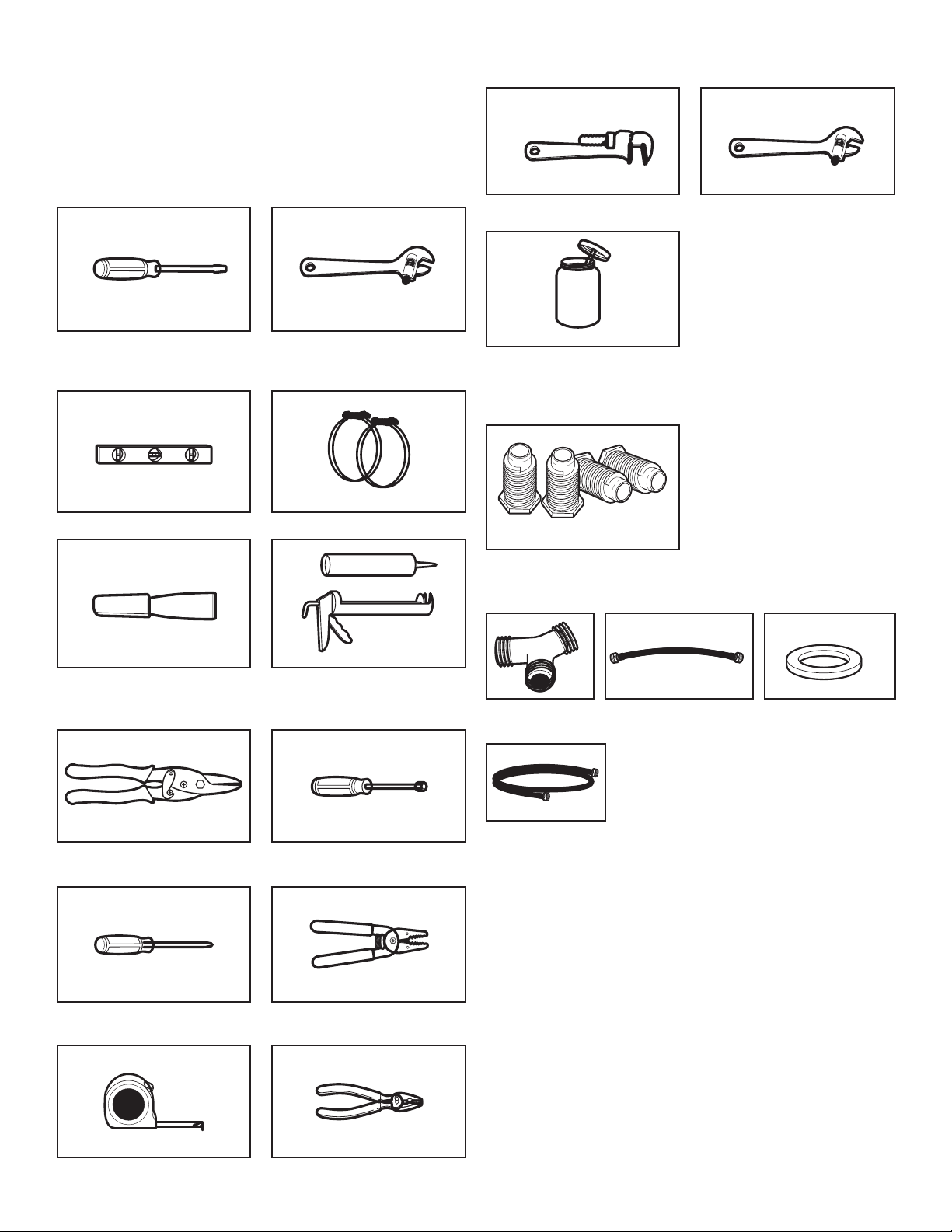
TOOLS AND PARTS
Gather the required tools and parts before starting installation.
Read and follow the instructions provided with any tools listed
here.
Tools needed for all installations:
Flat-blade screwdriver Adjustable wrench that
opens to 1" or hex-head
socket wrench
Level Vent clamps
Plastic putty knife Caulking gun and compound
(for installing new exhaust
vent)
Tin snips (new vent
installations)
1/4" nut driver
(recommended)
#2 Phillips screwdriver Wire stripper (direct wire
installations)
Tape measure Pliers
Tools needed for gas installations:
8" or 10" pipe wrench 8" or 10" adjustable wrench
(for gas connections)
Pipe-joint compound
resistant to propane gas
Parts supplied (all models):
Leveling legs (4)
Parts needed (steam models):
“Y”
connector
Short inlet hose Rubber washer
(4)
Inlet hose
If using a power supply cord:
Use a UL listed power supply cord kit marked for use with
clothes dryers. The kit should contain:
■ A UL listed 30 A power supply cord, rated 120/240 V
minimum, with a temperature rating of 140°F (60°C)
minimum. The cord should be type SRD or SRDT and be at
least 4 ft. (1.22 m) long. The wires that connect to the dryer
must end in ring terminals or spade terminals with upturned
ends.
■ A UL listed strain relief
Parts needed: (Not supplied with dryer)
Check local codes. Check existing electrical supply and venting.
See “Electrical Requirements” and “Venting Requirements”
before purchasing parts.
Mobile home installations require metal exhaust system hardware
available for purchase from the dealer from whom you purchased
your dryer. For further information, please refer to the “Assistance
or Service” section in your “Quick Reference Guide.”
5
LOCATION REQUIREMENTS
Explosion Hazard
Keep flammable materials and vapors, such as
gasoline, away from dryer.
Place dryer at least 18 inches (46 cm) above the
floor for a garage installation.
Failure to do so can result in death, explosion,
or fire.
You will need:
■ A location allowing for proper exhaust installation.
See “
Venting Requirements.”
■ A separate 15 or 20 A circuit needed for gas dryers and
30 A circuit needed for electric dryers.
■ If using power supply cord, a grounded electrical outlet
located within 2 ft. (610 mm) of either side of dryer.
See “
Electrical Requirements.”
■ Floor must support dryer weight of 200 lbs. (90.7 kg).
Also consider weight of companion appliance.
■ Level oor with maximum slope of 1" (25 mm) under entire
dryer. If slope is greater than 1" (25 mm), clothes may not
tumble properly and automatic sensor cycles may not
operate correctly.
■ For garage installation, place dryer at least 18" (460 mm)
above oor.
■ Steam models only: Cold water faucets located within
4 ft. (1.2 m) of the water ll valves, and water pressure of
20-100 psi (137.9-689.6 kPa). You may use your washer’s
water supply by purchasing the necessary parts noted in
“Parts needed.”
IMPORTANT: Do not operate, install, or store dryer where
it will be exposed to water, weather, or at temperatures below
45°F (7°C). Lower temperatures may cause dryer not to
shut off at end of automatic sensor cycles, resulting in longer
drying times.
NOTE: No other fuel-burning appliance can be installed in the
same closet as a dryer.
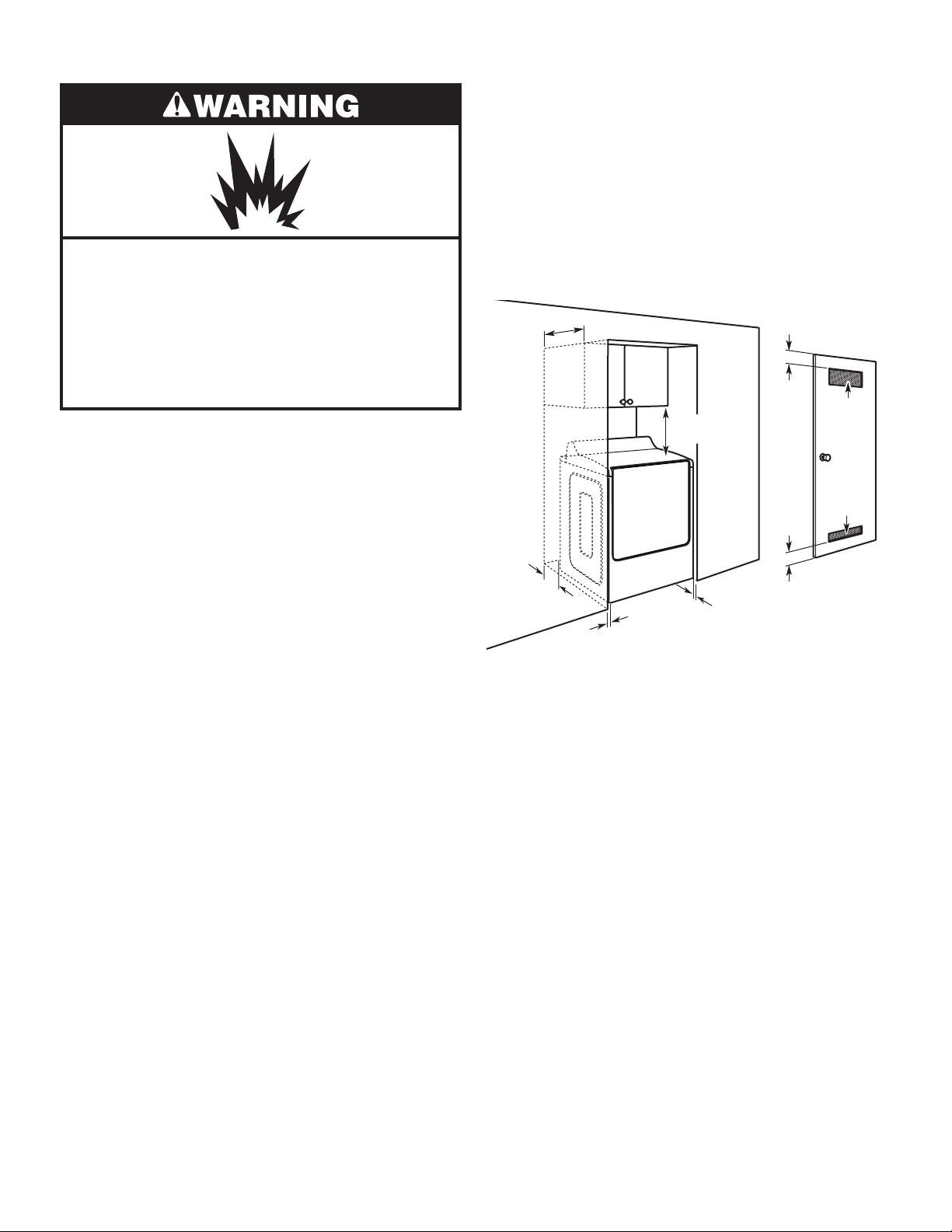
INSTALLATION CLEARANCES
For each arrangement, consider allowing more space for ease of
installation and servicing, spacing for companion appliances and
clearances for walls, doors, and oor moldings. Space must be
large enough to allow door to fully open. Add spacing on all sides
of dryer to reduce noise transfer. If a closet door or louvered door
is installed, top and bottom air openings in door are required.
Check code requirements. Some codes limit, or do not permit,
installation of the dryer in garages, closets, mobile homes, or
sleeping quarters. Contact your local building inspector.
Spacing for recessed area or closet installation
The dimensions shown are for the recommended spacing
allowed.
■ Additional spacing should be considered for ease of
installation and servicing.
■ Additional clearances might be required for wall, door,
and oor moldings.
■ Additional spacing of 1" (25 mm) on all sides of the
dryer is recommended to reduce noise transfer.
■ For closet installation, with a door, minimum ventilation
openings in the top and bottom of the door are required.
Louvered doors with equivalent ventilations openings
are acceptable.
■ Companion appliance spacing should also be considered.
*Recommended/Minimum spacing
Mobile home - Additional installation requirements:
This dryer is suitable for mobile home installations.
The installation must conform to the Manufactured Home
Construction and Safety Standard, Title 24 CFR, Part 3280
(formerly the Federal Standard for Mobile home construction and
Safety, Title 24, HUD Part 280) or Standard CAN/CSA-Z240 MH.
Mobile home installations require:
All dryers:
■ Metal exhaust system hardware, available for purchase
from your dealer. For further information, see “Assistance
or Service” section in your “Quick Reference Guide.”
■ Special provisions must be made in mobile homes to
introduce outside air into dryer. Openings (such as a
nearby window) should be at least twice as large as
dryer exhaust opening.
For gas dryers mobile home installations:
■ Mobile Home Installation Hold-down Kit is available to order.
For further information, see “Assistance or Service” section
in your “Quick Reference Guide.”
6"/0"*
(152 mm/0 mm)
14" max
(356 mm)
1"
(25 mm)
18"
(460 mm)
3"
(76 mm)
3"
(76 mm)
48 in.
2
(310 cm
2
)
(155 cm
2
)
1"/0"*
(
25 mm/0 mm
)
24 in.
2
6
ELECTRICAL REQUIREMENTS -
U.S.A. ONLY
It is your responsibility:
■ To contact a qualied electrical installer.
■ To be sure that the electrical connection is adequate and in
conformance with the National Electrical Code,
ANSI/NFPA 70 - latest edition and all local codes and
ordinances.
The National Electrical Code requires a 4-wire power supply
connection for homes built after 1996, dryer circuits involved
in remodeling after 1996, and all mobile home installations.
A copy of the above code standards can be obtained from:
National Fire Protection Association, One Batterymarch Park,
Quincy, MA 02269.
■ To supply the required 3 or 4-wire, single phase, 120/240 V,
60 Hz, AC only electrical supply (or 3 or 4-wire, 120/208 V
electrical supply, if specied on the serial/rating plate) on a
separate 30 A circuit, fused on both sides of the line. Connect
to an individual branch circuit. Do not have a fuse in the
neutral or grounding circuit.
■ Do not use an extension cord.
■ If codes permit and a separate ground wire is used, it is
recommended that a qualied electrician determine that
the ground path is adequate.
Electrical Connection
To properly install your dryer, you must determine the type of
electrical connection you will be using and follow the instructions
provided for it here.
■ This dryer is manufactured ready to install with a 3-wire
electrical supply connection. The neutral ground conductor
is permanently connected to the neutral conductor (white
wire) within the dryer. If the dryer is installed with a 4-wire
electrical supply connection, the neutral ground conductor
must be removed from the external ground connector (green
screw), and secured under the neutral terminal (center or
white wire) of the terminal block. When the neutral ground
conductor is secured under the neutral terminal (center or
white wire) of the terminal block, the dryer cabinet is isolated
from the neutral conductor.
■ If local codes do not permit the connection of a neutral
ground wire to the neutral wire, see “Optional 3-wire
connection” section.
■ A 4-wire power supply connection must be used when the
appliance is installed in a location where grounding through
the neutral conductor is prohibited. Grounding through the
neutral is prohibited for (1) new branch-circuit installations,
(2) mobile homes, (3) recreational vehicles, and (4) areas
where local codes prohibit grounding through the neutral
conductors.
If using a power supply cord:
Use a UL listed power supply cord kit marked for use with
clothes dryers. The kit should contain:
■ A UL listed 30 A power supply cord, rated 120/240 V
minimum, with a temperature rating of 140°F (60°C)
minimum. The cord should be type SRD or SRDT, and
be at least 4 ft. (1.22 m) long. The wires that connect to
the dryer must end in ring terminals or spade terminals
with upturned ends.
■ A UL listed strain relief.
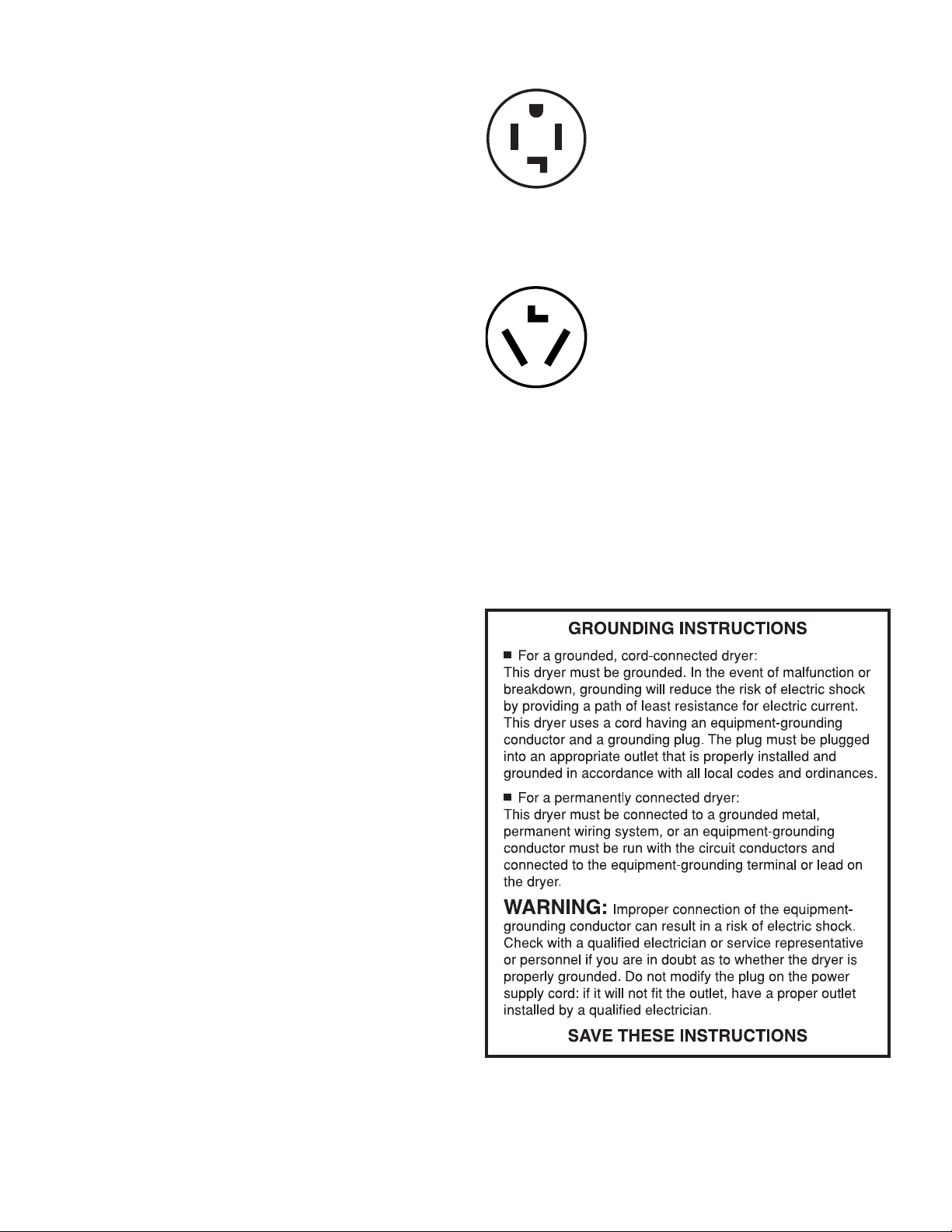
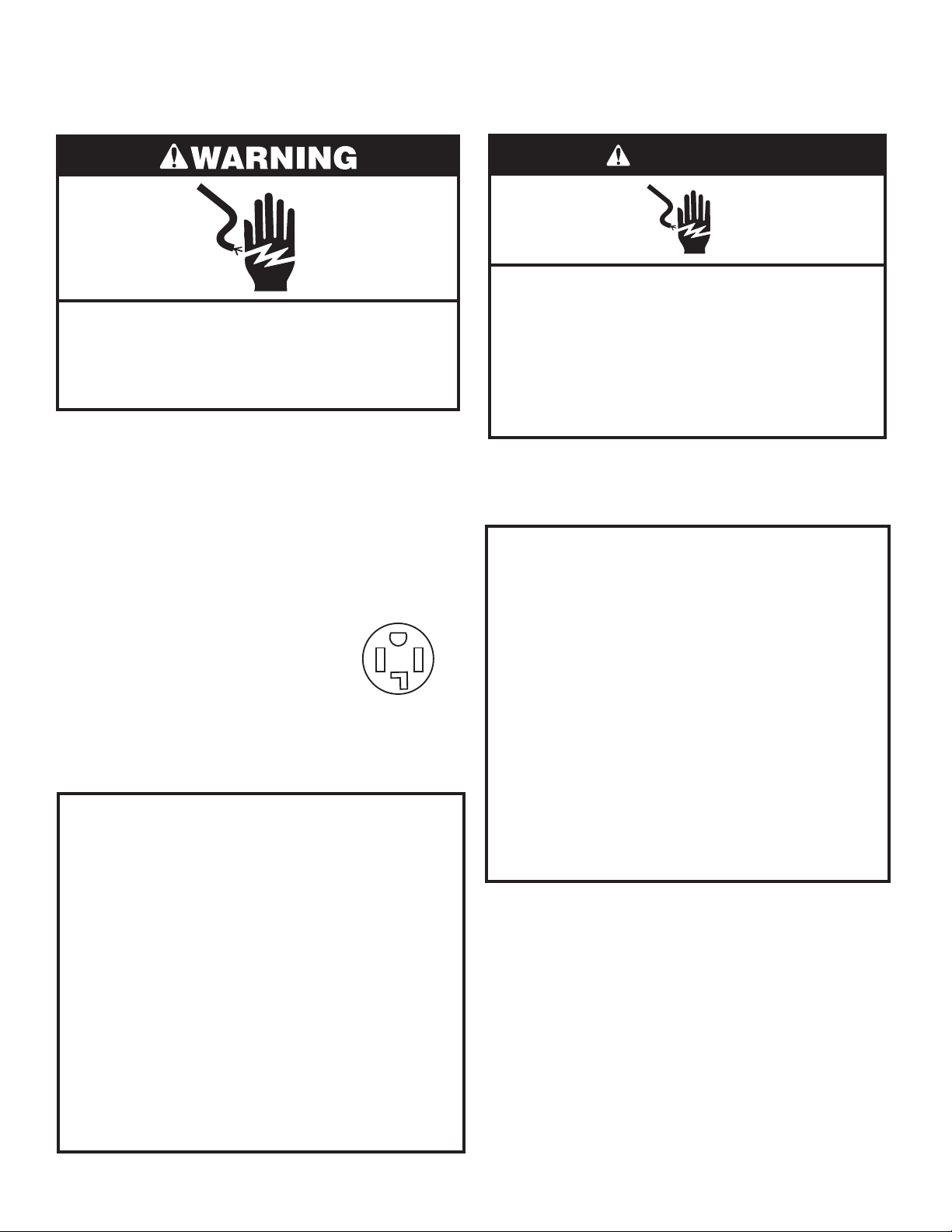
If your outlet looks like this:
Then choose a 4-wire power supply cord with
ring or spade terminals and UL listed strain
relief. The 4-wire power supply cord, at least
4 ft. (1.22 m) long, must have 4 10-gauge solid
copper wires and match a 4-wire receptacle of
NEMA Type 14-30 R. The ground wire (ground
conductor) may be either green or bare. The
neutral conductor must be identied by a
white cover.
4-wire
receptacle
(14-30R)
If your outlet looks like this:
Then choose a 3-wire power supply cord with
ring or spade terminals and UL listed strain
relief. The 3-wire power supply cord, at least
4 ft. (1.22 m) long, must have 3 10-gauge solid
copper wires and match a 3-wire receptacle of
NEMA Type 10-30 R.
3-wire
receptacle
(10-30R)
If connecting by direct wire:
Power supply cable must match power supply (4-wire or 3-wire)
and be:
■ Flexible armored cable or nonmetallic sheathed copper cable
(with ground wire), covered with exible metallic conduit. All
current-carrying wires must be insulated.
■ 10-gauge solid copper wire (do not use aluminum) at
least 5 ft. (1.52 m) long.
7
ELECTRIC DRYER POWER HOOKUP-
CANADA ONLY
ELECTRICAL REQUIREMENTS
Electrical Shock Hazard
Plug into a grounded 4 prong outlet.
Failure to do so can result in death or
electrical shock.
It is your responsibility:
■ To contact a qualied electrical installer.
■ To be sure that the electrical connection is adequate and in
conformance with Canadian Electrical Code, C22.1-latest
edition and all local codes. A copy of above codes standard
may be obtained from: Canadian Standards Association,
178 Rexdale Blvd., Toronto, ON M9W 1R3 CANADA.
■ To supply the required 4-wire, single phase, 120/240 V,
60 Hz, AC only electrical supply on a separate 30 A circuit,
fused on both sides of the line. A time-delay fuse or circuit
breaker is recommended. Connect to an individual branch
circuit.
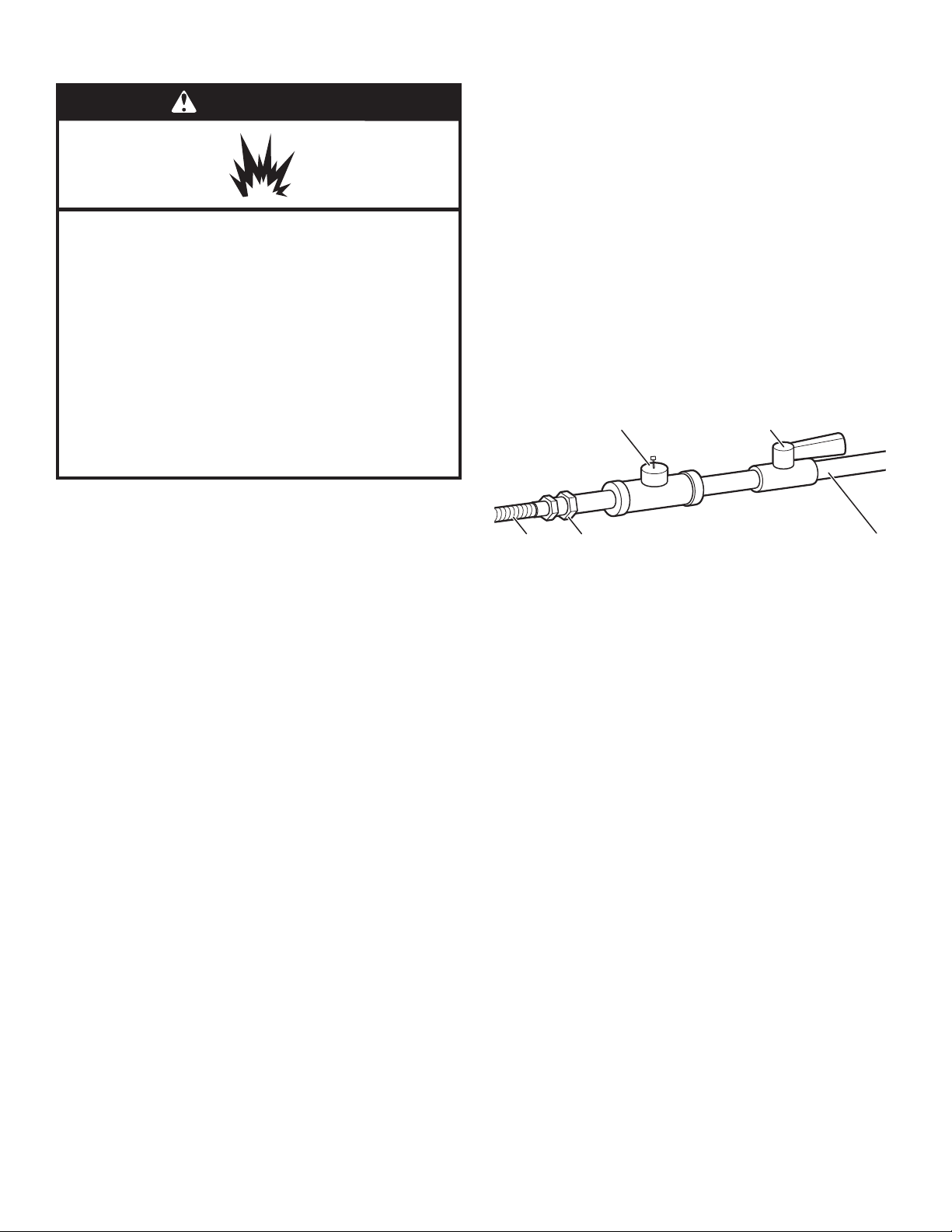
■ This dryer is equipped with a UL listed
and/or CSA International Certied Power
Cord intended to be plugged into a
standard 14-30R wall receptacle.The cord
is 5 ft. (1.52 m) long. Be sure wall
receptacle is within reach of dryer's
nal location.
4-wire receptacle
(14-30R)
For further information, please reference service numbers located
in “Assistance or Service” section of your “Quick Reference
Guide.”
GROUNDING INSTRUCTIONS
SAVE THESE INSTRUCTIONS
■
For a grounded, cord-connected dryer:
This dryer must be grounded. In the event of malfunction or
breakdown, grounding will reduce the risk of electric shock
by providing a path of least resistance for electric current.
This dryer is equipped with a cord having an equipment-
grounding conductor and a grounding plug. The plug must
be plugged into an appropriate outlet that is properly
installed and grounded in accordance with all local codes
and ordinances.
WARNING: Improper connection of the equipment-
grounding conductor can result in a risk of electric shock.
Check with a qualied electrician or service representative
or personnel if you are in doubt as to whether the dryer is
properly grounded. Do not modify the plug provided with
the dryer: if it will not t the outlet, have a proper outlet
installed by a qualied electrician.
GAS DRYER POWER HOOKUP -
U.S.A. AND CANADA
ELECTRICAL REQUIREMENTS
Electrical Shock Hazard
Plug into a grounded 3 prong outlet.
Do not remove ground prong.
Do not use an adapter.
Do not use an extension cord.
Failure to follow these instructions can result in death,
fire, or electrical shock.
WARNING
■ 120 V, 60 Hz, AC only, 15 A or 20 A fused electrical
supply is required. A time-delay fuse or circuit breaker is
recommended. It is also recommended that a separate
circuit serving only this dryer be provided.
GROUNDING INSTRUCTIONS
SAVE THESE INSTRUCTIONS
■
For a grounded, cord-connected dryer:
This dryer must be grounded. In the event of malfunction or
breakdown, grounding will reduce the risk of electric shock
by providing a path of least resistance for electric current.
This dryer is equipped with a cord having an equipment-
grounding conductor and a grounding plug. The plug must
be plugged into an appropriate outlet that is properly
installed and grounded in accordance with all local codes
and ordinances.
WARNING: Improper connection of the equipment-
grounding conductor can result in a risk of electric shock.
Check with a qualied electrician or service representative
or personnel if you are in doubt as to whether the dryer is
properly grounded. Do not modify the plug provided with
the dryer: if it will not t the outlet, have a proper outlet
installed by a qualied electrician.
8
GAS SUPPLY REQUIREMENTS
WARNING
Explosion Hazard
Use a new CSA International approved gas supply line.
Install a shut-off valve.
Securely tighten all gas connections.
If connected to propane, have a qualified person make
sure gas pressure does not exceed 13" (330 mm) water
column.
Examples of a qualified person include:
licensed heating personnel,
authorized gas company personnel, and
authorized service personnel.
Failure to do so can result in death, explosion, or fire.
GAS TYPE
Natural Gas:
This dryer is equipped for use with Natural gas. It is certied by
UL for use with propane gas with appropriate conversion.
■ Your dryer must have the correct burner for the type of gas
in your home. Burner information is located on the rating
plate in the door well of your dryer. If this information does
not agree with the type of gas available, contact your dealer
or call the phone numbers referenced in the “Assistance or
Service” section of your “Quick Reference Guide.”
Propane Gas Conversion:
IMPORTANT: Conversion must be made by a qualied
technician.
No attempt shall be made to convert the dryer from the gas
specied on the model/serial rating plate for use with a
different gas without consulting your gas company.
GAS SUPPLY LINE
Option 1 (Recommended Method)
Flexible stainless steel gas connector:
■ If local codes permit, use a new exible stainless steel gas
connector (Design Certied by the American Gas Association
or CSA International) to connect your dryer to the rigid
gas supply line. Use an elbow and a 3/8" are x 3/8" NPT
adapter tting between the stainless steel gas connector and
the dryer gas pipe as needed to prevent kinking.
Option 2 (Alternate Method)
Approved aluminum or copper tubing
■ Must include 1/8" NPT minimum plugged tapping accessible
for test gauge connection, immediately upstream of the gas
connection to the dryer.
■ 1/2" IPS pipe is recommended.
■ 3/8" approved aluminum or copper tubing is acceptable for
lengths under 20 ft. (6.1 m) if local codes and gas supplier
permit.
■ If you are using Natural gas, do not use copper tubing.
■ Lengths over 20 ft. (6.1 m) should use larger tubing and a
different size adapter tting.
■ If your dryer has been converted to use LP gas, 3/8" propane
compatible copper tubing can be used. If the total length of
the supply line is more than 20 ft. (6.1 m), use larger pipe.
NOTE: Pipe-joint compounds that resist the action of
propane gas must be used. Do not use TEFLON
®†
tape.
■ Must include shut-off valve
In the U.S.A.:
An individual manual shut-off valve must be installed within
six (6) ft. (1.8 m) of the dryer in accordance with the National
Fuel Gas Code, ANSI Z223.1. The location should be easy to
reach for opening and closing.
In Canada:
An individual manual shut-off valve must be installed in
accordance with the B149.1, Natural Gas and Propane
Installation Code. It is recommended that an individual
manual shutoff valve be installed within six (6) ft. (1.8 m) of
the dryer. The location should be easy to reach for opening
and closing.
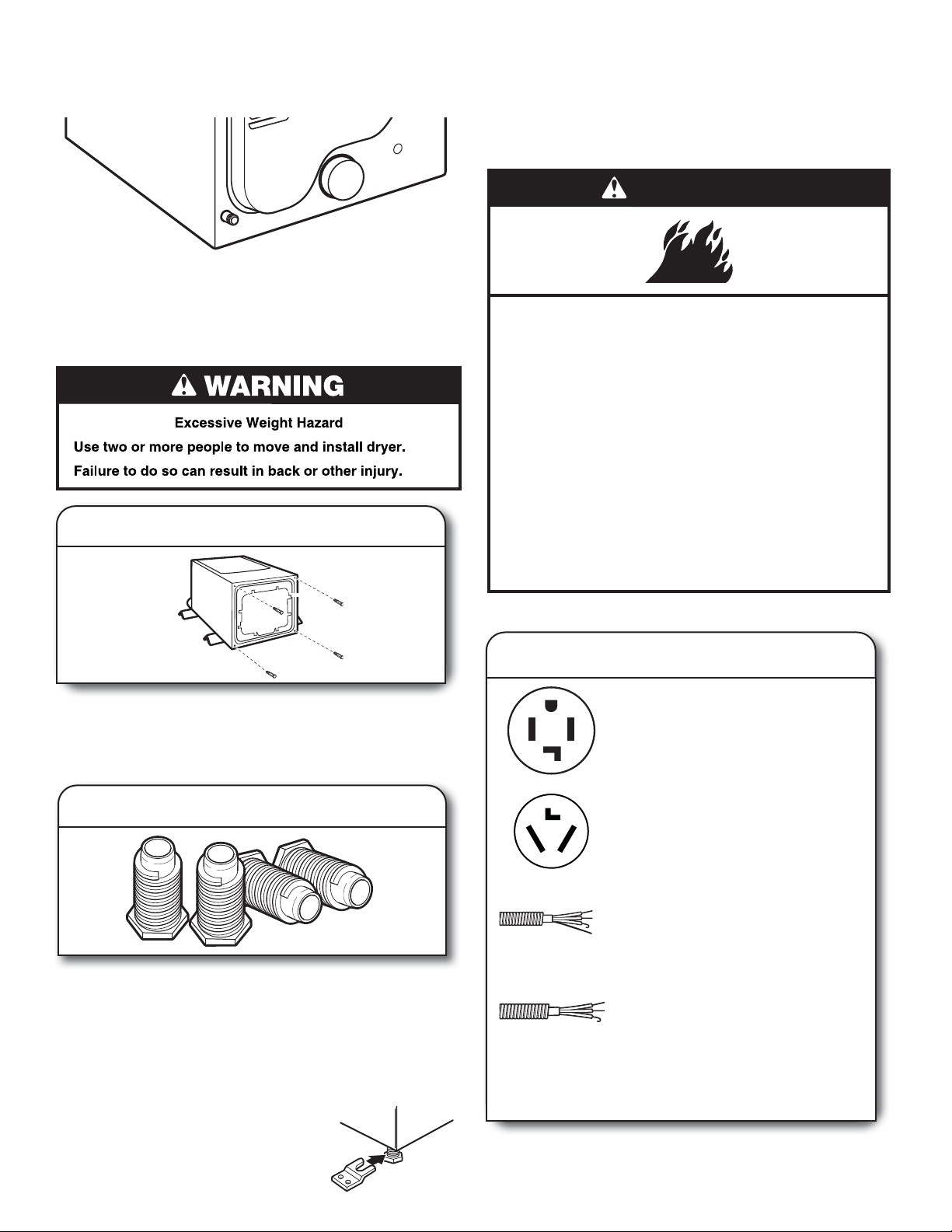
E
BA
D
C
A. 3/8" exible gas connector
B. 3/8" pipe to are adapter tting
C. 1/8" NPT minimum plugged tapping
D. 1/2" NPT gas supply line
E. Gas shutoff valve
GAS SUPPLY CONNECTION REQUIREMENTS
■ Use an elbow and a 3/8" are x 3/8" NPT adapter tting
between the exible gas connector and the dryer gas pipe,
as needed to avoid kinking.
■ Use only pipe-joint compound. Do not use TEFLON
®†
tape.
■ This dryer must be connected to the gas supply line with a
listed exible gas connector that complies with the standard
for connectors for gas appliances, ANSI Z21.24 or CSA 6.10.
BURNER INPUT REQUIREMENTS
Elevations above 2,000 ft. (610 m):
■ When installed above 2,000 ft. (610 m) a 4% reduction of the
burner Btu rating shown on the model/serial number plate is
required for each 1,000 ft. (305 m) increase in elevation.
Gas supply pressure testing
■ The dryer must be disconnected from the gas supply piping
system during pressure testing at pressures greater than
1/2 psi.
†
®
TEFLON is a registered trademark of Chemours.
9
DRYER GAS PIPE
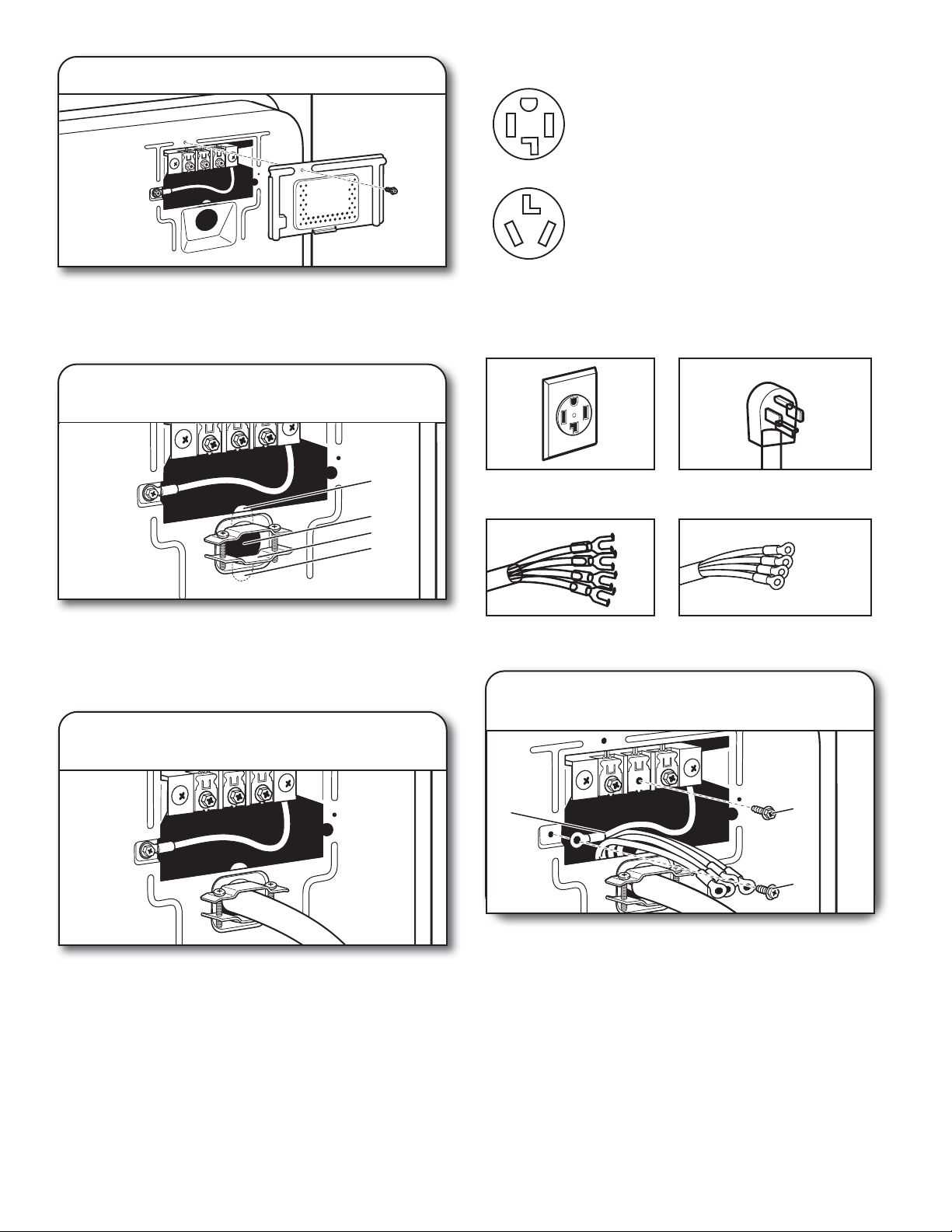
■ The gas pipe that comes out through the rear of your dryer
has a 3/8" male pipe thread.
3/8" NPT dryer pipe
NOTE: For a garage installation, the gas pipe height must be an
additional 18" (460 mm) from the oor.
INSTALL LEVELING LEGS
Prepare dryer for leveling legs
1.
Firmly grasp dryer body (not console panel) and gently lay dryer
down on back cardboard corner posts.
IMPORTANT: If laying dryer on its back, use the cardboard
corner posts the dryer was packed with to avoid damaging the
back of the dryer.
Screw in leveling legs
2.
Using a wrench and tape measure, screw leveling legs into leg
holes until bottom of foot is approximately 1" (25 mm) from
bottom of dryer.
Now stand the dryer on its feet. Slide the dryer until it is close
to its nal location. Leave enough room to connect the exhaust
vent.
For mobile home use
Gas dryers must be securely fastened to the oor.
Mobile home installations require a Mobile
Home Installation Hold-down Kit. For
ordering information please reference
the “Quick Reference Guide.”
MAKE ELECTRICAL CONNECTION -
U.S.A. ONLY
ELECTRICAL CONNECTION
Power Supply Cord
WARNING
Fire Hazard
Use a new UL listed 30 amp power supply cord.
Use a UL listed strain relief.
Disconnect power before making electrical connections.
Connect neutral wire (white or center wire) to center
terminal (silver).
Ground wire (green or bare wire) must be connected to
green ground connector.
Connect remaining 2 supply wires to remaining
2 terminals (gold).
Securely tighten all electrical connections.
Failure to do so can result in death, fire, or
electrical shock.
Electrical Connection Options
1. Choose electrical connection type
Power supply cord 4-wire receptacle
(NEMA Type 14-30R):
Go to Power Supply Cord Connection.
3-wire direct connection:
Go to Direct Wire Connection.
4-wire direct connection:
Go to Direct Wire Connection.
Power supply cord 3-wire receptacle
(NEMA Type 10-30R):
Go to Power Supply Cord Connection.
NOTE: If local codes do not permit connection of a
cabinet-ground conductor to neutral wire, go to “Optional
3-wire connection.” This connection may be used with
either a power supply cord or a direct wire connection.
10
Remove terminal block cover
2.
Remove hold-down screw and terminal block cover.
POWER SUPPLY CORD CONNECTION
Power Supply Cord Strain Relief
Attach power supply cord strain
relief
1.
A
B
C
D
Remove the screws from a 3/4" (19 mm) UL Listed strain relief.
Put the tabs of the two clamp sections (C) into the hole below the
terminal block opening (B) so that one tab is pointing up (A) and
the other is pointing down (D), and hold in place. Tighten strain
relief screws just enough to hold the two clamp sections (C)
together.
Attach power supply cord strain
relief
2.
Put power supply cord through the strain relief. Be sure that the
wire insulation on the power supply cord is inside the strain relief.
The strain relief should have a tight t with the dryer cabinet and
be in a horizontal position. Do not further tighten strain relief
screws at this point.
If your outlet looks like this:
Power supply cord 4-wire receptacle
(NEMA Type 14-30R):
Go to “4-Wire Power Supply Cord
Connection”.
Power supply cord 3-wire receptacle
(NEMA Type 10-30R):
Go to “3-Wire Power Supply Cord
Connection.”
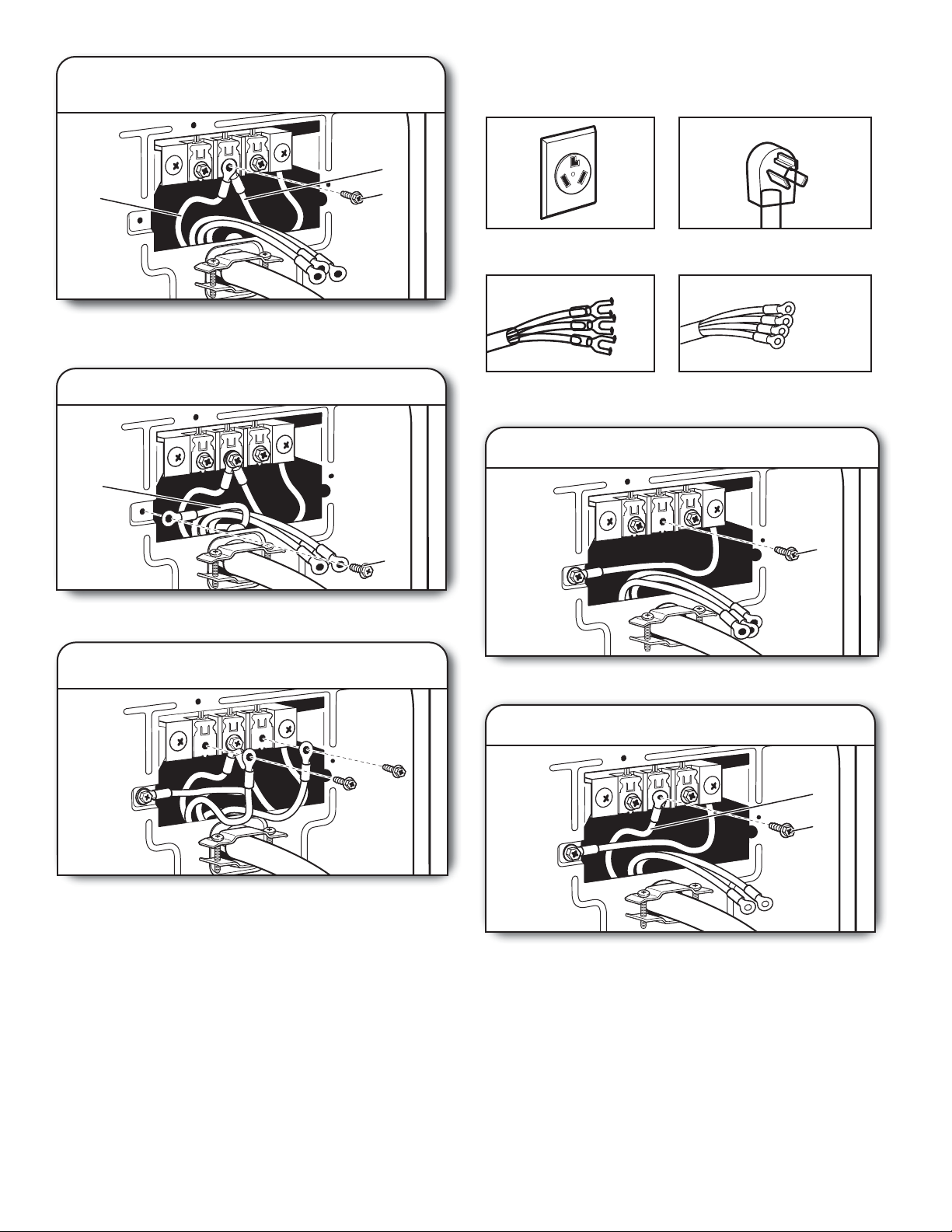
4-wire Power Supply Cord Connection
IMPORTANT: A 4-wire connection is required for mobile
homes and where local codes do not permit the use of 3-wire
connections.
4-wire receptacle
(NEMA type 14-30R)
4-prong plug
Spade terminals with
upturned ends
Ring terminals
B
A
E
Prepare to connect neutral
ground wire and neutral wire
1.
Remove center terminal block screw (B). Remove neutral ground
wire (E) from external ground conductor screw (A).
11
B
E
C
Connect neutral ground wire
and neutral wire
2.
Connect neutral ground wire (E) and neutral wire (white) (C) of
power supply cord under center terminal block screw (B).
Tighten screw.
F
A
3. Connect ground wire
Connect ground wire (F) (green or bare) of power supply cord to
external ground conductor screw (A). Tighten screw.
Connect remaining wires
4.
Connect remaining wires to outer terminal block screws. Tighten
screws. Finally, reinsert tab of terminal block cover into slot of
dryer rear panel. Secure cover with hold-down screw. Now, go to
“Venting Requirements.”
3-wire Power Supply Cord Connection
Use where local codes permit connecting cabinet-ground
conductor to neutral wire.
3-wire receptacle
(NEMA type 10-30R)
3-prong plug
Spade terminals with
upturned ends
Ring terminals
B
1. Remove center screw
Remove center terminal block screw (B).
2. Connect neutral wire
B
C
Connect neutral wire (white or center) (C) of power supply cord to
center terminal block screw (B). Tighten screw.
12
3. Connect remaining wires
Connect remaining wires to outer terminal block screws. Tighten
screws. Finally, reinsert tab of terminal block cover into slot of
dryer rear panel. Secure cover with hold-down screw. Now, go to
“Venting Requirements.”
DIRECT WIRE CONNECTION
WARNING
Fire Hazard
Use 10 gauge copper wire.
Use a UL listed strain relief.
Disconnect power before making electrical connections.
Connect neutral wire (white or center wire) to center
terminal (silver).
Ground wire (green or bare wire) must be connected to
green ground connector.
Connect remaining 2 supply wires to remaining
2 terminals (gold).
Securely tighten all electrical connections.
Failure to do so can result in death, fire, or
electrical shock.
Direct Wire Strain Relief
C
B
A
1. Attach direct wire strain relief
Unscrew the removable conduit connector (A) and any screws
from a 3/4" (19 mm) UL Listed strain relief.
Put the threaded section of the strain relief (C) through the hole
below the terminal block opening (B). Reaching inside the
terminal block opening, screw the removable conduit connector
(A) onto the strain relief threads.
2. Attach direct wire cable to strain
relief
Put direct wire cable through the strain relief. The strain relief
should have a tight t with the dryer cabinet and be in a
horizontal position. Tighten strain relief screw against the direct
wire cable.
If your wiring looks like this:
4-wire direct connection:
Go to “4-Wire Direct Connection”
on this page.
3-wire direct connection:
Go to “3-Wire Direct Connection”
on page 11.
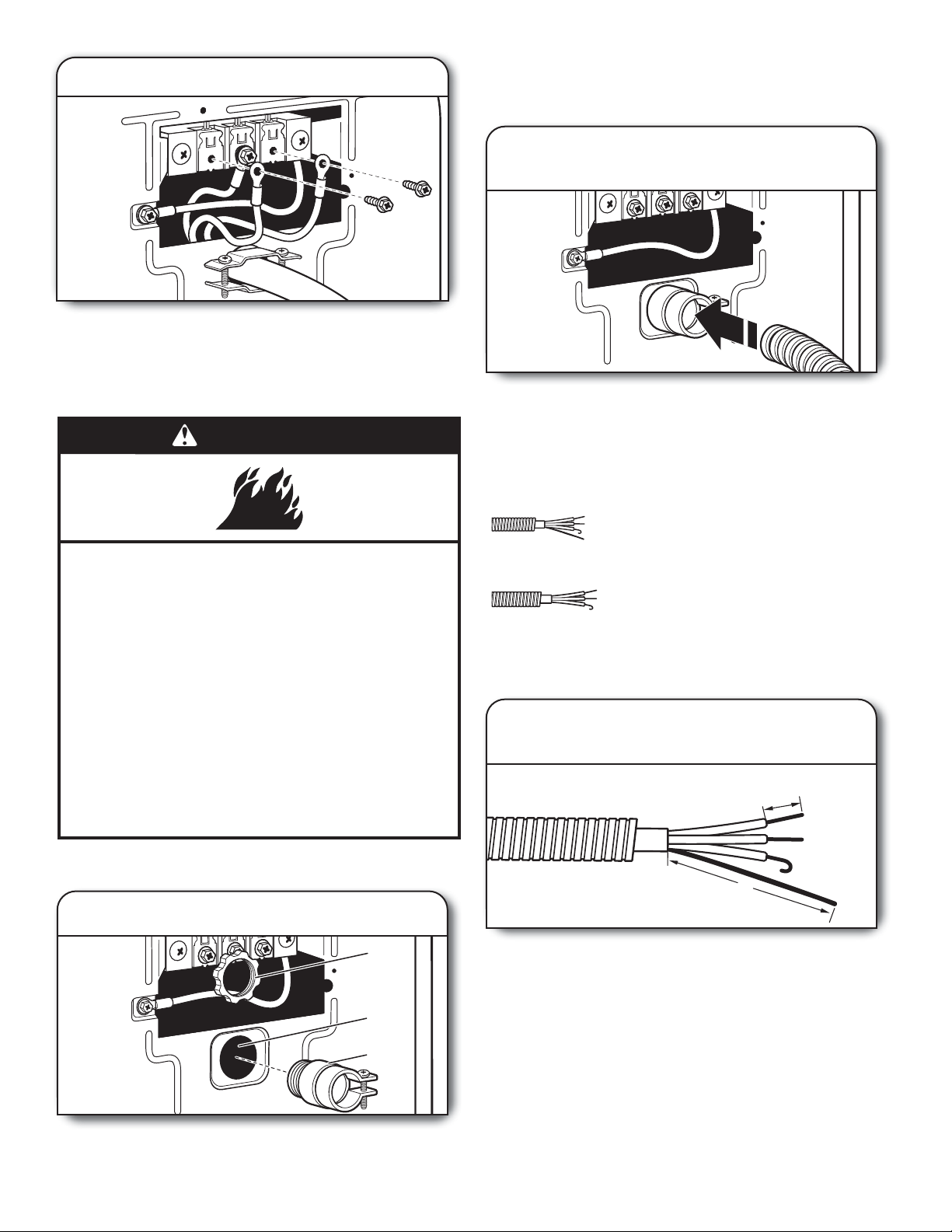
4-wire Direct Wire Connection
IMPORTANT: A 4-wire connection is required for mobile homes
and where local codes do not permit 3-wire connections.
1"
(25 mm)
5"
(127 mm)
1. Prepare your 4-wire cable for
direct connection
Direct wire cable must have 5 ft. (1.52 m) of extra length so dryer
may be moved if needed.
Strip 5" (127 mm) of outer covering from end of cable, leaving
bare ground wire at 5" (127 mm). Cut 1½" (38 mm) from
remaining 3 wires. Strip insulation back 1" (25 mm). Shape ends
of wires into hooks.
13
2. Prepare to connect neutral
ground wire and neutral wire
B
A
E
Remove center terminal block screw (B). Remove neutral ground
wire (E) from external ground conductor screw (A).
B
E
C
3. Connect neutral ground wire
and neutral wire
Connect neutral ground wire (E) and place
hooked end (hook facing right) of neutral
wire (white or center wire) (C) of direct wire
cable under center screw of terminal block
(B). Squeeze hooked ends together and
tighten screw.
4. Connect ground wire
A
F
Connect ground wire (green or bare) (F) of direct wire cable to
external ground conductor screw (A). Tighten screw.
5. Connect remaining wires
Place hooked ends of remaining direct wire cable wires under
outer terminal block screws (hooks facing right). Squeeze hooked
ends together and tighten screws. Finally, reinsert tab of terminal
block cover into slot of dryer rear panel. Secure cover with hold-
down screw. Now, go to “Venting Requirements.”
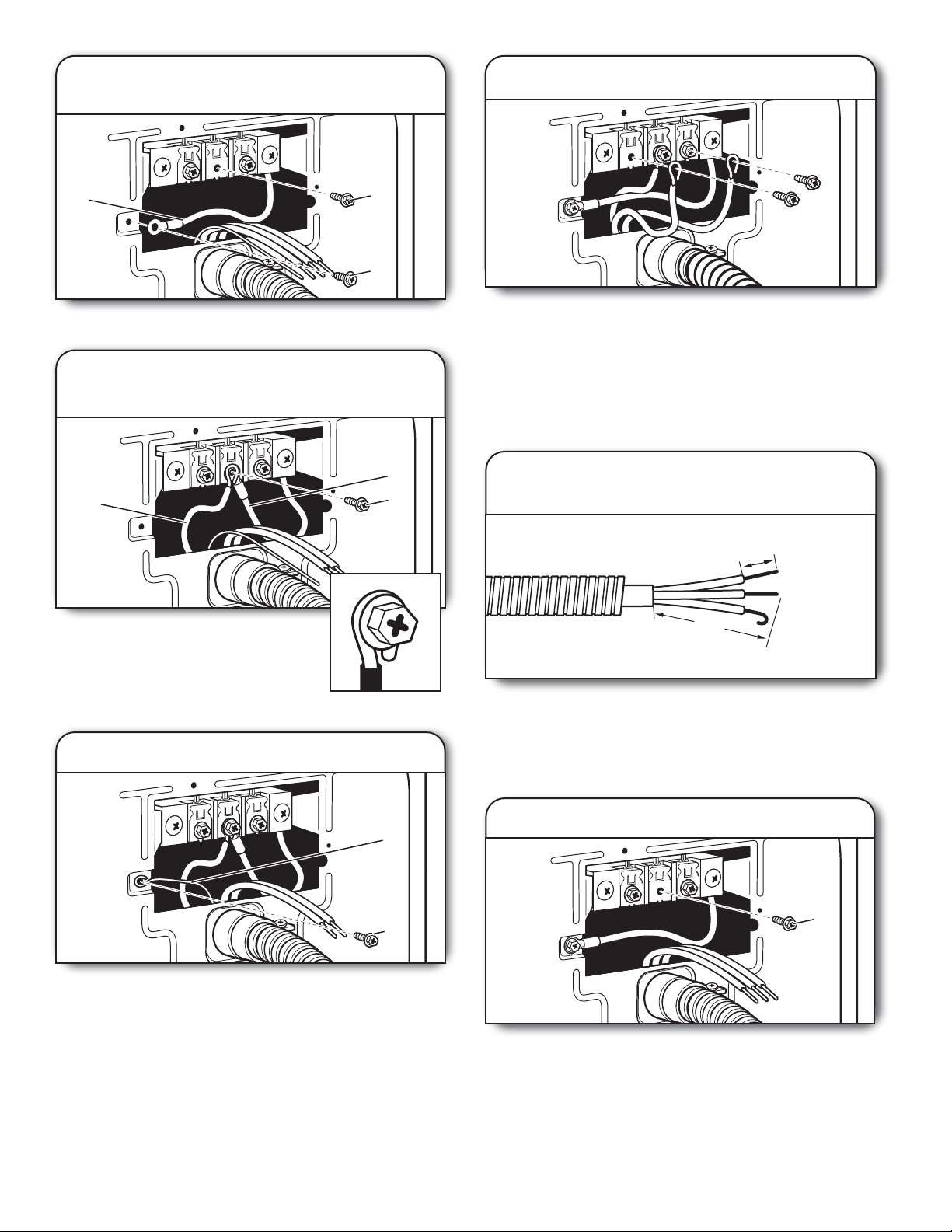
3-wire Direct Wire Connection
Use where local codes permit connecting cabinet-ground
conductor to neutral wire.
1"
(25 mm)
3½"
(89 mm)
1. Prepare your 3-wire cable for
direct connection
Direct wire cable must have 5 ft. (1.52 m) of extra length so dryer
may be moved if needed.
Strip 3½" (89 mm) of outer covering from end of cable. Strip
insulation back 1" (25 mm). If using 3-wire cable with ground
wire, cut bare wire even with outer covering. Shape wire ends
into hooks.
B
2. Remove center screw
Remove center terminal block screw (B).
14
B
C
3. Connect neutral wire
Place hooked end of neutral wire (white
or center) (C) of direct wire cable under
center terminal block screw (B). Squeeze
hooked end together. Tighten screw.
Connect remaining wires
4.
Place hooked ends of remaining direct wire cable wires under
outer terminal block screws (hooks facing right). Squeeze hooked
ends together and tighten screws. Finally, reinsert tab of terminal
block cover into slot of dryer rear panel. Secure cover with
hold-down screw. Now, go to “Venting Requirements.”
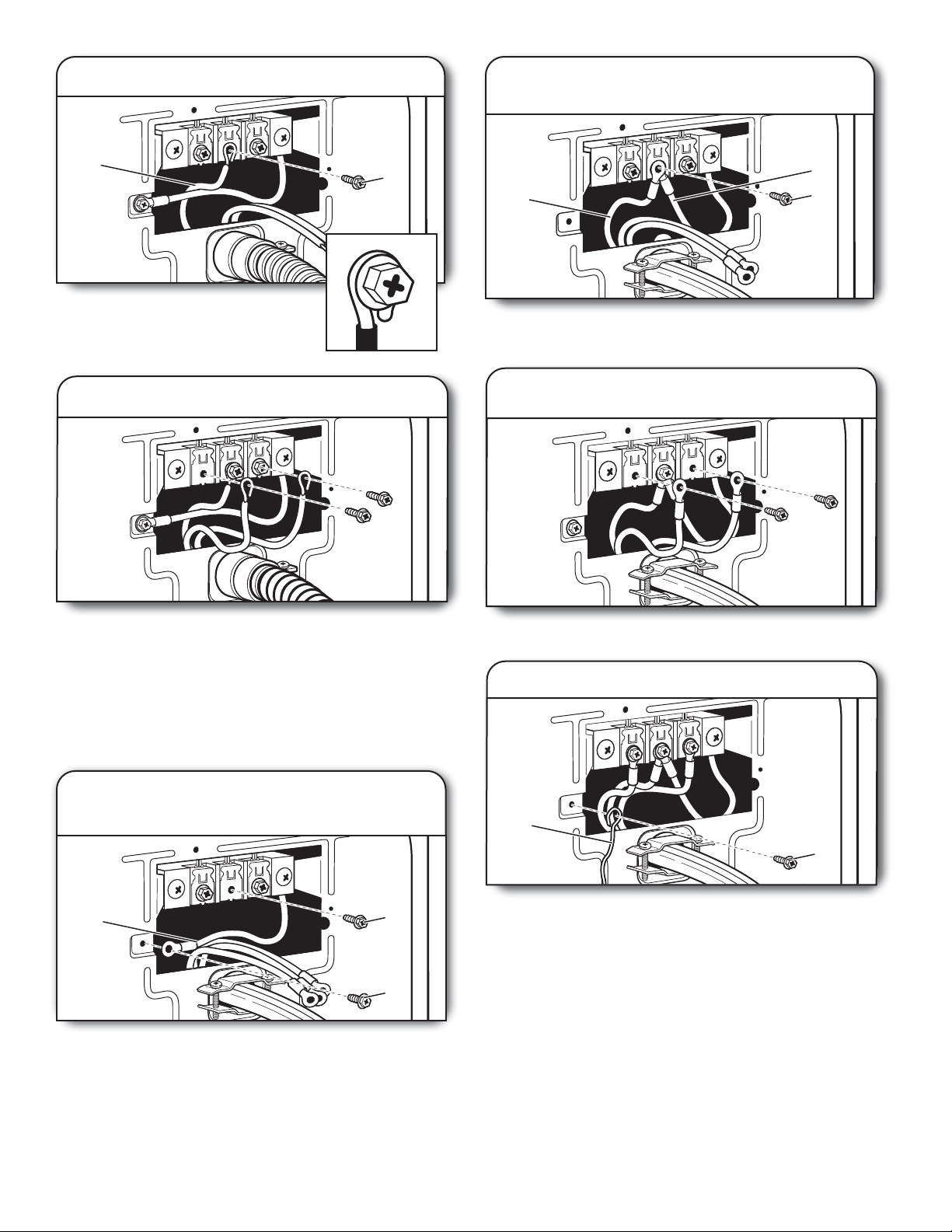
Optional 3-wire Connection
You must verify with a qualied electrician that this grounding
method is acceptable before connecting.
1. Prepare to connect neutral
ground wire and neutral wire
B
A
E
Remove center terminal block screw (B). Remove neutral ground
wire (E) from external ground conductor screw (A).
B
E
C
Connect neutral ground wire
and neutral wire
2.
Connect neutral ground wire (E) and neutral wire (white or center
wire) (C) of power supply cord or cable under center terminal
block screw (B). Tighten screw.
Connect remaining wires
3.
Connect remaining wires to outer terminal block screws Tighten
screws.
A
G
Connect external ground wire
4.
Connect a separate copper ground wire (G) from the external
ground conductor screw (A) to an adequate ground. Finally,
reinsert tab of terminal block cover into slot of dryer rear panel.
Secure cover with hold-down screw. Now, go to “Venting
Requirements.”
15
MAKE GAS CONNECTION - U.S.A. AND
CANADA
WARNING
Explosion Hazard
Use a new CSA International approved gas supply line.
Install a shut-off valve.
Securely tighten all gas connections.
If connected to propane, have a qualified person make
sure gas pressure does not exceed 13" (330 mm) water
column.
Examples of a qualified person include:
licensed heating personnel,
authorized gas company personnel, and
authorized service personnel.
Failure to do so can result in death, explosion, or fire.
Connect gas supply to dryer
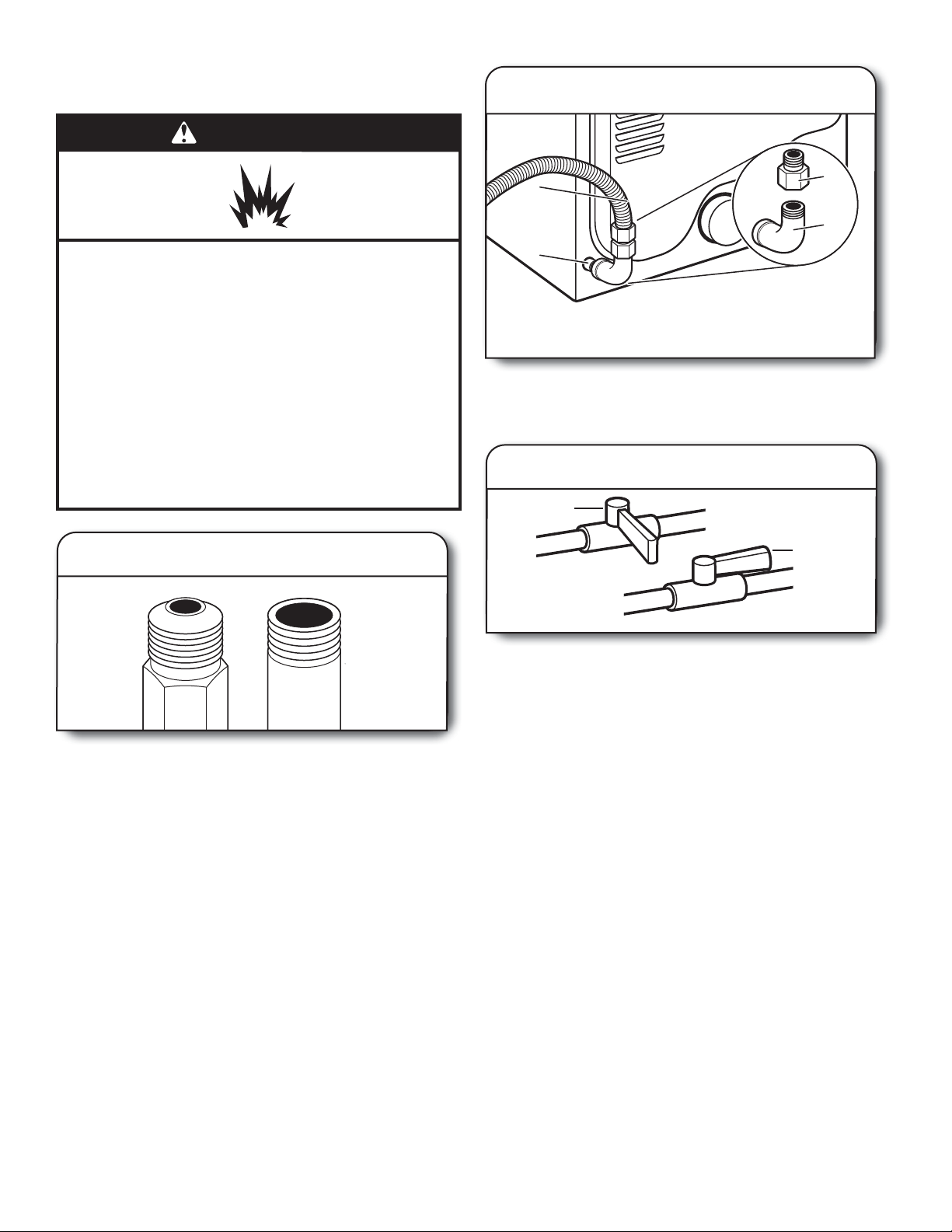
1.
A
B
Non-ared
male tting
Flared
male tting
Remove red cap from gas pipe. Using a wrench to tighten,
connect gas supply to dryer. Use pipe-joint compound on
threads of all non-ared male ttings. If exible metal tubing is
used, be sure there are no kinks.
NOTE: For propane gas connections, you must use pipe-joint
compound resistant to action of propane gas. Do not use
TEFLON
®†
tape.
B
A
D
C
Plan pipe tting connection
2.
A. 3/8" exible gas connector
B. 3/8" dryer pipe
C. 3/8" to 3/8" pipe elbow
D. 3/8" pipe-to-are adapter tting
A combination of pipe ttings must be used to connect dryer to
existing gas line. Recommended connection is shown. Your
connection may be different, according to supply line type, size,
and location.
Open shut-off valve
3.
A
B
Open valve
Closed valve
Open shut-off valve in supply line; valve is open when handle is
parallel to gas pipe. Then, test all connections by brushing on
an approved noncorrosive leak-detection solution. Bubbles will
show a leak. Correct any leaks found.
16
VENTING
VENTING REQUIREMENTS
Fire Hazard
Use a heavy metal vent.
Do not use a plastic vent.
Do not use a metal foil vent.
Failure to follow these instructions can result in
death or fire.
WARNING: To reduce the risk of re, this dryer MUST BE
EXHAUSTED OUTDOORS.
IMPORTANT: Observe all governing codes and ordinances.
Dryer exhaust must not be connected into any gas vent,
chimney, wall, ceiling, attic, crawl space, or a concealed space
of a building. Only rigid or exible metal vent shall be used for
exhausting.
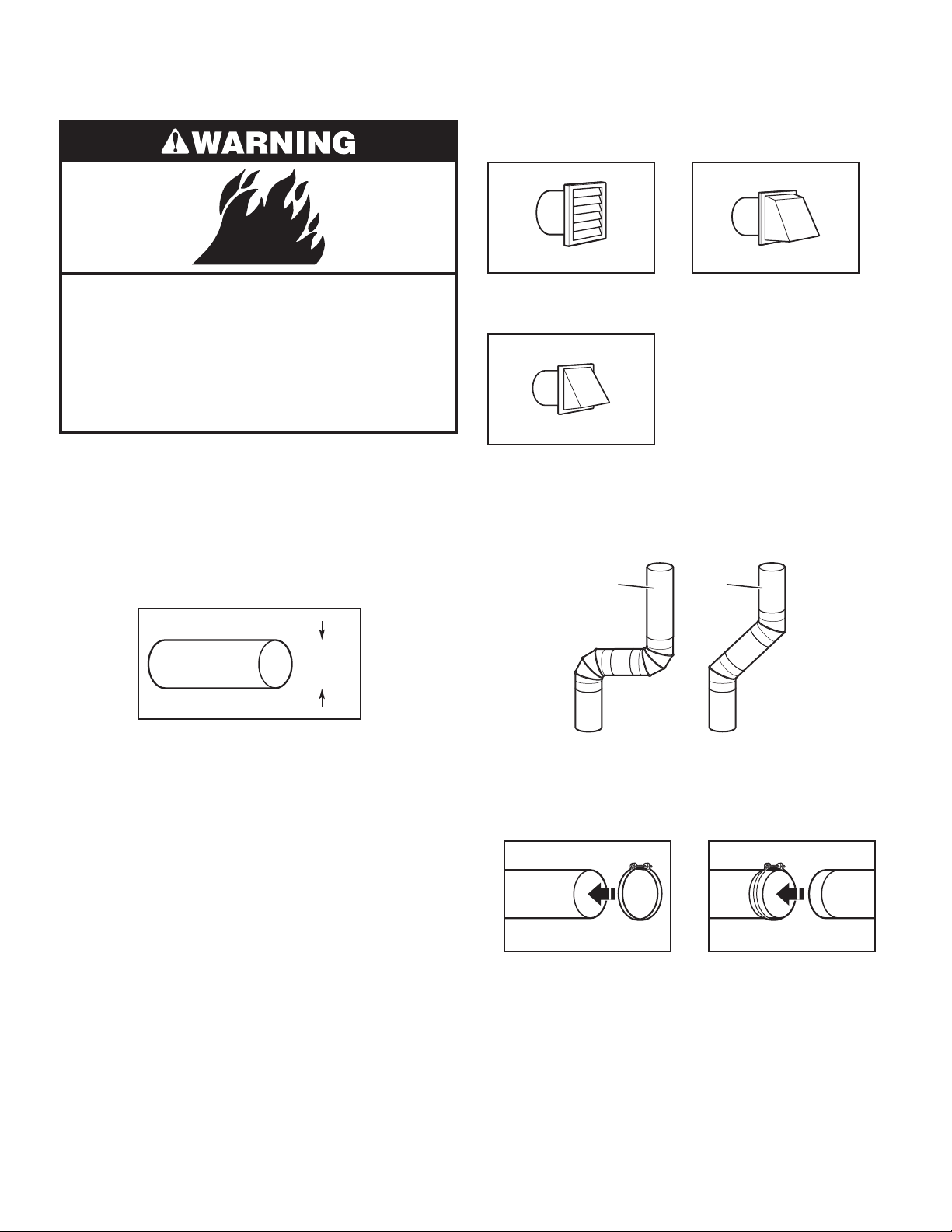
4"
(102 mm)
4" (102 mm) heavy metal exhaust vent
■ Only a 4" (102 mm) heavy metal exhaust vent and clamps
may be used.
■ Do not use plastic or metal foil vent.
Rigid metal vent:
■ Recommended for best drying performance and to avoid
crushing and kinking.
Flexible metal vent: (Acceptable only if accessible to clean)
■ Must be fully extended and supported in nal dryer location.
■ Remove excess to avoid sagging and kinking that may
result in reduced airow and poor performance.
■ Do not install in enclosed walls, ceilings, or oors.
■ The total length should not exceed 7
3
/
4
ft. (2.4 m).
■ The length of exible metal vent used must be included in
the overall vent system design as shown in the “Vent
System Charts.”
NOTE: If using an existing vent system, clean lint from
entire length of the system and make sure exhaust hood
is not plugged with lint. Replace plastic or metal foil vents
with rigid metal or exible metal vents. Review Vent System
Chart and, if necessary, modify existing vent system to
achieve best drying performance.
Exhaust hoods:
■ Must be at least 12" (305 mm) from ground or any object
that may obstruct exhaust (such as owers, rocks, bushes,
or snow).
Recommended Styles:
Louvered Hood
Angled Hood
Box Hood
Acceptable Style:
Elbows:
■ 45° elbows provide better airow than 90° elbows.
Recommended Styles:
Good Better
Clamps:
■ Use clamps to seal all joints.
■ Exhaust vent must not be connected or secured with screws
or other fastening devices that extend into interior of duct
and catch lint. Do not use duct tape.
Vent products can be purchased from your dealer. For more
information, see “Assistance or Service” section in your “Quick
Reference Guide.”
17
PLAN VENT SYSTEM
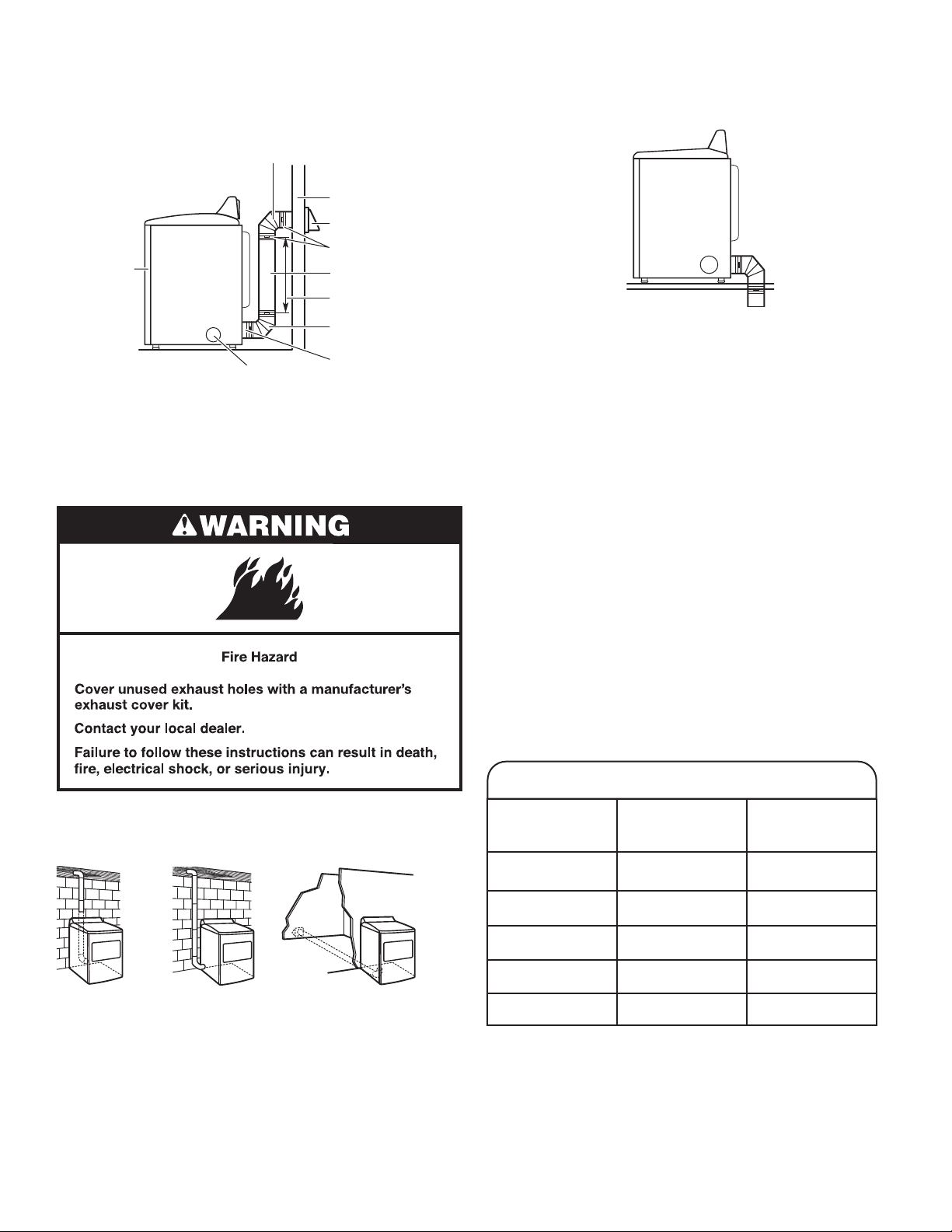
Recommended exhaust installations
Typical installations vent the dryer from the rear of the dryer.
Other installations are possible.
B
B
C
D
E
F
G
H
I
A
A. Dryer
B. Elbow
C. Wall
D. Exhaust hood
E. Clamps
F. Rigid metal or exible metal vent
G. Vent length necessary to connect elbows
H. Exhaust outlet
I. Optional side exhaust outlet
Optional exhaust installations:
If you prefer, dryer may be converted to exhaust through the
bottom and sides. You must contact your local dealer to have
dryer converted.
A B C
A. Standard rear offset exhaust installation
B. Left or right side exhaust installation
C. Bottom exhaust installation
Special provisions for mobile homes:
Exhaust vent must be securely fastened to a noncombustible
portion of mobile home and must not terminate beneath the
mobile home. Terminate exhaust vent outside.
Mobile Home Exhaust installation
Determine vent path:
■ Select route that will provide straightest and most direct
path outdoors.
■ Plan installation to use fewest number of elbows and turns.
■ When using elbows or making turns, allow as much room
as possible.
■ Bend vent gradually to avoid kinking.
■ Use as few 90° turns as possible.
Determine vent length and elbows needed for best
drying performance:
■ Use following Vent System Chart to determine type of vent
material and hood combinations acceptable to use.
NOTE: Do not use vent runs longer than those specied
in Vent System Chart. Exhaust systems longer than those
specied will:
■ Shorten life of dryer.
■ Reduce performance, resulting in longer drying times
and increased energy usage.
The Vent System Charts provide venting requirements that will
help achieve best drying performance.
Vent System Chart
Number of
90° turns
or elbows
Type
of vent
Angled
hoods
0
Rigid metal 64 ft. (20 m)
1
Rigid metal 54 ft. (16.5 m)
2
Rigid metal 44 ft. (13.4 m)
3
Rigid metal 35 ft. (10.7 m)
4
Rigid metal 27 ft. (8.2 m)
NOTE: Bottom exhaust installations have a 90° turn inside the
dryer. To determine maximum exhaust length, add one 90° turn
to the charts.
18
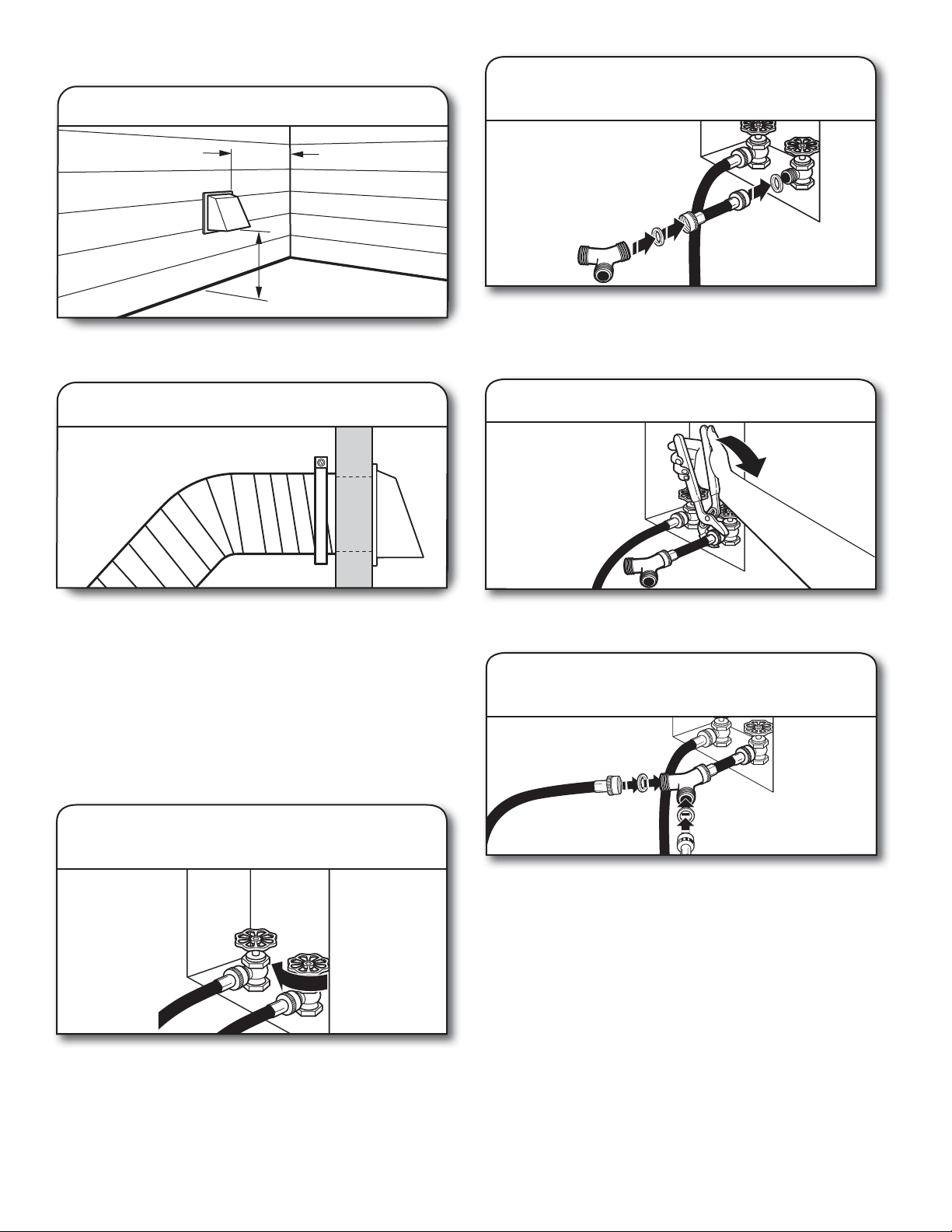
INSTALL VENT SYSTEM
12" min.
(305 mm)
12" min.
(305 mm)
Install exhaust hood
1.
Install exhaust hood and use caulking compound to seal exterior
wall opening around exhaust hood.
Connect vent to exhaust hood
2.
Vent must t over the exhaust hood. Secure vent to exhaust
hood with 4" (102 mm) clamp. Run vent to dryer location using
straightest path possible. Avoid 90° turns. Use clamps to seal all
joints. Do not use duct tape, screws, or other fastening devices
that extend into interior of vent to secure vent, because they can
catch lint.
CONNECT INLET HOSES
For non-steam models, skip to “Connect Vent.”
The dryer must be connected to the cold water faucet using the
new inlet hoses. Do not use old hoses.
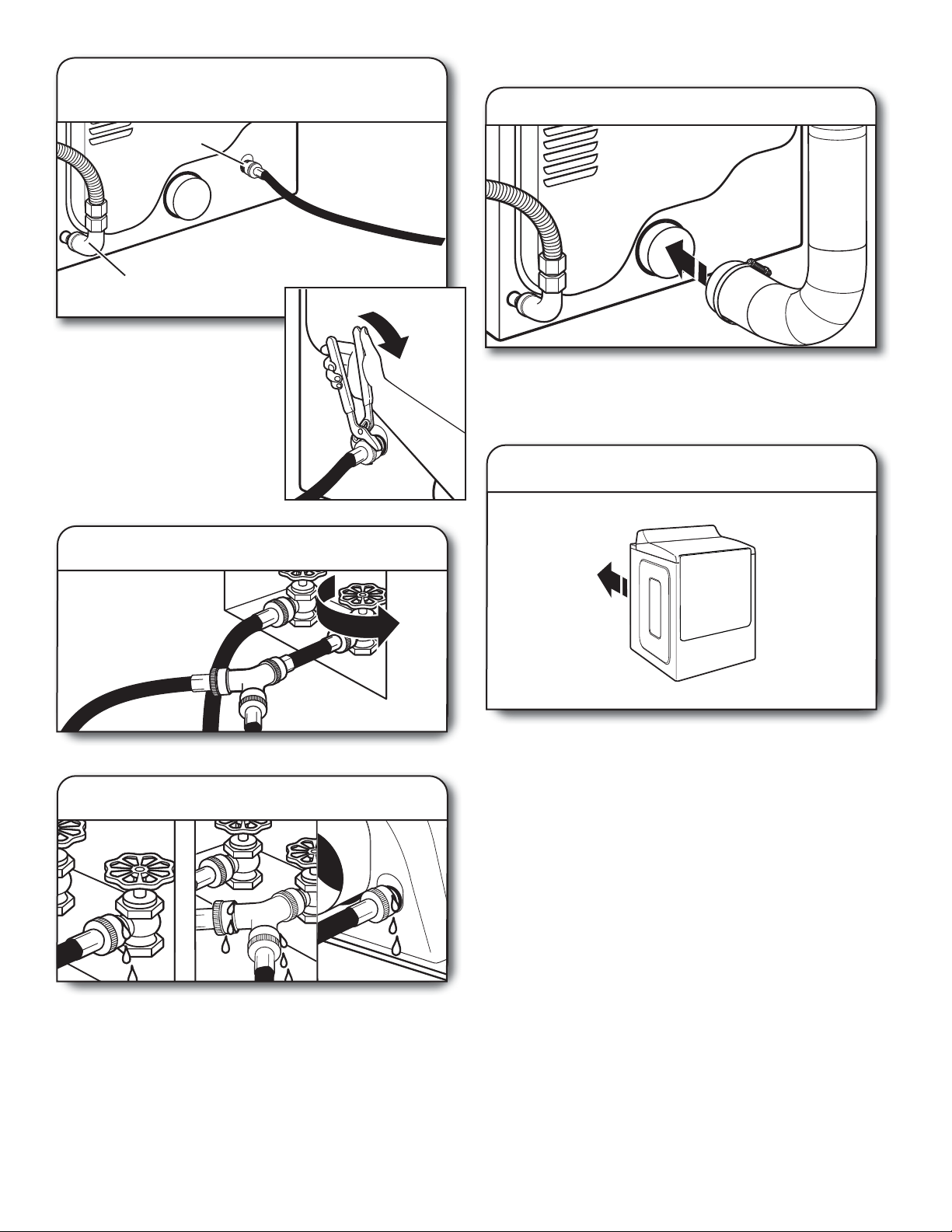
1. Turn cold water off, remove and
replace rubber washer
Turn cold water faucet off and remove washer inlet hose.
Remove old rubber washer from inlet hose and replace with new
rubber washer.
2. Attach short hose and “Y”
connector
Attach 2 ft (0.6 m) inlet hose to cold water faucet. Screw on
coupling by hand until it is seated on faucet. Then attach “Y”
connector to male end of the 2 ft (0.6 m) inlet hose. Screw on
coupling by hand until it is seated on connector.
3. Tighten couplings
Using pliers, tighten the couplings with additional two-thirds turn.
NOTE: Do not overtighten. Damage to the coupling can result.
4. Attach long hose to “Y” connector
and tighten couplings
Attach dryer 5 ft (1.5 m) inlet hose ends to the “Y” connector.
Attach washer cold inlet hose to other side of “Y” connector.
Screw on coupling by hand until it is seated on connector. Using
pliers, tighten the couplings an additional two-thirds turn.
NOTE: Do not overtighten. Damage to the coupling can result.
19
5. Attach long hose to dryer ll valve
and tighten coupling
Gas Valve
Fill Valve
Attach other end of long hose
to ll valve at bottom of dryer
back panel. Screw on coupling
by hand until it is seated on ll
valve connector. Using pliers,
tighten the couplings an additional
two-thirds turn.
NOTE: Do not overtighten.
Damage to the coupling can result.
Turn on cold water faucet
6.
Check that the water faucet is turned on.
Check for leaks
7.
Check for leaks around “Y” connector, faucets, and hoses.
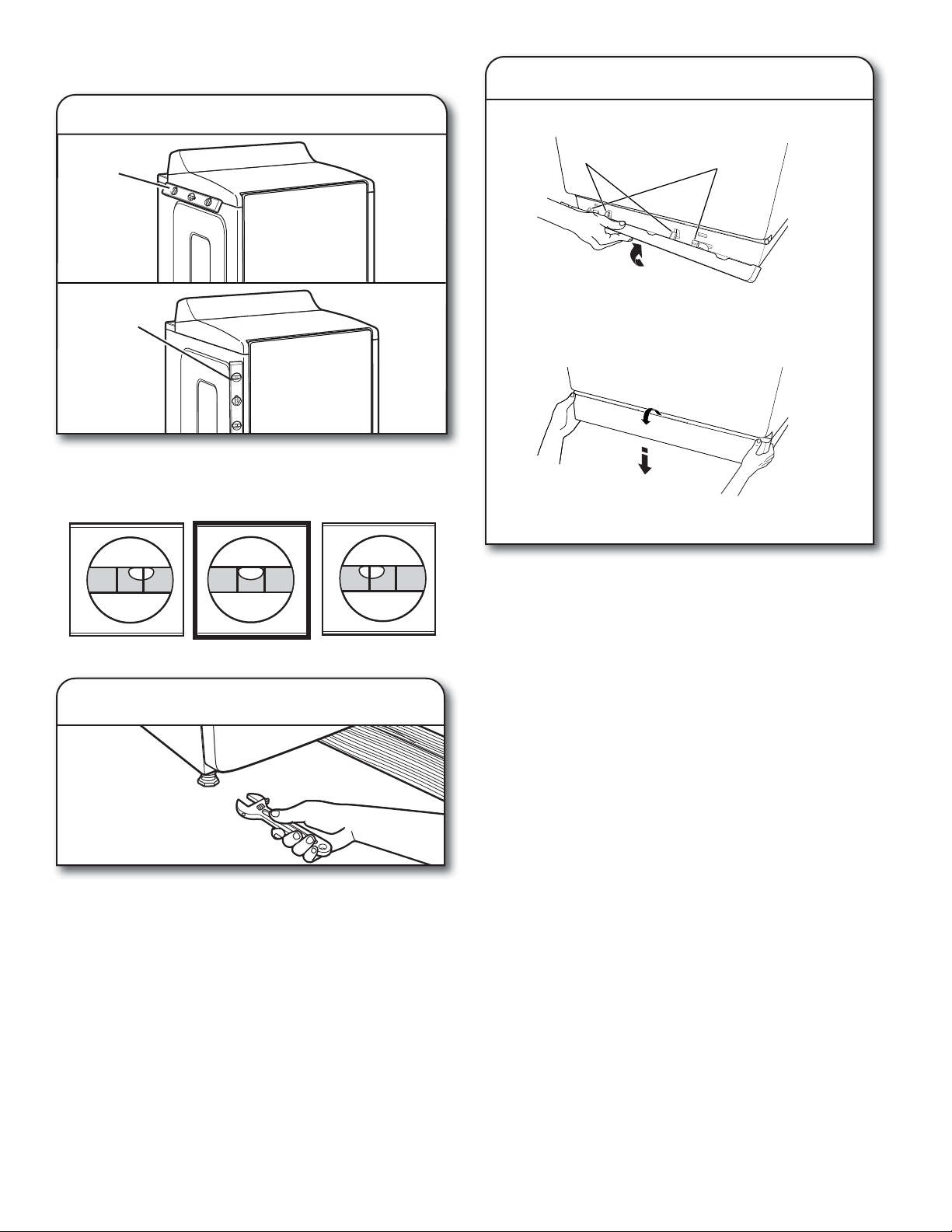
CONNECT VENT
1. Connect vent to exhaust outlet
Using a 4" (102 mm) clamp, connect vent to exhaust outlet
in dryer. If connecting to existing vent, make sure vent is clean.
Dryer vent must t over dryer exhaust outlet and inside exhaust
hood. Check that vent is secured to exhaust hood with a
4" (102 mm) clamp.
Move dryer to nal location
2.
Move dryer to nal location. Avoid crushing or kinking vent.
20
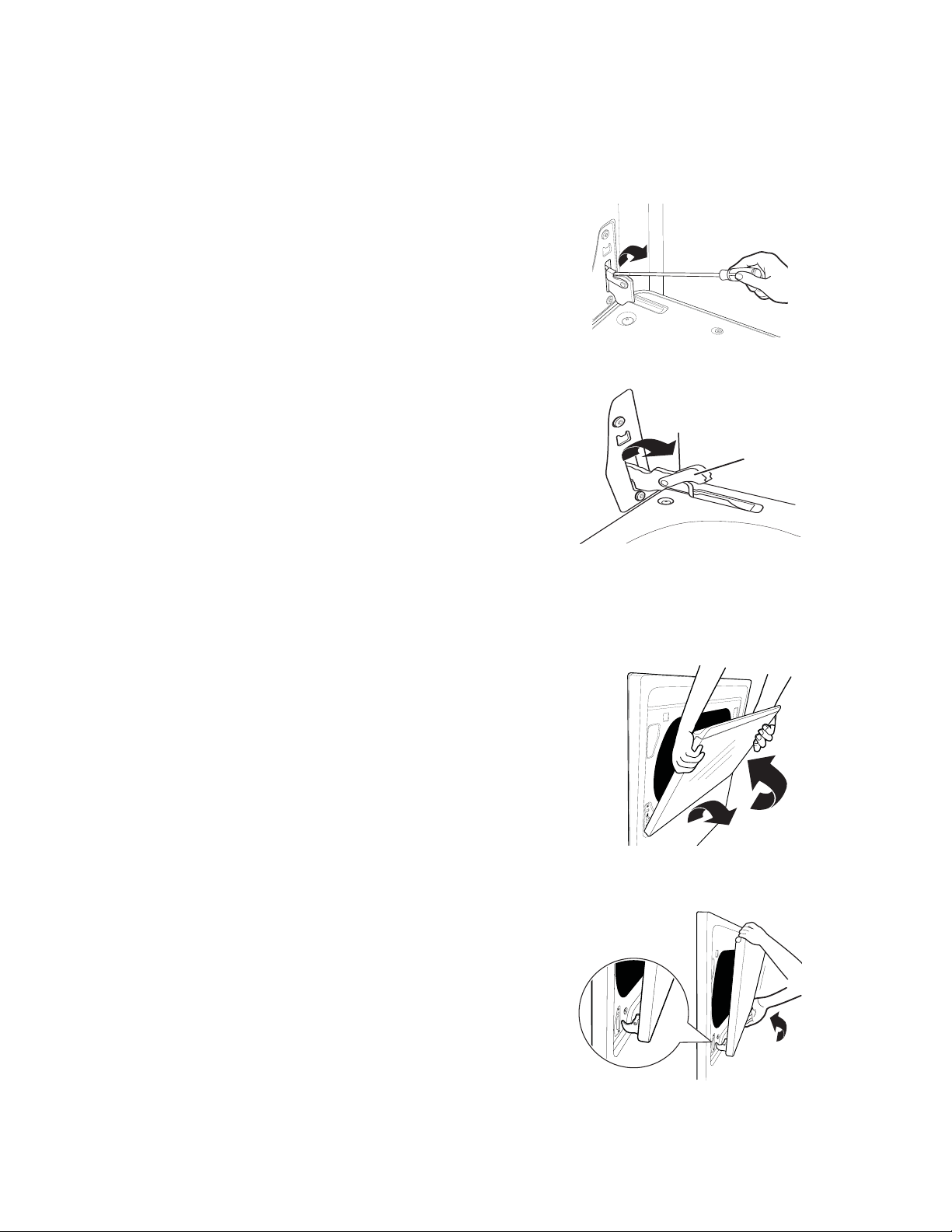
LEVEL DRYER
1.
Level Dryer
Place
level here
Place
level here
Check levelness of dryer from side to side. Repeat from
front to back.
NOTE: The dryer must be level for the moisture sensing
system to operate correctly.
Not Level LEVEL Not Level
Adjust leveling legs
2.
If dryer is not level, prop up using a wood block. Use wrench to
adjust legs up or down, and check again for levelness.
Locating
Pins
Locking
Features
Base trim (on some models)
3.
Place the base trim to bottom of dryer and match the
locating pins with the holes. Press the base trim rmly
upwards until it snaps into place.
To Install:
1
2
To Remove:
On each corner. 1) Push down on top of base trim.
2) Rotate away from dryer and remove.
21
COMPLETE INSTALLATION
CHECKLIST
K
Check that all parts are now installed. If there is an extra
part, go back through steps to see what was skipped.
K
Check that you have all of your tools.
K
Dispose of/recycle all packaging materials.
K
Check dryer’s nal location. Be sure vent is not crushed
or kinked.
K
Check that dryer is level. See “Level Dryer.”
K
Remove lm on console and any tape remaining on dryer.
K
Wipe dryer drum interior thoroughly with a damp cloth to
remove any dust.
K
Read “Dryer Use” in your “Quick Reference Guide.”
Electric Models:
K
For power supply cord installation, plug into a grounded
outlet. For direct wire installation, turn on Power.
Gas Models:
K
Check that gas supply is on.
K
Check for leaks.
Steam Models Only:
K
Be sure the water faucets are on.
K
Check for leaks around “Y” connector, faucet, and hoses.
K
If you live in a hard water area, use of a water softener is
recommended to control the buildup of scale through the
water system in the dryer. Over time, the buildup of lime
scale may clog different parts of the water system, which will
reduce product performance. Excessive scale buildup may
lead to the need for certain part replacement or repair.
All Models:
K
Select a Timed Dry heated cycle, and start dryer. Do not
select Air Only Temperature setting.
If dryer will not start, check the following:
• Controls are set in a running or “ON” position.
• Start button has been pushed rmly.
• Dryer is plugged into an outlet and/or electrical supply is
connected.
• Household fuse is intact and tight, or circuit breaker has
not tripped.
• Dryer door is closed.
This dryer automatically runs an installation diagnostic routine
at the start of its rst cycle.
If your dryer heater is not turning on, then you might have power
supply problem in your house. You will receive L2 code for this
problem. “See Troubleshooting.”
If your Airow screen reads “Check Vent”, your dryer vent may be
crushed or blocked. See “Troubleshooting.”
NOTE: You may notice an odor when dryer is rst heated. This
odor is common when heating element is rst used. The odor will
go away.
DRYER DOOR (ON SOME MODELS)
For normal dryer use, it is not suggested to remove the dryer
door. However, if removal is necessary, make sure the dryer is off
and cool. Then, follow these instructions. The dryer door is heavy.
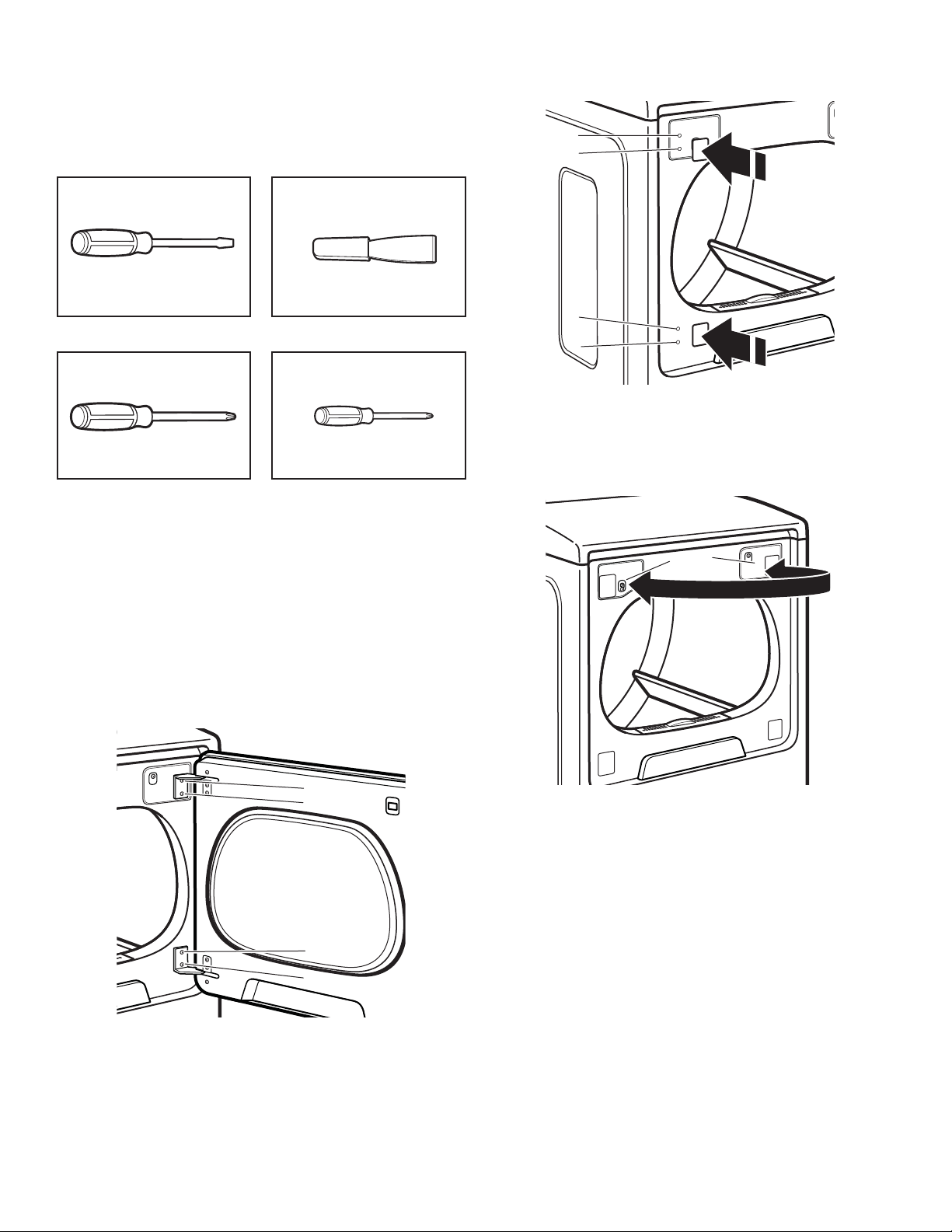
To Remove:
1. Open dryer door all the way.
2. Use at head screw drive to open hinge latch.
3. Pinch the hinge latch between two ngers and pull forward.
Repeat on other side of dryer door.
A
4. Close the dryer door as far as it will shut.
5. Lift the dryer door while holding both sides.
Continue to push the dryer door closed and pull it away from
the dryer door frame.
1
2
To Replace:
1. Insert both hanger arms into the front panel.
2. Open the dryer door.
You should hear a “click” as the door is set into place.
3. Move the hinge levers back to the locked position. Check
that the door is free to open and close. If it is not, repeat the
removal and installation procedures.
A. Hinge latch
22
DOOR REVERSAL (ON SOME
MODELS)
The following instructions are applicable for models with side
opening door.
Tools Needed:
Flat-blade screwdriver Plastic putty knife
Min. 8" long TORX T20
®
screwdriver
#2 Phillips screwdriver
You can change your door swing from a right-side opening to a
left-side opening, if desired.
1. Place a towel or soft cloth on top of dryer or work space to
avoid damaging the surface.
Remove door from dryer cabinet
1. Open the dryer door.
2. Using a T20
®
screwdriver, remove screws (A) and then (B)
screws from each of the two hinges that attach dryer door to
front panel of dryer. Set the hinge screws off to the side for
reinstalling the door.
A
B
A
B
3. Remove the dryer door by lifting upward and out to lift
the door off the cabinet. Lay the door on a at, covered
surface,with the inside of the door facing up.
4. Remove the 2 plastic plugs (A) located outside the dryer
door opening.
A
A
A
A
5. Install 2 plastic plugs (A) into screw holes where the hinges
were removed in Step 4.
Reverse the strike
1. Remove the door strike (A) from the dryer door opening.
2. Remove the cosmetic screw (B) opposite the door strike (A).
A
B
A. Door strike
B. Cosmetic screw
3. Reinstall the door strike and cosmetic screw on the opposite
side of dryer door opening from where they were removed.
NOTE: Door strike and plugs must be on the same side of
the dryer door opening.
23
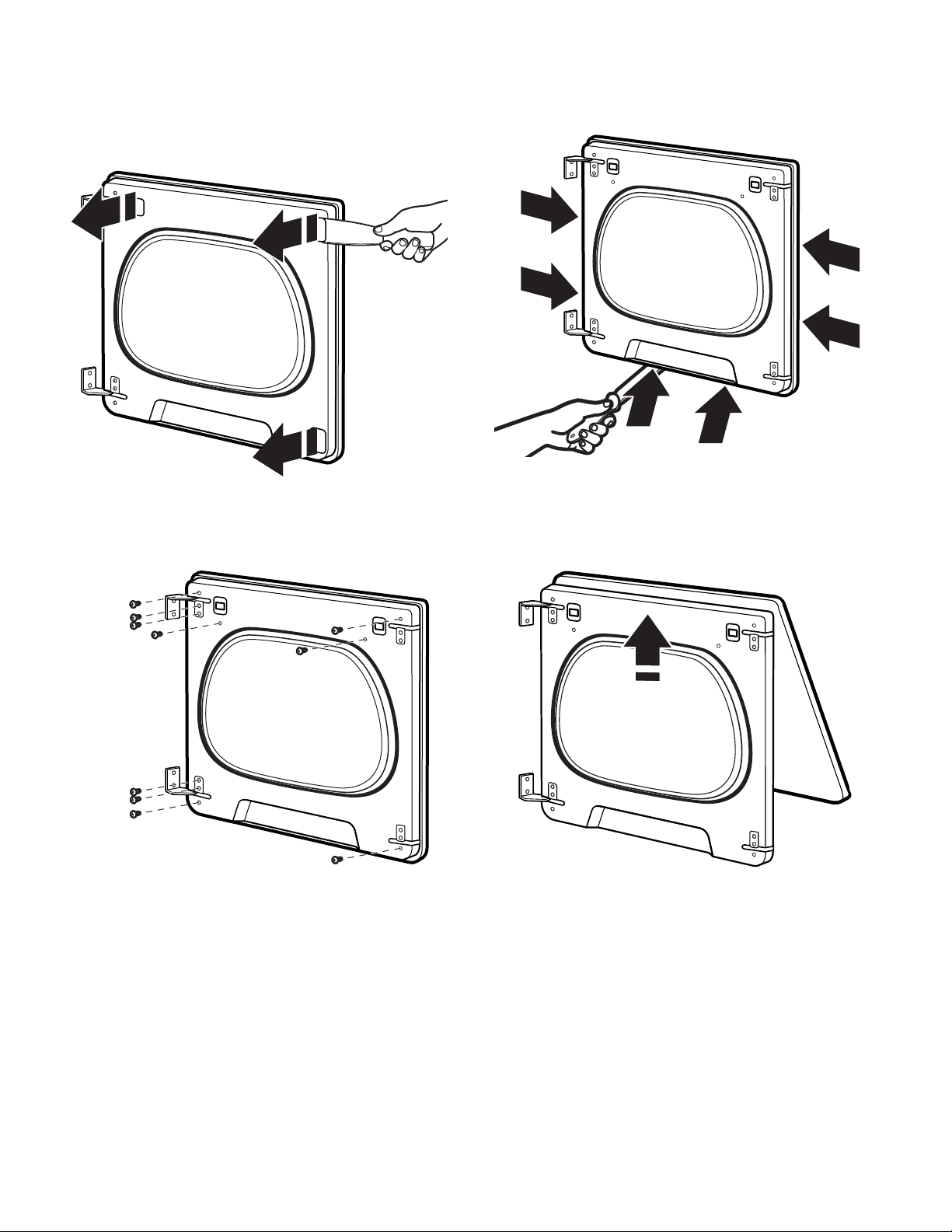
Remove the door assembly
1. Lay the door on a at, covered surface with the inside of
the door facing up. Remove the 3 plugs with a plastic putty
knife. There is a cut out to stick the putty knife under to pop
out.
2. Remove the 10 screws from the dryer door and setscrews off
to the side.
3. Remove the inner door by using a plastic putty knife to
separate the sides and bottom of the dryer door and trim.
There are 2 snaps on left, right, and bottom of door. Insert
the putty knife next to the snaps.
4. When you have the door separated from the frame, use
a putty knife to lift up in the center tab and then pull door
toward you and out.
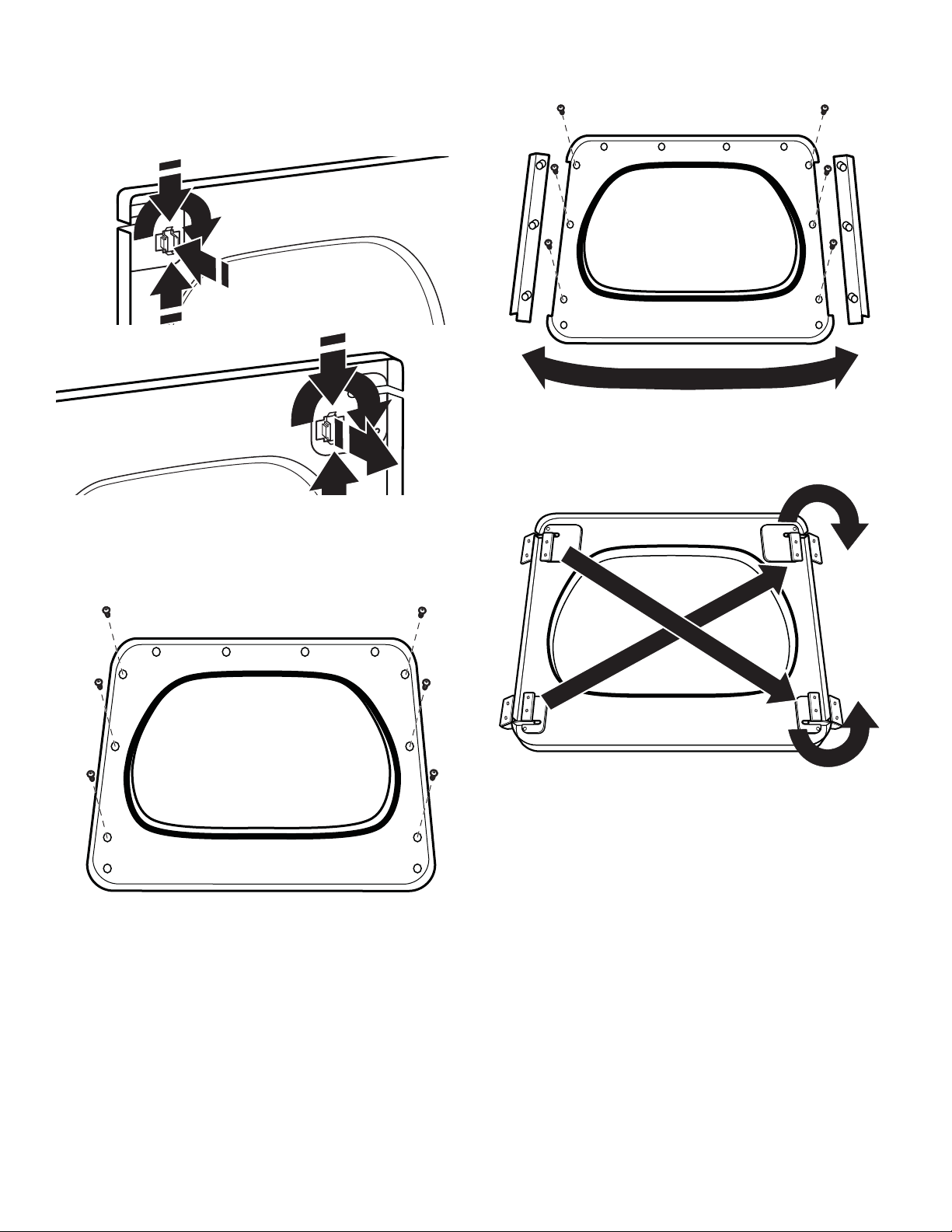
24
5. Remove the door strike plug with a athead screwdriver.
Remove door strike by pinching the clips from the inside
door panel and then rotate and push out the front. Insert
door strike on the other side of dryer door by pushing in and
then add the door strike plug.
6. Remove the door hinges and set off to the side.
7. Remove the 3 screws down the left and right sides of the
door to remove the outer trim pieces.
8. Lift door up and rotate trim pieces to the opposite side from
which they were removed. Then screw trim pieces back in.
9. Add the hinges to the right side of the door and then ip the
hinge labeled 1 to the bottom of the right side and the hinge
labeled 2 to the top of the right side of the door.
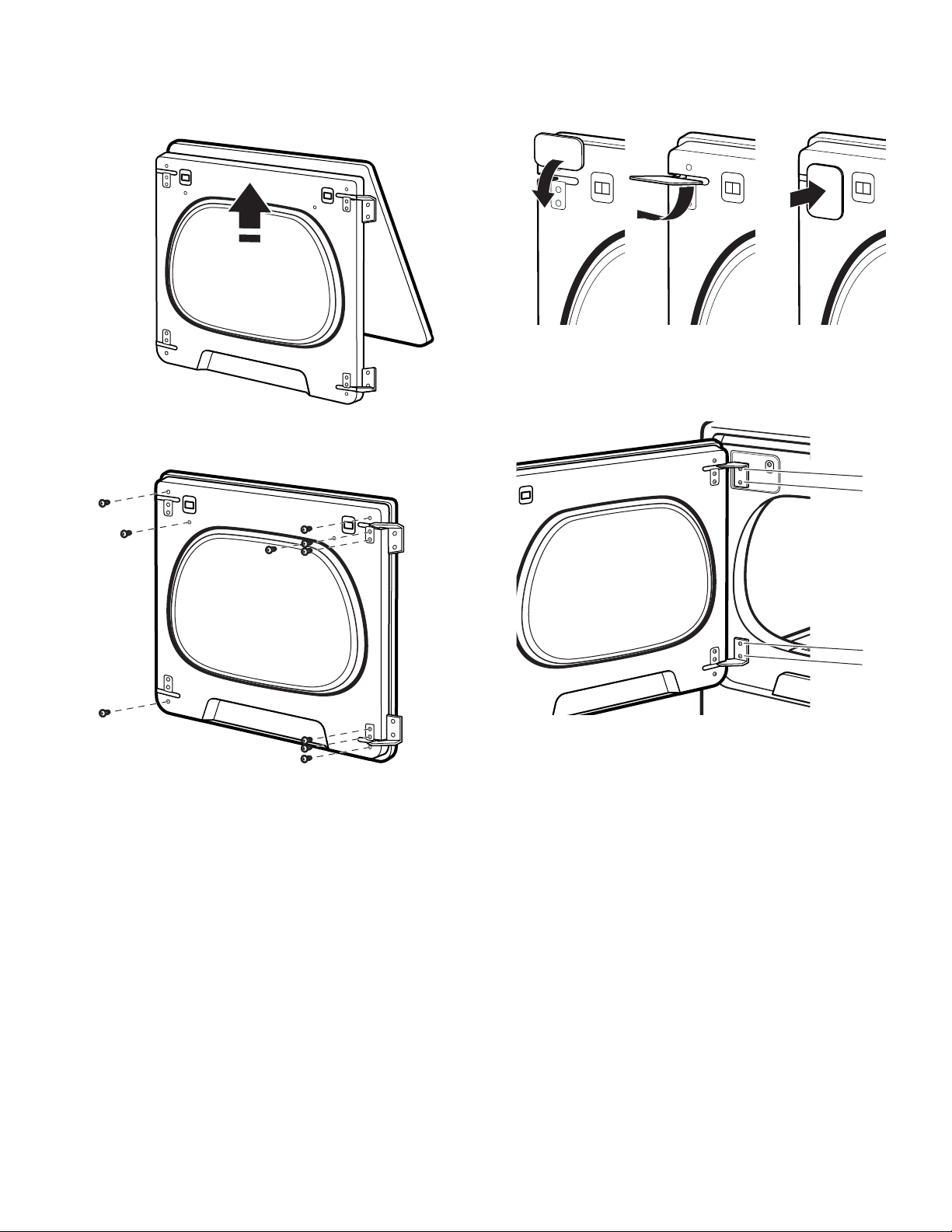
25
10. Add inside door panel back into the dryer door by sliding the
top into the top trim piece and then lower door down. Then
press down on the corners to snap into place with the hinges
lined up with the hinge holes.
11. Install 6 hinge screws and the other 4 screws.
12. Install hinge covers and plugs. Hinge covers will go inside
ways to then rotate 90° and snap into place.
13. Hang door by placing set pin in dryer cabinet hole and slide
door down. Using a T20
®
screwdriver, install (A) screws and
then (B) screws. Tighten all hinge screws.
A
B
A
B
26
DRYER CARE
CLEANING THE DRYER LOCATION
Keep dryer area clear and free from items that would
block the airow for proper dryer operation. This includes
clearing piles of laundry in front of the dryer.
Explosion Hazard
Keep flammable materials and vapors, such as
gasoline, away from dryer.
Place dryer at least 18 inches (46 cm) above the
floor for a garage installation.
Failure to do so can result in death, explosion,
or fire.
CLEANING THE DRYER INTERIOR
To clean dryer drum
1. Use a mild hand dish detergent mixed at a low
concentration with very warm water, and rub with a soft
cloth.
2. Rinse well with a wet sponge or towel.
3. Tumble a load of clean clothes or towels to dry drum
OR
Use a microber cloth and hot water in a spray bottle to
clean the drum and a second microber towel to dry.
NOTE: Garments that contain unstable dyes, such as
denim blue jeans or brightly colored cotton items, may
discolor the rear of the dryer interior. These stains are not
harmful to your dryer and will not stain future loads of
clothes. Dry unstable dye items inside out to avoid transfer
of dye.
REMOVING ACCUMULATED LINT
From Inside the Dryer Cabinet
Lint should be removed every 2 years, or more often,
depending on dryer usage. Cleaning should be done by a
qualied appliance servicer or ventilation system cleaner.
From the Exhaust Vent
Lint should be removed every 2 years, or more often,
depending on dryer usage.
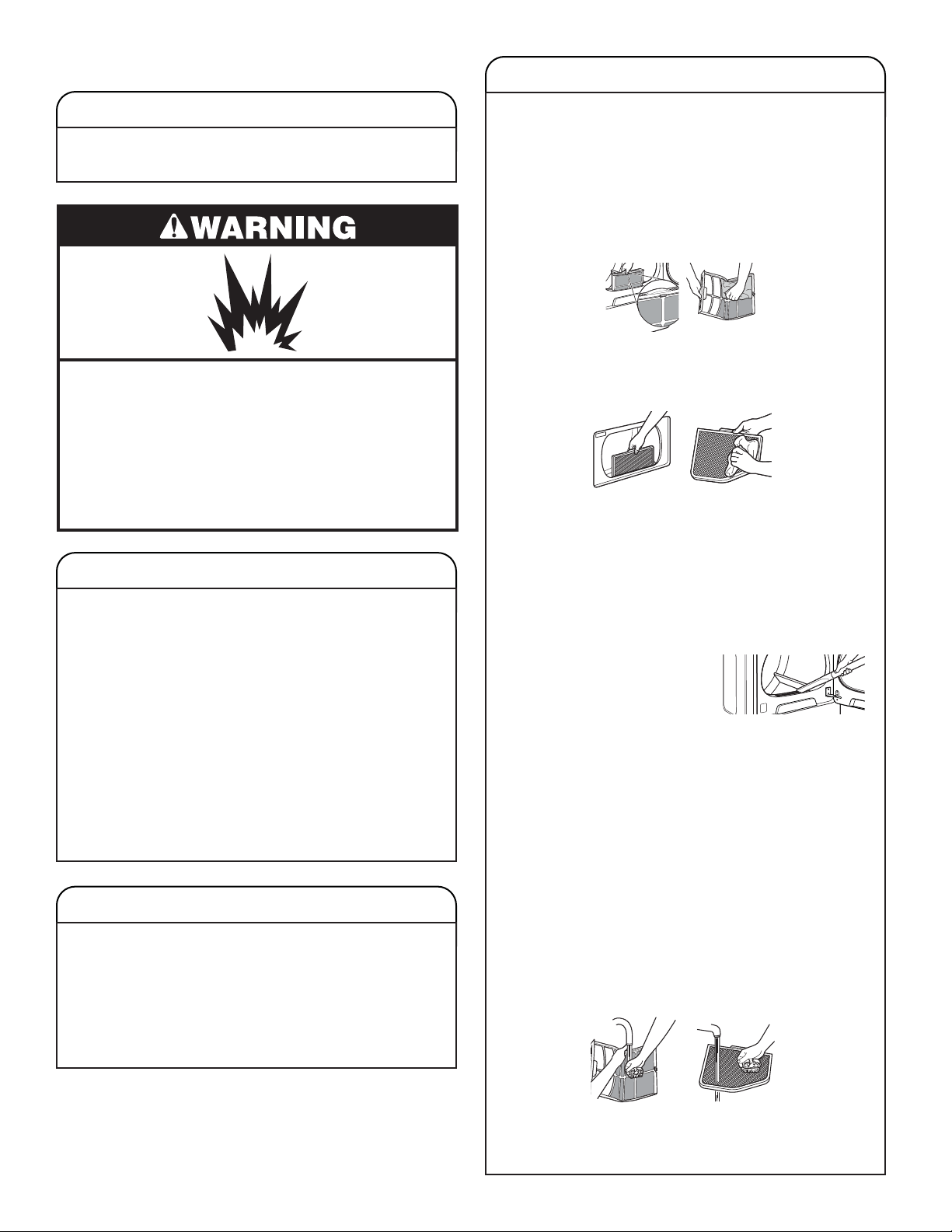
CLEANING THE LINT SCREEN
Every load cleaning
The lint screen is located in the door opening of the dryer.
A screen blocked by lint can increase drying time.
To clean:
Style 1
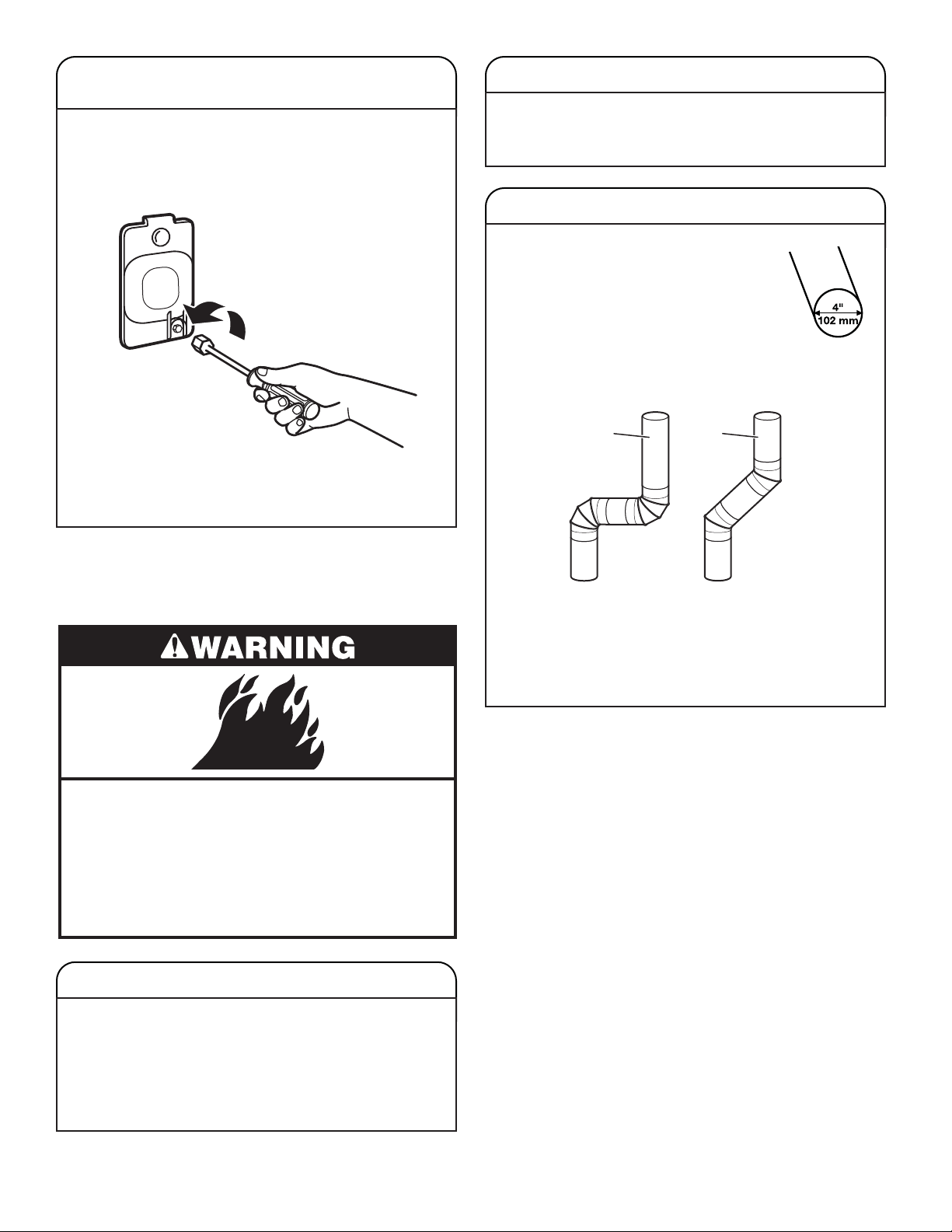
1. Pull the lint screen straight up and out. Press tab down
on front and open lint screen. Roll lint off the screen
with your ngers. Do not rinse or wash screen to
remove lint. Wet lint is hard to remove.
Style 2
1. Pull the lint screen out of its holder. Roll lint off the
screen with your ngers. Do not rinse or wash screen
to remove lint. Wet lint is hard to remove.
2. Push the lint screen rmly back into place.
IMPORTANT:
Ó
Do not run the dryer with the lint screen loose,
damaged, blocked, or missing. Doing so can cause
overheating and damage to both the dryer and fabrics.
Ó
If lint falls off the screen into the dryer during removal,
check the exhaust hood and remove the lint. See
“Venting Requirements” in the Installation Instructions.
Ó
Clean space where lint screen
is located, as needed. Using a
vacuum, gently remove any
lint that has accumulated
outside of the lint screen.
As-needed cleaning
Laundry detergent and fabric softener residue can build
up on the lint screen. This buildup can cause longer drying
times for your clothes, or cause the dryer to stop before
your load is completely dry. The screen is probably clogged
if lint falls off while the screen is in the dryer.
Clean the lint screen with a nylon brush every 6 months,
or more frequently, if it becomes clogged due to a residue
buildup.
To wash:
1. Roll lint off the screen with your ngers.
2. Wet both sides of lint screen with hot water.
3. Wet a nylon brush with hot water and liquid detergent.
Scrub lint screen with the brush to remove residue
buildup.
Style 1 Style 2
4. Rinse screen with hot water.
5. Thoroughly dry lint screen with a clean towel. Reinstall
screen in dryer.
27
CHANGING THE DRUM LIGHT
(ON SOME MODELS)
1. Unplug dryer or disconnect power.
2. Open the dryer door. Locate the light bulb cover on the
back wall of the dryer. Using a 1/4" (6 mm) nut driver or
socket wrench, remove the screw located in the lower
right-hand corner of the cover. Remove the cover.
3. Turn bulb counterclockwise. Replace the bulb with a
10 W appliance bulb only. Replace the cover and secure
with the screw.
4. Plug into a grounded outlet or reconnect power.
CHECK YOUR VENT SYSTEM FOR
GOOD AIR FLOW
Fire Hazard
Use a heavy metal vent.
Do not use a plastic vent.
Do not use a metal foil vent.
Failure to follow these instructions can result in
death or fire.
GOOD AIR FLOW
Along with heat, dryers require good air ow to efciently
dry laundry. Proper venting will reduce your drying
times and improve your energy savings. See Installation
Instructions.
The venting system attached to the dryer plays a big role
in good air ow. Blocked or crushed vents as well as
improper venting installation will reduce air ow and dryer
performance.
GOOD AIR FLOW (CONTD.)
Service calls caused by improper venting are not covered
by the warranty and will be paid by the customer,
regardless of who installed the dryer. To clean or repair
venting, contact a venting specialist.
MAINTAIN GOOD AIR FLOW BY:
Ó
Cleaning your lint screen before each load.
Ó
Replace plastic or foil vent material
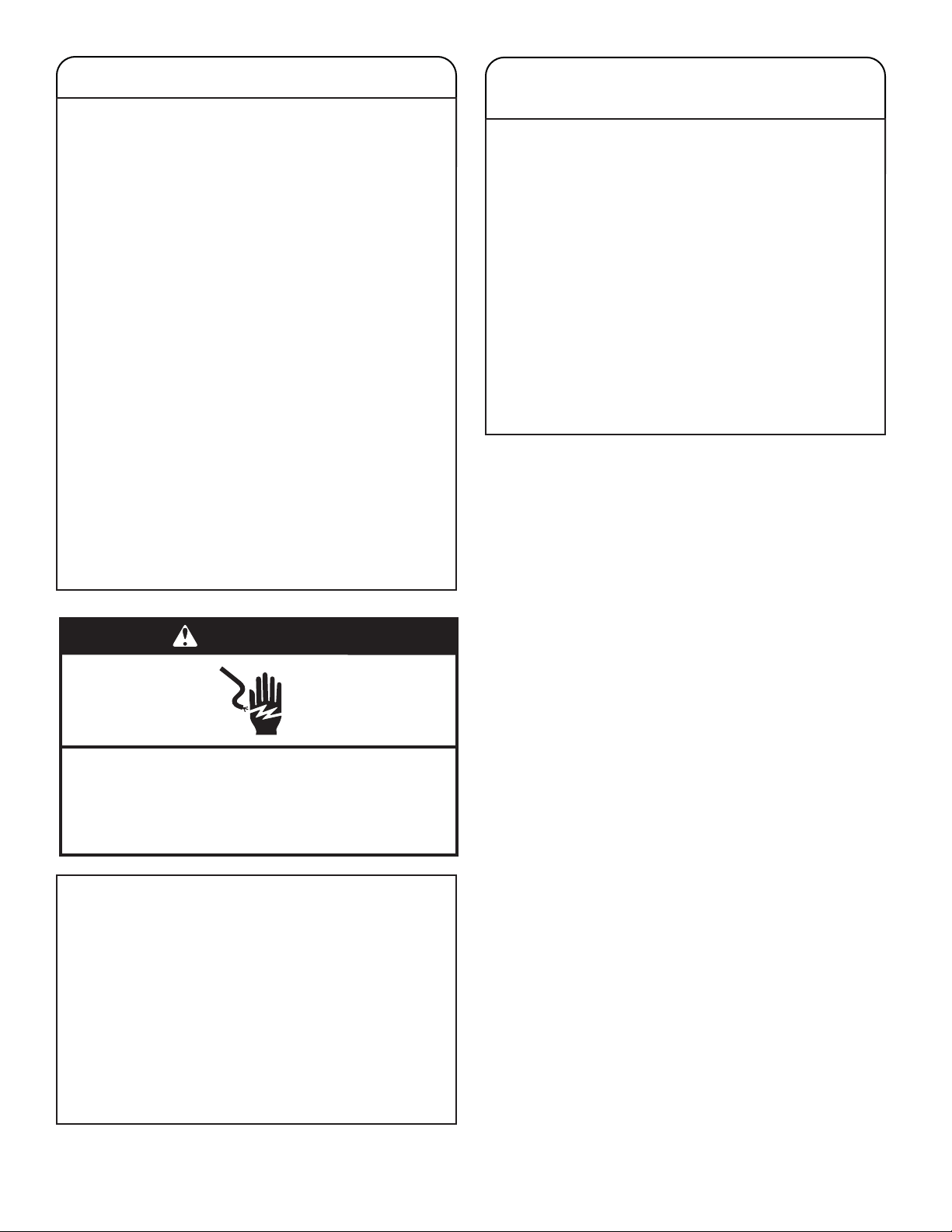
with 4" (102 mm) diameter heavy, rigid
vent material.
Ó
Use the shortest length of vent possible.
Ó
Use no more than four 90° elbows in a vent system;
each bend and curve reduces air ow.
Good Better
Ó
Remove lint and debris from the exhaust hood.
Ó
Remove lint from the entire length of the vent system at
least every 2 years. When cleaning is complete, be sure
to follow the Installation Instructions supplied with your
dryer for nal product check.
Ó
Clear away items from the front of the dryer.
28
NON-USE, STORAGE, AND MOVING CARE
Steam models only: Install and store your dryer where it
will not freeze. Because some water may stay in the hose,
freezing can damage your dryer. If storing or moving your
dryer during freezing weather, winterize it.
Non-Use or Storage Care
If you will be on vacation or not using your dryer for an
extended period of time, you should:
1. Unplug dryer or disconnect power.
2. Clean lint screen. See “Cleaning the Lint Screen.”
3. Turn off the water supply to the dryer. This helps to
avoid unintended ooding (due to a water pressure
surge) while you are away.
Moving Care
For power supply cord-connected dryers:
1. Unplug the power supply cord.
2. Gas models only: Close shut-off valve in gas supply line.
3. Gas models only: Disconnect gas supply line pipe and
remove ttings attached to dryer pipe.
4. Gas models only: Cap the open fuel supply line.
5. Steam models only: Shut off water faucet.
6. Steam models only: Disconnect the water inlet hose
from faucet, then drain the hose. Transport hose
separately.
7. Make sure leveling legs are secure in dryer base.
8. Use tape to secure dryer door.
9. On models with base trim: Remove base trim before
moving dryer. See "Base trim".
WARNING
Electrical Shock Hazard
Disconnect power before servicing.
Replace all parts and panels before operating.
Failure to do so can result in death or electrical shock.
For direct-wired dryers:
1. Disconnect power.
2. Disconnect wiring from dryer and secure wire ends.
3. Steam models only: Shut off water faucet.
4. Steam models only: Disconnect the water inlet hose from
faucet; then drain the hose. Transport hose separately.
5. Make sure leveling legs are secure in dryer base.
6. Use tape to secure dryer door.
7. On models with base trim: Remove base trim before
moving dryer. See "Base trim".
Reinstalling the Dryer
Follow the Installation Instructions to locate, level, and
connect the dryer.
SPECIAL INSTRUCTIONS
FOR STEAM MODELS
Water Inlet Hose
Replace inlet hose and hose screen after 5 years of use
to reduce the risk of hose failure. Periodically inspect and
replace inlet hose if bulges, kinks, cuts, wear, or leaks are
found.
When replacing your inlet hose, record the date of
replacement.
To Winterize the Dryer
1. Unplug dryer or disconnect power.
2. Shut off water faucet.
3. Disconnect water inlet hose from faucet and drain.
To Use the Dryer Again
1. Flush water pipes. Reconnect water inlet hose to faucet.
Turn on water faucet.
2. Plug in dryer or reconnect power as described in the
Installation Instructions.

NOTES
W11268643B
®
/™ ©2020 All rights reserved.
Tous droits réservés.
Todos los derechos reservados.
03/20