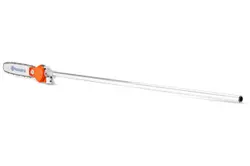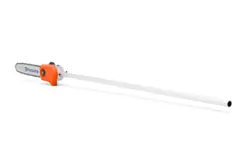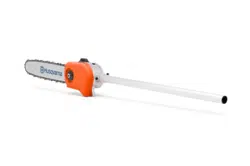
530iP4, 530iPT5
EN Operator's manual 2-27
Contents
Introduction..................................................................... 2
Safety..............................................................................4
Assembly...................................................................... 12
Operation...................................................................... 13
Maintenance................................................................. 15
Troubleshooting............................................................ 22
Transportation, storage and disposal........................... 23
Technical data.............................................................. 24
Accessories.................................................................. 24
Declaration of Conformity............................................. 26
Introduction
Product description
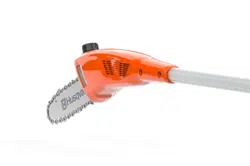
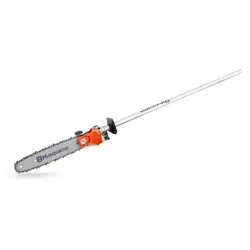
Husqvarna 530iP4, 530iPT5 is a battery pole pruner with
an electrical motor.
Intended use
The product is used for cutting branches and twigs.
Note: National regulations can set limit to the
operation of the product.
Only use the product with accessories that are approved
by the manufacturer. Refer to
Accessories on page 24
.
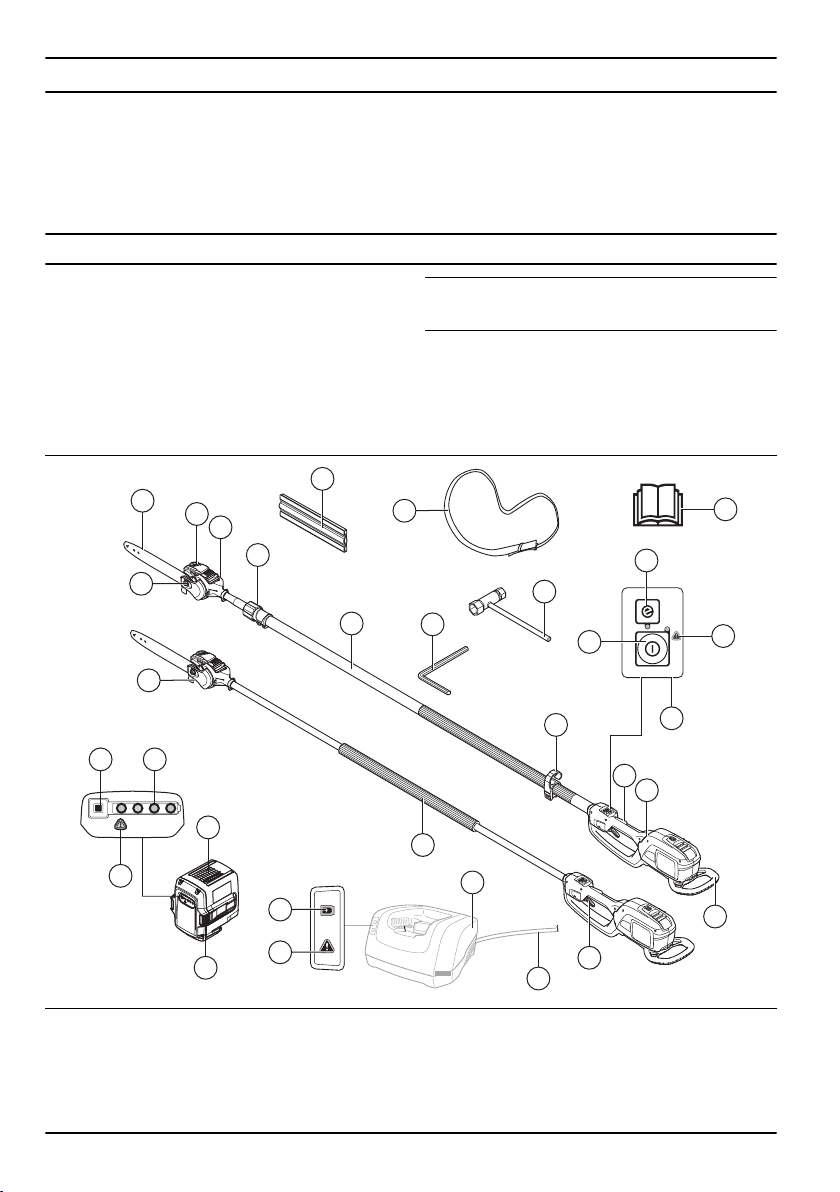
Overview
24
23
22
5
4
27
14
17
18 19
15
29
9
25
17
20
7
6
12
11
3
2
1
26
28
21
8
10
13
16
17
1. Saw head
2. Chain oil tank
3. Guide bar
4. Bar nut
5. Shaft
6. Harness support hook (530iPT5)
7. Keypad
8. Power trigger lockout
2 783 - 005 - 23.09.2022
9. Power trigger
10. Rear handle
11. Front handle
12. Flexible cord
13. Battery charger (Accessory)
14. Power indicator
15. Battery release buttons
16. Battery (Accessory)
17. Warning indicator
18. Battery indicator button
19. Battery status
20. Start and stop button
21. SavE button
22. Harness
23. 4 mm hex key
24. Combination key
25. Operator's manual
26. Telescopic function (530iPT5)
27. Branch hook
28. Transport guard
29. Impact guard
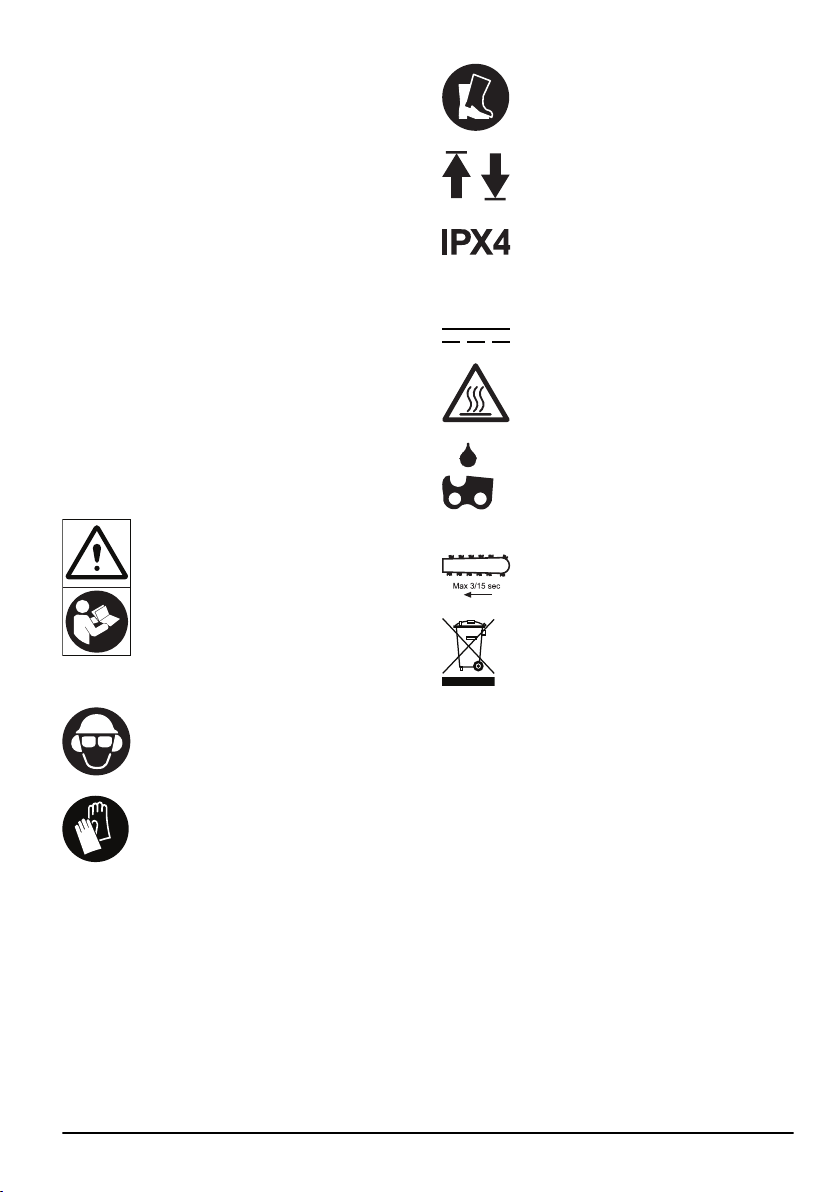
Symbols on the product
WARNING! This product is dangerous.
Injury or death can occur to the operator
or bystanders if the product is not
used carefully and correctly. To prevent
injury to the operator or bystanders,
read and obey all safety instructions in
the operator's manual. Please read the
operator's manual carefully and make
sure that you understand the instructions
before use.
Use a protective helmet in locations where
objects can fall on you. Use approved
hearing protection. Use approved eye
protection.
Use approved protective gloves.
Use heavy-duty slip-resistant boots.
The arrows show the limit for the handle
position.
Protected against splashing water.
Direct current.
Keep all parts of your body away from the
hot surfaces.
Filling with chain oil and adjusting oil flow.
Cutting unit operating cycle, operation
time/idle time.
The product or package cannot be
disposed as domestic waste. The product
and package must be sent to a
correct recycling station for the recovery
of electrical and electronic equipment.
(Applies to Europe only)
783 - 005 - 23.09.2022 3
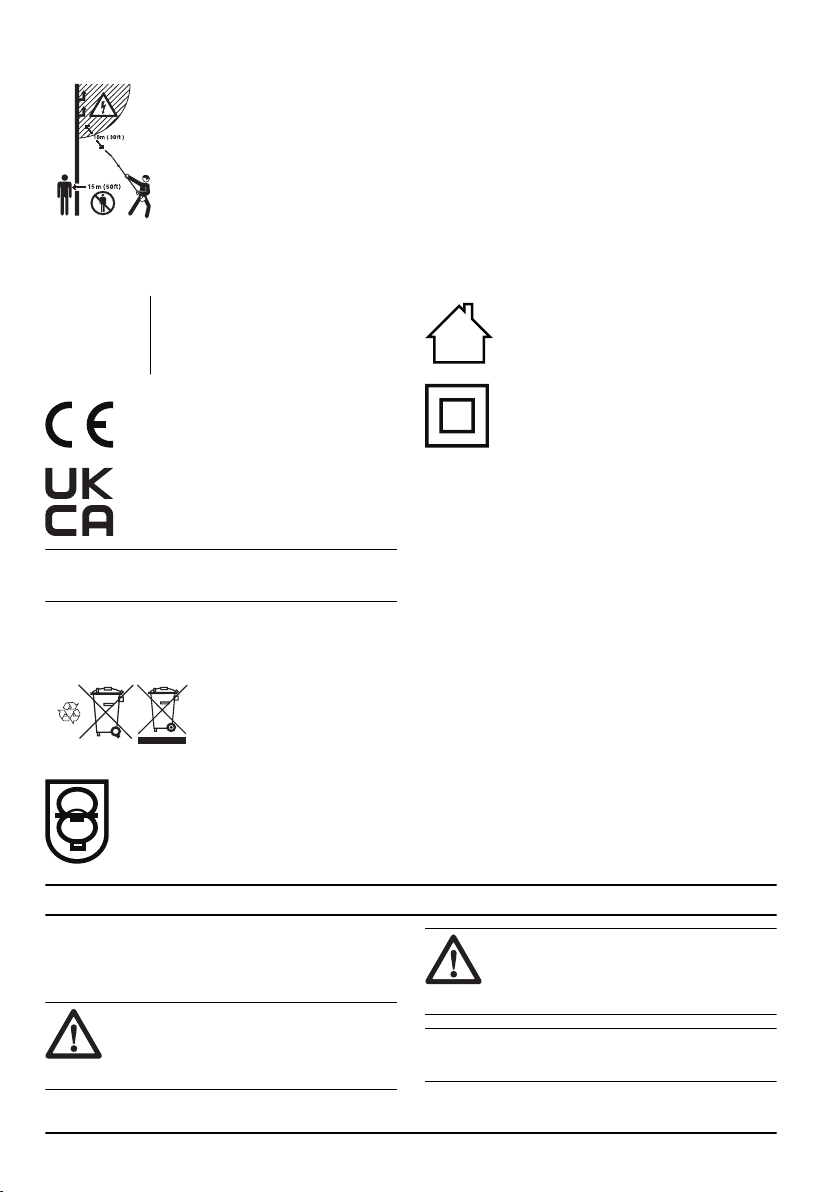
This product is not electrically insulated. If the product touches or comes close to high-volt-
age power lines it could lead to death or serious injury. Electricity can jump from one point
to another by arcing. The higher the voltage, the greater the distance electricity can jump.
Electricity can also travel through branches and other objects, especially if they are wet.
Always keep a distance of at least 10 m between the machine and high-voltage power lines
and/or any objects that are touching them. If you have to work within this safe distance you
should always contact the relevant power company to make sure the power is switched off
before you start work.
The operator of the product must ensure, while working, that no persons or animals come
closer than 15 meters.
yyyywwxxxx The rating plate shows the serial
number. yyyy is the production year,
ww is the production week and xxxx
is the sequential number.
The product agrees with the applicable
EC directives.
This product conforms to the applicable
UK regulations.
Note: Other symbols/decals on the product refer to
certification requirements for some markets.
Symbols on the battery and/or on the
battery charger
Recycle this product at a recy-
cling station for electrical and
electronic equipment. (Applies
to Europe only)
Fail-safe transformer.
Use and keep the battery charger indoors
only.
Double insulation.
Product liability
As referred to in the product liability laws, we are not
liable for damages that our product causes if:
• the product is incorrectly repaired.
• the product is repaired with parts that are not
from the manufacturer or not approved by the
manufacturer.
• the product has an accessory that is not from the
manufacturer or not approved by the manufacturer.
• the product is not repaired at an approved service
center or by an approved authority.
Safety
Safety definitions
Warnings, cautions and notes are used to point out
specially important parts of the manual.
WARNING: Used if there is a risk of
injury or death for the operator or bystanders
if the instructions in the manual are not
obeyed.
CAUTION: Used if there is a risk of
damage to the product, other materials or
the adjacent area if the instructions in the
manual are not obeyed.
Note: Used to give more information that is necessary
in a given situation.
4 783 - 005 - 23.09.2022

General power tool safety warnings
WARNING: Read all safety warnings
and all instructions. Failure to follow the
warnings and instructions may result in
electric shock, fire and/or serious injury.
Note: Save all warnings and instructions for future
reference. The term "power tool" in the warnings refers
to your mains-operated (corded) power tool or battery-
operated (cordless) power tool.
Work area safety
• Keep work area clean and well lit. Cluttered or dark
areas invite accidents.
• Do not operate power tools in explosive
atmospheres, such as in the presence of flammable
liquids, gases or dust. Power tools create sparks
which may ignite the dust or fumes.
• Keep children and bystanders away while operating
a power tool. Distractions can cause you to lose
control.
Electrical safety
• Power tool plugs must match the outlet. Never
modify the plug in any way. Do not use any
adapter plugs with earthed (grounded) power tools.
Unmodified plugs and matching outlets will reduce
risk of electric shock.
• Avoid body contact with earthed or grounded
surfaces, such as pipes, radiators, ranges and
refrigerators. There is an increased risk of electric
shock if your body is earthed or grounded.
• Do not expose power tools to rain or wet conditions.
Water entering a power tool will increase the risk of
electric shock.
• Do not abuse the cord. Never use the cord for
carrying, pulling or unplugging the power tool. Keep
cord away from heat, oil, sharp edges or moving
parts. Damaged or entangled cords increase the risk
of electric shock.
• When operating a power tool outdoors, use an
extension cord suitable for outdoor use. Use of a
cord suitable for outdoor use reduces the risk of
electric shock.
• If operating a power tool in a damp location is
unavoidable, use a residual current device (RCD)
protected supply. Use of a RCD reduces the risk of
electric shock.
Personal safety
• Stay alert, watch what you are doing and use
common sense when operating a power tool. Do not
use a power tool while you are tired or under the
influence of drugs, alcohol or medication. A moment
of inattention while operating power tools may result
in serious personal injury.
•
Use personal protective equipment. Always wear
eye protection. Protective equipment such as dust
mask, non-skid safety shoes, hard hat or hearing
protection used for appropriate conditions will reduce
personal injuries.
• Prevent unintentional starting. Ensure the switch is
in the off-position before connecting to power source
and/or battery pack, picking up or carrying the tool.
Carrying power tools with your finger on the switch
or energising power tools that have the switch on
invites accidents.
• Remove any adjusting key or wrench before turning
the power tool on. A wrench or a key left attached
to a rotating part of the power tool may result in
personal injury.
• Do not overreach. Keep proper footing and balance
at all times. This enables better control of the power
tool in unexpected situations.
• Dress properly. Do not wear loose clothing or
jewellery. Keep your hair and clothing away from
moving parts. Loose clothes, jewellery or long hair
can be caught in moving parts.
• If devices are provided for the connection of dust
extraction and collection facilities, ensure these are
connected and properly used. Use of dust collection
can reduce dust-related hazards.
• Do not let familiarity gained from frequent use of
tools allow you to become complacent and ignore
tool safety principles. A careless action can cause
severe injury within a fraction of a second.
Power tool use and care
• Do not force the power tool. Use the correct power
tool for your application. The correct power tool will
do the job better and safer at the rate for which it
was designed.
• Do not use the power tool if the switch does not
turn it on and off. Any power tool that cannot be
controlled with the switch is dangerous and must be
repaired.
• Disconnect the plug from the power source and/or
remove the battery pack, if detachable, from the
power tool before making any adjustments, changing
accessories, or storing power tools. Such preventive
safety measures reduce the risk of starting the
power tool accidentally.
• Store idle power tools out of the reach of children
and do not allow persons unfamiliar with the power
tool or these instructions to operate the power tool.
Power tools are dangerous in the hands of untrained
users.
• Maintain power tools and accessories. Check for
misalignment or binding of moving parts, breakage
of parts and any other condition that may affect the
power tool´s operation. If damaged, have the power
tool repaired before use. Many accidents are caused
by poorly maintained power tools.
• Keep cutting tools sharp and clean. Properly
maintained cutting tools with sharp cutting edges are
less likely to bind and are easier to control.
783 - 005 - 23.09.2022
5

• Use the power tool, accessories and tool bits etc.
in accordance with these instructions, taking into
account the working conditions and the work to be
performed. Use of the power tool for operations
different from those intended could result in a
hazardous situation.
• Keep handles and grasping surfaces dry, clean
and free from oil and grease. Slippery handles and
grasping surfaces do not allow for safe handling and
control of the tool in unexpected situations.
Battery tool use and care
• Recharge only with the charger specified by the
manufacturer. A charger that is suitable for one type
of battery pack may create a risk of fire when used
with another battery pack.
• Use power tools only with specifically designated
battery packs. Use of any other battery packs may
create a risk of injury and fire.
• When battery pack is not in use, keep it away from
other metal objects, like paper clips, coins, keys,
nails, screws or other small metal objects, that can
make a connection from one terminal to another.
Shorting the battery terminals together may cause
burns or a fire.
• Under abusive conditions, liquid may be ejected from
the battery; avoid contact. If contact accidentally
occurs, flush with water. If liquid contacts eyes,
additionally seek medical help. Liquid ejected from
the battery may cause irritations or burns.
• Do not use a battery pack or tool that is damaged or
modified. Damaged or modified batteries may exhibit
unpredictable behaviour resulting in fire, explosion or
risk of injury.
• Do not expose a battery pack or tool to fire
or excessive temperature. Exposure to fire or
temperature above 130 °C / 265 °F may cause
explosion.
• Follow all charging instructions and do not charge
the battery pack or tool outside the temperature
range specified in the instructions. Charging
improperly or at temperatures outside the specified
range may damage the battery and increase the risk
of fire.
Service
• Have your power tool serviced by a qualified repair
person using only identical replacement parts. This
will ensure that the safety of the power tool is
maintained.
• Never service damaged battery packs. Service of
battery packs should only be performed by the
manufacturer or authorized service providers.
Pole pruner safety warnings - personal safety
• Keep all parts of the body away from the saw
chain when using the pole pruner. Before you start
the pole pruner, make sure the saw chain is not
contacting anything. A moment of inattention while
operating pole pruners may cause entanglement of
your clothing or body with the saw chain.
• Always hold the pole pruner with your right hand
on the rear handle and your left hand on the front
handle. Holding the chain saw with a reversed hand
configuration increases the risk of personal injury
and should never be done.
• Hold the pole pruner by insulated gripping surfaces
only, because the saw chain may contact hidden
wiring or its own cord. Saw chains contacting a "live"
wire may make exposed metal parts of the pole
pruner "live" and could give the operator an electric
shock.
• Wear eye protection. Further protective equipment
for hearing, head, hands, legs and feet is
recommended. Adequate protective equipment will
reduce personal injury from flying debris or
accidental contact with the saw chain.
• Always keep proper footing and operate the chain
saw only when standing on fixed, secure and level
surface. Slippery or unstable surfaces may cause a
loss of balance or control of the pole pruner.
• When cutting a limb that is under tension, be alert
for spring back. When the tension in the wood fibres
is released, the spring loaded limb may strike the
operator and/or throw the pole pruner out of control.
• Use extreme caution when cutting brush and
saplings. The slender material may catch the pole
pruner and be whipped toward you or pull you off
balance.
• Follow instructions for lubricating, chain tensioning
and changing the bar and chain. Improperly
tensioned or lubricated chain may either break or
increase the chance for kickback.
• Carry the pole pruner by the front handle with the
pole pruner switched off and away from your body.
When transporting or storing the pole pruner, always
fit the guide bar cover. Proper handling of the pole
pruner will reduce the likelihood of accidental contact
with the moving saw chain.
• Cut wood only. Do not use pole pruner for purposes
not intended. For example: do not use pole pruner
for cutting metal, plastic, masonry or non-wood
building materials. Use of the pole pruner for
operations different than intended could result in a
hazardous situation.
• Keep handles dry, clean and free from oil and
grease. Greasy, oily handles are slippery causing
loss of control.
• Do not attempt to fell a tree until you have
an understanding of the risks and how to avoid
them. Serious injury could occur to the operator or
bystanders while felling a tree.
• This pole pruner is not intended for tree felling.Use
of the pole pruner for operations different than
intended could result in serious injury to the operator
or bystanders.
• We strongly recommend that first time users practice
sawing logs on a saw horse or cradle.
6
783 - 005 - 23.09.2022
Causes and operator prevention of kickback
Kickback may occur when the nose or tip of the guide
bar touches an object, or when the wood closes in and
pinches the saw chain in the cut. Tip contact in some
cases may cause a sudden reverse reaction, kicking the
guide bar up and back towards the operator. Pinching
the saw chain along the top of the guide bar may push
the guide bar rapidly back towards the operator. Either
of these reactions may cause you to lose control of the
saw which could result in serious personal injury. Do
not rely exclusively upon the safety devices built into
your saw. As a chain saw user, you should take several
steps to keep your cutting jobs free from accident or
injury. Kickback is the result of chain saw misuse and/or
incorrect operating procedures or conditions and can be
avoided by taking proper precautions as given below:
• Maintain a firm grip, with thumbs and fingers
encircling the chain saw handles, with both hands
on the saw and position your body and arm to allow
you to resist kickback forces. Kickback forces can be
controlled by the operator, if proper precautions are
taken. Do not let go of the chain saw.
• Do not overreach and do not cut above shoulder
height. This helps prevent unintended tip contact
and enables better control of the chain saw in
unexpected situations.
• Only use replacement guide bars and saw chains
specified by the manufacturer. Incorrect replacement
guide bars and saw chains may cause chain
breakage and/or kickback.
• Follow the manufacturer’s sharpening and
maintenance instructions for the saw chain.
Decreasing the depth gauge height can lead to
increased kickback.
SAVE THESE INSTRUCTIONS.
General safety instructions
WARNING:
Read the warning
instructions that follow before you use the
product.
• Remove the battery to prevent the product from
being started by accident.
• This product is a dangerous tool if you are not
careful or if you use the product incorrectly. This
product can cause serious injury or death to the
operator or others.
• Do not use the product if it is changed from its initial
specification. Do not change a part of the product
without approval from the manufacturer. Only use
parts that are approved by the manufacturer.
Injury or death is a possible result of incorrect
maintenance.
• Do a check of the product before use. See,
To
check before starting on page 14
and
Maintenance
schedule on page 15
. Do not use a defective
product. Do the safety checks, maintenance and
service instructions described in this manual.
• Children should be supervised to ensure that they
do not play with the product. Never allow children or
other persons not trained in the use of the product
and/or the battery to use or service it. Local laws
may regulate the age of the user.
• Keep the product in a locked area to prevent access
for children or persons that are not approved.
• Store the product out of reach of children.
• Under no circumstances may the design of the
product be modified without the permission of the
manufacturer. Always use original accessories. Non-
authorized modifications and/or accessories can
result in serious personal injury or the death of the
operator and others.
Note: National or Local laws can regulate the use.
Comply to given regulations.
Safety instructions for operation
WARNING: Read and obey the
warning instructions that follow before you
use the product.
• Ensure that no people or animals come closer
than 15 m / 50 ft. while you work. When several
operators are working in the same area the safety
distance should be at least 15 m. Otherwise there
is a risk of serious personal injury. Stop the product
immediately if anyone approaches. Never swing the
product around without first checking behind you to
make sure that no one is within the safety zone.
• Working in bad weather is tiring and often brings
added risk. Due to the added risk, it is not
recommended to use the machine in very bad
weather, for instance in dense fog, heavy rain,
strong winds, intense cold, risk of lightning, etc.
• Do not allow children to use or be in the vicinity
of the product. Since the product is easy to start,
children may be able to start it if they are not kept
under full surveillance. This can mean a risk of
serious personal injury. Disconnect the battery when
the product is not under close supervision.
• Ensure that people, animals or other things can
not affect your control of the product or that they
do not come in contact with the cutting attachment
or loose objects that are thrown out by the cutting
attachment.
• Listen out for warning signals or shouts when
you wear hearing protection. Always remove your
hearing protection as soon as the product stops.
• Overexposure to vibration can lead to circulatory
damage or nerve damage in persons who have
poor circulation. Speak to your physician if you
experience symptoms of overexposure to vibration.
Such symptoms include numbness, loss of feeling,
tingling, pricking, pain, loss of strength, changes in
skin colour or condition. These symptoms usually
show in the fingers, hands or wrists.
783 - 005 - 23.09.2022
7
• Never use a cutting attachment without an approved
guard. If an incorrect or faulty guard is fitted this can
cause serious personal injury.
• Always stop the product, remove the battery
and make sure that the cutting equipment stops
completely before you start to do any work on the
product. Departure from the sharpening instructions
conciderably increase the risk of kickback.
• If you encounter a situation where you are uncertain
how to proceed you should ask an expert. Contact
your dealer or your service workshop. Avoid all
usage which you consider to be beyond your
capability.
• Avoid all usage which you consider to be beyond
your capability.
• Never use the product if you are fatigued, while
under the influence of alcohol or drugs, medication
or anything that could affect your vision, alertness,
coordination or judgment.
• The product can be thrown violently to the side when
the tip of the guide bar comes in contact with a fixed
object. This is called kickback. A kickback can be
violent enough to cause the product/operator to be
propelled in any direction, and possibly lose control
of the product. Avoid cutting with the guide bar tip.
• Do not use the product unless you are able to call for
help in case of an accident.
• Keep a good balance and a firm foothold.Make sure
that you can move and stand safely. Check the
area around you for possible obstacles (roots, rocks,
branches, ditches, etcetera) in case you have to
move suddenly. Take great care when you work on
sloping ground.
• Always inspect the working area. Remove all loose
objects such as stones, broken glass, nails, steel
wire, string, etcetera, that could be thrown out or
become wrapped around the cutting attachment.
• Take great care when cutting a tree that is in
tension. A tree that is in tension may spring back
to its normal position before or after being cut. If you
position yourself incorrectly or make the cut in the
wrong place the tree may hit you or the product and
cause you to lose control. Both situations can cause
serious personal injury.
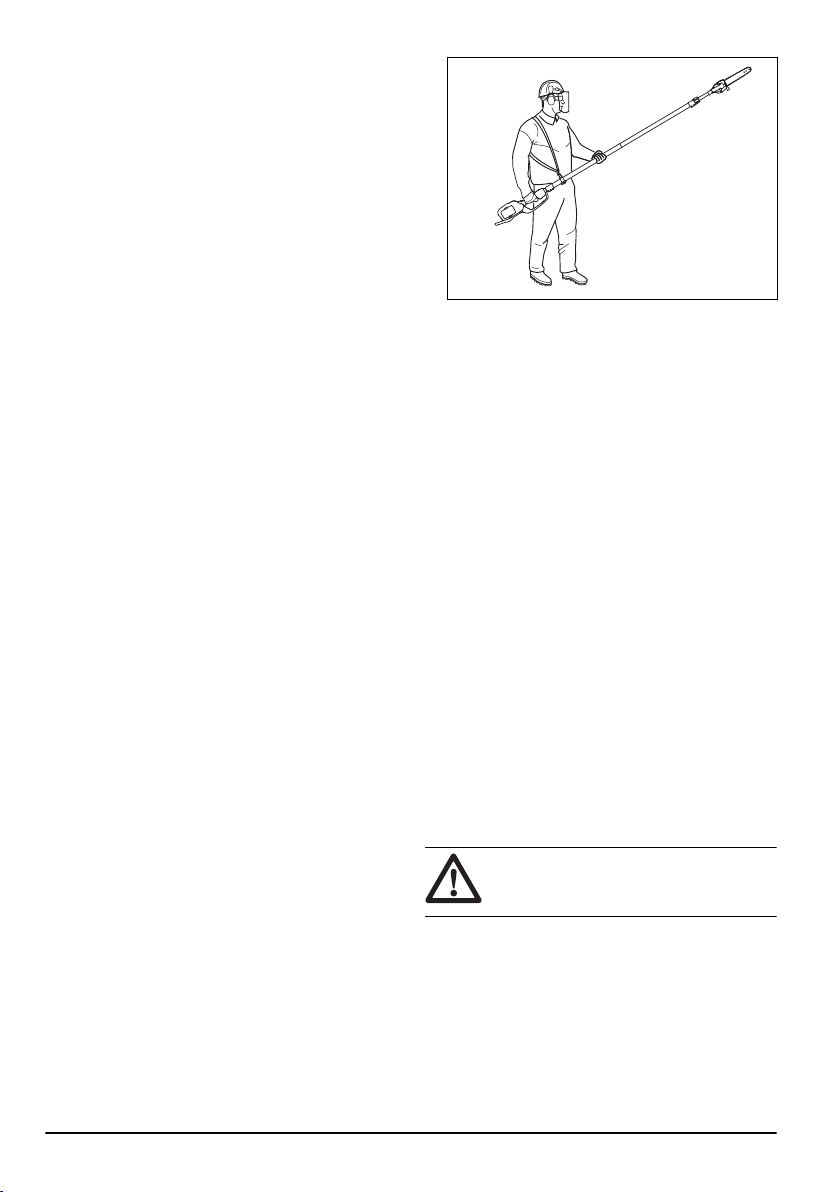
• Use the harness to support the weight of the product
and make it easier to handle.
• Always hold the product with both hands. Hold the
product on the right side of your body.
• Stop the product before you move to another
area. Attach the transport guard before carrying or
transporting the product any distance.
• Never put the product down when it is activated
unless you have it in clear sight.
• If the product is operated at temperatures below
-10°C the product and the battery must be stored in
a heated space for at least 24 hours before starting
work.
• Never stand directly underneath a branch that is
being cut. This could lead to serious or even fatal
personal injury.
• Observe the applicable safety regulations for work in
the vicinity of overhead power lines.
• This product is not electrically insulated. If the
product touches or comes close to high-voltage
power lines it could lead to death or serious bodily
injury. Electricity can jump from one point to another
by arcing. The higher the voltage, the greater the
distance electricity can jump. Electricity can also
travel through branches and other objects, especially
if they are wet. Always keep a distance of at least 10
m /33 ft between the product and high voltage power
lines and/or objects that are touching them. If you
have to work within this safe distance you should
always contact the relevant power company to make
sure the power is switched off before you start work.
• A faulty cutting attachment may increase the risk of
accidents.
Personal protective equipment
WARNING:
Read the warning
instructions that follow before you use the
product.
• Always use approved personal protective equipment
when you use the product. Personal protective
equipment cannot fully prevent injury but it
decreases the degree of injury if an accident does
occur. Let your dealer help you select the right
equipment.
• Use a protective helmet where there is a risk of
falling objects.
• Long term exposure to noise can result in damaged
hearing. In general, battery powered products
8
783 - 005 - 23.09.2022
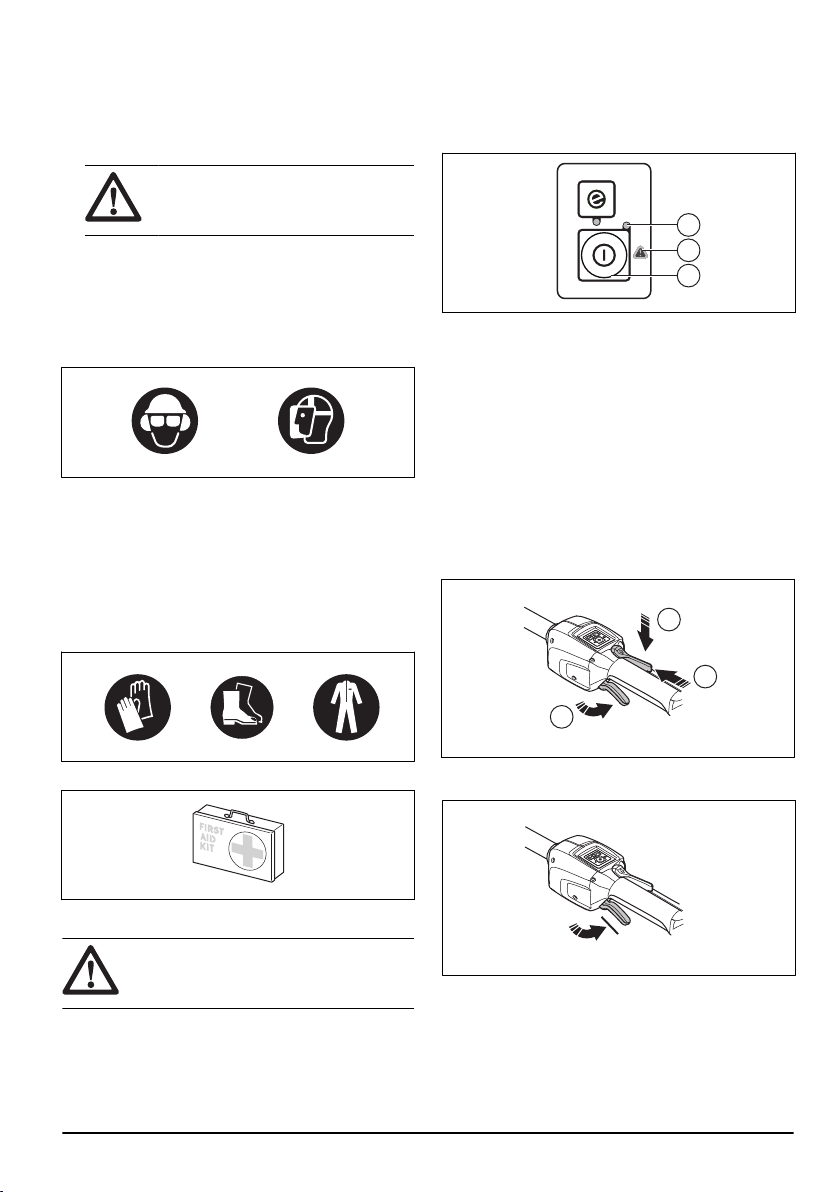
are relatively quiet but damage can result from
a combination of noise level and long usage.
Husqvarna recommends that operators use hearing
protectors when using products for a longer coherent
time of a day. Continual and regular users should
have their hearing checked regularly.
WARNING: Hearing protectors limit
the ability to hear sounds and warning
signals.
• Use approved eye protection. If you use a visor,
you must also use approved protective goggles.
Approved protective goggles must comply with the
ANSI Z87.1 standard in the USAs or EN 166 in EU
countries.
• Use a visor for face protection. A visor is not enough
for protection of the eyes.
+
• Use gloves when necessary, for example when you
attach, examine or clean the cutting equipment.
• Use sturdy non-slip boots or shoes.
• Use clothing made of a strong fabric. Always use
heavy, long pants and long sleeves. Do not use
loose clothing that can catch on twigs and branches.
Do not wear jewelry, short pants, sandals or go with
bare feet. Put your hair up safely above shoulder
level.
• Keep first aid equipment close at hand.
Safety devices on the product
WARNING:
Read the warning
instructions that follow before you use the
product.
• Do not use a product with defective safety devices.
• Do a check of the safety devices regularly. Refer to
Maintenance schedule on page 15
.
• If the safety devices are defective, speak to your
Husqvarna servicing dealer.
To do a check of the keypad
1. Push the start/stop button (A).
C
A
B
a) The product is on when the LED (B) is on.
b) The product is off when the LED (B) is off.
2. If the warning indicator (C) is on or flashes. Refer to
Keypad on page 22
.
To do a check of the power trigger lockout
The power trigger lockout is designed to prevent
accidental operation. When you push the power trigger
lockout forward (A) and then press the power trigger
lockout against the handle (B), the power trigger (C)
is released. When you release the handle, the power
trigger and the power trigger lockout both move back to
their original positions. This movement is operated by
three independent springs.
A
B
C
1. Make sure that the power trigger is locked when the
lock is in its original position.
783 - 005 - 23.09.2022
9
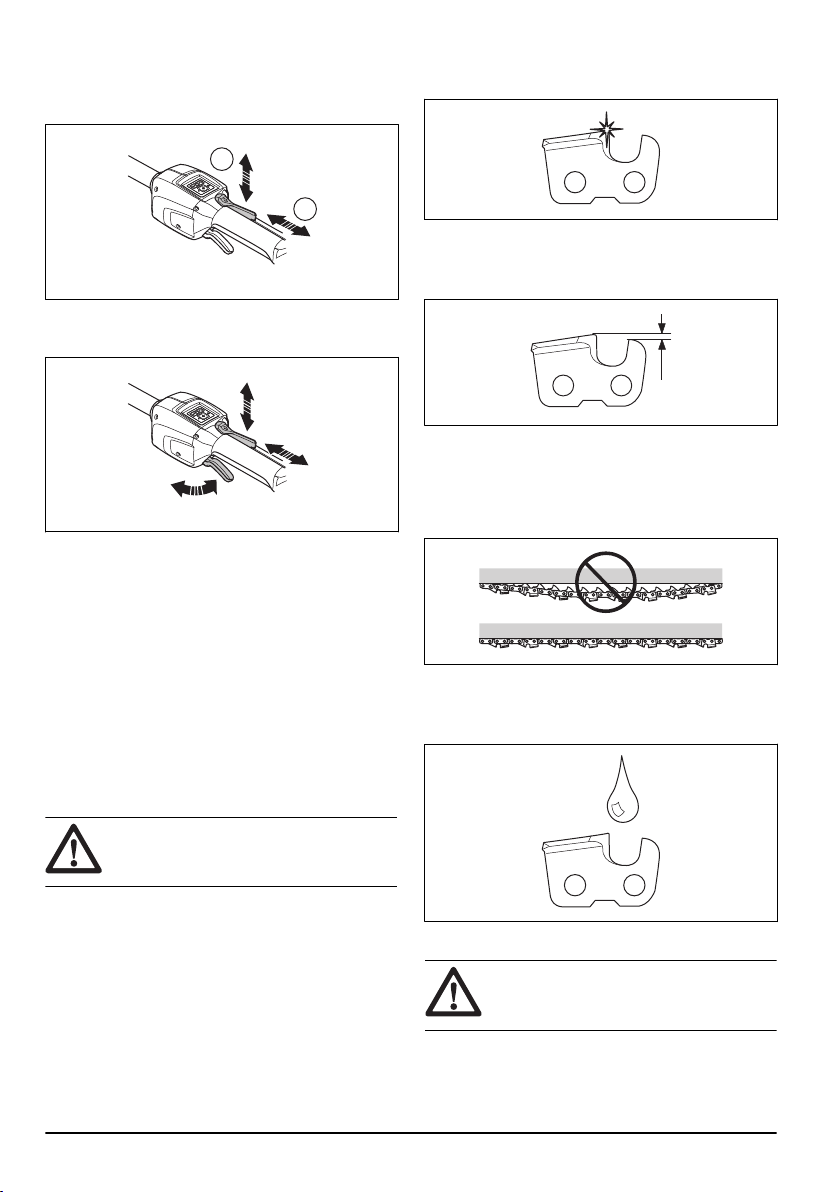
2. Push the power trigger lockout forward (A) and
down. Hold the power trigger lockout against the
handle (B) and make sure that it returns to its
original position when you release it.
A
B
3. Make sure that the power trigger and the power
trigger lockout moves freely and that the return
springs operate properly.
4. Start the product, refer to
To start the product on
page 14
.
5. Push the power trigger fully to apply full speed.
6. Release the power trigger and make sure that the
cutting attachment stops and remains still.
Cutting attachment guard
The cutting attachment guard prevents a loose object to
eject in the direction of the operator.
Examine the cutting attachment guard for damage and
replace if it is damaged. Only use the approved guard
for the cutting attachment.
Safety instructions for the cutting equipment
WARNING:
Read the warning
instructions that follow before you use the
product.
• Only use approved guide bar/saw chain
combinations and filing equipment. Refer to
Accessories on page 24
for instructions.
• Use protective gloves when you use or do
maintenance on the saw chain. A saw chain that
does not move can also cause injuries.
• Keep the cutting teeth correctly sharpened. Obey the
instructions and use the recommended file gauge. A
saw chain that is damaged or incorrectly sharpened
increases the risk of accidents.
• Keep the correct depth gauge setting. Obey the
instructions and use the recommended depth gauge
setting. Too large depth gauge setting increases the
risk of kickback.
• Make sure that the saw chain has the correct
tension. If the saw chain is not tight against the guide
bar, the saw chain can derail. An incorrect saw chain
tension increases wear on the guide bar, saw chain
and chain drive sprocket. Refer to
To tension the
chain on page 20
.
• Do maintenance on the cutting equipment regularly
and keep it correctly lubricated. If the saw chain is
not correctly lubricated, the risk of wear on the guide
bar, saw chain and chain drive sprocket increases.
Battery safety
WARNING:
Read the warning
instructions that follow before you use the
product.
• Only use the BLi batteries that we recommend for
your product. The batteries are software encrypted.
10
783 - 005 - 23.09.2022
• Use the BLi batteries that are rechargable as a
power supply for the related Husqvarna products
only. To prevent injury, do not use the battery as a
power supply for other devices.
• Risk of electrical shock. Do not connect the battery
terminals to keys, screws or other metal. This can
cause a short circuit of the battery.
• Do not use batteries that are non-rechargable.
• Do not put objects into the air slots of the battery.
• Keep the battery away from sunlight, heat or open
flame. The battery can cause burns and/or chemical
burns.
• Keep the battery away from microwaves and high
pressure.
• Do not try to disassemble or break the battery.
• Do not let battery acid touch your skin. Battery acid
causes injuries to the skin, corrosion and burns. If
you get battery acid in your eyes, do not rub but
flush with water for minimum 15 minutes. If battery
acid has touched your skin, you must clean the skin
with a large quantity of water and soap. Get medical
aid.
• Use the battery in temperatures between -10 °C (14
°F) and 40 °C (104 °F).
• Do not clean the battery or the battery charger with
water. Refer to
To clean the product, the battery and
the battery charger on page 22
.
• Do not use a defective or damaged battery.
• Keep batteries in storage away from metal objects
such as nails, screws or jewelry.
• Keep the battery away from children.
Battery charger safety
WARNING:
Read the warning
instructions that follow before you use the
product.
• Risk of electrical shock or short circuit if the safety
instructions are not obeyed.
• Do not use other battery chargers than the one
supplied for your product. Only use chargers when
you charge BLi replacement batteries.
• Do not try to disassemble the battery charger.
• Do not use a defective or damaged battery charger.
• Do not lift the battery charger by the power cord. To
disconnect the battery charger from a mains socket,
pull out the plug. Do not pull the power cord.
• Keep all cables and extension leads away from
water, oil and sharp edges. Make sure that the cable
is not caught between objects, for example, doors,
fences or equivalent.
• Do not use the battery charger near flammable
materials or materials that can cause corrosion.
Make sure that the battery charger is not covered.
Pull out the plug to the battery charger if there is
smoke or fire.
• Only charge the battery indoors in a location with
good airflow and away from sunlight. Do not charge
the battery outdoors. Do not charge the battery in
wet conditions.
• Only use the battery charger where the temperature
is between 5 °C (41 °F) and 40 °C (104 °F). Use the
charger in an environment which has a good airflow,
dry and free from dust.
• Do not put objects into the cooling slots of the
battery charger.
• Do not connect the battery charger terminals to
metal objects as this can short circuit the battery
charger.
• Use approved mains sockets that are not damaged.
Make sure that the cord of the battery charger is not
damaged. If extension cables are used, make sure
that the extension cables are not damaged.
Safety instructions for maintenance
WARNING: Read the warning
instructions that follow before you do
maintenance on the product.
• Remove the battery before you do maintenance,
other checks or assemble the product.
• The operator must only do the maintenance and
servicing shown in this operator's manual. Turn to
your servicing dealer for maintenance and servicing
of a larger extension.
• Do not clean the battery or the battery charger with
water. Strong detergent can cause damage to the
plastic.
• If you do not do maintenance, it decreases the
life cycle of the product and increases the risk of
accidents.
• Special training is necessary for all servicing and
repair work, especially for the safety devices on the
product. If not all checks in this operator's manual
are approved after you have done maintenance, turn
to your servicing dealer. We guarantee that there are
professional repairs and servicing available for your
product.
• Only use original spare parts.
783 - 005 - 23.09.2022
11
Assembly
Introduction
WARNING: Read and understand the
safety chapter before you assemble the
product.
To assemble the guide bar and saw
chain
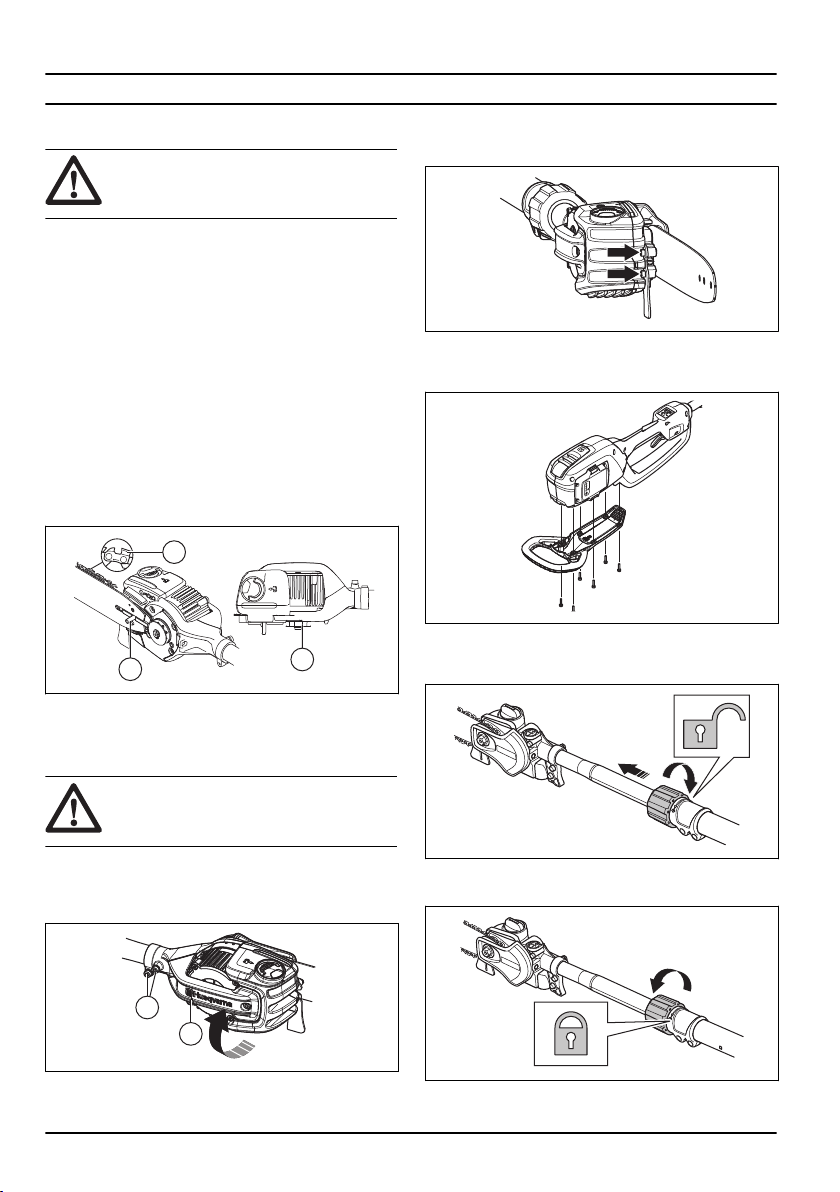
1. Remove the bar nut that holds the clutch cover.
2. Adjust the guide bar on the guide bar bolt. Put the
guide bar in the rear position. Put the saw chain on
the drive sprocket and in the groove on the guide
bar. Start on the top side of the guide bar.
3. Make sure that the edges of the cutters point forward
on the top edge of the guide bar (C).
4. Align the hole in the guide bar with the chain adjuster
pin and install the clutch cover. Make sure that the
drive links fit correctly on the chain drive sprocket
(B). Make sure that the saw chain is in the groove in
the guide bar. Tighten the bar nuts by hand as tightly
as you can.
C
A
B
5. Apply tension to the saw chain, refer to
To tension
the chain on page 20
.
To adjust the angle of the saw head
WARNING:
Stop the product and
remove the battery before you continue. Use
protective gloves.
1. Loosen the screws on the saw head (A).
2. Turn the saw head (B) 90°.
3. Tighten the screws (A).
A
B
To assemble the branch hook
• Use 2 screws to attach the branch hook.
To assemble the shock guard
1. Use 6 screws to attach the shock guard.
To adjust the length of the shaft
1. Undo the knob.
2. Pull out the shaft to the desired length.
3. Tighten the knob.
12
783 - 005 - 23.09.2022
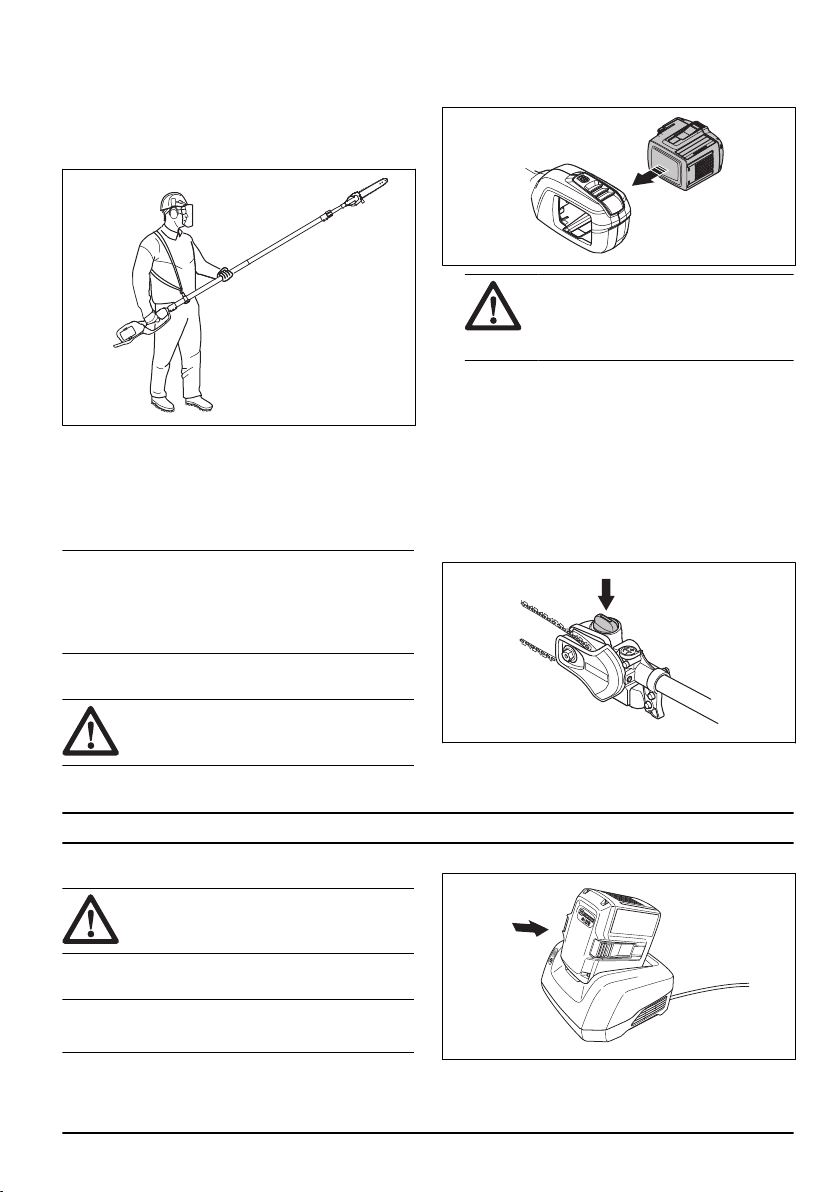
To adjust the harness
1. Put on the harness.
2. Attach the harness to the harness support hook.
3. Adjust the length of the harness until the harness
support hook is in level with your right hip.
To connect the battery charger
1. Connect the battery charger to the voltage and
frequency that is specified on the rating plate.
2. Put the plug in a grounded socket outlet. The LED
on the battery charger flashes green one time.
Note: The battery does not charge if the battery
temperature is more than 50 °C/122 °F. If the
temperature is more than 50 °C/122 °F, the battery
charger makes the battery become cool before the
battery charges.
To connect the battery to the product
WARNING: Only use Husqvarna
original batteries with the product.
1. Make sure that the battery is fully charged.
2. Push the battery into the battery holder of the
product. The battery locks into position when you
hear a click.
CAUTION: If the battery does not
move easily into the battery holder, the
battery is not installed correctly. This can
cause damage to the product.
3. Make sure that the battery is installed correctly.
Battery information
Refer to the operator's manual of the battery for
information about how to use the battery.
To fill with chain oil
Fill with chain oil after 1 hour of operation or when the
battery is empty.
1. Open the chain oil cap on top of the saw head.
2. Fill with Husqvarna chain oil.
3. Attach the chain oil cap.
Operation
Introduction
WARNING: Read and understand the
safety chapter before you use the product.
To charge the battery
Note: Charge the battery if it is the first time that you
use it. A new battery is only 30% charged.
1. Make sure that the battery is dry.
2. Put the battery in the battery charger.
783 - 005 - 23.09.2022 13
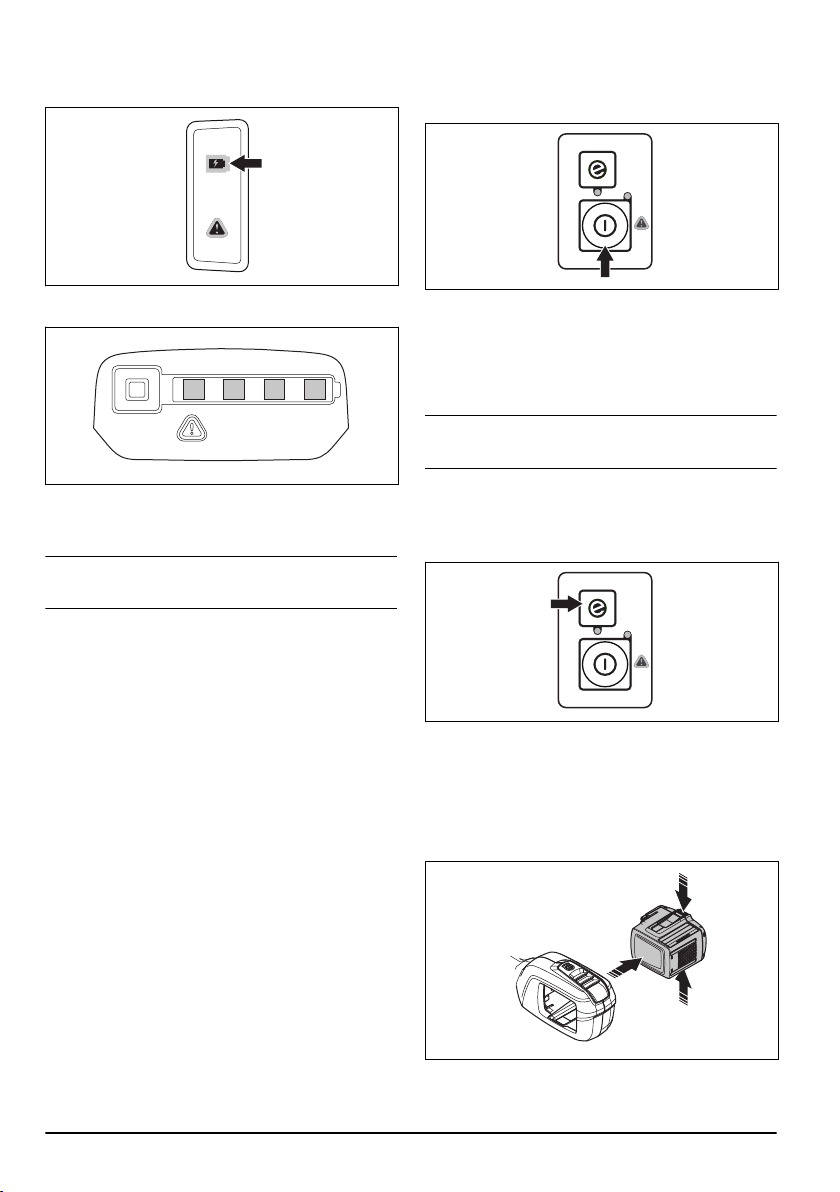
3. Make sure that the green charging light on the
battery charger comes on. That means that the
battery is connected correctly to the battery charger.
4. When all LEDs on the battery come on, the battery is
fully charged.
5. To disconnect the battery charger from the mains
socket, pull the plug. Do not pull the cable.
6. Remove the battery from the battery charger.
Note: Refer to the battery and battery charger
manuals for more information.
To check before starting
1. Inspect the working area. Remove any objects that
could be thrown out.
2. Check the saw chain. Never use blunt, cracked or
damaged equipment.
3. Check that the product is in perfect working order.
4. Check that all nuts and screws are tight.
5. Make sure the chain is adequately lubricated, refer
to
To lubricate cutting equipment on page 21
.
6. Check that the saw chain always stops when the
engine is idling.
7. Only use the product for the purpose it was intended
for.
8. Make sure the handle and safety features are in
order. Never use a machine that has any parts
missing or has been modified in relation to the
specification.
To start the product
1. Push and hold the start/stop button until the green
LED is on.
2. Use the power trigger to control the speed.
To use the SavE function
This product has a power saving function, SavE. The
SavE function decreases the chain speed and gives the
longest operation time from the battery.
Note: The SavE function does not decrease the
cutting power of the product.
1. Push the SavE button on the keypad.
2. Make sure that the green LED comes on.
3. Push the SavE button again to disconnect the
function. The green LED goes out.
To stop the product
1. Release the power trigger or the power trigger
lockout.
2. Push the start/stop button until the green LED is off.
3. Push the release buttons on the battery and pull the
battery out.
14
783 - 005 - 23.09.2022
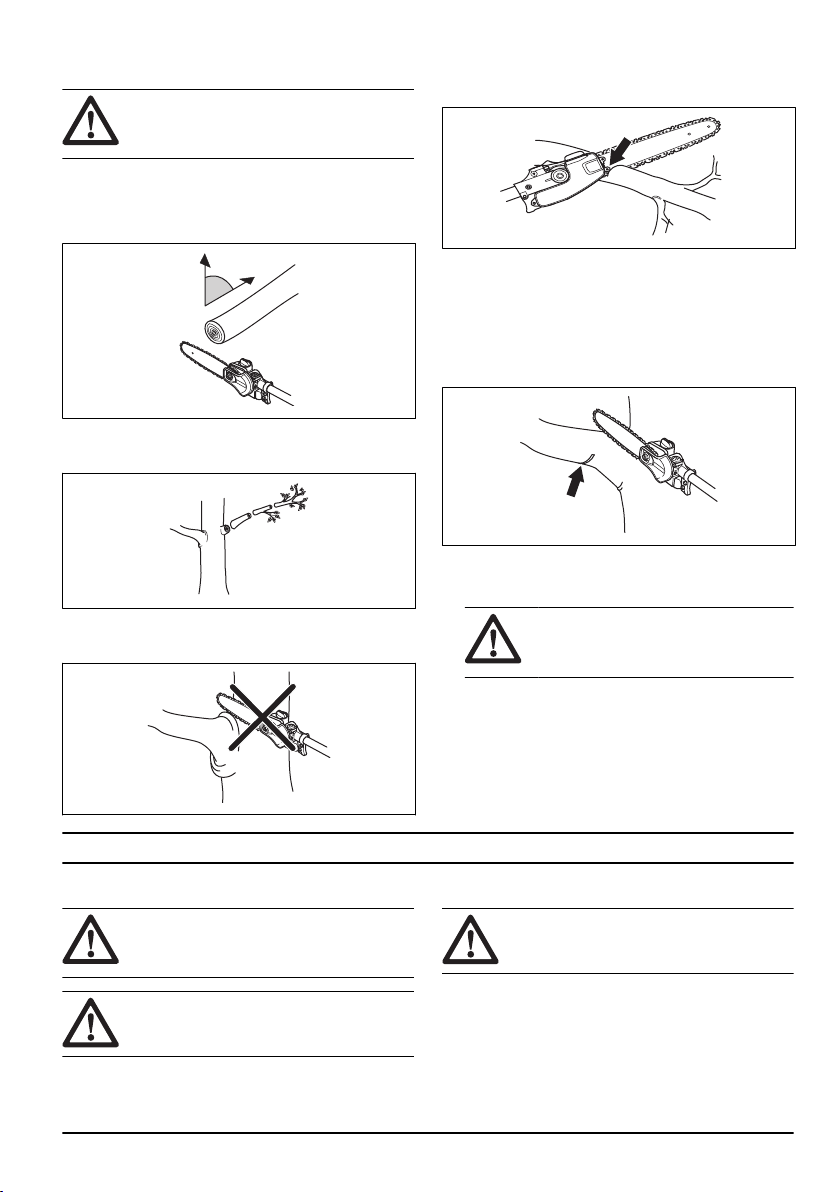
To use the product
WARNING: Do not stay directly below
a branch that is being cut. This can result in
death or injury.
• Be careful when you operate near overhead power
lines. Falling branches can result in short-circuiting.
• If possible, position yourself so that you can make
the cut at right angles to the branch.
90°
• Cut large branches in sections. Note that falling
branches can bounce in the direction of the user
after hitting the ground.
• Never cut through the swelling at the root of the
branch as this will slow down healing and increase
the risk of fungal attack!
• Use the stop at the base of the cutting head to
provide support during cutting. This will help prevent
the cutting attachment from ”jumping” on the branch.
• Make an initial cut on the underside of the branch
before cutting through the branch. This will prevent
tearing of the bark, which could lead to slow healing
and cause permanent damage to the tree. The
cut should not be deeper than 1/3 of the branch
thickness to prevent jamming. Keep the chain
running while you withdraw the cutting attachment
from the branch to prevent it jamming.
• Make sure you have a firm footing and that you can
work without being hampered by branches, stones
and trees.
WARNING:
Never activate the
power trigger without having the cutting
attachment in full view.
Maintenance
Introduction
WARNING: Read and understand the
safety chapter before you do maintenance
work on the product.
WARNING: Remove the battery before
you do maintenance on the product.
Maintenance schedule
WARNING: Remove the battery before
you do maintenance.
The following is a list of the maintenance steps that
you must do on the product. Refer to the tasks in the
maintenance chapter for more information.
783 - 005 - 23.09.2022 15
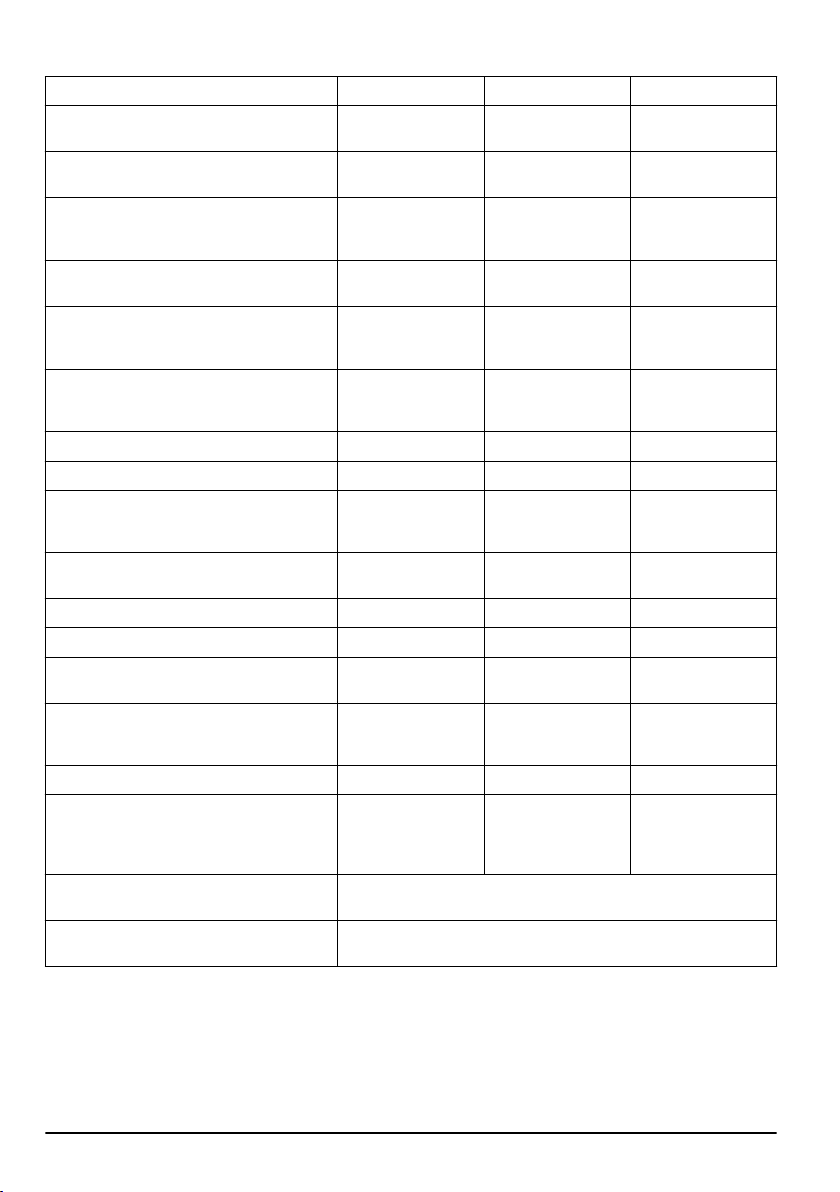
Maintenance Daily Weekly Monthly
Clean the external parts of the product with a
dry cloth. Do not use water.
X
Make sure that the start and stop button
works correctly and are not damaged.
X
Make sure that the power trigger and the
power trigger lockout function correctly from
a safety point of view.
X
Make sure that all controls work and are not
damaged.
X
Keep the handles dry and clean. Makes sure
that that there is no oil and grease on the
handles.
X
Make sure that the saw chain cover is not
damaged. Replace the saw chain cover if it is
damaged.
X
Make sure that the screws and nuts are tight. X
Clean the oil tank cap X
Make sure that the battery release buttons
on the battery works and locks the battery in
the product.
X
Examine that the battery charger is not dam-
aged and function correctly.
X
Make sure that the battery is not damaged. X
Make sure that the battery is charged. X
Make sure that the battery charger is not
damaged.
X
Examine all cables, couplings and connec-
tions. Make sure that there is no damage or
dirt.
X
Clean the saw chain cover. X
Do a check of the connections between the
battery and the product. Do a check of the
connection between the battery and the bat-
tery charger.
X
Make sure that the saw head is not dam-
aged. Replace the saw head if it is damaged.
An approved Husqvarna dealer must do all servicing on the saw
head.
Examine the wear of the chain drive sprock-
et.
Replace the chain drive sprocket after approximately 100 hours of
operation or more frequently if it is necessary.
To examine the battery and the battery
charger
1. Examine the battery for damages, for example
cracks.
2. Examine the battery charger for damages, for
example cracks.
3. Make sure that the connection cord of the battery
charger is not damaged and that there are no cracks
in it.
16 783 - 005 - 23.09.2022
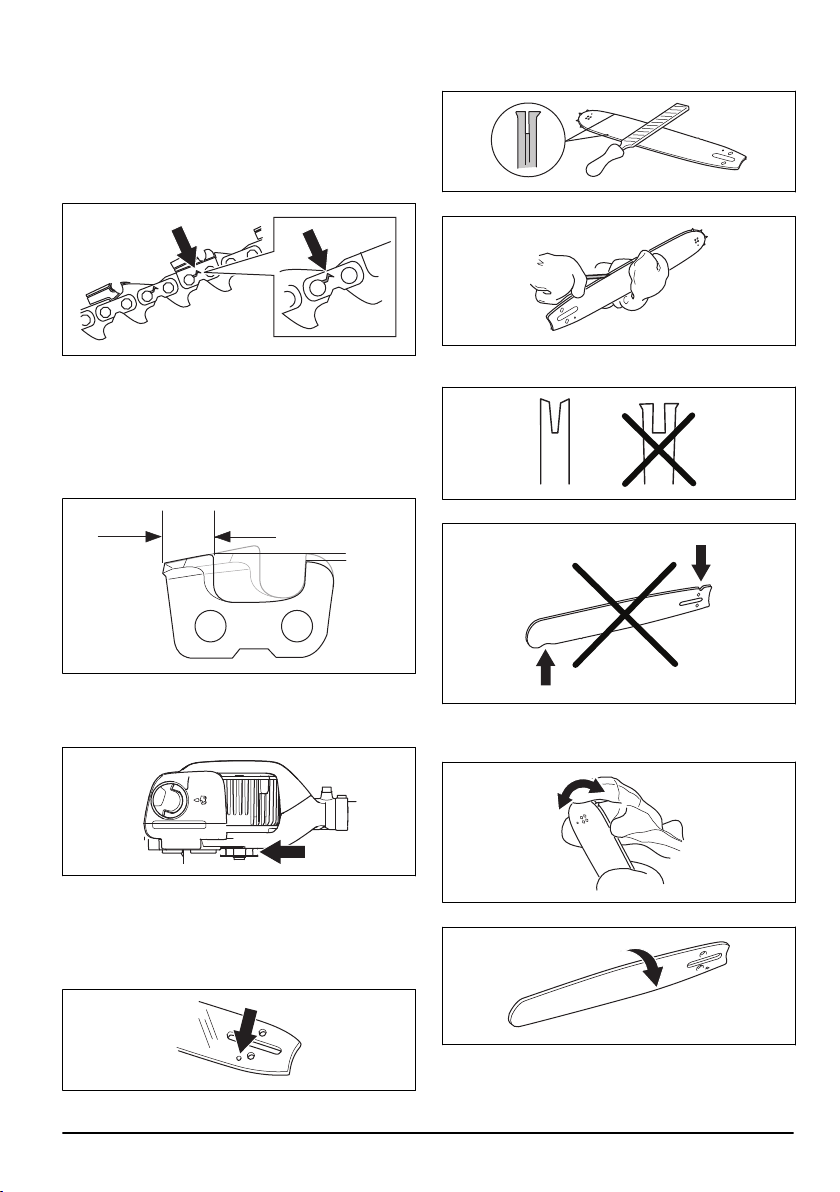
To perform maintenance on the
attachment
To check the saw chain
Do a check of the saw chain daily.
1. Make sure that there are no cracks in rivets and
links.
2. Examine if the saw chain is rigid.
3. Compare the saw chain with a new saw chain to
examine if the rivets and links are worn.
4. Replace the saw chain if it exhibits any of the
conditions above.
5. Replace the saw chain when the length of the cutting
teeth has worn down to only 4 mm (0.16 in.)
To examine the chain drive sprocket
1. Regularly do a check of the degree of wear on the
chain drive sprocket.
2. Replace the chain drive sprocket if it is worn and
moves from side to side on the motor axle.
To do a check of the guide bar
1. Make sure that the oil channel is not blocked. Clean
if it is necessary.
2. Examine if there are burrs on the edges of the guide
bar. Remove the burrs using a file.
3. Clean the groove in the guide bar.
4. Examine the groove in the guide bar for wear.
Replace the guide bar if it is necessary.
5. Examine if the guide bar tip is rough or very worn.
6. Make sure that the bar tip sprocket turns freely and
that the lubricating hole in the bar tip sprocket is not
blocked. Clean and lubricate if it is necessary.
7. Turn the guide bar daily to extend its life cycle.
783 - 005 - 23.09.2022
17
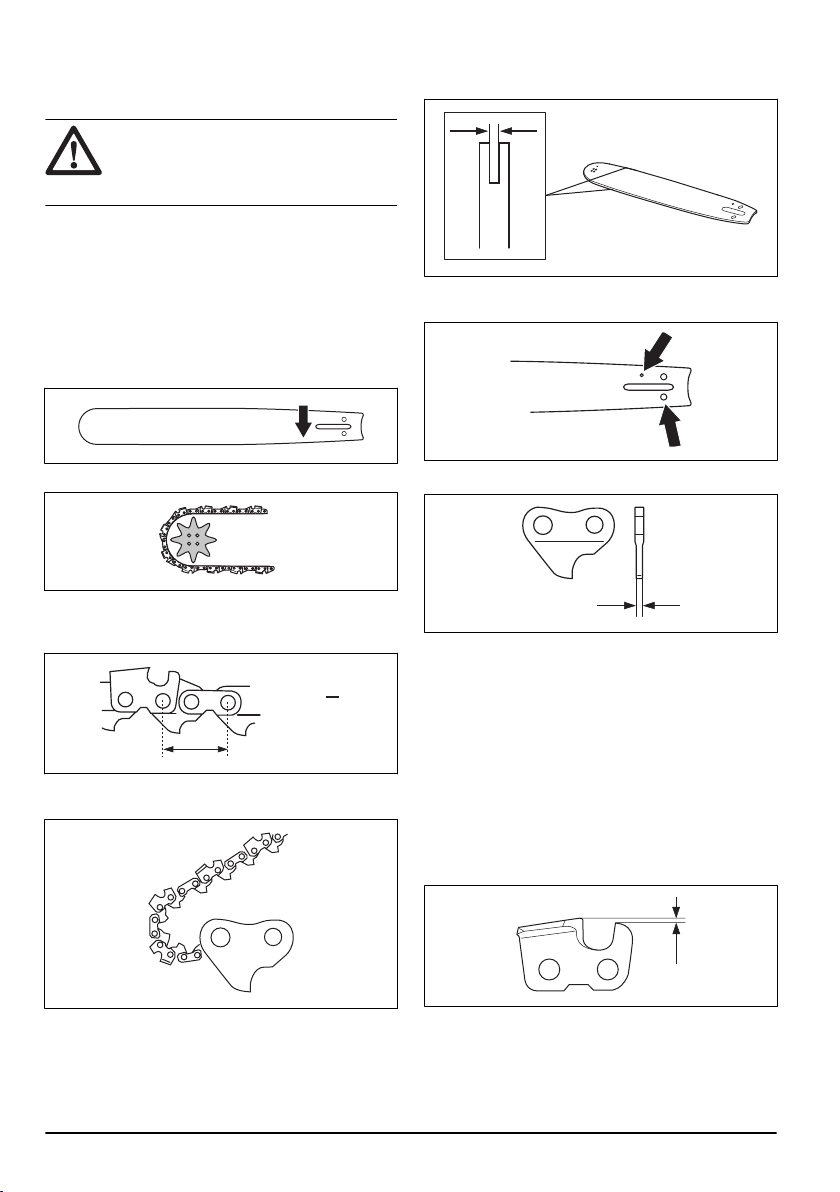
To sharpen the saw chain
Information about the guide bar and saw chain
WARNING: Use protective gloves
when you use or do maintenance on the
saw chain. A saw chain that does not move
can also cause injuries.
Replace a worn or damaged guide bar or saw chain with
the guide bar and saw chain combination recommended
by Husqvarna. This is necessary to keep the safety
functions of the product. Refer to
Accessories on
page 24
, for a list of replacement bar and chain
combinations that we recommend.
• Guide bar length, in/cm. Information about the guide
bar length can usually be found on the rear end of
the guide bar.
• Number of teeth on bar tip sprocket (T).
• Chain pitch, in. The distance between the drive links
of the saw chain must align with the distance of the
teeth on the bar tip sprocket and drive sprocket.
PITCH =
D
D
2
• Number of drive links. The number of drive links is
decided by the type of guide bar.
• Bar groove width, in/mm. The groove width in guide
bar must be the same as the chain drive links width.
• Chain oil hole and hole for chain tensioner. The
guide bar must align with product.
• Drive link width, mm/in.
General information about how to sharpen the
cutting teeth
Do not use a blunt saw chain. If the saw chain is blunt,
you must apply more pressure to push the guide bar
through the wood. If the saw chain is very blunt, there
will be no wood chips but sawdust.
A sharp saw chain eats through the wood and the wood
chips becomes long and thick.
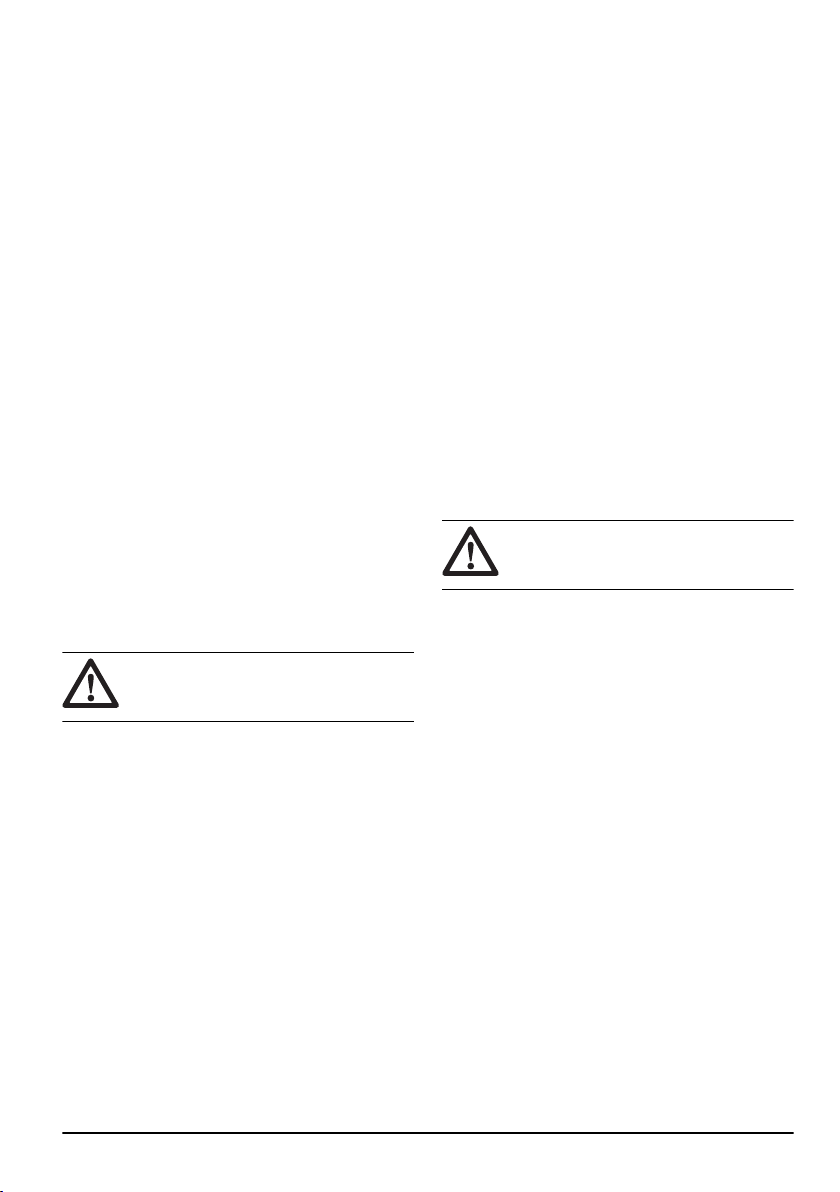
The cutting tooth (A) and the depth gauge (B) together
makes the cutting part of the saw chain, the cutter. The
difference in height between the two gives the cutting
depth (depth gauge setting).
A
B
When you sharpen a cutting tooth, think about the
following:
18
783 - 005 - 23.09.2022
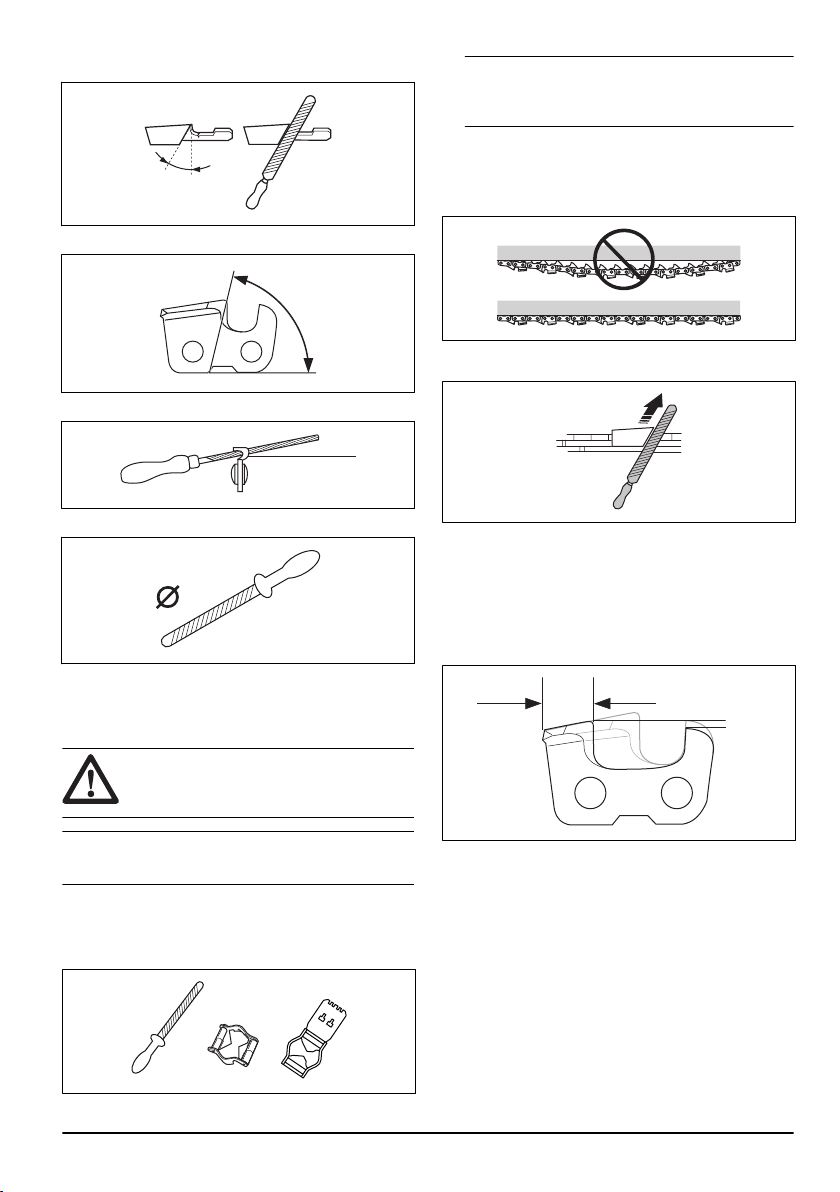
• Filing angle.
• Cutting angle.
• File position.
• Round file diameter.
It is not easy to sharpen a saw chain correctly without
the correct equipment. Use the recommended file
gauge. This will help you to keep maximum cutting
performance and the kickback risk at a minimum.
WARNING:
The risk of kickback
increases a lot if you do not follow the
sharpening instructions.
Note: See
To sharpen the cutting teeth on page 19
for information about sharpening of the saw chain.
To sharpen the cutting teeth
1. Use a round file and a file gauge to sharpen the
cutting teeth.
Note:
See
Accessories on page 24
for
information about which file and gauge that we
recommend for your saw chain.
2. Make sure that the saw chain has the correct
tension. A saw chain without the correct tension
moves from side to side. This does not make it easy
to sharpen the saw chain. See
To tension the chain
on page 20
for instructions.
3. Move the file from the inner side of the cutting teeth
and out. Decrease the pressure on the pull stroke.
4. Remove filing material on all teeth on one side first.
5. Turn the product around and remove filing material
on the other side.
6. Make sure that the all cutting teeth become the
same length when you remove filing material.
7. The saw chain is worn out when the cutting teeth is
decreased to 4 mm (0.16"). Replace the saw chain.
General information about how to adjust the
depth gauge setting
The depth gauge setting (C) decreases when you
sharpen the cutting tooth (A). To keep maximum
cutting performance you must remove filing material
from the depth gauge (B) to receive the recommended
depth gauge setting. See
Accessories on page 24
783 - 005 - 23.09.2022
19
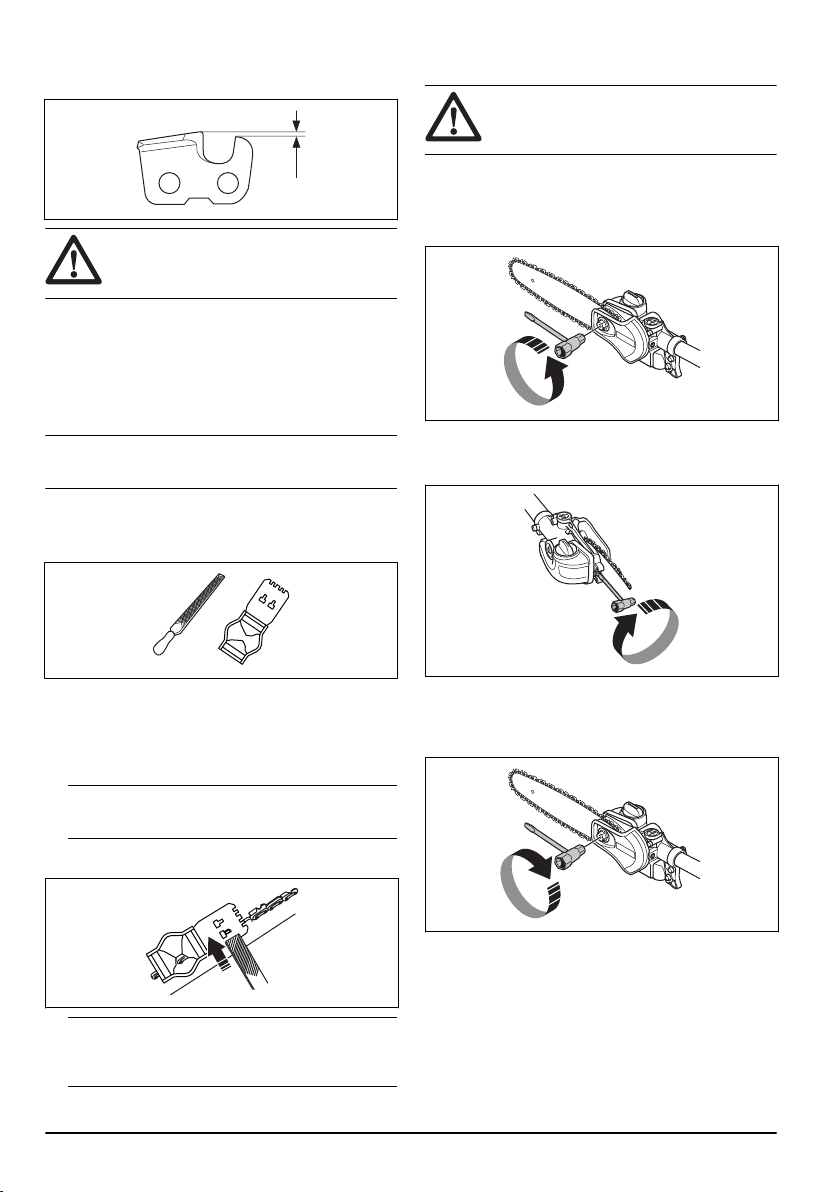
for instructions about how to receive the correct depth
gauge setting for your saw chain.
A
B
C
WARNING: The risk of kickback
increases if the depth gauge setting is too
large!
To adjust the depth gauge setting
Before you adjust the depth gauge setting or sharpen
the cutting teeth, See
To sharpen the cutting teeth on
page 19
, for instructions. We recommend you to adjust
the depth gauge setting after each third operation that
you sharpen the cutting teeth.
Note: This recommendation applies only if the length
of the cutting teeth does not decrease too much.
We recommend that you use our depth gauge tool to
receive the correct depth gauge setting and bevel for the
depth gauge.
1. Use a flat file and a depth gauge tool to adjust the
depth gauge setting. Only use the recommended
depth gauge tool to receive the correct depth gauge
setting and bevel for the depth gauge.
2. Put the depth gauge tool on the saw chain.
Note:
See the package of the depth gauge tool for
more information about how to use the tool.
3. Use the flat file to remove the part of the depth
gauge that extends through the depth gauge tool.
Note:
The depth gauge setting is correct when
you do not feel resistance as you move the file along
the depth gauge tool.
To tension the chain
WARNING: A saw chain with an
incorrect tension can derail from the guide
bar and cause serious injury or death.
A saw chain becomes longer when you use it. Adjust the
saw chain regularly.
1. Loosen the bar nut that hold the clutch cover/chain
brake. Use a wrench.
2. Tighten the bar nuts by hand as tightly as you can.
3. Lift the front of the guide bar and turn the chain
tensioning screw. Use a wrench.
4. Tighten the saw chain until it is tight against the
guide bar but still can move easily.
5. Tighten the bar nuts using the wrench and lift the
front of the guide bar at the same time.
20
783 - 005 - 23.09.2022
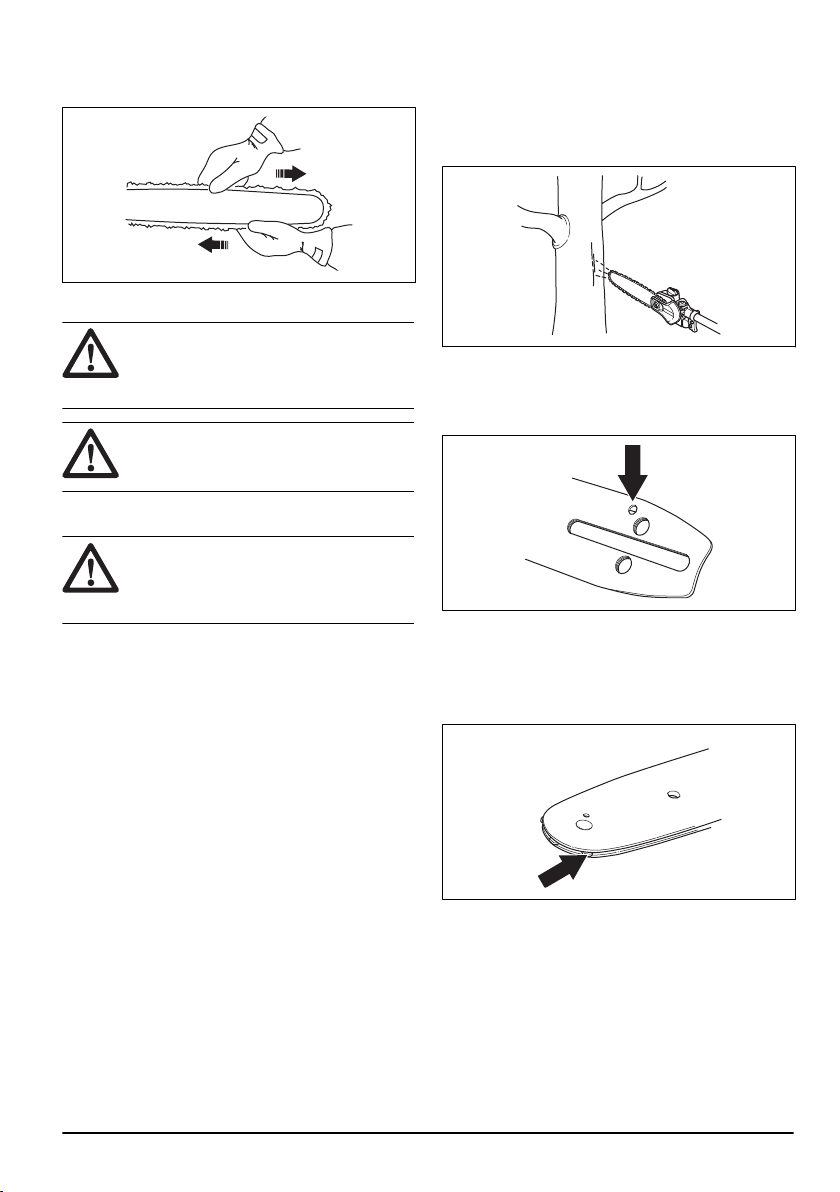
6. Make sure you can pull the saw chain around freely
by hand and that it does not hang from the guide
bar.
To lubricate cutting equipment
WARNING: Poor lubrication of cutting
equipment may cause the chain to snap,
which could lead to serious, even fatal
injuries.
WARNING: Do not use waste oil!
Waste oil is dangerous for persons, the
product and for the environment.
Chain oil
WARNING: Poor lubrication of cutting
equipment may cause the chain to snap,
which could lead to serious, even fatal
injuries.
• Chain oil must demonstrate good adhesion to the
chain and also maintain its flow characteristics
regardless of whether it is warm summer or cold
winter weather.
• We have developed an optimal chain oil which, with
its vegetable oil base, is also biodegradable. We
recommend the use of our own oil for both maximum
chain life and to minimise environmental damage.
• If our own chain oil is not available, standard chain
oil is recommended.
• In areas where oil specifically for lubrication of saw
chains is unavailable, ordinary EP 90 transmission
oil may be used.
• Never use waste oil! This is dangerous for yourself,
the machine and the environment.
To check the chain lubrication
1. Check the chain lubrication each time you refuel.
Aim the tip of the bar at a light coloured surface
about 20 cm (8 inches) away. After 1 minute running
at 75% throttle you should see a distinct line of oil on
the light surface.
To do a check if lubrication does not work
1. Check that the oil channel in the bar is not
obstructed. Clean if necessary.
2. Check that the oil channel in the gear housing is
clean. Clean if necessary.
3. Check that the bar tip sprocket turns freely. If the
chain lubrication system is still not working after
carrying out the above checks you should contact
your service workshop.
To replace the chain drive sprocket
1. Remove the bar nut (A) that holds the clutch cover.
2. Remove the clutch cover (B).
3. Disassemble the washer clip (C).
4. Remove the washer (D).
783 - 005 - 23.09.2022
21
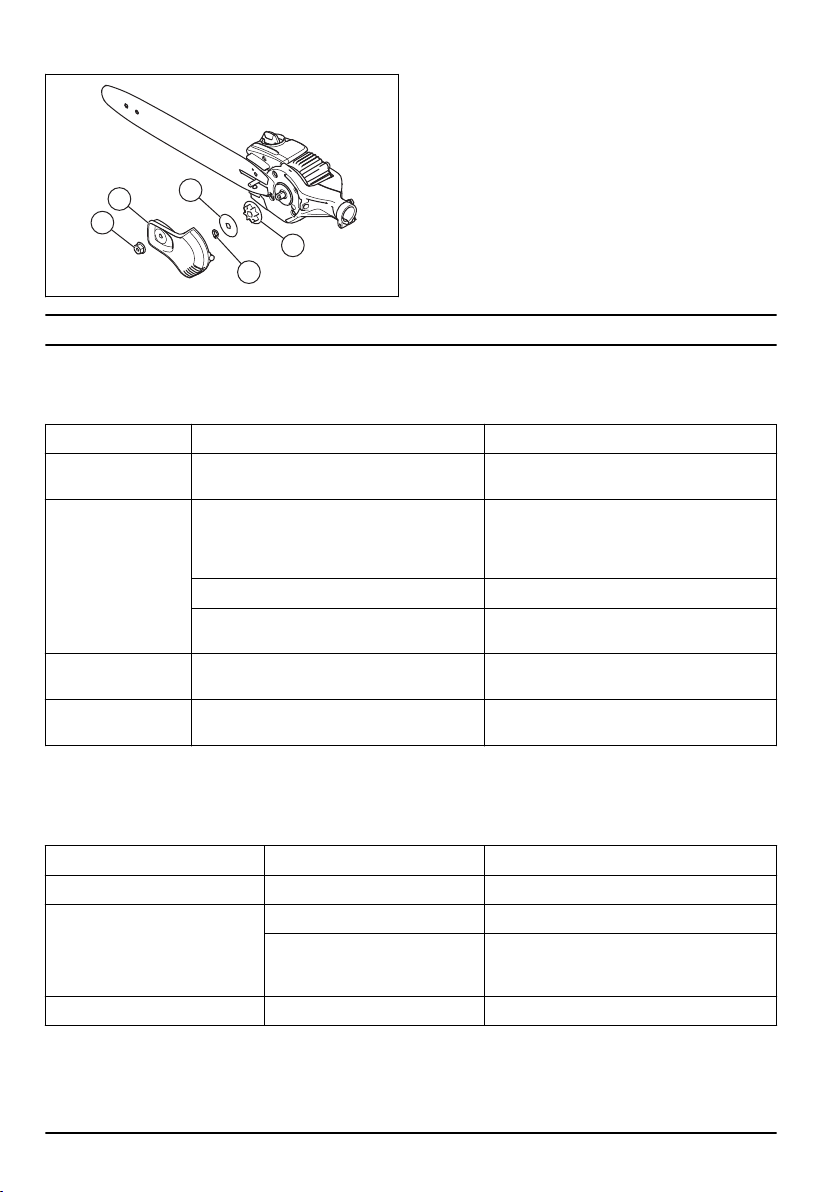
5. Remove the chain drive sprocket (E).
A
B
C
E
D
6. Install a new chain drive sprocket.
To clean the product, the battery and
the battery charger
1. Clean the product with a dry cloth after use.
2. Clean the battery and battery charger with a dry
cloth. Keep the battery guide tracks clean.
3. Make sure that the terminals on the battery and the
battery charger are clean before use.
4. Clean around the oil tank cap with a brush.
5. Clean the inner surface of the protective cover with a
brush.
Troubleshooting
Keypad
Problem Possible faults Possible solution
Green start LED
flashes.
Low battery voltage. Charge the battery.
Red error LED flash-
es.
Overload. The cutting attachment is blocked. stop the
product. Remove the battery. Clean the cut-
ting attachment from unwanted materials.
Loosen the chain.
Temperature deviation. Let the product become cool.
The power trigger and the start button are
pushed at the same time.
Release the power trigger and push the start
button.
The product does not
start.
Dirt in the battery connectors. Clean the battery connectors with com-
pressed air or a soft brush.
Red error LED
comes on.
It is necessary to do servicing on the product. Speak to your servicing dealer.
Battery
LED display
Possible faults Possible action
Green activate LED flashing Low battery voltage. Charge the battery.
Error LED flashing The battery is discharged. Charge the battery.
Temperature deviation. Use the battery in surroundings where tem-
peratures are between -10°C (14°F) and
40°C (104°F).
Error LED is lit Cell difference is too much (1V). Contact your servicing agent.
22 783 - 005 - 23.09.2022
Battery charger
Problem Possible faults Possible solution
Red error LED flashes. Temperature deviation. Use the battery charger in tempera-
tures between 5 °C (41 °F) and 40 °C
(104 °F).
Red error LED comes on. Speak to your servicing dealer.
Transportation, storage and disposal
Transportation and storage
Note: Variations in temperature can lead to pressure
in the oil tank with temporary oil leakage as a result.
Follow the storage instructions.
• Clean the product and empty the oil tank before you
put the product in storage.
• Put the product in a horizontal position or hung with
the bar pointed down during storage.
• Do not put the product with the bar pointed up during
storage.
• The supplied Li-ion batteries obey the Dangerous
Goods Legislation requirements.
• Obey the special requirement on package and labels
for commercial transportation, including by third
parties and forwarding agents.
• Speak to a person with special training in dangerous
material before you send the product. Obey all
applicable national regulations.
• Use tape on open contacts when you put the battery
in a package. Put the battery in the package tightly
to prevent movement.
• Remove the battery for storage or transportation.
• Put the battery and the battery charger in a space
that is dry and free from moisture and frost.
• Do not keep the battery in an area where static
electricity can occur. Do not keep the battery in a
metal box.
• Put the battery in storage where the temperature is
between 5 °C (41 °F) and 25 °C (77 °F) and away
from open sunlight.
• Put the battery charger in storage where the
temperature is between 5 °C (41 °F) and 45 °C (113
°F) and away from open sunlight.
• Charge the battery 30% to 50% before you put it in
storage for long periods.
• Put the battery charger in storage in a space that is
closed and dry.
• Keep the battery away from the battery charger
during storage. Do not let children and other not
approved persons to touch the equipment. Keep the
equipment in a space that you can lock.
• Use the transportation guard on the product to
prevent injuries or damage on the product during
transportation and storage.
• Attach the product safely during transportation.
Disposal of the battery, battery charger
and product
The symbol below means that the product is not
domestic waste. Recycle it at a recycling station
for electrical and electronic equipment. This helps to
prevent damage to the environment and to persons.
Speak to local authorities, domestic waste service or
your dealer for more information.
Note: The symbol shows on the product or package of
the product.
783 - 005 - 23.09.2022 23

Technical data
Technical data
530iP4 530iPT5
Motor
Motor type BLDC (brushless) 36 V
Chain speed, m/s (1/4) 18 18
Oil tank capacity, l/cm
3
0.15/150 0.15/150
Weight
Weight without battery, kg 3.4 5
Water protection level
IPX4
1
Yes Yes
Noise emissions
Sound power level, measured dB(A) 98 98
Sound levels
2
Equivalent sound pressure level at the operator’s ear, measured
according to EN ISO 22868, dB(A), min./max.:
88 83
Vibration levels
3
Equivalent vibration levels (a
hveq
) at handles, measured according to EN ISO 22867, m/s
2
Extended shaft, front/rear handles 1.0/0.9 1.0/1.2
Short shaft front/rear handle - 1.4/1.2
Accessories
Approved batteries for the product
Battery
BLi200
Type Lithium-ion
Battery capacity, Ah 5.2
Nominal voltage, V 36
1
The Husqvarna Handheld Battery products marked with IPX4 fulfils these requirements on product approval
level
2
Reported data for equivalent sound pressure level for the machine has a typical statistical dispersion (stand-
ard deviation) of 1 dB (A).
3
Reported data for equivalent vibration level has a typical statistical dispersion (standard deviation) of 2 m/s
2
.
24 783 - 005 - 23.09.2022
Battery BLi200
Weight, kg 1.3
Approved battery chargers for the product
Battery charger QC330 QC500
Mains voltage, V 100-240 100-240
Frequency, Hz 50-60 50-60
Power, W 330 500
Guide bar and saw chain combinations
The following combinations are CE approved.
Guide bar Saw chain
Length, in Pitch, in Gauge, mm Type Length, drive links,
no.
10 1/4 1.3
Husqvarna H00
58
12 64
10 3/8 mini 1.3 Husqvarna S93G 40
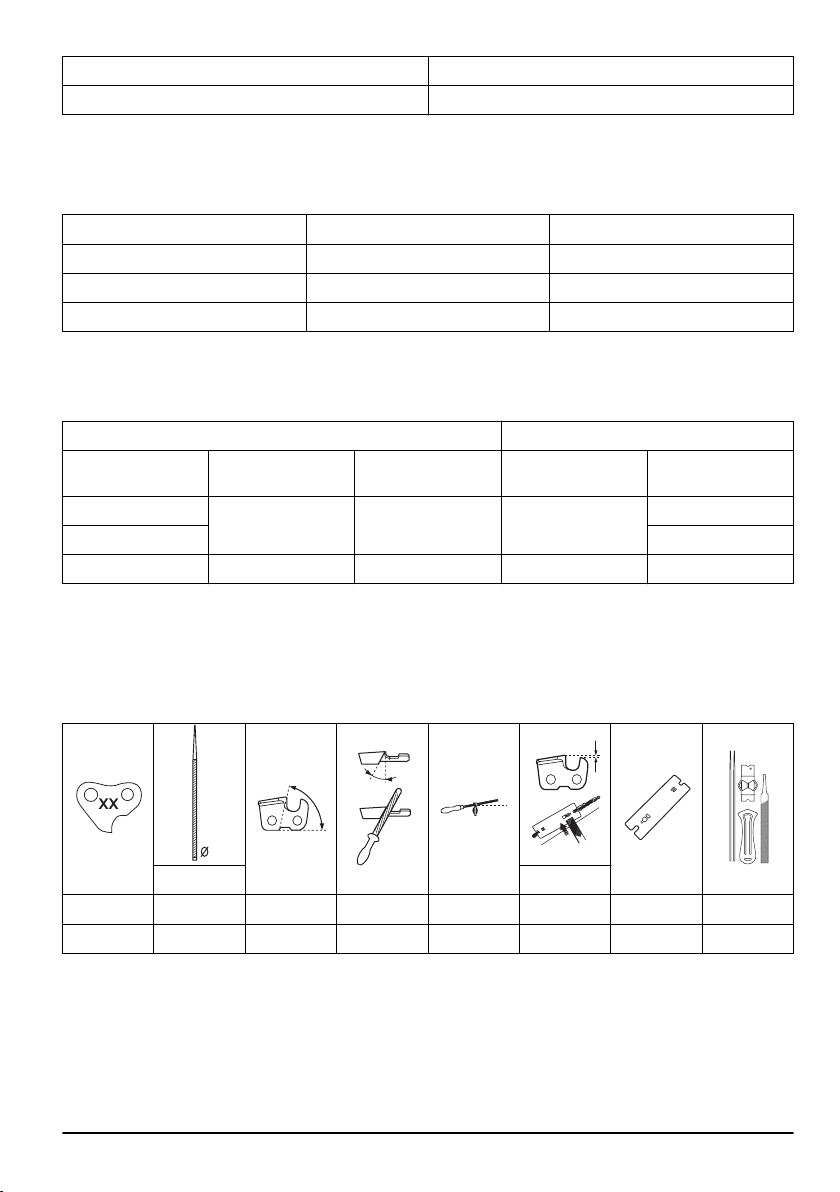
Saw chain filing and file gauge
Use the recommended file gauge to get the correct
filing angles. We recommend you to always use the
recommended file gauge to restore the sharpness of the
saw chain.
If you do not know which saw chain you have on your
product, speak to your servicing dealer.
mm/in mm/in
37 4.0 / 5/32 80° 30° 0° 0.65/0.025 5056981-03 5806875-01
S93G 4.0 / 5/32 60° 30° 0° 0.65/0.025 n/a 5966389-02
783 - 005 - 23.09.2022 25
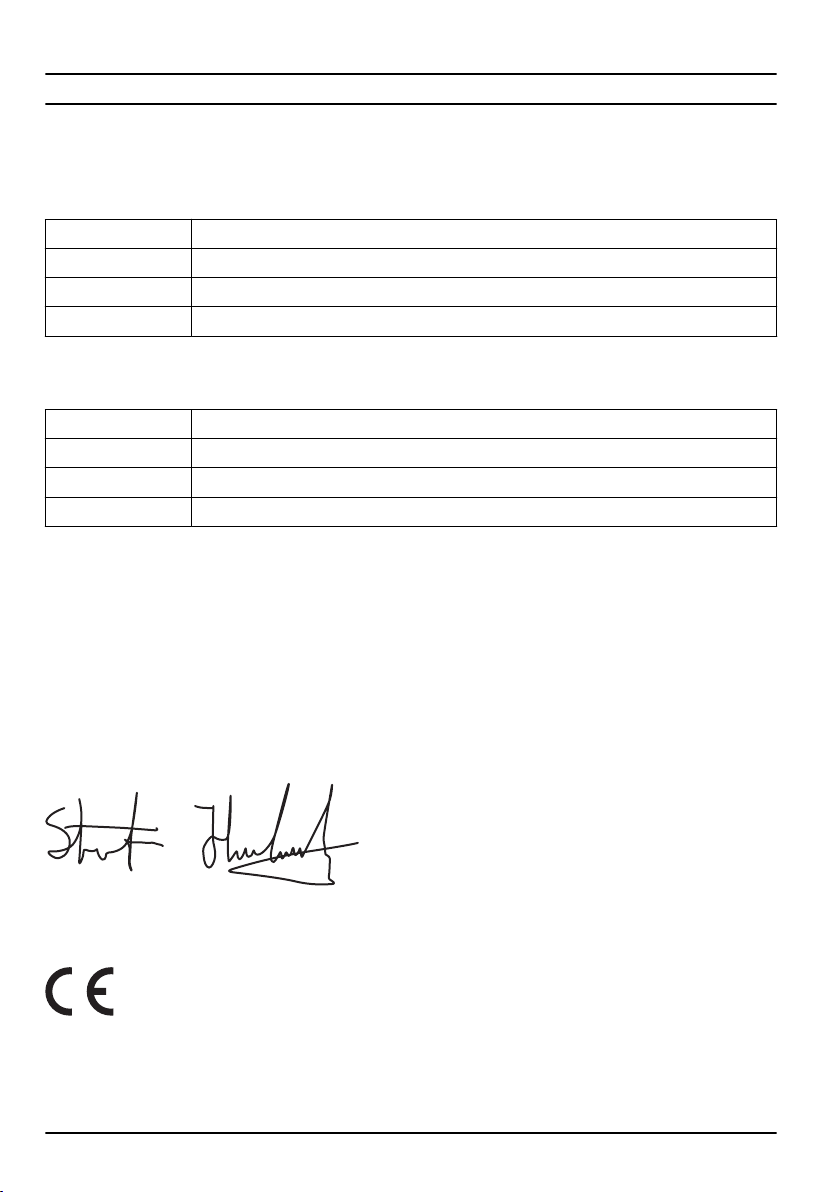
Declaration of Conformity
EU Declaration of Conformity
We, Husqvarna AB, SE-561 82 Huskvarna, Sweden, tel:
+46-36-146500, declare on our sole responsibility that
the product:
Description Battery-operated Pole Hedge Trimmer
Brand
Husqvarna
Type / Model 530iP4, 530iPT5
Identification Serial numbers dating from 2022 and onwards
complies fully with the following EU directives and
regulations:
Regulation Description
2006/42/EC “relating to machinery"
2014/30/EMC ”relating to electromagnetic compatibility”
2011/65/EU “relating to restriction of hazardous substances”
and that the following standards and/or technical
specifications are applied: EN 62841-1:2015,
EN ISO 11680-1:2011, EN ISO 14982:2009,
CISPR12:2007+amd1 2009, EN IEC 63000:2018.
Notified body: 0404, RISE SMP, Svensk Maskinprovning
AB, Box 7035, SE-750 07 Uppsala, Sweden has
carried out EC type examination in accordance with the
machinery directive's (2006/42/EC) article 12, clause 3b.
The certificate has the number: SEC/19/2530.
For information relating to noise emission, refer to
Technical data on page 24
.
Huskvarna, 2022-04-11
Stefan Holmberg, R&D Director, Technology
Management, Husqvarna AB
Responsible for technical documentation
26 783 - 005 - 23.09.2022
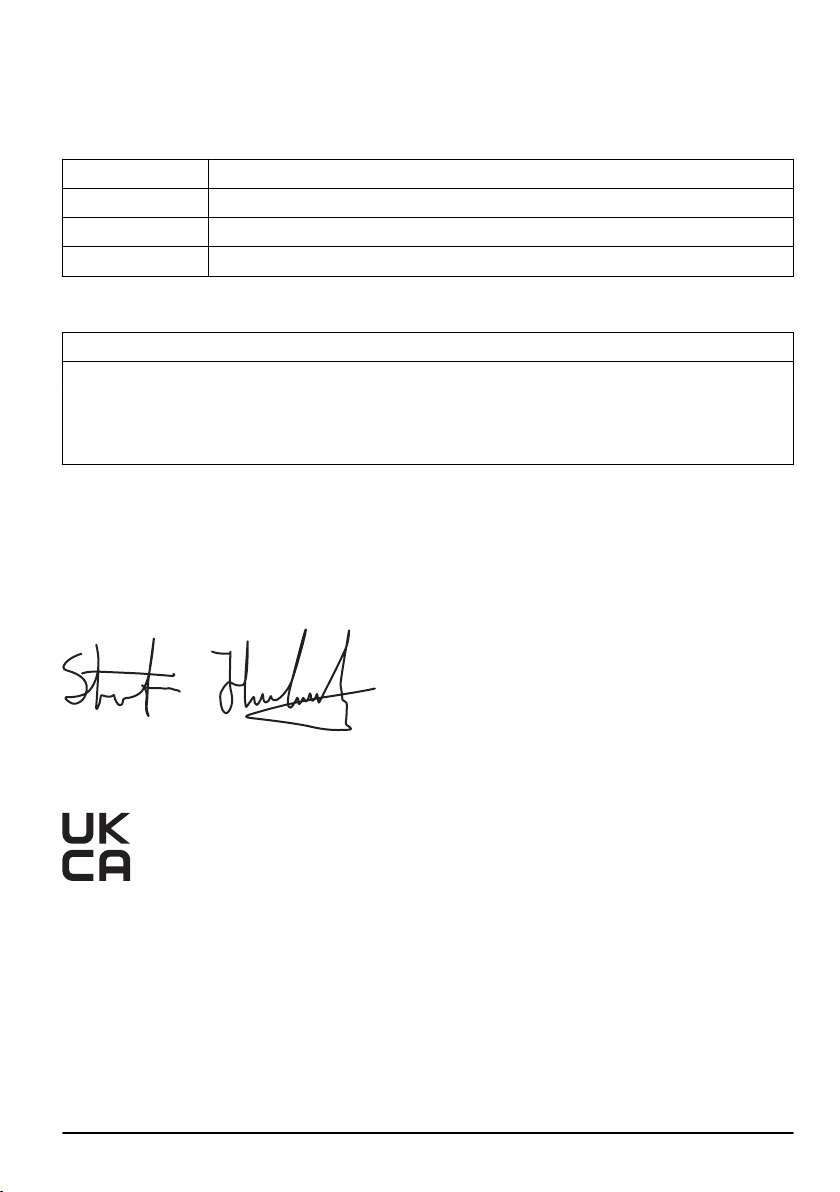
Declaration of conformity
We, Husqvarna AB, SE-561 82 Huskvarna, Sweden, tel:
+46-36-146500, declare on our sole responsibility that
the product:
Description Battery-operated Pole Pruner
Brand
Husqvarna
Type / Model 530iP4, 530iPT5
Identification Serial numbers dating from 2022 and onwards
complies fully with the following UK regulations:
Regulations
The Supply of Machinery (Safety) Regulations 2008
Electromagnetic Compatibility Regulations 2016
The Restriction of the Use of Certain Hazardous Substances in Electrical and Electronic Equipment Regulations
2012
and that the following standards and/or technical
specifications are applied: EN 62841-1:2015,
EN ISO 11680-1:2011, EN ISO 14982:2009,
CISPR12:2007+amd1 2009, EN IEC 63000:2018 .
For information relating to noise emissions, refer to
Technical data on page 24
.
Huskvarna 2022-04-11
Stefan Holmberg, R&D Director, Technology
Management, Husqvarna AB
Responsible for technical documentation
UK Importer:
Husqvarna UK Ltd
Preston Road, Co. Durham
DL5 6UP
783 - 005 - 23.09.2022 27

www.husqvarna.com
Original instructions
1142875-26
2022-11-07