
Installation Guide
100/300/500 Series
Outdoor Grill Conversion Kits
GAS CONVERSION
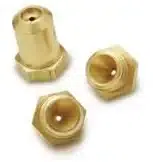
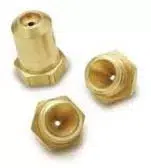
To convert a grill from natural to LP/Propane gas or LP/Propane to natural, you must use the conversion kit supplied by
the manufacturer. When converting to Natural Gas, use the NKVGBQ kit for VGBQ/CVGBQ models and NKVGIQ kit
for VGIQ/CVGIQ models. When converting to LP/Propane, use the LPKVGBQ kit for VGBQ/CVGBQ models and
LPKVGIQ kit for VGIQ/CVIQ models. Conversions should only be done by an authorized service technician.
NOTE: WHEN THE CONVERSION IS COMPLETED, THE CONVERSION LABEL MUST BE PLACED NEXT TO THE
RATING LABEL UNDER THE DRIP TRAY IN THE REAR LEFT CORNER NEXT TO THE INLET PIPE.
IMPORTANT: PLEASE READ AND FOLLOW
1. Before beginning, please read these instructions completely and
carefully.
2. Do not remove permanently affixed labels, warnings, or plates from
product. This may void the warranty.
3. Please observe all local and national codes and ordinances.
CAUTION: Before proceeding with the conversion, shut off the gas
supply to the appliance prior to disconnecting the electrical
power.
This conversion kit shall be installed by a
qualified service agency in accordance with the
manufacturer’s instructions and all applicable
codes and requirements of the authority having
jurisdiction. If the information in these
instructions is not followed exactly, a fire,
explosion or production of carbon monoxide
may result causing property damage, personal
injury or loss of life. The qualified service agency
is responsible for the proper installation of this
kit. The installation is not proper and complete
until the operation of the converted appliance is
checked as specified in the manufacturer’s
instructions supplied with the kit.
TNKVGBQ Conversion Kit Part List
(1) Natural Regulator Assembly
(1) Natural Orifice Kit
(3) #40 Grill Burner Orifices
(2) #51 Smoker Burner Orifice
(2) #49 Side Burner Orifies
(2) #48 Infrared Burner Orifices
(1) Natural Conversion Kit Label
TLPKVGBQ Conversion Kit Part List
(1) LP/Propane Regulator Assembly
(1) LP/Propane Orifice Kit
(3) #54 Grill Burner Orifices
(2) #62 Smoker Burner Orifice
(3) #57 Side Burner/Infrared Burner Orifices
(1) LP/Propane Conversion Kit Label
TNKVGIQ Conversion Kit Part List
(1) Natural Regulator Assembly
(1) Natural Orifice Kit
(2) #40 Grill Burner Orifices
(2) #51 Smoker Burner Orifice
(2) #49 Side Burner Orifies
(2) #48 Infrared Burner Orifices
(1) TruSear
TM
Infrared Burner Valve
(1) Natural Conversion Kit Label
TLPKVGIQ Conversion Kit Part List
(1) LP/Propane Regulator Assembly
(1) LP/Propane Orifice Kit
(2) #54 Grill Burner Orifices
(2) #62 Smoker Burner Orifice
(3) #57 Side Burner/Infrared Burner Orifices
(1) TruSear
TM
Infrared Burner Valve
(1) LP/Propane Conversion Kit Label
Depending on the grill model, all orifices in the kit may not be used.
FOR T/T1/E AND 100/300 SERIES GRILLS
2
WARNING
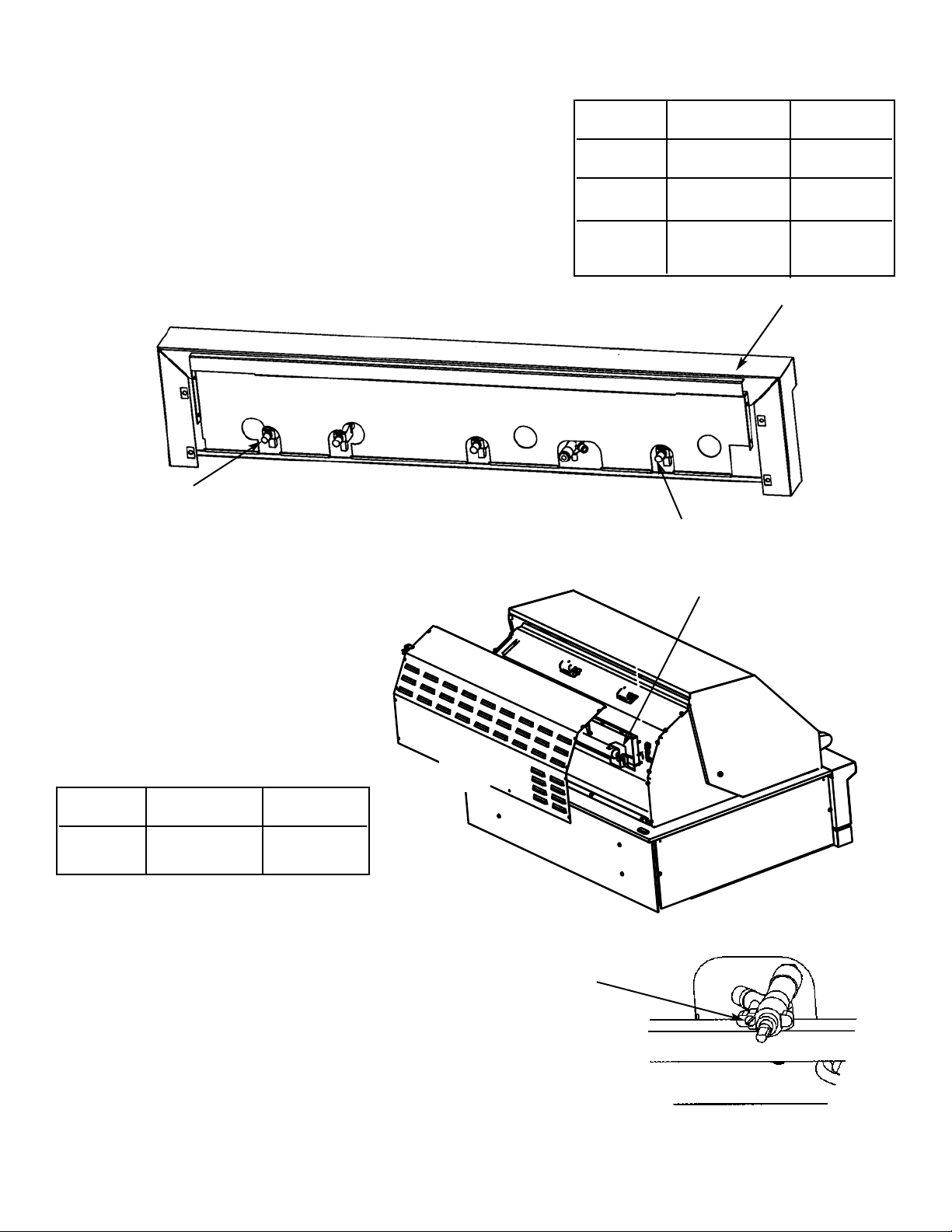
To convert the rotissiere infrared burner:
1. Remove the back cover from
the unit to expose the orifice
hood to the infrared burner.
2. Remove the gas orifice hood
located on the grill.
3. Replace with the gas orifice
hood supplied in the
conversion kit.
4. Replace the back cover.
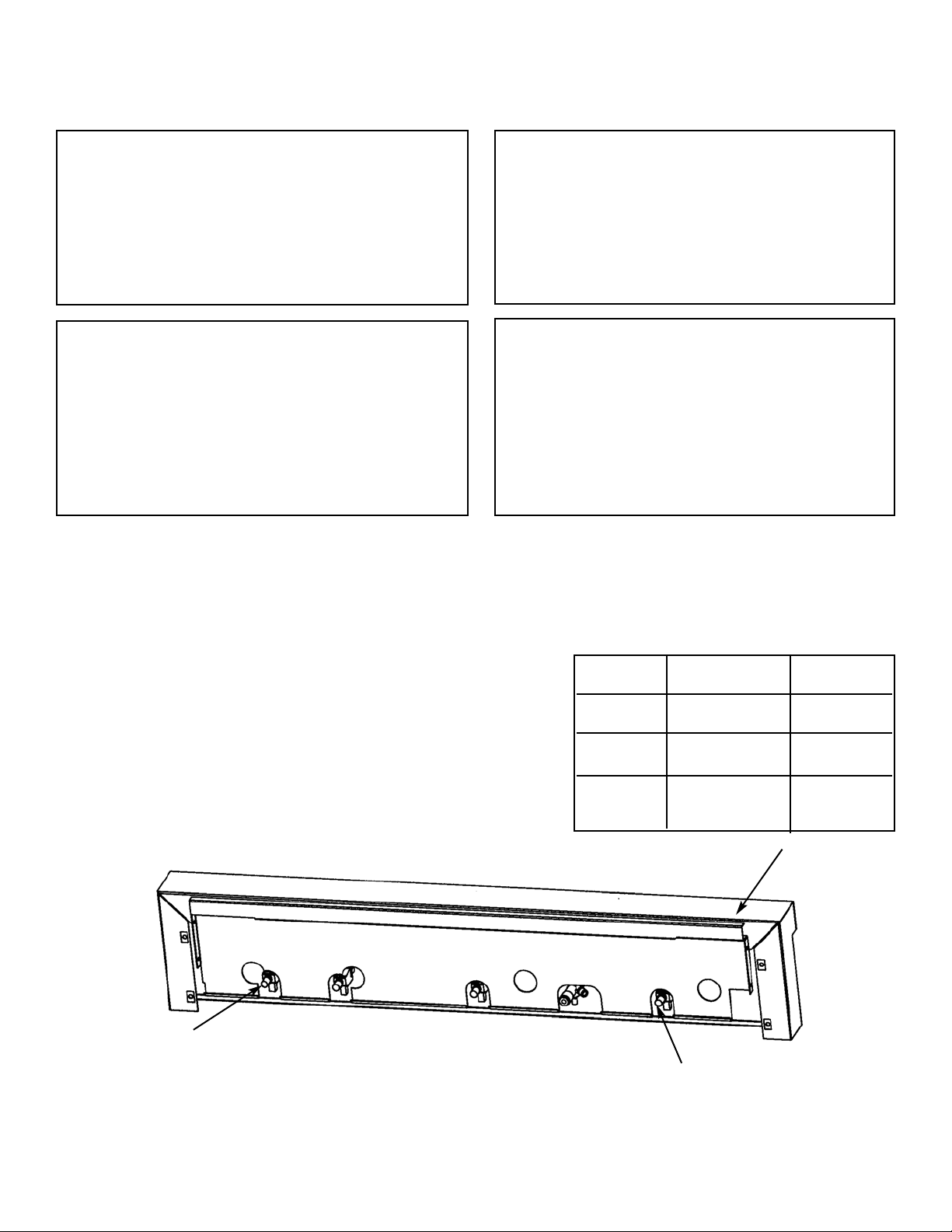
Orifice hood
Back
Cover
Landing ledge
Grill Burner /
Side Burner
Orifice hoods
Rear side
of control
panel
Smoker Burner
Orifice hood
To convert grill burners, side burner and smoker burner:
1. Remove all grates, flavor generators and stainless steel burners
from the unit.
2. Look into the burner box back toward the control panel in order
to located the orifice hoods. Remove the gas orifice hoods
located on the grill burner valves.
3. Replace the orifice hoods with the correct gas orifice hoods
supplied in the conversion kit. (See chart)
4. Replace the stainless steel burners, flavor generators and
grates.
NOTE:
For installation in areas with altitudes greater than 2000 feet, the orifices must be derated at 4% for every
1000 feet above 2000 feet.
3
Natural LP/Propane
Orifice Hood Orifice Hood
Natural LP/Propane
Orifice Hood Orifice Hood
Grill
Burners (3) - 40 (3) - #54
Smoker
Burners (2) - #51 (2) - #62
Side
Burners (2) - #49 (2) - #57
VGBQ/CVGBQ T/T1/E AND 100/300 SERIES CONVERSIONS
To check LP/Propane to Natural Conversion of the rotissiere
infrared burner:
Ignite the rotissere burner and set it to low. If the burner will not
hold a flame, it will be necessary to adjust the low setting. Remove
the control panel to expose the rotissiere safety valve. Using a small
flat head screwdriver turn the adjustment screw counterclockwse.
Visually check the flame. When the burner is able to hold a flame
on the low setting, the setting is complete. Replace the control
panel.
adjustment
screw
(1) or (2) - #48 (1) or (2) - #57
Infrared
Burner
Depending on grill model
4
E1NKVGBQ Conversion Kit Part List
(1) Natural Regulator Assembly
(1) Natural Orifice Kit
(3) #37 Grill Burner Orifices
(2) #49 Smoker Burner Orifice
(2) #49 Side Burner Orifies
(2) #48 Infrared Burner Orifices
(1) Natural Conversion Kit Label
E1LPKVGBQ Conversion Kit Part List
(1) LP/Propane Regulator Assembly
(1) LP/Propane Orifice Kit
(4) #52 Grill Burner Orifices
(2) #57 Smoker Burner Orifice
(3) #57 Side Burner/Infrared Burner Orifices
(1) LP/Propane Conversion Kit Label
E1NKVGIQ Conversion Kit Part List
(1) Natural Regulator Assembly
(1) Natural Orifice Kit
(2) #37 Grill Burner Orifices
(2) #49 Smoker Burner Orifice
(2) #49 Side Burner Orifies
(2) #48 Infrared Burner Orifices
(1) TruSear
TM
Infrared Burner Valve
(1) Natural Conversion Kit Label
E1LPKVGIQ Conversion Kit Part List
(1) LP/Propane Regulator Assembly
(1) LP/Propane Orifice Kit
(2) #52 Grill Burner Orifices
(2) #57 Smoker Burner Orifice
(3) #57 Side Burner/Infrared Burner Orifices
(1) TruSear
TM
Infrared Burner Valve
(1) LP/Propane Conversion Kit Label
Depending on the grill model, all orifices in the kit may not be used.
FOR E1/E2 AND 500 SERIES GRILLS
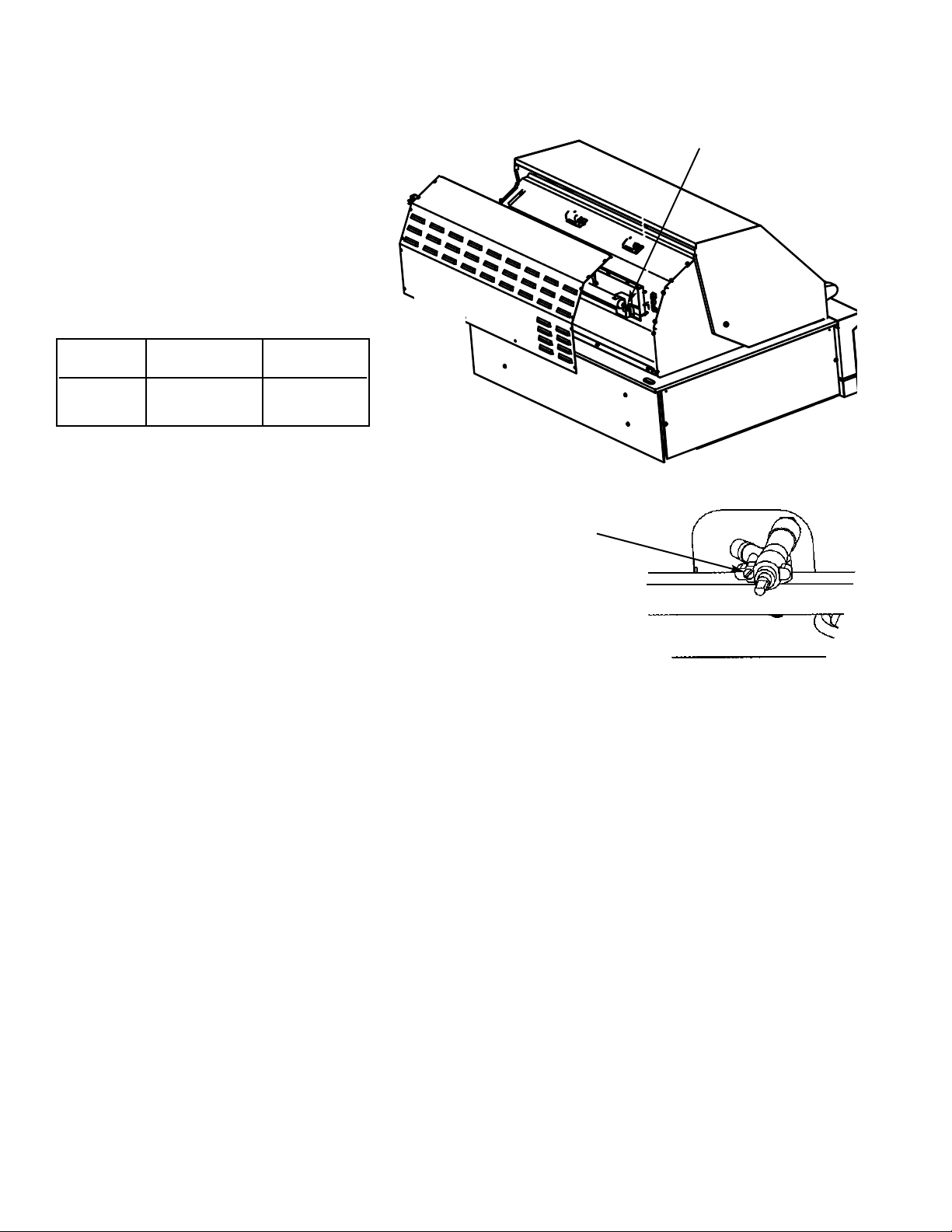
Landing ledge
Grill Burner /
Side Burner
Orifice hoods
Rear side
of control
panel
Smoker Burner
Orifice hood
To convert grill burners, side burner and smoker burner:
1. Remove all grates, flavor generators and stainless steel
burners from the unit.
2. Look into the burner box back toward the control panel in
order to located the orifice hoods. Remove the gas orifice
hoods located on the grill burner valves.
3. Replace the orifice hoods with the correct gas orifice hoods
supplied in the conversion kit. (See chart)
4. Replace the stainless steel burners, flavor generators and
grates.
Natural LP/Propane
Orifice Hood Orifice Hood
Grill
Burners (4) - #37 (4) - #52
Smoker
Burners (2) - #49 (2) - #57
Side
Burners (2) - #49 (2) - #57
VGBQ/CVGBQ E1/E2 500 SERIES CONVERSIONS
5
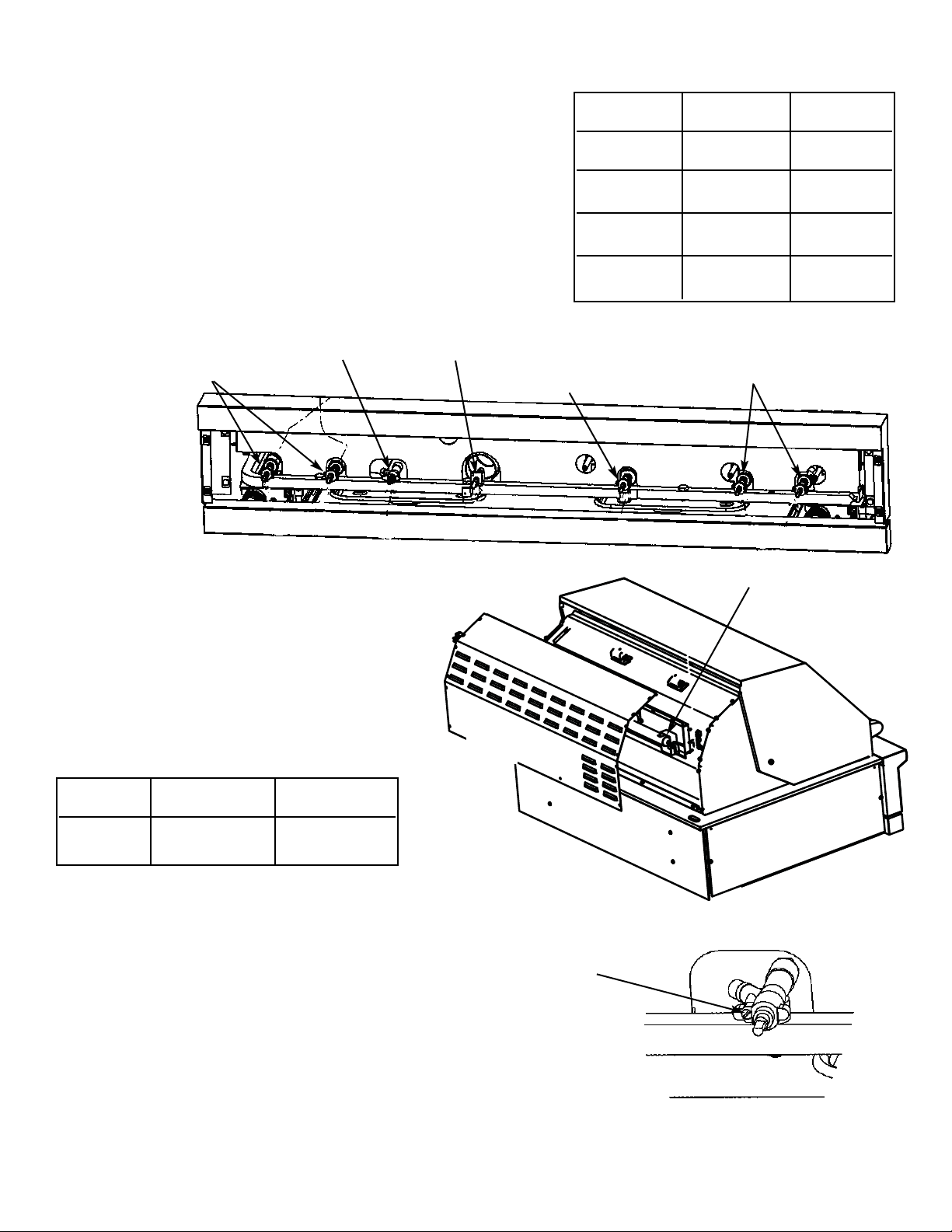
To convert the rotissiere infrared burner:
1. Remove the back cover from
the unit to expose the orifice
hood to the infrared burner.
2. Remove the gas orifice hood
located on the grill.
3. Replace with the gas orifice
hood supplied in the
conversion kit.
4. Replace the back cover.
Orifice hood
Back
Cover
NOTE:
For installation in areas with altitudes greater than 2000 feet, the orifices must be derated at 4% for every
1000 feet above 2000 feet.
Natural LP/Propane
Orifice Hood Orifice Hood
To check LP/Propane to Natural Conversion of the rotissiere
infrared burner:
Ignite the rotissere burner and set it to low. If the burner will not
hold a flame, it will be necessary to adjust the low setting. Remove
the control panel to expose the rotissiere safety valve. Using a small
flat head screwdriver turn the adjustment screw counterclockwse.
Visually check the flame. When the burner is able to hold a flame
on the low setting, the setting is complete. Replace the control
panel.
adjustment
screw
(1) or (2) - #48 (1) or (2) - #57
Infrared
Burner
Depending on grill model
6
To convert the rotissiere infrared burner:
1. Remove the back cover from the unit to
expose the orfice hood to the infrared
burner.
2. Remove the gas orifice hood located on
the grill.
3. Replace with the gas orifice hood supplied
in the conversion kit.
4. Replace the back cover
Orifice hood
Back
Cover
NOTE:
For installation in areas with altitudes greater than 2000 feet, the orifices must be derated at 4% for every
1000 feet above 2000 feet.
Natural LP/Propane
Orifice Hood Orifice Hood
Infrared (1) or (2) - #48 (1) or (2) - #57
Burner (20”)
To check LP/Propane to Natural Conversion of the rotissiere
infrared burner:
With the control panel off, Ignite the rotissere burner and set it to
low. If the burner will not hold a flame, it will be necessary to adjust
the low setting. Remove the control panel to expose the rotissiere
safety valve. Using a small flat head screwdriver turn the adjustment
screw counterclockwse. Visually check the flame. When the burner
is able to hold a flame on the low setting, the setting is complete.
Replace the control panel.
adjustment
screw
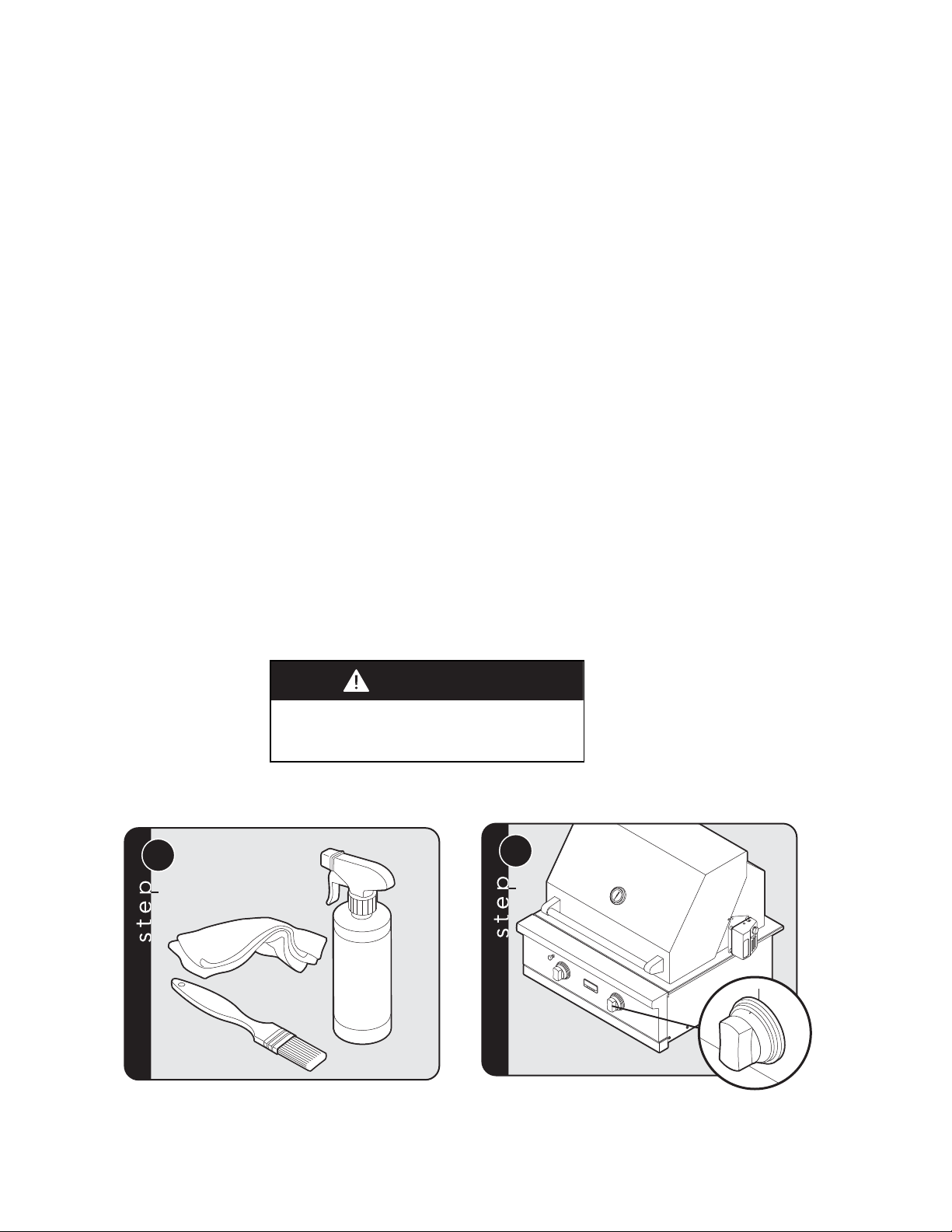
To convert grill burners, TruSear
TM
burner, side burner and smoker burner:
1. Remove all grates, flavor generators and stainless steel burners from the
unit except for ones over TruSear
TM
infrared burner.
2. Remove control panel to expose the burner valves. Remove the orifice
hoods located on the valve for the grill burners, side burners, and
smoker burner.
3. Replace the orifice hoods with the correct gas orifice hoods supplied in
the conversion kit for the grill burners, side burners, and smoker burners.
The complete burner valve will have to be replaced on the TruSear
TM
infrared burner. (See chart)
4. Replace the stainless steel burners, flavor generators and grates.
Natural LP/Propane
Orifice Hood Orifice Hood
Grill
Burners (2) - #37 (2) - #52
Smoker
Burners (2) - #49 (2) - #57
Side
Burners (2) - #49 (2) - #57
TruSear
TM
Infrared Burner (1) - #35 (1) - #51
VGIQ/CVGIQ E1/E2 AND 500 SERIES CONVERSIONS
Side Burner
Valves
(if applicable)
Rotissiere
Burner Valve
Grill
Burner Valve
Smoker
Burner Valves
TruSear
TM
Burner Valve
Front of unit
with control
panel removed
7
Natural or LP/Propane Connection
Natural Fixed Connection: Standard Residential 1/2” gas service line - 1/2” NPT male with 7/8” flare adapter.
4.0” W.C.P. Operating Pressure / 6” to 10” W.C.P. Supply Pressure
LP/Propane Fixed Connection: Standard Residential 1/2” gas service line - 1/2” NPT male with 3/8” flare adapter.
10.0” W.C.P. Operating Pressure / 11” to 14” W.C.P. Supply Pressure
LP/Propane Cylinder Connection: 1/2” NPT male with 3/8” flare adapter
10.0” W.C.P. Operating Pressure
The installer must check the supply pressure and operating pressure. To check operating pressure, remove one burner and
hook a manometer to the orifice hood. Ignite one of the remaining burners and turn the valve for the removed burner to high.
Read the pressure on the manometer.
Check with your local gas utility company or with local codes for instructions on installing gas supply lines. Be sure to check on
type and size of run, and how deep to bury the line. If the gas line is too small, the unit will not function properly. Any joint
sealant used must be an approved type and be resistive to the actions of natural gas.
1
OFF
2
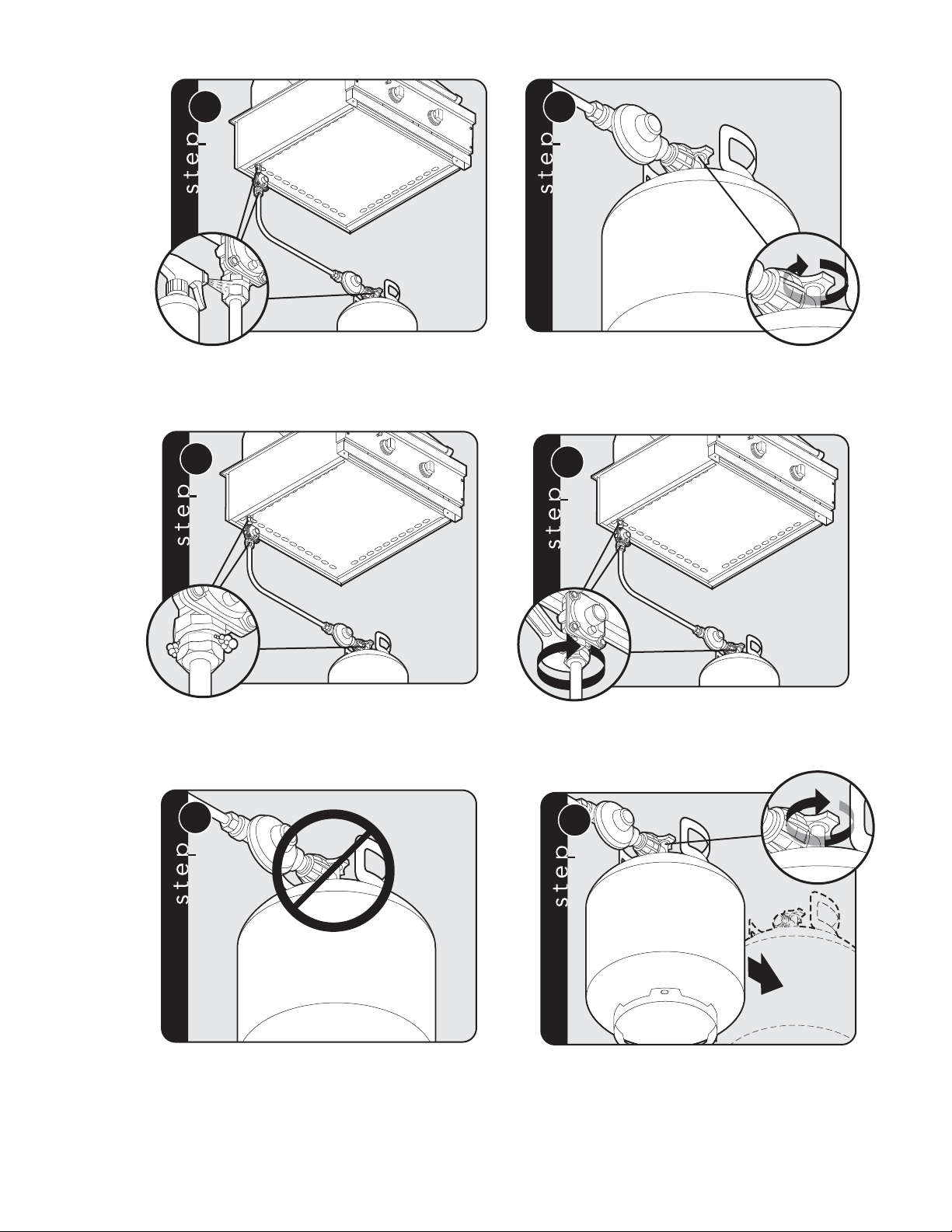
Make a soap solution of one part liquid detergent and
one part water. You will need a spray bottle, brush or
towel to apply the solution to the fittings.
Note: For LP/Propane units, check with a full cylinder.
Check that all control knobs are in the “OFF” position.
Although all gas connections on the grill are leak tested at the factory prior to shipment, a complete gas
tightness check must be performed at the installation due to possible mishandling in shipment or excessive
pressure unknowingly being applied to the unit. Periodically check the whole system for leaks, or immediately
check if the smell of gas is detected.
• Do not smoke while leak testing.
• Extinguish all flames.
• Never leak test with an open flame
CAUTION
Before placing into operation, always check for
gas leaks with a soapy water solution. DO NOT
USE AN OPEN FLAME TO CHECK FOR LEAKS.
Leak Testing
8
5
2
8
1
Bubbling bubbles in the soap solution indicates that a
leak is present.
Stop a leak by tightening the loose joint or by
replacing the faulty part with a replacement part
recommended by the manufacturer.
7
6
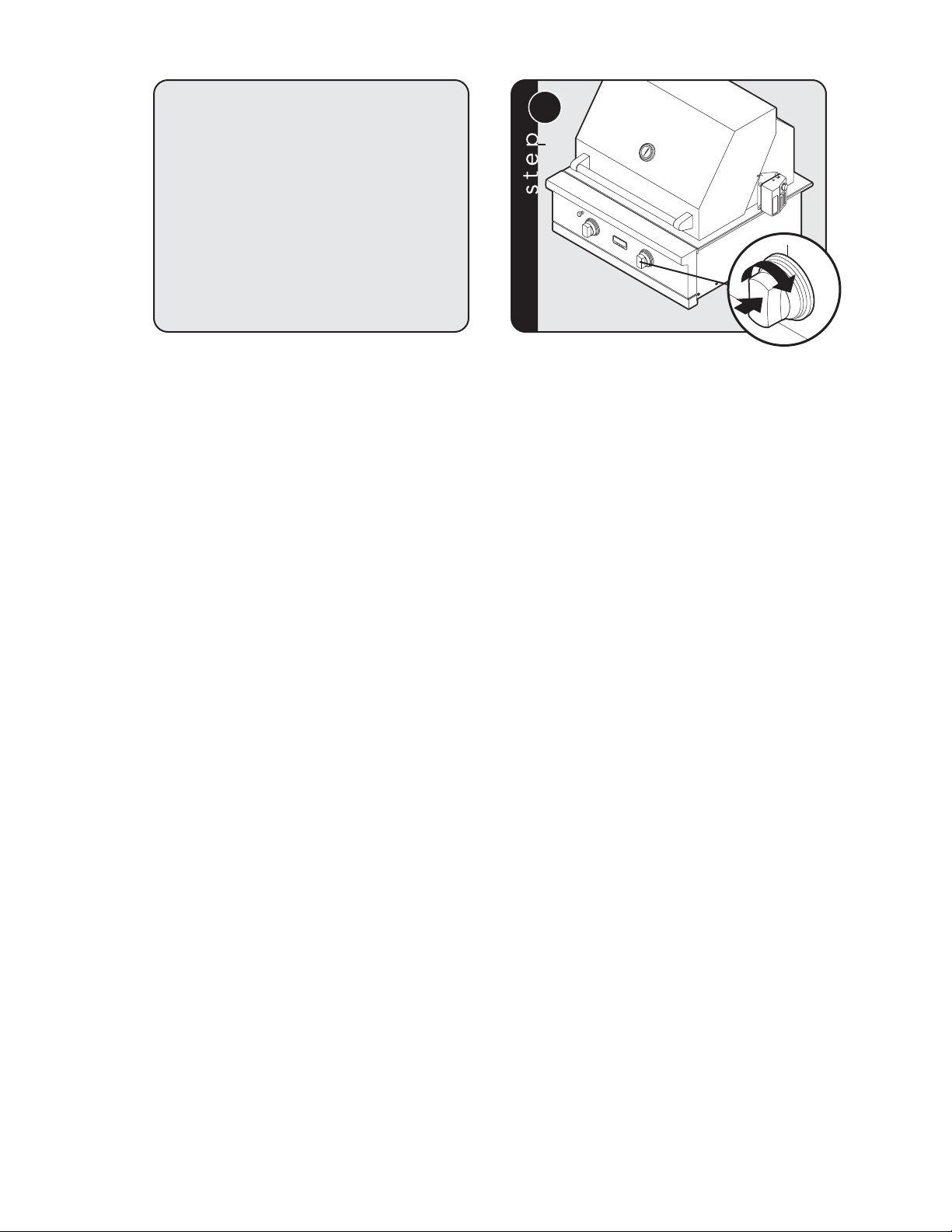
Do not attempt to repair the cylinder valve if it should
become damaged. The cylinder must be replaced.
If you are unable to stop a leak, shut off the gas
at the cylinder valve. Remove the cylinder from the grill.
4
Apply the soap solution to fittings.
Turn cylinder valve knob counter clockwise one
turn to open.
3
9
Call an authorized gas
appliance service technician
or LP/Propane gas dealer.
Do not use the grill until
the leak is corrected.
OFF
1
2
9
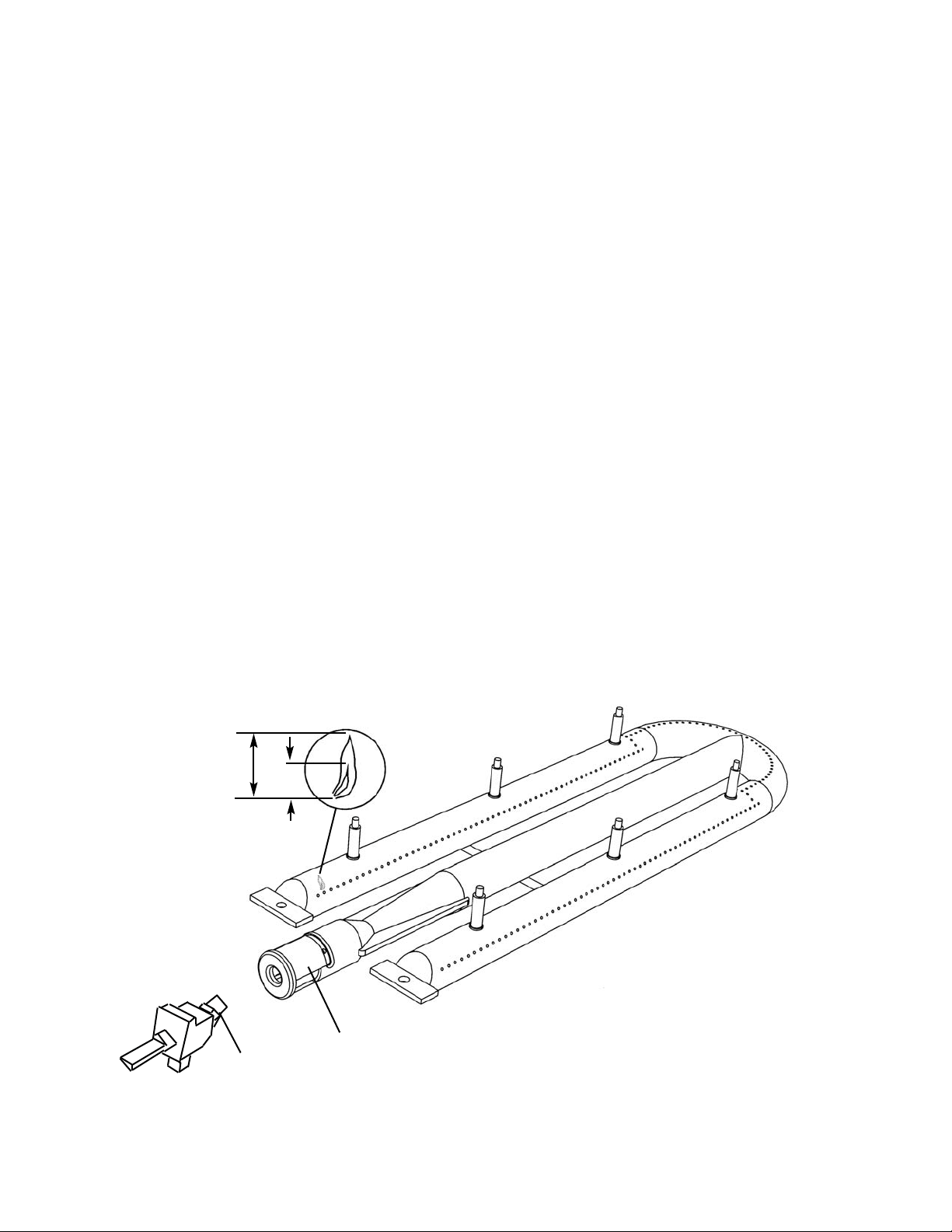
After checking for leaks, push in and turn any control
knob to release the pressure in the hose and manifold.
Turn off the control knob.
10
BURNER ADJUSTMENT
Each burner is tested and adjusted at the factory prior to shipment; however, variations in the local gas supply may make it
necessary to adjust the burners. The flames of the burners (except the rotisserie infrared and TruSear
TM
infrared burner) should
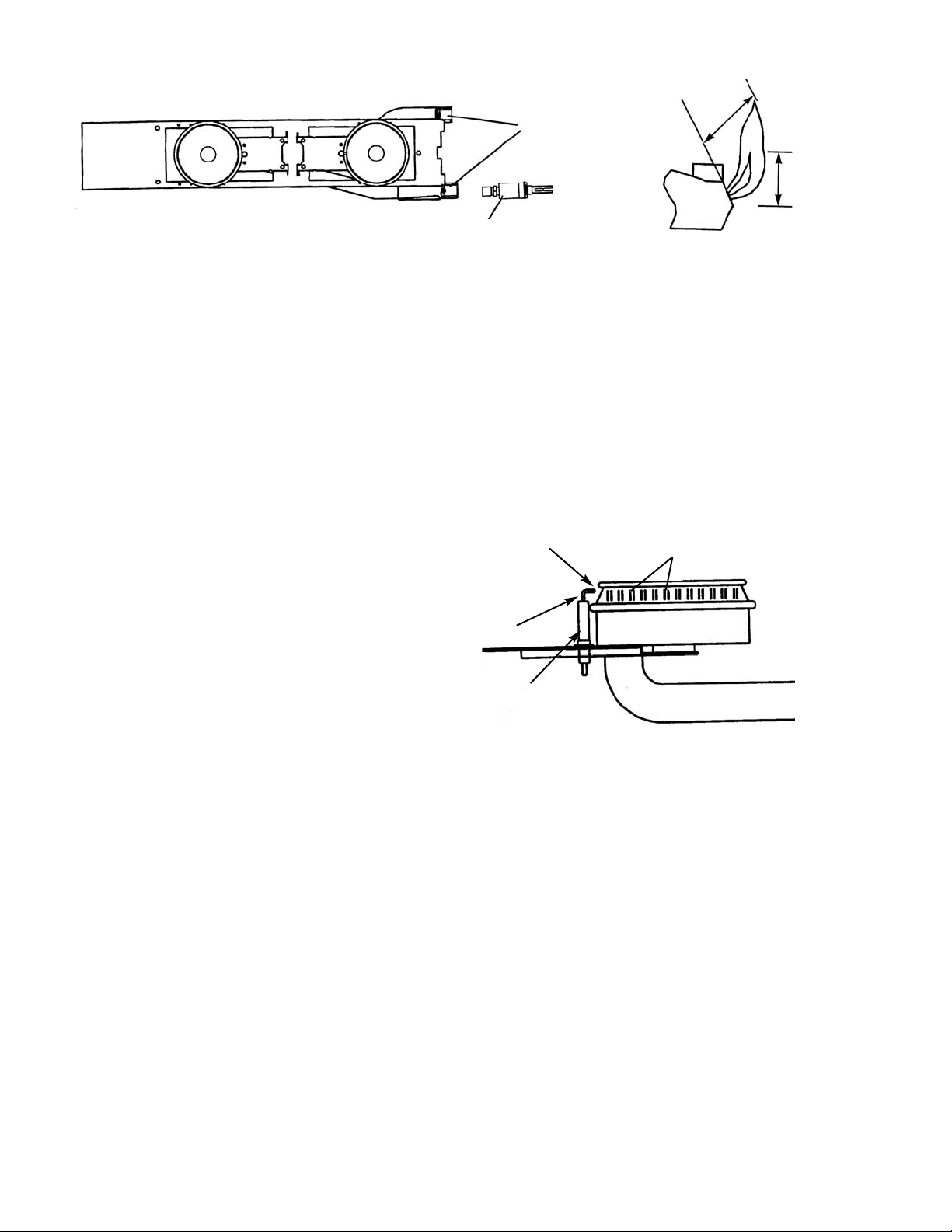
be visually checked and compared with Fig. 1, Fig. 2, and Fig. 3.
Flames should be blue and stable with no yellow tips, excessive noise or lifting. If any of these conditions exist, check if the air
shutter or burner ports are blocked by dirt, debris, spider webs, etc. With a proper flame height, adjust the air shutter to
obtain a blue flame with no yellow tipping that sits on the burner at the burner ports. The air shutter is locked in place by a set
screw which must be loosened prior to lighting the burner for adjustments.
To access the air shutter on the grill burners and smoker burner, remove the valve panel. To access the air shutter on the side
burners, remove the grates, burner bowls, and grate support. With a screw driver, loosen the lock-screw on the face of the air
shutter. Light the burner and adjust according to the directions below.
1. If the flame is yellow, turn the air shutter counter clockwise to allow more air to the burner.
2. If the flame is noisy and lifting away from the burner, turn the air shutter clockwise to reduce the amount of air to
the burner.
Once adjusted, turn the burner off, tighten the set screw on the air shutter, replace the valve panel for the grill burners and the
grate support, burner bowls, and grates for the side burners.
To ensure proper installation of the grill burners, side burners, and smoker burner:
1. Slide opening in air shutters over the orifice located in the front of the grill.
2. For the smoker burner, secure back of the burner by placing over screw slot on rear of grill and replacing screw.
INITIAL IGNITION OF BURNERS
All burners are tested before leaving the factory. Field adjustments may be necessary for proper mixture of gas and air
for proper operation. When the grill is connected to the gas service, it should be adjusted by a qualified technician.
For lighting instructions, refer to the Outdoor Gas Grill Use and Care Manual.
Orifice
1/2”
(1.3 cm)
3/8”
(0.95 cm)
Air
Shutter
Fig. 1
GRILL BURNER
11
Air Shutter
Orifice
1-1/2”
(3.8 cm)
Spark Ignitor Adjustment
Occasionally a burner may not ignite within a few seconds after
turning the appropriate control knob counter-clockwise. To adjust
the spark ignitor, use a small needle nose plier to turn the metal
head of the ignitor towards the port (opening) on the burner. DO
NOT TURN THE IGNITOR BY THE CERAMIC BASE. This could
cause damage to the spark ignitor.
Metal head
on ignitor
Ports (openings)
on burner
Ceramic Base
Fig. 3
SIDE BURNER
(If applicable)
Distance between
ignitor and burner
port - 1/8” (0.32 cm)
3/8”
(0.95 cm)

Viking Range, LLC
111 Front Street
Greenwood, Mississippi 38930 USA
(662) 455-1200
For product information,
call 1-888-845-4641
F21028C EN
(
020117)