
2 LB
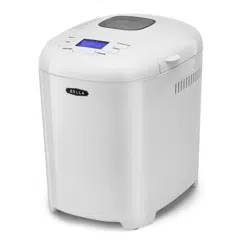
BREAD MAKER
Instruction Manual and Recipe Guide

Thank You for your purchase
Register & sign up for special
announcements and trendy recipes!
Tell us what you think!
Rate, review or ask us a question.
@bellahousewares.com
#getinspired
BellaLife BellaLifestyle

Important Safeguards ......................................................................................................2-3
Additional Important Safeguards ...................................................................................... 4
Notes on the Plug ................................................................................................................5
Notes on the Cord ................................................................................................................5
Plasticizer Warning ..............................................................................................................5
Electric Power .......................................................................................................................6
10 Minute Power Failure Backup .......................................................................................6
Getting to Know Your Bread Maker .................................................................................7
Control Panel ........................................................................................................................ 8
15 MENU Programs ......................................................................................................... 8-9
Program Cycles .................................................................................................................. 10
Program Cycles Time Chart ............................................................................................. 11
Before Using for the First Time ....................................................................................... 12
Operating Instructions ................................................................................................. 12-13
13 Hour Delay Start Timer ................................................................................................ 13
Hints for Best Results ........................................................................................................14
Preparing Bread and Dough .............................................................................................15
Measure Accurately ...........................................................................................................15
Yeast / Yeast Conversion Chart ........................................................................................16
Flour .....................................................................................................................................16
Other Bread Ingredients .............................................................................................. 17-18
Gluten-Free Ingredients ............................................................................................... 18-19
Bread Baking in High Altitudes ........................................................................................ 20
Freezing Baked Bread ........................................................................................................20
Freezing Dough ..................................................................................................................20
User Maintenance Instructions ........................................................................................ 20
Care & Cleaning Instructions ..................................................................................... 20-21
Storing Instructions ........................................................................................................... 22
Trouble Shooting ..........................................................................................................22-23
Water Conversion Chart ....................................................................................................23
Recipes .......................................................................................................................... 24-31
Warranty ....................................................................................................................... 32-33
TABLE OF CONTENTS

2
IMPORTANT SAFEGUARDS
When using electrical appliances, basic safety precautions should always
be followed including the following:
1. READ ALL INSTRUCTIONS.
2. Do not touch hot surfaces; carry the unit by the housing.
3. Always use oven mitts when handling hot material, and allow
metal parts to cool before cleaning. Allow the bread maker to cool
thoroughly before putting on or taking off parts.
4. Unplug the bread maker from wall outlet when unit is not in use and
before cleaning. Allow the bread maker to cool down completely
before assembly or disassembly.
5. To protect against risk of electric shock, do not immerse the appliance
or plugs in water or other liquids.
6. Close supervision is always necessary when this or any appliance is
used near children or incapacitated persons.
7. This appliance is not intended for use by persons (including children)
with reduced physical, sensory or mental capabilities, or lack of
experience and knowledge, unless they have been given supervision
or instruction concerning use of the appliance by a person responsible
for their safety.
8. Children should be supervised to ensure that they do not play with
the appliance. Do not operate this or any appliance with a frayed
or damaged cord or plug, or after the appliance malfunctions
or is dropped or has been damaged in any manner. Contact the
manufacturer at their customer service telephone number for
information on examination, repair, or adjustment.

3
9. Do not let the cord hang over the edge of a table or counter or touch
hot surfaces. Do not allow anything to rest on the power cord.
Do not place plug or cord where people may walk or trip over it.
10. Keep power cord away from the hot surface of this bread maker.
11. Do not place on an unsteady or cloth-covered surface.
12. Avoid contact with moving parts.
13. Do not use attachments not recommended by the manufacturer.
They may cause re, electric shock or injury or may damage the unit
and void the warranty.
14. Do not use outdoors or for commercial purposes.
15. Do not place the appliance near a hot gas or electric burner, or in
a heated oven.
16. Do not put any ammable objects on the hot surface of this
bread maker.
17. Place this bread maker a minimum of 6 inches away from any wall
or other object.
18. Do not use this bread maker for other than its intended use.
19. Before unplugging, press and hold the START/STOP button for 1 to
3 seconds to STOP operation; then grip plug and remove from wall
outlet. Never pull on the cord.
20. Appliances are not intended to be operated by means of an external
timer or separate remote-control system.
FOR HOUSEHOLD USE ONLY
SAVE THESE INSTRUCTIONS

4
ADDITIONAL IMPORTANT
SAFEGUARDS
CAUTION HOT SURFACES: This appliance generates heat and escaping
steam during use. Proper precautions must be taken to prevent the risk
of burns, res, orother injury to persons or damage to property.
CAUTION: During use, internal parts of the bread maker and the area
around the steam vent are HOT. Keep out of reach of children to avoid
possible injury.
1. A person who has not read and understood all operating and safety
instructions is not qualied to operate this appliance. All users of this
appliance must read and understand this instruction manual before
operating or cleaning this appliance.
2. If this appliance falls or accidentally becomes immersed in water,
unplug it from the wall outlet immediately. Do not reach into
the water!
3. When using this appliance, provide adequate air space (at least
6 inches) above and on all sides for air circulation. Do not operate this
appliance under a wall cabinet, while it is touching or near curtains,
wall coverings, clothing, dishtowels or other ammable materials.
4. If this appliance begins to malfunction during use, immediately
unplug the cord. Do not use or attempt to repair a malfunctioning
appliance!
5. The cord to this appliance should be plugged into a 120V AC
electrical wall outlet.
6. Do not use this appliance in an unstable position.

5
Notes on the Plug
This appliance has a polarized plug (one blade is wider than the other).
To reduce the risk of electric shock, this plug will t in a polarized outlet
only one way. If the plug does not t fully into the outlet, reverse the
plug. If it still does not t, contact a qualied electrician. Do not modify
the plug in any way.
Notes on the Cord
A. A short power-supply cord (or detachable power-supply cord) is to
be provided to reduce risks resulting from becoming entangled in or
tripping over a longer cord.
B. Longer detachable power-supply cords or extension cords are
available and may be used if care is exercised in their use.
C. If a long detachable power-supply cord or extension cord is used:
1. The marked electrical rating of the detachable power-supply cord or
extension cord should be at least as great as the electrical rating of
the appliance;
2. If the appliance is of the grounded type, the extension cord should
be a grounding- type 3-wire cord; and
3. The longer cord should be arranged so that it will not drape over
the counter top or table top where it can be pulled on by children or
tripped over.
Plasticizer Warning
CAUTION: To prevent Plasticizers from migrating to the nish of the
counter top or table top or other furniture, place NON-PLASTIC coasters
or place mats between the appliance and the nish of the counter top
or table top. Failure to doso may cause the nish to darken; permanent
blemishes may occur or stains can appear.

6
Electric Power
If the electrical circuit is overloaded with other appliances, your appliance
may not operate properly. It should be operated on a separate electrical
circuit from otherappliances.
10 Minute Power Failure Backup
1. In case of a power outage, the stage of bread-making Cycle is stored
into memory. If the power is restored within 10 minutes time, the
bread maker will automatically continue with the baking cycle.
2. If the power outage exceeds 10 minutes, discard bread pan contents
and begin again.
NOTE: If the dough is no further than the Kneading Cycle when the power
is disrupted, press the START/STOP button to re-START the Program from
the beginning .
7
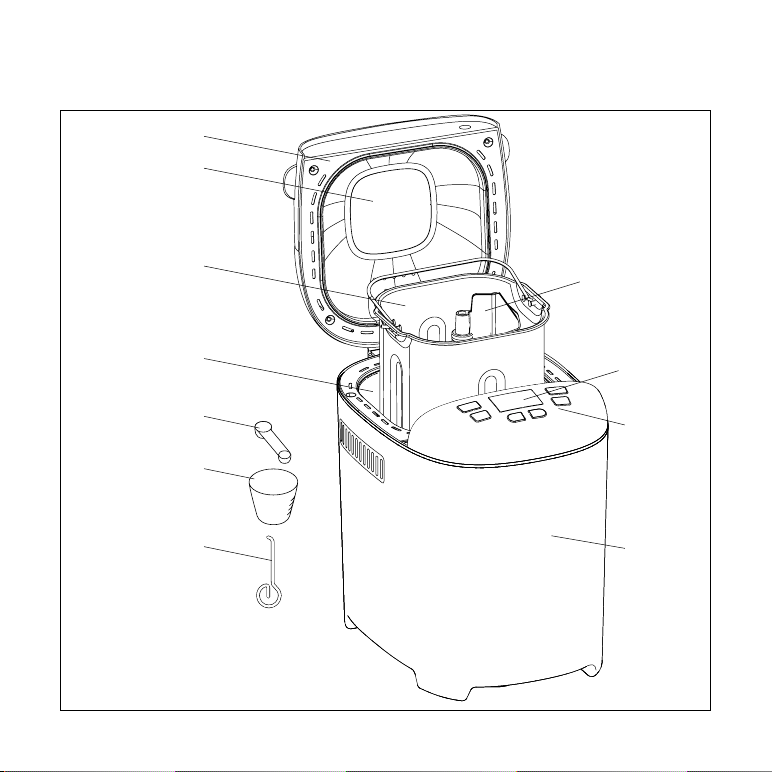
Getting to Know Your Bread Maker
Product may vary slightly from illustration
Figure 1
Lid
Viewing Window
Power Cord with
Polarized Plug
(not shown)
Heating Element
(not shown)
Baking Chamber
Measuring Spoon
Measuring Cup
Bread Pan/Paddle
Hook
Non Stick
Removable
Bread Pan with
Handle
Non Stick
Removable
Kneading
Paddle
LCD Display
Control
Panel
Housing

8
Control Panel
1. LCD Display: Displays active Program, active Cycle, crust COLOR and LOAF size. Also view
Delay Start Time.
2. MENU Button: Press button to advance to next Program. Refer to the Program list above
the LCD display for options.
3. TIME Button: Press to advance time in 10 minute increments.
4. CYCLE Button: Use in conjunction with the TIME button to customize Program and
Cycle times in Home made mode
5. LOAF Button: Press to select a 2 lb./900g or 1.5 lb./700g LOAF. This button is not active
for QUICK, DOUGH, KNEADING, CAKE, SPECIALTY, JAM, YOGURT, BAKE, and HOME
MADE Programs.
6. COLOR Button: Press to select Light, Medium or Dark COLOR crust. This button is not
active for DOUGH, KNEADING JAM, YOGURT Programs.
7. START/STOP Button: Press to START, STOP or PAUSE the selected Program.
• A short beep will be heard and the dots on the LCD screen will ash as the
Program STARTS.
NOTE: NO buttons are active except the START/STOP button after any Program has
started.
•
To STOP the Program at any time, press and hold the START/STOP button until a beep
is heard; the bread maker will turn OFF.
•
Press START/STOP button once to PAUSE the active Program. The Cycle TIME will ash
on the LCD. If the START/STOP button is pressed again or within 10 minutes without
touching any other button, the Program Cycle will continue.
15 MENU Programs
Use the MENU button to set any of 15 different Programs. Each time the MENU button is
pressed, a beep will sound and the Program will advance. The desired Program number will
be appear prominently on the left side of the display.
1. BASIC: Uses primarily all-purpose or bread our.
2. FRENCH: French breads traditionally lack sugars or large amounts of fat, they tend to
be lighter in color and have a wonderful, crispy crust.
3. WHOLE WHEAT: Whole-wheat bread is a yeast bread that is made with a signicant
portion of whole-wheat our (50% or more). Using whole wheat our produces more
avorful and healthful brown to dark brown loaves. Whole wheat bread tends to be denser
than 100% white breads.

9
4. QUICK: Always use rapid rise yeast or the bread will not rise and bake properly.
Recipes may be modied by replacing standard yeast with an equal or larger amount
of rapid rise yeast.
NOTE: The QUICK Program cannot be used with gluten-free recipes.
5. SWEE T: Specically designed to bake breads with large amounts of fat, sugar, eggs or
cheese. During the initial mixing, ingredients may tend to gather in the corners of the
bread pan. Use a rubber spatula to avoid clumps.
6. GLUTEN-FREE: Since gluten is found in most ours used in traditional bread baking,
the ingredients to create gluten-free breads are unique. While they are “yeast breads”,
the doughs are generally wet and often have a batter-like consistency. It is also important
not to over-mix or over-knead gluten-free doughs.
7. DOUGH: This Program is ideal for pizza dough and allows for the preparation of artisan
doughs. It mixes ingredients, Kneads and takes the dough through the 2 Rise Cycles.
Use almost any dough recipe (except gluten-free). Remove dough and use for making
braided breads, rolls, pizza, etc.
8. KNEADING: Knead doughs only. No Rise Cycles.
9. CAKE: Batter-type quick breads achieve leavening from baking powder, baking soda and
eggs rather than yeast. Add-ins must be added at the very beginning with other basic
ingredients. If the nal cake is too moist, allow the cake to Keep Warm for 10 to 15 minutes
after baking is complete.
10. SANDWICH: The SANDWICH Program produces a light textured bread with a thinner crust.
11. SPECIALTY: Bakes 2 lb. loaves only. Use for bread types that are required in a shorter time.
Breads baked using the SPECIALTY setting are smaller, with a dense texture.
12. JAM: Prepare fresh homemade jams, marmalades and compotes. Mixing will start when
the bread chamber is heated, about 10 minutes into the Program.
13. YOGURT: Use organic whole fat milk (4 1/4 cups/1000 ml) and 4 tablespoons of plain
yogurt to prepare perfect homemade yogurt with no additives or preservatives.
IMPORTANT: The bread pan must be perfectly clean before preparing homemade yogurt.
IMPORTANT: NEVER use metal utensils when preparing yogurt.
14. BAKE: Use to bake store-bought doughs or to extend BAKE time if needed.
15.
HOMEMADE: Make the recipe your own! Use the CYCLE and TIME buttons to adjust for
each Cycle: Knead 1: 6-14 min. Rise 1: 20-60 min. Knead 2: 5-20 min. Rise 2: 5-40 min.
Rise 3: 0-60 min. Bake: 0-80 min. Keep Warm: 0-60 min.

10
Program Cycles
1. Knead: Most bread types use 2 Knead Cycles. The rst Knead Cycle quickly mixes the
main ingredients. The second Knead Cycle is longer, and continues the mixing process.
The dough is “punched down” before the longer Cycle begins.
2. Rise: Rise Cycles help to ensure the perfect consistency of all yeast breads. During the
Rise Cycles, your bread maker will appear to be inactive. The display will conrm the
bread maker is in Rise Cycle.
3. Bake: This bread maker will consistently regulate both baking time and temperature
according to the menu function selected.
4. Keep Warm: After completion of the chosen Program; when the LCD time counts down
to 0:00, 10 beeps will signal the end. The bread maker will advance to a 60 minute
Keep Warm Cycle. Bread may be removed at any time by pressing the START/STOP
button.
5. If another loaf of bread or another Program is to be used after baking the rst loaf,
the bread maker must be cooled down sufciently before using.
Error Display
1. The error: H:HH will appear and 5 beeps will sound when the bread baking chamber is too
hot. Open the lid for 10 to 20 minutes and allow the bread maker to cool down.
2. The error: L:LL will appear and 5 beeps will sound when the bread baking chamber is
too cold. Open the lid for 10 to 20 minutes and allow the bread maker to come to room
temperature.
11
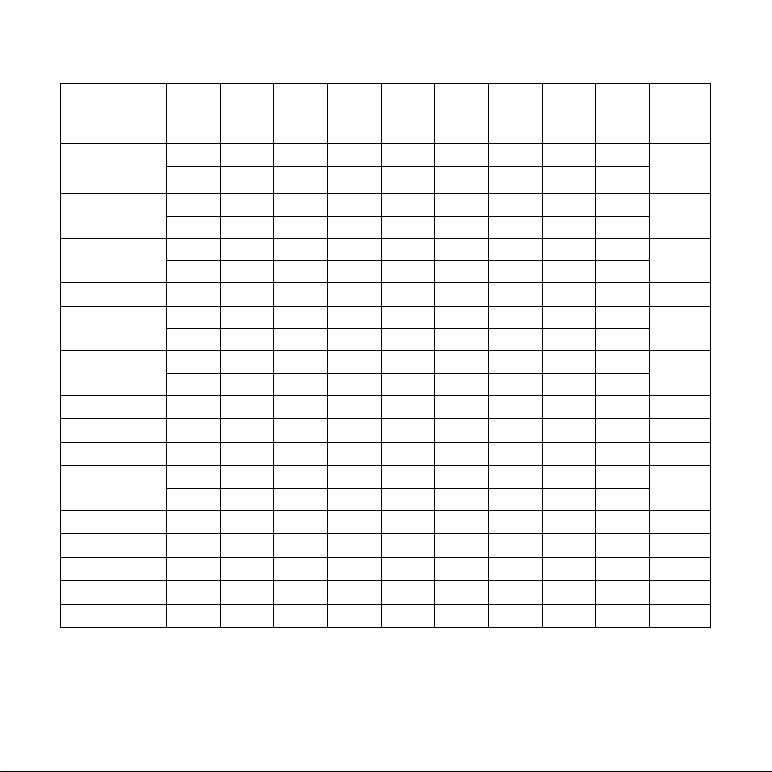
Program/Cycle Time Chart
*Yogurt - The default time is set to 8 hours. Press the loaf size button to increase the time by
30 minute intervals from anywhere from 6 to 12 hours.
PROGRAM
LOAF
SIZE
TOTAL
TIME
(hours)
KNEAD
1
(min)
RISE
1
(min)
KNEAD
2
(min)
RISE
2
(min)
RISE
3
(min)
BAKE
(min)
KEEP
WARM
(min)
DELAY
TIMER
(hours)
1. BASIC
1.5 LB 2:53 11 20 17 25 40 60 60
13:00
2.0 LB 3:00 12 20 18 25 40 65 60
2. FRENCH
1.5 LB 3:40 18 40 22 22 45 65 60
13:00
2.0 LB 3:50 20 40 25 25 45 70 60
3. WHOLE
WHEAT
1.5 LB 3:32 11 25 21 21 60 60 60
13:00
2.0 LB 3:40 12 25 23 23 60 65 60
4. QUICK
2:10 12 10 13 13 25 70 60 13:00
5. SWEET
1.5 LB 2:50 12 5 23 23 40 60 60
13:00
2.0 LB 2:55 12 5 23 23 40 65 60
6. GLUTEN
FREE
1.5 LB 2:50 12 5 30 20 40 70 60
13:00
2.0 LB 2:55 12 10 30 20 40 70 60
7. DOUGH
1:30 25 30 20 35 13:00
8. KNEADING
25
9. CAKE
1:50 7 4 10 80 60 13:00
10. SANDWICH
1.5 LB 2:55 17 40 25 24 35 50 60
13:00
2.0 LB 3:00 17 40 25 24 35 55 60
11. SPECIALTY
2:50 10 5 30 20 35 70 60 13:00
12. JAM
1:20 15 45 20
13. YOGURT
8:00*
14. BAKE
1:00 60
15. HOME
3:00 1 20-60 N/A 0-35 0-60 0-60 26 min

12
Before Using for the First Time
1. Remove all packing material and any promotional labels or stickers from your bread
maker. Be sure that all parts of your new bread maker have been unpacked before
discarding any packing materials.
2. Wipe housing with a damp cloth to remove any dust from the warehouse or shipping.
3. Wash inside of lid with sponge or damp cloth. Wash kneading paddle and bread pan in
warm, soapy water and dry completely.
4. Following the Operating Instructions, install an empty bread pan and kneading paddle into
the baking chamber; then program bread maker to BAKE for 10 minutes. Allow the bread
maker and parts to cool thoroughly before cleaning once more.
NOTE: During this rst use, it is normal for this product to produce minor smoke and/or
emit odor from mineral oils used in manufacturing.
5. Dry all parts thoroughly and reassemble. Your bread maker is now ready for use.
Operating Instructions
1. Open the lid. Grasp the bread pan handle and turn the pan counterclockwise.
(See Figure 2.)
2. Attach the kneading paddle, insert onto the shaft with wide base facing down.
(See Figure 3.)
3. Measure all ingredients and add to the bread pan. Always put liquids in rst,
dry ingredients next, and the yeast last. Yeast should never touch wet ingredients.
(See Figure 4.)
4. Replace the bread pan into the baking chamber, turning clockwise to lock in place.
5. Close the lid and plug the power cord to a 120V AC electrical outlet. An audible beep
will sound.
6. The default settings will appear on the display: Program 1: BASIC, 3:00 hours, 2 lb/900g
LOAF and medium crust COLOR will be displayed.
7. Press the MENU button until the desired Program number appears prominently on the left
side of the display.
8. Press the COLOR button to select: light, medium or dark. If no crust COLOR is selected,
the unit will automatically default to medium.
9. Press the LOAF button to select a 1 1/2 lb/700g or 2 lb/900g LOAF. If no loaf size is selected,
the bread maker will automatically default to a 2 lb/900g loaf.
10. Set the Delay Start Timer (see the “13 Hour Delay Start Timer” section following) or press
the START/STOP button to begin bread maker operation immediately.

13
11. To STOP the process at any time, press and hold the START/STOP button for 3 seconds.
12. When the LCD time counts down to 0:00, 10 beeps will signal the completion of the bread
maker’s active Program.
13. A 1 hour Keep Warm Cycle will begin for all Programs except: DOUGH, KNEADING, JAM,
and YOGURT.
14. To remove bread from the pan, open the lid and use the bread pan/paddle hook to aid
in lifting the bread pan handle. Using oven mitts, remove the bread pan by turning
counterclockwise (See Figure 5.) then lift the bread pan up and out of the baking chamber.
IMPORTANT! The kneading paddle will get stuck in the bread during the baking process.
Ensure to remove before slicing. Use the bread pan/paddle hook provided to aid in removal.
13 Hour Delay Start Timer
NOTE: The Delay Start Timer cannot be used for KNEADING, JAM, YOGURT or BAKE Programs.
The bread maker can be programmed to begin operating up to 13 hours in advance.
For example, you can program your bread maker at 8 p.m. to nish baking at 9 a.m.
IMPORTANT: Set the Delay Start Timer based on when you would like your bread
to be complete.
NOTE: Do not use perishable ingredients such as fresh milk, eggs, cheese, onions, fresh fruit
or yogurt when using the Delay Start Timer.
1. Always place the ingredients in the bread pan in the order listed in the recipe: liquids, dry
ingredients and then yeast. (See Figure 4.)
2. Press the MENU button to choose the desired baking Program. Press the corresponding
buttons to set crust COLOR, and LOAF SIZE.
3. Press the TIME button to set the number of HOURS ahead that you want the loaf to nish.
By pressing the TIME button you can set time for completion up to 13 hours later. Press to
increase TIME in 10 minute increments or hold the TIME button to scroll faster.
NOTE: TIME cannot be decreased once it is programmed. Press the MENU button to
re-program.
4. Press the START/STOP button to begin the Delay Start countdown.

14
Hints for Best Results
1. This bread maker will bake up to a 2 lb. loaf of bread.
WARNING! DO NOT EXCEED the maximum amount of ingredients.
• Bread Programs 4 cups maximum
• Quick Bread Program 4 cups maximum
• Dough Program 4 - 4 1/2 cups maximum
2. All ingredients except liquids must be at room temperature.
3. Use oven mitts when working with bread or any part of the bread maker that is hot
from baking.
4. After baking, wipe off crumbs and clean the bread maker.
5. Unplug the bread maker when not in use.
6. It is normal for the viewing window to collect moisture during the Rise Cycle. As your food
bakes, the moisture soon will evaporate so you can watch your bread’s baking progress.
7. CAUTION: Do not touch the viewing window during use. The viewing window gets
very hot.
8. Never open the lid during baking. This causes baked products to bake improperly.
9. Never unplug the bread maker during kneading or baking. This will stop the operation and
will cause bread to bake improperly.
10. To avoid burns, stay clear of the air outlet vents during kneading and baking.
11. ALWAYS HANDLE THE HOT BREAD PAN AND HANDLE WITH A POT HOLDER OR
OVEN MITT. After baking, wait for the bread maker to cool down before touching or
cleaning the bread pan or internal parts of the bread maker without oven mitts.
12. Never use metal utensils with the bread maker. These can scratch the non-stick surface
of the bread pan.
13. Avoid electric shock by unplugging the machine before using a damp cloth or sponge
to wipe the interior of the baking chamber.
14. Never use the bread pan on a gas or electric cooktop, on an open ame, or in a
microwave oven.
15. Do not cover the air outlet vents during Kneading and Baking Cycles. This could cause the
bread maker to warp or discolor.
16. The kneading paddle will get stuck in the bread during the baking process. Please ensure
to remove before slicing. Use the bread pan/paddle hook provided to aid in removal.
17. Wash and dry cooking pot. IMPORTANT! The bread pan must be perfectly clean before
preparing homemade yogurt.
18. IMPORTANT: NEVER use metal utensils when preparing yogurt.

15
Preparing Bread and Dough
1. Always begin with fresh ingredients. Fresh our and yeast are critical.
2. All ingredients except liquids must be at room temperature.
3. Liquids should be approximately 80°F/27°C (baby bottle temperature).
IMPORTANT: When using the QUICK Program, water must be 115°-125°F/45°-51°C (warm).
4. Always place the ingredients in the bread pan in the order listed in the recipe: liquids,
dry ingredients and then yeast. (See Figure 4.)
Measure Accurately
1. Mis-measuring, even slightly, can make a huge difference in baking results.
2. When measuring liquids, use a liquid measuring cup. To ensure accuracy, set the
measuring cup on the counter top and read the measurement at eye level.
3. Spoon dry ingredients lightly into a standard dry ingredient measuring cup and level with
a straight edge. Never shake the cup or tap it on the counter top. Do not scoop the our
with the measuring cup as this tends to pack more our than the recipes call for.
4. Use a clean measuring spoon to measure yeast and level with a straight edge.
5. Liquid amounts called for in a recipe may need to be adjusted slightly because different
climates and seasons result in a wide variety of humidity levels.

16
Yeast
Yeast Conversion Chart
1 tsp. active dry yeast = .75 tsp. instant yeast
1.5 tsp. active dry yeast = 1 tsp. instant yeast
2 tsp. active dry yeast = 1.5 tsp. instant yeast
1. A 1/4 (.25) oz. package of yeast contains approximately 2.25 level teaspoons of yeast.
2. When yeast is exposed to oxygen, moisture or warmth, the yeast activity deteriorates.
Always store yeast in an airtight container. Refrigerate for up to 6 weeks or freeze for up
to 6 months. Measure the amount needed and allow 15 minutes for the yeast to come to
room temperature.
Flour
1. All types of our are affected by many factors, such as milling grades, moisture content,
length of storage and manufacturing process., adjustments to the recipes may need to be
made to compensate for climactic changes in different regions.
2. To ensure an excellent loaf, bread our is key. Milled from hard winter or spring wheat,
the higher protein content makes it more durable than all-purpose our. The protein, when
mixed with liquid, becomes gluten. When kneaded, gluten becomes elastic and gives the
bread better structure. In contrast, all-purpose our, milled from a combination of soft
and hard wheat, becomes elastic too easily for use in a bread maker and quickly loses its
ability to stretch well.
IMPORTANT: Bread made from all-purpose our will be smaller and more dense.
3. Wheat is the only grain that contains the type of protein that becomes elastic when
kneaded. Other ours, such as rye, barley, oats, soy, rice and buckwheat add avor and
ber to breads but do not add structure to the dough. Therefore, wheat our is essential
as a base when making bread.
4. Wheat gluten is produced by processing white our one more step. White our contains
both protein and starch, and mills now can remove most of the starch leaving only
the protein (gluten). When gluten is added to recipes containing whole grain ours, it
improves the volume and shape of the loaf signicantly.
5. Always store our in airtight containers. Freeze to store our for a long period of time.
6. Whole grain wheat ours, which have a higher oil content, will become rancid, and should
always be kept in the freezer.
7. Allow all ours to return to room temperature before placing in the bread maker.

17
Other Bread Ingredients
Fat: is a dough enhancer and conditioner. Any type of oil or substitute may be used in equal
proportions. Solid shortening or real butter should be divided into small pieces. There will be no
noticeable difference in avor but the crust may be crispier with real butter. The use of margarine
is not recommended as it tends to make the crust tough.
Liquids: activate the yeast and bind the dough. Liquids refer to all wet ingredients used in the
recipe. It is very important that the liquid temperature is 80°F/27°C. With this liquid temperature,
the yeast activates gradually to accommodate bread baking.
IMPORTANT: When using the QUICK BREAD Program, water must be 115°-125°F/45°-51°C (warm).
Eggs: are considered part of the total liquid amount. Eggs should be at room temperature.
If refrigerated, place whole uncracked eggs in a bowl of warm water for 15 minutes to bring to
room temperature.
Egg Substitutes: Liquid egg substitutes may be used as directed on the carton. 2 egg whites may
be substituted for 1 whole egg.
IMPORTANT: All egg products must be used at room temperature.
Cinnamon and Garlic: DO NOT ADD MORE THAN LISTED IN THE RECIPE. Cinnamon and garlic
break down the structure of the bread. Although it smells wonderful as it is baking, the avor is
dissipated in the baking process. Adding cinnamon and garlic to the dough in a bread maker,
presents a problem. For more avor, use cinnamon and garlic as spread for the bread rather than
adding to the dough.
Fruits and Vegetables: DO NOT ADD MORE THAN LISTED IN THE RECIPE. If used in excessive
amounts, may inhibit the rising of the bread.
Salt: regulates yeast activity. Salt-free recipes are not successful. Salt is necessary to control
the activity of yeast, causing it to work slowly and steadily. Without salt, yeast acts too rapidly.
Salt also strengthens the structure of the dough. If too little or no salt is used, the bread will rise
rapidly and then fall. The texture will also be more coarse and/or uneven.

18
Sugar: DO NOT ADD MORE THAN LISTED IN THE RECIPE. Too much sugar will cause the yeast
to over-react causing the loaf of bread to be small and dense. Dried fruits also contribute sugar to
the bread dough. Honey may be substituted for sugar in equal proportions; reduce the liquid by
the same amount. Brown sugar may be substituted for white sugar in equal proportions.
Articial Sweeteners: are not recommended because the yeast cannot react with them.
Milk: Coffee creamer, non-dairy creamer or dry buttermilk may be substituted for dry milk in
equal proportions. Liquid milk 80°F/27°C may be substituted for water in equal proportions
for all bread Programs.
Gluten-Free Ingredients
All of the following ingredients can be found either in the baking or gluten-free section of your
local grocery store or in your local natural food market. They can also be easily found and
ordered online. There are several commercial brands of gluten-free, all-purpose our blends that
can be used successfully.
Almond Flour or Almond Meal: Finely ground almond our or meal adds protein, but is better left
for savory and sweet cakes rather than yeast breads. You can use either almond our or almond
meal, as long as it is nely ground.
Baking Powder: Baking powder is a combination of baking soda and acid, so this leavener
can be used in baked goods where there is no existing acid. Be sure to read the label because
some baking powders use starches to keep the compound dry, which may affect those with
gluten allergies.
Baking Soda: Baking soda is a chemical leavener that requires an acidic ingredient to activate.
Examples include brown sugar, buttermilk, yogurt, etc. Not only does baking soda provide lift
to your baked product, but it also improves browning.
Buckwheat Flour: Buckwheat is not actually wheat at all. Buckwheat our has a high protein
content and a pleasant nutty avor. It does need to be combined with other ours to produce
a baked item with good structure.
Cornstarch: Cornstarch is a way to add structure and stability to a gluten-free bread that is
otherwise provided by gluten. Use in moderation to avoid a very starchy and unpleasant avor.
Flax Seeds (ground): Ground ax seeds are nutritious and act as a binder to produce a stable
structure in baked goods.

19
Garbanzo/Chickpea Bean Flour: High in protein, garbanzo bean our imparts a rich and sweet
avor in baked goods.
Guar Gum: Similar to xanthan gum and interchangeable, this thickening agent helps with the
structure of the bread. Use sparingly as guar gum imparts a starchier avor to baked goods.
Gluten-Free, All-Purpose Flour Blend: Many brands are available. Choose blends with
a high % of rice ours.
Nonfat Milk Powder: Nonfat milk powder adds structure to breads by acting as an emulsier
by linking gluten-free ours to fats. The milk proteins also increase browning.
Powdered Psyllium Husk: Full of ber, psyllium husk powder works similarly to a gum.
One of the best ways to add structure and bind ingredients together in gluten-free recipes.
Oat Flour: High in protein and inexpensive, this our adds a slight nuttiness to baked breads.
Potato Starch: Best used with doughs that are higher in moisture, potato starch contributes to
the structure of the loaf and is a good tenderizer.
Brown Rice Flour: High in ber with a nuttier avor, use a nely ground our with a smooth,
sandy texture.
White Rice Flour: A very versatile gluten-free baking ingredient with a mild avor that blends well
with other ours.
Sweet White Rice Flour: Ground from sweet rice, use in small quantities when making your own
gluten-free our blend.
Sorghum Flour: High in protein and ber, sorghum our is a good substitution for oat our.
Teff Flour: Very high in protein, with an earthy avor, similar to whole-wheat our.
Tapioca Starch (Flour): Used in small quantities, this starch is a great binder and gives nished
breads good structure.
Xanthan Gum: Similar to guar gum and interchangeable, use as a thickening agent to help
stabilize gluten-free breads. Use in small quantities.
Yeast: MUST BE FRESH! Always store yeast in the refrigerator and check the expiration
date prior to using. Active, dry yeast or bread machine yeast is acceptable. When baking
QUICK BREAD, rapid rise yeast or quick rise yeast must be used.

20
Bread Baking in High Altitudes
High elevations may make dough rise faster. We recommend that you rst try the original
recipe. The dough ball should be round, smooth-textured, soft and slightly tacky to the touch.
If you nd the results are unsuccessful, decrease yeast 1 teaspoon at a time. You may also have
to increase the liquid because of the drier air; start with 1 tablespoon and increase it if necessary.
The addition of gluten will help the structure of the bread. The recommended amount
is 1 teaspoon water per cup of our unless specied otherwise in the recipe.
Freezing Baked Bread
When freezing bread and rolls, cool them before wrapping in plastic wrap. Place in a well sealed
plastic bag. Bread may be frozen for up to 6 weeks. To thaw, partially open the wrapping to allow
the moisture to escape gradually for best results.
Freezing Dough
At the end of the DOUGH Program, you may remove the dough and freeze for baking at a later
time. Form the dough into the desired shape and immediately freeze for one hour to harden.
Remove from the freezer and wrap tightly in plastic wrap. Next, place frozen dough in a plastic
bag and seal. Dough can be kept in the freezer for up to four weeks. Thaw the dough in plastic
bag in the refrigerator overnight or for several hours. Unwrap and place in a baking container.
Cover and let stand in warm, draft-free place until the dough doubles from its original size.
Because the dough is not room temperature, you will nd it takes longer than usual to rise.
Bake according to recipe instructions.
User Maintenance Instructions
This appliance requires little maintenance. It contains no user-serviceable parts. Any servicing
requiring disassembly other than cleaning must be performed by a qualied appliance repair
technician.
Care & Cleaning Instructions
1. Unplug bread maker and allow to cool completely before cleaning.
2. Remove bread pan from the bread maker.
3. To clean the glass viewing window, use a glass cleaner or mild detergent and a damp
cloth or plastic scouring pad. Do not use an abrasive cleaner or pad as they might scratch
the glass.

21
4. Clean the exterior housing with a damp cloth. A plastic scouring pad may be used, gently
rub surface to avoid scratching.
5. Remove any our, bread crumbs or other food from the inside of the baking chamber,
using a damp sponge, cloth or a small portable vacuum cleaner. A plastic scouring pad
may be used; gently rub to avoid scratching.
6. Rinse with a damp cloth and dry thoroughly.
7. To clean the bread pan and kneading paddle, allow to cool completely before cleaning.
If the kneading paddle is baked onto the drive shaft, simply ll the bread pan with soapy
water. Holding the paddle in one hand, turn the crank at the bottom of the bread pan and
try to loosen. If necessary, soak pan for up to 30 minutes.
CAUTION: Do not soak for longer than 30 minutes to avoid damage to the
non-stick surface.
8. Wash bread pan and kneading paddle with a nylon bristle brush. Do not use steel wool,
abrasive cleaners, or metal utensils on the bread pan or kneading paddle as they will
damage the non-stick surface. Normal wear is to be expected. The non-stick may discolor
over time but in no way will this impair performance.
NOTE: The bread pan and kneading paddle may be washed in the top rack of any
dishwasher.
Storing Instructions
1. Make sure bread maker is unplugged and cooled before storing.
2. Clean the bread pan and kneading paddle following the procedures outlined in the
“Care & Cleaning” section of this instruction manual.
3. Wrap the bread pan/paddle hook in paper towel. Assemble the kneading paddle onto the
bread pan, add the wrapped hook inside. Store the bread maker with the bread pan locked
in position and the lid closed.
4. Store the bread maker in its box or in a clean, dry place. Never store it while it is hot or still
plugged in.
5. Cord may be loosely wrapped around the bread maker. Never wrap cord tightly around the
appliance. Do not put any stress on the cord where it enters the unit, as it could cause the
cord to fray and break.

22
TROUBLE SHOOTING
Problem Solution
When trying to make a second loaf of
bread, bread maker MENU button will not
register. Display window shows 0:00.
Allow at least 1 hour for the bread maker to cool down
after baking.
After pressing START/STOP button,
“H:HH” appears on display
Temperature inside baking chamber is too hot. Unplug the
bread maker and open the lid. Allow at least 1 hour for the
bread maker to cool down before using
After pressing START/STOP button, “L:LL”
appears on display
Temperature inside baking chamber is too cold. Unplug the
bread maker and open the lid. Allow at least 1 hour for the
bread maker to come to room temperature before using.
After pressing START/STOP button, “E:E0”
appears on display
Unplug the bread maker. Contact Consumer Service.
Crust is not browned enough. • Bread maker lid should never be opened during baking
process.
• Use BAKE Program to continue baking. Check every 10
minutes for desired color.
Bread falls after rising too much. • Not enough our used in recipe.
• Too much yeast used in recipe.
• Too much water/liquids used in recipe.
• Water was too hot for recipe.
Bread does not rise enough. • Too much our used in recipe.
• Not enough yeast used in recipe.
• Yeast was old, out of date.
• Not enough water/liquids used in recipe.
• Not enough salt/sugar used in recipe.
• Poor quality our.
• Water too cold for recipe.
Crust is brown, but bread is not fully
cooked.
Too much water/liquids used in recipe.
Top and sides of bread loaf are oury. • Too much our used in recipe.
• Not enough water/liquids used in recipe.
• Need to scrape down sides during kneading process.
23
Kneading paddle is stuck in bread pan. • Allow bread pan to soak in warm water before removing.
• If the kneading paddle is baked onto the drive shaft,
simply ll the bread pan with soapy water. Holding the
paddle in one hand, turn the crank at the bottom of the
bread pan and try to loosen. If necessary, soak pan for up
to 30 minutes.
CAUTION: Do not soak for longer than 30 minutes to avoid
damage to the non-stick surface.
After pressing the START/STOP button, the
motor is on, but kneading does not begin.
• Check to make sure the bread pan is correctly inserted and
locked into position.
• The kneading paddle is missing.
There is a burnt smell. • Some of the ingredients may have fallen outside the bread
pan into the baking chamber. Allow the bread maker
to cool completely. Then clean the inside of the baking
chamber with a damp sponge.
• Check recipe to make sure ingredients do not exceed 4
cup maximum bread pan capacity.
Baked bread loaf has an unusual aroma. • Be sure to use fresh ingredients.
• Always measure ingredients accurately.
• Too much yeast was used in recipe.
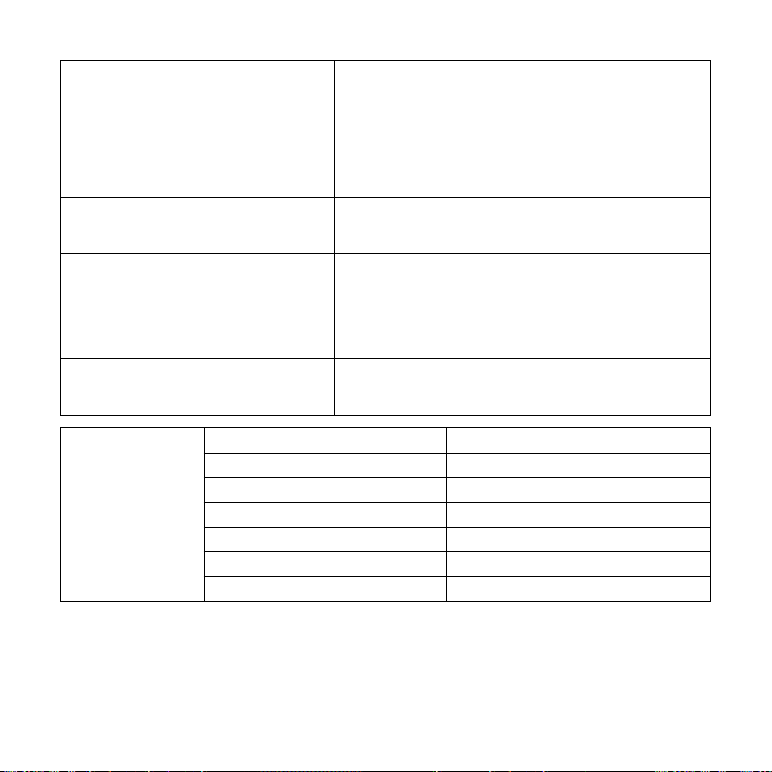
Water
Conversion
Chart
ml cups
360 1 1/2
340 1-7/16
320 1-1/3
280 1-1/4
270 1-1/8
260 1

24
Recipes
Bread Mixes And Other Bread Maker Recipes
Use mixes labeled for up to 2 pound loaves. For best results, use the BASIC program.
For SWEET breads and CAKES that call for oil, place the oil in the bread pan rst
to aid in easy removal of the bread.
Jam
Fresh Strawberries, cleaned, smashed 4 cups
Sugar 1 cup
Pectin powder 1 tablespoon
1. Place all ingredients into the bread pan. Stir with a wooden spoon or spatula.
2. Pour processed hot jam into a heat-safe container. Leave on the counter top
to cool; stir frequently.
3. Pour the jam into a refrigerator/freezer-safe container, leaving 1/2” of space
at the top.
4. Cover tightly to store. Jam will thicken upon cooling.
5. Unplug and allow the bread maker to cool before cleaning.
Hints For Jam
• Do not reduce sugar or use sugar substitutes. The exact amounts of sugar, fruit,
and other ingredients are necessary for a good set.
• Use only ripe fruit (not overripe or underripe) for best avor.
• Do not puree fruit. Drain cubed fruit before crushing. Crush with a potato masher
or food processor. Jam should have bits of fruit in it.
• Recipes should not exceed 3 cups fruit.

25
Recipes
Basic
Measure all liquid ingredients and add to the bread pan. Next, measure and mix all dry
ingredients and add on top of the wet ingredients. Do not stir. Lastly, add yeast. Yeast
should never touch wet ingredients. (See Figure 4.). Close the lid and press BASIC button.
1.5 lb/ 700g loaf 2 lb /900g loaf
Water 80°F/27°C 1 1/4 cups 1 7/16 cups
Oil 2 tablespoons 3 tablespoons
Salt 1 teaspoon 1 1⁄2 teaspoons
Sugar 2 tablespoons 3 tablespoons
Flour 3 cups 3 1/2 cups
Bread Machine Yeast 1 teaspoon 1 teaspoon
French
Measure all liquid ingredients and add to the bread pan. Next, measure and mix all dry
ingredients and add on top of the wet ingredients. Do not stir. Lastly, add yeast. Yeast
should never touch wet ingredients. (See Figure 4.). Close the lid and press FRENCH button.
1.5 lb/ 700g loaf 2 lb /900g loaf
Water 80°F/27°C 1 1/4 cups 1 7/16 cups
Oil 2 tablespoons 3 tablespoons
Salt 1 1/2 teaspoon 2 teaspoons
Sugar 1 1/2 tablespoons 2 tablespoons
Flour 3 cups 3 1/2 cups
Bread Machine Yeast 1 teaspoon 1 teaspoon

26
Recipes
Whole wheat
Measure all liquid ingredients and add to the bread pan. Next, measure and mix
all dry ingredients and add on top of the wet ingredients. Do not stir. Lastly, add yeast.
Yeast should never touch wet ingredients. (See Figure 4.). Close the lid and press
WHOLE WHEAT button.
1.5 lb/ 700g loaf 2 lb /900g loaf
Water 80°F/27°C 1 cup 1 7/16 cups
Oil 2 tablespoons 3 tablespoons
Salt 4 teaspoons 2 teaspoons
Whole Wheat Flour 1 cup 2 cups
Flour 2 cups 2 cups
Brown Sugar 2 tablespoons 2 1/2
tablespoons
Milk Powder 2 tablespoons 3 tablespoons
Bread Machine Yeast 1 teaspoon 1 teaspoon

27
Recipes
Quick
Measure all liquid ingredients and add to the bread pan. Next, measure and mix all dry
ingredients and add on top of the wet ingredients. Do not stir. Lastly, add yeast. Yeast
should never touch wet ingredients. (See Figure 4.). Close the lid and press QUICK button.
2 lb /900g loaf
Water 115°-125°F/45°-51°C 1 1/3 cups
Oil 2 tablespoons
Salt 1 1/2 teaspoons
Sugar 2 tablespoons
Flour 3 1/2 cups
Bread Machine Yeast 1 1/2 teaspoons
Sweet
Measure all liquid ingredients and add to the bread pan. Next, measure and mix
all dry ingredients and add on top of the wet ingredients. Do not stir. Lastly, add yeast.
Yeast should never touch wet ingredients. (See Figure 4.). Close the lid and press
SWEET button.
1.5 lb/ 700g loaf 2 lb /900g loaf
Water 80°F/27°C 1 1/4 cups 1 7/16 cups
Oil 2 tablespoons 3 tablespoons
Salt 1 1/2 teaspoons 2 teaspoons
Sugar 3 tablespoons 4 tablespoons
Flour 3 cups 3 1/2 cups
Milk Powder 2 tablespoons 2 tablespoons
Bread Machine Yeast 1 teaspoon 1 teaspoon

28
Recipes
Gluten free
Measure all liquid ingredients and add to the bread pan. Next, measure and mix
all dry ingredients and add on top of the wet ingredients. Do not stir. Lastly, add yeast.
Yeast should never touch wet ingredients. (See Figure 4.). Close the lid and press
GLUTEN FREE button.
1.5 lb/ 700g loaf 2 lb /900g loaf
Water 80°F/27°C 1 1/4 cups 1 7/16 cups
Oil 2 tablespoons 3 tablespoons
Salt 1 teaspoon 1 1⁄2 teaspoons
Gluten Free Flour 3 cups 4 cups
Sugar 2 tablespoons 2 tablespoons
Bread Machine Yeast 1 1/2 teaspoons 1 1/2 teaspoons
Dough
Measure all liquid ingredients and add to the bread pan. Next, measure and mix
all dry ingredients and add on top of the wet ingredients. Do not stir. Lastly, add yeast.
Yeast should never touch wet ingredients. (See Figure 4.). Close the lid and press
DOUGH button.
2 lbs /900g
Water 80°F/27°C 1 1/2 cups
Oil 2 tablespoons
Salt 1 1/2 teaspoons
Flour 4 cups
Sugar 2 tablespoons
Bread Machine Yeast 1/2 teaspoon

29
Recipes
Kneading
Measure all liquid ingredients and add to the bread pan. Next, measure and mix
all dry ingredients and add on top of the wet ingredients. Do not stir. Lastly, add yeast.
Yeast should never touch wet ingredients. (See Figure 4.). Close the lid and press
KNEAD button.
2 lbs /900g
Water 80°F/27°C 1 1/2 cups
Oil 2 tablespoons
Salt 1 1/2 teaspoons
Flour 4 cups
Sugar 2 tablespoons
Bread Machine Yeast 1/2 teaspoon
Cake
Measure all liquid ingredients and set aside. Next, measure all dry ingredients in a large
bowl. Add liquid ingredients to the dry ingredients. Stir well. Add to the bread pan.
Close the lid and press CAKE button.
2 lbs /900g
Oil 2 tablespoons
Sugar 1/2 cup
Eggs (room temperature) 6
Self Rising Flour 1 3/4 cups
Vanilla Extract 1 teaspoon
Lemon Juice 1 1/3 tablespoons

30
Recipes
Sandwich
Measure all liquid ingredients and add to the bread pan. Next, measure and mix
all dry ingredients and add on top of the wet ingredients. Do not stir. Lastly, add yeast.
Yeast should never touch wet ingredients. (See Figure 4.). Close the lid and press
SANDWICH button.
1.5 lb/ 700g loaf 2 lb /900g loaf
Water 80°F/27°C 1 1/8 cup 1 7/16 cups
Butter or Margarine 1 1/2 tablespoons 2 tablespoons
Salt 1 1/2 teaspoons 2 teaspoons
Sugar 1 1/2 tablespoons 2 tablespoons
Dry Milk 1 1/2 tablespoons 2 tablespoons
Flour 3 cups 3 1/2 cups
Bread Machine Yeast 1 teaspoon 1 teaspoon

31
Recipes
Specialty
Measure all liquid ingredients and add to the bread pan. Next, measure and mix
all dry ingredients and add on top of the wet ingredients. Do not stir. Lastly, add yeast.
Yeast should never touch wet ingredients. (See Figure 4.). Close the lid and press
SPECIALTY button.
2 lbs /900g
Water 1 7/16 cups
Oil 3 tablespoons
Salt 1 teaspoon
Malt Extract 3 tablespoons
Rened Flour 3 1/3 cups
Brown Sugar 2 1/2 tablespoons
Raisins 1/2 cup
Bread Machine Yeast 1 1/3 teaspoons
Yogurt
Add all ingredients to the bread pan. IMPORTANT: NEVER use metal utensils when
preparing yogurt. Close the lid and press the YOGURT button.
Pasteurized Whole Milk 4 1/4 cups
Plain yogurt 4 tablespoons

Limited Two-Year Warranty
SENSIO Inc. hereby warrants that for
a period of TWO YEARS from the date
of purchase, this product will be free
from mechanical defects in material
and workmanship, and for 90 days in
respect to non-mechanical parts. At its
sole discretion, SENSIO Inc. will either
repair or replace the product found to
be defective, or issue a refund on the
product during the warranty period.
The warranty is only valid for the
original retail purchaser from the date
of initial retail purchase and is not
transferable. Keep the original sales
receipt, as proof of purchase isrequired
to obtain warranty validation. Retail
stores selling this product do not have
the right to alter, modify, or in any way
revise the terms and conditions of the
warranty.
Exclusions:
The warranty does not cover normal
wear of parts or damage resulting
from any of thefollowing: negligent
use of the product, use of improper
voltage or current, improper routine
maintenance, use contrary to the
operating instructions, disassembly,
repair, or alteration by anyone other than
qualied SENSIO Inc. personnel. Also,
the warranty does not cover
Acts of God such as re, oods,
hurricanes, or tornadoes.
SENSIO Inc. shall not be liable for any
incidental or consequential damages
caused by the breach of any express
or implied warranty. Apart from the
extent prohibited by applicable law, any
implied warranty of merchantability or
tness for a particular purpose is limited
in time to the duration of the warranty.
Some states, provinces or jurisdictions
do not allow the exclusion or limitation
of incidental or consequential damages,
or limitations on how long an implied
warranty lasts, and therefore, the above
exclusions or limitations may not apply
to you. The warranty covers specic
legal rights which may vary by state,
province and/or jurisdiction.
32

33
How To Obtain Warranty Service:
You must contact Customer Service at
our toll-free number: 1-866-832-4843.
A Customer Service Representative
will attempt to resolve warranty issues
over thephone. If the Customer Service
Representative is unable to resolve the
problem, you will be provided with a
case number and asked to return the
product to SENSIOInc. Attach a tag to
the product that includes: your name,
address, daytime contact telephone
number, case number, and description of
the problem.
Also, include a copy of the original sales
receipt. Carefully package the tagged
product with the sales receipt, and send
it (with shipping and insurance prepaid)
to SENSIO Inc.’s address. SENSIO Inc.
shall bear no responsibility or liability
for the returned product while in transit
to SENSIO Inc.’s Customer Service
Center.

For customer service questions or comments
1-866-832-4843
bellahousewares.com
90120 r1
Sensio Inc.
New York, NY 10016/USA