www.LGSIGNATURE.com
OWNER'S MANUAL
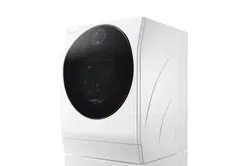
MAIN WASHER
Before beginning installation, read these instructions carefully.
This will simplify installation and ensure that the product is
installed correctly and safely. Leave these instructions near the
product after installation for future reference.
WD1610NSW
MFL69475593

TABLE OF CONTENTS
This manual may contain images or content
different from the model you purchased.
This manual is subject to revision by the
manufacturer.
SAFETY INSTRUCTIONS ..................................................5
IMPORTANT SAFETY INSTRUCTIONS .............................................. 5
INSTALLATION .................................................................12
Parts ...................................................................................................12
Accessories ........................................................................................12
Specifications ..................................................................................... 13
Installation Place Requirements ......................................................... 14
Unpacking and Removing Transit Bolts .............................................. 15
Using Anti-Slip Sheets (Optional) ....................................................... 16
Wooden Floors (Suspended Floors) ...................................................16
Leveling the Appliance ........................................................................ 17
Connecting Supply Hose .................................................................... 17
Installing the Drain Hose .................................................................... 20
OPERATION ......................................................................21
Using the Washing Machine ............................................................... 21
Sorting Laundry .................................................................................. 23
Using Detergent and Fabric Softeners ............................................... 24
Control Panel ......................................................................................28
Programme Table ............................................................................... 29
Option Programme ............................................................................. 35
Dry ...................................................................................................... 38
Settings ...............................................................................................40
Download Cycles ................................................................................ 44

SMART FUNCTIONS ........................................................45
Using Smart ThinQ Application ...........................................................45
Using Smart Diagnosis™ ................................................................... 47
MAINTENANCE .................................................................48
Cleaning the Washing Machine .......................................................... 48
Cleaning the Water Inlet Filter ............................................................ 48
Cleaning the Drain Pump Filter .......................................................... 49
Cleaning Auto dispense box ............................................................... 50
Tub Clean ........................................................................................... 51
Caution on Freezing During Winter .................................................... 52
TROUBLESHOOTING ......................................................54
Diagnosing Problems ......................................................................... 54
Error Messages .................................................................................. 57
5
SAFETY INSTRUCTIONS
EN
The following safety guidelines are intended to prevent
unforeseen risks or damage from unsafe or incorrect operation
of the product.
The guidelines are separated into ‘WARNING’ and ‘CAUTION’
as described below.
This symbol is displayed to indicate matters and
operations that can cause risk. Read the part with this
symbol carefully and follow the instructions in order to
avoid risk.
WARNING
This indicates that the failure to follow the instructions can
cause serious injury or death.
CAUTION
This indicates that the failure to follow the instructions can
cause the minor injury or damage to the product.
IMPORTANT SAFETY INSTRUCTIONS
WARNING
To reduce the risk of explosion, re, death, electric shock,
injury or scalding to persons when using this product, follow
basic precautions, including the following:
Children in the Household
This appliance is not intended for use by persons (including children)
with reduced physical, sensory or mental capabilities, or lack of
experience and knowledge, unless they have been given supervision
or instruction concerning use of the appliance by a person
responsible for their safety. Children should be supervised to ensure
that they do not play with the appliance.

6
EN
For use in Europe:
This appliance can be used by children aged from 8 years and
above and persons with reduced physical, sensory or mental
capabilities or lack of experience and knowledge if they have been
given supervision or instruction concerning use of the appliance in
a safe way and understand the hazards involved. Children shall not
play with the appliance. Cleaning and user maintenance shall not be
made by children without supervision.
Children of less than 3 years should be kept away unless
continuously supervised.
Installation
•Never attempt to operate the appliance if it is damaged,
malfunctioning, partially disassembled, or has missing or broken
parts, including a damaged cord or plug.
•This appliance should only be transported by two or more people
holding the appliance securely.
•Do not install the appliance in a damp and dusty place. Do not
install or store the appliance in any outdoor area, or any area that
is subject to weathering conditions such as direct sunlight, wind, or
rain or temperatures below freezing.
•Tighten the drain hose to avoid separation.
•If the power cord is damaged or the hole of the socket outlet is
loose, do not use the power cord and contact an authorized service
centre.
•This appliance must not be installed behind a lockable door, a
sliding door or a door with a hinge on the opposite side to that of
the appliance, in such a way that a full opening of the appliance
door is restricted.

7
EN
•This appliance must be earthed or grounded. In the event of
malfunction or breakdown, grounding will reduce the risk of electric
shock by providing a path of least resistance for electric current.
•This appliance is equipped with a power cord having an equipment-
earthing / grounding conductor and also on the power plug. The
power plug must be plugged into an appropriate socket outlet that
is installed and grounded in accordance with all local codes and
ordinances.
•Improper connection of the equipment-grounding conductor can
result in risk of electric shock. Check with a qualied electrician or
service personnel if you are in doubt as to whether the appliance is
properly grounded.
•Do not modify the power plug provided with the appliance. If it
does not t the outlet, have a proper outlet installed by a qualied
electrician.
Operation
•Do not use any sharp objects or tools to penetrate or disassemble
the unit.
•Do not repair or replace any part of the appliance. All repairs
and servicing must be performed by qualied service personnel
unless specically recommended in this Owner’s Manual. Use only
authorized factory parts.
•Use new hose or hose-set supplied with the appliance. Reusing old
hoses can cause a water leak and subsequent property damage.
•Do not use liquid chlorine bleach.
•Do not operate the applilance without Auto Liquid Dispense Box in
place.

8
EN
•Keep the area underneath and around the appliance free of
combustible materials such as lint, paper, rags, chemicals, etc.
•Do not put animals , plants or living things such as pets into the
appliance.
•Do not leave the appliance door open. Children may hang on the
door or crawl inside the appliance, causing damage or serious
injury. Do not allow children to play with or crawl inside the
machine.
•Never reach into the appliance while it is operating. Wait until the
drum has completely stopped.
•Do not put in, wash or dry articles that have been cleaned in,
washed in, soaked in, or spotted with combustible or explosive
substances (such as wax, oil, paint, gasoline, degreasers,
drycleaning solvents, kerosene, vegetable oil, cooking oil, etc.).
Improper use can cause re or explosion.
•In case of ood, disconnect the power plug and contact the LG
Electronics customer information centre.
•Do not push down the door excessively, when the appliance door is
open.
•Do not touch the door during a high temperature programme as it
may be hot.
•Do not use ammable gas and combustible substances (benzene,
gasoline, thinner, petroleum, alcohol, etc.) near the appliance.

9
EN
•If the drain hose or inlet hose is frozen during winter, use it only
after thawing.
•Keep all washing detergents, softener and bleach away from
children.
•Do not touch the power plug or the appliance controls with wet
hands.
•When pulling out the power plug from an outlet, hold the power
plug, not the cable.
•Do not bend the power cable excessively or place a heavy object
on it.
•If there is a gas leakage (isobutane, propane, natural gas, etc.),
do not touch the appliance or power plug and ventilate the area
immediately.
Maintenance
•Securely plug the power plug in the socket outlet after completely
removing any moisture and dust.
•Disconnect the power cord before cleaning the appliance.
•Never unplug the appliance by pulling on the power cable. Always
grip the power plug rmly and pull straight out from the socket
outlet.
•Do not spray water inside or outside the appliance to clean it.
10
EN
Technical Safety
•Do not dry unwashed items in the appliance.
•Items that have been soiled with substances such as cooking
oil, vegetable oil, acetone, alcohol, petroleum, kerosene, spot
removers, turpentine, waxes and wax removers should be washed
in hot water with an extra amount of detergent before being dried in
the appliance.
•Never stop the appliance before the end of the drying cycle unless
all items are quickly removed and spread out so that the heat is
dissipated.
•Items such as foam rubber (latex foam), shower caps, waterproof
textiles, rubber backed articles and clothes or pillows tted with
foam rubber pads should not be dried in the appliance.
•Fabric softeners, or similar products, should be used as specied
by the fabric softener instructions.
•Remove all objects from pockets such as keys, tissues, coins,
lighters and matches before operating the machine.
•The appliance is not to be used if industrial chemicals have been
used for cleaning.
•Oil-affected items can ignite spontaneously, especially when
exposed to heat sources such as in a tumble dryer. The items
become warm, causing an oxidation reaction in the oil. Oxidation
create heat. If the heat cannot escape, the items can become hot
enough to catch re. Piling, stacking or storing oilaffected items can
prevent heat from escaping and so create a re hazard.
•If it is unavoidable that fabrics that contain vegetable or cooking
oil or have been contaminated by hair care products be placed in
a tumble dryer they should rst be washed in hot water with extra
detergent.
WARNING - To avoid a re
Do not wash clothes or items that have any
contaminants of ammable solvents or substances.
Do not clean the product or expose it to ammable
substances.
11
Disposal
•Dispose of all packaging materials (such as plastic bags and
styrofoam) away from children. The packaging materials can cause
suffocation.
•Before discarding an old appliance, unplug it. Cut off the cable
directly behind the appliance to prevent misuse.
•Remove the door before disposing of or discarding this appliance to
avoid the danger of children or small animals getting trapped inside.
12
INSTALLATION
EN
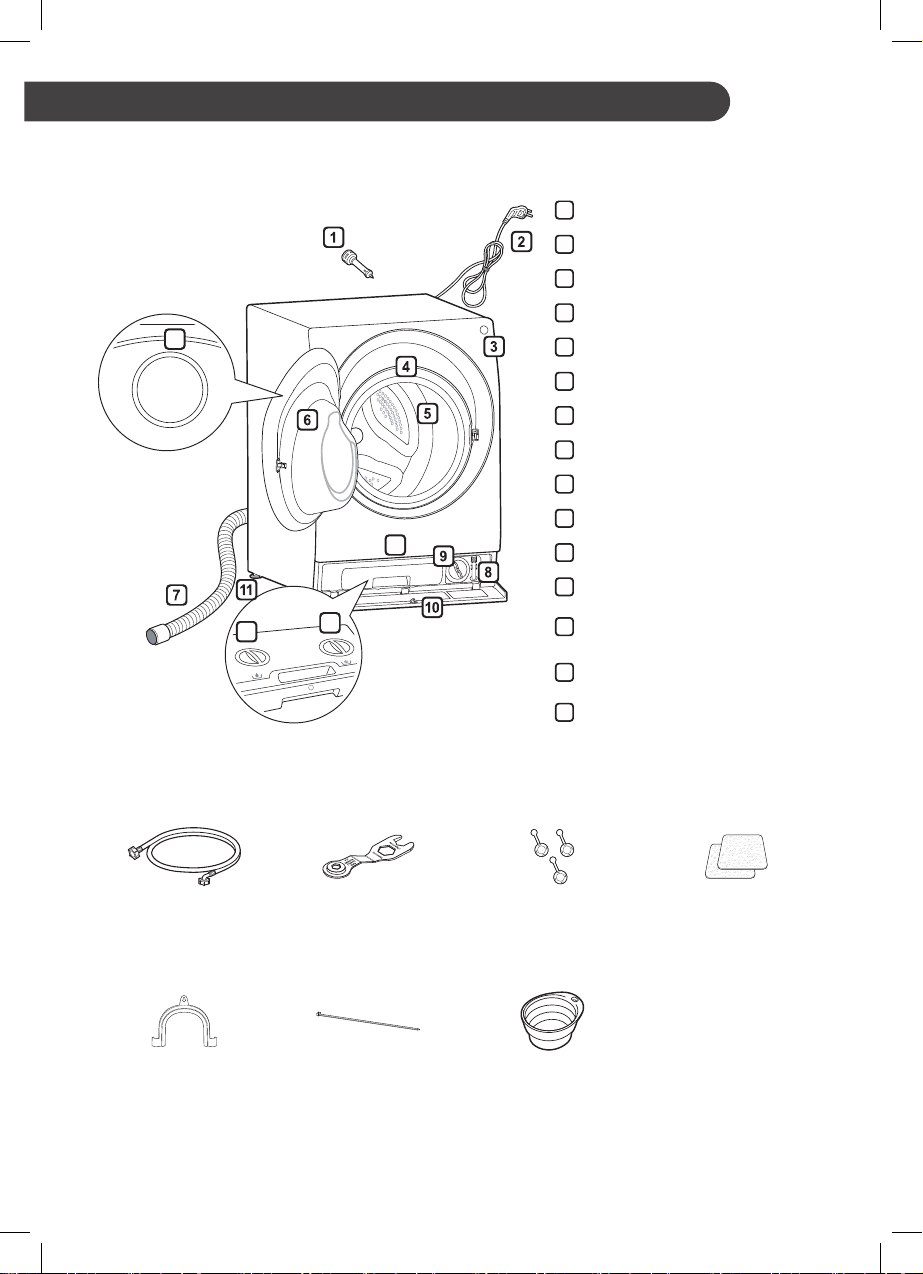
Parts
P
us
h
12
13
14
15
1
Transit bolts
2
Power plug
3
Power button
4
Tub lamp
5
Drum
6
Door
7
Drain hose
8
Drain pump
9
Drain pump lter
10
Lower cover
11
Adjustable feet
12
Auto dispense box
13
Liquid detergent dispenser cap
14
Liquid softener dispenser cap
15
Control panel
Accessories
Supply hose (2 EA) Spanner Caps for covering
transit bolt holes
(Optional)
Anti–slip sheets (2 EA)
(Optional)
Elbow Bracket (for
securing drain hose)
Tie strap (Optional) Rubber cup (1 EA)
13
EN
Specications
Model WD1610NSW
Wash Capacity 10 kg (Wash) / 6 kg (Dry)
Power Supply 220 - 240 V~, 50 Hz
Size 600 mm (W) x 675 mm (D) x 850 mm (H)
Product Weight 96 kg
Permissible Water pressure 0.1 - 0.8 MPa (100 kPa - 800 kPa)
Allowable temperature 5 – 35 °C
• If the temperature is out of range of allowable temperature for installation, dying time is longer or
drying performance is pool.Appearance and specications may change without notice to improve the
quality of the product.
• The external hot water supply MUST NOT exceed 65°C
• No further backow protection required for connection to the water supply.
• Permissible cold water temperature : 4 - 25°C
• Specications subject to change by manufacturer.
• This washing machine contains uorinated greenhouse gases. R134a(GWP: 1430): 0.300 kg / 0.429
t CO2-eq. Hermetically sealed.
14
EN
Installation Place
Requirements
Location
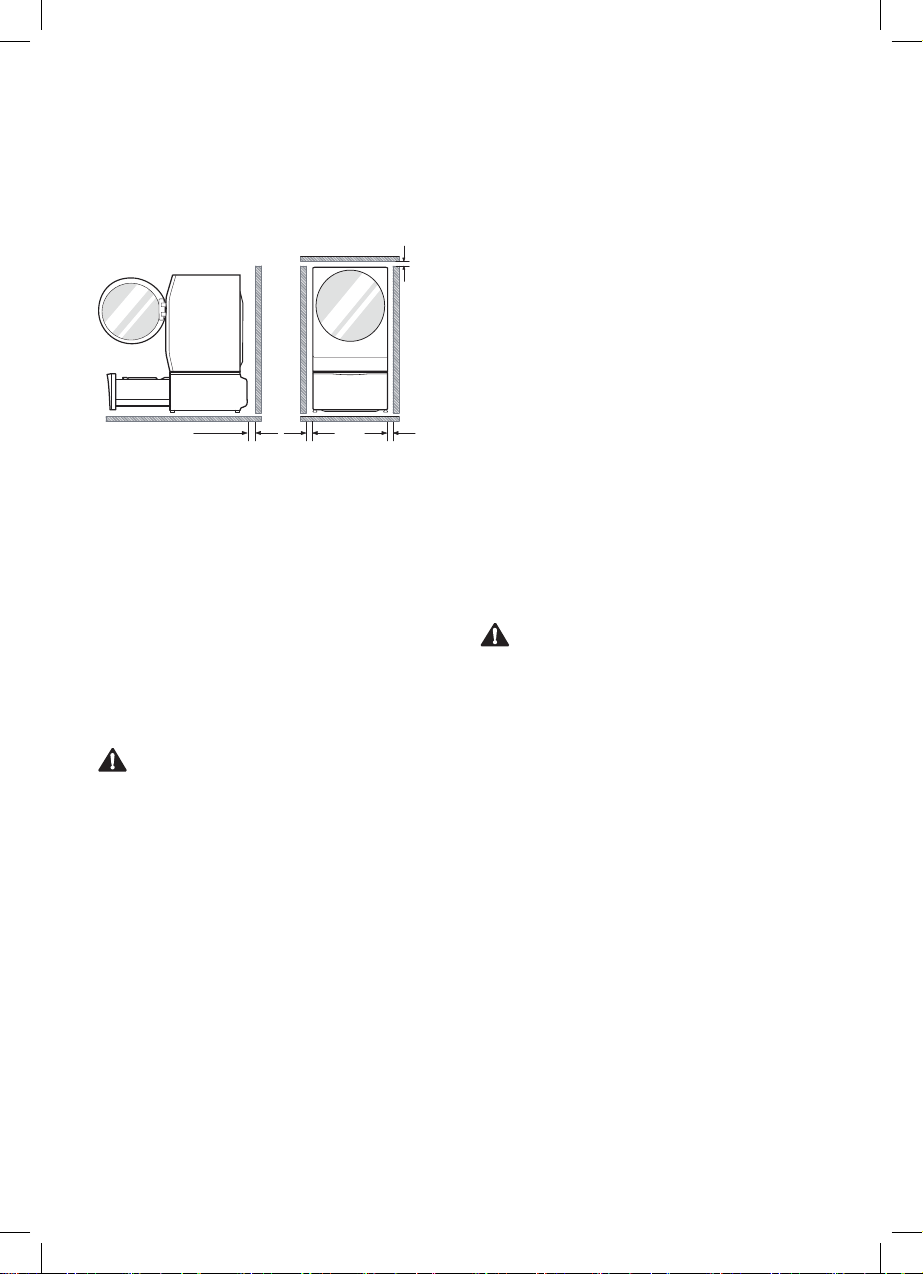
5 cm
0.5 cm
5 cm
10 cm
Level oor : Allowable slope under the entire
appliance is 1°.
Power outlet : Must be within 1.5 meters of
either side of the location of the appliance.
• Do not overload the outlet with more than one
appliance.
Additional Clearance : For the wall, 10 cm:
rear/5 cm: right & left side
• Do not place or store laundry products on top
of the appliance at any time.
• These products may damage the nish or
controls.
WARNING
• The plug must be plugged into an appropriate
outlet that is properly installed and grounded
in accordance with all local codes and
ordinances.
Positioning
• Install the appliance on a at hard oor.
• Do not install the unit on an elevated surface
or stand.
• Do not place the unit on any pedestal, unless
it has been made by LG Electronics and is
suitable for this machine.
• Make sure that air circulation around the
appliance is not impeded by carpets, rugs, etc.
• Never try to correct any unevenness in the
oor with pieces of wood, cardboard or similar
materials under the appliance.
• If it is impossible to avoid positioning the
appliance next to a gas cooker or coal burning
stove, an insulation (85x60 cm) covered with
aluminum foil on the side facing the cooker
or stove must be inserted between the two
appliances.
• Do not install the appliance in rooms where
freezing temperatures may occur. Frozen
hoses may burst under pressure. The
reliability of the electronic control unit may be
impaired at temperatures below freezing point.
• Ensure that when the appliance is installed, it
is easily accessible for a service technician in
the event of a breakdown.
• With the appliance installed, adjust all four
feet using the transit bolt spanner to ensure
the appliance is stable, and a clearance of
approximately 5 mm is left between the top
of the appliance and the underside of any
work-top.
• If the appliance is delivered in winter and
temperatures are below freezing, place the
appliance at room temperature for a few hours
before putting it into operation.
WARNING
• This equipment is not designed for maritime
use or for use in mobile installations such as
caravans, aircraft etc.
Electrical Connection
• Do not use an extension cord or double
adapter.
• Always unplug the appliance and turn off the
water supply after use.
• Connect the appliance to an earthed socket in
accordance with current wiring regulations.
• The appliance must be positioned so that the
plug is easily accessible.
• Repairs to the appliance must only be carried
out by qualied personnel. Repairs carried out
by inexperienced persons may cause injury
or serious malfunctioning. Contact your local
service centre.
15
EN
Unpacking and Removing
Transit Bolts
1
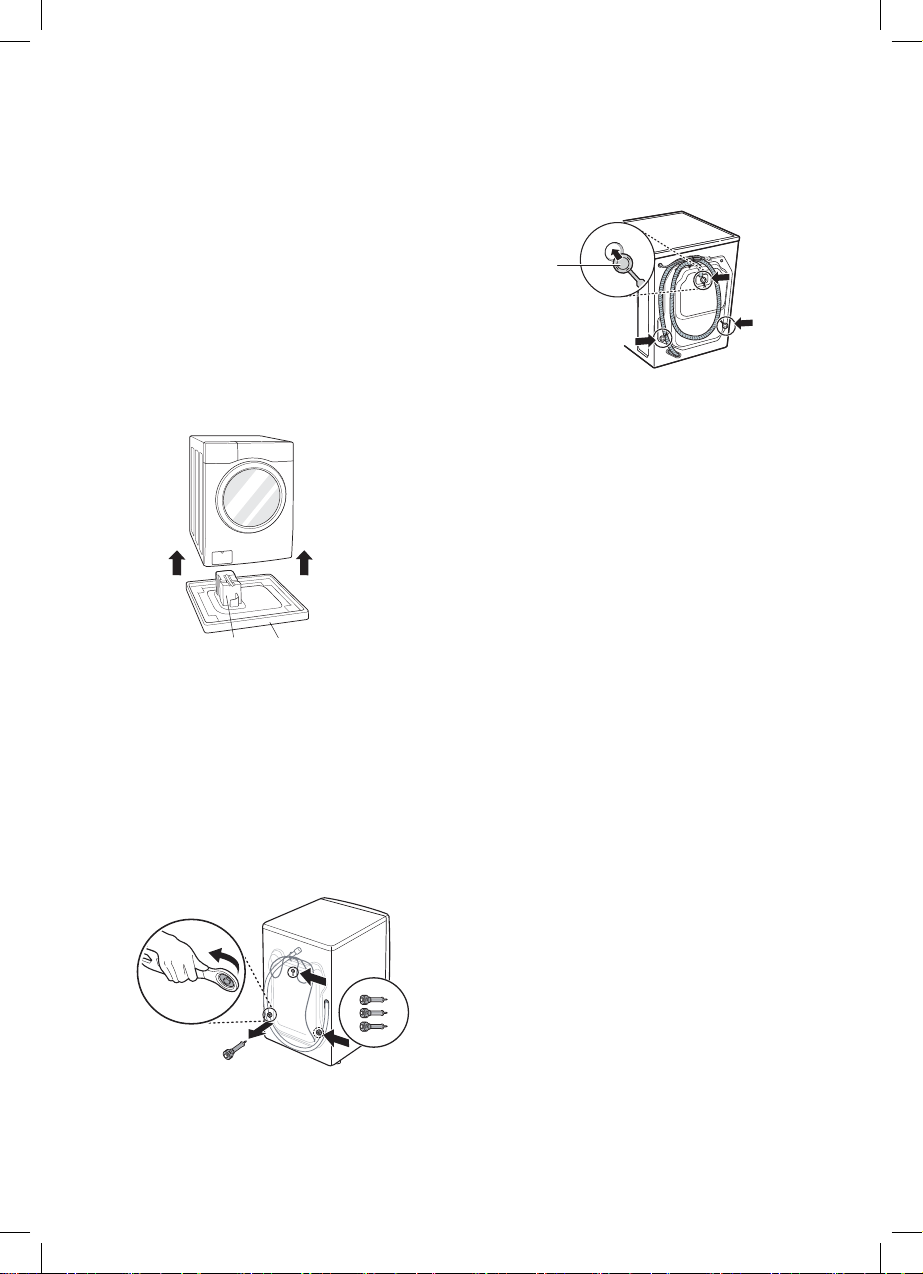
Lift the appliance off the foam base.
• After removing the carton and shipping
material, lift the appliance off the foam
base. Make sure the tub support comes off
with the base and is not stuck to the bottom
of the appliance.
• If you must lay the appliance down to
remove the carton base, always protect the
side of the appliance and lay it carefully
on its side. Do not lay the appliance on its
front or back.
Tub Support
(Optional)
Carton base
2
Remove all of the rear transit bolt
assemblies.
• Starting with the bottom two transit
bolts, use the spanner (included) to fully
loosen all transit bolts by turning them
counterclockwise. Remove the bolt
assemblies by wiggling them slightly while
pulling them out.
3
• Install the hole caps (optional).
• Locate the hole caps included in the
accessory pack or attached on the back.
Cap
(Optional)
NOTE
• Save the bolt assemblies for future use. To
prevent damage to internal components, Do
not transport the washing machine without
reinstalling the transit bolts.
• Failure to remove transit bolts and retainers
will cause severe vibration and noise, which
can lead to permanent damage to the washing
machine. The cord is secured to the back of
the washing machine with a transit bolt to
help prevent operation with transit bolts still in
place.
16
EN
Using Anti-Slip Sheets
(Optional)
If you install the appliance on a slippery surface,
it may move because of excessive vibration.
Incorrect leveling may cause malfunction
through noise and vibration. If this occurs, install
the anti-slip sheets under the leveling feet and
adjust the level.
1
Clean the oor to attach the anti-slip sheets.
• Use a dry rag to remove and clean foreign
objects and moisture. If moisture remains,
the anti-slip sheets may slip.
2
Adjust the level after placing the appliance in
the installation area.
3
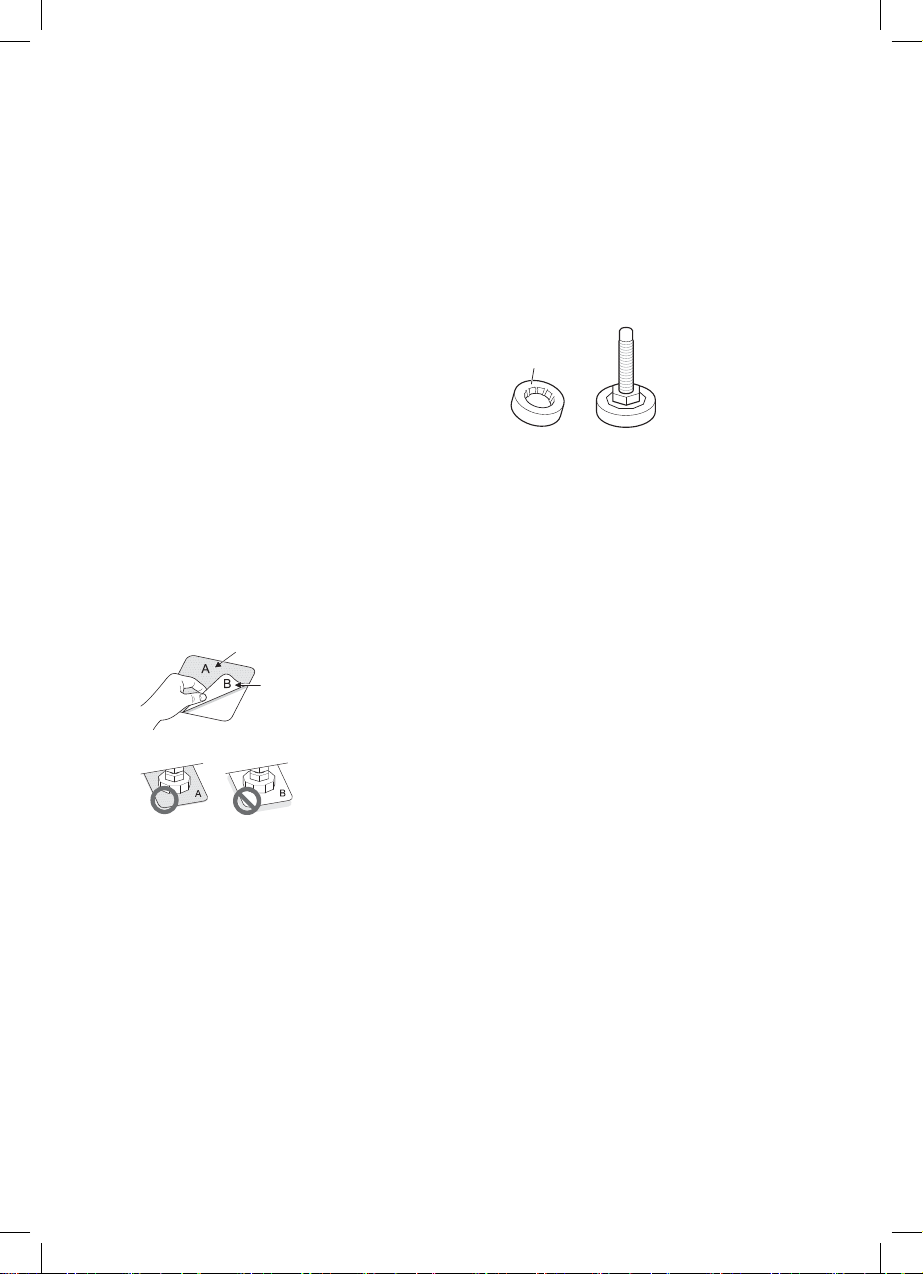
Place the adhesive side of the anti-slip
sheets on the oor.
• It is most effective to install the anti-slip
sheets under the front legs. If it is difcult to
place the pads under the front legs, place
them under the back legs.
This side up
Adhesive side
4
Ensure the appliance is level.
• Push or rock the top edges of the appliance
gently to make sure that the appliance
does not rock. If the appliance rocks, level
the appliance again.
NOTE
• You can obtain anti-slip sheets from an LG
Centre or Hardware store.
Wooden Floors (Suspended
Floors)
• Wooden oors are particularly susceptible to
vibration.
• To help prevent vibration we recommend you
place rubber cups at least 15 mm thick under
each foot of the appliance, secured to at least
two oor beams with screws.
Rubber Cup
• If possible install the appliance in one of the
corners of the room, where the oor is more
stable.
• Fit the rubber cups to reduce vibration.
NOTE
• Proper placement and leveling of the washing
machine will help ensure long, regular, and
reliable operation.
• The washing machine must be 100%
horizontal and stand rmly in position.
• It must not ‘Seesaw’ diagonally across the
corners or rock in any way when in position.
• The installation surface must be clean, free
from oor wax and other lubricant coatings.
• Do not let the feet of the washing machine get
wet. Failure to do so may cause vibration or
noise.
• You can obtain rubber cups (p/
no.4620ER4002B) from an LG Service Centre.
If the oor is uneven, turn the adjustable feet
stable and resting on the oor and then check
•
•
• Timber or suspended type ooring may
•
•
•
•
sufciently tight. Do not over tighten the hoses
17
EN
Leveling the Appliance
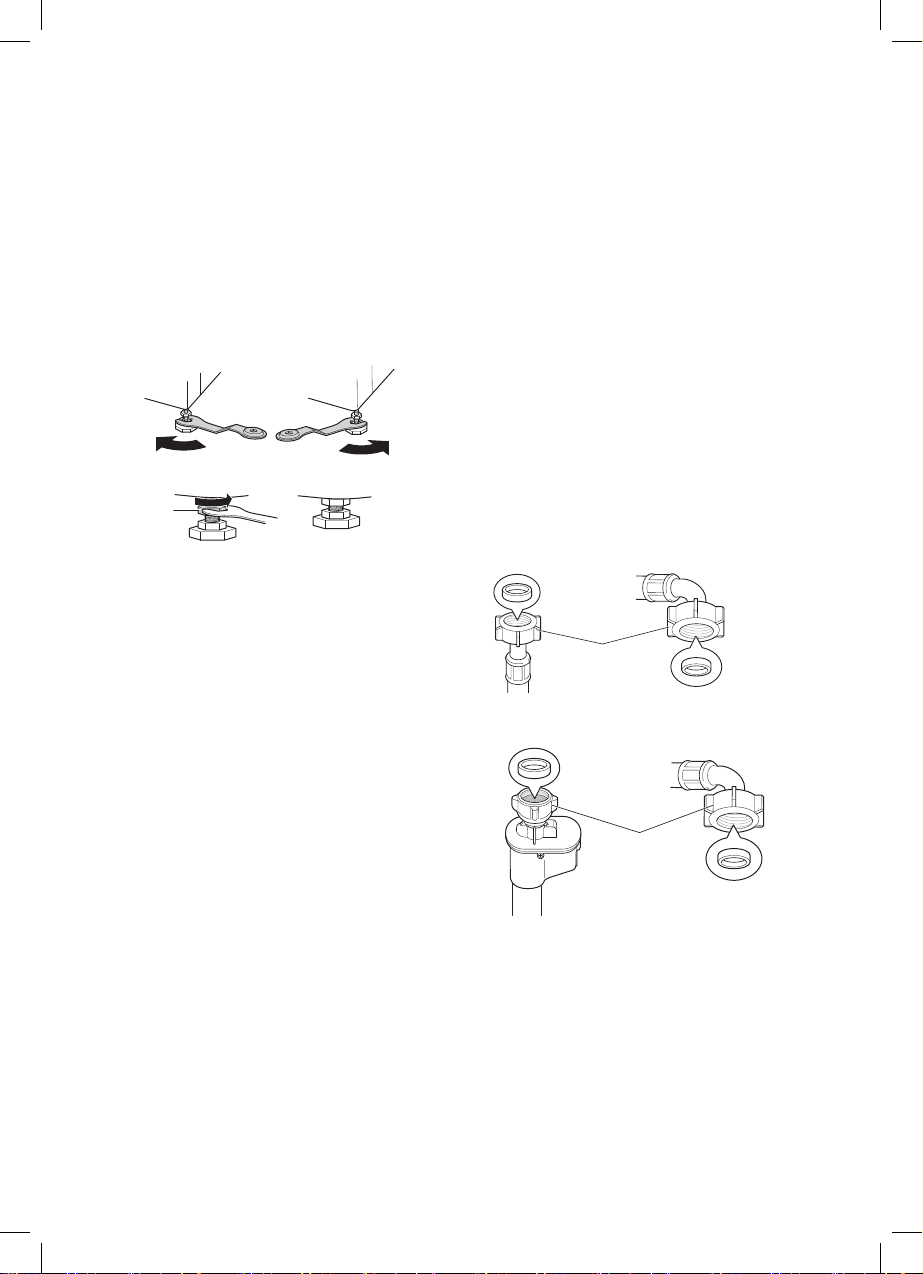
If the oor is uneven, turn the adjustable feet
as required (Do not insert pieces of wood etc.
under the feet). Make sure that all four feet are
stable and resting on the oor and then check
that the appliance is perfectly level (Use a spirit
level).
• Once the appliance is level, tighten the lock
nuts up towards the base of the appliance. All
lock nuts must be tightened.
Raise Lower
Lock nut
Tighten all 4
lock nuts securely
Diagonal Check
• When pushing down the edges of the top plate
diagonally, the appliance should not move up
and down at all (check both directions). If the
appliance rocks when pushing the machine
top plate diagonally, adjust the feet again.
NOTE
• Timber or suspended type ooring may
contribute to excessive vibration and
unbalance.
Connecting Supply Hose
• Water supply pressure must be between 0.1
MPa and 0.8 MPa (100 kPa - 800 kPa).
• Do not overtighten the water supply hoses.
• If the water supply pressure is more than 800
kPa, a decompression device or pressure
limiting valve should be installed.
• Periodically check the condition of the hoses
and replace the hoses if necessary.
Checking the Rubber Seal on the
Supply Hoses
Two rubber seals are supplied with each of the
water inlet hoses. They are used for preventing
water leaks. Make sure the connection to taps is
sufciently tight. Do not over tighten the hoses
or use any mechanical implements to tighten
them.
Hose connector
Rubber seal
Hose connector
Rubber seal
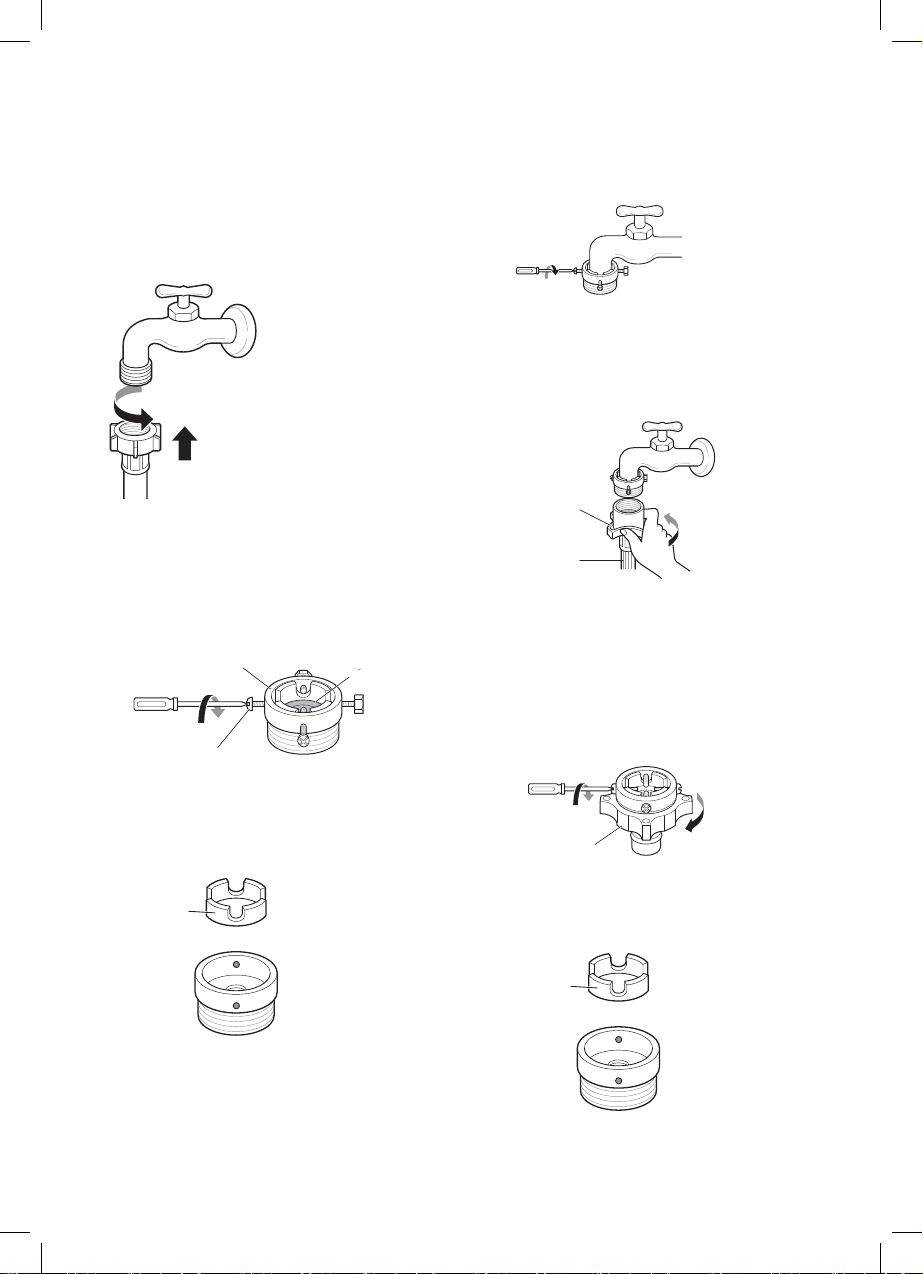
18
EN
Connecting Hose to Water Tap
Connecting Screw-Type Hose to Tap
with Thread
Screw the hose connector onto the water supply
tap.
Connecting Screw-Type Hose to Tap
Without Thread
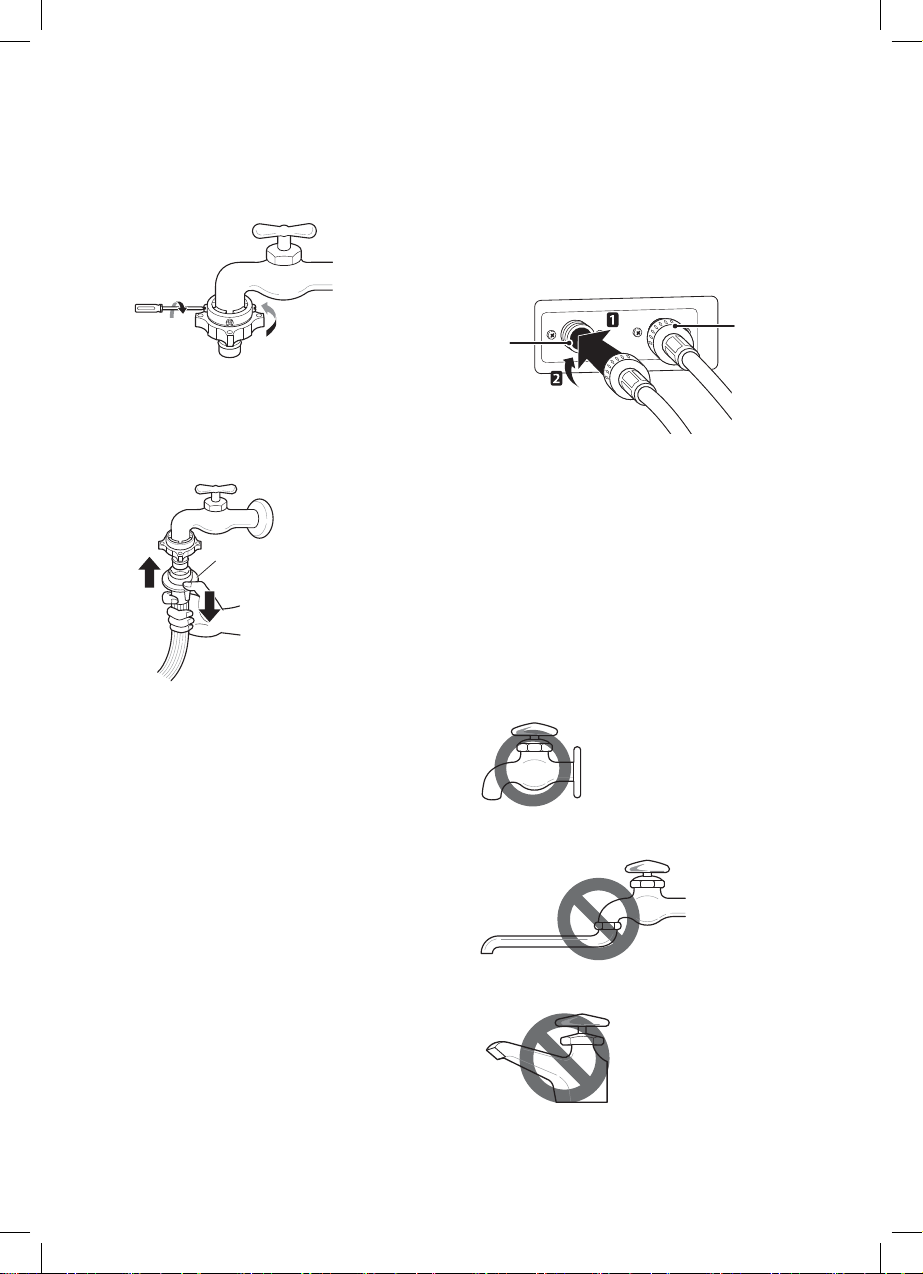
1
Loose the four xing screws.
Upper
connector
Rubber
seal
Fixing screw
2
Remove the guide plate if the tap is too large
to t the adapter.
Guide plate
3
Push the adapter onto the end of the tap
so that the rubber seal forms a watertight
connection. Tighten the four xing screws.
4
Push the supply hose vertically upwards
so that the rubber seal within the hose
can adhere completely to the tap and then
tighten it by screwing it to the right.
Plate
Supply
hose
Connecting One Touch Type Hose to
Tap Without Thread
1
Unscrew the adapter ring plate and loose the
four xing screws.
Ring plate
2
Remove the guide plate if the tap is too large
to t the adapter.
Guide plate
19
EN
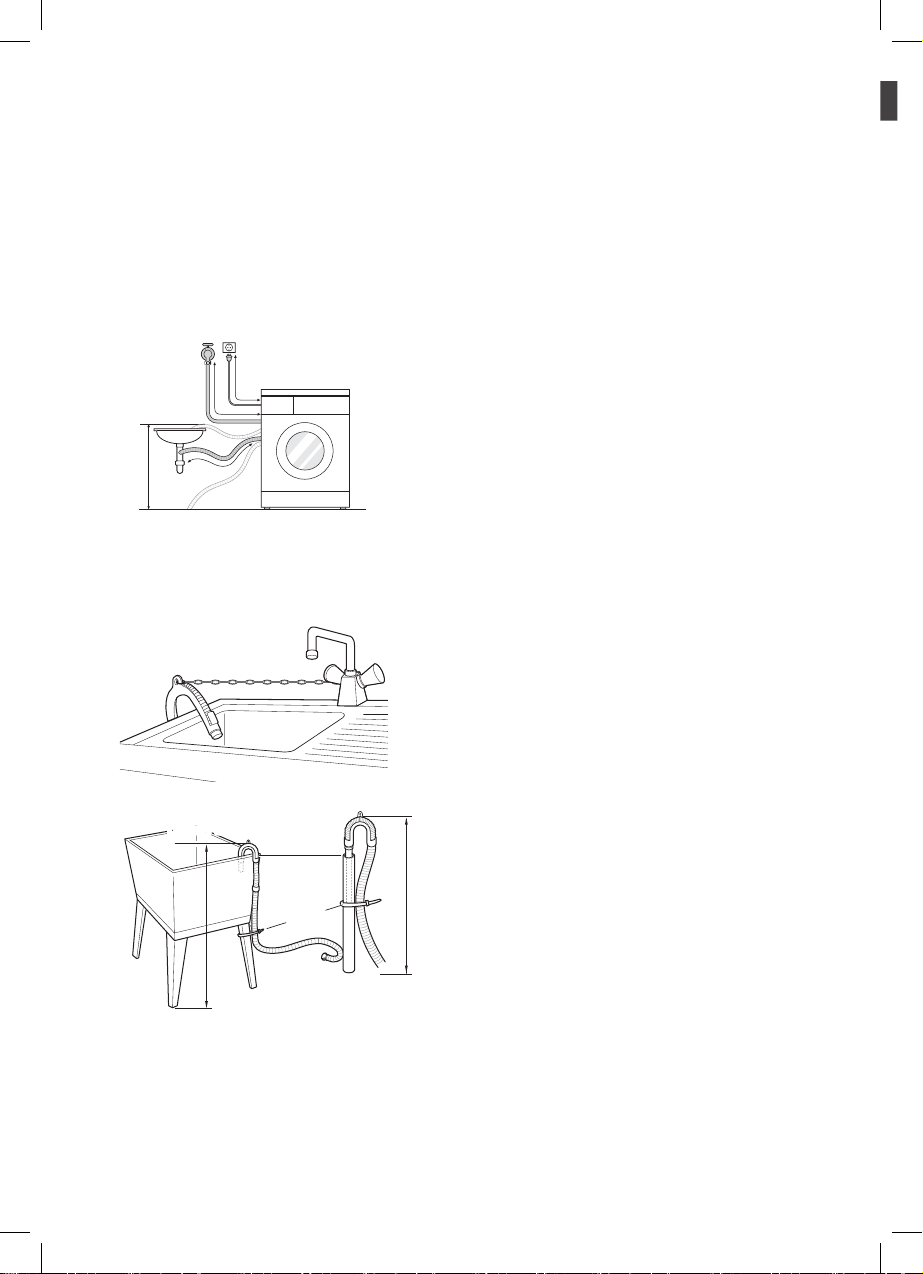
3
Push the adapter onto the end of the tap
so that the rubber seal forms a watertight
connection. Tighten the four xing screws
and the adapter ring plate.
4
Pull the connector latch plate down, push the
supply hose onto the adapter, and release
the connector latch plate. Make sure the
adapter locks into place.
Latch plate
NOTE
• After connecting the supply hose to the water
tap, turn on the water tap to ush out foreign
substances (dirt, sand, sawdust, and etc.)
in the water lines. Let the water drain into a
bucket, and check the water temperature.
Connecting Hose to Appliance
Attach the hot water line to the hot water inlet
on the back of the washer. Attach the cold water
line to the cold water inlet on the back of the
washer. Connect the curved end of the water
hose connector to the washer.
Cold
water
supply
Hot water
supply
(optional)
NOTE
• After completing connection, if water leaks
from the hose, repeat the same steps. Use
the most conventional type of tap for the water
supply. In case the tap is square or too big,
remove the guide plate before inserting the tap
into the adaptor.
Using the Horizontal Tap
Horizontal tap
Extension tap
Square tap
20
EN
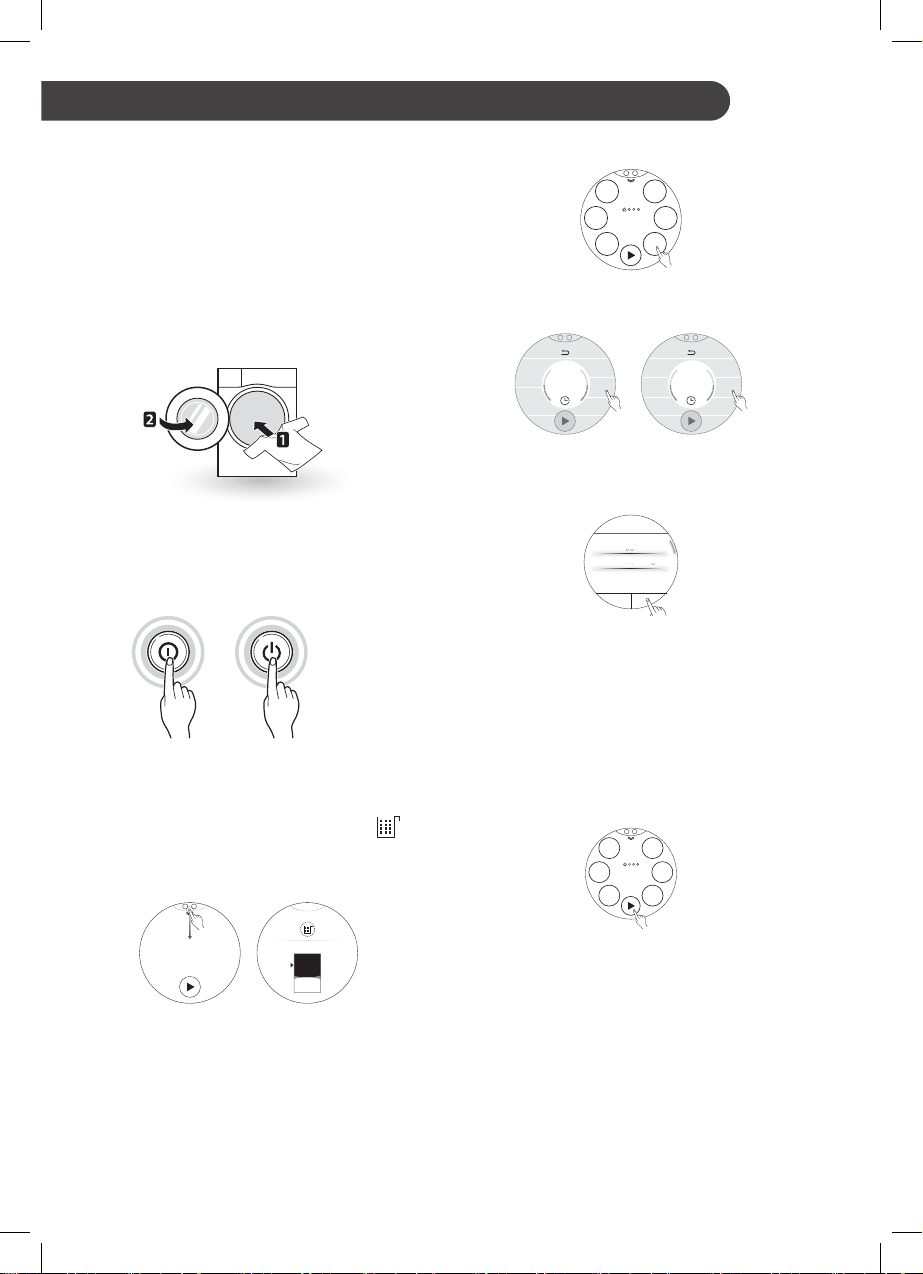
Installing the Drain Hose
• The drain hose should not be placed higher
than 100 cm above the oor. Water in the
appliance may not drain or may drain slowly.
• Securing the drain hose correctly will protect
the oor from damage due to water leakage.
• If the drain hose is too long, do not force
it back into the appliance. This will cause
abnormal noise and water leakage.
max. 100 cm
~ 100 cm
~ 145 cm
~ 105 cm
• When installing the drain hose to a sink,
secure it tightly with a cable tie or clamp.
• Securing the drain hose correctly will protect
the oor from damage due to water leakage.
max. 100 cm
max. 100 cm
Laundry tub
Hose retainer
Tie strap
21
OPERATION
EN
Using the Washing Machine
Before the rst wash, select a washing
programme, allow the washing machine to wash
without clothing. This will remove residue and
water from the drum that may have been left
during manufacturing and testing.
1
Sort laundry and load items.
• Sort laundry by fabric type, soil level, colour
and load size as needed. Open the door
and load items into the washing machine.
2
Turn on the washing machine.
• Press the Power button to turn on the
washing machine.
3
Use the Auto Detergent function or add
the detergent manually. If you use the Auto
Detergent function, turn on the Icon( ) on
the settings window. For more information,
refer to ‘Using Detergents and Fabric
Softeners’
X
4
Choose the desired wash programme.
5
Select the options you want to change.
6
After changing the options, press OK.
40
℃
30
60
7
Begin cycle.
• Press the Start/Pause button to begin the
cycle. The washing machine will agitate
briey without water to measure the weight
of the load. If the Start/Pause button is
not pressed for few minutes, the washing
machine will shut off and all settings will
be lost.
8
End of cycle.
• When the cycle is nished, a melody will
sound. Immediately remove your clothing
from the washing machine to reduce
wrinkling. Check around the door seal
when removing the load for small items that
may be caught in the seal.
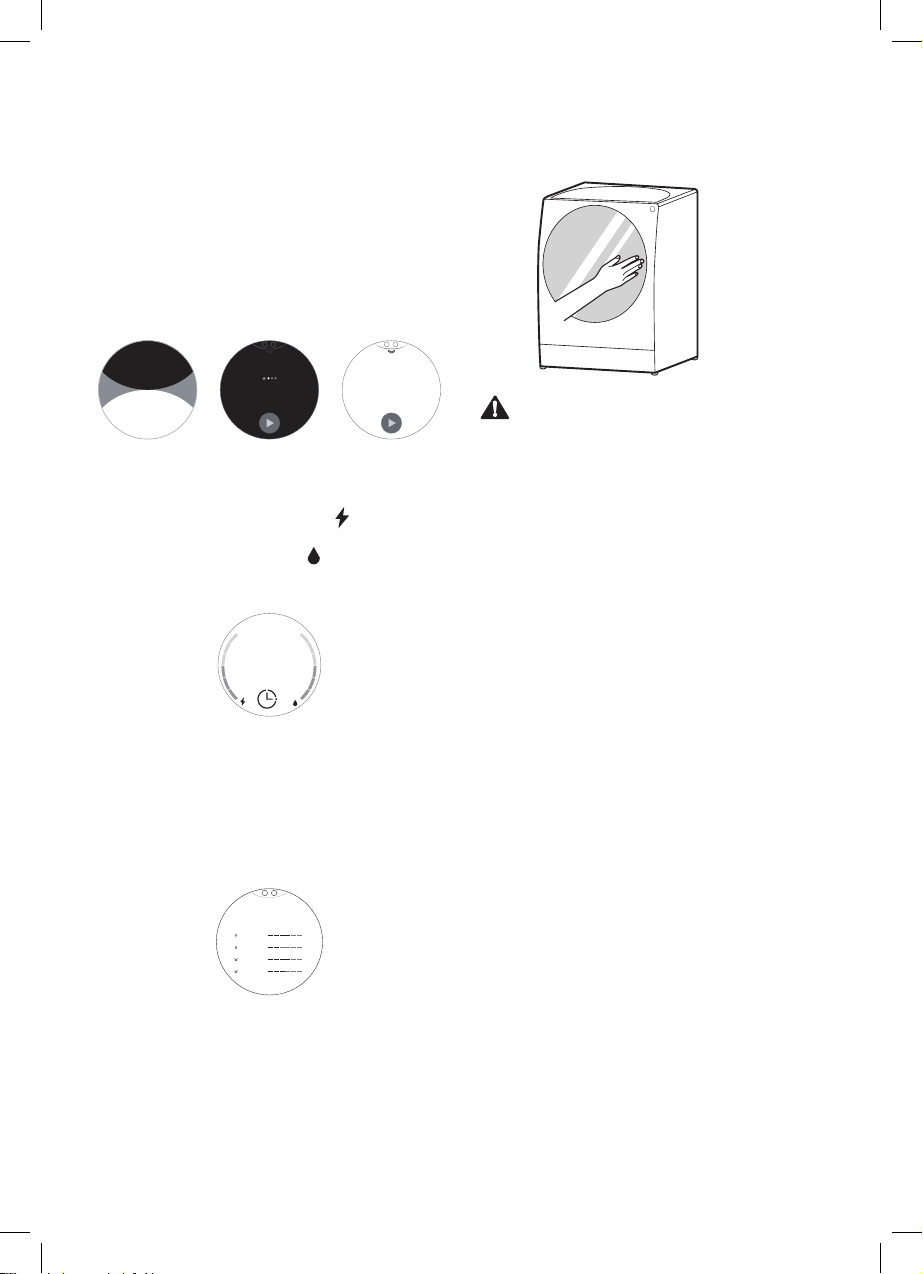
22
NOTE
• Leaving wet laundry in the drum for a long
time may cause a bad smell. Take out
the laundry immediately after the wash
programme has nished.
• When using the Main Washer and the Mini
Washer together, pressing the Power button
shows the following display.
• When you select a programme, the expected
energy and water consumption of the wash
programme is displayed as shown below.
(The left bar above the symbol ( ) indicates
the expected energy consumption and the
right bar above the symbol ( ) indicates the
expected water consumption.)
• Once the wash programme has nished,
the amount of energy, water, detergent and
softener consumed is displayed as shown
below.
(The bars indicate approximately 0.5 kWh of
energy, 30ℓ of water, 30 ml of detergent, and
20ml of softener consumed.)
+
+
EN
• When you open the door, press the O button
to open it.
CAUTION
• The button cannot be recognized when the
door is open. Press again after closing the
door.
23
EN
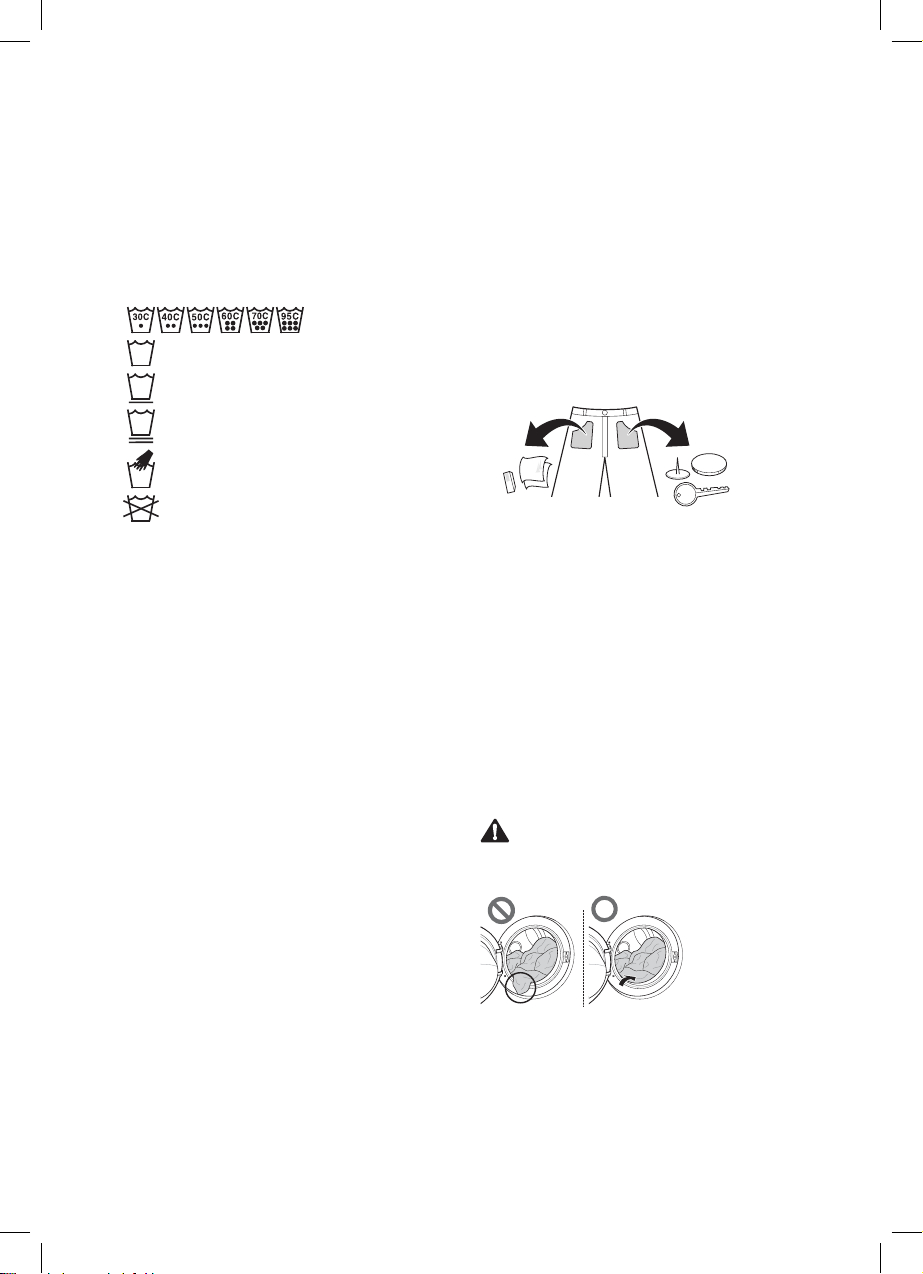
Sorting Laundry
1
Look for a care label on your clothes.
• This will tell you about the fabric content
of your garment and how it should be
washed.
• Symbols on the care labels.
Wash temperature
Normal machine wash
Permanent press
Delicate
Hand wash
Do not wash
2
Sorting laundry.
• To get the best results, sort clothes into
loads that can be washed with the same
wash cycle.
• Different fabrics need to be washed at
varying temperatures and spin speeds.
• Always sort dark colours from pale
colours and whites. Wash separately as
dye and lint transfer can occur causing
discolouration of white and pale garments.
If possible, do not wash heavily soiled
items with lightly soiled ones.
− Soil (Heavy, Normal, Light) :
Separate clothes according to amount of
soil.
− Colour (White, Lights, Darks):
Separate white fabrics from coloured
fabrics.
− Lint (Lint producers, Collectors):
Wash lint producers and lint collectors
separately.
3
Caring before loading.
• Combine large and small items in a load.
Load large items rst.
• Large items should not be more than half
the total wash load. Do not wash single
items. This may cause an unbalanced
load. Add one or two similar items. Refer to
pages 28~30 for cycle weight limitations.
• Check all pockets to make sure that
they are empty. Items such as nails, hair
clips, matches, pens, coins and keys can
damage both your washing machine and
your clothes.
• Close zippers, hooks and strings to make
sure that these items don’t snag on other
clothes.
• Pre-treat dirt and stains by brushing a small
amount of detergent dissolved water onto
stains to help lift dirt.
CAUTION
• Check inside the drum and remove any items
from a previous wash.

24
Using Detergent and Fabric
Softeners
Using the Auto Dispense Function
When the Auto Detergent function is turned on,
Liquid detergent and softener are automatically
dispensed in amounts based on the amount of
laundry, after which the wash cycle starts.
1
Press the O button to open it as shown
below.
2
Press PUSH on the auto dispense box as
shown below.
3
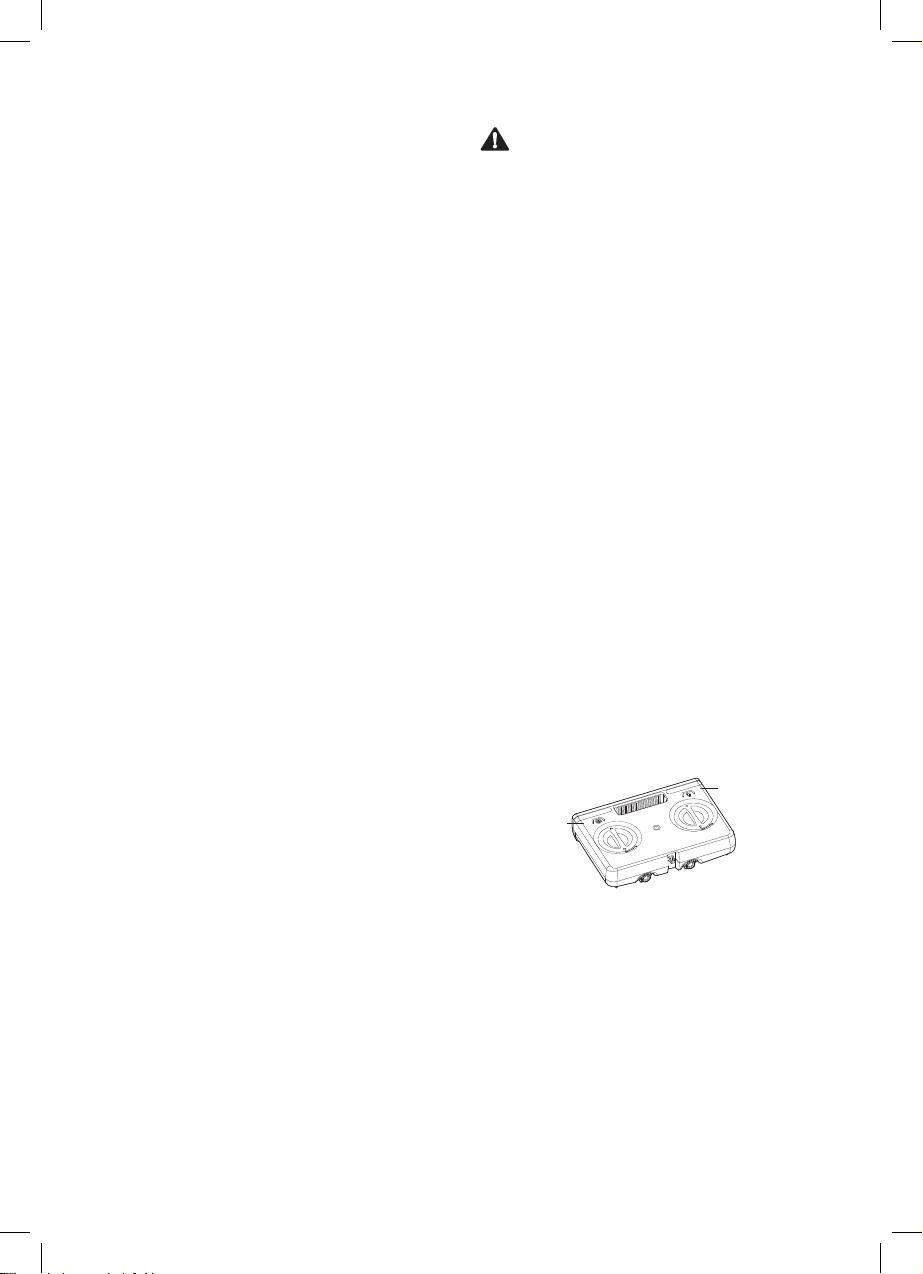
Turn the caps on the auto dispense box to
the left to open them.
(
)
( )
Push
Liquid
Detergent
Liquid
Softener
4
Pour the liquid detergent and softener into
their respective compartments.
− The auto dispense box has two
reservoirs. Put the liquid detergent (
) into the left reservoir and the fabric
softener ( ) into the right reservoir.
− Fill up to the Max line.
(
)
( )
Push
Liquid
Detergent
Liquid
Softener
5
After lling, turn the caps to the right to close
tight.
(
)
( )
Push
Liquid
Detergent
Liquid
Softener
6
Gently insert the auto dispense box until you
hear a click sound.
7
Close the Lower cover.
8
Turn on the Auto Detergent function.
X
`
25
NOTE
• Before using the appliance, check if there is
any detergent in the auto dispense box.
• When the auto dispense box's detergent
reservoir is lled with Liquid detergent, the
detergent will last for about 18 standard cycles
with half a load of laundry in the drum.
• The default settings are congured to
automatically dispense 70 ml of detergent and
30 ml of softener for 4 - 6 kg of normally soiled
laundry. This can be changed using the More
Settings button. For more details, refer to
“Auto Dispense”.
• When you wash laundry with a load size of
4 - 6 kg, please refer to the recommended
amount of the detergent as indicated by the
detergent maker.
• When you select Auto Wash, Auto Detergent
is automatically turned on.
• Turn on the detergent/softener rell alarm to
be notied of when to rell.
• Remove any residual detergent outside the
auto dispense box before relling it.
• Do not use force to pull out the auto dispense
box.
• Pour the Liquid detergent or softener into the
respective reservoir and push the box back
inside until you hear a clicking sound.
• To set Auto Detergent in a programme
where the use of a neutral detergent is
recommended, press the Cancel button when
you are prompted with the message to supply
wool detergent. The detergent will then be
dispensed automatically.
EN
CAUTION
• Pull out the dispensing box only when relling
or replacing detergent.
• Please use liquid detergents for drums only.
• Do not put any detergent powder into the auto
dispense box.
• Do not put liquid bleach into the auto dispense
box.
• The auto dispensing function may not
work properly with some concentrated
gel detergents. Please add these types of
detergents directly into the tub by using a
separate cup instead to dispense the gel
detergent.
• Be careful not to mix detergent with a fabric
softener.
• When you pull out or insert the auto dispense
box, the liquid detergent and the fabric
softener may spill out onto the oor. Please
wipe them away.
• Before using the auto detergent/softener,
make sure the Auto Dispense function is
turned on in the Settings.
• Do not leave detergent or fabric softener in the
reservoirs for a long time as they may harden
and fail to dispense automatically.
• The holes on the left and the right as shown in
the gure below are ventilation holes that help
with the automatic dispensing of the detergent
and softener. If you hold the dispensing box
upside down, the detergent and the softener
may leak out of it.
Ventilation
hole
Ventilation
hole
Front
Rear
• If the ventilation holes are blocked, the Auto
Dispense function may not work properly.
Check them when you clean the dispensing
box.
26
EN
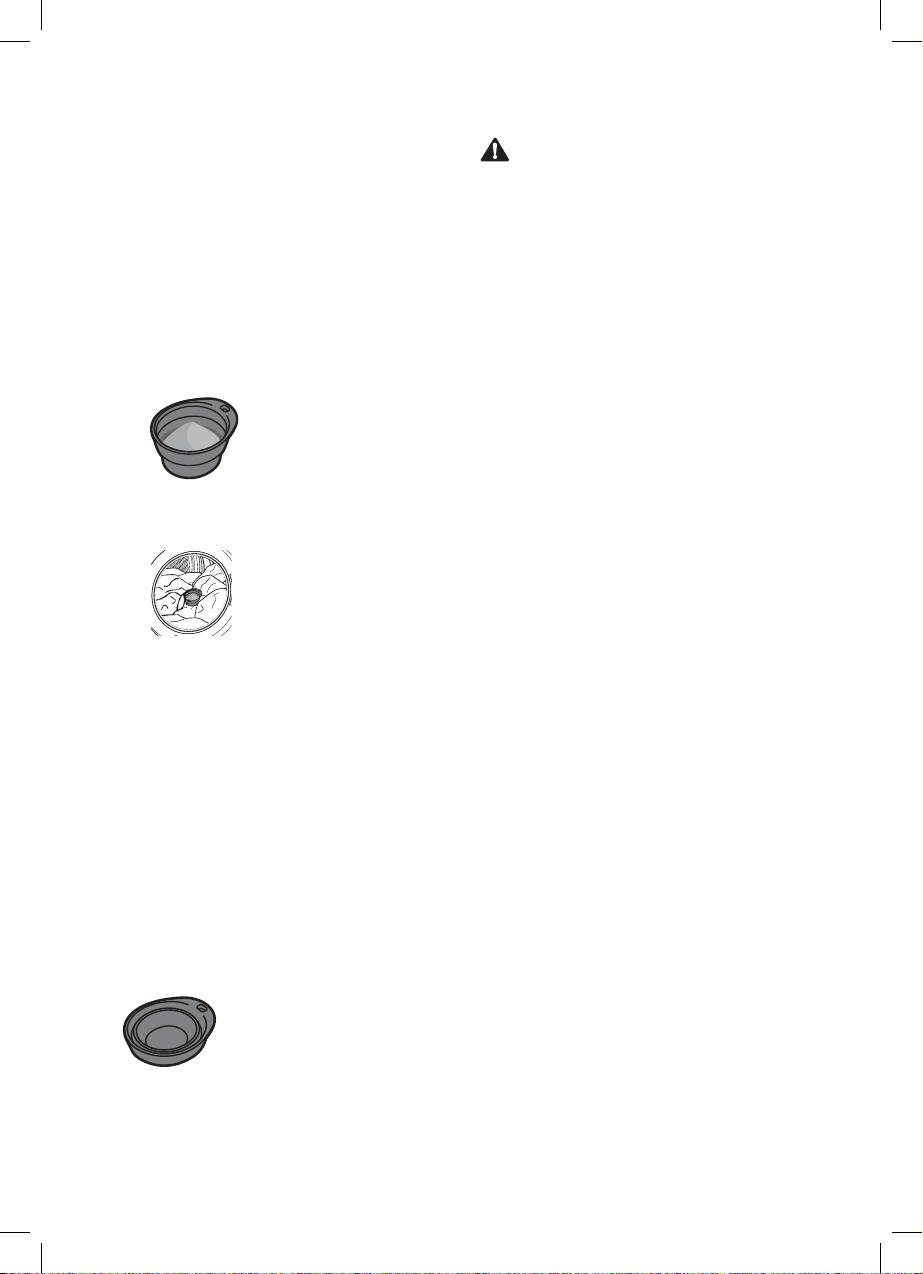
Dispensing Detergent Manually
You may disable the Auto Detergent function if
necessary.
• To dispense a different kind of detergent
(powder detergent, neutral detergent, or
oxygen-based bleach) manually without
using the Auto Detergent function, use the
separately provided Rubber cup.
1
Turn off Auto Detergent function.
2
Put the detergent in the Rubber cup.
3
Put the Rubber cup into the drum.
NOTE
• Dispense the detergent by referring to the
scale mark in the Rubber cup.
• When washing is nished, wash the Rubber
cup clean before storing it.
• To use fabric softener, turn on the Auto
Softener function.
• Do not use the Rubber cup with the Auto
Detergent function turned on. Excessive suds
will remain even after rinsing, causing a longer
rinsing time or preventing a proper rinsing.
• When you use the Delay Wash function, Auto
Dispense is recommended.
• You may store the Rubber cup by folding it as
shown in the gure below.
CAUTION
• Do not pour fabric softener directly on the
clothes.
• Dispense the fabric softener using the Auto
Detergent function.
• Put the Rubber cup in carefully to avoid
direct contact between the detergent and
the laundry. Detergent with strong bleaching
power may cause laundry discolouration.
• Apply the recommended amount of detergent
as indicated by the detergent maker. Using
an excessive amount of detergent may leave
the laundry smelling of detergent residue after
washing.

27
EN
Detergent Dosage
• When you use the Delay Wash or Prewash
function, Auto Dispense is recommended.
• If too much detergent is used, too many suds
can occur, which will result in poor washing
results or overload the wash motor or cause
excessive vibration and a UE error.
• By default, the dispensed amount of auto
detergent and an auto softener for 4- 6 kg of
regularly soiled fabrics is set to 70 ml and 30
ml, respectively, which can be changed using
the More Settings button.
• Detergent usage may need to be adjusted for
different water temperatures, water hardness,
size and soil level of the load. For best results,
avoid oversudsing.
• Refer to the label of the clothes, before
choosing the detergent and water
temperature.
• For better washing performance and
whitening, use detergent with the general
powdered bleach.
NOTE
• Do not let the detergent harden.
Doing so may lead to blockages, poor rinse
and performance or odour.
28
EN
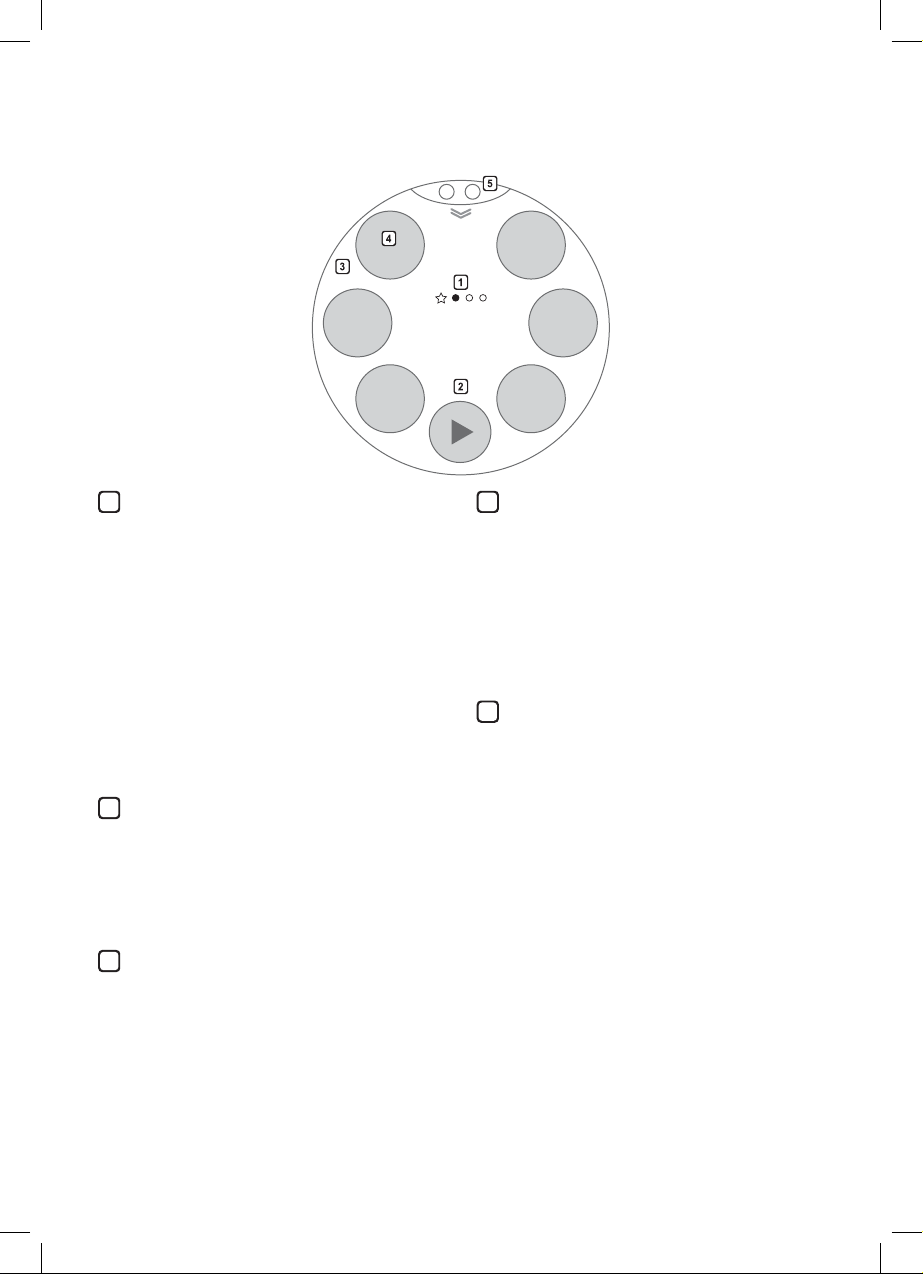
Control Panel
1
Cycle Category
• This displays the currently available
page. Swipe the display left or right to
show Daily Cycles, Special Cycles, Dry
Cycles(Optional), Download Cycle, and
My Pattern.
• My Pattern is used when you want to wash
with a programme you use frequently. If
you run the same programme more than
three times, it will be registered as My
Pattern.
• Cycle categories may differ on some
models.
2
Start/Pause Button
• This Start/Pause button is used to start the
wash cycle or pause the wash cycle.
• If a temporary stop of the wash cycle is
needed, press the Start/Pause button.
3
Display
• The display shows programmes, remaining
time, options, status messages, etc.
• The display shows the estimated time
remaining while the size of the load is
being calculated automatically.
4
Programmes
• You may select a desired cycle. For more
information on programmes, refer to
‘Programme Table’.
• You can download the new and special
programmes that are not included in
the appliance's basic programmes in
Download Cycle category.
5
Quick Setting
• Child Lock, Remote Start, Auto
Detergent, Auto Softener, Selection of
Main Washer and Mini Washer, and More
Settings are displayed. You can turn on or
off a function by touch.
29
EN
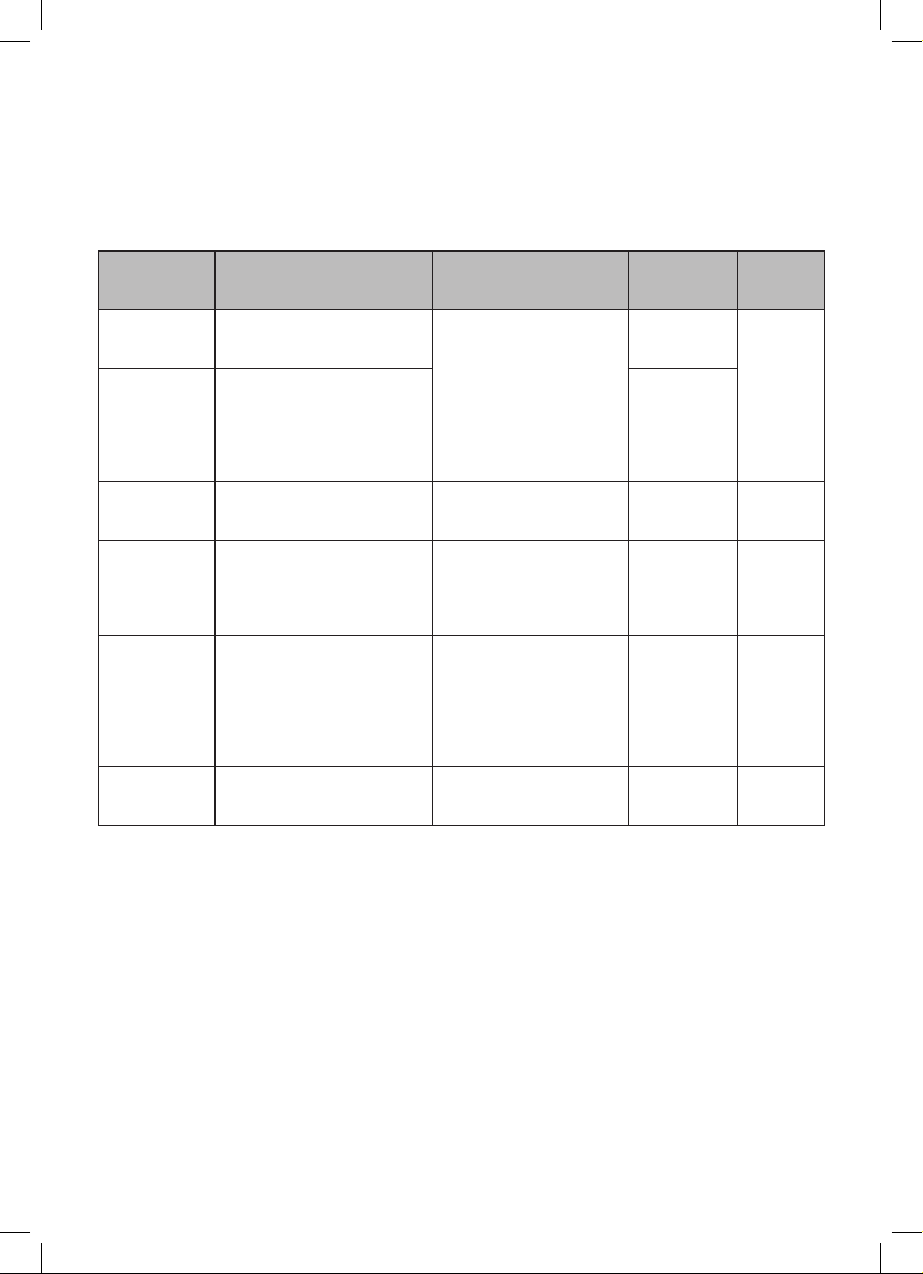
Programme Table
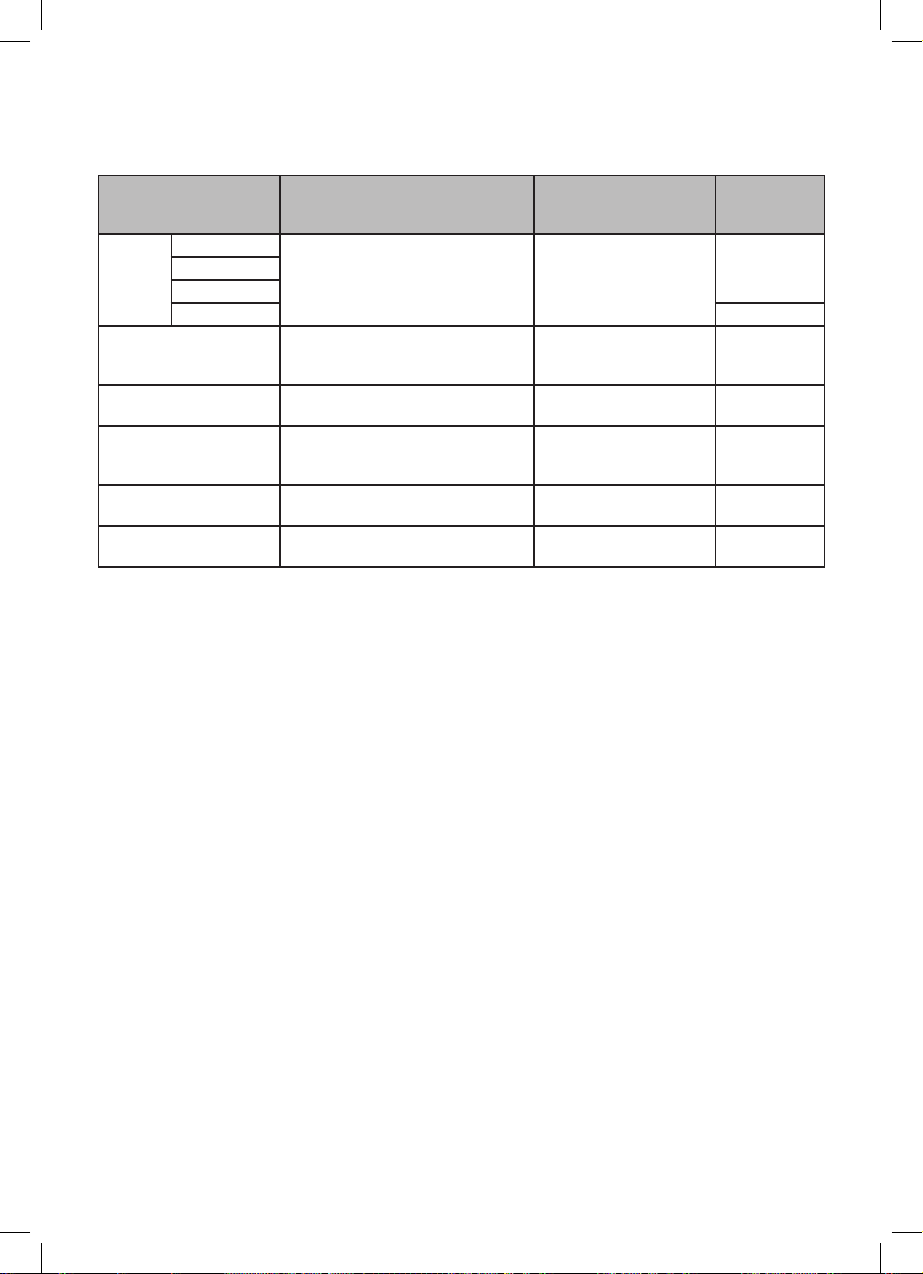
Washing Programme
Daily Cycle
Programme Description Fabric Type
Proper
Temp.
Maximum
Load
Cotton
Provides better performance
by combining various drum
motions.
Coloured fast garments
(shirts, nightdresses,
pajamas, etc.) and
normally soiled cotton
load (underwear).
40 °C
(Cold to 95
°C)
Rating
Auto Wash
Adjusts wash and rinse
actions automatically, after
detecting the amount of
clothes and soil level to
ensure the best performance
and care.
40 °C
Easy Care
Suitable for casual shirts
that do not need ironing after
washing.
Polyamide, acrylic,
polyester.
40 °C
(Cold to 60
°C)
5 kg
Mix
Enables various fabrics to be
washed simultaneously.
Various kind of fabrics
except special garments
(silk/delicate, sports wear,
dark clothes, wool, duvet/
curtains).
40 °C
(Cold to 40
°C)
6 kg
Speed 14
Provides a fast washing time
for small loads and lightly
soiled clothes.
Coloured laundry which is
lightly soiled fast.
CAUTION : Use less
than 10 g of detergent
(for 2 kg load) otherwise
detergent may remain on
the clothes.
20 °C
(20 °C to
40°C)
2 kg
Wool
Used to wash wool fabrics.
(Use detergent for machine-
washable woolens).
Machine washable
woolens with pure new
wool only.
30 °C
(Cold to 40
°C)
3 kg
30
EN
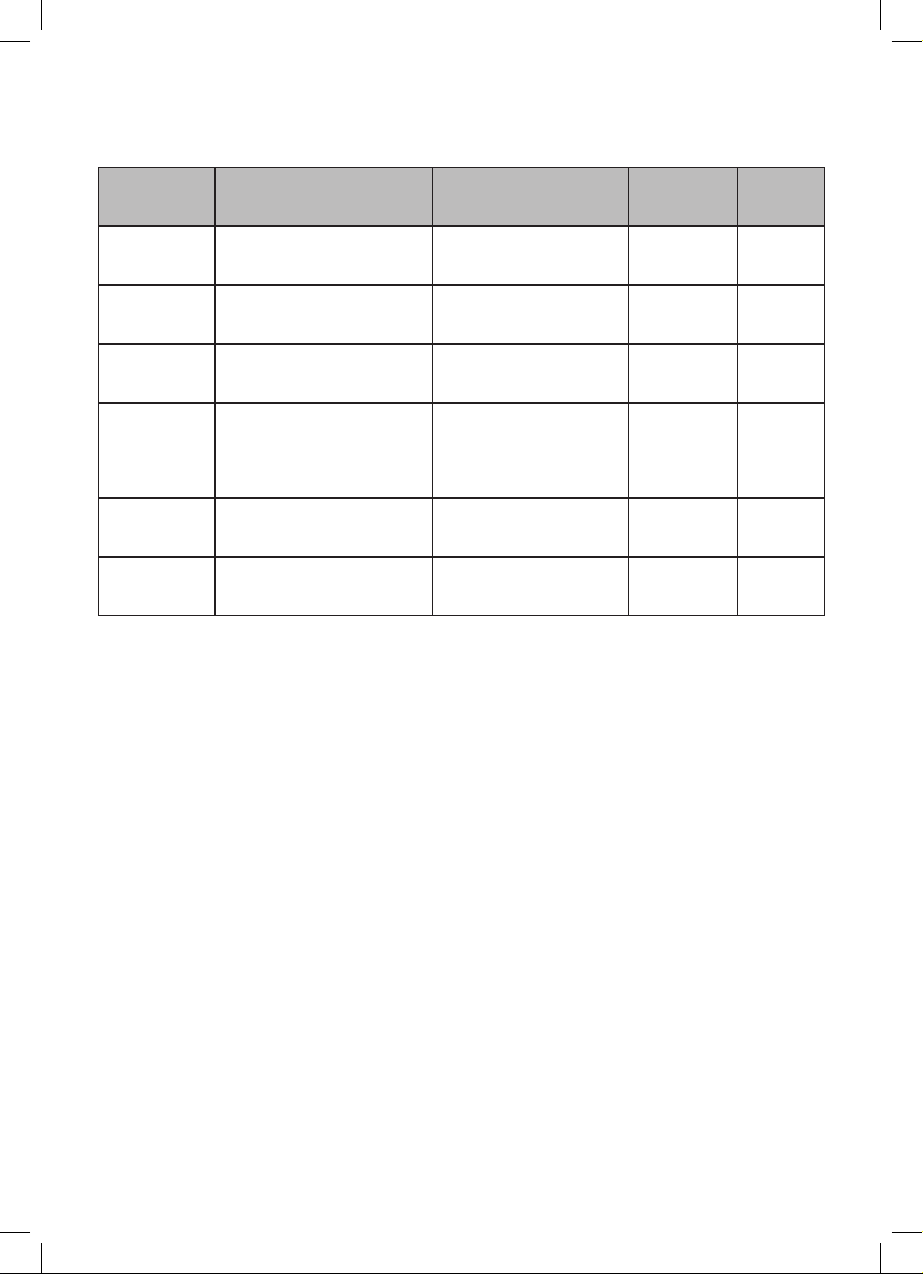
Special Cycle
Programme Description Fabric Type
Proper
Temp.
Maximum
Load
Allergy Care
Helps to remove allergens
such as house mite and
pollen.
Cotton, underwear, pillow
covers, bed sheets, baby
wear
60 °C
(60 °C to 95
°C)
6 kg
Outdoor
Suitable for water-proof
clothes made of Gore-tex or
Windstopper, etc.
Leisure clothes such
as water-proof jacket,
trousers
30 °C
(Cold to 40
°C)
2 kg
Direct Wear
(1 kg)
Provides washing to drying
within 80 mins at once for
light soiled 1-3 shirts.
Cotton mixed, polyester
mixed dress shirts,
blouses
20 °C
(20 °C to 40
°C)
1 kg
Stain Care
Wash off several kinds of
stain such as wine, juice,
dirt, etc. (Water temperature
is increased step by step for
washing various stains.)
Cotton blended fabrics,
no delicate clothes
40 °C or 60
°C
(30 °C to 60
°C)
3 kg
Gentle Care
For hand washable delicate
clothes such as lingerie,
dresses, etc.
Hand washable clothes.
20 °C
(Cold to
30°C)
1.5 kg
Delicate
For delicate clothes such as
underwear, blouses, etc.
Delicate, easily damaged
laundry.
30 °C
(Cold to 40
°C)
3 kg
31
EN
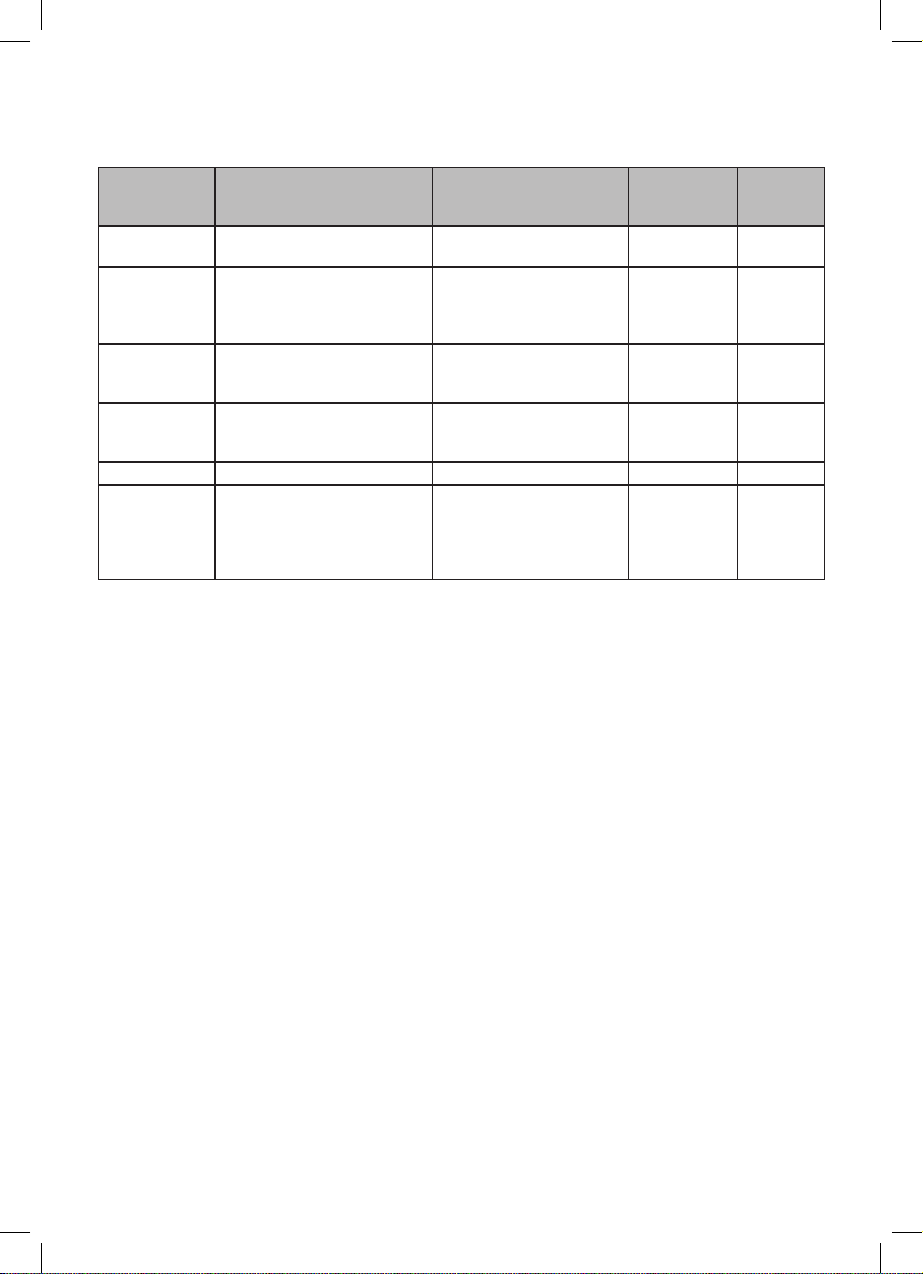
Download Cycle
Programme Description Fabric Type
Proper
Temp.
Maximum
Load
Tub Clean
Cleans inside of the washing
machine.
- 60 °C -
Rinse+Spin
Use for laundry that need
rinsing only or to add rinse-
added fabric softener to
laundry.
Normal fabrics which can
be washable.
No choice -
Refresh
Removes wrinkles within
30mins with steam
Cotton mixed, polyester
mixed dress shirts,
blouses
No choice 3 items
Turbo 49
Provides fast washing time
for small loads and lightly
soiled clothes.
Colored laundry which is
lightly soiled.
40 °C
(Cold to 40
°C)
6 kg
Spin Only for spin - No choice -
Cotton Eco
Provides optimised washing
performance for large
amount of laundry with less
energy consumption.
Coloured fast garments
(shirts, nightdresses,
pajamas, etc.) and
normally soiled cotton
load (underwear).
60 °C
(Cold to 60
°C)
Rating
• Water Temperature: Select the appropriate water temperature for chosen wash programme. Always
follow garment manufacturer’s care label or instructions when washing.
NOTE
• Neutral detergent is recommended.
32
EN
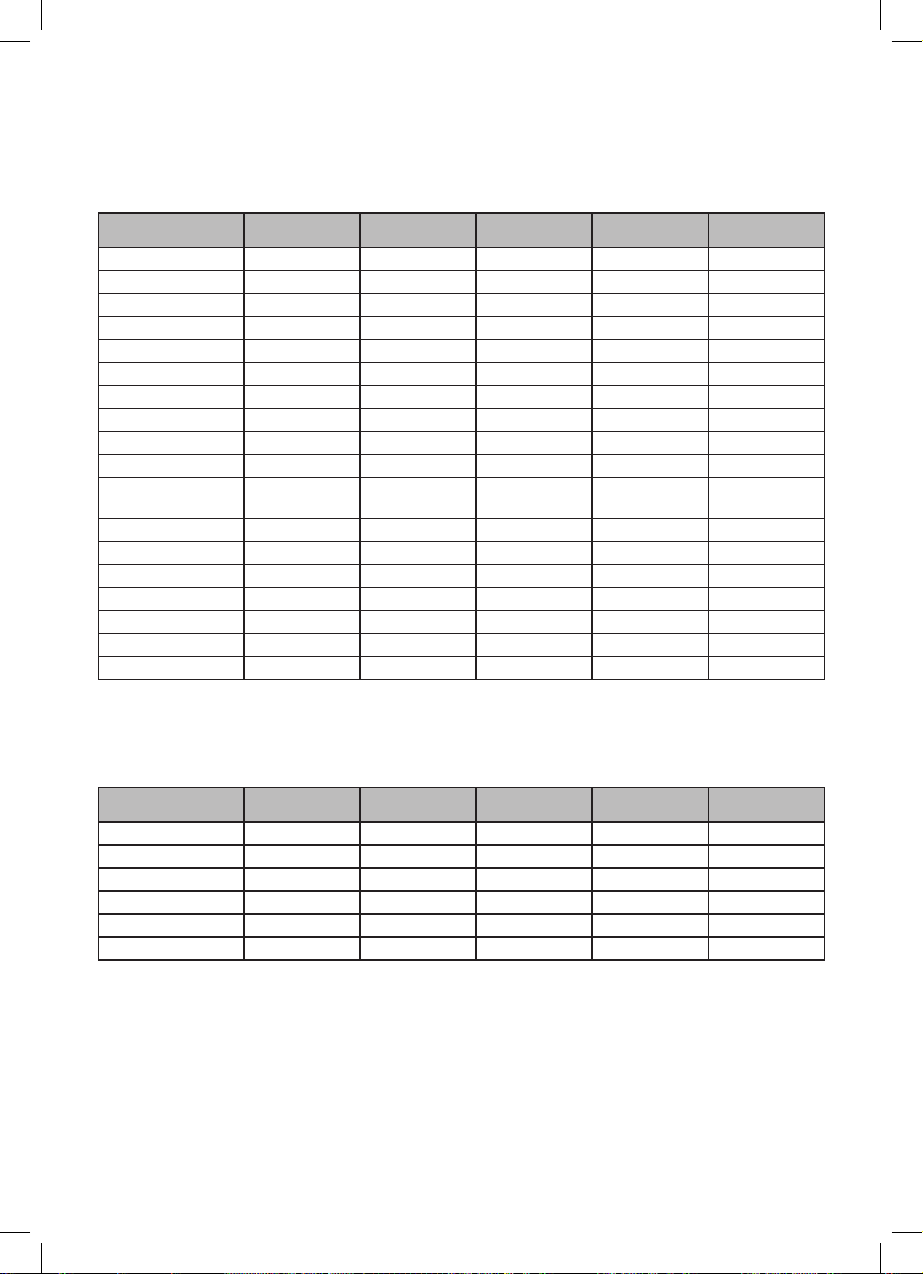
Drying Programme
Programme Description Fabric Type
Maximum
Load
Cotton
Normal
Suitable for towels, shirts,
underwear, etc.
Normal cotton laundry
6 kgIron
Eco
Speed 5 kg
Outdoor
Suitable for leisure wear. It would
be help resist water repellency of
clothes.
Coolmax, Gore-tex,
Fleece and Sympatex.
2 kg
Time Dry
You can change the drying time
according to the maximum load.
Cotton, towel 3 kg
Wash+Dry (6 kg)
Provides a nonstop process of
washing and drying in the same
cycle.
Normal cotton laundry 6 kg
Easy Care Suitable for casual shirts.
Polyamide, acrylic,
polyester.
3.5 kg
Delicate
Dries delicate clothes such as
underwear, blouses, etc.
Delicate, easily
damaged laundry.
1.5 kg
• Set programme at “Wash: Cotton Eco, 40°C, Normal Soil, Normal Rinse, 1600RPM” is for normally
soiled load and test in accordance or in conformity with AS/NZS 2040.1.
• Set programme at “Dry: “Cotton Dry, Eco Dry, 1200RPM” option for test in accordance or in
conformity with AS/NZS 2442.1.
• In the case of Washing and Drying tests, Auto Dispense function turned off.
• In the case of Washing tests, Input the melted detergent between gasket and drum.
(Liquid detergents are only available with Auto dispense box)
• The test results depend on water pressure, water hardness, water inlet temperature, room
temperature, type and amount of load, degree of soiling utilized detergent, uctuations in the main
electricity supply and chosen additional options.
NOTE
• Select maximum selectable spin speed of washing programme to ensure drying results.
• Where the amount of laundry to be washed and dried in one programme does not exceed the
maximum weight permitted for the drying programme, washing and drying in one continuous
sequence is recommended.
33
EN
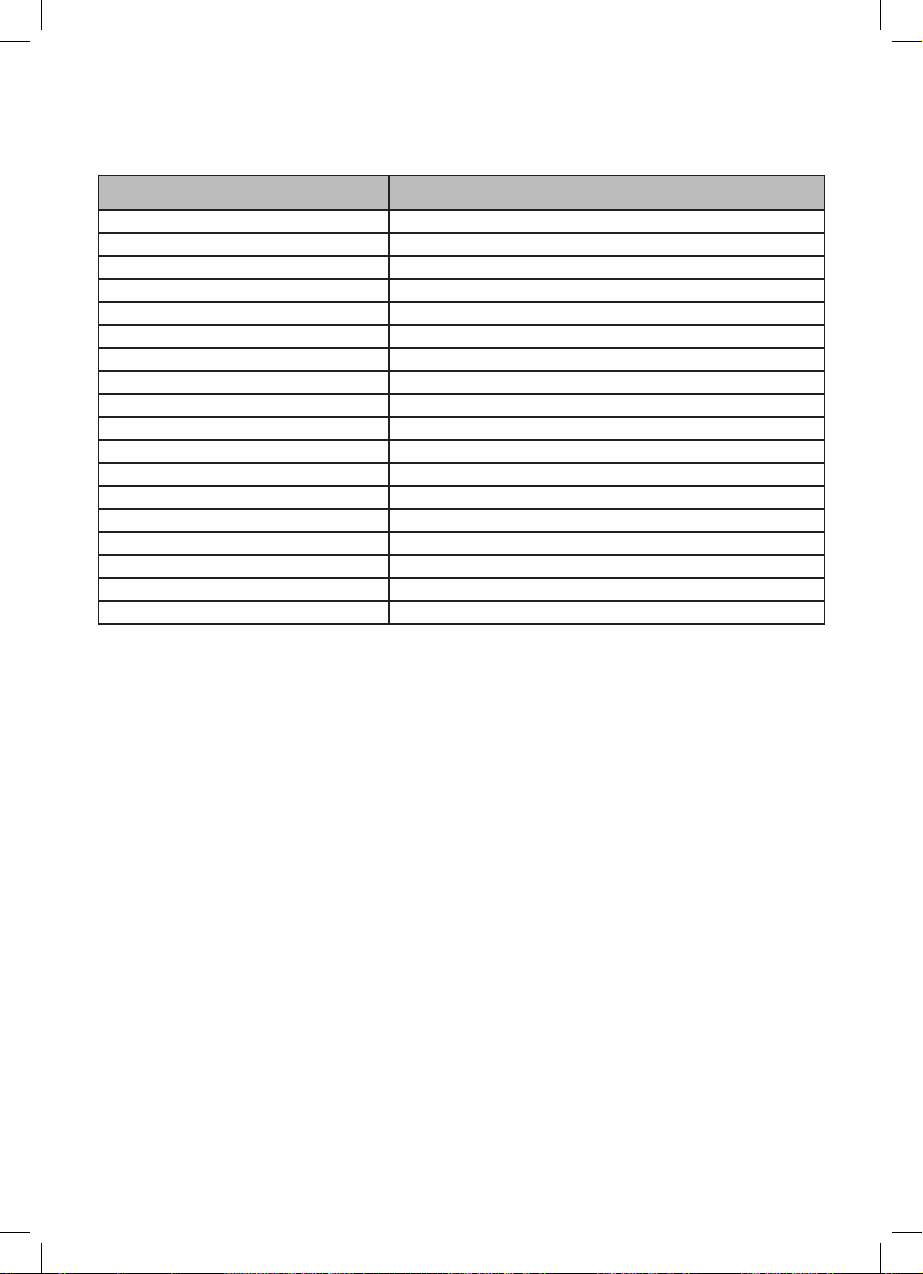
Extra Options
Washing Programme
Programme Turbo Clean Prewash Medic Rinse Crease Care Delay Wash
Cotton ● ● ● ● ●
Auto Wash ● ●
Mix ● ● ● ● ●
Easy Care ● ● ● ● ●
Speed 14 ● ●
**Wool ● ●
Allergy Care ● ● ●
Stain Care ● ● ● ● ●
**Outdoor ● ● ●
**Gentle Care ● ●
Direct Wear (1
kg)
●
*
●
**Delicate ● ● ●
Tub Clean
Refresh
Rinse + Spin ● ● ●
Turbo 49 ●
*
● ●
Spin ● ●
Cotton Eco ● ● ● ● ●
• * : This option is automatically included in the programme and can not be deleted.
• ** : This programme recommends using a neutral detergent or an exclusive detergent.
Drying Programme
Programme Turbo Clean Prewash Medic Rinse Crease Care Delay Wash
Cotton ●
Outdoor ●
Time Dry ●
Wash+Dry (6 kg) ● ● ● ●
Easy Care ●
Delicate ●
34
EN
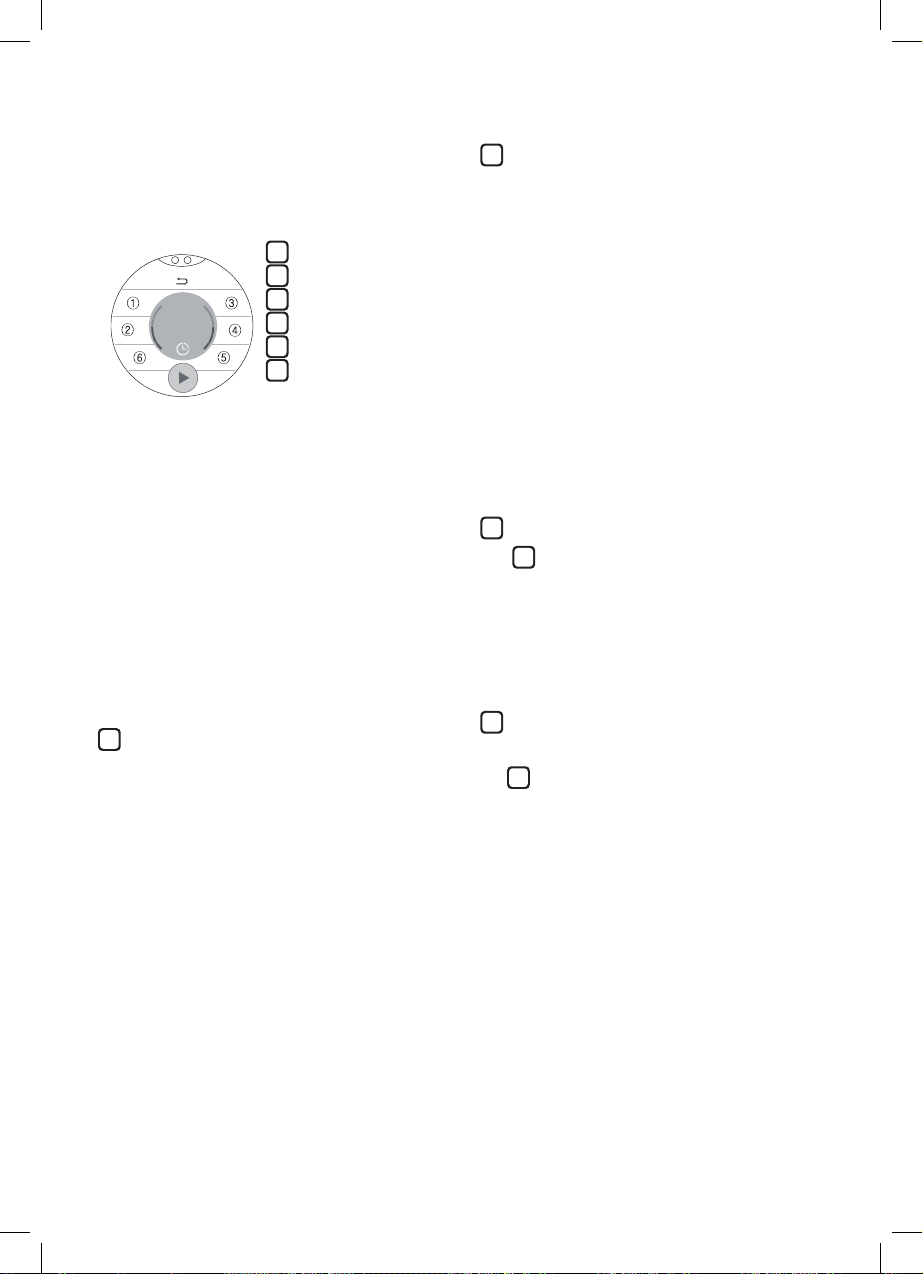
Operating Data
Programme Max RPM
Cotton 1600
Auto Wash 1600
Mix 1600
Easy Care 1200
Speed 14 800
Wool 800
Allergy Care 1600
Stain Care 1600
Outdoor 800
Gentle Care 800
Direct Wear (1kg) 1200
Delicate 800
Tub Clean -
Refresh -
Rinse + Spin 1600
Turbo 49 1600
Spin 1600
Cotton Eco 1600
35
EN
Option Programme
When you select a programme, washing starts
with the default settings. If needed, change the
options as shown below.
1
: Soil
2
: Rinse
3
: Temp.
4
: Spin
5
: Add Option
6
: Add Drying
(Optional)
1
Press the Power button.
2
Select a washing programme.
3
Select the options you want to change.
4
Change the options and press the OK
button.
5
Press the Start/Pause button.
1
Soil
Light
Use this option when the soil level is lower than
a general washing.
Normal
Use this option for general washing.
Heavy
Select this option to wash heavily soiled laundry
using more power compared to the standard
wash for each programme.
2
Rinse
Rinse+
Adds one additional rinse.
Rinse++
Adds two additional rinses.
Rinse & Hold
The programme is paused until the start button
is pressed again when rinse has nished.
Rinse+ & Hold
Add an additional rinse then after the rinsing
process, the programme is paused until Start/
Pause button is pressed again.
3
Temp.
The
3
button selects the wash temperature
combination for the selected programme. Press
the desired setting. All rinses use cold tap water.
• Select the water temperature suitable for
the type of load you are washing. Follow the
garment fabric care labels for best results.
4
Spin
Spin speed level can be selected by pressing
the
4
button repeatedly.
NOTE
• When you select No Spin, it will still rotate for
a short time to drain quickly.
• The spin setting range may be different
depending on programmes.
36
EN
5
Add Option
Option settings may be different depending on
programmes.
Turbo Clean (
)
Wash programme under 1 hour with energy and
water saving. (based on half of laundry)
Prewash (
)
If the laundry is heavily soiled, the Prewash is
recommended.
NOTE
• If you select Prewash after putting the
detergent directly into the drum, the detergent
may be washed away, causing less washing
performance. When selecting Prewash, be
sure to set to Auto Detergent.
Medic Rinse ( )
For best results or for cleaner rinsing. This
allows the nal rinse to be heated to 40
degrees.
Crease Care (
)
If you want to prevent creasing, select Crease
Care option. This also reduces the spin speed
and so the clothes may have more moisture
remaining after the cycle has ended.
NOTE
• To prevent tangling of your laundry, the tub will
rotate for a certain period of time after spinning
is nished.
6
Add Drying
Option settings may be different depending on
cycles.(Refer to 'Drying Programme')
Cooling
This programme cools the clothes down after
drying when they are hot.
Normal
You can use it to dry your normal fabrics.
Iron
For easy ironing, nish drying in a damp state.
Eco
A special programme to dry with an optimized
energy consumption.
Speed
You can use it to dry your clothes quickly.
Time Dry(30/60/90/120min)
You can use it to dry your laundry for a xed
amount of time.
NOTE
• If drying performance is too low or bad, refer
to Trouble Shooting.
• If necessary, add a Time Dry cycle again.
37
EN
Delay Wash( )
You can set a time delay so that the washing
machine will start automatically and nish after
the set specied time interval.
1
Press the Power button.
2
Select a washing programme.
3
Press Delay Wash ( ) under the
programme.
4
When you want to change the time, touch
the display.
5
Set Est. End Time.
6
Press the OK button.
NOTE
• The delay time is the time up until the
end of the programme, not the start. The
actual running time may vary due to water
temperature, wash load and other factors.
• When the Delay Wash has been set, the
remaining time appears on the display.
• The delay time can be set up to 24 hours
from now and cannot be set if it is within the
minimum hours of a wash programme.
• To cancel the Delay Wash function, the Power
button should be pressed.
Add Item
Laundry can be added or removed after the
washing programme is started.
1
Press the Start/Pause button.
2
Press the Add Item.
3
Open the door after door lock is released.
4
Add or remove laundry.
5
Press the Start/Pause button again to
continue the cycle. The cycle continues
automatically.
NOTE
• For safety reasons, the door remains locked
when the water level or temperature is high. It
is not possible to add laundry during this time.
• If the water temperature in the drum is high,
wait until it cools down.
CAUTION
• When adding laundry, make sure to
completely push it into the drum. If laundry
gets stuck in the door latch hole, the rubber
door seal may be damaged, causing water
leakage and malfunction.
• Forcing the door open may cause serious
damage, malfunction, or safety hazards.
• If you open the door while there is a lot of suds
and water in the drum, the suds or water may
ow, causing scalding injury or damage to the
oor by wetting it.

38
EN
Dry
Use the your Automatic programmes to dry
most loads. Electronic sensors measure the
temperature of the exhaust to increase or
decrease drying temperatures for faster reaction
time and tighter temperature control.
• Cold water tap must be left on during drying
programmes.
• This washing machine’s automatic process
from washing to drying can be selected easily.
• For most even drying, make sure all articles
in the clothes load are similar in material and
thickness.
• Do not overload the washing machine by
stufng too many articles into the drum. Items
must be able to tumble freely.
• If you open the door and remove the load
before the washing machine has nished its
programme, remember to press the Start/
Pause button.
• After the end of dry, ‘Cool Down’ is displayed.
‘Cool Down’ means crease reduction. The
drying programme is already done. Press any
buttons to stop the Cool Down and take out
clothes. If you do not press the Start/Pause
button, the programme ends after about 4
hours.
NOTE
• If you want to spin the clothes clothes before
drying, select the spin RPM at each dry
programme's option.
• Be careful when removing your clothing from
the washing machine, as the clothing or
washing machine may be hot.
Woolen Articles
• Do not tumble dry woolen articles. Pull them to
their original shape and dry them at.
Woven and Loopknit Materials
• Some woven and loopknit materials may
shrink, by varying amounts, depending on
their quality.
• Always stretch these materials out
immediately after drying.
Permanent Press and Synthetics
• Do not overload your washing machine.
• Take out permanent press articles as soon as
the washing machine stops to reduce wrinkles.
Baby Clothes and Night Gowns
• Always check the manufacturer’s instructions.
Rubber and Plastics
• Do not dry any items made from or containing
rubber or plastics, such as:
− aprons, bibs, chair covers
− curtains and table cloths
− bathmats
Fiber Glass
• Do not dry berglass articles in your washing
machine. Glass particles left in the washing
machine may be picked up by your clothes the
next time you use the washing machine and
cause skin irritation.

39
EN
Drying Time Guide
• Drying cycle can last up to about 7 hours.
• These drying times are given as a guide to
help you set your washing machine for manual
drying.
• If the temperature of the drying system is
not enough to complete to dry, drying time is
modied automatically, and inform it by pop-up
window.
NOTE
• The estimated drying time varies from the
actual drying time during the Automatic
programme.
The type of fabric, size of the load, and
the dryness selected may cause the time
remaining to adjust itself accordingly.
It is also normal if the remaining Drying time
remains stationary for up to one hour. This
may occur when the sensors recalculate the
drying time.
The time remaining will then recommence
counting down when the time remaining is the
actual remaining time.
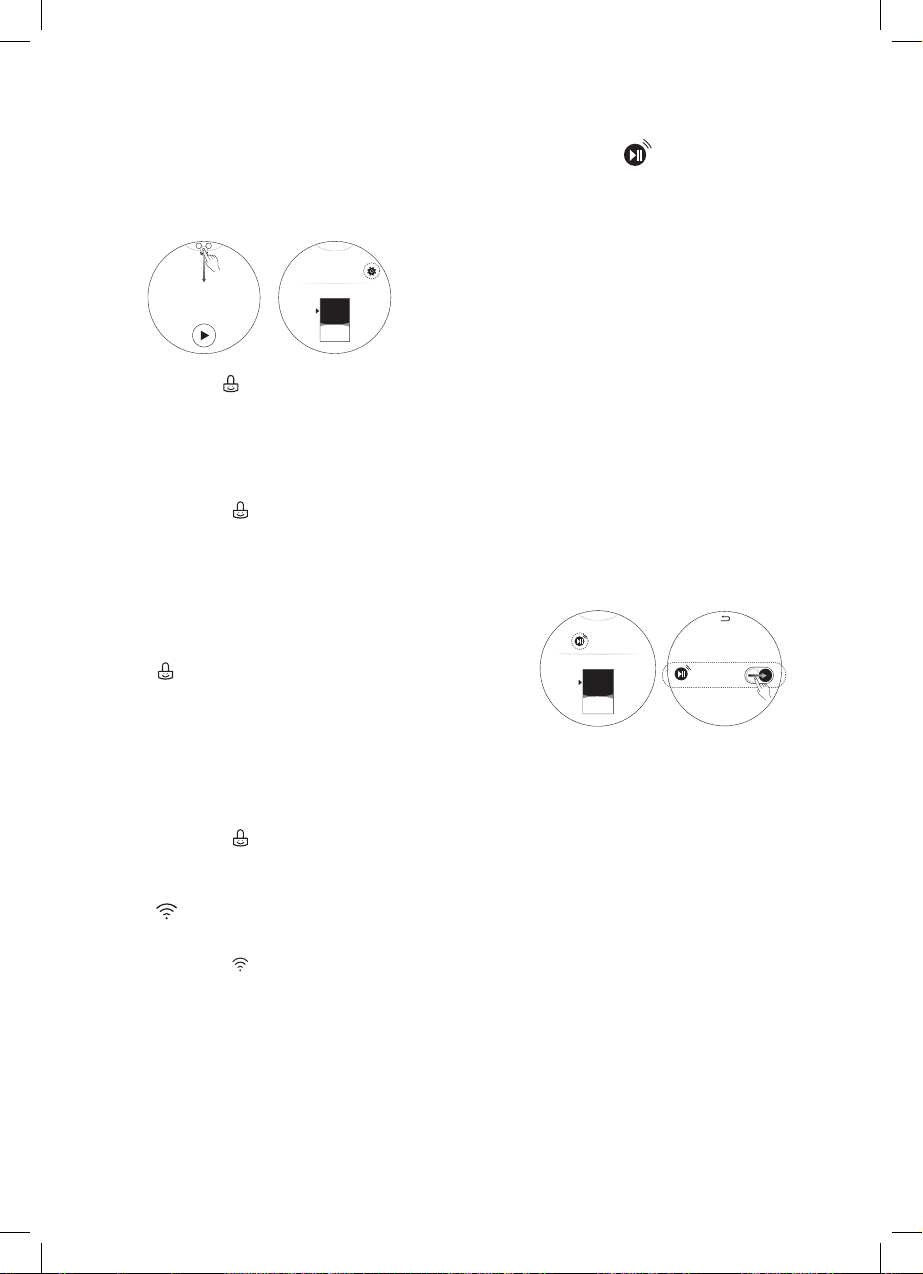
40
EN
Settings
Swipe the settings window down to change
more settings. Press the More Settings button
to change more settings.
X
Child Lock ( )
Use this option to disable the controls. This
feature can prevent children from changing
cycles or operating the appliance.
Locking the Control Panel
Press Child Lock ( ) on the settings window
and then Child Lock is turned on.
NOTE
• Turning off the power will not reset the child
lock function. You must deactivate child lock
before you can access any other functions.
• When Child Lock is turned on, the Wi-Fi icon
on the display window is changed to the Child
Lock (
) icon.
• When Child Lock is turned on, you cannot
operate any buttons except the Power button
and Switching between Main Washer and Mini
Washer.
Unlocking the Control Panel
Press Child Lock (
) on the settings window
and then Child Lock is turned off.
Wi-Fi(
)
Set the Wi- connection. When Wi-Fi is turned
on, the Wi-Fi icon (
) is displayed on the
settings window.
Remote Start ( )
Use a smart phone to control your appliance
remotely. You can also monitor your cycle
operation so you know how much time is left in
the cycle.
NOTE
• You must rst connect to a gateway and
register your appliance in order to use the
Remote Start function. (Refer to Smart
Functions)
To Use Remote Start:
1
Press the Power button.
2
Put the laundry in drum.
3
Press Remote Start icon or More Settings
button on the settings window, turn on
Remote Start option.
X
4
Start a cycle from the LG Smart ThinQ
application on your smart phone. (available
from the Google Play Store)
NOTE
• You cannot do a manual wash whilst the
Remote Start has been activated. To use
the machine manually, the Remote Start will
need to be turned off or the remote start Cycle
would need to have been completed.
• When Remote Start is turned on, the door is
automatically locked.
To Disable Remote Start:
Before the Remote start has commenced, turn
off the Remote Start option.
NOTE
• If the door is open, the Remote Start function
cannot be enabled.
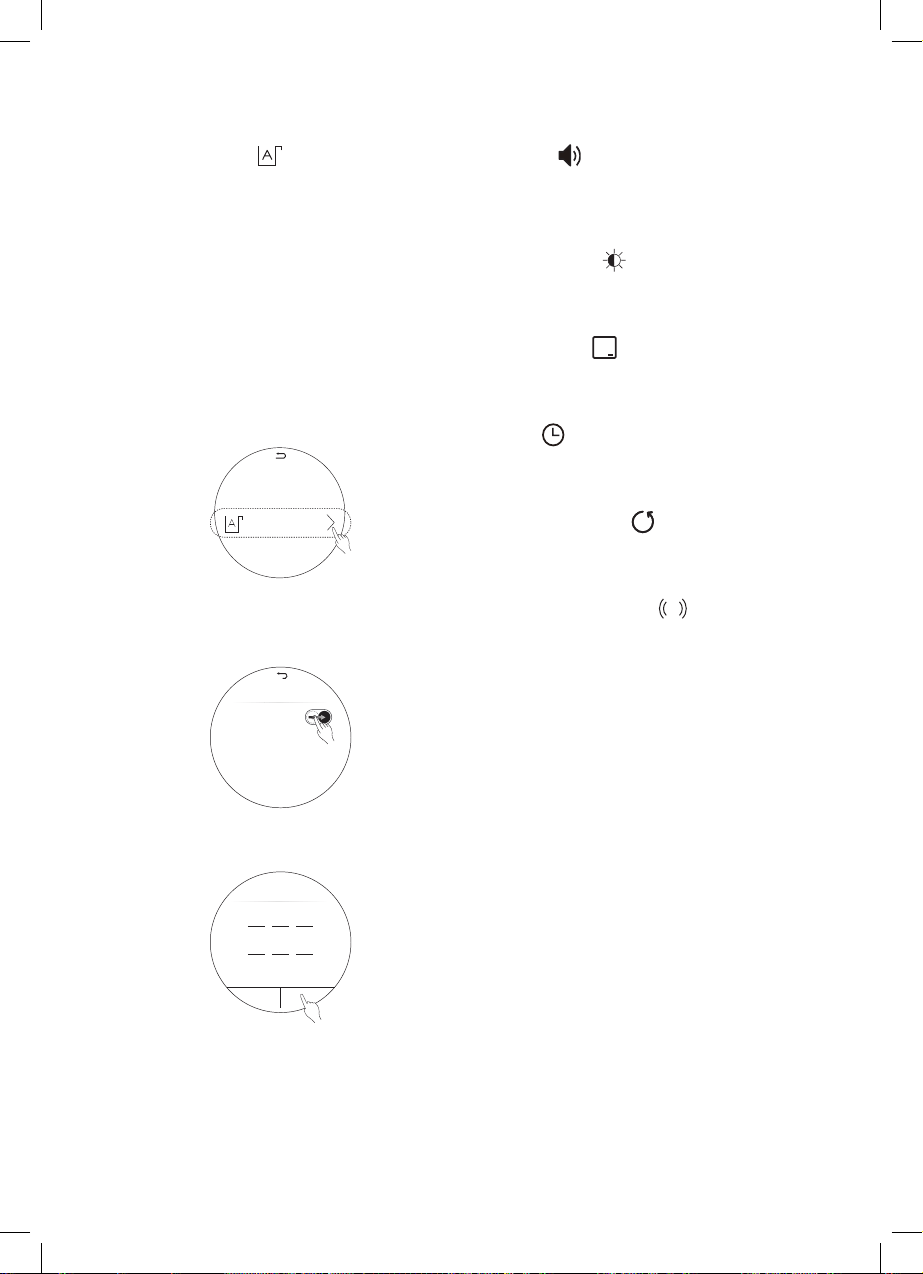
41
EN
Auto Dispense ( )
Select this to turn on or off Auto Dispense.
• When you set the Rell Alarm, you can nd out
when to rell the detergent or the softener.
• You can change the detergent or softener
amounts as shown below.
1
Press the Power button.
2
Under the More Settings button on the
settings window, select the Auto Dispense
option.
3
Turn on Auto Detergent.
4
Set the Auto Dispense Amount to the desired
quantity and then press OK.
ml
Sound ( )
Use this option to turn on or off the sound when
the button is pressed.
Brightness (
)
Set brightness from 20 % to 100 %.
Language (
A
)
Change the desired language.
Time (
)
Change the current time.
Summer Time (
ss
)
Use this when you want to set the summer time.
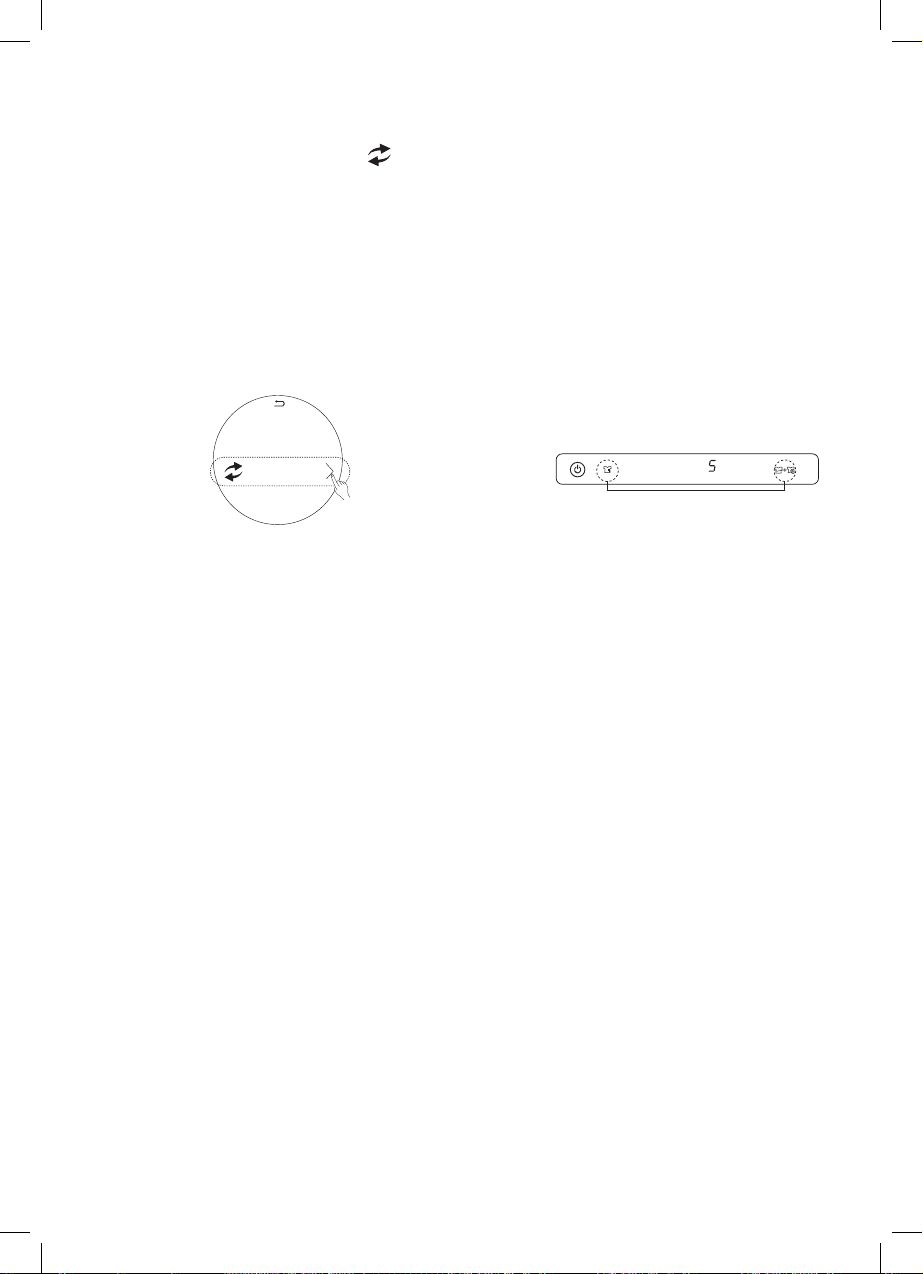
Smart Diagnosis (
+
)
Select this when the appliance has malfunctions
or errors. For more information, refer to Smart
Diagnosis.
42
EN
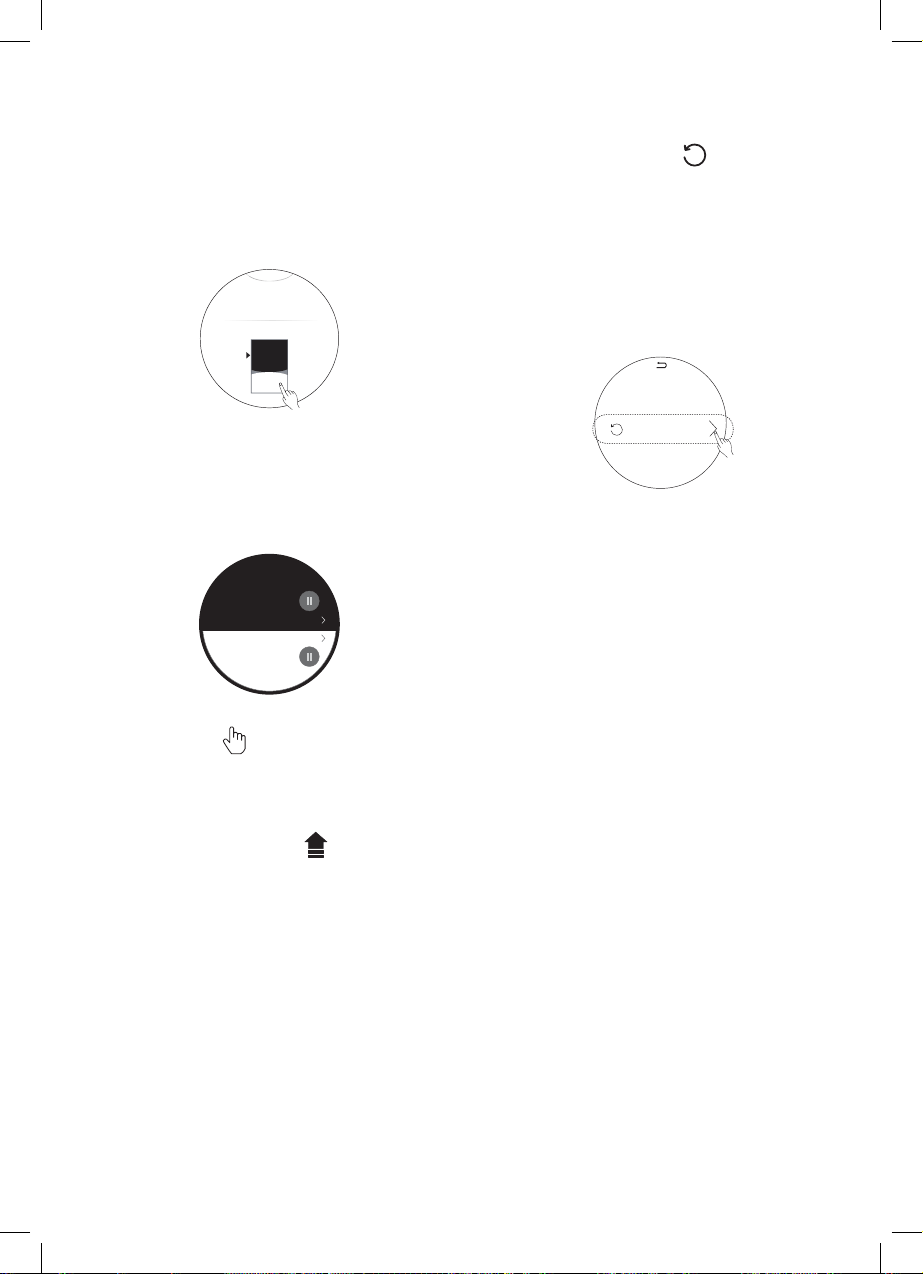
Washer Pairing (Optional) ( )
Select this to (un)pair the Main Washer and the
Mini Washer.
• This option is available when the Main Washer
is used with the Mini Washer.
1
Press the Power button.
2
Under the More Settings button on the
settings window, select the Washer Pairing
option.
3
Press the Pair button.
4
When pairing is done, a window pops up the
message for completing the washer pairing.
NOTE
• If you fail to pair the Mini Washer, refer to the
following steps:
1
2
3
Ensure that the power cable of the
Mini Washer is plugged in.
When it is plugged in, reset the Mini
Washer according to the instructions.
Step 1. Press the Power button to turn
on the Mini Washer.
Step 2. Press and hold Light Soil and
Rinse+Spin at the same time for 7
seconds.
When pairing fails two times or more,
reset both the Main Washer and the
Mini Washer.
For information on how to reset the
Main Washer, refer to Factory Data
Reset.
• When '0' appears on the display, repeat Step
2.
• When the reset is completed, a number that is
'1' or above is displayed. Try pairing again by
referring to the Washer Pairing instructions.
43
EN
Switching Between Main and Mini
Washer
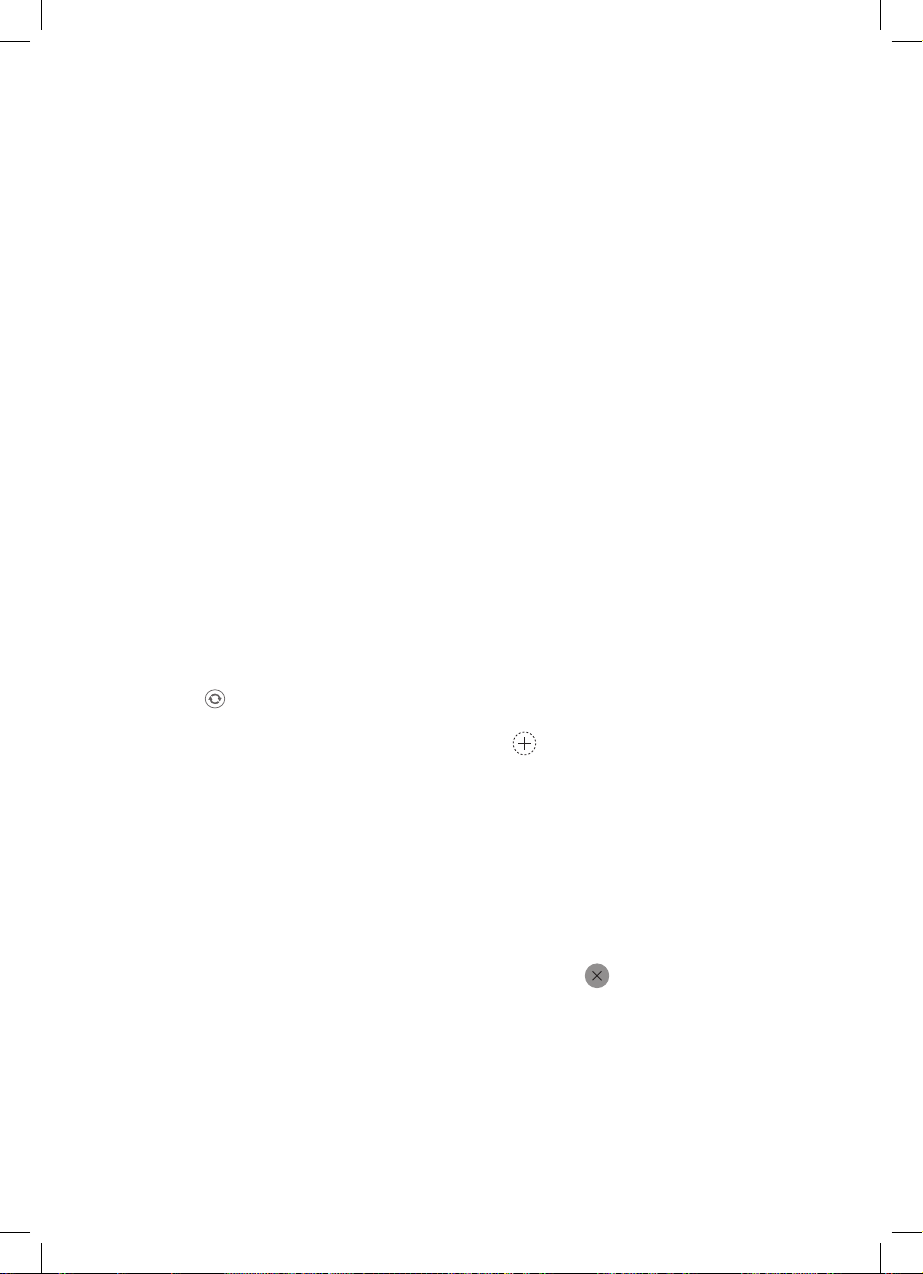
Select this to switch the washing mode between
Main Washer and Mini Washer. You can swipe
the settings window down to select Main
Washer or Mini Washer.
X
Main
NOTE
• This feature is available only when the Mini
Washer is connected.
• The cycles in Main Washer and Mini Washer
are available at the same time and during the
simultaneous cycles, the following display
appears.
User Guide ( )
Use this when you want to see how the washing
machine is operating on the display window.
Programme Update (
)
A newer version is available.
Factory Data Reset (
)
Delete all the stored data and reset to the
default settings.
1
Press the Power button.
2
Under the More Settings button on the
settings window, select the Factory Data
Reset option.
3
Press the Reset button.
4
Press the Yes button.
NOTE
• Upon the factory data reset of the Main
Washer, all data including the Wi-Fi settings
will be deleted.
• The pairing can be delayed or fail due to
problems communicating between Main
Washer and Mini Washer or a Wi-Fi issue.
44
EN
Download Cycles
The Download Cycles features of this appliance
allow you to download new and special cycles
that are not included in the appliance's basic
cycles.
Once Cycle Download is completed in the
washing machine, the appliance keeps the
downloaded cycle until you change it to a new
downloaded cycle.
To Download Cycles by Using an
Application
Use this function when you want to download
cycles by installing the LG Smart ThinQ app.
1
Press the Power button.
2
Using the 'LG Smart ThinQ' app,
check which programmes are currently
downloaded.
• If you try to download programmes on
many different smart phones at the same
time, the programme displayed on your
smart phone may be different from the
actual programme downloaded on the
washing machine.
• Press on (
) the display for downloaded
programmes to check which cycle has
been downloaded on the washing machine.
3
Select Downloaded botton.
• Settings available for selection may differ
depending a downloaded cycle.
NOTE
• You can download cycles after registering
the appliance and conguring the Wi-Fi
connection. For information on how to
register the appliance and congure the Wi-Fi
connection, refer to 'Using the Wi-Fi Function'.
• You can download a desired programmes
through the 'LG Smart ThinQ' app. For more
information on each programmes, refer to the
'LG Smart ThinQ' app.
• Depending on the type of washing machine
purchased, different programmes will be
available.
• The download programmes may be different
depending on the updated version of the 'LG
Smart ThinQ' app.
To Download Cycles Directly from
the Appliance
1
Press the Power button.
2
Press the Edit button on the display for
Download Cycles.
• If there is no free space for downloads,
delete the existing programmes.
3
Select a desired programme by pressing
( ) on the change mode.
To Delete a Downloaded Cycle
1
Press the Power button.
2
Press the Edit button on the display for
Download Cycles.
3
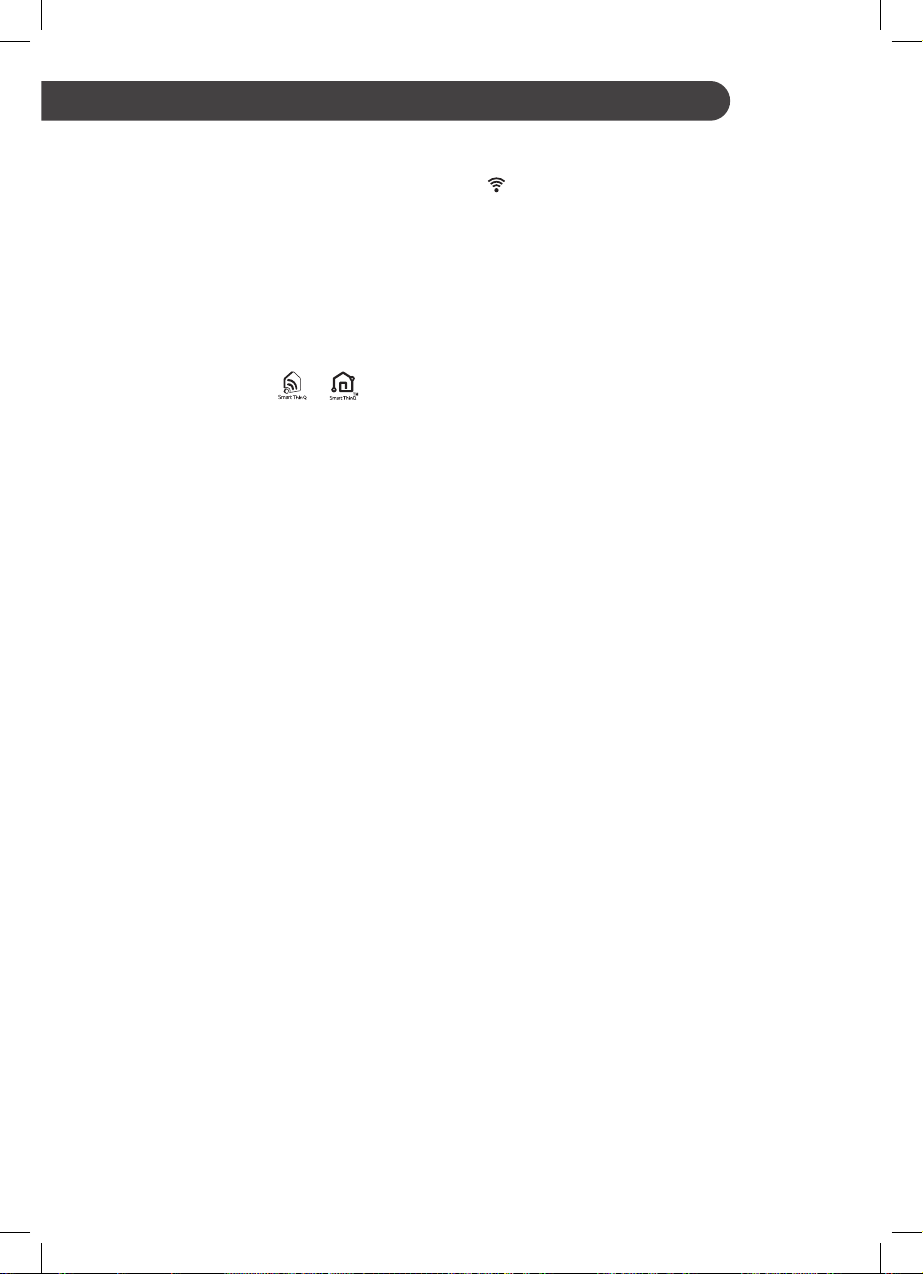
Press the ( ) button for the programme
you want to delete.
4
Press the OK button.
45
SMART FUNCTIONS
EN
Using Smart ThinQ
Application
Installing Smart ThinQ
Search for the LG Smart ThinQ application from
the Google Play Store or Apple App Store on a
smart phone. Follow instructions to download
and install the application.
Wi-Fi Function
• For appliances with the
or logo
Communicate with the appliance from a smart
phone using the convenient smart features.
Washer Cycle
Set or download any preferred cycle and operate
by remote control.
Tub Clean Coach
Check the appropriate Tub Clean period by
washing frequency.
Energy Monitoring
Check the energy consupmtion of the recently
used cycles and monthly average.
Smart Diagnosis™
This function provides useful information for
diagnosing and solving issues with the appliance
based on the pattern of use.
Settings
Various functions are available.
Push Alert
Turn on the Push Alerts to receive appliance
status notications. The notications are
triggered even if the LG Smart ThinQ application
is off.
NOTE
• To verify the Wi-Fi connection, check that Wi-Fi
icon on the control panel is lit.
• LG Smart ThinQ is not responsible for any
network connection problems or any faults,
malfunctions, or errors caused by network
connection.
• The machine supports 2.4 GHz Wi-Fi networks
only.
• If the appliance is having trouble connecting
to the Wi-Fi network, it may be too far from
the router. Purchase a Wi-Fi repeater (range
extender) to improve the Wi-Fi signal strength.
• The Wi-Fi connection may not connect or may
be interrupted because of the home network
environment.
• The network connection may not work properly
depending on the internet service provider.
• The surrounding wireless environment can
make the wireless network service run slowly.
• The application is subject to change for
appliance improvement purposes without
notice to users.
• Functions may vary by model.
RF Radiation Exposure Statement
This equipment should be installed and
operated with minimum distance 20 cm
between theradiator and your body.

46
EN
Open Source Software Notice
Information
To obtain the source code under GPL, LGPL,
MPL, and other open source licenses, that is
contained in this product, please visit http://
opensource.lge.com.
In addition to the source code, all referred
license terms, warranty disclaimers and
copyright notices are available for download.
LG Electronics will also provide open source
code to you on CD-ROM for a charge covering
the cost of performing such distribution (such as
the cost of media, shipping, and handling) upon
email request to [email protected]. This
offer is valid for three (3) years from the date on
which you purchased the product.
Smart Diagnosis™ Using a Smart
Phone
• For appliances with the
or logo
Use this function if you need an accurate
diagnosis by an LG Electronics customer
information centre when the appliance
malfunctions or fails.
Smart Diagnosis™ can not be activated
unless the appliance is connected to power.
If the appliance is unable to turn on, then
troubleshooting must be done without using
Smart Diagnosis™.
47
EN
Using Smart Diagnosis™
Smart Diagnosis™ Through the
Customer Information Centre
Use this function if you need an accurate
diagnosis by an LG Electronics customer
information center when the appliance
malfunctions or fails. Use this function only to
contact the service representative, not during
normal operation.
1
Press the Power button.
2
Open the Settings menu on upper side and
select More Settings.
3
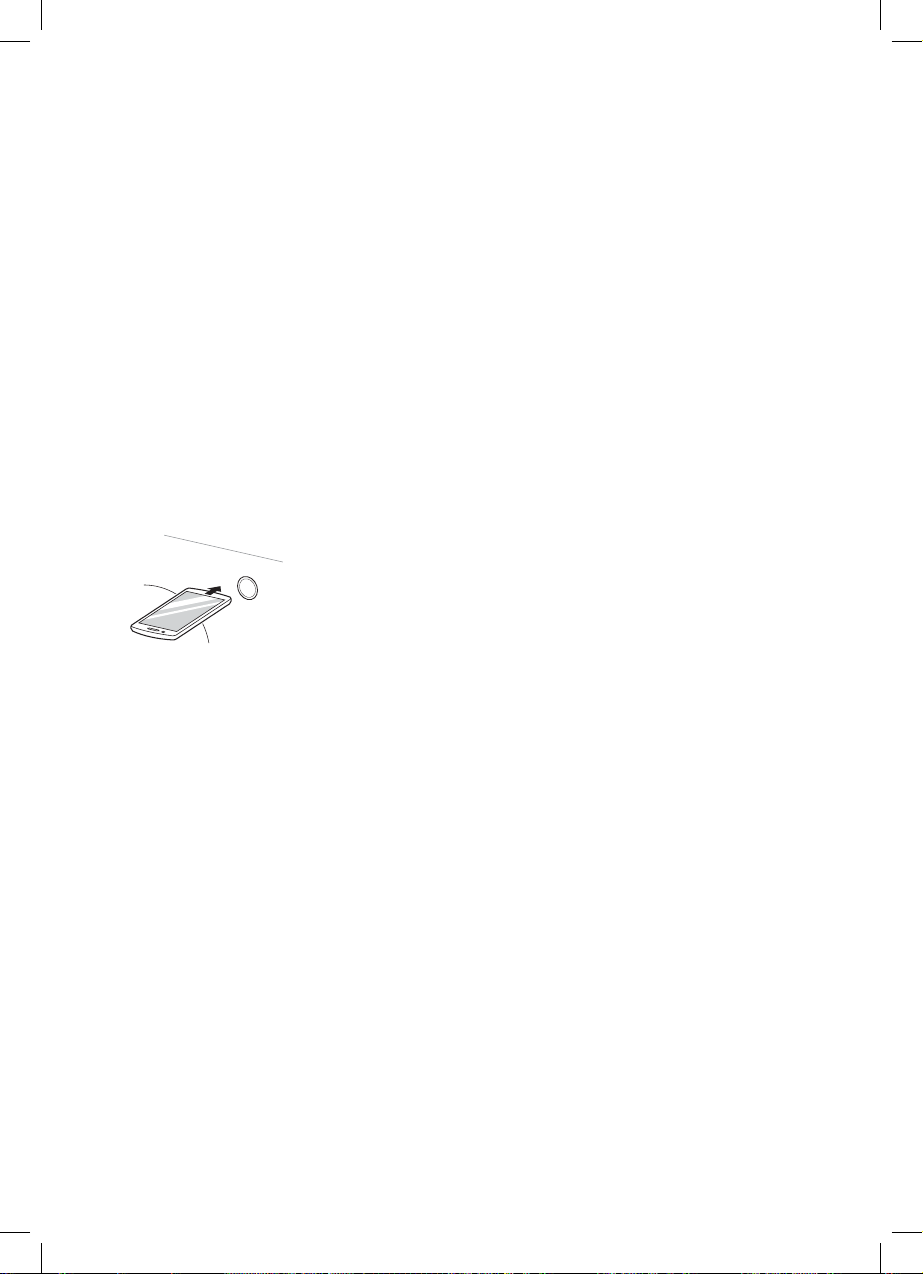
Place the phone close to the Power button.
• Place the mouthpiece of the phone to the
appliance.
Max.
10 mm
4
Select Smart Diagnosis and then press the
Start button.
5
Keep the phone in place until the tone
transmission has nished. Time remaining for
data transfer is displayed.
• For best results, do not move the phone
while the tones are being transmitted.
• If the call centre agent is not able to get an
accurate recording of the data, you may be
asked to try again.
6
Once the countdown is over and the tones
have stopped, resume your conversation with
the call centre agent, who will then be able to
assist you using the information transmitted
for analysis.
NOTE
• The Smart Diagnosis™ function depends on
the local call quality.
• The communication performance will improve
and you can receive better service if you use
the home phone.
• If the Smart Diagnosis™ data transfer is poor
due to poor call quality, you may not receive
the best Smart Diagnosis™ service.
48
MAINTENANCE
EN
WARNING
• Unplug the washing machine before cleaning
to avoid the risk of electric shock. Failure to
follow this warning may result in serious injury,
re, electric shock, or death.
• Never use harsh chemicals, abrasive cleaners,
or solvents to clean the washing machine.
They may damage the nish.
Cleaning the Washing
Machine
Care After Wash
• After the cycle is nished, wipe the door and
the inside of the door seal to remove any
moisture.
• Leave the door open to dry the drum interior.
• Wipe the body of the washing machine with a
dry cloth to remove any moisture.
Cleaning the Exterior
Proper care of your washing machine can
extend its life.
Door:
• Wash with a damp cloth on the outside and
inside and then dry with a soft cloth.
Exterior:
• Immediately wipe off any spills.
• Wipe with a damp cloth. Do not use and
solvents or harsh chemicals.
• Do not press the surface or the display with
sharp objects.
Cleaning the Interior
• Use a towel or soft cloth to wipe around the
washing machine door opening and door
glass.
• Always remove items from the washing
machine as soon as the cycle is complete.
Leaving damp items in the washing machine
can cause wrinkling, colour transfer, and
odour.
• Run the Tub Clean programme once a month
(or more often if needed) to remove detergent
buildup and other residue
Cleaning the Water Inlet Filter
• Turn off the supply taps to the machine if the
washing machine is to be left for any length
of time (e.g. holiday), especially if there is no
oor drain (gully) in the immediate vicinity.
• '[IE]' will be displayed on the control panel
when water is not entering the detergent
drawer.
• If water is very hard or contains traces of lime
deposit, the water inlet lter may become
clogged. It is therefore a good idea to clean it
occasionally.
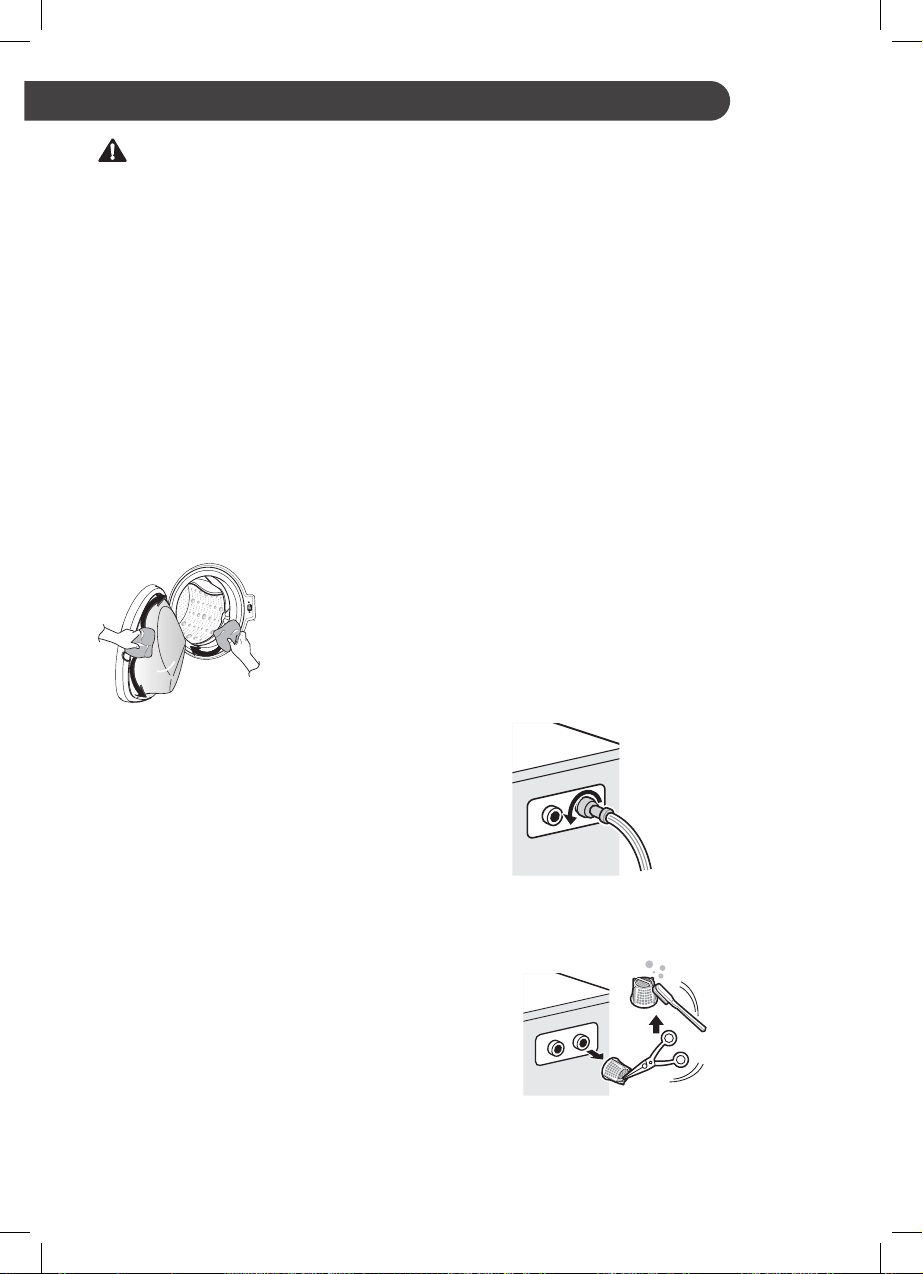
1
Turn off the water tap and unscrew the water
supply hose.
2
Clean the lter using a hard bristle brush.
49
EN
Cleaning the Drain Pump
Filter
• The drain lter collects threads and small
objects left in the laundry. Check regularly that
the lter is clean to ensure smooth running of
your washing machine.
• Allow the water to cool down before cleaning
the drain pump, carrying out emergency
emptying, or opening the door in an
emergency.
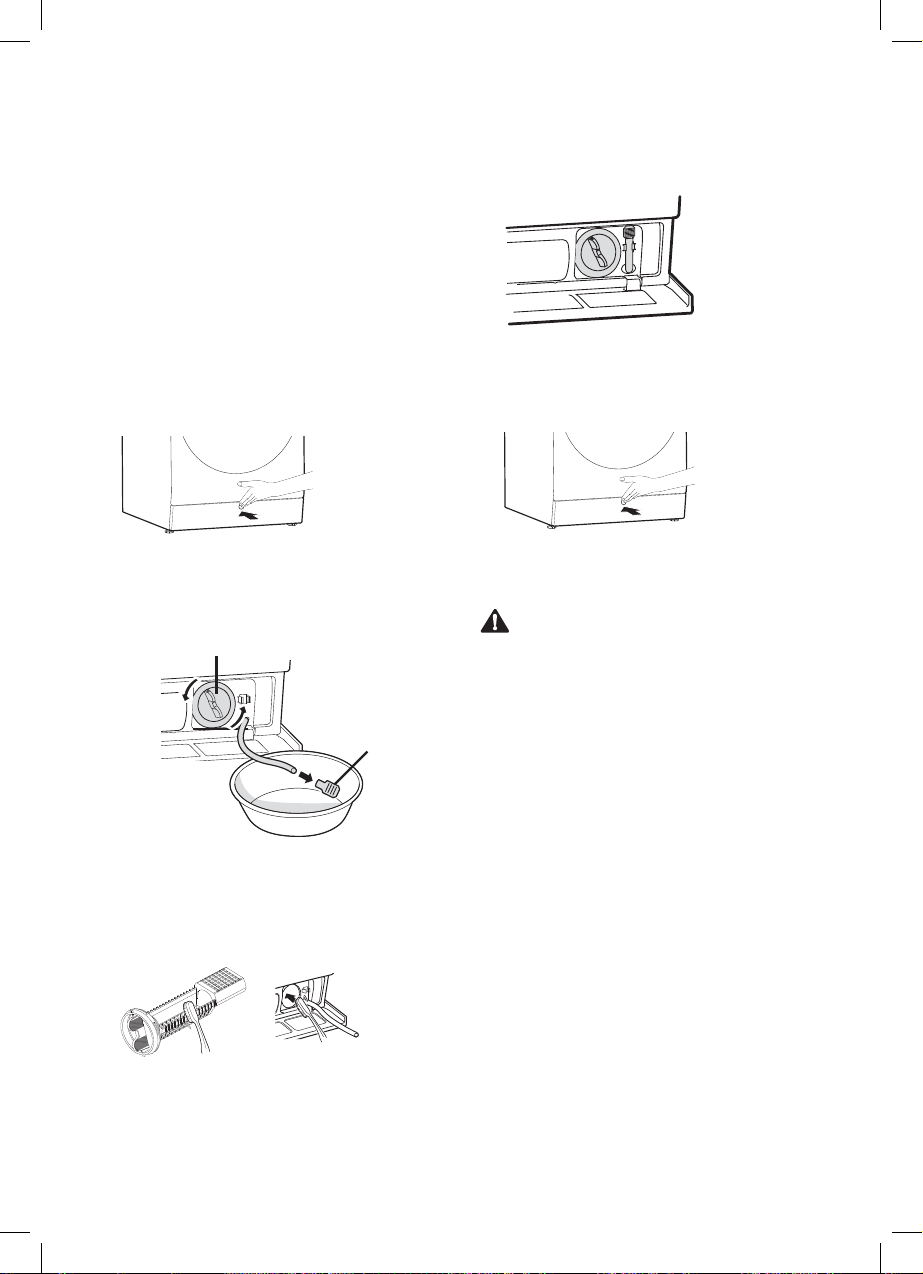
1
Open the Lower cover as shown in the gure
below.
2
Unplug the drain to drain any residual water
and then and open the lter by turning it to
the left.
Drain lter
Drain plug
Container to
collect the drained water
3
Remove any extraneous matter from the
pump lter.
4
After cleaning, assemble the hose cap and
the pump cap in the original positions.
5
Close the Lower cover.
CAUTION
• First drain out all residual water from the small
black drain hose and then open the pump lter
to remove any threads or objects.
• Be careful when draining, as the water may
be hot.
50
EN
Cleaning Auto dispense box
When you replace the detergent or have left the
detergent for a long time, you need to clean the
auto dispense box.
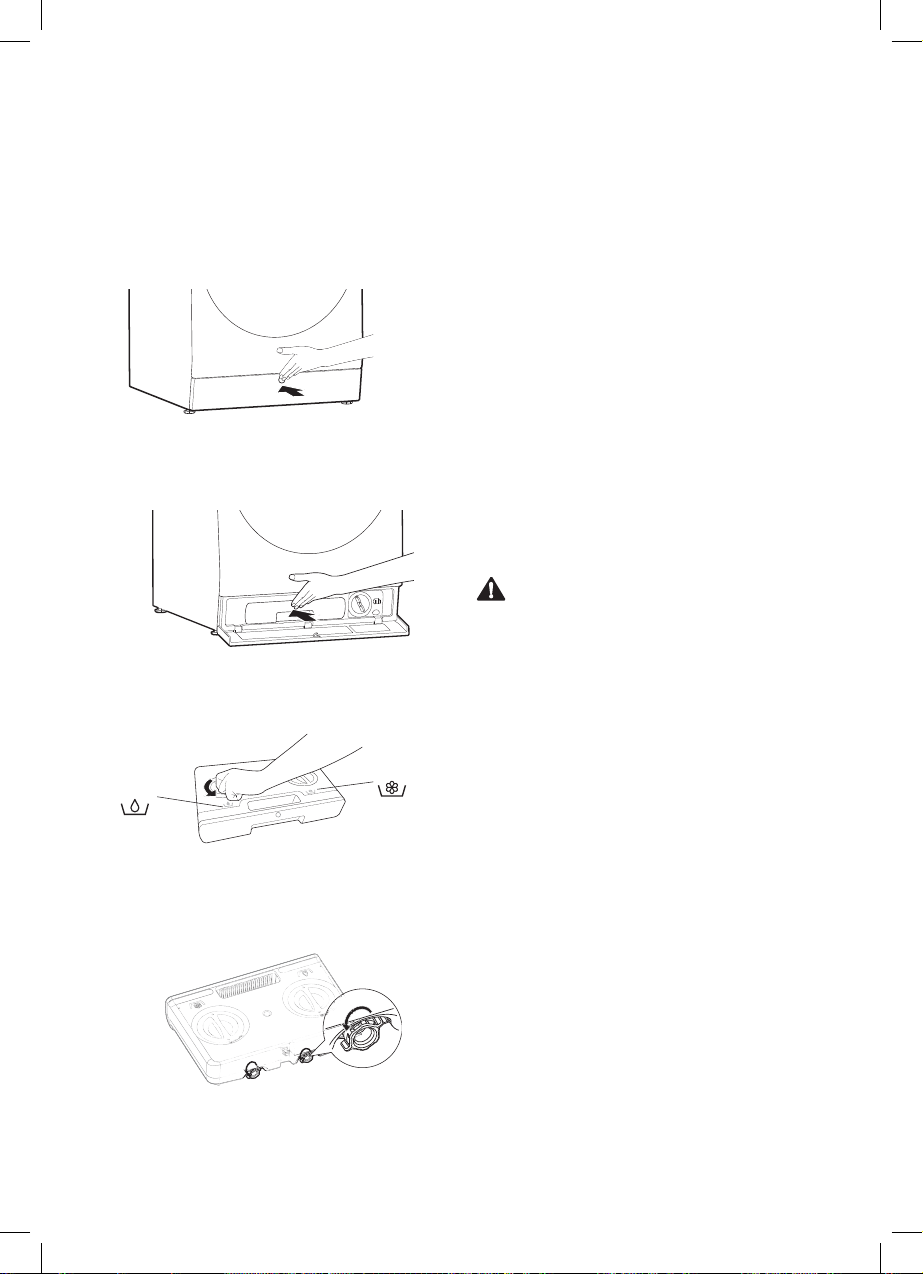
1
Press the Lower cover as shown in the gure
below.
2
Push the auto dispense box and pull it out as
shown in the gure.
3
Turn the caps on the auto dispense box to
the left to open them.
Push
( )
Liquid
Detergent
Liquid
Softener
4
Turn the drain valves on the rear of the
dispenser to the left as shown in the
gure below to remove any residual liquid
Detergent and softener.
5
Wash the auto dispense box and the check
valve clean with running water.
6
Assemble the caps and the check valve in
the reverse order.
7
Fill the tray with the liquid detergent and
softener and then insert it into the washing
machine.
NOTE
• Whenever you rell the detergent, please clean
the auto dispense box for better cleanliness.
• When you pull out or insert the auto dispense
box, liquid detergent and softener may spill out
onto the oor. Please wipe this up.
• When cleaning, put the leftover detergent into
an empty container.
CAUTION
• Do not directly spray water onto the appliance.
Doing so may result in re or electrical shock.
• Never put powder detergent or liquid chlorine
bleach in the auto dispense box.
51
EN
Tub Clean
Tub Clean is a special programme to clean the
inside of the washing machine.
A higher water level is used in this programme
at higher spin speed. Perform this programme
regularly.
1
Remove any clothing or items from the
washing machine and close the door.
2
Put in the recommended amount of descaling
detergent for Tub Clean as indicated by the
detergent maker.
3
Select the Tub Clean programme from the
download cycles to clean the drum.
4
Press the Start/Pause button to start.
CAUTION
• If there is a child present, be careful not to
leave the door open for too long.
NOTE
• Clean the drum regularly using the Tub Clean
option for optimal washing. After approximately
30 cycles, the Main Washer Tub Clean
notication will appear to inform that it is time
to clean the drum.
• Perform the Tub Clean and then the Main
Washer Tub Clean notication does not appear
until the next Tub Clean time.
• If you want to wash without Tub Clean, follow
the same steps as the Using the Washing
Machine.
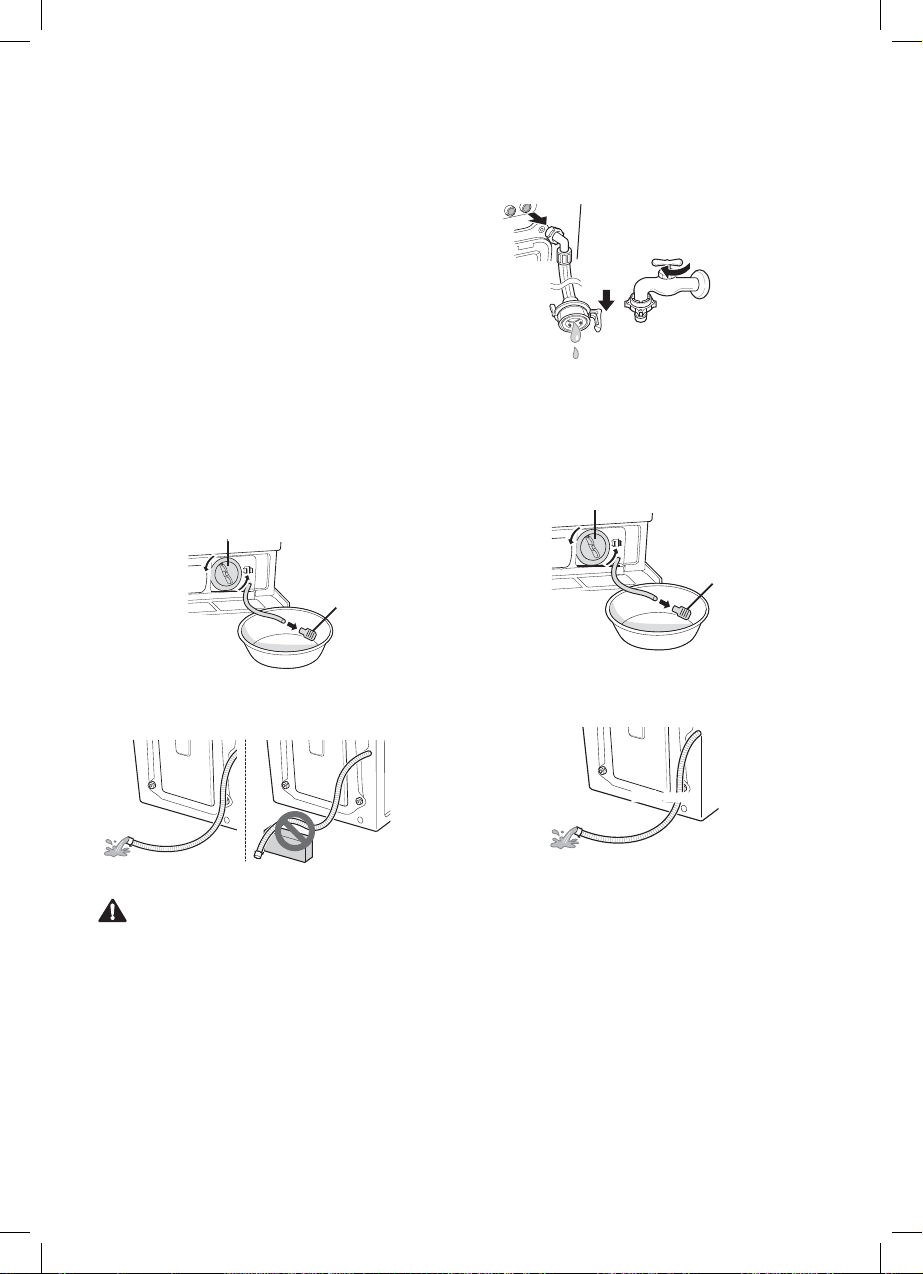
52
EN
Caution on Freezing During
Winter
• When frozen, the product does not operate
normally. Make sure to install the product
where it will not freeze during winter.
• In case the product must be installed outside
on a porch or in other outdoor conditions, make
sure to check the following.
How to Keep the Product from
Freezing
• After washing, remove water remaining inside
the pump completely with the opening hose
plug used for removal of residual water. When
the water is removed completely, close the
hose plug used for removal of residual water
and cover cap.
Drain lter
Drain plug
• Hang down drain hose to pull out water inside
the hose completely.
Drain hose
CAUTION
• When the drain hose is installed in a curved
shape, the inner hose may freeze.
• After closing the tap, disconnect the cold
supply hose from the tap, and remove water
while keeping the hose facing downwards.
Supply hose
Check for Freezing
• If water does not drain when opening the hose
plug used for removal of residual water, check
the drainage unit.
Drain lter
Drain plug
• Turn the power on, choose a washing
programme, and press the Start/Pause button.
Drain hose
• When [FF] is shown in display window while
the product is in operation, check water supply
unit and drainage unit (Some models do not
have an alarm function that indicates freezing).
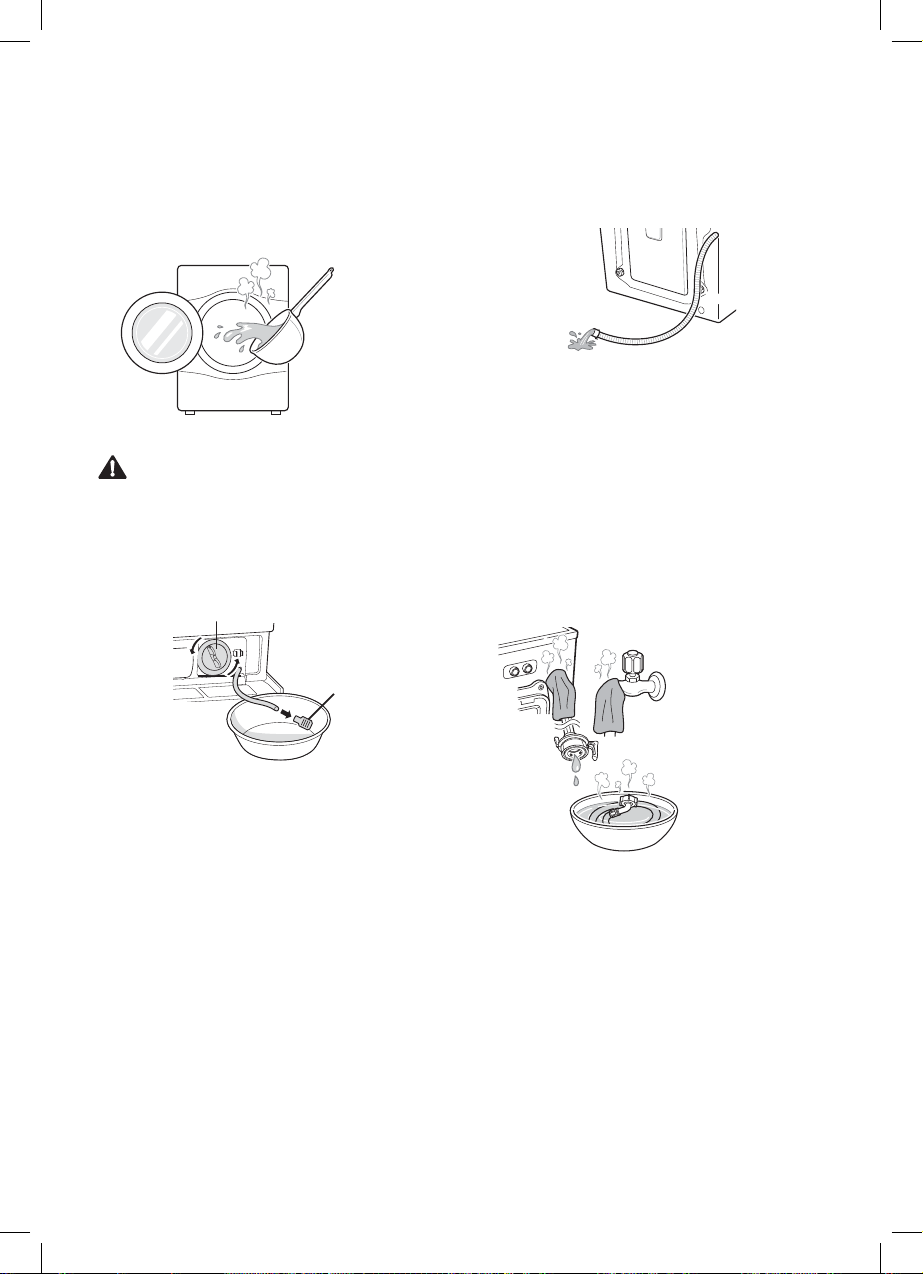
53
EN
How to Handle Freezing
• Make sure to empty the drum, pour warm
water of 50–60 °C up to the rubber part inside
the drum, close the door, and wait for 1–2
hours.
50-60 °C
CAUTION
• Do not use boiling water. It may cause burns or
damage to the product.
• Open the cover cap and hose plug used for
removal of residual water to extract water
completely.
Drain lter
Drain plug
NOTE
• If water does not drain, this means the ice is
not melted completely. Wait more.
• When water is removed completely from the
drum, close the hose plug used for removal of
residual water, choose a washing programme,
and press the Start/Pause button.
Drain hose
• When water supply problems occur, take the
following measures.
− Turn off the tap, and thaw out the tap and
both connection areas of inlet hose of the
product using a hot water cloth.
− Take out inlet hose and immerse in warm
water below 50–60 °C.
Supply hose 50-60 °C
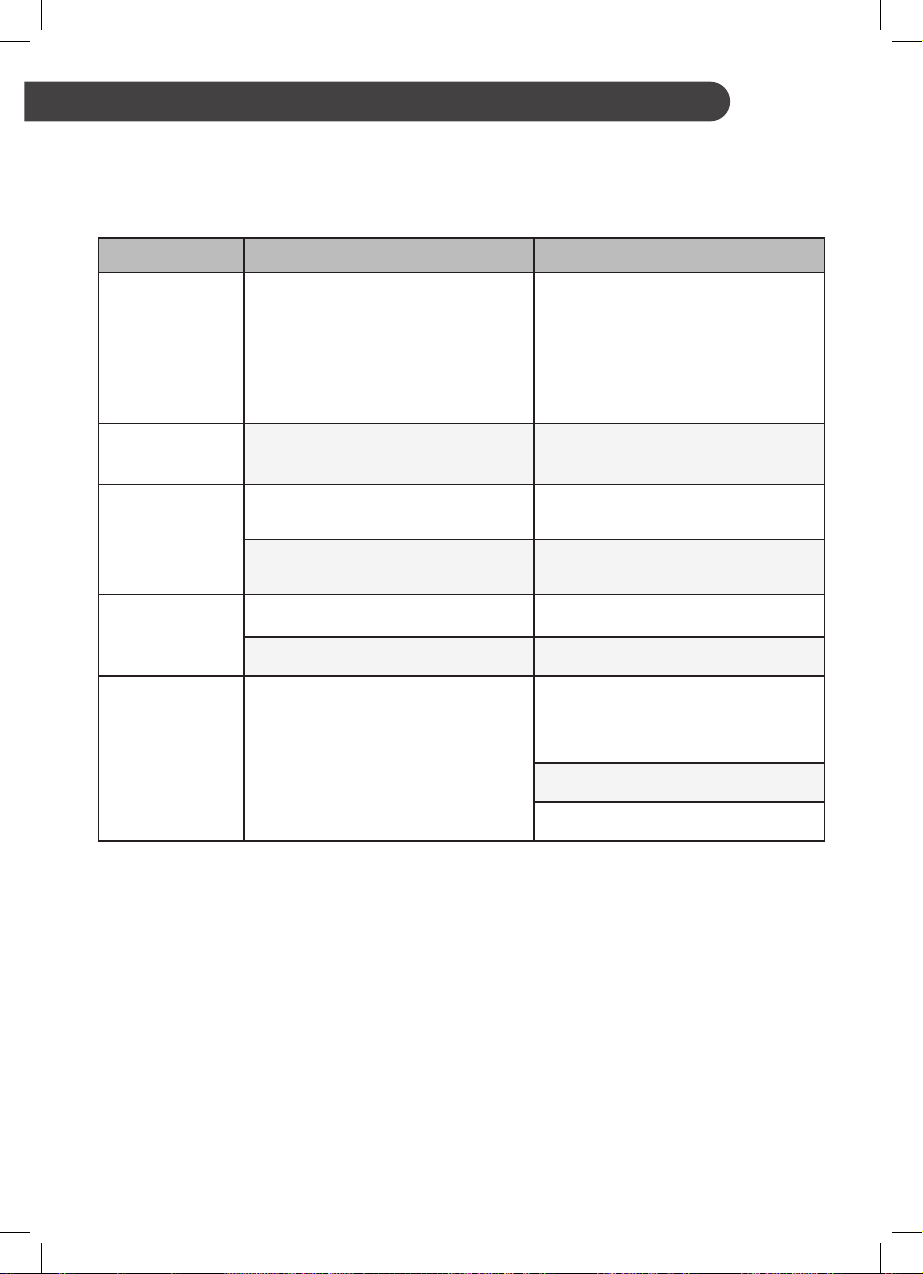
54
TROUBLESHOOTING
EN
Diagnosing Problems
• Your washing machine is equipped with an automatic error-monitoring system to detect and
diagnose problems at an early stage. If your washing machine does not function properly or does not
function at all, check the following before you call for service:
Symptoms Reason Solution
Rattling and
clanking noise
Foreign objects such as coins or
safety pins may be in drum or pump.
• Check all pockets to make sure that
they are empty. Items such as clips,
matches, pens, coins, and keys can
damage both your washer and your
clothes.
• Close zippers, hooks, and
drawstrings to prevent these items
from snagging or tangling on other
clothes.
Thumping sound
Heavy wash loads may produce a
thumping sound. This is usually
normal.
• If sound continues, washing machine
is probably out of balance. Stop and
redistribute wash load.
Vibrating noise
Have all the transit bolts and tub
support been removed?
• If not removed during installation,
refer to Installation guide for
removing transit bolts.
Are all the feet resting rmly on the
ground?
• Make sure the washing machine is
level and tighten the lock nuts up
towards the base of the appliance.
Water leaks
Supply hoses or drain hose are
loose at tap or washing machine.
• Check and tighten hose connections.
House drain pipes are clogged.
• Unclog drain pipe. Contact plumber if
necessary.
Oversudsing /
Vibration
Too much detergent or unsuitable
detergent may cause excessive
foaming and vibration which may
result in water leaks.
• If you use Auto Dispense function,
the dispensed quantity can be
changed using the More Settings
button. For more details, refer to
"Auto Dispense".
• After cleaning the auto dispense box,
change the detergent.
• Do not use the Rubber cup with the
Auto Detergent function turned on.
55
EN
Symptoms Reason Solution
Water does not
enter washing
machine or it
enters slowly
Water supply is not adequate in that
location.
• Check another tap in the house.
Water supply tap is not completely
open.
• Fully open tap.
Water supply hose(s) are kinked. • Straighten hose.
The lter of the supply hose(s) may
be clogged.
• Check the lter of the supply hose.
Water in the
washing machine
does not drain or
drains slowly
Drain hose is kinked or clogged. • Clean and straighten the drain hose.
The drain lter is clogged. • Clean the drain lter.
Washing
machine does
not start
Electrical power cord may not be
plugged in or connection may be
loose.
• Make sure plug ts tightly in wall
outlet.
House fuse blown, circuit breaker
tripped,or a power outage has
occurred.
• Reset circuit breaker or replace fuse.
Do not increase fuse capacity. If
problem is a circuit overload, have it
corrected by a qualied electrician.
Water supply tap is not turned on. • Turn on water supply tap.
Washing
machine will not
spin
Check that the door is rmly shut.
• Close the door and press the Start/
Pause button. After pressing the
Start/Pause button, it may take a
few moments before the washing
machine begins to spin. The door
must be locked before spin can be
achieved. Add 1 or 2 similar items
to help balance the load. Rearrange
load to allow proper spinning.
56
EN
Symptoms Reason Solution
Door does not
open
Once washing machine has started,
the door cannot be opened for
safety reasons.
• Check if the ‘Door Lock’ icon is
illuminated. You can safely open the
door after the ‘Door Lock’ icon turns
off.
Wash cycle time
delayed
If an imbalance is detected or if the
suds removing programme is on,
the wash time will increase.
• This is normal. The time remaining
shown in the display is only an
estimate. Actual time may vary.
The buttons may
not function
properly.
The button cannot be recognized
when the door is open.
• Press again after closing the door.
Dry problem Check water supply tap.
• Do not overload. Check that the
washing machine is draining properly
to extract adequate water from the
load. Clothes load is too small to
tumble properly. Add a few towels.
• Turn off water supply tap.
A shortage alert
appears even
after you lled
the dispensers
for the detergent
and softener.
Are all the feet resting rmly on the
ground and is the machine leveled?
• Make sure that all four feet are stable
and that the machine is level.
Did you supplement the detergent
and softener before you got the
shortage notication?
• When a washing programme has
ended, the washing machine detects
whether it is necessary to rell the
detergent. Therefore, no alarm
appears until the next rell sensing
check.
Drying
performance is
too low or bad.
Water is not properly supplied. The
water is used for auto-cleaning of
lint-lter on drum during the drying.
• Make sure the water supply tap is
open.
Water does not properly drain.
• Make sure the drain lter is not
clogged.
The appliance is overloaded.
• Check the load capacity for the
selected cycle. If necessary, add a
Time Dry cycle.
The spin speed is too low.
• Select the highest spin speed allowed
for the wash cycle.
Drying time is
too long.
The ambient temperature is low.
• Make sure the temperature
is allowable range. (Refer to
'Specications' of installation page.)
Clothes are
strong-wrinkled.
Clothes are over-dried. • Select suitable drying course.
Clothes are left in the drum for a
long time after drying.
• Remove laundry from the drum as
soon as possible after the cycle ends.
57
EN
Error Messages
Symptoms Reason Solution
Water supply may be too low or too
high in the area.
• Check another tap in the house.
Water supply taps are not
completely open.
• Fully open tap.
Water supply hose(s) are kinked. • Straighten hose(s).
The lter of the supply hose(s) are
clogged.
• Check the lter of the supply hose.
If water leakage occurred in the
aqua stop supply hose, indicator
will become red.
This type of inlet hose may not
apply to all models.
• Use the aqua stop supply hose. (not
applicable to all models)
Load is too small.
• Add 1 or 2 similar items to help
balance the load.
Too much detergent.
• Reduce the dispensing amount if
suds are visible in the tub.
Load is out of balance.
• Add 1 or 2 similar items to help
balance the load.
The appliance has an imbalance
detection and correction system. If
individual heavy articles are loaded
(e.g. bath mat, bath robe, etc.) this
system may stop spinning or even
interrupt the spin cycle altogether.
• Rearrange load to allow proper
spinning.
If the laundry is still too wet at the
end of the cycle, add smaller articles
of laundry to balance the load and
repeat the spin cycle.
• Rearrange load to allow proper
spinning.
Drain hose is kinked or clogged. • Clean and straighten the drain hose.
The drain lter is clogged. • Clean the drain lter.
58
EN
Symptoms Reason Solution
Ensure door is not open.
• Close the door completely. If
,
, , is not released, call for
service.
Door sensor has malfunctioned.
Thermal control error.
• Unplug the power plug and call for
service.
Water overlls due to the faulty
water valve.
• Close the water tap.
• Unplug the power plug.
• Call for service.
Malfunction of water level sensor.
• Close the water tap.
• Unplug the power plug.
• Call for service.
Over load in motor.
• Allow the washing machine to stand
for 30 minutes to allow the motor to
cool, then restart the cycle.
• Call for service.
Overload in fan-motor.
Overload in compressor.
Water leaks. • Call for service.
The washing machine experienced a
power failure.
• Restart the programme.
Is supply/drain hose or drain pump
frozen?
• Supply warm water into the drum and
unfreeze drain hose and drain pump.
Wet a towel in warm water and apply
to supply hose.
Does not dry. • Call for service.
Memo
Memo
Memo
Memo
Memo