O W N E R ’ S M A N U A L
O W N E R ’ S M A N U A L
M O D E L
MODEL
LM21XP
LM21XP
EXTENDED PERFORMANCE RELEASE DEVICE
EXTENDED PERFORMANCE RELEASE DEVICE
The Chamberlain Group, Inc.
300 Windsor Dr.
Oak Brook, IL 60523
www.liftmaster.com
When you see these Safety Symbols and Signal Words on the
following pages, they will alert you to the possibility of serious
injury or death if you do not comply with the warnings that
accompany them. The hazard may come from something
mechanical or from electric shock. Read the warnings carefully.
When you see this Signal Word on the following pages, it will
alert you to the possibility of damage to your door and/or the
door operator if you do not comply with the cautionary
statements that accompany it. Read them carefully.
Mechanical
Electrical
TABLE OF CONTENTS
2
INTRODUCTION
General Description . . . . . . . . . . . . . . . . . . . . . . . . . . . . . . . . . . .2
Agency Requirements . . . . . . . . . . . . . . . . . . . . . . . . . . . . . . . . .3
Specifications. . . . . . . . . . . . . . . . . . . . . . . . . . . . . . . . . . . . . . . .3
Preparation. . . . . . . . . . . . . . . . . . . . . . . . . . . . . . . . . . . . . . . . . .3
INSTALLATION
Important Installation Warnings . . . . . . . . . . . . . . . . . . . . . . . . .4
Mount the Release Device . . . . . . . . . . . . . . . . . . . . . . . . . . . . . .4
WIRING
Wiring Instructions . . . . . . . . . . . . . . . . . . . . . . . . . . . . . . . . . . .5
Wiring Diagram . . . . . . . . . . . . . . . . . . . . . . . . . . . . . . . . . . . . . .6
Connections of Initiating Devices and Accessories . . . . . . . . . 7-8
Optional Connections . . . . . . . . . . . . . . . . . . . . . . . . . . . . . . . . 8-9
TESTING
Test Procedures . . . . . . . . . . . . . . . . . . . . . . . . . . . . . . . . . . . . . 10
TROUBLESHOOTING
Operational Checklist . . . . . . . . . . . . . . . . . . . . . . . . . . . . . . . . . 11
MAINTENANCE
Maintenance Requirements . . . . . . . . . . . . . . . . . . . . . . . . . . . . 12
Enclosure Mounted LEDs Status Indicators . . . . . . . . . . . . . . . 12
ACCESSORIES AND REPAIR PARTS . . . . . . . . . . . . . . 13
APPENDIX . . . . . . . . . . . . . . . . . . . . . . . . . . . . . . . . . . . . . . . 14
OPERATOR NOTES. . . . . . . . . . . . . . . . . . . . . . . . . . . . . . . . 15
IMPORTANT NOTES:
• BEFORE attempting to install, operate or maintain the release
device, you must read and fully understand this manual and
follow all safety instructions.
• DO NOT attempt repair or service of your release device unless
you are an Authorized Service Technician.
GENERAL DESCRIPTION
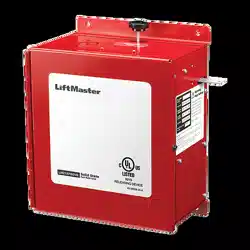
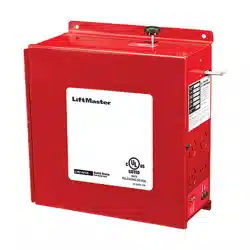
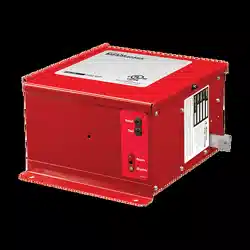
The LiftMaster
®
LM21XP Release Device is UL/ULC listed
normally energized fail-safe device designed for use on rolling
doors, single-slide and center-parting level and inclined track
doors. All models are normally energized fail-safe releasing
devices incorporating state-of-the-art electronic control circuitry.
The release devices respond to emergency conditions generated
from an automatic initiating device and are used in conjunction
with a temperature fuse link system.
This device is designated to be used with manual doors, but can
be used on motorized doors incorporating a fusible link assembly
and drop-out mechanism.
The release device must be powered from 24Vdc received from
an approved UL 1481 regulated power supply with battery
backup. The devices can be activated via a smoke detector or an
alarm relay from the panel’s Form C dry contact relay. The
release device features include a 10-, 20-, 30- or 60-second
delay on alarm, closed door detection capabilities, Form C relay
outputs for the transmission of alarm and trouble signals
transmitted to the fire alarm control panel, an audible trouble
sounder, and diagnostic feedback LEDs.
INTRODUCTION
WARNING: This product can expose you to chemicals
including lead, which are known to the State of California to
cause cancer or birth defects or other reproductive harm.
For more information go to www.P65Warnings.ca.gov
INTRODUCTION
3
AGENCY REQUIREMENTS
Installation and testing to factory specifications shall be
performed by factory authorized personnel for proper operation
in accordance with the latest National Fire Protection
Association (NFPA), Underwriters Laboratories (UL), National
Electrical Code (NEC), local, state, county, district and/or other
applicable building and fire standards, guidelines, regulations
and codes including, but not limited to, all appendices and
amendments and the requirements of the local authority having
jurisdiction (AHJ).
SPECIFICATIONS
To prevent possible SERIOUS INJURY or DEATH:
• DO NOT use this device without fusible links installed.
• Test every 90 days to assure proper operation of release
device.
VOLTAGE RATING: 24Vdc
STANDBY CURRENT .100A
ALARM CURRENT .15A
INITIATING DEVICE: Maximum line impedance 20 ohm;
Maximum current not to exceed
.010A.; Maximum voltage 28Vdc
LOAD RATING: Support and Release 40 lbs. Max.
PHYSICAL DIMENSIONS: 9.7" (24.6 cm) x 7.5" (19 cm) x 5" (12.7 cm) (h x w x d)
WEIGHT: Approximately 8 lbs.
PREPARATION
It is imperative that the wall or mounting surface provide
adequate support for the release device.
Refer to the door manufacturer’s recommendations for use of
this product with specific door being utilized. Use only hardware
approved or recognized by the appropriate testing and listing
agencies in conjunction with the installation of this product.
Additional items may be required to complete the installation:
• Concrete anchors or fasteners
• Sash chain or 1/16" cable
• Eyebolts-hook
• Fusible links
• Turnbuckles
• Smoke detectors (up to 4 may be installed with this device)
Refer to NFPA 72 and NFPA 80 for instructions concerning
proper placement and detection coverage. End-of-line devices
shall be installed for supervision of electrical power to 4-wire
smoke detector. When using 4-wire smoke detectors with this
device, electrical supervision must be provided by means of a
UL/ULC listed end-of-line relay.
ELECTRICAL SPECIFICATIONS
MECHANICAL SPECIFICATIONS
COMMON ALARM AND
TROUBLE RELAY: .5A 125Vac, 60Hz
(MAX CONTACT RATING) 1A 24Vdc Resistive
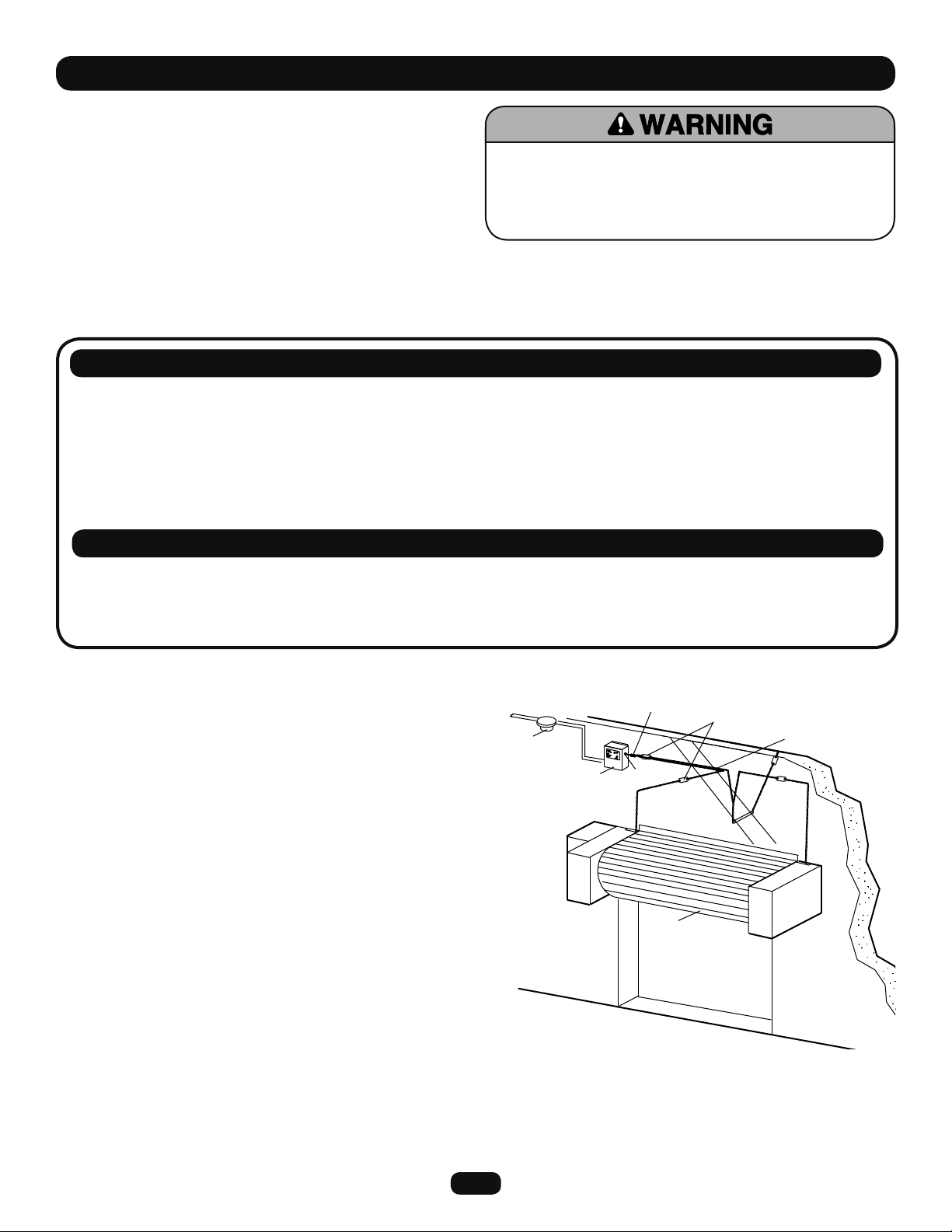
Smoke Detector
Releasing
Unit
Chain End
Link
Eyebolt
Fusible Links
Turnbuckle
Chain
Fire Door
4
INSTALLATION
Classification:
Releasing device as defined by Underwriters Laboratories.
Installation Requirements:
Intended for “Indoor Dry” locations; all wiring must be performed
in accordance with the most current version of NFPA
72 - National Fire Alarm Code and the National Electric Code.
MOUNT THE RELEASE DEVICE
Installation procedures vary according to door types. Refer to
door manufacturer’s recommendation that applies to your door.
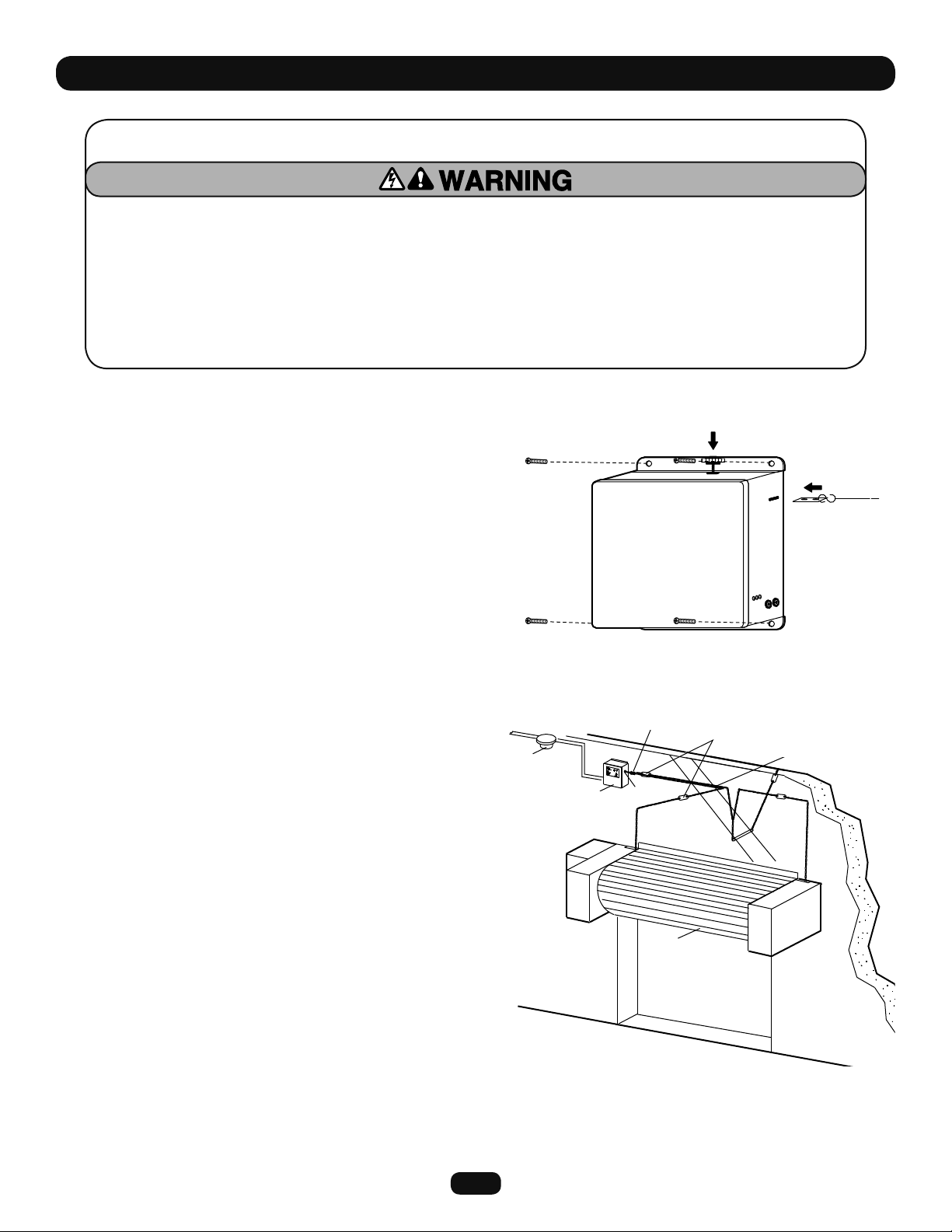
1. Mount the release device on a vertical surface with chain end
link exiting side of enclosure.
2. Secure the release device enclosure with fasteners (#10 is the
minimum size recommended). If installing in masonry, use
concrete anchors (not provided).
3. Install hardware (sash chain or 1/16" cable, eyebolts-hook,
fusible links, turnbuckles—not provided) according to door
manufacturer’s recommendations. NOTE: The end link direction
of pull must be perpendicular to the side of the release device
enclosure. Install an eyebolt a minimum distance of 12" from
the release device to adequately redirect sash chain pull.
4. Install end link by pressing mechanical reset to allow insertion
of end link. Push end link completely in and release
mechanical reset to latch end link.
5. Remove sash chain or cable slack by adjusting turnbuckle.
IMPORTANT INSTALLATION INSTRUCTIONS
To reduce the risk of SEVERE INJURY or DEATH:
1. READ AND FOLLOW ALL INSTALLATION WARNINGS
AND INSTRUCTIONS.
2. NEVER connect release device to power source until
instructed to do so.
3. DO NOT install this device on a motorized door without
an electric safety edge.
3. DO NOT use this device without fuse links installed.
4. Concrete anchors MUST be used if mounting release
device into masonry.
5. DO NOT exceed maximum pull rating of 40 lbs. on
releasing device.
Mechanical
Reset Plunger
End Link
Smoke Detector
Releasing
Unit
Chain End
Link
Eyebolt
Fusible Links
Turnbuckle
Chain
Fire Door
5
WIRING
WIRING INSTRUCTIONS
Verify wiring configuration with that recommended by door
manufacturer for use of this product with specific door and
accessories being utilized. 18-gauge wire is recommended.
1. Turn off power supply sources for the release device as well
as the door operator, if applicable, before beginning.
2. Verify voltage rating of release device to power source being
utilized. Voltage is indicated on the side of the unit. Verify that
power is disconnected before proceeding.
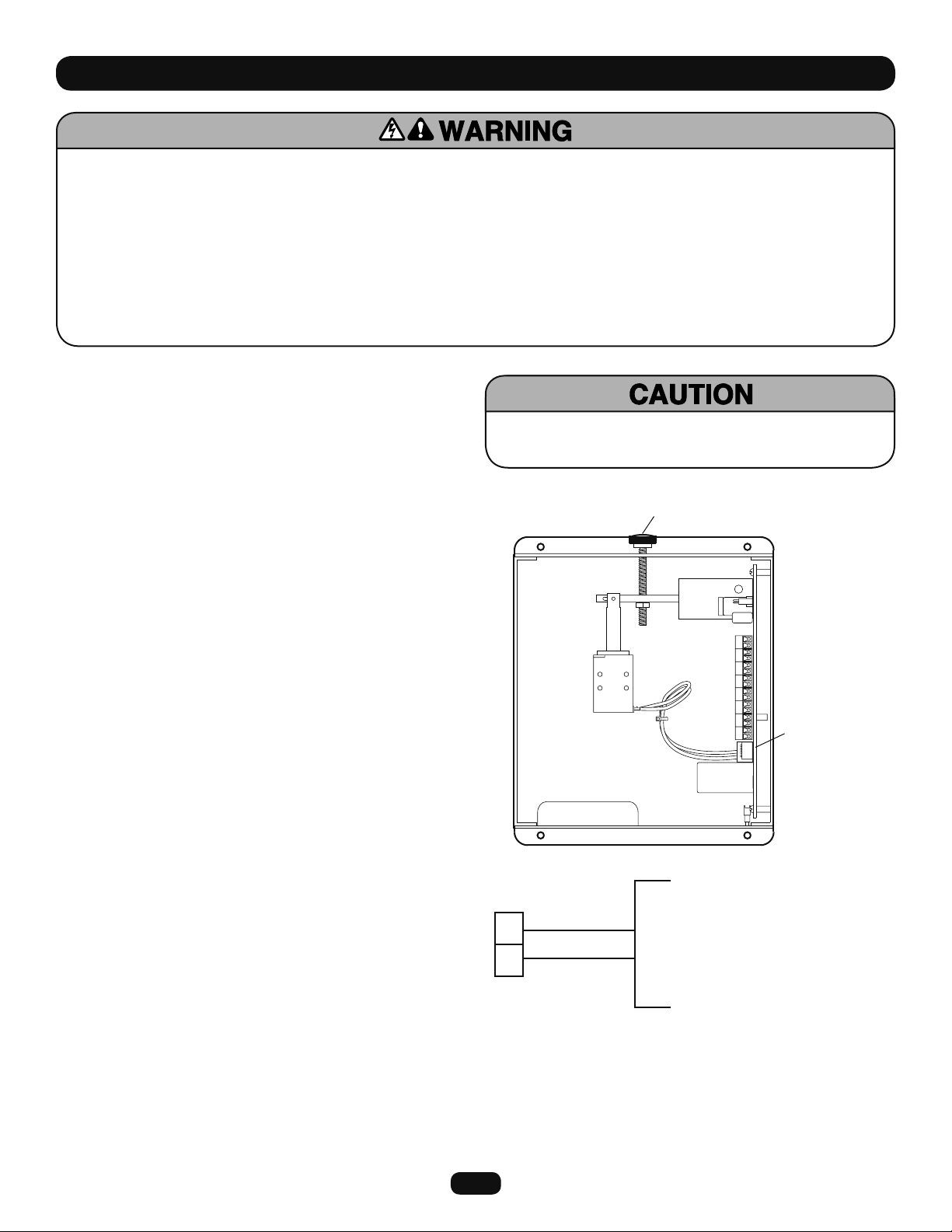
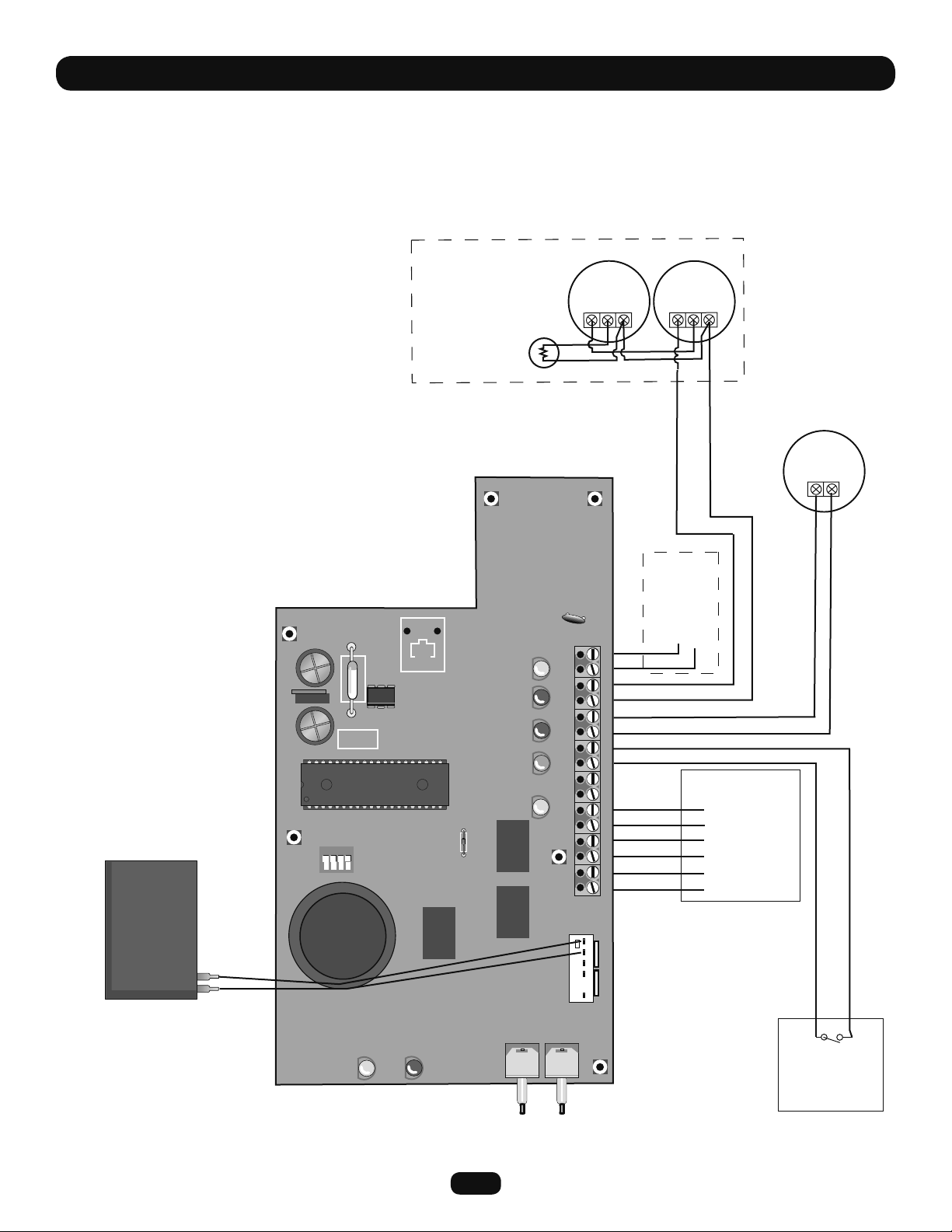
3. Connect 24Vdc power to terminal board positions 1 and 2
(Figure 2). Observe proper polarity. 24Vdc power input from
an approved UL 1481 regulated power supply with battery
backup.
To reduce the risk of SEVERE INJURY or DEATH:
• ALL electrical connections MUST be made by a qualified
individual.
• Disconnect power at the fuse box BEFORE proceeding.
Release device MUST be properly grounded and connected in
accordance with local electrical codes.
• ALL power wiring should be on a dedicated circuit and well
protected. The location of the power disconnect should be
visible and clearly labeled.
• ALL power and control wiring MUST be run in separate
conduit.
• Installation of ALL wiring and connections, including Class 1
and Class 2 circuits, shall be performed in accordance with,
but not limited to, the latest NFPA, UL and N.E.C. standards
and codes. In addition, ALL installations subject to Canadian
standards shall be performed in accordance with the
Canadian Electrical Code, Part I, with respect to wiring
material type, wiring gauge related to power capacity
requirements and circuit length and wiring methods.
1
2
+
24Vdc from an Approved UL 1481
Regulated Power Supply
with Battery Backup
–
.
Option
DIP Switch
Mechanical Reset
Plunger
FIGURE 2
FIGURE 1
To prevent DAMAGE to the circuit board, ALL connections from
terminals 3 through 16 MUST be dry contact type.
6
WIRING
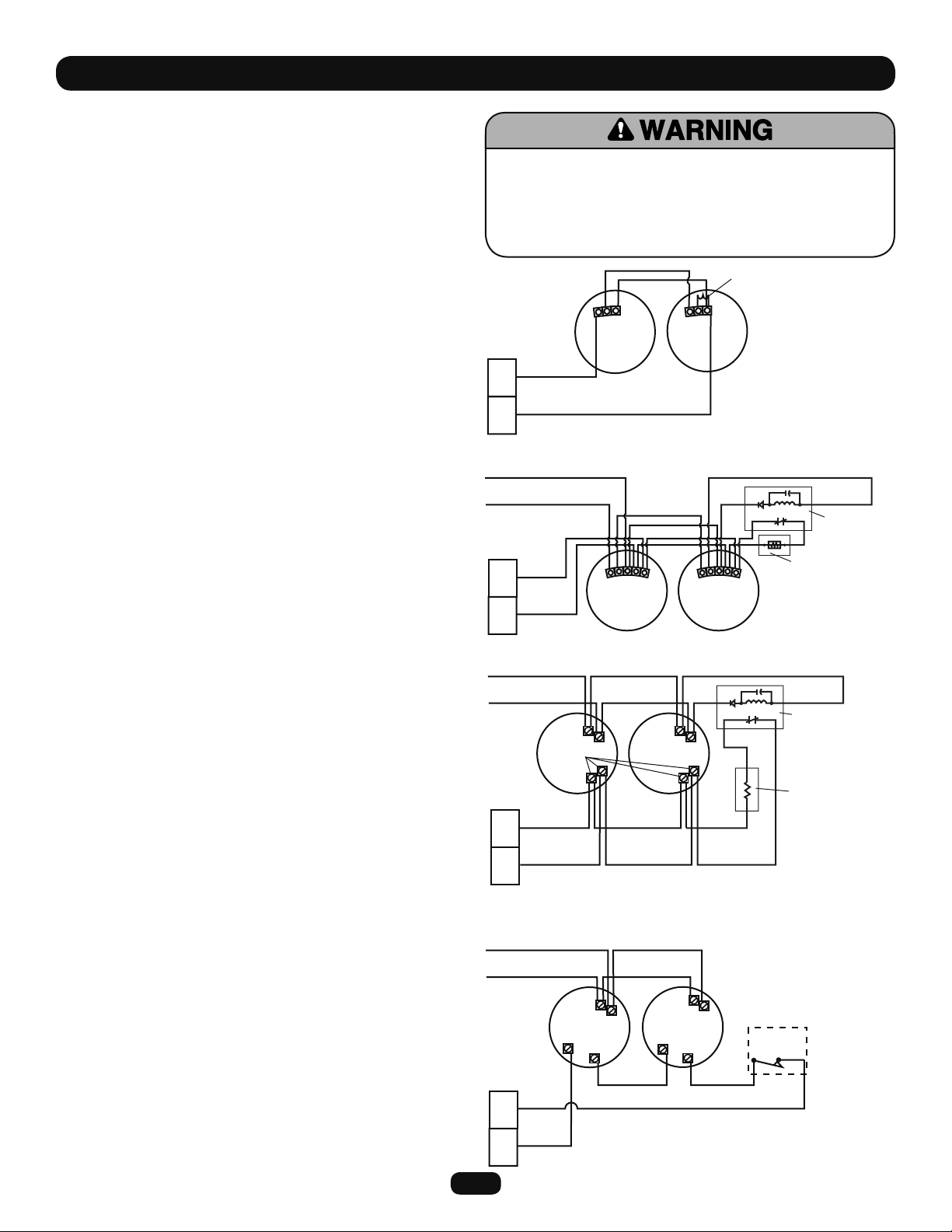
WIRING DIAGRAM
1
2
3
4
Solenoid
(YE)
(GY)
R6
P2
U4
C2
U2
U3
C4
C1
Field Wiring shall consist of 22-18 AWG wiring.
1. Supervised, power limited circuit, 20 Ohm maximum line impedance.
2. Unsupervised, power limited circuit, 20 Ohm maximum line impedance.
3. Maximum of 4 Class B Style A detectors.
4. Power from an approved UL1481 regulated supply with battery backup.
LED 3
LED 1
DISABLE
POWER ON
SW3
SW2
P1
LED4
LED5
LED6
LED2
LED7
D1
SW1
K1
K3
K2
12
3
45
6
7
89
10
11
16
15 14
13
12
Common Relay
Connections
Alarm NC
Alarm Com
Alarm NO
Trouble NC
Trouble Com
Trouble NO
Input Power
(4)
+ 24Vdc
Normally Closed
Initiation Loop (1) (3)
Keep jumper between
3 & 4 if unused.
External power required.
N.O. Close
Door Proximity
Switch (2)
NC
COM
014G0962B
GND_FAULT
CL_LIMIT
2W_FAULT
NC_FAULT
2W_OP
PTC1
Resistor
10k Ohm EOL
2-Wire Detector
Initiation Loop (1) (3)
Keep 10k Ohm resister
between 5 & 6 if unused.
+ In
+ Out
- In/Out
+ In
+ Out
- In/Out
+
7
CONNECTIONS OF INITIATING DEVICES AND
ACCESSORIES
A maximum of 4 smoke detectors may be installed with this
device. Refer to NFPA 72 and NFPA 80 for instructions
concerning proper placement and detection coverage. End-of-line
devices must be installed for supervision of electrical power to
4-wire smoke detector. When using 4-wire smoke detectors with
this device, electrical supervision must be provided by means of
a UL/ULC listed end-of-line relay.
NOTE: For low voltage wiring #18 AWG is recommended.
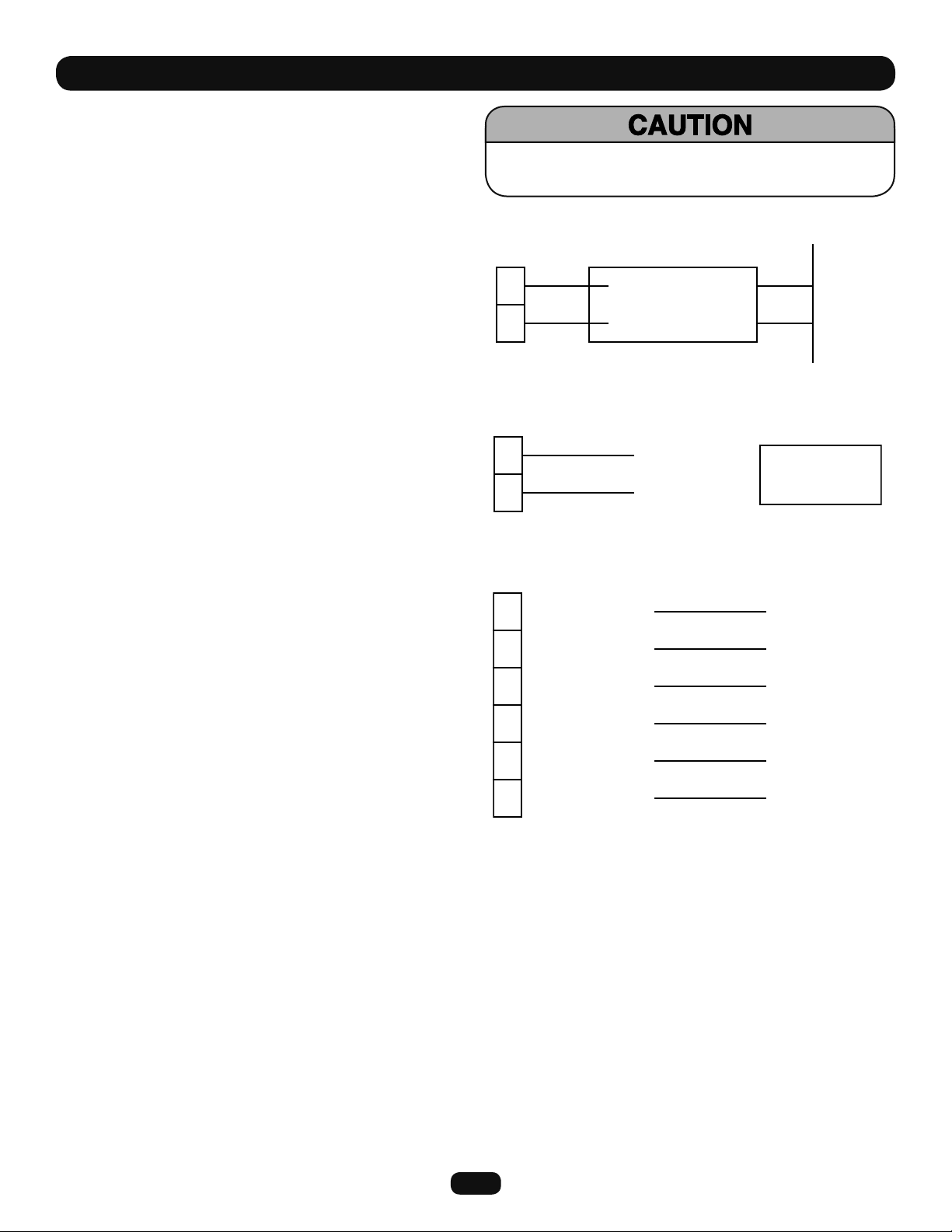
Normally Open “2-Wire,” Class B Style A Initiating Devices
Connect wiring from N/O initiating device loop to positions 3 and
4. Place the supervisory resistor (10k ohm @ 1/2 watt)
contained within the accessory pack. (Figure 3). Observe proper
polarity, 3 (+), 4 (–) when attaching to the release device’s
terminal board. NOTE: Make certain that the factory-installed
jumper between terminal positions 5 and 6 remains in place. This
option is a supervised, current-limited circuit.
OR
Normally Open “4-Wire,” Class B Style A Initiating Devices
Connect wiring from N/O 4-Wire initiating device loop to
positions 3 and 4, making sure an end-of-line supervisory
resistor (0k ohm @ 1/2 watt) is installed as shown in Figure 4 or
5, depending upon the type of smoke detector being used.
Observe proper polarity, 3 (+), 4 (–) when attaching to the
release device’s terminal board. NOTE: Make certain that the
factory-installed jumper between terminal positions 5 and 6
remains in place. This option is a supervised, current-limited
circuit.
OR
Normally Closed “4-Wire,” Class B Style A Initiating Devices
After removing the factory-installed jumper between terminal
positions 5 and 6, connect wiring from N/C 4-Wire initiating
device loop to positions 5 and 6 (Figure 6). This option is a
supervised, current-limited circuit. NOTE: Make certain that the
factory-installed resistor between positions 3 and 4 remains in
place.
NOTE: End-of-line devices must be installed adjacent and after
the last initiating device. Initiating device loops are supervised
and cannot be direct series or paralleled between multiple release
devices or shared with other alarm equipment. For proper wiring
configurations from multiple smoke detectors or signaling for
simultaneous closure on multiple doors, call technical support,
1-800-528-7870. Incorrect wiring between devices may cause
damage to the release control circuit and void warranty.
OR
Relay Module Installation as described on the following page.
WIRING
To prevent possible SERIOUS INJURY or DEATH:
• End-of-line devices MUST be installed for supervision of
electrical power to 4-wire smoke detector.
• DO NOT install this device on a motorized door without an
electric safety edge.
FIGURE 4
10k Ohm @1/2 watt
Supervisory Resistor
(LMEOLRES-10)
– IN/OUT
+ OUT
+ IN
– IN/OUT
+ OUT
+ IN
24Vdc Power
from Terminal
Strip
3
4
NOTE: Follow this method of
attachment when using LM2W-B,
LM2WT-B, or other 2-wire 24Vdc
smoke detectors.
Power from
Control Panel
(–)
(+)
Terminal Strip
3
4
COM
NO
– IN/OUT
+ OUT
+ IN
COM
NO
– IN/OUT
+ OUT
+ IN
LMEOLR1224
12/24 Vdc
EOL Relay
10k Ohm @ 1/2 watt
Supervisory Resistor
(LMEOLRES-10)
NOTE: Follow this method of attachment when using
LM4W-B, LM4WT-B, or other N/O 4-wire smoke detectors.
Purple
Power from
Control Panel
(–)
(–)
(–)
N/C
C
C
N/C
(+)
(+)
(+)
LMEOLR1224
12/24 Vdc
EOL Relay
Terminal Strip
5
6
NOTE: Generic version of a N/C
4-wire smoke detector is shown.
IMPORTANT: When using 4-wire smoke detectors with this
device, the smoke detectors must be powered from a source
other than the release device, such as an approved UL 1481
regulated power supply providing battery backup support.
Power from
Control Panel
(+)
(–)
(–)
(+)
(–)
(+)
(–)
Alarm
Contacts
Style A
(
N/O
)
(+)
LMEOLR1224
12/24 Vdc
EOL Relay
10k Ohm @ 1/2 watt
Supervisory Resistor
(LMEOLRES-10)
NOTE: Follow this method of attachment when using
LM1424, LM1412, or other N/O 4-wire smoke detectors.
Terminal Strip
3
4
IMPORTANT: When using 4-wire smoke detectors with this device,
the smoke detectors must be powered from a source other than the
release device, such as an approved UL 1481 regulated power supply
providing battery backup support.
FIGURE 5
FIGURE 3
FIGURE 6
8
WIRING
5
6
– –
+ +
FIGURE 7
CONNECTIONS OF INITIATING DEVICES AND
ACCESSORIES (continued)
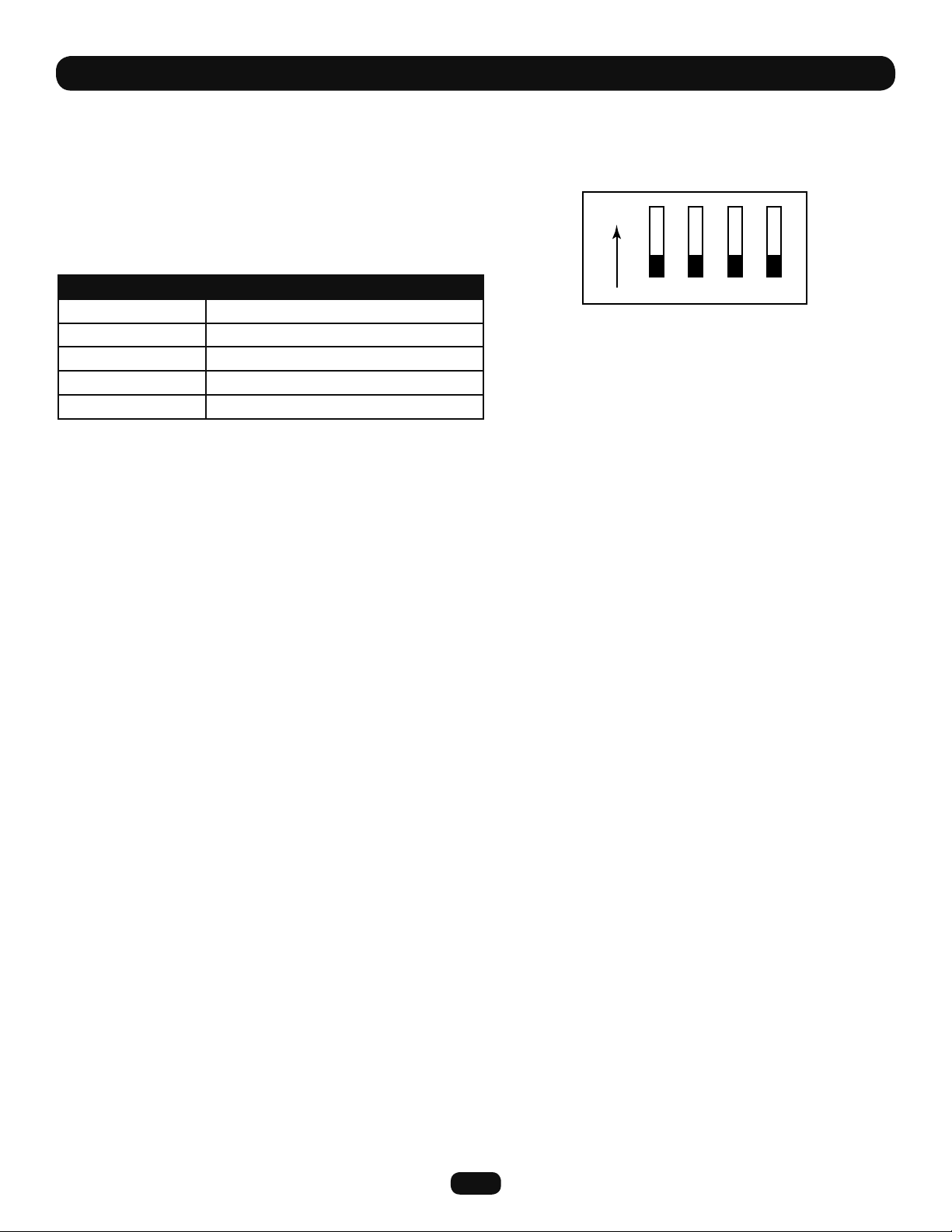
Relay Module Installation
In lieu of smoke detectors, the release device may be put into
alarm by the fire alarm control panel. Most commonly, a relay
module is used as an interface between the fire alarm control
panel and the release device. The relay module must provide
Form C dry contacts for connection to the appropriate terminals
on the release device (Figure 7).
NOTE: When choosing a relay module to activate the release
device in an alarm condition, always select one that provides
Form C dry contact relays. Do not use any relay module providing
or passing any (control) voltage through the contacts into the
release device. The passage of voltage through such a relay
module into the release device will cause problems with the
operation of the device and may damage the device’s terminals
and/or circuit board.
OPTIONAL CONNECTIONS
CLOSE DOOR DETECTION OPTION
Connect wiring from N/O electrical loop, using a proximity
switch or other similar device with dry contacts, to 7 and 8
(Figure 8). The switch should be placed to engage when the door
is in the closed position and so that it will toggle states from its
N/O condition (switch closed when door is closed) to a closed
condition indicating that the door edge has made contact with
desired down position. When the switch is closed by contact
from the door, the release device will not activate on alarm,
thereby eliminating nuisance gravity drops through the
inadvertent release of the fusible link assembly. This option only
works as long as power is available to unit. Fail-safe operation is
maintained under all operating conditions, and if power is not
available to the unit, the fusible link assembly will be released.
This is a power-limited, unsupervised circuit. This proximity
switch MUST be mounted in the same room as the release
device.
RELAY AND TROUBLE OUTPUTS OPTION
Connect wiring from the Alarm Relay Outputs (#11 N/C or #13
N/O and #14 Common) to the appropriate inputs on the fire
alarm control panel to provide a signal at the panel when the
release device is in an alarm state. Connect wiring from the
Trouble Relay Outputs (#14 N/C or #16 N/O and #15 Common) to
the appropriate inputs on the fire alarm control panel to provide
a signal at the panel that the release device is in a trouble state
(Figure 9). If these features are desired, coordinate the
interconnection between the Release Device and the Fire Alarm
Control Panel with the fire alarm installer.
FIGURE 9
11
12
13
14
15
16
– –
+
+
7
8
– –
+
+
FIGURE 8
To prevent DAMAGE to the circuit board, ALL connections from
terminals 3 through 16 MUST be dry contact type.
Fire Alarm
Control Panel
Proximity Switch Part
No. LM56A
Attach to Common on
N/O Proximity Switch
Attach to N/O Position on
Proximity Switch
N/C Alarm Relay Output
Make all necessary
connections to the Fire
Alarm Panel as required
by the project
specifications and
the Authority Having
Jurisdiction
N/C Trouble Output
N/O Trouble Output
Trouble Common
N/O Alarm Relay Output
Common
Relay Module
Common
Normally Closed
Terminal Strip
9
WIRING
OPTIONAL CONNECTIONS (continued)
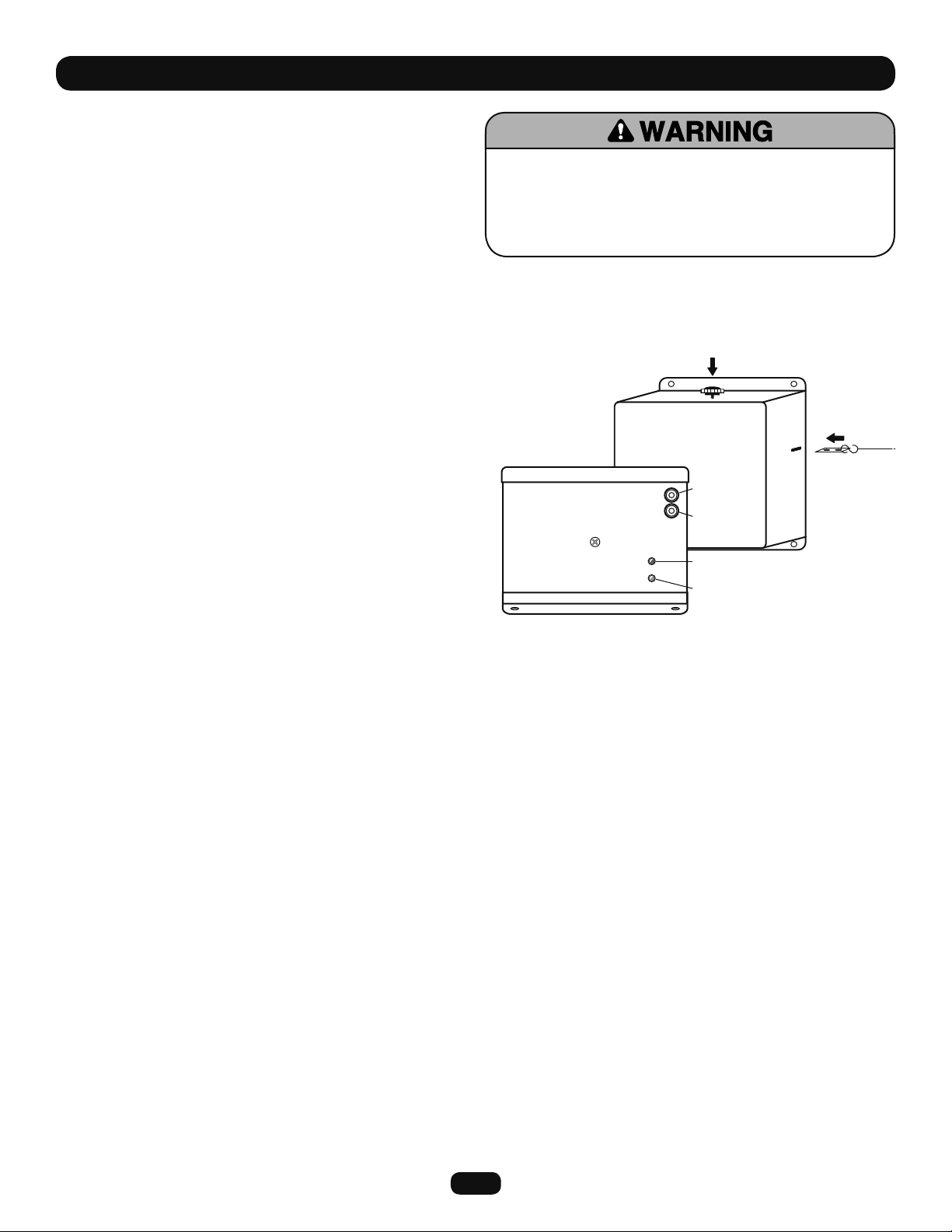
DIP SWITCH SELECTION
The release device will provide a factory default delay of 10
seconds (to minimize nuisance alarms) before releasing the
fusible link chain upon alarm or power loss. A 4-position DIP
Switch found on the PC board within the release device can be
used to adjust the length of the delay to one of four preset
delays. The optional delay settings are as follows:
1 2 3 4
ON
FIGURE 10
NOTE: Set all DIP switch options before applying power to the
system.
NOTE: Position 4 is unused and should remain in the OFF position. Position 3
is used to select one of the two available voice messages.
Factory default setting of 10 seconds shown.
Delay Setting Switch Position
1 2 3 4
10 Seconds Off Off Off Off
20 Seconds Off On Off Off
30 Seconds On Off Off Off
60 Seconds On On Off Off
10
TESTING
TEST PROCEDURES
TO BE PERFORMED BY FACTORY AUTHORIZED PERSONNEL
ONLY! CLEAR FIRE DOOR OPENING AND PROHIBIT TRAFFIC
THROUGH DOOR OPENING WHILE TESTING!
Testing does not affect normal operation of alarm system when
connected to release device/control panel. Testing of the release
device is independent of, and shall in no way be interpreted as an
alternative method of, testing of a central fire alarm system,
motorized operator and/or any other system component employed
on the fire door or counter fire door installation. Complete testing
and normal operation can only be accomplished with power
applied to unit. Door must be in open position with power applied
to unit to begin testing. The following procedures describe testing
of all options. Verify options ordered and installed with unit. All
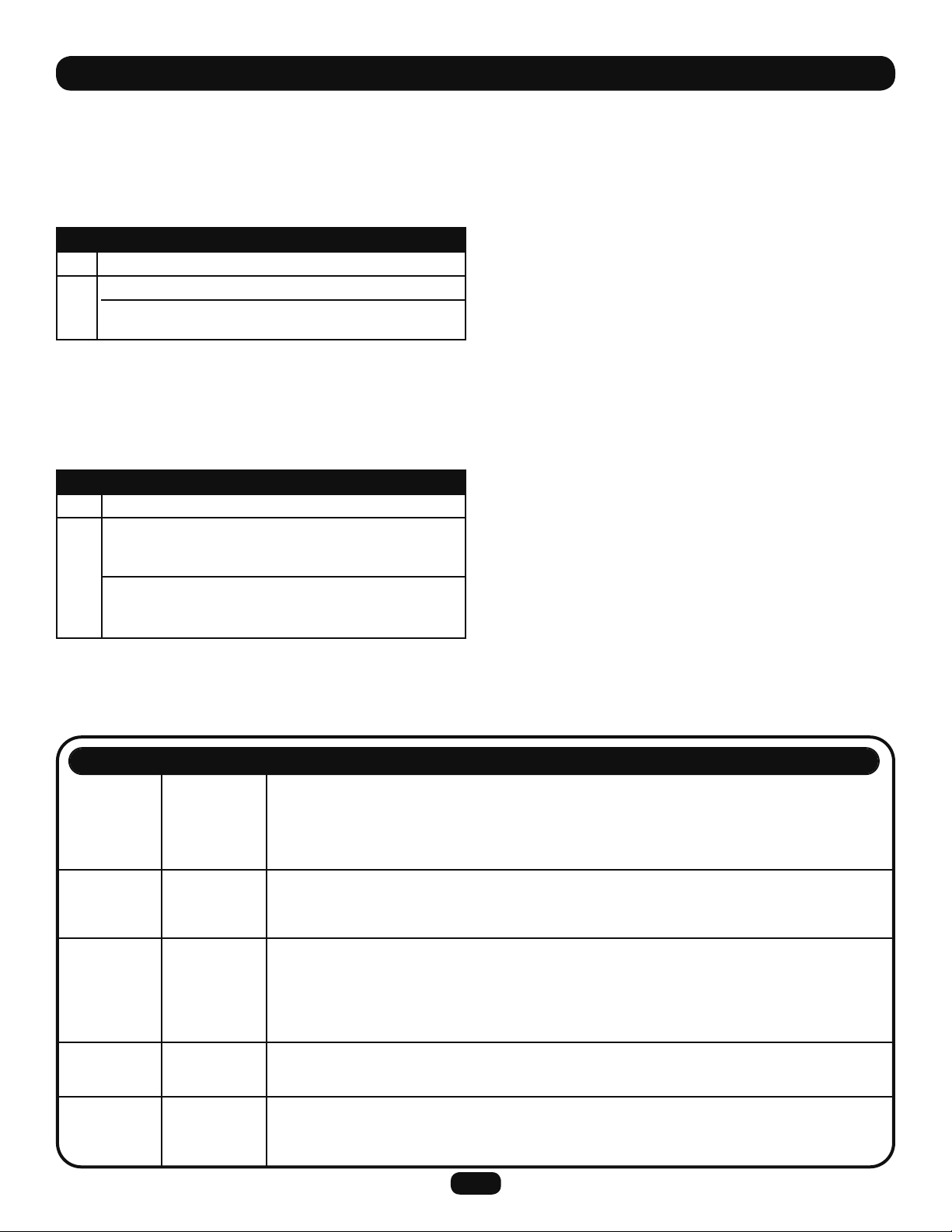
tests may not apply. Refer to Figure 1 for location of all the LEDs
and switches mentioned in this section.
INITIAL POWER UP
1. Apply line power to the unit.
2. Power LED (red) will be lit on the bottom of the release
device.
MECHANICAL RELEASE
1. Depress and continue to hold test button on side of release
device. After the selected delay expires, the device will
release the end link and allow door to drop. Release test
button.
2. Reset the door per door manufacturer’s instructions. Raise
door and then reset the release device by pushing downward
on the mechanical reset button at the top of the device. Fully
insert the end link through the side opening on the device
and release the reset button in order to latch end link.
CLOSE DOOR DETECTION (OPTIONAL)
1. Using the chain hoist or motor operator, lower the door to
fully closed position.
2. Verify that Release Disabled LED (yellow) is lit indicating
door closure. Depress and continue to hold test button on
side of release device for 10 seconds. Close Door Detection
logic will prohibit the release device from energizing and
releasing the end link. Reset the test button.
3. Raise door to fully open position.
SUSPENSION OF POWER
1. Make sure door is in fully open position. Turn off all power
to release device. Immediately upon loss of power to the
release device, a mechanical release will be initiated.
2. Reset the door per door manufacturer’s instructions. Raise
the door and then reset the release device by pushing
downward on the mechanical reset button at the top of the
device. Fully insert the end link through the side opening on
the device and release the reset button in order to latch end
link. Press the “Reset” button on the device to reset the
alarm loop.
After completing all tests, make sure the door is in it’s normal
position (open or closed) and all power required for normal
operation is restored to unit. The release device is designed to
operate with power applied.
NOTE: Testing shall be performed and witnessed for proper
operation.
To prevent possible SERIOUS INJURY or DEATH:
• Clear fire door opening and prohibit ALL traffic through door
opening while testing.
• Test every 90 days to assure proper operation of release
device.
FIGURE 1
Mechanical
Reset Plunger
End Link
Front of Release Device
Yellow LED
(Close Door Detection
Release Disabled)
Red LED (Line Power Present)
Bottom of Release Device
Electronic
Reset Button
Test Button
11
OPERATIONAL CHECKLIST
POWER
Is the red LED, labeled “Power,” located on the bottom of the
enclosure lit?
CHECK THE ALARM
Are the alarm (smoke detection) inputs correct? If not, the
release device will not release the fusible link assembly in a fire
condition. Conversely, the release device will always release the
fusible link assembly when powered or reset.
Is the Red LED Lit?
Yes Move on.
No Check power connections at terminal board positions 1 and 2.
Check voltage; voltage should be 24Vdc received from an
approved UL 1481 regulated power supply.
Are the Alarm Inputs correct?
Yes Move on.
No Check that it is a dry contact input. There should not be any
voltage on the alarm lines when they are disconnected from
the unit.
Check to see if it is tied into an addressable relay module of
an alarm panel. At times, noise can be picked up from these
modules.
CHECK THE CLOSE DOOR DETECTION
Is the Yellow LED on the bottom of the enclosure lit? If lit, the
close limit is active and the device is disabled and will not
release the tension on the door spring as the door is in the
closed position, activating the proximity switch. If not lit, check
wiring instructions in Figure 8.
TROUBLESHOOTING
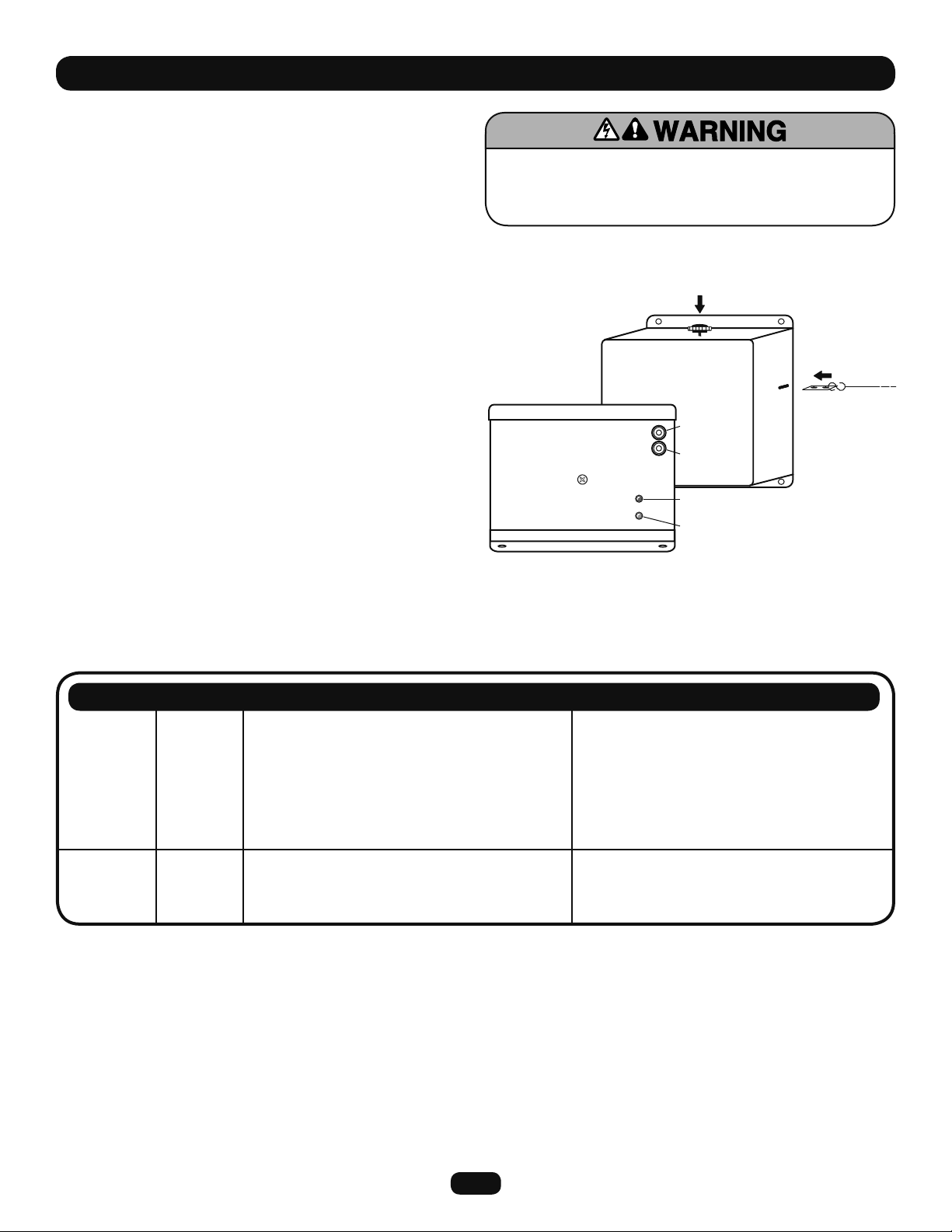
CIRCUIT BOARD DIAGNOSTIC LEDS
View diagnostic LEDs present on the circuit board located behind
the terminal board. Refer to the table below for the status LED
indications.
N/O Detector
Trouble
Yellow
(LED 4)
If lit, indicates a trouble condition (a short) within the N/O 2-wire (or 4-wire) smoke detector loop
(emanating from terminal board positions 3 and 4), resulting from either incorrect wiring or
incorrect placement of the end-of-line resistor, and the smoke detector loop is inactive. Refer to the
Smoke Detector Installation section on pages 7 and 8 of this manual for correct wiring instructions.
N/O Detector
Alarm
Red
(LED 5)
If lit, indicates that the N/O 2-wire (or 4-wire) smoke detector loop (emanating from terminal board
positions 3 and 4) is in alarm. When lit during testing, press the Auxiliary Reset Button at the
bottom of the release device to reset the loop.
N/C Detector
Trouble
Red
(LED 6)
If lit, indicates an open circuit within the N/C 4-wire smoke detector loop (emanating from terminal
board positions 5 and 6), resulting from either incorrect wiring or incorrect placement of the end-
of-line relay or the detector(s) are in alarm. If in alarm, cycle power off and then on to the smoke
detectors to reset, then depress the auxiliary reset button to reset. Refer to the Smoke Detector
Installation section on pages 7 and 8 of this manual for correct wiring instructions.
Close Door
Detection
Green
(LED 2)
If lit, indicates that the fire door or shutter is closed and activating the proximity switch. If not lit,
refer to the Close Door Detection section of this manual for correct wiring instructions.
Ground Fault Yellow
(LED 7)
If lit, indicates that one of the ancillary devices/loops (smoke detector, annunciator, etc.) is not
grounded properly, and a short to earth ground exists.
LED LED Color Description
12
Disable Yellow The Yellow LED will light when the door reaches the
close limit and activates a proximity switch attached to
terminal positions 7 and 8 on the release device. This
configuration results in the device not releasing the
fusible link assembly in alarm or power loss situations
and should only be used when the fire door is kept in a
constant closed position.
If the LED does not light when the door reaches the
close limit and activates the proximity switch, then
check that the proximity switch has been activated
and that the switch is set to normally open (N.O.).
Check to make certain that the switch is attached to
terminal positions 7 and 8 on the release device.
Power Red If the Red LED is lit, then the line power is connected
and switched “on.”
If the LED does not light when power is applied,
check that power is connected as described in the
installation manual electrical connections.
MAINTENANCE
To avoid SERIOUS PERSONAL INJURY or DEATH from
electrocution, disconnect ALL power BEFORE performing
ANY maintenance.
MAINTENANCE REQUIREMENTS
The release device has no scheduled maintenance requirements.
The unit has been designed and tested for use in dry, indoor
locations. Testing of the unit at least once every 90 days is
recommended, but test intervals shall ultimately be subject to
criteria established by the Authority Having Jurisdiction (AHJ).
ENCLOSURE MOUNTED LEDS STATUS INDICATORS
LED Label LED Color Description Action Required
FIGURE 1
Mechanical
Reset Plunger
End Link
Front of Release Device
Yellow LED
(Close Door Detection
Release Disabled)
Red LED (Line Power Present)
Bottom of Release Device
Electronic
Reset Button
Test Button
13
ACCESSORIES
ACCESSORIES AND REPAIR PARTS
HOW TO ORDER REPAIR PARTS
OUR LARGE SERVICE ORGANIZATION SPANS AMERICA
Installation and service information
call our TOLL FREE number:
1-800-528-7870
ITEM PART # DESCRIPTION
1 LM8100 Smoke Detector - 120V Photo
2 LM8100T Smoke Detector - 120V Photo
with Thermal
3 LM8100I Smoke Detector - 120V Ion
4 LM2W-B Smoke Detector - 12/24Vdc 2-Wire Photo
5 LM2WT-B Smoke Detector - 12/24Vdc 2-Wire Photo
with Thermal
6 LM4W-B Smoke Detector - 12/24Vdc 4-Wire Photo
7 LM4WT-B Smoke Detector - 12/24Vdc 4-Wire Photo
with Thermal and Form C Relay
ITEM PART # DESCRIPTION
8 LM1424 Smoke Detector - 24Vdc Ion
9 LM1412 Smoke Detector - 12Vdc Ion
10 LMTH135 Heat Detector - 135 Degree Fixed
Temperature
11 LMTH194 Heat Detector - 194 Degree Fixed
Temperature
12 LMEOLR1224 End-of-Line Relay - 12/24Vdc
13 LMEOLR120 End-of-Line Relay - 120Vac
REPAIR PARTS
ITEM PART # DESCRIPTION
1 LMRK Reset Knob
2 LMELH End Link
3 LM2AG3AMP Fuse - 3 Amp
4 LMEOLRES-10 End-of-Line Resistor, 10 kOhm
NOTE: Certain accessories above will require a separate power source. Refer to product manual.
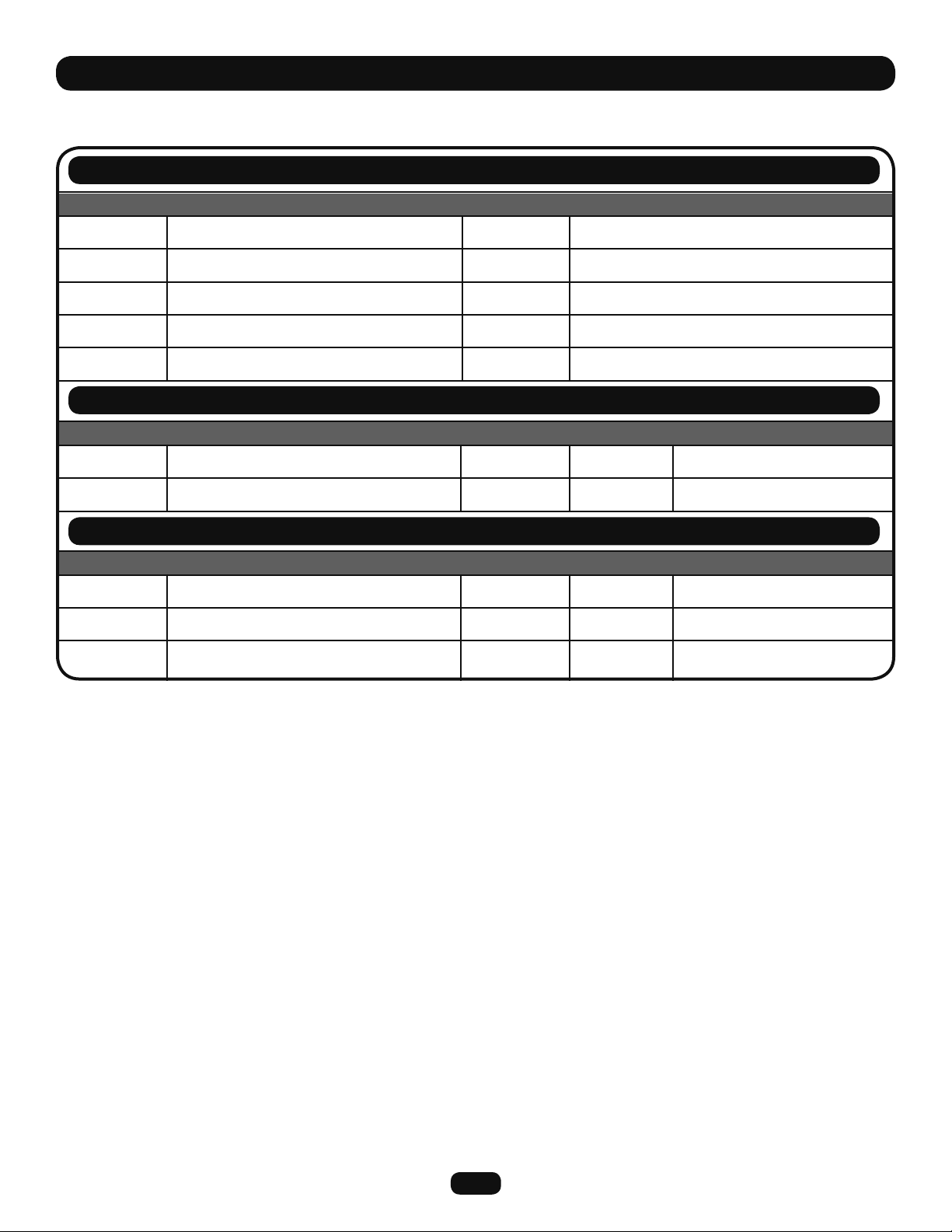
MODEL NO. DESCRIPTION
LM2W-B 24Vdc 2-Wire Photo
2W-B
LM2WT-B 24Vdc 2-Wire Photo with Thermal
2WT-B
LM4W-B 24Vdc 4-Wire Photo
4W-B
LM4WT-B
24Vdc 4-Wire Photo with Thermal & Form C Relay
4WT-B
LM1424 24Vdc Ion
#1424
MODEL NO. DESCRIPTION
LMTH135 135 Degree Fixed Temperature
#5603
#603 #283B-PL
LMTH194 194 Degree Fixed Temperature
#5604
#604 #284B-PL
MODEL NO. DESCRIPTION
LMEOLRES-10 10 kOhm End-of-Line Resistor LMEOLRES-10
LMEOLR1224 End-of-Line Relay
EOLR-1
LMEOLR120 End-of-Line Relay PAM-1
APPENDIX
SMOKE DETECTORS
ACCESSORY COMPATIBILITY GUIDE
SYSTEM SENSOR
MODEL NO.
SYSTEM SENSOR CHEMTRONICS EDWARDS SYSTEM TECHNOLOGY (EST)
MODEL NO. MODEL NO. MODEL NO.
SYSTEM SENSOR SPACE AGE LIFTMASTER NO.
MODEL NO. ELECTRONICS NO.
HEAT DETECTORS
END-OF-LINE DEVICE
NOTE: Certain accessories above will require a separate power source. Refer to product manual.
14

15
OPERATOR NOTES

01-32046C © 2017, LiftMaster
Issue Date 10/19/2017 All Rights Reserved