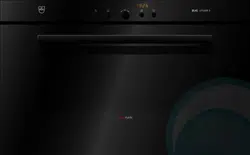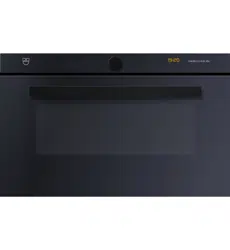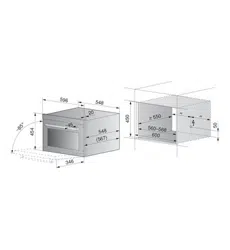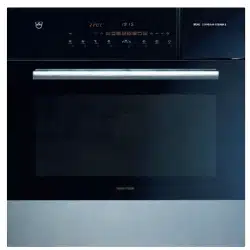
Steam cooker
Steam S
Operating instructions
V-ZUG Ltd
2
Thank you for choosing to buy one of our products. Your appliance is made
to high standards and is easy to use. Nevertheless, please take the time to
read these operating instructions in order to familiarize yourself with the
appliance and get the best use out of it.
Please follow the safety precautions.
Modifications
Text, diagrams and data correspond to the technical standard of the appli-
ance at the time these operating instructions went to press. The right to make
technical modifications for the purpose of the further development of the
appliance is reserved.
Symbols used
A Indicates step-by-step instructions.
– Describes how the appliance reacts to the steps taken.
䡲 Indicates a list.
Validity
The model number corresponds to the first three digits on the identification
plate. These operating instructions apply to the following models:
Variations depending on the model are noted in the text.
© V-ZUG Ltd, CH-6301 Zug, 2010
Denotes important safety precautions. Failure to observe said pre-
cautions can result in injury or damage to the appliance or fittings!
Denotes useful tips for the user.
Type Model no. Size system
ST-SZ 766 55-381
ST-SZ 769 60-381

3
Contents
Safety precautions 5
Before using for the first time . . . . . . . . . . . . . . . . . . . . . . . . 5
Correct use . . . . . . . . . . . . . . . . . . . . . . . . . . . . . . . . . . . . . . 6
Children in the home . . . . . . . . . . . . . . . . . . . . . . . . . . . . . . 7
Note on use . . . . . . . . . . . . . . . . . . . . . . . . . . . . . . . . . . . . . 7
Appliance description 10
Construction . . . . . . . . . . . . . . . . . . . . . . . . . . . . . . . . . . . . 10
Operating and display elements . . . . . . . . . . . . . . . . . . . . . 11
Cooking space . . . . . . . . . . . . . . . . . . . . . . . . . . . . . . . . . . 12
Accessories . . . . . . . . . . . . . . . . . . . . . . . . . . . . . . . . . . . . 13
Operating the appliance 16
Using for the first time . . . . . . . . . . . . . . . . . . . . . . . . . . . . 17
Example . . . . . . . . . . . . . . . . . . . . . . . . . . . . . . . . . . . . . . . 18
Filling the water tank . . . . . . . . . . . . . . . . . . . . . . . . . . . . . . 18
Selecting the operating mode . . . . . . . . . . . . . . . . . . . . . . . 19
Switching off . . . . . . . . . . . . . . . . . . . . . . . . . . . . . . . . . . . . 19
Emptying the water tank . . . . . . . . . . . . . . . . . . . . . . . . . . . 20
User settings 21
Childproof lock . . . . . . . . . . . . . . . . . . . . . . . . . . . . . . . . . . 23
Time display . . . . . . . . . . . . . . . . . . . . . . . . . . . . . . . . . . . . 24
Acoustic signal . . . . . . . . . . . . . . . . . . . . . . . . . . . . . . . . . . 24
Water hardness . . . . . . . . . . . . . . . . . . . . . . . . . . . . . . . . . 25
Temperature unit . . . . . . . . . . . . . . . . . . . . . . . . . . . . . . . . . 25
Time format . . . . . . . . . . . . . . . . . . . . . . . . . . . . . . . . . . . . 25
Factory settings . . . . . . . . . . . . . . . . . . . . . . . . . . . . . . . . . 25
Time functions 26
Setting and changing the time . . . . . . . . . . . . . . . . . . . . . . 26
Timer . . . . . . . . . . . . . . . . . . . . . . . . . . . . . . . . . . . . . . . . . 27
Operating time . . . . . . . . . . . . . . . . . . . . . . . . . . . . . . . . . . 29
Delayed start . . . . . . . . . . . . . . . . . . . . . . . . . . . . . . . . . . . 31

… Contents
4
Operating modes 34
Tips on settings 36
Optimal use . . . . . . . . . . . . . . . . . . . . . . . . . . . . . . . . . . . . . 37
Cooking tables . . . . . . . . . . . . . . . . . . . . . . . . . . . . . . . . . . 38
Tips and tricks 55
Saving energy . . . . . . . . . . . . . . . . . . . . . . . . . . . . . . . . . . . 56
Care and maintenance 57
Cleaning the exterior . . . . . . . . . . . . . . . . . . . . . . . . . . . . . . 57
Cleaning the appliance door . . . . . . . . . . . . . . . . . . . . . . . . 58
Removing the shelf guides . . . . . . . . . . . . . . . . . . . . . . . . . 59
Replacing the door seal . . . . . . . . . . . . . . . . . . . . . . . . . . . 59
Cleaning the accessories . . . . . . . . . . . . . . . . . . . . . . . . . . 59
Cleaning the cooking space . . . . . . . . . . . . . . . . . . . . . . . . 60
Descaling . . . . . . . . . . . . . . . . . . . . . . . . . . . . . . . . . . . . . . 61
Trouble-shooting 65
What to do if … . . . . . . . . . . . . . . . . . . . . . . . . . . . . . . . . . . 65
After a power failure . . . . . . . . . . . . . . . . . . . . . . . . . . . . . . 70
Accessories and spare parts 71
Technical data 74
Disposal 75
Index 76
Repair service 79
Quick instructions 80

5
Safety precautions
In accordance with the requirements of IEC 60335-1:
䡲 This appliance is not intended for use by persons (including children) with
reduced physical, sensory or mental capabilities, or lack of experience and
knowledge, unless supervised or unless they have been given instruction
concerning the use of the appliance by a person responsible for their
safety.
Before using for the first time
䡲 The appliance must be installed and connected up to the power supply in
accordance with the separate installation instructions. The necessary work
should be done by a qualified fitter or electrician.
䡲 Dispose of the packaging material in accordance with local regulations.
䡲 Before using the newly installed appliance for the first time, please follow
the advice in the 'Using for the first time' section.
䡲 Make the desired user settings.
The appliance corresponds to recognised technology standards
and the relevant safety regulations. Proper use of the appliance is
however essential to avoid damage and accidents. Please there-
fore follow the precautions given in these operating instructions.

… Safety precautions
6
Correct use
䡲 The appliance is designed for use in the home for preparing food. No
liability is assumed for any damage caused by improper or incorrect use.
䡲 Never use the appliance to dry animals, textiles or paper!
䡲 Not to be used as a room heater or humidifier.
䡲 The appliance should only be installed and operated in a room with an
ambient temperature of between 5 °C and 35 °C. In the event of frost,
there is a danger that residual water left in the pumps can freeze, causing
damage.
䡲 Any repairs, modifications or manipulations to the appliance, especially
any electrically live parts, should only be carried out by the manufacturer,
its Customer Services or similarly qualified persons. Repairs if carried out
incorrectly may cause serious injury, damage to the appliance and fittings,
as well as affect the functioning of the appliance. If the appliance is not
working properly or in case of a repair order, follow the instructions given
in the 'Repair service' section. Please contact Customer Services if
necessary.
䡲 Only original spare parts may be used.
䡲 Retain these operating instructions for future reference. If you sell the
appliance or pass it on to a third party, please ensure these operating
instructions accompany the appliance, together with the instructions on
installation. In this way, the new owner can inform themselves about how
to use the appliance correctly and read the pertinent safety precautions.

… Safety precautions
7
Children in the home
䡲 Packaging material, e.g. plastic and polystyrene, can be dangerous for
children. Danger of suffocation! Please keep packaging material away from
children.
䡲 The appliance is designed for use by adults who are familiar with these
operating instructions. Children are often unable to recognise the danger
of electrical appliances. Ensure proper supervision and do not allow
children to play with the appliance – there is a danger that children can
hurt themselves.
䡲 Use the childproof locking facility.
Note on use
䡲 If the appliance is visibly damaged, do not use it. Contact our Customer
Services.
䡲 If the appliance is not operating property, disconnect it from the power
supply immediately.
䡲 Ensure the mains cables of other electrical appliances do not get caught
in the door of the appliance, as the electrical cable insulation could get
damaged.
䡲 If the mains cable of the appliance is damaged, it must be replaced by
Customer Services in order to avoid hazard.
䡲 Ensure there are no foreign bodies or pets in the cooking space before
closing the appliance door.
䡲 Objects that could pose a danger if the appliance were accidentally
switched on should not be stored in the cooking space. Do not store food
nor any temperature-sensitive or inflammable materials, e.g. cleaning
agents, oven sprays, etc., in the cooking space.

… Safety precautions
8
Caution: Burns hazard!
䡲 The appliance gets very hot when in use.
䡲 Heat is produced during steaming and cooking. The appliance door,
especially the glass, can get hot. Burns hazard – do not touch. Keep
children away!
䡲 The appliance will remain hot for some time after it is switched off and will
cool down only slowly to room temperature. Please allow sufficient time for
the appliance to cool down before, for instance, cleaning it.
䡲 Steam may escape from the cooking space when the appliance door is
opened. Do not put your hands into the cooking space if there is steam in
it!
䡲 Do not pour spirits (e.g. brandy, whisky, schnapps, etc.) over hot food –
danger of explosion!
䡲 If you notice smoke possibly coming from the appliance itself or from
inside the cooking space, keep the appliance door closed. Disconnect the
appliance from the power supply.
䡲 Accessories get hot in the cooking space. Always wear protective gloves
or use oven cloths.

… Safety precautions
9
Caution: Danger of injury!
䡲 Be careful not to put fingers in the door hinges, there is otherwise a risk of
injury if the appliance door is moved. Particular care should be taken when
children are around.
䡲 Only leave the appliance door open in the at-rest position. An open
appliance door poses a danger of tripping or injury! Do not sit or rest on
the appliance door or use it as a storage surface.
How to avoid damaging the appliance
䡲 Close the appliance door carefully.
䡲 Do not place any protective insert or aluminium foil on the floor of the
cooking space as this can damage the appliance.
䡲 Do not use knives or cutting wheels on the stainless steel tray, in cooking
utensils and on the steam insert. This will visibly damage them.
䡲 Do not use objects that can rust in the cooking space.
䡲 Do not use silver cutlery in the cooking space.
䡲 To prevent corrosion, allow the cooking space to dry and leave the
appliance door open in the at-rest position until the cooking space has
cooled down.
䡲 When cleaning the appliance make sure no water gets inside the
appliance. Use a moderately damp cloth. Do not spray the inside or
outside of the appliance with water. Do not use a steam cleaner. If water
gets inside the appliance, it can cause damage.
10
Appliance description
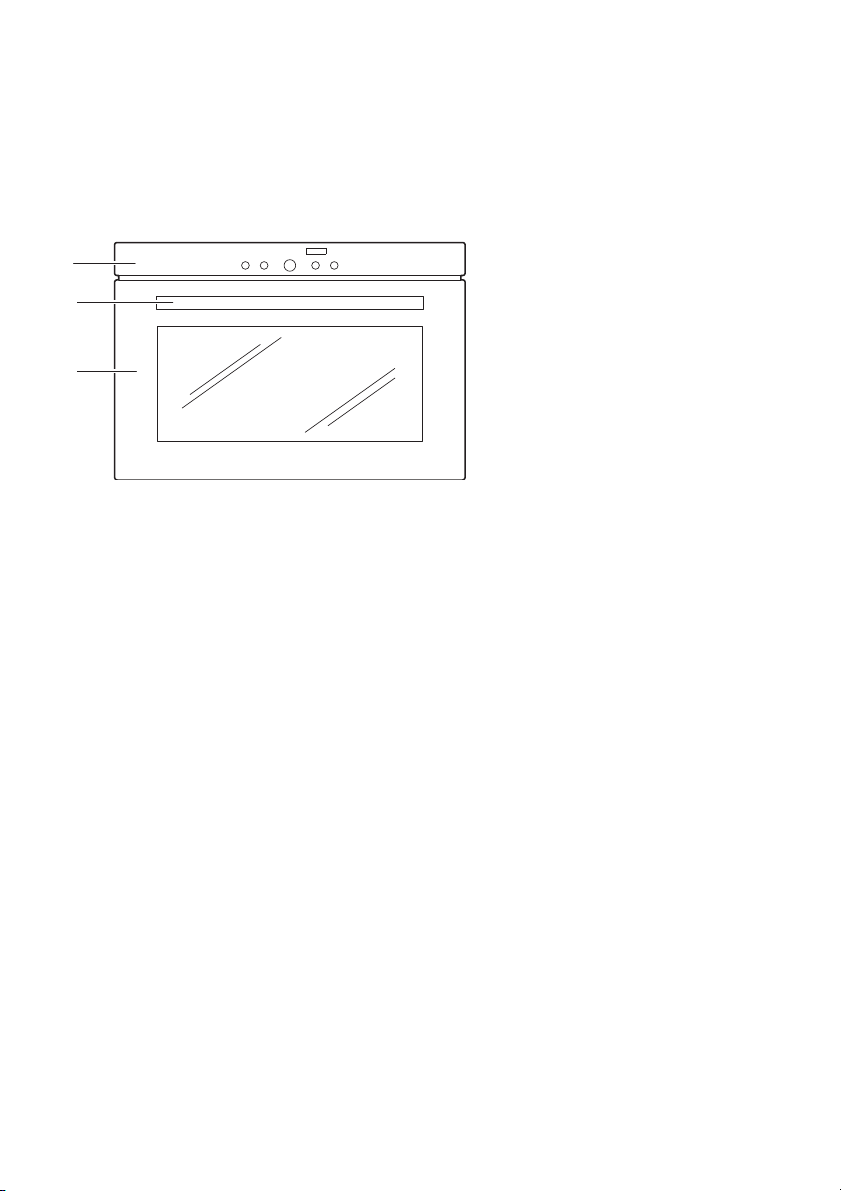
Construction
1 Operating and display elements
2 Door handle
3 Appliance door
1
2
3
… Appliance description
11
Operating and display elements
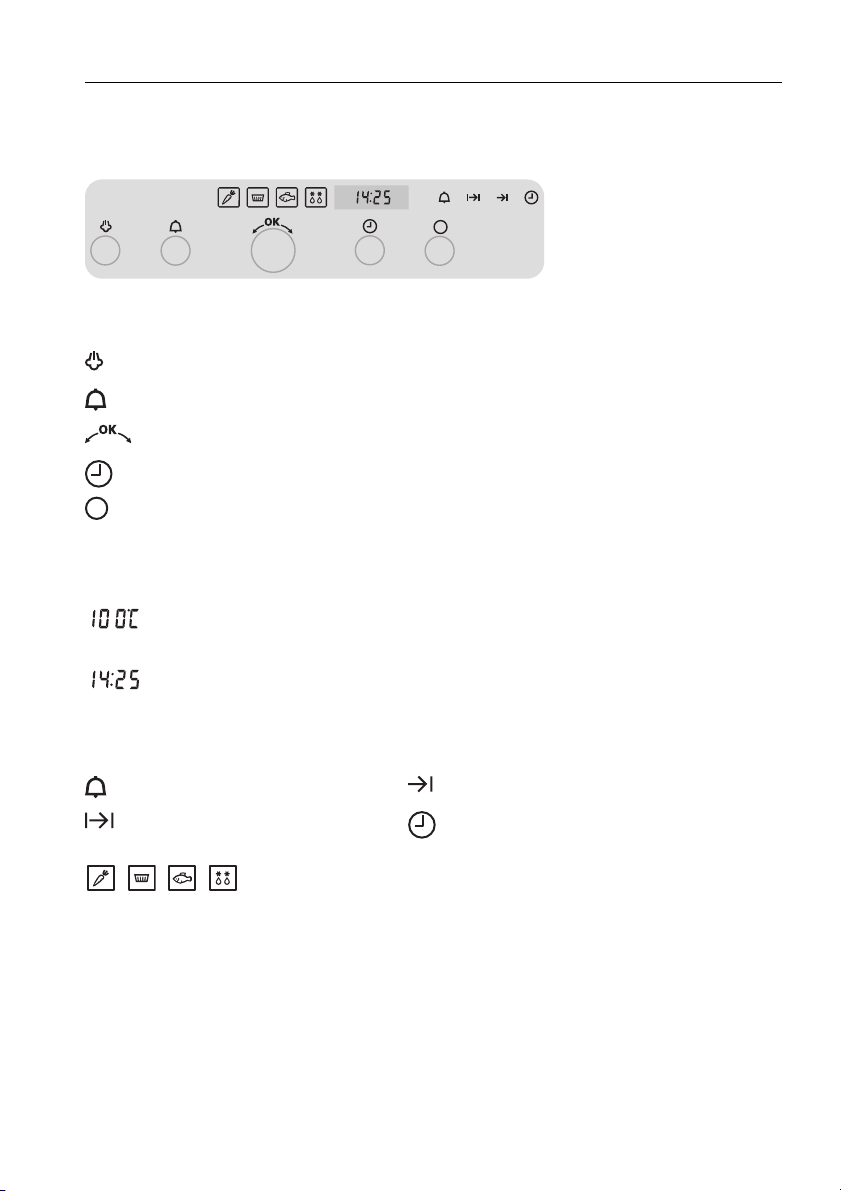
Buttons
Displays
Symbols
Operating modes
Operating mode
Timer
Adjusting knob
Time, operating time, switch-off time
Off
Temperature
䡲 Appears for 3 seconds while selecting the operating mode.
Time, operating time, switch-off time, timer
Timer Switch-off time
Operating time Time

… Appliance description
12
Cooking space
Do not place any protective insert or aluminium foil on the floor of
the cooking space.
1 Appliance door 5 Climate sensor
2 Door seal 6 Ventilation outlet
3 Knurled nut 7 Water tank compartment
4 Cooking space
temperature sensor
8 Levels
9 Steam inlet
1
2
7
5
4
8
9
3
1
2
3
4
6

… Appliance description
13
Accessories
The baking trays and wire shelves are inserted into the oven between the two
rails of a shelf runner.
The wire shelves have non-tip safety notches which prevent them being pulled
right out when they only need to be partially pulled out. The wire shelves can
then only be taken out of the oven by raising them upwards and then pulling
them out.
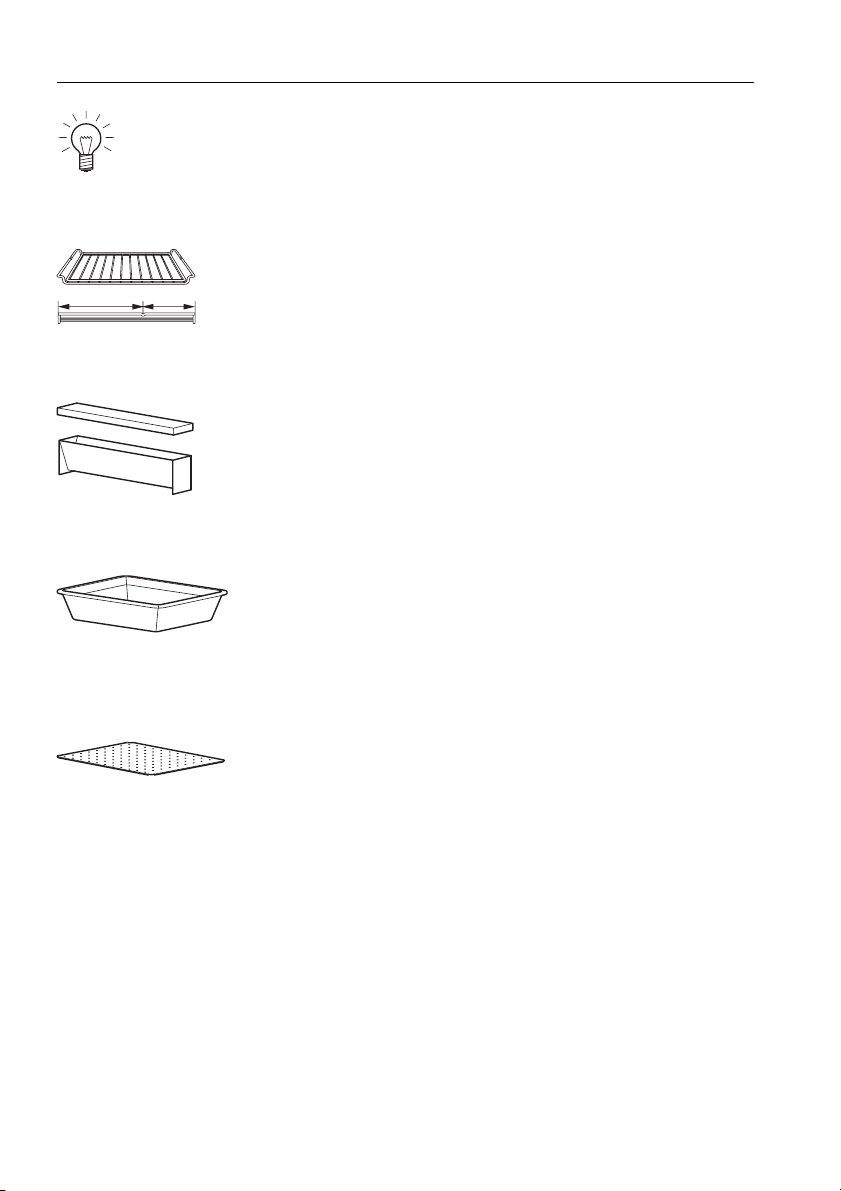
Stainless steel tray
䡲 Use together with the perforated cooking tray as a
drip tray.
䡲 Using knives or cutting wheels on the stainless steel
tray will visibly damage the surface.
Perforated cooking tray
䡲 For cooking fresh or frozen vegetables, meat and
fish.
䡲 For standing ramekins, preserving jars, etc. on.
䡲 For extracting juice from berries, fruit, etc.
䡲 Using knives or cutting wheels on the perforated
cooking tray will visibly damage the surface.
For steaming, place the stainless steel tray underneath the perforated
cooking tray to catch any food spills or condensate.
Water tank
䡲 Only fill with fresh, cold drinking water.
䡲 Do not use demineralised (filtered) or distilled water.
… Appliance description
14
The following accessories are not included in the scope of delivery.
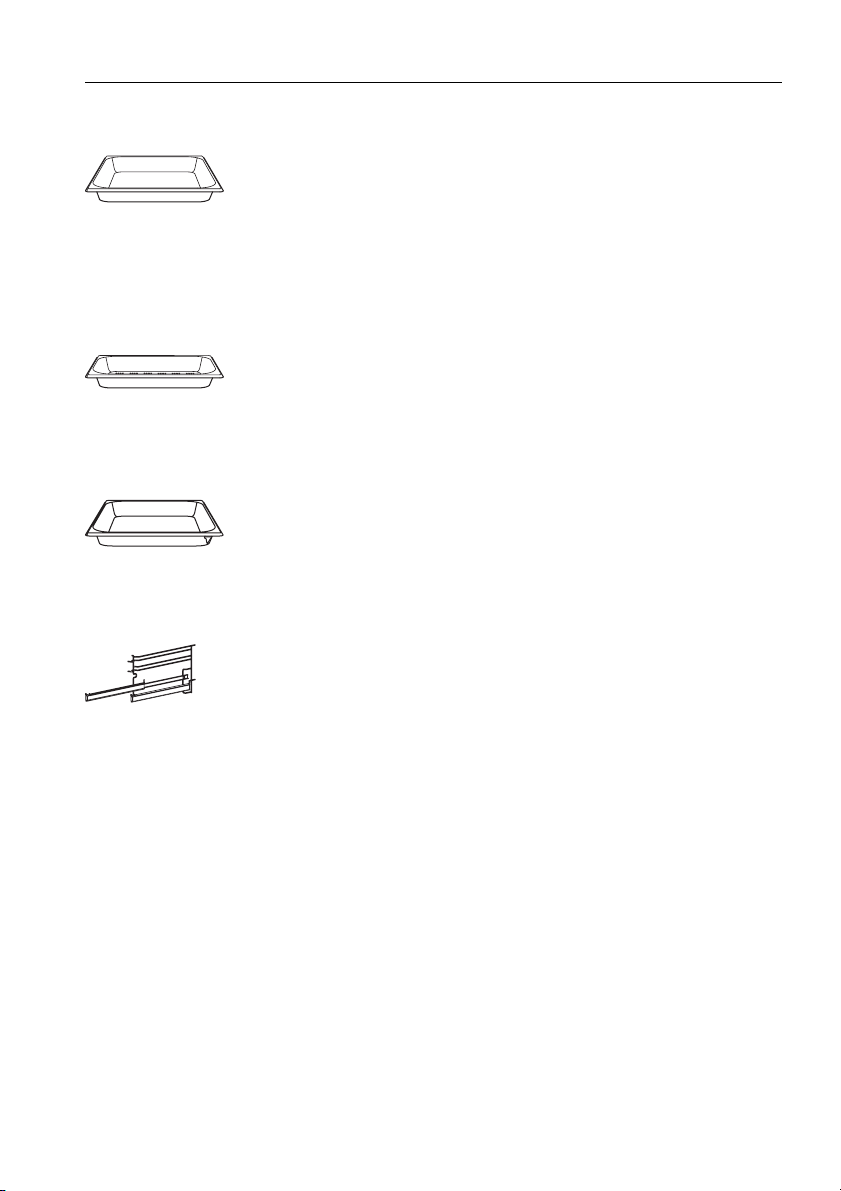
Wire shelf
䡲 For standing various trays, tins and moulds on.
䡲 Push the wire shelf in with the shorter side b to the
back wall of the cooking space.
Terrine mould with lid
䡲 For preparing vegetable, fish and meat terrines.
䡲 For preparing ice cream, parfait and other sweets.
Available in 2 different designs.
Porcelain dish
䡲 For preparing various dishes such as polenta,
risotto, etc.
䡲 For steaming and keeping food warm.
Available in 3 different sizes.
Stainless steel steam insert
䡲 For the steaming of vegetables, potatoes, etc. in
combination with a porcelain dish.
Available in 3 different sizes
ab
… Appliance description
15
Unperforated cooking tray
䡲 For cooking meat, fish, sauerkraut, rice, millet,
cereal products, soaked pulses, chickpeas, etc.
䡲 Using knives or cutting wheels in the unperforated
cooking tray will visibly damage the surface.
Available in different sizes and depths.
Perforated cooking tray
䡲 For cooking fresh or frozen vegetables, meat and
fish.
Available in different sizes and depths.
Unperforated cooking tray with pouring lip
䡲 For extracting juice from berries, fruit, etc.
䡲 Serves as a drip tray for collecting condensate from
food.
Roller runner
䡲 For safely pulling out one or more baking trays/wire
shelves in order, for instance, to take out the
porcelain dish.

16
Operating the appliance
The operating mode, operating time and switch-off time can be selected by
pressing the corresponding button once or more.
䡲 The symbol for the function selected illuminates or flashes.
䡲 Turn the adjusting knob to change the setting.
䡲 Press the adjusting knob to confirm the setting or it will be
automatically accepted after 10 seconds.
䡲 Other settings or changes can be made at any time.
䡲 Press the button to switch off the appliance.
… Operating the appliance
17
Using for the first time
Before using the newly installed appliance for the first time the following
measures should be taken:
A Remove all packaging and transport materials from the cooking space.
A When flashes in the digital display, turn the adjusting knob to
set the time.
A Clean the cooking space and the accessories.
A If necessary, adjust the water hardness in the user settings.
A Heat the empty cooking space (i.e. without the wire shelves, baking trays,
etc.) using the operating mode for about 30 minutes at 100 °C.
Press the adjusting knob to switch between hours and minutes.
Turn it to set the hours and the minutes.
Press the adjusting knob to confirm the setting.
… Operating the appliance
18
Example
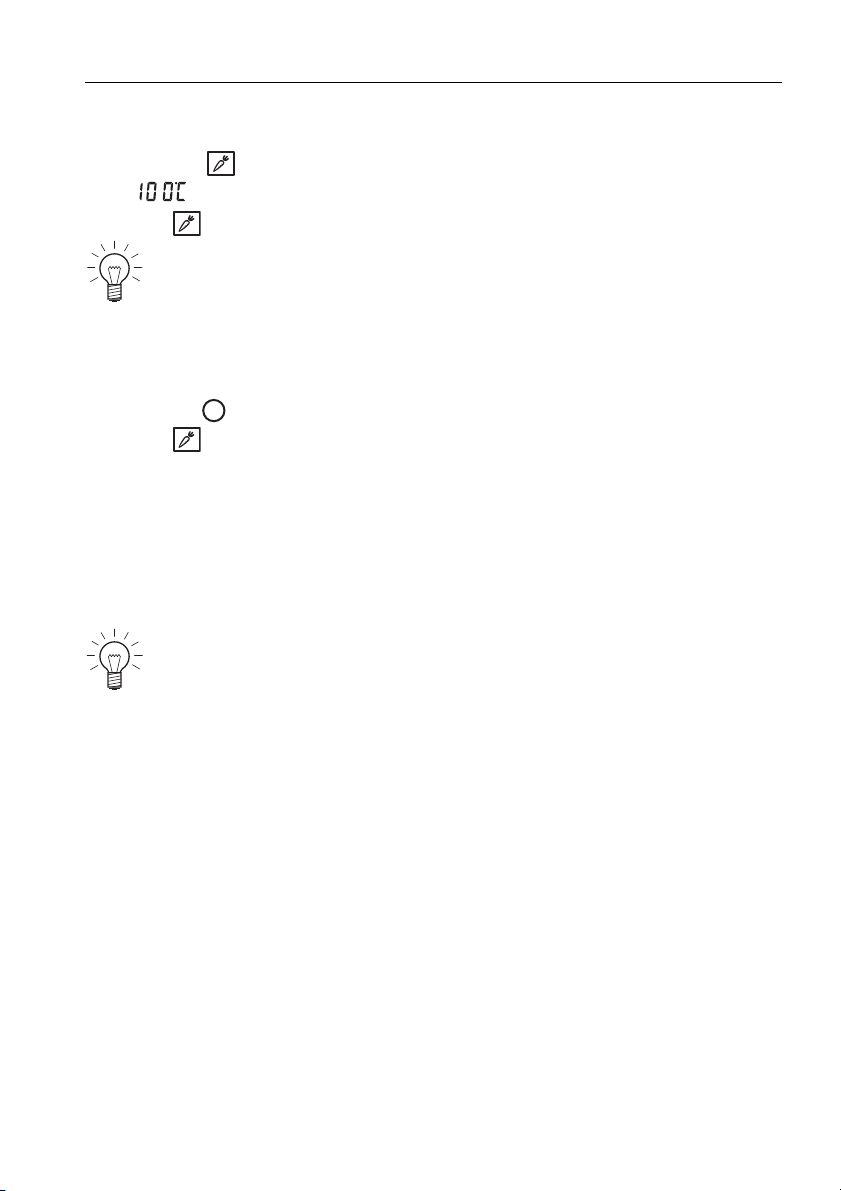
The symbols are explained in 'Tips on settings'. The tables in 'Tips on settings'
give:
A Put the stainless steel tray into the cold cooking space at level 1.
A Put the broccoli in the perforated cooking tray at level 2.
A Next steps are described on the following sides.
Filling the water tank
A Fill the water tank up to the «1.25» «Litre» mark with fresh, cold drinking
water and slot into position in the water tank compartment.
䡲 For all operating modes, the filled water tank must be in position in the
water tank compartment.
Refilling the water tank
The contents of the water tank normally suffice for one cooking session.
If, however, the water tank needs to be refilled:
A Do not fill the water tank with more than 0.5 l water to ensure that it does
not overflow when the water is pumped back.
Burns hazard from heat produced steaming and baking! Use
protective gloves or oven cloths. Keep children away.
mins.
Broccoli 100
2
1
10–15
Only fill the water tank with fresh, cold drinking water. Do not use
demineralised (filtered) or distilled water.
… Operating the appliance
19
Selecting the operating mode
A Select the operating mode.
– appears in the digital display for 3 seconds.
– The symbol flashes.
Switching off
A Press the button.
– The symbol goes out.
– For all operating modes, steam can be released at the end of the
cooking process.
– The steam is gradually released from the cooking space – this takes
around 1 minute – so that there is no sudden rush of steam when the
appliance door is opened.
– The cooling fan can continue to run.
The operating mode selected cannot be changed during operation.
When the symbols are no longer illuminated, the appliance is off.
… Operating the appliance
20
Removing the cooked food from the cooking space
A Take the broccoli out of the cooking space.
A Any condensate or food in the cooking space must be dried completely or
removed after each cooking session with steam.
A To prevent corrosion, leave the appliance door open in the at-rest position
until the cooking space has cooled down.
Emptying the water tank
When the appliance is switched off, the residual water is pumped back into
the water tank.
A When the water has been pumped back, remove, empty and then dry the
water tank.
Hot steam may escape from the cooking space when the appliance
door is opened. Burns hazard!
The accessories will be hot. Burns hazard! Use protective gloves or
oven cloths.
The water in the water tank can be hot. Scalding hazard!
If flashes in the digital display, then the temperature of the
residual water is still over 80 °C. For safety reasons, the residual
water is not pumped back until its temperature drops below 80 °C.
Any operating mode can be started again at any time.
21
User settings
You can adjust the settings.
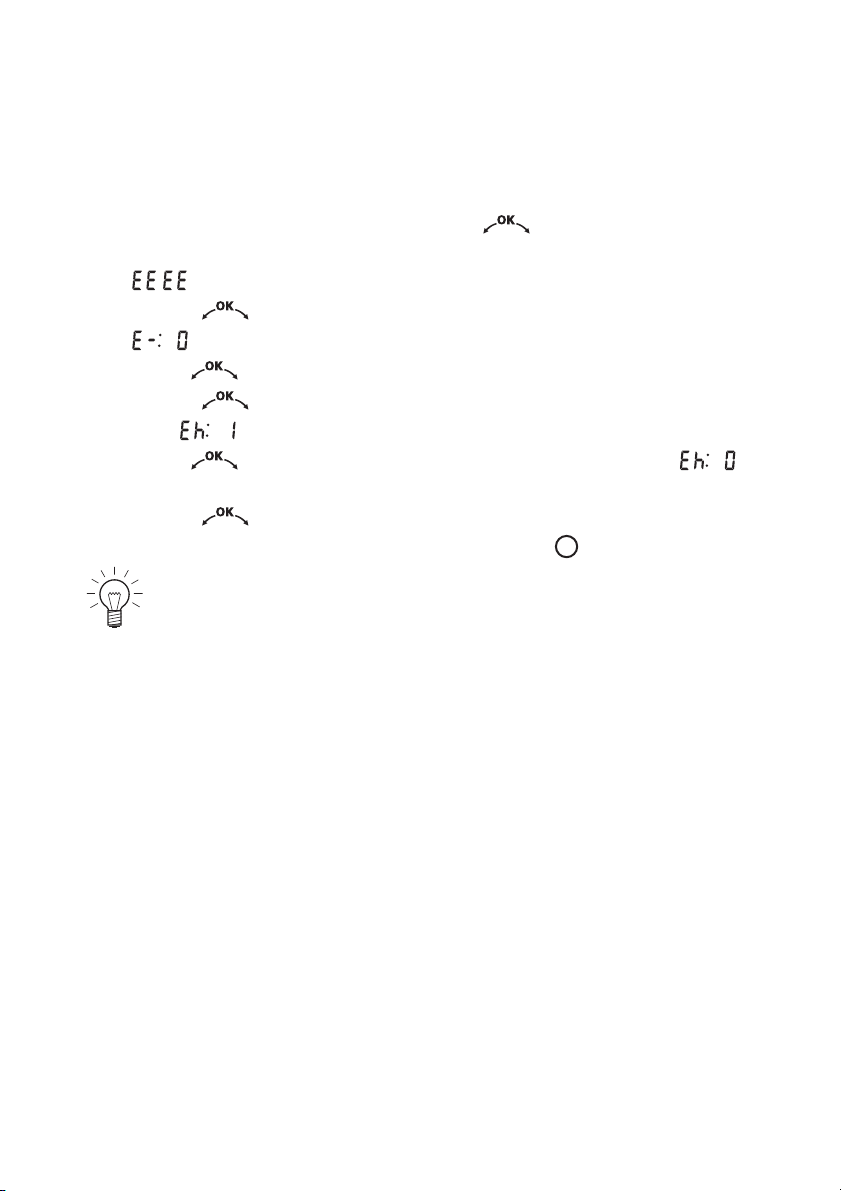
A With the appliance switched off, hold the adjusting knob depressed
for 5 seconds.
– appears in the digital display.
A Press the adjusting knob to confirm.
– appears in the digital display for «Childproof lock off».
A Turn the adjusting knob to select setting.
A Press the adjusting knob to confirm.
– E. g. flashes in the digital display for «Time display visible».
A Turn the adjusting knob to change the digital display to for
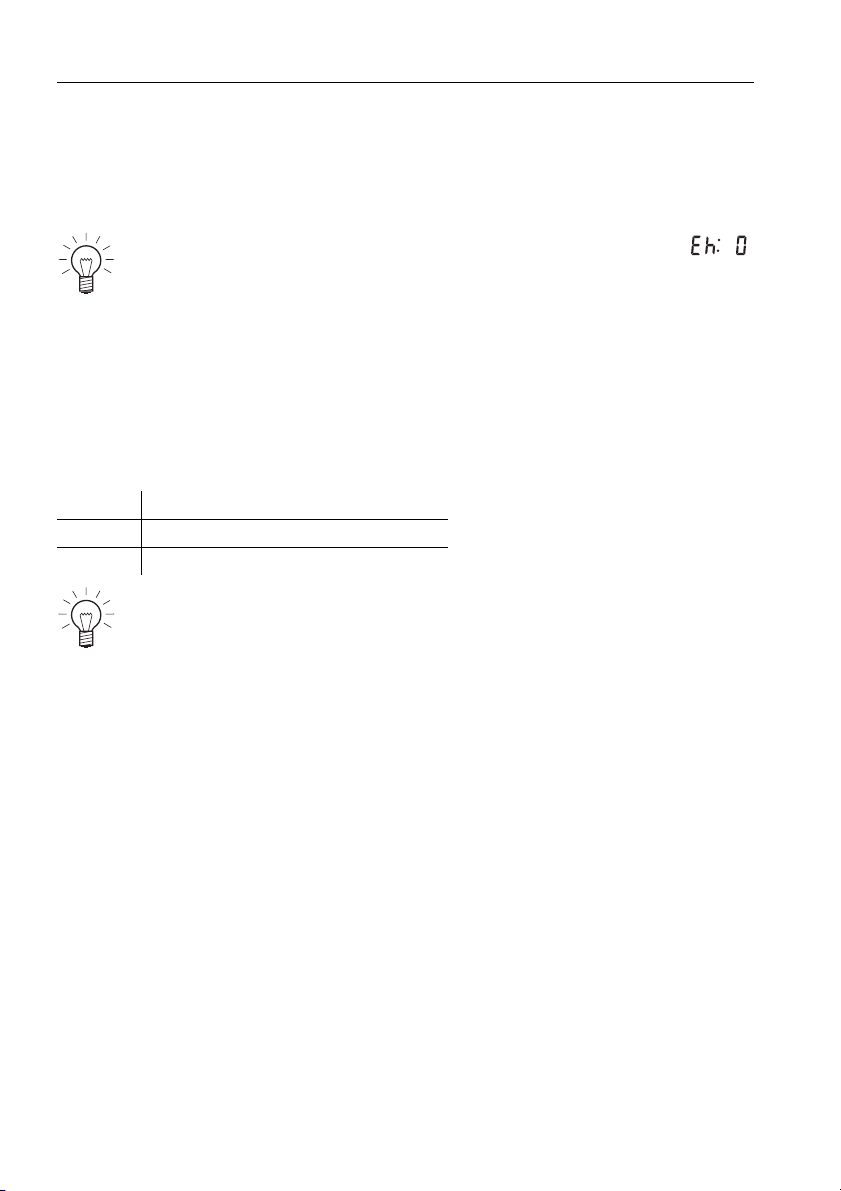
«Time display invisible».
A Press the adjusting knob to confirm the setting.
A The setting is terminated by pressing the button .
The settings are retained in the event of a power failure.
… User settings
22
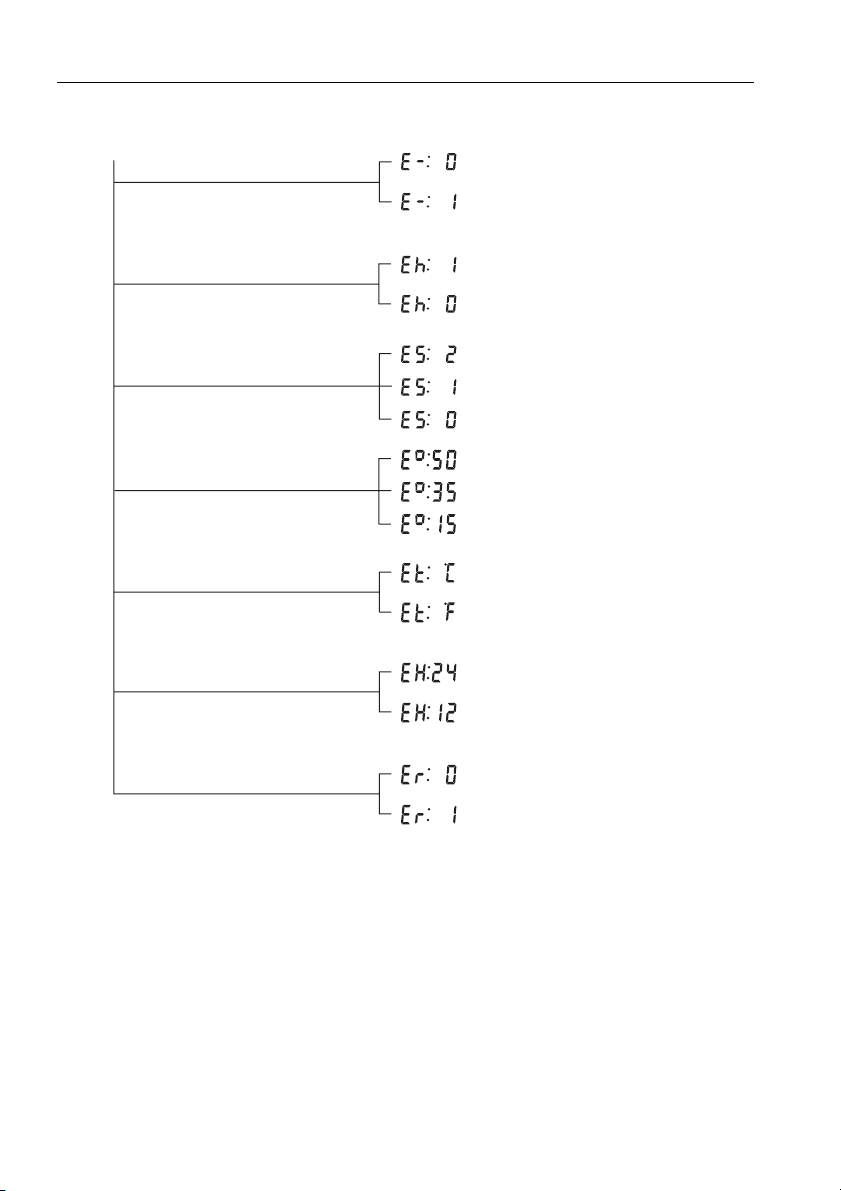
Possible settings
off *
on
visible *
invisible
Childproof lock
Acoustic signal
Water hardness
Temperature unit
Time format
Factory settings
high *
low
off
36–50 ˚fH *
16–35 ˚fH
1–15 ˚fH
12 h
24 h *
˚C *
˚F
* Factory setting
restore
no change
Time display
… User settings
23
Childproof lock
The childproof lock is to prevent the appliance being inadvertently switched
on.
If an attempt is made to select an operating mode:
– A double acoustic signal is emitted.
– Nothing happens when the button is pressed.
– appears in the digital display.
Operating the appliance when the childproof lock is activated
A Simultaneously press the button and select an operating mode.
– The childproof lock is overridden. The appliance can be operated as
normal.
– The childproof lock is automatically reactivated 10 minutes after the
appliance has been switched off.
The and buttons can be used irrespective of whether the
childproof lock is activated or not.
… User settings
24
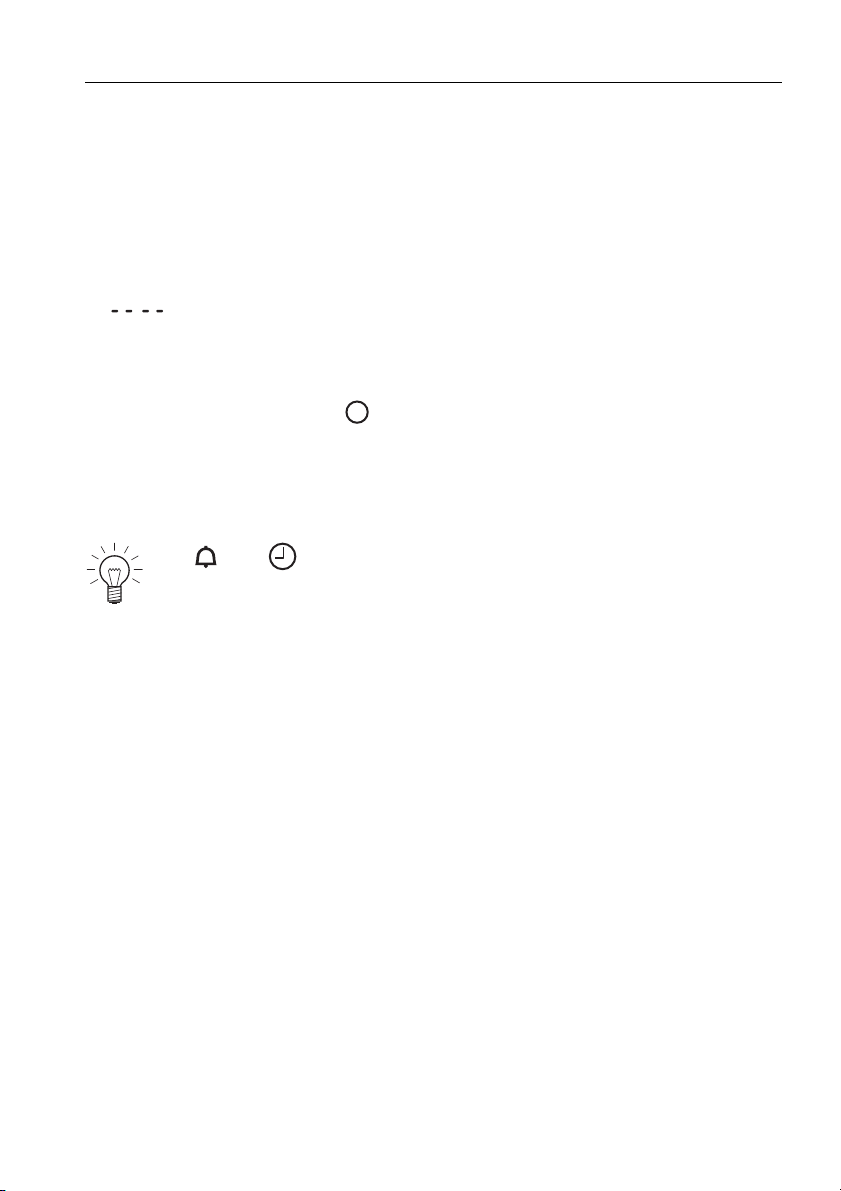
Time display
If the «invisible» setting is selected, the displays are not illuminated when the
appliance is off, minimizing power consumption. The time is displayed when
the appliance is on.
Acoustic signal
The acoustic signal can be set at one of two levels of loudness or can be
switched off:
To reduce power consumption to an absolute minimum, select
«Time display invisible». Despite automatic energy-saving stand-by, all
safety functions are active. All displays go out when the cooking
process has been completed.
䡲 High Maximum loudness
䡲 Low Reduced loudness
䡲 Off Acoustic signal is switched off
Even if the acoustic signal setting is set to «off», an acoustic signal is
emitted in the event of a malfunction.

… User settings
25
Water hardness
The appliance features a system that automatically indicates when it is time
to descale. The system can be optimised for households with soft water (also
through using a water softening appliance) and medium water hardness by
changing the user settings to the relevant range of water hardness.
There are three settings for water hardness:
Temperature unit
For temperature unit, select between «°C» and «°F»:
Time format
Select the «24 h» setting to activate the European time format and the «12 h»
setting for the US time format (a.m./p.m.).
Factory settings
If one or more user settings have been changed, these can be reset to the
factory settings.
Type
Water hardness
[°fH]
Water hardness
[°dH]
Water hardness
[°eH]
䡲 Soft
1 to 15 1 to 8 1 to 11
䡲 Medium
16 to 35 9 to 20 12 to 25
䡲 Hard
36 to 50 21 to 28 26 to 35
䡲 °C Degrees Celsius
䡲 °F Degrees Fahrenheit
26
Time functions
The following time functions are available:
䡲 Time
䡲 Timer – can be used at any time and independently of all other functions
䡲 Operating time – time-controlled switch-off of the appliance
䡲 Delayed start – time-controlled switch-on and switch-off of the appliance
Setting and changing the time
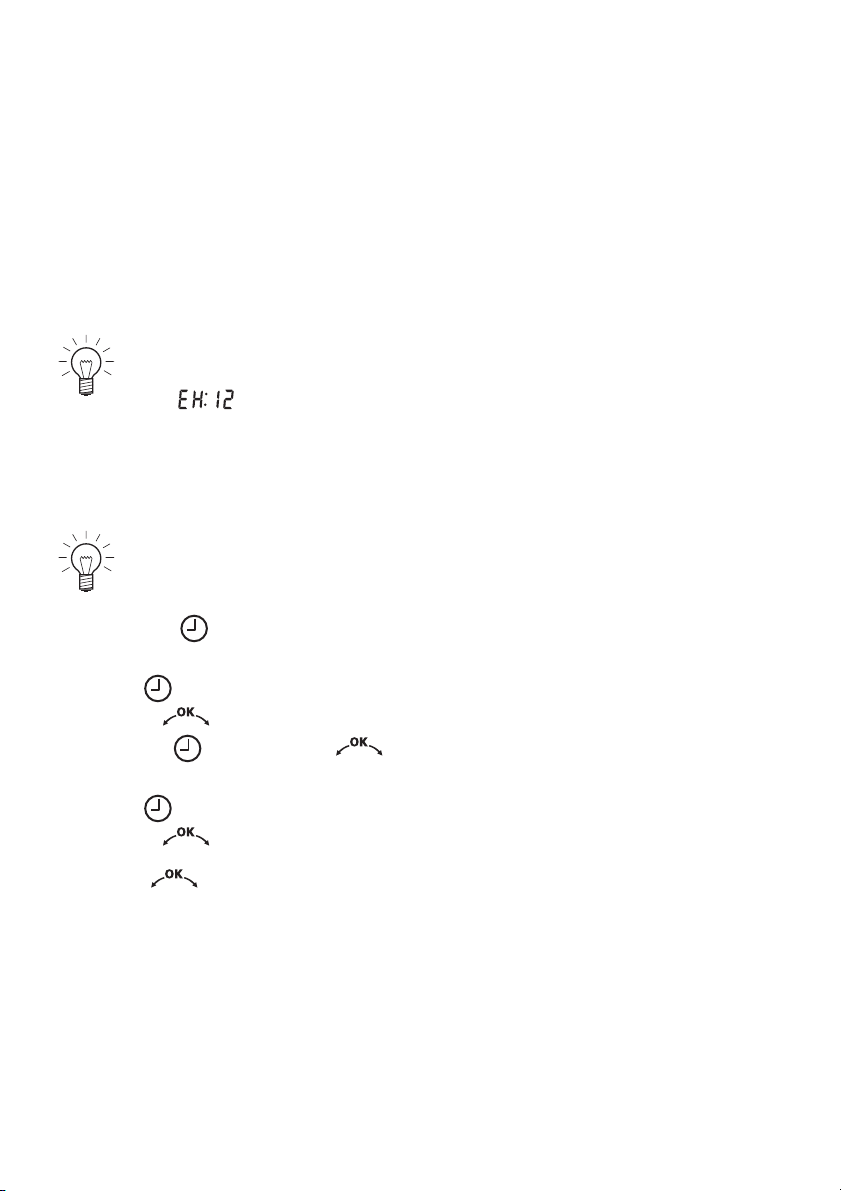
A Press the button.
– The hour flashes in the digital display.
– The symbol flashes.
A Turn the adjusting knob to set the hour.
A Press the button or the adjusting knob.
– The minutes flash in the digital display.
– The symbol flashes.
A Turn the adjusting knob to set the minutes.
Press the adjusting knob to confirm the setting.
When the appliance is switched off, the time display is dimmed
between 24:00 and 6:00.
If the time format has been selected, the display is not
dimmed.
The time cannot be changed if the appliance is in operation or if a
delayed start has been set.

… Time functions
27
Timer
The timer functions like an egg timer. It can be used at any time and
independently of all other functions.
Setting
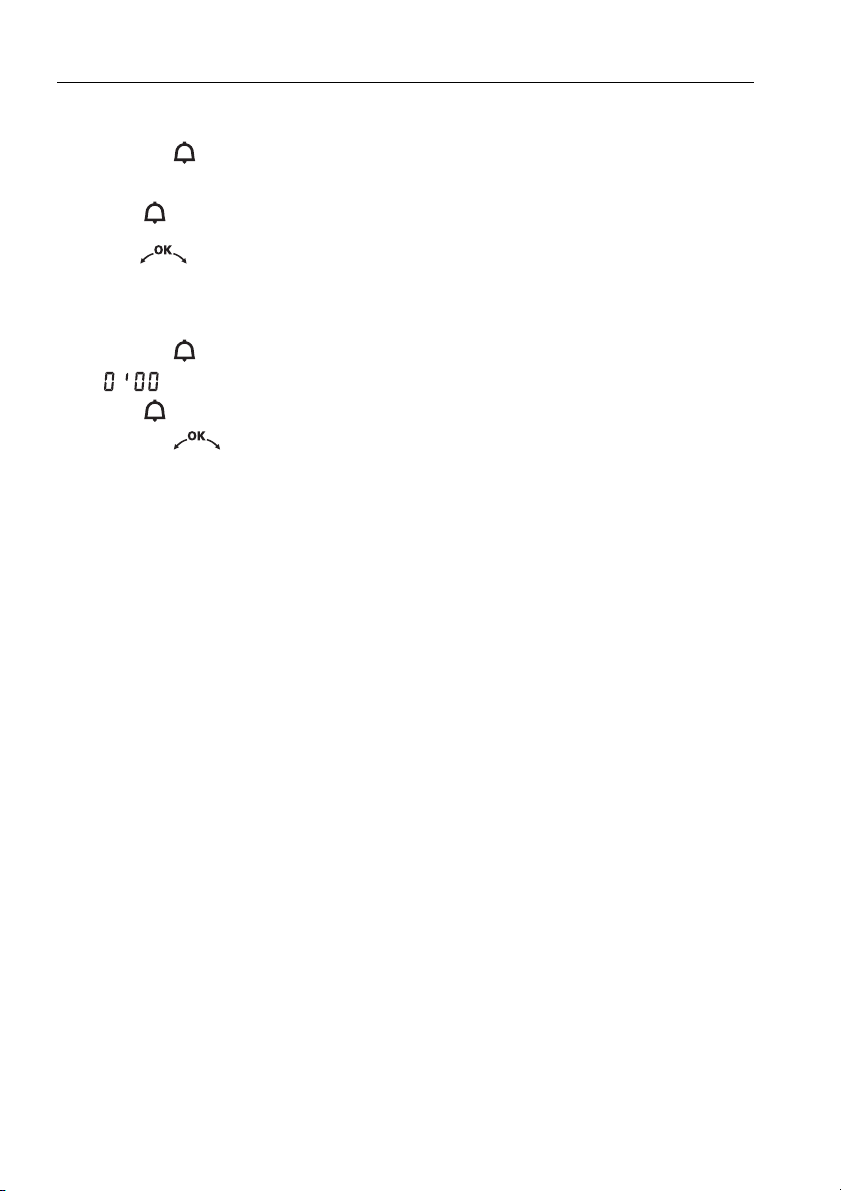
A Press the button.
– flashes in the digital display.
– The symbol flashes.
A Turn the adjusting knob to set the timer duration.
The timer can be set for:
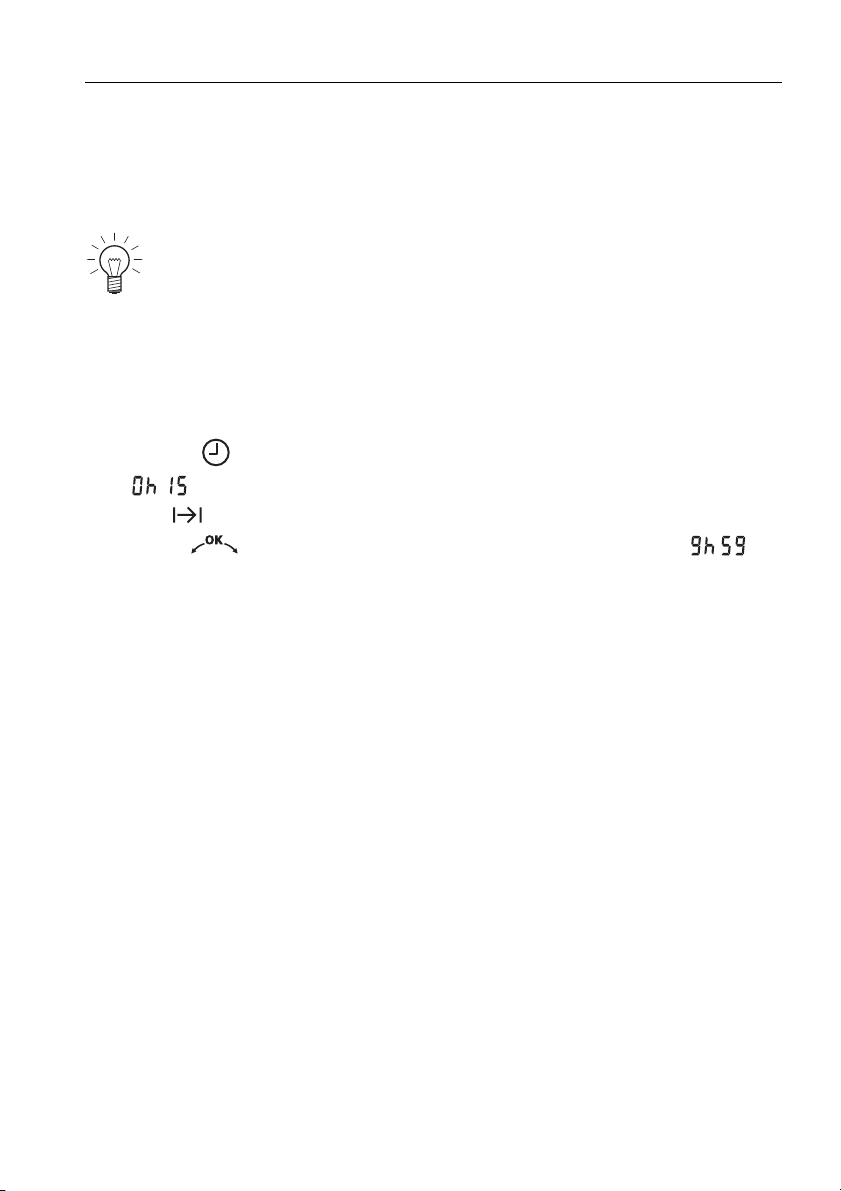
䡲 up to 10 minutes in 10-second intervals, e.g. = 9 minutes and
50 seconds.
䡲 over 10 minutes in 1-minute intervals, e.g. = 1 hour and 12
minutes.
The maximum timer duration that can be set is 9 hours and 59 minutes.
A Press the adjusting knob to start the timer.
– The countdown to the time remaining is visible in the digital display.
– The symbol illuminates.
When the set duration is up:
– A sequence of 5 short acoustic signals is repeated for 1 minute.
– The symbol flashes.
Press the button to switch off the acoustic signal.
Press the button 1× to reset the timer duration to .
… Time functions
28
Checking and changing
A Press the button.
– The countdown to the time remaining flashes in the digital display.
– The symbol flashes.
Turn the adjusting knob to change the timer duration.
Switching off before time
A Press the button 2×.
– flashes in the digital display.
– The symbol flashes.
A Press the adjusting knob to confirm.

… Time functions
29
Operating time
The operating mode selected automatically switches off when the operating
time is up.
Setting
A Select the desired operating mode.
A Preheat the cooking space if necessary.
A Place the food in the cooking space.
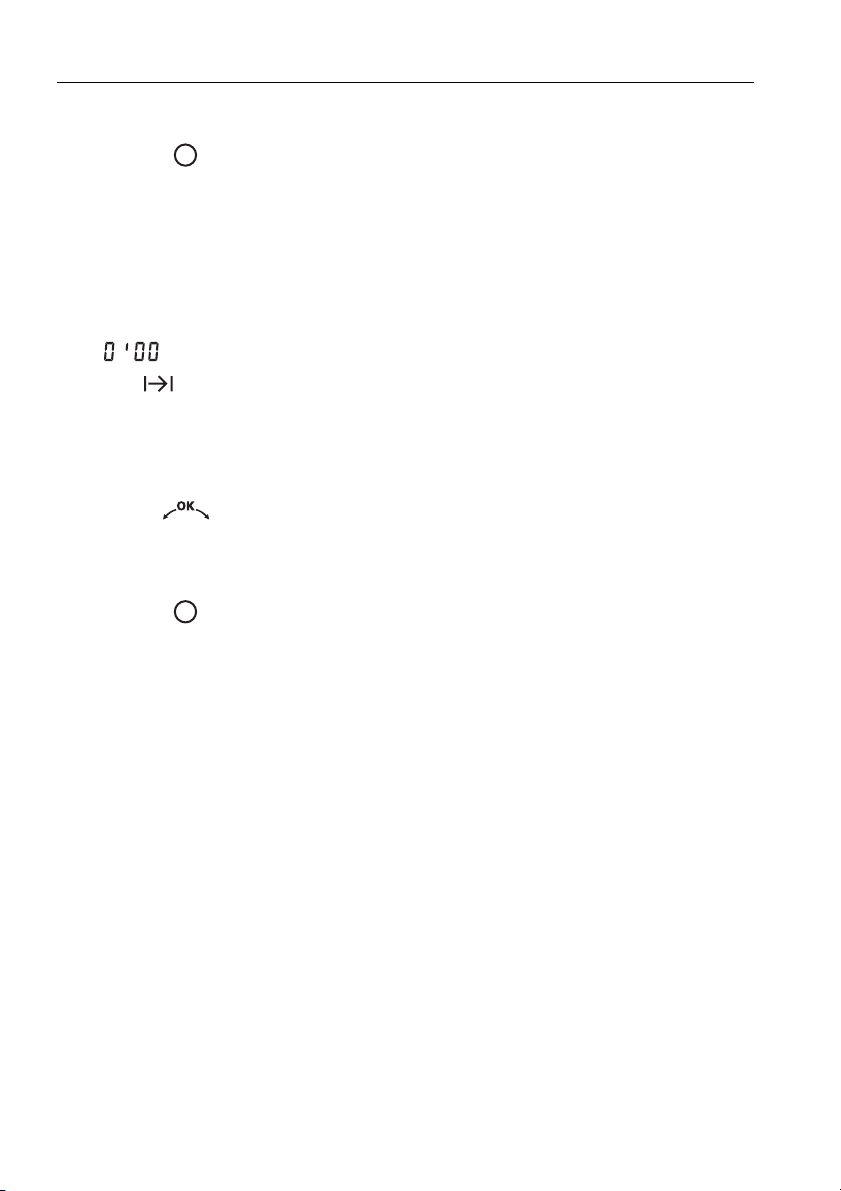
A Press the button.
– flashes in the digital display.
– The symbol flashes.
A Turn the adjusting knob to set the duration (maximum of ).
Checking and changing
A Press the button.
– The time remaining flashes in the digital display.
– The symbol flashes.
Turn the adjusting knob to change the duration.
… Time functions
30
Switching off before time
A Press the button.
End of the operating time
When the set duration is up:
– The appliance switches off automatically.
– A long, intermittent acoustic signal is emitted for 1 minute.
– flashes in the digital display.
– The symbol flashes.
– The settings remain for 3 minutes.
Extending the operating time
A Turn the adjusting knob within 3 minutes to select a new duration.
Switching off
A Press the button.
– The settings are cleared.
– The residual heat appears in the digital display.
… Time functions
31
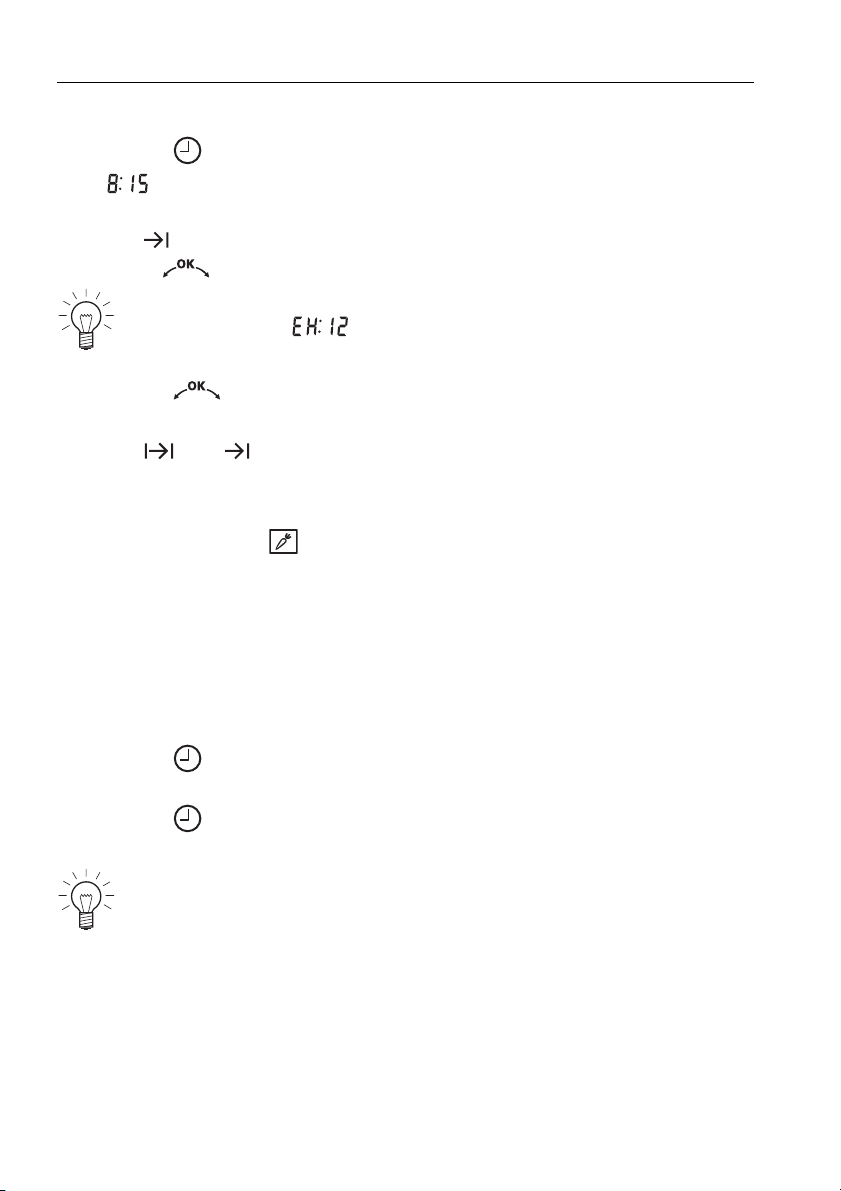
Delayed start
The delayed start is activated when for the operating mode selected both an
operating time and a switch-off time are set. The appliance switches automati-
cally on and off again at the desired times.
A Place the food in the cooking space.
A Select the desired operating mode.
Setting the operating time
A Press the button.
– flashes in the digital display.
– The symbol flashes.
A Turn the adjusting knob to set the duration (maximum of ).
Perishables should not be kept unrefrigerated.
… Time functions
32
Setting the switch-off time
A Press the button again.
– , for instance, flashes in the digital display – switch-off time without
a delayed start.
– The symbol flashes.
A Turn the adjusting knob to set the switch-off time.
A Press the adjusting knob to confirm.
– The time appears in the digital display.
– The and symbols illuminate.
– The operating mode selected remains switched off until the automatic
start.
Checking and changing
A Press the button 1×.
– The operating time is visible for 3 seconds.
A Press the button 2×.
– The switch-off time flashes. It can be changed.
The switch-off time can be delayed by a maximum of 23 hours and
59 minutes. If the time format has been selected, the switch-
off time can be delayed by a maximum of 11 hours and 59 minutes.
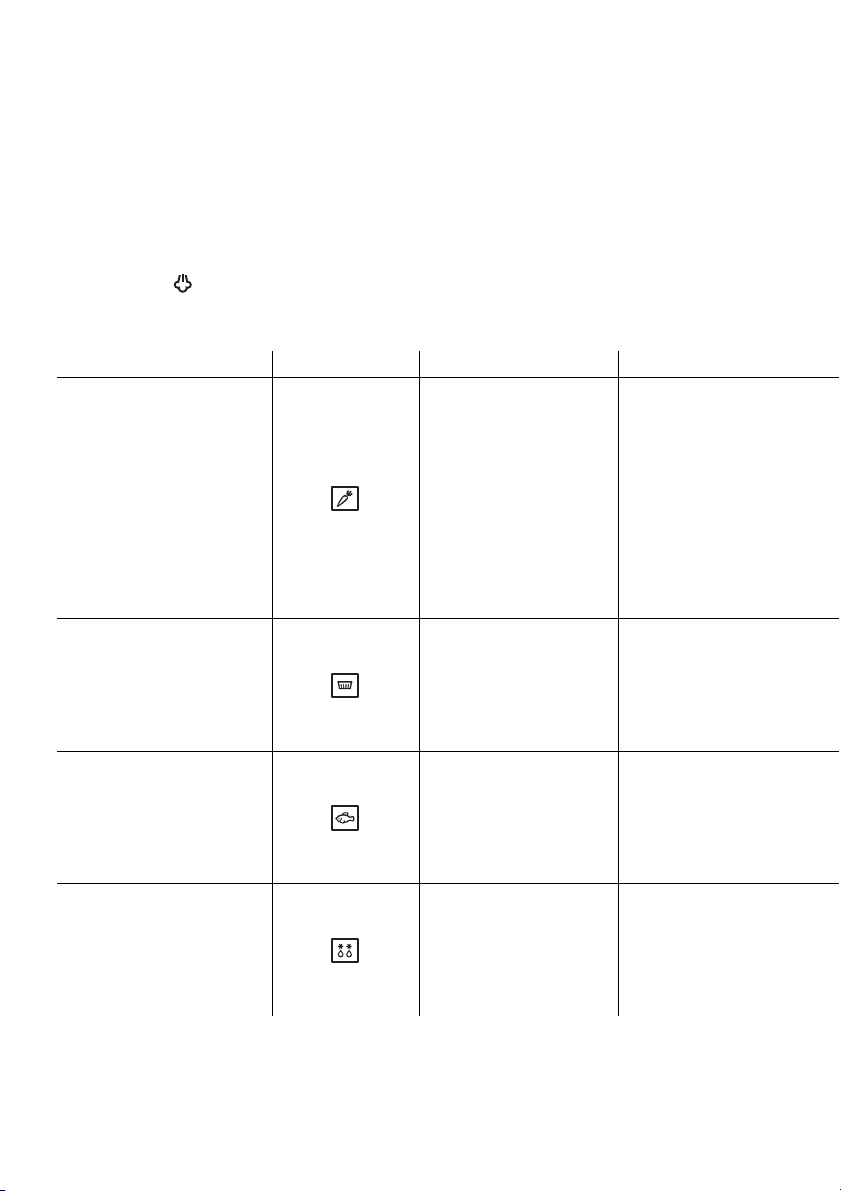
Example:
A Select the operating mode.
A At 8:00, set an operating time of 15 minutes.
A Set the switch-off time to 11:30.
– The appliance automatically switches on at 11:15 and off
again at 11:30.
The operating time, the operating mode and the cooking space
temperature cannot be changed.

… Time functions
33
Switching off before time
A Press the button.
End of the operating time
When the set duration is up:
– The appliance switches off automatically.
– A long, intermittent acoustic signal is emitted for 1 minute.
– flashes in the digital display.
– The symbol flashes.
– The settings remain for 3 minutes.
Extending the operating time
A Turn the adjusting knob within 3 minutes to select a new duration.
Switching off
A Press the button.
– The settings are cleared.
– The residual heat appears in the digital display.
34
Operating modes
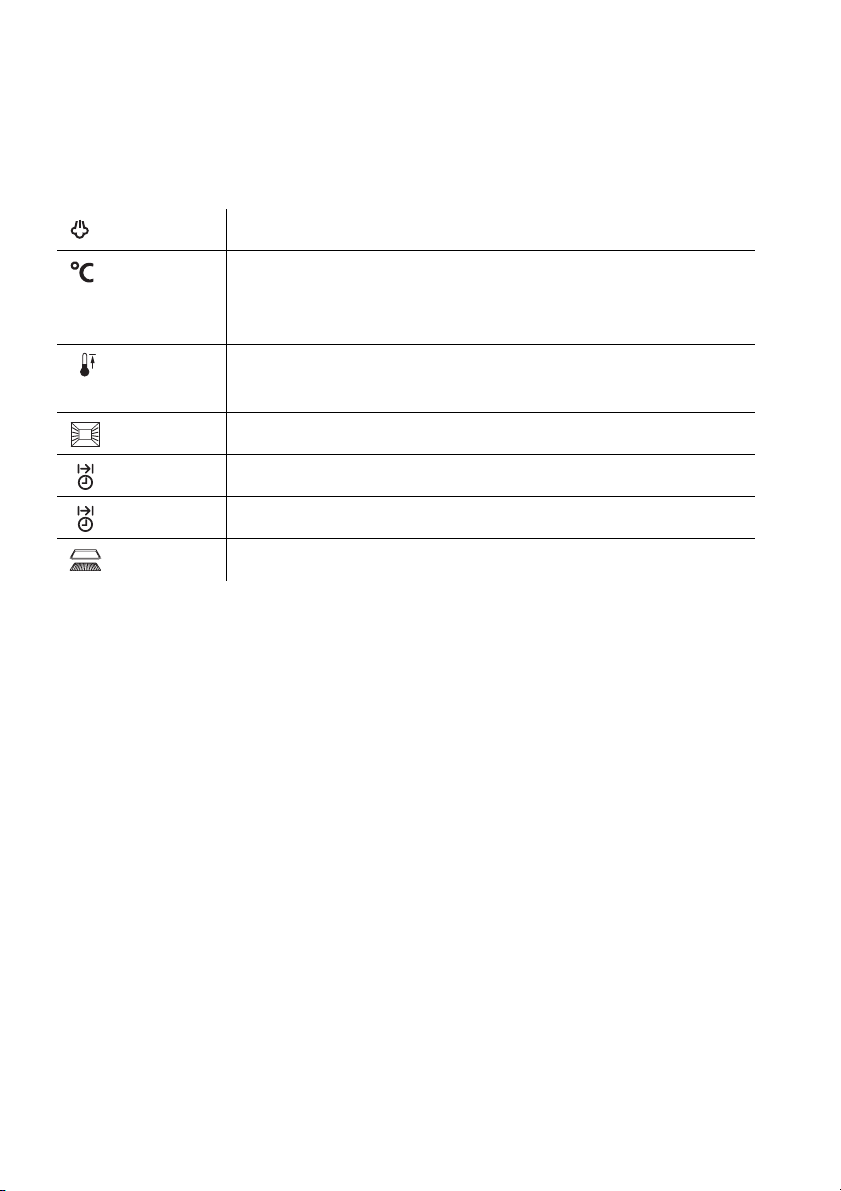
The appliance has four preset cooking space temperatures for steaming
which cannot be changed.
A Follow the advice in 'Tips on settings' and in 'Tips and tricks'.
A Press the button once or more to selected the desired cooking space
temperature.
Operating mode Symbol Temperature range Level
Steaming 100 °C 1–4
Steaming 90 °C 1–4
Steaming 80 °C 1–4
Steaming 40 °C 1–4

… Operating modes
35
A Place tins, moulds, etc. on the stainless steel tray.
Use Heating method
Cooking vegetables.
Cooking rice, cereal products
and pulses.
Cooking meat
(ham, smoked pork loin or ribs).
Cooking mussels.
Extracting juice from fruit and berries.
Regenerating, defrosting and simulta-
neously cooking vegetables.
Place the stainless steel tray under-
neath the perforated cooking tray.
The cooking space is heated
by steam.
The food is heated up or
cooked through steam.
Cooking dishes that contain egg
(creams and custards).
Preserving fruit.
For gently regenerating dishes.
Place the stainless steel tray under-
neath the perforated cooking tray.
The cooking space is heated
by steam.
The food is heated up or
cooked through steam.
Poaching and cooking meat (fillet) and
fish.
Place the stainless steel tray under-
neath the perforated cooking tray.
The cooking space is heated
by steam.
The food is heated up or
cooked through steam.
Defrosting sensitive food, e.g. meat and
fish.
For making joghurt.
Place the stainless steel tray under-
neath the perforated cooking tray.
The cooking space is heated
by steam.
The food is heated up or
cooked through steam.
1
2
3
4
1
2
3
4
1
2
3
4
1
2
3
4
36
Tips on settings
Symbols used
Operating mode
Cooking space temperature
䡲 Depends on the operating mode and cannot be
changed.
Preheating until the cooking space temperature is
reached.
Level
mins.
Duration in minutes
hrs.
Duration in hours
Accessories
˚C

… Tips on settings
37
Optimal use
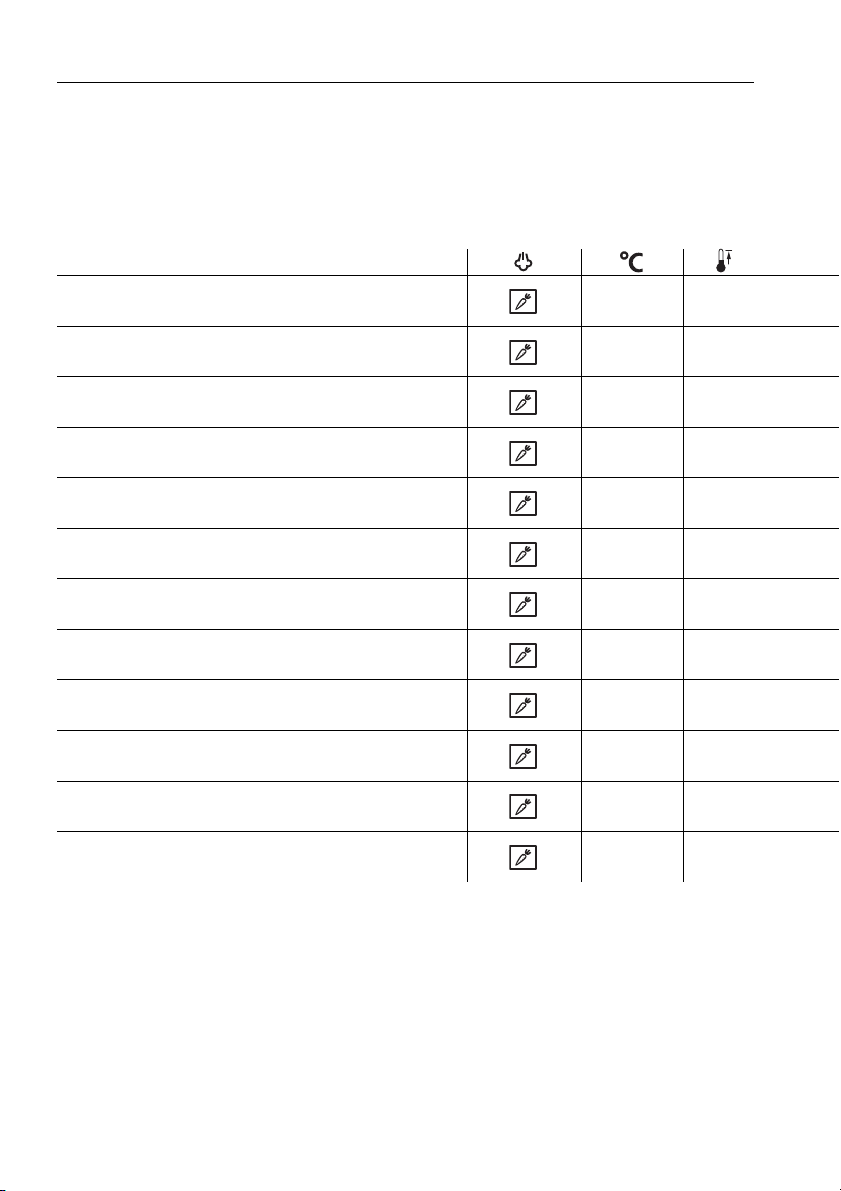
The following tables serve as a guide to help you get optimal use out of your
appliance.
… Tips on settings
38
Cooking tables
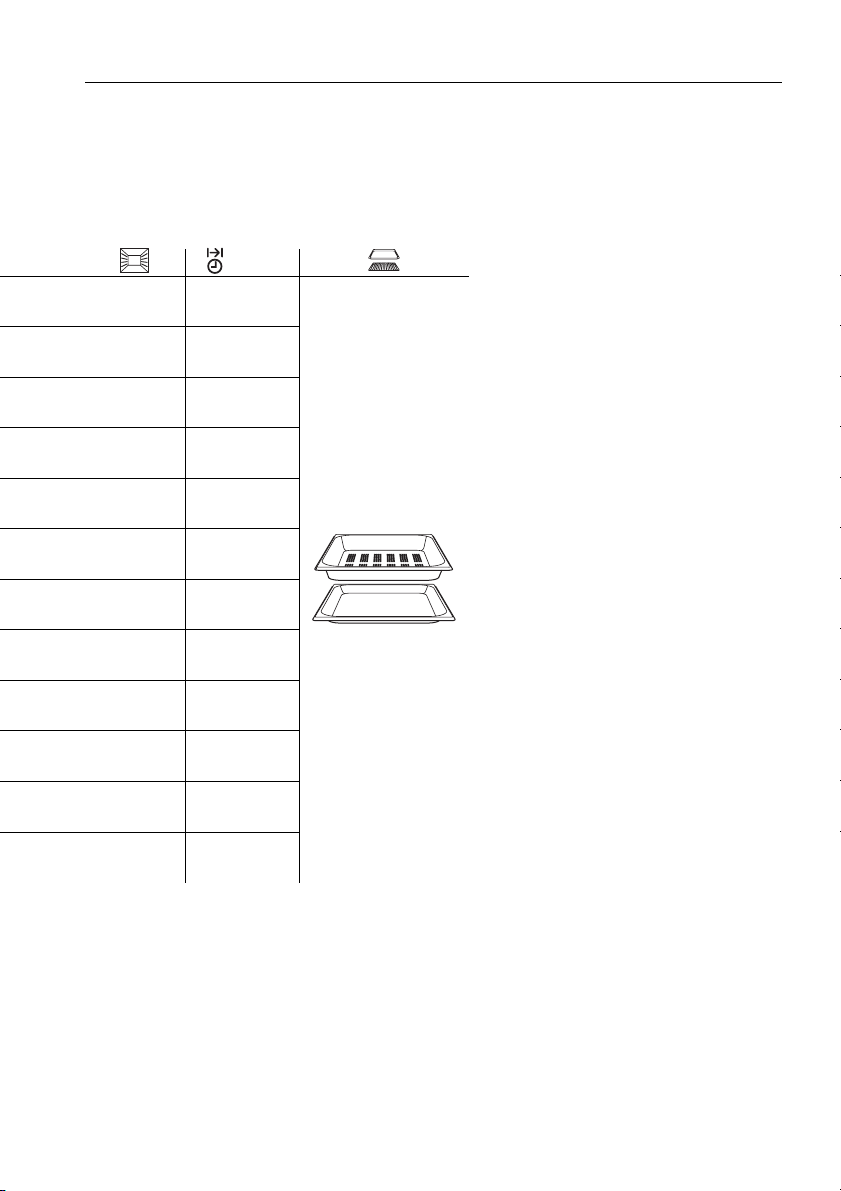
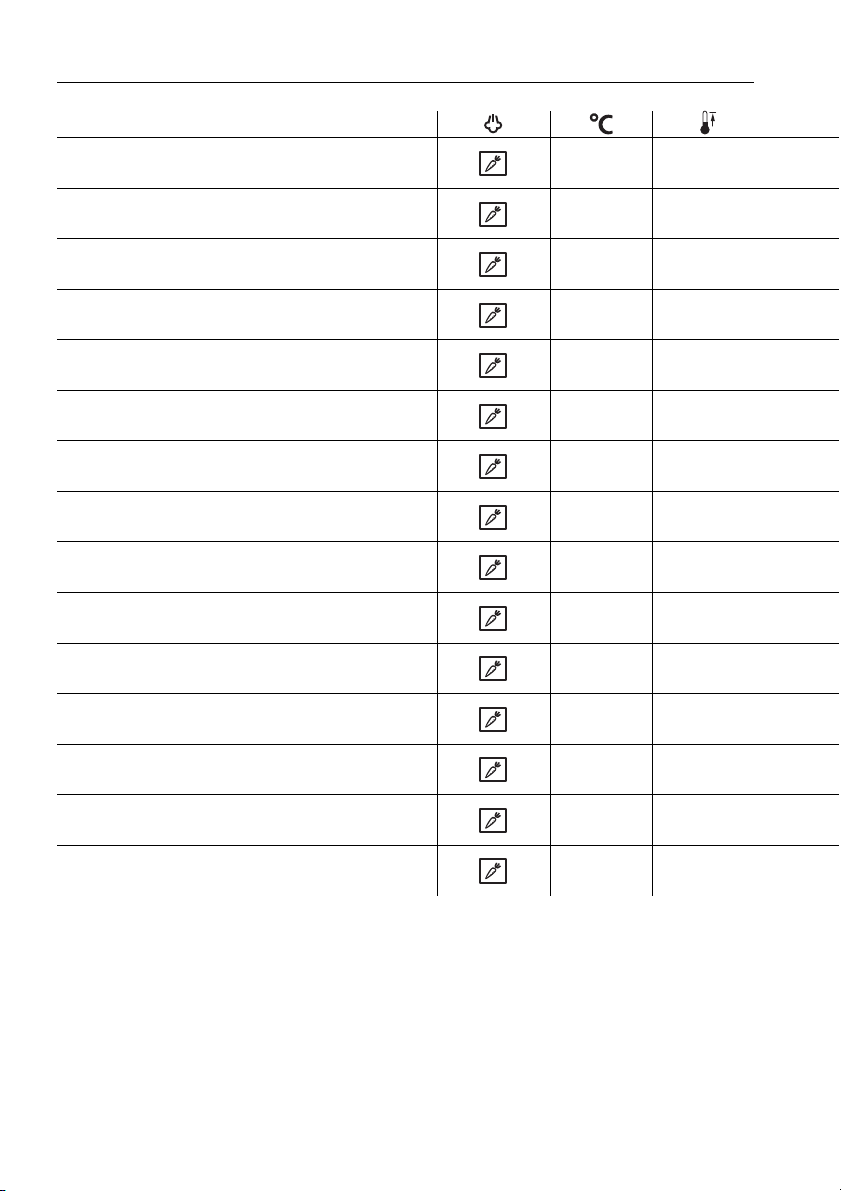
Vegetables (fresh)
A Put the food to be cooked in the cold cooking space.
Leaf spinach 100 no
Beans,
Cauliflower, whole
100 no
Cauliflower florets 100 no
Broccoli 100 no
Chicory 100 no
Dried string beans, soaked 100 no
Fennel, chopped 100 no
White cabbage, chopped 100 no
Carrots, chopped 100 no
Mange-tout 100 no
Kohlrabi, chopped 100 no
Swiss chard, mangold 100 no
˚C
… Tips on settings
39
mins.
2
1
5–10
2
1
30–40
2
1
15–20
2
1
10–15
2
1
20–25
2
1
35–45
2
1
15–20
2
1
20–30
2
1
10–20
2
1
10–20
2
1
15–25
2
1
10–20
… Tips on settings
40
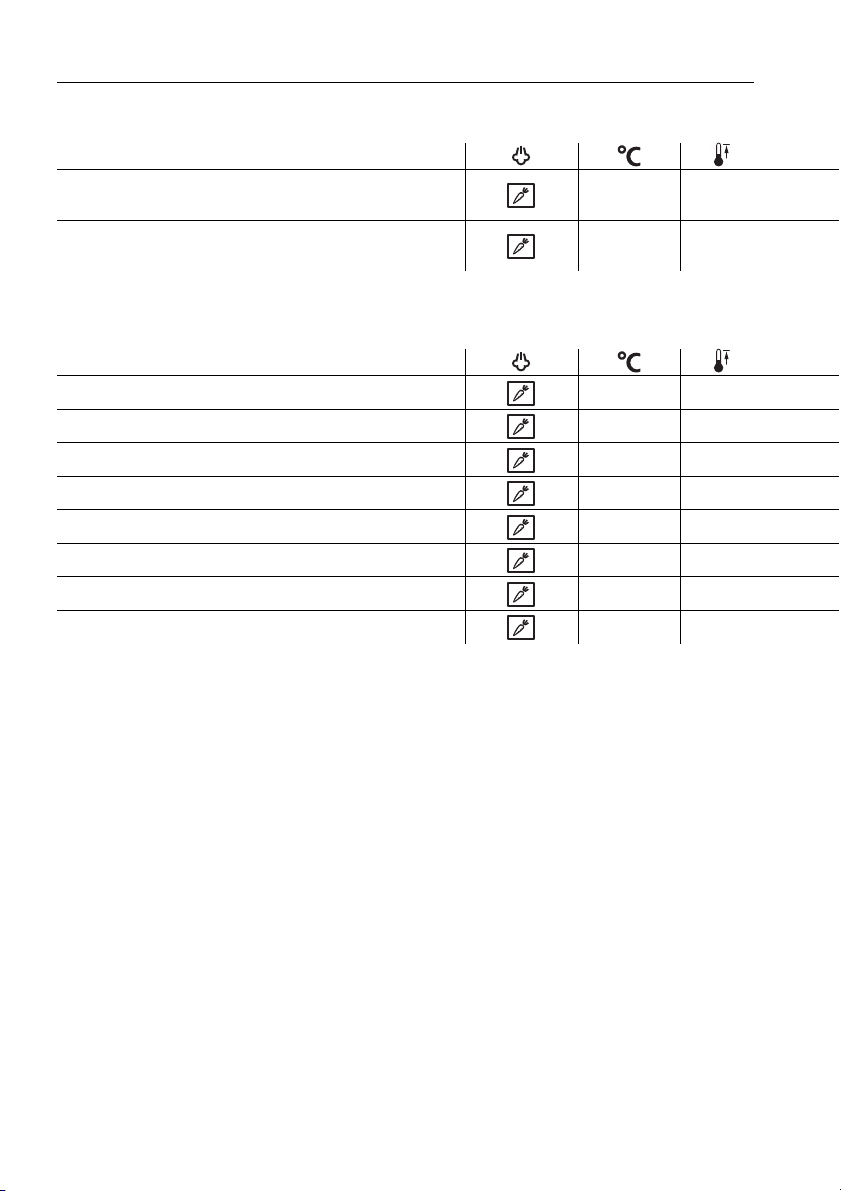
Corn on the cob 100 no
Sweet pepper 100 no
Beetroot 100 no
Brussels sprouts 100 no
Sauerkraut, raw 100 no
Sauerkraut, precooked 100 no
Scorzonera (black salsify) 100 no
Celery, chopped 100 no
Green asparagus 100 no
White asparagus 100 no
Celery stalks 100 no
Tomatoes 100 no
Skinning tomatoes 100 no
Jerusalem artichoke 100 no
Zucchetti, chopped 100 no
˚C

… Tips on settings
41
mins.
2
1
30–45
2
1
8–13
2
1
30–90
2
1
25–30
2
1
40–70
2
1
20–30
2
1
25–35
2
1
10–20
2
1
13–17
2
1
20–25
2
1
20–25
2
1
8–12
2
1
5–10
2
1
15–35
2
1
8–12
… Tips on settings
42
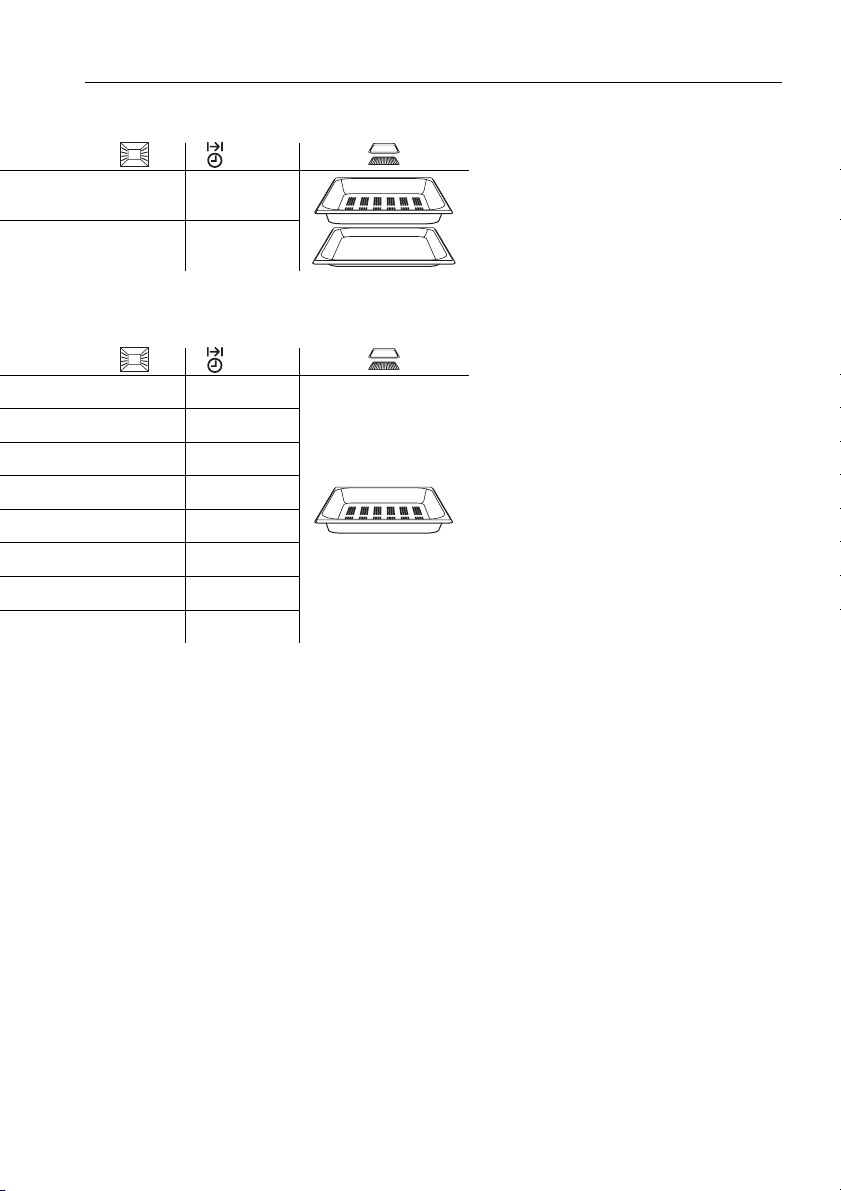
Potatoes
Accompaniments
Potatoes, chopped 100 no
Sweet potatoes,
Whole potatoes
100 no
Rice + liquid 100 no
Risotto + liquid 100 no
Maize semolina (polenta) + liquid 100 no
Semolina + liquid 100 no
Lentils + liquid 100 no
Ebly wheat + liquid 100 no
Millet + liquid 100 no
Chickpeas, soaked + liquid 100 no
˚C
˚C
… Tips on settings
43
mins.
2
1
15–25
2
1
30–45
mins.
2 20–40
2 30–40
2 30–40
2 10–15
2 15–60
2 20–30
2 20–40
2 20–30

… Tips on settings
44
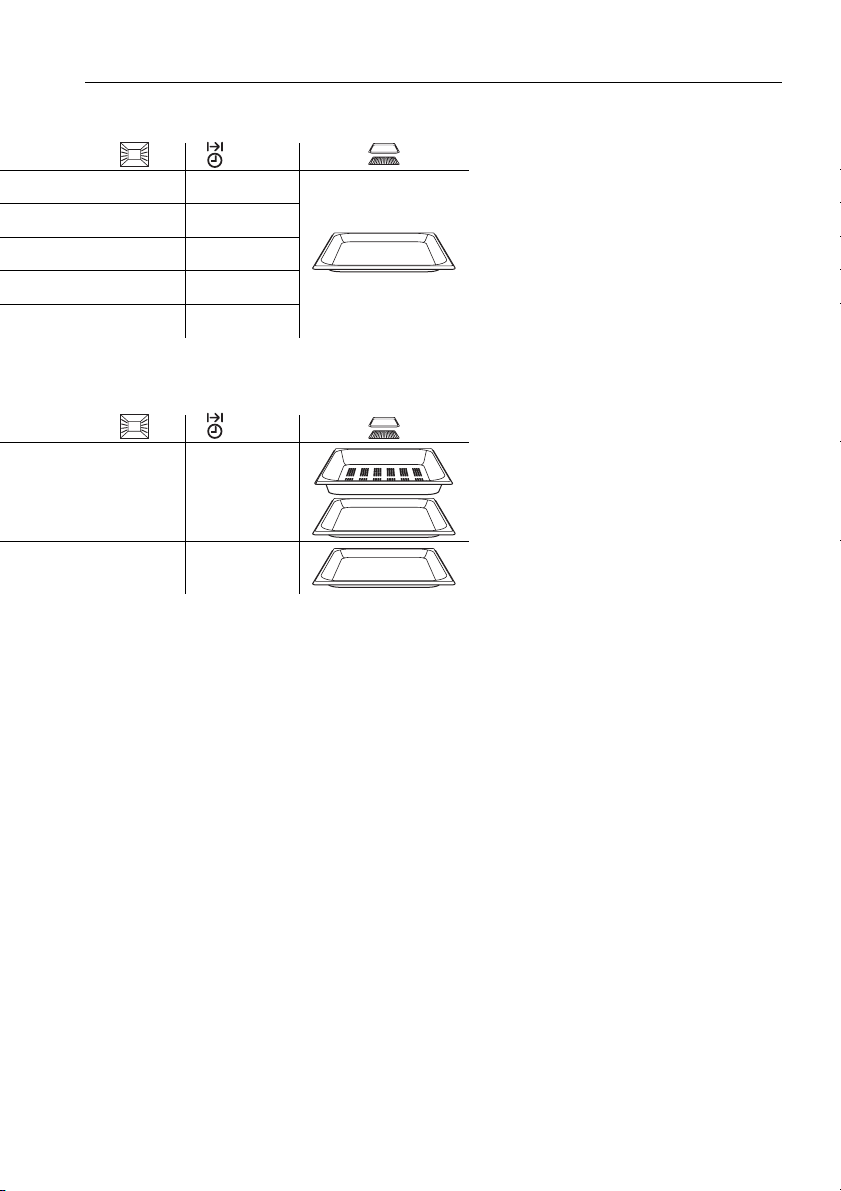
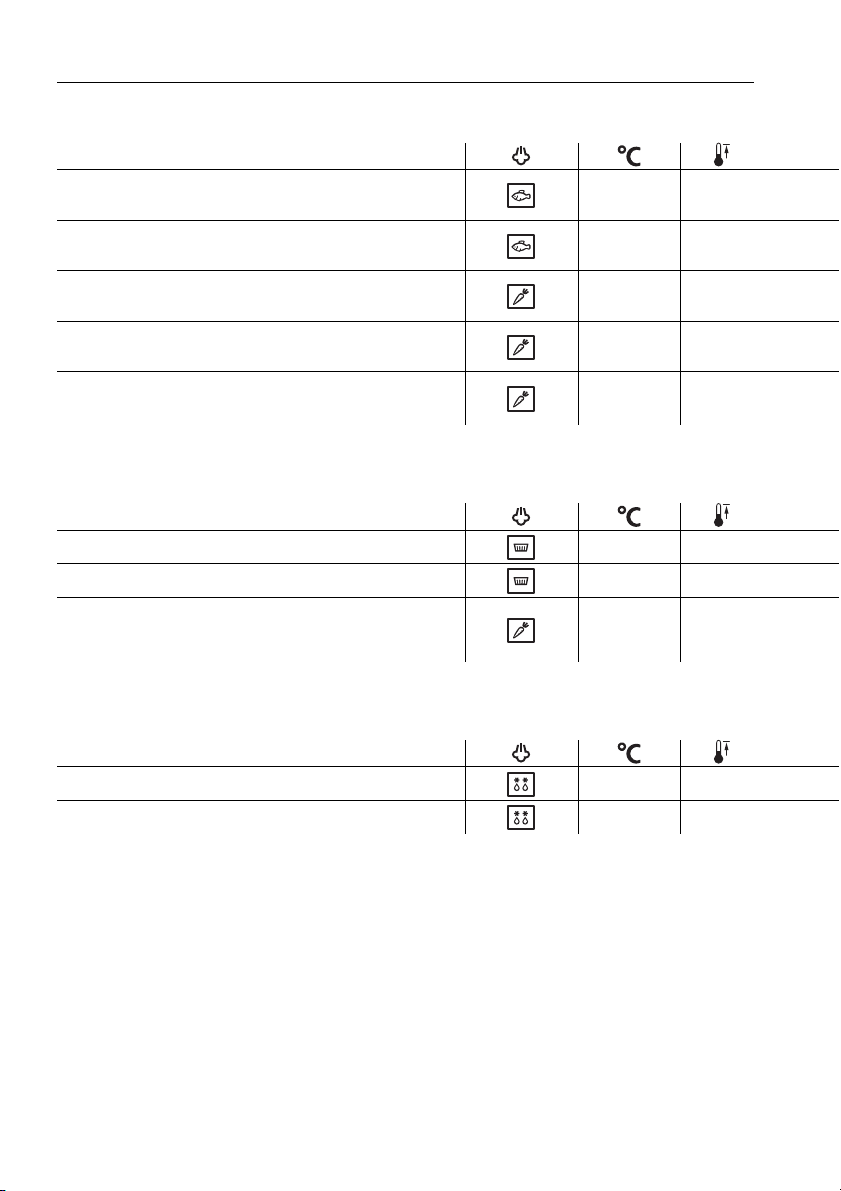
Meat
Poultry
Stewing meat 100 no
Ham 100 no
Smoked pork loin, kasseler 100 no
Saucisson, geschnetzeltes (chopped meat in a sauce) 100 no
Bacon, fillet (beef, veal, pork) 100 no
Chicken breast 100 no
Poultry terrine 90 no
˚C
˚C
… Tips on settings
45
mins.
2 60–90
2 60–90
2 45–60
2 30–45
2 20–30
mins.
1
2
10–20
1 15–30
… Tips on settings
46
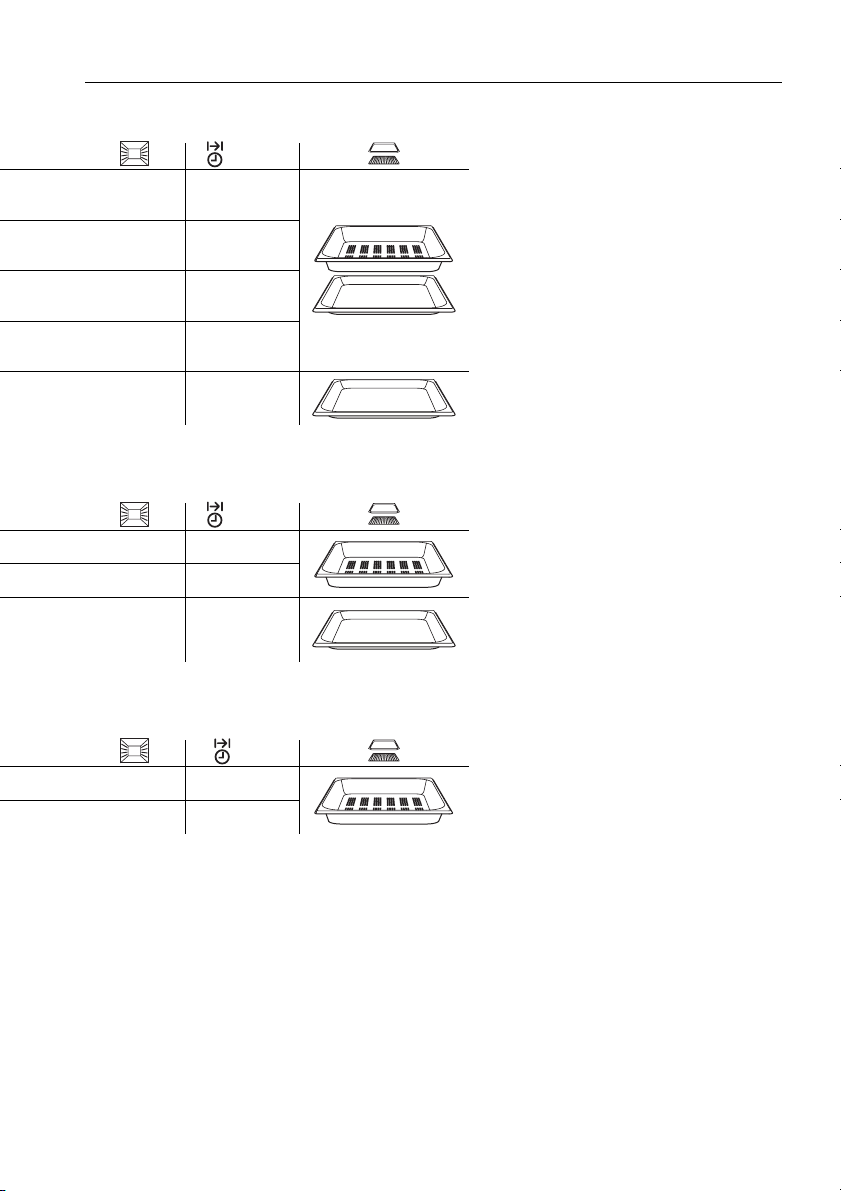
Fish, seafood
Desserts
Joghurt
Fillet of fish 80 no
Fish, whole (trout, gilthead seabream, etc.) 80 no
Tuna 100 no
Mussels 100 no
Fish terrine 100 no
Crème caramel 90 no
Creams and custards 90 no
Compote (apple, plum, quince, etc.) 100 no
Creamy joghurt 40 no
Set joghurt 40 no
˚C
˚C
˚C
… Tips on settings
47
mins.
2
1
10–20
2
1
20–30
2
1
10–30
2
1
20–30
1 15–30
mins.
2 20–40
2 20–60
2 10–15
hrs.
2 5–6
2 7–8
… Tips on settings
48
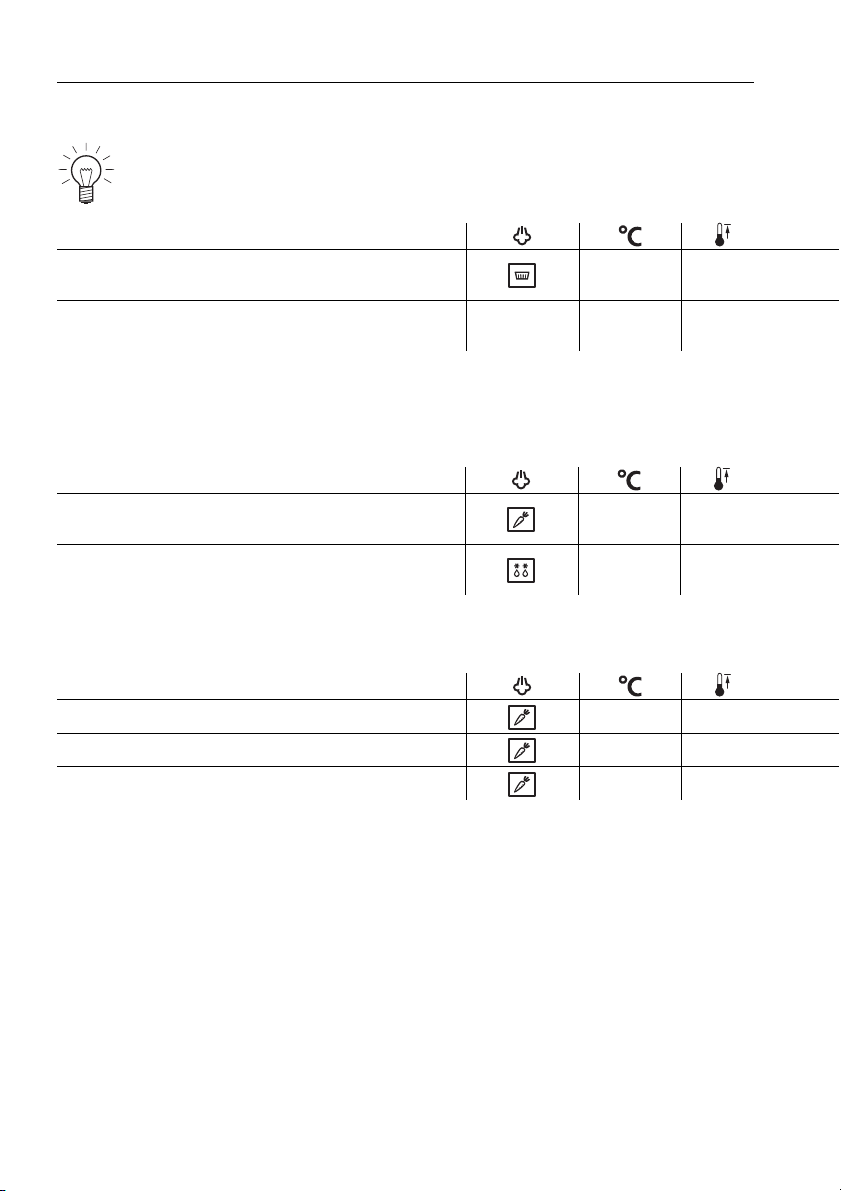
Reheating
* According to the manufacturer’s instructions.
Defrosting
Baby food
Put the food to be reheated in the cold cooking space.
Reheating meals (1–2 plates) 90 no
Preparing ready meals * – – –
Spätzli (egg noodles), pasta, rice 100 no
Meat, poultry, fish 40 no
Milk in glass bottles 100 no
Milk in plastic bottles 100 no
Baby food 100 no
˚C
˚C
˚C

… Tips on settings
49
mins.
– 10–20
––
mins.
2
1
ca. 20
2
1
depending on
quantity
mins.
2 4–5
2 5–6
2 4–10

… Tips on settings
50
Sterilising baby bottles
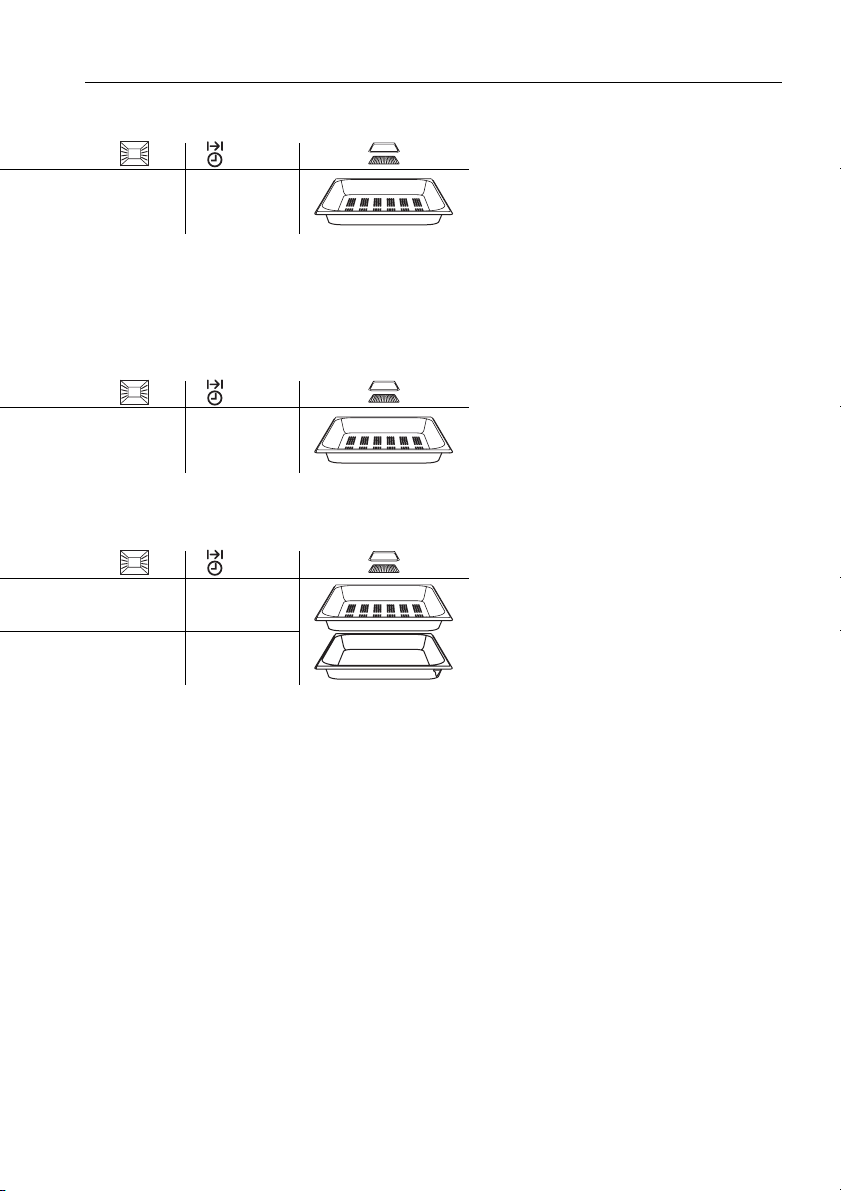
A After sterilising, take the baby bottles out of the cooking space, stand them
upside down and allow to dry thoroughly.
Blanching
Extracting juice
Sterilising baby bottles 100 no
Vegetables (beans, peas, etc.) 100 no
Fruit (cherries, grapes, etc.) 100 no
Berries (blackcurrants, blackberries, elderberries, etc.) 100 no
˚C
˚C
˚C
… Tips on settings
51
mins.
110
mins.
2ca. 5
mins.
2
1
30– max. 90
2
1
30– max. 90

… Tips on settings
52
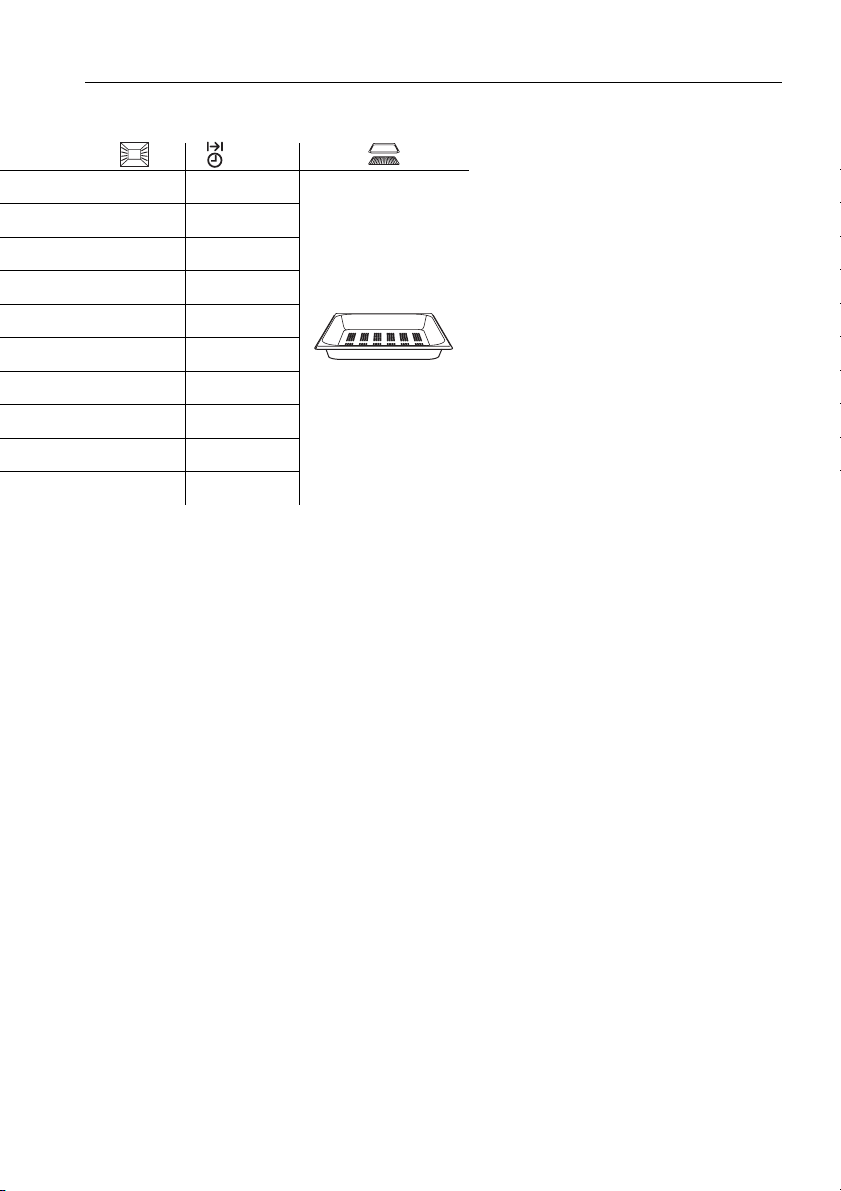
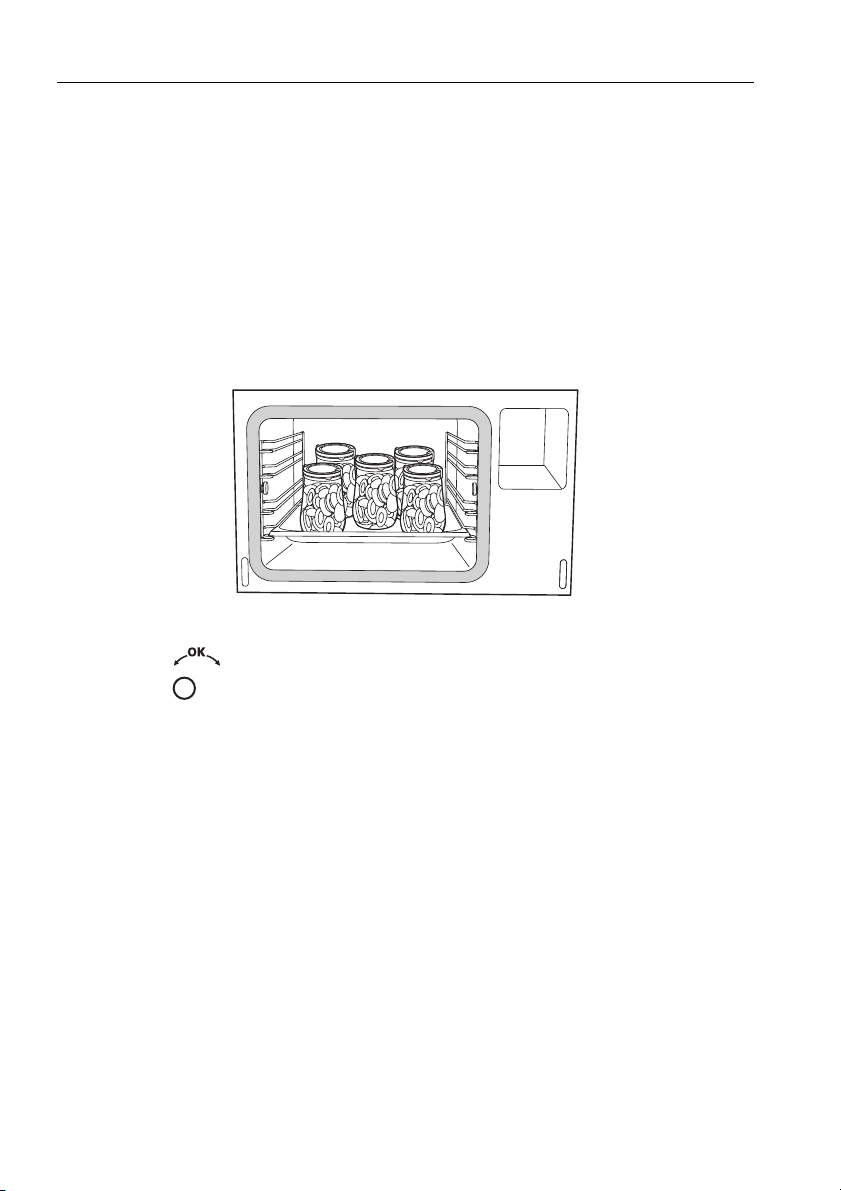
Preserving, bottling
Carrots 100 no
Cauliflower, broccoli 100 no
Beans * 100 no
Mushrooms ** 100 no
Apples, pears 90 no
Apricots 90 no
Peaches 90 no
Quinces 90 no
Plums 90 no
Cherries 80 no
* Repeat process 2×, allowing the jars to cool down completely in between
time.
** The mushrooms must be precooked.
˚C
… Tips on settings
53
mins.
190
190
160
1 75–90
130
130
130
130
130
130
… Tips on settings
54
Preserving, bottling
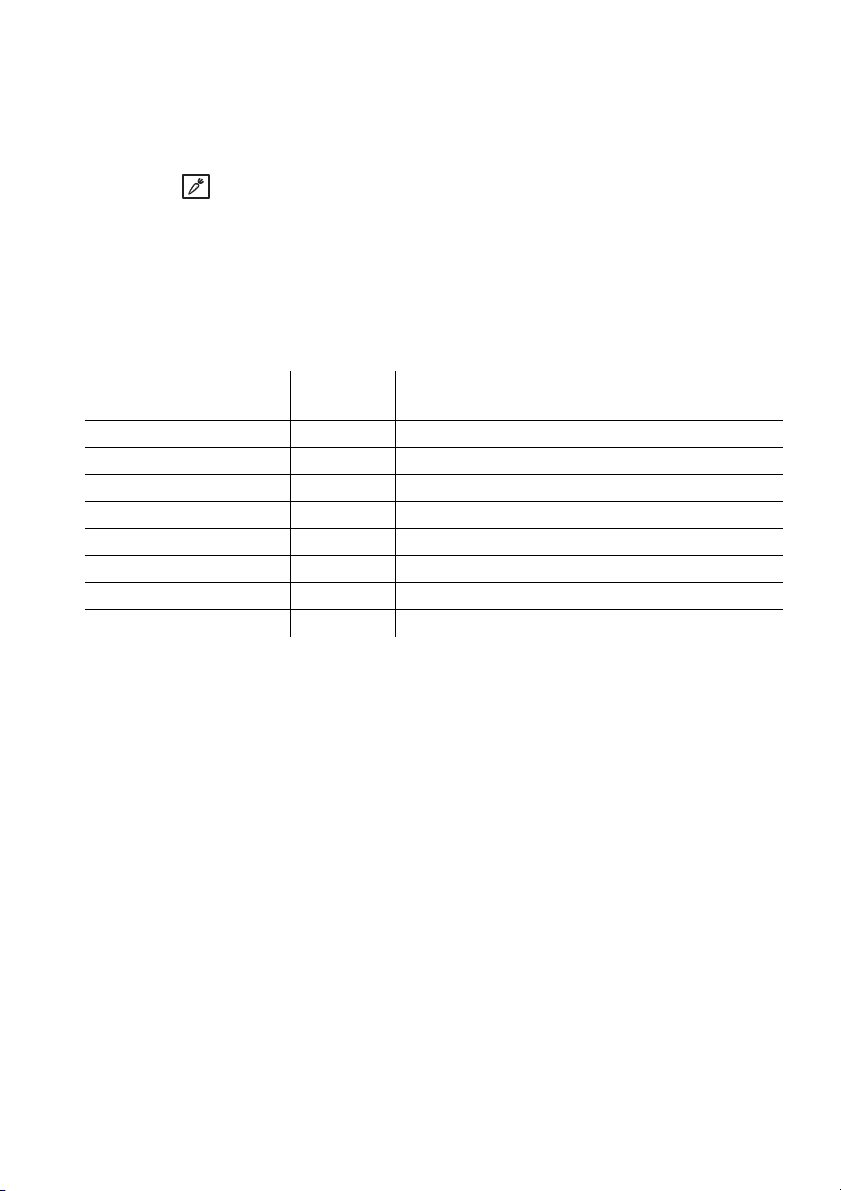
Bottling involves preserving food in jars. Put a maximum of 5 jars in the
cooking space at any one time.
A Only use undamaged jars that hold no more than 1 litre each.
A Put the stainless steel tray at level 1.
A Fill the jars evenly with the food to be preserved. Close the jars according
to the manufacturer’s instructions.
A Place the jars on the stainless steel tray as shown in the illustration. The
jars should not touch one another.
A Select the operating mode and duration according to 'Tips on settings'.
A Press the adjusting knob to confirm.
A Press the button to switch off the appliance. Leave the appliance door
open in the at-rest position.
A Leave the jars in the cooking space to cool down completely.
A Remove the jars. Check that the jars are sealed tight.
55
Tips and tricks
Steaming
䡲 When steaming, a variety of food can be cooked at the same time. For
example, rice or pulses can be prepared at the same time as vegetables
with similar cooking times, saving energy and the washing-up.
䡲 Grains (e. g. rice and millet) and pulses (e. g. lentils), adding an
appropriate amount of liquid, can be cooked directly in suitable tableware.
A When steaming, always place the stainless steel tray underneath the
perforated cooking tray or wire shelf to catch food spills and collect
condensate.
A Put the tableware directly on the stainless steel tray or the wire shelf.
䡲 Season vegetables after steaming.
Food Weight
Approximate amount of liquid to be added
(depending on desired consistency)
Rice 100 g 1½ dl salted water, bouillon, etc.
Risotto 100 g 2½ dl water, wine (to taste)
Maize semolina (polenta) 100 g 3 dl water / milk mixture
Semolina 100g 2–3dl water
Lentils 100 g 2–3 dl water
Ebly wheat 100 g 1–1½ dl water
Millet 100 g 1½–2 dl water
Chickpeas, soaked 100 g ½–1 dl water

… Tips and tricks
56
Warm, moist cloths
Warm, moist cloths can be a pleasant way to clean hands after a meal.
A Spread clean, moist towelling cloths across the perforated cooking tray.
A Select the following settings:
Saving energy
A Avoid opening the appliance door frequently.
A Keep preheating time to a minimum.
A Only preheat the cooking space if the baking results depend on it.
mins.
80 no 2 ca. 5
To reduce power consumption to an absolute minimum, select
«Time display invisible» in the user settings. Despite automatic
energy-saving stand-by, all safety functions are active. All displays go
out when the cooking process has been completed.
˚C

57
Care and maintenance
Cleaning the exterior
A Remove any soiling or excess cleaning solution immediately.
A Clean the surface with a soft cloth dampened with water and a little
washing-up liquid – for metallic surfaces rub in the direction of the original
polish lines. Dry with a soft cloth.
A Clean the appliance door with a soft cloth dampened with water and a little
washing-up liquid. Dry with a soft cloth.
Allow the appliance and accessories to cool down before cleaning.
Do not use abrasive, caustic cleaning agents or stainless steel
cleaner. Do not use abrasive scouring pads, steel wool, etc. as
such products can damage the surface.
Whilst the digital display flashes, do not place your hands in
the water tank compartment. Scalding hazard.
… Care and maintenance
58
Cleaning the appliance door
A Clean the appliance door with a soft cloth dampened with water and a little
washing-up liquid. Dry with a soft cloth.
Removing the appliance door
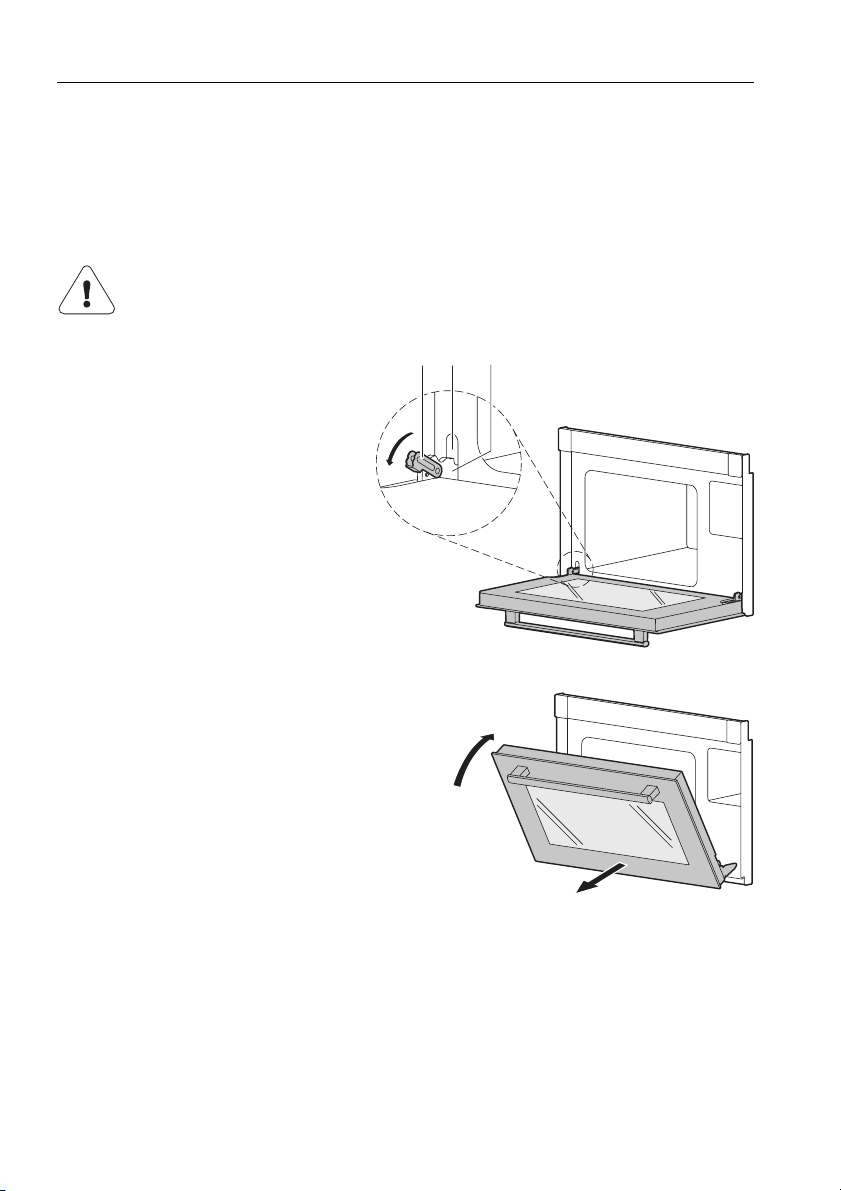
A Open the appliance door as
far as it will go.
A Fold the clips 2 on both door
hinges 1 forward.
A Close the appliance door as
far as its at-rest position
(approximately 30°).
A Lift the appliance door
forward and out.
Reassembling the appliance door
A From the front, push the two hinges 1 into the opening 3.
A Open the appliance door as far as it will go and close back the clips 2.
Exercise caution when removing and reassembling the appliance
door. It weighs approximately 6 kg. Risk of injury!
30˚
2
3
1
… Care and maintenance
59
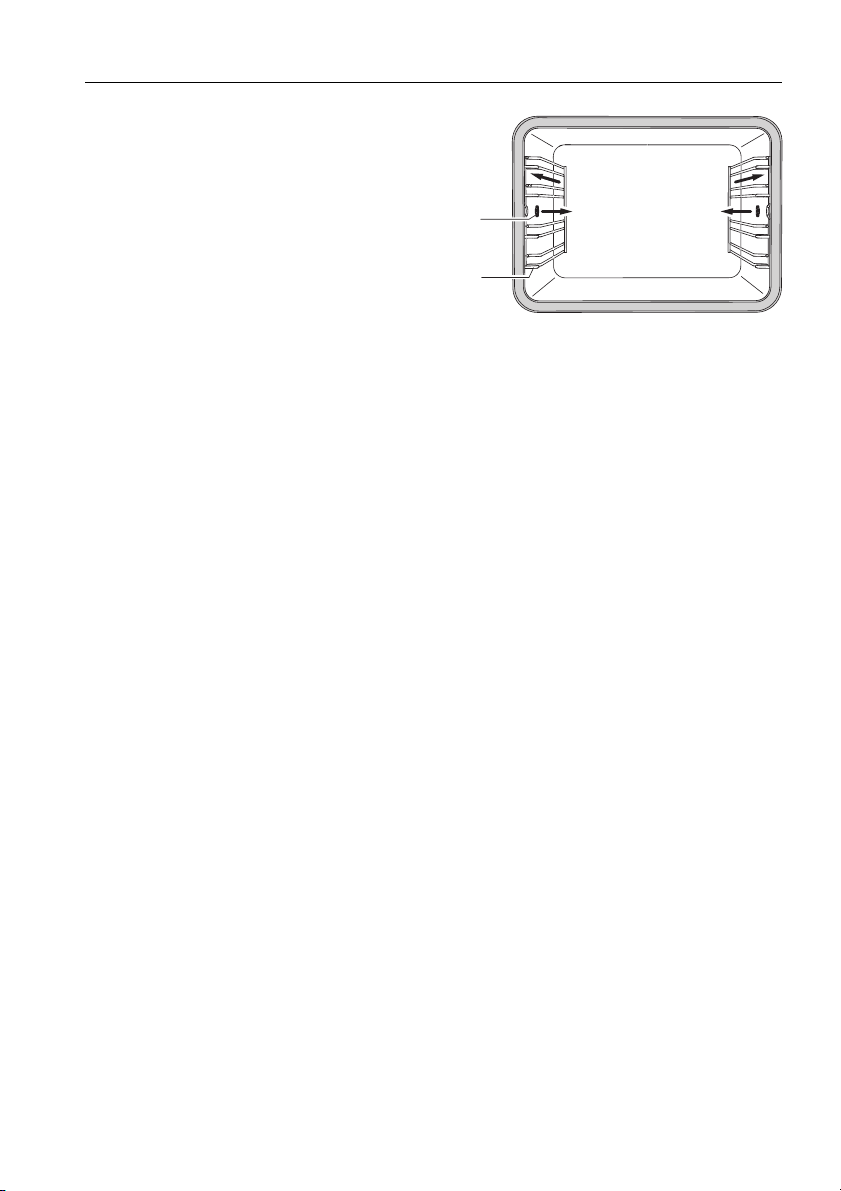
Removing the shelf guides
A Unscrew the knurled nuts 1 in the
front of the shelf guides in an
anti-clockwise direction.
A Pull the shelf guides 2 to the side
of the screws and remove from the
front.
Reassembling the shelf guides
A Insert the shelf guides into the openings in the back wall of the cooking
space and position on the screws. Place the knurled nuts on the screws
and tighten securely in a clockwise direction.
Replacing the door seal
For safety reasons, the door seal must be replaced by our Customer
Services.
Cleaning the accessories
䡲 The stainless steel tray, the perforated cooking tray, the wire shelf and the
shelf guides can be cleaned in the dishwasher.
䡲 Watermarks in the water tank can be removed using a standard descaler.
䡲 If the water tank valve drips, descale it.
2
1
… Care and maintenance
60
Cleaning the cooking space
A Any condensate or food in the cooking space must be dried completely or
removed after each cooking session with steam.
A Wipe the cooking space clean while still warm using just a soft cloth
dampened with soapy water. Polish dry with a soft cloth.
A To remove dried-on soiling easier, switch the appliance on for about
30 minutes beforehand, setting it to the operating mode. This will
soften the soiling.
Do not bend the temperature sensor during cleaning.
Do not use abrasive cleaning agents. Do not use abrasive scouring
pads, steel wool, etc. as such products can damage the surface.
Condensate residue can be easily removed using a mildly acidic
cleaning agent or some citric acid.
… Care and maintenance
61
Descaling
Whenever steam is produced, depending on the hardness of the local water
supply (i. e. the limescale content of the water), limescale is deposited in the
boiler.
The appliance automatically recognises when descaling is necessary.
– flashes in the digital display.
The time interval between descaling depends on the hardness of the water
and frequency of use. If steaming 4 × 30 minutes per week, the appliance
must be descaled – depending on water hardness – roughly as follows:
We recommend that the appliance be descaled whenever the warning
appears in the display.
Failure to descale the appliance will likely impair the functioning of or cause
damage to the appliance.
Water hardness Descale after about
䡲 Soft
18 months
䡲 Medium
9 months
䡲 Hard
6 months
Descaling takes about 45 minutes.

… Care and maintenance
62
Durgol swiss steamer decalcifier
For descaling, only use the special descaler developed for
this appliance and which is available at all good chemists.
This special descaler enables you to achieve a gentle yet
professional level of descaling.
Standard descaling solutions are not suitable as they may
contain foam-creating additives or not be effective enough.
Using a different descaler could cause:
The descaler contains highly effective acid. Rinse away any splash-
es immediately with water. Follow the manufacturer’s instructions.
䡲 Overfoaming in the cooking space
䡲 Insufficient descaling of the boiler
䡲 Damage to the appliance in the worst case.

… Care and maintenance
63
Descaling
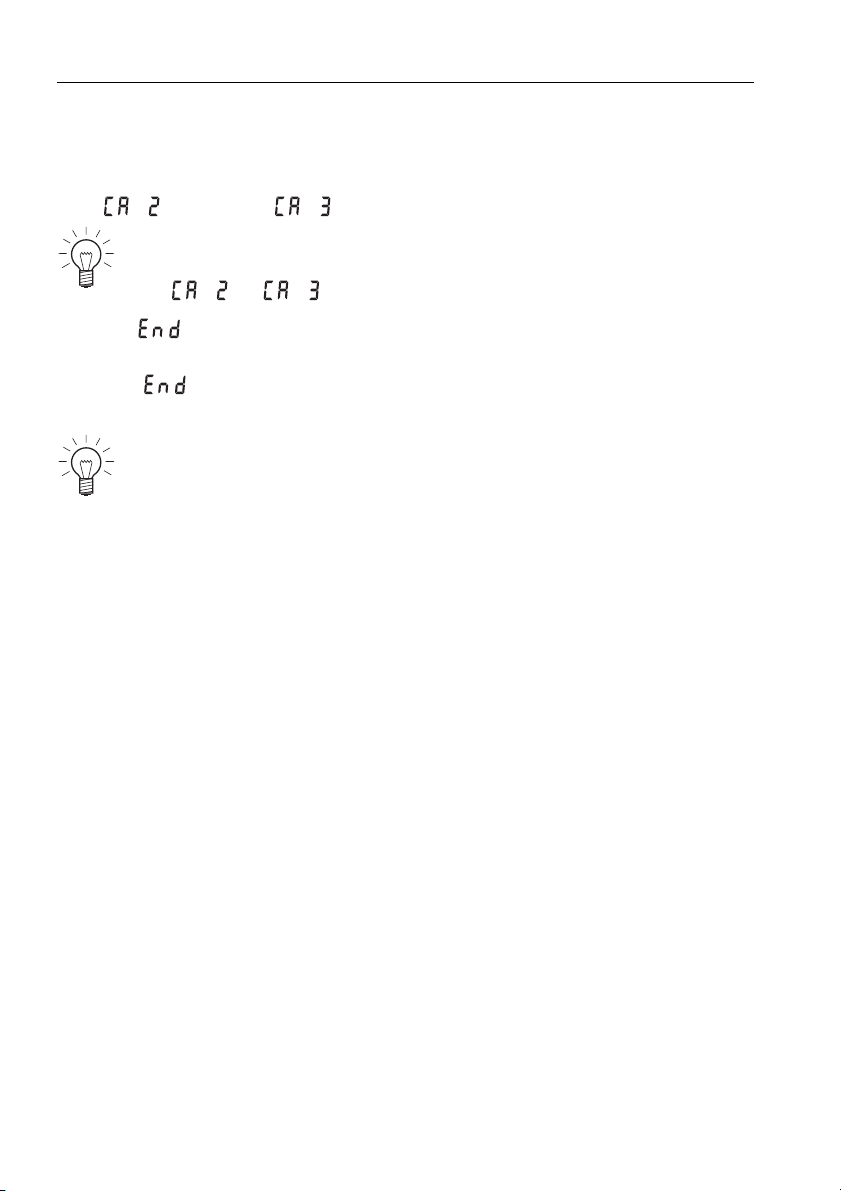
A Press the and buttons simultaneously.
– flashes in the digital display.
– And then flashes in the digital display.
A Pour the entire contents of the special descaler undiluted into the water
tank.
A Slot the water tank into position in the water tank compartment.
A Press the adjusting knob to confirm.
– flashes in the digital display.
– The descaling phase, which takes around 30 minutes, starts.
– Finally, flashes in the digital display.
A Remove the water tank, pour away the descaler and fill the tank with
1.2 l cold water.
A Put the water tank back.
– appears in the digital display.
– The rinsing phase starts.
– Finally, flashes in the digital display.
The appliance must be switched off. The appliance door must be
closed when descaling is being carried out. Burns hazard! For
safety reasons, once started the descaling process cannot be
aborted.
… Care and maintenance
64
A Remove the water tank, pour away the water and refill the tank with 1.2 l
cold water.
A Put the water tank back.
– remains or appears in the digital display.
A When appears in the digital display, remove, empty and dry the water
tank.
– The message goes out and the time is visible again.
A Wipe up any water in the bottom of the cooking space with a soft cloth.
Whether further rinsing cycles are required depends on the level of
soiling of the liquid being pumped off.
– or is displayed in the digital display.
After descaling, the water that is pumped back into the water tank at
the end of cooking may not may not be clear. This will not affect the
cooking or baking characteristics nor the quality of the food being
cooked or baked.

65
Trouble-shooting
This section lists faults that can be solved simply by following the instructions
given. If another fault is displayed or the fault cannot be remedied, please call
Customer Services.
What to do if …
… the appliance is not working and the displays are not illuminated
Before calling Customer Services, please note down the serial
number (FN) and the error message in full, e. g. / .
Possible cause Solution
䡲 The fuse or automatic
circuit breaker for
electrical installation in
the home is defective.
A Change the fuse.
A Reset the automatic circuit breaker.
䡲 The fuse or automatic
circuit breaker keeps
blowing.
A Call Customer Services.
䡲 Interruption in the power
supply.
A Check the power supply.
XX XX

… Trouble-shooting
66
… the appliance starts making noises during operation
… at the end of cooking, it takes some time for the water to be pumped
back
Possible cause Solution
䡲 The appliance may emit
noise during operating
(e.g. switching and
pumping noises).
Such noise is normal. No action needed.
Possible cause Solution
䡲 For safety reasons, the
water in the boiler is not
pumped off until the
temperature of the water
drops below 80 °C.
If there is enough cold water in the water tank,
the boiler will be automatically filled. This will
cool down the water in the boiler.
If there is not enough cold water in the water
tank, it will take longer to cool down (this can
take up to 30 minutes). The appliance may be
used without further ado.
… Trouble-shooting
67
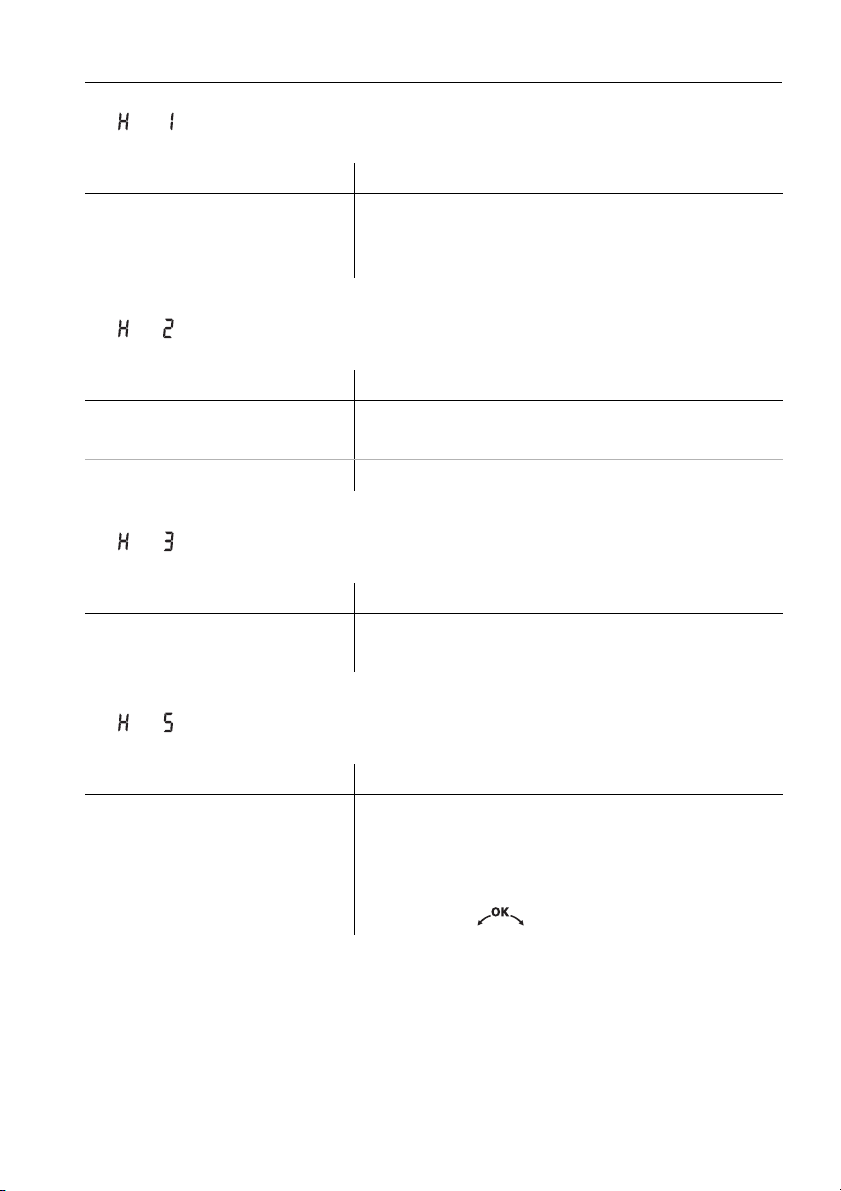
… flashes
… flashes
… flashes
… flashes
Possible cause Solution
䡲 The water tank is not in
position in the water tank
compartment.
A Put the water tank in.
Possible cause Solution
䡲 The water tank is empty. A Fill the water tank and slot it into position in
the water tank compartment.
䡲 During descaling. A Water needs to be changed.
Possible cause Solution
䡲 The appliance door is
open.
A Close the appliance door.
Possible cause Solution
䡲 Descale was selected,
but not started.
A Pour the contents of the special descaler
undiluted into the water tank and then slot
the water tank into the water tank
compartment.
A Press the adjusting knob to confirm.

… Trouble-shooting
68
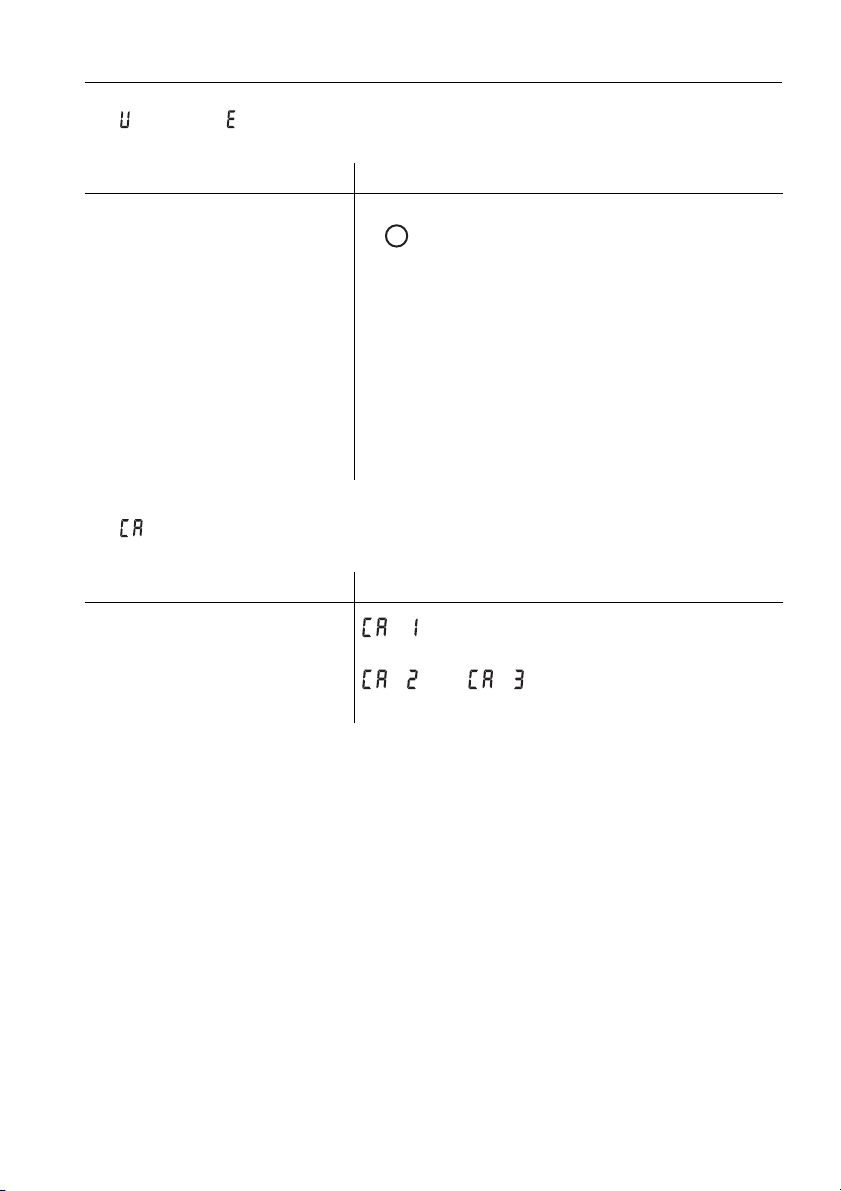
… flashes
… flashes
… and flash alternately
Possible cause Solution
䡲 The boiler in the
appliance is scaled up.
A Start descaling.
Possible cause Solution
䡲 Used unsuitable descaler. A Descale again using the recommended
descaler.
䡲 Descaling was not carried
out correctly.
A If the message does not disappear after
repeating the descaling process several
times, note down the serial number (FN)
and the error message in full.
A Call Customer Services.
Possible cause Solution
䡲 Various situations can
lead to an error message.
A Cancel the error message by pressing the
button.
A Disconnect the power supply for about
1minute.
A Reconnect the power supply.
A If the error message appears again, note
down the serial number (FN) and error
message in full.
A Disconnect the power supply.
A Call Customer Services.
XX
XX
… Trouble-shooting
69
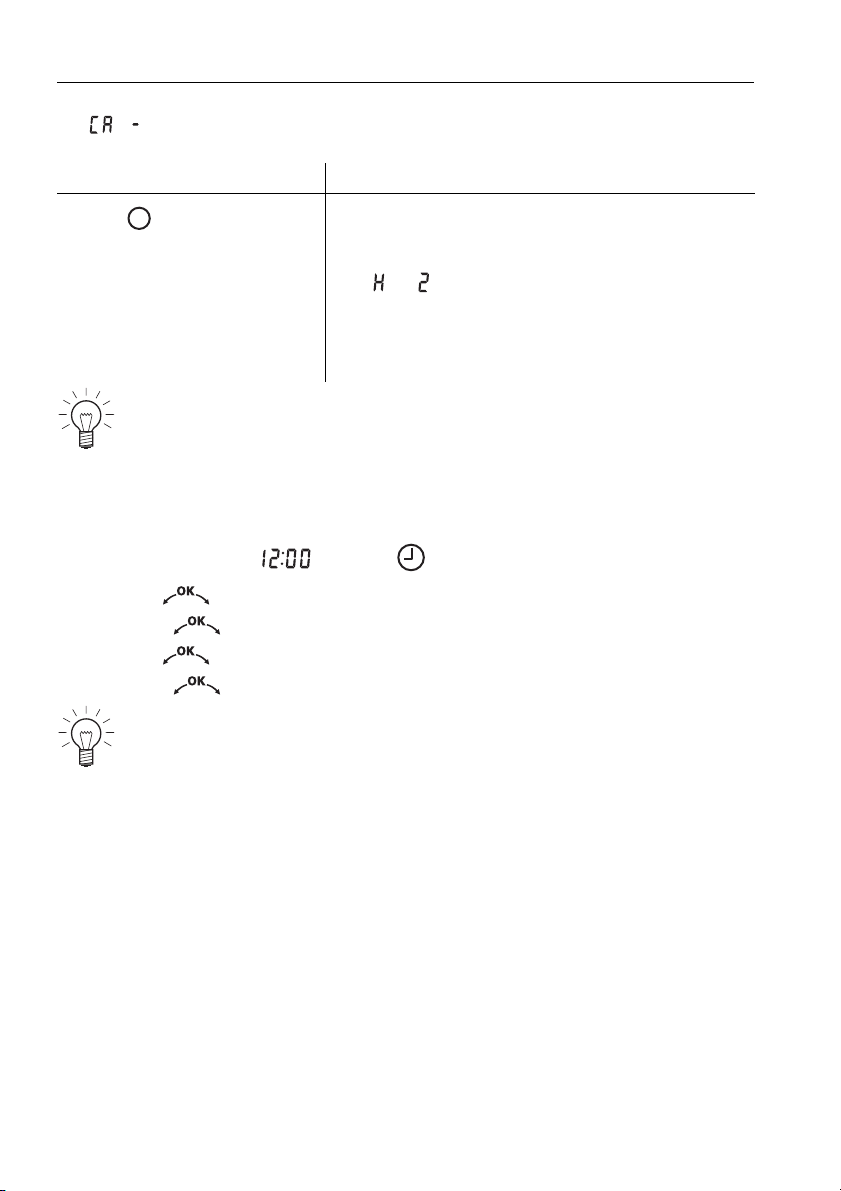
… and flash alternately
… appears
Possible cause Solution
䡲 Interruption in the power
supply.
A Cancel the error message by pressing the
button.
A Disconnect the power supply for about
1 minute.
A Reconnect the power supply.
A If the error message appears again, note
down the serial number (FN) and error
message in full.
A Disconnect the power supply.
A Call Customer Services.
Possible cause Solution
䡲 Various situations can
lead to a «CA» message.
䡲 During descaling.
means the appliance is in the
descaling phase.
and mean the appliance is in a
rinsing phase.
XX XX
XX
… Trouble-shooting
70
… appears
After a power failure
After a power failure, and the symbol flash in the digital display.
A Turn the adjusting knob to set the hour.
A Press the adjusting knob to confirm.
A Turn the adjusting knob to set the minutes.
A Press the adjusting knob again to confirm the time.
Possible cause Solution
䡲 The button was
pressed during descaling.
The appliance shortly automatically changes
over to the rinsing phases.
A If appears, fill the water tank with
fresh water.
– The rinsing phase will continue
automatically.
In this instance, descaling was not carried out correctly. The whole
descaling process must be repeated.
The user settings remain unchanged.
If a power failure occurs during descaling, it will continue automatical-
ly after the time has been reset.
71
Accessories and spare parts
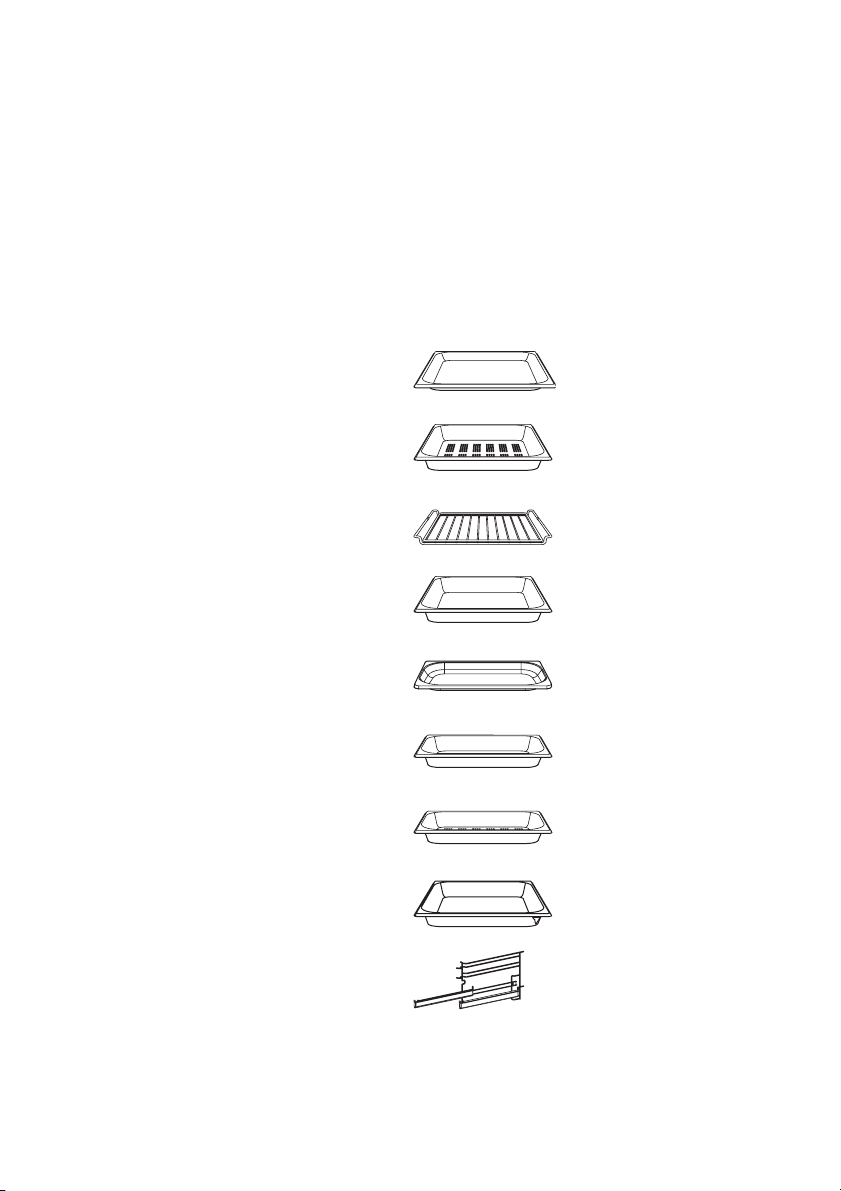
Please give model number and exact description when ordering parts.
Accessories
* Included in scope of delivery
Width × Depth × Length
[mm]
Stainless steel tray, GN * 325 × 20 × 354
Cooking tray, perforated,
GN *
325 × 40 × 354
Wire shelf 325 × 23 × 354
Cooking tray, unperforated,
GN
325 × 40 × 354
Stainless steel tray, GN 325 × 20 × 177
Cooking tray, unperforated,
GN
325 × 40 × 177
Cooking tray, perforated,
GN
325 × 40 × 177
Cooking tray, unperforated,
with lip, GN
325 × 40 × 354
Roller runner
2
3
/
2
3
/
2
3
/
1
3
/
1
3
/
1
3
/
2
3
/
… Accessories and spare parts
72
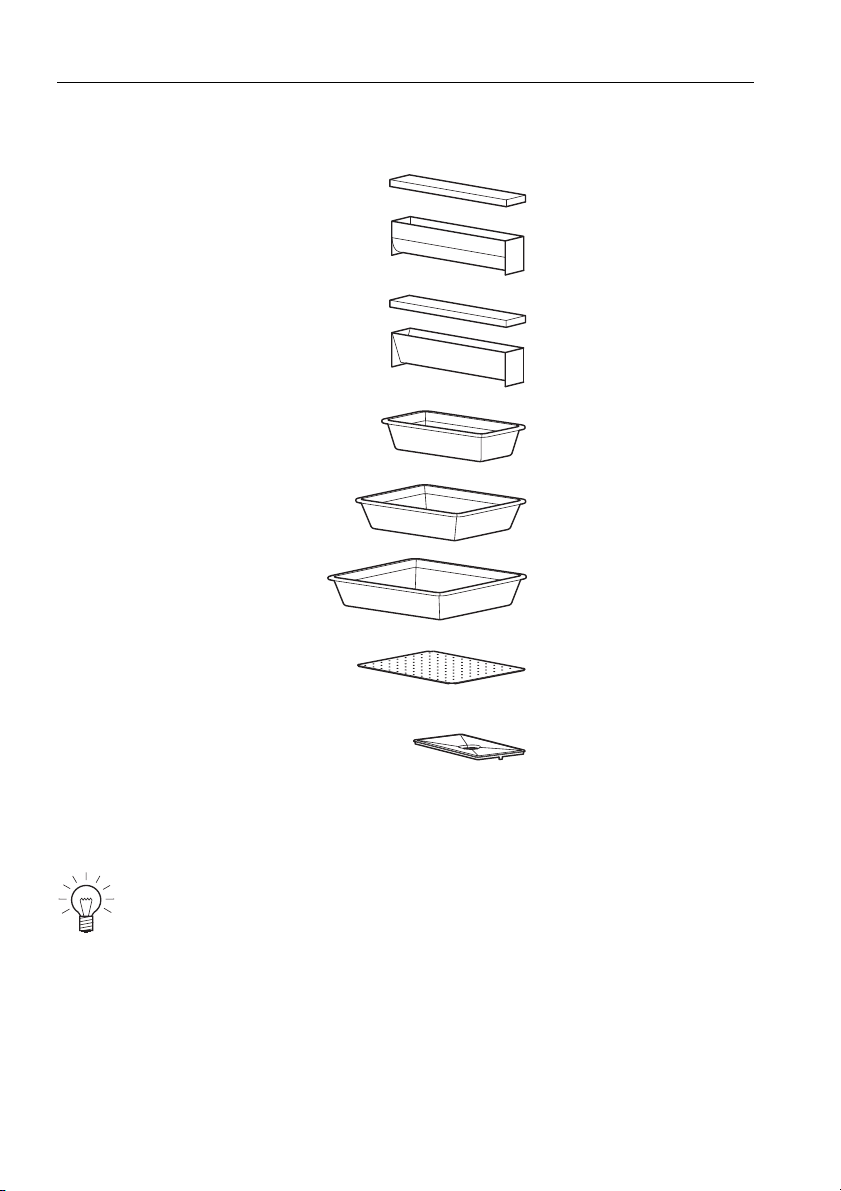
* Included in scope of delivery
Width × Depth × Length
[mm]
U-shape terrine mould with lid 60 × 60 × 300
V-shape terrine mould with lid 55 × 55 × 300
Porcelain dish, GN 325 × 60 × 177
Porcelain dish, ½ GN 325 × 60 × 265
Porcelain dish, GN 325 × 60 × 354
Stainless steel steam insert
257 × 5 × 109
252 × 5 × 197
290 × 5 × 254
Lid for water tank
Recipe book *
The dimensions correspond to Gastronorm GN, ½ GN or GN.
1
3
/
2
3
/
1
3
/
2
3
/
… Accessories and spare parts
73
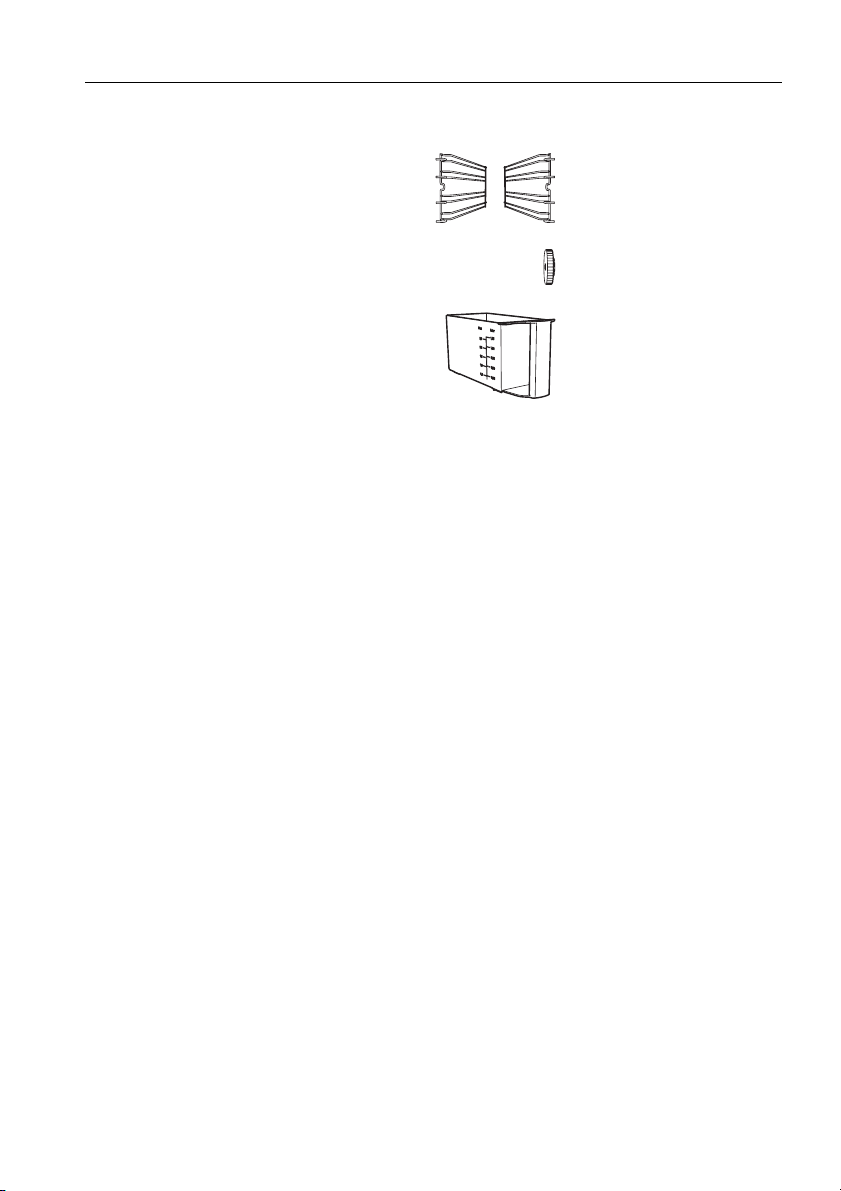
Spare parts
Shelf guide,
left/right
Knurled nut
Water tank

74
Technical data
External dimensions
A See Installation Instructions
Electrical connection
A See identification plate 1.
Note for testing institutes
The usable volume within the meaning of EN 50304/EN 60350 is obtained
with the shelf guides disassembled.
General note
Maximum load capacity: 2 kg
Automatic energy-saving stand-by
To avoid consuming power unnecessarily, the appliance is equipped with
automatic energy-saving stand-by.
To reduce power consumption to an absolute minimum, select
, «Time display invisible». Despite automatic energy-saving
stand-by, all safety functions are active.
1

75
Disposal
Packaging
䡲 All packaging materials (cardboard, plastic film (PE) and polystyrene
(EPS)) are marked and should, if possible, be collected for recycling and
disposed of in an environmentally friendly way.
Disconnection
䡲 Disconnect the appliance from the mains. With a fixed appliance, this is to
be carried out by a qualified electrician!
Safety
䡲 Disable the appliance to prevent accidents caused by improper use,
especially through children playing.
䡲 Pull the plug out of the mains socket or have the appliance disconnected
from the mains by a qualified electrician. Then cut off the mains cable.
Disposal
䡲 The old appliance should not be discarded as worthless rubbish. If
disposed of correctly, the raw materials can be recovered for recycling.
䡲 The symbol on the identification plate warns that the appliance may
not be disposed of in normal household waste.
䡲 The appliance must be disposed of in accordance with local regulations
on waste disposal. For more information on the handling, disposal and
recycling of the product, please contact the local authorities, the local
recycling facilities for household waste or the retailer from whom you
purchased the appliance.

76
Index
A
Accessories ........................... 13, 71
Cleaning.................................... 59
Accompaniments......................... 42
Acoustic signal...................... 22, 24
Appliance description ................. 10
Appliance door............................. 12
Removing.................................. 58
B
Baby bottles
Sterilising .................................. 50
Baby food...................................... 48
Before using for the first time...... 5
Blanching ...................................... 50
Bottling.................................... 52, 54
Buttons........................................... 11
C
C messages.................................. 69
Care................................................ 57
Childproof lock...................... 22, 23
Cleaning ........................................ 57
Cloths, warm and moist ............. 56
Construction ................................. 10
Cooking space
Cleaning.................................... 60
Ventilation ................................. 12
Cooking tray .......................... 13, 15
D
Defrosting ..................................... 48
Delayed start................................ 31
Descaler........................................ 62
Descaling............................... 61, 63
Desserts........................................ 46
Disconnection .............................. 75
Display elements......................... 11
Displays......................................... 11
Disposal ........................................ 75
Door seal ...................................... 12
Replacing ................................. 59
E
Electrical connection .................. 74
Energy
Saving ....................................... 56
Exterior
Cleaning ................................... 57
External dimensions ................... 74
F
F/E messages ............................. 68
Factory settings .................... 22, 25
Fish ................................................ 46
H
H messages ................................. 67

… Index
77
I
Identification plate........................ 74
J
Joghurt ........................................... 46
Juice
Extracting .................................. 50
K
Knurled nut.................................... 12
L
Levels ............................................. 12
Load capacity ............................... 74
M
Maintenance.................................. 57
Meat................................................ 44
Model no.......................................... 2
O
Operating elements ..................... 11
Operating modes ......................... 34
Selecting.................................... 19
Operating the appliance ............. 16
Example..................................... 18
Operating time.............................. 29
P
Packaging...................................... 75
Porcelain dish ............................... 14
Potatoes......................................... 42
Poultry ............................................ 44
Power failure ................................. 70
Preheating ..................................... 56
Preserving.............................. 52, 54
Q
Quick instructions........................ 79
R
Recipe book ................................. 72
Refilling water tank...................... 18
Reheating...................................... 48
Removing food from
cooking space ............................. 20
Repair service .............................. 78
Roller runner................................. 15
S
Safety ............................................. 75
Safety precautions
Before using for first time ........ 5
Children in the home................ 7
Correct use................................. 6
Note on use ............................... 7
Saving energy .............................. 56
Seafood ......................................... 46
Shelf guides.................................. 59
Spare parts ................................... 73
Stainless steel tray ...................... 13
Stand-by ........................................ 74
Steam inlet .................................... 12
Steaming ................................ 34, 55
Switching off ................... 19, 30, 33
Switch-off time.............................. 31
Setting ....................................... 32
Symbols.................................... 2, 11
Symbols used .............................. 36

… Index
78
T
Technical data.............................. 74
Temperature sensor.................... 12
Temperature unit................... 22, 25
Terrine mould ............................... 14
Testing institutes .......................... 74
Time
Setting ....................................... 26
Time display........................... 22, 24
Time format............................ 22, 25
Time functions .............................. 26
Timer .............................................. 27
Tips and tricks.............................. 55
Tips on settings............................ 36
Trouble-shooting .......................... 65
Type.................................................. 2
U
U/E messages............................. 69
Use, optimal ................................. 37
User settings ................................ 21
Using for the first time................ 17
V
Validity.............................................. 2
Vegetables.................................... 38
W
Water hardness .................... 22, 25
Water tank .................................... 13
Emptying .................................. 20
Filling......................................... 18
Refilling ..................................... 18
Wire shelf...................................... 14

79
Repair service
Whether you contact us about a malfunction or an order, please always state
the serial number (FN) and the model type of your appliance. Enter these
details below and also on the service sticker which comes with the appliance.
Stick it in a conspicuous place or in your telephone or address book.
You will also find the same details on the certificate of guarantee, the original
sales invoice and the identification plate of the appliance.
A Open the appliance door.
– The identification plate is on the left-side panel.
The 'Trouble-shooting' section will help you to carry out small repairs
yourself, saving you the time and trouble of calling out a service
engineer and the cost that goes along with it.
FN
Appliance

Quick instructions
Please first read the safety precautions in the operating instructions!
To set the time
A Press the button.
A Turn the adjusting knob to set the hour.
A Press the button again.
A Turn the adjusting knob to set the minutes.
To select the operating mode
A Press the button repeatedly until the desired operating mode appears.
To switch off the appliance
A Press the button.
To set the timer
A Press the button.
A Turn the adjusting knob to set the timer duration.
V-ZUG Ltd
Industriestrasse 66, CH-6301 Zug
[email protected], www.vzug.com
J766.360-1