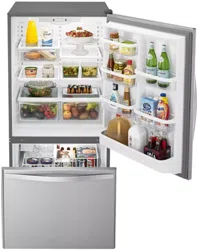
User Gudie Kenmore 79578753800 Refrigerator
BOTTOM FREEZER REFRIGERATOR WARRANTY
- This warranty covers only defects in material and workmanship. S
- Expendable items that can wear out from normal use, including but not limited to filters, belts, light bulbs, and bags.
- A service technician to instruct the user in correct product installation, operation or maintenance.
- A service technician to clean or maintain this product.
- Damage to or failure of this product if it is not installed, operated or maintained according to all instructions supplied with the product.
- Damage to or failure of this product resulting from accident, abuse, misuse or use for other than its intended purpose.
- Damage to or failure of this product caused by the use of detergents, cleaners, chemicals or utensils other than those recommended in all instructions supplied with the product.
- Damage to or failure of parts or systems resulting from unauthorized modification made to this product.
Disclaimer of implied warranties; limitation of remedies
- Customer's sole and exclusive remedy under this limited warranty shall be product repair as provided herein,
- Implied warranties, including warranties of merchantability or fitness for a particular purpose, are limited to one year or the shortest period allowed by law.
- Sears shall not be liable for incidental or consequential damages. Some states and provinces do not allow the exclusion or limitation of incidental or consequential damages, or limitations on the duration of implied warranties of merchantability or fitness, so these exclusions or limitations may not apply to you.
- This warranty applies only while this appliance is used in the United States and Canada.
- This warranty gives you specific legal rights, and you may also have other rights which vary from state to state.
Master Protection Agreements
- Congratulations on making a smart purchase. Your new
- Kenmore ® product is designed and manufactured for years of dependable opera-tion. But like all products, it may require preventive maintenance or repair from time to time. That's when having a Master Protection Agreement can save you money and aggravation.
- The Master Protection Agreement also helps extend the life of your new product. Here's what the Agreement* includes: d Parts and labor needed to help keep products operating properly under normal use, not just defects.
- Our coverage goes well beyond the product warranty.
- No deductibles, no functional failure excluded from coverage-- real protection.
- Expert service by a force of more than 10,000 authorized Sears service technicians, which means someone you can trust will be working on your product.
- Unlimited service calls and nationwide service, as often as you want us, whenever you want us. d "No-lemon" guarantee - replacement of your covered product if four or more product failures occur within twelve months.
SAVE THESE INSTRUCTIONS
- Congratulations on making a smart purchase. Your new
- Kenmore ® product iYour old refrigerator may have a cooling system that used
- CFCs (chlorofluorocarbons). CFCs are believed to harm stratospheric ozone.
- If you are throwing away your old refrigerator, make sure the CFC refrigerant is removed for proper disposal by a qualified servicer, tf you intentionally release this CFC refrigerant, you can be subject to fines and imprisonment under provisions of environmental legislation.
IMPORTANT:
TO CONNECT ELECTRICITY
- Electrical Shock Hazard
- FOR PERSONAL SAFETY, this appliance must be properly grounded. Have the wall outlet and the circuit checked by a qualified electrician to make sure the outlet is properly grounded. prong grounding plug prong grounding type wall receptacle --.
- Ensureproper groundexists beforeuse.
RECOMMENDED GROUNDING METHOD
- The refrigerator should always be plugged into its own individual properly grounded electrical outlet rated for
- Volts, 60 Hz, AC only, and fused at 15 or 20 amperes.
- This provides the best performance and also prevents overloading house wiring circuits which could cause a fire hazard from overheated wires. It is recommended that a separate circuit serving only this appliance be provided.
- Use a receptacle which cannot be turned off with a switch or pull chain. Do not use an extension cord.
- Where a standard two-prong wall outlet is encountered, it is your personal responsibility and obligation to have it replaced with a properly grounded three-prong wall outlet.
- Do not, under any circumstances, cut or remove the third (ground) prong from the power cord.
- Do not use an adapter plug.
NOTE:
- Before performing any type of installation, cleaning, or removing a light bulb, disconnect the refrigerator from the electrical source.
NOTE:
- Some models have LED interior lighting and service should be performed by a qualified technician.
- When you are are finished, reconnect the refrigerator to the electrical source and reset the control (Thermostat,
- Refrigerator Control, or Freezer Control, depending on the model) to the desired setting. s designed and manufactured for years of dependable opera-tion.
- But like all products, it may require preventive maintenance or repair from time to time. That's when having a Master Protection Agreement can save you money and aggravation.
- The Master Protection Agreement also helps extend the life of your new product. Here's what the Agreement* includes: d Parts and labor needed to help keep products operating properly under normal use, not just defects.
Our coverage goes well beyond the product warranty.
- No deductibles, no functional failure excluded from coverage-- real protection.
- Expert service by a force of more than 10,000 authorized Sears service technicians, which means someone you can trust will be working on your product.
- Unlimited service calls and nationwide service, as often as you want us, whenever you want us. d "No-lemon" guarantee - replacement of your covered product if four or more product failures occur within twelve months.
USE OF EXTENSION CORDS
- Because of potential safety hazards under certain conditions, we strongly recommend against the use of an extension cord.
- However, if you still elect to use an extension cord, it is absolutely necessary that it be a UL-listed (USA), 3-wire grounding type appliance extension cord having a grounding type plug and outlet, and that the electrical rating of the cord be 15 amperes (minimum) and 120 volts. Use of an extension cord will increase the clearance needed for the back of the refrigerator.
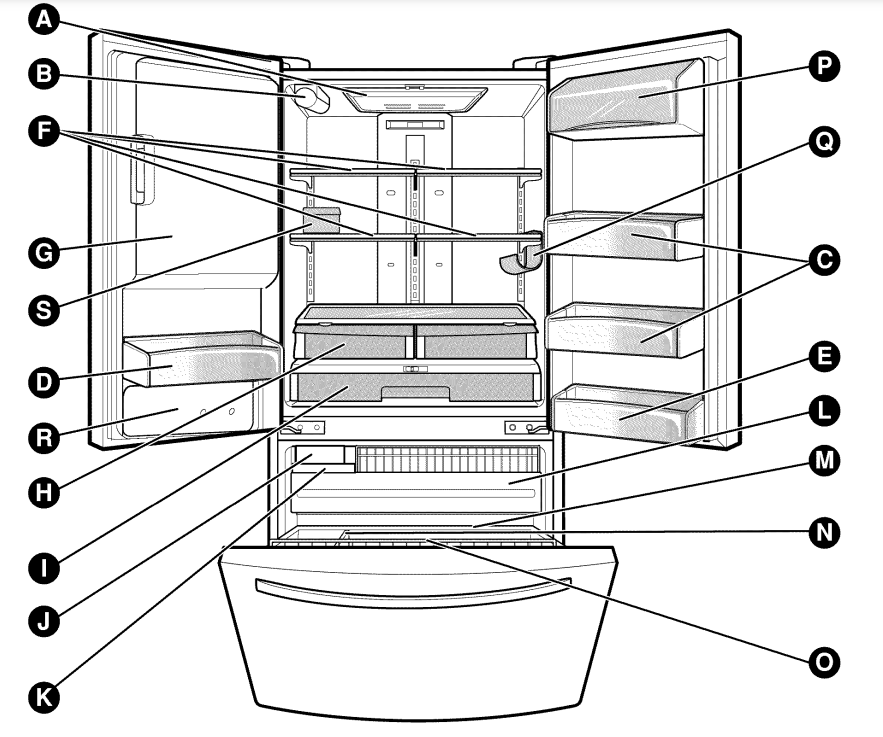
PART AND FEATURE
- To minimize noise and vibration, the refrigerator MUST be installed on a solidly constructed floor.
- Carpeting and soft tile surfaces are not recommended.
- Never install the refrigerator on a platform or weakly supported structure.
- To avoid vibration, the unit must be leveled. If required, adjust the leveling legs to compensate for unevenness of the floor.
- The front should be slightly higher than the rear to aid in door closing. Leveling legs can be turned easily by tipping the cabinet slightly. Turn the leveling legs clockwise (_) to raise the unit, counterclockwise ( _,"=") to lower it.
- Install this appliance in an area where the temperature is between 55°F (13°C) and 110°F (43°C.) If the temperature around the appliance is too low or high, cooling ability may be adversely affected. 3. Too small a distance from adjacent items may result in lowered freezing capability and increased electricity consumption charges. Allow at least 24 in. (61 cm) in front of the refrigerator to open the doors.
HOW TO REMOVE DOOR HANDLES
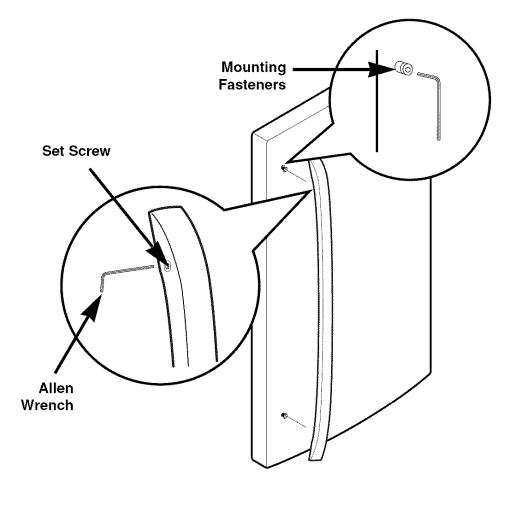
Right Door
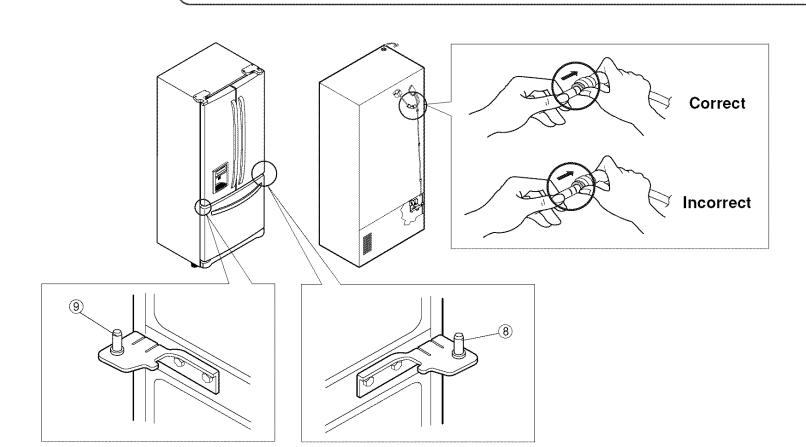
- Lower the door onto middle hinge pin (8).
- Fit top hinge (5) over hinge lever latch (6) and into place. Insert hinge lever (4) under lever latch. Rotate lever counterclockwise to secure hinge.
Connect wire harnesses (3).
- Hook tab on door switch side of cover under edge of wire opening in cabinet top. Position cover (2) into place. Insert and tighten cover screw (1).
I_ Left Door
Lower the door onto middle hinge pin (9).
- Fit top hinge (7) over hinge lever latch (8) and into place. Insert hinge lever (6) under lever latch. Rotate lever clockwise to secure hinge.
- Install the grounding screw (5) and connect the three wire harnesses (4).
- Push the water supply tube into the hole on the top case and pull it out on the backplate.
- Insert the water supply tube (3) into the connector tube until you see only one scale mark.
- Fully insert the tube over 5/8"(15mm)).
- Hook tab on door switch side of cover (2) under edge of wire opening in cabinet top. Position cover into place. Insert and tighten cover screw (1).
USING THE REFRIGERATION
USE OF EXTENSION CORDS
- Because of potential safety hazards under certain conditions, we strongly recommend against the use of an extension cord. However, if you still elect to use an extension cord, it is absolutely necessary that it be a
- UL-listed (USA), 3-wire grounding type appliance extension cord having a grounding type plug and outlet, and that the electrical rating of the cord be 15 amperes minimum) and 120 volts.
- Use of an extension cord will increase the clearance needed for the back of the refrigerator.
- Removing Refrigerator Handle
- Press the handle against door first.
- Grasp the handle tightly with both hands and slide the handle up (1)(this may require some force).
- The keyhole slots (2) on the back of the handle allow the handle to separate from the mounting screws (3).
CAUTION: The handle could be damaged if you hit it with a hammer while removing or attaching.
CAUTION: When you assemble or disassemble handle, you must push or pull with some force.

Removing Freezer Drawer Handle
- Press the handle against door first.
- Grasp the handle tightly with both hands and slide the handle to right (1)(this may require some force).
- The keyhole slots (2) on the back of the handle allow the handle to separate from the mounting screws (3).

Filter
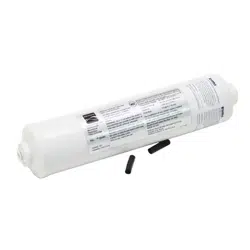
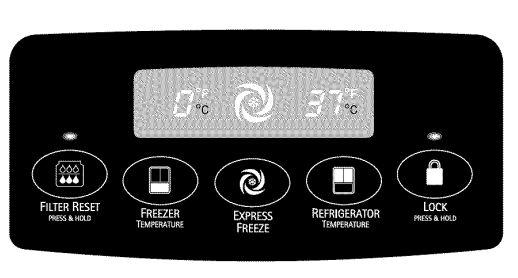
- Filter Reset : When the FILTER RESET icon turns on, you have to change the water filter. Press the FILTER
- RESET button for 3 seconds to turn the icon off. You need to change the water filter approximately every 6 months.
Light / Light Sensor
- If the light is set "Auto" mode, dispenser light will automatically turn on and off according to the brightness of room detected by light sensor.
Alarm
- When the power is connected to the refrigerator, door alarm is initially set off and door alarm display will show
- When you touch _ button, the display will change to _ and door alram function is now activated.
- When either refrigerator or the freezer door is left open for more than 60 seconds, the alarm will ding to let you know the door is open.
- When you close the door, the door alarm will stop dinging.
- If you want to disable the door alarm function, touch button then the door alarm display will switched to 4'
Lock
- When the power is initially connected to the refrigerator,
- Lock function is off.
- If you want to activate Lock function to lock other buttons, press and hold _ button for 3 seconds or more. sign will be displayed and the Lock function is now enabled.
- No buttons other than _ button will work even including dispenser button while Lock function is enabled.
- To disable the Lock function, press and hold -_z_ button for 3 seconds or more.
IN-DOOR ICE BANK A CAUTION
- Keep hands and tools out of the ice bank door and dispenser chute. You could break something or injure yourself. The icemaker will stop producing ice when the ice bank is full.
- If you need more ice, empty the ice bank into the extra ice bin in the freezer compartment so the icemaker can keep producing ice. Shake the ice bank occasionally to level the ice in it. Sometimes the ice piles up near the icemaker, causing the icemaker to misread the amount of ice cubes and stop producing ice.
NOTE:
- Storing cans or other items in the ice bank may damage the icemaker. Keep the ice bank door closed tightly. If the ice bank door is not closed tightly, the cold air in the ice bank will freeze food in the refrigerator compartment. This could also cause the icemaker to not produce ice.
NOTE:
- If the On/Off switch on the icemaker is set to Off for an extended time, the ice compartment will gradually warm up to the temperature of the refrigerator compartment. To prevent ice cubes from melting and leaking from the dispenser, ALWAYS empty the ice bin when the icemaker is set to Off for more than a few
STORING FROZEN FOOD
- For further information about preparing food for freezing or food storage times, check a freezer guide or a reliable cookbook.
- Packaging Successful freezing depends on correct packaging. When you close and seal the package, it must not allow air or moisture in or out. If it does, you could have food odor and taste transfer throughout the refrigerator and also dry out frozen food.
Replacing Refrigerator Door Handle
- Align keyhole slots (1) on the top and bottom of the back of the handle with the screws (2) mounted on the front of the door.
- Press the handle against the door front, making sure that the screws (2) go into the keyhole slots (1).
- Holding the handle with both hands, press it firmly against the front of the door and slide the handle down (3).
- Replacing Freezer Drawer Handle
- Align keyhole slots (4) on the right and left sides of the back of the handle with the screws (5) mounted on the front of the drawer.
- Press the handle against the drawer front, making sure that the screws (5) go into the keyhole slots (4).
- Holding the handle with both hands, press it firmly against the front of the drawer and slide the handle to the left
Left Door
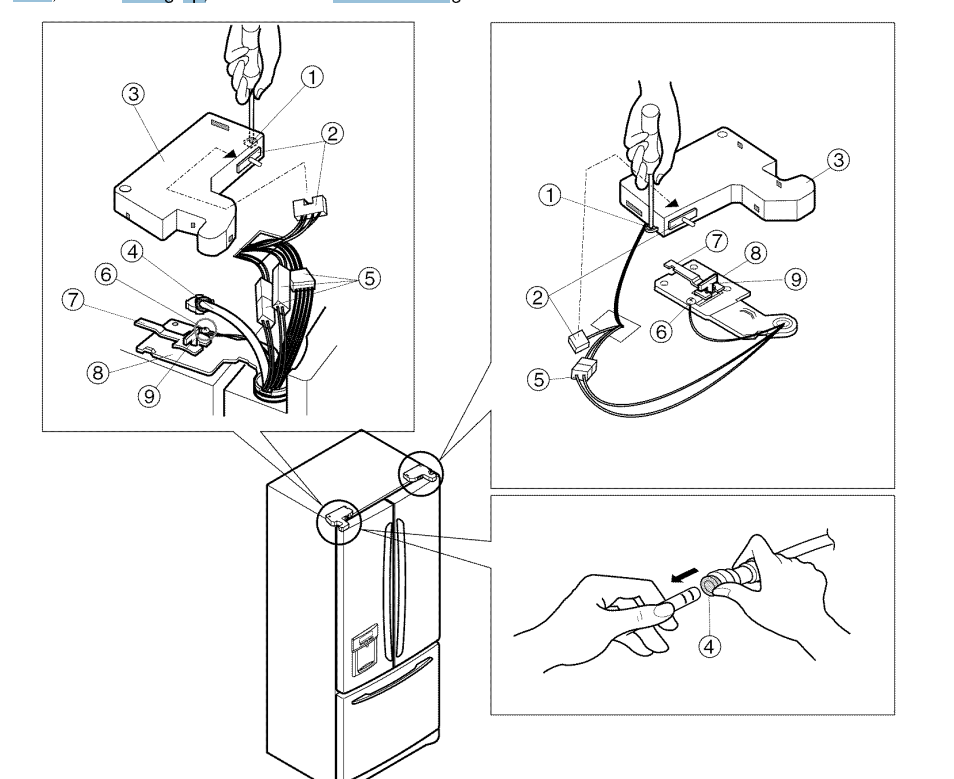
- Open door. Loosen top hinge cover screw (1).
- Use flat tip screwdriver to pry back hooks on front underside of cover (3). Lift up cover.
- Disconnect door switch wire harness (2). Remove cover.
- Disconnect water supply tube by pushing back on the disconnect ring (4) and pulling tube out.
- Disconnect the three wire harnesses (5). Remove the grounding screw (6).
- Rotate hinge lever (7) counterclockwise and remove. Lift top hinge (8) free of hinge lever latch (9).
CAUTION:
- When lifting hinge free of latch, be careful that door does not fall forward.
- Lift door up from middle hinge pin (10) and remove door.
- Place door, inside facing up, down onto a non-scratching surface.
Right Door
- Open door. Loosen top hinge cover screw (1). Lift up cover (3).
- Disconnect door switch wire harness (2). Remove cover.
- Disconnect wire harness (5). Remove the grounding screw (6).
- Rotate hinge lever (7) clockwise and remove. Lift top hinge (8) free of hinge lever latch (9).
CAUTION:
- When lifting hinge free of latch, be careful that door does not fall forward.
- Lift door up from middle hinge pin (10) and remove door.
- Place door, inside facing up, down onto a non-scratching surface.
ENSURING PROPER AIR CIRCULATION
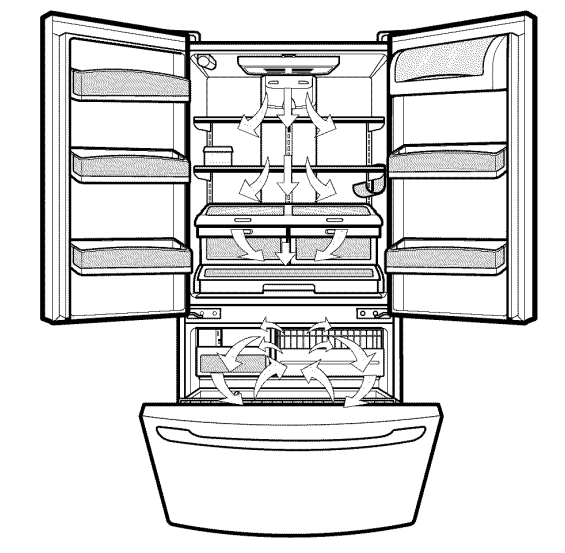
- In order to ensure proper temperatures, air must flow between the refrigerator and freezer sections. As shown in the illustration below, air enters at top of freezer and circulates down.
- From bottom of freezer, air is forced up to top of refrigerator. Air enters refrigerator through top vent, then circulates and exists at bottom, where it returns to freezer.
MULTI-FLOW
- Multi-Flow means powerful and effective cooling operation. This is especially noticeable when new food is placed in the refrigerator compartment.
- If water or foreign substances enter the cool air vent while cleaning, efficiency will be lowered. In addition, if gasket is damaged, efficiency may be lowered because of escaping cool air.
SETTING THE CONTROLS
- Your refrigerator has a control pad on the dispenser that lets you regulate the temperature in the freezer and refrigerator compartments.
- Initially set the REFRIGERATOR CONTROL at 37°F(3°C) and the FREEZER CONTROL at 0°F(-18°C). Leave it at this setting for 24 hours (one day) to stabilize. Then adjust the compartment temperature as desired.
Tilt-Out Compartment
- The tilt-out compartment on the front of the crisper is for items stored best in low humidity such as apples and oranges.
- The front of the compartment is transparent to allow you to see compartment contents. Push the button on the front of the compartment to open it.
CRISPER HUMIDITY CONTROL
- You can control the amount of humidity in the moisturesealed crispers.
- Adjust the control to any setting between and v_ . keeps moist air in the crisper for best storage of fresh, leafy vegetables. v _ lets moist air out of the crisper for best storage of fruits.
To remove tilt-out compartment:
- Pull crisper drawer out to the stop.
- Open the compartment.
- Grasp side of drawer and pull outward to release tab at compartment base. Pull compartment toward you to remove.
- To replace compartment, insert compartment base tab into one side of drawer. Pull slightly outward on opposite side of drawer to insert other base tab.
GLIDE N SERVE
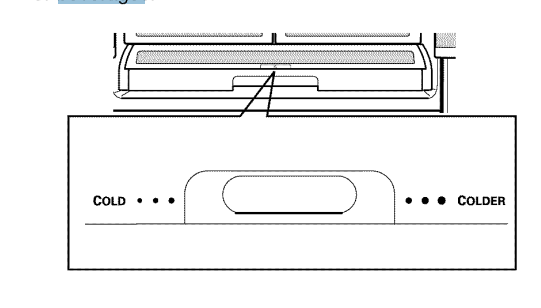
- The Glide N Serve provides storage space with a variable temperature control that keeps the compartment colder than refrigerator temperature.
- The drawer also features a selfopening lid that opens whenever the drawer is pulled open. This drawer can be used for large party trays, deli items, or beverages.
CONDENSER COILS
- Remove base cover. (See the base cover section on page 13.)
- Use a vacuum cleaner with an extended attachment to clean condenser coils.
- Vacuum coils when dusty or dirty. Coils may need to be cleaned as often as every other month.
- Replace base cover.
GENERAL CLEANING TIPS
- Unplug refrigerator or disconnect power.
- Remove all removable parts, such as shelves, crispers, etc. Refer to sections in Using Your
- Refrigerator for removal instructions.
- Use a clean sponge or soft cloth and a mild detergent in warm water. Do not use abrasive or harsh cleaners.
- Hand wash, rinse and dry all surfaces thoroughly.
- Plug in refrigerator or reconnect power.
OUTSIDE
- Waxing external painted metal surfaces helps provide rust protection. Do not wax plastic parts. Wax painted metal surfaces at least twice a year using appliance wax (or auto paste wax). Apply wax with a clean, soft cloth.
- For products with a stainless steel exterior, use a clean sponge or soft cloth and a mild detergent in warm water.
- Do not use abrasive or harsh cleaners. Dry thoroughly with a soft cloth.
CONDENSER COILS
- Remove base cover. (See the base cover section on page 13.)
- Use a vacuum cleaner with an extended attachment to clean condenser coils.
- Vacuum coils when dusty or dirty. Coils may need to be cleaned as often as every other month.
- Replace base cover.
LIGHT BULB REPLACEMENT
- Electrical Shock Hazard
- Before replacing a burned-out light bulb, either unplug the refrigerator or turn off power at the circuit breaker or fuse box.
NOTE:
- Moving the control to the OFF position does not remove power to the light circuit.
NOTE:
- Not all appliance bulbs will fit your refrigerator. Be sure to replace the bulb with one of the same size, shape and wattage.
To change Refrigerator Light Bulbs:
- Unplug Refrigerator, or disconnect power at the circuit breaker.
- If necessary, remove top shelf or shelves.
- Using a flat instrument, gently pry the lamp cover loose in the front as shown. Rotate downward to remove rear tabs.
- Make sure the bulbs are cool to the touch.
- Turn bulbs counterclockwise to remove. Insert new bulb(s).
- Assemble in reverse order by snapping the Lamp Cover in, engaging the rear tabs followed by the front tabs.
INSIDE WALLS (allow freezer to warm up so cloth won't stick)
- To help remove odors, you can wash the inside of the refrigerator with a mixture of baking soda and warm water.
- Mix 2 tablespoons baking soda to 1 quart of water (26 g soda to 1 liter water.) Be sure the baking soda is completely dissolved so does it not scratch the surfaces of the refrigerator.
WHEN YOU GO ON VACATION
- If you choose to leave the refrigerator on while you are away, follow these steps to prepare your refrigerator before you leave.
- Use up any perishables and freeze other items.
- Empty the ice bin.
- If you choose to turn the refrigerator off before you leave, follow these steps.
- Remove all food from the refrigerator.
- Depending on your model, set the thermostat control refrigerator control) to OFR See the Setting the
- Controls section.
- Clean refrigerator, wipe it and dry well.
- Tape rubber or wood blocks to the tops of both doors to prop them open far enough for air to get in. This stops odor and mold from building up.
WHEN YOU MOVE
- When you are moving your refrigerator to a new home, follow these steps to prepare it for the move.
- Remove all food from the refrigerator and pack all frozen food in dry ice.
- Depending on your model, turn the thermostat control refrigerator control) to OFF. See the Setting the
- Controls section.
- Unplug the refrigerator.
- Clean, wipe and dry thoroughly.
- Take out all removable parts, wrap them well and tape them together so they don't shift and rattle during the move. Refer to sections in Using your Refrigerator for removable instructions.
- Depending on the model, raise the front of the refrigerator so it rolls more easily OR screw in the leveling legs all the way so they don't scrape the floor.
See the Door Closing section.
- Tape the doors shut and tape the power cord to the refrigerator cabinet.
- When you get to your new home, put everything back and refer to the Installing Your Refrigerator section for preparation instructions.
To change freezer light:
1.Unplugrefrigeratorpowercordformoutlet.
2.Pulllightbulbcoverdownto remove.
3. Removeoldbulb.Replacewith60-wattappliancebulb.
4. Inserttabsonbackofcoverintoslotsinfreezerceiling. Pushcoveruptosnapfrontintoplace

OPERATION INSTRUCTIONS
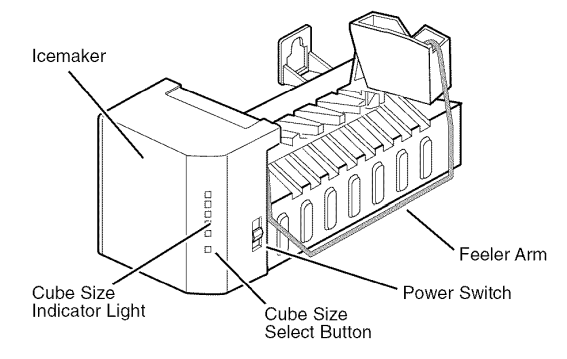
- The icemaker will produce eight cubes per cycle-- approximately 100-130 cubes in a 24-hour period, depending on freezer compartment temperature, room temperature, number of door openings and other operating conditions.
- If the refrigerator is used before the water connection is made to the icemaker, set the power switch to O (off). When the refrigerator has been connected to the water supply, set the power switch to I (on). The icemaker will fill with water when it cools to freezing.
- A newly-installed refrigerator may take 12 to 24 hours to begin making ice cubes. Throw away the first few batches of ice to allow the water line to clear.
- Be sure nothing interferes with the sweep of the feeler arm. When the bin fills to the level of the feeler arm, the icemaker will stop producing ice. It is normal for several cubes to be stuck together. If ice is not used frequently, old ice cubes will become cloudy, taste stale, and shrink.
NORMAL SOUNDSYOU MAY HEAR
- The icemaker water valve will buzz as the icemaker fills with water. If the power switch is in the I (on) position, it will buzz even if it has not yet been hooked up to water.
- To stop the buzzing, move the power switch to O (off).
NOTE:
- Keeping the power switch in the I (on) position before the water line is connected can damage the icemaker.
- You will hear the sound of cubes dropping into the bin and water running in the pipes as the icemaker refills.
PREPARING FOR VACATION
- Set the icemaker power switch to O (off) and shut off the water supply to the refrigerator.
- If the ambient temperature will drop below freezing, have a qualified servicer drain the water supply system to prevent serious property damage due to flooding from ruptured water lines or connections.
BEFORE YOU BEGIN
- This water line installation is not warranted by the refrigerator or icemaker manufacturer. Follow these instructions carefully to minimize the risk of expensive water damage.
- Water hammer (water banging in the pipes) in house plumbing can cause damage to refrigerator parts and lead to water leakage or flooding.
- Call a qualified plumber to correct water hammer before installing the water supply line to the refrigerator. To prevent burns and product damage, do not hook up the water line to the hot water line.
- If you use your refrigerator before connecting the water line, make sure the icemaker power switch is in the O (off) position. Do not install the icemaker tubing in areas where temperatures fall below freezing.
- When using any electrical device (such as a power drill) during installation, be sure the device is doubleinsulated or grounded in a manner to prevent the hazard of electric shock, or is battery-powered. All installations must be in accordance with local plumbing code requirements.
CLEANING
GENERAL CLEANING TIPS
- Unplug refrigerator or disconnect power.
- Remove all removable parts, such as shelves, crispers, etc. Refer to sections in Using Your
- Refrigerator for removal instructions.
- Use a clean sponge or soft cloth and a mild detergent in warm water. Do not use abrasive or harsh cleaners.
- Hand wash, rinse and dry all surfaces thoroughly.
- Plug in refrigerator or reconnect power.
OUTSIDE
- Waxing external painted metal surfaces helps provide rust protection. Do not wax plastic parts. Wax painted metal surfaces at least twice a year using appliance wax (or auto paste wax). Apply wax with a clean, soft cloth.
- For products with a stainless steel exterior, use a clean sponge or soft cloth and a mild detergent in warm water.
- Do not use abrasive or harsh cleaners. Dry thoroughly with a soft cloth.
INSIDE WALLS (allow freezer to warm up so cloth won't stick)
- To help remove odors, you can wash the inside of the refrigerator with a mixture of baking soda and warm water.
- Mix 2 tablespoons baking soda to 1 quart of water (26 g soda to 1 liter water.) Be sure the baking soda is completely dissolved so it does not scratch the surfaces of the refrigerator.
CAUTION:
- While cleaning the inside, do not spray water.
DOOR LINERS AND GASKETS
- Do not use cleaning waxes, concentrated detergents, bleaches, or cleaners containing petroleum on plastic refrigerator parts.
PLASTIC PARTS (covers and panels)
- Do not use window sprays, abrasive cleansers, or flammable fluids. These can scratch or damage the material.
- CONDENSER COILS Remove Back cover. Use a vacuum cleaner with an extended attachment to clean condenser coils. Vacuum coils when dusty or dirty. Coils may need to be cleaned as often as every other month.
WHEN YOU GO ON VACATION
- If you choose to leave the refrigerator on while you are away, follow these steps to prepare your refrigerator before you leave.
- Use up any perishables and freeze other items.
- Empty the ice bin.
- Turn off the Icemaker.
- If you choose to turn the refrigerator off before you leave, follow these steps.
- Remove all food from the refrigerator.
- Depending on your model, set the thermostat control refrigerator control) to OFF. See the Setting the
- Controls section.
- Clean refrigerator, wipe it and dry well.
- Tape rubber or wood blocks to the tops of both doors to prop them open far enough for air to get in. This stops odor and mold from building up.
WHEN YOU MOVE
- When you are moving your refrigerator to a new home, follow these steps to prepare it for the move.
- Remove all food from the refrigerator and pack all frozen food in dry ice.
- Depending on your model, turn the thermostat control refrigerator control) to OFF. See the Setting the
- Controls section.
- Unplug the refrigerator.
- Clean, wipe and dry thoroughly.
- Take out all removable parts, wrap them well and tape them together so they don't shift and rattle during the move. Refer to sections in Using your Refrigerator for removable instructions.
- Depending on the model, raise the front of the refrigerator so it rolls more easily OR screw in the leveling legs all the way so they don't scrape the floor.
- See the Door Closing section.
- Tape the doors shut and tape the power cord to the refrigerator cabinet.
- When you get to your new home, put everything back and refer to the Installing Your Refrigerator section for preparation instructions.
TROUBLESHOOTING GUIDE
UNDERSTANDING SOUNDS YOU MAY HEAR *
- The defrost timer will click when the automatic defrost cycle begins and ends. The thermostat control (or
- Your new refrigerator may make sounds that your old one refrigerator control. depending on the model) will also didn’t make.
- Because the sounds are new to you. you click when cycling on and off. might be concerned about them. Most of the new sounds are normal.
- Hard surfaces. like the floor. walls and « Rattling noises may come from the flow of refrigerant. the cabinets. can make the sounds seem louder than they water line. or items stored on top of the refrigerator. actually are. The following describes the kinds of sounds * Your refrigerator is designed to run more efficiently and what may be making them. to keep your food items at the desired temperature.
- The high efficiency compressor may cause your new refrigerator to run longer than your old one. and you may hear a pulsating or high-pitched sound.
+ You may hear the evaporator fan motor circulating the air through the refrigerator and freezer compartments.
+ As each cycle ends. you may hear a gurgling sound due to the refrigerant flowing in your refrigerator.
+ Contraction and expansion of the inside walls may cause a popping noise.
+ Water dripping on the defrost heater during a defrost cycle may cause a sizzling sound.
+ You may hear air being forced over the condenser by the condenser fan.
+ You may hear water running into the drain pan during the defrost cycle.
The refrigerator that was replaced was an older model.
Modern refrigerators with more storage space require more operating time.
The room temperature is hotter than normal.
- The motor will run longer under warm conditions. At normal room temperatures. expect your motor to run about 40% to 80% of the time. Under warmer conditions. expect it to run even more often.
The door is opened often or a large amount of food has just been added.
- Adding food and opening the door warms the refrigerator.
- It is normal for the refrigerator to run longer in order to cool the refrigerator back down. Adding a large amount of food warms the refrigerator.
- See the Food Storage Guide section on page 15. In order to conserve energy. try to get everything you need out of the refrigerator at once. keep food organized so it is easy to find and close the door as soon as the food is removed.
The refrigerator was recently plugged in and the refrigerator control was set correctly.
- The refrigerator will take up to 24 hours to cool completely.
The refrigerator control is not set correctly for the surrounding conditions.
- See the Adjusting Control Settings section on page 15.
The doors are not closed completely.
- Push the doors firmly shut. If they will not shut all the way. see
Doors will not close completely below.
- The condenser coils are dirty.
- This prevents air transfer and makes the motor work harder.
Clean the condenser coils. Refer to the Care and Cleaning section on pages 24-25.