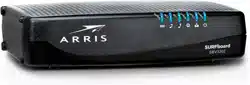
SURFboard
®
G34/G36 DOCSIS
®
3.1 Wi-Fi
®
Cable
Modem
User Guide, S
TANDARD Revision x.5
P/N 365-095-36134

CommScope copyrights and trademarks
©
2021 CommScope, Inc. All rights reserved.
No part of this content may be reproduced in any form or by any means or used to make any
derivave work (such as translaon, transformaon, or adaptaon) without wrien
permission from CommScope, Inc. and/or its aliates (“CommScope”). CommScope
reserves the right to revise or change this content from me to me without obligaon on
the part of CommScope to provide nocaon of such revision or change. ARRIS and the
ARRIS Logo are trademarks of CommScope, Inc. and/or its aliates. All other trademarks are
the property of their respecve owners.
Wi-Fi Alliance
®
, Wi-Fi
®
, the Wi-Fi logo, the Wi-Fi CERTIFIED logo, Wi-Fi protected access
®
(WPA), the Wi-Fi Protected Setup logo, and WMM
®
are registered trademarks of Wi-Fi
Alliance. Wi-Fi Protected Setup
™
, Wi-Fi Mulmedia
™
, and WPA2
™
are trademarks of Wi-Fi
Alliance.
CommScope provides this guide without warranty of any kind, implied or expressed,
including, but not limited to, the implied warranes of merchantability and tness for a
parcular purpose. ARRIS may make improvements or changes in the product(s) described
in this manual at any me.
The capabilies, system requirements and/or compability with third-party products
described herein are subject to change without noce.
SURFboard
®
G34/G36 DOCSIS
®
3.1 Wi-Fi
®
Cable Modem User Guide STANDARD Revision x.5 2

Safety and regulatory informaon
Read all safety and regulatory informaon before installing your device and seng up your
home network connecon.
Important safety instrucons
Read this before you begin — When using your equipment, basic safety precauons should
always be followed to reduce the risk of re, electric shock, and injury to persons, including
the following:
■ Read all the instrucons listed here and/or in the user manual before you operate this
device. Give aenon to all safety precauons. Retain the instrucons for future
reference.
■ This device must be installed and used in strict accordance with manufacturer’s
instrucons, as described in the user documentaon that is included with the device.
■ Comply with all warning and cauon statements in the instrucons. Observe all warning
and cauon symbols that are axed to this device.
■ To prevent re or shock hazard, do not expose this device to rain or moisture. The device
must not be exposed to dripping or splashing. Do not place objects lled with liquids,
such as vases, on the device.
■ This device was qualied under test condions that included the use of the supplied
cables between system components. To ensure regulatory and safety compliance, use
only the provided power and interface cables and install them properly.
■ Dierent types of cord sets may be used for connecons to the main POWER supply
circuit. Use only a main line cord that complies with all applicable device safety
requirements of the country of use.
■ Installaon of this device must be in accordance with naonal wiring codes and conform
to local regulaons.
■ Operate this device only from the type of power source indicated on the device’s
marking label. If you are not sure of the type of power supplied to your home, consult
your dealer or local power company.
■ Do not overload outlets or extension cords, as this can result in a risk of re or electric
shock. Overloaded AC outlets, extension cords, frayed power cords, damaged or cracked
wire insulaon, and broken plugs are dangerous. They may result in a shock or re
hazard.
■ Route power supply cords so that they are not likely to be walked on or pinched by items
placed upon or against them. Pay aenon to cords where they are aached to plugs
and convenience receptacles; and examine the point where they exit from the device.
■ Place this device in a locaon that is close enough to an electrical outlet to
accommodate the length of the power cord.
■ Place the device to allow for easy access when disconnecng the power cord of the
device from the AC wall outlet.
SURFboard
®
G34/G36 DOCSIS
®
3.1 Wi-Fi
®
Cable Modem User Guide STANDARD Revision x.5 3

■ Do not connect the plug into an extension cord, receptacle, or other outlet unless the
plug can be fully inserted with no part of the blades exposed.
■ Place this device on a stable surface.
■ Avoid damaging the device with stac by touching the coaxial cable when it is aached
to the earth-grounded coaxial cable-TV wall outlet.
■ Always rst touch the coaxial cable connector on the device when disconnecng or
reconnecng the Ethernet cable from the device or user’s PC.
■ Installaon of an AC surge protector in the AC outlet to which this device is connected is
recommended. This is to avoid damaging the device by local lightning strikes and other
electrical surges.
■ Postpone installaon unl there is no risk of thunderstorm or lightning acvity in the
area.
■ Avoid using a telephone (other than a cordless type) during an electrical storm. There is
a remote risk of electric shock from lightning. For added protecon, unplug the device
from the wall outlet and disconnect the cables to avoid damage to this device from
lightning and power surges.
■ Do not use this product near water. For example, near a bathtub, washbowl, kitchen
sink, laundry tub, swimming pool, or in a wet basement.
■ Do not use the telephone to report a gas leak located near the leak.
■ Do not cover the device or block the airow to the device with any other objects. Keep
the device away from excessive heat and humidity and keep the device free from
vibraon and dust.
■ Wipe the device with a clean, dry cloth. Never use cleaning uid or similar chemicals. Do
not spray cleaners directly on the device or use forced air to remove dust.
■ For added protecon, unplug the device from the wall outlet and disconnect the cables
to avoid damage to this device during lightning acvity or power surges.
CAUTION: T
o reduce the risk of re, use only No. 26 AWG or larger (e.g., 24 AWG)
UL Listed or CSA Cered Telecommunicaon Line Cord, or naonal equivalent.
■ Upon compleon of any service or repairs to this device, ask the service technician to
perform safety checks to determine that the device is in safe operang condion.
■ Do not open the device. Do not perform any servicing other than that contained in the
installaon and troubleshoong instrucons. Refer all servicing to qualied service
personnel.
■ This device should not be used in an environment that exceeds 104° F (40° C).
SAVE THESE INSTRUCTIONS
Note: To CATV system installer — This r
eminder is provided to call the CATV system
installer’s aenon to Secon 820.93 of the Naonal electric code, which provides
guidelines for proper grounding and, in parcular, species that the coaxial cable
shield must be connected to the grounding system of the building, as close to the
point of cable entry as praccal.
SURFboard
®
G34/G36 DOCSIS
®
3.1 Wi-Fi
®
Cable Modem User Guide S
TANDARD Revision x.5 4

FCC statements
FCC Interference statement
This equipment has been tested and found to comply with the limits for a Class B digital
device, pursuant to part 15 of the FCC Rules. These limits are designed to provide
reasonable protecon against harmful interference in a residenal environment. This
equipment generates, uses, and can radiate radio frequency energy and, if not installed and
used in accordance with the instrucons, may cause harmful interference to radio
communicaons. However, there is no guarantee that interference will not occur in a
parcular installaon. If this equipment does cause harmful interference to radio or
television recepon, which can be determined by turning the device o and on, the user is
encouraged to try to correct the interference by one or more of the following measures:
■ Increase the separaon between the device and receiver.
■ Connect the equipment into an outlet on a circuit dierent from that to which the
receiver is connected.
■ Consult the dealer or an experienced radio/TV technician for help.
This device complies with Part 15 of the FCC Rules. Operaon is subject to the following two
condions: (1) This device may not cause harmful interference, and (2) This device must
accept any interference received, including interference that may cause undesired
operaon.
CAUTION: An
y changes or modicaons not expressly approved by CommScope for
compliance could void the user’s authority to operate the equipment.
FCC Declaraon of Conformity
CommScope, Inc, 3871 Lakeeld Drive, Suwanee, GA 30024, declares that the SURFboard
device complies with 47 CFR Parts 2 and 15 of the FCC rules as a Class B digital device.
FCC Radiaon Exposure statement
This equipment complies with FCC radiaon exposure limits set forth for an uncontrolled
environment. To comply with the FCC RF exposure compliance requirements, the separaon
distance between the antenna and any person’s body (including hands, wrists, feet and
ankles) must be at least 8 inches (20.3 cenmeters).
This transmier must not be co-located or operang in conjuncon with any other antenna
or transmier except those already approved in this ling.
The availability of some specic channels and/or operaonal frequency bands are country
dependent and are rmware programmed at the factory to match the intended
desnaons. The rmware seng is not accessible by the end user.
SURFboard
®
G34/G36 DOCSIS
®
3.1 Wi-Fi
®
Cable Modem User Guide S
TANDARD Revision x.5 5

Wireless LAN informaon
Note: This applies to devices that provide Wi-Fi capability.
This device is a wireless network product that uses Direct Sequence Spread Spectrum (DSSS)
and Orthog
onal Frequency-Division Mulple Access (OFDMA) radio technologies. The device
is designed to be interoperable with any other wireless DSSS and OFDMA products that
comply with:
■ The IEEE 802.11 Standard on Wireless LANs (Revision AC, Revision B, Revision G, and
Revision N), as dened and approved by the Instute of electrical electronics engineers.
■ The wireless delity (Wi-Fi) cercaon as dened by the Wireless Ethernet
Compability Alliance (WECA).
Restricons on the use of wir
eless devices
In some situaons, or environments, the use of wireless devices may be restricted by the
proprietor of the building or responsible representaves of the organizaon. For example,
using wireless equipment in any environment where the risk of interference to other devices
or services is perceived or idened as harmful.
If you are uncertain of the applicable policy for the use of wireless equipment in a specic
organizaon or environment, you are encouraged to ask for authorizaon to use the device
prior to turning on the equipment.
The manufacturer is not responsible for any radio or television interference caused by
unauthorized modicaon of the devices included with this product, or the substuon or
aachment of connecng cables and equipment other than specied by the manufacturer.
Correcon of the interference caused by such unauthorized modicaon, substuon, or
aachment is the responsibility of the user.
The manufacturer and its authorized resellers or distributors are not liable for any damage
or violaon of government regulaons that may arise from failing to comply with these
guidelines.
Note: The use of the 5150-5250 MHz fr
equency band is restricted to indoor use only.
Warning: This de
vice allows you to create a wireless network. Wireless network
connecons may be accessible by unauthorized users. For more informaon on how
to protect your network, refer to the relevant chapters in this document or visit our
Consumer Support website at hp://www.arris.com/selelp.
SURFboard
®
G34/G36 DOCSIS
®
3.1 Wi-Fi
®
Cable Modem User Guide S
TANDARD Revision x.5 6
Caring for the environment by recycling
your ARRIS equipment
Please do not dispose of this product with your r
esidenal or commercial
waste. Contact your local authories for informaon about pracces
established for your region. If collecon systems are not available, call
ARRIS Technical Support at 1-877-466-8646 for assistance.
SURFboard
®
G34/G36 DOCSIS
®
3.1 Wi-Fi
®
Cable Modem User Guide S
TANDARD Revision x.5 7

Table of contents
Chapter 1: Introducon...........................................................................10
In the box...................................................................................................................... 10
Addional items needed (not included).............................................................11
System requirements.................................................................................................... 11
Contact informaon......................................................................................................11
Chapter 2: Product overview................................................................... 12
Front panel and LED behavior.......................................................................................12
Rear panel and connectors........................................................................................... 13
Wi-Fi cable modem label.............................................................................................. 15
Chapter 3: Geng started....................................................................... 16
Set up your G34/G36 home Wi-Fi network using your client device............................16
Chapter 4: Add devices to your home Wi-Fi network .............................. 19
Quick connect using the Windows task bar..................................................................20
Connect using the Windows control panel................................................................... 22
Chapter 5: Test your Wi-Fi network connecon....................................... 25
Chapter 6: Using the Wi-Fi Cable Modem Web Manager......................... 26
Start the G34/G36 Web Manager (rst-me login)...................................................... 26
Start the G34/G36 Web Manager................................................................................. 29
G34/G36 Web Manager menu links................................................................... 31
Exit the G34/G36 Web Manager...................................................................................33
Chapter 7: Conguring your Wi-Fi network..............................................34
Set up your Wi-Fi network............................................................................................ 34
Change your Wi-Fi network name (SSID)......................................................................38
Set up WPS on your Wi-Fi network...............................................................................40
Chapter 8: Protecng & monitoring your Wi-Fi network.......................... 42
Change the login password...........................................................................................42
Set up rewall protecon............................................................................................. 44
IPv4 security....................................................................................................... 44
IPv6 security....................................................................................................... 46
Set up Parental Control.................................................................................................46
SURFboard
®
G34/G36 DOCSIS
®
3.1 Wi-Fi
®
Cable Modem User Guide STANDARD Revision x.5 8

Set up Port Forwarding................................................................................................. 50
Set up Port Triggers.......................................................................................................52
Set up the DMZ host..................................................................................................... 54
Set up the ALG.............................................................................................................. 55
Restore the G34/G36 default conguraon sengs.................................................... 56
Exchange the roung informaon................................................................................ 57
Set up Dynamic DNS client............................................................................................57
Manage UPnP network................................................................................................. 58
Set up MAC bridging..................................................................................................... 59
Chapter 9: Managing your Wi-Fi cable modem and connected
networks............................................................................................. 61
View the G34/G36 system hardware informaon........................................................ 61
View the G34/G36 soware version.............................................................................62
Set up an Ethernet port connecon for your data input.............................................. 62
Reboot the G34/G36.....................................................................................................64
Reboot the G34/G36 using the Reset buon..................................................... 64
Reboot the G34/G36 using the Web Manager................................................... 65
Restore the G34/G36 default conguraon sengs.................................................... 66
Exit the G34/G36 Web Manager...................................................................................67
Chapter 10: Troubleshoong ps.............................................................68
Soluons....................................................................................................................... 68
SURFboard
®
G34/G36 DOCSIS
®
3.1 Wi-Fi
®
Cable Modem User Guide STANDARD Revision x.5 9

Chapter 1
Introducon
Welcome to the next generaon of ultra, high-speed ARRIS
®
DOCSIS 3.1
®
Wi‑Fi cable
modems. The SURFboard G34/G36 is a combinaon of DOCSIS 3.1 cable modem and mul-
port Ethernet router with Wi-Fi. It uses DOCSIS 3.1 technology to provide ultra, high-speed
Internet access in your home or small business network. Using the connecon capabilies of
the Wi‑Fi cable modem, you can connect your computer and other network-enabled devices
using the four Ethernet ports or the 2.4 GHz and 5 GHz wireless connecons. The G34/G36
connects to the exisng coaxial cable connecon in your home.
The ARRIS SURFboard Central mobile app assists you with your modem setup and funcons.
It steps you through installing your home Wi-Fi network using your iOS or Android mobile
device and lets you manage your home network access, Parental Control, Guest Access, and
more on all your connected devices (e.g., smartphones, cameras, tablets, computers, smart
TVs, gaming consoles, and more) across your home Wi-Fi network.
This user guide provides instrucons for installing and conguring your G34/G36, seng up
secure Wi-Fi network connecons for your network devices, and managing your Wi-Fi home
network conguraon.
In the box
Before installing your G34/G36, check that the items listed in the table below are included in
the G34/G36 product box. If any items are missing, please call ARRIS technical support at
1-877-466-8646 for assistance.
Table 1: G34/G36 package contents
Item Descripon
G34/G36
Wi‑Fi c
able modem
High-speed DOCSIS 3.1 cable modem, wireless
access poin
t, and four-port Ethernet router
Wall power supply
Power supply for an electrical wall outlet c
onnecon
Soware License &
W
arranty card
Contains safety and regulatory in
formaon, soware
license, and warranty for the G34/G36.
SURFboard
®
G34/G36 DOCSIS
®
3.1 Wi-Fi
®
Cable Modem User Guide STANDARD Revision x.5 10

Item Descripon
SURFboard Quick
Start Guide
Provides informaon for installing your Wi‑Fi cable
modem and seng up a secure Wi-Fi network
connecon in your home or small business network.
Addional it
ems needed (not included)
The following items are not included in the product box and must be purchased separately, if
required:
■ Coaxial (coax) cable - if one is not already connected to a cable wall outlet
■ RF splier - for addional coaxial cable connecons, such as a set-top box or smart TV
■ Ethernet cable - for each addional Ethernet-enabled device
System requirements
■ High-speed Internet access account
■ Web browser access – Internet Explorer, Google Chrome, Firefox, or Safari
■ Compable operang systems:
● Windows
®
10
● Windows 8
● Windows 8.1
● Windows 7 service pack 1 (SP1)
Note: Although older v
ersions of Microso Windows operang systems are
no longer specically supported, they should sll funcon with your G34/G36.
● Mac
®
10.4 or higher
● UNIX
®
● Linux
®
Contact informaon
For technical support and addional ARRIS product informaon:
■ Visit the ARRIS Support website: www.arris.com/selelp
■ Call ARRIS Technical Support: 1-877-466-8646
Chapter 1: In
troducon
SURFboard
®
G34/G36 DOCSIS
®
3.1 Wi-Fi
®
Cable Modem User Guide STANDARD Revision x.5 11
Chapter 2
Product overview
Front panel and LED behavior
Figure 1: G34/G36 front view
LED behavior
LED behavior LED acon
Amber (Solid) Power is connected
Green (Blinking)
Acquiring downstream/
up
stream connecon
Green (Solid)
Online status in DOCSIS 3.0
mode
Blue (Solid)
Online status in DOCSIS 3.1
SURFboard
®
G34/G36 DOCSIS
®
3.1 Wi-Fi
®
Cable Modem User Guide STANDARD Revision x.5 12

LED behavior LED acon
mode
Light Blue (Solid) WAN over Ethernet mode
Amber (Blinking) Firmware download
Rear panel and connectors
Figure 2a: G34 rear view
Figure 2b: G36 rear view
Chapter 2: Product overview
SURFboard
®
G34/G36 DOCSIS
®
3.1 Wi-Fi
®
Cable Modem User Guide STANDARD Revision x.5 13
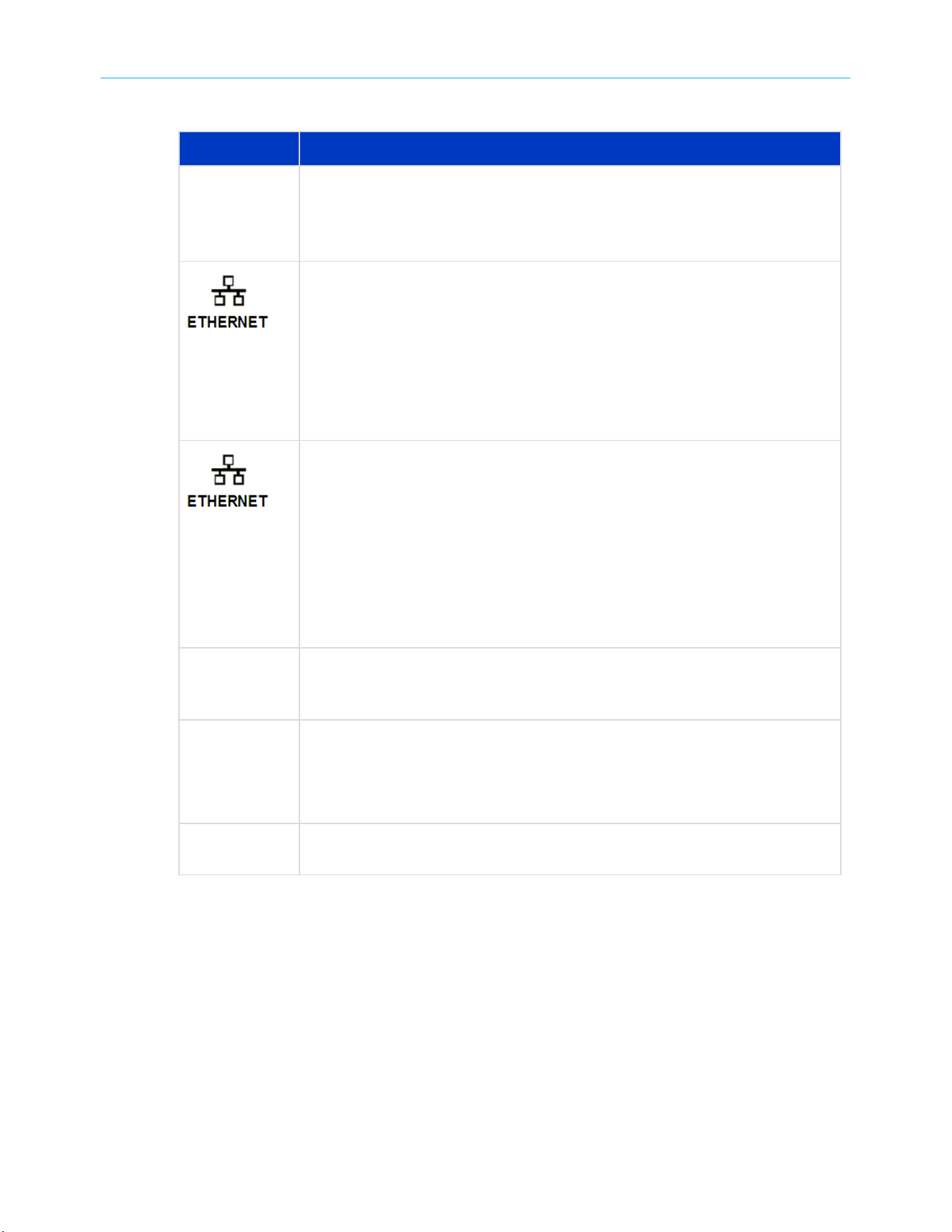
Rear panel and connectors
Port name Descripon
Reset buon Reset buon located on the rear panel of your G34/G36 can be used to
either reboot your G34/G36 or reset the G34/G36 conguraon sengs.
See Reboot the G34/G36 using the Reset buon (page 64) and Restore the
G34/G36 default conguraon sengs (page 56) for more informaon.
10/100/1000
Four one-gigabit Ethernet ports for RJ-45 network cable connecons:
■ Green: LED is ON - Indicates a data transfer rate of one gigabit per
second
■ Green: LED is Blinking - Indicates data trac is in progress
■ Amber: LED is ON - Indicates a data transfer rate of less than one gigabit
per second
■ Amber: LED is Blinking - Indicates data trac is in progress
2.5 GE
(a
vailable in
G36 unit)
One 2.5 Gigabit Ethernet port for RJ-45 network cable c
onnecon:
Note: CAT6 Ethernet cable and 2.5-Gigabit Ethernet capable device is
required to achieve Ethernet connecon throughout up to 2.5 Gbps.
■ Green: LED is ON: Indicates a data transfer rate of 2.5 gigabit per second
■ Green: LED is Blinking: Indicates data trac is in progress
■ Amber: LED is ON: Indicates a data transfer rate of less than 2.5 gigabit
per second
■ Amber: LED is Blinking: Indicates data trac is in progress
Coaxial cable connector
Power port 100 - 240 VAC Power connector must r
eect a 12 VDC @2.5A power
adapter.
Warning: To avoid any damage to your G34/G36, only use the power supply
included in the G34/G36 box.
2.5G This is available in only G36 Wi-Fi cable modem to connect to the 2.5G
Ethernet port.
Chapter 2: Product overview
SURFboard
®
G34/G36 DOCSIS
®
3.1 Wi-Fi
®
Cable Modem User Guide STANDARD Revision x.5 14

Wi-Fi cable modem label
Figure 3: Sample G34/G36 Wi‑Fi c
able modem label
The Wi‑Fi cable modem labels are located on the boom of your G34/G36. The labels
contain the informaon you will need to acvate the G34/G36 for your home Internet
service or technical support issues.
To acvate your Internet service, contact your service provider for assistance. When
contacng your service provider or ARRIS Technical Support (page 11), you may have to
provide the following informaon listed on the G34/G36 labels:
■ Wi‑Fi cable modem Model name (G34/G36)
■ Wi‑Fi cable modem Serial number (SN)
■ Wi‑Fi cable modem MAC address (HFC MAC)
Chapter 2: Product overview
SURFboard
®
G34/G36 DOCSIS
®
3.1 Wi-Fi
®
Cable Modem User Guide STANDARD Revision x.5 15

Chapter 3
Geng started
This product is for indoor use only. Do not route the Ethernet cable(s) outside of the
building. Exposure of the cables to lightning could create a safety hazard and damage the
product.
Before installing your G34/G36 Check with your service provider (or local cable company) to
ensure broadband cable service is available in your area.
Some screenshots throughout this chapter may contain images of a model dierent that
your own, these are simply examples and the app on your mobile device should represent
the model you are conguring.
You can set up your G34/G36 home Wi-Fi network in one of the following ways.
■ Using the Suroard Central app (SBC app): It is recommended that you set up your
home Wi-Fi network using the SBC app. For details on how to set up, refer to the
SURFboard Central User Guide for Wi-Fi Cable Modems available on the hp://
www.arris.com/selelp.
■ Using client device (laptop/desktop): If you are using your client device (laptop/Desktop)
with a wired Ethernet connecon to set up your home Wi-Fi network then perform the
following task.
● Set up your G34/G36 home Wi-Fi network using your client device (page 16)
Set up your G34/G36 home Wi-Fi network using
your client device
To set up your Internet connecon on your home network using your client device (laptop/
desktop):
■ Ensure to choose a locaon in your home where your computer and Wi‑Fi cable modem
are preferably near exisng cable and electrical wall outlets.
■ Ensure to keep the informaon such as Wi‑Fi cable modem model name (G34/G36), HFC
MAD ID, and the serial number (SN) listed on your cable modem label (available on the
boom of your modem and last page of the Quick Start Card) ready as you may need
them while contacng your service provider. See Wi-Fi cable modem label (page 15)) for
more informaon.
Note: Y
our G34/G36 supports using an Ethernet port connecon for your data input
in place of an RF cable connecon. You will be able to connect to an alternate
Internet connecon and use your G34/G36 as your router and Wi-Fi source. This is a
SURFboard
®
G34/G36 DOCSIS
®
3.1 Wi-Fi
®
Cable Modem User Guide S
TANDARD Revision x.5 16

useful feature if you choose to change your Internet service to a provider that is not a
cable operator. You can sll use the G34/G36 as your Wi-Fi router.
You can enable or disable this feature which is available for the LAN Ethernet port 4
as WAN over Ethernet. See Set up an Ethernet port connecon for your data input
(page 62) for more informaon.
G36 c
onnecon diagram
G34 c
onnecon diagram
1. Check that a coaxial cable is already connected to a cable wall outlet or RF splier (not
included) and then connect the other end of the coaxial cable to the Cable connector on
the rear of your G34/G36.
■ Use your hand to ghten the connectors to avoid damaging them. Proceed with step
2.
■ Connect an Ethernet cable to the fourth Ethernet port on the rear of your G34/G36.
Proceed with step 3.
2. Connect an Ethernet cable to any available Ethernet port on the rear of your G34/G36.
3. Connect the other end of the Ethernet cable to the Ethernet port on your computer.
Repeat steps 2 and 3 for an addional computer or other network device that you want
to install as a wired connecon on your home network.
Chapter 3: Ge
ng started
SURFboard
®
G34/G36 DOCSIS
®
3.1 Wi-Fi
®
Cable Modem User Guide STANDARD Revision x.5 17

4. Connect the power cord to the Power port on the rear of your G34/G36.
5. Plug the other end of the power cord into an electrical wall outlet that is not controlled
by a wall switch.
Note: This automacally powers ON your G34/G36. There may be up to a 15
second delay for the LED on the G34/G36 front panel to light up aer the power
is connected.
Although your computer may already be congured to automacally access the Internet,
you should sll perform the following connecvity test to verify that the devices were
connected properly.
6. Power ON the computer connected to your G34/G36 if it is turned o, and then log in.
7. Contact your service provider to acvate (provision) the G34/G36. You may have to
provide the HFC MAC ID listed on the Wi‑Fi cable modem label.
8. Enter your service provider’s web browser URL:
■ Comcast/Xnity: hp://www.xnity.com/acvate
■ Cox: hp://www.cox.com/acvate
■ Spectrum: hp://spectrum.net/selnstall
9. Aer the G34/G36 is provisioned (or acvated), open a web browser (such as Internet
Explorer, Google Chrome, Firefox, or Safari) on your computer.
10. Click www.suroard.com or type a valid URL in the address bar and then press Enter.
The ARRIS SURFboard website or your URL of choice should open. If the website fails to
open, please contact your service provider for assistance.
11. Check that the front panel LED on the G34/G36 lights up in sequenal order. See Front
panel (page 12) for addional LED status informaon.
■ If the LED did not light up and you do not have an Internet connecon, you may have
to contact your service provider to reacvate the G34/G36 or check for signal issues.
■ If you sll cannot connect to the Internet, please call ARRIS Technical Support at
1-877-466-8646 for assistance.
Chapter 3: Geng started
SURFboard
®
G34/G36 DOCSIS
®
3.1 Wi-Fi
®
Cable Modem User Guide STANDARD Revision x.5 18

Chapter 4
Add devices to your home Wi-Fi network
Note: You will need the Wi-Fi Network Name (SSID) and Wi-Fi Security Key (Network
Password) to connect your client devices to your home network. The default network
name and network password are listed on the G34/G36 Wi-Fi cable modem label
(page 15).
Choose one of the opons listed below for the client device you are using to set up a Wi-Fi
network connecon on your home network. Repeat for each addional device:
■ Personal Computer (PC) – Select one of the following:
● Quick connect using the Windows task bar (page 20)
● Connect using the Windows control panel (page 22)
The steps for seng up your Wi-Fi network connecon may dier slightly depending
on the version of Microso Windows running on your client device. The steps used
in this secon apply to Windows 7.
Android device
From any screen on your client device:
1. Select to open the Sengs screen.
2. Select Wi-Fi to turn it ON.
Your device will automacally start searching and then display a list of available Wi‑Fi
networks.
3. Select your Wi-Fi network name (SSID) from the list.
4. If prompted, type your Wi-Fi Security Key (network password). Please note that your
network password may be case-sensive.
5. Select Connect. If your Wi-Fi network connecon is successful, "Connected" will
display under your network name.
Apple computer
From any screen on your client device:
1. Click (Wi-Fi icon) to display a list of available Wi-Fi networks.
2.
Select the Wi-Fi network name (SSID) for your home network from the list.
3. If prompted, enter your network password in the Password eld.
Note: Checkmark R
emember this network if you want your Mac computer/
client device to automacally connect to your home network when you log
on. Your computer must be within range of your Wi-Fi network to connect to
it.
4. Click OK.
SURFboard
®
G34/G36 DOCSIS
®
3.1 Wi-Fi
®
Cable Modem User Guide S
TANDARD Revision x.5 19

Apple mobile device
From the Home screen on your client device:
1. Select Sengs to open the Wi-Fi screen.
2. Select Wi-Fi to turn it ON.
Your device will automacally start searching and then list the available Wi-Fi
networks.
3. Select the Wi-Fi network name (SSID) for your home network from the list to
connect.
If your Wi-Fi connecon is successful, ✓ will display next to the Wi-Fi network name.
Note: For more informaon on seng up your Wi-Fi network connecons,
refer to the user documentaon for your specic client device.
Quick connect using the Windows task bar
1. From the Windows taskbar on your computer, click the Wi-Fi Link icon to open the list of
available Wi-Fi networks.
Figure 9: Sample Microso Windows taskbar icons
Note: If the Wi-Fi Link icon is not visible, le click on the Show hidden icons
buon on the Windows taskbar to open the list of addional icons.
Figure 10: Sample available Wi-Fi networks Micr
oso Window
2. Locate and le-click on the G34/G36 Wi-Fi network name or SSID (for example, G34/
G36-####) for your G34/G36 from the list of available Wi-Fi networks.
Chapter 4: Add devices to your home Wi-Fi network
SURFboard
®
G34/G36 DOCSIS
®
3.1 Wi-Fi
®
Cable Modem User Guide STANDARD Revision x.5 20

The default SSID is located on the Wi‑Fi cable modem on the boom of your G34/G36.
Note: You must use the default SSID listed on the Wi‑Fi cable modem label when
installing the Wi‑Fi cable modem and seng up your rst Wi-Fi network
connecon. You can change the SSID aer your network connecons are up and
running. See Change your Wi-Fi network name (SSID) (page 38) for more
informaon.
Figure 11: Sample Wi-Fi network c
onnecon screen
3. Select Connect automacally to set up your Wi-Fi devices to automacally connect to
your Wi-Fi network without having to log on using a user password.
4. Click Connect to open the Connect to a Network window and set up your new network
password.
Figure 12: Network security key window
5.
Enter the Network Security Key (your Wi-Fi network password) in the Security key eld.
Note: Y
ou can use the default Wi-Fi Security Key code listed on the G34/G36 Wi‑Fi
cable modem label or enter your own personal Wi-Fi network password. See
Change the login password (page 42) for more informaon on creang login
passwords.
If you have already changed your Wi-Fi network password using the G34/G36 Web
Manager, enter that password in the Enter the network security key eld and then click
Next.
Chapter 4: Add devices to your home Wi-Fi network
SURFboard
®
G34/G36 DOCSIS
®
3.1 Wi-Fi
®
Cable Modem User Guide STANDARD Revision x.5 21

Figure 13: Network security key window
Connect using the Windo
ws control panel
1. From the Windows taskbar on your computer, click Start buon and then click Control
Panel.
2. Click Network and Sharing Center to open the Network and Sharing Center window.
Figure 14: Control panel-network and sharing center window
3. Click Se
t up a new connecon or network under Change your networking sengs panel.
Chapter 4: Add devices to your home Wi-Fi network
SURFboard
®
G34/G36 DOCSIS
®
3.1 Wi-Fi
®
Cable Modem User Guide STANDARD Revision x.5 22

Figure 15: Set up a c
onnecon or network window
4. Click Manually connect to a wireless network and then click Next.
Figure 16: Manually connect to a wireless window
Chapter 4: Add devices to your home Wi-Fi network
SURFboard
®
G34/G36 DOCSIS
®
3.1 Wi-Fi
®
Cable Modem User Guide STANDARD Revision x.5 23

5. Enter the G34/G36 Wi-Fi network name or SSID (G34/G36-####) for your G34/G36 in the
Network name eld.
The default SSID is listed on the Wi‑Fi cable modem label on the boom of your G34/
G36.
Note: You have the opon to change your Wi-Fi network name or SSID aer
seng up your Wi-Fi network connecon. However, you must use the default
SSID listed on the Wi‑Fi cable modem label aer installing your Wi‑Fi cable
modem. See Change your Wi-Fi network name (SSID) (page 38) for more
informaon.
6. Select the wireless Security level for your Wi-Fi network from the Security type drop-
down list.
Note: WPA2-Personal is the recommended wireless security level for your Wi‑Fi
home network. It is the default security level for the G34/G36 and the highest
security level available.
7. Select the password encrypon type from the Encrypon type drop-down list.
This is used for securing your Wi-Fi network.
■ TKIP – Temporal Key Integrity Protocol
■ AES – Advanced Encrypon Standard (recommended). AES is the default encrypon
type for the G34/G36.
8. Enter a security code (passphrase) for your Wi-Fi network password in the Security Key
eld.
You can use the default WI-FI SECURITY KEY listed on the G34/G36 Wi‑Fi cable modem
label or create your own personal network password.
Note: R
emember to use a unique combinaon of leers, numbers, and special
characters to create a more secure password. See Change the login password
(page 42) for more informaon.
9. Select Hide characters checkbox to prevent your Security Key (network password) from
displaying in the eld.
10. Select Start this connecon automacally so that your Wi-Fi devices will automacally
connect to your Wi-Fi network when they are powered on.
11. Click Next to complete the Wi-Fi network setup.
The Successfully added <Network name> message for your new Wi-Fi network should
appear.
12. Click Close to exit.
Chapter 4: Add devices to your home Wi-Fi network
SURFboard
®
G34/G36 DOCSIS
®
3.1 Wi-Fi
®
Cable Modem User Guide STANDARD Revision x.5 24

Chapter 5
Test your Wi-Fi network connecon
Perform the following connecvity test to check that Wi-Fi connecons were established for
the G34/G36 and the other Wi-Fi devices on your home network:
1. Check if your Wi-Fi devices successfully connected to your Wi-Fi network, then
disconnect the Ethernet cable, if connected, from your computer and the G34/G36.
2. Check that the LED on the G34/G36 front panel is lit SOLID Green in DOCSIS 3.0 mode
and SOLID Blue in DOCSIS 3.1 mode.
3. Open a web browser on your computer, such as Internet Explorer, Google Chrome,
Firefox, or Safari.
4. Type a valid URL (such as www.suroard.com) in the address bar and then press Enter.
If the website failed to open, please contact your service provider or call ARRIS Technical
Support at 1-877-466-8646 for assistance.
SURFboard
®
G34/G36 DOCSIS
®
3.1 Wi-Fi
®
Cable Modem User Guide STANDARD Revision x.5 25

Chapter 6
Using the Wi-Fi Cable Modem Web
Manager
Use the G34/G36 Web Manager to view and monitor the network conguraon sengs and
operaonal status of your G34/G36. You can also congure your network connecons and
Wi-Fi security sengs, see Protecng & monitoring your Wi-Fi network (page 42) for more
informaon.
To ensure that your Wi-Fi home network is secure, ARRIS recommends that you follow these
best pracces for creang your login password:
■ Always create a secure password or pass phrase that is not easily guessed.
■ Use phrases instead of names so that it may be easier for you to remember.
■ Use a combinaon of upper and lowercase leers, numbers, and symbols.
Start the G34/G36 Web Manager (rst-me
login)
Note: Y
our network security is very important to ARRIS. The rst me you log on to
the G34/G36, the Gateway Home Network Wizard opens for you to set up your login
password. The wizard walks you through seng up your G34/G36 Web Manager
login password, Wi-Fi home network security informaon, and me zone.
1. Open a web browser (such as Internet Explorer, Google Chrome, Firefox, or Safari) on
y
our client device (for example, a computer or a laptop) that is connected to your G34/
G36.
2. Type the default LAN IP address, 192.168.0.1, in the Address bar and then press Enter
to log onto the G34/G36.
The G34/G36 Home Network Wizard screen displays (see gure 17).
3. Enter your password in the New Password eld.
Note:
The pass
word is case-sensive and must include each of the following:
■ Minimum of eight characters
■ At least one uppercase alphabec character: A through Z
■ At least one number: 0 to 9
■ One of the following special characters:
~ ! @ # $ % ^ * ( ) - _ = + [ ] { } | ; : , . / ?
SURFboard
®
G34/G36 DOCSIS
®
3.1 Wi-Fi
®
Cable Modem User Guide S
TANDARD Revision x.5 26

4. Enter your password again in the Re-enter New Password eld.
5. Select the Show Typed Password check box to conrm that both passwords match.
Please note that this password is required to log in to the G34/G36 Web Manager. Write
it down and place it in a secure place for future reference and availability, if needed.
Figure 17: G34/G36 Home Network Wizard-Step 1 screen
6.
Enter the CAPTCHA code in the Type CAPTCHA Here entry box.
7. Click NEXT STEP to connue.
The G34/G36 Home Network Wizard – Step 2 screen displays.
Chapter 6: Using the Wi-Fi Cable Modem Web Manager
SURFboard
®
G34/G36 DOCSIS
®
3.1 Wi-Fi
®
Cable Modem User Guide STANDARD Revision x.5 27

Figure 18: G34/G36 Home Network Wizard-Step 2 screen
8.
Keep or change the current default Wi-Fi network name in the Wi-Fi Network Name (2.4
GHz) eld.
To change the Wi-Fi network name, enter a new name of your choice. The network
name can consist of any combinaon of up to 32 alphanumeric characters.
9. Select one of the following Wi-Fi network security opons for your G34/G36 Wi-Fi home
network from the Encrypon Method (2.4 GHz) drop-down list:
■ Open (risky): Network security is not set, and your Wi-Fi network is not secure. This
network security opon allows unauthorized access to your Wi-Fi network without a
Wi-Fi Security Key (network password).
■ WPA2-PSK (AES): Wi-Fi Protected Access version 2 with Pre-Shared Key.
■ WPAWPA2-PSK (TKIP/AES) (Recommended): Wi-Fi Protected Access version 2 with
Pre-Shared Key (most compable).
■ WPA3 Personal (AES): Wi-Fi Protected Access version 3 with Pre-Shared Key.
■ WPA 2/WPA3 Mixed Personal (AES) (Recommended): Combinaon Wi-Fi Protected
Access version 2 and Wi-Fi Protected Access version 3 and provides addional
network security.
10. Keep or change the current default Wi-Fi network password in the Network Password
(2.4 GHz) eld.
11. Repeat steps 8 through 10 for your 5 GHz Wi-Fi network sengs.
12. Click NEXT STEP to connue.
Chapter 6: Using the Wi-Fi Cable Modem Web Manager
SURFboard
®
G34/G36 DOCSIS
®
3.1 Wi-Fi
®
Cable Modem User Guide STANDARD Revision x.5 28

Figure 19: G34/G36 Home Network Wizard-Step 3 screen
13. Select Automac or Manual to set up your me zone.
■ Select Automac to allow the network to automacally set your me zone.
■ Select Manual to choose your me zone from the Time Zone drop-down list.
14. Click FINISH.
Start the G34/G36 Web Manager
To open the G34/G36 Web Manager:
1. Open a web browser (such as Internet Explorer, Google Chrome, Firefox, or Safari) on the
computer or laptop connected to your G34/G36.
2. Type the default LAN IP address, 192.168.0.1, in the Address bar and then press Enter
to log onto the G34/G36 and open the G34/G36 Web Manager Login screen.
Chapter 6: Using the Wi-Fi Cable Modem Web Manager
SURFboard
®
G34/G36 DOCSIS
®
3.1 Wi-Fi
®
Cable Modem User Guide STANDARD Revision x.5 29

Figure 20: G34/G36 Web Manager Login screen
3.
Type admin for the default login username (case-sensive) in the Username eld.
4. Type your new password in the Password eld.
Figure 21: G34/G36 Web Manager Login screen
5.
Click LOGIN to open the G34/G36 Web Manager.
The Product Registraon window opens.
Figure 22: G34/G36 Product R
egistraon screen
6. Click Register, Ask me later, or Stop asking to proceed.
Chapter 6: Using the Wi-Fi Cable Modem Web Manager
SURFboard
®
G34/G36 DOCSIS
®
3.1 Wi-Fi
®
Cable Modem User Guide STANDARD Revision x.5 30

Figure 23: G34/G36 Summary screen
Note: See Se
t up your Wi-Fi network (page 34) to congure your home network
for Wi-Fi.
G34/G36 Web Manager menu links
The G34/G36 main menu links and related submenu opon links are displayed along the le
side of the G34/G36 Web Manager screen. Click on the main menu link to expand the list of
submenu opons.
Chapter 6: Using the Wi-Fi Cable Modem Web Manager
SURFboard
®
G34/G36 DOCSIS
®
3.1 Wi-Fi
®
Cable Modem User Guide STANDARD Revision x.5 31

Figure 24: G34/G36 Web Manager menu links
Table 4: G34/G36 Web Manager menu links
Menu link Funcon
Gateway Displays a summary of your network c
onnecons and a list of the
connected devices on your home network.
Summary Displays the Wi-Fi status for your home network and
network-connected devices.
Connecon Displays the network connecon and status informaon for the
G34/G36 network, Local IP network, and your private Wi-Fi network.
Firewall Congures the G34/G36 rewall sengs to protect your home
network from possible aacks from hackers or viruses.
Soware Displays informaon related to the G34/G36 soware version.
Hardware Displays status informaon for the G34/G36 hardware, such as the
baery status, Ethernet connecon(s), and Wi-Fi connecons.
Time Allows you to set the me on your G34/G36 based on your selected
me zone.
Wizard Allows you to congure the default network sengs on your G34/G36
to set up a secure home network.
Connected Devices Provides general informaon for the connected devices on your home
network.
Advanced Allows you to set up Port Forwarding, Port Triggering, Remote
Management for troubleshoong or maintenance purposes, the DMZ
Host, and manage the UPnP network on your home network.
Chapter 6: Using the Wi-Fi Cable Modem Web Manager
SURFboard
®
G34/G36 DOCSIS
®
3.1 Wi-Fi
®
Cable Modem User Guide STANDARD Revision x.5 32

Menu link Funcon
Troubleshoong Provides several opons to help you resolve certain problems that may
occur with your G34/G36.
Exit the G34/G36 Web Manager
To log out and close the G34/G36 Web Manager:
■ Click Logout link located in the upper right corner of the G34/G36 Web Manager screen.
Figure 25: G34/G36 Web Manager logout link
Chapter 6: Using the Wi-Fi Cable Modem Web Manager
SURFboard
®
G34/G36 DOCSIS
®
3.1 Wi-Fi
®
Cable Modem User Guide STANDARD Revision x.5 33

Chapter 7
Conguring your Wi-Fi network
You have the opon to either use the default network sengs which are unique to your
G34/G36 for security purposes or you can congure dierent network sengs. The G34/G36
supports a secure method for seng up mulple Wi-Fi networks on your G34/G36.
Set up your Wi-Fi network
1. Open a web browser and log on to the G34/G36 to open the G34/G36 Web Manager.
See Start the G34/G36 Web Manager (rst-me login) (page 26) for more informaon, if
necessary.
2. Click the menu links Gateway > Connecon > Wi-Fi > Networks .
The Gateway Connecon Wi-Fi screen appears.
Figure 26: G34/G36 Wi-Fi c
onnecon screen
SURFboard
®
G34/G36 DOCSIS
®
3.1 Wi-Fi
®
Cable Modem User Guide S
TANDARD Revision x.5 34

3. To set up the Network Security mode for your Wi-Fi home network, click the Home Wi-Fi
Network 2.4 GHz EDIT buon.
Figure 27: Wi-Fi network setup screen
4. Choose to either keep the default network name SSID (Service Set Iden
er) for your
Wi-Fi home network in the Network Name (SSID) eld or enter a new network name of
your choice.
Note: The Wi-Fi ne
twork name cannot be the same name as any other SSID on
your home network. You can use any combinaon of lowercase and uppercase
leers, numbers, and/or special characters (symbols) up to a maximum of 32
characters.
5. Select one of the following Wi-Fi network security opons for your G34/G36 from the
Security Mode drop-down list:
■ WPA2-PSK (TKIP/AES) (Recommended): Wi-Fi Protected Access version 2 with Pre-
Shared Key (most compable).
This is the default network security opon for your G34/G36. It provides the highest
security and performance for your Wi-Fi network.
■ WPA2-PSK (AES): Wi-Fi Protected Access version 2 with Pre-Shared Key.
■ Open (risky) (not secure and not recommended): This network security opon does
not provide any level of network security for your Wi-Fi network. It allows outside
users to connect to your Wi-Fi network without having to use a Wi-Fi Security Key
(network password).
■ WPA3 Personal (AES): Wi-Fi Protected Access version 3 with Pre-Shared Key.
■ WPA 2/WPA3 Mixed Personal (AES) (Recommended): Combinaon Wi-Fi Protected
Access version 2 and Wi-Fi Protected Access version 3 and provides addional
network security.
Chapter 7: Conguring your Wi-Fi ne
twork
SURFboard
®
G34/G36 DOCSIS
®
3.1 Wi-Fi
®
Cable Modem User Guide STANDARD Revision x.5 35

6. Enter your Wi-Fi network password in the Network Password eld.
Note: Keep in mind that network passwords are case-sensive. You can use any
combinaon of uppercase and lowercase leers, special characters, and numbers.
Spaces are not acceptable.
7. Select the Show Network Password checkbox to view and conrm your network
password.
8. Perform one of the following:
■ Select the Broadcast Network Name (SSID) Enabled checkbox to display your SSID
as an available Wi-Fi network to outside users.
■ Deselect the Broadcast Network Name (SSID) Enabled checkbox to disable
displaying your SSID as an available Wi-Fi network to outside users.
Note: When Broadcast Network Name (SSID) is enabled, your SSID is visible
to unauthorized Wi-Fi clients that are within range of your Wi-Fi network to
connect to your home network.
9. Select the Enable WMM checkbox to turn ON Wi-Fi Mul-media funconality.
Enabling WMM can help control latency and jier when transming mul-media
content over a Wi-Fi connecon. This quality of service mechanism uses four access
categories:
■ Voice
■ Video
■ Best eort
■ Background
WMM ensures that applicaons with low tolerance for latency and jier are treated
with higher priority than less sensive data applicaons. WMM sets dierent wait
mes for the above four categories to provide priority network access for
applicaons that are less tolerant of packet delays.
10. Enter the CAPTCHA code located in the Type CAPTCHA Here entry box.
11. Click SAVE to save the sengs.
12. To set up the Network Security mode for your Wi-Fi home network, click the Home Wi-Fi
Network 5 GHz EDIT buon.
13. Perform steps 4 through 11.
14. To enable separate virtual networks for your Wi-Fi clients, in the G34/G36 Wi-Fi
connecon screen, select the AP Isolaon checkbox.
Chapter 7: Conguring your Wi-Fi network
SURFboard
®
G34/G36 DOCSIS
®
3.1 Wi-Fi
®
Cable Modem User Guide STANDARD Revision x.5 36

Figure 28: G34/G36 Wi-Fi c
onnecon screen (1 of 2)
Note: When AP Isola
on is enabled, each of your Wi-Fi clients will be in its own
virtual network and will not be able to communicate with the other Wi-Fi clients.
This may be useful if several guests are using your Wi-Fi network.
15. To turn ON the 2.4 GHz Wi‑Fi frequency range for your Wi-Fi home network, click the 2.4
GHz Radio submenu and then click Enable buon .
16. Select the wireless networking standard mode for your Wi-Fi home network from the
Mode drop-down list.
17. Select the Tx (Transmit) Power level of the Wi-Fi radio from the Tx Power drop-down list.
18. Select a channel number (Auto, 1 through 11) from the Channel drop-down list to set
the communicaons channel for your Wi-Fi cable modem.
Note: F
or 2.4 GHz Wi-Fi networks, it is recommended to use Channel 1, 6, or 11, if
it is not listed as the Current Channel. In the Wi-Fi spectrum, there are mulple
channels that overlap and thus degrade Wi-Fi network performance. Channels 1,
6, and 11 are used for beer network performance and stability because they do
not overlap.
19. Set the channel bandwidth for your Wi-Fi cable modem from the Channel Bandwidth
box.
20. To enable the dynamic channel selecon opon, click Enable .
21. To set the DCS scan interval, you can choose from the DCS Scan Interval drop-down list.
22. Click SAVE SETTINGS to save the changes.
Chapter 7: Conguring your Wi-Fi ne
twork
SURFboard
®
G34/G36 DOCSIS
®
3.1 Wi-Fi
®
Cable Modem User Guide STANDARD Revision x.5 37

23. To turn ON the 5 GHz Wi‑Fi frequency range for your Wi-Fi home network, click the 5
GHz Radio submenu and then click Enable buon .
Figure 29: Wi-Fi connecon 5GHz Radio screen
24. Perform steps 16 through 22.
Chang
e your Wi-Fi network name (SSID)
The SSID (Service Set Idencaon) is the Wi-Fi network name assigned to your G34/G36
Wi-Fi network. The default SSID (listed on the Wi‑Fi cable modem label) is automacally
populated in the network conguraon screens. A list of available Wi-Fi networks (SSIDs)
near your home (for example, neighbors or local businesses) will display when you or
someone else in your home aempts to establish a Wi-Fi network connecon. For security
purposes and quick recognion of your Wi-Fi network, ARRIS recommends that you change
the default SSID.
Note: When y
ou change the SSID, any Wi-Fi devices that are connected to your Wi‑Fi
network will be disconnected. The Wi-Fi devices must be reconnected to your Wi-Fi
network using the new SSID.
To change your Wi-Fi network name (SSID):
1.
Open a web browser and log on to the G34/G36 to open the G34/G36 Web Manager.
See Start the G34/G36 Web Manager (page 29) for more informaon, if necessary.
2. From any G34/G36 Web Manager screen, click the Gateway menu link and then click the
Connecon submenu opons link.
Chapter 7: Conguring your Wi-Fi ne
twork
SURFboard
®
G34/G36 DOCSIS
®
3.1 Wi-Fi
®
Cable Modem User Guide STANDARD Revision x.5 38

3. Click Wi-Fi under the Connecon submenu opons to open the Gateway Connecon
Wi‑Fi screen.
Figure 30: G34/G36 change Wi-Fi network name (SSID) screen
4.
Click the 2.4 GHz EDIT or 5 GHz EDIT buon in the Home Wi-Fi Network secon to select
the current Wi-Fi frequency range for your Wi-Fi home network.
Chapter 7: Conguring your Wi-Fi ne
twork
SURFboard
®
G34/G36 DOCSIS
®
3.1 Wi-Fi
®
Cable Modem User Guide STANDARD Revision x.5 39

Figure 31: Sample G34/G36 Wi-Fi network setup screen
5.
Ensure to select Enable in the Wireless Network eld.
6. Enter a new network name in the Network Name (SSID) eld.
The Wi-Fi network name cannot be the same name as any other SSID on your home
network. You can use any combinaon of lowercase and uppercase leers, numbers,
and/or special characters (symbols) up to a maximum of 32 characters.
7. Enter a new network password in the Network Password eld if you want to change it.
Note: R
emember that network passwords are case-sensive and that you can use
any combinaon of uppercase and lowercase leers, special characters, and
numbers. Spaces are not acceptable.
8. Select the Show Network Password checkbox to view your network password.
9. Enter the CAPTCHA code located in the Type CAPTCHA Here entry box.
10. Click SAVE SETTINGS to update your new SSID.
Set up WPS on your Wi-Fi network
You can set up the Wi-Fi Protected Setup (WPS) PIN opon on your G34/G36 to connect
WPS-enabled devices on your Wi-Fi home network.
1. Open a web browser and log on to the G34/G36 to open the G34/G36 Web Manager.
See Start the G34/G36 Web Manager (page 29) for more informaon, if necessary.
2. Click the Gateway menu link and then click the Connecon submenu opons link.
3. Click Wi-Fi > WPS to open the Gateway Connecon Wi‑Fi screen.
Chapter 7: Conguring your Wi-Fi ne
twork
SURFboard
®
G34/G36 DOCSIS
®
3.1 Wi-Fi
®
Cable Modem User Guide STANDARD Revision x.5 40

Figure 32: G34/G36 WPS device c
onnecon screen
4. Do one of the following:
■ Click the Wi-Fi Protected Setup (WPS) Enable buon to turn ON WPS Wi-Fi
networking on your home network using the provided AP PIN number.
■ Click the Wi-Fi Protected Setup (WPS) Disable buon to turn OFF WPS Wi-Fi
networking on your home network.
5. Do one of the following:
■ Click the WPS Pin Method Enable buon to turn ON WPS Wi-Fi networking.
■ Click the WPS Pin Method Disable buon to turn OFF WPS Pin connecons.
6. To proceed with the PIN method, click the PIN Method opon and then Enter the WPS
Pin number listed in the AP PIN eld when you are prompted on your WPS device
screen.
7. Click PAIR to connect your WPS-enabled device.
8. Repeat steps 6 through 8 for each addional WPS-enabled device that you want to
connect to your Wi-Fi home network.
9. To proceed with the Push buon opon, click the Push Buon (recommended) opon
to connect your wireless client to your network.
10. Click PAIR to connect your WPS-enabled device.
Chapter 7: Conguring your Wi-Fi ne
twork
SURFboard
®
G34/G36 DOCSIS
®
3.1 Wi-Fi
®
Cable Modem User Guide STANDARD Revision x.5 41

Chapter 8
Protecng & monitoring your Wi-Fi
network
Aer you have successfully connected the G34/G36 and your Wi-Fi devices, you should
congure the G34/G36 to protect your Wi-Fi network from unwanted and unauthorized
access by any Wi-Fi devices that are within range of your Wi-Fi network. Although network
security for the G34/G36 is already congured, you can use the G34/G36 Web Manager to
set the level of security and network access that you want to allow on your Wi-Fi network.
Change the login password
When logging in to the G34/G36 Web Manager, you will be prompted to change the default
login password. You will have the opon to either keep the default password or change it
(recommended). Please note that if you do not change the default login password, the same
message will display every me you log in to the G34/G36 Web Manager.
Note: If y
ou are already logged in to the Web manager, start with step 6 to change
your login password.
1. Open a web browser on the computer or laptop connected to your G34/G36.
2. Type the default LAN IP address, 192.168.0.1, in the Address bar and then press Enter
to log on to your G34/G36.
The G34/G36 Login screen displays.
SURFboard
®
G34/G36 DOCSIS
®
3.1 Wi-Fi
®
Cable Modem User Guide S
TANDARD Revision x.5 42

Figure 33: G34/G36 Login screen
3.
Type admin for the default username (case-sensive) in the Username eld.
4. Type your password (case-sensive) in the Password eld.
5. Click LOGIN to open the G34/G36 Web Manager.
6. Click the User Account main menu link to change the password.
Figure 34: G34/G36 Change Password screen
7.
Enter the current admin password in the Current Password eld.
8. Enter your new admin password in the New Password eld.
Note: R
emember passwords are case-sensive and that you can use any
combinaon of the following leers, numbers, and special characters:
Chapter 8: Prot
ecng & monitoring your Wi-Fi network
SURFboard
®
G34/G36 DOCSIS
®
3.1 Wi-Fi
®
Cable Modem User Guide STANDARD Revision x.5 43

■ Leers: A through Z (uppercase and lowercase)
■ Numbers: 0 to 9
■ Special characters: ! @ # $ % & *
9. Enter your new admin password in the Re-enter New Password eld.
10. Select the Show Typed Password checkbox to view the new passwords and conrm that
both passwords match.
11. Enter the CAPTCHA code located in the Type CAPTCHA Here entry box.
12. Click SAVE to update your admin password.
13. Find a secure place to write down and keep your new password for future reference.
Set up rewall protecon
You can set up rewall lters and rewall alert nocaons to protect your computer(s) and
other connected network devices on your Wi-Fi home network. You can also block Java
Applets, Cookies, AcveX controls, popup windows, Proxies, and website access to protect
the network devices on your home network from hackers, viruses, and other aacks from
the Internet.
To set the rewall protecon level on your G34/G36:
1. From any G34/G36 Web Manager screen, click the Gateway menu link on the G34/G36
Web Manager screen.
2. Click the Firewall submenu link and then click IPv4 security (page 44) or IPv6 security
(page 46) to display the Gateway Firewall Security Level screens.
3. Select the security level that you want to set for your G34/G36 rewall.
4. When done, click SAVE SETTINGS.
IPv4 security
Figure 35: Firewall IPv4 available security levels screen
■ High: Sa
fest conguraon, maximum security level
Chapter 8: Prot
ecng & monitoring your Wi-Fi network
SURFboard
®
G34/G36 DOCSIS
®
3.1 Wi-Fi
®
Cable Modem User Guide STANDARD Revision x.5 44

Figure 36: Firewall IPv4 high security level screen
■ Medium: Sa
fer conguraon, medium security level
Figure 37: Firewall IPv4 medium security level screen
■ L
ow: Common security, low security level, higher risk
Chapter 8: Prot
ecng & monitoring your Wi-Fi network
SURFboard
®
G34/G36 DOCSIS
®
3.1 Wi-Fi
®
Cable Modem User Guide STANDARD Revision x.5 45

■
Figure 38: Firewall IPv4 low security level screen
IPv6 security
Figure 39: Firewall IPv6 available security levels screen
Se
t up Parental Control
You can set up the following parental controls to manage and limit the usage and acvity for
specic users and client devices on your home network:
■ Allow or block access to specic Internet sites.
■ Allow or block access to specic MAC addresses.
■ Allow or block access based on specic keywords.
■ Set me limitaons for computer usage or Internet access.
Note: An
y Parental Control lters that do not include assigned ports, will apply to all
ports. This also applies to MAC addresses.
You can also link each user or client device on your home network to specic rules for login,
me-access, and content ltering.
▶ To set up Parental Control on your home network:
1. From any G34/G36 Web Manager screen, click the Parental Control menu link on the
G34/G36 Web Manager screen.
2. Click Managed Sites from the Parental Control submenu opons list to display the
Parental Control Managed Sites screen.
Chapter 8: Prot
ecng & monitoring your Wi-Fi network
SURFboard
®
G34/G36 DOCSIS
®
3.1 Wi-Fi
®
Cable Modem User Guide STANDARD Revision x.5 46

3. Click the Managed Sites Enable buon to turn ON website and keyword blocking.
Figure 40: Parental Control Managed Sites screen
4.
Click +ADD buon in the Blocked Sites secon to open the Add Site to be Blocked
screen.
Figure 41: Add Site to be Blocked screen
5.
To fully block a website, enter the website address in the URL eld and then click the Yes
Always Block? buon.
6. Click SAVE.
7. Repeat steps 5 and 6 for each website that you want to block.
8. To block a website for specic days and mes, enter the website address in the URL eld
and then click the No Always Block? buon.
9. Select the Start from and End on mes of the day in the Set Block Time secon.
Chapter 8: Prot
ecng & monitoring your Wi-Fi network
SURFboard
®
G34/G36 DOCSIS
®
3.1 Wi-Fi
®
Cable Modem User Guide STANDARD Revision x.5 47

10. Select the days of the week in the Set Blocked Days secon.
11. Click SAVE.
12. To manage network devices' access to specic services and applicaons, click Manage
Services from the submenu and then click Enable.
13. Click +ADD buon in the Blocked Services secon to add a service to be blocked.
Figure 42: Managed Services screen - Add Blocked Service screen
14.
Type the service that you want to block in the User Dened Service eld.
15. Select UDP, TCP, or TCP/UDP for the port lter type from the Protocol drop-down list.
16. Enter the range of port numbers for the port lter range in the Start Port and End Port
elds.
17. To fully block a service, click Yes, in the Always Block? eld.
18. To block a service for specic days and mes, click No, in the Always Block? eld and
then specify the me and days in the Set Block Time and Set Block Days elds.
19. Click SAVE to save the changes.
20. To manage access to specic devices on your network, click Manage Devices from the
submenu.
Chapter 8: Prot
ecng & monitoring your Wi-Fi network
SURFboard
®
G34/G36 DOCSIS
®
3.1 Wi-Fi
®
Cable Modem User Guide STANDARD Revision x.5 48

Figure 43: Manage Devices screen
21.
To manage devices, click Enable.
22. If you do not want to restrict your devices, click Allow All and then click +ADD BLOCKED
DEVICE to add only the device you want to restrict.
23. If you want to restrict your devices, click Block All and then click +ADD ALLOWED
DEVICE to add only the device you do not want to restrict.
Figure 44: Add Blocked device screen
24.
To manually block a device, type the Device name and the MAC address elds.
25. To fully block a device, click Yes, in the Always Block? eld.
Chapter 8: Prot
ecng & monitoring your Wi-Fi network
SURFboard
®
G34/G36 DOCSIS
®
3.1 Wi-Fi
®
Cable Modem User Guide STANDARD Revision x.5 49

26. To block a device for specic days and mes, click No, in the Always Block? eld and
then specify the me and days in the Set Block Time and Set Block Days elds.
27. Click SAVE to save the changes.
28. To generate, download and print reports based on your parental controls, click Reports
from the sub menu.
Figure 45: Generate report screen
29. Select the report type from the Report Types drop-down list and the me frame from
the Time Frame drop-down list.
30. Click GENERATE REPORTS.
Set up Port Forwarding
Your G34/G36 rewall may be set up to block all device or applicaon connecons from the
Internet to the devices on your Wi-Fi home network. Port Forwarding allows you to open
specic ports or IP addresses on the Internet behind the rewall on your home or small
business network. It also allows for remote access to your wireless computer or other client
devices. The inbound trac from the Internet, such as specic websites or online gaming
applicaons, is forwarded to the designated open ports that you set up.
Note:
ARRIS r
ecommends that you manually congure the TCP/IP sengs listed below on
the client device you are seng up for remote access. Otherwise, remote access to
your client device will not be available on the Internet.
■ IP address
■ Subnet mask
■ Default gateway
■ DNS address (at least one)
To set up Port Forwarding:
1.
From any G34/G36 Web Manager screen, click the Advanced menu link on the G34/G36
Web Manager screen.
2. Click Port Forwarding from the Advanced submenu opons list to display the Port
Forwarding Conguraon screen.
Chapter 8: Prot
ecng & monitoring your Wi-Fi network
SURFboard
®
G34/G36 DOCSIS
®
3.1 Wi-Fi
®
Cable Modem User Guide STANDARD Revision x.5 50
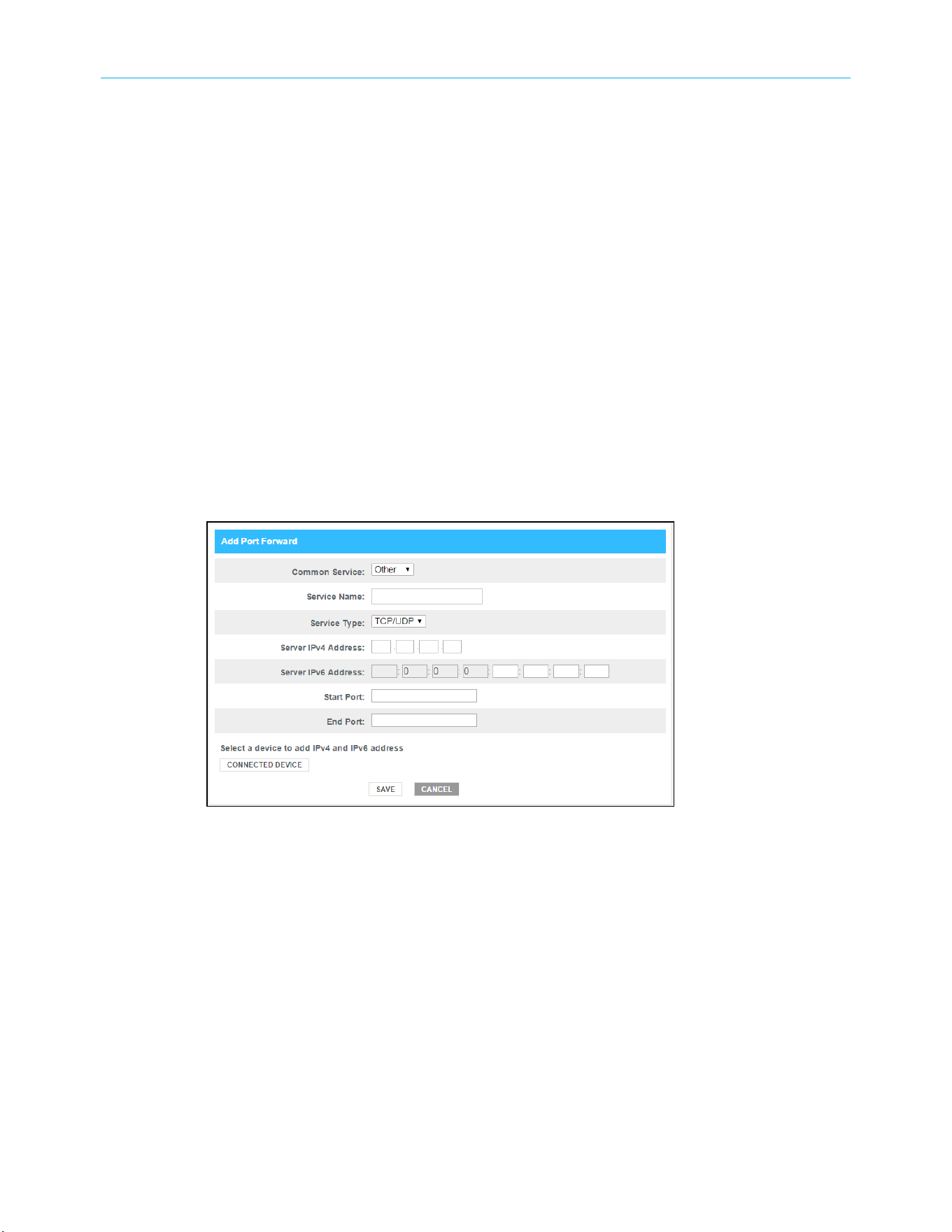
Figure 46: G34/G36 Advanced Port Forwarding screen
3.
Click the Port Forwarding Enable buon.
4. Click the +ADD SERVICE buon to open the Add Port Forward screen.
Figure 47: Add Port Forward screen
5.
Select FTP, AIM, HTTP, PPTP, HTTPs, Telnet, SSH, or Other for the Internet data transfer
protocol from the Common Service drop-down list.
Note: When Other is select
ed, the Service Name eld will display. Enter a name
for the service type you will be using.
6. Select TCP/UDP, TCP, or UDP for the Internet data transmission protocol from the
Service Type drop-down list.
7. Do one of the following:
■ Enter the IP address of your local computer that you are seng up for port
forwarding in the Server IPv4 Address eld.
■ Enter the IP address for your local computer that you are seng up for port
forwarding in the Server IPv6 Address eld.
Chapter 8: Prot
ecng & monitoring your Wi-Fi network
SURFboard
®
G34/G36 DOCSIS
®
3.1 Wi-Fi
®
Cable Modem User Guide STANDARD Revision x.5 51

8. Enter the starng port number of the website or online applicaon in the Start Port
eld.
9. Enter the ending port number of the website or online applicaon in the End Port eld.
10. Click CONNECTED DEVICE buon to display the list of connected devices on your Wi-Fi
home network.
Figure 48: G34/G36 Connected Devices screen
11.
Select the Add selecon box for the device or website you want to connect to.
12. Click Add to exit.
13. Click SAVE.
Set up Port Triggers
You can use Port Triggers to set up your G34/G36 to monitor outgoing trac on specic
ports on your home network. Port Triggering can be useful for some applicaons such as
video conferencing, online chang, and online gaming that may require specic port
numbers with bi-direconal trac to funcon properly.
Note: If the G34/G36 r
ewall is enabled and custom port triggers are set up, then you
must congure the rewall to allow trac through those custom ports. See Set up
rewall protecon (page 44) for more informaon.
To congure Port Triggers:
1. From any G34/G36 Web Manager screen, click the Advanced menu link on the G34/G36
Web Manager screen.
2. Click Port Triggering from the Advanced submenu opons list to display the Port
Triggering Conguraon screen.
Chapter 8: Prot
ecng & monitoring your Wi-Fi network
SURFboard
®
G34/G36 DOCSIS
®
3.1 Wi-Fi
®
Cable Modem User Guide STANDARD Revision x.5 52

Figure 49: Advanced Port Triggering screen
3.
Click the Port Triggering Enable buon.
Figure 50: Advanced Add Port Trigger screen
4.
Click the +ADD PORT TRIGGER buon to open the Add Port Trigger screen.
5. Enter a name or descripon for the Port Trigger in the Service Name eld.
6. Select TCP/UDP, TCP, or UDP from the Service Type drop-down list.
7. Enter the starng port number in the Trigger Port From eld.
8. Enter the ending port number in the Trigger Port To eld.
9. Enter the starng port number in the Target Port From eld.
10. Enter the ending port number in the Target Port To eld.
11. Click ADD to create the port trigger.
12. Repeat steps 4 through 11 to create addional port triggers.
Chapter 8: Prot
ecng & monitoring your Wi-Fi network
SURFboard
®
G34/G36 DOCSIS
®
3.1 Wi-Fi
®
Cable Modem User Guide STANDARD Revision x.5 53

Figure 51: Advanced Add Port Trigger screen
Se
t up the DMZ host
Warning: The g
aming DMZ host is not protected by the G34/G36 rewall. It is
exposed to the Internet which makes it vulnerable to aacks or hacking from any
client device (e.g., computer or laptop) on the Internet. Consider carefully before
conguring a device to be in the DMZ.
You can c
ongure one client device on your home network to be the DMZ Host. That client
device will operate outside of the G34/G36 rewall and allow remote access from the
Internet to your client device, gaming device, or other IP-enabled device. The DMZ Host
feature will only allow outside users to have direct access to the designated DMZ Host
device and not your home network.
To create the DMZ host:
1. From any G34/G36 Web Manager screen, click the Advanced menu link.
2. Click DMZ to display the Advanced DMZ screen.
Figure 51: Advanced DMZ host screen
Chapter 8: Protecng & monitoring your Wi-Fi network
SURFboard
®
G34/G36 DOCSIS
®
3.1 Wi-Fi
®
Cable Modem User Guide STANDARD Revision x.5 54

3. Click the DMZ Enable buon to set up the DMZ Host on your home network.
4. Enter the last one to three digits (from 2 to 254) of the IP address of the computer or
gaming device that you are seng up as the DMZ host
5. Click SAVE when you are nished.
Note: To disable the DMZ Host, click the DMZ Disable buon and then click SAVE.
Note: R
emember to reset the IP address back to 0 (zero) to close all the ports
when you are nished with the needed applicaon. If you do not reset the IP
address, that computer will be exposed to the public Internet.
Set up the ALG
Applicaon Layer Gateway (ALG) allows your router to recognize and treats certain network
protocols.
Note: Please chang
e these sengs if recommended by your service provider.
To set up the ALG:
1.
From any G34/G36 Web Manager screen, click the Advanced menu link.
2. Click ALG to display the ALG screen.
Figure 53: Advanced ALG screen
3.
Click the required check boxes and then click SAVE SETTINGS.
Chapter 8: Prot
ecng & monitoring your Wi-Fi network
SURFboard
®
G34/G36 DOCSIS
®
3.1 Wi-Fi
®
Cable Modem User Guide STANDARD Revision x.5 55

Restore the G34/G36 default conguraon
sengs
Warning: This acon will delete your current G34/G36 conguraon sengs and
allow you to restore the default (original) G34/G36 conguraon.
Note: Aer the conguraon sengs are restored, the G34/G36 will automacally
reboot, and you will have to log in using the default username (admin) and your
current admin password.
To open the Restart/Restore Gateway screen:
1. From any G34/G36 Web Manager screen, click the Troubleshoong menu link.
2. Click Restart/Restore from the Troubleshoong submenu links to display the
Troubleshoong Restart/Restore Gateway screen.
Figure 54: G34/G36 restore se
ngs screen
3. Click RESTORE Wi-Fi SETTINGS to reset your G34/G36 Wi-Fi sengs.
Figure 55: G34/G36 restore se
ngs screen
4. Click OK to restore the Wi-Fi factory defaults.
The Operation in Progress for restarng the Wi-Fi radios message displays.
Chapter 8: Prot
ecng & monitoring your Wi-Fi network
SURFboard
®
G34/G36 DOCSIS
®
3.1 Wi-Fi
®
Cable Modem User Guide STANDARD Revision x.5 56

Exchange the roung informaon
The RIP protocol is used to exchange the roung informaon between the gateway and the
headend.
To enable roung informaon:
1. From any G34/G36 Web Manager screen, click the Advanced menu link.
2. Click Roung to display the Roung screen.
Figure 56: R
oung Informaon screen
3. Click Enable buon to set up the roung informaon.
4. Specify the details for the RIP (Roung Informaon Protocol) and Routed Subnet
Conguraon.
5. Click SAVE to save the changes.
Set up Dynamic DNS client
You can congure your Gateway's router funconality as a Dynamic DNS client.
To create as DNS client:
1. From any G34/G36 Web Manager screen, click the Advanced menu link.
2. Click Dynamic DNS to display the Dynamic DNS client screen.
Chapter 8: Prot
ecng & monitoring your Wi-Fi network
SURFboard
®
G34/G36 DOCSIS
®
3.1 Wi-Fi
®
Cable Modem User Guide STANDARD Revision x.5 57

Figure 57: Dynamic DNS client screen
3.
Click the Enable buon to congure your Gateway's router funconality as DNS client.
4. Click +ADD DDNS to congure new DDNS.
5. Click SAVE to save the changes.
Note: T
o disable conguring the DNS client, click the Disable buon and then
click SAVE.
Manage UPnP network
The UPnP enabled gateway discovers all UPnP devices such as printers and computers. Using
UPnP, the ports are automacally open for appropriate services and applicaons.
1. From any G34/G36 Web Manager screen, click the Advanced menu link.
2. Click Device Discovery to manage UPnP screen.
Figure 58: Advanced Device Discovery screen
Chapter 8: Prot
ecng & monitoring your Wi-Fi network
SURFboard
®
G34/G36 DOCSIS
®
3.1 Wi-Fi
®
Cable Modem User Guide STANDARD Revision x.5 58

3. Click the Enable buon f
or the managing UPnP.
4. Enter the me in the Adversement Period eld to allow your gateway to adverse the
UPnP informaon.
5. Enter the number of steps each UPnP adversement is allowed to propagate before
disappearing in the Time To Live eld.
6. Click the Enable buon to allow devices such as printers and computers to connect to a
network automacally.
7. Click SAVE.
Set up MAC bridging
Using MAC bridging mechanism, you can allow devices on your LAN network to directly
connect to the WAN network. The bridged device will get the IP address from your Internet
provider and does not have access to your local network.
To set up the MAC bridging:
1. From any G34/G36 Web Manager screen, click the Advanced menu link.
2. Click MAC Bridging to display the MAC Bridging screen.
Chapter 8: Prot
ecng & monitoring your Wi-Fi network
SURFboard
®
G34/G36 DOCSIS
®
3.1 Wi-Fi
®
Cable Modem User Guide STANDARD Revision x.5 59

Figure 59: MAC Bridging screen
3.
Enter the MAC addresses of the device or the MAC range that you want to allow to
connect to the WAN.
Chapter 8: Prot
ecng & monitoring your Wi-Fi network
SURFboard
®
G34/G36 DOCSIS
®
3.1 Wi-Fi
®
Cable Modem User Guide STANDARD Revision x.5 60

Chapter 9
Managing your Wi-Fi cable modem and
connected networks
You can also use the G34/G36 Web Manager to view and monitor the network conguraon
sengs and operaonal status of your G34/G36.
View the G34/G36 system hardware informaon
The Gateway Hardware screen displays system hardware informaon for your G34/G36. This
informaon may be helpful if you contact ARRIS, Comcast, or Cox for technical assistance.
To open the G34/G36 Hardware screen:
1. From any G34/G36 Web Manager screen, click the Gateway menu link.
2. Click Hardware from the Gateway submenu links and then click System Hardware from
the Hardware submenu opons to display the Gateway System Hardware screen.
Figure 60: G34/G36 System Hardware screen
SURFboard
®
G34/G36 DOCSIS
®
3.1 Wi-Fi
®
Cable Modem User Guide STANDARD Revision x.5 61

View the G34/G36 soware version
The Gateway Soware Version screen displays device soware related informaon for your
G34/G36. This informaon may be helpful if you have to contact ARRIS or Comcast for
technical support.
To open the G34/G36 Soware screen:
1. From any G34/G36 Web Manager screen, click the Gateway menu link.
2. Click Soware from the Gateway submenu links to display the Gateway Soware screen.
Figure 61: G34/G36 hardware in
formaon screen
Set up an Ethernet port connecon for your data
input
If you have installed your G34/G36 using an Ethernet port for your data input, perform the
following to acvate the Ethernet port.
To open the Gateway hardware Ethernet screen:
1. From any G34/G36 Web manager screen, click the Connecon menu link to display the
Status and WAN submenu links.
2. Click the WAN submenu link to open the Gateway Connecon WAN screen.
Chapter 9: Managing your Wi-Fi cable modem and connected networks
SURFboard
®
G34/G36 DOCSIS
®
3.1 Wi-Fi
®
Cable Modem User Guide STANDARD Revision x.5 62

Figure 62: G34/G36 Connecon W
AN screen
3. Click EDIT on the WAN screen.
4. Click Interface CHANGE to select either DOCSIS (for a regular cable connecon) or
Ethernet (for an input signal from a dierent modem device) with an Ethernet
connecon from the modem device to the G34/G36 Ethernet port 4.
From any G34/G36 Web manager screen, click the Gateway menu link.
1. Click Soware from the Gateway submenu links to display the Gateway Soware screen.
2. Click Ethernet from the Hardware submenu links.
Figure 63: G34/G36 Gateway Hardware Ethernet screen
3.
Click the Enable buon in the LAN Ethernet Port 4 box.
Chapter 9: Managing your Wi-Fi cable modem and connected networks
SURFboard
®
G34/G36 DOCSIS
®
3.1 Wi-Fi
®
Cable Modem User Guide STANDARD Revision x.5 63

Figure 64: G34/G36LAN Ethernet Port screen
R
eboot the G34/G36
Choose one of the following opons to reboot (or restart) your G34/G36:
■ Reboot the G34/G36 using the Reset buon (page 64)
OR
■ Reboot the G34/G36 using the Web Manager (page 65)
Reboot the G34/G36 using the Reset buon
To reboot (or restart) your G34/G36 using the Reset buon:
1. Insert the end of a paper clip (or other small object with a narrow p) into the indented
Reset buon opening on the rear of your G34/G36.
Chapter 9: Managing your Wi-Fi cable modem and connected networks
SURFboard
®
G34/G36 DOCSIS
®
3.1 Wi-Fi
®
Cable Modem User Guide STANDARD Revision x.5 64

Figure 65: G34/G36 Reset buon
2.
Press and hold the small object in place for three to four seconds.
Warning: Do not pr
ess the Reset buon for more than ve seconds. If you do,
your G34/G36 will automacally reset and your custom gateway conguraon
sengs (e.g., admin password, network name (SSID) and password) will be
deleted and replaced with the factory default conguraon.
3. Remove the paper clip or small object from the Reset opening.
Reboot the G34/G36 using the Web Manager
To reboot (or restart) your G34/G36 using the G34/G36 Web Manager:
1. From any G34/G36 Web Manager screen, click the Troubleshoong menu link.
2. Click Restart/Restore Gateway from the Troubleshoong submenu links.
Chapter 9: Managing your Wi-Fi cable modem and connected networks
SURFboard
®
G34/G36 DOCSIS
®
3.1 Wi-Fi
®
Cable Modem User Guide STANDARD Revision x.5 65
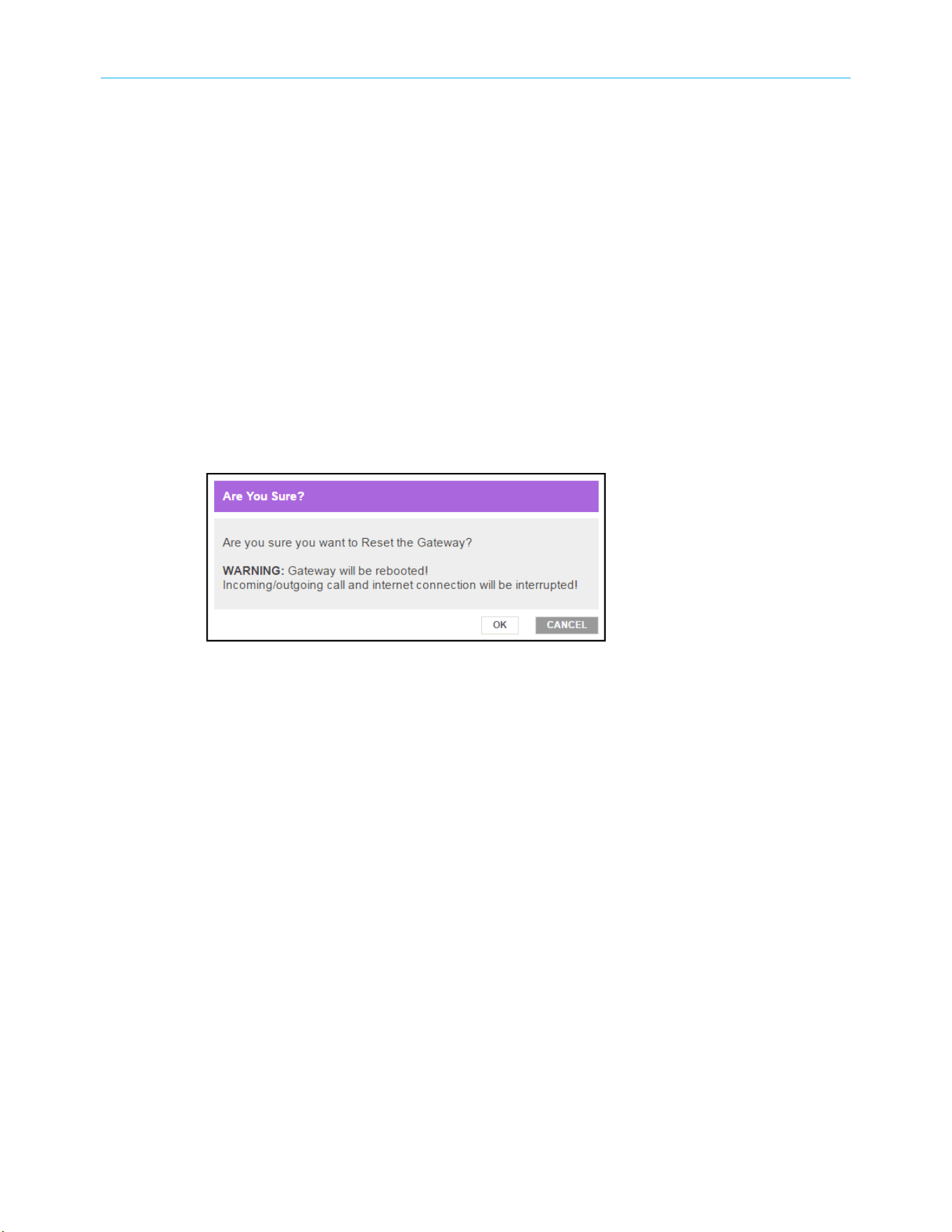
Figure 65: G34/G36 Restart/Restore se
ngs screen
3. Click RESTART GATEWAY located in the Reset / Restore Gateway table.
The following message will display:
Figure 66: Restart the Gateway message box
4.
Click OK to reboot the G34/G36 and then log back in.
Restore the G34/G36 default conguraon
sengs
Warning: This acon will dele
te your current G34/G36 conguraon sengs and
allow you to restore the default (original) G34/G36 conguraon.
Note: Aer the c
onguraon sengs are restored, the G34/G36 will automacally
reboot, and you will have to log in using the default username (admin) and your
current admin password.
To open the Reset/Restore Gateway screen:
1. From any G34/G36 Web Manager screen, click the Troubleshoong menu link.
2. Click Reset / Restore Gateway from the Troubleshoong submenu links to display the
Troubleshoong Reset / Restore Gateway screen.
Chapter 9: Managing your Wi-Fi cable modem and connected networks
SURFboard
®
G34/G36 DOCSIS
®
3.1 Wi-Fi
®
Cable Modem User Guide STANDARD Revision x.5 66

Figure 67: G34/G36 restore se
ngs screen
3. Click RESTORE Wi-Fi DEFAULTS to reset your G34/G36 Wi-Fi sengs.
Figure 68: G34/G36 restore se
ngs screen
4. Click OK to restore the Wi-Fi factory defaults.
The Operation in Progress for restarng the Wi-Fi radios message displays.
Exit the G34/G36 Web Manager
To log out and close the G34/G36 Web Manager:
■ Click the Logout link located in the upper right corner of the G34/G36 Web Manager
screen.
Figure 69: G34/G36 Web Manager logout link
Chapter 9: Managing your Wi-Fi cable modem and connected networks
SURFboard
®
G34/G36 DOCSIS
®
3.1 Wi-Fi
®
Cable Modem User Guide STANDARD Revision x.5 67

Chapter 10
Troubleshoong ps
If the soluons listed in the Troubleshoong Soluons table below do not solve your
problem, please contact your service provider for assistance.
You may have to reset the G34/G36 Wi‑Fi cable modem conguraon to its original factory
sengs if the G34/G36 is not funconing properly. See Restore the G34/G36 default
conguraon sengs (page 56)for more informaon.
Soluons
problem Possible soluon
Cannot Send or
R
eceive Data
Check each end of the coaxial cable connecon on the and cable
wall outlet.
Use your hand to ghten each connector, if necessary.
Check the Ethernet cable (if connected) to make sure it is properly
connected to your and computer.
If you have cable television service, check your television to ensure
your cable service is operang properly.
If none of the above soluons resolves the problem, contact your
service provider or call ARRIS Technical Support at
1-877-466-8646 for assistance.
Cannot Access the
Internet
Check that all cable and power connecons on your and computer
are properly connected.
Check that the front panel LED is lit up solid.
Contact your service provider for assistance.
Wi-Fi Devices Cannot
Send or Receive Data
If the problem connues aer checking the coaxial cable and
Ethernet connecons and your IP address, check the Wi-Fi
Security Mode seng on the Gateway Wi-Fi Connecon screen.
If you enabled Wi-Fi security and congured a passphrase on your
G34/G36, be sure each aected Wi-Fi client has the idencal
passphrase. If this does not solve the problem, check if the Wi-Fi
client supports the selected Wi-Fi security method.
SURFboard
®
G34/G36 DOCSIS
®
3.1 Wi-Fi
®
Cable Modem User Guide STANDARD Revision x.5 68

Warranty Informaon
CommScope, Inc. ("ARRIS")
Retail Purchasers
If you purchased this Product directly from ARRIS or from an authorized ARRIS retail reseller,
ARRIS warrants to you, the original end user customer, that (A) the Product, excluding
Soware, will be free from defects in materials and workmanship under normal use, and (B)
with respect to Soware, (i) the media on which the Soware is provided will be free from
defects in material and workmanship under normal use, and (ii) the Soware will perform
substanally as described in its documentaon. This Limited Warranty to you, the original
end user customer, connues (A) for Soware and the media upon which it is provided, for a
period of ninety (90) days from the date of purchase from ARRIS or an authorized ARRIS
reseller, and (B) for the Product (excluding Soware), for a period of two (2) years from the
date of purchase from ARRIS or from an authorized ARRIS reseller. To take advantage of this
Limited Warranty or to obtain technical support, you must call the ARRIS toll-free phone
number: 1-877-466-8646. ARRIS’ sole and exclusive obligaon under this Limited Warranty
for retail sales shall be to repair or replace any Product or Soware that does not meet this
Limited Warranty. All warranty claims must be made within the applicable Warranty Period.
Cable Operator or Service Provider Arrangements
If you did not purchase this Product directly from ARRIS or from a ARRIS authorized retail
reseller, ARRIS does not warrant this Product to you, the end-user. A limited warranty for this
Product (including Soware) may have been provided to your cable operator or Internet
Service Provider ("Service Provider") from whom you obtained the Product. Please contact
your Service Provider if you experience problems with this Product.
General Informaon
The warranes described in this Secon shall not apply: (i) to any Product subjected to
accident, misuse, neglect, alteraon, Acts of God, improper handling, improper transport,
improper storage, improper use or applicaon, improper installaon, improper tesng, or
unauthorized repair; or (ii) to cosmec problems or defects which result from normal wear
and tear under ordinary use, and do not aect the performance or use of the Product.
ARRIS’ warranes apply only to a Product that is manufactured by ARRIS and idened by
ARRIS owned trademark, trade name or product idencaon logos axed to the Product.
ARRIS does not warrant to you, the end user, or to anyone else that the Soware will
perform error free or without bugs.
ARRIS IS NOT RESPONSIBLE FOR, AND PROVIDES "AS IS" ANY SOFTWARE SUPPLIED BY 3RD
PARTIES. EXCEPT AS EXPRESSLY STATED IN THIS SECTION ("WARRANTY INFORMATION"),
THERE ARE NO WARRANTIES OF ANY KIND RELATING TO THE PRODUCT, EXPRESS, IMPLIED
OR STATUTORY, INCLUDING BUT NOT LIMITED TO IMPLIED WARRANTIES OF
MERCHANTABILITY, FITNESS FOR A PARTICULAR PURPOSE, OR THE WARRANTY AGAINST
SURFboard
®
G34/G36 DOCSIS
®
3.1 Wi-Fi
®
Cable Modem User Guide STANDARD Revision x.5 69

INFRINGEMENT PROVIDED IN THE UNIFORM COMMERCIAL CODE. Some states do not allow
for the exclusion of implied warranes, so the above exclusion may not apply to you.
What addional provisions should I be aware of? Because it is impossible for ARRIS to know
the purposes for which you acquired this Product or the uses to which you will put this
Product, you assume full responsibility for the selecon of the Product for its installaon and
use. While every reasonable eort has been made to ensure that you will receive a Product
that you can use and enjoy, ARRIS does not warrant that the funcons of the Product will
meet your requirements or that the operaon of the Product will be uninterrupted or error-
free.
ARRIS IS NOT RESPONSIBLE FOR PROBLEMS OR DAMAGE CAUSED BY THE INTERACTION OF
THE PRODUCT WITH ANY OTHER SOFTWARE OR HARDWARE. ALL WARRANTIES ARE VOID IF
THE PRODUCT IS OPENED, ALTERED, AND/OR DAMAGED.
THESE ARE YOUR SOLE AND EXCLUSIVE REMEDIES for any and all claims that you may have
arising out of or in connecon with this Product, whether made or suered by you or
another person and whether based in contract or tort.
IN NO EVENT SHALL ARRIS BE LIABLE TO YOU OR ANY OTHER PARTY FOR ANY DIRECT,
INDIRECT, GENERAL, SPECIAL, INCIDENTAL, CONSEQUENTIAL, EXEMPLARY OR OTHER
DAMAGES ARISING OUT OF THE USE OR INABILITY TO USE THE PRODUCT (INCLUDING,
WITHOUT LIMITATION, DAMAGES FOR LOSS OF BUSINESS PROFITS, BUSINESS
INTERRUPTION, LOSS OF INFORMATION OR ANY OTHER PECUNIARY LOSS), OR FROM ANY
BREACH OF WARRANTY, EVEN IF ARRIS HAS BEEN ADVISED OF THE POSSIBILITY OF SUCH
DAMAGES. IN NO CASE SHALL ARRIS’ LIABILITY EXCEED THE AMOUNT YOU PAID FOR THE
PRODUCT.
These maers are governed by the laws of the Commonwealth of Pennsylvania, without
regard to conict of laws principles and excluding the provisions of the United Naons
Convenon on Contracts for the Internaonal Sale of Goods.
Retail Purchasers Only
If you purchased this Product directly from ARRIS or from an ARRIS authorized retail reseller,
please call the ARRIS toll-free phone number, 1-877-466-8646, for warranty service or
technical support.
Cable Operator or Service Provider Arrangements
If you did not purchase this Product directly from ARRIS or from an ARRIS authorized retail
reseller, please contact your Service Provider for technical support.


Corporate Headquarters
CommScope · Hickory · North Carolina · 28602 · USA
T: 1-828-324-2200
www.commscope.com