1. Overview
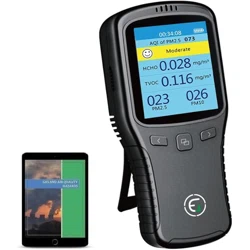
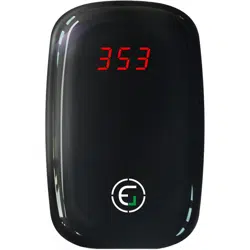
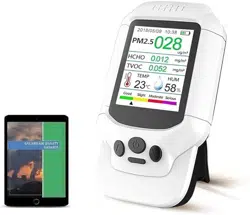
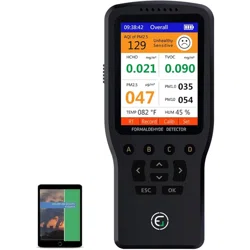
The EG Air Quality Monitor is a portable device designed to measure and display key indoor air quality parameters. It helps identify potential pollutants in environments such as homes, offices, cars, and hotel rooms.

The monitor uses a built-in fan and multiple sensors to provide real-time readings of the following:
- Formaldehyde (HCHO): A potentially harmful gas that can off-gas from building materials and furniture.
- Total Volatile Organic Compounds (TVOC): A measure of various organic chemicals, often responsible for odors, emitted from both natural and synthetic sources.
- Fine Particulate Matter (PM2.5): Microscopic dust particles smaller than 2.5 microns that can penetrate deep into the lungs.
This information is displayed on a 2.8-inch color LCD screen. The device is powered by a rechargeable battery for portable use.
2. Features and Specifications

2.1. Key Features
- Multiparameter Detection: Simultaneously monitors HCHO, TVOC, and PM2.5 levels.
- Real-Time Monitoring: Built-in fan draws in ambient air for immediate measurement updates.
- Portable Design: Compact and battery-powered for use in various locations.
- Color LCD Display: 2.8-inch screen clearly shows all measurements.
- Audible Alarm: Can be set to alert when specific HCHO levels are exceeded.
- Long Battery Life: 2200mAh rechargeable battery supports portable operation.
- Included eBook: A 20+ page guide on Gas and Air Quality Hazards is provided.
2.2. Technical Specifications
- Display: 2.8” 320 x 240 pixel color LCD
- Battery: 2200 mAh Lithium battery
- Charging: DC 5V via micro USB port
- HCHO Measurement Range: 0 to 1.999 mg/m³
- TVOC Measurement Range: 0 to 9.999 mg/m³
- PM2.5 Measurement Range: 0 to 999 μg/m³
- PM10: Calculated from the PM2.5 measurement
- Product Dimensions: 150 x 70.8 x 43.6 mm (5.9 x 2.8 x 1.7 inches)
- Product Weight: 188 g (0.36 kg / 0.41 lbs)
- Operating Humidity: Up to 95% (non-condensing)
- Auto Shut-off: Adjustable timing, up to 2 days of continuous operation.
3. Use Guide
3.1. Initial Setup and Power
- Charging: Before first use, fully charge the device using the provided micro USB cable and a 5V power adapter (not included).
- Power On/Off: Press and hold the power button to turn the device on or off.
- Initial Calibration: For accurate readings, it is recommended to calibrate the device when new or if it shows 0.000 readings indoors. Refer to the calibration instructions provided with the device.
3.2. Taking Measurements
- Place the monitor in the area you wish to test. Ensure the air intake vents are not obstructed.
- Turn the device on. The built-in fan will activate to draw in air.
- Allow several minutes for the readings to stabilize and provide an accurate representation of the air quality.
- Read the values for HCHO, TVOC, and PM2.5 from the color display.
Note on TVOC Readings: The TVOC sensor is sensitive. Large variations or readings of 9.999 mg/m³ do not necessarily indicate an error. High readings can be caused by benign sources such as fragrances, cleaning products, or cooking odors.
Note on PM2.5: The device displays PM2.5 concentration in μg/m³. It does not display the Air Quality Index (AQI). You can use online calculators (e.g., AirNow.gov) to convert μg/m³ to AQI if needed.
3.3. Using the Alarm Function
The device features an adjustable audible alarm for formaldehyde (HCHO) levels. Use the device's menu to set your desired HCHO alarm threshold. The alarm will sound when the measured concentration exceeds this level.
3.4. Portable and Continuous Monitoring
- For spot checks, carry the device to different rooms, your car, or other indoor spaces.
- For continuous monitoring, leave the device powered on. You can set the auto-shutoff timer for up to 2 days.
- The rechargeable battery allows for cordless operation when away from a power outlet.
4. Interpreting Readings and Health Context
4.1. What the Measurements Mean
- Formaldehyde (HCHO): Often emitted from pressed wood products (like plywood), insulation, and some fabrics. Prolonged exposure to elevated levels is a health concern.
- TVOC: A broad group of chemicals emitted as gases from thousands of products, including paints, cleaning supplies, office equipment, and furnishings. High levels can cause eye and respiratory irritation.
- PM2.5: Fine particles from sources like cooking, burning candles, fireplaces, and outdoor air pollution. They can exacerbate asthma and other respiratory conditions.
4.2. Practical Applications
- Identifying Pollution Sources: Use the monitor to test air before and after activities (e.g., cleaning, painting) or near potential sources (new furniture, printers).
- Ventilation Check: Observe how HCHO and TVOC levels decrease after opening windows to verify effective ventilation.
- Air Filter Management: Rising PM2.5 levels can indicate it's time to change your home's HVAC or air purifier filters.
- Assessing "Sick Building Syndrome": Unexplained allergies, coughing, or shortness of breath indoors may correlate with poor air quality readings.
5. Care and Maintenance
- Keep the device and its air intake vents clean and free from dust and debris.
- Store the device in a cool, dry place when not in use.
- Recharge the battery periodically if the device will be stored for an extended time.
- Avoid exposing the device to extreme temperatures, moisture, or direct sunlight for prolonged periods.
- Do not disassemble the device or attempt to clean the internal sensors.
6. Troubleshooting
| Issue |
Possible Cause |
Solution |
| Device does not power on. |
Battery is depleted. |
Connect the device to a 5V power source using the micro USB cable and charge fully. |
| Readings show 0.000 for HCHO/TVOC indoors. |
Device may require calibration. |
Perform a calibration as per the provided instructions. |
| TVOC readings are very high (e.g., 9.999) or fluctuate wildly. |
Normal sensor sensitivity to odors (perfume, food, cleaning agents). |
This is likely not an error. Move to a different location or ventilate the area to see if readings change. |
| PM2.5 readings seem persistently high. |
High particulate levels from activities (cooking, dusting) or poor outdoor air quality. |
Reduce indoor sources, improve ventilation, or check/change air filters. |
| Screen is dim or unreadable. |
Battery may be low, or display settings may be adjusted. |
Recharge the device. Check the device menu for brightness settings. |
7. Support
This product is sold by EG, a small business with USA-based technical support staff, including a chemist, available to answer technical questions.
For product support, questions about readings, or assistance with the included eBook on Gas and Air Quality Hazards, please contact the seller through your Amazon purchase history.
Manufacturer: EG