
2
Your new tumble dryer
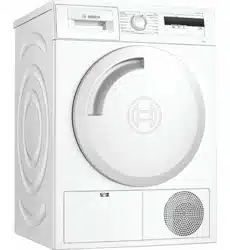
You have opted for a tumble dryer
manufactured by Bosch.
Please take a few minutes to read and
become familiar with the advantages of
your tumble dryer.
To meet the high quality demands
required by Bosch, every tumble dryer
that leaves our factory is carefully
checked to ensure that it functions
correctly and is in perfect condition.
For more information on our products,
accessories, replacement parts and
services, see our website www.bosch-
home.com or contact our Customer
Service centres.
If the operating and installation
instructions describe different models,
any differences will be pointed out at the
relevant points in the text.
Read these operating and installation
instructions before operating the tumble
dryer.
Display rules
: Warning!
This combination of symbol and signal
word indicates a possibly dangerous
situation. Not heeding the warning can
cause death or injuries.
Caution!
This signal word indicates a possibly
dangerous situation. Not heeding the
caution can cause property and/or
environmental damage.
Note/tip
Information about the optimum use of
the appliance/any other useful
information.
1. 2. 3. / a) b) c)
The steps are represented by numbers
or letters.
■ / -
Lists are represented by a small box or
a dash.

en
3
Contents
en Installation and operating instructions
8 Intended use. . . . . . . . . . . . . . . . .4
( Safety instructions . . . . . . . . . . .4
Children/people/pets . . . . . . . . . . . . . 4
Installation. . . . . . . . . . . . . . . . . . . . . . 6
Operation . . . . . . . . . . . . . . . . . . . . . . 7
Cleaning/Maintenance . . . . . . . . . . . 10
7 Environmental protection . . . . .12
Packaging/old appliance . . . . . . . . . 12
Energy-saving tips. . . . . . . . . . . . . . . 12
5 Installation and connection . . .13
Scope of delivery . . . . . . . . . . . . . . . 13
Installing and connecting
the dryer . . . . . . . . . . . . . . . . . . . . . . 13
Optional accessories . . . . . . . . . . . . 14
Transport and frost protection . . . . . 14
ΠDraining the condensation
water . . . . . . . . . . . . . . . . . . . . . .15
Y The main points in brief . . . . . .17
* Getting to know
your appliance . . . . . . . . . . . . . .18
Dryer. . . . . . . . . . . . . . . . . . . . . . . . . 18
Control panel . . . . . . . . . . . . . . . . . . 19
Display panel . . . . . . . . . . . . . . . . . . 20
Z Laundry . . . . . . . . . . . . . . . . . . .21
Preparing the laundry . . . . . . . . . . . . 21
Sorting laundry according to: . . . . . . 21
/ Programs and buttons . . . . . . .22
Programs . . . . . . . . . . . . . . . . . . . . . 22
Buttons . . . . . . . . . . . . . . . . . . . . . . . 24
1 Operating the appliance . . . . . .25
Loading laundry
and switching on the dryer . . . . . . . . 25
Setting a program. . . . . . . . . . . . . . . 25
Starting the program. . . . . . . . . . . . . 25
Program sequence . . . . . . . . . . . . . .25
Changing the program
or adding laundry . . . . . . . . . . . . . . .26
Program interruption . . . . . . . . . . . . .26
Program end . . . . . . . . . . . . . . . . . . .26
Removing laundry
and switching off the dryer . . . . . . . .26
Clean the fluff filter . . . . . . . . . . . . . .26
Emptying the condensate
container . . . . . . . . . . . . . . . . . . . . . .27
M Signal setting. . . . . . . . . . . . . . . 28
D Cleaning . . . . . . . . . . . . . . . . . . . 29
Cleaning the dryer
and the control panel . . . . . . . . . . . .29
Cleaning the heat exchanger. . . . . . .29
Cleaning the moisture sensor . . . . . .30
3 Faults and what to do
about them . . . . . . . . . . . . . . . . . 31
J After-sales service . . . . . . . . . . 33
[ Consumption values. . . . . . . . . 34
Consumption values table . . . . . . . . .34
Most efficient programme
for cotton fabrics . . . . . . . . . . . . . . . .34
J Technical data . . . . . . . . . . . . . . 35

en Intended use
4
8 Intended use
Intended use
■ This appliance is intended for private
domestic use only.
■ Do not install or operate this
appliance anywhere that is liable to
experience frost and/or outdoor
conditions. There is a risk that the
appliance will be damaged if
residual water in it freezes. If hoses
freeze up, they may crack/burst.
■ This appliance must only be used for
drying and freshening up domestic
laundry, consisting of items that have
been washed with water and are
suitable for tumble drying (see label
on item). Using the appliance for any
other purpose is outside of the
scope of its intended application and
is forbidden.
■ This appliance is intended for use up
to a maximum height of
4000 metres above sea level.
Before you switch on the appliance:
Check that there is no visible damage to
the appliance. Do not operate the
appliance if it is damaged. Should you
have any problems, please contact your
specialist dealer or our customer
service.
Read and follow the operating and
installation instructions and all other
information provided with this appliance.
Retain the documents for subsequent
use or for subsequent owners.
( Safety instructions
Safety instructions
The following safety information
and warnings are provided to
protect you from injury and to
prevent material damage to
your surroundings.
It is nevertheless important to
take the necessary precautions
and to proceed with care when
installing, maintaining, cleaning
and operating the appliance.
Children/people/pets
:Warning
Risk of death!
Children and other people who
are unable to assess the risks
involved when using the
appliance may injure
themselves or may find
themselves in life-threatening
situations. Therefore please
note:
■ The appliance may be used
by children over the age of 8
years and by persons with
reduced physical, sensory or
mental capacity or by
persons with a lack of
experience or knowledge as
long as they are supervised
or have received instruction
on how to use the appliance
safely and they have
understood the potential
risks of using the appliance.
■ Children must not play with
this appliance.

Safety instructions en
5
■ Do not allow children to
clean or maintain this
appliance unsupervised.
■ Keep children under 3 years
and pets away from this
appliance.
■ Do not leave the appliance
unattended when children or
other people who are unable
to assess the risks are in the
vicinity.
:Warning
Risk of death!
Children may lock themselves
inside appliances and find
themselves in a life-threatening
situation.
■ Do not position the
appliance behind a door, as
this may obstruct the
appliance door or prevent it
from opening completely.
■ Once an appliance has
reached the end of its life,
pull the mains plug from the
socket before severing the
mains cable, and then
destroy the lock on the
appliance door.
:Warning
Risk of suffocation!
If allowed to play with the
packaging/plastic film or
packing components, children
may become caught in these or
pull them over their heads and
suffocate.
Keep packaging, plastic film
and packing components away
from children.
:Warning
Risk of poisoning!
Detergents and care products
may result in poisoning if
consumed.
If accidentally swallowed, seek
medical advice. Keep
detergents and care products
out of the reach of children.
:Warning
Eye/skin irritation!
Contact with detergents or care
products may cause eye/skin
irritation.
Rinse eyes/skin thoroughly if
they/it come(s) into contact
with detergents or care
products. Keep detergents and
care products out of the reach
of children.

en Safety instructions
6
Installation
:Warning
Risk of electric shock/fire/
material damage/damage to
the appliance!
If the appliance is not installed
properly, this may lead to a
dangerous situation. Make sure
that:
■ The mains voltage on your
power socket matches the
rated voltage specified on
the appliance (identification
plate). The connected loads
and the required fuse
protection are specified on
the identification plate.
■ The appliance is only
connected to a source of
alternating current via a
nationally recognized and
grounded outlet that has
been correctly installed.
■ The mains plug and the
grounded socket match and
the earthing system has
been correctly installed.
■ The cross section of the
cable is sufficiently large
enough.
■ The mains plug is accessible
at all times.
■ If using a residual current
circuit breaker, only use one
that bears the following
mark: z. The presence of
this mark is the only way to
be sure that it fulfils all the
applicable regulations.
:Warning
Risk of electric shock/fire/
material damage/damage to
the appliance!
If the appliance's mains cable is
altered or damaged, this may
result in electric shock, short
circuiting or fire due to
overheating.
The mains cable must not be
kinked, crushed or altered, and
must not come into contact with
any heat sources.
:Warning
Risk of fire/material damage/
damage to the appliance!
The use of extension cords or
power strips may result in fire
due to overheating or short
circuiting.
Connect the appliance directly
to an earthed socket that has
been correctly installed. Do not
use extension cords, power
strips or multi-way couplers.
:Warning
Risk of injury/material
damage/damage to the
appliance!
■ The appliance may vibrate or
move when in operation,
potentially resulting in injury
or material damage.
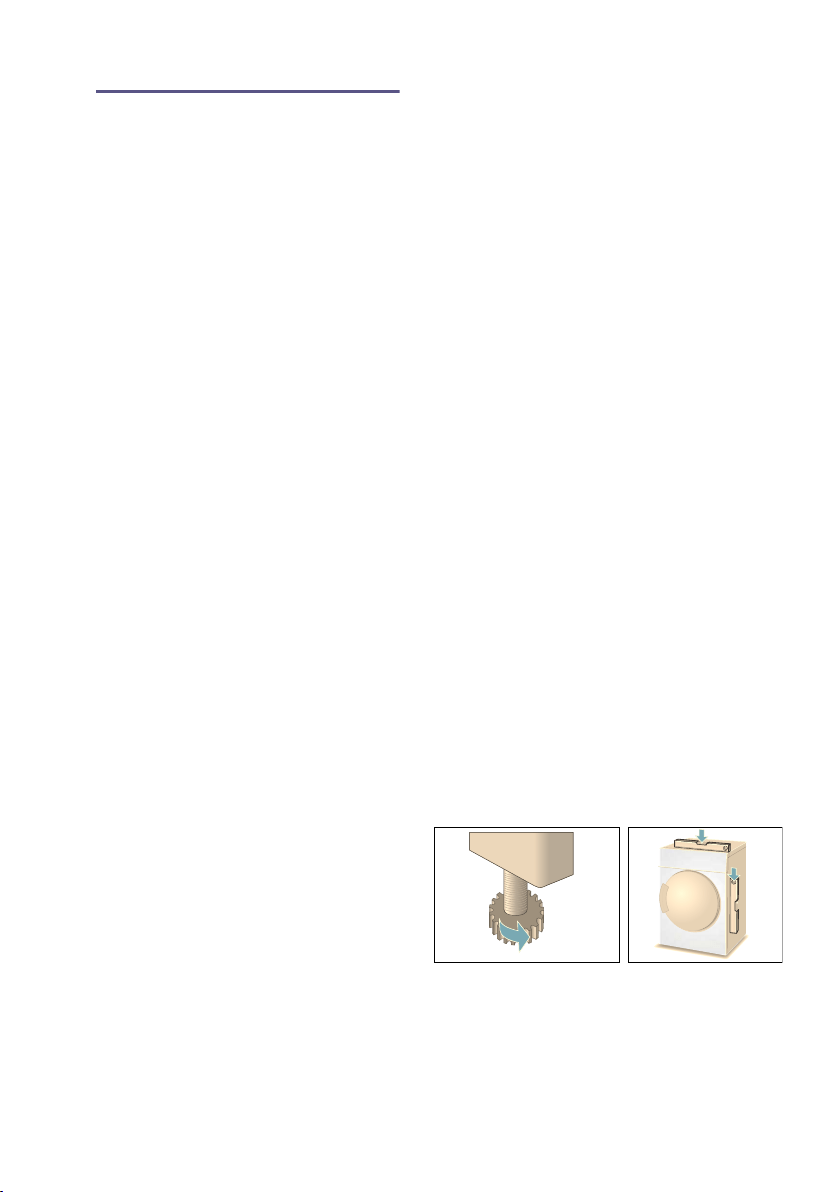
Place the appliance on a
clean, even, solid surface
and, using a spirit level to
guide you, level it with the
screw-in feet.
Risk of injury/material damage/damage to the appliance!

Safety instructions en
7
■ Incorrectly placing (stacking)
this appliance on top of a
washing machine may result
in injury, material damage
and/or damage to the
appliance.
If this appliance is to be
placed on top of a washing
machine, the washing
machine must be of at least
the same depth and width as
the appliance, and it must be
secured in place with the
appropriate connection set if
available ~ Page 14. The
appliance MUST be secured
with this connection set.
Stacking the appliance in
any other way is forbidden.
Risk of injury/material damage/damage to the appliance!
■ If you take hold of any of the
appliance's protruding parts
(e.g. the appliance door) in
order to lift or move it, these
parts may break off and
cause injury.
Do not take hold of any of
the appliance's protruding
parts in order to move the
appliance.
:Warning
Risk of injury!
■ The appliance is very heavy.
Lifting it may result in injury.
Do not lift the appliance on
your own.
Risk of injury!
■ The appliance has sharp
edges on which you could
cut your hands.
Do not take hold of the
appliance by its sharp
edges. Wear protective
gloves to lift it.
Risk of injury!
■ If the hoses and mains
cables are not correctly
routed, they may constitute a
tripping hazard, which may
result in injury.
Route hoses and cables
such that they do not
constitute a tripping hazard.
Operation
:Warning
Risk of explosions/fire!
Laundry that has come into
contact with solvents, oil, wax,
wax remover, paint, grease or
stain remover may ignite when
dried in the machine, or even
cause the appliance to explode.
Therefore please note:
■ Rinse the laundry thoroughly
with warm water and
detergent before drying it in
the machine.
■ Do not place laundry in this
appliance to be dried if the
laundry has not been
washed first.
■ Do not use the appliance if
industrial chemicals have
been used to clean the
laundry.

en Safety instructions
8
:Warning
Risk of explosions/fire!
■ If there is any residual
material left in the fluff filter,
this may ignite when drying
is in progress, or even cause
the appliance to catch fire or
explode.
Clean out the fluff filter each
time the appliance is used to
dry laundry.
Risk of explosions/fire!
■ Certain objects may ignite
when drying is in progress,
or even cause the appliance
to catch fire or explode.
Remove any lighters or
matches from pockets on
items of clothing.
Risk of explosions/fire!
■ If there is coal dust or flour in
the air around the appliance,
this may cause an explosion.
Make sure that the area
around the appliance is kept
clean when it is in operation.
:Warning
Risk of fire/material damage/
damage to the appliance!
If a program is terminated
before the drying cycle has
finished, this prevents the
laundry from cooling down
sufficiently and may cause the
laundry to ignite, or may result
in material damage or damage
to the appliance.
■ During the last part of the
drying cycle, the laundry in
the drum is not heated
(cooling cycle). This is to
ensure that it remains at a
temperature at which it will
not be damaged.
■ Do not switch off the
appliance before the drying
cycle has finished unless you
remove all items of laundry
from the drum immediately
and spread them out (to
dissipate the heat).
:Warning
Risk of poisoning/material
damage!
Condensation water is not
suitable for drinking and may
be contaminated with lint.
Contaminated condensation
water may be hazardous to
health and may cause material
damage.
Do not drink or reuse.
:Warning
Risk of poisoning!
Poisonous fumes may be given
off by cleaning agents that
contain solvents, e.g. cleaning
solvent.
Do not use cleaning agents that
contain solvents.
Safety instructions en
9
:Warning
Risk of injury!
■ If you support your weight/sit
on the appliance door when
it is open, the appliance may
tip over, which may result in
injury.
Do not support your weight
on the appliance door when
it is open.
Risk of injury!
■ If you climb onto the
appliance, the worktop may
break, which may result in
injury.
Do not climb onto the
appliance.
Risk of injury!
■ If you reach into the drum
while it is still rotating, you
risk injuring your hands.
Wait until the drum has
stopped rotating.
:Warning
Risk of burns!
The exterior of the appliance's
rear panel becomes very hot
during operation.
Never touch the surface of the
appliance's rear panel when it
is hot, and keep children away.
Caution!
Material damage/damage to
the appliance
■ If the amount of laundry in
the appliance exceeds its
maximum load capacity, it
may not be able to operate
properly, or this may result in
material damage or damage
to the appliance.
Do not exceed the maximum
load capacity of dry laundry.
Make sure you comply with
the maximum load capacities
specified for each of the
programs ~ Page 22.
Material damage/damage to the appliance
■ If you operate the appliance
without a fluff filter, or if the
fluff filter is defective, this
may result in damage to the
appliance.
Do not operate the appliance
without a fluff filter, or with a
fluff filter that is defective.
Material damage/damage to the appliance
■ Light objects such as hair
and lint may be sucked into
the air inlet when the
appliance is in operation.
Keep these away from the
appliance.
Material damage/damage to the appliance
■ Foam and foam rubber may
deform or melt if dried in the
appliance.
Do not dry laundry items that
contain foam or foam rubber
in the appliance.
Material damage/damage to the appliance

en Safety instructions
10
■ If you pour the wrong
quantity of detergent or
cleaning agent into the
appliance, this may result in
material damage or damage
to the appliance.
Use detergents/care
products/cleaning agents
and softeners in accordance
with the manufacturers'
instructions.
Material damage/damage to the appliance
■ If the appliance overheats, it
may not be able to operate
properly, or this may result in
material damage or damage
to the appliance.
Make sure that the
appliance's air inlet is never
obstructed when the
appliance is in operation,
and that the area around the
appliance is adequately
ventilated.
Cleaning/Maintenance
:Warning
Risk of death!
The appliance is powered by
electricity. There is a risk of
electric shock if you come into
contact with live components.
Therefore please note:
■ Switch off the appliance.
Disconnect the appliance
from the power supply (pull
out the plug).
■ Never take hold of the mains
plug with wet hands.
■ When removing the mains
plug from the socket, always
take hold of the plug itself
and never the mains cable,
otherwise this may damage
the mains cable.
■ Do not make any technical
modifications to the
appliance or its features.
■ Repairs and any other work
on the appliance must only
be conducted by our
customer service or by an
electrician. The same applies
for replacing the mains cable
(when necessary).
■ Spare mains cables can be
ordered from our customer
service.
:Warning
Risk of poisoning!
Poisonous fumes may be given
off by cleaning agents that
contain solvents, e.g. cleaning
solvent.
Do not use cleaning agents that
contain solvents.
:Warning
Risk of electric shock/material
damage/damage to the
appliance!
If moisture penetrates the
appliance, this may cause it to
short circuit.
Do not use a pressure washer
or steam cleaner to clean your
appliance.

Safety instructions en
11
:Warning
Risk of injury/material
damage/damage to the
appliance!
The use of spare parts and
accessories supplied by other
brands is dangerous and may
result in injury, material damage
or damage to the appliance.
For safety reasons, use
genuine spare parts and
accessories only.
Caution!
Material damage/damage to
the appliance
Cleaning agents and agents for
pretreating laundry (e.g. stain
removers, prewash sprays, etc.)
may cause damage if they
come into contact with the
surfaces of the appliance.
Therefore please note:
■ Do not allow these agents to
come into contact with the
surfaces of the appliance.
■ Clean the appliance with
nothing but water and a soft,
damp cloth.
■ Remove any detergent,
spray or other residues
immediately.

en Environmental protection
12
7 Environmental
protection
Environmental protection
Packaging/old appliance
)
Dispose of packaging in an
environmentally-responsible manner.
This appliance is designated according
to European directive 2012/19/EC
which governs waste electrical and
electronic equipment (WEEE).
The directive provides a framework for
the collection and recycling of old
appliances, which is valid across the
EU.
Energy-saving tips
■ Spin the laundry before drying. The
drier the laundry, the shorter the
drying time will be, thus consuming
less energy.
■ Load the dryer with the maximum
load.
Note: Do not exceed the maximum
load for the programs, as this
prolongs the drying time and
increases energy consumption.
■ Ventilate the room and keep the air
inlet on the dryer free to ensure air
exchange.
■ Clean the fluff filter after each drying
cycle. If the fluff filter is dirty, the
drying time is prolonged and energy
consumption is increased.
■ Energy-saving mode: If the dryer is
not operated for a prolonged period,
it automatically switches off before
the program starts and when the
program has ended to save energy.
The display panel and indicator
lamps go off after a few minutes and
the Start button flashes. To activate
the lighting, press any button, open
or close the dryer door or turn the
program selector.
Installation and connection en
13
5 Installation and
connection
Installation and connection
Scope of delivery
■ Dryer
■ Installation and operating
instructions
■ Basket for woollens
*
■ Condensation drain*
Installing and connecting the
dryer
:Warning
Risk of death!
There is a risk of electric shock as the
dryer is operated with electricity.
■ Check the dryer for visible damage.
You must not operate the dryer if it is
damaged.
■ Before connecting the dryer to the
power supply, ensure that the
electric voltage specified on the
rating plate matches the voltage of
your socket.
■ Only use earth-leakage circuit
breakers with the following symbol:
z.
■ Ensure that the mains cable is not
kinked or trapped, and that it does
not come into contact with heat
sources or sharp edges.
:Warning
Children may lock themselves in the
dryer, putting their lives at risk!
Do not set up the dryer behind a door
or sliding door, as this may obstruct the
dryer door or prevent it from opening.
Caution!
Risk of injury
■ Due to the heavy weight of the dryer,
you may injure yourself if you lift it.
Do not lift the dryer on your own.
■ You could cut your hands on the
sharp edges of the dryer. Do not
hold the dryer by the sharp edges.
■ Protruding parts on the dryer may
break off when it is lifted or pushed.
Do not move the dryer by holding
onto protruding parts.
Caution!
Risk of material damage to the dryer or
fabrics.
■ Check the dryer for damage caused
during transportation. Never operate
a dryer if it is damaged.
■ Any residual water in the dryer may
freeze and damage the dryer. Do not
install the dryer in rooms that are at
risk of frost.
During installation, ensure that:
■ The dryer is placed on a clean, level
and firm surface,
■ The mains plug can be accessed at
all times,
■ The air inlet on the dryer is kept clear
and there is sufficient ventilation,
■ The area around the dryer is kept
clean and
■ The dryer is levelled using the
threaded feet.
Note: Check the alignment of the
appliance with a spirit level and
correct if necessary. Change the
height by turning the appliance feet.
All appliance feet must stand firmly
on the ground.
Incorrect alignment may cause high
noise levels, vibrations and improper
movement of the drum.
Note: If in doubt, have the appliance
connected by a specialist.
* Depending on the model

en Installation and connection
14
Optional accessories
Order optional accessories
*
from after-
sales service:
■ Washer-dryer stack connection set:
To save space, the dryer can be
placed on top of a suitable washing
machine of the same width and
depth.
The dryer must be secured to the
washing machine using this
connection set.
Order number with pull-out worktop:
WTZ11400;
Order number without pull-out
worktop: WTZ20410.
■ Platform:
For easier loading and unloading,
use a platform to raise your dryer.
Transport laundry with the integrated
clothes basket integrated in the
platform's pull-out drawer.
Order number: WMZ20500.
■ Basket for woollens:
Dry individual woollen items, sports
shoes and soft toys in the basket for
woollens.
Order number: WMZ20600.
Transport and frost protection
To empty the condensate container:
1. Use the program selector to select
any program.
2. Press the Start button.
3. Wait for 5 minutes.
Note: The condensation is drained.
4. Empty the condensate container
again.
5. Switch off the dryer.
Caution!
Any residual water may leak out and
cause material damage.
Transport the dryer in an upright
position.
* Depending on the model

Draining the condensation water en
15
ΠDraining the
condensation water
Draining the condensation water
Condensation will form in the appliance
as it dries the laundry.
You must ensure that the drain hose is
connected when you operate the
appliance.
If there is no drain hose connected to
the appliance, the condensation water
from the appliance will run into the
condensation container. In this case,
you will need to empty the condensation
container each time the dryer finishes
drying the laundry, and also if it
becomes full before drying is complete.
Connect the drain hose as follows:
1. Remove the accessories from the
dryer drum.
2. When the dryer is delivered from the
factory, the hose for discharging the
condensation into the condensation
container is fastened to the
connecting piece.
3. Detach the condensation hose from
the socket.
4. Place the condensation hose in the
"parked" position.
5. Take the drain hose from the
accessories and secure it to the free
connecting piece.
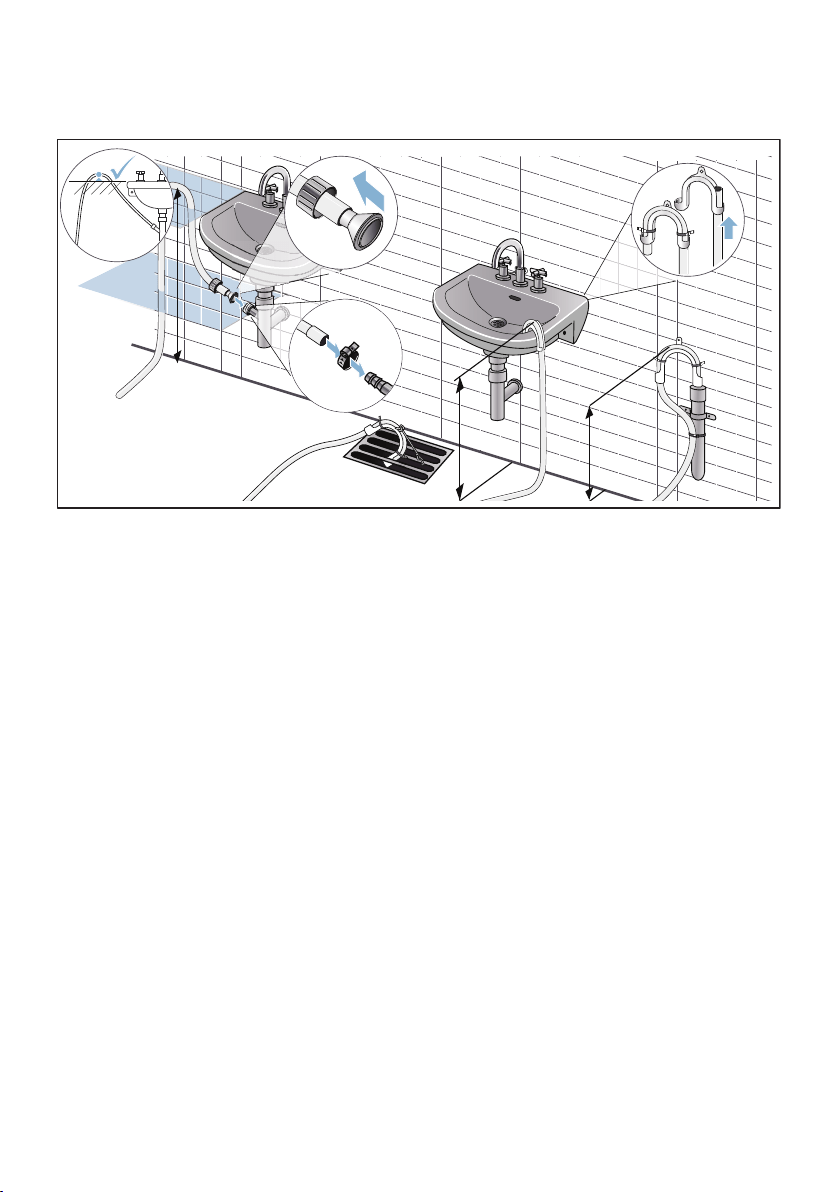
en Draining the condensation water
16
6. Fasten the other end of the drain hose with the remaining accessories,
depending on the connection situation (A, B or C).
Caution!
Accumulated water can be drawn back into the dryer and may cause material
damage.
Check that the water drains away from the wash basin quickly. The drain must
not be sealed or blocked.
Caution!
Material damage due to leaks or draining water.
Secure the drain hose so that it cannot slip out.Do not kink the drain hose.
Ensure that a height difference of max. 100 cm and min. 80 cm between the
installation surface and the drain is maintained for drainage into a siphon.
The condensation water is now discharged via the drain hose into the waste-water
system or into a washbasin.
Note: If you want to drain the condensation water back into the condensation
container, reverse these steps.
$
$
%
&
&
PD[FP
$
PD[FP
&
PLQFPPD[FP
The main points in brief en
17
Y The main points in brief
The main points in brief
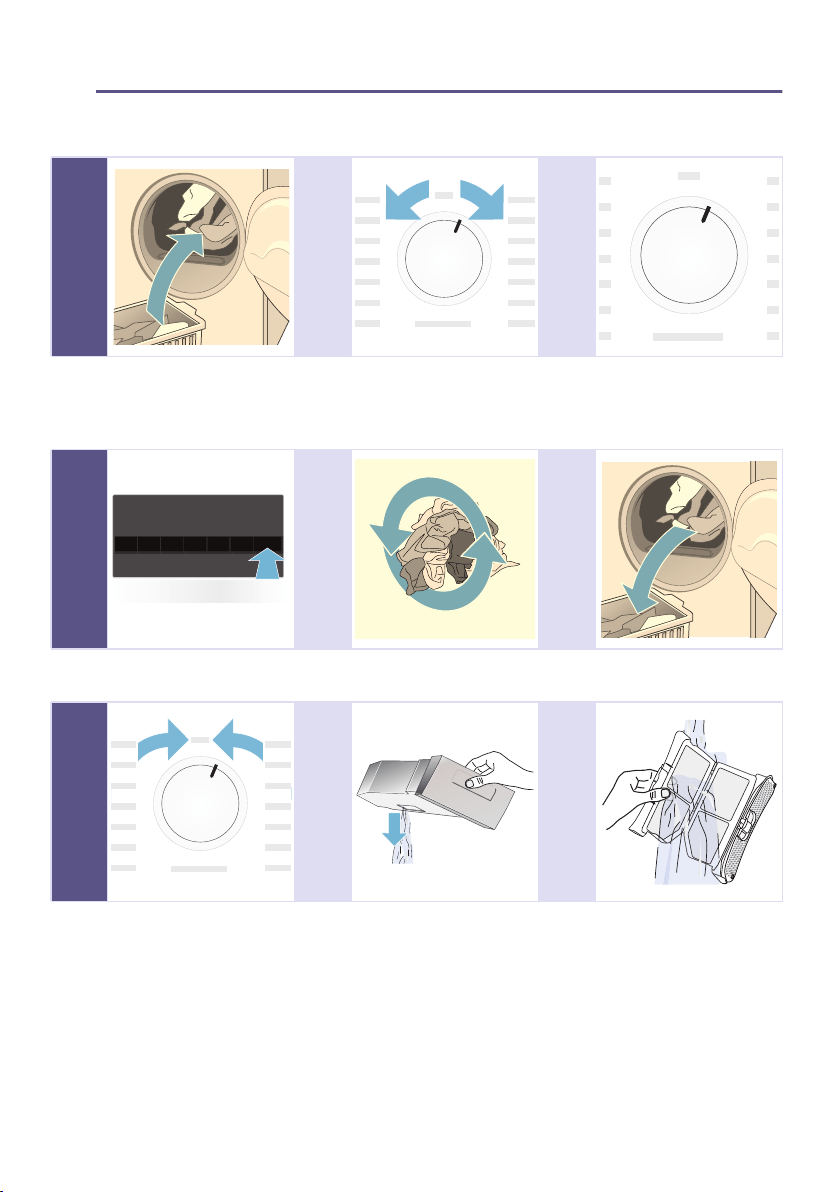
--------
--------
--------
1 @ @
Load the laundry and close
the door.
Switch on the dryer. Select a program and, if
necessary, adjust the
program
default settings.
2 @ @
Select
the start button A.
Dry. Unload the laundry.
3 @ @
Switch off the dryer. Empty the condensate
container.
Clean the fluff filter.
en Getting to know your appliance
18
* Getting to know your appliance
Getting to know your appliance
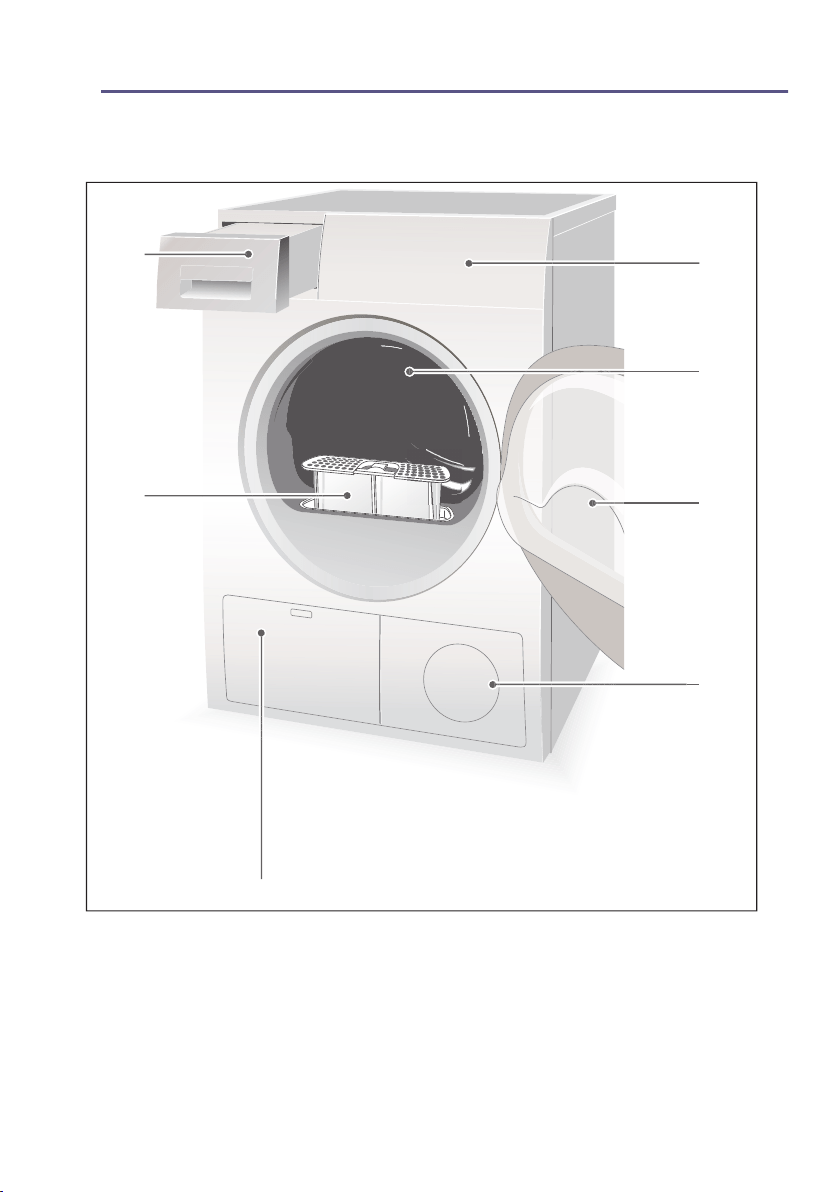
Dryer
#
+
3
;
( Condensate container
0 Control and display panel
8 Drum interior light (depending on the model)
@ Dryer door
H Air inlet
P Fluff filter
X Heat exchanger
Getting to know your appliance en
19
Control panel
VFKUDQNW URFNHQH[WUD
VFKUDQNW URFNHQH[WUD
VFKUDQNW URFNHQ
VFKUDQNW URFNHQ
EJHOWURFNHQ
+DQGW FKHU
0L[
6SRU WVZHDU
'DXQHQ
([W U D.XU]
:ROOHI LQLVK
%OXVHQ+HPGHQ
+
#
( Use the program selector to switch the dryer on and off and to select the
program.
0 Programm ~ Page 22.
8 Start button for starting or interrupting the program ~ Page 24.
@ Buttons ~ Page 24.
H Display panel with buttons ~ Page 20.
en Getting to know your appliance
20
Display panel
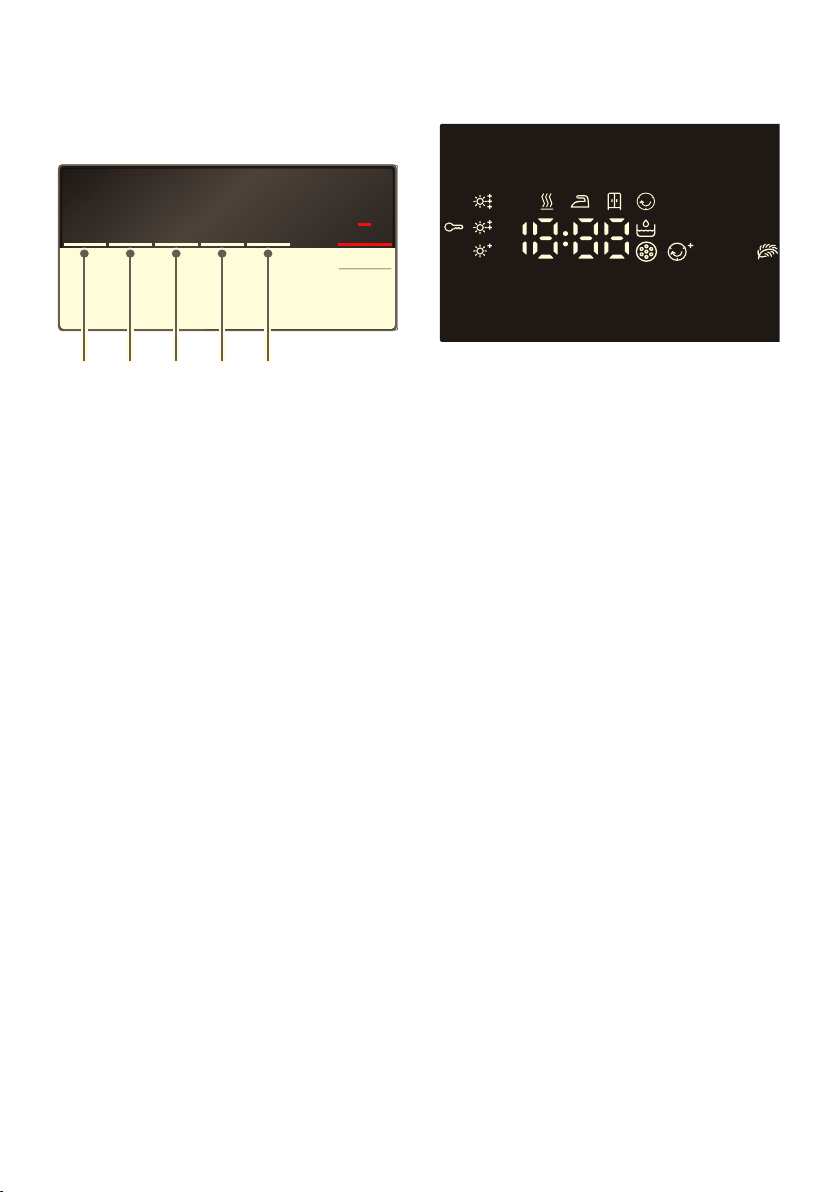
Buttons in the display panel
For a detailed description of all buttons,
see ~ Page 24 onwards.
Display panel
( Select the degree of dryness.
0 Select the drying time.
8 Select the Ready in time.
@ Select Anti-Crease.
H Select Low-Heat Drying.
#+
– Fine adjustment of the
dryness level.
” Anti-crease selected.
E Childproof lock selected.
s Low-Heat Drying selected.
A Start or Pause selected.
3 h Program delay in hours
when "Ready in" time is
selected.
1:27 Expected program duration
in hours and minutes.
e ö » Q “Ÿš - ˜ -
Program progress:
Wet; Iron Dry; Cupboard
Dry; Anti-Crease; End and
Pause.
ð Empty the condensate
container; ~ Page 27.
ç Clean the fluff filters;
~ Page 26.

Laundry en
21
Z Laundry
Laundry
Preparing the laundry
:Warning
Risk of explosion or fire!
Remove any cigarette lighters and
matches from pockets.
Caution!
The dryer drum and fabrics may be
damaged.
Remove all objects from pockets and
observe the following information:
■ Tie cloth belts, apron strings, etc.
together or use a laundry bag.
■ Close zips, hooks and eyelets and
buttons. Button up large items of
laundry, such as covers.
■ Remove any metal objects, such as
paper clips, from pockets.
■ To ensure a consistent drying result,
sort laundry by fabric type and
drying programme.
■ Always dry very small items of
laundry, e.g. babies' socks, together
with large items such as towels.
■ Knitted fabrics such as T-shirts and
jerseys often shrink the first time they
are tumble-dried. Use a gentle
programme.
■ Do not overdry easy-care laundry.
This increases creasing of the
laundry.
■ Use timed programmes for single
garments.
■ Some detergents and care products,
e.g. starch or softeners, contain
particles which may be deposited on
the moisture sensor. This may impair
the sensor function and in
consequence the drying result.
Notes
– When washing laundry to be
tumble-dried, use the correct
amount of detergent and care
products as specified in the
manufacturer's instructions.
– Clean the moisture sensor
regularly ~ Page 30.
Sorting laundry according to:
c Suitable for tumble drying
a Dry at normal temperature
` Dry at low temperature
b Do not tumble-dry
Note: Do not load laundry from the
washing machine directly into the
tumble dryer. Sort the spun laundry
before placing it in the dryer drum.
If you dry thin, thick and multi-layer
fabrics together, they will dry to differing
degrees. To achieve an even drying
result, you should therefore only dry
together laundry of the same type of
fabric and structure. If you feel that the
laundry is still too damp, you can select
a timed programme for subsequent
drying ~ Page 22.
Caution!
Possibility of material damage to the
dryer or laundry.
Do not tumble-dry the following
fabrics:
■ Laundry contaminated with oil.
■ Unwashed fabrics.
■ Non-breathable fabrics (e.g. rubber-
coated).
■ Easily damaged fabrics such as silk,
synthetic curtains.
en Programs and buttons
22
/ Programs and buttons
Programs and buttons
Programs
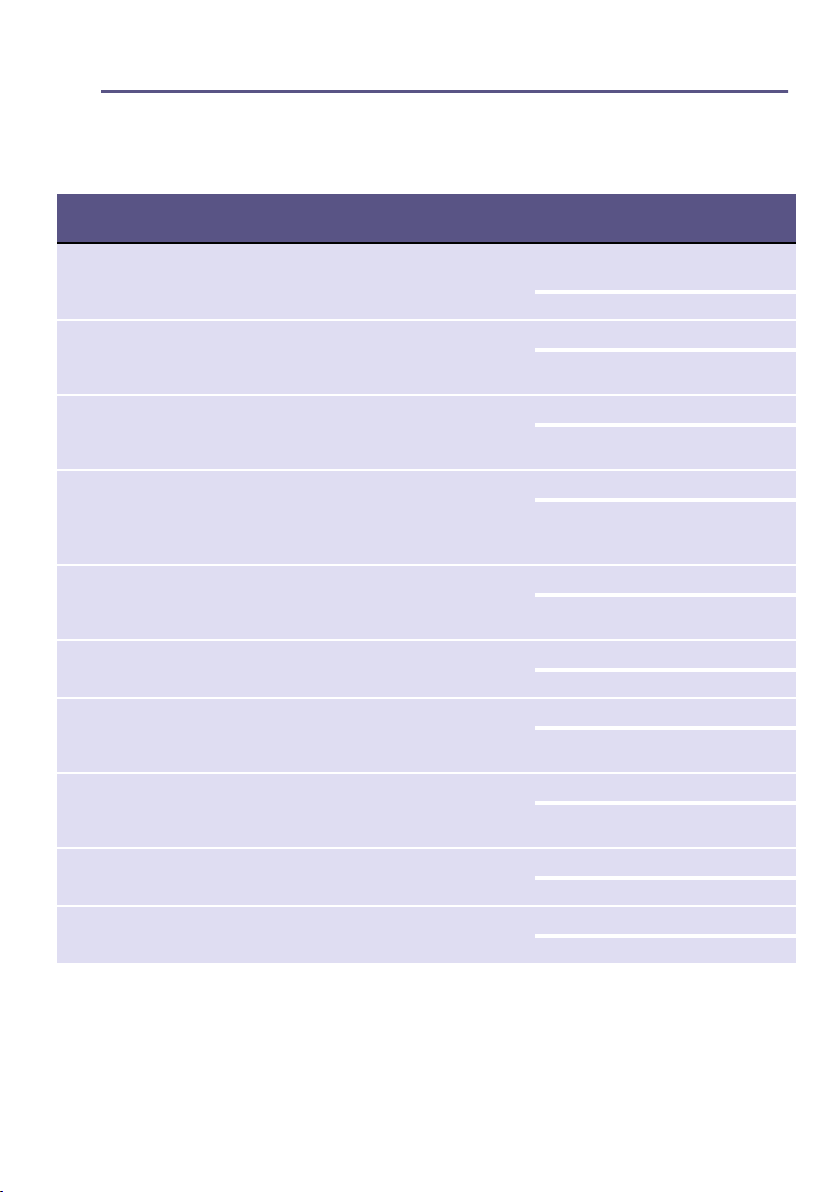
Program and fabrics Maximum load and program set-
tings/info
Name of the program
Which fabrics is the program suitable for?
The maximum load is based on the
dry weight of the fabrics
Possible program settings
Cottons Cupboard Dry Plus
Hard-wearing, heat-resistant fabrics that are made of more than one
layer of cotton or linen and do not dry readily.
7 kg
Cottons Cupboard Dry
Normal, hard-wearing and heat-resistant fabrics made of a single
layer of cotton or linen.
7 kg
Cottons Iron Dry
Normal, hard-wearing and heat-resistant fabrics made of a single
layer of cotton or linen that need to be damp after drying and are suit-
able for ironing or hanging up.
7 kg
Easy-Care Cupboard Dry Plus
Synthetic or blended fabrics that are made of more than one layer
and do not dry readily.
3.5 kg
Easy-Care Cupboard Dry
Normal synthetic or blended fabrics made of a single layer.
3.5 kg
Easy-Care Iron Dry
Normal synthetic or blended fabrics made of a single layer that need
to be damp after drying and are suitable for ironing or hanging up.
3.5 kg
Sportswear
Weatherproof and outdoor clothing with a membrane coating
and water-repellent fabrics.
1.5 kg
Allergy+
Hard-wearing towels made of cotton.
6 kg
Mixed Load
Mixed load consisting of cotton and synthetic fabrics.
3 kg

Programs and buttons en
23
--------
Timed Programme warm
All types of fabric; time programme.
Suitable for pre-dried or slightly damp laundry and for drying off
multi-layered, thick laundry.
Notes
■ Only dry wool, sports shoes and soft toys with the basket for
woollens ~ Page 14.
■ In the time programme, the laundry's residual moisture is not
automatically detected. If the laundry is still too damp after
the drying programme, repeat the programme and, if required,
extend the programme length.
3 kg
You can adjust the programme
length using the button for
the drying time.
Timed Programme cold
All types of fabric. For freshening up or airing items of laundry
that have not been worn for long.
3 kg
You can adjust the programme
length using the button for
the drying time.
Shirts 15
For optimum drying results, dry a maximum of 5 shirts at one time.
After drying, iron the laundry or hang it up and leave for a period
of time: Residual moisture is then distributed evenly.
1 kg
Super Quick 40
Synthetics and light cottons.
2 kg
Down Wear
Fabrics, pillows, bedspreads or eiderdowns filled with down.
Dry large items individually.
1.5 kg
Wool Finish
Machine-washable fabrics made of wool or containing wool.
Notes
■ Fabrics become fluffier but not dry.
■ Remove fabrics once the programme has ended and allow to
dry.
3 kg

en Programs and buttons
24
Buttons
--------
Buttons Explanations and notes
Note: Not all buttons and their functions can be selected in all programs.
Fine adjust If the laundry is too damp after drying, you can finely adjust the dryness levels
e.g. Cupboard Dry. The dryness level can be increased with the degree of dryness
in three stages, from – to •.
If you have adjusted the dryness level, the setting for all programmes with
a selectable dryness level is retained even after the dryer is switched off.
Note: The higher the degree of dryness, the longer the programme duration.
Time Dry Adjust the programme length for the time programmes. Between 20 minutes
and 3 hours, in 10-minute increments.
Finished in The programme will end in 1-24 hrs. Set the "Ready in" time in increments of one
hour to delay the start of the programme. The required number of hours after the
programme ends is displayed in the display panel.
E 3 sec.
(Childproof lock)
Press and hold the "Ready in" time button and the drying time button at the same
time for 3 seconds to activate or deactivate the childproof lock.
Crease Guard The drum moves the laundry at regular intervals for 60 minutes after drying, in any
program, to prevent creasing. Automatic anti-crease function can be extended by up
to 180 min.
Low Heat Reduced temperature for delicate fabrics, e.g. polyacrylic or elastane. Selecting the
button will extend the drying time.
Start/Pause Starts or pauses the programme.
Operating the appliance en
25
1 Operating the
appliance
Operating the appliance
Loading laundry and
switching on the dryer
Note: The dryer must be correctly
positioned and connected, ~ Page 13.
1. Place the laundry in the drum.
2. To switch the dryer on, turn the
program selector to any program.
3. Close the dryer door.
Caution!
Risk of material damage to the dryer or
laundry.
Take care not to trap any laundry in the
door.
Setting a program
Note: If you have activated the
childproof lock, you must deactivate it
before you can set a program, see
~ Page 24.
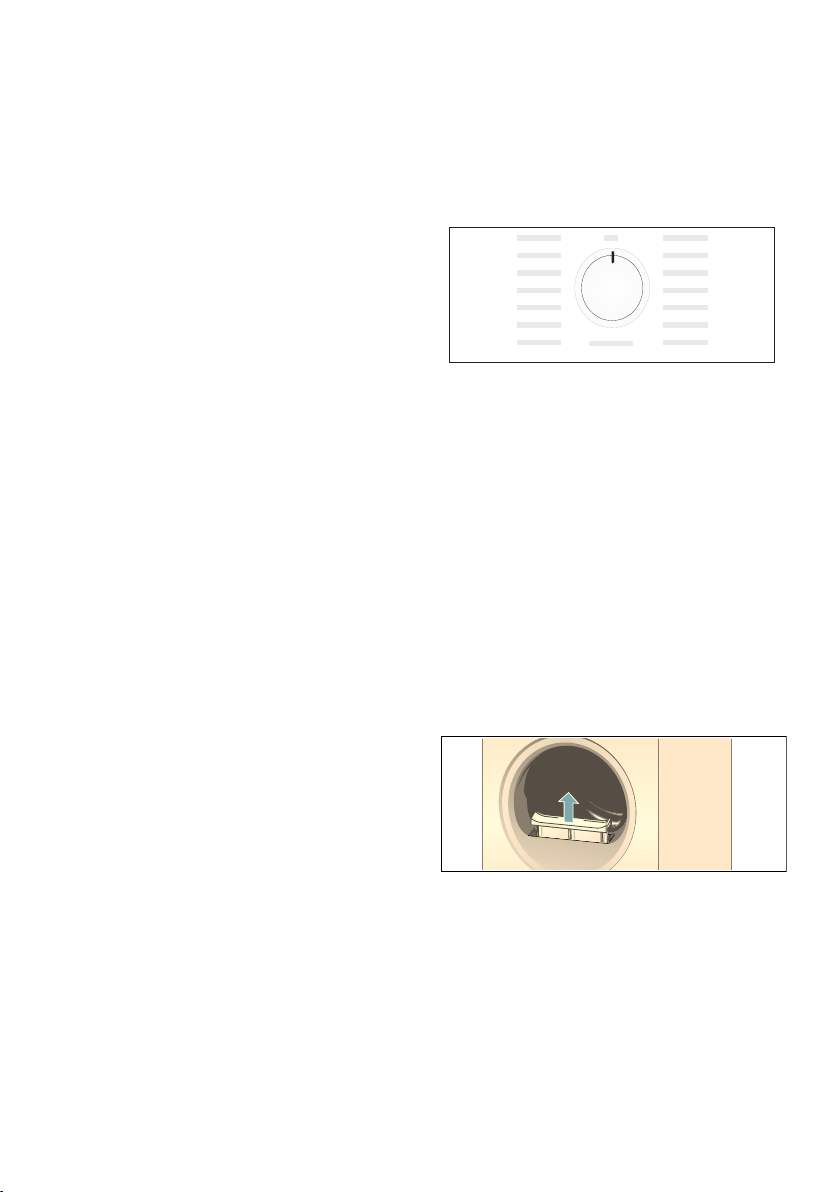
1. Select the required program;
detailed information on the programs
can be found from ~ Page 22
onwards.
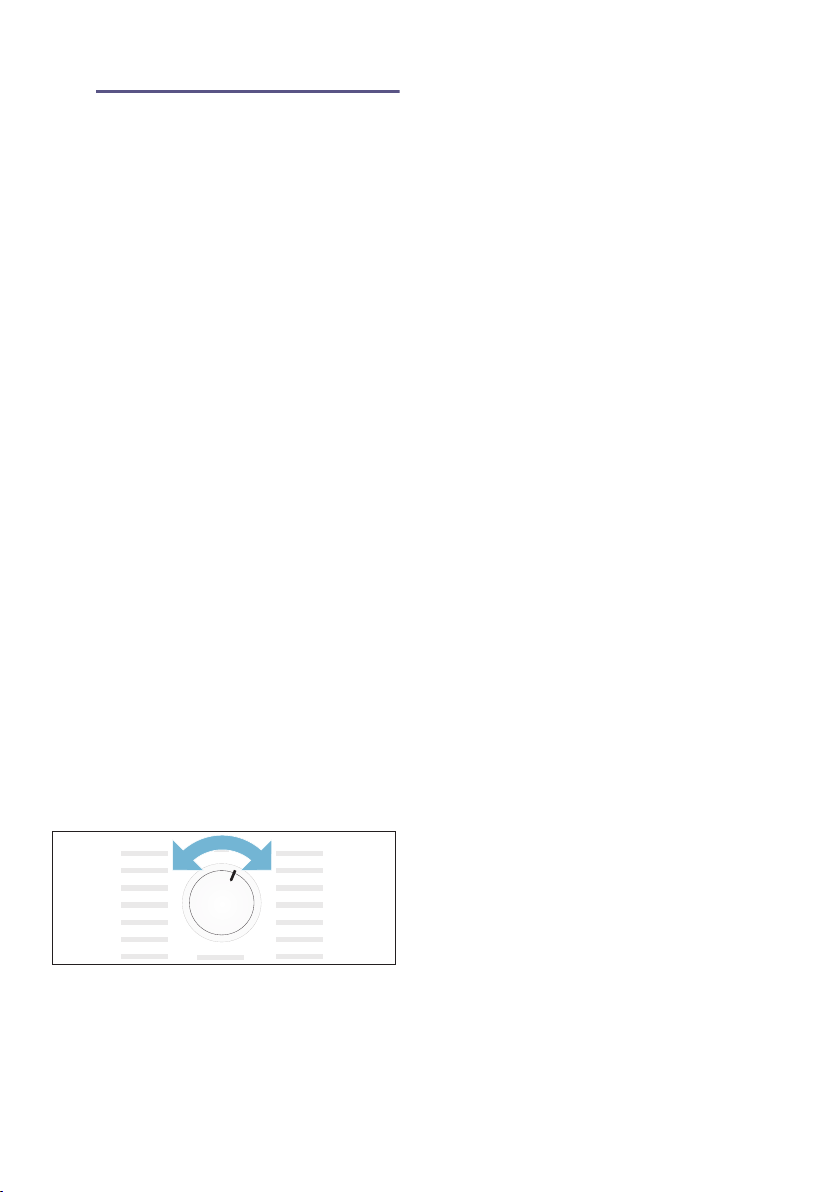
2. Use the program selector to set the
required program. The default
program settings for the selected
program appear in the display panel.
Note: Default program settings are
standard settings that are already
defined when a program is selected.
After selecting a program, you can
see the default program settings in
the display panel.
3. If required, adjust the default
program settings. You can find
detailed information on this from
~ Page 22 onwards.
Starting the program
Press the Start button.
Note: If you want to lock the program
to prevent it from being inadvertently
adjusted, you can select the childproof
lock, see ~ Page 24.
Program sequence
The programme status is indicated in
the display field.
e.g.
1:27
Expected programme duration
in hours and minutes.
Note: When a programme is
selected, the expected drying
time for the recommended load
is displayed. During drying
moisture sensors detect the
remaining moisture in the load
and adjust the programme
length (except timed
programmes). This is visible via
the time remaining leaping
forward.
e Wet
ö Iron Dry
» Cupboard Dry
Q AntiCrease
- ˜ -
Pause
“Ÿš End
en Operating the appliance
26
Changing the program or
adding laundry
You can remove or add laundry and
change or alter the program at any time
during drying.
1. To pause the program, open the
dryer door or press the Start button.
2. Add or remove laundry.
3. Select another program or an
additional function, if required.
4. Close the dryer door.
5. Press the Start button.
Note: The program duration in the
display panel is updated depending on
the load and residual moisture in the
laundry. The values displayed may
change after the program is changed or
the load is adapted.
Program interruption
The program can be interrupted at any
time; to pause, open the dryer door or
press the Start button.
Caution!
Risk of fire. Laundry may catch fire.
If you cancel the program, you must
remove the laundry items and spread
them out so that the heat can disperse.
Program end
“Ÿš appears in the display panel.
Removing laundry and
switching off the dryer
1. Remove the laundry.
2. Turn the program selector to the "off"
position.
Clean the fluff filter
Note: During drying, fluff and hair from
the laundry is trapped by the fluff filter. If
the fluff filter is blocked or dirty, this
reduces the flow of air, which prevents
the dryer from achieving its maximum
performance. Clean fluff filters also
reduce energy consumption and the
drying time.
Clean the fluff filter after each drying
cycle:
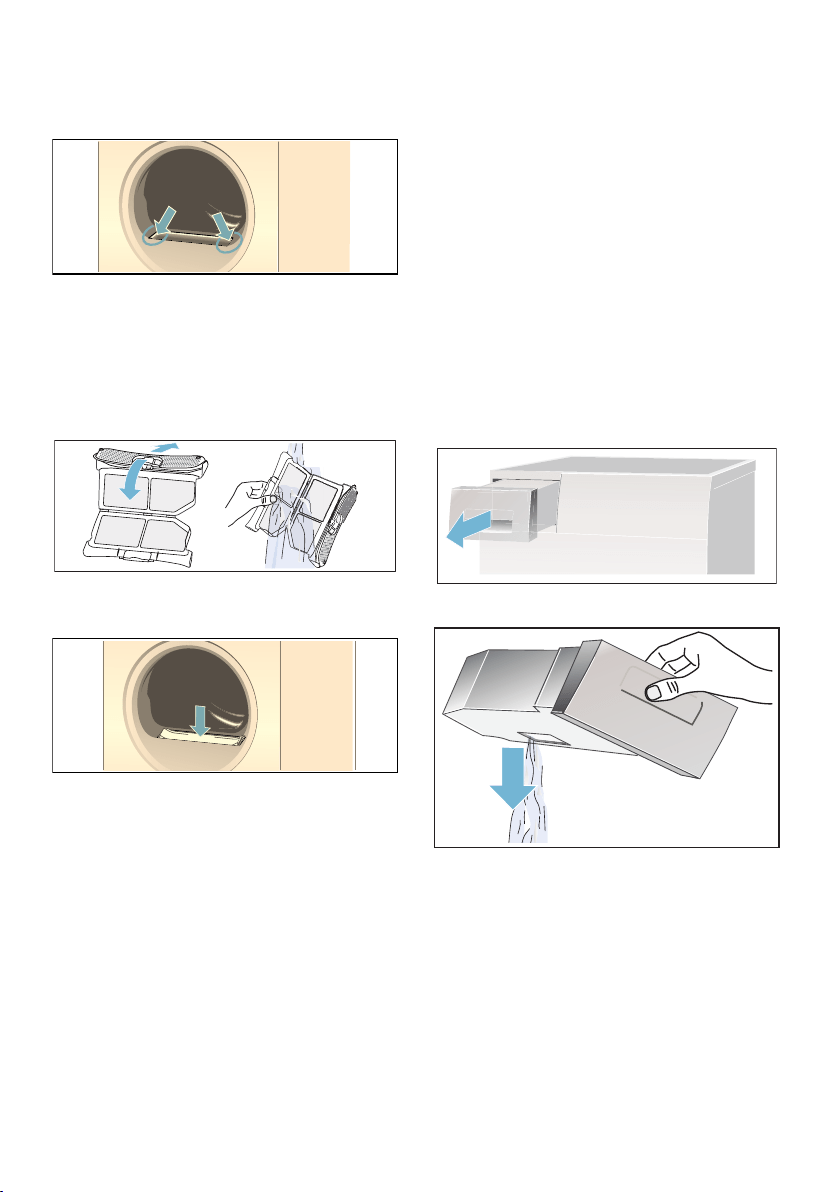
1. Open the dryer door and remove all
fluff from the door.
2. Remove the fluff filter.
Operating the appliance en
27
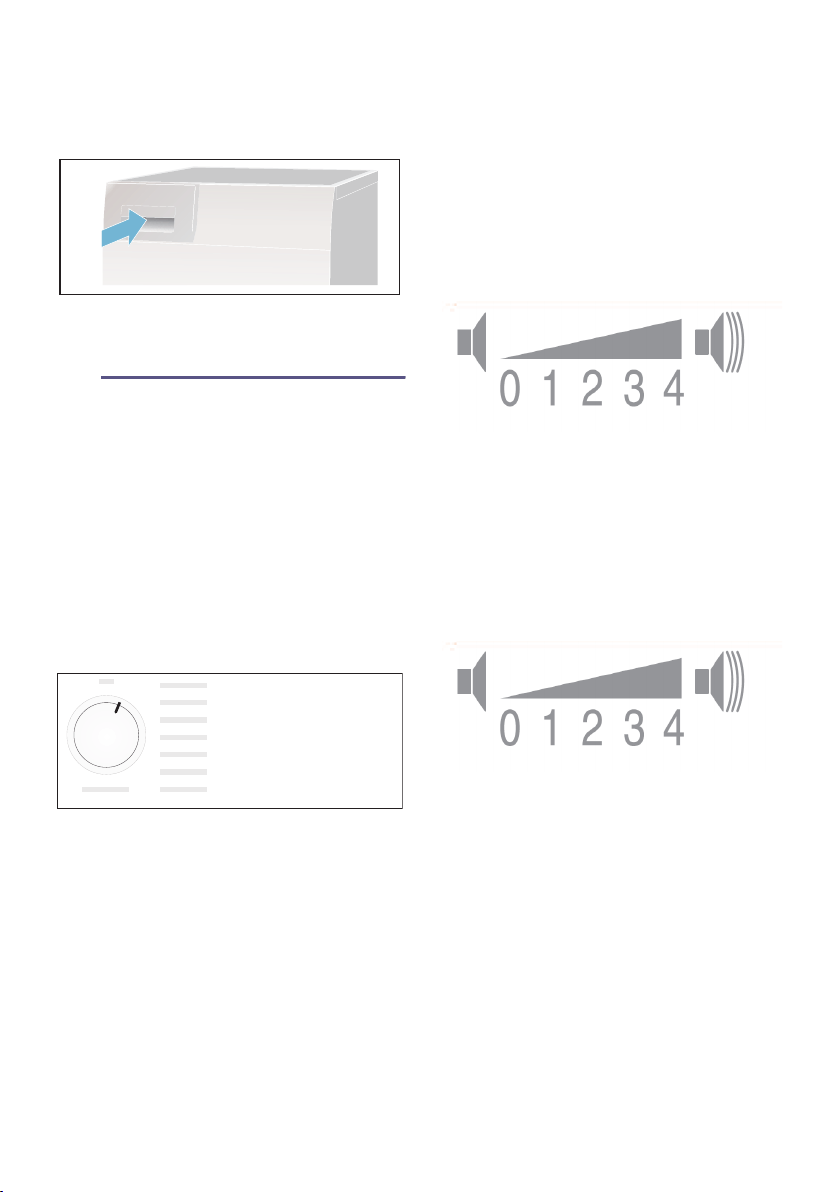
3. Remove the fluff from the recess in
the fluff filter.
Note: Ensure that no fluff falls into
the open shaft.
4. Open the fluff filter and remove all
the fluff.
5. Rinse away the fluff under running
water or clean the fluff filter in the
dishwasher.
6. Dry the fluff filter, close it and reinsert
the fluff filter.
Caution!
The dryer may be damaged.
Do not operate the dryer without a fluff
filter or if the fluff filter is defective.
Emptying the condensate
container
By default, the condensation from the
appliance runs into the condensation
container.
Alternatively, you have the option of
discharging the condensation water
*
supplied depending on the model. If you
choose to discharge the condensation
water into the waste-water system, you
will not need to empty the condensation
container during the drying programme
or after each time you use the dryer.
1. Pull out the condensate container
horizontally.
2. Pour out the condensation water.
Caution!
Dirty condensation water may be
harmful to your health and cause
material damage.
Condensation water is not suitable
for drinking and may be
contaminated with fluff. Do not drink
the condensation water or reuse it.
* into the waste-water system via a
drain hose
en Signal setting
28
3. Push in the condensate container
until you feel it lock back into place
in the dryer.
M Signal setting
Signal setting
You can change the following settings:
■ The spin speed that is used for
spinning your laundry before it is
dried,
■ The volume of the audible signal at
the end of the program,
■ The volume of the audible button
signals.
You will need to activate the setting
mode in order to change these settings.
Activating setting mode
1. Switch the dryer on.
2. Select the "Cottons" programme in
position 1 and wait for five seconds.
The symbols go out in the display panel
and the programme duration is
displayed.
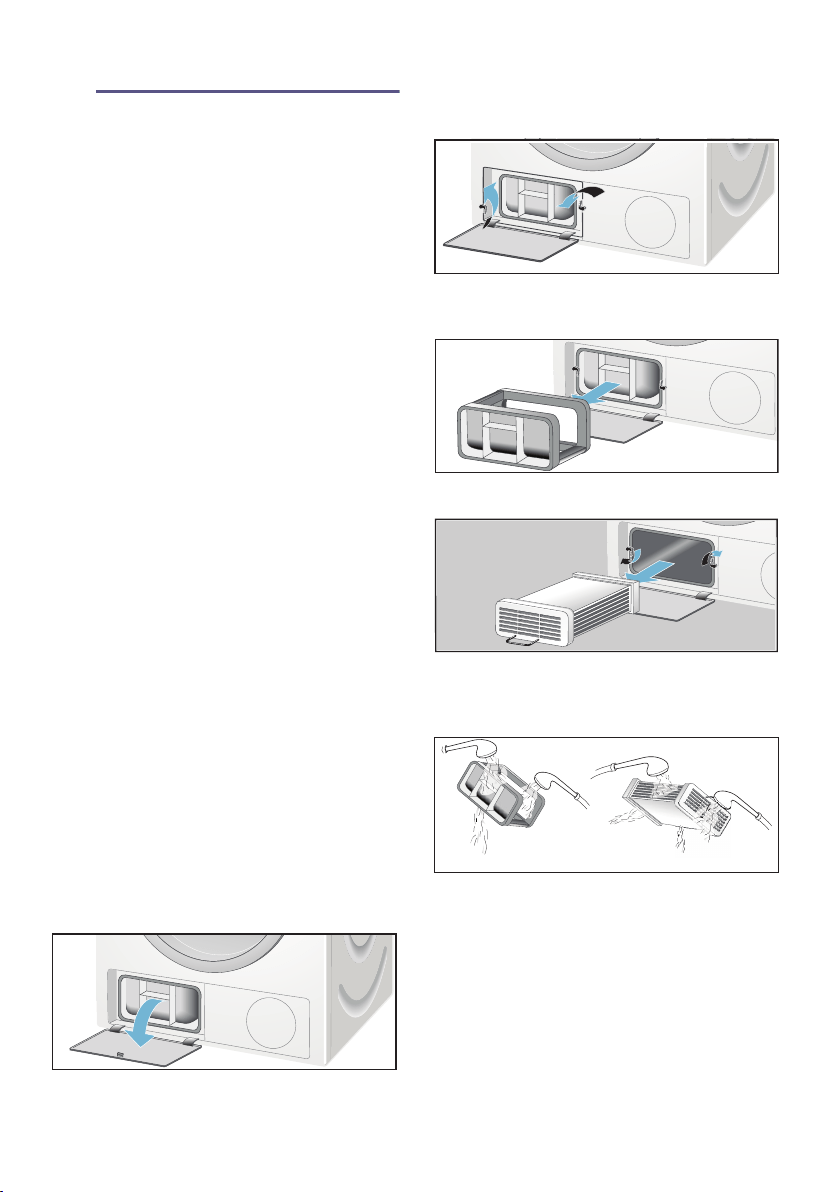
1. Press and hold the Start button and,
at the same time, turn the
programme selector clockwise to
position 2.
2. The spin speed is shown in the
display.
3. Press the "Finish in" time button or
the drying time button to change the
spin speed.
4. Turn the program selector clockwise
to position 3.
5. The volume of the audible signal at
the end of the program is shown in
the display.
0 = off, 1 = quiet, 2 = medium,
3 = loud, 4 = very loud
6. Press the "Finish in" time button or
the drying time button to change the
volume.
7. Turn the program selector clockwise
to position 4.
8. The volume for the audible button
signal is shown in the display.
0 = off, 1 = quiet, 2 = medium,
3 = loud, 4 = very loud
9. Press the "Finish in" time button or
the drying time button to change the
volume.
Exiting setting mode
Turn the program selector to the "Off"
position once you have set the required
spin speed and the volume. The
settings have now been saved.
Cleaning en
29
D Cleaning
Cleaning
Cleaning the dryer and the
control panel
:Warning
Risk of death!
There is a risk of electric shock as the
dryer is operated with electricity.
Disconnect the dryer from the mains
before cleaning.
Clean the dryer using only water and a
soft, damp cloth.
Remove all detergent residue, spray
residue or other residues immediately.
Do not use cleaning agents or agents
for pre-treating laundry (e.g. prewash
sprays, stain removers). Do not use
high-pressure cleaners or steam jet
cleaners to clean your appliance.
Cleaning the heat exchanger
Notes
■ The heat exchanger requires
cleaning once a month, however this
varies depending on how frequently
the dryer is used.
■ If there is debris in the heat
exchanger, this will increase the
amount of time required for drying
and will compromise the drying
results.
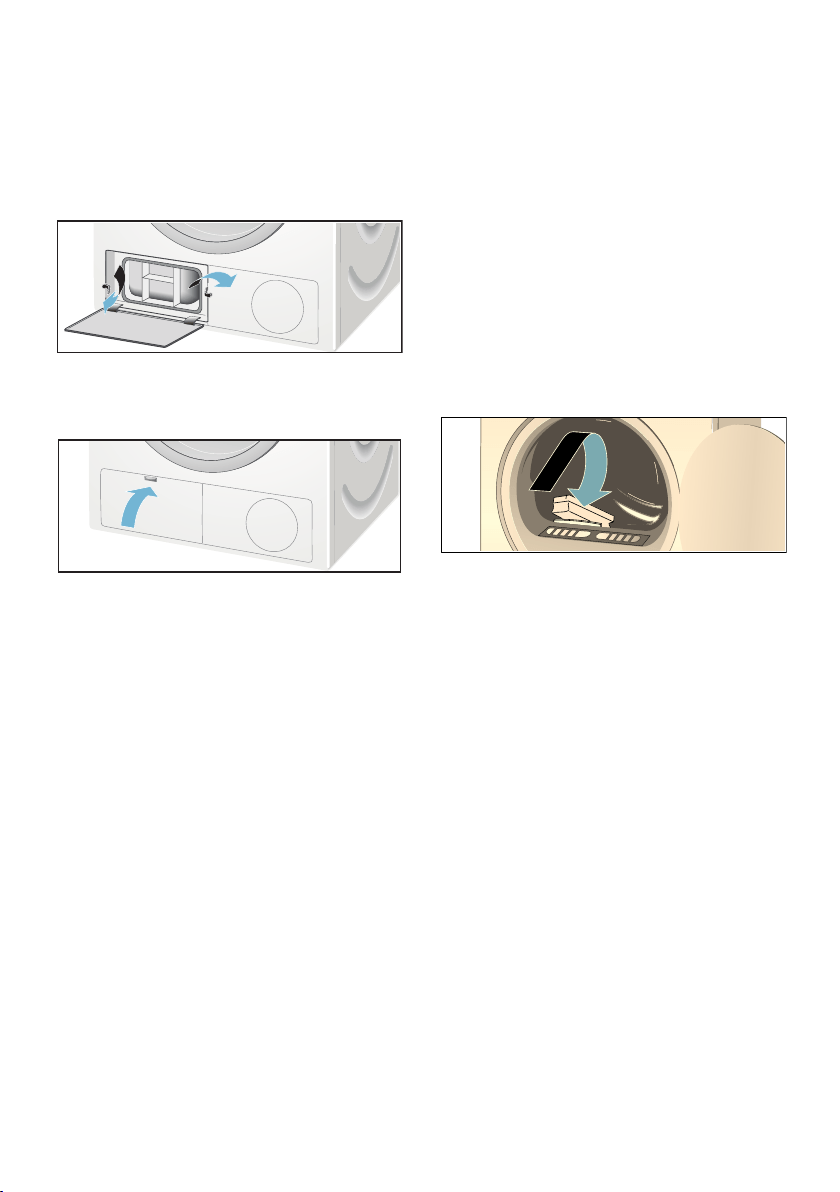
1. Allow the dryer to cool down and
place an absorbent cloth beneath
the maintenance flap.
Note: Residual water may leak out.
2. Open the maintenance flap fully.
3. Turn both locking levers towards
each other.
4. Remove the top cap from the heat
exchanger.
5. Remove the heat exchanger.
6. Flush water through the heat
exchanger from all sides to
completely remove all fluff.
Caution!
There is a risk of damage to the heat
exchanger.
Only use water to clean the heat
exchanger, and do not use any hard
objects or objects with sharp edges
to remove the fluff.
7. Remove all fluff from the seals on
the dryer and on the heat exchanger.
8. Allow all the water to drip off.
en Cleaning
30
9. First insert the heat exchanger, and
then fit the heat exchanger's top cap
in place.
10.Turn both locking levers back and
close the maintenance flap until it
locks into place.
11.Close the maintenance flap and
press on it until you feel it click in
place.
Cleaning the moisture sensor
Note: The dryer is equipped with a
stainless-steel moisture sensor. The
moisture sensor measures how damp
the laundry is.
After long periods of usage the moisture
sensor may become covered by a fine
layer of limescale or residues of
detergents and care products. Such
residues must be removed regularly as
the sensor function and in consequence
the drying result may be impaired.
Open the door and clean the moisture
sensor with a coarse sponge.
Caution!
Moisture sensor may be damaged.
Do not clean moisture sensors with
abrasives and steel wool.

Faults and what to do about them en
31
3 Faults and what to do about them
Faults and what to do about them
Faults Cause/remedy
ð on the display panel
and drying has been
interrupted.
■ Empty the condensate container and press the Start button ~ Page 24.
■ If the optional condensation drain is installed, the drain hose may be
blocked. Check the hose for deposits and flush the hose out.
ç on the display panel. Clean the fluff filter and/or the heat exchanger, then select the Start button
~ Page 26;~ Page 29.
Dryer does not start. ■ Mains plug plugged in or fuse checked?
■ program selected? Select a program.
■ Dryer door open? Close the door.
■ Childproof lock activated? Deactivate the childproof lock.
■ "Finish in" time selected? program starts after a delay.
Display panel goes off
and Start button flashes.
Not a fault. Energy saving mode is active ~ Page 12.
Creasing. ■ Creasing occurs when you have exceeded the maximum load or selected
the wrong program for the type of fabric. All the required information can
be found in the program table.
■ Remove clothes immediately after drying; creasing may occur if they are
left in the drum.
Water is leaking out. Not a fault; the dryer may be positioned on an incline. Level the dryer.
Change in the pro-
gramme duration dis-
played during drying.
Not a fault. The moisture sensors detect the remaining moisture in the load and
adjust the programme length (except timed programmes).
Laundry is not dried cor-
rectly or is still too damp.
■ After the end of the program, warm laundry feels damper than it actually is.
Spread the laundry out and allow the heat to disperse.
■ Finely adjust the dryness level – this extends the drying time but does not
increase the temperature. Your laundry will become drier ~ Page 24.
■ Select a program with a longer drying time or increase the drying level. This
does not increase the temperature.
■ Select a timed program for subsequent drying of laundry that is still damp
~ Page 22.
■ If you have exceeded the maximum load for the program, the laundry may
not be dried properly.
■ Clean the moisture sensor in the drum. The sensor may become covered by
a fine layer of limescale or residues of detergents and care products which
then impair its function. Your laundry is not being dried correctly
~ Page 30.
■ Drying has been interrupted as a result of a power cut, because the conden-
sate container is full or because the maximum drying time has been
exceeded.
Note: See also the laundry tips ~ Page 21.
* depending on the model

en Faults and what to do about them
32
Note: If you cannot rectify the fault yourself by turning the dryer off and on, please
contact our after-sales service.
Drying time too long? ■ The fluff filter may be dirty and cause a longer drying time. Clean the fluff fil-
ter.
■ The heat exchanger may be dirty and cause a longer drying time. Clean the
heat exchanger.
■ If the air inlet on the dryer is blocked or not freely accessible, this may
increase the drying time. Make sure that the air inlet remains unobstructed.
■ If the ambient temperature is higher than 35 °C, this may extend the drying
time.
■ Insufficient air circulation in the room may increase the drying time. Venti-
late the room.
Displayed drying time
changes during drying
process.
Not a fault. The dryer recognizes the load and adapts the remaining program
duration.
Humidity in the room
increases.
Not a fault. Make sure the room is sufficiently ventilated.
Power cut. The drying program is interrupted. Remove the laundry and spread it out, or
restart the program.
Faults Cause/remedy
* depending on the model
After-sales service en
33
J After-sales service
After-sales service
After-sales service
If you cannot rectify the fault yourself
(faults, what to do?), please contact our
after-sales service. We will always find
an appropriate solution to avoid
unnecessary visits by engineers.
The contact information for your nearest
after-sales service can be found here or
in the enclosed after-sales service
directory.
Please provide after-sales service with
the dryer's product number (E-no.) and
production number (FD).
You can find this information on the
inside of the dryer door or on the rear of
the dryer.
Trust the expertise of the
manufacturer.
Contact us. You can therefore be sure
that the repair is carried out by trained
service technicians who carry original
spare parts.
(1U )'
en Consumption values
34
[ Consumption values
Consumption values
Consumption values table
Most efficient programme for cotton fabrics
The following "standard cottons
programme" (identified with ü) is
suitable for drying normal, wet cotton
laundry and is most efficient in terms of
its combined energy consumption for
drying wet cotton laundry.
Program Spin speed which is
used for spinning the
laundry
Duration** Energy consumption**
Cottons 7 kg 3.5 kg 7 kg 3.5 kg
Cupboard Dry* 1400 rpm 97 min 59 min 3.93 kWh 2.19 kWh
1000 rpm 119 min 73 min 4.15 kWh 2.31 kWh
800 rpm 141 min 87 min 4.37 kWh 2.43 kWh
Iron Dry* 1400 rpm 70 min 44 min 3.08 kWh 1.67 kWh
1000 rpm 92 min 58 min 3.30 kWh 1.79 kWh
800 rpm 114 min 72 min 3.53 kWh 1.91 kWh
Easy-Care 3.5 kg 3.5 kg
Cupboard Dry* 800 rpm 46 min 1.42 kWh
600 rpm 56 min 1.75 kWh
* Program setting for testing in accordance with the applicable EN 61121 standard.
** The values may differ from those specified, depending on the type of fabric, composition of laundry to
be dried, residual moisture in the fabric, the degree of dryness that has been set, the amount of laundry
being loaded and the environmental conditions.
Standard programmes for cottons in accordance with current EU regulation 932/2012
Programme Load Energy consumption Programme length
ü Cottons Cupboard Dry 7 kg/3.5 kg 4.15 kWh/2.31 kWh 119 min./73 min.
Programme setting for testing and energy labelling in accordance with Directive 2010/30/EU.

Technical data en
35
J Technical data
Technical data
Dimensions:
85 x 60 x 60 cm
Height x width x depth
Weight:
Approx. 45 kg
Maximum load:
7 kg
Condensate container:
4.6 l
Connected voltage:
220 - 240 V
Connected load:
Max. 2600 W
Fuse:
13 A
Drum interior light
*
Ambient temperature:
5 - 35 °C
Power consumption when
switched off:
0.10 W
Power consumption when
ready for use (left-on mode):
0.50 W
* Depending on the model

Robert Bosch Hausgeräte GmbH
Carl-Wery-Straße 34
81739 München, GERMANY
*9001278030*
9001278030 (9701)
You can find the contact information for all countries in the attached after-sales
service directory.
7 Advice and repair order in the event of faults
GB 0344 892 8979 (Calls charged at local or mobile rate.)
IE 01450 2655 (0.03 € per minute at peak. Off peak 0.0088 € per minute.)