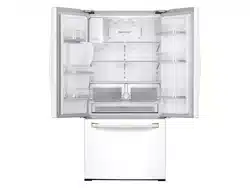
Owner Manual Refrigerator
Operating your French Door Refrigerator
USING THE CONTROL PANEL
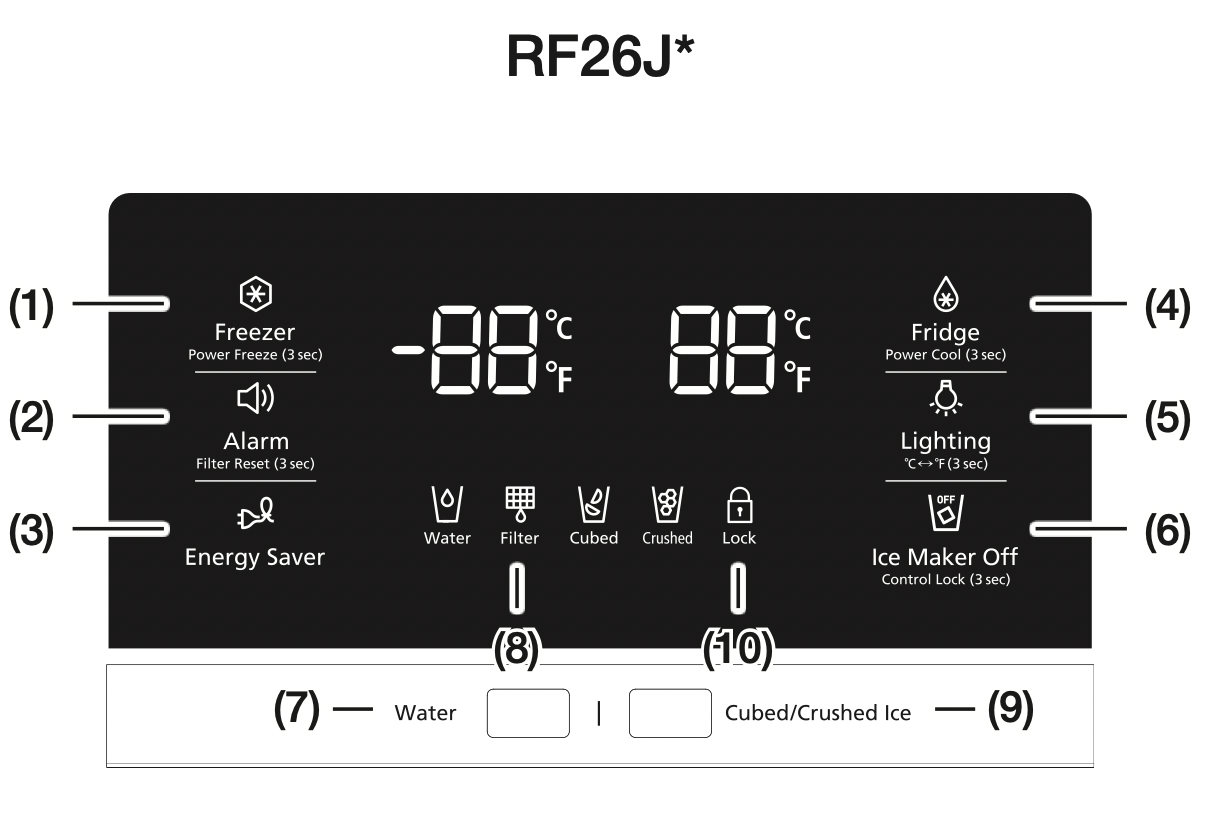
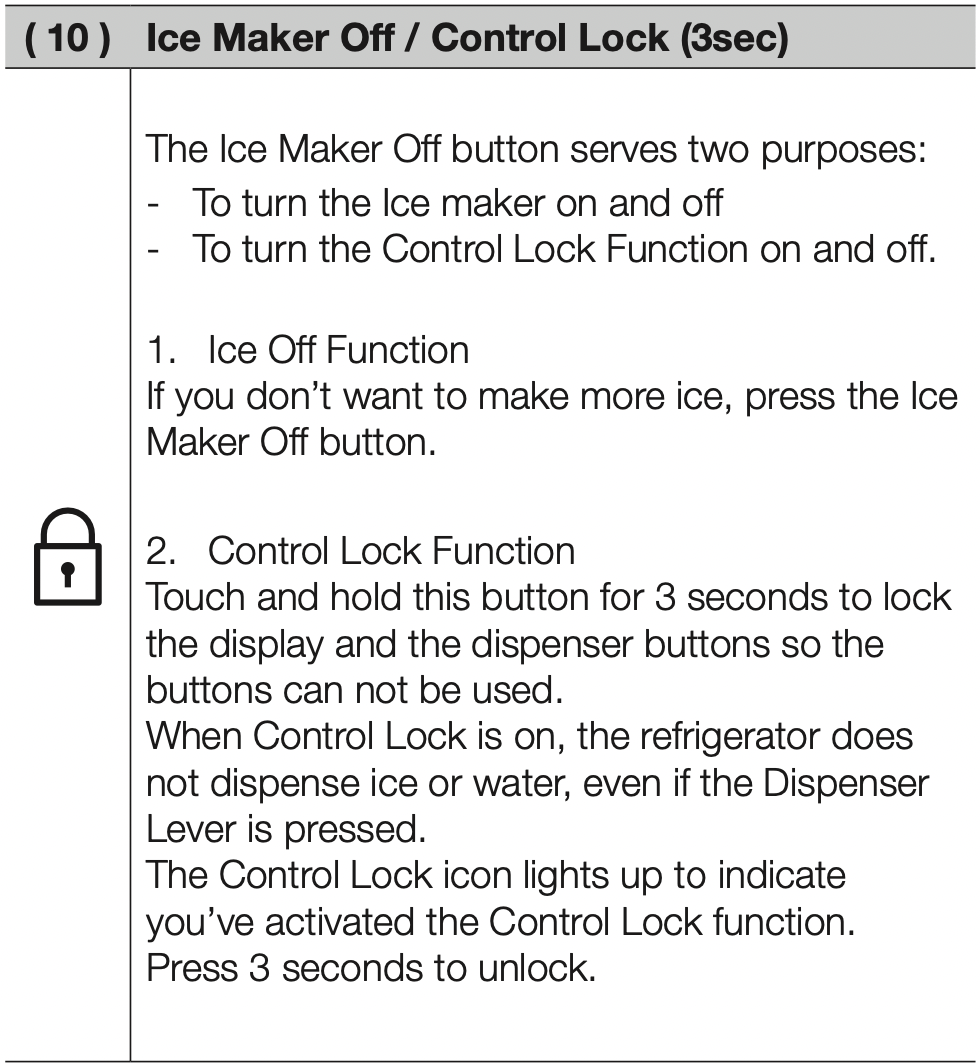
To save electricity, the Panel Display turns off automatically under the following conditions: When no button has been pressed, when no doors are open, or when no Dispenser Lever has been pushed.
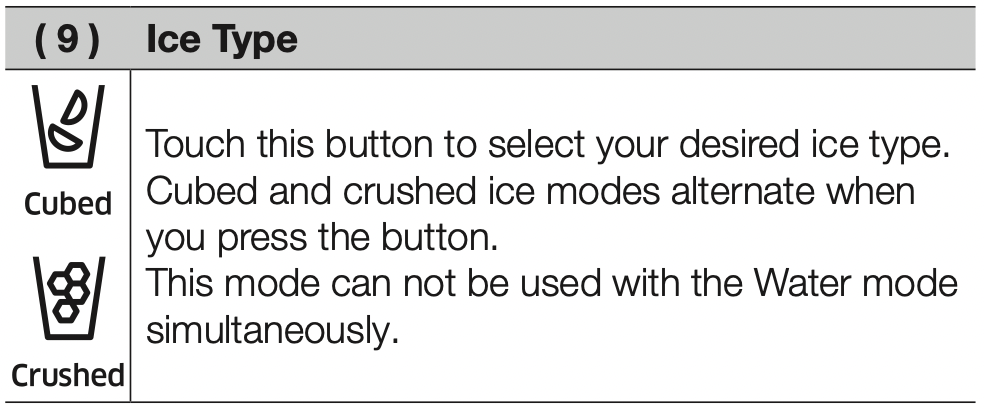
However, the icon indicating your cubed or crushed ice selection, will stay on.
When you press a button, open a door, or push a Dispenser Lever, the Panel Display will turn on again.
Except for the Energy Saver, Water, and Cubed / Crushed Ice buttons, all function buttons will become operational after you remove your finger from the button you are currently pressing.
CHANGING THE WATER FILTER
WARNING: To reduce risk of water damage to your property DO NOT use generic brands of water filters in your SAMSUNG Refrigerator.
USE ONLY SAMSUNG BRAND WATER FILTERS. SAMSUNG is not legally responsible for any damage, including, but not limited to, property damage caused by water leakage from the use of a generic water filter.
SAMSUNG Refrigerators are designed to work ONLY WITH SAMSUNG Water Filters.
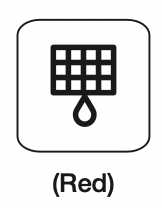
The Filter light turns red to let you know when it is time to change your water filter cartridge.
To give you time to get a new filter, the red light comes on just before the capacity of the current filter runs out.
Changing the filter on time provides you with the freshest, cleanest water from your refrigerator.
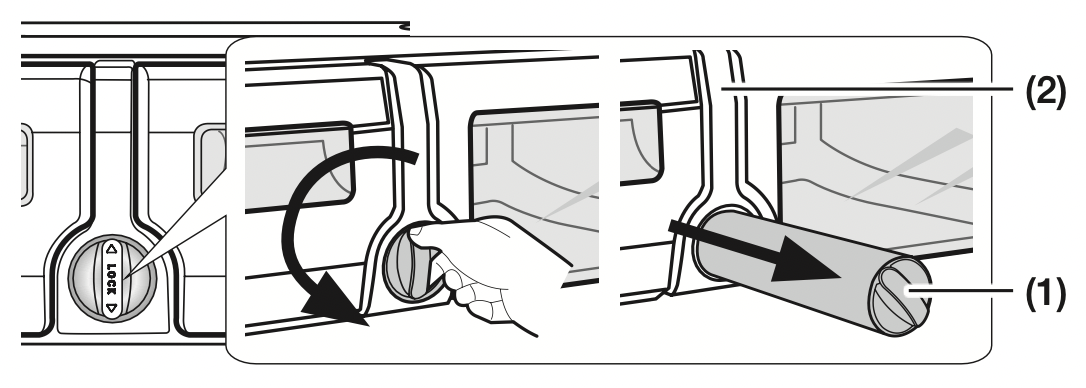
- Shut off the water supply. Then, turn the water filter ( 1 ) about 1/4 turn, counter-clockwise.
- Pull the water filter (1) from the case filter ( 2 ).
NOTE:
To change the water filter more easily, shut off the water supply valve.
Sometimes, it is hard to disassemble the water filter because impurities in the water cause it to stick. If you are having difficulties, grip the water filter firmly and pull it hard.
When you pull the water filter, a little water can leak from the opening. This is normal. To minimize the water leaks, keep the filter cartridge horizontal when you pull it.
To prevent overflow, empty the water filter tray ( 3 ) and dry around the filter case ( 2 ).
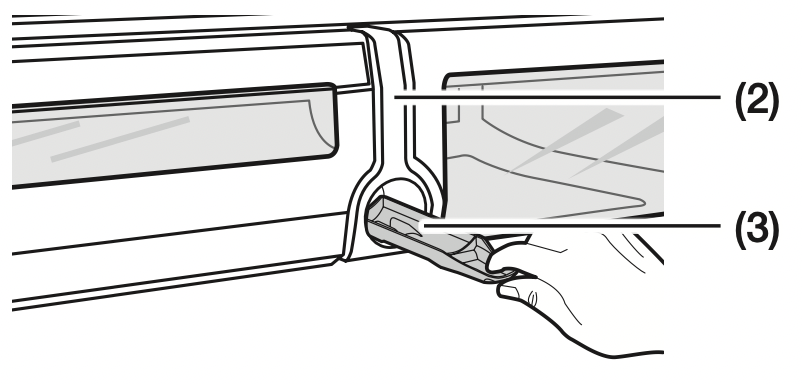
- Insert the new filter into the filter case ( 4 ).
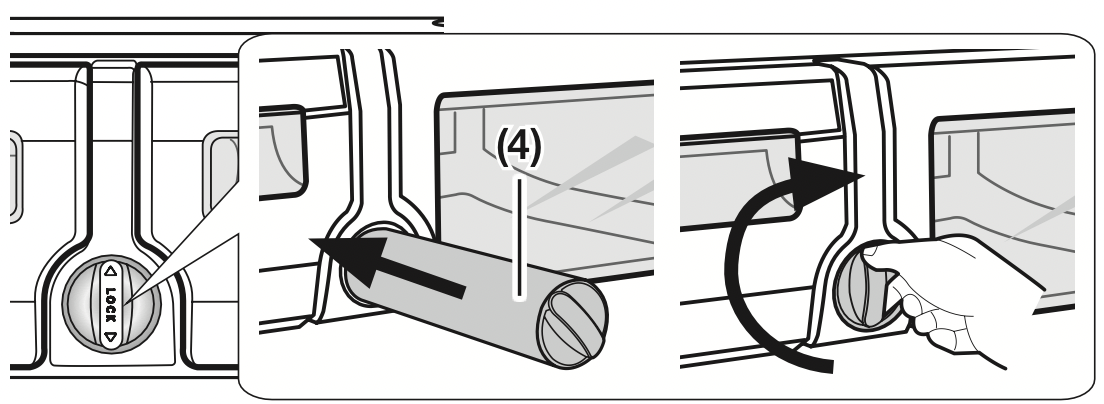
- Push the filter, and then turn it clockwise until it locks.
NOTE: If you have trouble inserting the water filter because of high water pressure, shut off the water supply valve.
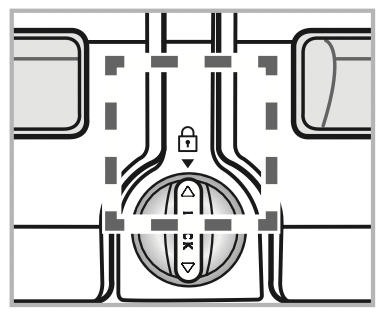
The locked symbol should be lined up with the indicator line.
- Touch and hold the “Alarm / hold 3 sec for Filter Reset” button (
 ) for about 3 seconds to reset the water filter indicator. The indicator’s red light will turn off.
- If you turned off the water supply, turn it back on.
Removing any residual matter inside the water supply line after installing the water filter.
- Turn ON the the water supply if you turned it off when you installed the water filter.
- Run water through the dispenser until the water runs clear (approx. 6 to 7 minutes).
This will clean the water supply system and remove air from the lines.
- Additional flushing may be required in some households.
- Open the Refrigerator door and make sure there are no water leaks coming from the water filter.
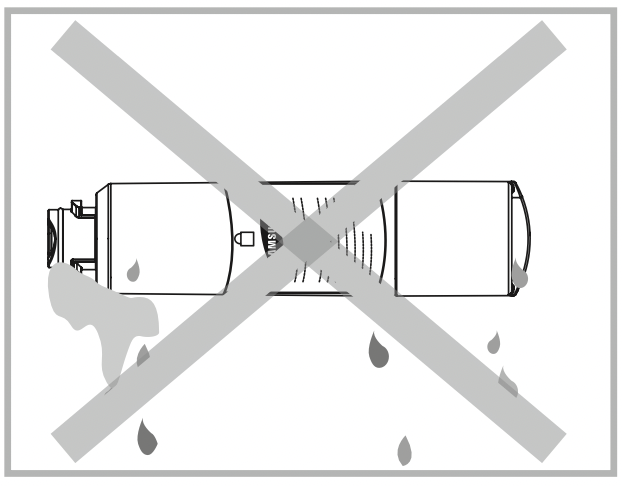
NOTE: Be sure to flush the dispenser thoroughly, otherwise water may drip from the dispenser.
This means that there is still air in the line.
Reverse Osmosis Water Supply
IMPORTANT:
The pressure of the water supply coming out of a reverse osmosis system going to the water inlet valve of the refrigerator needs to be between 35 and 120 psi. (241 and 827 kPa) If a reverse osmosis water filtration system is connected to your cold water supply, the water pressure to the reverse osmosis system needs to be a minimum of 40 to 60 psi. (276 to 414 kPa) If the water pressure to the reverse osmosis system is less than 40 to 60 psi (276 to 414 kPa):
- Check if the sediment filter in the reverse osmosis system is blocked.
Replace the filter if necessary.
- Allow the storage tank on the reverse osmosis system to refill after heavy usage.
- If your refrigerator has a water filter, it may further reduce the water pressure when used in conjunction with a reverse osmosis system. Remove the water filter.
If you have questions about your water pressure, call a licensed, qualified plumber.
CONTROLLING THE TEMPERATURE
Basic temperature of Freezer and fridge compartments
The basic and recommended temperatures of the Freezer and Fridge compartments are 0 °F and 37 °F (or -18 °C and 3 °C) respectively.
If the temperature of the Freezer and Fridge compartments are too high or low, adjust the temperature manually.
Controlling the Freezer temperature
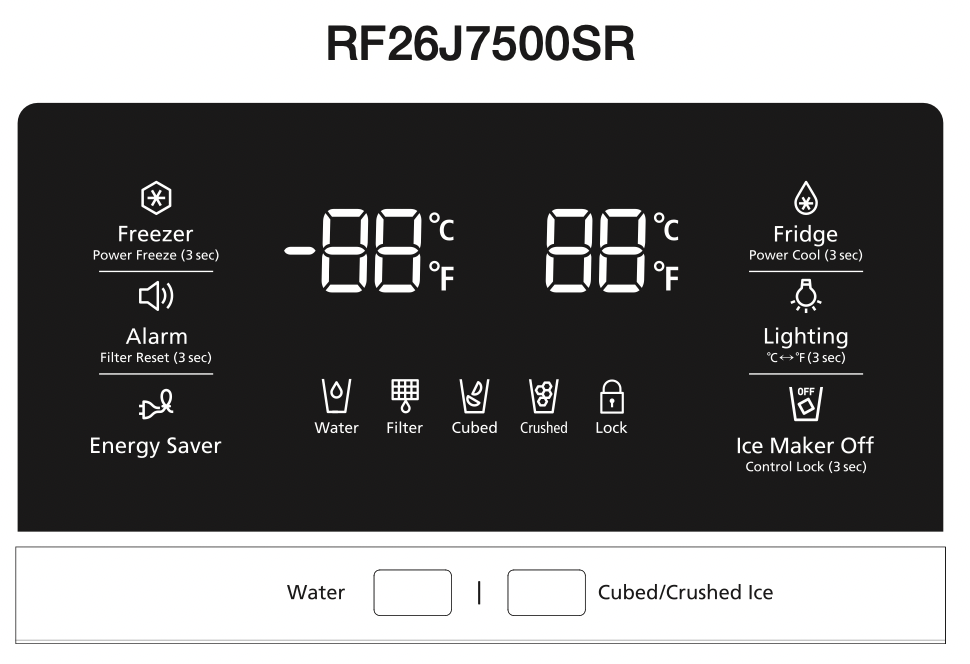
The Freezer temperature can be set between -8 °F and 5 °F (or between -23 °C and -15 °C) to suit your particular needs.
Press the Freezer button repeatedly until the desired temperature is shown in the temperature display.
The temperature will change by 1 °F (or 1 °C) with each press. See below.
Fahrenheit : 0 °F ➞ -1 °F ➞ -2 °F ➞ -3 °F ➞ -4 °F ➞ -5 °F ➞ -6 °F ➞ -7 °F ➞ -8 °F ➞ 5 °F ➞ 4 °F ➞ 3 °F ➞ 2 °F ➞ 1 °F ➞ 0 °F.
Centigrade : -18 °C ➞ -19 °C ➞ -20 °C ➞ -21 °C ➞ -22 °C ➞ -23 °C ➞ -15 °C ➞ -16 °C ➞ -17 °C ➞ -18 °C.
Keep in mind that foods such as ice cream may/ melt at 4 °F (or -15.5 °C).
The temperature display will move sequentially from -8 °F to 5 °F (or from -23 °C to -15 °C).
Controlling the fridge temperature
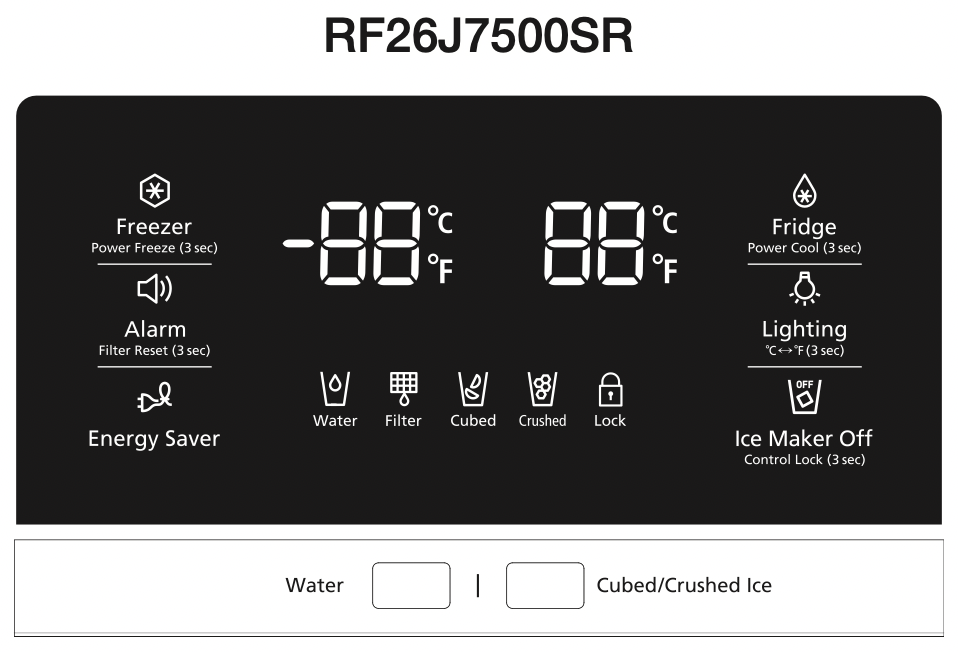
The fridge temperature can be set between 34 °F and 44 °F (or between 1 °C and 7 °C) to suit your particular needs.
Press the Fridge button repeatedly until the desired temperature is shown in the temperature display. The temperature will change by 1 °F (or 1 °C) with each press. See below.
Fahrenheit : 37 °F ➞ 36 °F ➞ 35 °F ➞ 34 °F ➞ 44 °F ➞ 43 °F ➞ 42 °F ➞ 41 °F ➞ 40 °F ➞ 39 °F ➞ 38 °F ➞37 °F.
Centigrade : 3 °C ➞ 2 °C ➞ 1 °C ➞ 7 °C ➞ 6 °C ➞ 5 °C ➞ 4 °C ➞ 3 °C.
The temperature control process for the Fridge works just like the Freezer process.
Press the Fridge button to set your desired temperature.
After a few seconds, the Fridge will begin adjusting towards the newly set temperature.
This will be reflected in the digital display.
NOTE:
- The temperature of the Freezer or Fridge may rise when you open the doors too frequently, or if a large amount of warm or hot food is placed inside.
- A rise in temperature may cause the digital display to blink.
Once the Freezer and Fridge temperature return to their normal set temperatures, the blinking will stop.
- If the blinking continues, you may need to “reset” the Refrigerator.
Try unplugging the appliance, wait for around 10 minutes and then plug the power cord back in.
- If there is a communication error between the Display and Main Controller, the Convertible Display light may blink.
If the blinking continues for a long period of time, please contact a Samsung Electronics Service Center.
USING THE COLD WATER DISPENSER
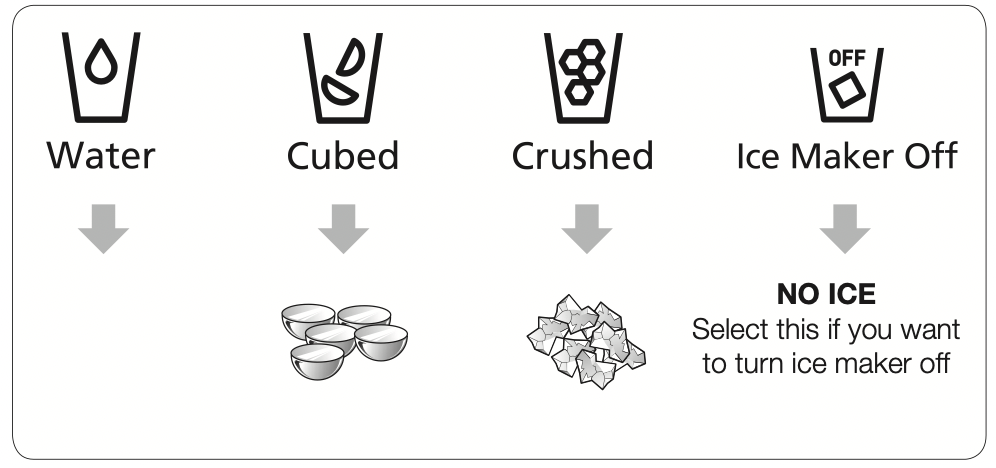
Push the appropriate ice type button to select what you want dispensed.
Using the ice Dispenser
Place a glass underneath the ice dispenser and push gently against the dispenser lever with your glass. Make sure the glass is in line with the dispenser to prevent the ice from bouncing out.
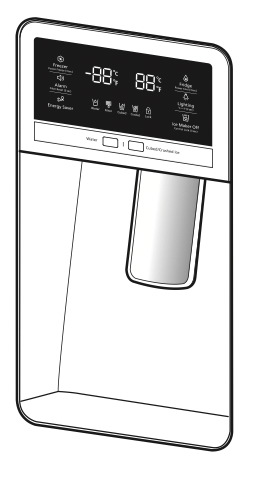
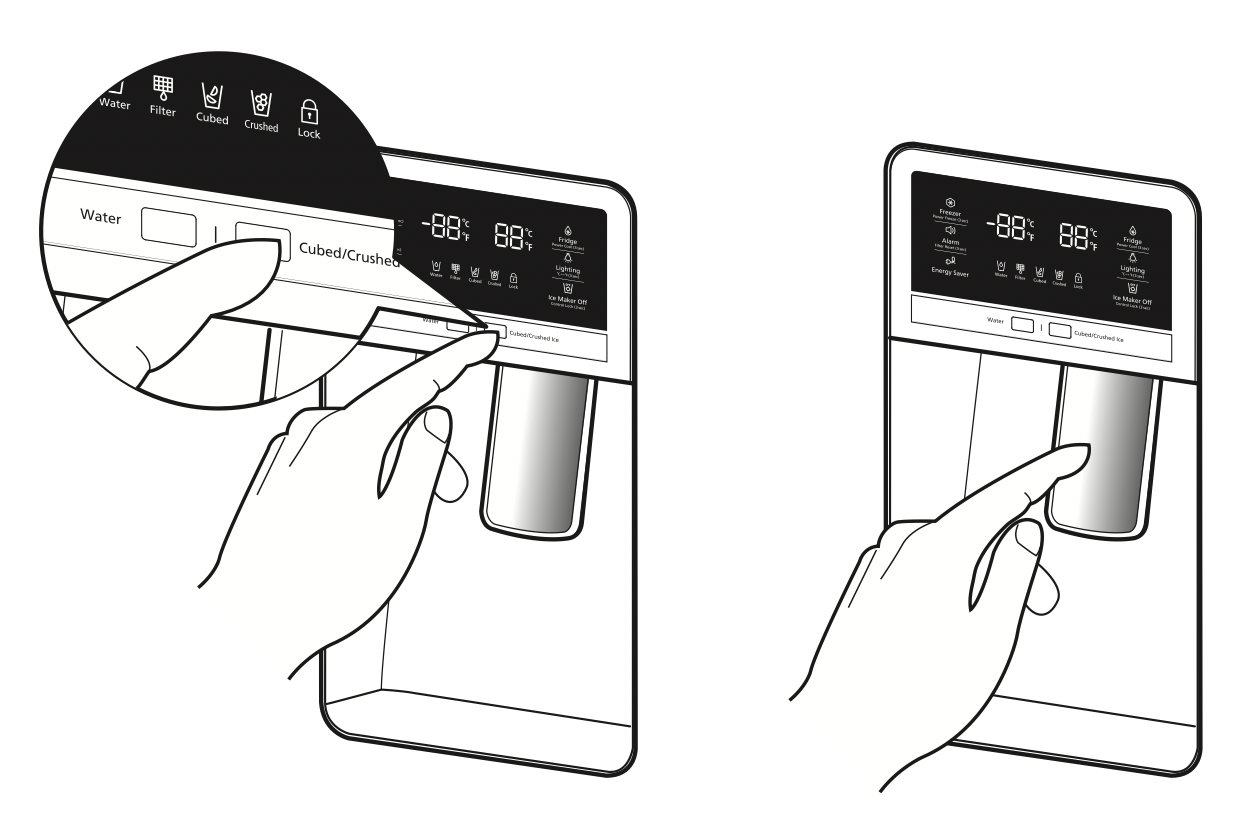
- To select water, press the water button on the display, and then press the dispenser lever.
- To select Ice, press the ICE type button of your choice on the display, and then press the dispenser lever.
- If you have selected cubed ice, when you press the lever, the dispenser may dispense a small amount of crushed ice first.
- If ice doesn’t come out, pull out the ice bucket and press the test button located on the right side of ice maker.
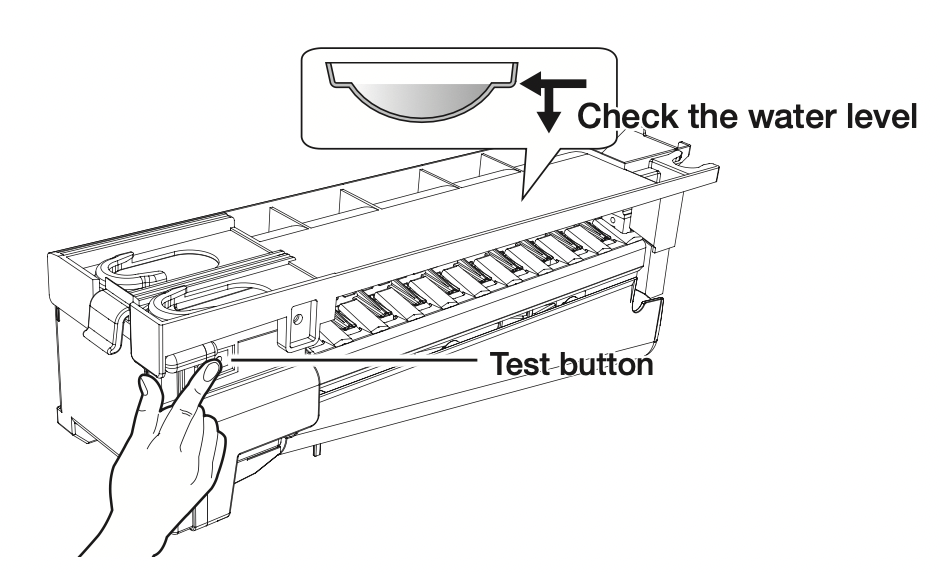
- Do not press the test button continuously when the tray is filled with ice or water. Water may overflow or ice may jam the bucket.
- When you press the Test button, you will hear the refrigerator chime (ding-dong). When the chime sounds, release the Test button.
- The chime sounds automatically again to let you know the ice maker is working well.
- Replace the ice bucket.
Ice Making
To fill the ice bucket to maximum capacity after installation, follow these steps:
- Allow your refrigerator to operate and cool down for 24 hours (or 1 full day).
Waiting 24 hours will allow your ice maker to cool properly.
- Dispense 4 to 6 ice cubes into a glass.
- After 8, and then 16 hours, dispense a full glass of ice.
CAUTION
- To clean the ice bin/bucket, wash with a mild detergent, rinse well, and then dry it thoroughly. Do not use harsh or abrasive cleaners or solvents.
- When you select Cubed Ice after using the Crushed Ice mode, a small amount of residual crushed ice might be produced.
If There is a Power Failure
If a power failure occurs, ice cubes may melt, and then freeze together when the power comes back on, preventing the dispenser from working properly.
To prevent this problem, after a power failure, pull out the ice bucket and discard the residual ice or water.
After you dump the ice from the ice bucket, you should press the dispenser lever once with the ‘Water’ or ‘Ice Type’ function ON.
The ice maker will make new ice faster after you return the ice bucket to the refrigerator.
NOTE: If you use all the ice at once, you must repeat Steps 2 and 3 under Ice Making. However, only wait 8 hours before dispensing the first 4 to 6 ice cubes. This will replenish the ice cubes and ensure maximum ice production.
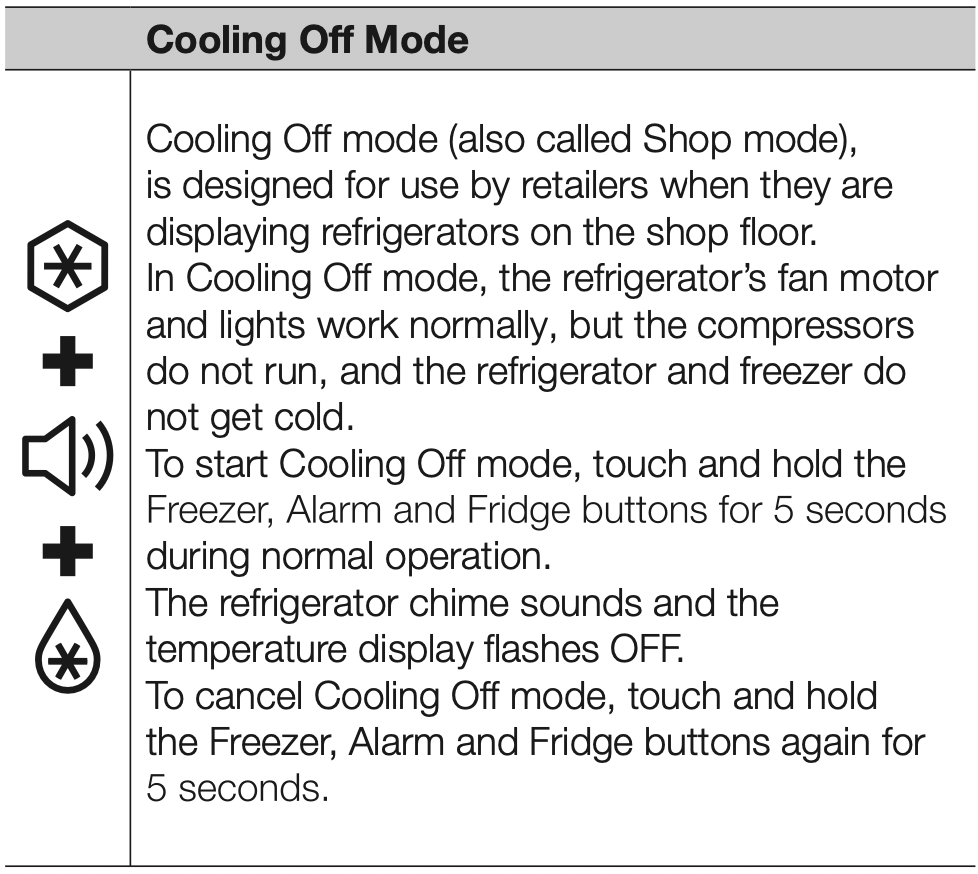
Using the ice off Function
When you select the Ice Off mode, remove all ice cubes from the bucket.
If you leave the ice cubes in the bucket, the ice cubes may clump together, making it difficult to remove them.
To remove the ice bucket safely and avoid injury, hold the bottom of the bucket with one hand and the side of the bucket with the other.
Then, lift up on the ice bucket, and pull it straight out.
To put the ice bucket back in, push it firmly straight back.
NOTE: If the ice bucket is not pushed firmly into place, ice in the bucket can melt.
If the bucket does not fit, turn the helix 90 degree (see the last illustration on the right, below) and try again.
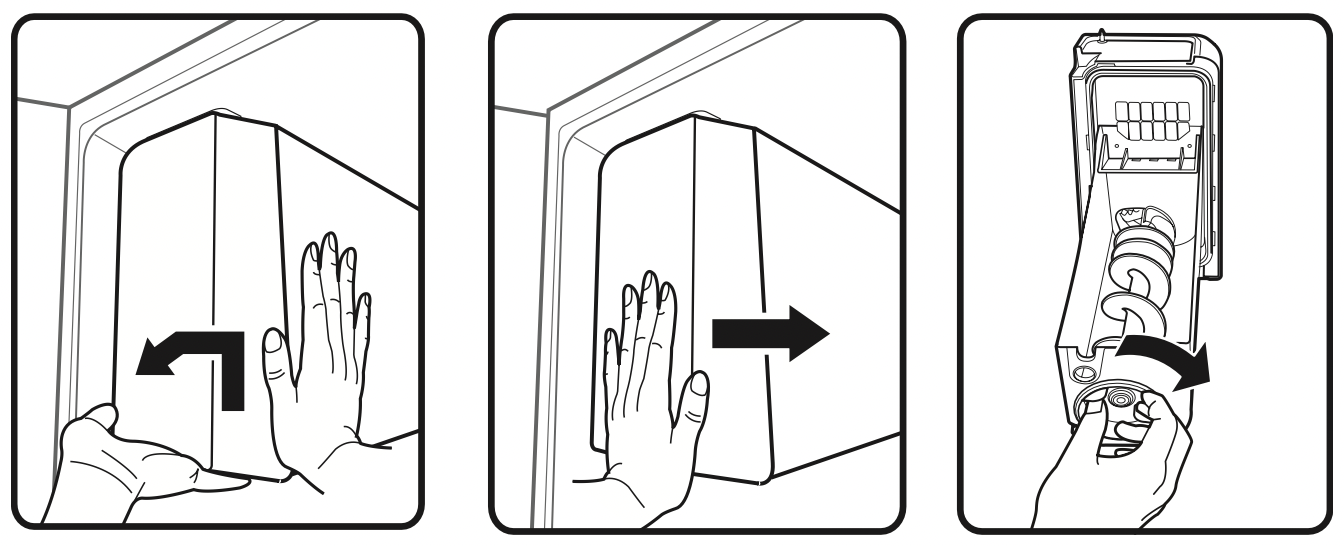
CAUTION
- Use only the ice maker provided with the refrigerator. The water supply to this refrigerator must only be installed/connected by a suitably qualified person.
Connect to a potable water supply only.
- To operate the ice maker properly, water pressure of 20 ~ 125 psi is required.
Going on vacation...
If you are going on a long vacation or business trip and won’t use the water or ice dispensers for a long time:
- Close the water valve. Otherwise, water leakage may occur.
- Remove all food and ice in the ice bucket.
- Unplug the refrigerator.
- Wipe excess moisture from inside and leave the doors open. Otherwise, odor and mold may develop.
Ice Maker Do’s and Don’ts
- Do not put your fingers, hands or any other unsuitable objects in the chute or ice-maker bucket.
- It may result in personal injury or material damage.
- Never put your finger or any other objects in the dispenser opening.
- Do not try to disassemble the ice maker.
- Do not wash or spray the ice bucket with water while it is in the refrigerator.
Remove it to clean it.
CAUTION: When you insert the Ice maker tray, be sure that the tray is well centered at the entrance. Otherwise, the tray may get stuck.
Water clouding phenomenon
NOTE: All water provided to the refrigerator flows through the core filter which is an alkaline water filter.
In the filtering process, the pressure of the water that has flowed out of the filter is increased, and the water becomes saturated with oxygen and nitrogen. When this water flows out into the air, the pressure plummets and the oxygen and nitrogen get supersaturated, which results in gas bubbles.
The water may temporarily look misty or cloudy due to these oxygen bubbles. After a few seconds, the water will look clear.
NOTE: Please wait 1 second before removing the cup after dispensing water to prevent spills.
Do not pull out the lever dispenser after dispensing ice or water.
It comes back automatically.
Ice is made in cubes.
When you select “Crushed”, the ice maker grinds the ice cubes into crushed ice.
PARTS AND FEATURES
Review the illustration below to become more familiar with the parts and features of your refrigerator.
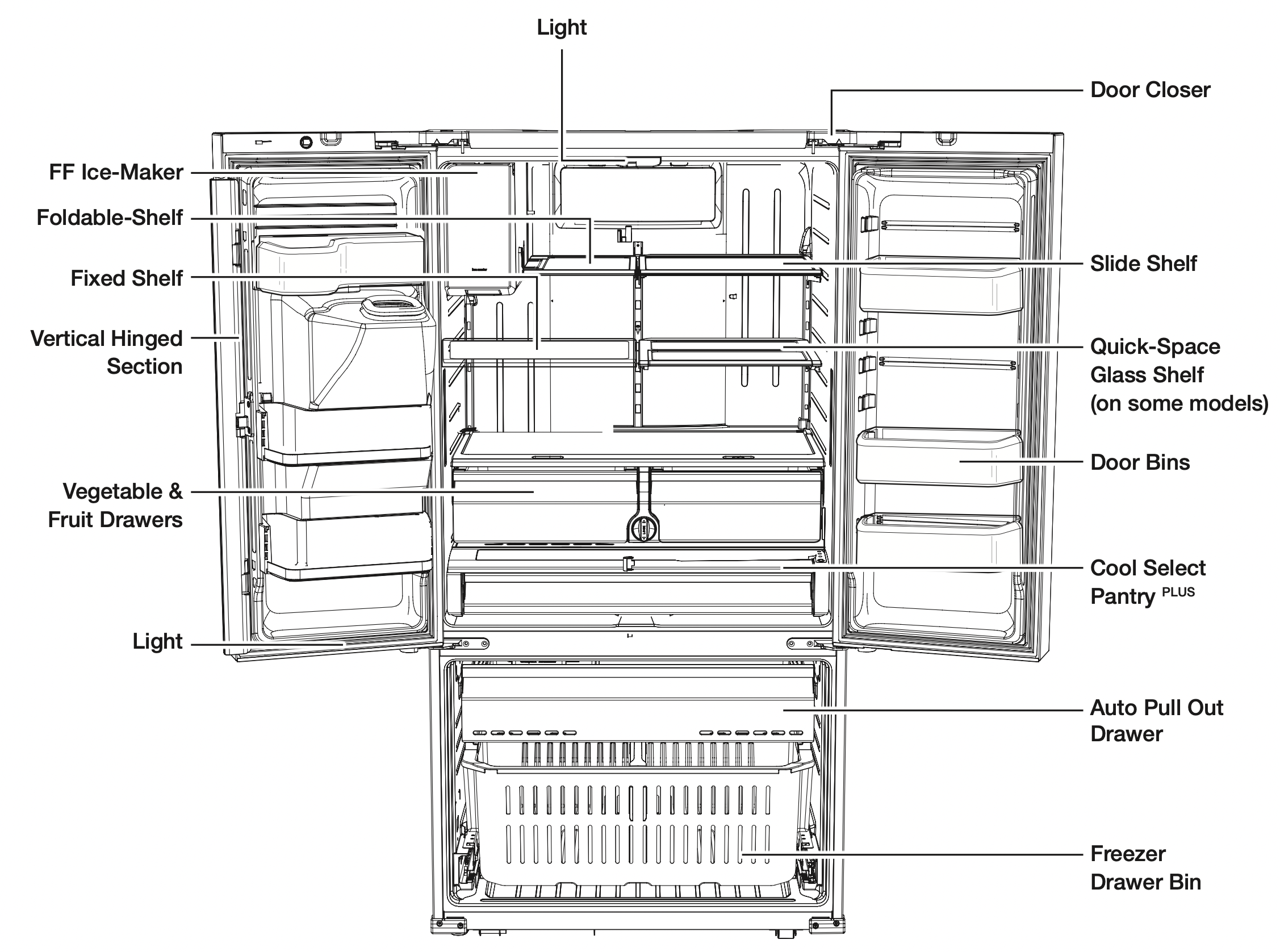
NOTE: When closing the door, make sure the Vertical Hinged Section is in the correct position to avoid scratching the other door.
If the Vertical Hinged Section is reversed, put it back to the right position and close the door. Moisture may appear at times on the Vertical Hinged Section.
The door handle may become loose over time.
If this happens, tighten the bolts found on the inside of the door.
If you close one door with too much force, the other door may open.
NOTE: When the door opens, the interlock switch automatically turns off the auger motor in the ice maker for safety reasons.
NOTE: When the interior or exterior LED lamp has gone out, please contact Samsung Customer Support.
USING THE COOL SELECT PANTRY™
The Cool Select Pantry™ is a full-width drawer with adjustable temperature control.
This pantry can be used for large party trays, deli items, pizza, beverages, or miscellaneous items. There is a temperature control which can adjust the amount of cold air allowed into the pantry. The control is located on the right side of the pantry.
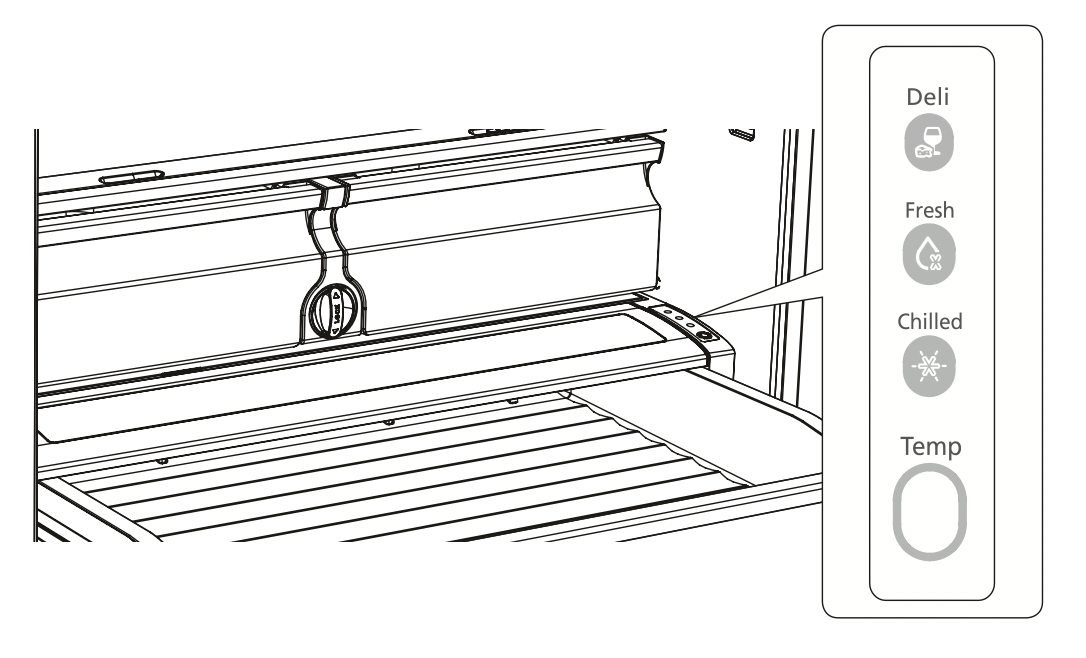
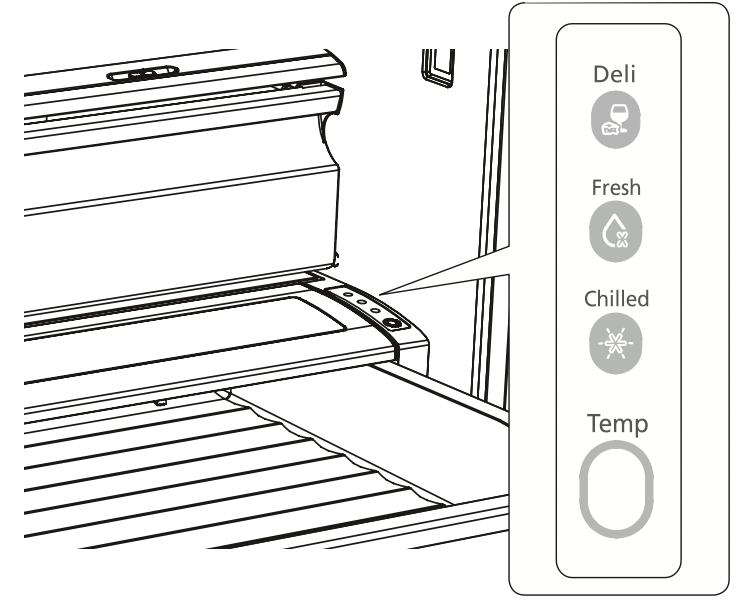
- The Pantry has three modes: The Fresh mode, Chilled mode, and Deli mode.
Fresh mode is the default.
Press the Temp button repeatedly until the mode you want is lit.
Once you select a mode, the temperature will change to match the mode you selected.
- The Pantry temperature may change depending on the number of items inside and where they are located, the ambient temperature, and how often the door is opened.
The Pantry Selection Button
- When you select “Deli”, the temperature of the pantry will be kept around 41 °F (or 5 °C). This feature helps keep food fresh for a long time.
- When you select “Fresh”, the temperature of the pantry will be kept around 38 °F (or 3 °C). This feature helps keep food fresh for a longer time.
- When you select “Chilled”, the temperature of the pantry will be kept around 34 °F (or 1 °C). This feature also helps keep meat or fish fresh for a longer time.
The table below lists the Pantry modes and the kinds of foods that can be stored safely for each mode.
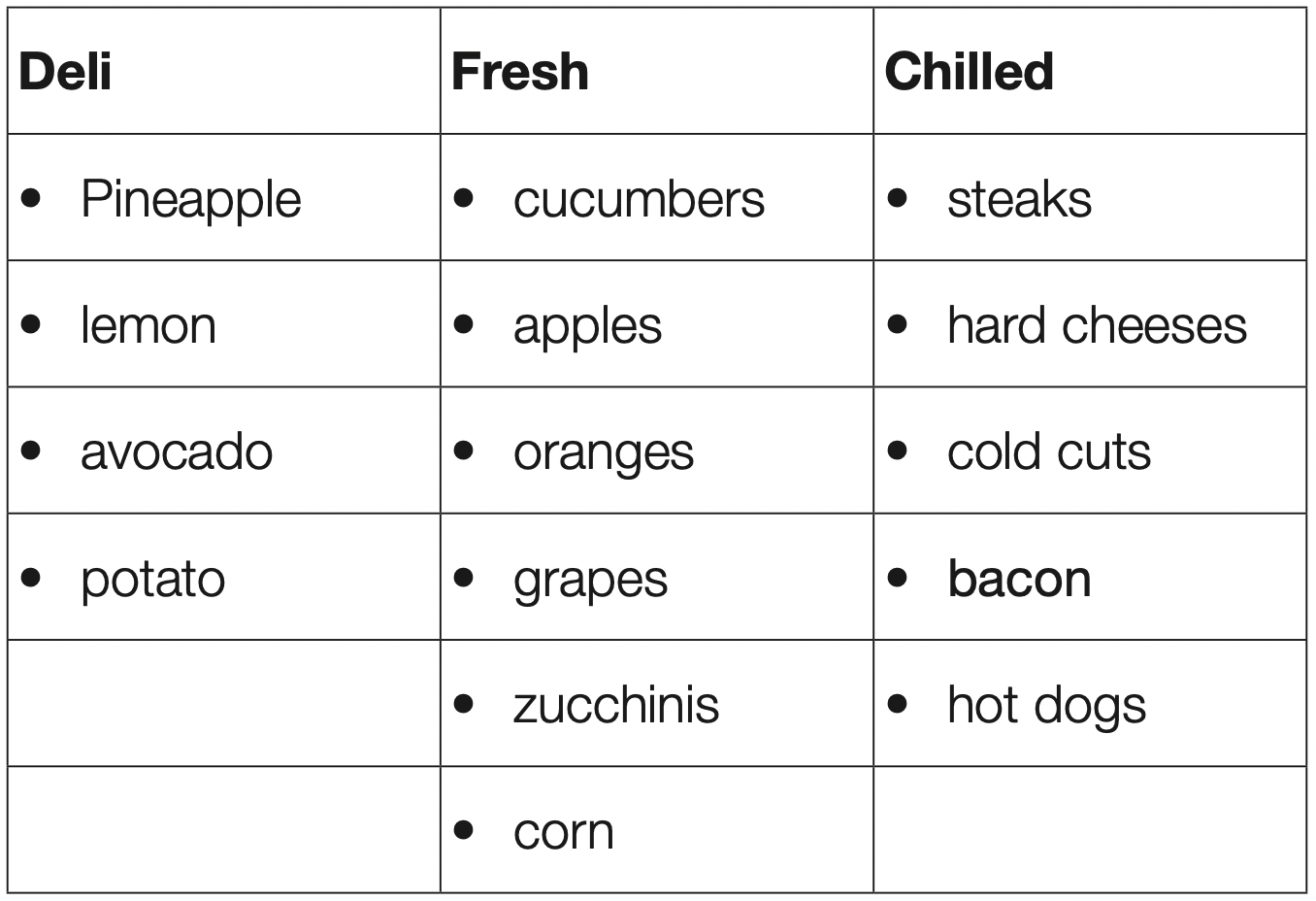
NOTE: Fruits and vegetables may be damaged if you set the Pantry to the Chilled mode. Do not store lettuce or other leafy produce in this pantry.
CAUTION: Do not store glass bottles in the Cool Select Pantry.
If they are freeze, they can break and cause personal injury.
REMOVING THE REFRIGERATOR ACCESSORIES
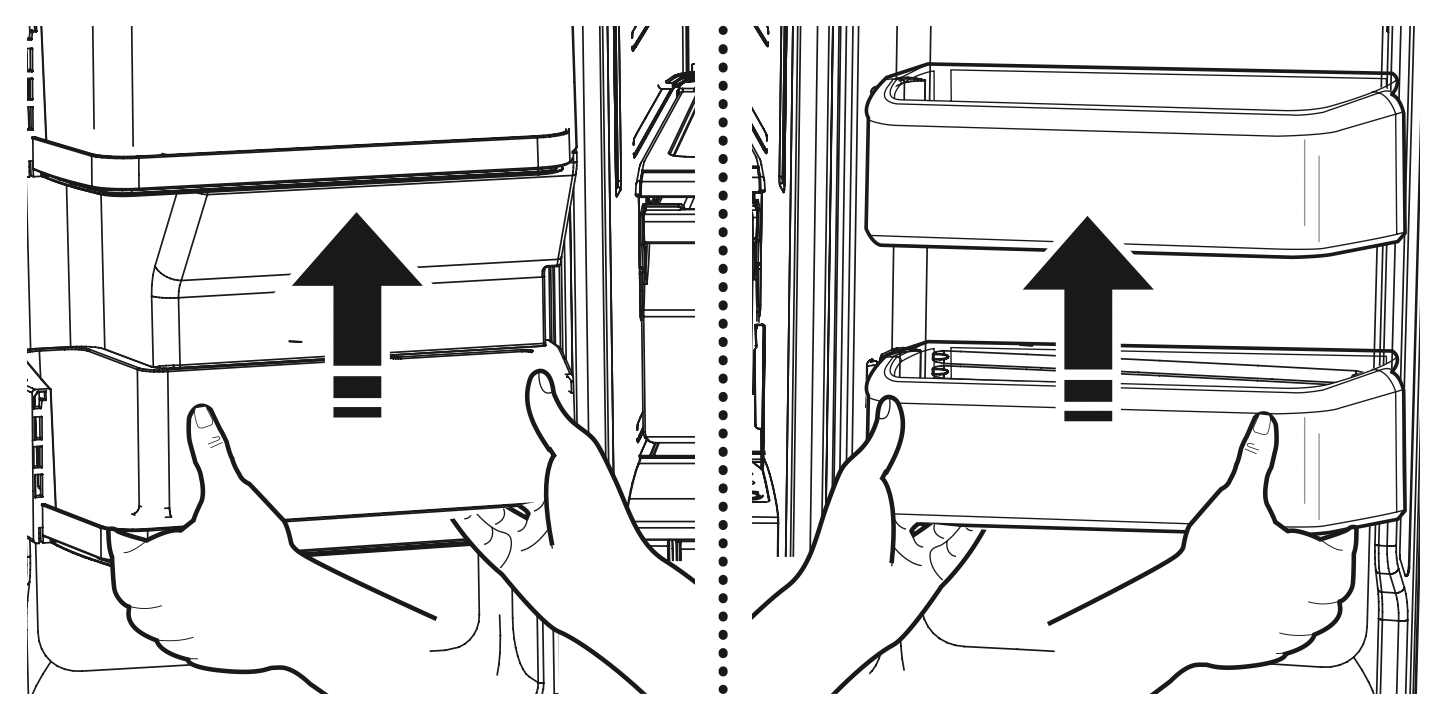
Door Bins
- Door Bins ( 1 )
- To remove : Simply lift the bin up and pull straight out.
- To relocate : Slide it in above the desired location and push down until it stops.
- Door Bins ( 2 )
- To remove : Take the right side of the bin out by lifting it at an angle along the guide, and then take the left side out by pulling it from the door.
- To relocate : Slide it into the original location and push down until it sticks.
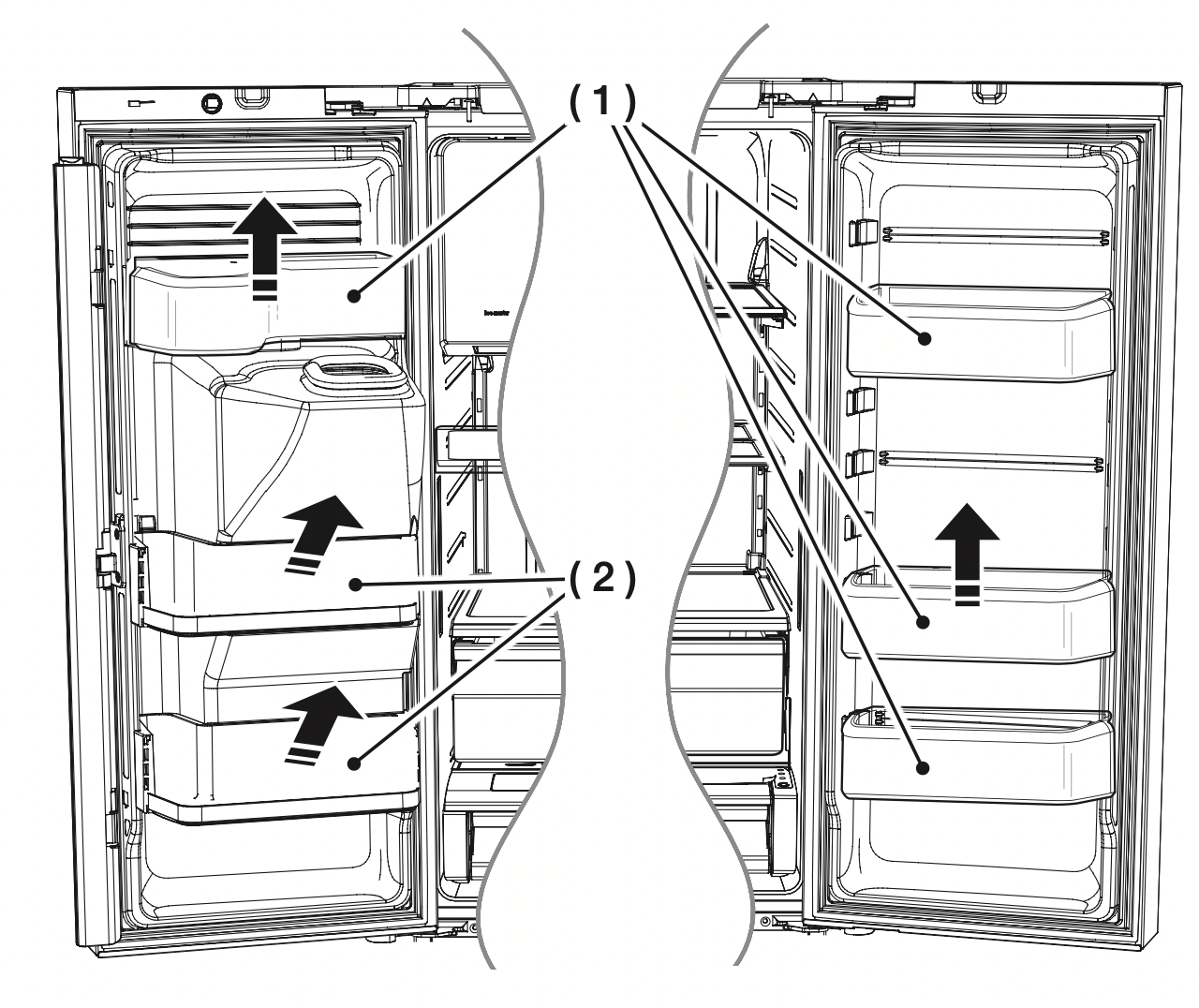
NOTE: Injury may occur if the door bins are not firmly assembled.
Do not allow children to play with the bins.
Sharp corners of the bins may cause injury.
CAUTION: Do not adjust a bin full of food.
Remove the food first.
To remove dust from the bins : Remove the guard and wash the bin in water.
Tempered Glass shelves
- To remove : Tilt up the front of the shelf in the direction shown ( 1 ) and lift it up vertically ( 2 ). Pull the shelf out.
- To relocate : Tilt the front of the shelf up and guide the shelf hooks into the slots at a desired height. Then lower the front of the shelf so that the hooks can drop into the slots.
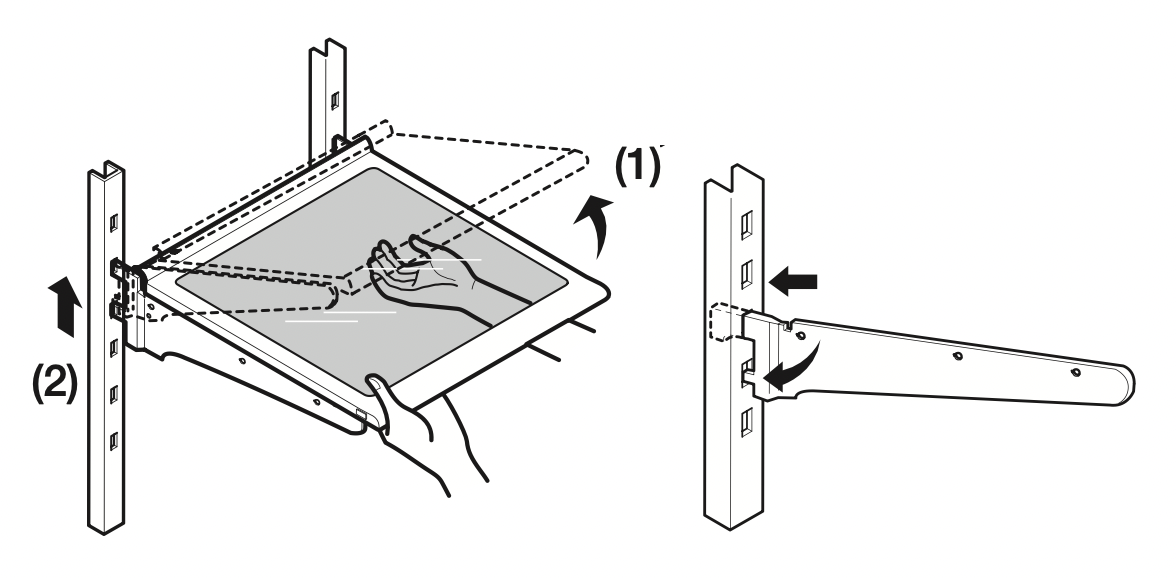
CAUTION: The Tempered Glass shelves are heavy. Use special care when removing them.
CAUTION: After sliding the foldable shelf in and folding it, the Shelf Front can be removed for your convenience. If you use the self without removing the Shelf Front, be aware the Shelf Front can separate from the shelf.
Vegetable & Fruit Drawers
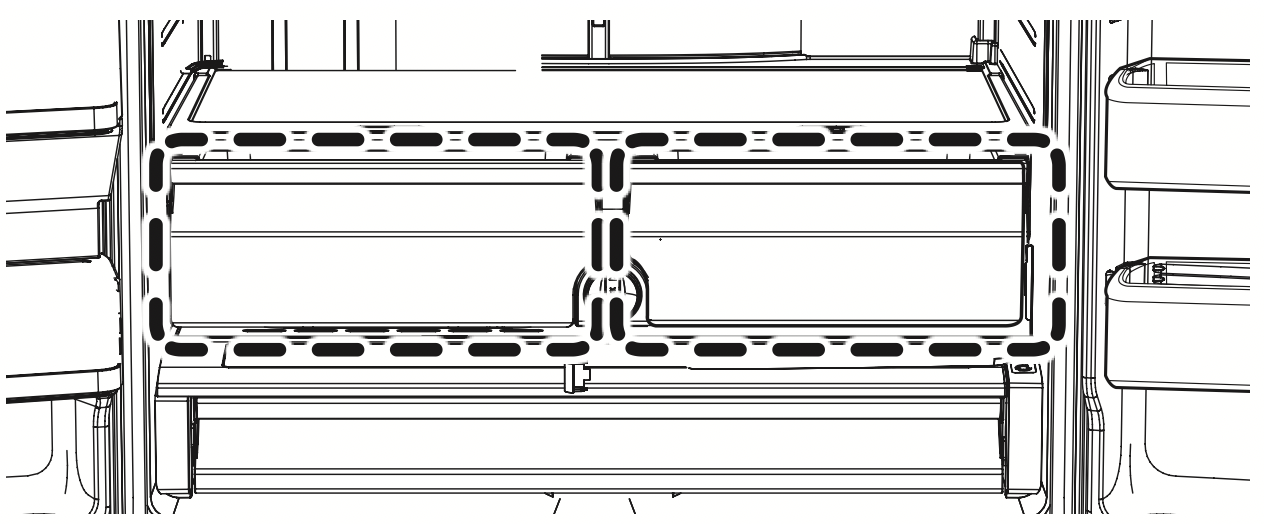
- Door Bins
Before removing the drawer, please remove door bins first as below.
To remove
- Simply lift the bin up and pull straight out.
- Tilt up the front of the drawer and pull straight out, and pull out the drawer after moving slightly in the direction of the arrow.
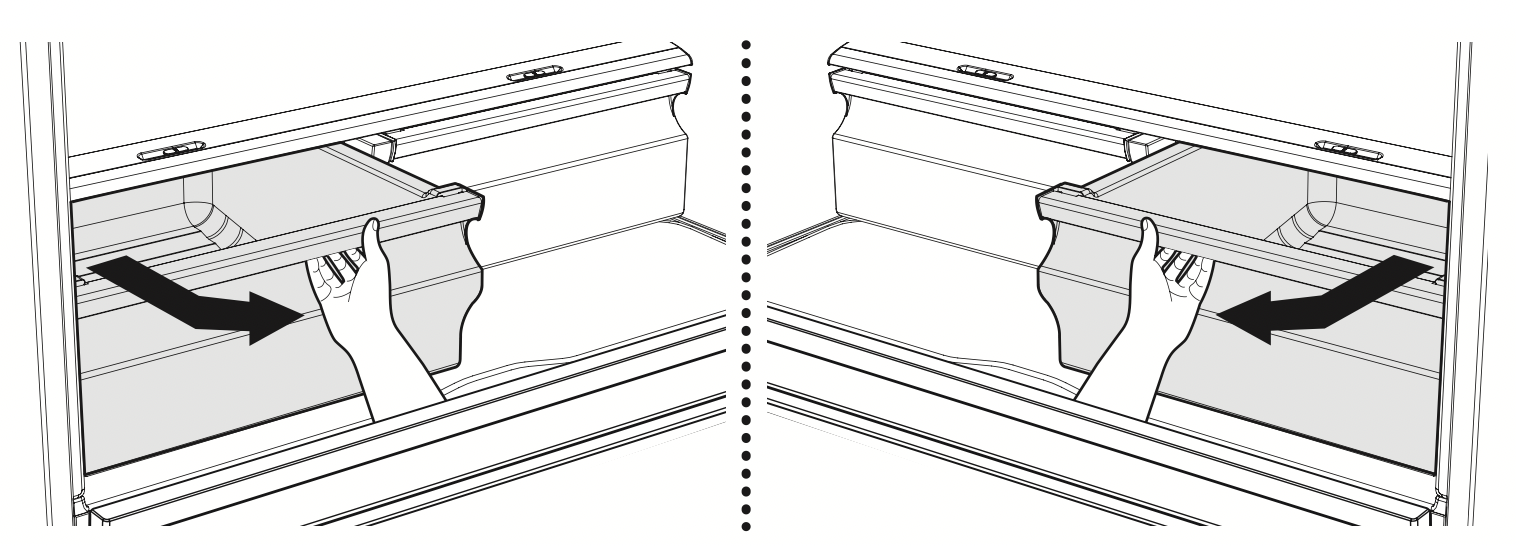
To re-install
- Insert the drawer into the frame rails and push back into place.
- Slide bin in above the desired location and push down until it stops.
CAUTION: The drawers need to be removed before the glass shelf above them can be lifted out.
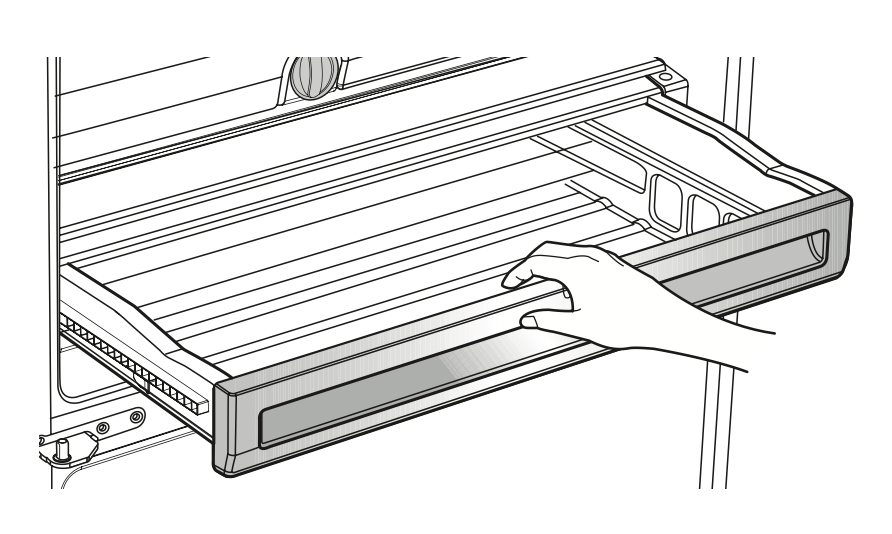
Cool Select Pantry
- To remove the pantry : Pull the pantry out to full extension. Tilt up the front side of the pantry and pull straight out.
- To relocate the pantry : Push the rails to the back of the refrigerator. Place the drawer onto the rails and slide the pantry back until it is in place.
Using the doors
Ensure that the doors close all the way and are securely sealed.
When the refrigerator door is only partially open, it will automatically close.
But, the door will stay open when opened more than the auto close range and you must close it manually.
REMOVING THE FREEZER ACCESSORIES
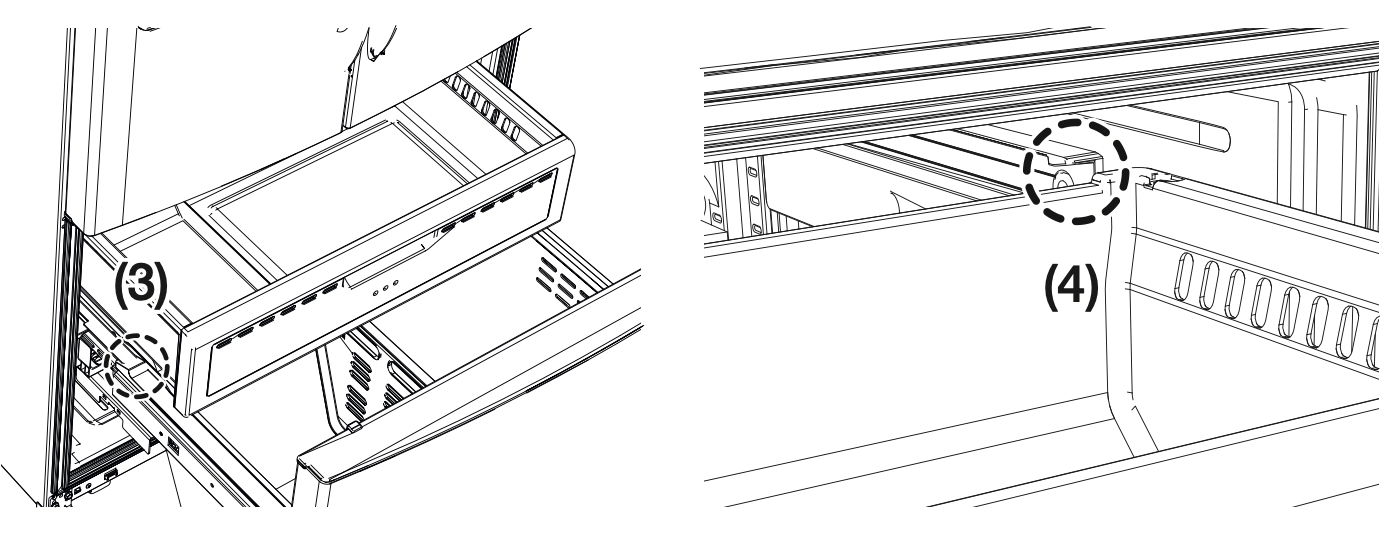
Super Extended Drawer
- To remove : Pull the drawer out to full extension. Tilt up the rear of the drawer and lift straight out.
- To relocate : Place the drawer onto the rails ( 4 ) by tilting it up.
Lower the drawer into place until it is horizontal and slide the drawer ( 3 ) in.
Freezer Drawer
- To remove the freezer drawer : Pull the freezer drawer out fully. Tilt up the rear of the bin and lift it out to remove.
- To relocate the freezer drawer : Place the bin into the rail assembly.
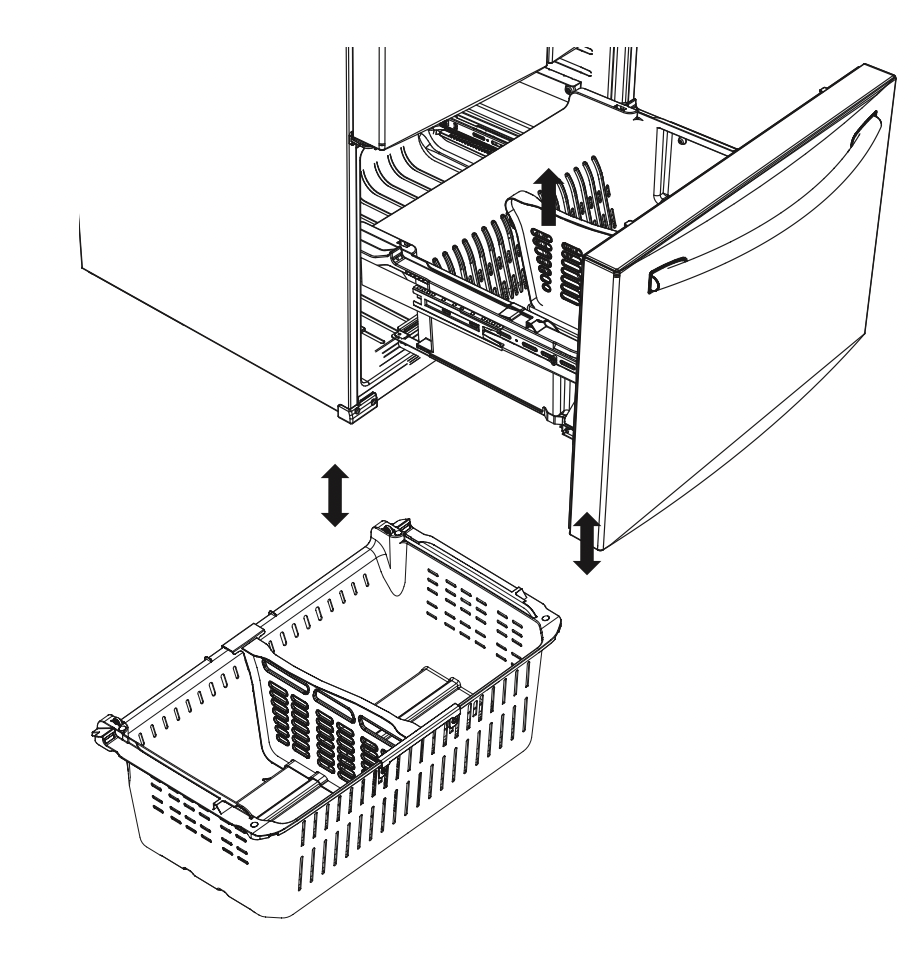
CAUTION: You can scratch the side of the bin if you twist it left or right when disassembling or re-assembling it.
CAUTION: Do not allow babies or children to climb into the freezer drawer.
They could damage the refrigerator and seriously injure themselves.
Do not sit on the freezer door.
The door may break.
CAUTION: Do not remove the divider.
WARNING: If trapped inside, children may be injured or suffocate to death.
CLEANING THE REFRIGERATOR
Caring for your Samsung French Door Refrigerator prolongs the life of your appliance and helps keep the refrigerator free of odor and germs.
Cleaning the Interior
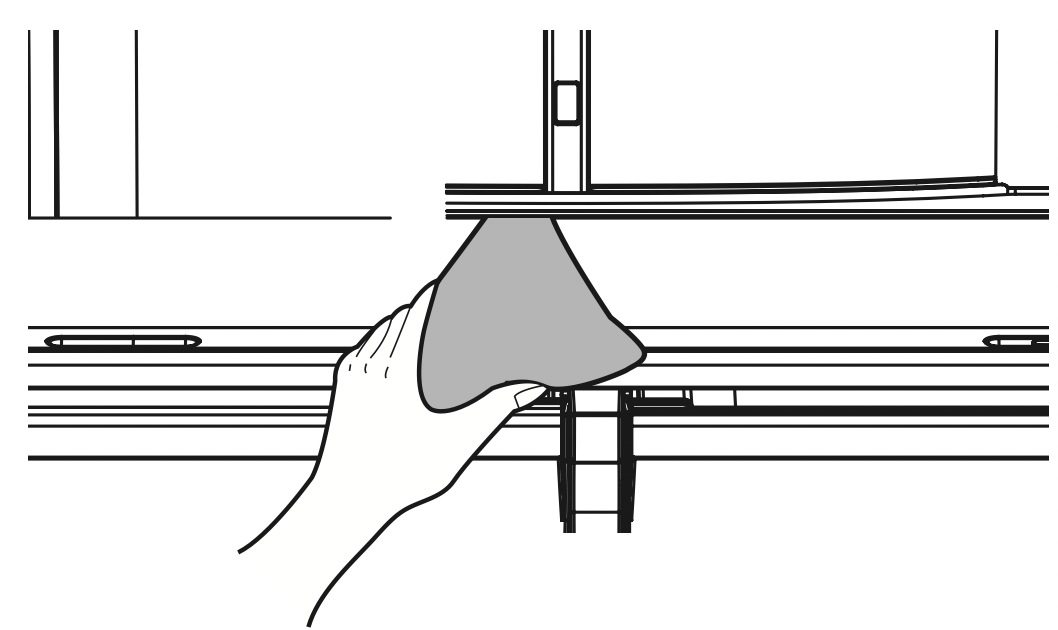
Clean the inside walls and accessories with a mild detergent and then wipe dry with a soft cloth. You can remove the drawers and shelves for a more thorough cleaning.
Just make sure to dry drawers and shelves before putting them back into place.
Cleaning the Exterior
Wipe the control panel and digital display with a damp, clean, soft cloth.
Do not spray water directly on the surface of the refrigerator.
The doors, handles, and cabinet surfaces should be cleaned with a mild detergent and then wiped dry with a soft cloth.
To keep your appliance looking its best, polish the exterior once or twice a year.
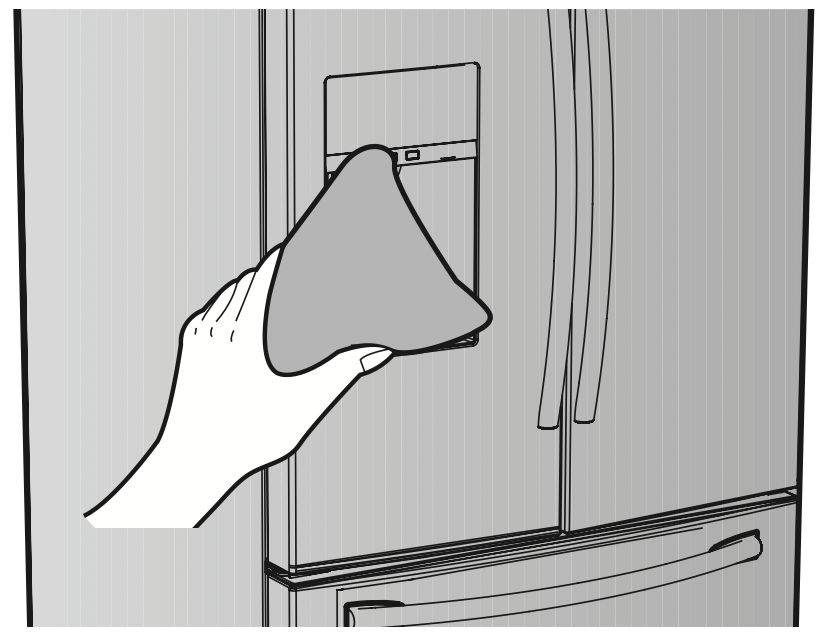
CAUTION: Do not spray water directly on the refrigerator. Use a clean, damp cloth to clean.
CAUTION: Do not use benzene, thinner, or Clorox for cleaning.
They may damage the surface of the appliance and may cause a fire.
CAUTION: You can erase the printed letters on the display if you apply stainless cleaner directly to the area where the letters are printed.
Cleaning the Ice / Water Dispenser
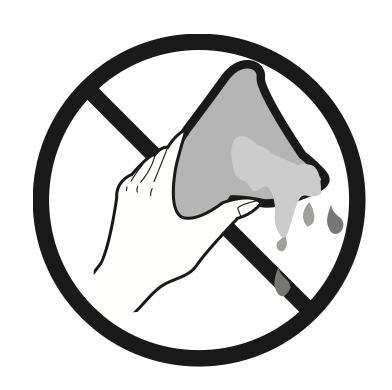
Wipe the Ice / Water Dispenser with a clean and soft cloth.
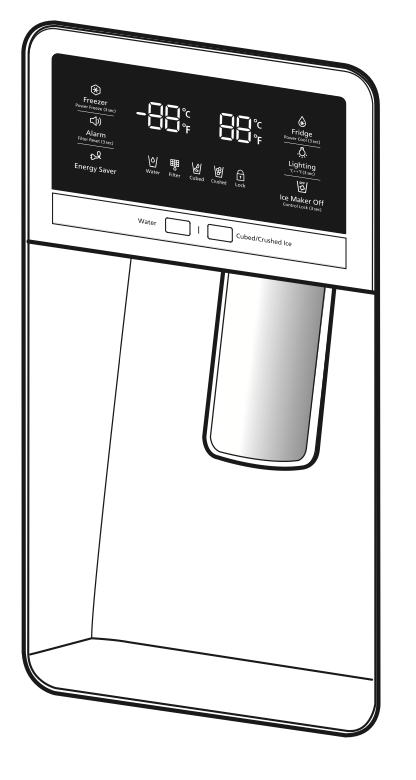
CAUTION: As you use the dispenser’s crushed ice selection, some residual ice chips may start to collect in the ice chute.
To prevent that residual ice from melting and running out of the chute, you should clean out the residual ice when you see it start to collect in the ice chute.
Cleaning the Rubber door seals
If the rubber door seals are dirty, the doors may not close properly, and the refrigerator will not operate efficiently. Keep the door seals free of dust or stains by cleaning the doors with a mild detergent and damp cloth.
Wipe dry with a clean, soft cloth.
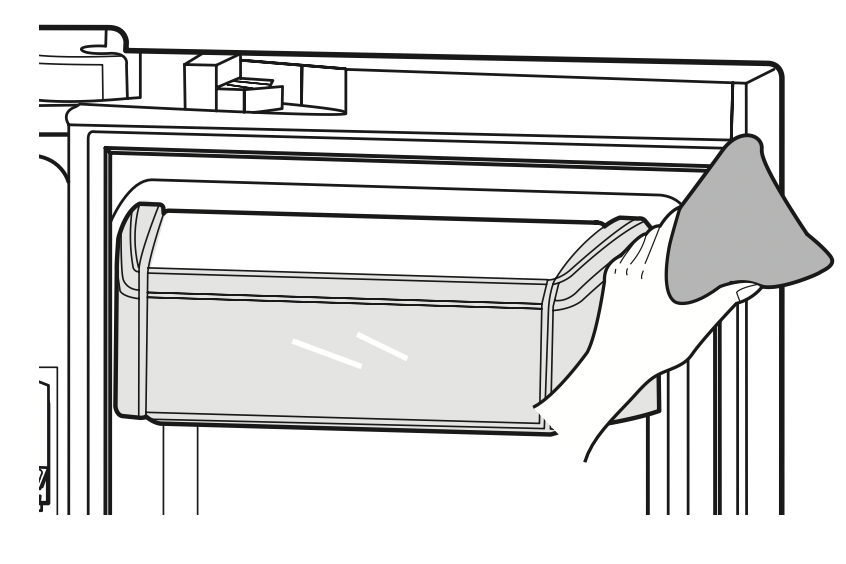
CAUTION: Do not clean the refrigerator with benzene, thinner, or car detergent.
These substances could cause a fire.
Cleaning the rear side of the refrigerator
To keep cords and exposed parts free of dust and dirt accumulation, vacuum the rear side of the appliance once or twice a year.
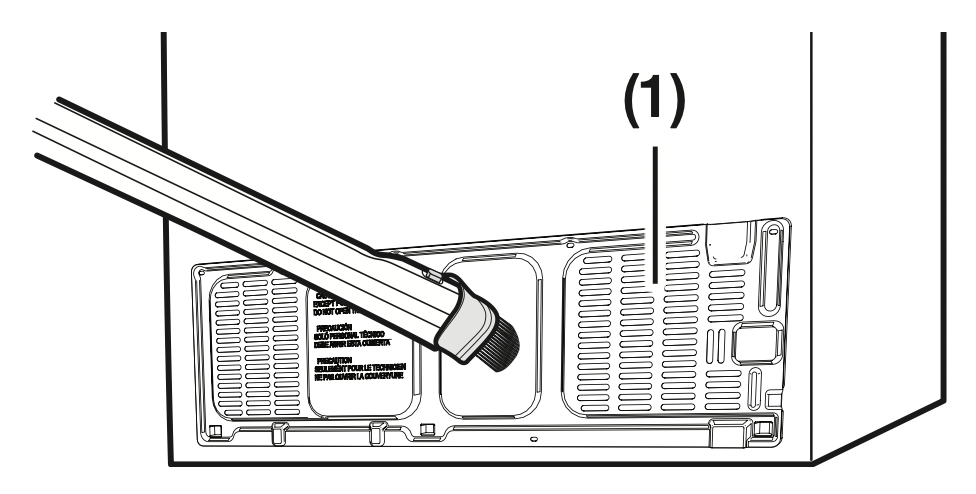
CAUTION: Do not remove the back cover ( 1 ). You could suffer an electric shock.
Troubleshooting
|
PROBLEM
|
SOLUTION
|
|
The refrigerator does not work at all or it does not chill sufficiently.
|
- Check if the power plug is properly connected.
- Check if the set temperature on the digital display is warmer than the freezer or fridge inner temperature. If it is, set the refrigerator colder.
- Is the refrigerator in direct sunlight or located near a heat source?
If so, it may not be able to cool sufficiently. Install it in a location that is out of direct sunlight and not near a heat source.
- Is the back of the refrigerator too close to the wall, preventing proper ventilation?
If so, it may not be able to cool sufficiently. Keep it an appropriate distance from the wall.
- Is there too much food inside so that the food is blocking the outlet vent?
To keep the refrigerator at a suitable temperature, do not fill the refrigerator with too much food.
|
|
The food in the fridge is frozen.
|
- Check if the set temperature on the digital display is too low.
- Try setting the refrigerator to a warmer temperature.
- Is the temperature in the room too low? Set the refrigerator warmer.
- Did you store the food which is juicy in the coldest part of the refrigerator?
Try moving those items to the other shelves in the fridge instead of keeping them in the colder areas or bins.
|
|
You hear unusual noise or sounds.
|
- Check if the refrigerator is level and stable.
- Is the back of the refrigerator too close to the wall, preventing proper ventilation?
Try moving the back of the refrigerator at least 2 inches from the wall.
- Was anything dropped behind or under the refrigerator?
- If you hear a “ticking” sound from inside the refrigerator, this is normal.
It occurs because various parts contract or expand in response to temperature changes in the refrigerator interior.
- If it sounds as if something is hitting something else inside the refrigerator, this is normal. The sound is caused by the compressor operating at high capacity.
|
|
The cabinet-door sealing area of the appliance is hot and condensation is occurring.
|
- Some heat is normal as anti-condensators are installed in the vertical hinged section of the refrigerator to prevent condensation.
- Is the refrigerator door ajar?
Condensation can occur when you leave the door open for a long time.
|
|
Ice Maker is not producing ice.
|
- It may take longer to make ice if it is not sufficiently cool, such as when first installed.
- Is the water line connected and the shut-off valve opened?
- Did you manually stop the ice making function?
- Check if the filter is properly installed. If it is not properly installed, the ice making function may not work.
|
|
You can hear water bubbling in the refrigerator.
|
- This is normal.
The bubbling comes from refrigerant circulating through the refrigerator.
|
|
There is a bad smell in the refrigerator.
|
- Check for spoiled food.
- Foods with strong odors (for example, fish) should be tightly covered.
- Clean out your freezer periodically and throw away any spoiled or suspicious food.
|
|
Frost forms on the walls of the freezer.
|
- Is the air vent blocked?
Remove any obstructions so air can circulate freely.
- Allow sufficient space between the stored foods for efficient air circulation.
- Is the freezer drawer closed properly?
|
|
Water dispenser is not functioning.
|
- Is the water line connected and the shut-off valve opened?
- Has the water supply line tubing been crushed or kinked?
- Make sure the tubing is free and clear of any obstruction.
- Is the water tank frozen because the fridge temperature is too low?
Try selecting a warmer setting on the Digital display.
- Check if the filter is properly installed. If it is not properly installed, the water dispenser may not work
|
|
Auto close system does not work with the freezer door.
|
- Is there an imbalance between the right and left parts of the door?
- Open and close the door smoothly 1~2 times.
After you do this, the auto close system usually works properly again.
- Try opening the door smoothly to avoid unbalancing the right and the left part of the door.
|
|
Condensation or water drops forms on both sides of fridge door’s central part.
|
- Condensation or water drops may form if the humidity is too high while the refrigerator is operating.
- If condensation or water drops appears on both sides of fridge door’s central part, turn the Energy Saver mode off after removing the condensation.
(See the explanation of the Energy Saver button in “Using the Control Panel” on page 18.)
|