On-line owner's handbook
Referring to the owner's handbook on-line also gives you
access to the latest information available, easily identifi ed by
the bookmarks, associated with this pictogram:
If the heading "MyCitroën" is not available on the public website for
your country, you can fi nd your handbook at the following address:
http://service.citroen.com
Select:
You can fi nd your handbook on the CITROËN website, under the
heading "MyCitroën".
The Vehicle documentation link in the home page (no registration is
needed),
the language,
the model,
the edition date appropriate for the date of registration of your vehicle.
You will fi nd your handbook, presented in the same way as the paper
version.
This personal space provides you with information on your products
and services, a direct and special contact with CITROËN and
becomes a space tailored for you.

Your vehicle is fitted with only some of the
equipment described in this document,
depending on the trim level, version and the
specifications for the country in which it is sold.
The fitting of electrical equipment or accessories
which are not recommended by CITROËN may
result in a failure of your vehicle’s electronic
system. Please note this specific warning and
contact a CITROËN dealer to be shown the
recommended equipment and accessories.
CITROËN has a presence on every continent,
a complete product range,
bringing together technology and a permanent spirit of innovation,
for a modern and creative approach to mobility.
We thank you and congratulate you on your choice.
Happy motoring!
We draw your attention to the following...
At the wheel of your new vehicle,
getting to know each system,
each control, each setting,
makes your trips, your journeys
more comfortable and more enjoyable.
For any work on your vehicle, use a qualified
workshop that has the technical information,
competence and equipment required, which a
CITROËN dealer is able to provide.
2
Contents
3
. EASE OF USE and
COMFORT 46-7
8
Li
g
htin
g
control stalk 4
7
Wi
p
ers
5
0
C
ruise control
5
1
Demistin
g
and defrostin
g
5
4
M
anual heatin
g
/
a
ir conditionin
g
5
6
Di
g
ital air conditionin
g
5
8
Additional heatin
g
s
y
stems 6
0
R
ear Heatin
g
/
A
ir Conditionin
g
6
0
Pro
g
rammable additional
h
eatin
g
6
2
Front seats
6
5
Front bench seat
6
7
R
ear seats
6
8
C
rew cab
7
0
Front fi ttin
g
s
7
1
R
ear fi ttin
g
s
7
5
M
irr
o
r
s
7
7
El
ec
tri
c
win
do
w
s
7
8
Pr
ese
nt
a
ti
o
n
4
E
xt
e
ri
o
r
5
Access
6
I
nt
e
ri
o
r
8
S
ittin
g
comfortabl
y
1
0
S
eein
g
clearl
y
1
2
V
e
ntil
a
ti
o
n
1
4
M
onitorin
g
1
5
Passen
g
er safet
y
1
6
Drivin
g
safel
y
1
7
E
co-drivin
g
1
9
1. FAMILIARISATION
4
-20
4
. TECHNOLOGY on
BOARD 79-11
3
Tri
p
com
p
uter
7
9
M
ode
8
0
P
arkin
g
sensors 8
3
R
eversin
g
camera 8
4
P
neumatic sus
p
ension 8
6
Tacho
g
raph 8
8
Audio s
y
stem 8
9
2
. READY TO GO
21-4
5
Re
m
o
t
e
co
ntr
o
l
2
1
Ke
y
2
3
C
onfi dential card
2
5
A
l
a
rm
2
6
F
r
o
nt - r
ea
r
doo
r
s
2
7
Load s
p
ace
2
9
Instrument
p
anels 3
0
Warnin
g
lamps 3
1
F
uel
g
au
g
e 3
8
Temperature indicator 3
8
S
ervice indicator
3
9
Li
g
htin
g
rheostat 3
9
G
earbox and steerin
g
wh
ee
l 4
0
S
tartin
g
and stoppin
g
4
1
H
ill
s
t
a
rt
ass
i
s
t 4
2
S
top & Start 4
3
This symbol informs you of
equipment which is specific
to the combi model.
Sliding side windows. Rear
heating / air conditioning.
Rear seats / bench seats.
3
CONTENT
S
Contents
5. SAFETY 114-132
6. ACCESSORIES
1
33-13
6
7. CHECKS 137-14
4
8
. QUICK HELP
145-16
2
9
.
T
ECHNICAL DAT
A
163-173
P
arkin
g
brake 1
1
4
H
azard warnin
g
lamps 1
1
4
Ho
rn 1
1
5
AB
S
1
1
5
E
mer
g
enc
y
brakin
g
ass
i
s
t
a
n
ce
1
1
5
Anti-slip re
g
ulation
(
ASR
)
and electronic stabilit
y
pro
g
ramme
(
ESP
)
1
1
6
Fixed s
p
eed limiter 1
1
8
S
eat belts 1
1
9
Airba
g
s 1
2
2
D
eactivatin
g
the passen
g
er
airba
g
1
2
3
C
hild seats 1
2
5
I
SO
FIX seats 1
2
9
Towin
g
a trailer
13
3
Roof
ba
r
s
1
3
5
O
th
e
r
accesso
ri
es
1
3
5
O
penin
g
the bonnet 13
7
U
nder the bonnet 1
3
8
Levels 1
3
9
C
hecks 14
1
Fue
l 14
4
Batter
y
14
5
Chan
g
in
g
a wheel 14
8
Puncture re
p
air kit 1
5
1
Chan
g
in
g
a bulb 1
5
3
Chan
g
in
g
a fuse 1
5
7
Chan
g
in
g
a wiper blad
e
1
6
1
Bein
g
towed 16
2
Dimensions 1
6
4
En
g
ines 1
7
1
Wei
g
hts 1
7
2
Identifi cation markin
g
s 1
7
3
1
0. VI
S
UAL
S
EARCH
174-1
80
Ext
e
ri
o
r 1
7
4
In
s
tr
u
m
e
nt
s
a
n
d
co
ntr
o
l
s
17
5
Int
e
ri
o
r 1
7
7
T
ec
hni
ca
l
da
t
a
-
Ma
int
e
n
a
n
ce
1
7
8
Child seats in the rear.
4
PRESENTATION
Within the chapters symbols draw your attention to specific
information:
This handbook is designed to familiarise you with the new vehicle
from the moment you get behind the wheel and to describe the
operating features.
Reading the handbook is made easy by a content divided into
10 colour-coded chapters. Its sections cover, by theme, all of the
functions of the vehicle in its most complete specification.
Chapter 9 gives all of the technical data relating to your vehicle.
At the end of the document, diagrams of the outside and inside of
the vehicle will assist you in locating equipment or functions and
page numbers refer you to the relevant section of the handbook.
directs you to the chapter and section which contains detailed
information concerning a function,
indicates important information relating to use of the equipment,
alerts you to the safety of individuals and equipment on board.
4
3
4
2
1
FAMILIARISATION
5
Familiarisation
Reversing camera
This system is activated automatically
when reverse gear is engaged, with a
visual return on a screen that takes the
place of the interior rear view mirror.
84
83
48
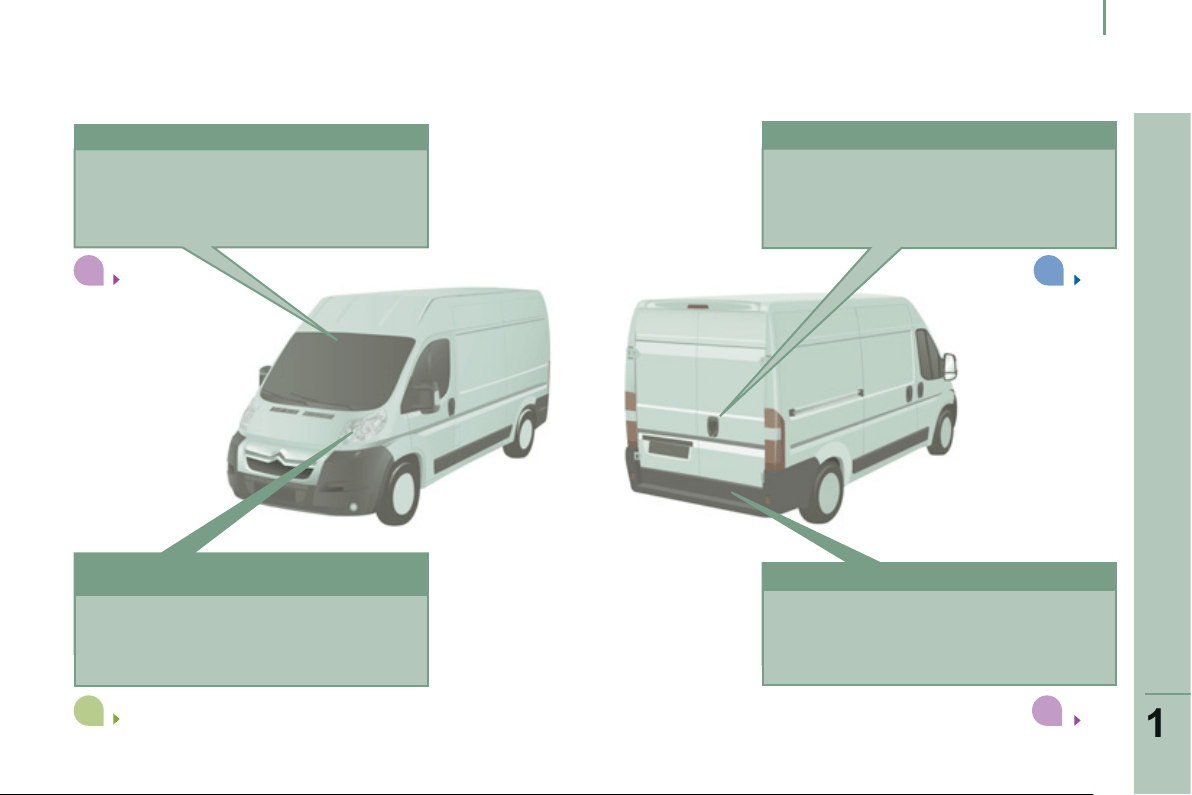
EXTERIOR
"Guide-me-home" welcome
lighting
After switching off the ignition, when you
leave the vehicle, the front lamps remain
on for a short period.
Opening the rear doors to 180°
Once the vehicle has been unlocked, the
rear doors can be opened to 180° to make
unloading/loading operations easier.
Rear parking sensors
This system warns you if an obstacle is
detected behind the vehicle when reverse
gear is engaged.
28
2
2
2
6
Familiarisation
Sliding side door
Opening
Pull the handle towards you then towards
the rear.
Take care not to obstruct the guide space
on the floor so as to allow the door to slide
correctly.
Take care to open the door fully so as to
engage the latch at the bottom of the door.
Do not drive with the sliding side door open.
27
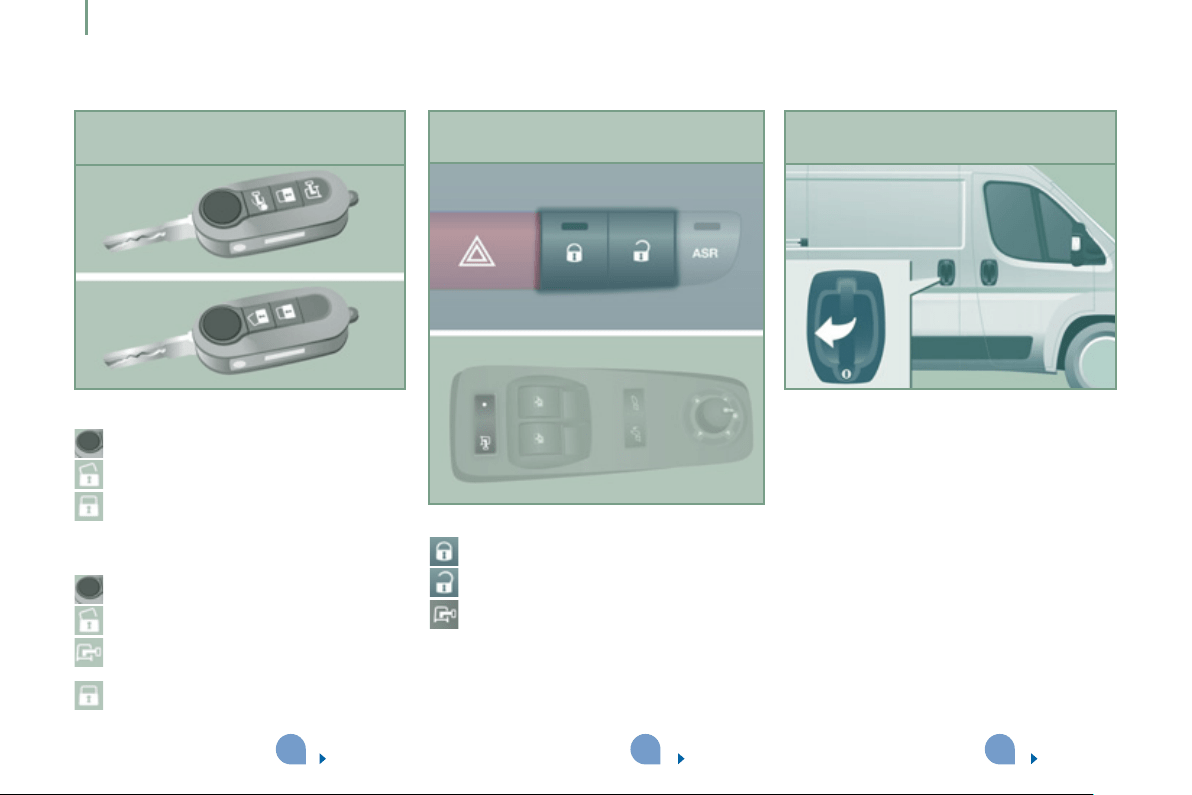
Remote control key
2 buttons
21
Manual central locking controls
29
ACCESS
3 buttons
Unfolding / Folding the key.
Unlocking.
Locking.
Unfolding / Folding the key.
Unlocking the cab.
Unlocking the load space.
Locking the vehicle.
Locking the vehicle.
Unlocking the vehicle.
Locking / Unlocking the load space.
2
2
7
1
FAMILIARISATION
7
Familiarisation
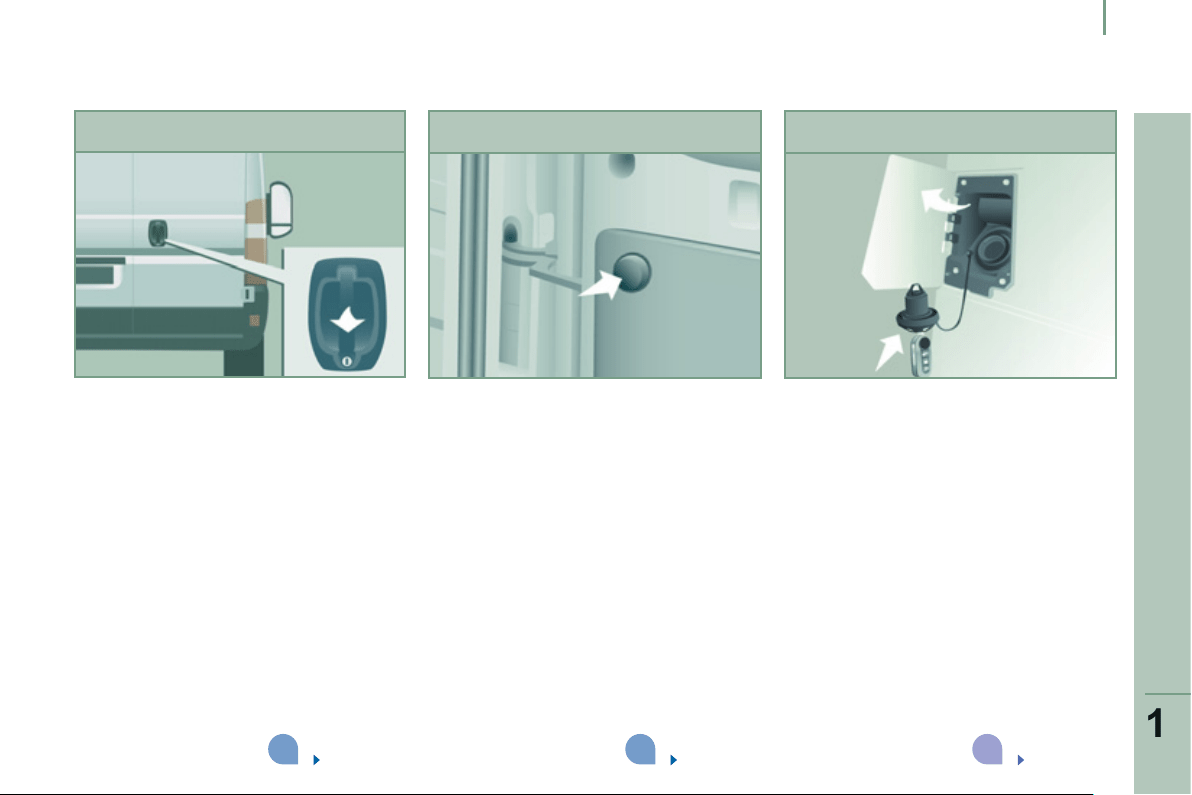
Opening
Pull the handle towards you.
Closing
To close, start with the left-hand door then
close the right-hand door.
Rear doors Opening to 180°
Press the button, located on the door trim
panel, to widen the angle of opening of the
door.
Fuel tank
Opening the fuel filler flap.
Hooking the fuel filler cap.
Capacity of the fuel tank: approximately
90 litres.
28
ACCE
SS
28 144
8
Familiarisation
INTERIOR
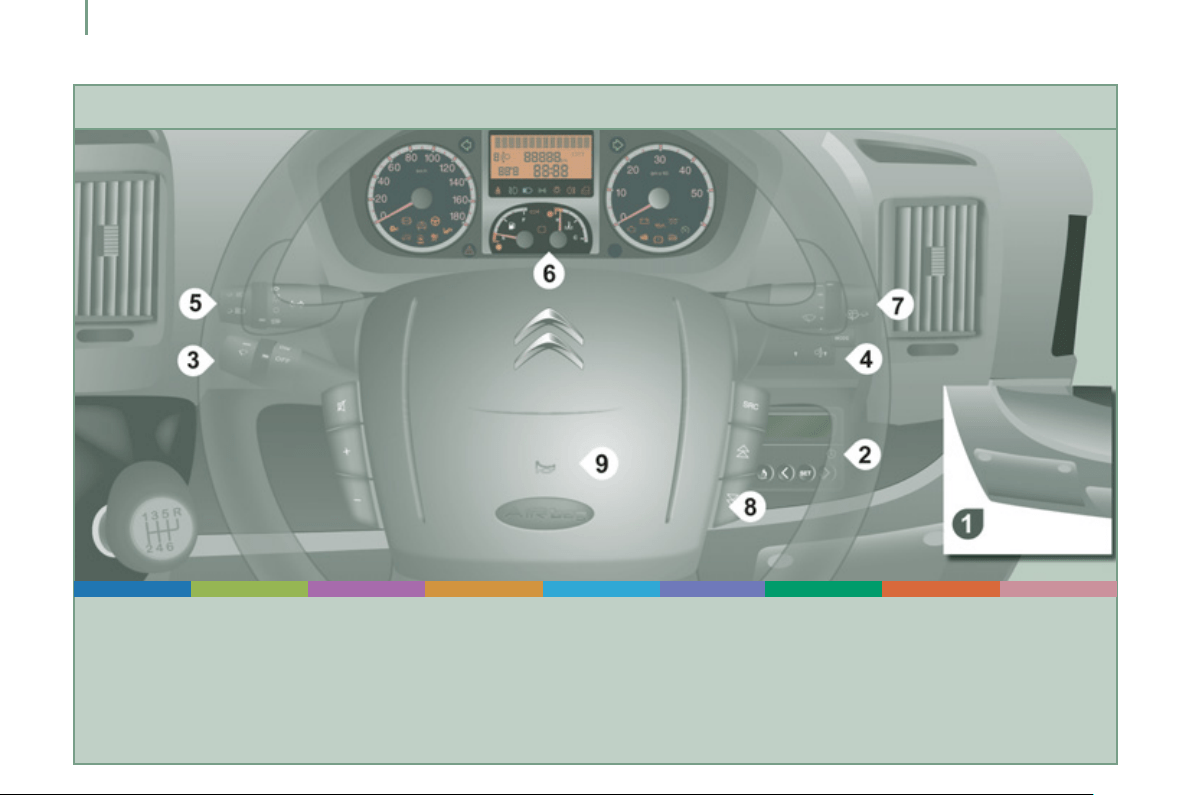
Instruments and controls
1. Fusebox.
2. Programmable heating.
3. Cruise control switch.
4. MODE, configuration and
personalisation / lighting dimmer /
headlamp beam height adjustment.
5. Lighting and direction indicator control
stalk.
6. Instrument panel with screen.
7. Wiper / screenwash / trip computer
control stalk.
8. Ignition switch.
9. Driver's airbag / horn.
1
FAMILIARISATION
9
Familiarisation
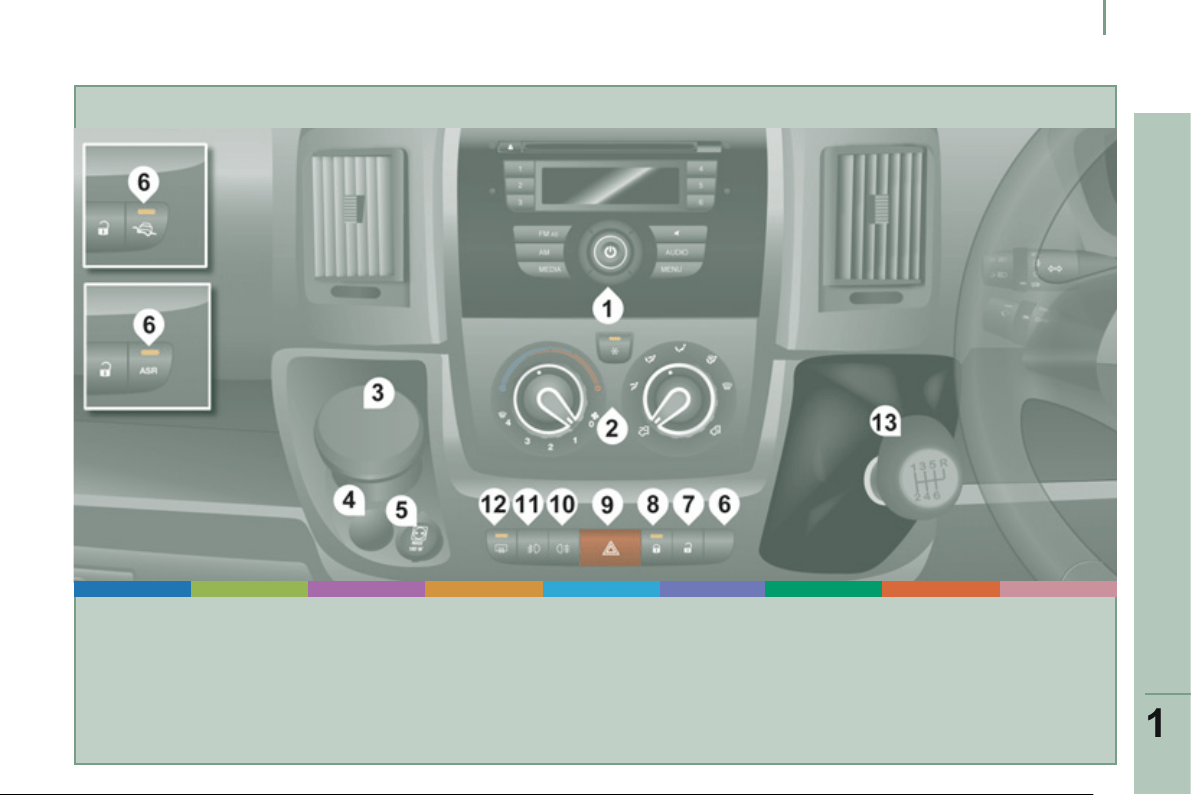
Centre console
1. Audio equipment.
2. Manual air conditioning.
3. Portable ashtray.
4. Cigarette lighter.
5. 12 volt accessory socket (180 W max).
6. Dynamic stability control (ASR) /
Intelligent Traction Control.
7. Central unlocking of the doors and load
space.
8. Central locking / alarm indicator lamp.
9. Hazard warning lamps.
10. Rear foglamps.
11. Front foglamps.
12. Demisting / defrosting.
13. Gear lever.
3
1
0
Familiarisation
S
ITTING COMFORTABLY
65
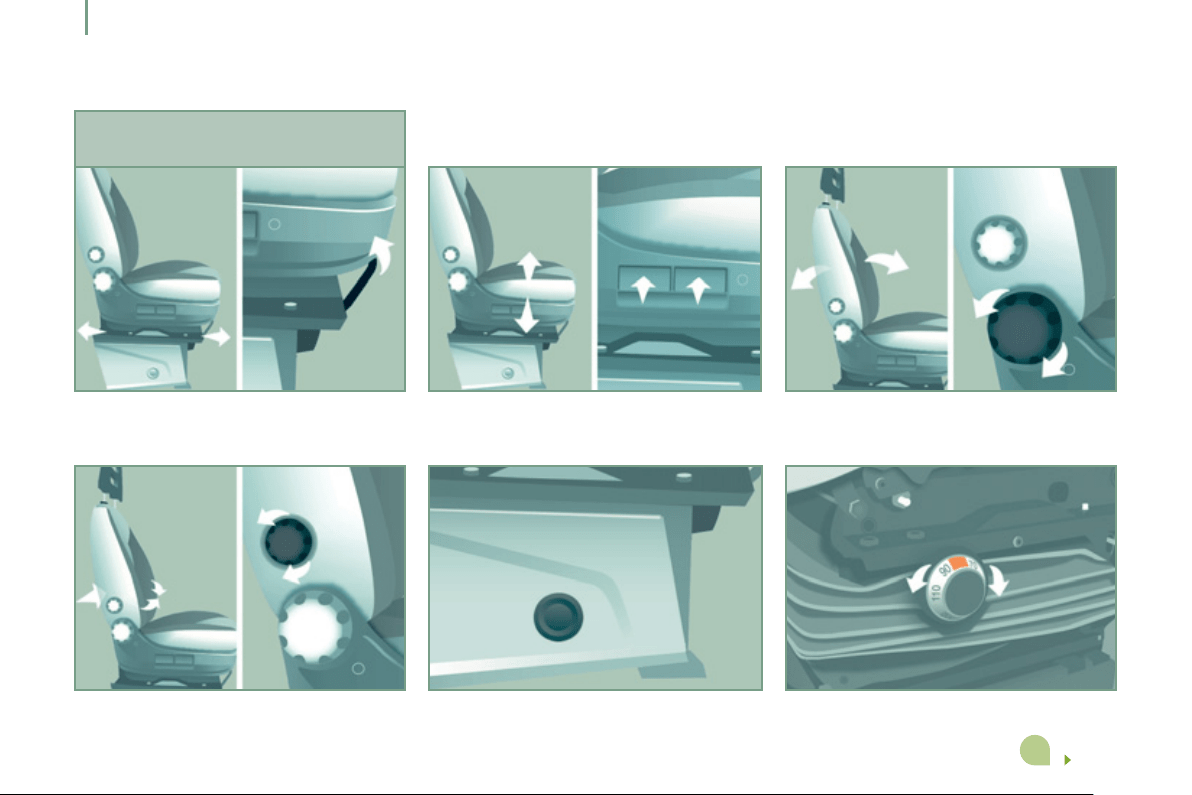
Driver's seat adjustments
Forwards-backwards Seat height Seat back angle
Lumbar support Seat heating Variable damping seat
5
2
3
5
1
FAMILIARISATION
1
1
Familiarisation
S
ITTING COMFORTABLY
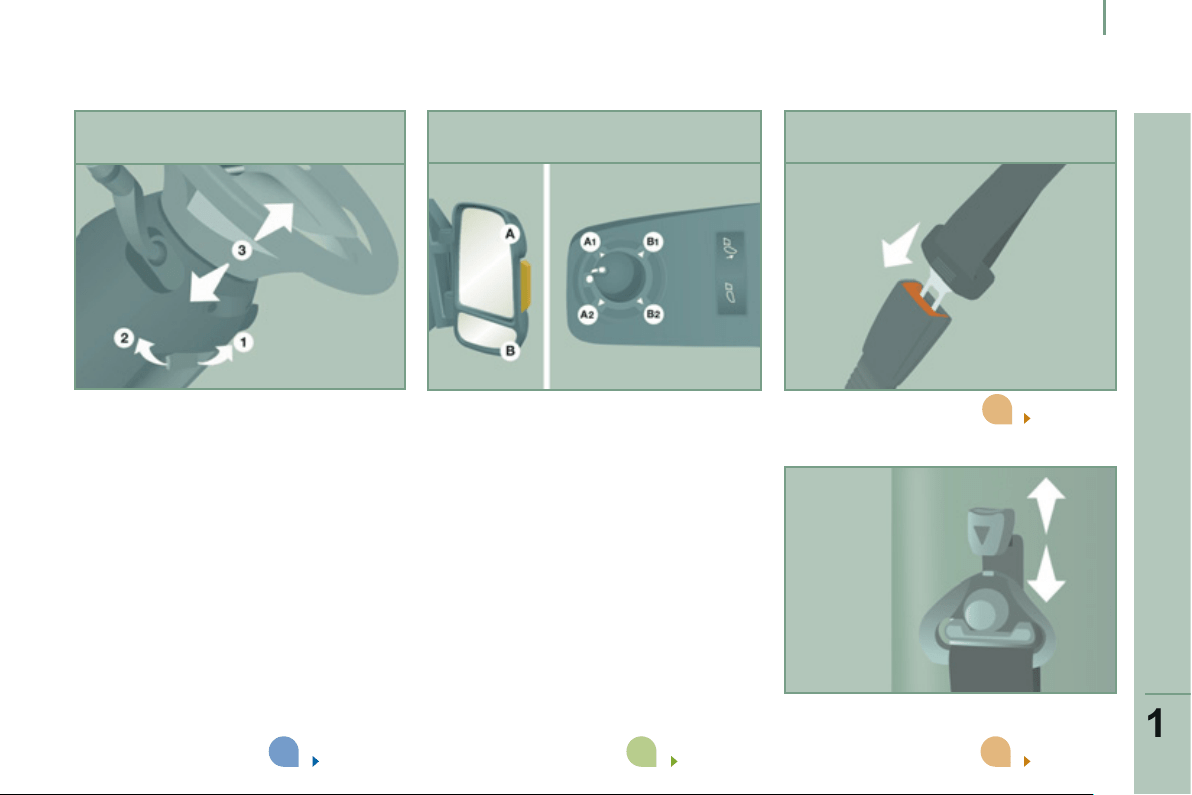
1. Unlocking the adjustment mechanism.
2. Locking the adjustment mechanism.
3. Adjustment of the reach of the steering
wheel.
Manual adjustment of the reach of the
steering wheel
Door mirror adjustment
The mirrors are divided into two zones:
A and B.
1. Driver's mirror:
A1- Adjustment of the upper mirror.
B1- Adjustment of the lower mirror.
2. Passenger's mirror:
A2- Adjustment of the upper mirror.
B2- Adjustment of the lower mirror.
40 77
Front seat belt
Fastening.
Height adjustment.
119
119
3
3
12
Familiarisation
S
EEING CLEARLY
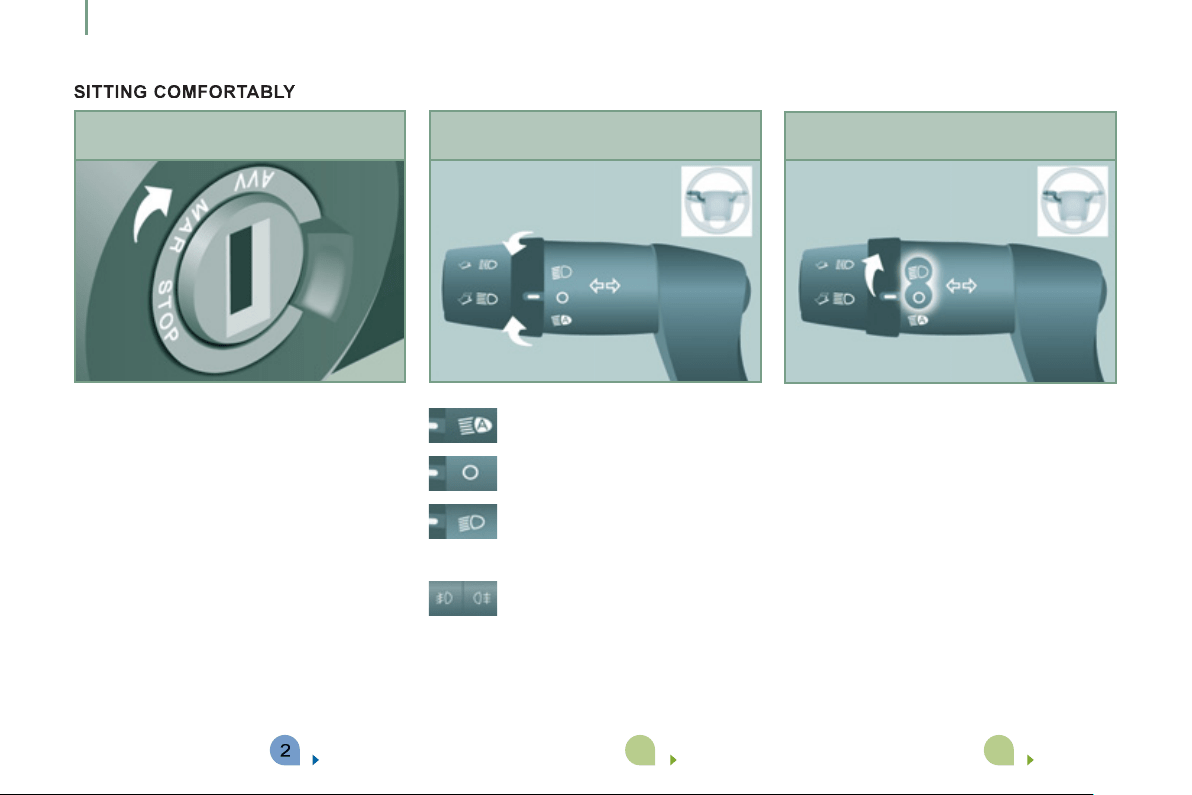
Lighting Parking lamps
Front and rear foglamps.
47
49
Automatic illumination of headlamps.
Lamps off.
Dipped or main beam headlamps.
With the ignition off and the key in the STOP
position or removed:
Move the ring on the lighting stalk to
position O, then to dipped or main beam
headlamps.
The lamps will remain on while you are
parked.
Ignition switch
- STOP position.
- RUNNING position.
- START position.
41
3
3
3
1
FAMILIARISATION
1
3
Familiarisation
50
Windscreen wash
Pull the control stalk towards you, the
windscreen wash is accompanied by a timed
operation of the wipers.
S
EEING CLEARLY
78
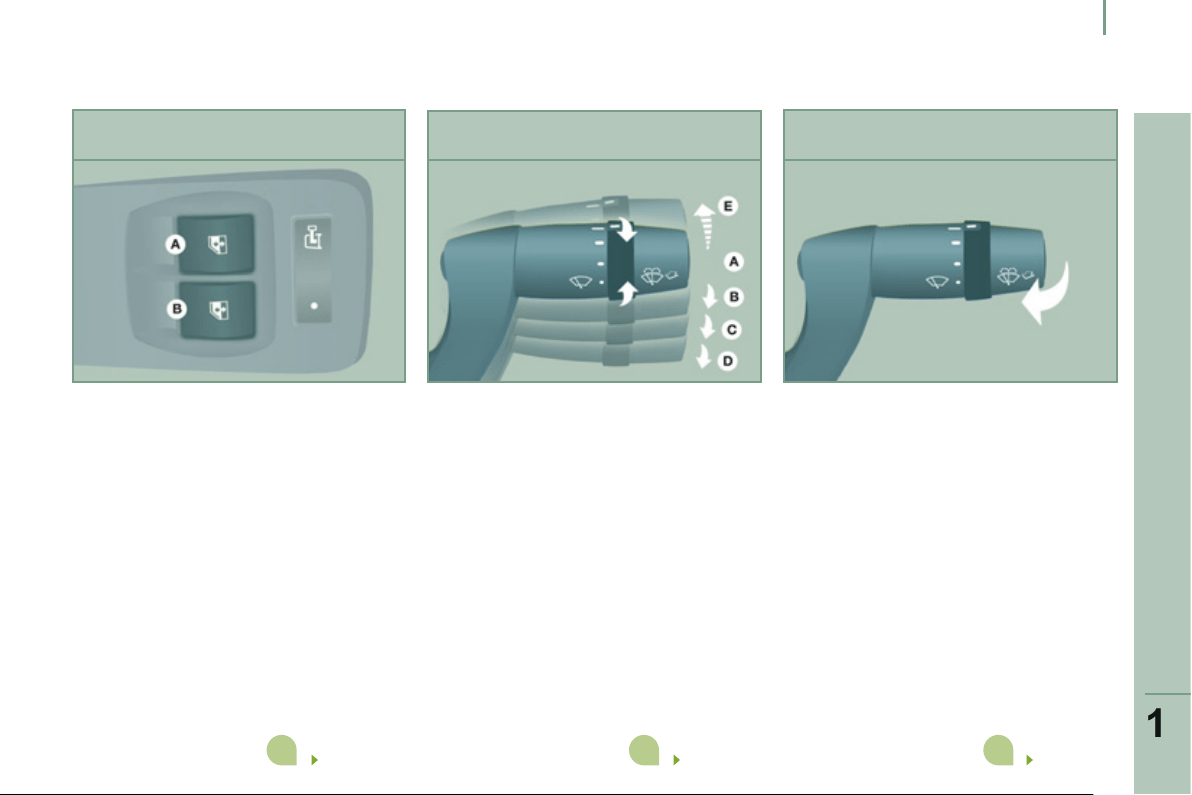
Electric window controls
A. Driver's electric window control.
B. Passenger's electric window control.
The electric window functions are
deactivated one minute after the ignition is
switched off.
50
Windscreen wipers
A. Park.
B. Intermittent (4 speeds).
C. Slow continuous.
D. Fast continuous.
E. Single wipe.
14
Familiarisation
VENTILATION
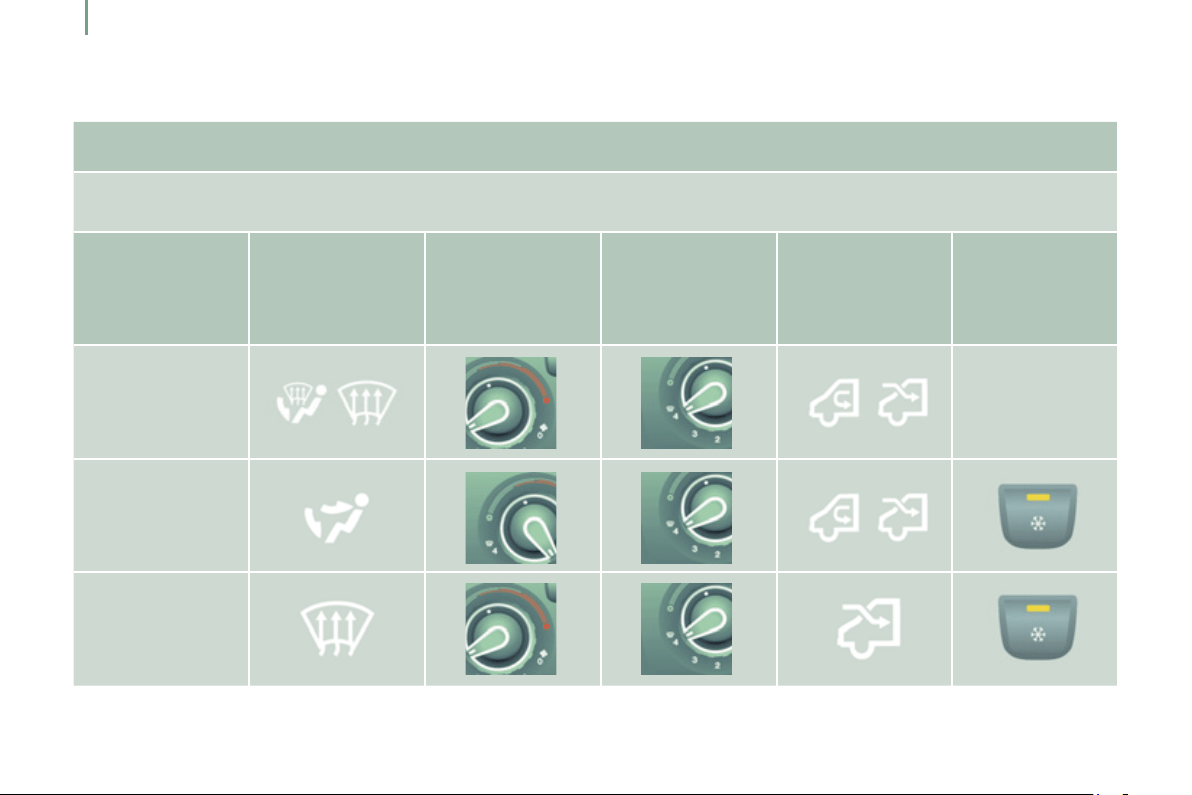
Digital air conditioning : use of the fully automatic operation by pressing the "AUTO" button is recommended.
Recommended interior settings
Manual Air Conditioning
If I require... Air distribution Temperature Air flow Air recirculation AC
Heating
-
Cooling
Demisting
Defrosting
2
2
1
FAMILIARISATION
1
5
Familiarisation
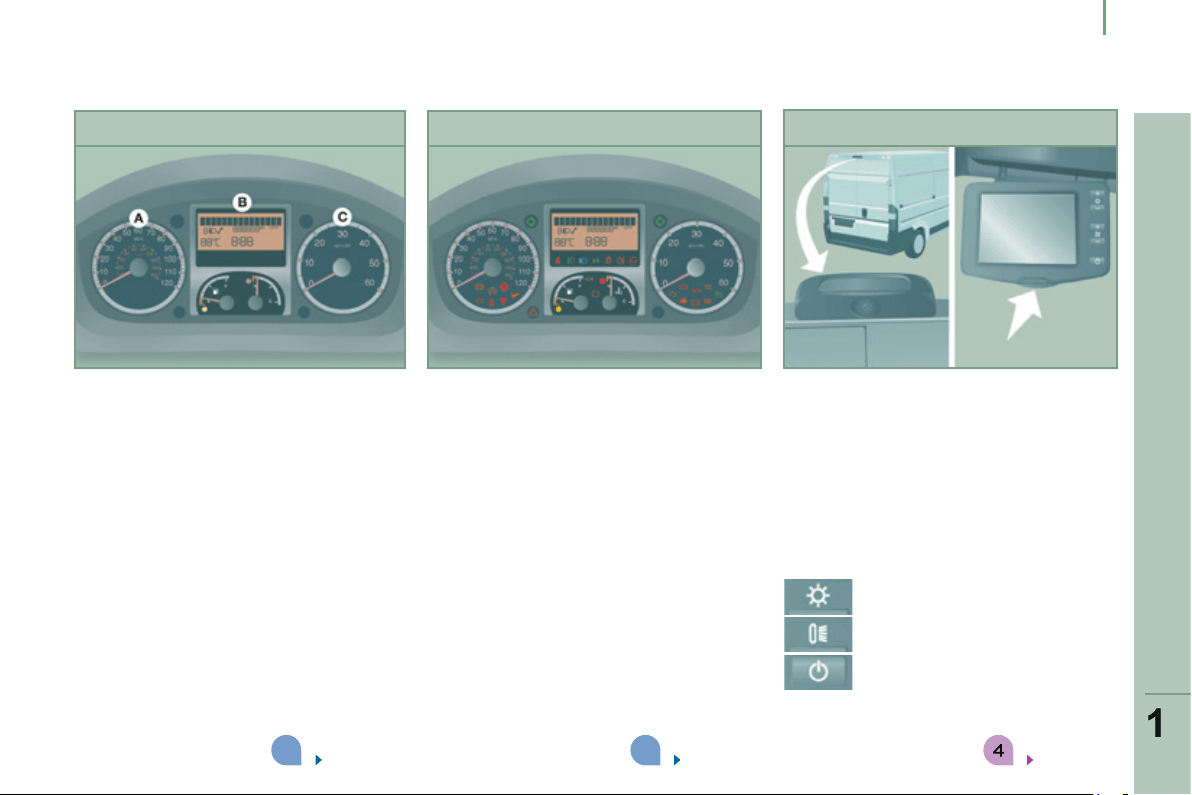
Reversing camera
The camera comes on when you engage
reverse gear and remains active up to
approximately 9 mph (15 km/h). It is
deactivated above 11 mph (18 km/h).
Screen
Press the button and place the screen in the
required position.
84
Instrument panel
A. Speedometer.
B. Instrument panel screen.
C. Rev counter.
30
Warning lamps
With the ignition on, the orange and red
warning lamps come on.
With the engine running, these warning
lamps should switch off.
If warning lamps remain on, refer to the
chapter concerned.
31
MONITORING
Buttons
Brightness adjustment.
Back-lighting adjustment.
ON/OFF provides views of the
rear without engaging reverse
gear.
5
4
2
1
6
Familiarisation
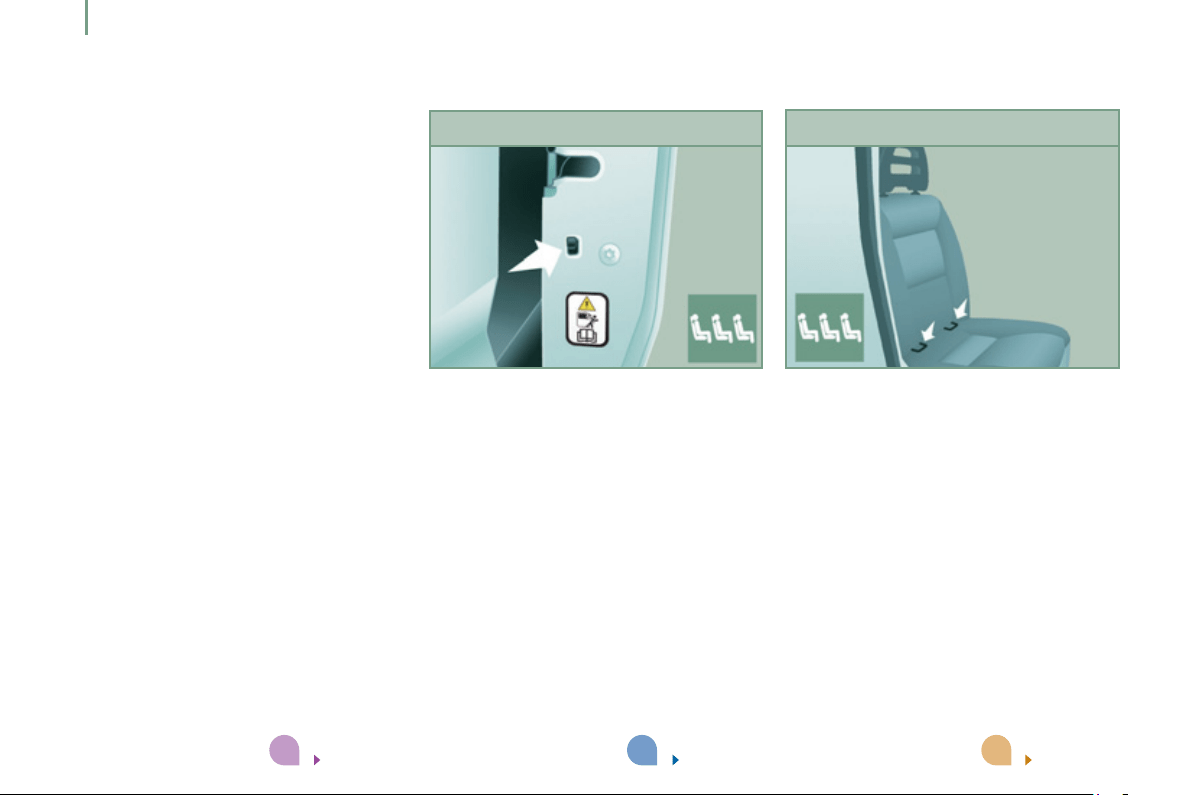
Two front rings, located between the seat
back and the seat cushion are used to
secure an ISOFIX child seat.
ISOFIX mountings
129
PA
SS
ENGER
S
AFETY
To deactivate the front passenger airbag,
refer to the "MODE" section of chapter 4, then
on the "Passenger airbag" menu, select OFF.
The airbag warning lamp on the instrument
panel stays on while the airbag is
deactivated.
80
This prevents opening of the sliding side
door from the inside.
Child lock
27
4
3
2
1
FAMILIARISATION
1
7
Familiarisation
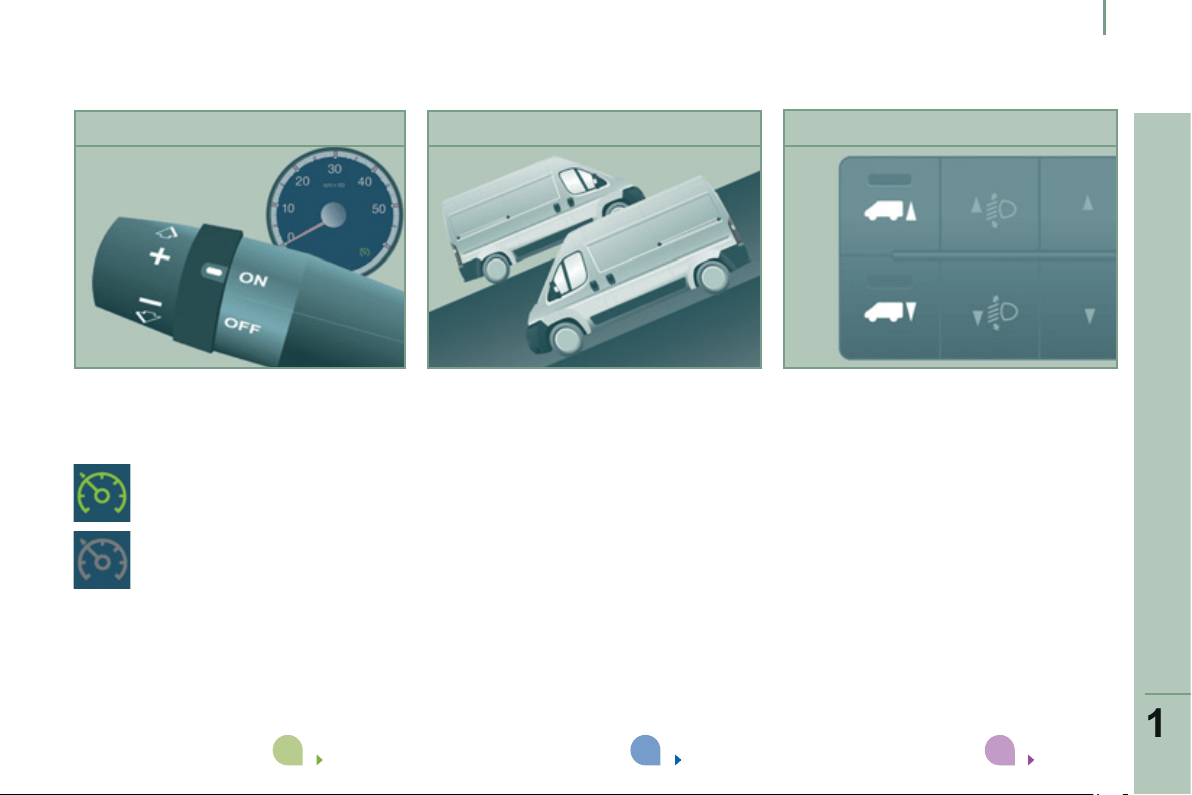
Cruise control
The state of the cruise control system is
given on the instrument panel by a warning
lamp located in the rev counter.
51
Hill start assist
This system, linked with the ESP, makes hill
starts easier and is activated in the following
conditions:
- the vehicle must be stationary, with the
engine running,
- the gradient of the road must be steeper
than 5%.
42
Pneumatic suspension
This equipment allows you to alter the rear
height of the load floor to make loading or
unloading easier.
Press the up control switch; release to stop
the movement. Each press increases by one
level: +1 to +3.
Press the down control switch; release to
stop the movement. Each press decreases
by one level: -1 to -3.
Driving with the load floor too high or too
low may damage components under the
body.
86
Function deactivated.
Function selected.
DRIVING
S
AFELY
2
2
2
1
8
Familiarisation
DRIVING
S
AFELY
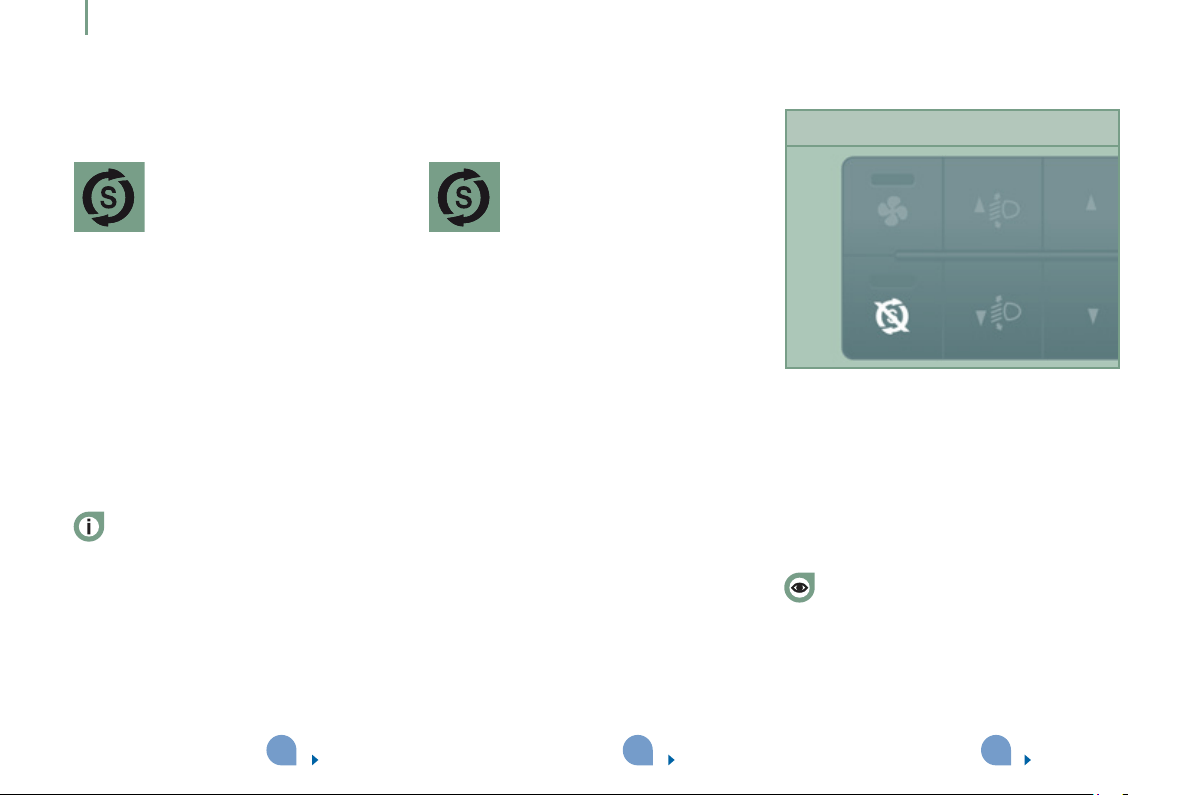
Stop & Start
Going into engine STOP mode
The "S" warning lamp comes on
in the instrument panel and the
engine goes into standby:
- with a manual gearbox ; vehicle
stationary, put the gear lever into
neutral, then release the clutch pedal.
Automatic stopping of the engine is
only possible once the vehicle has
exceeded 6 mph (10 km/h), so as to avoid
repeated stops of the engine when driving
slowly.
43
The "S" warning lamp goes off
and the engine restarts:
Going into engine START mode
- with a manual gearbox ; depress the
clutch pedal.
In some special cases, STOP mode may not
be available; the "S" warning lamp flashes
for a few seconds, then goes off.
In some special cases, START mode may
be invoked automatically; a message
appears in the instrument panel screen,
accompanied by the "S" warning lamp that
flashes for a few seconds, then goes off.
44
You can deactivate the system at any time
by pressing the "S - OFF" control; the lamp
in the button comes on, accompanied by a
message in the instrument panel screen.
The system is reactivated automatically at
every new start with the key.
Deactivation / Reactivation
Before refuelling, before doing
anything under the bonnet or before
leaving the vehicle, you must switch off the
ignition with the key.
45

1
9
ECO-DRIVING
Eco-driving is a range of everyday practices that allow the motorist to optimise their fuel consumption and CO
2
emissions.
Optimise the use of
y
our
g
earbox
With a manual gearbox, move off gently,
change up without waiting and drive by
changing up quite soon. If your vehicle
has the system, the gear efficiency
indicator invites you to change up; it is
displayed in the instrument panel, follow
its instructions.
Drive smoothl
y
Maintain a safe distance between vehicles,
use engine braking rather than the
brake pedal, and press the accelerator
progressively. These practices contribute
towards a reduction in fuel consumption
and CO
2
emissions and also helps reduce
the background traffic noise.
If your vehicle has cruise control, make
use of the system at speeds above 25 mph
(40 km/h) when the traffic is flowing well.
Control the use of
y
our electrical
eq
ui
p
ment
Before moving off, if the passenger
compartment is too warm, ventilate it by
opening the windows and air vents before
using the air conditioning.
Above 30 mph (50 km/h), close the windows
and leave the air vents open.
Remember to make use of equipment
that can help keep the temperature in the
passenger compartment down (sunroof and
window blinds...).
Switch off the air conditioning, unless it has
automatic digital regulation, as soon as the
desired temperature is attained.
Switch off the demisting and defrosting
controls, if not automatic.
Switch off the heated seat as soon as
possible.
Switch off the headlamps and front foglamps
when the level of light does not require their
use.
Avoid running the engine before moving
off, particularly in winter; your vehicle will
warm up much faster while driving.
As a passenger, if you avoid connecting
your multimedia devices (film, music,
video game...), you will contribute towards
limiting the consumption of electrical
energy, and so of fuel.
Disconnect your portable devices before
leaving the vehicle.

2
0
Spread loads throughout the vehicle;
place the heaviest items in the bottom of
the boot, as close as possible to the rear
seats.
Limit the loads carried in the vehicle and
reduce wind resistance (roof bars, roof
rack, bicycle carrier, trailer...). Use a roof
box in preference.
Remove roof bars and roof racks after use.
Limit the causes of excess
c
onsumpt
i
on
At the end of winter, remove snow tyres
and refit your summer tyres.
Observe the recommendations on
m
aintenance
Check the tyre pressures regularly, when
cold, referring to the label in the door
aperture, driver's side.
Carry out this check in particular:
- before a long journey,
- at each change of season,
- after a long period out of use.
Don't forget the spare wheel and the tyres
on any trailer or caravan.
Have your vehicle serviced regularly (engine
oil, oil filter, air filter...) and observe the
schedule of operations recommended by the
manufacturer.
When refuelling, do not continue after
the 3
rd
cut-off of the nozzle to avoid any
overflow.
At the wheel of your new vehicle,
it is only after the first 1 800 miles
(3 000 kilometres) that you will see the fuel
consumption settle down to a consistent
average.
2
1
2
A
ccess
READY TO G
O
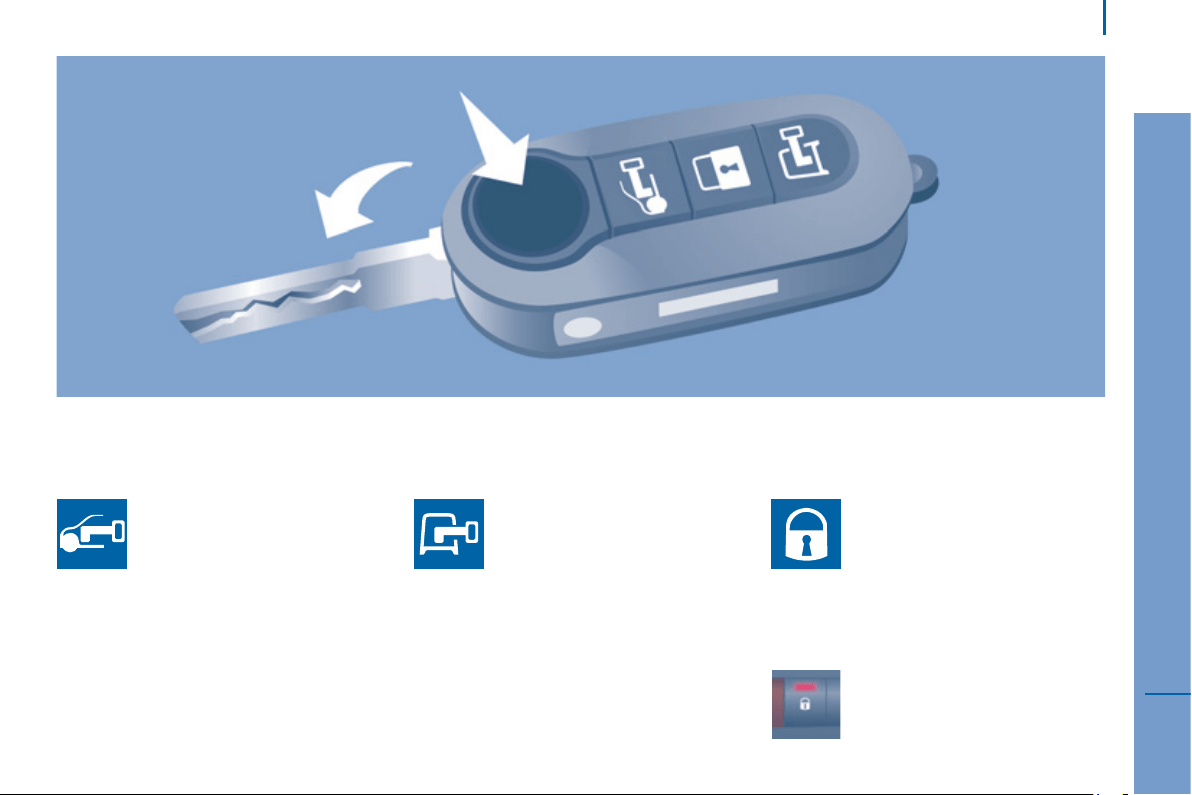
REMOTE CONTROL
A
CCESS
U
n
l
oc
ki
n
g
t
h
e ca
b
Press this button to unlock
your vehicle's cab. The interior
courtesy lamp comes on briefly
and the direction indicators
flash twice.
U
n
l
oc
ki
n
g
t
h
e rear
d
oors
Press this button to unlock the
side door and the rear doors of
the load space.
Central lockin
g
Press this button briefly
to lock all of your vehicle's
doors, cab and load space.
If one of the doors is open or
is not closed correctly, the central locking
will not work.
The direction indicators flash once.
The indicator lamp on the control
on the centre console comes on
then flashes.
22
Acces
s
D
ea
dl
oc
ki
n
g
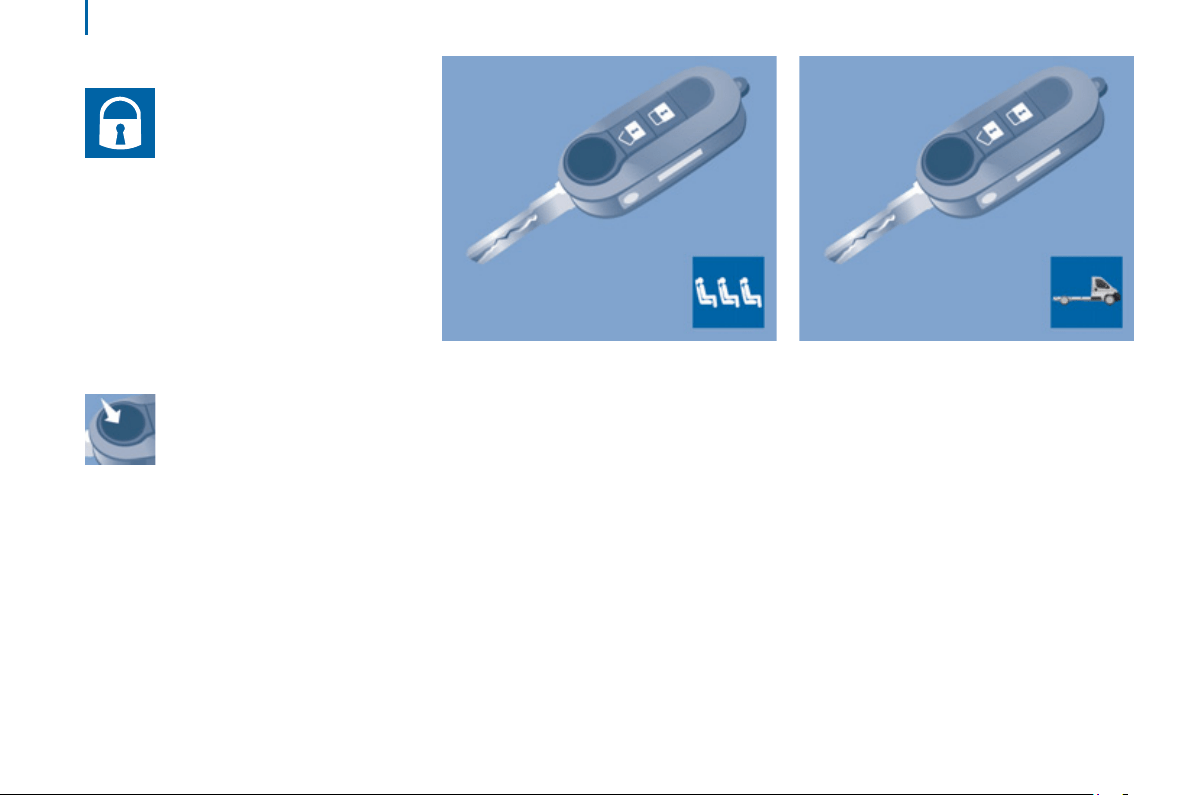
Press this button twice in
succession to deadlock the
vehicle. It is then impossible to
open the doors from the inside or
the outside.
The direction indicators flash three times.
Never leave anyone inside the vehicle when
it is deadlocked.
Foldin
g
/unfoldin
g
the ke
y
Press this button to release the
key from its housing.
To fold the key, press the button
then fold the key into the housing.
If you do not press the button, the
mechanism may be damaged.
2
A
ccess
READY TO G
O
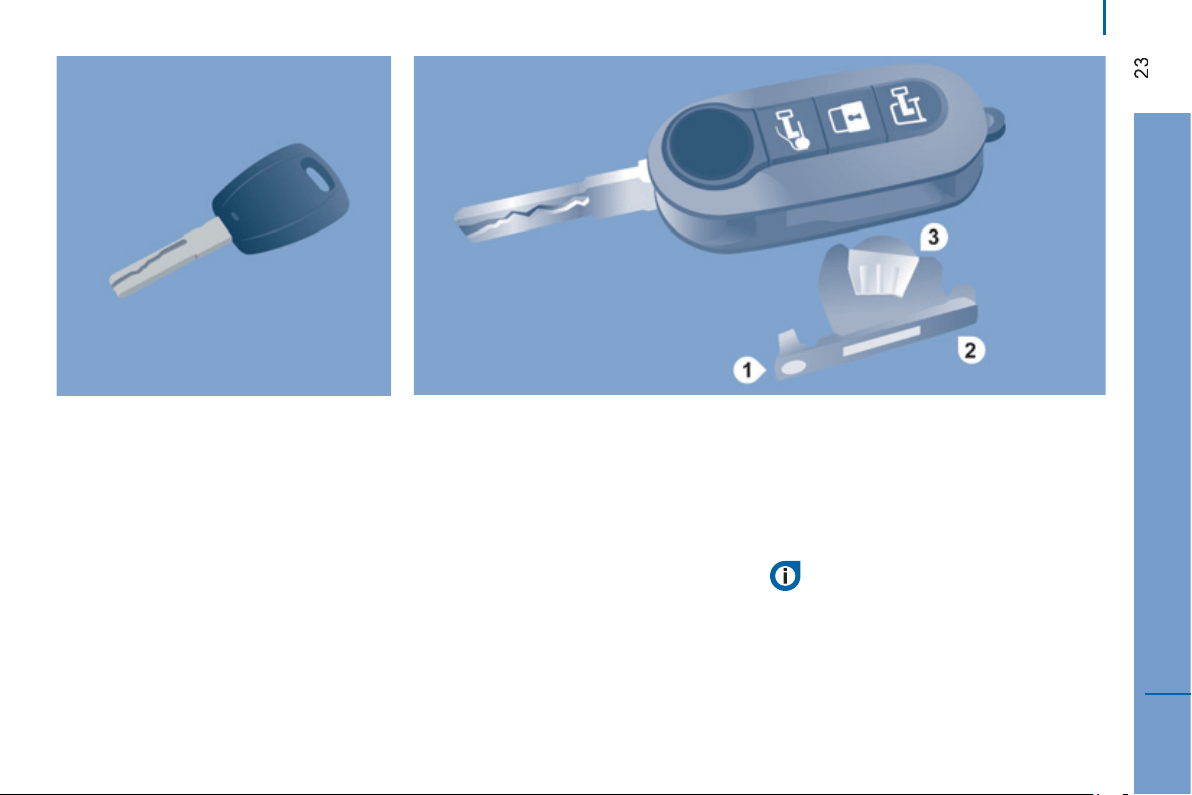
KEY
This locks and unlocks the doors on the
vehicle, opens and closes the fuel filler cap,
as well as starting and stopping the engine.
REMOTE CONTROL BATTERY
Reference: CR 2032/3 volts.
Chan
g
in
g
the remote control
b
atter
y
- press the button to eject the key,
- turn the screw 1 from the closed padlock
to the open padlock using a screwdriver
with a thin lip,
- use the screwdriver as a lever to extract
the battery holder housing 2 ,
- remove the housing and change the
battery 3 observing the polarities,
- put the battery holder housing 2 back
inside the key and secure it by turning
the screw 1 .
There is a risk of damage if the
replacement battery is not of the
correct type.
Only use batteries which are identical or of
an equivalent type to those recommended
by a CITROËN dealer. Take used batteries
to an authorised collection point.

24
Acces
s
MAIN FUNCTIONS OF THE KEY
Type of key
Unlocking
the cabin
Locking the doors
Unlocking
the rear doors
Deadlocking
Key
Turn anti-clockwise
(driver's side).
Turn clockwise
(driver's side).
- -
Remote control - -
Signalling
Direction indicators 2 flashes. 1 flash. 2 flashes. 3 flashes.
Lamp on
the control
Off.
On for about 3 seconds,
then flashing.
Flashing. Flashing
2
5
2
A
ccess
READY TO G
O
ELECTRONIC IMMOBILISER
All of the keys contain an electronic
immobiliser device.
This device locks the engine supply system.
It is activated automatically when the key is
removed from the ignition.
Operating the remote control, even when it
is in your pocket, may result in involuntary
unlocking of the doors.
However, if none of the doors is opened
within approximately thirty seconds following
unlocking, the doors relock automatically.
The simultaneous use of other high
frequency equipment (mobile telephones,
domestic alarms…), may interfere with the
operation of the remote control temporarily.
The remote control does not operate while
the key is in the ignition, even if the ignition
is off, except for reinitialisation.
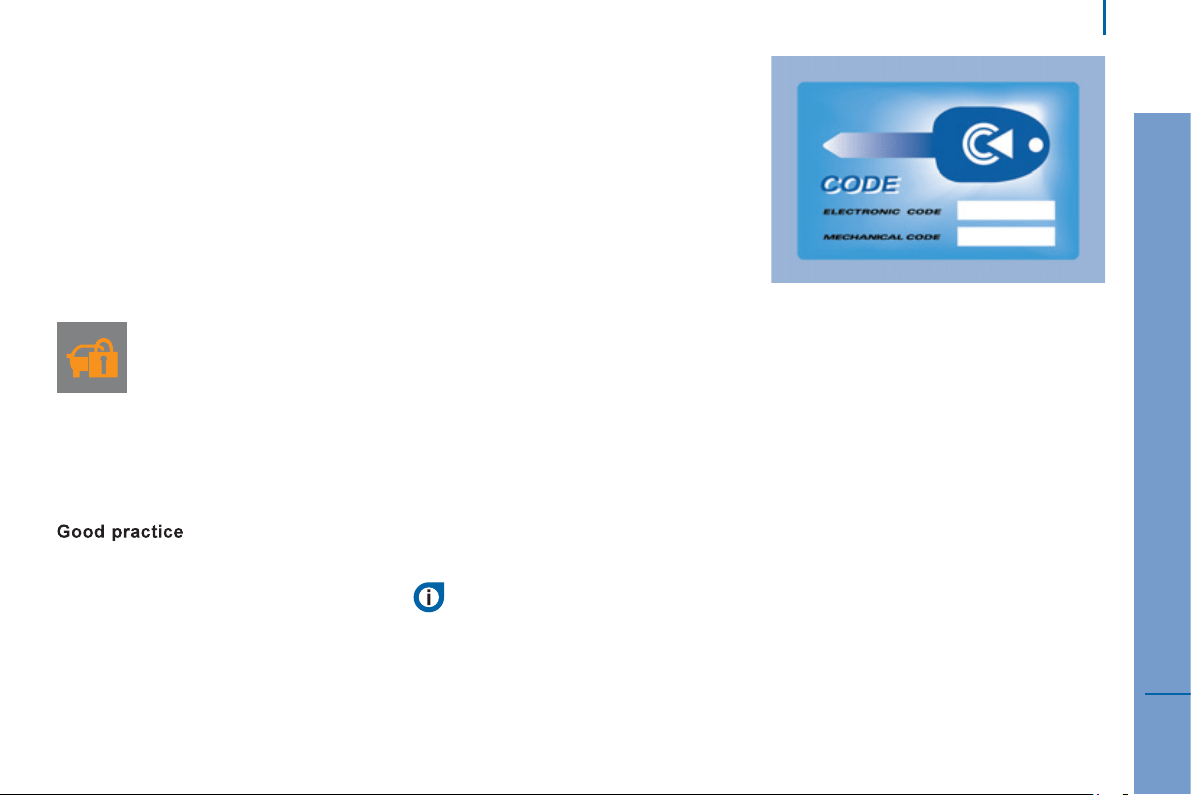
Make a careful note of the number of the
keys. If they are lost, your CITROËN dealer
will be able to carry out his work more
quickly and effectively if you give him this
number and the confidential card.
Do not make any modifications to the
electronic immobiliser system.
This warning lamp is switched off
after the ignition is switched on
and the key has been recognised,
the engine can be started.
If the key is not recognised, the engine
cannot be started. Use another key and
have the faulty key checked by a CITROËN
dealer.
Driving with the doors locked may make
access to the passenger compartment
by the emergency services more diffi cult in an
emergency.
As a safety precaution (with children on board),
remove the key from the ignition when leaving
the vehicle, even for a short time.
After the ignition is switched on, a dialogue
is established between the key and the
electronic immobiliser system.
When purchasing a second-hand vehicle:
- ensure that you are given the
confidential card,
- have the keys memorised by a
CITROËN dealer to ensure that the keys
in your possession are the only ones
which can start the vehicle.
CONFIDENTIAL CARD
This is given to you on delivery of your
vehicle with the duplicate keys.
It contains the identification code necessary
for any work carried out by a CITROËN
dealer on the electronic immobiliser system.
This code is hidden by a film, which should
be removed only if necessary.
Keep your card in a safe place, never inside
the vehicle.
When undertaking a long trip or journey,
however, it is advisable to take it with you
along with your personal papers.
2
6
Acces
s
While the alarm is monitoring, any intrusion
triggers the siren for approximately
30 seconds, accompanied by lighting of
the direction indicators.
The alarm then returns to monitoring mode
but the triggering event is stored and is
indicated by rapid flashing of the LED,
if the alarm is deactivated.
The alarm is also triggered following an
electrical supply cut-off, when the supply is
restored.
A
utomatic activation
Depending on the country in which the
vehicle is sold: this function activates
monitoring automatically approximately
2 minutes after the last door is closed. To
avoid triggering the alarm when opening a
door, the unlocking button on the remote
control must be pressed again.
Deactivation usin
g
the ke
y
Unlock the doors using the key and enter the
vehicle. Switch on the ignition, identification
of the key code will switch off the alarm.
D
eact
i
vat
i
on us
i
n
g
t
h
e remote contro
l
When this button is pressed, the
alarm is deactivated when the
vehicle is unlocked.
Deactivation of the anti-tilt
p
rotection
*
Press this control to deactivate
the protection (when towing the
vehicle with the alarm on, for
example).
The protection remains active until the doors
are unlocked with the central locking.
A
L
ARM
If your vehicle is fitted with an ANTI-THEFT
ALARM.
This provides:
- exterior perimeter protection by
detectors on the openings (doors,
bonnet) and on the electrical power
supply,
- anti-tilt protection.
The system also includes a siren and an
LED which can be seen from outside,
indicating the three possible states of the
alarm:
- alarm activated (monitoring), slow
flashing of the red LED,
- alarm not activated (not monitoring),
LED off,
- alarm triggered (intrusion signal), rapid
flashing of the red LED when the vehicle
is unlocked.
Activation of the alarm
First ensure that all of the doors are closed
correctly.
The alarm is activated by
pressing this padlock, the
protection is active after a few
seconds.
* Depending on engine.
Good practice
To deactivate the siren quickly following
unwanted triggering:
- switch on the ignition, identification of
the key code will switch off the alarm,
- press the unlocking button (cab and key)
on the remote control.
To avoid setting the alarm, when washing
the vehicle for example, lock the vehicle
using the key.
Unlocking the vehicle using the remote
control deactivates the siren automatically.
2
7
2
A
ccess
READY TO G
O
FRONT DOORS
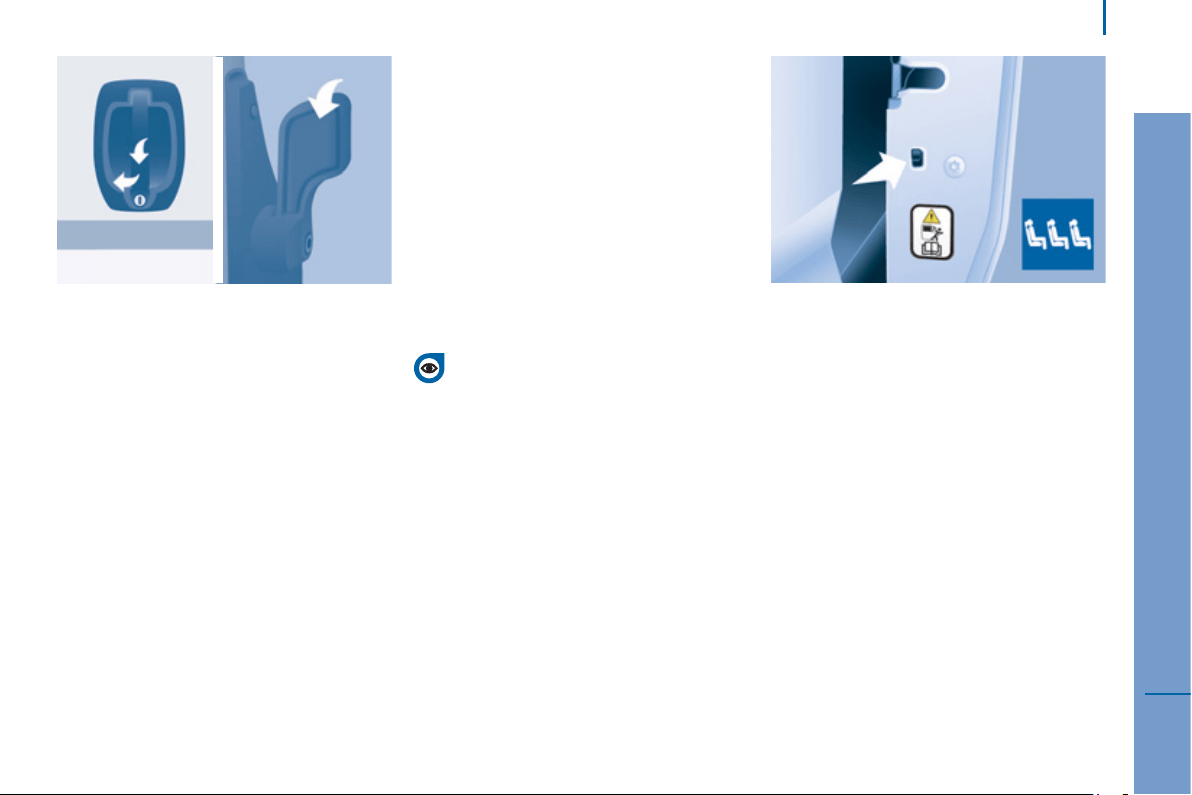
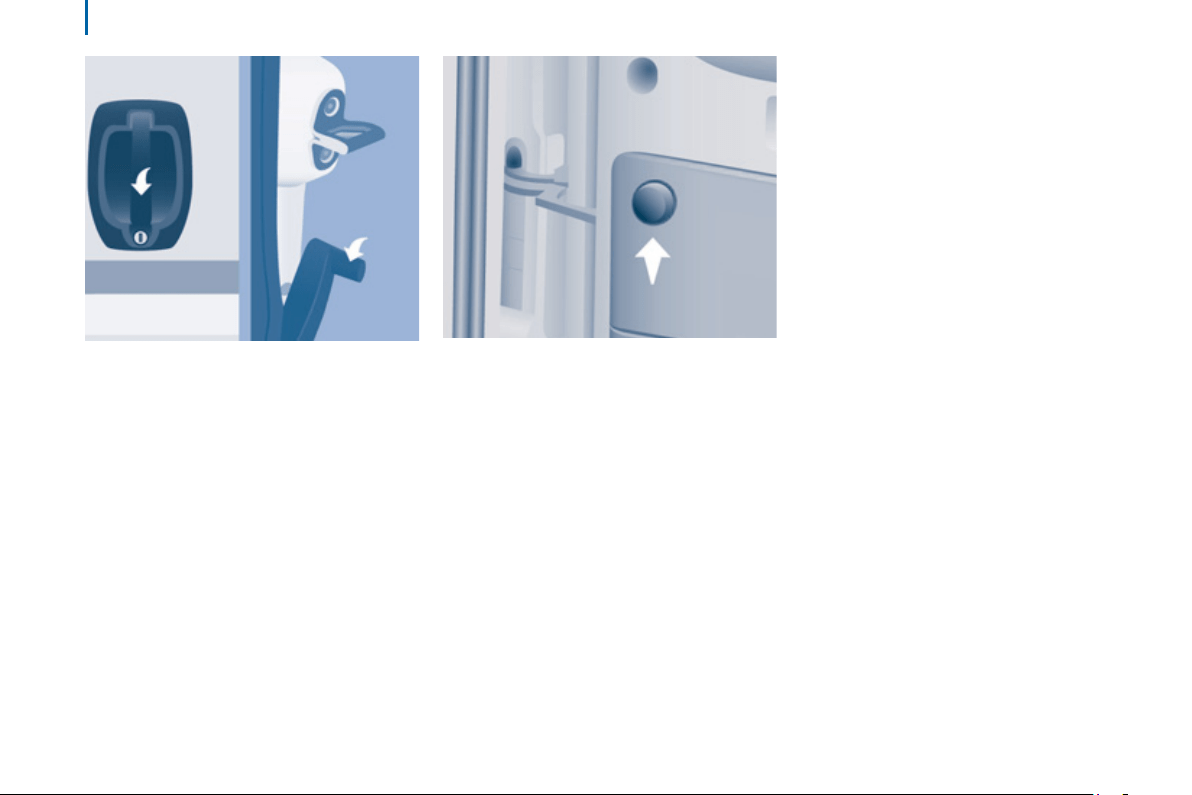
Child lock
This prevents opening of the sliding side
door from the inside.
Press the control located on the edge of the
side door.
Driver's doo
r
Use the remote control to unlock/lock.
S
LIDING
S
IDE DOOR
Take care not to obstruct the guide space
on the floor in order for the door to slide
correctly.
F
rom outs
id
e
Pull the handle towards you then towards
the rear.
From inside
To unlock and open, push the handle
towards the rear.
Ensure that the door opens fully in order for the
latch at the bottom of the door to engage.
To release and close, pull the handle while
sliding the door.
Do not drive with the sliding side door
open.
2
8
Acces
s
REAR DOORS
From outside
Pull the handle towards you. The two hinged
doors open to 96°.
Opening/Closing the doors
To open, pull the handle towards you then
pull the lever to open the left-hand door.
To close, start with the left-hand door then
close the right-hand door.
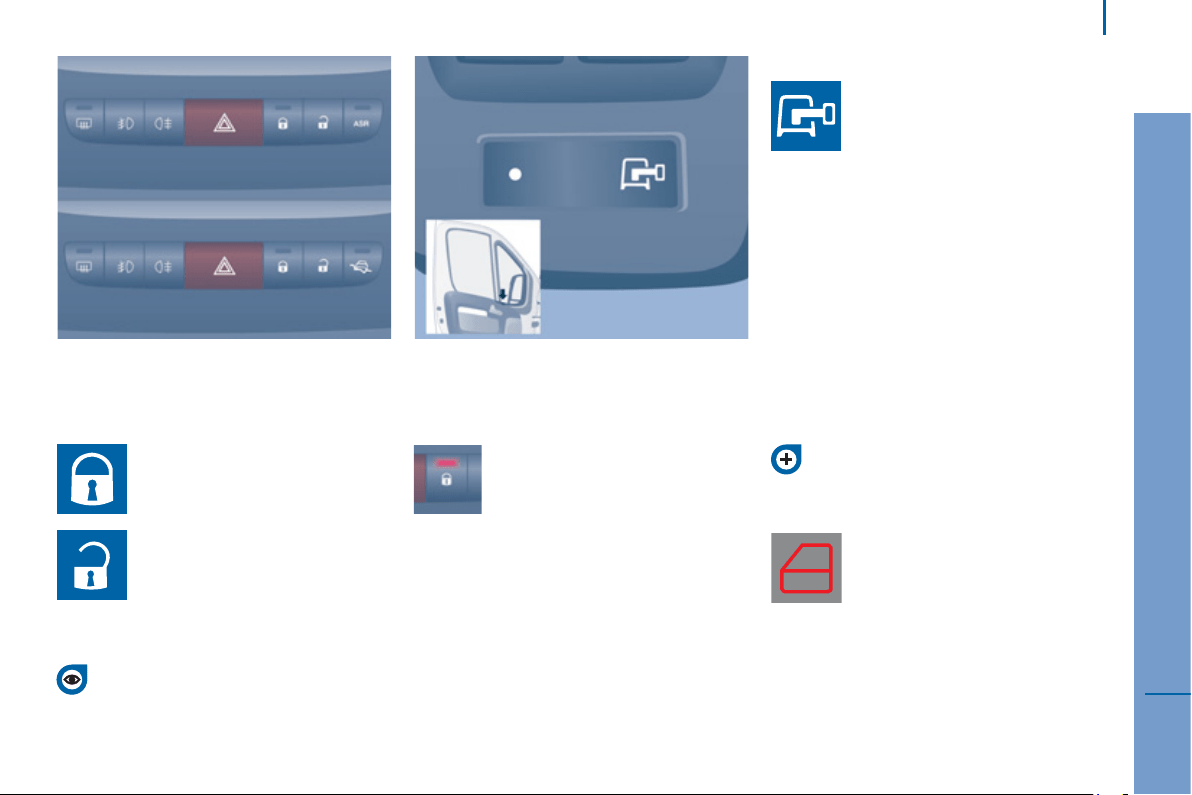
Opening to 180°
If your vehicle is fitted with this equipment,
a retractable check strap system permits
extending of the opening from 96° to 180°.
Press the button, located on the door trim
pad, to widen the angle of the door.
The check strap will take up its normal
position again automatically on closing.
2
9
2
A
ccess
R
EADY TO G
O
LOCKING/UNLOCKING FROM INSIDE
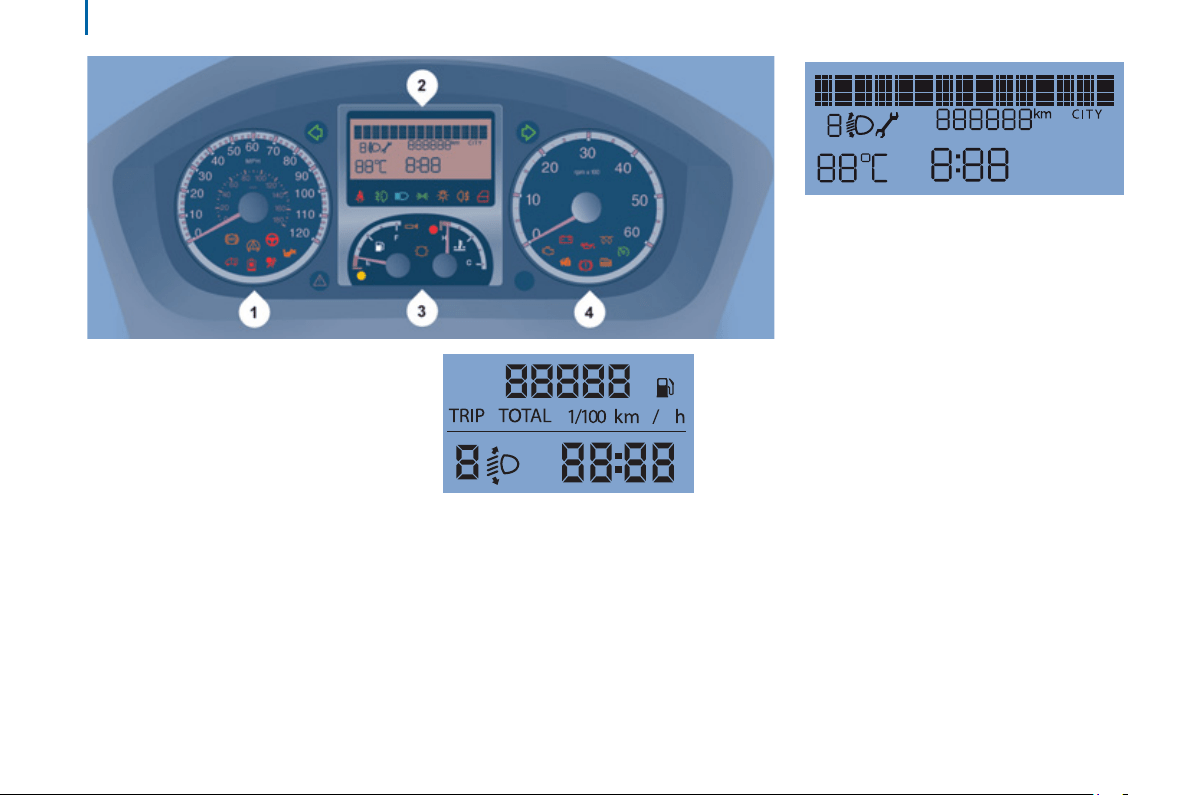
Door open warnin
g
lamp
If this warning lamp comes on,
check that the cab doors, the rear
or side doors and the bonnet are
closed correctly.
Good practice
If you decide to drive with the doors locked,
be aware that this could make access to the
vehicle by the emergency services more
difficult in an emergency.
Cab and load space
Pressing permits electric central
locking, when the doors are
closed.
Pressing permits electric central
unlocking.
The doors can still be opened from the
inside.
If one of the doors is open or is not
closed correctly, the central locking
does not work.
The indicator lamp on the control:
- comes on when the doors
are locked and the ignition is
switched on,
- then flashes when the doors
are locked when stationary with
the engine off.
The control is not active when the vehicle
has been locked using the remote control or
the key from the outside.
Loa
d
space
Press to lock or unlock the side
door and rear doors from the cab.
The warning lamp remains on on
locking.
P
rotect
i
on a
g
a
i
nst attac
k
When the vehicle is started, the system
locks the cab and load space doors
automatically when you reach approximately
12 mph (20 km/h).
If none of the doors is opened during the
journey, the locking remains active.
Activation/deactivation of the function
The function is activated/deactivated by
means of Mode, selecting "Autoclose".
Refer to the "Mode" section in
chapter 4.
30
Instruments and controls
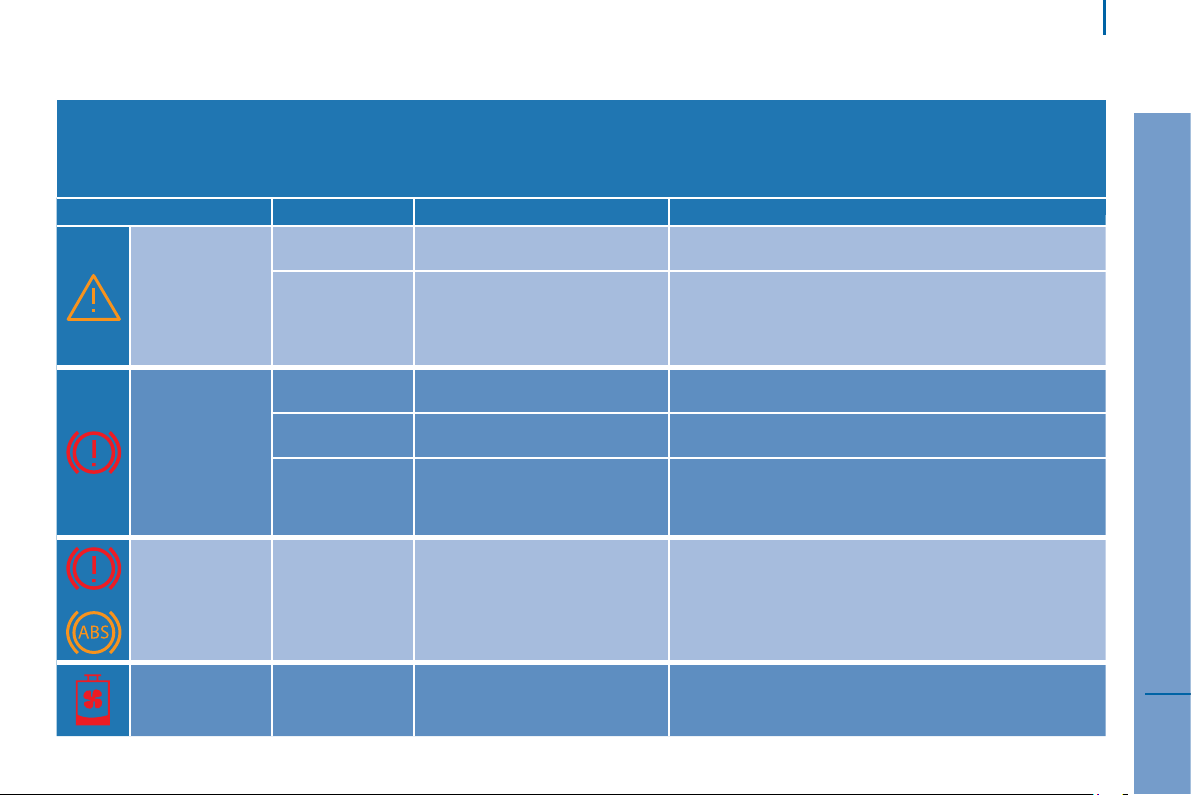
IN
S
TRUMENT PANEL
1. Distance recorder in miles / kilometres.
2. Screen.
3. Dials and gauges.
4. Rev counter.
IN
S
TRUMENT
S
AND CONTROL
S
Instrument
p
anel screen 1
- Time,
- Miles / Kilometres travelled,
- Range,
- Fuel consumption,
- Average speed,
- Headlamp beam height,
- Programmable overspeed warning via
MODE,
- Stop & Start,
- Service indicator.
Instrument panel screen 2
- Time,
- Date,
- Ambient temperature,
- Miles / Kilometres travelled,
- Range,
- Fuel consumption,
- Average speed,
- Headlamp beam height,
- Programmable overspeed warning via
MODE,
- Stop & Start,
- Service indicator,
- Warning messages displayed in the top
section,
- Radio (frequency of the current station).
31
2
R
EADY TO G
O
Instruments and controls
WARNING LAMPS
Every time the engine is started: a series of warning lamps comes on, applying a self-checking test. They go off almost
immediately. When the engine is running: a warning lamp becomes a warning sign if it remains on continuously or flashes. This
initial warning may be accompanied by an audible signal and a message in the screen. "Do not ignore these warnings."
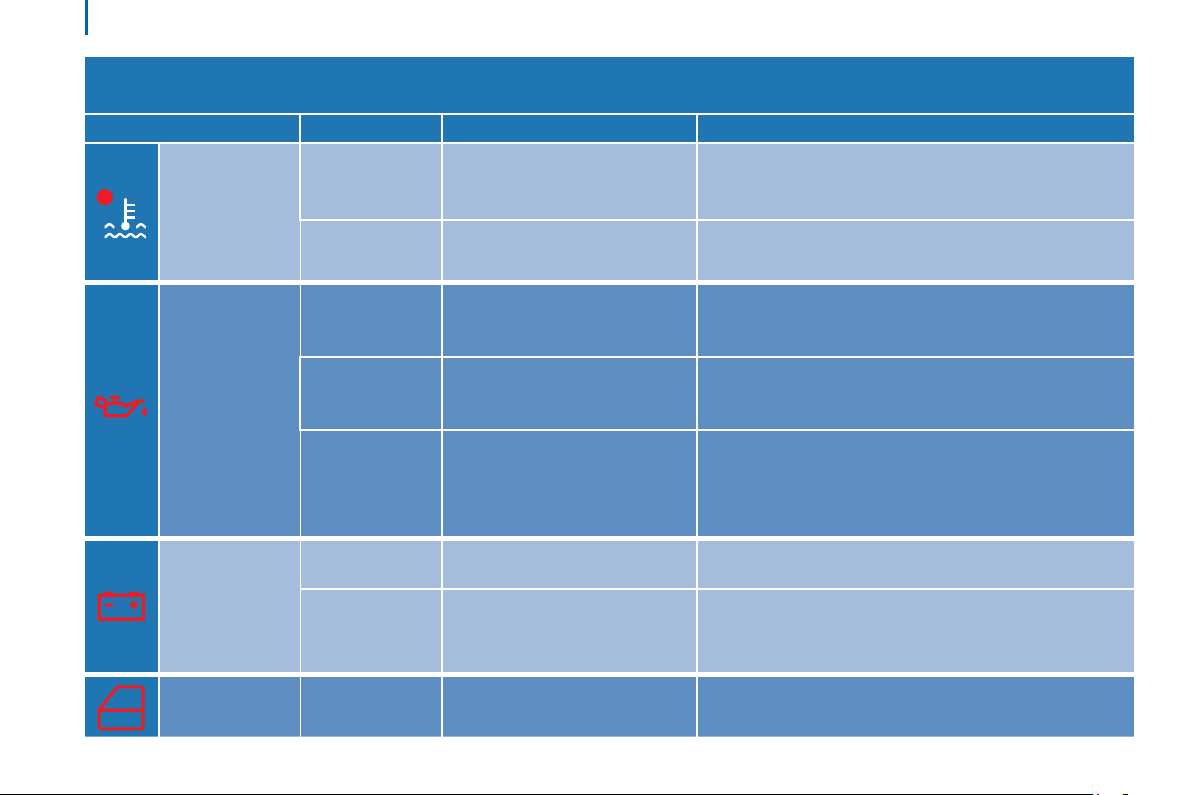
Warning lamp is indicates Solution - action
Service
on temporarily. minor faults. Contact a CITROËN dealer.
continuously on,
accompanied by
a message on
the screen.
major faults.
Make a note of the warning message and contact a
CITROËN dealer.
Parking brake -
Brake fluid level
on.
that the parking brake is applied or
has not been released correctly.
Releasing the parking brake switches off the warning
lamp.
on. that the fluid level is too low. Top up with a fluid recommended by CITROËN.
continuously on,
even though the
level is correct.
Stop immediately, park, switch off the ignition and
contact a CITROËN dealer.
+
Electronic brake
force distribution
on.
an electronic brake force
distribution fault.
Stop immediately. Consult a CITROËN dealer.
Low coolant
level
on. that the fluid level is too low.
Park and switch off the ignition. Allow to cool. Refer to
the "Levels" section of chapter 7. Consult a CITROËN
dealer.
32
Instruments and controls
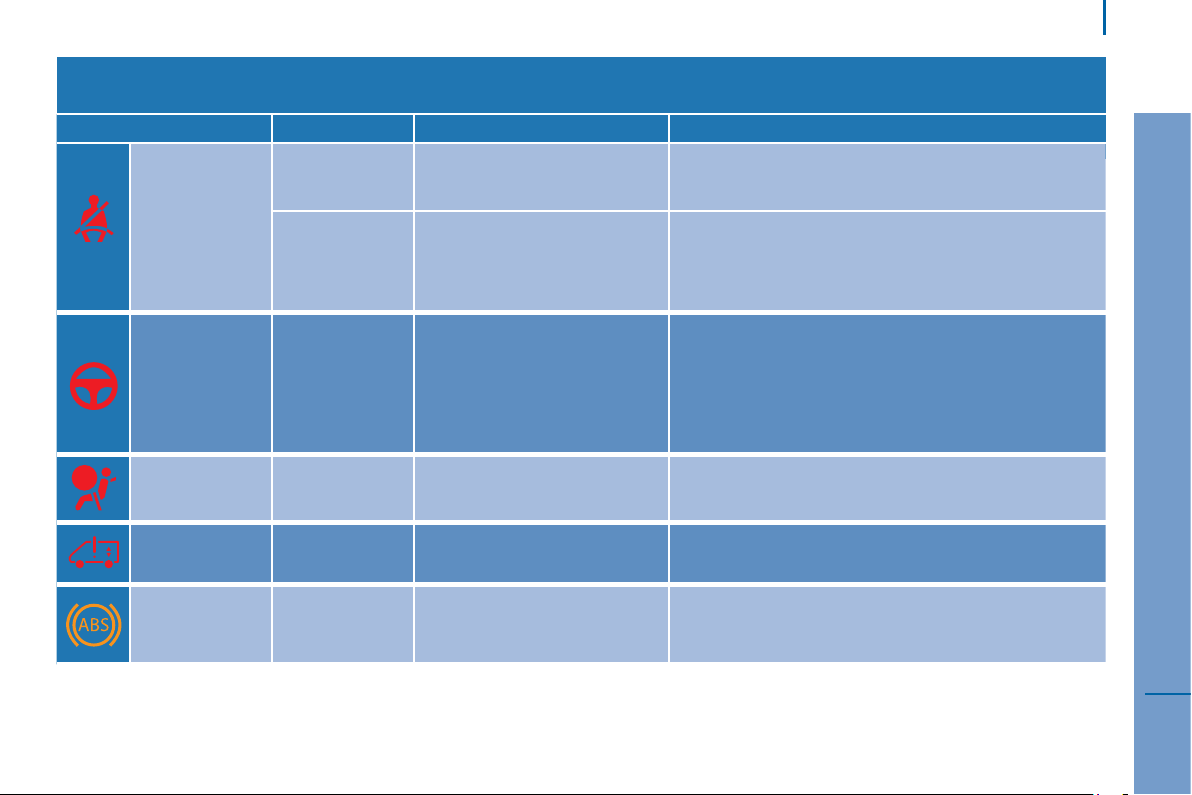
Warning lamp is indicates Solution - action
Coolant
temperature
on with the
needle in the red
zone.
an abnormal increase.
Park and switch off the ignition, allow the system to cool.
Visually check the level.
on H in the red
zone.
a coolant temperature.
Refer to the "Levels" section of chapter 7.
Consult a CITROËN dealer.
Engine oil
pressure
on while driving. that the pressure is too low.
Park and switch off the ignition, allow the lubrication
system to cool in order to check its level. Refer to the
"Levels" section of chapter 7.
continuously on,
even though the
level is correct.
a major fault. Consult a CITROËN dealer.
flashing, for a
few seconds,
with a message
on the screen.
that a service will soon be due.
Refer to the list of checks in the servicing booklet then
carry out the CITROËN service.
Battery charge
on.
a malfunction of the charging
system.
Check the battery terminals… Refer to the "Battery"
section of chapter 8.
continuously on,
fi xed or fl ashing in
spite of the checks.
a circuit fault, an ignition or
injection malfunction.
Consult a CITROËN dealer.
Door or bonnet
open detection
on.
that a door or the bonnet is not
closed correctly.
Check that the cab doors, the rear and side doors and
the bonnet are closed.
33
2
READY TO G
O
Instruments and controls
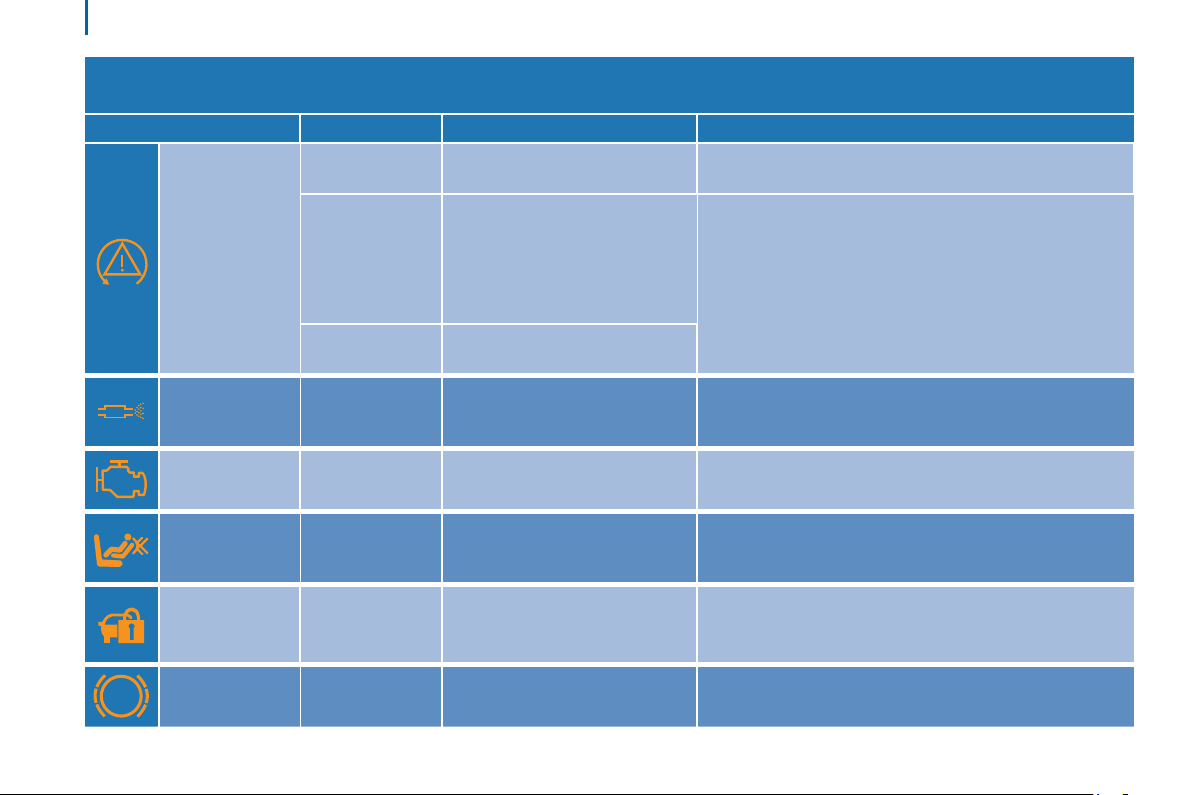
Warning lamp is indicates Solution - action
Seat belt not
fastened
on then flashes.
that the driver has not fastened
his seat belt.
Pull the strap then insert the tongue in the buckle.
accompanied
by an audible
signal then
remains on.
that the vehicle is moving
with the driver's seat belt
unfastened.
Check that the seat belt is fastened correctly by pulling
the strap. Refer to "Seat belts" section of chapter 5.
Power steering
on, accompanied
by an audible
signal and a
message on the
screen.
its malfunction.
The vehicle retains conventional steering without
assistance. Have the system checked by a CITROËN
dealer.
Front/lateral
airbag
flashing or
continuously on.
a fault with an airbag.
Have the system checked by a CITROËN dealer. Refer
to the "Airbags" section of chapter 5.
Suspension on.
a fault with the pneumatic
compensation.
Consult a CITROËN dealer.
ABS on. failure of the system.
The vehicle retains conventional braking without
assistance. However, you are advised to stop and
contact a CITROËN dealer.
3
4
Instruments and controls
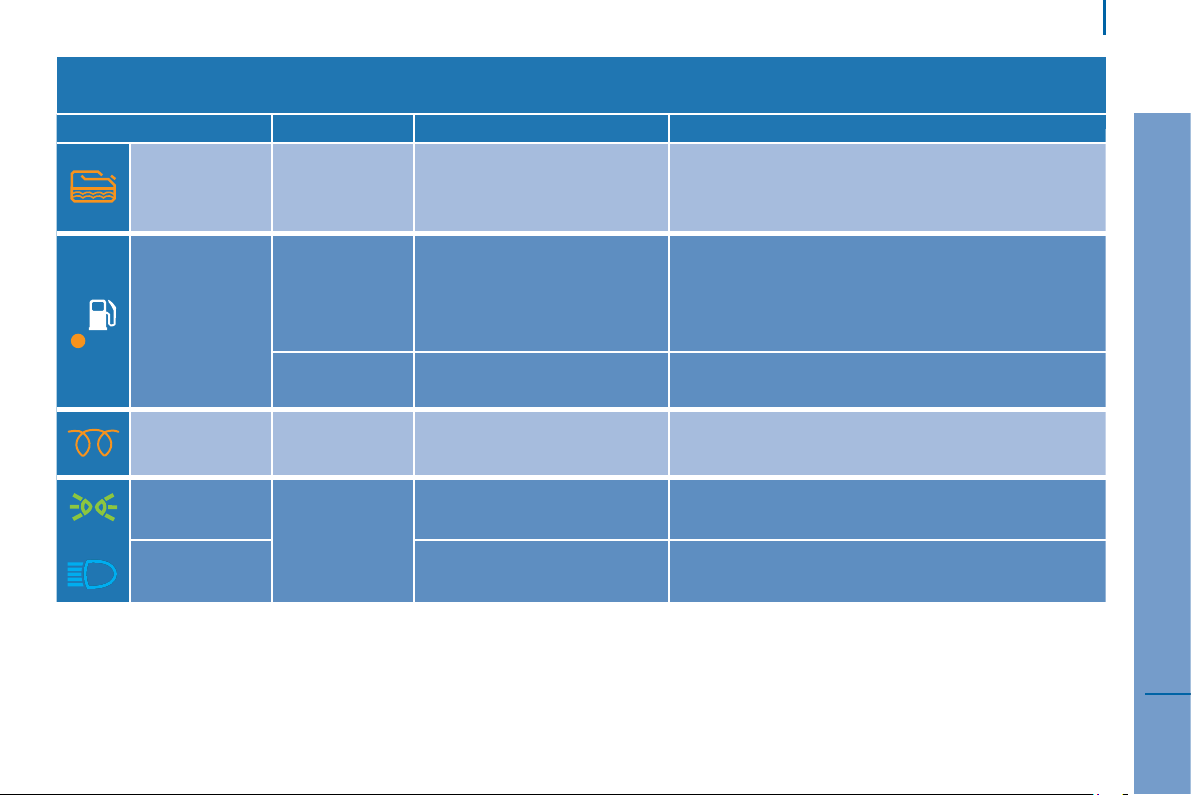
Warning lamp is indicates Solution - action
ASR/ESP
flashing. that it is in operation.
The system optimises traction and allows improved
directional stability of the vehicle.
on,
accompanied
by an audible
signal and a
message in the
screen.
its malfunction or failure of the
hill start assist.
Consult a CITROËN dealer.
Refer to the "Driving safety" section of chapter 5.
on.
a fault with the Intelligent
Traction Control.
Anti-pollution on.
the regeneration of the particle
emissions filter.
It is recommended that you leave the engine running
until the warning lamp goes off so that regeneration can
be completed. Section 7, "Checks".
Emission control
system
on. a fault with the system.
Have the system checked by a CITROËN dealer without
delay.
Deactivation
of the front
passenger airbag
on.
the intentional deactivation of
this airbag when a rear facing
child seat is installed.
Configure via the trip computer MODE menu. Refer to
the "Mode" section of chapter 4.
Electronic
immobiliser
on.
the ignition key inserted is not
recognised.
The vehicle cannot be started.
Use another key and have the faulty key checked by
a CITROËN dealer. Refer to the "Access" section of
chapter 2.
Front brake
pads
on. brake pad wear. Have the pads replaced by a CITROËN dealer.
35
2
READY TO G
O
Instruments and controls
Warning lamp is indicates Solution - action
Water in Diesel
filter
on,
accompanied by
a message on
the screen.
that there is water in the Diesel
fuel filter.
Have the filter bled by a CITROËN dealer. Refer to the
"Checks" section of chapter 7.
Low fuel level
on with the
gauge needle in
zone E.
that the fuel reserved is being
used.
Fill up with fuel without delay. The calculation of the
remaining fuel depends on the style of driving, the
profile of the road, the time elapsed and the distance
travelled since the warning lamp first came on.
flashing. a malfunction. Consult a CITROËN dealer.
Diesel pre-
heating
on.
that the weather conditions
impose pre-heating.
Wait for the warning lamp to switch off before operating
the starter.
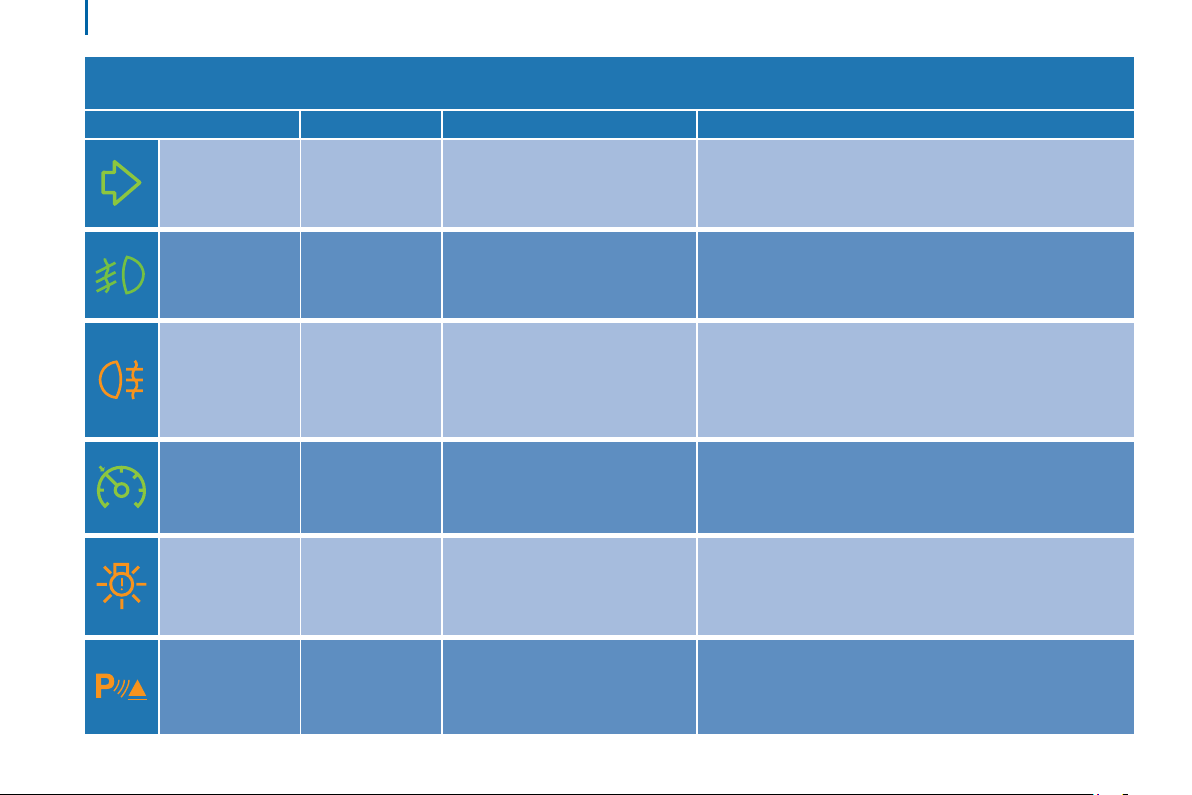
Dipped beam
headlamps
on.
manual selection. Turn the ring on the lighting stalk to the second position.
Main beam
headlamps
pulling of the stalk towards you. Pull the stalk to return to dipped beam headlamps.
36
Instruments and controls
Warning lamp is indicates Solution - action
Direction
indicators
flashing with
buzzer.
a change of direction using the
lighting stalk, to the left of the
steering wheel.
To the Right: press the stalk upwards.
To the Left: press the stalk downwards.
Front foglamps on.
that the button on the centre
console has been pressed.
Manual selection.
The foglamps only operate if the dipped beam
headlamps are on.
Rear foglamps on.
that the button on the centre
console has been pressed.
Manual selection. The foglamps only operate if the
dipped beam headlamps are on. When visibility is
normal, please switch the foglamps off.
Cruise
control
on.
that the cruise control has been
selected.
Manual selection.
Refer to the "Steering mounted controls" section of
chapter 3.
Faulty bulb
on accompanied
by a message
on the screen.
that one or more bulbs have
blown.
Have the bulb changed.
Refer to the "Changing a bulb" section of chapter 8 or
contact a CITROËN dealer.
Rear parking
sensors
on. failure of the system.
The audible assistance is no longer active.
Have the system checked by a CITROËN dealer without
delay.
37
2
R
EADY TO G
O
Instruments and controls
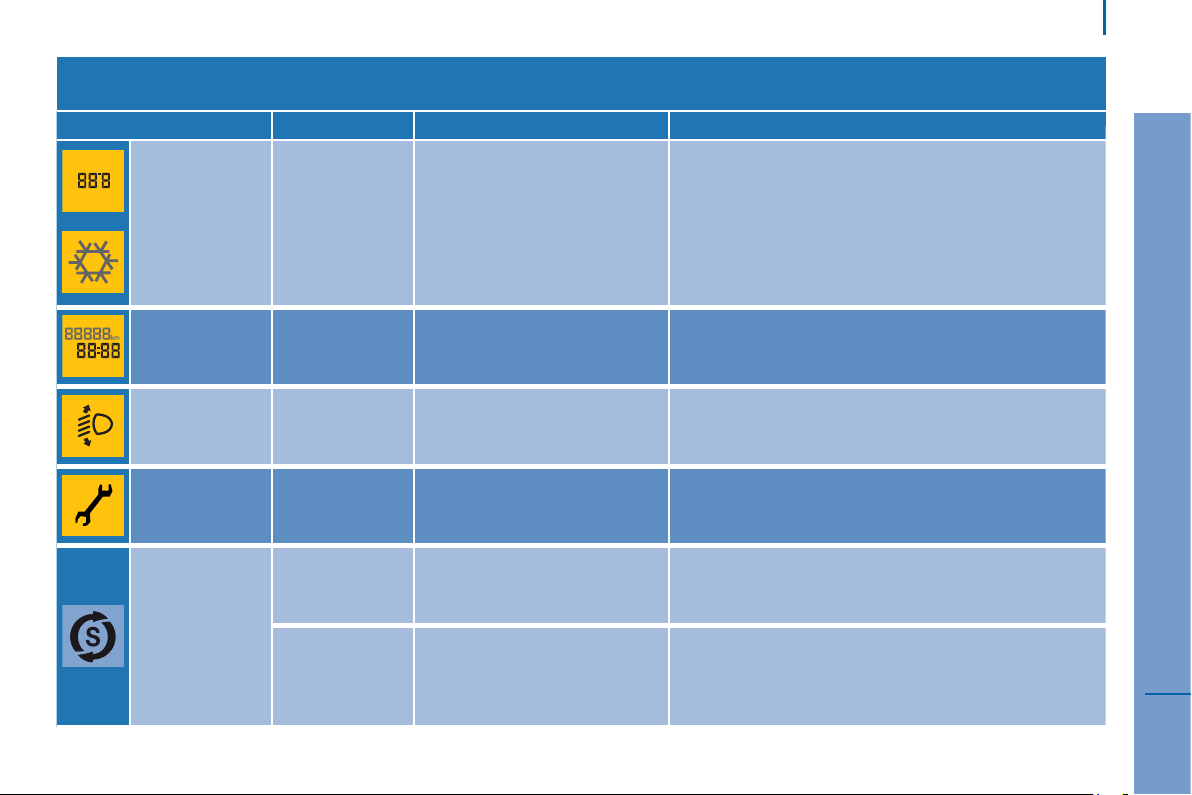
Screen displays indicates Solution - action
Temperature /
Ice
the ice warning,
the temperature
flashing
accompanied by
a message on
the screen.
weather conditions which could
result in ice on the road.
Be particularly vigilant and do not brake sharply. Refer
to the "Driving Safely" section of chapter 5".
Date 11:00:00
a setting: Date.
Time.
a configuration via the MODE
menu.
Refer to the "Mode" section of chapter 4.
Headlamp beam
height
a headlamp
height setting.
A position from 0 to 3
depending on the load carried
Adjust using the control on the dashboard. Refer to the
"Steering mounted controls" section of chapter 3.
Service spanner
a service
spanner which
remains on.
that a service will soon be due.
Refer to the list of checks in the servicing booklet. Have
the service carried out by a CITROËN dealer.
Stop & Start
on.
engine going into STOP mode
after the the vehicle stops.
As soon as you want to move off, the warning lamp
goes off and the engine restarts automatically in START
mode.
flashes for a few
seconds, then
goes off.
STOP mode temporarily
unavailable or automatic
operation of START mode.
Special cases for STOP mode and START mode.
See the corresponding sections.
38
Instruments and controls
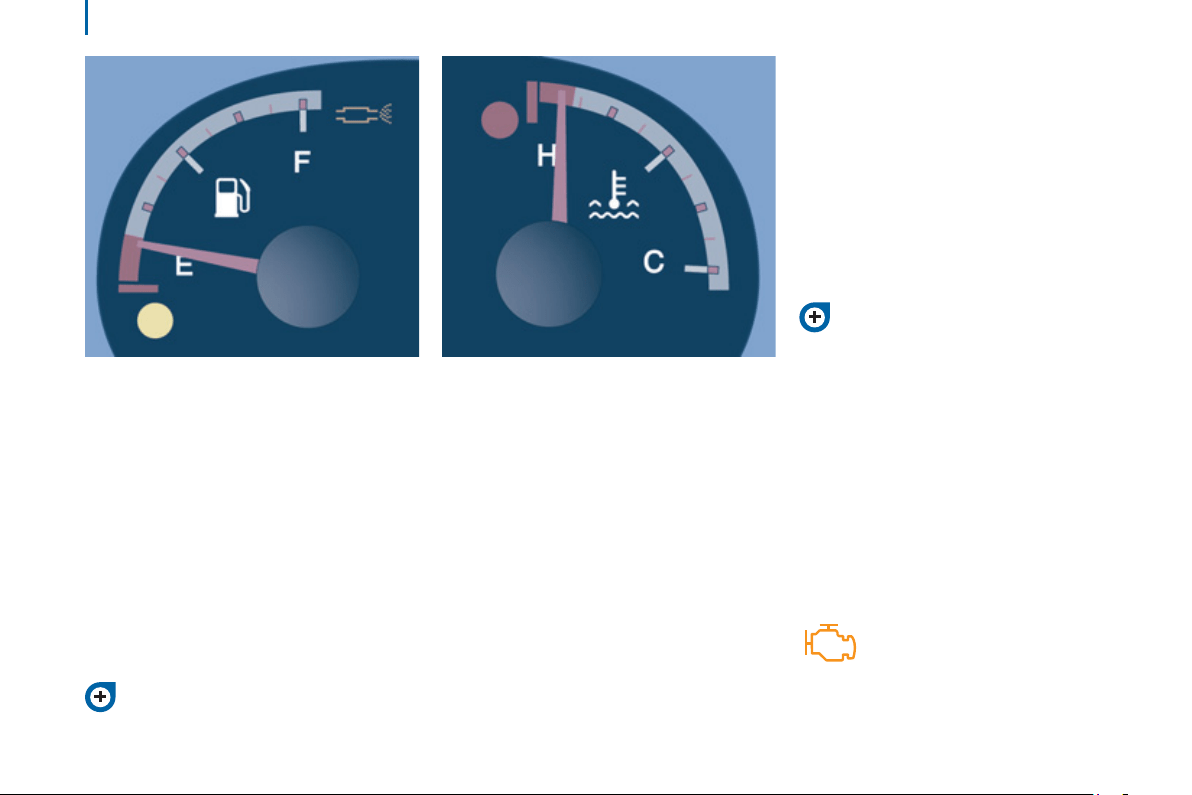
FUEL GAUGE
The fuel level is tested each time the key is
turned to the "running" position.
The gauge is positioned on:
- F (Full): the fuel tank is full,
approximately 90 litres.
- E (Empty): the reserve is now being
used, the warning lamp comes on
continuously.
The reserve when the warning first comes
on is approximately 11 litres.
Fuel tanks of different capacities (60 and
125 litres) are available as an option.
COOLANT TEMPERATURE
The needle is positioned between C
(Cold) and H (Hot): normal operation.
In arduous conditions of use or hot climatic
conditions, the needle may move close to
the red graduations.
- wait for the engine to cool down in
order to check the level and top it up if
necessary. Follow this advice:
the cooling system is pressurised. In
order to avoid any risk of scalding,
unscrew the cap by two turns to allow
the pressure to drop.
When the pressure has dropped, check the
level and remove the cap to top up.
If the needle remains in the red zone,
contact a CITROËN dealer.
Refer to the "Levels" section of
chapter 7.
Refer to the "Fuel" section of chapter 7.
What you should do if the needle enters
the red zone, or if the warning lamp
comes on:
- stop immediately, switch off the ignition.
The fan may continue to operate for a
certain time up to approximately
10 minutes.
EMISSION CONTROL
EOBD (European On Board Diagnosis) is
a diagnostics system which complies with,
among others, the standards concerning
authorised emissions of:
- CO (carbon monoxide),
- HC (unburnt hydrocarbons),
- NOx (nitrogen oxides) or particles,
detected by oxygen sensors placed
upstream and downstream of the
catalytic converters.
Therefore, the driver is warned of
any malfunction of this emission
control system by the lighting of
this specific warning lamp on the
instrument panel.
There is a risk of damage to the catalytic
converter. Have it checked by a CITROËN
dealer.
39
2
READY TO G
O
Instruments and controls
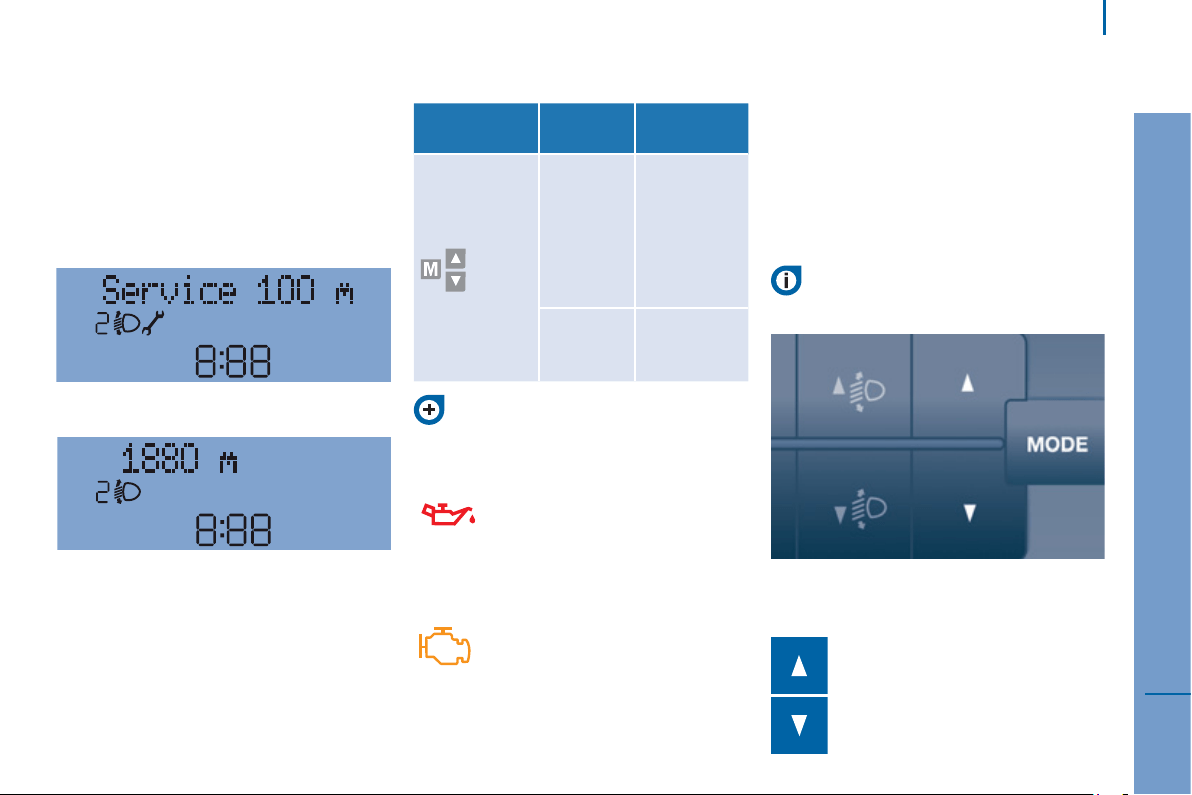
SERVICE INDICATOR
For a few seconds after the ignition is
switched on, the spanner symbolising the
service indicator comes on: the screen
informs you when the next service is due,
in accordance with the manufacturer's
servicing schedule indicated in the servicing
booklet. This information is determined in
relation to the distance travelled since the
previous service.
LIGHTING RHEOSTAT
The rheostat is active when the lighting
is on.
After a few seconds, the display returns to
its usual functions.
Use these controls to adjust the
brightness of the instrument panel.
There are 8 levels.
A long press returns you to the main menu.
Refer to "Mode" section of chapter 4.
Deterioration of the en
g
ine oil
The warning lamp fl ashing and,
if your vehicle has the function, a
message displayed at every engine
start: the system has detected
deterioration of the engine oil. Have
the oil changed as soon as possible.
Reminder of servicin
g
information
At any time, to access the service indicator,
press briefly on the MODE button.
Use the up/down arrows to see the
scheduling and engine oil wear information.
Pressing the MODE button again allows you
to return to the various display menus.
Menu... Choose...
Allows you
to...
12
Service
Service
(miles/km
before oil
change)
Display the
distance
remaining
before the
next oil
change.
Oil
Display the
oil level.
R
esett
i
n
g
to zero
The stopping of the permanent flashing of
the indicator is carried out by an repairer
equipped with a diagnostic tool.
Refer to the list of checks in the
servicing booklet which was given to
you on handover of the vehicle.
For 3.0 litre HDi engines, the engine speed
is restricted to 3 000 rpm, then 1 500 rpm
until the oil change is done. Have the engine
oil changed to avoid any risk of damage.
This 2 nd warning lamp, coupled with
the 1 st , comes on in the instrument
panel when the oil has not been
changed and the deterioration of the
oil has reached another threshold. To
avoid the risk of damage, have the oil
changed without waiting for this level.
4
0
Gearbox and steering wheel
MANUA
L
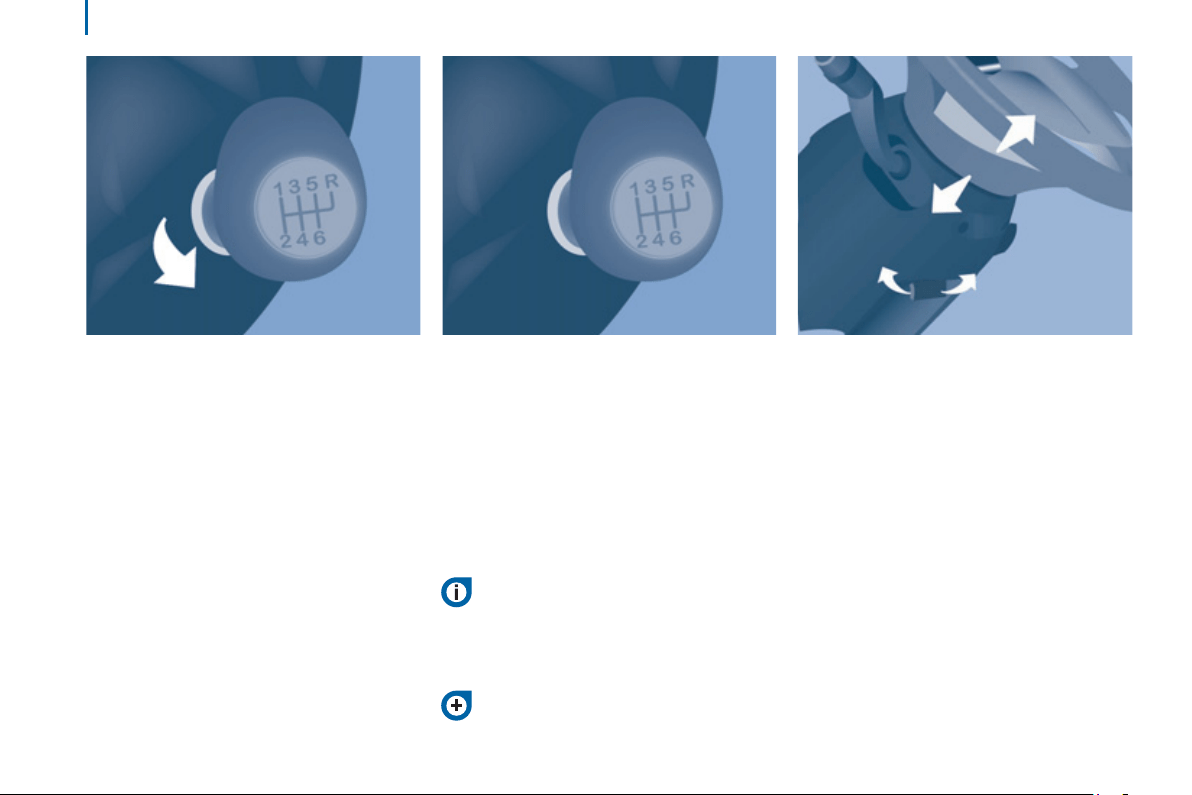
To change gear easily, always depress the
clutch pedal fully.
To prevent the mat from becoming caught
under the pedal:
- ensure that the mat is positioned
correctly,
- never fit one mat on top of another.
Avoid leaving your hand on the gear knob as
the force exerted, even if slight, may wear
the internal components of the gearbox over
time.
GEARBOX AND STEERING WHEEL STEERING WHEEL REACH
A
DJUSTMENT
With the vehicle stationary, first adjust your
seat to the most suitable position.
Unlock the steering wheel adjustment by
pulling the lever towards you.
Adjust the reach of the steering wheel, then
lock by lowering the lever fully.
As a safety precaution, these operations
must not be carried out while driving.
R
everse
g
ea
r
Raise the collar under the gear knob to
engage reverse gear.
Never engage reverse gear before the
vehicle is completely stationary.
The lever should be moved slowly to reduce
the noise on engaging reverse gear.
Your reversing manoeuvre is indicated by an
audible exterior warning.
If your vehicle is fitted with parking
sensors, the system comes into
operation when reverse gear is engaged and
an audible signal is heard.
Refer to the "Rear parking sensors"
section of chapter 4.
4
1
2
R
EADY TO G
O
Startin
g
and stoppin
g
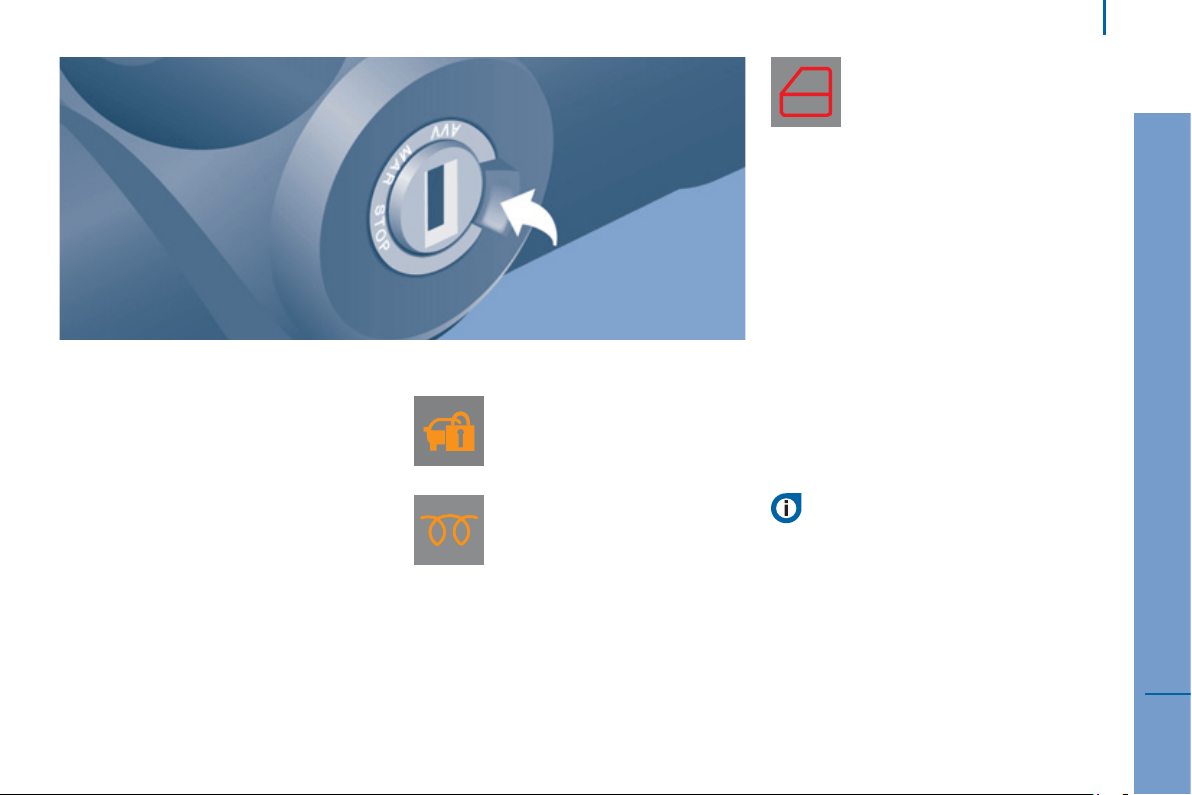
STARTING AND STOPPING
MAR position: running.
Certain accessories can be used.
AVV position: starter.
The starter is operated.
STOP position: steering lock.
The ignition is off.
Good practice when startin
g
Engine immobiliser warning lamp
If this comes on, use another key
and have the faulty key checked
by a CITROËN dealer.
Diesel pre-heating warning lamp
Turn the key to the MAR position.
In cold weather, wait for this
warning lamp to switch off then
operate the starter ( AVV position) until the
engine starts.
If the temperature is high enough, the
warning lamp comes on for less than one
second, you can start without waiting.
Door or bonnet open warning lamp
If this comes on, a door or the
bonnet is not closed correctly,
check!
Good practice when stoppin
g
Minimise engine and gearbox wear
When switching off the ignition, let the
engine to idle for a few seconds to allow the
turbocharger to slow down.
Do not press the accelerator when switching
off the ignition.
There is no need to engage a gear after
parking the vehicle.
In low temperatures
In mountainous and/or cold areas, it is
advisable to use a "winter" type fuel suited
to low or minus temperatures.
42
Startin
g
and stoppin
g
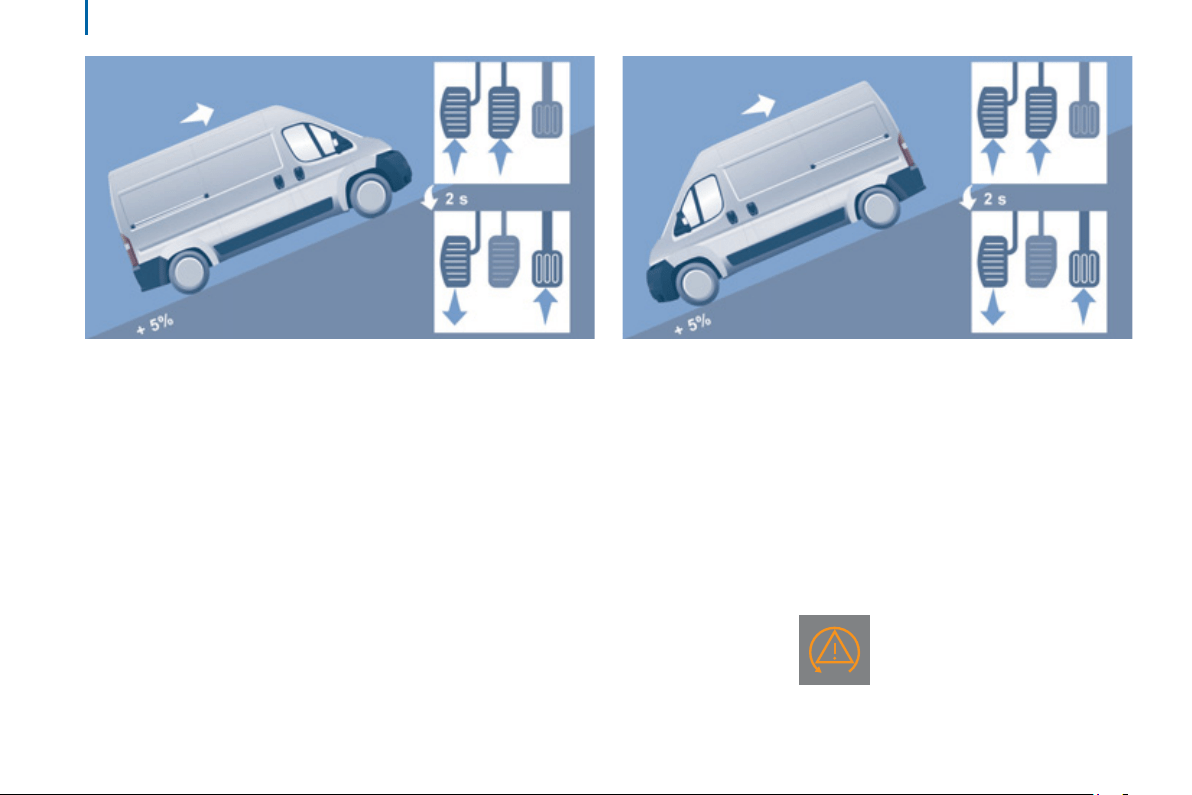
HILL START ASSIST
This function, linked with the ESP, makes hill
starts easier and is activated in the following
conditions:
- the vehicle must be stationary, engine
running, foot on the brake,
- the gradient of the road must be steeper
than 5%,
- uphill, the gearbox must be in neutral or
in a gear other than reverse,
- downhill, reverse gear must be engaged.
The HHC (Hill Holder Control) or Hill Start
Assist function is a driving comfort system. It
is not an automatic vehicle parking function
or an automatic parking brake.
O
p
eration
With the brake pedal and clutch pedal
pressed, from the time you release the brake
pedal you have approximately 2 seconds
before the vehicle starts to roll back and
without using the parking brake within which
to move off.
During the moving off phase, the function
is deactivated automatically, gradually
releasing the braking pressure. During
this phase, the characteristic noise of
mechanical release of the brakes may be
heard, indicating the imminent movement of
the vehicle.
Operatin
g
fault
If a malfunction of the system
occurs, this warning lamp comes
on accompanied by an audible
signal and confirmed by a
message in the screen. Contact a
CITROËN dealer or a qualified workshop to
have the system checked.
Hill start assist is deactivated in the following
situations:
- when the clutch pedal is released,
- when the parking brake is applied,
- when the engine is switched off,
- when the engine stalls.
4
3
2
R
EADY TO G
O
Startin
g
and stoppin
g
The Stop & Start system puts the engine
temporarily into standby - STOP mode -
during stops in the traffic (red lights, traffic
jams, or other...). The engine restarts
automatically - START mode - as soon as
you want to move off. The restart takes
place instantly, quickly and silently.
Perfect for urban use, the Stop & Start
system reduces fuel consumption and
exhaust emissions and offers the comfort of
complete silence when stationary.
STOP & START
O
p
eration
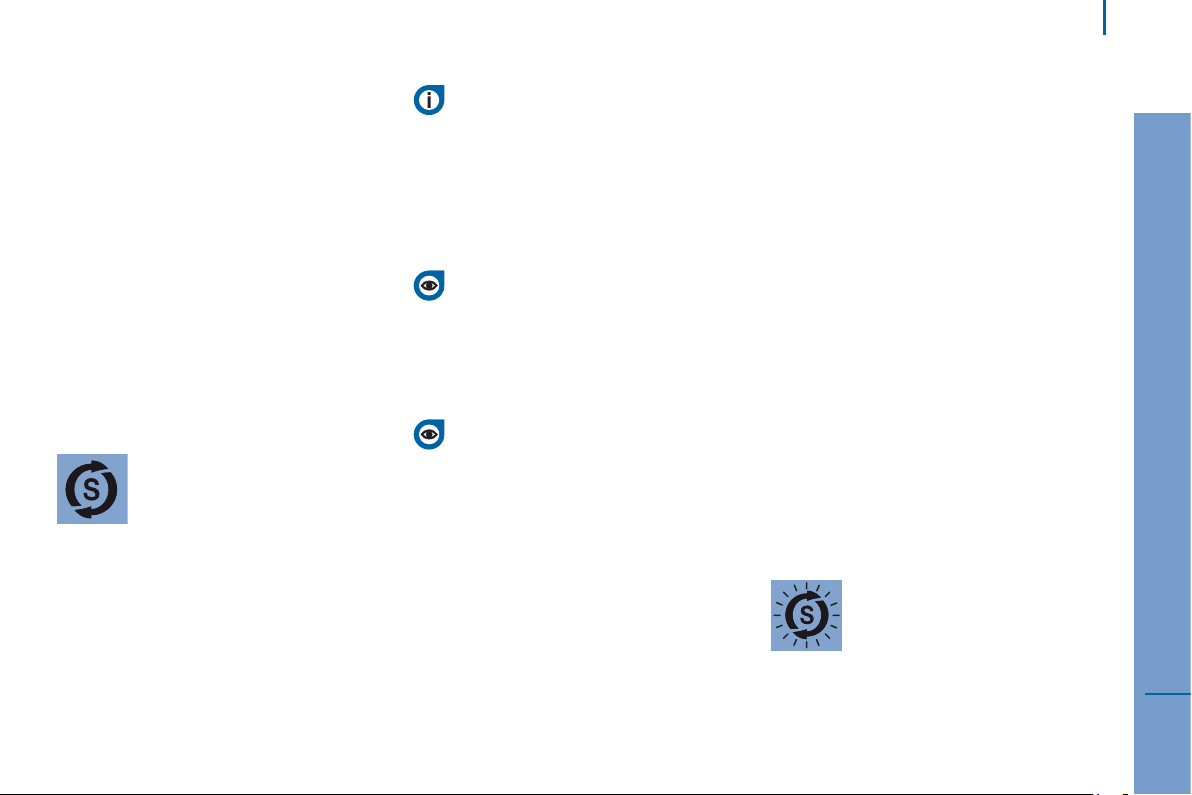
Going into engine STOP mode
- The "S" warning lamp
comes on in the instrument
panel and the engine goes
into standby. With the vehicle
stationary, put the gear lever
into neutral, then release the
clutch pedal.
Automatic stopping of the engine is
only possible after the vehicle has
exceed a speed of about 6 mph (10 km/h),
to avoid repeated stopping of the engine
when driving slowly.
Never leave your vehicle with out first
turning off the ignition with the key.
Never refuel with the engine in STOP
mode; you must switch off the ignition
with the key.
Special cases: STOP mode
unavailable
The STOP mode is not invoked when:
- the system is initialising,
- the driver's door is open,
- the driver's seat belt is not fastened,
- the air conditioning is running,
- the heated rear screen is on,
- the windscreen wiper is on fast wipe,
- reverse gear is engaged, for a parking
manoeuvre,
- some special conditions (battery
charge, engine temperature, particle
filter regeneration, braking assistance,
ambient temperature...) where the
engine is needed to assure control of a
system.
The "S" warning lamp flashes for
a few seconds, then goes off.
44
Startin
g
and stoppin
g
Going into engine START mode
- The "S" warning lamp goes
off and the engine restarts.
If following an automatic restart in START
mode, the driver takes no action on the
the vehicle during the next 3 minutes, the
system stops the engine definitively. The
engine can then only be restarted using the
key.
Special cases: START invoked
automatically
The START mode is invoked automatically
when:
- the vehicle's is free wheeling on a slope,
- the windscreen wiper is on fast wipe,
- the air conditioning is running,
- the engine has been stopped for around
3 minutes with Stop & Start,
- some special conditions (battery charge,
engine temperature, braking assistance,
ambient temperature...) where the
engine is needed to assure control of a
system.
In this case, a message appears
in the instrument panel screen,
accompanied by the "S" warning
lamp, which flashes for a few
seconds, then goes off.
Good
p
ractice
With a manual gearbox in STOP mode, if a
gear is engaged without fully depressing the
clutch pedal, restarting may not take place.
A warning lamp or message is displayed
in the instrument panel asking you to fully
depress the clutch pedal to allow restarting.
With the engine stopped in STOP mode,
if the driver unfasten's their seat belt and
opens a front door, the engine can only be
restarted using the ignition key. There is an
audible signal, accompanied by flashing of
the "S" warning lamp and, depending on
equipment, a message is displayed.
This operation is perfectly normal.
With the vehicle in gear, automatic engine
restarting is only allowed by fully depressing
the clutch pedal.
45
2
R
EADY TO G
O
Startin
g
and stoppin
g
Deactivation
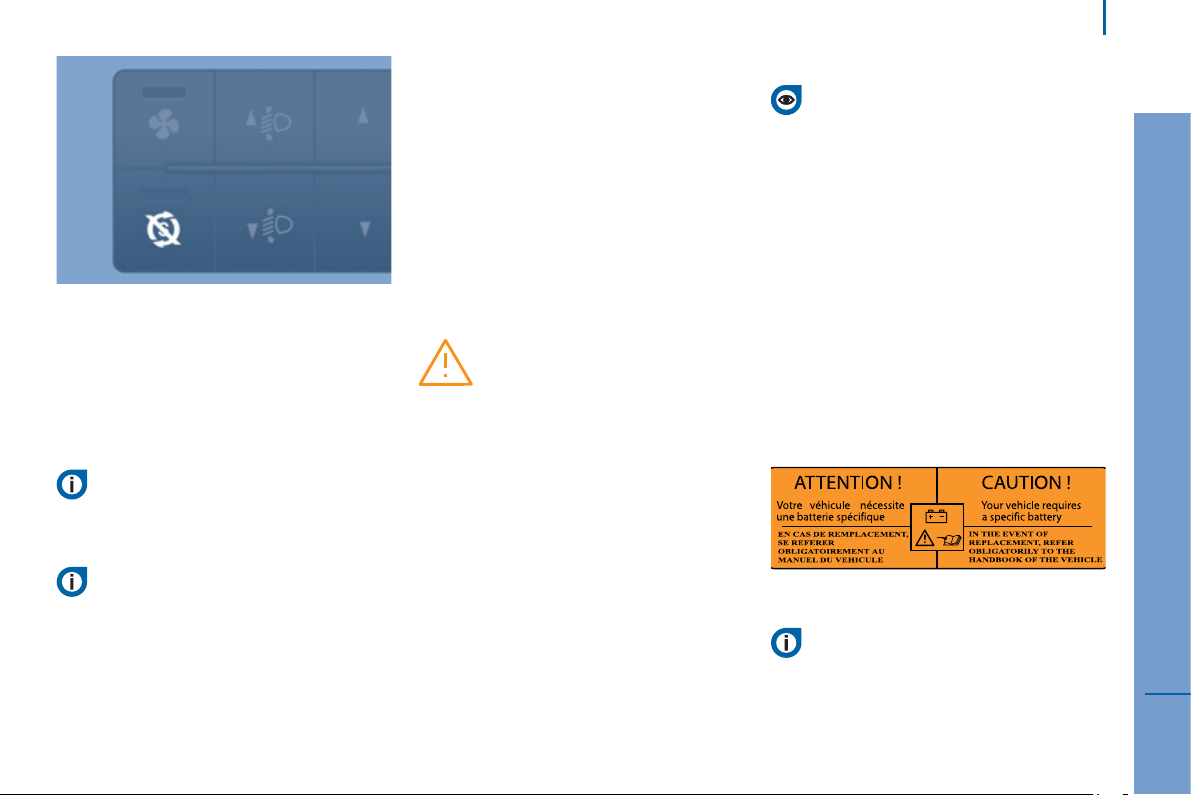
At any time, press the "S - OFF" switch to
deactivate the system.
Illumination of the switch warning lamp, accompanied
by a message in the instrument panel screen,
confi rms the the instruction has been registered.
If the system has been deactivated
in STOP mode, the engine restarts
immediately.
It is necessary to deactivate the Stop &
Start system if you want to allow
continuous operation of the air conditioning.
The switch warning lamp stays on.
R
eact
i
vat
i
on
Press the "S - OFF" switch again.
The system is active again; the switch
warning lamp going off and a message
in the instrument panel screen confirm
reactivation.
Operatin
g
fault
In the event of a fault with
the system, the Stop & Start
system is deactivated and the
service warning lamp comes
on, accompanied by a message in the
instrument panel screen .
Have it checked by a CITROËN dealer or a
qualified workshop.
In the event of an operating fault with STOP
mode, it is possible to restart the engine by
depressing the clutch pedal fully and putting
the gear lever into neutral.
M
a
i
ntenance
Before working under the bonnet, you
must switch off the ignition with the
key to avoid any risk of injury resulting from
automatic operation of START mode.
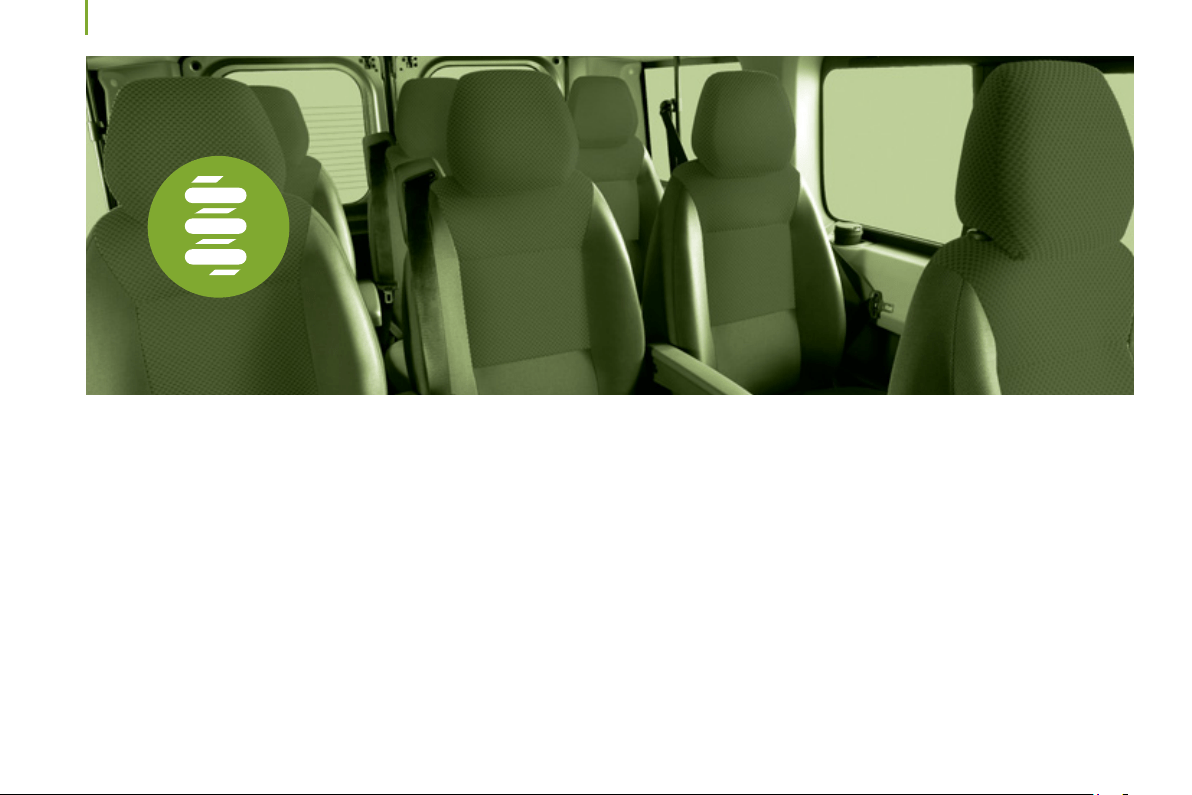
This system requires a specific battery
with a special specification and technology
(reference numbers available from a
CITROËN dealer or a qualified workshop).
Fitting a battery not listed by
CITROËN introduces the risk of malfunction
of the system.
Refer to part 8 in the "Battery" section.
The Stop & Start system makes use
of advanced technology. Specialist
knowledge is needed for any work on the
system, which can only be assured by
CITROËN dealers.
4
6
Improved comfort
SOUNDPROOFING
Your vehicle benefits from a suspension
which contributes to improving general
comfort.
These developments also contribute to
reducing noise disturbance.
IMPROVED COMFORT
TREATMENT OF THE BODYWORK
L
EADING TO ACOUSTIC COMFORT
The underseal under the body, on the body
sills and on the wheel arches considerably
reduces noise and protects the body from
external attack.
47
3
E
ASE OF USE
a
nd COMFOR
T
Steerin
g
mounted controls
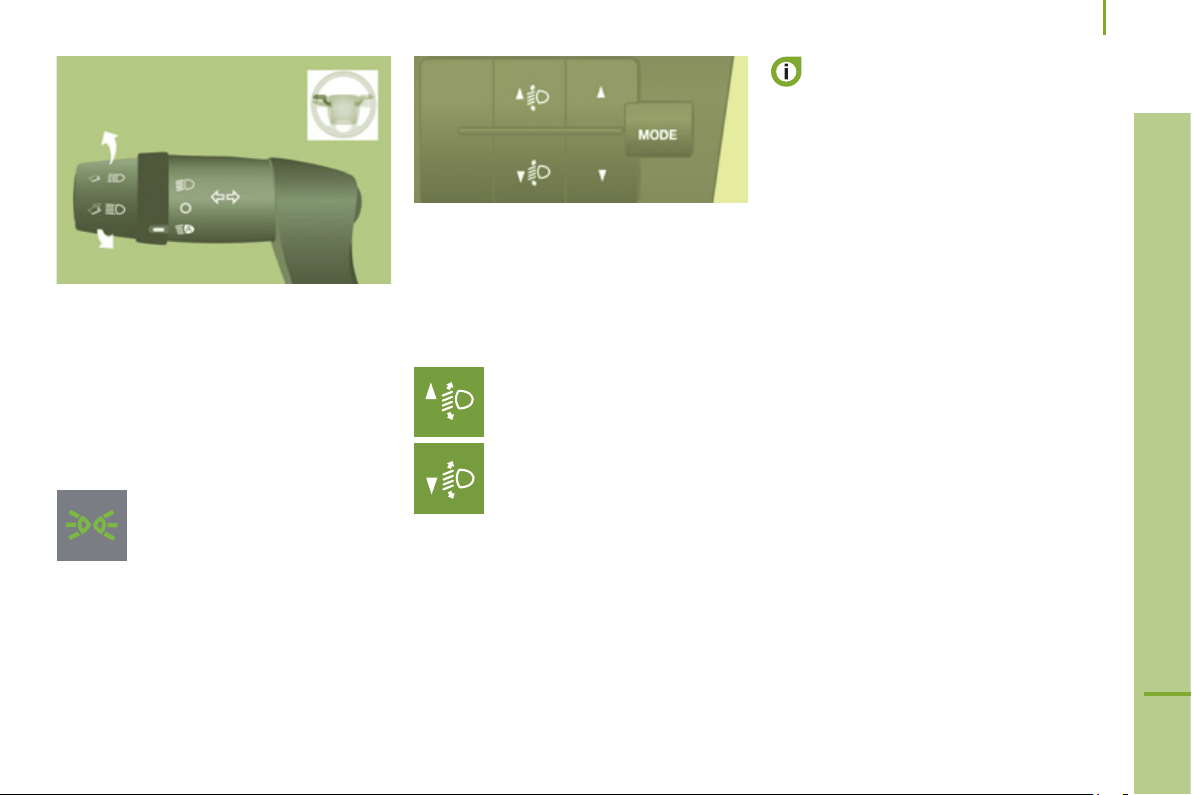
LIGHTING CONTROL STALK
Selection is by rotation of the white mark on
the ring.
Direction indicators
(g
reen flashin
g)
Left: downwards.
Right: upwards.
S
TEERING MOUNTED CONTROL
S
Sidelam
p
s on
Di
pp
ed/main beam
h
ea
dl
amps on
Switchin
g
between dipped and main
b
eam
Pull the control stalk fully towards you.
Headlam
p
flash
Pull the control stalk towards you,
regardless of the position of the ring.
Front fo
g
lamps
Rear fo
g
lamps
If your vehicle is fitted with foglamps, these
operate with the dipped or main beam
headlamps.
Press one of these controls to switch on the
lamps.
The foglamps should only be used in
fog or when snow is falling.
In clear weather or in rain, both day and
night, rear foglamps dazzle and their use is
prohibited.
Do not forget to switch them off when they
are no longer necessary.
"Motorwa
y
" function
Pull the lever towards the steering wheel
with a press, without passing the point
of resistance of the lighting stalk; the
corresponding direction indicators will flash
five times.
4
8
Steerin
g
mounted controls
AUTOMATIC ILLUMINATION OF HEADLAMPS
Activation
Turn the ring to this position.
The lamps are switched off
automatically when the ignition is
switched off.
Do not cover the sunshine sensor at
the top centre of the windscreen.
GUIDE-ME-HOME LIGHTING
Ignition off or key in the STOP position.
Within 2 minutes after switching off the
engine, position the ignition key in the STOP
position or remove it.
Pull the lighting stalk towards the steering
wheel.
The indicator lamp comes on in
the instrument panel.
Each action on the lighting stalk,
pulled towards the steering
wheel, prolongs the guide me home
lighting by 30 seconds up to approximately
3 minutes. When this time has elapsed, the
lamps are switched off automatically.
Deactivate this control by keeping the stalk
pulled towards the steering wheel for more
than 2 seconds.
If your vehicle is fitted with this function:
when you leave your vehicle, the dipped
beam headlamps remain on for the selected
duration (when leaving a car park for
example).
To set the sensitivity of the sensor,
refer to "Mode" in chapter 4 .
If your vehicle is fitted with this function, the
dipped beam headlamps are switched on
automatically if the light is poor.
In fog or snow, the sunshine sensor may
detect sufficient light. Therefore, the lamps
will not be switched on automatically. If
necessary, you must switch on the dipped
beam headlamps manually.
They are switched off when the light returns
to a sufficient level.
4
9
3
E
ASE OF USE
a
nd COMFOR
T
Steerin
g
mounted controls
HEAD
L
AMP
BEAM
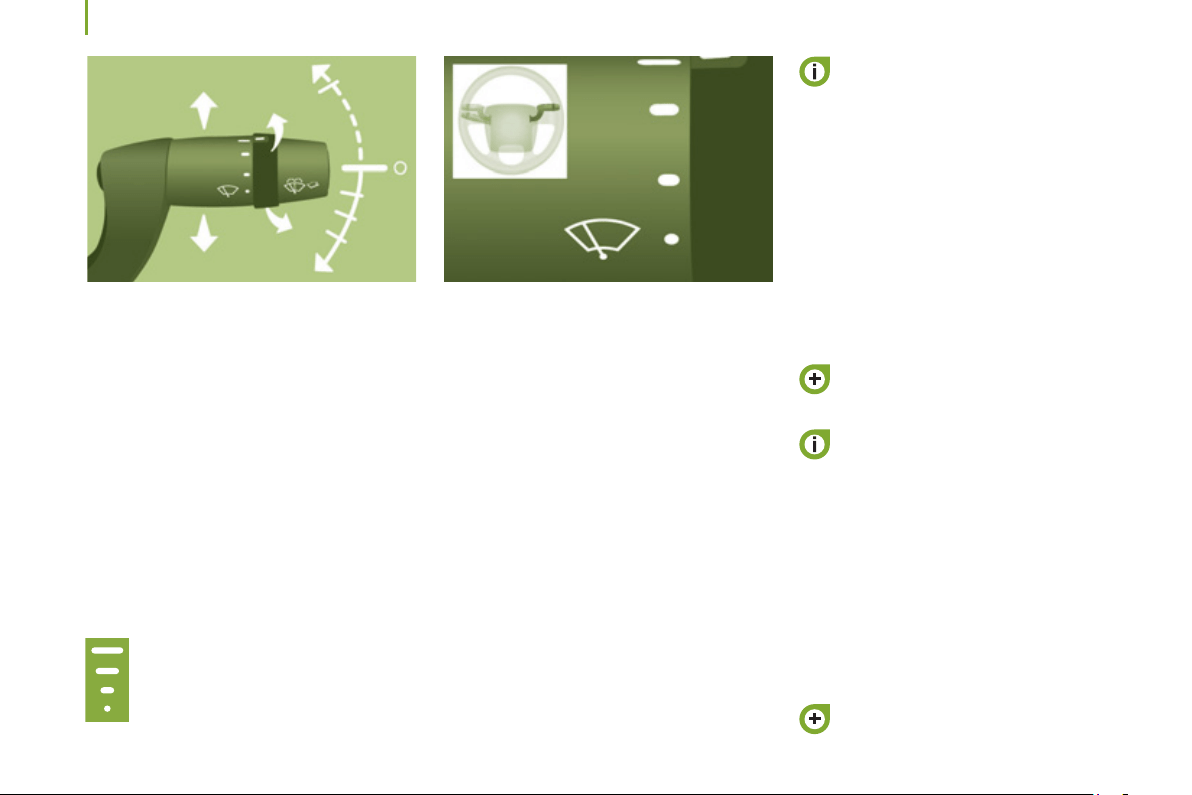
You are advised to adjust the height of the
headlamp beams in accordance with the
load in your vehicle.
This function works in the dipped and main
beam headlamps position.
Press these controls, located
on the dashboard, several times
in succession to adjust the
headlamps.
An indicator lamp on the screen
indicates the adjustment position
selected (0, 1, 2, 3).
PARKING LAMPS
This system enables you to leave the lamps
on when parked; with the ignition off, key in
the STOP position or key removed.
Move the ring on the lighting stalk to position
O then to dipped or main beam headlamps.
The warning lamp on the
instrument panel comes on.
The lamps will remain on while
you are parked.
Leaving the lighting on for long periods may
significantly reduce the state of charge of
your vehicle's battery.
Travelling abroad
If using your vehicle in a country
that drives on the other side of the road,
the headlamps must be adjusted to avoid
dazzling on-coming drivers.
Contact a CITROËN dealer or a qualified
workshop.
50
Steerin
g
mounted controls
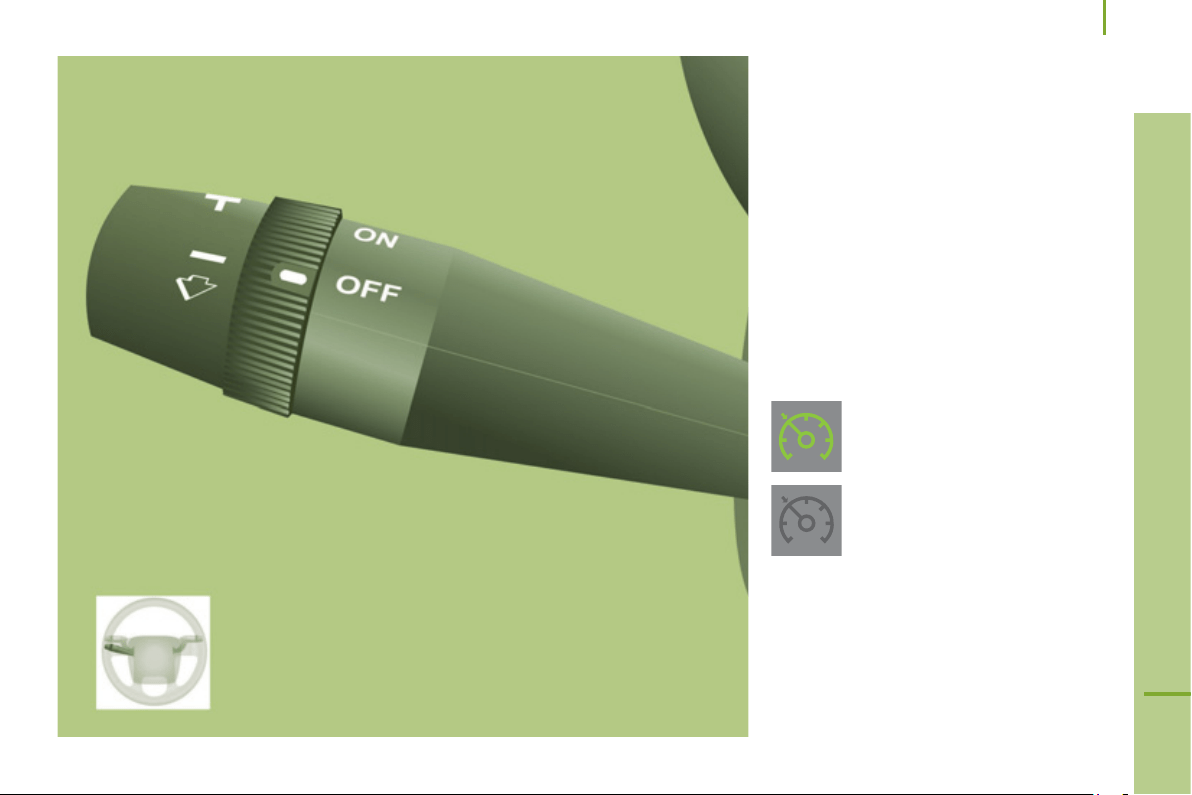
WIPER STALK
Slow continuous wiping: 2 notches downwards.
Do not cover the rain sensor, located at
the top centre of the windscreen.
When washing the vehicle, switch off the
ignition or deactivate the automatic rain
sensitive wipers.
Screenwash and headlam
p
wash
Pull the stalk towards you, the wash-wipe
is accompanied by a timed operation the
wipers.
The headlamp wash is linked with the
screenwash, it is triggered if the dipped
beam headlamps are on.
Wi
n
d
screen w
i
pers
Wiping is only active when the ignition key is
in the RUNNING position.
The stalk has five different positions:
Wipers off.
Intermittent wiping:
1 notch downwards.
In this position, four speeds
can be selected by turning the ring:
- very slow intermittent,
- slow intermittent,
- intermittent,
- fast intermittent.
A
utomatic rain sensitive windscreen
wi
p
ers
If your vehicle is fitted with this system, the
wiping speed is adapted automatically to the
intensity of the rainfall.
Automatic wiping: 1 notch downwards. This is
confi rmed by one wipe. Must be reactivated
each time the ignition is switched on.
In this position, the sensitivity of the rain
sensor can be increased by turning the ring.
Good
p
ractice
Check that the windscreen wiper blades can
operate freely when using the wipers in icy
weather.
Use the step in the front bumper, to remove
any accumulation of snow at the base of the
windscreen and on the blades.
To change the blades, refer to the
"Changing a wiper blade" section of
chapter 8.
To top up the levels, refer to the
"Levels" section of chapter 7.
Fast continuous wiping: 3 notches
downwards.
Single wipe, pull the control towards the
steering wheel.
With Stop & Start, when the wiper
control stalk is in the fast wipe position,
the STOP mode is not available.
51
3
E
ASE OF USE
a
nd COMFOR
T
Steerin
g
mounted controls
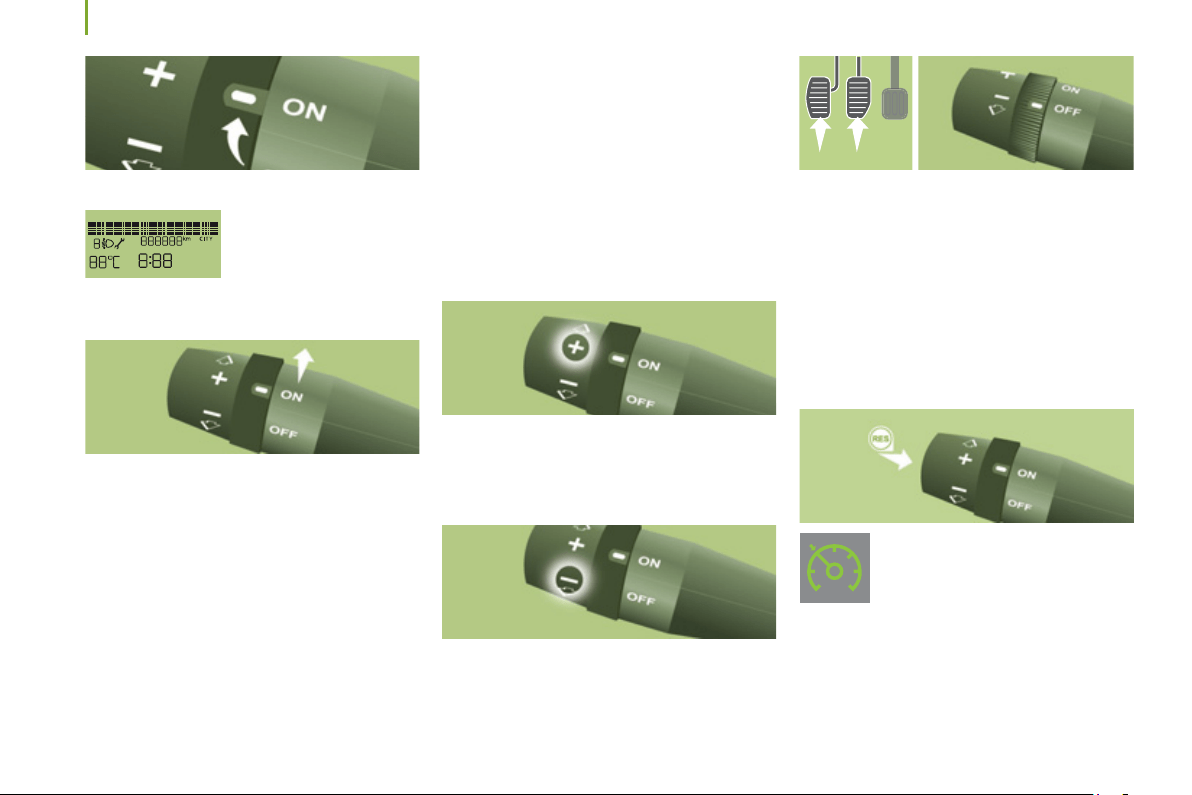
CRUISE CONTROL
"This is the speed at which the driver wishes to
travel".
This aid to driving in free-fl owing traffi c conditions
enables the vehicle to maintain a constant
speed programmed by the driver, except when a
considerable load is carried on a steep gradient.
In order to be programmed or activated,
the vehicle speed must be greater than
approximately 25 mph (40 km/h), with at least
4th gear engaged.
Function selected.
Function deactivated.
If your vehicle is fitted with cruise control,
this is displayed on the instrument panel by
an indicator located in the rev counter.
52
Steerin
g
mounted controls
Selectin
g
the function - ON
When the selection is set
to ON , this switches the
function on.
If your vehicle is fi tted with
this screen, a message confi rms the action.
P
ro
g
ramm
i
n
g
a spee
d
Accelerate to the required speed, with 4th or
5th gear engaged.
Move the control upwards (+), for
approximately one second, to store this
speed.
Release the pressure on the accelerator
pedal, the vehicle will maintain this speed.
Switchin
g
off / deactivatin
g
the
function
Press the brake or clutch pedal or place
the dial in the OFF position, the indicator is
switched off.
If the ESP or ASR comes into operation,
the cruise control function is deactivated
temporarily.
- increase the speed in steps, by means
of brief presses, or continuously by
pressing and holding the control
upwards (+ sign),
T
emporar
ily
excee
di
n
g
t
h
e
p
ro
g
ramme
d
spee
d
When the cruise control is active, it is still
possible to exceed the programmed speed
by pressing the accelerator pedal
(to overtake another vehicle for example).
- decrease the speed continuously
by pressing and holding the control
downwards (- sign).
Restore - RE
S
To restore the vehicle's
programmed speed (for example
after pressing the brake or clutch
pedal), gradually return to the chosen speed
and press RES .
The indicator comes on, the cruise control
function is restored.
Chan
g
in
g
the pro
g
rammed speed while
t
h
e cru
i
se contro
l
i
s
i
n operat
i
on
You can:

53
3
E
ASE OF USE
a
nd COMFOR
T
Steerin
g
mounted controls
Good practice
When changing the programmed reference
speed by pressing and holding the control,
take care as the speed may increase or
decrease rapidly.
Do not use the cruise control on slippery
roads or in heavy traffic.
On a steep gradient, the cruise control will
not be able to prevent the vehicle from
exceeding the programmed speed.
The cruise control cannot, in any
circumstances, replace the need to comply
with speed limits nor can it replace the need
for vigilance and responsibility on the part
of driver.
It is advisable to leave your feet near the
pedals.
To prevent the mat from becoming caught
under the pedals:
- ensure that the mat is positioned
correctly,
- never fit one mat on top of another.
Cancellin
g
the pro
g
rammed
s
p
ee
d
When the vehicle stops, after the ignition is
switched off, the system no longer stores
any speed.
Operatin
g
fault
In the event of a malfunction, the function is
switched off and the indicator switches off.
Contact a CITROËN dealer to have the
system checked.
54
V
entilation
V
ENTILATION
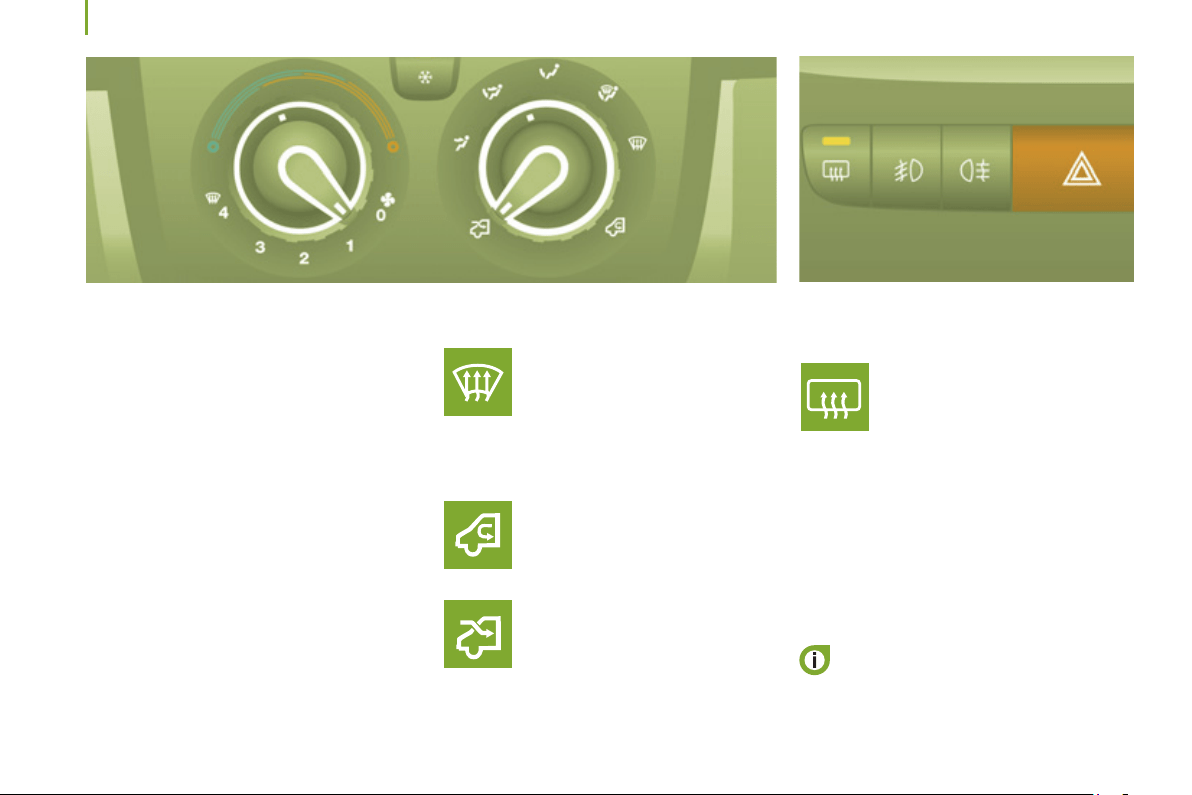
DEMISTING AND DEFROSTING
Manual mode
Direct the control to this air
distribution setting.
For faster and more effective
demisting and defrosting of
the windscreen:
Defrosting the rear screen
and mirrors
Only operates when the engine
is running. Pressing this button
activates the rapid demisting-
defrosting of the rear screen and
door mirrors.
This function switches off automatically to
prevent excessive energy consumption. It
stops when the engine is switched off but
resumes when the engine is started again.
Pressing this button switches the function off.
- increase the air flow setting,
- move the exterior air intake
control temporarily to air
recirculation.
Returning to the exterior air
intake position permits renewal
of the air in the passenger
compartment.
Windscreen and side windows
The ventilation outlets located at the base
of the windscreen and the side vents for the
side windows increase the effectiveness
of the demisting and defrosting. Do not
obstruct these air outlets.
The pollen filter continuously and effectively
filters dust.
Air recirculation (which can be activated by
the driver or the passenger) isolates the
passenger compartment from the exterior
atmosphere. However, this position should
only be used temporarily, normal use is to
drive with the control positioned with the
exterior air intake open.
With Stop & Start, when the heated
rear screen is switched on, the STOP
mode is not available.
55
3
E
ASE OF USE
a
nd COMFOR
T
V
entilation
CORRECT U
S
E OF THE AIR CONDITIONING
In order to be effective, the air conditioning
should only be used with the windows
closed. However, if the interior temperature
remains high after a prolonged period
parked in the sun, first ventilate the
passenger compartment for a few minutes.
For even air distribution, ensure that the
exterior air intake grille located at the base
of the windscreen is not obstructed and that
the side and central vents, the air outlets on
the floor and the air extractor at the rear are
open.
The air conditioning is useful in all seasons
as it eliminates condensation and air
humidity.
Operate the air conditioning system for
5 to 10 minutes, once or twice a month,
to keep it in good working order.
Have the filter elements (air filter and
passenger compartment filter) replaced
regularly. If you drive in a dusty environment,
have them replaced twice as often.
It is normal that the condensation created by
the air conditioning system results in a flow
of water which may form a puddle under the
vehicle when parked.
If the system does not produce cold air, do
not use it and contact a CITROËN dealer.
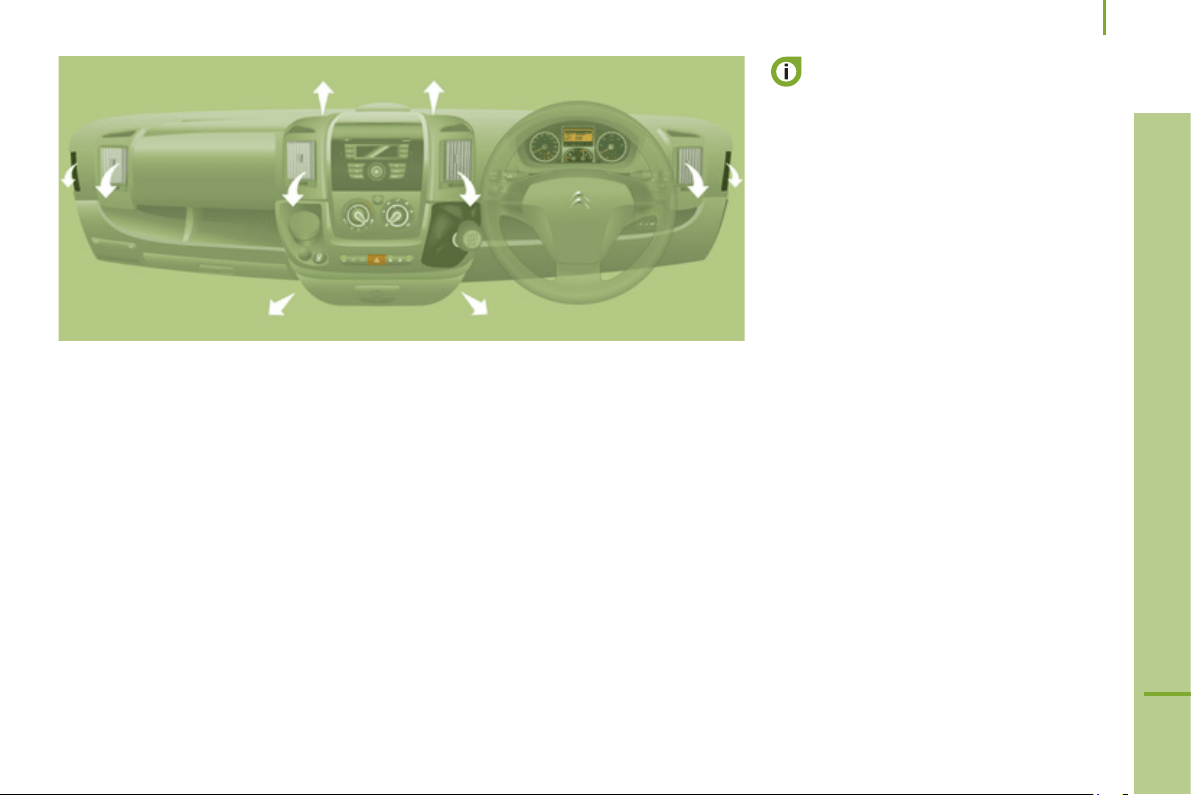
"Leave them open"
For optimum distribution and diffusion of hot
or cool air in the passenger compartment,
there are: 4 adjustable central vents, of
which 2 can be directed sideways (right or
left) towards the top of the body and
4 side vents which can be directed towards
the passengers. The air vents directed
towards the floor of the vehicle complete the
equipment.
V
ENTS
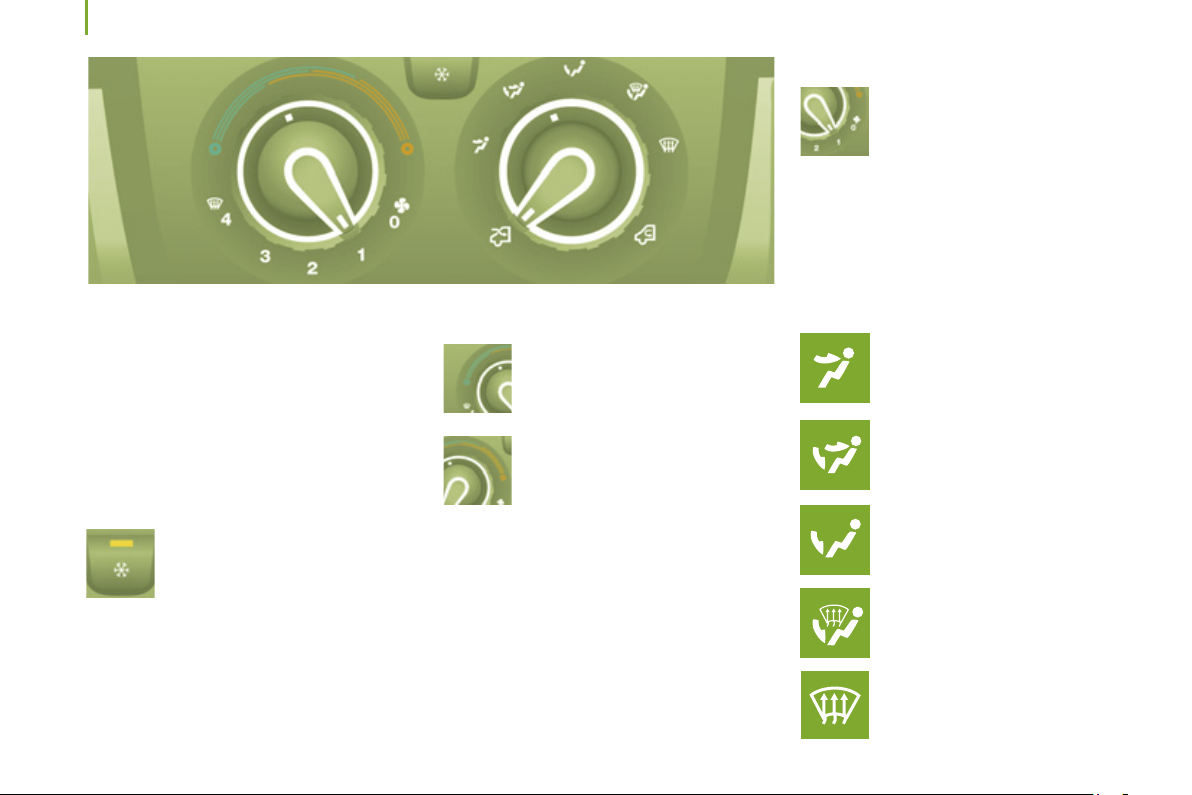
56
V
entilation
WITH MANUAL ADJUSTMENT
If your vehicle is fitted with these controls,
they are located on the dashboard on the
centre console control panel.
Temperature ad
j
ustment
Control positioned:
- in the blue zone provides cool air,
Air flow
The force of the blown air, from
the vents, varies from 1 to the
strongest 4. Remember to adjust
this control in order to reach the
ambient air comfort level. To switch off the
blower, place the control in position 0.
Air conditionin
g
The air conditioning mode can only operate
with the engine running.
The air blower must be set to at
least 1.
Pressing the button triggers the
operation of the air conditioning,
the LED is on. Pressing the button again
switches the function off and the LED is
switched off.
Air distribution
The air supply distribution is directed by the
control turned towards:
the side vents and the central
vents,
the side vents, the central vents
and the footwells,
the footwells,
the windscreen, the footwells and
the side windows,
the windscreen and the side
windows.
- in the red zone provides heating
of the interior ambient air.
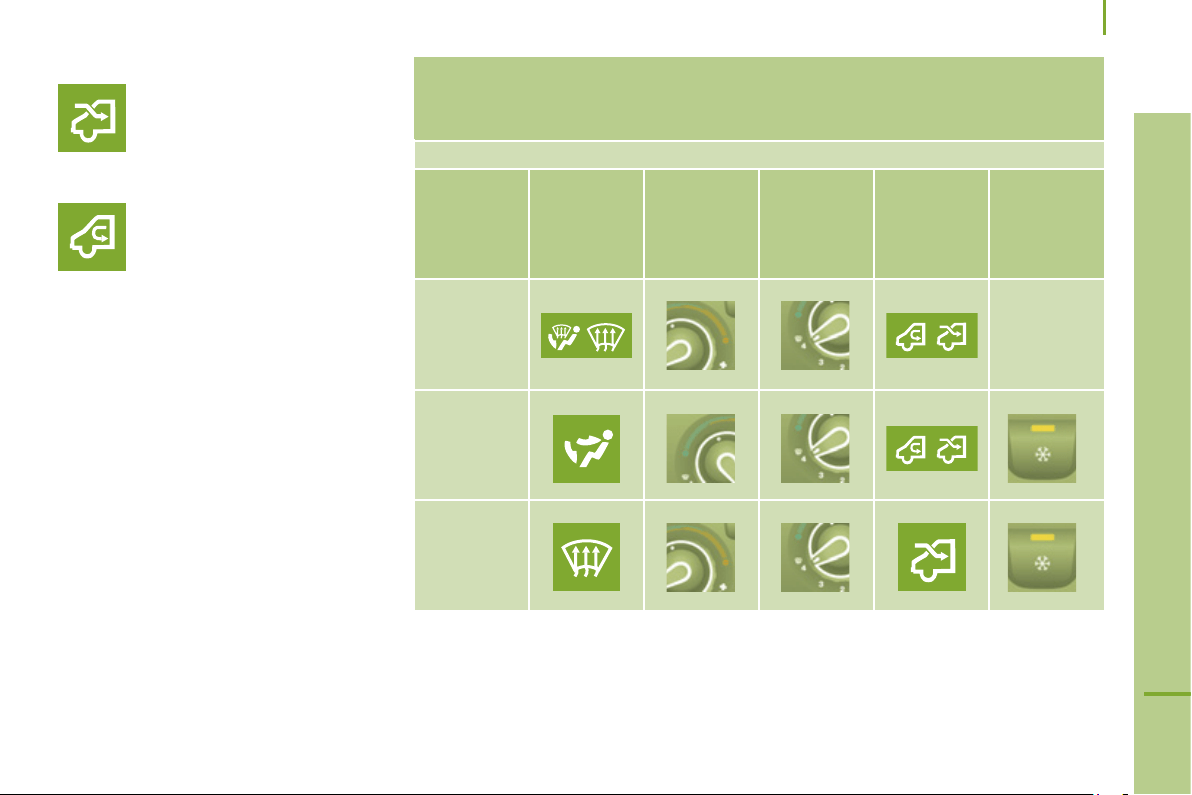
57
3
E
ASE OF USE
a
nd COMFOR
T
V
entilation
Intake of exterior air
Recommended settin
g
s for the air conditionin
g
For optimum operation of the system, the settings below are recommended:
Recirculation of interior air
This position should only be
temporary.
Used with the air conditioning
switched on and setting of the
force of blown air (from 1 to 4), recirculation
enables you to obtain the required ambient
air comfort level with both hot or cold
settings.
Recirculation temporarily prevents exterior
odours and smoke from entering the
passenger compartment.
If I require...
Air
distribution
Temperature Air flow
Air
recirculation
AC
Heating
-
Cooling
Demisting
Defrosting
When your ambient air comfort level has
been reached, return to the intake of exterior
air position to permit renewal of the air in the
passenger compartment and demisting. This
operating mode is preferable.
This is the preferred operating position.
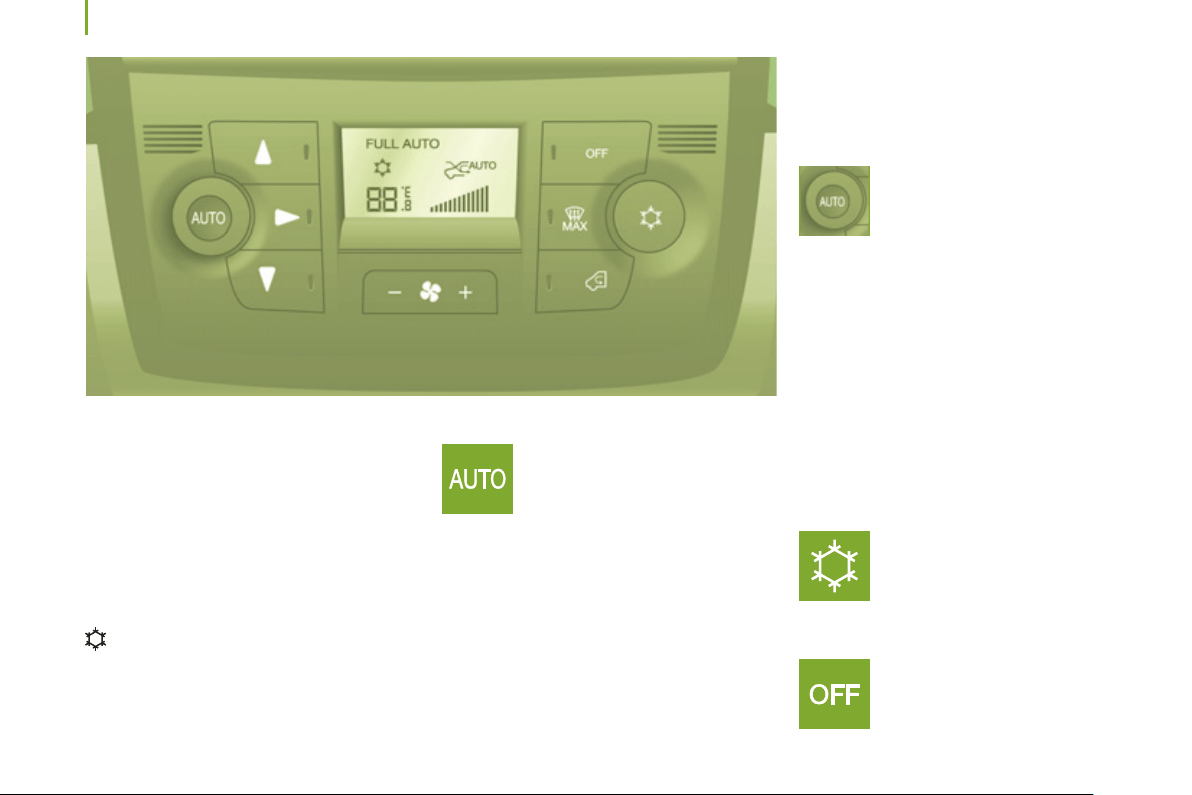
58
V
entilation
MONO-ZONE DIGITAL AIR
CONDITIONING
If your vehicle is fitted with this system, the
controls are located in the middle of the
dashboard. The system can be identified by
its control screen.
A
UTO mode
Switching on FULL AUTO
mode: pressing the AUTO
control switches on the system's
functions, confi rmed by the display
of FULL AUTO . This is the normal operating
mode for the digital air conditioning system.
Using the moving ring surrounding the AUTO
control, set the comfort temperature to be
reached according to a setting between:
- HI (High to ≈ 32) and,
- LO (Low to ≈ 16).
The system controls the distribution,
fl ow and intake of air to ensure comfort
equivalent to the setting displayed and
suffi cient recirculation of air in the passenger
compartment.
No further adjustments are required.
Control screen for your digital air conditioning
system.
When the engine is running and the air
conditioning is on, this symbol and the
message FULL AUTO are displayed.
The other components are displayed
according to the settings selected by the user.
AUTO mode with
p
ersonalisation
Switch on in AUTO mode, certain
settings can be modified: the
distribution, the air flow, the air
conditioning and the air intake/
recirculation.
The display changes from FULL AUTO to
AUTO .
To return to fully automatic operation, press
this button again. The display on the control
panel changes from AUTO to FULL AUTO .
If the system is not able to maintain
the setting selected following manual
adjustments, the setting flashes then AUTO
is cleared. Press the AUTO control to return
to the automatic settings.
Switchin
g
off the air conditionin
g
Pressing this control switches
off the air conditioning functions.
The snowflake is cleared from the
screen.
Complete switch-off
Pressing this control switches
the system off. The LED and the
screen switch off.
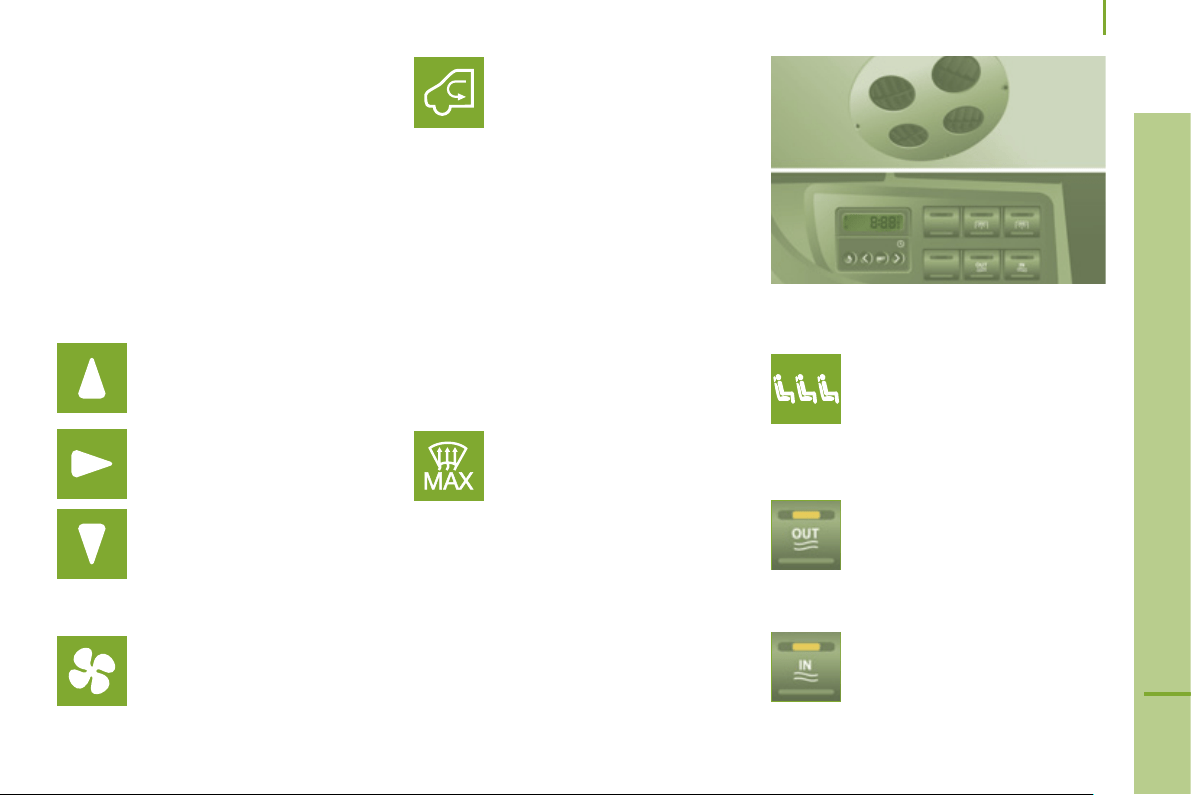
59
3
E
ASE OF USE
a
nd COMFOR
T
V
entilation
Comfort value ad
j
ustment rin
g
The settings range between:
- increasing the interior ambient air
temperature HI (High) which goes up to
to a maximum setting of 32,
- cooling the interior ambient air
temperature LO (Low) which goes down
to a setting of 16.
A
ir distribution
A press illuminates the LED on the buttons
which distribute the air flow towards:
the windscreen and front side
window vents (demisting/
defrosting the windows),
the central and side vents (chest
and face),
the vents in the front and rear
areas (feet).
The combination of buttons permits
improvement of air distribution.
A
ir flow
Successive presses of this button
increase (+) or reduce (-) the
force of the air flow to the interior.
Intake of exterior air/
recirculation of interior air
When the LED is on, the air
recirculates inside the passenger
compartment to prevent the entry of exterior
odours and smoke. This position should be
temporary.
When the ambient air comfort level has been
reached, pressing the button switches the
LED off and reopens the exterior air intake.
Pressing the AUTO button also restores
the intake of exterior air. Returning to this
position permits renewal of the air in the
passenger compartment and demisting.
Pressing the AUTO button again restores
the FULL AUTO function.
Rapid demistin
g
/defrostin
g
Pressing this control permits
rapid clearing of the windows.
The LED is on.
The system manages the air conditioning,
the flow and intake of air, the defrosting
of the rear screen and provides optimum
distribution of the air to the windscreen and
front side windows.
If your vehicle is fitted with additional
heating, switch it off to ensure rapid and
effective demisting/defrosting.
A
DDITIONAL REAR VENTILATION
The controls for this system,
additional to the standard cabin
ventilation system, are on the
lower dashboard, to the right of
the steering wheel.
Air outlet
A press on this control activates
the extraction of air to the
outside; the LED comes on.
Press again to switch off.
Air inlet
A press on this control activates
the entry of air into the cabin; the
LED comes on. Press again to
switch off.
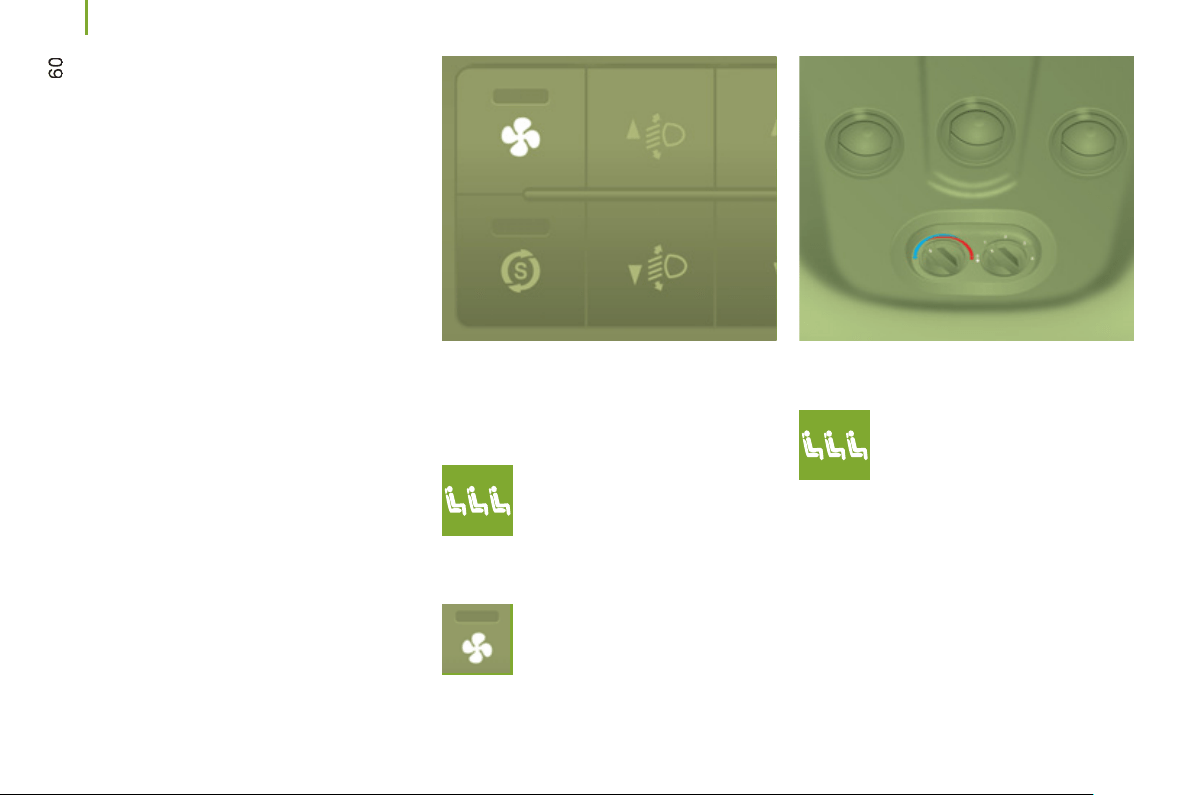
V
entilation
ADDITIONAL HEATING SYSTEMS
Supplementar
y
heatin
g
On the 2-3 seats version, this is located
under the seat on the driver's side with air
diffusion directed forwards.
REAR HEATING AND/OR AIR
CONDITIONING
If your vehicle is fitted with an
additional air conditioning unit,
located in the rear of the vehicle:
the distribution duct located in
the roof and the individual diffusion vents
provide a perfect diffusion of cold air.
The warm air diffused at the fl oor, from the
front air conditioning unit, is distributed at the
feet of the rear passengers of rows 2 and 3.
A warm air diffusion vent, located on the rear
left wheelarch, may complete the assembly
for the feet of the rear passengers of row 3.
Additional heatin
g
This is passenger compartment heating,
additional to the standard equipment.
It can operate independently of the engine.
Additional heater or pro
g
rammable
additional heatin
g
This is an additional, programmable and
separate system which heats the Diesel
engine hot coolant loop to make starting
easier.
It improves the demisting and defrosting
performance and that of the heated seats, if
fitted to the vehicle.
The passenger compartment heating is
brought up to temperature more rapidly.
This system must be programmed to start up
before you enter the vehicle.
On the 5-9 seats version, it is
located at the rear. Depending
on the model version, the air
diffusion is either direct from the
rear or comes from the rail located under
each of the two rows of seats.
Press this control to activate/
deactivate the heating. The LED
is on if the heating is activated.
When rapid demisting and
defrosting is required, switch off the control.
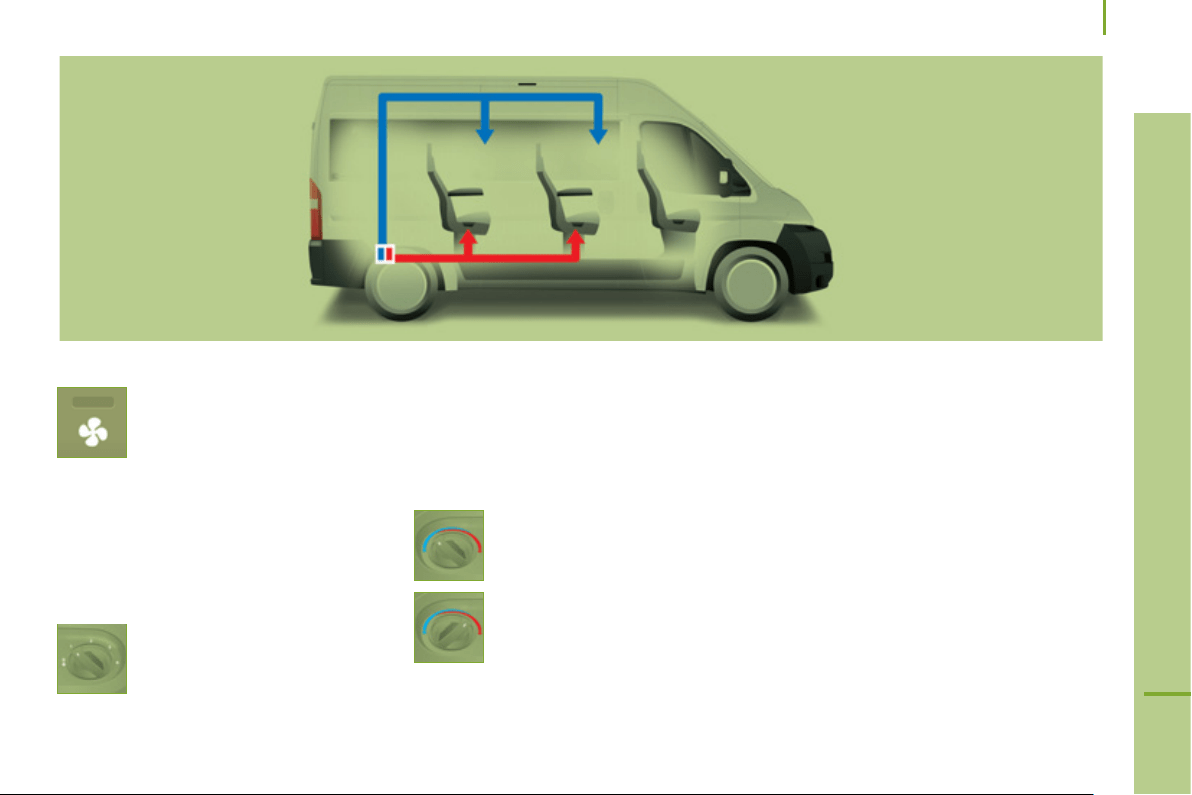
61
3
E
ASE OF USE
a
nd COMFOR
T
V
entilation
A
ctivation
/
Deactivation
This control, located on the
control panel at the right-hand
end of the dashboard, enables
you to activate/deactivate the
operation of the rear controls from the
driver's seat.
The first press activates (LED on).
A second press deactivates (LED off).
To deactivate the blower, place the control in
position 0.
However, a safety device will ventilate the
rear circuit automatically, even if the control
is in position 0, to prevent the formation of
condensation.
A
ir flow
The force of the blown air, via
the vents, varies from 1 to the
strongest 4.
To obtain a comfortable level of
ambient air, remember to adjust this control.
Comfort value ad
j
ustment
- on the blue, produces cool
air,
- on the red, produces
heating of the ambient air.
The OFF control on the "Mono-zone" central
control panel switches the function off.
Control positioned:
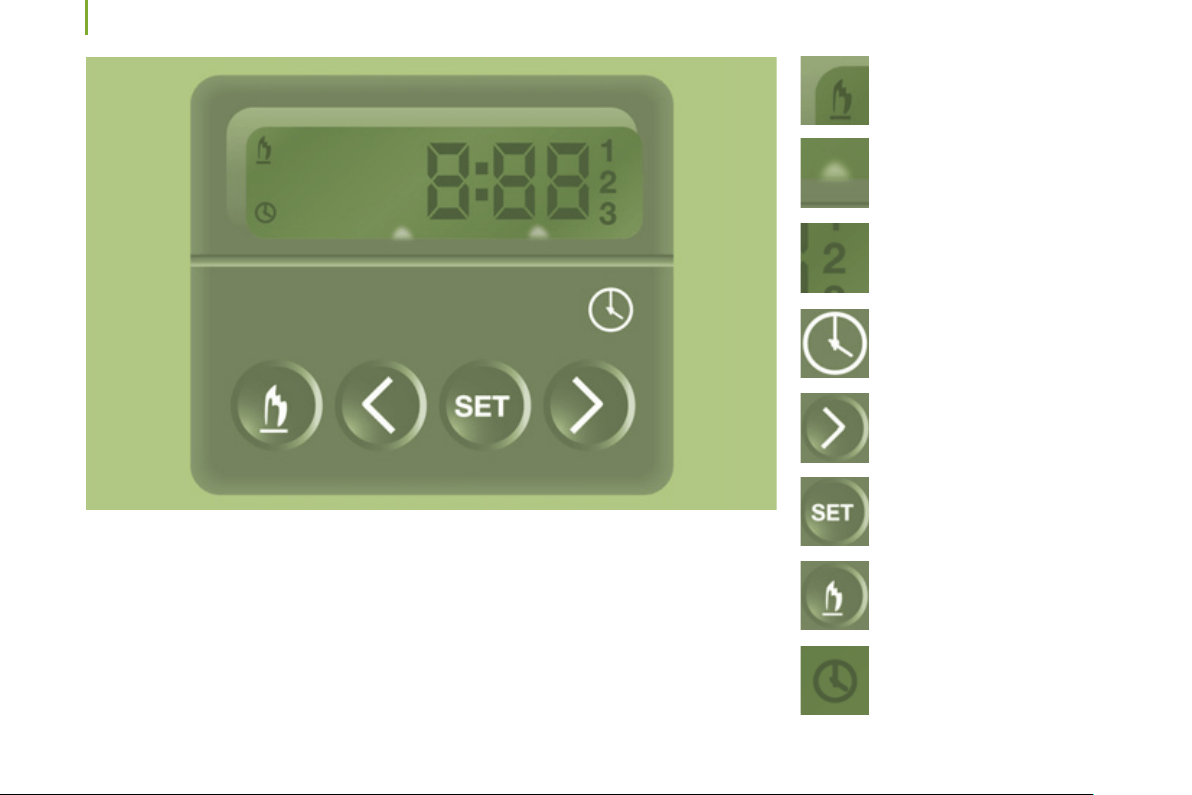
62
V
entilation
PROGRAMMABLE ADDITIONAL
HEATING
If your vehicle is fitted with separate
programmable heating: it gradually brings
the engine up to a good temperature to
facilitate starting.
An integrated clock permits programming of
its start time. The passenger compartment
will be heated more quickly.
Heating cycle indicator lamp
Digi
ta
l
pro
g
ramm
i
n
g
contro
l
The programmable heating system control
panel is located at the bottom right of the
dashboard.
Display on
Displaying the programme
number selected
Time display button
Time setting buttons
Selection of the stored
programme
Button for immediate switching
on of the heating
Time setting and reading
indicator lamp
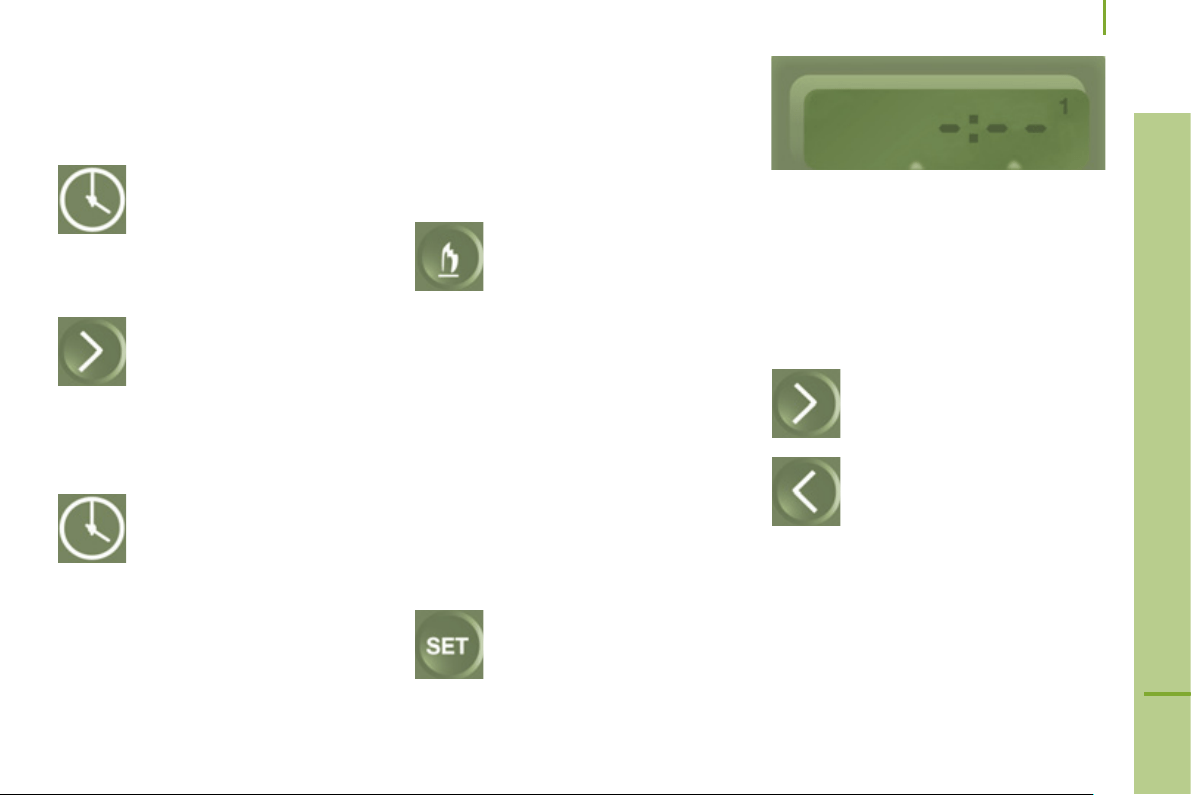
63
3
E
ASE OF USE
a
nd COMFOR
T
V
entilation
Settin
g
the time of the internal clock
Set the clock on the control panel before
programming the deferred switching on of
the heating.
Immediate switchin
g
on of the
h
eat
i
n
g
Before switching on the heating, check that:
- the temperature setting control is in the
"Hot air" position (red).
- the air fl ow setting control is in position 2.
This symbol or the previous stored time and
the number (e.g. 1) corresponding to the
recalled pre-selection are displayed for ten
seconds.
Note: if you wish to recall the other pre-
selected times, press the SET button several
times before the ten seconds have elapsed.
Press this button.
The screen and the associated
indicator lamp come on.
Within ten seconds, press these two setting
buttons until the correct time is displayed.
Press ">" to increase the hours or
"<" to decrease.
Press and hold the button for
more rapid scrolling of the digits.
Readin
g
the time
Press this button.
This indicator lamp comes
on, the time is displayed for
approximately ten seconds.
Press this button.
The screen and the heating
cycle indicator lamp come on
and remain on throughout the
duration of operation.
Switchin
g
on the deferred heatin
g
Switching on can be programmed between
one minute and twenty-four hours in
advance.
You can store up to three different start
times, but programme one deferred start
only.
Note : if you wish to start the heating at a
fixed time each day, simply reprogramme
the stored time each day.
Press this button, the screen
becomes brighter.
Within the ten seconds, press
these two setting buttons to
select the required start time.
Setting of the stored time is
confirmed by clearing of the start
time, display of the pre-selection
number (e.g. 1) and increased
brightness of the screen illumination.
V
entilation
Cancellin
g
the pro
g
rammin
g
Press this button briefly to clear
the programmed start time.
The screen illumination and the
pre-selection number (e.g. 1) are
switched off.
Good practice
To avoid any risk of poisoning or
asphyxiation, the additional heating must
not be used, even for short periods, in
an enclosed space such as a garage or
workshop which is not fitted with an exhaust
gas extraction system.
The additional heating is supplied by the
vehicle's fuel tank.
Ensure that the fuel gauge indicator lamp is
not at reserve.
Always switch off the additional heating
when filling with fuel to avoid any risk of fire
or explosion.
Do not park the vehicle on an inflammable
surface (dry grass, dead leaves, paper…),
there is a risk of fire.
The temperature near the heater must not
exceed 120 °C. A temperature higher than
this (for example in the case of painting in
an oven) could damage the components of
the electronic circuits.
The additional heating system is fitted with
a temperature limiter which cuts off the
combustion in the event of overheating due
to a lack of coolant.
Top up the coolant, then press the
programme selection control before
switching the heating on again.
Have the additional heating system
checked at least once a year at the
beginning of winter. Maintenance and
repairs should only be carried out by a
CITROËN dealer.
Use only genuine replacement parts.
Recallin
g
one of the pre-selected
start times
Press this button as many times
as necessary until the number
corresponding to the required
pre-selected start time (e.g. 2)
appears.
After ten seconds, the time is cleared but
remains stored for as long as the number
(e.g. 2) and the screen remain on.
Switchin
g
off the heatin
g
Press this button.
The heating cycle indicator lamp
and the screen are switched off.
Two different t
y
pes of equipment
The additional heating is separate and
programmable. Before you enter the vehicle,
it gradually increases the temperature of the
engine to make starting easier.
This also facilitates passenger compartment
heating, demisting and defrosting.
The additional passenger compartment
heating system supplements the
standard equipment. Its operation may be
independent of the engine.
Switching on of the heating may be
programmable.
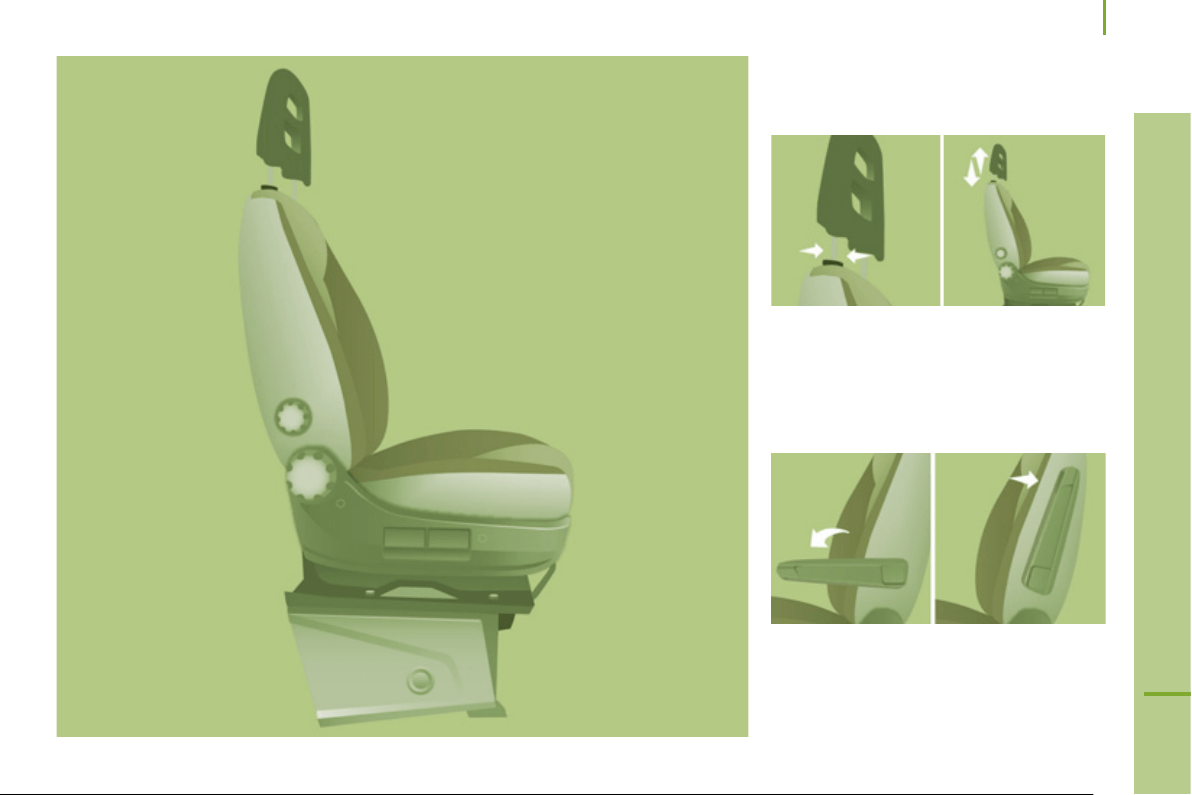
65
3
E
ASE OF USE
a
nd COMFOR
T
Seats
DRIVER'S SEAT
SEATS
H
ea
d
restra
i
nt
Press the tab to adjust the height of the
head restraint.
To remove the head restraint, press the tabs
and raise the head restraint.
Adj
usta
bl
e armrest
Turn the control located under the end of the
armrest.
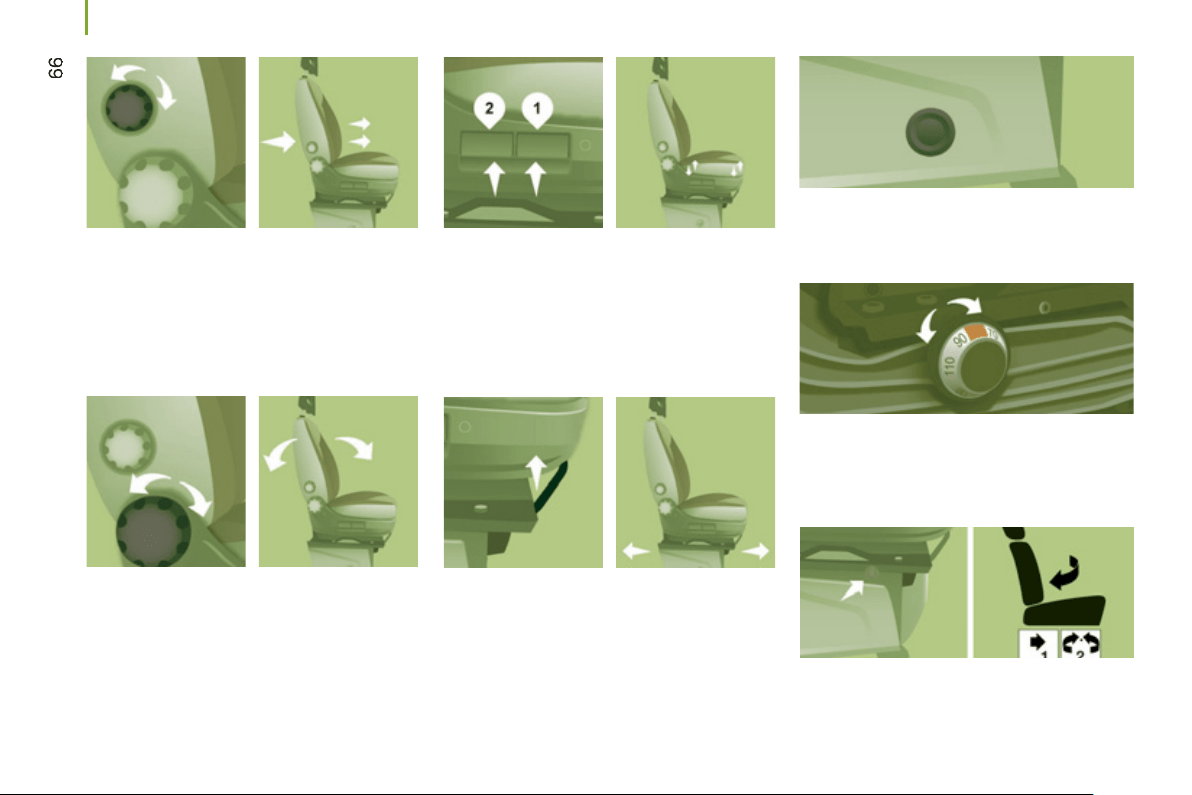
Seats
Lumbar su
pp
ort
Turn the control.
Seat cushion hei
g
ht ad
j
ustment
Lift the handle 1 to raise
or lower the front of the seat.
Lift the handle 2 to raise
or lower the rear of the seat.
Heated seat
Use this control to switch the heating of
the seat on or off.
Seat with variable dampin
g
If your seat is fitted with this system, turn the
control to adjust the level of damping to suit
the driver's weight.
Seat back an
g
le
Turn the control to adjust the angle of the
seat back.
F
orwar
d
s-
b
ac
k
war
d
s a
dj
ustment
Lift the control bar, located under the seat,
and adjust to the required position.
Rotatin
g
seat
If fitted on your seat, press the control to
rotate the seat by 180°.
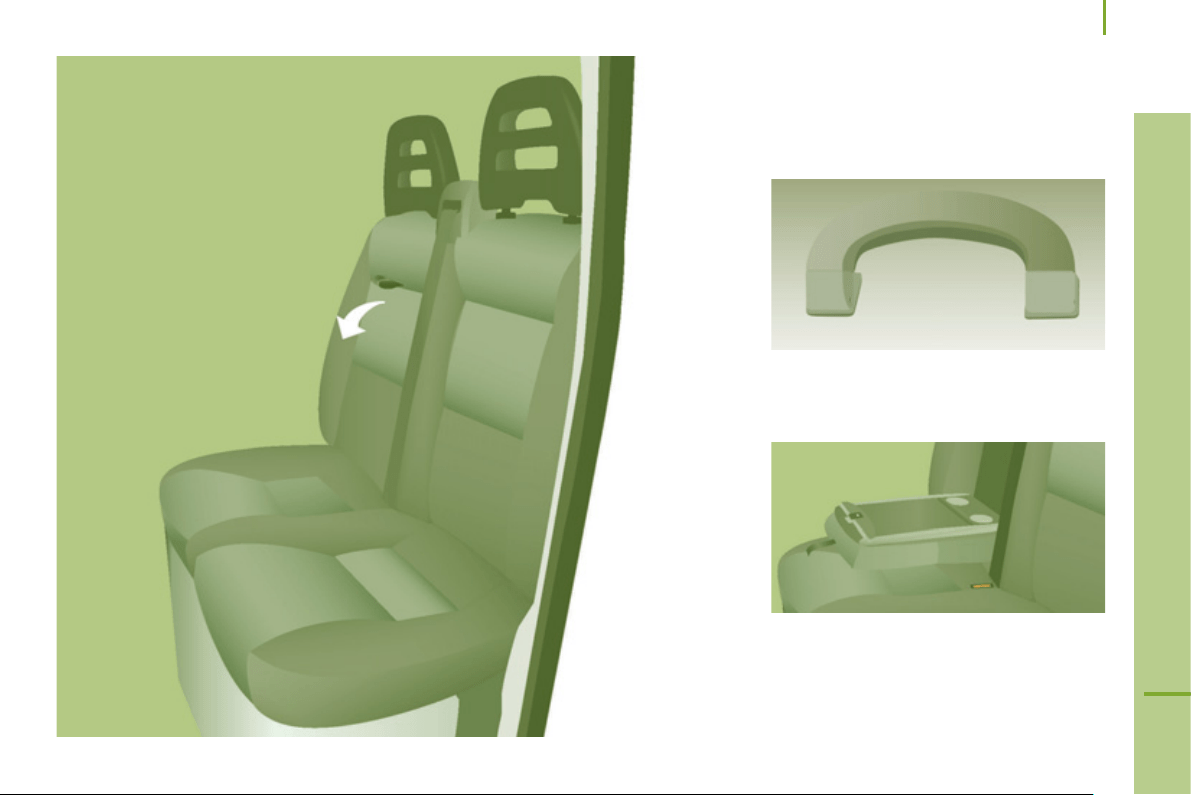
67
3
E
ASE OF USE
a
nd COMFOR
T
Seats
2-SEAT FRONT BENCH
This is fitted with two seat belts.
Grab handle
This is located above the centre passenger.
Writin
g
table
The back of the centre seat folds to form a
writing table.
Pull the handle located at the top of the seat
back cushion.
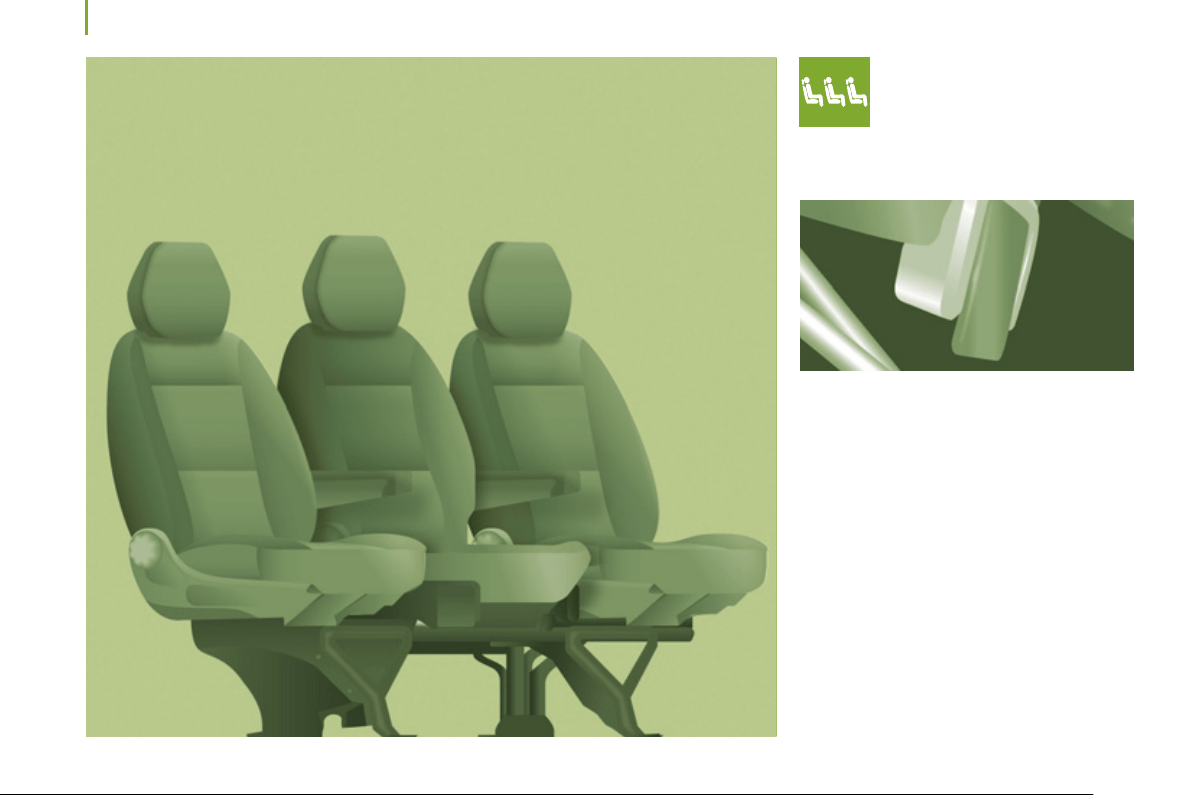
68
Seats
REAR SEATS
Seat back an
g
le
Turn the control to adjust the
angle of the seat back.
A
ccess to t
h
e rear seats
To gain access to row 3, manoeuvre the
control on the outer seat of row 2 and tilt the
seat back forwards.
To return the seat back to its initial position,
bring it to the vertical position without
touching the control.
Seat back folded
p
osition of the
c
entral seat
(
rows 2 and 3
)
The back of the central seat can be folded
fully onto the cushion and used as a cup
holder table.
Lower the head restraint then raise the
control and fold the seat back forwards.
To return the seat back to its initial position,
raise the control again.
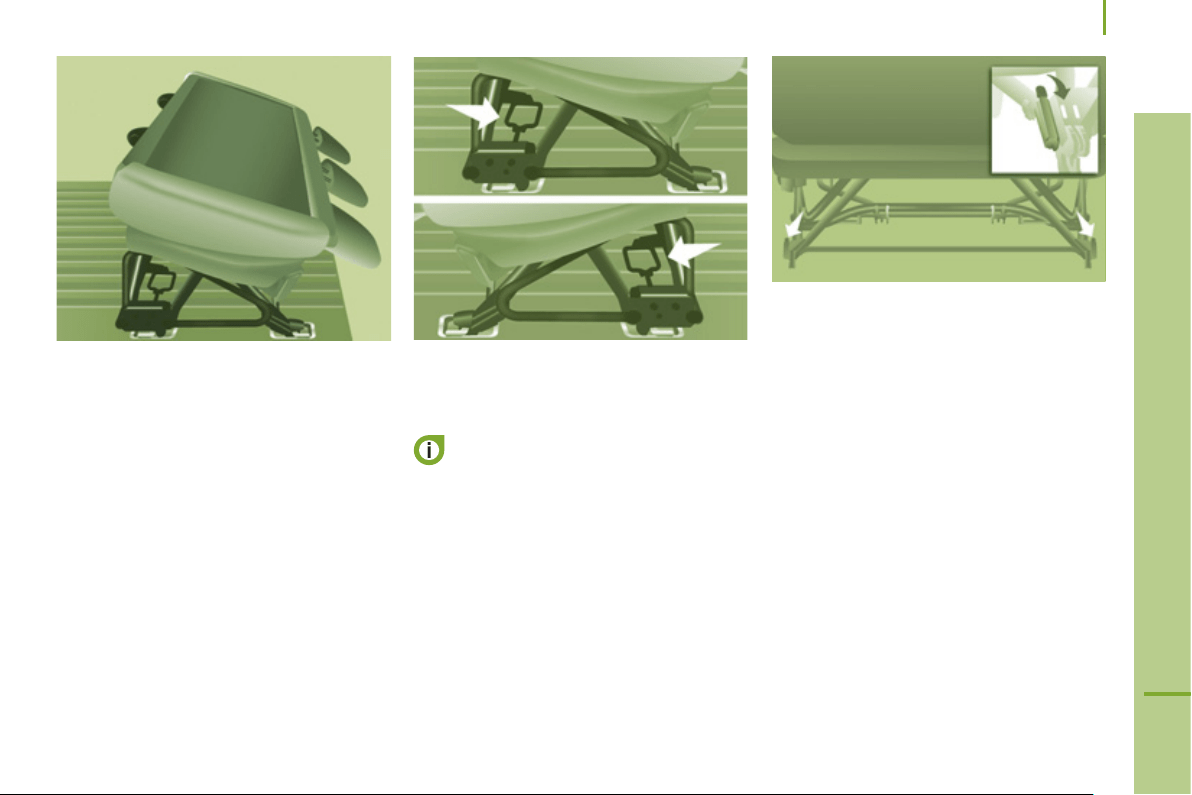
69
3
E
ASE OF USE
a
nd COMFOR
T
Seats
REAR BENCH SEATS
R
emov
i
n
g
t
h
e
b
enc
h
seat
At least two people are required to
remove the bench seat.
Fold the seat back onto the cushion as
described above.
Turn the two levers forwards.
Tilt the base of the bench seat forwards to
place the assembly in the vertical position.
Good
p
ractice
Following the various operations:
- do not remove a head restraint without
storing it securely,
- do not travel in row 3 with the row 2
bench seat in the vertical position,
- do not store any kind of object on the
folded seat back of row 2,
- check that the seat belts are always
accessible and easy for the passenger
to use,
- a passenger must not take their seat
without correctly adjusting their seat's
head restraint and adjusting and
fastening their seat belt.
A
ccess to the rear seats
Lower the head restraints then raise the
control and tilt the seat back forwards.
Seat back folded position
Remove the head restraints then tilt the seat
back as described above.
With your right hand, raise the lever then tilt
the seat back 5° towards the rear.
With your left hand, tilt the seat back
forwards onto the cushion.
Turn the two levers upwards.
Raise the bench seat and remove it.
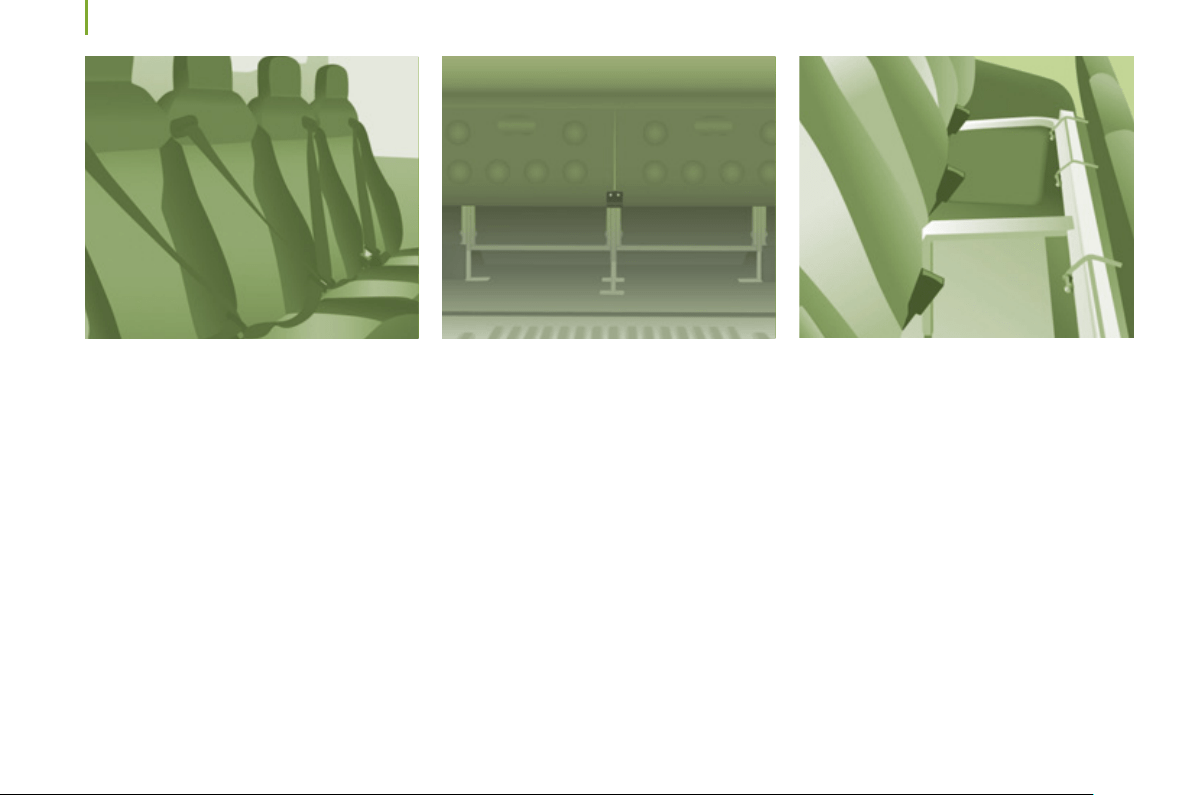
7
0
Seats
CREW CAB
Consisting of an ergonomic 4-seat bench
and a high-strength partition, it offers
comfort and safety.
Each seat of the bench is fitted with an
inertia reel seat belt.
Refer to section 5 to read the
"Good practice" recommendations.
A
ccess to t
h
e
b
ox un
d
er t
h
e
b
enc
h
seat
From the cab
Tilt the seat cushion forwards to gain access
to the large box.
From the load space
Raise the two flaps which make the full
length at the floor available. The flaps are
retained in the raised position by magnets
on the back of the partition.
Good
p
ratice
Do not tilt the bench seat cushion during
transportation.
No not attach anything to the cab fixing
structure.
Do not exceed the number of passengers
indicated on the registration certificate.
Do not install child seats, booster cushions or
carrycots on the rear seats of the crew cab.
In the rear, the load space is intended for
the transportation of goods only.
You are advised to place the goods or heavy
objects as far forwards as possible in the
load space (towards the cab) and secure
them by means of straps using the stowing
rings on the floor.
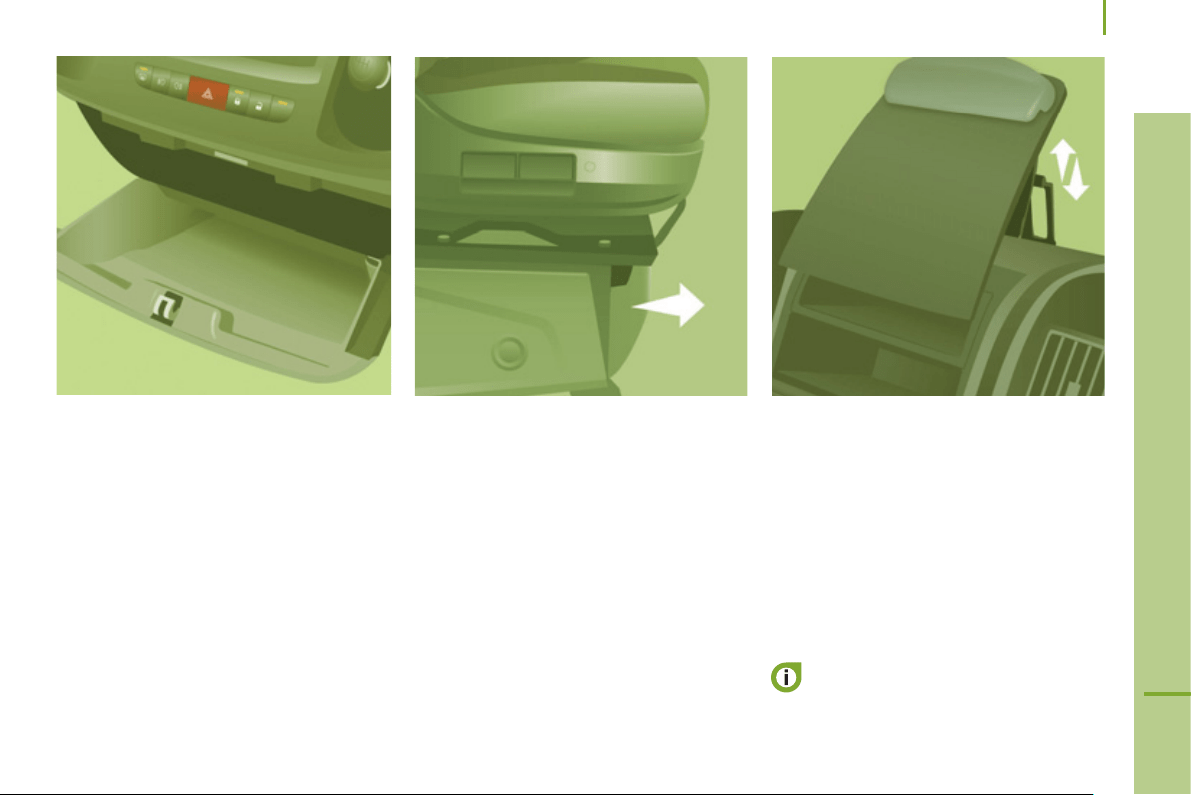
7
1
3
E
ASE OF USE
a
nd COMFOR
T
P
ractical information
CAB FITTINGS
Front seat stora
g
e
There is a storage drawer, located under the
front seat (driver's).
The location under the passenger's seat
is used for storing the tools required when
changing a wheel.
If your vehicle is fitted with a seat with
variable vibration reduction, it does not have
any storage compartments.
Foldin
g
writin
g
table
This is located in the centre of the fascia
panel.
The clip can be used to secure documents,
slips, ...
Pull or push the top of the table to unfold or
fold it.
PRACTICAL INFORMATION
Central stora
g
e tra
y
This may be lockable (according to
specification).
If your vehicle is fitted with a front
passenger airbag, the table cannot be
raised.
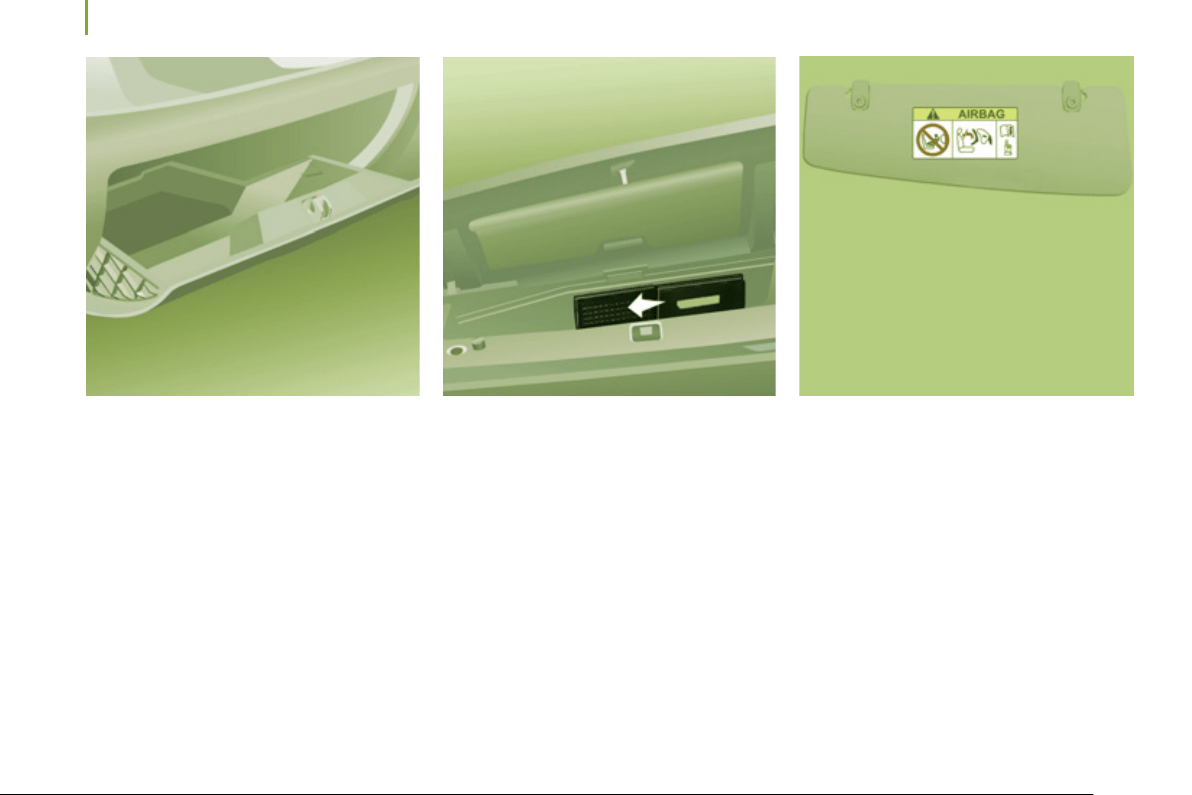
72
Practical information
Glove box Cooled
g
love box
This is located on the top left part of the
dashboard
The air supplied into the glove box is the
same as from the vents.
Sun visor
To avoid glare from ahead, fold the sun visor
down.
Pockets are arranged in the sun visors for
storing toll cards, tickets, ...
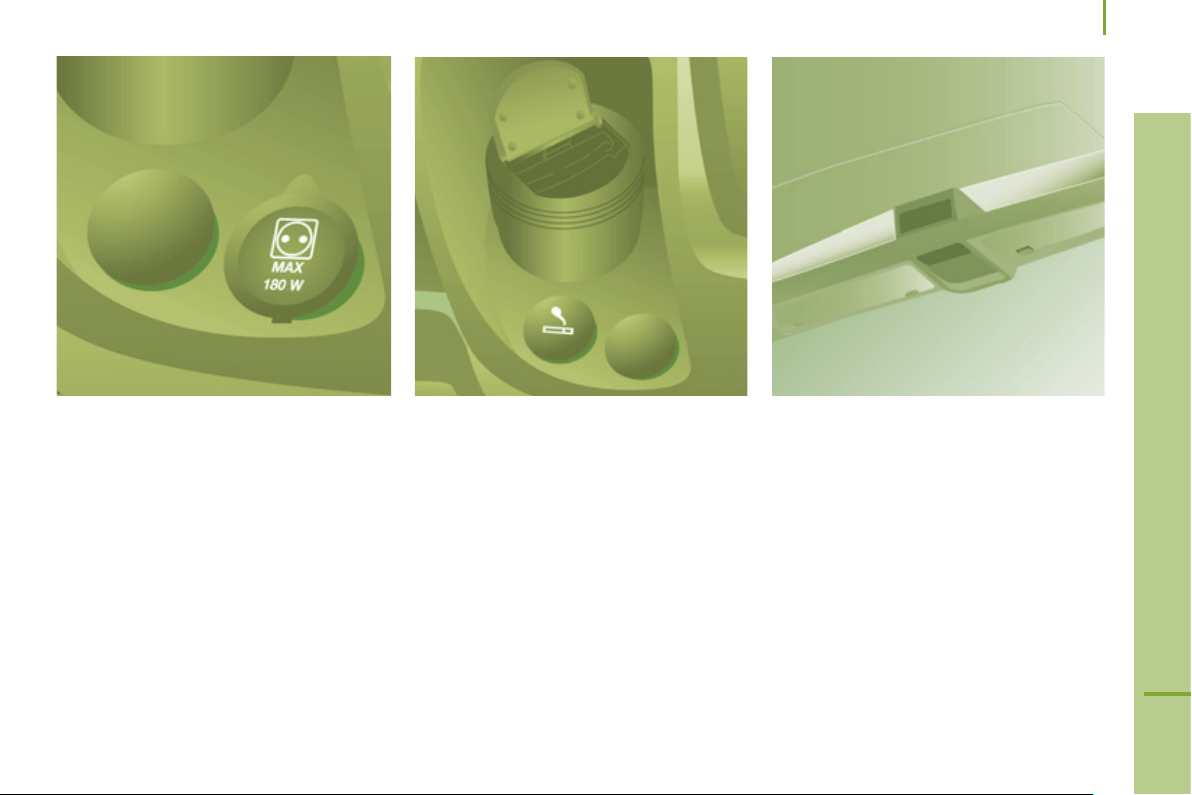
7
3
3
E
ASE OF USE
a
nd COMFOR
T
P
ractical information
12 volt socket
Press and wait a few moments until the
lighter pops out automatically.
When used as a socket: 180 W max.
Ci
g
arette li
g
hter / Portable ashtra
y
After opening the ashtray, pull it upwards
then empty it into a bin.
Overhead stora
g
e compartment
This is located above the sun visors.
Maximum load: approximately 20 kg.
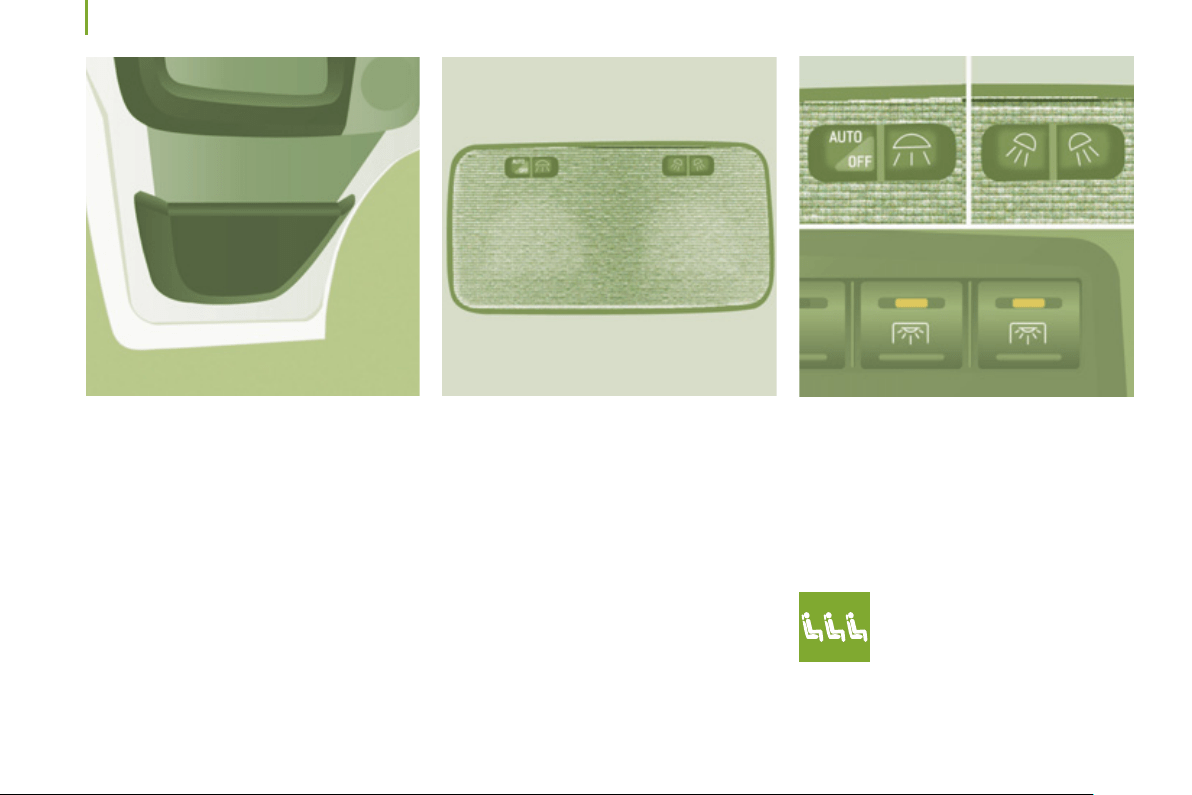
74
Practical information
Courtes
y
lamp
This is a double courtesy lamp located in
the centre of the roof. It can be activated by
means of:
- the switches located on the courtesy
lamp, with the ignition on - RUNNING
position,
- opening or closing one of the front
doors,
- locking/unlocking the vehicle.
It switches off automatically:
- if the switch is not pressed to the right or
to the left,
- in all cases after 15 minutes, if the doors
remain open or when the ignition is
switched on.
Readin
g
lamps
These are controlled by the switches.
The driver's switch controls both reading lamps
simultaneously.
The passenger switch controls either the driver's
reading lamp or the passenger reading lamp.
Fittin
g
s/stora
g
e compartment in the
door
p
ockets
Switches on the bottom right of
the dashboard allow the driver
to switch the passenger reading
lamp on and off.
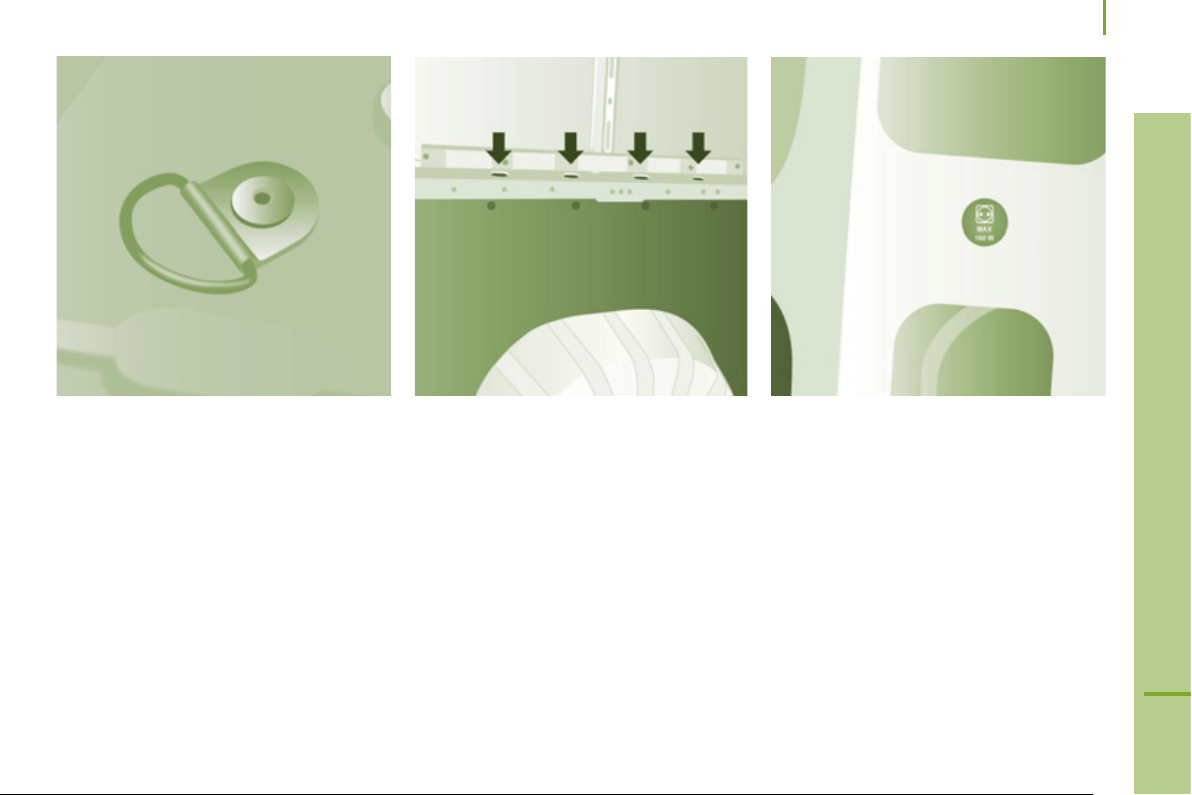
75
3
E
ASE OF USE
a
nd COMFOR
T
P
ractical information
LOAD SPACE FITTINGS Support for stowin
g
rail
Supports for securing a stowing rail are
available above the trims, on each side of
the vehicle.
12 volt socket
When used as a power socket: 180 W max.
Stowin
g
rin
g
s
Eight stowing rings are provided for securing
your loads. Six rings are located on the floor
and two on the partition behind the cab.
As a safety precaution in case of sharp
braking, you are advised to place heavy
objects as far forwards towards the cab as
possible.
Trims
The lower parts of the sides are fitted with
load protection trims.
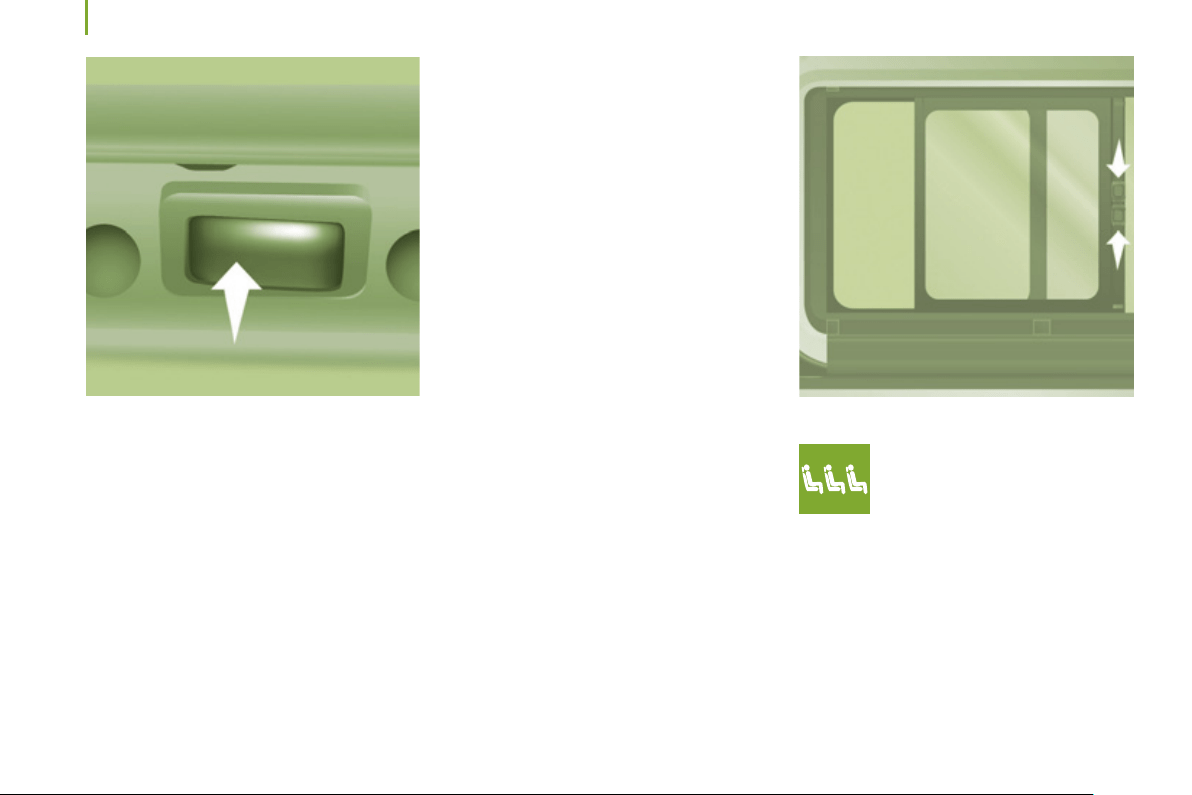
7
6
Practical information
Slidin
g
side windows
Depending on the vehicle's
equipment, the side windows of
row 2 can be opened.
Squeeze the two controls then
slide the window.
While driving, the window must be closed or
secured in an intermediate position.
Ste
p
To make access and exit easier, your vehicle
may be fitted with a step which unfolds when
the sliding side door is opened.
Courtes
y
lamps
If fitted on your vehicle, one or two courtesy
lamps are located above the rear and side
doors.
They can be activated by:
- tilting the courtesy lamp (to the left or to
the right),
- opening or closing the rear or side
doors.
This lighting switches off automatically, after
a few minutes, if the doors are left open.
R
ea
di
n
g
l
amps
They are located above each row of seats.
Roof box
This is a storage compartment located in the
load space, above the cab roof. Its capacity
varies depending on the height of the van roof.
Torch
If provided in your vehicle.
Ladder t
y
pe vertical partition
Behind the driver's seat, a ladder type
vertical partition protects the driver against
the risk of load movement.
Loa
d
reta
i
ner
On the floor, behind the front seats, a
horizontal partition protects the driver and
front passengers against the risk of load
movement.
Glazed se
p
aration
p
artition
Use the control to open/close the sliding
window of the separation partition.
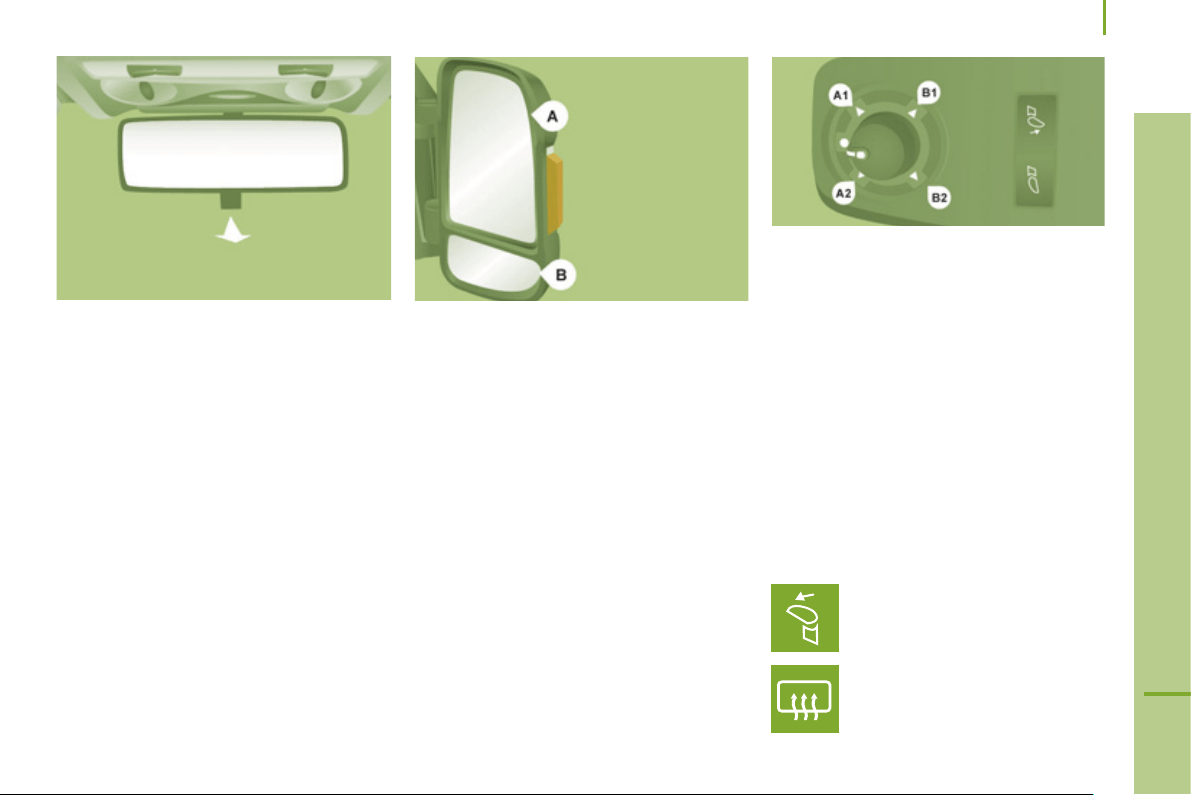
77
3
E
ASE OF USE
a
nd COMFOR
T
Mirrors and windows
MIRRORS AND WINDOWS
MIRROR
S
D
oor m
i
rrors
These are divided into two zones:
A - Upper mirror
B - Lower mirror
The mirror glass is spherical in order to
widen the lateral field of vision. Objects
seen in the mirror are in reality closer than
they appear. Therefore, this must be taken
into account in order to assess the distance
correctly.
The shell incorporates the direction indicator
side repeater and the aerials, according to
the equipment available on board (GPS,
GSM, Radio, ...).
El
ectr
i
ca
l
contro
l
s
The ignition switch must be in the MAR
position.
Turn the control to select the mirror zone.
1 Driver's mirror:
A1 - Upper mirror
B1 - Lower mirror
Then move the control in the direction of the
adjustment required.
2 Passenger mirror:
A2 - Upper mirror
B2 - Lower mirror
Then move the control in the direction of the
adjustment required.
Rear view mirror
The lever located on the lower edge moves
the mirror into two positions.
For the day position, the lever is pushed.
For the night position to prevent dazzle, pull
the lever towards you.
Electric foldin
g
Press this control.
Defrostin
g
the mirrors
Press the rear screen defrosting
button.
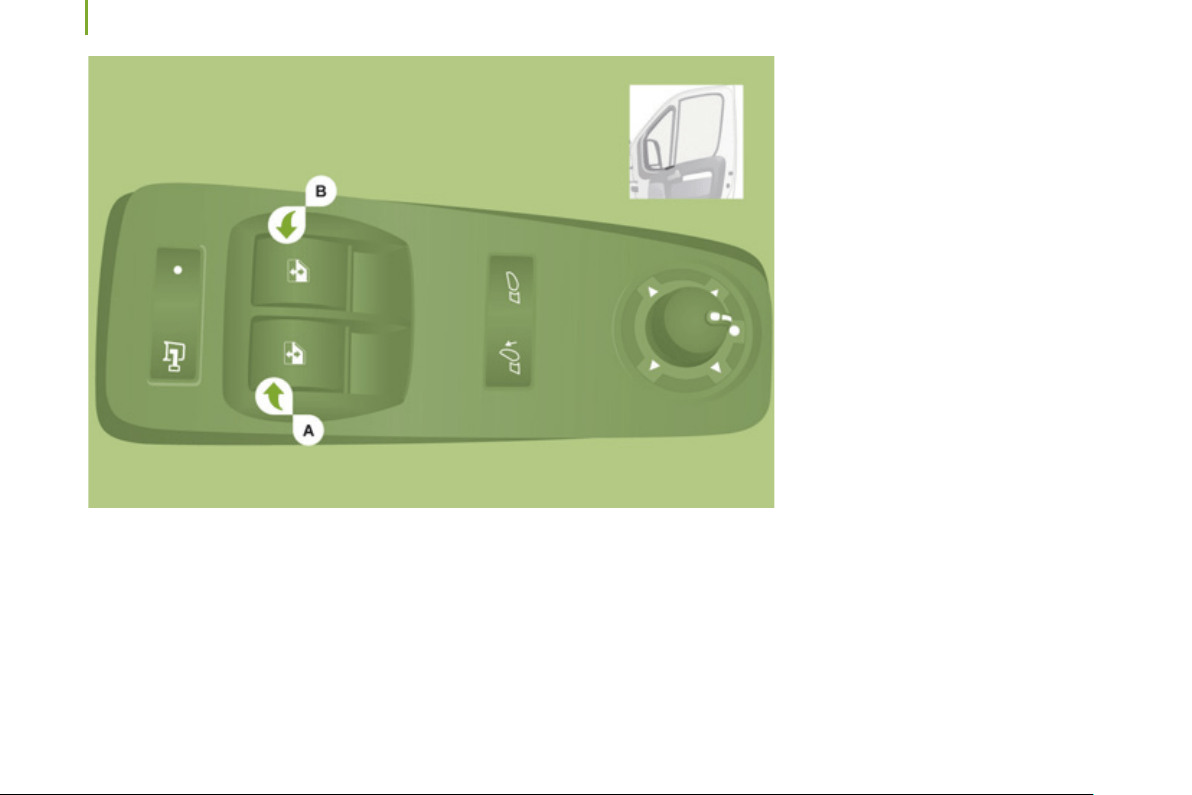
7
8
Mirrors and windows
ELECTRIC WINDOWS
A. Driver's electric window control
B. Passenger's electric window control
You have two options:
A
utomat
i
c operat
i
on
Press or pull control A/B , beyond the point
of resistance: the window opens or closes
fully when the control is released.
Pressing the control again stops the
movement of the window.
Manual o
p
eration
Press or pull control A , without passing the
point of resistance.
The window stops when you release the
control.
Good
p
ractice
Always remove the key from the ignition
when leaving the vehicle, even for a short
time.
If the electric windows meet an obstacle
during operation, you must reverse the
movement of the window. To do this, press
the control concerned.
When the driver operates the passenger
electric window controls, they must ensure
that no one is preventing correct closing of
the windows.
The driver must ensure that the passengers
use the electric windows correctly.
Be aware of children when operating the
windows.
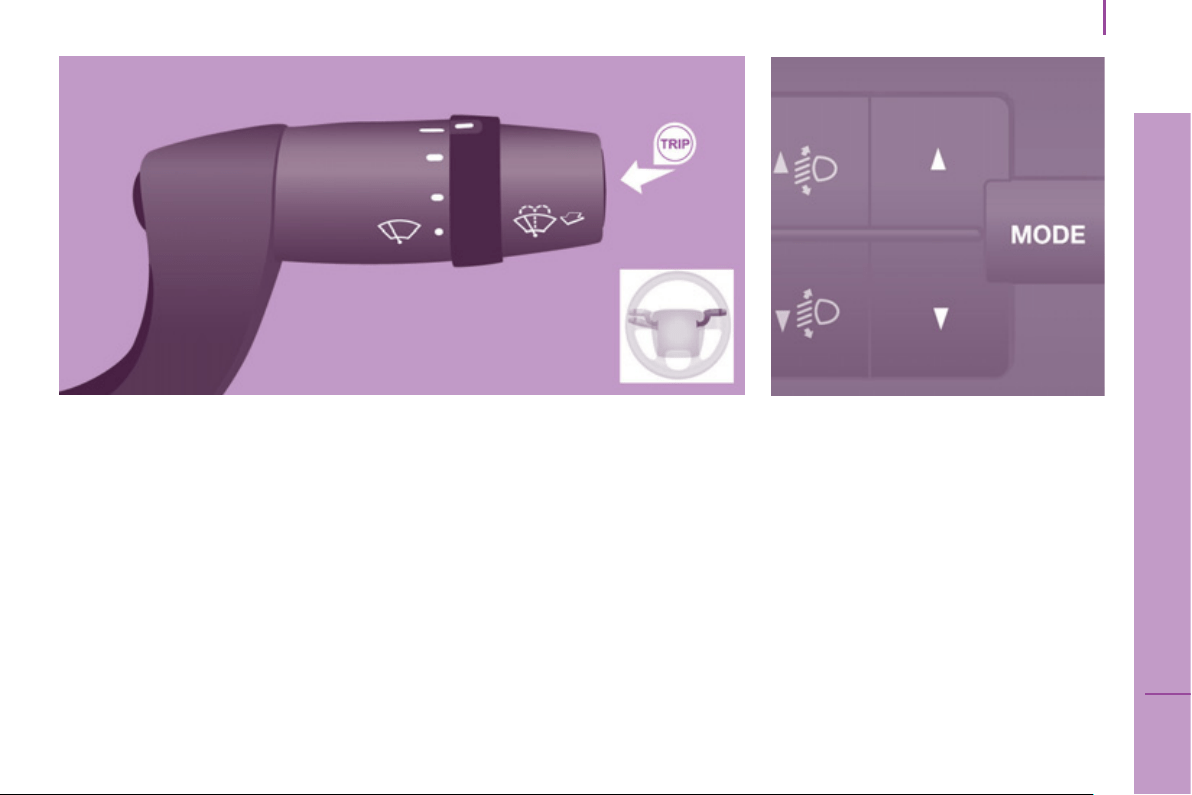
7
9
4
T
ECHNOLOGY
on
BOAR
D
T
rip computer
The TRIP button, located at the end of the
wiper stalk, provides access to the following
information:
- Ambient temperature
This indicates the temperature outside
the vehicle.
- Range
This indicates the distance that can still
be travelled with the fuel remaining in
the tank on the basis of the average
consumption over the last few miles
(kilometres) travelled.
- Average speed A
This is the average speed calculated
since the last trip computer zero reset
(with the ignition on).
- Trip duration A
This indicates the total time since the
last trip recorder zero reset.
- Distance A
This indicates the distance travelled
since the last trip computer zero reset.
- Average fuel consumption A
This is the average quantity of fuel
consumed since the last trip computer
zero reset.
- Current fuel consumption A
This is the average quantity of fuel
consumed during the last few seconds.
TRIP COMPUTER
If TRIP B is activated on the MODE menu:
- Distance B
- Average fuel consumption B
- Average speed B
- Trip duration B
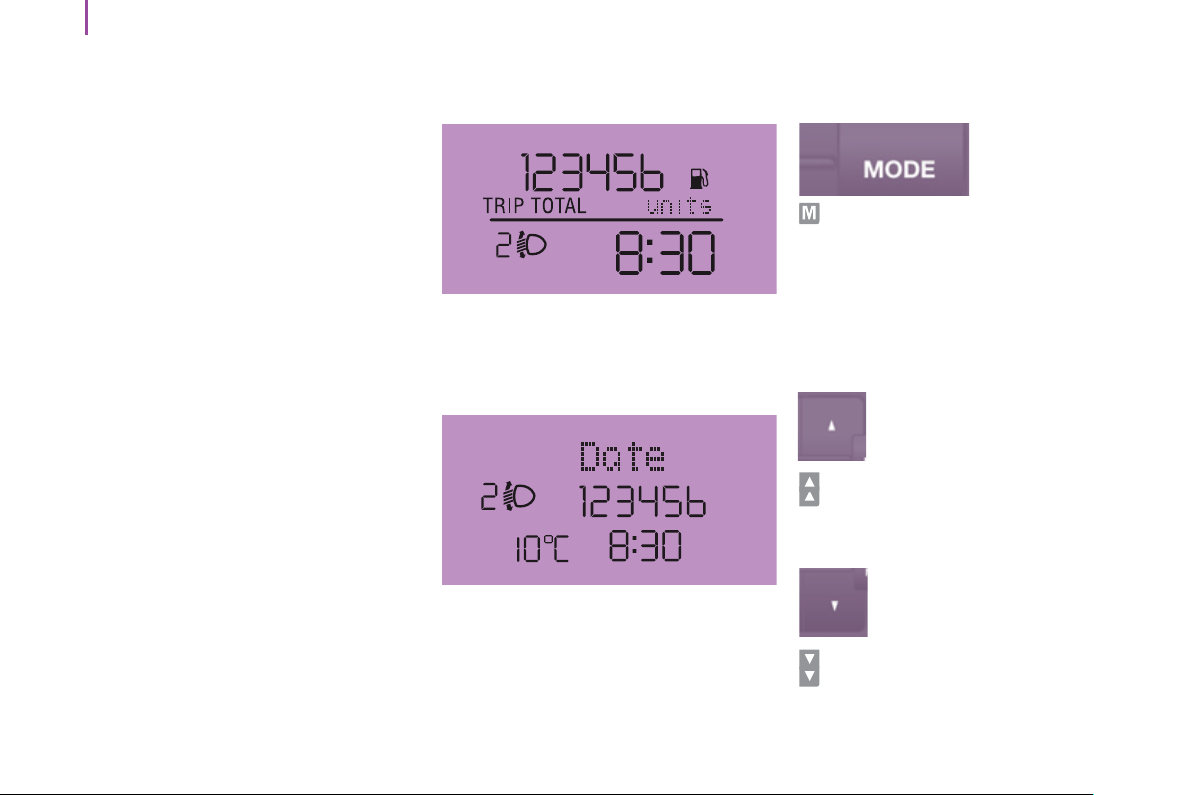
miles
80
Mode
MODE
Confi
g
uration - Personalisation
If your vehicle is fitted with the control
panel located to the right of the steering
wheel, this provides access to menus which
permit the personalisation of some of your
equipment.
Seven languages are offered: Italian,
English, German, French, Spanish,
Portuguese, Dutch.
As a safety precaution, some menus can
only be accessed when the ignition is off.
Instrument panel screen 1
If your vehicle is fi tted with this screen,
you have access to the menus 1 (Speed),
4 (Hour), 8 (Unit), 10 (Buzz), 13 (Bag P)
and 14.
- scroll up through a menu,
- increase a value.
- scroll down through a menu,
- decrease a value.
Instrument panel screen 2
If your vehicle is fitted with this screen, you
have access to all of the menus.
This MODE button enables you to:
- access the menus and sub-menus,
- confirm your selections, within a
menu,
- exit from the menus.
A long press enables you to return to
the welcome screen.
This button enables you to:
This button enables you to:
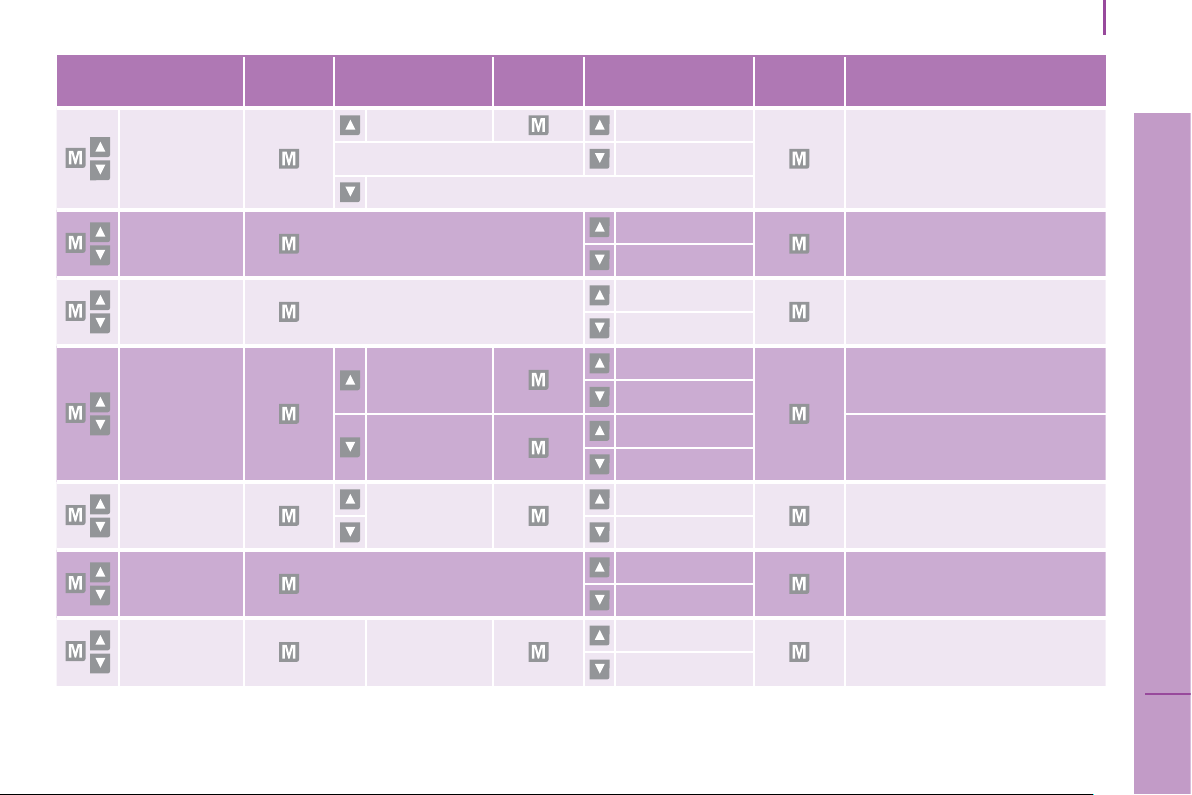
81
4
T
ECHNOLOGY
on
BOAR
D
M
od
e
Menu… Press... Sub-menu… Press... Select…
Confirm
and exit
Enables you to...
1 Bleep
Speed
(Speed)
ON
Increase
Activate/deactivate the audible
signal indicating exceeding of
the programmed speed and
select the speed.
Decrease
OFF
2 Headlamps
sensor
Increase
Set the sensitivity of the
sunshine sensor (1 to 3).
Decrease
3 Activation
Trip B
Activate
Display a second distance
"Trip B".
Deactivate
4 Setting the
time (Hour)
Hours/ Minutes
Increase
Set the clock.
Decrease
Time format
24
Select the clock display mode.
12
5 Setting
the date
Year/Month/
Day
Activate
Set the date.
Deactivate
6 See radio
ON
Display the name of the station.
OFF
7 Autoclose While moving
ON
Activate/Deactivate automatic
door locking above approx
12 mph (20 km/h).
OFF
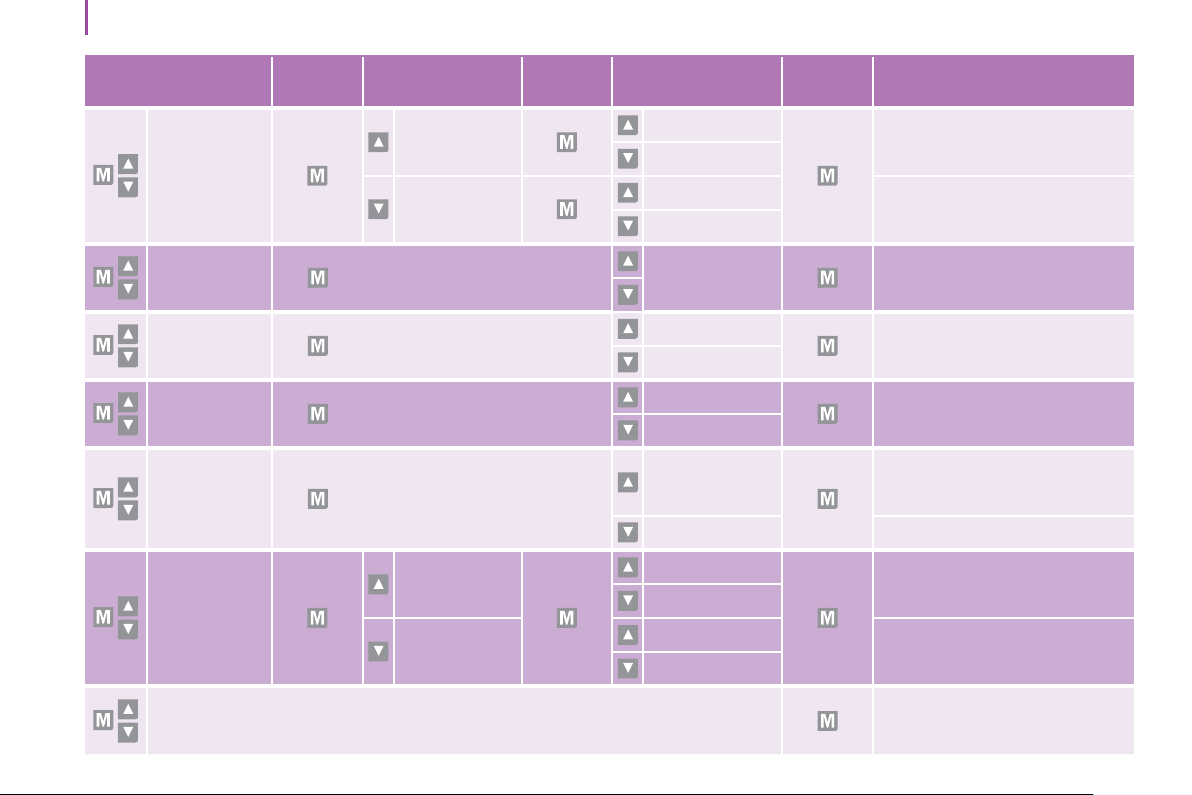
82
Mode
Menu... Press... Sub-menu… Press... Select…
Confirm
and exit
Enables you to...
8 Measurement
unit
(Unit)
Distance
Km
Select the distance display unit.
Miles
Consumption
km/l
Select the fuel consumption
display unit.
l/100 km
9 Languages
List of
languages
available
Select the display language.
10 Volume of
announcements
(Buzz)
Increase
Increase/decrease the volume
of the announcements or of the
audible warning signal.
Decrease
11 Volume of
the buttons
Increase
Increase/decrease the volume of
the buttons.
Decrease
12 Service
Service (Km/
miles before
oil change)
Display the kilometres/miles
remaining before the next oil
change.
Oil Display the oil level.
13 Passenger
airbag
(BAG P)
ON
Yes
Activate the passenger airbag.
No
OFF
Yes
Deactivate the passenger airbag.
No
14 Exit
from menu
Exit from the menu. Press the
arrow at the bottom to go to the
first menu.
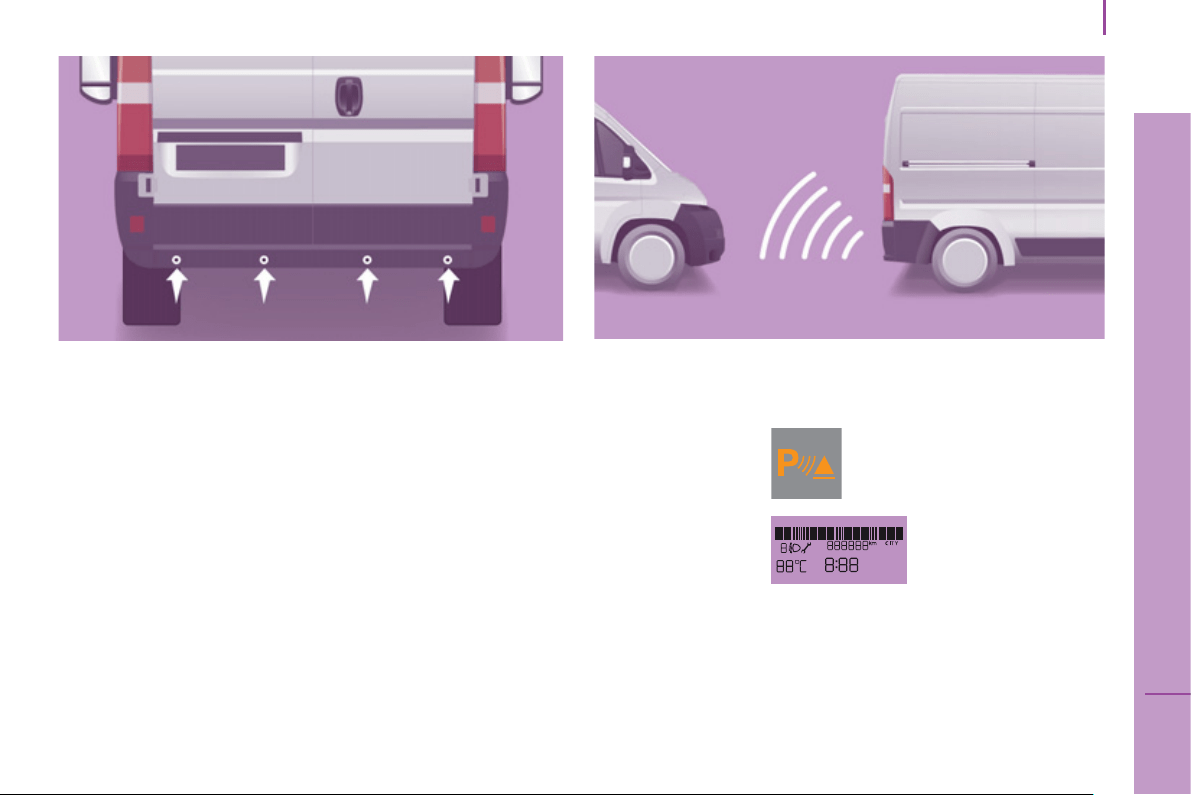
83
4
T
ECHNOLOGY
on
BOAR
D
P
arkin
g
sensors
A
UDIBLE REAR PARKING SENSORS
If fitted on your vehicle, the system consists
of four proximity sensors, installed in the
rear bumper.
They detect any obstacle: person, vehicle,
tree, fence, behind the vehicle during the
manoeuvre.
However, objects the size or thickness of
which are detected at the beginning of the
manoeuvre will no longer be detected at the
end of the manoeuvre: blind spots between
and below the sensors. Examples: stake,
roadworks cone or pavement post.
En
g
a
g
e reverse
g
ea
r
The proximity information is indicated by an
audible signal of increasing frequency as the
vehicle approaches the obstacle.
When the distance between the rear of
the vehicle and the obstacle is less than
approximately thirty centimetres, the audible
signal becomes continuous.
The system cannot, in any circumstances,
take the place of the vigilance and
responsibility of the driver.
Stop the assistance
Change to neutral.
Malfunction
If this warning lamp comes on in
the instrument panel, contact a
CITROËN dealer.
If your vehicle is fitted
with this screen, a
message appears.
Good
p
ractice
In bad weather or in winter, ensure that the
sensors are not covered with mud, ice or
snow.
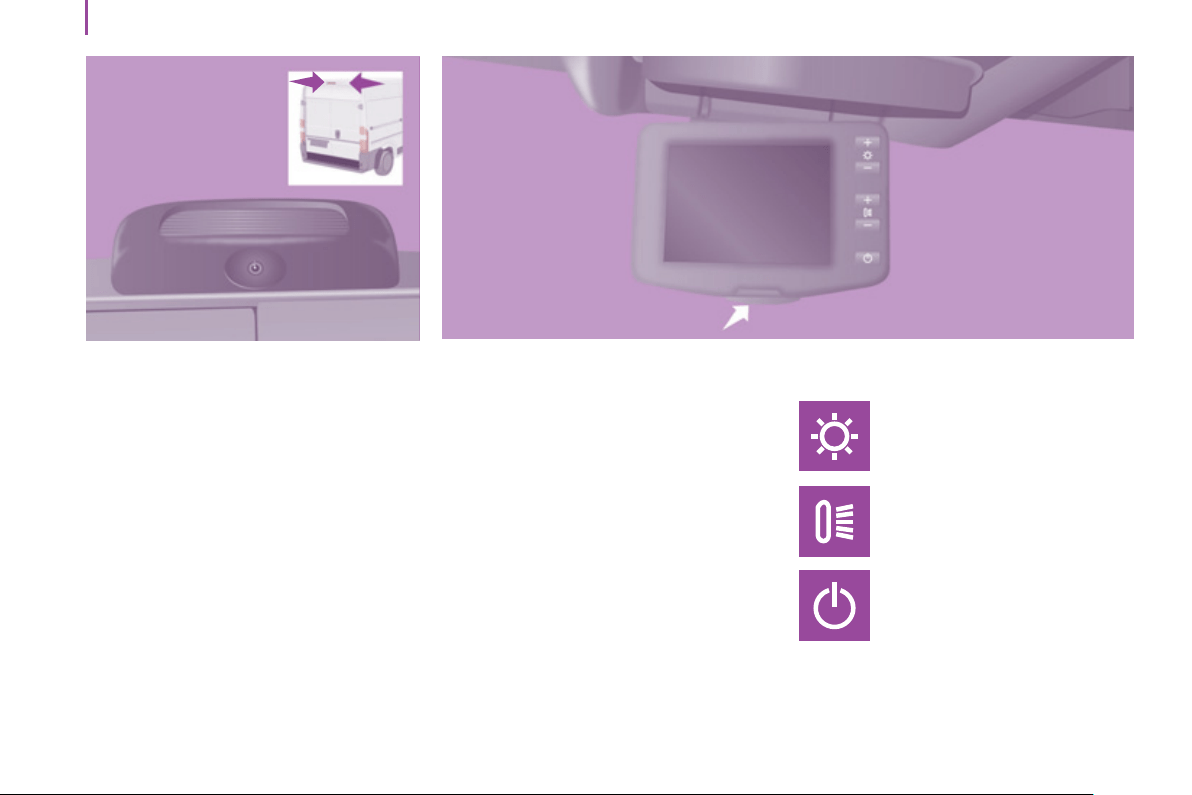
8
4
Reversin
g
camera
REVERSING CAMER
A
If your vehicle is fitted with this camera, it
is located at the rear of the van, next to the
third brake lamp.
It sends views to the screen installed
in the cab. This rear vision is an aid to
manoeuvring.
Screen
The camera sends the images to a 4 inch or
6.5 inch adjustable colour LCD which takes
the place of the interior rear view mirror.
Press the button and place the screen in the
required position.
A
ct
i
vat
i
on
With the key in the running position, unfold
the screen.
The camera comes into operation when
reverse gear is engaged and remains active
up to approximately 9 mph (15 km/h). It is
deactivated above 11 mph (18 km/h).
When a forward gear is engaged, the last
image remains displayed for approximately
5 seconds then switches off.
Fold the screen.
B
uttons
Brightness adjustment.
Back-lighting adjustment.
ON/OFF enables you to see rear
views without engaging reverse
gear.

85
4
T
ECHNOLOGY
on
BOAR
D
Reversin
g
camer
a
Initial settings
With reverse gear not engaged,
press and hold the ON/OFF
button for approximately
3 seconds. The button flashes
twice to confirm the reinitialisation.
Alarm display on the screen
In the ON position, information in text
format accompanies the manoeuvre and is
displayed on the screen:
- each time reverse gear is engaged, a
message appears before the first view is
transmitted,
- at 11 mph (18 km/h) in reverse gear,
the rear view disappears and the
screen switches to "Stand by". The view
appears again when the vehicle returns
to a speed below 9 mph (15 km/h).
Change of language
With reverse gear not engaged, press
the ON/OFF button and any other button
simultaneously.
Scroll through the languages by pressing
ON/OFF.
When the language has been selected, wait
approximately 3 seconds for it to be stored.
Good practice
When vehicle conditions are optimum
(position on the road, loading level) the
maximum area of visibility covered by the
camera has a field depth approximately 3 m
long and 5.5 m wide.
The area of visibility may vary depending on
the external weather conditions (brightness,
rain, snow, fog, …), the load in the vehicle
and the position of the vehicle on the road.
Please store the screen in its housing when
no longer in use.
When cleaning the camera and the screen,
avoid using a detergent or a tool which may
scratch the glass.
Use a non-abrasive cloth or a small brush.
Following a collision, if the screen glass has
cracked and allows liquid crystal to flow out:
do not touch it.
If you have come into contact with it, quickly
wash the contaminated part of the body with
soapy water.
Contact a CITROËN dealer to have the
screen repaired.
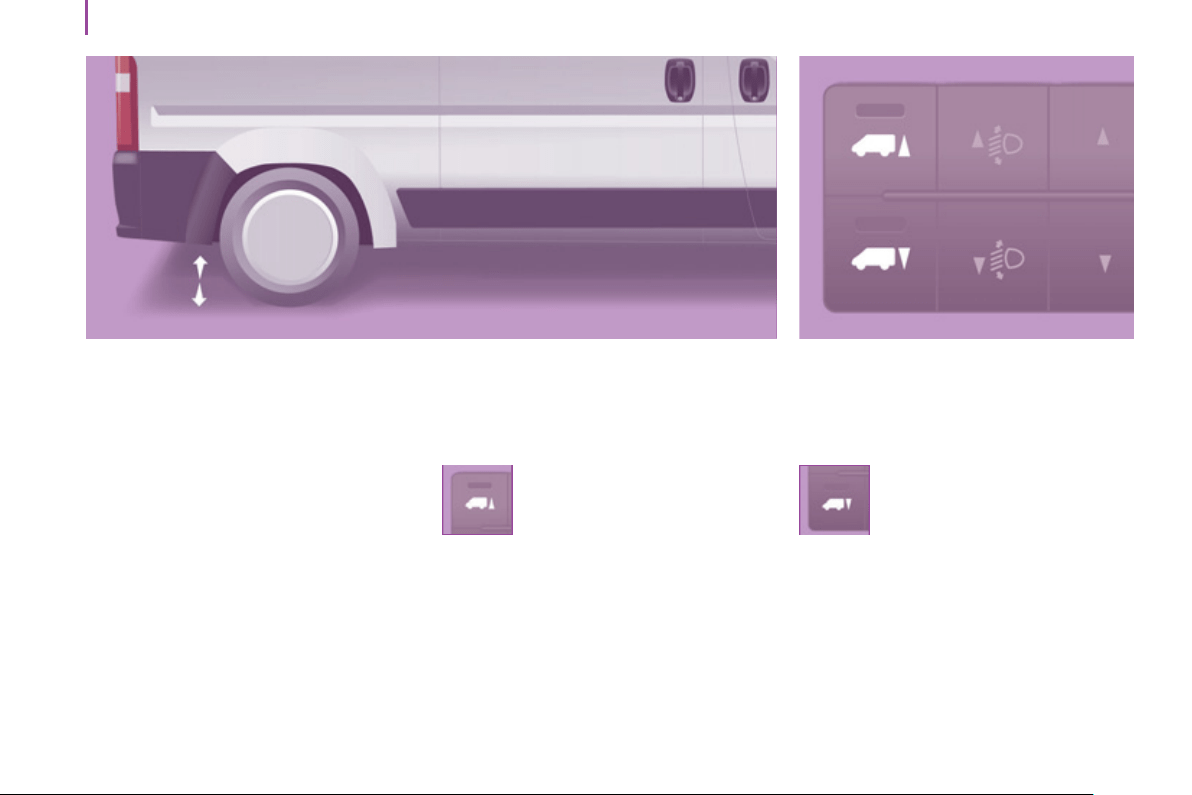
86
Pneumatic suspension
PNEUMATIC SUSPENSION
If your vehicle is fitted with pneumatic
suspension, you can adjust the height of
the rear of the vehicle to make loading and
unloading easier.
The control panel is located on the
dashboard.
There is a nominal level as well as 6 height
adjustment levels, raising (from +1 to +3) or
lowering (from -1 to -3). Each level reached
is indicated on the instrument panel screen.
Manual ad
j
ustment of the loadin
g
h
e
igh
t
Raise: upwards adjustment
of the load floor
Make a quick press on the control
to select the next level up. Each
press (LED on) raises the floor by
one level: +1 to +3.
A long press selects the highest
level (+3).
Lower: downwards adjustment of the
load floor
Make a quick press on the control
to select the next level down.
Each press (LED on) lowers the
floor by one level: -1 to -3.
A long press selects the lowest
level (-3).

87
4
T
ECHNOLOGY
on
BOAR
D
P
neumatic suspension
Deactivation
Make a long press on both controls
simultaneously to deactivate the system.
The LEDs remain on.
Return to the nominal floor height
Press the same number of times in reverse
as the level of the position displayed.
Reactivation
A second long press on both controls
simultaneously reactivates the system. The
LEDs go off.
A
utomatic correction of loadin
g
f
loor hei
g
ht
Above 12 mph (20 km/h), the system
automatically returns the rear height to its
nominal value.
W
arn
i
n
g
l
amp
Refer to the "Instruments and controls"
section of chapter 2.
Good
p
ractice
Driving with the suspension set too high or
too low risks damaging components under
the body.
The height may be adjusted automatically to
take account of changes of temperature or
loading.
You must avoid using this control in the
following circumstances:
- when working underneath the vehicle,
- when changing a wheel,
- when the vehicle is being transported by
lorry, train, ferry, boat, …
Above 3 mph (5 km/h), the system
reactivates automatically.
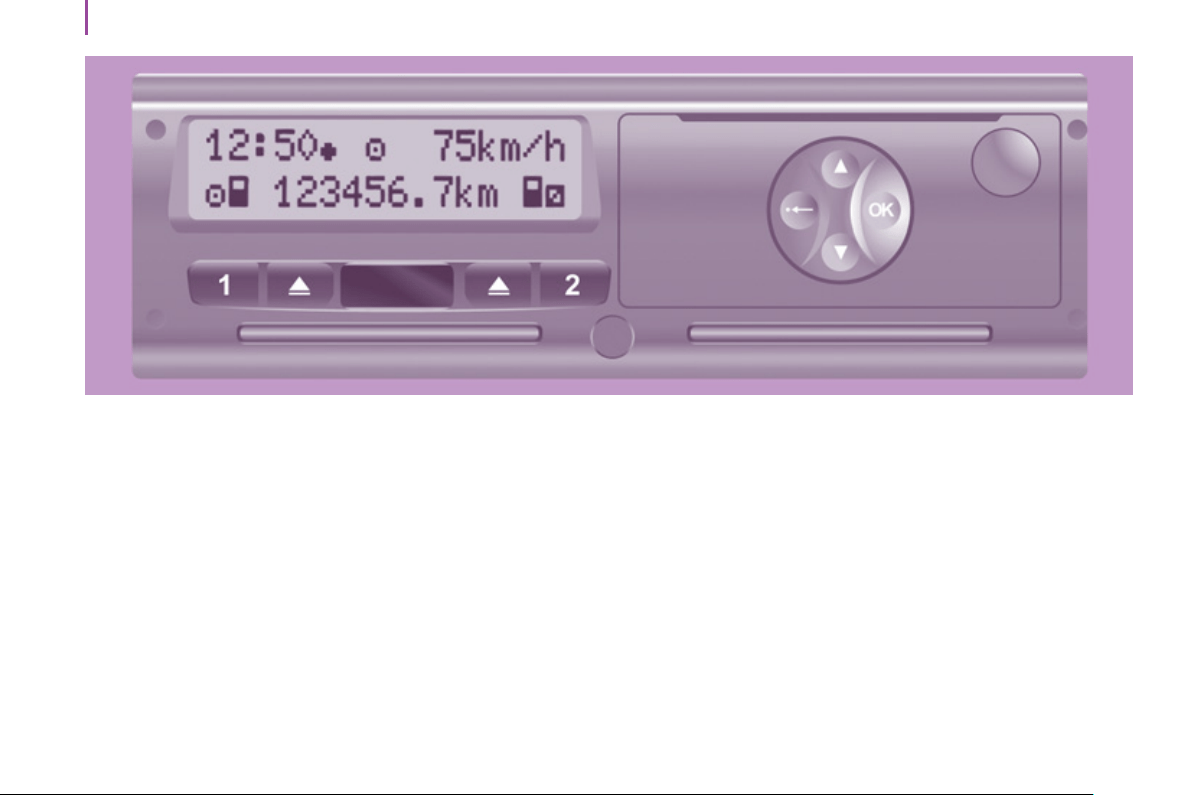
88
Tacho
g
raph
TACHOGRAPH
If your vehicle is fitted with a tachograph,
this permits storing of all of the data relating
to the vehicle in the unit and on a card
inserted in it.
Example: at the beginning of each journey
or change of team.
When the card is inserted, all of the data
can be:
- displayed on the tachograph screen,
- printed,
- transferred to external storage media via
an interface.
For further information, refer to the
documents supplied by the manufacturer of
the tachograph.
If your vehicle is fitted with a tachograph,
disconnection of the negative (-) terminal of
the battery (located under the floor on the
left-hand side, in the cab) is recommended if
the vehicle is not to be used for a period of
more than 5 days.
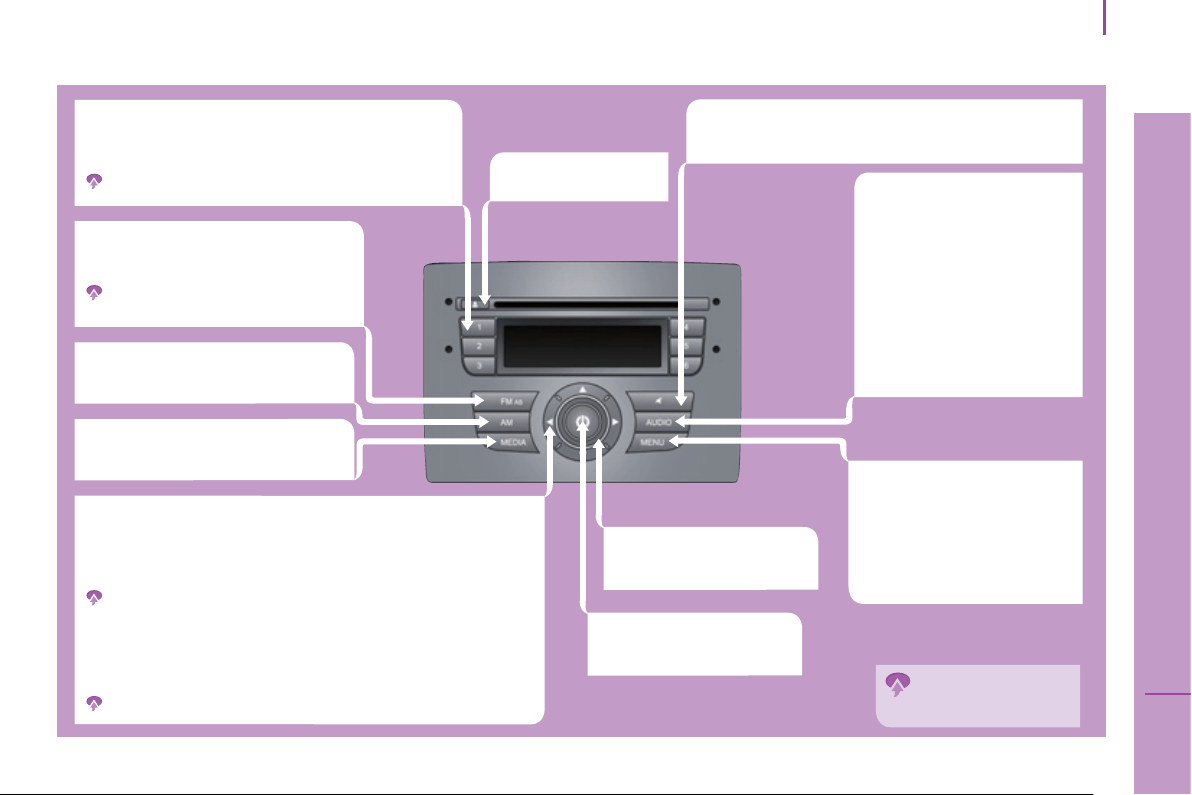
A
udio equipment
89
4
T
ECHNOLOGY
on
BOAR
D
Volume adjustment.
Automatic presetting of stations
(autostore).
Selection of wavebands
FM1, FM2, FMA.
Selection of wavebands:
MW1, MW2.
FIRST STEPS
On.
Off.
CD eject, if the audio
system is on.
Open / close the menu.
and to select the
setting.
and to adjust the
setting.
See "MENU".
Setting of the audio options:
bass, treble, fader (front/
rear), balance (left/right),
fader (front/rear), loudness,
equaliser, personalised
equaliser.
and to select the
setting.
and to adjust the
setting.
Mute /
restore sound.
CD / MP3 CD:
and : play previous / next track.
and : play previous / next folder.
Requires a long
press.
Radio:
and : automatic station search down / up.
and : manual frequency search.
and , and : fast forward.
and : fast backwards / forwards in the track.
Presetting a station.
1/2/3/4/5/6: selection of the preset station.
Selection of the source:
CD / MP3 CD.
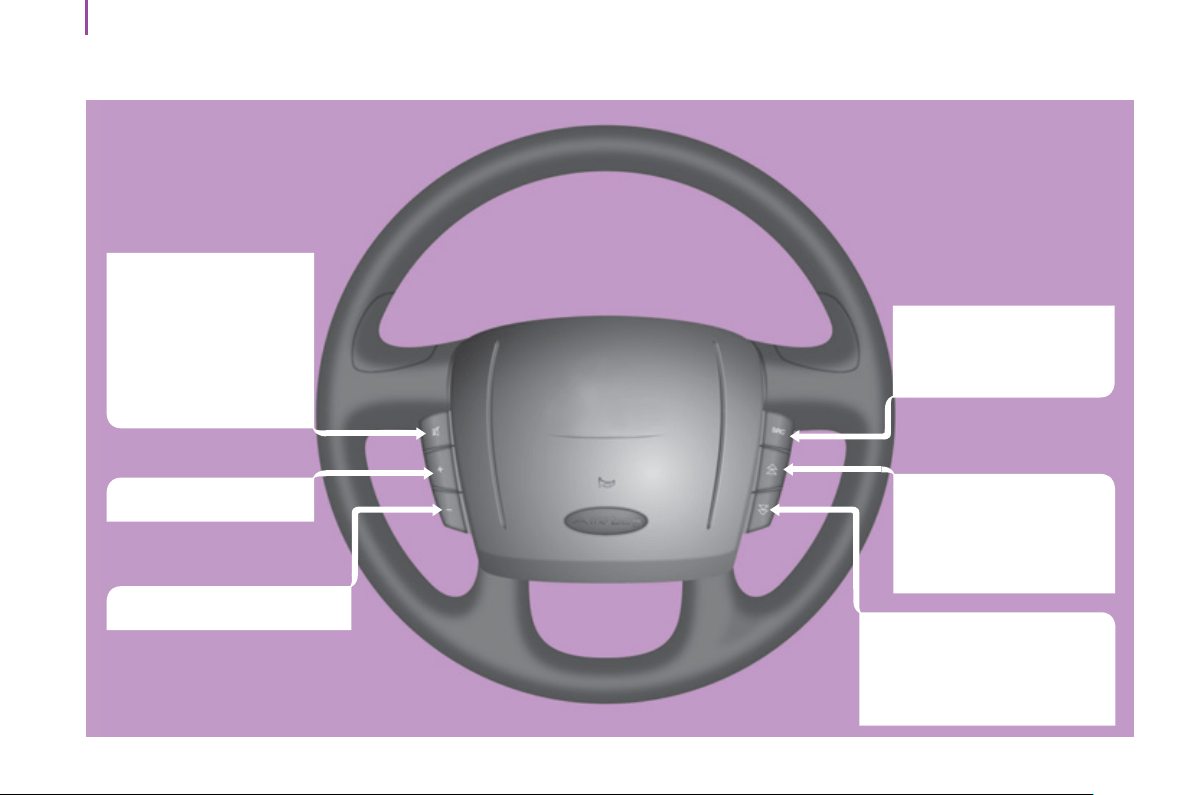
Audio equipmen
t
90
STEERING MOUNTED CONTROLS
Change of source:
CD/MP3 CD or radio
frequency.
Automatic search for a
higher radio frequency.
Select the next CD/MP3
CD track.
Automatic search for
a lower frequency.
Select the previous CD/MP3
CD track.
Mute / restore the
sound.
Pause CD/MP3 CD
track.
Volume increase.
Volume decrease.
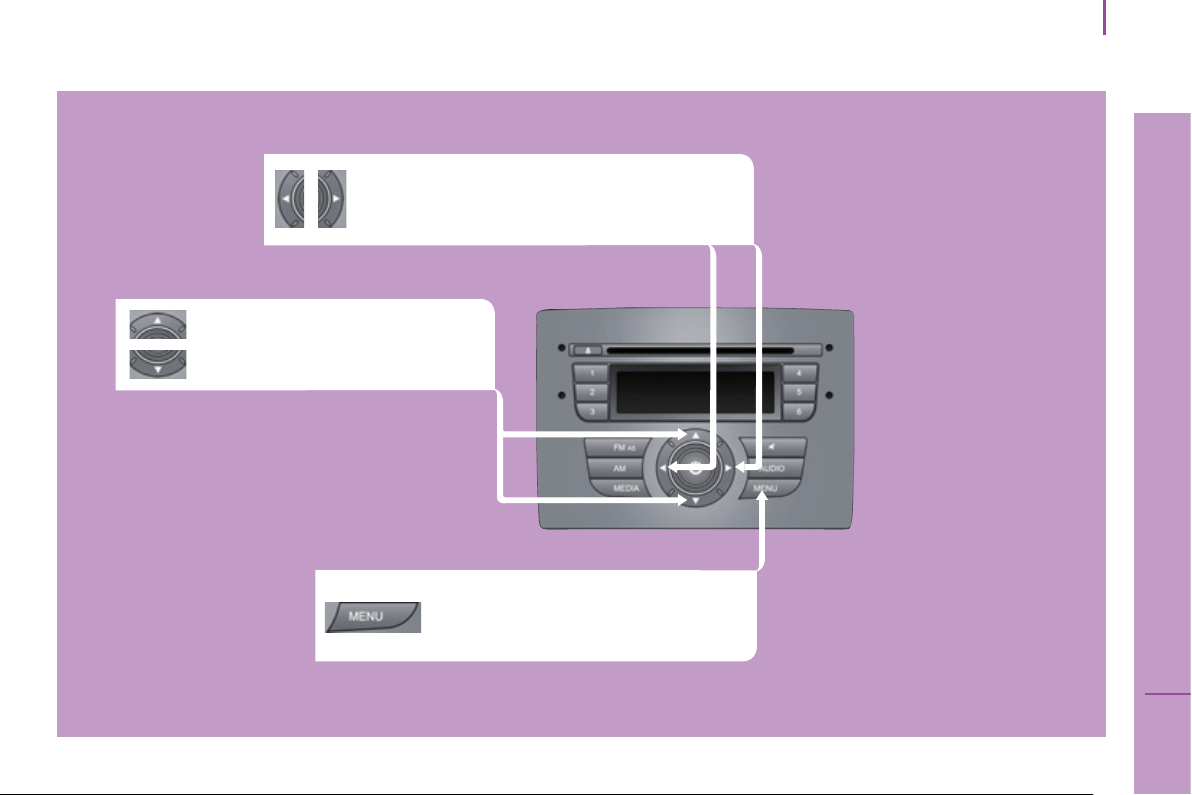
A
udio equipment
91
4
T
ECHNOLOGY
on
BOAR
D
Open and close the menus.
Confirmation and storing the choices from
the current menu.
Scrolling of various menus.
Selection of the choices from the current menu.
MENU
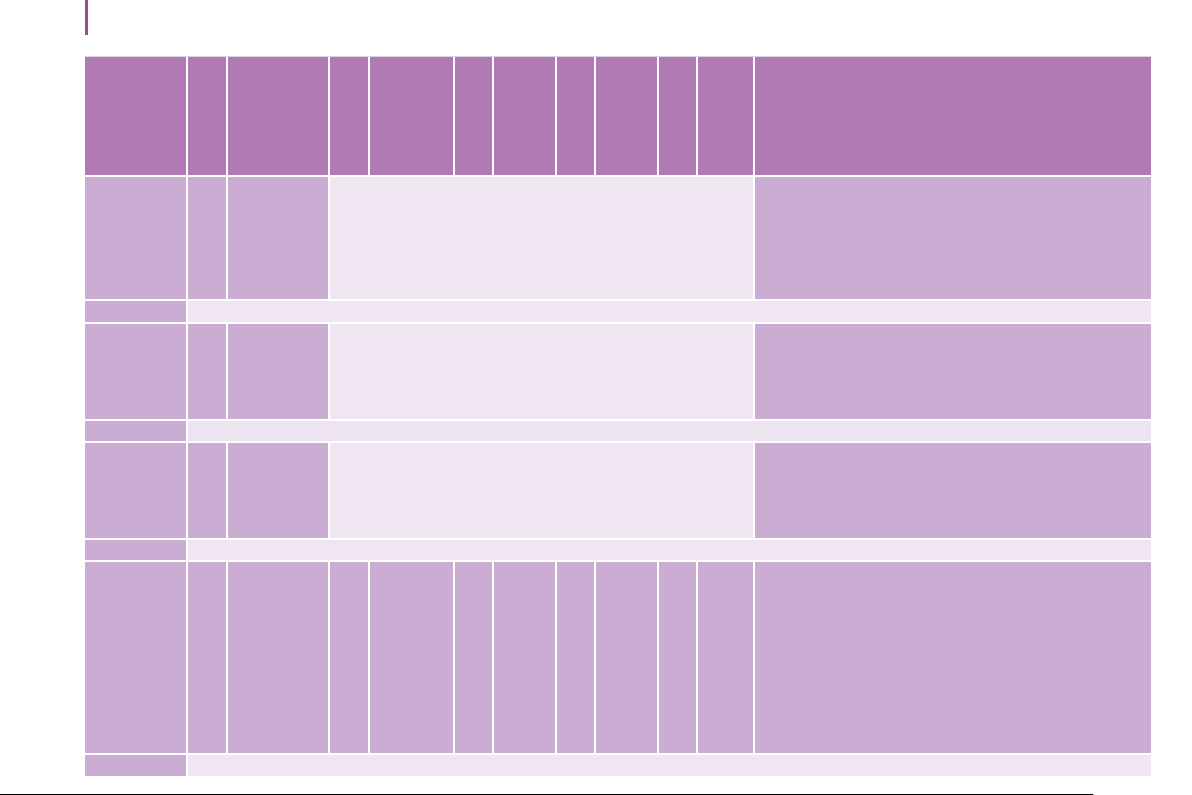
Audio equipmen
t
92
Scroll the
display
Select
Display
Select
Display
Select
Display
Select
Display
Select
Display
Enables you
to…
AF
Switching
On
AF
Switching
Off
Set the sensitivity of automatic reception of the FM
radio frequencies (tuner):
- On for a search of the transmitters which have
the strongest signal,
- Off for a search of all of the surrounding
transmitters.
Traffic
Information
Off
Traffic
Information
On
Receive traffic information from FM1, FM2, FMA
radio stations.
TA is displayed if On is selected.
Regional
mode Off
Regional
mode On
Select the reception of local or regional
programmes (different from one region to another):
- Off for no programmes,
- On for local programmes.
MP3
display
(if there
is an MP3
CD in the
player)
Title
Author
Album
Folder
name
File
name
Select the type of MP3 display for the current track
(if ID3 TAG available for the CD):
- Title for the title of the track,
- Author for the name of the artist,
- ALBUM for the title of the album,
- Folder name for the name of the directory
(folder) for the current track,
- File name for the name of the file.

A
udio equipment
93
4
T
ECHNOLOGY
on
BOAR
D
Scroll the
display
Select
Display
Select
Display
Select
Display
Select
Display
Enables you
to…
Speed
volume Off
Speed
volume
Low
Speed
volume
High
Select the automatic control of the volume in relation to
the vehicle speed:
- Off.
- Low for on (low sensitivity),
- High for on (high sensitivity),
Radio on
vol - Limit
on
Radio
on vol -
Limit off
Select the initial volume setting:
Limit on:
- if the volume equal to or greater than the maximum
value, the volume will be at maximum,
- if the volume is between the maximum and
minimum values, the volume will be that memorised
when switching off,
- if the volume is equal to or lower than the minimum
value, the volume will be at minimum.
Limit off:
- the volume is memorised when switching off.
Choose a volume setting between 1 and 40.
EXT Audio
off
EXT
Audio
Volume
23
Choose the volume setting for an external telephone:
- Off for mute,
- 23 by default. Select a volume level between 1 and 40.

Audio equipmen
t
9
4
Scroll the
display
Select
Display
Select
Display
Select
Display
Select
Display
Enables you
to…
Radio off
00 MIN
20 MIN
Set the audio system play time after switching off the
engine:
- 00 MIN to switch off immediately,
- 20 MIN to play for 20 minutes.
Place the key in the "MAR" running position to switch
the audio system back on.
System
reset NO
YES
Restore factory settings.
- NO to not restore factory settings,
- YES to restore factory settings, "Resetting" is
displayed.
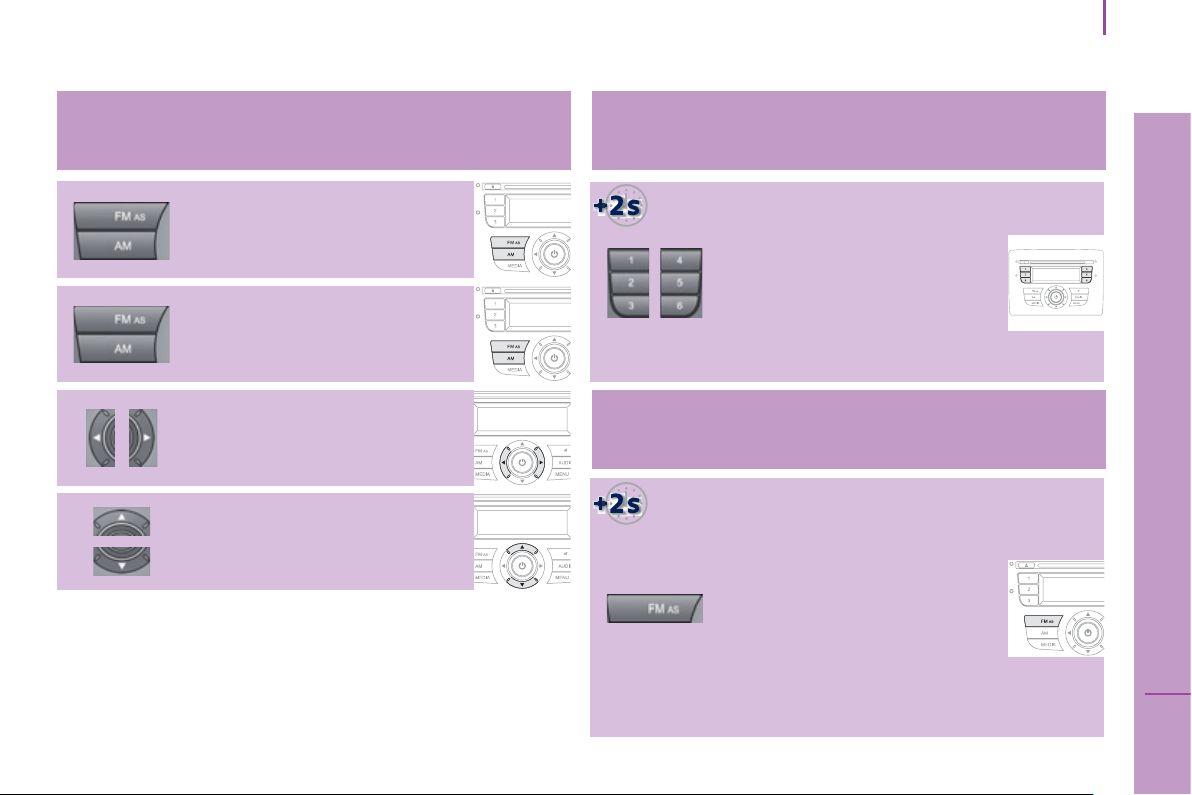
A
udio equipment
95
4
T
ECHNOLOGY
on
BOAR
D
SELECTING A STATION
STORING A STATION - MANUALLY
After selecting a frequency, press
one of these buttons (for more than
2 seconds) to store the frequency.
Storing is confirmed by an audible
beep.
Press the AM or FM button and then
select a waveband from: MW1 and
MW2 or FM1, FM2 and FMA.
To select the radio function, make a
short press on the AM or FM button.
Briefly press one of these buttons to
carry out an automatic search of the
radio stations.
Press one of these buttons to carry
out a manual search of the radio
stations.
RADIO
Press the FM AS * button (for more
than 2 seconds) until the audible
signal is heard.
The radio searches for and stores the
6 stations with the strong signal (in
decreasing signal strength order) in
the waveband.
A long press on the button updates
the selection.
STORING A STATION - AUTOMATICALLY
* AutoStore: automatic storing (pre-setting) of stations.
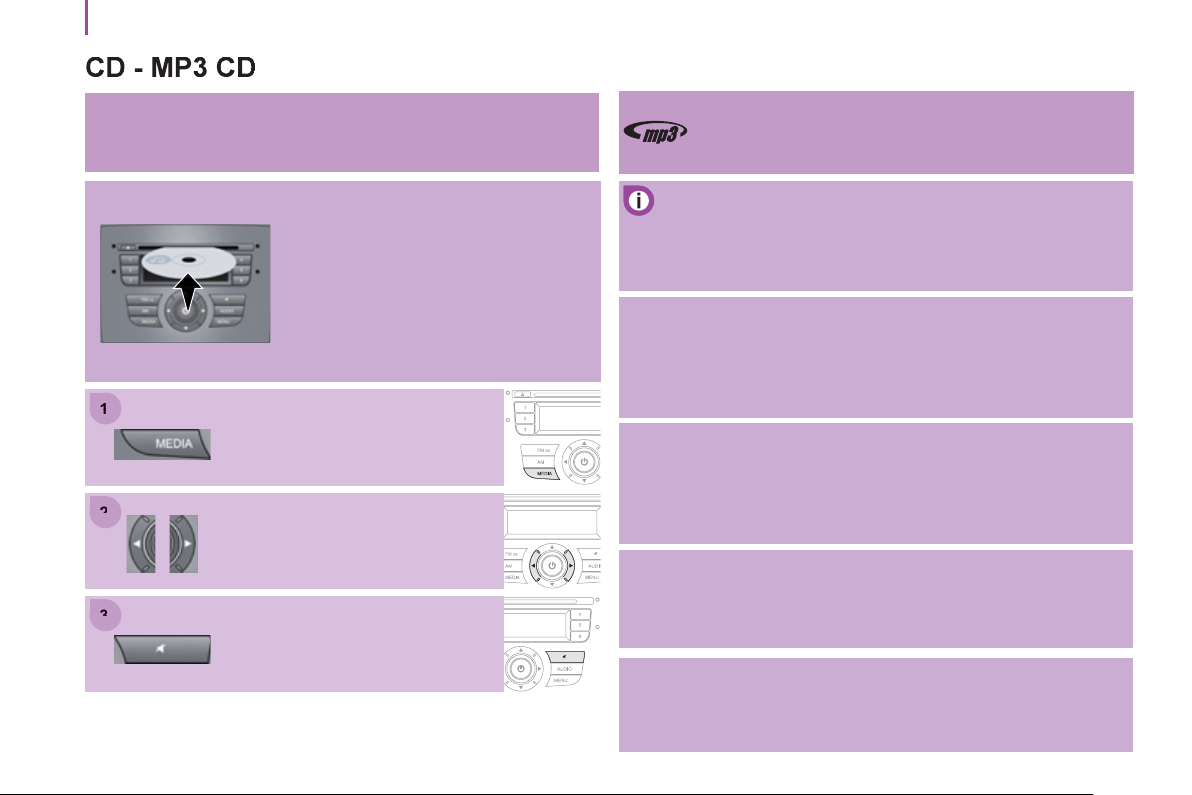
2
2
1
1
3
3
Audio equipmen
t
96
The MP3 format, an abbreviation of MPEG 1.2 & 2.5 Audio
Layer 3, is an audio compression standard which permits the
recording of several tens of music files on a single disc.
MP3
In order to be able to play a recorded CDR or CDRW, when
recording it is preferable to select standards ISO 9660
level 1.2 or Joliet.
If the disc is recorded in another format, it may not be played
correctly.
It is recommended that the same recording standard is
always used for an individual disc, with as low a speed as
possible (4x maximum) for optimum sound quality.
In the particular case of a multi-session CD, the Joliet
standard is recommended.
The audio equipment will only play files with the extension
".mp3" with a sampling rate of 22.05 KHz or 44.1 KHz. No
other type of file (.wma, .mp4, m3u...) can be played.
It is advisable to restrict file names to 20 characters without
using special characters (e.g.: () " " ? ; , space) to avoid any
playing or displaying problems.
PLAY A
C
D
Insert circular compact discs only.
Some anti-pirating systems, on original
discs or CDs copied using a personal
recorder, may cause faults which are no
reflection on the quality of the original
player.
Insert a CD or an MP3 CD in the player,
play begins automatically.
If the player already contains a disc,
switch on the audio equipment and
press the MEDIA source button briefl y.
The last track played begins.
Press one of the buttons to select a
track on the CD.
Press and hold one of the buttons for
fast forwards or backwards.
Press this button to pause play.
Press again to resume play.
97
Bluetooth hands-free s
y
stem
4
T
ECHNOLOGY
on
BOAR
D
When you switch on the audio system, you may have to enter a
code for access to its functions.
In this cases, the message " Radio Code " is displayed in the
screen, followed by 4 dashes.
The 4-number code should be entered using the buttons 1 to 6.
You have 20 seconds to enter the code.
If the wrong code is entered, the audio system gives an audible
signal and the message message " Radio blocked/wait " is
displayed. You should then start the procedure again.
Keep your code in a safe place, never inside the
vehicle .
TELEPHONE PRE-EQUIPMENT
If the hands-free kit is fitted to your vehicle, you can use the
audio system and the steering mounted controls to manage your
telephone calls.
During an incoming call, the audio system is deactivated, and
the message " PHONE " is displayed.
The volume can be adjusted and stored via the " EXTERNAL
AUDIO " menu.
Each time an incorrect code is entered, the waiting time before
the code can be entered again increases progressively (1 minute,
2 minutes, 4 minutes, 8 minutes, 16 minutes, 30 minutes, 1 hour,
2 hours, 4 hours, 8 hours, 16 hours, 24 hours).
The language of the Bluetooth system adapts automatically
by detecting the language set on your telephone.
SYSTEM
INTRODUCTION
This system allows you to:
- send and receive calls via the Bluetooth
®
connection with your
mobile telephone,
- display the names of your contacts and numbers from the
directory of your mobile phone in the instrument panel screen,
- use voice commands to make a call and manage your
contacts while keeping both hands on the steering wheel,
- hear your text messages via the voice synthesiser built into
the system,
- listen to MP3, WMA, AAC, M4A, MP4 and WAV audio files
from a USB storage device,
- display information on the track being played in the radio
screen (title, artist, etc...),
- control vocally a portable music player (iPod
®
type),
- recharge your portable music player (iPod
®
type) via the USB
port.
Audio equipment
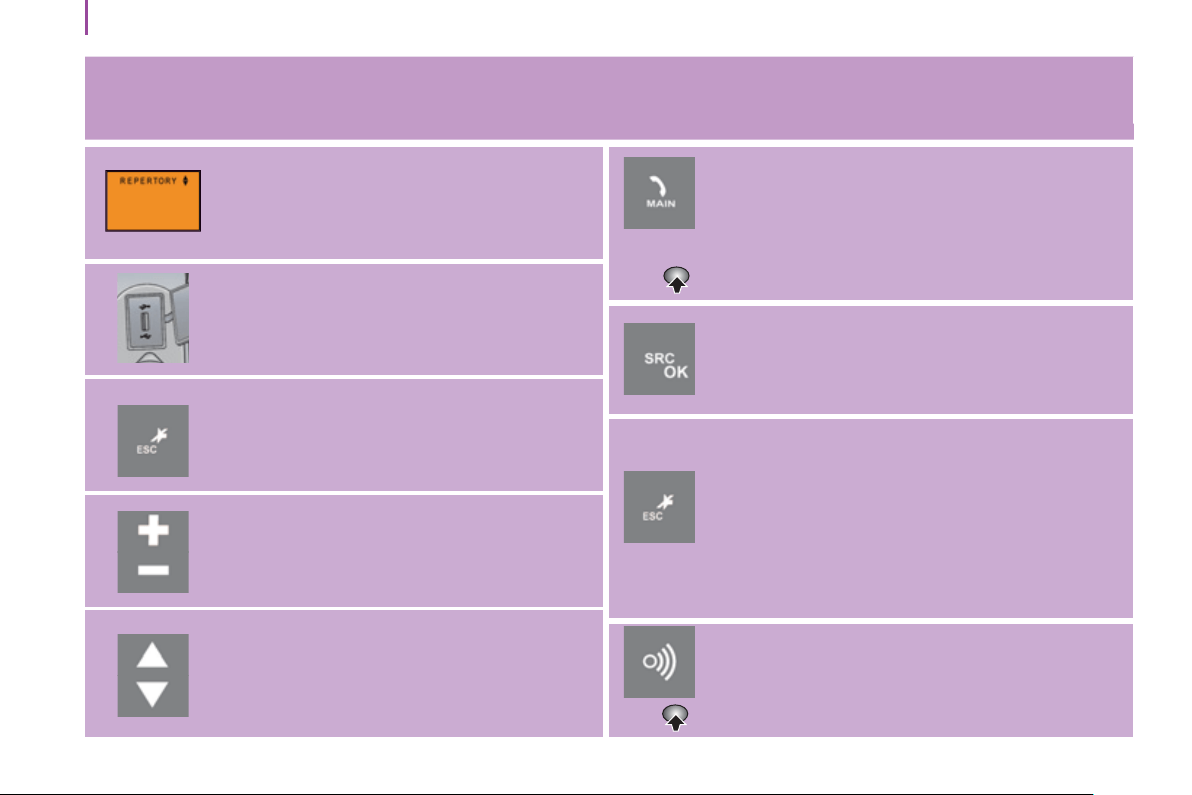
98
Bluetooth hands-free s
y
stem
PRE
S
ENTATION
Adjustment of the volume of the functions:
hands-free, audio and text message player, voice
announcements.
Pause/resume the file being played (portable
player).
USB connection port. Remove the plastic cover to
connect your portable player.
Display of the menus and directories of the files
being played (USB storage device).
- Scroll the menu options.
- Select the files to be played (portable player).
- Scroll the list of text messages.
- Activate voice recognition.
- Interrupt the voice message in order to issue a new
voice command.
- Deactivate voice recognition.
- Interrupt the voice message.
- Exit from the main menu.
- Exit from a sub-menu and return to the previous
menu option.
- Exit without storing.
- Deactivate/reactivate the microphone during a
telephone conversation.
- Set the volume of the incoming call ring to zero.
- Confirm the current menu option.
- Transfer he telephone conversation from the hands-
free system to the mobile telephone and vice versa.
- Select the audio source.
- Select the text displayed.
- Activate the main menu.
- Confirm the current menu option.
- Accept the incoming call.
- Switch one telephone conversation to another.
- Select a visual message.
- Reject an incoming telephone call.
- End the current telephone call.
Description of the steering mounted controls
- Repeat the last voice message.

99
Bluetooth hands-free s
y
stem
4
T
ECHNOLOGY
on
BOAR
D
PRE
S
ENTATION
Description of voice commands
By pressing this button and saying "Help", you have access to the list of voice commands available at any time or by saying "Help"
after a system message.
The main voice commands for navigating in the menu are the following:
You can access the main menu of the system via the voice command by pressing this button.
* If the system is activated. ** Not available on iPod
®
.
LAST CALLS
HENRY BRIDGES
OK CHRISTOPHER ANDREW
123456789
PHONEBOOK HENRY BRIDGES
OK
CHRISTOPHER ANDREW
123456789
MESS. READER READ LAST
IN BOX OK VIS+ACOUST
DELETE ALL VIS. SIGNAL
OK SIGNAL TYPE READER OFF
MEDIA PLAYER USB OPTION * OK PLAY ANYTHING
OK SET USB FOLDERS **
ARTISTS
GENRES
ALBMUS
PLAYLISTS
OK TRACK PLAY
SHUFFLE
TRACK LOOP
SETTINGS OK USER DATA OK COPY PHONEBOOK
PAIRING DELETE USERS
ADVANCED OPTIONS DELETE PHONEBOOK
EXIT DELETE ALL
ADD CONTACTS
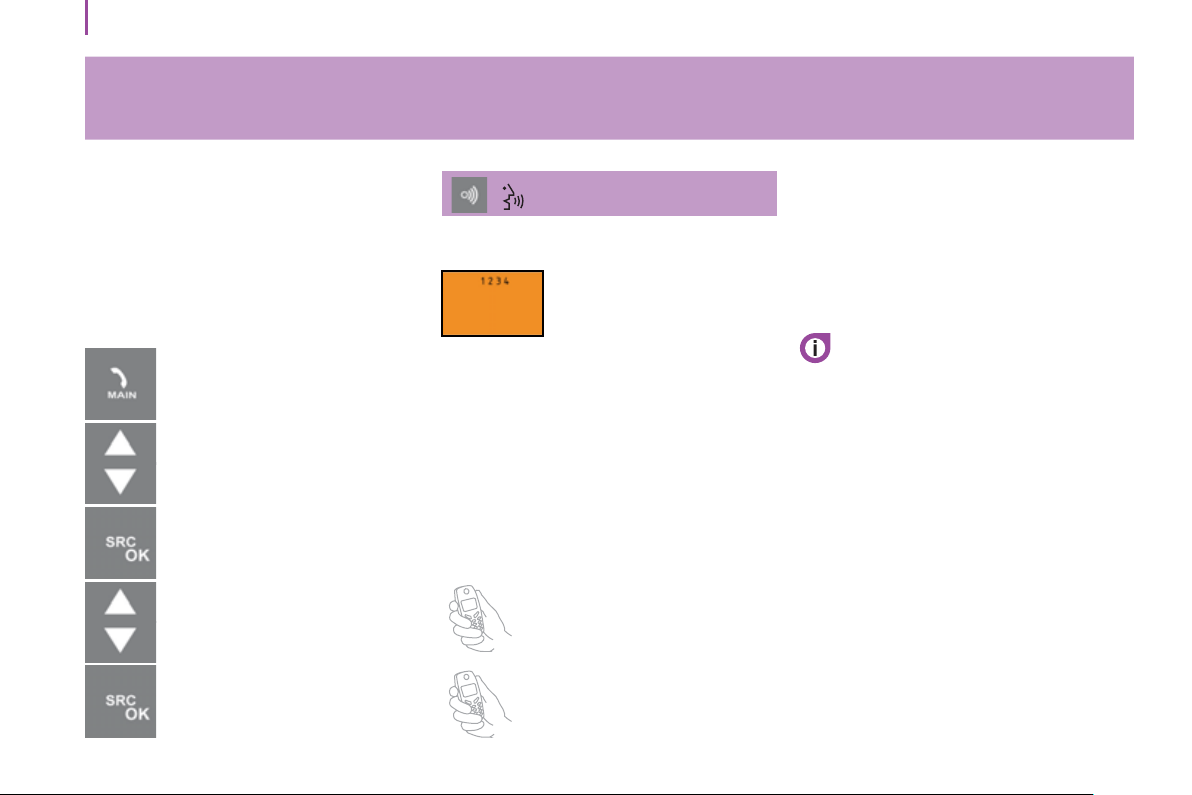
1
00
Bluetooth hands-free s
y
stem
When prompted by the telephone, enter the
PIN displayed in the instrument panel.
If the pairing has been successful, the
system announces "Connecting".
The name of the telephone identified
appears in the instrument panel screen,
pairing is confirmed.
"Settings"\wait for a response\
"Pairing".
PIN
Pairing a mobile telephone
Pairing consists of setting your vehicle's
Bluetooth
®
system to recognise your mobile
telephone.
For this you must activate the Bluetooth
®
function of your telephone and set its
visibility.
MOBILE TELEPHONE WITH HANDS-FREE FUNCTION
With the ignition on, activate the
main menu.
Select SETTINGS.
Confirm.
Select PAIRING.
Confirm.
This number, which permits
recognition of your mobile
telephone, is generated
randomly by the system.
It is communicated by the instrument panel
screen and is repeated verbally by the
system.
This PIN is independent of your SIM card
and your mobile's access code.
Once your handset has been paired, there is
no need to keep a record of this number.
If you change your mobile telephone, you
must repeat the pairing procedure as you
will be given a new PIN.
Look for the option which displays
the Bluetooth
®
system detected
by your telephone.
When the system has been
identified, a message appears in
your telephone (My car, ...).
Pressing MAIN or ESC during
the pairing phase may cancel the
procedure.
If the pairing fails, an error message will
appear; in this case, repeat the procedure.
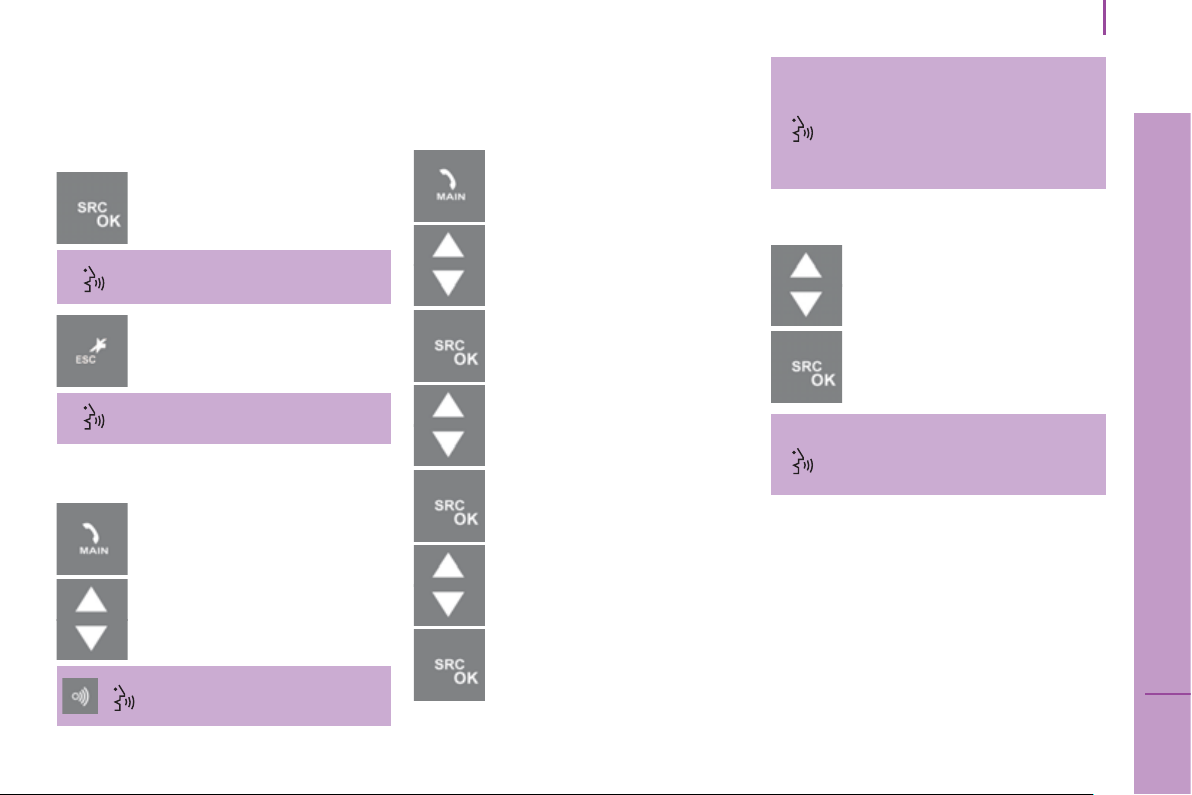
1
01
Bluetooth hands-free s
y
stem
4
T
ECHNOLOGY
on
BOAR
D
Downloading your phonebook
There are 2 options:
1 - Following the pairing procedure, the
system suggests downloading your
telephone's phonebook.
Calling a contact recorded in the
phonebook
Your telephone's phonebook must first be
downloaded into the system.
"Call [Name of the person]"\
wait until the information relating
to the person (name, tel. n°, ...)
appears\
"Yes" to make the call or "No" to
cancel.
Pressing confirms your
agreement.
"Yes" starts the download.
Pressing declines this download.
"No" declines.
2 - You can download the phonebook later
via the menu:
Activate the main menu.
Select SETTINGS then USER
DATA then PHONEBOOK.
"Settings"\"User data"\
"Download phonebook".
Activate the main menu.
Select PHONEBOOK.
Confirm.
Select the group with which
the person to be contacted is
associated.
Confirm.
Select the name.
Confirm to make the call, if the
person has only one number.
If the person has more than one number:
Select the number.
Confirm to make the call.
Specify "Home" or "Work", or "Next"
or "Previous".
Press OK to make the call.
1
02
Bluetooth hands-free s
y
stem
Making a call by dialling a number Ending a call Incoming call
"Dial / Dial a number"\
Say the number character by
character (+, #, *), digit by
digit (0 to 9).
The system displays and
verbally repeats the number
recognised.
"Call" if the number is correct.
or
"Cancel" to cancel dialling of the
number.
"Start over" to delete and start
dialling another number.
"Repeat" to hear the number again.
If the person is recorded in
the phonebook, his name is
displayed.
Press to accept the call.
Press and hold to decline the
call.
Press to ignore the call, however,
the call is stored in the log of
incoming calls.
During a call, if a second incoming call
is received.
By means of the voice commands only
Press and hold.
Press to switch the conversation
and place the other person on
hold.
1
03
Bluetooth hands-free s
y
stem
4
T
ECHNOLOGY
on
BOAR
D
Transferring an active call
There are 2 options:
1 - From the mobile telephone to the hands-
free system
With the ignition on, the recognition
connection between the mobile telephone
and the vehicle's audio equipment is done
automatically.
Confirm this recognition using the keypad on
the mobile telephone.
The call can then be transferred.
Placing a call on hold
Call list
This enables you to call the number of one
of the last 10 calls received, of one of the
last 10 people called or of one of the last
5 missed calls.
2 - From the hands-free system to the
mobile telephone
Press to deactivate the
microphone and place your
contact on hold.
Press again to resume the
conversation.
Activate the main menu.
Select CALL LIST.
Confirm.
Select the number to be called.
Confirm.
"Callback" for the last person who
called you, or
"Redial" for the last person you
called.
"Yes" or "No" to confirm/cancel.
The "Redial" button can also be
used.
The system will again ask "Redial or
callback?".
"Callback" to call back the last
person who called you.
"Redial" to redial the last person you
called.
Press, the system's controls are
still active.
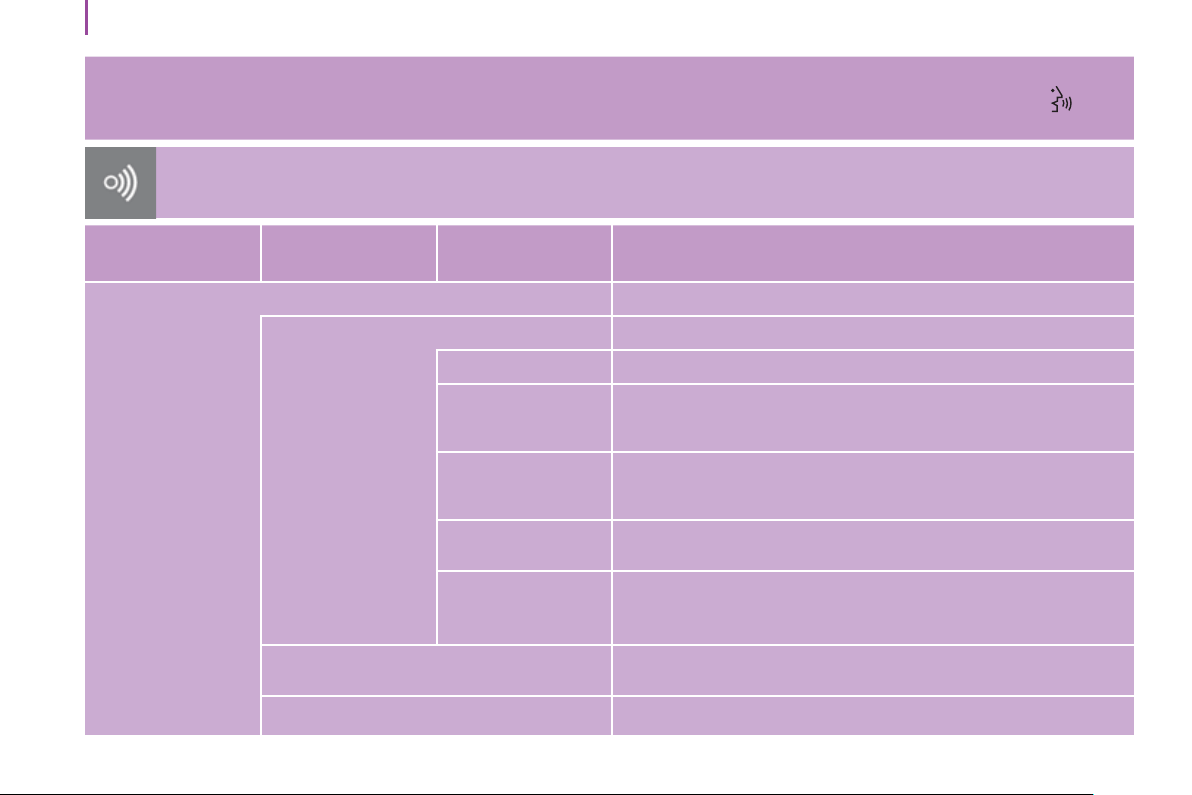
1
0
4
Bluetooth hands-free s
y
stem
V
OICE COMMAND
S
The key words which can be recognised by the system are organised into three levels (levels 1, 2 and 3).
When you say a level 1 command, the system makes the level 2 commands available; when you say a level 2 command, the
system makes the level 3 commands available.
Settings/pairing
Level 1 Level 2 Level 3 Actions
Settings
Adjust
Configure
User data
Activation of the hands-free system SETTINGS menu.
Activation of the USER DATA menu.
Delete users Deletion of the data recorded for all of the users.
Delete contacts /
Delete directory /
Delete numbers
Deletion of the phone book data.
Copy phone book /
Copy phonebook /
Copy numbers
Transfer of the phone books from your mobile telephone to the
hands-free system (available according to the type of mobile
telephone).
Add Contacts
Transfer of the names from your mobile telephone to the hands-free
system (available according to the type of mobile).
Delete all
Deletion of the pairing data and of the phone books / contacts of all
of the telephones paired, with restoration of the default settings of
the hands-free system.
Pairing / Pair / Pair the user Activation of the pairing procedure for a new mobile telephone.
Advanced options Activation of the ADVANCED OPTIONS menu.
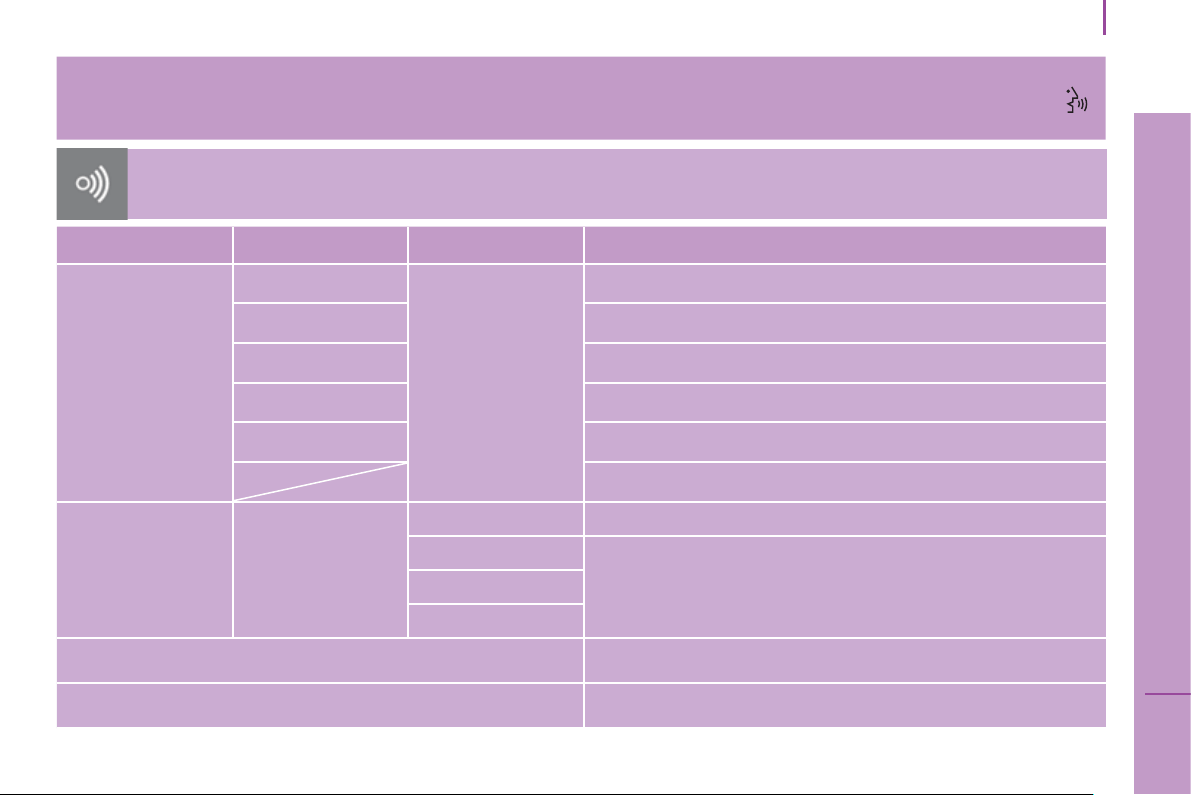
1
05
Bluetooth hands-free s
y
stem
4
T
ECHNOLOGY
on
BOAR
D
The key words which can be recognised by the system are organised into three levels (levels 1, 2 and 3).
When you say a level 1 command, the system makes the level 2 commands available; when you say a level 2 command, the
system makes the level 3 commands available.
V
OICE COMMAND
S
Mobile telephone with hands-free function
Level 1 Level 2 Level 3 Actions
Dial / Dial a number
One, Two, ... , Plus,
Star, Hash
Call / Dial
Entering the digits or symbols to dial the telephone number.
Delete / Correct Deletion of the last group of digits entered.
Start over
Deletion of all of the groups of digits entered with the option
of entering a new number.
Repeat
Repeating the telephone number entered and recognised by the
hands-free system.
Cancel Cancellation of dialling of the number.
Sending the call to the number entered verbally.
Call [ Name ]
Yes / No Call to the name of the person, stored in the system's phone book.
Mobile
Call to the name of the person with personalisation if there are
several numbers stored in the system.
Home
Work / Office
Redial Call to the last person called.
Callback Call to the last person who called.
1
06
Bluetooth hands-free s
y
stem
If your mobile telephone includes this
function, every time a text message is
received, the system produces an audible
signal and offers to read the text message
vocally.
To read the text received.
"Yes" starts the playback of the text
received.
Only on mobile telephones with this
function
To save a message and read it
later.
"No" to save the message and read
it later.
TEXT READER
Read an incoming text message
Read the last text received
Activate the main menu.
Select MESS. READER.
Confirm.
Select READ LAST.
Confirm.
"Read last" starts playback of
the last text message received.
List of text messages
The system can hold around 20 text
messages. If the list is full, reception of a
new text message causes the deletion of the
oldest text message.
To go to a specific text message:
Activate the main menu.
Select MESS. READER.
Confirm.
Select IN BOX.
Confirm.
1
07
Bluetooth hands-free s
y
stem
4
T
ECHNOLOGY
on
BOAR
D
Select the desired text message.
"Message reader" then after the
audible signal "message received".
"Previous" or "Next" moves through
the list of text messages.
"Read" starts reading of the text
message selected.
Confi rm to read the text message.
Managing text messages
"Read" starts reading of the
message.
"Erase" deletes the message.
"Call" allows you to contact the
sender of the message.
Deleting all text messages
Activate the main menu.
Select DELETE ALL.
Confirm.
The system asks you to confirm your choice:
Confirm to delete.
To cancel.
"Message reader" then after the
audible signal "Delete all".
The system requests confirmation,
reply with: "Yes" to confirm or "No"
to cancel.
"Message reader" then after the
audible signal "Signal type".
The system lists the options, select
between: "Reader deactivated",
"Audio and visual info" or "Visual
info only".
Information settings
Activate the main menu.
Choose the desired option.
During reading of the message:
Activate the main menu.
Select MESS. READER.
Confirm.
Select SIGNAL TYPE.
Confirm to select from the
3 choices available:
- Audio + visual: the system signals the
receipt of a message audibly and visibly
and offers to read it.
- Visual only: reception of a message is
signalled visibly in the instrument panel.
- Off: the text message reader is
deactivated.
1
08
Bluetooth hands-free s
y
stem
V
OICE COMMAND
S
Message reader
The key words which can be recognised by the system are organised into three levels (levels 1, 2 and 3).
When you say a level 1 command, the system makes the level 2 commands available; when you say a level 2 command, the
system makes the level 3 commands available.
Level 1 Level 2 Level 3 Actions
Message reader
Messages
Messages received /
Received
Activation of the MESS. READER menu.
Activation of the list of text messages received.
Read/ read again Reads the text message selected in the list.
Call Deletion of the phone book data.
Delete
Transfer of the phone books from your mobile telephone to the
hands-free system (available according to the type of mobile).
Back / Next / Next Go to the next text message in the list
Back / Previous Go to the previous test message in the list.
Read last / read last message / read message Read the last text message received.
Delete all / Delete messages / Delete Delete all text messages in the list after confirmation.

1
09
Bluetooth hands-free s
y
stem
4
T
ECHNOLOGY
on
BOAR
D
Level 1 Level 2 Level 3 Actions
Read messages /
Messages
Type of info / Info
Activation of the MESS. READER menu.
Deactivation of the info settings function.
Deactivate reader /
Reader not active /
Reader off
Deactivates the reading of text messages.
Visual and audible
info / Visual and
audible / Visual plus
audible / Audible
Reception of a text message is signalled in the instrument panel
screen and by an audible signal.
Visual info only /
Only visual / Visual
Reception of a text message is signalled only in the instrument
panel screen.
11
0
Bluetooth hands-free s
y
stem
Audio tracks in .mp3, .wma, .wav format
and playlists with the extension .wpl are
recognised by the system.
Selecting tracks
PORTABLE AUDIO DEVICE PLAYER
Autoplay
USB port
Connect the device to the
USB port directly or using an
appropriate cable (not provided).
Ignition on:
- activates the recognition connection and
automatically starts the playlist,
- or activates automatic play if the system
is programmed to autoplay.
Otherwise, select the track to be
played via the menu.
Activate the main menu.
Select SETTINGS then MEDIA
PLAYER then TRACK PLAY.
Confirm.
Select READER or READER
OFF.
Confirm.
Activate the main menu.
Select MEDIA PLAYER.
Confirm.
Choose one of the selection
modes:
FOLDERS, ARTISTS, GENRES,
ALBUMS, PLAYLISTS, SHUFFLE
(random play of tracks in the
playlist).
"Media player", then "USB
options" and finally choose
"Folders", "Artists", ...
The PLAY ALL function enables you
to listen to the entire content of a
selection mode (folders, artists, ...).
11
1
Bluetooth hands-free s
y
stem
4
T
ECHNOLOGY
on
BOAR
D
Displaying the fi le information
Previous track
Confirm.
Pausing/resuming play
Next fi le
Changing the sound source
Select the file.
Start play.
This function is only available by voice
command.
Pressing:
- within 3 seconds following the start of
play enables you to play the previous
track.
- after 3 seconds enables you to listen to
the current track again.
"Previous".
Press to play the next file.
"Next".
"Stop" to interrupt playback. "Play"
to continue playback.
Press to select the audio source
(Radio, CD, Media player).
Pressing suspends or resumes
play.
"Track info".
The voice function "Play" is only
available if playback has been
previously interrupted by the "Stop"
command.
112
Bluetooth hands-free s
y
stem
V
OICE COMMAND
S
Portable audio device
Level 1 Actions
Player / Multimedia player / Media player Activation of the MEDIA PLAYER menu.
Play / Play the track / Play the multimedia file Activation of play.
Stop / Stop the track / Stop the multimedia file Interruption of playing of the current file.
Next / Next track Go to the next menu or file.
Previous / Previous track / Back Go to the previous menu or file.
Shuffle on / Random play on Activation of playing of the files in random order.
Shuffle off / Random play off Deactivation of playing of the files in random order.
Track repeat on / Repeat on / Repeat Activation of playing of the files in a loop.
Track repeat off / Repeat off Deactivation of playing of the files in a loop.
Now playing / Track information / What is playing / What is this? Display of the information for the file currently being played.
USB media settings / USB settings Activation of the MEDIA PLAYER menu.
Activate automatic play Activation of automatic play on connection of a portable device.
Deactivate automatic play Deactivation of automatic play on connection of a portable device.
Shuffle / Any / Random Activation of play of all tracks in random order
The key words which can be recognised by the system are organised into three levels (levels 1, 2 and 3).
When you say a level 1 command, the system makes the level 2 commands available; when you say a level 2 command, the
system makes the level 3 commands available.

11
3
Bluetooth hands-free s
y
stem
4
T
ECHNOLOGY
on
BOAR
D
Level 1 Level 2 Level 3 Actions
Player / Multimedia
player / Media
player / Player
Activation of the MEDIA PLAYER menu.
Advanced USB options / Other options Activation of playback options.
Folder / Explore
folders / Consult list
of folders
Activation of FOLDERS menu.
Artists / List of artists Activation of ARTISTS menu.
Genres / List of
genres
Activation of GENRES menu.
Album / List of
albums
Activation of ALBUMS menu.
Playlist / List of
tracks
Activation of PLAYLISTS menu.
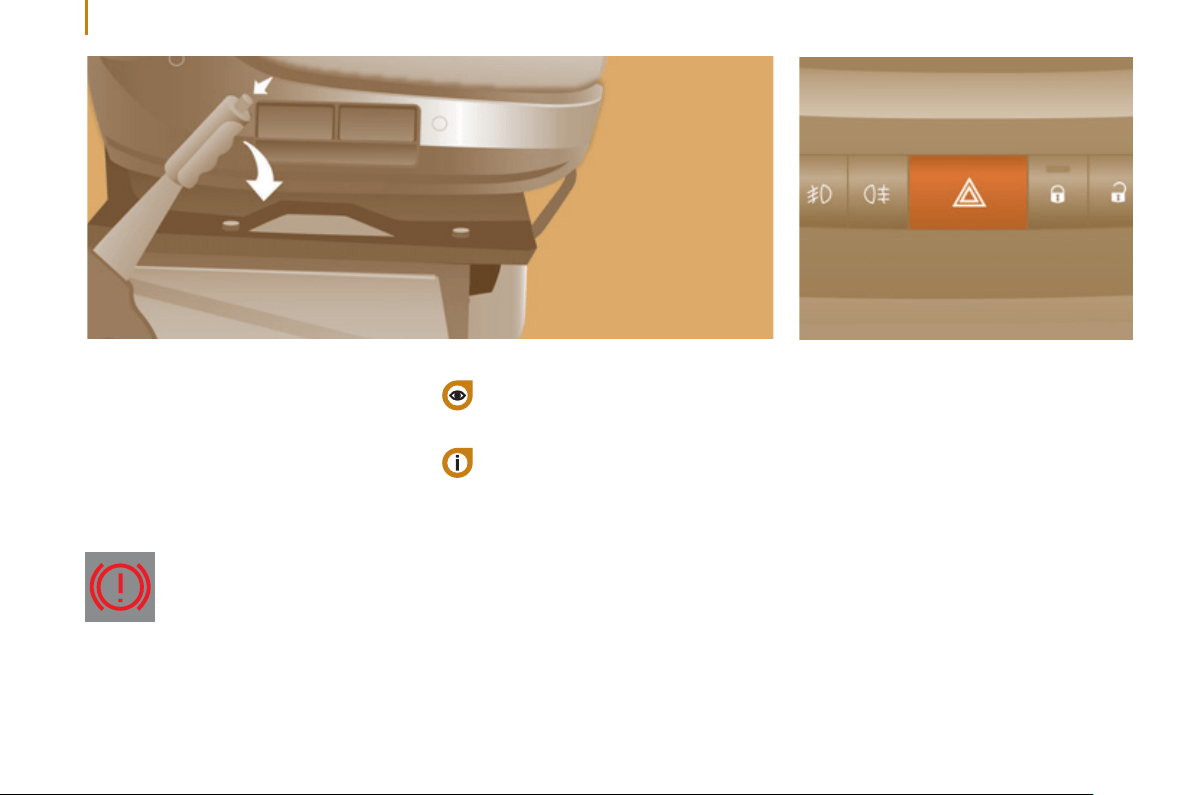
114
Drivin
g
safel
y
DRIVING SAFELY
PARKING BRAKE HAZARD WARNING LAMP
S
Press this button, the direction indicators
flash.
They can operate with the ignition off.
The hazard warning lamps should only be
used in dangerous situations, when stopping
in an emergency or when driving in unusual
conditions.
A
pp
lyi
n
g
Pull the parking brake lever up to immobilise
your vehicle.
Check that the parking brake is applied
firmly before leaving the vehicle.
If the parking brake is still on or has not
been released properly, this is indicated
by this warning lamp which comes on on
the instrument panel.
When parking on a slope, direct your
wheels towards the pavement and pull the parking
brake lever up.
There is no advantage in engaging a gear after
parking the vehicle, particularly if the vehicle is loaded.
Pull on the parking brake lever, only
with the vehicle stationary .
Releasin
g
Pull the lever and press the button to lower
the parking brake lever.
In the exceptional case of use of the
parking brake when the vehicle is
moving, apply the brake by pulling gently
to avoid locking the rear wheels (risk of
skidding).
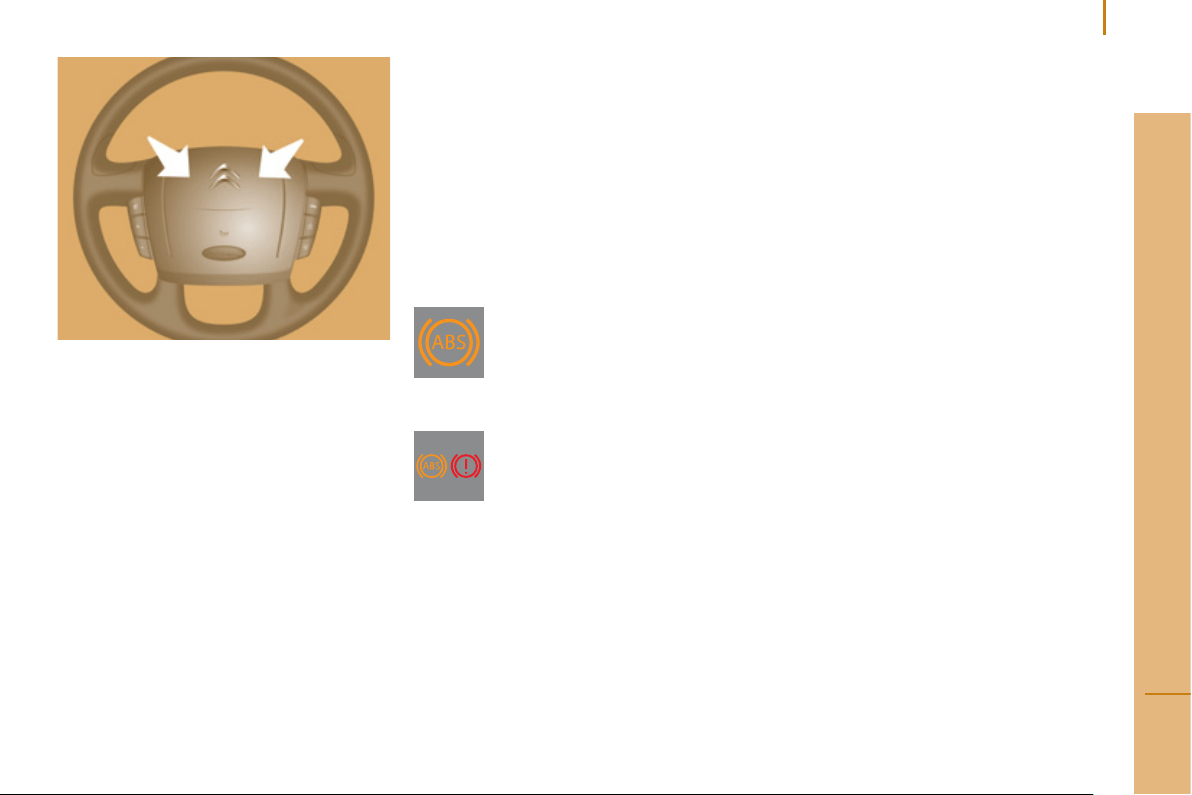
11
5
5
Drivin
g
safel
y
SAFETY
HORN
Press the centre of the steering wheel.
ANTI-LOCK BRAKING SYSTEM
(
ABS - EBFD
)
The ABS and EBFD (electronic brake force
distribution) systems improve the stability
and manoeuvrability of your vehicle on
braking, in particular on poor or slippery
surfaces.
The ABS prevents locking of the wheels, the
EBFD provides full control of the braking
pressure wheel by wheel.
EMERGENCY BRAKING A
SS
I
S
TANCE
SYSTEM
(
EBA
)
In an emergency, this system enables the optimum
braking pressure to be reached more quickly,
press the pedal fi rmly without releasing it.
It is triggered by the speed at which the
brake pedal is activated.
This alters the resistance of the brake pedal
under your foot.
To prolong the operation of the emergency
braking assistance system: keep your foot
on the brake pedal.
Good practice
The anti-lock braking system comes into
operation automatically when there is a risk
of wheel lock. It does not reduce the braking
distance.
On very slippery surfaces (ice, oil, etc...)
the ABS may increase the braking distance.
When braking in an emergency, do not
hesitate to press the brake pedal firmly,
without releasing the pressure, even on a
slippery surface, you will then be able to
continue to steer the vehicle to avoid an
obstacle.
Normal operation of the ABS may be felt by
slight vibration of the brake pedal.
When changing wheels (tyres and rims),
ensure that these are approved.
If this warning lamp comes on,
it indicates a malfunction of the
ABS which could result in a
loss of control of the vehicle on
braking.
If this warning lamp comes on,
together with the brake warning
lamp, it indicates a malfunction of
the electronic brake force distribution
which could result in a loss of control
of the vehicle on braking.
Stop immediately.
In both cases, contact a CITROËN dealer.
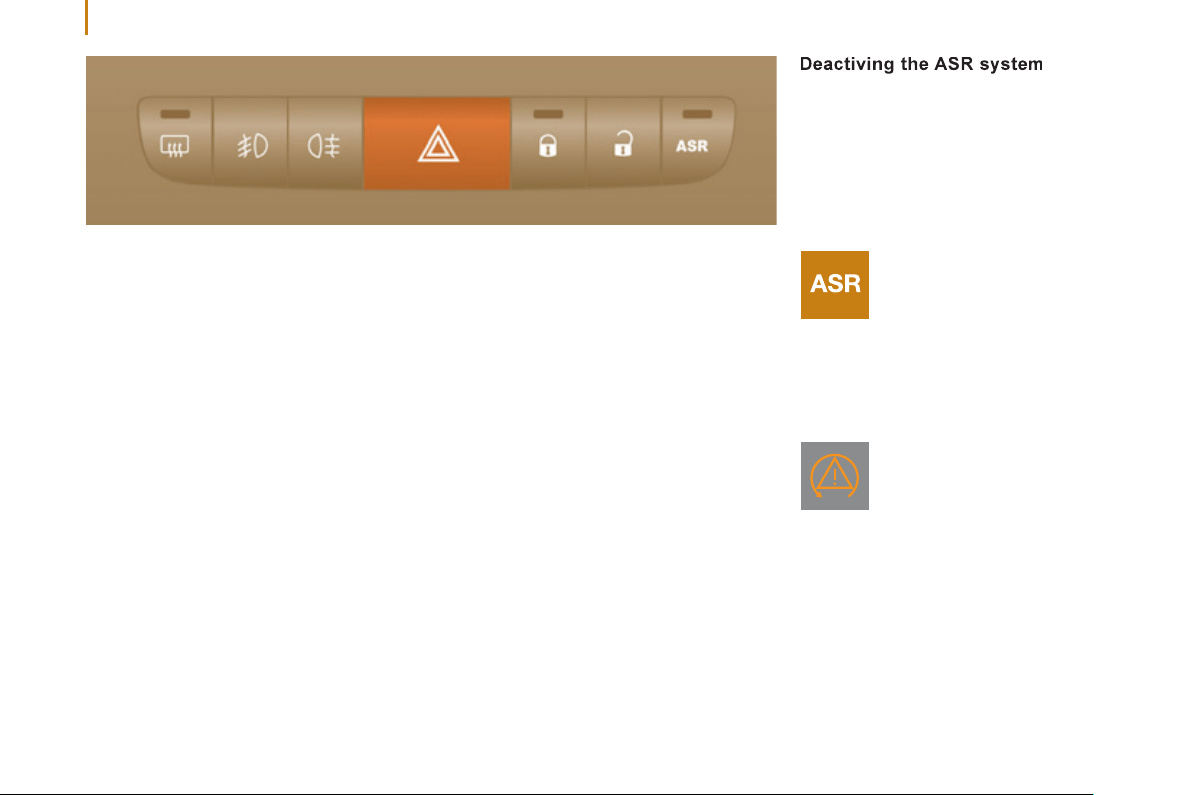
11
6
Drivin
g
safel
y
ANTI-SLIP REGULATION
(
ASR
)
AND ELECTRONIC STABILITY
PROGRAMME
(
ESP
)
These systems are linked and complement
the ABS.
The ASR system is very useful for
maintaining optimum drive and avoiding
losses of control of the vehicle on
acceleration.
The system optimises drive to prevent the
wheels skidding, by acting on the brakes of
the drive wheels and on the engine. It also
allows the directional stability of the vehicle
to be improved on acceleration.
Use the ESP to hold your course without
attempting to countersteer.
If there is a variation between the trajectory
followed by the vehicle and that required
by the driver, the ESP system automatically
acts on the engine and the brake of one
or more wheels, in order to put the vehicle
back on course.
In certain exceptional conditions (when
starting a vehicle stuck in mud or snow, or
on loose ground...), it could prove useful
to deactivate the ASR system to make the
wheels spin and regain grip.
O
p
eration of the ASR and ESP
s
y
stems
The LED flashes when the ASR or ESP is
triggered.
Press this button.
The LED on the button comes on: the ASR
system no longer acts on the engine operation,
but continues to act on the brakes.
Operatin
g
fault
When a malfunction of the ASR
system occurs, this warning lamp
comes on, accompanied by an
audible signal and confirmed by a
message on the screen.
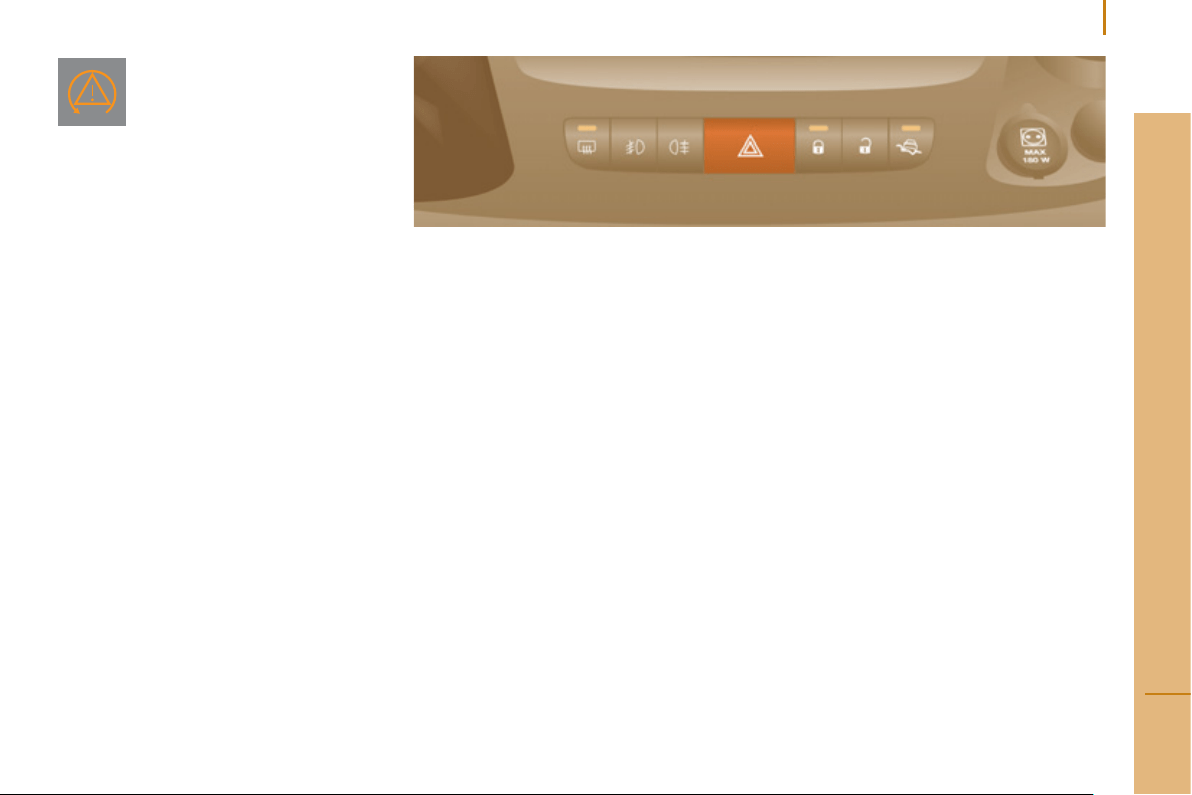
11
7
5
Drivin
g
safel
y
SAFETY
When a malfunction of the ESP
system occurs, this warning lamp
comes on, accompanied by an
audible signal and confirmed by a
message on the screen.
Contact a CITROËN dealer to have the
system checked.
Good
p
ractice
The ASR/ESP systems offer increased
safety during normal driving, but should not
incite the driver to take risks or to drive at
high speed.
The operation of these systems is ensured
if the recommendations of the manufacturer
regarding the wheels (tyres and rims),
the braking components, the electronic
components and the fitting and repair
procedures within the CITROËN network are
observed.
After an impact, have these systems
checked by a CITROËN dealer.
Intelli
g
ent Traction Control
System to improve traction on slippery
surfaces (snow, black ice, mud...)
This system checks for situations of difficult
surface adhesion that could make it difficult
to move off or make progress.
In these situations, Intelligent Traction
Control takes over from the ASR system,
by transferring drive to the wheel with the
best grip on the ground to provide the best
traction and trajectory control.
Activation
On starting the vehicle, the system is
deactivated.
Press the button, located on the dashboard,
to activate the system; the warning lamp in
the button comes on.
The system is active up to about 18 mph
(30 km/h).
Once the speed exceed 18 mph (30 km/h,
the system is deactivated automatically, but
the warning lamp in the button comes on.
The system is reactivated automatically
as soon as the speed drops below 18 mph
(30 km/h).
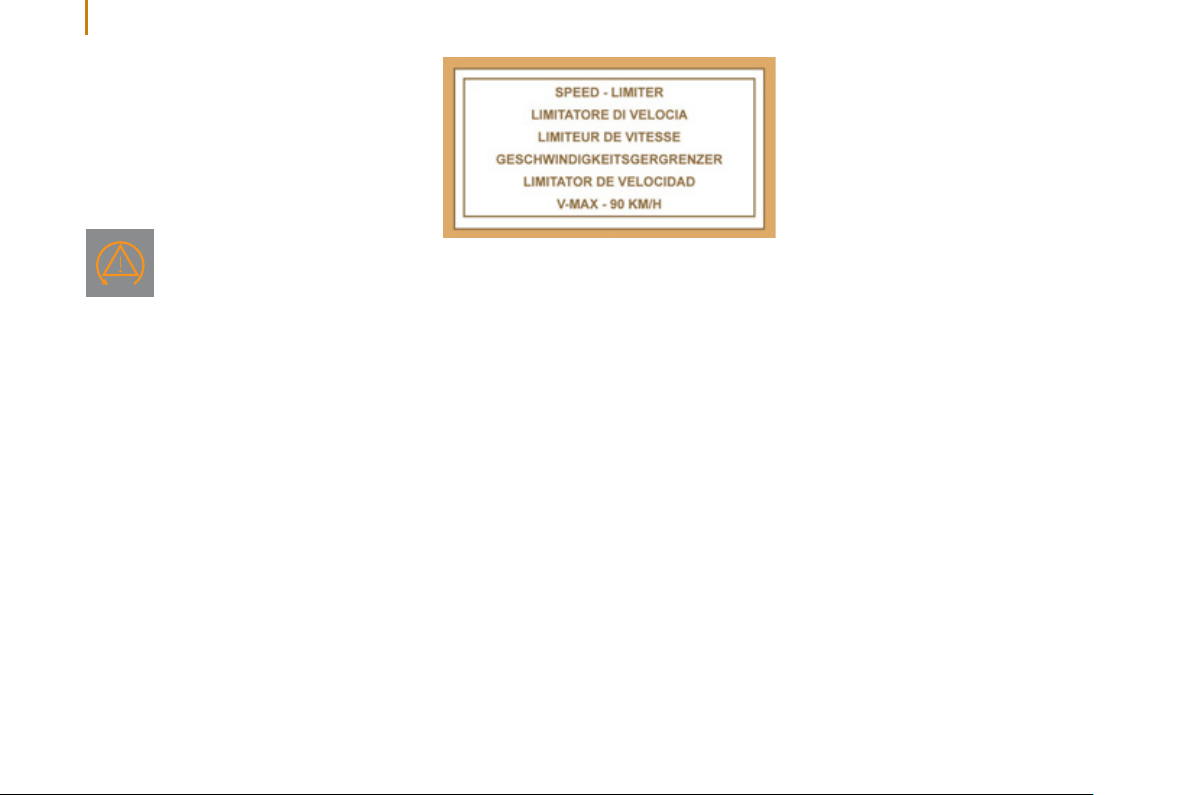
11
8
Drivin
g
safel
y
FIXED SPEED LIMITER
If your vehicle is fitted with this function,
the speed of your vehicle can be limited
to a fixed speed of approximately 55 mph
(90 km/h) or 60 mph (100 km/h). This
maximum speed cannot be changed.
A label in the passenger compartment
indicates this maximum speed.
The fixed speed limiter is not a function
of the cruise control type. It cannot be
activated or deactivated by the driver while
driving.
Deactivation
Press the button, located on the dashboard,
to deactivate the system; the warning lamp
in the button goes off and the ASR system is
active again.
Operating fault
This warning lamp comes on in
the instrument panel if there is a
fault with the system.
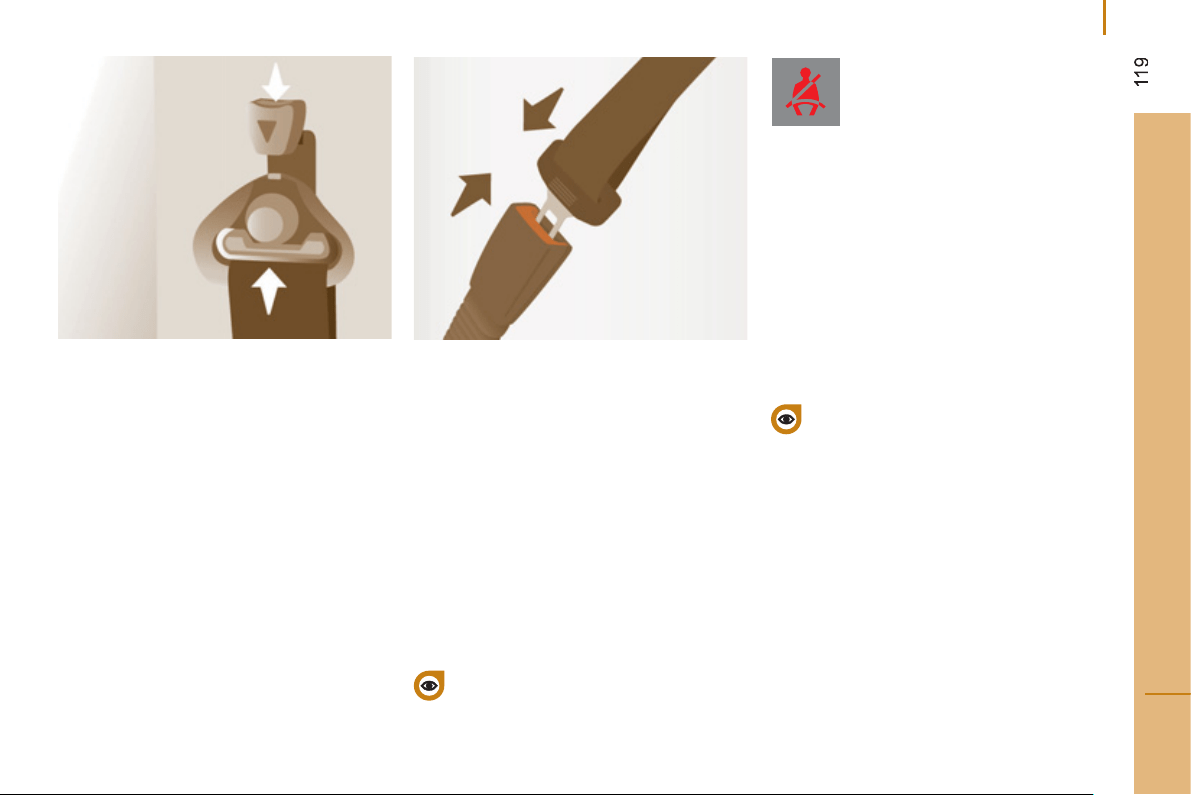
5
SAFETY
Seat belts
S
EAT BELT
S
CAB SEAT BELTS
The front seats are fitted with pre-tensioners
and force limiters.
The bench rear seat is fitted with two seat
belts.
If you install a bench seat after handover, it
must be fitted with seat belts.
REAR SEAT BELTS
The seats/bench seats are fitted with three-
point seat belts and inertia reels.
The centre seat has a seat belt guide and
inertia reel, solid with the seat back.
H
e
igh
t a
dj
ustment
Squeeze the control with the return and slide
the assembly on the driver's seat side and
on the side passenger seat side.
The height of the seat belt associated with
the centre seat cannot be adjusted.
F
asten
i
n
g
Pull the strap in front of you, with an even
movement, ensuring that it does not twist.
Secure the buckle in its housing.
Check that the seat belt is fastened securely
and that the automatic locking system is
operating correctly by pulling the strap
rapidly.
Unfastenin
g
Press the "red" button on the buckle
housing, the seat belt rolls up automatically
but you are advised to guide it.
As a safety precaution, these
operations should not be carried out
while the vehicle is moving.
D
r
i
ver
'
s seat
b
e
l
t not
f
astened warnin
g
lamp
When the vehicle is started, this
warning lamp comes on if the
driver has not fastened their seat
belt.
C
REW
C
AB
Each rear seat is fitted with a three-point
inertia reel seat belt.
Use the seat belt to restrain one person only
per seat.
If the driver's seat belt is unfastened,
START mode of Stop & Start will not be
invoked. Engine restarting is only possible
with the ignition key.
12
0
Seat belts
The force limiter reduces the pressure of the
seat belt against the body of the occupants.
The pretensioning seat belts are active when
the ignition is switched on.
The inertia reels are fitted with a device
which automatically locks the strap in the
event of a collision or emergency braking or
if the vehicle rolls over.
You can unfasten the seat belt by pressing
the red button on the buckle. Guide the seat
belt after unfastening.
Good practice
The driver must ensure that passengers use
the seat belts correctly and that they are all
strapped in securely before moving off.
Wherever you are seated in the vehicle,
always fasten your seat belt, even for short
journeys.
The seat belts are fitted with an inertia reel
which automatically adjusts the length of the
strap to your size.
Do not use accessories (clothes pegs, clips,
safety pins, etc.) which permit a clearance
with the seat belt straps.
Ensure that the seat belt has reeled in
correctly after use.
After folding or moving a seat or a rear
bench seat, ensure that the seat belt has
reeled in correctly and that the buckle is
ready to accommodate the tongue.
Depending on the nature and seriousness
of any impact, the pretensioning device may
be triggered before and independently of
inflation of the airbags. It instantly tightens
the seat belts against the body of the
occupants.
Triggering of the pretensioners is
accompanied by a slight discharge of
harmless smoke and a noise, due to the
activation of the pyrotechnic cartridge
incorporated in the system.
The airbag warning lamp comes
on if the pretensioners are
triggered. Consult a CITROËN
dealer.
In order to be effective, a seat belt must:
- restrain one person only,
- must not be twisted, check by pulling in
front of you with an even movement,
- be tightened as close to the body as
possible.
The upper part of the seat belt should be
positioned in the hollow of the shoulder.
The lap part should be placed as low as
possible on the pelvis.
Do not invert the seat belt buckles as they
will not fulfil their role completely.
If the seats are fitted with armrests, the lap
part of the seat belt should always pass
under the armrest.
Check that the seat belt is fastened correctly
by pulling the strap firmly.
Recommendations for children:
- use a suitable child seat if the
passenger is less than 12 years old or
shorter than one metre fifty,
- never allow a child to travel on your lap,
even with the seat belt fastened.
For more information on child seats,
refer to the "Child safety" section of
chapter 5.
Your CITROËN dealer can ensure that
all work or any checks, from testing to
maintenance on your seat belt equipment
meets current regulations.
Have the seat belts checked regularly
(even after a minor impact) by a CITROËN
dealer: they must not show any signs of
wear, cutting or fraying and they must not be
converted or modified.
Clean the seat belt straps with soapy
water or a textile cleaning product, sold
by CITROËN dealers.
12
1
5
SAFETY
Improved safety and security
IMPROVED SAFETY AND SECURITY
IMPACT RE
S
I
S
TANCE
Your vehicle has been designed to limit
the forces on the passenger compartment
as much as possible in the event of a
collision, the engine compartment adopts
a progressive deformation structure and
the front doors have been reinforced to
contribute to the rigidity of the whole.
ANTI-THEFT PROTECTION
Your vehicle, in the van version, comprises
two zones with separate locking: the cab
and the load space.
Depending on the way in which it is used,
this function provides increased protection
both for your personal belongings and for
your merchandise.
Details of these functions are given in
part 2.
An exterior protection alarm with anti-tilt
detection is available (as standard or as an
option) in certain countries.
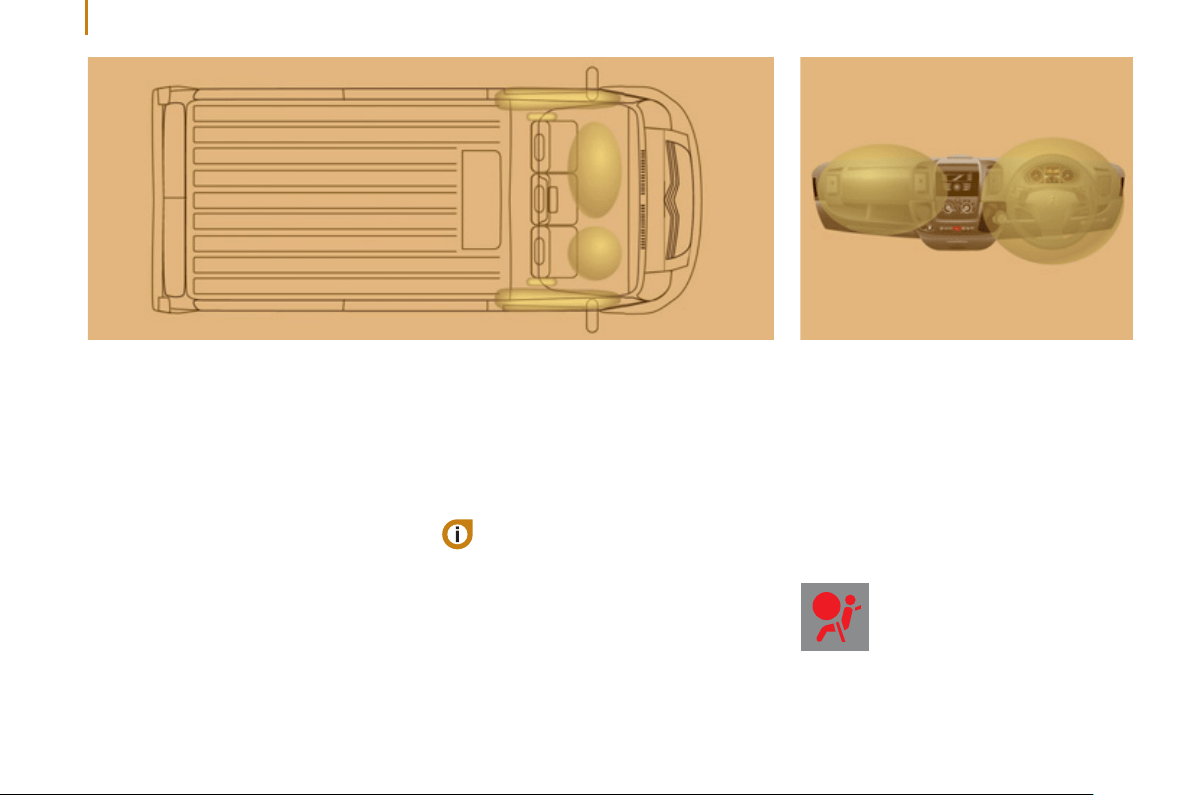
122
Airba
g
s
AIRBAGS
The airbags have been designed to optimise
the safety of the occupants in the event of
a serious collision; they work in conjunction
with the force limiting seat belts.
In the event of a serious collision, electronic
detectors record and analyse any abrupt
deceleration of the vehicle:
- in the event of a serious collision, the
airbags are deployed instantly and
contribute towards better protection of
occupants of the vehicle; immediately
after the impact, the airbags rapidly
defl ate so as to not hinder visibility or the
possible exit by the occupants,
- in the event of a less serious impact,
an impact to the rear and in certain
conditions of rollover, the airbags are not
deployed; the seat belts alone contribute
towards providing protection in these
situations.
Airbags only operate when the ignition is
switched on.
Front airba
g
s
These are fitted in the centre of the steering
wheel for the driver and in the dashboard
for the front passenger. They are deployed
simultaneously, except in cases where the
passenger airbag has been deactivated.
Deployment of the airbags is
accompanied by a slight discharge
of smoke and a noise, resulting from the
activation of the pyrotechnic charge included
in the system.
This smoke is not harmful but may be an
irritant to sensitive persons.
The noise of the detonation may result in a
slight loss of hearing for a short time.
Front airba
g
fault
If this warning lamp comes on,
contact a CITROËN dealer to
have the system checked.
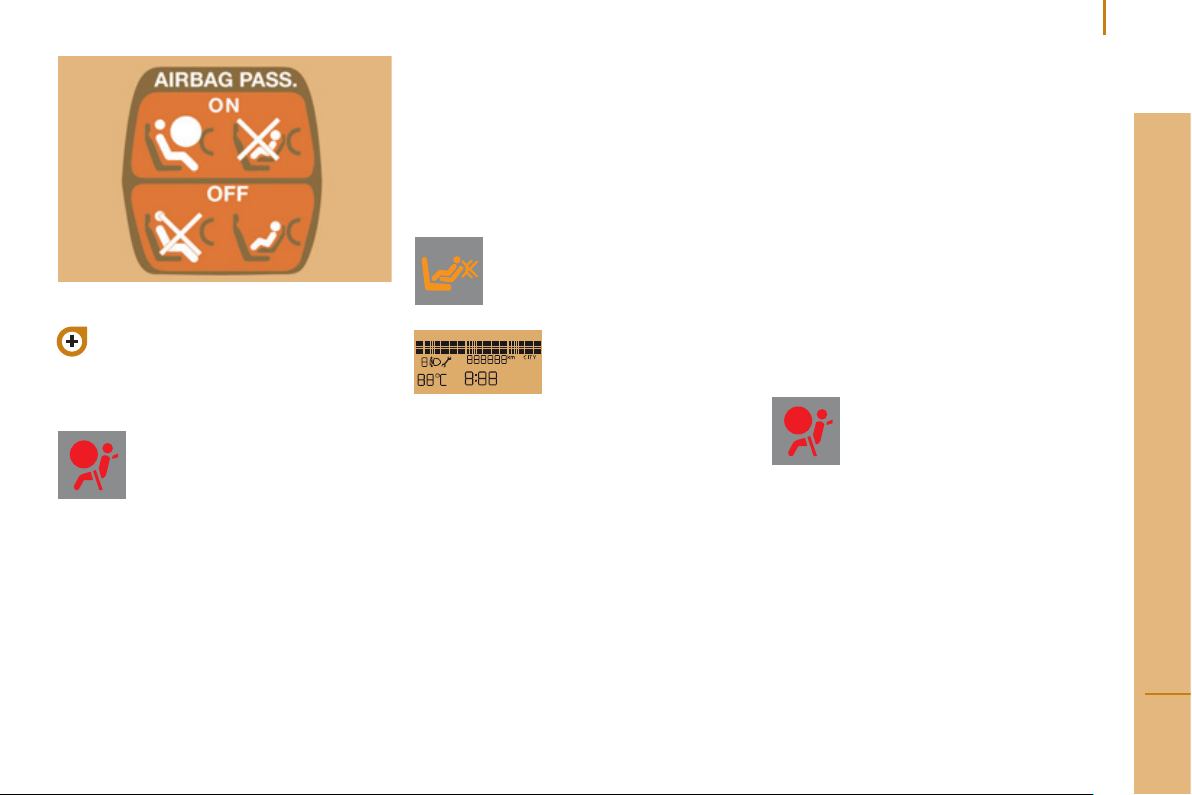
12
3
5
SAFETY
A
irba
g
s
Deactivatin
g
the passen
g
er airba
g
Refer to the "MODE" section of
chapter 4, then on the "Passenger
airbag" menu, select OFF .
When OFF is selected, the passenger airbag
will not be triggered in the event of an impact.
As soon as the child seat is removed,
select ON to re-activate the airbag and thus
ensure the safety of your passenger in the
event of an impact.
Latera
l
a
i
r
b
a
g
s an
d
curta
i
n a
i
r
b
a
g
s
If your vehicle is fitted with lateral airbags,
these are fitted to the front seat backs on
the door side.
The curtain airbags are fitted to the door
pillars and the upper part of the passenger
compartment, in the roof over the front cab
seats.
They inflate between the occupant and the
glass.
They are deployed independently of each
other depending on which side the collision
occurs.
The airbag warning lamp on the
instrument panel remains on while
the passenger airbag is deactivated.
To ensure the safety of your child, it is
essential to deactivate the passenger airbag
when you install a rear-facing child seat on
the front passenger seat. Otherwise, the
child would risk being killed or seriously
injured if the airbag were to inflate.
If your vehicle is not fi tted with this equipment:
do not install a rear-facing child seat.
D
eact
i
vat
i
on c
h
ec
k
This is confirmed by lighting of
this warning lamp each time the
engine is started.
If your vehicle is fitted
with this screen, the
check is accompanied by
a message.
Operatin
g
check
Confirmed by this indicator lamp.

124
Airba
g
s
Good practice
If your vehicle is fitted with front, lateral
and curtain airbags, in order for these to
be fully effective, observe the following
safety rules:
Wear a correctly adjusted seat belt.
Sit in a normal upright position.
Do not leave anything between the
occupants and the airbags (child, animal,
object...).
This could hamper the operation of the
airbags or injure the occupants.
All work on the airbag systems is strictly
prohibited unless it is carried out by qualified
personnel of the CITROËN network.
After an accident or if the vehicle has been
stolen or broken into, have the airbag
systems checked.
Do not drive holding the steering wheel
by its spokes or resting your hands on the
centre part of the wheel.
Passengers must not place their feet on the
dashboard.
Smoke as little as possible; deployment of
the airbags can cause burns or the risk of
injury from a cigarette or pipe.
Never remove or pierce the steering wheel
or hit it violently.
Lateral airba
g
s
Only put approved covers on the front seats.
Consult a CITROËN dealer.
Do not fix or attach anything to the front seat
backs. This could cause injury to the chest
or arms when the lateral airbag is deployed.
Do not sit with the upper part of the body
any nearer to the door than necessary.
Curtain airba
g
s
Do not fix or attach anything to the pillars or
the roof. This could cause injury to the head
when the curtain airbag is deployed.
Do not remove the bolts from the grab
handles installed on the roof, they play a
part in securing the curtain airbags.
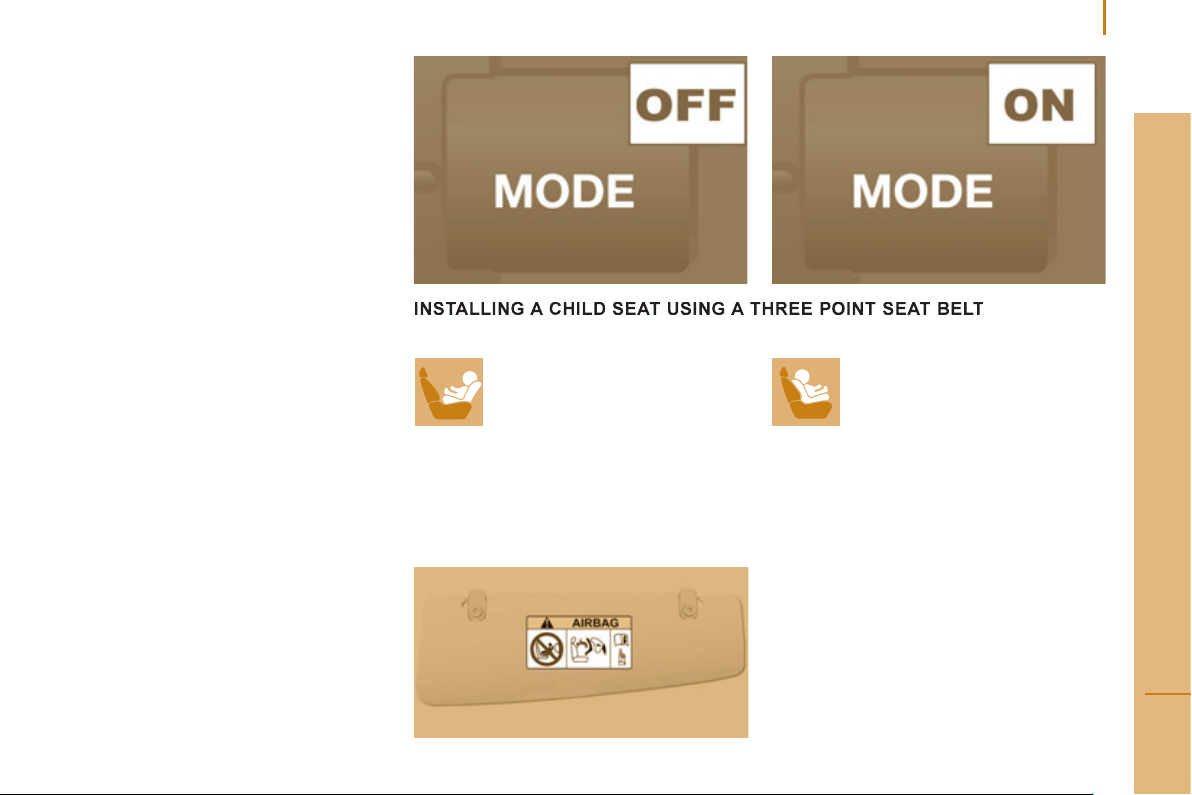
12
5
5
SAFETY
Child safet
y
GENERAL POINTS RELATING TO
C
HILD SEATS
Although one of CITROËN's main criteria
when designing your vehicle, the safety of
your children also depends on you.
For maximum safety, please follow these
precautions:
- all children under the age of 12 or less
than one metre fifty tall must travel in
approved child seats suited to their
weight, on seats fitted with a seat belt or
ISOFIX mountings.
- statistically, the safest seats in your
vehicle for carrying children are the rear
seats,
- a child weighing less than 9 kg must
travel in the "rearwards-facing" position
both in the front and in the rear,
- the passenger must not travel with a
child on their lap.
"Rearwards-facing"
Recommended on the rear seats
up to the age of 2.
When a "rearwards-facing" child
seat is installed on the front passenger seat,
it is essential that the passenger airbag is
deactivated. Otherwise, the child would risk
being seriously injured or killed if the airbag
were to inflate.
"Forwards-facing"
Recommended on the rear seats
over the age of 2.
When a "forwards-facing" child
seat is installed on the front passenger seat,
leave the passenger airbag activated.
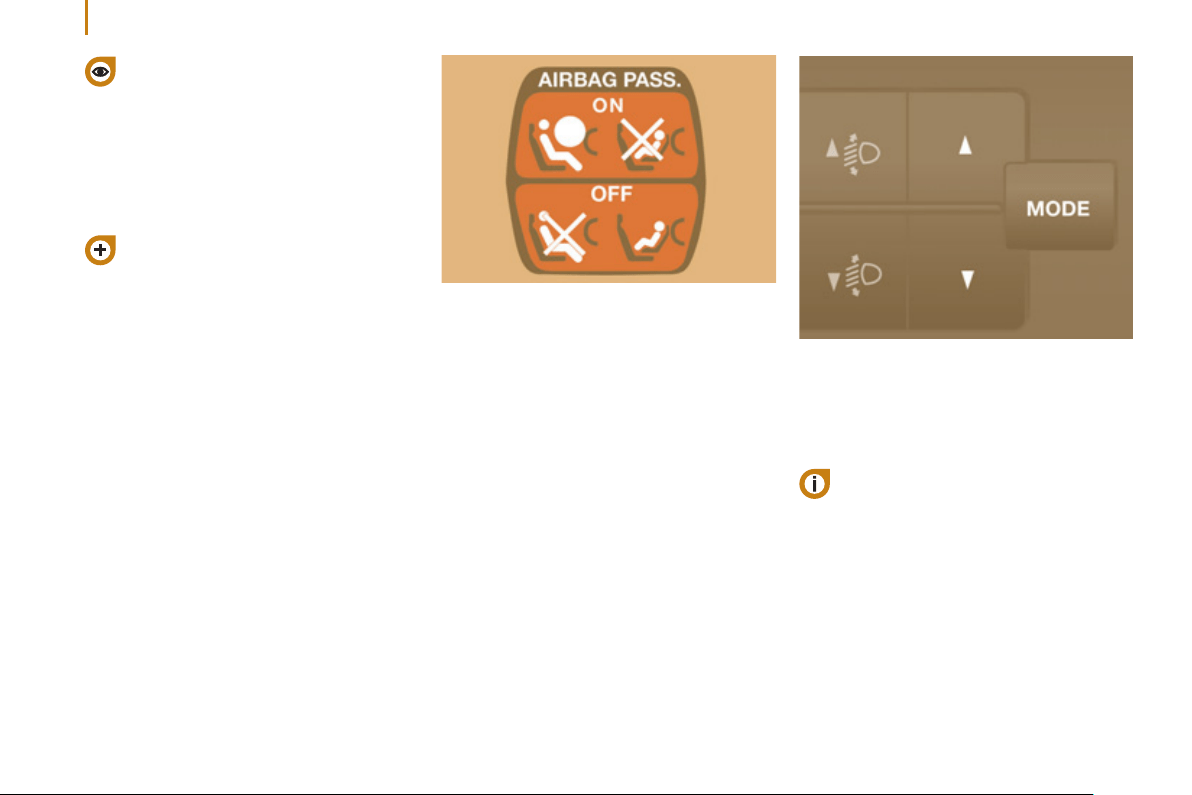
12
6
Child safet
y
Refer to chapter 5, "Airbags" section.
The child seats function and the
passenger airbag deactivation function
are common to the entire CITROËN range.
If the passenger airbag is not deactivated,
the installation of a "rearwards-facing" child
seat in the front is strictly prohibited.
If your vehicle is fitted with this function, the
passenger airbag must be deactivated using
the trip computer MODE button.
The rules for carrying children are
specific to each country. Consult the
current legislation in your country.
Please consult the list of seats approved
in your country. The Isofix mountings, the
rear seats, the passenger airbag and the
deactivation of this airbag depend on the
version sold.
Passenger airbag OFF
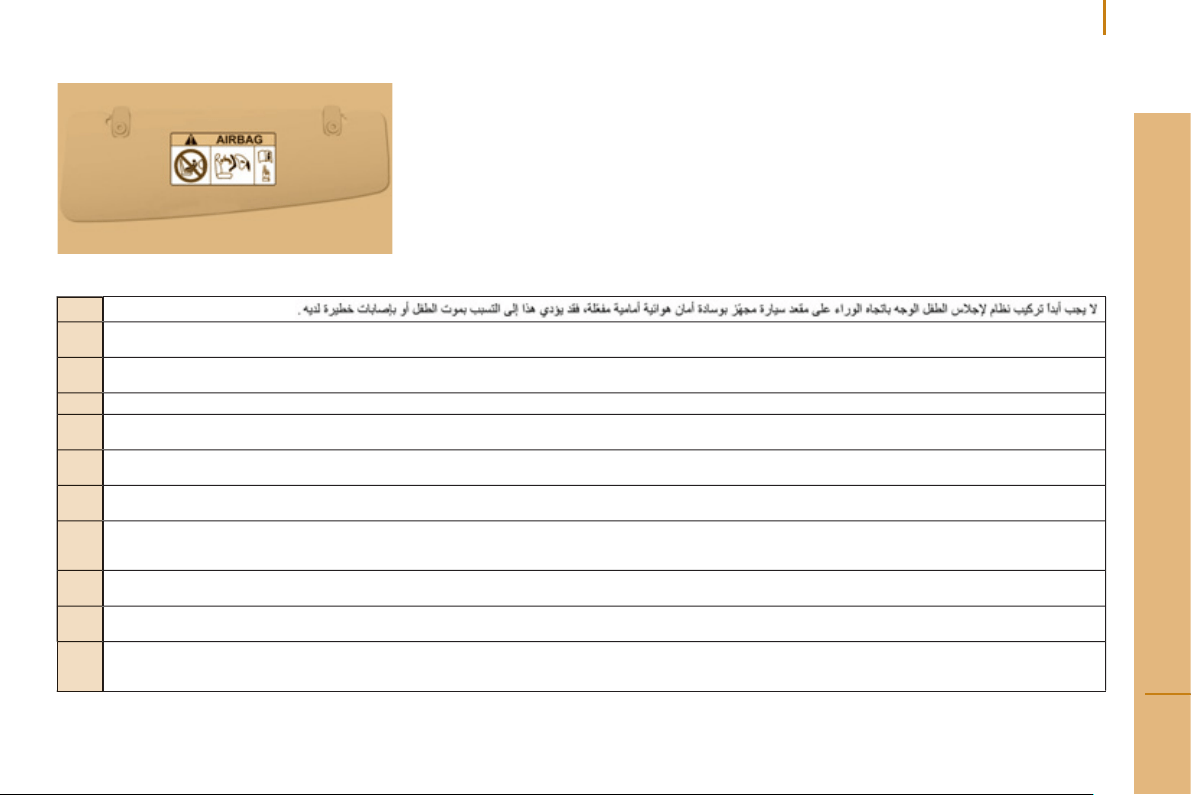
AR
BG
НИКОГА НЕ инсталирайте детско столче на седалка с АКТИВИРАНА предна ВЪЗДУШНА ВЪЗГЛАВНИЦА. Това можеда причини
СМЪРТ или СЕРИОЗНО НАРАНЯВАНЕ на детето.
CS
NIKDY neumisťujte dětské zádržné zařízení orientované směrem dozadu na sedadlo chráněné AKTIVOVANÝM čelním AIRBAGEM. Hrozí
nebezpečí SMRTI DÍTĚTE nebo VÁŽNÉHO ZRANĚNÍ.
DA
Brug aldrig en bagudvendt barnestol på et sæde der er beskyttet af en aktiv airbag. Død eller alvorlig skade på barnet kan forekomme.
DE
Verwenden Sie NIEMALS einen Kindersitz oder Babyschale gegen die Fahrtrichtung bei AKTIVIERTEM Airbag, TOD oder ERNSTHAFTE
VERLETZUNGEN können die Folge sein.
EL
Μη χρησιμοποιείτε ΠΟΤΕ παιδικό κάθισμα με την πλάτη του προς το εμπρός μέρος του αυτοκινήτου, σε μια θέση που προστατεύεται από
ΜΕΤΩΠΙΚΟ αερόσακο που είναι ΕΝΕΡΓΟΣ. Αυτό μπορεί να έχει σαν συνέπεια το ΘΑΝΑΤΟ ή το ΣΟΒΑΡΟ ΤΡΑΥΜΑΤΙΣΜΟ του ΠΑΙΔΙΟΥ
EN
NEVER use a rearward facing child restraint on a seat protected by an ACTIVE AIRBAG in front of it, DEATH or SERIOUS INJURY to the
CHILD can occur
ES
NO INSTALAR NUNCA EL SISTEMA DE RETENCIÓN PARA NIÑOS DE ESPALDAS AL SENTIDO DE LA CIRCULACIÓN SOBRE UN
ASIENTO PROTEGIDO CON UN COJÍN INFLABLE FRONTAL ( AIRBAG ) ACTIVADO. ESTO PUEDE CAUSAR LA MUERTE DEL BEBE
O HERIRLO GRAVEMENTE.
ET
Ärge kasutage kunagi lapse turvatooli seljaga sõidusuunas sõiduki istmel mis on kaitstud AKTIVEERITUD TURVAPADJAGA. See võib
põhjustada lapsele RASKEID VIGASTUSI või SURMA.
FI
ÄLÄ KOSKAAN aseta lapsen turvaistuinta selkä ajosuuntaan istuimelle, jonka edessä suojana on käyttöön aktivoitu TURVATYYNY. Sen
laukeaminen voi aiheuttaa LAPSEN KUOLEMAN tai VAKAVAN LOUKKAANTUMISEN.
FR
NE JAMAIS installer de système de retenue pour enfants faisant face vers l’arrière sur un siège protégé par un COUSSIN GONFLABLE
frontal ACTIVÉ.
Cela peut provoquer la MORT de l’ENFANT ou le BLESSER GRAVEMENT
12
7
5
SAFETY
Child safet
y
Label present on both sides of the passenger's sun visor

HR
NIKADA ne postavljati dječju sjedalicu leđima u smjeru vožnje na sjedalo zaštićeno UKLJUČENIM prednjim ZRAČNIM JASTUKOM. To bi
moglo uzrokovati SMRT ili TEŠKU OZLJEDU djeteta.
HU
SOHA ne használjon menetiránynak háttal beszerelt gyermekülést olyan ülésen, amely AKTIVÁLT ÁLLAPOTÚ (BEKAPCSOLT)
FRONTLÉGZSÁKKAL van védve. Ez a gyermek halálát vagy súlyos sérülését okozhatja.
IT
NON installare MAI seggiolini per bambini posizionati in senso contrario a quello di marcia su un sedile protetto da un AIRBAG frontale
ATTIVATO. Ciò potrebbe provocare la MORTE o FERITE GRAVI al bambino.
LT
NIEKADA neįrenkite vaiko prilaikymo priemonės su atgal atgręžtu vaiku ant sėdynės, kuri saugoma VEIKIANČIOS priekinės ORO
PAGALVĖS. Išsiskleidus oro pagalvei vaikas gali būti MIRTINAI arba SUNKIAI TRAUMUOTAS.
LV
NAV PIEĻAUJAMS uzstādīt uz aizmuguri vērstu bērnu sēdeklīti priekšējā pasažiera vietā, kurā ir AKTIVIZĒTS priekšējais DROŠĪBAS
GAISA SPILVENS.
Tas var izraisīt BĒRNA NĀVI vai radīt NOPIETNUS IEVAINOJUMUS.
MT
Qatt m’ghandek thalli tifel/tifla marbut f’siggu dahru lejn l-Airbag attiva, ghaliex tista’ tikkawza korriment serju jew anke mewt lit-tifel/tifla
NL
Plaats NOOIT een kinderzitje met de rug in de rijrichting op een zitplaats waarvan de AIRBAG is INGESCHAKELD. Bij het afgaan van de
airbag kan het KIND ERNSTIG OF DODELIJK GEWOND raken.
NO
Installer ALDRI et barnesete med ryggen mot kjøreretningen i et sete som er beskyttet med en frontal AKTIVERT KOLLISJONSPUTE,
BARNET risikerer å bli DREPT eller HARDT SKADET.
PL
NIGDY nie instalować fotelika dziecięcego w pozycji «tyłem do kierunku jazdy»na siedzeniu wyposażonym w CZOŁOWĄ PODUSZKĘ
POWIETRZNĄ w stanie AKTYWNYM.W przeciwnym razie dziecko narażone będzie na ŚMIERĆ lub BARDZO POWAŻNE OBRAŻENIA
CIAŁA w momenicie wyzwolenia poduszki powietrznej
PT
NUNCA instale um sistema de retenção para crianças de costas para a estrada, num banco protegido por um AIRBAG frontal ACTIVADO.
Esta instalação poderá provocar FERIMENTOS GRAVES ou a MORTE da CRIANÇA.
RO
Nu instalati NICIODATA un sistem de retinere pentru copii, dispus cu spatele in directia de mers, pe un loc din vehicul protejat cu AIRBAG
frontal ACTIVAT. Aceasta ar putea provoca MOARTEA COPILULUI sau RANIREA lui GRAVA.
RU
ВО ВСЕХ СЛУЧАЯХ ЗАПРЕЩАЕТСЯ использовать обращенное назад детское удерживающее устройство на сиденье,
защищенном ФУНКЦИОНИРУЮЩЕЙ ПОДУШКОЙ БЕЗОПАСНОСТИ, установленной перед этим сиденьем.
Это может привести к ГИБЕЛИ РЕБЕНКА или НАНЕСЕНИЮ ЕМУ СЕРЬЕЗНЫХ ТЕЛЕСНЫХ ПОВРЕЖДЕНИЙ
SK
NIKDY nepoužívajte na prednom sedadle chránenom AKTÍVNYM AIRBAGOM detské zadržiavacie zariadenie umiestnené v proti smere
jazdy. Môže to spôsobiť SMRŤ, alebo VÁŽNE ZRANENIE DIEŤAŤA.
SL
NIKOLI ne nameščajte otroškega sedeža s hrbtom v smeri vožnje, če je VARNOSTNA BLAZINA pred sprednjim sopotnikovim sedežem
AKTIVIRANA. Takšna namestitev lahko povzroči SMRT OTROKA ali HUDE POŠKODBE.
SR
NIKADA ne koristite dečje sedište koje se okreće unazad na sedištu zaštićenim AKTIVNIM VAZDUŠNIM JASTUKOM ispred njega, jer
mogu nastupiti SMRT ili OZBILJNA POVREDA DETETA.
SV
Använd ALDRIG en bakåtvänd barnstol i ett säte skyddat av en AKTIV AIRBAG framför det. Det kan orsaka ALLVARLIGA eller DÖDLIGA
skador på barnet.
TR
KESİNLKLE HAVA YASTIĞI AKTİF olan ön koltuğa yüzü arkaya dönük bir çocuk koltuğu yerleştirmeyiniz. Bu ÇOCUĞUN ÖLMESİNE veya
ÇOK AĞIR YARALANMASINA sebep olabilir.
12
8
Child safet
y
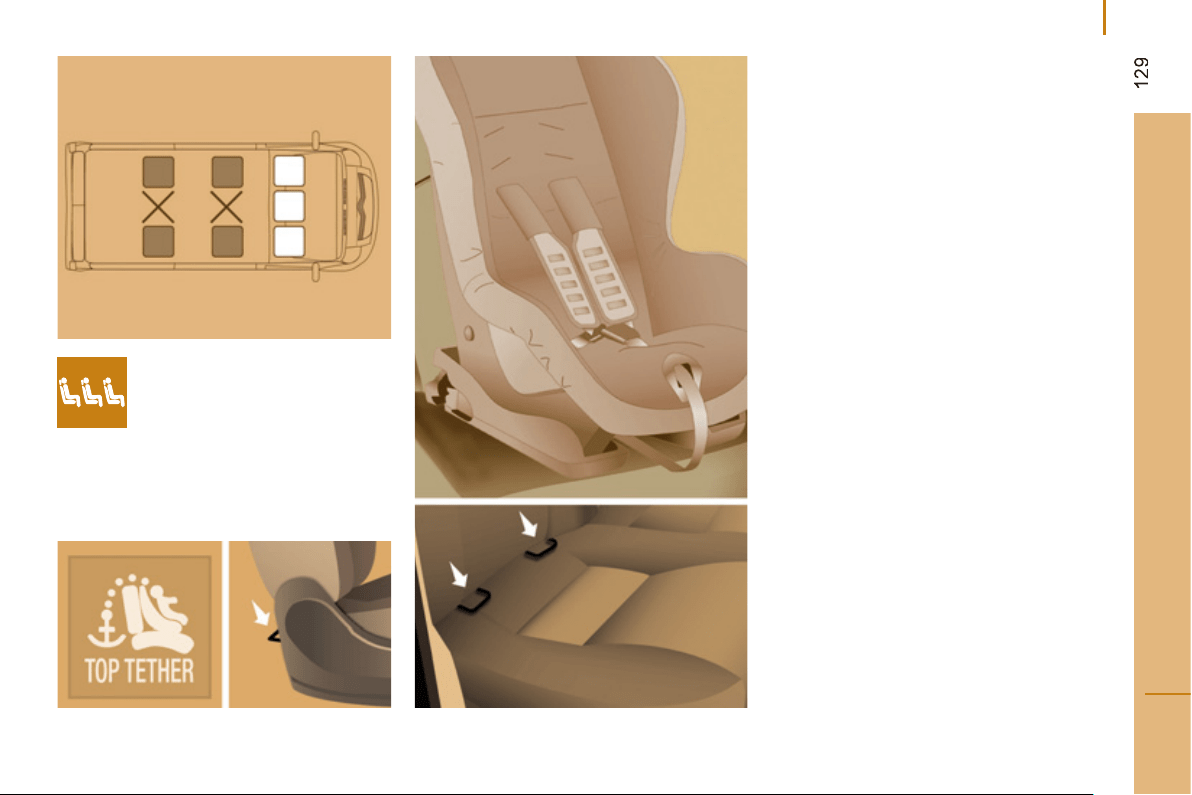
5
SAFETY
Child safet
y
"ISOFIX" MOUNTINGS
Your vehicle has been approved
in accordance with the new
ISOFIX regulation.
The mountings comprise three rings for each
seat:
- two front rings, located between the
vehicle seat back and cushion, indicated
by a label,
- a rear ring, for securing the upper
strap referred to as the TOP TETHER,
indicated by another label.
This ISOFIX mounting system provides fast,
reliable and safe fitting of the child seat in
your vehicle.
The ISOFIX child seats are fitted with two
latches which are secured easily on the two
front rings.
Some also have an upper strap which is
attached to the rear ring.
To attach this strap, raise the vehicle seat's
head restraint then pass the hook between
its rods. Then fix the hook on the rear ring
and tighten the upper strap.
The incorrect installation of a child seat in a
vehicle compromises the child's protection in
the event of an accident.
For information regarding the ISOFIX child
seats which can be installed in your vehicle,
consult the summary table for the location of
the ISOFIX child seats.
If fitted on your vehicle, the regulation
ISOFIX mountings are located by labels.

Child safet
y
LOCATIONS FOR THE INSTALLATION OF ISOFIX CHILD SEATS
In accordance with European regulations, this table indicates the options for the installation of ISOFIX child seats on the vehicle seats fitted
with ISOFIX mountings.
In the case of the universal and semi-universal ISOFIX child seats, the child seat's ISOFIX size category, determined by a letter from A to G ,
is indicated on the child seat next to the ISOFIX logo.
Less than
10 kg
(group 0)
Up to 6 months
approx
Less than 10 kg
(group 0)
Less than 13 kg
(group 0+)
Up to 1 year approx
From 9 to 18 kg (group 1)
From 1 to 3 years approx
Type of ISOFIX child seat Infant car seat "rearward facing" "forward facing"
ISOFIX size category F G C D E C D A B1
Row 2 outer rear seats
with individual seats in Row 1
IUF IUF IUF
Row 2 outer rear seats
with 2-seat bench in Row 1
IUF X IUF X IUF
IUF: Seat suitable for the installation of
an ISOFIX child seat of the universal
category. "Forward facing" ISOFIX child
seats fitted with an upper strap secured
to the upper ring of the vehicle seats
equipped with ISOFIX mountings.
X: Seat not suitable for the installation of
an ISOFIX seat of the size category
indicated.
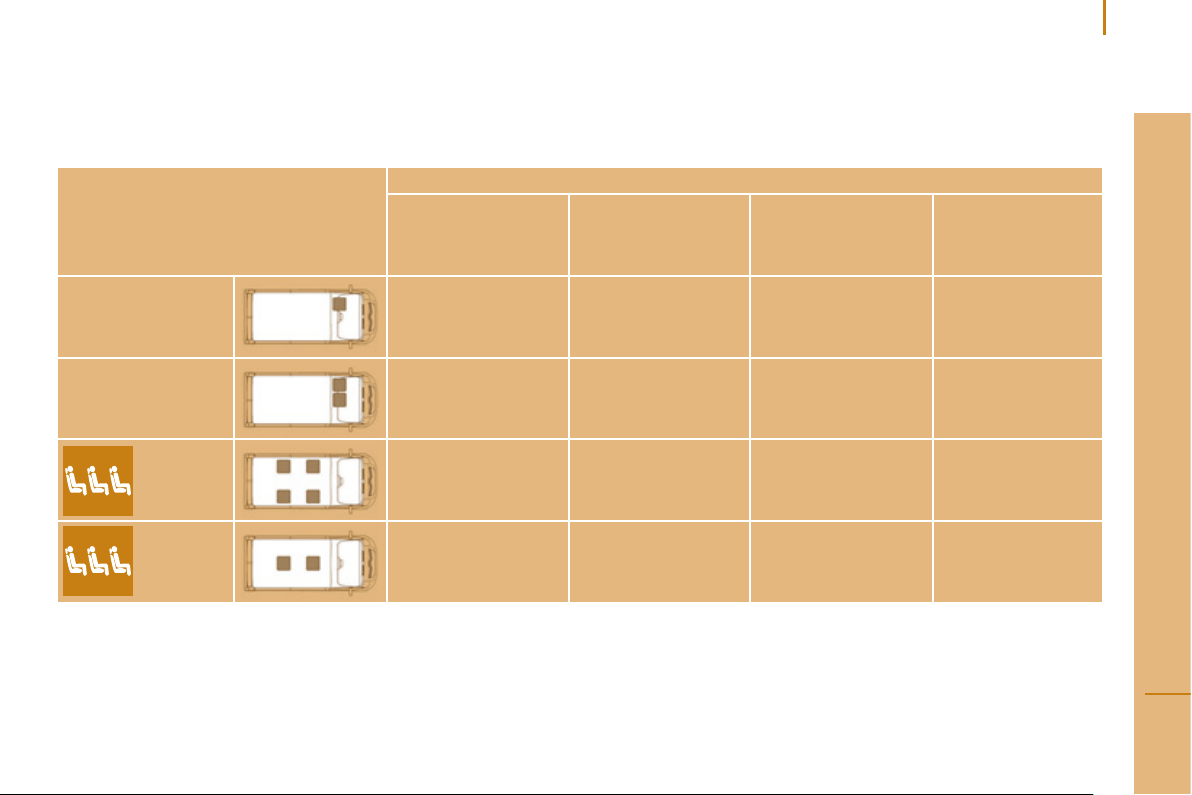
1
31
5
SAFETY
Child safet
y
INSTALLING CHILD SEATS ATTACHED USING THE SEAT BELT
In accordance with the European regulation, this table indicates the options for installing child seats secured using a seat belt and
universally approved in accordance with the weight of the child and the seat in the vehicle.
a : Group 0: from birth to 10 kg.
b : consult the legislation in force in your country before installing your child on this seat.
U : seat suitable for the installation of a child seat secured using a seat belt and universally approved, "rear facing" and/or "forward facing".
Weight of the child and indicative age
Seat
Under 13 kg
(groups 0 ( a ) and 0+)
Up to approx 1 year
From 9 to 18 kg
(group 1)
1 to 3 years approx
From 15 to 25 kg
(group 2)
3 to 6 years approx
From 22 to 36 kg
(group 3)
6 to 10 years approx
Front passenger
seat ( b )
U U U U
Front passenger bench
seat with centre and
outer seat ( b )
U U U U
Outer
seats in
rows 2
and 3
U U U U
Centre
seat in
rows 2
and 3
U U U U

1
32
Child safet
y
ADVICE ON CHILD SEATS
The incorrect installation of a child seat in a
vehicle compromises the child's protection in
the event of an accident.
Remember to fasten the seat belts or the
child seat harnesses keeping the slack in
relation to the child's body to a minimum ,
even for short journeys.
For optimum installation of the "forward
facing" child seat, ensure that the back of
the child seat is in contact with the back of
the vehicle's seat and that the head restraint
does not cause any discomfort.
If the head restraint has to be removed,
ensure that it is stored or attached securely
to prevent it from being thrown around the
vehicle in the event of sharp braking.
Children under the age of 10 must not travel
in the "forward facing" position on the front
passenger seat, unless the rear seats are
already occupied by other children, cannot
be used or are absent.
Deactivate the passenger's airbag when a
"rear facing" child seat is installed on the
front seat.
Otherwise, the child would risk being
seriously injured or killed if the airbag were
to inflate.
As a safety precaution, do not leave:
- one or more children alone and
unsupervised in a vehicle,
- a child or an animal in a vehicle which
is exposed to the sun, with the windows
closed,
- the keys within reach of children inside
the vehicle.
To prevent accidental opening of the doors,
use the "Child Lock".
Take care not to open the rear windows by
more than one third.
To protect young children from the rays of
the sun, fit side blinds to the rear windows.
I
nsta
lli
n
g
a
b
ooster seat
The chest part of the seat belt must be
positioned on the child's shoulder without
touching the neck.
Ensure that the lap part of the seat belt
passes correctly over the child's thighs.
CITROËN recommends the use of a booster
seat which has a back, fitted with a seat belt
guide at shoulder level.
Crew cab
Do not install child seats, booster cushions
or carrycots on the rear seats of the cab.
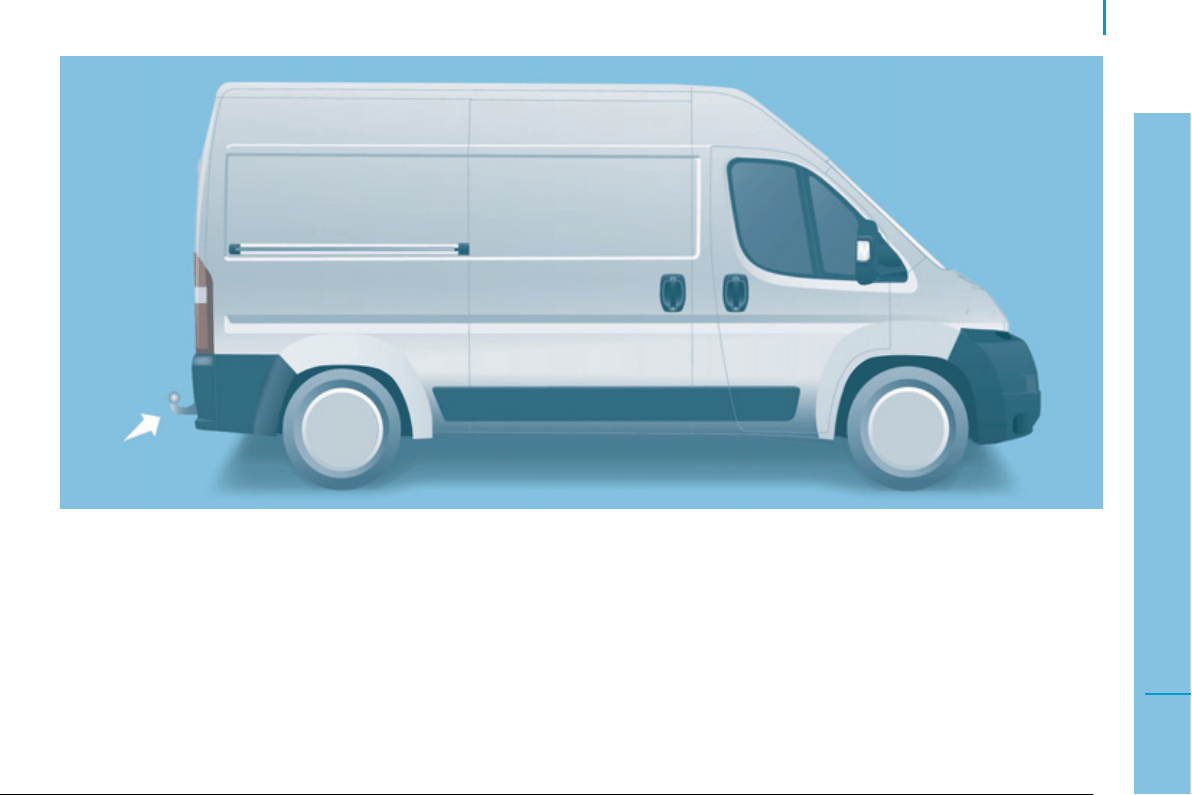
1
33
6
T
owin
g
a trailer
A
CCESSORIE
S
TOWING A TRAILER
,
CARAVAN
,
BOAT
,
ETC...
For more information about weights,
refer to the administrative documents
(V5 registration document, ...)
Distribution of loads: distribute the load in
the trailer so that the heaviest objects are as
close as possible to the axle and the nose
weight is close to the maximum authorised
without, however, exceeding it.
D
r
i
v
i
n
g
a
d
v
i
ce
A towed vehicle must free wheel: gearbox in
neutral.
1
3
4
Towin
g
a trailer
Cooling: towing a trailer on a slope
increases the coolant temperature.
As the fan is electrically controlled, its
cooling capacity is not dependent on the
engine speed.
On the contrary, use a high gear to lower the
engine speed and reduce your speed.
In all cases, pay attention to the coolant
temperature.
Tyres: check the tyre pressures of the
towing vehicle (see the "Identification
markings" section of chapter 9) and of
the trailer, observing the recommended
pressures.
We recommend the use of original
CITROËN towbars and their harnesses,
which have been tested and approved from
the design stage of your vehicle and that
the fitting of this equipment is entrusted to a
CITROËN dealer.
If this equipment is not fitted by a CITROËN
dealer, it is imperative that it is fitted using
the electrical pre-equipment installed at the
rear of the vehicle and in accordance with
the manufacturer's instructions.
Good
p
ractice
In certain cases of particularly arduous
use (towing the maximum load up a steep
slope in high temperatures), the engine
automatically limits its power. In this
case, the automatic cutting off of the air
conditioning allows the engine power to be
recovered.
If the coolant temperature
warning lamp comes on, stop the
vehicle and switch off the engine
as soon as possible.
See the "Levels" section of chapter 7.
Brakes: towing increases the braking
distance. Drive at a moderate speed,
change down early and brake gradually.
Side wind: sensitivity to side wind is
increased. Drive smoothly and at a
moderate speed.
ABS: the system only controls the vehicle,
not the trailer.
Rear parking sensors: the system does not
operate while the vehicle is towing.
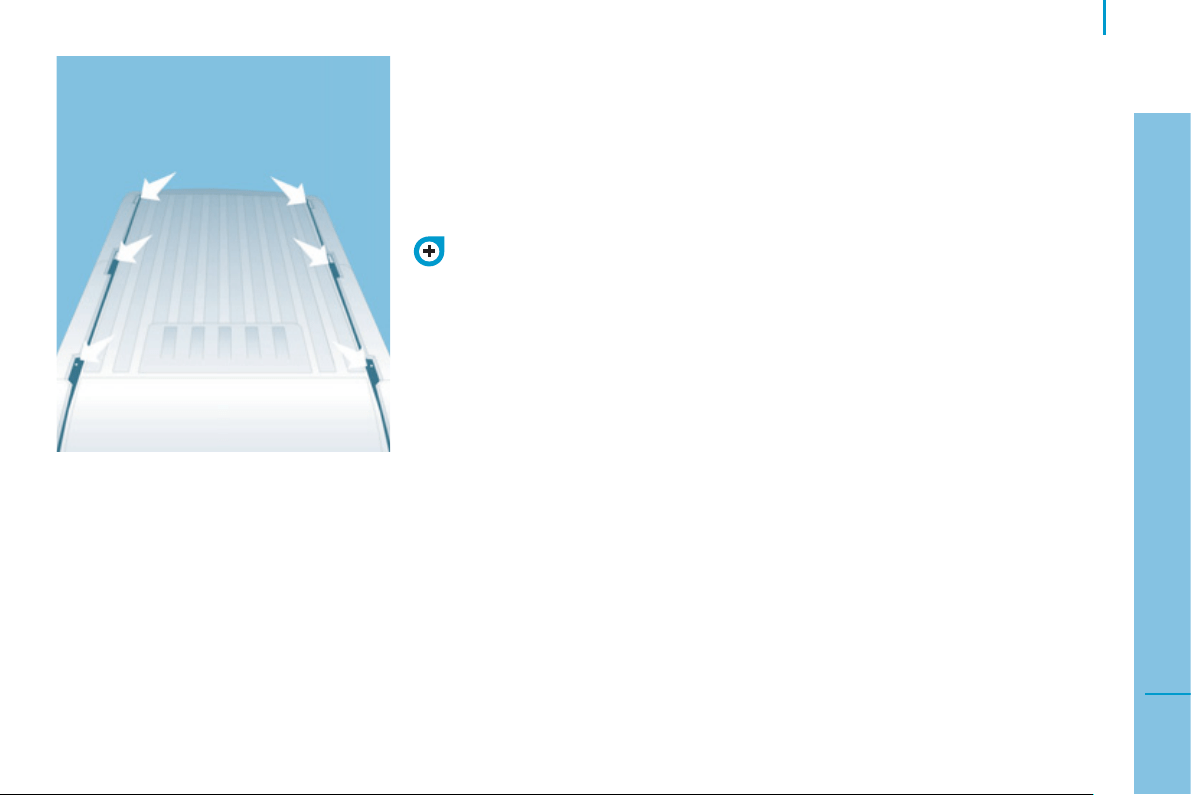
1
35
6
A
CCESSORIE
S
E
quipmen
t
ROOF BARS
To install the transverse roof bars, use the
fixings provided for this purpose.
Refer to the "Dimensions" section
of chapter 9 for further information
regarding the length (L1 to L4) and the
height (H1 to H3) of the vehicle.
Never exceed the maximum weight of the
vehicle when loaded (GVW).
OTHER ACCESSORIES
These accessories and parts, having been
tested and approved for reliability and
safety, are all adapted to your vehicle. A
wide recommended range and original parts
are offered.
Ran
g
e of professional equipment
Maximum useful load on the roof bars: 100 kg
distributed, regardless of the type of vehicle.
The roof bars can only be installed on the
H1 and H2 vehicles.
Parts and Service technical information
publishes an accessories catalogue offering
various equipment and fittings, such as:
Roof bars for short, medium and long
wheelbase (load retainers for all models).
Foot board, loading roller, step.
Towbar, 7/13 pin, 7/7 pin, 13 pin towbar
harness: trailer towbar which must be fitted
by the CITROËN network.
Roof bars for the various heights, additional
roof bar.
Separation partitions, protective floor,
non-slip floor.

1
36
Equipment
Another range is also available, structured
around comfort, leisure and maintenance:
Audio equipment, hands-free system,
speakers, navigation, ...
The fitting of electrical equipment
or accessories which are not
recommended by Automobiles CITROËN
may result in the failure of your vehicle's
electronic system.
Installation of radiocommunication
transmitters
You are advised to contact a representative
of the CITROËN marque before installing
accessory radiocommunication transmitters
with external aerial on your vehicle.
The CITROËN Network will inform
you of the specifications (frequency
waveband, maximum output power, aerial
position, specific installation conditions)
of the transmitters which can be fitted,
in accordance with the Motor Vehicle
Electromagnetic Compatibility Directive
(2004/104/EC).
Anti-theft alarm, window etching, first aid
kit, high visibility safety jacket, rear parking
sensors, warning triangle, ...
Front seat covers compatible with airbags,
rubber mats, carpet mats, snow chains.
To prevent the mat from becoming caught
under the pedals:
- ensure that the mat and its fixings are
positioned correctly,
- never fit one mat on top of another.
Trims, front mud flaps, rear mud flaps,
wooden floor, deflectors...
Screenwash, interior and exterior cleaning
and maintenance products, replacement
bulbs, ...
Please note this specific warning. You
are advised to contact a representative
of the Marque to be shown the range of
recommended equipment and accessories.
Depending on the country in which the
vehicle is sold or operated, it is compulsory
to have a high visibility safety jacket,
warning triangle and replacement bulbs
available in the vehicle.
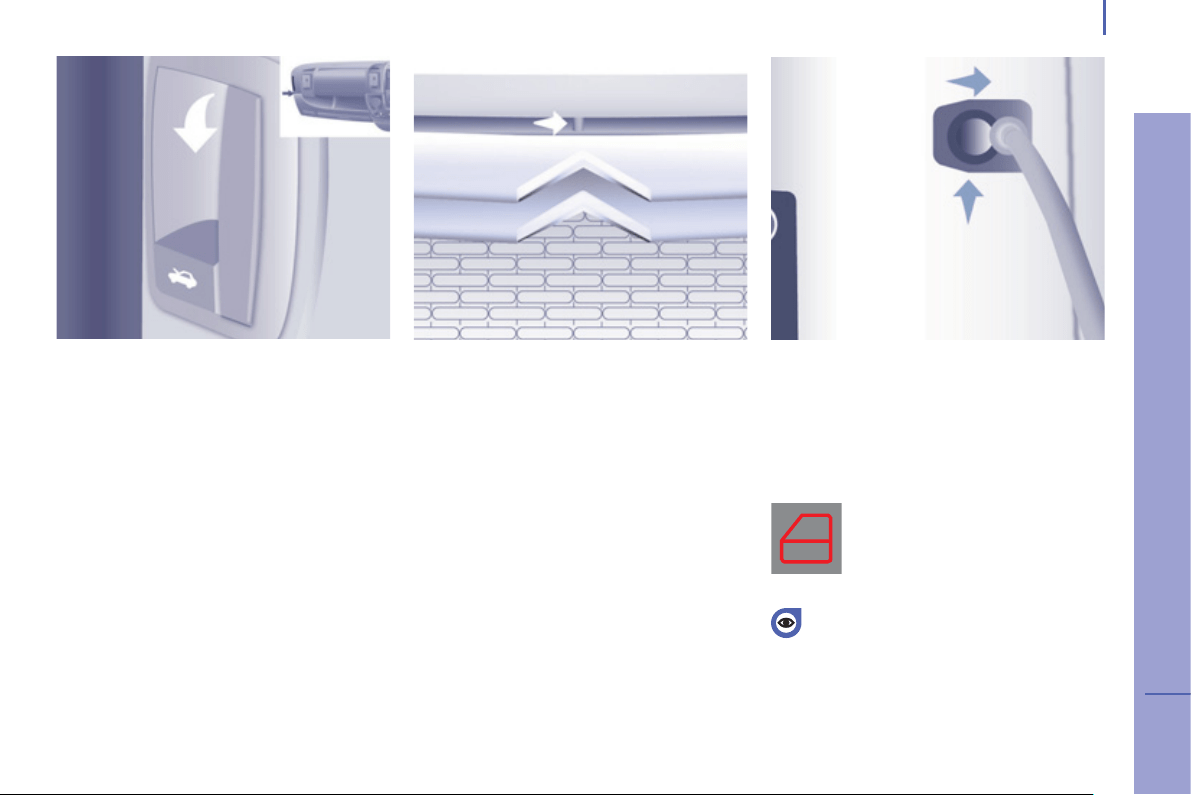
1
37
7
Openin
g
the bonnet
CHECK
S
On the inside
This operation must only be carried out with
the vehicle stationary and the driver's door
open.
Pull the release lever on the side of the
dashboard towards you.
On the outside
Push the safety catch lever located above
the grille to the right and raise the bonnet.
To close
Lower the bonnet and release it at the end of
its travel. Check that the bonnet has latched.
OPENING THE BONNET
B
onnet sta
y
Unclip the stay and tilt it to insert it in the
first notch, then the second.
Before closing the bonnet, put the stay back
in its housing.
If the bonnet is not closed
correctly, this warning lamp
comes on in the instrument panel.
Before doing anything under the
bonnet, switch off the ignition with the
key to avoid any risk of injury resulting from
an automatic change to START mode.
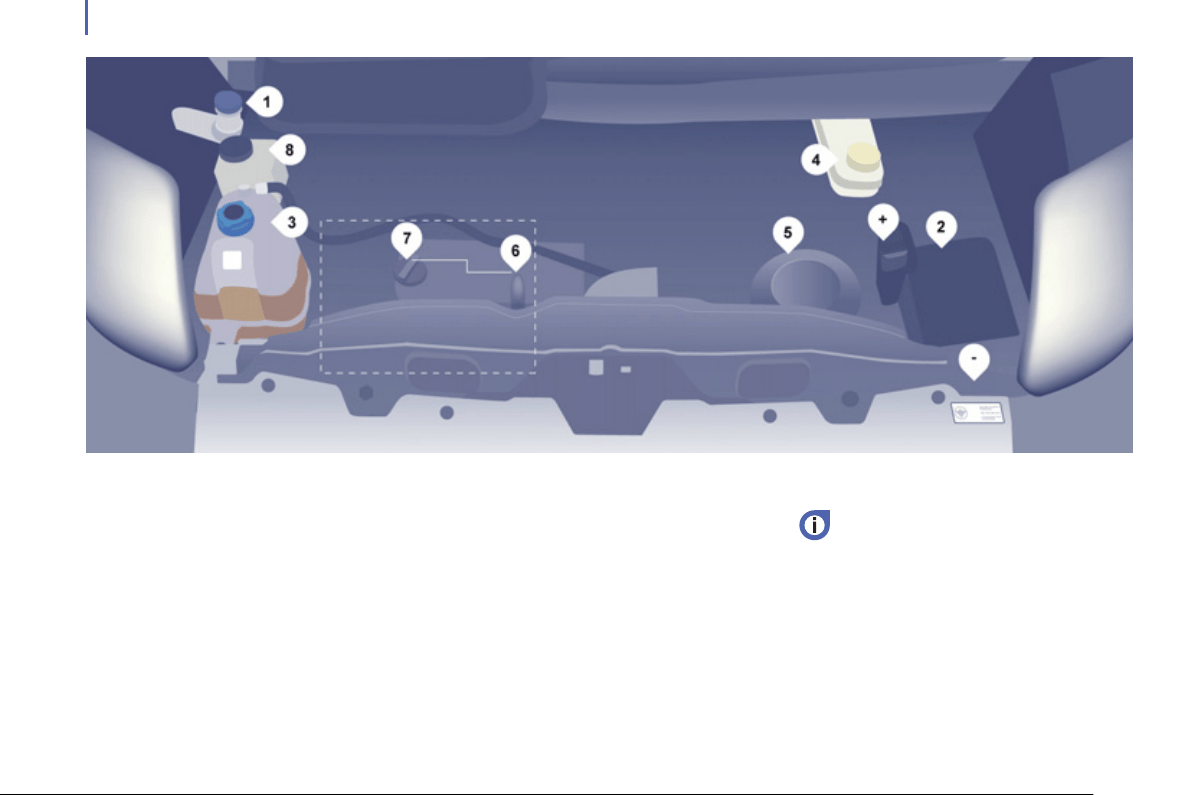
1
38
U
nder the bonne
t
DIE
S
EL ENGINE
S
1. Windscreen/headlamp wash reservoir.
2. Fusebox.
3. Coolant reservoir.
4. Brake and clutch fluid reservoir.
5. Air filter.
6. Dipstick.
2.2 Iitre 100 engine
7. Engine oil filler cap.
2.2 Iitre 100 engine
8. Power steering reservoir.
Battery connections:
+ Positive metal point.
- Negative metal point (earth).
UNDER THE BONNET

1
39
7
CHECK
S
Levels
LEVELS
These regular maintenance operations
will keep your vehicle in good running
order. Ask for advice at a CITROËN dealer
or consult the servicing booklet enclosed in
the handbook pack.
To maintain the reliability of engines and
emission control systems, the use of
additives in engine oil is prohibited.
Chan
g
in
g
the brake fluid
The brake fluid must be changed at
the intervals stated, according to the
manufacturer's servicing schedule.
Use fluids recommended by the
manufacturer, which fulfil DOT4 standards.
The level must be between the MIN and
MAX marks on the reservoir.
If fluid has to be added frequently, this
indicates a failure which must be checked by
a CITROËN dealer as soon as possible.
If you have to remove/refit the engine
style cover, handle it with care to avoid
damaging the fixing clips.
Dipstick
There are two marks on
the dipstick:
Oil chan
g
e
It is imperative that this is carried out at the
intervals specified and the viscosity grade of
the oil selected must fulfil the requirements
in accordance with the manufacturer's
servicing schedule. Ask for advice at at
CITROËN dealer.
Remove the dipstick before filling.
Check the level after filling (never exceed
the maximum mark).
Screw the cap back onto the sump before
closing the bonnet.
Vi
scos
i
t
y
se
l
ect
i
on
In all cases, the oil selected must meet the
manufacturer's requirements.
Warnin
g
lamps
Checking by means of the warning
lamps on the instrument panel is
described in chapter 2, refer to the
"Instruments and controls" section.
A = maximum
If you fill past this mark,
contact a CITROËN dealer.
B = minimum
Never allow the level to fall
below this mark.
Oil level
Check the level regularly and top up
between changes. The maximum
consumption is 0.5 litre per 600 miles
(1 000 km). Check the level with the vehicle
level, engine cold, using the dipstick.

14
0
Levels
Coolin
g
s
y
stem
Only use the fluid recommended by the
manufacturer. Otherwise, you risk seriously
damaging your engine. When the engine
is warm, the temperature of the coolant is
controlled by the engine fan. As this fan can
operate with the ignition key removed and
because the cooling system is pressurised,
wait for at least one hour after the engine
has stopped before carrying out any work.
Slacken the cap by 1/4 of a turn to release
the pressure to prevent any risk of scalding.
When the pressure has dropped, remove the
cap and top up the level with coolant.
If fluid has to be added frequently, this
indicates a failure which must be checked by
a CITROËN dealer as soon as possible.
Power steerin
g
fluid level
The vehicle must be parked on level ground with
the engine cold. Unscrew the cap integrated with
the gauge and check the level which must be
between the MIN and MAX marks.
U
se
d
o
il
Avoid prolonged contact of used oil with the
skin.
Brake fluid is harmful to health and very
corrosive.
Do not dispose of used oil, brake fluid or
coolant into drains or into the ground but
into the containers dedicated to this use
at CITROËN dealerships (France) or to an
authorised waste disposal site.
Toppin
g
up
The level must be between the MIN and
MAX marks on the expansion bottle. If
more than 1 litre of fluid is required to top
up the level, have the system checked by a
CITROËN dealer.
Windscreen wash and headlam
p
wash
l
evel
For best quality cleaning and to prevent
freezing, this fluid must not be topped up or
replaced with plain water.
Capacity of the reservoir: approximately
5.5 litres.

14
1
7
CHECK
S
Checks
CHECKS Air filter and passen
g
er compartment
f
ilter
A clogged passenger compartment fi lter may
reduce the performance of the air conditioning
system and generate undesirable odours. The
replacement intervals for these components
are indicated in the servicing booklet.
Depending on the environment (dusty
atmosphere...) and the use of the vehicle
(urban driving...), change them twice as often
if necessary, refer to the "Under the bonnet"
section of chapter 7.
Manual
g
earbox
Have the level checked in accordance with
the manufacturer's servicing schedule.
To check the main levels and certain
components, in accordance with the
manufacturer's servicing schedule, refer to
the pages of the servicing booklet which
correspond to your vehicle's engine.
Only use products recommended by
CITROËN or products of equivalent quality
and specification.
In order to optimise the operation of units as
important as the braking system, CITROËN
selects and offers specific products.
In order to avoid damaging the electrical
units, high pressure washing to clean the
engine compartment is strictly prohibited.
P
ar
ki
n
g
b
ra
k
e
Where the parking brake travel is too great
or there is a reduction in the performance
of the system, the parking brake should be
adjusted, even between services.
Have the system checked by a CITROËN
dealer.
Bleedin
g
the water contained in the
D
iesel filte
r
If this warning lamp comes on,
bleed the filter, otherwise bleed
regularly each time the engine oil
is changed.
To drain the water out, unscrew the bleed
screw or the water in Diesel sensor, located
at the base of the filter. Leave open until
all of the water has been drained out. Then
tighten the bleed screw or the water sensor.
HDi engines use advanced technology. All
work requires a special qualification which is
guaranteed by a CITROËN dealer.
Batter
y
At the start of winter, have your battery
checked by a CITROËN dealer.
B
ra
k
e pa
d
s
Brake pad wear depends on the style of
driving, in particular for vehicles which are
used in town, over short distances. It may
be necessary to check the thickness of the
pads, even between services.
Unless there is a leak on the system, a drop
in the brake fluid level indicates that the
brake pads are worn.
Brake disc
/
drum wear status
For any information relating to checking
the brake disc/drum wear status, contact a
CITROËN dealer.
Oil filter
Change the filter regularly, in accordance
with the servicing schedule.
The presence of this label, in particular
with the Stop & Start system, indicates the
use of a specific 12 V lead-acid battery
with special technology and specification.
The involvement of a CITROËN dealer
or a qualified workshop is essential when
replacing or disconnecting the battery.

142
Checks
Particle filter s
y
stem
(
Diesel
)
An addition to the catalytic converter, this
filter makes an active contribution to the
preservation of air quality by the retaining
of the unburnt pollutant particles. Black
exhaust fumes are thus no longer emitted.
This filter, fitted to the exhaust system,
accumulates particles of soot. The engine
control unit manages the automatic
periodic elimination of the soot particles
(regeneration).
The regeneration procedure is invoked
according to the quantity of particles
accumulated and the driving conditions of
the vehicle. During this phase, you may
notice some unusual phenomena - increased
idling speed, cooling fan running, increase in
smoke and higher exhaust gas temperature -
which does not affect the operation of the
vehicle or the environment.
After prolonged idling or driving at very low
speeds, you may occasionally notice water
vapour being emitted from the exhaust when
accelerating. This is of no consequence
to the running of the vehicle or to the
environment.
Because of the higher exhaust gas
temperature resulting from the normal
operation of the particle filter, it is
recommended that you do not park the
vehicle over inflammable materials (grass,
dry leaves, pine needles, ...) so as to avoid
any risk of fire.
Saturation / Regeneration
Operating fault
If this alert persists, do not ignore the
warning; it indicates that a fault has occurred
in the exhaust / particle filter system.
Have it checked by a CITROËN dealer.
If there is risk of blockage of the
filter, this warning lamp comes on
in the instrument panel.
This alert tells you that the particle filter
is starting to fill up (in conditions of urban
driving of exceptionally long duration: low
speeds, traffic jams etc.)
To regenerate the filter, it is advised to drive
as soon as possible, when traffic conditions
and the law permit, at a speed of at least
40 mph (around 60 km/h), with an engine
speed above 2 000 rpm for about fifteen
minutes (until the warning lamp and/or the
message disappears).
If possible, avoid switching off the engine
before the end of regeneration of the
filter; repeated interruptions could cause
premature deterioration of the engine oil. It
is not recommended to end regeneration of
the filter with the vehicle stationary.
14
3
7
CHECK
S
M
aintenance with TOTAL
Innovation in the search for performance
For over 40 year, the TOTAL Research and
Development departments have developed
for CITROËN, lubricants to match the latest
technical innovations on CITROËN vehicles,
both for competition and for everyday motoring.
For you, this is an assurance that you will obtain
of the best performance for your engine.
Optimum protection for your
engine
By having your CITROËN vehicle
serviced with TOTAL lubricants, you
are contributing towards improving
the life and performances of your
engine, while also protecting the
environment.
prefers
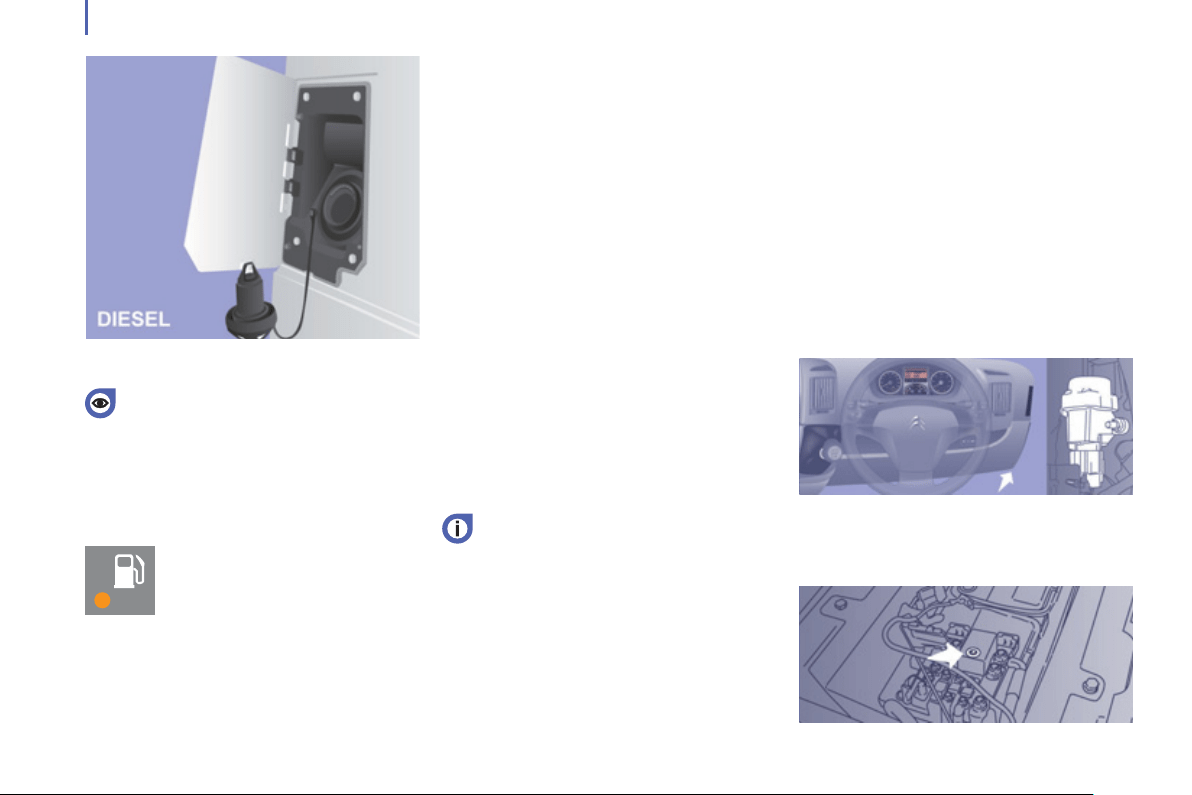
144
Fuel
Low fuel level
When the fuel tank level E
(Empty) is reached, this warning
lamp comes on. At this moment,
you have enough fuel left to
drive approximately 30 miles (50 km) ,
depending on the driving conditions, the
engine and the profile of the road. Fill up
without delay to avoid running out of fuel.
The fuel tank must be filled with the engine
off.
- Open the fuel filler flap.
- Support the cap with one hand.
- With the other hand, insert the key, then
turn it anticlockwise.
- Remove the cap and hook it onto the
clip located on the inside of the flap.
A label affixed to the inside of the flap
reminds you of the type of fuel to be used.
When filling the fuel tank, do not continue
after the 3rd cut-off of the nozzle. This could
cause malfunctions.
The capacity of the fuel tank is
approximately 90 litres.
- After filling the fuel tank, lock the cap
and close the flap.
FUEL SYSTEM CUT-OFF
In the event of a serious collision, a device
automatically cuts off the fuel supply
to the engine and the vehicle's electrical
supply.
FILLING WITH FUEL
Fuel tanks of different capacities,
60 and 125 litres, may be fitted.
Check that there is no smell or leak of fuel
outside the vehicle.
Restore the supply by pressing:
-
the fi rst button, located below the steering wheel.
- the second button, located in the
battery compartment, under the front
passenger's floor.
In low temperatures
In mountainous and/or cold areas, it is
advisable to use a "winter" type fuel suited
to low or minus temperatures.
With Stop & Start, never refuel with
the system in STOP mode; you must
switch off the ignition with the key.
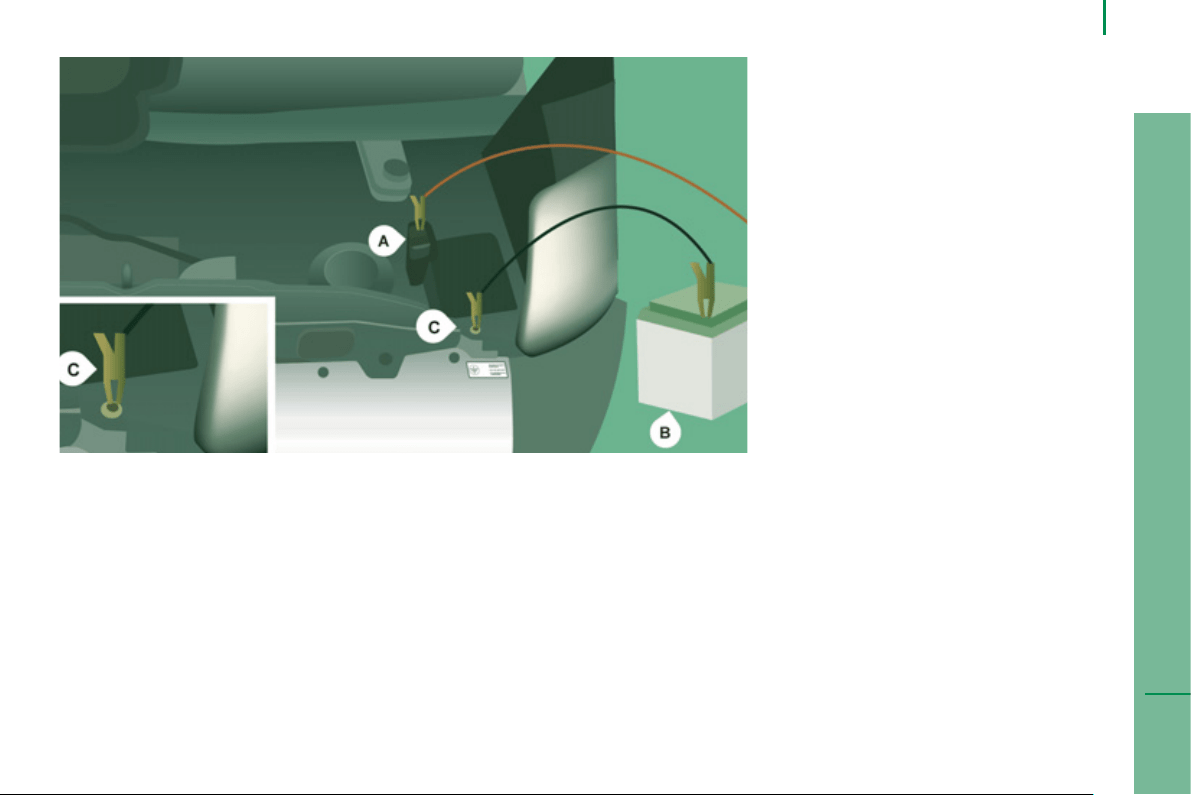
14
5
Batter
y
QUICK HELP
8
A. Positive metal point on your vehicle
B. Slave battery
C. Earth on your vehicle
Char
g
in
g
the batter
y
usin
g
a char
g
e
r
- disconnect the battery located in the
front left floor,
- follow the instructions for use given by
the battery charger manufacturer,
- reconnect starting with the negative (-)
terminal,
- check that the terminals and connectors
are clean. If they are covered with
sulphate (white or greenish deposit),
disconnect them and clean them.
The charging operation must be carried
out in a ventilated area away from naked
flames or any possible sources of sparks to
eliminate the risk of explosion and fire.
Do not attempt to charge a frozen battery: it
must first be thawed to eliminate the risks of
explosion. If the battery has frozen, before
charging it have it checked by a specialist
who will check that the internal components
have not been damaged and that the
container is not cracked, which could mean
that there is a risk of a leak of toxic and
corrosive acid.
Proceed with a slow charge charge at low
current for a maximum pf about 24 hours to
avoid damaging the battery.
BATTERY
Startin
g
from another batter
y
- connect the red cable to the metal
point A then to the positive (+) terminal
of the slave battery B ,
- connect one end of the green or black
cable to the negative (-) terminal of the
slave battery B ,
- connect the other end of the green or
black cable to the earth point C on your
vehicle,
- operate the starter, let the engine run,
- wait for the engine to return to idle, then
disconnect the cables.
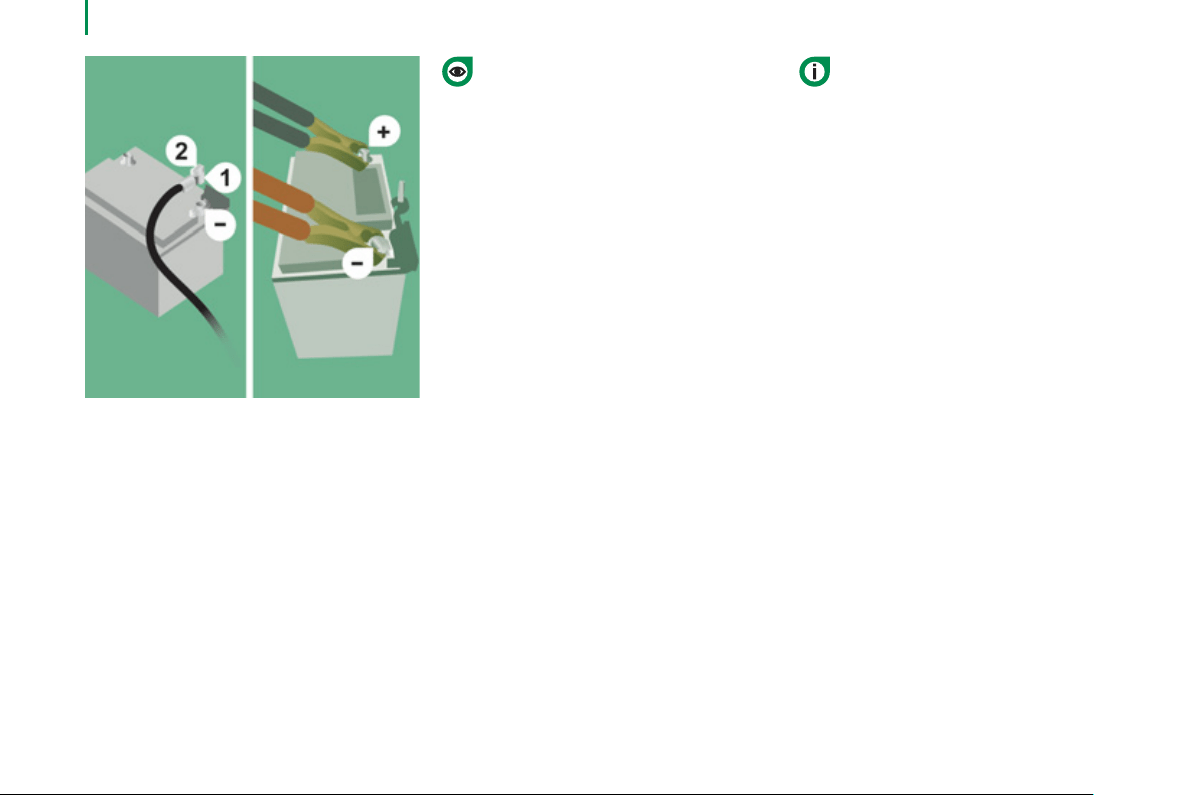
14
6
Batter
y
Access to the ne
g
ative terminal
For access to the negative (-) terminal:
press button 2 then pull on connector 1 .
It is advisable to disconnect the
negative (-) terminal of the battery if the
vehicle is not to be used for a period of
more than one month.
The description of the battery charging
procedure is given as an indication only.
The batteries contain harmful
substances such as sulphuric acid and
lead. They must be discarded in accordance
with the provisions of the law and must not,
in any circumstances, be discarded with
household waste.
Take used batteries to a special collection
point.
If the battery has been disconnected
for some time, it may be necessary to
reinitialise the following functions:
- the display parameters (date, time,
language, distance unit and temperature
unit),
- the radio stations,
- the central locking.
Some settings are cleared and must be
reprogrammed, consult a CITROËN.
If your vehicle is fitted with a tachograph or
an alarm, disconnection of the negative (-)
terminal of the battery (located under the
floor on the left-hand side, in the cab) is
recommended if the vehicle is not to be used
for a period of more than 5 days.
Before disconnecting the battery, you must
wait for 2 minutes after switching off the
ignition.
Never disconnect a terminal when the
engine is running.
Never charge a battery without first
disconnecting the terminals.
Close the windows and doors before
disconnecting the battery.
After every reconnection of the battery,
switch on the ignition and wait 1 minute
before starting to allow the electronic
systems to be initialised. If slight difficulties
are experienced after this, please contact a
CITROËN dealer.

14
7
Batter
y
QUICK HELP
8
The presence of this label, in particular
with the Stop & Start system, indicates
the use of a 12 V lead-acid battery with
special technology and specification;
the involvement of a CITROËN dealer or
a qualified workshop is essential when
replacing or disconnecting the battery.
Failure to observe this recommendation may
cause premature wear of the battery.
After refi tting the battery by a CITROËN
dealer or a qualifi ed workshop, the
Stop & Start system will only be active after
a continuous period of immobilisation of
the vehicle, a period which depends on the
climatic conditions and the state of charge of
the battery (up to about 8 hours).
Do not disconnect the battery to
charge it.
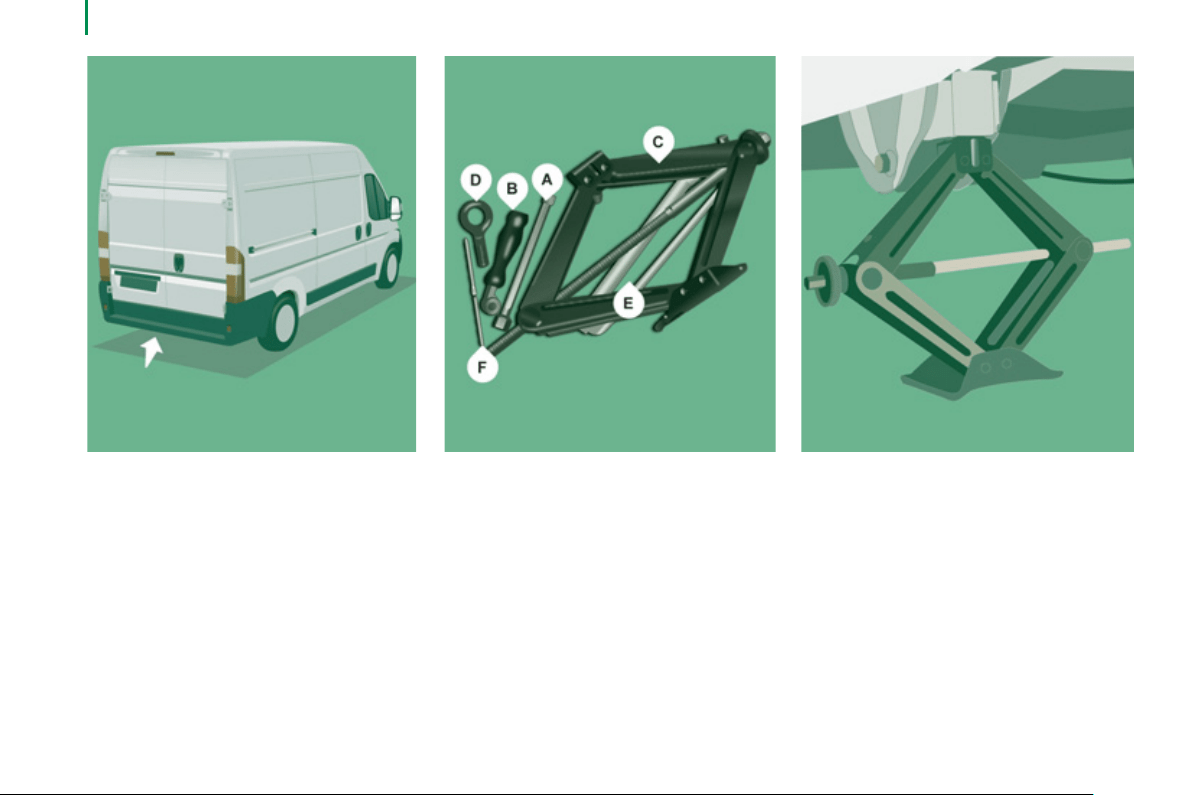
14
8
Chan
g
in
g
a wheel
1. PARKING THE VEHICLE
As far as possible, park the vehicle on level,
stable and non-slippery ground.
Apply the parking brake, switch off the
ignition and engage first gear.
Put on a high visibility vest and position the
warning triangle.
If possible, place a chock under the
wheel diagonally opposite the wheel to be
changed.
2. TOOLS
These are located under the front passenger
seat cushion.
- Turn the button a quarter of a turn then
pull the box.
- After use, press the button then turn it a
quarter of a turn to secure the box.
A. Long socket.
B. Ratchet wrench.
C. Jack.
D. Towing hook.
E. Wheelbrace.
F. Screwdriver.
CHANGING A WHEEL
You must ensure that the occupants get out
of the vehicle and wait in a safe location.
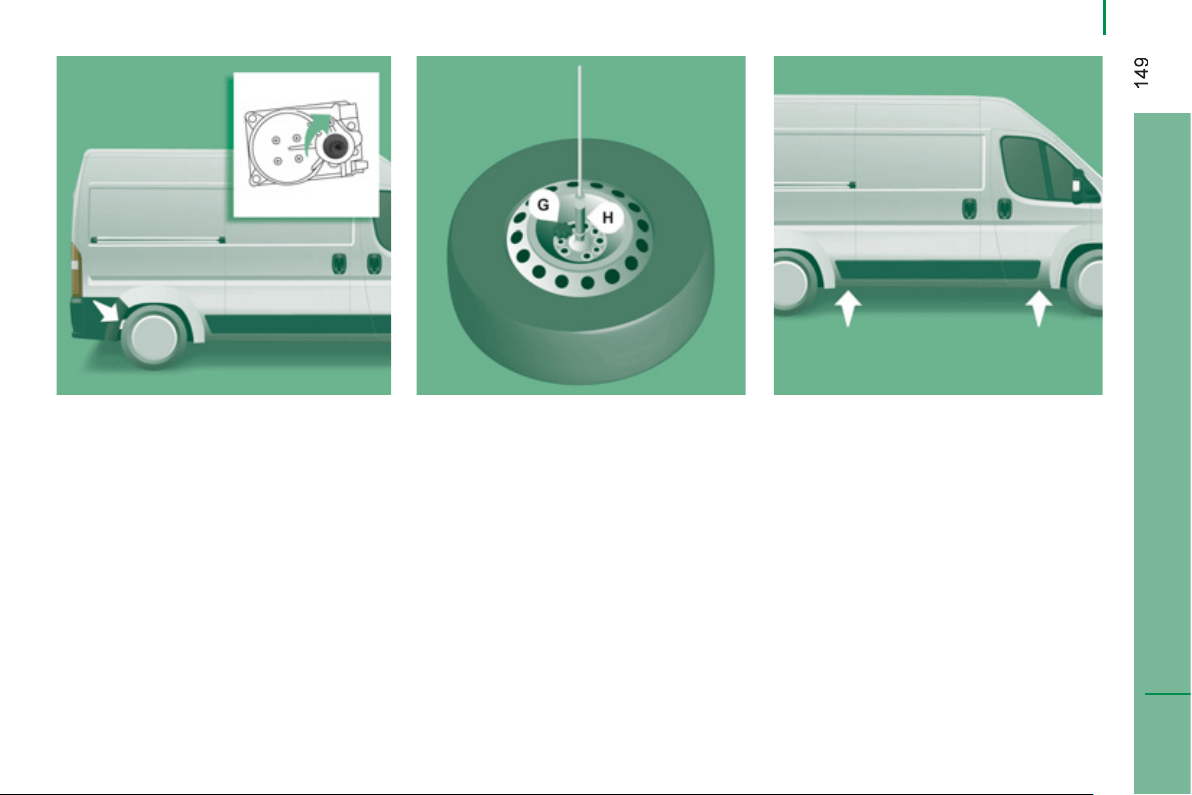
QUICK HELP
8
Chan
g
in
g
a wheel
4. OPERATING PROCEDURE
- Remove the trim using the screwdriver F
as a lever.
- Release the bolts using the
wheelbrace E .
- Position the jack C at one of the four
locations provided on the underbody
near the wheels.
3. SPARE WHEEL
The spare wheel retaining bolt is located
below the bumper on the right.
- Turn the bolt using the socket A and the
ratchet wrench B to release the wheel.
- Turn to the locking point, indicated by
an increase in the force required for the
manoeuvre.
- Take out the spare wheel using the
wrench.
- Unscrew the handle G and remove the
support H .
- Release the spare wheel and place it
near the wheel to be changed.
If you have a retractable foot board, the jack
must be positioned at 45°.
- Extend the jack using the ratchet
wrench B until the wheel is a few
centimetres off the ground.
- Unscrew the bolts fully and change the
wheel.
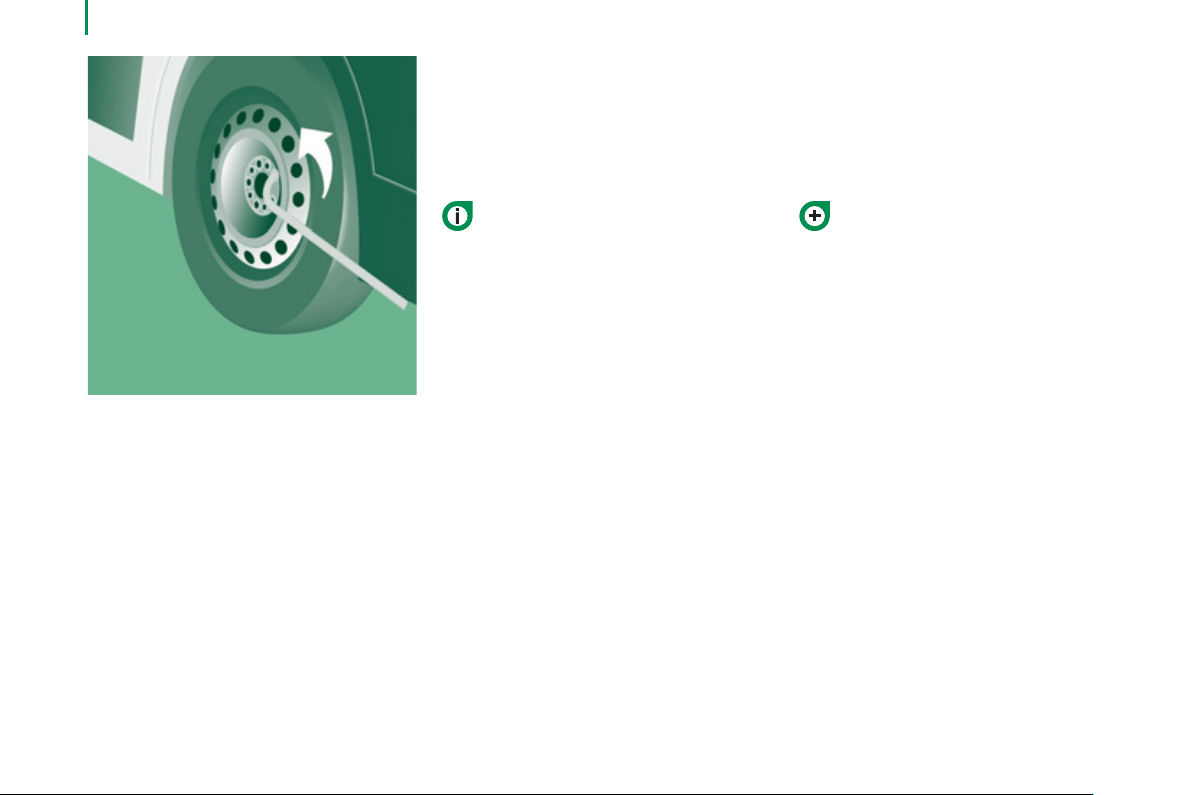
1
50
Chan
g
in
g
a wheel
6. REFITTING THE REPAIRED WHEEL
Refitting of the wheel is identical to step 5,
do not forget to refit the wheel trim.
Refer to the "Identification markings"
section of chapter 9 to locate the tyre
label.
The spare wheel is not designed to be used
over long distances. Have the tightening of
the bolts and pressure of the spare wheel
checked by a CITROËN dealer without
delay.
Also, have the original wheel repaired and
refitted by a CITROËN dealer as soon as
possible.
5. FITTING THE SPARE WHEEL
- Put the wheel in place on the hub and
start screwing in the bolts by hand.
- Carry out an initial tightening of the bolts
using the wheelbrace E .
- Lower the vehicle completely by folding
the jack, then remove the jack.
- Tighten the bolts again using the
wheelbrace E , tighten them fully without
forcing them.
- Stow the wheel to be repaired at the
rear of the vehicle.
- Hook the support H and screw in the
handle G .
- Insert the socket A in the hole then
screw in the bolt, using the ratchet
wrench B , to raise the wheel.
- Stow the tools and the trim.
Never go underneath a vehicle
supported only by a jack (use an axle
stand).
The jack and the tool kit are specific to your
vehicle. Do not use them for other purposes.
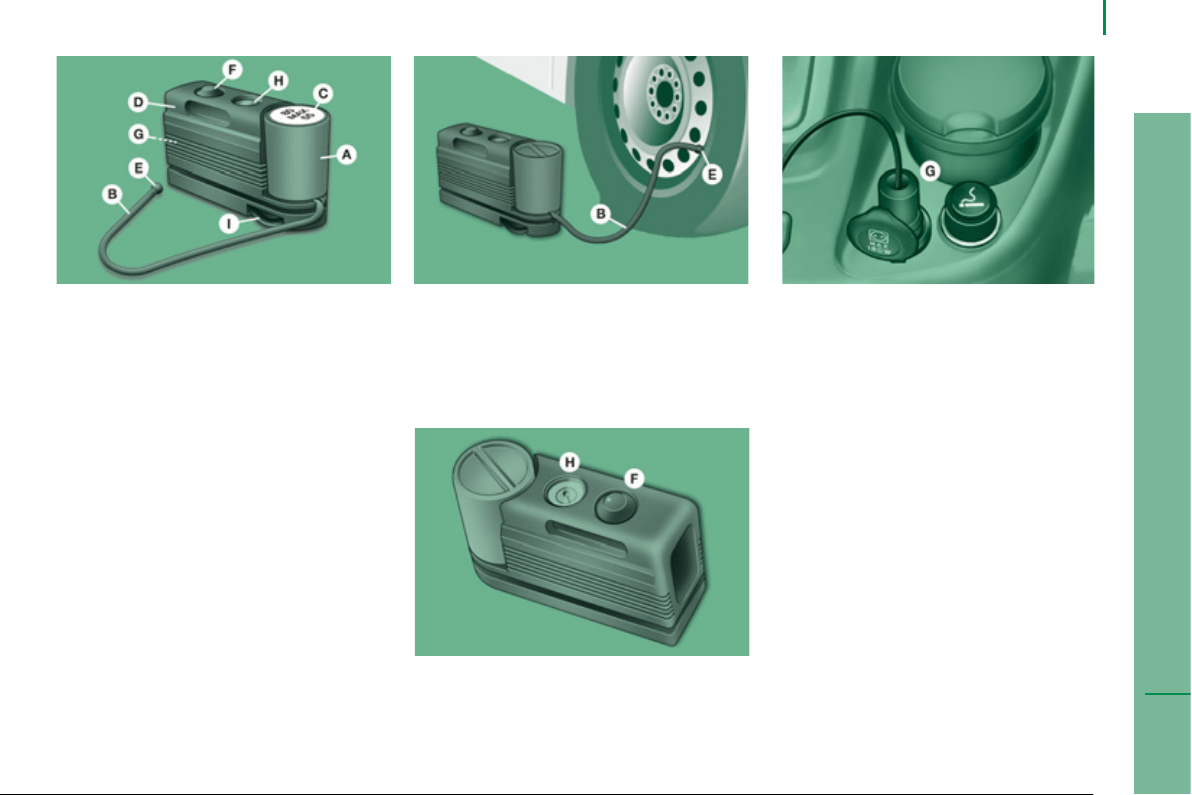
1
51
QUICK HELP
8
Chan
g
in
g
a wheel
PUNCTURE REPAIR KIT Procedure
- Apply the parking brake. Unscrew the
tyre valve cap, remove the filling hose B
and screw the ring E onto the tyre valve,
- start the engine,
- insert the connector G into the nearest
power socket on the vehicle,
- switch on the compressor by placing the
switch F in position I (on),
- inflate the tyre to a pressure of 4 bars.
To obtain a more accurate reading, you are
advised to check the pressure value on the
pressure gauge H , with the compressor off.
- check that the switch F on the
compressor is in position 0 (off),
This temporary puncture repair kit is located
at the front of the passenger compartment.
It consists of:
- a cartridge A , containing the sealant
fluid, equipped with:
● a filling hose B ,
● a sticker C indicating "max. 80 km/h",
which the driver must affix in full view
(on the dashboard) after repairing the
tyre,
- a quick guide to use of the repair kit,
- a compressor D equipped with a
pressure gauge and unions,
- adaptors, for the inflation of various
items.
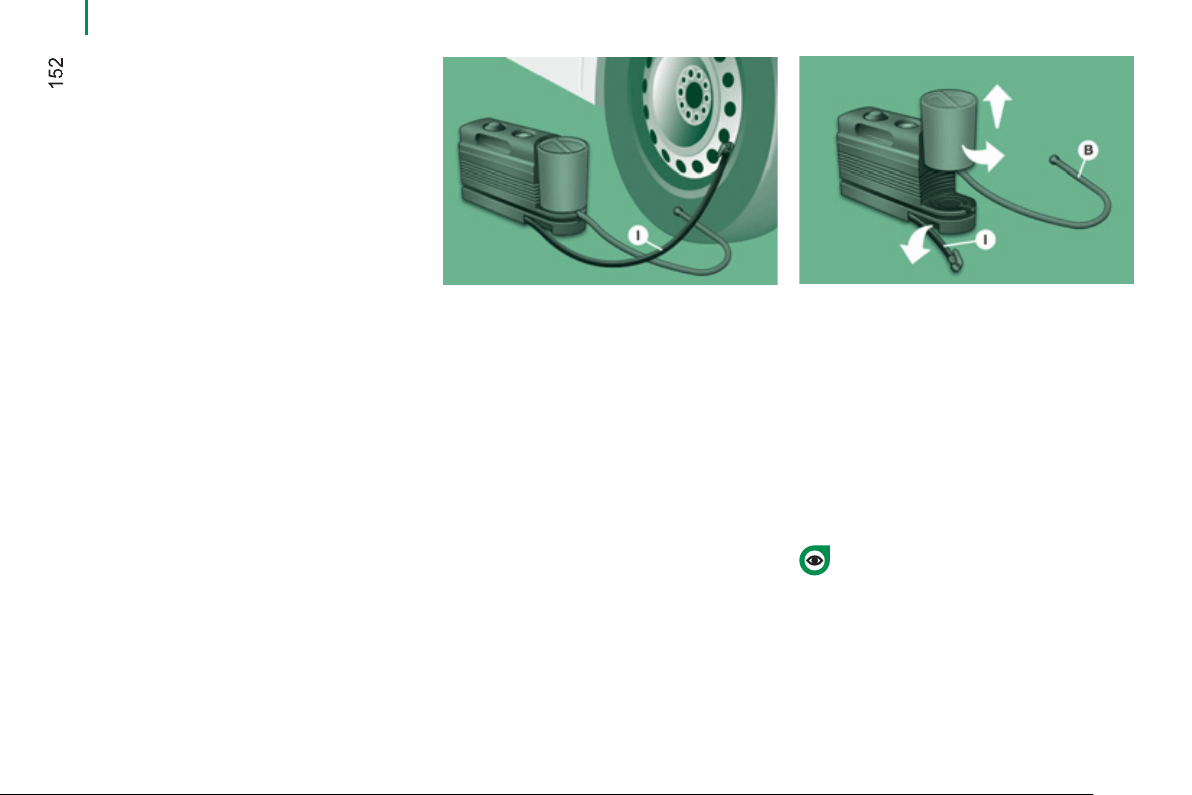
Chan
g
in
g
a wheel
- If a pressure of at least 3 bars is not
reached within 5 minutes, disconnect
the compressor from the valve and the
power socket, then move the vehicle
forward by approximately 10 metres to
distribute the sealant fluid inside the
tyre.
- Then repeat the inflating operation:
● if a pressure of at least 3 bars is not
reached within 10 minutes, switch off
your vehicle: the tyre has suffered
too much damage and repair has not
been possible. Consult a CITROËN
dealer.
● if the tyre has been inflated to a
pressure of 4 bars , set off again
immediately.
After driving for approximately 10 minutes,
stop and check the pressure of the tyre
again.
Adjust the pressure if necessary and contact
a CITROËN dealer as soon as possible.
Checkin
g
and ad
j
ustin
g
the pressure
The compressor can only be used to check
and adjust the pressure.
- Disconnect the hose I and connect it to
the tyre valve directly; the cartridge will
then be connected to the compressor
and the filling fluid will not be injected.
If it is necessary to deflate the tyre, connect
the hose I to the tyre valve and press the
yellow button, placed in the centre of the
switch on the compressor.
Replacin
g
the sealant fluid cartrid
g
e
To replace the cartridge, carry out the
following operations:
- disconnect the hose I ,
- turn the cartridge to be replaced
anticlockwise and lift it,
- insert the new cartridge and turn it
clockwise,
- reconnect the hose I and connect the
hose B in its location.
The cartridge contains ethylene-glycol,
a product which is harmful if swallowed
and which causes irritation to the eyes.
Keep out of reach of children.
After use, do not discard the cartridge in the
environment, take it to a CITROËN dealer
or to an organisation responsible for its
collection.
This replacement kit is available from
CITROËN dealers.
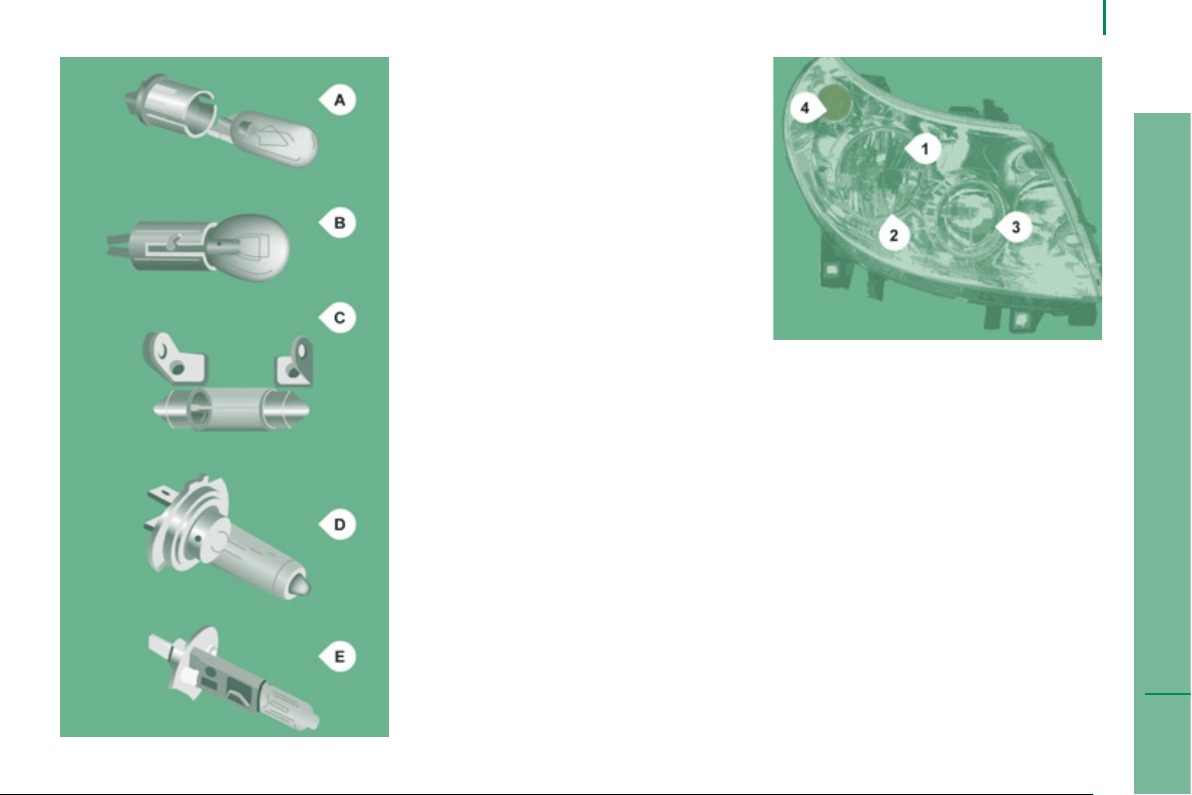
1
53
QUICK HELP
8
Chan
g
in
g
a bulb
TYPE
S
OF BULB
Various types of bulb are installed on your
vehicle. To remove them:
CHANGING A BULB
Type A Entirely glass bulb: pull gently
as it is fitted by pressure.
Type B Bayonet bulb: press on the bulb
then turn it anticlockwise.
Type C Cylindrical bulb: move aside the
contacts.
Type D - E Halogen bulb: release the
retaining spring from its
housing.
FRONT LAMPS
Open the bonnet. To access the bulbs, reach
behind the headlamp unit.
Carry out the operations in reverse order to
refit each bulb.
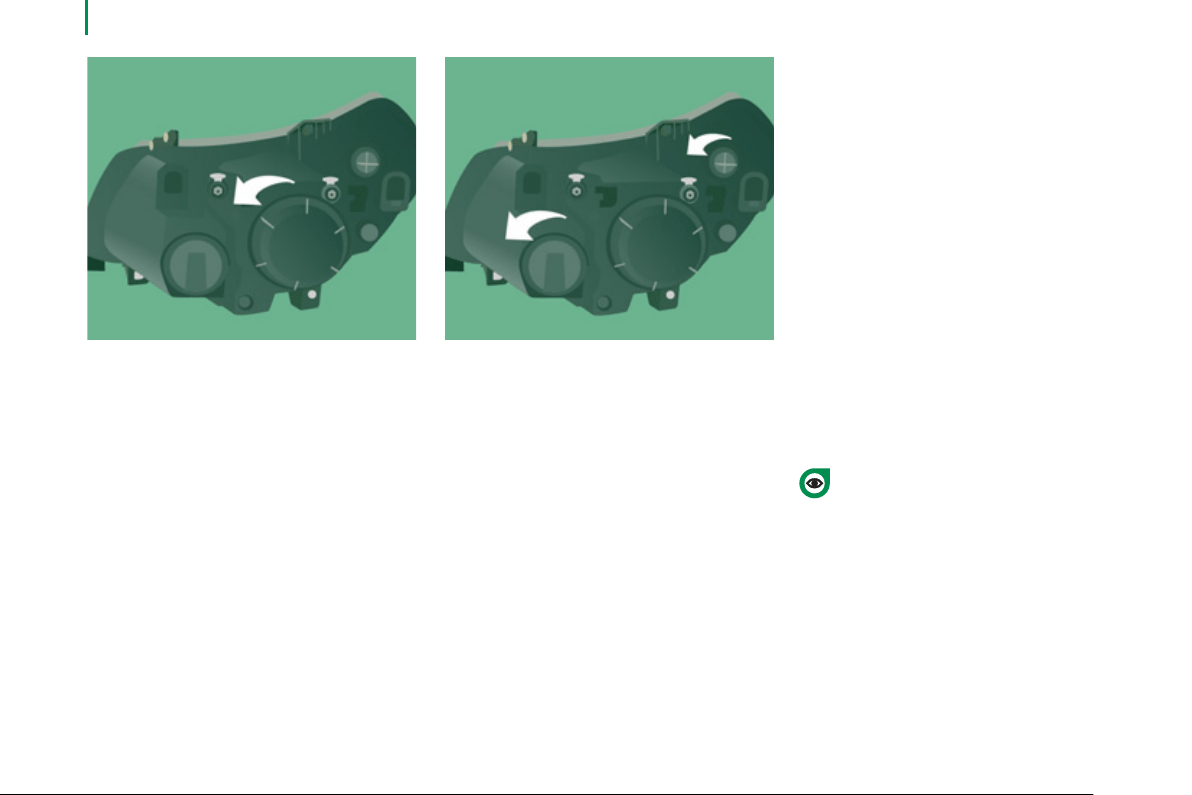
1
5
4
Chan
g
in
g
a bulb
1 - Dipped beam headlamp
Type D , H7 - 55 W
- Remove the cover by turning it
anticlockwise.
- Disconnect the electrical connector.
- Release the retaining spring by pressing
on the two clips.
- Change the bulb taking care to align the
metal part with the grooves on the lamp.
3 - Main beam headlamp
Type E , H1 - 55 W
- Remove the cover by turning it
anticlockwise.
- Disconnect the electrical connector.
- Release the retaining spring by pressing
on the two clips.
- Change the bulb taking care to align the
metal part with the groove on the lamp.
2 - Sidelamp
Type A , W 5 W - 5 W
- Remove the cover by turning it
anticlockwise.
- Remove the bulb holder fitted by
pressure.
- Change the bulb.
4 - Direction indicators
Type B , PY 21 W - 21 W
- Turn the bulb holder a quarter turn
anticlockwise.
- Remove the bulb by pressing it lightly
while turning it anticlockwise.
- Change the bulb.
5 - Foglamps
Type D , H1 - 55 W
- Turn the steering fully to the left.
- Unscrew the screw located in the wheel
arch then open the flap.
- Remove the cover.
- Disconnect the electrical connector.
- Release the retaining spring by pressing
on the two clips.
- Change the bulb taking care to align the
metal part with the grooves on the lamp.
Halogen bulbs must be changed after
the headlamp has been off for several
minutes (risk of serious burns). Do not touch
the bulb directly with your fingers, use lint-
free cloths.
When each operation has been completed,
check the operation of the lamps.
When using a high pressure washer
on stubborn dirt, do not persist on the
headlamps, the lamps and their edges to
avoid damaging their lacquer finish and
seals.
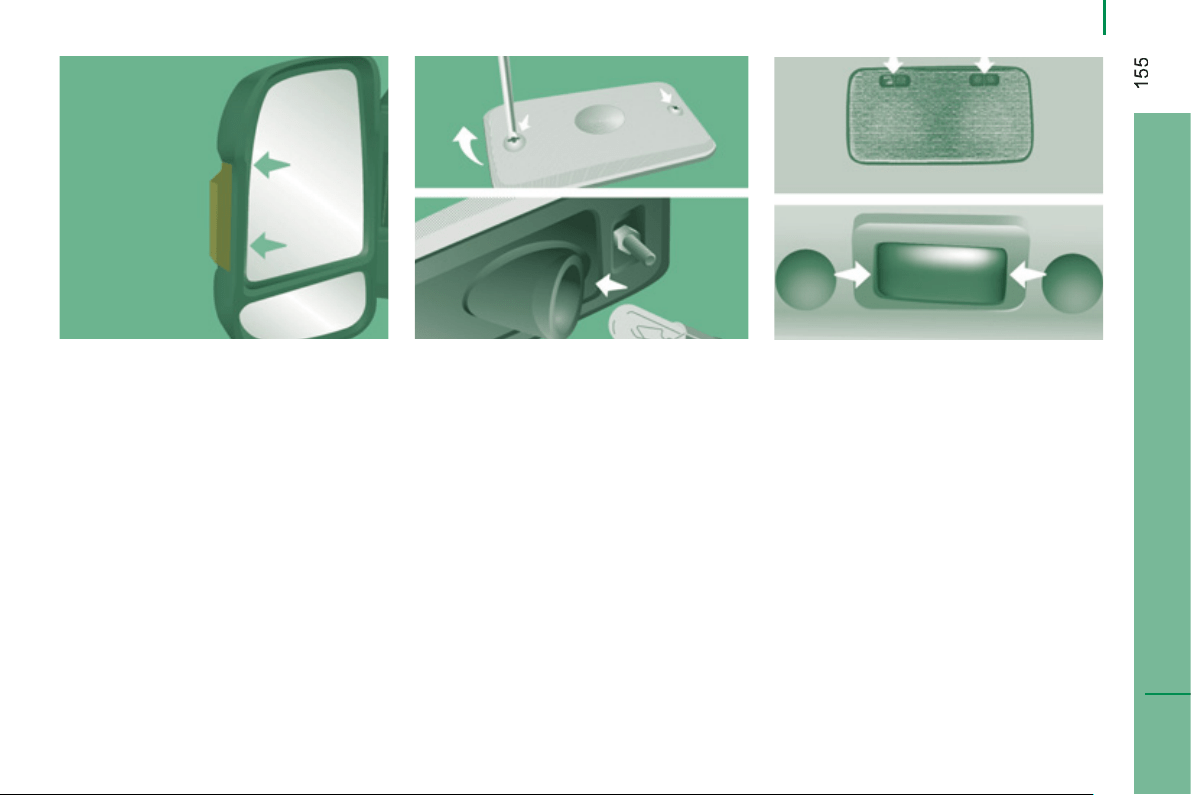
QUICK HELP
8
Chan
g
in
g
a bulb
DIRECTION INDICATOR SIDE
R
EPEATER
Type A , W 16 W F - 16 W
- Move the mirror glass to access the
screws.
- Unscrew the two screws using the
screwdriver supplied.
- Pull the bulb holder to release it from the
dog points.
- Pull the bulb then change it.
Front/Rear
COURTE
S
Y LAMP
S
Type C , 12 V 10 W - 10 W
- Press the points, indicated by the
arrows, then remove the courtesy lamp.
- Open the protective flap.
- Change the bulb moving aside the two
contacts.
- Ensure that the new bulbs are secured
correctly between the two contacts.
- Close the protective flap.
- Fix the courtesy lamp in its housing and
ensure that it is secured correctly.
SIDE MARKER LAMPS
Type A, W5W - 5W
- If your vehicle is fitted with these lamps
(van type L4), unscrew the two screws
using the screwdriver supplied.
- Pull the bulb holder to release it from the
lugs.
- Pull the bulb then change it.
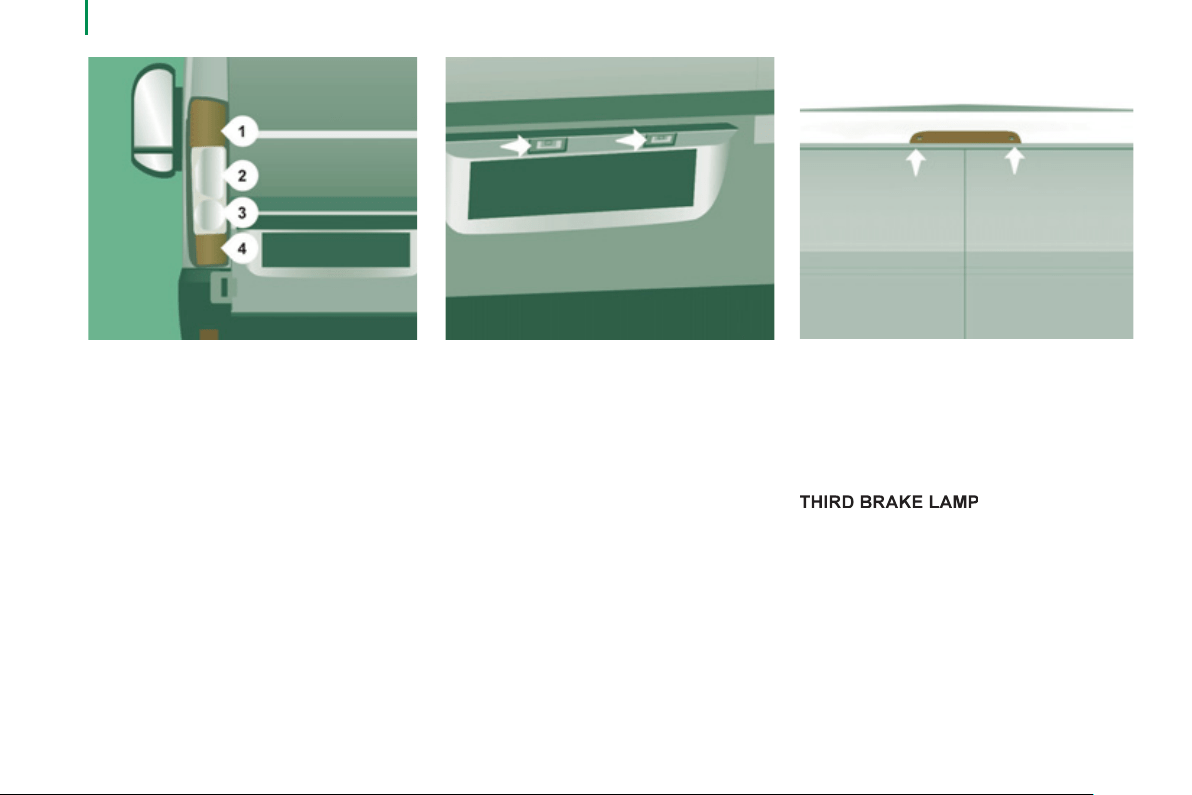
1
56
Chan
g
in
g
a bulb
REAR LAMPS
For more information on the bulbs, refer to
the table "Types of bulb".
- Remove the two fixing nuts.
- Pull the lens block from the outside.
- Unscrew the three screws using the
screwdriver supplied (under the front
passenger seat) and extract the bulb
holder.
- Remove the faulty bulb by pressing it
lightly while turning it anticlockwise.
- Change the bulb.
1. Brake/sidelamps
Type B, P 21/5 W - 5 W
Type B , P21W - 21W
- Unscrew the two screws.
- Remove the lamp.
- Remove the bulb holder moving aside
the two tabs.
- Remove the faulty bulb by pressing it
lightly while turning it anticlockwise.
- Change the bulb.
2. Direction indicators
Type B, PY 21 W - 21 W
3. Reversing lamps
Type B, P 21 W - 21 W
4. Foglamps
Type B, P 21 W - 21 W
- Identify the faulty bulb then open the
rear doors.
- Disconnect the electrical connector.
NUMBER PLATE LAMPS
Type A, C 5 W - 5 W
- Press the point, indicated by the arrow,
then remove the plastic lens.
- Change the bulb by moving aside the
two contacts.
- Ensure that the new bulbs are secured
correctly between the two contacts.
- Replace the plastic lens and press on it.
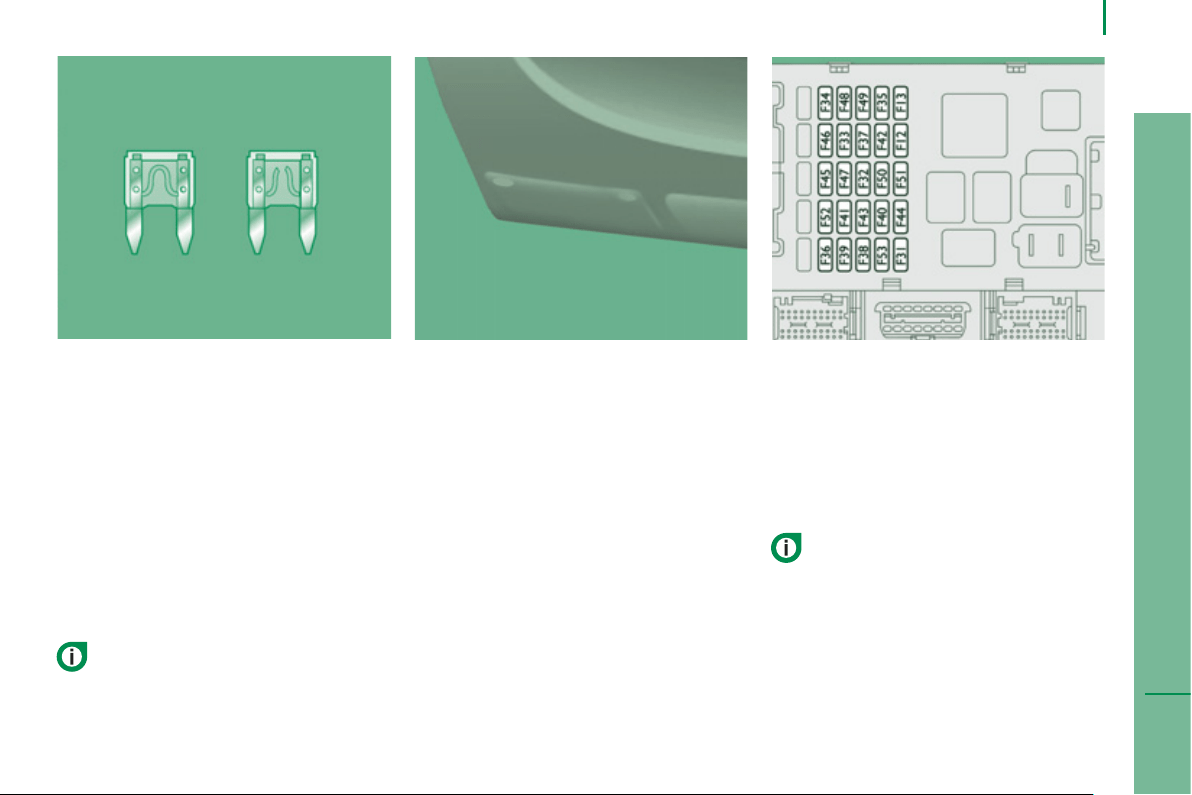
1
57
QUICK HELP
8
Chan
g
in
g
a fuse
The three fuseboxes are placed in the
dashboard on the passenger's side, in
the driver's door pillar and in the engine
compartment.
Descriptions are given only for fuses that
can be changed by the user. For all other
work on the fuses, go to a CITROËN dealer
or a qualified workshop.
Removin
g
and fittin
g
a fuse
Before changing a fuse, the cause of the
fault must be found and rectified. The fuse
numbers are indicated on the fusebox.
Always replace a failed fuse with a fuse
of the same rating.
CHANGING A FU
S
E
CITROËN declines to accept any
responsibility for expenses incurred for
repairs to your vehicle or for any malfunctions
resulting from the installation of additional
accessories which are not supplied or
recommended by CITROËN the manufacturer
and which are not installed in accordance with
its instructions, in particular when the combined
consumption of all of the additional equipment
connected exceeds 10 milliamperes.
Good Failed
Motor trade professionals : for compete
information on the fuses and relays,
refer to the diagrams in the workshop
procedure documents available at dealers.

1
58
Chan
g
in
g
a fuse
PASSENGER'S SIDE DASHBOARD FUSES
- Remove the bolts and tilt the box to access the fuses.
Fuses A (amps) Allocation
12 7.5 Right-hand dipped beam headlamp
13 7.5 Left-hand dipped beam headlamp
31 7.5 Relay supply
32 10 Cab lighting
33 15 Rear 12 V socket
34 - Not used
35 7.5
Reversing lamps - Water in Diesel fuel sensor
36 15 Central locking control - Battery
37 7.5 Brake lamps switch - Third brake lamp - Instrument panel
38 10 Central locking
39 10
Audio system - Diagnostic socket - Alarm siren - Programmable additional heating controls -
Air conditioning controls - Tachograph - Battery
40 15 Heated: rear screen (left hand), driver's side mirror
41 15 Heated: rear screen (right hand), passenger's side mirror
42 7.5 ABS control unit and sensor - ASR sensor - ESP sensor - Brake lamps switch
43 30 Windscreen wiper motor
44 20
Cigarette lighter - 12 V socket
45 7.5 Door controls
46 - Not used
47 20 Driver's electric window motor
48 20 Passenger electric window motor
49 7.5 Audio system - Instrument panel controls - Driver's electric window
50 7.5 Airbags and pre-tensioners unit
51 7.5 Tachograph - Cruise control - Air conditioning controls
52 7.5 Optional relay supply
53 7.5 Instrument panel - Rear foglamp
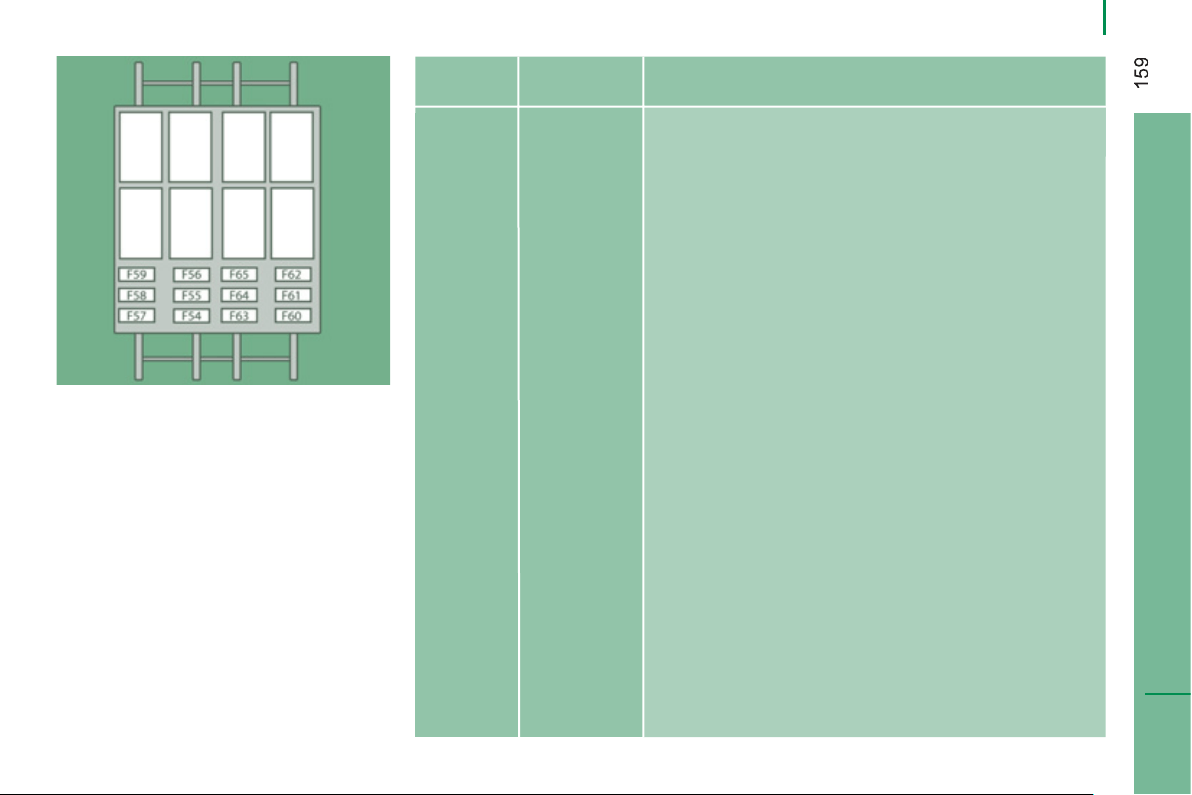
QUICK HELP
8
Chan
g
in
g
a fuse
Fuses A (amps) Allocation
54 - Not used
55 15 Heated seats
56 15 Rear passenger 12 V socket
57 10 Programmable additional heating
58 10 Lateral sidelamps
59 7.5 Pneumatic suspension
60 - Not used
61 - Not used
62 - Not used
63 10 Programmable additional heating switch
64 - Not used
65 30 Programmable additional heating fan
DRIVER'S DOOR PILLAR FUSES
- Unclip the cover.
When you have finished, close the cover
carefully.
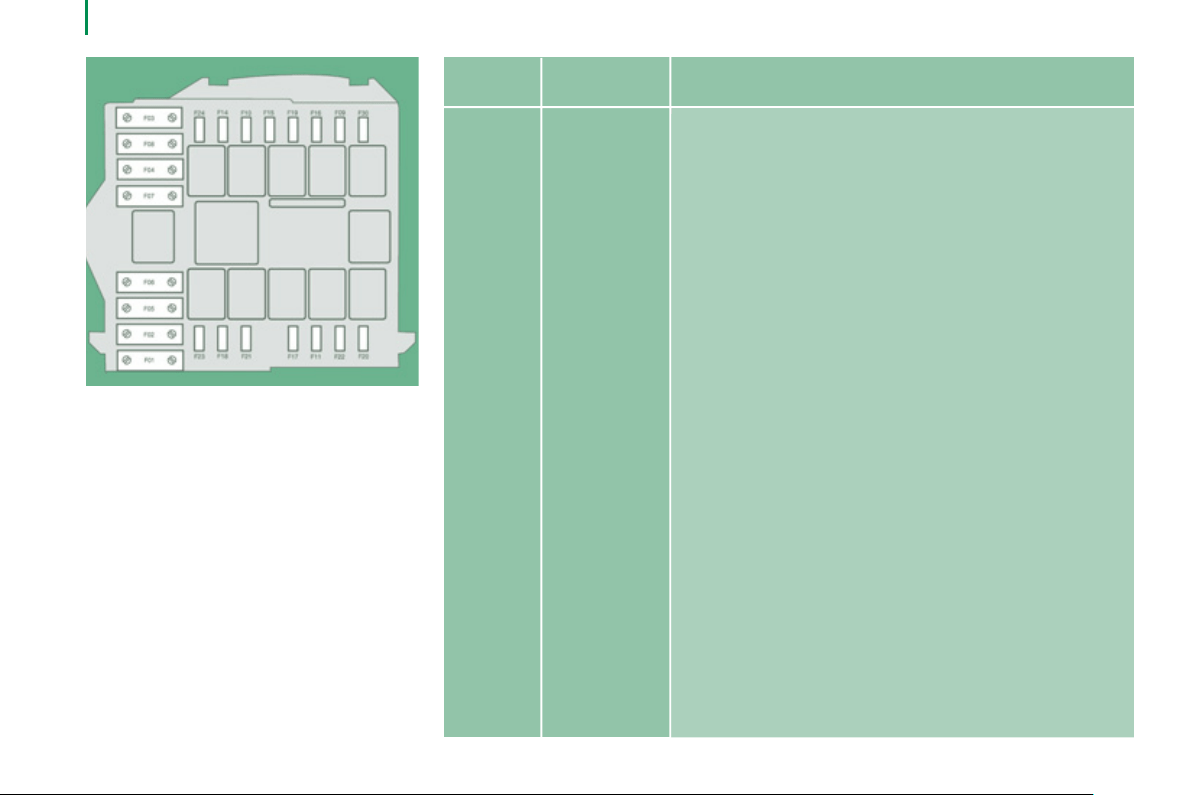
1
60
Chan
g
in
g
a fuse
FUSES IN THE ENGINE COMPARTMENT
- Remove the nuts and tilt the box to
access the fuses.
Fuses A (amps) Allocation
1 40 ABS pump supply
2 50 Diesel pre-heater unit
3 30 Ignition switch
4 20 Programmable additional heating
5 20 Cab ventilation with programmable additional heating
6 40/60 Cab fan max speed
7 40/50 Cab fan min speed
8 40 Cab fan unit
9 20 Screenwash pump
10 15 Horn
14 7.5
Right hand main beam
15 7.5 Left hand main beam
20 30 Headlamp wash pump
21 15 Fuel pump supply
23 30 ABS electrovalves
30 15 Front foglamps
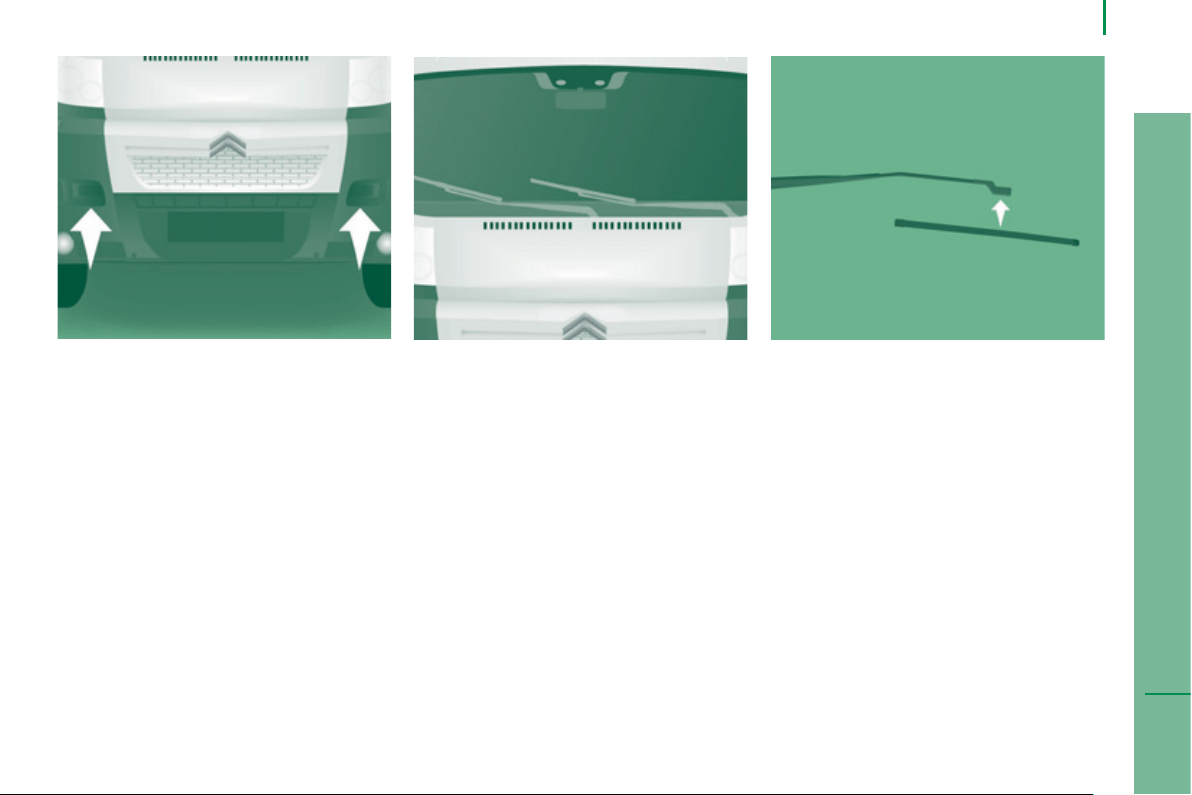
1
61
QUICK HELP
8
Chan
g
in
g
a wiper blade
CHANGING A WIPER BLADE
The steps, located in the front bumper,
enable you to access the blades and the
screenwash nozzles.
Chan
g
in
g
a front wiper blade
Lift the wiper arm.
Unclip the blade by pressing the button and
remove it by pulling it outwards.
Fit the new blade and ensure that it is
secured correctly.
Push back the wiper arm.
Chan
g
in
g
the rear wiper blade
Lift the wiper arm, then unclip the blade and
remove it.
Fit the new blade and push back the wiper arm.
To return the windscreen wipers to their
normal position, switch on the ignition
and operate the wiper stalk.
Check that the screenwash or headlamp
wash nozzles are not blocked.
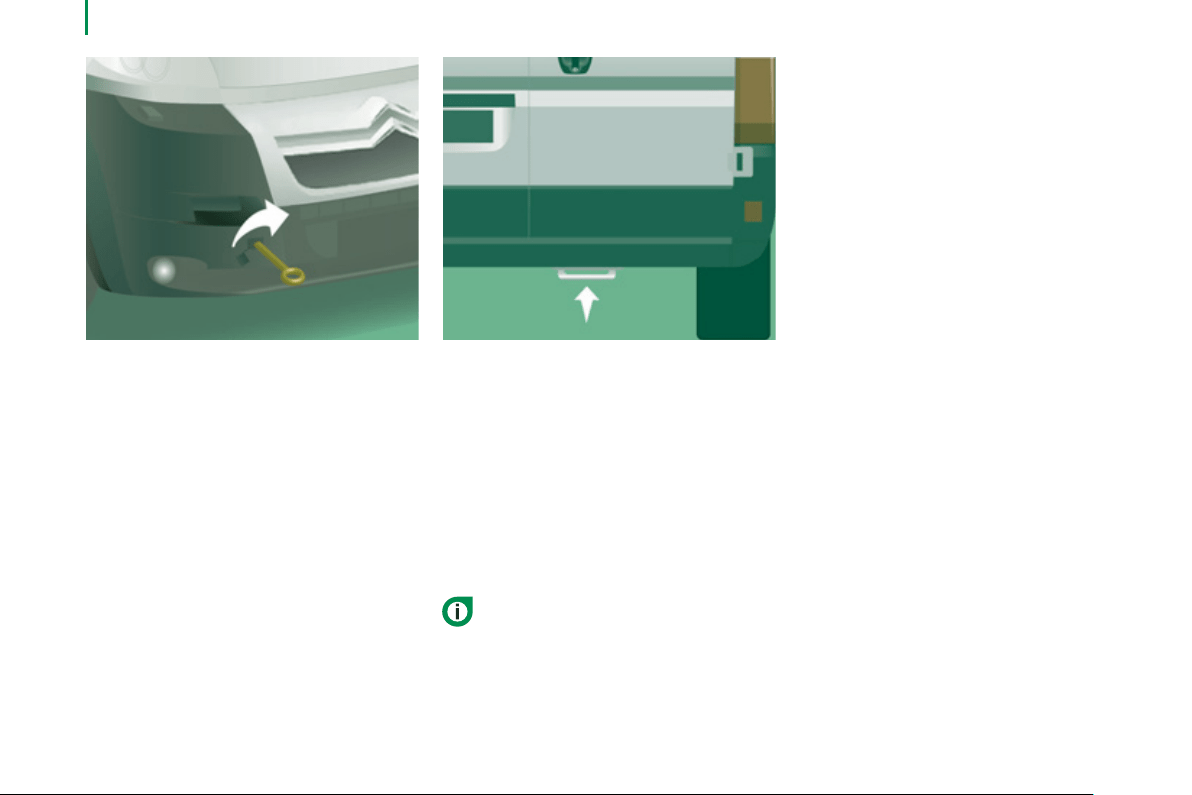
1
62
Havin
g
y
our vehicle towed
BEING TOWED
Without liftin
g
(
four wheels on the
g
round
)
You must always use a towing bar.
From the rear
Hook the bar onto the rigid eye located
under the bumper.
From the front
The removable towing eye is located in the
box under the front passenger seat.
Unclip the cover using a flat tool.
Screw the removable towing eye in fully.
Place the gear lever in neutral. Failure to
observe this special condition may result in
damage to certain braking components and
the absence of braking assistance when the
engine is re-started.
With liftin
g
(
2 wheels onl
y
on the
g
round
)
It is preferable to lift the vehicle using
professional lifting equipment.
When being towed with the engine
off, there is no braking or steering
assistance.
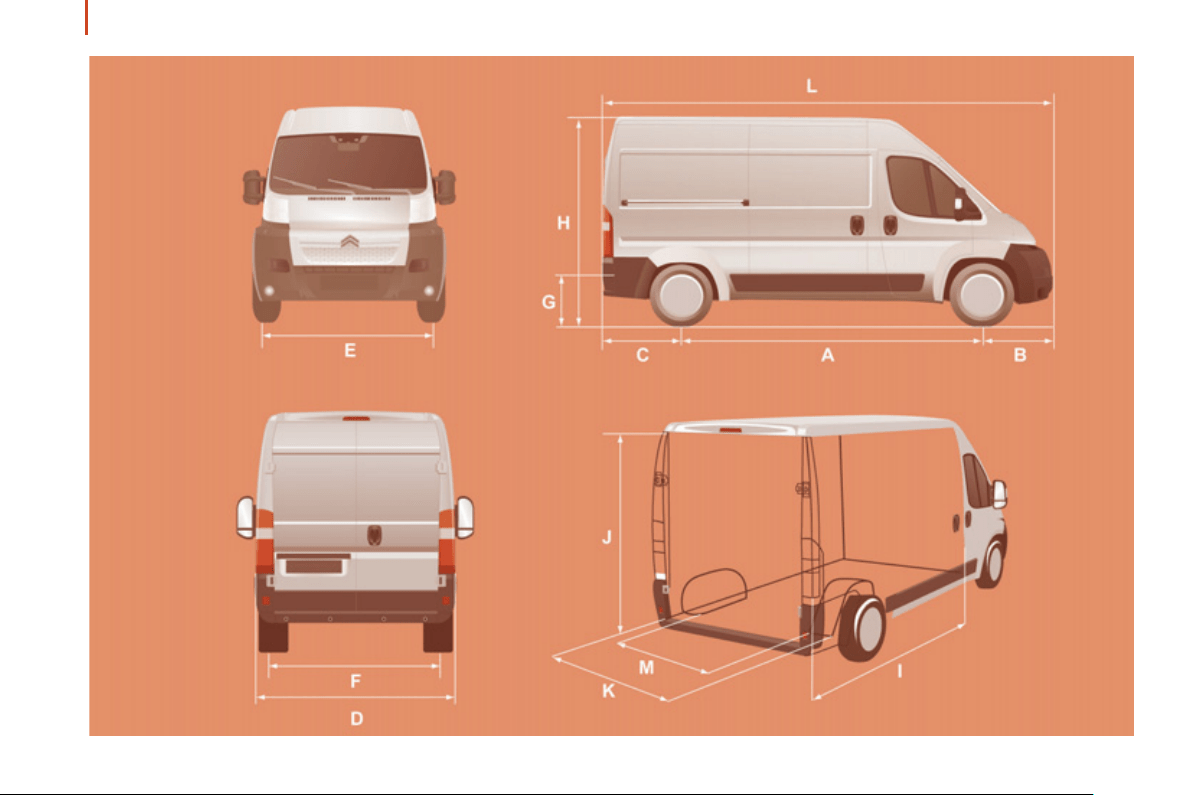
1
6
4
Dimensions
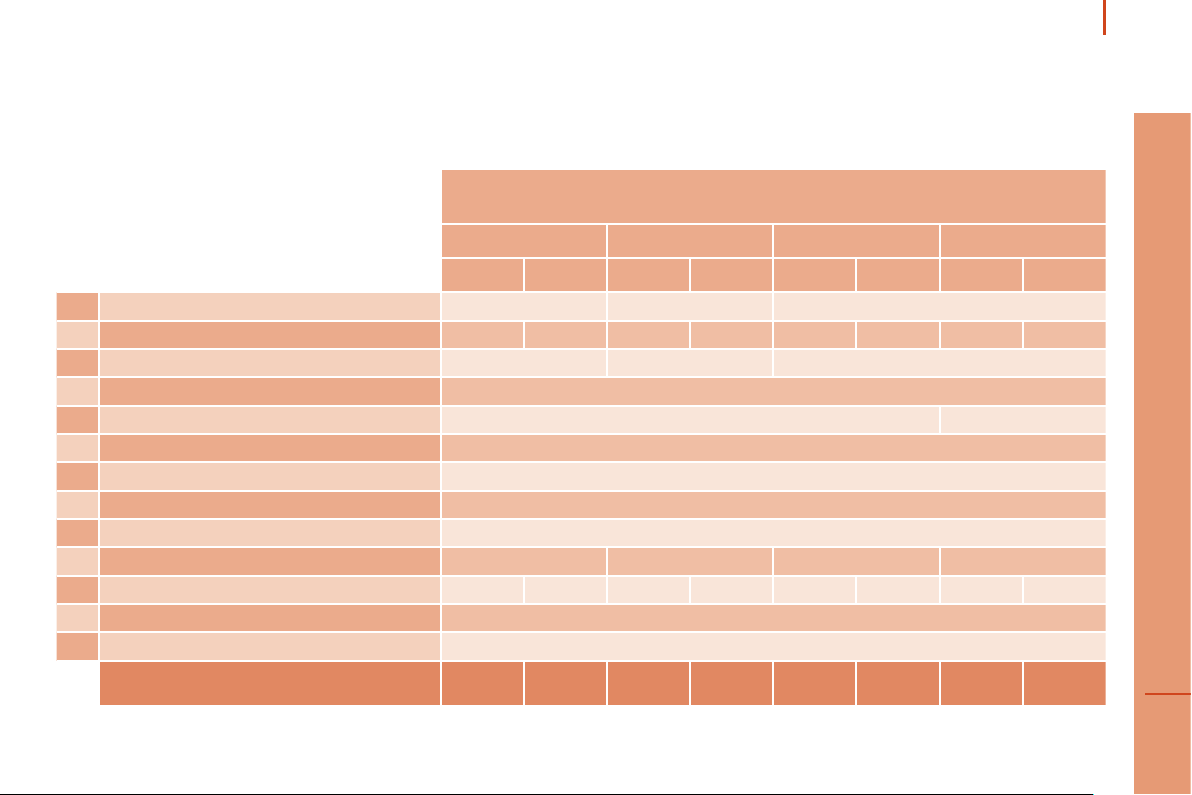
1
65
9
T
E
C
HNI
C
AL DATA
Dimensions
DIMENSIONS
Your vehicle is available in 4 lengths (L1..) and 3 heights (H1..), refer to the tables:
Van
L1 L2 L3 L4
H1 H2 H1 H2 H2 H3 H2 H3
L Overall length 4 963 5 413 5 998 6 363
H Overall height 2 254 2 524 2 254 2 524 2 524 2 764 2 524 2 764
A Wheelbase 3 000 3 450 4 035
B Front overhang 948
C Rear overhang 1 015 1 380
D Overall width (excluding mirrors) 2 050
E Width of front track 1 810
F Width of rear track 1 790
G Height of load floor 535 to 565
I Length of interior floor
2 670 3 120 3 705 4 070
J Maximum interior load height 1 662 1 932 1 662 1 932 1 932 2 172 1 932 2 172
K Maximum interior width 1 870
M Interior width between wheel arches 1 422
Volume (m
3
) 8 9.5 10 11.5 13 15 15 17
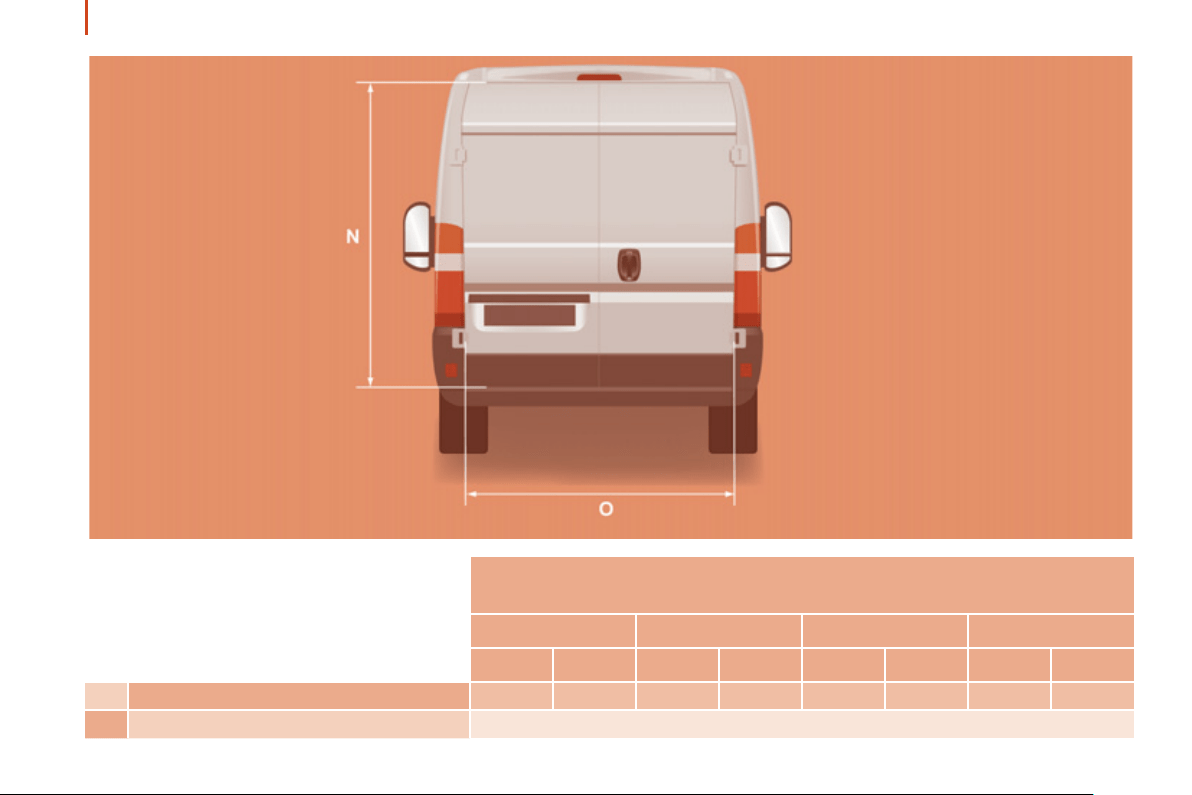
1
66
Dimensions
REAR DOORS
L1 L2 L3 L4
H1 H2 H1 H2 H2 H3 H2 H3
N Rear door aperture height 1 520 1 790 1 520 1 790 1 790 2 030 1 790 2 030
O Rear door aperture width 1 562
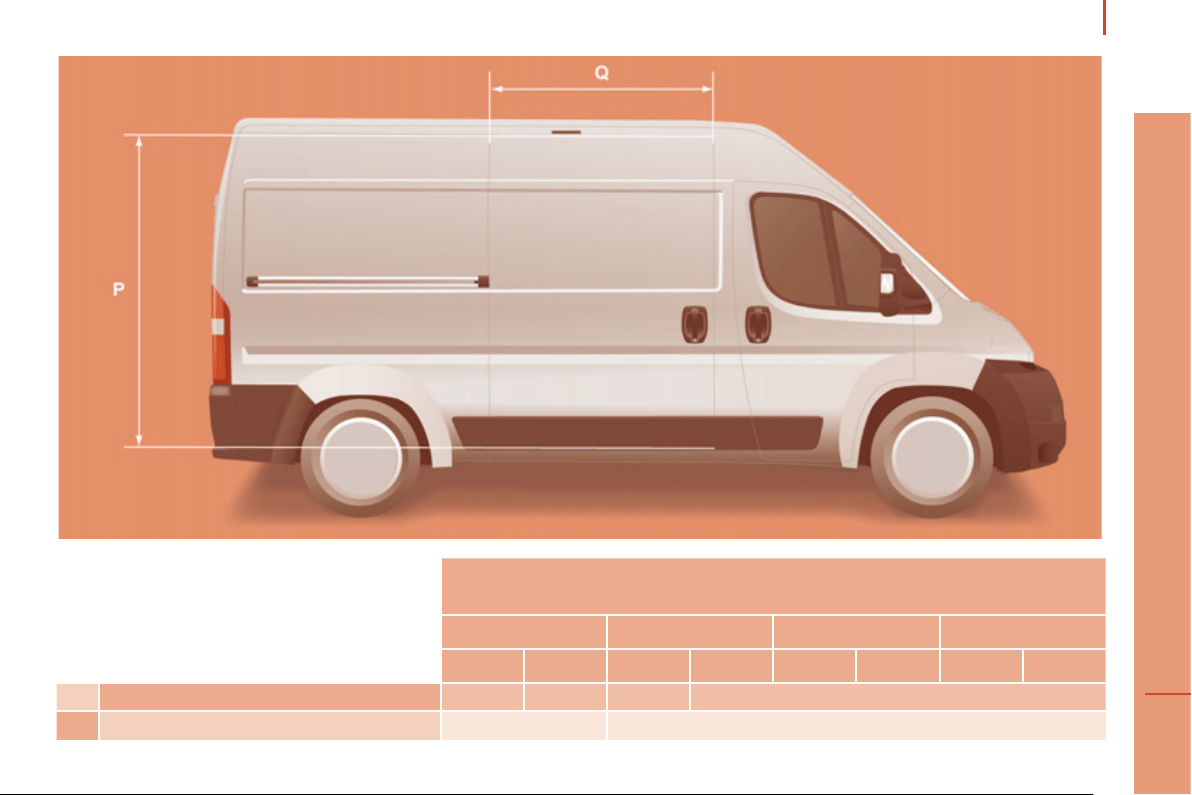
1
67
9
T
E
C
HNI
C
AL DATA
Dimensions
SIDE DOOR
L1 L2 L3 L4
H1 H2 H1 H2 H2 H3 H2 H3
P Height of the sliding side door 1 485 1 755 1 485 1 755
Q Width of the sliding side door 1 075 1 250
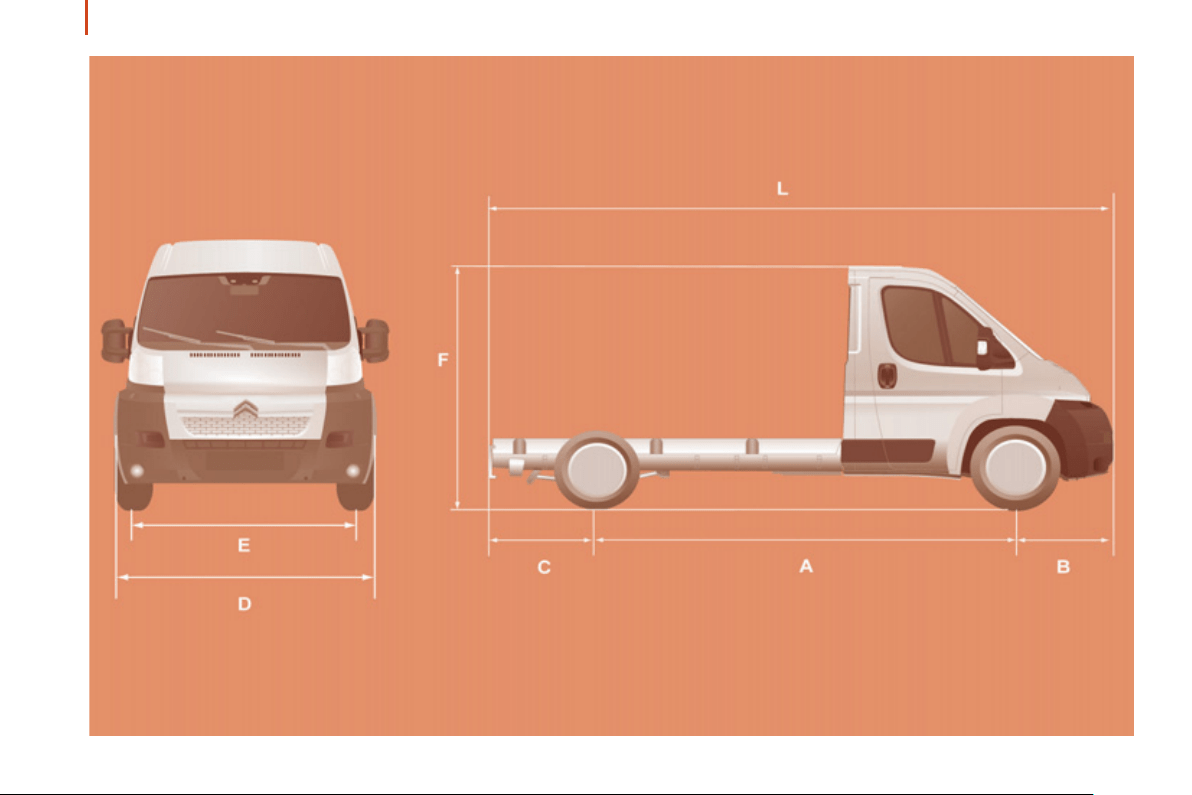
1
68
Dimensions
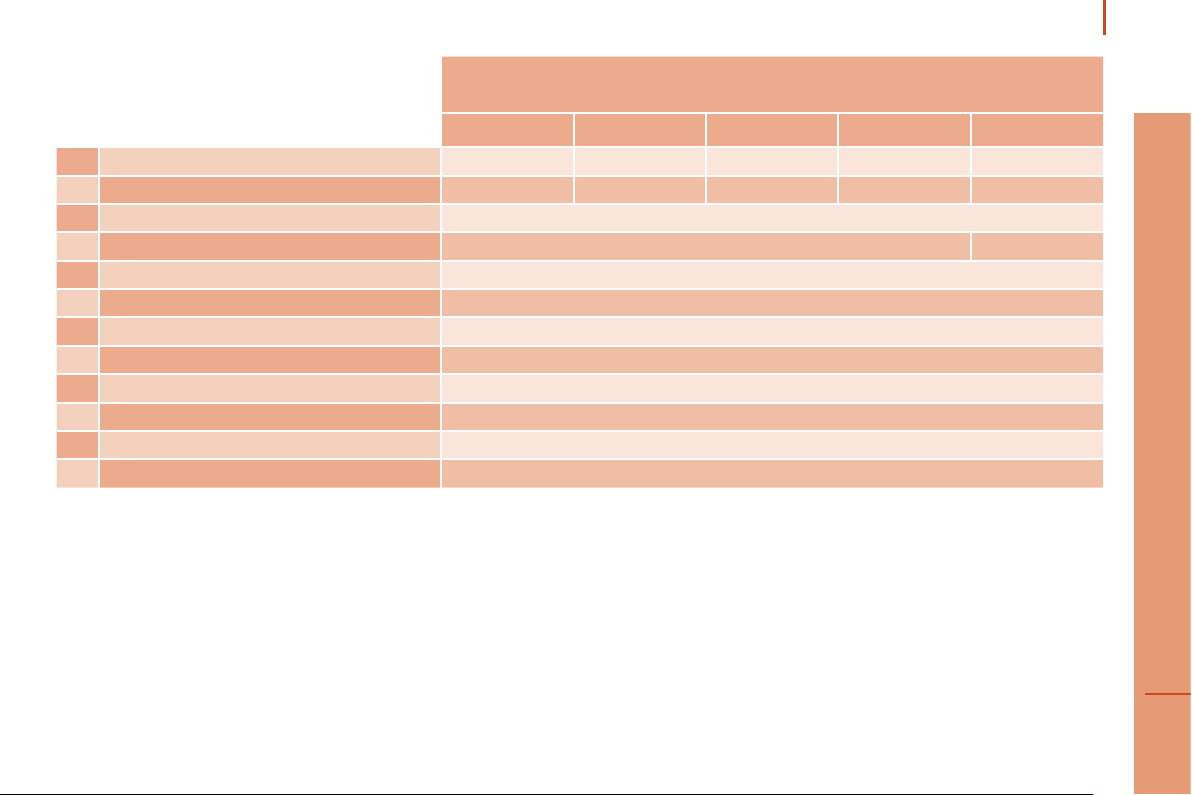
1
69
9
T
E
C
HNI
C
AL DATA
Dimensions
CHASSIS CAB
L1 L2 L2S L3 L4
L Overall length 4 908 5 358 5 708 5 943 6 208
A Wheelbase 3 000 3 450 3 800 4 035 4 035
B Front overhang 948
C Rear overhang 960 1 225
D Overall width (excluding mirrors) 2 050
- Passable width 2 207
- Max permitted body width 2 350
E Width of front track 1 810
- Width of rear track 1 790
- Width of increased rear track 1 980
F Overall height 2 153
- Max permitted body height 3 500
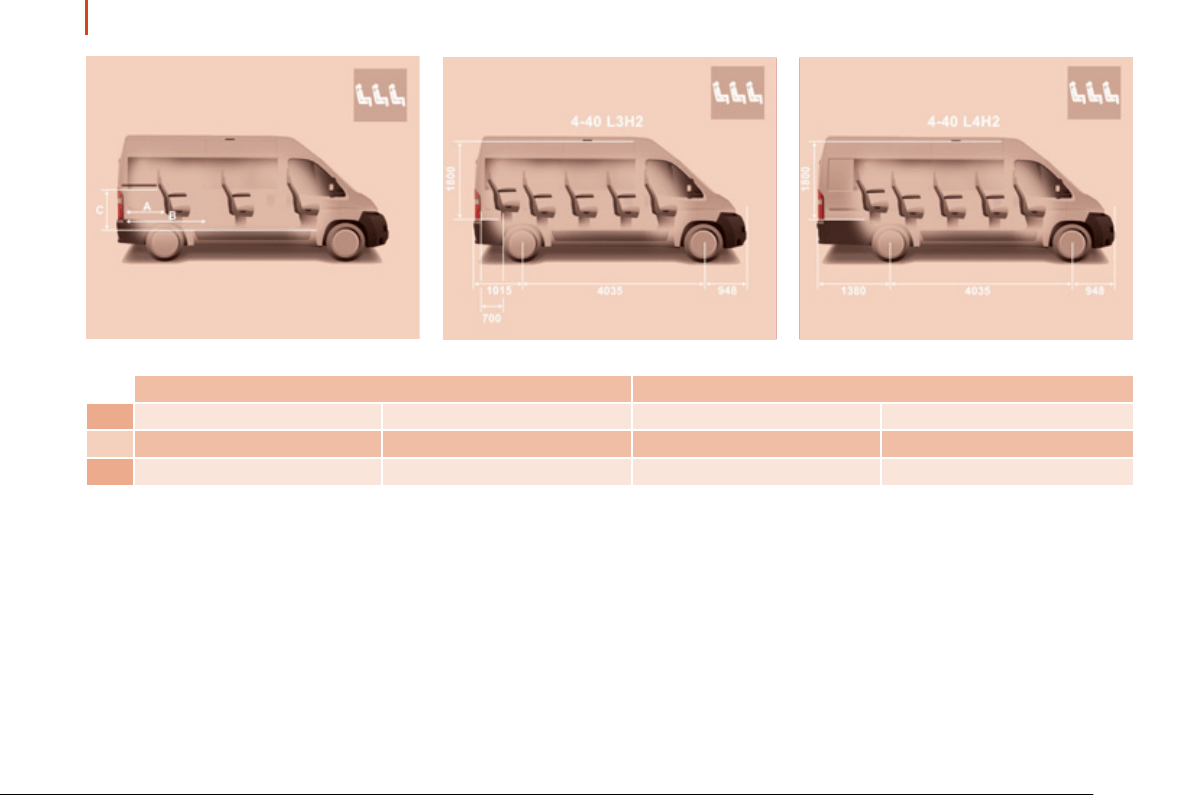
17
0
Dimensions
L1H1 L2H2
A 751 872 1 201 1 322
B 1 201 1 743 1 651 2 193
C - 860 - 860
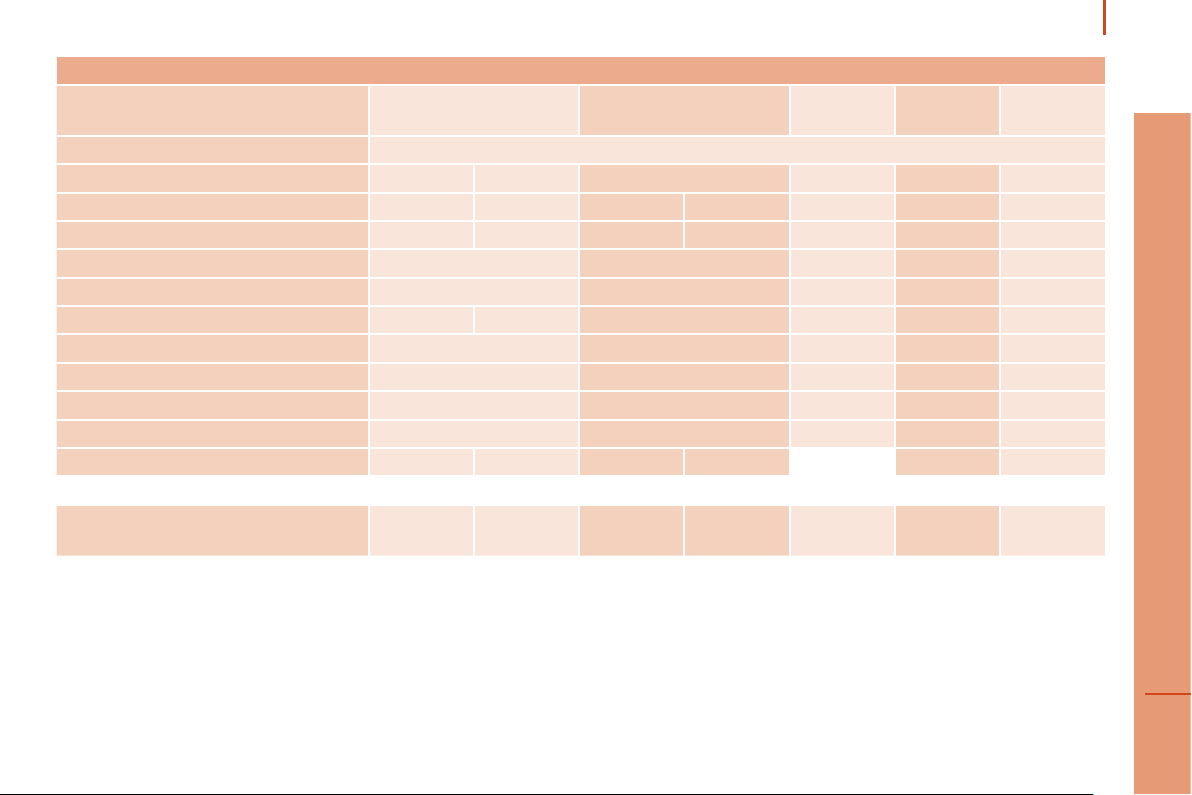
17
1
9
T
E
C
HNI
C
AL DATA
Diesel engines
Qualit
y
of the fuel used for Diesel en
g
ines
The Diesel engines are perfectly compatible with biofuels which conform to current and future European standards (Diesel fuel which
complies with standard EN 590 mixed with a biofuel which complies with standard EN 14214) available at the pumps (containing up to 7 %
Fatty Acid Methyl Ester).
The B30 biofuel can be used in certain Diesel engines; however, this use is subject to strict application of the special servicing conditions.
Consult a CITROËN dealer.
The use of any other type of (bio) fuel (vegetable or animal oils, pure or diluted, domestic fuel...) is strictly prohibited (risk of damage to the
engine and fuel system).
ENGINES and gearboxes - Diesel
2.2 litre HDi 110 2.2 litre HDi 130
2.2 litre
HDi 150
3 litre HDi
155
3 litre HDi
180
Gearbox Manual
Gears 5 6 6 6 6 6
Maximum power (hp) 100 110 120 130 150 156 180
EU standard maximum power (kW) 74 81 88 96 110 115 130
Cubic capacity (cc) 2 198 2 198 2198 2 999 2 999
Bore x stroke (mm) 86 x 94.6 86 x 94.6 86 x 94.6 95.8 x 10⁴ 95.8 x 10⁴
Max power engine speed (rpm) 2 900
3 500 3 500 3 500 3 500 3 600
EU standard max torque (daNm) 250 320 320 400 400
Max torque engine speed (rpm) 1 500 2 000 2 000 1 400 1 400
Fuel Diesel Diesel Diesel Diesel Diesel
Catalytic converter Yes Yes Yes Yes Yes
Particle emissions filter - Yes - Yes Yes Yes Yes
Engine oil capacity (in litres) after
draining and oil filter replacement
6.4 6.2 6.4 6.2 6.2 9 9

172
Wei
g
hts
WEIGHTS
Dimensions Model GVW in kg
L1 H1
30 3 000
33 3 300
L2 H1
33 3 300
35 3 500
L2 H2
30 3 000
33 3 300
35 3 500
L3 H2
30 3 000
35 3 500
435 3 500
440 4 000
L3 H3
30 3 000
35 3 500
435 3 500
440 4 000
L4 H2 35 3 500
L4 H3 435 3 500
Refer to your registration certifi cate.
In each country, it is imperative that the towed loads permitted by local legislation are complied with. For information regarding your vehicle's towing
possibilities and its gross train weight, contact a CITROËN dealer.
The speed of a towing vehicle must not exceed 60 mph (100 km/h) (comply with the legislation in force in your country).
High ambient temperatures may result in a reduction in the performance of the vehicle, to protect the engine. When the ambient temperature is higher
than 37 °C, limit the weight towed.
This table indicates the gross vehicle weight (GVW) according to the dimensions and the vehicle model.
Load transfer
It is possible, if the towing vehicle has not reached the GVW, it is possible to transfer this weight to the trailer.
In all cases, do not exceed the trailer weight and GTW indicated.
Observe the towing limits of your vehicle.
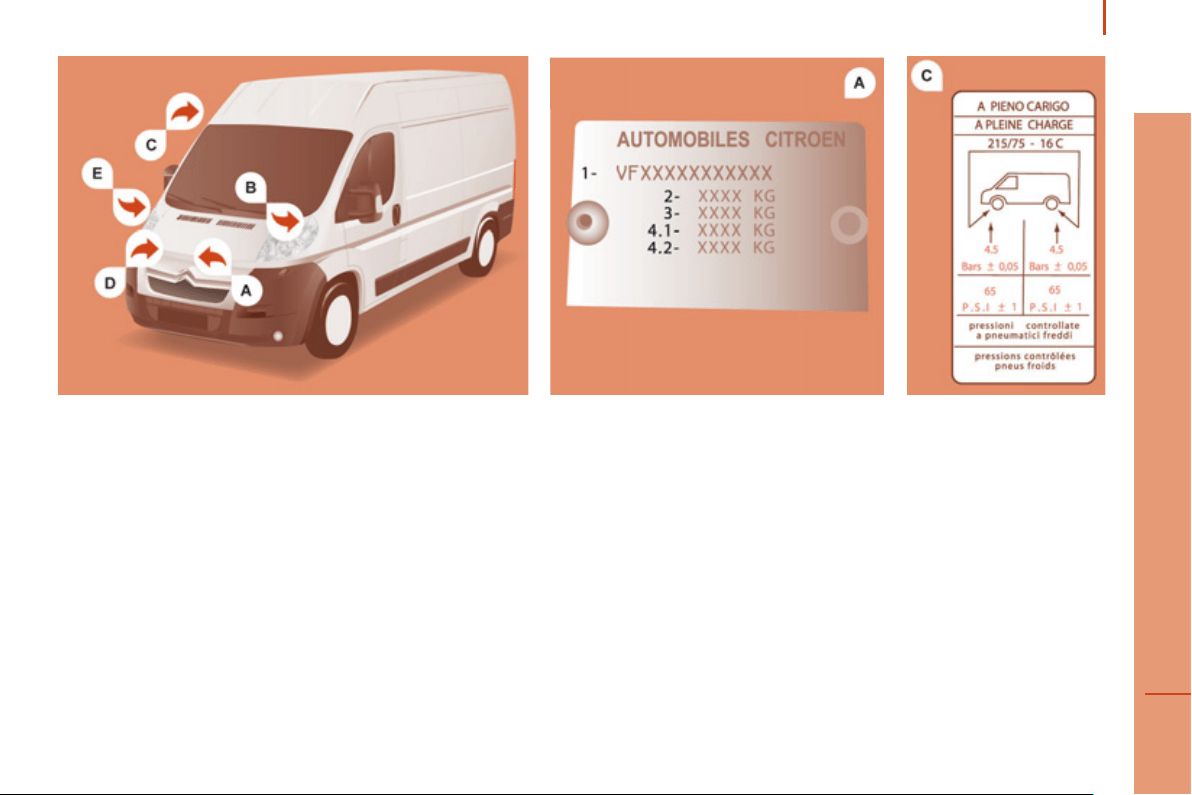
17
3
9
T
E
C
HNI
C
AL DATA
Identification markin
g
s
IDENTIFICATION MARKINGS
A
. Manufacturer's plate
1 - VF Type serial number.
2 - Gross vehicle weight (GVW).
3 - Gross train weight (GTW).
4.1 - Maximum weight on front axle.
4.2 - Maximum weight on rear axle.
B. Serial number behind the
w
i
n
d
screen
D
.
P
a
i
nt co
d
e
C. T
y
res
The label C (image given as an indication
only) affixed to the van pillar, on the right-
hand door side, indicates:
- the wheel and tyre sizes,
- the tyre pressures (the pressures must
be checked when cold, at least once a
month).
E. Serial number on the bod
y
work
The number is located under the plastic
cover, at the sill inside the right-hand door.
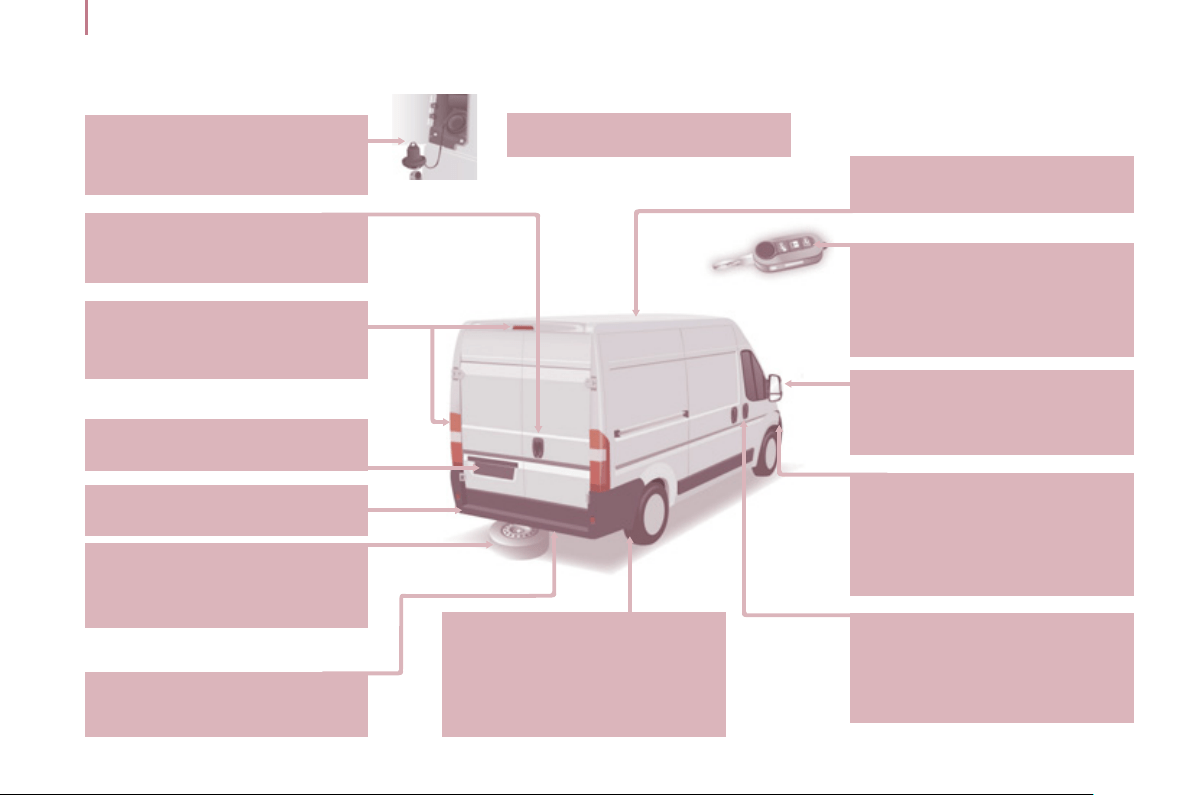
174
E
xterio
r
EXTERIOR
Rear lamps, direction indicators,
3
r
d
brake lamp,
f
o
g
lamps 36, 47, 153, 156
L
ef
t-h
a
n
d
s
i
de
:
f
uel
fi
ller cap,
f
uel tank 144
F
ue
l
cu
t-
o
ff 144
Load space 75-7
6
Rear doors 2
8
Number plate lamp
1
5
6
Parkin
g
sensors 83
S
pare wheel,
j
ack,
c
han
g
in
g
a wheel,
tools,
p
uncture re
p
air kit 148-152
Infl atin
g
, pressures 173
Towing, li
f
ting 162
Towbar
,
towball
133
-
13
4
Dim
e
n
s
i
o
n
s
1
6
4-17
0
Accesso
ri
es
135
-
136
Roo
f
bars 1
35
Brakes,
p
ads 139, 141
A
BS, Electronic
b
r
a
k
e
fo
r
ce
d
i
s
tri
bu
ti
o
n 11
5
EBA
115
A
SR, ESP 116-117
T
y
res, pressures 173
Pneumatic suspension 86
Ke
y
, remote control, batter
y
21
-
23
S
tartin
g
41-42
Central lockin
g
29
Confi dential card 25
A
l
a
rm 2
6
Wiper blade
161
Doo
r m
i
rr
o
r 77
Side repeater 155
Front lamps,
f
o
g
lamps, direction
indicators 1
53
-1
55
Headlamp beam hei
g
ht ad
j
ustment 49
Headlamp wash 50
C
han
g
in
g
bulbs 153-155
O
penin
g
/closin
g
doors 27-29
Ke
y
23
O
penin
g
the bonnet, sta
y
137
Mode - autoclose
8
1
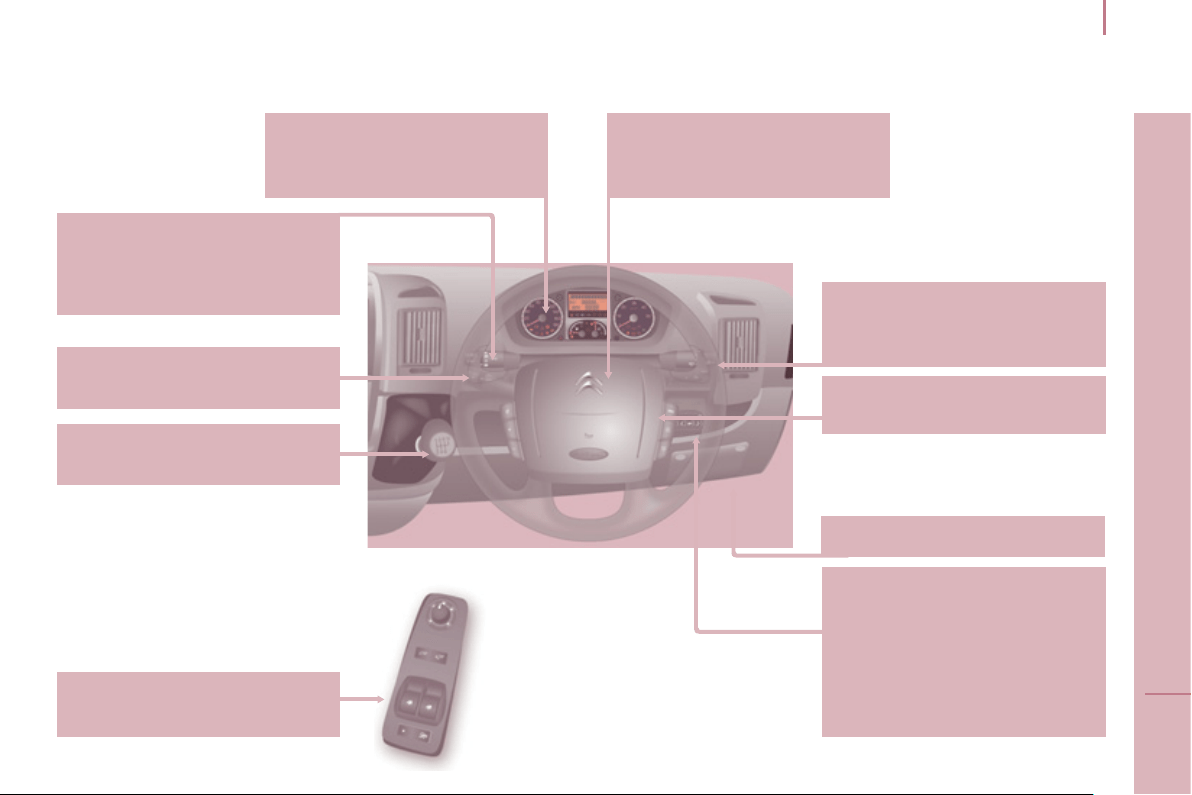
17
5
Instruments and controls
10
V
ISUAL SEARCH
INSTRUMENTS AND CONTROLS
Instrument panels, screens, speedometer
30
r
Warnin
g
lamps, indicator lamps 31-37
Indicators,
g
au
g
e 38-39
Ligh
t
i
n
g
contro
l
s
4
7
Automatic illumination of headlam
p
s 48
G
uide-me-home lighting 48
Parkin
g
lamps 4
9
F
uses
15
7-
160
Mode, vehicle con
fi
g
uration 79-82
Pro
g
rammable additional heatin
g
62
-
6
4
Addi
t
i
ona
l
h
eat
i
n
g
,
R
e
ar air conditionin
g
60-61
Pneumatic suspension 86
S
top
&
S
tart 43-45
Headlamp beam hei
g
ht ad
j
ustment 49
Li
g
htin
g
dimmer 39
S
etting the time 81
Front
/
rear wipers 50
Screenwash/headlam
p
wash 50
Tri
p
com
p
uter - M
O
DE 79-82
Starter, i
g
nition switch 41
Hill
s
t
a
rt 42
C
ruise control
5
1-
53
Fixed speed limiter 118
S
teerin
g
wheel, reach ad
j
ustment 40
Horn 11
5
Instruments and controls 8
Electric windows, mirrors 77-78
Lockin
g
the load space
29
Gearbox 40
Parkin
g
sensors 83
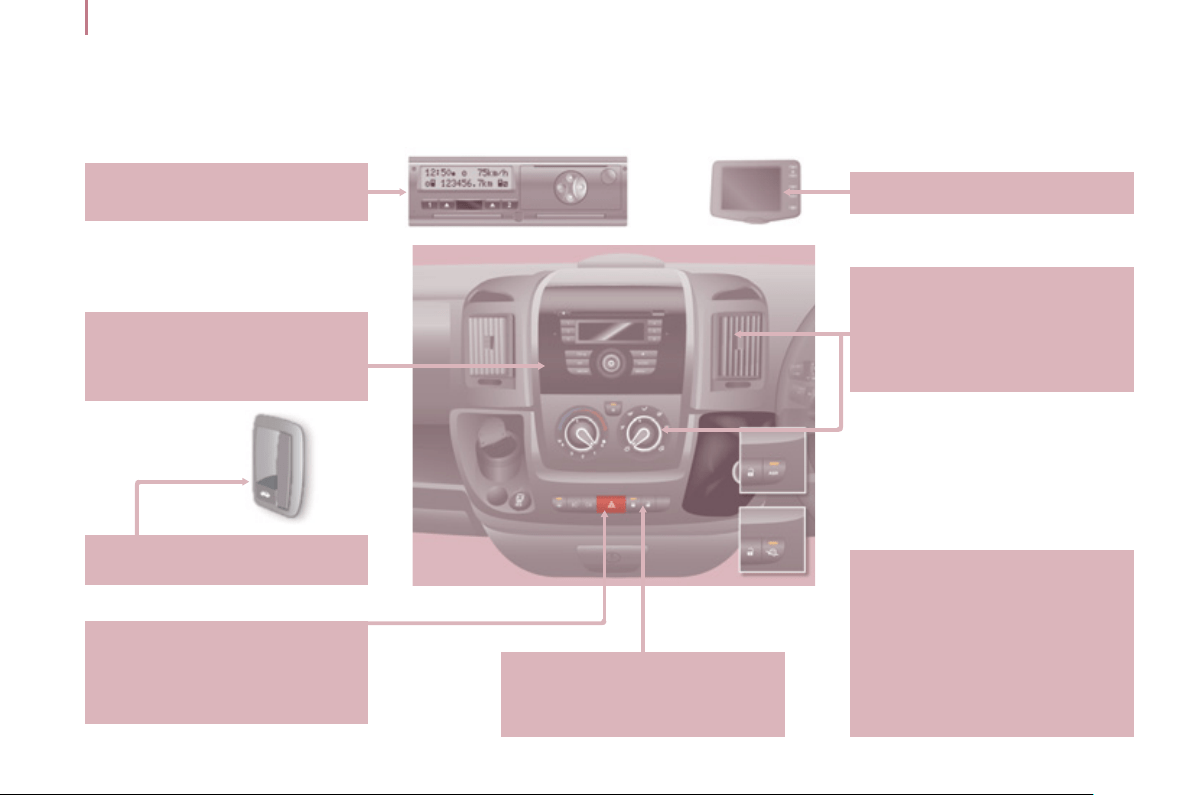
17
6
Instruments and controls
C
entral lockin
g
29
Demistin
g
-de
f
rostin
g
54
Tacho
g
raph
88
Reversin
g
camera 84-85
Heatin
g
, ventilation 5
6
-5
9
● air conditionin
g
A
/C
,
● manual air conditioning,
● mono-zone
digi
ta
l
a
i
r con
di
t
i
on
i
n
g
,
●
a
ir r
ec
ir
cu
l
a
ti
o
n.
Cab fi ttin
g
s 71-74
● ci
g
arette li
g
hter,
●
gl
ove
b
ox - coo
l
e
d
,
● overhead stora
g
e,
● porta
bl
e as
h
tra
y
,
● courtes
y
lamps,
● 12 volt socket,
● wr
i
t
i
n
g
ta
bl
e,
● stora
g
e compartments.
Alarm indicator lam
p
26
A
S
R, E
S
P 116-117
Intelli
g
ent Traction
C
ontrol 117
Front
/
rear
f
o
g
lamps 47
Hazard warnin
g
lamps 114
O
penin
g
the bonnet 137
Audio equipment,
C
D
/
MP3 89-97
Blue
t
oo
t
h
h
ands-free s
y
stem 97-113

17
7
Interior
10
V
ISUAL SEARCH
INTERIOR
Parkin
g
brake, handbrake
11
4
Seats, ad
j
ustments 65-66
Seat with variable dampin
g
66
2-seat bench 67
Tools,
j
ack
1
4
8
R
ea
r vi
e
w mirr
o
r 77
C
ab courtes
y
lamp 74, 155
Chan
g
in
g
a courtes
y
lamp bulb 155
Battery (+), charging,
startin
g
145-147
Earth point
(
-
)
138
Fuses in the ri
g
ht hand door pillar 159
Load space 75-7
6
● stowin
g
rin
g
s,
● load retainer,
● roof box,
● trims
,
●
i
ns
p
ect
i
on
l
am
p
.
Accessories 1
3
5-1
3
6
Sea
t
be
lt
s
11
9
-12
0
Airba
g
s
122
-
12
4
Deactivatin
g
the passen
g
er airba
g
123
I
SO
FIX mountin
g
s 129-130
Child seats 125-1
3
2
C
ourtes
y
lamps 76, 155
12 volt socket 7
5
Slidin
g
side windows 76
Reversin
g
camera
8
4-
8
5
S
eats
/
rear bench seats
68
-
69
Rear heatin
g
/
air conditionin
g
60-61
C
r
e
w
cab
7
0
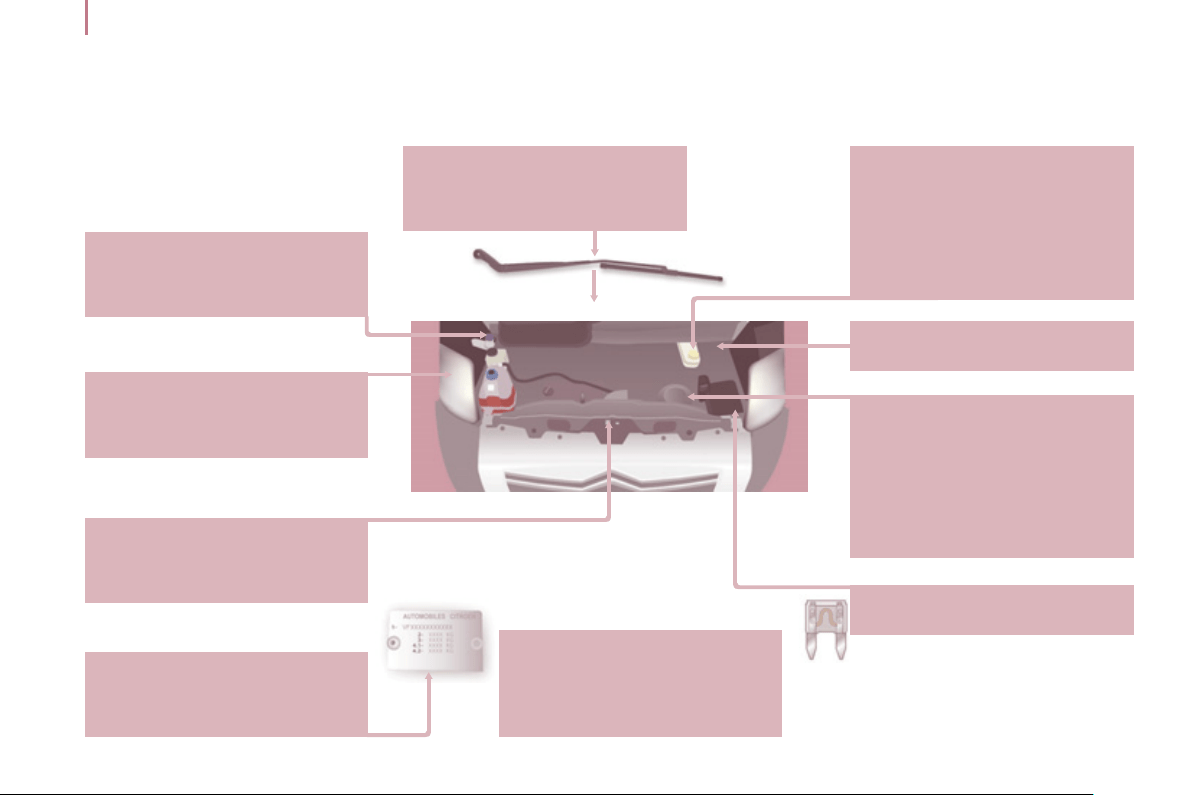
17
8
T
echnical data - Maintenanc
e
S
creenwash
/
headlamp wash, level 140
B
u
lb
s,
ligh
t
i
n
g
,
c
han
g
in
g
bulbs 153-155
O
penin
g
the bonnet, sta
y
137
Under the bonnet 1
3
8
Identi
fi
cation markin
g
s,
serial number,
p
aint, t
y
res 173
C
han
g
in
g
a wiper blade 161
Levels 1
39
-14
0
●
dip
st
i
c
k
,
● power steerin
g
f
luid,
● brake
f
luid,
●
coola
nt.
Water bleed, Diesel
fi
lter 141
C
hecks 141-142
●
b
atter
y
,
● air
/
passen
g
er compartment
f
ilter,
● oil filter,
● parkin
g
brake,
● particle
f
ilter,
●
b
ra
k
e
p
a
d
s.
Emission control
38
En
g
ine
f
uses 157, 160
TECHNICAL DATA - MAINTENANCE
Dim
e
n
s
i
o
n
s
16
4-
1
7
0
Wei
g
hts
1
7
2



This handbook describes all of the equipment available
in the whole range.
Your vehicle will be fitted with some of this equipment
described in this document, depending on its trim level,
version and the specification for the country in which it
is sold.
The descriptions and illustrations are given without any
obligation. Automobiles CITROËN reserves the right
to modify the technical specifications, equipment and
accessories without having to update this edition of the
handbook.
This document is an integral part of your vehicle. It
should be passed on to the new user in the event of
sale or transfer.
Automobiles CITROËN declares, by application of
the provisions of the European regulation (Directive
2000/53) relating to End of Life Vehicles, that it
achieves the objectives set by this regulation and that
recycled materials are used in the manufacture of the
products that it sells.
Reproduction or translation of all or part of this
handbook is prohibited without written authorisation
from Automobiles CITROËN.
Printed in the EU
03.13
Anglais
CRÉATIVE TECHNOLOGIE
–
DOCUMENTATION DE BOR
D
4Dconce
p
t
Diadeis
S
ee
nk
E
d
i
p
r
o
1
3J
PR.
0030
A
n
gl
a
i
s