Introduction
N09200100891
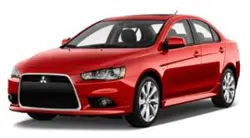
Thank you for buying a MITSUBISHI LANCER.
We are confident you will enjoy your vehicle. It has been engi-
neered for optimum performance, durability and comfort. By
thoroughly reading this Owner’s Manual, you will gain an
understanding of the many features that are included in the
LANCER. The Owner’s Manual contains descriptions and
illustrations that will assist in the operation and maintenance of
your vehicle.
Your Authorized Mitsubishi Motors Dealer will be happy to
assist you with any further questions you may have regarding
the operation of your vehicle.
Please note that this manual applies to all LANCER models
and explains all features including options. Some features
explained in this manual may not be installed on your vehicle.
Please leave this Owner’s Manual in the vehicle at the time of
resale. The next owner will appreciate having access to the
information contained here.
This manual includes instructions for standard and optional
equipment available at the time of printing. Mitsubishi Motors
Corporation reserves the right to make changes in design and
specifications and to make additions or improvements in its
product without assuming any obligation to install these on
previously manufactured products.
Throughout this manual the words WARNING and CAUTION
appear.
These are reminders to be especially careful. Failure to follow the
instructions could result in personal injury or damage to your
vehicle.
WARN I NG
!
Indicates a strong possibility of severe personal injury or
death if instructions are not followed.
CAUTION
!
Points out hazards or unsafe practices that could cause minor
personal injury or damage to your vehicle.
You will see another important symbol:
NOTE Gives helpful information.
WARN I NG
!
● Engine exhaust, some of its constituents, and certain
vehicle components contain or emit chemicals
known to the State of California to cause cancer and
birth defects and reproductive harm. In addition,
certain fluids contained in vehicles and certain prod-
ucts of component wear contain or emit chemicals
known to the State of California to cause cancer and
birth defects or other reproductive harm.
©2011 Mitsubishi Motors Corporation Printed in Japan
12GS41(NAFTA)_cover2.fm 1 ページ 2011年3月11日 金曜日 午後4時9分

Table of contents
1
2
3
4
5
6
7
8
9
Overview
Quick index
General information
Seat and restraint systems
Features and controls
Driving safety
Comfort controls
For emergencies
Vehicle care and maintenance
Customer assistance/
Reporting Safety Defects
Specifications
BK0138600US.book 1 ページ 2011年7月17日 日曜日 午後2時32分
Overview
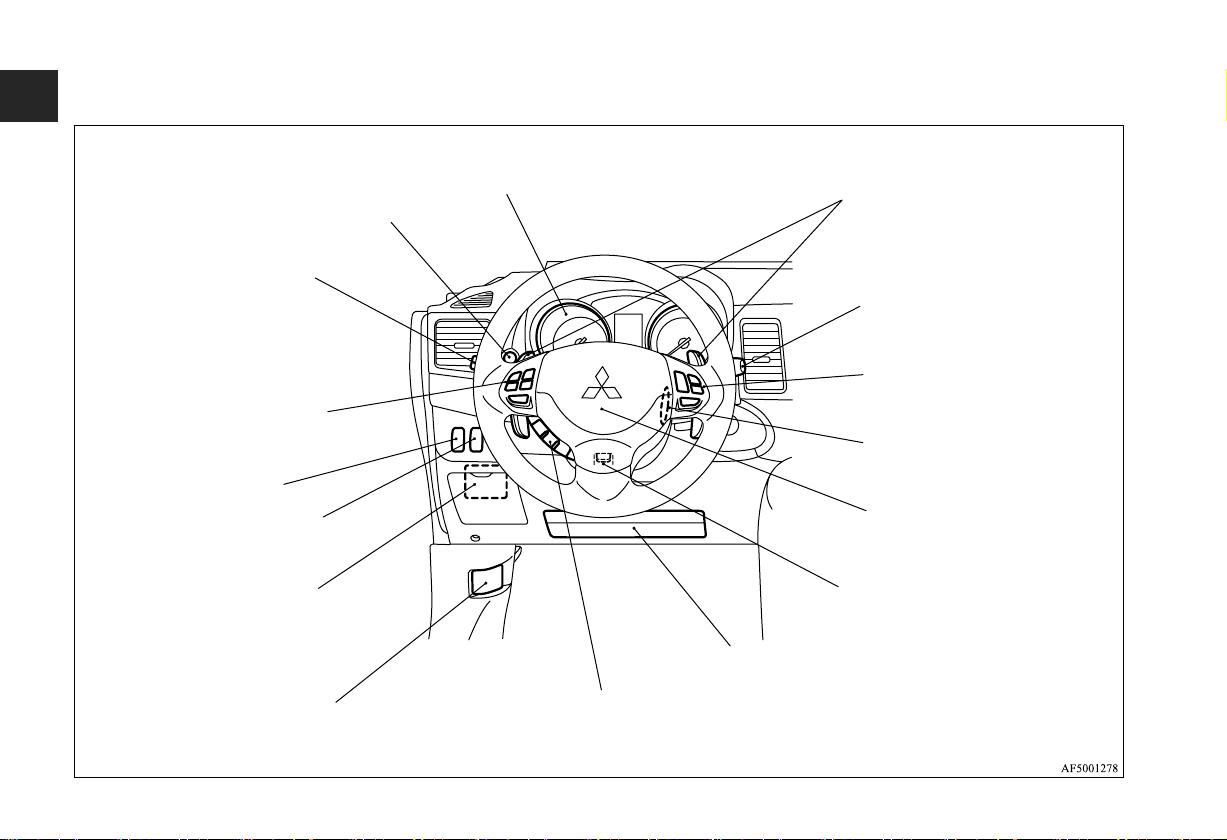
Instruments and controls (Driver’s area)
N00100201286
Combination headlights and dimmer
switch P.3-234
Turn signal lever P.3-243
Front fog light switch (if so
equipped) P.3-245
Supplemental restraint sys-
tem - airbag (for driver’s
seat) P.2-34
Horn switch P.3-255
Instrument cluster P.3-178
Cruise control switches (if so
equipped) P.3-157
Wiper and washer switch
P.3 - 24 6
Fuses P.7-46
Engine hood release lever
P.7 -4
Sportronic steering wheel paddle
shifter (if so equipped) P.3-106
Ignition switch P.3-85
Steering wheel tilt lock
lever P.3-79
Supplemental restraint system - driver’s
knee airbag P.2-34
Bluetooth
®
2.0 interface (if so equipped) P.3-256
Steering wheel audio remote
control switches (if so
equipped) P.5-134
Multi-information meter switch P.3-182
Except for RALLIART
Headlight leveling switch
(if so equipped) P.3-242
Active stability control
(ASC) OFF switch (if so
equipped) P.3-151
BK0138600US.book 1 ページ 2011年7月17日 日曜日 午後2時32分
Overview
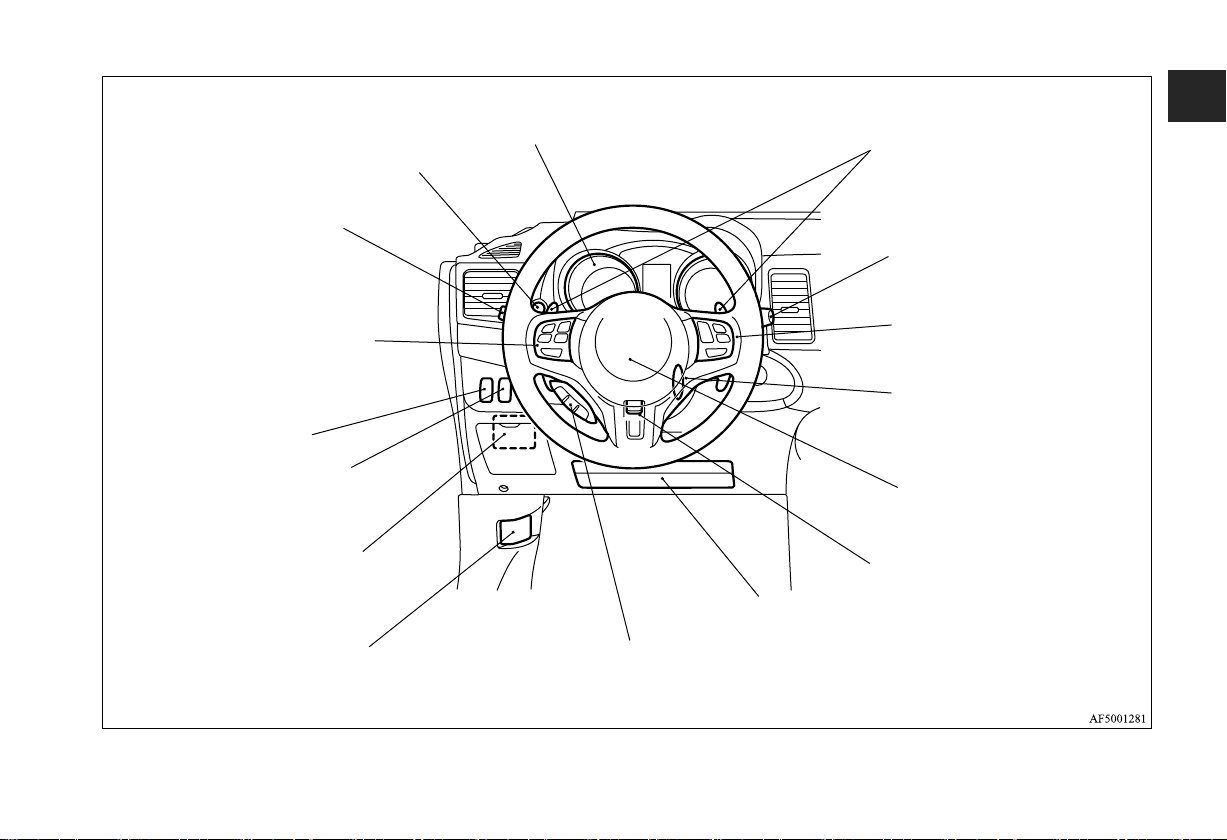
Sportronic steering wheel paddle
shifter P.3-125
Wiper and washer switch
P.3-246
Cruise control switches
P.3-157
Ignition switch P.3-85
Supplemental restraint
system - airbag (for
driver’s seat) P.2-34
Horn switch P.3-255
Steering wheel tilt lock lever
P.3 -7 9
Supplemental restraint system - driver’s
knee airbag P.2-34
Bluetooth
®
2.0 interface (if so equipped) P.3-256
Steering wheel audio remote
control switches P.5-134
Engine hood release lever
P.7 -4
Fuses P.7-46
Combination headlights and dimmer
switch P.3-234
Turn signal lever P.3-243
Front fog light switch P.3-245
Multi-information meter switch P.3-182
Instrument cluster P.3-178
RALLIART
Headlight leveling switch
(if so equipped)
P.3- 242
Active stability control
(ASC) OFF switch P.3-151
BK0138600US.book 2 ページ 2011年7月17日 日曜日 午後2時32分
Overview
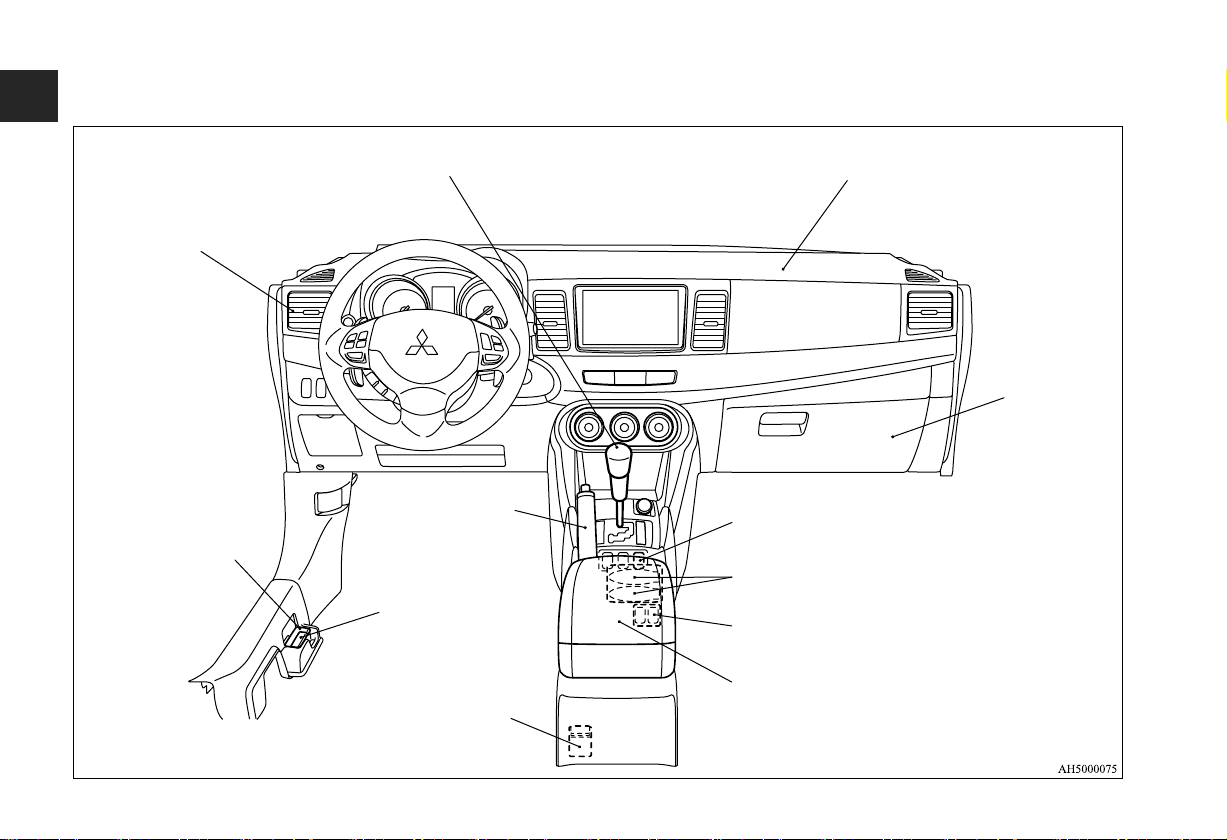
Instruments and controls
N00100201387
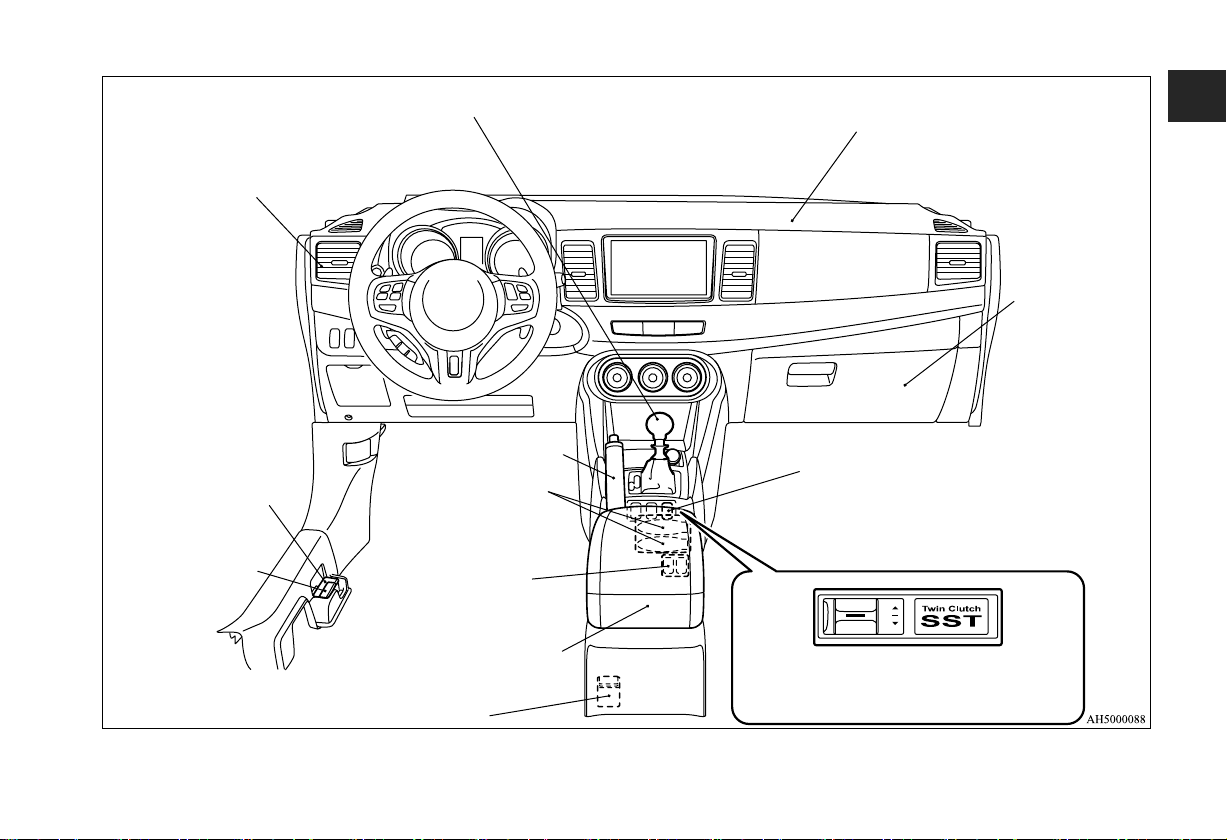
Gearshift or selector lever P.3-94, 3-98
Parking brake lever
P.3 -7 7
Cup holder (for front seats) P.3-302
Heated seat switch (if so equipped) P.2-7
12 V power outlet (if so
equipped) P.3-290
Floor console box (if so equipped) P.3-300
Tissue holder (if so equipped) P.3-300
Fuel tank filler
door release lever
P.1-4
Trunk lid release
lever P.3-59
Except for RALLIART
Supplemental restraint system - airbag
(for front passenger’s seat) P.2-34
Glove com-
partment
P.3-298
USB input
terminal
(if so
equipped)
P.3-283
Vents P.5-2
Drive mode-selector (if so equipped) P.3-136
BK0138600US.book 3 ページ 2011年7月17日 日曜日 午後2時32分
Overview
Gearshift lever P.3-112
RALLIART
Cup holder (for front
seats) P.3-302
Heated seat switch
(if so equipped)
P.2 -7
12 V power outlet P.3-290
Fuel tank filler
door release lever
P.1 -4
Parking brake lever
P.3-77
Trunk lid release
lever P.3-59
Vents P.5-2
ACD control mode
switch P.3-133
Floor console box P.3-300
Tissue holder P.3-300
Supplemental restraint system - airbag
(for front passenger’s seat) P.2-34
Glove com-
partment
P.3 -2 98
USB input ter-
minal (if so
equipped)
P.3 -2 83
Twin Clutch SST control mode switch
P.3-121
BK0138600US.book 4 ページ 2011年7月17日 日曜日 午後2時32分
Overview
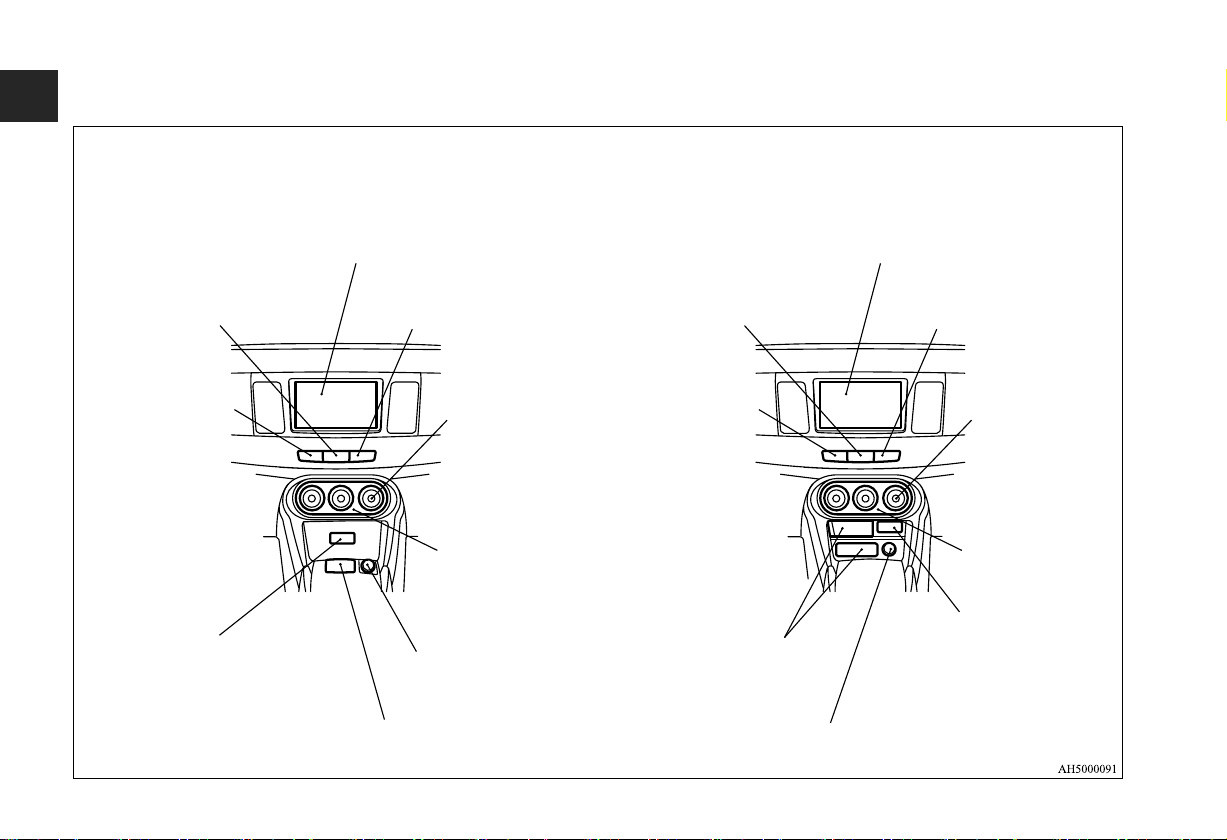
Center panel
N00100700170
Type 1 Type 2
Hazard warning flasher
switch P.3-244
Heater (if so equipped)
P.5 -6
Air conditioning (if so equipped)
P.5-31, 5-41
Front console tray P.3-299
Front console box
P.3-299
Hazard warning flasher
switch P.3-244
Air conditioning
P.5-31, 5-41
Auxiliary Audio connecter
(RCA) (if so equipped)
P.5 -1 32
Auxiliary Video connecter
(RCA) (if so equipped)
P.5 -1 32
Auxiliary Audio connecter (RCA)
(if so equipped) P.5-132
Auxiliary Video connecter (RCA)
(if so equipped) P.5-132
12 V power outlet P.3-290
Audio (if so equipped) P.5-52, 5-80
Digital clock (if so equipped) P.5-149
Mitsubishi Multi-Communication System (if so
equipped) Refer to the separated “Mitsubishi
Multi-Communication System owner’s manual”
Audio (if so equipped) P.5-52, 5-80
Digital clock (if so equipped) P.5-149
Mitsubishi Multi-Communication System (if so
equipped) Refer to the separated “Mitsubishi
Multi-Communication System owner’s manual”
Electric rear win-
dow defogger
switch P.3-254
Electric rear
window defog-
ger switch
P.3 -2 54
Front passenger seat belt
warning light P.2-19
Front passenger seat belt
warning light P.2-19
12 V power outlet
P.3-290
Passenger’s airbag
off indicator P.2-42
Passenger’s airbag
off indicator
P.2-42
BK0138600US.book 5 ページ 2011年7月17日 日曜日 午後2時32分
Overview
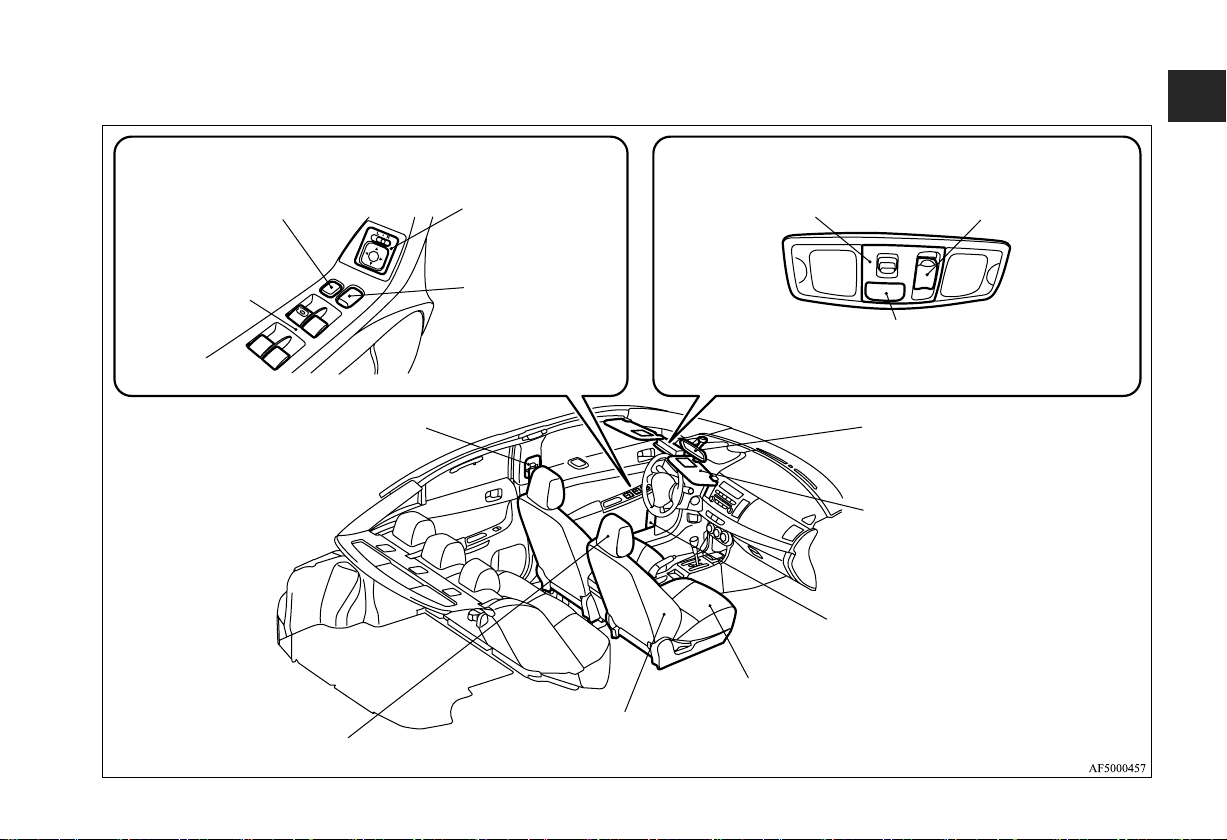
Interior
N00100301173
Adjustable seat belt shoulder
anchor (for front seats) P.2-19
Seat belts P.2-13
Supplemental restraint system - side airbag
(for front seats, if so equipped) P.2-51
Front seats P.2-3
Sun visors P.3-288
Vanity mirror P.3-288
Inside rearview mirror
P.3-80, 3-176
Head restraints P.2-9
Window lock switch P.3-73
Power window
switches P.3-69
Power door lock
switch P.3-55
Electric remote-
controlled out-
side mirror switch
P.3 -8 3
Dome light (Front)/Reading lights
(if so equipped) P.3-292, 7-58, 7-85
Sunroof switch
(if so equipped)
P.3- 74
Bluetooth
®
2.0 interface microphone (if so equipped)
P.3 -2 56
Bottle holder (for front seat) P.3-303
BK0138600US.book 6 ページ 2011年7月17日 日曜日 午後2時32分

Overview
Supplemental restraint system - curtain airbag (if so equipped) P.2-52
Dome light (Rear, if so equipped) P.3-294,
7-58, 7-86
Rear seat P.2-8
Arm rest (if so equipped) P.2-9
Cup holder (for rear seat, if so equipped) P.3-303
Tether anchors for child restraint
system P.2-28
Assist grip P.3-304
Coat hook (if so equipped)
P.3 -3 04
BK0138600US.book 7 ページ 2011年7月17日 日曜日 午後2時32分
Overview
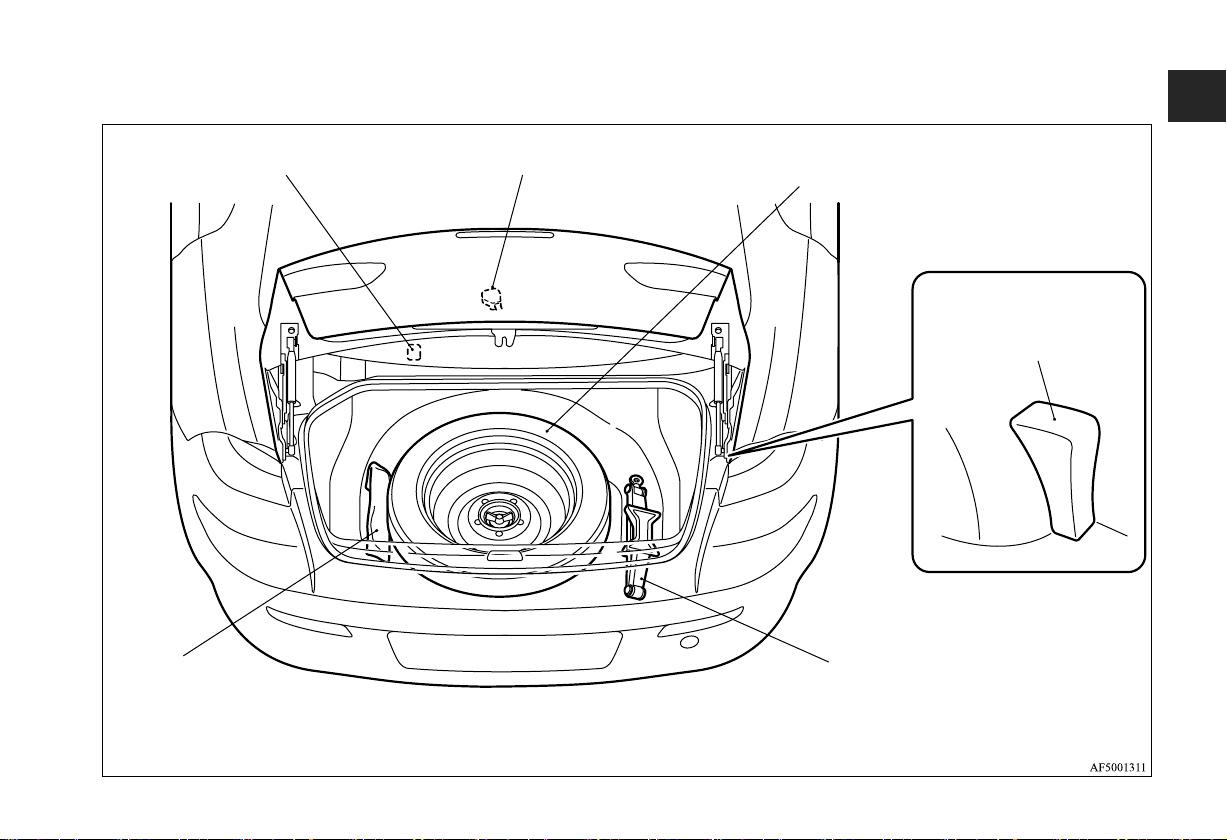
Trunk area
N00100500413
Trunk area light P.7-58, 7-88
Tools P.6-7
Inside emergency trunk lid release
lever P.3-62
Jack P.6-8
Spare tire P.6-10
AWC control fluid res-
ervoir (RALLIART)
P.7 -2 0
BK0138600US.book 8 ページ 2011年7月17日 日曜日 午後2時32分
Overview
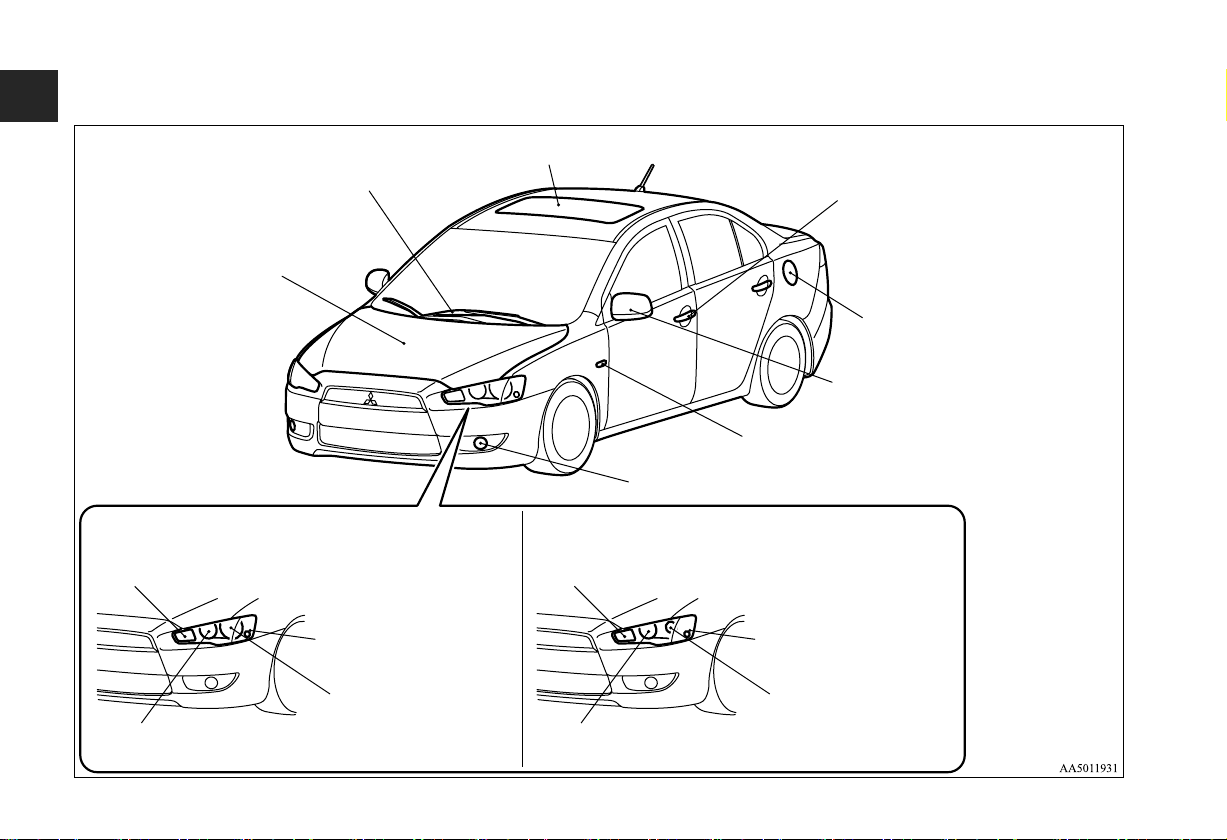
Outside (Front)
N00100601163
[Except for vehicles with high intensity discharge
headlights type]
Front turn-signal lights P.3-243, 7-55, 7-70
Front side-marker and
parking lights P.3-234,
7-55, 7-66
Headlights, low beam
P.3-234, 7-55, 7-58
Headlights, high beam P.3-234, 7-55, 7-61
[For vehicles with high intensity discharge head-
lights type]
Headlights, low/high beam
P.3-234, 7-55, 7-65
Daytime running lights P.7-55, 7-63
Except for RALLIART
Windshield wiper and washer
P.3 -2 46
Engine compartment P.7-7
Engine hood P.7-4
Sunroof (if so equipped) P.3-74
Fuel tank filler
P.1 -4
Outside rearview mirrors P.3-83
Side turn-signal lights P.3-243, 7-55
Front fog lights (if so equipped) P.3-245, 7-55, 7-72
Locking and unlocking P.3-51
Keyless entry system
(if so equipped) P.3-9
F.A.S.T.-key (Free-hand
Advanced Security Transmitter)
(if so equipped) P.3-17
Front turn-signal lights P.3-243, 7-55, 7-70
Front side-marker and
parking lights P.3-234,
7-55, 7-68
BK0138600US.book 9 ページ 2011年7月17日 日曜日 午後2時32分
Overview
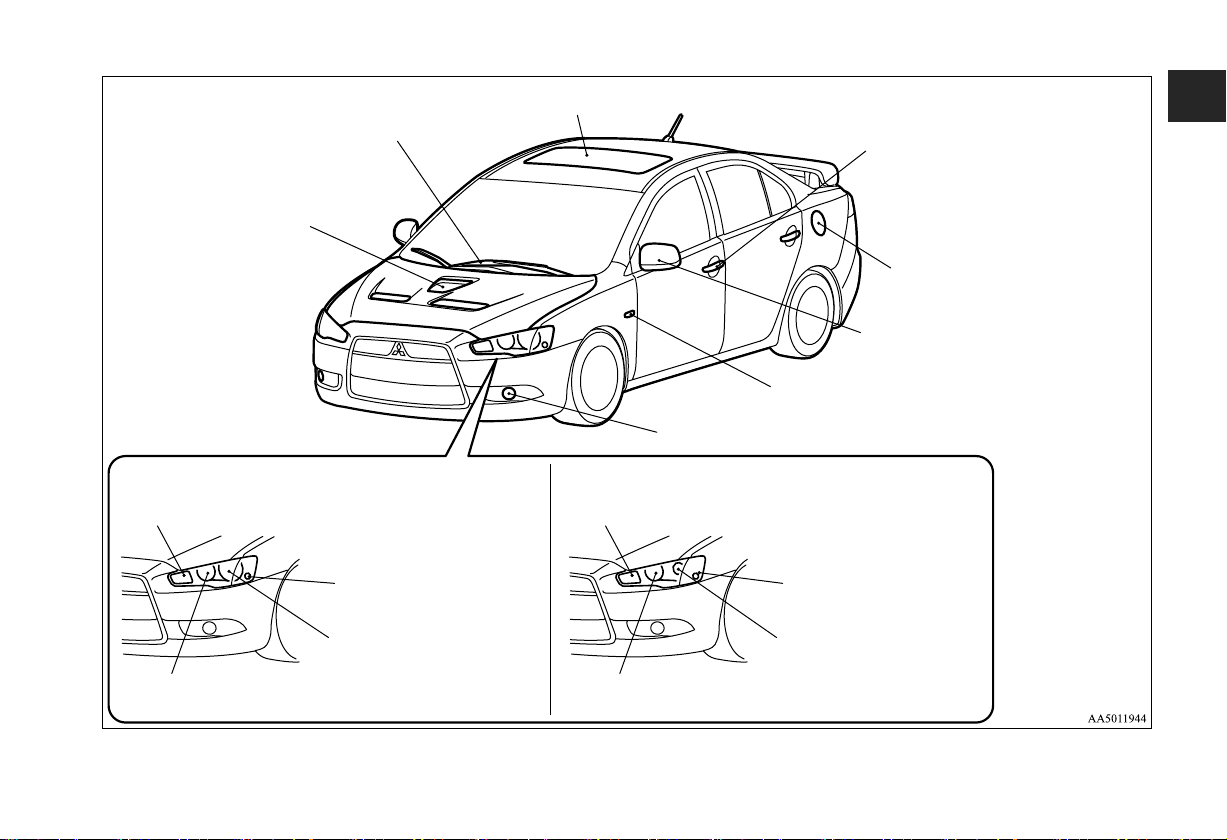
Sunroof (if so equipped) P.3-74
Windshield wiper and washer
P.3-246
Engine compartment P.7-7
Engine hood P.7-4
Locking and unlocking P.3-51
Keyless entry system
(if so equipped) P.3-9
F.A.S.T.-key (Free-hand
Advanced Security Transmitter)
(if so equipped) P.3-17
Fuel tank filler P.1-4
Outside rearview mirrors
P.3-83
Side turn-signal lights P.3-243, 7-55
Front fog lights P.3-245, 7-55, 7-75
[Except for vehicles with high intensity discharge
headlights type]
[For vehicles with high intensity discharge head-
lights type]
RALLIART
Front turn-signal lights P.3-243, 7-55, 7-70
Front side-marker and
parking lights P.3-234,
7-55, 7-66
Headlights, low beam P.3-
234, 7-55, 7-58
Headlights, high beam P.3-234, 7-55, 7-61
Headlights, low/high beam
P.3-234, 7-55, 7-65
Daytime running lights P.7-55, 7-63
Front turn-signal lights P.3-243, 7-55, 7-70
Front side-marker and
parking lights P.3-234,
7-55, 7-68
BK0138600US.book 10 ページ 2011年7月17日 日曜日 午後2時32分
Overview
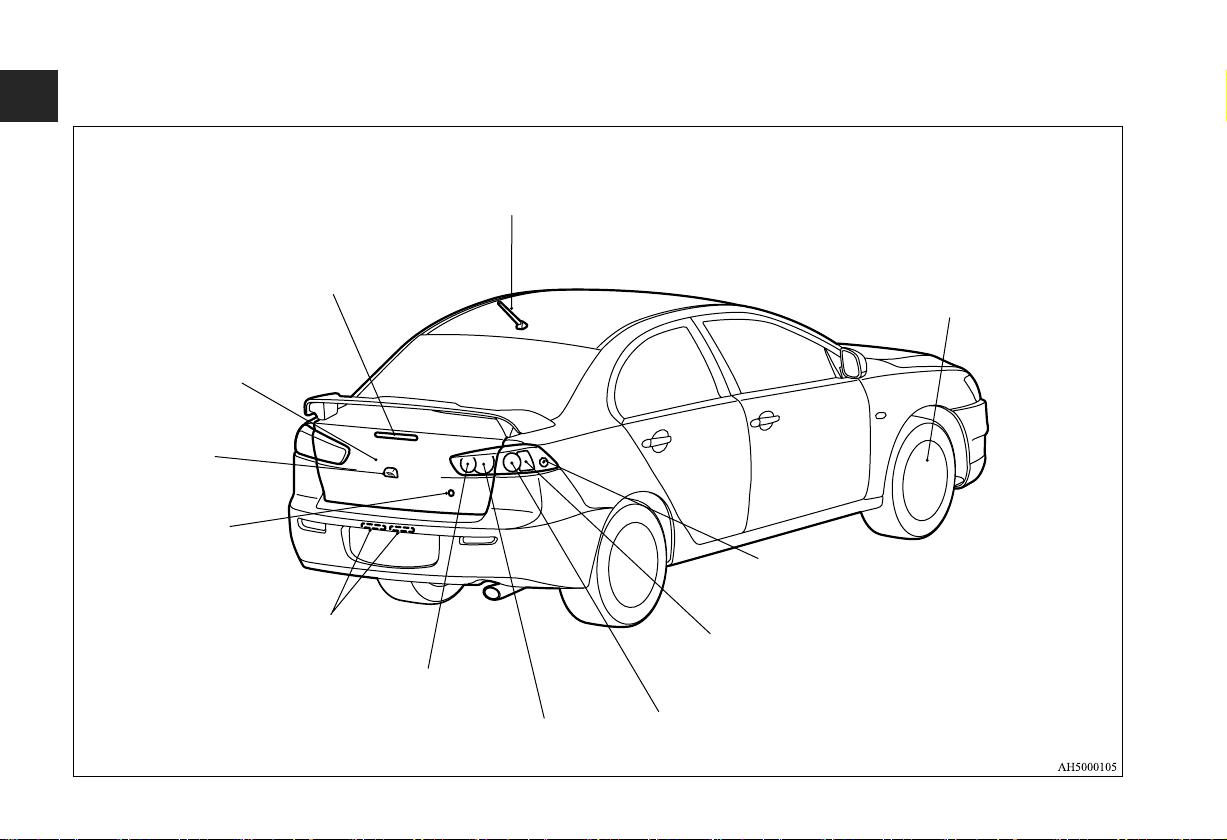
Outside (Rear)
N00100601277
Antenna P.5-148
Tire inflation pressure P.7-32
Changing tires P.6-9
Tire rotation P.7-35
Wheel covers (if so equipped) P.6-20
Tire chains P.7-37
Tire pressure monitoring system P.3-166
Rear side-marker lights P.3-234, 7-55,
7-79
Rear turn-signal lights P.3-243, 7-55, 7-79
Tail and stop lights P.3-234, 7-55, 7-79
Tail lights P.3-234, 7-55, 7-79
Back-up lights
P.7-55, 7-79
License plate lights
P.3-234, 7-55, 7-83
Trunk lid P.3-59
High-mounted stop light P.7-55
Except for RALLIART
Trunk lid OPEN switch
(if so equipped) P.3-21
Rear-view camera
(if so equipped)
P.3-172
BK0138600US.book 11 ページ 2011年7月17日 日曜日 午後2時32分
Overview
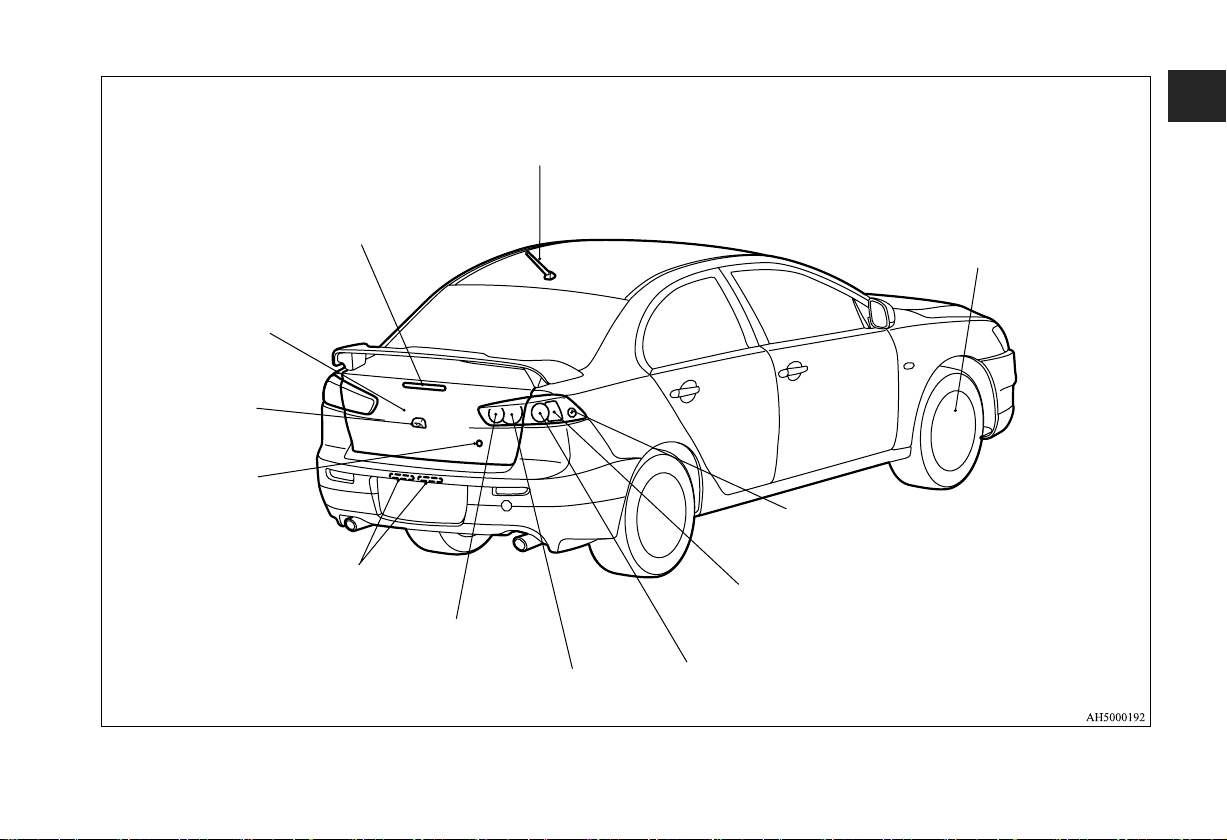
RALLIART
Antenna P.5-148
Tire inflation pressure P.7-32
Changing tires P.6-9
Tire rotation P.7-35
Tire chains P.7-37
Tire pressure monitoring system P.3-166
Rear side-marker lights P.3-234, 7-55, 7-
79
Rear turn-signal lights P.3-243, 7-55, 7-79
Tail and stop lights P.3-234, 7-55, 7-79
Tail lights P.3-234, 7-55, 7-79
Back-up lights
P.7-55, 7-79
License plate lights
P. 3-234, 7-55, 7-83
Trunk lid P.3-59
High-mounted stop light P.7-55
Trunk lid OPEN switch
P.3-21
Rear-view camera
(if so equipped)
P.3 - 1 72
BK0138600US.book 12 ページ 2011年7月17日 日曜日 午後2時32分

BK0138600US.book 13 ページ 2011年7月17日 日曜日 午後2時32分
Quick index
1
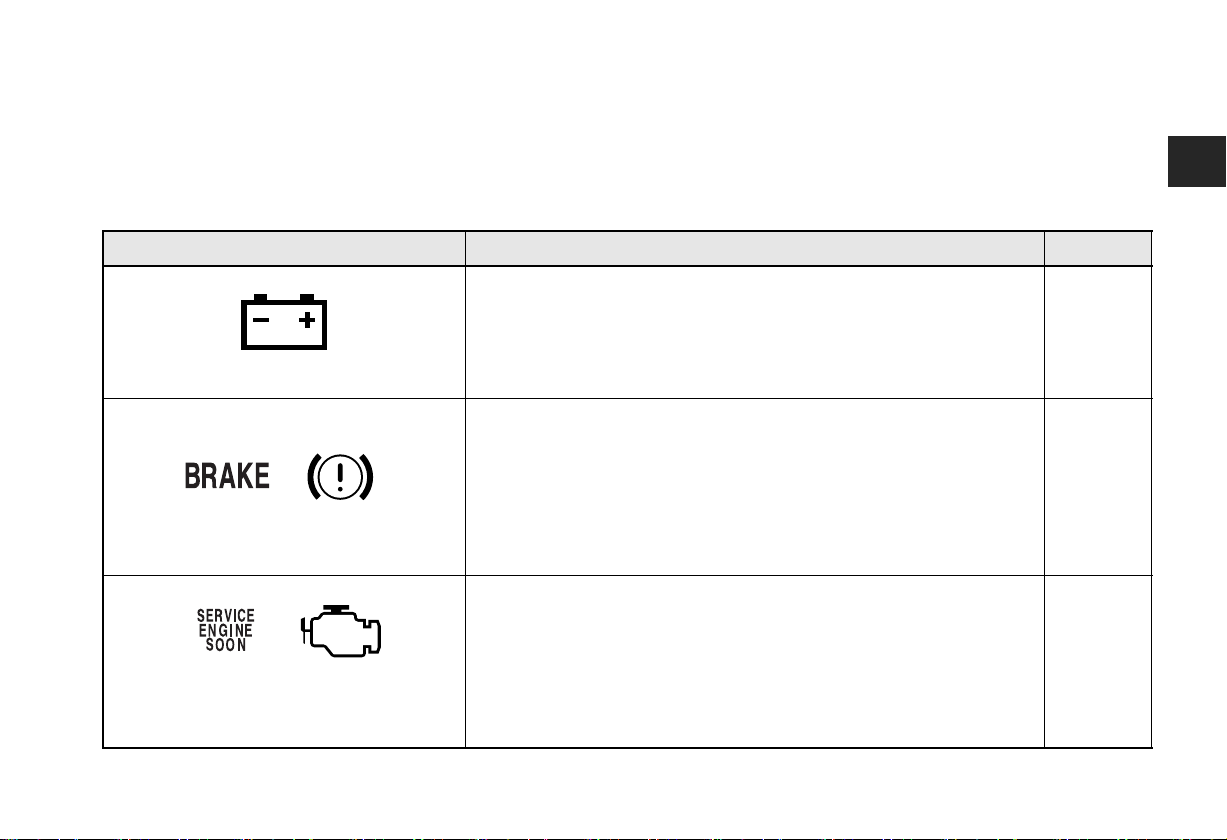
If this warning light comes on or flashes while you’re driving...
N00200701048
N
OTE
● For information regarding warning displays in the multi-information display, refer to “Multi-information display indicators”
on page 3-181.
● These warning lights will come on for a few seconds for a bulb check when the ignition switch is first turned to “ON”.
Warning light Do this Ref. page
Charging system warning light
● Park your vehicle in a safe place and stop the engine.
Contact an authorized Mitsubishi Motors dealer or a repair facility of
your choice for assistance.
P.3-230
or
Brake warning light
● If this light comes on while driving, check to see that the parking
brake is fully released.
● If this light stays on after releasing the parking brake, stop and check
the brake fluid level.
● If the brake fluid level is correct, there may be a system malfunction.
Avoid hard braking and high speeds, and contact an authorized
Mitsubishi Motors dealer or a repair facility of your choice for assis-
tance.
P.3-228
or
Engine malfunction indicator
(“SERVICE ENGINE SOON” or “Check
engine light”)
● Although your vehicle will usually be drivable and not need towing,
have the engine system checked at an authorized Mitsubishi Motors
dealer or a repair facility of your choice as soon as possible. If the
vehicle is not drivable, contact emergency roadside assistance at 1-
888-648-7820 (for vehicles sold in U.S.A.) or 1-888-576-4878 (for
vehicles sold in Canada), an authorized Mitsubishi Motors dealer, or
local towing company for assistance.
P.3-229
BK0138600US.book 1 ページ 2011年7月17日 日曜日 午後2時32分
2
Quick index
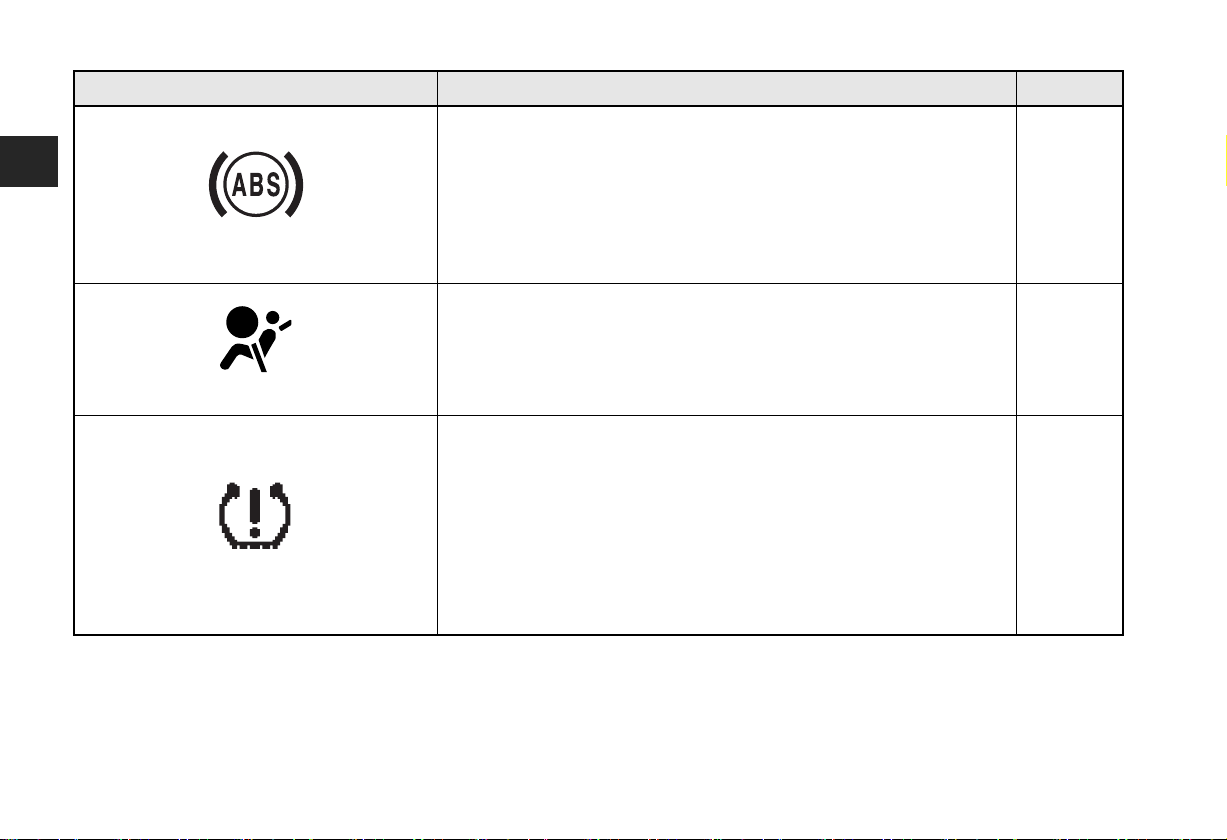
Anti-lock braking system warning light
● When this light comes on, the anti-lock braking system is not func-
tioning and only the ordinary braking system is functioning.
● Park your vehicle in a safe place and stop the engine.
Test the system as described on page 3-149.
● If the light does not go out after the test, or if it comes on again, we
recommend that you have the system checked at an authorized
Mitsubishi Motors dealer or a repair facility of your choice as soon as
possible.
P.3-148,
3-149
SRS warning light
● It is not necessary to stop the vehicle immediately, but we recommend
that you have the airbag and the pre-tensioner seat belt system
checked at an authorized Mitsubishi Motors dealer as soon as possi-
ble.
P. 2-2 2,
2-43
Tire pressure monitoring system warning light
● If the warning light comes on, you should stop and adjust the tires to
the proper inflation pressure as soon as possible.
(See “Tire inflation pressures” on page 7-32.)
Once adjustments have been made, the warning light will go off after
a few minutes of driving.
● If the warning light blinks for approximately 1 minute and then
remain continuously illuminated, the system is not operating properly.
If the system returns to normal, the warning light will go off. If the
warning light does not go off, have the vehicle inspected at an autho-
rized Mitsubishi Motors dealer.
P.3-167
Warning light Do this Ref. page
BK0138600US.book 2 ページ 2011年7月17日 日曜日 午後2時32分
Quick index
3
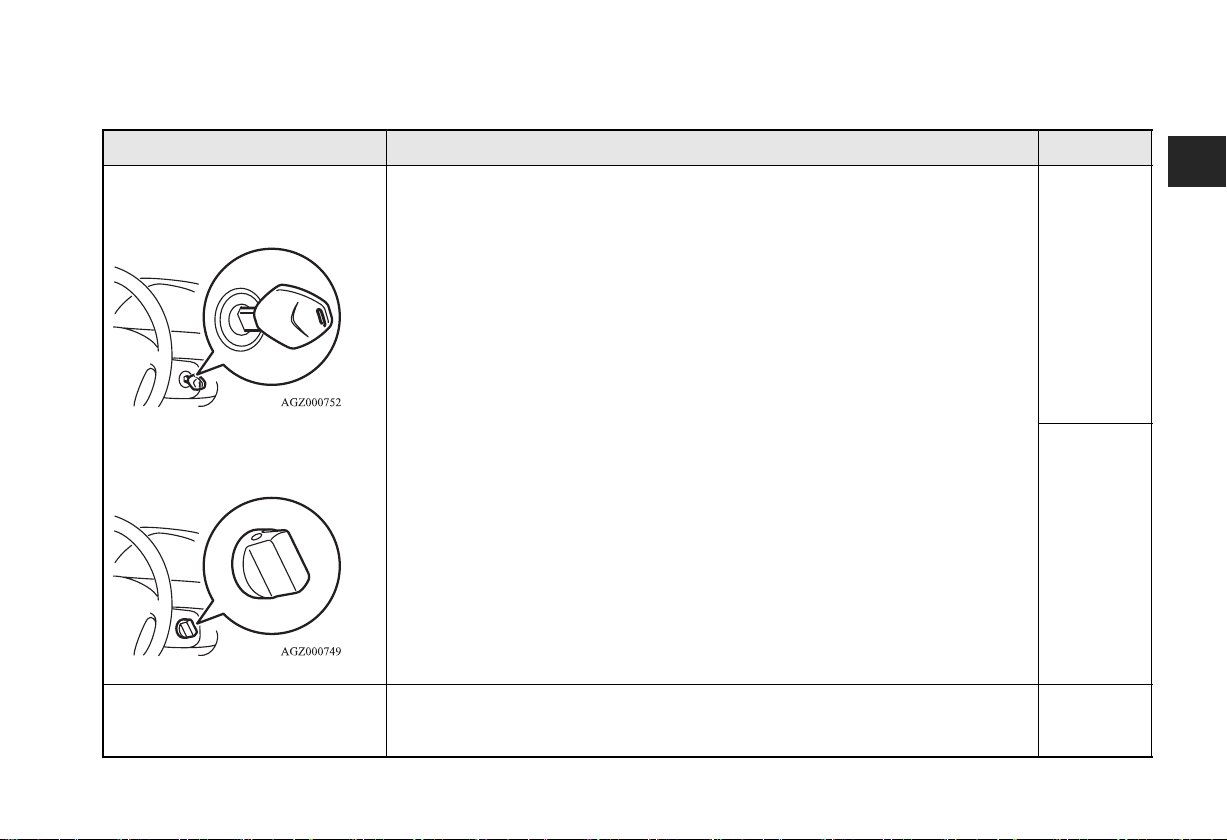
If this problem occurs...
N00200900838
Problem Do this Ref. Page
Cannot turn the key.
(When using a key to start the
engine)
When using a key to start the engine
Will not turn from “LOCK” to “ACC”.
Turn the key while turning the steering wheel in either direction.
P. 3-8 7,
3-88
Will not turn from “ACC” to “LOCK”.
Vehicles with continuously variable transmission (CVT) or Twin Clutch SST:
Check the position of the selector lever (CVT) or the gearshift lever (Twin Clutch
SST).
The key cannot be removed unless the selector lever (CVT) or the gearshift lever
(Twin Clutch SST) is set to the “P” (PARK) position.
Vehicles with manual transaxle:
Place the key at the “ACC” position. Push the key in and turn it.
(When using the F.A.S.T.-key to
start the engine)
When using the F.A.S.T.-key to start the engine
Will not turn from “LOCK (PUSH OFF)” to “ACC”.
Push the ignition switch again, turn the steering wheel in both directions and then
turn the ignition switch.
Will not turn from “ACC” to “LOCK”.
Vehicles with CVT or Twin Clutch SST:
Check whether the selector lever (CVT) or the gearshift lever (Twin Clutch SST) is
set to the “P” (PARK) position.
Vehicles with manual transaxle:
Place the ignition switch at the “ACC” position. Push the ignition switch in and turn
it.
P.3-17
The F.A.S.T.-key does not operate.
(for vehicles equipped with the
F.A.S.T.-key)
Use the emergency key to lock and unlock the doors and start the engine. P.3-33
BK0138600US.book 3 ページ 2011年7月17日 日曜日 午後2時32分
4
Quick index
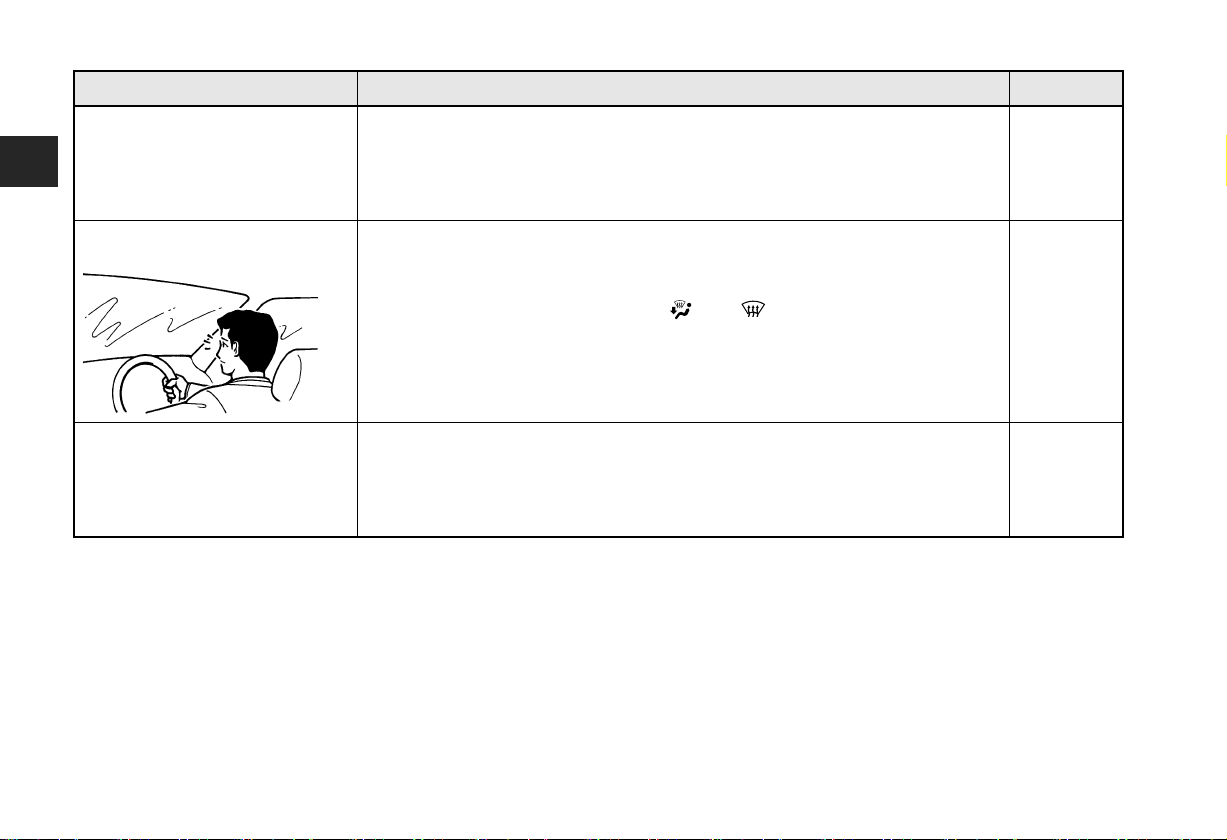
Cannot shift the selector lever
(CVT) or the gearshift lever (Twin
Clutch SST) from the “P” (PARK)
position. (for vehicles with CVT or
Twin Clutch SST)
Shift the selector lever (CVT) or the gearshift lever (Twin Clutch SST) while press-
ing the brake pedal.
Check that the ignition key or ignition switch is in the “ON” position.
P.3-98, 3-112
The windows are fogged up.
1. Set the mode selection dial to the “ ” or “ ” position.
2. Turn on the blower.
P.5-10, 5-20,
5-29,
5-39, 5-49
The engine does not start.
The lights do not come on.
The lights are dim.
The horn does not honk.
The horn sound is weak.
Have the battery checked. Recharge or replace as needed.
P.6-2,
7-23
Problem Do this Ref. Page
BK0138600US.book 4 ページ 2011年7月17日 日曜日 午後2時32分
Quick index
5
Problem Do this Ref. page
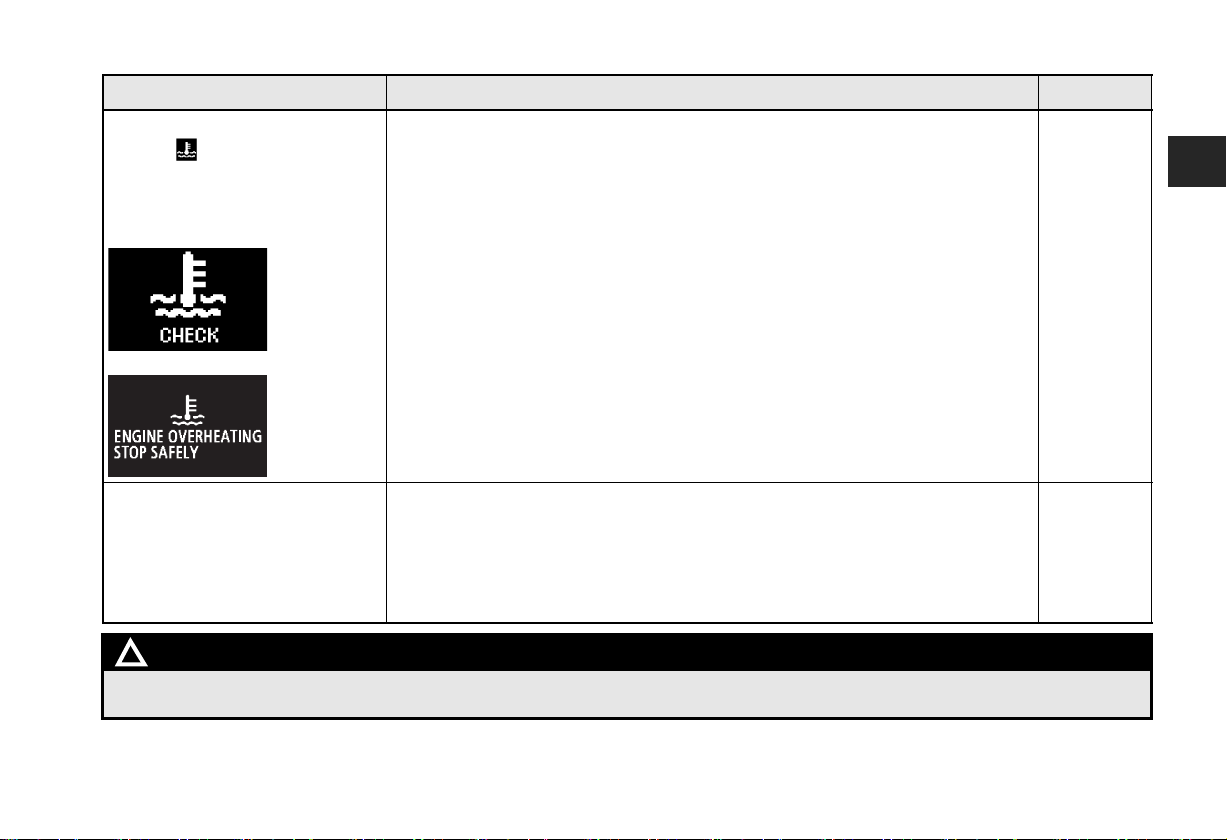
The engine coolant temperature
display “ ” in the multi-informa-
tion display is flashing.
Steam comes out of the engine
compartment.
Type 1
Type 2
The engine is overheated.
Carefully stop the vehicle in a safe place.
P. 6-5
If your vehicle becomes stuck in
sand, mud or snow
1. Slowly press down on the accelerator pedal to get your vehicle moving again.
For vehicle equipped with the Electronically controlled 4WD system, set the
drive mode-selector to the “4WD AUTO” or “4WD LOCK” position and then
slowly press down on the accelerator pedal to get your vehicle moving.
2. If there is nothing to stop your tires from slipping, rock your vehicle back and
forth to free it.
P.6-24
WARNING
!
● When attempting to rock your vehicle out of a stuck position, be sure that no one is near the vehicle. The rocking
motion may cause the vehicle to suddenly lurch forward or backward, possibly injuring bystanders.
BK0138600US.book 5 ページ 2011年7月17日 日曜日 午後2時32分
6
Quick index
● Avoid revving the engine or spinning the wheels. Prolonged efforts to free a stuck vehicle may result in overheating
and transaxle failure.
If the vehicle remains stuck after several rocking attempts, have a towing service pull the vehicle out.
Problem Do this Ref. page
The brakes are not functioning
properly after driving through
water.
Dry out the brakes by driving slowly while lightly pressing the brake pedal. P.4-8
The CVT makes no engine speed to
vehicle speed ratio change when
accelerating. The initial movement
of the vehicle is slow when the
vehicle starts moving.
(for vehicles with CVT)
There may be a problem in the CVT.
If the or warning lights on the multi-information display will not turn off, or if
they are coming on frequently, please have the vehicle checked at your nearest
Mitsubishi Motors dealer.
P. 3-111
Twin Clutch SST does not shift.
Vehicle cannot move.
Acceleration is slow.
The vehicle does not creep.
A large shock is felt when shifting.
Shifting occurs at higher engine
speed.
Response is slow.
(for vehicles with Twin Clutch
SST)
The temperature of the Twin Clutch SST fluid is high, a safety device in the Twin
Clutch SST has been activated due to a possible malfunction in the Twin Clutch
SST, or there is a possible malfunction in the engine electronic control module.
P.3-117, 3-
131, 3-229
WARNING
!
BK0138600US.book 6 ページ 2011年7月17日 日曜日 午後2時32分
Quick index
7
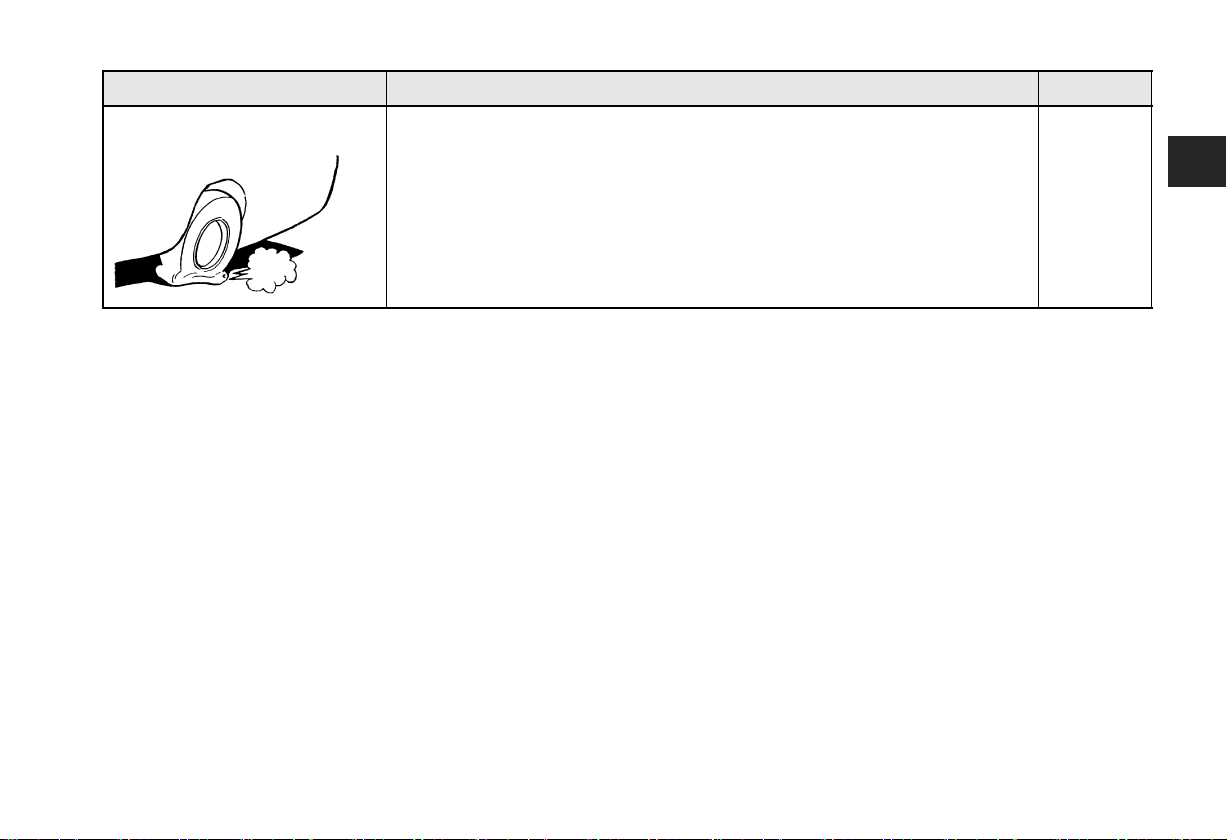
A tire is punctured.
1. Park the vehicle in a safe place where the surface is flat and level.
2. Replace the flat tire with the spare tire.
P. 6-9
Problem Do this Ref. page
BK0138600US.book 7 ページ 2011年7月17日 日曜日 午後2時32分

BK0138600US.book 8 ページ 2011年7月17日 日曜日 午後2時32分

1
General information
Fuel selection . . . . . . . . . . . . . . . . . . . . . . . . . . . . .1- 2
Filling the fuel tank . . . . . . . . . . . . . . . . . . . . . . . .1- 4
Modifications to and racing of your vehicle . . . . .1- 7
Mitsubishi Motors genuine parts . . . . . . . . . . . . . .1- 9
California Perchlorate Materials Requirements. . .1- 10
BK0138600US.book 1 ページ 2011年7月17日 日曜日 午後2時32分
1-2
General information
1
Fuel selection
N00301000752
Your vehicle is designed to use unleaded gasoline only. It is
equipped with a fuel filler tube especially designed to accept
only a small diameter unleaded gasoline dispensing nozzle.
Gasoline detergent additives
In the United States, fuel suppliers are required by law to add
detergents to their gasoline to minimize fuel-injector fouling
and minimize intake-valve deposits. Detergent gasoline helps
keep your engine in tune and your emission-control system
working properly.
Octane requirement
Except for RALLIART
Your vehicle is designed to operate on unleaded gasoline hav-
ing a minimum octane number of 87 [(MON+RON)/2], or 91
RON.
RALLIART
Your vehicle is designed to operate on premium grade
unleaded gasoline having a minimum octane number of 93
[(MON+RON)/2] or higher for optimum performance. In case
premium grade unleaded gasoline 93 [(MON+RON)/2] is not
available, unleaded gasoline number of 91 [(MON+RON)/2]
can be used. However, the performance level is reduced.
In order to maintain exhaust system durability, premium
unleaded gasoline having an octane number of at least 91
[(MON+RON)/2] must be used.
If the premium grade unleaded gasoline number of 91
[(MON+RON)/2] or higher is not available on journey, etc.,
regular unleaded gasoline having an octane number of 87
[(MON+RON)/2] can be used temporarily as an emergency
measure.
MON: Motor Octane Number
RON: Research Octane Number
Oxygenated gasoline
Gasoline sold at some service stations contains oxygenates
such as ethanol and MTBE, although the oxygenates may not
be identified by those names. Oxygenates are required in some
areas of the country. Such fuel can be used in your vehicle.
WARNING
!
● Gasoline is highly flammable and explosive. You
could be burned, seriously injured or killed when
handling it. Whenever you refuel your vehicle, stop
the engine and keep flames, sparks, and smoking
materials away from the vehicle. Always handle fuel
in well-ventilated outdoor areas.
CAUTION
!
● Using leaded gasoline in your vehicle will damage
the engine, catalytic converter, and the oxygen sen-
sors. Also, using leaded gasoline is illegal, and will
void your warranty coverage of the engine, catalytic
converter, and oxygen sensors.
BK0138600US.book 2 ページ 2011年7月17日 日曜日 午後2時32分

General information
1-3
1
Ethanol (Gasohol)
A mixture of up to 10 % ethanol (grain alcohol) and 90 %
unleaded gasoline may be used in your vehicle, provided the
octane number is at least as high as that recommended for
unleaded gasoline.
Methanol
Do not operate your vehicle on gasoline containing methanol
(wood alcohol). Using this type of alcohol could adversely
affect the vehicle’s performance and damage critical parts of
the vehicle’s fuel system.
Reformulated gasoline
Many areas of the country require the use of cleaner burning
fuel referred to as “Reformulated Gasoline”.
Reformulated gasoline contains oxygenates and is specially
blended to reduce vehicle emissions and improve air quality.
Mitsubishi Motors Corporation strongly supports the use of
reformulated gasoline. Properly blended reformulated gasoline
has no adverse effect on vehicle performance or the durability
of the engine and fuel system.
MMT (methylcyclopentadienyl manganese tri-
carbonyl)
MMT is a manganese-containing metallic additive that is
blended into some gasolines to increase the octane number.
Mitsubishi Motors Corporation recommends using gasolines
without MMT.
Use of gasolines blended with MMT may adversely affect per-
formance, and cause the malfunction indicator on your instru-
ment panel to come on. If this happens, contact an authorized
Mitsubishi Motors dealer or a repair facility of your choice for
assistance.
Sulfur in gasoline
Your vehicle may have been designed to satisfy California’s
low-emission regulations based on clean-burning low-sulfur
gasoline. Gasoline sold in parts of the country other than Cali-
fornia is allowed to have a higher sulfur content. Using such
gasoline could adversely affect the vehicle’s catalytic converter
and cause the engine malfunction indicator (“SERVICE
ENGINE SOON” or “CHECK ENGINE”) to come on. Illumi-
nation of this indicator while you are using high-sulfur gaso-
line does not necessarily mean the vehicle’s emission-control
system is malfunctioning. Your authorized Mitsubishi Motors
dealer may suggest you try using a different, lower-sulfur
brand of unleaded gasoline to determine whether the problem
is fuel-related.
N
OTE
● Poor-quality gasoline can cause problems such as poor
starting, stalling during idling, abnormal engine noise, and
poor acceleration. If you experience any of these prob-
lems, try using a different brand of gasoline. If the engine
malfunction indicator (“SERVICE ENGINE SOON” or
“CHECK ENGINE”) flashes, have the vehicle inspected
as soon as possible by the nearest authorized Mitsubishi
Motors dealer or a repair facility of your choice.
BK0138600US.book 3 ページ 2011年7月17日 日曜日 午後2時32分
1-4
General information
1
● Repeatedly driving short distances at low speeds can
cause deposits to form in the fuel system and engine,
resulting in poor starting and poor acceleration. If these
problems occur, you are advised to add a detergent addi-
tive to the gasoline when you refuel the vehicle. The addi-
tive will remove the deposits, thereby returning the engine
to a normal condition. Be sure to use a genuine Mitsubishi
cleaning additive. Using an unsuitable additive could
make the engine malfunction. For details, please contact
the nearest authorized Mitsubishi Motors dealer.
Filling the fuel tank
N00301100900
WARNING
!
● Gasoline is highly flammable and explosive. You
could be burned, seriously injured or killed when
handling it. When refueling your vehicle, always
turn the engine off and keep away from flames,
sparks, and smoking materials. Always handle fuel
in well-ventilated outdoor areas.
● Before removing the fuel cap, be sure to get rid of
your body’s static electricity by touching a metal
part of the car or fuel pump. Any static electricity on
your body could create a spark that ignites fuel
vapor.
● Perform the whole refueling process (opening the
fuel tank filler door, removing the fuel cap, etc.) by
yourself. Do not let any other person come near the
fuel tank filler. If you allowed a person to help you
and that person was carrying static electricity, fuel
vapor could be ignited.
● Do not move away from the fuel tank filler until
refueling is finished. If you moved away and did
something else (for example, sitting on a seat) part-
way through the refueling process, you could pick
up a fresh charge of static electricity.
● Be careful not to inhale fuel vapor. Fuel contains
toxic substances.
● Keep the doors and windows closed while refueling
the vehicle. If they were open, fuel vapor could get
into the cabin.
BK0138600US.book 4 ページ 2011年7月17日 日曜日 午後2時32分
General information
1-5
1
Fuel tank capacity
Front-wheel drive vehicles: 15.5 gal (59.0 L)
All-wheel drive vehicles: 14.5 gal (55.0 L)
Refueling
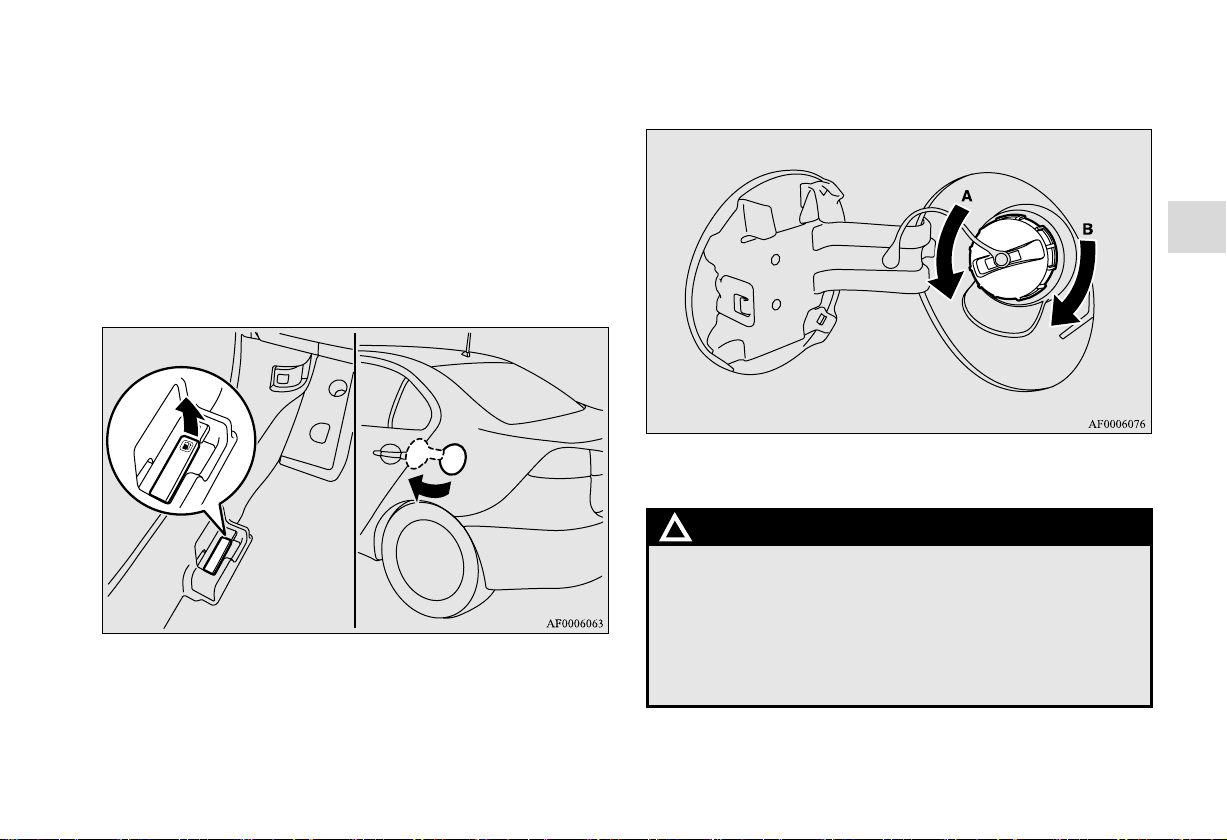
1. Before filling with fuel, stop the engine.
2. The fuel tank filler is located on the rear driver side of
your vehicle.
The fuel tank filler door can be opened from inside the
vehicle with the fuel tank filler door release lever located
at the left side of the driver’s seat.
3. Open the fuel tank filler pipe by slowly turning the cap
counterclockwise.
A- Remove
B- Close
WARNING
!
● Since the fuel system may be under pressure,
remove the fuel tank filler cap slowly. This relieves
any pressure or vacuum that might have built up in
the fuel tank. If the cap is venting vapor or if you
hear a hissing sound, wait until it stops before
removing the cap. Otherwise, fuel may spray out,
injuring you or others.
BK0138600US.book 5 ページ 2011年7月17日 日曜日 午後2時32分
1-6
General information
1
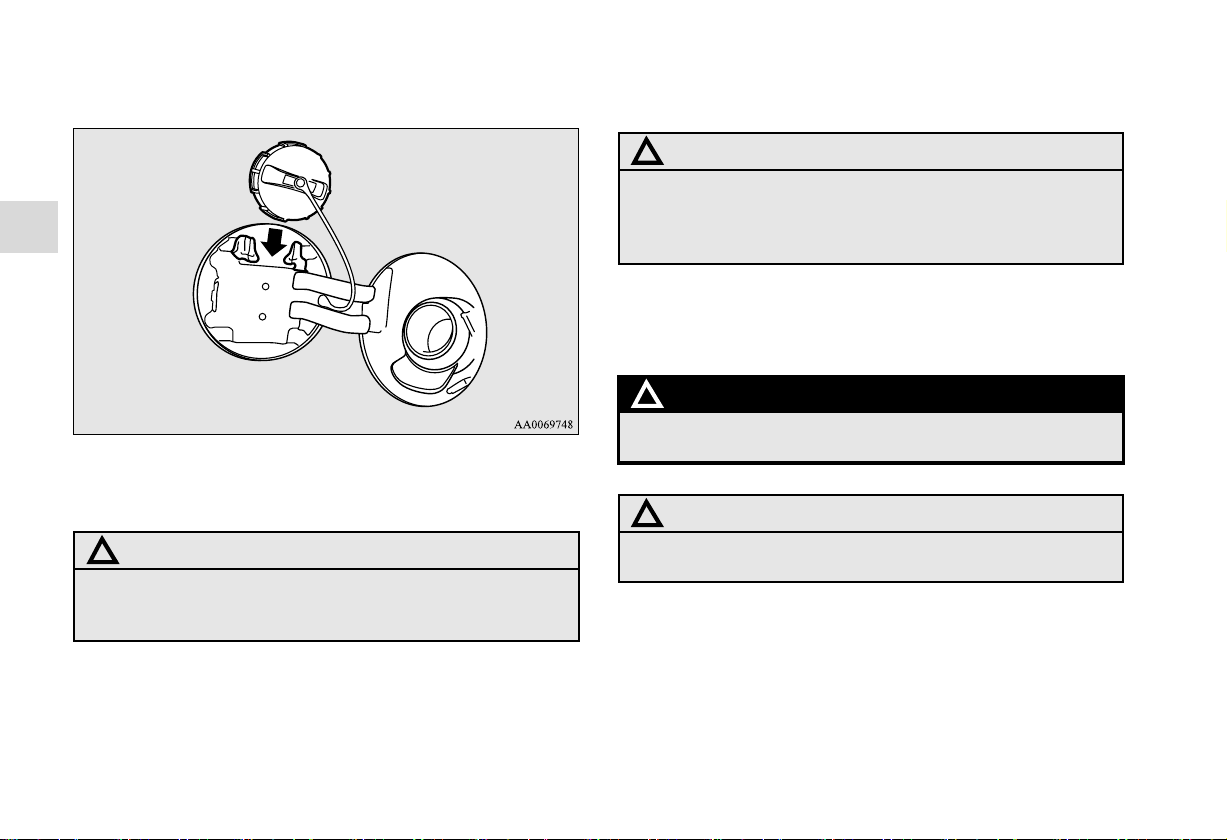
4. While filling with fuel, store the cap in the cap holder
located on the inside of the fuel tank filler door.
5. To fill with fuel correctly depends mainly on correct han-
dling of the fuel filler nozzle. Do not tilt the nozzle. Insert
the nozzle in the tank port as far as it will go.
6. When the nozzle stops automatically, do not attempt to
add more fuel.
7. To close, turn the fuel tank filler cap slowly clockwise
until you hear clicking sounds, then gently push the fuel
tank filler door closed.
CAUTION
!
● Your vehicle can only be operated using unleaded
gasoline. Serious engine and catalytic converter
damage will result if leaded gasoline is used.
CAUTION
!
● To avoid fuel spillage and overfilling, do not “top-
off” the fuel tank. Spilled fuel could discolor, stain,
or crack the vehicle’s paintwork. If fuel spills on the
paintwork, wipe it off with a soft cloth.
WARNING
!
● Make sure the fuel cap is securely closed. If the fuel
cap is loose, fuel could leak, resulting in a fire.
CAUTION
!
● If you need to replace the fuel tank filler cap, use
only the cap specified for your model vehicle.
BK0138600US.book 6 ページ 2011年7月17日 日曜日 午後2時32分

General information
1-7
1
N
OTE
● If the fuel tank filler cap is not tight while driving, the
engine malfunction indicator (“SERVICE ENGINE
SOON” or “Check engine light”) may come on when the
onboard diagnostic (OBD) system performs a self check.
Always tighten the fuel tank filler cap until you hear click-
ing sounds.
The indicator will go off after driving several times. If the
indicator does not go off, contact your authorized
Mitsubishi Motors dealer or a repair facility of your
choice as soon as possible.
Modifications to and racing of your vehicle
N00301600048
This vehicle should not be modified with non-Mitsubishi
Motors genuine parts. Mitsubishi Motors designs and manufac-
tures high quality vehicles with an emphasis on safety and
durability. Modifications using non-Mitsubishi Motors genuine
parts may affect the performance, safety and/or durability of
your vehicle, and may violate applicable state and/or federal
regulations.
DAMAGE OR PERFORMANCE PROBLEMS RESULT-
ING FROM MODIFICATIONS TO OR RACING OF
YOUR VEHICLE ARE NOT COVERED UNDER WAR-
RANTY.
Examples of modifications to your vehicle that can cause dam-
age or performance problems include the following:
● Failure to use Mitsubishi Motors genuine parts
● Failure to use required fuel and fluids
● Failure to use proper size tires and wheels
● Modification of the fuel, intake, exhaust, emission, sus-
pension, engine, drive train or electrical wiring systems
● Modification of any onboard computer/control module,
including reprogramming, or replacing/adding chips to
any onboard computer/control module
Review the Warranty and Maintenance Manual for further
details regarding warranty coverage.
BK0138600US.book 7 ページ 2011年7月17日 日曜日 午後2時32分
1-8
General information
1
Installation of accessories
N00301700182
● The installation of accessories, optional parts, etc., should
only be carried out within the limits prescribed by law in
the driving area and in accordance with the guidelines and
warnings contained within the documents accompanying
this vehicle.
Only Mitsubishi Motors approved accessories should be
fitted to your vehicle.
● Improper installation of electrical parts could cause fire.
Refer to the “Modification/alterations to the electrical or
fuel systems” section within this owner’s manual.
● Using a cellular phone or radio set inside the vehicle with-
out an external antenna may cause electrical system inter-
ference, which could lead to unsafe vehicle operation.
● Tires and wheels which do not meet specifications must
not be used.
Refer to the “Specifications” section for information
regarding wheel and tire sizes.
Important point!
Due to the large number of accessory and replacement parts
provided by different manufacturers in the market, it is not
always possible for an authorized Mitsubishi Motors dealer to
check whether the attachment or installation of non-Mitsubishi
Motors genuine parts will affect the driving safety of your
Mitsubishi-vehicle.
CAUTION
!
● Before any electrical or electronic accessories are
installed, consult an authorized Mitsubishi Motors
dealer.
WARNING
!
● If you choose to use a cellular phone while driving,
you must not allow that usage to distract you in the
safe operation of your vehicle. Anything, including
cellular phone usage, that distracts you from the
safe operation of your vehicle increases your risk of
an accident.
Refer to and follow all state and local laws in your
area regarding cellular phone usage while driving.
BK0138600US.book 8 ページ 2011年7月17日 日曜日 午後2時32分
General information
1-9
1
Modification/alterations to the electrical or fuel
systems
N00301800040
Mitsubishi Motors manufactures high quality vehicles with an
emphasis on safety. It is important to consult an authorized
Mitsubishi Motors dealer before installation of any accessory
which may involve modification of the electrical or fuel sys-
tems.
Mitsubishi Motors genuine parts
N00301400105
Mitsubishi Motors Genuine Parts are designed and manufac-
tured to meet high standards of performance, and are recom-
mended for all of your maintenance needs. Also available from
your Mitsubishi Motors dealer are a wide variety of accessories
to personalize your new vehicle. Each Mitsubishi vehicle has a
selection of Mitsubishi Motors authorized accessories to
choose from to tailor your new vehicle to your own personal
preference. Your Mitsubishi Motors dealer’s Parts Manager has
information on various audio systems, protection items, as well
as interior and exterior accessories available for your specific
model.
CAUTION
!
● Please consult an authorized Mitsubishi Motors
dealer concerning any such accessory fitment or
modification.
If the wires interfere with the vehicle body or
improper installation methods are used (protective
fuses not included, etc.), electronic devices may be
adversely affected, resulting in a fire, vehicle dam-
age, or other accident.
BK0138600US.book 9 ページ 2011年7月17日 日曜日 午後2時32分

1-10
General information
1
California Perchlorate Materials Require-
ments
N00300100017
Certain components of this vehicle, such as airbag modules,
seat belt pretensioners, and button cell batteries, may contain
perchlorate materials.
Special handling may apply. For additional information, see
www.dtsc.ca.gov/hazardouswaste/perchlorate.
BK0138600US.book 10 ページ 2011年7月17日 日曜日 午後2時32分

2
Seat and restraint systems
Seats . . . . . . . . . . . . . . . . . . . . . . . . . . . . . . . . . . . .2- 2
Seats and restraint systems. . . . . . . . . . . . . . . . . . .2- 3
Front seats . . . . . . . . . . . . . . . . . . . . . . . . . . . . . . .2- 3
Rear seats . . . . . . . . . . . . . . . . . . . . . . . . . . . . . . . .2- 8
Head restraints . . . . . . . . . . . . . . . . . . . . . . . . . . . .2- 9
Seat belts . . . . . . . . . . . . . . . . . . . . . . . . . . . . . . . .2- 13
Seat belt use during pregnancy . . . . . . . . . . . . . . .2- 21
Seat belt pre-tensioner and force limiter systems .2- 21
Child restraint systems. . . . . . . . . . . . . . . . . . . . . .2- 23
Maintenance and inspection of seat belts. . . . . . . .2- 34
Supplemental Restraint System (SRS) - airbag . . .2- 34
BK0138600US.book 1 ページ 2011年7月17日 日曜日 午後2時32分

2-2
Seat and restraint systems
2
Seats
N00408400479
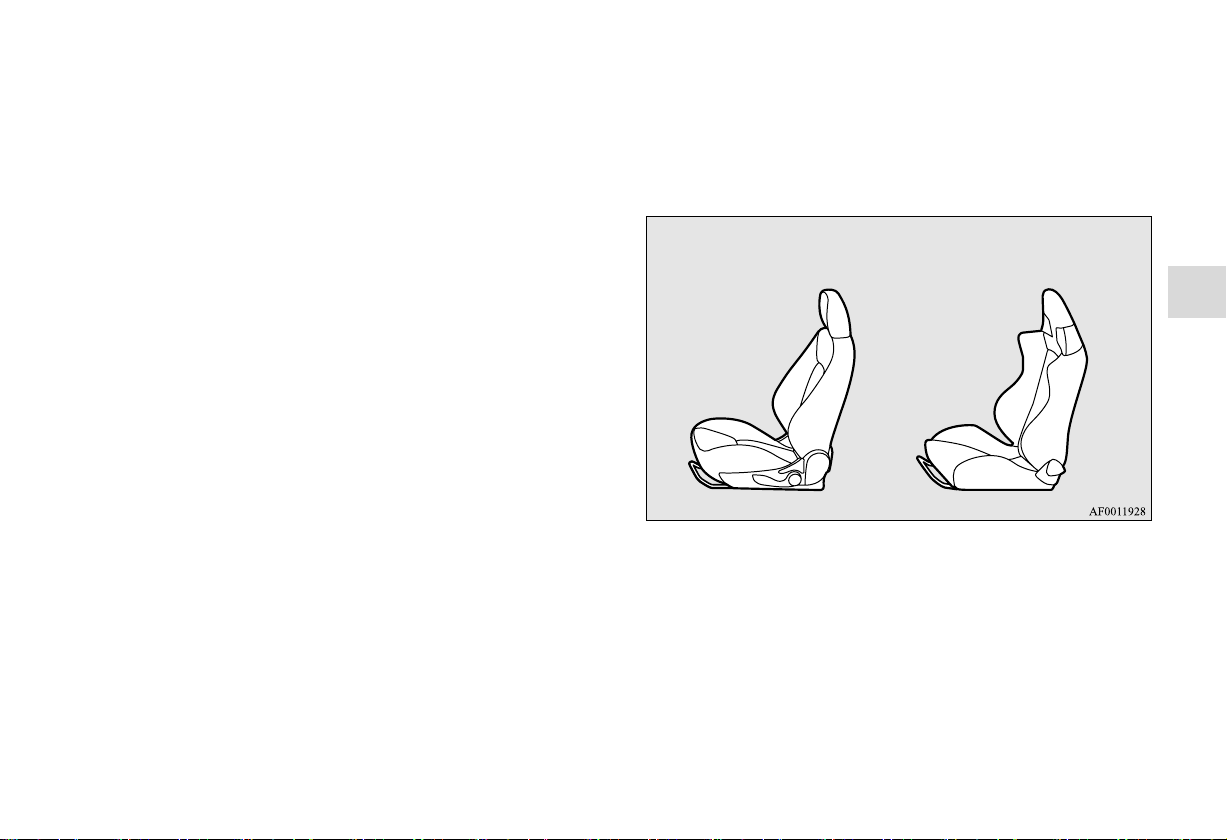
1 - Front seats
● To adjust the seat forward or backward → P. 2 - 5
● To adjust the seatback → P. 2 -5
● To adjust the seat height (Driver’s side only, if so
equipped) → P.2 - 6
● Heated seats (if so equipped) → P.2 -7
2 - Rear seats
● Folding the seatbacks forward (if so equipped) → P.2-8
● Arm rest (if so equipped) → P. 2 - 9
BK0138600US.book 2 ページ 2011年7月17日 日曜日 午後2時32分
Seat and restraint systems
2-3
2
Seats and restraint systems
N00401600182
Your vehicle has seat belts and other features that help protect
you and your passengers in an accident.
Seat belts are the most important safety device. When worn
properly, seat belts can reduce the chance of serious injury or
death in various types of crashes. For added protection during a
severe frontal collision, your vehicle has a Supplemental
Restraint System (SRS) with airbags for the driver and passen-
gers. The seats, head restraints, and door locks also are safety
equipment, which must be used correctly.
Always check the following before you drive:
● That everyone in your vehicle is properly wearing their
seat belt.
● That infants and small children are properly secured in
appropriate child restraint systems in the rear seat.
● That all doors are fully closed and locked.
● That seatbacks are upright, with head restraints properly
adjusted.
Safety equipment cannot prevent injury or death in all motor
vehicle accidents. You can help reduce the risk of injury or
death, however, by following the instructions in this manual.
Front seats
N00401800315
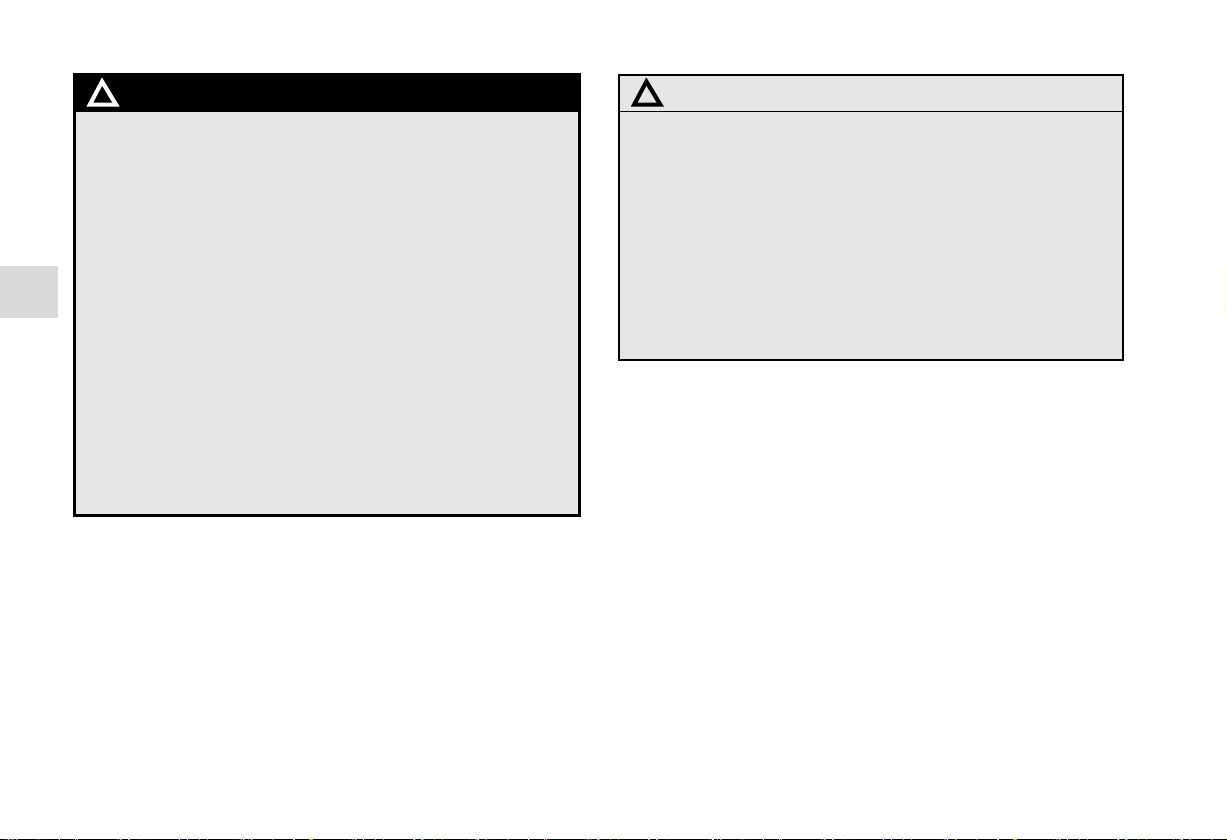
Position the driver’s seat as far back as possible while main-
taining a position that still enables you to fully apply the ped-
als, easily control the steering wheel and safely operate the
vehicle.
Except for RECARO seat RECARO seat
BK0138600US.book 3 ページ 2011年7月17日 日曜日 午後2時32分
2-4
Seat and restraint systems
2
WARNING
!
● Do not attempt to adjust the seat while driving. This
can cause loss of vehicle control and result in an
accident.
● After adjusting the seat, make sure that the seat is
securely locked into position.
● To reduce the risk to the driver of serious injury or
death during deployment of the driver’s airbag,
always properly wear the seat belt and adjust the
driver’s seat as far back as possible while maintain-
ing a position that still enables you to fully apply the
pedals, easily control the steering wheel, and safely
operate the vehicle.
● To reduce the risk to the front passenger of serious
injury or death during deployment of the passen-
ger’s airbag, always properly wear the seat belt and
adjust the front passenger’s seat as far back as pos-
sible.
● Always place children 12 years old and under in the
rear seat and use appropriate child restraint sys-
tems.
CAUTION
!
● Make sure that the seat is adjusted by an adult. If it
is adjusted by a child, an unexpected accident might
occur.
● Do not place a cushion or the like between your back
and the seatback while driving. The effectiveness of
the head restraints will be reduced in the event of an
accident.
● When sliding the seats, be careful not to catch your
hand or leg.
● When sliding or reclining the seat rearward, pay
careful attention to the rear seat passengers.
BK0138600US.book 4 ページ 2011年7月17日 日曜日 午後2時32分
Seat and restraint systems
2-5
2
To adjust the seat forward or backward
N00401900244
Pull the seat adjusting lever up and slide the seat forward or
backward to the desired position. Release the adjusting lever to
lock the seat in place.
To adjust the seatback
N00402000297
Except for RECARO seat
To adjust the seatback, lean forward slightly, gently pull the
seatback lock lever up, then lean backward to a comfortable
position and release the lever. The seatback will lock in place.
WARNING
!
● To make sure that the seat is securely locked, try to
move it forward or backward without using the
adjusting lever.
Except for RECARO seat
RECARO seat
CAUTION
!
● The reclining mechanism used in the seatback is
spring loaded, and will cause the seatback to return
quickly to the vertical position when the lock lever is
operated.
When pulling the lever, sit close to the seatback or
hold the seatback with your hand to control its
return motion.
BK0138600US.book 5 ページ 2011年7月17日 日曜日 午後2時32分
2-6
Seat and restraint systems
2
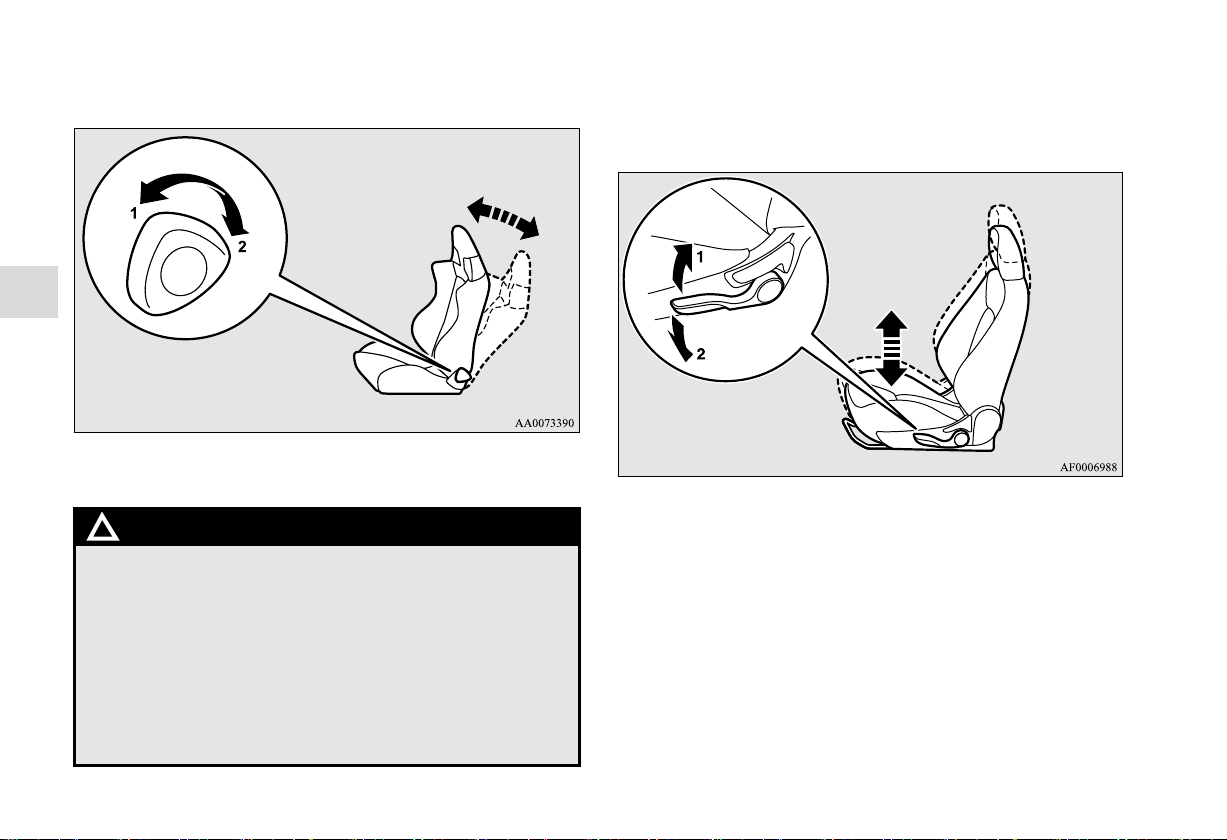
RECARO seat
Adjust the seatback angle by turning the dial.
To adjust the seat height (Driver’s side only, if so
equipped)
N00402100184
Operate the lever repeatedly to raise or lower the seat.
1- To move to forward direction
2- To recline backward
WARNING
!
● To reduce the risk of serious injury or death in the
event of an accident or sudden stop, all seatbacks
should be kept in the upright position while the vehi-
cle is in motion.
Seat belt performance during an accident can be
adversely affected if the seatbacks are reclined. The
more a seatback is reclined, the more likely seat belt
performance will be adversely affected. If the seat
belt is not properly positioned against the body dur-
ing an accident, there is increased risk you will slide
under the belt and receive serious injury or death.
1- Raise
2- Lower
BK0138600US.book 6 ページ 2011年7月17日 日曜日 午後2時32分
Seat and restraint systems
2-7
2
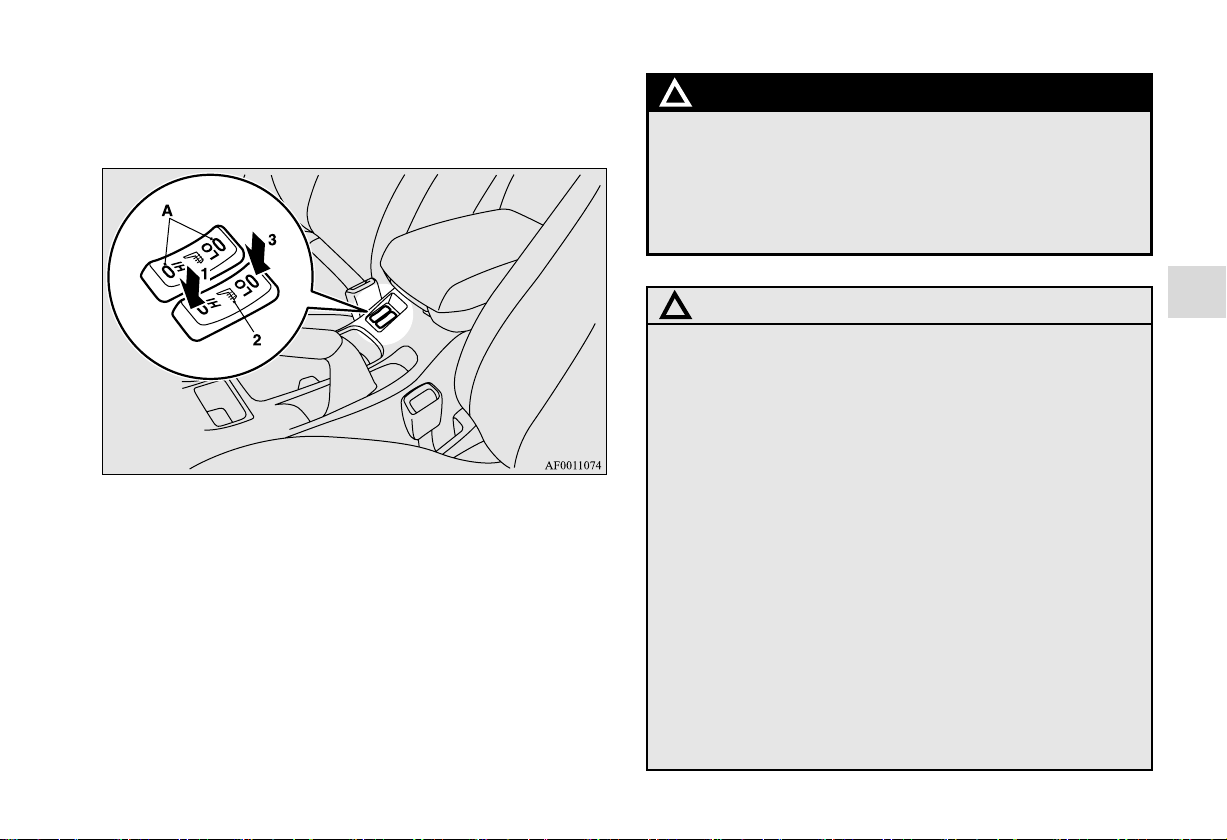
Heated seats (if so equipped)
N00435600336
The heated seats can be operated when the ignition switch is in
the “ON” position.
The indicator light (A) will illuminate while the heater is on.
1- Heater high (for quick heating)
2- Heater off
3- Heater low (to keep the seat warm)
WARNING
!
● Persons who are unable to feel temperature change
or skin pain due to age, illness, injury, medication,
alcohol use, fatigue or other physical conditions or
who have sensitive skin may suffer burns when
using the heated seat even at low temperatures. To
reduce the risk of burns, people with such conditions
must use care when using the heated seat.
CAUTION
!
● Switch off the seat heaters when not in use. Operate
the heaters at high for quick heating. After the seat
has become warm, set the heater to low to keep it
warm. Slight variations in the seat temperature may
be felt while using the heated seats. This is caused by
the operation of the heater’s internal thermostat and
does not indicate a malfunction.
● Do not place heavy objects on the seat or stick pins,
needles, or other pointed objects into the seat.
● Do not place a blanket, cushion, or other insulating
material on the seat while using the heater; doing so
can cause the heater element to overheat.
● When cleaning the seat, do not use benzine, kero-
sene, gasoline, alcohol, or other organic solvents;
doing so can cause damage not only to the surface of
the seat, but also to the heater.
● If water or any other liquid is spilled on the seat,
allow it to dry thoroughly before attempting to use
the heater. Turn the heater off immediately if it
appears to be malfunctioning during use.
BK0138600US.book 7 ページ 2011年7月17日 日曜日 午後2時32分

2-8
Seat and restraint systems
2
Rear seats
N00402500162
Folding the seatbacks forward (if so equipped)
N00402900195
The rear seatbacks can be folded forward to provide additional
luggage compartment space.
Push the left and/or right release buttons (A), and fold the rear
seatbacks forward. Confirm that the seatback locks securely
when it is returned.
N
OTE
● If the seatbacks are returned using too much force, this
may cause the center seat belt to lock up. If the seat belt
locks up, pull the seat belt once with force and let it retract
all the way.
WARNING
!
● Do not allow anyone to ride in the luggage compart-
ment while the vehicle is in motion. People who are
not properly seated and restrained can be seriously
injured or killed in an accident.
● After returning the rear seatbacks to their upright
positions, make sure that the seatbacks lock in place
and are firmly secured. Also check to be sure that
the rear seat belts are in front of the seatbacks, and
not caught behind the seatbacks.
CAUTION
!
● In the cargo area, do not load the luggage higher
than the top of the seats and make sure that the lug-
gage is firmly secured. Restricted rear vision or fly-
ing objects entering the passenger compartment
during sudden braking can result in a serious acci-
dent and injury.
BK0138600US.book 8 ページ 2011年7月17日 日曜日 午後2時32分
Seat and restraint systems
2-9
2
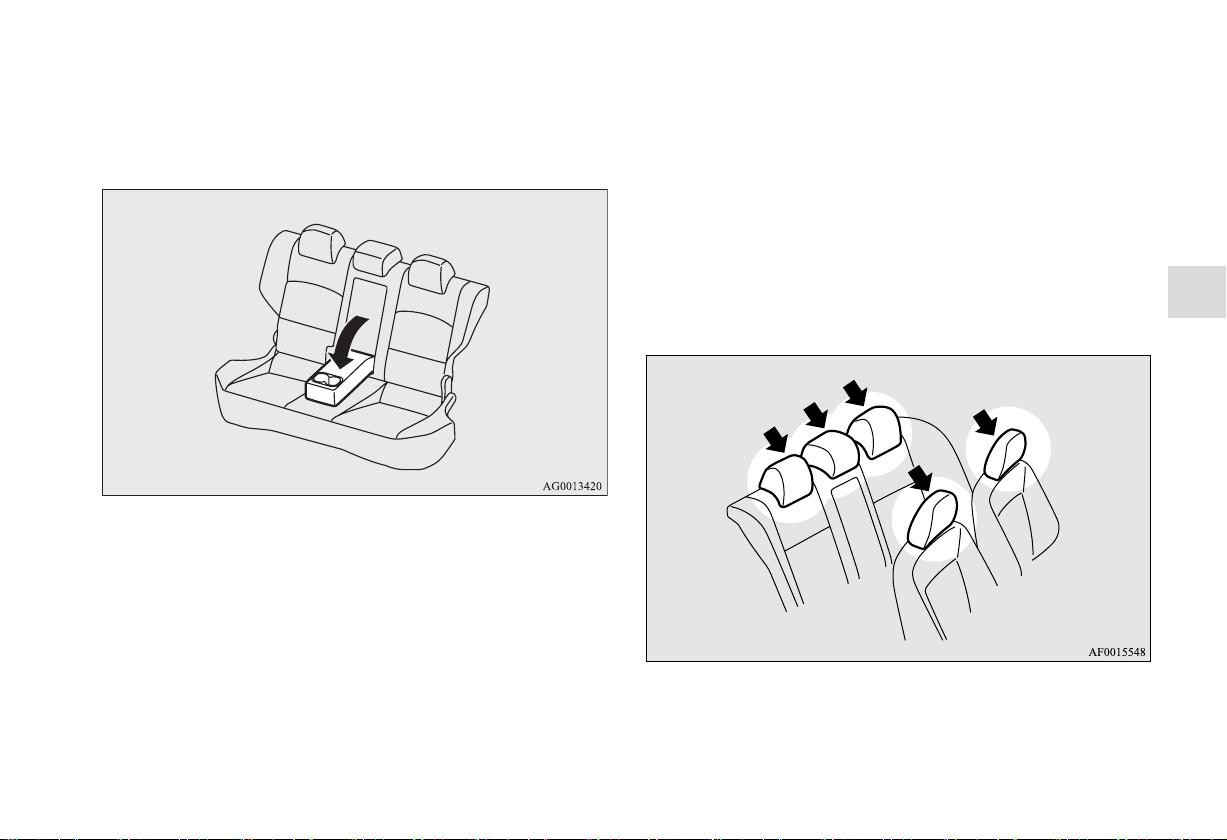
Arm rest (if so equipped)
N00403000294
Tilt the arm rest down for use as shown.
The arm rest includes a cup holder. (Refer to “Cup holder” on
page 3-302.)
Head restraints
N00404300539
Except for RECARO seat
N00409400030
Padded head restraints for the seats can reduce the risk of a
whiplash injury if your vehicle is hit from the rear.
The head restraints are equipped in the illustrated position.
To maximize the effectiveness of your head restraint, adjust the
head restraint to the proper position. For the driver and front
passenger, adjust the seatbacks to the upright position before
adjusting the head restraints. Sit back against the seatback with
your head close to the head restraint.
BK0138600US.book 9 ページ 2011年7月17日 日曜日 午後2時32分
2-10
Seat and restraint systems
2
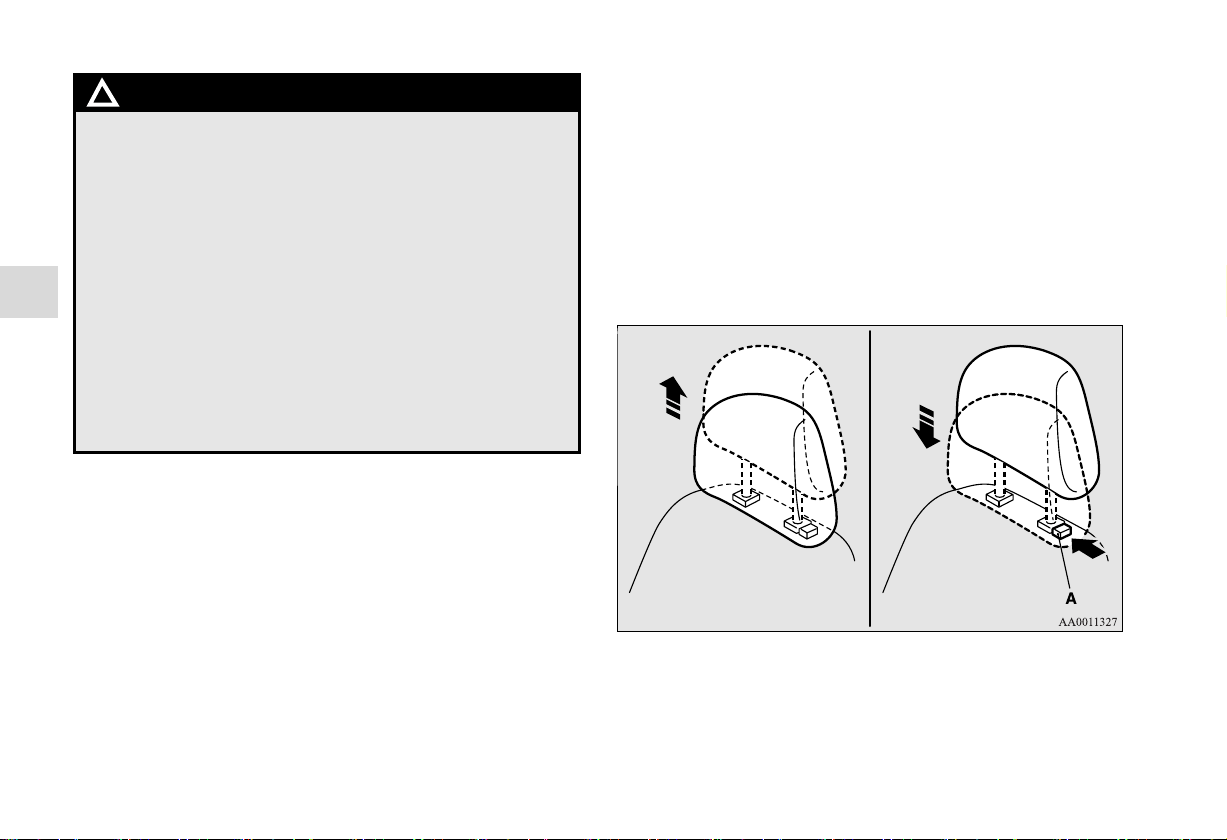
Adjustment of the head restraint height
To reduce the risk of injury in an accident, adjust the head
restraint height so that the center of the restraint is at your eye
level when seated. Any person too tall for the restraint to reach
their eye level when seated should raise the restraint to the
highest locked position.
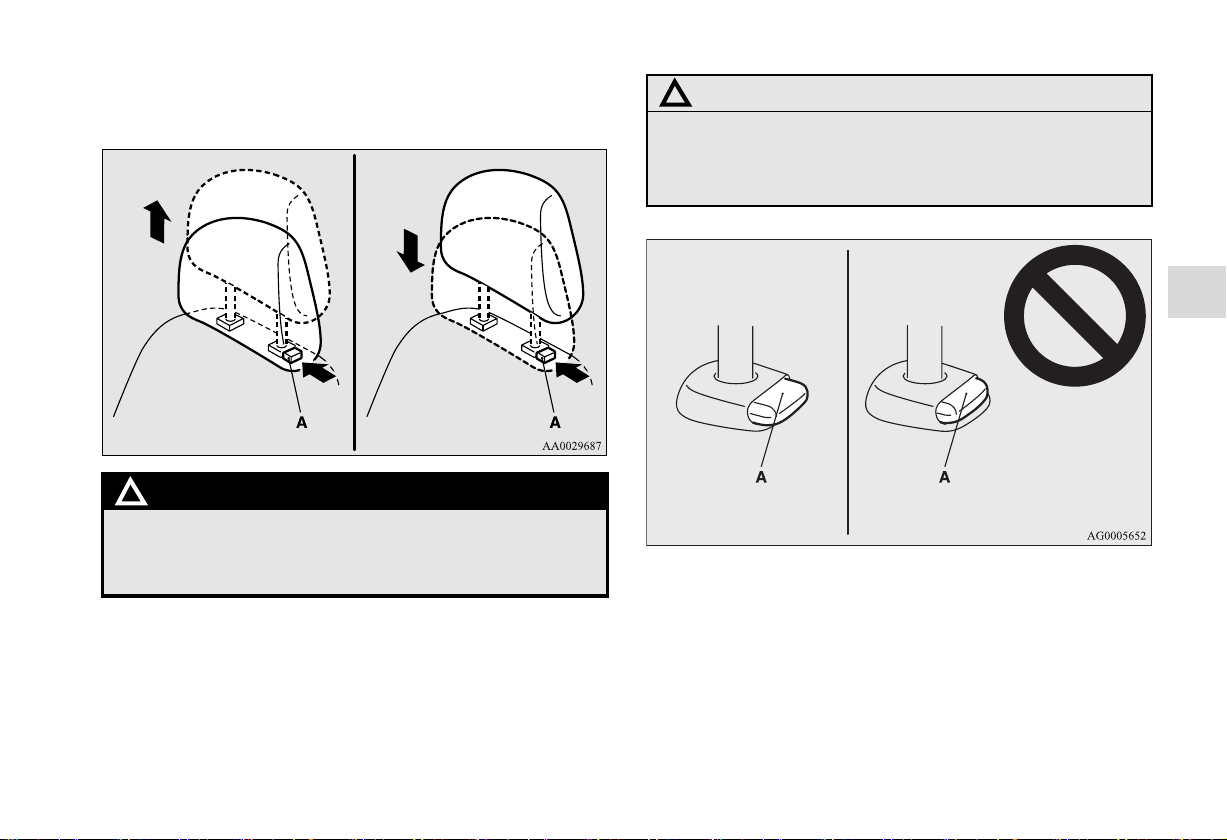
● To raise the restraint, pull it straight up.
● To lower the restraint, push down on it while pressing the
lock knob (A) in the direction shown by the arrow.
● After adjusting the height, push down on the restraint to
make sure it is locked in position.
WARNING
!
● In order to minimize the risk of a neck injury due to
a rear impact, the head restraint must be adjusted to
the proper position before vehicle operation. For the
driver and front passenger, the seatbacks must be
adjusted to the upright position before adjusting the
head restraints. The driver should never adjust the
seat while the vehicle is in motion.
● Driving without the head restraints in place can
cause you and your passengers serious injury or
death in an accident. To reduce the risk of injury in
an accident, always make sure the head restraints
are installed and properly positioned when the seat
is occupied.
● Never place a cushion or similar device on the seat-
back. This can adversely affect head restraint per-
formance by increasing the distance between your
head and the restraint.
BK0138600US.book 10 ページ 2011年7月17日 日曜日 午後2時32分
Seat and restraint systems
2-11
2
To remove
Press the lock knob (A) in the direction shown by the arrows.
Then pull the head restraint up and out of the seatback.
To install
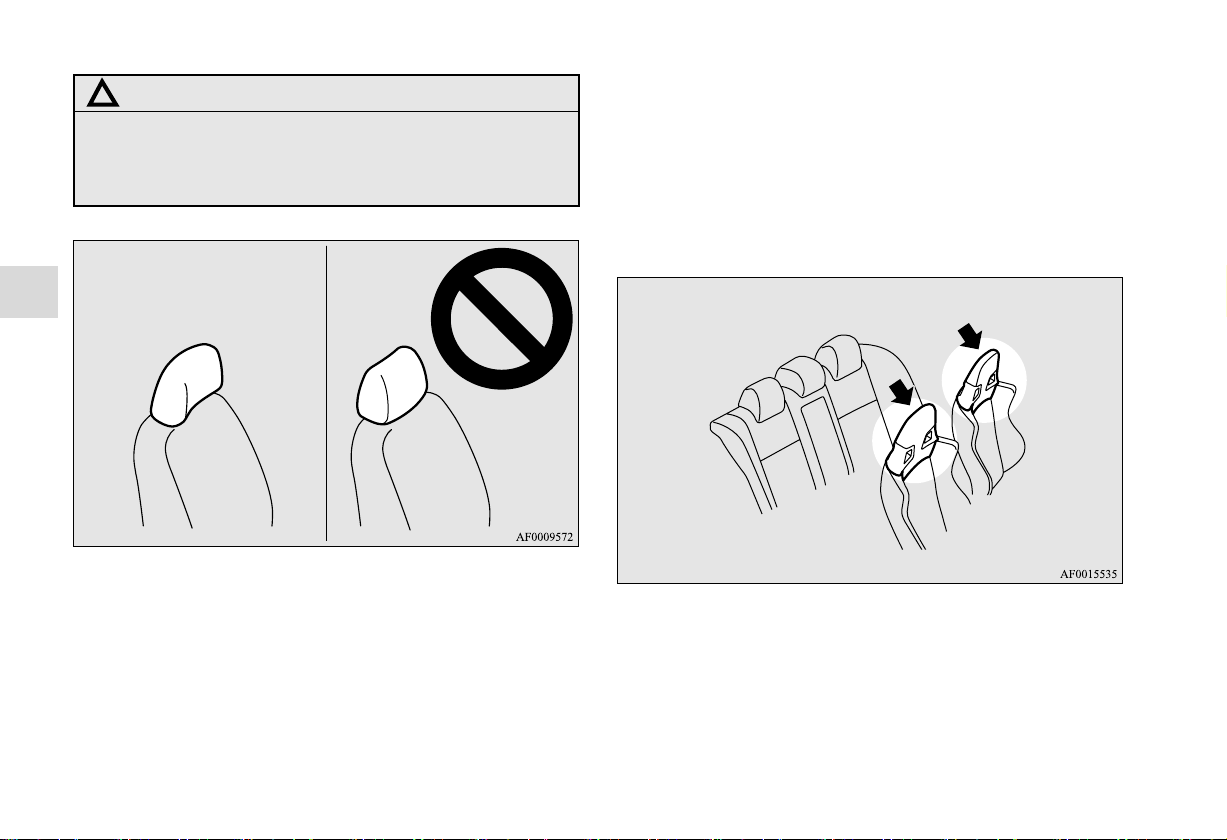
First check that the head restraint is facing in the right direction
as shown in the previous illustration, and then insert it into the
seatback. Push the head restraint down while pressing the lock
knob (A) until the restraint locks into place.
WARNING
!
● To help minimize the risk of neck injury in the event
of an accident, the head restraints must be properly
installed and positioned to proper height before
vehicle operation.
CAUTION
!
● Check that the lock knob (A) is extended out as
shown in the illustration. Then pull the head
restraint up to make sure that it is locked in place
and will not come out of the seatback.
BK0138600US.book 11 ページ 2011年7月17日 日曜日 午後2時32分
2-12
Seat and restraint systems
2
RECARO seat
N00409500044
RECARO seats are equipped with padded head restraints inte-
grated with the seatbacks. These head restraints can reduce the
risk of a whiplash injury if your vehicle is hit from the rear.
The head restraints are equipped in the illustrated position.
To maximize the effectiveness of your head restraint, adjust
your seatback to the upright position and sit back against the
seatback with your head close to the head restraint.
CAUTION
!
● The shape and size of the head restraint differs
according to the seat. Always use the correct head
restraint provided for the seat and do not install the
head restraint in the wrong direction.
BK0138600US.book 12 ページ 2011年7月17日 日曜日 午後2時32分

Seat and restraint systems
2-13
2
Seat belts
N00406000439
Seat belts are installed in your vehicle to help reduce the risk of
injury to the driver and passenger in the event of an accident.
Always use the provided seat belts.
Carefully review the following information for proper seat belt
usage.
WARNING
!
● In order to minimize the risk of a neck injury due to
a rear impact, the driver and front passenger seat-
backs must be adjusted to the upright position
before vehicle operation. The driver should never
adjust the seat while the vehicle is in motion.
● Never place a cushion or similar device on the seat-
back. This can adversely affect head restraint per-
formance by increasing the distance between your
head and the restraint.
WARNING
!
● To help reduce the risk of injury or death in an acci-
dent, seat belts and child restraint systems must
always be used. Refer to “Child restraint systems”
on page 2-23 for additional information.
● Never use one seat belt for more than one person.
● Never carry more people in your vehicle than there
are seat belts.
● Always adjust the seat belt for a snug fit.
● Always place the shoulder belt over your shoulder
and across your chest. Never put it behind you or
under your arm.
● Always wear the lap belt as low as possible across
your hips, not around your waist.
● Never modify or alter the seat belts in your vehicle.
● To reduce the risk to the driver of serious injury or
death during deployment of the driver’s airbag,
always properly wear the seat belt and adjust the
driver’s seat as far back as possible while maintain-
ing a position that still enables you to fully apply the
pedals, easily control the steering wheel, and safely
operate the vehicle.
BK0138600US.book 13 ページ 2011年7月17日 日曜日 午後2時32分
2-14
Seat and restraint systems
2
Seat belt instructions
N00406200402
All seats are equipped with a seat belt which uses one com-
bined lap-and-shoulder belt with an emergency locking retrac-
tor.
This system is designed to provide both comfort and safety. It
permits full extension and automatic retraction of the belts dur-
ing normal vehicle operation. A sensing device inside the belt
retractor is designed to lock the retractor in the event of a sud-
den change in the vehicle’s motion.
N
OTE
● For instructions on installing a child restraint system using
a seat belt, refer to “Installing a child restraint system
using the seat belt” on page 2-30.
● To reduce the risk to a front seat passenger of seri-
ous injury or death from a deploying airbag, make
sure the passenger always wears the seat belt prop-
erly, remains seated all the way back and upright in
their seat, and moves the seat as far back as possible.
Refer to “Supplemental Restraint System (SRS) -
airbag” on page 2-34 for additional information.
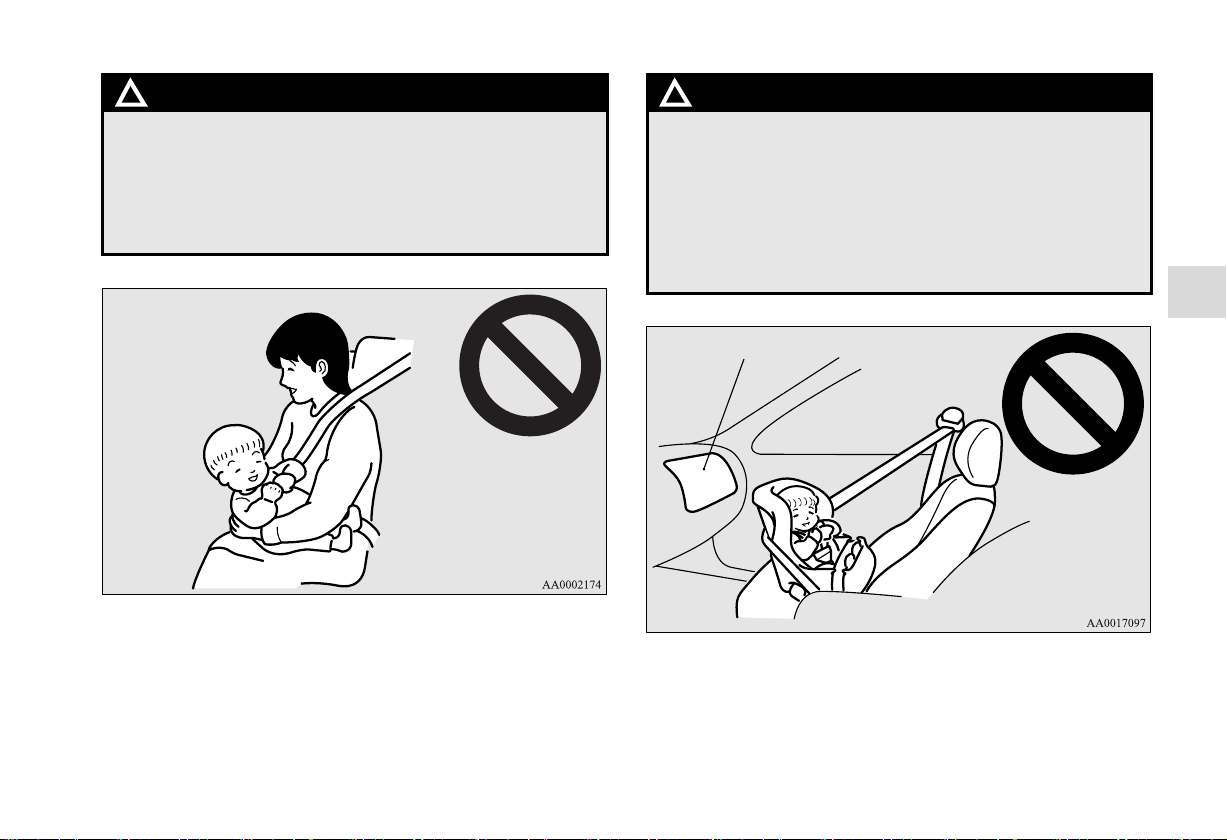
● Never hold an infant or child in your arms or on
your lap when riding in this vehicle even when you
are wearing your seat belt. Never place any part of
the seat belt you are wearing around an infant or
child. Failure to follow these simple instructions cre-
ates a risk of serious injury or death to your child in
the event of an accident or sudden stop.
● Children 12 years old and under should always ride
in the rear seat and be properly restrained. This
reduces their risk of serious injury or death in an
accident, especially due to a deploying front passen-
ger airbag. Refer to “Child restraint systems” on
page 2-23 for additional information.
● Any child who is too small to properly wear a seat
belt must be properly restrained in an appropriate
child restraint system. Children 12 years old and
under should be seated only in the rear seat to
reduce their risk of serious injury or death in an
accident, especially from the deployment of a front
passenger airbag.
● Infants MUST be placed in a rear-facing child safety
seat and positioned in the rear seat.
● In the event of an accident, all seat belt assemblies,
including retractors and attachment hardware,
should be inspected by an authorized Mitsubishi
Motors dealer to determine whether replacement is
necessary.
WARNING
!
BK0138600US.book 14 ページ 2011年7月17日 日曜日 午後2時32分
Seat and restraint systems
2-15
2
1. Occupants should always sit back in their seats with their
backs against the upright seatback. To reduce the risk of
serious injury or death during deployment of the airbag,
adjust the driver’s seat as far back as possible while main-
taining a position that still enables you to fully apply the
pedals, easily control the steering wheel, and safely oper-
ate the vehicle. The front passenger seat should also be
moved as far back as possible. Refer to “Supplemental
Restraint System (SRS) - airbag” on page 2-34. Also refer
to “To adjust the seat forward or backward” on page 2-5.
WARNING
!
● To reduce the risk of serious injury or death in the
event of an accident or sudden stop, all seatbacks
should be kept in the upright position while the vehi-
cle is in motion.
Seat belt performance during an accident can be
adversely affected if the seatbacks are reclined. The
more a seatback is reclined, the more likely seat belt
performance will be adversely affected. If the seat
belt is not properly positioned against the body dur-
ing an accident, there is increased risk you will slide
under the belt and receive serious injury or death.
BK0138600US.book 15 ページ 2011年7月17日 日曜日 午後2時32分
2-16
Seat and restraint systems
2
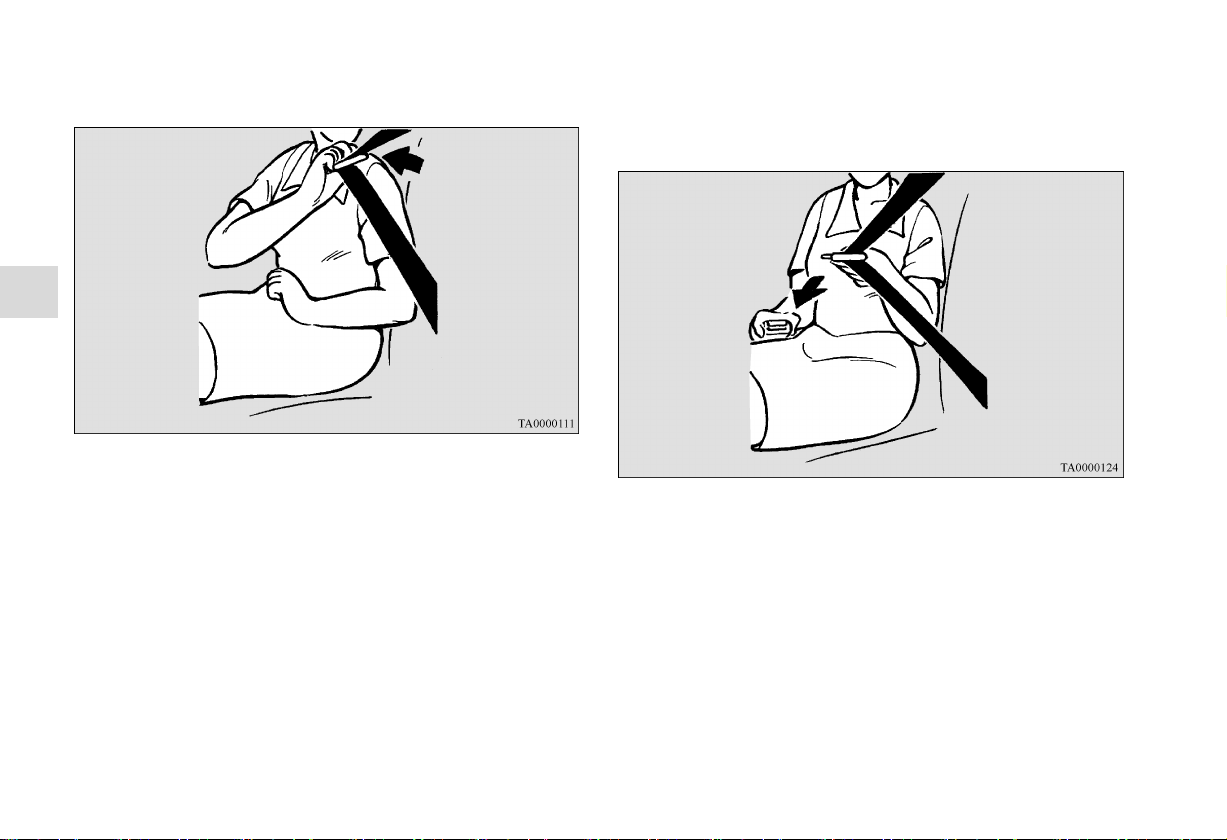
2. Grasp the latch plate and slide it up the webbing so that it
easily pulls across your body.
3. Pull the seat belt out slowly while holding the latch plate.
Push the latch plate into the buckle until you hear a
“click”. Pull up on the belt to be sure the latch plate is
locked securely in the buckle.
N
OTE
● If the seat belt locks up and cannot be pulled out, pull it
once with force and let it retract all the way.
Then, pull the belt out slowly once again.
BK0138600US.book 16 ページ 2011年7月17日 日曜日 午後2時32分
Seat and restraint systems
2-17
2
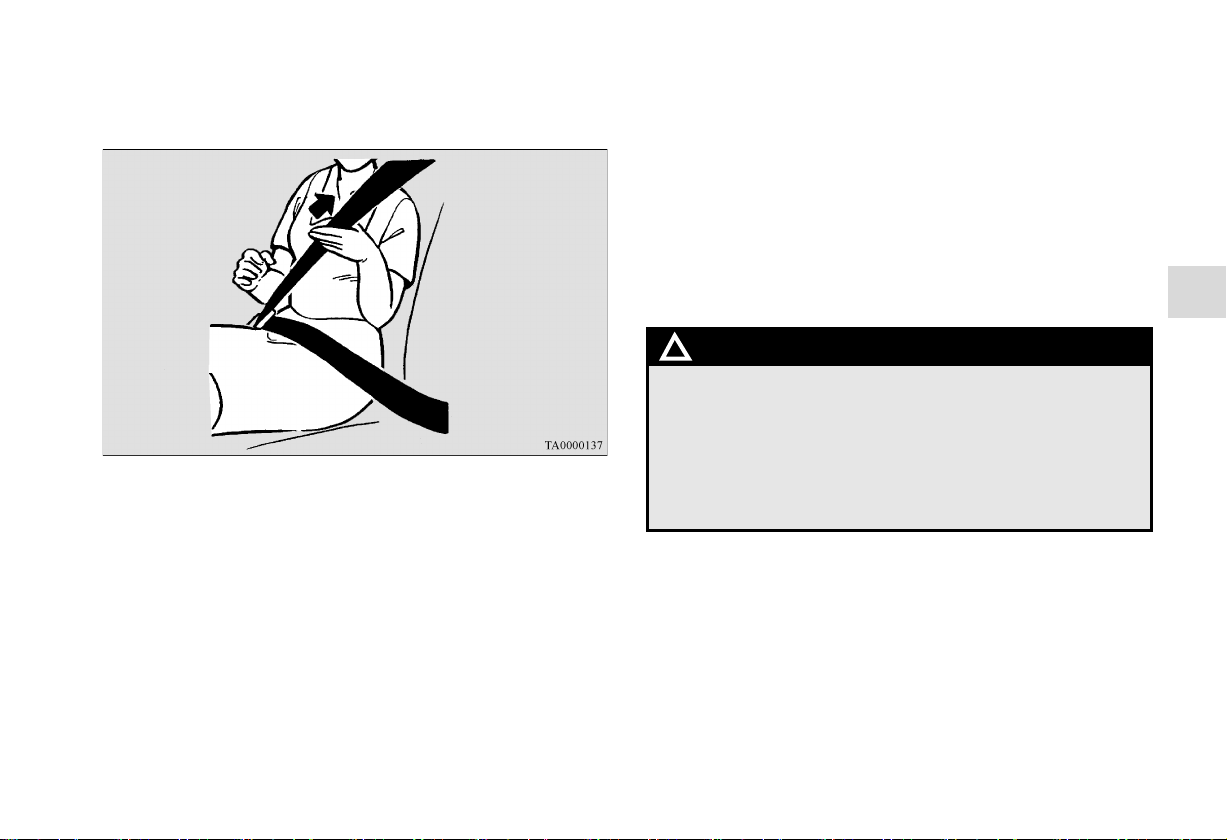
4. The lap part of the belt must always be worn low and snug
across the hips. Pull up on the shoulder portion of the belt
to take up any slack in the lap belt.
N
OTE
● With the exception of the seat belt for the driver, the seat
belts in all other seating positions are equipped with an
Automatic Locking Retractor (ALR) function. If you pull
the seat belt fully out of the retractor, the retractor will
switch to its ALR child restraint installation function (see
page 2-30).
When the ALR function has been activated, the seat belt
will only retract. If this happens, let the belt fully retract,
then pull the seat belt back out, repeating steps 1 through
4.
5. To release the belt, press the button on the buckle and
allow the belt to retract.
If the belt does not retract smoothly, pull it out and check
for kinks or twists in the webbing. Then make sure it
remains untwisted as it retracts.
WARNING
!
● Be sure the lap belt portion fits snugly and is worn
as low as possible across the hips, not around the
waist. Failure to follow this instruction will increase
the risk of serious injury or death in the event of an
accident.
● Be sure the seat belt webbing is not twisted when
worn. Twisted webbing may adversely affect seat
belt performance.
BK0138600US.book 17 ページ 2011年7月17日 日曜日 午後2時32分
2-18
Seat and restraint systems
2
Driver’s seat belt reminder/warning light and
display
N00418400300
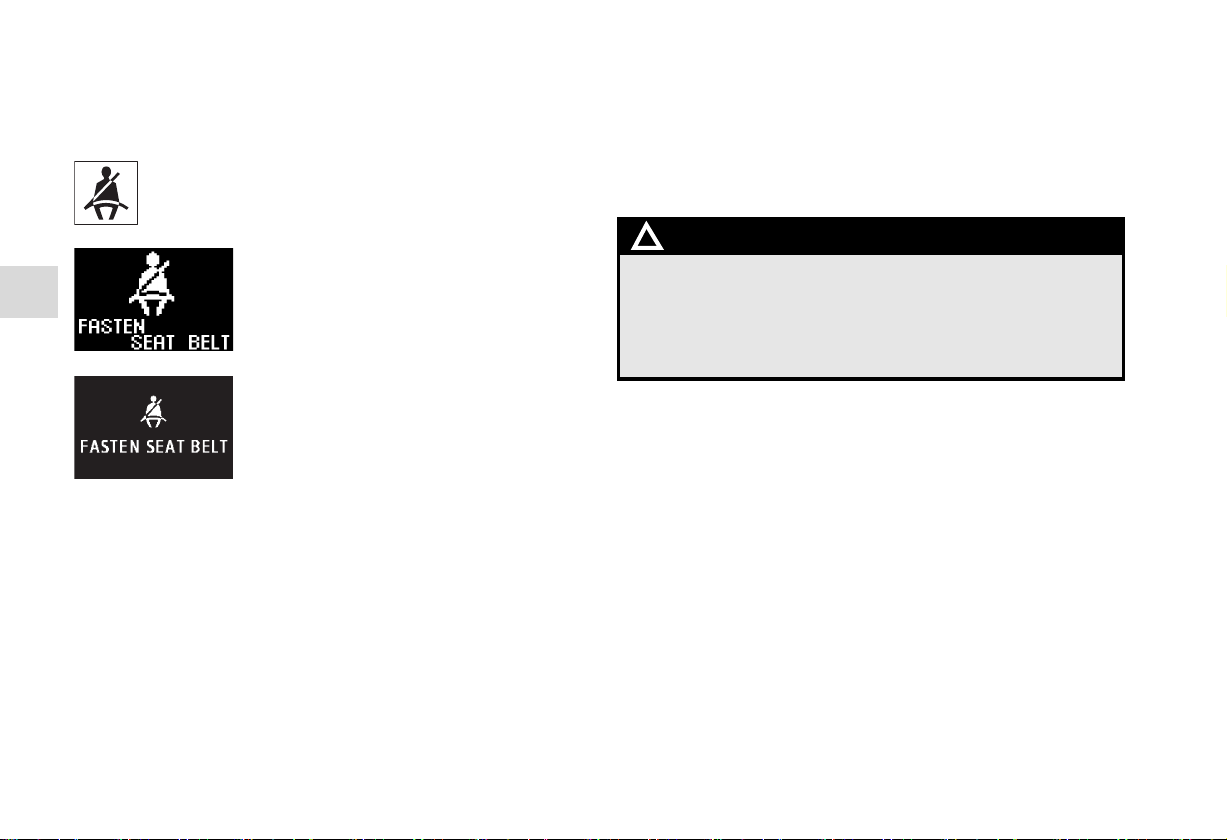
Warning light
Warning display type 1
Warning display type 2
A tone and warning light are used to remind the driver to fasten
the seat belt.
If the ignition switch is set to the “ON” position without the
driver’s seat belt being fastened, a warning light will come on
and a tone will sound for approximately 6 seconds to remind
you to fasten your seat belt.
If you then drive with the seat belt unfastened for longer than a
minute from when the ignition switch was turned on, the warn-
ing light will come on and blink repeatedly and the tone will
sound intermittently.
The warning light and the tone will stop after approximately 90
seconds.
If you then repeatedly stop and start your vehicle with the seat
belt unfastened, the warning light/display and tone will remind
you to fasten your seat belt every time the vehicle starts mov-
ing. You will also be reminded to fasten your seat belt in this
way when you remove your seat belt while driving. The warn-
ing light and the tone go off when the seat belt is fastened.
N
OTE
● At the same time, “FASTEN SEAT BELT” will be dis-
played on the information screen in the multi-information
display.
WARNING
!
● In order to reduce the risk of serious injury or death
in an accident, always wear your own seat belt. Do
not allow anyone to ride in your vehicle unless he or
she is also seated and wearing a seat belt. Children
should additionally be restrained in a secure child
restraint system.
BK0138600US.book 18 ページ 2011年7月17日 日曜日 午後2時32分
Seat and restraint systems
2-19
2
Front passenger seat belt warning light
N00418300165
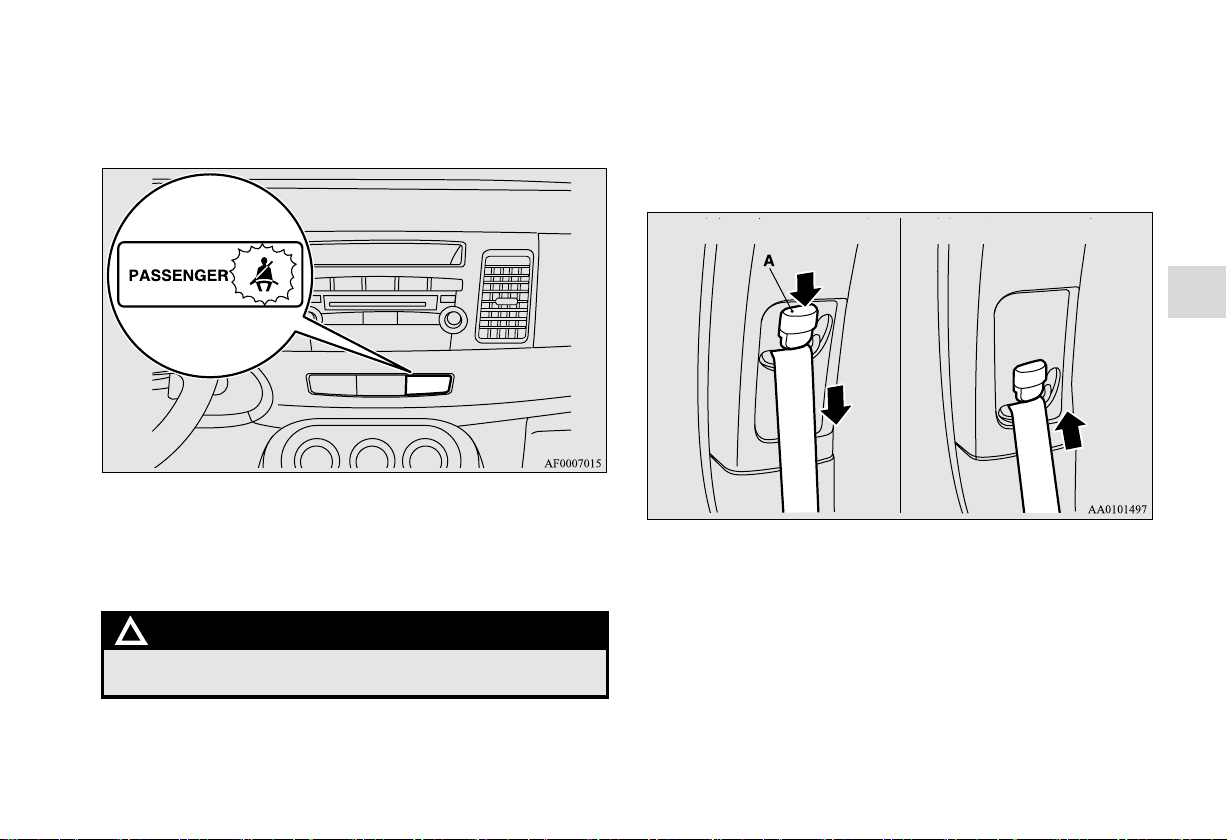
The front passenger seat belt warning light is located in the
instrument panel.
When the key is turned to the “ON” position, this indicator nor-
mally comes on and goes off a few seconds later.
The light comes on when a person sits on the front passenger
seat but does not fasten the seat belt. It goes off when the seat
belt is subsequently fastened.
Adjustable seat belt shoulder anchor (front seats)
N00406300315
To move the anchor down, press the lock knob (A) and slide
the anchor down to the desired position.
To move the anchor up, slide the anchor up to the desired posi-
tion.
WARNING
!
● Do not install any accessory or sticker that makes
the light difficult to see.
Anchor down Anchor up
BK0138600US.book 19 ページ 2011年7月17日 日曜日 午後2時32分
2-20
Seat and restraint systems
2
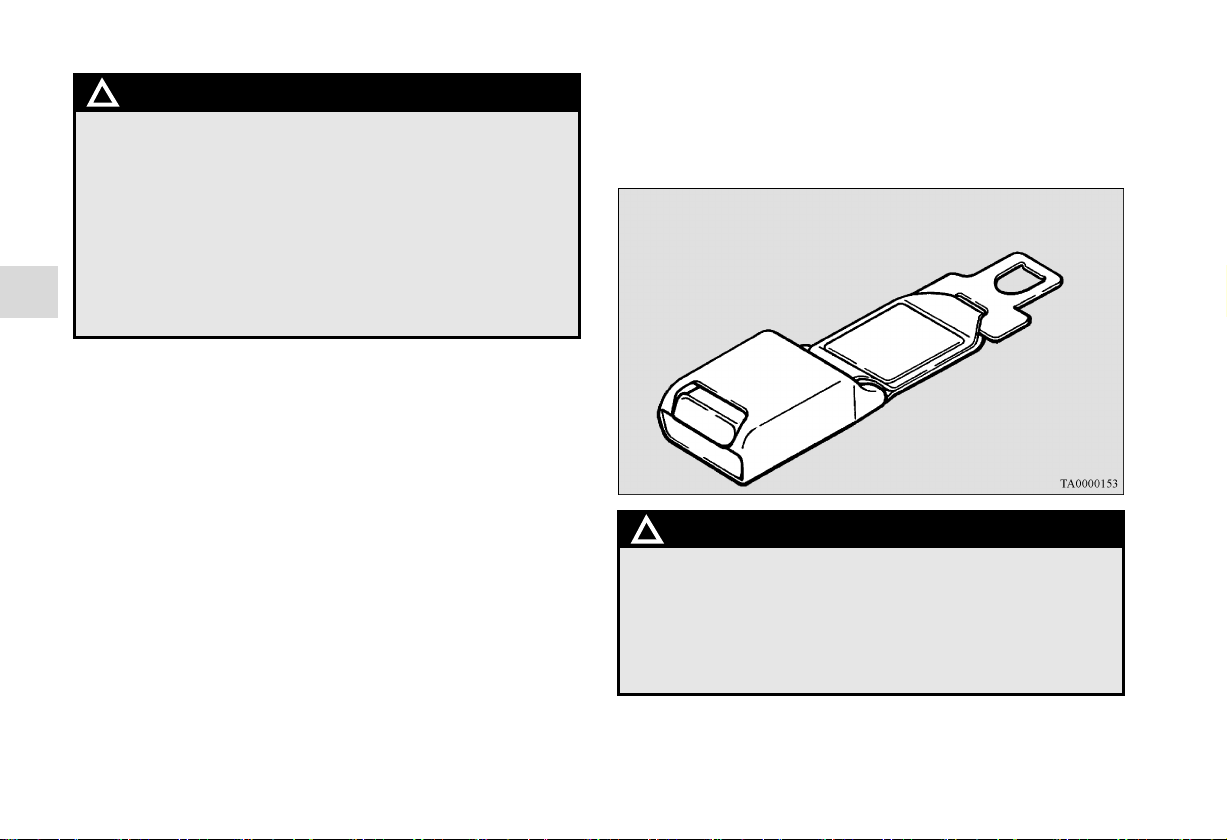
Seat belt extender
N00406700087
When your seat belt, even fully extended, is not long enough, a
seat belt extender must be obtained. The extender may be used
for either of the front seats.
WARNING
!
● Always adjust the shoulder belt anchor so that the
shoulder belt is positioned across the center of your
shoulder without touching your neck. The shoulder
belt should not be able to fall off your shoulder. Fail-
ure to follow this instruction can adversely affect
seat belt performance and increase the risk of seri-
ous injury or death in the event of an accident.
● Adjust the shoulder belt anchor only when the vehi-
cle is not in motion.
● Make sure the anchor is securely locked in position
after adjusting it.
WARNING
!
● The extender should only be used if the existing belt
is not long enough. Anyone who can use the stan-
dard seat belt should not use an extender. Unneces-
sary use of an extender can adversely affect seat belt
performance in an accident.
● When not required, the extender must be removed
and stowed.
BK0138600US.book 20 ページ 2011年7月17日 日曜日 午後2時32分
Seat and restraint systems
2-21
2
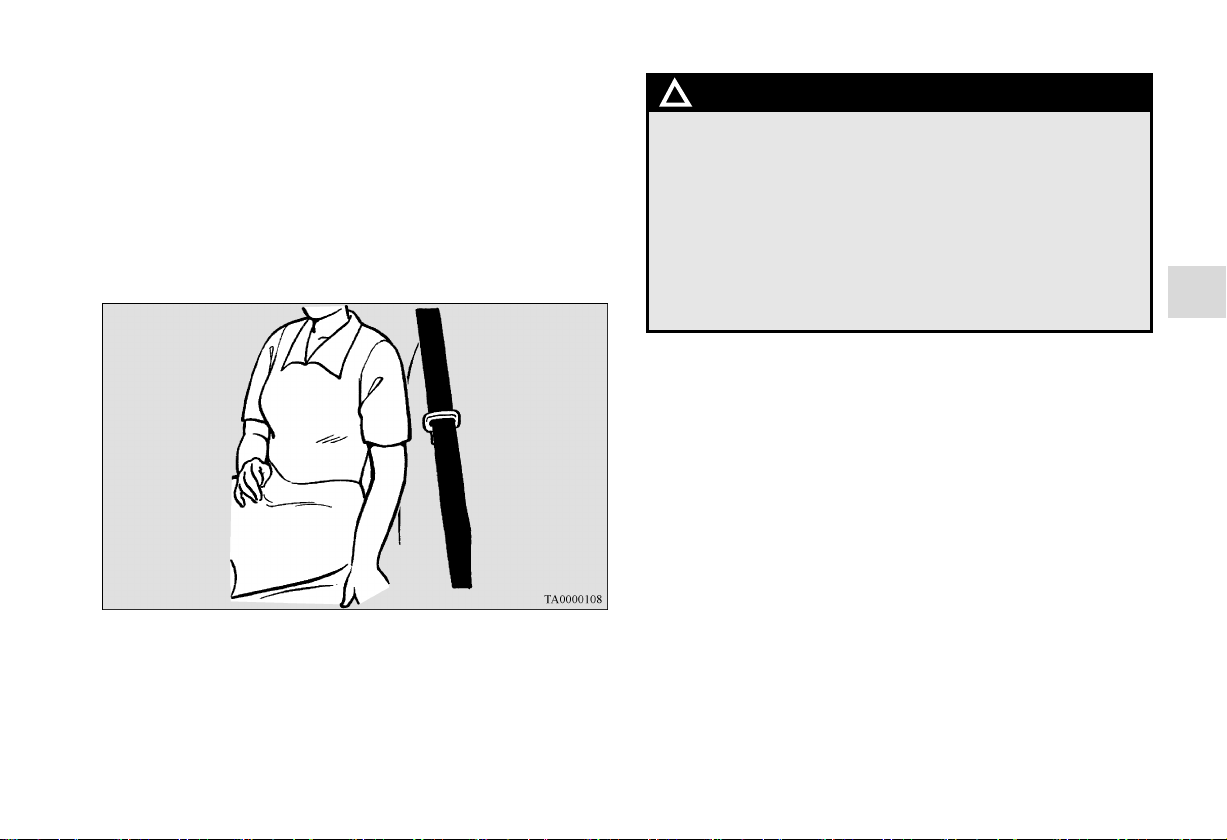
Seat belt use during pregnancy
N00406800121
Seat belts work for everyone, including pregnant women. Like
all occupants, pregnant women are more likely to be seriously
injured or killed in an accident if they do not wear seat belts.
Seat belt pre-tensioner and force limiter
systems
N00417700609
The driver’s and front passenger’s seats each have a seat belt
equipped with a pre-tensioner system.
Pre-tensioner system
The driver and front passenger seat belts are equipped with a
seat belt pre-tensioner system. In a moderate-to-severe frontal
or side collision, the pre-tensioner system operates simulta-
neously with the deployment of the front airbags or side air-
bags and curtain airbags.
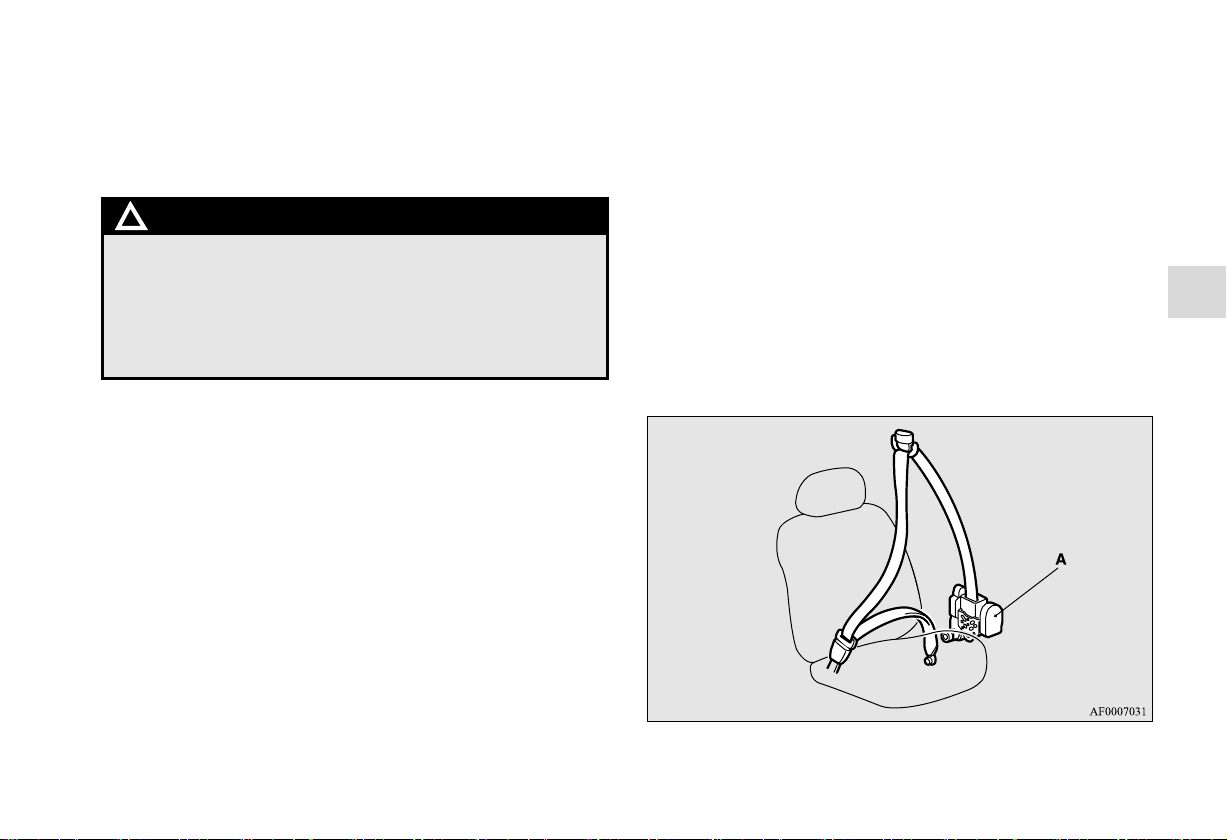
The seat belt pre-tensioners are located within the seat belt
retractors (A). When activated, the pre-tensioners quickly draw
back seat belt webbing and increase seat belt performance.
WARNING
!
● To reduce the risk of serious injury or death to preg-
nant women and unborn children in an accident,
pregnant women should always wear a seat belt. The
lap portion of the seat belt should be worn snug and
low across the hips and below the rounding. Consult
your doctor if you have any additional questions or
concerns.
BK0138600US.book 21 ページ 2011年7月17日 日曜日 午後2時32分
2-22
Seat and restraint systems
2
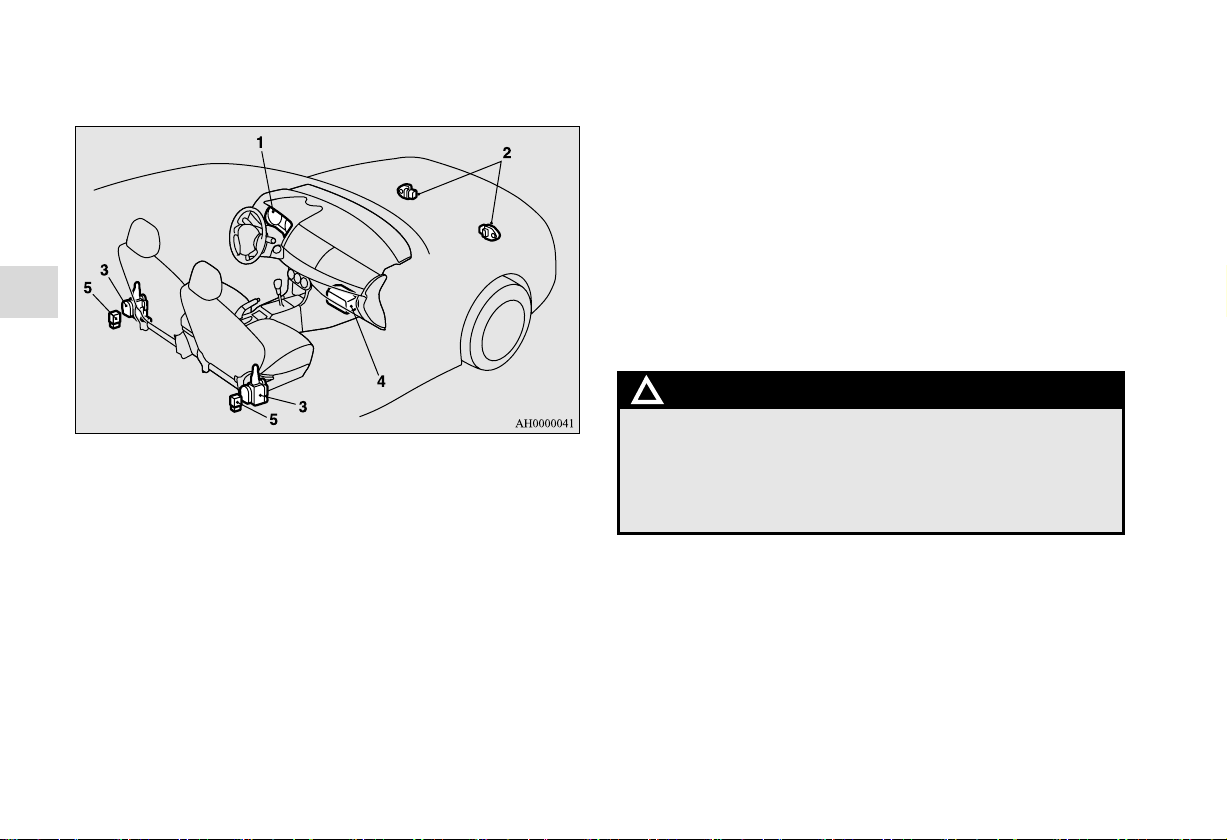
The seat belt pre-tensioner system includes the following com-
ponents:
The airbag control unit monitors the readiness of the electronic
parts of the system whenever the ignition switch is in the “ON”
or “START” position. These include all of the items listed
above and all related wiring.
The pre-tensioner seat belt system will operate only when the
ignition switch is in the “ON” or “START” position.
When the seat belt pre-tensioners activate, some smoke is
released and a loud noise will be heard. The smoke is not harm-
ful, but care should be taken not to intentionally inhale it, as it
may cause some temporary irritation to people with respiratory
problems.
The pre-tensioners activate in the event of a moderate-to-
severe frontal or side impact, even if the seat belt is not being
worn. The seat belt pre-tensioners may not activate in certain
types of collisions, even though the vehicle may appear to be
severely damaged. Such non-activation does not mean some-
thing is wrong with the seat belt pre-tensioner system, but
rather that the collision forces were not severe enough or not of
the type to activate the system.
SRS warning
N00408700094
This warning tells you if there is a problem involving the SRS
airbags and the pre-tensioner seat belts. Refer to “SRS warn-
ing” on page 2-43.
1- SRS warning light
2- Front impact sensors
3- Seat belt pre-tensioners
4- Airbag control unit
5- Side impact sensors
WARNING
!
● The seat belt pre-tensioner system is designed to
work only once. After the seat belt pre-tensioners
have been activated, they will not work again. They
must promptly be replaced and the entire seat belt
pre-tensioner system inspected by an authorized
Mitsubishi Motors dealer.
BK0138600US.book 22 ページ 2011年7月17日 日曜日 午後2時32分

Seat and restraint systems
2-23
2
Force limiter system
N00408900113
In the event of an accident, the seat belt force limiter system
will help reduce the force applied to the driver and front seat
passenger.
Child restraint systems
N00407100697
When transporting infants or small children in your vehicle, an
appropriate child restraint system must always be used. This is
required by law in the U.S. and Canada.
Child restraint systems specifically designed for infants and
small children are offered by several manufacturers. Choose
only a child restraint system with a label certifying that it com-
plies with Federal Motor Vehicle Safety Standard 213 (FMVSS
213) or Motor Vehicle Restraint Systems and Booster Cushions
Safety Regulations (RSSR). Look for the manufacturer’s state-
ment of compliance on the box and child restraint system itself.
The child restraint system should be appropriate for your
child’s weight and height, and should properly fit your vehi-
cle’s seat.
For detail information, refer to the instruction manual accom-
panying the child restraint system.
BK0138600US.book 23 ページ 2011年7月17日 日曜日 午後2時32分
2-24
Seat and restraint systems
2
Guidelines for child restraint system selection
All children should be properly restrained in a restraint device
that offers the maximum protection for their size and age.
Be sure to check local, state, or provincial requirements for
child size and age that may vary from the recommendations
listed below.
● Children less than 1 year old and children less than 20
pounds (9 kg) MUST ride in a rear-facing child safety seat
that MUST ONLY be used in the rear seat.
● Children older than 1 year of age and who weigh less than
40 pounds (18 kg) or who are less than 40 inches (100 cm)
tall must be in a forward-facing restraint used only in the
rear seat.
● Children who weigh more than 40 pounds (18 kg) or who
are more than 40 inches (100 cm) tall, regardless of age,
should use a suitable child seat or a booster seat (including
a booster cushion) in the rear seat until the vehicle’s
lap/shoulder belt fits them properly.
WARNING
!
● All children must be seated in the rear seat, and
properly restrained.
Accident statistics show that children of all sizes and
ages are safer when properly restrained in the rear
seat, rather than in the front seat.
● Any child who is too large to use a child restraint
system should ride in the rear seat and wear the lap
and shoulder belt properly. The shoulder belt must
be positioned over the shoulder and across the chest,
not across their neck, and with the lap belt posi-
tioned low on the child’s hips, not across their stom-
ach. If necessary, a booster seat (including a booster
cushion) should be used to help achieve a proper
seat belt fit. Follow the booster seat (including a
booster cushion) manufacturer’s instructions. Only
use a booster seat (including a booster cushion) that
is certified as complying with Federal Motor Vehicle
Safety Standards or Motor Vehicle Restraint Sys-
tems and Booster Cushions Safety Regulations.
WARNING
!
BK0138600US.book 24 ページ 2011年7月17日 日曜日 午後2時32分
Seat and restraint systems
2-25
2
WARNING
!
● Never hold an infant or child in your arms or on
your lap when riding in this vehicle, even when you
are wearing your seat belt. Never place any part of
the seat belt you are wearing around an infant or
child. Failure to follow these simple instructions cre-
ates a risk of serious injury or death to your child in
the event of an accident or sudden stop.
WARNING
!
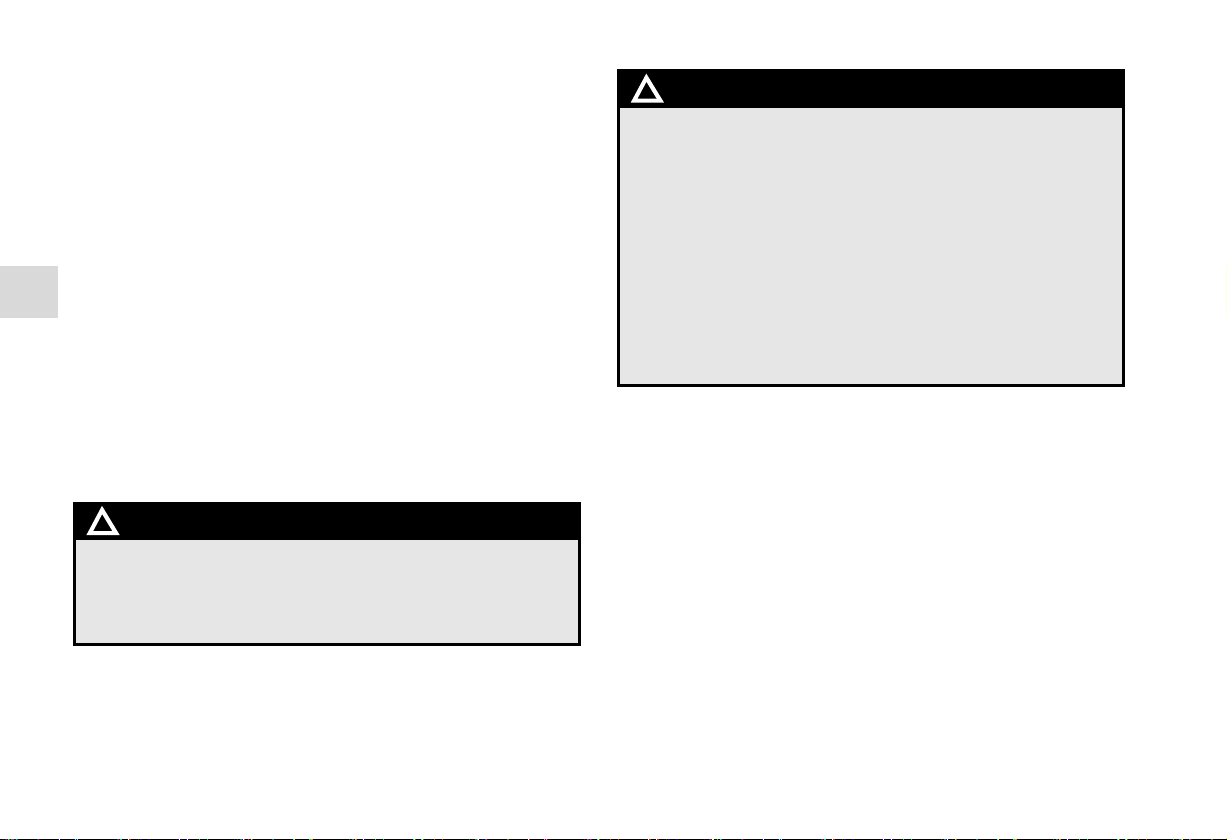
● Your vehicle is also equipped with a front passenger
airbag.
Never put REAR-FACING CHILD RESTRAINT
SYSTEMS or INFANT RESTRAINT SYSTEMS in
the front passenger seat. This places the infant too
close to the passenger airbag. During deployment of
the airbag, the infant can be seriously injured or
killed. Rear-facing child restraint systems or infant
restraint systems must only be used in the rear seat.
Airbag
BK0138600US.book 25 ページ 2011年7月17日 日曜日 午後2時32分
2-26
Seat and restraint systems
2
WARNING
!
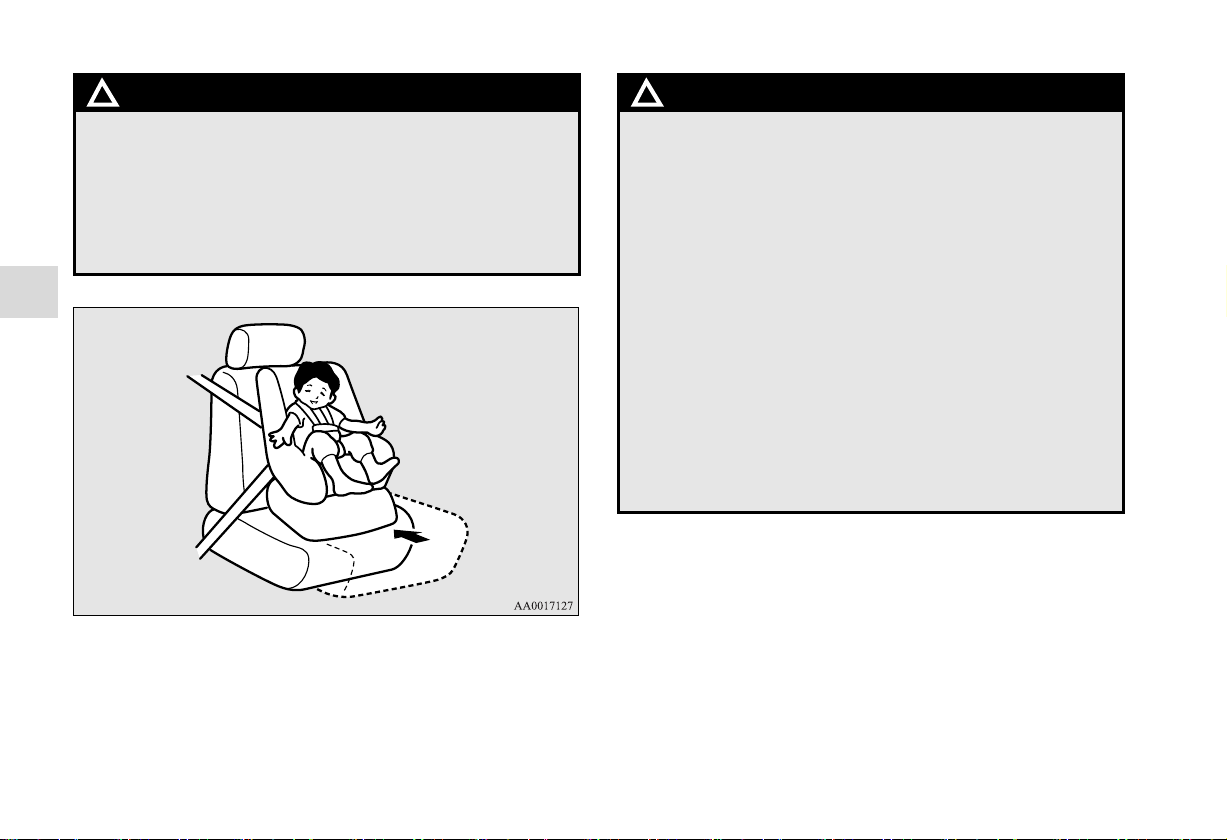
● FRONT-FACING CHILD RESTRAINT SYS-
TEMS should be used in the rear seat whenever pos-
sible. If they must be used in the front passenger
seat, move the seat to the most rearward position
and make sure the child stays in the child restraint
system, properly restrained. Failure to follow these
instructions could result in serious injury or death to
the child.
WARNING
!
● It is important to use an approved rear-facing infant
restraint until the infant is one year old (unless the
infant outgrows the seat sooner). This allows the
infant’s neck and spine to develop enough to support
the weight of their head in the event of an accident.
● When installing a child restraint system, follow the
instructions provided by the manufacturer and fol-
low the directions in this manual. Failure to do so
can result in serious injury or death to your child in
an accident or sudden stop.
● After installation, push and pull the child restraint
system back and forth, and side to side, to see that it
is firmly secured. If the child restraint system is not
installed securely, it may cause injury to the child or
other occupants in the event of an accident or sud-
den stop.
● When not in use, keep your child restraint system
secured with the seat belt, or remove it from the
vehicle, in order to prevent it from being thrown
around inside the vehicle during an accident.
BK0138600US.book 26 ページ 2011年7月17日 日曜日 午後2時32分
Seat and restraint systems
2-27
2
N
OTE
● Before purchasing a child restraint system, try installing it
in the rear seat to make sure there is a good fit. Because of
the location of the seat belt buckles and the shape of the
seat cushion, it may be difficult to securely install some
manufacturer’s child restraint systems.
If the child restraint system can be pulled forward or to
either side easily on the seat cushion after the seat belt has
been tightened, choose another manufacturer’s child
restraint system.
Depending on the seating position in the vehicle and the
child restraint system that you have, the child restraint
system can be attached using one of the following two
methods:
• To the lower anchorage in the rear seat ONLY if the
child restraint system is compatible with the LATCH
system (See page 2-27).
• To the seat belt (See page 2-30).
Installing a child restraint system using the
LATCH (Lower Anchors and Tethers for chil-
dren) system
N00418800131
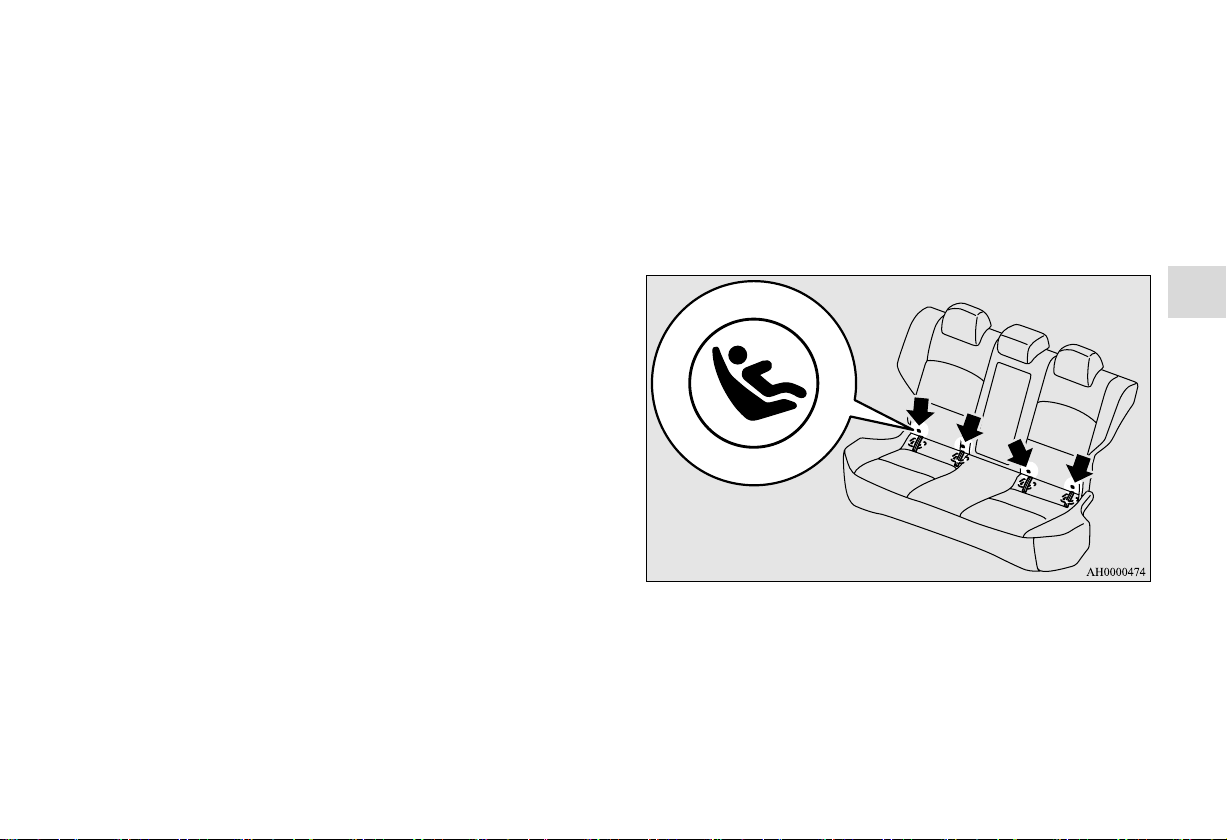
Lower anchor locations
The outboard seating positions in the rear seat of your vehicle
are equipped with lower anchors for attaching child restraint
systems compatible with the LATCH system.
N
OTE
● The symbols on the seatback show the location of the
lower anchor points.
BK0138600US.book 27 ページ 2011年7月17日 日曜日 午後2時32分
2-28
Seat and restraint systems
2
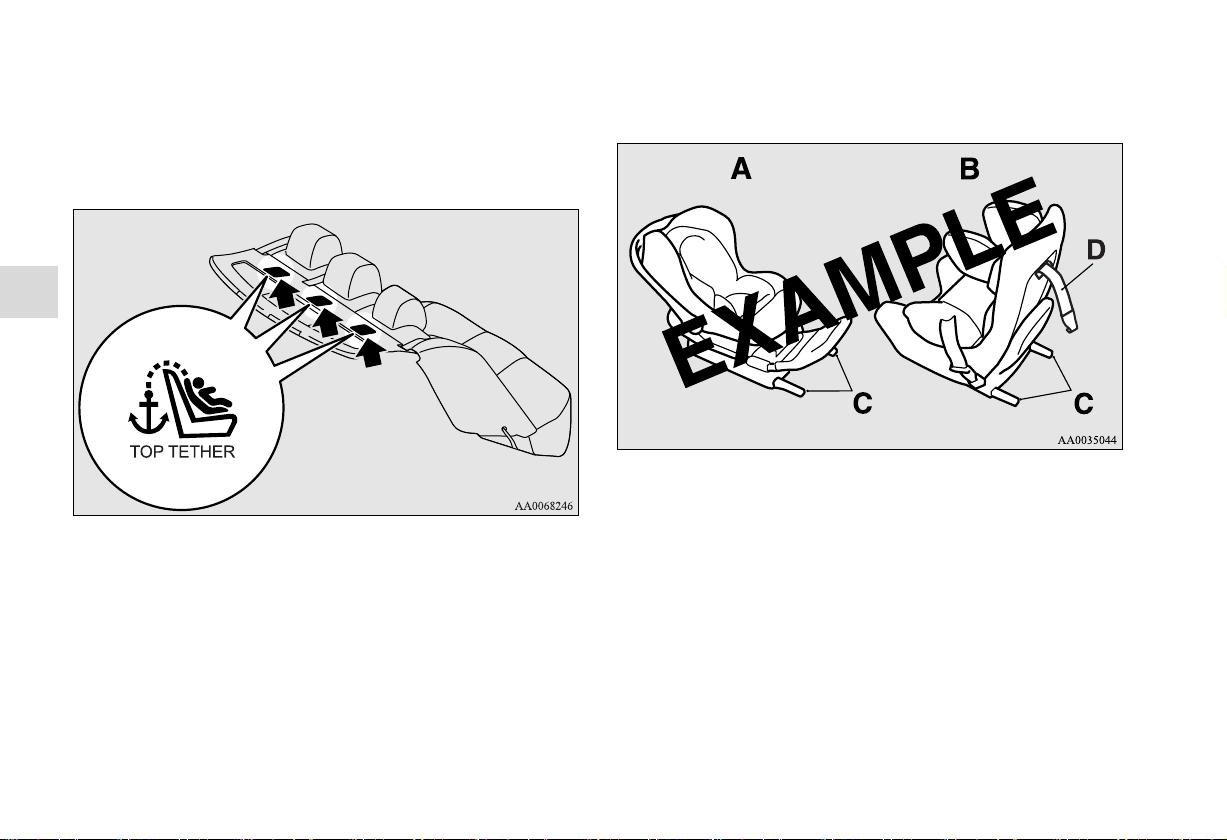
Tether anchor locations
N00418900129
Your vehicle has 3 attachment points on the rear shelf, located
behind the top of your rear seat. These are for securing a child
restraint system tether strap to each of the 3 rear seating posi-
tions in your vehicle.
Examples of child restraint systems compatible with the
LATCH system
N00419000185
A- Rear-facing child restraint system
B- Front-facing child restraint system
C- Child restraint system lower anchor connectors
D- Tether strap
(These are only examples.)
BK0138600US.book 28 ページ 2011年7月17日 日曜日 午後2時32分
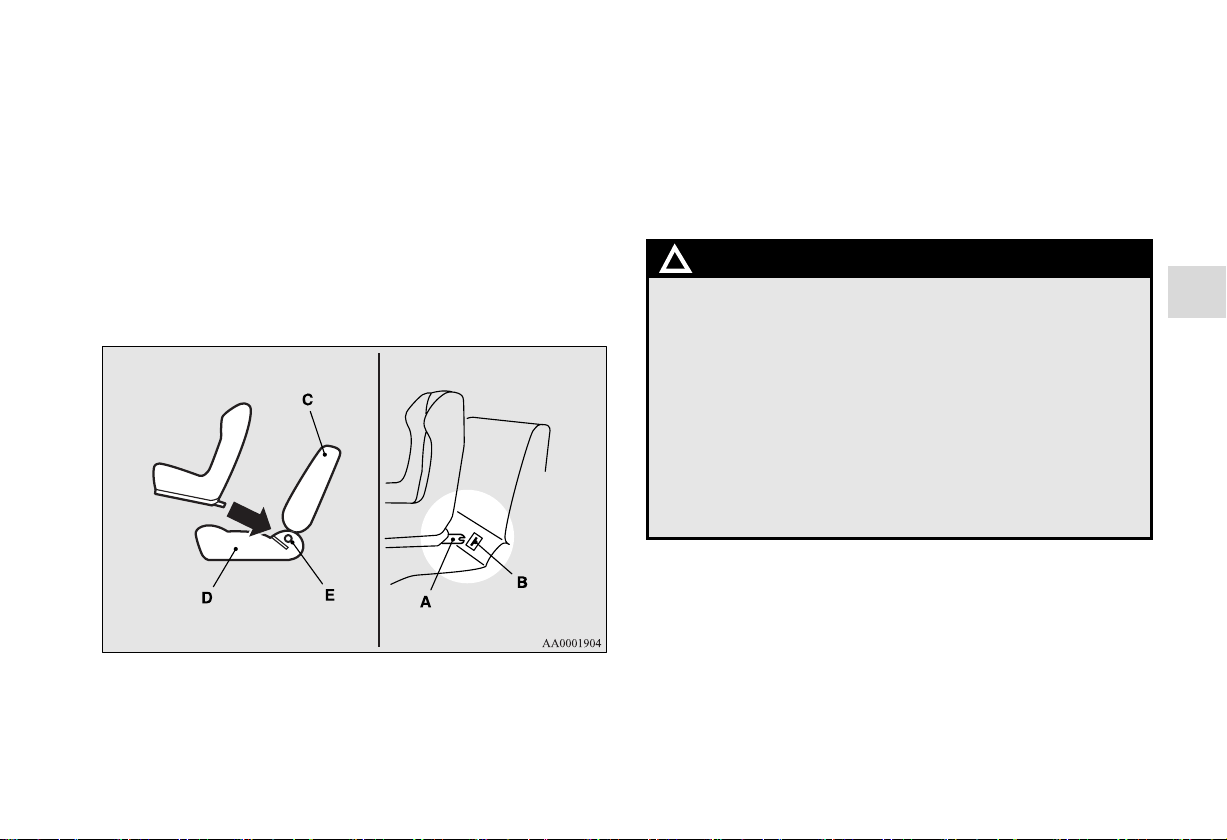
Seat and restraint systems
2-29
2
Using the LATCH system
N00419100157
1. In order to securely fasten the tether strap, remove the
head restraint from the location where you wish to install
the child restraint system.
2. Push the anchor connectors (A) on the child restraint sys-
tem into the slits (B) in accordance with the instructions
provided by the child restraint system manufacturer.
Remember, the lower anchors (E) provided with your
vehicle are designed to secure suitable child restraint sys-
tems compatible with the LATCH system in the rear seat
only.
N
OTE
● In order to secure a child restraint system compatible with
the LATCH system, use the lower anchor points in the
outboard positions of the rear seat. It is not necessary to
use the vehicle’s seat belt. The vehicle’s seat belt, how-
ever, MUST be used to secure a child restraint system in
the center position of the rear seat.
A- Connector D- Vehicle seat cushion
B- Slit E- Lower anchor
C- Vehicle seatback
WARNING
!
● If there is any foreign material in or around the
lower anchors, remove it before installing the child
restraint system. Also, make sure the seat belt is
away from, not looped through or otherwise inter-
fering with, the child restraint system. If foreign
matter is not removed and/or the seat belt interferes
with the child restraint system, the child restraint
system will not be secured properly, could detach
and move forward in the event of sudden braking or
an accident, and could result in injury to the child or
other vehicle occupants.
● When the vehicle is moving, do not adjust the seat
where the child restraint system is installed.
BK0138600US.book 29 ページ 2011年7月17日 日曜日 午後2時32分

2-30
Seat and restraint systems
2
3. Open the cover for the tether anchor by pulling it back
with your hand as illustrated below (3).
4. Latch the tether strap hook (F) of the child restraint sys-
tem to the anchor (G) as illustrated below (4) and tighten
the top tether strap so it is securely fastened.
5. Push and pull the child restraint system in all directions to
be sure it is firmly secured.
Installing a child restraint system using the seat
belt (with emergency/automatic locking mecha-
nism)
N00407300367
With the exception of the driver, the seat belt in all other seat-
ing positions can be converted from normal Emergency Lock-
ing Retractor (ELR) mode to Automatic Locking Retractor
(ALR) mode. This means that when you pull the seat belt fully
out of the retractor, the retractor will switch to its ALR child
restraint installation function. Always use the ALR child
restraint installation function when you install a child restraint
system using the seat belt.
Children 12 years old and under should always be restrained in
the rear seat, whenever possible, although the front passenger
seat belt can also be converted to ALR mode.
WARNING
!
● Child restraint system tether anchors are designed
only to withstand loads from correctly fitted child
restraint systems. Under no circumstances are they
to be used for adult seat belts, or harnesses, or for
attaching other items or equipment to the vehicle.
WARNING
!
● When you install a child restraint system using the
seat belt, always make sure the retractor has been
switched to the ALR child restraint installation
function. The ALR function will keep the child
restraint system tightly secured to the seat.
Failure to convert the retractor to the ALR function
may allow the child restraint system to move for-
ward during sudden braking or an accident, result-
ing in serious injury or death to the child or other
occupants.
BK0138600US.book 30 ページ 2011年7月17日 日曜日 午後2時32分
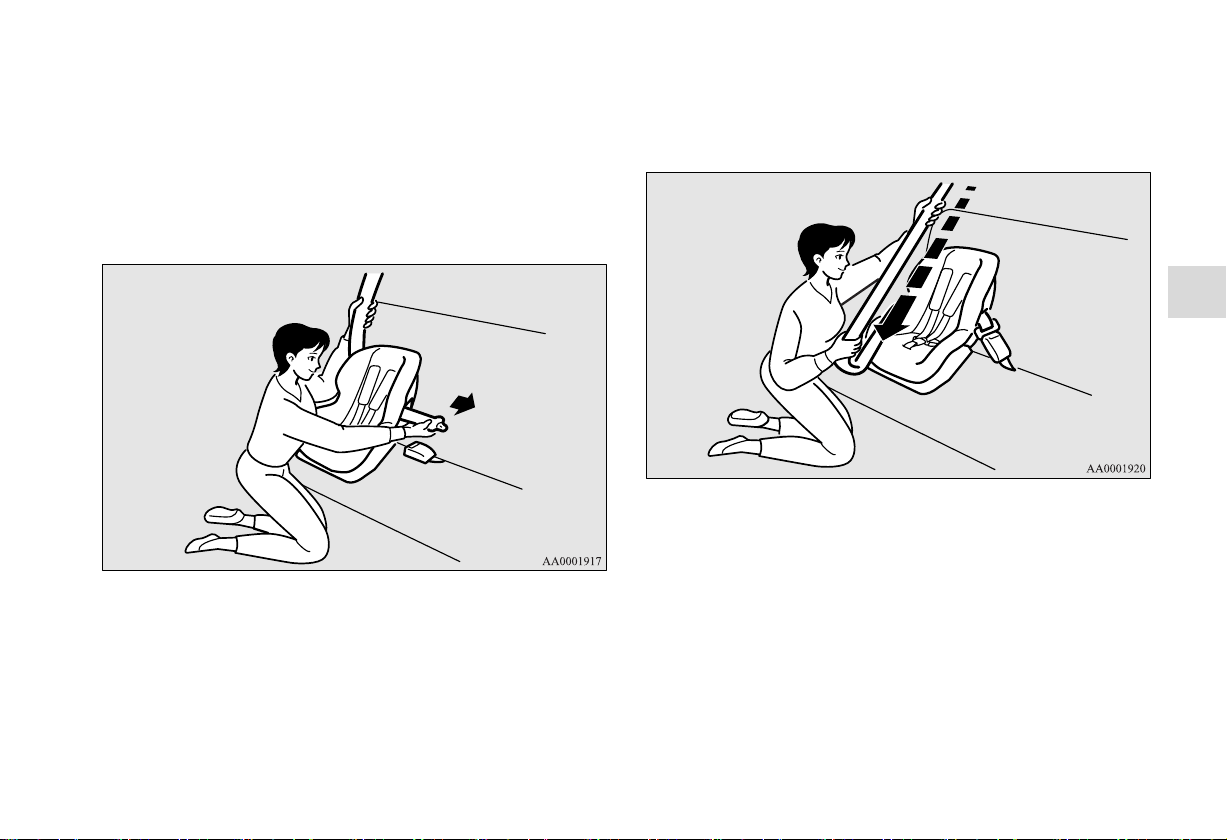
Seat and restraint systems
2-31
2
Installation
1. Place the child restraint system in the rear seating posi-
tion.
2. Route the seat belt through the child restraint system
according to the instructions provided by the child
restraint system manufacturer. Then insert the seat belt
latch plate into the buckle. Make sure you hear a “click”
when you insert the latch plate into the buckle.
3. To activate the ALR child restraint installation function,
slowly pull the shoulder part of the belt all the way out of
the retractor until it stops. Then let the belt feed back into
the retractor.
4. After the belt has retracted, tug on it. If the belt is in the
ALR function, you will not be able to pull it out. If the
webbing can be pulled out from retractor, the ALR func-
tion has not been activated and you will need to repeat
steps 3 and 4.
BK0138600US.book 31 ページ 2011年7月17日 日曜日 午後2時32分
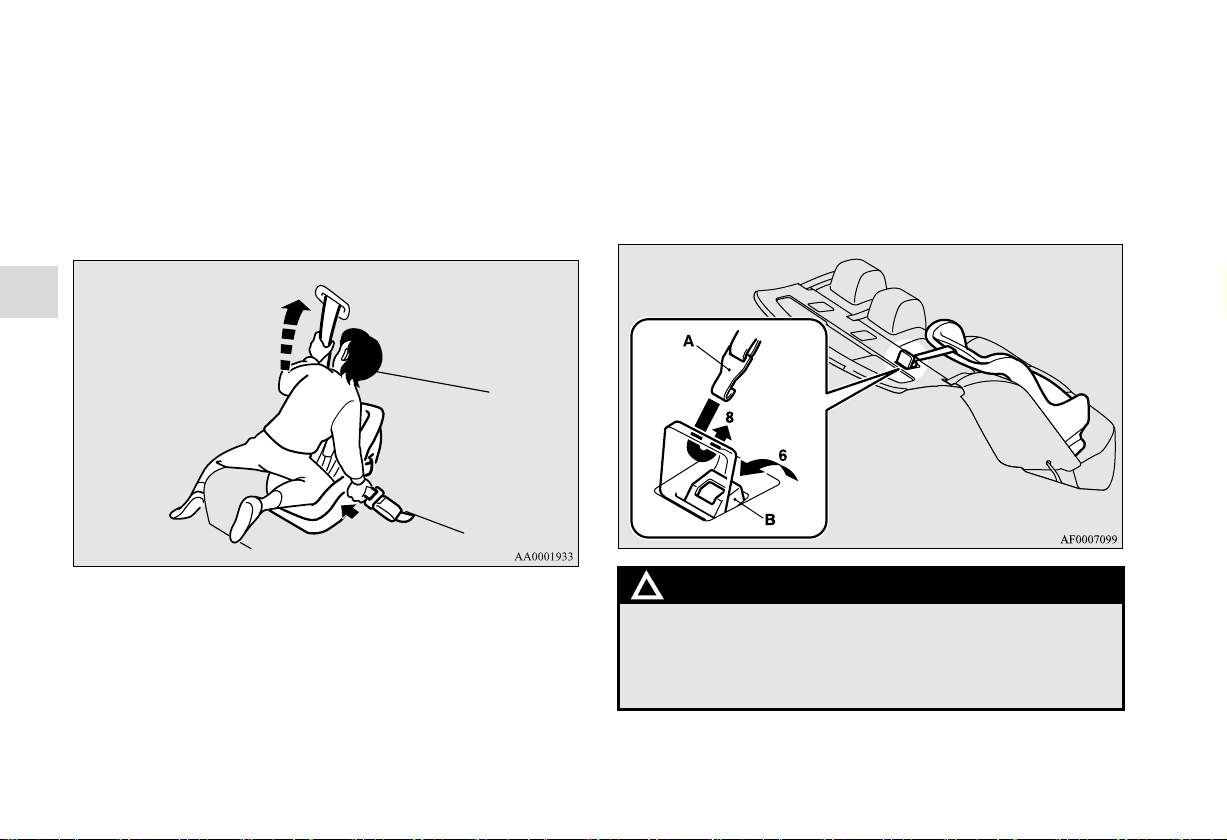
2-32
Seat and restraint systems
2
5. After confirming that the belt is locked, grab the shoulder
part of the belt near the buckle and pull up to remove any
slack from the lap part of the belt allowing the slack to
feed into the retractor. Remember, if the lap belt portion is
not tight, the child restraint system will not be secure. It
may help to put your weight on the child restraint system
and/or push on its seatback while pulling up on the belt
(see illustration).
6. Open the cover from the tether anchor installation point
by pulling it back with your hand as illustrated below (6).
7. Remove the head restraint from the location in which you
wish to install a child restraint system.
8. Latch the tether strap hook (A) of the child restraint sys-
tem to the tether anchor (B) as illustrated below (8) and
tighten the top tether strap so it is securely fastened.
If your child restraint system requires the use of a tether strap,
fasten the tether strap in accordance with the following proce-
dures.
WARNING
!
● Child restraint system tether anchors are designed
only to withstand loads from correctly fitted child
restraint systems. Under no circumstances are they
to be used for adult seat belts, or harnesses, or for
attaching other items or equipment to the vehicle.
BK0138600US.book 32 ページ 2011年7月17日 日曜日 午後2時32分
Seat and restraint systems
2-33
2
9. Before putting your child in the restraint, push and pull
the restraint in all directions to be sure it is firmly secured.
Do this before each use. If the child restraint system is not
firmly secure, repeat steps 1 through 8.
10. To remove a child restraint system from the vehicle and
deactivate the ALR mode, remove the child from the
restraint. Unlatch the buckle. Then remove the belt from
the restraint and let the belt fully retract.
Children who have outgrown child restraint sys-
tems
N00407600504
Children who have outgrown a child restraint system should be
seated in the rear seat and wear the seat belt. If the shoulder
belt crosses their face or neck, and/or the lap belt crosses their
stomach, a commercially available booster seat (including a
booster cushion) must be used, to raise the child so that the
shoulder belt crosses their shoulder and the lap belt remains
positioned low across their hips. The booster seat (including a
booster cushion) should fit the vehicle seat and have a label
certifying compliance with Federal Motor Vehicle Safety Stan-
dards or Motor Vehicle Restraint Systems and Booster Cush-
ions Safety Regulations.
WARNING
!
● Any child who is too small to properly wear a seat
belt must be properly restrained in an appropriate
child restraint system, to reduce their risk of serious
injury or death in an accident.
● A child should never be left unattended in, or unsu-
pervised, around your vehicle. When you leave the
vehicle always take the child out as well.
● Children can die from heat stroke if left or trapped
inside the vehicle, especially on hot days.
● Keep your vehicle locked and the trunk lid closed
when not in use. Keep your vehicle keys away from
children.
● Never allow children to play in the trunk of your
vehicle.
BK0138600US.book 33 ページ 2011年7月17日 日曜日 午後2時32分

2-34
Seat and restraint systems
2
Maintenance and inspection of seat belts
N00407000221
The seat belt webbing may be cleaned with mild soap or deter-
gent solution. Do not use an organic solvent. Allow the belts to
dry in the shade. Do not allow them to retract until completely
dry. Do not attempt to bleach or re-dye the belts. The color may
rub off and the webbing strength may be affected.
Regularly check your seat belt buckles and their release mech-
anisms for positive engagement and release of the latch plate.
Check the retractors for automatic locking when in the Auto-
matic Locking Retractor function.
The entire seat belt assembly should be replaced if the webbing
shows any obvious cuts, tears, increase in thickness in any sec-
tion of the webbing from broken fibers, or severe fading from
sunlight. All of these conditions indicate a weakening of the
belt, which may adversely affect seat belt performance in an
accident.
Supplemental Restraint System (SRS) -
airbag
N00407700619
This vehicle is equipped with a Supplemental Restraint System
(SRS), which includes airbags for the driver and passengers.
The SRS front airbags are designed to supplement the primary
protection of the driver and front passenger seat belt systems
by providing those occupants with protection against head and
chest injuries in certain moderate to severe frontal collisions.
The SRS front airbags, together with sensors at the front of the
vehicle and sensors attached to the front seats, form an
advanced airbag system.
The SRS driver’s knee airbag is designed to supplement the
primary protection of the driver’s seat belt system. It can
reduce the forward movement of the driver’s lower legs and
provide increased overall body protection in certain moderate
to severe frontal collisions.
The SRS side airbags (if so equipped) and the curtain airbags
(if so equipped) are also designed to supplement the seat belts.
The SRS side airbags provide the driver and front passenger
with protection against chest injuries by deploying the bag on
the side impacted in moderate to severe side impact collisions.
The SRS curtain airbags provide the driver and passengers on
the front seat and rear outboard seat with protection against
head injuries by deploying a bag on the side impacted in mod-
erate to severe side impact collisions.
WARNING
!
● Do not attempt to repair or replace any part of the
seat belt assemblies. This work should be done by an
authorized Mitsubishi Motors dealer. Failure to
have an authorized Mitsubishi Motors dealer per-
form the work could reduce the effectiveness of the
belts and could result in a serious injury or death in
an accident.
BK0138600US.book 34 ページ 2011年7月17日 日曜日 午後2時32分
Seat and restraint systems
2-35
2
The SRS airbags are NOT a substitute for use of the seat belts.
For maximum protection in all types of accidents, seat belts
must ALWAYS be worn by everyone who drives or rides in
this vehicle (with infants and small children in an appropriate
child restraint system in the rear seat, and older children buck-
led in the rear seat). Refer to “Child restraint systems” on page
2-23.
WARNING
!
● IT IS VERY IMPORTANT TO ALWAYS WEAR
YOUR SEAT BELT PROPERLY EVEN WITH AN
AIRBAG.
• Seat belts help keep the driver and passengers
properly positioned. This reduces the risk of injury
in all collisions, and reduces the risk of serious
injuries or death when the airbags inflate.
During sudden braking just before a collision, an
unrestrained or improperly restrained driver or
passengers can move forward into direct contact
with, or within close proximity to, the airbag when
it begins to inflate.
The beginning stage of airbag inflation is the most
forceful and can cause serious injuries or death if
the occupant comes in contact with the airbag at
this time.
• Seat belts reduce the risk of injury in rollovers,
rear impact collisions, and in lower-speed frontal
collisions, because the airbags are not designed to
inflate in those situations.
• Seat belts reduce the risk of being thrown from
your vehicle in a collision or rollover.
WARNING
!
● IT IS VERY IMPORTANT TO BE PROPERLY
SEATED.
• A driver or front passenger sitting too close to the
steering wheel or instrument panel during airbag
deployment can be seriously injured or killed.
• Airbags inflate very quickly and with great force.
If the driver and front passenger are not properly
seated and restrained, the airbag may not provide
the proper protection and can cause serious inju-
ries or death when it inflates.
• To reduce the risk to the driver of serious injury or
death due to a deploying driver’s airbag, always
properly wear your seat belt and adjust the
driver’s seat as far back as possible, maintaining a
position that still allows the driver to have good
control of the steering wheel, brake, accelerator,
and other vehicle controls.
• To reduce the risk to the front passenger of serious
injury or death from a deploying passenger’s
airbag, make sure the passenger always wears the
seat belt properly, remains seated upright and all
the way back in the seat, and positions the seat as
far back as possible.
• Seat all infants and children in the rear seat, prop-
erly restrained in an appropriate child restraint
system.
BK0138600US.book 35 ページ 2011年7月17日 日曜日 午後2時32分
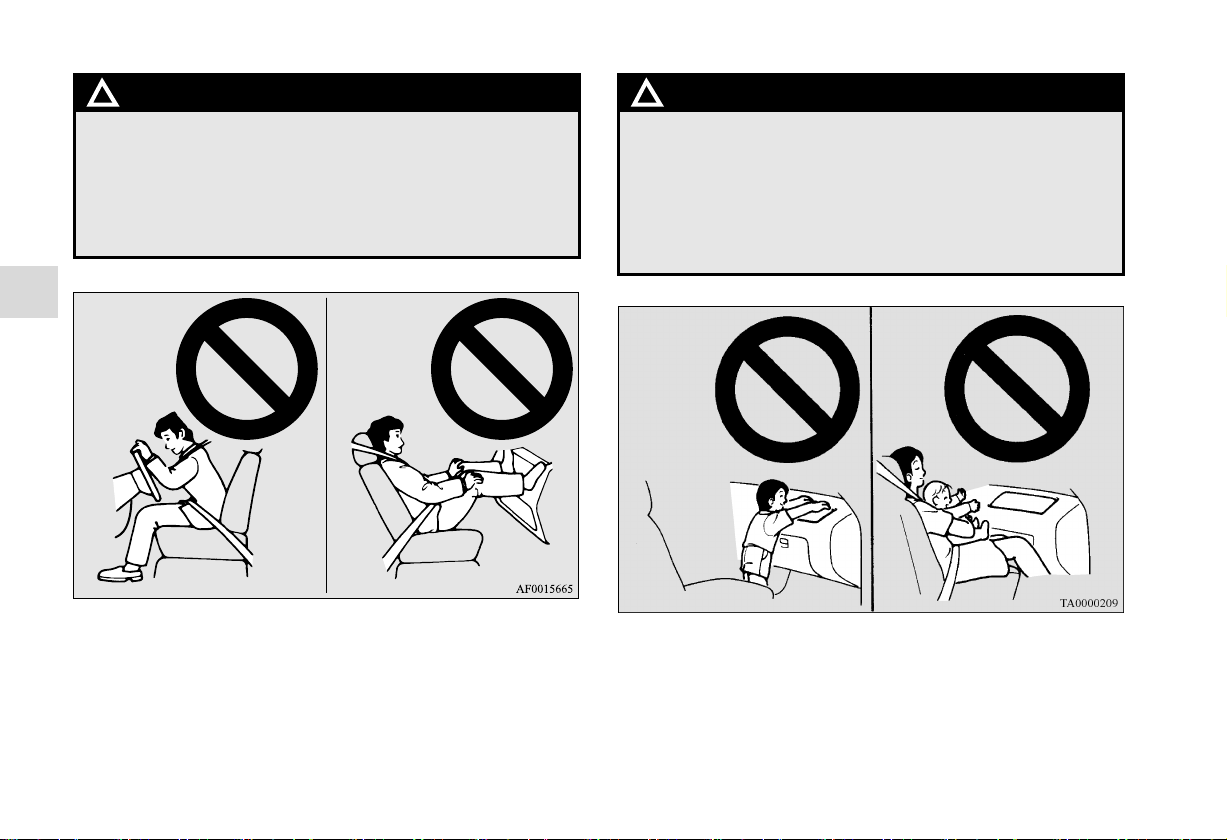
2-36
Seat and restraint systems
2
WARNING
!
● Airbags inflate very quickly and with great force.
Do not sit on the edge of the seat or sit with your
lower legs too close to the instrument panel, or lean
your head or chest close to the steering wheel or the
instrument panel.
● Do not put your feet or legs on or against the instru-
ment panel.
WARNING
!
● Infants and small children should never ride unre-
strained, or lean against the instrument panel. They
should never ride held in your arms or on your lap.
They can be seriously injured or killed in an acci-
dent, especially when the airbags inflate. Infants and
children should be properly seated in the rear seat in
an appropriate child restraint system. Refer to
“Child restraint systems” on page 2-23.
BK0138600US.book 36 ページ 2011年7月17日 日曜日 午後2時32分
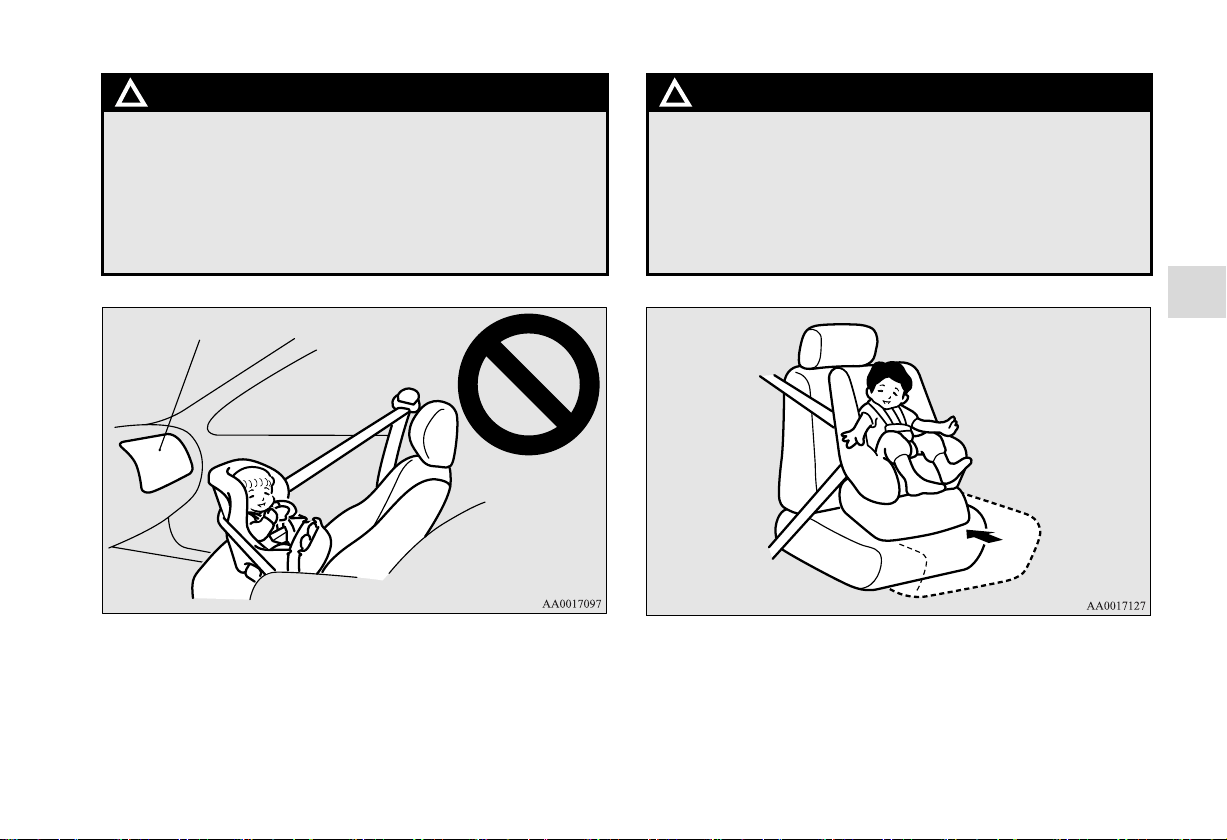
Seat and restraint systems
2-37
2
WARNING
!
● NEVER put REAR-FACING CHILD RESTRAINT
SYSTEMS or INFANT RESTRAINT SYSTEMS in
the front passenger seat. This places the infant too
close to the passenger airbag. During deployment of
the airbag, the infant can be seriously injured or
killed.
Rear-facing child restraint systems or infant
restraint systems must only be used in the rear seat.
Airbag
WARNING
!
● FRONT-FACING CHILD RESTRAINT SYS-
TEMS should be used in the rear seat whenever pos-
sible. If they must be used in the front passenger
seat, move the seat to the most rearward position
and make sure the child stays in the child restraint
system, properly restrained. Failure to follow these
instructions could result in serious injury or death to
the child.
BK0138600US.book 37 ページ 2011年7月17日 日曜日 午後2時32分
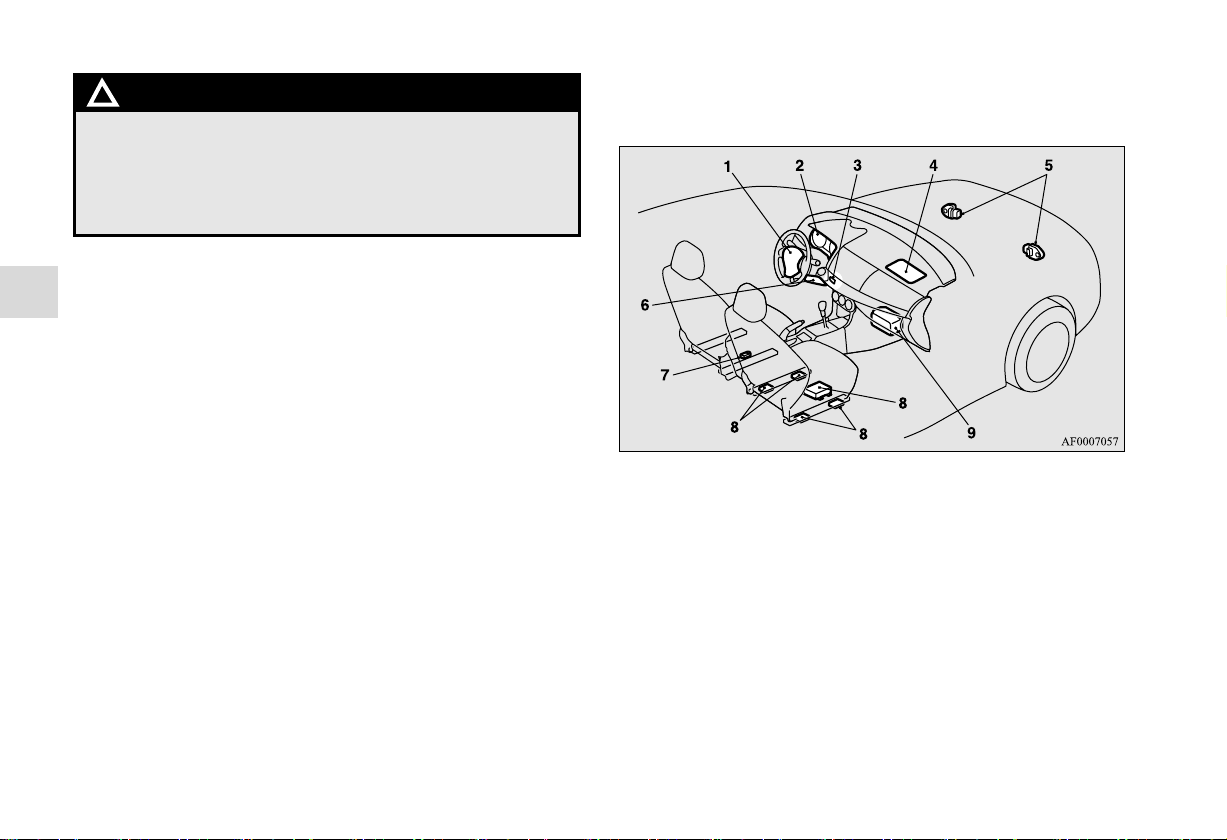
2-38
Seat and restraint systems
2
How the Supplemental Restraint System works
N00407800463
The SRS includes the following components:
WARNING
!
● Older children should be seated in the rear seat with
their seat belt properly worn, and with an appropri-
ate booster seat (including a booster cushion) if
needed.
Refer to “Children who have outgrown child
restraint systems” on page 2-33.
1- Driver’s airbag
2- SRS warning light
3- Passenger’s airbag off indicator
4- Passenger’s front airbag
5- Front impact sensors
6- Driver’s knee airbag
7- Driver’s seat position sensor
8- Passenger’s seat weight sensors
9- Airbag control unit
BK0138600US.book 38 ページ 2011年7月17日 日曜日 午後2時32分
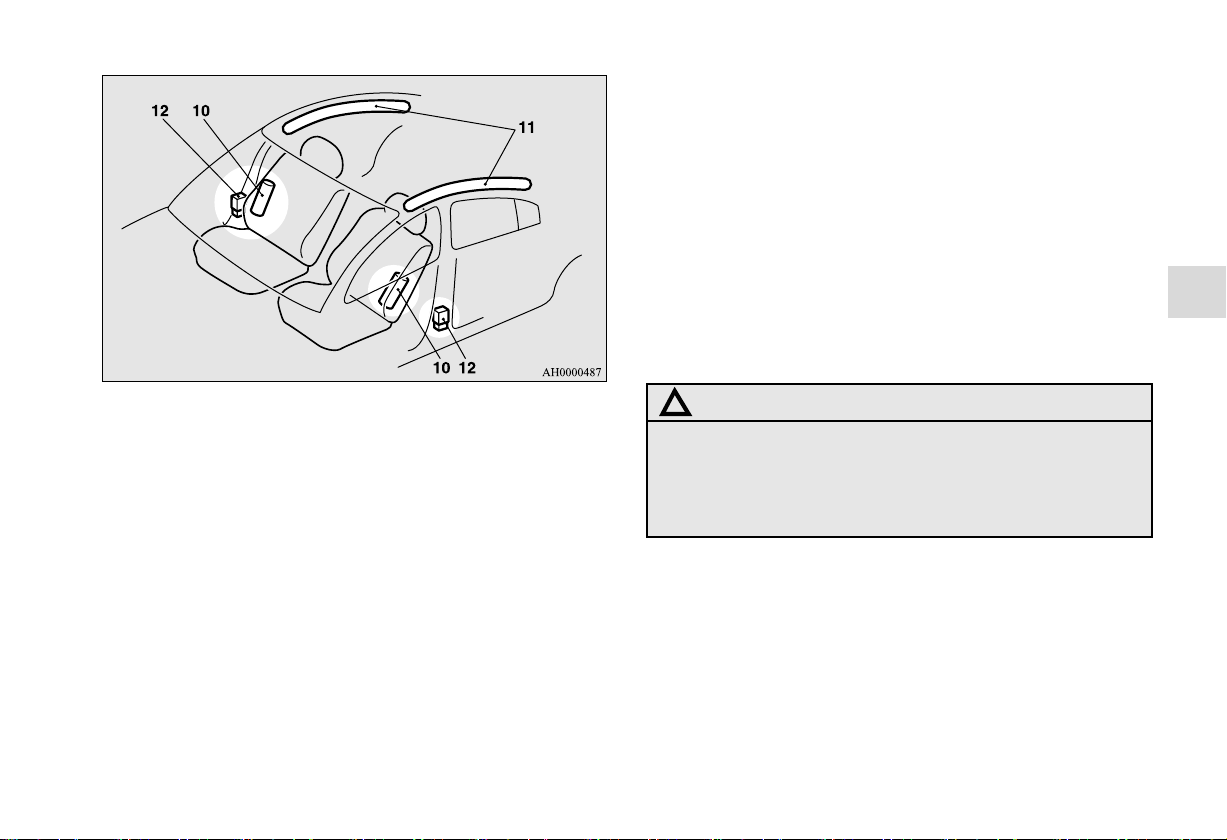
Seat and restraint systems
2-39
2
The airbag control unit monitors the readiness of the electronic
parts of the system whenever the ignition switch is in the “ON”
or “START” position. These include all of the items listed
above and all related wiring.
The airbags will operate only when the ignition switch is in the
“ON” or “START” position.
When the impact sensors detect a front or side impact sufficient
to deploy the airbag(s), the appropriate airbag(s) will be
deployed.
When airbags deploy, some smoke is released accompanied by
a loud noise. The smoke is not harmful, but do not intentionally
inhale the smoke as it may cause temporary irritation to people
with respiratory problems.
After deployment, the airbags will quickly deflate, so quickly
that some people may not even realize the airbags inflated.
Airbag inflation does not prevent the driver from seeing or
being able to steer the vehicle, and does not prevent people
from leaving the vehicle.
10- Side airbag modules
11- Curtain airbag modules
12- Side impact sensors
CAUTION
!
● Airbags inflate very quickly and with great force. In
certain situations, contact with an inflating airbag
may cause small cuts, abrasions, and bruises. Refer
to “Supplemental Restraint System (SRS) - airbag”
on page 2-34.
BK0138600US.book 39 ページ 2011年7月17日 日曜日 午後2時32分
2-40
Seat and restraint systems
2
Event Data Recording
N00418600171
Your vehicle is equipped with an “EDR” - Event Data
Recorder which is capable of collecting and storing data in the
event of an airbag deployment.
The EDR may record the following information:
● Condition of specific vehicle systems;
● Diagnostic code(s)
Driver’s seat position sensor
N00417900164
The driver’s seat position sensor is attached to the seat rail and
provides the airbag control unit with information on the seat’s
fore-aft position. The airbag control unit controls deployment
of the driver’s front airbag in accordance with the information
it receives from this sensor.
If there is a problem involving the driver’s seat position sensor,
the SRS warning in the instrument panel will come on. Refer to
“SRS warning” on page 2-43.
WARNING
!
● If the SRS warning comes on, have the vehicle
inspected by an authorized Mitsubishi Motors
dealer as soon as possible.
● Please observe the following instructions to ensure
that the driver’s seat position sensor can operate
correctly.
• Adjust the seat to the correct position, and sit well
back against the seatback.
Refer to “Front seats” on page 2-3.
• Do not recline the seatback more than necessary
when driving.
• Do not place metallic objects or luggage under the
front seat.
● If the vehicle is involved in a severe impact, have the
SRS sensor inspected by an authorized Mitsubishi
Motors dealer as soon as possible.
BK0138600US.book 40 ページ 2011年7月17日 日曜日 午後2時32分
Seat and restraint systems
2-41
2
Passenger’s seat weight sensors
N00418000247
The passenger’s seat weight sensors are attached to the seat
rails and provide the airbag control unit with information
regarding the weight on the front passenger seat. The airbag
control unit controls deployment of the passenger’s front
airbag in accordance with the information it receives from this
sensor.
The passenger’s front airbag will not deploy in an impact when
the weight on the seat is sensed to be less than approximately
66 pounds (30 kg). In this case, the passenger’s airbag off indi-
cator will come on.
Refer to “Passenger’s airbag off indicator” on page 2-42.
If there is a problem involving the passenger’s seat weight sen-
sors, the SRS warning in the instrument panel will come on.
Refer to “SRS warning” page 2-43.
WARNING
!
● If any of the following conditions occur, you should
immediately have your vehicle inspected by an
authorized Mitsubishi Motors dealer as soon as pos-
sible:
• The SRS warning does not initially come on when
the ignition switch is turned to the “ON” or
“START” position.
• The SRS warning does not go out after several sec-
onds.
• The SRS warning comes on while you are driving.
● To ensure that the passenger’s seat weight sensors
can correctly sense the weight being applied to the
seat, observe the following instructions. Failure to
follow these instructions can adversely affect the
performance of the passenger’s airbag system.
• Adjust the seat to the correct position, and sit well
back against the seatback.
Refer to “Front seats” on page 2-3.
• Do not recline the seatback more than necessary.
• Never have more than one person (adult or child)
sitting on the seat.
• Do not place anything between the seat and the
floor console.
• Do not hang anything on the front passenger’s
seatback.
• Do not remove the head restraints.
• When attaching a child restraint system, secure it
firmly.
• Do not place luggage or other objects on the seat.
• Do not use a seat cover or a cushion.
• Do not modify or replace the seat and seat belt.
• Do not place luggage or other objects under the
seat.
• Do not place the floor mat on the seat rails.
• Do not expose the sensors to liquids or vapors.
• Do not subject the sensors to shock.
• Do not allow rear-seat occupants to push the front
passenger seat with their feet or force the front
passenger seat upward.
• Do not allow rear-seat occupants to grasp the front
passenger’s seatback or put their arms around it.
• When attaching a child restraint system in the rear
seat, make sure it does not interfere with the front
seat.
WARNING
!
BK0138600US.book 41 ページ 2011年7月17日 日曜日 午後2時32分
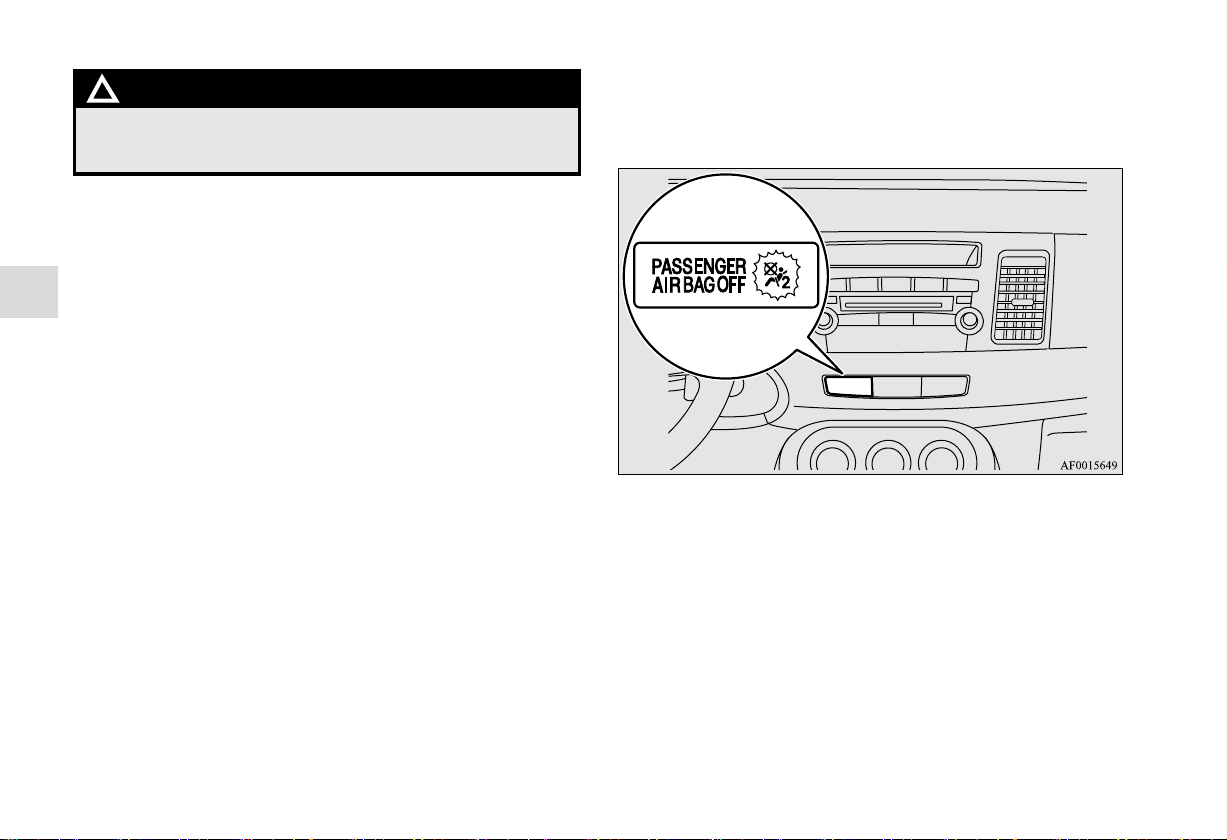
2-42
Seat and restraint systems
2
Passenger’s airbag off indicator
N00418100277
The passenger’s airbag off indicator is located in the instru-
ment panel.
The indicator normally comes on when the ignition switch is
turned to the “ON” position and goes out a few seconds later.
In the following situations, the indicator will stay on to show
that the passenger’s front airbag is not operational.
● The passenger’s seat weight sensors sense a weight of less
than approximately 66 pounds (30 kg) on the front passen-
ger seat.
● The front passenger’s seat is not occupied.
When the weight applied to the front passenger seat is sensed
to be approximately 66 pounds (30 kg) or greater, the indicator
goes out to show that the passenger’s front airbag is opera-
tional.
● If the vehicle is involved in a severe impact, have the
SRS sensors inspected by an authorized Mitsubishi
Motors dealer as soon as possible.
WARNING
!
BK0138600US.book 42 ページ 2011年7月17日 日曜日 午後2時32分
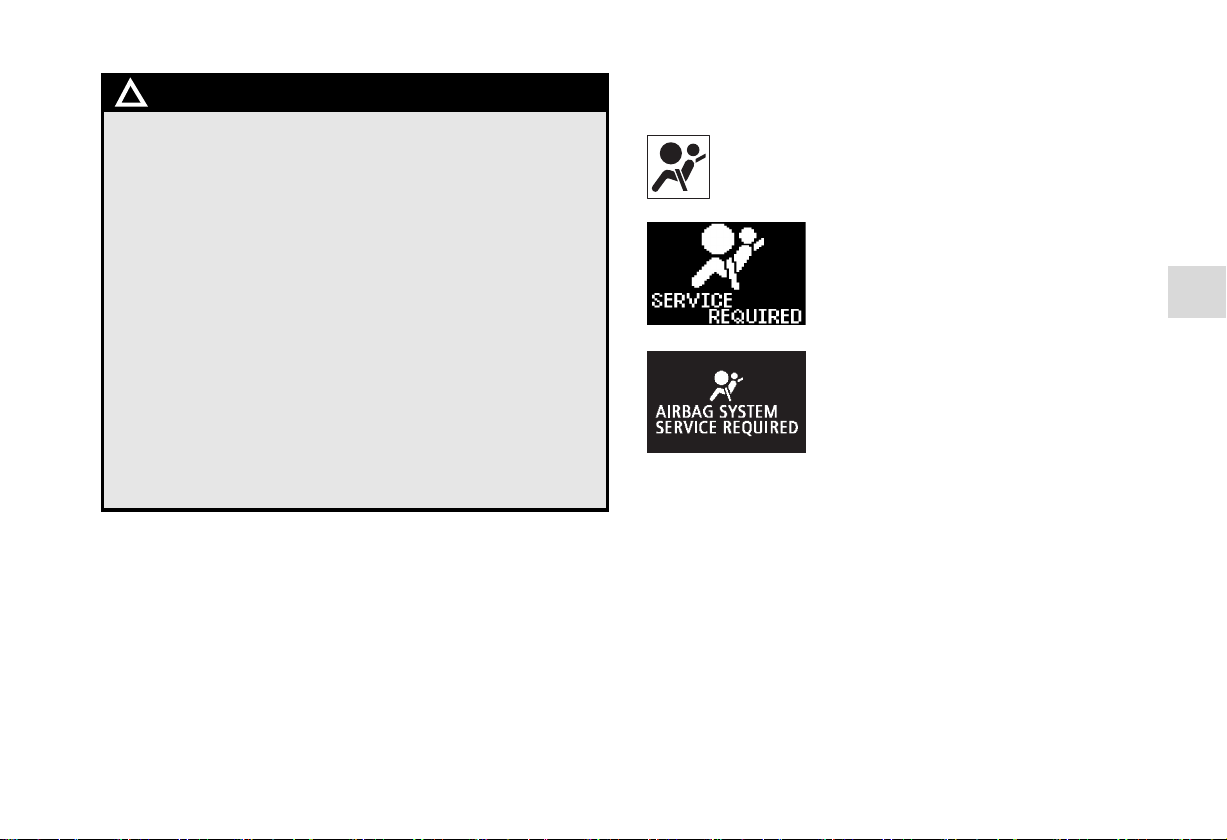
Seat and restraint systems
2-43
2
SRS warning light/display
N00408300494
Warning light
Warning display type 1
Warning display type 2
If there is an error in the system, the warning light will come on
and the warning display will appear on the information screen
in the multi-information display.
Under normal conditions, the warning light comes on when the
ignition switch is turned to the “ON” position and goes off a
few seconds later.
The warning light will also come on and remain on when the
SRS airbags and the seat belt pre-tensioner system have been
activated.
The warning light/display is used for both SRS airbag warn-
ings and seat belt pre-tensioner system warnings.
WARNING
!
● If any of the following conditions occur, you should
immediately have the airbag system in your vehicle
inspected by an authorized Mitsubishi Motors
dealer as soon as possible:
• The passenger’s airbag off indicator comes on
when an adult is sitting on the front passenger
seat.
• The passenger’s airbag off indicator does not come
on when the front passenger’s seat is not occupied.
• The passenger’s airbag off indicator does not come
on when the ignition switch is turned to the “ON”
position.
• The passenger’s airbag off indicator comes on and
goes out repeatedly.
● Do not attach any accessory to your vehicle that
makes the passenger’s airbag off indicator difficult
or impossible to see.
You must be able to see the passenger’s airbag off
indicator and verify the status of the passenger’s
airbag system.
BK0138600US.book 43 ページ 2011年7月17日 日曜日 午後2時32分

2-44
Seat and restraint systems
2
Driver’s and passenger’s front airbag system
N00407900318
The driver’s airbag is located under the padded cover in the
middle of the steering wheel. The front passenger’s airbag is
contained in the instrument panel above the glove compart-
ment. The driver’s airbag and the front passenger’s airbag are
designed to deploy at the same time. However, the front pas-
senger’s airbag does not deploy when the front passenger seat
is not occupied or when the weight sensor in the front passen-
ger seat senses a weight on the seat of less than approximately
66 pounds (30 kg).
WARNING
!
● There may be a system error if the warning
light/display appears as indicated. In such cases, an
SRS airbag or a seat belt pre-tensioner system may
not function properly in a collision. Have your vehi-
cle checked by an authorized Mitsubishi Motors
dealer:
• Even when the ignition switch is in the “ON” posi-
tion, the warning light does not come on or it
remains on a few seconds later
• When warning light comes on while driving
• When warning display appears while driving
Driver
Front passenger
BK0138600US.book 44 ページ 2011年7月17日 日曜日 午後2時32分
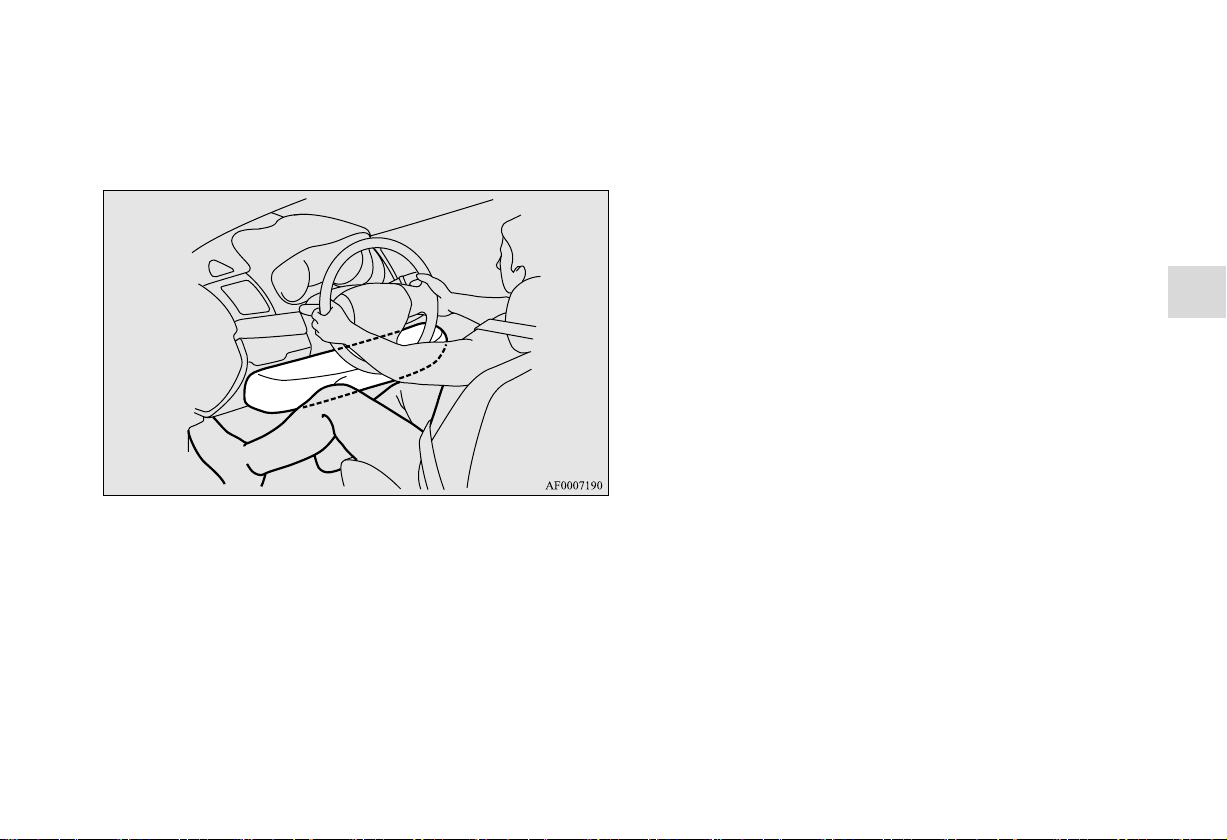
Seat and restraint systems
2-45
2
Driver’s knee airbag system
N00404500010
The driver’s knee airbag is located under the steering wheel.
The driver’s knee airbag is designed to deploy at the same time
as the driver’s front airbag.
BK0138600US.book 45 ページ 2011年7月17日 日曜日 午後2時32分
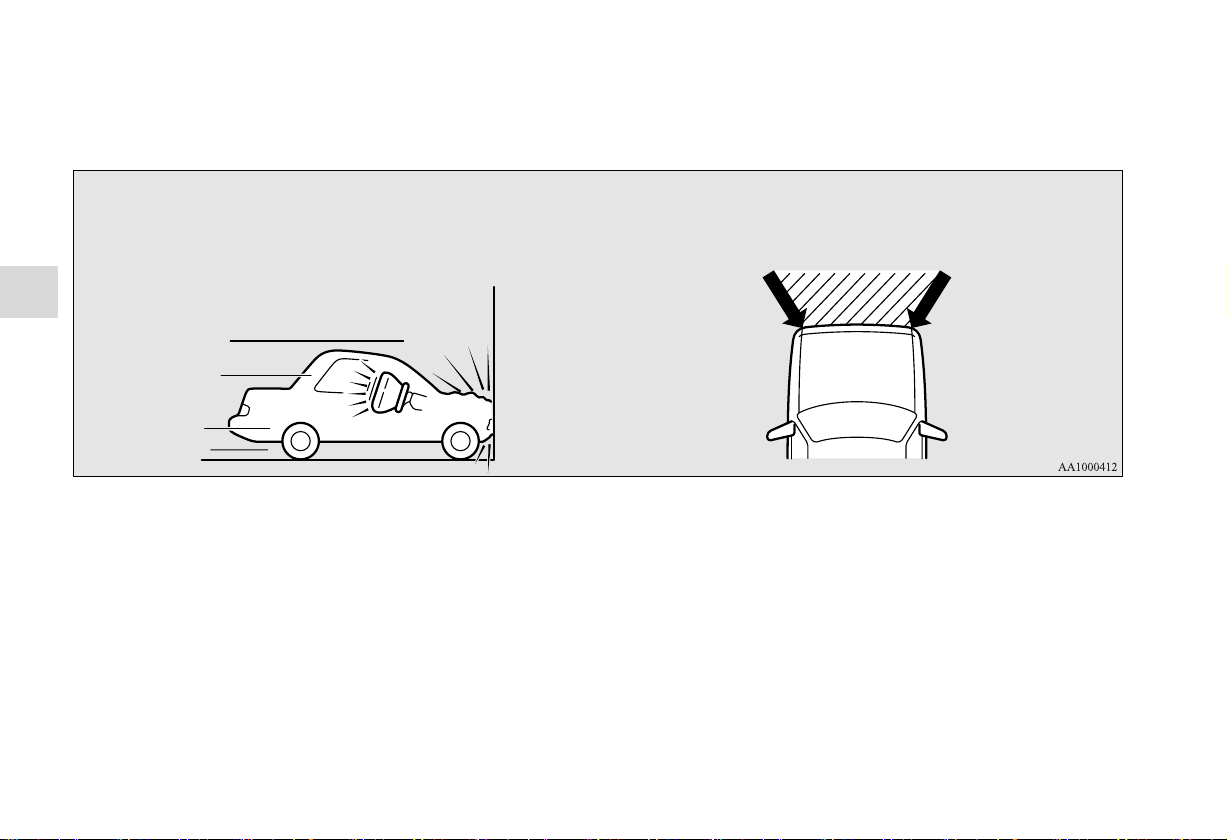
2-46
Seat and restraint systems
2
Deployment of front airbags
N00408000521
The front airbags and driver’s knee airbag ARE DESIGNED TO DEPLOY when…
The front airbags and driver’s knee airbag are designed to
deploy when the vehicle suffers a moderate to severe frontal
impact. A typical condition is shown in the illustration to the
left.
The front airbags and driver’s knee airbag are designed to
deploy only in certain moderate to severe frontal collisions
within the shaded area between the arrows in the illustration to
the right.
The front airbags and driver’s knee airbag will deploy if the
impact to the vehicle’s main structure is above a specific
threshold level. The threshold level is approximately 15 mph
(25 km/h) for a frontal collision straight into a solid flat wall
that does not bend or deform. If the impact to the vehicle’s
main structure is below this threshold level, the front airbags
and driver’s knee airbag may not deploy. This threshold level
may also be higher if the vehicle hits something that absorbs
the impact, either by bending or moving (for example, another
stationary vehicle, a pole or a guard rail).
The beginning stage of airbag inflation is the most forceful,
and can cause serious injuries or death if you are too close to
the deploying airbag. Accordingly, it is important that you
always wear the available seat belt.
Head-on collision with a solid wall at
speeds of approx. 15 mph (25 km/h) or
higher
Moderate to severe frontal impact within
the shaded area between the arrows
BK0138600US.book 46 ページ 2011年7月17日 日曜日 午後2時32分
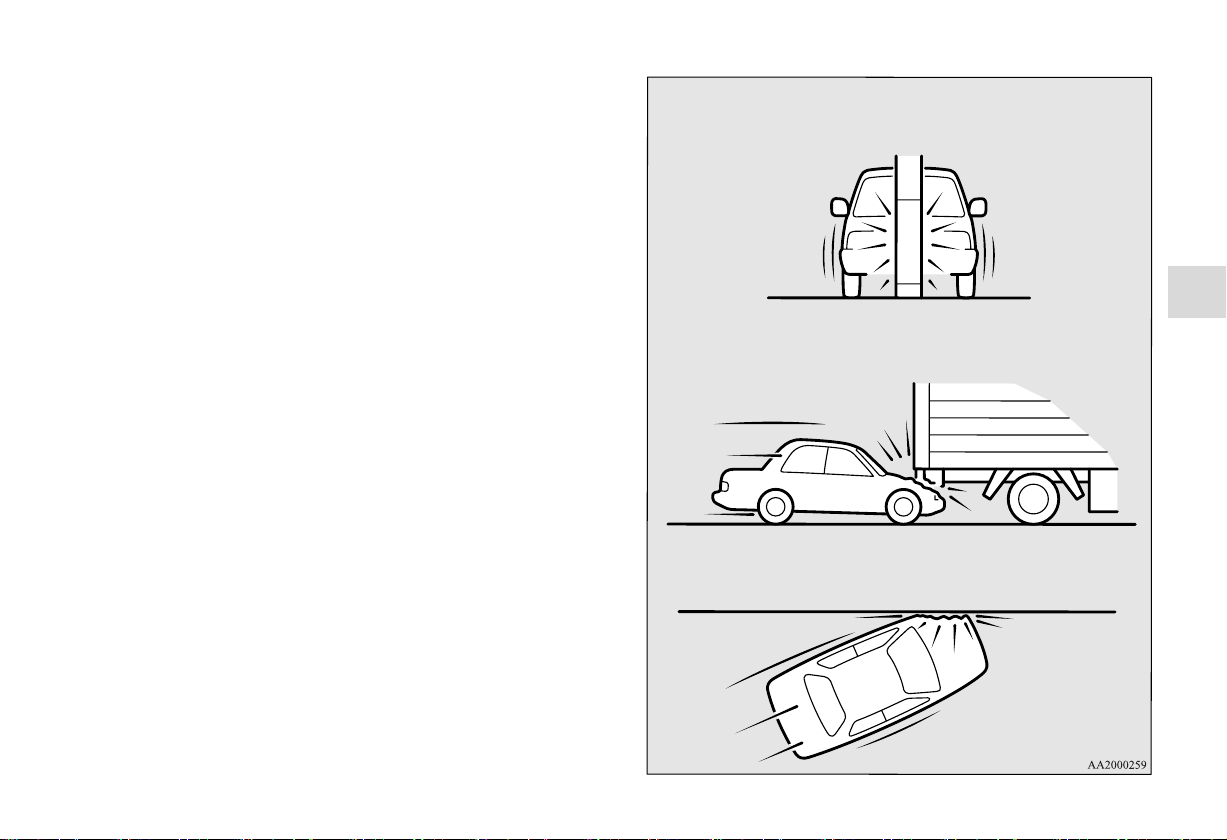
Seat and restraint systems
2-47
2
The front airbags and driver’s knee airbag MAY NOT
DEPLOY when …
In certain types of front collisions, the front airbags and
driver’s knee airbag may not deploy, even if the deformation of
the body seems to be large, because the vehicle’s body struc-
ture is designed to absorb the impact and deform in order to
help protect the occupants. Some typical situations where the
front airbags and driver’s knee airbag may not deploy are
shown in the illustrations.
Because the front airbags and driver’s knee airbag do not pro-
tect the occupant in all types of frontal collisions, be sure to
always wear your seat belts properly.
Collision with a utility pole, tree or other narrow objects
Collision where the vehicle slides under the rear body of a
truck
Oblique frontal impact
BK0138600US.book 47 ページ 2011年7月17日 日曜日 午後2時32分
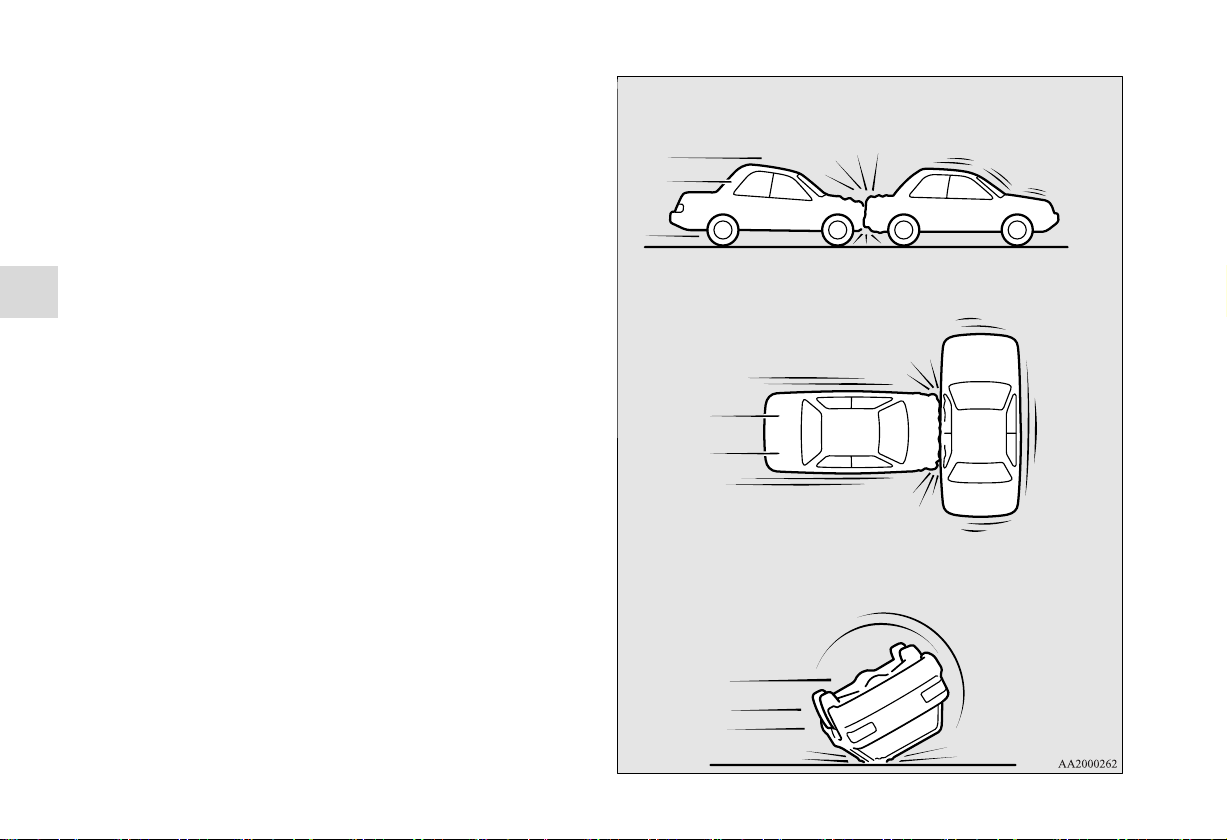
2-48
Seat and restraint systems
2
The front airbags and driver’s knee airbag ARE NOT
DESIGNED TO DEPLOY when …
The front airbags and driver’s knee airbag are not designed to
deploy in situations where they cannot provide protection to
the occupants.
Some typical situations are shown in the illustrations.
Because the front airbags and driver’s knee airbag do not pro-
tect the occupants in all types of collisions, be sure to always
wear your seat belts properly.
Rear end collision to your vehicle
Side collision to your vehicle
Vehicle rolls onto its side or roof
BK0138600US.book 48 ページ 2011年7月17日 日曜日 午後2時32分
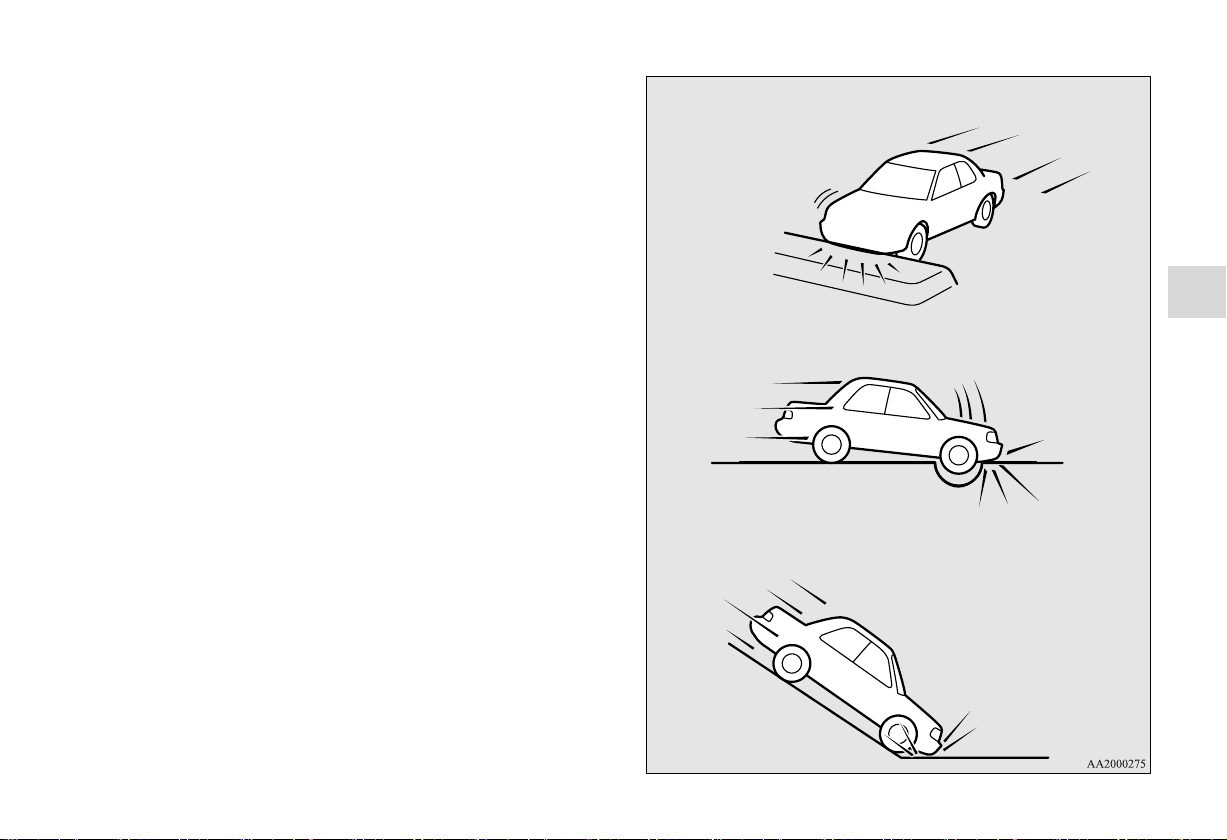
Seat and restraint systems
2-49
2
The front airbags and driver’s knee airbag MAY
DEPLOY when …
The front airbags and driver’s knee airbag may deploy if the
underside of the vehicle suffers a moderate to severe impact
(undercarriage impact). Some typical situations are shown in
the illustrations.
Because the front airbags and driver’s knee airbag may deploy
in certain types of unexpected impacts, as shown in the illustra-
tions, and these unexpected impacts can move you out of posi-
tion, it is important to always wear your seat belts properly.
When worn properly, seat belts can help maintain your distance
from the airbags and driver’s knee airbag when they begin to
inflate. The beginning stage of airbag inflation is the most
forceful and can cause serious injury or death if you are close
to the deploying airbag.
Collision with an elevated median/island or curb
Vehicle travels over a deep hole/pothole
Vehicle drives down a steep slope and hits the ground
BK0138600US.book 49 ページ 2011年7月17日 日曜日 午後2時32分
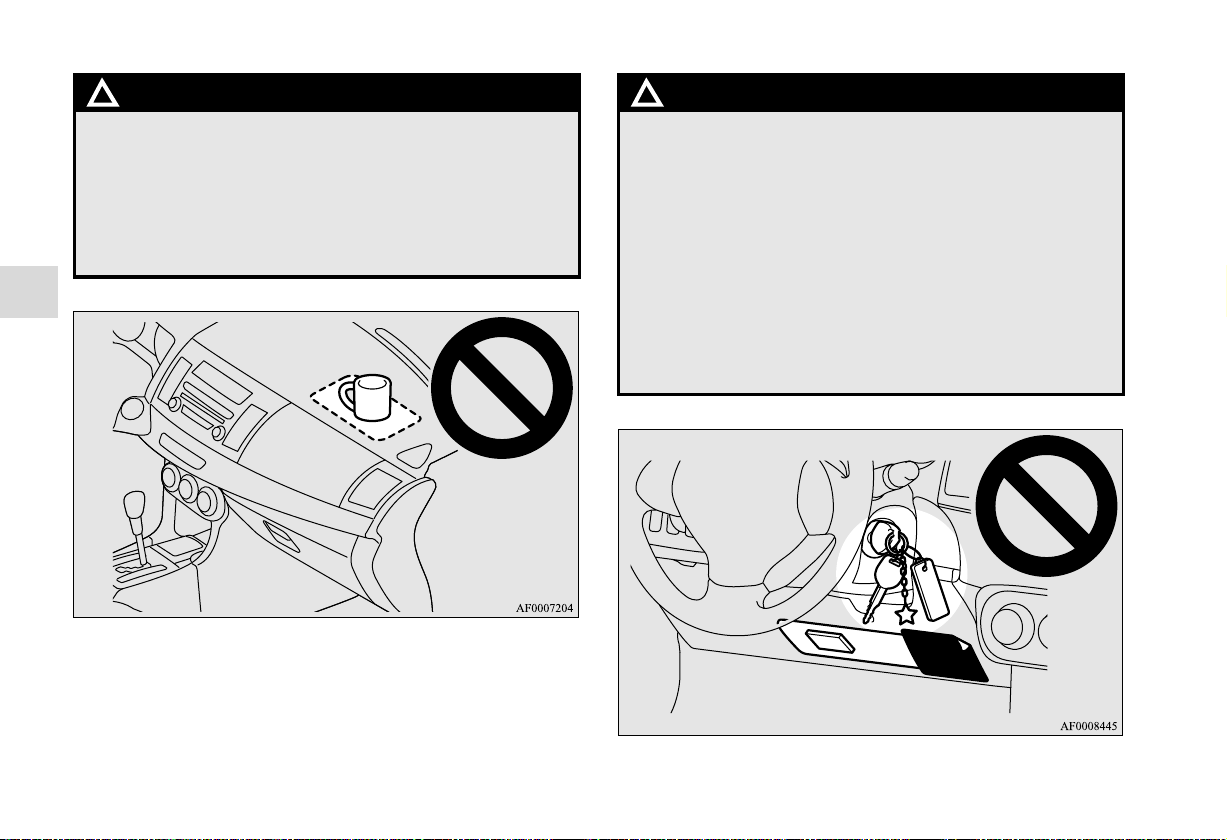
2-50
Seat and restraint systems
2
WARNING
!
● Do not attach anything to the steering wheel’s pad-
ded cover, such as trim material, badges, etc. These
could strike and injure an occupant if the airbag
inflates.
● Do not set anything on, or attach anything to, the
instrument panel above the glove compartment.
Such items could strike and injure an occupant if the
airbag inflates.
WARNING
!
● Do not attach accessories to, or put them in front of,
the windshield. They could restrict the airbag infla-
tion, or strike and injure an occupant, when the
airbag inflates.
● Do not attach additional keys or accessories (hard,
pointed or heavy objects) to the ignition key. Such
objects could prevent the driver’s knee airbag from
inflating normally or could be propelled to cause
serious injury if the airbag inflates.
● Do not attach accessories to the lower portion of the
driver’s side instrument panel. Such objects could
prevent the driver’s knee airbag from inflating nor-
mally or could be propelled to cause serious injury if
the airbag inflates.
BK0138600US.book 50 ページ 2011年7月17日 日曜日 午後2時32分
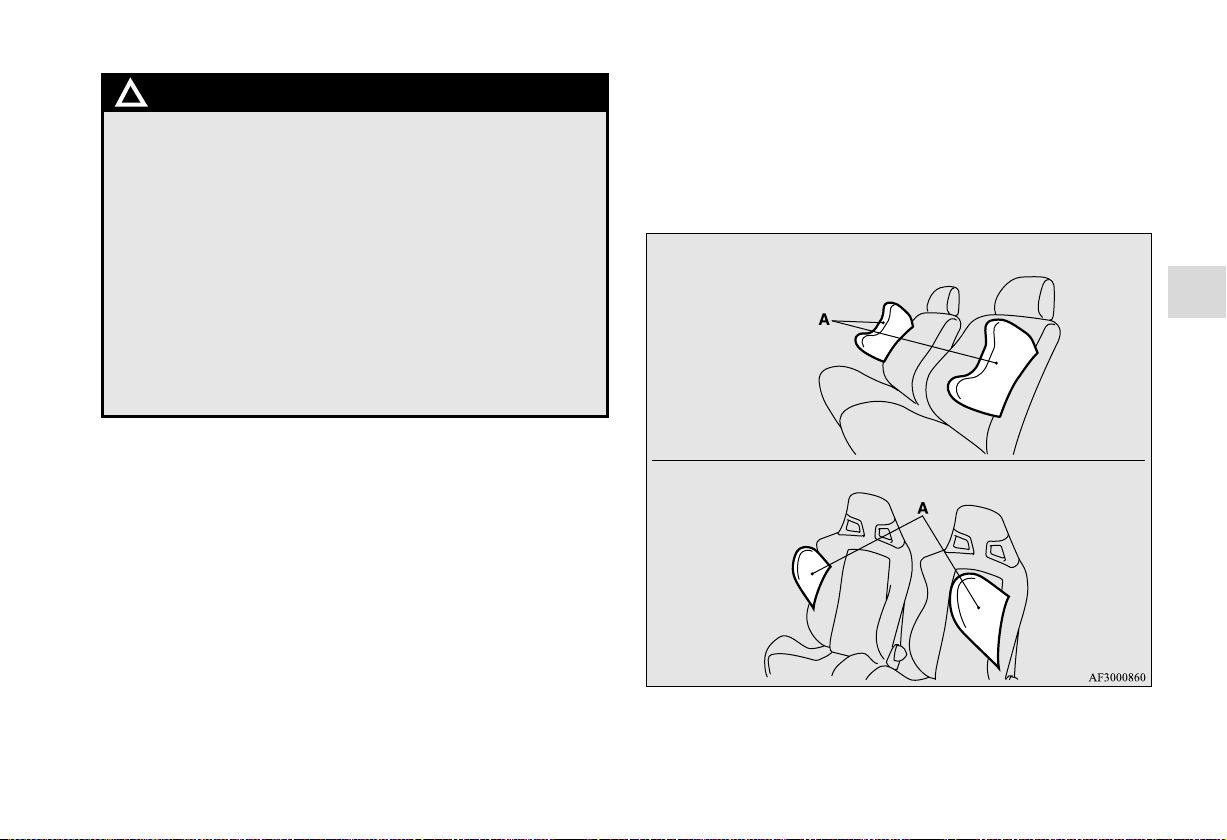
Seat and restraint systems
2-51
2
Side airbag system (if so equipped)
N00408100405
The side airbags (A) are contained in the driver and front pas-
senger seatbacks.
The side airbag is designed to inflate only on the side of the
vehicle that is impacted, even with no passenger in the front
seat.
WARNING
!
● Do not attempt to remove, install, disassemble or
repair the SRS airbags.
● Do not place objects, such as packages or pets,
between the airbags and the driver or the front pas-
senger. Such objects can adversely affect airbag per-
formance, or cause serious injury or death when the
airbag deploys.
● Immediately after airbag inflation, some parts of the
airbag system will be hot. Do not touch them. You
could be burned.
● The airbag system is designed to work only once.
After the airbags deploy, they will not work again.
They must promptly be replaced and the entire
airbag system must be inspected by an authorized
Mitsubishi Motors dealer.
Except for RECARO seats
RECARO seats
BK0138600US.book 51 ページ 2011年7月17日 日曜日 午後2時32分
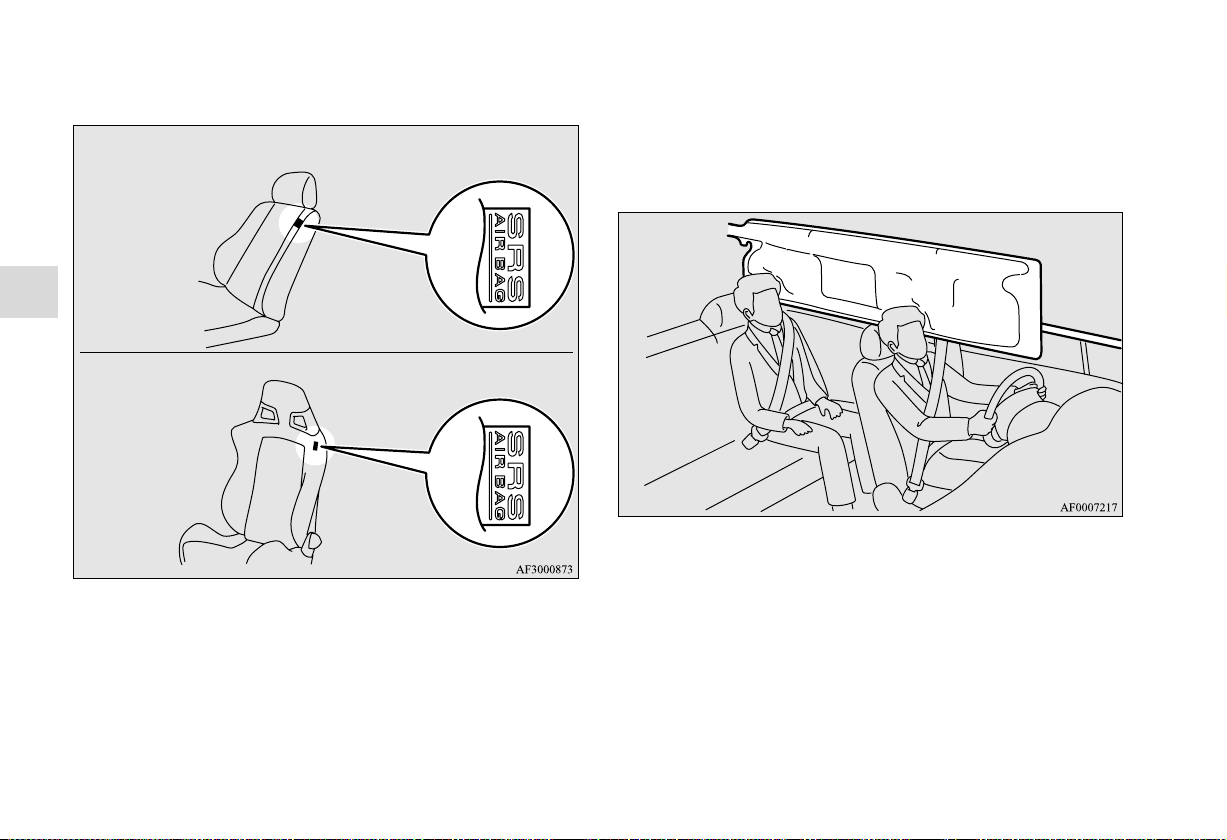
2-52
Seat and restraint systems
2
A label is attached to the seatbacks in vehicles with side air-
bags.
Curtain airbag system (if so equipped)
N00419200145
The curtain airbags are contained in the front and rear pillars
and roof side rail. The curtain airbag is designed to inflate only
on the side of the vehicle that is impacted, even with no passen-
ger in the front seat.
Except for RECARO seat
RECARO seat
BK0138600US.book 52 ページ 2011年7月17日 日曜日 午後2時32分
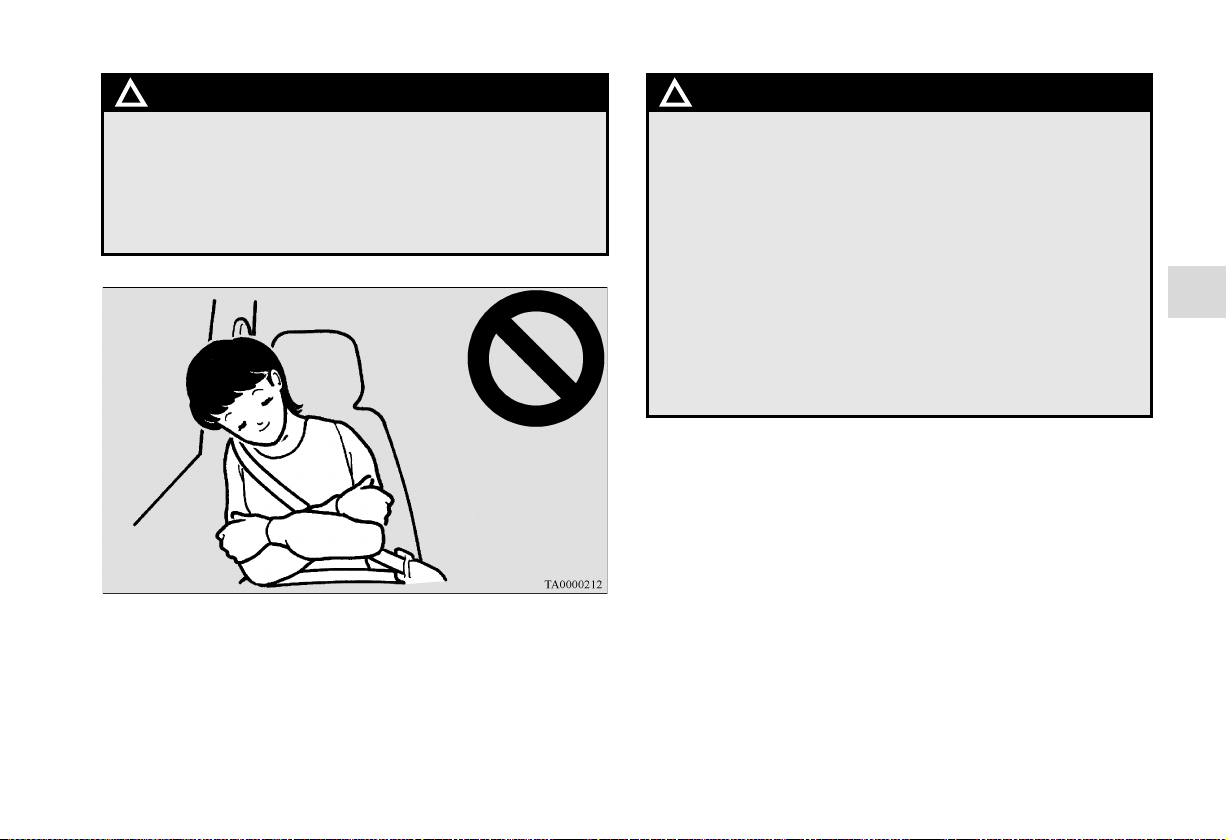
Seat and restraint systems
2-53
2
WARNING
!
● The side airbag and curtain airbag can cause serious
injury or death to anyone too close to the airbag
when it deploys. To reduce the risk of injury from a
deploying side airbag and curtain airbags, all occu-
pants must be properly restrained and seated well
back, upright, and in the middle of the seat. Do not
lean against the door.
WARNING
!
● In order to reduce the risk of injury from a deploy-
ing side airbag, do not allow any rear seat passen-
gers to hold onto the back of either front seat.
Special care should be taken with children.
● Do not place any objects near or around the front of
either front seatback. Such objects can interfere
with proper side airbag deployment and cause
injury during deployment of the side airbag.
● Do not place stickers, labels or additional trim on
the back of either front seat. They can interfere with
proper side airbag deployment.
● Do not install seat covers or re-cover seats that have
side airbags. Covers can interfere with proper side
airbag deployment and adversely affect side airbag
performance.
BK0138600US.book 53 ページ 2011年7月17日 日曜日 午後2時32分
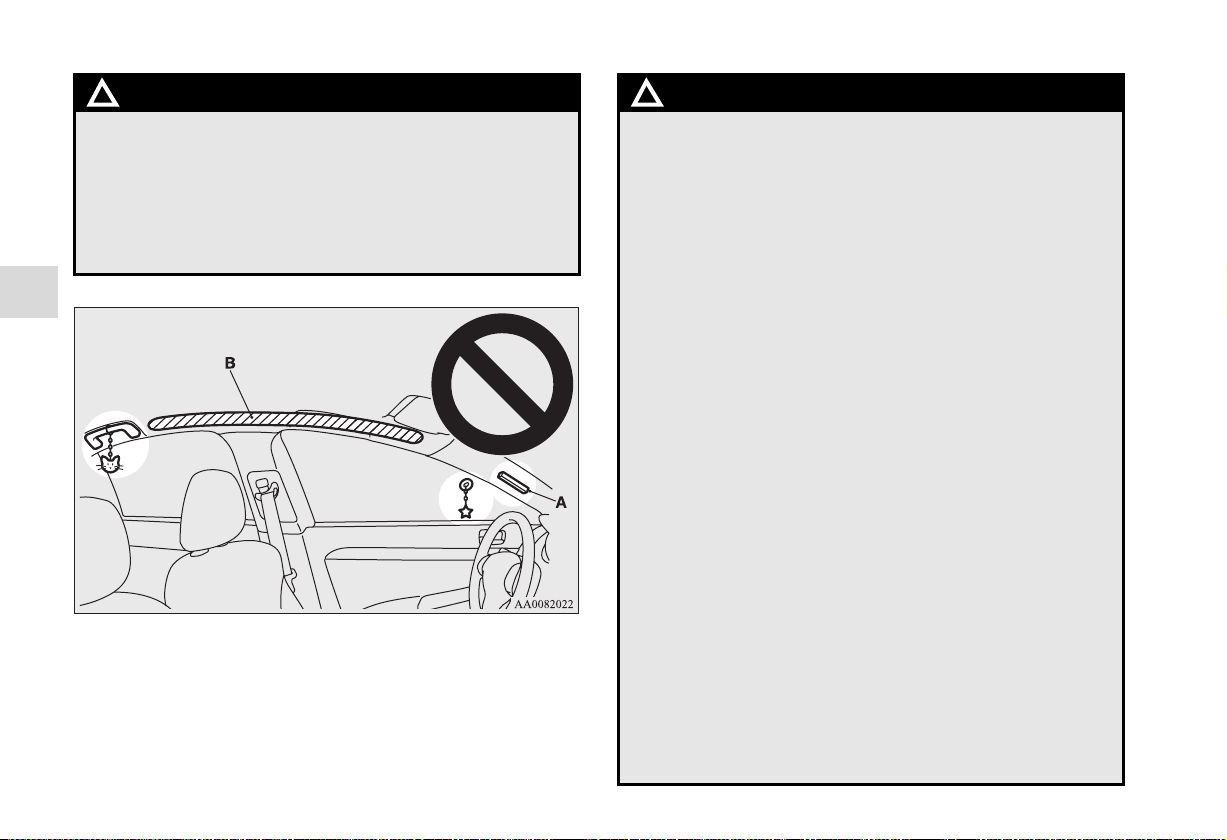
2-54
Seat and restraint systems
2
WARNING
!
● Do not attach a microphone (A) or any other object
around the part where the curtain airbag (B)
deploys, such as on the windshield, side door glass or
front and rear pillars and roof side rail. When the
curtain airbag inflate, the microphone or other
object may be hurled with great force or the curtain
airbag may not inflate correctly, resulting in death
or serious injury.
WARNING
!
● Do not put a hanger or any heavy or pointed object
on the coat hook. If the curtain airbag was activated,
any such item could be propelled away with great
force and could prevent the curtain airbag from
inflating correctly. Hang clothes directly on the coat
hook (without using a hanger). Make sure there are
no heavy or sharp objects in the pockets of clothes
that you hang on the coat hook.
● Never install a rear-facing child restraint system in
the front passenger seat. Rear-facing child restraint
systems MUST ONLY be used in the rear seat.
● Front-facing child restraint systems should also be
used ONLY in the rear seat. If a front-facing child
restraint system must be used in the front passenger
seat, move the seat as far back as possible, and make
sure that the child stays in the child restraint system,
properly restrained and away from the door.
● Do not allow a child to lean against or sit close to the
passenger door, even if the child is seated in a child
restraint system. The child’s head should also not
lean against or be close to the section of the seatback
where the side airbag and curtain airbag are
located. It is dangerous if the side airbag and curtain
airbag deploys. Failure to follow all of these instruc-
tions could lead to serious injury or death to the
child.
● Work done on or in the vicinity of the side airbag
and curtain airbag system components should be
done only by an authorized Mitsubishi Motors
dealer. Improper work methods can cause acciden-
tal side airbag and curtain airbag deployment, or
render a side airbag and curtain airbag inoperable.
Either of these situations can result in serious injury
or death.
BK0138600US.book 54 ページ 2011年7月17日 日曜日 午後2時32分
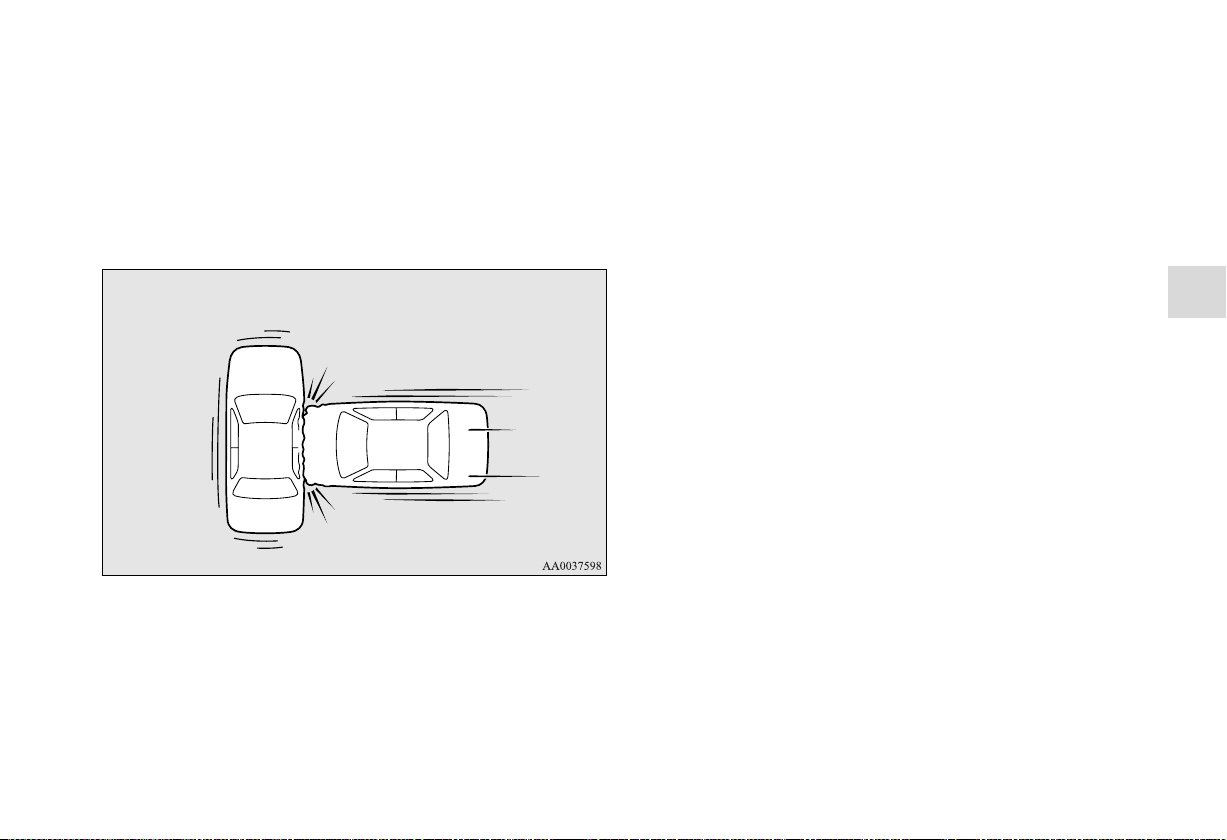
Seat and restraint systems
2-55
2
Deployment of side airbag and curtain airbag
N00408200507
The side airbag and curtain airbag ARE DESIGNED
TO DEPLOY when …
A side airbag and curtain airbag are designed to deploy when
the vehicle suffers a moderate to severe side impact to the mid-
dle of the passenger compartment.
The typical situation is shown in the illustration.
The seat belts in your vehicle are your primary means of pro-
tection in an accident. The SRS (Supplemental Restraint Sys-
tem) side airbags and curtain airbags are designed to provide
additional protection. Therefore, for your safety and the safety
of all occupants, be sure to always wear your seat belts prop-
erly.
The side airbag and curtain airbag MAY NOT
DEPLOY when …
In certain types of side collisions, the side airbag and curtain
airbag may not deploy, even if the deformation of the body
seems to be large, because the vehicle’s body structure is
designed to absorb the impact and to deform in order to help
protect the occupants. Some typical situations where the side
airbag and curtain airbag may not deploy are shown in the
illustrations.
Because the side airbags and curtain airbags do not protect the
occupant in all types of side collisions, be sure to always wear
your seat belts properly.
Moderate to severe impact to the middle of the vehicle body’s
side structure
BK0138600US.book 55 ページ 2011年7月17日 日曜日 午後2時32分
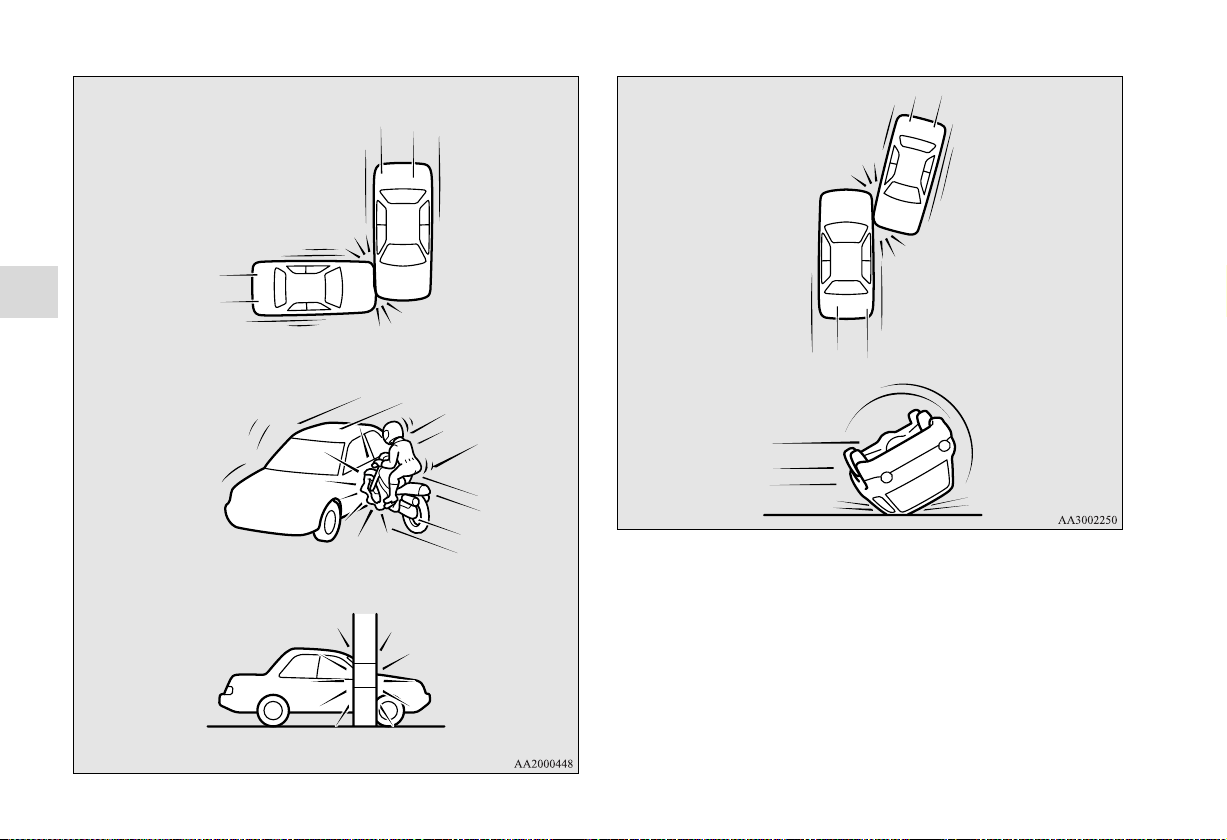
2-56
Seat and restraint systems
2
Side impact in an area away from the passenger compartment
Motorcycle or other similar small vehicle collision with the
side of vehicle
Collision with a utility pole, tree or other narrow object
Oblique side impact
Vehicle rolls onto its side or roof
BK0138600US.book 56 ページ 2011年7月17日 日曜日 午後2時32分
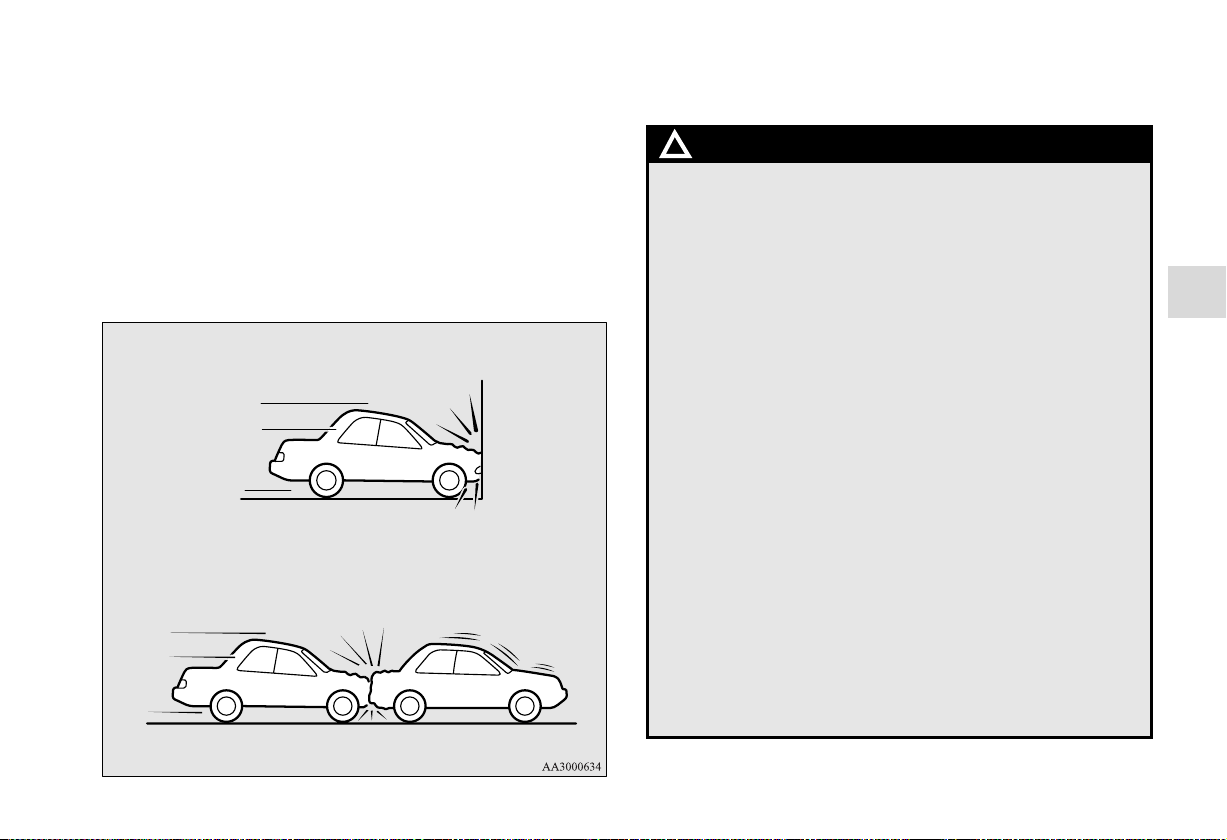
Seat and restraint systems
2-57
2
The side airbag and curtain airbag ARE NOT
DESIGNED TO DEPLOY when …
The side airbag and curtain airbag are not designed to deploy in
situations where they cannot provide protection to the occu-
pants. Typical situations where the side airbags and curtain air-
bags cannot provide protection are shown in the illustrations
below.
Because the side airbags and curtain airbags do not protect the
occupants in all types of collisions, be sure to always wear your
seat belts properly.
SRS servicing
N00408500672
Head-on collision
Rear end collision
WARNING
!
● Any maintenance performed on or near the compo-
nents of the SRS should be performed only by an
authorized Mitsubishi Motors dealer. Do not permit
anyone else to do any service, inspection, mainte-
nance or repair on any SRS components or wiring.
Similarly, no part of the SRS should ever be han-
dled, removed or disposed by anyone except an
authorized Mitsubishi Motors dealer.
Improper work methods on the SRS components or
wiring could result in an accidental airbag deploy-
ment or could make the SRS inoperable. Either of
these situations could result in serious injury or
death.
● Do not modify your steering wheel or any other SRS
component or related vehicle part. For example,
replacement of the steering wheel, or modifications
to the front bumper or body structure can adversely
affect SRS performance and may lead to injury.
● If your vehicle has received any damage, you should
have the SRS inspected by an authorized Mitsubishi
Motors dealer to make sure it is in proper working
order.
● Do not modify your front seats, center pillar or cen-
ter console. Such modifications can adversely affect
SRS performance and may lead to injury.
Also, if you discover any tear or open seam in the
seat fabric near the side airbag, have the seat
inspected by an authorized Mitsubishi Motors
dealer.
BK0138600US.book 57 ページ 2011年7月17日 日曜日 午後2時32分
2-58
Seat and restraint systems
2
N
OTE
● When you transfer ownership of the vehicle to another
person, we urge you to alert the new owner that it is
equipped with the SRS and refer that owner to the applica-
ble sections in this owner’s manual.
● If you decide to junk or scrap your vehicle, we urge you to
first take it to an authorized Mitsubishi Motors dealer so
that the SRS can be made safe for disposal.
● If any of the following parts needs to be modified for use
by a handicapped person, the advanced airbag system will
be greatly affected. Please consult an authorized
Mitsubishi Motors dealer for assistance.
• Driver’s seat
• Front passenger seat
• Front seat belt
• Steering wheel
• Instrument panel
● If you find a crack in or damage to the front pillar,
rear pillar, or roof side rail where the curtain airbag
is located, have the SRS inspected by an authorized
Mitsubishi Motors dealer.
WARNING
!
[For vehicles sold in U.S.A.]
To contact Mitsubishi Motors North America, Inc.
call 1-888-648-7820 or write to:
Mitsubishi Motors North America, Inc.
Customer Relations Department
P. O. Box 6400
Cypress, CA 90630-0064
[For vehicles sold in Canada]
To contact Mitsubishi Motor Sales of Canada, Inc.
call 1-888-576-4878 or write to:
Mitsubishi Motor Sales of Canada, Inc.
Customer Relations Department
P.O. Box 41009
4141 Dixie Road
Mississauga, ON L4W 5C9
[For vehicles sold in Puerto Rico]
To contact Mitsubishi Motor Sales of Caribbean, Inc.
call 1-787-251-8715 or write to:
Mitsubishi Motor Sales of Caribbean, Inc.
Customer Service Department
P.O. Box 192216
SAN JUAN PR 00919-2216
BK0138600US.book 58 ページ 2011年7月17日 日曜日 午後2時32分
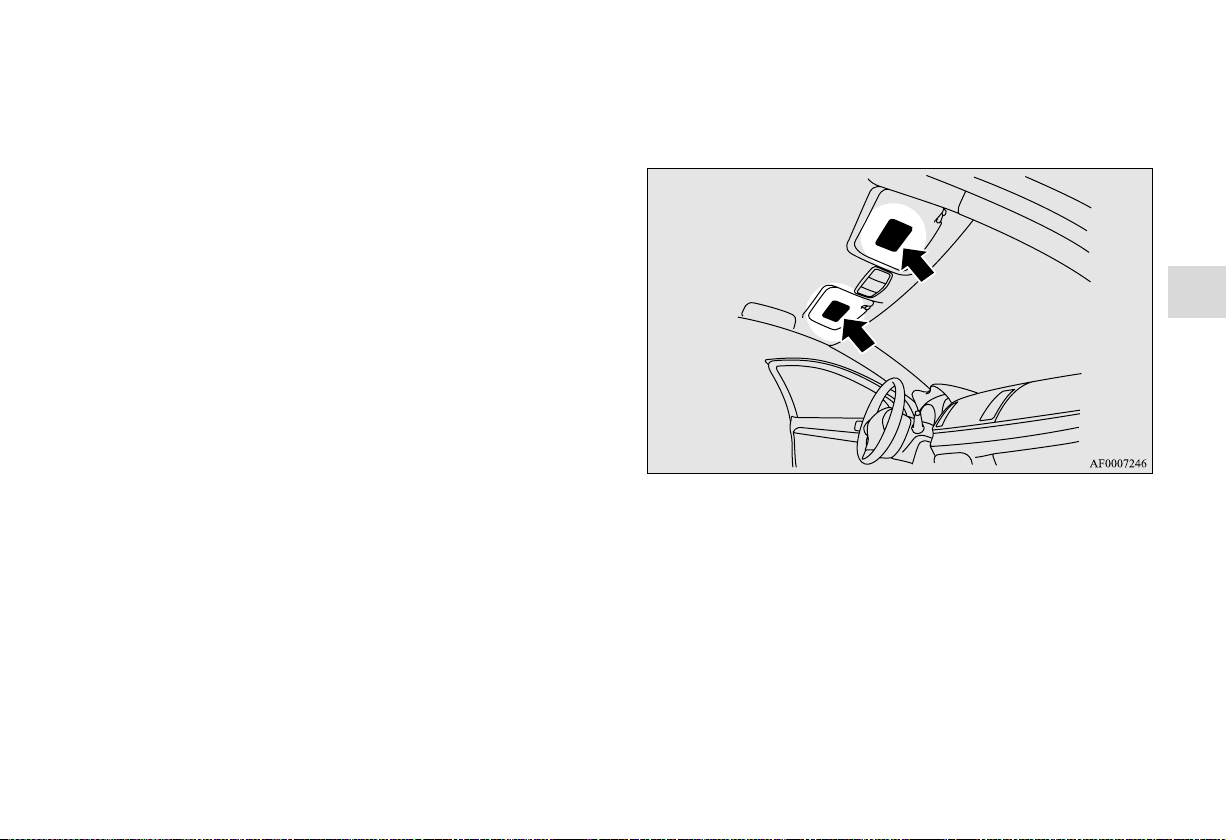
Seat and restraint systems
2-59
2
Warning labels
N00408600341
Occupant restraint warning labels for the SRS are located in
the vehicle as shown in the illustration.
[For vehicles sold in Guam]
To contact Triple J Enterprises Inc.
call (671) 649-3673 or write to:
Triple J Enterprises, Inc.
P.O. Box 6066
TAMUNING
GUAM 96931
[For vehicles sold in Saipan]
To contact Triple J Motors
call (670) 234-7133 or write to:
Triple J Motors
P.O. Box 500487
SAIPAN, MP96950-0487
[For vehicles sold in American Samoa]
To contact Pacific Marketing Inc.
call 684 (699) 9140 or write to:
Pacific Marketing, Inc.
P.O. Box 698
PAGO PAGO,
AMERICAN SAMOA AS, 96799
BK0138600US.book 59 ページ 2011年7月17日 日曜日 午後2時32分
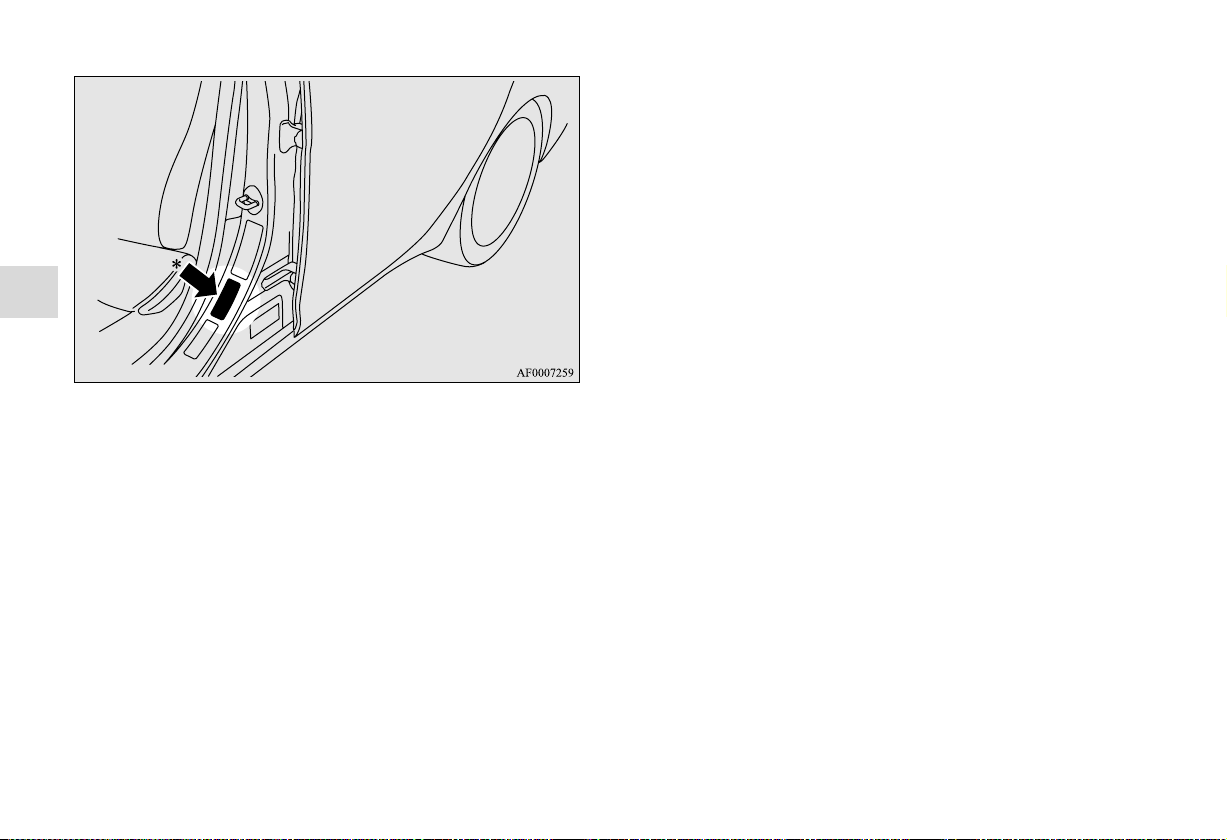
2-60
Seat and restraint systems
2
* - Located in the passenger’s side as well.
BK0138600US.book 60 ページ 2011年7月17日 日曜日 午後2時32分

BK0138600US.book 61 ページ 2011年7月17日 日曜日 午後2時32分

BK0138600US.book 62 ページ 2011年7月17日 日曜日 午後2時32分

3
Features and controls
Break-in recommendations . . . . . . . . . . . . . . . . . . . . . . . . . . . . 3- 2
Keys . . . . . . . . . . . . . . . . . . . . . . . . . . . . . . . . . . . . . . . . . . . . . . 3- 2
Electronic immobilizer (Anti-theft starting system) . . . . . . . . . 3- 5
Keyless entry system (if so equipped) . . . . . . . . . . . . . . . . . . . . 3- 9
Free-hand Advanced Security Transmitter (F.A.S.T.-key)
(if so equipped) . . . . . . . . . . . . . . . . . . . . . . . . . . . . . . . . . . . 3- 17
Door locks . . . . . . . . . . . . . . . . . . . . . . . . . . . . . . . . . . . . . . . . . 3- 51
Power door locks . . . . . . . . . . . . . . . . . . . . . . . . . . . . . . . . . . . . 3- 55
“Child safety locks” for rear door . . . . . . . . . . . . . . . . . . . . . . . 3- 58
Trunk lid . . . . . . . . . . . . . . . . . . . . . . . . . . . . . . . . . . . . . . . . . . 3- 59
Inside emergency trunk lid release . . . . . . . . . . . . . . . . . . . . . . 3- 62
Theft-alarm system . . . . . . . . . . . . . . . . . . . . . . . . . . . . . . . . . . 3- 63
Power windows . . . . . . . . . . . . . . . . . . . . . . . . . . . . . . . . . . . . . 3- 69
Sunroof (if so equipped) . . . . . . . . . . . . . . . . . . . . . . . . . . . . . . 3- 74
Parking brake. . . . . . . . . . . . . . . . . . . . . . . . . . . . . . . . . . . . . . . 3- 77
Steering wheel tilt lock lever . . . . . . . . . . . . . . . . . . . . . . . . . . . 3- 79
Inside day/night rearview mirror . . . . . . . . . . . . . . . . . . . . . . . . 3- 80
Outside rearview mirrors . . . . . . . . . . . . . . . . . . . . . . . . . . . . . . 3- 83
Ignition switch . . . . . . . . . . . . . . . . . . . . . . . . . . . . . . . . . . . . . . 3- 85
Steering wheel lock . . . . . . . . . . . . . . . . . . . . . . . . . . . . . . . . . . 3- 88
Starting and stopping the engine . . . . . . . . . . . . . . . . . . . . . . . . 3- 89
Turbocharger operation (if so equipped) . . . . . . . . . . . . . . . . . . 3- 93
Manual transaxle (if so equipped) . . . . . . . . . . . . . . . . . . . . . . . 3- 94
Continuously variable transmission (CVT) (if so equipped). . . 3- 98
Twin Clutch SST (Sportronic Shift Transmission)
(if so equipped) . . . . . . . . . . . . . . . . . . . . . . . . . . . . . . . . . . . 3- 112
ACD (Active center differential system) (if so equipped). . . . . 3- 132
Electronically controlled 4WD system (if so equipped) . . . . . . 3- 135
All-wheel driving operation. . . . . . . . . . . . . . . . . . . . . . . . . . . . 3- 139
Cautions on handling of all-wheel drive vehicles . . . . . . . . . . . 3- 141
Limited-slip differential (if so equipped) . . . . . . . . . . . . . . . . . 3- 143
Service brake . . . . . . . . . . . . . . . . . . . . . . . . . . . . . . . . . . . . . . . 3- 143
Brake assist system . . . . . . . . . . . . . . . . . . . . . . . . . . . . . . . . . . 3- 145
Hill start assist (vehicles with Twin Clutch SST). . . . . . . . . . . . 3- 146
Anti-lock braking system . . . . . . . . . . . . . . . . . . . . . . . . . . . . . .3- 147
Active Stability Control (ASC) (if so equipped) . . . . . . . . . . . . 3- 151
Power steering system . . . . . . . . . . . . . . . . . . . . . . . . . . . . . . . .3- 156
Cruise control (if so equipped). . . . . . . . . . . . . . . . . . . . . . . . . .3- 157
Tire pressure monitoring system . . . . . . . . . . . . . . . . . . . . . . . .3- 166
Rear-view camera (if so equipped) . . . . . . . . . . . . . . . . . . . . . .3- 172
Instrument cluster. . . . . . . . . . . . . . . . . . . . . . . . . . . . . . . . . . . .3- 178
Multi-information display . . . . . . . . . . . . . . . . . . . . . . . . . . . . .3- 181
Indicator light, warning light,
and information screen display list . . . . . . . . . . . . . . . . . . . .3- 215
Indicators . . . . . . . . . . . . . . . . . . . . . . . . . . . . . . . . . . . . . . . . . . 3- 228
Warning lights . . . . . . . . . . . . . . . . . . . . . . . . . . . . . . . . . . . . . . 3- 228
Information screen display . . . . . . . . . . . . . . . . . . . . . . . . . . . . . 3- 231
Combination headlights and dimmer switch . . . . . . . . . . . . . . . 3- 234
Headlight leveling switch (if so equipped) . . . . . . . . . . . . . . . . 3- 242
Turn signal lever. . . . . . . . . . . . . . . . . . . . . . . . . . . . . . . . . . . . .3- 243
Hazard warning flasher switch. . . . . . . . . . . . . . . . . . . . . . . . . . 3- 244
Front fog light switch (if so equipped). . . . . . . . . . . . . . . . . . . . 3- 245
Wiper and washer switch . . . . . . . . . . . . . . . . . . . . . . . . . . . . . .3- 246
Electric rear window defogger switch . . . . . . . . . . . . . . . . . . . .3- 254
Horn switch . . . . . . . . . . . . . . . . . . . . . . . . . . . . . . . . . . . . . . . .3- 255
Link System (if so equipped) . . . . . . . . . . . . . . . . . . . . . . . . . . . 3- 256
Bluetooth® 2.0 interface (if so equipped) . . . . . . . . . . . . . . . . .3- 256
USB input terminal (if so equipped) . . . . . . . . . . . . . . . . . . . . .3- 283
Sun visors . . . . . . . . . . . . . . . . . . . . . . . . . . . . . . . . . . . . . . . . . . 3- 288
12 V power outlet. . . . . . . . . . . . . . . . . . . . . . . . . . . . . . . . . . . . 3- 290
Interior lights . . . . . . . . . . . . . . . . . . . . . . . . . . . . . . . . . . . . . . .3- 292
Storage spaces . . . . . . . . . . . . . . . . . . . . . . . . . . . . . . . . . . . . . . 3- 296
Cup holder . . . . . . . . . . . . . . . . . . . . . . . . . . . . . . . . . . . . . . . . . 3- 302
Bottle holder . . . . . . . . . . . . . . . . . . . . . . . . . . . . . . . . . . . . . . . .3- 303
Assist grip. . . . . . . . . . . . . . . . . . . . . . . . . . . . . . . . . . . . . . . . . .3- 304
Coat hook (if so equipped). . . . . . . . . . . . . . . . . . . . . . . . . . . . . 3- 304
BK0138600US.book 1 ページ 2011年7月17日 日曜日 午後2時32分
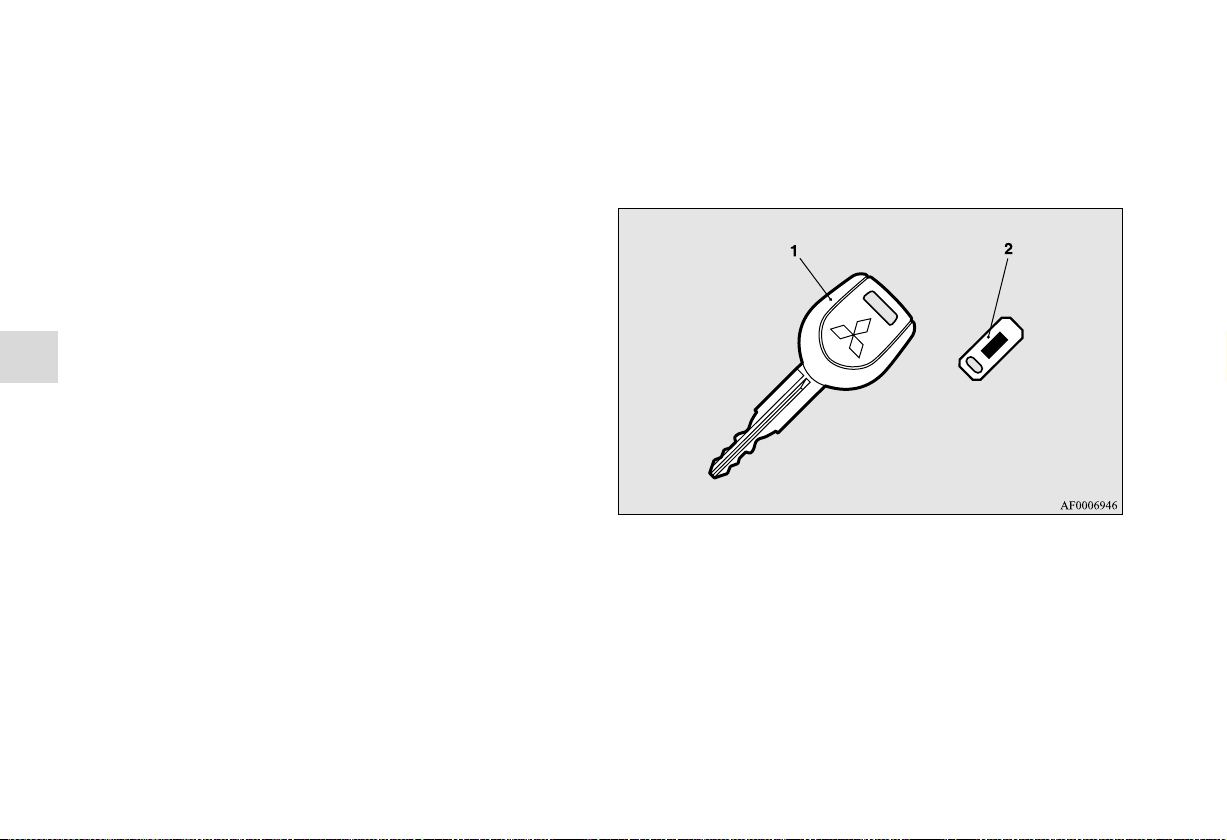
3-2
Features and controls
3
Break-in recommendations
N00508700297
Advanced automobile manufacturing techniques permit you to
operate your new vehicle without requiring a long break-in
period of low-speed driving.
However, you can add to the future performance and economy
of your vehicle by observing the following precautions during
the first 300 miles (500 km).
Drive your vehicle at moderate speeds during the break-in
period.
● Avoid revving the engine. For vehicles with turbocharger,
do not exceed 5,000 rpm for the first 600 miles (1,000
km).
● Avoid rough driving such as fast starts, sudden accelera-
tion, prolonged high-speed driving and sudden braking.
These would have a detrimental effect on the engine and
also cause increased fuel and oil consumption, which
could result in malfunction of the engine components. Be
particularly careful to avoid full acceleration while in low
gear.
● Do not overload the vehicle. Observe the seating capacity
(See “Cargo load precautions” on page 4-14).
● Do not use this vehicle for trailer towing.
Keys
N00508800559
Type 1
Two keys are provided. The keys fit all locks.
Keep one in a safe place as a spare key.
1- Key for the electronic immobilizer
2- Key number plate
BK0138600US.book 2 ページ 2011年7月17日 日曜日 午後2時32分
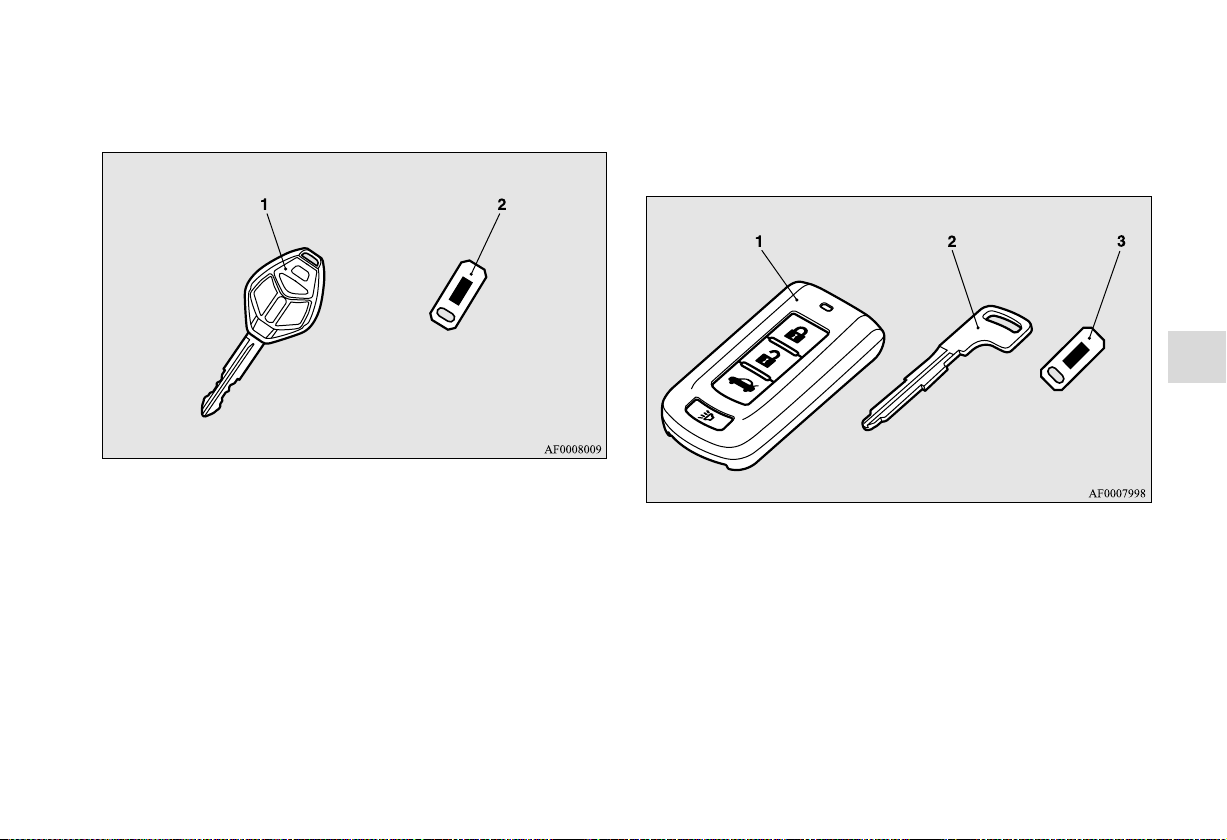
Features and controls
3-3
3
Type 2
Two keys are provided. The keys fit all locks.
Keep one in a safe place as a spare key.
Type 3
Two Free-hand Advanced Security Transmitter (F.A.S.T.-key)
and two emergency keys are provided.
Keep one F.A.S.T.-key and one emergency key in a safe place
together as a set of spare keys.
1- Key for the electronic immobilizer and keyless entry system
2- Key number plate
1- Free-hand Advanced Security Transmitter (F.A.S.T.-key)
(with electronic immobilizer and keyless entry system func-
tion)
2- Emergency key
3- Key number plate
BK0138600US.book 3 ページ 2011年7月17日 日曜日 午後2時32分

3-4
Features and controls
3
N
OTE
● The key is a precision electronic device with a built-in sig-
nal transmitter. Please observe the following in order to
prevent damage.
• Do not leave where it may be exposed to heat caused by
direct sunlight, such as on top of the dashboard.
• Do not take the remote control transmitter apart.
• Do not excessively bend the key or subject it to strong
impacts.
• Keep the remote control transmitter dry.
• Keep away from magnetic objects such as key holders.
• Keep away from devices that produce magnetism, such
as audio systems, computers and televisions.
• Keep away from devices that emit strong electromag-
netic waves, such as cellular phones, wireless devices
and high frequency equipment (including medical
devices).
• Do not clean with ultrasonic cleaners.
• Do not leave the key where it may be exposed to high
temperature or high humidity.
● If you lose your key, to prevent the theft of the vehicle
immediately contact an authorized Mitsubishi Motors
dealer.
If you notify an authorized Mitsubishi Motors dealer of
the key number, they can make a new key. The key num-
ber is stamped on the key number plate. Keep the key
number plate in a safe place separate from the key itself.
● No keys other than those registered in advance can be
used to start the engine.
Refer to “Electronic immobilizer (Anti-theft starting sys-
tem)” on page 3-5.
Refer to “Free-hand Advanced Security Transmitter
(F.A.S.T.-key)”: “Electronic immobilizer (Anti-theft start-
ing system)” on page 3-41.
BK0138600US.book 4 ページ 2011年7月17日 日曜日 午後2時32分

Features and controls
3-5
3
Electronic immobilizer (Anti-theft starting
system)
N00509100689
[For vehicles equipped with the Free-hand Advanced Security
Transmitter (F.A.S.T.-key)]
For information on operations for vehicles equipped with the
Free-hand Advanced Security Transmitter (F.A.S.T.-key), refer
to “Free-hand Advanced Security Transmitter (F.A.S.T.-key)”:
“Electronic immobilizer (Anti-theft starting system)” on page
3-41.
[Except for vehicles equipped with the Free-hand Advanced
Security Transmitter (F.A.S.T.-key)]
The electronic immobilizer is designed to significantly reduce
the possibility of vehicle theft. The purpose of the system is to
immobilize the vehicle if an invalid start is attempted. A valid
start attempt can only be achieved (subject to certain condi-
tions) using a key “registered” to the immobilizer system.
All of the keys provided with your new vehicle have been pro-
grammed to the vehicle’s electronics.
BK0138600US.book 5 ページ 2011年7月17日 日曜日 午後2時32分
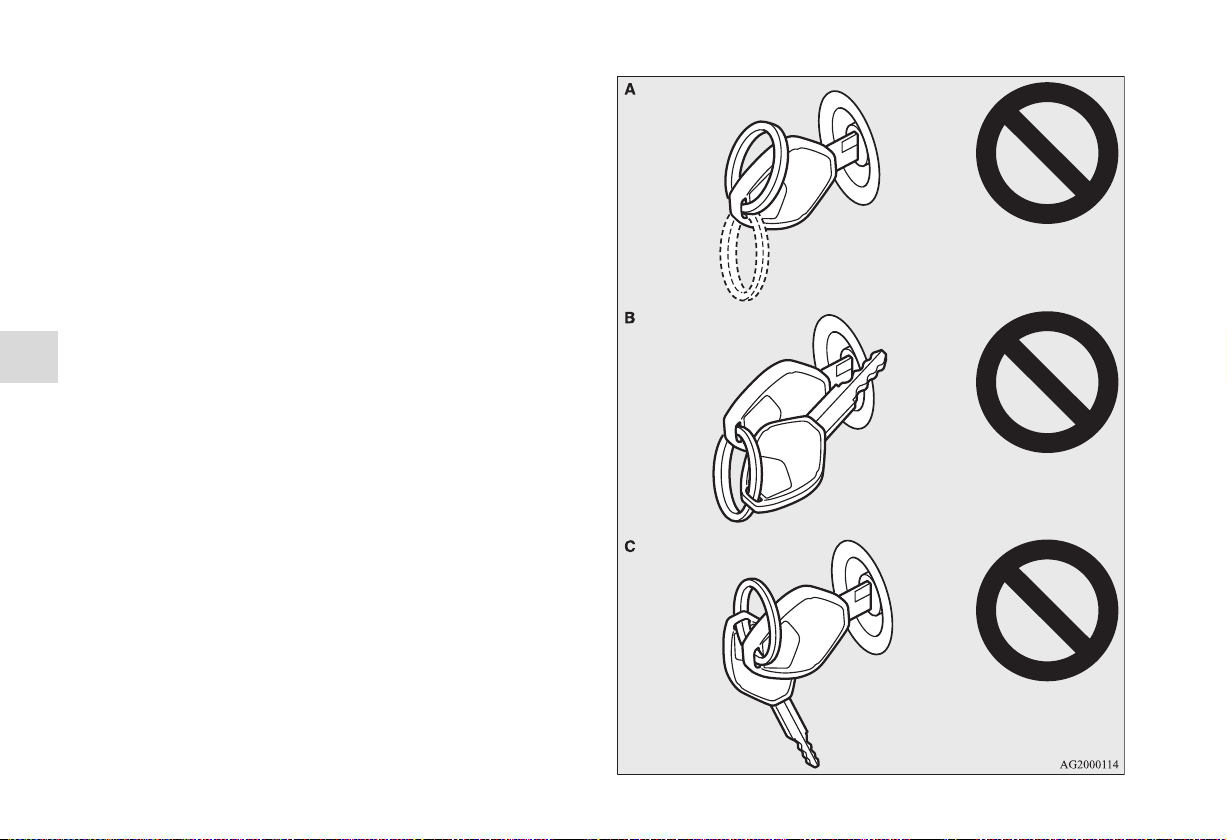
3-6
Features and controls
3
N
OTE
● Do not attach additional keys or accessories to the ignition
key. Such objects could prevent the driver’s knee airbag
from inflating normally. Refer to “Deployment of front
airbags” on page 2-46.
● In the following cases, the vehicle may not be able to rec-
ognize the registered ID code from the key. This means
the engine will not start even when the key is turned to the
“START” position.
• When the key contacts a key ring or other metallic or
magnetic object (Type A)
• When the key grip contacts metal of another key (Type
B)
• When the key contacts or is close to other immobilizer
keys (including keys of other vehicles) (Type C)
● In cases like the above, move the offending object(s) away
from the key and turn the key back to the “ACC” or
“LOCK” position. Then try to start the engine again. If the
engine does not start, contact an authorized Mitsubishi
Motors dealer.
BK0138600US.book 6 ページ 2011年7月17日 日曜日 午後2時32分
Features and controls
3-7
3
N
OTE
● The key may not operate properly when it is near an
object or facility that emits strong electromagnetic waves.
● Electronic immobilizer is not compatible with commer-
cially available remote starting systems. Use of commer-
cially available remote starting systems may result in
vehicle starting problems and a loss of security protection.
● A system failure is suspected when the ignition switch is
turned to the “START” position, and the engine does not
start. In such a case, contact an authorized Mitsubishi
Motors dealer.
Replacement keys
Only keys that have been programmed to the vehicle’s elec-
tronics can be used to start the vehicle.
If you lose the key, you can order a key from your authorized
Mitsubishi Motors dealer by referring to the key number.
To prevent vehicle theft, the ID code for the vehicle keys must
be changed.
Take your vehicle and all remaining keys to your authorized
Mitsubishi Motors dealer to have your ID code changed.
Additional keys
To add a key, you need to register the ID code to the vehicle.
Registering the ID code can be done by your authorized
Mitsubishi Motors dealer. Or it can be done by yourself (except
for vehicles sold in Canada).
For you to register the ID code yourself, follow the “Customer
key programming” procedure below.
If you choose to have your authorized Mitsubishi Motors
dealer register the ID code, take your vehicle and all remaining
keys to your authorized Mitsubishi Motors dealer.
N
OTE
● You are provided with two keys, but you may register up
to eight keys.
Customer key programming (Except for vehicles
sold in Canada)
N00562200083
You can program new keys to the system if you have two valid
(already registered) keys and blank (not registered) immobi-
lizer key (specially cut for your vehicle at your Mitsubishi
Motors dealer) by doing the following:
WARNING
!
● Do not make any alterations or additions to the
immobilizer system. Alterations or additions could
cause failure of the immobilizer.
BK0138600US.book 7 ページ 2011年7月17日 日曜日 午後2時32分
3-8
Features and controls
3
1. Insert the first valid key into the ignition switch and turn
the key to the “ON” position for 5 seconds.
2. Turn the key to the “LOCK” position and remove the first
key.
3. Within 30 seconds of turning the first key to the “LOCK”
position, insert the second valid key into the ignition and
turn it to the “ON” position. About 10 seconds later, the
immobilizer display will start to blink.
4. When the immobilizer display starts blinking, turn the
second valid key to the “LOCK” position and remove it.
Within 30 seconds after doing so, insert a blank immobi-
lizer key into the ignition switch and turn it to the “ON”
position. Perform this operation no more than 30 seconds
after the immobilizer display starts blinking. When regis-
tration of the ID code is complete, the immobilizer display
will come on for 3 seconds then go off. If an error occurs,
the immobilizer display will go off during the procedure.
5. If you wish to register another key, perform the process
again from step 1.
N
OTE
● Perform the operation when the interrupt display screen is
not showing. The interrupt display screen may prevent
you from seeing the immobilizer display.
● It is not possible to register a key if:
• the immobilizer display goes off during the procedure
• the immobilizer display does not come on within 30 sec-
onds after turning the ignition switch to the “ON” posi-
tion with a blank immobilizer key
● The procedure will be terminated automatically if:
• a period of 30 seconds or longer elapses from the
moment when the first key is turned to the “LOCK”
position to the moment when the second key is turned to
the “ON” position
• a period of 30 seconds or longer elapses from the
moment when the second key is turned to the “LOCK”
position to the moment when the blank immobilizer key
is turned to the “ON” position
● To use the new remote control transmitters, it is necessary
to register the key with both the electronic immobilizer
and keyless entry system.
Also refer to “Keyless entry system: Customer remote
control transmitter programming” on page 3-13.
BK0138600US.book 8 ページ 2011年7月17日 日曜日 午後2時32分
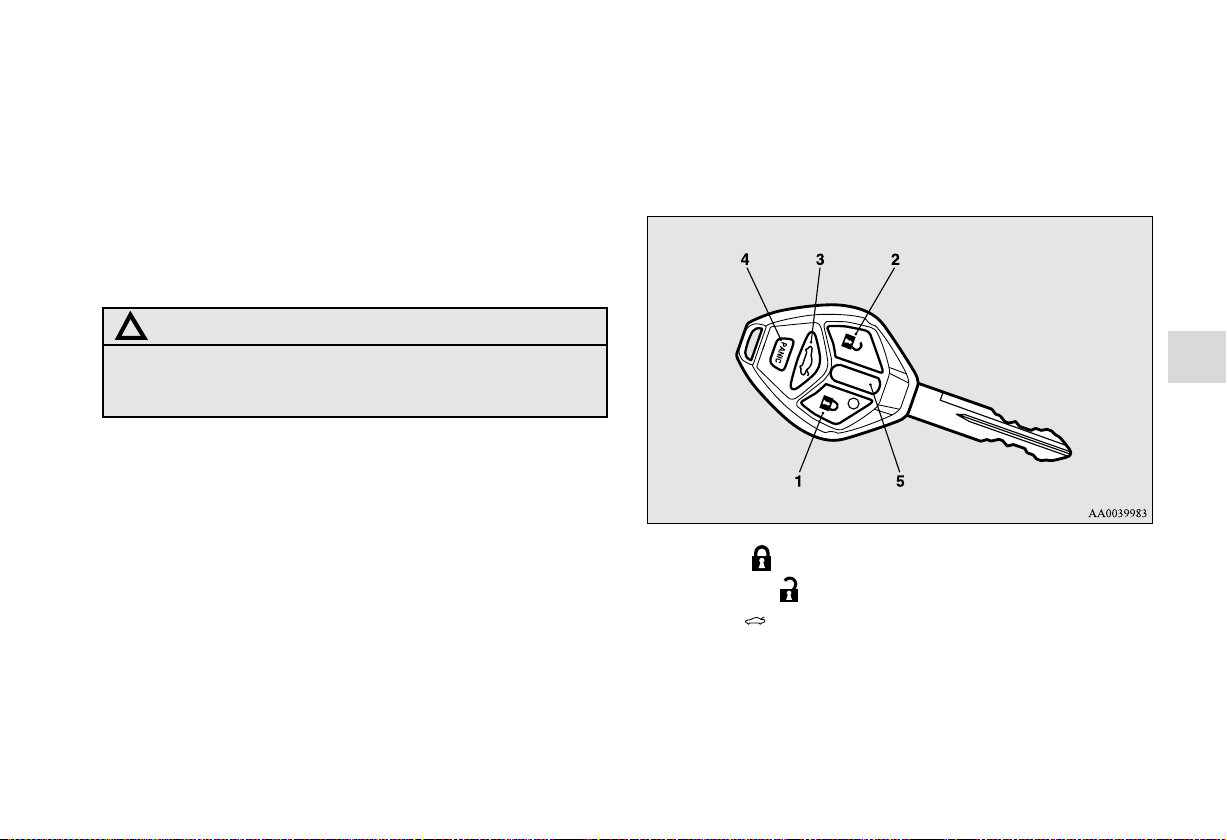
Features and controls
3-9
3
General information
Your electronic immobilizer operates on a radio frequency sub-
ject to Federal Communications Commission (FCC) Rules
(For vehicles sold in U.S.A.) and Industry Canada Rules (For
vehicles sold in Canada). This device complies with part 15 of
the FCC Rules and RSS-Gen of the Industry Canada Rules.
Operation is subject to the following two conditions.
● This device may not cause harmful interference.
● This device must accept any interference received, includ-
ing interference that may cause undesired operation.
Keyless entry system (if so equipped)
N00509000763
Press the remote control transmitter buttons to lock or unlock
the doors and to open the trunk lid.
It can also help you signal for attention by setting off the panic
alarm.
To lock the doors
N00542700024
Press the LOCK button (1) to lock all the doors.
The turn signal lights will also blink once.
CAUTION
!
● Changes or modifications not expressly approved by
the manufacturer for compliance could void the
user’s authority to operate the equipment.
1-
LOCK ( ) button
2-
UNLOCK ( ) button
3-
Trunk ( ) button
4- PANIC button
5- Indicator light
BK0138600US.book 9 ページ 2011年7月17日 日曜日 午後2時32分
3-10
Features and controls
3
N
OTE
● If you press the LOCK button (1) twice quickly, the horn
will sound once.
To unlock the doors
N00543300072
Press the UNLOCK button (2) to unlock the driver’s door only.
Within about 2 seconds, press the UNLOCK button one more
time to unlock all the doors.
The dome light will turn on for 30 seconds. The turn signal
lights will also blink twice.
Except for vehicles with the rear seat arm rest, the front side-
marker and parking lights will also turn on for about 30 sec-
onds.
Refer to “Welcome light” on page 3-240.
N
OTE
● On a vehicle equipped with a Mitsubishi Multi-Communi-
cation System, the functions can be adjusted on the
screen. For details, refer to a separate operation manual.
● The door unlock function can be set so that all doors
unlock when the UNLOCK button (2) is pressed once.
Refer to “Setting of door unlock function” on page 3-11.
To open the trunk lid
N00543400015
Press the trunk button (3) twice within about 5 seconds and the
trunk lid will be opened. The trunk lid must be closed manually
after it has been opened.
Answerback function
N00543500032
Setting of the horn, turn signal lights and buzzer of the keyless
entry system answerback function can be changed as required.
This is done with the key removed from the ignition switch.
N
OTE
● The answerback function does not operate when the key is
in the ignition switch or any doors is opened.
Horn deactivation/reactivation
The horn answerback function can be set to the following three
conditions.
Each time the horn answerback function is set, a chime will
sound to tell you the condition of the answerback function.
1. Remove the key from the ignition switch.
2. Open the driver’s door and turn the combination head-
lights and dimmer switch to the “OFF” position.
3. Press the LOCK button (1) for 4 to 10 seconds and press
the UNLOCK button (2) during this time.
Number of
chimes
Condition
One chime The horn will not sound.
Two chimes The horn will sound.
Four chimes
The horn will sound if the LOCK button is
pressed twice quickly.
BK0138600US.book 10 ページ 2011年7月17日 日曜日 午後2時32分
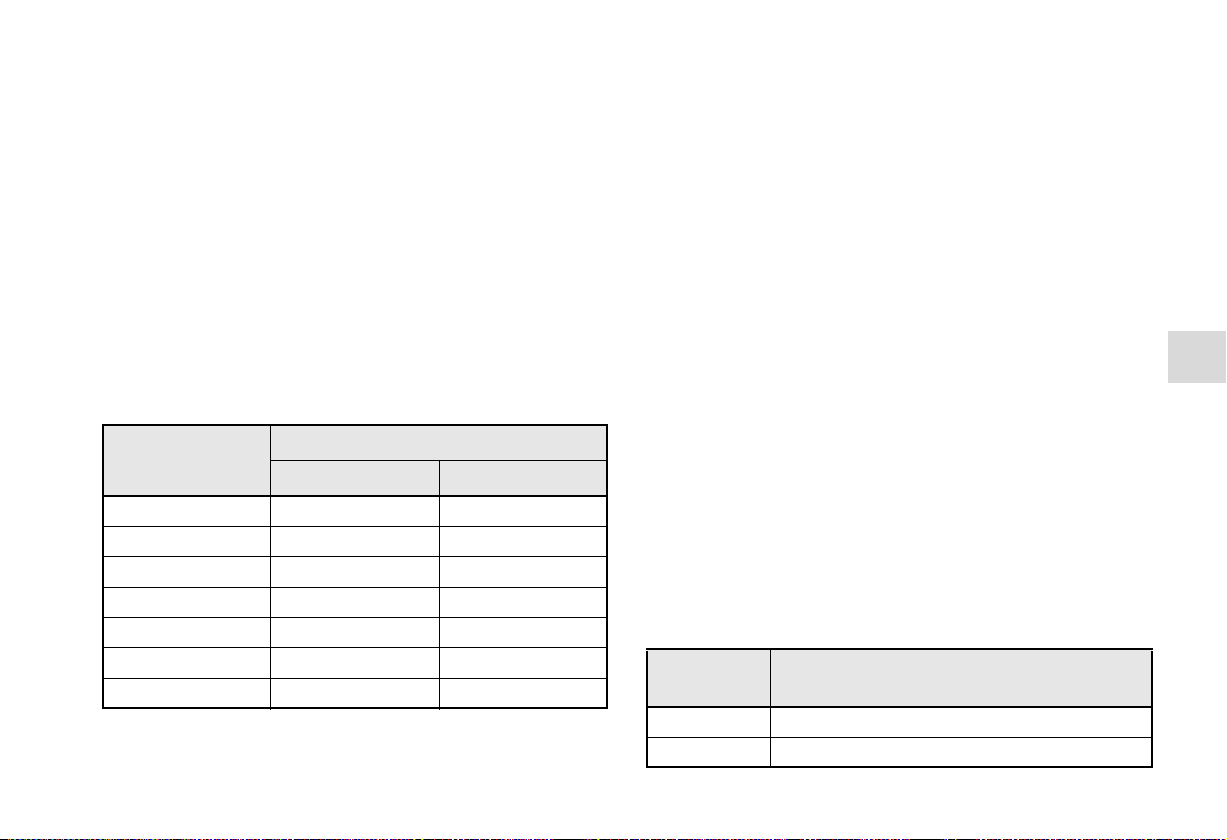
Features and controls
3-11
3
4. Release in sequence the UNLOCK and LOCK buttons
within 10 seconds of pressing the UNLOCK button in step
3.
N
OTE
● On a vehicle equipped with a Mitsubishi Multi-Communi-
cation System, the functions can be adjusted on the
screen. For details, refer to a separate operation manual.
Changing the setting of the turn signal lights answer-
back function
The turn signal lights answerback function can be set to the fol-
lowing seven conditions.
Each time the turn signal lights answerback function is set, a
chime will sound to tell you the condition of the answerback
function.
1. Remove the key from the ignition switch.
2. Open the driver’s door and turn the combination head-
lights and dimmer switch to the “OFF” position.
3. Press the UNLOCK button (2) for 4 to 10 seconds and
press the LOCK button (1) during this time.
4. Release in sequence the UNLOCK and LOCK buttons
within 10 seconds of pressing the LOCK button in step 3.
N
OTE
● On a vehicle equipped with a Mitsubishi Multi-Communi-
cation System, the functions can be adjusted on the
screen. For details, refer to a separate operation manual.
Buzzer deactivation/reactivation
The buzzer answerback function can be turned ON or OFF as
required.
N
OTE
● On a vehicle equipped with a Mitsubishi Multi-Communi-
cation System, the functions can be adjusted on the
screen. For details, refer to a separate operation manual.
Setting of door unlock function
N00543600033
The door unlock function can be set to the following two con-
ditions.
Each time the door unlock function is set, a chime will sound to
tell you the condition of the door unlock function.
Number of chimes
Condition
To lock To unlock
One chime One flash Two flashes
Two chimes One flash No flash
Three chimes No flash Two flashes
Four chimes Two flashes One flash
Five chimes No flash One flash
Six chimes Two flashes No flash
Seven chimes No flash No flash
Number of
chimes
Condition
One chime All doors unlock
Two chimes Driver’s door unlock only
BK0138600US.book 11 ページ 2011年7月17日 日曜日 午後2時32分

3-12
Features and controls
3
1. Remove the key from the ignition switch.
2. Open the driver’s door and turn the combination head-
lights and dimmer switch to the “OFF” position.
3. Press the LOCK button (1) for 4 to 10 seconds and press
the UNLOCK button (2) during this time.
4. Release in sequence the LOCK and UNLOCK buttons
within 10 seconds of pressing the LOCK button in step 3.
N
OTE
● On a vehicle equipped with a Mitsubishi Multi-Communi-
cation System, the functions can be adjusted on the
screen. For details, refer to a separate operation manual.
Using the panic alarm
N00543700018
If you are near your vehicle and feel threatened, you may acti-
vate the alarm to call attention as follows:
1. Press the PANIC button (4) for more than 1 second.
2. The headlights will blink on and off and the horn will
sound intermittently for about 3 minutes.
3. To turn off the alarm, press any button on the remote con-
trol transmitter.
Replacement remote control transmitters
N00543800019
Only remote control transmitters programmed with the vehi-
cle’s electronics can lock or unlock all doors.
If you lose the remote control transmitter, you can order a
remote control transmitter from your authorized Mitsubishi
Motors dealer by referring to the key number.
To prevent vehicle theft, the ID codes for all the remote control
transmitters except the one for the lost key must be pro-
grammed again.
Take your vehicle and all the remaining remote control trans-
mitters to your authorized Mitsubishi Motors dealer to have
your ID codes programmed again.
BK0138600US.book 12 ページ 2011年7月17日 日曜日 午後2時32分

Features and controls
3-13
3
Additional remote control transmitters
N00543900010
To add a remote control transmitter, you must already have one
registered remote control transmitter.
Registering the ID code can be done by yourself or by your
authorized Mitsubishi Motors dealer. For you to register the ID
code yourself, follow the “Customer remote control transmitter
programming” procedure below.
If you choose to have your authorized Mitsubishi Motors
dealer register the ID code, take your vehicle and all remaining
keys to your authorized Mitsubishi Motors dealer.
N
OTE
● You are provided with two remote control transmitters,
but you may register up to eight remote control transmit-
ters.
Customer remote control transmitter program-
ming
N00544000050
You can program new remote control transmitters to the system
if you have one valid (already registered) remote control trans-
mitter by doing the following:
1. Have available all (current and new) remote control trans-
mitters you wish to register.
2. With a valid (already registered) remote control transmit-
ter, press the UNLOCK button (2) for 4 to 10 seconds.
Then press and hold the LOCK button (1).
3. Within 10 seconds of pressing the LOCK button, release
the LOCK and UNLOCK buttons in sequence.
At this time, ID codes for all remote control transmitters
except for the transmitter used in steps 2 and 3 are erased
and the answerback function (door is locked and
unlocked) informs you that the registration mode has been
activated.
4. Within 60 seconds after step 3, complete the following ID
code registration operation using the next remote control
transmitter you wish to register within 4 seconds.
i. Press both the LOCK and UNLOCK buttons for 2 sec-
onds.
ii. Release both the LOCK and UNLOCK buttons for 1
second.
iii. Press the UNLOCK button.
The answerback function informs you that the ID code
registration of the transmitter is completed.
5. To register the ID codes of additional remote control
transmitters, repeat step 4 within 60 seconds after step 4.
BK0138600US.book 13 ページ 2011年7月17日 日曜日 午後2時32分
3-14
Features and controls
3
6. If no ID code of a remote control transmitter is registered
within 60 seconds after step 4, the registration mode is
canceled and the normal mode returns.
N
OTE
● For verification purposes, try to lock and unlock the doors
after the registration is completed.
● The indicator light (5) comes on each time a button is
pressed.
● The keyless entry system does not work if the key is in the
ignition switch.
● The remote control transmitter can be used from about 40
feet (12 m) away. However, this distance may change if
your vehicle is near a TV transmitting tower, a power sta-
tion, or a radio station.
● If the UNLOCK button (2) is pressed when all doors are
locked and no doors are opened within about 30 seconds,
the doors will automatically re-lock.
On a vehicle equipped with a Mitsubishi Multi-Communi-
cation System, the functions can be adjusted on the
screen. For details, refer to a separate operation manual.
● If the following conditions are observed after pressing the
buttons on the remote control transmitter, the battery in
the remote control transmitter may need to be replaced.
• The doors cannot be locked or unlocked.
• The trunk lid cannot be opened.
• The panic alarm cannot be operated.
• The indicator light (5) is dim or does not come on.
● If you lose your remote control transmitter, please contact
an authorized Mitsubishi Motors dealer for a replacement.
● If you wish to obtain an additional remote control trans-
mitter, please contact an authorized Mitsubishi Motors
dealer. A maximum of eight remote control transmitters
can be programmed for your vehicle.
● To use the new remote control transmitters, it is necessary
to register the key with both the electronic immobilizer
and keyless entry system.
Also refer to “Electronic immobilizer (Anti-theft starting
system): Customer key programming” on page 3-7.
General information
N00546100068
Your keyless entry system operates on a radio frequency sub-
ject to Federal Communications Commission (FCC) Rules
(For vehicles sold in U.S.A.) and Industry Canada Rules (For
vehicles sold in Canada). This device complies with Part 15 of
the FCC Rules and RSS-Gen of the Industry Canada Rules.
Operation is subject to the following two conditions.
● This device may not cause harmful interference.
● This device must accept any interference received, includ-
ing interference that may cause undesired operation.
CAUTION
!
● Changes or modifications not expressly approved by
the manufacturer for compliance could void the
user’s authority to operate the equipment.
BK0138600US.book 14 ページ 2011年7月17日 日曜日 午後2時32分
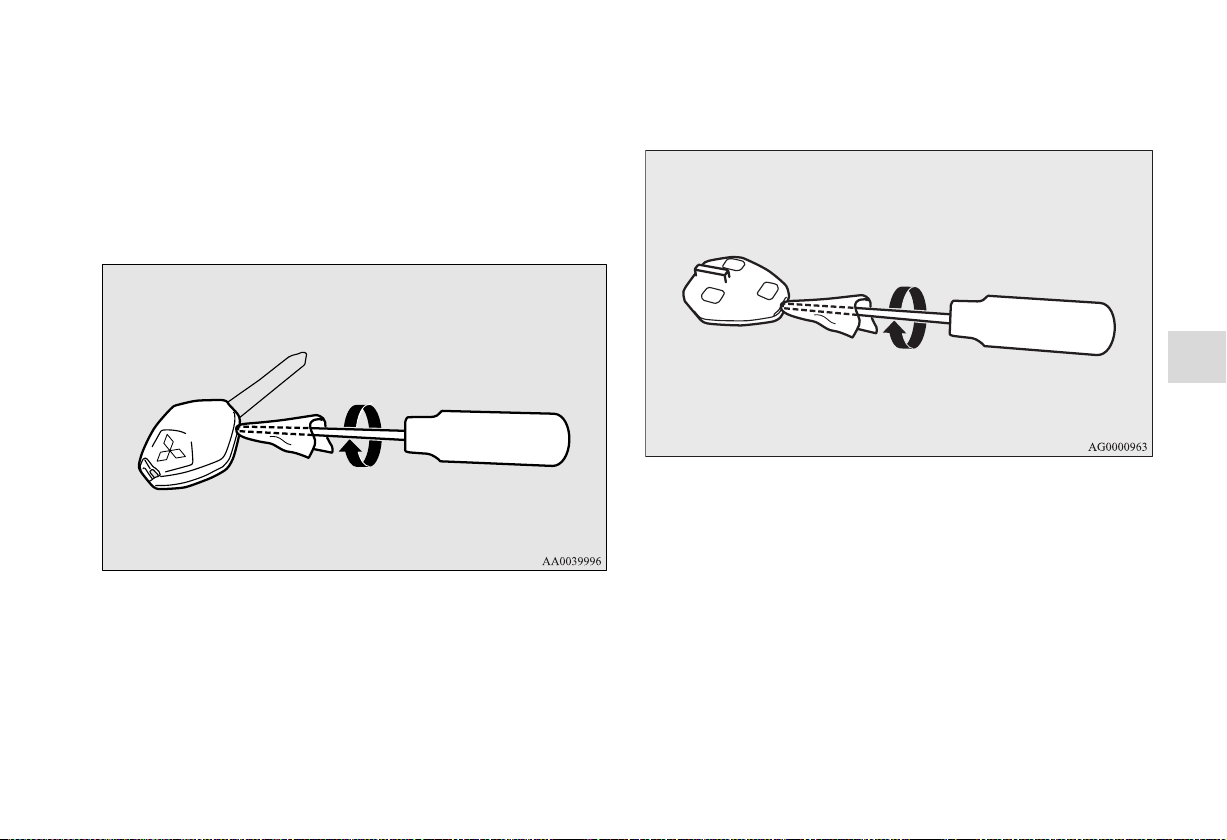
Features and controls
3-15
3
Procedure for replacing the remote control trans-
mitter battery
N00544100077
1. Before replacing the battery, remove static electricity from
your body by touching a metal grounded object.
2. With the Mitsubishi mark facing you, insert the cloth-cov-
ered tip of a flat blade screwdriver into the notch in the
remote control transmitter case and use it to open the case.
N
OTE
● Be sure to perform the procedure with the Mitsubishi
mark facing you. If the Mitsubishi mark is not facing you
when you open the remote control transmitter case, the
buttons may come out.
3. Remove the remote control transmitter from the remote
control transmitter case. Then, open the remote control
transmitter using the method described in step 2.
4. Remove the old battery.
BK0138600US.book 15 ページ 2011年7月17日 日曜日 午後2時32分
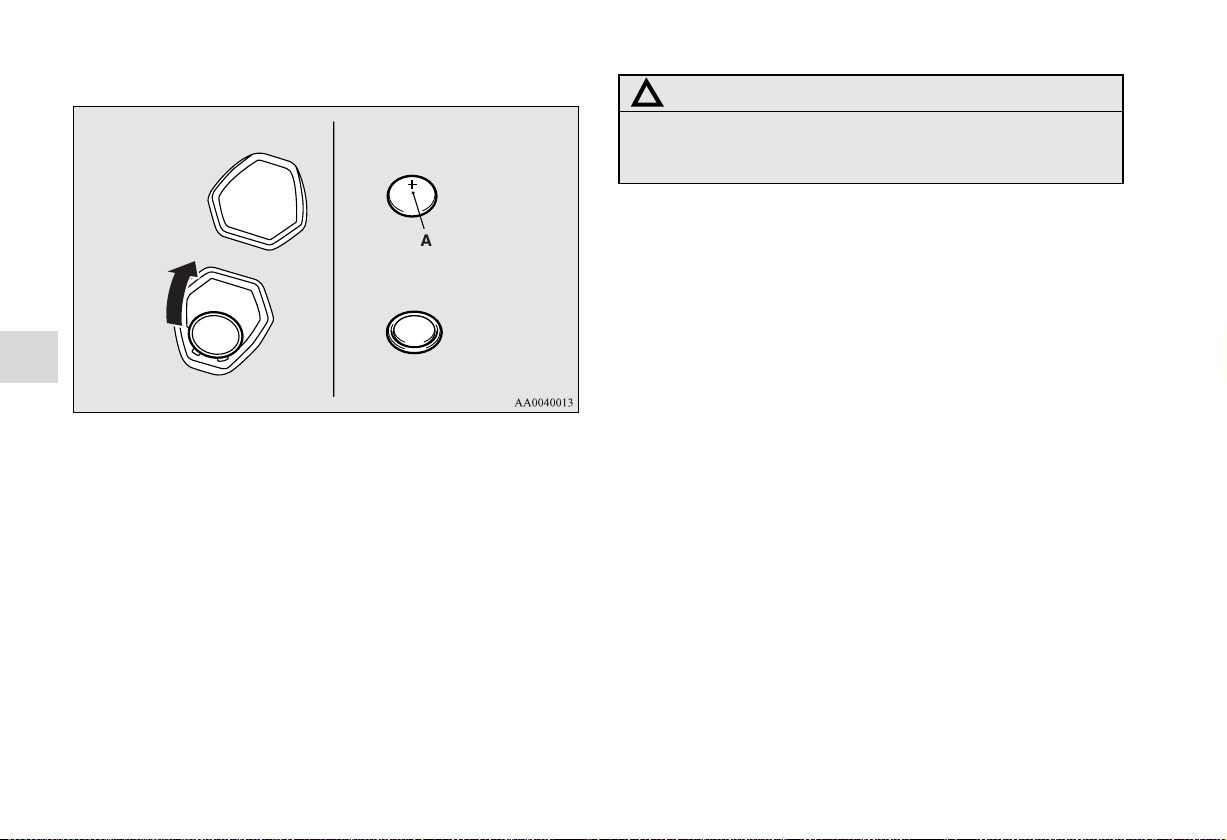
3-16
Features and controls
3
5. Install a new battery with the + side (A) down.
6. Close the remote control transmitter firmly.
7. Place the remote control transmitter in the remote control
transmitter case, then securely close the remote control
transmitter case.
8. Check the keyless entry system to see that it works.
N
OTE
● You may purchase a replacement battery at an electric
appliance store.
● Your authorized Mitsubishi Motors dealer can replace the
battery for you if you prefer.
Coin type battery
CR1620
+ side
- side
CAUTION
!
● When the remote control transmitter case is opened,
be careful to keep water, dust, etc. out. Also, do not
touch the internal components.
BK0138600US.book 16 ページ 2011年7月17日 日曜日 午後2時32分
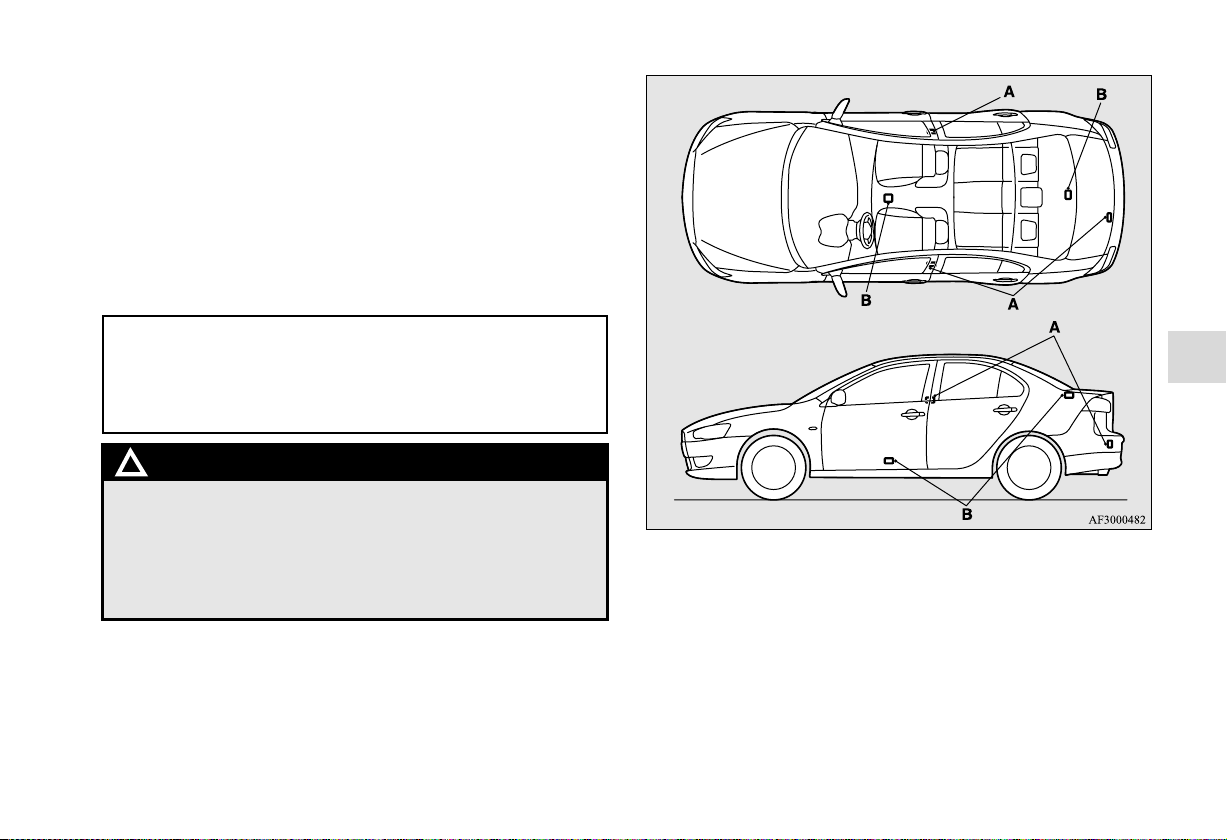
Features and controls
3-17
3
Free-hand Advanced Security Transmitter
(F.A.S.T.-key)
(if so equipped)
N00503100052
The Free-hand Advanced Security Transmitter (F.A.S.T.-key)
enables the doors to be locked and unlocked, the trunk lid to be
opened, and the engine to be started simply by carrying it.
The F.A.S.T.-key can also be used as the remote control trans-
mitter of the keyless entry system.
Refer to “Free-hand Advanced Security Transmitter (F.A.S.T.-
key)”: “Keyless entry system” on page 3-44.
The F.A.S.T.-key must be carried by the driver. The F.A.S.T.-
key is required for vehicle operations such as locking and
unlocking the doors, opening the trunk lid, and starting the
engine. When leaving the vehicle, make sure you are carrying
the F.A.S.T.-key and then lock the vehicle.
WARNING
!
● Individuals who use implantable pacemakers or
implantable cardioverter-defibrillators should keep
away from the external and internal transmitters.
The electromagnetic waves used in the F.A.S.T.-key
may affect the operation of implantable pacemakers
and implantable cardioverter-defibrillators.
A- External transmitter
B- Internal transmitter
BK0138600US.book 17 ページ 2011年7月17日 日曜日 午後2時32分
3-18
Features and controls
3
The operations possible with the F.A.S.T.-key can be
modified as stated below. (Keyless entry operations are
possible.) For details, contact an authorized Mitsubishi
Motors dealer.
• Enabling only the locking and unlocking of the doors
and the opening of the trunk lid
• Enabling only the starting of the engine
• Deactivating the F.A.S.T.-key
N
OTE
● The F.A.S.T.-key uses weak electromagnetic waves.
In cases such as the following, operation may be improper
or unstable.
• The vehicle is near a facility that emits strong electro-
magnetic waves, such as a TV transmitting tower, a
power station, a radio station or an airport
• The key is carried together with other communication
devices such as cellular phones or radios, or electrical
appliances such as computers
• The F.A.S.T.-key touches or is covered by a metal object
• A keyless entry system is being used nearby
• The battery of the F.A.S.T.-key is run down
• The vehicle is in a location with strong electromagnetic
waves or noise
Use the emergency key in such circumstances.
Refer to “To operate using the emergency key” on page 3-
33.
● The F.A.S.T.-key is constantly performing reception oper-
ations in its communication with the vehicle. This means
that the battery is always running down, regardless of how
often the F.A.S.T.-key is used. The battery life is about 1
to 3 years, depending on the usage conditions.
● Since the F.A.S.T.-key is constantly performing reception
operations, the reception of strong electromagnetic waves
can accelerate the running down of the battery. Do not
place near electrical appliances such as televisions or
computers.
WARNING
!
● Individuals using other electrical medical appara-
tuses besides implantable pacemakers and implant-
able cardioverter-defibrillators should check with
the manufacturer of the apparatus to confirm the
effect of the electromagnetic waves used by the
F.A.S.T.-key. The electromagnetic waves may affect
the operations of the electro-medical apparatus.
BK0138600US.book 18 ページ 2011年7月17日 日曜日 午後2時32分
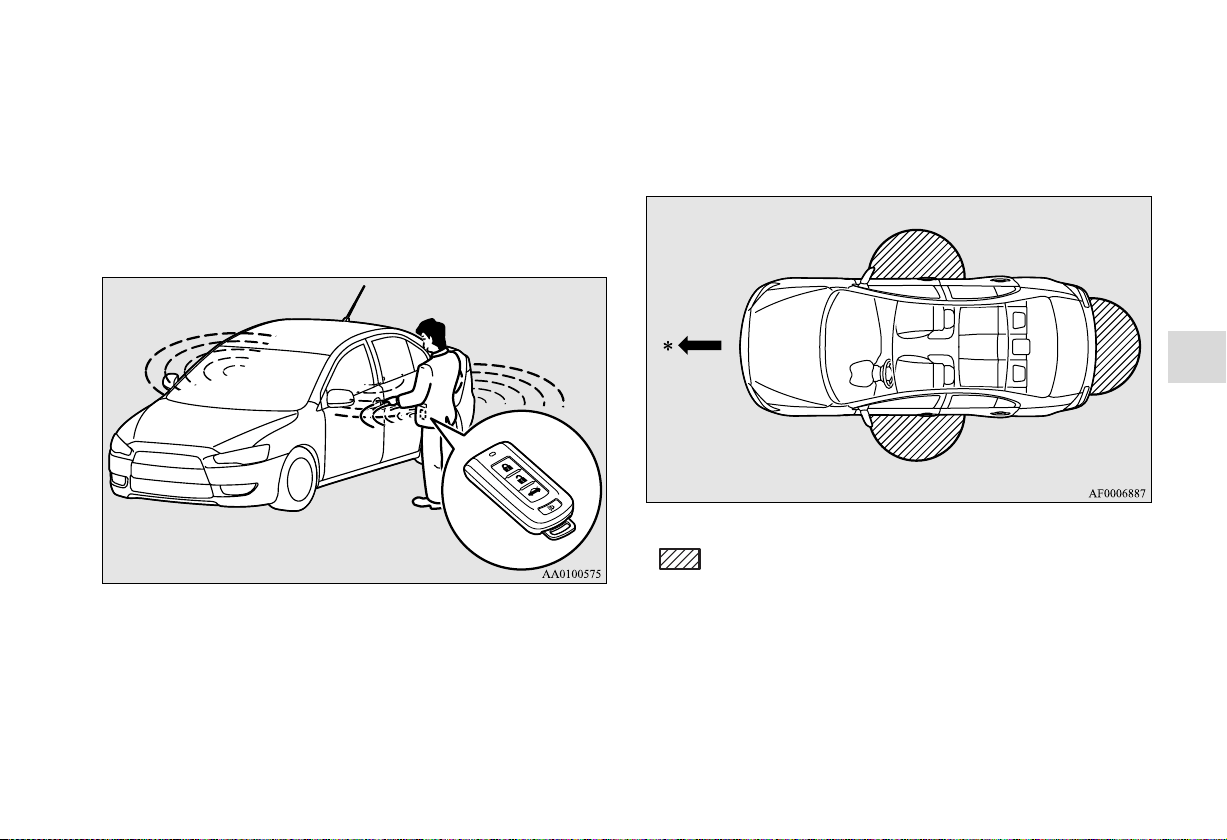
Features and controls
3-19
3
Operating range of the F.A.S.T.-key
N00503200112
When a person enters the operating range of the F.A.S.T.-key
while carrying the F.A.S.T.-key and presses the driver’s or
front passenger’s door lock/unlock switch or the trunk lid
OPEN switch, verification of the ID code is performed.
The F.A.S.T.-key enables the doors to be locked and unlocked,
the trunk lid to be opened and the engine to be started only
when the ID codes of the vehicle and F.A.S.T.-key match.
N
OTE
● When the battery of the F.A.S.T.-key has run down or
there are strong electromagnetic waves or noise in the
area, the operating range could decrease or operations
could become unstable.
Operating range for locking and unlocking the doors
and for opening the trunk lid
The operating range is within about 2.3 feet (70 cm) of the
driver’s and front passenger’s door lock/unlock switches, and
the center of the trunk lid.
*: Front of the vehicle
:
Operating range
BK0138600US.book 19 ページ 2011年7月17日 日曜日 午後2時32分
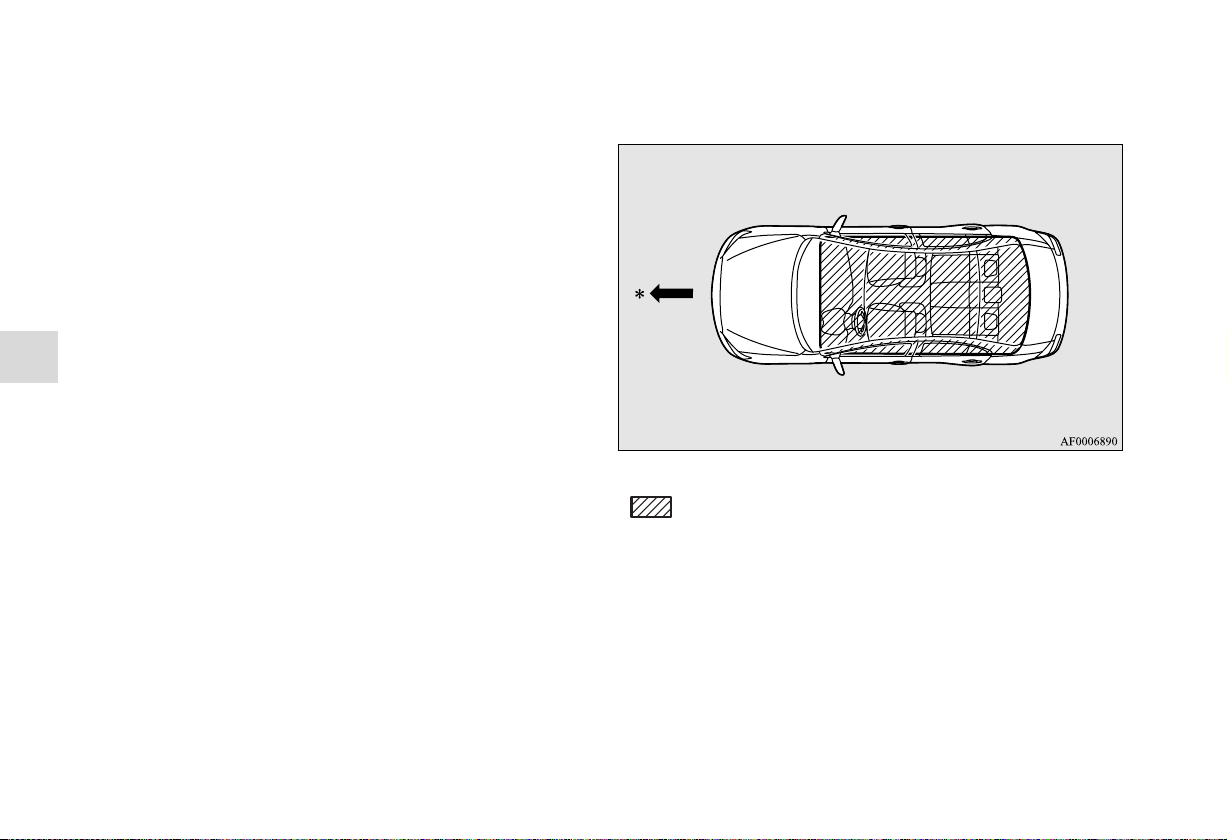
3-20
Features and controls
3
N
OTE
● Only the F.A.S.T.-key that is detectable by the doors and
the trunk lid can lock and unlock the doors and open the
trunk lid.
● The system may not operate if the F.A.S.T.-key is too
close to the windshield, door windows or trunk lid.
● Even if the F.A.S.T.-key is within about 2.3 feet (70 cm)
of the driver’s or front passenger’s door lock/unlock
switch and center of the trunk lid, the system may not
operate if the key is close to the ground or in a high posi-
tion.
● If the F.A.S.T.-key is within the operating range, even a
person not carrying the F.A.S.T.-key can lock and unlock
the doors or open the trunk lid by pressing the driver’s or
front passenger’s door lock/unlock switch or the trunk lid
OPEN switch.
Operating range for starting the engine
N00503300025
The operating range is the interior of the vehicle.
N
OTE
● Even if the F.A.S.T.-key is within the operating range, it
may not be possible to start the engine if the key is in a
storage space such as the glove compartment, on top of
the instrument panel, or in the door pocket or trunk com-
partment.
● Even if the F.A.S.T.-key is outside the vehicle, it may be
possible to start the engine if the key is too close to a door
or door window.
*: Front of the vehicle
:
Operating range
BK0138600US.book 20 ページ 2011年7月17日 日曜日 午後2時32分
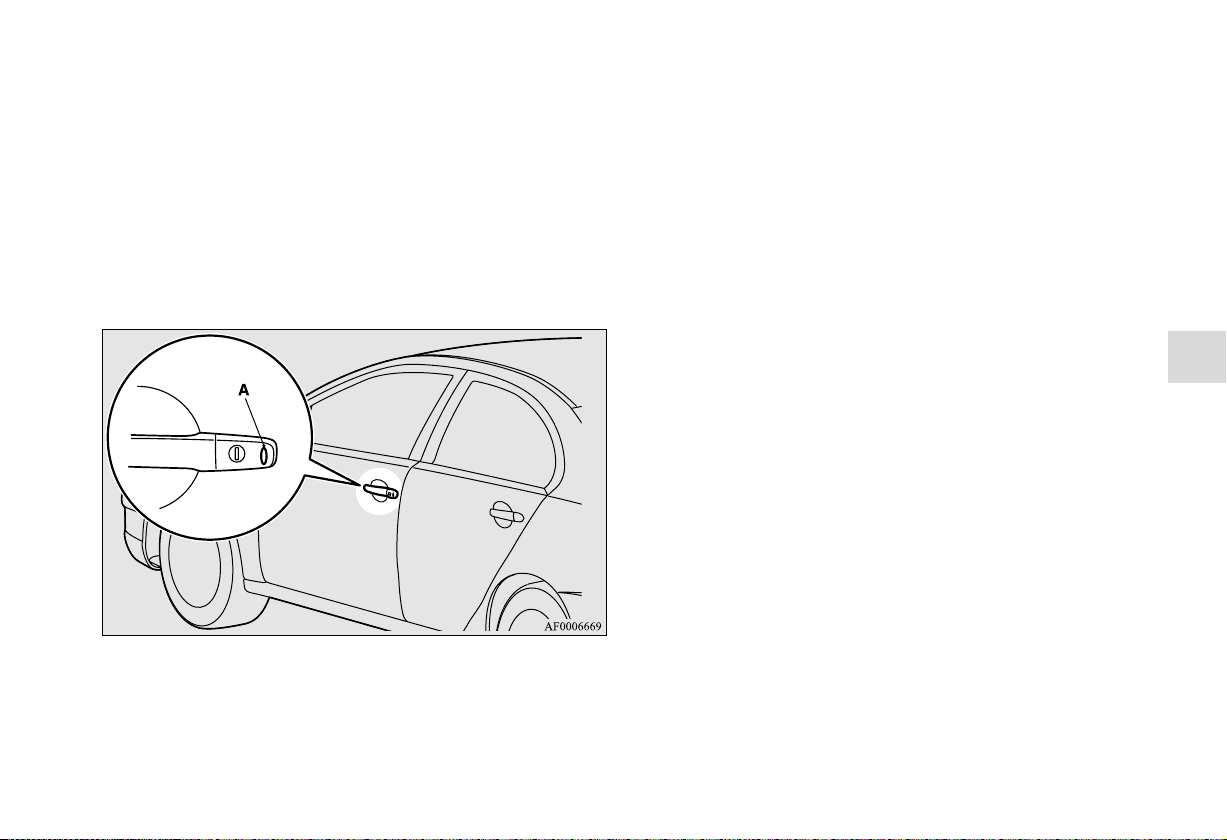
Features and controls
3-21
3
To operate using the F.A.S.T.-key
N00503400143
To lock the doors
While carrying the F.A.S.T.-key, press the driver’s or front pas-
senger’s door lock/unlock switch (A) within the operating
range to lock all the doors.
The turn signal lights will blink once and the buzzer will sound
once.
Also refer to “Door locks”and “Power door locks” on pages 3-
51 and 3-55 respectively.
N
OTE
● In cases such as the following, the F.A.S.T.-key does not
operate.
• There is a F.A.S.T.-key in the passenger compartment
• A door is open or ajar
• The ignition switch is in a position other than “LOCK”
• The emergency key is inserted into the ignition switch
● When the vehicle is locked, the theft-alarm system pre-
pares to enter the armed stage.
Refer to “Theft-alarm system” for further details on page
3-63.
To unlock the doors
While carrying the F.A.S.T.-key within the operating range,
you can unlock the doors by F.A.S.T-key operation.
The dome light will turn on for 30 seconds. The turn signal
lights will blink twice and the buzzer will sound twice.
Also refer to “Door locks” and “Power door locks” on pages 3-
51 and 3-55 respectively.
BK0138600US.book 21 ページ 2011年7月17日 日曜日 午後2時32分
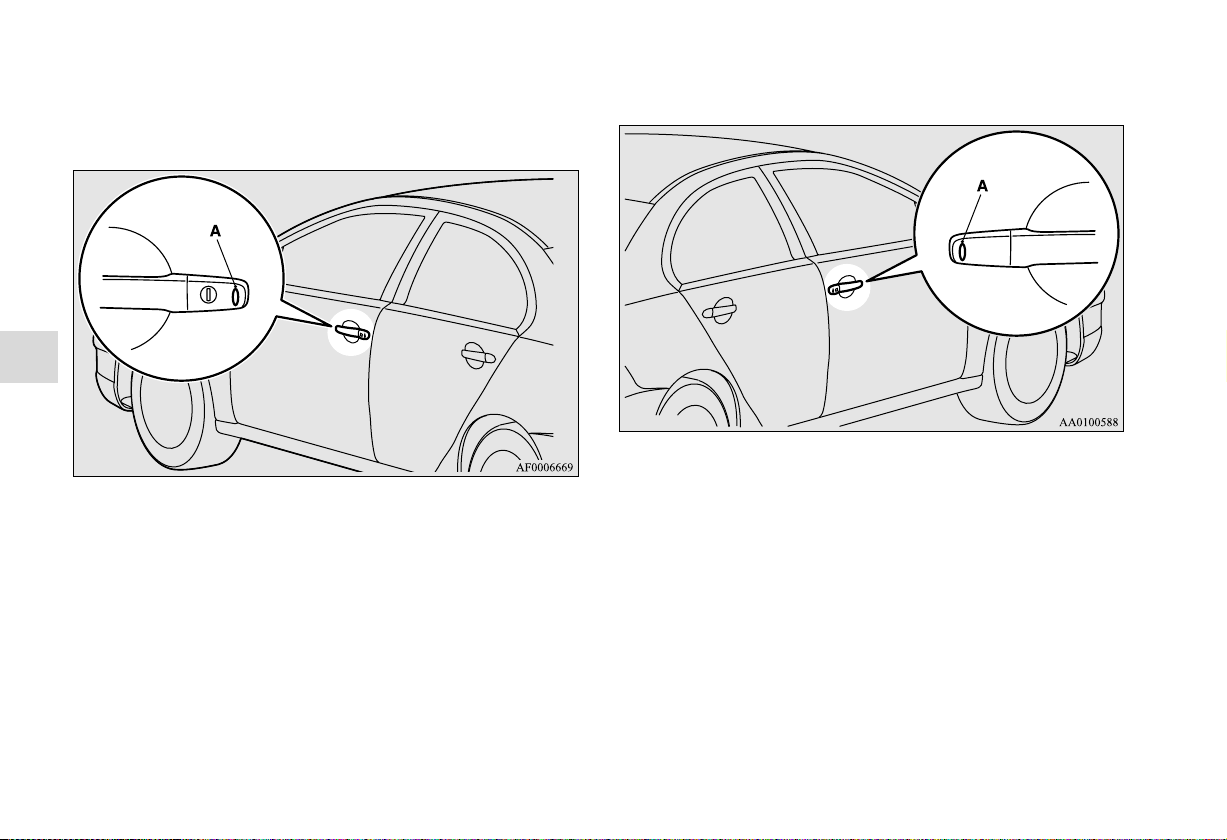
3-22
Features and controls
3
Press the driver’s door lock/unlock switch (A) to unlock only
the driver’s door.
Within about 2 seconds, press the driver’s door lock/unlock
switch (A) one more time to unlock all the doors.
N
OTE
● Settings can be changed so that all doors are unlocked
automatically by one press of the driver’s door
lock/unlock switch (A).
Refer to “Setting of door unlock function” on pages 3-11
and 3-46.
Press the front passenger’s door lock/unlock switch (A) to
unlock all the doors.
N
OTE
● If the doors are unlocked when all doors are locked and no
doors are opened within about 30 seconds, the doors will
automatically re-lock.
● In cases such as the following, the F.A.S.T.-key does not
operate.
• A door is open or ajar
• The ignition switch is in a position other than “LOCK”
• The emergency key is inserted into the ignition switch
BK0138600US.book 22 ページ 2011年7月17日 日曜日 午後2時32分
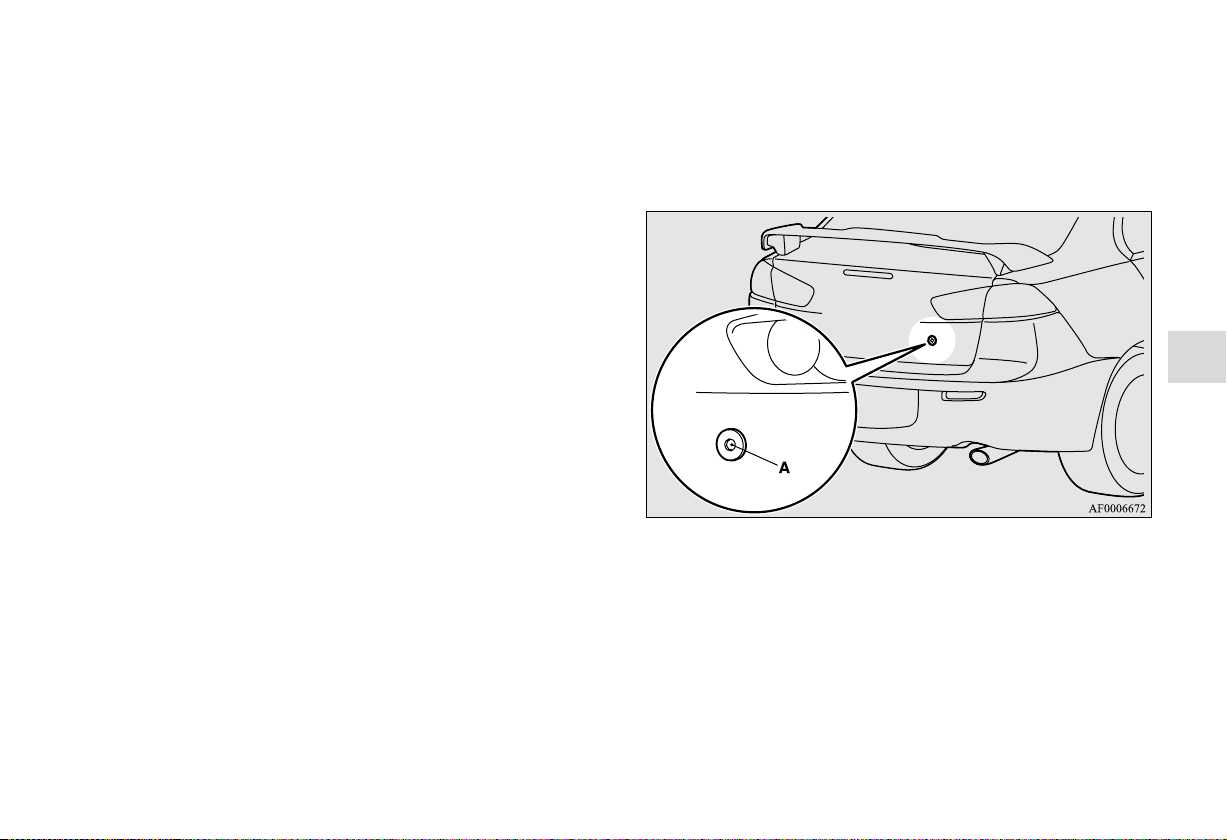
Features and controls
3-23
3
N
OTE
● The amount of time after unlocking until the vehicle re-
locks automatically can be adjusted. See an authorized
Mitsubishi Motors dealer for details.
On a vehicle equipped with a Mitsubishi Multi-Communi-
cation System, the functions can be adjusted on the
screen. For details, refer to a separate operation manual.
● Function settings can be modified as stated below.
See an authorized Mitsubishi Motors dealer for details.
On a vehicle equipped with a Mitsubishi Multi-Communi-
cation System, the functions can be adjusted on the
screen. For details, refer to a separate operation manual.
• Activating the operation confirmation function (blink of
the turn signal lights) only during locking, or only dur-
ing unlocking.
• Deactivating the operation confirmation function (blink
of the turn signal lights) and buzzer.
• Modifying the number of blink in the operation confir-
mation function (blink of the turn signal lights).
• Making the buzzer sound when the F.A.S.T.-key is
removed from the passenger compartment when all the
doors are closed.
To open the trunk lid
While carrying the F.A.S.T.-key within the operating range to
open the trunk lid, press and hold down the OPEN switch (A)
until the trunk lid opens.
Also refer to “Trunk lid” on pages 3-59 respectively.
N
OTE
● The F.A.S.T.-key does not operate when the trunk lid is
open.
BK0138600US.book 23 ページ 2011年7月17日 日曜日 午後2時32分
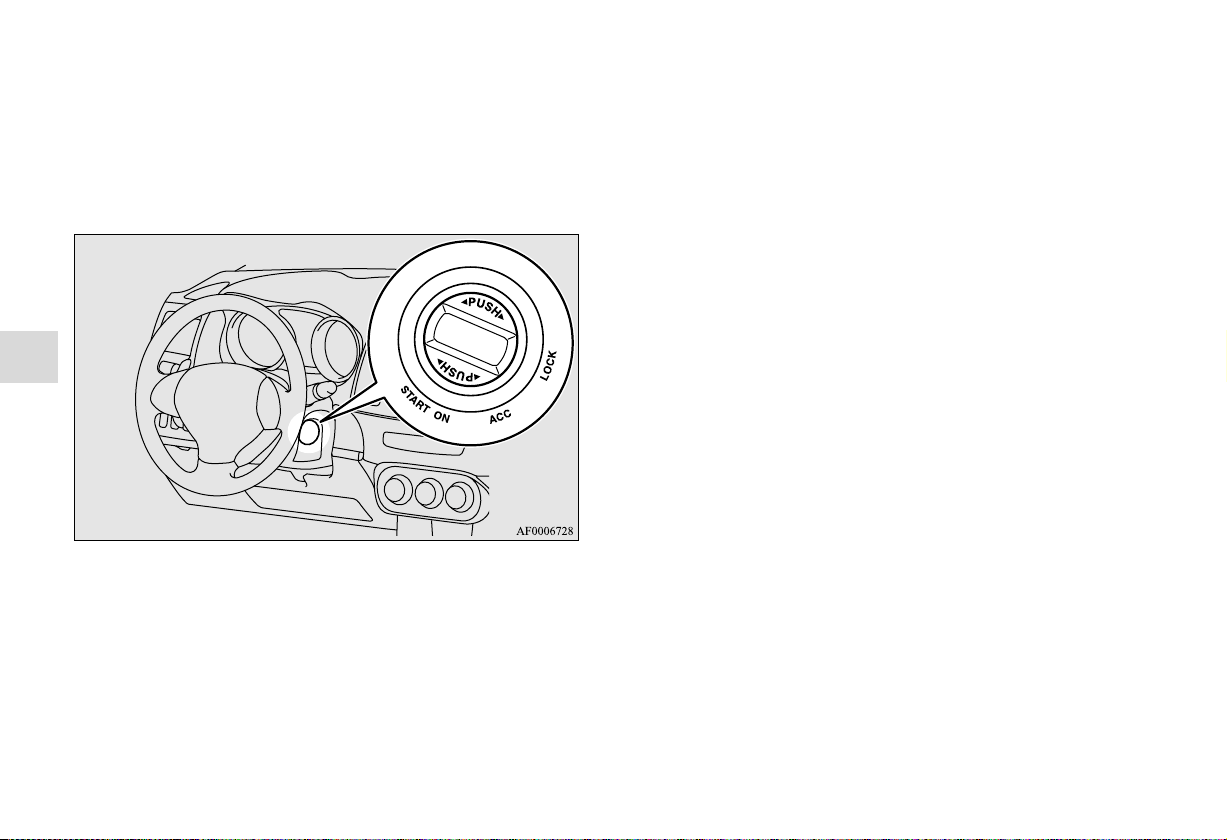
3-24
Features and controls
3
Ignition switch
N00513500059
To prevent vehicle theft, no F.A.S.T.-keys other than those reg-
istered in advance can be used to start the engine. (Electronic
immobilizer function)
While carrying the F.A.S.T.-key, the ignition switch can be
turned to start the engine.
LOCK (PUSH OFF)
The position where the steering wheel is locked.
LOCK (PUSH ON)
When the ID code verification inside the vehicle produces a
match, the ignition switch can be turned.
ACC
Allows operation of electrical accessories with the engine off.
ON
The engine runs and all electrical accessories can be used.
START
Engages the starter. Release the ignition switch when the
engine starts. The ignition switch returns automatically to the
“ON” position.
N
OTE
● Your vehicle is equipped with an electronic immobilizer.
To start the engine, the ID code which the F.A.S.T.-key
sends must match the one registered to the immobilizer
computer. (Refer to “Electronic immobilizer (Anti-theft
starting system)” on page 3-41.)
● If the ignition switch is not turned to the “LOCK (PUSH
OFF)” position when the engine is not running, the ID
code cannot be verified and the engine will not start even
if the ignition switch is turned to the “START” position. If
this happens, fully return the ignition switch to the
“LOCK (PUSH OFF)” position, and start the engine
again.
BK0138600US.book 24 ページ 2011年7月17日 日曜日 午後2時32分

Features and controls
3-25
3
To turn from “LOCK (PUSH OFF)” to “ACC”
N00513600021
Turn slowly after pressing the ignition switch.
N
OTE
● To turn the ignition switch from the “LOCK (PUSH
OFF)” position to the “ACC” position, push the ignition
switch again, turn the steering wheel in both directions
and then turn the ignition switch.
● The ignition switch cannot be turned unless the F.A.S.T.-
key is inside the vehicle.
Refer to “Operating range for starting the engine” on page
3-20.
To turn from “ACC” to “LOCK”
N00513700051
For vehicles with manual transaxle
Slowly turn the ignition switch to the “LOCK” position while
pressing it.
For vehicles with continuously variable transmission
(CVT) or Twin Clutch SST (sportronic shift transmission)
First, set the selector lever (CVT) or the gearshift lever (Twin
Clutch SST) to the “P” (PARK) position, and then slowly turn
the ignition switch to the “LOCK” position while pressing it.
N
OTE
● For vehicle with CVT or Twin Clutch SST, the ignition
switch cannot be turned to the “LOCK” position unless
the selector lever (CVT) or the gearshift lever (Twin
Clutch SST) is in the “P” (PARK) position.
A- Steering wheel locked
B- Steering wheel lock released
BK0138600US.book 25 ページ 2011年7月17日 日曜日 午後2時32分
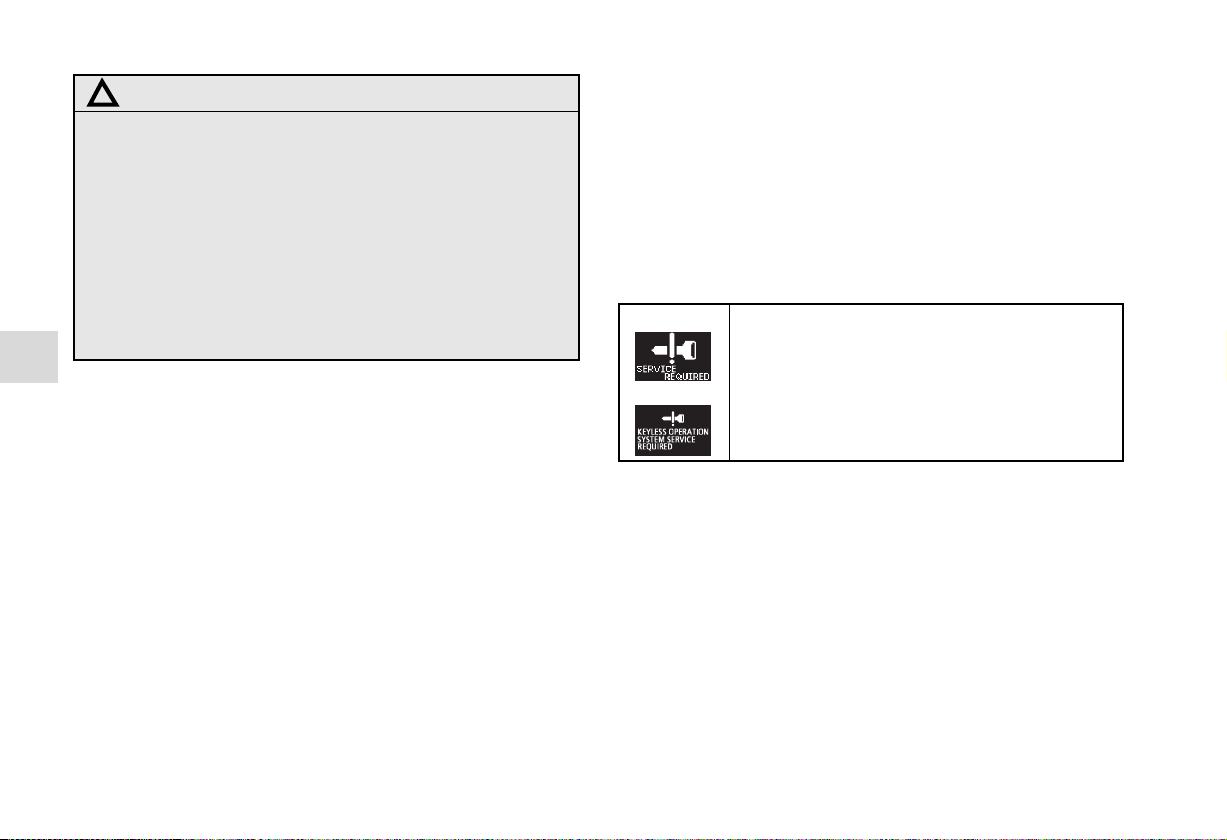
3-26
Features and controls
3
Warning activation
N00503500160
With the F.A.S.T.-key, warnings are given through buzzers and
displays on the information screen in the multi-information
display in order to prevent mistaken operations or vehicle theft.
When a warning operates, be sure to check the vehicle and the
F.A.S.T.-key. A warning is also displayed if there is a problem
in the F.A.S.T.-key.
If the following warning displays, contact an authorized
Mitsubishi Motors dealer.
CAUTION
!
● If the engine is stopped while driving, the power
brake booster will stop functioning and greater
effort for braking will be required. Also, the power
steering system will not function and it will require
greater effort to manually steer the vehicle.
● Do not leave the ignition switch in the “ON” position
for a long time when the engine is not running.
Doing so could lead to a dead battery.
● Do not turn the ignition switch to the “START”
position when the engine is running. It will damage
the starter motor.
Type 1
Type 2
There is a problem in the F.A.S.T.-key
BK0138600US.book 26 ページ 2011年7月17日 日曜日 午後2時32分
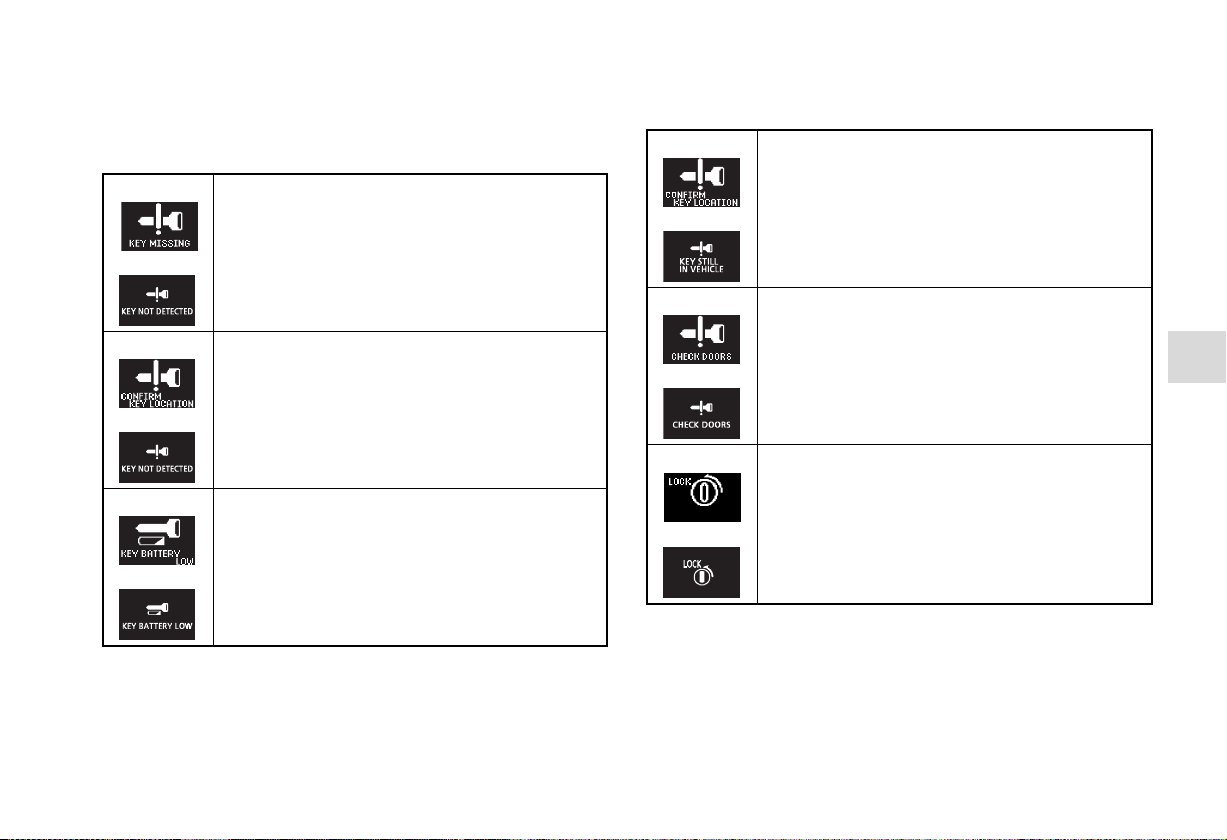
Features and controls
3-27
3
If the following warning display, the display goes off if correc-
tive action is taken.
● The ID codes of the F.A.S.T.-key and the vehicle cannot
be verified
● A door cannot be locked even when the driver’s or front
passenger’s door lock/unlock switch is pressed.
Type 1
Type 2
Someone may be carrying a F.A.S.T.-key with a
different ID code, or the F.A.S.T.-key may not be
within the operating range
Type 1
Type 2
Refer to “F.A.S.T.-key take-out monitoring sys-
tem” on page 3-28.
Type 1
Type 2
The battery of the F.A.S.T.-key is run down
Type 1
Type 2
Refer to “Key lock-in prevention system” on page
3-28.
Type 1
Type 2
Refer to “Door ajar prevention system” on page 3-
29.
Type 1
Type 2
Refer to “Ignition switch turn-off reminder sys-
tem” on page 3-29.
BK0138600US.book 27 ページ 2011年7月17日 日曜日 午後2時32分
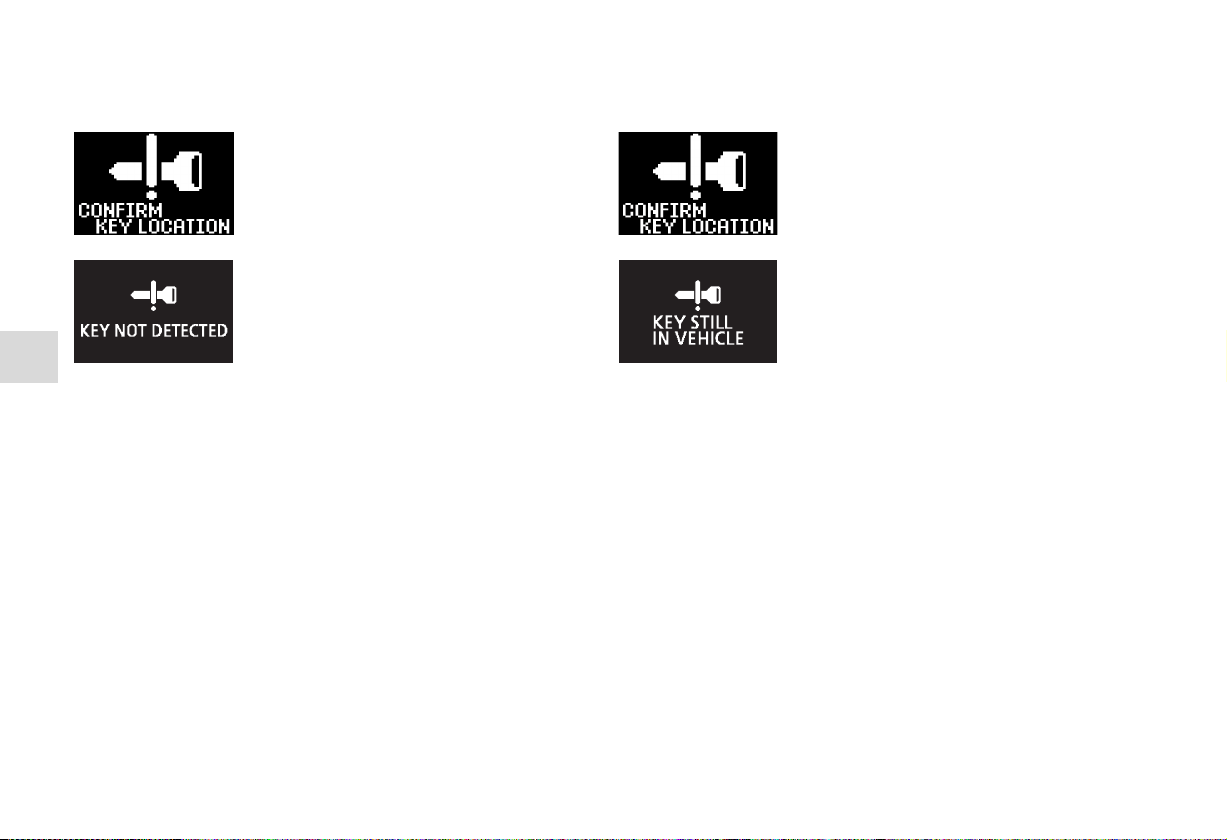
3-28
Features and controls
3
F.A.S.T.-key take-out monitoring system
N00559800131
Type1
Type 2
When the ignition switch is in a position other than “LOCK
(PUSH OFF)”, any of the doors are opened and the F.A.S.T.-
key is removed from the passenger compartment so that the ID
codes of the F.A.S.T.-key and the vehicle can no longer be ver-
ified, the warning display is displayed and the buzzer sounds 4
times as a warning.
N
OTE
● The F.A.S.T.-key take-out monitoring system does not
function if the F.A.S.T.-key is removed through a window
without opening a door. This setting can be changed.
See an authorized Mitsubishi Motors dealer for details.
● The warning may display even if the F.A.S.T.-key is in the
operating range for starting the engine. The surrounding
environment or electromagnetic waves may make it
impossible to verify the ID codes of the F.A.S.T.-key and
vehicle.
Key lock-in prevention system
N00559900103
Type 1
Type 2
When the ignition switch is in the “LOCK (PUSH OFF)” posi-
tion, the F.A.S.T.-key is left in the passenger compartment, all
the doors are closed, and someone tries to lock the vehicle by
pressing the driver’s or front passenger’s door lock/unlock
switch, the warning display is displayed and the buzzer sounds
for about 3 seconds as a warning, and the doors cannot be
locked.
If all the doors are manually locked and closed while the igni-
tion switch is in the “LOCK (PUSH OFF)” position and the
F.A.S.T.-key is left in the car, the doors will automatically
unlock and a buzzer will sound for about 3 seconds.
BK0138600US.book 28 ページ 2011年7月17日 日曜日 午後2時32分

Features and controls
3-29
3
Door ajar prevention system
N00560000104
Type 1
Type 2
When the ignition switch is in the “LOCK (PUSH OFF)” posi-
tion, and someone tries to lock the vehicle by pressing the
driver’s or front passenger’s door lock/unlock switch while one
of the doors is not fully closed, the warning display is dis-
played and the buzzer sounds for about 3 seconds as a warning,
and the doors cannot be locked.
Ignition switch turn-off reminder system
N00560100105
Type 1
Type 2
When the ignition switch is in a position other than “LOCK
(PUSH OFF)”, all the doors are closed, and someone tries to
lock the vehicle by pressing the driver’s or front passenger’s
door lock/unlock switch, the warning display is displayed and
the buzzer sounds for about 3 seconds as a warning, and the
doors cannot be locked.
BK0138600US.book 29 ページ 2011年7月17日 日曜日 午後2時32分
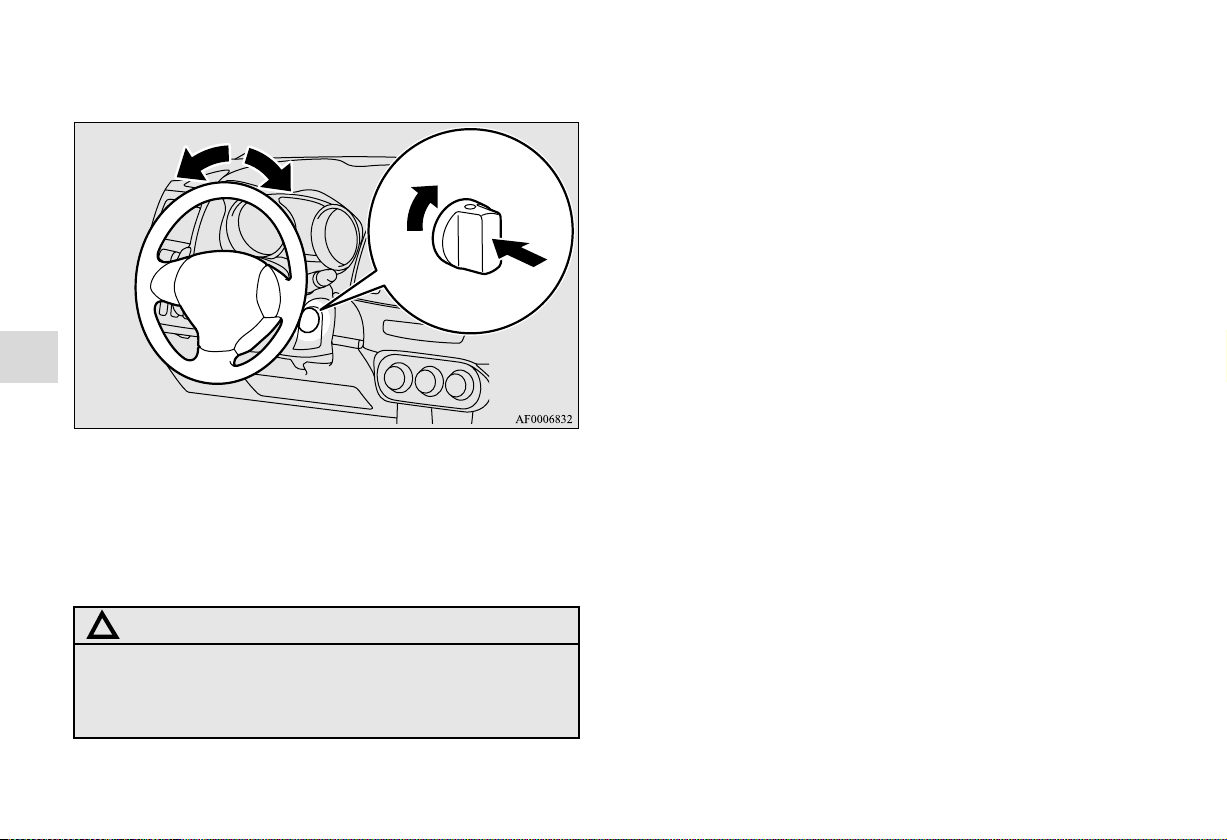
3-30
Features and controls
3
Steering wheel lock
N00514300025
To l ock
Turn the ignition switch to the “LOCK” position.
Turn the steering wheel until it is locked.
To unlock
Turn the ignition switch to the “ACC” position while moving
the steering wheel slightly.
N
OTE
● If the front wheels are turned, the anti-theft lock may
sometimes make it difficult to turn the ignition switch
from “LOCK” to “ACC” position. Firmly turn the steer-
ing wheel to the left or to the right as you turn the ignition
switch.
Starting
N00514600217
Tips for starting
● Do not operate the starter motor for longer than 15 sec-
onds as this could run the battery down or damage the
starter motor. If the engine does not start, turn the ignition
switch back to the “LOCK” position, wait a few seconds,
and then try again. Trying repeatedly with the engine or
starter motor still turning will damage the starter mecha-
nism.
● If the engine will not start because the battery is weak or
discharged, refer to “Jump-starting the engine” on page 6-
2 for instructions.
● A longer warm up period will only consume extra fuel.
The engine is warmed up enough for driving when the bar
graph of the engine coolant temperature display starts to
move. Refer to “Interrupt display screen (With ignition
switch in the “ON” position)” on page 3-194.
● On vehicles equipped with the Twin Clutch SST, the fol-
lowing may occur after the engine is started, but they do
not indicate an abnormality.
• You may hear operational sounds of the Twin Clutch
SST and you may feel vibration in the vehicle body.
CAUTION
!
● Carry the key with you when leaving the vehicle.
● If your vehicle needs to be towed, turn the ignition
switch to the “ACC” position to unlock the steering
wheel.
BK0138600US.book 30 ページ 2011年7月17日 日曜日 午後2時32分
Features and controls
3-31
3
• If you shift the gearshift lever into the “N” (NEUTRAL)
position and depress the accelerator pedal, increases in
the engine speed will be limited.
Starting the engine
Your vehicle is equipped with an electronically controlled fuel
injection system. This is a system that automatically controls
fuel injection. There is no need to depress the accelerator pedal
when starting the engine.
The starter motor should not be run for more than 15 seconds at
a time.
To prevent battery drain, wait a few seconds between attempts
to restart the engine.
1. Make sure all occupants are properly seated with seat
belts fastened.
2. Press and hold the brake pedal down with your right foot.
3. Press and hold the clutch pedal all the way down (manual
transaxle).
N
OTE
● For models equipped with a manual transaxle, the starter
will not operate unless the clutch pedal is fully depressed
(Clutch interlock). This is a safety feature.
WARNING
!
● Never run the engine in a closed or poorly ventilated
area any longer than is needed to move your vehicle
out of the area. Carbon monoxide gas, which is
odorless and extremely poisonous, could build up
and cause serious injury or death.
CAUTION
!
● Do not push-start the vehicle.
● Do not run the engine at high rpms or drive at high
speeds until the engine has had a chance to warm
up.
● Release the ignition switch as soon as the engine
starts. Otherwise, the starter motor will be dam-
aged.
BK0138600US.book 31 ページ 2011年7月17日 日曜日 午後2時32分

3-32
Features and controls
3
4. On vehicles with manual transaxle, place the gearshift
lever in the “N” (Neutral) position.
On vehicles with continuously variable transmission
(CVT) or Twin Clutch SST, make sure the selector lever
(CVT) or the gearshift lever (Twin Clutch SST) is in the
“P” (PARK) position.
N
OTE
● On vehicles with CVT, the starter will not operate unless
the selector lever is in the “P” (PARK) or “N” (NEU-
TRAL) position.
On vehicles with Twin Clutch SST, the starter will not
operate unless the gearshift lever is in the “P” (PARK)
position or the gearshift lever is in the “N” (NEUTRAL)
position with the brake pedal depressed.
For safety reasons, start the engine in the “P” (PARK)
position so that the wheels are locked.
5. While pushing the ignition switch from “LOCK” (PUSH
OFF) to “LOCK” (PUSH ON), set the ignition switch to
the “ON” position and confirm that all warning lights and
warning displays are operating properly.
6. Without pressing the accelerator pedal, slowly turn the
ignition switch to the “START” position to start the
engine. Release the ignition switch when the engine starts.
N
OTE
● Minor noises may be heard on engine start-up. These will
disappear as the engine warms up.
Startability of continuously variable transmission (CVT)
vehicles or Twin Clutch SST vehicles at extremely cold
ambient temperature
When the ambient temperature is -4°F (-20°C) or lower on
vehicles with CVT, or -22°F (-30°C) or lower on vehicles with
Twin Clutch SST, it may not be possible to start from a stand-
still even with the selector lever (CVT) or the gearshift lever
(Twin Clutch SST) in the “D” (DRIVE) position.
This phenomenon occurs because the transaxle has not warmed
up sufficiently; it does not indicate a problem. If this occurs,
place the selector lever (CVT) or the gearshift lever (Twin
Clutch SST) in the “P” (PARK) position and let the engine idle
for at least 10 minutes.
The transaxle will warm up, and you will be able to drive nor-
mally.
Do not leave the vehicle during warm-up operation.
BK0138600US.book 32 ページ 2011年7月17日 日曜日 午後2時32分

Features and controls
3-33
3
To operate using the emergency key
N00514800020
Emergency key
N00515200148
The emergency key is built into the F.A.S.T.-key.
When the F.A.S.T.-key cannot be used, such as when the bat-
tery of the F.A.S.T.-key or the vehicle has run down, the emer-
gency key can be used to lock and unlock the driver’s door and
to start the engine.
To use the emergency key (1), unlock the lock knob (2) and
remove it from the F.A.S.T.-key (3).
N
OTE
● Only use the emergency key in an emergency. When the
battery of the F.A.S.T.-key has run down, replace the bat-
tery as soon as possible and use it as a F.A.S.T.-key again.
● After using the emergency key, be sure to reinsert it into
the F.A.S.T.-key.
To lock or unlock the driver’s door with the emergency key
Turn the emergency key toward the front of the vehicle to lock
the door. After checking that the door is locked, turn the emer-
gency key back to the center and remove it.
1- Insert or remove the emergency key
2- Lock
3- Unlock
BK0138600US.book 33 ページ 2011年7月17日 日曜日 午後2時32分
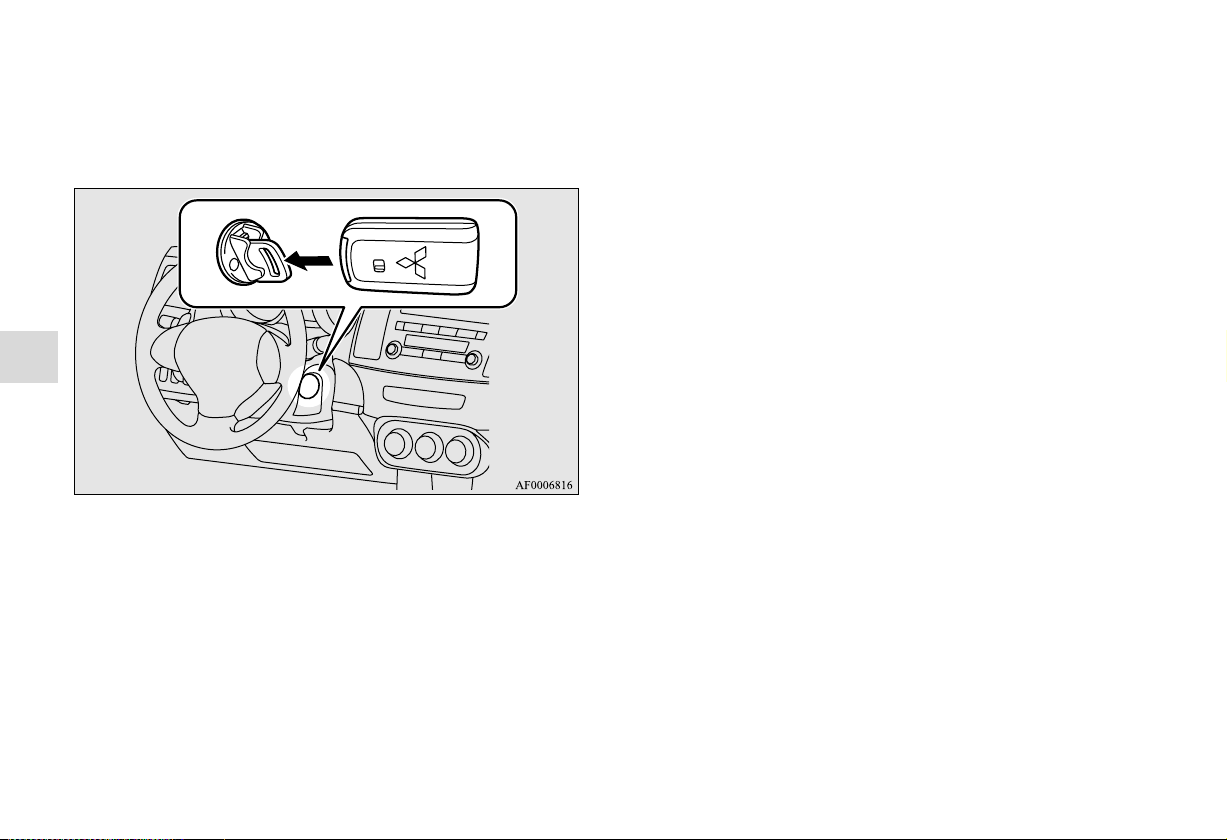
3-34
Features and controls
3
Ignition switch
N00529300179
To prevent vehicle theft, only the emergency key with the pre-
registered F.A.S.T.-key inserted can start the engine. (Elec-
tronic immobilizer function)
LOCK
The engine is off and the steering wheel is locked. The emer-
gency key can be inserted and removed only when the ignition
switch is in this position.
ACC
The electrical accessories can be used with the engine off.
ON
The engine will start only by using the emergency key with the
F.A.S.T.-key inserted. It is possible to use all electrical accesso-
ries with only the emergency key.
START
Engages the starter. Release the emergency key when the
engine starts. The ignition switch returns automatically to the
“ON” position.
N
OTE
● Your vehicle is equipped with an electronic immobilizer.
To start the engine, the ID code which the F.A.S.T.-key
sends must match the one registered to the immobilizer
computer. (Refer to “Electronic immobilizer (Anti-theft
starting system)” on page 3-41.)
BK0138600US.book 34 ページ 2011年7月17日 日曜日 午後2時32分

Features and controls
3-35
3
To turn from “LOCK” to “ACC”
1. Remove the emergency key from the F.A.S.T.-key.
Refer to “Emergency key” on page 3-33.
2. While pushing the lock release buttons (A), remove the
cover of the ignition switch.
3. Insert the emergency key into the ignition switch, and
slowly push and turn.
N
OTE
● When the ignition switch cannot be turned from the
“LOCK” position to the “ACC” position, turn the ignition
switch while turning the steering wheel in both directions.
BK0138600US.book 35 ページ 2011年7月17日 日曜日 午後2時32分
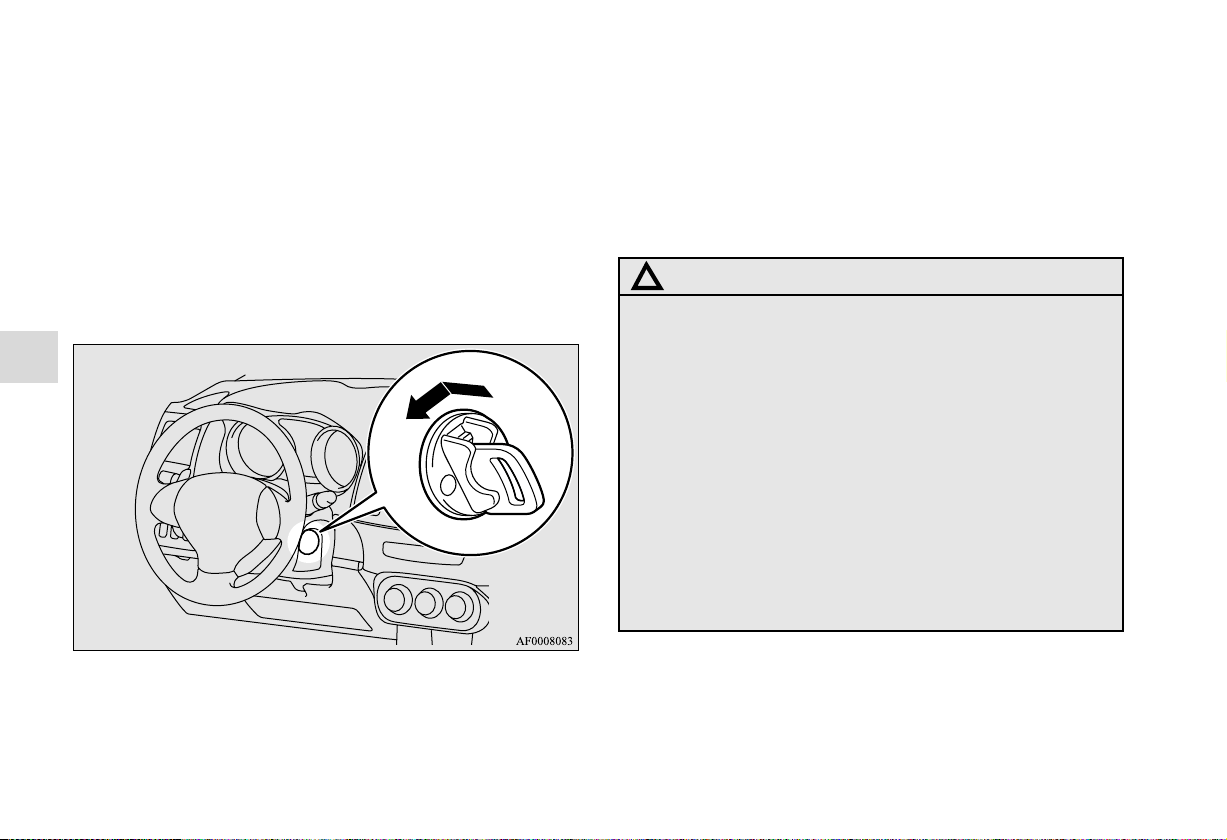
3-36
Features and controls
3
To turn from “ACC” to “LOCK”
1. [For vehicles with manual transaxle]
Push the emergency key in at the “ACC” position and
keep it depressed until it is turned to the “LOCK” posi-
tion, and remove.
[For vehicles with continuously variable transmission
(CVT) or Twin Clutch SST]
First, set the selector lever (CVT) or the gearshift lever
(Twin Clutch SST) to the “P” (PARK) position, and then
slowly turn the ignition switch to the “LOCK” position
while pressing it.
N
OTE
● For vehicles with CVT or Twin Clutch SST, the emer-
gency key cannot be removed unless the selector lever
(CVT) or the gearshift lever (Twin Clutch SST) is set to
the “P” (PARK) position.
2. Install the cover of the ignition switch.
3. Reinsert the emergency key into the F.A.S.T.-key.
N
OTE
● Always install the cover of the ignition switch when not
using the emergency key. Not doing so could cause dam-
age if foreign material such as dust gets into the keyhole
of the ignition switch.
CAUTION
!
● Do not turn the ignition switch to the LOCK posi-
tion while the vehicle is moving. This will cause the
steering wheel to lock, making it impossible to oper-
ate the vehicle.
● If the engine is stopped while driving, the power
brake booster will stop functioning and greater
effort for braking will be required. Also, the power
steering system will not function and it will require
greater effort to manually steer the vehicle.
● Do not leave the ignition switch in the “ON” position
for a long time when the engine is not running. The
battery will run down.
● Do not turn the ignition switch to the “START”
position when the engine is running. It will damage
the starter motor.
BK0138600US.book 36 ページ 2011年7月17日 日曜日 午後2時32分
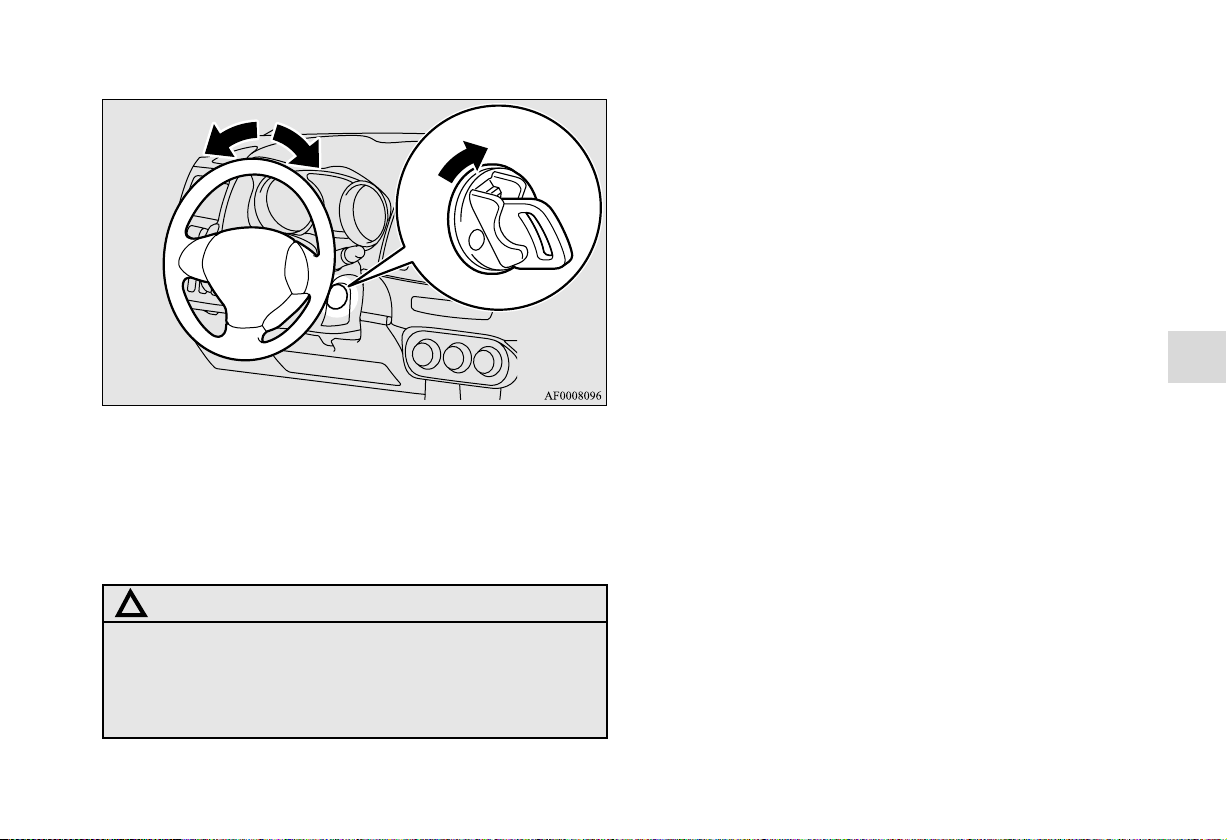
Features and controls
3-37
3
Steering wheel lock
To lock
Turn the emergency key to the “LOCK” position.
Turn the steering wheel until it is locked.
To unloc k
Turn the emergency key to the “ACC” position while moving
the steering wheel slightly.
N
OTE
● If the front wheels are turned, the anti-theft lock may
sometimes make it difficult to turn the emergency key
from “LOCK” to “ACC”. Firmly turn the steering wheel
to the left or to the right as you turn the emergency key.
Starting
Tips for starting
● Do not operate the starter motor continuously for longer
than 15 seconds as this could run the battery down or
damage the starter motor. If the engine does not start, turn
the emergency key back to the “LOCK” position, wait a
few seconds, and then try again. Trying repeatedly with
the engine or starter motor still turning will damage the
starter mechanism.
● If the engine will not start because the battery is weak or
discharged, refer to “Jump-starting the engine” on page 6-
2 for instructions.
● A longer warm up period will only consume extra fuel.
The engine is warmed up enough for driving when the bar
graph of the engine coolant temperature display starts to
move. Refer to “Interrupt display screen (With ignition
switch in the “ON” position)” on page 3-194.
● On vehicles equipped with the Twin Clutch SST, the fol-
lowing may occur after the engine is started, but they do
not indicate an abnormality.
• You may hear operational sounds of the Twin Clutch
SST and you may feel vibration in the vehicle body.
• If you shift the gearshift lever into the “N” (NEUTRAL)
position and depress the accelerator pedal, increases in
the engine speed will be limited.
CAUTION
!
● Remove the emergency key when leaving the vehi-
cle.
● If your vehicle needs to be towed, turn the emer-
gency key to the “ACC” position to unlock the steer-
ing wheel.
BK0138600US.book 37 ページ 2011年7月17日 日曜日 午後2時32分
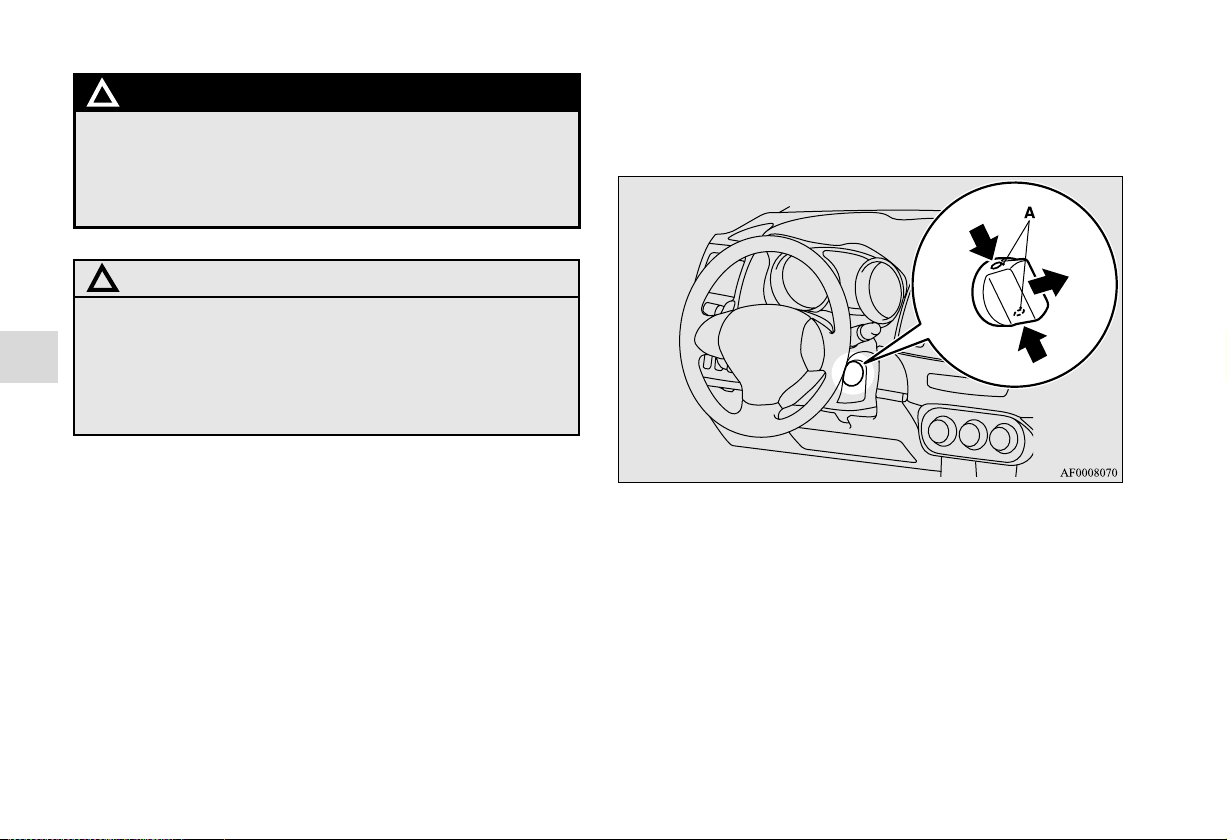
3-38
Features and controls
3
Starting the engine
Your vehicle is equipped with an electronically controlled fuel
injection system. This is a system that automatically controls
the fuel injection. There is no need to depress the accelerator
pedal when starting the engine.
The starter motor should not be run for more than 15 seconds at
a time.
To prevent battery drain, wait a few seconds between attempts
to restart the engine.
1. Make sure all occupants are properly seated with seat
belts fastened.
2. While pushing the lock release buttons (A), remove the
cover of the ignition switch.
WARNING
!
● Never run the engine in a closed or poorly ventilated
area any longer than is needed to move your vehicle
out of the area. Carbon monoxide gas, which is
odorless and extremely poisonous, could build up
and cause serious injury or death.
CAUTION
!
● Do not push-start the vehicle.
● Do not run the engine at high rpms or drive at high
speeds until the engine has had a chance to warm
up.
● Release the emergency key as soon as the engine
starts. It will damage the starter motor.
BK0138600US.book 38 ページ 2011年7月17日 日曜日 午後2時32分
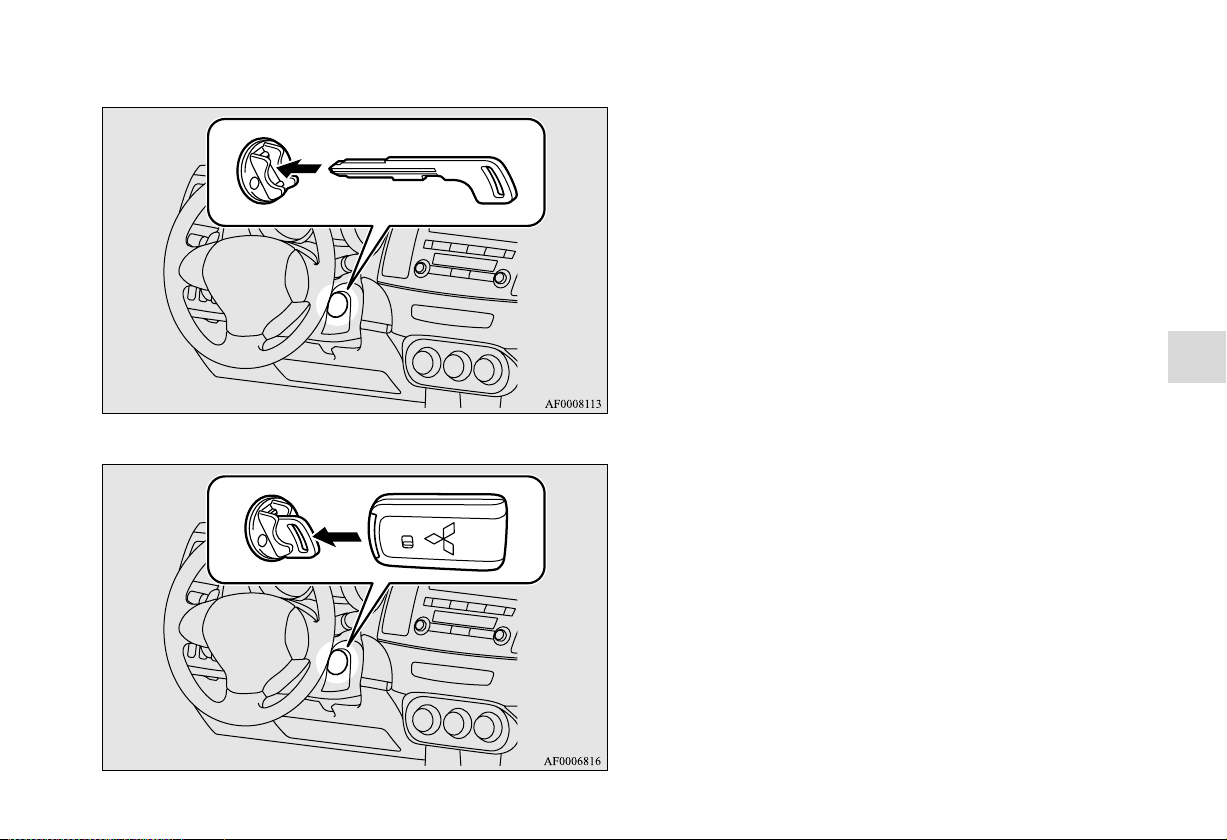
Features and controls
3-39
3
3. Insert the emergency key into the ignition switch.
4. Insert the F.A.S.T.-key into the emergency key.
5. Press and hold the brake pedal down with your right foot.
6. Press and hold the clutch pedal all the way down (manual
transaxle).
N
OTE
● For models equipped with a manual transaxle, the starter
will not operate unless the clutch pedal is fully depressed
(Clutch interlock). This is a safety feature.
7. On vehicles with manual transaxle, place the gearshift
lever in the “N” (Neutral) position.
On vehicles with CVT or Twin Clutch SST, make sure the
selector lever (CVT) or the gearshift lever (Twin Clutch
SST) is in the “P” (PARK) position.
N
OTE
● On vehicles with continuously variable transmission
(CVT) or Twin Clutch SST, the starter will not operate
unless the selector lever (CVT) or the gearshift lever
(Twin Clutch SST) is in the “P” (PARK) position or the
selector lever (CVT) or the gearshift lever (Twin Clutch
SST) is in the “N” (NEUTRAL) position with the brake
pedal depressed.
For safety reasons, start the engine in the “P” (PARK)
position so that the wheels are locked.
8. Turn the emergency key with the F.A.S.T.-key to the
“ON” position and make certain that all warning lights
and warning displays are functioning properly before
starting the engine.
BK0138600US.book 39 ページ 2011年7月17日 日曜日 午後2時32分
3-40
Features and controls
3
9. Turn the emergency key with the F.A.S.T.-key to the
“START” position without pressing the accelerator pedal.
Release the emergency key with the F.A.S.T.-key when
the engine starts.
10. Remove the F.A.S.T.-key from the emergency key.
N
OTE
● Minor noises may be heard on engine start-up. These will
disappear as the engine warms up.
N
OTE
● When using the emergency key to start the engine, first
remove the key from the key holder. If the emergency key
is attached to a key holder (key ring), it may become
impossible to insert the keyless operation key into the
emergency key, and it may prevent the engine from being
started.
Startability of continuously variable transmission (CVT)
vehicles or Twin Clutch SST vehicles at extremely cold
ambient temperature
When the ambient temperature is -4 °F (-20 °C) or lower on
vehicles with CVT, or -22 °F (-30 °C) or lower on vehicles
with Twin Clutch SST, it may not be possible to start from a
standstill even with the selector lever (CVT) or the gearshift
lever (Twin Clutch SST) in the “D” (DRIVE) position.
This phenomenon occurs because the transaxle has not warmed
up sufficiently; it does not indicate a problem. If this occurs,
place the selector lever (CVT) or the gearshift lever (Twin
Clutch SST) in the “P” (PARK) position and let the engine idle
for at least 10 minutes.
The transaxle will warm up, and you will be able to drive nor-
mally.
Do not leave the vehicle during warm-up operation.
WARNING
!
● Make sure to remove the F.A.S.T.-key from the
emergency key after the engine is started.
If not removed, the F.A.S.T.-key could fall to the
floor, which may interfere with pedal operation.
Furthermore, the F.A.S.T.-key could prevent the
driver’s knee airbag from inflating normally or
could be propelled to cause serious injury if the
airbag inflates.
BK0138600US.book 40 ページ 2011年7月17日 日曜日 午後2時32分

Features and controls
3-41
3
Electronic immobilizer (Anti-theft starting sys-
tem)
N00529600101
The electronic immobilizer is designed to significantly reduce
the possibility of vehicle theft. The purpose of the system is to
immobilize the vehicle if an invalid start is attempted. A valid
start attempt can only be achieved (subject to certain condi-
tions) using a F.A.S.T.-Key “registered” to the immobilizer
system.
All of the keys provided with your new vehicle have been pro-
grammed to the vehicle’s electronics.
Replacement F.A.S.T.-key
N00561000039
Only the F.A.S.T.-keys that have been programmed to the vehi-
cle’s electronics can be used to start the vehicle.
If you lose the F.A.S.T.-key, you can order a F.A.S.T.-key from
your authorized Mitsubishi Motors dealer by referring to the
key number.
To prevent vehicle theft, the ID codes for all the F.A.S.T.-keys
except the one for the lost F.A.S.T. -key must be programmed
again.
Take your vehicle and all the remaining F.A.S.T.-keys to your
authorized Mitsubishi Motors dealer to have your ID codes
programmed again.
Additional F.A.S.T.-key
N00561100030
To add a F.A.S.T.-key, you must already have two registered
F.A.S.T.-keys. You need to register the ID code to the vehicle.
Registering the ID code can be done by your authorized
Mitsubishi Motors dealer. Or it can be done by yourself (except
for vehicles sold in Canada).
For you to register the ID code yourself, follow the “Customer
F.A.S.T.-key programming” procedure below.
If you choose to have your authorized Mitsubishi Motors
dealer register the ID code, take your vehicle and all remaining
F.A.S.T.-keys to your authorized Mitsubishi Motors dealer.
N
OTE
● You are provided with two F.A.S.T.-keys, but you may
register up to four F.A.S.T.-keys.
You can obtain blank F.A.S.T.-keys specially cut for your
vehicle from your Mitsubishi Motors dealer.
Customer F.A.S.T.-key programming (Except for vehi-
cles sold in Canada)
N00561200073
You can program new F.A.S.T.-keys to the system if you have
two valid (already registered) F.A.S.T.-keys, blank (not regis-
tered) F.A.S.T.-key and emergency key (specially cut for your
vehicle at your Mitsubishi Motors dealer).
To use the new F.A.S.T.-key, it is necessary to register the key
with both the electronic immobilizer and keyless entry system.
Also refer to “Keyless entry system: Customer F.A.S.T.-key
programming” on page 3-48.
For F.A.S.T.-key programming, follow the procedures below.
1. Remove the emergency key from the F.A.S.T.-key. Refer
to “Emergency key” on page 3-33.
BK0138600US.book 41 ページ 2011年7月17日 日曜日 午後2時32分
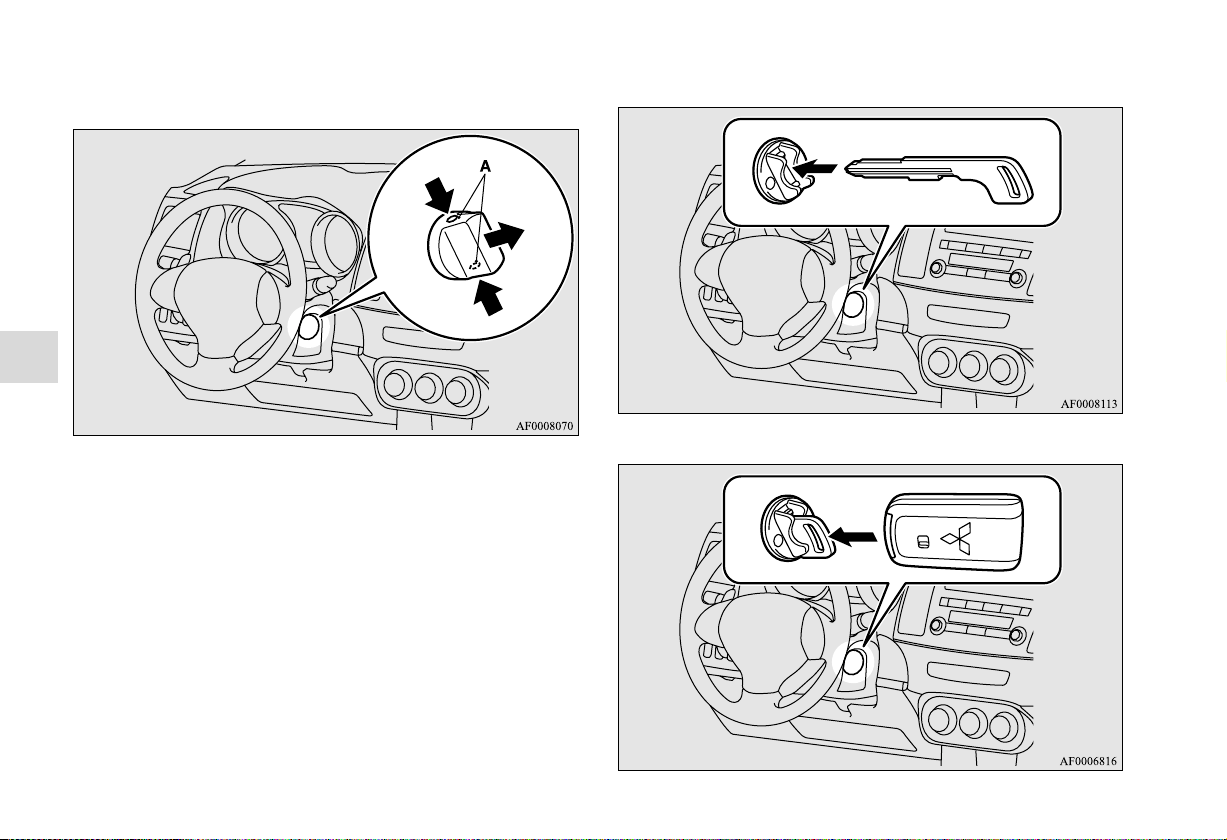
3-42
Features and controls
3
2. While pushing the lock release buttons (A), remove the
cover of the ignition switch.
3. Insert the emergency key into the ignition switch.
4. Insert the first valid F.A.S.T.-key into the emergency key.
BK0138600US.book 42 ページ 2011年7月17日 日曜日 午後2時32分
Features and controls
3-43
3
5. Turn the emergency key with the F.A.S.T.-key to the
“ON” position for 5 seconds.
6. Turn the emergency key with the F.A.S.T.-key to the
“LOCK” position. Within 30 seconds after doing so,
remove the F.A.S.T.-key from the emergency key, insert
the second valid F.A.S.T.-key into the emergency key and
turn it to the “ON” position. About 10 seconds later, the
immobilizer display will start to blink.
7. When the immobilizer display starts blinking, turn the
second valid F.A.S.T.-key to the “LOCK” position and
remove it. Within 30 seconds after doing so, insert a blank
F.A.S.T.-key into the emergency key and turn it to the
“ON” position. Perform this operation no more than 30
seconds after the immobilizer display starts blinking.
When registration of the ID code is complete, the immobi-
lizer display will come on for 3 seconds then go off. If an
error occurs, the immobilizer display will go off during
the procedure.
8. If you wish to register another F.A.S.T.-key, repeat the
process from step 1.
N
OTE
● Perform the operation when the interrupt display screen is
not showing. The interrupt display screen may prevent
you from seeing the immobilizer display.
● It is not possible to register a F.A.S.T.-key if:
• the immobilizer display goes off during the procedure
• the immobilizer display does not come on within 30 sec-
onds after turning the ignition switch to the “ON” posi-
tion with a blank F.A.S.T.-key
● The procedure will be terminated automatically if:
• a period of 30 seconds or longer elapses from the
moment when the first F.A.S.T.-key is turned to the
“LOCK” position to the moment when the second
F.A.S.T.-key is turned to the “ON” position
• a period of 30 seconds or longer elapses from the
moment when the second F.A.S.T.-key is turned to the
“LOCK” position to the moment when the blank
F.A.S.T.-key is turned to the “ON” position
● To use the new remote control transmitters, it is necessary
to register the key with both the electronic immobilizer
and keyless entry system.
Also refer to “Keyless entry system: Customer F.A.S.T.-
key programming” on page 3-48.
BK0138600US.book 43 ページ 2011年7月17日 日曜日 午後2時32分
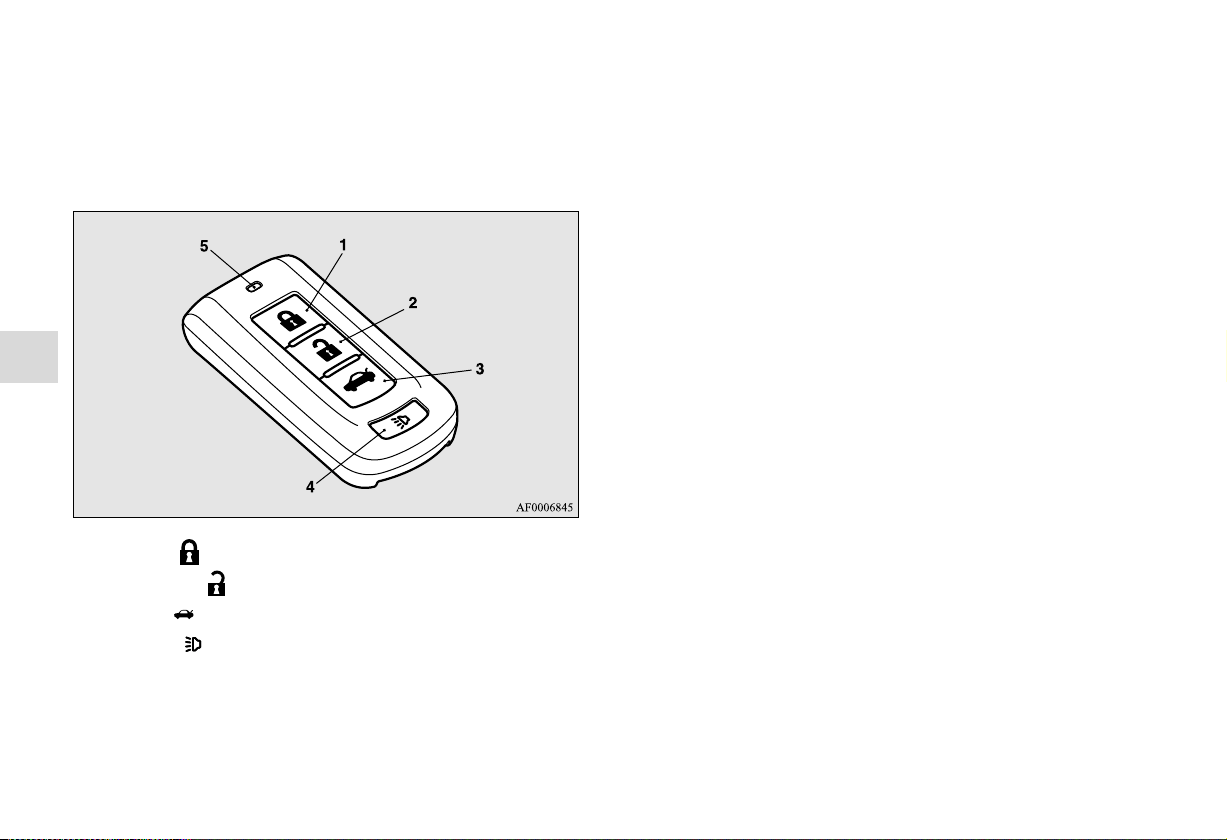
3-44
Features and controls
3
Keyless entry system
N00515500141
Press the remote control transmitter buttons to lock or unlock
the doors and to open the trunk lid.
It can also help you signal for attention by setting off the panic
alarm.
To lock the doors
N00544200036
Press the LOCK button (1) to lock all the doors.
The turn signal lights will also blink once.
N
OTE
● If you press the LOCK button (1) twice quickly, the horn
will sound once.
To unlock the doors
N00544300082
Press the UNLOCK button (2) to unlock the driver’s door only.
Within about 2 seconds, press the UNLOCK button one more
time to unlock all the doors.
The dome light will turn on for 30 seconds. The turn signal
lights will also blink twice.
Except for vehicles with the rear seat arm rest, the front side-
marker and parking lights will also turn on for about 30 sec-
onds.
Refer to “Welcome light” on page 3-240.
N
OTE
● On a vehicle equipped with a Mitsubishi Multi-Communi-
cation System, the functions can be adjusted on the
screen. For details, refer to a separate operation manual.
● The door unlock function can be set so that all doors
unlock when the UNLOCK button (2) is pressed once.
Refer to “Setting of door unlock function” on page 3-46.
To open the trunk lid
N00544400012
Press the trunk button (3) twice within about 5 seconds and the
trunk lid will be opened. The trunk lid must be closed manually
after it has been opened.
1-
LOCK ( ) button
2-
UNLOCK ( ) button
3-
Trunk ( ) button
4-
PANIC ( ) button
5- Indicator light
BK0138600US.book 44 ページ 2011年7月17日 日曜日 午後2時32分
Features and controls
3-45
3
Answerback function
N00544500039
Setting of the horn, turn signal lights and buzzer of the keyless
entry system answerback function can be changed as required.
This is done with the key removed from the ignition switch.
N
OTE
● The answerback function does not operate when the key is
in the ignition switch or any door is opened.
Horn deactivation/reactivation
The horn answerback function can be set to the following three
conditions.
Each time the horn answerback function is set, a chime will
sound to tell you the condition of the answerback function.
1. Turn the ignition switch to the “LOCK” position. If you
started the engine with the key, remove the key from the
ignition switch.
2. Open the driver’s door and turn the combination head-
lights and dimmer switch to the “OFF” position.
3. Press the LOCK button (1) for 4 to 10 seconds and press
the UNLOCK button (2) during this time.
4. Release in sequence the UNLOCK and LOCK buttons
within 10 seconds of pressing the UNLOCK button in step
3.
N
OTE
● On a vehicle equipped with a Mitsubishi Multi-Communi-
cation System, the functions can be adjusted on the
screen. For details, refer to a separate operation manual.
Changing the setting of the turn signal lights answerback
function
The turn signal lights answerback function can be set to the fol-
lowing seven conditions.
Each time the turn signal lights answerback function is set, a
chime will sound to tell you the condition of the answerback
function.
Number of
chimes
Condition
One chime The horn will not sound.
Two chimes The horn will sound.
Four chimes
The horn will sound if the LOCK button is
pressed twice quickly.
Number of chimes
Condition
To lock To unlock
One chime One flash Two flashes
Two chimes One flash No flash
Three chimes No flash Two flashes
Four chimes Two flashes One flash
Five chimes No flash One flash
Six chimes Two flashes No flash
Seven chimes No flash No flash
BK0138600US.book 45 ページ 2011年7月17日 日曜日 午後2時32分
3-46
Features and controls
3
1. Turn the ignition switch to the “LOCK” position. If you
started the engine with the key, remove the key from the
ignition switch.
2. Open the driver’s door and turn the combination head-
lights and dimmer switch to the “OFF” position.
3. Press the UNLOCK button (2) for 4 to 10 seconds and
press the LOCK button (1) during this time.
4. Release in sequence the UNLOCK and LOCK buttons
within 10 seconds of pressing the LOCK button in step 3.
N
OTE
● On a vehicle equipped with a Mitsubishi Multi-Communi-
cation System, the functions can be adjusted on the
screen. For details, refer to a separate operation manual.
Buzzer deactivation/reactivation
The buzzer answerback function can be turned ON or OFF as
required.
N
OTE
● On a vehicle equipped with a Mitsubishi Multi-Communi-
cation System, the functions can be adjusted on the
screen. For details, refer to a separate operation manual.
Setting of door unlock function
N00544600030
The door unlock function can be set to the following two con-
ditions.
Each time the door unlock function is set, a chime will sound to
tell you the condition of the door unlock function.
1. Turn the ignition switch to the “LOCK” position. If you
started the engine with the key, remove the key from the
ignition switch.
2. Open the driver’s door and turn the combination head-
lights and dimmer switch to the “OFF” position.
3. Press the LOCK button (1) for 4 to 10 seconds and press
the UNLOCK button (2) during this time.
4. Release in sequence the LOCK and UNLOCK buttons
within 10 seconds of pressing the LOCK button in step 3.
N
OTE
● On a vehicle equipped with a Mitsubishi Multi-Communi-
cation System, the functions can be adjusted on the
screen. For details, refer to a separate operation manual.
Using the panic alarm
N00544700015
If you are near your vehicle and feel threatened, you can acti-
vate the alarm to call attention as follows:
1. Press the PANIC button (4) for more than 1 second.
Number of
chimes
Condition
One chime All doors unlock
Two chimes Driver’s door unlock only
BK0138600US.book 46 ページ 2011年7月17日 日曜日 午後2時32分

Features and controls
3-47
3
2. The headlights will blink on and off and the horn will
sound intermittently for about 3 minutes.
3. To turn off the alarm, press any button on the remote con-
trol transmitter.
Replacement F.A.S.T.-keys
N00561300029
Only a F.A.S.T.-key, which has been programmed into the
vehicle’s electronics, can lock and unlock all the doors, and
start the engine.
If you lose the F.A.S.T.-key, you can order a F.A.S.T.-key from
your authorized Mitsubishi Motors dealer by referring to the
key number.
To prevent vehicle theft, the ID codes for all the F.A.S.T.-keys
except the one for the lost F.A.S.T.-key must be programmed
again.
Take your vehicle and all the remaining F.A.S.T.-keys to your
authorized Mitsubishi Motors dealer to have your ID codes
programmed again.
Additional F.A.S.T.-keys
N00561400020
To add a F.A.S.T.-key, you must already have two registered
F.A.S.T.-keys.
Registering the ID code can be done by your authorized
Mitsubishi Motors dealer. Or it can be done by yourself (except
for vehicles sold in Canada). For you to register the ID code
yourself, follow the “Customer F.A.S.T.-key programming”
procedure below.
If you choose to have your authorized Mitsubishi Motors
dealer register the ID code, take your vehicle and all remaining
F.A.S.T.-keys to your authorized Mitsubishi Motors dealer.
N
OTE
● You are provided with two F.A.S.T.-keys, but you may
register up to four F.A.S.T.-keys.
BK0138600US.book 47 ページ 2011年7月17日 日曜日 午後2時32分
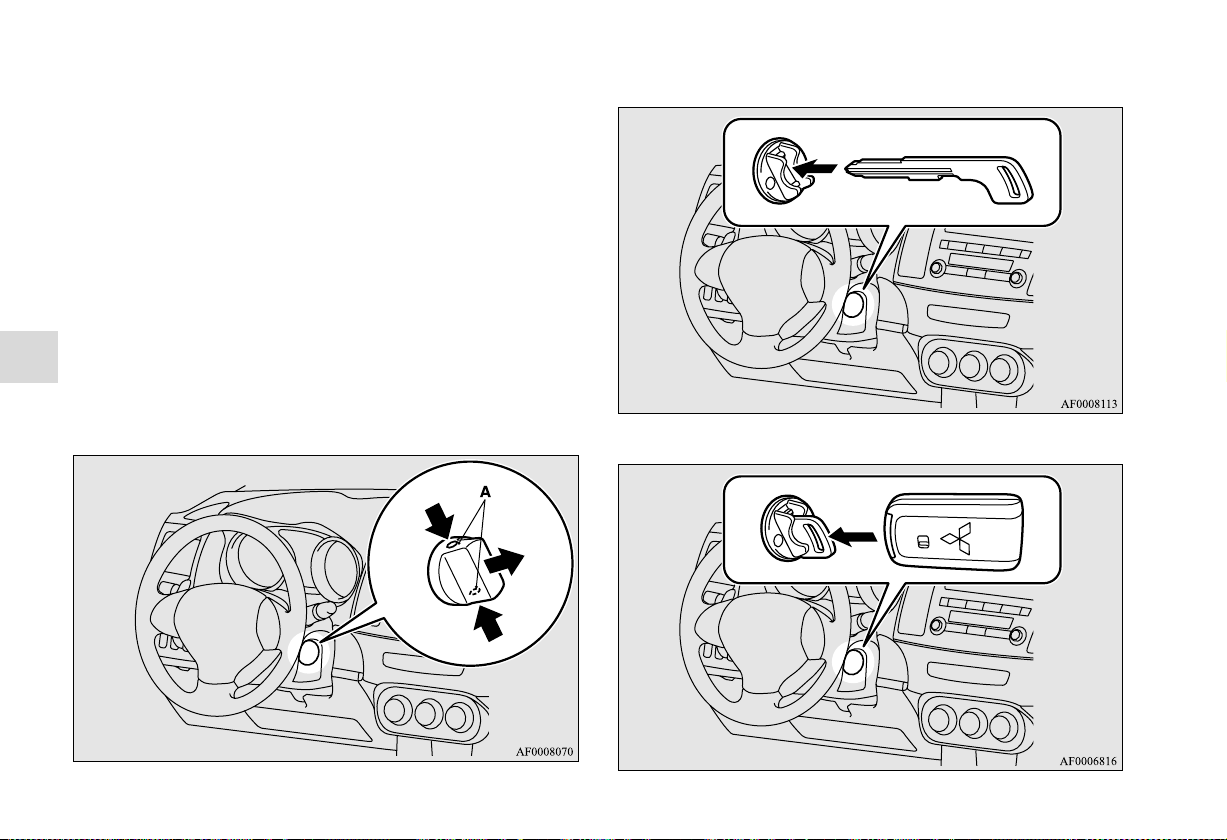
3-48
Features and controls
3
Customer F.A.S.T.-key programming (Except for vehi-
cles sold in Canada)
N00561500076
You can program new F.A.S.T.-keys to the system if you have
two valid (already registered) F.A.S.T.-keys, blank (not regis-
tered) F.A.S.T.-key and emergency key (specially cut for your
vehicle at your Mitsubishi Motors dealer).
To use the new F.A.S.T.-key, it is necessary to register the key
with both the electronic immobilizer and keyless entry system.
Also refer to “Electronic immobilizer: Customer F.A.S.T.-key
programming” on page 3-41.
For F.A.S.T.-key programming, follow the procedures below.
1. Remove the emergency key from the F.A.S.T.-key. Refer
to “Emergency key” on page 3-33.
2. While pushing the lock release buttons (A), remove the
cover of the ignition switch.
3. Insert the emergency key into the ignition switch.
4. Insert the valid F.A.S.T.-key into the emergency key.
BK0138600US.book 48 ページ 2011年7月17日 日曜日 午後2時32分

Features and controls
3-49
3
5. Turn the emergency key with F.A.S.T.-key to the “ON”
position. (Perform the following procedure within 30 sec-
onds)
6. Remove the F.A.S.T.-key from the emergency key.
7. With the first valid F.A.S.T.-key, press the UNLOCK but-
ton for 4 to 10 seconds and press the LOCK button during
this time.
8. Release in sequence the LOCK and UNLOCK buttons
within 10 seconds of pressing the LOCK button in step 7.
(Perform the following procedure within 30 seconds)
9. With the second valid F.A.S.T.-key, press the UNLOCK
button for 4 to 10 seconds and press the LOCK button
during this time.
10. Release in sequence the LOCK and UNLOCK buttons
within 10 seconds of pressing the LOCK button in step 9,
and the immobilizer display will blink on the information
screen in the multi-information display. (Perform the fol-
lowing procedure within 60 seconds)
11. Press the LOCK button twice with the blank F.A.S.T.-key
and the immobilizer display will come on for 30 seconds
on the information screen in the multi-information dis-
play.
12. This completes the registration of the F.A.S.T.-key.
N
OTE
● The indicator light (5) comes on each time a button is
pressed.
● The keyless entry system does not work if the key is in the
ignition switch.
● The F.A.S.T.-key can be used from about 40 feet (12 m)
away. However, this distance may change if your vehicle
is near a TV transmitting tower, a power station, or a radio
station.
● If the UNLOCK button (2) is pressed when all doors are
locked and no doors are opened within about 30 seconds,
the doors will automatically re-lock.
On a vehicle equipped with a Mitsubishi Multi-Communi-
cation System, the functions can be adjusted on the
screen. For details, refer to a separate operation manual.
● If the following conditions are observed after pressing the
buttons on the remote control transmitter, the battery in
the remote control transmitter may need to be replaced.
• The doors cannot be locked or unlocked.
• The trunk lid cannot be opened.
• The panic alarm cannot be operated.
• The indicator light (5) is dim or does not come on.
● If you lose your F.A.S.T.-key, please contact an authorized
Mitsubishi Motors dealer for a replacement.
● If you wish to obtain an additional F.A.S.T.-key, please
contact an authorized Mitsubishi Motors dealer. A maxi-
mum of four F.A.S.T.-key can be programmed for your
vehicle.
BK0138600US.book 49 ページ 2011年7月17日 日曜日 午後2時32分
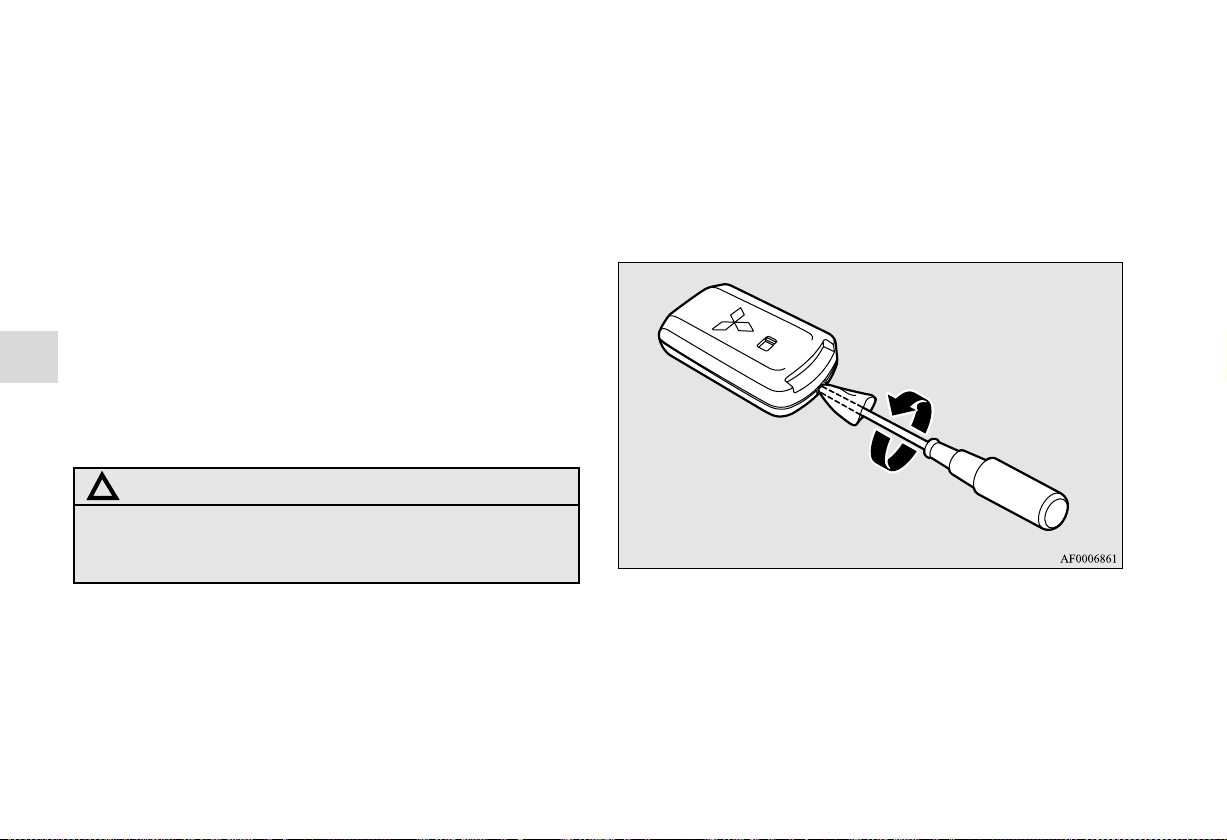
3-50
Features and controls
3
● To use the new remote control transmitters, it is necessary
to register the key with both the electronic immobilizer
and keyless entry system.
Also refer to “Electronic immobilizer (Anti-theft starting
system): Customer F.A.S.T.-key programming” on page
3-41.
General information
N00561600064
Your F.A.S.T.-key operates on a radio frequency subject to
Federal Communications Commission (FCC) Rules (For vehi-
cles sold in U.S.A.) and Industry Canada Rules (For vehicles
sold in Canada). This device complies with Part 15 of the FCC
Rules and RSS-Gen of the Industry Canada Rules.
Operation is subject to the following two conditions.
● This device may not cause harmful interference.
● This device must accept any interference received, includ-
ing interference that may cause undesired operation.
Procedure for replacing the remote control transmitter
battery
N00561700081
1. Before replacing the battery, remove static electricity from
your body by touching a metal grounded object.
2. With the Mitsubishi mark facing you, insert the cloth-cov-
ered tip of a flat blade screwdriver into the notch in the
remote control transmitter case and use it to open the case.
N
OTE
● Be sure to perform the procedure with the Mitsubishi
mark facing you. If the Mitsubishi mark is not facing you
when you open the remote control transmitter case, the
transmitter may come out.
3. Remove the old battery.
CAUTION
!
● Changes or modifications not expressly approved by
the manufacturer for compliance could void the
user’s authority to operate the equipment.
BK0138600US.book 50 ページ 2011年7月17日 日曜日 午後2時32分
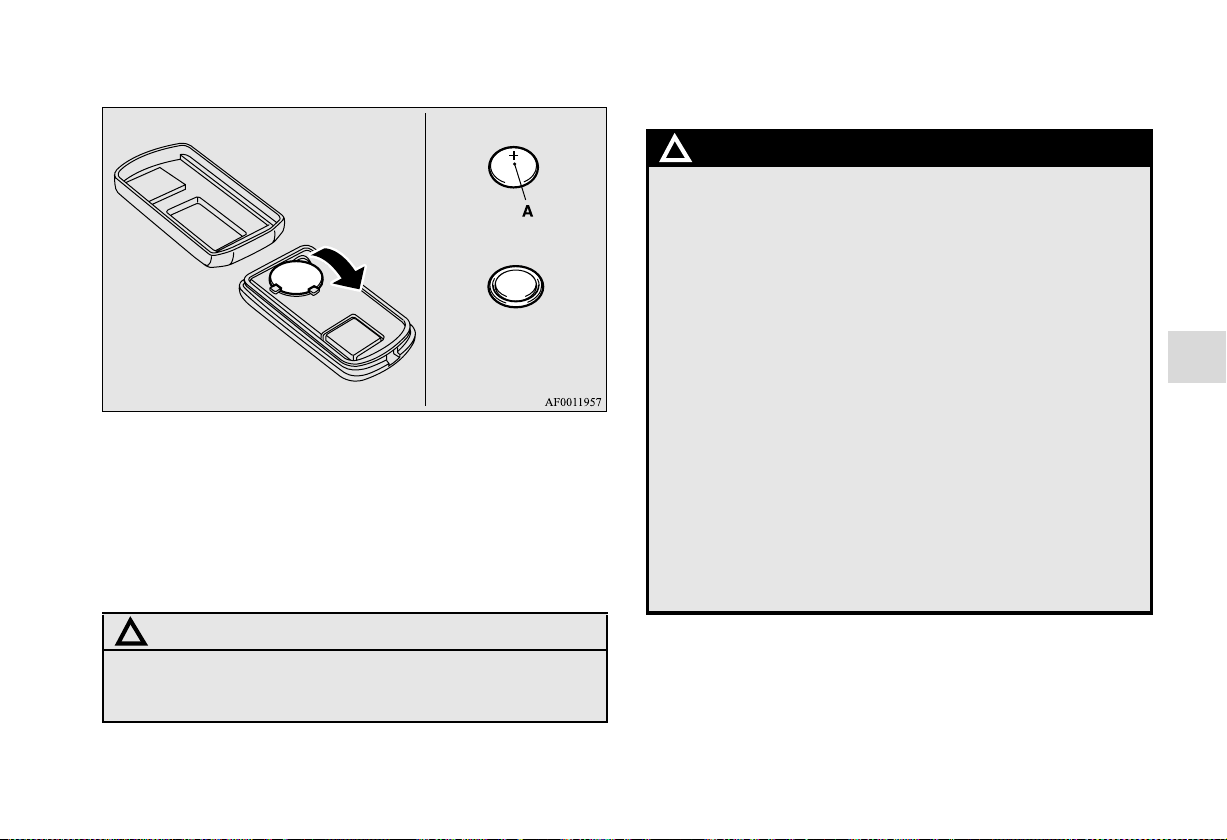
Features and controls
3-51
3
4. Install a new battery with the + side (A) up.
5. Close the remote control transmitter case firmly.
6. Check the keyless entry system to see that it works.
N
OTE
● You may purchase a replacement battery at an electric
appliance store.
● Your authorized Mitsubishi Motors dealer can replace the
battery for you if you prefer.
Door locks
N00509200491
CAUTION
!
● When the remote control transmitter case is opened,
be careful to keep water, dust, etc. out. Also, do not
touch the internal components.
Coin type battery
CR2032
+ side
- side
WARNING
!
● Make sure all doors are tightly closed and locked
while driving.
• Locked doors, in combination with the use of seat
belts, can help reduce the risk of ejection in an
accident.
• Locked doors can help keep passengers, especially
small children, from opening doors and falling out
of moving vehicles.
• Locked doors can help prevent outsiders from
gaining access to your vehicle when you slow or
come to a stop.
● Lock your vehicle whenever you leave it. Children
who get into unlocked vehicles may not be able to
get out. Children trapped inside vehicles can quickly
be overcome by heat and suffer serious injury or
death due to heat stroke.
● Never leave children unattended inside a vehicle. In
addition to the risk of heat stroke, children can acti-
vate switches and controls, resulting in an injury or
fatal accident.
BK0138600US.book 51 ページ 2011年7月17日 日曜日 午後2時32分
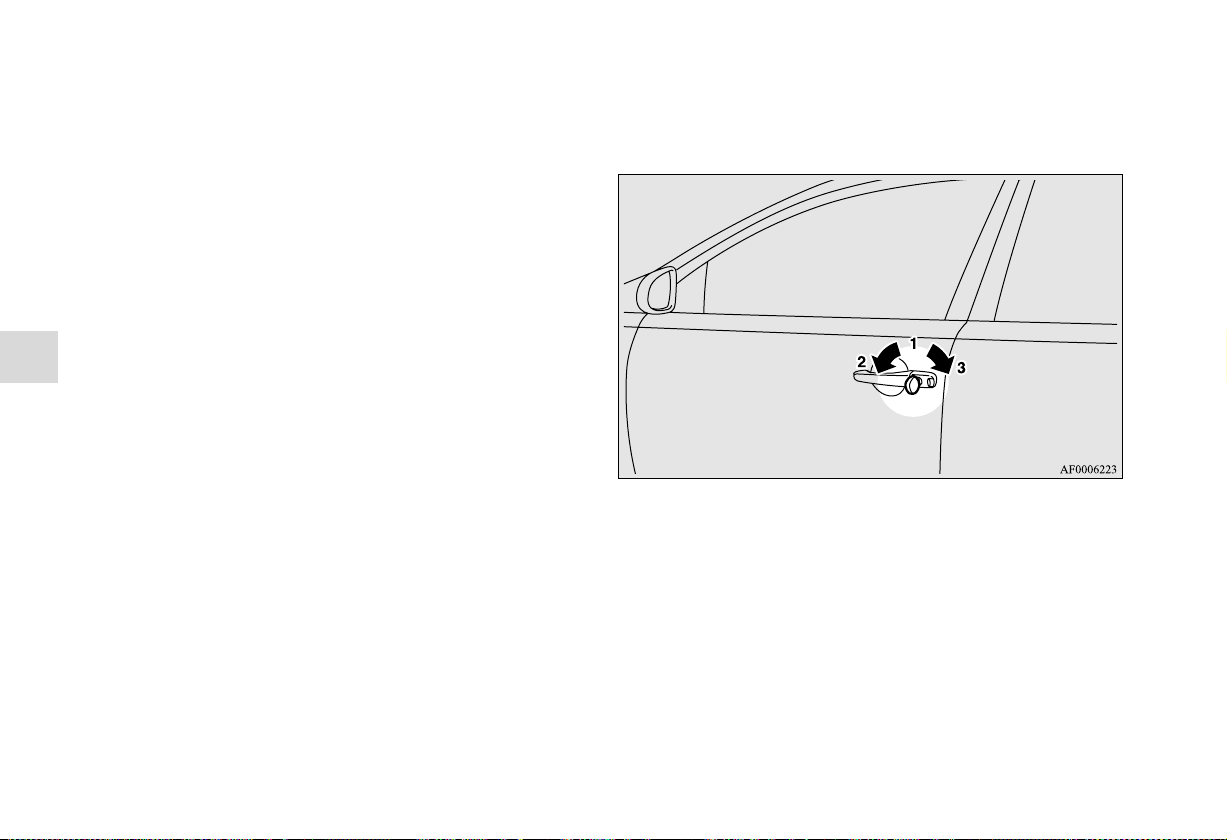
3-52
Features and controls
3
N
OTE
● When locking or unlocking with the key, only the driver’s
door will be locked or unlocked.
To lock or unlock all doors, use the power door lock
switches, the keyless entry system, the F.A.S.T-key or the
remote control transmitter of the F.A.S.T.-key.
Refer to “Power door locks” on page 3-55,
“Keyless entry system” on page3-9 and 3-44, and “To
operate using the F.A.S.T.-key” on page3-21.
● In vehicles equipped with the F.A.S.T.-key, the driver’s
door can be locked and unlocked using the emergency
key.
Refer to “Emergency key” on page 3-33.
To lock or unlock the front doors with the key
Turn the key toward the front of the vehicle to lock the door.
After checking that the door is locked, turn the key back to the
center and remove it.
1- Insert or remove the key
2- Lock
3- Unlock
BK0138600US.book 52 ページ 2011年7月17日 日曜日 午後2時32分
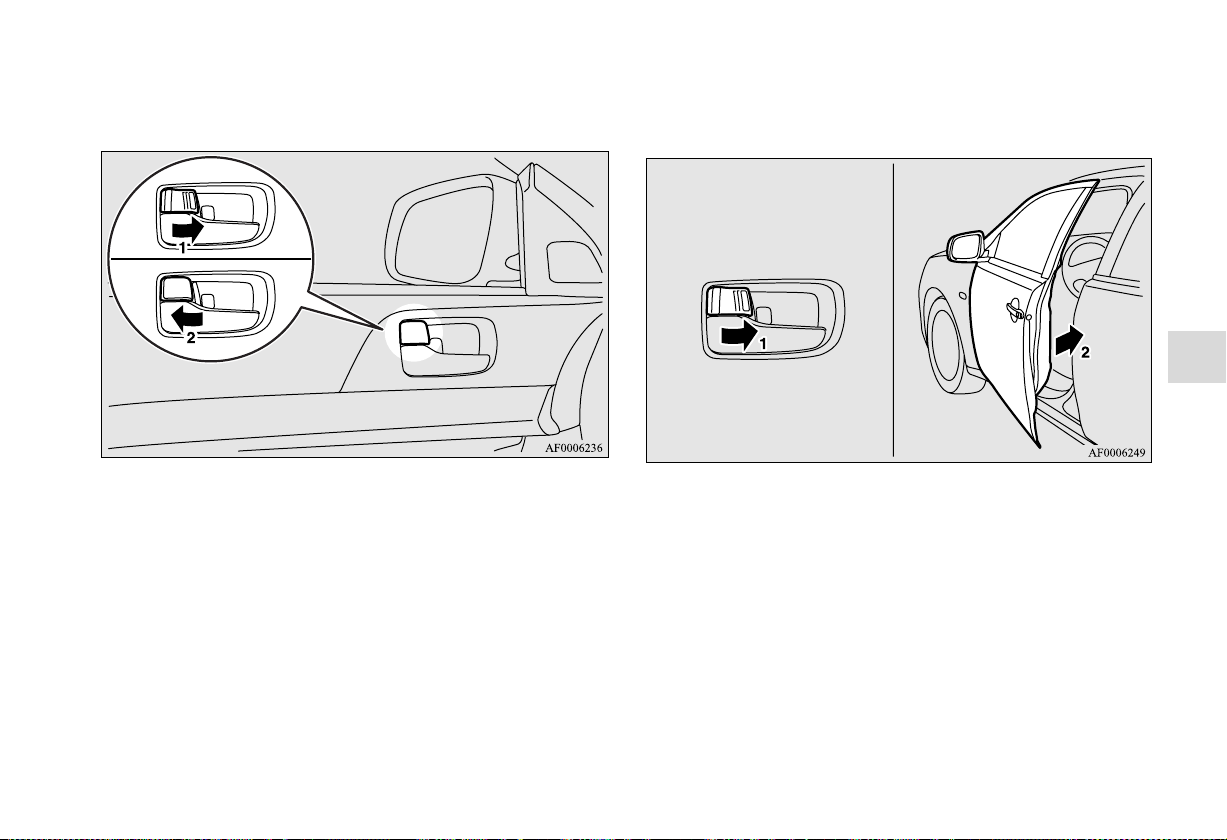
Features and controls
3-53
3
To lock or unlock the door from the inside
Move the lock knob to the lock position to lock the door.
All doors should be kept locked while driving.
The driver’s door can be unlocked without using the lock knob
by pulling on the inside door handle.
To lock the door without using the key
1. Move the inside lock knob to the locked position.
2. Be sure the keys are not inside the vehicle. Close the door.
1- Lock
2- Unlock
BK0138600US.book 53 ページ 2011年7月17日 日曜日 午後2時32分
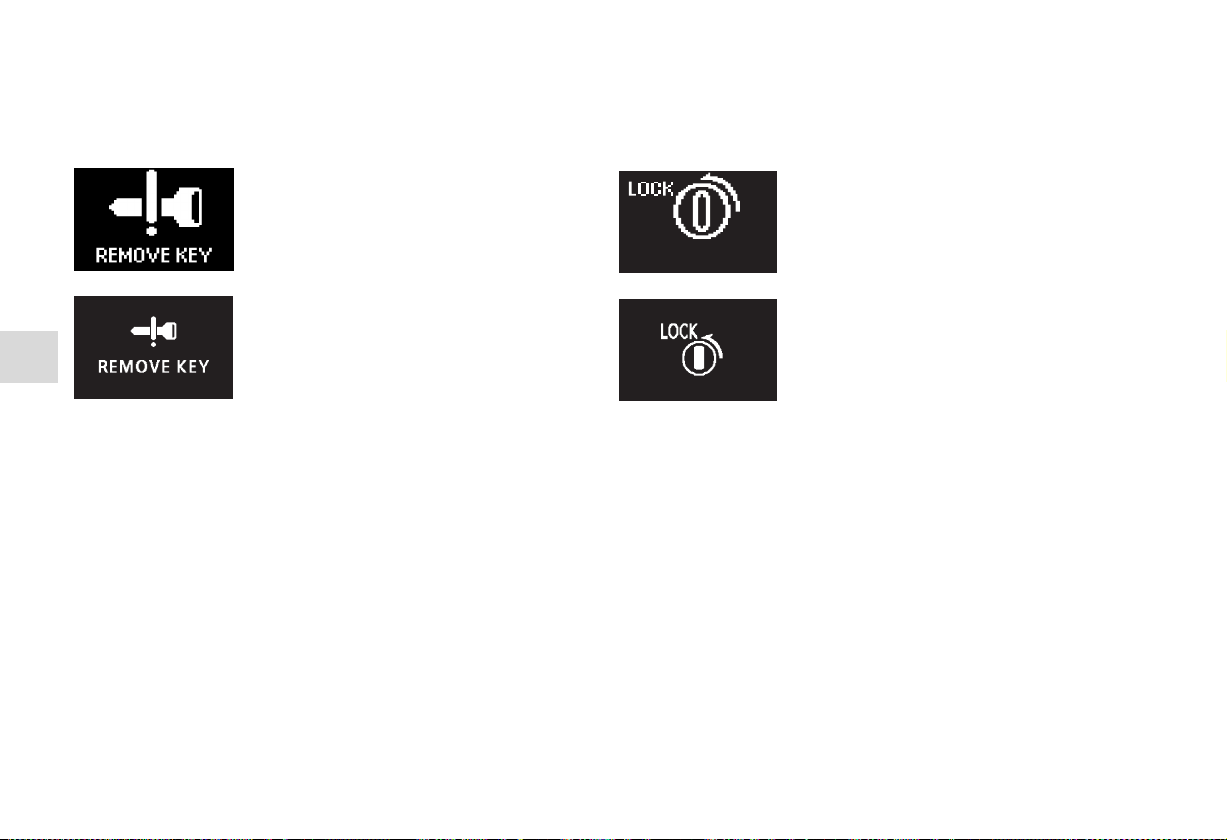
3-54
Features and controls
3
Key reminder system
N00549600178
When a key was used to start the engine
Type 1
Type 2
If the ignition switch is turned off and the driver’s door is
opened with the key in the ignition switch, the key reminder
buzzer will sound intermittently to remind you to remove the
key.
The warning display will be displayed on the information
screen in the multi-information display.
Lock out protection
N00517300039
When you push the lock knob forward or lock the door with the
power door lock switch in both of the following conditions, the
lock knob will automatically return to the unlocked position.
● The key is in the ignition switch or the ignition switch is
in the “ACC” or “ON” position.
● Driver’s door or front passenger door is opened.
Ignition switch return reminder system
N00503800121
When the F.A.S.T.-key was used to start the engine
Type 1
Type 2
If the driver’s door is opened while the ignition switch is in a
position other than “LOCK” (PUSH OFF), the ignition switch
return reminder buzzer will sound intermittently to remind you
to return the ignition switch to the “LOCK” (PUSH OFF) posi-
tion.
The warning display will be displayed on the information
screen in the multi-information display.
BK0138600US.book 54 ページ 2011年7月17日 日曜日 午後2時32分
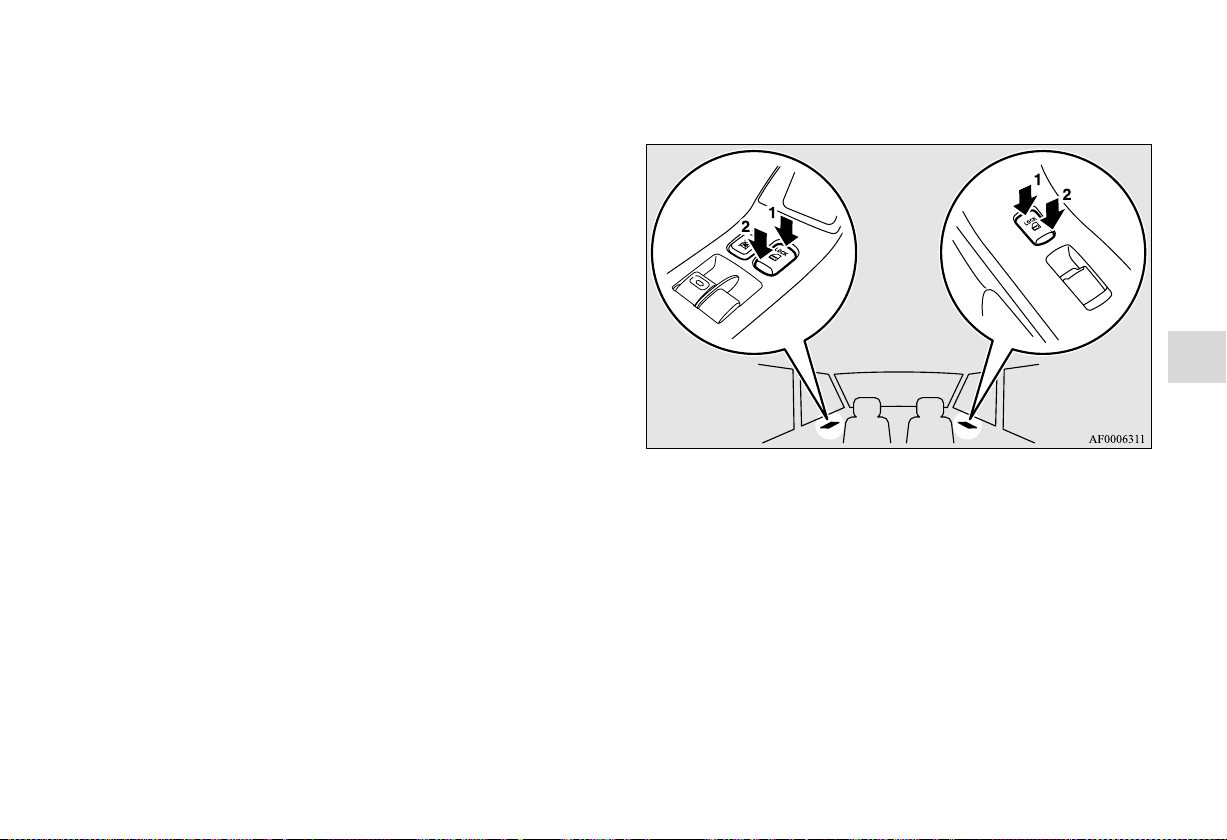
Features and controls
3-55
3
Power door locks
N00509300564
N
OTE
● When locking or unlocking with the key on the driver’s
door, only the driver’s door will lock or unlock.
● Repeated continuous operation between lock and unlock
could activate the power door locking systems built-in
protection circuit and prevent the system from operating.
If this occurs, wait about 1 minute before operating the
inside lock knob or the key.
To lock and unlock the doors
Using the power door lock switch
All of the doors can be locked or unlocked by pressing the
power door lock switch on the driver’s or the front passenger’s
door.
1- Lock
2- Unlock
BK0138600US.book 55 ページ 2011年7月17日 日曜日 午後2時32分
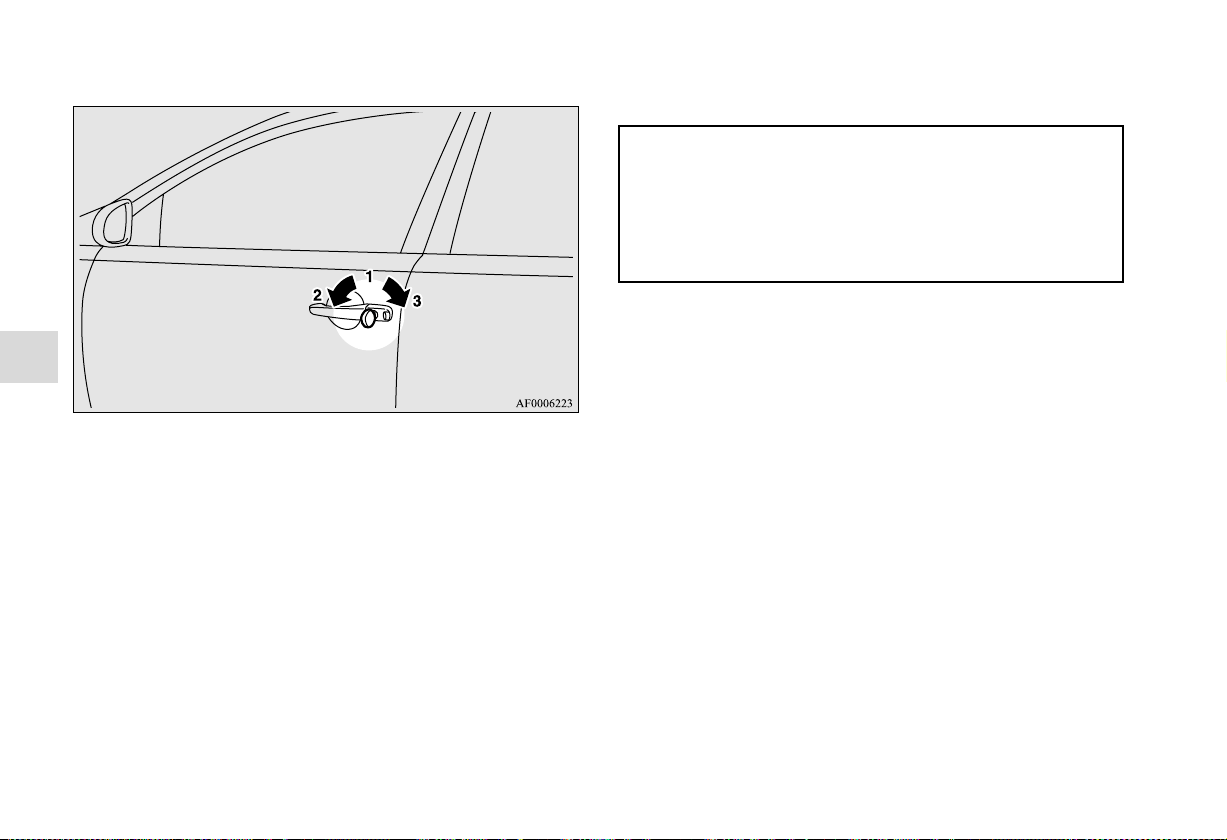
3-56
Features and controls
3
Using the key
Turn the key in the driver’s door lock once in the unlocking
direction, and the driver’s door will be unlocked.
To unlock the doors
N00517700121
Using the ignition switch position
All doors will unlock when the ignition switch is turned to the
“LOCK” position.
Using the selector lever {continuously variable trans-
mission (CVT)} position or the gearshift lever (Twin
Clutch SST) position
All doors will unlock when the selector lever (CVT) or the
gearshift lever (Twin Clutch SST) is moved to the “P” (PARK)
position with the ignition switch in the “ON” position.
1- Insert or remove the emergency key.
2- Lock
3- Unlock
You can select either the function to unlock the doors using the
ignition switch position or the function to unlock the doors using
the selector lever {continuously variable transmission (CVT)}
position or the gearshift lever (Twin Clutch SST) position.
These functions are not activated when the vehicle is shipped
from the factory. To activate or deactivate these functions, please
contact your authorized Mitsubishi Motors dealer.
BK0138600US.book 56 ページ 2011年7月17日 日曜日 午後2時32分

Features and controls
3-57
3
N
OTE
● On a vehicle equipped with a Mitsubishi Multi-Communi-
cation System, the functions can be adjusted on the
screen. For details, refer to a separate operation manual.
Vehicles with CVT
Vehicles with
Twin Clutch SST
BK0138600US.book 57 ページ 2011年7月17日 日曜日 午後2時32分
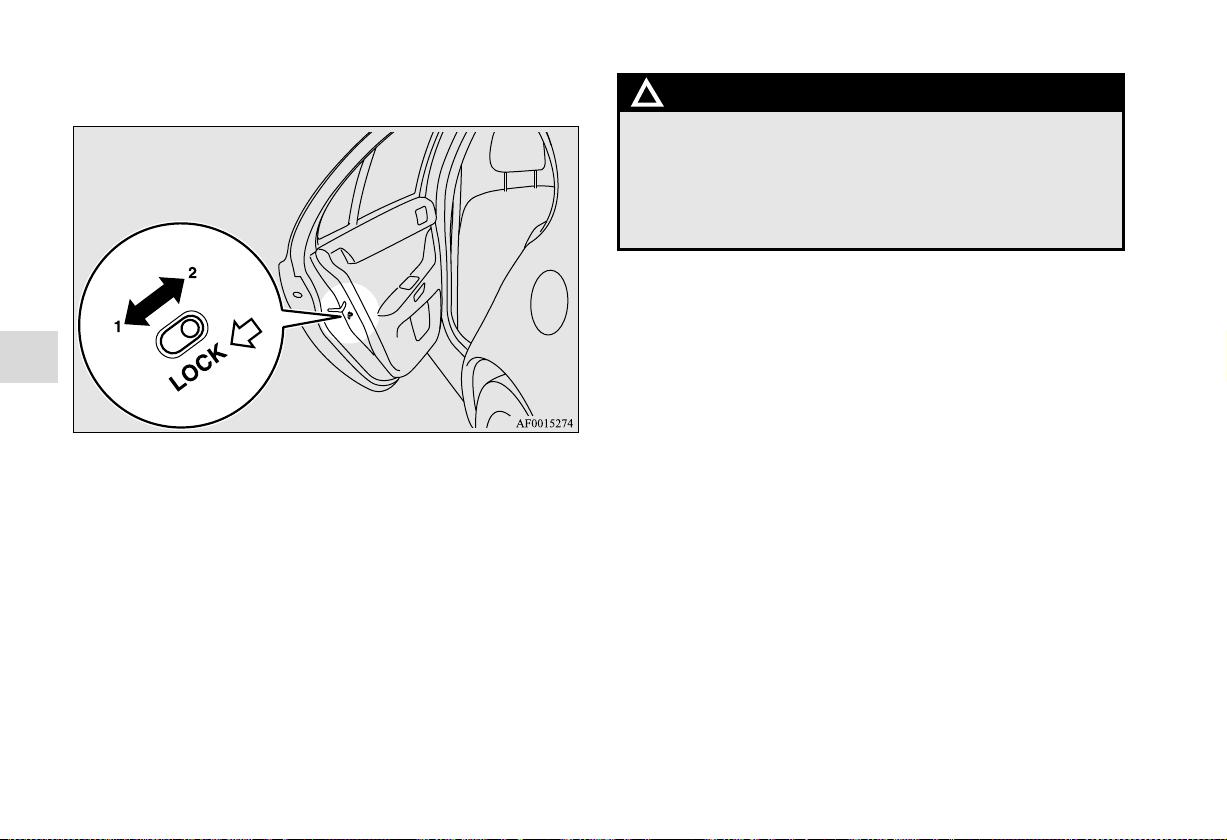
3-58
Features and controls
3
“Child safety locks” for rear door
N00509400190
Child safety locks help prevent rear passengers, especially chil-
dren, from opening the rear door using the inside door handle.
A lock lever for the child safety lock is provided on each rear
door.
When the lever is in the lock position (1), the rear door cannot
be opened using the inside door handle.
To open the rear door when the child safety lock lever is in the
lock position, pull the outside door handle.
When the lever is in the release position (2), the child safety
lock is released and the rear door can be opened using the
inside door handle.
1- To lock
2- To release
WARNING
!
● Always keep the doors tightly closed and locked
when driving. An unlocked door may be acciden-
tally opened by a passenger, especially by a child
who could fall out. Also, if the doors are not locked,
there is a greater risk of someone being thrown from
the vehicle in an accident.
BK0138600US.book 58 ページ 2011年7月17日 日曜日 午後2時32分
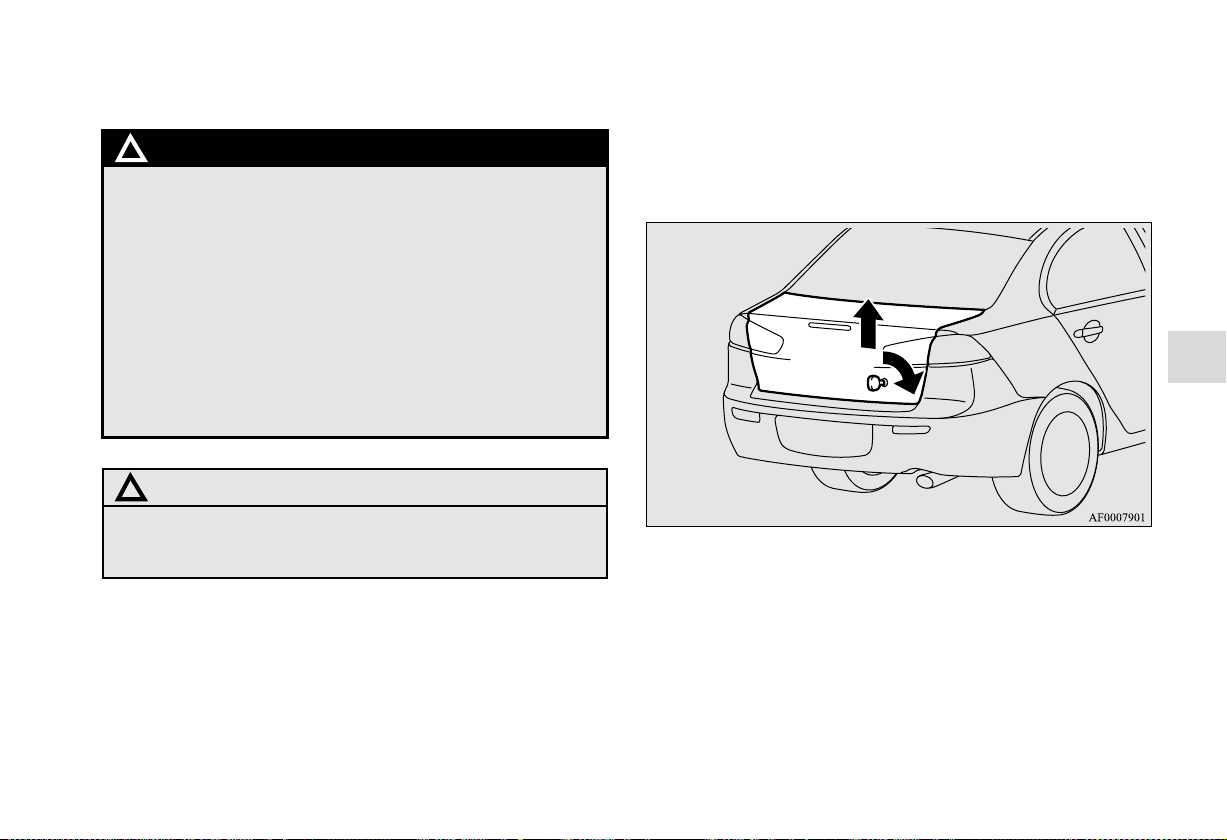
Features and controls
3-59
3
Trunk lid
N00509500175
To open
Operation from outside the vehicle
Using the key (Vehicles with key cylinder)
Insert the key and turn it clockwise.
The trunk lid will pop up slightly. Lift it to open the trunk.
Using the remote control transmitter (Vehicles with keyless
entry system or F.A.S.T.-key)
Press the trunk button (Vehicles with keyless entry system or
F.A.S.T.-key) or OPEN switch (Vehicles with F.A.S.T.-key).
(See “Keyless entry system” on page 3-9, 3-44 or “Free-hand
Advanced Security Transmitter (F.A.S.T.-key)” on page 3-17.)
The trunk lid will pop up to slightly. Lift it to open the trunk.
WARNING
!
● It is dangerous to drive with the trunk lid open since
carbon monoxide (CO) gas can enter the cabin. CO
is an invisible, odorless gas that can cause uncon-
sciousness and even death.
● Do not allow children to have access to the trunk,
either by climbing into the trunk from outside or
through the inside of the vehicle. Always close the
trunk lid when your vehicle is unattended. If
trapped in the trunk, it is possible to escape from the
trunk by using the inside emergency trunk release
lever. (See “Inside emergency trunk lid release” on
page 3-62.)
CAUTION
!
● Do not stand behind the exhaust pipe when loading
and unloading luggage. Heat from the exhaust could
lead to burns.
BK0138600US.book 59 ページ 2011年7月17日 日曜日 午後2時32分
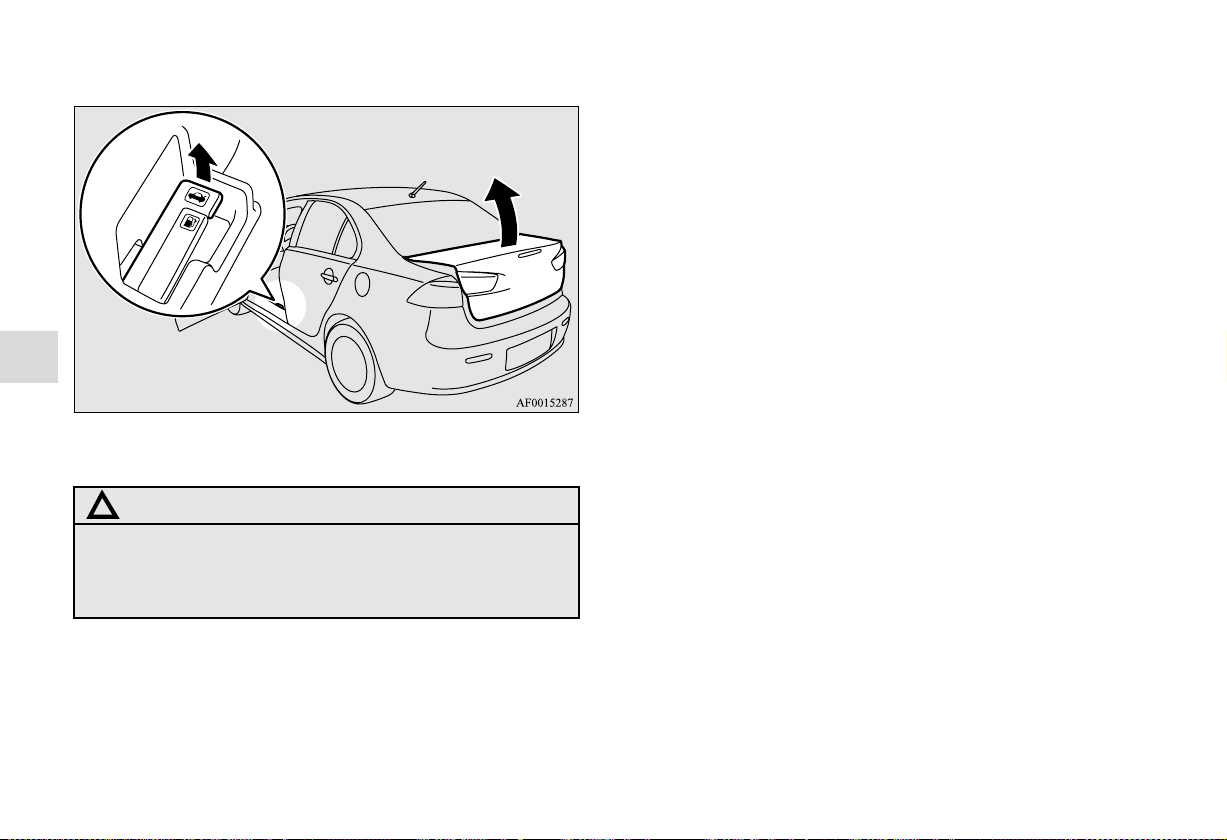
3-60
Features and controls
3
Operation from inside the vehicle
Pull the trunk lid release lever, located to the left of the driver’s
seat, up to open the trunk.
N
OTE
● The trunk area light comes on when the trunk lid is
opened, and goes out when it is closed.
● The trunk area light remains illuminated for a certain
period and then goes off automatically. Refer to “Interior
light auto-cutout function (dome light and other lights)”
on page 3-296.
CAUTION
!
● Do not use the trunk lid release lever while the vehi-
cle is moving. If the trunk lid is opened, objects in
the trunk could fall onto the road and cause an acci-
dent.
BK0138600US.book 60 ページ 2011年7月17日 日曜日 午後2時32分
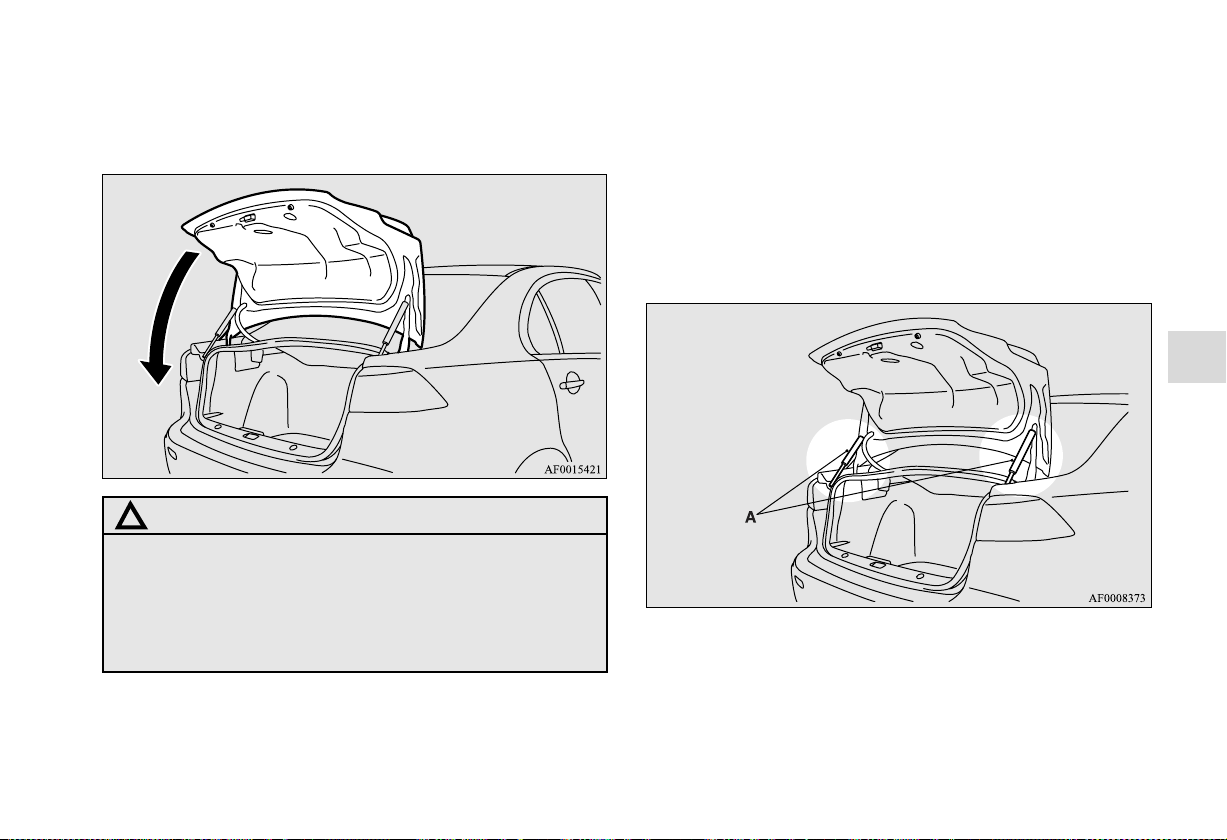
Features and controls
3-61
3
To close
Pull the trunk lid downward as illustrated. Gently slam the
trunk lid from the outside so that it is completely closed.
Always ensure the trunk lid is securely closed.
N
OTE
● Gas struts (A) are installed in the locations illustrated to
support the trunk lid. Please observe the following in
order to prevent damage or faulty operation.
• Do not touch, push or pull the gas struts when closing
the trunk lid.
• Do not attach any plastic material, tape, etc., to the gas
struts.
• Do not tie string, etc., around the gas struts.
• Do not hang any object on the gas struts.
CAUTION
!
● Be careful to prevent catching anyone’s fingers
when closing the trunk lid.
● Before starting the vehicle, be sure to confirm that
the trunk lid is closed. If the trunk lid opens while
driving the vehicle, objects stored in the trunk could
fall out onto the road.
BK0138600US.book 61 ページ 2011年7月17日 日曜日 午後2時32分
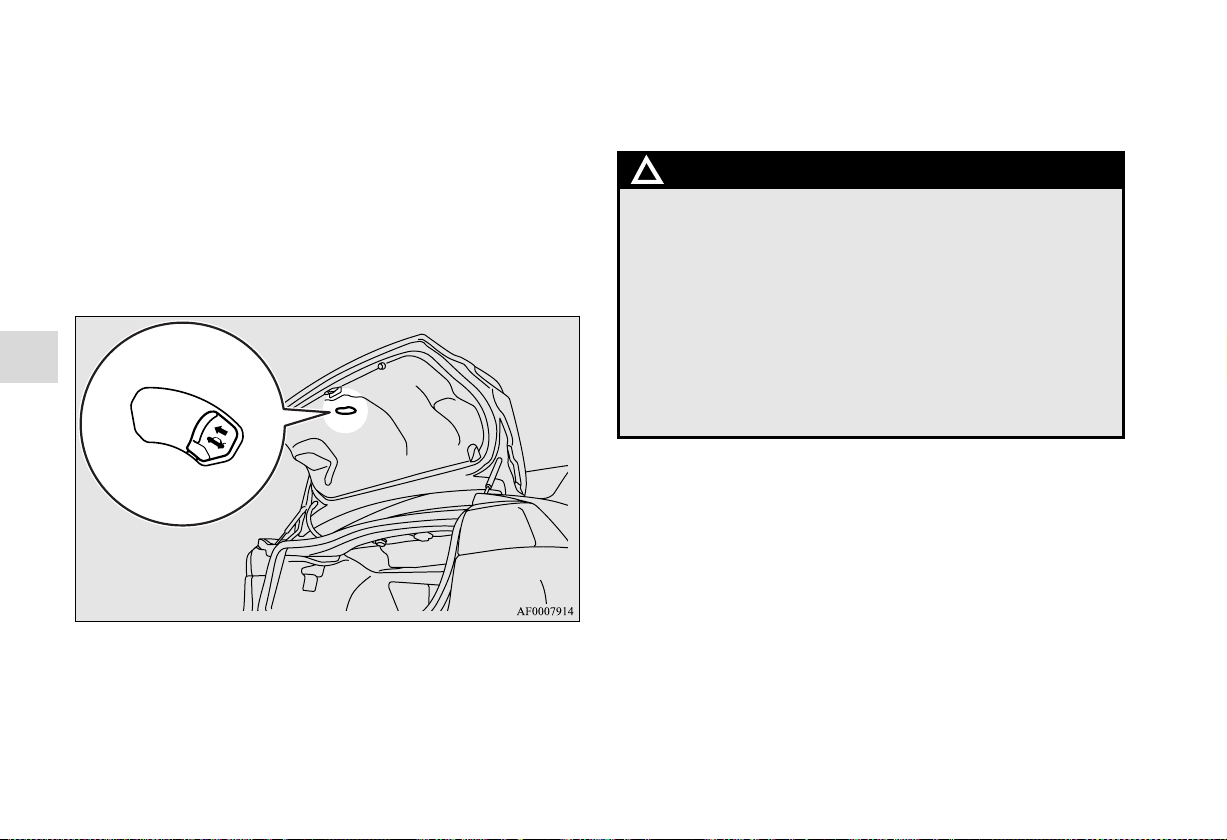
3-62
Features and controls
3
Inside emergency trunk lid release
N00509800165
The emergency trunk lid release is designed to provide a way
to open the trunk lid from inside the trunk. It was developed to
help prevent death and serious injuries to children who might
become locked inside a vehicle trunk.
The emergency trunk lid release lever (see illustration) is
mounted on the trunk lid.
The lever glows in the dark after exposure to sunlight.
You and your family should familiarize yourselves with the
location and operation of the emergency trunk lid release lever.
Children should be taught not to play in or around vehicles.
WARNING
!
● Children should never be left unsupervised in or
around vehicles.
● Unsupervised children could lock themselves in an
open vehicle or trunk.
● People trapped inside a vehicle or trunk, even if only
for a short period of time, can quickly die from suf-
focation or heat stroke, especially on hot days. Inte-
rior temperatures in vehicles can rise in minutes.
● Keep your vehicle doors locked and the trunk lid
closed when not in use. Keep your vehicle keys away
from children.
BK0138600US.book 62 ページ 2011年7月17日 日曜日 午後2時32分
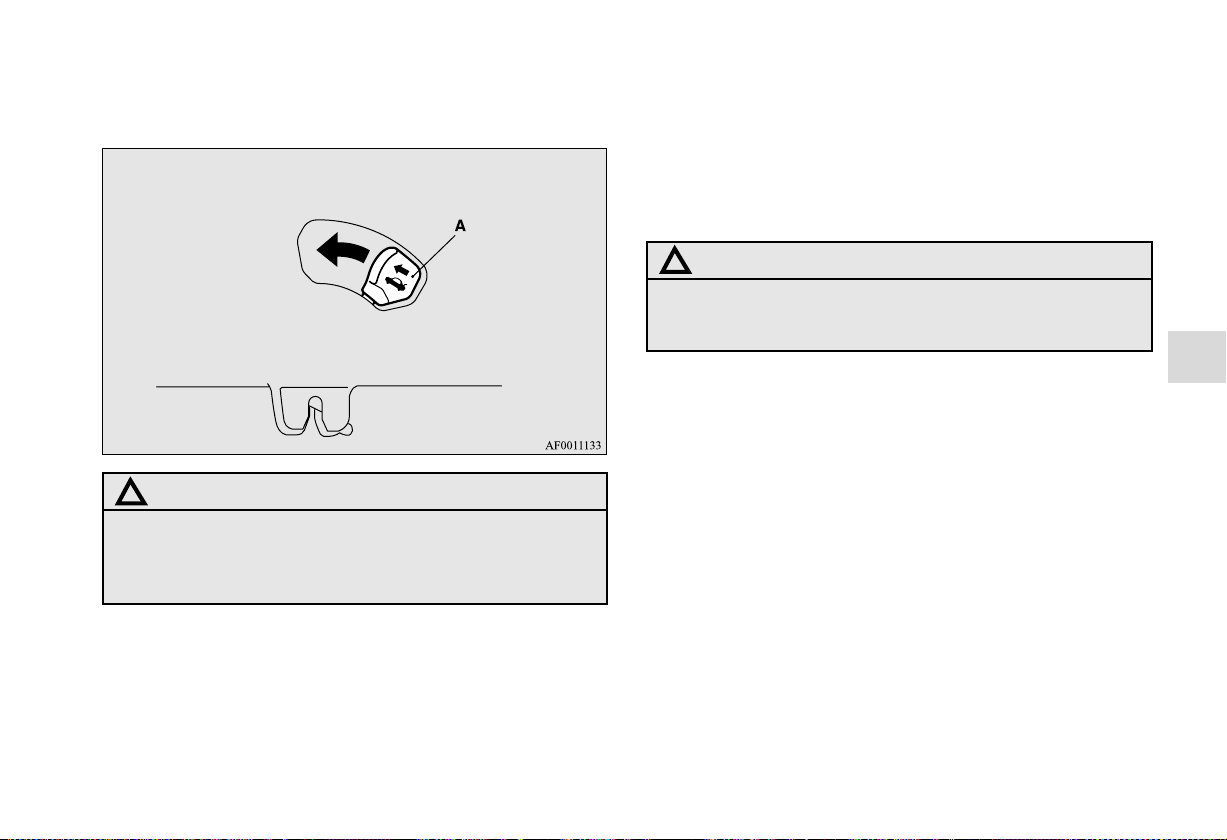
Features and controls
3-63
3
To open the trunk from the inside, move the lever (A) in the
direction of the arrow on the lever. Push up on the trunk lid to
open the trunk and climb out.
Theft-alarm system
N00510200185
The theft-alarm system is designed to provide protection from
unauthorized entry into the vehicle. This system is operated in
three stages: the first is the “armed” stage, the second is the
“alarm” stage, and third is the “disarmed” stage. If triggered,
the system provides both audible and visual alarm signals.
Armed stage
N00510300157
Park the vehicle and stop the engine. Arm the system as
described below.
1. Turn the ignition switch to the “LOCK” position.
Also, if a key was used to start the engine, remove the key
from the ignition switch.
2. Make sure that the trunk lid and engine hood are closed.
CAUTION
!
● When loading the trunk, place your things so that
they will not touch the emergency trunk lid release
lever when you close the trunk. Otherwise you could
damage the lever and make it unusable.
CAUTION
!
● Do not modify or add parts to the theft-alarm sys-
tem. Doing so could cause the theft-alarm to mal-
function.
BK0138600US.book 63 ページ 2011年7月17日 日曜日 午後2時32分
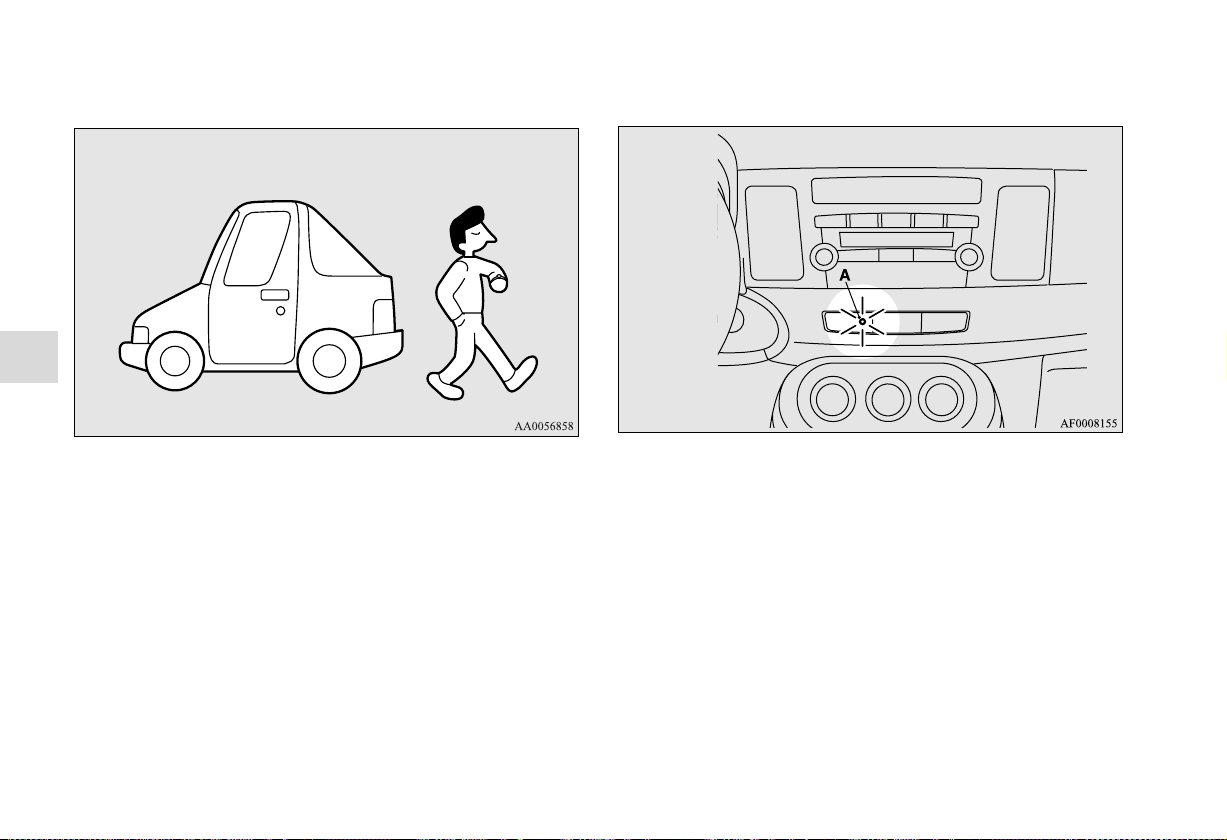
3-64
Features and controls
3
3. Lock all doors by either the remote control transmitter or
the F.A.S.T.-key.
At this time, the theft-alarm indicator (A) on the audio
panel flashes for confirmation.
4. The system has entered the armed stage after about 20
seconds, when the theft-alarm indicator (A) flashing
becomes slower.
The theft-alarm indicator (A) continues to flash while the
system is in the armed stage.
Arm the system and leave
BK0138600US.book 64 ページ 2011年7月17日 日曜日 午後2時32分

Features and controls
3-65
3
N
OTE
● If the engine hood or the trunk lid is open, the theft-alarm
indicator (A) illuminates and the system cannot enter the
armed stage. The system enters the armed stage about 20
seconds after the engine hood or the trunk lid is closed.
● The system will be disarmed if, while the theft-alarm indi-
cator (A) is illuminated, all doors are unlocked by remote
control transmitter or the F.A.S.T.-key.
● The system will be disarmed if, while the theft-alarm indi-
cator is illuminated, the ignition switch is turned to the
“ON” position.
● The system will not be armed if a door or the trunk lid or
the engine hood is not completely closed. If this happens,
rearm the system as described above.
● The interior alarm sensor, the theft-alarm system can be
activated when people are riding inside the vehicle or
when the windows are open. To prevent accidental activa-
tion of the alarm, do not set the system to the system
armed mode while people are riding in the vehicle.
● For vehicles equipped with the interior alarm sensor, the
sensitivity of the interior intrusion detection function can
be adjusted. For further details, please contact an autho-
rized Mitsubishi Motors dealer.
● For vehicles equipped with the interior alarm sensor, if the
turn signal lights do not flash after the locking and unlock-
ing operation using the remote control transmitter of the
F.A.S.T.-key, the theft-alarm system may be malfunction-
ing.
Have the vehicle inspected by an authorized Mitsubishi
Motors dealer.
If the answerback function (flashing of the turn signal
lights by locking and unlocking the doors) is deactivated,
the turn signal lights do not flash after the locking and
unlocking operation.
For information on the answerback function, refer to
“Keyless entry system” on pages 3-9, 3-44 and “To oper-
ate using the F.A.S.T.-key” on page 3-21.
BK0138600US.book 65 ページ 2011年7月17日 日曜日 午後2時32分
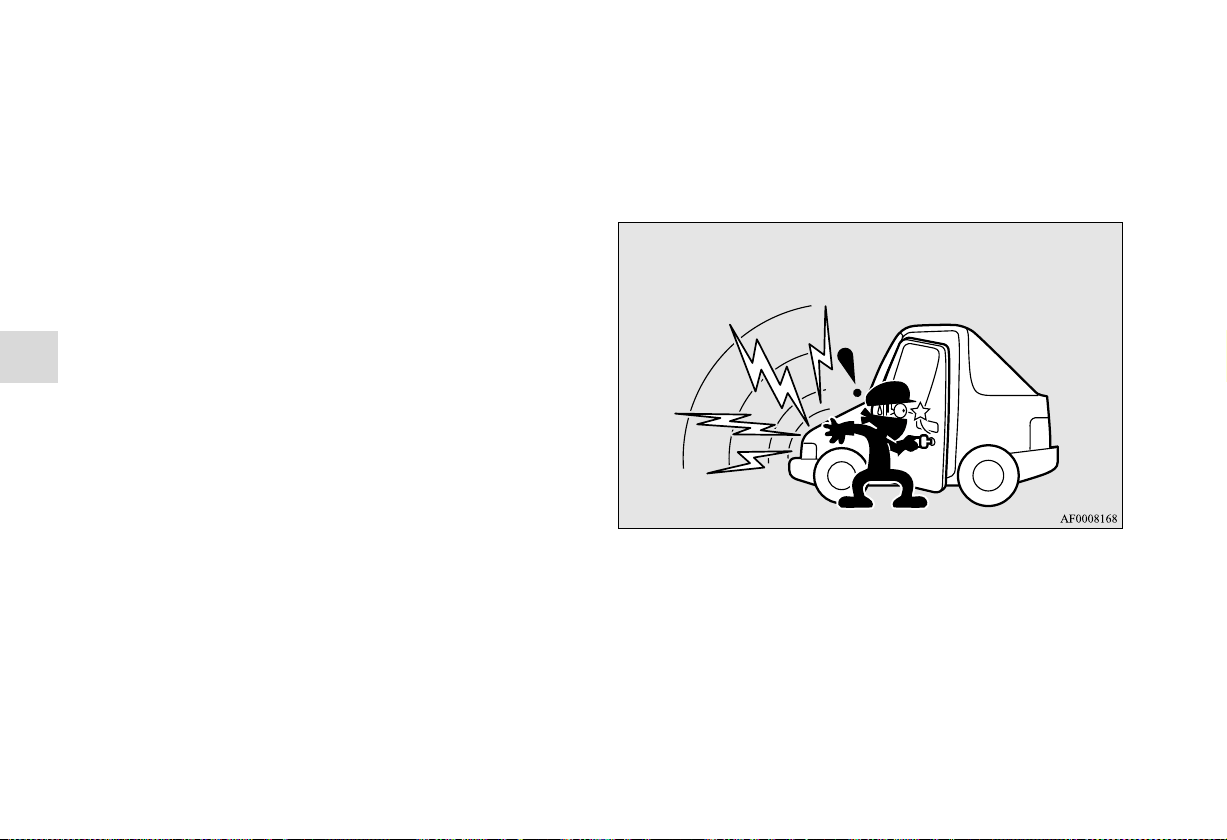
3-66
Features and controls
3
Alarm stage
N00510400158
The alarm will be activated if any of the following occur while
the vehicle is parked and the system is armed.
● One of the doors is opened without using the remote con-
trol transmitter or the F.A.S.T.-key.
● The engine hood or the trunk lid is opened.
Also, for vehicles equipped with the interior alarm sensor, the
alarm will be activated if any of the following occur.
● Attempt an unauthorized moving of the vehicle. (the vehi-
cle inclination detection function)
● Detect a motion in the vehicle. (the interior intrusion
detection function)
● Disconnect the battery terminal.
Type of alarm
When the alarm is activated:
1. The headlights blink on and off for 3 minutes.
After 3 minutes the headlights automatically shut off.
2. The horn (the siren for vehicles equipped with the interior
alarm sensor) will sound intermittently for 3 minutes.
Horn or siren sounds!
Headlights blink on and off!
BK0138600US.book 66 ページ 2011年7月17日 日曜日 午後2時32分
Features and controls
3-67
3
N
OTE
● The alarm will continue to operate for 3 minutes. At the
end of that period, the alarm will automatically shut off to
save battery power. The system will then be rearmed until
the proper disarming step is taken.
● The alarm will resume if unauthorized actions are taken
again, even if the alarm has stopped.
● While the alarm is operating, a warning is displayed on
the information screen in the multi-information display.
Type 1
Type 2
Alarm deactivation
The alarm can be deactivated in the following ways.
● By using the remote control transmitter or the F.A.S.T.-
key to lock or unlock the door.
● Turn the ignition switch to the “ON” position.
To deactivate the vehicle inclination detection function
and the interior intrusion detection function (vehicles
equipped with the interior alarm sensor)
The vehicle inclination detection function and the interior
intrusion detection function can be deactivated when parking in
automated car parks or leaving pets in the vehicle.
1. Turn the ignition switch to the “LOCK” position.
Also, if a key was used to start the engine, remove the key
from the ignition switch.
2. Raise and hold the wiper and washer switch to the
“MIST” position for about 3 seconds. The buzzer will
sound once and the function will be deactivated.
To activate the function again, raise and hold the wiper and
washer switch to the “MIST” position for about 3 seconds.
The buzzer will sound twice and the function will be activated.
BK0138600US.book 67 ページ 2011年7月17日 日曜日 午後2時32分
3-68
Features and controls
3
N
OTE
● The function will be activated again if the following oper-
ation is performed.
• If the doors are unlocked using the remote control trans-
mitter or the F.A.S.T.-key.
• If the ignition switch is turned to the “ON” or “ACC”
position.
Disarmed stage
N00510500133
The system will be disarmed if the following operation is per-
formed.
● All doors are unlocked by the remote control transmitter
or the F.A.S.T.-key.
N
OTE
● If the UNLOCK button is pressed when all doors are
closed and no door is opened within approximately 30
seconds, re-arming will automatically occur.
● The amount of time after unlocking until the vehicle
relocks automatically can be adjusted. See an authorized
Mitsubishi Motors dealer for details. On a vehicle
equipped with a Mitsubishi Multi-Communication Sys-
tem, the functions can be adjusted on the screen. For
details, refer to a separate operation manual.
● The ignition switch is turned to the “ON” position.
N
OTE
● Once the system has been disarmed, it cannot be rearmed
except by repeating the arming procedure.
Disarm...by remote control transmitter or F.A.S.T.-key
BK0138600US.book 68 ページ 2011年7月17日 日曜日 午後2時32分
Features and controls
3-69
3
Testing the theft-alarm system
N00510600091
Use the following procedure to test the system:
1. Lower the driver’s window.
2. Arm the system as explained in “Armed stage”.
3. Make sure that the theft-alarm indicator comes on and
flashes for approximately 20 seconds.
4. Wait a few seconds and then unlock the driver’s side door
by using the inside door lock knob and open the door.
5. Check to be sure that the horn (the siren for vehicles
equipped with the interior alarm sensor) sounds intermit-
tently and the headlights blink on and off when a door is
opened.
6. Disarm the system by unlocking all doors by the remote
control transmitter or the F.A.S.T.-key.
Power windows
N00510800367
N
OTE
● Never try to operate the main switch and sub switch in dif-
ferent directions at the same time. This will freeze the
window in position.
● Operating the power windows repeatedly with the engine
stopped will run down the battery. Use the window
switches only while the engine is running.
1- Open (down)
2- Close (up)
BK0138600US.book 69 ページ 2011年7月17日 日曜日 午後2時32分
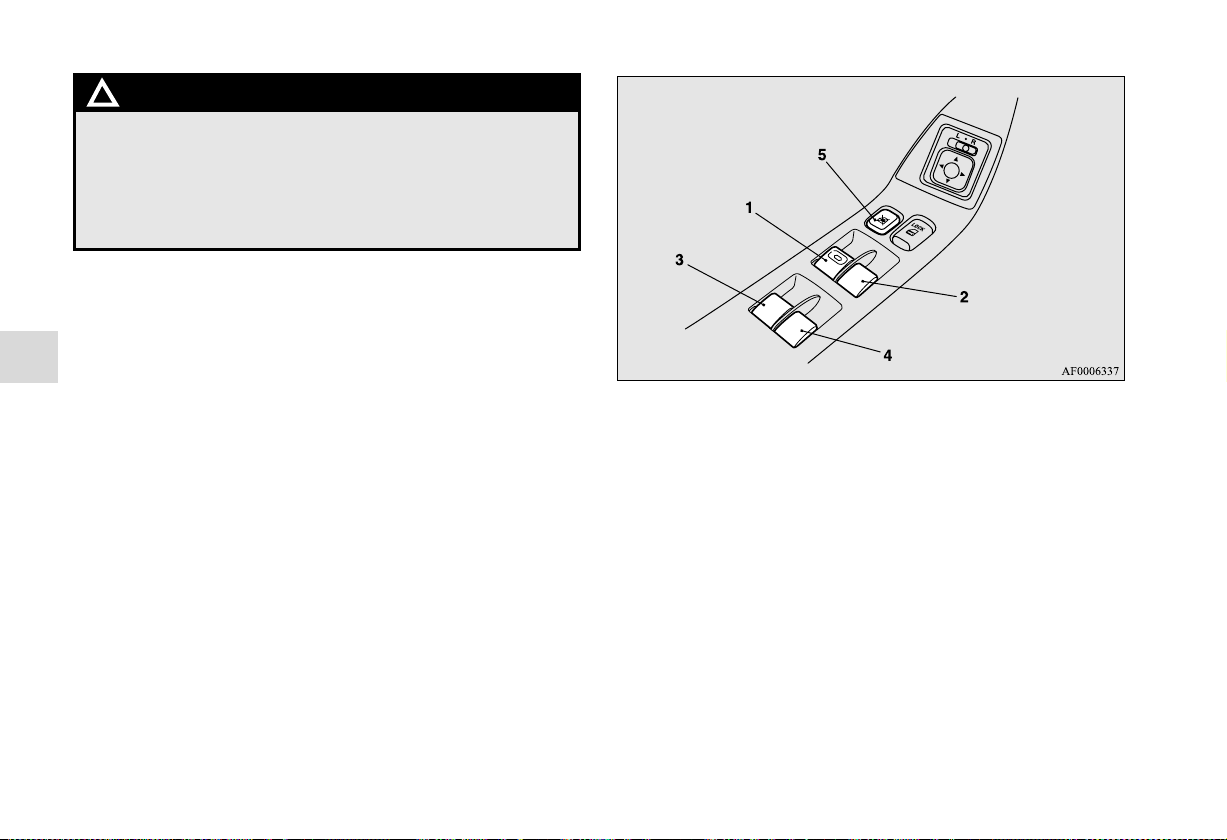
3-70
Features and controls
3
Main switch
The main switch located on the driver’s door can be used to
operate all door windows.
A window can be opened or closed by operating the corre-
sponding switch.
Press the switch down to open the window, and pull up the
switch to close it.
If the driver’s door window switch is fully pressed down/pulled
up, the driver’s door window automatically opens/closes com-
pletely.
If you want to stop the window movement, operate the switch
lightly in the reverse direction.
WARNING
!
● Before operating the power windows, make sure
that nothing can be trapped (head, hands, fingers,
etc.) in the window.
● Never leave the vehicle with the key in the ignition
switch.
● Never leave a child alone in the vehicle.
1- Driver’s door window switch
2- Front passenger door window switch
3- Left rear door window switch
4- Right rear door window switch
5- Window lock switch
BK0138600US.book 70 ページ 2011年7月17日 日曜日 午後2時32分
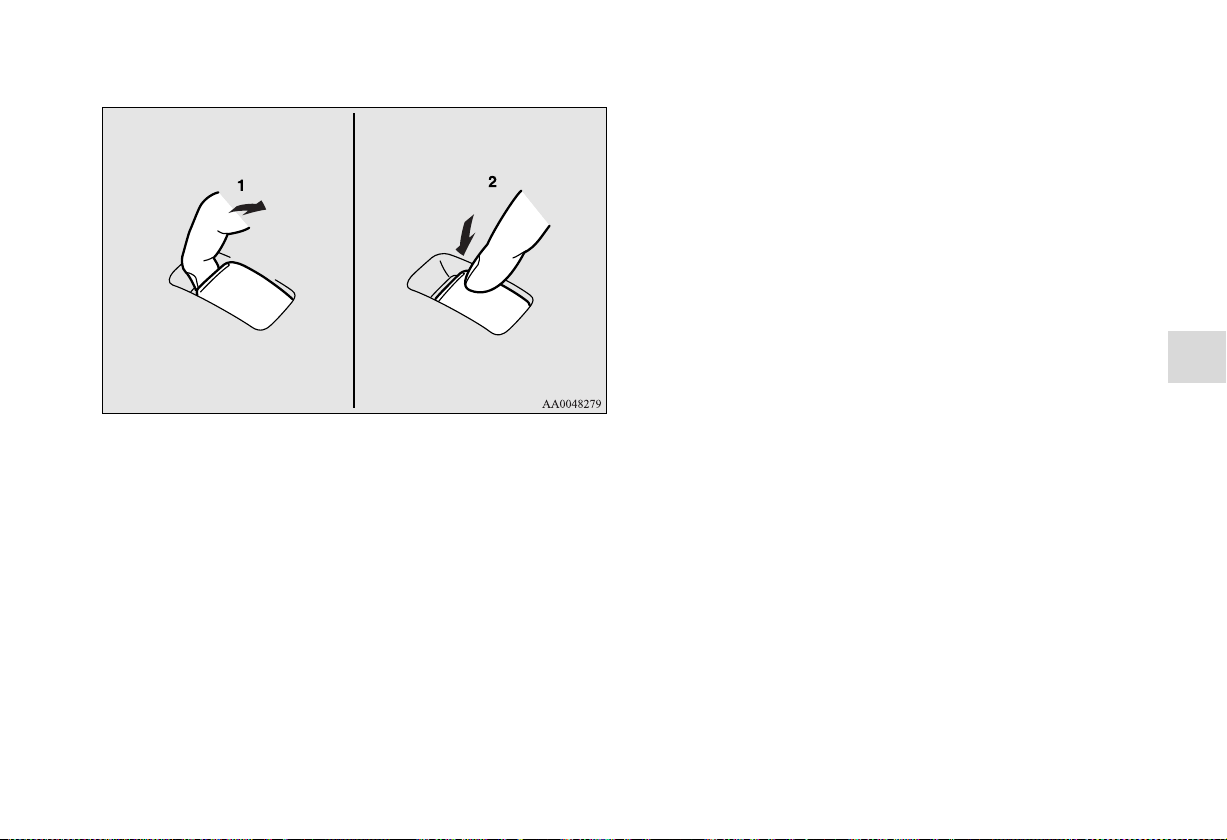
Features and controls
3-71
3
Sub switch
Each sub switch can be used for its own passenger door win-
dow, unless the driver’s window lock switch is activated.
Timer function
The power windows can be run up or down when the ignition
switch is in the “ON” position.
The door windows can be opened or closed for a 30 second
period after the ignition switch is turned to the “ACC” or
“LOCK” position. However, once the driver’s door or the front
passenger’s door is opened, the power windows cannot be
operated.
1- Close (up)
2- Open (down)
BK0138600US.book 71 ページ 2011年7月17日 日曜日 午後2時32分
3-72
Features and controls
3
Safety mechanism (Driver’s door window only)
N00528800092
If a hand or head is trapped, for safety the door window is auto-
matically lowered a little.
After the door window is lowered, pull up the switch again to
close the door window.
N
OTE
● The safety mechanism can be activated if the driving con-
ditions or other circumstances cause the door window to
be subjected to a physical shock similar to that caused by
trapped hand or head.
● If the safety mechanism is activated 3 or more times con-
secutively, the safety mechanism is deactivated and nor-
mal closing of the door window will be aborted.
Use the following method to return to normal operation.
1. If the door window is open, repeatedly pull up the
power window switch to fully close the door window.
2. With fully closing the window, release the switch and
then pull up the switch again for about 1 second.
WARNING
!
● If the safety mechanism is activated three or more
times successively, the safety mechanism will be tem-
porarily cancelled.
If a hand or head subsequently gets trapped, a seri-
ous injury can result.
CAUTION
!
● The safety mechanism is deactivated just before the
door window closes. This allows the door window to
close completely. Therefore be especially careful that
fingers are not trapped in the door window opening.
● The safety mechanism is deactivated while the
switch is pressed. Therefore be especially careful
that fingers are not trapped in the door window
opening.
● Do not deliberately trap your hands or head in
order to activate the safety mechanism.
Your hand or head could be trapped and personal
injury could result.
BK0138600US.book 72 ページ 2011年7月17日 日曜日 午後2時32分
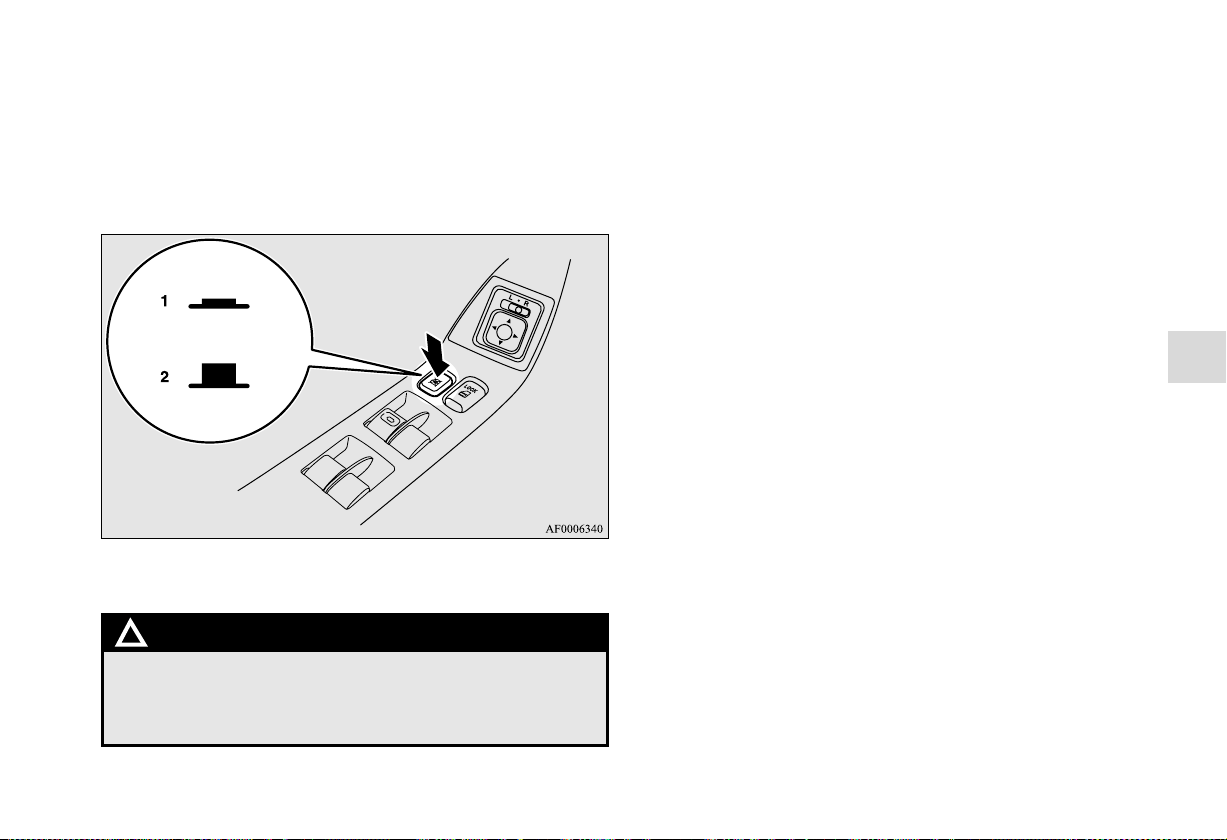
Features and controls
3-73
3
Lock switch
N00549000127
When this switch is in the lock mode, the main switch for pas-
senger door window and the sub switch cannot be used to open
or close the door window, and the main switch will open or
close only the driver’s door window. To unlock the switch,
press it again.
What to do if you hear wind buffeting when driv-
ing
N00551400014
Wind buffeting can be described as the perception of pressure
on the ears or a booming or rumbling sound. Your vehicle may
exhibit wind buffeting when driving with one or both rear door
windows down or partially opened. This is a normal occur-
rence that can be minimized. If the buffeting occurs with the
rear door windows open, open the front door windows as well
as the rear door windows to minimize the condition.
1- Lock
2- Unlock
WARNING
!
● Before driving with a child in the vehicle, be sure to
lock the window switch to make it inoperative. Chil-
dren tampering with the switch could easily trap
their hands or heads in the window.
BK0138600US.book 73 ページ 2011年7月17日 日曜日 午後2時32分
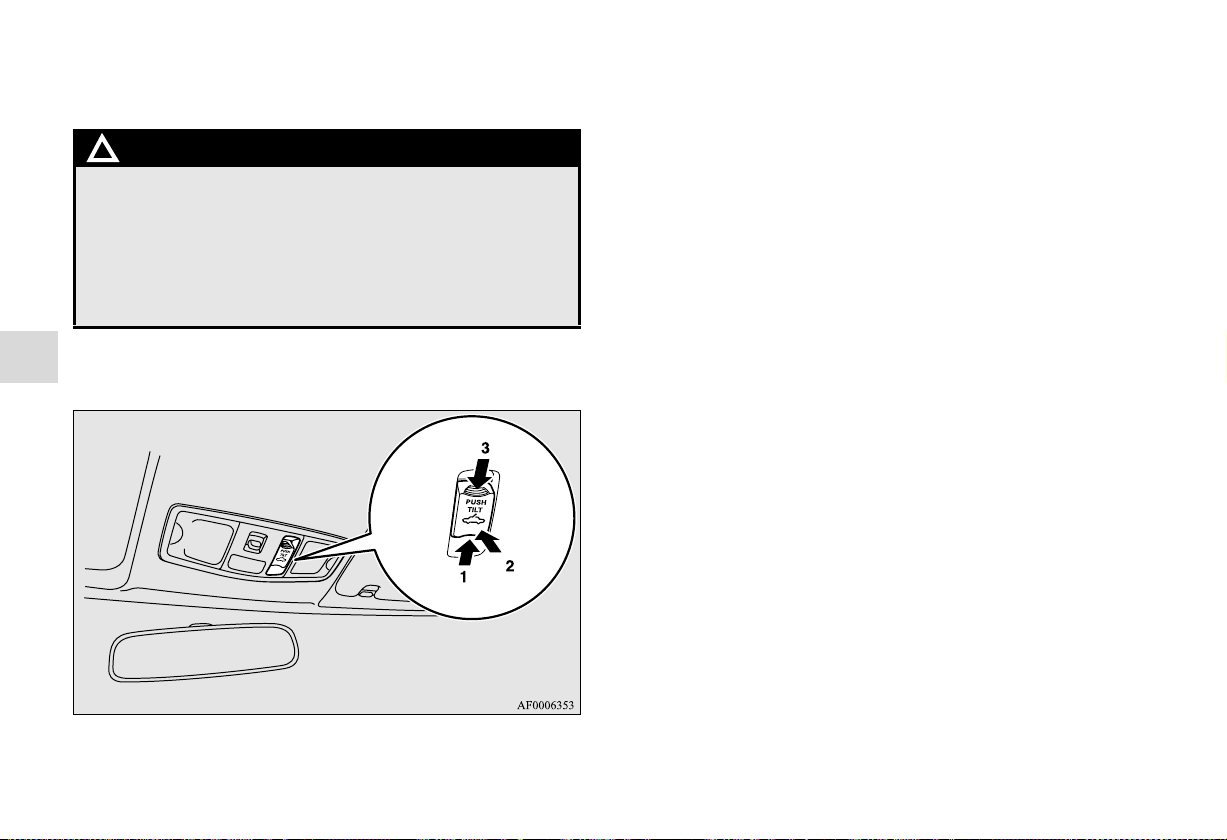
3-74
Features and controls
3
Sunroof
(if so equipped)
N00511000656
The sunroof can be opened and closed with the ignition switch
in the “ON” position.
To open
Press the switch (1), the sunroof automatically opens and the
sunroof will stop several centimeters this side of the full open
position. Press the switch (1) again, and the sunroof will be
fully open.
To stop the moving sunroof, press the switch.
N
OTE
● The sunroof stops just before reaching the fully open posi-
tion. If the vehicle is driven with the sunroof in this posi-
tion, wind buffeting is lower than with the sunroof fully
open.
To close
Press the switch (3), the sunroof automatically closes.
To stop the moving sunroof, press the switch.
To tilt up
When the switch (2) is pressed, the rear edge of sunroof raises
for ventilation.
To tilt down
Press the switch (3).
Timer function
The sunroof can be operated when the ignition switch is in the
“ON” position. The sunroof can be opened or closed for a 30
seconds period after the ignition switch is turned to the “ACC”
or “LOCK”. However, once the driver’s door or the front pas-
senger’s door is opened, the sunroof cannot be operated until
the ignition switch is turned on again.
WARNING
!
● Do not stick your head, hands or anything else in the
sunroof opening.
● Before operating the sunroof, make sure that noth-
ing can be trapped (head, hands, fingers, etc.).
● Never leave a child (or other person who is incapa-
ble of safely operating the sunroof switch) alone in
the vehicle.
BK0138600US.book 74 ページ 2011年7月17日 日曜日 午後2時32分
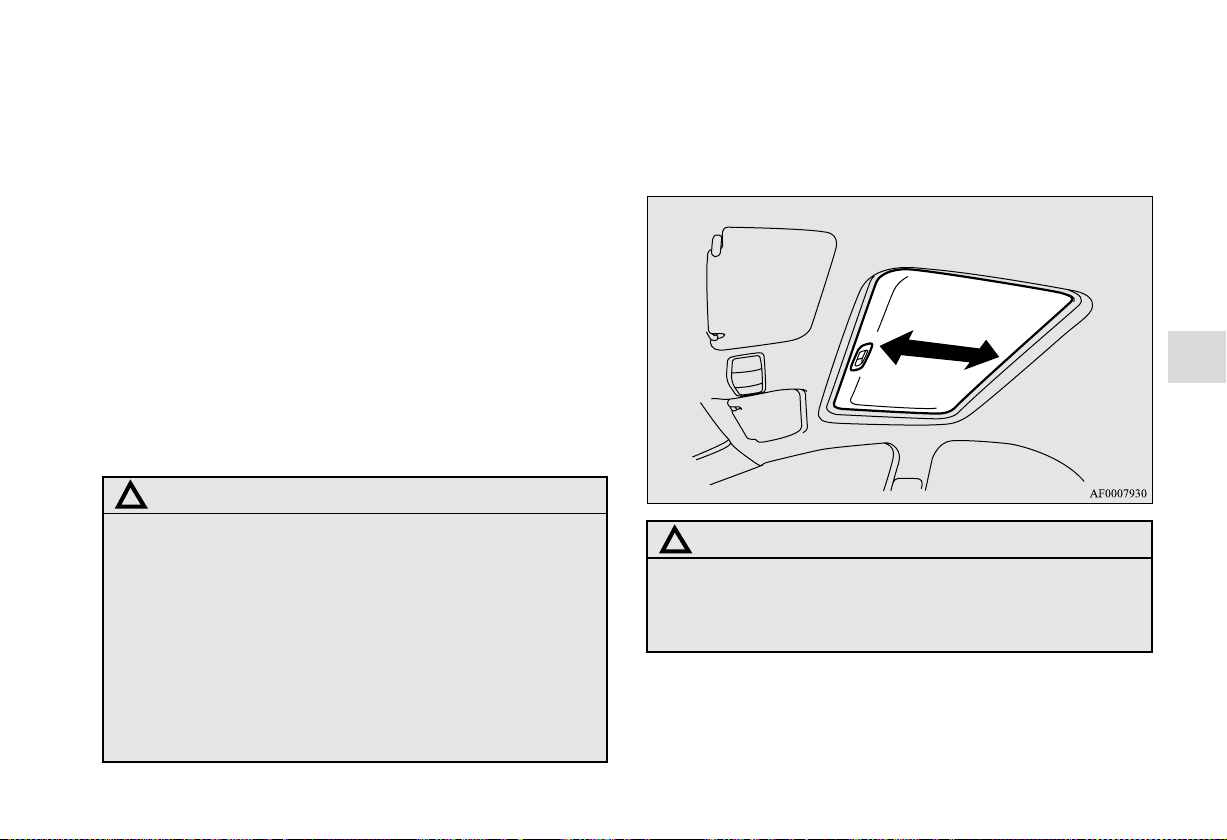
Features and controls
3-75
3
Safety mechanism
If a hand or head is trapped in the closing sunroof opening, the
safety mechanism will cause the sunroof to re-open automati-
cally. The opened sunroof will become operational again after
a few seconds.
If the safety mechanism is activated 5 or more times consecu-
tively, normal closing of the sunroof will be aborted.
As an emergency measure, the sunroof can be closed in small
increments until it is completely closed by repeatedly pressing
the switch (2).
After performing the emergency measure, consult an autho-
rized Mitsubishi Motors dealer.
N
OTE
● The safety mechanism can be activated if the driving con-
ditions or other circumstances cause the sunroof to be sub-
jected to a physical shock similar to that caused by a
trapped hand or head.
Sunshade
The sunshade can be opened or closed manually while the
sunroof is closed.
When the sunroof is opened, the sunshade will also open auto-
matically.
CAUTION
!
● The safety mechanism is deactivated just before the
sunroof closes. This allows the sunroof to close com-
pletely. Therefore be especially careful that fingers
are not trapped in the sunroof opening.
● The safety mechanism is deactivated while the
switch (2) is pressed. Therefore be especially careful
that fingers are not trapped in the sunroof opening.
● Do not deliberately trap your hands or head in
order to activate the safety mechanism.
Personal injury and malfunction of the sunroof
could result.
CAUTION
!
● Do not attempt to close the sunshade when the
sunroof is opened.
● Be careful that hands are not trapped when closing
the sunshade.
BK0138600US.book 75 ページ 2011年7月17日 日曜日 午後2時32分

3-76
Features and controls
3
N
OTE
● Be sure to tilt down the sunroof before closing the sun-
shade.
● When leaving the vehicle unattended, be sure to close the
sunroof and without the ignition key.
● Do not try to operate the sunroof if it is frozen closed
(after snowfall or during extreme cold).
● Do not sit on or place heavy luggage on the sunroof or
roof opening edge.
● Do not apply any force that may cause damage to the
sunroof.
● Release the switch when the sunroof has reached a com-
pletely open or completely closed position.
● If the sunroof does not operate when the sunroof switch is
operated, release the switch and check whether something
is trapped by the sunroof. If nothing is trapped, have the
sunroof checked at an authorized Mitsubishi Motors
dealer.
● Be careful when tilting up the sunroof if a ski carrier or a
roof carrier is installed. Depending on the model of ski
carrier or roof carrier, the sunroof may contact the carrier
when the sunroof is tilted up.
● Be sure to close the sunroof completely when washing the
vehicle or when leaving the vehicle.
● Do not put any wax on the weatherstrip (black rubber)
around the sunroof opening. If it is waxed, the weather-
strip cannot maintain a weatherproof seal with the
sunroof.
● After washing the vehicle or after rain be sure to wipe off
any water that is on the sunroof before operating it.
● Operating the sunroof repeatedly with the engine turned
off will run down the battery. Operate the sunroof only
while the engine is running.
BK0138600US.book 76 ページ 2011年7月17日 日曜日 午後2時32分
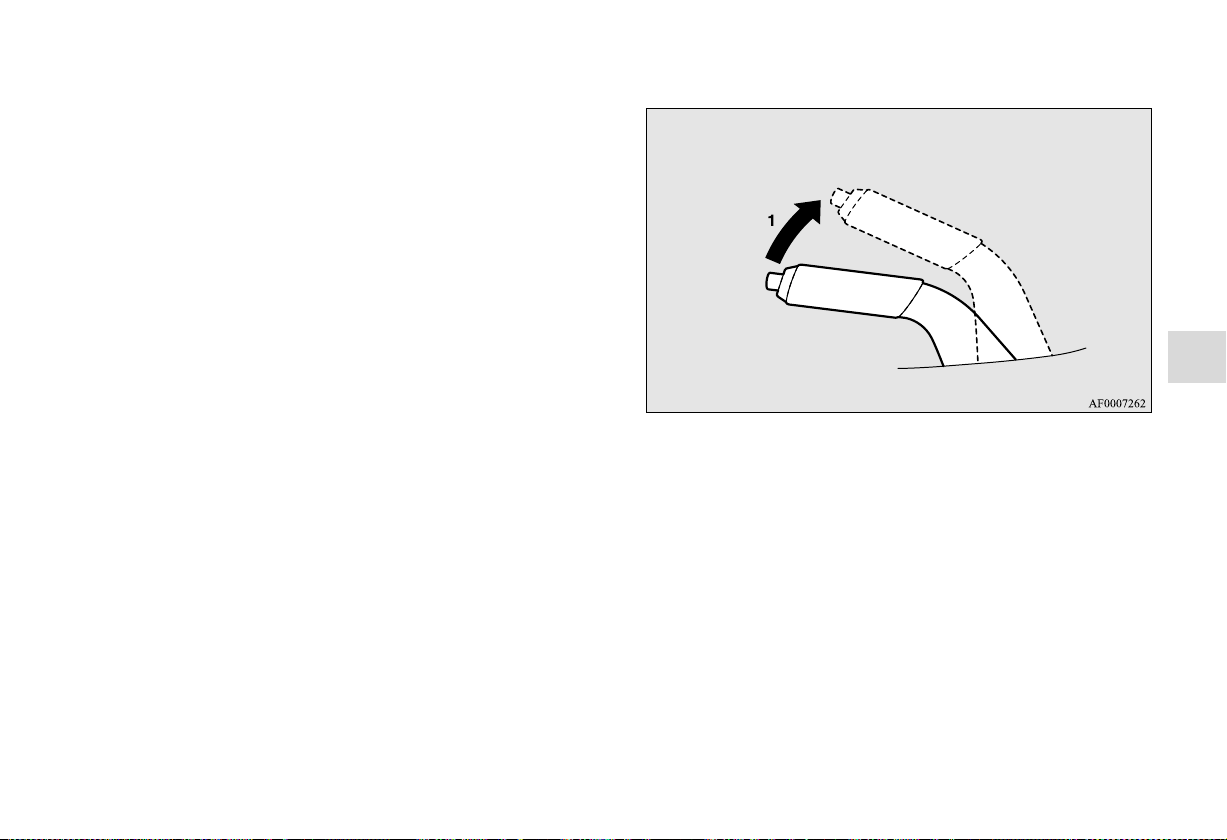
Features and controls
3-77
3
Parking brake
N00511400298
To park the vehicle, first bring it to a complete stop, fully
engage the parking brake, and then move the gearshift lever to
1st (on a uphill) or “R” (Reverse) (on a downhill) position, for
vehicles with a manual transaxle, set the selector lever {contin-
uously variable transmission (CVT)} or the gearshift lever
(Twin Clutch SST) to “P” (PARK) position for vehicles with
CVT or Twin Clutch SST.
To apply
1- Pull the lever up without pushing the button at the end of
hand grip.
When the parking brake is set and the ignition switch is in
the “ON” position, the brake warning light in the instrument
cluster will come on.
Before driving, be sure to release the parking brake.
BK0138600US.book 77 ページ 2011年7月17日 日曜日 午後2時32分
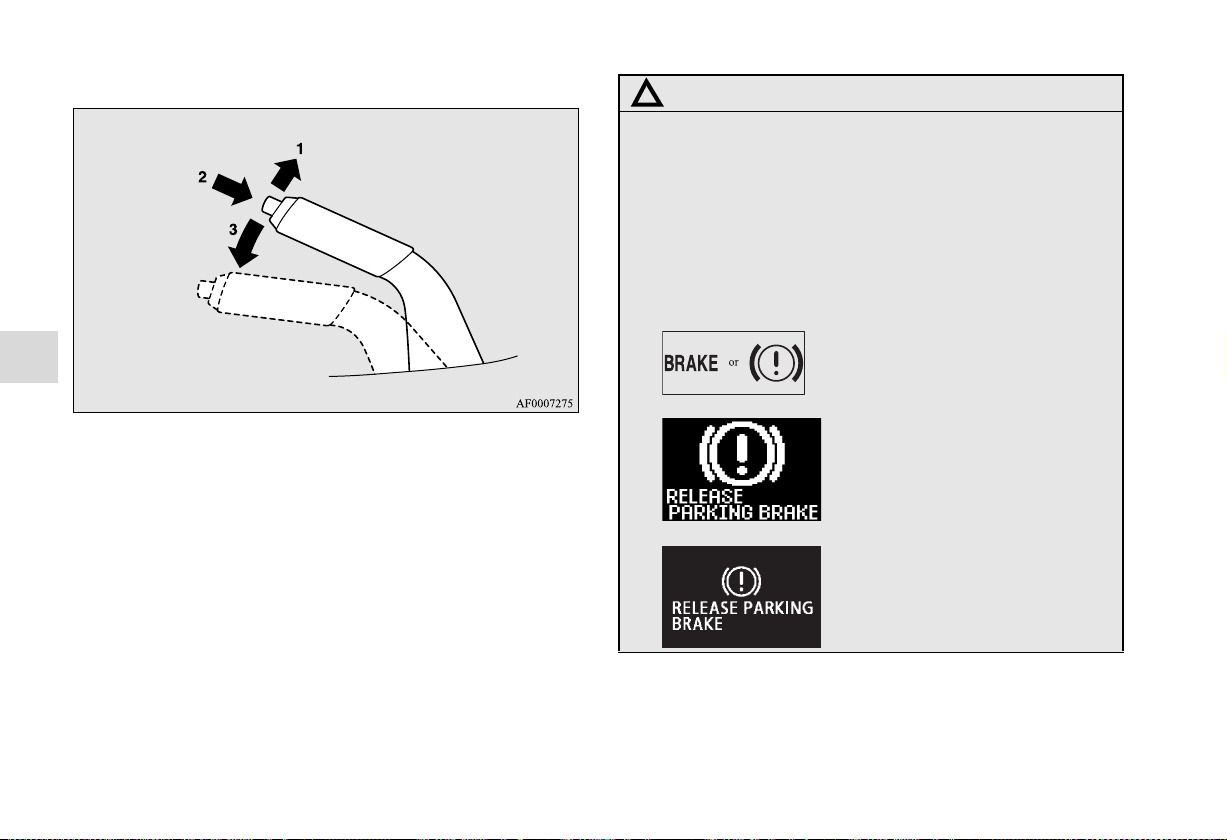
3-78
Features and controls
3
To release
When parking on a hill, apply the parking brake and turn the
front wheels toward the curb on a downhill grade, away from
the curb on an uphill grade.
1- Pull the lever up slightly.
2- Push and hold the button at the end of the hand grip.
3- Push the lever downward.
CAUTION
!
● Before driving, be sure that the parking brake is
fully released and brake warning light is off.
If you drive without the parking brake fully
released, the warning display will appear on the
information screen in the multi-information display.
If a vehicle is driven without releasing the parking
brake, the brakes will be overheated, resulting in
ineffective braking and possible brake failure.
Warning light
Warning display type 1
Warning display type 2
BK0138600US.book 78 ページ 2011年7月17日 日曜日 午後2時32分
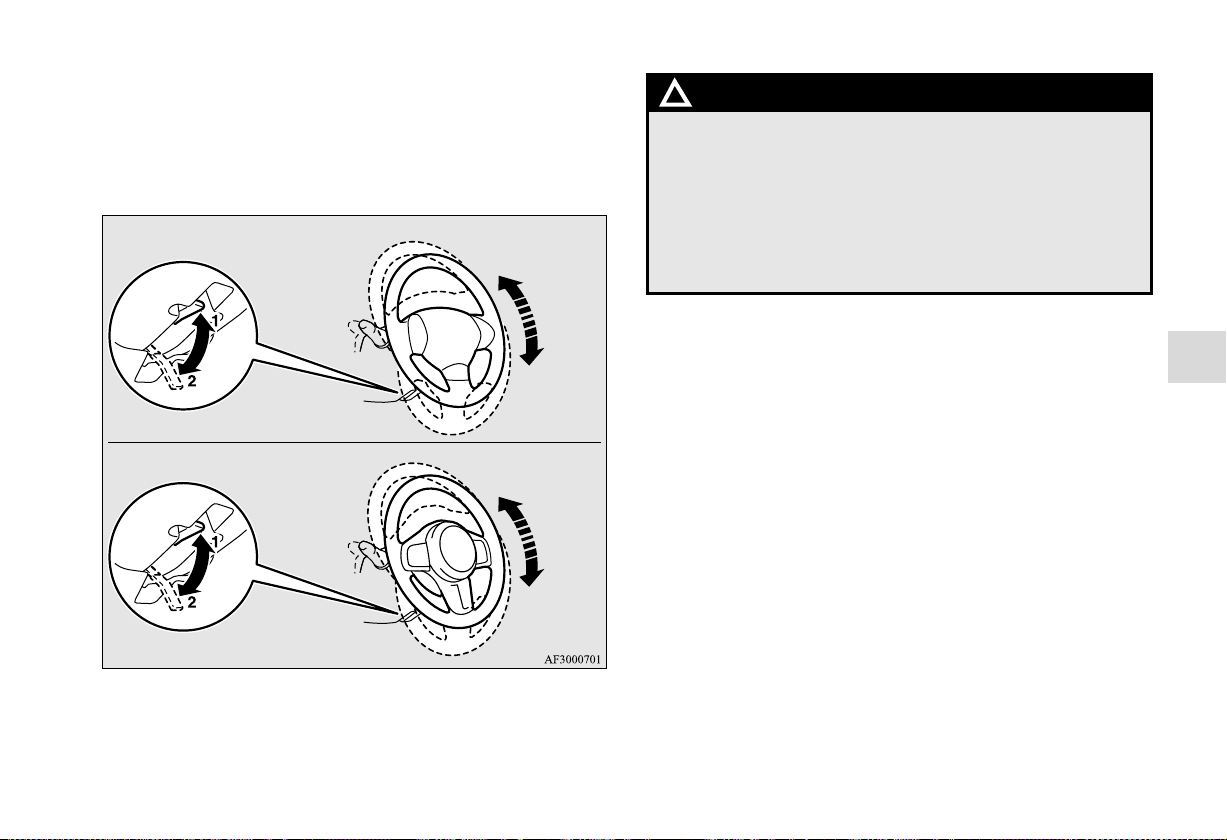
Features and controls
3-79
3
Steering wheel tilt lock lever
N00511500215
To adjust the steering wheel height, release the tilt lock lever
while holding the steering wheel by hand, and raise or lower
the steering wheel to the desired height.
After adjustment, securely lock the lever by pulling it upward.
1- Locked
2- Released
Type 1
Type 2
WARNING
!
● After adjusting, make sure the lock lever is secured
in the locked (1) position.
● Do not attempt to adjust the steering wheel while
driving. This can be dangerous.
● When releasing the tilt lock lever {moving it to the
position (2)}, be sure to hold the steering wheel
firmly. Otherwise, the steering wheel may slip down
too suddenly.
BK0138600US.book 79 ページ 2011年7月17日 日曜日 午後2時32分
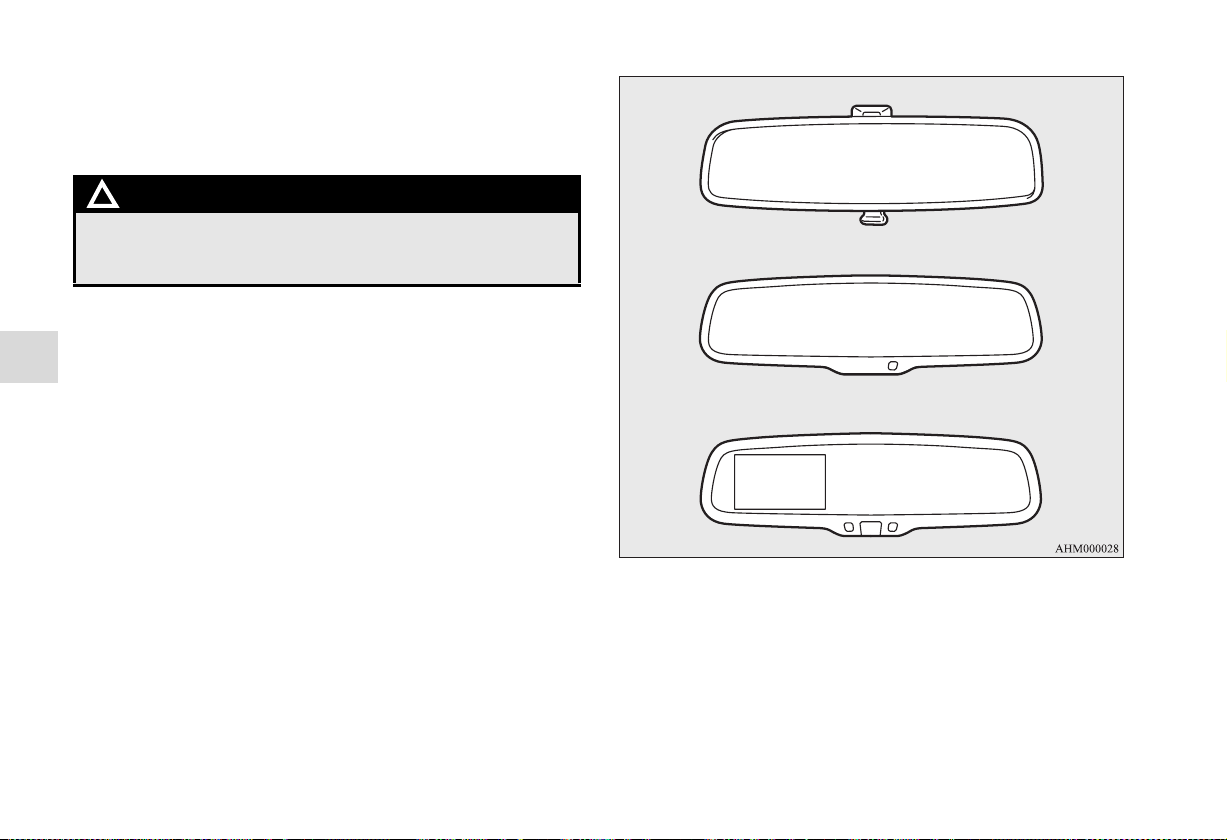
3-80
Features and controls
3
Inside day/night rearview mirror
N00548600067
Adjust the inside rearview mirror only after making any seat
adjustments so as to have a clear view to the rear of the vehicle.
N
OTE
● When the gearshift lever or the selector lever is in the “R”
(REVERSE) position with the ignition switch in the “ON”
position, the rear-view camera image will be displayed on
the left portion of a type 3 mirror.
For details, refer to “Rear-view camera” on page 3-172.
WARNING
!
● Do not attempt to adjust the inside rearview mirror
while driving. This can be dangerous.
Be sure to adjust the mirror before driving.
Type 1
Type 2
Type 3
BK0138600US.book 80 ページ 2011年7月17日 日曜日 午後2時32分
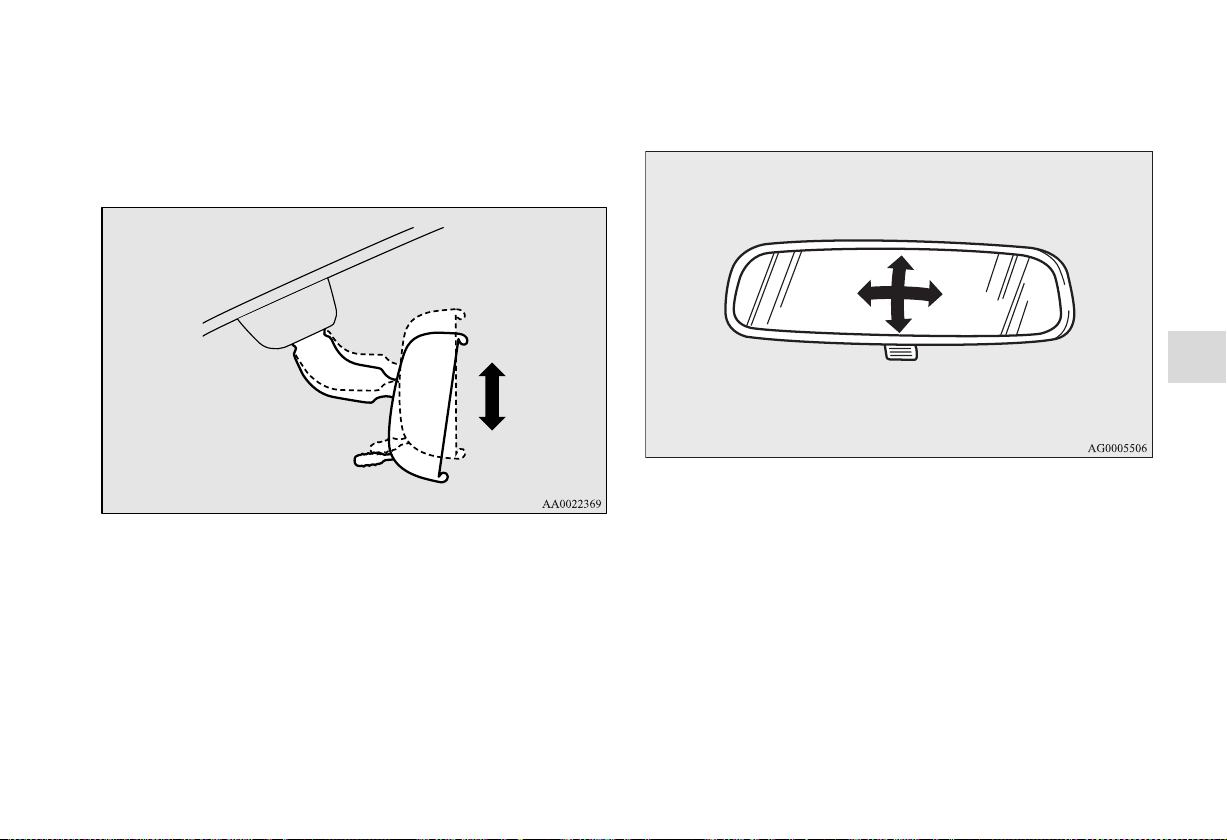
Features and controls
3-81
3
Adjust the inside mirror to maximize the view through the rear
window.
To adjust the vertical mirror position
It is possible to move the mirror up and down to adjust its posi-
tion.
To adjust the mirror position
It is possible to move the mirror up/down and left/right to
adjust its position.
BK0138600US.book 81 ページ 2011年7月17日 日曜日 午後2時32分
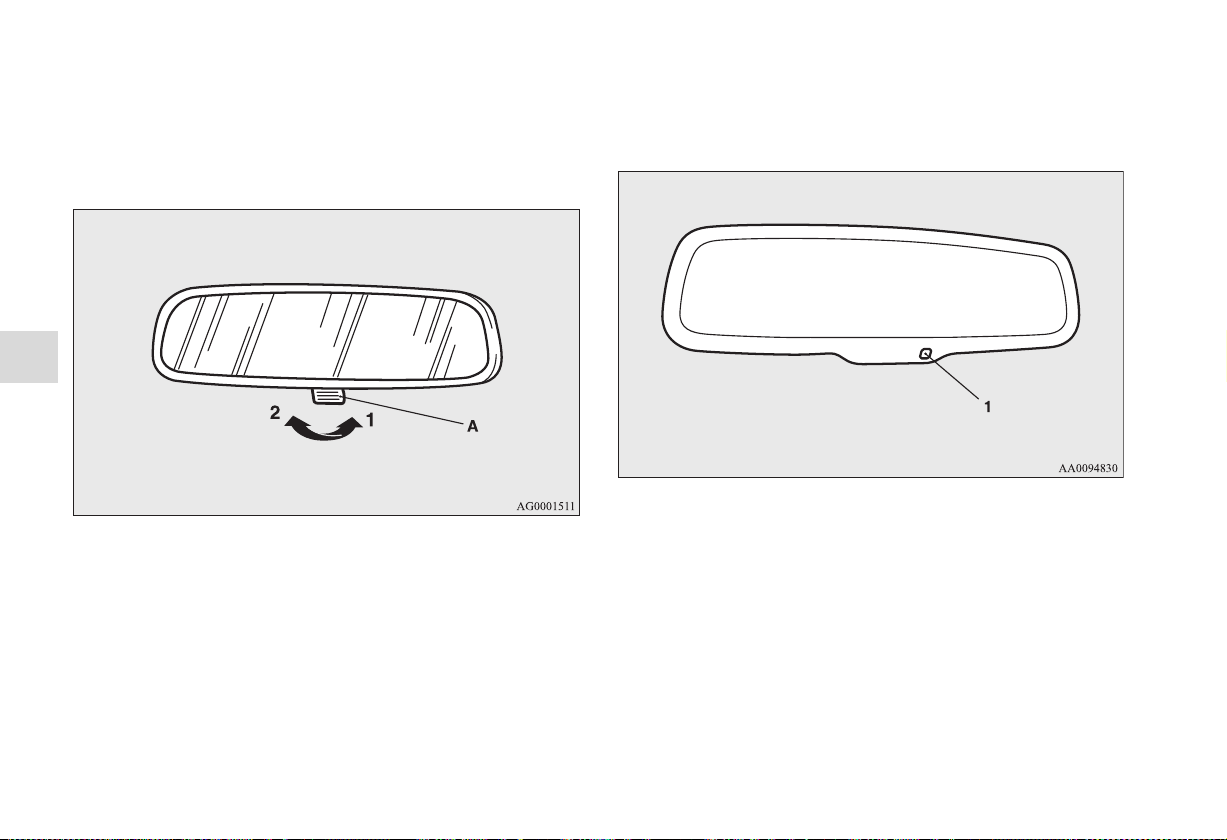
3-82
Features and controls
3
To reduce the glare
Type 1
The day/night knob (A) at the bottom of the mirror can be used
to adjust the mirror to reduce the glare from the headlights of
vehicles behind you during night driving.
Type 2
When the headlights of the vehicles behind you are very bright,
the reflection factor of the rearview mirror is automatically
changed to reduce the glare.
Normally, use the automatic mode. When the ignition switch is
turned to the “ON” position, the reflection factor of the mirror
is automatically changed.
N
OTE
● Do not hang items on, or spray glass cleaner on the sensor
(1), as reduced sensitivity could result.
1- Daytime position
2- Night position
BK0138600US.book 82 ページ 2011年7月17日 日曜日 午後2時32分
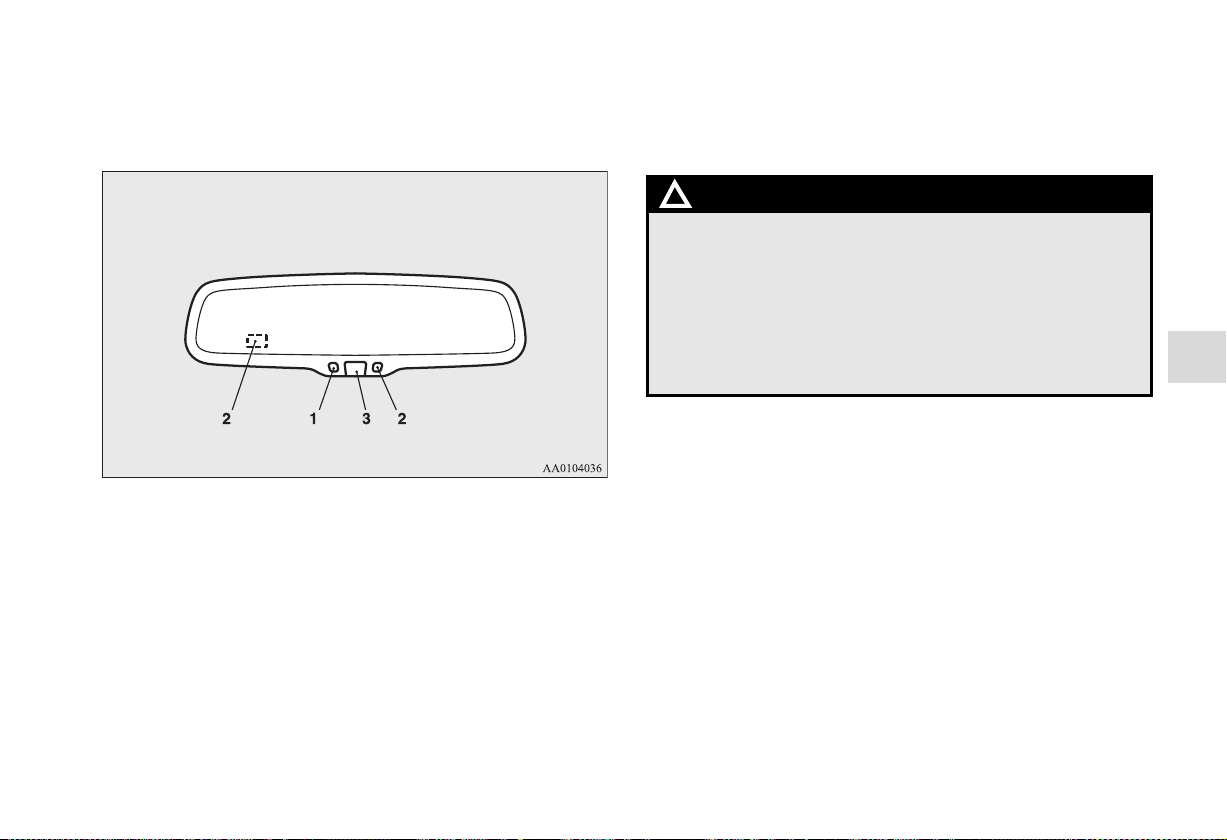
Features and controls
3-83
3
Type 3
When the headlights of the vehicles behind you are very bright,
the reflection factor of the rearview mirror is automatically
changed to reduce the glare.
Normally, use the automatic mode. When the ignition switch is
turned to the “ON” position, the green indicator (1) illuminates
and the reflection factor of the mirror is automatically changed.
N
OTE
● Do not hang items on, or spray glass cleaner on the sen-
sors (2), as reduced sensitivity could result.
● If you want to stop automatic mode, press the switch (3)
and the indicator will go off.
To return to automatic mode, press the switch again or
turn the ignition switch to the “ON” position after turning
to “LOCK” or “ACC” position.
Outside rearview mirrors
N00512200192
Adjust the outside rearview mirrors only after making any seat
adjustments so you have a clear view to the rear of the vehicle.
(Back side)
WARNING
!
● Do not attempt to adjust the outside rearview mir-
rors while driving. This can be dangerous.
Be sure to adjust the mirrors before driving.
● Your passenger’s side mirror is convex. The objects
you see in the mirror will look smaller and farther
away than they appear in a regular flat mirror.
Do not use this mirror to estimate the distance of
vehicles following you when changing lanes.
BK0138600US.book 83 ページ 2011年7月17日 日曜日 午後2時32分
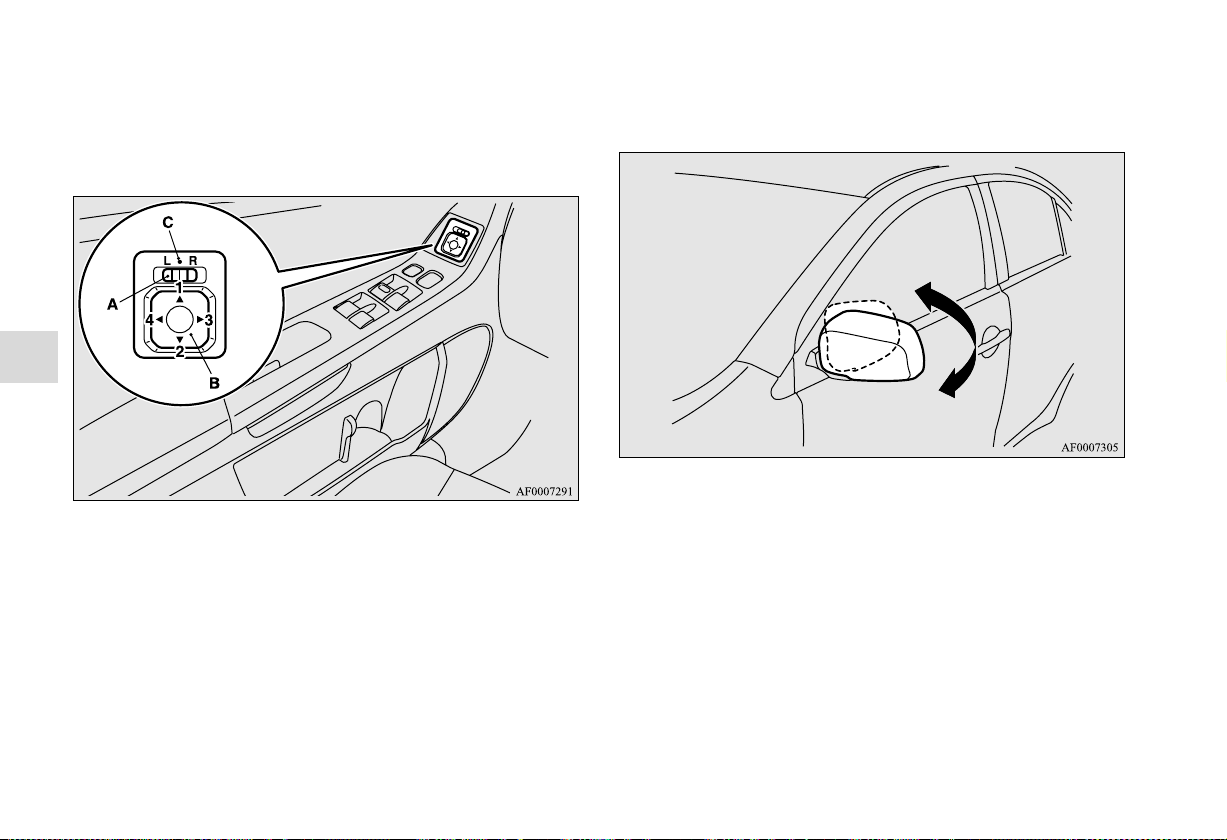
3-84
Features and controls
3
To adjust the mirror position
The outside rearview mirrors can be adjusted when the ignition
switch is in the “ON” or “ACC” position.
Move the lever (A) to the same side as the mirror you wish to
adjust.
Press the switch (B) to adjust the mirror position.
N
OTE
● After adjusting, return the lever to the “•” (off) position
(C).
To fold the mirror
The outside mirror can be folded in toward the side window to
prevent damage when parking in tight locations.
L- Left outside mirror adjustment
R- Right outside mirror adjustment
1- Up
2- Down
3- Right
4- Left
BK0138600US.book 84 ページ 2011年7月17日 日曜日 午後2時32分
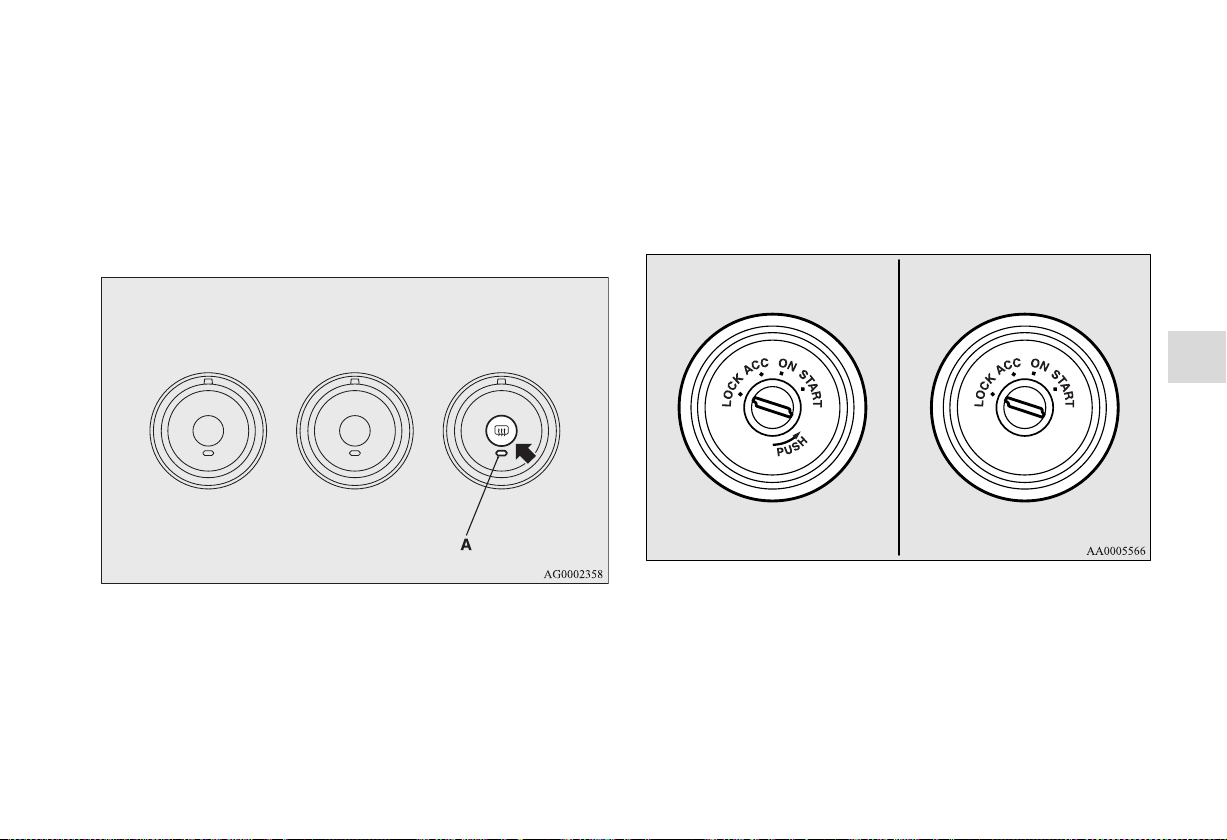
Features and controls
3-85
3
Heated mirror (if so equipped)
N00549300175
When the rear window defogger switch is pressed with the
engine running, the outside rearview mirrors are defogged or
defrosted. Current will flow through the heater element inside
the mirrors, thus clearing away frost or condensation.
The indicator light (A) will illuminate while the defogger is on.
The heater will be turned off automatically in about 20 min-
utes.
Ignition switch
N00512400615
[For vehicles equipped with the F.A.S.T.-key]
For information on operations for vehicles equipped with the
F.A.S.T.-key, refer to “F.A.S.T.-key: Ignition switch” on page
3-24.
[Except for vehicles equipped with the F.A.S.T.-key]
LOCK
The engine is off and the steering wheel is locked. The key can
be inserted and removed only when the switch is in this posi-
tion.
ACC
Allows operation of electrical accessories with the engine off.
ON
The engine runs and all accessories can be used.
Manual transaxle CVT or Twin Clutch SST
BK0138600US.book 85 ページ 2011年7月17日 日曜日 午後2時32分

3-86
Features and controls
3
START
Engages the starter. After the engine starts, release the key and
it will return automatically to the “ON” position.
N
OTE
● Your vehicle is equipped with an electronic immobilizer.
To start the engine, the ID code which the transponder
inside the key sends must match the one registered to the
immobilizer computer.
(Refer to “Electronic immobilizer” on page 3-5.)
ACC power auto-cutout function
N00539600045
After about 30 minutes has elapsed with the ignition switch in
the “ACC” position, the function automatically cuts out the
power for the audio system and other electric devices that can
be operated with that position.
When the ignition switch is turned from the “ACC” position,
the power is supplied again to those devices.
N
OTE
● It is possible to modify functions as follows:
• The time until the power cuts out can be changed to
about 60 minutes.
• The ACC power auto-cutout function can be deacti-
vated.
For details, consult a Mitsubishi Motors dealer.
On vehicles equipped with Mitsubishi Multi-Communica-
tion System, screen operations can be used to make the
adjustment.
Refer to the separate owner’s manual for details.
BK0138600US.book 86 ページ 2011年7月17日 日曜日 午後2時32分
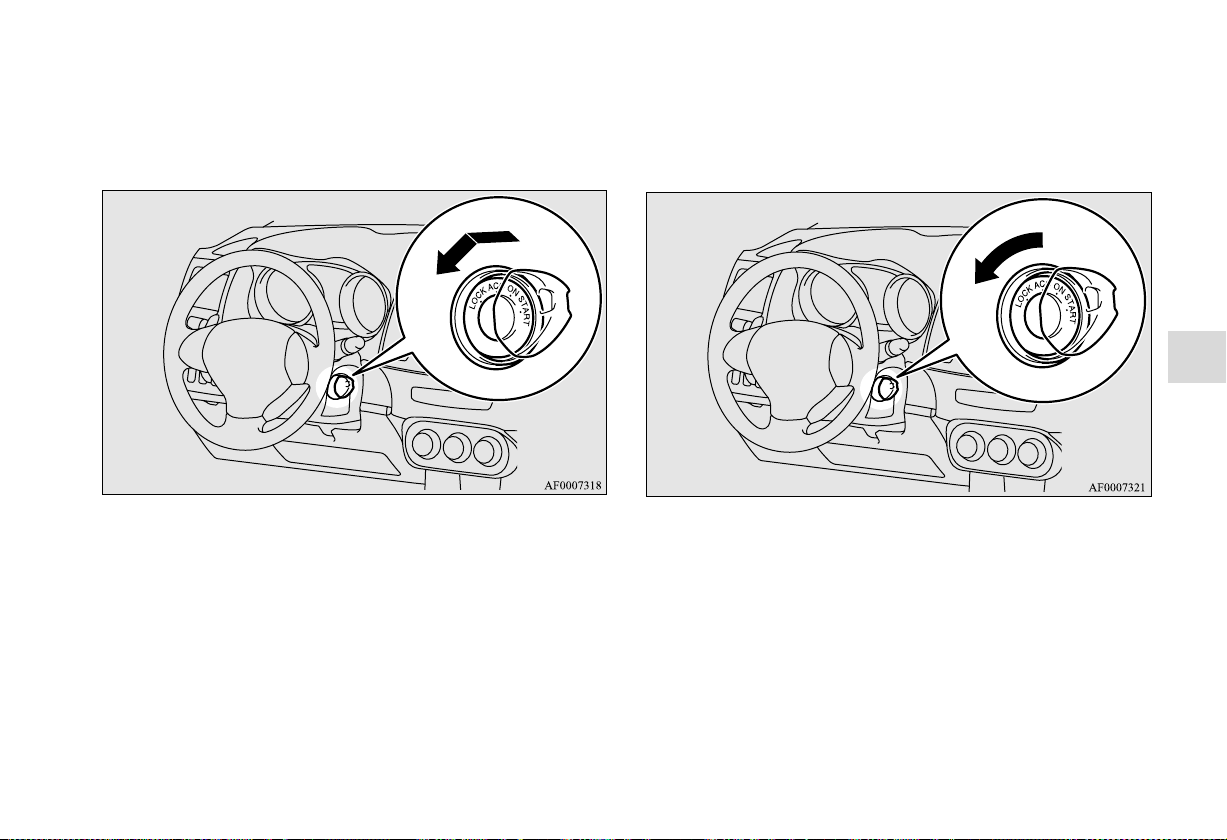
Features and controls
3-87
3
To remove the key
N00550900184
For vehicles with a manual transaxle, when removing the key,
push the key in at the “ACC” position and keep it depressed
until it is turned to the “LOCK” position, and remove.
For vehicles with a continuously variable transmission (CVT)
or Twin Clutch SST, when removing the key, first set the selec-
tor lever (CVT) or the gearshift lever (Twin Clutch SST) to the
“P” (PARK) position, and then turn the key to the “LOCK”
position and remove it.
N
OTE
● For vehicles with a CVT or Twin Clutch SST, the key can-
not be removed unless the selector lever (CVT) or the
gearshift lever (Twin Clutch SST) is set to the “P”
(PARK) position, which allows the ignition switch to turn
to the “LOCK” position.
Manual transaxle
CVT or Twin Clutch SST
BK0138600US.book 87 ページ 2011年7月17日 日曜日 午後2時32分
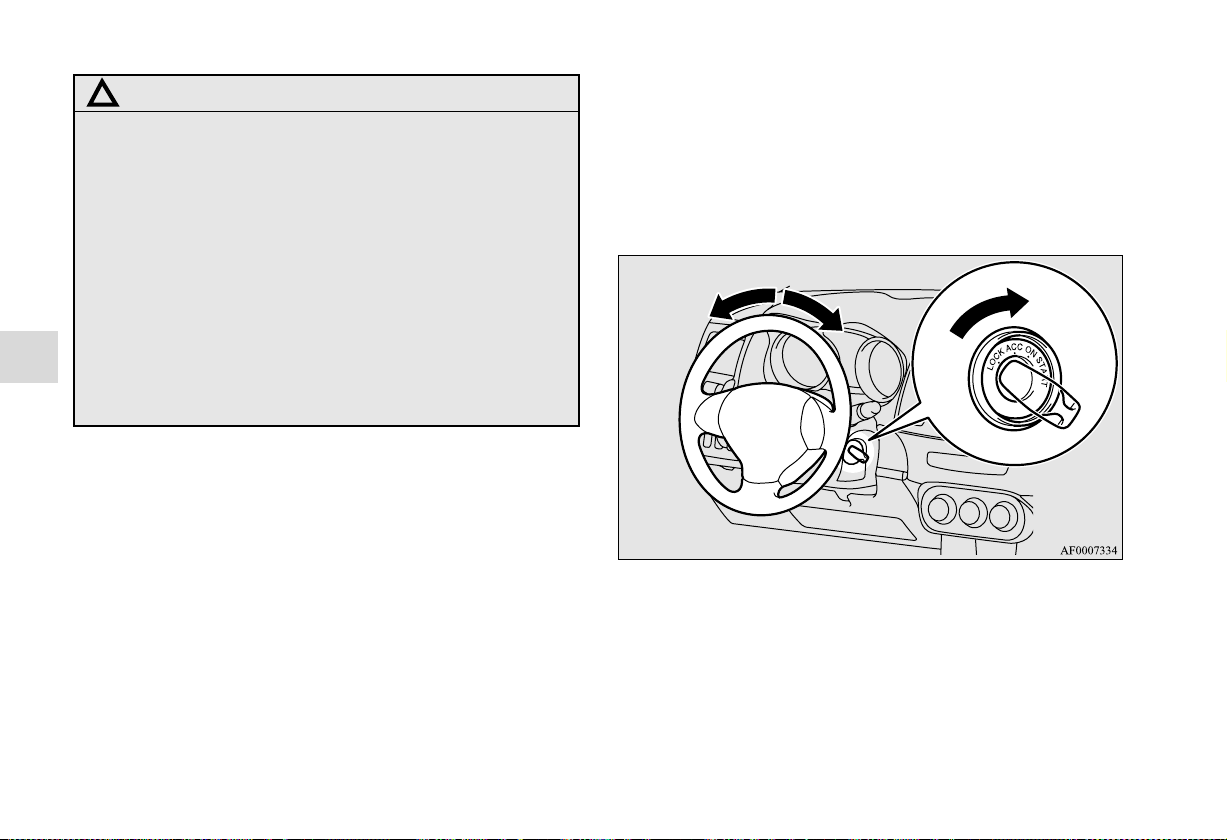
3-88
Features and controls
3
Steering wheel lock
N00512500195
[For vehicles equipped with the F.A.S.T.-key]
For information on operations for vehicles equipped with the
F.A.S.T.-key, refer to “F.A.S.T.-key: Steering wheel lock” on
page 3-30.
[Except for vehicles equipped with the F.A.S.T.-key]
CAUTION
!
● Do not remove the ignition key from the ignition
switch while driving. The steering wheel will lock,
causing loss of control.
● If the engine is turned off while driving, the power
brake booster will stop functioning and braking effi-
ciency will be reduced. Also, the power steering sys-
tem will not function and it will require greater
effort to manually steer the vehicle.
● Do not leave the key in the “ON” position for a long
time when the engine is not running. This will cause
the battery to run down.
● Do not turn the key to the “START” position when
the engine is running. It will damage the starter
motor.
BK0138600US.book 88 ページ 2011年7月17日 日曜日 午後2時32分

Features and controls
3-89
3
To lock
Remove the key at the “LOCK” position.
Turn the steering wheel until it is locked.
To unlock
Turn the key to the “ACC” position while moving the steering
wheel slightly.
N
OTE
● If the front wheels are turned, the anti-theft lock may
sometimes make it difficult to turn the key from “LOCK”
position to “ACC” position. Firmly turn the steering
wheel to the left or to the right as you turn the key.
Starting and stopping the engine
N00542100060
Tips for starting
● Do not operate the starter motor continuously for longer
than 15 seconds as this could run the battery down or
damage the starter motor. If the engine does not start, turn
the ignition switch back to the “LOCK” position, wait a
few seconds, and then try again. Trying repeatedly with
the engine or starter motor still turning will damage the
starter mechanism.
● If the engine will not start because the battery is weak or
discharged, refer to “Jump-starting the engine” (on page
6-2) for instructions.
● [Except for vehicles equipped with the turbocharger]
The engine is warmed up enough for driving when the bar
graph of engine coolant temperature display starts to
move. A longer warm up period will only consume extra
fuel.
● [For vehicles equipped with the turbocharger]
The engine is warmed up enough for driving when the bar
graph of engine coolant temperature display starts to
move. Driving before the bar graph moves may cause
deterioration of turbocharger performance and driveabil-
ity. A longer warm up period will only consume extra
fuel.
● On vehicles equipped with the Twin Clutch SST, the fol-
lowing may occur after the engine is started, but they do
not indicate an abnormality.
• You may hear operational sounds of the Twin Clutch
SST and you may feel vibration in the vehicle body.
CAUTION
!
● Remove the key when leaving the vehicle.
BK0138600US.book 89 ページ 2011年7月17日 日曜日 午後2時32分
3-90
Features and controls
3
• If you shift the gearshift lever into the “N” (NEUTRAL)
position and depress the accelerator pedal, increases in
the engine speed will be limited.
Starting the engine
N00542200104
[For vehicles equipped with the F.A.S.T.-key.]
For information on operations for vehicles equipped with the
F.A.S.T.-key, refer to “F.A.S.T.-key: Starting the engine” on
page 3-30.
[Except for vehicles equipped with the F.A.S.T.-key.]
Your vehicle is equipped with an electronically controlled fuel
injection system, which automatically controls the release of
fuel. There is no need to depress the accelerator pedal when
starting the engine.
The starter should not be run for more than 15 seconds at a
time.
To prevent battery drain, wait a few seconds between attempts
to restart the engine.
1. Make sure all occupants are properly seated with seat
belts fastened
2. Insert the ignition key.
3. Make sure the parking brake is applied.
4. Press and hold the brake pedal down with your right foot.
5. Press and hold the clutch pedal all the way down (manual
transaxle).
N
OTE
● For models equipped with a manual transaxle, the starter
will not operate unless the clutch pedal is fully depressed
(Clutch interlock). This is a safety feature.
WARNING
!
● Never run the engine in a closed or poorly ventilated
area any longer than is needed to move your vehicle
out of the area. Carbon monoxide gas, which is
odorless and extremely poisonous, could build up
and cause serious injury or death.
CAUTION
!
● Do not push-start the vehicle.
● Do not run the engine at high rpms or drive at high
speeds until the engine has had a chance to warm
up.
● Release the ignition switch as soon as the engine
starts. Otherwise, the starter motor will be dam-
aged.
BK0138600US.book 90 ページ 2011年7月17日 日曜日 午後2時32分

Features and controls
3-91
3
6. On vehicles with manual transaxle, place the gearshift
lever in the “N” (Neutral) position.
On vehicles with continuously variable transmission
(CVT) or Twin Clutch SST, make sure the selector lever
(CVT) or gearshift lever (Twin Clutch SST) is in the “P”
(PARK) position.
N
OTE
● On vehicles with CVT, the starter will not operate unless
the selector lever is in the “P” (PARK) or “N” (NEU-
TRAL) position.
On vehicles with Twin Clutch SST, the starter will not
operate unless the gearshift lever is in the “P” (PARK)
position or the gearshift lever is in the “N” (NEUTRAL)
position with the brake pedal depressed.
For safety reasons, start the engine in the “P” (PARK)
position so that the wheels are locked.
7. Turn the ignition switch to the “ON” position and make
certain that all warning lights are functioning properly
before starting the engine.
8. Turn the ignition switch to the “START” position without
pressing the accelerator pedal. Release the key when the
engine starts.
N
OTE
● Minor noises may be heard on engine start-up. These will
disappear as the engine warms up.
Startability of continuously variable transmission
(CVT) vehicles or Twin Clutch SST vehicles at
extremely cold ambient temperature
When the ambient temperature is -4 °F (-20 °C) or lower on
vehicles with CVT, or -22 °F (-30 °C) or lower on vehicles
with Twin Clutch SST, it may not be possible to start from a
standstill even with the selector lever (CVT) or the gearshift
lever (Twin Clutch SST) in the “D” (DRIVE) position.
This phenomenon occurs because the transaxle has not warmed
up sufficiently; it does not indicate a problem. If it occurs,
place the selector lever (CVT) or the gearshift lever (Twin
Clutch SST) in the “P” (PARK) position and let the engine idle
for at least 10 minutes.
The transaxle will warm up, and you will be able to start nor-
mally.
Do not leave the vehicle during warm-up operation.
Idle speed in high altitude area
N00547600015
At high altitude locations, the idle speed may be higher. This is
done in order to stabilize the idle speed when the power steer-
ing system and other systems operate. It does not indicate a
malfunction.
BK0138600US.book 91 ページ 2011年7月17日 日曜日 午後2時32分

3-92
Features and controls
3
Stopping the engine
N00542300088
1. Bring the vehicle to a complete stop.
2. Fully engage the parking brake while depressing the brake
pedal.
3. For vehicles with a manual transaxle, turn the ignition
switch to the “LOCK” position to stop the engine, and
then move the gearshift lever to the 1st (on a uphill) or
“R” (Reverse) (on a downhill) position.
For vehicles with continuously variable transmission
(CVT) or Twin Clutch SST, place the selector lever (CVT)
or the gearshift lever (Twin Clutch SST) in the “P”
(PARK) position, and then turn the ignition switch to the
“LOCK” position to stop the engine.
N
OTE
● For vehicles with Twin Clutch SST, the engine will stop
and the vehicle power will turn off approximately 1 sec-
ond after the ignition switch is turned to the “LOCK”;
position.
The reason for this is that, in the time from when the igni-
tion switch is turned to the “LOCK” position until the
engine stops, the gears inside the Twin Clutch SST disen-
gage so that the engine will start smoothly the next time it
is started.
Two clutches installed in the Twin Clutch SST alternately
engage and disengage to achieve smooth shifting.
In addition, the gear on the side with the free clutch is
engaged, therefore, quick shifting is performed.
If the engine was stopped with the gear engaged like this,
it would provide resistance the next time the engine is
started. Therefore, the gear disengages in the approxi-
mately 1-second period until the engine stops.
● For vehicles with Twin Clutch SST, do not operate the
gearshift lever or the accelerator pedal for approximately
1 second until the engine stops.
BK0138600US.book 92 ページ 2011年7月17日 日曜日 午後2時32分
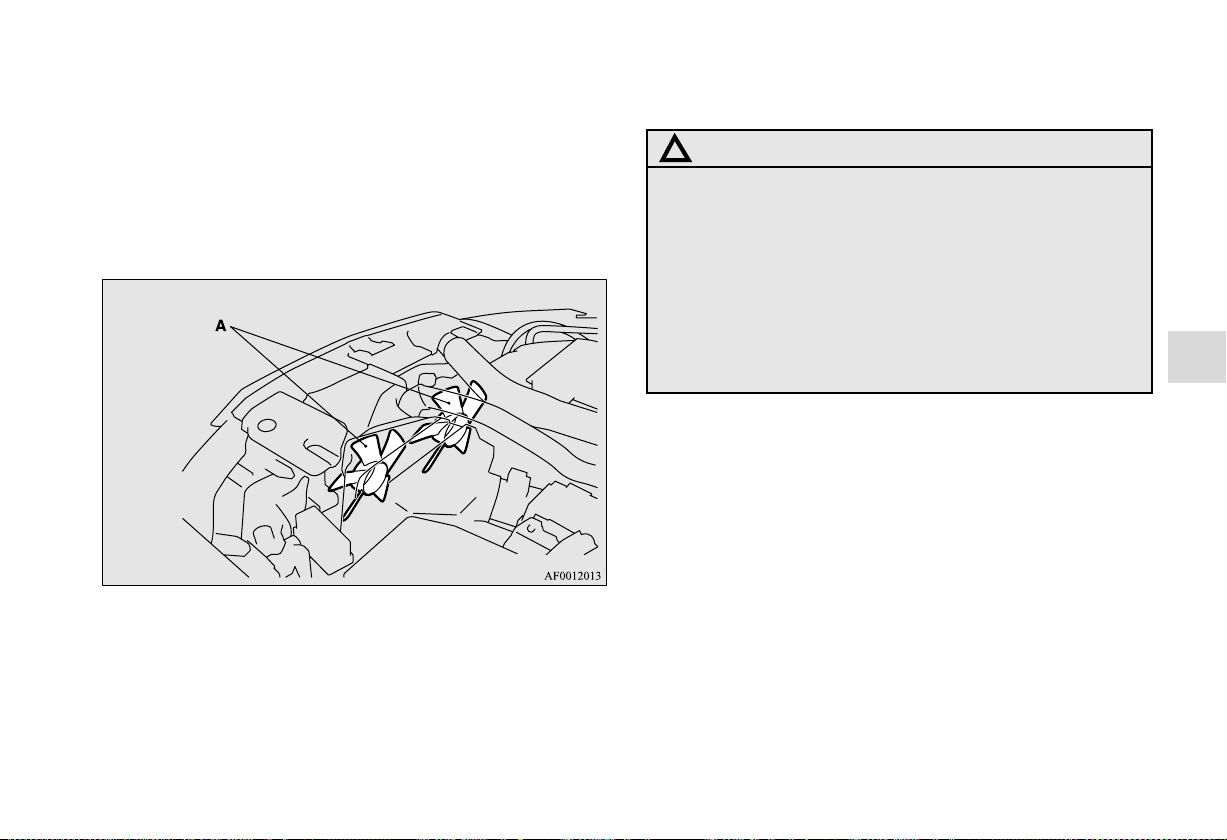
Features and controls
3-93
3
● For vehicles with Twin Clutch SST, if the temperature
inside the engine compartment is high, the cooling fans
(A) will continue to operate for some time even if the
engine is stopped.
Therefore, the operation sound of the cooling fans may be
heard even after the engine is stopped. This sound is nor-
mal and does not indicate a malfunction.
After operating for a period of time, the cooling fans will
stop automatically.
Turbocharger operation (if so equipped)
N00537300051
CAUTION
!
● Do not run the engine at high speeds (for example,
by revving it or by accelerating rapidly) immedi-
ately after starting it.
● Do not stop the engine immediately after high-speed
or uphill driving. First allow the engine to idle to
give the turbocharger a chance to cool down.
● Engine oil must be properly maintained to avoid
engine and/or turbocharger damage. To better pro-
tect your engine and turbocharger, use fully syn-
thetic engine oil.
BK0138600US.book 93 ページ 2011年7月17日 日曜日 午後2時32分
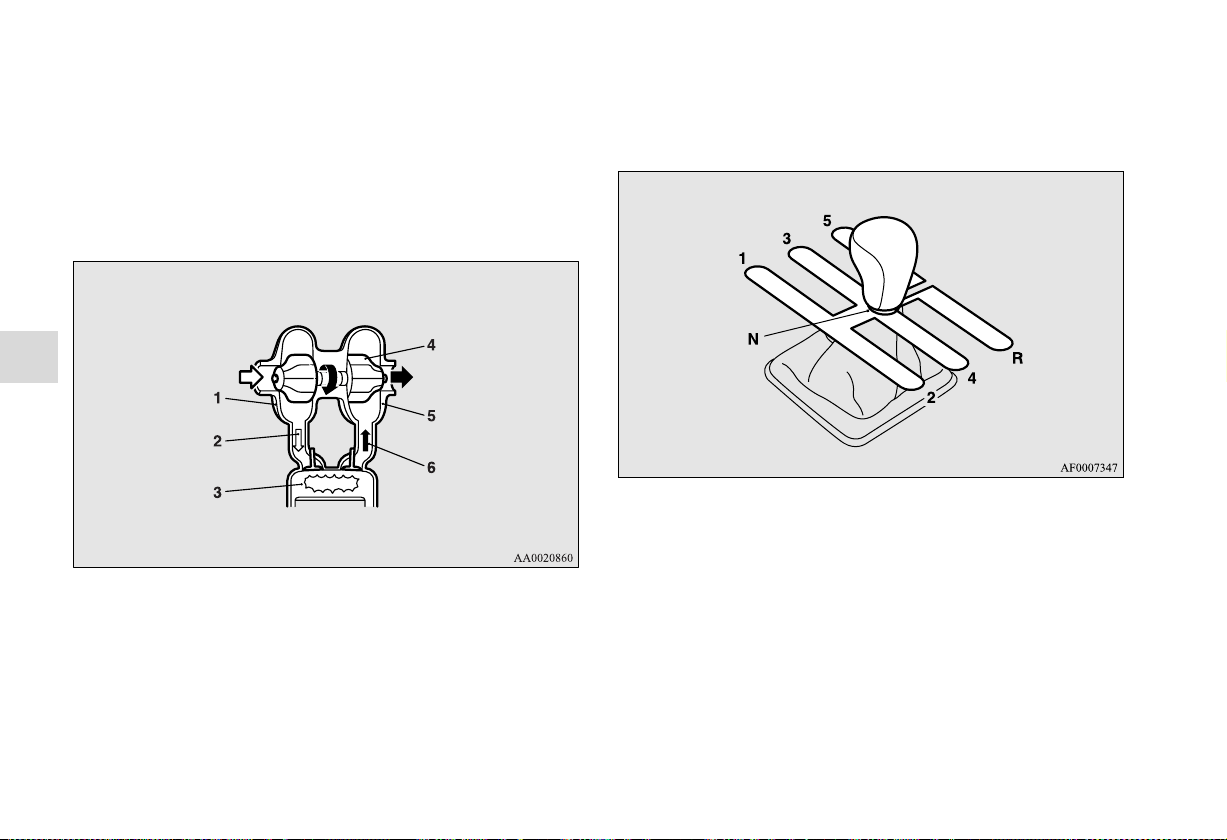
3-94
Features and controls
3
Turbocharger
The turbocharger increases engine power by pushing large
amounts of air into the engine’s cylinders. The finned parts
inside the turbocharger turn at extremely high speeds and are
subjected to extremely high temperatures. They are lubricated
by engine oil and cooled by engine oil and coolant. If the
engine oil is not replaced at the specified intervals, the bearings
may seize or emit abnormal noise.
Manual transaxle (if so equipped)
N00512700113
The shift pattern below is shown on the gearshift lever. Press
the clutch pedal all the way down while shifting gears.
N
OTE
● During cold weather, shifting may be difficult until the
transaxle lubricant has warmed up. This is normal and not
harmful to the transaxle.
1- Air compressor
2- Compressed air
3- Cylinder
4- Turbo fin
5- Turbine
6- Exhaust gas
BK0138600US.book 94 ページ 2011年7月17日 日曜日 午後2時32分
Features and controls
3-95
3
To start
Press the clutch pedal all the way down and shift into 1st or
“R” (Reverse) position. Then gradually release the clutch pedal
while depressing the accelerator pedal.
N
OTE
● If it is hard to shift into 1st, depress the clutch pedal a sec-
ond time; the shift will then be easier.
● To shift into reverse from 5th gear, move the gearshift
lever to the “N” (Neutral) position, and then shift it into
reverse.
Proper shift points
N00537400049
Always use care to change the gear with the vehicle speed
matched to the engine speed. Proper shifting will improve fuel
economy and prolong engine life.
CAUTION
!
● Do not move the gearshift lever into reverse while
the vehicle is moving forward; doing so will damage
the transaxle.
● Do not rest your foot on the clutch pedal because
this will cause premature clutch wear or damage.
● Do not coast in the “N” (Neutral) position (illegal in
many states).
● Do not use the gearshift lever as a handrest, because
this can result in premature wear of the transaxle
shift forks.
CAUTION
!
● Avoid downshifting that may cause the tachometer
pointer to enter the red zone.
This puts the engine at risk of being damaged.
BK0138600US.book 95 ページ 2011年7月17日 日曜日 午後2時32分
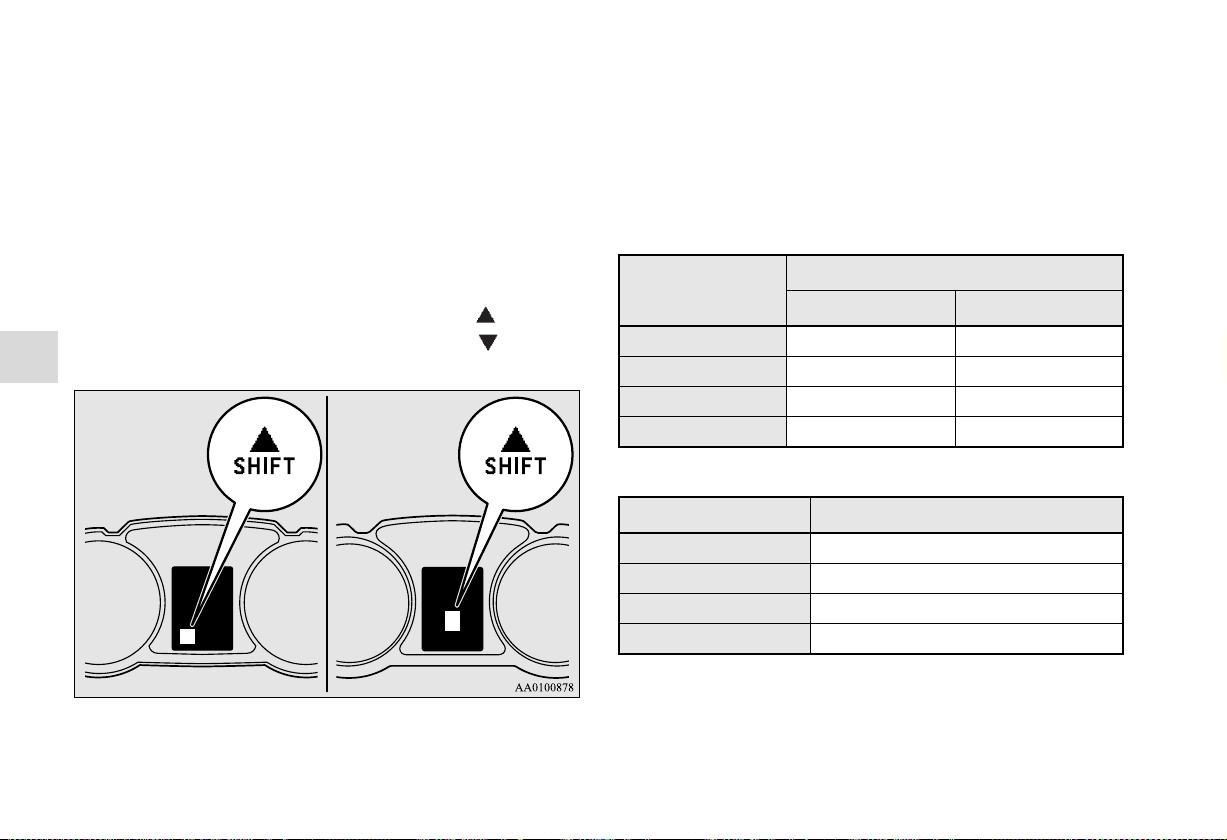
3-96
Features and controls
3
Changing gears while the vehicle is moving
N00548100017
Always use care to change the gear with the vehicle speed
matched to the engine speed. Proper shifting will improve fuel
economy and prolong engine life.
Avoid shifting down at high speed, as this may cause excessive
engine speed (the tachometer needle into the red zone) and
damage the engine.
N
OTE
● The gearshift indicator shows recommended gearshift
points for fuel-efficient driving. It shows a “ ” when an
upshift is recommended, and it shows a “ ” when a
downshift is recommended.
Upshifting
N00512900131
For the best fuel economy and performance in using your man-
ual transaxle, upshift as listed below.
At low altitude locations, shift at the vehicle speeds listed.
Upshifting earlier during cruise conditions (relatively steady
speeds) will improve your fuel economy.
At high altitude locations, upshift as listed below.
Shift point
Upshift speeds
Acceleration Cruise
1st gear to 2nd gear 15 mph (24 km/h) 15 mph (24 km/h)
2nd gear to 3rd gear 28 mph (45 km/h) 19 mph (31 km/h)
3rd gear to 4th gear 36 mph (58 km/h) 33 mph (53 km/h)
4th gear to 5th gear 45 mph (72 km/h) 45 mph (72 km/h)
Shift point Upshift speeds
1st gear to 2nd gear 15 mph (24 km/h)
2nd gear to 3rd gear 25 mph (40 km/h)
3rd gear to 4th gear 40 mph (64 km/h)
4th gear to 5th gear 45 mph (72 km/h)
BK0138600US.book 96 ページ 2011年7月17日 日曜日 午後2時32分
Features and controls
3-97
3
Downshifting
N00513000096
It is recommended that you downshift to a lower gear when
needed to maintain the desired speed, according to the table.
Avoid downshifting at too high a speed. The engine may suffer
damage.
To maintain a safe speed and prolong brake life, shift down to
2nd or 1st when descending a steep hill.
Downshifting is also important to avoid “lugging” the engine
at too low a speed, such as when turning a corner or when driv-
ing up a steep hill.
Recommended downshifting speed
Driving precautions
N00513100215
The table below shows the maximum recommended driving
speed for in each gear. Do not drive near or at these speeds for
prolonged periods of time.
Maximum possible driving speed
Do not use the gearshift lever as a handrest. This can result in
premature wear of the transaxle shift forks.
Downshifting speed Shift point
Under 20 mph (32 km/h)
Shift down from current gear to
2nd gear.
20 to 30 mph (32 to 48 km/h)
Shift down from current gear to
3rd gear.
Shift points Maximum possible driving speed
1st gear 31 mph (50 km/h)
2nd gear 62 mph (100 km/h)
3rd gear 87 mph (140 km/h)
4th gear 121 mph (195 km/h)
BK0138600US.book 97 ページ 2011年7月17日 日曜日 午後2時32分
3-98
Features and controls
3
Continuously variable transmission (CVT)
(if so equipped)
N00513200186
The CVT is capable of changing the engine speed to vehicle
speed ratio automatically and steplessly to suit driving condi-
tions in all phases of vehicle operation. It therefore realizes
smooth, shock-free operation and excellent fuel efficiency.
DRIVING UPHILL
The transmission may not shift to a higher ratio if the computer
determines your current speed would be affected.
For smoother operation, the transmission may not shift if you
release the throttle while climbing a steep hill. This is normal
because the computer controls the shifting. After reaching the
top of the hill, your normal shift function will resume.
DRIVING DOWNHILL
When traveling down steep grades and using the brakes, the
computer may automatically shift to a lower ratio. This helps
engine braking efforts, reducing your need to use the brakes.
Selector lever operation
N00513800384
As an additional safety precaution, models equipped with a
continuously variable transmission have a shift-lock device
that holds the selector lever in the “P” (PARK) position. To
move the selector lever from the “P” (PARK) position to
another position, follow the steps below.
1. Press and hold the brake pedal down.
2. Move the selector lever to the desired position.
N
OTE
● The selector lever cannot be moved from “P” (PARK) to
another position if the ignition switch is at the “LOCK” or
“ACC” position, or the key has been removed, or if the
brake pedal is not pressed and held down.
CAUTION
!
● Automatic downshifts may not take place if the con-
tinuously variable transmission (CVT) fluid is still
cool immediately after you start driving. To cause a
downshift, depress the brake pedal or shift down
manually.
Always drive safely in accordance with road condi-
tions.
BK0138600US.book 98 ページ 2011年7月17日 日曜日 午後2時32分
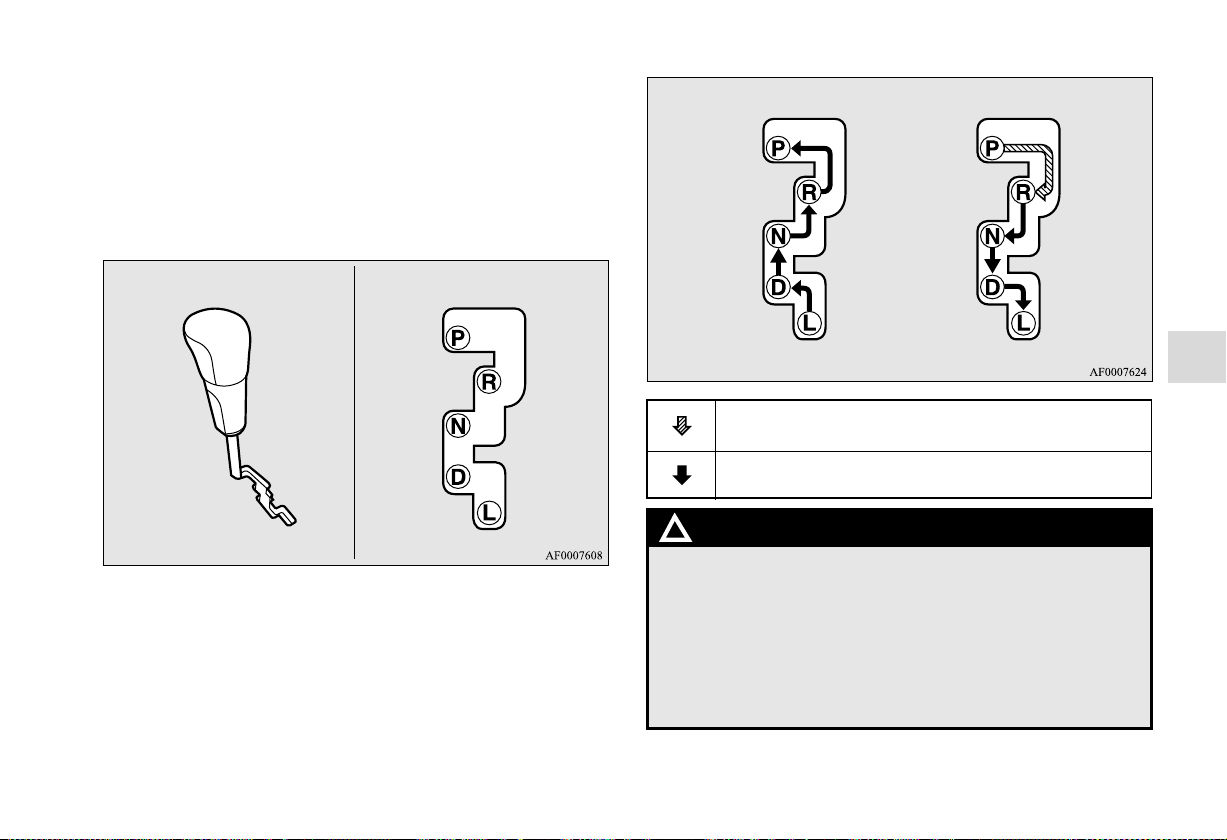
Features and controls
3-99
3
Except for vehicles with manual gate
The CVT has 2 forward selector positions and 1 reverse selec-
tor position.
The CVT selects an optimum ratio automatically when the
selector lever is in the “D” (DRIVE) or “L” (LOW) position,
depending on the speed of the vehicle and the position of the
accelerator pedal.
The selector lever has 5 positions.
With the brake pedal depressed, set the selector lever in
the gate to operate.
Set the selector lever in the gate to operate.
WARNING
!
● Always depress the brake pedal when shifting the
selector lever into a selector position from the “P”
(PARK) or “N” (NEUTRAL) position.
When beginning to drive, do not shift the selector
lever from the “P” (PARK) or “N” (NEUTRAL)
position while depressing the accelerator pedal.
Doing so is dangerous because the vehicle will
“jump” forward or backward.
BK0138600US.book 99 ページ 2011年7月17日 日曜日 午後2時32分
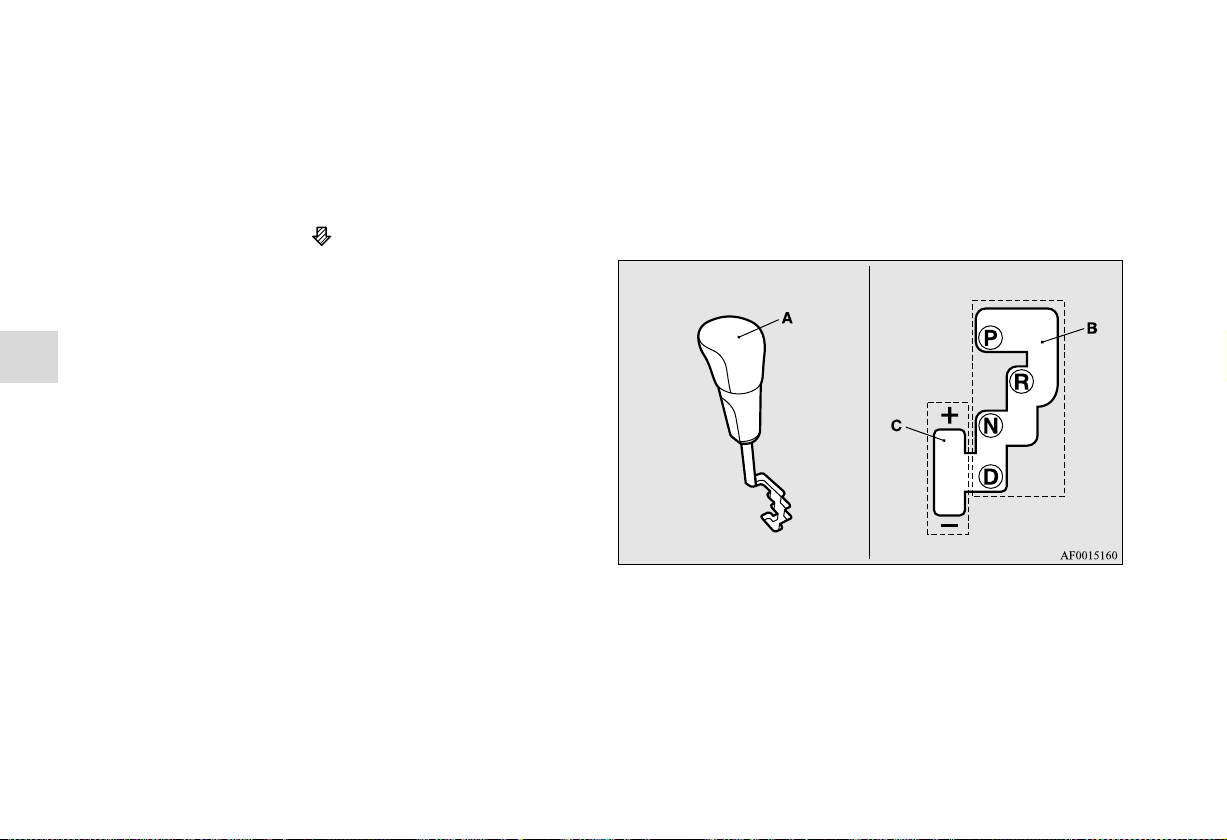
3-100
Features and controls
3
N
OTE
● To ensure proper transmission operation, stop at each
detent position when shifting. After shifting, check the
position in the multi-information display.
● If the brake pedal is not depressed and held, the shift-lock
device activates to prevent the selector lever from being
moved from the “P” (PARK) position.
● For a shift indicated by in the illustration, depress the
brake pedal before moving the selector lever. If you
attempt to move the selector lever before depressing the
brake pedal, the selector lever will be immovable.
Vehicles with manual gate
The CVT has 2 forward selector positions and 1 reverse selec-
tor position.
The CVT selects an optimum ratio automatically when the
selector lever is in the “D” (DRIVE) position, depending on the
speed of the vehicle and the position of the accelerator pedal.
The selector lever (A) has 2 gates; the main gate (B) and the
manual gate (C).
N
OTE
● In the main gate, the selector lever has 4 positions.
● For information on manual gate operation, please refer to
“Sports mode” on page 3-106.
BK0138600US.book 100 ページ 2011年7月17日 日曜日 午後2時32分
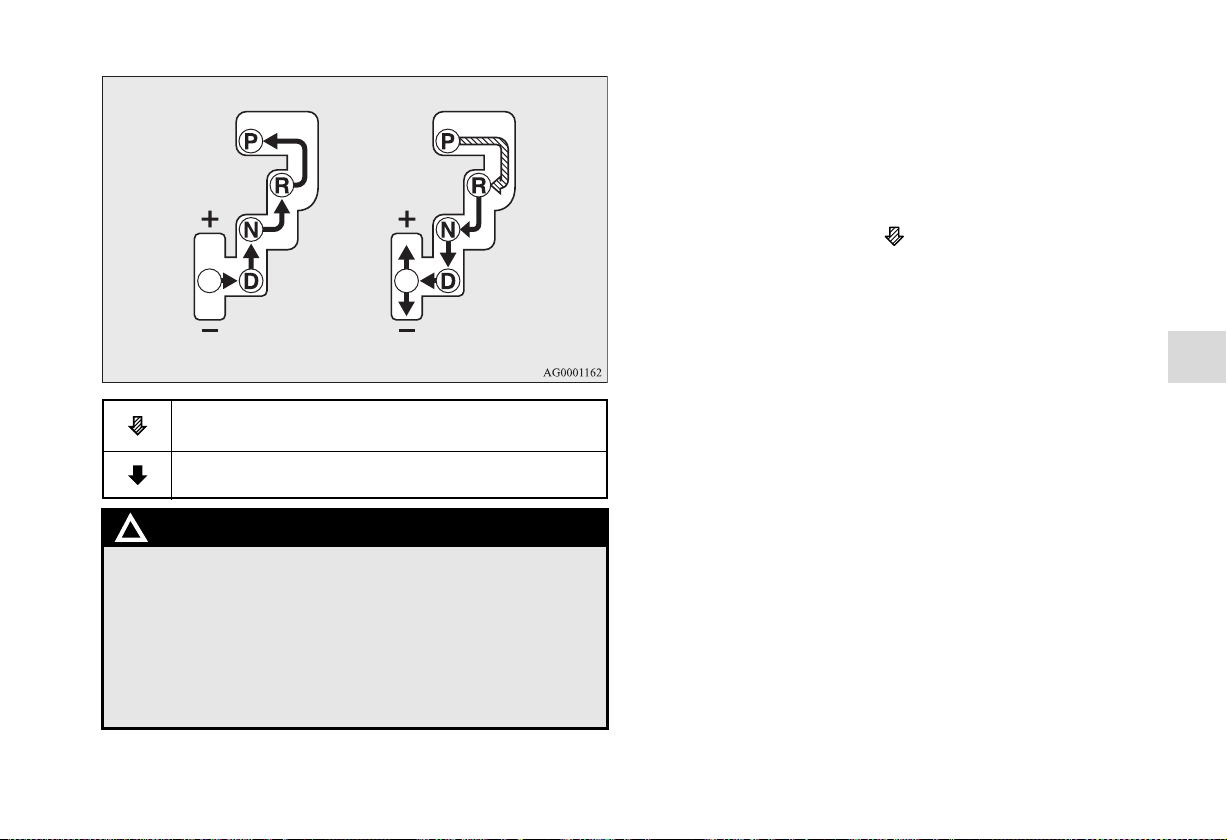
Features and controls
3-101
3
N
OTE
● To ensure proper transmission operation, stop at each
detent position when shifting. After shifting, check the
position in the multi-information display.
● If the brake pedal is not depressed and held, the shift-lock
device activates to prevent the selector lever from being
moved from the “P” (PARK) position.
● For a shift indicated by in the illustration, depress the
brake pedal before moving the selector lever. If you
attempt to move the selector lever before depressing the
brake pedal, the selector lever will be immovable.
With the brake pedal depressed, set the selector lever in
the gate to operate.
Set the selector lever in the gate to operate.
WARNING
!
● Always depress the brake pedal when shifting the
selector lever into a selector position from the “P”
(PARK) or “N” (NEUTRAL) position.
When beginning to drive, do not shift the selector
lever from the “P” (PARK) or “N” (NEUTRAL)
position while depressing the accelerator pedal.
Doing so is dangerous because the vehicle will
“jump” forward or backward.
BK0138600US.book 101 ページ 2011年7月17日 日曜日 午後2時32分
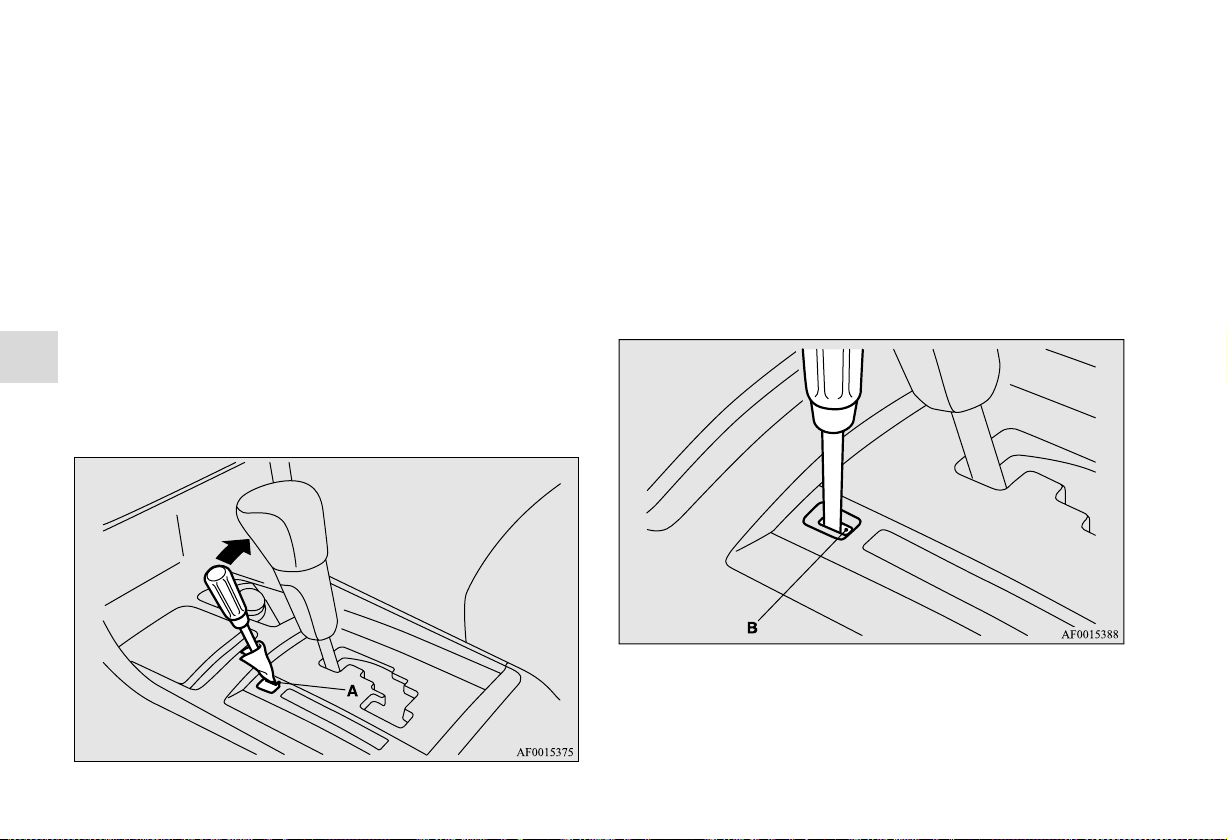
3-102
Features and controls
3
When the selector lever cannot be shifted from the “P”
(PARK) position
N00563100021
When the selector lever cannot be shifted from the “P” (PARK)
position to another position while the brake pedal is pressed
and held down with the ignition switch at the “ON” position,
the battery may be flat or the shift-lock mechanism may be
malfunctioning.
Immediately have your vehicle checked by an authorized
Mitsubishi Motors dealer or a repair facility of your choice.
If you need to move the vehicle, shift the selector lever as fol-
lows.
1. Make sure the parking brake is fully applied.
2. Stop the engine if it is running.
3. Insert a screwdriver with a cloth over its tip into the notch
(A) of the cover. Pry gently as shown to remove the cover.
4. Depress the brake pedal with the right foot.
5. Turn the ignition switch to the “ACC” position.
N
OTE
● For vehicles with the Free-hand Advanced Security
Transmitter (F.A.S.T.-key), turn the ignition switch to the
“ACC” position with the emergency key if the vehicle
battery is flat.
6. Insert a screwdriver in the shift-lock release hole (B).
Shift the selector lever to the “N” (NEUTRAL) position
while pressing the screwdriver down.
BK0138600US.book 102 ページ 2011年7月17日 日曜日 午後2時32分
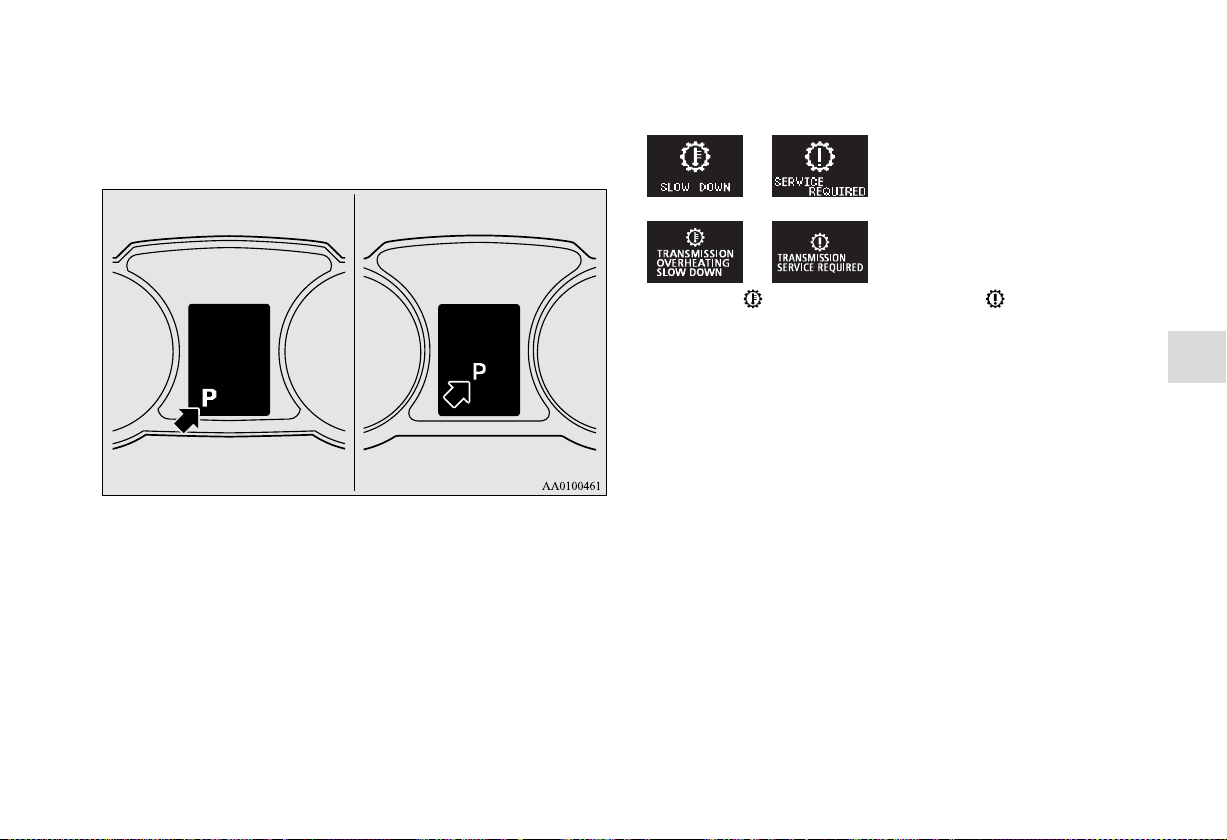
Features and controls
3-103
3
Selector lever position display
N00513900402
When the ignition switch is turned to the “ON” position, the
selector lever position is shown on the multi-information dis-
play.
Warning display
N00514000194
Type 1
or
Type 2
or
When the warning display or the warning display
appears on the information screen in the multi-information dis-
play while you are driving, there could be a malfunction in the
CVT.
BK0138600US.book 103 ページ 2011年7月17日 日曜日 午後2時32分
3-104
Features and controls
3
Selector lever positions
N00514200356
“P” PARK
This position locks the transmission to prevent the vehicle
from moving. The engine can be started from the “PARK”
position.
“R” REVERSE
Move the lever to this position only after the vehicle has come
to a complete stop.
CAUTION
!
● If a malfunction occurs in the CVT while driving,
the warning display or the warning display
will appear on the information screen in the multi-
information display.
In this case, immediately park your vehicle in a safe
place and follow these procedures:
[When warning display is showing]
The continuously variable transmission (CVT) fluid
is overheating. The engine control may activate to
lower the CVT fluid temperature, causing the
engine revolutions and vehicle speed to decrease. In
this case, take one of the following procedures:
• Slow down your vehicle.
• Stop your vehicle in a safe place, put the selector
lever in the “P” (PARK) position, and open the
engine hood with the engine running to allow the
engine to cool down.
After a while, confirm that the warning display is
no longer showing. It is safe to continue driving if
the display is no longer showing. If the warning dis-
play remains or flashes frequently, have your vehicle
inspected by an authorized Mitsubishi Motors
dealer or a repair facility of your choice.
[When warning display is showing]
It may be that there is something unusual happening
in the CVT, causing a safety device to activate. Have
your vehicle inspected by an authorized Mitsubishi
Motors dealer or a repair facility of your choice as
soon as possible.
CAUTION
!
● Never shift into the “P” (PARK) or “R”
(REVERSE) position while the vehicle is in motion.
If the lever is shifted into the “P” (PARK) or “R”
(REVERSE) position while the vehicle is in motion,
the transmission may be damaged.
CAUTION
!
BK0138600US.book 104 ページ 2011年7月17日 日曜日 午後2時32分
Features and controls
3-105
3
“N” NEUTRAL
At this position, the transmission is disengaged. It is the same
as the neutral position on a manual transaxle and should be
used when the vehicle is not moving for an extended length of
time during driving, such as in a traffic jam.
“D” DRIVE
This position is used for most city and highway driving. Engine
shifting and braking are done automatically as needed, depend-
ing on road conditions.
“L” LOW (except for vehicles with manual gate)
This position is for driving up very steep hills and for engine
braking at low speeds when driving down steep hills.
N
OTE
● For information on manual gate operation, please refer to
“Sports mode” on page 3-106.
WARNING
!
● Never move the selector lever to the “N” (NEU-
TRAL) position while driving since you could acci-
dentally slip it into the “P” (PARK) or
“R”(REVERSE) position, damaging the transmis-
sion.
● To prevent the vehicle from rolling when stopped on
a slope, the engine should be started in the “P”
(PARK) position, not in “N” (NEUTRAL) position.
● Always keep your foot on the brake pedal when the
vehicle is in “N” (NEUTRAL) position, or when
shifting into or out of “N” (NEUTRAL) position, to
prevent rolling.
CAUTION
!
● Never shift into the “D” (DRIVE) position from the
“R” (REVERSE) position while the vehicle is in
motion. Transmission damage will result.
WARNING
!
● This position can be used for maximum engine
braking.
Be very careful not to shift into “L” (LOW) sud-
denly. Sudden engine braking may cause the tires to
skid.
Select this position according to the road conditions
and vehicle speed.
BK0138600US.book 105 ページ 2011年7月17日 日曜日 午後2時32分
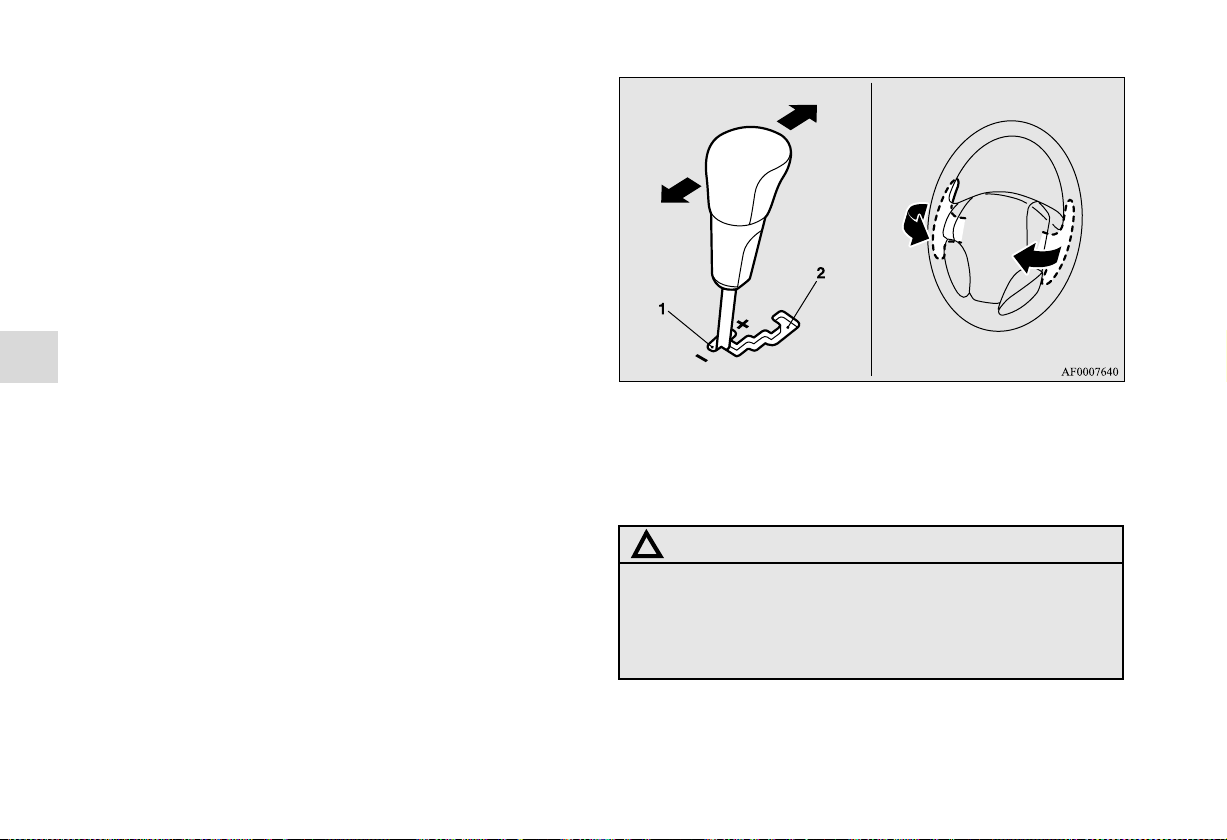
3-106
Features and controls
3
Sports mode (if so equipped)
N00514400417
Vehicles with manual gate
Whether the vehicle is stationary or in motion, sports mode is
selected by pushing the selector lever from the “D” (DRIVE)
position into the manual gate (1). To return to “D” (DRIVE)
operation, push the selector lever back into the main gate (2).
In sports mode, rapid shifting is possible simply by operating
the selector lever or sportronic steering wheel paddle shifter.
Unlike the manual transaxle, sports mode allows shifting with
the accelerator pedal depressed.
N
OTE
● For vehicles equipped with the sportronic steering wheel
paddle shifter, sports mode can be operated even when the
selector lever is in the main gate (2).
To return to “D” (DRIVE) operation, pull the sportronic
steering wheel paddle shifter on the + (UP) side for longer
than 2 seconds, or park the vehicle to change the selector
lever position indicator to “D” (DRIVE) and return to “D”
(DRIVE) operation.
+ (SHIFT UP)
Transmission shifts up once by each operation.
- (SHIFT DOWN)
Transmission shifts down once by each operation.
CAUTION
!
● Upward shifts do not take place automatically in
sports mode. The driver must make upward shifts in
accordance with prevailing road conditions, making
sure the engine rpm remains below the red zone on
the tachometer.
SHIFT UP
SHIFT
DOWN
SHIFT
UP
SHIFT
DOWN
BK0138600US.book 106 ページ 2011年7月17日 日曜日 午後2時32分
Features and controls
3-107
3
N
OTE
● Shift ranges can only be selected in a forward direction
from 1st to 6th. To reverse or park the vehicle, move the
selector lever to the “R” or “P” position.
● To maintain good running performance, the transmission
may refuse to perform an upshift when the selector lever
or sportronic steering wheel paddle shifter is moved to the
“+ (SHIFT UP)” position at certain vehicle speeds. Also,
to prevent over-revving of the engine, the transmission
may refuse to perform a downshift when the shift lever or
sportronic steering wheel paddle shifter is moved to the “-
(SHIFT DOWN)” position at certain vehicle speeds.
When this happens, a buzzer sounds to indicate that a
downshift is not going to take place.
● Move the selector lever gently between the manual and
main gates and between positions in the manual gate. And
do not operate sportronic steering wheel paddle shifter
violently. Excessive force could damage the selector lever
or sportronic steering wheel paddle shifter.
Except for vehicles with manual gate
While driving with the selector lever in the “D” (DRIVE),
sports mode can be selected by pulling one of the sportronic
steering wheel shifters toward you.
In sports mode, rapid shifting is possible simply by operating
the sportronic steering wheel paddle shifter.
Unlike the manual transaxle, sports mode allows shifting with
the accelerator pedal depressed.
N
OTE
● To return to “D” (DRIVE) operation, pull the sportronic
steering wheel paddle shifter on the + (UP) side for longer
than 2 seconds, or park the vehicle to change the selector
lever position indicator to “D” (DRIVE) and return to “D”
(DRIVE) operation.
● When the sportronic steering wheel paddle shifter is oper-
ated with the selector lever in the “L” (LOW) position,
gear is not shifted because the selectable shift range is
limited.
● By rapidly moving the selector lever or sportronic
steering wheel paddle shifter to the “- (SHIFT
DOWN)” side twice, it is possible to skip one shift
range (i.e., 3rd to 1st or 4th to 2nd). Since sudden
engine braking or acceleration can cause a loss of
traction, downshifts must be made carefully in
accordance with the vehicle’s speed.
● On vehicles with a sportronic steering wheel paddle
shifter, shift ranges may not change when the lateral
paddle shifters are operated at the same time.
CAUTION
!
BK0138600US.book 107 ページ 2011年7月17日 日曜日 午後2時32分

3-108
Features and controls
3
N
OTE
● Shift ranges can only be selected in a forward direction
from 1st to 6th. To reverse or park the vehicle, move the
selector lever to the “R” or “P” position.
● To maintain good running performance, the transmission
may refuse to perform an upshift when the sportronic
steering wheel paddle shifter is moved to the “+ (SHIFT
UP)” position at certain vehicle speeds. Also, to prevent
over-revving of the engine, the transmission may refuse to
perform a downshift when the sportronic steering wheel
paddle shifter is moved to the “- (SHIFT DOWN)” posi-
tion at certain vehicle speeds. When this happens, a
buzzer sounds to indicate that a downshift is not going to
take place.
● Do not operate sportronic steering wheel paddle shifter
violently. Excessive force could damage the sportronic
steering wheel paddle shifter.
+ (SHIFT UP)
Transmission shifts up once by each operation.
- (SHIFT DOWN)
Transmission shifts down once by each operation.
CAUTION
!
● Upward shifts do not take place automatically in
sports mode. The driver must make upward shifts in
accordance with prevailing road conditions, making
sure the engine rpm remains below the red zone on
the tachometer.
SHIFT DOWN
SHIFT UP
● By rapidly moving the sportronic steering wheel
paddle shifter to the “- (SHIFT DOWN)” side twice,
it is possible to skip one shift range (i.e., 3rd to 1st or
4th to 2nd). Since sudden engine braking or acceler-
ation can cause a loss of traction, downshifts must be
made carefully in accordance with the vehicle’s
speed.
● Shift ranges may not change when the lateral paddle
shifters are operated at the same time.
CAUTION
!
BK0138600US.book 108 ページ 2011年7月17日 日曜日 午後2時32分
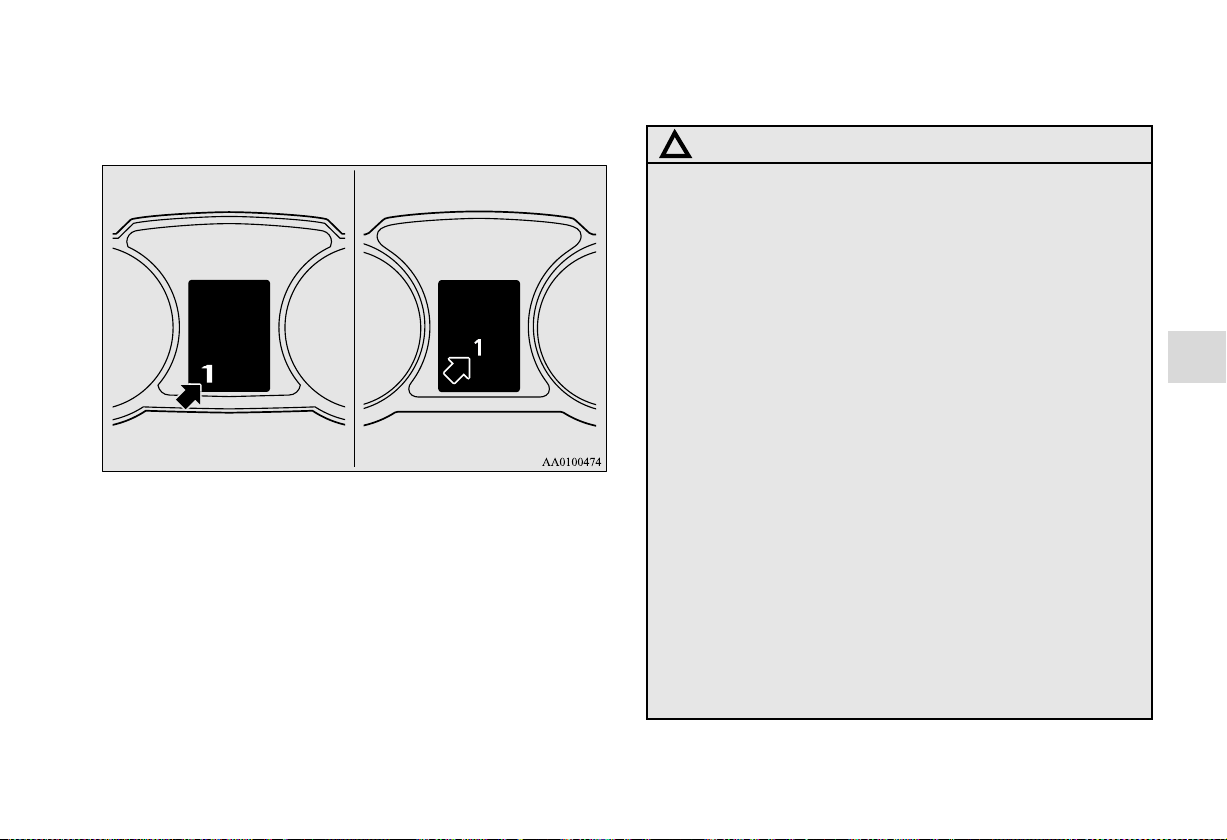
Features and controls
3-109
3
Sports mode display
N00538800154
In sports mode, the currently selected shift range is displayed
on the information screen in the multi-information display.
N
OTE
● While driving in sports mode, the sports mode display
may change to show “D” and shifting in sports mode may
no longer be possible.
This indicates that controls to drive in the “D” position are
operating normally in order to lower the temperature of
the continuously variable transmission (CVT) fluid; it
does not indicate a malfunction. Once the temperature of
the continuously variable transmission (CVT) fluid drops,
shifting in the sports mode will be possible again.
Operation of the CVT
N00514500287
CAUTION
!
● Before selecting a position with the engine running
and the vehicle stationary, fully depress the brake
pedal to prevent the vehicle from creeping.
Do not release the brakes until you are ready to
drive away. The vehicle will begin to move as soon as
the CVT is engaged, especially when the engine
speed is high (fast idle or air conditioning on).
● Depress the brake pedal with the right foot.
Using the left foot could cause driver movement
delay in case of an emergency.
● To prevent sudden acceleration, never run the
engine at high rpms when shifting from the “P”
(PARK) or “N” (NEUTRAL) position.
● Operating the accelerator pedal while the other foot
is resting on the brake pedal will affect braking effi-
ciency and may cause premature wear of brake
pads.
● Use the selector lever in the correct shift position in
accordance with driving conditions.
Never coast downhill backward in the driving shift
position { “D” (DRIVE), “L” (LOW) or sports
mode} or coast forward in the “R” (REVERSE)
position.
Engine stopping and increased brake pedal and
steering effort could lead to an accident.
BK0138600US.book 109 ページ 2011年7月17日 日曜日 午後2時32分
3-110
Features and controls
3
Passing acceleration
N00514900063
To gain extra acceleration in “D” (DRIVE) position (when
passing another vehicle) push the accelerator to the floor if it is
safe to do so in traffic conditions. The CVT will automatically
downshift.
N
OTE
● In sports mode, downshifts do not take place when the
accelerator is depressed all the way to the floor.
Waiting
N00515000074
For short waiting periods, such as at traffic lights, the vehicle
can be left in selector lever position and held stationary with
the service brake.
For longer waiting periods with the engine running, the selec-
tor lever should be placed in the “N” (NEUTRAL) position.
● Do not rev the engine with the brake pedal pressed
when the vehicle is stationary.
This can damage the CVT.
Also, when you depress the accelerator pedal while
holding down the brake pedal with the selector lever
in the “D” (DRIVE) position, the engine revolutions
may not rise as high as when performing the same
operation with the selector lever in the “N” (NEU-
TRAL) position.
CAUTION
!
CAUTION
!
● To avoid transmission overheating, never try to keep
your vehicle stationary on a hill by using the acceler-
ator pedal. Always apply the parking brake and/or
service brake.
● Unexpected acceleration may occur if the selector
lever is in a position other than “P” (PARK) or “N”
(NEUTRAL).
Before driving off from a stop, make sure that the
selector lever is in “D” (DRIVE) position or “Sports
mode” position.
BK0138600US.book 110 ページ 2011年7月17日 日曜日 午後2時32分

Features and controls
3-111
3
Parking
N00515100062
To park the vehicle, first bring it to a complete stop, fully
engage the parking brake, and then move the selector lever to
the “P” (PARK) position.
If you are going to leave the vehicle unattended, always switch
off the engine and carry the key.
N
OTE
● On a slope, be sure to apply the parking brake before
moving the selector lever to the “P” (PARK) position. If
you move the selector lever to the “P” (PARK) position
before applying the parking brake, it may be difficult to
disengage the selector lever from the “P” (PARK) position
when next you drive the vehicle, requiring application of a
strong force to the selector lever to move from the “P”
(PARK) position.
When the CVT makes no speed change
N00515300194
If the CVT does not shift while driving, or your vehicle does
not pick up enough speed when starting on an uphill slope,
there may be something unusual happening in the transmission,
causing a safety device to activate. Have your vehicle checked
at an authorized Mitsubishi Motors dealer or a repair facility of
your choice as soon as possible.
1. If your vehicle has difficulty moving uphill, shift the
selector lever into “L” (LOW) position (except for vehi-
cles with sport mode) or 2nd shift range of the sports
mode.
This method might not work depending on the type of
transmission malfunction.
2. Once the vehicle is moving on a level road, move the
selector lever back to “D” (DRIVE) position.
N
OTE
● When the warning display or the warning display
appears on the information screen in the multi-informa-
tion display, there could be a malfunction in the CVT.
Refer to “Continuously variable transmission (CVT):
Warning display” on page 3-103.
BK0138600US.book 111 ページ 2011年7月17日 日曜日 午後2時32分

3-112
Features and controls
3
Twin Clutch SST (Sportronic Shift Trans-
mission)
(if so equipped)
N00539700059
The Twin Clutch SST is a transmission that, through integrated
control of the engine and transmission, is able to achieve both
the smooth shifting of an automatic transaxle and the accelera-
tion and fuel economy close to a manual transaxle. In addition,
the control mode can be selected from two types to suit the
driving conditions.
Together with manual shifting, the transmission is capable of
responding to a variety of driving circumstances.
Twin Clutch SST control mode→ P.3-120
Manual shift → P.3-122
Gearshift lever operation
N00539800050
As an additional safety precaution, models equipped with a
Twin Clutch SST have a shift-lock device that holds the gear-
shift lever in the “P” (PARK) position. To move the gearshift
lever from the “P” (PARK) position to another position, follow
the steps below.
1. Press and hold the brake pedal down.
2. Move the gearshift lever to the desired position.
N
OTE
● The gearshift lever cannot be moved from “P” (PARK) to
another position if the ignition switch is at the “LOCK” or
“ACC” position, or the key has been removed, or if the
brake pedal is not pressed and held down.
BK0138600US.book 112 ページ 2011年7月17日 日曜日 午後2時32分
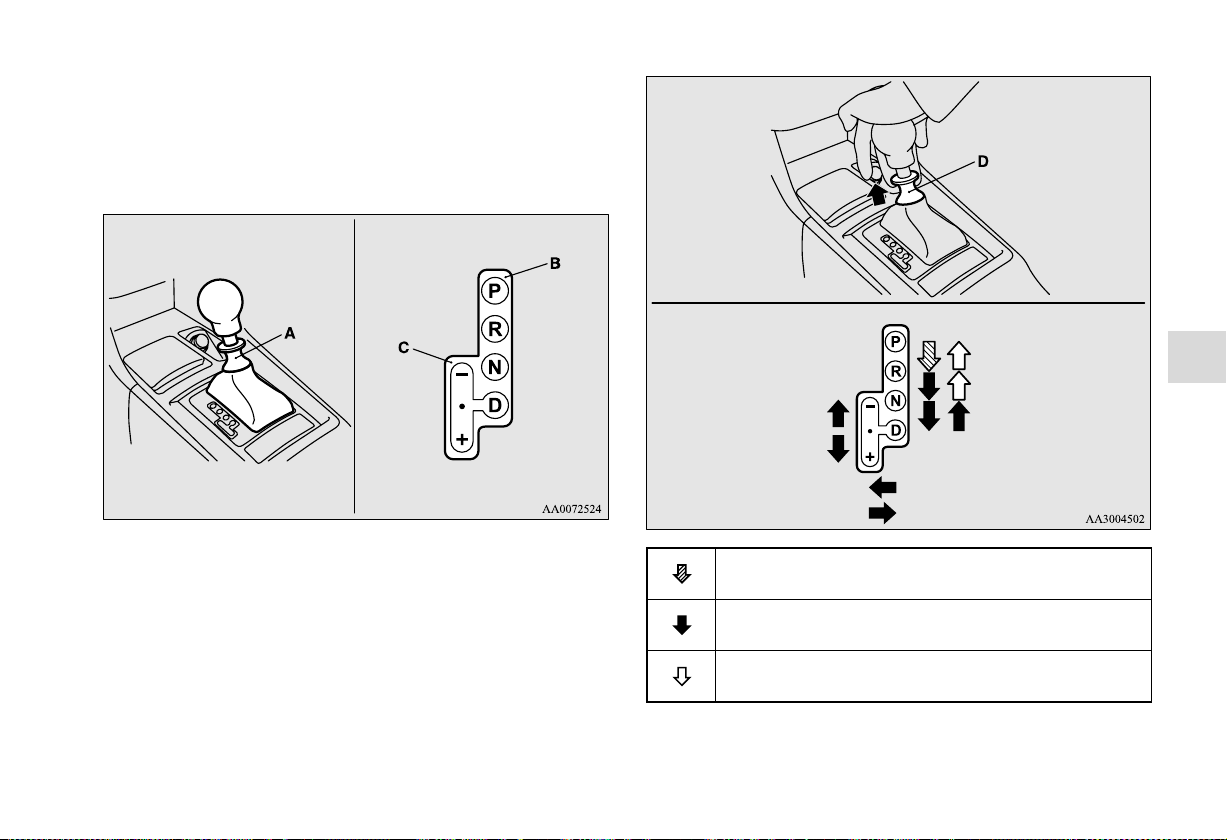
Features and controls
3-113
3
The Twin Clutch SST has 6 forward gears and 1 reverse gear.
The individual gears are selected automatically, depending on
the position of the gearshift lever, the speed of the vehicle and
the position of the accelerator pedal.
The gearshift lever (A) has 2 gates; the main shift gate (B) and
the manual shift gate (C).
N
OTE
● In the main shift gate, the gearshift lever has 4 positions.
● For information on manual shift gate operation, please
refer to “Manual shift” on page 3-122.
The pull-ring (D) must be pulled up while the brake
pedal is depressed to move the gearshift lever.
The gearshift lever will move without pulling up the
pull-ring (D).
The pull-ring (D) must be pulled up to move the gear-
shift lever.
BK0138600US.book 113 ページ 2011年7月17日 日曜日 午後2時32分
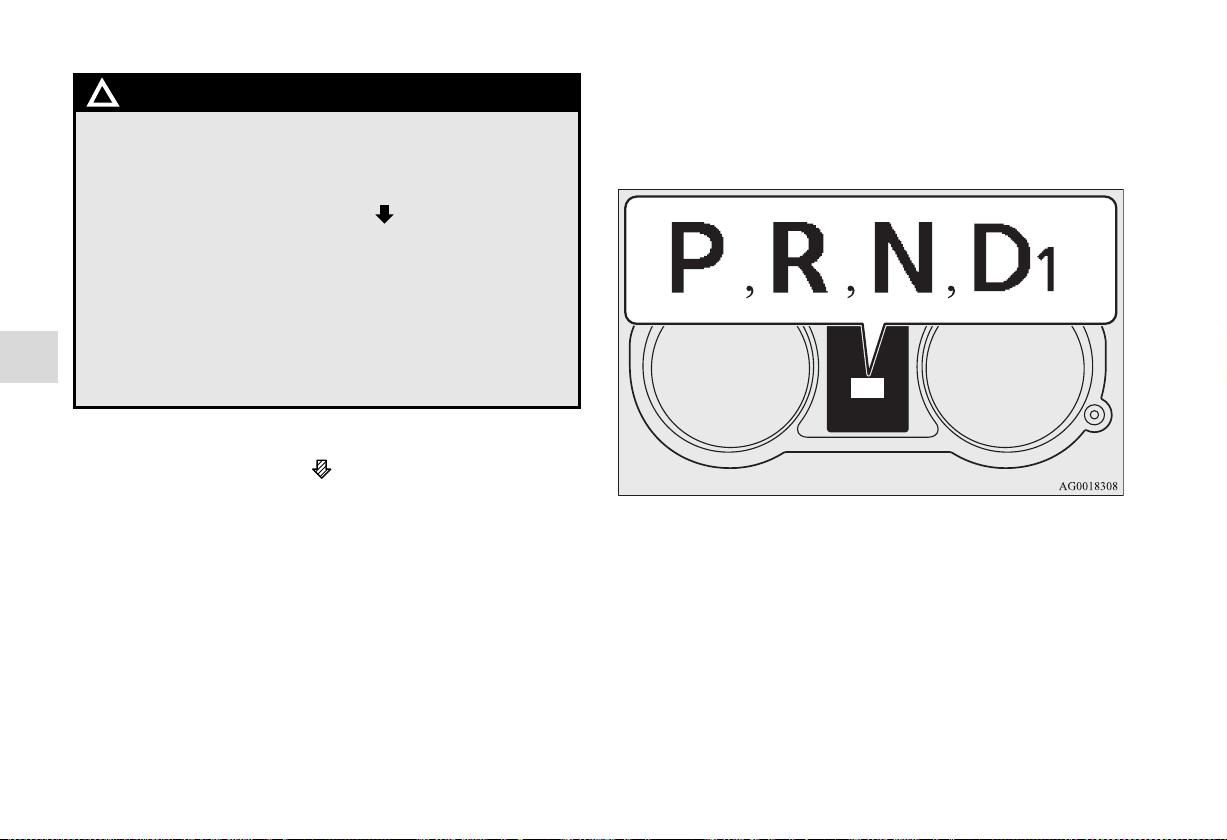
3-114
Features and controls
3
N
OTE
● For a shift indicated by in the illustration, depress the
brake pedal before moving the gearshift lever. If you
attempt to move the gearshift lever before depressing the
brake pedal, the gearshift lever will be immovable.
● Do not accelerate immediately after moving the gearshift
lever. It may take some time for the transmission to shift
to the selected gear.
● When the gearshift lever is operated when the Twin
Clutch SST fluid temperature is low, the time required to
shift to the selected gear may be longer than usual.
Gearshift lever position display
N00539900064
When the ignition switch is turned to the “ON” position, the
gearshift lever position is shown on the multi-information dis-
play.
WARNING
!
● If the pull-ring is always pulled up when using the
gearshift lever, the gearshift lever may be acciden-
tally shifted into the “P” (PARK) or “R”
(REVERSE) position. Do not pull up the pull-ring
when making shifts shown by in the illustration.
● Always depress the brake pedal when shifting the
gearshift lever into another position from the “P”
(PARK) or “N” (NEUTRAL) position.
When beginning to drive, do not shift the gearshift
lever from the “P” (PARK) or “N” (NEUTRAL)
position while depressing the accelerator pedal.
Doing so is dangerous because the vehicle will
“jump” forward or backward.
BK0138600US.book 114 ページ 2011年7月17日 日曜日 午後2時32分
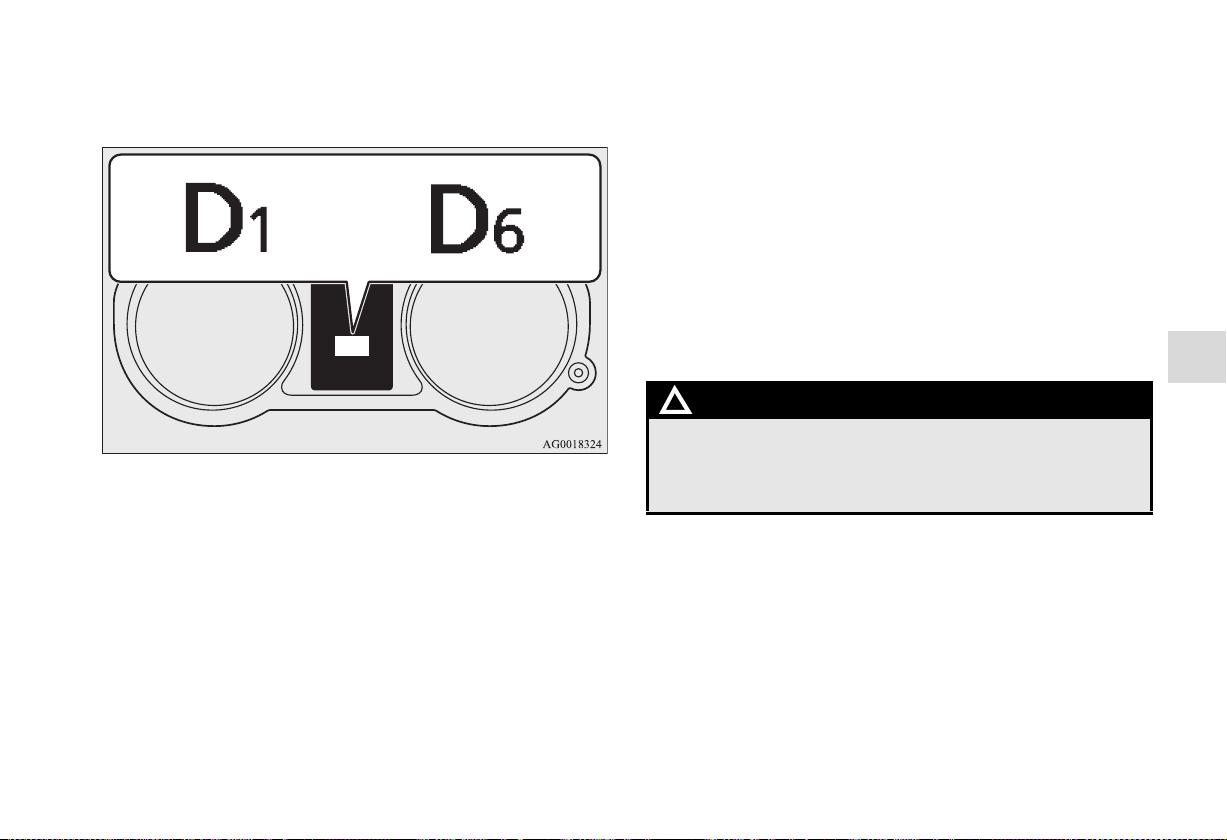
Features and controls
3-115
3
In addition, when the vehicle is driven with the gearshift lever
in the “D” (DRIVE) position, the forward gear number is
shown.
When the gearshift lever position display blinks
When the gearshift lever is placed in the “R” (REVERSE)
position, the gearshift lever position display on the multi-infor-
mation display may blink and the vehicle will not move
because the gears in the transmission have not engaged.
If this occurs, perform the following procedure.
1. Depress the brake pedal with your right foot and place the
gearshift lever in the “N” (NEUTRAL) position.
2. Place the gearshift lever in the “R” (REVERSE) position,
and confirm that the gearshift lever position display stops
blinking.
3. Repeat 1 and 2 above if the gearshift lever position dis-
play continues to blink.
If the gearshift lever position display is not showing
N00562500028
There may be a problem in the Twin Clutch SST.
If this occurs, the safety device operates and prevents the vehi-
cle from moving. Therefore, perform the following procedure.
1. Park your vehicle in a safe place and stop the engine.
2. Restart the engine.
through
WARNING
!
● To avoid unintended vehicle movement, keep brake
pedal applied with your right foot and do not
depress the accelerator pedal, while the gearshift
lever position display is blinking.
BK0138600US.book 115 ページ 2011年7月17日 日曜日 午後2時32分
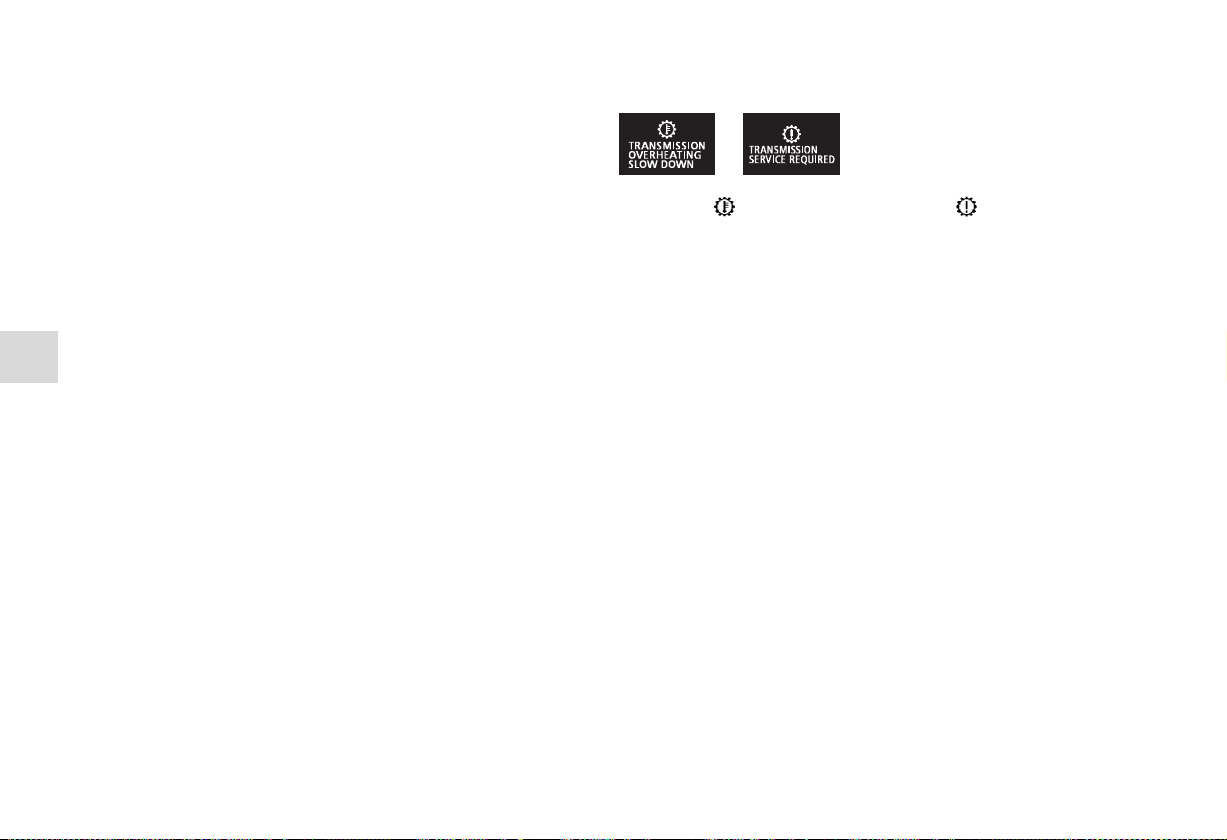
3-116
Features and controls
3
If the gearshift lever position display is shown and the vehicle
can move after this procedure is performed, there is no mal-
function.
If the gearshift lever position display is not shown and the
vehicle cannot move, or if this problem occurs repeatedly, have
the vehicle checked by an authorized Mitsubishi Motors dealer
or a repair facility of your choice as soon as possible.
Warning display
N00540000052
or
When the warning display or the warning display
appears on the information screen in the multi-information dis-
play while you are driving, take the following measures.
BK0138600US.book 116 ページ 2011年7月17日 日曜日 午後2時32分
Features and controls
3-117
3
When warning display is showing
N00543100096
The temperature of the Twin Clutch SST fluid is high.
If this occurs, take one of the following measures.
● Reduce the vehicle speed.
● Stop the vehicle in a safe place, place the gearshift lever in
the “P” (PARK) position, and then open the engine hood
with the engine running to cool the engine.
After a while, check that the warning display has gone out.
If the display goes out, the vehicle can be driven normally.
If the warning display remains on or comes on frequently, have
the vehicle checked by an authorized Mitsubishi Motors dealer
or a repair facility of your choice.
N
OTE
● If the vehicle is continuously driven on hilly roads or in an
aggressive manner involving high engine rpm, sudden
acceleration and/or deceleration, the vehicle transmission
may vibrate.
This vibration is to alert the driver that the Twin Clutch
SST fluid temperature has risen. It does not indicate a
malfunction.
If this occurs, perform the same measures for when the
warning appears. If the vibration stops, the vehicle can be
driven normally.
If vehicle is driven with warning displayed
If the vehicle continues to be driven after the warning dis-
play appears, and the temperature of the Twin Clutch SST fluid
continues to rise, the transmission protection control may oper-
ate and cause the transmission to function as if the gearshift
lever was in the “N” (NEUTRAL) position.
(At this time, the vehicle temporarily cannot be driven.)
If this occurs, take the following measures.
1. Depress the brake pedal and stop the vehicle in a safe
place.
2. Place the gearshift lever in the “P” (PARK) position, and
then open the engine hood with the engine running to cool
the engine.
3. After a while, check that the warning display has gone
out, and then stop the engine if the warning display has
gone out.
CAUTION
!
● If the warning display is shown, such as when the
vehicle does not accelerate while traveling even if
the accelerator pedal is depressed, the vehicle may
not be able to be driven normally.
For safety, pay attention to your surroundings when
driving the vehicle.
BK0138600US.book 117 ページ 2011年7月17日 日曜日 午後2時32分
3-118
Features and controls
3
4. If the engine can be restarted, the vehicle can be driven
normally.
If the warning display remains on or comes on frequently, have
the vehicle checked by an authorized Mitsubishi Motors dealer
or a repair facility of your choice.
When warning display is showing
N00543200039
A safety device in the Twin Clutch SST has been activated due
to a possible malfunction in the Twin Clutch SST or in the
engine electronic control module.
If this occurs, perform the following procedure.
1. Park your vehicle in a safe place and stop the engine.
2. Restart the engine.
If the warning display goes out, there is no abnormal condi-
tion.
However, if the warning display remains on or comes on fre-
quently, have the vehicle checked by an authorized Mitsubishi
Motors dealer or a repair facility of your choice as soon as pos-
sible.
Gearshift lever positions (Main shift gate)
N00540100011
“P” PARK
This position locks the transmission to prevent the vehicle
from moving. The engine can be started from the “PARK”
position.
“R” REVERSE
Move the lever to this position only after the vehicle has come
to a complete stop.
CAUTION
!
● If the warning display is shown, such as when the
vehicle does not accelerate while traveling even if
the accelerator pedal is depressed, the vehicle may
not be able to be driven normally.
For safety, pay attention to your surroundings when
driving the vehicle.
CAUTION
!
● Never shift into the “P” (PARK) or “R”
(REVERSE) position while the vehicle is in motion.
If the lever is shifted into the “P” (PARK) or “R”
(REVERSE) position while the vehicle is in motion,
the transmission may be damaged.
BK0138600US.book 118 ページ 2011年7月17日 日曜日 午後2時32分
Features and controls
3-119
3
“N” NEUTRAL
At this position, the transmission is disengaged. It is the same
as the neutral position on a manual transaxle and should be
used when the vehicle is not moving for an extended length of
time during driving, such as in a traffic jam.
“D” DRIVE
This position is used for most city and highway driving. Engine
shifting and braking are done automatically as needed, depend-
ing on road conditions.
N
OTE
● For information on manual shift gate operation, please
refer to “Manual shift” on page 3-122.
● When the engine is cold, upshifts occur at a higher vehicle
speed than when the engine is warm.
This control is performed to quickly warm up the engine.
It does not indicate a malfunction. After the vehicle has
been driven for a while, upshifts will occur at the regular
engine speeds.
WARNING
!
● Never move the gearshift lever to the “N” (NEU-
TRAL) position while driving since you could acci-
dentally slip it into the “P” (PARK) or
“R”(REVERSE) position and the engine speed
could rise, damaging the transmission.
● To prevent the vehicle from rolling when stopped on
a slope, the engine should be started in the “P”
(PARK) position.
Although the engine can be started when the vehicle
is in the “N” (NEUTRAL) position, for safety rea-
sons, do not start the engine in the “N” (NEUTRAL)
position.
● Always keep your foot on the brake pedal when the
vehicle is in “N” (NEUTRAL) position, or when
shifting into or out of “N” (NEUTRAL) position, to
prevent rolling.
CAUTION
!
● Never shift into the “D” (DRIVE) position from the
“R” (REVERSE) position while the vehicle is in
motion.
If the lever is shifted into the “D” (DRIVE) from the
“R” (REVERSE) position while the vehicle is in
motion, the transmission may be damaged.
BK0138600US.book 119 ページ 2011年7月17日 日曜日 午後2時32分

3-120
Features and controls
3
Twin Clutch SST control mode
N00540200070
Select the control mode from the following two types to suit
the driving conditions.
N
OTE
● When continuously driving on closed circuit tracks or at
other locations where the engine is operated at high
speeds and under a heavy load, the Twin Clutch SST fluid
temperature will have a tendency to rise.
In this case, if the temperature rises too high, the warn-
ing display will appear on the information screen in the
multi-information display to alert the driver.
If the warning display appears, be sure to refer to
“Warning display” on page 3-116 and follow the appropri-
ate measures.
● The Twin Clutch SST control mode can be selected both
when “D” range operation is selected and when manual
shifting is selected.
● If you select “Sport” mode while the engine is cold, the
transmission may shift up at different speeds compared to
that when the engine is warm.
This is simply the operation of the control system to warm
the engine quickly. It does not indicate a malfunction.
● For slippery road surfaces, such as roads with accumu-
lated snow, “Normal” mode is recommended for smooth
shifting at low engine speeds.
Twin Clutch
SST control
mode
Characteristic
Normal
(Control mode
when engine is
started)
Control mode for normal driving on local
roads, freeways, and the like.
Smooth shifting is performed at low engine
speeds for economical driving with good ride
quality.
Sport
Control mode for driving on mountain roads,
roads with uphill and downhill slopes, and
freeways with long downhill slopes where
engine braking is necessary.
Compared to “Normal” mode, shifting occurs
at higher engine speeds and is quicker. In
addition, quick downshifting is possible when
the accelerator pedal is depressed for quick
acceleration or when the brakes are applied.
BK0138600US.book 120 ページ 2011年7月17日 日曜日 午後2時32分
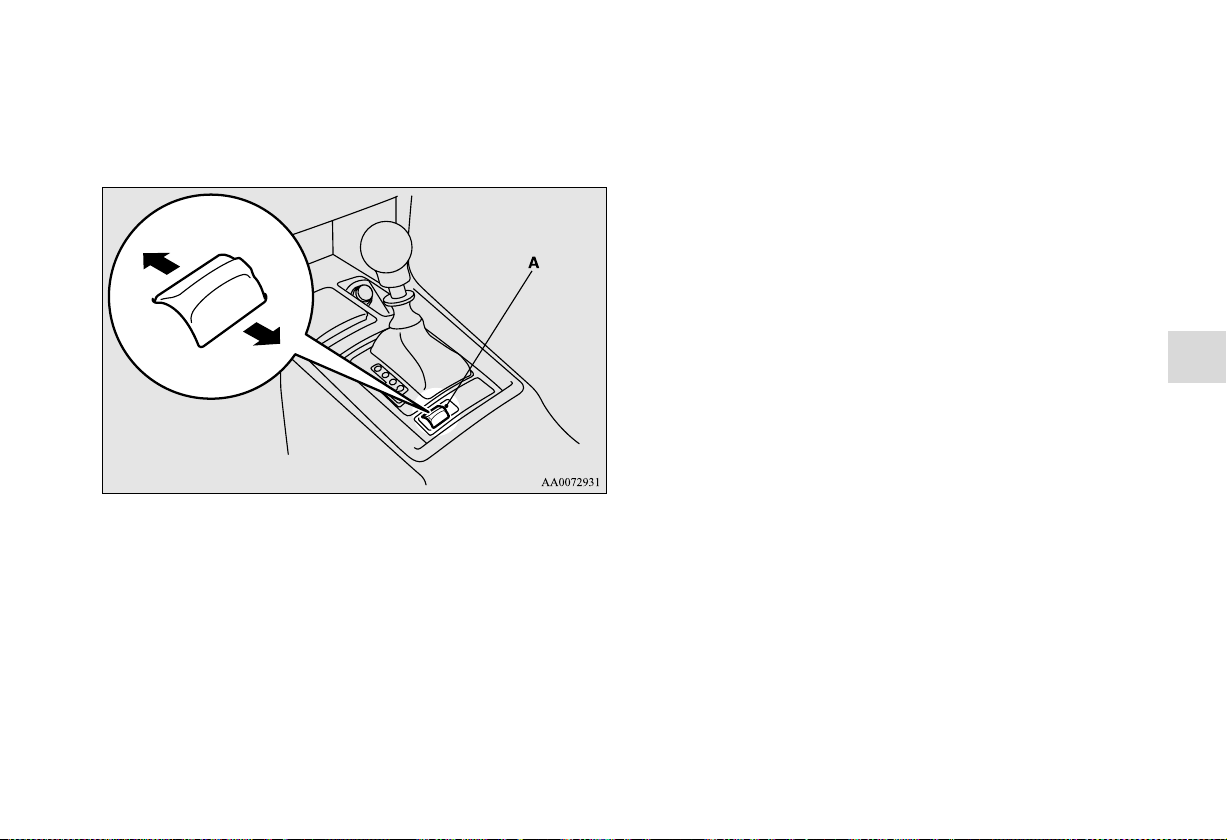
Features and controls
3-121
3
Twin Clutch SST control mode switch
N00540300068
When the ignition switch is set to the “ON” position, operate
the Twin Clutch SST control mode switch (A) to change the
control mode.
When the engine is started, the control mode is automatically
set to the “Normal” mode. Use the following procedures to
change the control mode.
To shift from “Normal” mode to “Sport” mode
While the vehicle is stopped or being driven, push the Twin
Clutch SST control mode switch forward.
To shift from “Sport” mode to “Normal” mode
While the vehicle is stopped or being driven, push the Twin
Clutch SST control mode switch rearward.
N
OTE
● If the Twin Clutch SST control mode switch is continu-
ously pressed after a control mode has been selected, an
erroneous operation prevention function operates and the
control mode is automatically set to the “Normal” mode.
If you would like to select a control mode again, return the
ignition switch to the “ACC” or “LOCK” position and
restart the engine. Then, push the Twin Clutch SST con-
trol mode switch.
BK0138600US.book 121 ページ 2011年7月17日 日曜日 午後2時32分
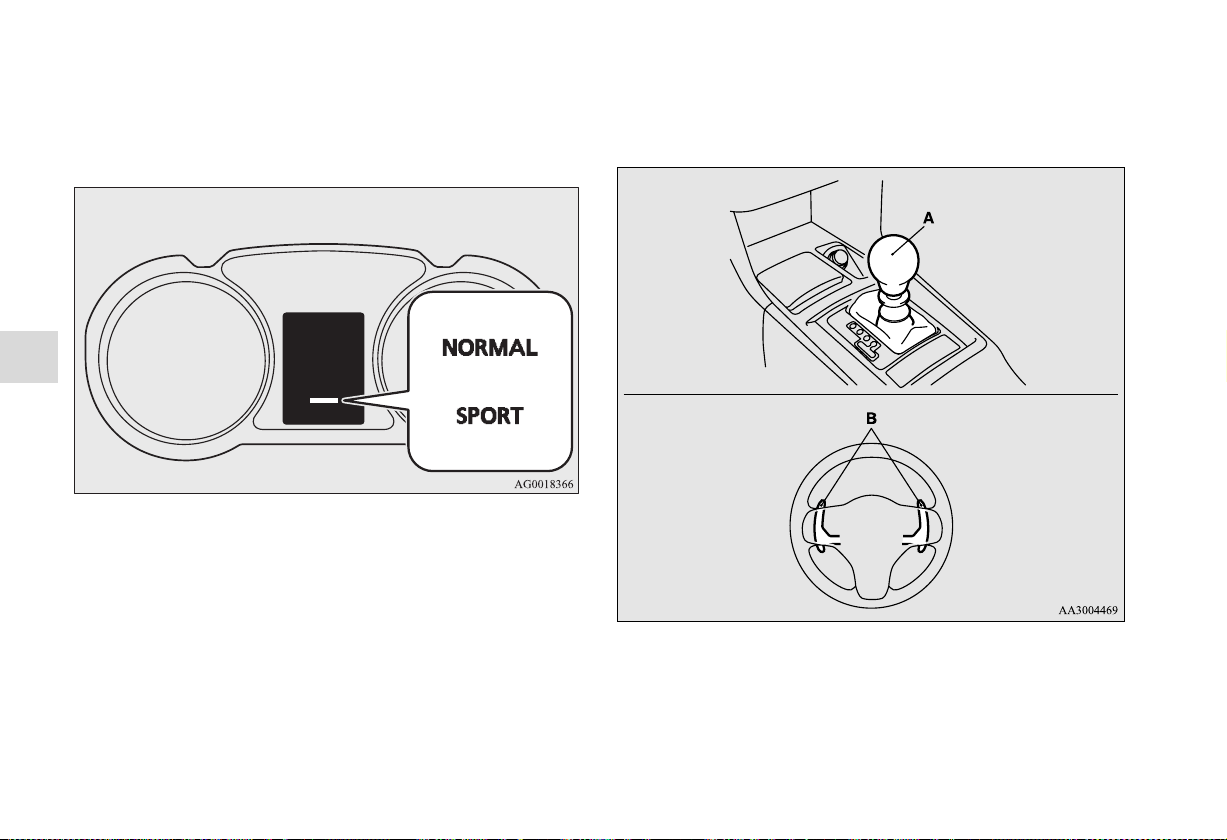
3-122
Features and controls
3
Twin Clutch SST control mode display
N00540400043
When the ignition switch is set to the “ON” position, the cur-
rently selected control mode is displayed on the multi-informa-
tion display.
Manual shift
N00540500031
Using the gearshift lever (A) or the sportronic steering wheel
shifters (B), shifting can be performed manually.
Shifting can be performed even while the accelerator pedal is
depressed.
This allows the driver to enjoy sporty driving, such as quick
cornering, by nimbly downshifting to reduce vehicle speed just
before entering a curve.
BK0138600US.book 122 ページ 2011年7月17日 日曜日 午後2時32分
Features and controls
3-123
3
N
OTE
● Only the forward gears 1 to 6 can be selected.
To reverse or park, place the gearshift lever in the “R”
(REVERSE) or “P” (PARK) position.
● During manual shifting, downshifting will be performed
automatically when the vehicle slows down and the trans-
mission will downshift to 1st gear before the vehicle
stops.
● If the gearshift lever or sportronic steering wheel shifters
are operated repeatedly, the transmission will also shift
repeatedly.
● In order to ensure driving performance, upshifting may
not occur depending on the vehicle speed even if the gear-
shift lever or sportronic steering wheel shifters are oper-
ated. In addition, in order to prevent excessive engine
speed, the buzzer sounds and downshifting may not occur
depending on the vehicle speed even if the gearshift lever
or sportronic steering wheel shifters are operated.
● When driving in an aggressive manner involving high
engine rpm, sudden acceleration and/or deceleration, the
Twin Clutch SST could take longer to shift due to higher
fluid temperatures.
CAUTION
!
● When manually shifting while the vehicle is being
driven, select the correct shift position to control the
engine speed so that the tachometer indicator does
not enter the red zone.
● Sudden engine braking and rapid acceleration can
cause the vehicle to skid. Shift down according to
road conditions and vehicle speed.
● If both the left and right sportronic steering wheel
shifters are operated at the same time, the transmis-
sion may not change gears.
BK0138600US.book 123 ページ 2011年7月17日 日曜日 午後2時32分
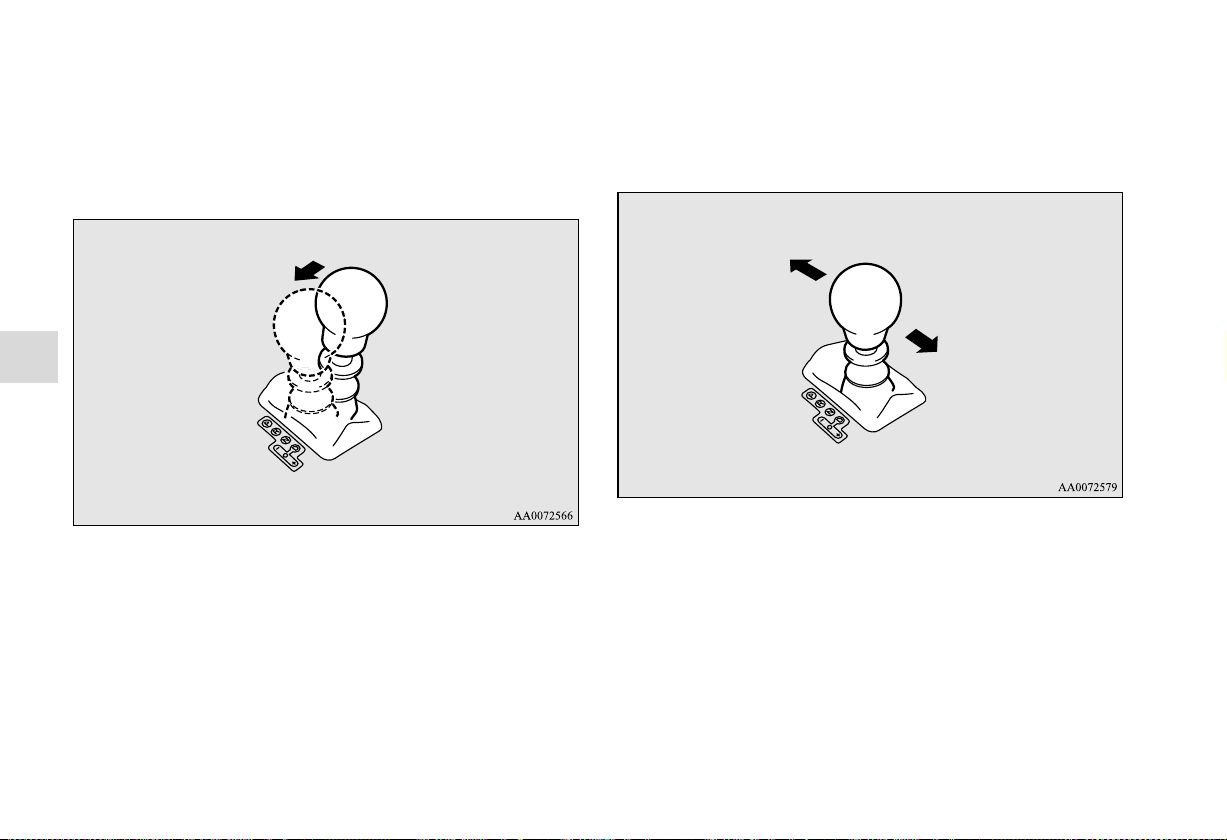
3-124
Features and controls
3
Shifting using the gearshift lever
N00540600032
Selecting manual shifting
While the vehicle is stopped or being driven, move the gear-
shift lever from the “D” (DRIVE) position in the main shift
gate toward the driver’s seat to select manual shifting.
Shifting up and shifting down
Each time the gearshift lever is pulled rearward, the transmis-
sion shifts up 1 gear.
In addition, each time the gearshift lever is pushed forward, the
transmission shifts down 1 gear.
N
OTE
● After manual shifting is selected using the gearshift lever,
shifting up and down can also be performed using the
sportronic steering wheel shifters.
SHIFT DOWN
SHIFT UP
BK0138600US.book 124 ページ 2011年7月17日 日曜日 午後2時32分

Features and controls
3-125
3
Returning to “D” range operation
Move the gearshift lever toward the front passenger’s seat to
return to automated shifting.
N
OTE
● When the gearshift lever is moved to the “D” (DRIVE)
position from the manual shift gate, it may automatically
select a gear different from the gear selected during man-
ual shifting depending on vehicle speed or driving condi-
tions.
Shifting using the sportronic steering wheel shifters
N00540700033
Selecting manual shifting
While the vehicle is stopped or being driven with the gearshift
lever in the “D” (DRIVE) position, manual shifting can be
selected by pulling one of the sportronic steering wheel shifters
toward you.
- (SHIFT DOWN) + (SHIFT UP)
BK0138600US.book 125 ページ 2011年7月17日 日曜日 午後2時32分
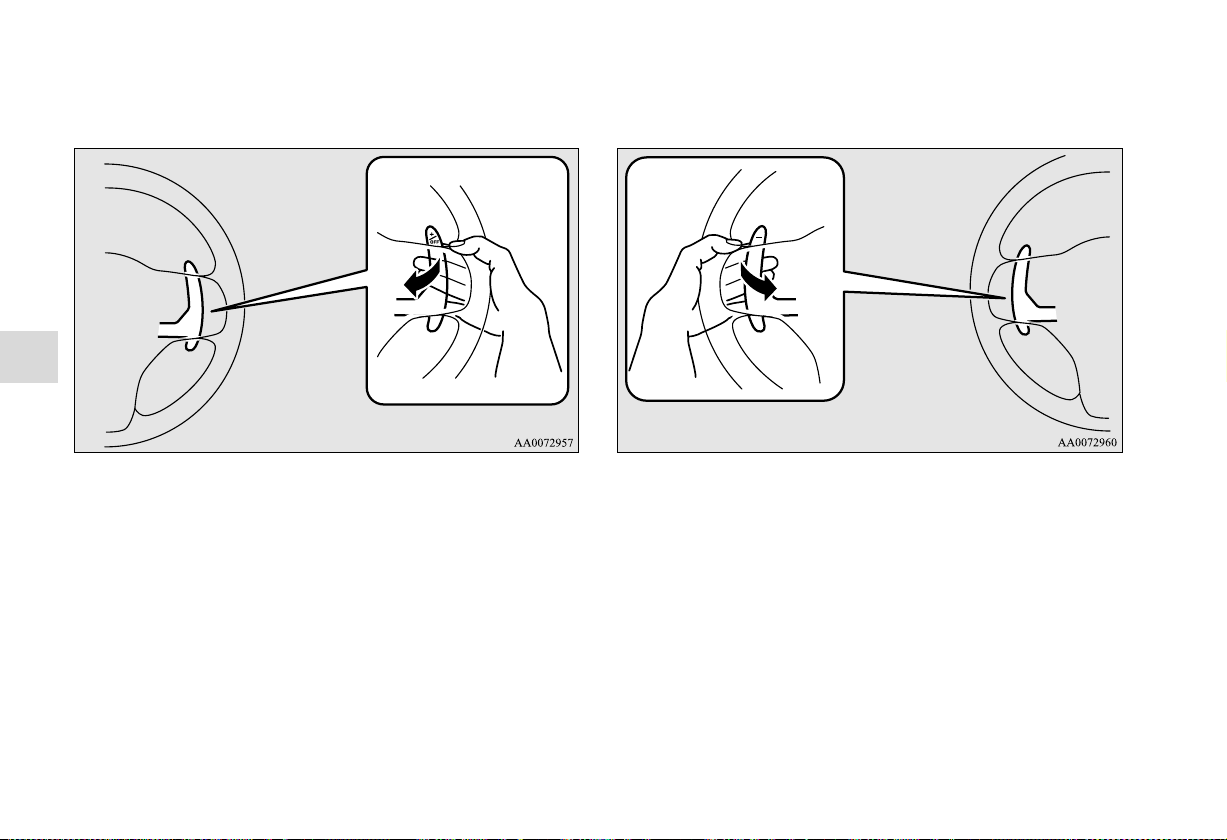
3-126
Features and controls
3
Shifting up
Each time the + (SHIFT UP) sportronic steering wheel shifter
is pulled, the transmission shifts up 1 gear.
Shifting down
Each time the - (SHIFT DOWN) sportronic steering wheel
shifter is pulled, the transmission shifts down 1 gear.
N
OTE
● After manual shifting is selected using the sportronic
steering wheel shifters, shifting up and down can also be
performed using the gearshift lever.
BK0138600US.book 126 ページ 2011年7月17日 日曜日 午後2時32分
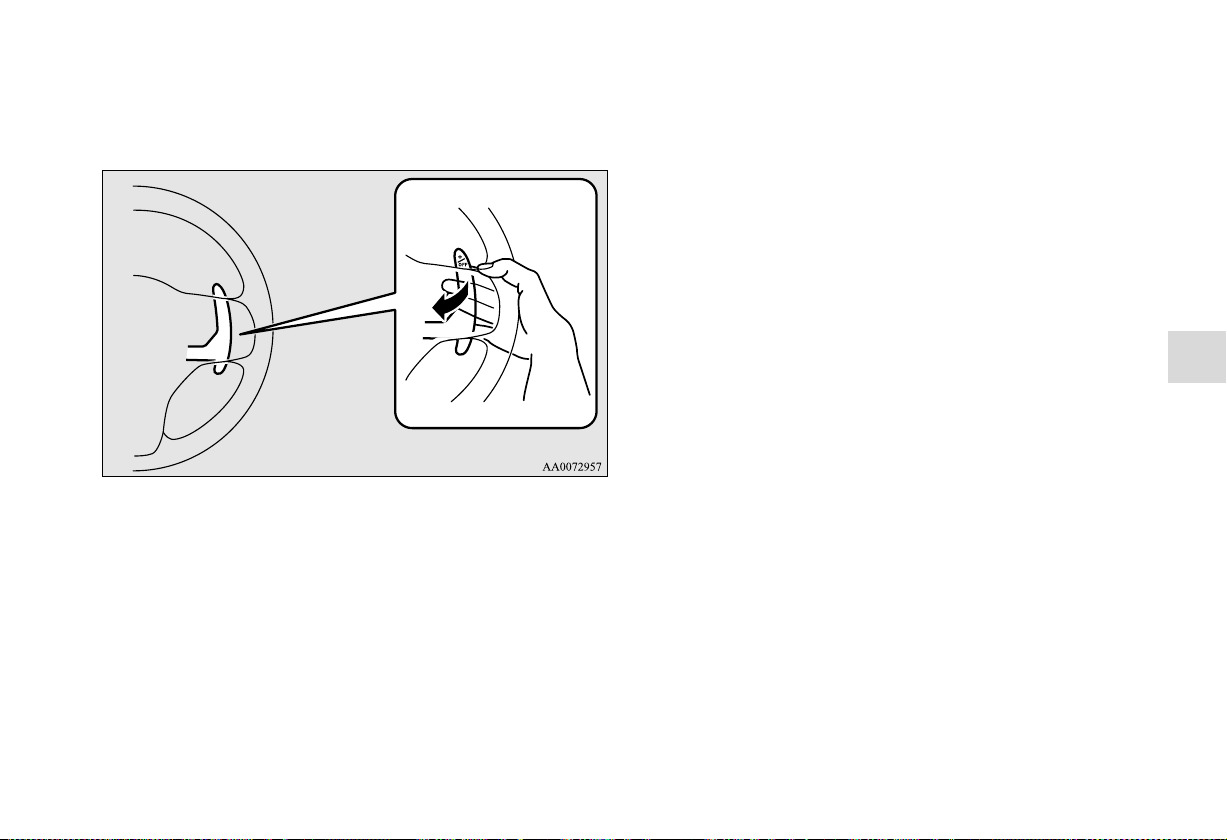
Features and controls
3-127
3
Returning to “D” range operation
When the gearshift lever is in the “D” (DRIVE) position, pull
the + (SHIFT UP) sportronic steering wheel shifter toward you
for 2 seconds or more to return to “D” range operation.
N
OTE
● If manual shifting is selected using the sportronic steering
wheel shifters when the gearshift lever is in the “D”
(DRIVE) position, the transmission will automatically
return to “D” range operation before the vehicle stops.
● When the transmission returns to “D” range operation
from manual shifting, it may automatically shift up or
down from the gear selected using manual shifting
depending on the vehicle speed or driving conditions.
● If manual shifting is selected using the sportronic steering
wheel shifters, “D” range operation will again be selected
by moving the gearshift lever from the “D” (DRIVE)
position toward the driver’s seat, then return it toward the
front passenger’s seat.
BK0138600US.book 127 ページ 2011年7月17日 日曜日 午後2時32分
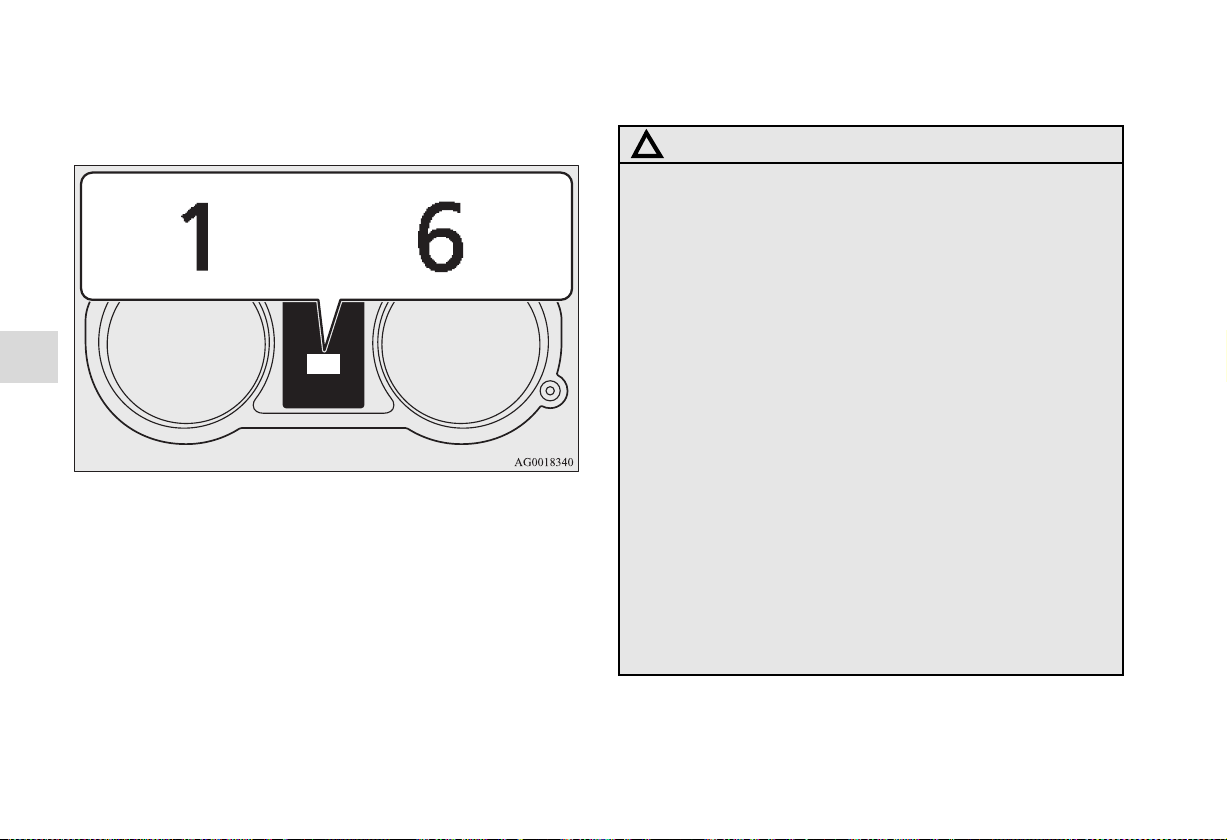
3-128
Features and controls
3
Manual shift display
N00543000040
In manual shift, the currently selected gear is displayed on the
multi-information display.
Operation of the Twin Clutch SST
N00540800021
through
CAUTION
!
● Before selecting a position with the engine running
and the vehicle stationary, fully depress the brake
pedal to prevent the vehicle from creeping.
Do not release the brakes until you are ready to
drive away. The vehicle will begin to move as soon as
the Twin Clutch SST is engaged.
● Depress the brake pedal with the right foot.
Using the left foot could cause driver movement
delay in case of an emergency.
● To prevent sudden acceleration, never run the
engine at high rpms when shifting from the “P”
(PARK) or “N” (NEUTRAL) position.
● Operating the accelerator pedal while the other foot
is resting on the brake pedal will affect braking effi-
ciency, may cause premature wear of brake pads
and may cause engine damage.
● Use the gearshift lever in the correct shift position in
accordance with driving conditions.
Never coast downhill backward in the driving shift
position { “D” (DRIVE) or manual shifting} or coast
forward in the “R” (REVERSE) position.
Engine stopping and increased brake pedal and
steering effort could lead to an accident.
BK0138600US.book 128 ページ 2011年7月17日 日曜日 午後2時32分
Features and controls
3-129
3
Passing acceleration
N00540900019
To gain extra acceleration in “D” (DRIVE) position (when
passing another vehicle) push the accelerator to the floor if it is
safe to do so in traffic conditions. The Twin Clutch SST will
automatically downshift.
N
OTE
● In manual shift, downshifts do not take place when the
accelerator is depressed all the way to the floor.
Uphill/downhill driving
N00541600039
DRIVING UPHILL
The Twin Clutch SST may not upshift to a higher shift position
if the computer determines the current speed cannot be main-
tained once a higher shift position is engaged.
For smoother vehicle performance, if you release the throttle
while climbing a steep grade, the Twin Clutch SST may not
upshift. This is normal, as the computer is temporarily prevent-
ing shifting. After reaching the top of the hill, normal shift
function will resume.
● Do not rev the engine with the brake pedal pressed
when the vehicle is stationary.
This can cause sudden acceleration and damage the
Twin Clutch SST.
Also, when you depress the accelerator pedal while
holding down the brake pedal with the gearshift
lever in the “D” (DRIVE) position, the engine revo-
lutions may not rise as high as when performing the
same operation with the gearshift lever in the “N”
(NEUTRAL) position.
CAUTION
!
BK0138600US.book 129 ページ 2011年7月17日 日曜日 午後2時32分
3-130
Features and controls
3
DRIVING DOWNHILL
When traveling down steep grades, the computer may automat-
ically select a lower shift position. This function assists engine
braking efforts, reducing the need for using the service brakes.
Waiting
N00541000033
For short waiting periods, such as at traffic lights, the vehicle
can be left in gearshift lever position and held stationary with
the service brake.
For longer waiting periods with the engine running, place the
gearshift lever in the “N” (NEUTRAL) position and apply the
parking brake, while holding the vehicle stationary with the
service brake.
Prior to moving off after having stopped the vehicle, make sure
that the gearshift lever is in “D” (DRIVE) position or manual
shift position.
CAUTION
!
● Do not use the tendency of the vehicle to creep for-
ward in order to drive at low speeds up hills.
The transmission may be damaged and an accident
may occur due to the following conditions.
• The Twin Clutch SST fluid temperature will rise
and can cause transmission damage.
• If the vehicle is continuously driven at low speeds
using the tendency of the vehicle to creep forward,
the vehicle will vibrate or the warning display
will appear on the information screen in the multi-
information display to alert the driver that the
Twin Clutch SST fluid temperature has risen.
After that, if the Twin Clutch SST fluid tempera-
ture rises even higher, the transmission protection
control will operate.
If this occurs, the vehicle may suddenly reverse as
if the gearshift lever was in the “N” (NEUTRAL)
position and cause an accident.
If the warning display appears or the transmis-
sion protection control operates, refer to “When
warning display is showing” on page 3-117.
CAUTION
!
● Do not rev the engine unnecessarily while the vehicle
is stationary. Unexpected acceleration may occur if
the gearshift lever is in a position other than “P”
(PARK) or “N” (NEUTRAL).
BK0138600US.book 130 ページ 2011年7月17日 日曜日 午後2時32分
Features and controls
3-131
3
Parking
N00541100018
To park the vehicle, first bring it to a complete stop, fully
engage the parking brake, and then move the gearshift lever to
the “P” (PARK) position.
What to do if the following occur with the Twin Clutch
SST
N00541200064
If there is a malfunction in the Twin Clutch SST or engine elec-
tronic control module, the following may occur.
● Twin Clutch SST does not shift.
● Vehicle cannot move.
● Twin Clutch SST acceleration is slow.
● Vehicle does not creep.
● “Shift shock” is large.
● Shifting occurs at higher engine speed.
● Response is slow.
If any of these occurs, perform the following procedure.
When warning display is showing
The temperature of Twin Clutch SST fluid is high.
Refer to “Warning display” on page 3-116 and follow the
appropriate measures.
When the engine malfunction indicator (“SERVICE
ENGINE SOON” or “Check engine light”) comes on or
blinking
There could be a malfunction in the engine electronic control
module.
Refer to “Engine malfunction indicator (“SERVICE ENGINE
SOON” or “Check engine light”)” on page 3-229 and follow
the appropriate measures.
● Do not keep the vehicle in a stopped position on an
uphill slope by depressing the accelerator pedal
instead of the brake pedal.
The transmission may be damaged and an accident
may occur due to the following conditions.
• The Twin Clutch SST fluid temperature will rise
and can cause transmission damage.
• If the vehicle is kept in a stopped position by
depressing the accelerator pedal instead of the
brake pedal, the vehicle will vibrate or the
warning display will appear on the information
screen in the multi-information display to alert the
driver that the Twin Clutch SST fluid temperature
has risen.
After that, if the Twin Clutch SST fluid tempera-
ture rises even higher, the transmission protection
control will operate.
If this occurs, the vehicle may suddenly reverse as
if the gearshift lever was in the “N” (NEUTRAL)
position and cause an accident.
If the warning display appears or the transmis-
sion protection control operates, refer to “When
warning display is showing” on page 3-117.
CAUTION
!
BK0138600US.book 131 ページ 2011年7月17日 日曜日 午後2時32分
3-132
Features and controls
3
When the gearshift lever position display is not showing
A safety device in the Twin Clutch SST has been activated due
to a possible malfunction in the Twin Clutch SST.
Refer to “If the gearshift lever position display is not showing”
on page 3-115 and follow the appropriate measures.
When warning display is showing or when no warning is
showing in the multi-information display
A safety device in the Twin Clutch SST has been activated due
to a possible malfunction in the Twin Clutch SST or in the
engine electronic control module.
Perform the following procedure.
1. Park your vehicle in a safe place and stop the engine.
2. Restart the engine.
If the vehicle moves and accelerates normally after this proce-
dure is performed, there is no malfunction in the transmission.
However, if the vehicle does not move or accelerate normally,
or if this problem occurs repeatedly, have the vehicle checked
by an authorized Mitsubishi Motors dealer or a repair facility
of your choice as soon as possible.
ACD (Active center differential system) (if so
equipped)
N00538500034
The ACD is a system that improves acceleration performance
and straight-ahead stability by regulating the differential limit-
ing action and power drive distribution of the center differen-
tial.
N
OTE
● If the parking brake lever is pulled up while the vehicle is
moving, the center differential is designed to switch to a
free state condition which will allow the rear wheel to
lock easier.
CAUTION
!
● When the Twin Clutch SST fluid temperature is
high, the engine idle speed when the vehicle is
stopped may increase or the vehicle will have a weak
tendency to creep.
After that, if the Twin Clutch SST fluid temperature
rises even higher, the warning display will
appear.
CAUTION
!
● Do not over-rely on the ACD. Even the ACD cannot
prevent the natural laws of physics from acting on
the vehicle. This system, like any other system, has
limits and cannot help you to maintain traction and
control of the vehicle in all circumstances. Reckless
driving can lead to accidents. It is the driver’s
responsibility to drive carefully. This means taking
into account the traffic, road and environmental
conditions.
● Be sure to use tires that are the same specified size,
type, and brand, and have no difference in the
amount of wear for all four wheels. Otherwise, the
ACD may not work properly.
BK0138600US.book 132 ページ 2011年7月17日 日曜日 午後2時32分
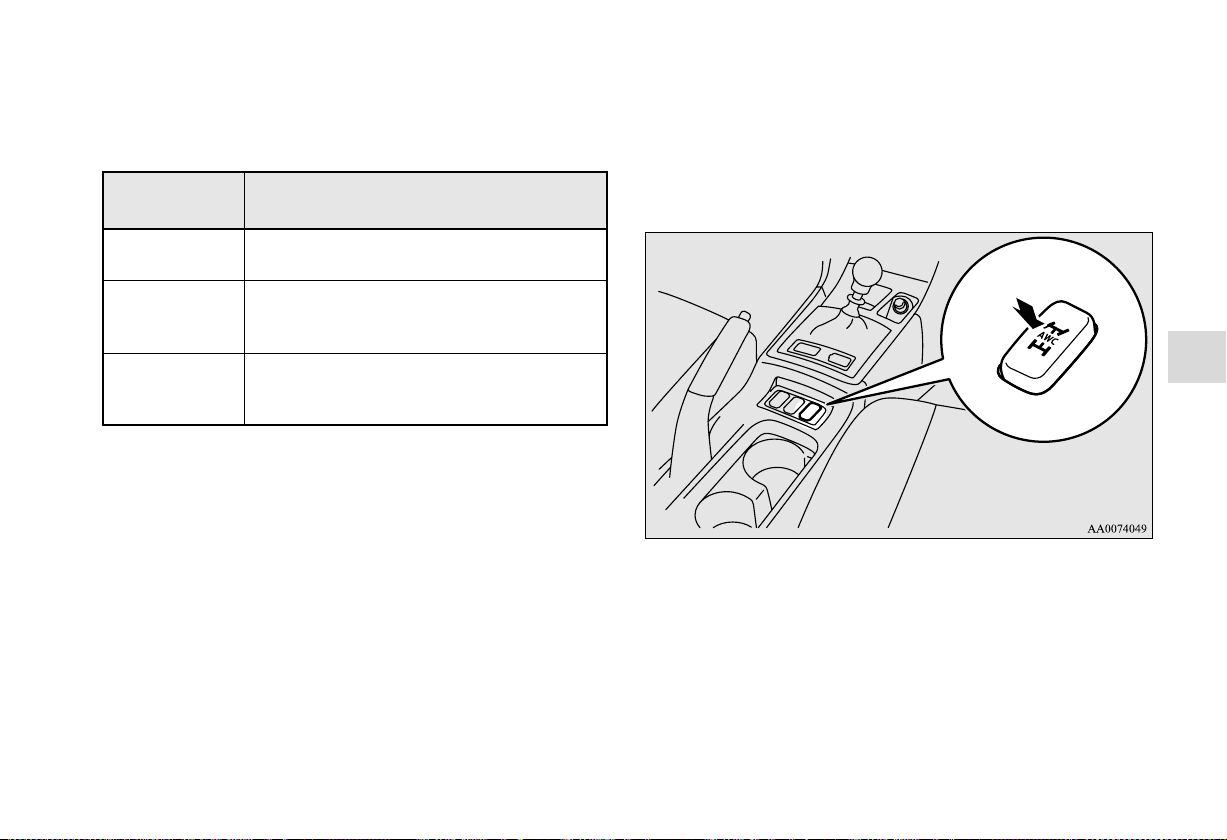
Features and controls
3-133
3
ACD control mode
N00545400048
Select the control mode from the following three types to suit
the driving conditions.
ACD control mode switch
When the ignition switch is set to the “ON” position, operate
the AWC switch to change the control mode.
Each time the switch is pushed, the control mode changes in
the order “TARMAC” → “GRAVEL” → “SNOW” → “TAR-
MAC”.
N
OTE
● The control mode can be changed while the vehicle is
moving.
● The selected control mode is stored in memory even if the
engine is stopped.
However, if a battery terminal is disconnected, the control
mode stored in memory will be erased and the control
mode will be set to the “TARMAC” mode.
ACD control
mode
Operation
TARMA C
Normally, use this control mode. Use this
mode for paved roads.
GRAVEL
Use this control mode when driving on some-
what slippery road surfaces, such as wet road
surfaces and gravel roads.
SNOW
Use this control mode when driving on slip-
pery road surfaces, such as snow-covered
roads.
BK0138600US.book 133 ページ 2011年7月17日 日曜日 午後2時32分
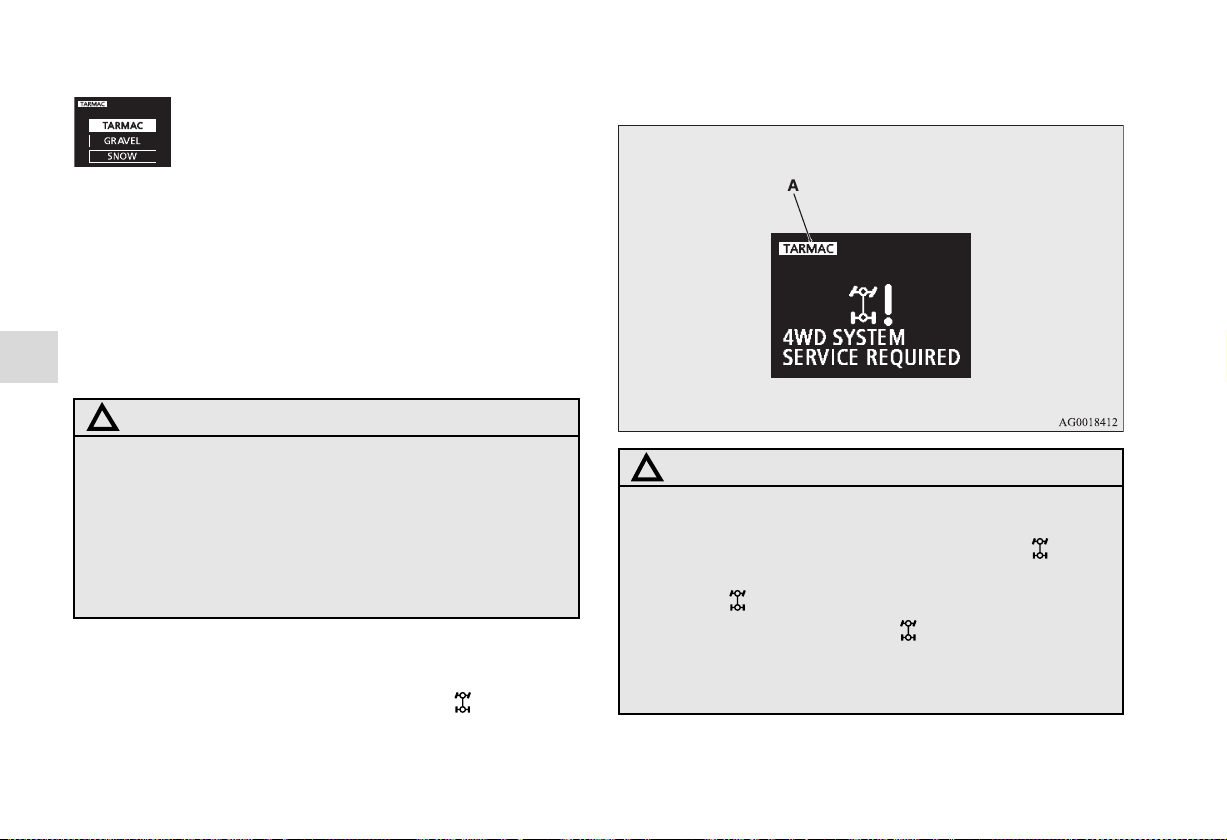
3-134
Features and controls
3
ACD control mode display
Example: “TARMAC” mode is selected.
The currently selected control mode is displayed on the multi-
information display.
In addition, when the control mode is changed, the selected
mode appears on the interrupt display screen of the information
screen in the multi-information display.
The control mode display will appear on the information
screen for a few seconds, and then the original screen will
return.
ACD warning display
N00545700041
When there is a malfunction in the system, the warning dis-
play will appear on the information screen in the multi-infor-
mation display.
In addition, the ACD control mode display in section (A) will
go out at the same time.
CAUTION
!
● The ACD control mode display may flash under
aggressive driving conditions.
At this time, ACD control is temporarily suspended
in order to protect the ACD device, but this will not
affect normal driving.
After the vehicle is driven for a while, if the ACD
control mode display remains on, the ACD control
will start operating again.
CAUTION
!
● The system may be malfunctioning.
Park your vehicle in a safe place and stop the engine.
Restart the engine and check whether the warn-
ing display goes out.
If the warning display goes out, there is no
abnormal condition. If the warning display does
not go out or appears frequently, it is not necessary
to stop the vehicle immediately, but we recommend
you to have your vehicle inspected.
BK0138600US.book 134 ページ 2011年7月17日 日曜日 午後2時32分
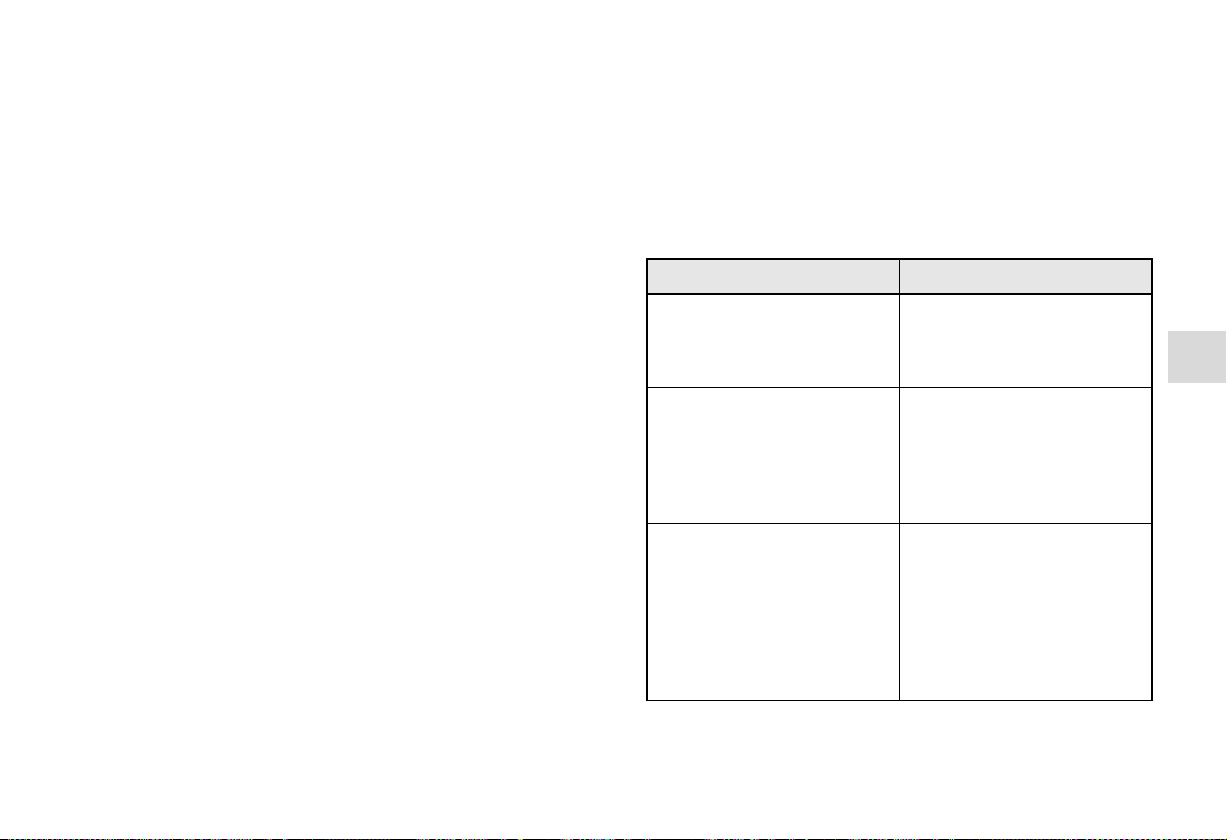
Features and controls
3-135
3
N
OTE
● If the ambient temperature drops and the viscosity of the
AWC control fluid increases, the warning may be dis-
played.
At this time, ACD control is temporarily suspended, but
this will not affect normal driving.
After the vehicle is driven for a while, if the engine is
restarted after the AWC control fluid warms up or the
ambient temperature increases, the ACD control will start
operating again if the warning display goes out.
Electronically controlled 4WD system (if so
equipped)
N00548300019
The electronically controlled 4WD system is an all-wheel drive
system that allows one of three drive modes to be selected with
a switch, in accordance with the driving conditions.
The following drive modes are available.
4-wheel drive operation requires special driving skills.
Carefully read the “All-wheel driving operation” section on
page 3-139 and take care to drive safely.
Drive mode Function
2WD
This mode is for economical
driving on normal dry roads
and freeways.
Driving in front-wheel drive.
4WD AUTO
The default mode.
This mode is for automatically
controlling the distribution of
driving torque to all four
wheels according to the driving
conditions.
4WD LOCK
This mode is for driving in slip-
pery conditions such as on
snow-covered roads or sand.
The large amount of driving
torque that is applied to the rear
tires enables getting out of slip-
pery areas and powerful driving
is possible across all ranges.
BK0138600US.book 135 ページ 2011年7月17日 日曜日 午後2時32分
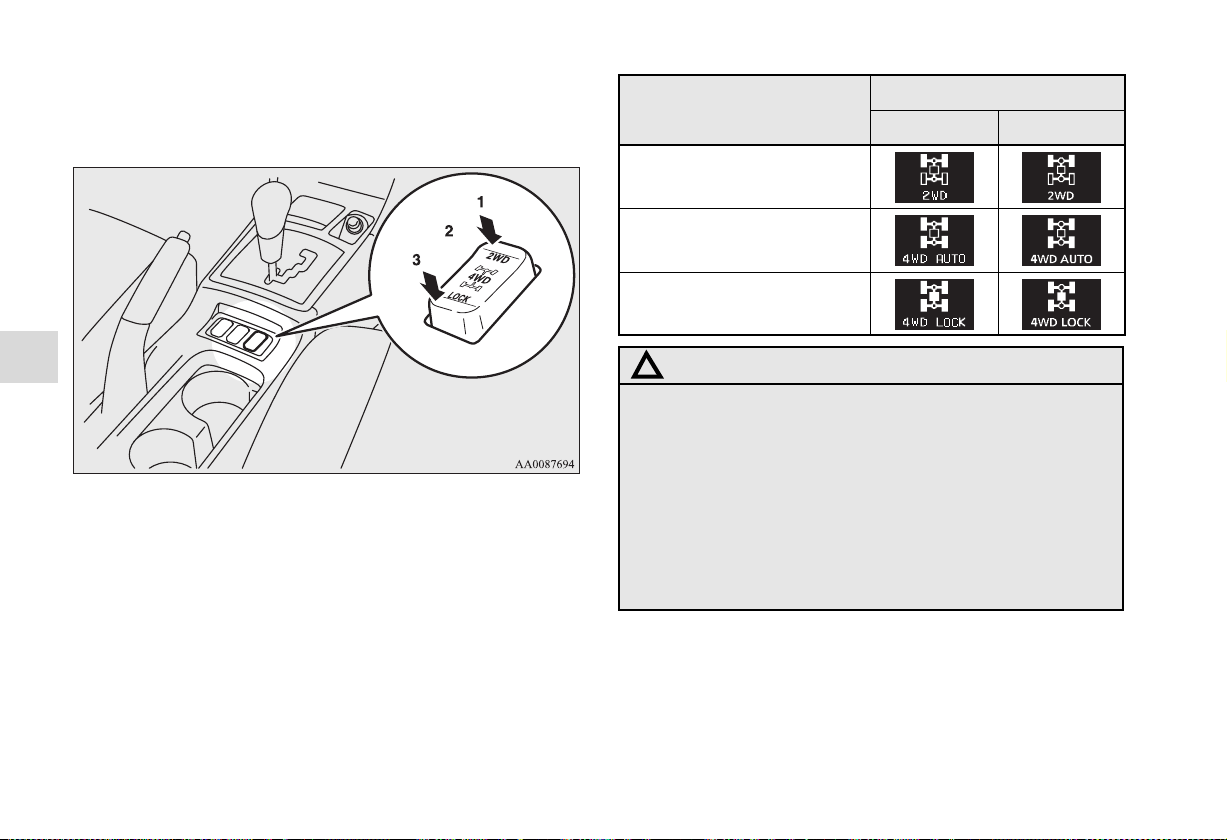
3-136
Features and controls
3
Drive mode-selector
N00548400010
The drive mode can be selected by pressing the switch while
the ignition switch is in the “ON” position.
The drive mode is displayed as an interrupt display on the
information screen in the multi-information display when the
drive mode is switched.
After a few seconds, the information screen returns from the
drive mode display to the previous screen.
N
OTE
● The drive mode can be switched while driving or stopped.
1- 2WD
2- 4WD AUTO
3- 4WD LOCK
Drive mode
Display
Type 1 Type 2
2WD
4WD AUTO
4WD LOCK
CAUTION
!
● Do not operate the drive mode-selector with the
front wheels spinning on a snowy road or in similar
conditions. The vehicle could lunge in an unexpected
direction.
● Driving on dry, paved roads in “4WD LOCK” mode
causes increased fuel consumption, noise, and pre-
mature tire wear.
● Do not drive with the tires spinning in “2WD” mode.
Doing so could generate heat in the drive-system
components.
BK0138600US.book 136 ページ 2011年7月17日 日曜日 午後2時32分
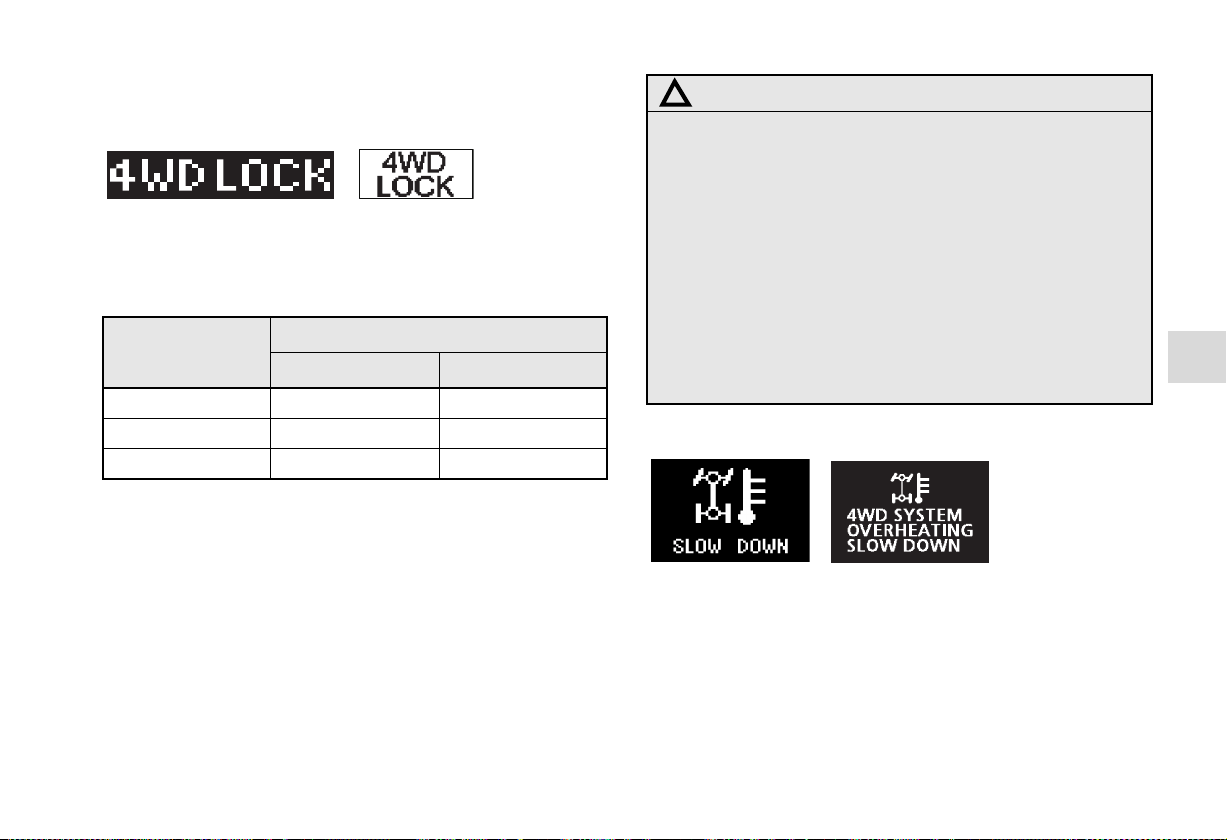
Features and controls
3-137
3
Drive mode indicator
N00549400017
Normally the indicator illuminates when the ignition switch is
turned to the “ON” position, and then the drive mode is dis-
played a few seconds after the engine is started.
The status of each drive mode display is as follows.
Type 1 Type 2
Drive mode
Drive mode indicator
“4WD” indicator “LOCK” indicator
2WD OFF OFF
4WD AUTO ON OFF
4WD LOCK ON ON
CAUTION
!
● If the selected drive mode indicator is blinking, the
vehicle switches automatically to front-wheel drive
in order to protect the drive-system components,
and drive mode selection is no longer possible with
the drive mode-selector.
The warning display is also displayed in the infor-
mation screen in the multi-information display.
Reduce speed, and if the indicator goes out after
driving a while, resume driving as before. If the indi-
cator continues blinking for more than about 5 min-
utes, have the vehicle inspected at an authorized
Mitsubishi Motors dealer or a repair facility of your
choice as soon as possible.
Type 1 Type 2
BK0138600US.book 137 ページ 2011年7月17日 日曜日 午後2時32分
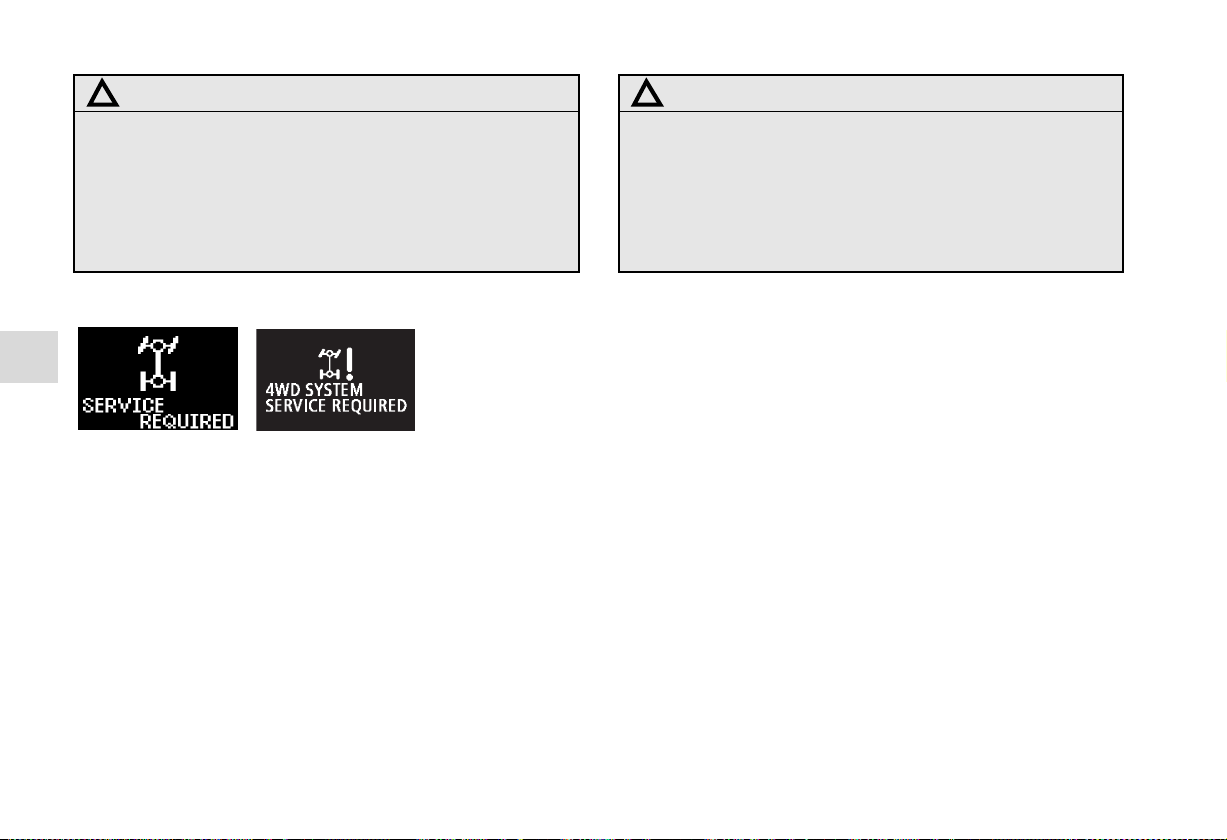
3-138
Features and controls
3
CAUTION
!
● The warning display on the information screen in
the multi-information display, a problem has
occurred with the electronically controlled 4WD sys-
tem and the safety device has activated. Have an
inspection made by an authorized Mitsubishi
Motors dealer or a repair facility of your choice as
soon as possible.
Type 1 Type 2
CAUTION
!
● Always use tires of the same size, type, and brand
that have no wear differences. Using tires that differ
in size, type, brand, or wear amount may activate
the protection of the drive-system components, caus-
ing the drive mode in “4WD AUTO” mode to lock or
the “4WD” and “LOCK” indicators to blink alter-
nately.
BK0138600US.book 138 ページ 2011年7月17日 日曜日 午後2時32分
Features and controls
3-139
3
All-wheel driving operation
N00530600169
For vehicles with full-time 4WD
Full-time 4WD vehicles are propelled by engine power distrib-
uted constantly and appropriately to all 4 wheels.
Not only does this ensure enhanced handling on dry, paved
roads but also permits better traction when driving on slippery,
wet or snow-covered roads and when moving out of mud.
These vehicles, however, are not designed for off-road use,
and are unsuitable for driving on bumpy ground that may
cause excessive strain. Full-time 4WD vehicles should be
driven only under the same conditions as are suitable for ordi-
nary front-wheel drive vehicles.
For vehicles with electronically controlled 4WD
system
Electronically controlled 4WD system vehicles are propelled
by engine power distributed constantly and appropriately to all
4 wheels.
Not only does this ensure enhanced handling on dry, paved
roads but also permits better traction when driving on slippery,
wet or snow-covered roads and when moving out of mud.
These vehicles, however, are not designed for off-road use,
and are unsuitable for driving on bumpy ground that may
cause excessive strain. Electronically controlled 4WD system
vehicles should be driven only under the same conditions as
are suitable for ordinary front-wheel drive vehicles.
Turning sharp corners
When turning a sharp corner in “4WD LOCK” position at low
speed, a slight difference in steering may be experienced simi-
lar to feeling as if the brakes were applied. This is called tight
corner braking and results from each of the four tires being at a
different distance from the corner. The phenomenon is typical
of 4-wheel drive vehicles. If this occurs, either straighten out
the steering wheel, or change to “2WD” or “4WD AUTO”
mode.
On snowy or icy roads
Set the drive mode-selector to “4WD AUTO” or “4WD
LOCK” in accordance with the road conditions, and then grad-
ually depress the accelerator pedal for a smooth start.
N
OTE
● The use of snow tires is recommended.
● Maintain a safe distance between vehicles, avoid sudden
braking, and use engine braking (downshifting).
CAUTION
!
● Avoid sudden braking, sudden acceleration, and
sharp turning. Skidding occurs and control of the
vehicle could be lost.
BK0138600US.book 139 ページ 2011年7月17日 日曜日 午後2時32分
3-140
Features and controls
3
Moving out of mud
Set the drive mode-selector to “4WD LOCK” and then gradu-
ally depress the accelerator pedal for a smooth start.
Keep the pressure on the accelerator pedal as constant as possi-
ble, and drive at low speed.
N
OTE
● Avoid sudden braking, sudden acceleration and sharp
turning; such operations could result in the vehicle
becoming stuck.
● If the vehicle becomes stuck in muddy roads, it can often
be moved with a rocking motion. Move the selector lever
alternately between “D” (DRIVE) and “R” (REVERSE)
positions, while pressing lightly on the accelerator pedal.
Climbing/descending sharp grades
Your vehicle may not provide sufficient hill climbing ability
and engine braking on steep slopes. Avoid driving on steep
slopes even though the vehicle is a 4-wheel drive vehicle.
CAUTION
!
● If any of the following conditions occur, follow these
procedures:
• The engine coolant temperature display
appears on the information screen in the multi-
information display or the engine power drops
suddenly.
Refer to “Engine overheating” on page 6-5.
• The “ ” warning display or the “ ” warning
display appear on the information screen in the
multi-information display.
Refer to “Warning display” on page 3-103.
WARNING
!
● When attempting to rock your vehicle out of a stuck
position, be sure that the area around the vehicle is
clear of people and physical objects. The rocking
motion may cause the vehicle to suddenly launch
forward/backward, causing injury or damage to
nearby people or objects.
BK0138600US.book 140 ページ 2011年7月17日 日曜日 午後2時32分
Features and controls
3-141
3
Cautions on handling of all-wheel drive
vehicles
N00530800190
Tires and wheels
Since driving torque can be applied to all four wheels, the per-
formance of the vehicle when operating in all-wheel drive is
greatly affected by the condition of the tires.
Pay close attention to the tires.
● Install specified tires on all wheels. Refer to “Tires and
wheels” on page 9-9.
● Be sure to fit all four tires and wheels of the same size and
type.
When replacement of any of the tires or wheels is neces-
sary, replace all of them.
● All tires should be rotated whenever the wear difference
between the front and rear tires is recognizable.
Good vehicle performance cannot be expected if there is a dif-
ference in wear between tires. Refer to “Tire rotation” on page
7-35.
● Check the tire inflation pressure regularly.
CAUTION
!
● Always use tires of the same size, same type, and
same brand, and which have no wear differences.
Using tires that differ in size, type, brands or the
degree of wear, will increase the differential oil tem-
perature, resulting in possible damage to the driving
system. Further, the drive train will be subjected to
excessive loading, possibly leading to oil leakage,
component seizure, or other serious problems.
BK0138600US.book 141 ページ 2011年7月17日 日曜日 午後2時32分
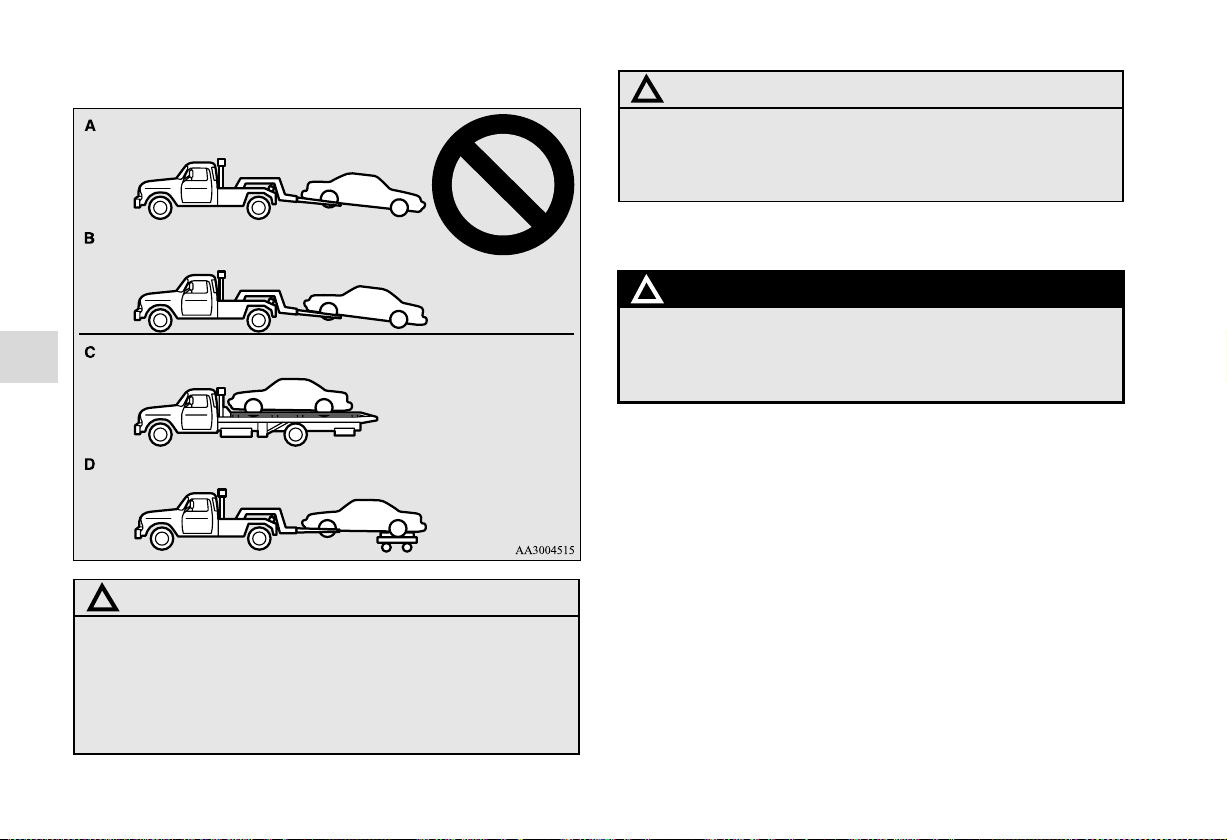
3-142
Features and controls
3
Tow ing
Jacking up a all-wheel drive vehicles
CAUTION
!
● Do not tow all-wheel drive vehicles with the front or
rear wheels on the ground (Type A or Type B) as
illustrated. This could result in damage to the driv-
etrain, or unstable towing.
If you tow all-wheel drive vehicles, use Type C or
Type D equipment.
● [For vehicle equipped with the Electronically con-
trolled 4WD system]
Even in “2WD” mode, the vehicle cannot be towed
with the front or the rear wheels on the ground.
WARNING
!
● Do not start or run the engine while the vehicle is on
the jack.
The jack could slip out of position and result in an
accident.
CAUTION
!
BK0138600US.book 142 ページ 2011年7月17日 日曜日 午後2時32分

Features and controls
3-143
3
Limited-slip differential
(if so equipped)
N00517400069
A limited-slip differential is applied for rear wheel differential.
The features of this limited-slip differential are described
below:
Just as with a conventional differential, the wheel on one side
is allowed to turn at a different speed from the wheel on the
other side when the vehicle is cornering. The difference
between the limited-slip differential and a conventional differ-
ential is that if the wheel on one side of the vehicle loses trac-
tion, a greater amount of torque is applied to the wheel on the
other side to improve traction.
N
OTE
● Even if there is a difference in the amount of traction the
wheels can get, if both of them are spinning, the limited-
slip differential will not be effective.
Service brake
N00517500262
Brake pedal
Overuse of the brake can cause poor brake response and pre-
mature wear of the brake pads and linings.
When driving down a long or steep hill, use engine braking by
downshifting.
CAUTION
!
● Never start the engine while one of the front or rear
wheels is jacked up and the other in contact with the
ground; doing so may cause the vehicle to jump for-
ward.
● Continuously attempting to extract the vehicle from
snow, mud, etc. while using high engine rpm may
damage the limited-slip differential.
● Using a compact spare wheel will adversely affect
the limited-slip differential; replace the compact
spare wheel with a standard size wheel as soon as
possible.
WARNING
!
● Do not leave any objects near the brake pedal or let
a floor mat slide under it; doing so could prevent the
full pedal stroke that would be necessary in an emer-
gency. Make sure that the pedal can be operated
freely at all times. Make sure the floor mat is
securely held in place.
CAUTION
!
● It is important not to drive the vehicle with your foot
resting on the brake pedal when braking is not
required. This practice can result in very high brake
temperatures, premature pad and lining wear, and
possible damage to the brakes.
BK0138600US.book 143 ページ 2011年7月17日 日曜日 午後2時32分
3-144
Features and controls
3
Power brakes
N00517600377
Your vehicle is equipped with power brakes for more braking
force with minimal brake pedal effort.
Your brakes are designed to operate at full capacity, even if the
power assist is lost.
If the power assist is lost, the effort needed to press the brake
pedal is greater.
If you should loose the power assist for some reason, the
brakes will still work.
If the power brake unit or either of the two brake hydraulic sys-
tems stops working properly, the rest of the brake system will
still work, but the vehicle will not slow down as quickly.
You will know this has happened if you find you need to
depress the brake pedal down further, or harder when slowing
down or stopping, or if the brake warning light and the warning
display in the multi-information display come on.
Brake pad wear alarm
N00532500087
The disc brakes have an alarm that makes a metallic squeal
when the brake pads have worn down enough to need service.
If you hear this sound, have the brake pads replaced at an
authorized Mitsubishi Motors dealer or a repair facility of your
choice.
WARNING
!
● Never coast downhill with the engine OFF. Keep the
engine running whenever your vehicle is in motion.
If you turn off the engine while driving, the power
brake booster will stop working and your brakes
will not work as well.
● If the power assist is lost or if either brake hydraulic
system stops working properly, take your vehicle to
an authorized Mitsubishi Motors dealer or a repair
facility of your choice immediately.
WARNING
!
● Driving with worn brake pads will make it harder to
stop, and can cause an accident.
BK0138600US.book 144 ページ 2011年7月17日 日曜日 午後2時32分

Features and controls
3-145
3
Brake assist system
N00567300018
The brake assist system is a device assisting drivers who can-
not depress the brake pedal firmly such as in emergency stop
situations and provides greater braking force.
If the brake pedal is depressed suddenly, the brakes will be
applied with more force than usual.
N
OTE
● Once the brake assist system is operational, it maintains
great braking force even if the brake pedal is lightly
released.
To stop its operation, completely remove your foot from
the brake pedal.
● The brake assist system may become operational when the
brake pedal is fully depressed even if it has not been
depressed suddenly.
● When the brake assist system is in use while driving, you
may feel as if the depressed brake pedal is soft, the pedal
moves in small motions in conjunction with the operation
noise, or the vehicle body and the steering wheel vibrate.
This occurs when the brake assist system is operating nor-
mally and does not indicate faulty operation. Continue to
depress the brake pedal.
● You may hear an operation noise when the brake pedal is
depressed suddenly while stationary. This does not indi-
cate a malfunction and the brake assist system is operating
normally.
CAUTION
!
● The brake assist system is not a device designed to
exercise braking force greater than its capacity.
Make sure to always keep a sufficient distance
between vehicles in front of you without relying too
much on the brake assist system.
BK0138600US.book 145 ページ 2011年7月17日 日曜日 午後2時32分
3-146
Features and controls
3
Hill start assist (vehicles with Twin Clutch
SST)
N00562600032
The hill start assist makes it easy to start off on a steep uphill
slope by preventing the vehicle from moving backwards. It
keeps the braking force for about 2 seconds when you move
your foot from the brake pedal to the accelerator pedal.
To operate
N00562700062
1. Stop the vehicle completely using the brake pedal.
2. Release the brake pedal and the hill start assist will main-
tain the braking force applied while stopping for approxi-
mately 2 seconds.
3. Depress the accelerator pedal and the hill start assist grad-
ually will decrease the braking force as the vehicle starts
moving.
N
OTE
● The hill start assist is activated when all of the following
conditions are met.
• The engine is running.
(The hill start assist will not be activated while the
engine is starting or immediately after the engine is
started.)
• The gearshift lever is in any position other than “P”
(PARK) or “N” (NEUTRAL).
• The vehicle is completely stationary, with the brake
pedal depressed.
• The parking brake is released.
● The hill start assist will not operate if the accelerator pedal
is depressed before the brake pedal is released.
● The hill start assist also operates when reversing on an
uphill slope.
CAUTION
!
● Do not overly rely on the hill start assist to prevent
backwards movement of the vehicle. Under certain
circumstances, even when hill start assist is acti-
vated, the vehicle may move backwards if the brake
pedal is not sufficiently depressed, if the vehicle is
heavily loaded, or if the road is very steep or slip-
pery.
● The hill start assist is not designed to keep the vehi-
cle stopped in place on uphill slopes for more than 2
seconds.
● When facing uphill, do not rely on using the hill
start assist to maintain a stopped position as an
alternative to depressing the brake pedal.
Doing so could cause an accident.
● Do not turn the ignition switch to the “LOCK” or
“ACC” position while the hill start assist is operat-
ing. The hill start assist could stop operating, which
could result in an accident.
BK0138600US.book 146 ページ 2011年7月17日 日曜日 午後2時32分
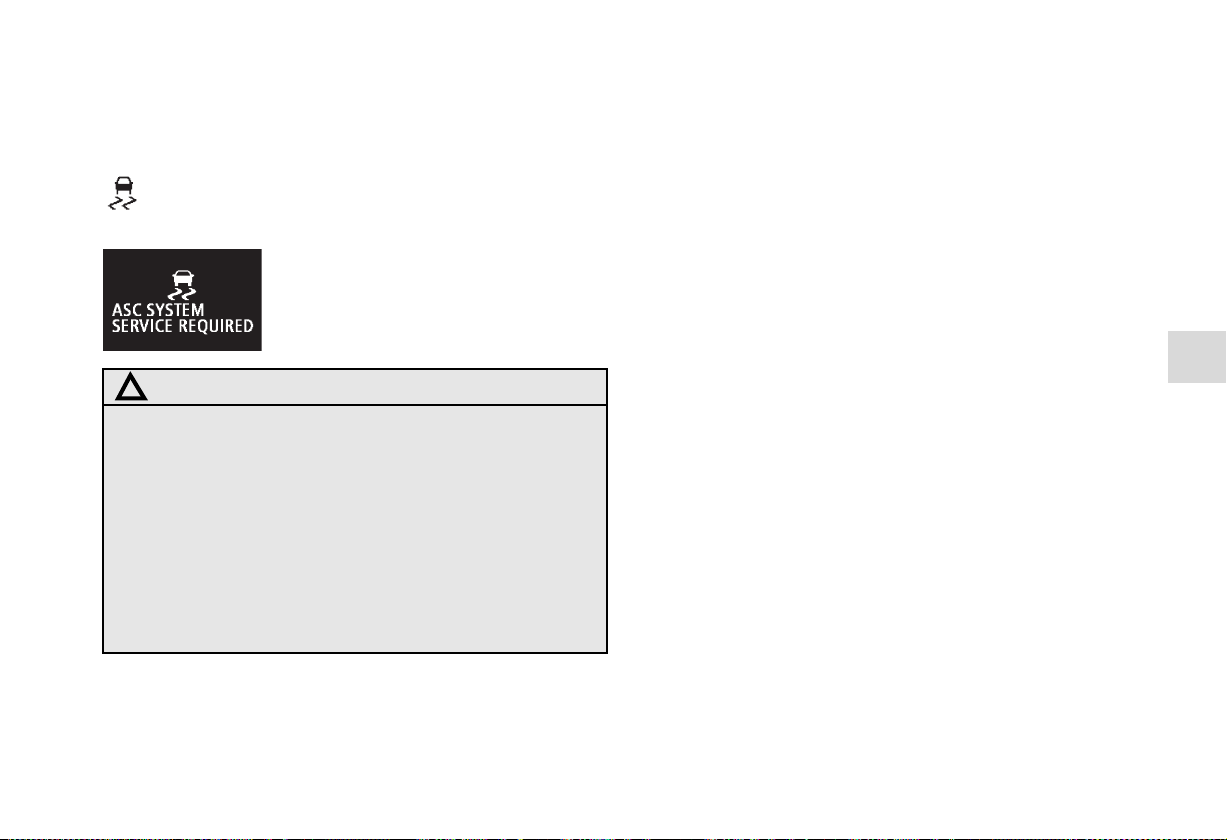
Features and controls
3-147
3
Warning display
N00562800063
If an abnormal condition occurs in the system, the following
display/indicator will turn on.
Warning display
Anti-lock braking system
N00517900309
The anti-lock braking system helps prevent the wheels from
locking up when braking. This helps you keep control of your
vehicle and its direction.
Driving hints
● When using the anti-lock brakes (sudden braking), steer-
ing is slightly different from normal driving conditions.
Use the steering wheel carefully.
● Always keep a safe distance from the vehicle in front of
you. Even if your vehicle is equipped with the anti-lock
braking system, leave a greater braking distance when:
• Driving on gravel or snow-covered roads.
• Driving on uneven road surfaces.
● Operation of anti-lock braking system is not restricted to
situations where brakes are applied suddenly. This system
may also prevent the wheels from locking when you drive
over manholes, steel roadwork plates, road markings, or
any uneven road surface.
● When the anti-lock braking system is in use, you may feel
the brake pedal vibrating and hear a unique sound. You
may also feel as if the pedal resists being pressed.
In this situation, simply hold the brake pedal down
firmly. Do not pump the brake, which will result in
reduced braking performance.
-
ASC indicator
CAUTION
!
● If the warning is displayed, the hill start assist will
not operate. Start off carefully.
● Park your vehicle in a safe place and stop the engine.
Restart the engine and check whether the dis-
play/indicator goes out, in which case the hill start
assist is again working normally.
If they remain displayed or reappear frequently, it is
not necessary to stop the vehicle immediately, but
the vehicle should be inspected by an authorized
Mitsubishi Motors dealer or a repair facility of your
choice as soon as possible.
BK0138600US.book 147 ページ 2011年7月17日 日曜日 午後2時32分
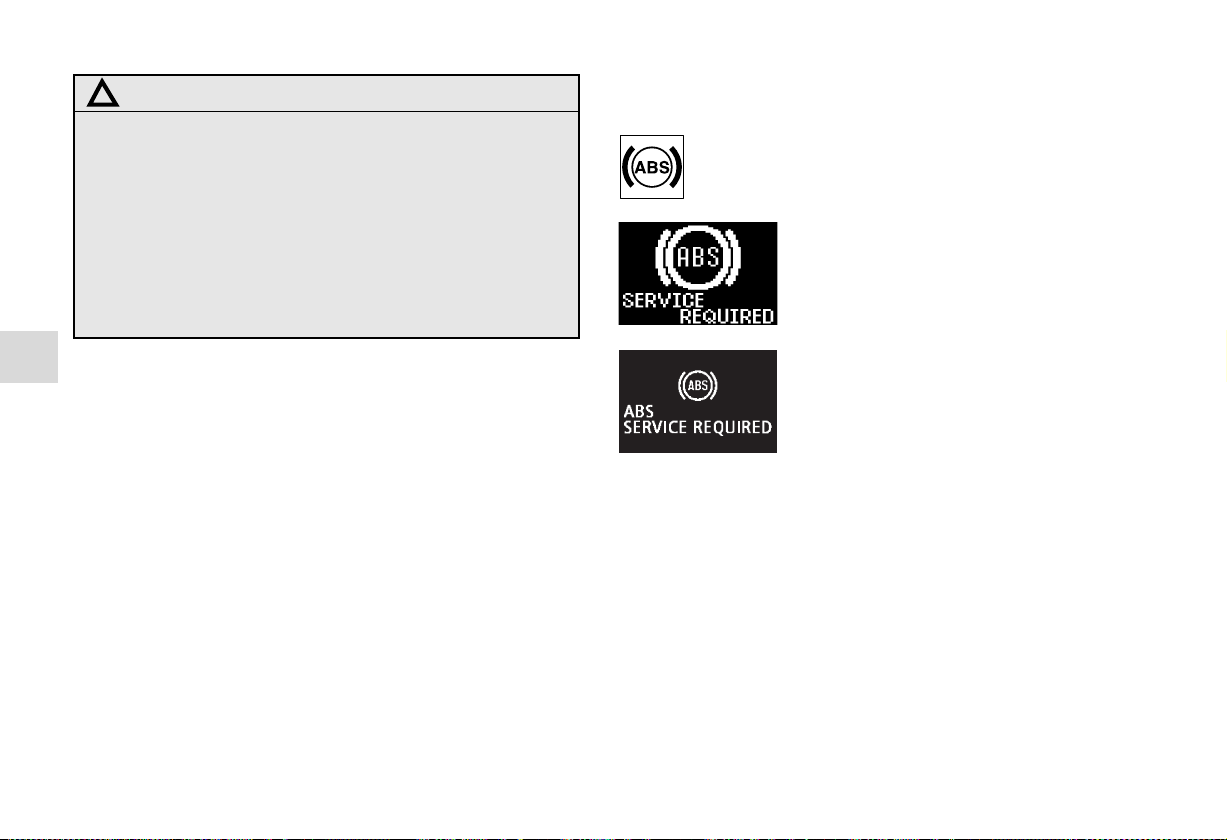
3-148
Features and controls
3
N
OTE
● After your vehicle is driven a short distance after starting
the engine, you will hear the sound coming from the
engine compartment. These are the normal sounds the
anti-lock braking system makes when performing a self-
check. It does not indicate a malfunction.
● The anti-lock braking system can be used after the vehicle
has reached a speed over approximately 6 mph (10 km/h).
It stops working when the vehicle slows below approxi-
mately 3 mph (5 km/h).
Anti-lock braking system warning light / display
N00531600573
Warning light
Warning display type 1
Warning display type 2
If there is a malfunction in the system, the anti-lock braking
system warning light will come on and the warning display
will appear on the information screen in the multi-information
display.
Under normal conditions, the anti-lock braking system warning
light only comes on when the ignition switch is turned to the
“ON” position and goes off a few seconds later.
CAUTION
!
● The anti-lock braking system cannot prevent acci-
dents. It is your responsibility to take safety precau-
tions and to drive carefully.
● To prevent failure of the anti-lock braking system,
be sure all four wheels and tires are the same size
and the same type.
● Never install a limited slip differential as the ABS
may not function normally.
Please consult an authorized Mitsubishi Motors
dealer.
BK0138600US.book 148 ページ 2011年7月17日 日曜日 午後2時32分
Features and controls
3-149
3
If the warning light / display comes on while driv-
ing
N00531700503
If only the anti-lock braking system warning light / dis-
play comes on
● Avoid hard braking and high-speed driving. Stop the vehi-
cle in a safe place.
Test the system by restarting the engine and driving at a
speed of about 12 mph (20 km/h) or higher.
If the warning light / display then remain off during driv-
ing, there is no problem.
However, if the warning light / display do not disappear,
or if they come on again when the vehicle is driven, have
the vehicle checked by an authorized Mitsubishi Motors
dealer or repair facility of your choice as soon as possible.
CAUTION
!
● Any of the following warning light/display behavior
indicates that the anti-lock braking system is not
functioning and only the standard brake system is
working. (The standard brake system will still work
properly.) If this happens, take your vehicle to an
authorized Mitsubishi Motors dealer or a repair
facility of your choice as soon as possible.
• When the ignition switch is in the “ON” position,
the warning light does not come on or it remains
on and does not go off
• The warning light comes on while driving
• The warning display appears while driving
BK0138600US.book 149 ページ 2011年7月17日 日曜日 午後2時32分
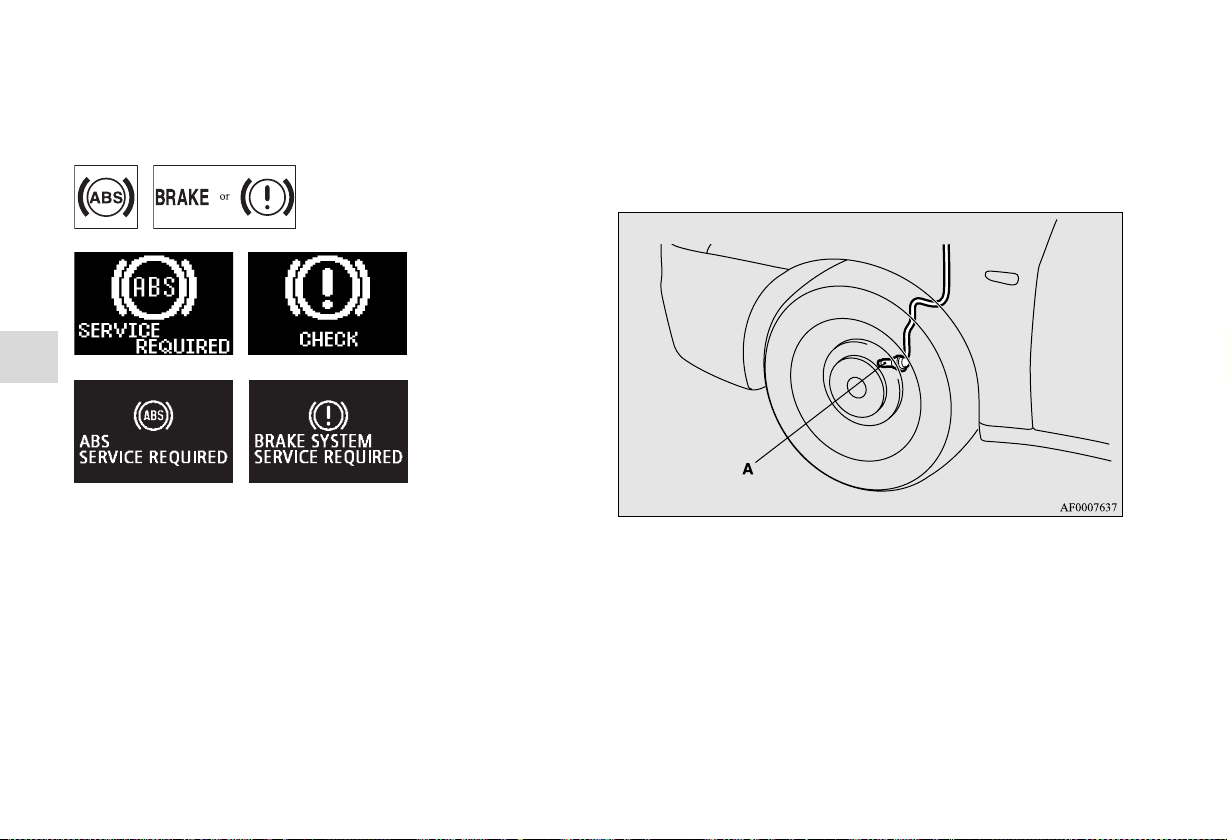
3-150
Features and controls
3
If the anti-lock braking system warning light / display
and brake warning light / display come on at the same
time
Warning light
Warning display type 1
Warning display type 2
The anti-lock braking system and brake force distribution func-
tion may not work, so hard braking could make the vehicle
unstable.
Avoid hard braking and high-speed driving. Stop the vehicle in
a safe place and contact an authorized Mitsubishi Motors
dealer or repair facility of your choice.
N
OTE
● The anti-lock braking system warning light and brake
warning light illuminate at the same time and the warning
displays appear alternately on the information screen in
the multi-information display.
After driving on icy roads
N00529200022
After driving on snow or icy roads, remove any snow and ice
which may have been left around the wheels. On vehicles that
have an anti-lock braking system, be careful not to damage the
wheel speed sensors (A) or the cables located at each wheel.
Front
BK0138600US.book 150 ページ 2011年7月17日 日曜日 午後2時32分
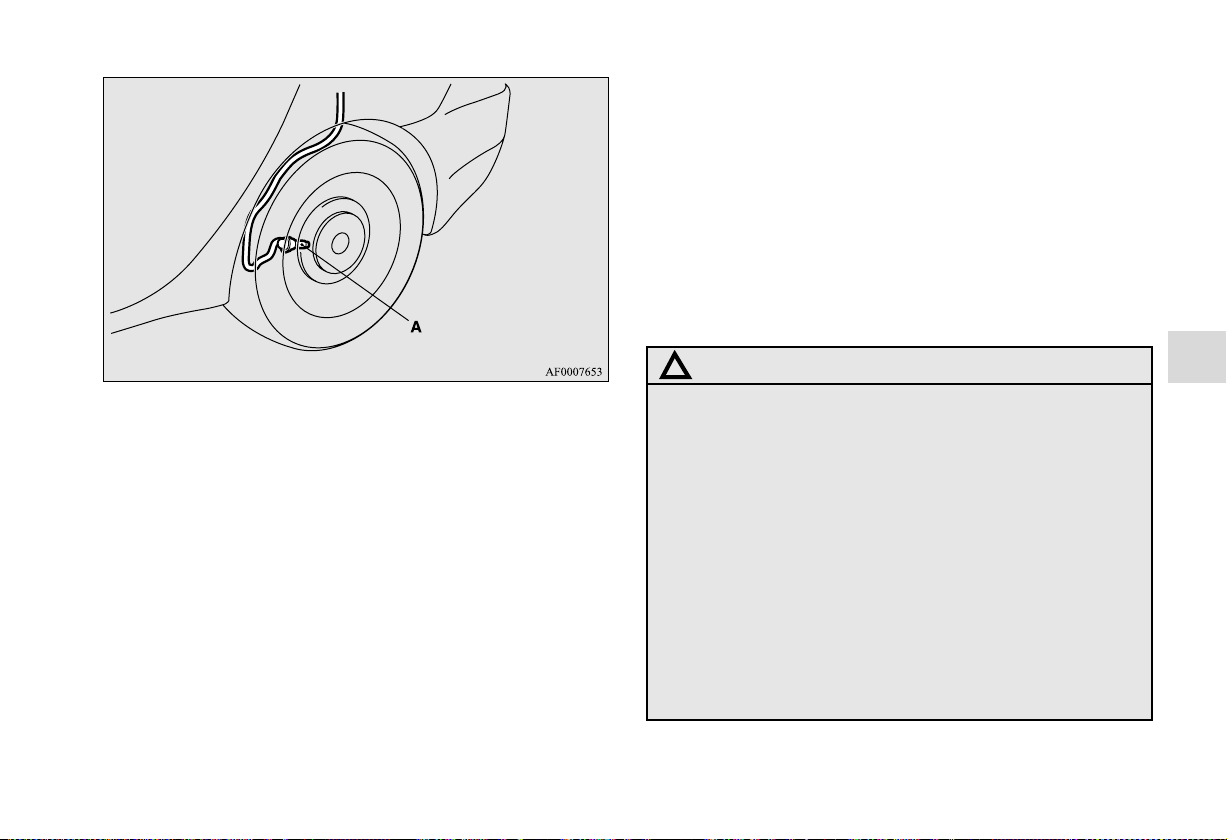
Features and controls
3-151
3
Active Stability Control (ASC)
(if so equipped)
N00559100118
The Active Stability Control (ASC) takes overall control of the
anti-lock braking system, traction control function and skid
control function to help maintain the vehicle’s control and trac-
tion. Please read this section in conjunction with the page on
the anti-lock braking system, traction control function and skid
control function.
Anti-lock braking system (ABS) → P.3 - 1 47
Traction control function → P.3 - 1 5 2
Skid control function → P. 3- 1 5 2
Rear
CAUTION
!
● Do not over-rely on the ASC. Even the ASC cannot
prevent the natural laws of physics from acting on
the vehicle. This system, like any other system, has
limits and cannot help you to maintain traction and
control of the vehicle in all circumstances. Reckless
driving can lead to accidents. It is the driver’s
responsibility to drive carefully, This means taking
into account the traffic, road and environmental
conditions.
● Be sure to use the same specified type and size of tire
on all four wheels. Otherwise, the ASC may not
work properly.
● Do not install any aftermarket limited slip differen-
tial (LSD) on your vehicle. The ASC may stop func-
tioning properly.
BK0138600US.book 151 ページ 2011年7月17日 日曜日 午後2時32分
3-152
Features and controls
3
N
OTE
● An operation noise may be emitted from the engine com-
partment in the following situations. The sound is associ-
ated with checking the operations of the ASC. At this
time, you may feel a shock from the brake pedal if you
depress it. These do not indicate a malfunction.
• When the ignition switch is set to the “ON” position.
• When the vehicle is driven for a while after the engine is
turned on.
● When the ASC is activated, you may feel a vibration in
the vehicle body or hear a whining sound from the engine
compartment.
This indicates that the system is operating normally. It
does not indicate a malfunction.
● When the anti-lock braking system warning light is illu-
minated, the ASC is not active.
Traction control function
N00559200034
On slippery surfaces, the traction control function prevents the
drive wheels from spinning excessive, thus helping the vehicle
to start moving from a stopped condition. It also provides suffi-
cient driving force and steering performance as the vehicle
turns while pressing the acceleration pedal.
Skid control function
N00559300035
The skid control function is designed to help the driver main-
tain control of the vehicle on slippery roads or during rapid
steering maneuvers. It works by controlling the engine output
and the brake on each wheel.
N
OTE
● The skid control function operates at speeds of about 9
mph (15 km/h) or higher.
CAUTION
!
● When driving a vehicle on a snowy or icy road, be
sure to install snow tires and drive the vehicle at
moderate speeds.
BK0138600US.book 152 ページ 2011年7月17日 日曜日 午後2時32分
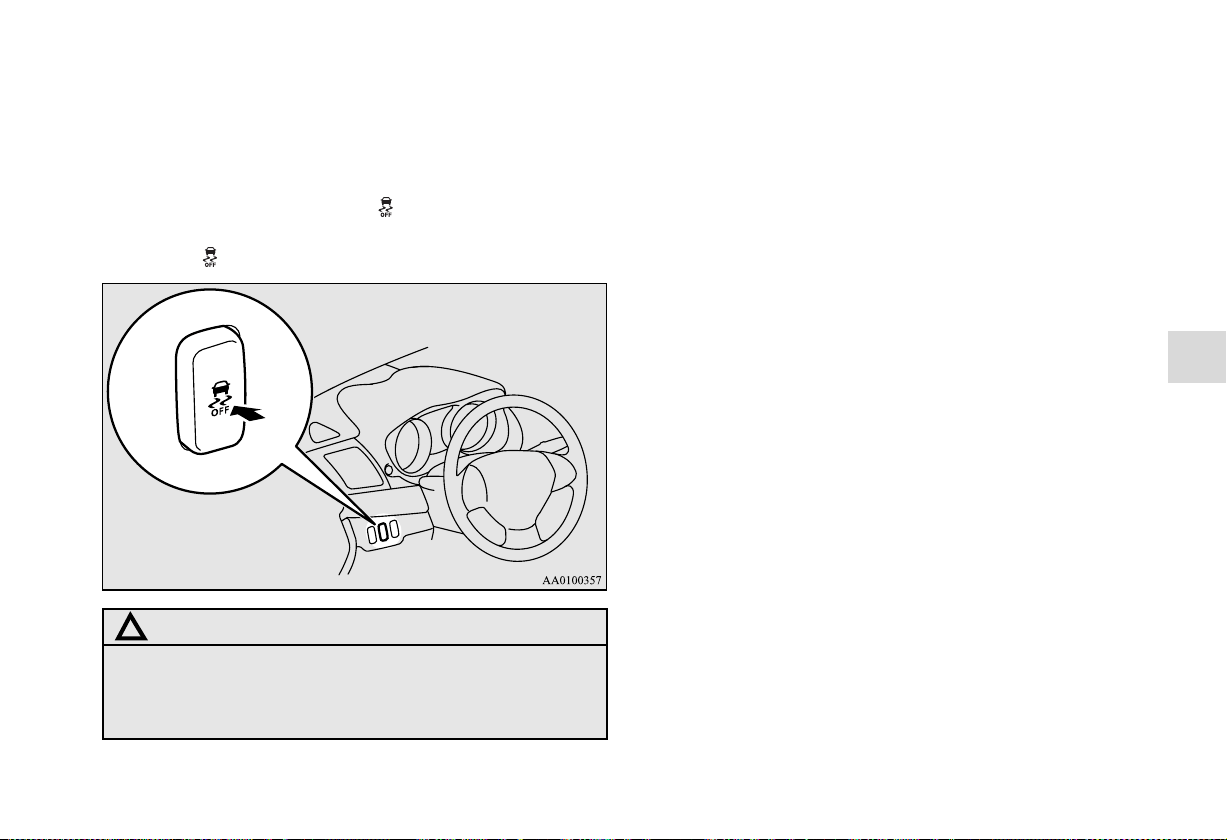
Features and controls
3-153
3
“ASC OFF” switch
N00559400179
The ASC is automatically activated when the ignition switch is
turned to the “ON” position. You can deactivate the system by
pressing down the “ASC OFF” switch for 3 seconds or longer.
When the ASC is deactivated, the display/indicator will turn
on. To reactivate the ASC, momentarily press the “ASC OFF”
switch ; the display/indicator is turned off.
N
OTE
● Using the “ASC OFF” switch turns off both the skid con-
trol function and the traction control function.
● When moving out of mud, sand or fresh snow, pressing
the accelerator pedal may not allow the engine speed to
increase. In such situations, temporarily turning off ASC
with the “ASC OFF” switch will make it easier to move
out your vehicle.
● If you continue to press the “ASC OFF” switch after the
ASC is turned off, the “mistaken operation protection
function” will activate and the ASC will turn back on.
CAUTION
!
● For safety reasons, the “ASC OFF” switch should be
operated when your vehicle is stopped.
● Be sure to keep the ASC on while driving in normal
circumstances.
BK0138600US.book 153 ページ 2011年7月17日 日曜日 午後2時32分
3-154
Features and controls
3
ASC operation display or ASC OFF display
N00559500183
N
OTE
● The combination of items shown on the display varies
depending on the vehicle model.
N
OTE
● The display/indicator may come on when you start the
engine. This means that the battery voltage momentarily
dropped when the engine was started. It does not indicate
a malfunction, provided that the display goes out immedi-
ately.
● When a spare tire has been put on your vehicle, the grip-
ping ability of the tire will be lower, making it more likely
that the display/indicator will blink.
-
ASC operation display/ASC indicator
The display/indicator will blink when the ASC is operat-
ing.
-
ASC OFF display/ASC OFF indicator
This display/incicator will turn on when the ASC is
turned off with the “ASC OFF” switch.
CAUTION
!
● When display/indicator blinks, ASC is operating,
which means that the road is slippery or that your
vehicle’s wheels are beginning to slip. If this hap-
pens, drive slower.
● If the temperature in the braking system continues
to increase due to continuous brake control on a
slippery road surface, the display/indicator will
blink. To prevent the brake system from overheat-
ing, the brake control of the traction control func-
tion will be temporarily suspended. The engine
control of the traction control function and normal
brake operation will not be affected. Park your vehi-
cle in a safe place. When the temperature in the
braking system has come down, the display/indi-
cator will be turned off and the traction control
function will start operating again.
BK0138600US.book 154 ページ 2011年7月17日 日曜日 午後2時32分
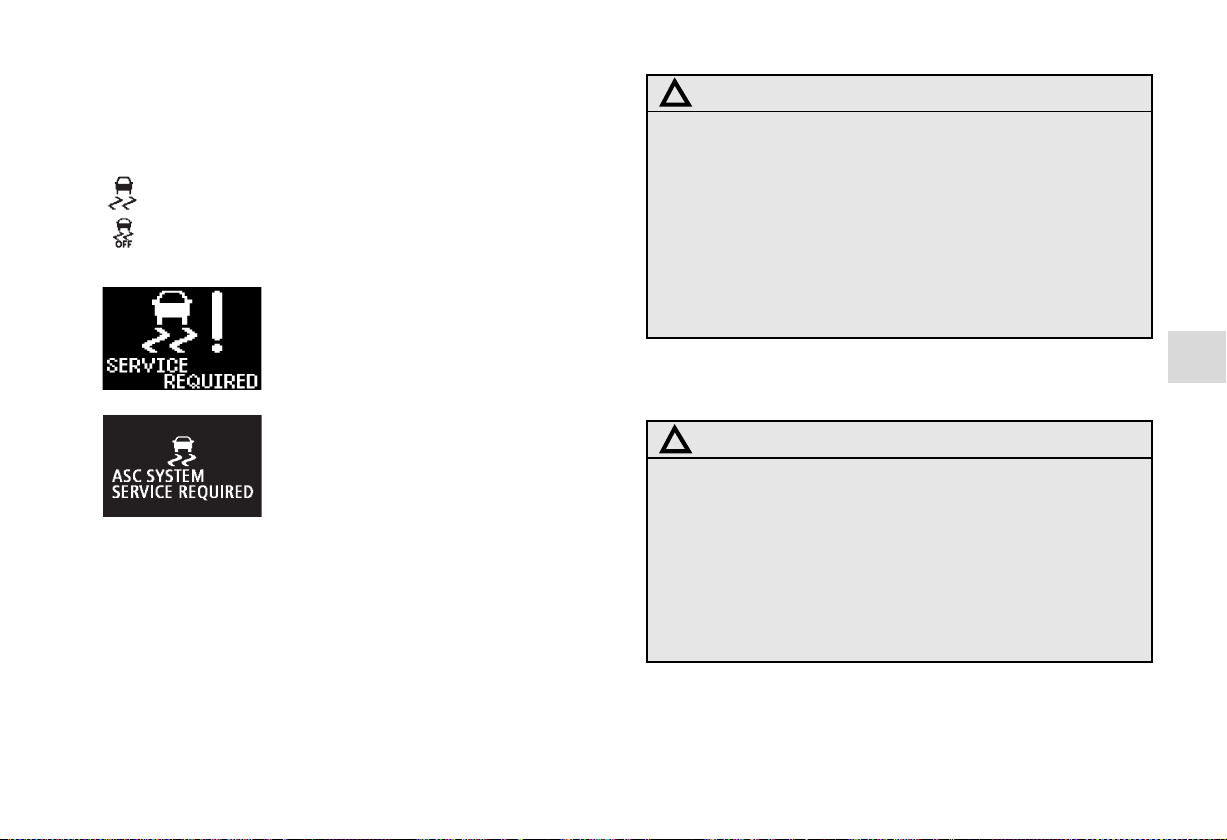
Features and controls
3-155
3
ASC warning display
N00559500196
If an abnormal condition occurs in the system, the following
display/indicator will turn on.
Warning display type 1
Warning display type 2
N
OTE
● The combination of items shown on the display varies
depending on the vehicle model.
Tow ing
N00546300015
-
ASC indicator
-
ASC OFF display/ASC OFF indicator
CAUTION
!
● The system may be malfunctioning.
Park your vehicle in a safe place and stop the engine.
Restart the engine and check whether the dis-
play/indicator goes out. If they go out, there is no
abnormal condition. If they do not go out or if they
turn on frequently, it is not necessary to stop the
vehicle immediately, but you should have your vehi-
cle inspected by an authorized Mitsubishi Motors
dealer or a repair facility of your choice as soon as
possible.
CAUTION
!
● When towing the vehicle with only the front wheels
or only the rear wheels raised off the ground, do not
place the ignition switch in the “ON” position. Plac-
ing the ignition switch in the “ON” position could
cause the ASC to operate, resulting in an accident.
Note that the correct towing method depends on the
transmission type and the vehicle’s drive configura-
tion.
For details, refer to “Towing” on page 6-22.
BK0138600US.book 155 ページ 2011年7月17日 日曜日 午後2時32分
3-156
Features and controls
3
Power steering system
N00518000264
The power steering system operates while the engine is run-
ning. It helps reduce the effort needed to turn the steering
wheel.
The power steering system has mechanical steering capability
in case the power assist is lost. If the power assist is lost for
some reason, you will still be able to steer your vehicle. If the
power assist is lost, you will notice it takes much more effort to
steer and that there is much more “free play” in the steering
wheel. If this happens, take your vehicle to an authorized
Mitsubishi Motors dealer or a repair facility of your choice.
Hydraulic power steering system (HPS) (if so
equipped)
N00547100036
The hydraulic power steering system (HPS) uses a hydraulic
pressure pump to assist the turning of the steering wheel.
Electric power steering system (EPS) (if so
equipped)
N00547200037
The electric power steering system (EPS) uses an electric
motor to assist the turning of the steering wheel.
N
OTE
● During repeated full-lock turning of the steering wheel
(for example, while you are manoeuvring the vehicle into
a parking space), a protection function may be activated to
prevent overheating of the power steering system. This
function will make the steering wheel gradually harder to
turn. In this event, limit your turning of the steering wheel
for a while. When the system has cooled down, the steer-
ing action will return to normal.
● If you turn the steering wheel while the vehicle is station-
ary with the headlights on, the headlights may become
dim. This behaviour is not abnormal. The headlights will
return to their original brightness after a short while.
WARNING
!
● Do not stop the engine while the vehicle is moving.
Stopping the engine would make the steering wheel
extremely hard to turn, possibly resulting in an acci-
dent.
CAUTION
!
● Do not leave the steering wheel turned all the way in
one direction. This can cause damage to the power
steering system.
BK0138600US.book 156 ページ 2011年7月17日 日曜日 午後2時32分
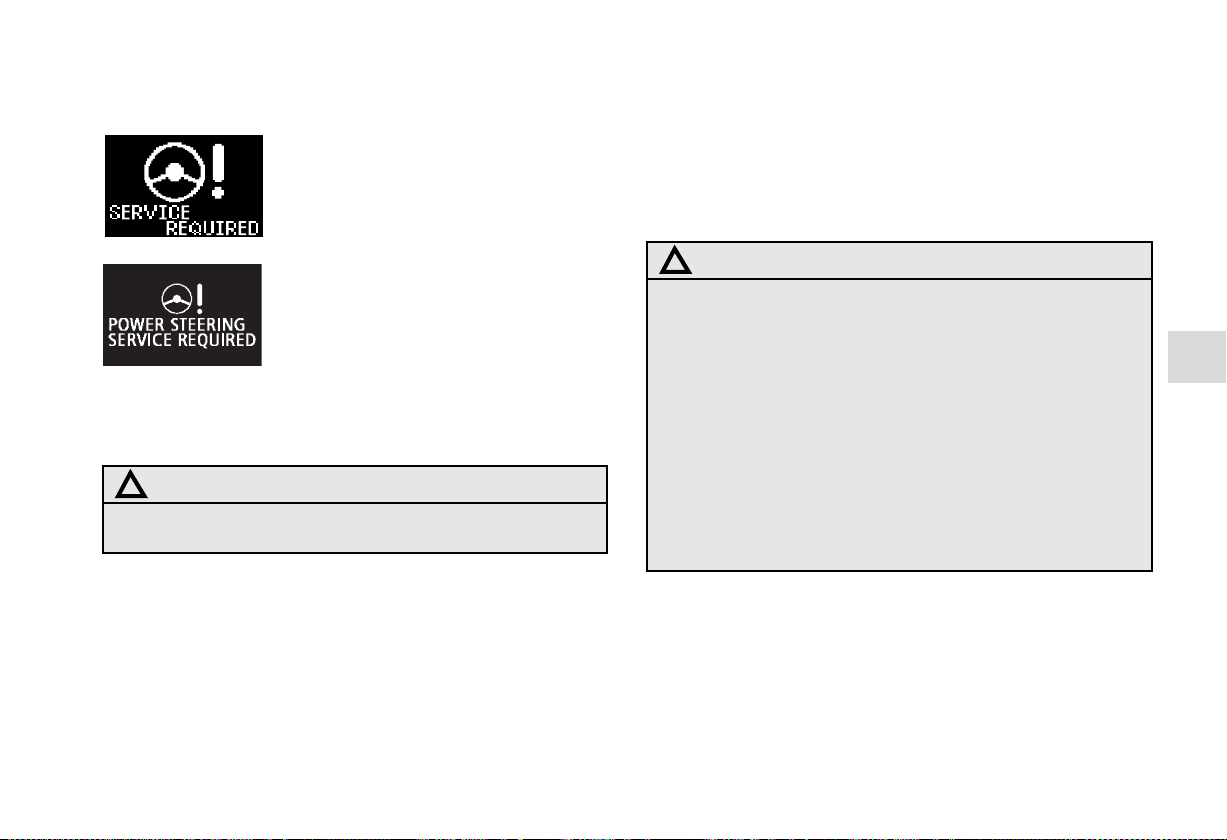
Features and controls
3-157
3
Electronic power steering system warning display
Type 1
Type 2
If there is a malfunction in the system, the warning display will
appear on the information screen in the multi-information dis-
play.
If the warning display appears while driving
1. Stop the vehicle in a safe place and turn off the engine.
2. Wait approximately 30 seconds and then restart the engine
to check whether the warning display goes out; if it then
remains off, there is no problem.
If the warning display does not go out, or it appears again
while driving, have the vehicle inspected at an authorized
Mitsubishi Motors dealer or a repair facility of your
choice.
Cruise control (if so equipped)
N00518300528
Cruise control is an automatic speed control system. It lets you
keep the same driving speed. Cruise control can be activated at
about 25 mph (40 km/h) or more. It is especially useful for
freeway driving. Cruise control does not work at speeds below
about 25 mph (40 km/h).
N
OTE
● Cruise control may not be able to keep your speed on
uphills or downhills.
● Your speed may drop on a steep uphill. You may have to
use the accelerator pedal if you want to stay at your set
speed.
CAUTION
!
● If the warning display appears during driving, it
may become harder to turn the steering wheel.
CAUTION
!
● For safety reasons, the cruise control system should
be set to the “OFF” position by pressing the “ON
OFF” switch (A) when you are not using the cruise
control system.
● Do not use cruise control when driving conditions
will not allow you to stay at the same speed, such as
in heavy traffic or on roads that are winding, icy,
snowy, wet, slippery or on a steep downhill slope.
● On vehicles with manual transaxle, do not move the
gearshift lever to the “N” (Neutral) position while
driving at a set speed without depressing the clutch
pedal. The engine will run too fast and might be
damaged.
BK0138600US.book 157 ページ 2011年7月17日 日曜日 午後2時32分
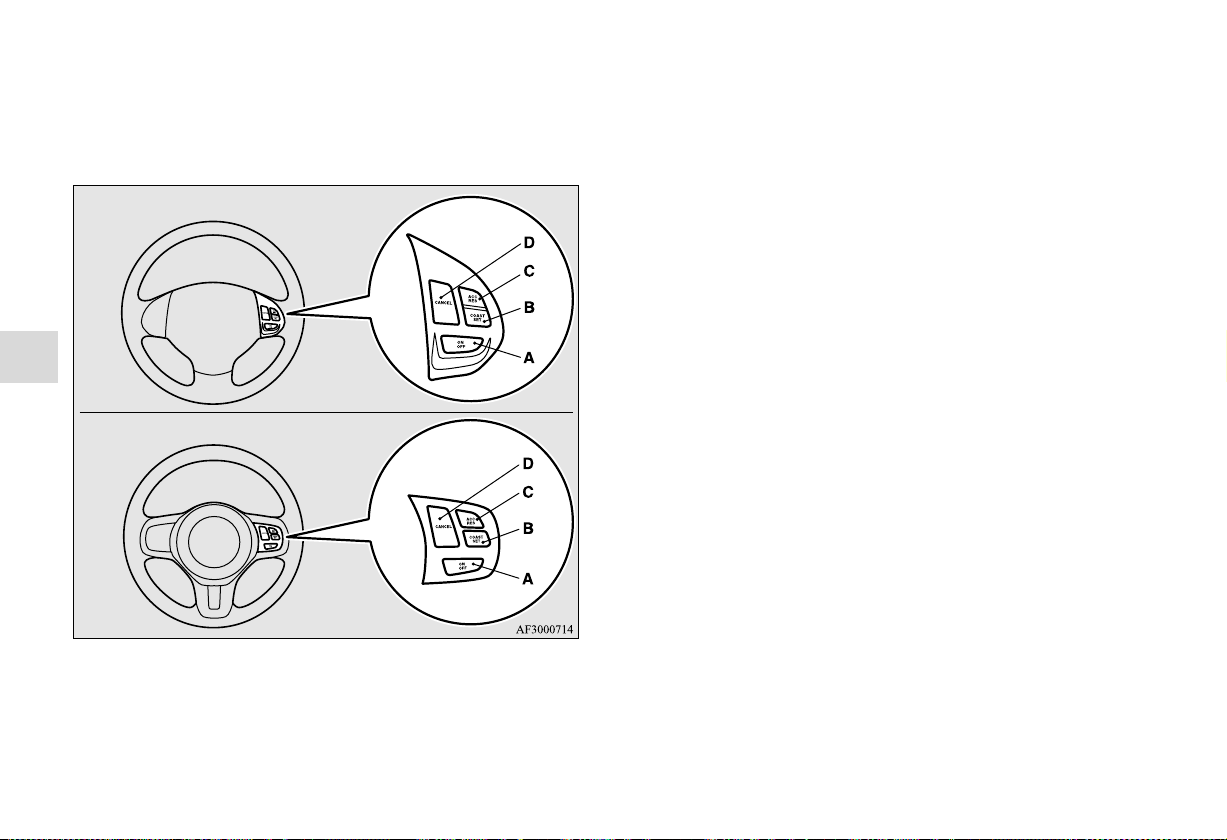
3-158
Features and controls
3
● Your speed may increase to more than the set speed on a
steep downhill. You must use the brake to control your
speed.
Cruise control switches
A- “ON OFF” switch
To activate and deactivate the cruise control function.
B- “COAST SET” switch
To reduce the set speed and to set the speed of constant-speed
driving.
C- “ACC RES” switch
To increase the set speed and to resume to the previous set
speed.
D- “CANCEL” switch
To terminate constant-speed driving.
N
OTE
● When operating the cruise control switches, correctly
press each cruise control switch.
The cruise control may be turned off automatically if two
or more of the cruise control switches are pressed at the
same time.
Type 1
Type 2
BK0138600US.book 158 ページ 2011年7月17日 日曜日 午後2時32分
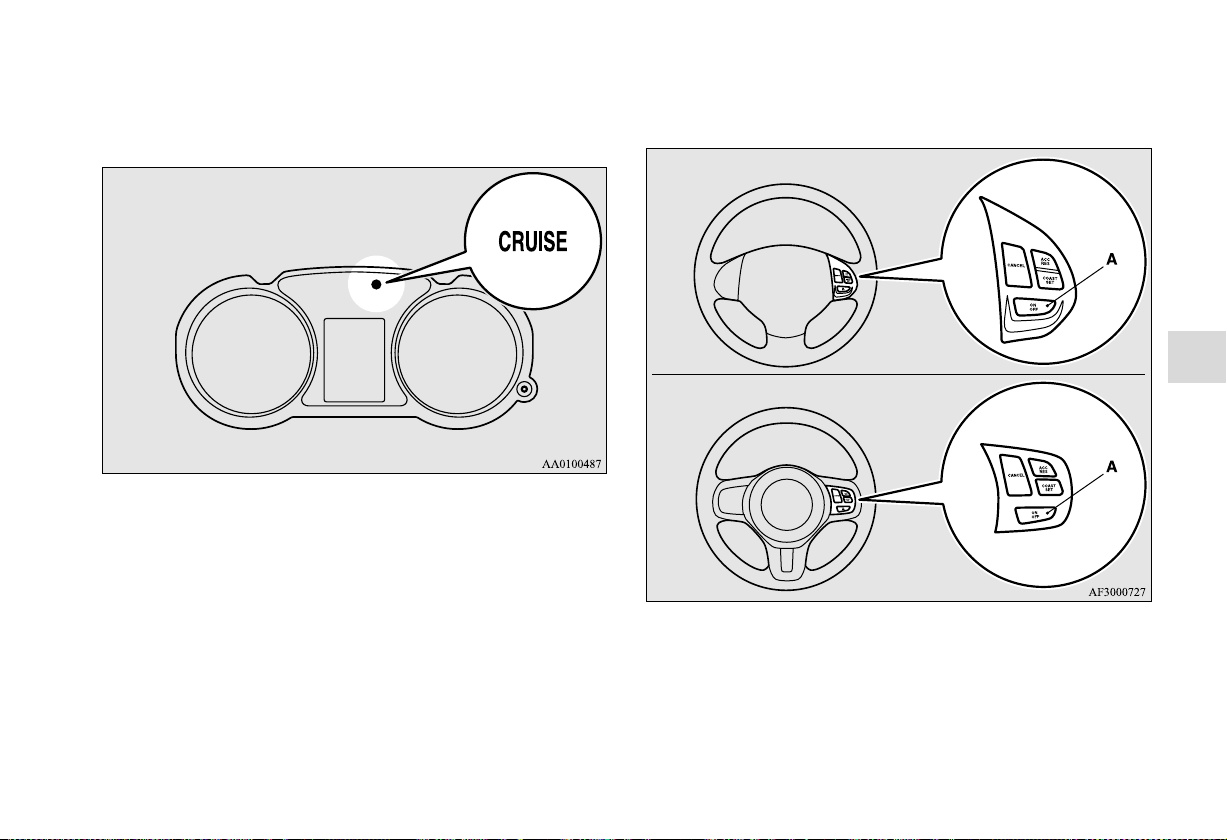
Features and controls
3-159
3
Cruise control indicator
N00550100245
This indicator will come on when the cruise control “ON OFF”
switch (A) is pressed to turn on the cruise control system.
To activate
N00518400343
1. Lightly press the “ON OFF” switch (A).
Type 1
Type 2
BK0138600US.book 159 ページ 2011年7月17日 日曜日 午後2時32分
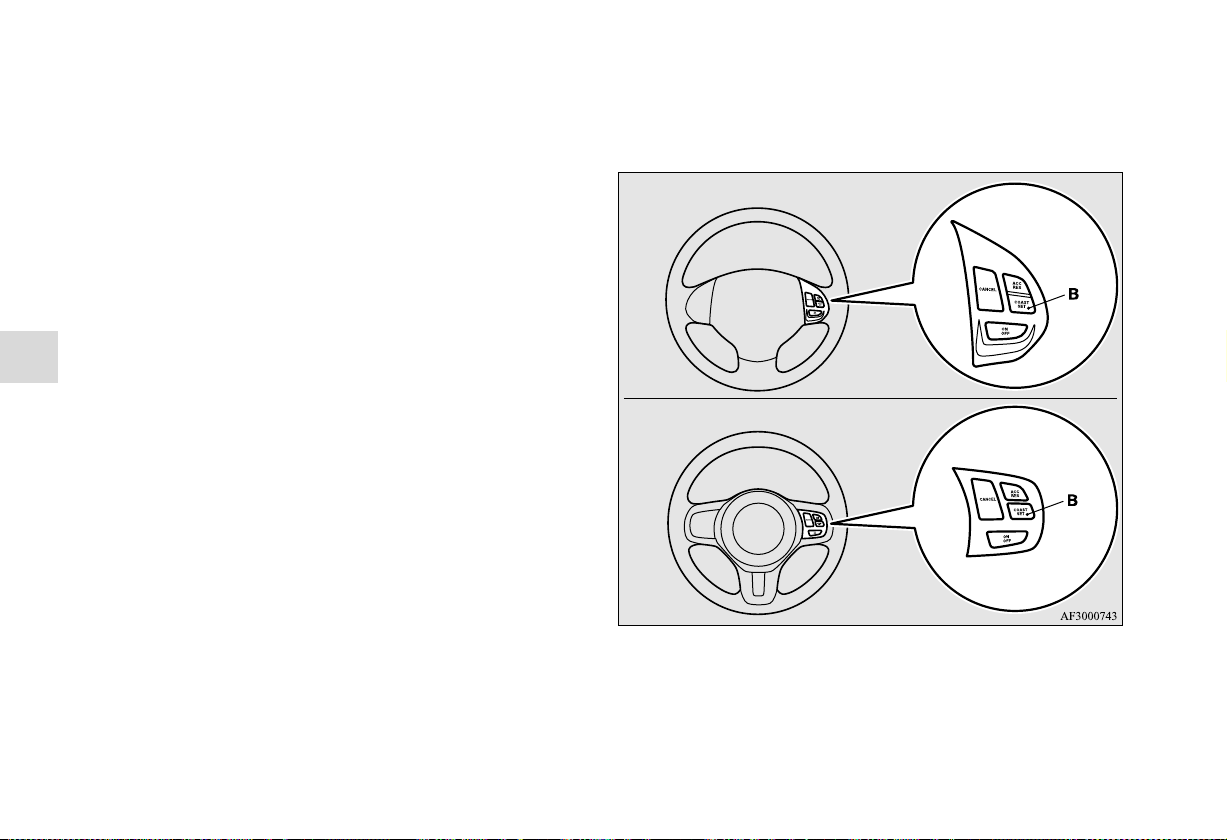
3-160
Features and controls
3
N
OTE
● If the cruise control is on when the ignition switch is
turned to “OFF” position, cruise control will turn on auto-
matically and the “CRUISE” control indicator will illumi-
nate the next time you start the engine.
● If the battery voltage is insufficient, the memory data for
the cruise control will be erased. As a result, the
“CRUISE” control indicator may not come on when you
restart the engine. If this happens, press the “ON OFF”
switch once again to activate the cruise control.
2. Confirm that the Twin Clutch SST control mode is set to
“Normal” (on vehicles with Twin Clutch SST).
Refer to “Twin Clutch SST control mode” on page 3-120.
N
OTE
● The cruising speed cannot be set when the Twin Clutch
SST control mode is set to “Sport” mode.
3. Accelerate or decelerate to your desired speed, then press
and release the “COAST SET” switch (B) when the
“CRUISE” indicator light is illuminated. The vehicle will
then maintain the desired speed.
N
OTE
● The speed when you released the “COAST SET” switch
will be set as the cruising speed.
Type 1
Type 2
BK0138600US.book 160 ページ 2011年7月17日 日曜日 午後2時32分
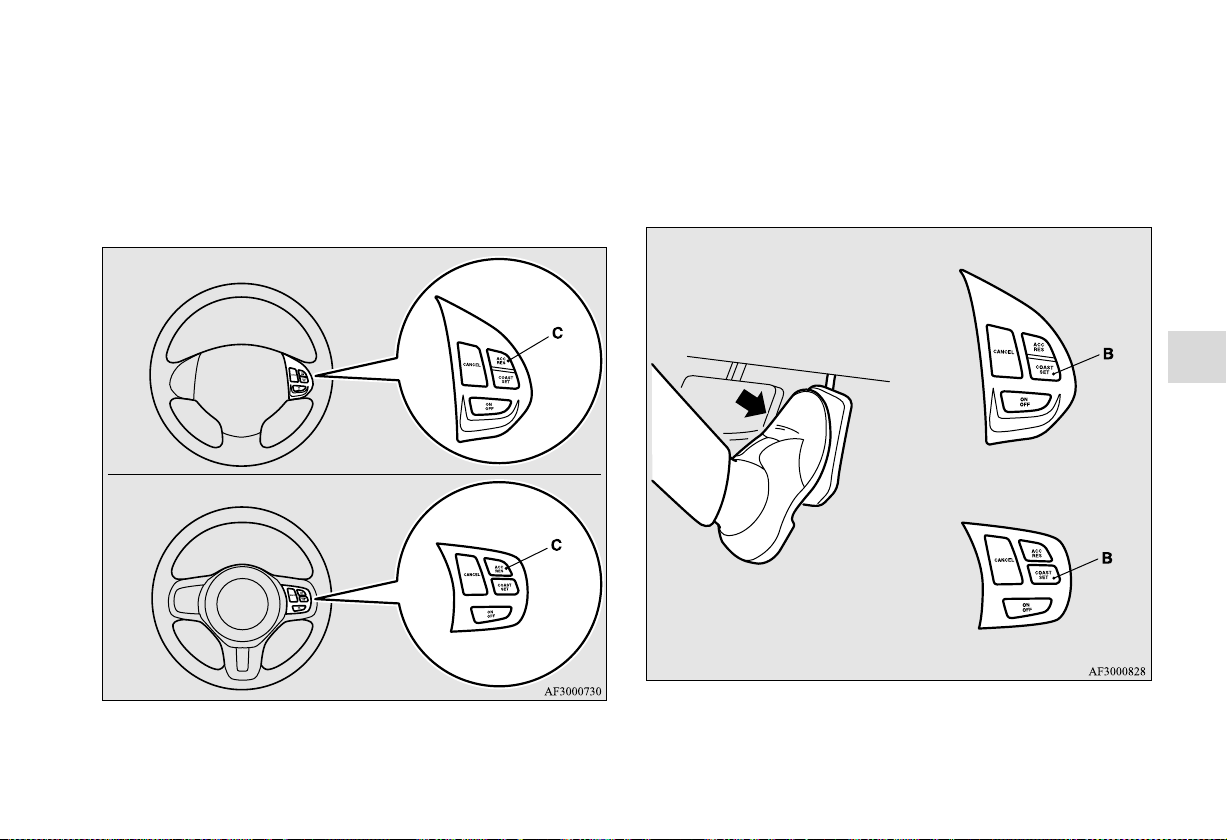
Features and controls
3-161
3
To increase the set speed
N00518500331
There are 2 ways to increase the set speed.
“ACC RES” switch
If you press and hold down the “ACC RES” switch (C), the
speed will gradually increase. When you reach your desired
speed, release the switch. Your cruising speed is now set.
To increase the speed in small amounts, press the “ACC RES”
switch (C) for less than 1 second and release it. Every time you
press the “ACC RES” switch (C), the speed will increase by
approximately 1 mph (1.6 km/h).
Accelerator pedal
Use the accelerator pedal to reach your desired speed. Press the
“COAST SET” switch (B) and release the switch momentarily
to set a new desired cruising speed.
Type 1
Type 2
Type 1
Type 2
BK0138600US.book 161 ページ 2011年7月17日 日曜日 午後2時32分
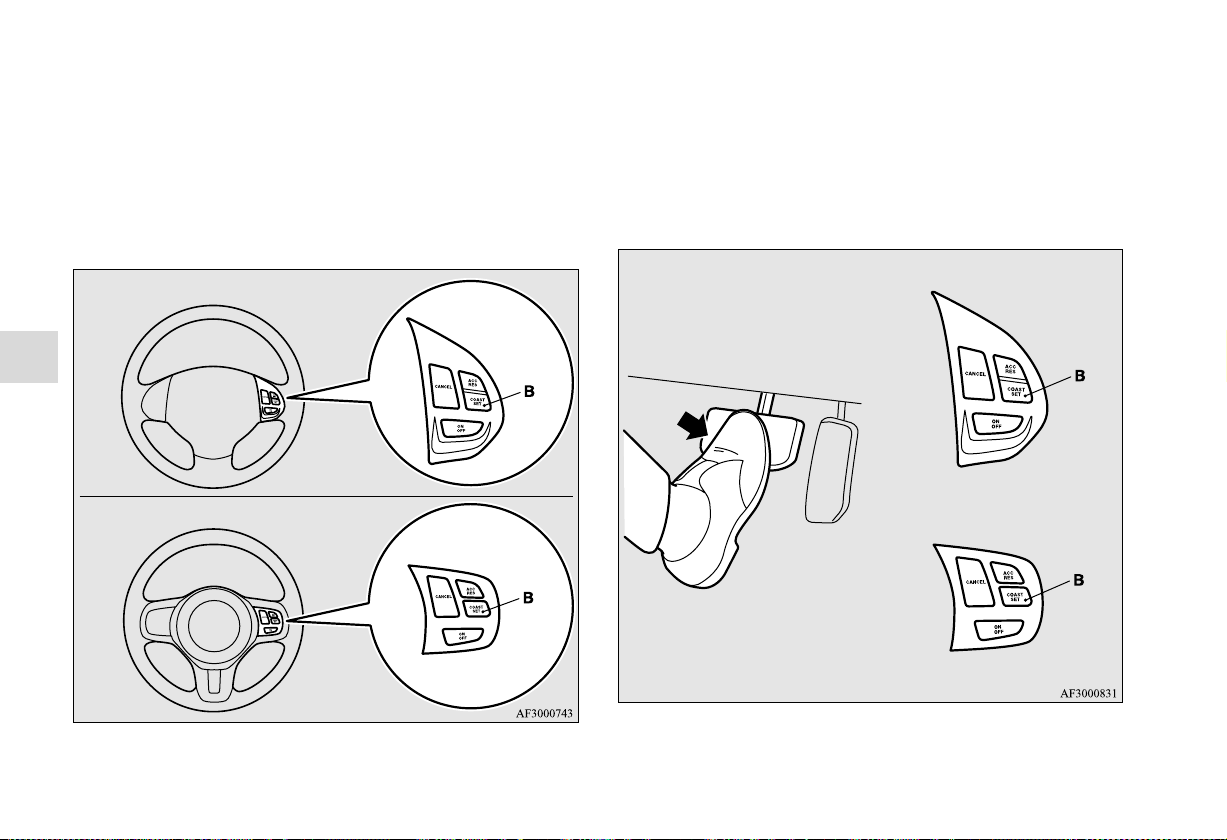
3-162
Features and controls
3
To decrease the set speed
N00518600260
There are 2 ways to reduce the set speed.
“COAST SET” switch
Press and hold the “COAST SET” switch (B), the speed will
slow down (coast) gradually.
When you reach your desired speed, release the “COAST
SET” switch. Your cruising speed is now set.
To decrease the speed in small amounts, press the “COAST
SET” switch (B) for less than 1 second and release it. Every
time you press the “COAST SET” switch (B), the speed will
decrease by approximately 1 mph (1.6 km/h).
Brake pedal
Press the brake pedal (which disengages the cruise control) and
when the desired speed is reached, press the “COAST SET”
switch (B) and release the switch momentarily to set a new
desired cruise speed.
Type 1
Type 2
Type 1
Type 2
BK0138600US.book 162 ページ 2011年7月17日 日曜日 午後2時32分
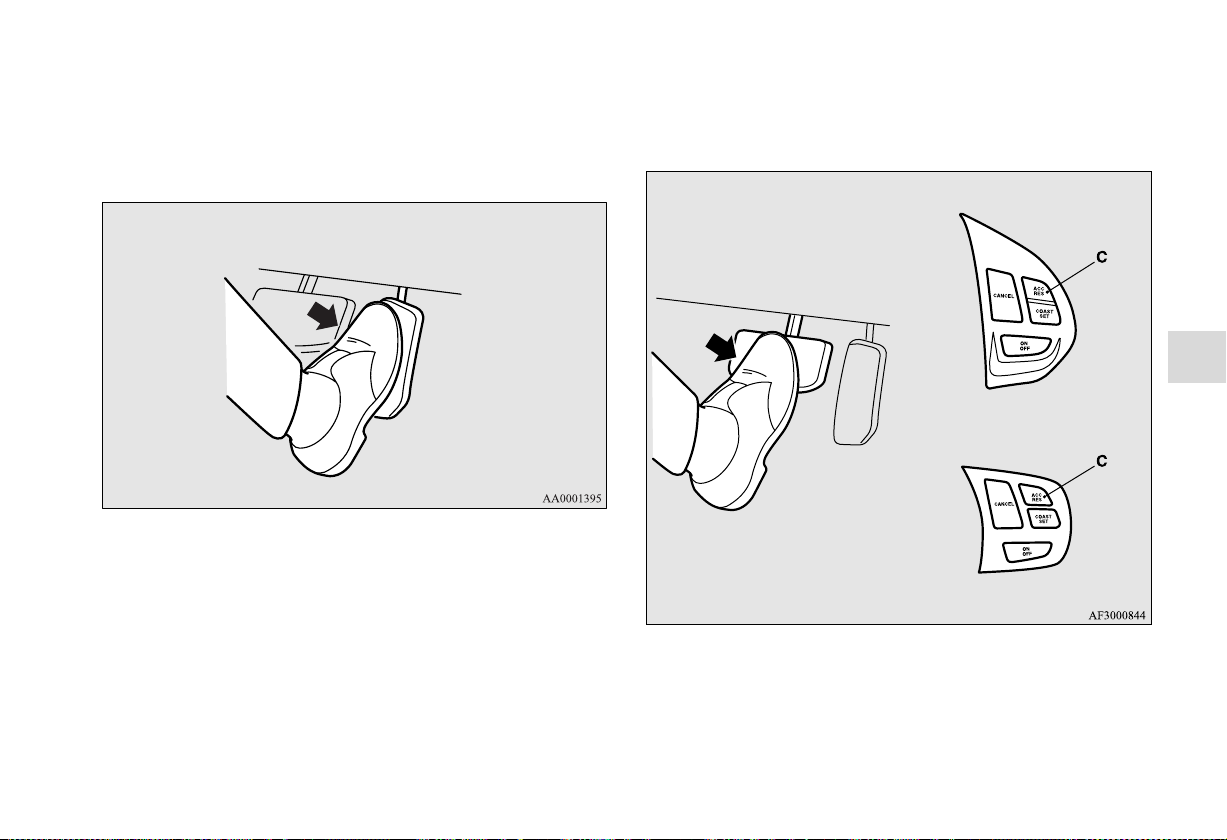
Features and controls
3-163
3
To temporarily increase or decrease the speed
N00518700128
To temporarily increase the speed
Press the accelerator pedal as you would normally. When you
release the pedal, you will return to your set speed.
To temporarily decrease the speed
Apply the brakes to decrease the speed. To return to the previ-
ously set speed, press the “ACC RES” switch (C). Refer to “To
resume the set speed” on page 3-165.
Type 1
Type 2
BK0138600US.book 163 ページ 2011年7月17日 日曜日 午後2時32分
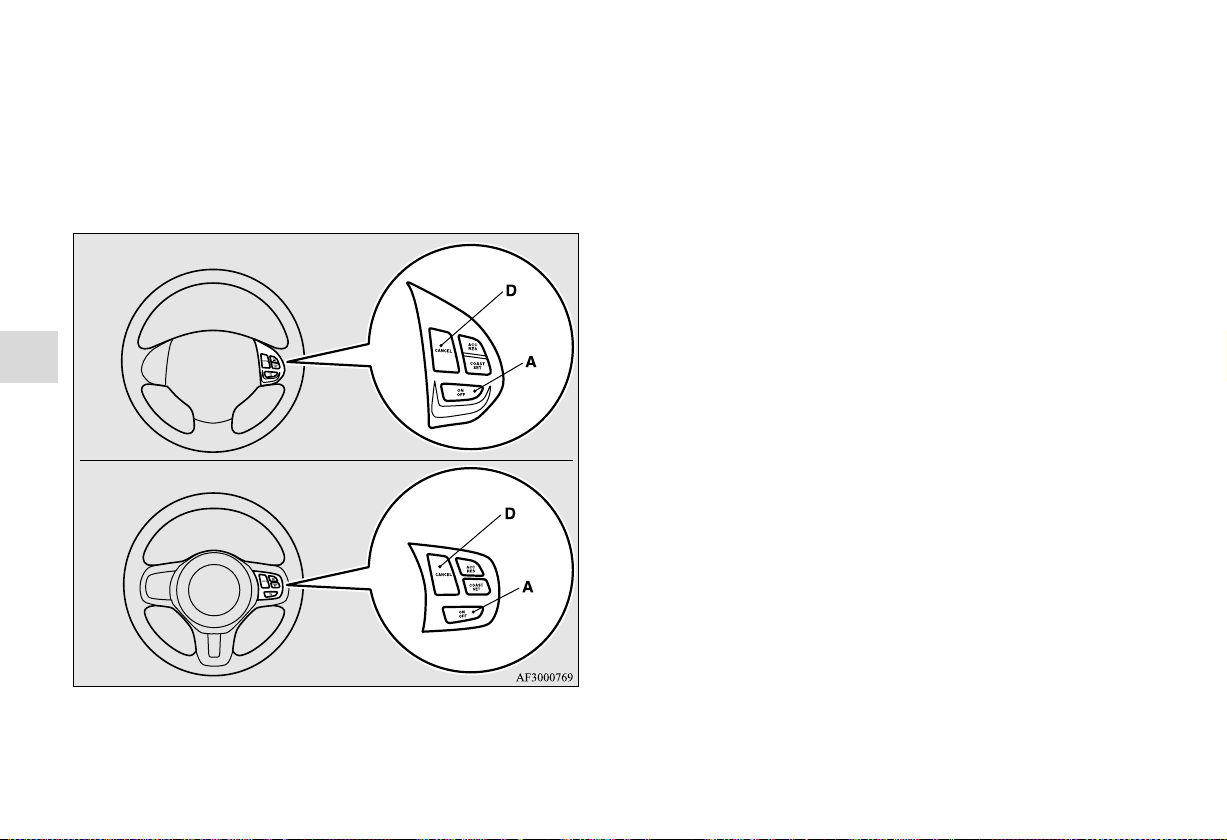
3-164
Features and controls
3
To deactivate
N00518800493
The cruise control can be turned off as follows:
● Press the “ON OFF” switch (A). (Cruise control will be
turned off.)
● Press the “CANCEL” switch (D).
● Depress the brake pedal or lightly tap it.
The cruise control will be turned off automatically in the fol-
lowing conditions:
● When you depress the clutch pedal (on vehicles with man-
ual transaxle).
● Your speed slows to about 10 mph (15 km/h) or more
below the set speed because of an uphill, etc.
● Your speed slows to about 25 mph (40 km/h) or less.
● When the Twin Clutch SST control mode is set to “Sport”
mode (on vehicles with Twin Clutch SST).
Refer to “Twin Clutch SST control mode” on page 3-120.
● When the active stability control (ASC) starts operating
(if so equipped).
Refer to “Active stability control (ASC)” on page 3-151.
Type 1
Type 2
BK0138600US.book 164 ページ 2011年7月17日 日曜日 午後2時32分
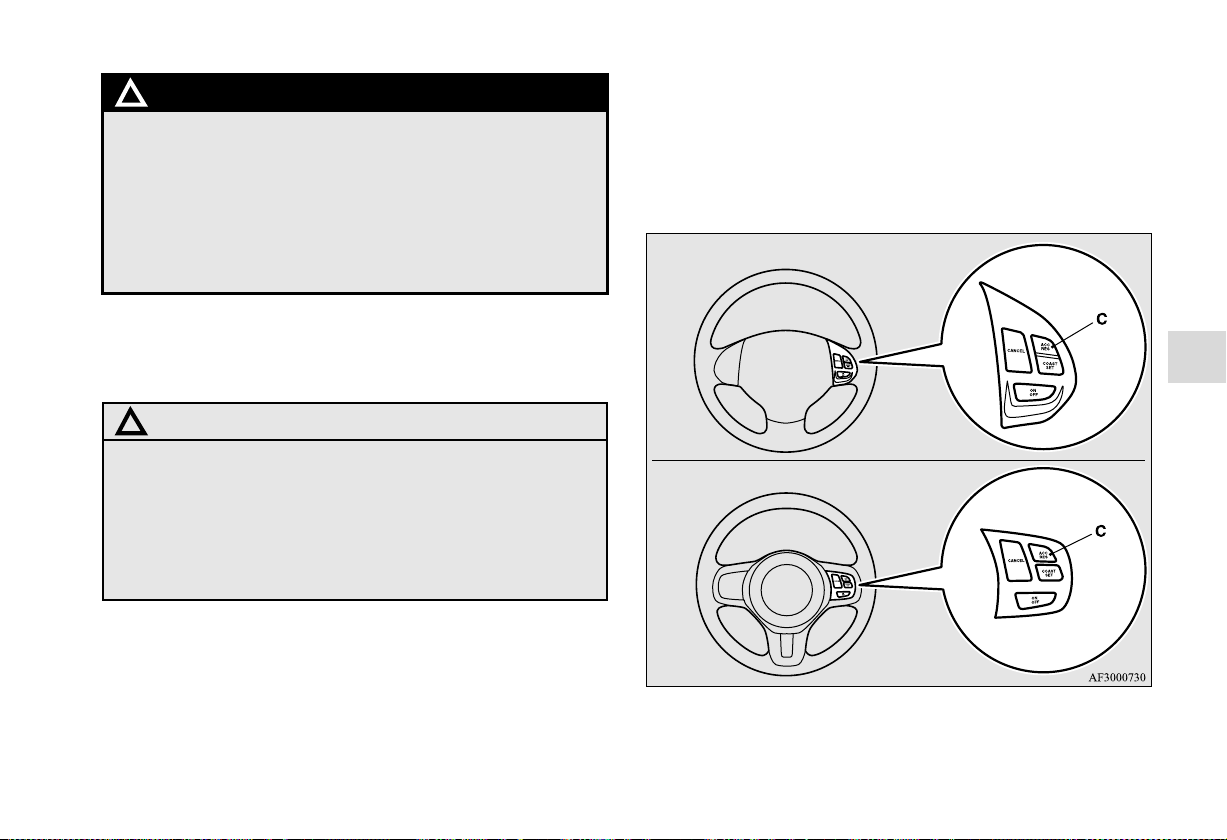
Features and controls
3-165
3
Also, the set speed driving may be deactivated as follow:
● When the engine speed rises and approaches the tachome-
ter’s red zone (the red-colored part of the tachometer dial).
To resume the set speed
N00518900263
If the cruise control is deactivated by any of the conditions
described in “To deactivate” on page 3-164, you can return to
the previously set speed by pressing the “ACC RES” switch
(C) while driving at a speed of approximately 25 mph
(40 km/h) or greater.
WARNING
!
● On vehicles with continuously variable transmission
(CVT) or Twin Clutch SST, although the cruise con-
trol will be disengaged when shifting to the “N”
(NEUTRAL) position, never move the selector lever
(CVT) or the gearshift lever (Twin Clutch SST) to
the “N” (NEUTRAL) position while driving.
You would have no engine braking and this could
cause a serious accident.
CAUTION
!
● When the set speed driving is deactivated automati-
cally in any situation other than those listed above,
there may be a system malfunction.
Press the “ON OFF” switch to turn off the cruise
control and have your vehicle inspected by an autho-
rized Mitsubishi Motors dealer or a repair facility of
your choice.
Type 1
Type 2
BK0138600US.book 165 ページ 2011年7月17日 日曜日 午後2時32分
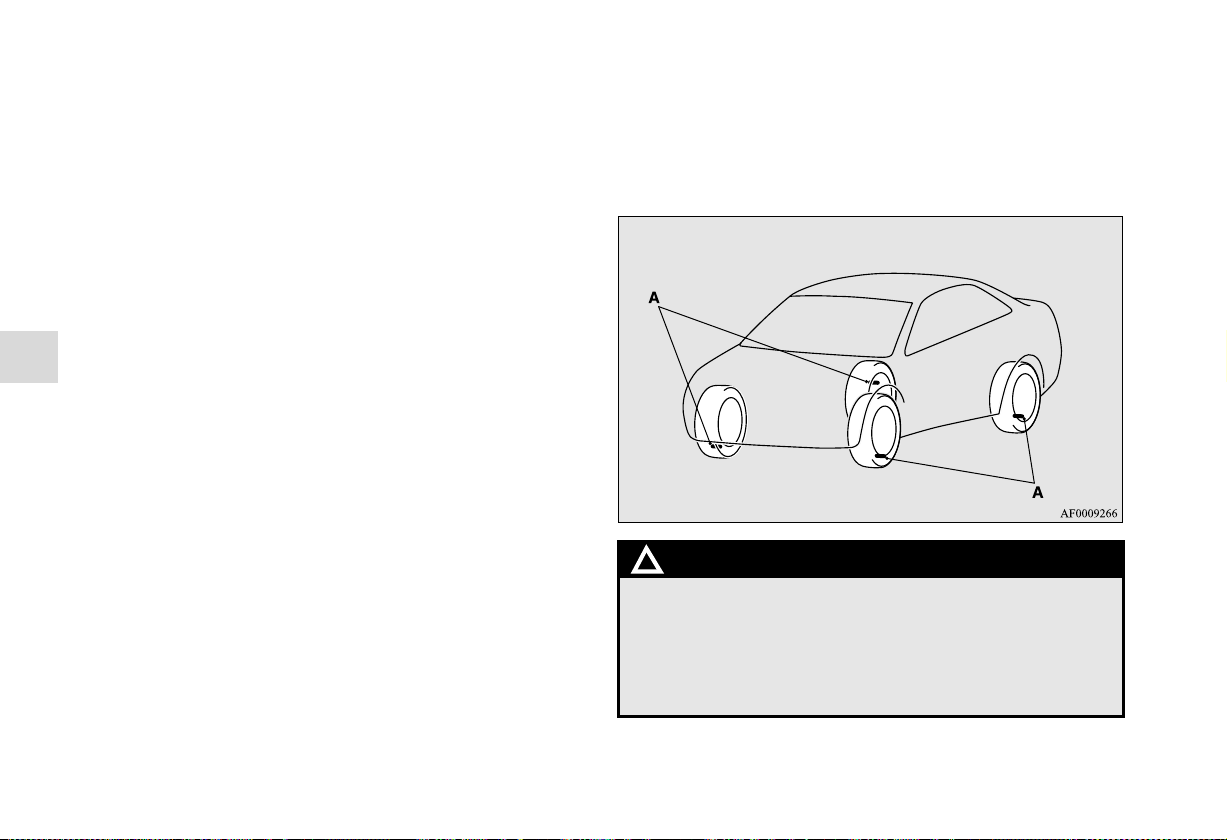
3-166
Features and controls
3
However, you must repeat the speed setting procedure under
either of the following conditions:
● The ignition switch is turned to the “OFF” position.
● The cruise control is turned OFF.
● “CRUISE” indicator light is turned off.
Tire pressure monitoring system
N00530200400
The tire pressure monitoring system uses tire inflation pressure
sensors (A) on the wheels to monitor the tire inflation pres-
sures. The system only indicates when a tire is significantly
under-inflated.
WARNING
!
● The spare wheel does not have a tire inflation pres-
sure sensor.
When the spare tire is used, the tire pressure moni-
toring system will not work properly.
See an authorized Mitsubishi Motors dealer as soon
as possible to replace or repair the original tire.
BK0138600US.book 166 ページ 2011年7月17日 日曜日 午後2時32分
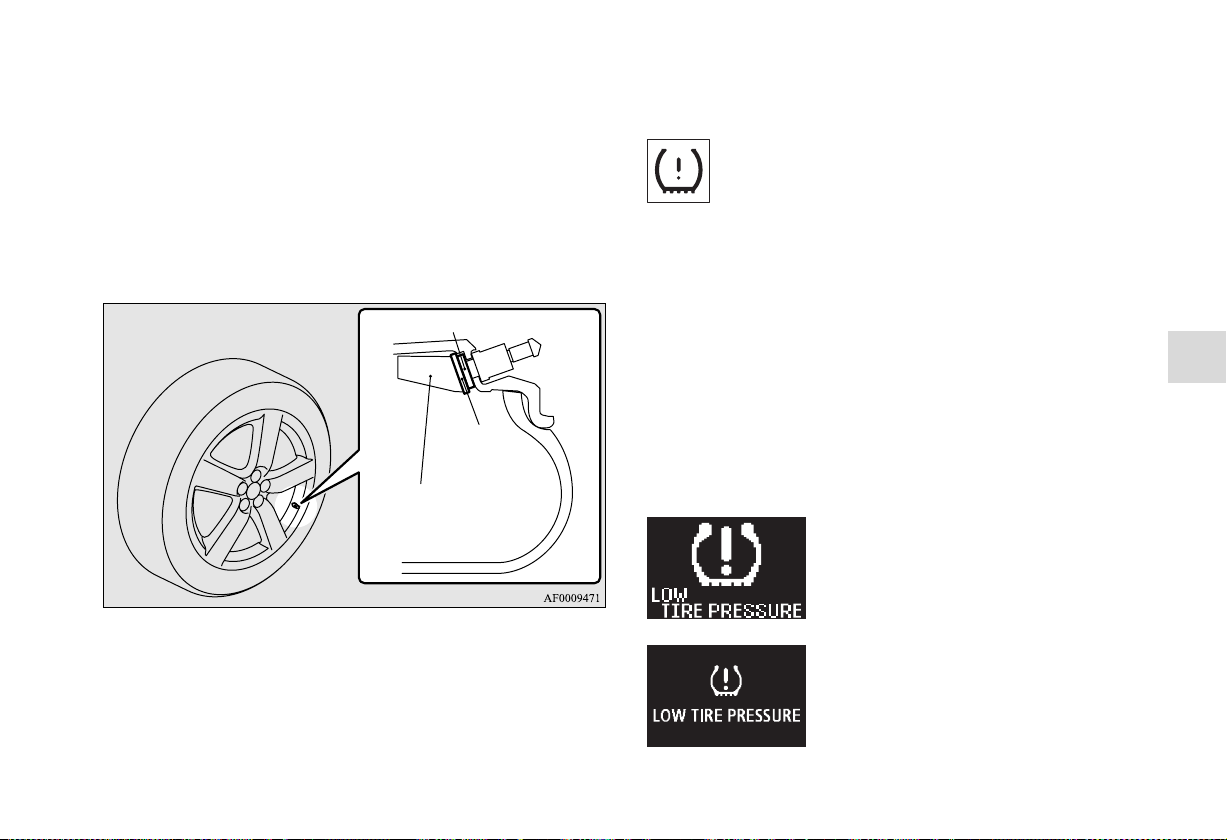
Features and controls
3-167
3
N
OTE
● The tire pressure monitoring system is not a substitute for
regularly checking tire inflation pressures.
Be sure to check the tire inflation pressures as described in
“Tires” on page 7-29.
● Each of the grommets and washers where the tire inflation
pressure sensors are mounted should be replaced with new
ones when the tire is replaced.
For details, contact your authorized Mitsubishi Motors
dealer.
Tire pressure monitoring system warning
light/display
N00532700122
When the ignition switch is turned to the “ON” position, the
tire pressure monitoring system warning light normally illumi-
nates and goes off a few seconds later.
If one or more of the vehicle tires (except for the spare tire) is
significantly under-inflated, the warning light will remain illu-
minated while the ignition switch is in the “ON” position.
Refer to “If the warning light/display illuminates while driv-
ing” on page 3-170 and take the necessary measures.
N
OTE
● In addition, the warning display is displayed on the infor-
mation screen in the multi-information display.
Type 1
Type 2
Washer
Tire inflation
pressure sensor
Grommet
BK0138600US.book 167 ページ 2011年7月17日 日曜日 午後2時32分
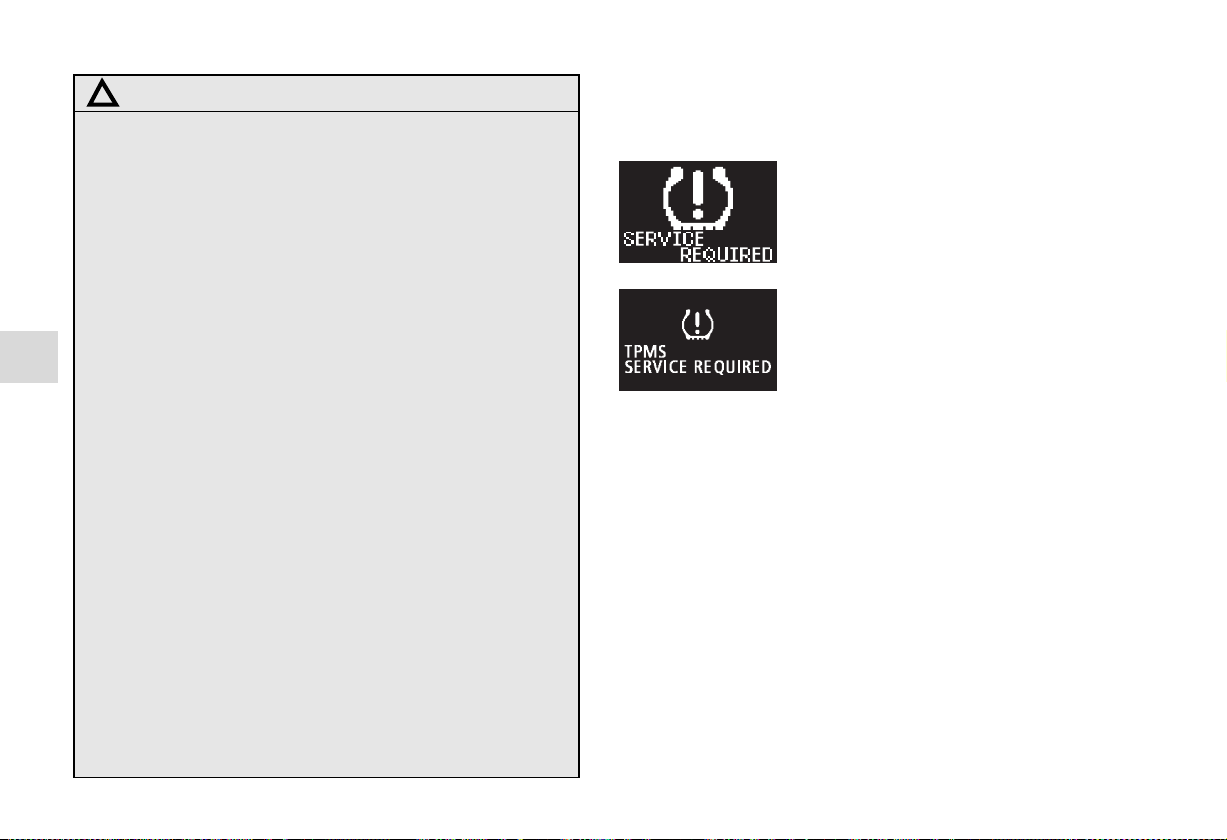
3-168
Features and controls
3
N
OTE
● In addition, the warning display is displayed on the infor-
mation screen in the multi-information display.
Type 1
Type 2
CAUTION
!
● If the tire pressure monitoring system warning light
does not illuminate when the ignition switch is
turned to the “ON” position, it means that the tire
pressure monitoring system is not working properly.
Have the system inspected by an authorized
Mitsubishi Motors dealer.
In such situations, a malfunctioning of the system
may be preventing the monitoring of the tire pres-
sure. Avoid sudden braking, sharp turning and
high-speed driving.
● If a malfunction is detected in the tire pressure mon-
itoring system, the tire pressure monitoring system
warning light will blink for approximately 1 minute
and then remain continuously illuminated. The
warning light will issue further warnings each time
the engine is restarted as long as the malfunction
exists.
Check to see whether the warning light goes off after
few minutes driving.
If it then goes off during driving, there is no prob-
lem.
However, if the warning light does not go off, or if it
blinks again when the engine is restarted, have the
vehicle inspected by an authorized Mitsubishi
Motors dealer.
In such situations, a malfunctioning of the system
may be preventing the monitoring of the tire pres-
sure. For safety reasons, when the warning light
appears while driving, avoid sudden braking, sharp
turning and high-speed driving.
BK0138600US.book 168 ページ 2011年7月17日 日曜日 午後2時32分

Features and controls
3-169
3
Each tire, including the spare (if provided), should be checked
monthly when cold and inflated to the inflation pressure rec-
ommended by the vehicle manufacturer on the vehicle placard
or tire inflation pressure label. (If your vehicle has tires of a
different size than the size indicated on the vehicle placard or
tire inflation pressure label, you should determine the proper
tire inflation pressure for those tires.)
As an added safety feature, your vehicle has been equipped
with a tire pressure monitoring system (TPMS) that illuminates
a low tire pressure telltale when one or more of your tires is
significantly under-inflated.
Accordingly, when the low tire pressure telltale illuminates,
you should stop and check your tires as soon as possible, and
inflate them to the proper pressure. Driving on a significantly
under-inflated tire causes the tire to overheat and can lead to
tire failure.
Under-inflation also reduces fuel efficiency and tire tread life,
and may affect the vehicle’s handling and stopping ability.
Please note that the TPMS is not a substitute for proper tire
maintenance, and it is the driver’s responsibility to maintain
correct tire pressure, even if under-inflation has not reached the
level to trigger illumination of the TPMS low tire pressure tell-
tale.
Your vehicle has also been equipped with a TPMS malfunction
indicator to indicate when the system is not operating properly.
The TPMS malfunction indicator is combined with the low tire
pressure telltale.
When the system detects a malfunction, the telltale will flash
for approximately one minute and then remain continuously
illuminated. This sequence will continue upon subsequent
vehicle start-ups as long as the malfunction exists.
When the malfunction indicator is illuminated, the system may
not be able to detect or signal low tire pressure as intended.
TPMS malfunctions may occur for a variety of reasons, includ-
ing the installation of replacement or alternate tires or wheels
on the vehicle that prevent the TPMS from functioning prop-
erly. Always check the TPMS malfunction telltale after replac-
ing one or more tires or wheels on your vehicle to ensure that
the replacement or alternate tires and wheels allow the TPMS
to continue to function properly.
BK0138600US.book 169 ページ 2011年7月17日 日曜日 午後2時32分

3-170
Features and controls
3
If the warning light/display illuminates while
driving
N00532800439
1. If the tire pressure monitoring system warning light illu-
minates, avoid hard braking, sharp steering maneuvers
and high speeds. You should stop and adjust the tires to
the proper inflation pressure as soon as possible. Adjust
the spare tire at the same time. Refer to “Tires” on page 7-
29.
N
OTE
● In addition, the warning display is displayed on the infor-
mation screen in the multi-information display.
● When inspecting or adjusting the tire pressure, do not
apply excessive force to the valve stem to avoid breakage.
● After inspecting or adjusting the tire pressure, always
reinstall the valve cap on the valve stem.
Without the valve cap, dirt or moisture could get into the
valve, resulting in damage to the tire inflation pressure
sensor.
● Do not use metal valve caps, which may cause a metal
reaction, resulting in corrosion and damage of the tire
inflation pressure sensors.
● Once adjustments have been made, the warning light will
go off after a few minutes of driving.
2. If the tire pressure monitoring system warning light
remains illuminated after you have been driving for about
20 minutes after you adjust the tire inflation pressure, one
or more of the tires may have a puncture. Inspect the tire
and if it has a puncture, have it repaired by an authorized
Mitsubishi Motors dealer as soon as possible.
N
OTE
● To avoid the risk of damage to the tire inflation pressure
sensors, have any punctured tire repaired by an authorized
Mitsubishi Motors dealer. If the tire repair is not done by
an authorized Mitsubishi Motors dealer, it is not covered
by your warranty.
● Do not use an aerosol puncture-repair product on any tire.
Such a spray could damage the tire inflation pressure sen-
sors. Have any puncture repaired by an authorized
Mitsubishi Motors dealer.
WARNING
!
● If the warning light/display illuminates while you
are driving, avoid hard braking, sharp steering
maneuvers and high speeds. Driving with an under-
inflated tire adversely affects vehicle performance
and can result in an accident.
CAUTION
!
● If a tire has a puncture, replace that tire with the
spare tire. Driving on a punctured tire could lead to
an accident.
● The warning light/display may not illuminate imme-
diately in the event of a tire blowout or rapid leak.
BK0138600US.book 170 ページ 2011年7月17日 日曜日 午後2時32分
Features and controls
3-171
3
The tire pressure monitoring system may not work normally in
the following circumstances:
● A wireless facility or device using the same frequency is
near the vehicle.
● Snow or ice is stuck inside the fenders and/or on the
wheels.
● The tire inflation pressure sensor’s battery is dead.
● Wheels other than Mitsubishi genuine wheels are being
used.
● Wheels that are not fitted with tire inflation pressure sen-
sors are being used.
● Wheels whose ID codes are not memorized by the vehicle
are used.
● Compact spare tire is fitted on a road wheel.
● A window tint that affects the radio wave signals is
installed.
N
OTE
● Tire inflation pressures vary with the ambient tempera-
ture. If the vehicle is subjected to large variations in ambi-
ent temperature, the tire inflation pressures may be under-
inflated (causing the warning light/display to come on)
when the ambient temperature is relatively low. If the
warning light/display comes on, adjust the tire inflation
pressure.
Whenever the tires and wheels are replaced with
new ones
N00532900179
If new wheels with new tire inflation pressure sensors are
installed, their ID codes must be programmed into the tire pres-
sure monitoring system. Have tire and wheel replacement per-
formed by an authorized Mitsubishi Motors dealer to avoid the
risk of damaging the tire inflation pressure sensors. If the
wheel replacement is not done by an authorized Mitsubishi
Motors dealer, it is not covered by your warranty.
CAUTION
!
● The use of non-genuine wheels will prevent the
proper fit of the tire inflation pressure sensors,
resulting in air leakage or damage to the sensors.
BK0138600US.book 171 ページ 2011年7月17日 日曜日 午後2時32分
3-172
Features and controls
3
General information
N00533000193
Your tire pressure monitoring system operates on a radio fre-
quency subject to Federal Communications Commission
(FCC) Rules (For vehicles sold in U.S.A.) and Industry Canada
Rules (For vehicles sold in Canada). This device complies with
Part 15 of the FCC Rules and RSS-Gen of the Industry Canada
Rules.
Operation is subject to the following two conditions.
● This device may not cause harmful interference.
● This device must accept any interference received, includ-
ing interference that may cause undesired operation.
Rear-view camera (if so equipped)
N00546200102
When the gearshift lever or the selector lever is in the “R”
(REVERSE) position with the ignition switch in the “ON”
position, the rear-view image will be displayed on the screen of
the Mitsubishi Multi-Communication System in the center
panel or on the left portion of the inside rearview mirror.
When the gearshift lever or the selector lever is shifted out of
the “R” (REVERSE) position, the rear-view image will go off.
CAUTION
!
● Changes or modifications not expressly approved by
the manufacturer for compliance could void the
user’s authority to operate the equipment.
WARNING
!
● Never rely solely on the rear-view camera to clear
the area behind your vehicle. Always check visually
behind and all around your vehicle for persons, ani-
mals, obstructions or other vehicles. Failure to do so
can result in vehicle damage, serious injury or
death.
● The rear-view camera is an aid system for backing
up, but it is not a substitute for your visual confir-
mation.
● The view on the screen is limited, and objects out-
side the view, such as under the bumper or around
either corner of the bumper end, cannot be seen on
the screen.
BK0138600US.book 172 ページ 2011年7月17日 日曜日 午後2時32分
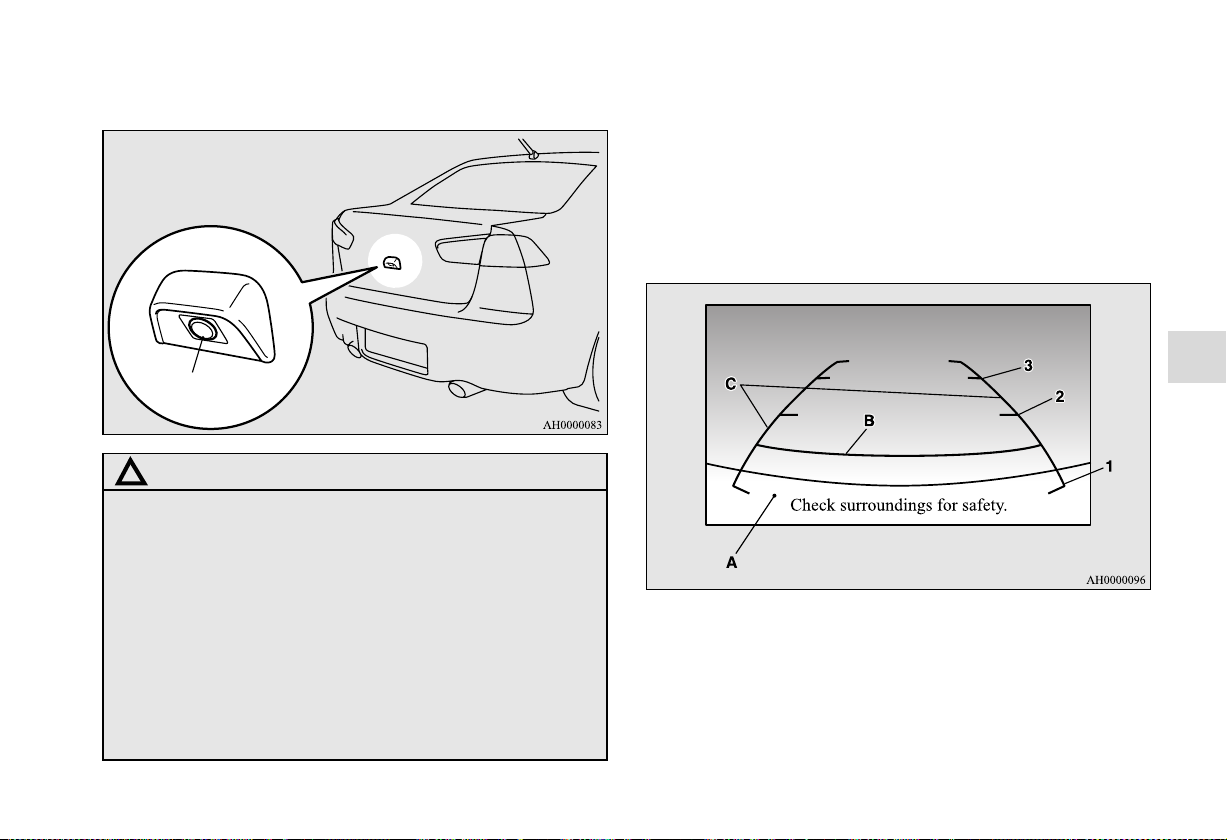
Features and controls
3-173
3
Location of rear-view camera
The rear-view camera (A) is built-in to the trunk lid.
Reference lines on the screen
Reference lines and upper surface of the rear bumper (A) are
displayed on the screen.
● Red line (B) indicates approximately 20 inches (50 cm)
behind the rear bumper.
● Two Green lines (C) indicate approximately 8 inches (20
cm) outside of the vehicle body.
● Short transverse lines (1 to 3) indicate distance from the
rear bumper.
CAUTION
!
● If the camera lens gets dirty, a clear image cannot be
obtained. As necessary, rinse the lens with clean
water and gently wipe with a clean, soft cloth.
● To avoid damaging the camera;
• Do not rub the cover excessively or polish it by
using an abrasive compound.
• Do not disassemble the camera.
• Do not splash hot water directly on the lens.
• Do not spray the camera and its surroundings with
high-pressure water.
• Make sure that the trunk lid is securely closed
when backing up.
A
1: Approximately at the rear edge of the rear bumper
2: Approximately 39 inches (100 cm)
3: Approximately 79 inches (200 cm)
BK0138600US.book 173 ページ 2011年7月17日 日曜日 午後2時32分
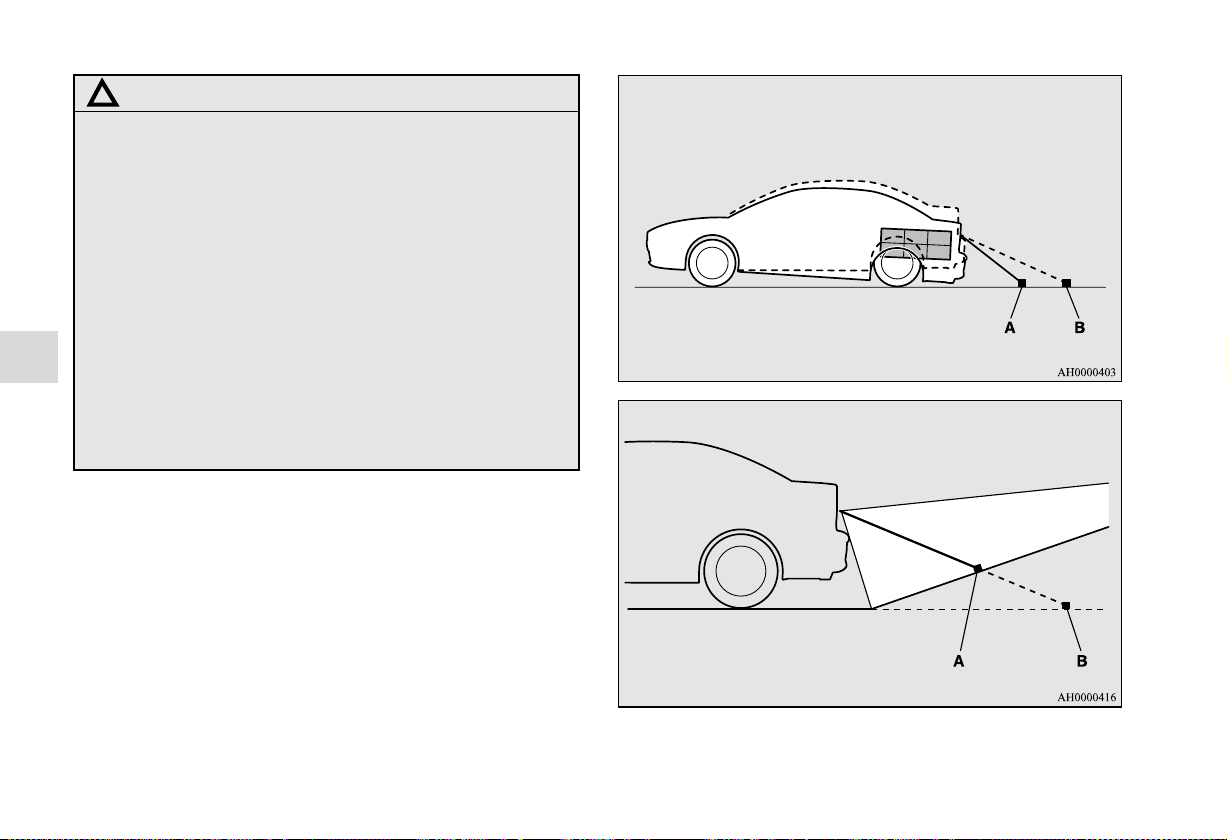
3-174
Features and controls
3
CAUTION
!
● The rear-view camera uses a wide-angle lens. As a
result, images and distances shown on the screen are
not exact.
● Actual distance may be different from distance indi-
cated by the lines on the screen, depending on the
loading condition of the vehicle and road surface
condition.
The reference lines for distance and vehicle width
are based on a level, flat road surface. In the follow-
ing cases, objects shown on the screen will appear to
be farther off than they actually are.
• When the rear of the vehicle is weighed down with
the weight of passengers and luggage in the vehi-
cle. (Case 1)
• When there is an upward slope at the back.
(Case 2)
A- Actual objects
B- Objects shown on the screen
Case 1
Case 2
A- Actual objects
B- Objects shown on the screen
BK0138600US.book 174 ページ 2011年7月17日 日曜日 午後2時32分
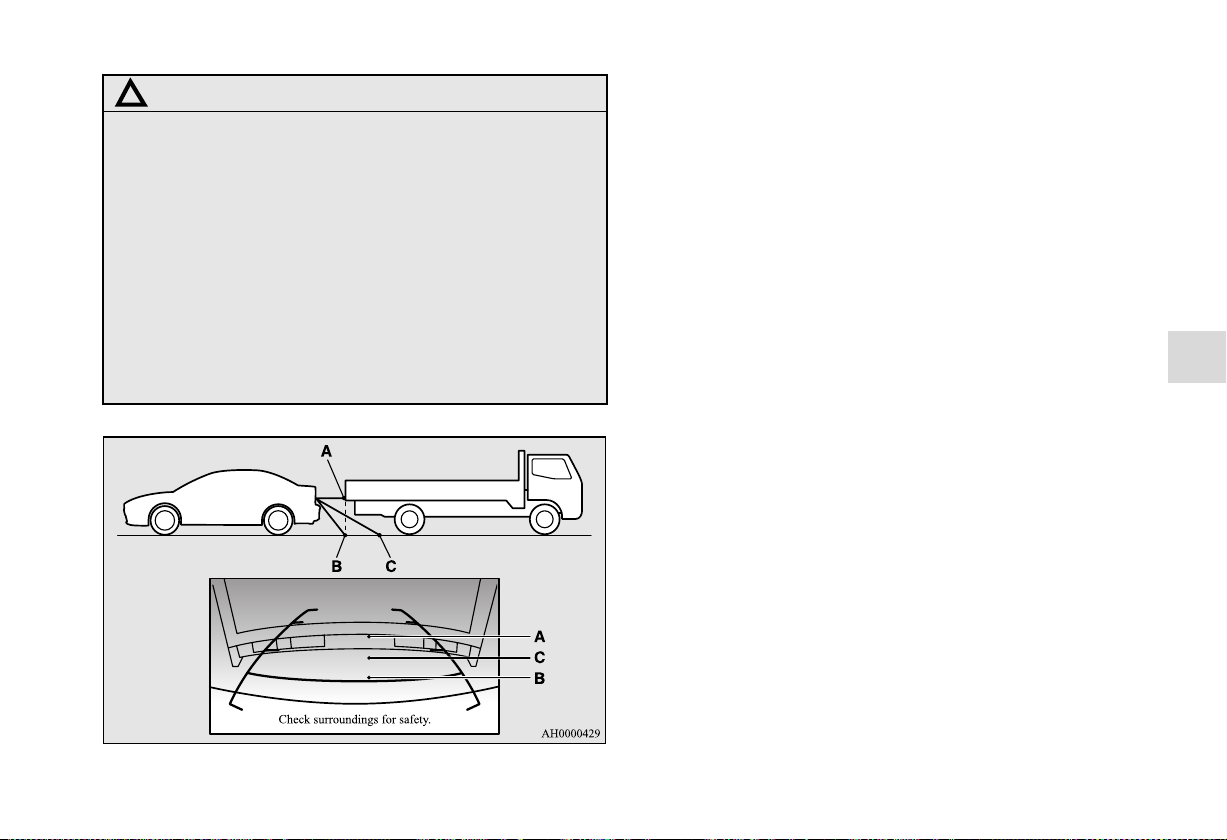
Features and controls
3-175
3
N
OTE
● Mirror image is displayed on the screen.
● Monitor brightness is adjusted automatically by sensors.
● It is possible to change the display language of the screen.
For details, please refer to the separate owner’s manual for
“Mitsubishi Multi-Communication System” or “Change
language or turn off the inside rearview mirror screen : To
change the language of warning text (3)” on page 3-177.
● Under certain circumstances, it may become difficult to
see an image on the screen, even when the system is func-
tioning correctly.
• In a dark area, such as at night.
• When water drops or condensation are on the lens.
• When sun light or headlights shine directly into the lens.
CAUTION
!
● The reference lines for distance and vehicle width
are intended to indicate the distance to a flat object
such as a level, flat road surface. They may not indi-
cate correct distance depending on the shape of an
obstacle.
For example, when there is an object behind the
vehicle that has upper sections projecting in the
direction of the vehicle, the reference lines on the
screen will indicate that point A is the farthest point
and point B is the closest point to the vehicle. In real-
ity, point A and B are actually the same distance
from the vehicle, and point C is farther off than
point A and B.
BK0138600US.book 175 ページ 2011年7月17日 日曜日 午後2時32分
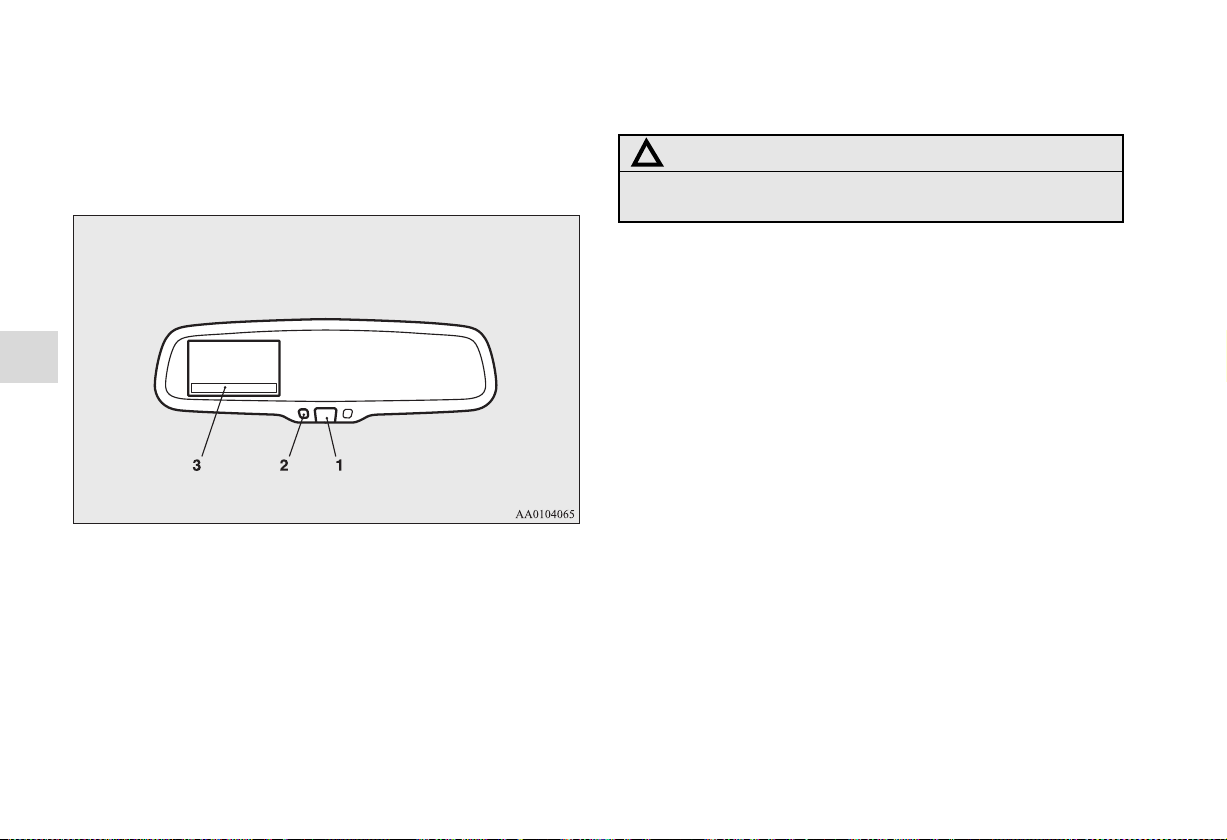
3-176
Features and controls
3
Change language or turn off the inside rearview
mirror screen
N00568900040
It is possible to turn off the screen of the inside rearview mirror
and change the language of the warning messages on the
screen.
To temporarily set the non-display mode
If you press the switch (1) while the image appears on the
screen, it goes off temporarily.
To return to display mode, press the switch again or turn the
ignition switch to the “ON” position after turning to “LOCK”
or “ACC” position.
To permanently set the non-display mode
1. Turn the ignition switch to the “ON” position.
2. Put the gearshift lever or the selector lever in the “R”
(REVERSE) position.
3. Press and hold down the switch (1) (for about 15 sec-
onds).
While you keep the switch pressed, the orange indicator
(2) comes on. When the image goes off, the non-display
mode setting is completed.
CAUTION
!
● For safety reasons, do not perform the following
operations with the engine running.
BK0138600US.book 176 ページ 2011年7月17日 日曜日 午後2時32分
Features and controls
3-177
3
To change the language of warning text (3)
N00548200018
1. Turn the ignition switch to the “ON” position.
2. Put the gearshift lever or the selector lever in the “R”
(REVERSE) position.
3. Press and hold down the switch (1) to enter language
selection mode (for 6 to 11 seconds).
In this mode, the image appears and the green indicator
(2) comes on.
4. Press the switch until the desired language appears on the
display.
Each time you press the switch, the language will change
to the next one. When the warning text flashes, setting is
completed.
CAUTION
!
● For safety reasons, do not perform the following
operations with the engine running.
BK0138600US.book 177 ページ 2011年7月17日 日曜日 午後2時32分
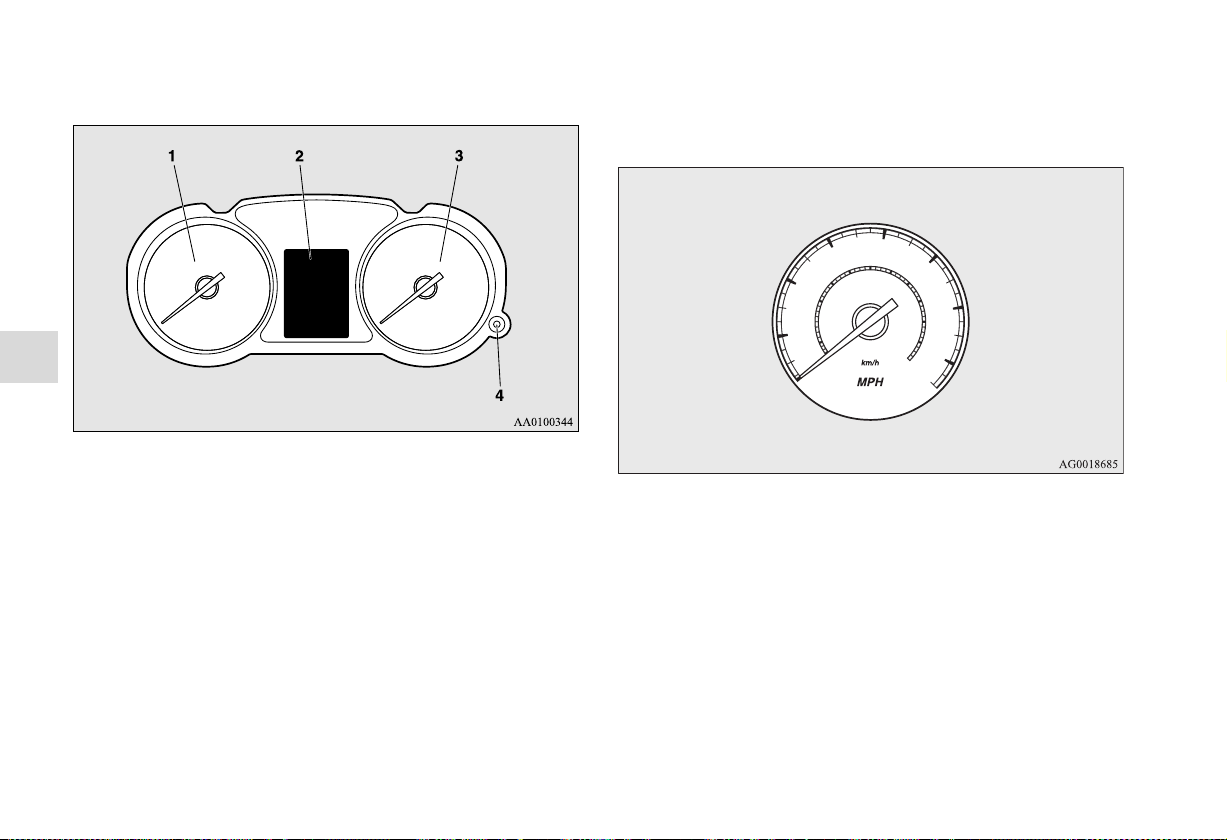
3-178
Features and controls
3
Instrument cluster
N00519000333
Speedometer
N00519100190
The speedometer shows the vehicle speed in miles per hour
(mph) or kilometers per hour (km/h).
1- Tachometer → P.3-179
2- Multi-information display → P.3-181
Information screen display list → P.3-216
3- Speedometer → P.3-178
4- Rheostat meter illumination button → P.3-180
Type 1
BK0138600US.book 178 ページ 2011年7月17日 日曜日 午後2時32分
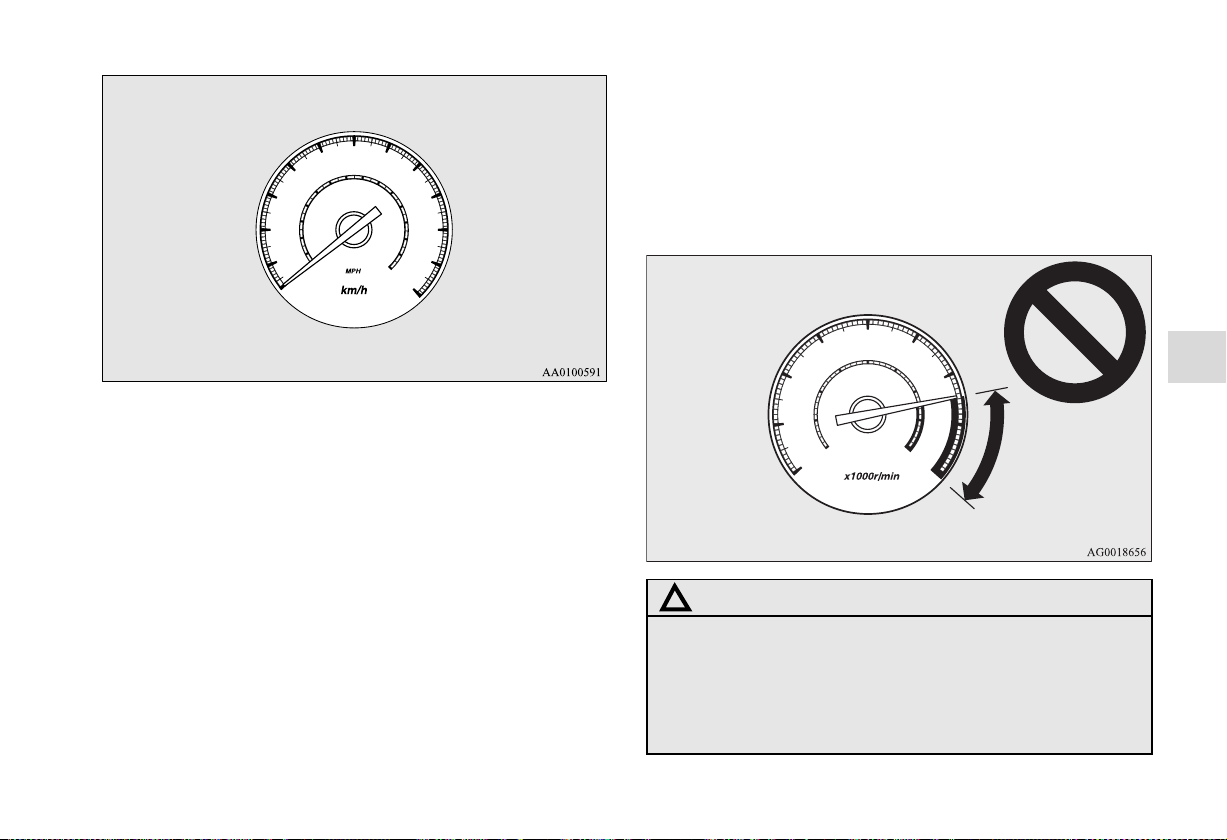
Features and controls
3-179
3
Tac hom e ter
N00519200276
The tachometer shows engine revolutions per minute. This
allows the driver to determine the most efficient shift position
(manual transaxle), selector position {continuously variable
transmission (CVT)} or shift position (Twin Clutch SST) and
engine speed combinations.
This gauge also assists in evaluating engine performance.
Type 2
CAUTION
!
● The red zone indicates an engine speed beyond the
range of safe operation.
● Select the correct shift position (manual transaxle),
selector position (CVT) or gearshift position (Twin
Clutch SST) to control the engine speed so that the
tachometer indicator does not enter the red zone.
BK0138600US.book 179 ページ 2011年7月17日 日曜日 午後2時32分
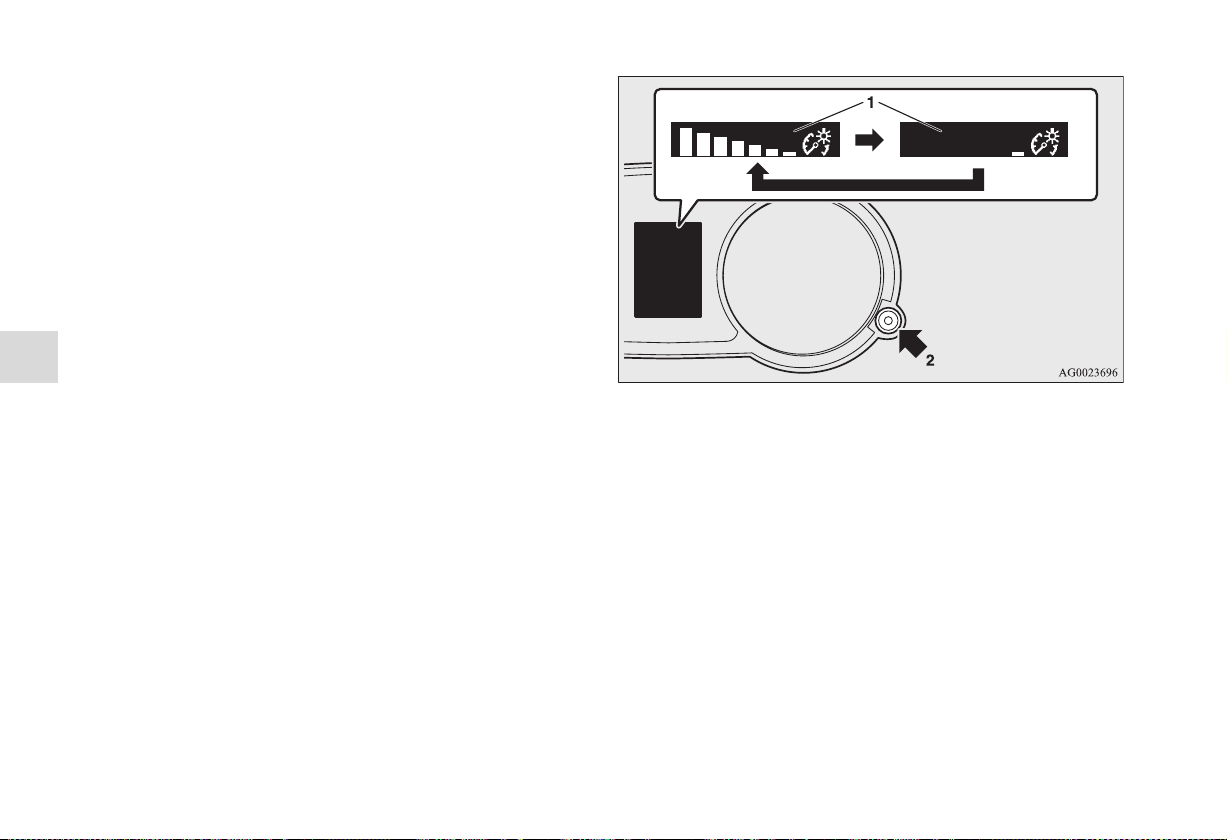
3-180
Features and controls
3
Rheostat meter illumination button
N00554900137
Each time you press this button, there is a sound and the bright-
ness of the instruments changes.
N
OTE
● You can adjust to 8 different levels respectively for when
the tail lights are illuminated and when they are not.
● If the vehicle is equipped with the automatic light control,
when the light switch is in a position other than the “OFF”
position, the meter illumination switches automatically to
the adjusted brightness, depending on the brightness out-
side the vehicle.
● The brightness level of the instruments is stored in mem-
ory when the ignition switch is turned off.
● If you press and hold the button for longer than about 1
second when the parking lights are illuminated, the bright-
ness level changes to the maximum level. Pressing and
holding the button for longer than about 1 second again
returns the brightness level to the previous level.
1- Brightness display
2- Rheostat illumination button
BK0138600US.book 180 ページ 2011年7月17日 日曜日 午後2時32分
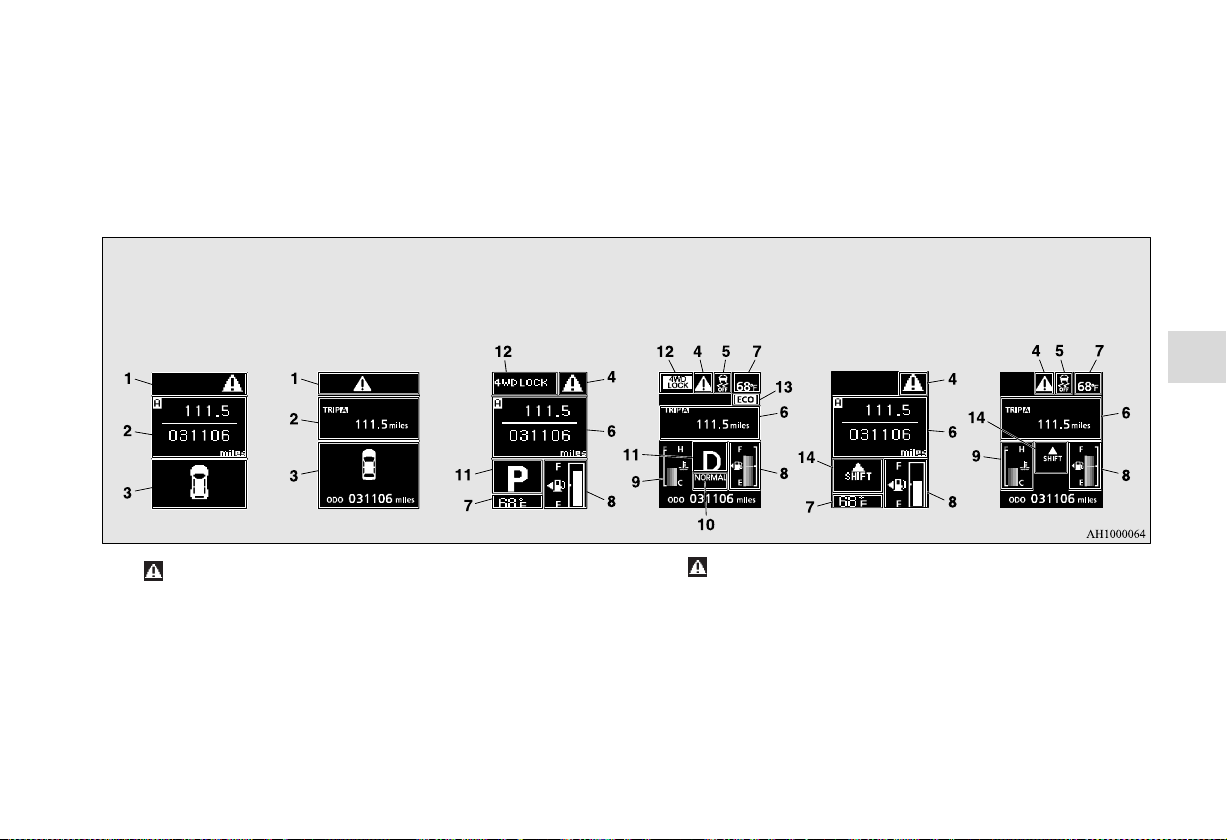
Features and controls
3-181
3
Multi-information display
N00555000236
The multi-information display displays warnings, the odometer, trip odometer, service reminder, engine coolant temperature, fuel
remaining, outside temperature, Twin Clutch SST control mode, ACD control mode, gearshift lever position, selector lever posi-
tion, all-wheel drive operation status, average and momentary fuel consumption, driving range, average speed, instrument bright-
ness, etc.
It is also possible to change elements such as the language and units used on the multi-information display.
With ignition switch is
“OFF” position
W
i
t
h
i
g
n
i
t
i
o
n
s
w
i
t
c
h
i
s
“
O
N
”
p
o
s
i
t
i
o
n
{
C
o
n
-
t
i
n
u
o
u
s
l
y
v
a
r
i
a
b
l
e
t
r
a
n
s
m
i
s
s
i
o
n
(
C
V
T
)
,
T
w
i
n
C
l
u
t
c
h
S
S
T
}
With ignition switch is “ON”
position (Manual transaxle)
Type 1 Type 2 Type 1 Type 2 Type 1 Type 2
1-
Warning display screen (With ignition switch in the
“OFF” position) → P.3-183
2- Information screen (With ignition switch in the “OFF” posi-
tion) → P.3-183
Interrupt display screen (With ignition switch in the “OFF”
position) → P.3-185
3- Door ajar warning display screen (With ignition switch in the
“OFF” position) → P.3-187
4-
Warning display screen (With ignition switch in the “ON”
position) → P.3 - 1 8 9
5- Active stability control (ASC) OFF display screen (if so
equipped) → P.3 - 18 9
6- Information screen (With ignition switch in the “ON” posi-
tion) → P.3-189
Interrupt display screen (With ignition switch in the “ON”
position) → P.3 - 1 9 4
7- Outside temperature display screen → P.3-196
8- Fuel remaining display screen → P. 3-196
BK0138600US.book 181 ページ 2011年7月17日 日曜日 午後2時32分
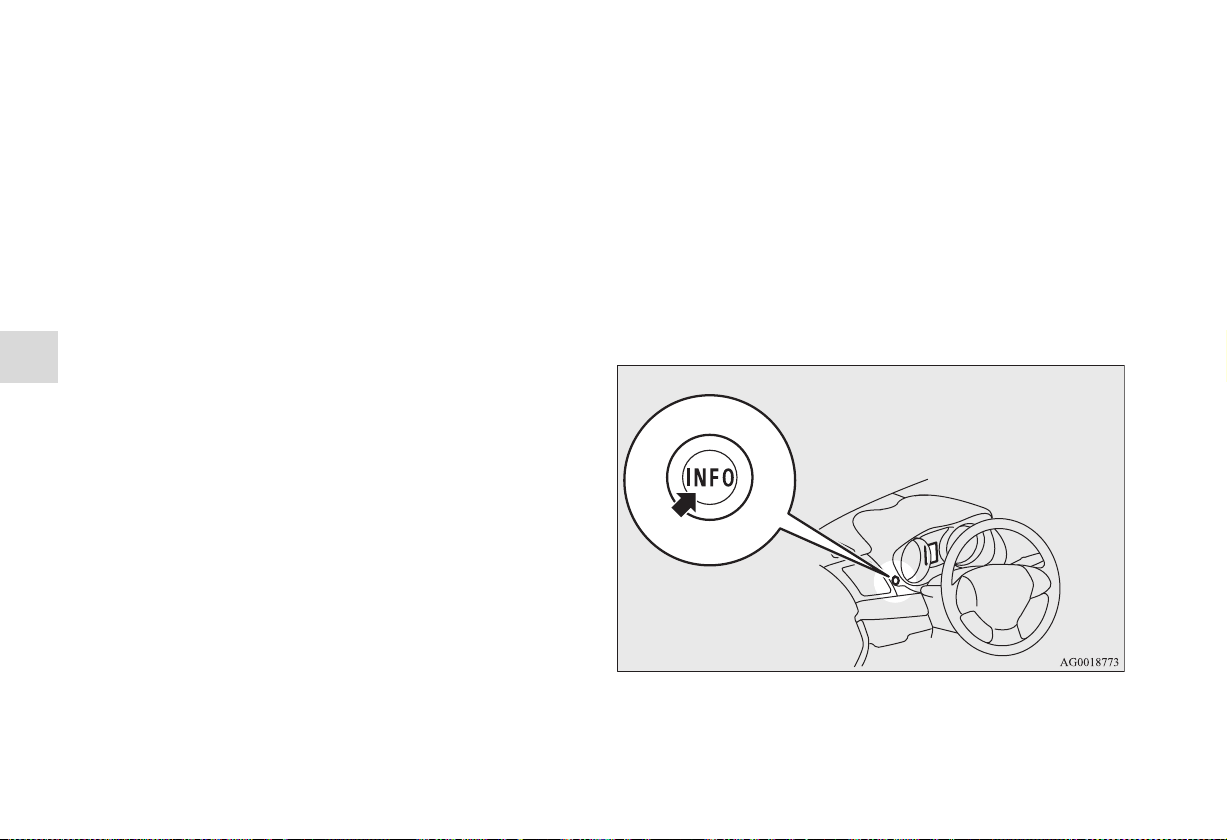
3-182
Features and controls
3
N
OTE
● The fuel units, temperature units, display language, and
other settings can be changed.
Refer to “Changing the function settings (With ignition
switch in the “ON” position)” on page 3-201.
● The display screen is different depending on whether the
ignition switch in the “OFF” or “ON” position.
Refer to “Information screen (With ignition switch in the
“OFF” position)” on page 3-183.
Refer to “Warning display list (With ignition switch in the
“OFF” position)” on page 3-217.
Refer to “Information screen (With ignition switch turned
from “OFF” to “ON” position)” on page 3-187.
Refer to “Information screen (With ignition switch in the
“ON” position)” on page 3-189.
Refer to “Warning display list (With ignition switch in the
“ON” position)” on page 3-219.
Multi-information meter switch
N00555100136
The multi-information meter switch is a button marked
“INFO” on the left side of the dash.
Each time the multi-information meter switch is operated, a
sound is emitted and the multi-information display changes
between information such as warnings, odometer, trip odome-
ter, service reminder, engine coolant temperature (Type 1),
average and momentary fuel consumption, driving range, and
average speed and ACD control mode display (if so equipped).
It is also possible to change elements such as the language and
units used on the multi-information display by operating the
multi-information meter switch.
9- Engine coolant temperature display (if so equipped) → P. 3 -
189
10- Twin Clutch SST control mode display screen (Twin Clutch
SST) → P.3-122
11- Selector lever position display screen (CVT) → P.3-103
Gearshift lever position display screen (Twin Clutch SST) →
P. 3-114
12- Drive mode indicator display screen (CVT) (if so equipped)
→ P.3 - 18 8
ACD control mode display screen (Twin Clutch SST) → P.3 -
133
13- ECO mode indicator (if so equipped) → P.3-196
14- Gearshift indicator display screen (if so equipped) → P.3-96
BK0138600US.book 182 ページ 2011年7月17日 日曜日 午後2時32分
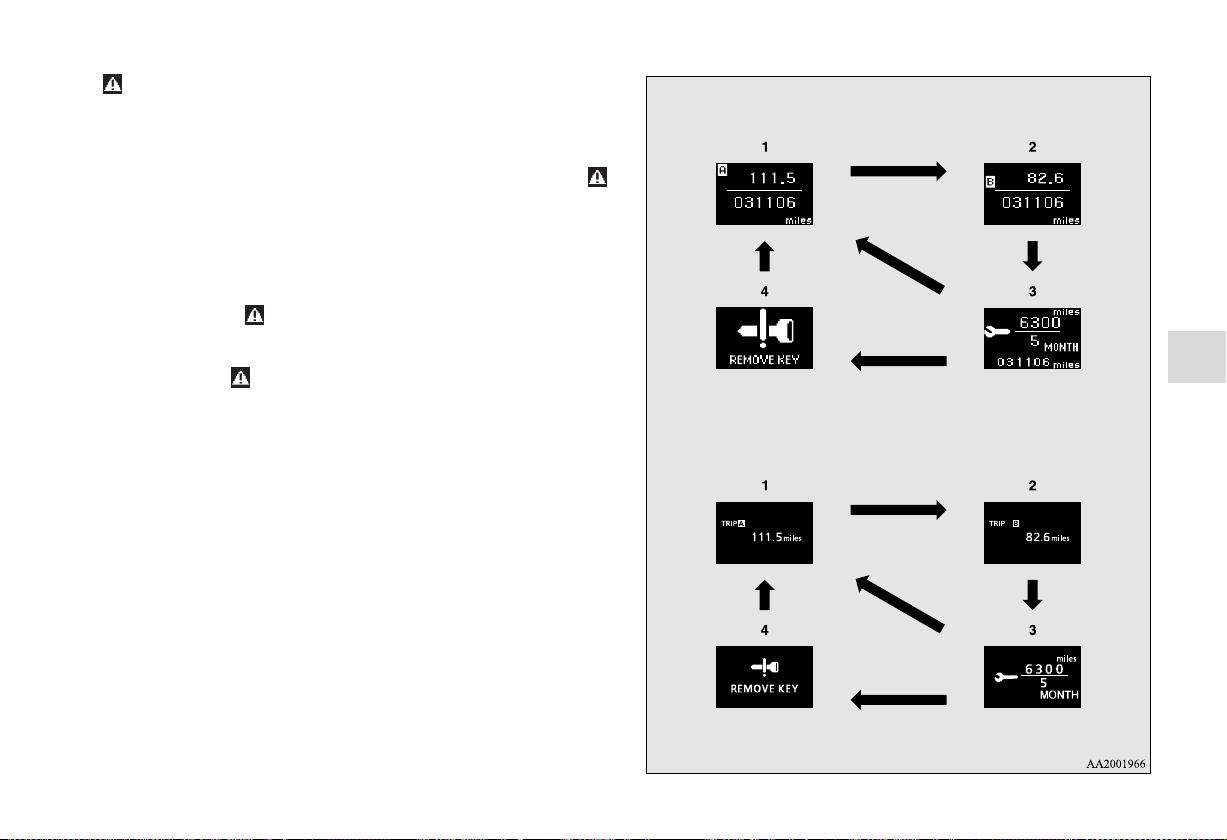
Features and controls
3-183
3
Warning display screen (With ignition switch
in the “OFF” position)
N00555200137
If you press the multi-information meter switch and return
from the warning display screen to the previous screen, the
warning is displayed.
Refer to “Returning to the display screen from before the warn-
ing display” on page 3-185.
This mark is also displayed if there is another warning other
than the one displayed. When the cause of the warning display
is eliminated, the warning goes out automatically.
N
OTE
● When the warning is displayed, the warning display
screen can be redisplayed on the information screen.
Refer to “Information screen (With ignition switch in the
“OFF” position)” on page 3-183.
Refer to “Information screen (With ignition switch in the
“ON” position)” on page 3-189.
Information screen (With ignition switch in the
“OFF” position)
N00555300112
Each time you lightly press the multi-information meter
switch, the display screen changes in the following order.
Type 1
Type 2
When there is a
warning display
When there is no
warning display
When there is a
warning display
When there is no
warning display
BK0138600US.book 183 ページ 2011年7月17日 日曜日 午後2時32分
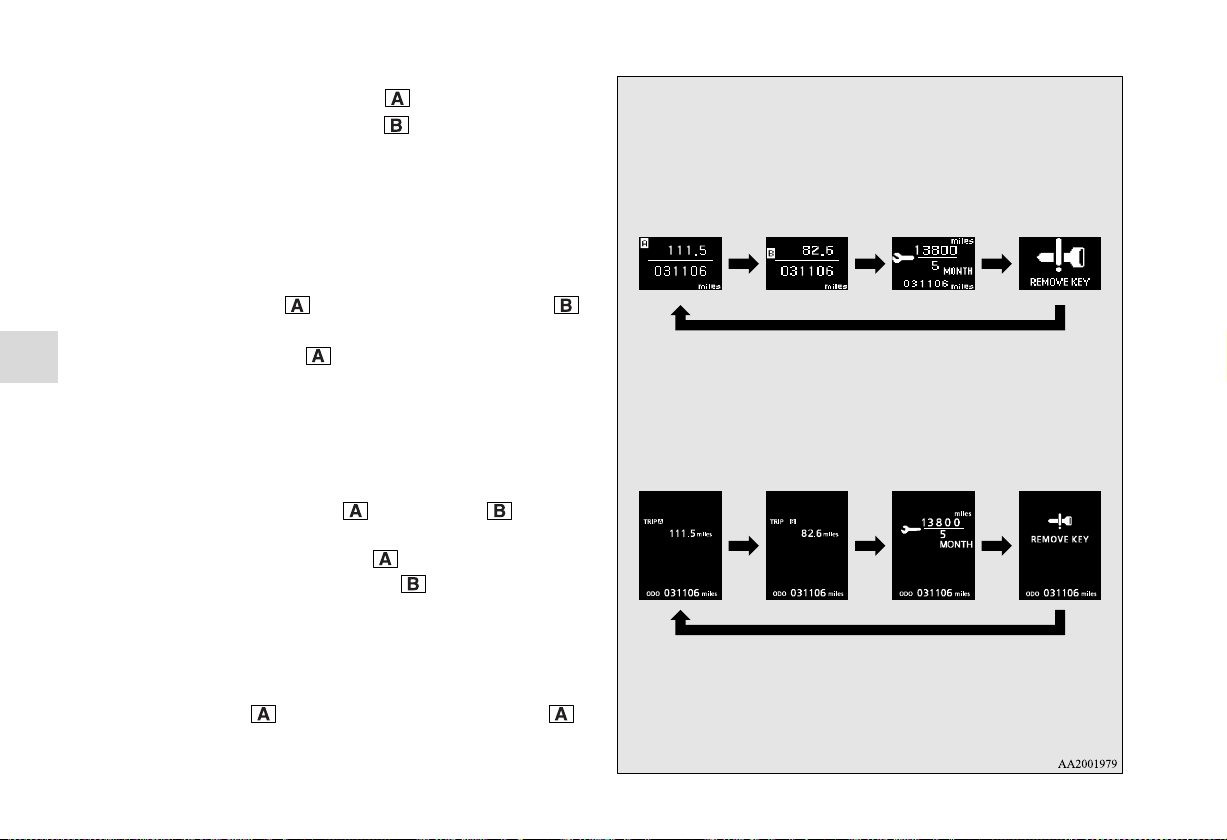
3-184
Features and controls
3
Odometer/Trip odometer
N00555400100
Each time you lightly press the multi-information meter
switch, the display screen changes as follows:
Odometer/Trip odometer → Odometer/Trip odometer
→ Service reminder → Redisplay of a warning display screen
→ Odometer/Trip odometer .
Odometer
Shows the total distance traveled.
Trip odometer
Shows the distance traveled between two points.
1-
Odometer (Type 1), Trip odometer
2-
Odometer (Type 1), Trip odometer
3- Service reminder
4- Redisplay of a warning display screen
Usage examples for trip odometer , trip odometer :
It is possible to measure two currently traveled distances,
from home using trip odometer and from a particular
point on the way using trip odometer .
To reset the trip odometer:
To return the display to 0, hold down the multi-information
meter switch for about 2 seconds or more. Only the currently
displayed value will be reset.
Example:
If trip odometer is displayed, only trip odometer
will be reset.
Type 1
Type 2
BK0138600US.book 184 ページ 2011年7月17日 日曜日 午後2時32分
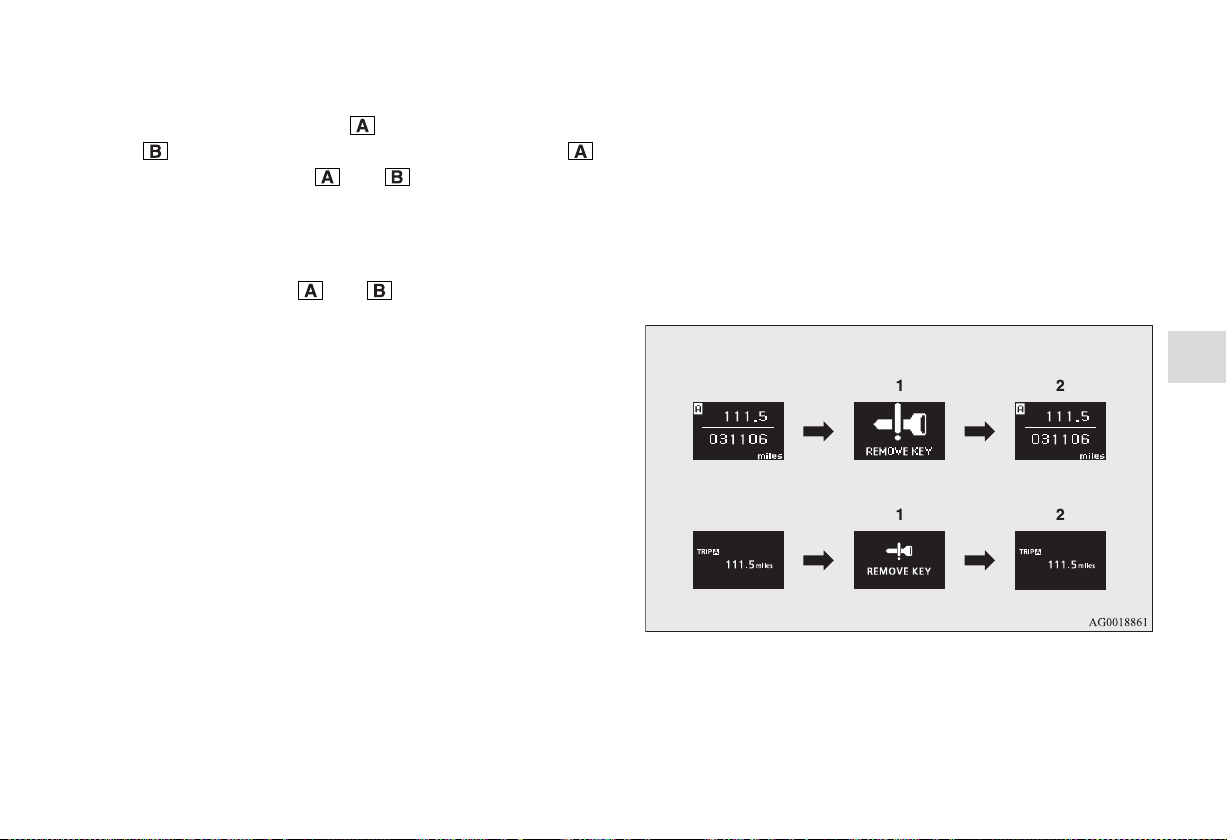
Features and controls
3-185
3
N
OTE
● If there is no warning display, the switching sequence is:
Odometer/Trip odometer → Odometer/Trip odometer
→ service reminder → Odometer/Trip odometer .
● Both trip odometers and can count up to 9999.9
miles/kilometers.
When a trip odometer goes past 9999.9 miles/kilometers,
it returns to 0.0 miles/kilometers.
● When the battery is disconnected, the memories of trip
odometer displays and are cleared, and their dis-
plays return to “0.0 miles/kilometers”.
Service reminder
N00555500039
Shows the distance and number of months until the next peri-
odic inspection.
Refer to “Service reminder” on page 3-198.
Interrupt display screen (With ignition switch in
the “OFF” position)
N00559600155
When there is information to be announced, such as a key
reminder, the buzzer sounds and switches to the warning dis-
play screen. Refer to the appropriate page and take the neces-
sary measures.
When the cause of the warning display is eliminated, the warn-
ing display goes out automatically.
Refer to “Warning display list (With ignition switch in the
“OFF” position)” on page 3-217.
1- Information generated
2- Cause eliminated
Type 1
Type 2
BK0138600US.book 185 ページ 2011年7月17日 日曜日 午後2時32分
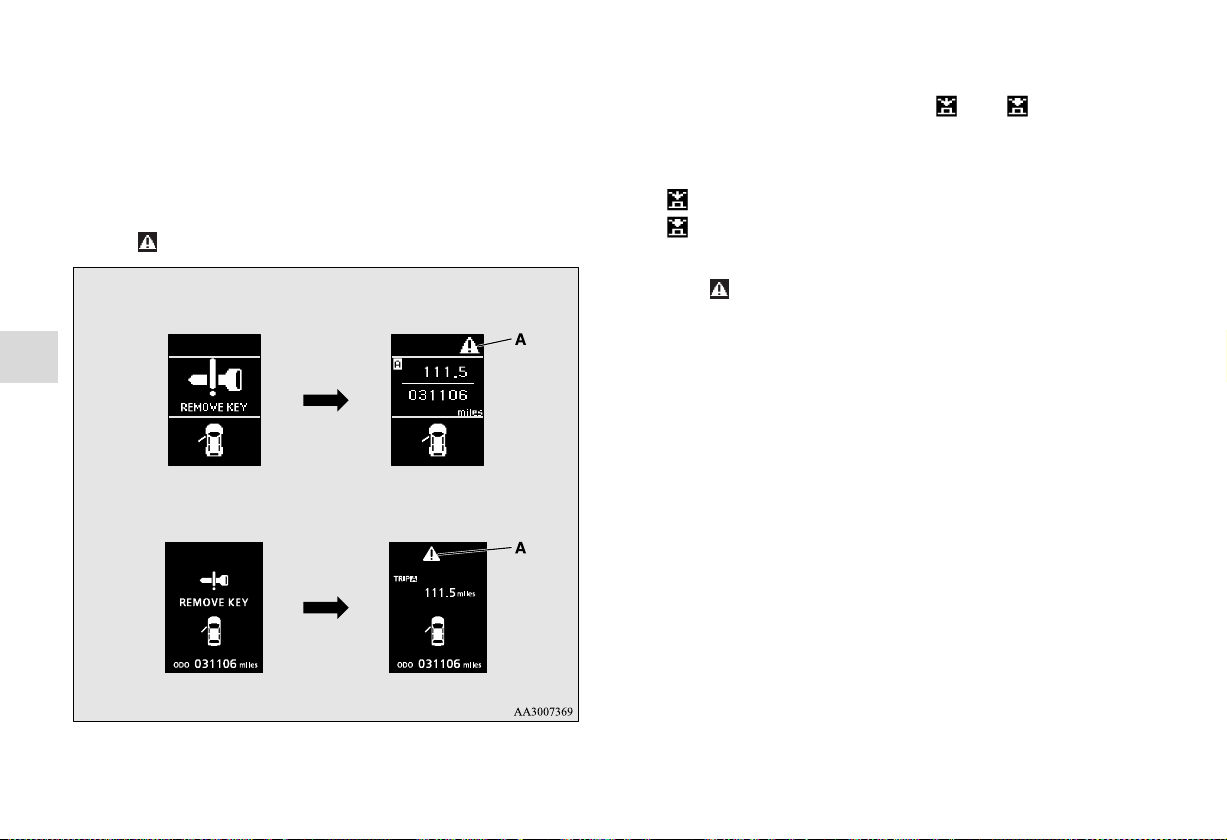
3-186
Features and controls
3
Returning to the display screen from before the warn-
ing display
Even if the cause of the warning display is not eliminated, you
can return to the screen that was displayed before the warning
display.
If you press the multi-information meter switch, the display
screen switches to the screen display from before the warning
and the warning (A) is displayed.
N
OTE
● Warning display screens with a “ ” or “ ” mark dis-
played in the upper right of the screen can be switched. If
you want to switch the display, press the multi-informa-
tion meter switch as follows.
“ ”: Press lightly.
“ ”: Press for about 2 seconds or more.
Redisplay of a warning display screen
When the warning is displayed, if you lightly press the
multi-information meter switch a few times, the warning dis-
play screen you switched from is redisplayed.
Refer to “Information screen (With ignition switch in the
“OFF” position)” on page 3-183.
Type 1
Type 2
BK0138600US.book 186 ページ 2011年7月17日 日曜日 午後2時32分
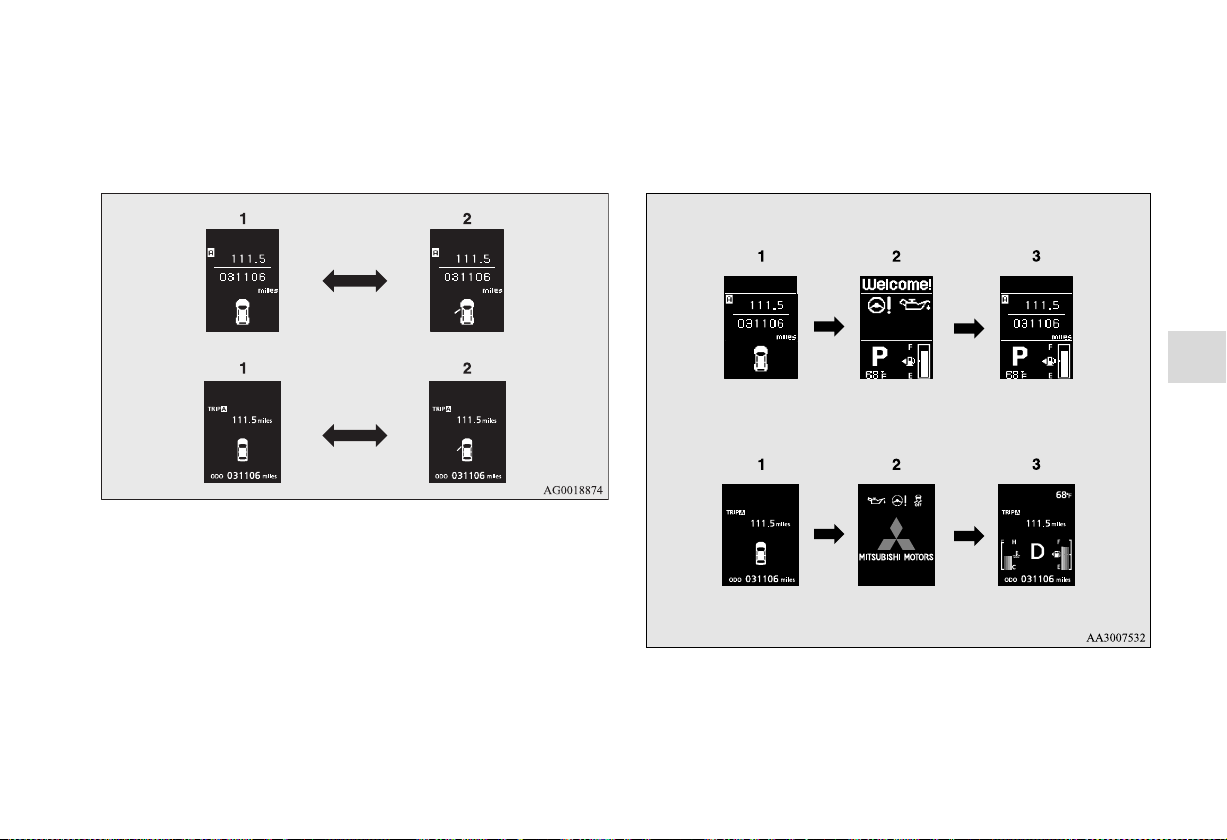
Features and controls
3-187
3
Door ajar warning display (With ignition switch
in the “OFF” position)
N00559700130
If any of the doors or the trunk lid is not completely closed, the
open door or open trunk lid warning is displayed.
Information screen (With ignition switch turned
from “OFF” to “ON” position)
N00555800133
When the ignition switch is turned to the “ON” position, the
display screen changes in the following order.
1- Doors and trunk lid are closed
2- Doors or trunk lid is open (driver’s door is open in this
example)
Type 1
Type 2
1- Screen when the ignition switch is “OFF”
2- System check screen
3- Screen when the ignition switch is “ON”
Type 1
Type 2
BK0138600US.book 187 ページ 2011年7月17日 日曜日 午後2時32分
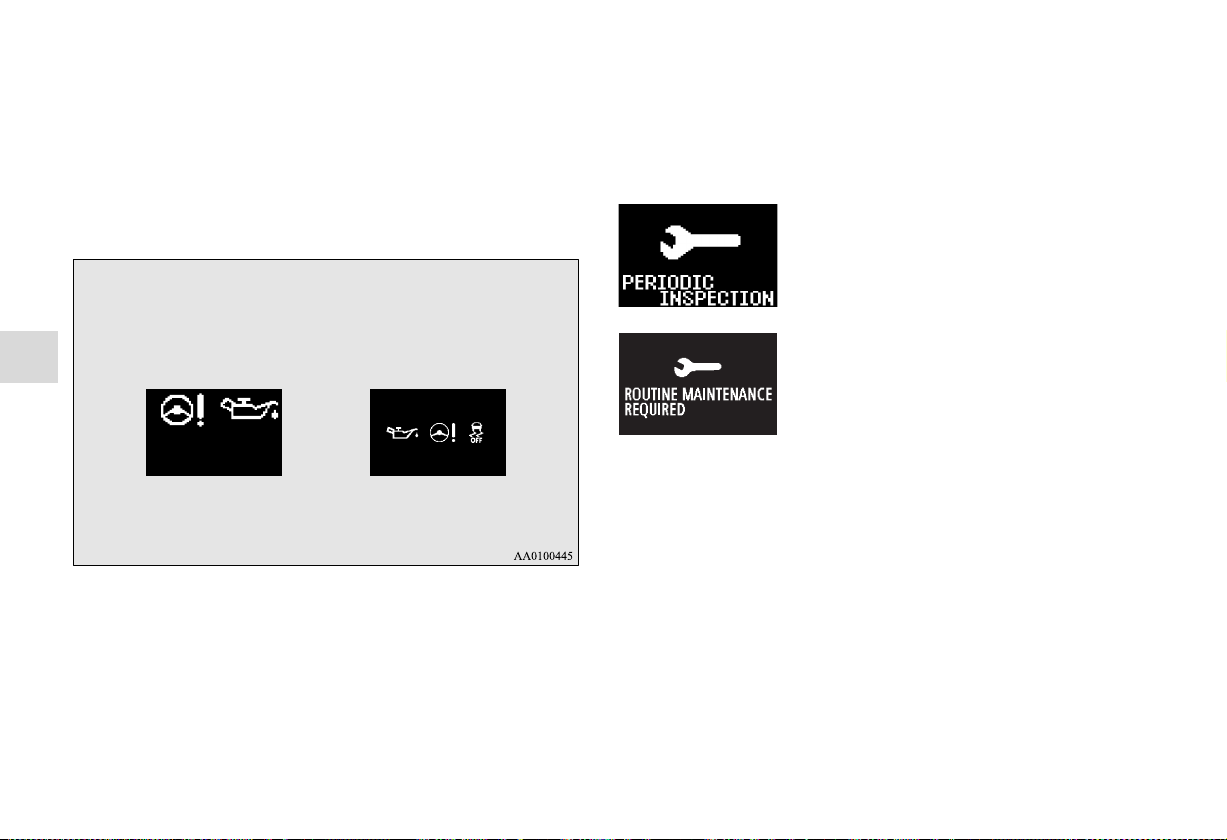
3-188
Features and controls
3
System check screen
When the ignition switch is turned to the “ON” position, the
system check screen is displayed for about 4 seconds. If there
is no fault, information screen (when the ignition switch is
“ON”) is displayed.
If there is a fault, the screen changes to warning display. Refer
to “Warning display list (when the ignition switch is “ON”
position)” on page 3-219.
N
OTE
● The system check screen display varies depending on
your equipment.
Service reminder
When the time for periodic inspection arrives, the warning dis-
play is displayed for a few seconds after the screen that is ini-
tially displayed when the ignition switch is turned “ON”. Refer
to “Service reminder” on page 3-198.
Type 1
Type 2
Drive mode indicator display screen (if so equipped)
N00555900046
Shows the 4WD drive status.
Refer to “Drive mode-selector” on page 3-136.
ACD control mode display screen (if so equipped)
N00545900027
The operation status of the ACD control mode is displayed.
Refer to “ACD control mode” on page 3-133.
Type 1 Type 2
BK0138600US.book 188 ページ 2011年7月17日 日曜日 午後2時32分

Features and controls
3-189
3
Warning display screen (With ignition switch
in the “ON” position)
N00555200140
This is displayed when you press the multi-information meter
switch and switch the warning display screen.
This mark is also displayed if there is another warning other
than the one displayed.
When the cause of the warning display is eliminated, the
warning goes out automatically.
N
OTE
● When the warning is displayed, the warning display
screen can be redisplayed on the information screen.
Refer to “Information screen (With ignition switch in the
“OFF” position)” on page 3-183 or “Information screen
(With ignition switch in the “ON” position)” on page 3-
189.
“Active stability control (ASC) OFF” display
screen (if so equipped)
N00556100074
This is displayed when the Active stability control (ASC) is
turned “OFF” with the “ASC OFF” switch.
Also, if an abnormal condition is occurred in the ASC while
driving, the “ASC OFF” display illuminates.
Refer to “ASC OFF switch” on page 3-153.
Information screen (With ignition switch in the
“ON” position)
N00556200176
Each time you lightly press the multi-information meter
switch, the display screen changes in the following order.
BK0138600US.book 189 ページ 2011年7月17日 日曜日 午後2時32分
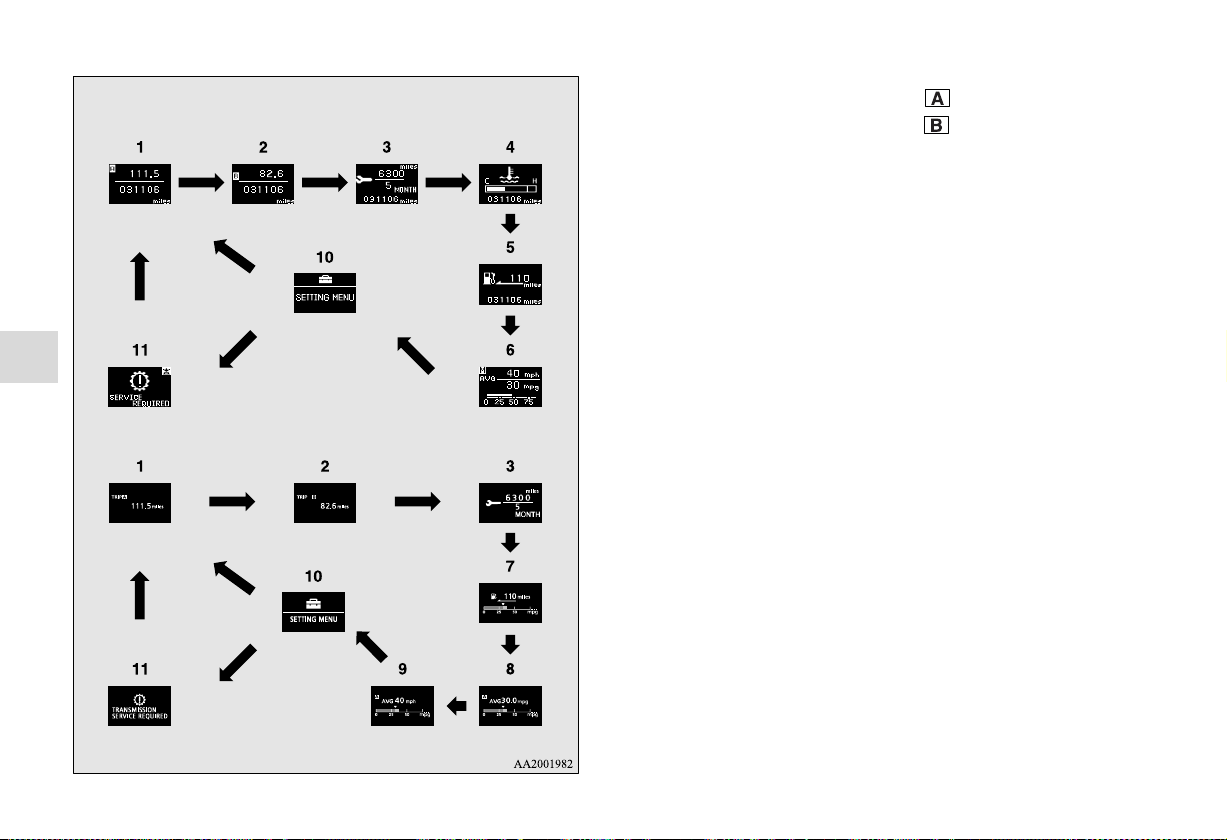
3-190
Features and controls
3
N
OTE
● While driving, the function setting screen is not displayed
even if you operate the multi-information meter switch.
Always park the vehicle in a safe place before operating.
Refer to “Changing the function settings (With ignition
switch in the “ON” position)” on page 3-201.
● When there is information to be announced, such as a sys-
tem fault, the tone sounds and the screen display is
changed.
Refer to “Interrupt display screen (With ignition switch in
the “ON” position)” on page 3-194.
When there is no warning display
When there is a
warning display
When there is no warning display
When there is a
warning display
Type 1
Type 2
1-
Odometer (Type 1)/Trip odometer
2-
Odometer (Type 1)/Trip odometer
3- Service reminder
4- Engine coolant temperature display (Type 1)
5- Driving range display (Type 1)
6- Average speed display, average fuel consumption display,
momentary fuel consumption display (Type 1)
7- Driving range display, momentary fuel consumption display
(Type 2)
8- Average fuel consumption display, momentary fuel con-
sumption display (Type 2)
9- Average speed display, momentary fuel consumption display
(Type 2)
10- Function setting screen
11- Redisplay of a warning display screen
BK0138600US.book 190 ページ 2011年7月17日 日曜日 午後2時32分
Features and controls
3-191
3
Odometer/Trip odometer
The operation method is the same as when the ignition switch
is in the “OFF” position.
For further details, refer to “Odometer/Trip odometer” on page
3-184.
Service reminder
Shows the distance and number of months until the next peri-
odic inspection.
Refer to “Service reminder” on page 3-198.
Engine coolant temperature display
Shows the engine coolant temperature.
If the coolant becomes hot, “ ” will blink.
Pay careful attention to the engine coolant temperature display
while you are driving.
Driving range display
Shows the approximate driving range (how many more miles
or kilometers you can drive) with the current fuel level. When
this driving range falls below 30 miles (50 km), “---” is dis-
played.
Refuel as soon as possible.
N
OTE
● The driving range is determined based on the fuel con-
sumption data. This may vary depending on the driving
conditions and habits. Treat the distance displayed as just
a rough guideline.
● When you refuel, the driving range display is automati-
cally updated.
However, if you only add a small amount of fuel, the cor-
rect value will not be displayed. Fill to a full tank when-
ever possible.
● When your vehicle is stopped on an extremely steep hill,
the driving range value may change. This is due to the
movement of fuel in the tank and does not indicate any
problem.
● The display setting can be changed to the preferred units
(miles or km).
Refer to “Changing the function settings (With ignition
switch in the “ON” position)” on page 3-201.
CAUTION
!
● If the engine is overheating, “ ” will blink. In this
case, the bar graph is on the red zone. Immediately
park the vehicle in a safe place and take the required
measures. Refer to “Engine overheating” on page 6-
5.
BK0138600US.book 191 ページ 2011年7月17日 日曜日 午後2時32分
3-192
Features and controls
3
Average speed display
This displays the average speed from the last reset to the
present.
There are 2 types of mode settings as follows.
For details on how to change the average speed display setting,
refer to “Changing the function settings (With ignition switch
in the “ON” position)” on page 3-201.
Manual reset mode
● When the average speed is being displayed, if you hold
down the multi-information meter switch, the average
speed displayed at that time is reset.
● When the ignition switch is turned to the “ON” position
from the “ACC” or “LOCK” position, the mode setting
changes automatically from manual to auto.
Switching to auto occurs automatically. If switching to
manual mode is done, however, the data from the last
reset is displayed.
Auto reset mode
● When the average speed is being displayed, if you hold
down the multi-information meter switch, these calcula-
tions will be reset to zero.
● When the ignition switch has been set to the “ACC” or
“LOCK” position for about 4 hours or more, the average
speed display will automatically reset.
N
OTE
● The average speed display and the average fuel consump-
tion display can be reset separately in both auto reset
mode and manual reset mode.
● “---” is displayed when the average speed cannot be mea-
sured.
● The initial (default) setting is “Auto reset mode”.
● The display setting can be changed to the preferred units
(mph or km/h).
Refer to “Changing the function settings (With ignition
switch in the “ON” position)” on page 3-201.
● The average speed display memories for auto reset mode
and manual reset mode are erased if the battery is discon-
nected.
Average fuel consumption display
This displays the average fuel consumption from the last reset
to the present.
There are 2 types of mode settings as follows.
For details on how to change the average fuel consumption dis-
play setting, refer to “Changing the function settings (With
ignition switch in the “ON” position)” on page 3-201.
The “ ” mark in the momentary fuel gauge shows the average
fuel consumption. (Type 2)
Manual reset mode
● When the average fuel consumption is being displayed, if
you hold down the multi-information meter switch, the
average fuel consumption displayed at that time is reset.
● When the ignition switch is turned to the “ON” position
from the “ACC” or “LOCK” position, the mode setting
changes automatically from manual to auto.
Switching to auto occurs automatically. If switching to
manual mode is done, however, the data from the last
reset is displayed.
BK0138600US.book 192 ページ 2011年7月17日 日曜日 午後2時32分

Features and controls
3-193
3
Auto reset mode
● When the average fuel consumption is being displayed, if
you hold down the multi-information meter switch, these
calculations will be reset to zero.
● When the ignition switch has been set to the “ACC” or
“LOCK” position for about 4 hours or more, the average
speed display will automatically reset.
N
OTE
● The average speed display and the average fuel consump-
tion display can be reset separately in both auto reset
mode and manual reset mode.
● “---” is displayed when the average fuel consumption can-
not be measured.
● The initial (default) setting is “Auto reset mode”.
● Average fuel consumption may vary depend on the driv-
ing conditions (road conditions, how you drive, etc.) The
actual fuel consumption may differ from the fuel con-
sumption displayed, so treat the fuel consumption dis-
played as just a rough guideline.
● The average fuel consumption display memories for auto
reset mode and manual reset mode are erased if the battery
is disconnected.
● The display setting can be changed to the preferred units
{mpg (US), mpg (UK), L/100 km or km/L}.
Refer to “Changing the function settings (With ignition
switch in the “ON” position)” on page 3-201.
Momentary fuel consumption display
While driving, the momentary fuel consumption is shown with
a bar graph.
When the momentary fuel consumption surpasses the average
fuel consumption, the momentary fuel consumption is dis-
played with a green bar graph. (Type 2)
Be conscious of maintaining the momentary fuel consumption
above the average fuel consumption, it can help you drive with
the better fuel consumption.
N
OTE
● When the momentary fuel consumption cannot be mea-
sured, a bar graph is not shown.
● The display setting can be changed to the preferred units
{mpg (US), mpg (UK), L/100 km or km/L}.
Refer to “Changing the function settings (With ignition
switch in the “ON” position)” on page 3-201.
● It is possible to cancel the green bar graph.
Refer to “Changing the function settings (With ignition
switch in the “ON” position)” on page 3-201.
Function setting screen
The “Display language”, “Temperature unit”, “Fuel consump-
tion unit”, and “Average fuel consumption and speed reset
method” settings can be modified as desired.
For further details, refer to “Changing the function settings
(With ignition switch in the “ON” position)” on page 3-201.
BK0138600US.book 193 ページ 2011年7月17日 日曜日 午後2時32分
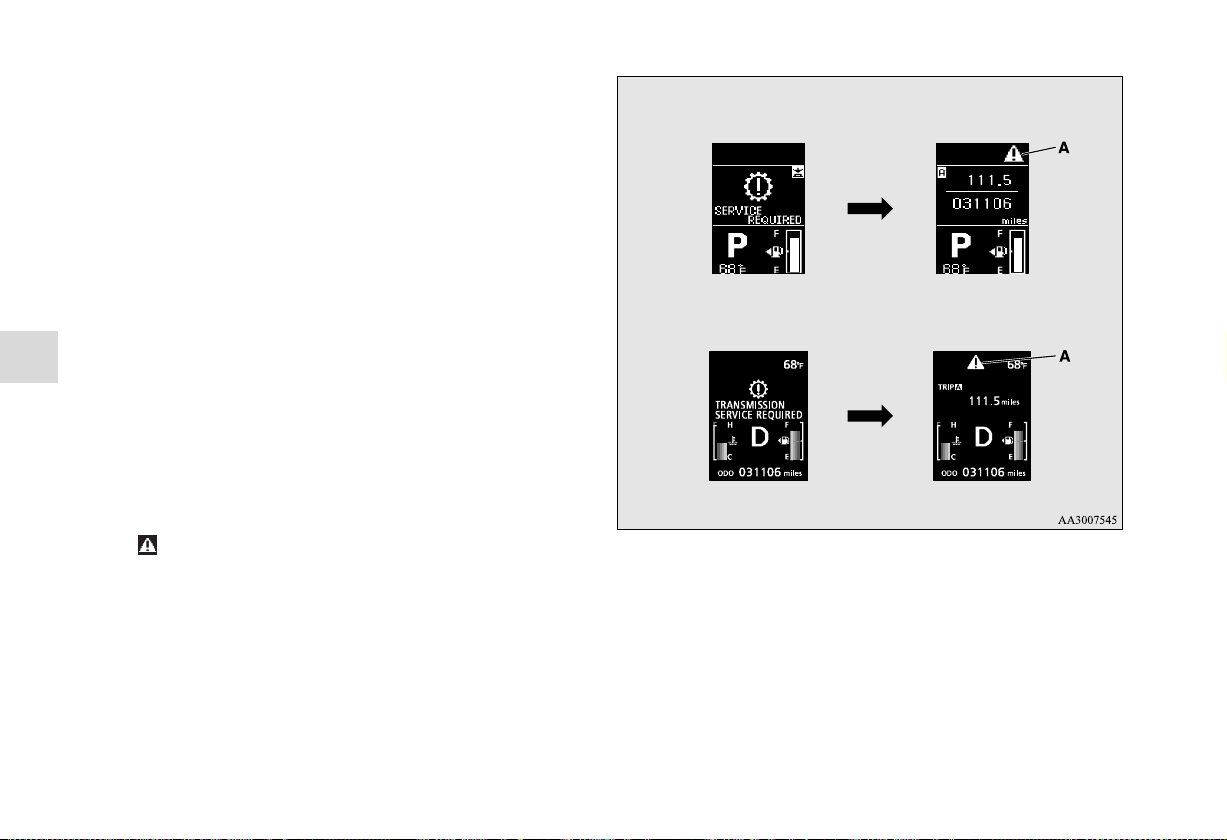
3-194
Features and controls
3
Interrupt display screen (With ignition switch in
the “ON” position)
N00556300135
Warning display
When there is information to be announced, such as a system
fault, a tone sounds and the information screen is switched to
the warning display screen.
Refer to the warning list and take the necessary measures.
Refer to “Warning display list (With ignition switch in the
“ON” position)” on page 3-219.
When the cause of the warning display is eliminated, the warn-
ing display goes out automatically.
Returning to the display screen from before the warning
display
Even if the cause of the warning display is not eliminated, you
can return to the screen that was displayed before the warning
display.
If you press the multi-information meter switch, the display
screen switches to the screen display from before the warning
and the warning (A) is displayed.
Type 1
Type 2
BK0138600US.book 194 ページ 2011年7月17日 日曜日 午後2時32分

Features and controls
3-195
3
N
OTE
● Warning display screens with a “ ” or “ ” mark dis-
played in the upper right of the screen can be switched. If
you want to switch the display, press the multi-informa-
tion meter switch as follows.
“ ”: Press lightly.
“ ”: Press for about 2 seconds or more.
Redisplay of a warning display screen
When the warning is displayed, if you lightly press the
multi-information meter switch a few times, the warning dis-
play screen you switched from is redisplayed.
Other interrupt displays
The operation status of each system is displayed on the infor-
mation screen.
For further details, refer to the appropriate page in the warning
display list.
Refer to “Other interrupt displays (With ignition switch in the
“ON” position)” on page 3-226.
Selector lever position display screen {continu-
ously variable transmission (CVT)}
N00556400048
Shows the position of the selector lever.
Refer to “Selector lever operation” on page 3-98.
Gearshift lever position display screen (Twin
Clutch SST)
N00545800055
Shows the position of the gearshift lever.
Refer to “Gearshift lever operation” on page 3-112.
BK0138600US.book 195 ページ 2011年7月17日 日曜日 午後2時32分
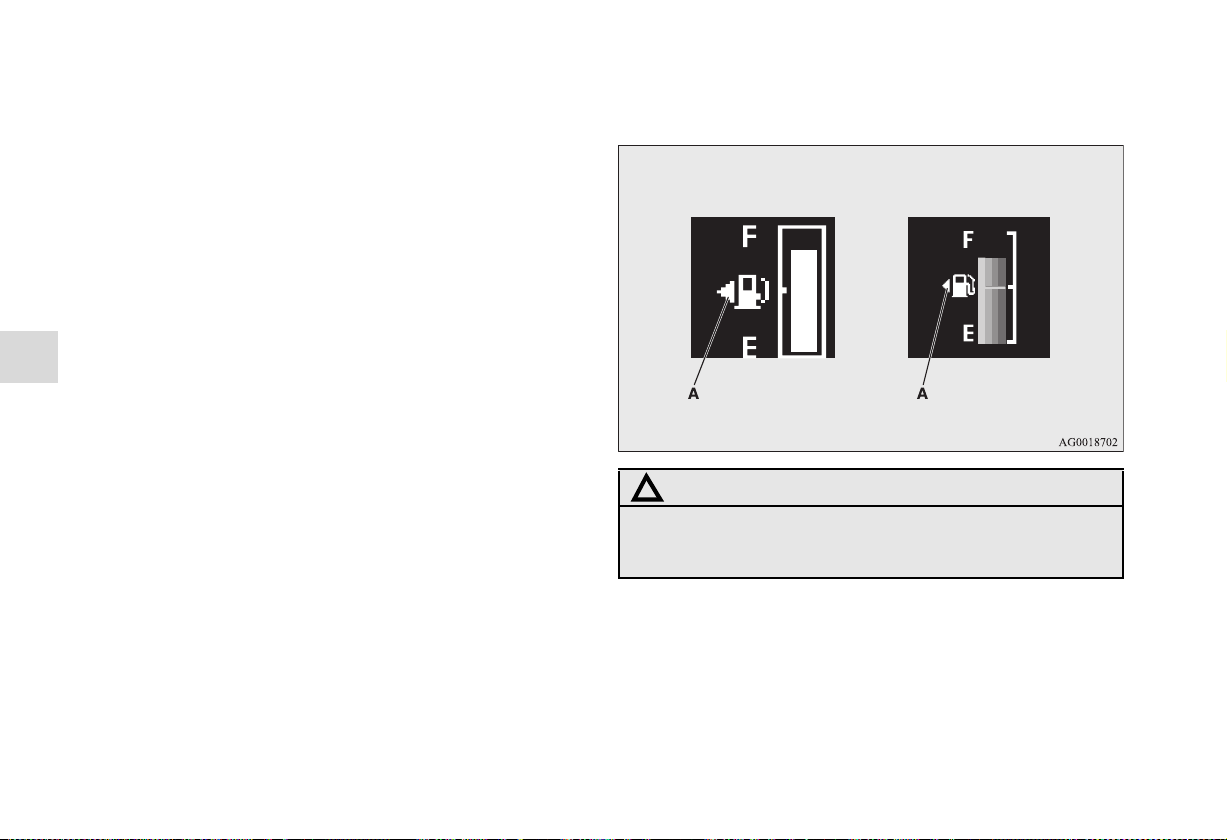
3-196
Features and controls
3
Outside temperature display screen
N00556500094
Shows the temperature outside the vehicle.
N
OTE
● The display setting can be changed to the preferred units
(°F or °C).
Refer to “Changing the function settings (With ignition
switch in the “ON” position)” on page 3-201.
● Depending on factors such as the driving conditions, the
displayed temperature may vary from the actual outside
temperature.
Twin Clutch SST control mode display screen
(Twin Clutch SST)
N00545100029
The operation status of the Twin Clutch SST control mode is
displayed. Refer to “Twin Clutch SST control mode” on page
3-120.
ACD control mode display screen (if so equipped)
N00545900030
The operation status of the ACD control mode is displayed.
Refer to “ACD control mode” on page 3-133.
ECO mode indicator (if so equipped)
N00568700019
This indicator will be displayed when fuel-efficient driving is
achieved.
Fuel remaining display screen
N00556600125
Shows the amount of fuel remaining.
N
OTE
● It may take several seconds to stabilize the display after
refilling the tank.
● If fuel is added with the ignition switch in the “ON” posi-
tion, the remaining fuel display may indicate an incorrect
fuel level.
CAUTION
!
● Running out of gas could damage the catalytic con-
verter. If the warning display appears, refuel as soon
as possible.
Type 1 Type 2
BK0138600US.book 196 ページ 2011年7月17日 日曜日 午後2時32分
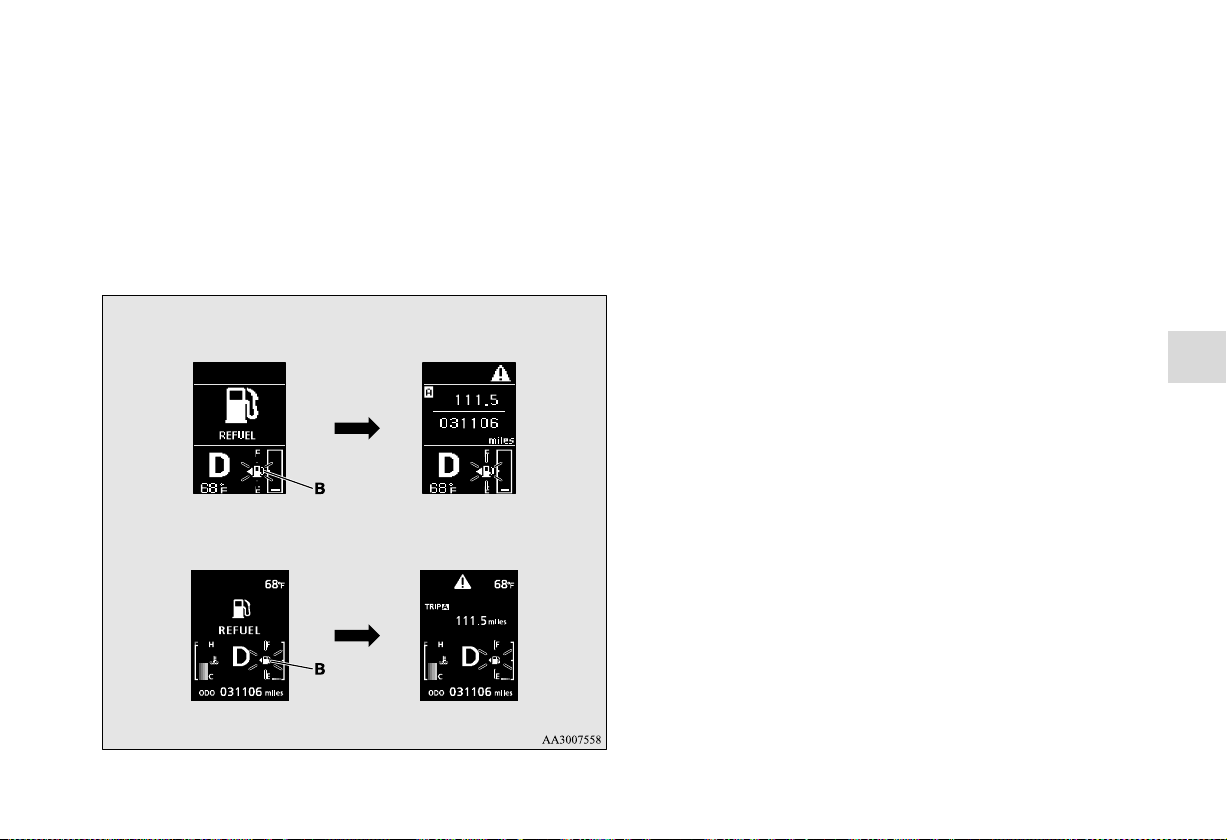
Features and controls
3-197
3
Fuel tank filler door mark
The arrow (A) indicates that the fuel tank filler door is located
on the left side of the vehicle. (Refer to “Filling the fuel tank”
on page 1-4.)
Fuel remaining warning display
When the fuel level runs low, the information screen changes
to the interrupt display of the fuel remaining warning display
and the mark (B) on the fuel remaining display flashes slowly.
If this warning display appears, refuel as soon as possible.
N
OTE
● On hills or curves, the display may be incorrect due to the
movement of fuel in the tank.
Type 1
Type 2
BK0138600US.book 197 ページ 2011年7月17日 日曜日 午後2時32分
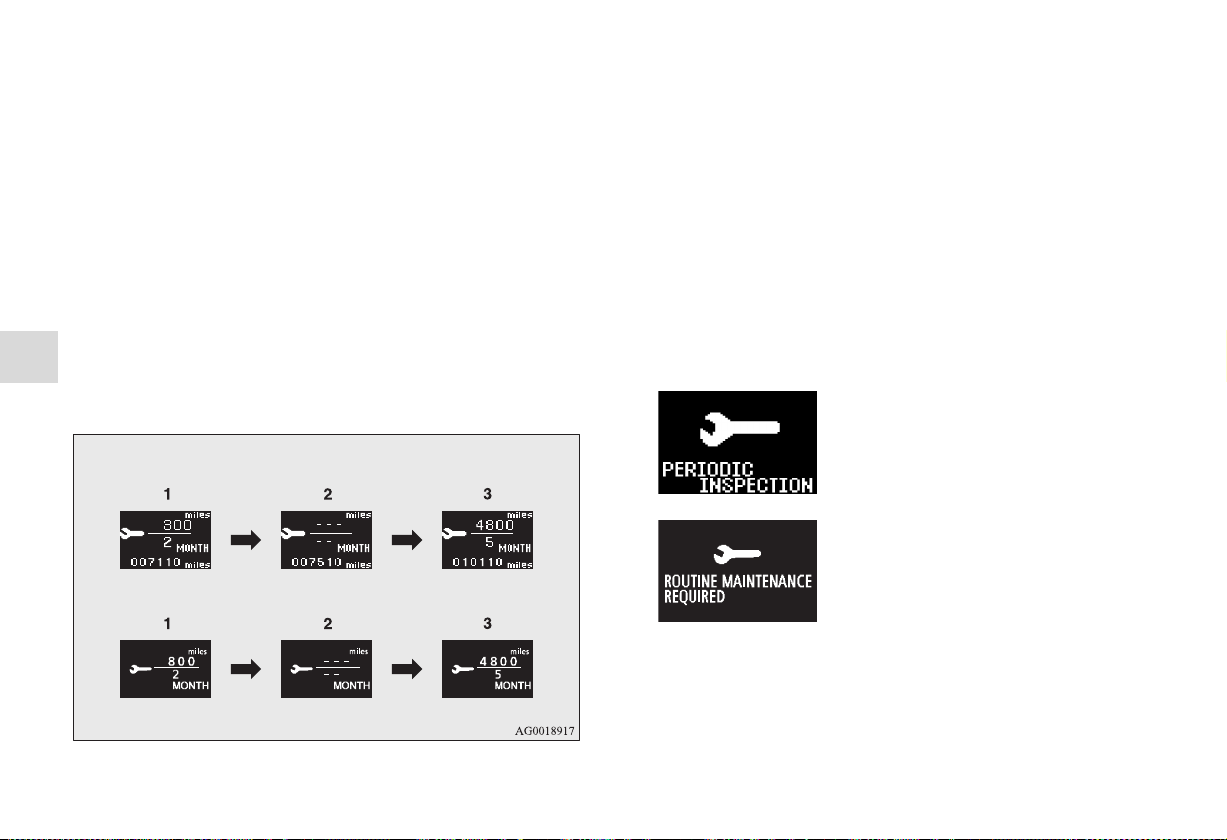
3-198
Features and controls
3
Service reminder
N00556700168
Displays the approximate time until the next recommended
periodic inspection. “---” is displayed when the inspection time
has arrived.
N
OTE
● Except for vehicles with Twin Clutch SST, shows the time
until the periodic inspection every 6 months (7,500 miles
or 12,000 km).
● For vehicles with Twin Clutch SST, the service reminder
time can be modified by an authorized Mitsubishi Motors
dealer, to adjust for severe usage, etc. Refer to “Severe
maintenance schedule” in your vehicle’s Warranty and
Maintenance Manual. For further information, please con-
tact your authorized Mitsubishi Motors dealer.
1. Shows the time until the next periodic inspection.
N
OTE
● Shows the distance in units of 100 miles (100 km) and the
time in units of 1 month.
2. This informs you that a periodic inspection is due. Contact
an authorized Mitsubishi Motors dealer or a repair facility
of your choice to have the system checked.
At that time, when the ignition switch is switched from
the “OFF” position to the “ON” position, the warning dis-
play is displayed for a few seconds on the information
screen.
Type 1
Type 2
3. After your vehicle is inspected at an authorized Mitsubishi
Motors dealer, it displays the time until the next periodic
inspection.
Type 1
Type 2
BK0138600US.book 198 ページ 2011年7月17日 日曜日 午後2時32分
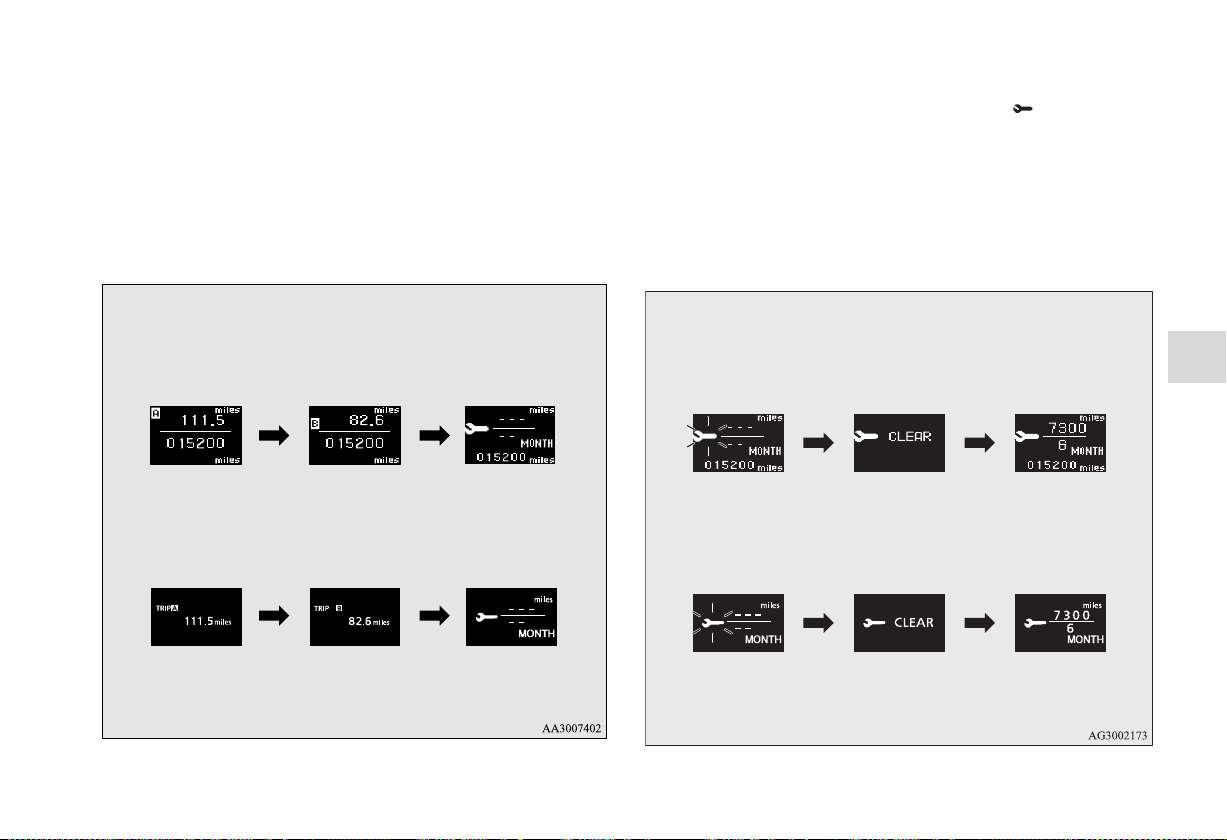
Features and controls
3-199
3
To reset
The “---” display can be reset while the ignition switch is in the
“OFF” position. When the display is reset, the time until the
next periodic inspection is displayed and the warning display is
no longer displayed when the ignition switch is switched from
the “OFF” position to the “ON” position.
1. When you lightly press the multi-information meter
switch, the information screen changes to the service
reminder display screen.
2. Press and hold the multi-information meter switch (for
about 2 seconds or more) to display “ ” and make it
flash. (If there is no operation for about 10 seconds with
this indicator flashing, the display returns to the previous
screen.)
3. With this indicator flashing, if you lightly press the multi-
information meter switch, the screen switches from “---”
to “CLEAR”. After that, the time until the next periodic
inspection is shown.
Type 1
Type 2
Type 2
Type 1
BK0138600US.book 199 ページ 2011年7月17日 日曜日 午後2時32分
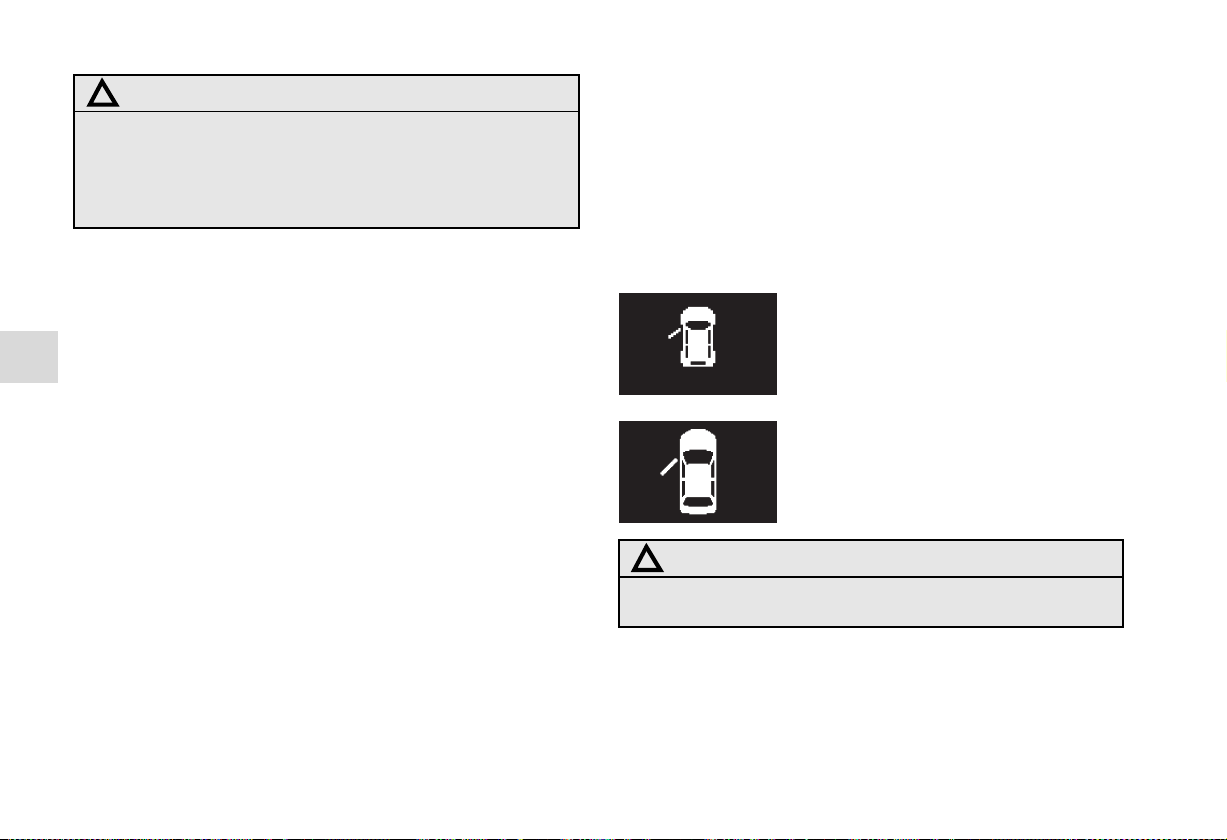
3-200
Features and controls
3
N
OTE
● The “---” display cannot be reset while the ignition switch
is in the “ON” position.
● When “---” is displayed, after a certain distance and a cer-
tain period of time, the display is reset and the time until
the next periodic inspection is displayed.
● If you accidentally reset the display, consult an authorized
Mitsubishi Motors dealer for assistance.
Door ajar warning display (With ignition switch
in the “ON” position)
N00555700145
If any of the doors or the trunk lid is not completely closed, this
displays the open door or trunk lid.
If the speed increases to about 5 mph (8 km/h) or higher with a
door ajar, a buzzer will sound 4 times to inform you that a door
is ajar.
The buzzer will not sound if only the trunk lid is open.
Type 1
Type 2
CAUTION
!
● The customer is responsible for making sure that
regular inspections and maintenance and periodic
inspections and maintenance are performed.
Inspections and maintenance must be performed to
prevent accidents and malfunctions.
CAUTION
!
● Always make sure that the warning display goes out
before beginning to drive.
BK0138600US.book 200 ページ 2011年7月17日 日曜日 午後2時32分
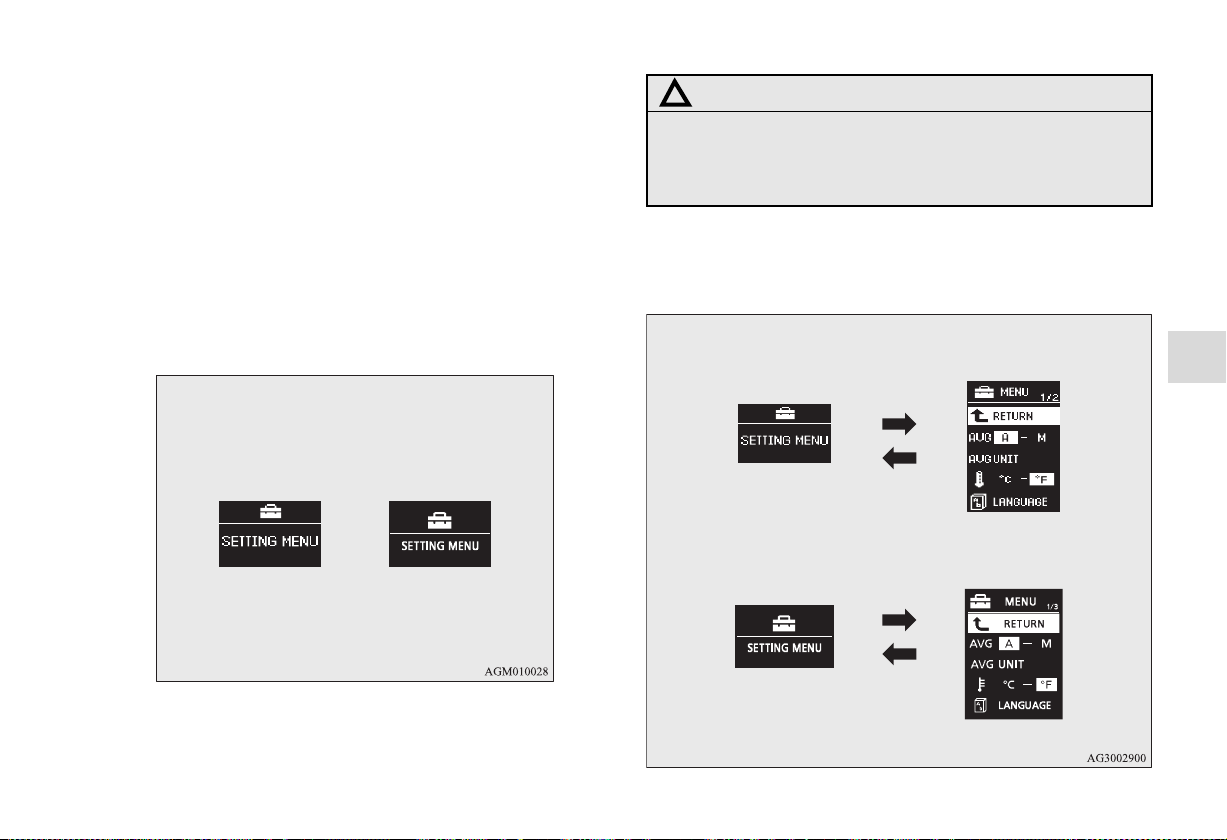
Features and controls
3-201
3
Changing the function settings (With ignition
switch in the “ON” position)
N00556800084
1. Park your vehicle in a safe place.
Fully apply the parking brake and move the shift lever
into the “N” position (manual transaxle), the selector lever
{continuously variable transmission (CVT)} or the gear-
shift lever (Twin Clutch SST) into the “P” position.
2. When you lightly press the multi-information meter
switch, the information screen changes to the function set-
ting screen.
Refer to “Information screen (With ignition switch in the
“ON” position)” on page 3-189.
3. Press and hold the multi-information meter switch (for
about 2 seconds or more) to switch from the setting mode
screen to the menu screen.
Type 1 Type 2
CAUTION
!
● For safety, stop the vehicle before operating.
While driving, even if you operate the multi-infor-
mation meter switch, the function setting screen is
not displayed.
Type 1
Type 2
BK0138600US.book 201 ページ 2011年7月17日 日曜日 午後2時32分

3-202
Features and controls
3
N
OTE
● To return the menu screen to the function setting screen,
press and hold the multi-information meter switch (for
about 2 seconds or more).
● If no operations are made within about 15 seconds of the
menu screen being displayed, the display returns to the
function setting screen.
4. Select the item to change on the menu screen and change
to the desired setting. For further details on the operation
methods, refer to the following sections.
Refer to “Changing the reset mode for average fuel con-
sumption and average speed” on page 3-202.
Refer to “Changing the fuel consumption display unit” on
page 3-204.
Refer to “Changing the temperature unit” on page 3-206.
Refer to “Changing the display language” on page 3-206.
Refer to “Changing the language on Mitsubishi Multi-
Communication System or Bluetooth
®
2.0 interface to
match the multi-information display (if so equipped)” on
page 3-207.
Refer to “Operation sound setting” on page 3-209.
Refer to “Changing the amount of time until “REST
REMINDER” is displayed” on page 3-210.
Refer to “Changing the turn signal sound” on page 3-211.
Refer to “Changing the momentary fuel consumption dis-
play (Type 2)” on page 3-212.
Refer to “Returning to the factory settings” on page 3-
213.
Changing the reset mode for average fuel consumption
and average speed
N00557000184
You can change the mode condition for the average fuel con-
sumption and average speed display to “Auto reset” or “Man-
ual reset”.
1. Press and hold the multi-information meter switch (for
about 2 seconds or more) to switch from the setting mode
screen to the menu screen.
Refer to “Changing the function settings (With ignition
switch in the “ON” position)” on page 3-201.
2. Lightly press the multi-information meter switch to select
“AVG” (average fuel consumption and average speed set-
ting).
BK0138600US.book 202 ページ 2011年7月17日 日曜日 午後2時32分
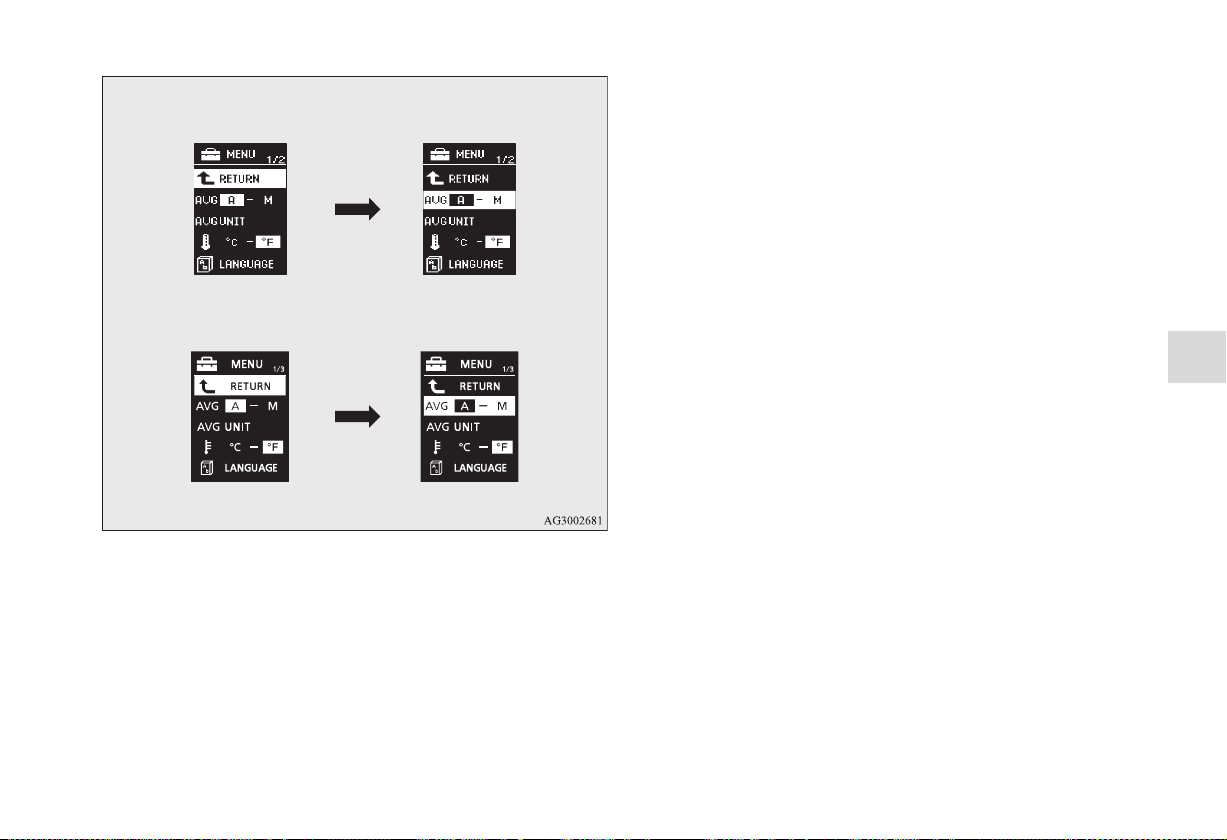
Features and controls
3-203
3
3. Press and hold the multi-information meter switch (for
about 2 seconds or more) to switch in sequence from A or
1 (Auto reset mode) → M, 2 or P (Manual reset mode) →
A or 1 (Auto reset mode).
The setting will change to the selected mode condition.
Manual reset mode
• If you press and hold the multi-information meter switch
when the average fuel consumption and average speed
are displayed, these calculations will be reset to zero.
• When the ignition switch is turned to the “ON” position
from the “ACC” or “LOCK” position, the mode setting
changes automatically from manual to auto.
Switching to auto occurs automatically. If switching to
manual mode is done, however, the data from the last
reset is displayed.
Auto reset mode
• When the average fuel consumption and average speed
are being displayed, if you hold down the multi-infor-
mation meter switch, these calculations will be reset to
zero.
• When the ignition switch has been set to the “ACC” or
“LOCK” position for about 4 hours or more, the average
fuel consumption display and the average speed display
will automatically reset.
N
OTE
● The average speed display and average fuel consumption
display can be reset separately in both auto reset mode and
manual reset mode.
● The average speed display memories and average fuel
consumption memories for auto reset mode and manual
reset mode are erased if the battery is disconnected.
● The initial (default) setting is “Auto reset mode”.
Type 1
Type 2
BK0138600US.book 203 ページ 2011年7月17日 日曜日 午後2時32分
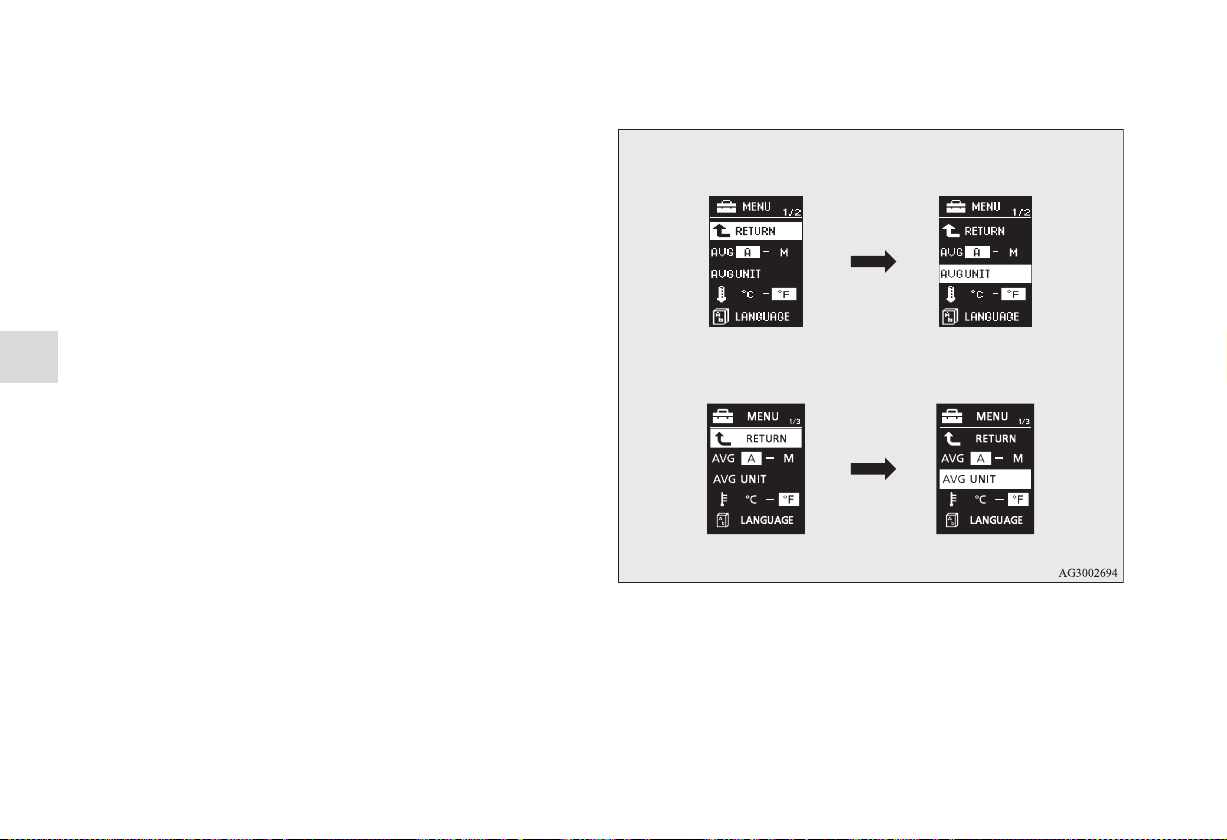
3-204
Features and controls
3
Changing the fuel consumption display unit
N00557100130
The fuel consumption display unit can be changed. The dis-
tance, speed, and amount units are also changed to match the
selected fuel consumption unit.
1. Press and hold the multi-information meter switch (for
about 2 seconds or more) to change from the setting mode
screen to the menu screen.
Refer to “Changing the function settings (With ignition
switch in the “ON” position)” on page 3-201.
2. Lightly press the multi-information meter switch to select
“AVG UNIT” (fuel consumption display unit setting).
Type 1
Type 2
BK0138600US.book 204 ページ 2011年7月17日 日曜日 午後2時32分
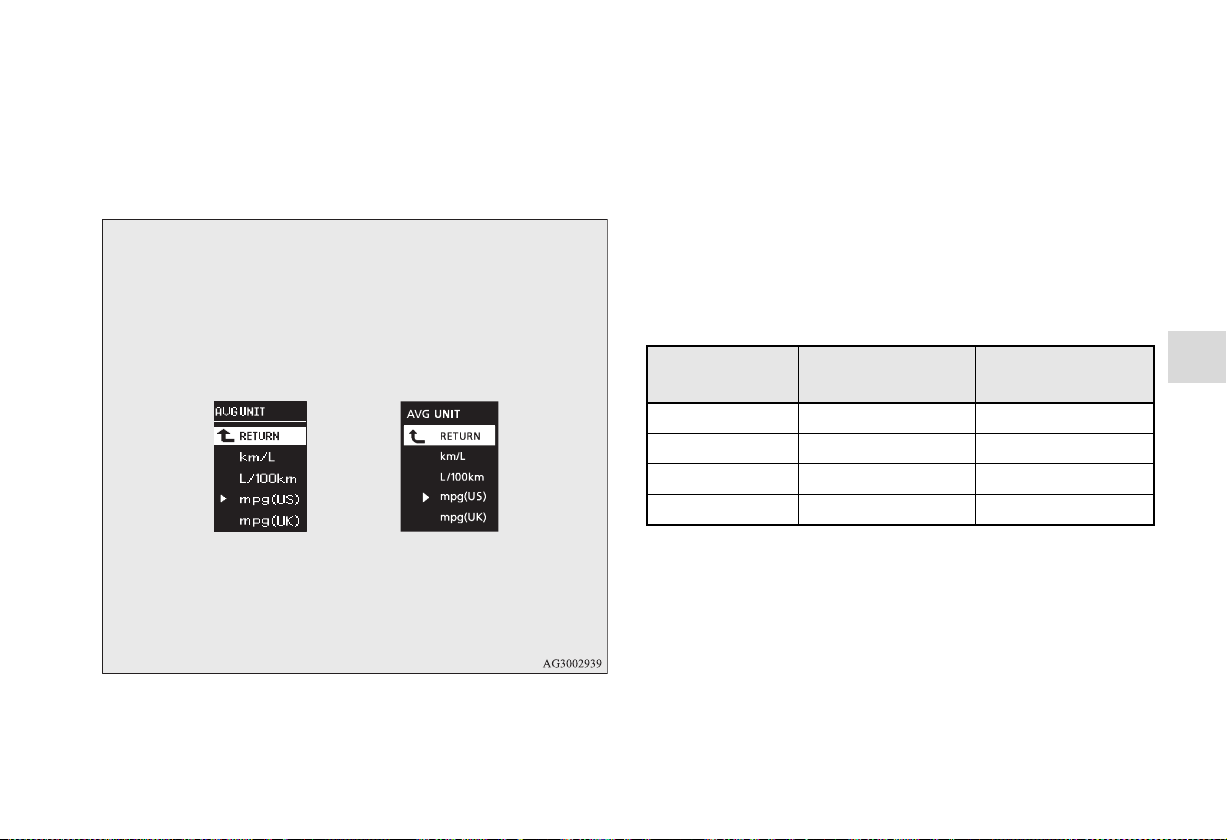
Features and controls
3-205
3
3. Press and hold the multi-information meter switch (for
about 2 seconds or more) to display “AVG UNIT” (fuel
consumption display unit setting).
4. Lightly press the multi-information meter switch to switch
in sequence from km/L → L/100 km → mpg (US) → mpg
(UK) → RETURN → km/L.
5. Press and hold the multi-information meter switch (for
about 2 seconds or more) to change the setting to the
selected unit.
N
OTE
● The display units for the driving range, the average fuel
consumption, the average speed and the momentary fuel
consumption are changed, but the units for the indicating
needle (speedometer), the odometer and the trip odometer
will remain unchanged.
● If the battery is disconnected, the memory of the unit set-
ting is erased and is automatically set to {mpg (US) or
L/100 km}.
The distance and speed units are also changed in the following
combinations to match the selected fuel consumption unit.
Type 1
Type 2
Fuel economy
Distance
(driving range)
Speed
(average speed)
mpg (US) mile (s) mph
mpg (UK) mile (s) mph
km / L km km / h
L / 100 km km km / h
BK0138600US.book 205 ページ 2011年7月17日 日曜日 午後2時32分
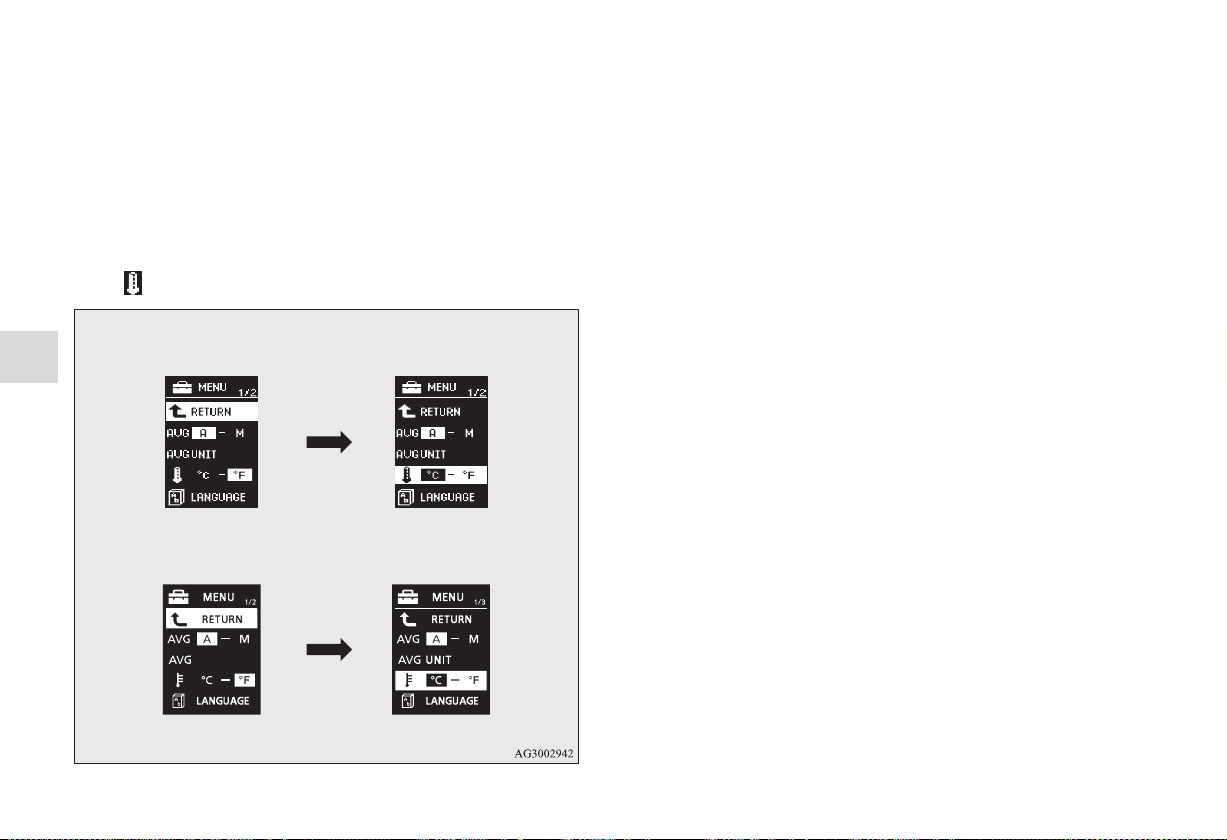
3-206
Features and controls
3
Changing the temperature unit
N00557200102
The temperature display unit can be changed.
1. Press and hold the multi-information meter switch (for
about 2 seconds or more) to change from the setting mode
screen to the menu screen.
Refer to “Changing the function settings (With ignition
switch in the “ON” position)” on page 3-201.
2. Lightly press the multi-information meter switch to select
“ ” (temperature unit setting).
3. Press and hold the multi-information meter switch (for
about 2 seconds or more) to change in sequence from °F
→ °C → °F.
The setting is changed to the selected temperature unit.
N
OTE
● If the battery is disconnected, the memory of the unit set-
ting is erased and is automatically set to °F (°C).
Changing the display language
N00557300145
The language of the multi-information display can be changed.
1. Press and hold the multi-information meter switch (for
about 2 seconds or more) to change from the setting mode
screen to the menu screen.
Refer to “Changing the function settings (With ignition
switch in the “ON” position)” on page 3-201.
Type 1
Type 2
BK0138600US.book 206 ページ 2011年7月17日 日曜日 午後2時32分
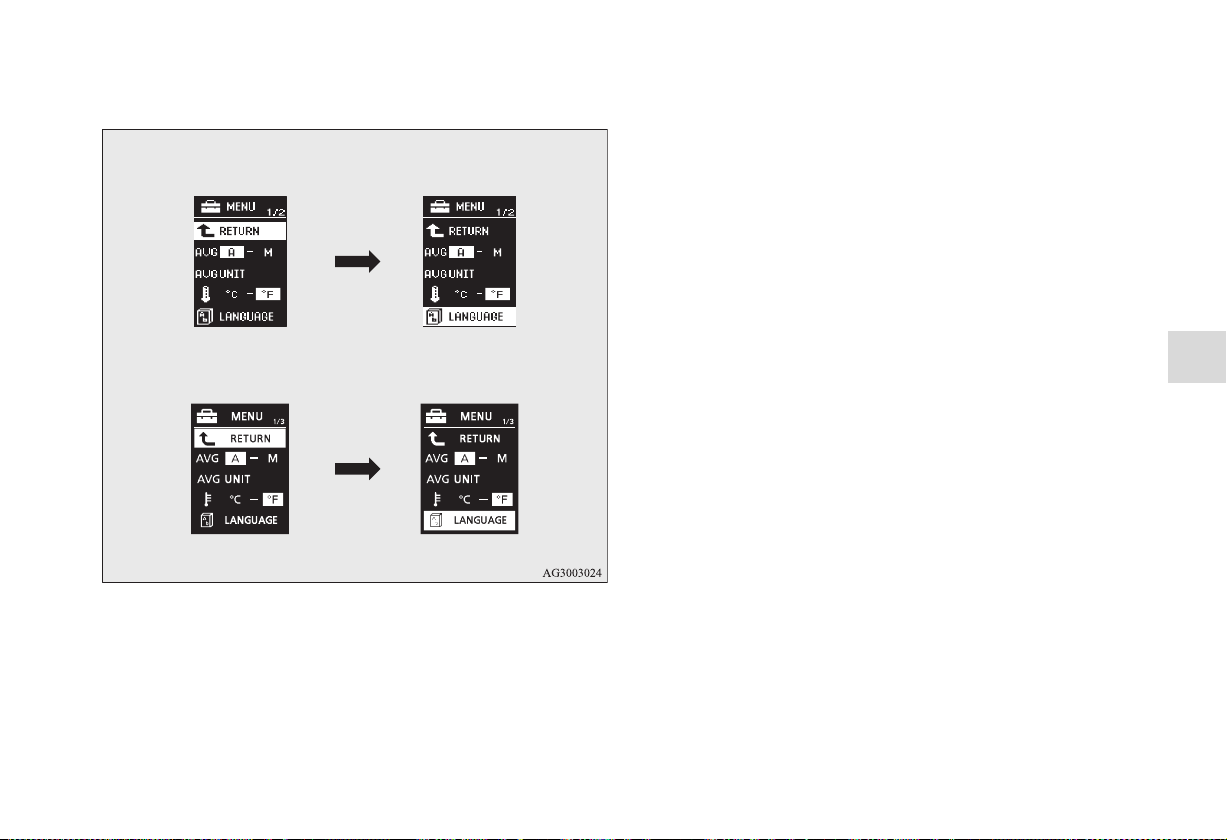
Features and controls
3-207
3
2. Lightly press the multi-information meter switch to select
“LANGUAGE” (language setting).
3. Press and hold the multi-information meter switch (for
about 2 seconds or more) to display “LANGUAGE” (lan-
guage setting).
4. Lightly press the multi-information meter switch to select
the desired language.
5. Press and hold the multi-information meter switch (for
about 2 seconds or more) to change the setting to the
selected language.
N
OTE
● If the battery is disconnected, the memory of the language
setting is erased and is automatically set to ENGLISH.
● If “---” is selected in the language setting, a warning mes-
sage is not displayed when there is a warning display or
interrupt display.
Changing the language on Mitsubishi Multi-Communi-
cation System or Bluetooth
®
2.0 interface to match the
multi-information display
(if so equipped)
N00529800217
The language used in Mitsubishi Multi-Communication Sys-
tem (if so equipped) or Bluetooth
®
2.0 interface (if so
equipped) can be changed automatically to the same language
as that shown in the multi-information display.
1. Press and hold the multi-information meter switch (for
about 2 seconds or more) to change from the setting mode
screen to the menu screen.
Refer to “Changing the function settings (With ignition
switch in the “ON” position)” on page 3-201.
Type 1
Type 2
BK0138600US.book 207 ページ 2011年7月17日 日曜日 午後2時32分
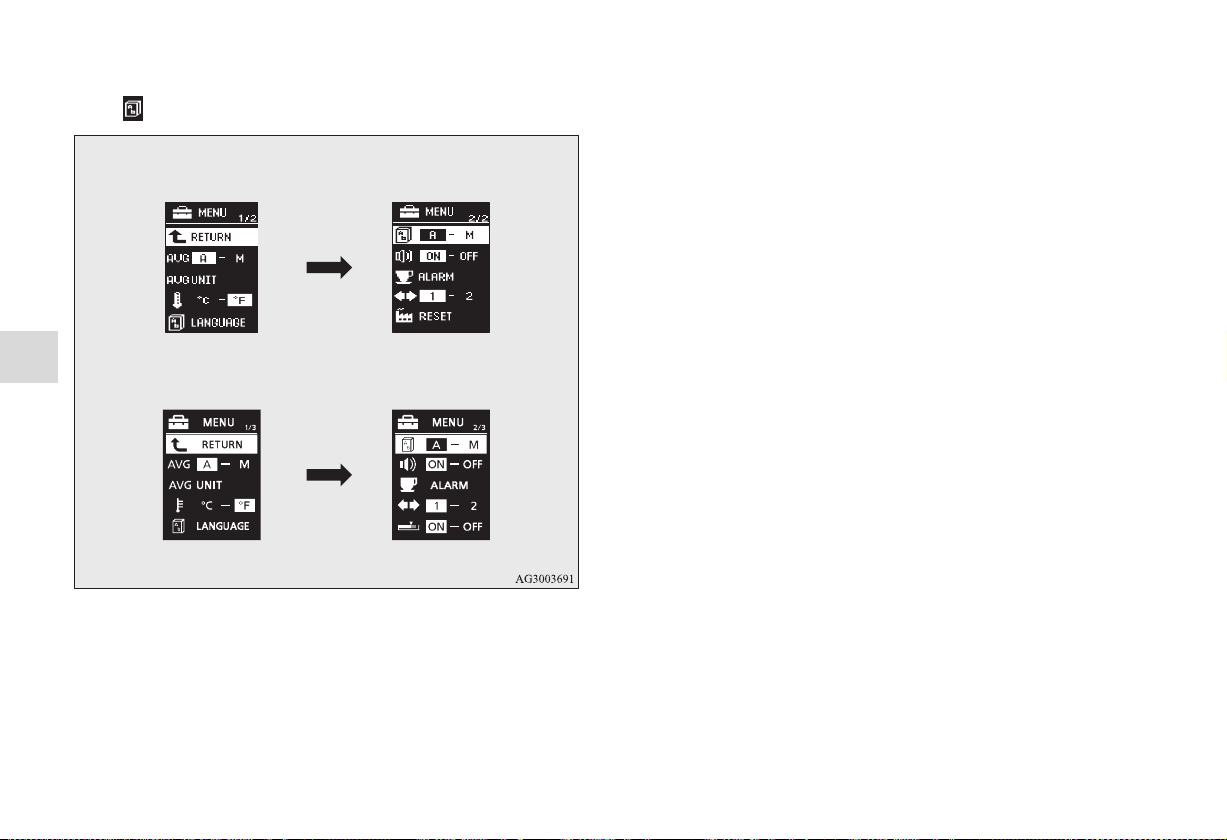
3-208
Features and controls
3
2. Lightly press the multi-information meter switch to select
“ ” (language cooperative control).
3. Every time the multi-information meter switch is pressed
for about 2 seconds or more the setting will change as fol-
lows: A or 1 (language cooperation: enabled) → M, 2 or P
(language cooperation: disabled) → A or 1 (language
cooperation: enabled). The setting is changed to the
selected condition.
N
OTE
● If the battery is disconnected, the language cooperative
control is automatically set to “A or 1” (language coopera-
tion: enabled).
● The language cooperation setting can be switched in the
following manner.
• When “A or 1” (language cooperation: enabled) has
been selected, the language for the Mitsubishi Multi-
Communication System (if so equipped) or the
Bluetooth
®
2.0 interface (if so equipped) is automati-
cally changed to the language selected for the multi-
information display.
• When “M, 2 or P” (language cooperation: disabled) has
been selected, the language for the Mitsubishi Multi-
Communication System (if so equipped) or the
Bluetooth
®
2.0 interface (if so equipped) is not automat-
ically changed to match the language selected for the
multi-information display.
Type 1
Type 2
BK0138600US.book 208 ページ 2011年7月17日 日曜日 午後2時32分
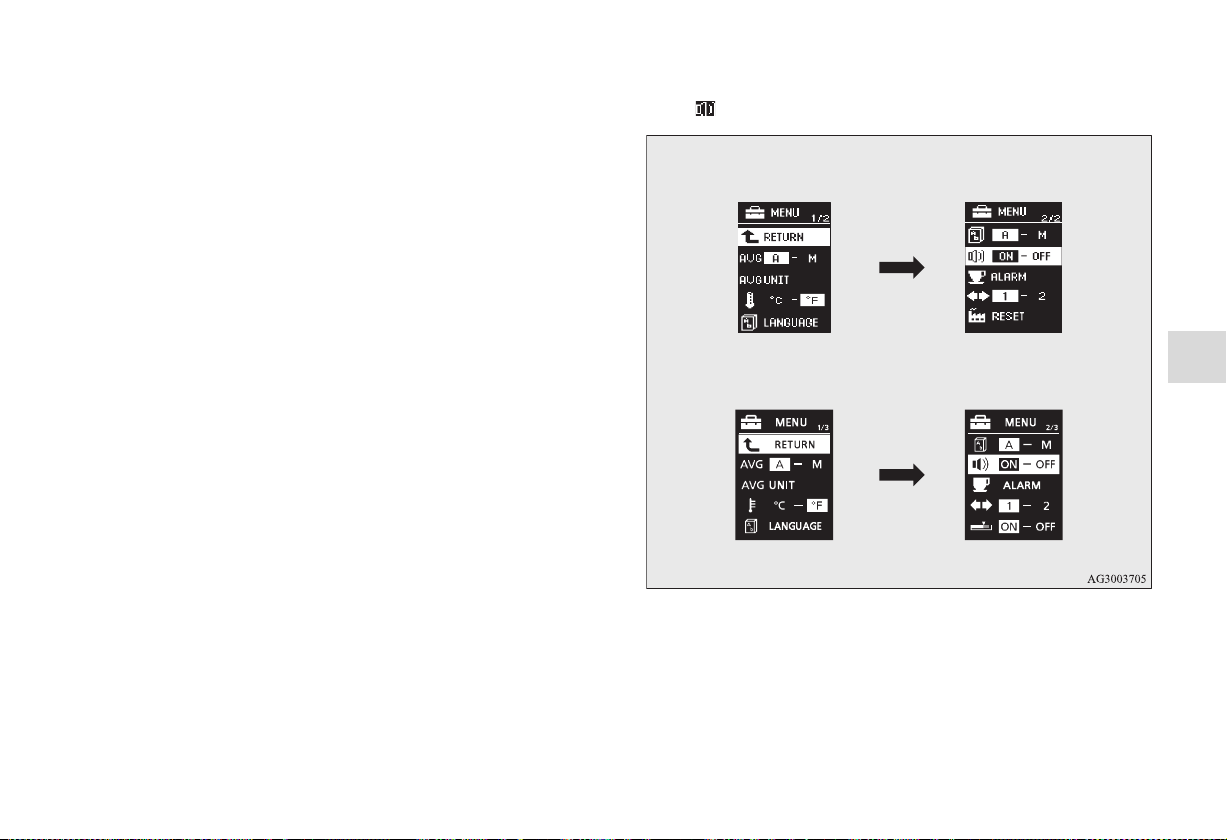
Features and controls
3-209
3
Operation sound setting
N00557400104
You can turn off the operation sounds of the multi-information
meter switch and rheostat meter illumination button.
1. Press and hold the multi-information meter switch (for
about 2 seconds or more) to switch from the setting mode
screen to the menu screen.
Refer to “Changing the function settings (With ignition
switch in the “ON” position)” on page 3-201.
2. Lightly press the multi-information meter switch to select
“ ” (operation sound setting).
Type 1
Type 2
BK0138600US.book 209 ページ 2011年7月17日 日曜日 午後2時32分
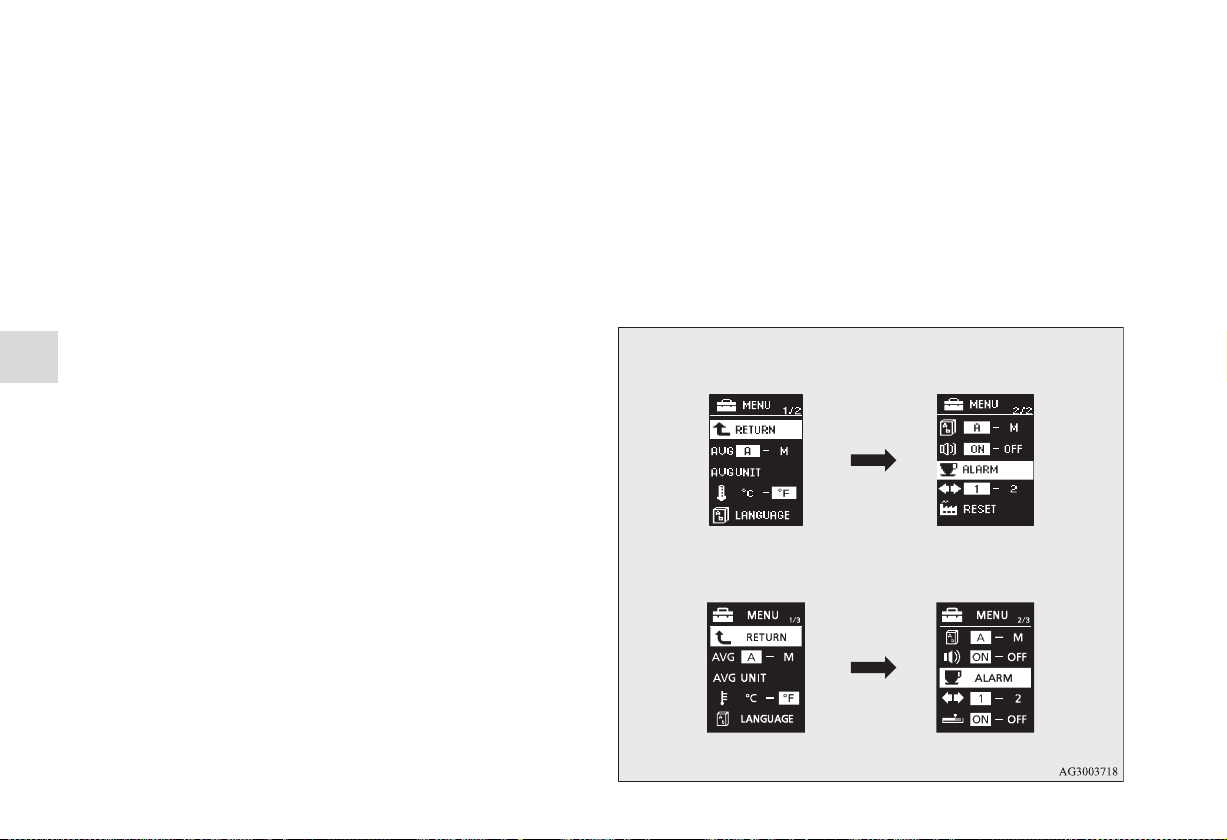
3-210
Features and controls
3
3. Press and hold the multi-information meter switch (for
about 2 seconds or more) to switch in sequence from ON
(operation sound on) → OFF (operation sound off) → ON
(operation sound on).
The setting is changed to the selected condition.
N
OTE
● If the battery is disconnected, the memory of the operation
sound setting is erased and is automatically set to “ON”
(operation sound on).
● The operation sound setting only deactivates the operation
sound of the multi-information meter switch and rheostat
meter illumination button. The warning display and other
sounds cannot be deactivated.
Changing the amount of time until “REST
REMINDER” is displayed
N00557500121
The amount of time until the display appears can be changed.
1. Press and hold the multi-information meter switch (for
about 2 seconds or more) to switch from the setting mode
screen to the menu screen.
Refer to “Changing the function settings (With ignition
switch in the “ON” position)” on page 3-201.
2. Lightly press the multi-information meter switch to select
“ALARM” (rest time setting).
Type 1
Type 2
BK0138600US.book 210 ページ 2011年7月17日 日曜日 午後2時32分
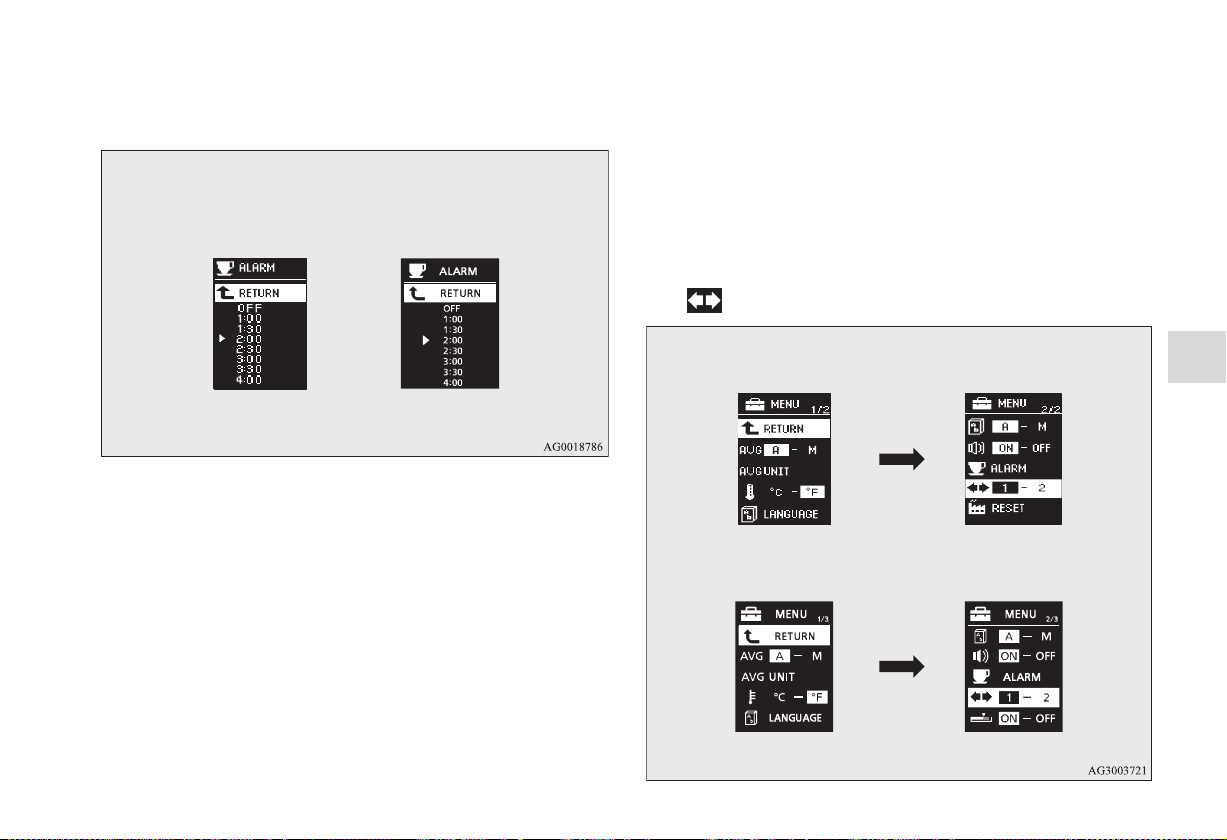
Features and controls
3-211
3
3. Press and hold the multi-information meter switch (for
about 2 seconds or more) to display “ALARM” (rest time
setting).
4. Lightly press the multi-information meter switch to select
the amount of time until the display appears.
5. Press and hold the multi-information meter switch (for
about 2 seconds or more) to change the setting to the
selected time.
N
OTE
● If the battery is disconnected, the memory of the unit set-
ting is erased and is automatically set to the “OFF”.
● The drive time is reset when the ignition switch is in the
“OFF” position.
Changing the turn signal sound
N00563500038
It is possible to change the turn signal sound.
1. Press and hold the multi-information meter switch for
about 2 seconds or more to switch from the setting mode
screen to the menu screen.
Refer to “Changing the function settings (With ignition
switch in the “ON” position)” on page 3-201.
2. Lightly press the multi-information meter switch to select
. (changing the turn signal sound)
Type 1 Type 2
Type 1
Type 2
BK0138600US.book 211 ページ 2011年7月17日 日曜日 午後2時32分
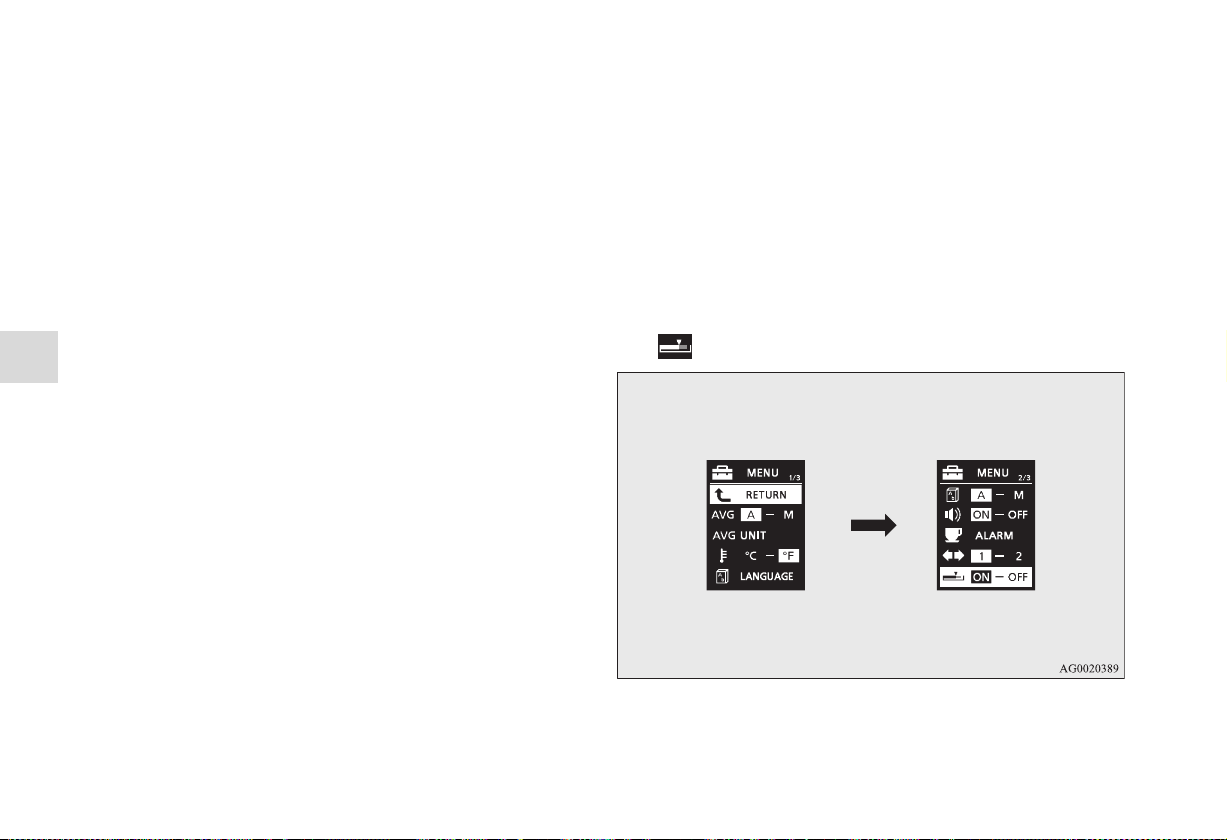
3-212
Features and controls
3
3. Press and hold the multi-information meter switch for
about 2 seconds or more to switch in sequence from 1
(turn signal sound 1) → 2 (turn signal sound 2) → 1 (turn
signal sound 1).
The setting changes to the selected turn signal sound.
Changing the momentary fuel consumption display
(Type 2)
N00563600013
It is possible to change the bar graph setting of the momentary
fuel consumption display.
1. Press and hold the multi-information meter switch for
about 2 seconds or more to switch from the setting mode
screen to the menu screen.
Refer to “Changing the function settings (With ignition
switch in the “ON” position)” on page 3-201.
2. Lightly press the multi-information meter switch to select
. (changing the momentary fuel consumption display)
BK0138600US.book 212 ページ 2011年7月17日 日曜日 午後2時32分
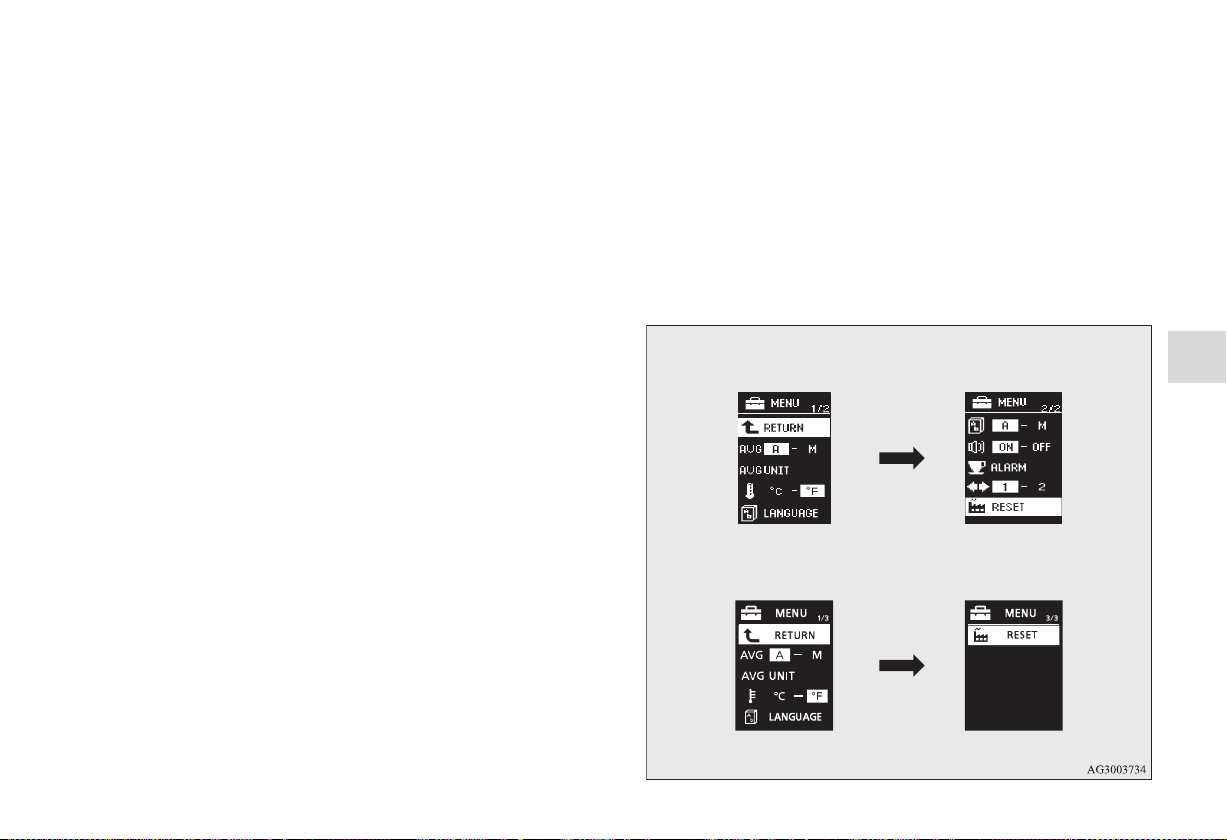
Features and controls
3-213
3
3. Press and hold the multi-information meter switch for
about 2 seconds or more to switch in sequence from ON
(with the green bar graph) → OFF (without the green bar
graph) → ON (with the green bar graph).
The setting changes to the selected bar graph setting.
Returning to the factory settings
N00557600148
All of the function settings can be returned to their factory set-
tings.
1. Press and hold the multi-information meter switch (for
about 2 seconds or more) to change from the setting mode
screen to the menu screen.
Refer to “Changing the function settings (With ignition
switch in the “ON” position)” on page 3-201.
2. Lightly press the multi-information meter switch to select
“RESET” (return to the factory settings).
Type 1
Type 2
BK0138600US.book 213 ページ 2011年7月17日 日曜日 午後2時32分

3-214
Features and controls
3
3. Press and hold the multi-information meter switch (for
about 5 seconds or more), the buzzer sounds and all of the
function settings are returned to the factory settings.
N
OTE
● The factory settings are as follows.
• Average fuel consumption and average speed reset
mode: A (Auto reset)
• Fuel consumption display unit: mpg (US) or (L/100 km)
• Temperature unit: °F (Fahrenheit) or {°C (Centigrade)}
• Display language: ENGLISH
• Cooperative language setting: A
• Operation sounds: ON (Operation sound on)
• “REST REMINDER” display: OFF
• Turn signal sound: Turn signal sound 1
• Momentary fuel consumption with the green bar graph
(Type 2): ON
BK0138600US.book 214 ページ 2011年7月17日 日曜日 午後2時32分
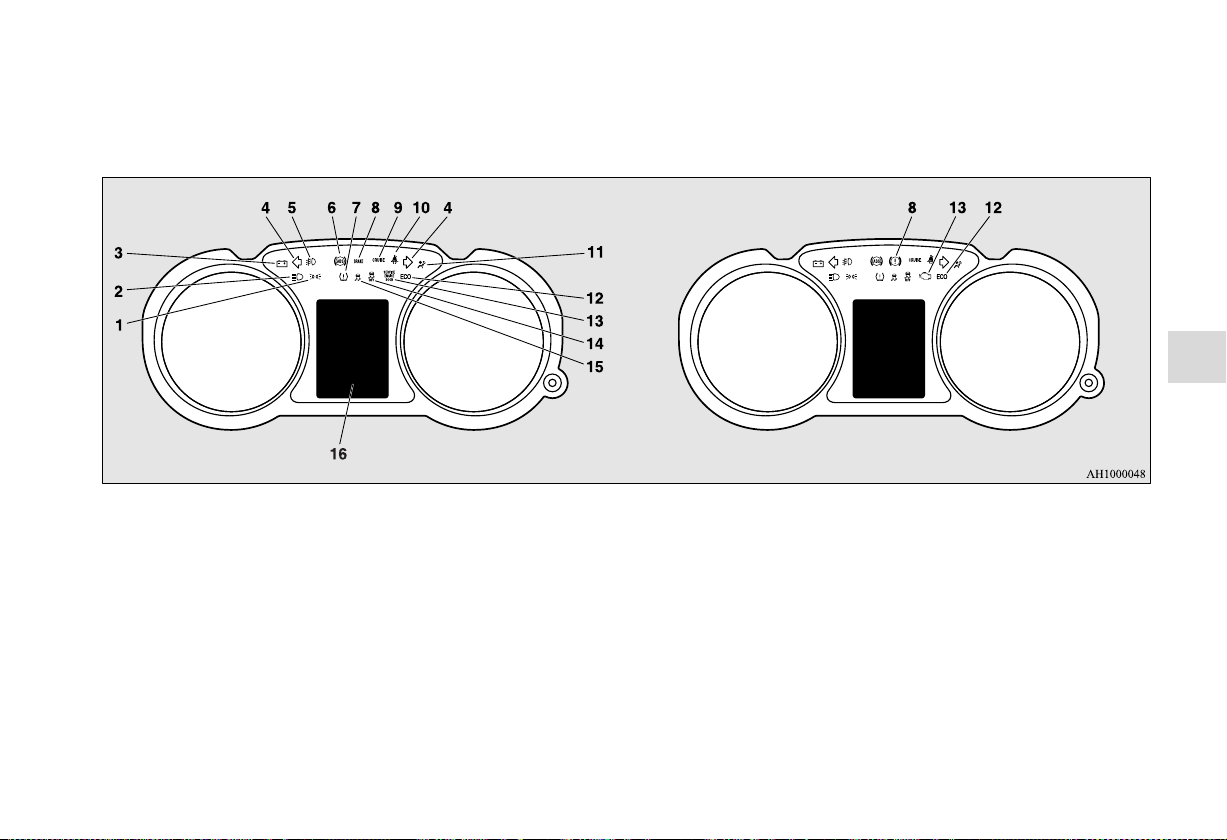
Features and controls
3-215
3
Indicator light, warning light, and information screen display list
N00557700035
Indicator and warning light list
N00557800238
Type A Type B
1- Position indicator → P.3-228
2- High beam indicator → P.3-228
3- Charging system warning light → P.3-230
4- Turn signal indicator/hazard warning light → P.3-228
5- Front fog light indicator (if so equipped) → P.3-228
6- Anti-lock braking system warning light → P.3-148
7- Tire pressure monitoring system warning light → P.3-167
8- Brake warning light → P.3-228
9- Cruise control indicator (if so equipped) → P.3-159
10- Seat belt reminder/warning light → P.2-18
11- Supplemental Restraint System (SRS) warning light
→ P.2-43
12- ECO mode indicator (if so equipped) → P.3-1 9 6
13- Engine malfunction indicator (“SERVICE ENGINE SOON”
or “Check engine light”) → P.3-229
14- Active stability control (ASC) OFF indicator (if so
equipped) → P.3 - 15 4
15- Active stability control (ASC) indicator (if so equipped) →
P.3-154
16- Information screen display list → P.3-216
BK0138600US.book 215 ページ 2011年7月17日 日曜日 午後2時32分

3-216
Features and controls
3
Information screen display list
N00557900024
When there is information to be announced, such as light reminders, the tone sounds and the screen switches to the displays shown
below. Refer to the appropriate page and take the necessary measures.
When the cause of the warning display is eliminated, the warning display goes out automatically.
Refer to “Warning display list (With ignition switch in the “OFF” position)” on page 3-217.
Refer to “Warning display list (With ignition switch in the “ON” position)” on page 3-219.
Refer to “Other interrupt displays (With ignition switch in the “ON” position)” on page 3-226.
N
OTE
● In the following cases, a warning may be displayed on the information screen and the buzzer may sound for a few seconds, at
times.
This is caused by the system picking up interference such as strong electromagnetic waves or noise, and is not a functional
problem.
• An extremely strong electromagnetic wave is received from a source such as an illegal radio set, a spark from a wire, or a
radar station.
• Abnormal voltage or a static electricity discharge is generated by the operation of installed electronics (including after-mar-
ket parts).
If the warning display has occurred a number of times, take your vehicle to an authorized Mitsubishi Motors dealer or a repair
facility of your choice and have the system checked.
BK0138600US.book 216 ページ 2011年7月17日 日曜日 午後2時32分
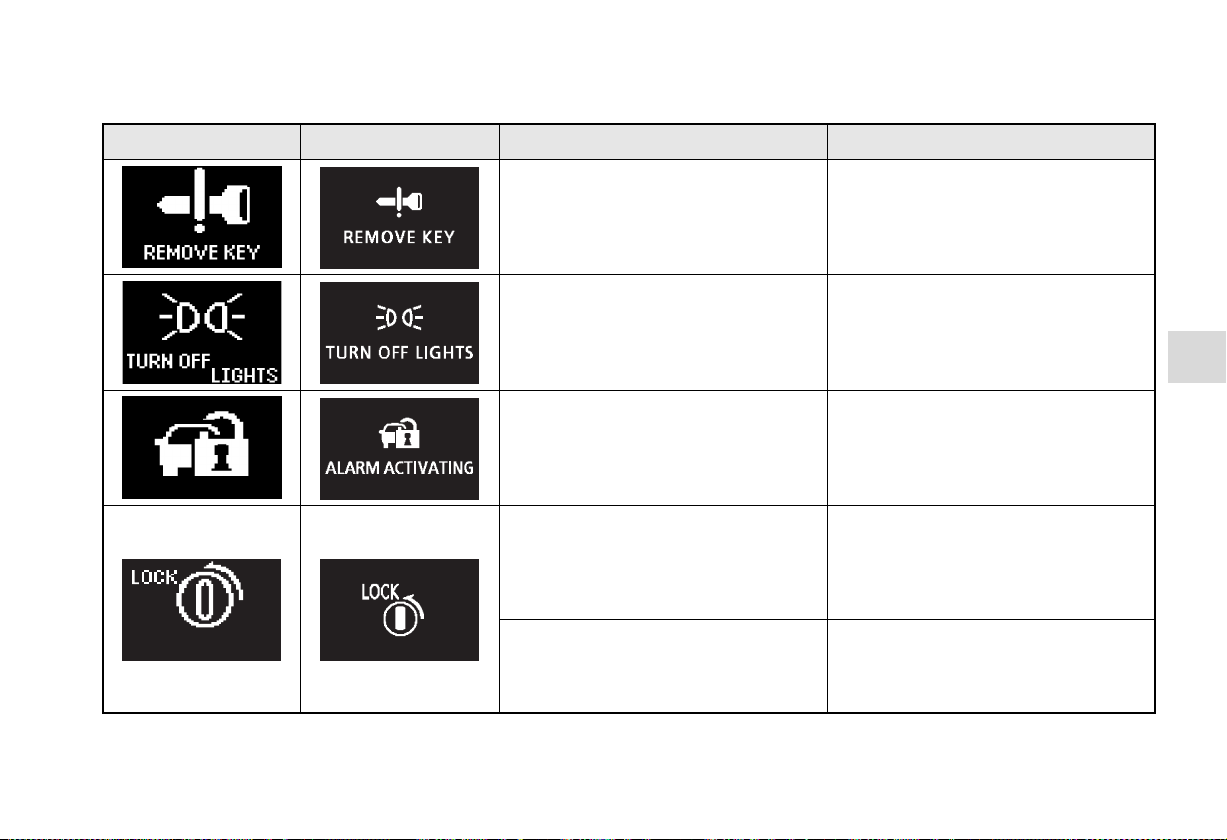
Features and controls
3-217
3
Warning display list (With ignition switch in the “OFF” position)
N00558000165
Screen type 1 Screen type 2 Cause Do this (Reference)
● You have forgotten to remove the
key from the ignition switch.
● Remove the key.
Refer to “Key reminder system” on
page 3-54.
● You have forgotten to turn off the
lights.
● Refer to “Light auto-cutout function
(headlights and other lights)” on
page 3-237.
● The theft-alarm system is operating. ● Refer to “Theft-alarm system” on
page 3-63.
● After turning off the engine, an
attempt was made to open the
driver’s door with the ignition
switch in any position other than
“LOCK” (PUSH OFF).
● Turn the ignition switch to the
“LOCK” (PUSH OFF) position.
Refer to “Ignition switch return
reminder system” on page 3-54.
● An attempt was made to lock all the
doors and the trunk lid with the igni-
tion switch in any position other
than “LOCK” (PUSH OFF).
● Turn the ignition switch to the
“LOCK” (PUSH OFF) position.
Refer to “Ignition switch turn-off
reminder system” on page 3-29.
BK0138600US.book 217 ページ 2011年7月17日 日曜日 午後2時32分
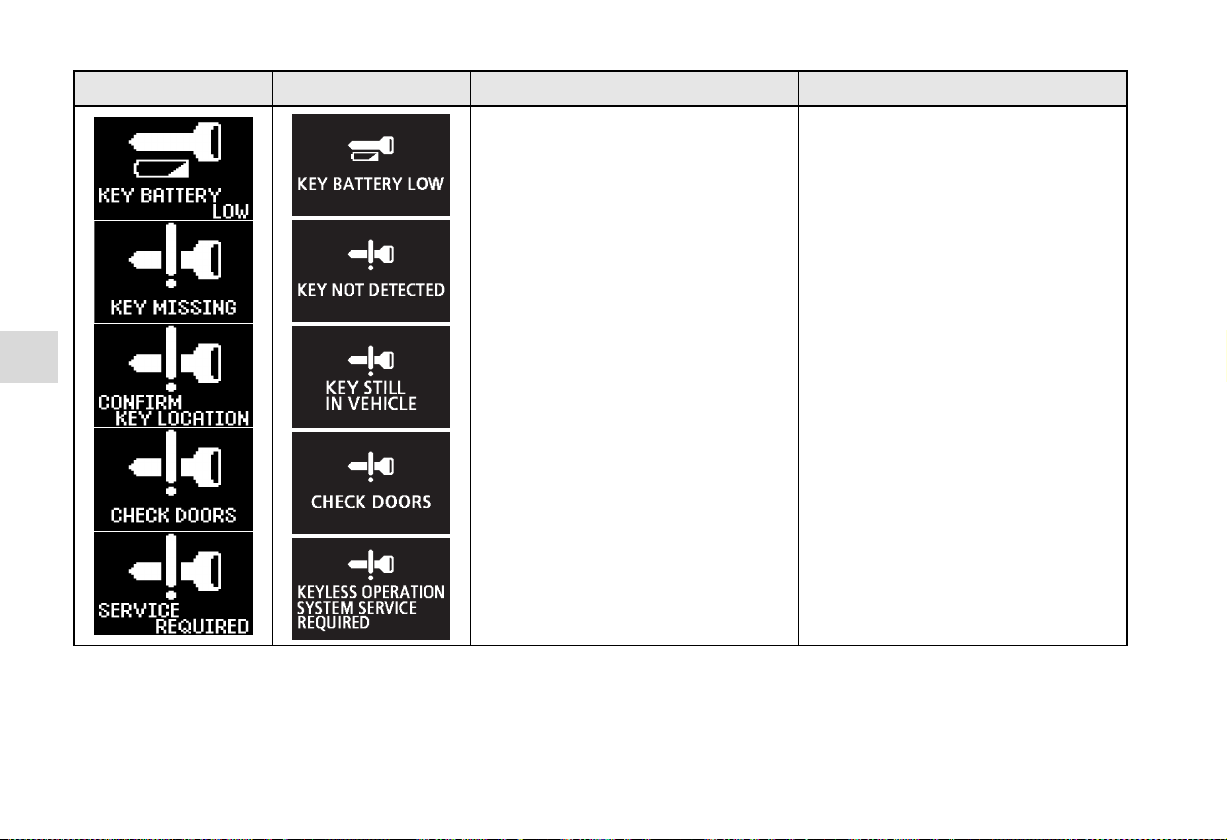
3-218
Features and controls
3
● There is a fault in the F.A.S.T.-key. ● Refer to “F.A.S.T.-key” on page 3-
17.
Screen type 1 Screen type 2 Cause Do this (Reference)
BK0138600US.book 218 ページ 2011年7月17日 日曜日 午後2時32分
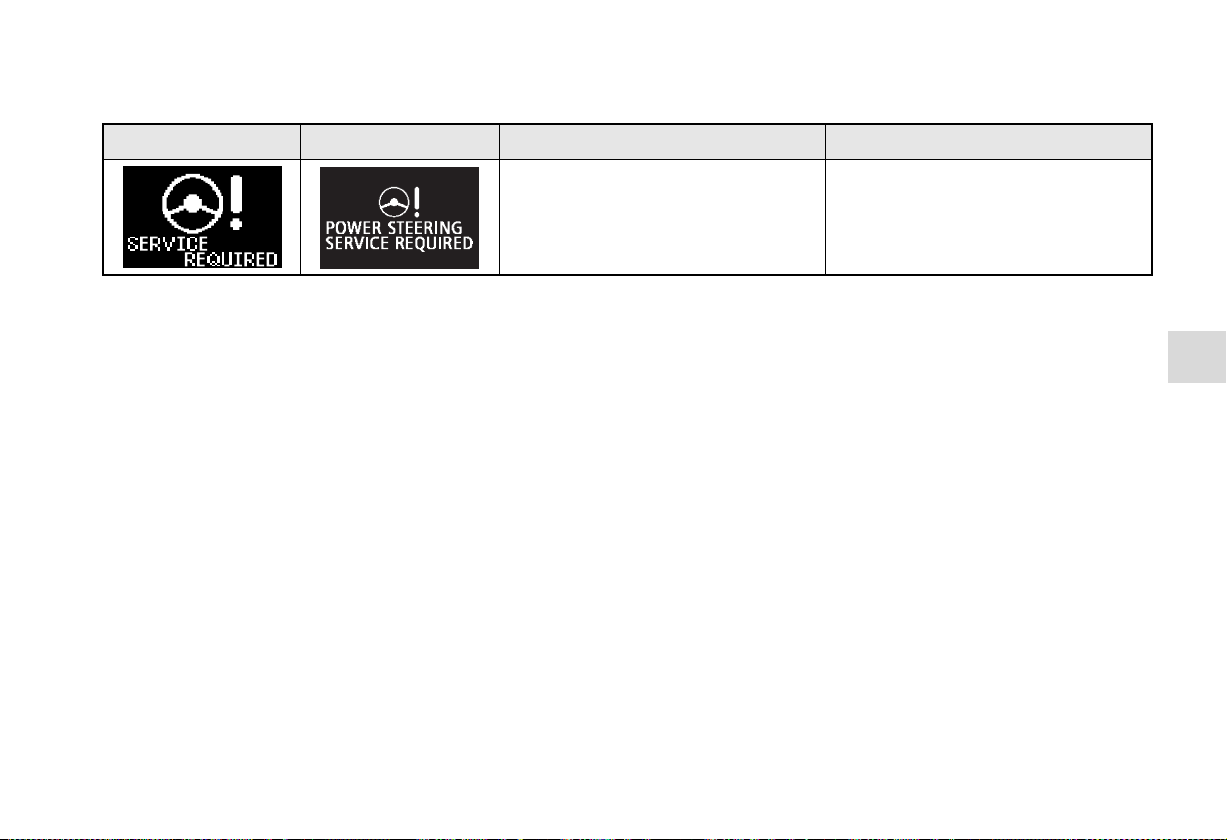
Features and controls
3-219
3
Warning display list (With ignition switch in the “ON” position)
N00558100238
Screen type1 Screen type 2 Cause Do this (Reference)
● There is a fault in the electric power
steering system (EPS).
● Refer to “Electric power steering
system (EPS)” on page 3-156.
BK0138600US.book 219 ページ 2011年7月17日 日曜日 午後2時32分
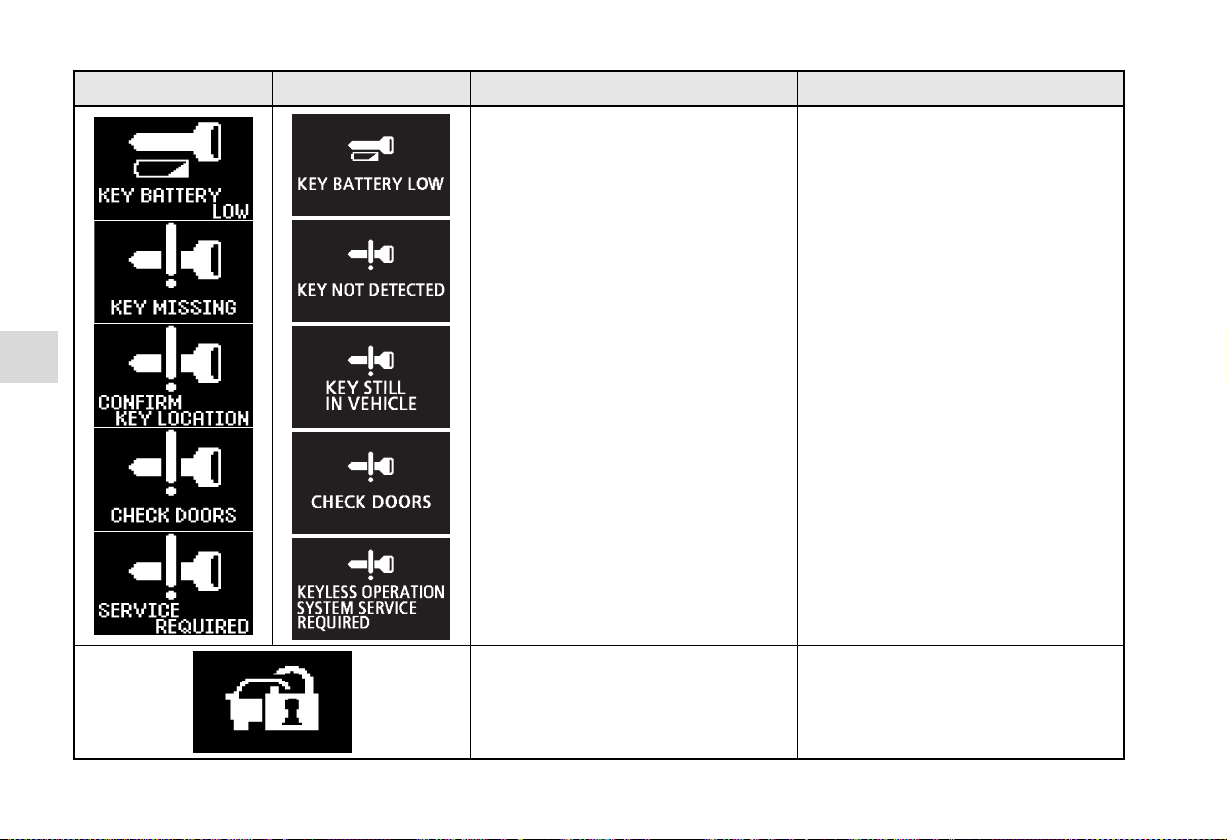
3-220
Features and controls
3
● There is a fault in the F.A.S.T.-key. ● Refer to “F.A.S.T.-key” on page 3-
17.
● Immobilizer is registered. ● Refer to “Electronic immobilizer
(Anti-theft starting system)” on
page 3-5, 3-41.
Screen type1 Screen type 2 Cause Do this (Reference)
BK0138600US.book 220 ページ 2011年7月17日 日曜日 午後2時32分
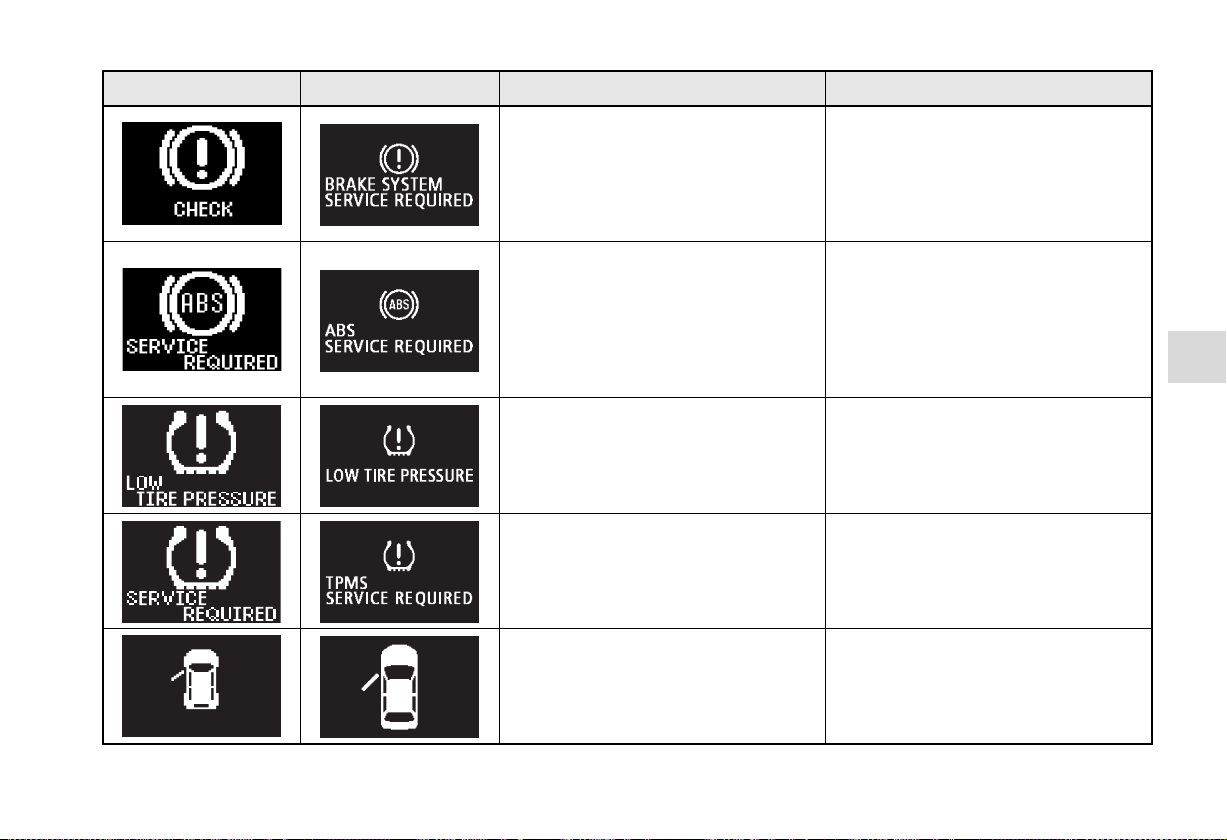
Features and controls
3-221
3
● The brake fluid level is low.
● There is a fault in the brake system.
● Park the vehicle in a safe place and
contact an authorized Mitsubishi
Motors dealer or a repair facility of
your choice for assistance.
Refer to “Brake warning display”
on page 3-231.
● There is a fault in the Anti-lock
braking system.
● Avoid sudden braking and high-
speed driving, park the vehicle in a
safe place, and take corrective mea-
sures. Refer to “Anti-lock braking
system warning light/display” on
page 3-148.
● The tire pressure in one of the tires
(except spare tire) is low.
● Refer to “Tire Pressure Monitoring
System” on page 3-166.
● There is a fault in the Tire Pressure
Monitoring System.
● Refer to “Tire Pressure Monitoring
System” on page 3-166.
● One of the doors or the trunk lid is
not completely closed.
The open door or open trunk lid is
displayed.
● Close the door or trunk lid.
Refer to “Door ajar warning display
(With ignition switch in the “OFF”
position)” on page 3-187.
Screen type1 Screen type 2 Cause Do this (Reference)
BK0138600US.book 221 ページ 2011年7月17日 日曜日 午後2時32分
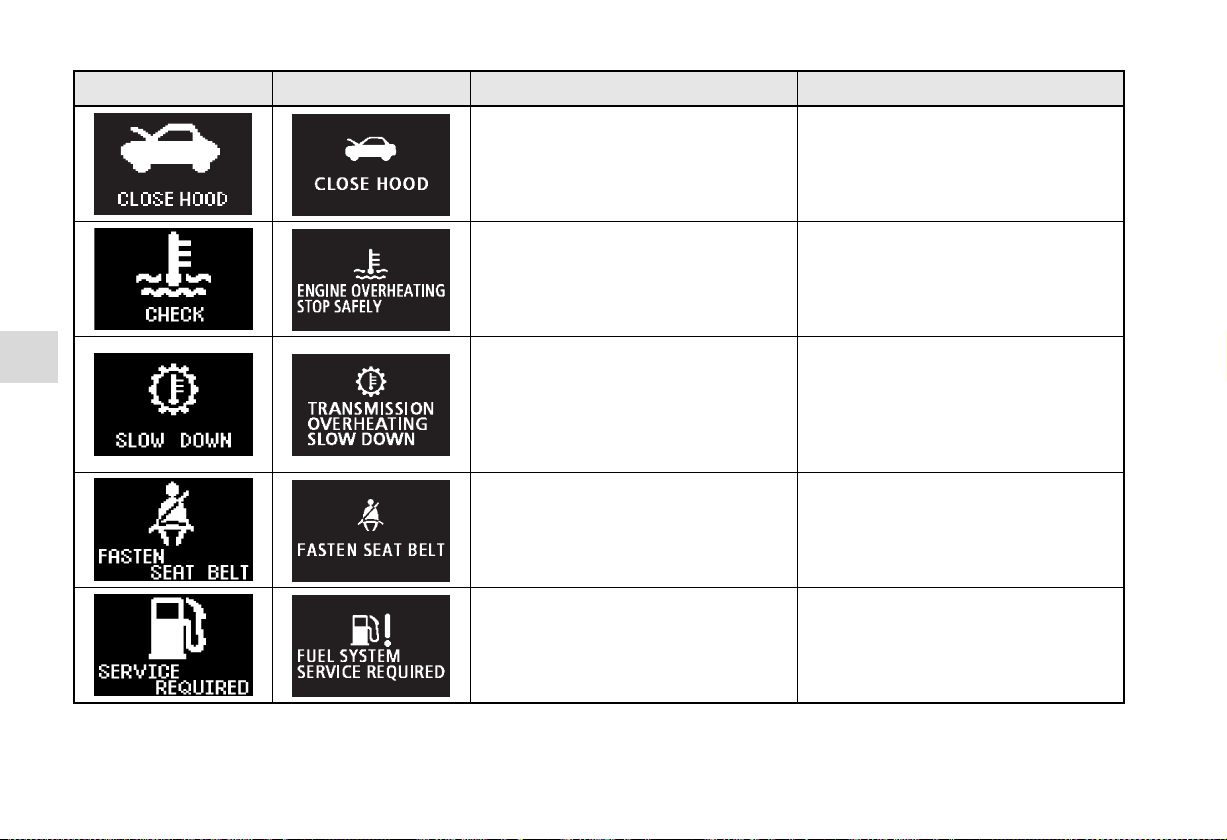
3-222
Features and controls
3
● The engine hood is open. ● Close the engine hood.
Refer to “Engine hood” on page 7-
4.
● The engine is overheated. ● Park the vehicle in a safe place and
take corrective measures.
Refer to “Engine overheating” on
page 6-5.
● The continuously variable transmis-
sion (CVT) fluid or the Twin Clutch
SST fluid temperature is increased.
● Park the vehicle in a safe place and
take corrective measures.
Refer to “Continuously variable
transmission (CVT)” on page 3-98.
Refer to “Twin Clutch SST” on
page 3-112.
● The seat belt is not fastened when
the ignition switch is in the “ON”
position.
● Fasten your seat belt properly. Refer
to “Driver’s seat belt
reminder/warning light and display”
on page 2-18.
● There is a fault in the fuel system. ● Contact an authorized Mitsubishi
Motors dealer or a repair facility of
your choice to have the system
checked.
Screen type1 Screen type 2 Cause Do this (Reference)
BK0138600US.book 222 ページ 2011年7月17日 日曜日 午後2時32分
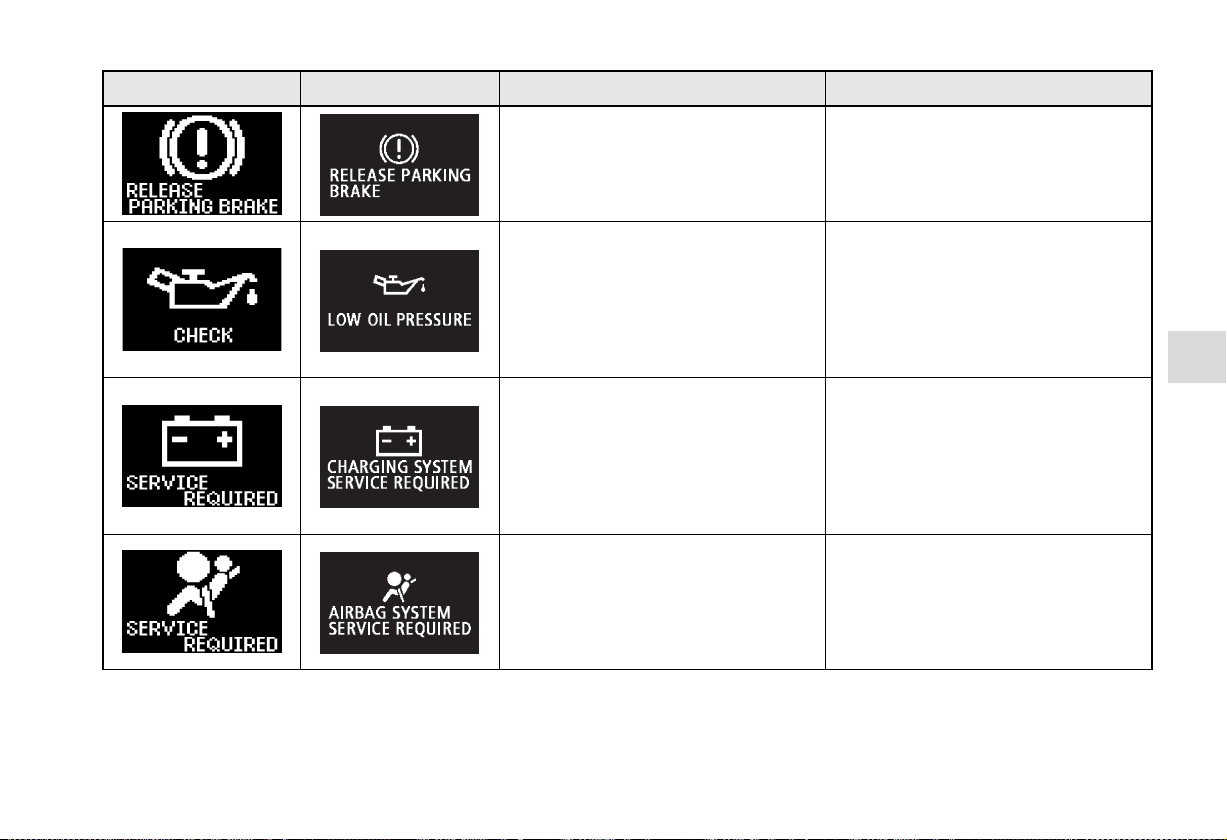
Features and controls
3-223
3
● The vehicle is being driven with the
parking brake still applied.
● Release the parking brake. Refer to
“Brake warning display” on page 3-
231.
● There is a fault in the engine oil cir-
culation system.
● Park your vehicle in a safe place as
soon as possible and contact an
authorized Mitsubishi Motors dealer
or a repair facility of your choice to
have the system checked.
Refer to “Oil pressure warning dis-
play” on page 3-233.
● There is a fault in the charging sys-
tem.
● Park your vehicle in a safe place as
soon as possible and contact an
authorized Mitsubishi Motors dealer
or a repair facility of your choice for
assistance.
Refer to “Charging system warning
display” on page 3-232.
● There is a fault in the SRS airbag or
the seat belt pre-tensioner system.
● Contact an authorized Mitsubishi
Motors dealer or a repair facility of
your choice to have the system
checked.
Refer to “SRS warning light/dis-
play” on page 2-43.
Screen type1 Screen type 2 Cause Do this (Reference)
BK0138600US.book 223 ページ 2011年7月17日 日曜日 午後2時32分
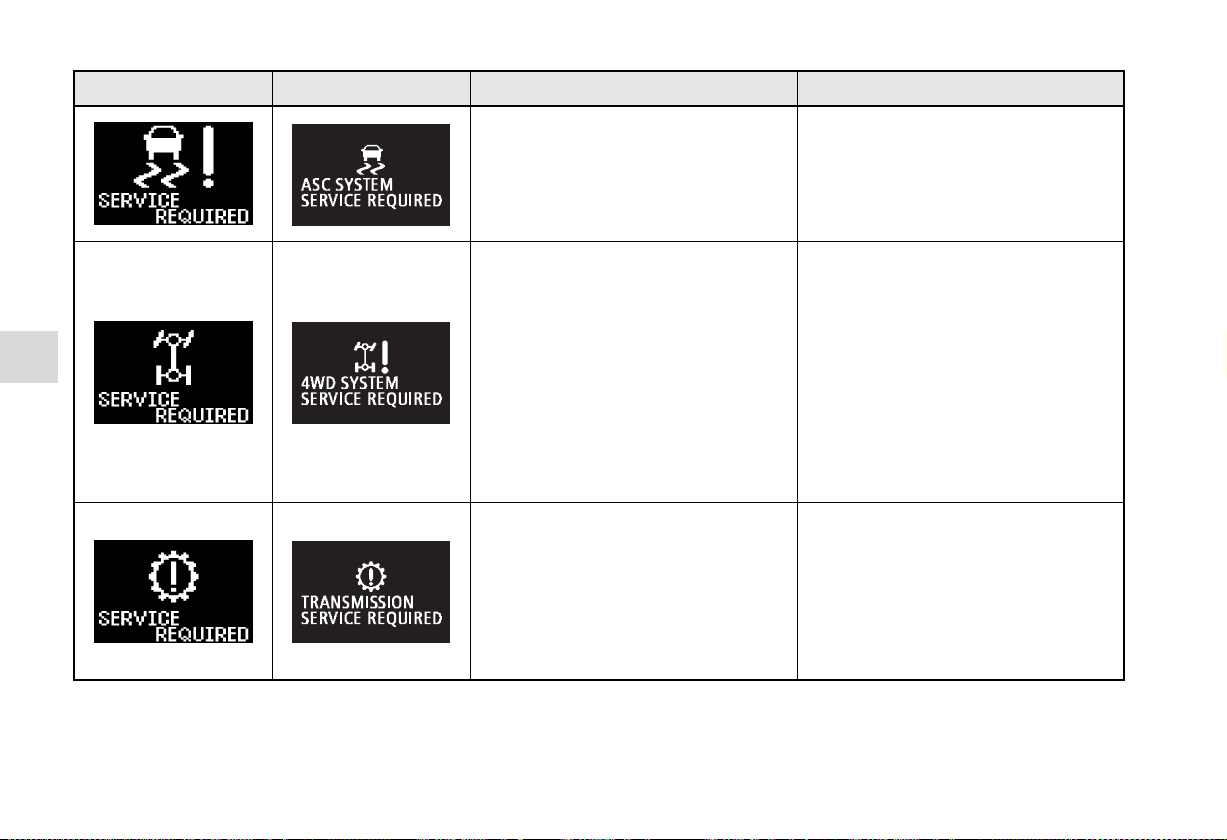
3-224
Features and controls
3
● There is a fault in the Active Stabil-
ity Control (ASC).
● Contact an authorized Mitsubishi
Motors dealer or a repair facility of
your choice to have the system
checked.
Refer to “Active Stability Control
(ASC)” on page 3-151.
● There is a fault in the ACD (Active
Center Differential system).
● There is a fault in the electronically
controlled 4WD system.
● Contact an authorized Mitsubishi
Motors dealer or a repair facility of
your choice to have the system
checked.
Refer to “ACD (Active Center Dif-
ferential system)” on page 3-132.
● Contact an authorized Mitsubishi
Motors dealer or a repair facility of
your choice to have the system
checked.
Refer to “Electronically controlled
4WD system” on page 3-135.
● There is a fault in the CVT.
● A safety device in the Twin Clutch
SST has been activated due to a
possible malfunction in the Twin
Clutch SST or in the engine elec-
tronic control module.
● Contact an authorized Mitsubishi
Motors dealer or a repair facility of
your choice to have the system
checked.
Refer to “Continuously variable
transmission (CVT)” on page 3-98.
Refer to “Twin Clutch SST” on
page 3-112.
Screen type1 Screen type 2 Cause Do this (Reference)
BK0138600US.book 224 ページ 2011年7月17日 日曜日 午後2時32分
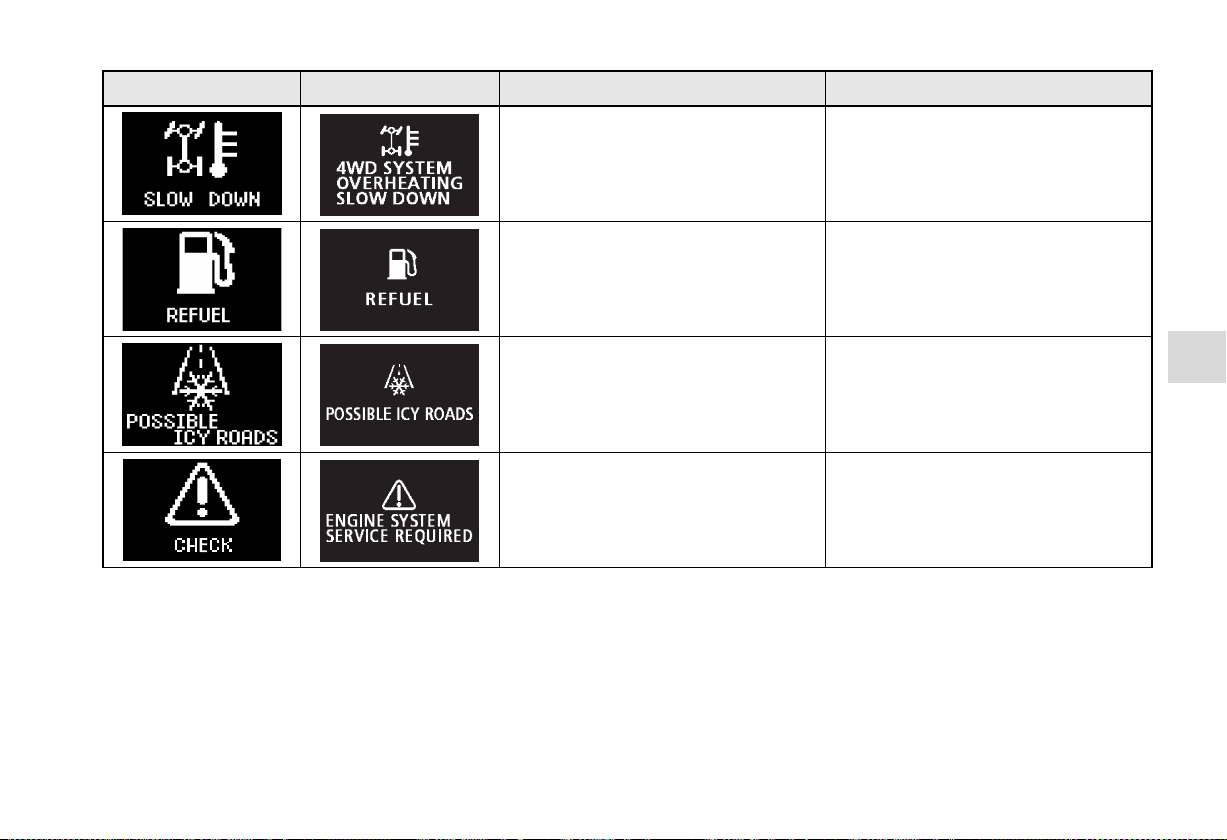
Features and controls
3-225
3
● The electronically controlled 4WD
system is hot.
● Refer to “Electronically controlled
4WD system” on page 3-135.
● The fuel is running low. ● Refuel as soon as possible. Refer to
“Fuel remaining display screen” on
page 3-196.
● The outside temperature is 37 °F
(3 °C) or less.
● Be careful driving on frozen
ground.
● The ground may be frozen even
when this warning is not displayed,
so drive carefully.
● The timing chain may be worn. ● Contact an authorized Mitsubishi
Motors dealer or a repair facility of
your choice to have the system
checked.
Screen type1 Screen type 2 Cause Do this (Reference)
BK0138600US.book 225 ページ 2011年7月17日 日曜日 午後2時32分

3-226
Features and controls
3
Other interrupt displays (With ignition switch in the “ON” position)
N00558200239
The operation status of each system is displayed on the information screen. For further details, refer to the appropriate page for each
system.
Screen type 1 Screen type 2 System operation status Reference
● When “2WD” drive mode is selected
with the drive mode selector.
● Refer to “Electronically controlled
4WD system” on page 3-135.
● When “4WD AUTO” mode is selected
with the drive mode selector.
● When “4WD LOCK” mode is selected
with the drive mode selector.
● When the Active Stability Control
(ASC) is operating.
● Refer to “Active Stability Control
(ASC) ” on page 3-151.
BK0138600US.book 226 ページ 2011年7月17日 日曜日 午後2時32分
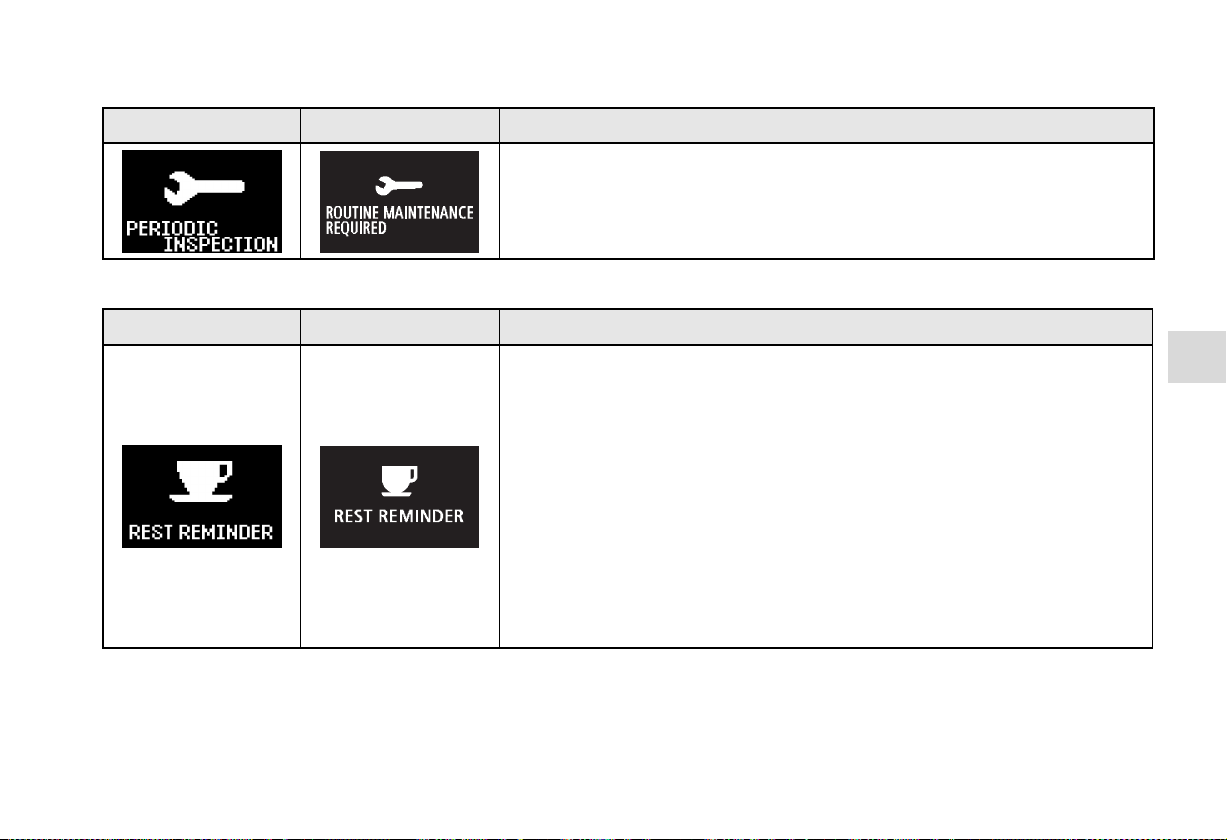
Features and controls
3-227
3
This informs you that a periodic inspection is due.
The rest time can be set.
Screen type 1 Screen type 2 Do this
Have an inspection made by an authorized Mitsubishi Motors dealer. For further
details, refer to “Service reminder” on page 3-198.
Screen type 1 Screen type 2 Do this
Park the vehicle in a safe place, turn off the engine, and take a rest.
Use this display as rough guide for taking rests during a long drive.
The interval from the start of your trip until this message is displayed can be set.
Refer to “Changing the function settings (With ignition switch in the “ON” posi-
tion)” on page 3-201.
The display and buzzer alert the driver when the set time is reached. If you continue
to drive without having a rest, the buzzer sounds about every 5 minutes to encourage
you to take a rest.
● In the following cases, the time driven is reset and the display returns to the
previous display screen. After this, when the set time is reached again, the dis-
play and buzzer encourage you to take a rest.
• The buzzer sounds 3 times.
• The ignition switch is turned to the “OFF” position.
• The multi-information meter switch is held (for about 2 seconds or more).
BK0138600US.book 227 ページ 2011年7月17日 日曜日 午後2時32分

3-228
Features and controls
3
Indicators
N00519900127
Turn signal indicators/Hazard warning lights
N00520000216
The arrows will flash in time with the corresponding exterior
turn signals when the turn signal lever is used.
Both arrows will flash when the hazard warning flasher switch
is pressed.
N
OTE
● If the indicator flashes faster than usual or if the indicator
stays on without flashing, check for a malfunctioning turn
signal light bulb or turn signal connection.
High beam indicator
N00520100086
A blue light comes on when the headlights are on high beam.
Front fog light indicator (if so equipped)
N00520200205
This indicator comes on while the front fog lights are on.
Position indicator
N00551300026
This indicator light illuminates while the position lights are on.
Warning lights
N00520300147
Brake warning light
N00520400467
When the ignition switch is turned to the “ON” position, this
indicator normally comes on and goes out a few seconds later.
A warning is also displayed in the multi-information display.
The warning light also illuminates after starting the engine
under the following conditions:
● When the parking brake is still applied.
● When the brake fluid level is low.
● When the brake force distribution function is not operat-
ing correctly.
Before driving, be sure that the parking brake is fully released
and brake warning light is off.
BK0138600US.book 228 ページ 2011年7月17日 日曜日 午後2時32分
Features and controls
3-229
3
Engine malfunction indicator (“SERVICE
ENGINE SOON” or “Check engine light”)
N00520500729
This indicator is a part of the onboard diagnostic (OBD) sys-
tem which monitors the emissions, engine control system or
continuously variable transmission (CVT) control system /
Twin Clutch SST control system. If a problem is detected in
one of these systems, this indicator comes on. When the igni-
tion switch is turned to the “ON” position, this indicator nor-
mally comes on and goes off after the engine has started.
This indicator will come on if the fuel tank filler cap is not
properly tightened. If this indicator comes on and stays on after
refueling, stop the engine and check that the cap is properly
tightened. (Turn the cap clockwise until you hear clicking
sounds.)
If this indicator does not go off after several seconds or lights
up while driving, have the system checked as soon as possible
at an authorized Mitsubishi Motors dealer or a repair facility of
your choice.
CAUTION
!
● If the brake warning light and the anti-lock braking
system warning light are illuminated at the same
time, the braking force distribution function will not
operate, so the vehicle may be destabilized during
sudden braking under the following conditions.
• When the brake warning light does not go out even
when the parking brake is released.
• When the brake warning light stays on while driv-
ing.
• If the above occurs, avoid sudden braking and
high-speed driving. Park the vehicle in a safe
place, and contact an authorized Mitsubishi
Motors dealer or a repair facility of your choice as
soon as possible.
● The vehicle should be brought to a halt in the follow-
ing manner when brake performance is deterio-
rated.
• Confirm that the vehicle slows down when you
press down on the brake pedal harder than usual.
In some cases, the brake pedal may go all the way
to the floor.
• Should the brakes fail, use engine braking to
reduce your speed and slowly apply the parking
brake.
Depress the brake pedal to illuminate the stop
lights to alert the vehicles behind you.
● Do not suddenly apply the parking brake while driv-
ing. This may cause the rear wheels to lock and
cause an accident.
CAUTION
!
● Driving for a long time with the engine malfunction
indicator on may cause more damage to the emission
control system. This could also affect fuel economy
and drivability.
● If this indicator does not come on when the ignition
key is turned to the “ON” position, have the system
checked at an authorized Mitsubishi Motors dealer
or a repair facility of your choice.
BK0138600US.book 229 ページ 2011年7月17日 日曜日 午後2時32分
3-230
Features and controls
3
N
OTE
● Do not disconnect the battery cable when the engine mal-
function indicator (“SERVICE ENGINE SOON” or
“Check engine light”) is on.
The engine electronic control module stores critical OBD
information (especially exhaust emission data), which
may be lost if the battery cable is disconnected while the
engine malfunction indicator is on. This will make it diffi-
cult to diagnose the cause of future problems.
Charging system warning light
N00520600296
This light comes on in the event of a malfunction in the charg-
ing system or when the ignition switch is turned to the “ON”
position (engine off). A warning is also displayed in the multi-
information display. When the engine is started, the light
should go out. Check to make sure that the light has gone out
before driving.
● If the engine malfunction indicator comes on while
the engine is running, avoid driving at high speeds.
During vehicle operation with the indicator on, the
vehicle may not accelerate when you depress the
accelerator pedal.
When the vehicle is stationary with the indicator on,
you must depress the brake pedal more firmly than
usual since the engine idling speed is higher than
usual and a vehicle with a CVT or a Twin Clutch
SST has a stronger tendency to creep forward.
CAUTION
!
CAUTION
!
● If the warning light stays on while the engine is run-
ning, park your vehicle in a safe place as soon as
possible and contact an authorized Mitsubishi
Motors dealer or a repair facility of your choice to
have the system checked.
BK0138600US.book 230 ページ 2011年7月17日 日曜日 午後2時32分
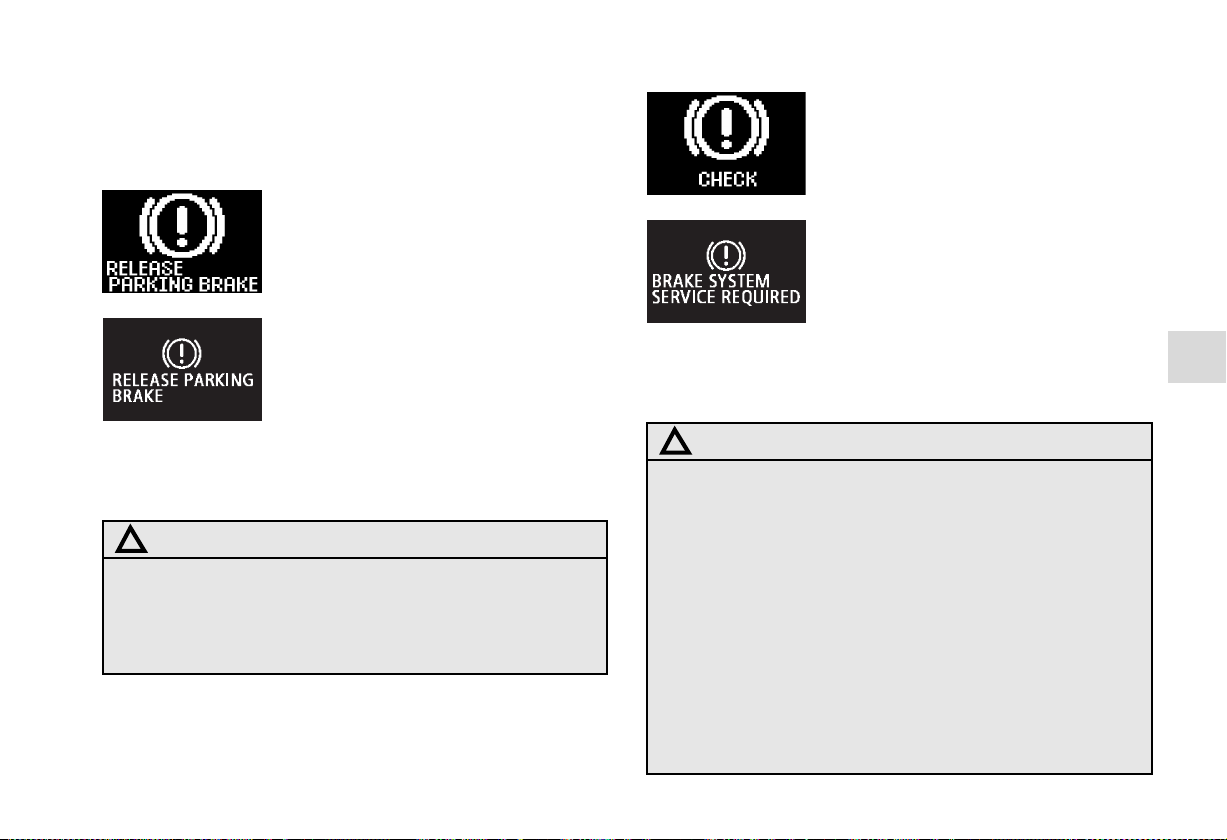
Features and controls
3-231
3
Information screen display
N00558300025
Brake warning display
N00558400084
Type 1
Type 2
This warning is displayed if the vehicle is being driven with the
parking brake still applied. The warning light in the instrument
cluster only comes on when the parking brake is applied.
Type 1
Type 2
When the ignition switch is turned to the “ON” position, if the
brake fluid is low, this warning is displayed.
The warning light in the instrument cluster also illuminates.
CAUTION
!
● If a vehicle is driven without releasing the parking
brake, the brakes will overheat, resulting in ineffec-
tive braking and possible brake failure.
If this warning is displayed while driving, release the
parking brake.
CAUTION
!
● If this warning stays on and does not go out while
driving, there is a danger of ineffective braking. If
this happens, park the vehicle in a safe place, and
contact an authorized Mitsubishi Motors dealer or a
repair facility of your choice.
● If the brake warning display, brake warning light,
and the Anti-lock braking system warning light are
illuminated at the same time, the braking force dis-
tribution function will not operate, so the vehicle
may be destabilized during sudden braking. Avoid
sudden braking and high-speed driving. Park the
vehicle in a safe place, and contact an authorized
Mitsubishi Motors dealer or a repair facility of your
choice.
BK0138600US.book 231 ページ 2011年7月17日 日曜日 午後2時32分
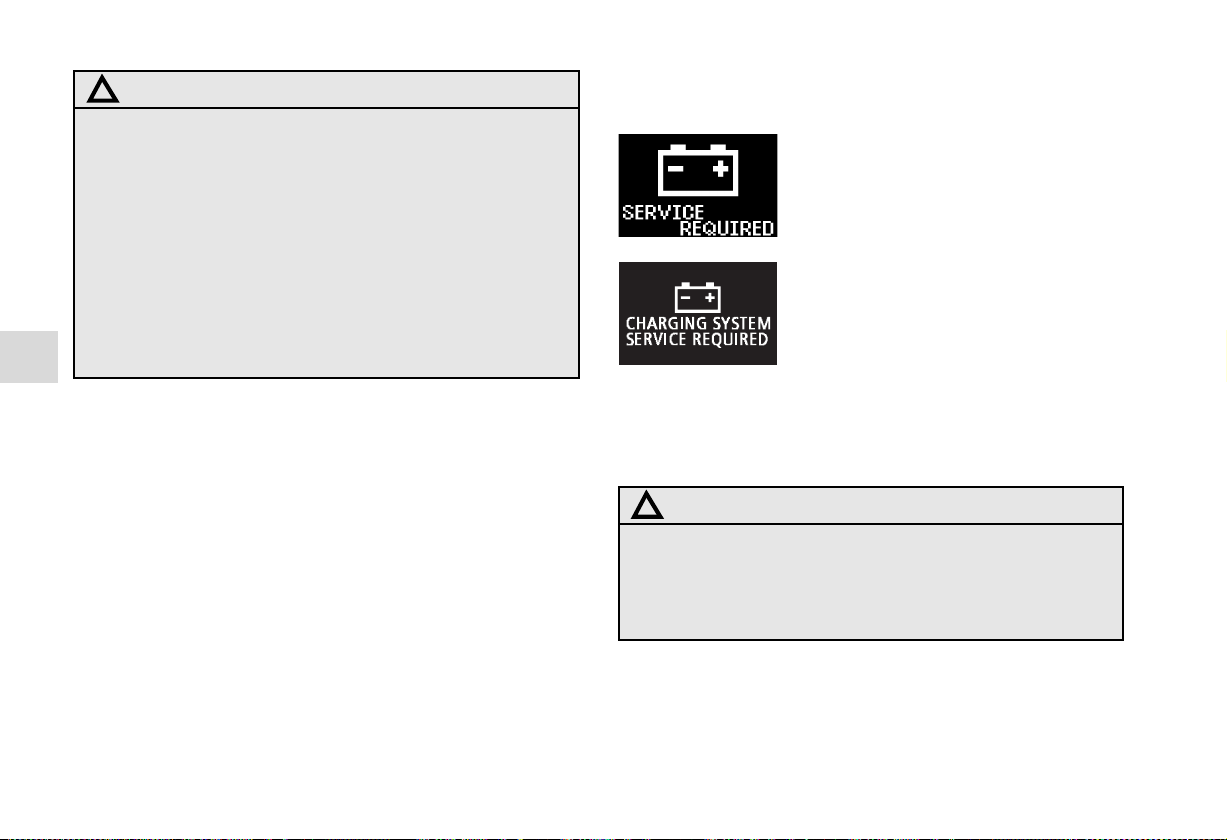
3-232
Features and controls
3
Charging system warning display
N00558600057
Type 1
Type 2
If there is a fault in the charging system, the warning display is
displayed on the information screen in the multi-information
display. The warning light in the instrument cluster also illumi-
nates.
● The vehicle should be brought to a halt in the follow-
ing manner when brake performance is deterio-
rated.
• Confirm that the vehicle slows down when you
press down on the brake pedal harder than usual.
In some cases, the brake pedal may go all the way
to the floor.
• Should the brakes fail, use engine braking to
reduce your speed and slowly apply the parking
brake.
Depress the brake pedal to illuminate the stop
lights to alert the vehicles behind you.
CAUTION
!
CAUTION
!
● If warnings are displayed while the engine is run-
ning, park your vehicle in a safe place as soon as
possible and contact an authorized Mitsubishi
Motors dealer or a repair facility of your choice to
have the system checked.
BK0138600US.book 232 ページ 2011年7月17日 日曜日 午後2時32分
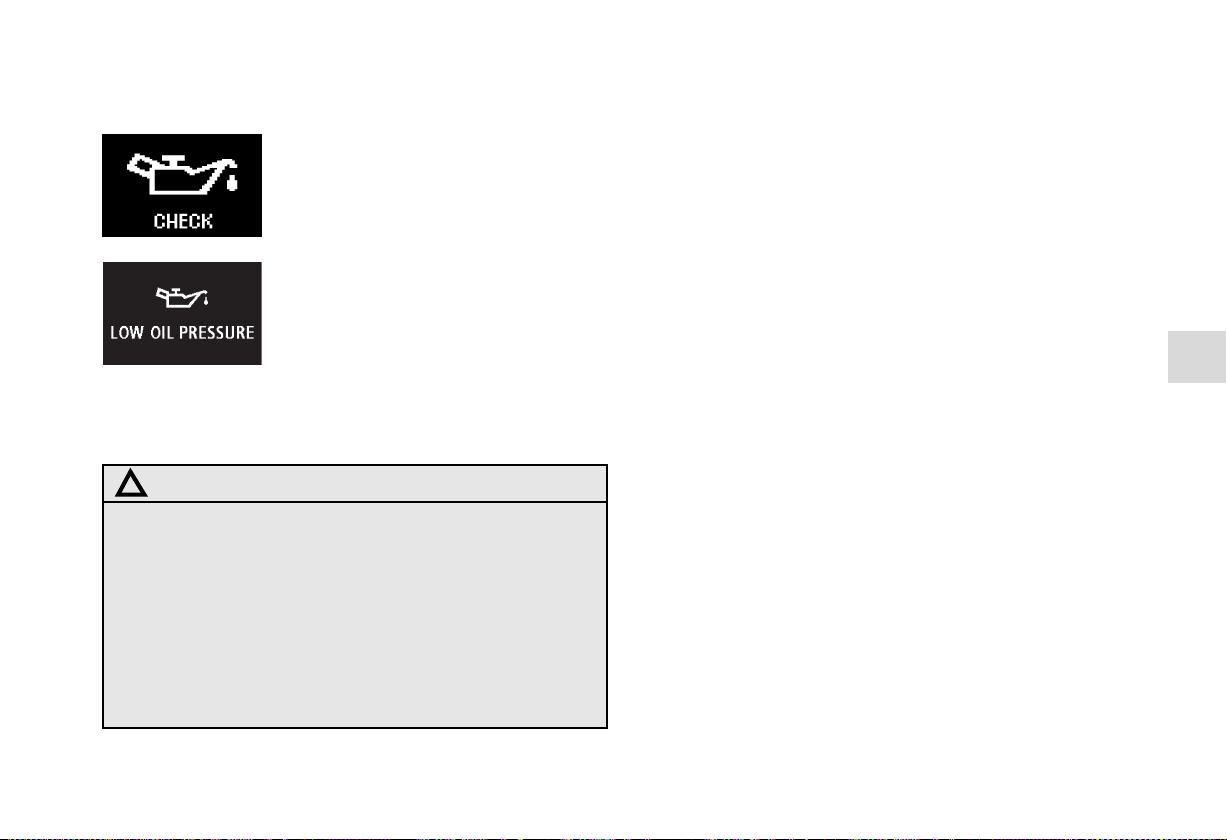
Features and controls
3-233
3
Oil pressure warning display
N00558700045
Type 1
Type 2
If the engine oil pressure drops while the engine is running, the
warning display is displayed on the information screen in the
multi-information display.
N
OTE
● The oil pressure warning display does not show the
amount of oil. The oil level must be checked using the
dipstick.
CAUTION
!
● If the vehicle is driven while the engine oil is low, or
the oil level is normal but the warning is displayed,
the engine may overheat and damage may result.
● If the warning is displayed while the engine is run-
ning, park your vehicle in a safe place as soon as
possible and check the engine oil level.
● If this warning display comes on when the engine oil
level is proper, have your vehicle checked at an
authorized Mitsubishi Motors dealer or a repair
facility of your choice.
BK0138600US.book 233 ページ 2011年7月17日 日曜日 午後2時32分
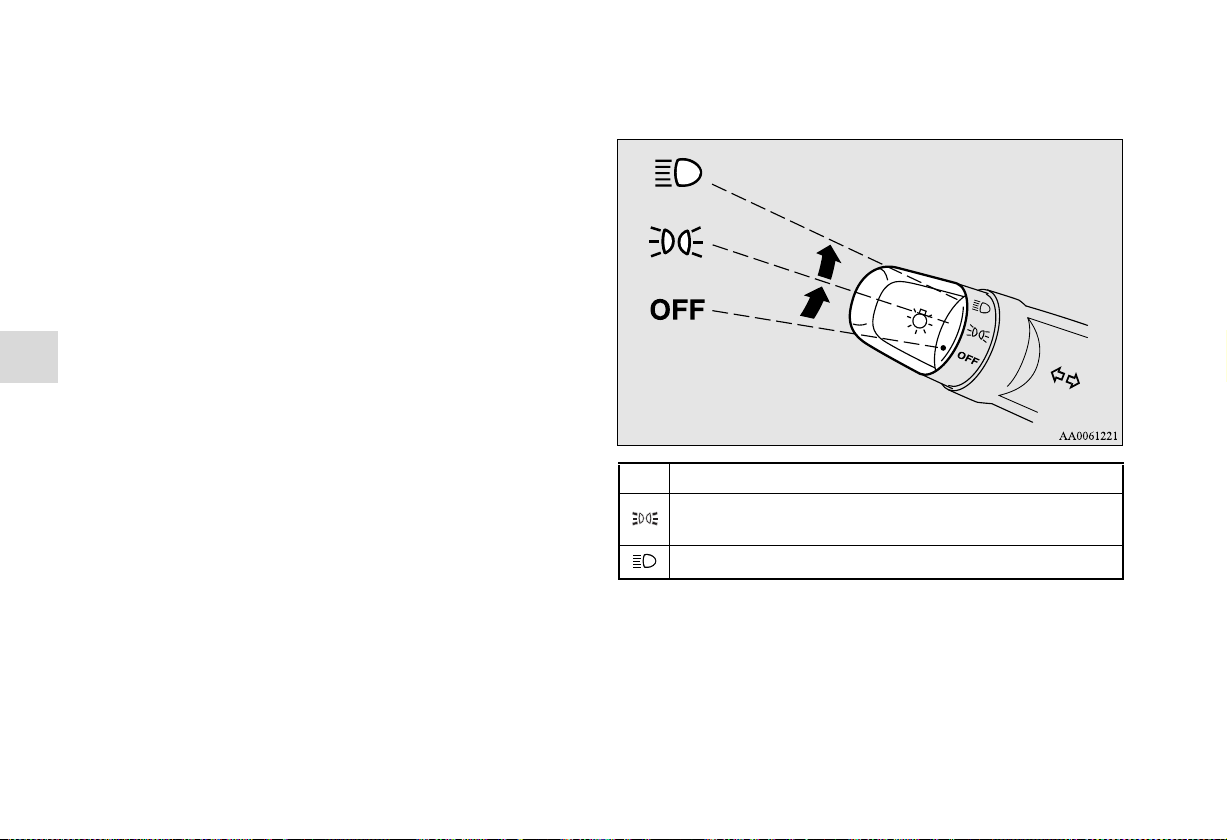
3-234
Features and controls
3
Combination headlights and dimmer switch
N00522500677
Headlights
N
OTE
● Do not leave the headlights and other lights on for a long
period of time when the engine is not running. The battery
will run down.
● When it rains, or when the vehicle has been washed, the
inside of the lens sometimes becomes foggy. This is the
same as when window glass mists up on a humid day, and
does not indicate a problem. When the light is switched
on, the heat will dry out the fog. However, if water col-
lects inside the light, have it checked by an authorized
Mitsubishi Motors dealer or a repair facility of your
choice.
Type 1
Rotate the switch to operate the lights.
OFF All lights off
Parking, tail, front and rear side-marker lights, license
plate and instrument panel lights on
Headlights and other lights on
BK0138600US.book 234 ページ 2011年7月17日 日曜日 午後2時32分

Features and controls
3-235
3
If your vehicle is equipped with daytime running lights, the
combinations of switch operations and illuminated lights differ
in accordance with the following conditions.
[When the engine is started, and the parking brake is released]
The daytime running lights will be illuminated:
N
OTE
● Once the daytime running light come on, they do not go
out until the key is turned to the “LOCK” or “ACC” posi-
tion.
[When the engine is not running, or when the engine is running
but the parking brake is not released]
The engine starts when the lights are off.
Type 2
Rotate the switch to operate the lights.
OFF The daytime running lights illuminated
The daytime running lights illuminated
Parking, tail, front and rear side-marker lights, license
plate and instrument panel lights on
Headlights and other lights on
OFF All lights off
Parking, tail, front and rear side-marker lights, license
plate and instrument panel lights on
Headlights and other lights on
OFF All lights off
AUTO
Headlights and other lights turn on and off automati-
cally in accordance with outside light level.
Parking, tail, front and rear side-marker lights, license
plate and instrument panel lights on
Headlights and other lights on
BK0138600US.book 235 ページ 2011年7月17日 日曜日 午後2時32分
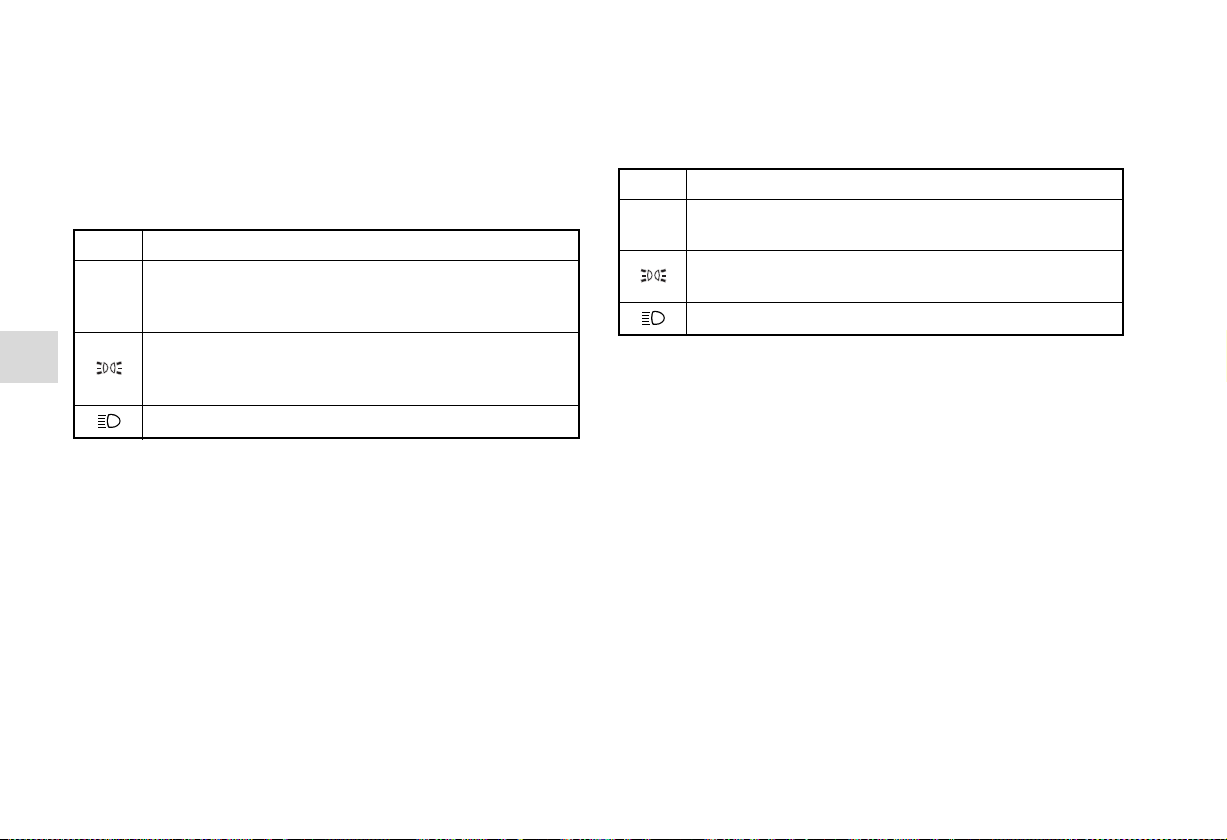
3-236
Features and controls
3
If your vehicle is equipped with daytime running lights, the
combinations of switch operations and illuminated lights differ
in accordance with the following conditions.
[When the engine is started, and the parking brake is released]
The daytime running lights will be illuminated:
N
OTE
● Once the daytime running light come on, they do not go
out until the key is turned to the “LOCK” or “ACC” posi-
tion.
[When the engine is not running, or when the engine is running
but the parking brake is not released]
The engine starts when the lights are off.
OFF The daytime running lights illuminated
AUTO
The daytime running lights illuminated
Headlights and other lights turn on and off automati-
cally in accordance with outside light level.
The daytime running lights illuminated
Parking, tail, front and rear side-marker lights, license
plate and instrument panel lights on
Headlights and other lights on
OFF All lights off
AUTO
Headlights and other lights turn on and off automati-
cally in accordance with outside light level.
Parking, tail, front and rear side-marker lights, license
plate and instrument panel lights on
Headlights and other lights on
BK0138600US.book 236 ページ 2011年7月17日 日曜日 午後2時32分

Features and controls
3-237
3
N
OTE
● The sensitivity of the automatic on/off control can be
adjusted.
For further information, please contact your authorized
Mitsubishi Motors dealer or a repair facility of your
choice.
● Do not cover the sensor (A) for the automatic on/off con-
trol by affixing a sticker or label to the windshield.
● If the lights do not turn on or off with the switch in the
“AUTO” position, manually operate the switch and we
recommend you to have your vehicle checked.
Light auto-cutout function (headlights and other
lights)
N00532600509
● If the ignition key is turned to “LOCK” or “ACC” posi-
tion or removed from the ignition switch and the driver’s
door is opened with the combination headlights and dim-
mer switch in the “ ” or “ ” position, the lights auto-
matically turn off.
[When using a key to start the engine]
• If the driver’s door is opened after the key is removed
from the ignition switch, a high-pitched constant tone
will sound to remind you to turn off the lights.
• If the driver’s door is opened with the key in the ignition
switch, a low-pitched tone will sound to remind you to
remove the key.
[When using the F.A.S.T.-key to start the engine]
• If the ignition switch is turned to the “LOCK” position
and the driver’s door is opened, a high-pitched constant
buzzer will sound to remind you to turn off the lights.
• If the ignition switch is turned to any position other than
“LOCK” and the driver’s door is opened, a low-pitched
constant buzzer will sound to remind you to return the
ignition switch.
● If the ignition switch is turned to “LOCK” or “ACC” posi-
tion with the driver’s door closed and the combination
headlights and dimmer switch in the “ ” or “ ” posi-
tion, the lights will stay on for about 3 minutes and then
turn off automatically.
BK0138600US.book 237 ページ 2011年7月17日 日曜日 午後2時32分
3-238
Features and controls
3
N
OTE
● The light auto-cutout function can be deactivated.
See your authorized Mitsubishi Motors dealer for details.
For vehicles equipped with the Mitsubishi Multi-Commu-
nication System, adjustments can be made using screen
operations. For further details, refer to the separate
owner’s manual.
When you want to keep the lights on:
If the combination headlights and dimmer switch is turned to
the “ ” or “ ” position again after the engine is turned off,
the about 3 minutes auto-cutout function described above will
not work. The lights (the parking lights, tail lights and license
plate lights) will stay on and will not turn off automatically.
N
OTE
● When the engine is started using the key, if the driver’s
door is opened and the key is removed, the headlight
reminder buzzer intermittently emits a high-pitched
sound. If the key is still in the ignition the key reminder
buzzer intermittently emits a low-pitched sound.
The buzzer stops when the driver’s door is closed. (A
warning is also displayed in the multi-information dis-
play.)
● When the engine is started using the keyless operation
function, if the driver’s door is opened and the ignition
switch is in the “LOCK” position, the headlight reminder
buzzer intermittently emits a high-pitched sound. If the
ignition switch is in any position other than “LOCK”, the
ignition switch on reminder buzzer intermittently emits a
low-pitched sound.
The buzzer stops when the driver’s door is closed. (A
warning is also displayed in the multi-information dis-
play.)
BK0138600US.book 238 ページ 2011年7月17日 日曜日 午後2時32分
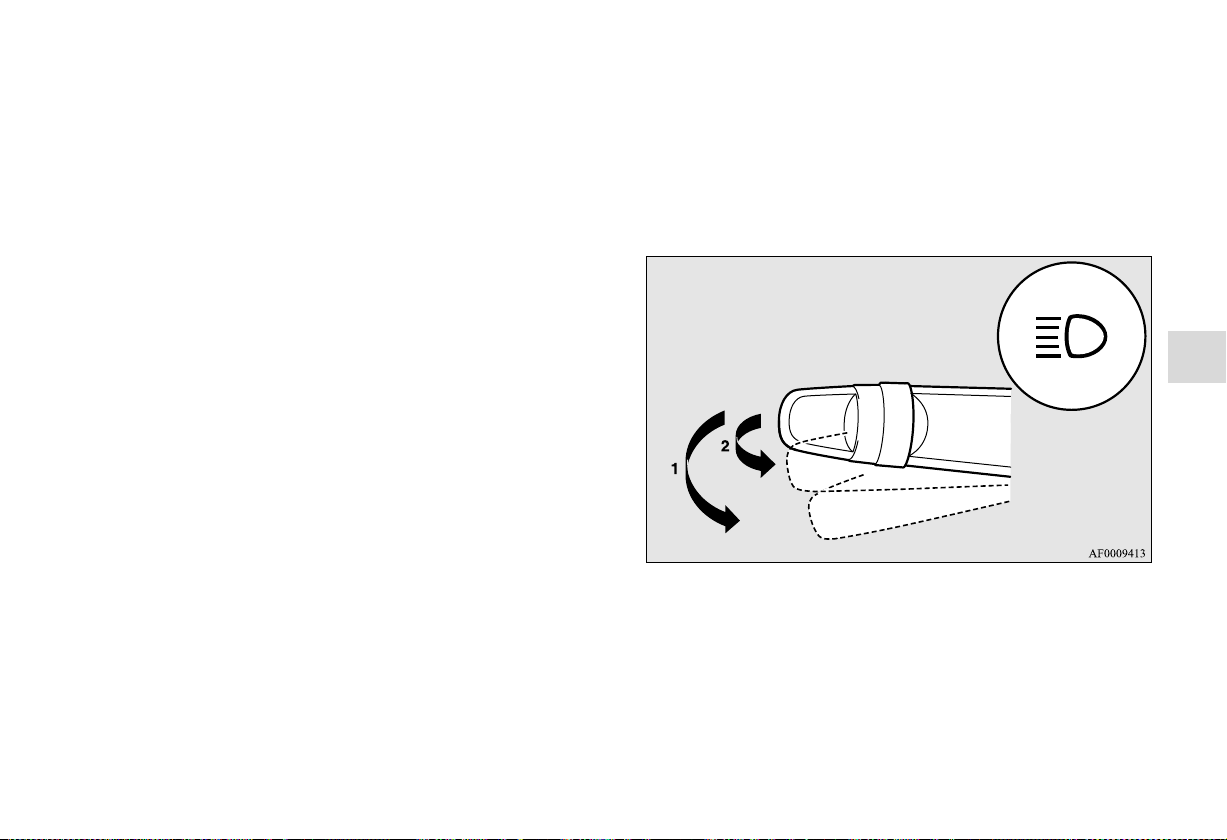
Features and controls
3-239
3
Headlight reminder buzzer
N00549800196
When using a key to start the engine
If the driver’s door is opened with the key in the “LOCK” or
“ACC” position or removed from the ignition switch while the
lights are on, the buzzer will sound to remind you to turn off
the lights.
When using the F.A.S.T.-key to start the engine
If the driver’s door is opened with the ignition switch in the
“LOCK” or “ACC” position, or if the ignition switch is moved
to the “LOCK” position while the lights are on, the buzzer will
sound to remind you to turn off the lights.
In either case, the lights and buzzer will turn off automatically.
Or you can turn the combination headlights and dimmer switch
to the “OFF” position to stop the buzzer.
Dimmer (high/low beam change)
N00549900155
To change the headlights from high beam to low beam and vice
versa, pull the turn signal lever to fully toward you (1). Switch
the headlights to low beam as a courtesy whenever there are
oncoming vehicles, or when there is traffic moving ahead of
you. An illuminated blue light in the instrument cluster indi-
cates when the headlights are on high beam.
BK0138600US.book 239 ページ 2011年7月17日 日曜日 午後2時32分

3-240
Features and controls
3
Headlight flasher
N00550000198
You can flash the high beams by pulling the lever gently
toward you (2). The lights will go back to normal when you let
go. While the high beam is on, you will see a blue light on the
instrument panel.
N
OTE
● You can flash the high beams by pulling the lever toward
you, even if the combination headlights and dimmer
switch is off.
● If you turn the lights off with the headlights set to high-
beam illumination, the headlights are automatically
returned to their low-beam setting when the combination
headlights and dimmer switch is next turned to the “ ”
position.
Welcome light (for vehicles with the theft-alarm
system)
N00563200107
This function turns on the front side-marker and parking lights
for about 30 seconds after the UNLOCK button (A) on the
remote control transmitter is pressed when the combination
headlights and dimmer switch is in the “OFF” or “AUTO”
position (for vehicles equipped with the automatic light con-
trol). On vehicles equipped with the automatic light control,
the welcome light function will operate only when it is dark
outside the vehicle.
BK0138600US.book 240 ページ 2011年7月17日 日曜日 午後2時32分
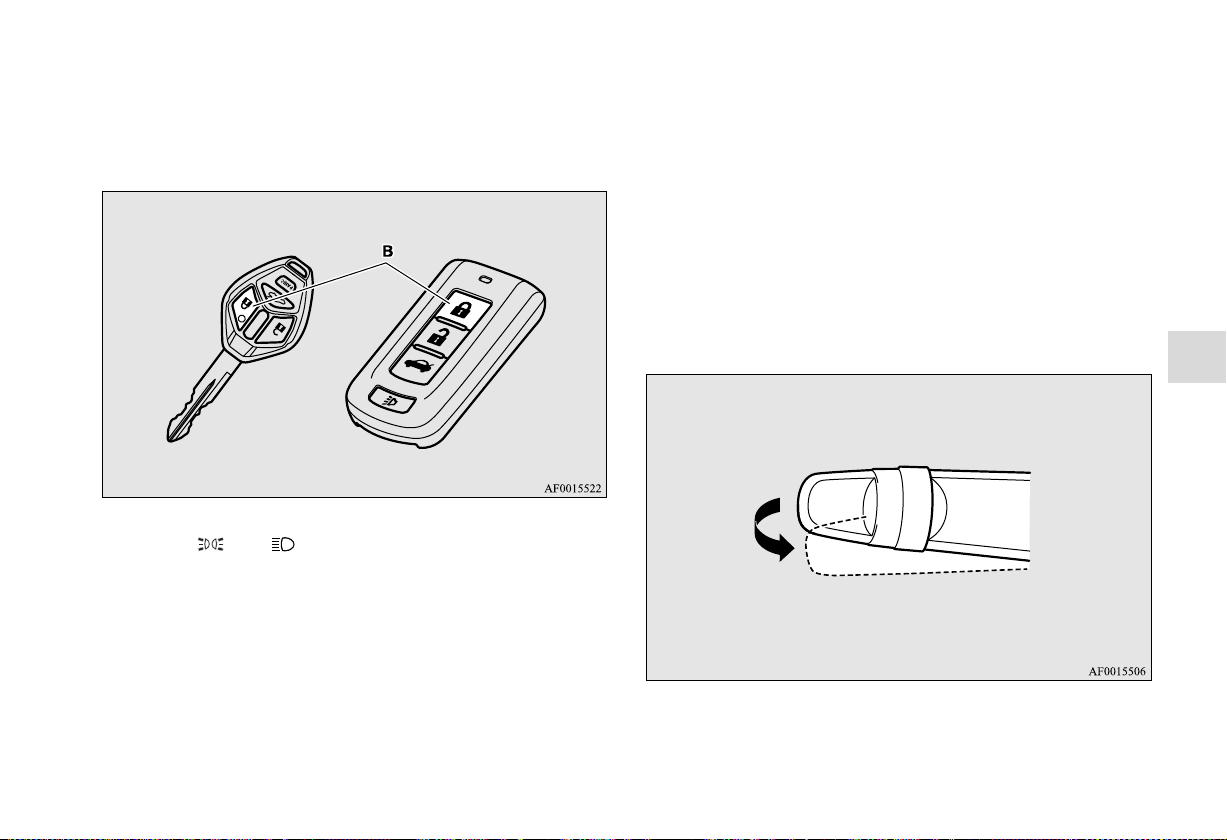
Features and controls
3-241
3
N
OTE
● While the welcome light function is operating, perform
one of the following operations to cancel the function.
• Push the LOCK button (B) on the remote control trans-
mitter.
• Turn the combination headlights and dimmer switch to
the “ ” or “ ” position.
• Turn the ignition switch to the “ON” position.
● It is possible to modify functions as follows:
• The headlights can be set to come on in the low beam
setting.
• The welcome light function can be deactivated.
For details, consult a Mitsubishi Motors dealer.
Coming home light
N00547300054
This function turns on the headlights in the low beam setting
for about 30 seconds after the ignition switch is turned to the
“LOCK” position.
1. Turn the combination headlights and dimmer switch to the
“OFF” or “AUTO” position (for vehicles equipped with
the automatic light control).
2. Turn the ignition switch to the “LOCK” position. Also, if
a key was used to start the engine, remove the key from
the ignition switch.
3. Within 60 seconds of turning the ignition switch to the
“LOCK” position, pull the turn signal lever toward you.
BK0138600US.book 241 ページ 2011年7月17日 日曜日 午後2時32分
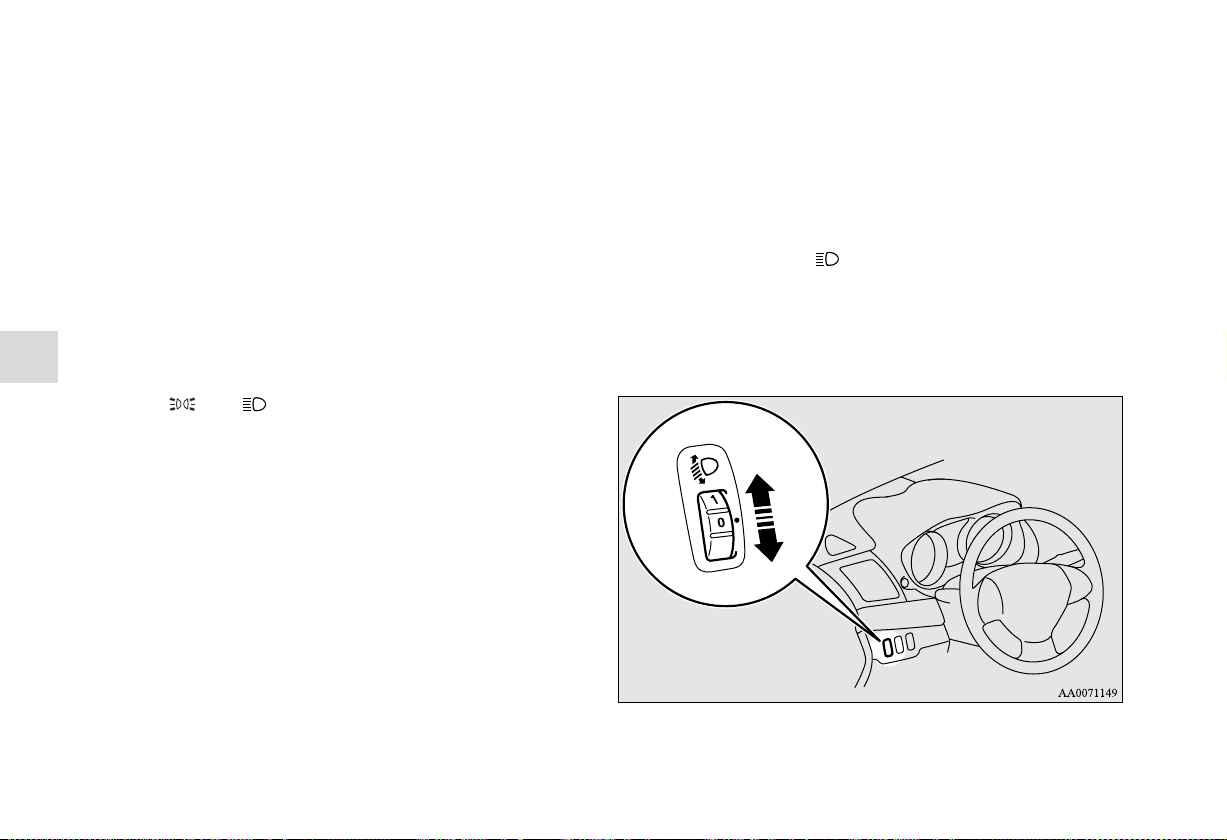
3-242
Features and controls
3
4. The headlights will come on in the low beam setting for
about 30 seconds. After the headlights go off, the head-
lights can be turned on again in the low beam setting for
about 30 seconds by pulling the turn signal lever toward
you within 60 seconds of turning the ignition switch to the
“LOCK” position. To turn on the headlights again after 60
seconds of turning the ignition switch to the “LOCK”
position, repeat the process from step 1.
N
OTE
● While the coming home light function is operating, per-
form one of the following operations to cancel the func-
tion.
• Pull the turn signal lever toward you.
• Turn the combination headlights and dimmer switch to
the “ ” or “ ” position.
• Turn the ignition switch to the “ON” position.
● It is possible to modify functions as follows:
• The time that the headlights remain on can be changed.
• The coming home light function can be deactivated.
For details, consult a Mitsubishi Motors dealer.
Headlight leveling switch (if so equipped)
N00537100088
The direction of the headlight beam (the direction in which the
light shines) alters according to the number of people and the
load in the vehicle. Lower the headlight angle if it is too high
due to the number of people and/or the load in the vehicle so
that the headlights’ glare does not distract the drivers of
approaching vehicles. First set the combination headlights and
dimmer switch to the “ ” position, then turn the headlight
leveling switch knob to lower the beam. The greater the num-
ber on the headlight leveling switch knob, the lower the beam
will point.
Set the switch to the appropriate position so that the headlight
beam is level with the road.
BK0138600US.book 242 ページ 2011年7月17日 日曜日 午後2時32分
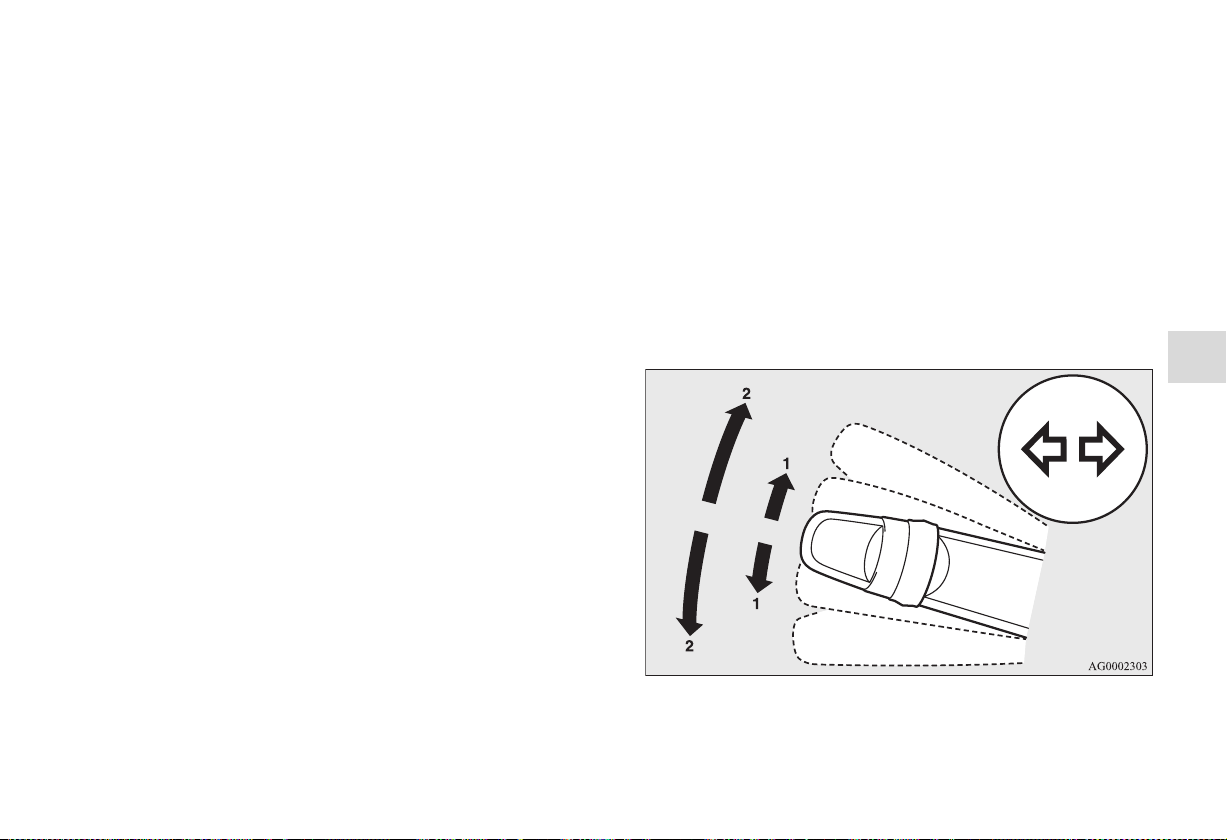
Features and controls
3-243
3
N
OTE
● Start adjusting when the knob is at the “0” position (when
the beam is at its highest).
● Keep the knob in the “0” position except when using the
knob to lower the headlight beam angle.
● Always return the knob to the “0” position when the load
is removed and the people have left the vehicle.
Turn signal lever
N00522600421
When changing lanes, or to making a gradual turn, hold the
lever in the “lane change” position (1). It will return to the neu-
tral position when you let go. Use the full position (2) when
making a normal turn. The lever will return to the neutral posi-
tion when the turn is complete. There may be times when the
lever does not return to the neutral position. This usually hap-
pens when the steering wheel is turned only slightly. You can
easily return the lever by hand.
Also, when you move the lever to (1) slightly then release it,
the turn signal lights and indicator light in the instrument clus-
ter will flash three times.
BK0138600US.book 243 ページ 2011年7月17日 日曜日 午後2時32分
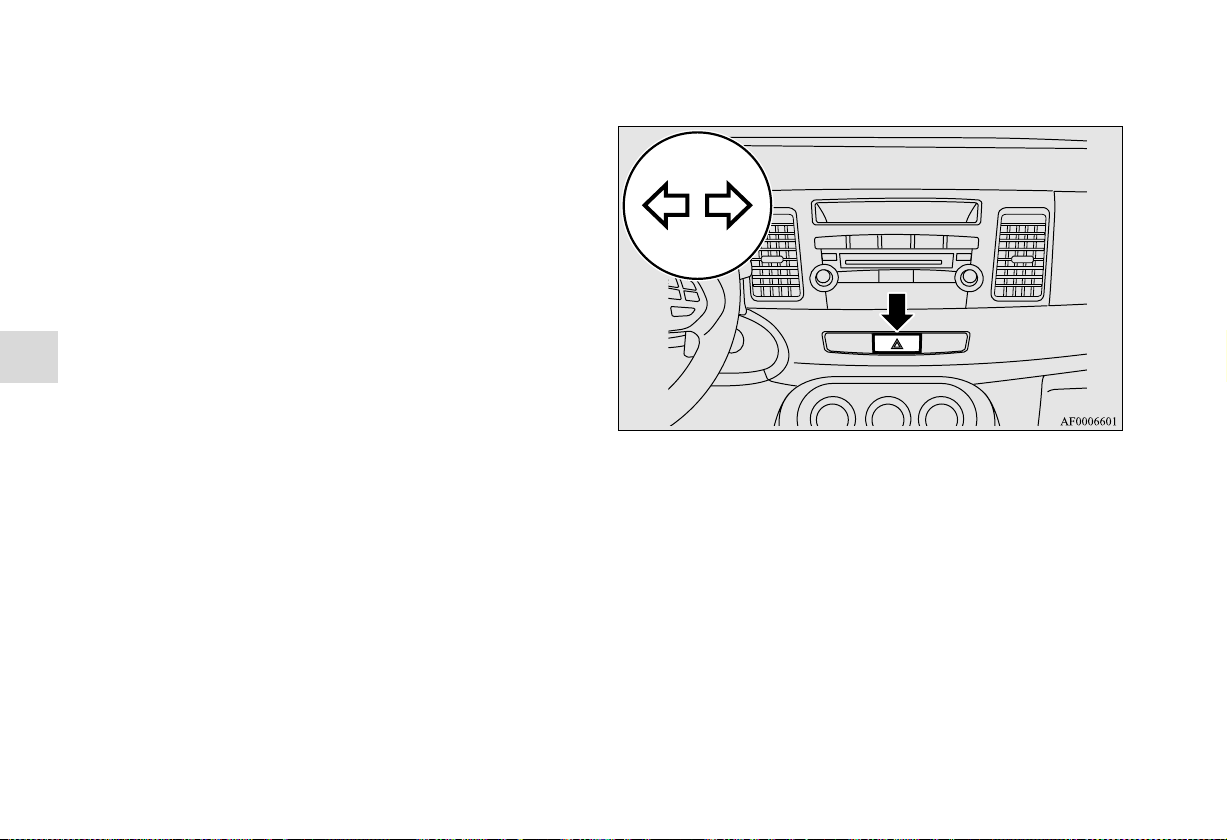
3-244
Features and controls
3
N
OTE
● A light in the instrument panel flashes to show when the
front and rear turn signal lights are working properly.
If this light flashes faster than usual, check for a burned
out light bulb or malfunctioning connection.
If the panel light does not come on when the lever is
moved, check for a blown fuse or a burned out bulb in the
panel.
Have the vehicle inspected by an authorized Mitsubishi
Motors dealer or a repair facility of your choice.
● The turn signal light 3-flash function for lane changes can
be deactivated.
See your authorized Mitsubishi Motors dealer for details.
For vehicles equipped with the Mitsubishi Multi-Commu-
nication System, adjustments can be made using screen
operations. For further details, refer to the separate
owner’s manual.
● You can adjust the time required to operate the lever for
the 3-flash function.
See your authorized Mitsubishi Motors dealer for details.
Hazard warning flasher switch
N00522700217
If you press the flasher switch, the front and rear turn signals
will flash intermittently, and so will the hazard warning lights.
This is an emergency warning system and should not be used
when the vehicle is in motion, except for emergencies.
If you need to leave your vehicle, the flashers will keep work-
ing after the ignition key is removed.
N
OTE
● If you keep the flashers on for several hours with the
engine turned off, the battery will run down.
BK0138600US.book 244 ページ 2011年7月17日 日曜日 午後2時32分
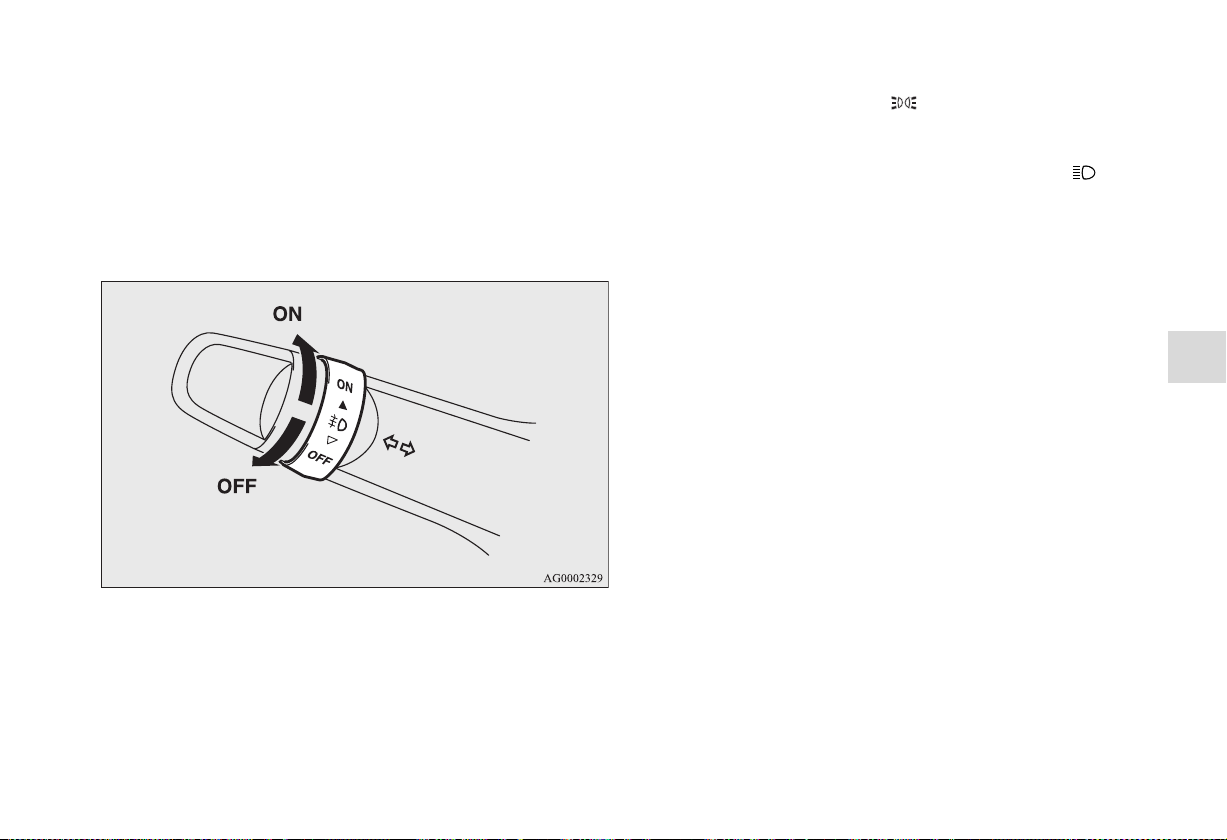
Features and controls
3-245
3
Front fog light switch
(if so equipped)
N00522800377
The front fog lights illuminate only when the headlights are on
low beam.
Turning the knob in the direction of the “ON” position turns on
the front fog lights as well as the indicator in the instrument
cluster. To turn them off, turn the knob in the direction of the
“OFF” position.
The knob will return to the neutral position when it is released.
N
OTE
● If the headlights are switched to high beam, the front fog
lights will go out; they will illuminate again when the
headlights are switched back to low beam.
● If the combination headlights and dimmer switch is
rotated to the “OFF” or “ ” position while the front fog
lights are illuminated, they will automatically turn off.
They can be turned back on again by rotating the combi-
nation headlights and dimmer switch back to “ ” posi-
tion, and turning the knob in the direction of the “ON”
position.
BK0138600US.book 245 ページ 2011年7月17日 日曜日 午後2時32分
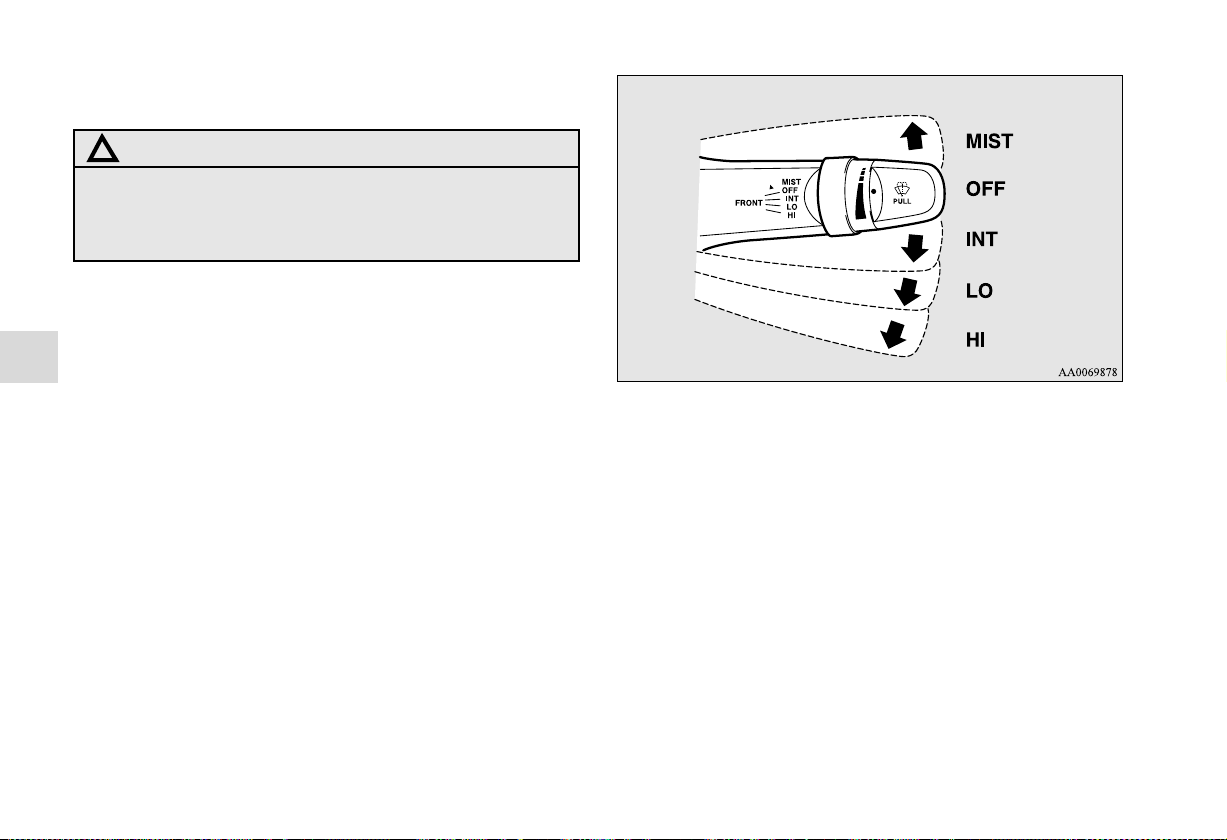
3-246
Features and controls
3
Wiper and washer switch
N00523000608
Windshield wipers
N00542900013
Except for vehicle with rain sensor
N00569100010
The windshield wiper and washer can be operated with the
ignition switch in the “ON” or “ACC” position.
If the blades are frozen to the windshield, do not operate the
wipers until the ice has melted and the blades are freed, other-
wise the wiper motor may be damaged.
CAUTION
!
● If the washer is used in cold weather, the washer
fluid sprayed against the glass may freeze, which
may hinder visibility. Warm the glass with the
defroster before using the washer.
MIST- Misting function
The wipers will operate once.
OFF- Off
INT- Intermittent (Speed sensitive)
LO- Slow
HI- Fast
BK0138600US.book 246 ページ 2011年7月17日 日曜日 午後2時32分
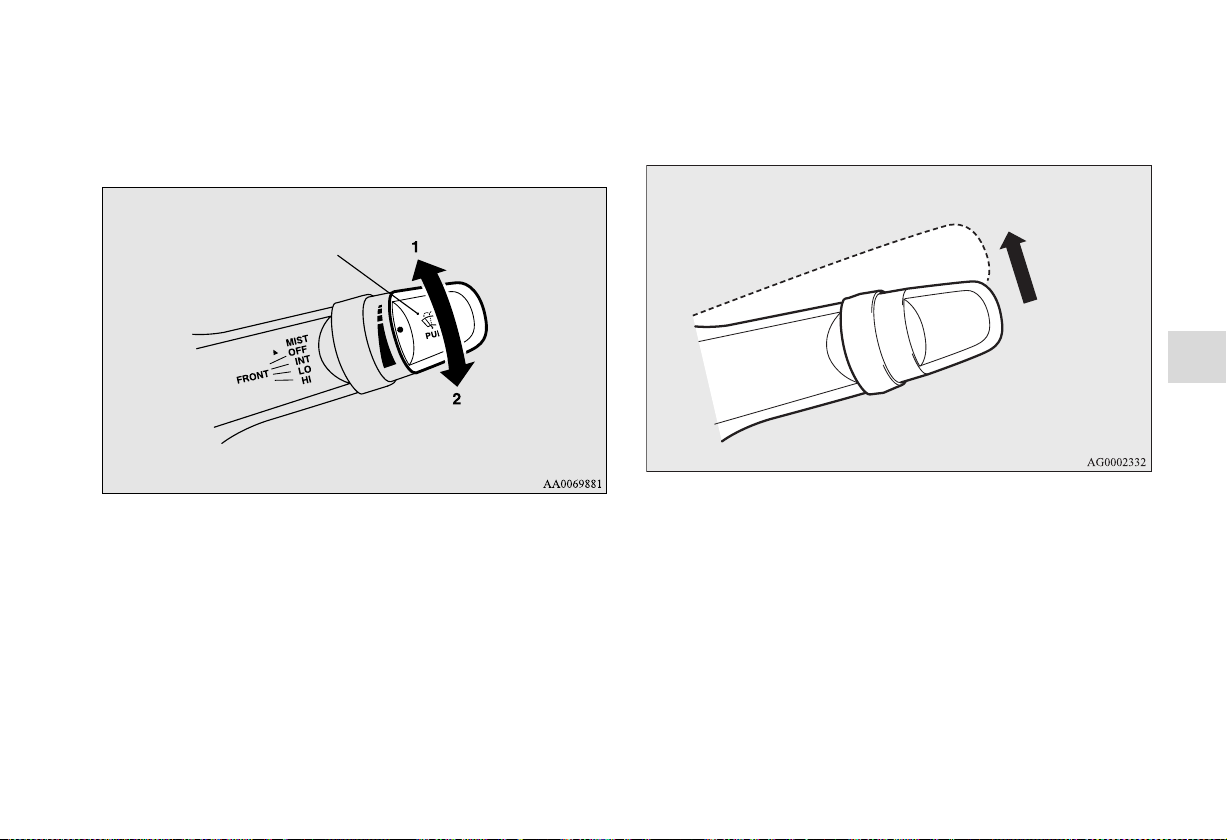
Features and controls
3-247
3
To adjust intermittent intervals
N00569200011
With the lever in the “INT” (speed sensitive intermittent opera-
tion) position, the intermittent intervals can be adjusted by
turning the knob (A).
N
OTE
● The speed-sensitive-operation function of the windshield
wipers can be deactivated.
For further information, please contact your authorized
Mitsubishi Motors dealer or a repair facility of your
choice. On vehicles equipped with Mitsubishi Multi-
Communication System, screen operations can be used to
make the adjustment. Refer to separate owner’s manual
for details.
Misting function
N00569300012
The misting function can be used when the ignition switch is in
the “ON” or “ACC” position.
The wipers will operate once if the wiper lever is raised to the
“MIST” position and released. This operation is useful when it
is drizzling, etc. The wipers will continue to operate while the
lever is held in the “MIST” position.
1- Fast
2- Slow
A
BK0138600US.book 247 ページ 2011年7月17日 日曜日 午後2時32分

3-248
Features and controls
3
Vehicle with rain sensor
N00569400013
The windshield wipers can be operated with the ignition switch
in the “ON” or “ACC” position.
If the blades are frozen to the windshield or rear window, do
not operate the wipers until the ice has melted and the blades
are freed, otherwise the wiper motor may be damaged.
Rain sensor (if so equipped)
N00569500014
Can only be used when the ignition switch is “ON” position.
If the lever is put in the “AUTO” position, the rain sensor (B)
will detect the extent of rain (or snow, other moisture, dust,
etc.) and the wipers will operate automatically.
Keep the lever in the “OFF” position if the windshield is dirty
and the weather is dry.
Wiper operation under these conditions can scratch the wind-
shield and damage the wipers.
MIST- Misting function
The wipers will operate once.
OFF- Off
AUTO- Auto-wiper control
Rain sensor
The wipers will automatically operate depending on the
amount of moisture on the windshield.
LO- Slow
HI- Fast
BK0138600US.book 248 ページ 2011年7月17日 日曜日 午後2時32分
Features and controls
3-249
3
N
OTE
● To protect the rubber parts of the wipers, this operation of
the wipers does not take place when the vehicle is station-
ary and the ambient temperature is about 32 °F (0 °C) or
lower.
● Do not cover the sensor by affixing a sticker or label to the
windshield. Also, do not put any water-repellent coating
on the windshield. The rain sensor would not be able to
detect the extent of rain, and the wipers might stop work-
ing normally.
● In the following cases, the rain sensor may be malfunc-
tioning. Have the vehicle checked at an authorized
Mitsubishi Motors dealer or a repair facility of your
choice.
• When the wipers operate at a constant interval despite
changes in the extent of rain.
• When the wipers do not operate even though it is rain-
ing.
● The wipers may automatically operate when things such
as insects or foreign objects are affixed to the windshield
on top of the rain sensor or when the windshield is frozen.
Objects affixed to the windshield will stop the wipers
when the wipers cannot remove them. To operate the wip-
ers again, move the lever to the “LO” or “HI” position.
Also, the wipers may operate automatically due to strong
direct sunlight or electromagnetic wave. To stop the wip-
ers, move the lever to the “OFF” position.
● Contact an authorized Mitsubishi Motors dealer or a
repair facility of your choice when replacing the wind-
shield glass.
CAUTION
!
● With the ignition switch in the “ON” position and
the lever in the “AUTO” position, the wipers may
automatically operate in the situations described
below.
• When cleaning the outside surface of the wind-
shield, if you touch the rain sensor.
• When cleaning the outside surface of the wind-
shield, if you wipe with a cloth the rain sensor.
• When using an automatic car wash.
• A physical shock is applied to the windshield.
• A physical shock is applied to the rain sensor.
If your hands get trapped, you could suffer injuries
or the wipers could malfunction. To deactivate the
rain sensor, place the lever in the “OFF” position.
BK0138600US.book 249 ページ 2011年7月17日 日曜日 午後2時32分
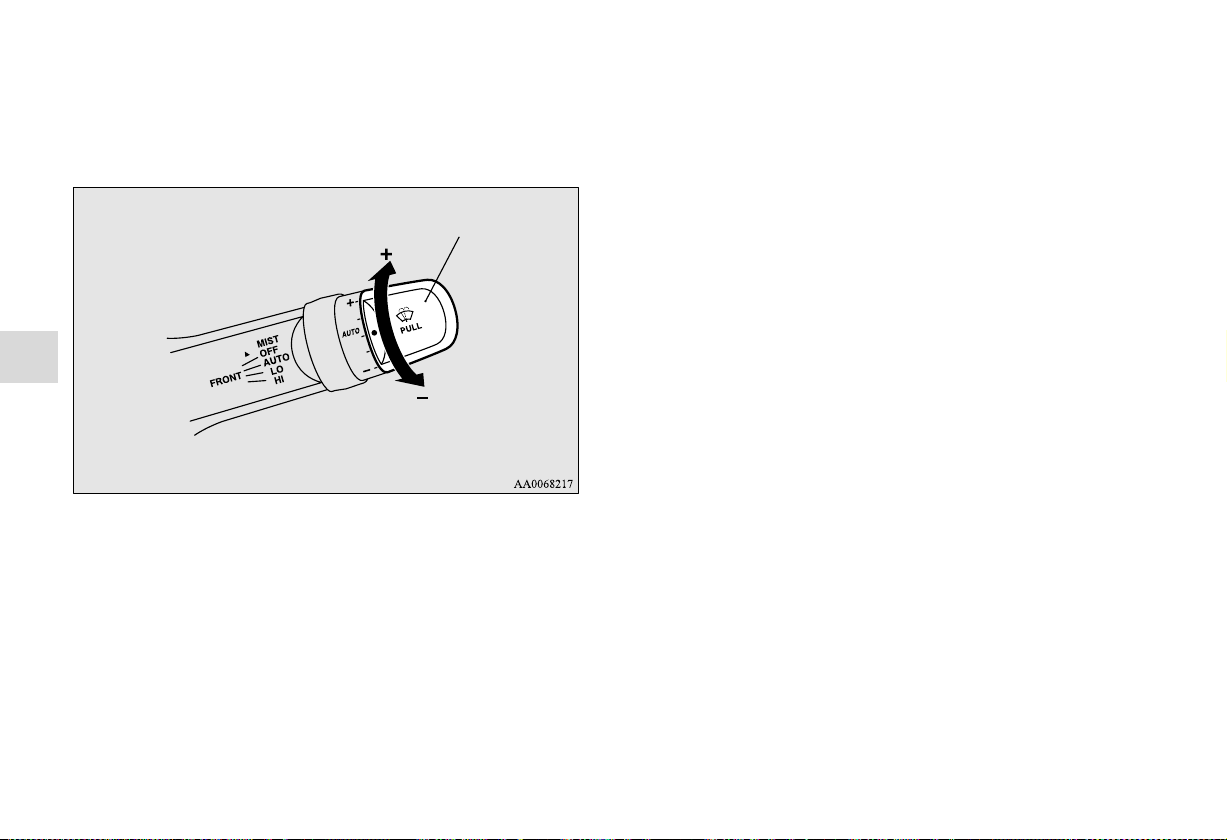
3-250
Features and controls
3
To adjust the sensitivity of the rain sensor
N00569600015
With the lever in the “AUTO” (rain sensor) position, it is possi-
ble to adjust the sensitivity of the rain sensor by turning the
knob (C).
N
OTE
● It is possible to activate the following functions.
• Automatic operation (rain droplet sensitive) can be
changed to intermittent operation (vehicle speed-sensi-
tive, or at adjustable intervals).
For further information, please contact your authorized
Mitsubishi Motors dealer or a repair facility of your
choice.
On vehicles equipped with Mitsubishi Multi-Communica-
tion System, screen operations can be used to make the
adjustment.
Refer to the separate owner’s manual for details.
“+”- Higher sensitivity to rain
“-”- Lower sensitivity to rain
C
BK0138600US.book 250 ページ 2011年7月17日 日曜日 午後2時32分
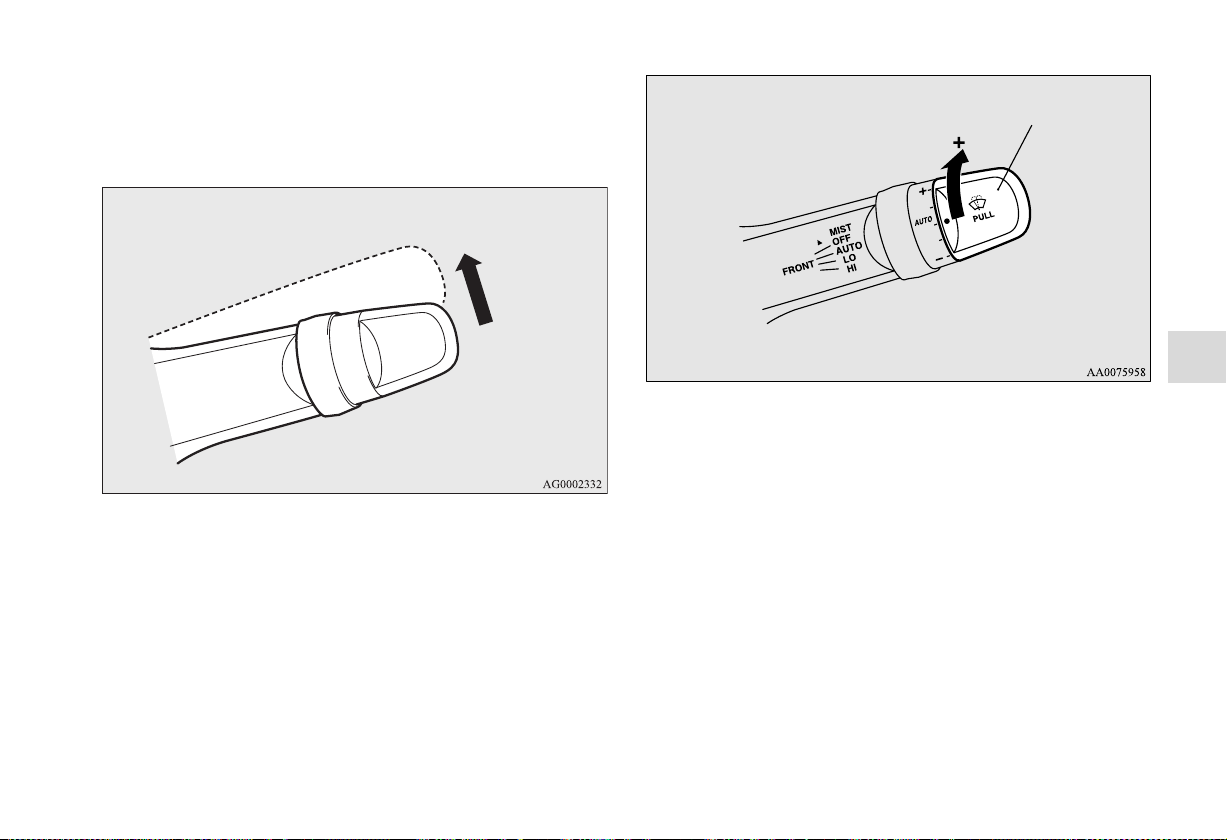
Features and controls
3-251
3
Misting function
N00569700016
Move the lever in the direction of the arrow and release, to
operate the wipers once.
Use this function when you are driving in mist or drizzle.
The wipers will operate once if the lever is raised to the
“MIST” position and released when the ignition switch is in
the “ON” or “ACC” position. The wipers will continue to oper-
ate while the lever is held in the “MIST” position.
The wipers will operate once if the lever is moved to the
“AUTO” position and the knob (D) is turned in the “+” direc-
tion when the ignition switch is “ON” position.
D
BK0138600US.book 251 ページ 2011年7月17日 日曜日 午後2時32分

3-252
Features and controls
3
Windshield washer
N00504600214
To turn on the windshield washer, pull the lever toward you
with the ignition switch in either the “ON” or “ACC” position.
The washer fluid will be sprayed onto the windshield by pull-
ing the lever toward you.
When the wipers are not in operation or in intermittent opera-
tion, by pulling the lever toward you, the wipers will operate
several times while the washer fluid is being sprayed.
Also, by releasing the lever soon after pulling it toward you,
the washer fluid will be sprayed several times while the wipers
are operating several times. (Intelligent washer)
Intelligent washer will stop operating with any operation of the
lever.
N
OTE
● It is possible to modify functions as follows:
• Causing the wiper never to operate when washer fluid is
sprayed.
• Intelligent washer can be deactivated.
• The wipers can be set to operate again after about 6 sec-
onds.
For details, consult a Mitsubishi Motors dealer.
On vehicles equipped with a Mitsubishi Multi-Communi-
cation System, screen operations can be used to make the
adjustment.
Refer to the separate owner’s manual for details.
BK0138600US.book 252 ページ 2011年7月17日 日曜日 午後2時32分
Features and controls
3-253
3
Precautions to observe when using wipers and
washers
N00523500209
N
OTE
● Do not use the wipers when the windshield is dry. This
could scratch the glass and wear the wiper blades prema-
turely.
● Before using the wipers in cold weather, check to be sure
that the wiper blades are not frozen to the windshield.
Using the wipers while the blades are frozen could cause
the wiper motor to burn out.
● If the wipers become blocked by ice or other deposits on
the glass, the motor may still burn out even if the wiper
switch is OFF. If deposits form on the windshield, park
your vehicle in a safe place, turn off the engine, and clean
the glass so that the wipers can operate smoothly.
● Avoid using the washer for more than 20 seconds at a
time. Do not operate the washer when the fluid reservoir
is empty or the pump may fail.
● During cold weather, add a recommended washer solution
that will not freeze in the washer reservoir. Otherwise the
washer may not work or may be damaged.
● Replace the wiper blades when they are worn. Use the
proper size replacement blades. If you have questions, ask
your authorized Mitsubishi Motors dealer.
CAUTION
!
● If the washer is used in cold weather, the washer
fluid sprayed onto the glass might freeze, blocking
your view. In cold weather, heat the glass with the
defroster before using the washer.
BK0138600US.book 253 ページ 2011年7月17日 日曜日 午後2時32分
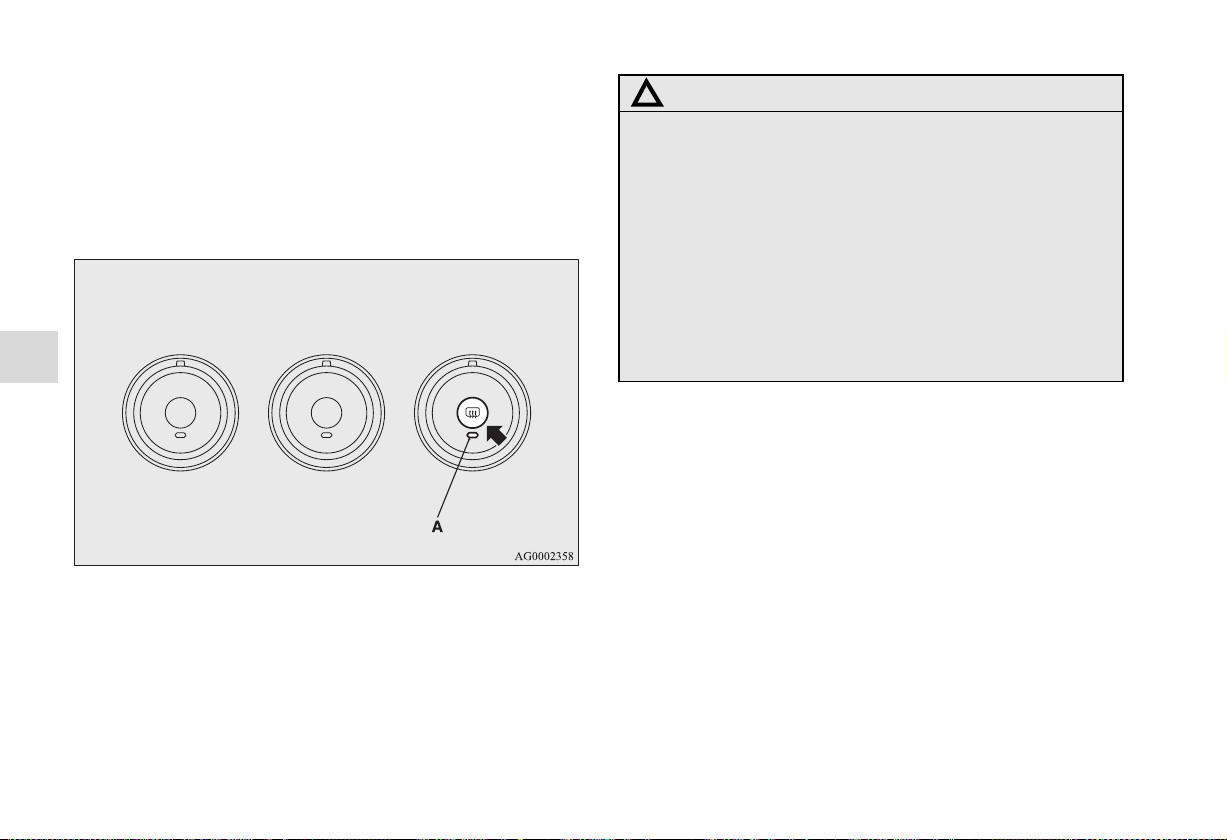
3-254
Features and controls
3
Electric rear window defogger switch
N00523700315
The electric rear window defogger can be used when the
engine is running.
The indicator light (A) will come on when you press the elec-
tric rear window defogger switch. Electric current will flow
through the heating wires on the rear window to help clear
away moisture or frost.
After about 20 minutes of operation, the system will shut off
automatically.
To switch the defogger OFF before 20 minutes have passed,
press the switch again. The indicator light will go out and the
defogger will turn off.
If you need the defogger for more than 20 minutes, press the
switch again. This will add 20 more minutes.
N
OTE
● If your vehicle is equipped with heated mirrors, mist can
also be removed from the outside rearview mirrors when
the rear window defogger switch is pressed. (Refer to
“Heated mirror” on page 3-85.)
CAUTION
!
● The rear window defogger is not designed to melt
snow. Remove any snow manually before using the
rear window defogger.
● Use the rear window defogger only after the engine
has started and is running. Be sure to turn the
defogger switch off immediately after the window is
clear to save on battery power.
● Do not place stickers, tape, or other items that are
attached with adhesive over the grid wires on the
rear window.
● When cleaning the inside rear window, use a soft
cloth and wipe lightly over the grid wires.
BK0138600US.book 254 ページ 2011年7月17日 日曜日 午後2時32分
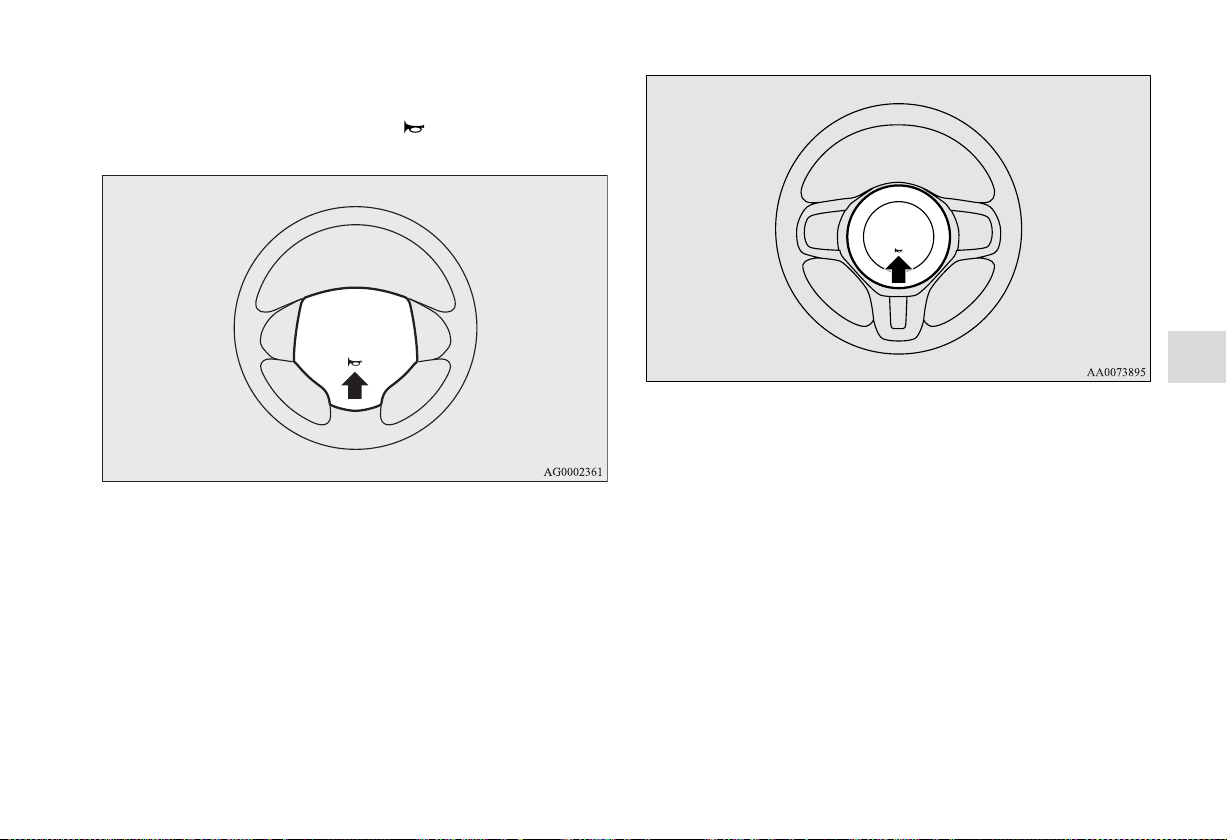
Features and controls
3-255
3
Horn switch
N00523800156
To honk the horn, press around the “ ” mark on the steering
wheel.
Type 1
Type 2
BK0138600US.book 255 ページ 2011年7月17日 日曜日 午後2時32分

3-256
Features and controls
3
Link System
(if so equipped)
N00563700027
The Link System takes overall control of the devices connected
via the USB input terminal or the Bluetooth
®
2.0 interface
allowing the connected devices to be operated by using the
switches in the vehicle or voice commands.
See the following section for details on how to operate.
Refer to “Bluetooth
®
2.0 interface” on page 3-256.
Refer to “USB input terminal” on page 3-283.
Refer to “To play tracks from USB device” on page 5-111.
Refer to “To play tracks from a Bluetooth
®
device” on page 5-
128.
Refer to “To use the external audio input function” on page 5-
132.
Bluetooth
®
is a registered trademark of BLUETOOTH SIG,
INC.
Link System End User License Agreement
N00563800015
You have acquired a device that includes software licensed by
Mitsubishi Motors Corporation from JOHNSON CONTROLS
Inc (the automotive experience business unit), and their subse-
quent 3rd party suppliers. For a complete list of these 3rd party
products and their end user license agreements, please go to the
following website.
http://www.jciblueconnect.com/faq/fulldisclosure.pdf
Bluetooth
®
2.0 interface (if so equipped)
N00563900032
The Bluetooth
®
2.0 interface allows for making/receiving
hands-free calls in the vehicle using a Bluetooth
®
compatible
cellular phone based on the wireless communication technol-
ogy commonly known as Bluetooth
®
. It also allows the user to
play music, saved in a Bluetooth
®
music player, from the vehi-
cle’s speakers.
The system is equipped with a voice recognition function,
which allows you to make hands-free calls by simple switch
operations and voice command operations using a defined
voice tree.
The Bluetooth
®
2.0 interface can be used when the ignition
switch is in the “ON” or “ACC” position.
Before you can use the Bluetooth
®
2.0 interface, you must pair
the Bluetooth
®
device and Bluetooth
®
2.0 interface. Refer to
“Connecting the Bluetooth
®
2.0 interface and Bluetooth
®
device” on page 3-264.
Bluetooth
®
is a registered trademark of BLUETOOTH SIG,
INC.
BK0138600US.book 256 ページ 2011年7月17日 日曜日 午後2時32分

Features and controls
3-257
3
N
OTE
● If the ignition switch is left in the “ACC” position, the
accessory power will automatically turn off after a certain
period of time and you will no longer be able to use the
Bluetooth
®
2.0 interface. The accessory power comes on
again if the ignition switch is turned from the “ACC”
position. Refer to “ACC power auto-cutout function” on
page 3-86.
● The Bluetooth
®
2.0 interface cannot be used if the
Bluetooth
®
device has a dead battery or the device power
is turned off.
● Hands-free calls will not be possible if your phone does
not have service available.
● Some Bluetooth
®
devices are not compatible with the
Bluetooth
®
2.0 interface.
Steering control switch → P.3-258
Voice recognition function → P.3 - 2 6 0
Useful voice commands → P.3 - 2 61
Speaker enrollment function → P.3-263
Connecting the Bluetooth
®
2.0 interface and the Bluetooth
®
device → P.3-264
Operating a music player connected via Bluetooth
®
→ P. 3 - 26 9
How to make or receive hands-free calls → P. 3 -2 69
Phonebook function → P.3-273
WARNING
!
● Although the Bluetooth
®
2.0 interface allows you to
make hands-free calls, if you choose to use the cellu-
lar phone while driving, you must not allow yourself
to be distracted from the safe operation of your vehi-
cle. Anything, including cellular phone usage, that
distracts you from the safe operation of your vehicle
increases your risk of an accident.
● Refer to and comply with all state and local laws in
your area regarding cellular phone usage while driv-
ing.
BK0138600US.book 257 ページ 2011年7月17日 日曜日 午後2時32分
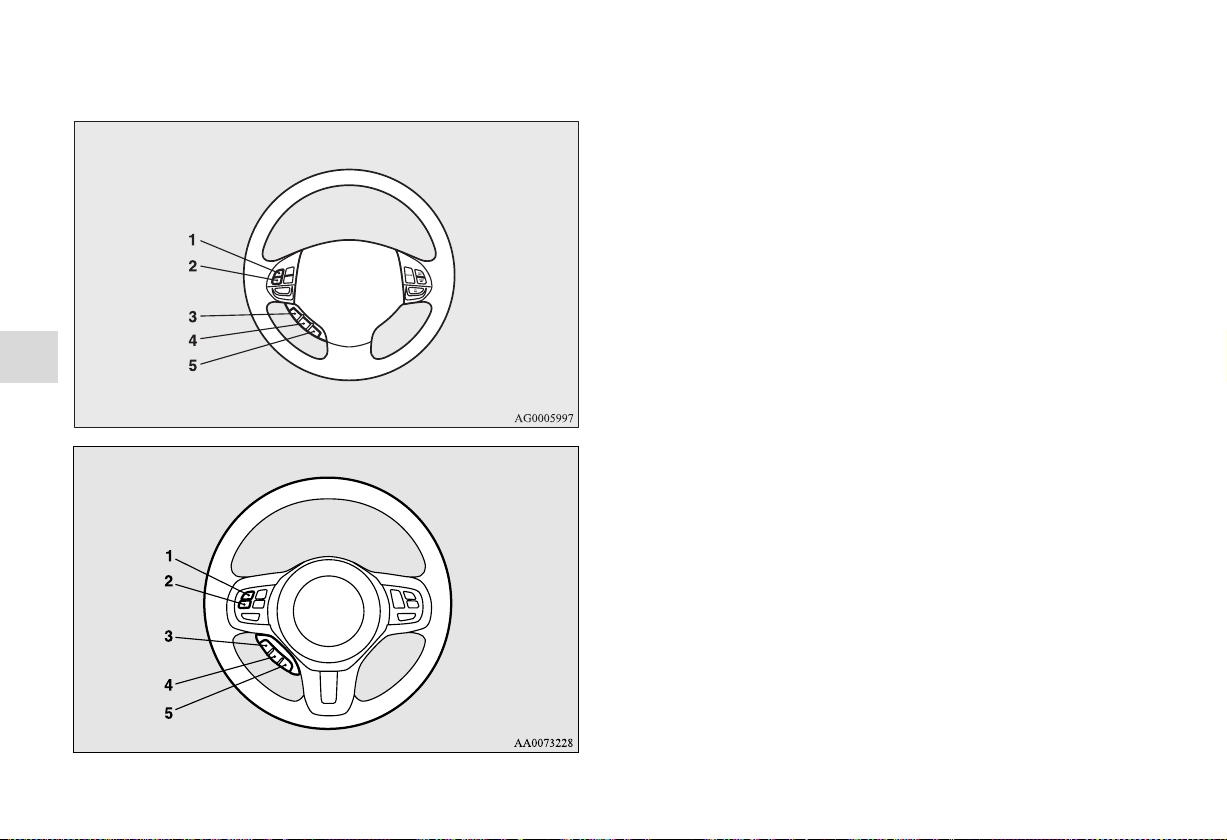
3-258
Features and controls
3
Steering control switch
N00564000027
Type 1
Type 2
1- Volume up button
2- Volume down button
3- SPEECH button
4- PICK-UP button
5- HANG-UP button
BK0138600US.book 258 ページ 2011年7月17日 日曜日 午後2時32分

Features and controls
3-259
3
Volume up button
Press this button to increase the volume.
Volume down button
Press this button to decrease the volume.
SPEECH button
● Press this button to change to voice recognition mode.
While the system is in voice recognition mode, “Listen-
ing” will appear on the audio display.
● If you press the button briefly while in voice recognition
mode, it will interrupt prompting and allow voice com-
mand input.
Pressing the button longer will deactivate the voice recog-
nition mode.
● Pressing this button briefly during a call will enable voice
recognition and allow voice command input.
PICK-UP button
● Press this button when an incoming call is received to
answer the telephone.
● When another call is received during a call, press this but-
ton to put the first caller on hold and talk to the new caller.
• In such circumstances, you can press the button briefly
to switch between callers. You will switch to the first
caller and the other caller will be put on hold.
• To establish a three-way call in such situations, press the
SPEECH button to enter voice recognition mode and
then say “Join calls.”
HANG-UP button
● Press this button when an incoming call is received to
refuse the call.
● Press this button during a call to end the current call.
When another call is on hold, you will switch to that call.
● If this button is pressed in the voice recognition mode, the
voice recognition mode will be deactivated.
N
OTE
● When you press the SPEECH button to enter voice recog-
nition mode with a cellular phone paired to the system,
current information on the cellular phone, such as
“remaining battery life,” “signal strength” or “roaming,”
will be displayed on the audio display.*
*: Some cellular phones will not send this information to
the Bluetooth
®
2.0 interface.
● Call waiting and three-way calls can be used by the
Bluetooth
®
2.0 interface, only if it is possible to use those
services with your cellular phone.
BK0138600US.book 259 ページ 2011年7月17日 日曜日 午後2時32分

3-260
Features and controls
3
Voice recognition function
N00564100031
The Bluetooth
®
2.0 interface is equipped with a voice recogni-
tion function.
Simply say voice commands and you can perform various
operations and make or receive hands-free calls.
With the Bluetooth
®
2.0 interface, voice recognition is possible
for US English, North American Spanish, Canadian French and
Japanese. The factory setting is “English.”
N
OTE
● If the voice command that you say differs from the pre-
defined command or cannot be recognised due to ambient
noise or some other reason, the Bluetooth
®
2.0 interface
will ask you for the voice command again up to 3 times.
● For best performance and further reduction of ambient
noise, the vehicle windows should be closed while engag-
ing the voice recognition function.
● Depending on the selected language, some functions may
not be available.
Selecting the language
1. Press the SPEECH button.
2. Say “Setup.”
3. Say “Language.”
4. The voice guide will say “Select a language: English,
Spanish, French or Japanese.” Say the desired language.
(Example: “English”)
5. The voice guide will say “English (Spanish, French or
Japanese) selected. Is this correct?” Say “Yes.”
If you say “No,” the system will return to Step 4.
N
OTE
● The voice guide will repeat the same message twice. The
first message is in the current language, and the second
message is in the selected language.
● If many entries are registered in the vehicle phonebook,
changing the language will take a longer time.
● Changing the language deletes the mobile phonebook
imported to the Bluetooth
®
2.0 interface. If you wish to
use it, you will have to import it again.
6. When the voice guide says “English (Spanish, French or
Japanese) selected,” the language change process will be
completed and the system will return to the main menu.
BK0138600US.book 260 ページ 2011年7月17日 日曜日 午後2時32分

Features and controls
3-261
3
Useful voice commands
N00564200016
Help function
N00564300017
The Bluetooth
®
2.0 interface is equipped with a help function.
If you say “Help” when the system is waiting for a voice com-
mand input, the system will tell you a list of the commands that
can be used under the circumstances.
Canceling
N00564400018
There are 2 cancel functions.
If you are at the main menu, say “Cancel” to exit from the
Bluetooth
®
2.0 interface.
If you are anywhere else within the system, say “Cancel” to
return to the main menu.
Confirmation function setting
N00564500019
The Bluetooth
®
2.0 interface is equipped with a confirmation
function.
With the confirmation function activated, you are given more
opportunities than normal to confirm a command when making
various settings to the Bluetooth
®
2.0 interface. This allows
you to decrease the possibility that a setting is accidentally
changed.
The confirmation function can be turned on or off by following
the steps below.
1. Press the SPEECH button.
2. Say “Setup.”
3. Say “Confirmation prompts.”
4. The voice guide will say “Confirmation prompts are
<on/off>. Would you like to turn confirmation prompts
<off/on>.”
Answer “Yes” to change the setting or answer “No” to
keep the current setting.
5. The voice guide will say “Confirmation prompts are
<off/on>” and then the system will return to the main
menu.
Security function
N00564600036
It is possible to use a passcode as a security function by setting
a passcode of your choice for the Bluetooth
®
2.0 interface.
When the security function is turned on, it is necessary to make
a voice input of a 4-digit passcode in order to use all functions
of the Bluetooth
®
2.0 interface, except for reception.
BK0138600US.book 261 ページ 2011年7月17日 日曜日 午後2時32分

3-262
Features and controls
3
Setting the passcode
Use the following procedure to turn on the security function by
setting a passcode.
1. Press the SPEECH button.
2. Say “Setup.”
3. Say “Passcode.”
4. The voice guide will say “Passcode is disabled. Would
you like to enable it?” Answer “Yes.”
Answer “No” to cancel the setting of the passcode and
return to the main menu.
5. The voice guide will say “Please say a 4-digit passcode.
Remember this passcode. It will be required to use this
system.”
Say a 4-digit number which you want to set as a passcode.
6. For confirmation purposes, the voice guide will say “Pass-
code <4-digit passcode>. Is this correct?” Answer “Yes.”
Answer “No” to return to the passcode input in Step 5.
7. When the registration of the passcode is completed, the
voice guide will say “Passcode is enabled” and the system
will return to the main menu.
N
OTE
● Passcode will be required to access the system after the
next ignition cycle.
● It is required for a little time after engine stop that the
entered passcode is actually recorded in the system. If the
ignition switch is made to “ACC” or “ON” or the engine
is started immediately after engine stop, there is a case
when the entered passcode is not recorded in the system.
At this time, please try to enter the passcode again.
Entering the passcode
If a passcode has been set and the security function is enabled,
the voice guide will say “Hands-free system is locked. State the
passcode to continue” when the SPEECH button is pressed to
enter voice recognition mode. Say the 4-digit passcode number
to enter the passcode.
If the entered passcode is wrong, the voice guide will say “<4-
digit passcode>, Incorrect passcode. Please try again.” Enter
the correct passcode.
N
OTE
● You can reenter the passcode as many times as you want.
● If you have forgotten your passcode, say “Cancel” to quit
the voice input mode and then check with an authorized
Mitsubishi Motors dealer.
Disabling the passcode
Use the following procedure to turn off the security function by
disabling the passcode.
N
OTE
● System must be unlocked to disable the passcode.
1. Press the SPEECH button.
2. Say “Setup.”
3. Say “Passcode.”
4. The voice guide will say “Passcode is enabled. Would you
like to disable it?” Answer “Yes.”
Answer “No” to cancel the disabling of the passcode and
return to the main menu.
5. When the disabling of the passcode is completed, the
voice guide will say “Passcode is disabled” and the sys-
tem will return to the main menu.
BK0138600US.book 262 ページ 2011年7月17日 日曜日 午後2時32分

Features and controls
3-263
3
Speaker enrollment function
N00564700011
The Bluetooth
®
2.0 interface can use the speaker enrollment
function to create a voice model for one person per language.
This makes it easier for the Bluetooth
®
2.0 interface to recogn-
ise voice commands said by you.
You can turn a voice model registered with the speaker enroll-
ment function on and off whenever you want.
Speaker enrollment
N00564800025
It takes about 2 to 3 minutes to complete the speaker enroll-
ment process.
To ensure the best results, run through the process while in the
driver’s seat, in an environment that is as quiet as possible
(when there is no rain or strong winds and the vehicle windows
are closed). Please turn off your phone while in speaker enroll-
ment to prevent interruption of the process.
Use the following procedure for speaker enrollment.
1. Stop your vehicle in a safe area, put the shift lever (man-
ual transaxle) in the “N”(Neutral) position, or the selector
lever {continuously variable transmission (CVT)} or
gearshift lever (Twin Clutch SST) in the “P”(PARK) posi-
tion, and then pull the parking brake lever.
N
OTE
● Speaker enrollment is not possible unless the vehicle is
parked. Make sure you park the vehicle in a safe area
before attempting speaker enrollment.
2. Press the SPEECH button.
3. Say “Voice training.”
4. The voice guide will say “This operation must be per-
formed in a quiet environment while the vehicle is
stopped. See the owner’s manual for the list of required
training phrases. Press and release the SPEECH button
when you are ready to begin. Press the HANG-UP button
to cancel at any time.”
Press the SPEECH button to start the speaker enrollment
process.
N
OTE
● If you do not start the speaker enrollment process within 3
minutes after pressing the SPEECH button, the speaker
enrollment function will time out.
The voice guide will say “Speaker enrollment has timed
out.” The system will then beep and the voice recognition
mode will be deactivated.
5. The voice guide will prompt for phrase 1. Repeat the cor-
responding phrase listed in table “Enrollment commands”
on page 3-282.
The system will register your voice and then move on to
the registration of the next command. Continue the pro-
cess until all phrases have been registered.
N
OTE
● To repeat the most recent voice training command, press
and release the SPEECH button.
● If you press the HANG-UP button anytime during the pro-
cess, the system will beep and stop the speaker enrollment
process.
BK0138600US.book 263 ページ 2011年7月17日 日曜日 午後2時32分

3-264
Features and controls
3
6. When all enrollment commands have been read out, the
voice guide will say “Speaker enrollment is complete.”
The system will then end the speaker enrollment process
and return to the main menu.
N
OTE
● Completing the speaker enrollment process will turn on
the voice model automatically.
● The commands “Help” and “Cancel” will not work in this
mode.
Enabling and disabling the voice model and retraining
N00564900013
You can turn a voice model registered with the speaker enroll-
ment function on and off whenever you want.
You can also retrain the system.
Use the following procedure to perform these actions.
1. Press the SPEECH button.
2. Say “Voice training.”
3. If you have completed a speaker enrollment process once
already, the voice guide will say either “Enrollment is
enabled. Would you like to disable or retrain?” or “Enroll-
ment is disabled. Would you like to enable or retrain?”
4. When enrollment is “enabled,” the voice model is on;
when enrollment is “disabled,” the voice model is off. Say
the command that fits your needs.
Say “Retrain” to start the speaker enrollment process and
recreate a new voice model. (Refer to “Speaker enroll-
ment” on page 3-263.)
Connecting the Bluetooth
®
2.0 interface and
Bluetooth
®
device
N00565000082
Before you can make or receive hands-free calls or play music
using the Bluetooth
®
2.0 interface function, you must pair the
Bluetooth
®
device and Bluetooth
®
2.0 interface.
N
OTE
● Pairing is required only when the device is used for the
first time. Once the device has been paired with the
Bluetooth
®
2.0 interface, all you need is to bring the
device into the vehicle next time and the device will con-
nect to the Bluetooth
®
2.0 interface automatically (if sup-
ported by the device).
Up to 7 Bluetooth
®
devices can be paired with the Bluetooth
®
2.0 interface.
If multiple paired Bluetooth
®
devices are available in the vehi-
cle, the cellular phone or music player most recently connected
is automatically connected to the Bluetooth
®
2.0 interface.
You can also change a Bluetooth
®
device to be connected.
N
OTE
● Please refer to the following website for a list of compati-
ble devices:
www.mitsubishifuse.com
Or contact Mitsubishi hands-free customer support at
(888)702-4100.
BK0138600US.book 264 ページ 2011年7月17日 日曜日 午後2時32分

Features and controls
3-265
3
To pair
To pair a Bluetooth
®
device with the Bluetooth
®
2.0 interface,
follow the steps below.
N
OTE
● For assistance with pairing, please go to the following
website.
www.mitsubishifuse.com
1. Stop your vehicle in a safe area, put the shift lever (man-
ual transaxle) in the “N” (Neutral) position, or the selector
lever {continuously variable transmission (CVT)} or
gearshift lever (Twin Clutch SST) in the “P” (PARK)
position, and then pull the parking brake lever.
N
OTE
● You cannot pair any Bluetooth
®
device with the
Bluetooth
®
2.0 interface unless the vehicle is parked.
Before pairing a Bluetooth
®
device with the Bluetooth
®
2.0 interface, confirm that the vehicle is parked in a safe
location.
2. Press the SPEECH button.
3. Say “Setup.”
4. Say “Pairing Options.”
5. The voice guide will say “Select one of the following:
pair, edit, delete, or list.” Say “Pair.”
N
OTE
● If 7 devices have already been paired, the voice guide will
say “Maximum devices paired” and then the system will
end the pairing process. To register a new device, delete
one device and then repeat the pairing process.
(Refer to “Deleting a device” on page 3-266.)
6. The voice guide will say “Please say a 4-digit pairing
code.” Say a 4-digit number.
When the confirmation function is on, the system will
confirm whether the number said is acceptable. Answer
“Yes.”
Answer “No” to return to pairing code selection.
N
OTE
● Some Bluetooth
®
devices require a specific pairing code.
Please refer to the device manual for pairing code require-
ments.
● The pairing code entered here is only used for the
Bluetooth
®
connection certification. It is any 4-digit num-
ber the user would like to select.
Remember the pairing code as it needs to be keyed into
the Bluetooth
®
device later in the pairing process.
Depending on the connection settings of the Bluetooth
®
device, this code may have to be entered each time you
connect the Bluetooth
®
device to the Bluetooth
®
2.0
interface. For the default connection settings, refer to the
instructions for the device.
BK0138600US.book 265 ページ 2011年7月17日 日曜日 午後2時32分

3-266
Features and controls
3
7. The voice guide will say “Start pairing procedure on the
device. See the device manual for instructions.” Enter in
the Bluetooth
®
device the 4-digit number you have regis-
tered in Step 6.
N
OTE
● Depending on the Bluetooth
®
device, it may take a few
minutes to pair it with the Bluetooth
®
2.0 interface.
● If the Bluetooth
®
2.0 interface cannot recognize the
Bluetooth
®
device, the voice guide will say “Pairing has
timed out” and the pairing process will be cancelled.
Confirm that the device you are pairing supports
Bluetooth
®
, and try pairing it again.
● If you enter the wrong number, the voice guide will say
“Pairing failed” and the pairing process will be cancelled.
Confirm the number is right, and try pairing it again.
8. The voice guide will say “Please say the name of the
device after the beep.” You can assign a desired name for
the Bluetooth
®
device and register it as a device tag. Say
the name you want to register after the beep.
N
OTE
● When the confirmation function is on, after repeating the
device tag you have said, the voice guide will ask “Is this
correct?” Answer “Yes.”
To change the device tag, answer “No” and then say the
device tag again.
9. The voice guide will say “Pairing complete,” after which
a beep will be played and the pairing process will end.
Selecting a device
N00565100012
If multiple paired Bluetooth
®
devices are available in the vehi-
cle, the cellular phone or music player most recently connected
is automatically connected to the Bluetooth
®
2.0 interface.
You can connect to the other cellular phone or music player by
following setting change procedures.
To select a cellular phone
1. Press the SPEECH button.
2. Say “Setup.”
3. Say “Select phone.”
4. After the voice guide says “Please say,” the numbers of
the cellular phones and device tags of corresponding cel-
lular phones will be read out in order, starting with the cel-
lular phone that has been most recently connected.
Say the number of the cellular phone that you want to con-
nect to.
When the confirmation function is on, the system will ask
you again whether the phone that you want to connect to
is correct. Answer “Yes” to continue and connect to the
cellular phone.
Answer “No,” and the voice guide will say “Please say.”
Say the number of the phone that you want to connect to.
N
OTE
● You can connect to a phone at any time by pressing the
SPEECH button and saying the number, even before all of
the paired numbers and device tags of corresponding cel-
lular phones are read out by the system.
BK0138600US.book 266 ページ 2011年7月17日 日曜日 午後2時32分

Features and controls
3-267
3
5. The selected phone will be connected to the Bluetooth
®
2.0 interface. The voice guide will say “<device tag>
selected” and then the system will return to the main
menu.
To select a music player
1. Press the SPEECH button.
2. Say “Setup.”
3. Say “Select music player.”
4. After the voice guide says “Please say,” the numbers of
the music players and device tags of corresponding music
players will be read out in order, starting with the music
player that has been most recently connected.
Say the number of the music player that you want to con-
nect to.
When the confirmation function is on, the system will ask
you again whether the music player that you want to con-
nect to is correct. Answer “Yes” to continue and connect
to the music player.
Answer “No,” and the voice guide will say “Please say.”
Say the number of the music player that you want to con-
nect to.
N
OTE
● You can connect to a music player at any time by pressing
the SPEECH button and saying the number, even before
all of the paired numbers and device tags of corresponding
music players are read out by the system.
5. The selected music player will be connected to the
Bluetooth
®
2.0 interface.
The voice guide will say “<device tag> selected” and then
the system will return to the main menu.
Deleting a device
Use the following procedure to delete a paired Bluetooth
®
device from the Bluetooth
®
2.0 interface.
1. Press the SPEECH button.
2. Say “Setup.”
3. Say “Pairing Options.”
4. The voice guide will say “Select one of the following:
pair, edit, delete, or list.” Say “Delete.”
5. After the voice guide says “Please say,” the numbers of
the devices and device tags of corresponding devices will
be read out in order, starting with the device that has been
most recently connected. After it completes reading all
pairs, the voice guide will say “or all.”
Say the number of the device that you want to delete from
the system.
If you want to delete all paired phones from the system,
say “All.”
6. For confirmation purposes, the voice guide will say
“Deleting <device tag> <number>. Is this correct?” or
“Deleting all devices. Is this correct?”
Answer “Yes” to delete the phone(s).
Answer “No,” the system will return to Step 4.
BK0138600US.book 267 ページ 2011年7月17日 日曜日 午後2時32分

3-268
Features and controls
3
7. The voice guide will say “Deleted,” and then the system
will end the device deletion process.
N
OTE
● If the device deletion process fails for some reason, the
voice guide will say “Delete failed” and then the system
will cancel deleting the device.
To check a paired Bluetooth
®
device
N00565200013
You can check a paired Bluetooth
®
device by following the
steps below.
1. Press the SPEECH button.
2. Say “Setup.”
3. Say “Pairing Options.”
4. The voice guide will say “Select one of the following:
pair, edit, delete, or list.” Say “List.”
5. The voice guide will read out device tags of correspond-
ing devices in order, starting with the Bluetooth
®
device
that has been most recently connected.
6. After the device tags of all paired Bluetooth
®
devices
have been read, the system will say “End of list, would
you like to start from the beginning?”
To hear the list again from the beginning, answer “Yes.”
When you are done, answer “No” to return to the main
menu.
N
OTE
● If you press and release the SPEECH button and say
“Continue” or “Previous” while the list is being read, the
system will advance or rewind the list.
Say “Continue” to proceed to the device with the next
highest number or “Previous” to return to the phone with
the previous number.
● You can change the device tag by pressing and releasing
the SPEECH button and then saying “Edit” while the list
is being read.
● You can change the phone to be connected by pressing
and releasing the SPEECH button and then saying “Select
phone” while the list is being read.
● You can change the music player to be connected by
pressing and releasing the SPEECH button and then say-
ing “Select music player” while the list is being read.
Changing a device tag
N00565300014
You can change the device tag of a paired cellular phone or
music player.
Follow the steps below to change a device tag.
1. Press the SPEECH button.
2. Say “Setup.”
3. Say “Pairing Options.”
4. The voice guide will say “Select one of the following:
pair, edit, delete, or list.” Say “Edit.”
BK0138600US.book 268 ページ 2011年7月17日 日曜日 午後2時32分

Features and controls
3-269
3
5. The voice guide will say “Please say,” and read out the
numbers of the Bluetooth
®
devices and device tags of cor-
responding devices in order, starting with the Bluetooth
®
that has been most recently connected.
After all paired device tags have been read, the voice
guide will say “Which device, please?” Say the number of
the device tag you want to change.
N
OTE
● You can press and release the SPEECH button while the
list is being read, and immediately say the number of the
device tag you want to change.
6. The voice guide will say “New name, please.” Say the
name you want to register as a new device tag.
When the confirmation function is on, the voice guide will
say “<New device tag>. Is this correct?” Answer “Yes.”
Answer “No,” you can say the new device tag you want to
register again.
7. The device tag is changed.
When the change is complete, the voice guide will say
“New name saved” and then the system will return to the
main menu.
Operating a music player connected via
Bluetooth
®
N00565400015
For the operation of a music player connected via Bluetooth
®
,
refer to “To play tracks from a Bluetooth
®
device” on page 5-
128.
How to make or receive hands-free calls
N00565500074
You can make or receive hands-free calls using a Bluetooth
®
compatible cellular phone connected to the Bluetooth
®
2.0
interface.
You can also use the phonebooks in the Bluetooth
®
2.0 inter-
face to make calls without dialing telephone numbers.
To make a call P.3-270
Send function P.3-272
Receiving calls P.3-272
Mute function P.3-273
Switching between hands-free mode and private mode P.3-273
N
OTE
● Hands-free calls may not operate correctly when you
place or receive the call directly from your cellular phone,
instead of using the Bluetooth
®
2.0 interface.
BK0138600US.book 269 ページ 2011年7月17日 日曜日 午後2時32分

3-270
Features and controls
3
To make a call
N00565600033
You can make a call in the following 3 ways using the
Bluetooth
®
2.0 interface:
Making a call by saying a telephone number, making a call
using the Bluetooth
®
2.0 interface’s phonebook, and making a
call by redialing.
Making a call by using the telephone number
You can make a call by saying the telephone number.
1. Press the SPEECH button.
2. Say “Dial.”
3. After the voice guide says “Number please,” say the tele-
phone number.
4. The voice guide will say “Dialing <number recognized>.”
The Bluetooth
®
2.0 interface will then make the call.
When the confirmation function is on, the system will
confirm the telephone number again. To continue with
that number, answer “Yes.”
To change the telephone number, answer “No.” The sys-
tem will say “Number please” then say the telephone
number again.
N
OTE
● In the case of English, the system will recognise both
“zero” and “oh” (Letter “o”) for the number “0.”
● The Bluetooth
®
2.0 interface supports numbers (0 to 9)
and characters (+, # and *).
● The maximum supported telephone number length is as
follows:
• International telephone number: + and telephone num-
bers (to 18 digits).
• Except for international telephone number: telephone
numbers (to 19 digits).
Making a call using a phonebook
You can make calls using the vehicle phonebook or mobile
phonebook of the Bluetooth
®
2.0 interface.
For details on the phonebooks, refer to “Phonebook function”
on page 3-273.
1. Press the SPEECH button.
2. Say “Call.”
N
OTE
● If you say “Call” when the vehicle phonebook and the
mobile phonebook are empty, the voice guide will say
“The vehicle phonebook is empty. Would you like to add a
new entry now?”
Answer “Yes,” and the voice guide will say “Entering the
phonebook - new entry menu.” You can now create data in
the vehicle phonebook.
Answer “No,” the system will return to the main menu.
3. After the voice guide says “Name please,” say the name
you want to call, from those registered in the phonebook.
BK0138600US.book 270 ページ 2011年7月17日 日曜日 午後2時32分

Features and controls
3-271
3
4. If there is only 1 match, the system will proceed to Step 5.
If there are 2 or more matches, the voice guide will say
“More than one match was found, would you like to call
<returned name>.” If that person is the one you want to
call, answer “Yes.”
Answer “No,” the name of the next matching person will
be uttered by the voice guide.
N
OTE
● If you say “No” to all names read by the system, the voice
guide will say “Name not found, returning to main menu”
and the system will return to the main menu.
5. If only 1 telephone number is registered under the name
you just said, the voice guide will proceed to Step 6.
If 2 or more telephone numbers are registered that match
the name you just said, the voice guide will say “Would
you like to call <name> at [home], [work], [mobile], or
[other]?” Select the location to call.
N
OTE
● If the name you selected has matching data in the vehicle
phonebook but no telephone number is registered under
the selected location, the voice guide will say
“{home/work/mobile/other} not found for <name>.
Would you like to add location or try again?”
Say “Try again,” and the system will return to Step 3.
Say “Add location” and you can register an additional
telephone number under the selected location.
● If the name you selected has matching data in the mobile
phonebook but no telephone number is registered under
the selected location, the voice guide will say
“{home/work/mobile/other} not found for <name>.
Would you like to try again?”
Answer “Yes,” and the system will return to Step 3.
Answer “No,” and the call making will be cancelled. Start
over again from Step 1.
BK0138600US.book 271 ページ 2011年7月17日 日曜日 午後2時32分

3-272
Features and controls
3
6. The voice guide will say “Calling <name> <location>”
and then the system will dial the telephone number.
N
OTE
● When the confirmation function is on, the system will
check if the name and location of the receiver are correct.
If the name is correct, answer “Yes.”
To change the name or location to call, answer “No.” The
system will return to Step 3.
Redialing
You can redial the last number called, based on the history of
dialed calls in the paired cellular phone.
Use the following procedure to redial.
1. Press the SPEECH button.
2. Say “Redial.”
Send function
N00565700018
During a call, press the SPEECH button to enter voice recogni-
tion mode, then say “<numbers> SEND” to generate DTMF
tones.
For example, if during a call you need to simulate the pressing
of a phone button as a response to an automated system, press
the SPEECH button and speak “1 2 3 4 pound send” and the
1234# will be sent via your cellular phone.
Receiving calls
N00565800019
If an incoming phone call is received while the ignition switch
is in the “ACC” or “ON” position, the audio system will be
automatically turned on and switched to the incoming call,
even when the audio system was originally off.
The voice guide announcement for the incoming call will be
output from the front passenger’s seat speaker.
If the CD player or radio was playing when the incoming call
was received, the audio system will mute the sound from the
CD player or radio and output only the incoming call.
To receive the call, press the PICK-UP button on the steering
wheel control switch.
When the call is over, the audio system will return to its previ-
ous state.
BK0138600US.book 272 ページ 2011年7月17日 日曜日 午後2時32分

Features and controls
3-273
3
Mute function
N00565900010
At any time during a call, you can mute the vehicle micro-
phone.
Pressing the SPEECH button and then saying “Mute” during a
call will turn ON the mute function and mute the microphone.
Saying “Mute off” in the same way will turn off the mute func-
tion and cancel the mute on the microphone.
Switching between hands-free mode and private mode
N00566600014
The Bluetooth
®
2.0 interface can switch between hands-free
mode (hands-free calls) and private mode (calls using cellular
phone).
If you press the SPEECH button and say “Transfer call” during
a hands-free call, you can stop the hands-free mode and talk in
private mode.
To return to hands-free mode, press the SPEECH button again
and say “Transfer call.”
Phonebook function
N00566000018
The Bluetooth
®
2.0 interface has 2 types of unique phonebooks
that are different from the phonebook stored in the cellular
phone. They are the vehicle phonebook and the mobile phone-
book.
These phonebooks are used to register telephone numbers and
make calls to desired numbers via voice recognition function.
N
OTE
● Disconnecting the battery cable will not delete informa-
tion registered in the phonebook.
Vehicle phonebook
N00566100080
This phonebook is used when making calls with the voice rec-
ognition function.
Up to 32 names can be registered in the vehicle phonebook per
language.
Also, each entry has 4 locations associated with: home, work,
mobile and other. You can register one telephone number for
each location.
You can register a desired name as a name for any phonebook
entry registered in the vehicle phonebook.
Names and telephone numbers can be changed later on.
The vehicle phonebook can be used with all paired cellular
phones.
BK0138600US.book 273 ページ 2011年7月17日 日曜日 午後2時32分

3-274
Features and controls
3
To register a telephone number in the vehicle phonebook
You can register a telephone number in the vehicle phonebook
in the following 2 ways: Reading out a telephone number, and
selecting and transferring 1 phonebook entry from the phone-
book of the cellular phone.
To register by reading out a telephone number
1. Press the SPEECH button.
2. Say “Phonebook.”
3. The voice guide will say “Select one of the following:
new entry, edit number, edit name, list names, delete,
erase all, or import contact.” Say “New entry.”
4. The voice guide will say “Name please.” Say your pre-
ferred name to register it.
N
OTE
● If the maximum number of entries are already registered,
the voice guide will say “The phonebook is full. Would
you like to delete a name?” Say “Yes” if you want to
delete a registered name.
If you say “No,” the system will return to the main menu.
5. When the name has been registered, the voice guide will
say “home, work, mobile, or other?” Say the location for
which you want to register a telephone number.
N
OTE
● When the confirmation function is on, the voice guide will
say “<Location>. Is this correct?” Answer “Yes.”
Answer “No” to return to location selection in Step 5.
If a telephone number has been registered for the selected
location, the voice guide will say “The current number is
<telephone number>, number please.”
If you do not want to change the telephone number, say
“cancel” or the original number to keep it registered.
6. The voice guide will say “Number please.” Say the tele-
phone number to register it.
N
OTE
● In the case of English, the system will recognise both
“zero” and “oh” (Letter “o”) for the number “0.”
BK0138600US.book 274 ページ 2011年7月17日 日曜日 午後2時32分

Features and controls
3-275
3
7. The voice guide will repeat the telephone number you
have just read, and then register the number.
When the telephone number has been registered, the voice
guide will say “Number saved. Would you like to add
another number for this entry?”
To add another telephone number for a new location for
the current entry, answer “Yes.” The system will return to
location selection in Step 5.
Answer “No” to end the registration process and return to
the main menu.
N
OTE
● When the confirmation function is on, after repeating the
telephone number you have read, the voice guide will ask
“Is this correct?” Answer “Yes.”
Answer “No” to return to telephone number registration in
step 6.
To select and transfer one phonebook entry from the
phonebook of the cellular phone
You can select 1 phonebook entry from the phonebook of the
cellular phone and register it in the vehicle phonebook.
N
OTE
● Transfer is not permitted unless the vehicle is parked.
Before transferring, make sure that the vehicle is parked
in a safe location.
● All or part of data may not be transferred, even when the
cellular phone supports Bluetooth
®
, depending on the
compatibility of the device.
● The maximum supported telephone number length is 19
digits. Any telephone number of 20 digits or more will be
truncated to the first 19 digits.
● If telephone numbers contain characters other than 0 to 9,
*, # or +, these characters are deleted before the transfer.
● For the connection settings on the cellular phone side,
refer to the instructions for the cellular phone.
1. Press the SPEECH button.
2. Say “Phonebook.”
3. The voice guide will say “Select one of the following:
new entry, edit number, edit name, list names, delete,
erase all, or import contact.” Say “Import contact.”
BK0138600US.book 275 ページ 2011年7月17日 日曜日 午後2時32分

3-276
Features and controls
3
4. The voice guide will say “Would you like to import a sin-
gle entry or all contacts?” Say “Single entry.”
The Bluetooth
®
2.0 interface will become ready to receive
transferred phonebook data.
N
OTE
● If the maximum number of entries are already registered,
the voice guide will say “The phonebook is full. Would
you like to delete a name?” Say “Yes” if you want to
delete a registered name.
If you say “No,” the system will return to the main menu.
5. After the voice guide says “Ready to receive a contact
from the phone. Only a home, a work, and a mobile num-
ber can be imported,” the Bluetooth
®
2.0 interface will
receive the phonebook data from the Bluetooth
®
compati-
ble cellular phone.
6. Operate the Bluetooth
®
compatible cellular phone to set it
up so that the phonebook entry you want to register in the
vehicle phonebook can be transferred to the Bluetooth
®
2.0 interface.
N
OTE
● If the Bluetooth
®
2.0 interface cannot recognise the
Bluetooth
®
compatible cellular phone or the connection
takes too much time, the voice guide will say “Import
contact has timed out” and then the system will cancel the
registration. In such case, start over again from Step 1.
● Pressing the HANG-UP button or pressing and holding
the SPEECH button will cancel the registration.
7. When the reception is complete, the voice guide will say
“<Number of telephone numbers that had been registered
in the import source> numbers have been imported. What
name would you like to use for these numbers?”
Say the name you want to register for this phonebook
entry.
N
OTE
● If the entered name is already used for other phonebook
entry or similar to a name used for other phonebook entry,
that name cannot be registered.
8. The voice guide will say “Adding <name>.”
When the confirmation function is on, the system will ask
if the name is correct. Answer “Yes.”
Answer “No,” the voice guide will say “Name please.”
Register a different name.
9. The voice guide will say “Numbers saved.”
10. The voice guide will say “Would you like to import
another contact?”
Answer “Yes” if you want to continue with the registra-
tion. You can continue to register a new phonebook entry
from Step 5.
Answer “No,” the system will return to the main menu.
BK0138600US.book 276 ページ 2011年7月17日 日曜日 午後2時32分

Features and controls
3-277
3
To change the content registered in the vehicle phonebook
You can change or delete a name or telephone number regis-
tered in the vehicle phonebook.
You can also listen to the list of names registered in the vehicle
phonebook.
N
OTE
● The system must have at least one entry.
[Editing a telephone number]
1. Press the SPEECH button.
2. Say “Phonebook.”
3. The voice guide will say “Select one of the following:
new entry, edit number, edit name, list names, delete,
erase all, or import contact”. Say “Edit number.”
4. The voice guide will say “Please say the name of the entry
you would like to edit, or say list names.” Say the name of
the phonebook entry you want to edit.
N
OTE
● Say “List names,” and the names registered in the phone-
book will be read out in order. Refer to “Listening to the
list of registered names” on page 3-278.
5. The voice guide will say “Home, work, mobile or other?”
Select and say the location where the telephone number
you want to change or add is registered.
When the confirmation function is on, the system will
check the target name and location again. Answer “Yes” if
you want to continue with the editing.
Answer “No,” the system will return to Step 3.
6. The voice guide will say “Number, please.” Say the tele-
phone number you want to register.
N
OTE
● If the telephone number is already registered in the
selected location, the voice guide will say “The current
number is <current number>. New number, please.” Say a
new telephone number to change the current number.
7. The voice guide will repeat the telephone number.
When the confirmation function is on, the system will ask
if the number is correct. Answer “Yes.”
Answer “No,” the system will return to the Step 3.
8. Once the telephone number is registered, the voice guide
will say “Number saved” and then the system will return
to the main menu.
N
OTE
● If the location where a telephone number was already reg-
istered has been overwritten with a new number, the voice
guide will say “Number changed” and then the system
will return to the main menu.
BK0138600US.book 277 ページ 2011年7月17日 日曜日 午後2時32分

3-278
Features and controls
3
[Editing a name]
1. Press the SPEECH button.
2. Say “Phonebook.”
3. The voice guide will say “Select one of the following:
new entry, edit number, edit name, list names, delete,
erase all, or import contact.” Say “Edit name.”
4. The voice guide will say “Please say the name of the entry
you would like to edit, or say list names.” Say the name
you want to edit.
N
OTE
● Say “List names,” and the names registered in the phone-
book are read out in order. Refer to “Listening to the list
of registered names” on page 3-278.
5. The voice guide will say “Changing <name>.”
When the confirmation function is on, the system will
check if the name is correct. Answer “Yes” if you want to
continue with the editing based on this information.
Answer “No,” the system will return to Step 4.
6. The voice guide will say “Name please.” Say the new
name you want to register.
7. The registered name will be changed.
When the change is complete, the system will return to the
main menu.
[Listening to the list of registered names]
1. Press the SPEECH button.
2. Say “Phonebook.”
3. The voice guide will say “Select one of the following:
new entry, edit number, edit name, list names, delete,
erase all, or import contact.” Say “List names.”
4. Bluetooth
®
2.0 interface will read out the entries in the
phonebook in order.
5. When the voice guide is done reading the list, it will say
“End of list, would you like to start from the beginning?”
When you want to check the list again from the beginning,
answer “Yes.”
When you are done, answer “No” to return to the previous
or main menu.
N
OTE
● You can call, edit or delete a name that is being read out.
Press the SPEECH button and say “Call” to call the name,
“Edit name” to edit it, or “Delete” to delete it.
The system will beep and then execute your command.
● If you press the SPEECH button and say “Continue” or
“Previous” while the list is being read, the system will
advance or rewind the list. Say “Continue” to proceed to
the next entry or “Previous” to return to the previous
entry.
BK0138600US.book 278 ページ 2011年7月17日 日曜日 午後2時32分

Features and controls
3-279
3
[Deleting a telephone number]
1. Press the SPEECH button.
2. Say “Phonebook.”
3. The voice guide will say “Select one of the following:
new entry, edit number, edit name, list names, delete,
erase all, or import contact.” Say “Delete.”
4. The voice guide will say “Please say the name of the entry
you would like to delete, or say list names.” Say the name
of the phonebook entry in which the telephone number
you want to delete is registered.
N
OTE
● Say “List names,” and the names registered in the phone-
book are read out in order. Refer to “Listening to the list
of registered names” on page 3-278.
5. If only one telephone number is registered in the selected
phonebook entry, the voice guide will say “Deleting
<name> <location>.”
If multiple telephone numbers are registered in the
selected phonebook entry, the voice guide will say
“Would you like to delete [home], [work], [mobile],
[other], or all?”
Select the location to delete, and the voice guide will say
“Deleting <name> <location>.”
N
OTE
● To delete the telephone numbers from all locations, say
“All.”
6. The system will ask if you really want to delete the
selected telephone number(s) to go ahead with the dele-
tion, answer “Yes.”
Answer “No,” the system will cancel deleting the tele-
phone number(s) and then return to Step 4.
7. When the telephone number deletion is complete, the
voice guide will say “<name> <location> deleted” and
then the system will return to the main menu.
If all locations are deleted, the system will say “<name>
and all locations deleted” and the name will be removed
from the phonebook. If numbers still remain under the
entry, the name will retain the other associated numbers.
BK0138600US.book 279 ページ 2011年7月17日 日曜日 午後2時32分

3-280
Features and controls
3
Erasing the phonebook
You can delete all registered information from the vehicle
phonebook.
1. Press the SPEECH button.
2. Say “Phonebook.”
3. The voice guide will say “Select one of the following:
new entry, edit number, edit name, list names, delete,
erase all, or import contact.” Say “Erase all.”
4. For confirmation purposes, the voice guide will ask “Are
you sure you want to erase everything from your hands-
free system phonebook?” Answer “Yes.”
Answer “No” to cancel the deletion of all registered infor-
mation in the phonebook and return to the main menu.
5. The voice guide will say “You are about to delete every-
thing from your hands-free system phonebook. Do you
want to continue?” Answer “Yes” to continue.
Answer “No” to cancel the deletion of all registered infor-
mation in the phonebook and return to the main menu.
6. The voice guide will say “Please wait, erasing the hands-
free system phonebook” and then the system will delete
all data in the phonebook.
When the deletion is complete, the voice guide will say
“Hands-free system phonebook erased” and then the sys-
tem will return to the main menu.
Mobile phonebook
N00566200036
All entries in the phonebook stored in the cellular phone can be
transferred in a batch and registered in the mobile phonebook.
Up to 7 mobile phonebooks, each containing up to 1,000
names, can be registered.
The Bluetooth
®
2.0 interface automatically converts from text
to voice the names registered in the transferred phonebook
entries, and creates names.
N
OTE
● Only the mobile phonebook transferred from the con-
nected cellular phone can be used with that cellular phone.
● You cannot change the names and telephone numbers in
the phonebook entries registered in the mobile phone-
book. You cannot select and delete specific phonebook
entries, either.
To change or delete any of the above, change the applica-
ble information in the source phonebook of the cellular
phone and then transfer the phonebook again.
BK0138600US.book 280 ページ 2011年7月17日 日曜日 午後2時32分

Features and controls
3-281
3
To import a devices phonebook
Follow the steps below to transfer to the mobile phonebook the
phonebook stored in the cellular phone.
N
OTE
● Transfer should be completed while the vehicle is parked.
Before transferring, make sure that the vehicle is parked
in a safe location.
● The already stored phonebook in the mobile phonebook is
overwritten by the stored phonebook in the cellular phone.
● All or part of data may not be transferred, even when the
cellular phone supports Bluetooth
®
, depending on the
compatibility of the device.
● Only a home, a work, and a mobile number can be
imported.
● The maximum supported telephone number length is 19
digits. Any telephone number of 20 digits or more will be
truncated to the first 19 digits.
● If telephone numbers contain characters other than 0 to 9,
*, # or +, these characters are deleted before the transfer.
● For the connection settings on the cellular phone side,
refer to the instructions for the cellular phone.
1. Press the SPEECH button.
2. Say “Phonebook.”
3. The voice guide will say “Select one of the following:
new entry, edit number, edit name, list names, delete,
erase all, or import contact.” Say “Import contact.”
4. The voice guide will say “Would you like to import a sin-
gle entry or all contacts?” Say “All contacts.”
5. The voice guide will say “Importing the contact list from
the mobile phonebook. This may take several minutes to
complete. Would you like to continue?” Answer “Yes,”
transferring to the mobile phonebook the phonebook
stored in the cellular phone will start.
Answer “No,” the system will return to the main menu.
N
OTE
● The transfer may take some time to complete depending
on the number of contacts.
● If the Bluetooth
®
2.0 interface could not be connected to
the Bluetooth
®
compatible cellular phone, the voice guide
will say “Unable to transfer contact list from phone” and
then the system will return to the main menu.
● If you press the HANG-UP button or press and hold the
SPEECH button during the data transfer, the transfer will
be cancelled and the system will return to the main menu.
● If an error occurs during the data transfer, all transfer will
be cancelled and the voice guide will say “Unable to com-
plete the phonebook import” and then the system will
return to the main menu.
● If there are no contacts in the phonebook, the voice guide
will say “There are no contacts on the connected phone.”
6. When the transfer is complete, the voice guide will say
“Import complete” and then the system will return to the
main menu.
BK0138600US.book 281 ページ 2011年7月17日 日曜日 午後2時32分
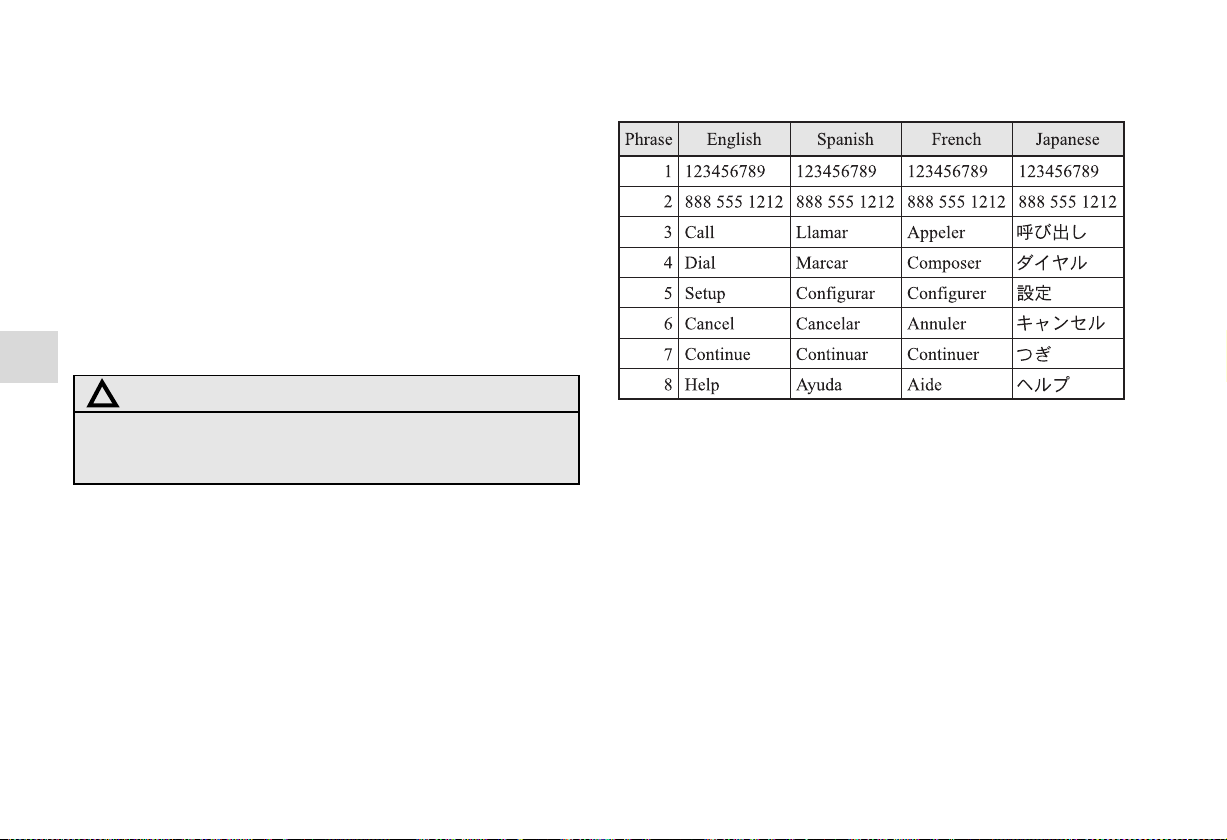
3-282
Features and controls
3
General information
N00566300040
MODEL: MMC FCC ID: CB2MDGMY10 IC: 279B-
MDGMY10
Your Bluetooth
®
2.0 interface operates on a radio frequency
subject to Federal Communications Commission (FCC) Rules
(For vehicles sold in U.S.A.) and Industry Canada Rules (For
vehicles sold in Canada). This device complies with Part 15 of
the FCC Rules and RSS-210 of the Industry Canada Rules.
Operation is subject to the following two conditions:
● This device may not cause harmful interference.
● This device must accept any interference received, includ-
ing interference that may cause undesired operation.
The term “IC:” before the radio certification number only sig-
nifies that Industry Canada technical specifications were met.
The antenna used for this transmitter must not be co-located or
operating in conjunction with any other antenna or transmitter.
End-users and installers must be provided with installation
instructions and transmitter operating conditions for satisfying
RF exposure compliance.
Enrollment commands
N00566400038
CAUTION
!
● Changes or modifications not expressly approved by
the manufacturer for compliance could void the
user’s authority to operate the equipment.
BK0138600US.book 282 ページ 2011年7月17日 日曜日 午後2時32分
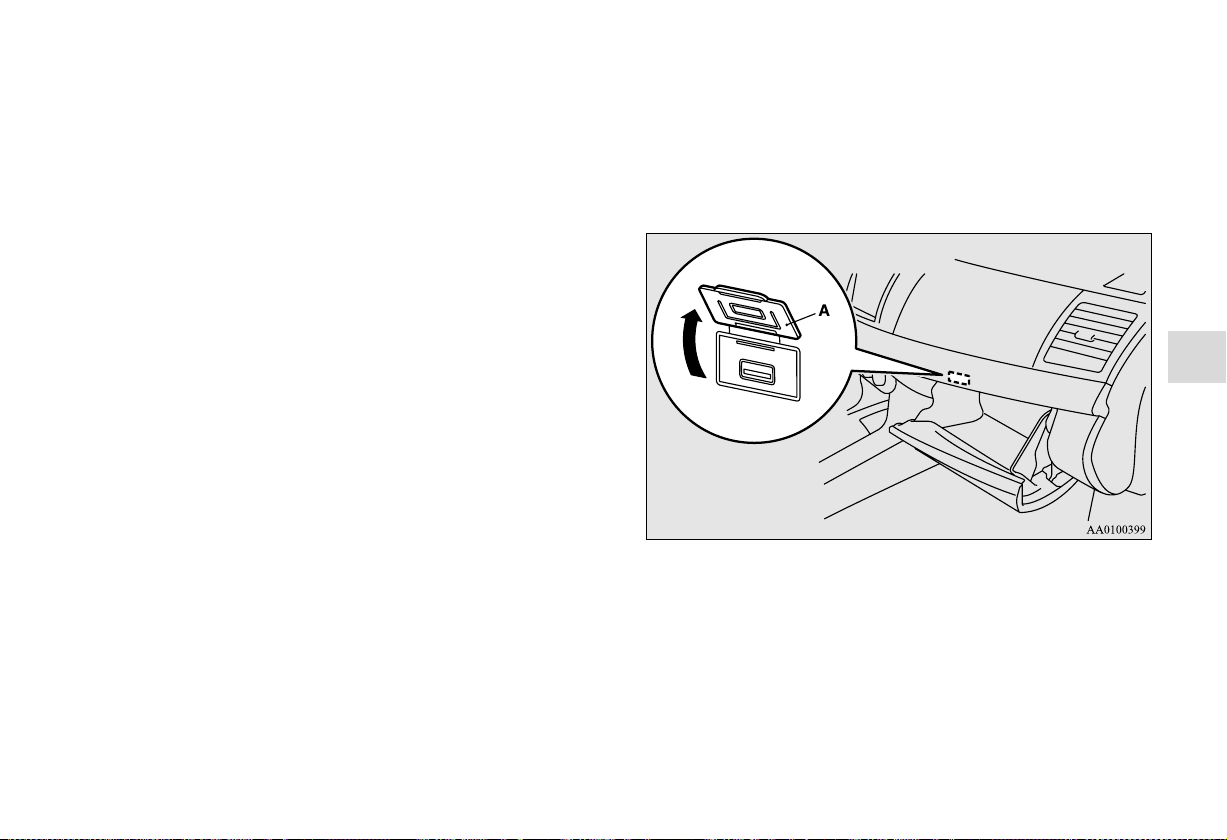
Features and controls
3-283
3
USB input terminal
(if so equipped)
N00566700015
You can connect your USB memory device or iPod* to play
music files stored in the USB memory device or iPod.
The following explains how to connect and remove a USB
memory device or iPod.
Refer to the following sections for details on how to play music
files:
Refer to “To play tracks from USB device” on page 5-111.
*: “iPod” is a registered trademark of Apple Inc. in the United
States and other countries.
How to connect a USB memory device
N00566800074
1. Park your vehicle in a safe place and turn the ignition
switch to the “LOCK” position.
2. Open the USB input terminal cover (A) in the glove com-
partment.
BK0138600US.book 283 ページ 2011年7月17日 日曜日 午後2時32分

3-284
Features and controls
3
3. Connect a commercially available USB connector cable
(C) to the USB memory device (B).
4. Connect the USB connector cable (C) to the USB input
terminal (D).
WARNING
!
● An open glove compartment door can cause a seri-
ous injury or death to the front passenger in an acci-
dent, even if the passenger is wearing his/her seat
belt. Always keep the glove compartment door
closed when driving.
BK0138600US.book 284 ページ 2011年7月17日 日曜日 午後2時32分
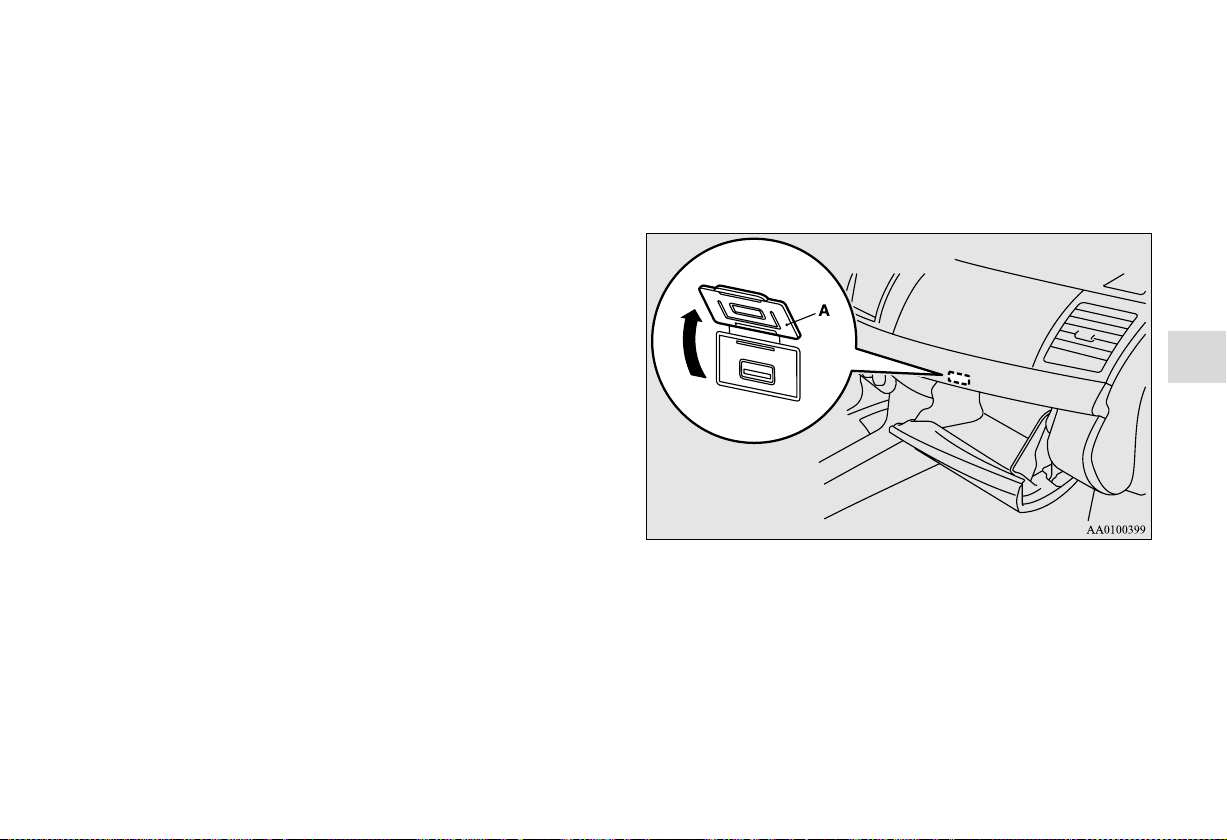
Features and controls
3-285
3
N
OTE
● Do not connect the USB memory device to the USB input
terminal directly.
The USB memory device may be damaged.
● When closing the glove compartment, be careful not to
trap the USB connector cable.
5. To remove the USB connector cable, turn the ignition
switch to the “LOCK” position first and perform the
installation steps in reverse.
How to connect an iPod
N00566900020
1. Park your vehicle in a safe place and turn the ignition
switch to the “LOCK” position.
2. Open the USB input terminal cover (A) in the glove com-
partment.
BK0138600US.book 285 ページ 2011年7月17日 日曜日 午後2時32分
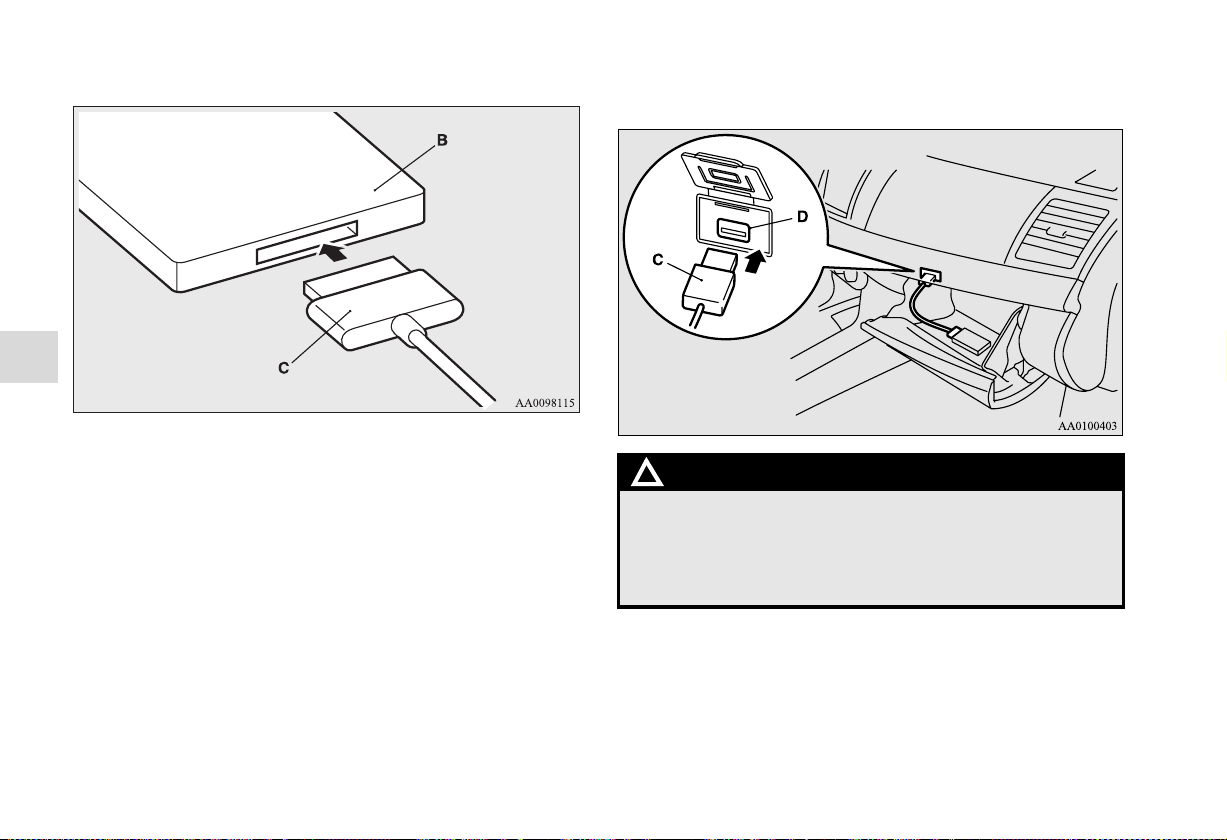
3-286
Features and controls
3
3. Connect the Dock connector (C) to the iPod (B).
N
OTE
● Use a genuine Dock connector from Apple Inc.
4. Connect the Dock connector (C) to the USB input termi-
nal (D).
N
OTE
● When closing the glove compartment, be careful not to
trap the connector cable.
WARNING
!
● An open glove compartment door can cause a seri-
ous injury or death to the front passenger in an acci-
dent, even if the passenger is wearing his/her seat
belt. Always keep the glove compartment door
closed when driving.
BK0138600US.book 286 ページ 2011年7月17日 日曜日 午後2時32分
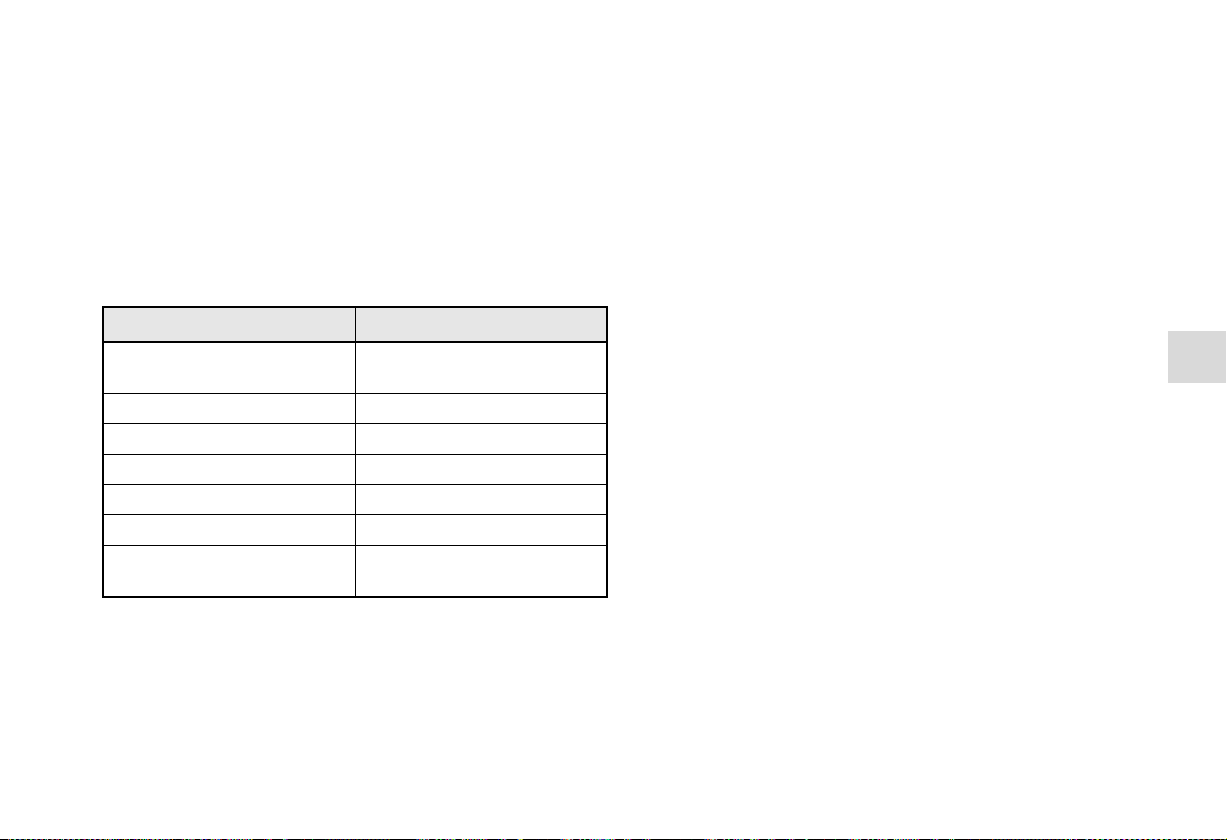
Features and controls
3-287
3
5. To remove the Dock connector, turn the ignition switch to
the “LOCK” position first and perform the installation
steps in reverse.
Types of connectable devices and supported file
specifications
N00567000028
Device types
N00567100032
Devices of the following types can be connected.
*: “iPod touch,” “iPod classic,” “iPod” and “iPod nano” are
registered trademarks of Apple Inc. in the Untied States and
other countries.
N
OTE
● Depending on the type of the USB memory device or
other device connected, the connected device may not
function properly or the available functions may be lim-
ited.
● Use the iPod whose firmware has been updated to the lat-
est version.
● You can charge your iPod by connecting it to the USB
input terminal when the ignition switch is in the “ACC” or
“ON” position.
● Do not keep your USB memory device or iPod in your
vehicle.
● It is recommended that you back up the files in case of
data damage.
● Do not connect to the USB input terminal any device
(hard disk, card reader, memory reader, etc.) other than
the connectable devices specified in the previous section.
The device and/or data may be damaged. If any of these
devices was connected by mistake, remove it after turning
the ignition switch to the “LOCK” position.
Model name Condition
USB memory device
Storage capacity of 256 Mbytes
or more
iPod touch* F/W Ver.1.1.1 or later
iPod classic* F/W Ver.1.0 or later
iPod (fifth generation)* F/W Ver.1.2.2 or later
iPod nano (fifth generation)* F/W Ver.1.2 or later
iPod nano (second generation)* F/W Ver.1.1.2 or later
Models other than USB mem-
ory devices and iPods
Digital audio player supporting
mass storage class
BK0138600US.book 287 ページ 2011年7月17日 日曜日 午後2時32分
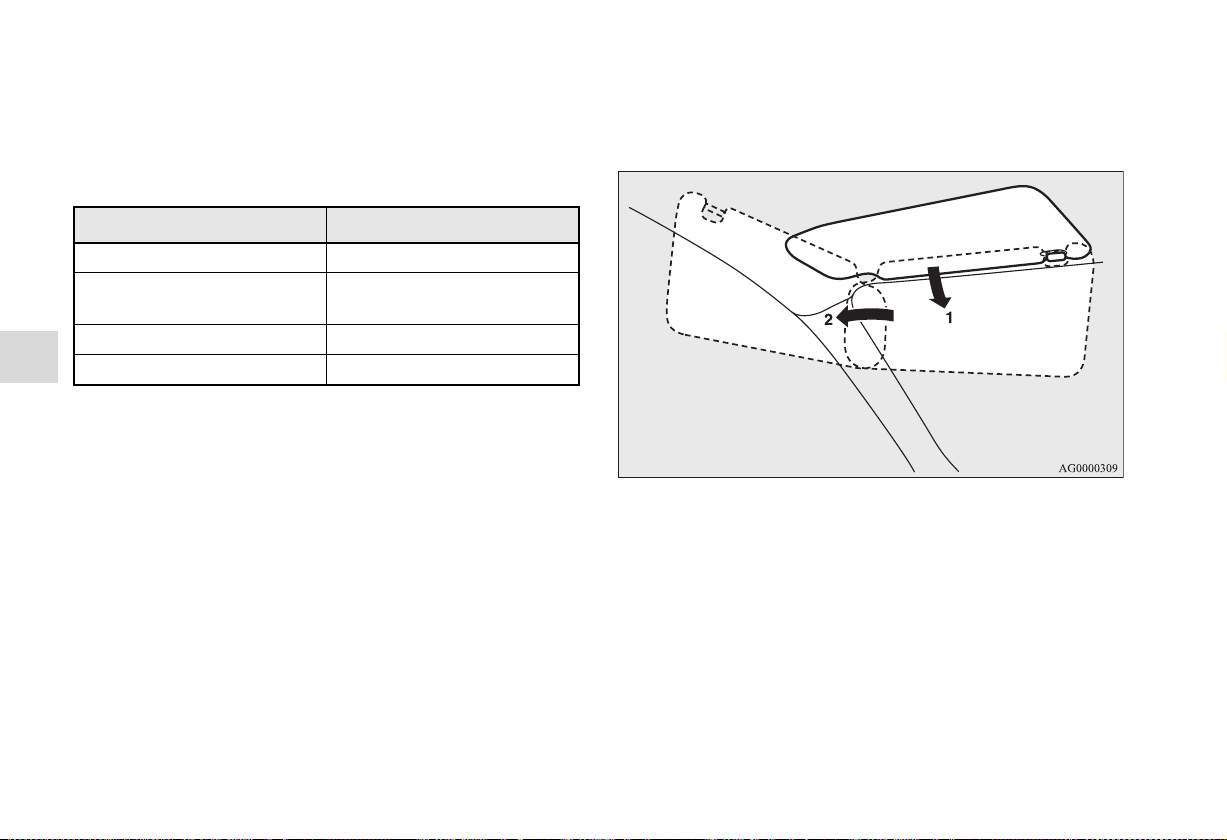
3-288
Features and controls
3
File specifications
N00567200017
You can play music files of the following specifications that
are saved in a USB memory device or other device supporting
mass storage class.
Sun visors
N00524600308
Fold the sun visor downward (1) to reduce front glare while
driving. To reduce side glare, turn the visor to the side (2).
Item Condition
File format MP3, WMA, AAC, WAV
Maximum number of levels
(including the root)
Level 8
Number of folders 700
Number of files 65,535
BK0138600US.book 288 ページ 2011年7月17日 日曜日 午後2時32分
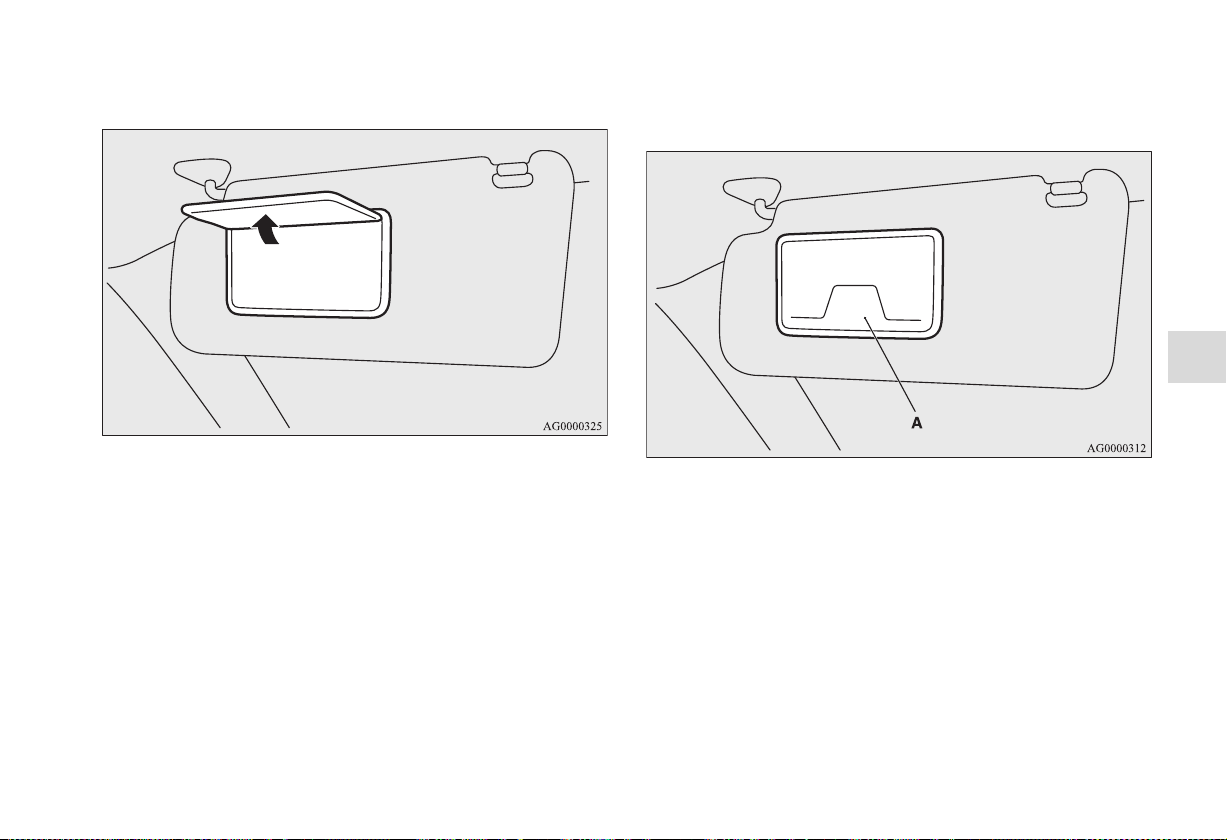
Features and controls
3-289
3
Vanity mirror
The vanity mirrors are located on the back of the sun visors.
Card holder
Cards can be slipped into the front (A) of the lid of the vanity
mirror.
BK0138600US.book 289 ページ 2011年7月17日 日曜日 午後2時32分
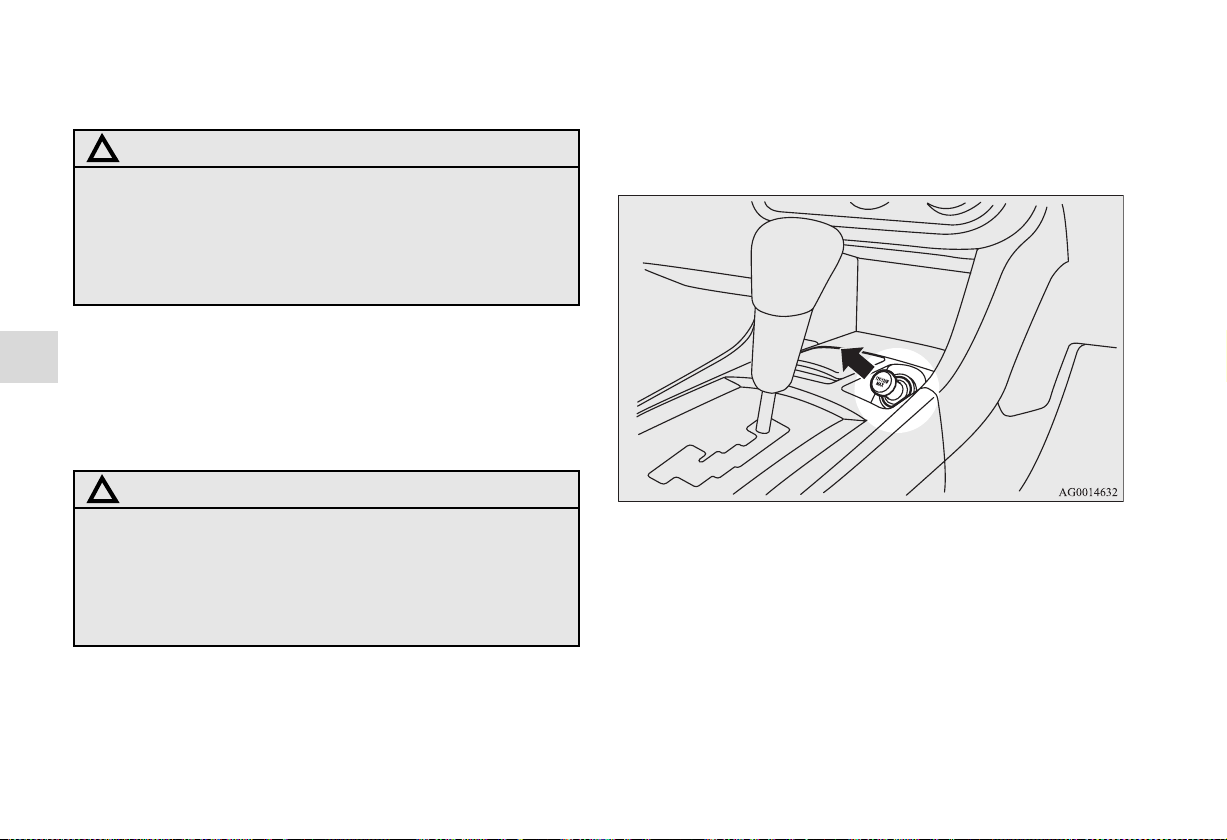
3-290
Features and controls
3
12 V power outlet
N00525000556
12 V power outlets are located in front of the floor console
(Type 1, Type 2) and inside of the floor console box (Type 3).
N
OTE
● If your vehicle is equipped with two 12 V power outlets,
both power outlets can be used simultaneously.
Type 1, Type 2
The accessory can be operated when the ignition switch is in
the “ON” or “ACC” position.
To use a “plug-in” type accessory, pull out the plug, then insert
the plug in the socket.
CAUTION
!
● Be aware that using electronic equipment with the
engine off may run the battery down.
● When the 12 V power outlet is not in use, be sure to
put on the plug or close the 12 V power outlet cover.
This will prevent the 12 V power outlet from becom-
ing dirty and possibly short-circuiting.
CAUTION
!
● Be sure to use a “plug-in” type accessory operating
at 12 V and 120 W or less.
When using two 12 V power outlets or 12 V power
outlet and cigarette lighter simultaneously, make
sure that the total power consumption of these does
not exceed 120 W at 12 V.
Type 1
BK0138600US.book 290 ページ 2011年7月17日 日曜日 午後2時32分
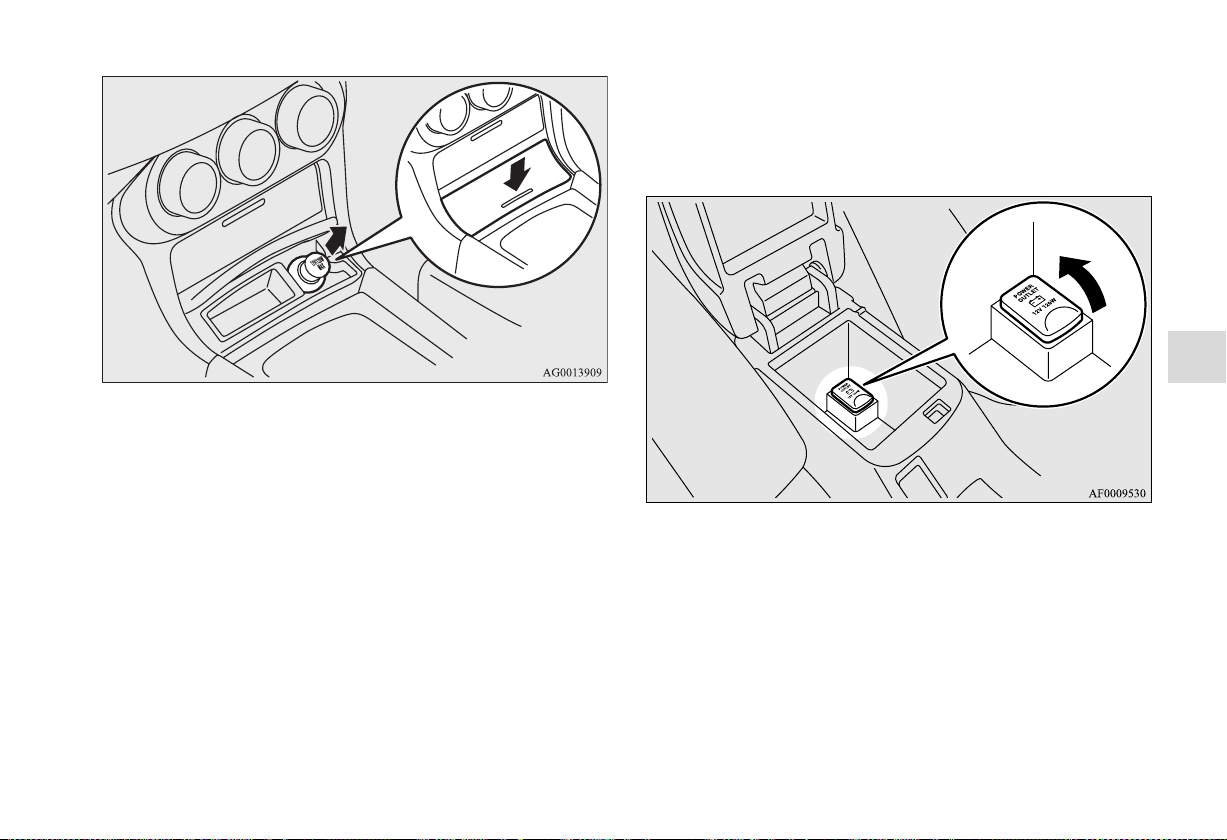
Features and controls
3-291
3
Type 3 (if so equipped)
The accessory can be operated when the ignition switch is in
any position.
To use a “plug-in” type accessory, open the cover, then insert
the plug in the socket.
Type 2
BK0138600US.book 291 ページ 2011年7月17日 日曜日 午後2時32分
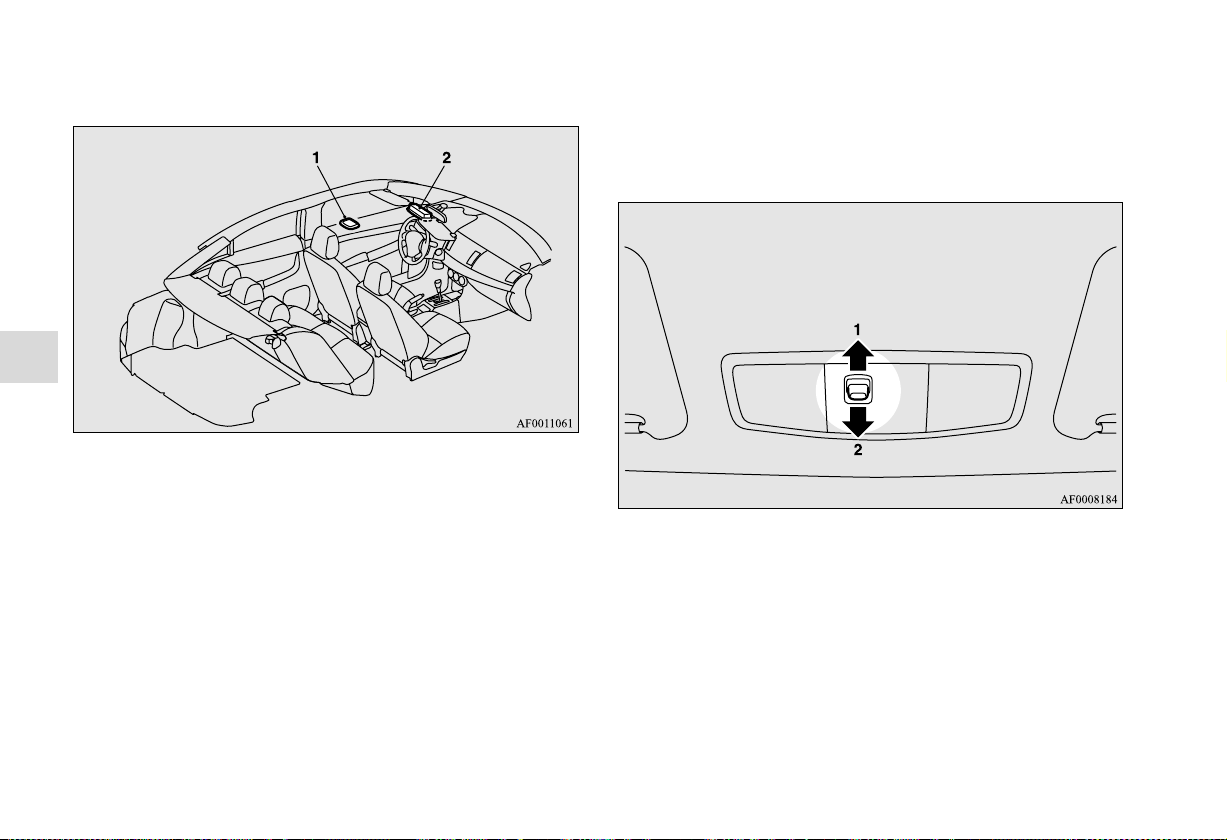
3-292
Features and controls
3
Interior lights
N00525300461
Dome light (Front)/Reading lights (if so equipped)
N00525800192
Dome light (Front)
The dome light can be turned on by sliding the dome light
switch.
1- Dome light (Rear) (if so equipped) → P.3-294
2- Dome light (Front)/Reading lights (if so equipped) → P. 3 -
292
BK0138600US.book 292 ページ 2011年7月17日 日曜日 午後2時32分

Features and controls
3-293
3
1- (DOOR)
The dome light comes on when any door is opened. When
all the doors are closed, the dome light illuminates for about
30 seconds then goes off. However, the light goes off imme-
diately if:
● The door is closed while the ignition switch is in the
“ON” position.
● The driver’s door is closed after all the other doors are
closed while the lock knob of the driver’s door is in the
lock position.
● The door is closed and the power door lock switch is
used to lock the doors.
● In vehicles equipped with the keyless entry system, the
keyless entry system remote control transmitter is used
to lock the doors.
● In vehicles equipped with the F.A.S.T.-key, the doors
are locked using the F.A.S.T.-key.
N
OTE
● When the engine is started using the key while the
doors are closed, if you remove the key, the dome light
will illuminate for about 30 seconds before going off.
● When the engine is started using the F.A.S.T.-key while
the doors are closed, if the ignition switch is moved to
the “LOCK” position, the dome light will illuminate
for about 30 seconds before going off.
● The time until the light goes off can be adjusted. See
your authorized Mitsubishi Motors dealer for details.
For vehicles equipped with the Mitsubishi Multi-Com-
munication System, adjustments can be made using
screen operations. For details, refer to the separate
owner’s manual.
2- (OFF)
The dome light goes off.
BK0138600US.book 293 ページ 2011年7月17日 日曜日 午後2時32分

3-294
Features and controls
3
Reading lights
N00553800067
Regardless of the dome light switch position, when you press
the lens, the light on the side that is pressed illuminates; when
you press the lens again, the light goes off.
Dome light (Rear) (if so equipped)
N00525400361
The dome light can be turned on by sliding the dome light
switch.
BK0138600US.book 294 ページ 2011年7月17日 日曜日 午後2時32分

Features and controls
3-295
3
1- (ON)
The dome light comes on.
2- (●)
The dome light comes on when any door is opened. When all
the doors are closed, the dome light illuminates for about 30
seconds then goes off. However, the light goes off immedi-
ately if:
● The door is closed while the ignition switch is in the
“ON” position.
● The driver’s door is closed after all the other doors are
closed while the lock knob of the driver’s door is in the
lock position.
● The door is closed and the power door lock switch is
used to lock the doors.
● In vehicles equipped with the keyless entry system, the
keyless entry system remote control transmitter is used
to lock the doors.
● In vehicles equipped with the F.A.S.T.-key, the doors
are locked using the F.A.S.T.-key.
N
OTE
● When the engine is started using the key while the
doors are closed, if you remove the key, the dome light
will illuminate for about 30 seconds before going off.
● When the engine is started using the F.A.S.T.-key while
the doors are closed, if the ignition switch is moved to
the “LOCK” position, the dome light will illuminate for
about 30 seconds before going off.
● The time until the light goes off can be adjusted. See
your authorized Mitsubishi Motors dealer for details.
For vehicles equipped with the Mitsubishi Multi-Com-
munication System, adjustments can be made using
screen operations. For details, refer to the separate
owner’s manual.
3- (OFF)
The dome light goes off.
BK0138600US.book 295 ページ 2011年7月17日 日曜日 午後2時32分
3-296
Features and controls
3
Interior light auto-cutout function (dome light
and other lights)
N00526300312
If any of the interior lights are left on with the ignition switch
in the “LOCK” position, the lights go off automatically after
about 30 minutes.
The lights come on again if the ignition switch is turned to the
“ON” or “ACC” position, any door or the trunk lid is opened
and closed, or the keyless entry system or F.A.S.T.-key is oper-
ated.
N
OTE
● The interior light auto-cutout function can be deactivated.
The time until the lights automatically go off can be
adjusted. See your authorized Mitsubishi Motors dealer
for details.
For vehicles equipped with the Mitsubishi Multi-Commu-
nication System, adjustments can be made using screen
operations. For details, refer to the separate owner’s man-
ual.
Storage spaces
N00526400485
N
OTE
● Do not leave valuables in any storage space when leaving
the vehicle.
CAUTION
!
● Never leave lighters, carbonated drink cans, or spec-
tacles in the cabin when parking the vehicle in hot
sunshine. The cabin will become extremely hot, so
lighters and other flammable items may catch fire
and unopened drink cans (including beer cans) may
rupture. The heat may also deform or crack plastic
spectacle parts.
● Keep the lids of storage spaces closed while driving
the vehicle. A lid or the contents of a storage space
could otherwise cause injuries during a sudden stop.
BK0138600US.book 296 ページ 2011年7月17日 日曜日 午後2時32分
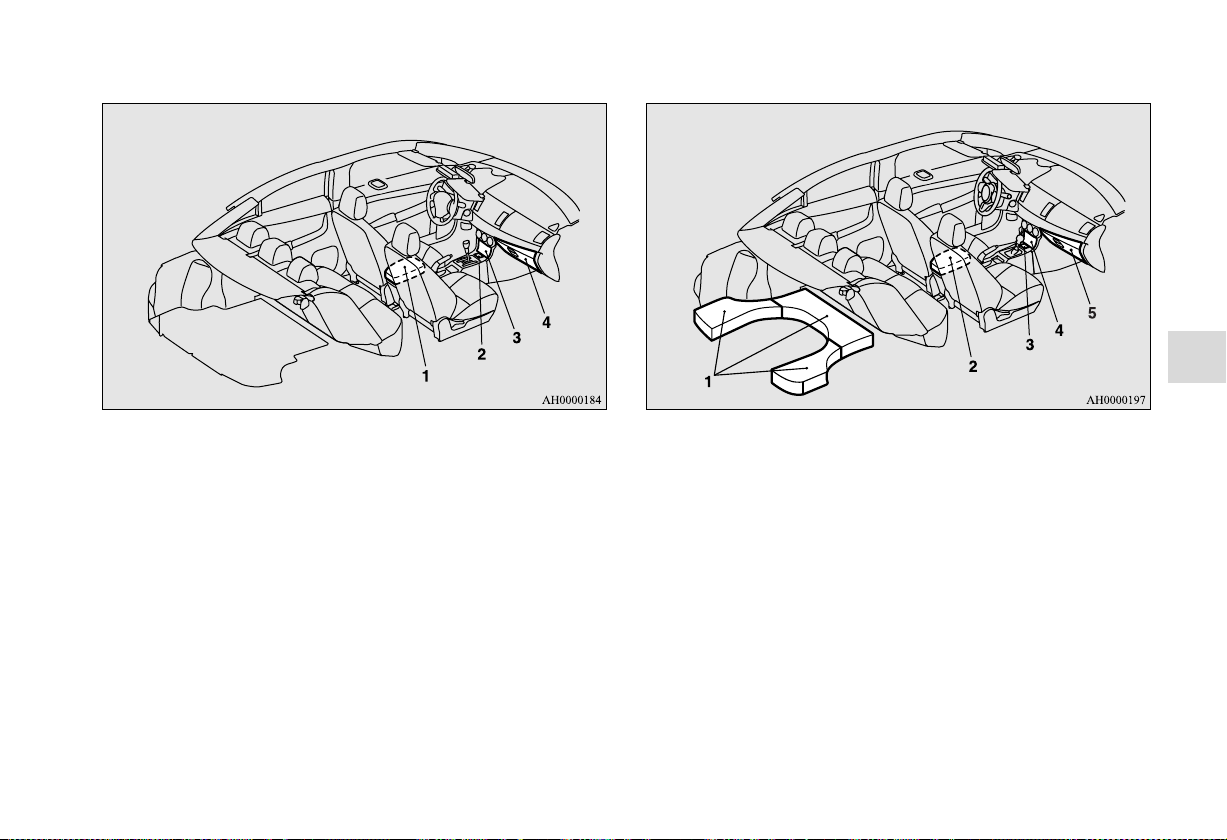
Features and controls
3-297
3
[Except for RALLIART] [RALLIART]
1- Floor console box (if so equipped) → P.3-300
2- Front console tray (if so equipped) → P.3-299
3- Front console boxes (if so equipped) → P.3-299
4- Glove compartment → P.3-298
1- Luggage floor boxes → P.3-301
2- Floor console box → P.3 -30 0
3- Front console tray (if so equipped) → P.3-299
4- Front console boxes (if so equipped) → P.3-299
5- Glove compartment → P.3-298
BK0138600US.book 297 ページ 2011年7月17日 日曜日 午後2時32分
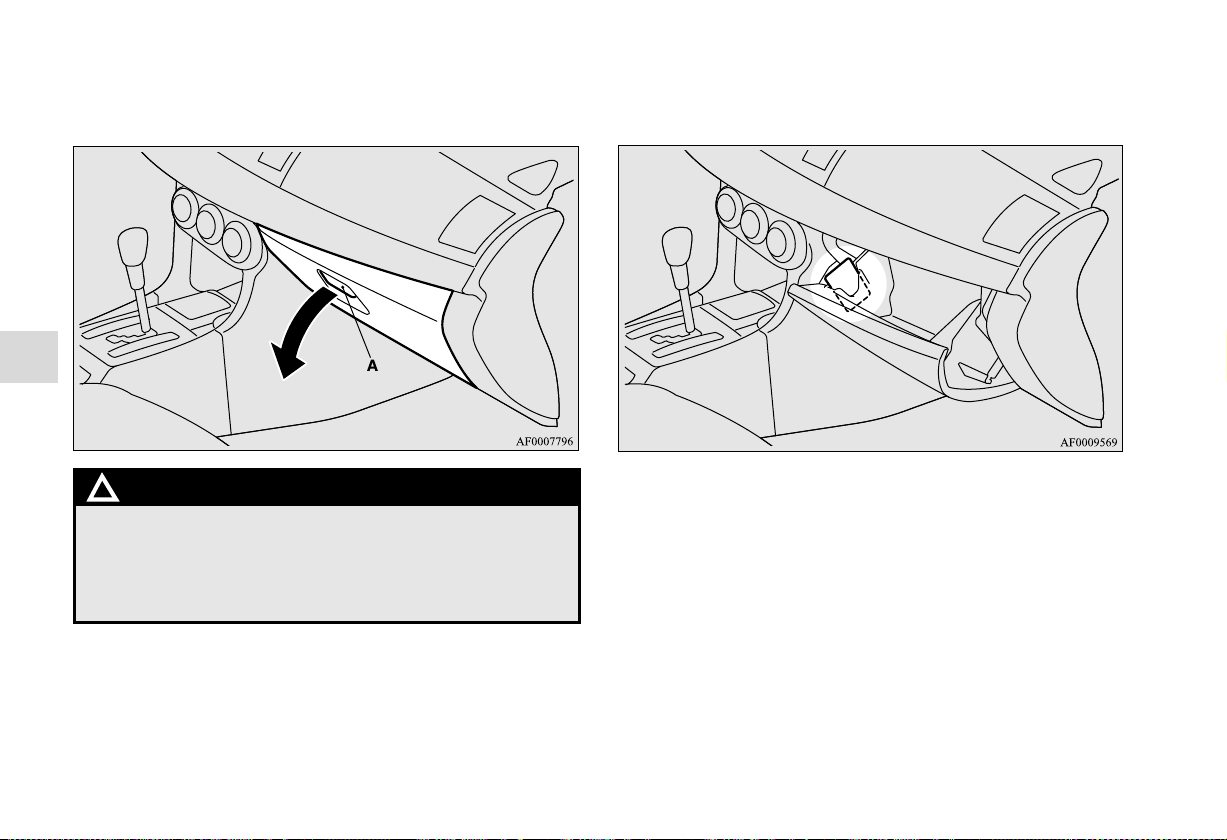
3-298
Features and controls
3
Glove compartment
N00551500246
To open the glove compartment, pull the lever (A).
N
OTE
● The USB input terminal (if so equipped) is located in the
glove compartment. For details, refer to “USB input ter-
minal” on page 3-283.
Card holder
There is a card holder on the inside of the glove compartment.
N
OTE
● Up to 2 cards will fit in the card holder.
WARNING
!
● An open glove compartment door can cause a seri-
ous injury or death to the front passenger in an acci-
dent, even if the passenger is wearing his/her seat
belt. Always keep the glove compartment door
closed when driving.
BK0138600US.book 298 ページ 2011年7月17日 日曜日 午後2時32分
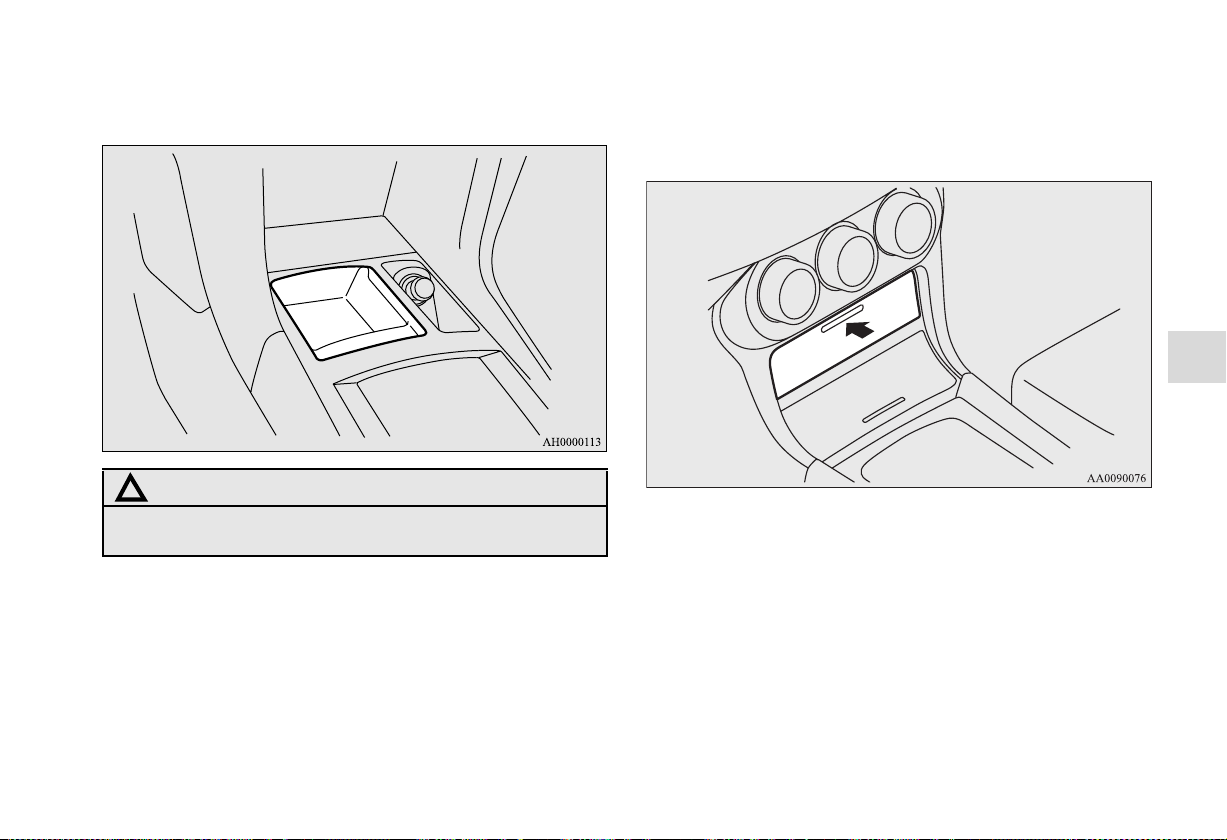
Features and controls
3-299
3
Front console tray (if so equipped)
N00547800017
The front console tray is on the front console part.
Front console boxes (if so equipped)
N00546400058
To open, push the lid.
Upper box
N
OTE
● The Auxiliary Audio connector (RCA) (if so equipped) or
the Auxiliary Video connector (RCA) (if so equipped) is
located in the upper box.
For details, refer to “To use the external audio input func-
tion” on page 5-132.
CAUTION
!
● Do not use the front console tray as an ashtray.
This could cause a fire.
BK0138600US.book 299 ページ 2011年7月17日 日曜日 午後2時32分
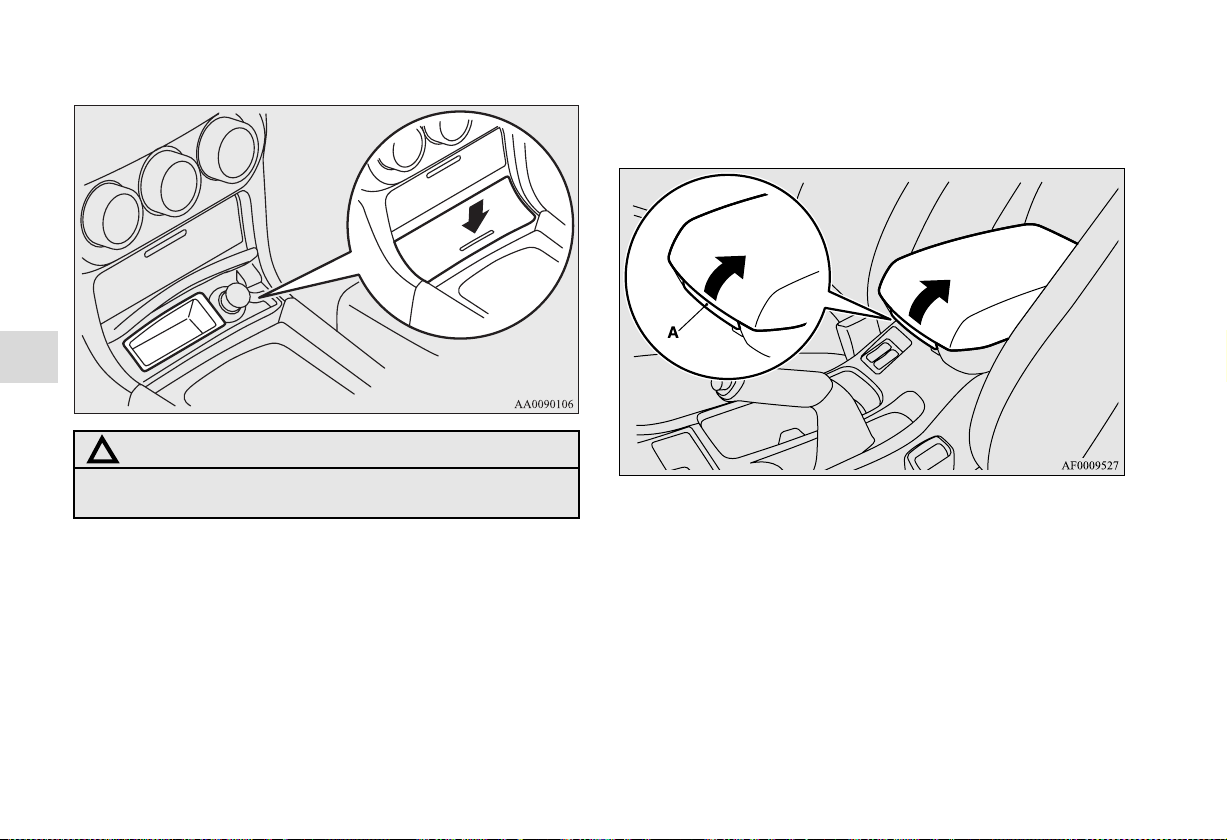
3-300
Features and controls
3
Lower box
Floor console box with lid (if so equipped)
N00551600188
To open the floor console box, lift the release lever (A) and
raise the lid.
CAUTION
!
● Do not use the front console boxes as an ashtray.
This could cause a fire.
BK0138600US.book 300 ページ 2011年7月17日 日曜日 午後2時32分
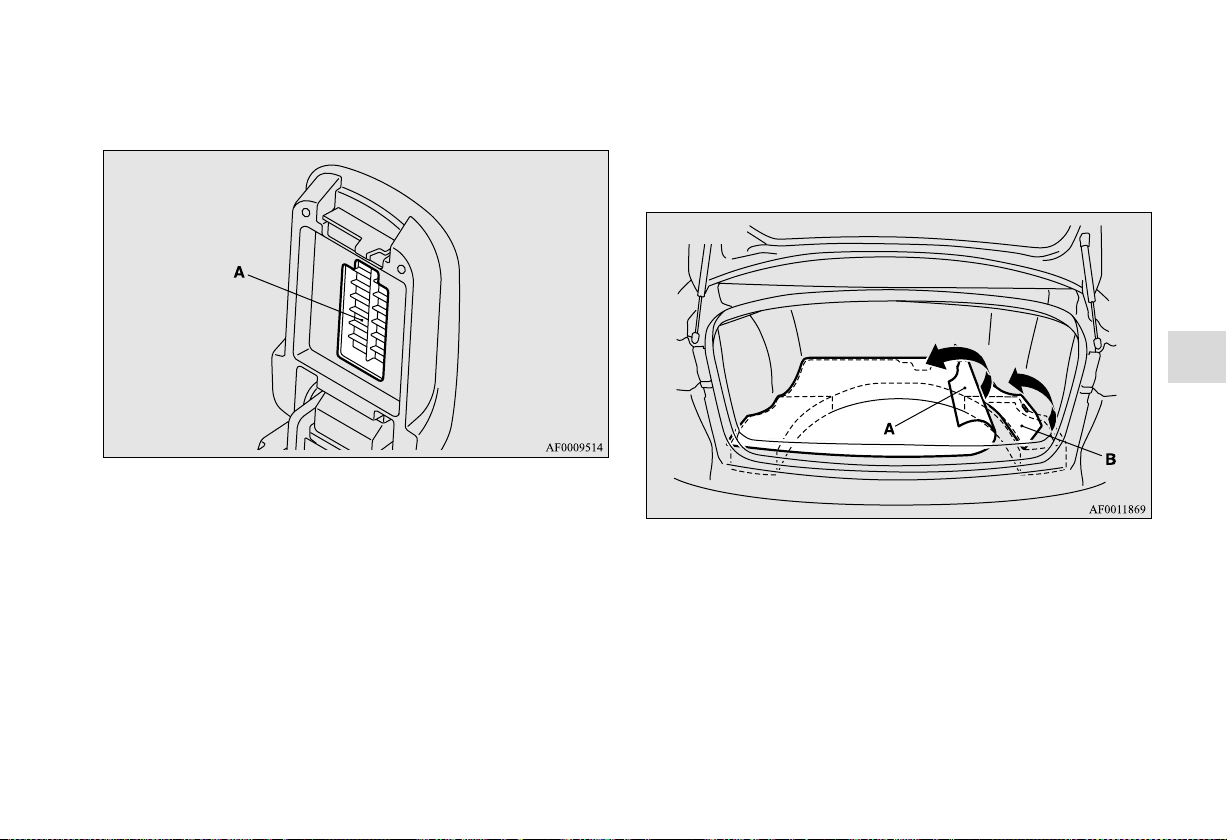
Features and controls
3-301
3
Tissue holder
The tissue holder (A) is located on the underside of the floor
console box lid.
Luggage floor boxes (if so equipped)
N00552400066
The boxes for storing articles are located inside the luggage
compartment.
To use the boxes, remove the floor mat (A) and raise the lids
(B).
BK0138600US.book 301 ページ 2011年7月17日 日曜日 午後2時32分
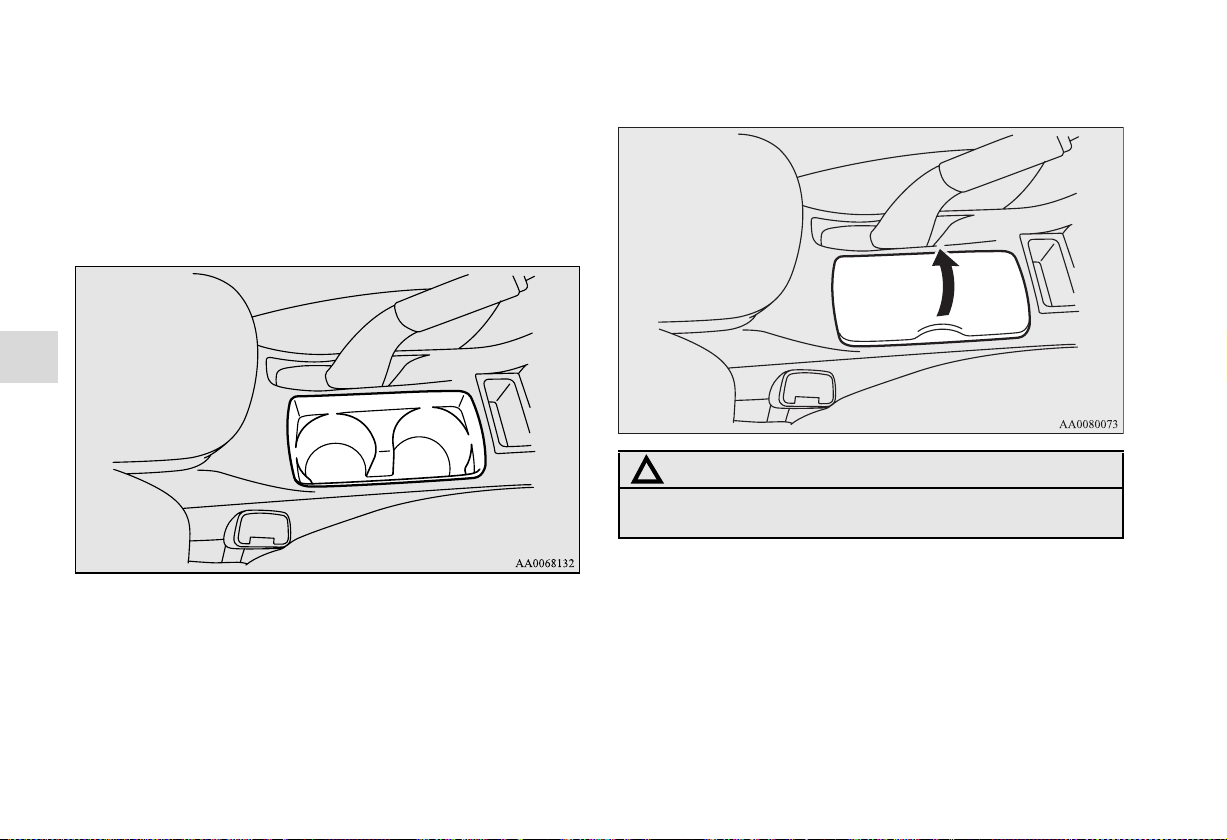
3-302
Features and controls
3
Cup holder
N00527300351
For the front seat
The cup holder is located the middle of the floor console.
The cup holder is designed for holding cups or drink-cans
securely.
Type 1
Type 2
To use the cup holder, open up the lid.
CAUTION
!
● Do not drink beverages while driving your vehicle.
This is distracting and could cause an accident.
BK0138600US.book 302 ページ 2011年7月17日 日曜日 午後2時32分
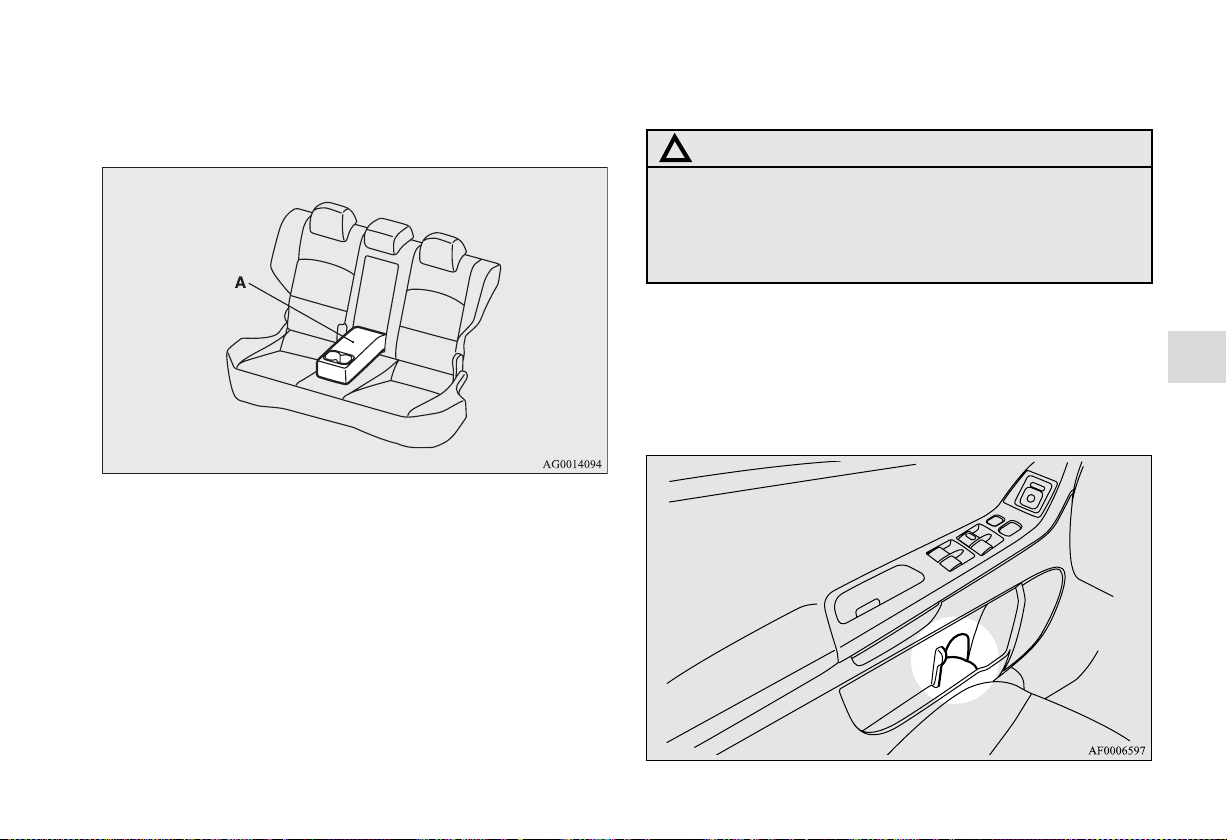
Features and controls
3-303
3
For the rear seat (if so equipped)
N00537000159
This cup holder is located in the rear seat arm rest (A).
Pull the rear arm rest down to use the cup holder.
Bottle holder
N00502800049
N
OTE
● Make sure all lids are tightly closed when storing bever-
ages that are in plastic bottles, etc.
● Some beverages may not be stored, depending on the size
and shape of the plastic bottles, etc.
There are bottle holders located on both sides of the front seats.
CAUTION
!
● Do not drink beverages while driving your vehicle.
This is distracting and could cause an accident.
● Vibration and shaking while driving may cause bev-
erages to spill. Be very careful, as spilling hot bever-
ages could cause burns.
BK0138600US.book 303 ページ 2011年7月17日 日曜日 午後2時32分
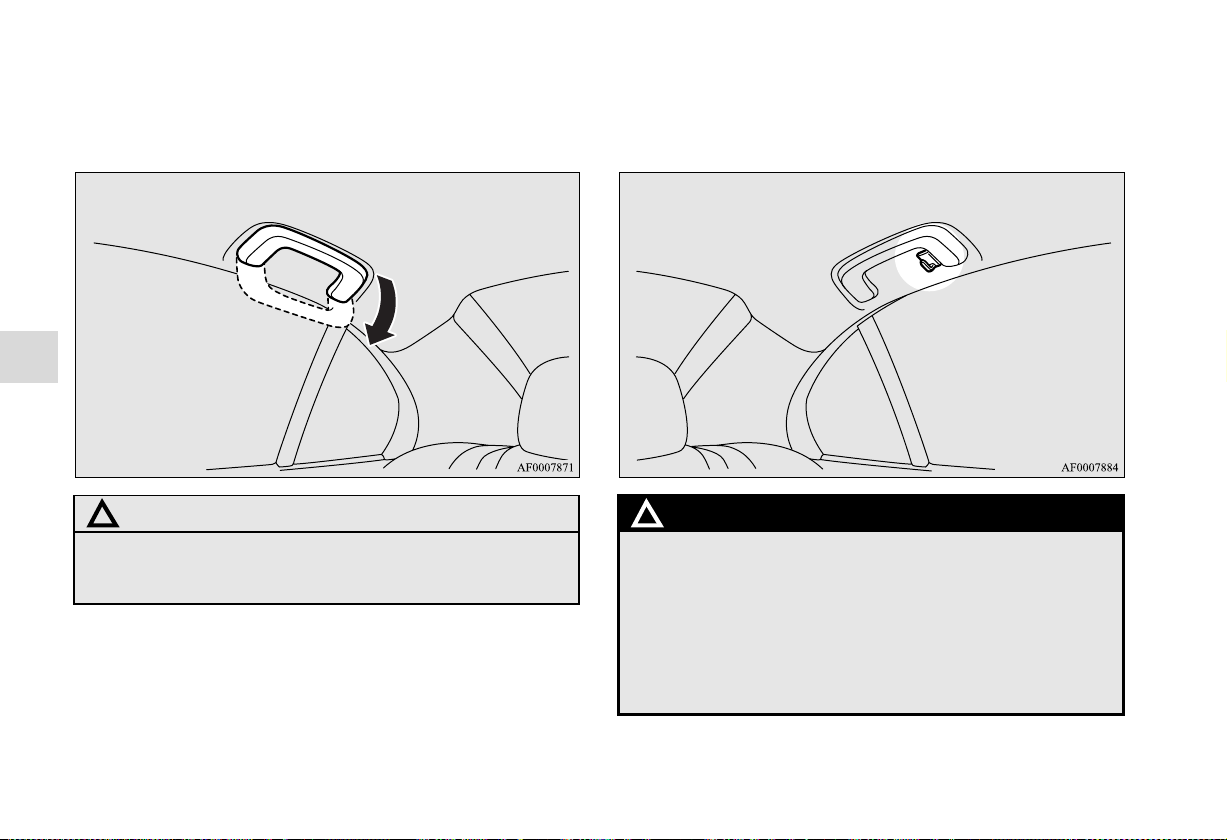
3-304
Features and controls
3
Assist grip
N00559000029
These grips are to support the body by hand while seated in the
vehicle.
Coat hook (if so equipped)
N00553600108
There is a coat hook on the rear seat assist grip of the driver’s
side.
CAUTION
!
● Do not use the assist grips when getting into or out
of the vehicle.
The assist grips could detach and cause an accident.
WARNING
!
● Do not put a hanger or any heavy or pointed object
on the coat hook. If the curtain airbag was activated,
any such item could be propelled away with great
force and could prevent the curtain airbag from
inflating correctly. Hang clothes directly on the coat
hook (without using a hanger). Make sure there are
no heavy or sharp objects in the pockets of clothes
that you hang on the coat hook.
BK0138600US.book 304 ページ 2011年7月17日 日曜日 午後2時32分

BK0138600US.book 305 ページ 2011年7月17日 日曜日 午後2時32分

BK0138600US.book 306 ページ 2011年7月17日 日曜日 午後2時32分

4
Driving safety
Fuel economy. . . . . . . . . . . . . . . . . . . . . . . . . . . . .4- 2
Driving, alcohol and drugs. . . . . . . . . . . . . . . . . . .4- 2
Floor mat . . . . . . . . . . . . . . . . . . . . . . . . . . . . . . . .4- 3
Vehicle preparation before driving. . . . . . . . . . . . .4- 5
Safe driving techniques . . . . . . . . . . . . . . . . . . . . .4- 6
Driving during cold weather . . . . . . . . . . . . . . . . .4- 6
Braking. . . . . . . . . . . . . . . . . . . . . . . . . . . . . . . . . .4- 8
Parking . . . . . . . . . . . . . . . . . . . . . . . . . . . . . . . . . .4- 8
Loading information . . . . . . . . . . . . . . . . . . . . . . .4- 9
Cargo loads . . . . . . . . . . . . . . . . . . . . . . . . . . . . . .4- 14
Trailer towing. . . . . . . . . . . . . . . . . . . . . . . . . . . . .4- 15
BK0138600US.book 1 ページ 2011年7月17日 日曜日 午後2時32分
4-2
Driving safety
4
Fuel economy
N00628800165
Fuel economy is dependent on many factors. Your personal
driving habits can have a significant effect on your fuel use.
Several recommendations for achieving the greatest fuel econ-
omy are listed below.
● Whenever accelerating from a stop, always accelerate
slowly and smoothly.
● When parked for even a short period, do not idle the
engine. Shut it off.
● Plan your trips to avoid unnecessary stops.
● Keep your tires inflated to the recommended pressures.
● When you drive on highways or dry improved roads, set
the drive mode-selector “2WD” or “4WD AUTO” posi-
tion (if so equipped).
● For freeway driving, maintain a speed of approximately
50 mph (80 km/h) when traffic, roadway and weather con-
ditions safely permit.
● Keep your air filter clean and your vehicle lubricated
according to the recommendations in this manual.
● Always keep your vehicle well maintained. A poorly
maintained engine wastes fuel and costs money.
● Do not overload your vehicle.
Driving, alcohol and drugs
N00628900052
Drunk driving is one of the most frequent causes of accidents.
Your driving ability can be seriously impaired even with blood
alcohol levels far below the legal minimum. If you have been
drinking, don’t drive. Ride with a designated non-drinking
driver, call a cab or a friend, or use public transportation.
Drinking coffee or taking a cold shower will not make you
sober.
Similarly, prescription and nonprescription drugs affect your
alertness, perception and reaction time. Consult with your doc-
tor or pharmacist before driving while under the influence of
any of these medications.
WARNING
!
● NEVER DRINK AND DRIVE.
Your perceptions are less accurate, your reflexes are
slower and your judgment is impaired.
BK0138600US.book 2 ページ 2011年7月17日 日曜日 午後2時32分
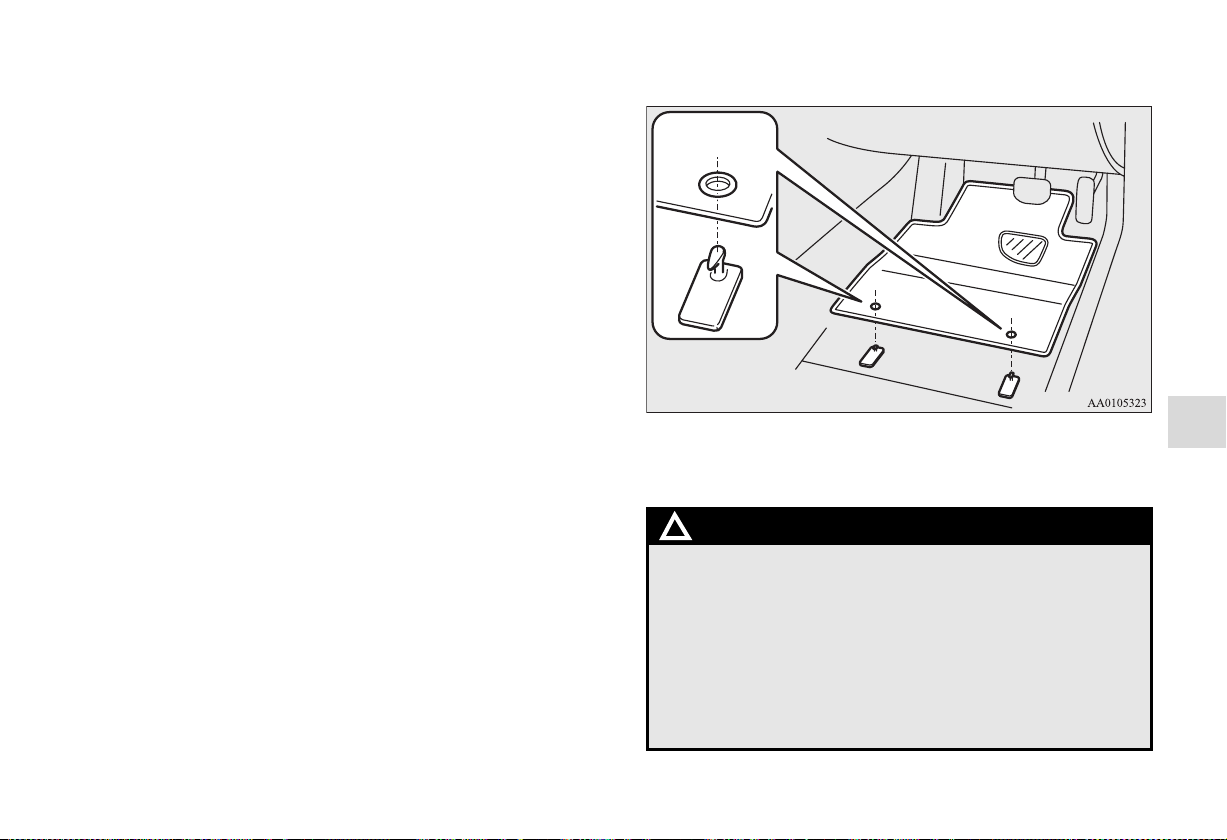
Driving safety
4-3
4
Floor mat
N00628600017
The original equipment floor mat provided with your vehicle
was specifically designed for your vehicle. Always properly
position the floor mat and assure it does not interfere with
operation of the pedals. Always use the retaining clip on the
driver’s floorboard to secure the floor mat. When used, this clip
will help prevent the floor mat from moving forward and possi-
bly interfering with the operation of the pedals. To prevent the
floor mat from moving forward and possibly interfering with
the operation of the pedals, Mitsubishi genuine floor mats are
recommended.
To install the floor mat
N00628700050
1. Place the floor mat to fit the shape of the floorboard.
2. Align the floor mat with the installation holes over the
retaining clips.
3. Secure the floor mat with retaining clips.
N
OTE
● The shape of the mat and the number of retaining clips
may vary depending on the vehicle model.
WARNING
!
● If a floor mat is the wrong size or is not properly
installed, it can interfere with the operation of the
pedals. Interference with the pedals can cause unin-
tended acceleration and/or increased stopping dis-
tances resulting in a crash and injury. Always make
sure the floor mat does not interfere with the accel-
erator or brake pedal.
● Always use the retaining clip on the driver’s floor-
board to secure the floor mat.
BK0138600US.book 3 ページ 2011年7月17日 日曜日 午後2時32分
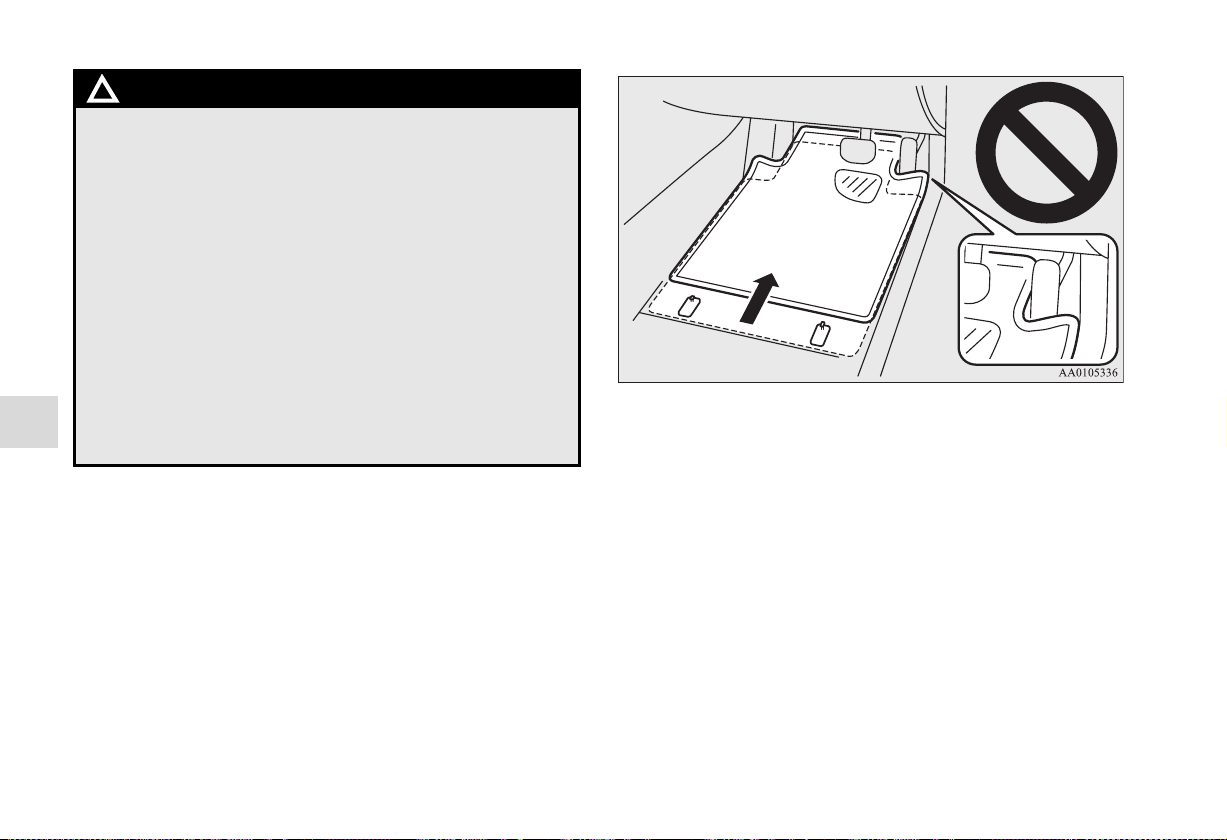
4-4
Driving safety
4
● Always install the mat with the correct side facing
down.
● Never install a second mat over or under an existing
floor mat.
● Do not use a floor mat designed for another model
vehicle even if it is a Mitsubishi genuine floor mat.
● Before driving, be sure to check the following:
• Periodically check that the floor mat is properly
secured with the retaining clips.
If you remove the floor mat while cleaning the
inside of your vehicle or for any other reason,
always check the condition of the floor mat after it
has been reinstalled.
• While the vehicle is stopped with the engine off,
check that the floor mat is not interfering with the
pedals by depressing the pedals fully.
WARNING
!
BK0138600US.book 4 ページ 2011年7月17日 日曜日 午後2時32分

Driving safety
4-5
4
Vehicle preparation before driving
N00629000337
For a safer and more enjoyable trip, always observe the follow-
ing:
Seat belts and seats
● Before starting the vehicle, make certain that you and all
passengers are seated and wearing their seat belts properly
(with children in the rear seat, in appropriate restraints),
and that all the doors are locked.
● Move the driver’s seat as far backward as possible, while
still keeping good visibility, and good control of the steer-
ing wheel, brakes, accelerator, and controls. Check the
instrument panel indicators and multi-information display
for any possible problem.
● Move the front passenger seat as far back as possible.
● Make sure that infants and small children are properly
restrained in accordance with all laws and regulations.
Defrosters
Check these by selecting the defroster mode, and set the blower
switch on high. You should be able to feel the air blowing
against the windshield.
(Refer to “Defrosting or defogging the windshield and door
windows” on page 5-10, 5-20, 5-29, 5-39, 5-49.)
Tires
Check all the tires for heavy tread wear or uneven wear pat-
terns. Look for stones, nails, glass, or other objects stuck in the
tread. Look for any tread cuts or sidewall cracks. Check the
wheel nuts for tightness, and the tires (including spare tire) for
proper pressures. Replace your tires before they are heavily
worn out.
As your vehicle is equipped with a tire pressure monitoring
system, there is a risk of damage to the tire inflation pressure
sensors when the tire is replaced on the rim. Tire replacement
should, therefore, be performed only by an authorized
Mitsubishi Motors dealer.
Lights
Have someone watch while you turn all the exterior lights on
and off. Also check the turn signal indicators and high-beam
indicators on the instrument panel.
Fluid leaks
Check the ground under the vehicle after parking overnight, for
fuel, water, oil, or other leaks. Make sure all the fluid levels are
correct. Also, if you can smell fuel, you need to find out why
immediately and have it fixed.
BK0138600US.book 5 ページ 2011年7月17日 日曜日 午後2時32分

4-6
Driving safety
4
Safe driving techniques
N00629200111
Even this vehicle’s safety equipment, and your safest driving,
cannot guarantee that you can avoid an accident or injury.
However, if you give extra attention to the following areas, you
can better protect yourself and your passengers:
● Drive defensively. Be aware of traffic, road and weather
conditions. Leave plenty of stopping distance between
your vehicle and the vehicle ahead.
● Before changing lanes, check your mirrors and use your
turn signal light.
● While driving, watch the behavior of other drivers, bicy-
clists, and pedestrians.
● Always obey applicable laws and regulations. Be a polite
and alert driver. Always leave room for unexpected
events, such as sudden braking.
● If you plan to drive in another country, obey their vehicle
registration laws and make sure you will be able to get the
right fuel.
Driving during cold weather
N00629400344
● Check the battery, including terminals and cables. During
extremely cold weather, the battery will not be as strong.
Also, the battery power level may drop because more
power is used for cold starting and driving.
Before driving the vehicle, check to see if the engine runs
at the proper speed and if the headlights are as bright as
normally. Charge or replace the battery if necessary. Dur-
ing extreme cold weather, it is possible that a very low
battery could freeze.
● Warm the engine sufficiently. After starting the engine,
allow a short warm-up time to distribute oil to all cylin-
ders and turbocharger. Then drive your vehicle slowly.
● Stay at low speeds at first so that the transaxle, transfer
case and rear axle oil have time to spread to all the lubri-
cation points.
● Manual transaxle can be harder to shift in cold weather
conditions. This is normal and shifting will get easier as
the transaxle warms up.
WARNING
!
● The battery gives off explosive hydrogen gas. Any
spark or flame can cause the battery to explode,
which could cause serious injury or death.
Always wear protective clothes and a face mask
when working with your battery, or let a skilled
mechanic do it.
BK0138600US.book 6 ページ 2011年7月17日 日曜日 午後2時32分
Driving safety
4-7
4
● Check the engine antifreeze.
If there is not enough coolant because of a leak or from
engine overheating, add Dia Queen Super Long Life
Coolant Premium or equivalent.
Please read this section in conjunction with the “Engine
coolant” on page 7-12.
[For RALLIART vehicles sold in U.S.A.]
● Mitsubishi Motors recommends that the standard equip-
ment tires be replaced with winter tires when the vehicle
is going to be used in winter.
The standard equipment tires provided with this vehicle
are summer tires and use a high-grip compound that pro-
vides superior grip.
The road grip, however, is reduced in winter.
When replacing the standard equipment tires with winter
tires, all four tires must be replaced using radial identical-
size winter tires.
N
OTE
● As your vehicle is equipped with a tire pressure monitor-
ing system, there is a risk of damage to the tire inflation
pressure sensors when the tire is replaced on the rim. Tire
replacement should, therefore, be performed only by an
authorized Mitsubishi Motors dealer.
● If you use new wheels with new tire inflation pressure
sensors, their ID codes must be programmed into the tire
pressure monitoring system. Refer to “Whenever the tires
and wheels are replaced with new ones” on page 3-171.
WARNING
!
● Never open the radiator cap when the radiator is
hot. You could be seriously burned.
BK0138600US.book 7 ページ 2011年7月17日 日曜日 午後2時32分

4-8
Driving safety
4
Braking
N00629500446
All the parts of the brake system are critical to safety. Have the
vehicle serviced by an authorized Mitsubishi Motors dealer or
a repair facility of your choice at regular intervals according to
the “WARRANTY AND MAINTENANCE MANUAL”.
When brakes are wet
Check the brake system while driving at a low speed immedi-
ately after starting, especially when the brakes are wet, to con-
firm they work normally.
A film of water can be formed on the brake discs or brake
drums and prevent normal braking after driving in heavy rain
or through large puddles, or after the vehicle is washed. If this
occurs, dry the brakes out by driving slowly while lightly
depressing the brake pedal.
When driving in cold weather
On snowy roads, ice can form on the braking system, making
the brakes less effective. While driving in such conditions, pay
close attention to preceding and following vehicles and to the
condition of the road surface. From time to time, lightly
depress the brake pedal and check how effective the brakes are.
When driving downhill
It is important to take advantage of the engine braking by shift-
ing to a lower gear while driving on steep downhill roads in
order to prevent the brakes from overheating.
Parking
N00629600287
Parking on a hill
When parking on a hill, set the parking brake, and turn the
front wheels toward the curb on a downhill, or away from the
curb on an uphill.
If necessary, apply chocks to wheels.
For vehicles with manual transaxle
Place the gearshift lever into the “R” (Reverse) position when
parking on a downhill slope, into the 1st position when parking
on an uphill slope.
For vehicles with continuously variable transmission
(CVT) or Twin Clutch SST
Be sure that the parking brake is firmly set when parked and
that the selector lever (CVT) or gearshift lever (Twin Clutch
SST) is in the “P” (PARK) position.
When parking on a hill, it is important to set the parking brake
before moving the selector lever (CVT) or gearshift lever
(Twin Clutch SST) to the “P” (PARK) position. This prevents
loading the parking brake against the transaxle gear. When this
happens, it is difficult to move the selector lever (CVT) or
gearshift lever (Twin Clutch SST) out of the “P” (PARK) posi-
tion.
Parking with the engine running
Never leave the engine running while you take a short
sleep/rest. Also, never leave the engine running in a closed or
poorly ventilated place.
BK0138600US.book 8 ページ 2011年7月17日 日曜日 午後2時32分
Driving safety
4-9
4
Where you park
Your front bumper can be damaged if you scrape it over curbs
or parking stop blocks. Be careful when traveling up or down
steep slopes where your bumper can scrape the road.
When leaving the vehicle
When leaving the vehicle unattended, always carry the key and
lock all doors.
Always try to park your vehicle in a well lit area.
Loading information
N00629900349
It is very important to know how much weight your vehicle can
carry. This weight is called the vehicle capacity weight and
includes the weight of all occupants, cargo and non-factory-
installed options. The tire and loading information placard
located on the driver’s door sill of your vehicle will show how
much weight it may properly carry.
It is important to familiarize yourself with the following terms
before loading your vehicle:
● Vehicle maximum load on the tire: load on an individual
tire that is determined by distributing to each axle its share
of the maximum loaded vehicle weight and dividing by
two.
● Vehicle normal load on the tire: load on an individual tire
that is determined by distributing to each axle its share of
the curb weight, accessory weight, and normal occupant
weight and dividing by two.
● Maximum loaded vehicle weight: the sum of -
(a) Curb weight;
(b) Accessory weight;
(c) Vehicle capacity weight; and
(d) Production options weight.
WARNING
!
● Leaving the engine running risks injury or death
from accidentally moving the gearshift lever (man-
ual transaxle or Twin Clutch SST) or the selector
lever (CVT) or from the accumulation of toxic
exhaust fumes in the passenger compartment.
WARNING
!
● Do not park your vehicle in areas where combustible
materials such as dry grass or leaves can come in
contact with a hot exhaust, since a fire could occur.
WARNING
!
● Never overload your vehicle. Overloading can dam-
age your vehicle, adversely affect vehicle perfor-
mance, including handling and braking, cause tire
failure, and result in an accident.
BK0138600US.book 9 ページ 2011年7月17日 日曜日 午後2時32分
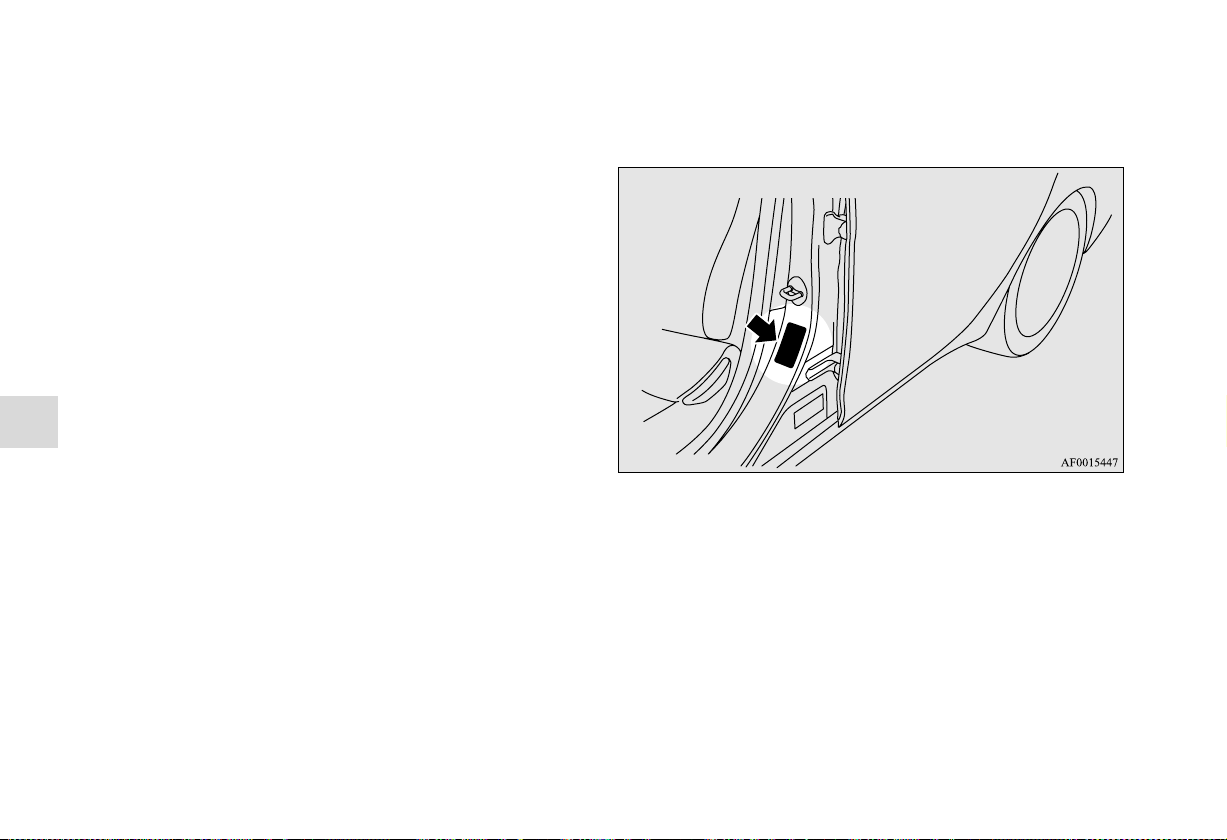
4-10
Driving safety
4
● Curb weight: the weight of a motor vehicle with standard
equipment including the maximum capacity of fuel, oil,
and coolant.
● Accessory weight: the combined weight (in excess of
those standard items which may be replaced) of automatic
transmission, power steering, power brakes, power win-
dows, power seats, radio, and heater, to the extent that
these items are available as factory- installed equipment
(whether installed or not).
● Vehicle capacity weight: the rated cargo and luggage load
plus 150 lbs (68 kg)* times the vehicle’s designated seat-
ing capacity.
● Production options weight: the combined weight of those
installed regular production options weighing over 5 lbs
(2.3 kg) in excess of those standard items which they
replace, not previously considered in curb weight or
accessory weight, including heavy duty brakes, ride level-
ers, roof rack, heavy duty battery, and special trim.
● Normal occupant weight: 150 lbs (68 kg)* times the num-
ber of specified occupants. (In your vehicle the number is
3)
● Occupant distribution: distribution of occupants in a vehi-
cle as specified. (In your vehicle the distribution is 2 in
front, 1 in second row seat)
Tire and loading information placard
N00630100309
The tire and loading information placard is located on the
driver’s door sill.
*: 150 lbs (68 kg) is the weight of one person as defined by
U.S.A. and Canadian regulations.
BK0138600US.book 10 ページ 2011年7月17日 日曜日 午後2時32分
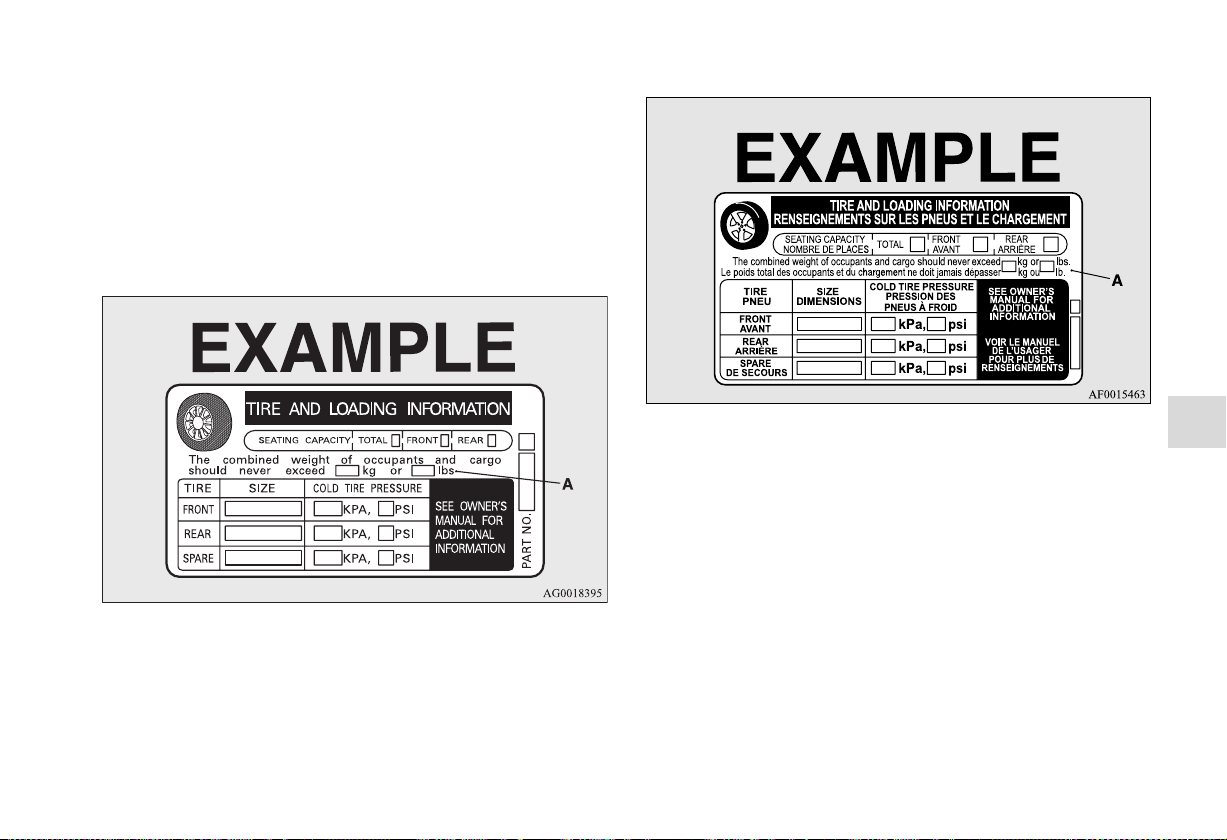
Driving safety
4-11
4
This placard shows the maximum number of occupants permit-
ted to ride in your vehicle as well as “the combined weight of
occupants and cargo” (A), which is called the vehicle capacity
weight. The weight of roof road is included in the definition of
“cargo” when determining the vehicle capacity weight. This
placard also tells you the size and recommended inflation pres-
sure for the original equipment tires on your vehicle. For more
information, refer to “Tires” on page 7-29.
Type 1
Type 2
BK0138600US.book 11 ページ 2011年7月17日 日曜日 午後2時32分

4-12
Driving safety
4
Steps for Determining Correct Load Limit
N00630200182
1. Locate the statement “The combined weight of occu-
pants and cargo should never exceed XXX kg or XXX
lbs.” on your vehicle’s placard.
2. Determine the combined weight of the driver and pas-
sengers that will be riding in your vehicle.
3. Subtract the combined weight of the driver and passen-
gers from XXX kg or XXX lbs.
4. The resulting figure equals the available amount of
cargo and luggage load capacity. For example, if the
“XXX” amount equals 1400 lbs. and there will be five
150 lbs. passengers in your vehicle, the amount of
available cargo and luggage load capacity is 650 lbs.
(1400 - 750 (5 x 150) = 650 lbs.)
5. Determine the combined weight of luggage and cargo
being loaded on the vehicle. That weight may not
safely exceed the available cargo and luggage load
capacity calculated in Step 4.
6. If your vehicle will be towing a trailer, load from your
trailer will be transferred to your vehicle. Consult this
manual to determine how this reduces the available
cargo and luggage load capacity of your vehicle.
N
OTE
● The above steps for determining correct load limit were
written in accordance with U.S.A. regulations.
Your vehicle cannot tow a trailer, so step 6 is irrelevant.
BK0138600US.book 12 ページ 2011年7月17日 日曜日 午後2時32分
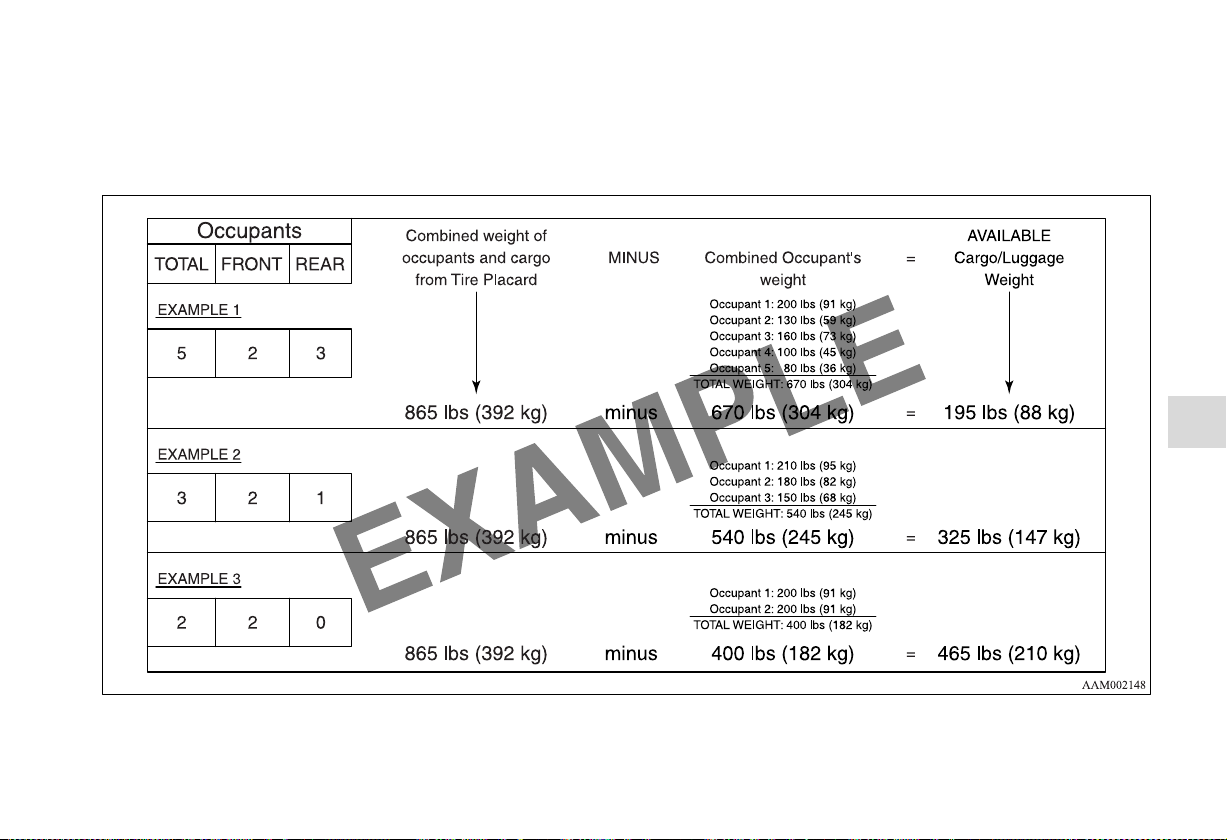
Driving safety
4-13
4
N
OTE
● The following table shows examples on how to calculate total cargo/load capacity of your vehicle with varying seating
configurations and number and size of occupants. This table is for illustration purposes only and may not be accurate for
the seating and load capacity of your vehicle.
● For the following example the combined weight of occupants and cargo should never exceed 865 lbs (392 kg).
● Under a maximum loaded vehicle condition, gross axle weight ratings (GAWR’s) for the front and rear axles must not be
exceeded. For further information on GAWR’s, vehicle loading, see the “Specifications” section of this manual.
BK0138600US.book 13 ページ 2011年7月17日 日曜日 午後2時32分

4-14
Driving safety
4
Cargo loads
N00629700464
Cargo load precautions
To determine the cargo load capacity for your vehicle, subtract
the weight of all vehicle occupants from the vehicle capacity
weight. For added information, if needed, refer to “Steps for
Determining Correct Load Limit” on page 4-12.
DO NOT USE the Gross Vehicle Weight Rating and Gross
Axle Weight Rating numbers listed on the safety certification
label (A) located on the inside sill of the driver’s door as the
guide for passengers and/or cargo weight.
WARNING
!
● To reduce the risk of serious injury or death, the
combined weights of the driver, passengers and
cargo and must never exceed the vehicle capacity
weight.
● Exceeding the vehicle capacity weight will adversely
affect vehicle performance, including handling and
braking, and may cause an accident.
● Do not load cargo or luggage higher than the top of
the seatback. Be sure that your cargo or luggage
cannot move when your vehicle is in motion.
Having either the rear view blocked, or your cargo
being thrown inside the cabin if you suddenly have
to brake can cause a serious accident or injury or
death.
● Put cargo or luggage in the cargo area of your vehi-
cle. Try to spread the weight evenly.
BK0138600US.book 14 ページ 2011年7月17日 日曜日 午後2時32分
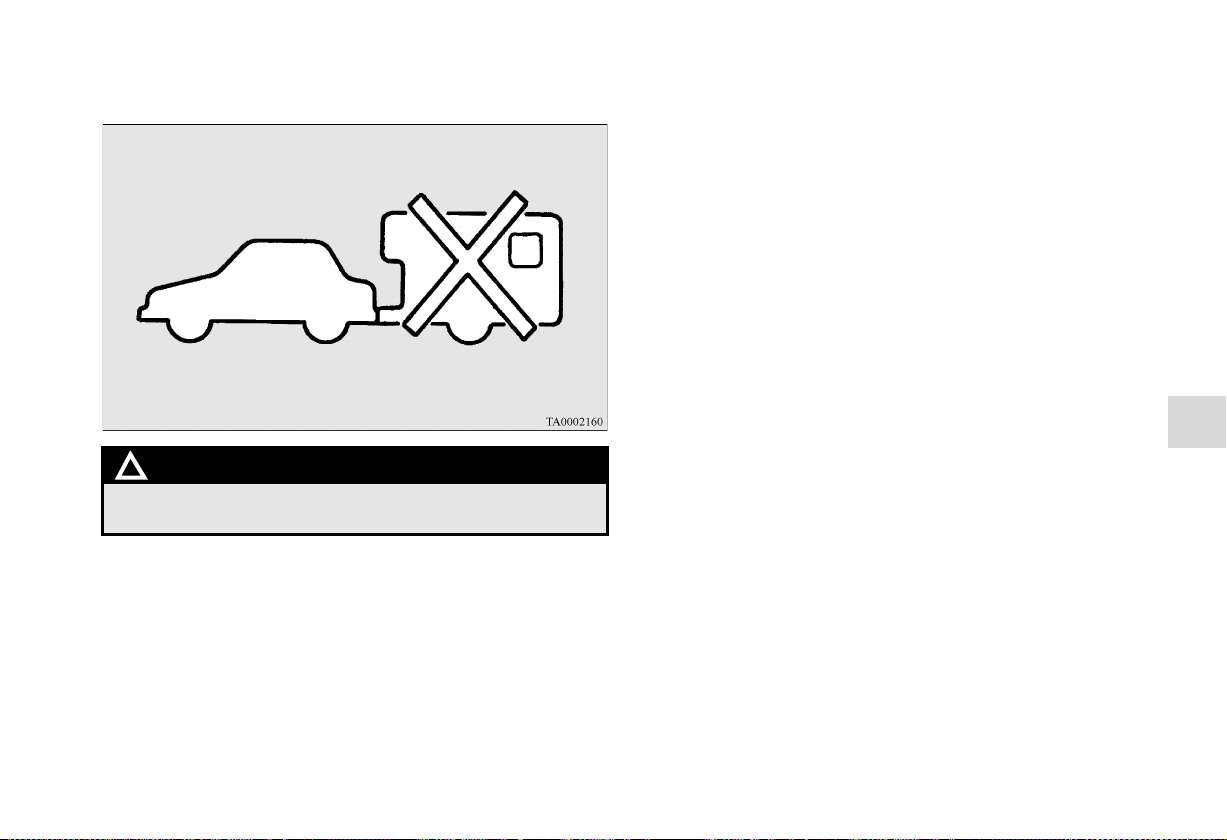
Driving safety
4-15
4
Trailer towing
N00629800188
WARNING
!
● Do not use this vehicle for trailer towing. It may not
be possible to maintain control or adequate braking.
BK0138600US.book 15 ページ 2011年7月17日 日曜日 午後2時32分

BK0138600US.book 16 ページ 2011年7月17日 日曜日 午後2時32分

5
Comfort controls
Vents. . . . . . . . . . . . . . . . . . . . . . . . . . . . . . . . . . . .5- 2
Heater without air conditioning function
(if so equipped). . . . . . . . . . . . . . . . . . . . . . . . . .5- 6
Manual air conditioning with MAX A/C mode
(if so equipped). . . . . . . . . . . . . . . . . . . . . . . . . .5- 12
Manual air conditioning without MAX A/C mode
(if so equipped). . . . . . . . . . . . . . . . . . . . . . . . . .5- 22
Automatic air conditioning with Fahrenheit scale
(if so equipped). . . . . . . . . . . . . . . . . . . . . . . . . .5- 31
Automatic air conditioning with Celsius scale
(if so equipped). . . . . . . . . . . . . . . . . . . . . . . . . .5- 41
Important air conditioning operating tips . . . . . . .5- 51
Air purifier . . . . . . . . . . . . . . . . . . . . . . . . . . . . . . .5- 52
AM/FM electronically tuned radio with CD player
(RBDS and MP3 compatible)
(if so equipped). . . . . . . . . . . . . . . . . . . . . . . . . .5- 52
AM/FM electronically tuned radio with 6 CD
autochanger (RBDS and MP3 compatible)
(if so equipped). . . . . . . . . . . . . . . . . . . . . . . . . .5- 80
To play tracks from USB device
(if so equipped). . . . . . . . . . . . . . . . . . . . . . . . . .5- 111
To play tracks from a Bluetooth® device
(vehicles with Bluetooth® 2.0 interface). . . . . . 5-128
To use the external audio input function
(if so equipped) . . . . . . . . . . . . . . . . . . . . . . . . . 5-132
Steering wheel audio remote control switch
(if so equipped) . . . . . . . . . . . . . . . . . . . . . . . . . 5-134
Error codes . . . . . . . . . . . . . . . . . . . . . . . . . . . . . . 5-137
Error codes (SIRIUS Satellite Radio)
(if so equipped) . . . . . . . . . . . . . . . . . . . . . . . . . 5-139
Error codes (iPod) . . . . . . . . . . . . . . . . . . . . . . . . . 5-141
Error codes (USB memory device) . . . . . . . . . . . . 5-143
Handling of compact discs (CD). . . . . . . . . . . . . . 5-145
Antenna . . . . . . . . . . . . . . . . . . . . . . . . . . . . . . . . . 5-148
Digital clock (if so equipped) . . . . . . . . . . . . . . . . 5-149
General information about your radio. . . . . . . . . . 5-150
BK0138600US.book 1 ページ 2011年7月17日 日曜日 午後2時32分
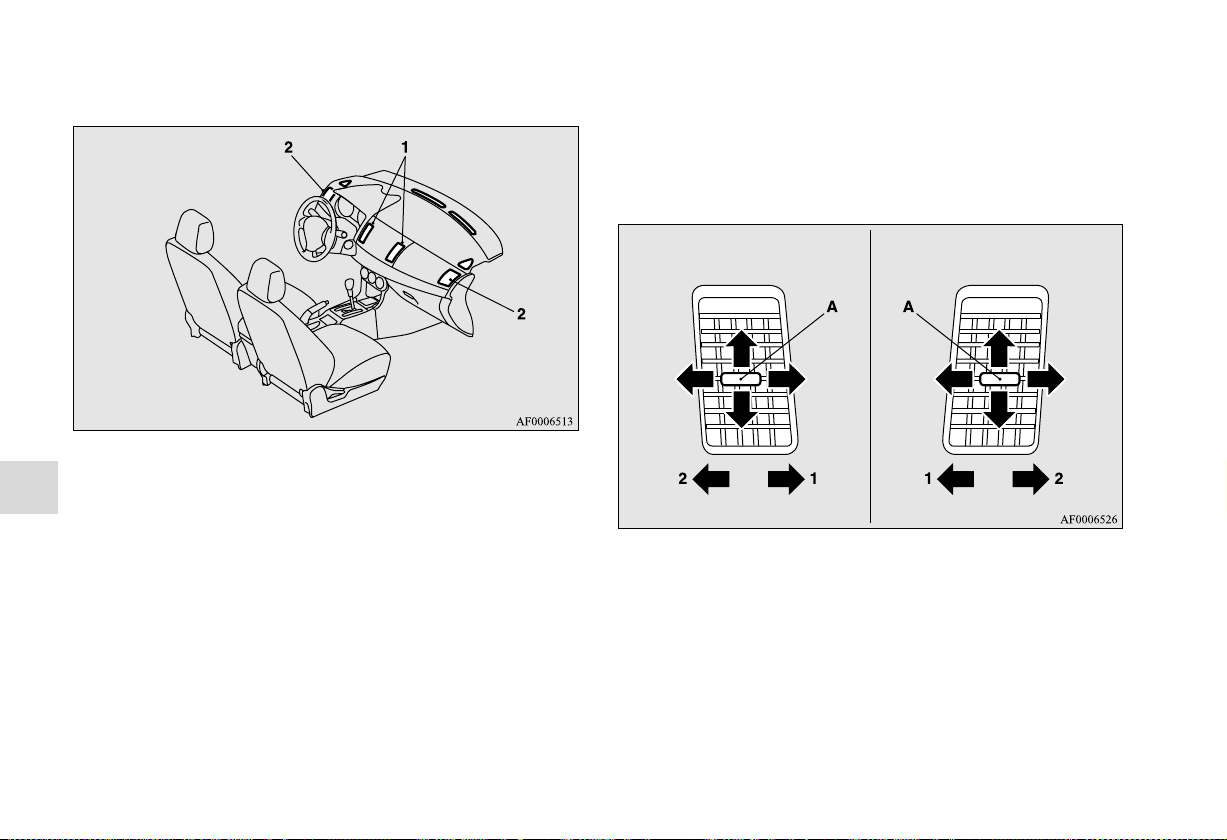
5-2
Comfort controls
5
Vents
N00729900210
Air flow and direction adjustments
N00730200301
Center vents
Move the knob to make adjustments.
To close the vent, move the knob to the inside as far as possi-
ble.
1- Center vents
2- Side vents
A- Knob
1- Close
2- Open
Left Right
BK0138600US.book 2 ページ 2011年7月17日 日曜日 午後2時32分
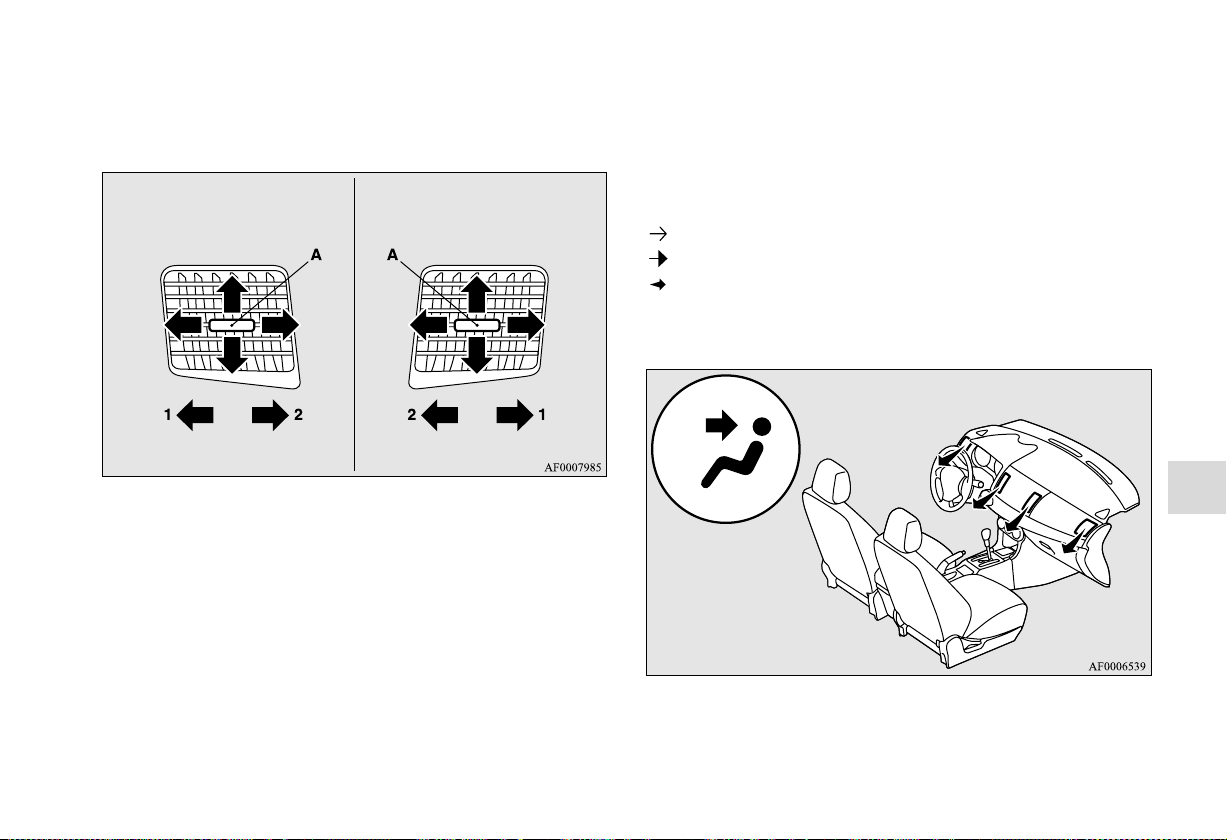
Comfort controls
5-3
5
Side vents
Move the knob to make adjustments.
To close the vent, move the knob to the outside as far as possi-
ble.
N
OTE
● On rare occasions, air from the vents of an air-conditioned
vehicle may be foggy. This is only moist air cooling sud-
denly and does not indicate a problem.
● Do not let drinks or other liquids get into the vents as they
could prevent the air conditioning from operating nor-
mally.
Changing the mode selection
N00736400493
To change the position and amount of air flowing from the
vents, turn the mode selection dial. Refer to “Mode selection
dial” on page 5-7, 5-13, 5-23, 5-33, 5-43.
These symbols are used in the next several illustrations to dem-
onstrate the quantity of air coming from the vents.
: Small amount of air from the vents
: Medium amount of air from the vents
: Large amount of air from the vents
Face position
Air flows only to the upper part of the passenger compartment.
A- Knob
1- Close
2- Open
Left Right
BK0138600US.book 3 ページ 2011年7月17日 日曜日 午後2時32分
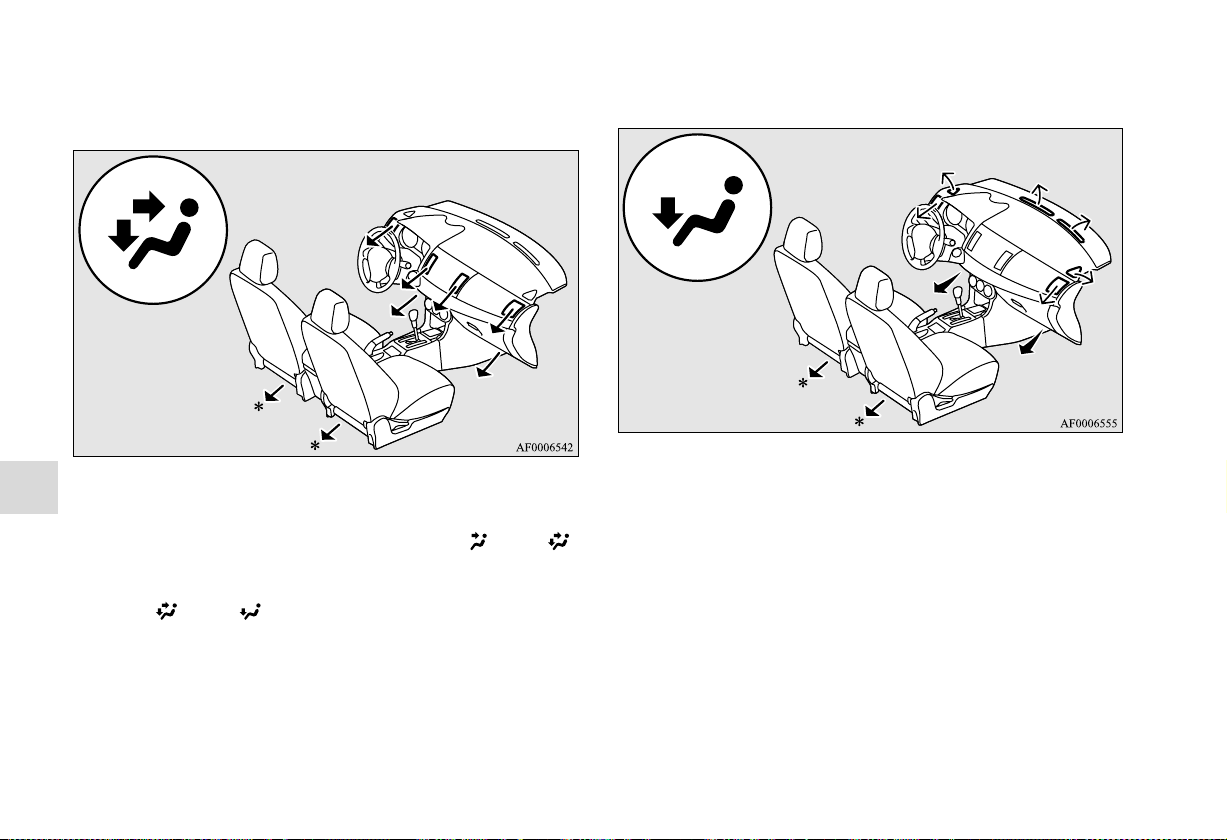
5-4
Comfort controls
5
Foot/Face position
Air flows to the upper part of the passenger compartment, and
flows to the leg area.
N
OTE
● With the mode selection dial between the “ ” and “ ”
positions, air flows mainly to the upper part of the passen-
ger compartment. With the mode selection dial between
the “ ” and “ ” positions, air flows mainly to the leg
area.
Foot position
Air flows mainly to the leg area.
*- if so equipped
*- if so equipped
BK0138600US.book 4 ページ 2011年7月17日 日曜日 午後2時32分
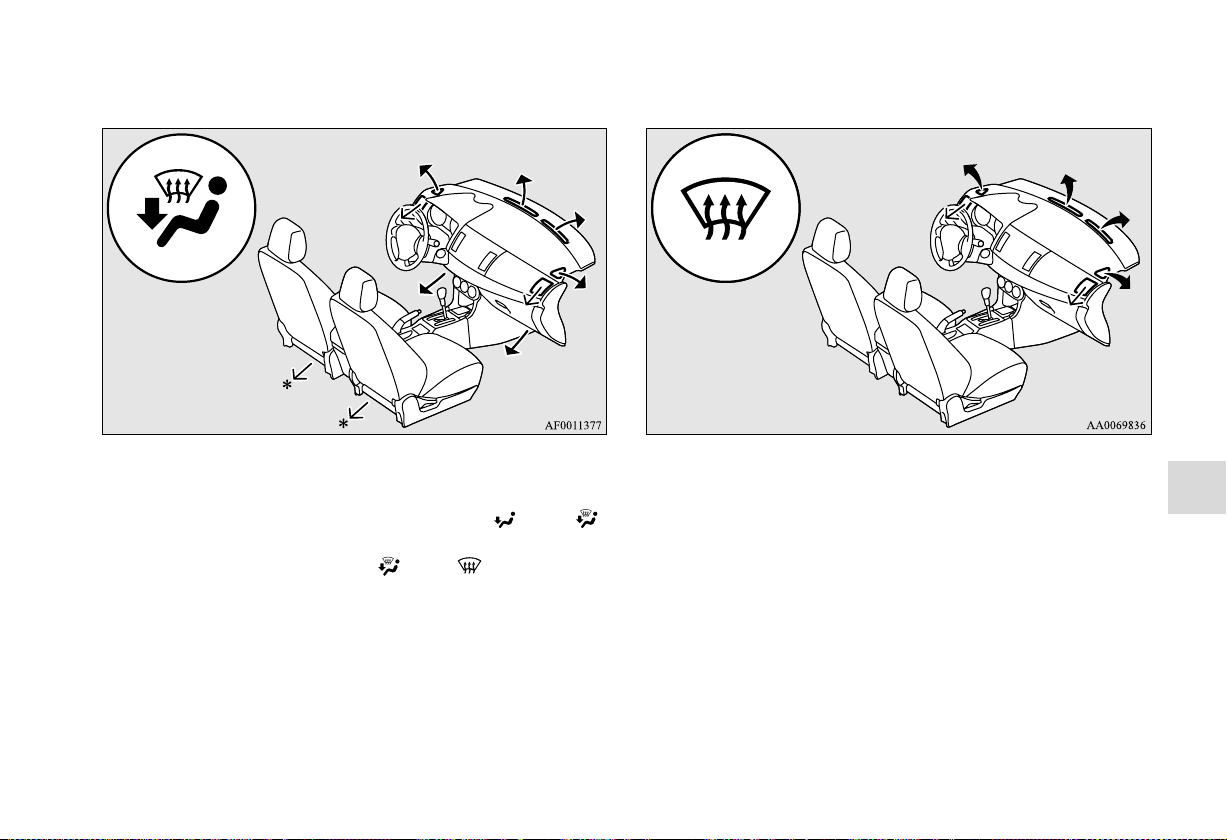
Comfort controls
5-5
5
Foot/Defroster position
Air flows to the leg area, the windshield and the door windows.
N
OTE
● With the mode selection dial between the “ ” and “ ”
positions, air flows mainly to the leg area. With the mode
selection dial between the “ ”and “ ” positions, air
flows mainly to the windshield and the door windows.
Defroster position
Air flows mainly to the windshield and the door windows.
*- if so equipped
BK0138600US.book 5 ページ 2011年7月17日 日曜日 午後2時32分
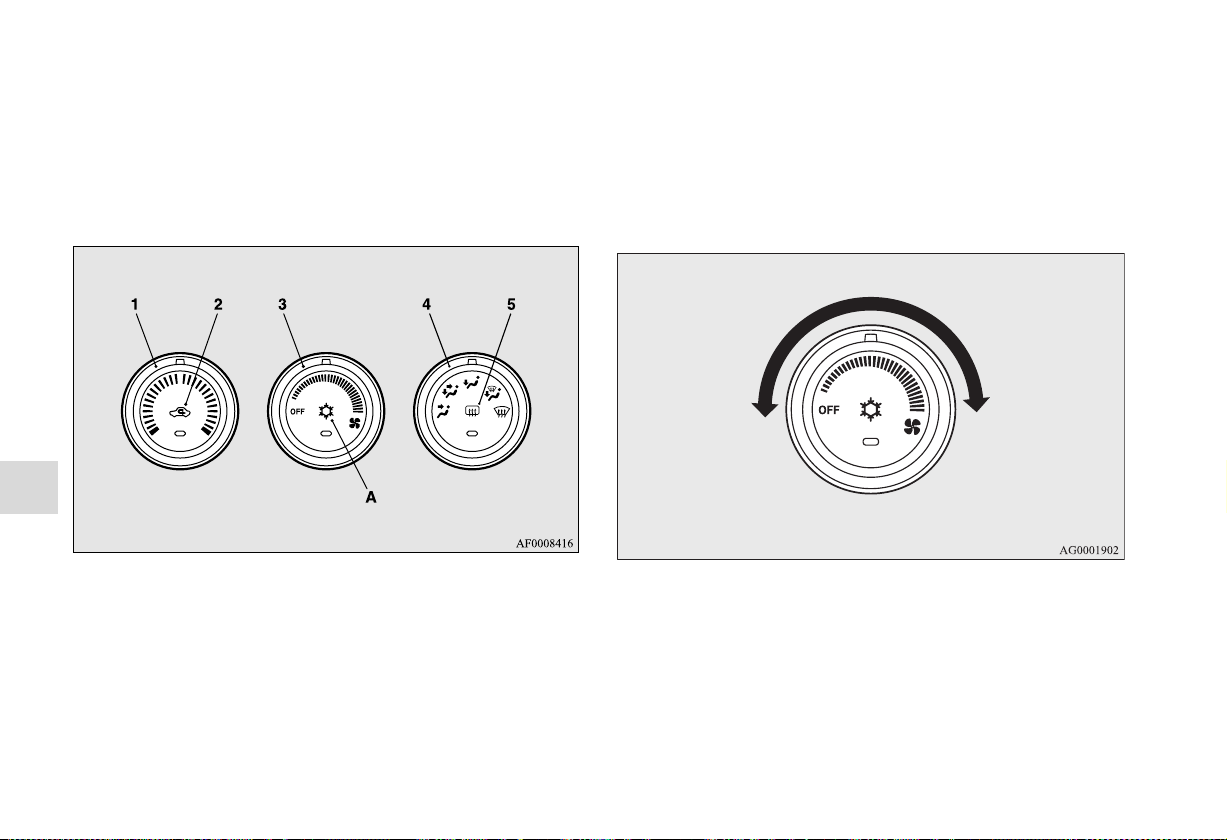
5-6
Comfort controls
5
Heater without air conditioning function
(if
so equipped)
N00737700031
The heater can only be used while the engine is running.
Control panel
N00737800029
N
OTE
● Button (A) is not available for use. The indicator below
the button doesn’t come on even if it is pushed.
Blower speed selection dial
N00737900020
When the ignition switch is in the “ON” position, select the
blower speed by turning the blower speed selection dial.
Turning the dial clockwise will increase the blower speed;
turning the dial counterclockwise will decrease it. When the
dial is set to the “OFF” position, all fan-driven airflow will
stop.
1- Temperature control dial
2- Air selection switch
3- Blower speed selection dial
4- Mode selection dial
5- Electric rear window defogger switch → P. 3-254
BK0138600US.book 6 ページ 2011年7月17日 日曜日 午後2時32分
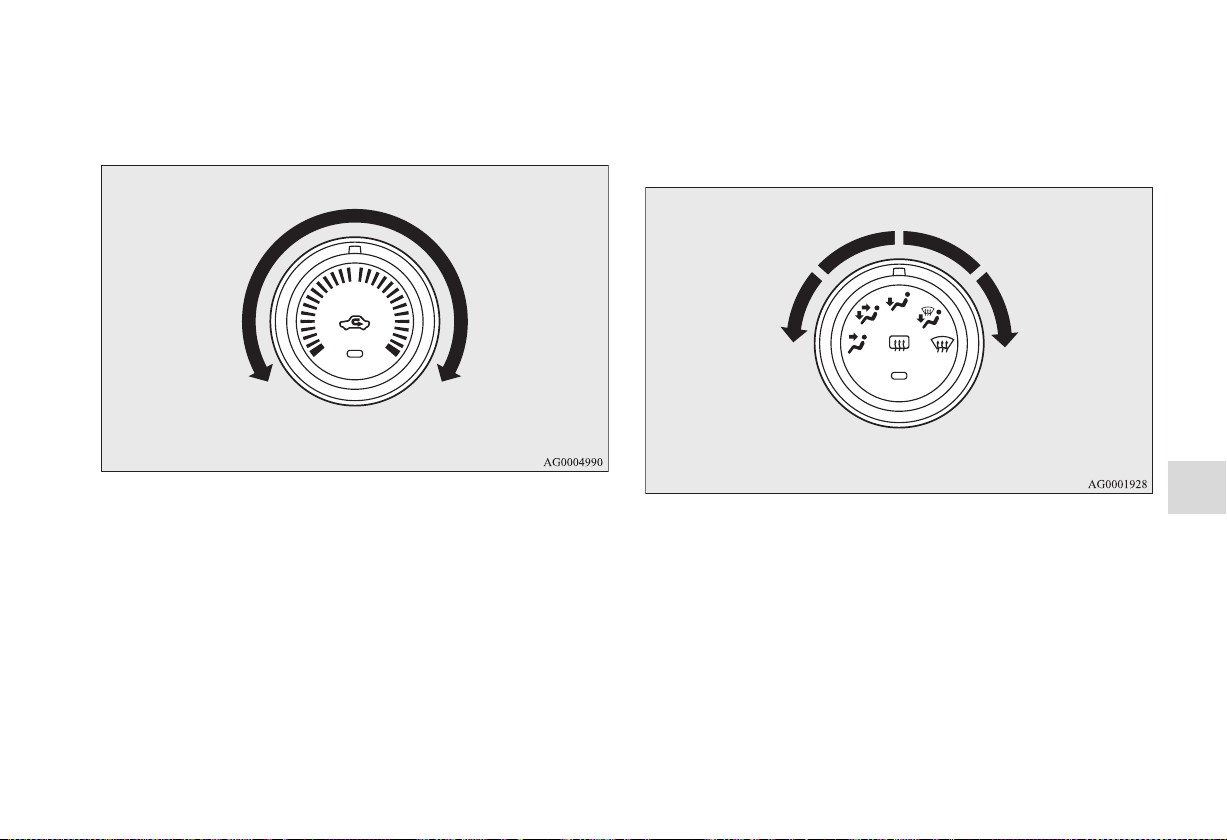
Comfort controls
5-7
5
Temperature control dial
N00738000044
Turn the temperature control dial clockwise to make the air
warmer. Turn it counterclockwise to make the air cooler.
N
OTE
● While the engine coolant temperature is low, the tempera-
ture of the air from the heater will be cool/cold until the
engine warms up, even if you have selected warm air with
the dial.
Mode selection dial
N00738100058
To change the amount of air flowing from the vents, turn the
mode selection dial. Refer to “Changing the mode selection”
on page 5-3.
BK0138600US.book 7 ページ 2011年7月17日 日曜日 午後2時32分

5-8
Comfort controls
5
Air selection switch
N00738200033
Normally, use the outside air position to keep the windshield
and side windows clear and to quickly remove fog or frost
from the windshield.
To change the air selection, simply press the air selection
switch. A sound will be made every time you push the switch.
● Outside air {Indicator light (A) OFF}
● Recirculation air {Indicator light (A) ON}
The air selection indicator light (A) shows the selected posi-
tion.
If the outside air is dusty or contaminated in some way, use the
recirculation position. Switch to the outside air position every
now and then to keep the windows from fogging up.
CAUTION
!
● Using recirculated air for a long time may cause the
windows to fog up.
BK0138600US.book 8 ページ 2011年7月17日 日曜日 午後2時32分
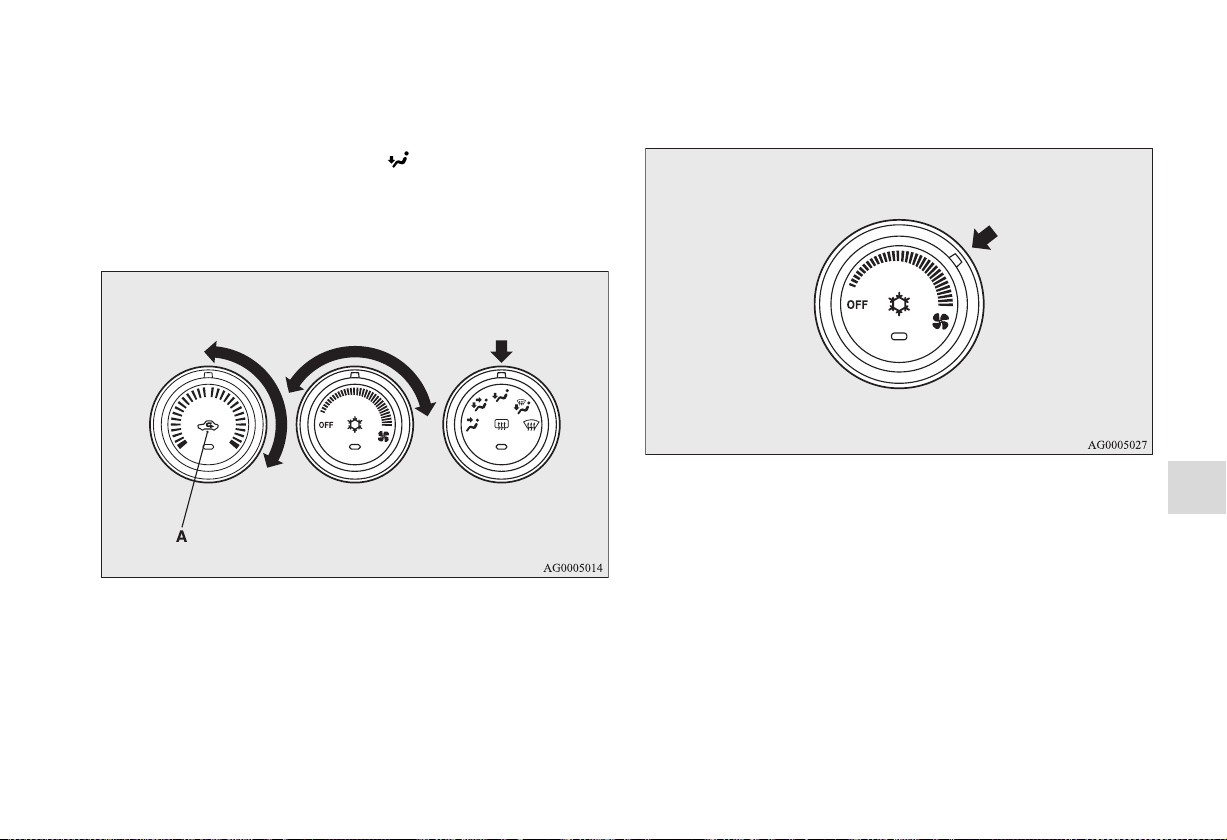
Comfort controls
5-9
5
Operating the system
N00738300034
Heating
Set the mode selection dial to the “ ” position and set the air
selection switch (A) to the outside air position.
Turn the temperature control dial clockwise or counterclock-
wise to the desired temperature. Select the best speed to fit
your needs.
N
OTE
● For quick heating, set the blower speed selection dial to
the position shown in the illustration.
BK0138600US.book 9 ページ 2011年7月17日 日曜日 午後2時32分

5-10
Comfort controls
5
Combination of unheated air and heated air
N00738400022
Set the mode selection dial to the positions shown in the illus-
tration and set the air selection switch (A) to the outside air
position.
The air flow will be directed to the leg area and the upper part
of the passenger compartment. Set the desired blower speed.
Warm air flows to the leg area and unheated or slightly warm
air (depending upon the position of the temperature control
dial) flows to the upper part of the passenger compartment.
Defrosting or defogging the windshield and door win-
dows
N00738500065
Set the mode selection dial (between “ ” or “ ”) to remove
frost or mist from the windshield and door window.
CAUTION
!
● For safety, make sure you have a clear view through
all the windows.
BK0138600US.book 10 ページ 2011年7月17日 日曜日 午後2時32分
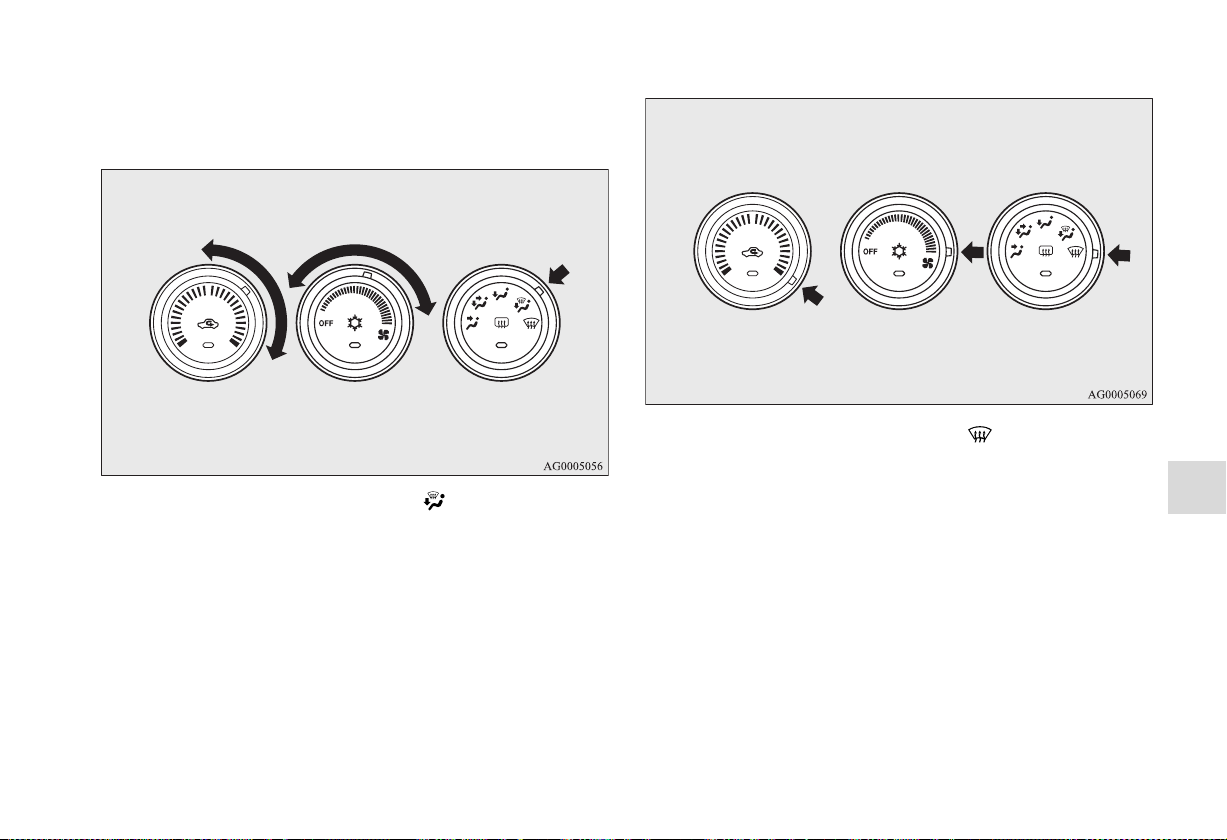
Comfort controls
5-11
5
For ordinary defrosting
Use this setting to keep the windshield and door windows clear
of mist, and to keep the leg area heated (when driving in rain or
snow).
1. Set the mode selection dial to the “ ” position.
2. Select your desired blower speed by turning the blower
speed selection dial.
3. Select your desired temperature by turning the tempera-
ture control dial.
For quick defrosting
1. Set the mode selection dial to the “ ” position.
2. Set your blower to the maximum speed.
3. Set the temperature to the highest position.
N
OTE
● To defog quickly, direct the air flow from the side vents
toward the door windows.
BK0138600US.book 11 ページ 2011年7月17日 日曜日 午後2時32分
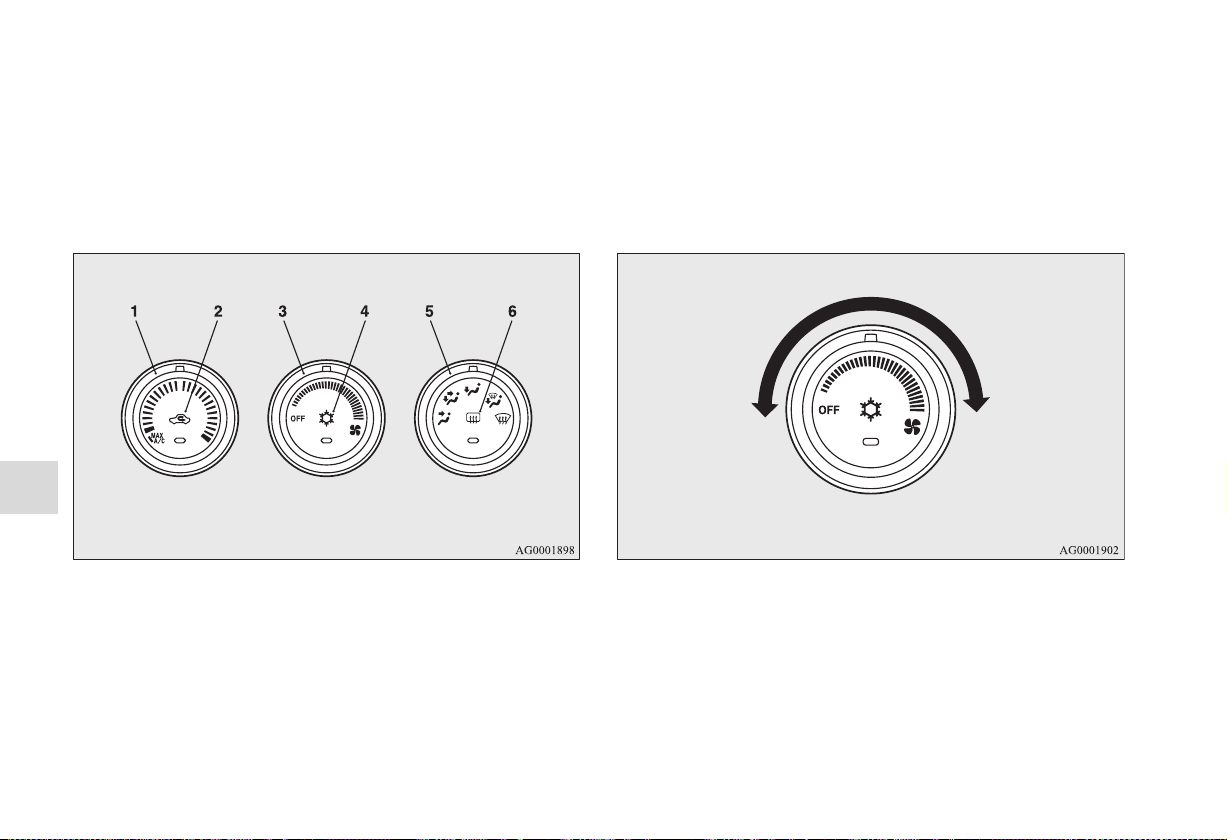
5-12
Comfort controls
5
Manual air conditioning with MAX A/C
mode
(if so equipped)
N00730300256
The air conditioning can only be used while the engine is run-
ning.
Control panel
N00730500216
Blower speed selection dial
N00736500146
When the ignition switch is in the “ON” position, select the
blower speed by turning the blower speed selection dial.
Turning the dial clockwise will increase the blower speed;
turning the dial counterclockwise will decrease it. When the
dial is set to the “OFF” position, all fan-driven airflow will
stop.
1- Temperature control dial
2- Air selection switch
3- Blower speed selection dial
4- Air conditioning switch
5- Mode selection dial
6- Electric rear window defogger switch → P.3-254
BK0138600US.book 12 ページ 2011年7月17日 日曜日 午後2時32分

Comfort controls
5-13
5
Temperature control dial
N00736600219
Turn the temperature control dial clockwise to make the air
warmer. Turn it counterclockwise to make the air cooler.
N
OTE
● While the engine coolant temperature is low, the tempera-
ture of the air from the heater will be cool/cold until the
engine warms up, even if you have selected warm air with
the dial.
● For instructions on how to use the “MAX A/C” position
(A), refer to “For quick cooling” on page 5-18.
Mode selection dial
N00736700151
To change the amount of air flowing from the vents, turn the
mode selection dial. Refer to “Changing the mode selection”
on page 5-3.
BK0138600US.book 13 ページ 2011年7月17日 日曜日 午後2時32分
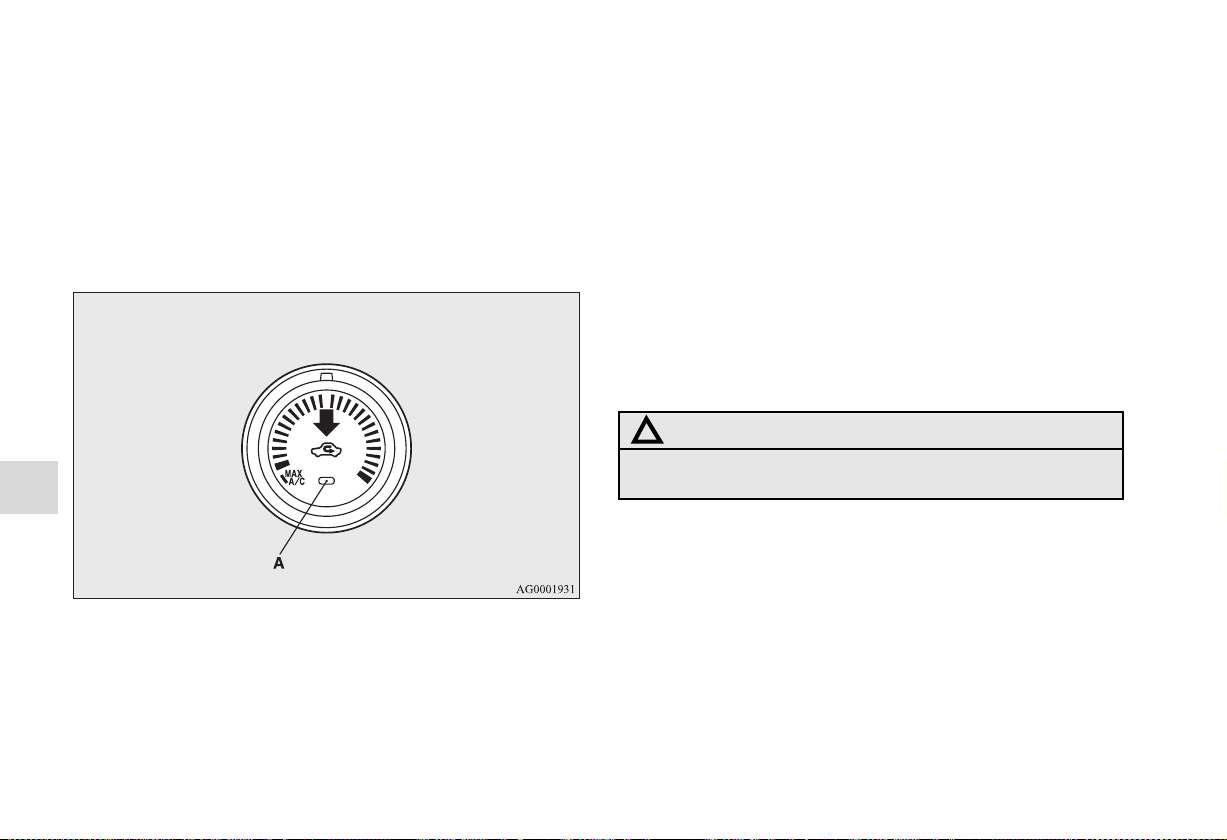
5-14
Comfort controls
5
Air selection switch
N00736800367
Normally, use the outside air position to keep the windshield
and side windows clear and to quickly remove fog or frost
from the windshield.
To change the air selection, simply press the air selection
switch. A sound will be made every time you push the switch.
● Outside air {Indicator light (A) OFF}
● Recirculated air {Indicator light (A) ON}
When the air conditioning turns on, the air selection is con-
trolled automatically.
When the air conditioning turns off, the air selection automati-
cally goes back to the outside air position.
The air selection indicator light (A) shows the selected posi-
tion.
N
OTE
● When the air conditioning operates with the air selection
switch (A) in the outside air position, the system automat-
ically determines whether to continue using outside air or
to perform recirculation.
If the outside temperature is high, the system selects recir-
culation to achieve rapid cooling and causes the air selec-
tion indicator in the switch to illuminate. When the air
conditioning turns off or the blower speed selection dial is
set to the “OFF” position, the air selection automatically
goes back to the outside position.
If the outside air is dusty or contaminated in some way, use the
recirculation position. Switch to the outside air position every
now and then to keep the windows from fogging up.
CAUTION
!
● Using recirculated air for a long time may cause the
windows to fog up.
BK0138600US.book 14 ページ 2011年7月17日 日曜日 午後2時32分

Comfort controls
5-15
5
N
OTE
● While the mode selection dial is set between “ ” and
“ ” position, the air conditioning compressor will run
automatically. The outside air position will also be
selected automatically. (In this case, the air conditioning
indicator will not change.)
● When the temperature control dial is set to the “MAX
A/C” position, the air selection will be automatically set
to the recirculation position.
● When the temperature control dial is in the “MAX A/C”
position, if it is set to a position other than “MAX A/C”,
the setting for the air selection switch is selected as
described below. The selection of recirculated air or out-
side air depends on the setting before “MAX A/C” was
used.
• If automatic control was set:
Automatic control is continued
• If recirculated air was selected:
Recirculated air is continued
• If outside air was selected:
Outside air is continued
Personalizing the air selection (Changing the function
setting)
N00702100015
You can change the following functions to match your prefer-
ence.
● Enable automatic air control:
When the air conditioning operates, the air selection
switch will be automatically controlled.
● Disable automatic air control:
Even when the air conditioning operates, the air selection
switch will not be automatically controlled.
● Changing the settings
Press the air selection switch for about 10 seconds or
longer.
When the setting has changed, the system will beep and
the indicator light will flash.
• When the setting has changed from enabled to disabled,
the system will beep three times and the indicator will
flash three times.
• When the setting has changed from disabled to enabled,
the system will beep two times and the indicator light
will flash three times.
N
OTE
● The factory setting is “Enable automatic air control”.
● While the mode selection dial is set between “ ” and
“ ” position, the air selection will automatically change
to the outside air position, even if the system is set to
“Disable automatic air control”, in order to prevent win-
dows from fogging up.
BK0138600US.book 15 ページ 2011年7月17日 日曜日 午後2時32分

5-16
Comfort controls
5
Air conditioning switch
N00731000423
Push the switch, and the air conditioning compressor will turn
on. The air conditioning indicator light (A) will come on.
A sound will be made every time you push the switch.
Push the switch again and the air conditioning compressor will
stop and the indicator light (A) goes off.
N
OTE
● If a problem is detected in the air conditioning compres-
sor, the air conditioning indicator light (A) blinks. Press
the air conditioning switch once to turn it off, then once
more to turn it back on. If the air conditioning indicator
light (A) does not blink, there is no problem. If it does
blink, have it checked at an authorized Mitsubishi Motors
dealer or a repair facility of your choice.
● Sometimes, for example after using a high-pressure car
wash, the condenser can get wet, and the air conditioning
indicator light (A) blinks temporarily. Wait for a while,
press the air conditioning switch once to turn the system
off, then once more to turn it back on. Once the water
evaporates, the blinking will stop.
CAUTION
!
● When using the air conditioning, the idling speed
may slightly increase as the air conditioning com-
pressor is switched on/off automatically. Especially
for vehicles with a continuously variable transmis-
sion (CVT) or Twin Clutch SST, while the vehicle is
stationary, fully depress the brake pedal to prevent
the vehicle from creeping.
BK0138600US.book 16 ページ 2011年7月17日 日曜日 午後2時32分

Comfort controls
5-17
5
Operating the air conditioning system
N00731100222
Heating
Set the mode selection dial to the “ ” position and set the air
selection switch (A) to the outside air position.
Turn the temperature control dial clockwise or counterclock-
wise to the desired temperature. Select the best speed to fit
your needs.
N
OTE
● For quick heating, set the blower speed selection dial to
the position shown in the illustration.
BK0138600US.book 17 ページ 2011年7月17日 日曜日 午後2時32分

5-18
Comfort controls
5
Cooling
N00731200278
For ordinary cooling
1. Set the mode selection dial to the “ ” position.
2. Push the air selection switch (A) to set it to the outside air
position.
3. Push the air conditioning switch (B).
4. Change the temperature by turning the control dial clock-
wise or counterclockwise.
5. Set the desired blower speed.
N
OTE
● If the outside air is dusty or contaminated in some way,
push the air selection switch (A) to set it to the recircula-
tion position. Let in some outside air from time to time for
good ventilation.
● To cool the leg areas, set the mode selection dial to the
“ ” position.
For quick cooling
1. Set the mode selection dial to the “ ” position.
2. Set the temperature control dial to the “MAX A/C” posi-
tion.
3. Set the blower speed to the highest position.
BK0138600US.book 18 ページ 2011年7月17日 日曜日 午後2時32分
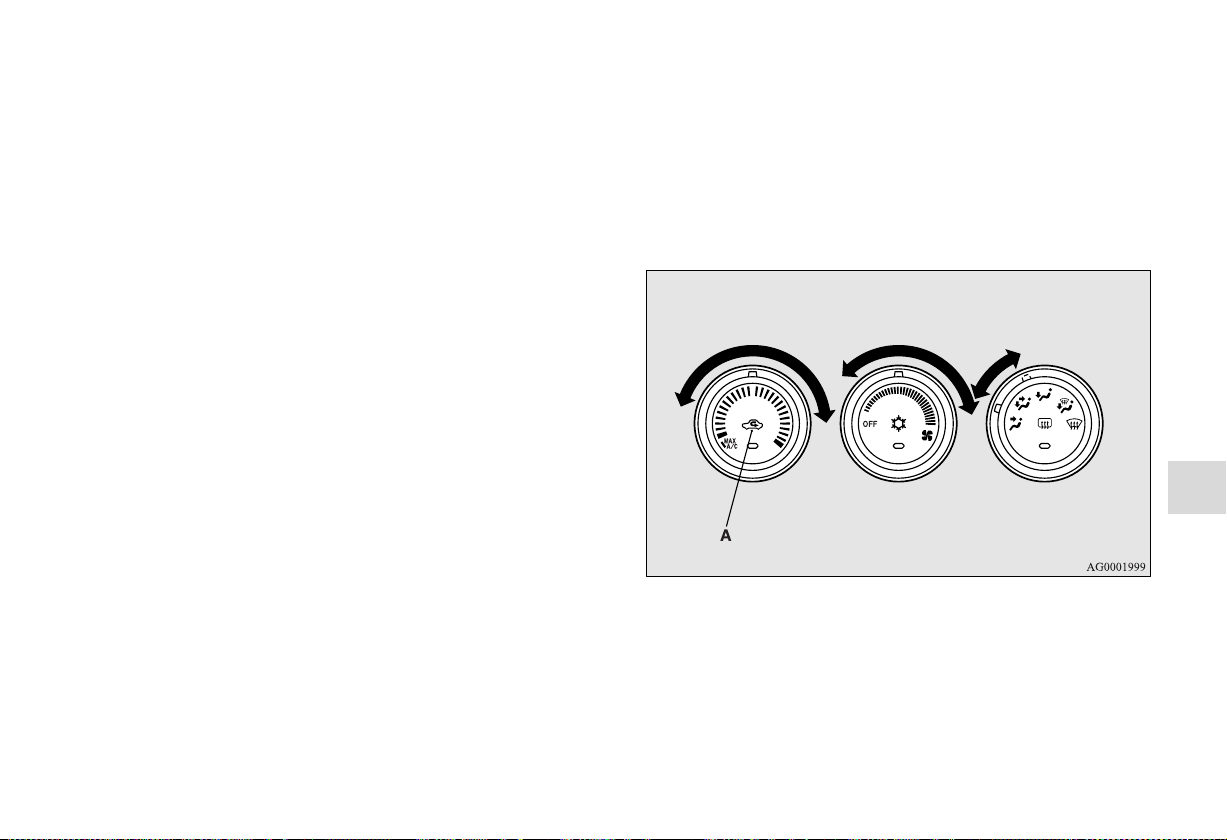
Comfort controls
5-19
5
N
OTE
● When the temperature control dial is set to the “MAX
A/C” position, the air conditioning compressor will run
automatically and the light will come on. The recircula-
tion position will be selected automatically. In this case,
you cannot turn the air conditioning off or select the out-
side air position.
● When the temperature control dial is set to a position other
than “MAX A/C”, the air selection will automatically
change to outside air. The air conditioning will revert to
the previous condition in which the “MAX A/C” position
was not selected.
Combination of unheated air and heated air
N00731300211
Set the mode selection dial to one of the positions shown in the
illustration and set the air selection switch (A) to the outside air
position.
Warm air flows to the leg area and unheated or slightly warm
air (depending upon the position of the temperature control
dial) flows to the upper part of the passenger compartment.
BK0138600US.book 19 ページ 2011年7月17日 日曜日 午後2時32分
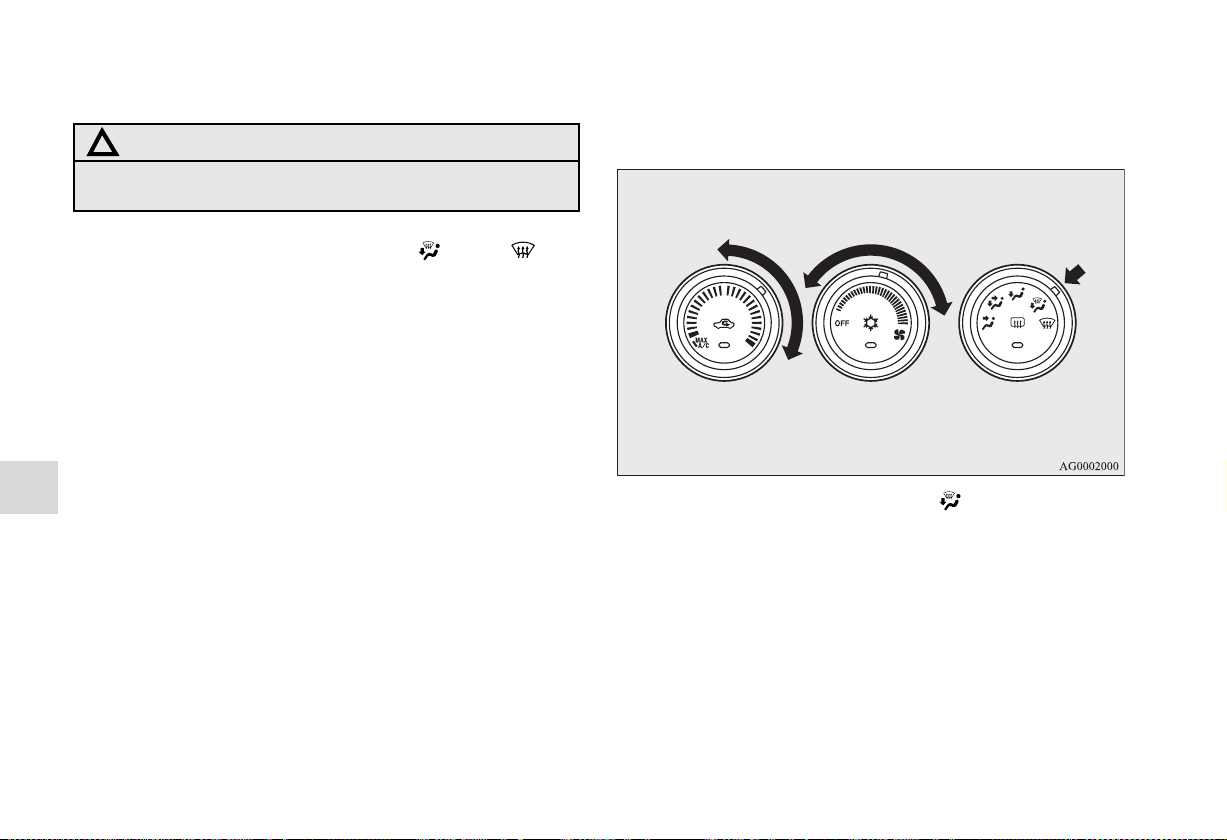
5-20
Comfort controls
5
Defrosting or defogging (windshield, door windows)
N00731400443
Set the mode selection dial (between “ ” and “ ”) to
remove frost or mist from the windshield and door window.
For ordinary defrosting
Use this setting to keep the windshield and door windows clear
of mist, and to keep the leg area heated (when driving in rain or
snow).
1. Set the mode selection dial to the “ ” position.
2. Select your desired blower speed by turning the blower
speed selection dial.
3. Select your desired temperature by turning the tempera-
ture control dial.
CAUTION
!
● For safety, make sure you have a clear view through
all the windows.
BK0138600US.book 20 ページ 2011年7月17日 日曜日 午後2時32分
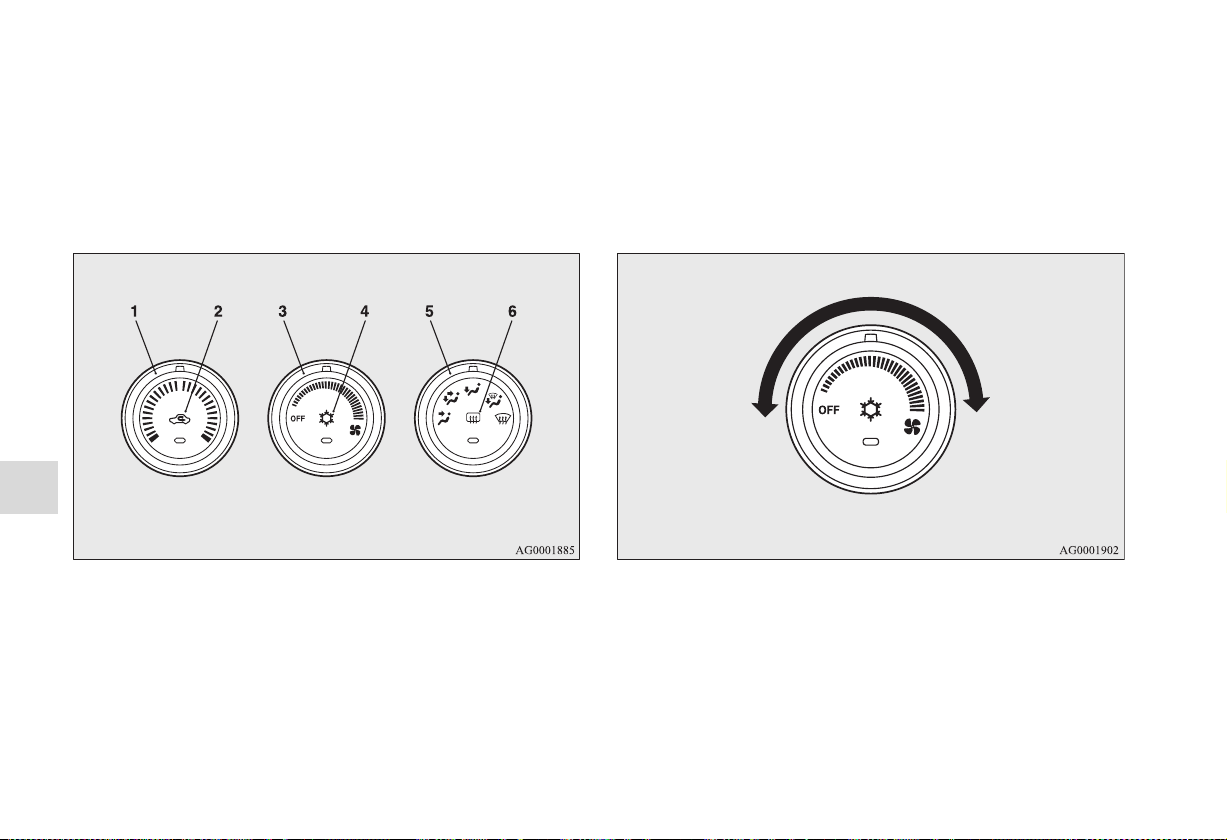
5-22
Comfort controls
5
Manual air conditioning without MAX A/C
mode
(if so equipped)
N00730300269
The air conditioning can only be used while the engine is run-
ning.
Control panel
N00730500229
Blower speed selection dial
N00736500133
When the ignition switch is in the “ON” position, select the
blower speed by turning the blower speed selection dial.
Turning the dial clockwise will increase the blower speed;
turning the dial counterclockwise will decrease it. When the
dial is set to the “OFF” position, all fan-driven airflow will
stop.
1- Temperature control dial
2- Air selection switch
3- Blower speed selection dial
4- Air conditioning switch
5- Mode selection dial
6- Electric rear window defogger switch → P.3-254
BK0138600US.book 22 ページ 2011年7月17日 日曜日 午後2時32分
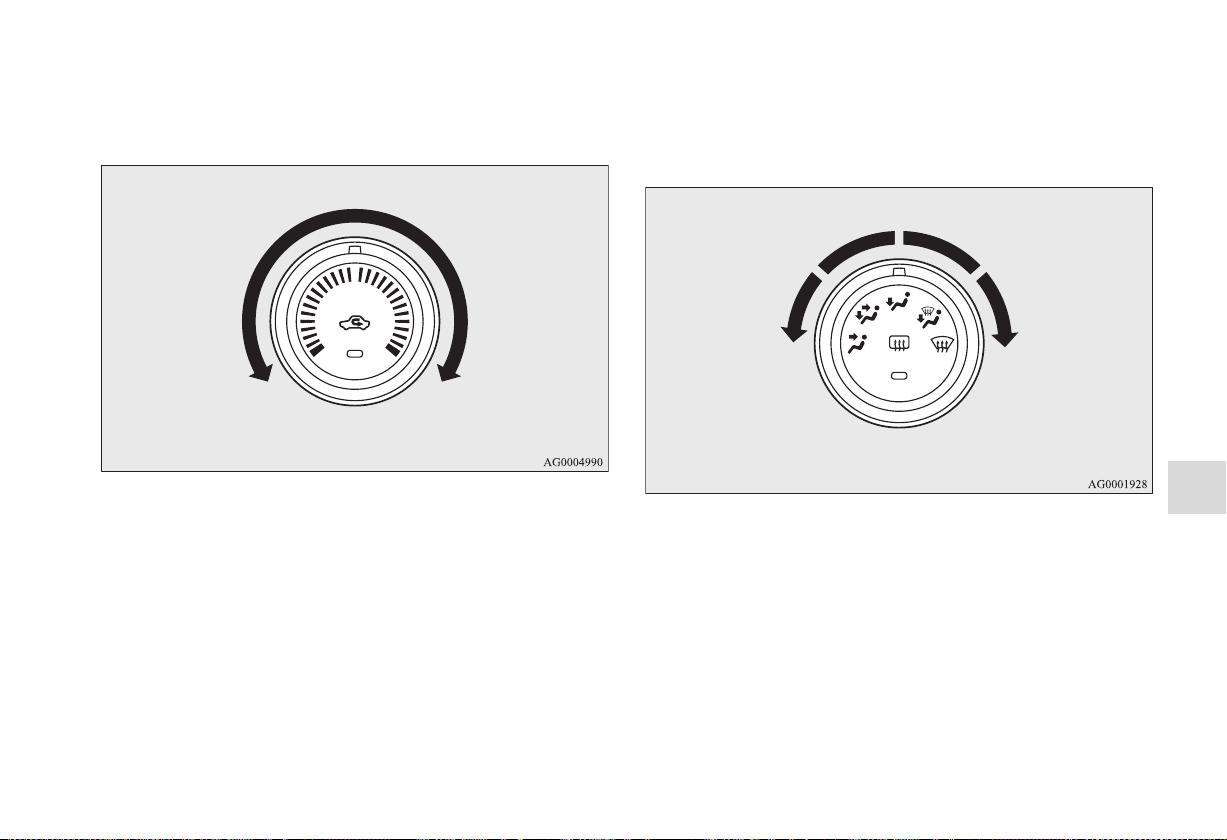
Comfort controls
5-23
5
Temperature control dial
N00736600176
Turn the temperature control dial clockwise to make the air
warmer. Turn it counterclockwise to make the air cooler.
N
OTE
● While the engine coolant temperature is low, the tempera-
ture of the air from the heater will be cool/cold until the
engine warms up, even if you have selected warm air with
the dial.
Mode selection dial
N00736700177
To change the amount of air flowing from the vents, turn the
mode selection dial. Refer to “Changing the mode selection”
on page 5-3.
BK0138600US.book 23 ページ 2011年7月17日 日曜日 午後2時32分
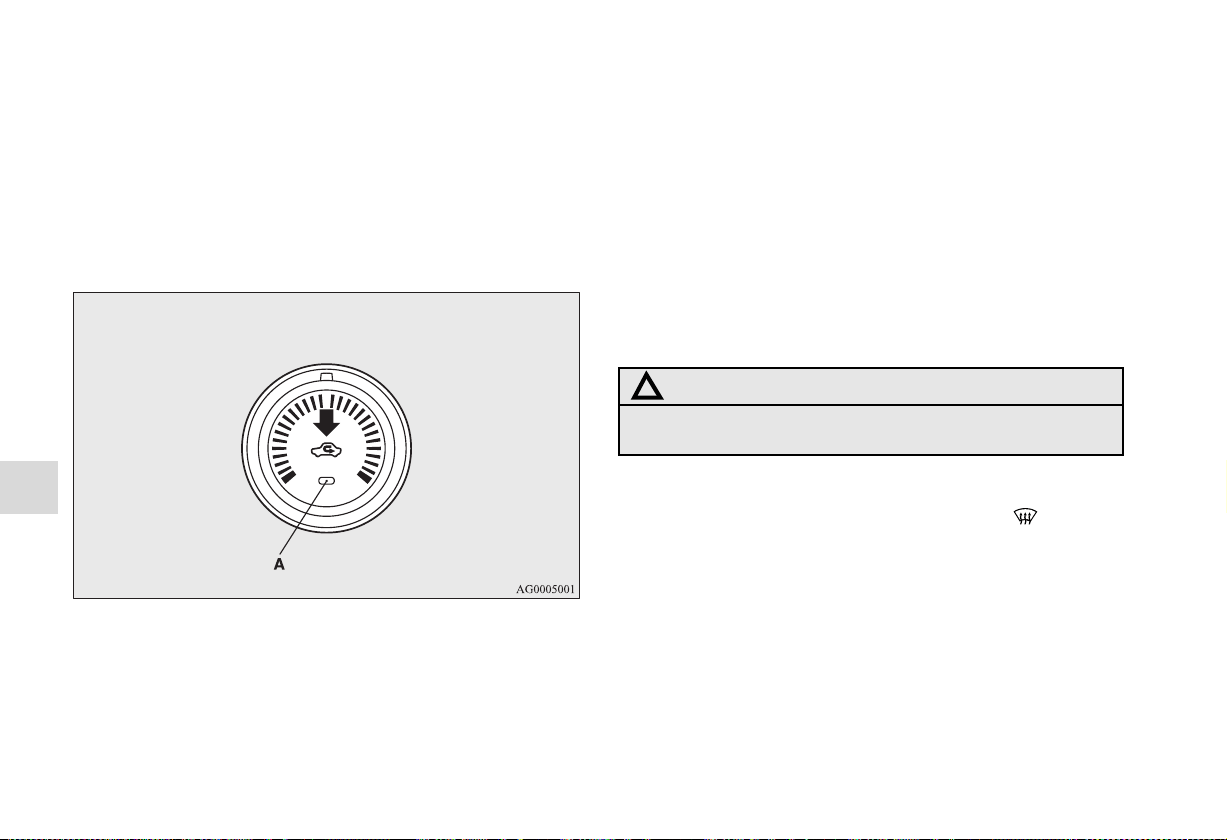
5-24
Comfort controls
5
Air selection switch
N00736800279
Normally, use the outside air position to keep the windshield
and side windows clear and to quickly remove fog or frost
from the windshield.
To change the air selection, simply press the air selection
switch. A sound will be made every time you push the switch.
● Outside air {Indicator light (A) OFF}
● Recirculated air {Indicator light (A) ON}
When the air conditioning turns on, the air selection is con-
trolled automatically.
The air selection indicator light (A) shows the selected posi-
tion.
N
OTE
● When the air conditioning operates with the air selection
switch (A) in the outside air position, the system automat-
ically determines whether to continue using outside air or
to perform recirculation.
If the outside temperature is high, the system selects recir-
culation to achieve rapid cooling and causes the air selec-
tion indicator in the switch to illuminate. Press the air
selection switch to return to outside air.
If the outside air is dusty or contaminated in some way, use the
recirculation position. Switch to the outside air position every
now and then to keep the windows from fogging up.
N
OTE
● While the mode selection dial is set to the “ ” position,
the air conditioning compressor will run automatically.
The outside air position will also be selected automati-
cally. (In this case, the air conditioning indicator will not
change.)
CAUTION
!
● Using recirculated air for a long time may cause the
windows to fog up.
BK0138600US.book 24 ページ 2011年7月17日 日曜日 午後2時32分
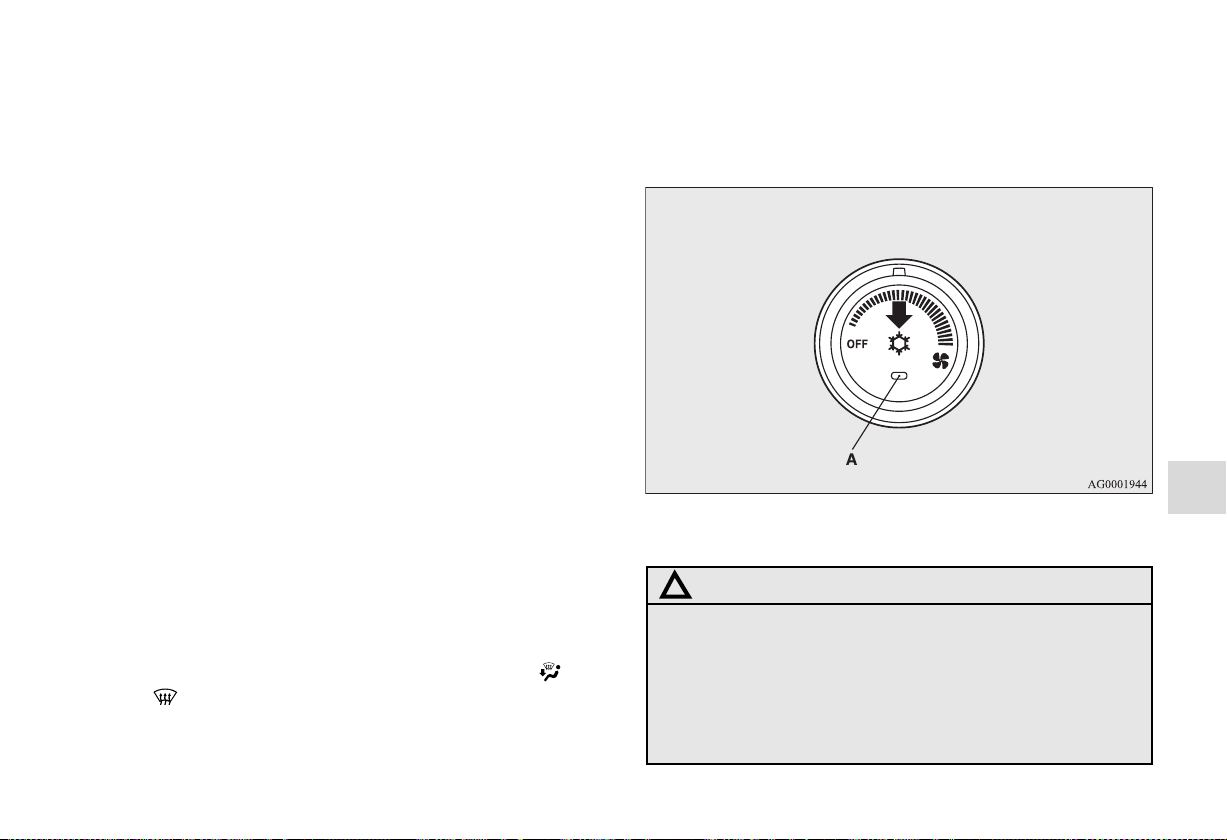
Comfort controls
5-25
5
Personalizing the air selection (Changing the function
setting)
N00702100028
You can change the following functions to match your prefer-
ence.
● Enable automatic air control:
When the air conditioning operates, the air selection
switch will be automatically controlled.
● Disable automatic air control:
Even when the air conditioning operates, the air selection
switch will not be automatically controlled.
● Changing the settings
Press the air selection switch for about 10 seconds or
longer.
When the setting has changed, the system will beep and
the indicator light will flash.
• When the setting has changed from enabled to disabled,
the system will beep three times and the indicator will
flash three times.
• When the setting has changed from disabled to enabled,
the system will beep two times and the indicator light
will flash three times.
N
OTE
● The factory setting is “Enable automatic air control”.
● While the mode selection dial is set between “ ” and
“ ” position, the air selection will automatically change
to the outside air position, even if the system is set to
“Disable automatic air control”, in order to prevent win-
dows from fogging up.
Air conditioning switch
N00731000436
Push the switch, and the air conditioning compressor will turn
on. The air conditioning indicator light (A) will come on.
A sound will be made every time you push the switch.
Push the switch again and the air conditioning compressor will
stop and the indicator light (A) goes off.
CAUTION
!
● When using the air conditioning, the idling speed
may slightly increase as the air conditioning com-
pressor is switched on/off automatically. Especially
for vehicles with a continuously variable transmis-
sion (CVT) or Twin Clutch SST, while the vehicle is
stationary, fully depress the brake pedal to prevent
the vehicle from creeping.
BK0138600US.book 25 ページ 2011年7月17日 日曜日 午後2時32分
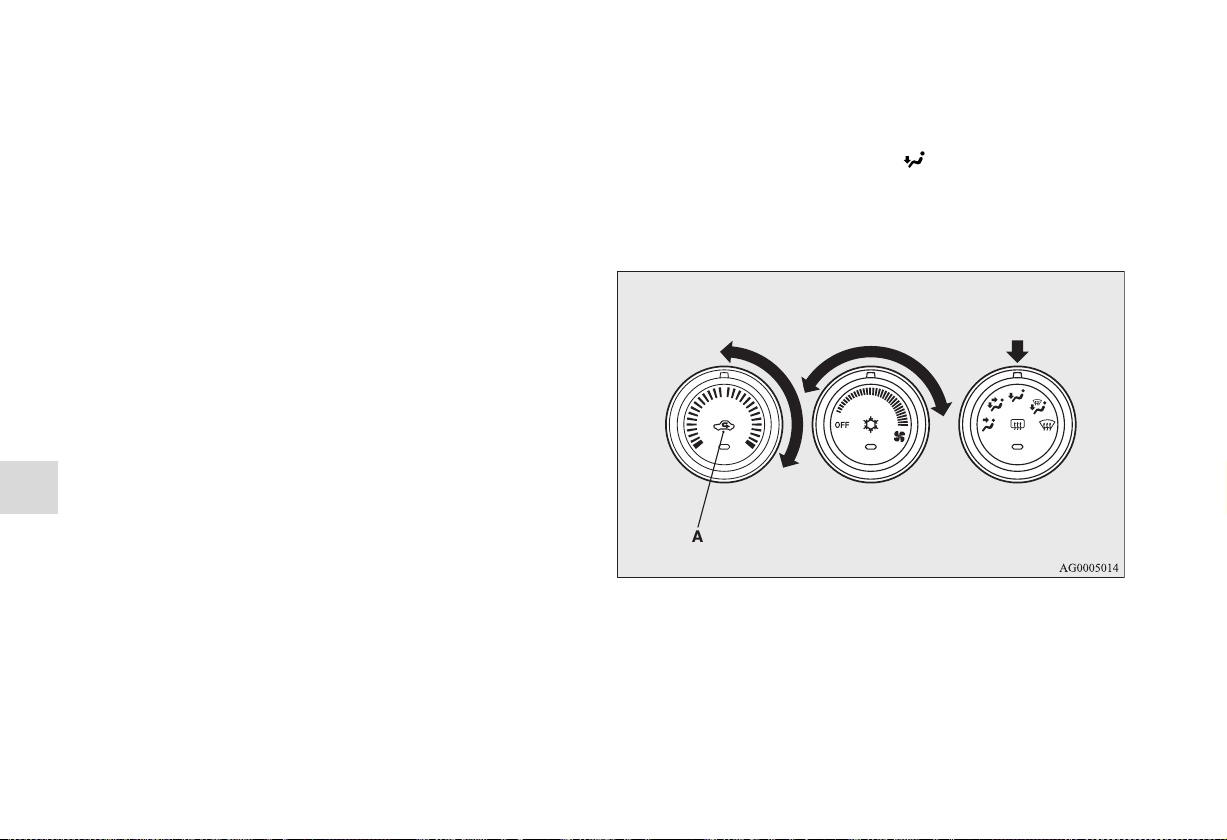
5-26
Comfort controls
5
N
OTE
● If a problem is detected in the air conditioning compres-
sor, the air conditioning indicator light (A) blinks. Press
the air conditioning switch once to turn it off, then once
more to turn it back on. If the air conditioning indicator
light (A) does not blink, there is no problem. If it does
blink, have it checked at an authorized Mitsubishi Motors
dealer or a repair facility of your choice.
● Sometimes, for example after using a high-pressure car
wash, the condenser can get wet, and the air conditioning
indicator light (A) blinks temporarily. Wait for a while,
press the air conditioning switch once to turn the system
off, then once more to turn it back on. Once the water
evaporates, the blinking will stop.
Operating the air conditioning system
N00731100219
Heating
Set the mode selection dial to the “ ” position and set the air
selection switch (A) to the outside air position.
Turn the temperature control dial clockwise or counterclock-
wise to the desired temperature. Select the best speed to fit
your needs.
BK0138600US.book 26 ページ 2011年7月17日 日曜日 午後2時32分
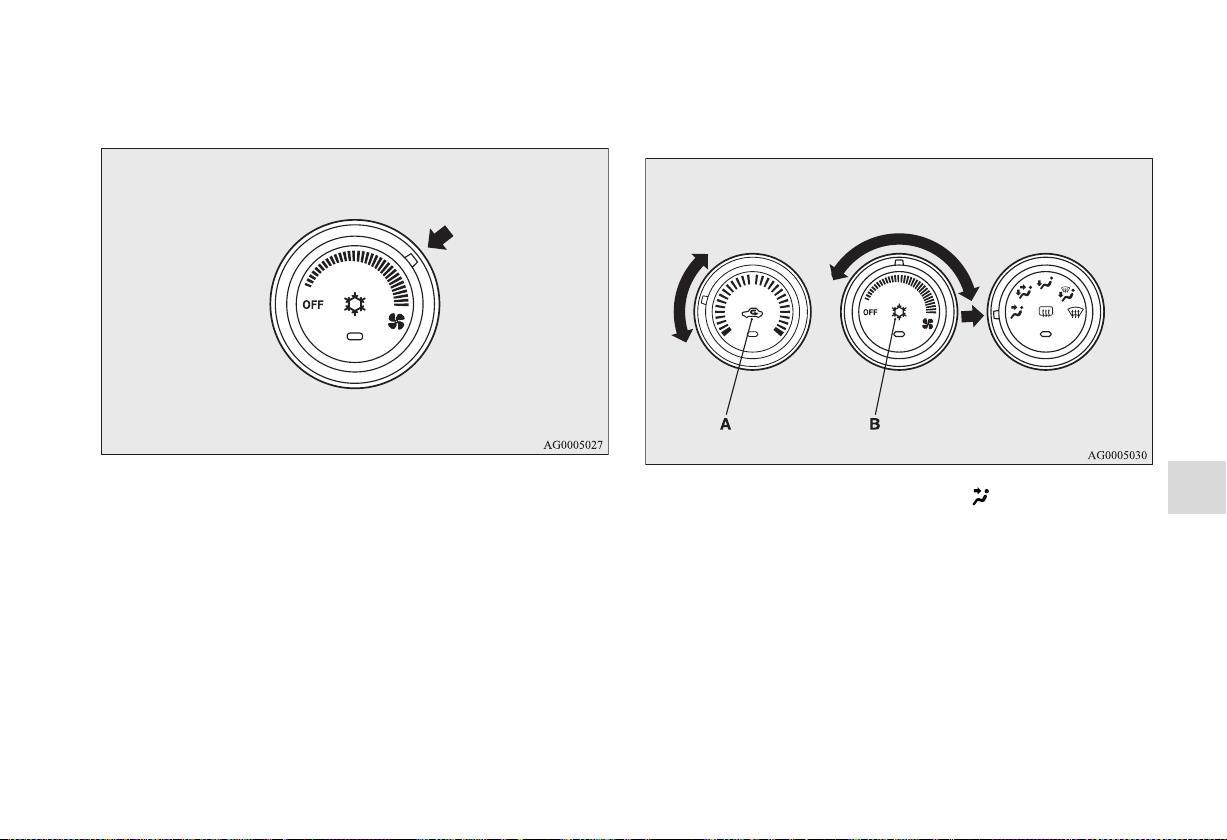
Comfort controls
5-27
5
N
OTE
● For quick heating, set the blower speed selection dial to
the position shown in the illustration.
Cooling
N00731200249
For ordinary cooling
1. Set the mode selection dial to the “ ” position.
2. Push the air selection switch (A) to set it to the outside air
position.
3. Push the air conditioning switch (B).
4. Change the temperature by turning the control dial clock-
wise or counterclockwise.
5. Set the desired blower speed.
BK0138600US.book 27 ページ 2011年7月17日 日曜日 午後2時32分
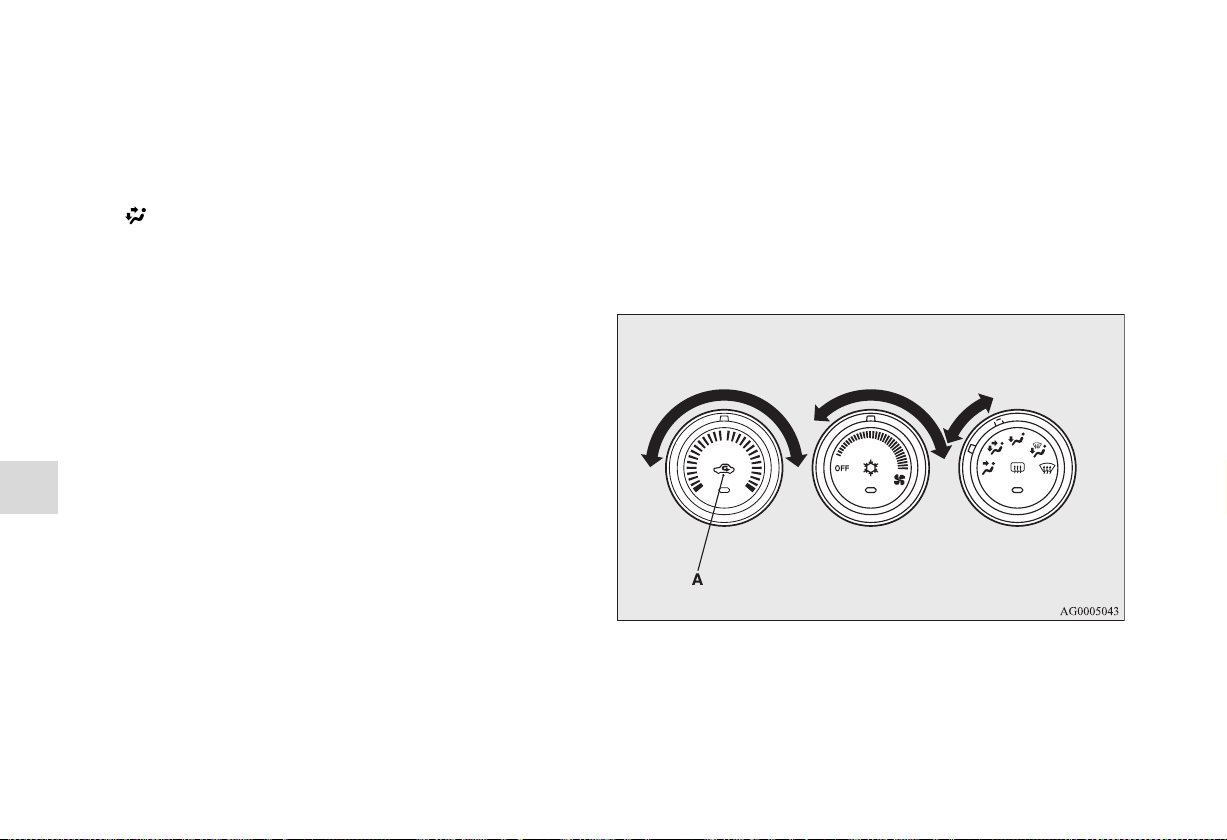
5-28
Comfort controls
5
N
OTE
● If the outside air is dusty or contaminated in some way,
push the air selection switch (A) to set it to the recircula-
tion position. Let in some outside air from time to time for
good ventilation.
● To cool the leg areas, set the mode selection dial to the
“ ” position.
Combination of unheated air and heated air
N00731300224
Set the mode selection dial to the positions shown in the illus-
tration and set the air selection switch (A) to the outside air
position.
The air flow will be directed to the leg area and the upper part
of the passenger compartment. Set the desired blower speed.
Warm air flows to the leg area and unheated or slightly warm
air (depending upon the position of the temperature control
dial) flows to the upper part of the passenger compartment.
BK0138600US.book 28 ページ 2011年7月17日 日曜日 午後2時32分
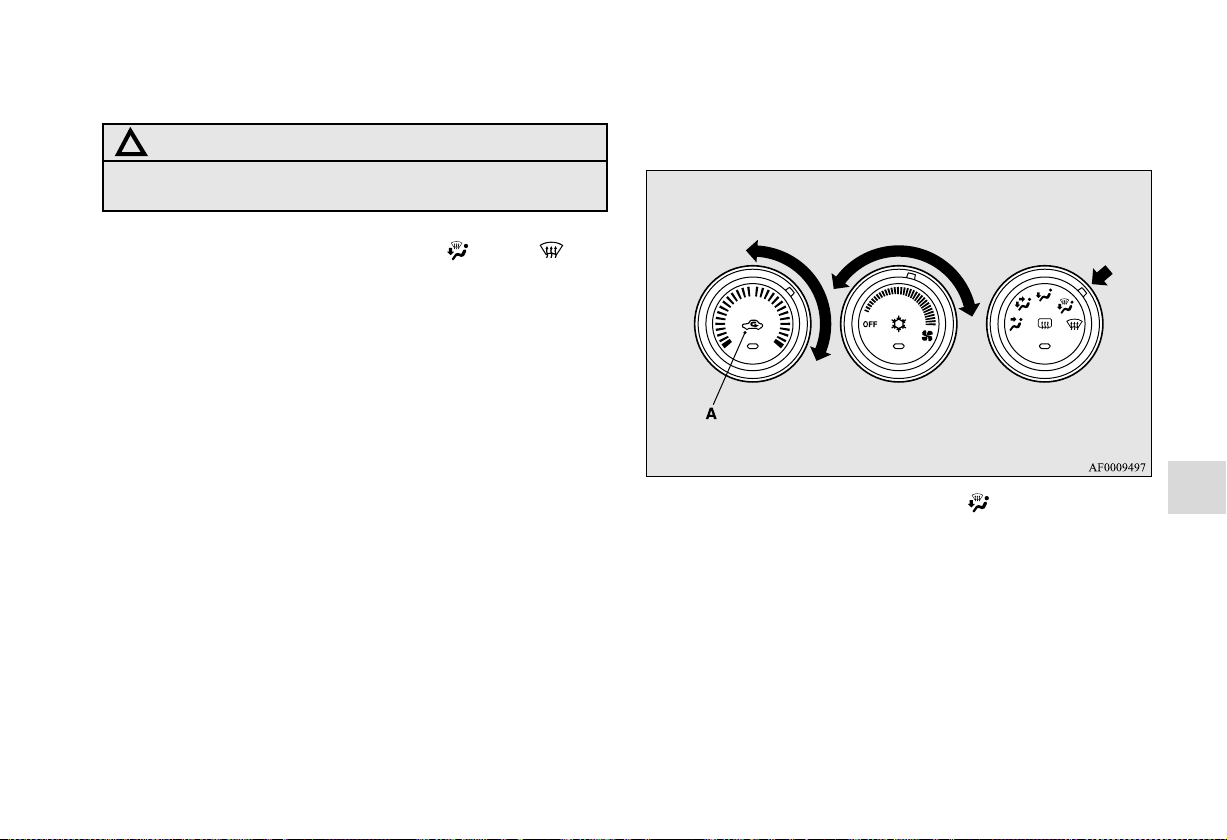
Comfort controls
5-29
5
Defrosting or defogging (windshield, door windows)
N00731400456
Set the mode selection dial (between “ ” and “ ”) to
remove frost or mist from the windshield and door window.
For ordinary defrosting
Use this setting to keep the windshield and door windows clear
of mist, and to keep the leg area heated (when driving in rain or
snow).
1. Set the mode selection dial to the “ ” position.
2. Set the air selection switch (A) to the outside air position.
3. Select your desired blower speed by turning the blower
speed selection dial.
4. Select your desired temperature by turning the tempera-
ture control dial.
CAUTION
!
● For safety, make sure you have a clear view through
all the windows.
BK0138600US.book 29 ページ 2011年7月17日 日曜日 午後2時32分
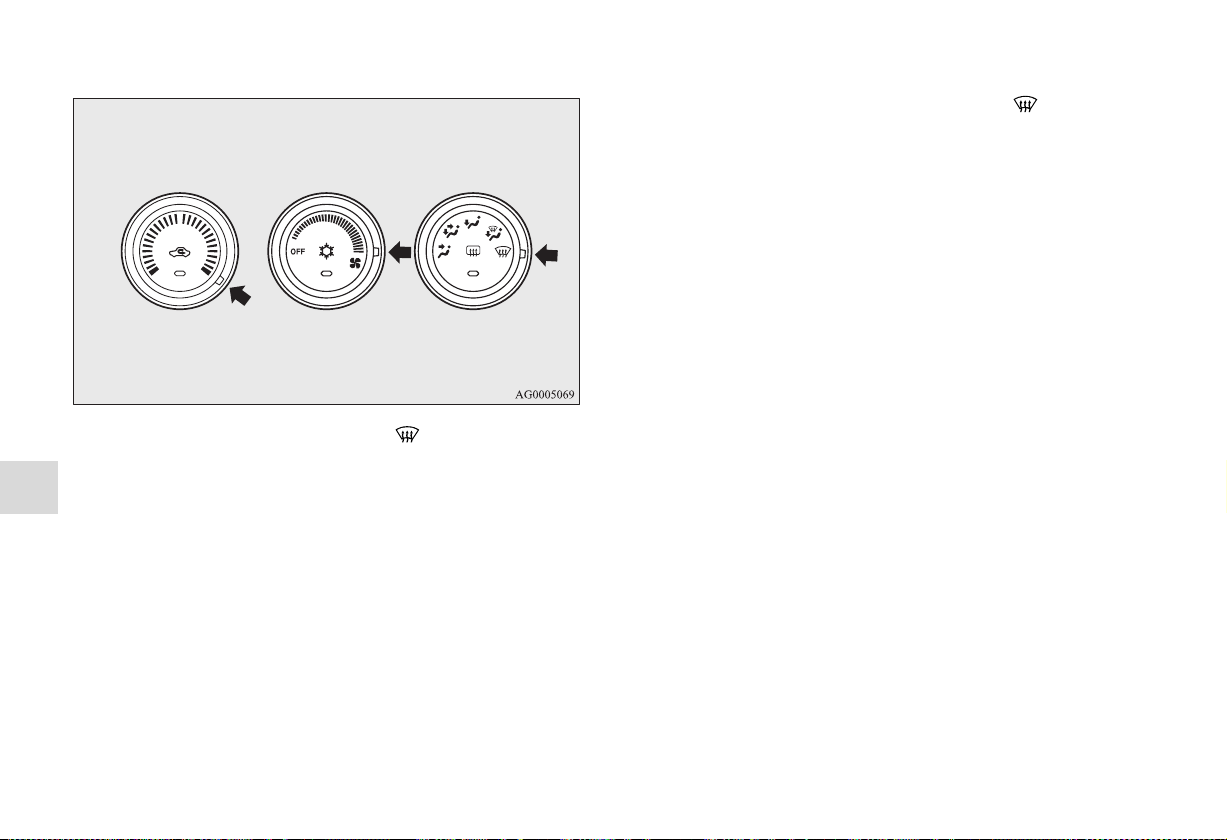
5-30
Comfort controls
5
For quick defrosting
1. Set the mode selection dial to the “ ” position.
2. Set your blower to the maximum speed.
3. Set the temperature to the highest position.
N
OTE
● While the mode selection dial is set to the “ ” position,
the air conditioning compressor will run automatically.
The outside air position will also be automatically
selected.
● To defog quickly, direct the air flow from the side vents
toward the door windows.
● When defrosting, do not set the temperature control dial
near the maximum cool position. This will blow cool air
on the window glass and fog it up.
BK0138600US.book 30 ページ 2011年7月17日 日曜日 午後2時32分

Comfort controls
5-31
5
Automatic air conditioning with Fahrenheit
scale
(if so equipped)
N00731500226
The air conditioning can only be used while the engine is run-
ning.
Control panel
N00711800395
N
OTE
● There is an interior air temperature sensor (A) in the illus-
trated position.
Never place anything over the sensor, since doing so will
prevent it from functioning properly.
1- Temperature control dial
2- Air selection switch
3- Blower speed selection dial
4- Air conditioning switch
5- Mode selection dial
6- Electric rear window defogger switch → P. 3-254
BK0138600US.book 31 ページ 2011年7月17日 日曜日 午後2時32分
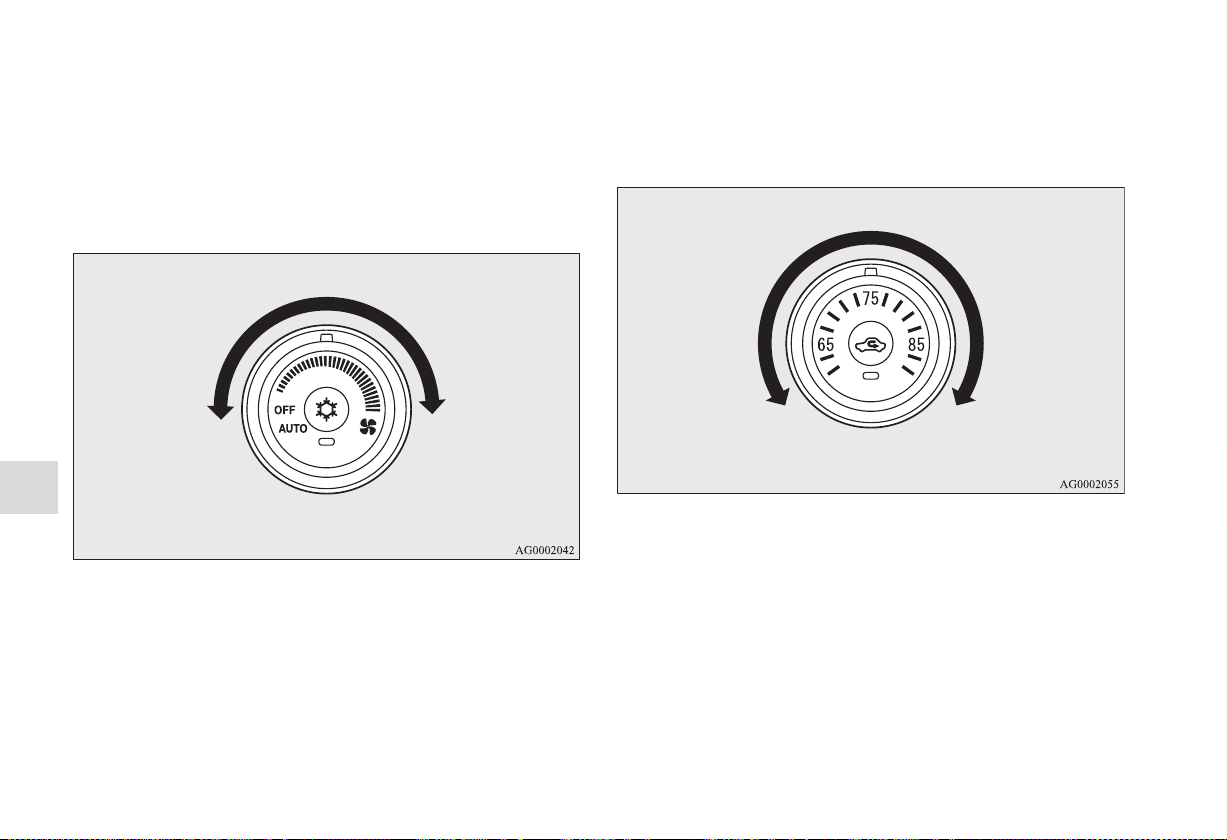
5-32
Comfort controls
5
Blower speed selection dial
N00736900094
When the ignition switch is in the “ON” position, select the
blower speed by turning the blower speed selection dial.
Turning the dial clockwise will increase the blower speed;
turning the dial counterclockwise will decrease it. When the
dial is set to the “OFF” position, all fan-driven airflow will
stop.
Temperature control dial
N00737000265
Use this dial to adjust the temperature in the passenger com-
partment. Turn the temperature control dial clockwise to make
the air warmer. Turn it counterclockwise to make the air cooler.
BK0138600US.book 32 ページ 2011年7月17日 日曜日 午後2時32分
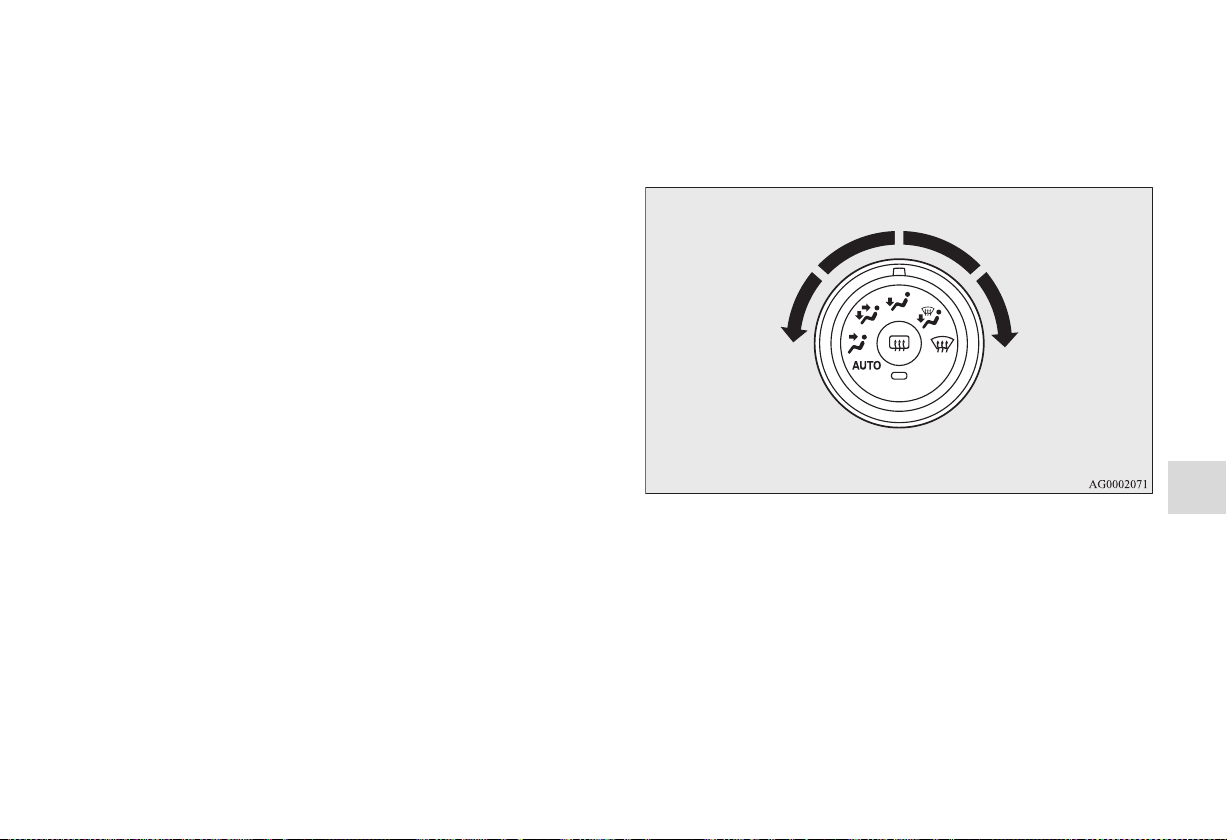
Comfort controls
5-33
5
N
OTE
● While the engine coolant temperature is low, the tempera-
ture of the air from the heater will be cool/cold until the
engine warms up, even if you have selected warm air with
the dial.
● When the temperature is set to the highest or the lowest
setting under the AUTO operation, the air selection and
the air conditioning will be automatically changed as fol-
lows.
Also, if the air selection is operated manually after an
automatic changeover, manual operation will be selected.
• Quick Heating (When the temperature is set to the high-
est setting)
Outside air will be introduced and the air conditioning
will stop.
• Quick Cooling (When the temperature is set to the low-
est setting)
Inside air will be recirculated and the air conditioning
will operate.
The above indicates the factory settings. You can personalize
the air selection switch and air conditioning switch to match
your personal preferences.
Contact your Mitsubishi Motors dealer or a repair facility of
your choice for assistance.
Refer to “Personalizing the air conditioning switch (Changing
the function setting)” on page 5-37.
Refer to “Personalizing the air selection (Changing the func-
tion setting)” on page 5-35.
Mode selection dial
N00737100093
To change the amount of air flowing from the vents, turn the
mode selection dial. Refer to “Changing the mode selection”
on page 5-3.
BK0138600US.book 33 ページ 2011年7月17日 日曜日 午後2時32分
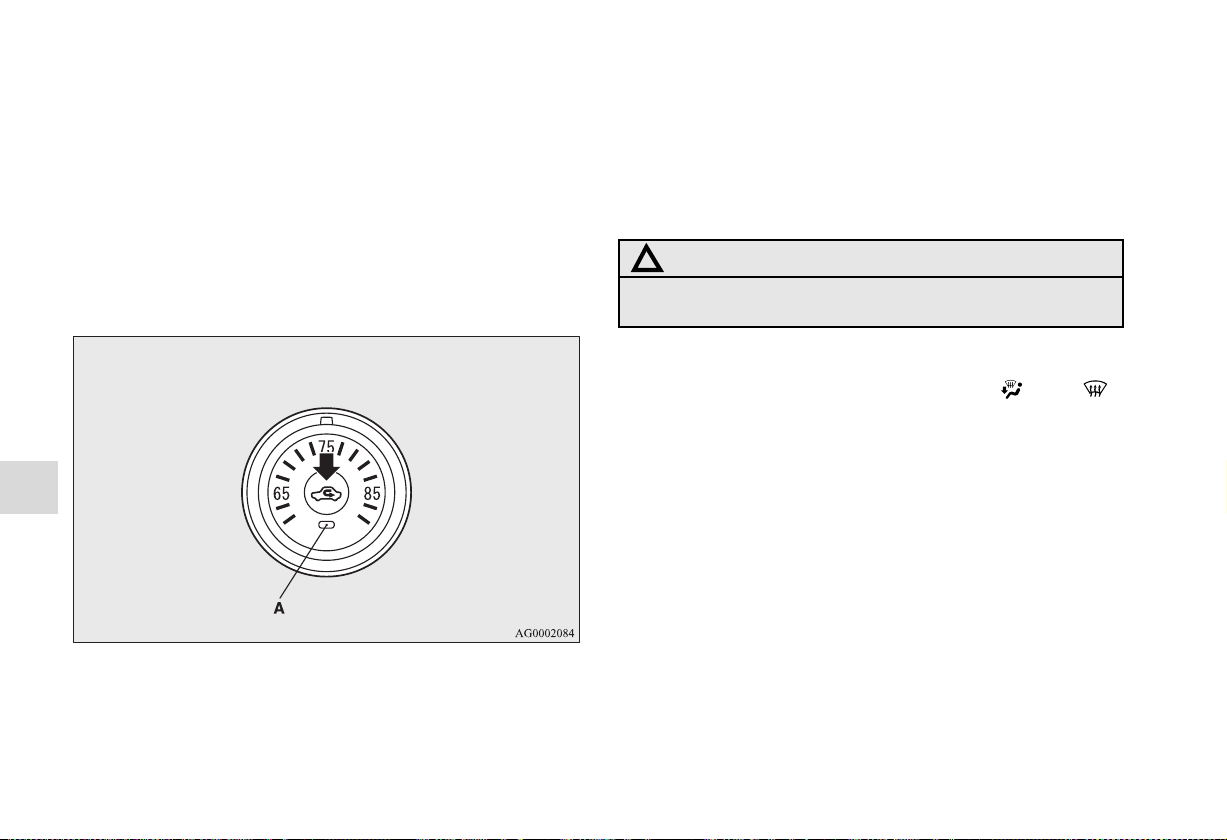
5-34
Comfort controls
5
Air selection switch
N00737200238
Normally, use the outside air position to keep the windshield
and side windows clear and to quickly remove fog or frost
from the windshield.
To change the air selection, simply press the air selection
switch. A sound will be made every time you press the switch.
● Outside air {Indicator light (A) OFF}
Outside air is introduced into the passenger compartment.
● Recirculated air {Indicator light (A) ON}
Air is recirculated inside the passenger compartment.
When the air conditioning turns on, the air selection is con-
trolled automatically. When the air conditioning turns off, the
air selection automatically goes back to the outside air position.
If high cooling performance is desired, or if the outside air is
dusty or contaminated in some way, use the recirculation posi-
tion. Switch to the outside air position every now and then to
keep the windows from fogging up.
N
OTE
● If the mode selection dial is set between “ ” and “ ”,
you cannot turn the air conditioning off or select the recir-
culation position.
This prevents the windows from fogging up.
● When the mode selection dial or the blower speed selec-
tion dial is set to the “AUTO” position again after manual
operation, the air selection switch will also be automati-
cally controlled.
CAUTION
!
● Using recirculated air for a long time may cause the
windows to fog up.
BK0138600US.book 34 ページ 2011年7月17日 日曜日 午後2時32分

Comfort controls
5-35
5
Personalizing the air selection (Changing the function
setting)
N00760000018
You can change the following functions to match your prefer-
ence.
● Enable automatic air control:
When the mode selection dial or the blower speed selec-
tion dial is set to the “AUTO” position, the air selection
switch will also be automatically controlled.
● Disable automatic air control:
Even when the mode selection dial or the blower speed
selection dial is set to the “AUTO” position, the air selec-
tion switch will not be automatically controlled.
● Changing the settings
Press the air selection switch for about 10 seconds or
longer.
When the setting has changed, the system will beep and
the indicator light will flash.
• When the setting has changed from enabled to disabled,
the system will beep three times and the indicator will
flash three times.
• When the setting has changed from disabled to enabled,
the system will beep two times and the indicator light
will flash three times.
N
OTE
● The factory setting is “Enable automatic air control”.
● While the mode selection dial is set between “ ” and
“ ” position, the air selection will automatically change
to the outside air position, even if the system is set to
“Disable automatic air control”, in order to prevent win-
dows from fogging up.
BK0138600US.book 35 ページ 2011年7月17日 日曜日 午後2時32分
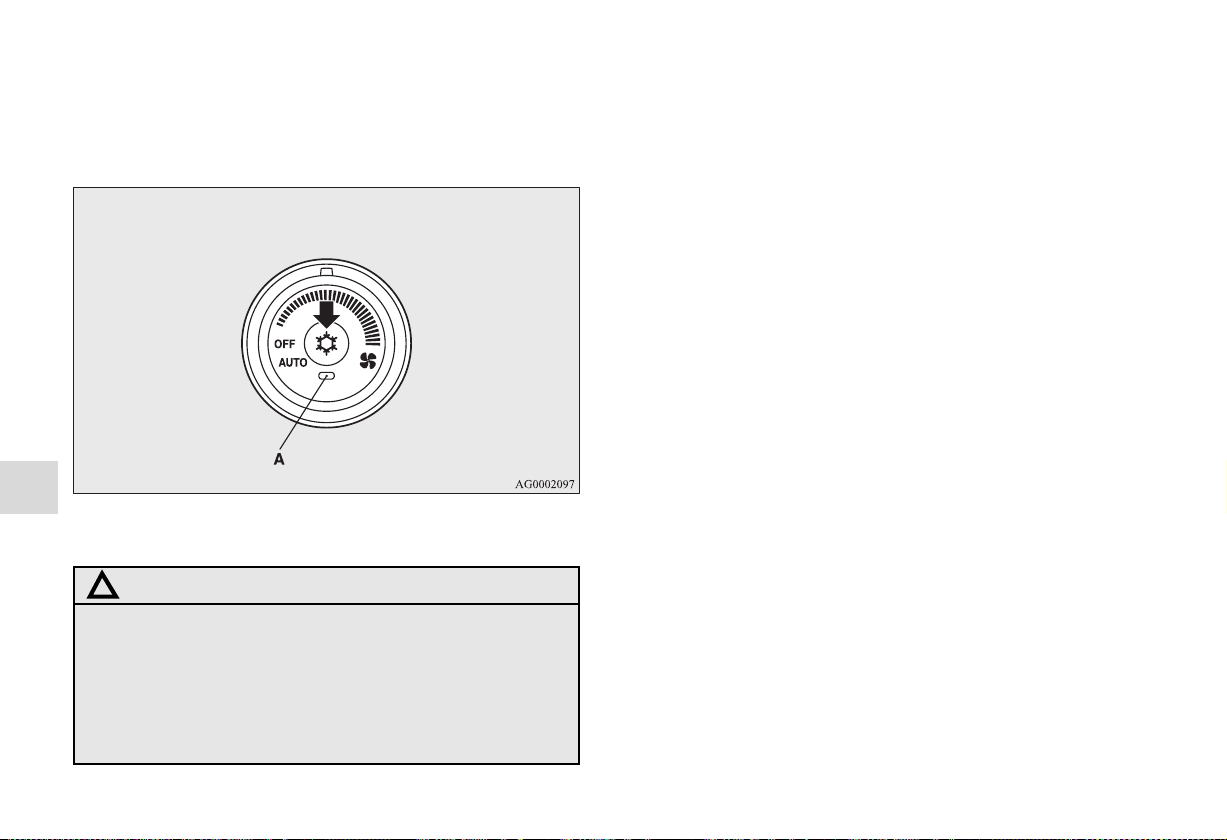
5-36
Comfort controls
5
Air conditioning switch
N00737300297
Push the switch, and the air conditioning compressor will turn
on. The air conditioning indicator light (A) will come on.
A sound will be made every time you push the switch.
Push the switch again and the air conditioning compressor will
stop and the indicator light (A) goes off.
N
OTE
● If a problem is detected in the air conditioning compres-
sor, the air conditioning indicator light (A) blinks. Press
the air conditioning switch once to turn it off, then once
more to turn it back on. If the air conditioning indicator
light does not blink there is no problem. If it does blink,
have it checked at an authorized Mitsubishi Motors dealer
or a repair facility of your choice.
● Sometimes, for example after using a high-pressure car
wash, the condenser can get wet, and the air conditioning
indicator light (A) blinks temporarily. Wait for a while,
press the air conditioning switch once to turn the system
off, then once more to turn it back on. Once the water
evaporates, the blinking will stop.
CAUTION
!
● When using the air conditioning, the idling speed
may slightly increase as the air conditioning com-
pressor is switched on/off automatically. Especially
for vehicles with a continuously variable transmis-
sion (CVT) or Twin Clutch SST, while the vehicle is
stationary, fully depress the brake pedal to prevent
the vehicle from creeping.
BK0138600US.book 36 ページ 2011年7月17日 日曜日 午後2時32分

Comfort controls
5-37
5
Personalizing the air conditioning switch (Changing
the function setting)
N00759800032
You can change the following functions to match your prefer-
ence.
● Enable automatic air conditioning control:
When the mode selection dial or blower speed selection
dial has been set to the “AUTO” position or when the tem-
perature control dial has been set to the minimum temper-
ature, the air conditioning switch is automatically
controlled.
● Disable automatic air conditioning control:
The air conditioning switch is not automatically con-
trolled, unless the air conditioning switch is used.
● Changing the settings:
Press the air conditioning switch for about 10 seconds or
longer.
When the setting has changed, the system will beep and
the indicator light will flash.
• When the setting has changed from enabled to disabled,
the system will beep three times and the indicator will
flash three times.
• When the setting has changed from disabled to enabled,
the system will beep two times and the indicator light
will flash three times.
N
OTE
● The factory setting is “Enable automatic air conditioning
control”.
● While the mode selection dial is set between “ ” and
“ ” position, the air conditioning will run automatically,
even if the system is set to “Disable automatic air condi-
tioning control”, in order to prevent windows from fog-
ging up.
BK0138600US.book 37 ページ 2011年7月17日 日曜日 午後2時32分
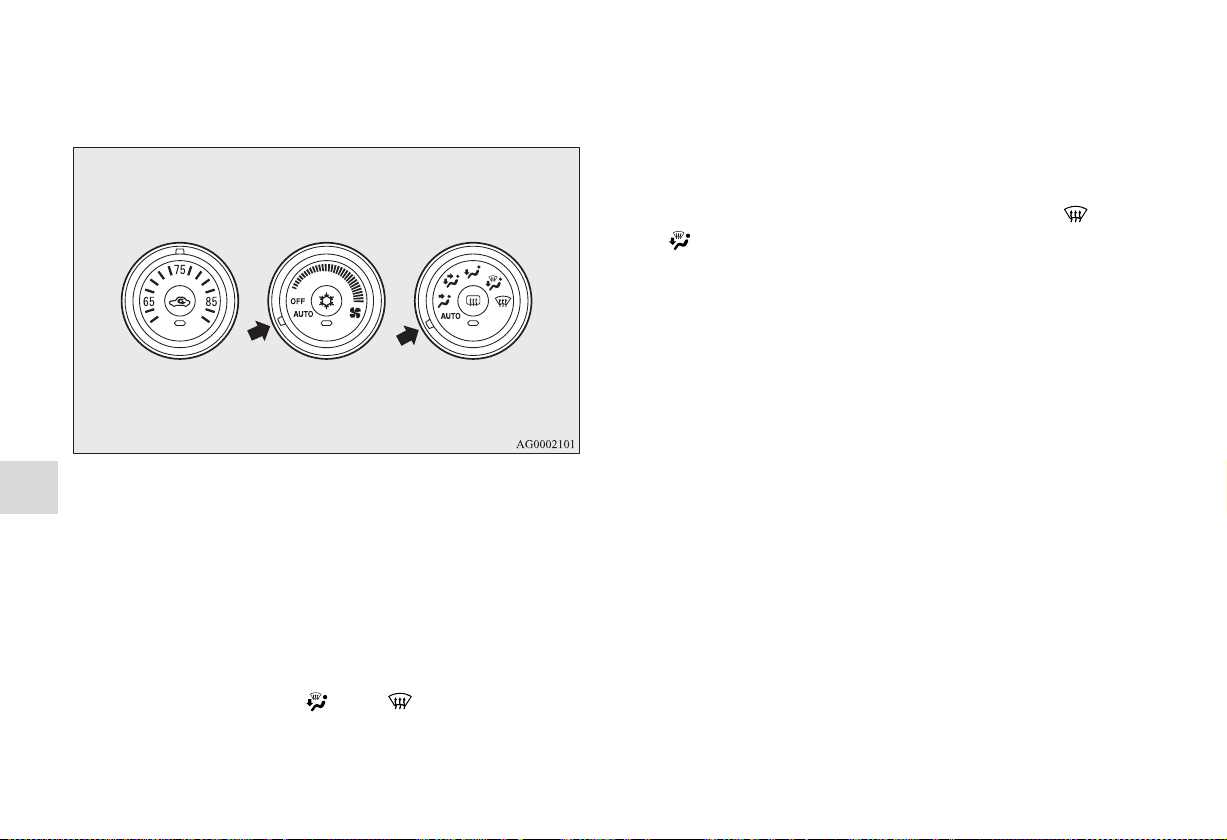
5-38
Comfort controls
5
Operating the air conditioning system (automatic
mode)
N00731700345
In normal conditions, use the system in the AUTO mode and
follow these procedures:
1. Set the blower speed selection dial to the “AUTO” posi-
tion.
2. Select the temperature control dial to the desired tempera-
ture. The temperature can be set within a range of around
61 to 89. The temperature will increase as the dial is
turned to the right.
3. Set the mode selection dial to the “AUTO” position.
The vents (except between “ ” and “ ”), recirculation/out-
side air, blower speed, and ON/OFF of air conditioning will be
controlled automatically.
N
OTE
● Set the temperature at about 75 under normal conditions.
● While the engine coolant temperature is low, the tempera-
ture of the air from the heater will be cool/cold until the
engine warms up, even if you have selected warm air with
the dial. To prevent the windshield and windows from
fogging up, the vent mode will be changed to “ ” or
“ ” and the blower speed will be reduced.
BK0138600US.book 38 ページ 2011年7月17日 日曜日 午後2時32分
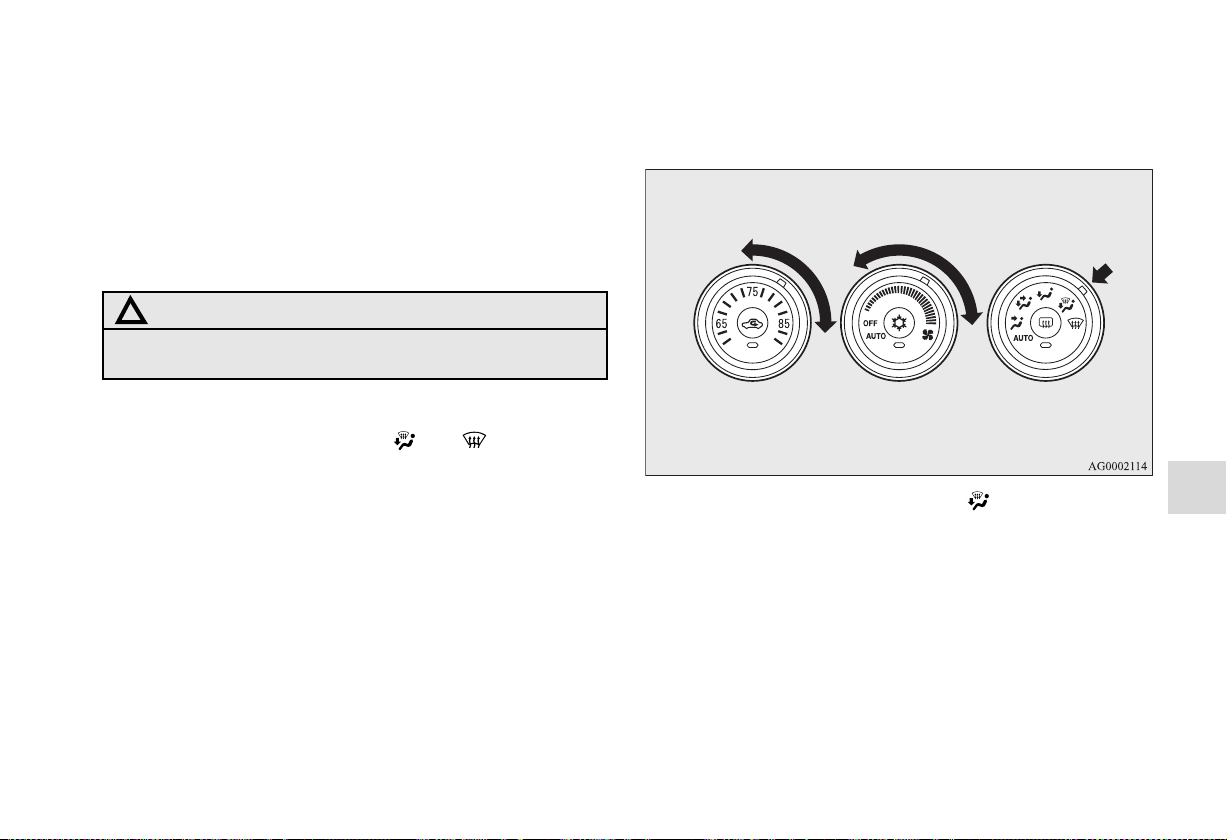
Comfort controls
5-39
5
Operating the air conditioning system (manual
mode)
N00731800072
Blower speed and vent mode may be controlled manually by
setting the blower speed selection dial and the mode selection
dial to the desired positions. To return to automatic operation,
set the dials to the “AUTO” position.
Defrosting or defogging (windshield, door windows)
N00732400280
To remove frost or mist from the windshield and door win-
dows, use the mode selection dial (“ ” or “ ”).
For ordinary defrosting
Use this setting to keep the windshield and door windows clear
of mist, and to keep the leg area heated (when driving in rain or
snow).
1. Set the mode selection dial to the “ ” position.
2. Select your desired blower speed by turning the blower
speed selection dial.
3. Select your desired temperature by turning the tempera-
ture control dial.
CAUTION
!
● For safety, make sure you have a clear view through
all the windows.
BK0138600US.book 39 ページ 2011年7月17日 日曜日 午後2時32分
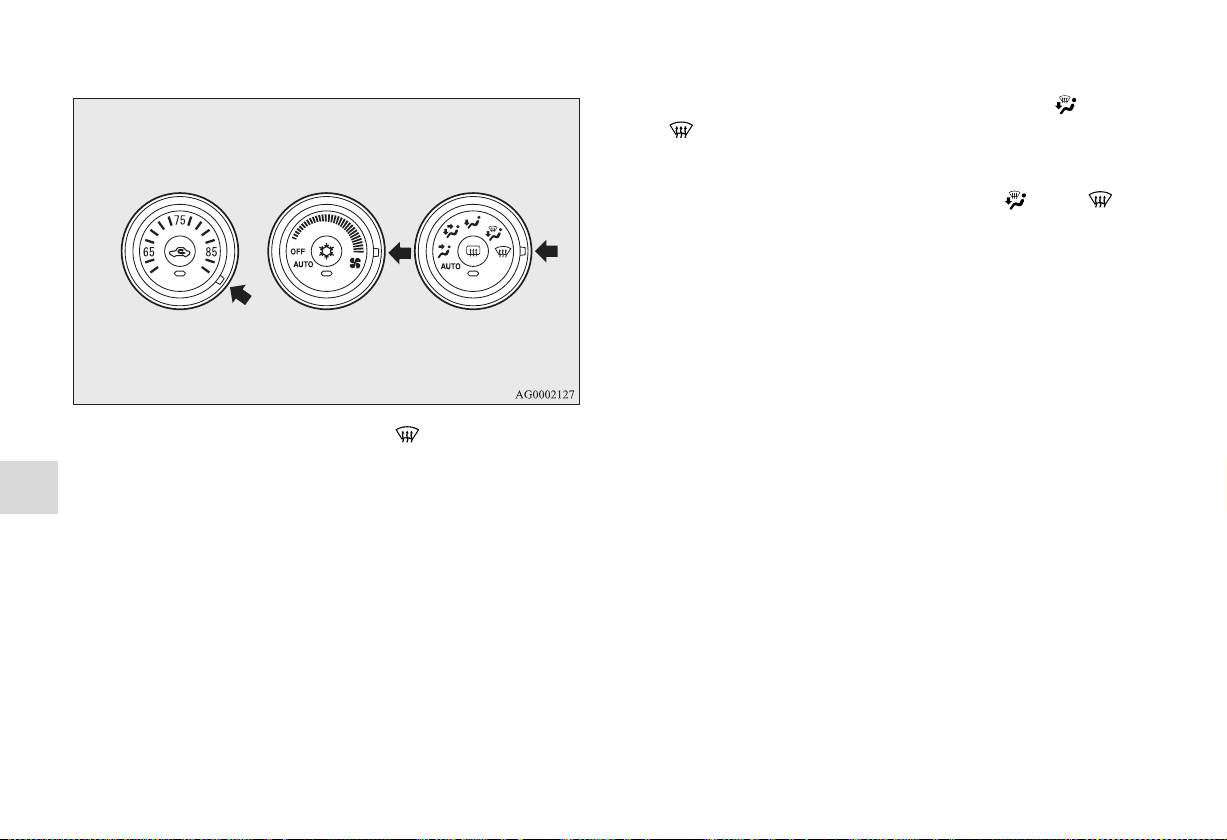
5-40
Comfort controls
5
For quick defrosting
1. Set the mode selection dial to the “ ” position.
2. Set your blower to the maximum speed.
3. Set the temperature to the highest position.
N
OTE
● While the mode selection dial is set between “ ” and
“ ” position, the air conditioning compressor will run
automatically. The outside air position will also be
selected automatically.
● If the mode selection dial is set between “ ” and “ ”
you cannot turn the air conditioning off or select the recir-
culation position. This prevents the windows from fog-
ging up.
● To defog quickly, direct the air flow from the side vents
toward the door windows.
● When defrosting, do not set the temperature control dial to
the maximum cool position. This will blow cool air on the
window glass and fog it up.
BK0138600US.book 40 ページ 2011年7月17日 日曜日 午後2時32分
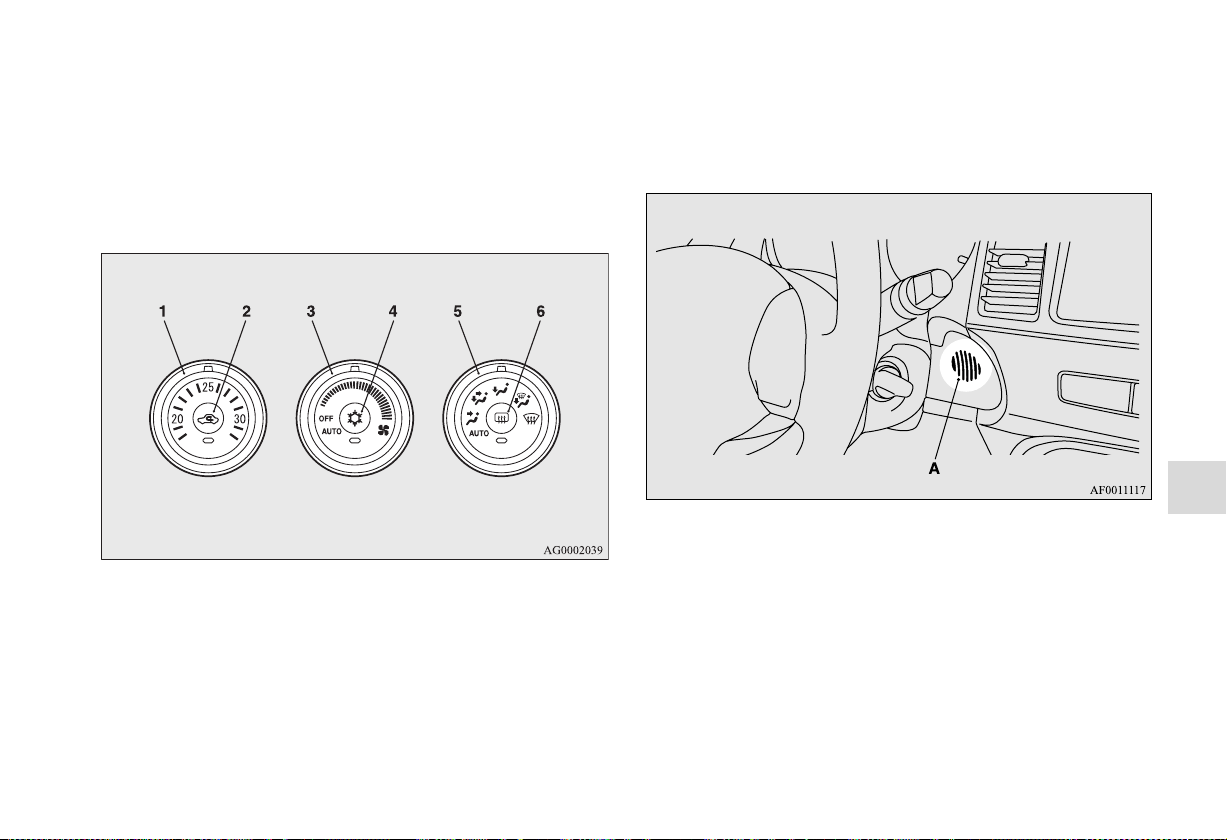
Comfort controls
5-41
5
Automatic air conditioning with Celsius
scale
(if so equipped)
N00731500239
The air conditioning can only be used while the engine is run-
ning.
Control panel
N00711800409
N
OTE
● There is an interior air temperature sensor (A) in the illus-
trated position.
Never place anything over the sensor, since doing so will
prevent it from functioning properly.
1- Temperature control dial
2- Air selection switch
3- Blower speed selection dial
4- Air conditioning switch
5- Mode selection dial
6- Electric rear window defogger switch → P. 3-254
BK0138600US.book 41 ページ 2011年7月17日 日曜日 午後2時32分
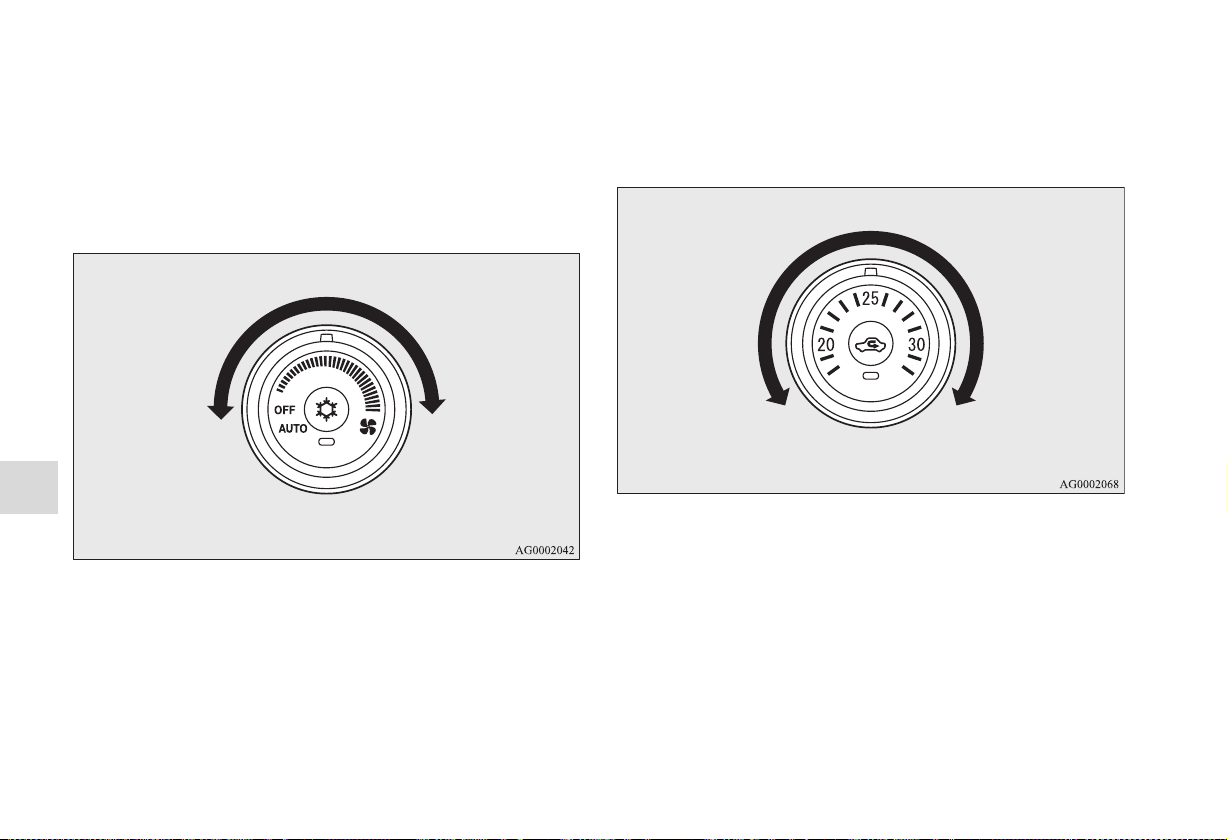
5-42
Comfort controls
5
Blower speed selection dial
N00736900111
When the ignition switch is in the “ON” position, select the
blower speed by turning the blower speed selection dial.
Turning the dial clockwise will increase the blower speed;
turning the dial counterclockwise will decrease it. When the
dial is set to the “OFF” position, all fan-driven airflow will
stop.
Temperature control dial
N00737000281
Use this dial to adjust the temperature in the passenger com-
partment. Turn the temperature control dial clockwise to make
the air warmer. Turn it counterclockwise to make the air cooler.
BK0138600US.book 42 ページ 2011年7月17日 日曜日 午後2時32分

Comfort controls
5-43
5
N
OTE
● While the engine coolant temperature is low, the tempera-
ture of the air from the heater will be cool/cold until the
engine warms up, even if you have selected warm air with
the dial.
● When the temperature is set to the highest or the lowest
setting under the AUTO operation, the air selection and
the air conditioning will be automatically changed as fol-
lows.
Also, if the air selection is operated manually after an
automatic changeover, manual operation will be selected.
• Quick Heating (When the temperature is set to the high-
est setting)
Outside air will be introduced and the air conditioning
will stop.
• Quick Cooling (When the temperature is set to the low-
est setting)
Inside air will be recirculated and the air conditioning
will operate.
The above indicates the factory settings. You can personalize
the air selection switch and air conditioning switch to match
your personal preferences.
Contact your Mitsubishi Motors dealer or a repair facility of
your choice for assistance.
Refer to “Personalizing the air conditioning switch (Changing
the function setting)” on page 5-47.
Refer to “Personalizing the air selection (Changing the func-
tion setting)” on page 5-45.
Mode selection dial
N00737100136
To change the amount of air flowing from the vents, turn the
mode selection dial. Refer to “Changing the mode selection”
on page 5-3.
BK0138600US.book 43 ページ 2011年7月17日 日曜日 午後2時32分
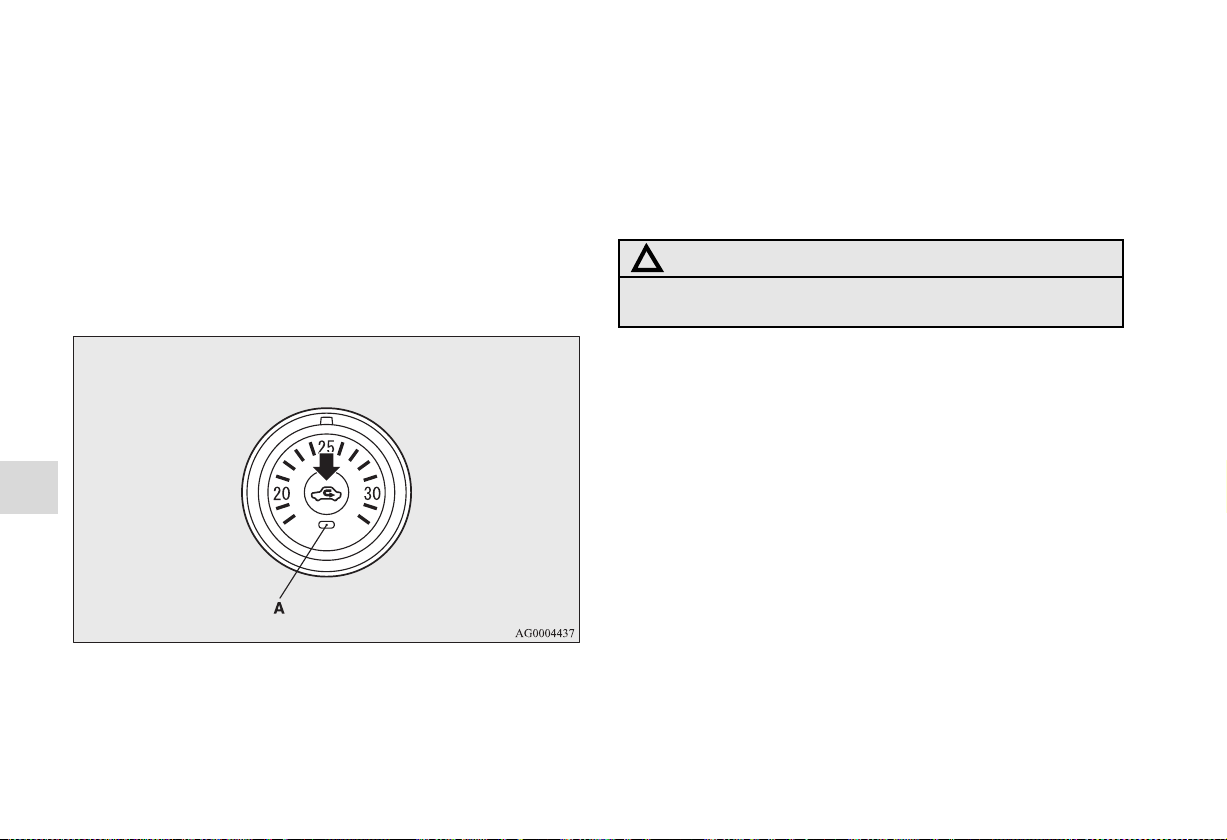
5-44
Comfort controls
5
Air selection switch
N00737200241
Normally, use the outside air position to keep the windshield
and side windows clear and to quickly remove fog or frost
from the windshield.
To change the air selection, simply press the air selection
switch. A sound will be made every time you press the switch.
● Outside air {Indicator light (A) OFF}
Outside air is introduced into the passenger compartment.
● Recirculated air {Indicator light (A) ON}
Air is recirculated inside the passenger compartment.
When the air conditioning turns on, the air selection is con-
trolled automatically. When the air conditioning turns off, the
air selection automatically goes back to the outside air position.
If high cooling performance is desired, or if the outside air is
dusty or contaminated in some way, use the recirculation posi-
tion. Switch to the outside air position every now and then to
keep the windows from fogging up.
CAUTION
!
● Using recirculated air for a long time may cause the
windows to fog up.
BK0138600US.book 44 ページ 2011年7月17日 日曜日 午後2時32分

Comfort controls
5-45
5
Personalizing the air selection (Changing the function
setting)
N00760000050
You can change the following functions to match your prefer-
ence.
● Enable automatic air control:
When the mode selection dial or the blower speed selec-
tion dial is set to the “AUTO” position, the air selection
switch will also be automatically controlled.
● Disable automatic air control:
Even when the mode selection dial or the blower speed
selection dial is set to the “AUTO” position, the air selec-
tion switch will not be automatically controlled.
● Changing the settings
Press the air selection switch for about 10 seconds or
longer.
When the setting has changed, the system will beep and
the indicator light will flash.
• When the setting has changed from enabled to disabled,
the system will beep three times and the indicator will
flash three times.
• When the setting has changed from disabled to enabled,
the system will beep two times and the indicator light
will flash three times.
N
OTE
● The factory setting is “Enable automatic air control”.
● While the mode selection dial is set to the “ ” position,
the air selection will automatically change to the outside
air position, even if the system is set to “Disable auto-
matic air control”, in order to prevent windows from fog-
ging up.
BK0138600US.book 45 ページ 2011年7月17日 日曜日 午後2時32分

5-46
Comfort controls
5
Air conditioning switch
N00737300301
Push the switch, and the air conditioning compressor will turn
on. The air conditioning indicator light (A) will come on.
A sound will be made every time you push the switch.
Push the switch again and the air conditioning compressor will
stop and the indicator light (A) goes off.
N
OTE
● If a problem is detected in the air conditioning compres-
sor, the air conditioning indicator light (A) blinks. Press
the air conditioning switch once to turn it off, then once
more to turn it back on. If the air conditioning indicator
light does not blink there is no problem. If it does blink,
have it checked at an authorized Mitsubishi Motors dealer
or a repair facility of your choice.
● Sometimes, for example after using a high-pressure car
wash, the condenser can get wet, and the air conditioning
indicator light (A) blinks temporarily. Wait for a while,
press the air conditioning switch once to turn the system
off, then once more to turn it back on. Once the water
evaporates, the blinking will stop.
CAUTION
!
● When using the air conditioning, the idling speed
may slightly increase as the air conditioning com-
pressor is switched on/off automatically. Especially
for vehicles with a continuously variable transmis-
sion (CVT) or Twin Clutch SST, while the vehicle is
stationary, fully depress the brake pedal to prevent
the vehicle from creeping.
BK0138600US.book 46 ページ 2011年7月17日 日曜日 午後2時32分

Comfort controls
5-47
5
Personalizing the air conditioning switch (Changing
the function setting)
N00759800029
You can change the following functions to match your prefer-
ence.
● Enable automatic air conditioning control:
When the mode selection dial or blower speed selection
dial has been set to the “AUTO” position or when the tem-
perature control dial has been set to the minimum temper-
ature, the air conditioning switch is automatically
controlled.
● Disable automatic air conditioning control:
The air conditioning switch is not automatically con-
trolled, unless the air conditioning switch is used.
● Changing the settings
Press the air conditioning switch for about 10 seconds or
longer.
When the setting has changed, the system will beep and
the indicator light will flash.
• When the setting has changed from enabled to disabled,
the system will beep three times and the indicator will
flash three times.
• When the setting has changed from disabled to enabled,
the system will beep two times and the indicator light
will flash three times.
N
OTE
● The factory setting is “Enable automatic air conditioning
control”.
● While the mode selection dial is set to the “ ” position,
the air conditioning will run automatically, even if the sys-
tem is set to “Disable automatic air conditioning control”,
in order to prevent windows from fogging up.
BK0138600US.book 47 ページ 2011年7月17日 日曜日 午後2時32分

5-48
Comfort controls
5
Operating the air conditioning system (automatic
mode)
N00731700286
In normal conditions, use the system in the AUTO mode and
follow these procedures:
1. Set the blower speed selection dial to the “AUTO” posi-
tion.
2. Select the temperature control dial to the desired tempera-
ture. The temperature can be set within a range of around
18 to 32. The temperature will increase as the dial is
turned to the right.
3. Set the mode selection dial to the “AUTO” position.
The vents (except “ ”), recirculation/outside air, blower
speed, and ON/OFF of air conditioning will be controlled auto-
matically.
N
OTE
● Set the temperature at about 25 under normal conditions.
● While the engine coolant temperature is low, the tempera-
ture of the air from the heater will be cool/cold until the
engine warms up, even if you have selected warm air with
the dial. To prevent the windshield and windows from
fogging up, the vent mode will be changed to “ ” or
“ ” and the blower speed will be reduced.
BK0138600US.book 48 ページ 2011年7月17日 日曜日 午後2時32分
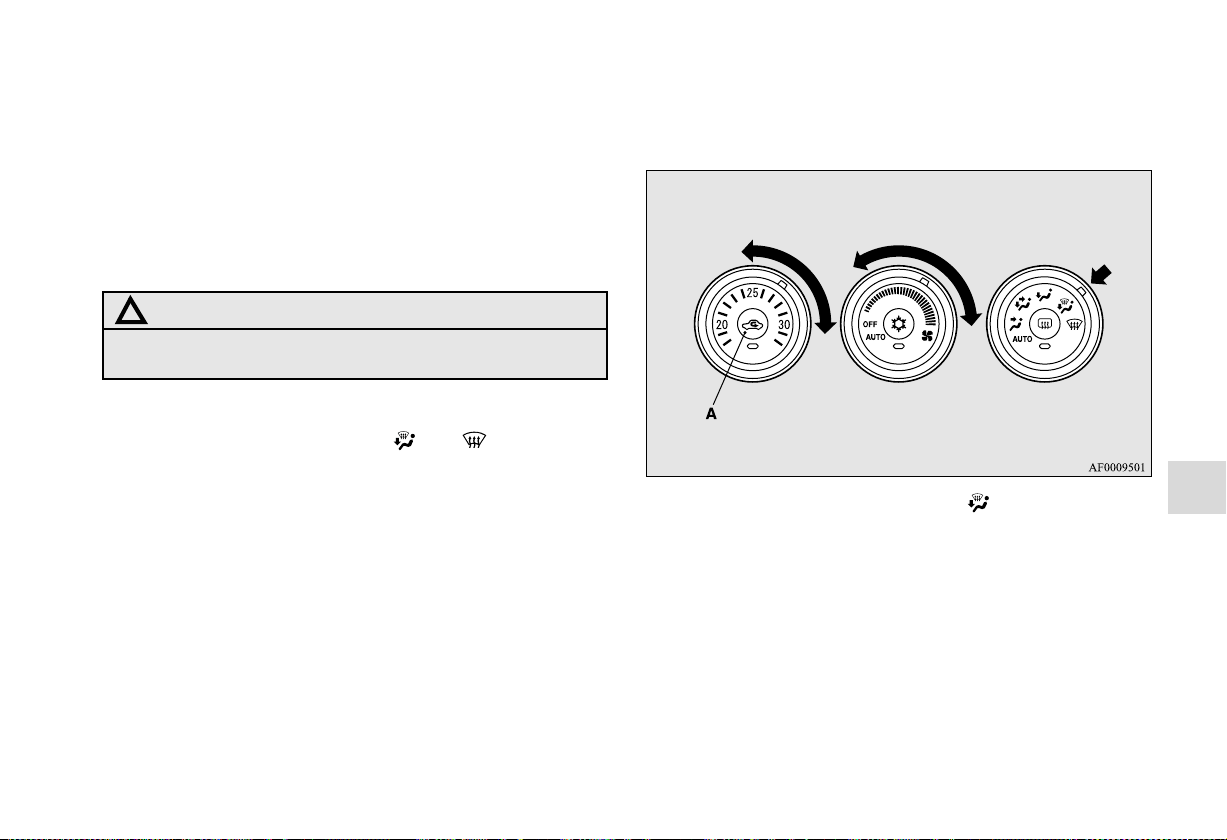
Comfort controls
5-49
5
Operating the air conditioning system (manual
mode)
N00731800098
Blower speed and vent mode may be controlled manually by
setting the blower speed selection dial and the mode selection
dial to the desired positions. To return to automatic operation,
set the dials to the “AUTO” position.
Defrosting or defogging (windshield, door windows)
N00732400440
To remove frost or mist from the windshield and door win-
dows, use the mode selection dial (“ ” or “ ”).
For ordinary defrosting
Use this setting to keep the windshield and door windows clear
of mist, and to keep the leg area heated (when driving in rain or
snow).
1. Set the mode selection dial to the “ ” position.
2. Set the air selection switch (A) to the outside air position.
3. Select your desired blower speed by turning the blower
speed selection dial.
4. Select your desired temperature by turning the tempera-
ture control dial.
CAUTION
!
● For safety, make sure you have a clear view through
all the windows.
BK0138600US.book 49 ページ 2011年7月17日 日曜日 午後2時32分
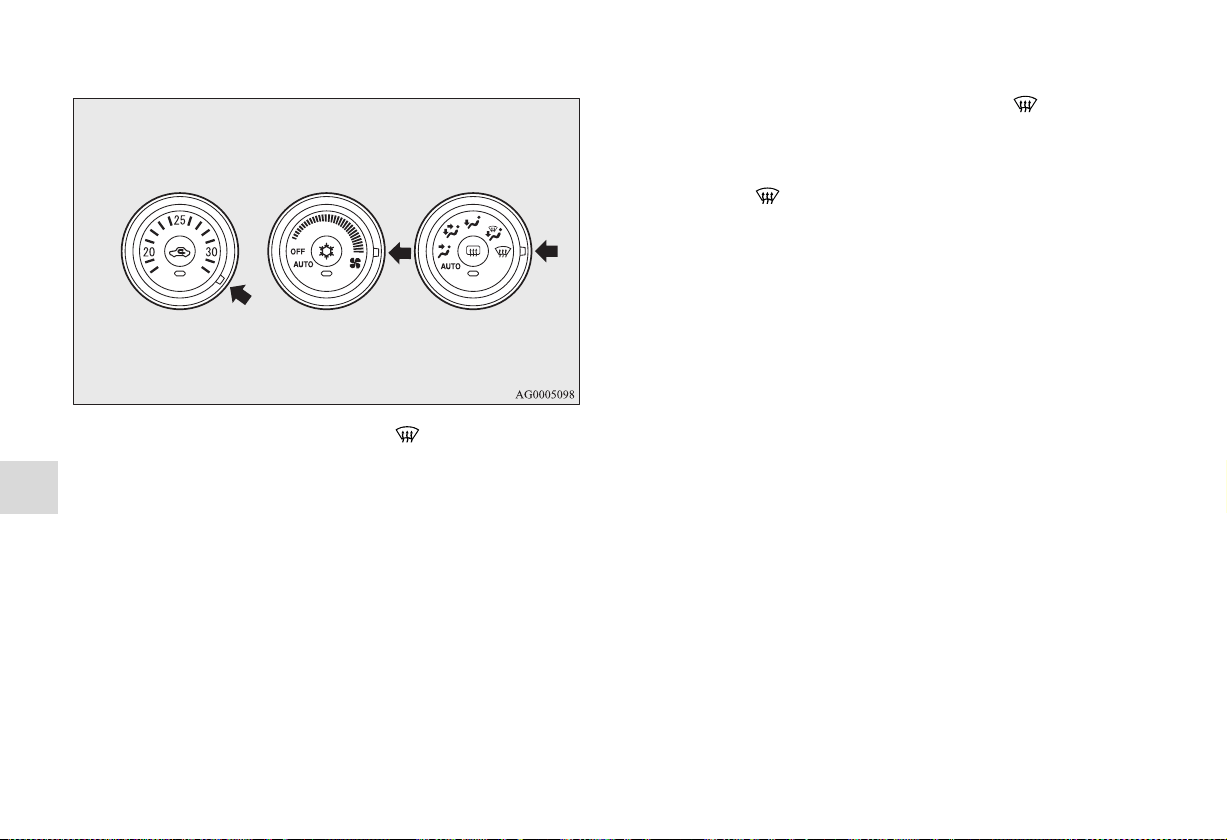
5-50
Comfort controls
5
For quick defrosting
1. Set the mode selection dial to the “ ” position.
2. Set your blower to the maximum speed.
3. Set the temperature to the highest position.
N
OTE
● While the mode selection dial is set to the “ ” position,
the air conditioning compressor will run automatically.
The outside air position will also be selected automati-
cally.
● While the “ ” position is selected, you cannot turn the
air conditioning off or select the recirculation position.
This prevents the windows from fogging up.
● To defog quickly, direct the air flow from the side vents
toward the door windows.
● When defrosting, do not set the temperature control dial to
the maximum cool position. This will blow cool air on the
window glass and fog it up.
BK0138600US.book 50 ページ 2011年7月17日 日曜日 午後2時32分

Comfort controls
5-51
5
Important air conditioning operating tips
N00733700280
1. Park the vehicle in the shade whenever possible. Parking
in the hot sun makes the vehicle interior extremely hot
which then requires more time to cool. If it is necessary to
park in the sun, open the windows for the first few min-
utes of air conditioning to expel the hot air.
2. Afterwards, keep the windows closed when the air condi-
tioning is in use. The entry of outside air through open
windows will reduce cooling efficiency.
3. When running the air conditioning, make sure the air
intake, which is located in front of the windshield, is free
of obstructions such as leaves. Leaves collected in the air-
intake chamber may reduce air flow and plug the water
drains.
Air conditioning system refrigerant and lubri-
cant recommendations
If the air conditioning seems less effective than usual, the cause
might be a refrigerant leak.
Have the system inspected by your authorized Mitsubishi
Motors dealer or a repair facility of your choice.
During a long period of disuse
The air conditioning should be operated for at least five min-
utes each week, even in cold weather. This includes the quick
defrosting mode. Operating the air condition system weekly
maintains lubrication of the compressor internal parts to keep
the air conditioning in the best operating condition.
CAUTION
!
● The air conditioning system in your vehicle must be
charged with the refrigerant HFC-134a and the
lubricant SUN-PAG56.
Use of any other refrigerant or lubricant will cause
severe damage and may require replacing your vehi-
cle’s entire air conditioning system.
The release of refrigerant into the atmosphere is not
recommended.
The new refrigerant HFC-134a in your vehicle is
designed not to harm the earth’s ozone layer. How-
ever, it may contribute slightly to global warming.
It is recommended that the old refrigerant be saved
and recycled for future use.
BK0138600US.book 51 ページ 2011年7月17日 日曜日 午後2時32分

5-52
Comfort controls
5
Air purifier
N00733800151
The air conditioning system is equipped with an air filter to
remove pollen and dust.
The air filter’s ability to collect pollen and dirt is reduced as it
becomes dirty, so replace it periodically. For the maintenance
interval, refer to the “WARRANTY AND MAINTENANCE
MANUAL”.
N
OTE
● Operation in certain conditions such as driving on a dusty
road and frequent use of the air conditioning can lead to
reduction of service life of the filter. When you feel that
the air flow is lower than normal or when the windshield
or windows start to fog up easily, replace the air filter.
Contact your Mitsubishi Motors dealer or a repair facility
of your choice for assistance.
AM/FM electronically tuned radio with CD
player (RBDS and MP3 compatible)
(if so
equipped)
N00734300919
The audio system can only be used when the ignition switch is
in the “ON” or “ACC” position.
N
OTE
● To listen to the audio system while the engine is not run-
ning, turn the ignition switch to the “ACC” position.
If the ignition switch is left in the “ACC” position, the
accessory power will automatically turn off after a certain
period of time and you will no longer be able to use the
audio system. The accessory power comes on again if the
ignition switch is turned from the “ACC” position. Refer
to “ACC power auto-cutout function” on page 3-86.
● If a cellular phone is used inside the vehicle, it may create
noise in the audio equipment. This does not mean that
anything is wrong with your audio equipment. In such a
case, use the cellular phone at a place as far as possible
from the audio equipment.
● If foreign objects or water get into the audio equipment, or
if smoke or a strange odor comes from it, immediately
turn off the audio system and have it checked at an autho-
rized Mitsubishi Motors dealer or a repair facility of your
choice. Never try to repair it yourself. Avoid using the
audio system until it is inspected by a qualified person.
● If the audio system is damaged by foreign objects, water,
or fire, have the system checked by a qualified Mitsubishi
Motors technician.
BK0138600US.book 52 ページ 2011年7月17日 日曜日 午後2時32分

Comfort controls
5-53
5
SIRIUS
™
Satellite Radio (if so equipped)
N00760100080
Satellite radio uses direct satellite to receiver broadcasting
technology to provide clear digital sound, coast to coast. The
subscription service provider is SIRIUS Satellite Radio. This
service offers over 100 channels of music, sports, news, enter-
tainment, and programming for listeners, directly from its sat-
ellites and broadcasting studios.
System activation
To activate your SIRIUS Satellite Radio service, call the toll-
free number 888-539-SIRIUS (7474), or visit the Sirius web
site at www.sirius.com. Please have the following information
available when activating your system:
1. The Sirius Identification Number (SIRIUS ID). Refer to
the section “SIRIUS ID indication” on page 5-65.
2. Credit card information.
3. Your Vehicle Identification Number. Refer to “Vehicle
identification number plate” on page 9-2.
“SIRIUS,” the SIRIUS dog logo and channel names and logos
are trademarks of SIRIUS Satellite Radio, Inc.
BK0138600US.book 53 ページ 2011年7月17日 日曜日 午後2時32分
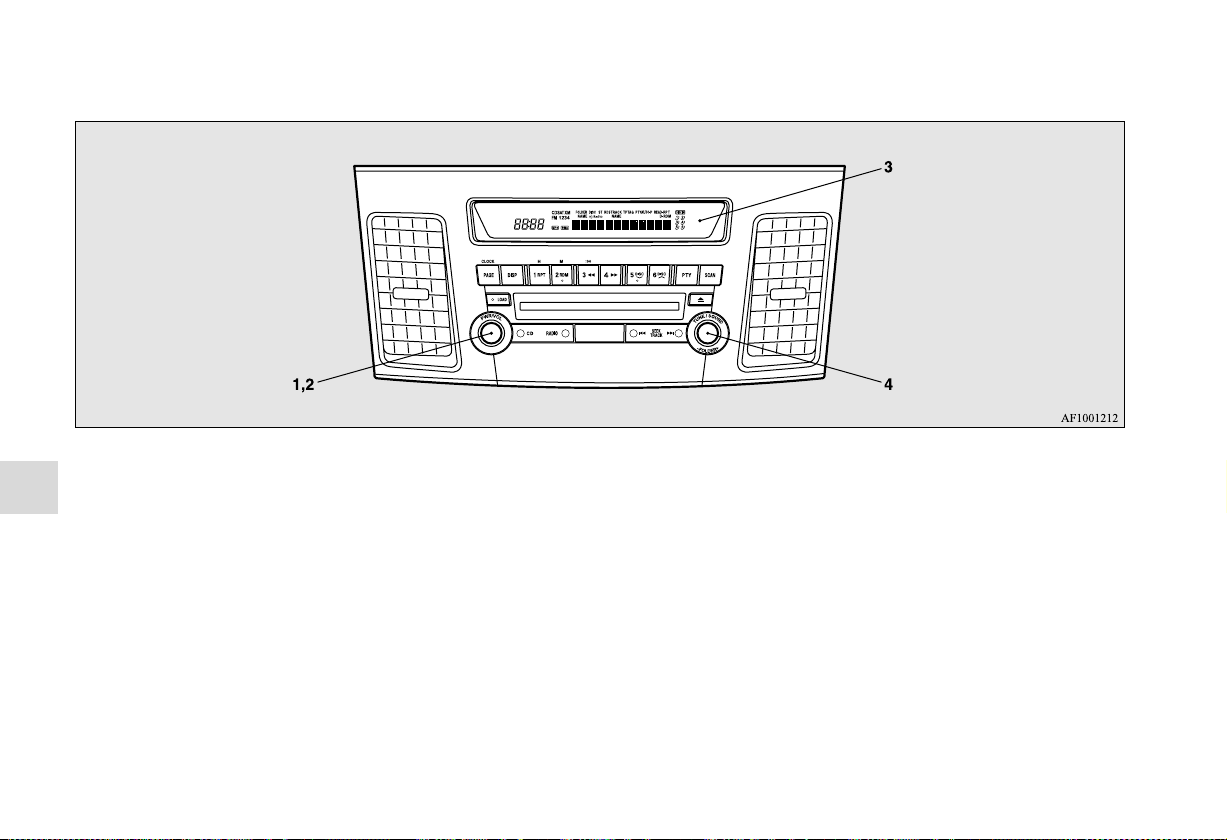
5-54
Comfort controls
5
Volume and tone control panel
N00711900598
1- PWR (On-Off) switch
2- VOL (Volume control) knob
3- Display
4- SOUND (Sound control) switch
BK0138600US.book 54 ページ 2011年7月17日 日曜日 午後2時32分
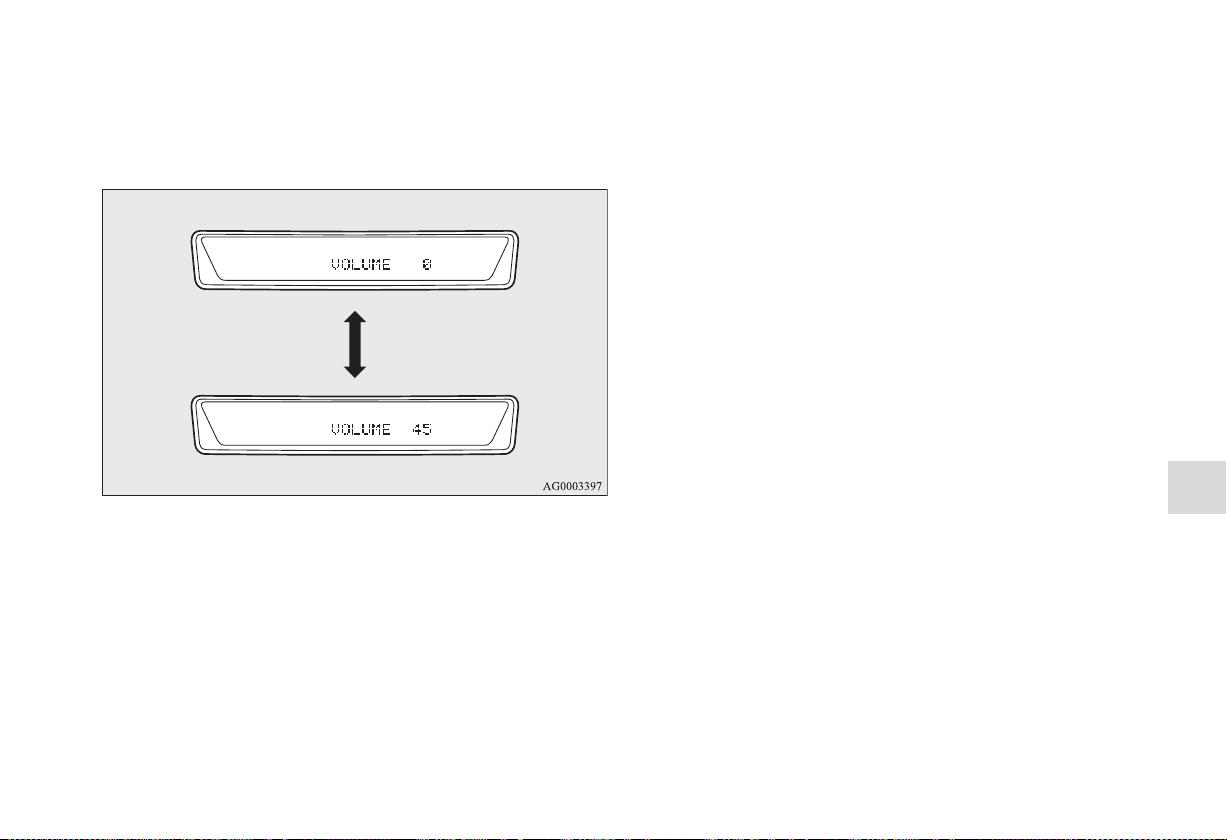
Comfort controls
5-55
5
To adjust the volume
N00712000365
Turn the VOL knob (2) clockwise to increase the volume;
counterclockwise to decrease the volume.
The status will be displayed in the display (3).
N
OTE
● The volume control mode will shut off automatically if
either the radio or CD is selected, or if no adjustment is
made within about 2 seconds.
To adjust the tone
N00712100597
1. Press the SOUND switch (4) repeatedly to select the tone
or balance control to change. The order is: TYPE →
FIELD → BASS → MID → TREBLE → FADER →
BALANCE → Audio adjust mode OFF
QUICK ACCESS MODE
To access the sound customization features quickly, push
and hold the SOUND switch (4), then turn the switch
clockwise or counterclockwise to access your desired
sound customization setting. Release the switch to adjust
the setting.
BK0138600US.book 55 ページ 2011年7月17日 日曜日 午後2時32分
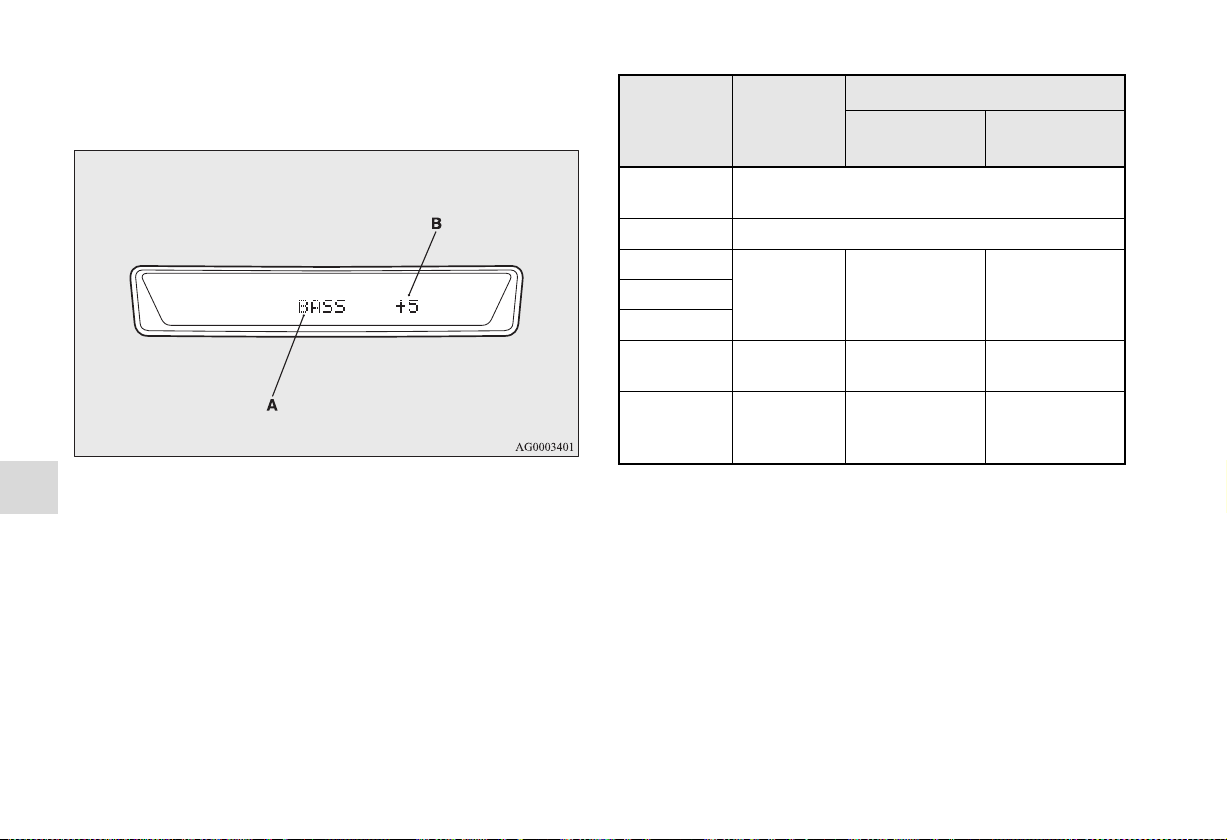
5-56
Comfort controls
5
2. Turn the SOUND switch (4) either clockwise or counter-
clockwise to change the tone/balance setting.
The status will be displayed in the display (3).
A- Adjust mode
B- Adjust level
Adjust
mode
Adjust level
Sound control switch operation
Counterclock-
wise turn
Clockwise turn
TYPE
NORMAL ↔ POP ↔ ROCK ↔ HIP-HOP ↔
COUNTRY
FIELD NORMAL ↔ STAGE ↔ LIVE ↔ HALL
BASS
-6 to 6 Weaker StrongerMID
TREBLE
FADER F11 to R11
R
(Rear) increases
F
(Front) increases
BALANCE L11 to R11
L
(Left) increases
R
(Right)
increases
BK0138600US.book 56 ページ 2011年7月17日 日曜日 午後2時32分
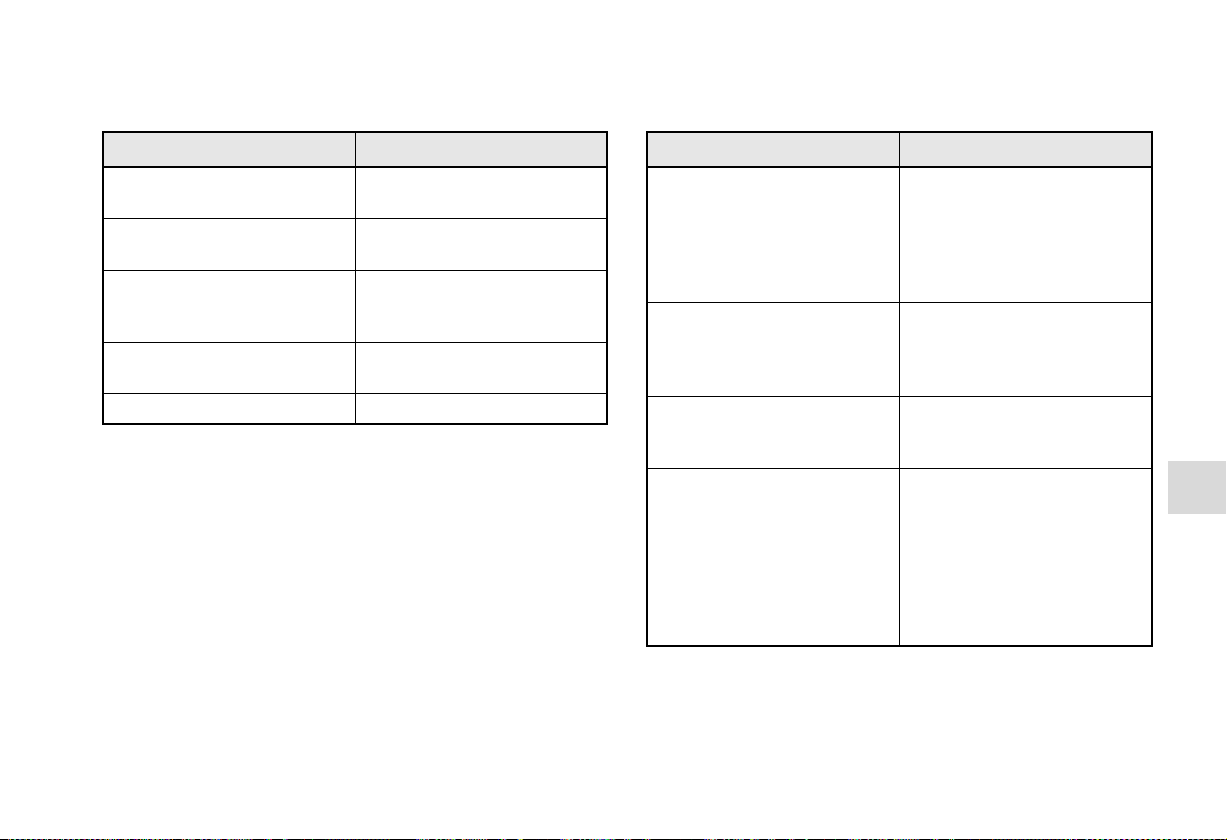
Comfort controls
5-57
5
TYPE (Acoustic characteristic selection)
To select the desired acoustic characteristic.
FIELD (Sound field selection)
To select the desired sound field.
Acoustic characteristic Description
NORMAL
Sounds good for all types of
music.
POP
Tight bass and high frequency
sound.
ROCK
Tuned for hard rock and heavy
metal with powerful drums,
guitars, and vocals.
HIP-HOP
Deep bass punch and well-
defined vocals.
COUNTRY Enhanced main vocals.
Sound field type Description
NORMAL
Allows the listeners to enjoy an
image of a sound stage where
music is performed so that the
instrumental sound surrounds
them, while keeping the vocal-
ist in front.
STAGE
Places the image of a sound
stage in front of the driver with
the vocalist in the center (for
driver only).
LIVE
Front seat occupants are sur-
rounded by sound from front
and rear speakers.
HALL
Places the image of a sound
stage in front of the driver with
the vocalist in the center (for
driver only). Sound reflections
are added to the rear speakers
to simulate the experience of
being at a concert hall. Best
with classical or vocalist music.
BK0138600US.book 57 ページ 2011年7月17日 日曜日 午後2時32分

5-58
Comfort controls
5
BASS (Bass tone control)
To select the desired bass level.
MID (Midrange tone control)
To select the desired midrange level.
TREBLE (Treble tone control)
To select the desired treble level.
FADER (Front/Rear balance control)
To balance the volume from the F (front) and the R (rear)
speakers.
BALANCE (Left/Right balance control)
To balance the volume from the L (left) and the R (right)
speakers.
N
OTE
● When set to “0”, it will beep.
● When TYPE or FIELD is changed, the sound will cut out
briefly, but this does not indicate a malfunction.
● The audio adjust mode will automatically shut off when
either the radio or CD is selected, or if no adjustment is
made within about 10 seconds.
● If the SOUND switch (4) is pushed and held for more than
2 seconds during the audio adjust mode, it will change to
“Hold” mode. The selected audio mode will be held until
the SOUND switch (4) is pushed for more than 2 seconds
again.
Speed Compensated Volume function
N00752200154
Speed Compensated Volume function is a feature that automat-
ically adjusts the VOLUME, BASS, MIDDLE, and TREBLE
settings in accordance with the vehicle speed. It is possible to
turn this function ON-OFF using the following methods:
1. If you are presently pushing the SOUND switch (4) and
making a tone adjustment, finish making the tone adjust-
ment.
2. Push the SOUND switch for at least about 2 seconds. The
system will switch to MENU mode and the characters
“SCV ON” will be shown on the display.
3. Turn the SOUND switch (4) clockwise to the turn the
function ON. Turn it counterclockwise to turn the function
OFF.
N
OTE
● The factory setting for the Speed Compensated Volume
function is ON.
● The MENU mode will automatically shut off when either
the radio or CD is selected or the user does not move any
of the switches for 10 seconds.
BK0138600US.book 58 ページ 2011年7月17日 日曜日 午後2時32分

Comfort controls
5-59
5
Radio control panel and display
N00734900700
1- RADIO (AM/FM selection) button
2- PWR (On-Off) switch
3- PAGE button
4- DISP (Display) button
5- SEEK (Down-seek) button
6- SEEK (Up-seek) button
7- TUNE switch
8- PTY (Program Type) button
9- SCAN button
10- Memory select buttons
11- FM (FM1/FM2) display
12- ST (Stereo) indicator
13- RBDS (Radio Broadcast Data System) indicator
14- PTY (Program Type) indicator
BK0138600US.book 59 ページ 2011年7月17日 日曜日 午後2時32分
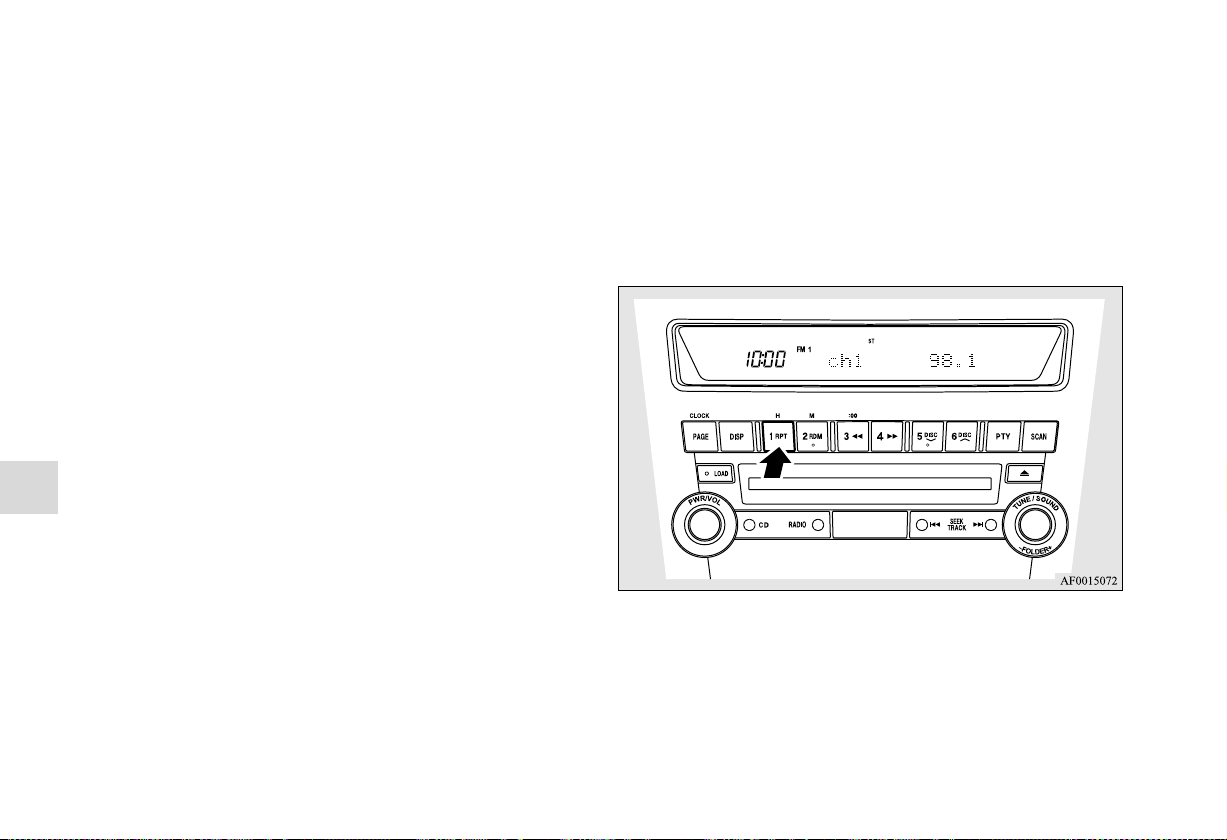
5-60
Comfort controls
5
To listen to the radio
N00735000766
1. Press the PWR switch (2) to turn the audio system ON and
OFF. The system turns on in the last mode used.
Press the RADIO button (1) to turn ON the radio.
2. Press the RADIO button (1) to select the desired band
(AM/FM1/FM2).
3. Press the SEEK button (5 or 6) to tune to a station, or
press one of the Memory select buttons (10) to recall a sta-
tion memorized for that button.
Refer to “Automatic tuning”, “Manual tuning” or “To
enter frequencies into the memory”.
Automatic tuning
After pressing the SEEK button (5 or 6), a receivable station
will be automatically selected and reception of the station will
begin.
SCAN function
Press the SCAN button (9). The radio will tune consecutively
to each available station for about 5 seconds per station. If you
want to stop scanning, press the SCAN button again.
The frequency display of the current station flashes once per
second during SCAN.
Manual tuning
The frequency changes every time the TUNE switch (7) is
turned.
Turn the switch to select the desired station.
To enter frequencies into the memory
As many as 6 AM and 12 FM stations can be entered into the
memory.
To store a frequency in the memory, follow these steps:
1. Press the SEEK button (5 or 6), or turn the TUNE switch
(7) to tune to the frequency you wish to keep in the mem-
ory.
2. Press one of the Memory select buttons (10) until it beeps.
The sound will be momentarily interrupted while the fre-
quency is being entered into the memory. The number of
the button matching the entry in the memory as well as the
frequency are displayed.
3. To recall a frequency that has been saved in memory,
press the corresponding button briefly for no longer than
about 1 second.
N
OTE
● Disconnecting the battery cables erases all the radio sta-
tion settings stored in the memory.
BK0138600US.book 60 ページ 2011年7月17日 日曜日 午後2時32分

Comfort controls
5-61
5
Radio broadcast data system (RBDS)
N00751800052
RBDS features are available for use only on FM stations that
broadcast RBDS information.
This RBDS radio can search for stations broadcasting the
selected type of programming and display messages from radio
stations.
PTY (Program Type)
RBDS broadcasts are classified according to program type
(PTY) as follows.
To search for a broadcast of desired PTY
1. To enter PTY (Program Type) mode, press the PTY button
(8) during FM reception.
2. Press the PTY button repeatedly until your desired PTY is
reached.
You can press one of the Memory select buttons (10) for
about 2 seconds to save the currently displayed PTY to
that Memory select button. Thereafter, you can easily call
up your desired PTY by pressing the corresponding Mem-
ory select button.
3. Press the SEEK button (5 or 6), and the radio will begin to
search for a broadcast of the selected PTY. During search,
the selected PTY on the display blinks and the sound will
be momentarily interrupted.
4. When the radio picks up a station with your desired PTY,
the PTY and the frequency will each appear on the display
for 2 seconds. Then the PTY and the station name will
alternately appear on the display for 6 seconds.
5. The frequency will appear on the display. Then the radio
will start receiving the program and exit the PTY mode.
1. ROCK
2. COUNTRY
3. EASY LIS
4. CLASSICL
5. JAZZ
6. Top 40
7. R&B
8. INFORM
9. RELIGION
10. MISC
BK0138600US.book 61 ページ 2011年7月17日 日曜日 午後2時32分
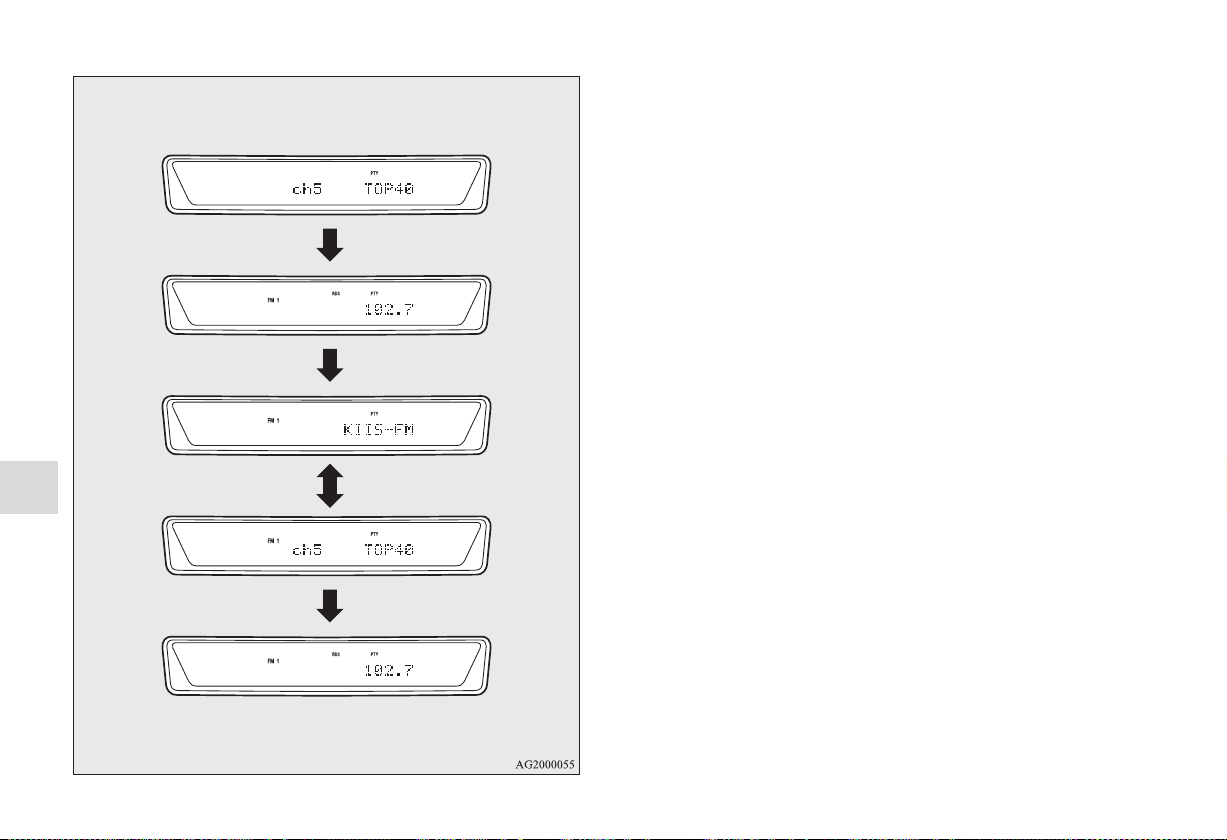
5-62
Comfort controls
5
N
OTE
● If you wish to listen to another station of the same PTY as
currently selected, repeat the previous procedure from
step 2.
● To display the station name and the PTY, press the DISP
button (4) and the PTY button (8) respectively.
● If no station is found with your desired PTY, “EMPTY”
will appear on the display for 5 seconds. Then the radio
will return to the previous station and exit the PTY mode.
● If the radio cannot read the station name, the PTY and the
frequency will alternately appear on the display for 6 sec-
onds. Then the radio will start receiving the program and
exit the PTY mode.
Scan function
1. After selecting your desired PTY, press the SCAN button
(9). The radio will tune consecutively to each available
station of the selected PTY for about 5 seconds per sta-
tion.
2. To stop the scan mode, press the SCAN button again.
BK0138600US.book 62 ページ 2011年7月17日 日曜日 午後2時32分

Comfort controls
5-63
5
Text message
The radio can receive text messages broadcast by some RBDS
stations.
1. While tuning in to an RBDS station, press the DISP but-
ton (4).
2. A text message will appear on the display. If a station
name appears, press the DISP button again, then the text
message will be displayed.
3. To cancel the text message display, press the DISP button
again.
N
OTE
● When there is no text message to be displayed, the display
shows “NO MESSAGE” and then shows the frequency.
● The display can show up to 12 characters. If a text mes-
sage has more than 12 characters, press the PAGE button
(3) to view the next 12 characters.
BK0138600US.book 63 ページ 2011年7月17日 日曜日 午後2時32分
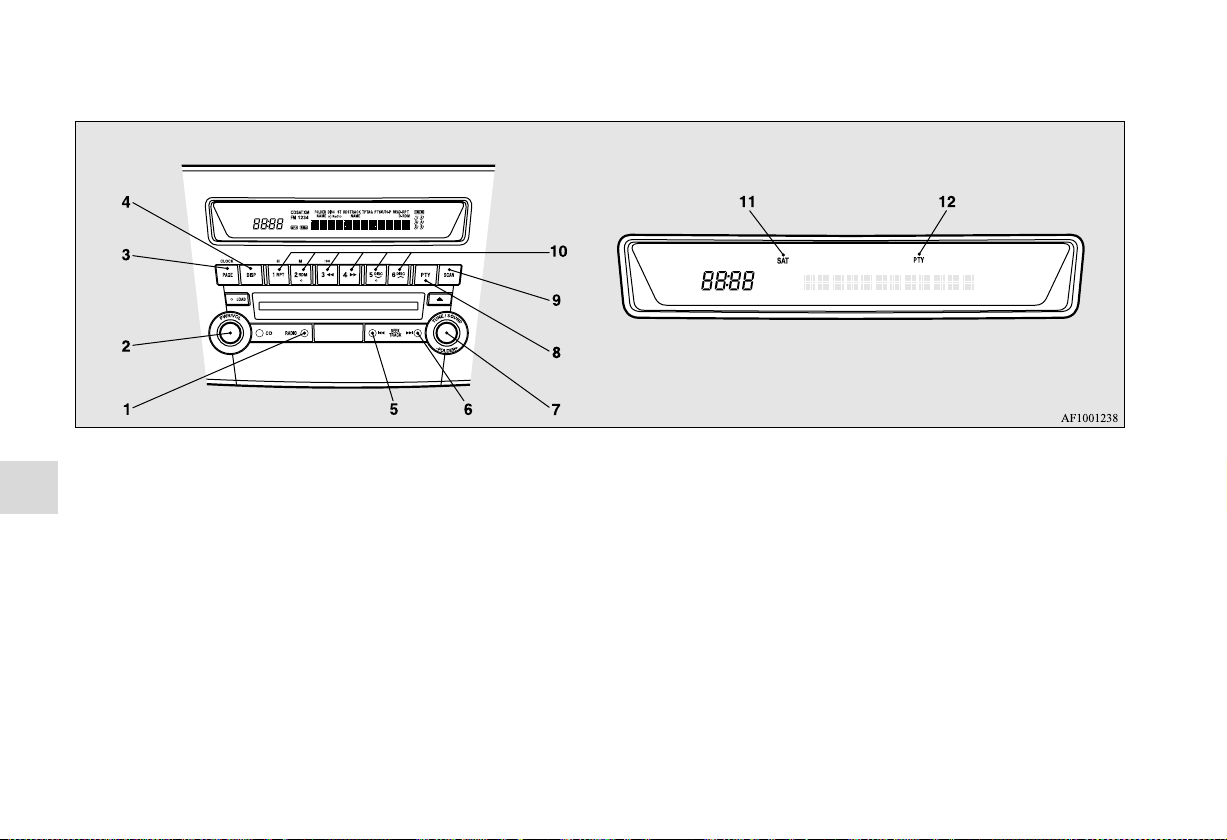
5-64
Comfort controls
5
SIRIUS satellite radio control panel and display
N00700200171
1- RADIO (AM/FM/Satellite radio selection) button
2- PWR (On-Off) switch
3- PAGE button
4- DISP (Display) button
5- Channel selection down button
6- Channel selection up button
7- TUNE/SOUND (Category selection) switch
8- PTY button
9- SCAN button
10- Memory select buttons
11 - SAT (SAT1/SAT2/SAT3/S AT 4 ) display
12- PTY indicator
BK0138600US.book 64 ページ 2011年7月17日 日曜日 午後2時32分

Comfort controls
5-65
5
To listen to the SIRIUS satellite radio
N00760500143
1. Press the PWR switch (2) to turn the audio system ON and
OFF. The system turns on in the last mode used.
Press the RADIO button (1) to turn ON the radio.
2. Press the RADIO button (1) to select the desired band
(SAT1/SAT2/SAT3/SAT4). Each time you push the but-
ton, the display will change in the following order:
AM→FM1→FM2→SAT1→SAT2→SAT3→SAT4.
Once the display shows “SIRIUS,” satellite radio recep-
tion will begin.
Category selection
1. Pressing the PTY button (8) will cause the category of the
channel that is currently being received to be displayed for
around 2 seconds.
2. If the TUNE/SOUND switch (7) is turned, the system will
change to the Category selection mode, the current cate-
gory will be shown in the display, and the PTY indicator
(12) will light up.
3. Turning the TUNE/SOUND switch (7) while in the cate-
gory selection mode, the next category will be shown.
N
OTE
● Selecting a different category will not change the channel.
During category selection, the original channel will con-
tinue to be received. Use a channel selection button (5 or
6) to change the channel.
● If you do not use the satellite radio again before 15 sec-
onds have elapsed, the category selection mode will be
canceled. (The PTY indicator (12) will go out.)
● Pressing the PTY button (8) while in the category selec-
tion mode will cause the current channel to be displayed
for around 2 seconds.
Channel selection
You can select a channel by pressing a channel selection button
(5 or 6).
N
OTE
● While in the category selection mode, only channels in the
category can be selected.
Scan function
1. Pressing the SCAN button (9) will cause the satellite radio
to tune consecutively to each available channel for about 7
seconds per channel.
2. To stop the scan mode, press the SCAN button (9) again.
N
OTE
● While in the category selection mode, only channels in the
category can be scanned.
BK0138600US.book 65 ページ 2011年7月17日 日曜日 午後2時32分
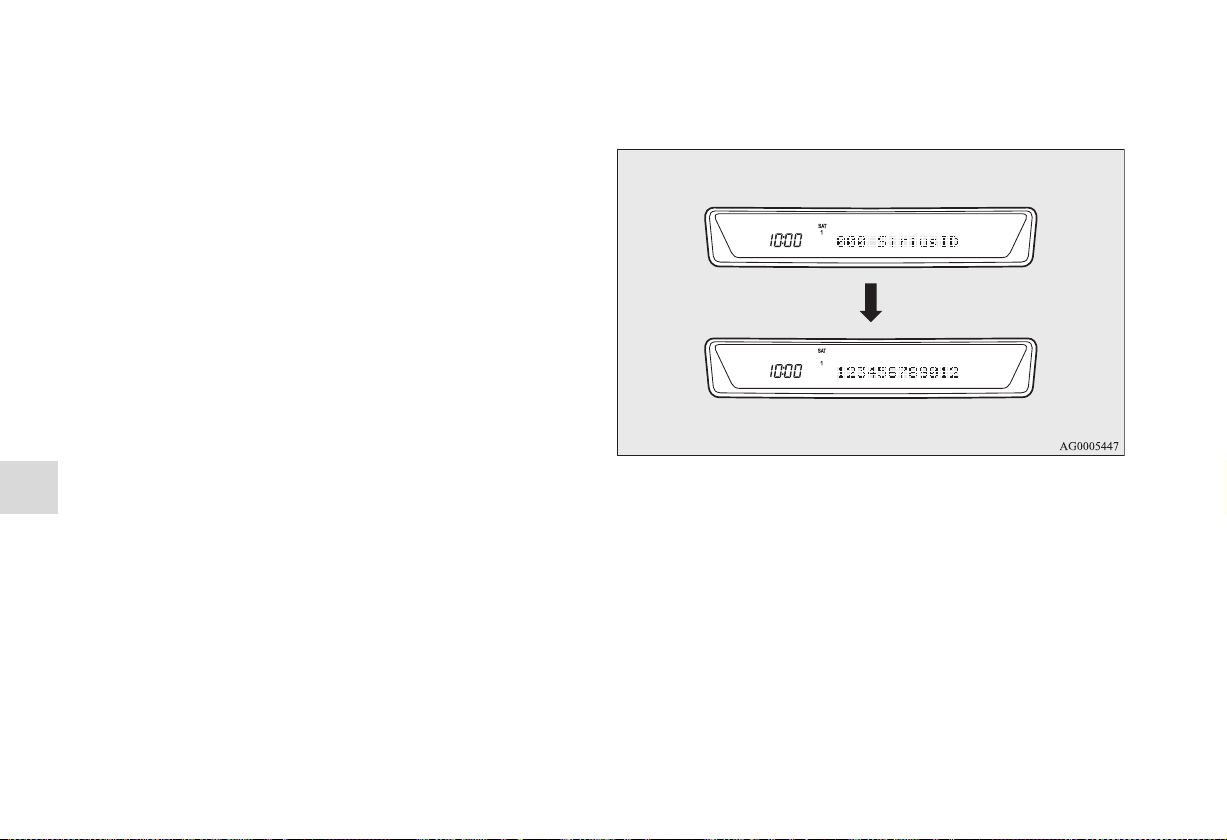
5-66
Comfort controls
5
To enter channels into the memory
You can save one channel to each Memory select button (10),
for a maximum of 24 channels in memory.
To store a channel in the memory, follow these steps:
1. Press a channel selection button (5 or 6) and select the
channel that you wish to keep in the memory.
2. Press one of the Memory select buttons (10) until it beeps,
indicating that the channel has been stored in memory.
N
OTE
● If you store a channel in the memory, you can call up your
desired channel immediately by simply pushing the corre-
sponding Memory select button (10).
SIRIUS ID indication
If you press a channel selection button (5 or 6) to select “CH
0,” the SIRIUS ID will be displayed.
1. If you select “CH 0,” the SIRIUS ID (12 digits) will be
displayed.
2. To stop the SIRIUS ID indication, press a channel selec-
tion button (5 or 6) and select a channel other than “CH
0.”
BK0138600US.book 66 ページ 2011年7月17日 日曜日 午後2時32分

Comfort controls
5-67
5
To skip or lock a desired channel - MENU mode
You can set the satellite radio so that it locks a desired channel
or skips the channel during channel selection.
1. While the satellite radio is tuned in to the channel, press
the TUNE/SOUND switch (7) for about 2 seconds or
longer to enter the MENU mode.
2. In the MENU mode, the satellite radio channel SKIP set-
ting and LOCK setting are possible.
Each time you press the TUNE/SOUND switch (7), the
status will change in the following sequence.
“SKIP SETTING” (SKIP setting mode) → “LOCK SET-
TING” (LOCK setting mode) → “SCV ON” → “PHONE
OFF” → MENU mode off.
N
OTE
● The MENU mode will automatically shut off when either
the radio or CD is selected, when the TUNE/SOUND
switch (7) is pressed for about 2 seconds or longer, or
when the radio is left alone for 10 seconds.
● The SKIP settings, LOCK settings and lock cancellation
code are stored in memory.
Disconnecting the battery cable will erase these settings.
(The lock cancellation code will reset to the factory set-
ting: “1111.”)
● For more information on the SCV function, refer to
“Speed Compensated Volume function” on page 5-58.
● “PHONE OFF” is displayed but the function is not
enabled.
● If the vehicle is equipped with a Mitsubishi Motors autho-
rized hands-free phone system, “PHONE OFF” will not
be displayed.
“SKIP SETTING” (SKIP Setting Mode)
You can set any channel to be skipped during channel selec-
tion. You can also cancel a skip setting.
You can turn the TUNE/SOUND switch (7) and select “SKIP
CH” or “UNSKIP ALL.”
These functions are described below.
“LOCK SETTING” (LOCK Setting Mode)
You can lock any channel of your choice or unlock a locked
channel.
You can turn the TUNE/SOUND switch (7) and select “LOCK
CH” (or “UNLOCK CH”), “UNLOCK ALL” or “CODE
EDIT.”
These functions are described below.
N
OTE
● If the channel that is currently being received is not
locked, you can select “LOCK CH”; if it is locked, you
can select “UNLOCK CH.”
SKIP CH: Sets the satellite radio so that it skips
the channel that is currently being
received.
UNSKIP ALL: Cancels skip setting on all channels.
LOCK CH: Locks the channel that is currently
being received.
UNLOCK CH: Unlocks the channel that is currently
being received.
UNLOCK ALL: Cancels lock setting on all channels.
CODE EDIT: Changes the lock cancellation code.
BK0138600US.book 67 ページ 2011年7月17日 日曜日 午後2時32分

5-68
Comfort controls
5
To skip a desired channel
You can set any channel to be skipped during channel selec-
tion.
1. Select the channel that you want to skip.
2. Press the TUNE/SOUND switch (7) for about 2 seconds
or longer to enter the MENU mode. Then select the SKIP
setting mode.
3. In the SKIP setting mode, turn the TUNE/SOUND switch
(7) and select “SKIP CH.”
4. Press the TUNE/SOUND switch (7). “STORED” will be
shown for 2 seconds and then the channel that is currently
being received will be set to be skipped.
5. After the skip setting is made, the radio will tune into the
next channel after the channel that was set to be skipped.
If you want to this channel to be skipped as well, press the
TUNE/SOUND switch (7) again.
N
OTE
● The channel that was set to be skipped will be skipped
automatically during channel selection.
● Channels that are stored in the preset memory can also be
set to be skipped. When the corresponding memory select
button (10) is pushed to call up the channel, “SKIP
CHANNEL” will appear on the display and the audio will
be muted.
To cancel skip settings
You can cancel skip settings on channels.
1. Press the TUNE/SOUND switch (7) for about 2 seconds
or longer to enter the MENU mode. Then select the SKIP
setting mode.
2. In the SKIP setting mode, turn the TUNE/SOUND switch
(7) and select “UNSKIP ALL.”
3. Press the TUNE/SOUND switch (7). “STORED” will be
shown for 2 seconds and then skip settings on all channels
will be cancelled. After you cancel the setting, the satellite
radio will return to the SKIP setting mode. (The display
will show “SKIP SETTING.”)
To lock a desired channel
You can lock any channel of your choice.
1. Select the channel that you want to lock.
2. Press the TUNE/SOUND switch (7) for about 2 seconds
or longer to enter the MENU mode. Then select the
LOCK setting mode.
3. In the LOCK setting mode, turn the TUNE/SOUND
switch (7) and select “LOCK CH.”
4. Press the TUNE/SOUND switch (7). “LOCKED” will be
displayed for 2 seconds and then the channel that is cur-
rently being received will be locked. The satellite radio
then returns to the LOCK setting mode.
N
OTE
● If you attempt to select a locked channel, the display will
show “LOCKED” or “PARENTAL LOCK.”
● Channels that are stored in the preset memory can also be
locked.
BK0138600US.book 68 ページ 2011年7月17日 日曜日 午後2時32分
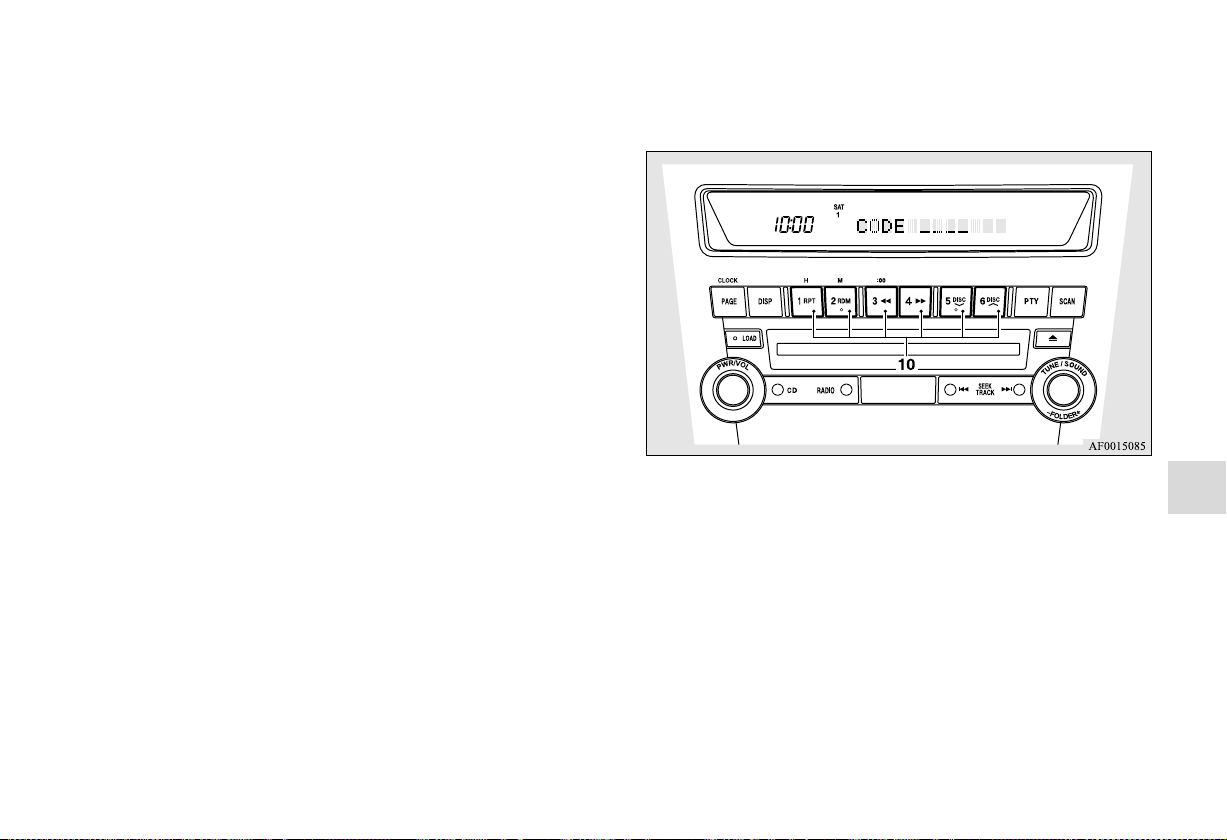
Comfort controls
5-69
5
To unlock locked channels
There are two ways to unlock a locked channel. One way is to
unlock a single locked channel of your choice. The other way
is to unlock all locked channels.
To unlock a locked channel, you must enter the lock cancella-
tion code.
1. To unlock a single locked channel of your choice, select
the locked channel that you want to unlock. (If you want
to unlock all locked channels, it doesn’t matter which
locked channel you have selected.)
2. Press the TUNE/SOUND switch (7) for about 2 seconds
or longer to enter the MENU mode. Then select the
LOCK setting mode.
3. In the LOCK setting mode, turn the TUNE/SOUND
switch (7) and select “UNLOCK CH” when you want to
unlock one locked channel of your choice or “UNLOCK
ALL” when you want to unlock all locked channels.
4. When you press the TUNE/SOUND switch (7), the code
entry window will be shown in the display.
5. Use the Memory select buttons (10) to enter the code
(1111 to 6666) and then press the TUNE/SOUND switch
(7).
6. If the entered code is correct, “UNLOCKED” will be
shown and the locked channel(s) will be unlocked. The
satellite radio will then return to the LOCK setting mode.
If the entered code is incorrect, a warning sound will be
emitted and “CODE ERROR” will be displayed. The code
entry window will then be shown again.
You can try to enter the code again, no matter how many
times an incorrect code has been entered.
BK0138600US.book 69 ページ 2011年7月17日 日曜日 午後2時32分

5-70
Comfort controls
5
N
OTE
● The default factory setting for the code is “1111.”
● You can change the code to any number you want with the
“CODE EDIT” function.
● To cancel a code entry, turn the TUNE/SOUND switch (7)
while the code entry window is displayed.
The code entry will be cancelled and then the setting
menu will be switched.
To change the lock cancellation code
You can change the code for unlocking channel(s) to any num-
ber you want.
1. Press the TUNE/SOUND switch (7) for about 2 seconds
or longer to enter the MENU mode. Then select the
LOCK setting mode.
2. In the LOCK setting mode, turn the TUNE/SOUND
switch (7) and select “CODE EDIT.”
3. When you press the TUNE/SOUND switch (7), the code
entry window will be shown in the display.
4. Use the memory select buttons (10) to enter the current
code and then press the TUNE/SOUND switch (7).
5. If the correct code is entered, the code entry window will
be shown again. Enter your desired code.
If the entered code is incorrect, a warning sound will be
emitted and “CODE ERROR” will be displayed. The code
entry window will then be shown again.
You can try to enter the code again, no matter how many
times an incorrect code has been entered.
6. After you enter the new code, press the TUNE/SOUND
switch (7). The code entry window will be shown again
for confirmation. Enter the new code again and press the
TUNE/SOUND switch (7).
BK0138600US.book 70 ページ 2011年7月17日 日曜日 午後2時32分

Comfort controls
5-71
5
7. “STORED” will be displayed for 2 seconds, the code will
be changed and the satellite radio will return to the LOCK
setting mode.
N
OTE
● The SKIP settings, LOCK settings and lock cancellation
code are stored in memory. Disconnecting the battery
cable will erase these settings.
(The lock cancellation code will reset to the default fac-
tory setting: “1111.”)
To reset the lock cancellation code
In case you forget the code, it is possible to reset the code to the
factory setting (1111).
1. With the audio power OFF, press the PWR switch (2) and
the TUNE/SOUND switch (7) at the same time.
The display will show “CODE INITIAL.”
2. Press the TUNE/SOUND switch (7). “YES” will be dis-
played. To reset the code, press the TUNE/SOUND
switch (7) again. “STORED” will be shown for 2 seconds
and the code will be reset.
If you do not want to reset the code, turn the
TUNE/SOUND switch (7) to display “CANCEL” and
then press the TUNE/SOUND switch (7) again.
Text message
You can change what is shown on the display when the satellite
radio tunes into a channel.
Press the DISP button (4) repeatedly to change to your desired
display mode. The order is: Channel Number + Channel Name
→ Category Name → Artist Name → Song Title → Composer
Name
N
OTE
● Category name can also displayed by pressing the PTY
button (8).
● The display can show up to 12 characters. If there are
more than 12 characters, press the PAGE button (3) to
view the next 12 characters.
BK0138600US.book 71 ページ 2011年7月17日 日曜日 午後2時32分
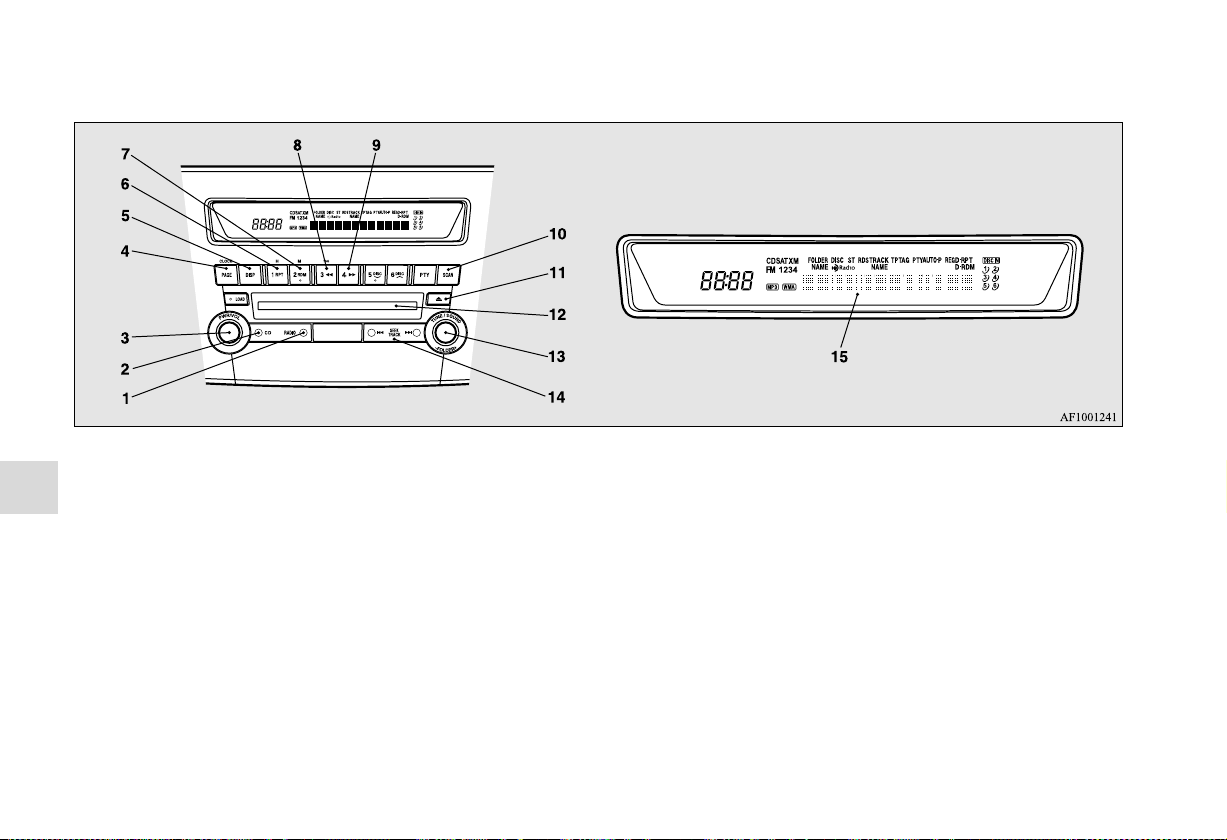
5-72
Comfort controls
5
CD control panel and display
N00735300600
1- RADIO (AM/FM selection) button
2- CD (CD mode changeover) button
3- PWR (On-Off) switch
4- PAGE button
5- DISP (Display) button
6- RPT (Repeat) button
7- RDM (Random) button
8- Fast-reverse button
9- Fast-forward button
10- SCAN button
11- Eject button
12- Disc loading slot
13- FOLDER switch
14- TRACK (Track up/down) button
15- Display
BK0138600US.book 72 ページ 2011年7月17日 日曜日 午後2時32分
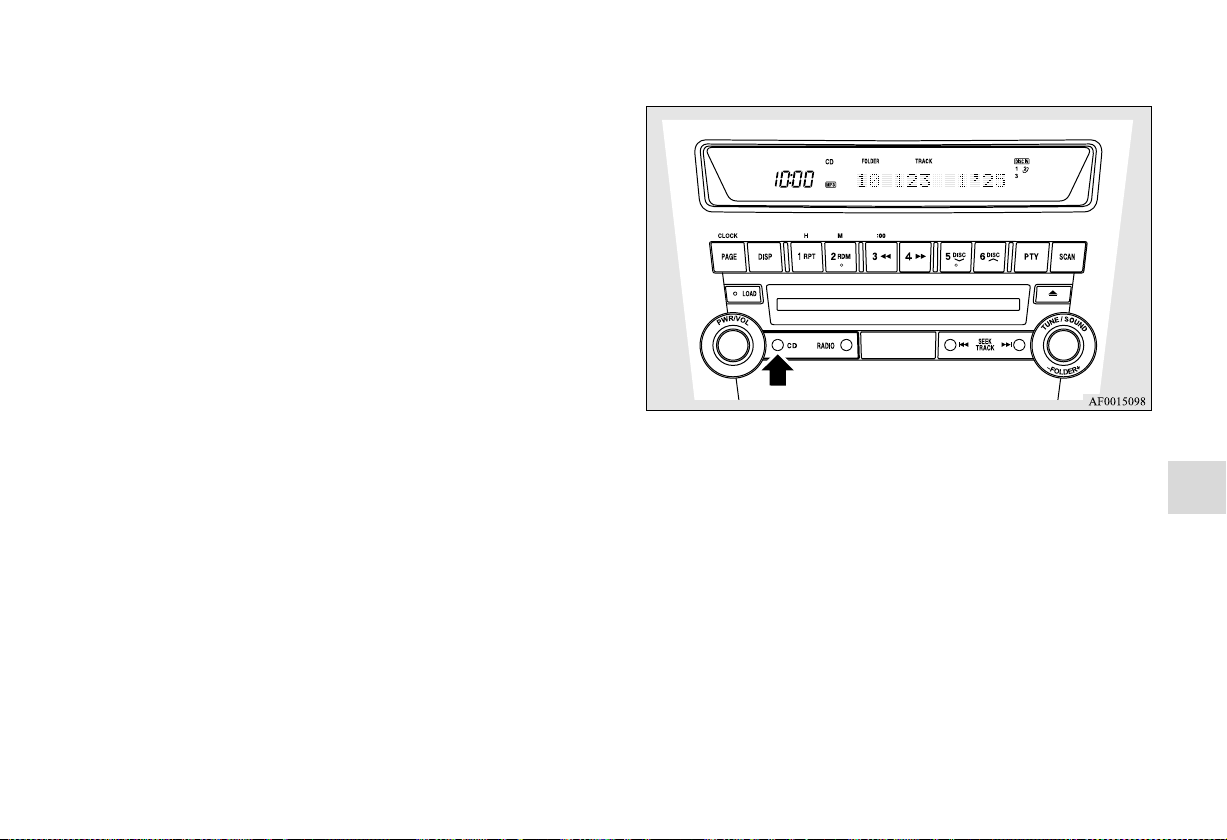
Comfort controls
5-73
5
To listen to a CD
N00735501045
To set discs
1. Press the PWR switch (3) to turn the audio system ON and
OFF. The system turns on in the last mode used.
2. Insert the disc with the label facing up.
When a disc is inserted, the CD player will begin playing
even if the radio is being used. The CD player will also
begin playing when the CD button (2) is pressed with a
disc set in the CD player or in the disc loading slot (12),
even if the radio is being used.
N
OTE
● For information concerning the adjustment of volume and
tone, refer to “To adjust the volume” on page 5-55 and
“To adjust the tone” on page 5-55.
● For information concerning the handing of the compact
discs, refer to “Handling of compact discs” on page 5-145.
To eject discs
When the eject button (11) is pressed, the disc automatically
stops and is ejected. The system automatically switches to
radio mode.
N
OTE
● If you do not remove an ejected disc before 15 seconds
have elapsed, the disc will be reloaded.
To listen to a music CD
Push the CD button (2) if the discs are already in the CD
player. The audio system will enter CD mode and start play-
back. The track number and the playing-time will appear on the
display. The discs in the unit will be played consecutively and
continuously.
BK0138600US.book 73 ページ 2011年7月17日 日曜日 午後2時32分
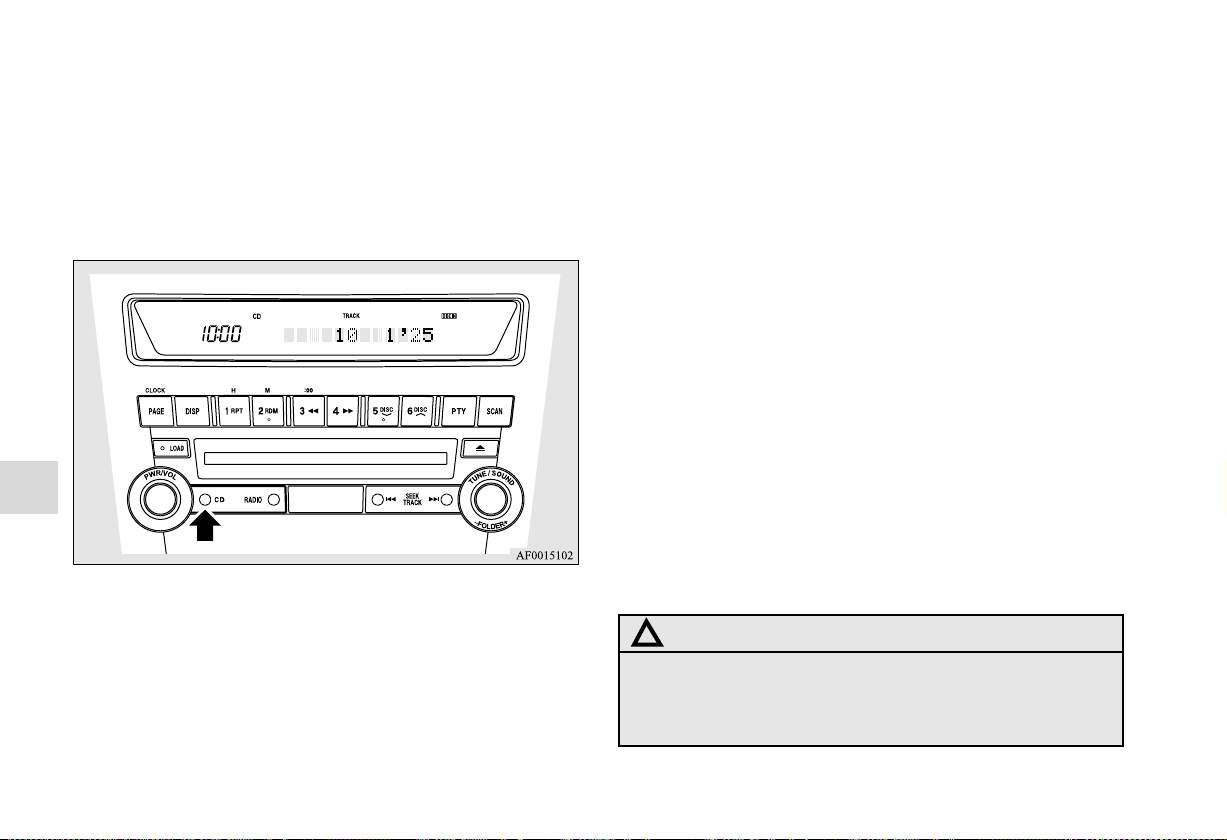
5-74
Comfort controls
5
To listen to an MP3 CD
This CD player allows you to play MP3 (MPEG Audio Layer-
3) files recorded on CD-ROMs, CD-Rs (recordable CDs), and
CD-RWs (rewritable CDs) in ISO9660 Level 1/ Level 2, Joliet,
and Romeo formats. Each disc may have a maximum of 16
trees, 100 folders and 255 files. During MP3 playback, the unit
can display ID3 tag information. For information concerning
ID3 tag, refer to “CD text and MP3 title display” on page 5-79.
Push the CD button (2) if a disc is already in the CD player.
The display shows “READING”, then playback begins. The
folder number, the track number, the playing-time, and “MP3”
indicator will appear on the display.
N
OTE
● While listening to a disc on which CD-DA (CD-Digital
Audio) and MP3 files have both been recorded, you can
switch between reading of the CD-DA, reading of the
MP3 files, and the external audio input mode by pressing
the CD button for 2 seconds or longer (until you hear a
beep).
● With a disc that contains both CD-DA and MP3 files, the
CD-DA files are automatically played first.
● The playback sound quality differs depending on the
encoding software and the bit rate. For details, refer to the
user manual of your encoding software.
● Depending on file/folder configurations on a disc, it may
take some time before playback starts.
● MP3 encode software and writing software are not sup-
plied with this CD player.
● You may encounter trouble in playing an MP3 or display-
ing the information of MP3 files recorded with certain
writing software or CD recorders (CD-R/RW drivers).
● If you record too many folders or files other than MP3
onto a disc, it may take some time before playback starts.
● This unit does not record MP3 files.
● For information concerning CD-Rs/RWs, refer to “Notes
on CD-Rs/RWs” on page 5-147.
CAUTION
!
● Attempting to play a file not in the MP3 format
which has the “.mp3” file name may produce noise
from the speakers and speaker damage, and can
damage your hearing.
BK0138600US.book 74 ページ 2011年7月17日 日曜日 午後2時32分

Comfort controls
5-75
5
Folder selection order/MP3 file playback order (Example)
To fast forward/reverse the disc
To fast forward or fast reverse the disc, press the fast-forward
button (9) or the fast-reverse button (8).
Fast forward
You can fast forward the disc by pressing the fast-forward but-
ton (9). While the button is kept pressed, the disc will be fast-
forwarded.
Fast reverse
You can fast reverse the disc by pressing the fast-reverse button
(8). While the button is kept pressed, the disc will be fast-
reversed.
Folder selection
In the order
File selection
In the order
Root folder (Root directory)
Tree 1 Tree 2 Tree 3 Tree 4
BK0138600US.book 75 ページ 2011年7月17日 日曜日 午後2時32分
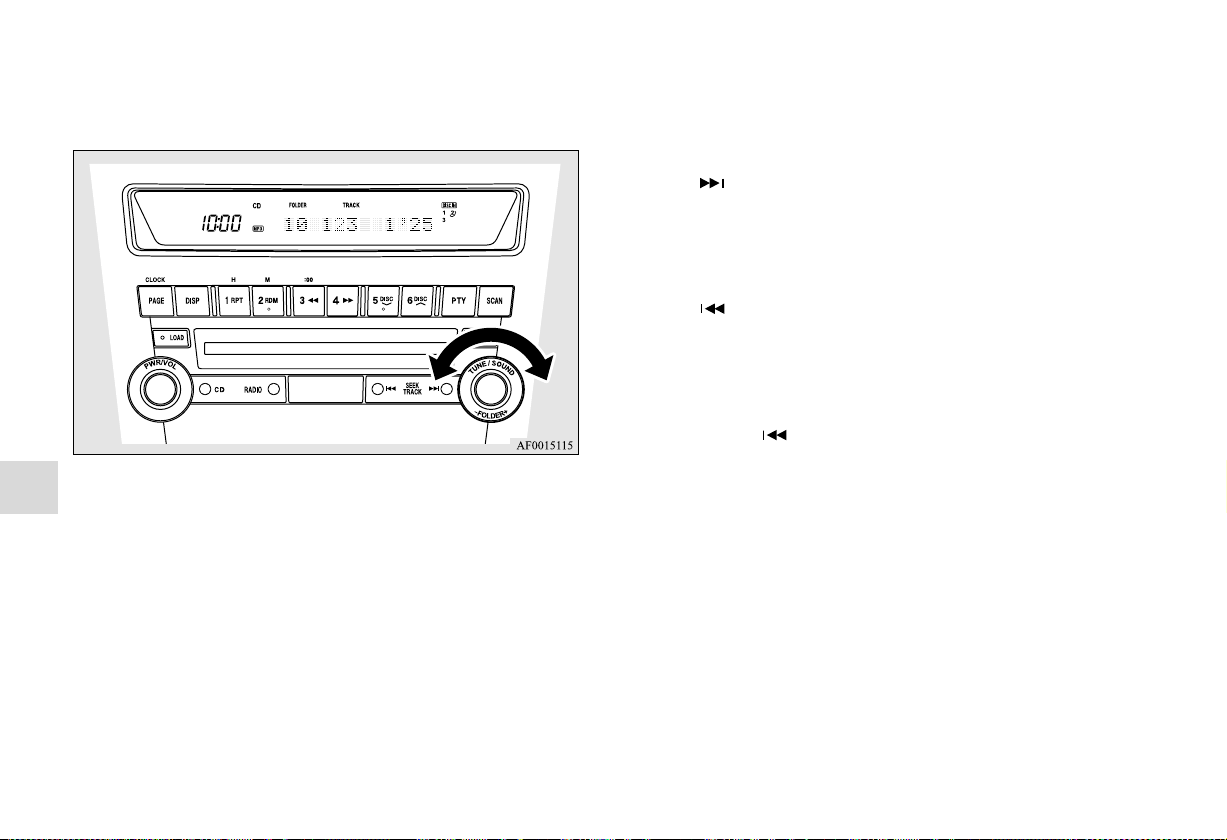
5-76
Comfort controls
5
To select a desired folder (MP3 CDs only)
You can select your desired folder by turning the FOLDER
switch (13).
Folder up
Turn the FOLDER switch (13) clockwise until the desired
folder number appears on the display.
Folder down
Turn the FOLDER switch (13) counterclockwise until the
desired folder number appears on the display.
To select a desired track
You can select your desired track by using the TRACK button
(14).
Track up
Press the side of the TRACK button (14) repeatedly until
the desired track number appears on the display.
When listening to a MP3 CD, keep pressing the button to con-
tinue to move up tracks.
Track down
Press the side of the TRACK button (14) repeatedly until
the desired track number appears on the display.
When listening to a MP3 CD, keep pressing the button to con-
tinue to move down tracks.
N
OTE
● Pressing the side of the TRACK button (14) once dur-
ing the song will cause the player to restart playback from
the beginning of the song.
To repeat a track
To repeat a track
Press the RPT button (6) briefly while the track is playing.
“RPT” will appear on the display. To exit the repeat mode,
press the RPT button again.
To repeat songs in the same folder (MP3 CDs only)
While a song is playing, press the RPT button (6) for 2 seconds
or longer (until you hear a beep). “D-RPT” will appear on the
display. The player will repeat all the songs in the same folder
that contains the song currently playing. To exit the repeat
mode, briefly press the RPT button again.
BK0138600US.book 76 ページ 2011年7月17日 日曜日 午後2時32分
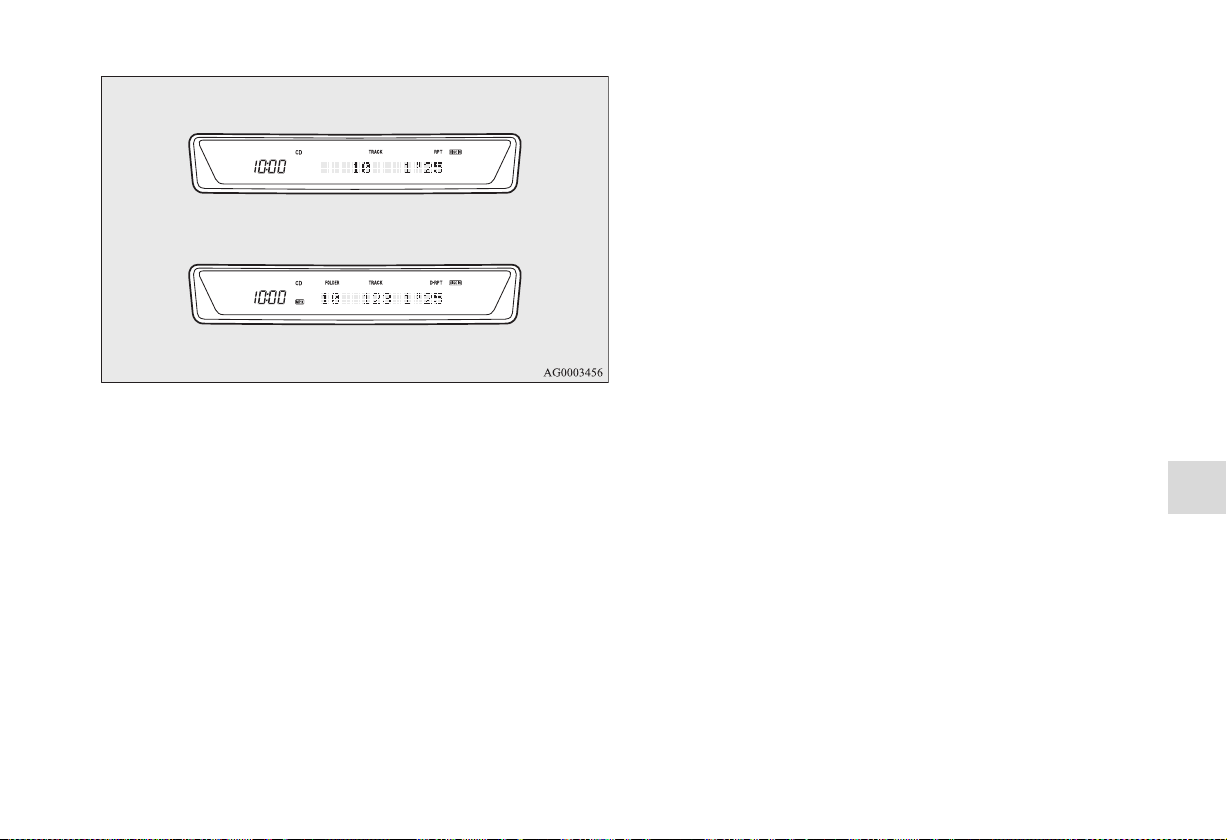
Comfort controls
5-77
5
N
OTE
● The single track repeat mode will be canceled by pressing
the TRACK button (14) or the eject button (11).
● With a disc that contains both CD-DA and MP3 files, the
repeat mode causes only files of the same format (CD-DA
only or MP3 files only) to be repeated.
To change the order of tracks for playback
Random playback for a disc (music CDs only)
Press the RDM button (7) briefly. “RDM” will appear on the
display. Tracks on the currently selected disc will be played in
a random sequence.
To exit the random mode, press the RDM button again.
Random playback for a folder (MP3 CDs only)
Press the RDM button (7) briefly. “RDM” will appear on the
display. Tracks in the currently selected folder will be played in
a random sequence. To exit the random mode, press the RDM
button again.
BK0138600US.book 77 ページ 2011年7月17日 日曜日 午後2時32分
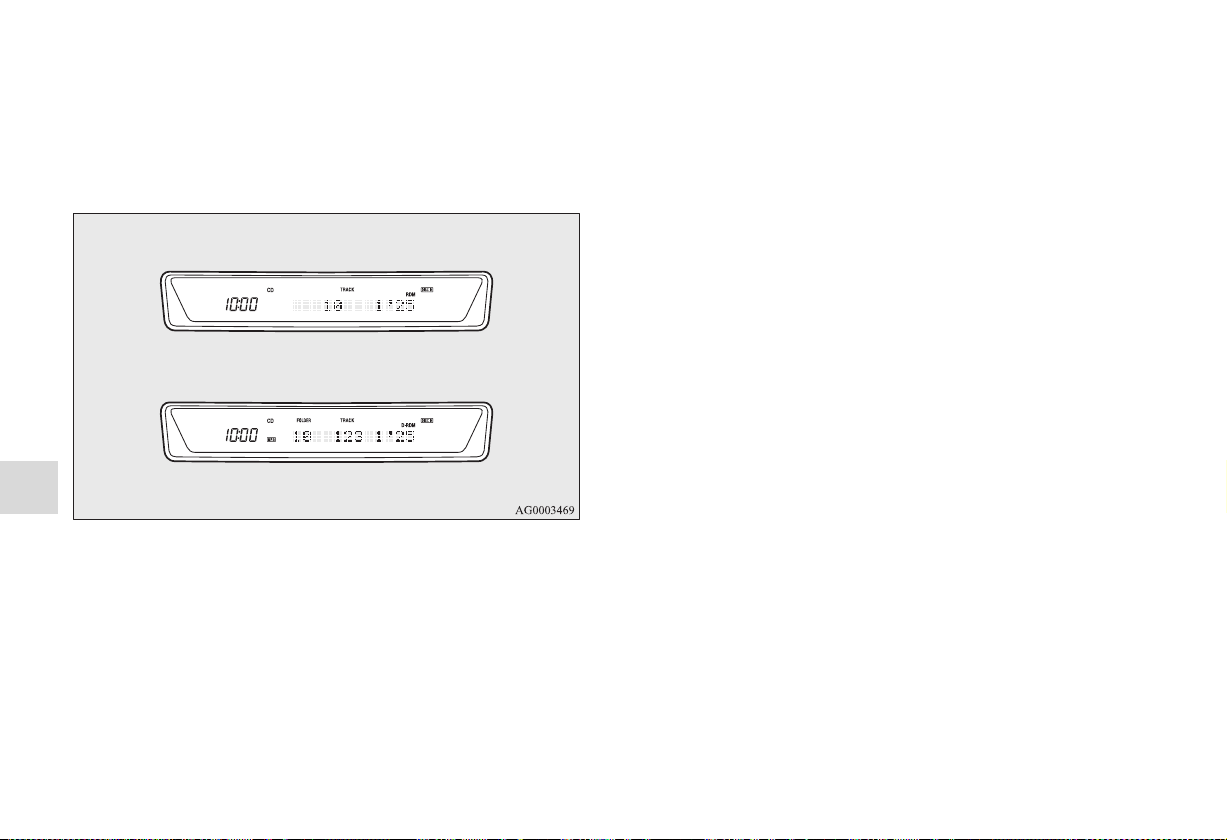
5-78
Comfort controls
5
Random playback for all folders on a disc (MP3 CDs only)
Press the RDM button (7) for 2 seconds or longer (until you
hear a beep). “D-RDM” will appear on the display. Tracks
from all the folders on the currently selected disc will be
played in a random sequence. To exit the random mode, briefly
press the RDM button again.
N
OTE
● With a disc that contains both CD-DA and MP3 files, the
random mode causes only files of the same format (CD-
DA only or MP3 files only) to be played in a random
sequence.
To find the start of each track on a disc for playback
Press the SCAN button (10). “SCAN” will appear on the dis-
play and the autochanger will play back the first 10 seconds of
each track on the selected disc.
The track number will blink while the scan mode is selected.
To stop the scan mode, press the SCAN button again.
N
OTE
● Once all tracks on the disc have been scanned, playback
of the disc will restart from the beginning of the track that
was playing when scanning started.
● The scan mode will be canceled when radio or CD opera-
tion is selected.
● With a disc that contains both CD-DA and MP3 files, the
scan mode causes only files of the same format (CD-DA
only or MP3 files only) to be played.
BK0138600US.book 78 ページ 2011年7月17日 日曜日 午後2時32分
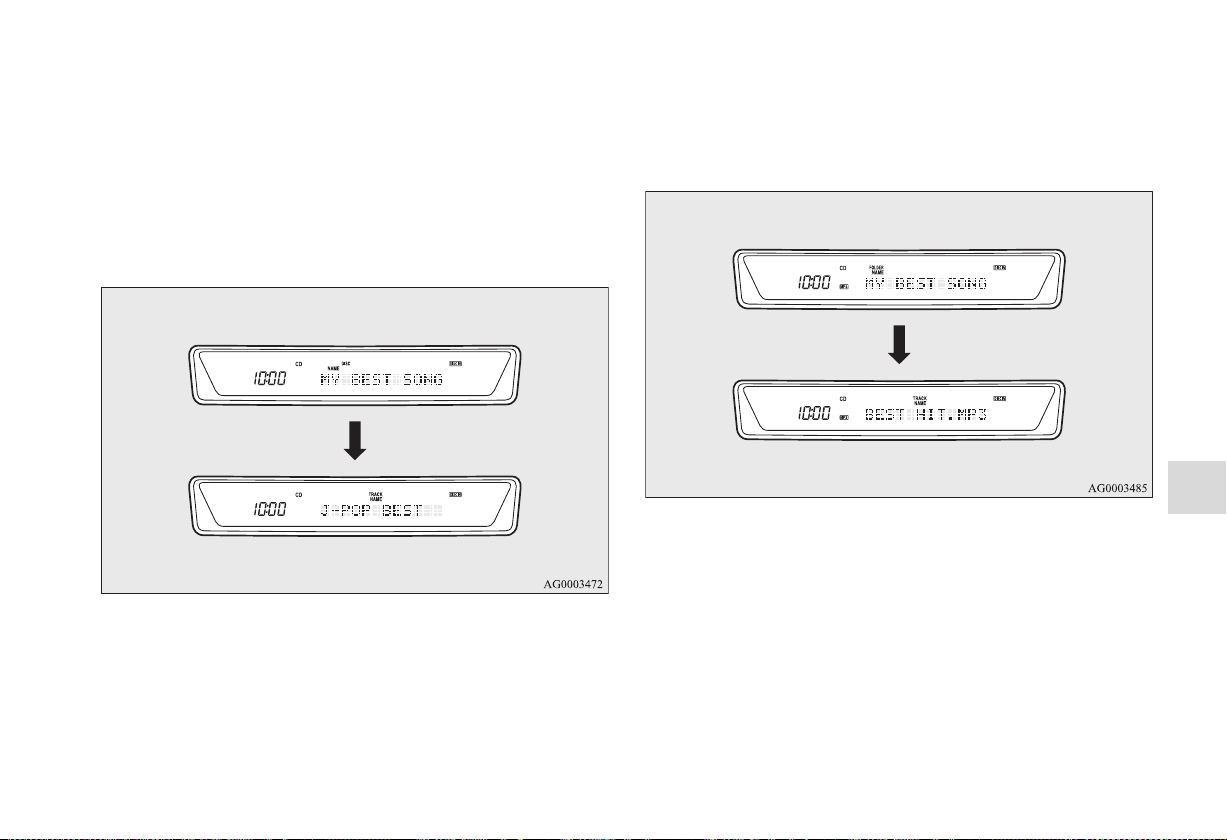
Comfort controls
5-79
5
CD text and MP3 title display
N00752100137
This CD player can display CD text and MP3 titles including
ID3 tag information.
CD text
The CD player can display disc and track titles for discs
encoded with disc and track title information. Press the DISP
button (5) repeatedly to make selections in the following
sequence: disc name → track name → normal display mode.
N
OTE
● The display can show up to 12 characters. If a disc name
or track name has more than 12 characters, press the
PAGE button (4) to view the next 12 characters.
● When there is no title information to be displayed, the dis-
play shows “NO TITLE”.
● Characters that the CD player cannot display are shown as
“•”.
MP3 title
The CD player can display folder and track titles for discs
encoded with folder and track information. Press the DISP but-
ton (5) repeatedly to make selections in the following
sequence: folder name → track name → normal display mode.
BK0138600US.book 79 ページ 2011年7月17日 日曜日 午後2時32分

5-80
Comfort controls
5
ID3 tag information
The CD player can display ID3 tag information for files that
have been recorded with ID3 tag information.
1. Press the DISP button (5) for 2 seconds or longer to
switch to the ID3 tag information. “TAG” indicator will
appear on the display.
2. Press the DISP button (5) repeatedly to make selections in
the following sequence: album name → track name →
artist name → normal display mode.
N
OTE
● To return from ID3 tag information to the folder name,
press the DISP button (5) again for 2 seconds or longer.
● When there is no title information to be displayed, the dis-
play shows “NO TITLE”.
● The display can show up to 12 characters. If a folder
name, track name, or item of ID3 tag information has
more than 12 characters, press the PAGE button (4) to
view the next 12 characters.
● Folder names and track names can each be displayed up to
a length of 32 characters. Items of ID3 tag information
can each be displayed up to a length of 30 characters.
● Characters that the CD player cannot display are shown as
“•”.
AM/FM electronically tuned radio with 6
CD autochanger (RBDS and MP3 compati-
ble)
(if so equipped)
N00734300935
The audio system can only be used when the ignition switch is
in the “ON” or “ACC” position.
N
OTE
● To listen to the audio system while the engine is not run-
ning, turn the ignition switch to the “ACC” position.
If the ignition switch is left in the “ACC” position, the
accessory power will automatically turn off after a certain
period of time and you will no longer be able to use the
audio system. The accessory power comes on again if the
ignition switch is turned from the “ACC” position. Refer
to “ACC power auto-cutout function” on page 3-86.
● If a cellular phone is used inside the vehicle, it may create
noise in the audio equipment. This does not mean that
anything is wrong with your audio equipment. In such a
case, use the cellular phone at a place as far as possible
from the audio equipment.
● If foreign objects or water get into the audio equipment, or
if smoke or a strange odor comes from it, immediately
turn off the audio system and have it checked at an autho-
rized Mitsubishi Motors dealer or a repair facility of your
choice. Never try to repair it yourself. Avoid using the
audio system until it is inspected by a qualified person.
● If the audio system is damaged by foreign objects, water,
or fire, have the system checked by a qualified Mitsubishi
Motors technician.
BK0138600US.book 80 ページ 2011年7月17日 日曜日 午後2時32分

Comfort controls
5-81
5
● The audio amplifier (if so equipped) is located under the
front left seat.
Do not subject the amplifier to a strong impact.
It could damage the amplifier or malfunctioning could
result.
SIRIUS
™
Satellite Radio (if so equipped)
N00760100107
Satellite radio uses direct satellite to receiver broadcasting
technology to provide clear digital sound, coast to coast. The
subscription service provider is SIRIUS Satellite Radio. This
service offers over 100 channels of music, sports, news, enter-
tainment, and programming for listeners, directly from its sat-
ellites and broadcasting studios.
System activation
To activate your SIRIUS Satellite Radio service, call the toll-
free number 888-539-SIRIUS (7474), or visit the Sirius web
site at www.sirius.com. Please have the following information
available when activating your system:
1. The Sirius Identification Number (SIRIUS ID). Refer to
the section “SIRIUS ID indication” on page 5-93.
2. Credit card information.
3. Your Vehicle Identification Number. Refer to “Vehicle
identification number plate” on page 9-2.
“SIRIUS,” the SIRIUS dog logo and channel names and logos
are trademarks of SIRIUS Satellite Radio, Inc.
BK0138600US.book 81 ページ 2011年7月17日 日曜日 午後2時32分
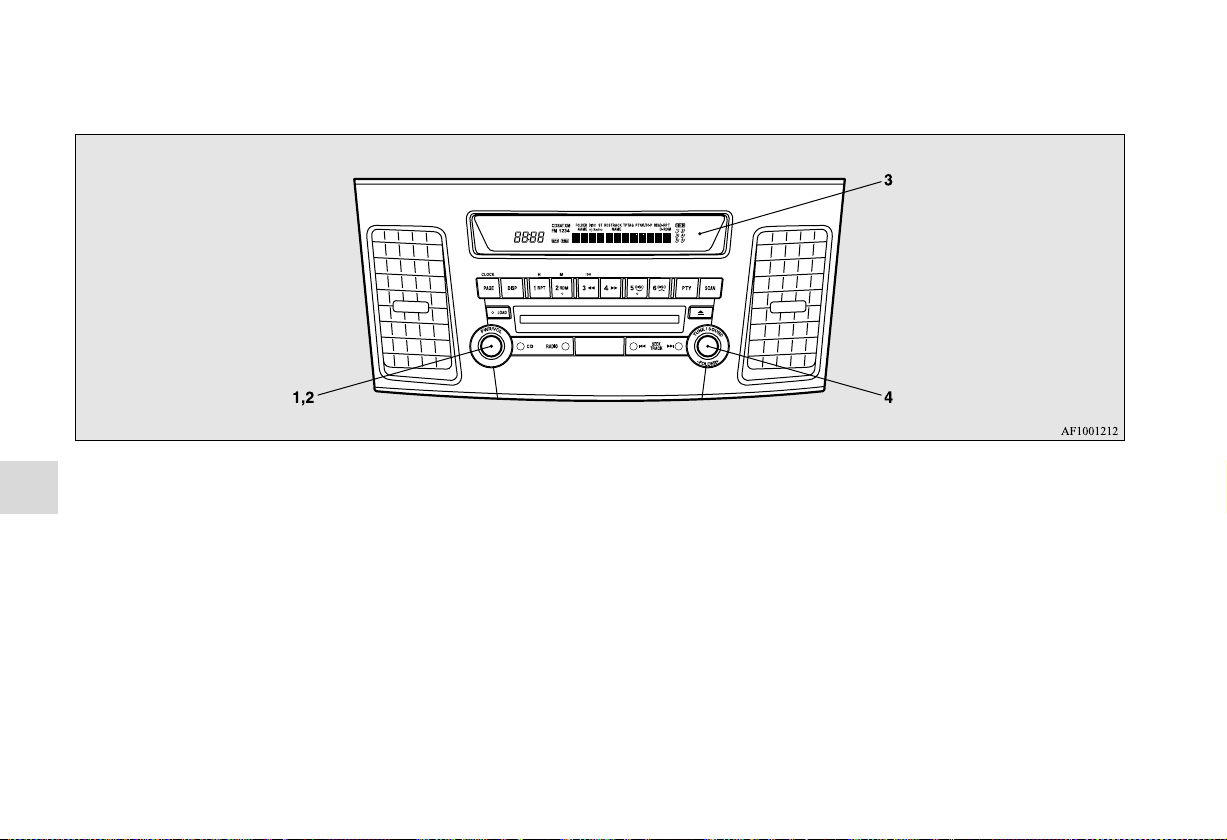
5-82
Comfort controls
5
Volume and tone control panel
N00711900602
1- PWR (On-Off) switch
2- VOL (Volume control) knob
3- Display
4- SOUND (Sound control) switch
BK0138600US.book 82 ページ 2011年7月17日 日曜日 午後2時32分
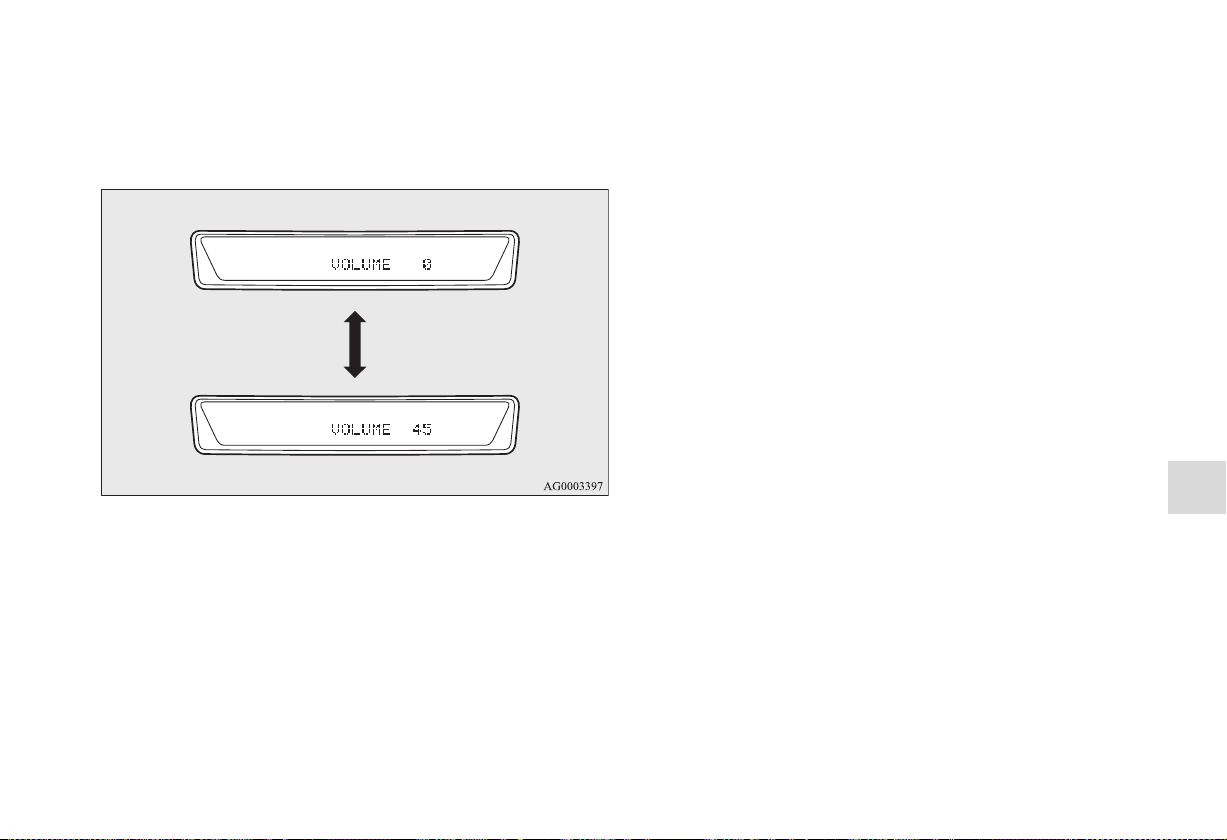
Comfort controls
5-83
5
To adjust the volume
N00712000378
Turn the VOL knob (2) clockwise to increase the volume;
counterclockwise to decrease the volume.
The status will be displayed in the display (3).
N
OTE
● The volume control mode will shut off automatically if
either the radio or CD is selected, or if no adjustment is
made within about 2 seconds.
To adjust the tone
N00712100555
1. Press the SOUND switch (4) repeatedly to select the tone
or balance control to change. The order is: SUB PUNCH
→ TYPE → FIELD → BASS → MID → TREBLE →
FADER → BALANCE → Audio adjust mode OFF
N
OTE
● SUB PUNCH can be adjusted only on vehicles with a pre-
mium sound system.
On other vehicles, pressing the SOUND switch (4) will
display TYPE first.
QUICK ACCESS MODE
To access the sound customization features quickly, push
and hold the SOUND switch (4), then turn the switch
clockwise or counterclockwise to access your desired
sound customization setting. Release the switch to adjust
the setting.
BK0138600US.book 83 ページ 2011年7月17日 日曜日 午後2時32分
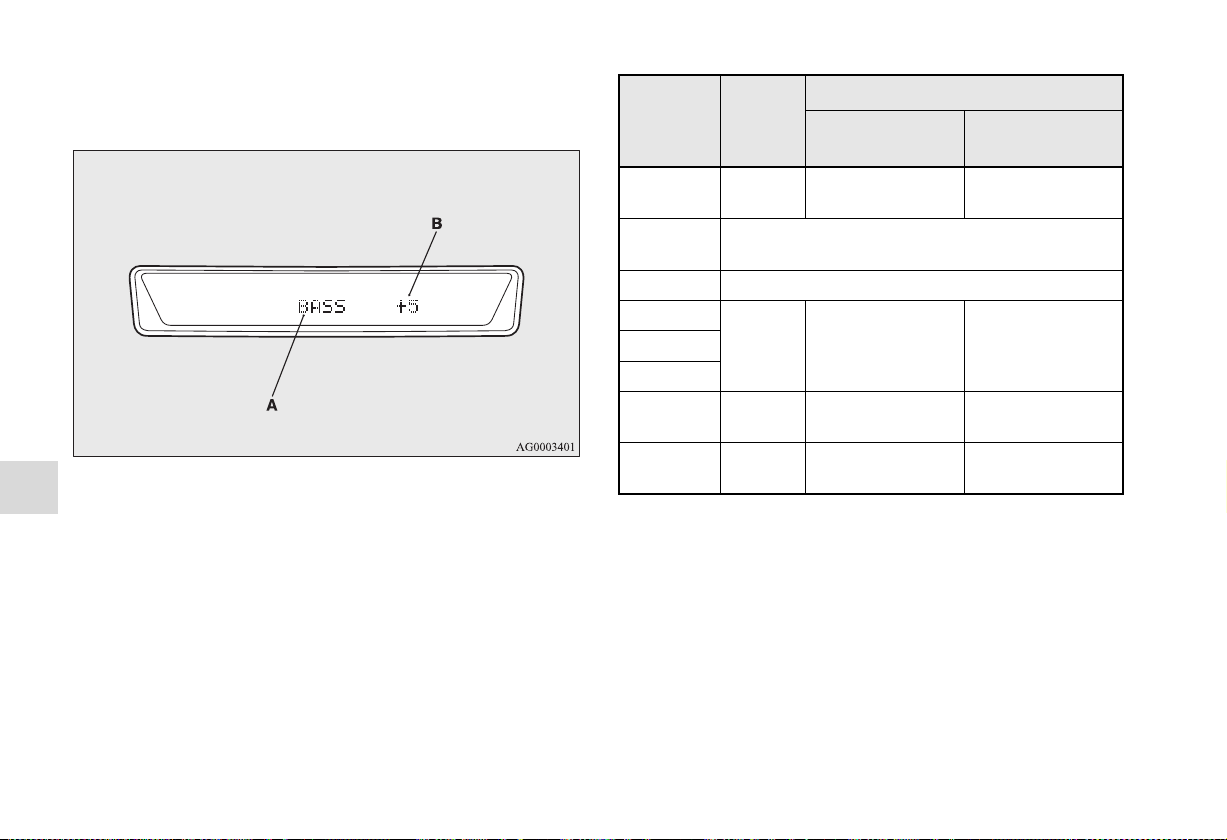
5-84
Comfort controls
5
2. Turn the SOUND switch (4) either clockwise or counter-
clockwise to change the tone/balance setting.
The status will be displayed in the display (3).
A- Adjust mode
B- Adjust level
Adjust
Mode
Adjust
Level
Sound control switch operation
Counterclock-
wise turn
Clockwise turn
SUB
PUNCH
1 to 6 Weaker Stronger
TYPE
NORMAL ↔ POP ↔ ROCK ↔ HIP-HOP ↔
COUNTRY
FIELD NORMAL ↔ STAGE ↔ LIVE ↔ HALL
BASS
-6 to 6 Weaker StrongerMID
TREBLE
FADER
F11 to
R11
R
(Rear) increases
F
(Front) increases
BALANCE
L11 to
R11
L
(Left) increases
R
(Right) increases
BK0138600US.book 84 ページ 2011年7月17日 日曜日 午後2時32分
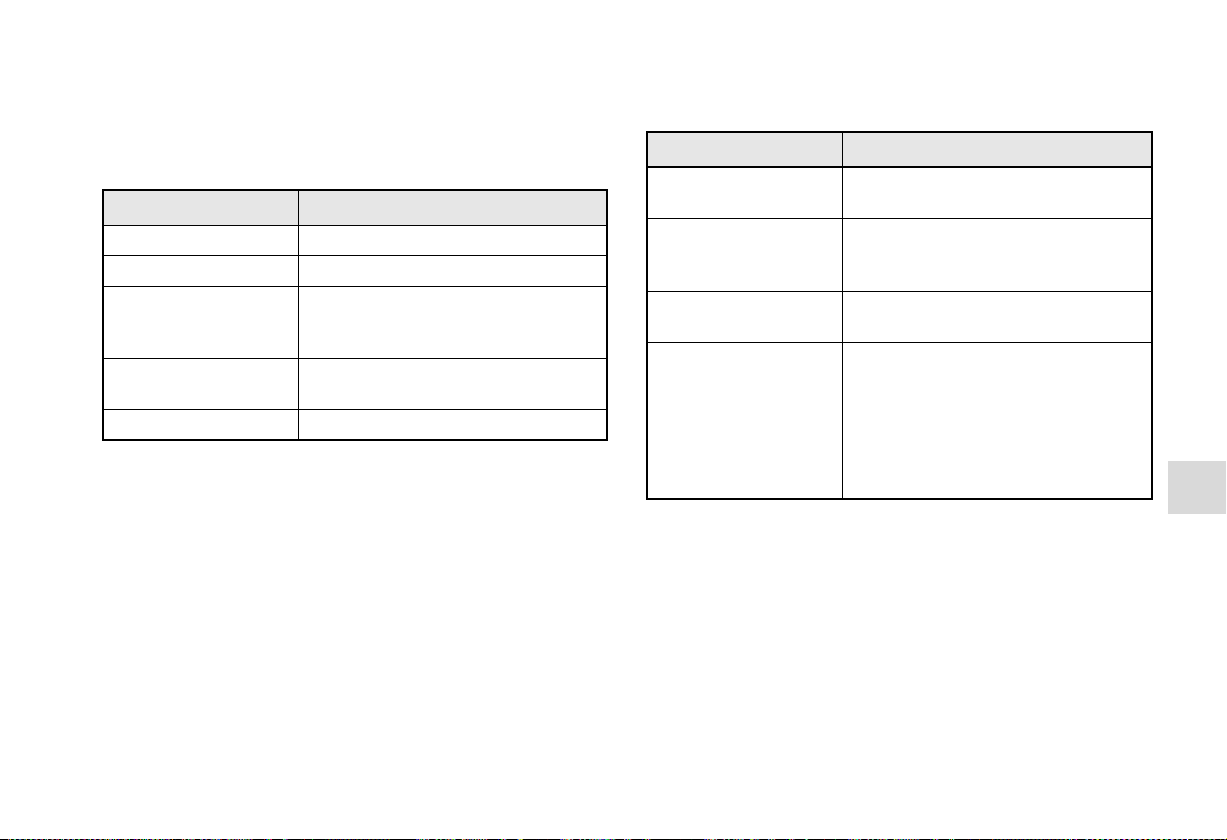
Comfort controls
5-85
5
SUB PUNCH (subwoofer volume control)
To select the desired deep bass level.
TYPE (acoustic characteristic selection)
To select the desired acoustic characteristic.
FIELD (Sound field selection)
To select the desired sound field.
BASS (Bass tone control)
To select the desired bass level.
MID (Midrange tone control)
To select the desired midrange level.
TREBLE (Treble tone control)
To select the desired treble level.
FADER (Front/Rear balance control)
To balance the volume from the F (front) and the R (rear)
speakers.
Acoustic characteristic Description
NORMAL Sounds good for all types of music.
POP Tight bass and high frequency sound.
ROCK
Tuned for hard rock and heavy metal
with powerful drums, guitars, and
vocals.
HIP-HOP
Deep bass punch and well-defined
vocals.
COUNTRY Enhanced main vocals.
Sound field type Description
NORMAL
Optimized for the Rockford Fosgate
high bass output.
STAGE
Places the image of a sound stage in
front of the driver with the vocalist in
the center (for driver only).
LIVE
Front seat occupants are surrounded by
sound from front and rear speakers.
HALL
Places the image of a sound stage in
front of the driver with the vocalist in
the center (for driver only). Sound
reflections are added to the rear speak-
ers to simulate the experience of being
at a concert hall. Best with classical or
vocalist music.
BK0138600US.book 85 ページ 2011年7月17日 日曜日 午後2時32分

5-86
Comfort controls
5
BALANCE (Left/Right balance control)
To balance the volume from the L (left) and the R (right)
speakers.
N
OTE
● When set to “0”, it will beep.
● When PUNCH LEVEL, MUSIC TYPE or SOUND
FIELD is changed, the sound will cut out briefly, but this
does not indicate a malfunction.
● The audio adjust mode will automatically shut off when
either the radio or CD is selected, or if no adjustment is
made within about 10 seconds.
● If the SOUND switch (4) is pushed and held for more than
2 seconds during the audio adjust mode, it will change to
“Hold” mode. The selected audio mode will be held until
the SOUND switch (4) is pushed for more than 2 seconds
again.
Speed Compensated Volume function
N00752200167
Speed Compensated Volume function is a feature that automat-
ically adjusts the VOLUME, BASS, MIDDLE, and TREBLE
settings in accordance with the vehicle speed. It is possible to
turn this function ON-OFF using the following methods:
1. If you are presently pushing the SOUND switch (4) and
making a tone adjustment, finish making the tone adjust-
ment.
2. Push the SOUND switch for at least about 2 seconds. The
system will switch to MENU mode and the characters
“SCV ON” will be shown on the display.
N
OTE
● When you enter the MENU mode while listening to satel-
lite radio (if so equipped), “SKIP SETTING” will be
shown on the display and you will enter the satellite radio
setting mode. Every time you press the SOUND switch
(4), the display will change in the following order: “SKIP
SETTING” → “LOCK SETTING” → “SCV ON.” Press
the SOUND switch (4) until “SCV ON” is shown on the
display, to switch to the setting mode for the Speed Com-
pensated Volume function.
3. Turn the SOUND switch (4) clockwise to the turn the
function ON. Turn it counterclockwise to turn the function
OFF.
N
OTE
● The factory setting for the Speed Compensated Volume
function is ON.
● The MENU mode will automatically shut off when either
the radio or CD is selected or the user does not move any
of the switches for 10 seconds.
BK0138600US.book 86 ページ 2011年7月17日 日曜日 午後2時32分
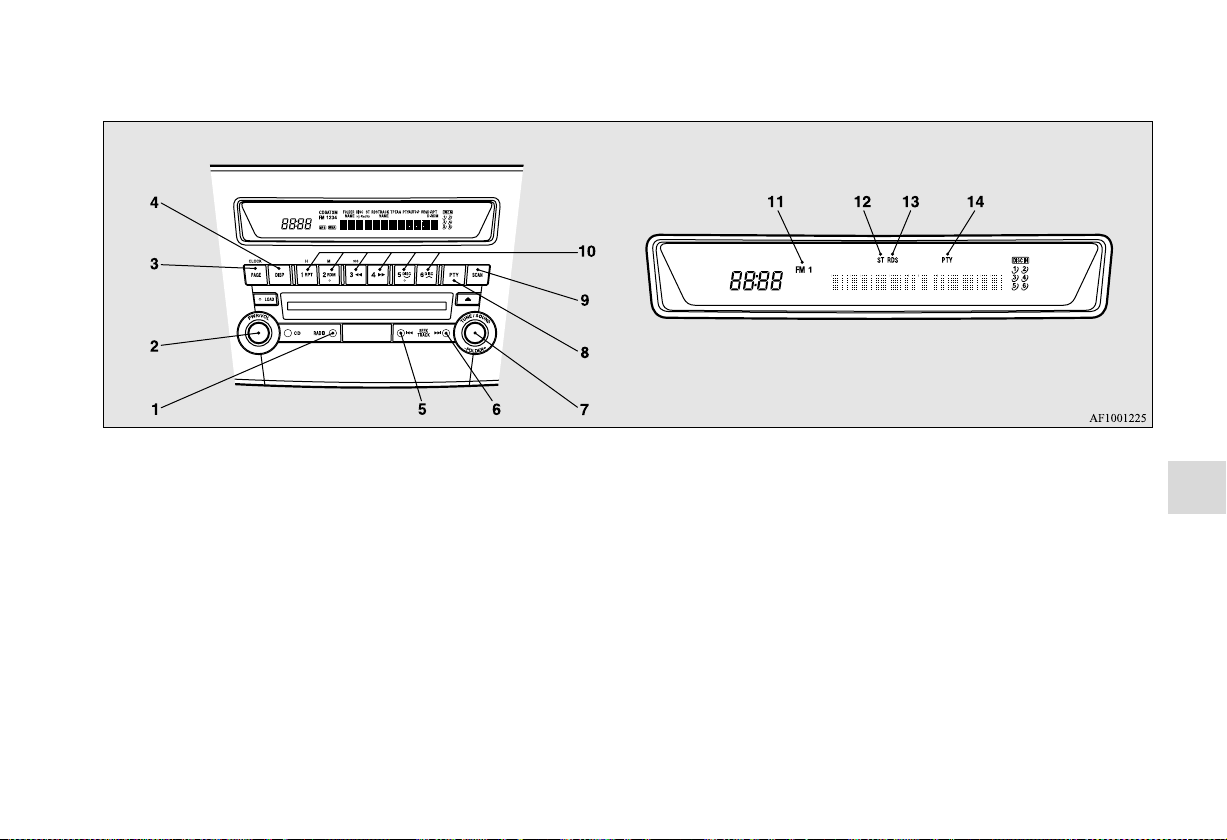
Comfort controls
5-87
5
Radio control panel and display
N00734900713
1- RADIO (AM/FM selection) button
2- PWR (On-Off) switch
3- PAGE button
4- DISP (Display) button
5- SEEK (Down-seek) button
6- SEEK (Up-seek) button
7- TUNE switch
8- PTY (Program Type) button
9- SCAN button
10- Memory select buttons
11- FM (FM1/FM2) display
12- ST (Stereo) indicator
13- RBDS (Radio Broadcast Data System) indicator
14- PTY (Program Type) indicator
BK0138600US.book 87 ページ 2011年7月17日 日曜日 午後2時32分

5-88
Comfort controls
5
To listen to the radio
N00735000779
1. Press the PWR switch (2) to turn the audio system ON and
OFF. The system turns on in the last mode used.
Press the RADIO button (1) to turn ON the radio.
2. Press the RADIO button (1) to select the desired band
(AM/FM1/FM2).
3. Press the SEEK button (5 or 6) to tune to a station, or
press one of the Memory select buttons (10) to recall a sta-
tion memorized for that button.
Refer to “Automatic tuning”, “Manual tuning” or “To
enter frequencies into the memory”.
Automatic tuning
After pressing the SEEK button (5 or 6), a receivable station
will be automatically selected and reception of the station will
begin.
SCAN function
Press the SCAN button (9). The radio will tune consecutively
to each available station for about 5 seconds per station. If you
want to stop scanning, press the SCAN button again.
The frequency display of the current station flashes once per
second during SCAN.
Manual tuning
The frequency changes every time the TUNE switch (7) is
turned.
Turn the switch to select the desired station.
To enter frequencies into the memory
As many as 6 AM and 12 FM stations can be entered into the
memory.
To store a frequency in the memory, follow these steps:
1. Press the SEEK button (5 or 6), or turn the TUNE switch
(7) to tune to the frequency you wish to keep in the mem-
ory.
2. Press one of the Memory select buttons (10) until it beeps.
The sound will be momentarily interrupted while the fre-
quency is being entered into the memory. The number of
the button matching the entry in the memory as well as the
frequency are displayed.
3. To recall a frequency that has been saved in memory,
press the corresponding button briefly for no longer than
about 1 second.
N
OTE
● Disconnecting the battery cables erases all the radio sta-
tion settings stored in the memory.
BK0138600US.book 88 ページ 2011年7月17日 日曜日 午後2時32分

Comfort controls
5-89
5
Radio broadcast data system (RBDS)
N00751800065
RBDS features are available for use only on FM stations that
broadcast RBDS information.
This RBDS radio can search for stations broadcasting the
selected type of programming and display messages from radio
stations.
PTY (Program Type)
RBDS broadcasts are classified according to program type
(PTY) as follows.
To search for a broadcast of desired PTY
1. To enter PTY (Program Type) mode, press the PTY button
(8) during FM reception.
2. Press the PTY button repeatedly until your desired PTY is
reached.
You can press one of the Memory select buttons (10) for
about 2 seconds to save the currently displayed PTY to
that Memory select button. Thereafter, you can easily call
up your desired PTY by pressing the corresponding Mem-
ory select button.
3. Press the SEEK button (5 or 6), and the radio will begin to
search for a broadcast of the selected PTY. During search,
the selected PTY on the display blinks and the sound will
be momentarily interrupted.
4. When the radio picks up a station with your desired PTY,
the PTY and the frequency will each appear on the display
for 2 seconds. Then the PTY and the station name will
alternately appear on the display for 6 seconds.
5. The frequency will appear on the display. Then the radio
will start receiving the program and exit the PTY mode.
1. ROCK
2. COUNTRY
3. EASY LIS
4. CLASSICL
5. JAZZ
6. Top 40
7. R&B
8. INFORM
9. RELIGION
10. MISC
BK0138600US.book 89 ページ 2011年7月17日 日曜日 午後2時32分
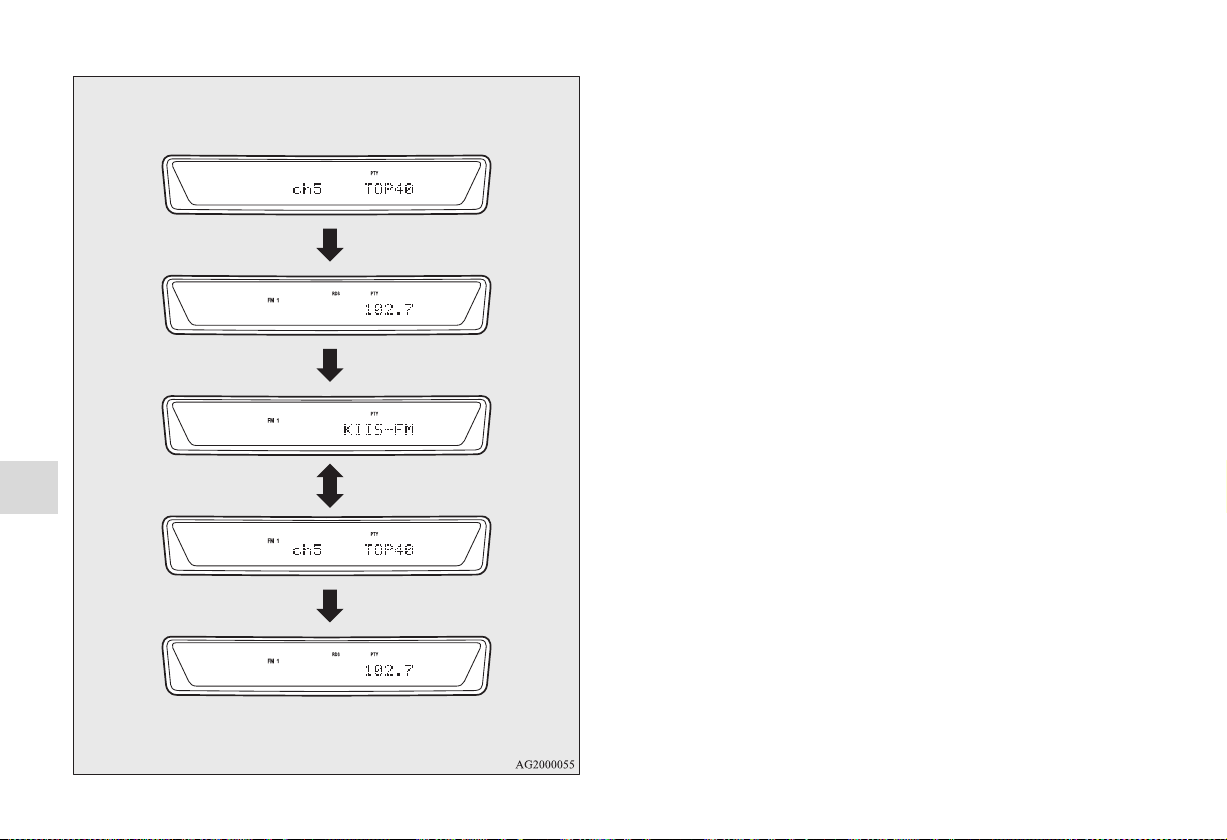
5-90
Comfort controls
5
N
OTE
● If you wish to listen to another station of the same PTY as
currently selected, repeat the previous procedure from
step 2.
● To display the station name and the PTY, press the DISP
button (4) and the PTY button (8) respectively.
● If no station is found with your desired PTY, “EMPTY”
will appear on the display for 5 seconds. Then the radio
will return to the previous station and exit the PTY mode.
● If the radio cannot read the station name, the PTY and the
frequency will alternately appear on the display for 6 sec-
onds. Then the radio will start receiving the program and
exit the PTY mode.
Scan function
1. After selecting your desired PTY, press the SCAN button
(9). The radio will tune consecutively to each available
station of the selected PTY for about 5 seconds per sta-
tion.
2. To stop the scan mode, press the SCAN button again.
BK0138600US.book 90 ページ 2011年7月17日 日曜日 午後2時32分

Comfort controls
5-91
5
Text message
The radio can receive text messages broadcast by some RBDS
stations.
1. While tuning in to an RBDS station, press the DISP but-
ton (4).
2. A text message will appear on the display. If a station
name appears, press the DISP button again, then the text
message will be displayed.
3. To cancel the text message display, press the DISP button
again.
N
OTE
● When there is no text message to be displayed, the display
shows “NO MESSAGE” and then shows the frequency.
● The display can show up to 12 characters. If a text mes-
sage has more than 12 characters, press the PAGE button
(3) to view the next 12 characters.
BK0138600US.book 91 ページ 2011年7月17日 日曜日 午後2時32分
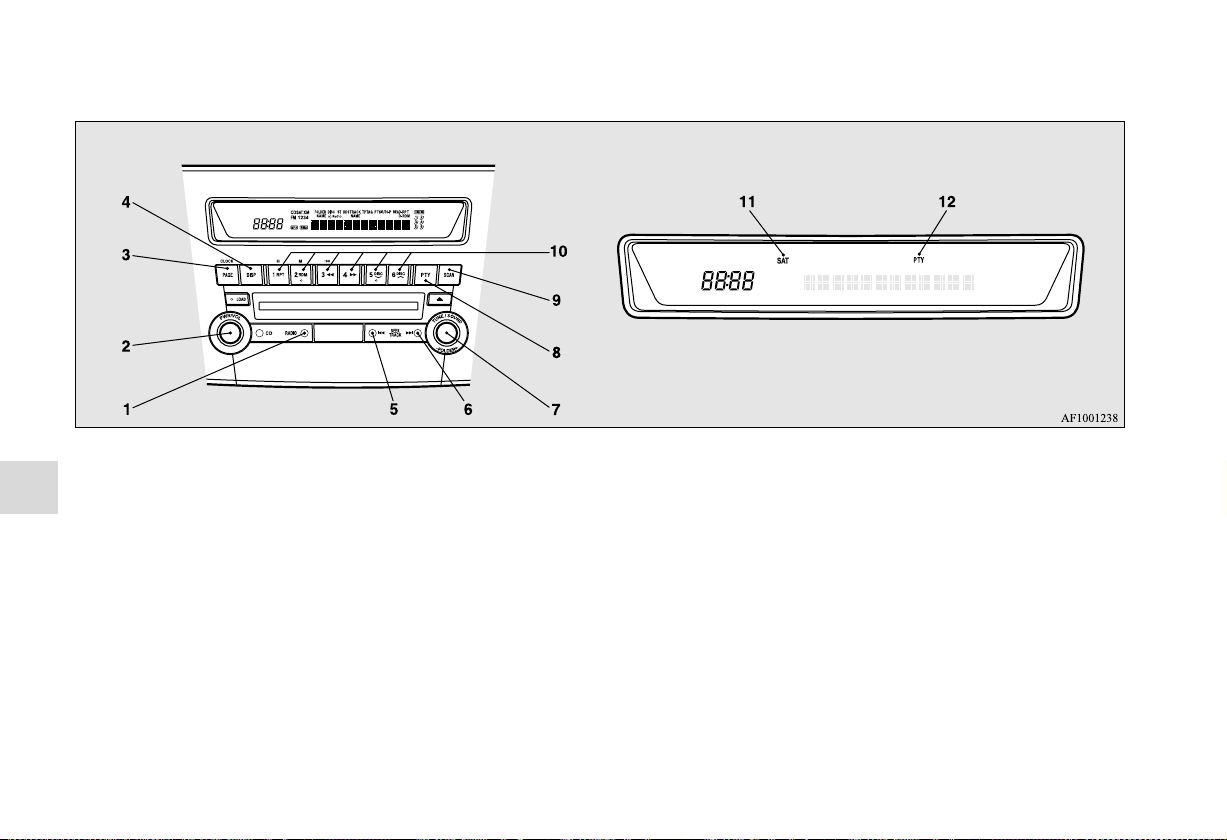
5-92
Comfort controls
5
SIRIUS satellite radio control panel and display
N00700200184
1- RADIO (AM/FM/Satellite radio selection) button
2- PWR (On-Off) switch
3- PAGE button
4- DISP (Display) button
5- Channel selection down button
6- Channel selection up button
7- TUNE/SOUND (Category selection) switch
8- PTY button
9- SCAN button
10- Memory select buttons
11 - SAT (SAT1/SAT2/SAT3/S AT 4 ) display
12- PTY indicator
BK0138600US.book 92 ページ 2011年7月17日 日曜日 午後2時32分

Comfort controls
5-93
5
To listen to the SIRIUS satellite radio
N00760500156
1. Press the PWR switch (2) to turn the audio system ON and
OFF. The system turns on in the last mode used.
Press the RADIO button (1) to turn ON the radio.
2. Press the RADIO button (1) to select the desired band
(SAT1/SAT2/SAT3/SAT4). Each time you push the but-
ton, the display will change in the following order:
AM→FM1→FM2→SAT1→SAT2→SAT3→SAT4.
Once the display shows “SIRIUS,” satellite radio recep-
tion will begin.
Category selection
1. Pressing the PTY button (8) will cause the category of the
channel that is currently being received to be displayed for
around 2 seconds.
2. If the TUNE/SOUND switch (7) is turned, the system will
change to the Category selection mode, the current cate-
gory will be shown in the display, and the PTY indicator
(12) will light up.
3. Turning the TUNE/SOUND switch (7) while in the cate-
gory selection mode, the next category will be shown.
N
OTE
● Selecting a different category will not change the channel.
During category selection, the original channel will con-
tinue to be received. Use a channel selection button (5 or
6) to change the channel.
● If you do not use the satellite radio again before 15 sec-
onds have elapsed, the category selection mode will be
canceled. (The PTY indicator (12) will go out.)
● Pressing the PTY button (8) while in the category selec-
tion mode will cause the current channel to be displayed
for around 2 seconds.
Channel selection
You can select a channel by pressing a channel selection button
(5 or 6).
N
OTE
● While in the category selection mode, only channels in the
category can be selected.
Scan function
1. Pressing the SCAN button (9) will cause the satellite radio
to tune consecutively to each available channel for about 7
seconds per channel.
2. To stop the scan mode, press the SCAN button (9) again.
N
OTE
● While in the category selection mode, only channels in the
category can be scanned.
BK0138600US.book 93 ページ 2011年7月17日 日曜日 午後2時32分
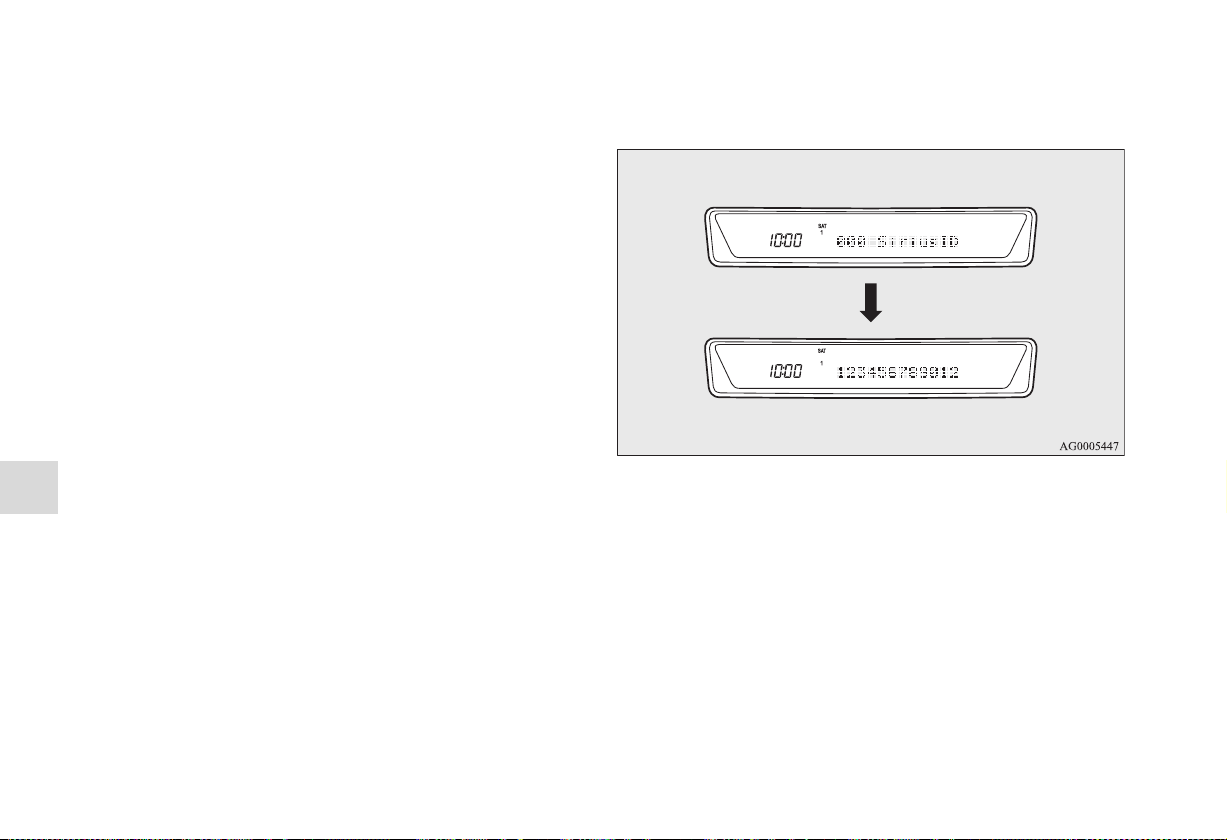
5-94
Comfort controls
5
To enter channels into the memory
You can save one channel to each Memory select button (10),
for a maximum of 24 channels in memory.
To store a channel in the memory, follow these steps:
1. Press a channel selection button (5 or 6) and select the
channel that you wish to keep in the memory.
2. Press one of the Memory select buttons (10) until it beeps,
indicating that the channel has been stored in memory.
N
OTE
● If you store a channel in the memory, you can call up your
desired channel immediately by simply pushing the corre-
sponding Memory select button (10).
SIRIUS ID indication
If you press a channel selection button (5 or 6) to select “CH
0,” the SIRIUS ID will be displayed.
1. If you select “CH 0,” the SIRIUS ID (12 digits) will be
displayed.
2. To stop the SIRIUS ID indication, press a channel selec-
tion button (5 or 6) and select a channel other than “CH
0.”
BK0138600US.book 94 ページ 2011年7月17日 日曜日 午後2時32分

Comfort controls
5-95
5
To skip or lock a desired channel - MENU mode
You can set the satellite radio so that it locks a desired channel
or skips the channel during channel selection.
1. While the satellite radio is tuned in to the channel, press
the TUNE/SOUND switch (7) for about 2 seconds or
longer to enter the MENU mode.
2. In the MENU mode, the satellite radio channel SKIP set-
ting and LOCK setting are possible.
Each time you press the TUNE/SOUND switch (7), the
status will change in the following sequence.
“SKIP SETTING” (SKIP setting mode) → “LOCK SET-
TING” (LOCK setting mode) → “SCV ON” → “PHONE
OFF” → MENU mode off.
N
OTE
● The MENU mode will automatically shut off when either
the radio or CD is selected, when the TUNE/SOUND
switch (7) is pressed for about 2 seconds or longer, or
when the radio is left alone for 10 seconds.
● The SKIP settings, LOCK settings and lock cancellation
code are stored in memory.
Disconnecting the battery cable will erase these settings.
(The lock cancellation code will reset to the factory set-
ting: “1111.”)
● For more information on the SCV function, refer to
“Speed Compensated Volume function” on page 5-86.
● “PHONE OFF” is displayed but the function is not
enabled.
● If the vehicle is equipped with a Mitsubishi Motors autho-
rized hands-free phone system, “PHONE OFF” will not
be displayed.
“SKIP SETTING” (SKIP Setting Mode)
You can set any channel to be skipped during channel selec-
tion. You can also cancel a skip setting.
You can turn the TUNE/SOUND switch (7) and select “SKIP
CH” or “UNSKIP ALL.”
These functions are described below.
“LOCK SETTING” (LOCK Setting Mode)
You can lock any channel of your choice or unlock a locked
channel.
You can turn the TUNE/SOUND switch (7) and select “LOCK
CH” (or “UNLOCK CH”), “UNLOCK ALL” or “CODE
EDIT.”
These functions are described below.
N
OTE
● If the channel that is currently being received is not
locked, you can select “LOCK CH”; if it is locked, you
can select “UNLOCK CH.”
SKIP CH: Sets the satellite radio so that it skips
the channel that is currently being
received.
UNSKIP ALL: Cancels skip setting on all channels.
LOCK CH: Locks the channel that is currently
being received.
UNLOCK CH: Unlocks the channel that is currently
being received.
UNLOCK ALL: Cancels lock setting on all channels.
CODE EDIT: Changes the lock cancellation code.
BK0138600US.book 95 ページ 2011年7月17日 日曜日 午後2時32分

5-96
Comfort controls
5
To skip a desired channel
You can set any channel to be skipped during channel selec-
tion.
1. Select the channel that you want to skip.
2. Press the TUNE/SOUND switch (7) for about 2 seconds
or longer to enter the MENU mode. Then select the SKIP
setting mode.
3. In the SKIP setting mode, turn the TUNE/SOUND switch
(7) and select “SKIP CH.”
4. Press the TUNE/SOUND switch (7). “STORED” will be
shown for 2 seconds and then the channel that is currently
being received will be set to be skipped.
5. After the skip setting is made, the radio will tune into the
next channel after the channel that was set to be skipped.
If you want to this channel to be skipped as well, press the
TUNE/SOUND switch (7) again.
N
OTE
● The channel that was set to be skipped will be skipped
automatically during channel selection.
● Channels that are stored in the preset memory can also be
set to be skipped. When the corresponding memory select
button (10) is pushed to call up the channel, “SKIP
CHANNEL” will appear on the display and the audio will
be muted.
To cancel skip settings
You can cancel skip settings on channels.
1. Press the TUNE/SOUND switch (7) for about 2 seconds
or longer to enter the MENU mode. Then select the SKIP
setting mode.
2. In the SKIP setting mode, turn the TUNE/SOUND switch
(7) and select “UNSKIP ALL.”
3. Press the TUNE/SOUND switch (7). “STORED” will be
shown for 2 seconds and then skip settings on all channels
will be cancelled. After you cancel the setting, the satellite
radio will return to the SKIP setting mode. (The display
will show “SKIP SETTING.”)
To lock a desired channel
You can lock any channel of your choice.
1. Select the channel that you want to lock.
2. Press the TUNE/SOUND switch (7) for about 2 seconds
or longer to enter the MENU mode. Then select the
LOCK setting mode.
3. In the LOCK setting mode, turn the TUNE/SOUND
switch (7) and select “LOCK CH.”
4. Press the TUNE/SOUND switch (7). “LOCKED” will be
displayed for 2 seconds and then the channel that is cur-
rently being received will be locked. The satellite radio
then returns to the LOCK setting mode.
N
OTE
● If you attempt to select a locked channel, the display will
show “LOCKED” or “PARENTAL LOCK.”
● Channels that are stored in the preset memory can also be
locked.
BK0138600US.book 96 ページ 2011年7月17日 日曜日 午後2時32分
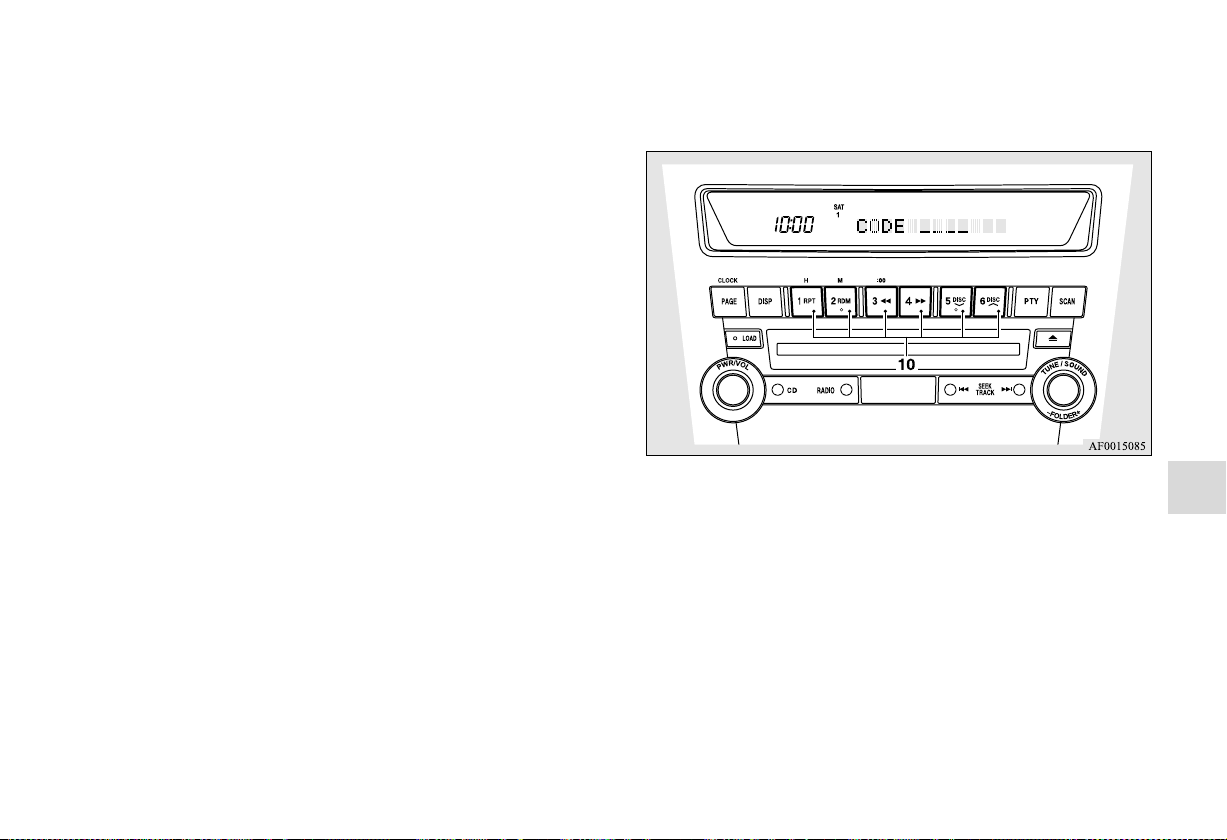
Comfort controls
5-97
5
To unlock locked channels
There are two ways to unlock a locked channel. One way is to
unlock a single locked channel of your choice. The other way
is to unlock all locked channels.
To unlock a locked channel, you must enter the lock cancella-
tion code.
1. To unlock a single locked channel of your choice, select
the locked channel that you want to unlock. (If you want
to unlock all locked channels, it doesn’t matter which
locked channel you have selected.)
2. Press the TUNE/SOUND switch (7) for about 2 seconds
or longer to enter the MENU mode. Then select the
LOCK setting mode.
3. In the LOCK setting mode, turn the TUNE/SOUND
switch (7) and select “UNLOCK CH” when you want to
unlock one locked channel of your choice or “UNLOCK
ALL” when you want to unlock all locked channels.
4. When you press the TUNE/SOUND switch (7), the code
entry window will be shown in the display.
5. Use the Memory select buttons (10) to enter the code
(1111 to 6666) and then press the TUNE/SOUND switch
(7).
6. If the entered code is correct, “UNLOCKED” will be
shown and the locked channel(s) will be unlocked. The
satellite radio will then return to the LOCK setting mode.
If the entered code is incorrect, a warning sound will be
emitted and “CODE ERROR” will be displayed. The code
entry window will then be shown again.
You can try to enter the code again, no matter how many
times an incorrect code has been entered.
BK0138600US.book 97 ページ 2011年7月17日 日曜日 午後2時32分

5-98
Comfort controls
5
N
OTE
● The default factory setting for the code is “1111.”
● You can change the code to any number you want with the
“CODE EDIT” function.
● To cancel a code entry, turn the TUNE/SOUND switch (7)
while the code entry window is displayed.
The code entry will be cancelled and then the setting
menu will be switched.
To change the lock cancellation code
You can change the code for unlocking channel(s) to any num-
ber you want.
1. Press the TUNE/SOUND switch (7) for about 2 seconds
or longer to enter the MENU mode. Then select the
LOCK setting mode.
2. In the LOCK setting mode, turn the TUNE/SOUND
switch (7) and select “CODE EDIT.”
3. When you press the TUNE/SOUND switch (7), the code
entry window will be shown in the display.
4. Use the memory select buttons (10) to enter the current
code and then press the TUNE/SOUND switch (7).
5. If the correct code is entered, the code entry window will
be shown again. Enter your desired code.
If the entered code is incorrect, a warning sound will be
emitted and “CODE ERROR” will be displayed. The code
entry window will then be shown again.
You can try to enter the code again, no matter how many
times an incorrect code has been entered.
6. After you enter the new code, press the TUNE/SOUND
switch (7). The code entry window will be shown again
for confirmation. Enter the new code again and press the
TUNE/SOUND switch (7).
BK0138600US.book 98 ページ 2011年7月17日 日曜日 午後2時32分

Comfort controls
5-99
5
7. “STORED” will be displayed for 2 seconds, the code will
be changed and the satellite radio will return to the LOCK
setting mode.
N
OTE
● The SKIP settings, LOCK settings and lock cancellation
code are stored in memory. Disconnecting the battery
cable will erase these settings.
(The lock cancellation code will reset to the default fac-
tory setting: “1111.”)
To reset the lock cancellation code
In case you forget the code, it is possible to reset the code to the
factory setting (1111).
1. With the audio power OFF, press the PWR switch (2) and
the TUNE/SOUND switch (7) at the same time.
The display will show “CODE INITIAL.”
2. Press the TUNE/SOUND switch (7). “YES” will be dis-
played. To reset the code, press the TUNE/SOUND
switch (7) again. “STORED” will be shown for 2 seconds
and the code will be reset.
If you do not want to reset the code, turn the
TUNE/SOUND switch (7) to display “CANCEL” and
then press the TUNE/SOUND switch (7) again.
Text message
You can change what is shown on the display when the satellite
radio tunes into a channel.
Press the DISP button (4) repeatedly to change to your desired
display mode. The order is: Channel Number + Channel Name
→ Category Name → Artist Name → Song Title → Composer
Name
N
OTE
● Category name can also displayed by pressing the PTY
button (8).
● The display can show up to 12 characters. If there are
more than 12 characters, press the PAGE button (3) to
view the next 12 characters.
BK0138600US.book 99 ページ 2011年7月17日 日曜日 午後2時32分
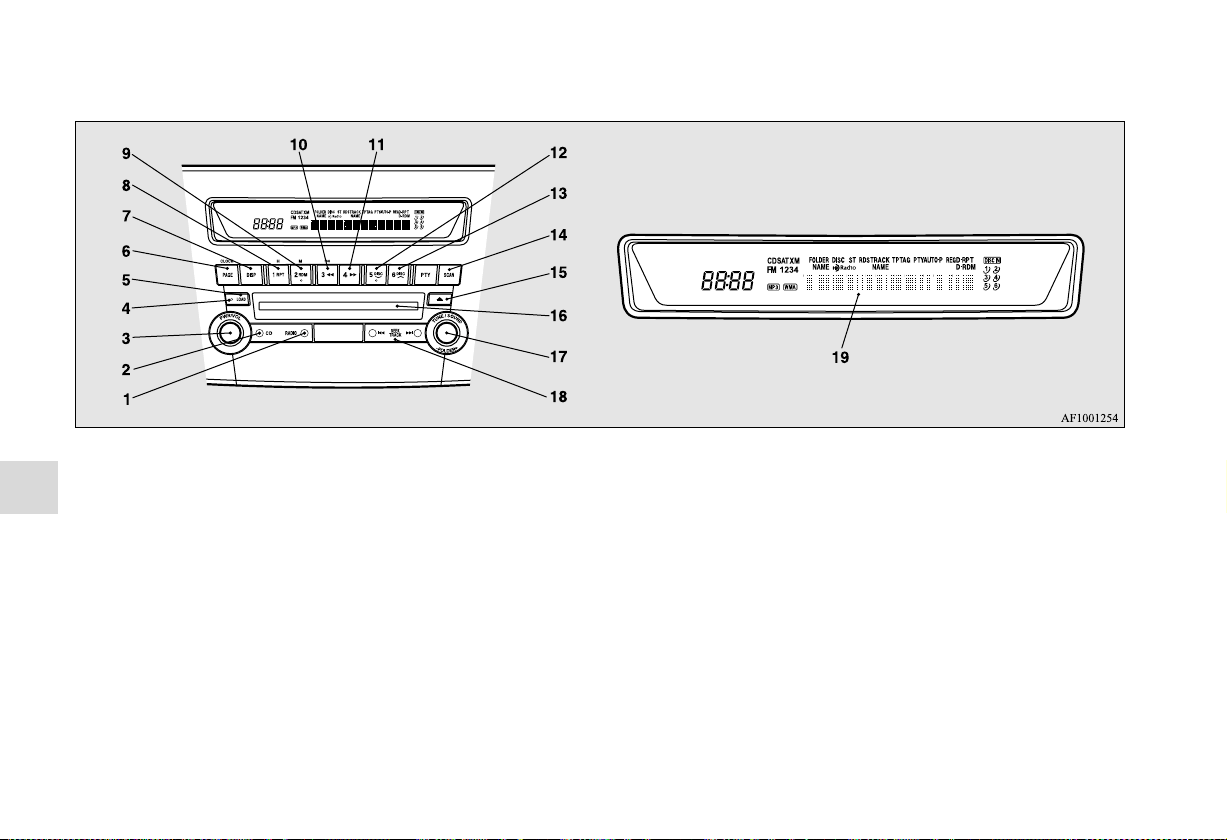
5-100
Comfort controls
5
CD control panel and display
N00735300613
1- RADIO (AM/FM selection) button
2- CD (CD mode changeover) button
3- PWR (On-Off) switch
4- LOAD indicator
5- LOAD button
6- PAGE button
7- DISP (Display) button
8- RPT (Repeat) button
9- RDM (Random) button
10- Fast-reverse button
11- Fast-forward button
12- DISC (Disc down) button
13- DISC (Disc up) button
14- SCAN button
15- Eject button
16- Disc loading slot
17- FOLDER switch
18- TRACK (Track up/down) button
19- Display
BK0138600US.book 100 ページ 2011年7月17日 日曜日 午後2時32分
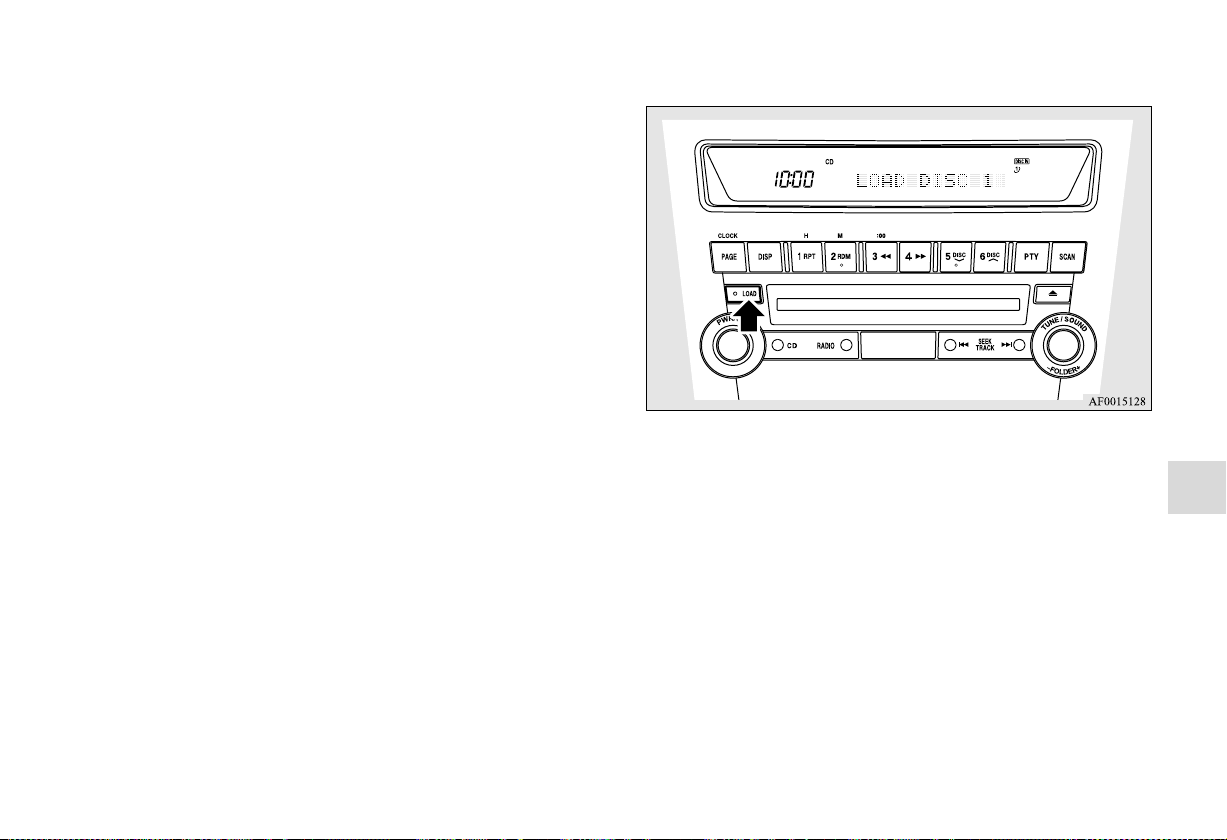
Comfort controls
5-101
5
To listen to a CD
N00735501058
The compact disc (CD) can be loaded or ejected by pressing
the LOAD button (5) or the eject button (15) even if the audio
system power is OFF.
1. Press the PWR switch (3) to turn the audio system ON and
OFF. The system turns on in the last mode used.
2. Press the CD button (2) to enter CD mode. The
autochanger will start playback if the CD is already in the
autochanger.
3. To stop the CD, turn off the power by pressing the PWR
switch (3) or change over to radio mode by pressing the
RADIO button (1), or eject the disc by pressing the eject
button (15).
N
OTE
● For information concerning the adjustment of volume and
tone, refer to “To adjust the volume” on page 5-83 and
“To adjust the tone” on page 5-83.
● As many as 6 CDs can be inserted into the CD
autochanger.
● For information concerning the handing of the compact
discs, refer to “Handling of compact discs” on page 5-145.
To set discs
To set a single disc
1. Press the LOAD button (5) briefly.
2. The autochanger will show “WAIT” on the display and
start making itself ready for disc loading.
3. When the autochanger is ready for disc loading, the
LOAD indicator (4) will illuminate and the display will
show “LOAD DISC No. (1-6)”.
4. When a disc is inserted into the CD slot, the disc will
begin to play.
N
OTE
● If there are multiple empty slots, you can select your
desired slot by pressing the DISC buttons (12 or 13).
● If you do not insert a disc for about 15 seconds after the
autochanger starts standing by for loading, the loading
standby mode will be canceled.
BK0138600US.book 101 ページ 2011年7月17日 日曜日 午後2時32分
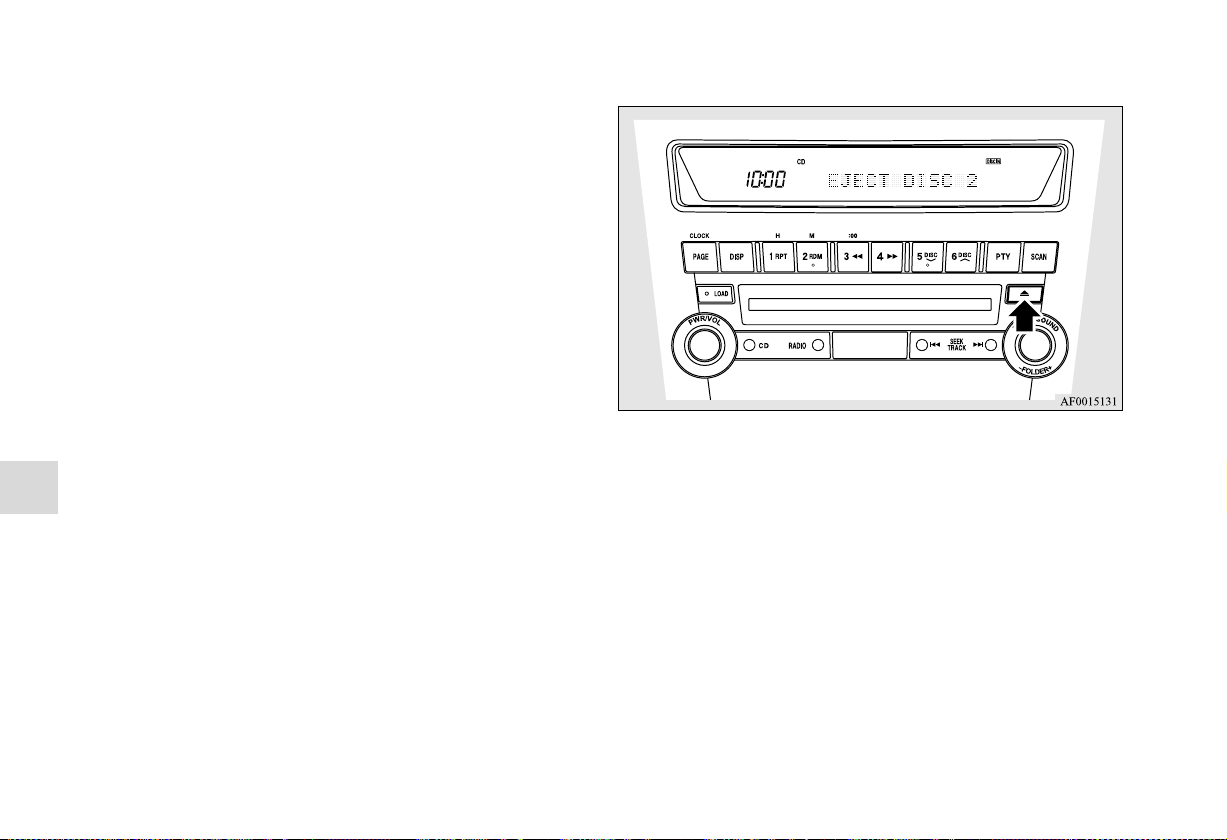
5-102
Comfort controls
5
To set all the discs
1. Press the LOAD button (5) for 2 seconds or longer (until
you hear a beep).
2. The autochanger will select the lowest-numbered empty
slot and switch to loading standby mode.
3. When the display shows “LOAD DISC No. (1-6)”, insert
a disc. The autochanger will then automatically select the
next empty slot and enter loading standby mode.
4. Repeat the above-described steps until every slot contains
a disc. Playback will then begin with the disc that you
inserted last.
N
OTE
● If you press the LOAD button (5) again while the
autochanger is in loading standby mode, the loading
standby mode will be canceled.
To eject discs
To eject a single disc
Press the eject button (15) briefly to eject the currently selected
disc.
N
OTE
● If you press the eject button (15) while the display is
showing “LOAD DISC No. (1-6)”, the loading standby
mode will be canceled and the next disc will be ejected.
● If you do not remove an ejected disc before 15 seconds
have elapsed, the disc will be reloaded and the eject mode
will be canceled. The reloaded disc will not be played.
BK0138600US.book 102 ページ 2011年7月17日 日曜日 午後2時32分
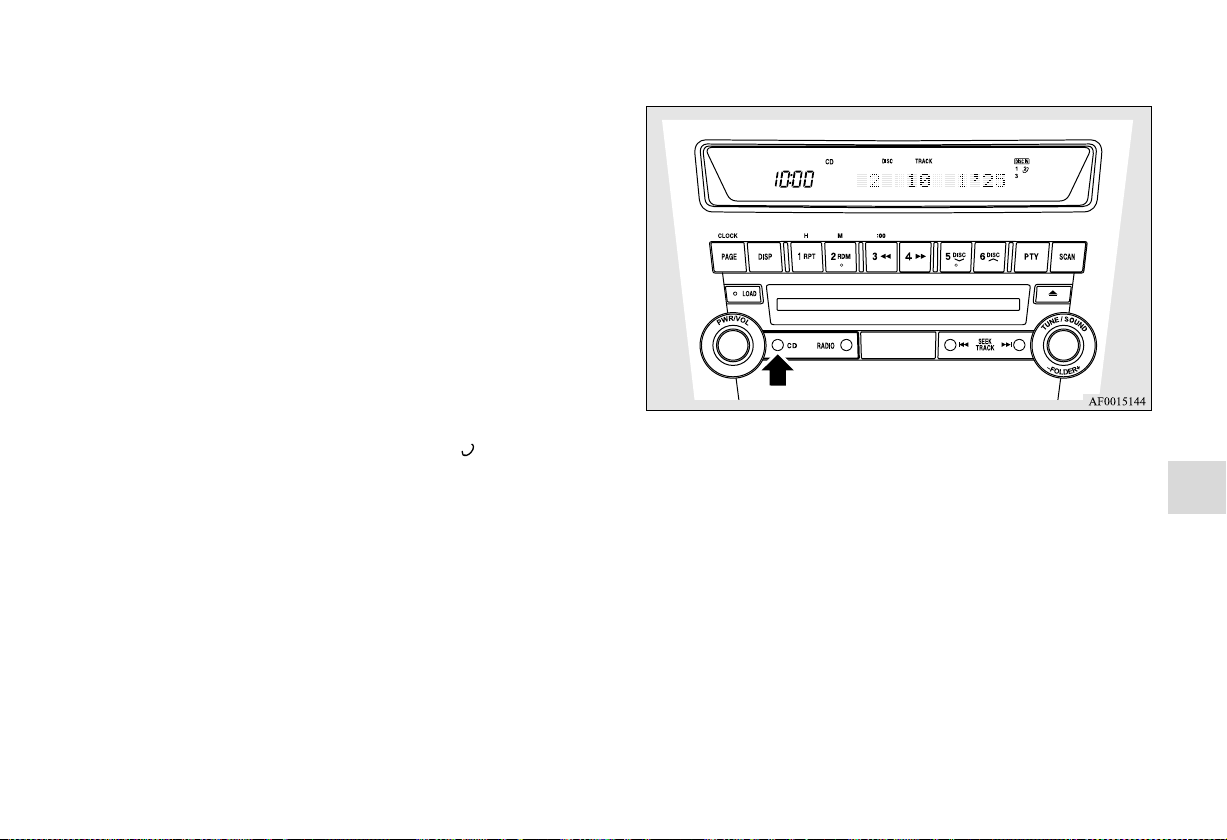
Comfort controls
5-103
5
To eject all the discs
1. Press the eject button (15) for 2 seconds or longer (until
you hear a beep).
2. The currently selected disc will be ejected. When you
remove the ejected disc, the next disc will automatically
be ejected.
3. Repeat the above-described steps until all of the discs
have been ejected. The autochanger will then enter load-
ing standby mode.
N
OTE
● If you do not remove an ejected disc before 15 seconds
have elapsed, the disc will be reloaded and the eject mode
will be canceled. The reloaded disc will not be played.
To select a desired disc
You can select your desired disc by using the DISC button (12
or 13). The active disc will be indicated by “ ” on the display.
Disc up
Press the DISC button (13) repeatedly until the desired disc
number appears on the display.
Disc down
Press the DISC button (12) repeatedly until the desired disc
number appears on the display.
To listen to a music CD
Push the CD button (2) if the discs are already in the
autochanger. The autochanger will enter CD mode and start
playback. The disc number, the track number, and the playing-
time will appear on the display. The discs in the unit will be
played consecutively and continuously.
BK0138600US.book 103 ページ 2011年7月17日 日曜日 午後2時32分
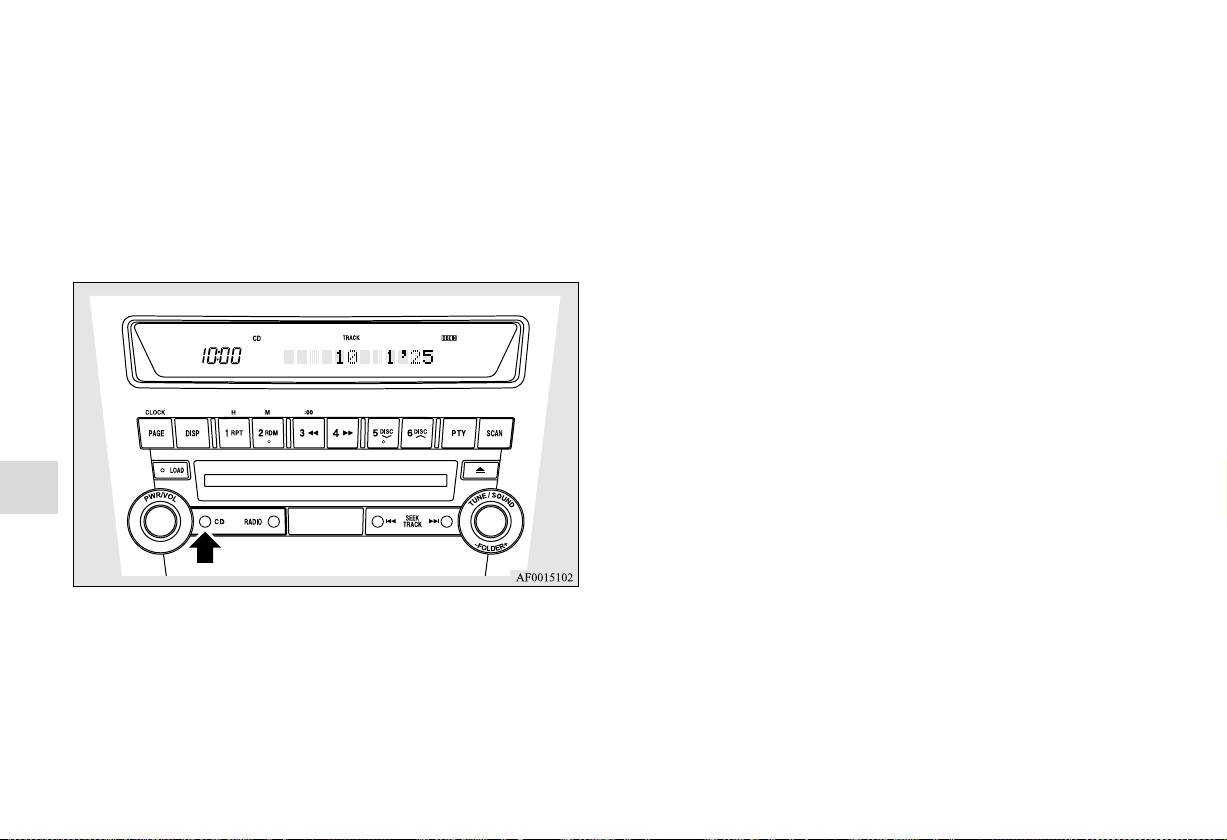
5-104
Comfort controls
5
To listen to an MP3 CD
This autochanger allows you to play MP3 (MPEG Audio
Layer-3) files recorded on CD-ROMs, CD-Rs (recordable
CDs), and CD-RWs (rewritable CDs) in ISO9660 Level
1/Level 2, Joliet, and Romeo formats. Each disc may have a
maximum of 16 trees, 100 folders and 255 files. During MP3
playback, the unit can display ID3 tag information. For infor-
mation concerning ID3 tag, refer to “CD text and MP3 title dis-
play” on page 5-109.
Push the CD button (2) if the discs are already in the
autochanger.
The display shows “READING”, then playback begins. The
folder number, the track number, the playing-time, and “MP3”
indicator will appear on the display.
N
OTE
● While listening to a disc on which CD-DA (CD-Digital
Audio) and MP3 files have both been recorded, you can
switch between reading of the CD-DA, reading of the
MP3 files, and the external audio input mode by pressing
the CD button for 2 seconds or longer (until you hear a
beep).
For information on the external audio input, refer to “To
use the external audio input function” on page 5-132.
● With a disc that contains both CD-DA and MP3 files, the
CD-DA files are automatically played first.
● The playback sound quality differs depending on the
encoding software and the bit rate. For details, refer to the
user manual of your encoding software.
● Depending on file/folder configurations on a disc, it may
take some time before playback starts.
● MP3 encode software and writing software are not sup-
plied with this unit.
● You may encounter trouble in playing an MP3 or display-
ing the information of MP3 files recorded with certain
writing software or CD recorders (CD-R/RW drivers).
● If you record too many folders or files other than MP3
onto a disc, it may take some time before playback starts.
● This unit does not record MP3 files.
● For information concerning CD-Rs/RWs, refer to “Notes
on CD-Rs/RWs” on page 5-147.
BK0138600US.book 104 ページ 2011年7月17日 日曜日 午後2時32分
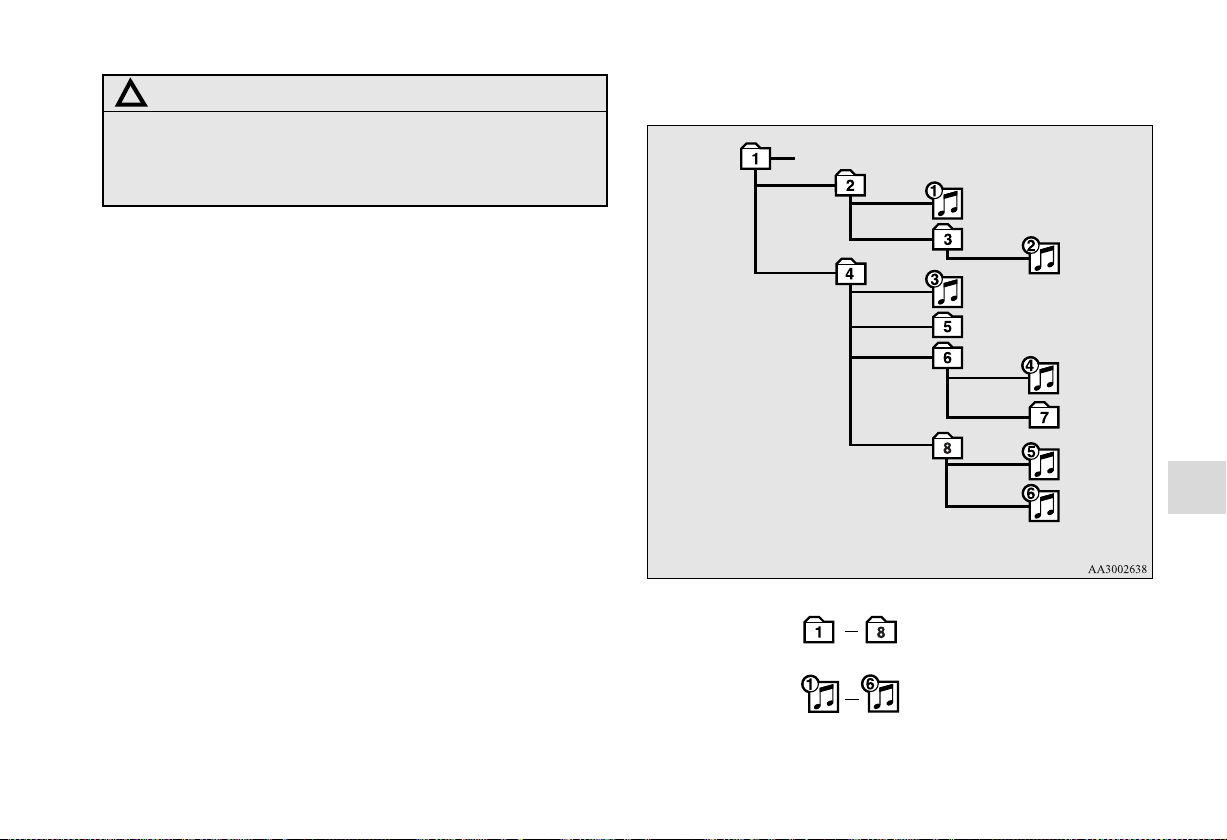
Comfort controls
5-105
5
Folder selection order/MP3 file playback order (Example)
CAUTION
!
● Attempting to play a file not in the MP3 format
which has the “.mp3” file name may produce noise
from the speakers and speaker damage, and can
damage your hearing.
Folder selection
In the order
File selection
In the order
Root folder (Root directory)
Tree 1 Tree 2 Tree 3 Tree 4
BK0138600US.book 105 ページ 2011年7月17日 日曜日 午後2時32分
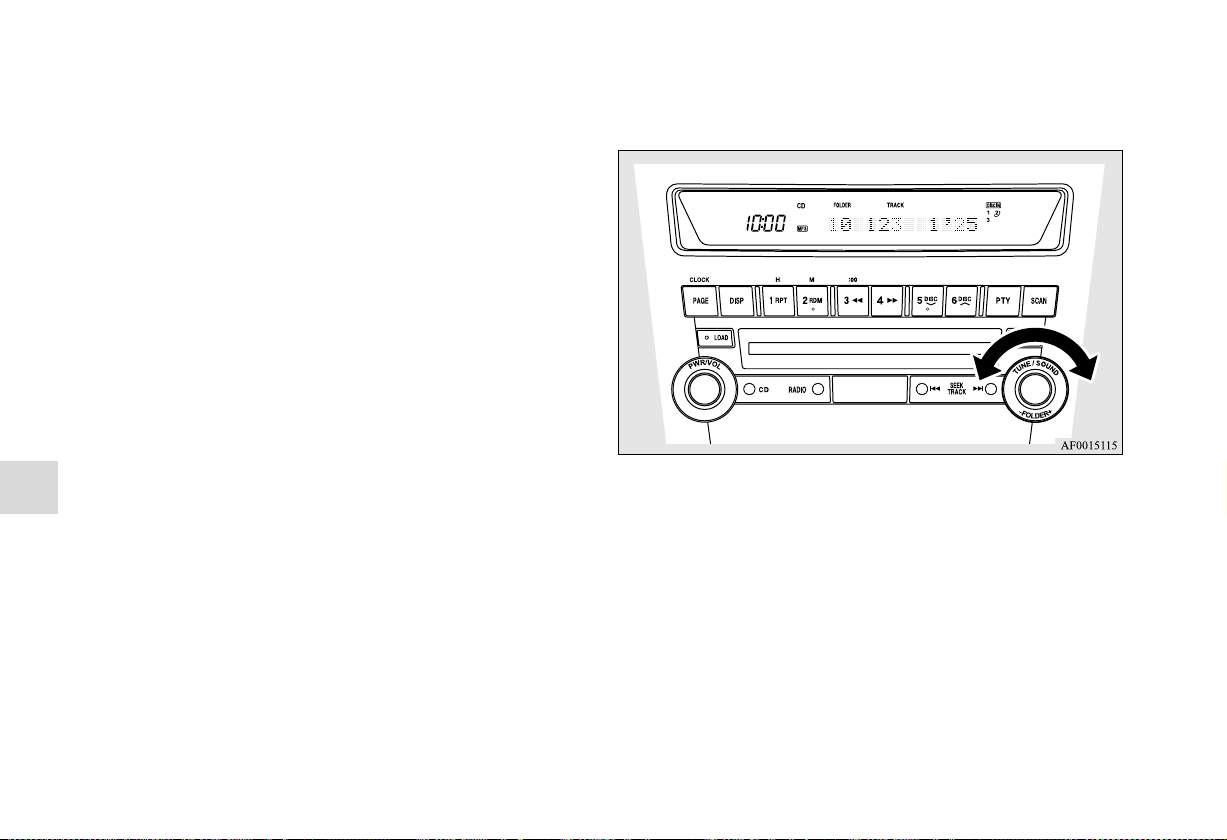
5-106
Comfort controls
5
To fast forward/reverse the disc
To fast forward or fast reverse the disc, press the fast-forward
button (11) or the fast-reverse button (10).
Fast forward
You can fast-forward the disc by pressing the fast-forward but-
ton (11). While the button is kept pressed, the disc will be fast-
forwarded.
Fast reverse
You can fast reverse the disc by pressing the fast-reverse button
(10). While the button is kept pressed, the disc will be fast-
reversed.
To select a desired folder (MP3 CDs only)
You can select your desired folder by turning the FOLDER
switch (17).
Folder up
Turn the FOLDER switch (17) clockwise until the desired
folder number appears on the display.
Folder down
Turn the FOLDER switch (17) counterclockwise until the
desired folder number appears on the display.
BK0138600US.book 106 ページ 2011年7月17日 日曜日 午後2時32分
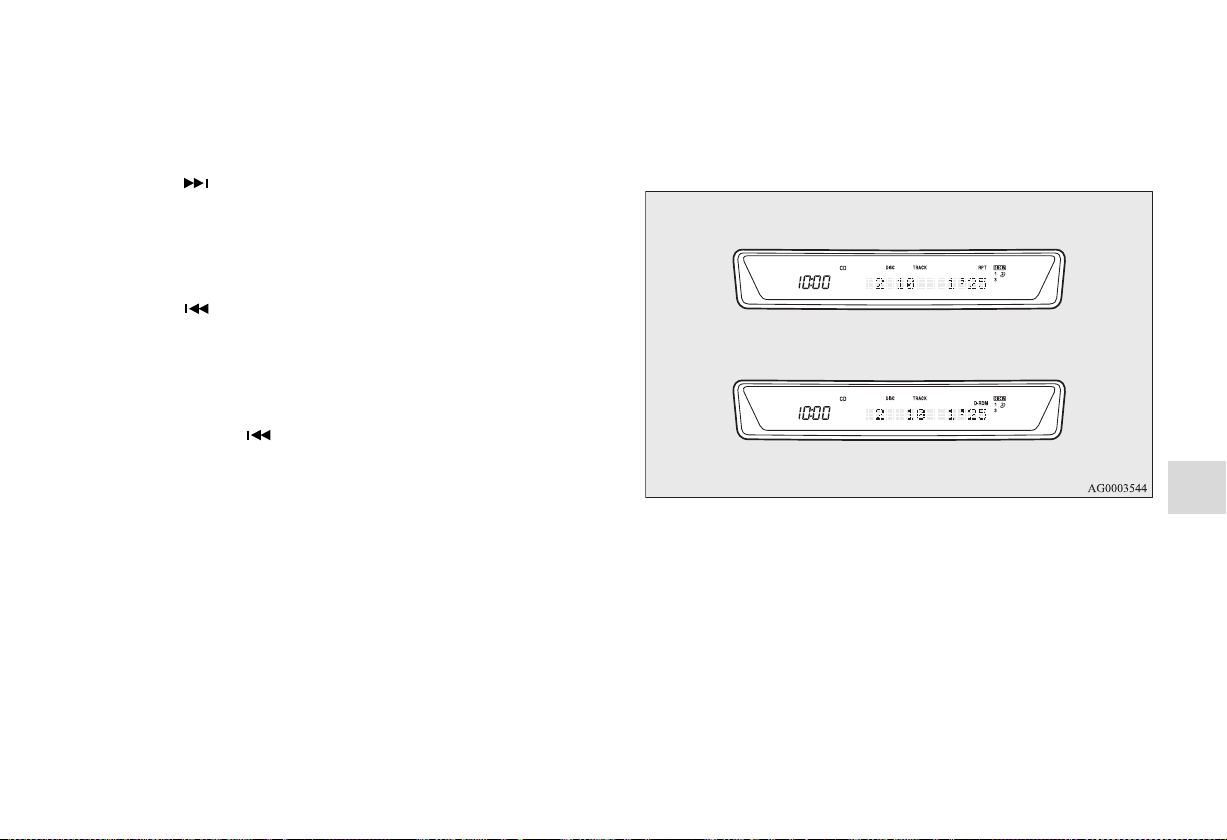
Comfort controls
5-107
5
To select a desired track
You can select your desired track by using the TRACK button
(18).
Track up
Press the side of the TRACK button (18) repeatedly until
the desired track number appears on the display.
When listening to a MP3 CD, keep pressing the button to con-
tinue to move up tracks.
Track down
Press the side of the TRACK button (18) repeatedly until
the desired track number appears on the display.
When listening to a MP3 CD, keep pressing the button to con-
tinue to move down tracks.
N
OTE
● Pressing the side of the TRACK button (18) once dur-
ing the song will cause the player to restart playback from
the beginning of the song.
To repeat a track
To repeat a track
Press the RPT button (8) briefly while the track is playing.
“RPT” will appear on the display. To exit the repeat mode,
press the RPT button again.
To repeat a disc (music CDs only)
While a song is playing, press the RPT button (8) for 2 second
or longer (until you hear a beep). “D-RPT” will appear on the
display. You can listen to the music CD repeatedly. To exit the
repeat mode, briefly press the RPT button again.
To repeat songs in the same folder (MP3 CDs only)
While a song is playing, press the RPT button (8) for 2 seconds
or longer (until you hear a beep). “D-RPT” will appear on the
display. The player will repeat all the songs in the same folder.
To exit the repeat mode, briefly press the RPT button again.
N
OTE
● The single track repeat mode will be canceled by pressing
the TRACK button (18) or the eject button (15).
● The disc or folder repeat mode will be canceled by press-
ing the DISC button (12 or 13) or the eject button.
● With a disc that contains both CD-DA and MP3 files, the
repeat mode causes only files of the same format (CD-DA
only or MP3 files only) to be repeated.
BK0138600US.book 107 ページ 2011年7月17日 日曜日 午後2時32分
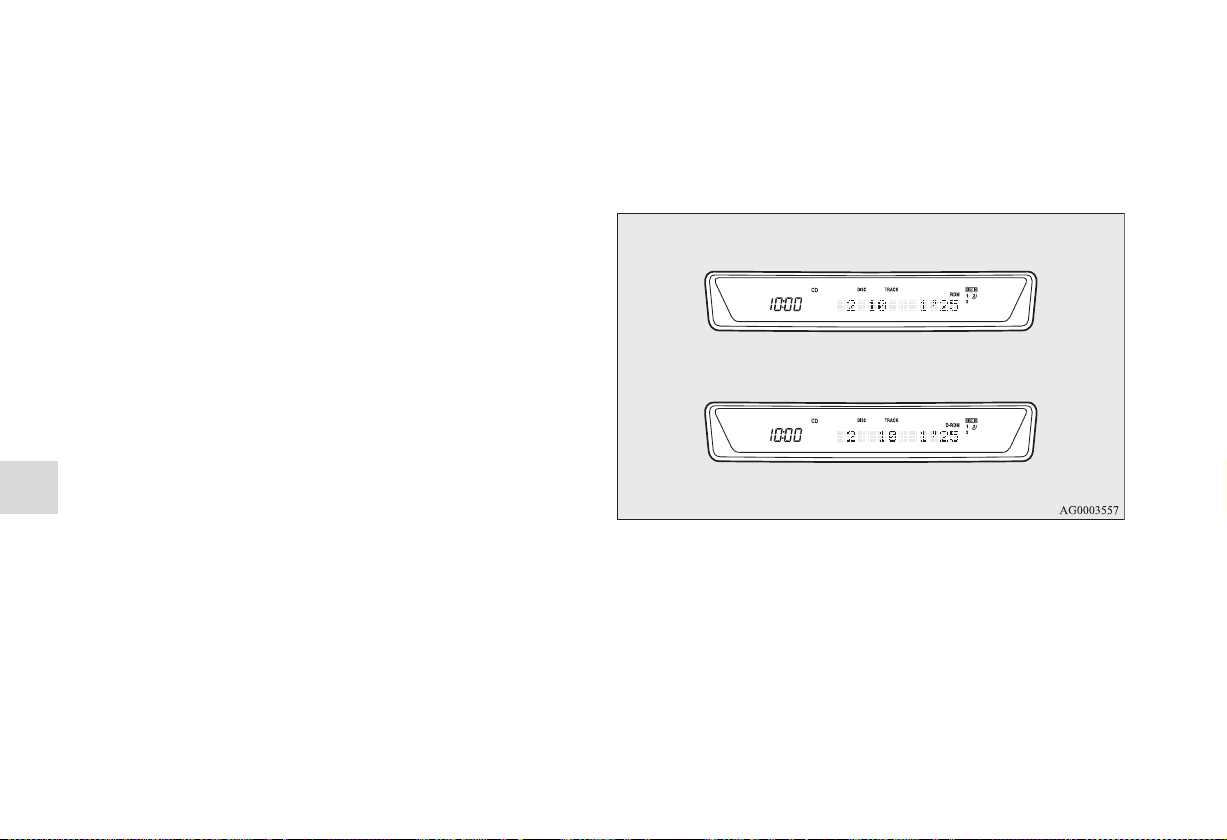
5-108
Comfort controls
5
To change the order of tracks for playback
Random playback for a disc (music CDs only)
Press the RDM button (9) briefly. “RDM” will appear on the
display. Tracks on the currently selected disc will be played in
a random sequence.
To exit the random mode, press the RDM button again.
Random playback for a folder (MP3 CDs only)
Press the RDM button (9) briefly. “RDM” will appear on the
display. Tracks in the currently selected folder will be played in
a random sequence. To exit the random mode, press the RDM
button again.
Random playback for all discs in the autochanger (music
CDs only)
Press the RDM button (9) for 2 seconds or longer (until you
hear a beep). “D-RDM” will appear on the display. Tracks
from all the discs loaded in the autochanger will be played in a
random sequence. To exit the random mode, briefly press the
RDM button again.
Random playback for all folders on a disc (MP3 CDs only)
Press the RDM button (9) for 2 seconds or longer (until you
hear a beep). “D-RDM” will appear on the display. Tracks
from all the folders on the currently selected disc will be
played in a random sequence. To exit the random mode, briefly
press the RDM button again.
N
OTE
● In the all discs random mode, if an MP3 CD has been
loaded in the autochanger, the autochanger will skip over
it to the next music CD.
● With a disc that contains both CD-DA and MP3 files, the
random mode causes only files of the same format (CD-
DA only or MP3 files only) to be played in a random
sequence.
BK0138600US.book 108 ページ 2011年7月17日 日曜日 午後2時32分

Comfort controls
5-109
5
To find the start of each track on a disc for playback
Press the SCAN button (14). “SCAN” will appear on the dis-
play and the autochanger will play back the first 10 seconds of
each track on the selected disc.
The track number will blink while the scan mode is selected.
To stop the scan mode, press the SCAN button again.
N
OTE
● Once all tracks on the disc have been scanned, playback
of the disc will restart from the beginning of the track that
was playing when scanning started.
● The scan mode will be canceled when radio or CD opera-
tion is selected.
● With a disc that contains both CD-DA and MP3 files, the
scan mode causes only files of the same format (CD-DA
only or MP3 files only) to be played.
CD text and MP3 title display
N00752100140
This autochanger can display CD text and MP3 titles including
ID3 tag information.
CD text
The autochanger can display disc and track titles for discs with
converted disc and track title information. Press the DISP but-
ton (7) repeatedly to make selections in the following
sequence: disc name → track name → normal display mode.
N
OTE
● The display can show up to 12 characters. If a disc name
or track name has more than 12 characters, press the
PAGE button (6) to view the next 12 characters.
● When there is no title information to be displayed, the dis-
play shows “NO TITLE”.
● Characters that the autochanger cannot display are shown
as “•”.
BK0138600US.book 109 ページ 2011年7月17日 日曜日 午後2時32分
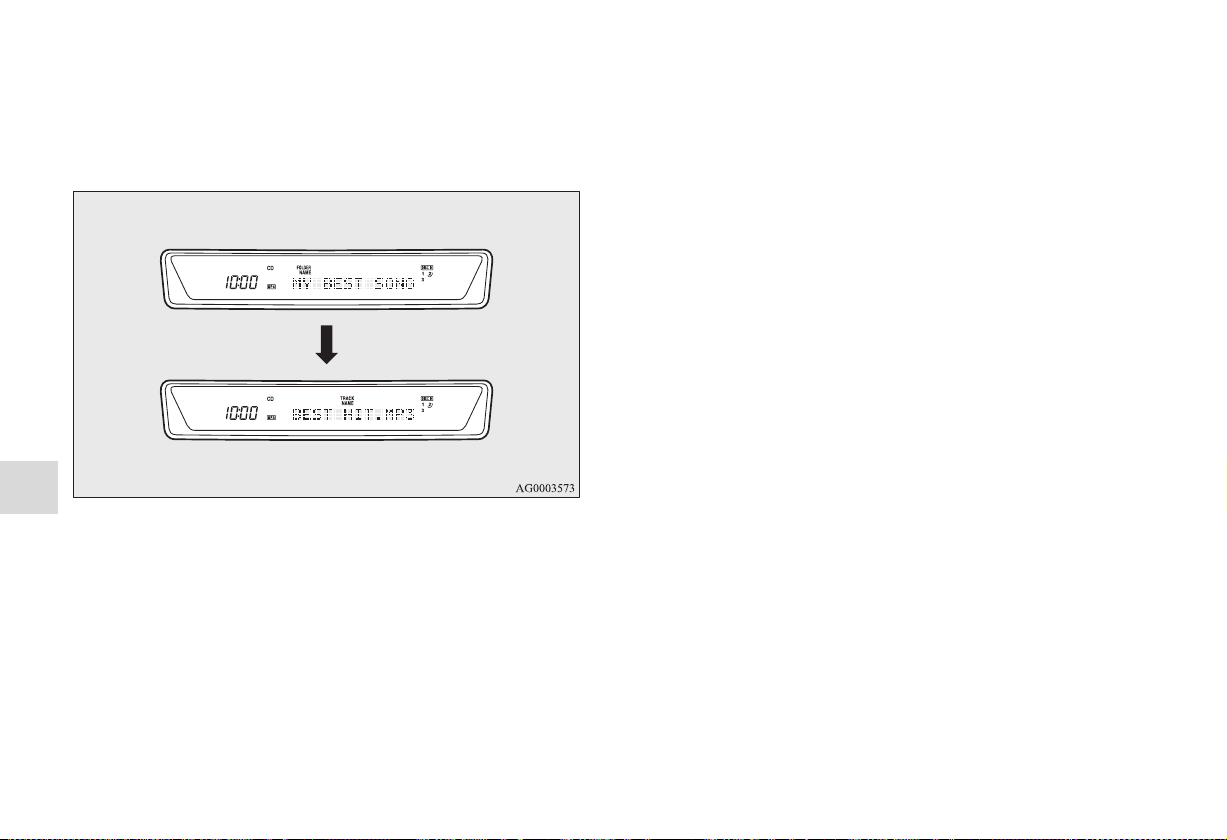
5-110
Comfort controls
5
MP3 title
The autochanger can display folder and track titles for discs
with converted folder and track information. Press the DISP
button (7) repeatedly to make selections in the following
sequence: folder name → track name → normal display mode.
ID3 tag information
The autochanger can display ID3 tag information for files that
have been recorded with ID3 tag information.
1. Press the DISP button (7) for 2 seconds or longer to
switch to the ID3 tag information. “TAG” indicator will
appear on the display.
2. Press the DISP button repeatedly to make selections in the
following sequence: album name → track name → artist
name → normal display mode.
N
OTE
● To return from ID3 tag information to the folder name,
press the DISP button (7) again for 2 seconds or longer.
● When there is no title information to be displayed, the dis-
play shows “NO TITLE”.
● The display can show up to 12 characters. If a folder
name, track name, or item of ID3 tag information has
more than 12 characters, press the PAGE button (6) to
view the next 12 characters.
● Folder names and track names can each be displayed up to
a length of 32 characters. Items of ID3 tag information
can each be displayed up to a length of 30 characters.
● Characters that the autochanger cannot display are shown
as “•”.
BK0138600US.book 110 ページ 2011年7月17日 日曜日 午後2時32分

Comfort controls
5-111
5
To play tracks from USB device
(if so equipped)
N00762200030
You can connect your iPod or USB memory device to the USB
input terminal and play music files stored in the iPod or USB
memory device.
See the following section for the types of connectable devices
and supported files.
Refer to “Types of connectable devices and supported file
specifications” on page 3-287.
See the following sections for the connecting methods, “How
to connect an iPod” on page 3-285 and “How to connect a USB
memory device” on page 3-283.
If your vehicle is equipped with a Bluetooth
®
2.0 interface,
you can play music files in your iPod or USB memory device
via voice operation.
Refer to “To play iPod tracks via voice operation” on page 5-
116 and “To play USB memory device tracks via voice opera-
tion” on page 5-127.
N
OTE
● A file protected by copyright might not be able to start
playback.
● It is recommended to leave the equalizer of the connected
device flat.
BK0138600US.book 111 ページ 2011年7月17日 日曜日 午後2時32分
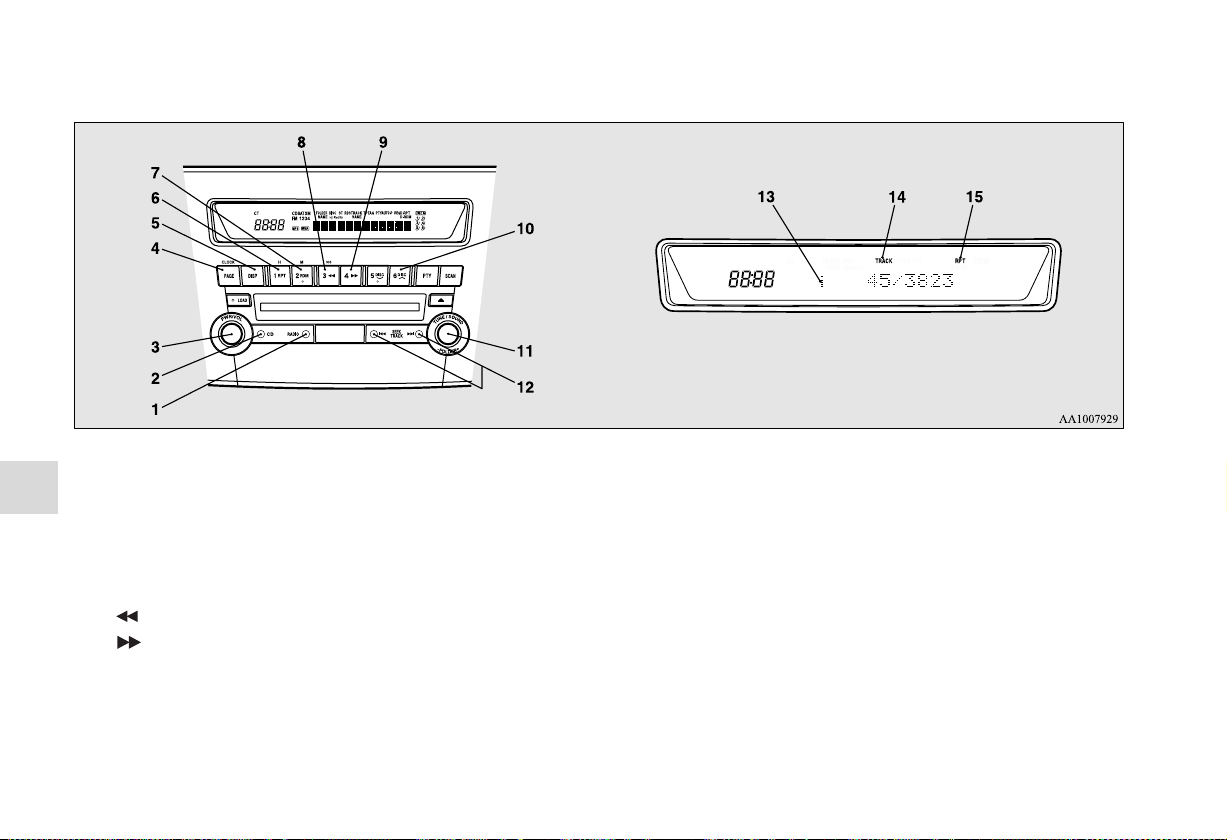
5-112
Comfort controls
5
iPod control panel and display
N00762300028
1- RADIO button
2- CD (Mode change) button
3- PWR (On-Off) button
4- PAGE (Title scroll) button
5- DISP (Title display) button
6- RPT (Repeat) button
7- RDM (Random) button
8- (Fast-reverse) button
9- (Fast-forward) button
10- DISC UP button
11- FOLDER switch
12- TRACK (Track up/down) button
13- i (iPod) indicator
14- TRACK indicator
15- RPT/RDM/D-RDM indicator
BK0138600US.book 112 ページ 2011年7月17日 日曜日 午後2時32分

Comfort controls
5-113
5
To play from an iPod
N00762400032
1. Press the PWR button (3) to turn on the audio system. The
system turns on in the last mode used.
2. Connect your iPod to the USB input terminal.
Refer to “How to connect an iPod” on page 3-285.
3. Press the CD button (2) several times to switch to the iPod
mode. The input mode changes every time the CD button
is pressed.
CD mode → iPod mode → Bluetooth
®
mode (if so
equipped)
N
OTE
● If your vehicle is equipped with audio/video input RCA
terminals, pressing and holding the CD button for 2 sec-
onds or more switches the system to the AUX mode.
4. Once the device is selected, playback starts and “i”
appears on the display.
N
OTE
● Depending on the condition of your iPod, it may take a
longer time before the playback starts.
5. To stop the playback, press the RADIO button (1) or CD
button (2) to switch to a different mode.
N
OTE
● Buttons on the iPod are disabled while the iPod is con-
nected to the audio system.
● To adjust the volume and tone, refer to “To adjust the vol-
ume” on page 5-55, 5-83 and “To adjust the tone” on page
5-55, 5-83.
To fast-forward/reverse the track
N00762500017
To fast-forward/reverse the current track, press the button
(9) or button (8).
Fast-forward
To fast-forward the current track, press the button (9).
While the button is pressed, the track will be fast-forwarded.
Fast-reverse
To fast-reverse the current track, press the button (8). While
the button is pressed, the track will be fast-reversed.
BK0138600US.book 113 ページ 2011年7月17日 日曜日 午後2時32分

5-114
Comfort controls
5
To select a desired track
N00762600018
Press the TRACK button (12) to select the desired track num-
ber.
If the side of the button is pressed once while a track is
playing, playback returns to the start of that track.
N
OTE
● Every time the track selection button is pressed, the track
number in the display changes.
To find a track from the iPod menu
N00762700022
You can select desired tracks from the “Playlists”, “Artists”,
“Albums”, “Songs” or “Genre” (vehicles with Bluetooth
®
2.0
interface) menus on your iPod.
Operate the following switch to select desired tracks.
The selected menu or category or track is shown in the display.
N
OTE
● To cancel the selection, press the DISC UP button (10) to
return to the previous step.
● If no operation is performed for 10 seconds or more or
another button is operated after the FOLDER button has
been pressed, searching of the desired tracks is canceled.
● If no operation is performed for 5 seconds or more after
the track is displayed, playback starts.
Press
: The track number increases by one.
Press
: The track number decreases by one.
Press for a long
period (approx. 2
seconds or more)
: The track number increases continu-
ously while the button is pressed.
Press for a long
period (approx. 2
seconds or more)
: The track number decreases continu-
ously while the button is pressed.
Turn the FOLDER switch
(11)
: To show the menu or category or
track.
Press the FOLDER switch
(11)
: To select the menu or category or
track.
BK0138600US.book 114 ページ 2011年7月17日 日曜日 午後2時32分
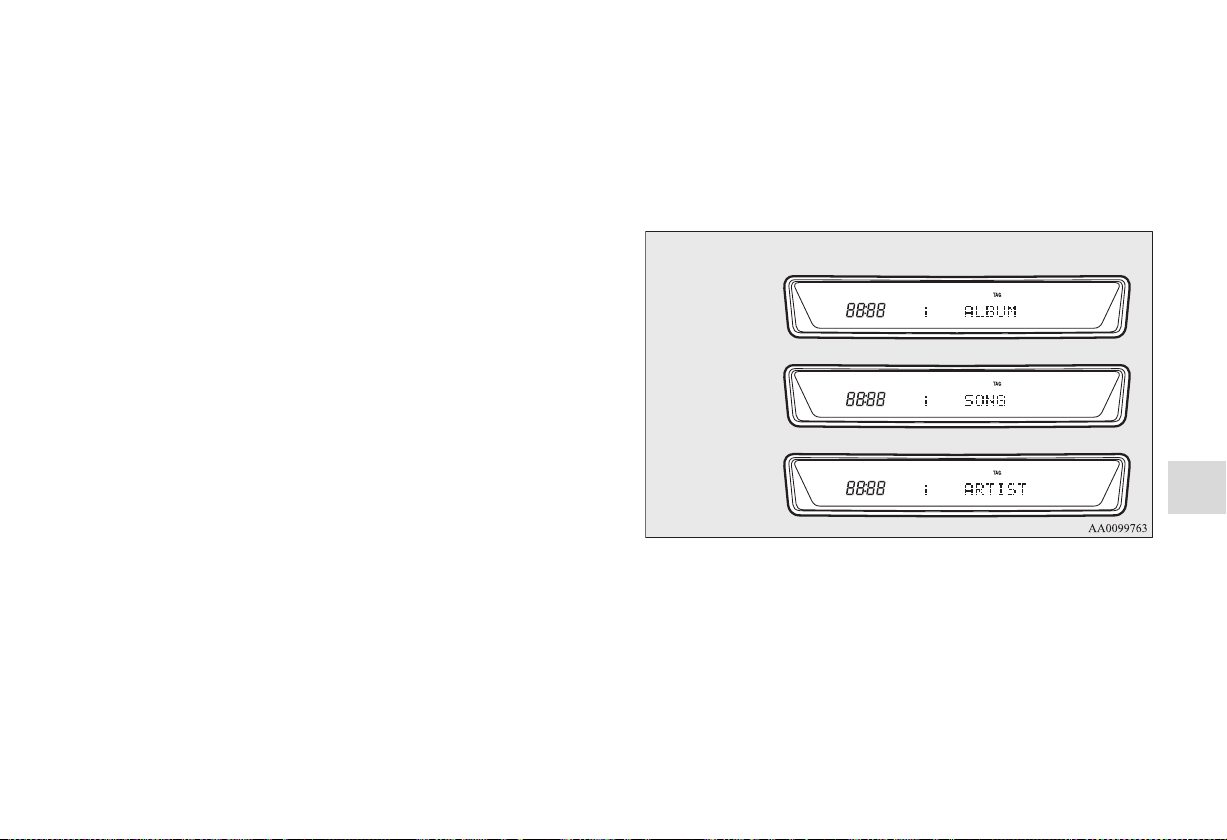
Comfort controls
5-115
5
To play the same track repeatedly
N00762800010
Press the RPT button (6) during playback to show “RPT” in the
display.
To exit this mode, press the button again.
To play tracks in random order
N00762900011
Press the RDM button (7) to show “RDM” in the display.
The iPod randomly selects tracks from the current category and
plays the selected tracks.
To exit this mode, press the button again.
To play tracks in each album in random order
N00763000019
Press and hold the RDM button (7) until you hear a beep to
show “D-RDM” in the display.
The iPod randomly selects tracks in the album from the current
category and play the selected tracks.
To exit this mode, press the button again.
To switch the display
N00763100010
You can display the track titles, artist names and album titles
recorded in the iPod.
The display changes as follows every time the DISP button (5)
is pressed during playback.
Album title → Track name → Artist name → Normal display
N
OTE
● Up to 10 characters are shown in the display at once. If the
title is cut off in the middle, press the PAGE button (4).
The next characters are displayed every time this button is
pressed.
● If no title is stored, “NO TITLE” is shown in the display.
● Characters that cannot be displayed are substituted
by “ • ”.
Album title
Track name
Artist name
Example
BK0138600US.book 115 ページ 2011年7月17日 日曜日 午後2時32分
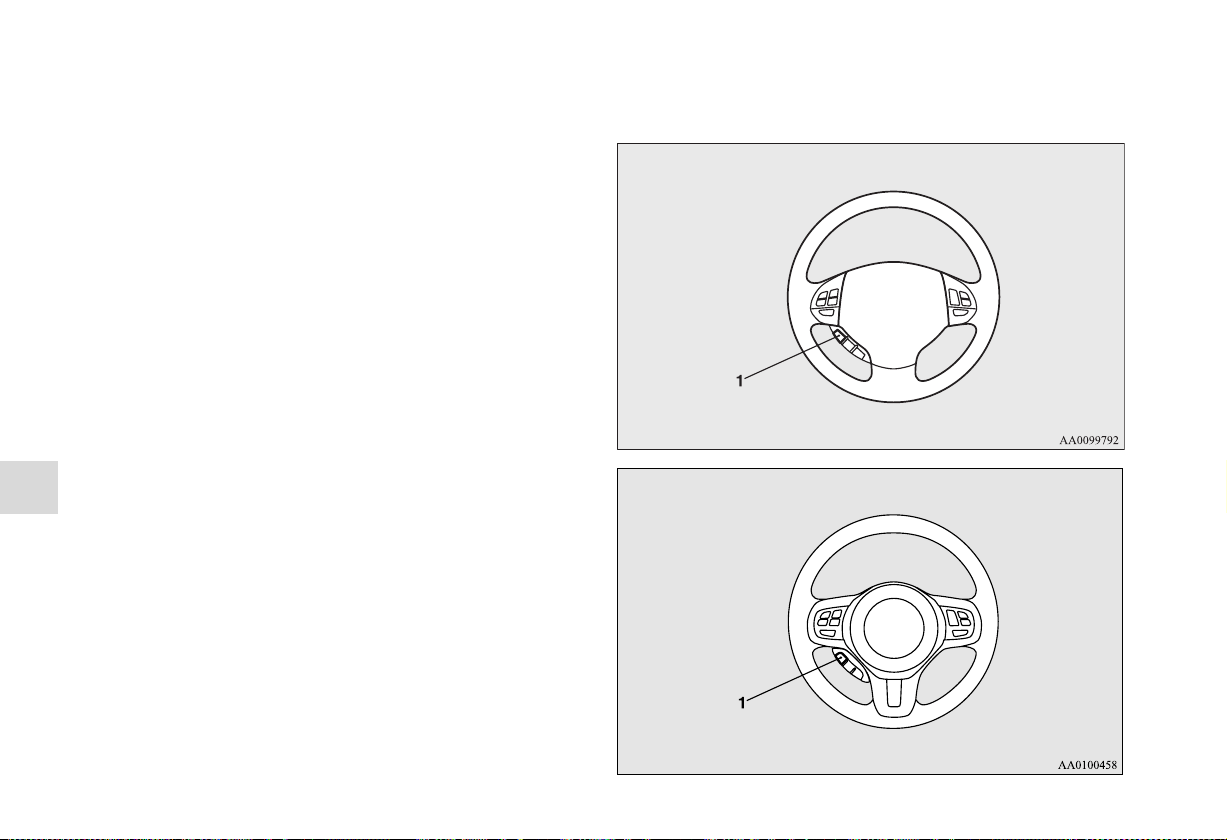
5-116
Comfort controls
5
To play iPod tracks via voice operation (vehicles
with Bluetooth
®
2.0 interface)
N00763200024
Desired tracks can be selected and played from your iPod by
“Artist”, “Album”, “Playlist” and “Genre” using voice com-
mands.
For information concerning the voice recognition function or
speaker registration function, refer to “Bluetooth
®
2.0 inter-
face” on page 3-256.
The following explains how to prepare for voice operation and
play the tracks.
Preparation for voice operation
N00763300025
To use the voice operation, press the SPEECH button (1) first.
Type 1
Type 2
BK0138600US.book 116 ページ 2011年7月17日 日曜日 午後2時32分

Comfort controls
5-117
5
To search by artist name
N00763400026
1. Say “Play” on the main menu.
N
OTE
● The Bluetooth
®
2.0 interface starts recognizing the con-
nected device.
If the connected device cannot be recognized or a connec-
tion error occurs, the Bluetooth
®
2.0 interface starts an
appropriate voice guide. Follow the voice guide.
2. After the voice guide says “Would you like to play by Art-
ist, Album, Playlist or Genre?,” say “Artist”.
N
OTE
● If you say “Artist <name>,” you can skip step 3.
3. After the voice guide says “What Artist would you like to
play?,” say the artist name.
4. If there is only one match, the system proceeds to step 6.
5. If there are two or more matches, the voice guide will say
“More than one match was found, would you like to play
<artist name>?” If you say “Yes,” the system proceeds to
step 6.
If you say “No,” the next matching artist is uttered by the
system.
N
OTE
● If you say “No” to three or all artist names uttered by the
system, the voice guide will say “Artist not found, please
try again” and the system returns to step 2.
● Search time depends on the number of songs on your con-
nected device. Devices containing a large number of
songs may take longer to return search results.
6. After the voice guide says “Playing <artist name>,” the
system creates a playlist index for the artist.
N
OTE
● If the confirmation function is active, the voice guide con-
firms if the artist name is correct. If the artist name is cor-
rect, say “Yes”. If not, say “No”. After the voice guide
says “Artist not found, please try again,” the system
returns to step 2.
7. The system exits the voice recognition mode and starts
playback.
BK0138600US.book 117 ページ 2011年7月17日 日曜日 午後2時32分

5-118
Comfort controls
5
To search by album title
N00763500027
1. Say “Play” on the main menu.
N
OTE
● The Bluetooth
®
2.0 interface starts recognizing the con-
nected device.
If the connected device cannot be recognized or a connec-
tion error occurs, the Bluetooth
®
2.0 interface starts an
appropriate voice guide. Follow the voice guide.
2. After the voice guide says “Would you like to play by Art-
ist, Album, Playlist or Genre?,” say “Album”.
N
OTE
● If you say “Album <title>,” you can skip step 3.
3. After the voice guide says “What Album would you like
to play?” say the album title.
4. If there is only one match, the system proceeds to step 6.
5. If there are two or more matches, the voice guide will say
“More than one match was found, would you like to play
<album title>?” If you say “Yes,” the system proceeds to
step 6.
If you say “No,” the name of the next matching album is
uttered by the system.
N
OTE
● If you say “No” to three or all album titles uttered by the
system, the voice guide will say “Album not found, please
try again” and the system returns to step 2.
6. After the voice guide says “Playing <album title>,” the
system creates a playlist index for the album title.
N
OTE
● If the confirmation function is active, the voice guide con-
firms if the album title is correct. If the album title is cor-
rect, say “Yes”. If not, say “No”. After the voice guide
says “Album not found, please try again,” the system
returns to step 2.
7. The system exits the voice recognition mode and starts
playback.
BK0138600US.book 118 ページ 2011年7月17日 日曜日 午後2時32分

Comfort controls
5-119
5
To search by playlist
N00763600028
1. Say “Play” on the main menu.
N
OTE
● The Bluetooth
®
2.0 interface starts recognizing the con-
nected device.
If the connected device cannot be recognized or a connec-
tion error occurs, the Bluetooth
®
2.0 interface starts an
appropriate voice guide. Follow the voice guide.
2. After the voice guide says “Would you like to play by Art-
ist, Album, Playlist or Genre?,” say “Playlist”.
N
OTE
● If you say “Playlist <playlist>,” you can skip step 3.
If the device has no playlist, the voice guide will say
“There are no playlists stored on device” and the system
returns to step 2.
3. After the voice guide says “What Playlist would you like
to play?,” say the playlist name.
4. If there is only one match, the system proceeds to step 6.
5. If there are two or more matches, the voice guide will say
“More than one match was found, would you like to play
<playlist>?” If you say “Yes,” the system proceeds to
step 6.
If you say “No,” the next matching playlist name is
uttered by the system.
N
OTE
● If you say “No” to three or all playlist names uttered by
the system, the voice guide will say “Playlist not found,
please try again” and the system returns to step 2.
6. After the voice guide says “Playing <playlist>,” the sys-
tem creates an index for the playlist.
N
OTE
● If the confirmation function is active, the voice guide con-
firms if the playlist name is correct. If the playlist name is
correct, say “Yes”. If not, say “No”. After the voice guide
says “Playlist not found, please try again,” the system
returns to step 2. Refer to “Confirmation function setting”
on page 3-261.
7. The system exits the voice recognition mode and starts
playback.
BK0138600US.book 119 ページ 2011年7月17日 日曜日 午後2時32分

5-120
Comfort controls
5
To search by genre
N00763700029
1. Say “Play” on the main menu.
N
OTE
● The Bluetooth
®
2.0 interface starts recognizing the con-
nected device.
If the connected device cannot be recognized or a connec-
tion error occurs, the Bluetooth
®
2.0 interface starts an
appropriate voice guide. Follow the voice guide.
2. After the voice guide says “Would you like to play by Art-
ist, Album, Playlist or Genre?,” say “Genre”.
N
OTE
● If you say “Genre <type>,” you can skip step 3.
3. After the voice guide says “What Genre would you like to
play?,” say the music type.
4. If there is only one match, the system proceeds to step 6.
5. If there are two or more matches, the voice guide will say
“More than one match was found, would you like to play
<genre>?” If you say “Yes,” the system proceeds to
step 6.
If you say “No,” the next matching genre is uttered by the
system.
N
OTE
● If you say “No” to three or all genres uttered by the sys-
tem, the voice guide will say “Genre not found, please try
again” and the system returns to step 2.
6. After the voice guide says “Playing <genre>,” the system
creates an index for the genre.
N
OTE
● If the confirmation function is active, the voice guide con-
firms if the genre is correct. If the genre is correct, say
“Yes”. If not, say “No”. After the voice guide says “Genre
not found, please try again,” the system returns to step 2.
Refer to “Confirmation function setting” on page 3-261.
7. The system exits the voice recognition mode and starts
playback.
BK0138600US.book 120 ページ 2011年7月17日 日曜日 午後2時32分
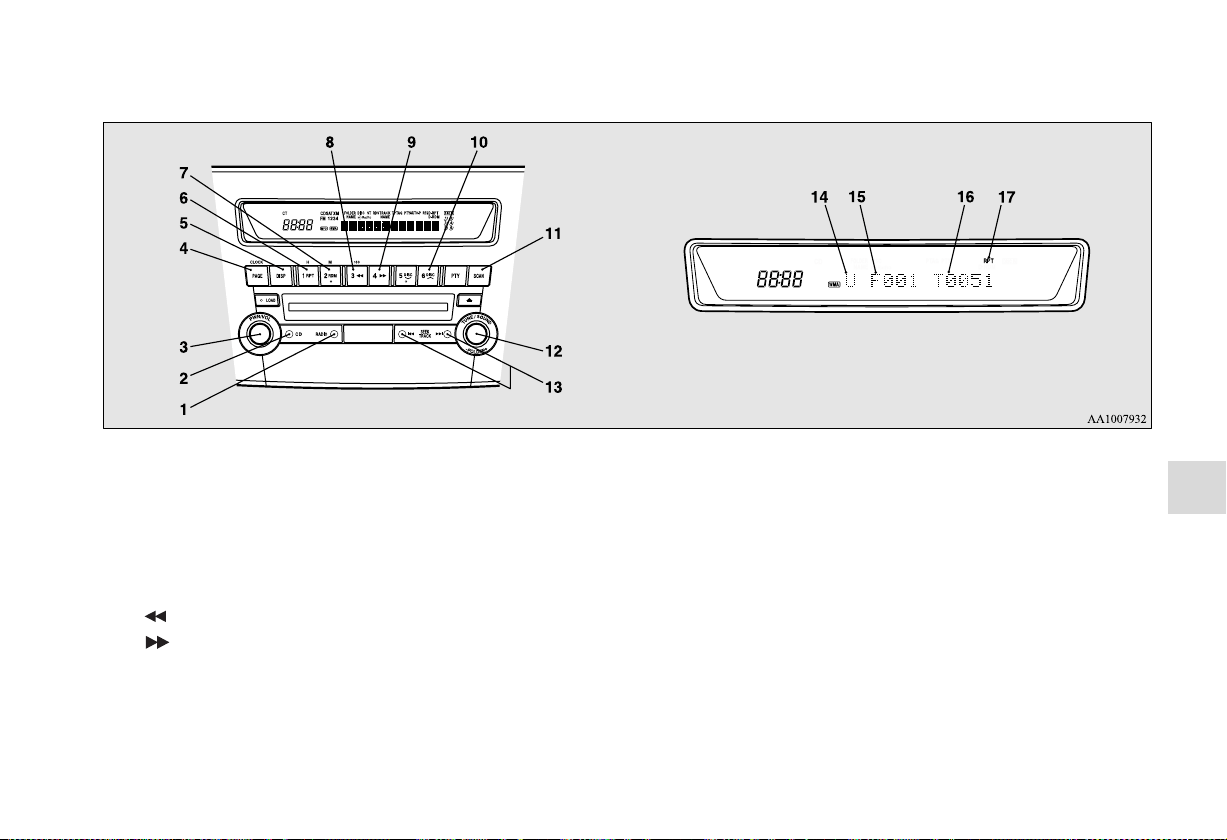
Comfort controls
5-121
5
USB control panel and display
N00763900021
1- RADIO button
2- CD (Mode change) button
3- PWR (On-Off) button
4- PAGE (Title scroll) button
5- DISP (Title display) button
6- RPT (Repeat) button
7- RDM (Random) button
8- (Fast-reverse) button
9- (Fast-forward) button
10- DISC UP button
11- SCAN button
12- FOLDER switch
13- TRACK (Track up/down) button
14- U (USB) indicator
15- FOLDER indicator
16- TRACK indicator
17- RPT/D-RPT/RDM/D-RDM/SCAN/F-SCAN indicator
BK0138600US.book 121 ページ 2011年7月17日 日曜日 午後2時32分

5-122
Comfort controls
5
To play from a USB memory device
N00764000032
1. Press the PWR button (3) to turn on the audio system. The
system turns on in the last mode used.
2. Connect your USB memory device to the USB input ter-
minal.
Refer to “How to connect a USB memory device” on page
3-283.
3. Press the CD button (2) several times to switch to the USB
mode. The input mode changes as follows every time the
CD button is pressed.
CD mode → USB mode → Bluetooth
®
mode (if so
equipped)
N
OTE
● If your vehicle is equipped with audio/video input RCA
terminals, pressing and holding the CD button for 2 sec-
onds or more switches the system to the AUX mode.
4. Once the device is selected, playback starts and “U”
appears on the display.
N
OTE
● Depending on the condition of your USB device, it may
take a longer time before the playback starts.
5. To stop the playback, press the RADIO button (1) or CD
button (2) to switch to a different mode.
N
OTE
● To adjust the volume and tone, refer to “To adjust the vol-
ume” on page 5-55, 5-83 and “To adjust the tone” on page
5-55, 5-83.
Supported compressed music files
N00764100088
This audio can play MP3, WMA, AAC and WAV files
recorded in a USB memory device. This audio supports up to
65,535 files in 700 folders on 8 levels.
BK0138600US.book 122 ページ 2011年7月17日 日曜日 午後2時32分
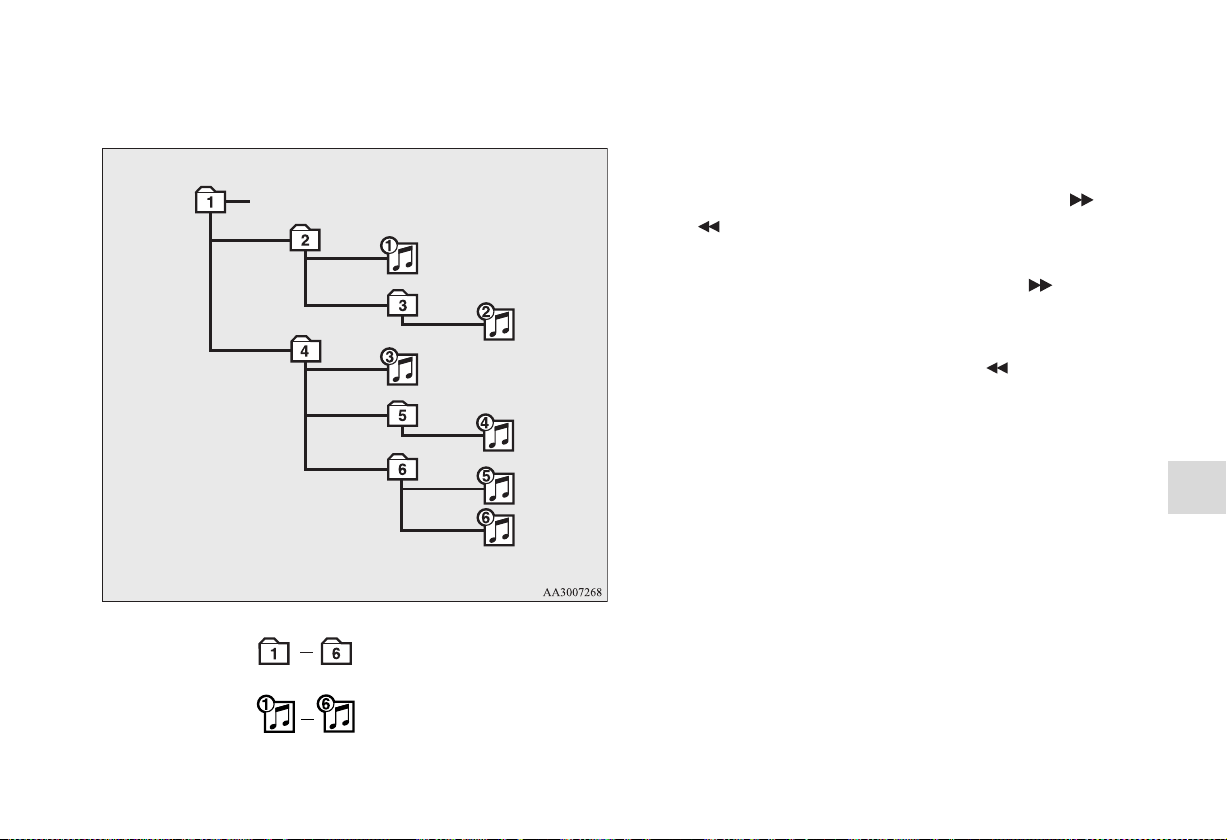
Comfort controls
5-123
5
Folder selection order/file playback order (example)
The folder and file hierarchy in the USB memory device is
shown below.
N
OTE
● If a file protected by copyrights is played, the file will be
skipped.
To fast-forward/reverse the track
N00764200018
To fast-forward/reverse the current track, press the button
(9) or button (8).
Fast-forward
To fast-forward the current track, press the button (9).
While the button is pressed, the track will be fast-forwarded.
Fast-reverse
To fast-reverse the current track, press the button (8). While
the button is pressed, the track will be fast-reversed.
Folder selection
In the order
File selection
In the order
Root folder (Root directory)
Level 1 Level 2 Level 3 Level 4
BK0138600US.book 123 ページ 2011年7月17日 日曜日 午後2時32分

5-124
Comfort controls
5
To select a file
N00764300019
Press the TRACK button (13) to select the desired file number.
If the side of the button is pressed once after a few seconds,
playback returns to the start of that track.
N
OTE
● Every time the TRACK button (13) is pressed, the file
number in the display changes.
To find a track
N00764400078
You can select a folder to find a desired track.
1. Turn the FOLDER switch (12) to show the desired folder
in the display.
N
OTE
● If no operation is performed for 10 seconds or more or
another button is operated after the FOLDER switch has
been turned, the selected track becomes unselected and
the display returns to the playback display.
2. Press the FOLDER switch (12) to select the folder.
N
OTE
● When the DISC UP button (10) is pressed, the track find
mode will be cancelled.
3. Turn the FOLDER switch (12) to show the desired track
in the display.
N
OTE
● When the DISC UP button (10) is pressed, the selection is
cancelled and returned to the previous step.
● If no operation is performed for 5 seconds or more after
the FOLDER switch (12) is turned, the displayed track is
played.
4. Press the FOLDER switch (12) to select the file.
Press
: The file number increases by one.
Press
: The file number decreases by one.
Press for a long
period (approx. 2
seconds or more)
: The file number increases continuously
while the button is pressed.
Press for a long
period (approx. 2
seconds or more)
: The file number decreases continuously
while the button is pressed.
BK0138600US.book 124 ページ 2011年7月17日 日曜日 午後2時32分

Comfort controls
5-125
5
To play the same file repeatedly
N00764500011
Press the RPT button (6) to show “RPT” in the display. To can-
cel this mode, press the button again.
To play the files in the same folder repeatedly
N00764600012
Press and hold the RPT button (6) until you hear a beep to
show “D-RPT” in the display.
All tracks in the current folder are played repeatedly.
To exit this mode, press the button again.
To play a folder in random order
N00764700013
Press the RDM button (7) to show “RDM” in the display.
The audio randomly selects tracks from the current folder and
plays the selected tracks.
To exit this mode, press the button again.
To play all folders in random order
N00764800014
Press and hold the RDM button (7) until you hear a beep to
show “D-RDM” in the display.
The audio randomly selects tracks from all folders and plays
the selected tracks.
To exit this mode, press the button again.
To find the start of each track in a folder for playback
(vehicles without Bluetooth
®
2.0 interface)
N00764900073
Press the SCAN button (11). “SCAN” is shown in the display
and the tracks in the current folder are played for several sec-
onds from the beginning.
The file number will blink while the scan mode is selected.
To exit this mode, press the button again.
N
OTE
● Once all tracks in the folder have been cued, playback will
restart from the beginning of the track that was playing
when cueing started.
To find the start of each track in all folders for playback
(vehicles with Bluetooth
®
2.0 interface)
N00702500019
Press the SCAN button (11). “SCAN” is shown in the display
and all tracks in the all folders are played for several seconds
from the beginning.
The file number will blink while the scan mode is selected.
To exit this mode, press the button again.
To find the start of first tracks in all folders for playback
N00765000039
Press and hold the SCAN button (11) until you hear a beep to
show “F-SCAN” in the display.
The first tracks in all folders are played for several seconds
from the beginning.
Playback starts from the folder next to the one currently play-
ing.
The folder number will blink while the scan mode is selected.
To exit this mode, press the button again.
BK0138600US.book 125 ページ 2011年7月17日 日曜日 午後2時32分
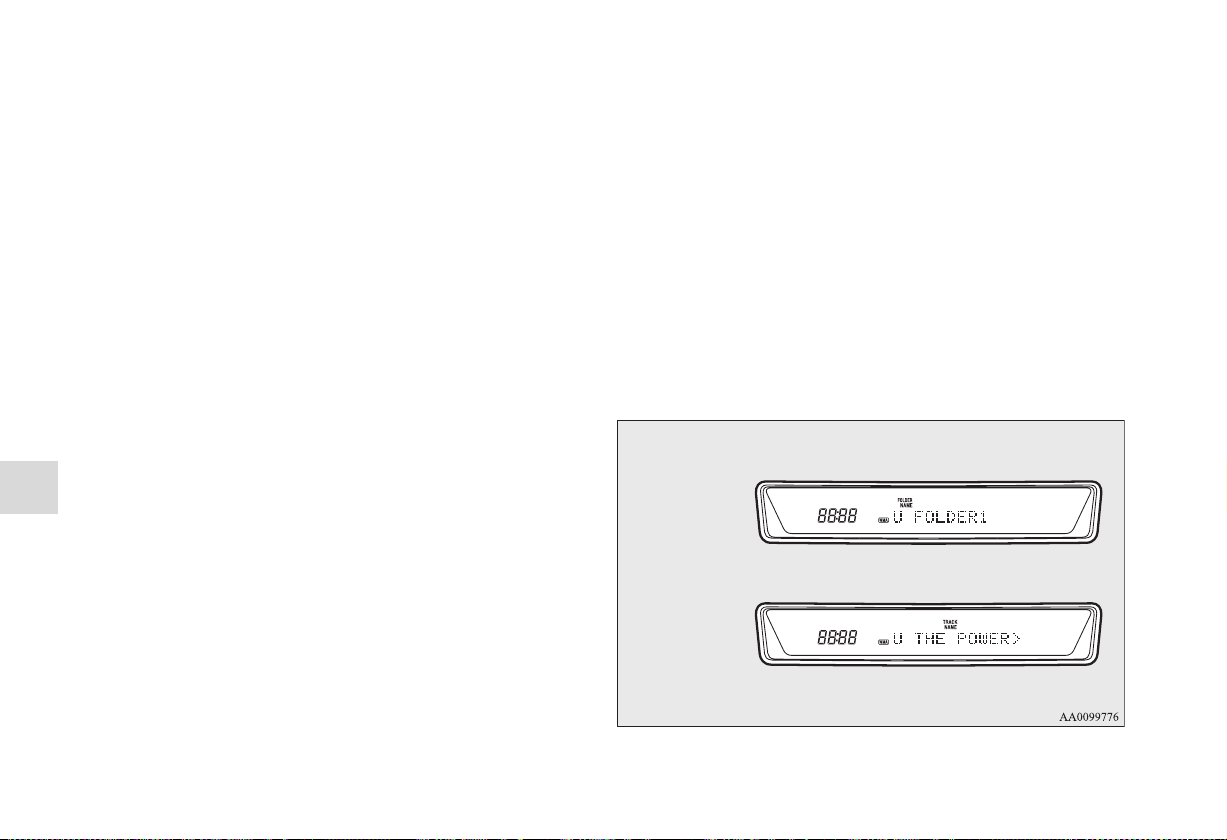
5-126
Comfort controls
5
N
OTE
● Once the cueing playback ends, playback will start from
the track at the beginning of the folder next to the one that
was playing when the cueing started.
To switch the display
N00765100014
You can display titles with tag information.
Folder title
The display changes as follows every time the DISP button (5)
is pressed during playback.
Folder title → File title → Normal display
Tag information
1. Press and hold the DISP button (5) until you hear a beep
to show “TAG” in the display.
2. The display changes as follows every time the DISP but-
ton (5) is pressed briefly.
Album title → Track title → Artist name → Genre (vehi-
cles with Bluetooth
®
2.0 interface) → Normal display
Folder title
File title
Example
BK0138600US.book 126 ページ 2011年7月17日 日曜日 午後2時32分

Comfort controls
5-127
5
N
OTE
● Press and hold the DISP button (5) again until you hear a
beep, and the tag information display returns to the folder
title display.
● Up to 10 characters are shown in the display at once. If the
title is cut off in the middle, press the PAGE button (4).
The next characters are displayed every time this button is
pressed.
● If no title is stored, “NO TITLE” is shown in the display.
● Characters that cannot be displayed are substituted
by “ • ”.
To play USB memory device tracks via voice
operation (vehicles with Bluetooth
®
2.0 interface)
N00765200031
Desired tracks can be selected and played from your USB
memory device by “Artist”, “Album”, “Playlist” and “Genre”
using voice commands.
For information concerning the voice recognition function or
speaker registration function, refer to “Bluetooth
®
2.0 inter-
face” on page 3-256.
The playback sequence of tracks is the same as when an iPod is
connected. Refer to the “To play iPod tracks via voice opera-
tion” on page 5-116.
BK0138600US.book 127 ページ 2011年7月17日 日曜日 午後2時32分

5-128
Comfort controls
5
Preparation for voice operation
To use the voice operation, press the SPEECH button (1) first.
To play tracks from a Bluetooth
®
device
(vehicles with Bluetooth
®
2.0 interface)
N00765300087
You can wirelessly connect a digital audio player or cellular
phone supporting Bluetooth
®
to listen to the tracks on the con-
nected device.
Refer to “Bluetooth
®
2.0 interface” for the connecting method,
etc. on page 3-256.
The following explains the basic playback method.
N
OTE
● Depending on the connected device, operation of the con-
nected device is limited to its available functions.
● Depending on the connected device, the device may not
operate correctly.
● A file protected by copyright might not be able to start
playback.
● It is recommended to leave the equalizer of the connected
device flat.
● The voice operation is not available to access music files
on the connected Bluetooth
®
device.
Type 1
Type 2
BK0138600US.book 128 ページ 2011年7月17日 日曜日 午後2時32分
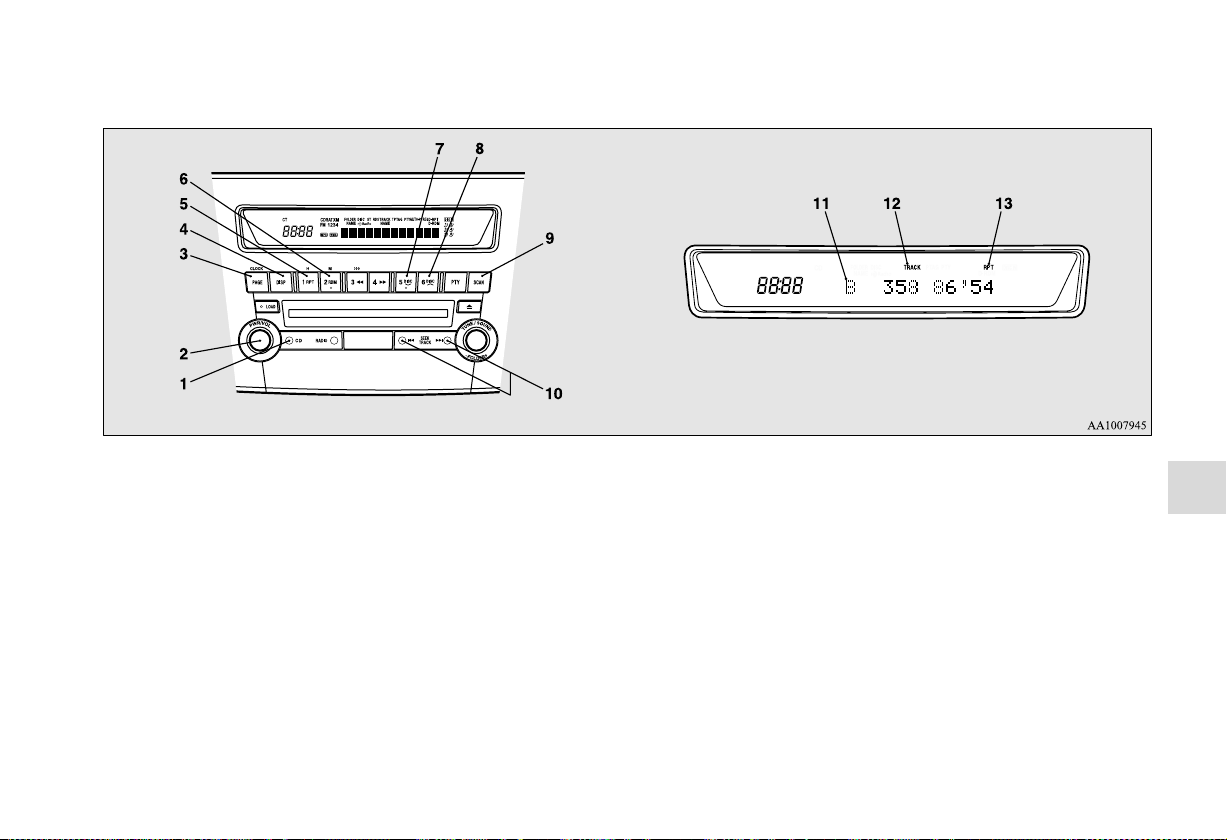
Comfort controls
5-129
5
Bluetooth
®
device control panel and display
N00765400020
1- CD (Mode change) button
2- PWR (On-Off) button
3- PAGE (Title scroll) button
4- DISP (Title display) button
5- RPT (Repeat) button
6- RDM (Random) button
7- DISC DOWN (Pause/Stop) button
8- DISC UP (Play) button
9- SCAN button
10- TRACK (Track up/down) button
11- B (Bluetooth
®
) indicator
12- TRACK indicator
13- RPT/RDM/SCAN indicator
BK0138600US.book 129 ページ 2011年7月17日 日曜日 午後2時32分

5-130
Comfort controls
5
To listen to tracks from a device connected via
Bluetooth
®
N00765500034
1. Press the PWR button (2) to turn on the audio system. The
system turns on in the last mode used.
2. Press the CD button (1) several times to switch to the
B(Bluetooth
®
) mode. The input mode changes as follows
every time the CD button is pressed.
CD mode → USB (iPod) mode → Bluetooth
®
mode
N
OTE
● For vehicles equipped with audio/video input RCA termi-
nals, pressing and holding the CD button for 2 seconds or
more switches the system to the AUX mode.
3. Connect your Bluetooth
®
device.
Refer to “Connecting the Bluetooth
®
2.0 interface and
Bluetooth
®
device” on page 3-264.
4. Playback starts automatically.
N
OTE
● Depending on the connected device, the playback may not
start automatically.
In this case, operate the connected device to start the play-
back.
To stop the playback (if supported by the device)
N00765600019
To stop the playback, press the DISC DOWN button (7).
To restart the playback, press the DISC UP button (8).
To pause the playback (if supported by the device)
N00765700010
To pause the playback, press the DISC DOWN button (7).
To restart the playback, press the DISC UP button (8).
To select a track (if supported by the device)
N00765800011
Press the TRACK button (10) to select the desired track num-
ber.
If the side of the button is pressed once while a track is
playing, playback returns to the start of that track.
N
OTE
● Every time the track selection button is pressed, the track
number in the display changes.
To play the same track repeatedly (if supported by the
device)
N00765900012
Press the RPT button (5) during playback to show “RPT” in the
display.
To exit this mode, press the button again.
Press
: The track number increases by one.
Press
: The track number decreases by one.
Press for a long
period (approx. 2
seconds or more)
: The track number increases continu-
ously while the button is pressed.
Press for a long
period (approx. 2
seconds or more)
: The track number decreases continu-
ously while the button is pressed.
BK0138600US.book 130 ページ 2011年7月17日 日曜日 午後2時32分
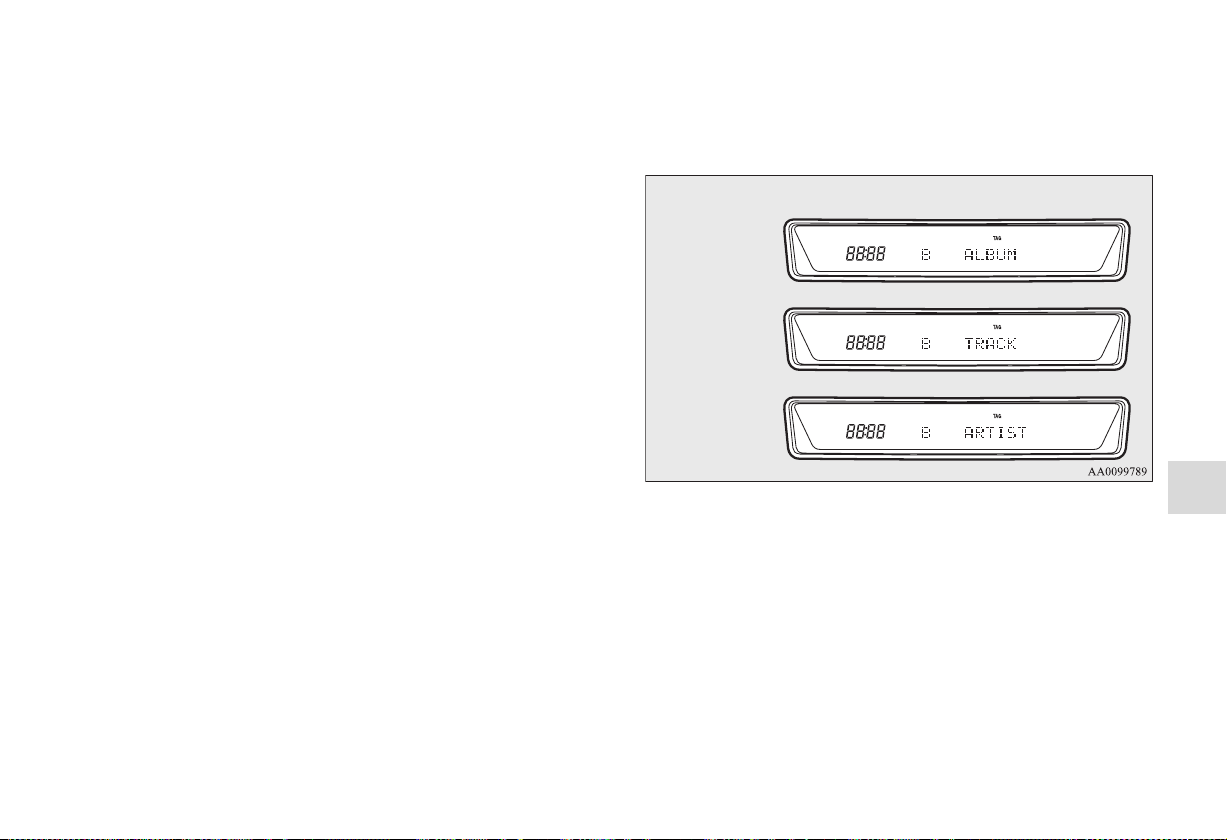
Comfort controls
5-131
5
To play tracks in random order (if supported by the
device)
N00766000010
Press the RDM button (6) to show “RDM” in the display.
The system randomly selects and plays tracks from all tracks in
the Bluetooth
®
device.
To exit this mode, press the button again.
To find the start of each track for playback (if supported
by the device)
N00766100037
Press the SCAN button (9). “SCAN” is shown in the display
and all tracks in the Bluetooth
®
device are played for several
seconds from the beginning.
To exit this mode, press the button again.
To switch the display (if supported by the device)
N00766200012
The system can display tag information.
1. Press and hold the DISP button (4) until you hear a beep
to show “TAG” in the display.
2. The display changes as follows every time the DISP but-
ton (4) is pressed briefly:
Album title → Title name → Artist name → Genre
→ Normal display
N
OTE
● Press and hold the DISP button (4) again until you hear a
beep, and the tag information disappears.
● Up to 10 characters are shown in the display at once. If the
title is cut off in the middle, press the PAGE button (3).
The next characters are displayed every time this button is
pressed.
● If no title is stored, “NO TITLE” is shown in the display.
● Characters that cannot be displayed are substituted
by “ • ”.
Album title
Title name
Example
Artist name
BK0138600US.book 131 ページ 2011年7月17日 日曜日 午後2時32分
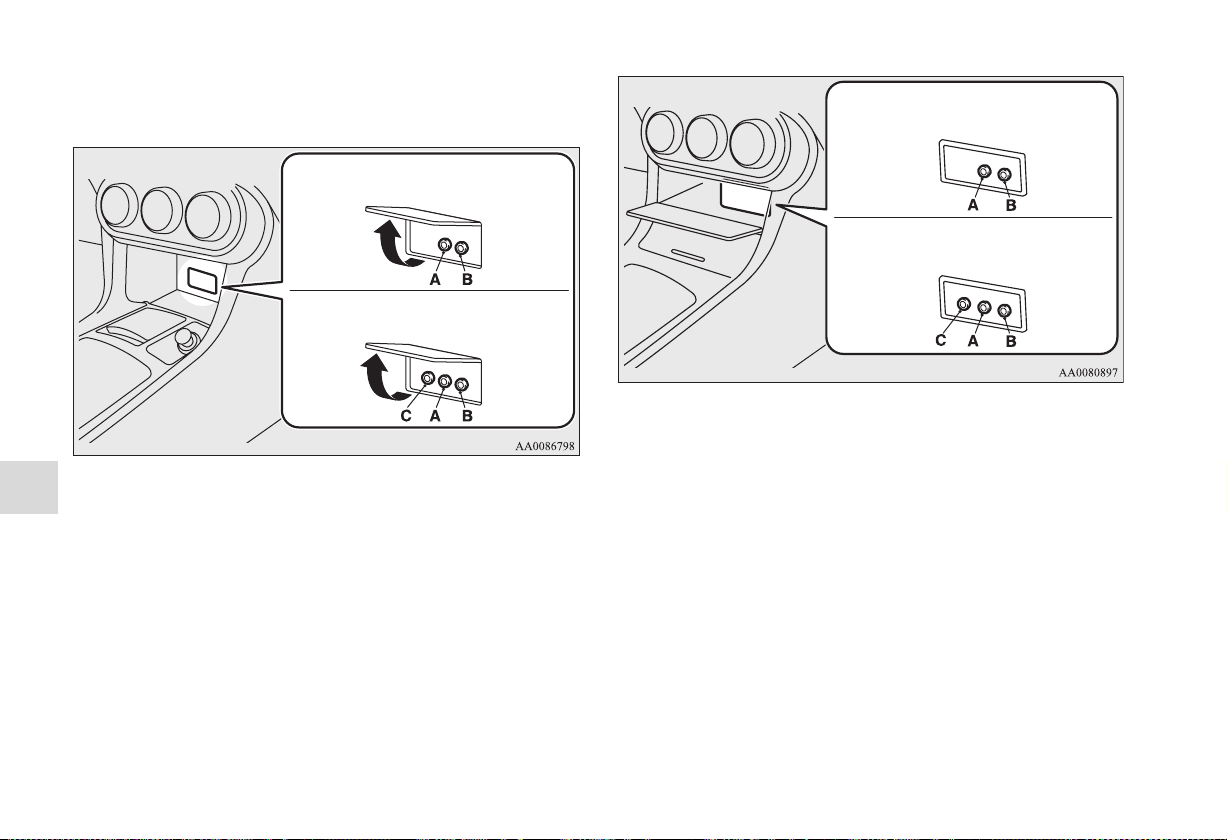
5-132
Comfort controls
5
To use the external audio input function
(if
so equipped)
N00702200117
You can listen to commercially available audio equipment,
such as a portable audio system, from your vehicle’s speakers,
by connecting the audio equipment to the audio input connec-
tors (A or B), which are external input connectors (pin jacks).
N
OTE
● For information on using the video input connector (C),
refer to the separate owner’s manual for a Mitsubishi
Multi-Communication System.
Auxiliary Audio connector
(RCA)
Auxiliary Video connector
(RCA)
Type 1
Auxiliary Audio connector (RCA)
A- Left audio input connector (white)
B- Right audio input connector (red)
Auxiliary Video connector (RCA)
A- Left audio input connector (white)
B- Right audio input connector (red)
C- Video input connector (yellow)
Auxiliary Audio connector
(RCA)
Auxiliary Video connector
(RCA)
Type 2
BK0138600US.book 132 ページ 2011年7月17日 日曜日 午後2時32分
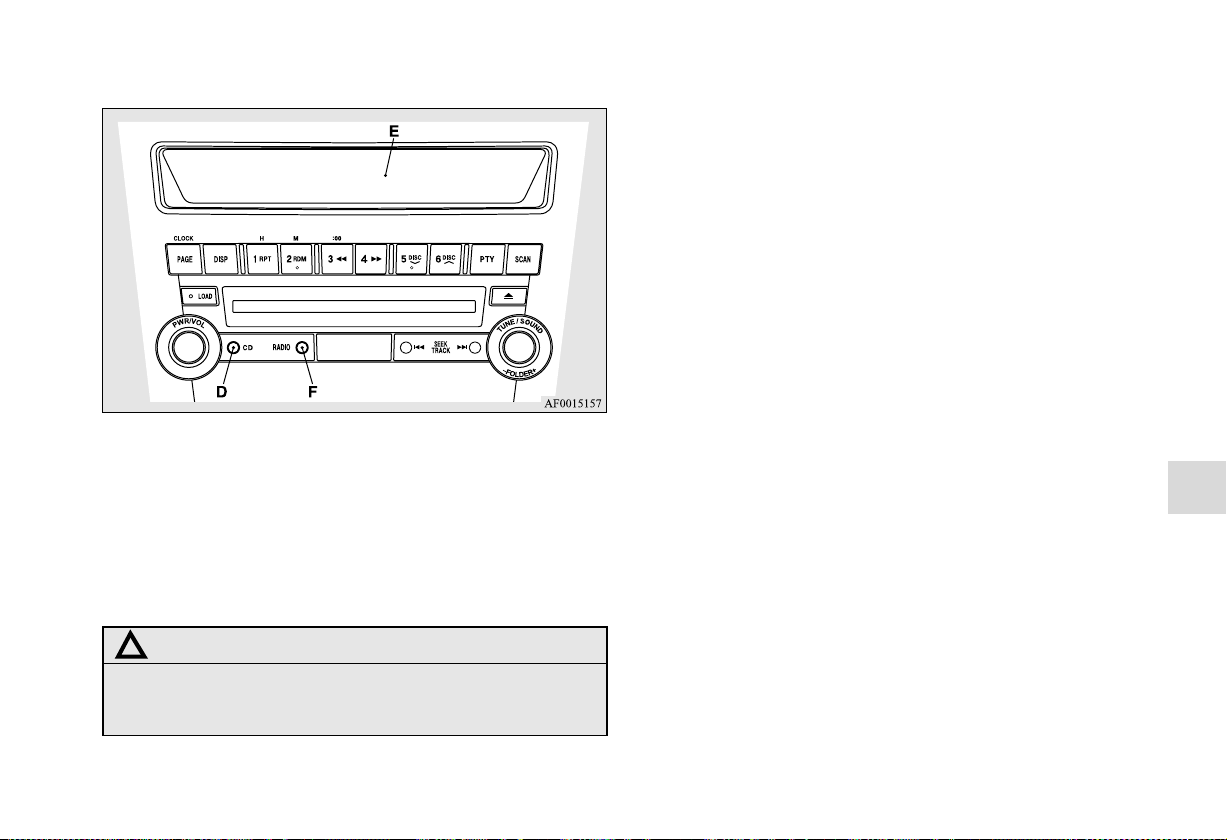
Comfort controls
5-133
5
To activate the external audio input mode
1. Use a commercially available audio cable to connect the
audio equipment to the internal audio input connector.
2. Press and hold the CD button (D) for more than 2 seconds.
The display (E) will show “AUX” and then the external
audio input mode will be activated.
3. To deactivate the external audio input mode, press the
RADIO button (F) or the CD button (D) to switch to
another mode.
N
OTE
● The connected audio equipment cannot be operated with
the vehicle’s audio system.
● Depending on the connected audio equipment, it may pro-
duce noise from the speakers.
● Use the connected audio equipment’s own power source,
such as its battery.
Noise may be produced from the speakers if the connected
audio equipment is used while charging it using the 12 V
power outlet of the vehicle.
● Do not activate the external audio input mode when no
audio equipment is connected.
Otherwise, noise may be produced from the speakers.
● Connect audio equipment when the external audio input
mode is deactivated or lower the vehicle’s speaker volume
before connecting it.
Noise may be produced from the speakers if audio equip-
ment is connected after the external audio input mode is
activated.
● For information on how to connect and operate the audio
equipment, refer to the owner’s manual for the equipment.
CAUTION
!
● Do not operate the connected audio equipment while
driving.
This could distract you and an accident might occur.
BK0138600US.book 133 ページ 2011年7月17日 日曜日 午後2時32分
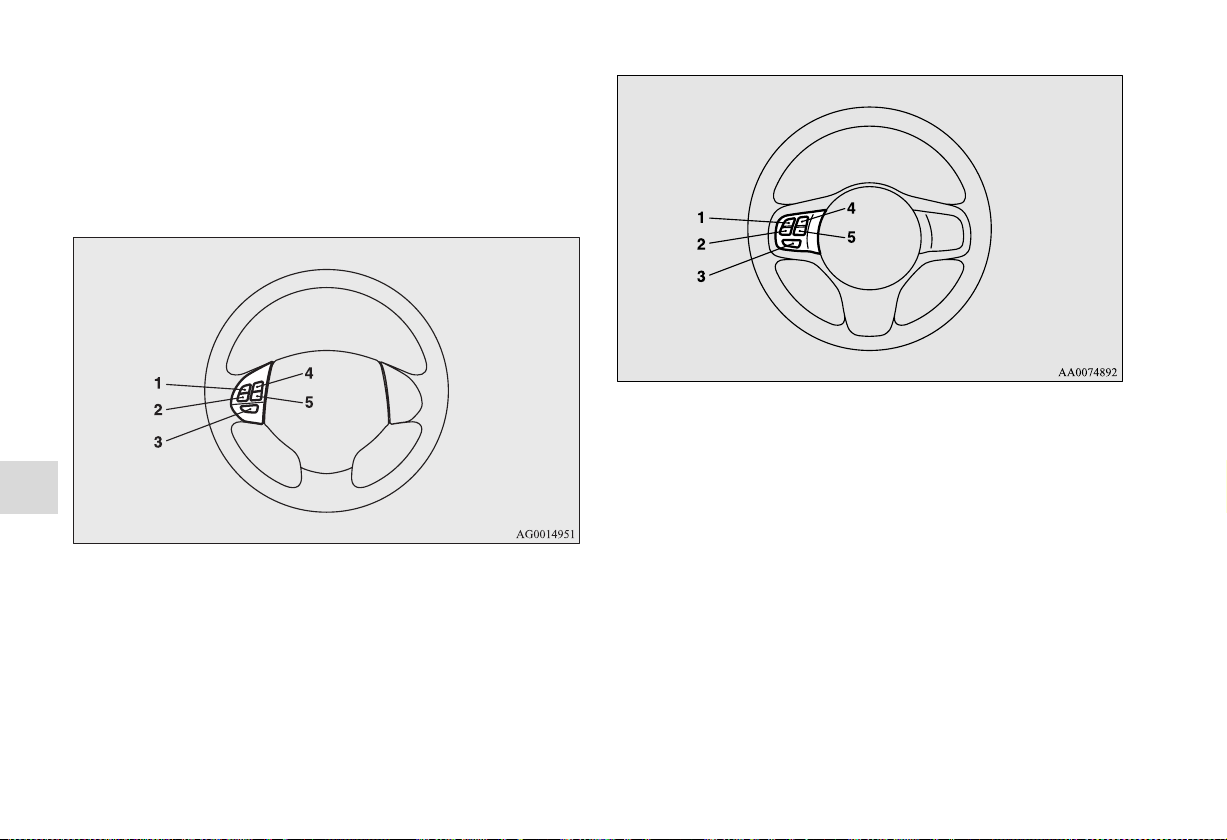
5-134
Comfort controls
5
Steering wheel audio remote control switch
(if so equipped)
N00714800426
The remote control switch is located on the left side of the
steering wheel.
The switch can be operated when the ignition switch is in
either the “ON” or “ACC” position.
N
OTE
● Do not press multiple buttons at the same time when using
the steering wheel audio remote control switch.
Type 1
1- Volume up button
2- Volume down button
3- Power switch/Mode selector button
4- Seek up/Track up/File up/Fast-forward button
5- Seek down/Track down/File down/Fast-reverse button
Type 2
BK0138600US.book 134 ページ 2011年7月17日 日曜日 午後2時32分

Comfort controls
5-135
5
To turn on the power
Press the power switch (3) to turn on the power. When the
power is turned on, the last mode used before turning off is dis-
played. To turn off the power, press and hold down the power
switch (3) for about 2 seconds until you hear a beep.
Volume control
Volume up button - 1
While the button is pressed, the volume will continue to
increase.
Volume down button - 2
While the button is pressed, the volume will continue to
decrease.
Mode selection
Press the mode selector button (3) to select the desired mode.
The mode changes in the following order.
AM → FM1 → FM2 → (SAT1 → SAT2 → SAT3 → SAT4)
→ CD → USB or iPod* → Bluetooth
®
* → AM
*: If you connect these devices.
To listen to the radio
Press the mode selector button (3) and select AM or FM mode.
Automatic tuning
Seek up button - 4 / Seek down button - 5
After pressing one of these buttons, a receivable station will be
automatically selected and reception of the station will begin.
Channel selection / Category selection (Vehicles with
satellite radio)
Seek up button - 4 / Seek down button - 5
Press the button to select the desired channel.
Pressing down the button for 2 seconds or longer will change
the system to category selection mode. While the button is
pressed, the category will change in order. When you reach the
desired category, release the button.
To listen to a CD
Press the mode selector button (3) and select CD mode.
To fast forward/reverse the disc (music CDs only)
To fast forward or fast reverse the disc, press the fast-forward
button (4) or the fast-reverse button (5).
Fast forward
You can fast forward the disc by holding down the fast-forward
button (4). While the button is kept pressed, the disc will be
fast-forwarded.
Fast reverse
You can fast reverse the disc by holding down the fast-reverse
button (5). While the button is kept pressed, the disc will be
fast-reversed.
N
OTE
● With an MP3 CD, you can fast forward and fast reverse
tracks in the same folder.
BK0138600US.book 135 ページ 2011年7月17日 日曜日 午後2時32分

5-136
Comfort controls
5
To select a desired track
You can select your desired track by using the track up button
(4) or the track down button (5).
N
OTE
● Pressing the track down button once during the song will
cause the system to restart playing from the beginning of
the song.
To listen to an iPod
Press the mode selector button (3) and select iPod mode.
To select a desired track
Track up button - 4
Press the button repeatedly until the desired track number
appears on the display.
N
OTE
● The track number continues to increase while the button is
pressed.
Track down button - 5
Press the button repeatedly until the desired track number
appears on the display.
N
OTE
● The track number continues to decrease while the button
is pressed.
To listen to a USB memory device
Press the mode selector button (3) and select USB mode.
To select a desired file
File up button - 4
Press the button repeatedly until the desired track number
appears on the display.
N
OTE
● The track number continues to increase while the button is
pressed.
File down button - 5
Press the button repeatedly until the desired track number
appears on the display.
N
OTE
● The track number continues to decrease while the button
is pressed.
BK0138600US.book 136 ページ 2011年7月17日 日曜日 午後2時32分
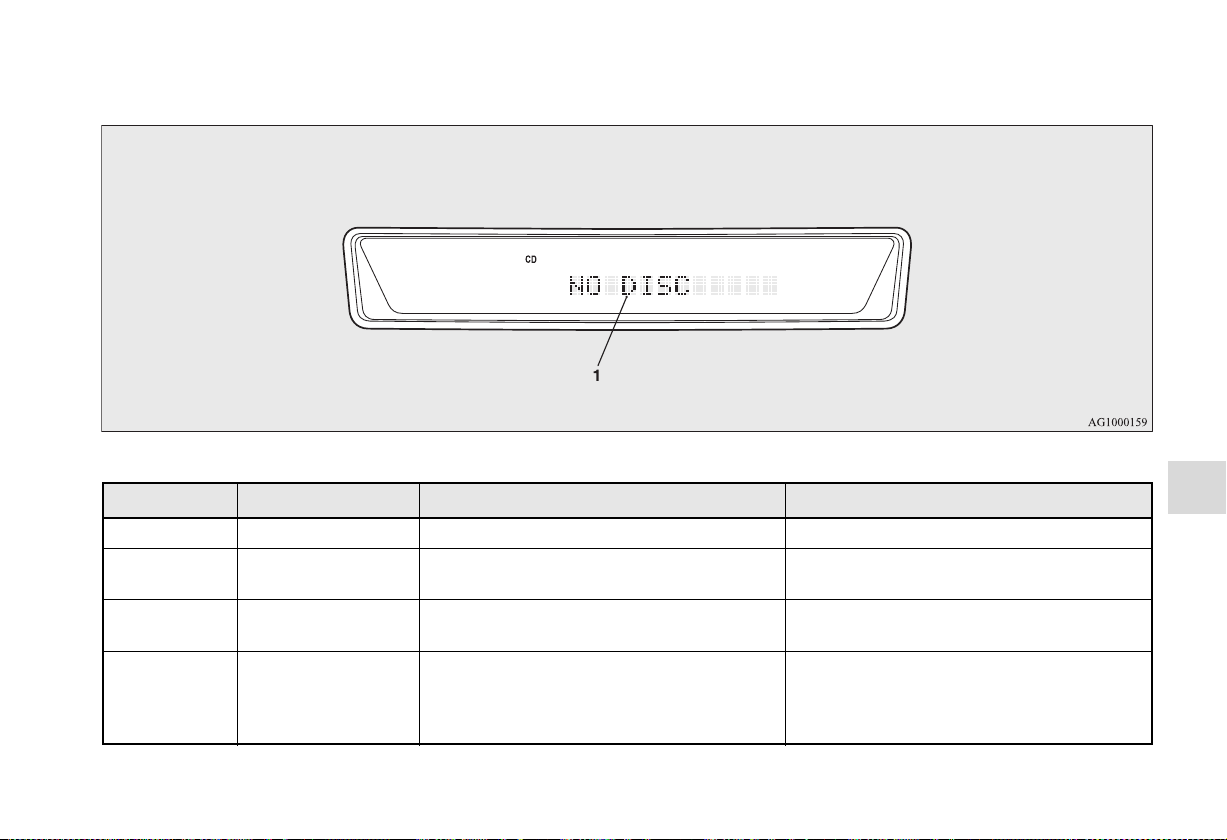
Comfort controls
5-137
5
Error codes
N00736100650
If an error code (1) appears in the display, take action in accordance with the table below.
Error display Problem Item Repair
NO DISC No disc inserted Disc is not in CD player. Insert disc.
ERROR 01 Focus error
Disc is not loaded correctly, or condensation
on disc.
Insert disc with label facing up.
Remove moisture from disc.
ERROR 02 Disc error
Disc is dirty, scratched, or deformed; or exces-
sive vehicle vibration.
Clean or replace disc. Retry when vibrations
stop.
ERROR 03 Mechanism error
Loading or eject error. Pick-up is out of posi-
tion.
Eject disc and reload. If disc will not eject,
bring your vehicle to your authorized
Mitsubishi Motors dealer or a repair facility of
your choice for repair.
BK0138600US.book 137 ページ 2011年7月17日 日曜日 午後2時32分
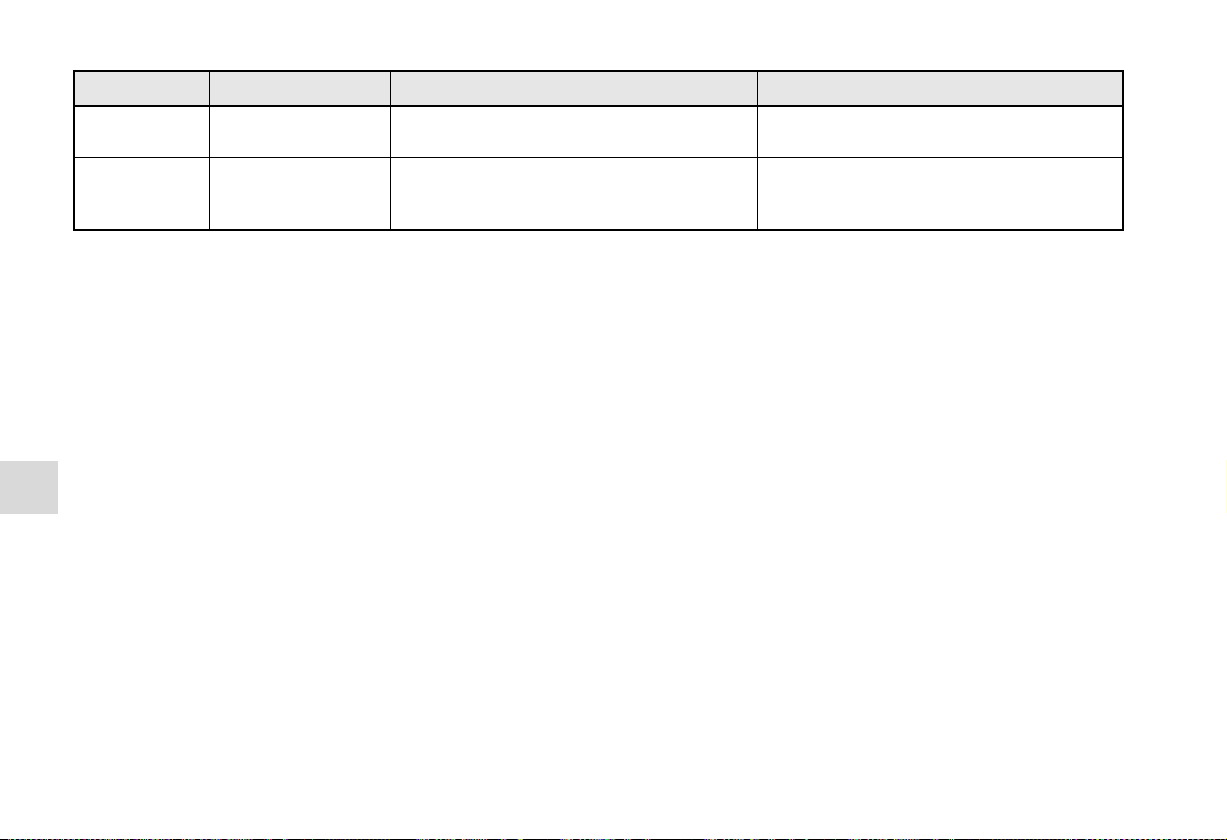
5-138
Comfort controls
5
ERROR HOT
Inside of audio system
is hot.
Internal protection against high temperatures.
Allow radio to cool by waiting about 30 min-
utes.
ERROR
Communication or
power supply error
Communication error between external device
and audio equipment.
Power supply error of external device.
Bring your vehicle to your authorized
Mitsubishi Motors dealer or a repair facility of
your choice for repair.
Error display Problem Item Repair
BK0138600US.book 138 ページ 2011年7月17日 日曜日 午後2時32分
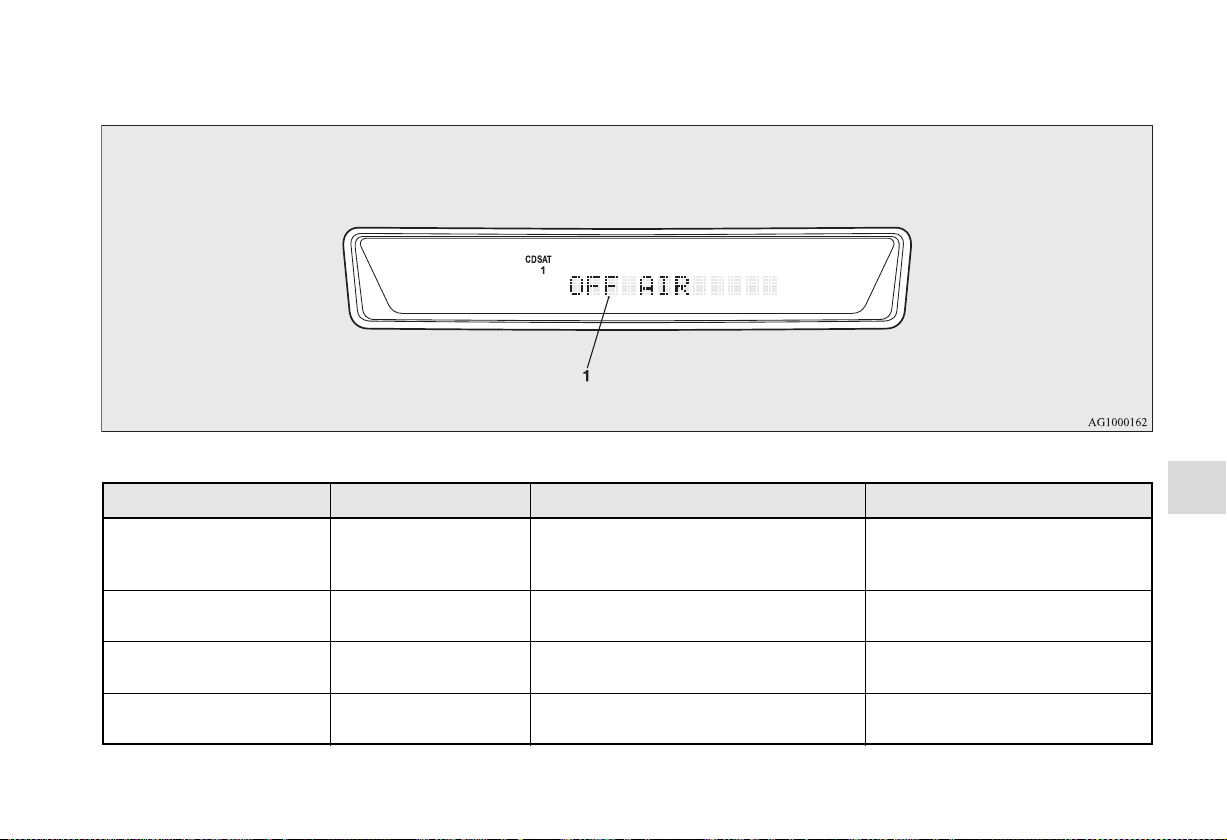
Comfort controls
5-139
5
Error codes (SIRIUS Satellite Radio)
(if so equipped)
N00760300053
If an error code (1) appears in the display, take action in accordance with the table below.
Error display Problem Description Repair
ANTENNA ↔ ERROR Antenna error
The antenna may be faulty, not securely
connected, or open-circuited.
Take the vehicle to your authorized
Mitsubishi Motors dealer or a repair
facility of your choice.
ACQUIRING Cannot pick up signal. The signal is too weak to be received.
Move to a place where the signal is
easy to receive.
CALL ↔ 888-539-SIRIUS Unauthorized channel
Contract does not include reception of this
channel.
Contact SIRIUS Satellite Radio and
obtain a contract.
NO CHANNEL
There is no selectable
channel.
There is no selectable channel. Cancel SKIP settings.
BK0138600US.book 139 ページ 2011年7月17日 日曜日 午後2時32分
5-140
Comfort controls
5
N
OTE
● Reception may not be possible in a place where the signal is interrupted by a tunnel, by the roof of a garage or other structure,
by woods, or by a tall building. At such times, the audio is muted. This behavior does not indicate a fault.
● Reception conditions may vary according to the angle of the satellite used for the satellite radio service.
● Reception may deteriorate if a luggage carrier is attached to the roof or snow collects on the antenna.
● Satellite radio reception may not be possible in certain regions.
INVALID ↔ CHANNEL Channel is invalid
No program is currently being broadcast
on this channel; or reception is not possi-
ble with this channel.
Consult SIRIUS Satellite Radio at
888-539-SIRIUS.
SAT ERROR
Mechanical fault or bad
connection
There is a mechanical fault or a bad con-
nection.
Take the vehicle to your authorized
Mitsubishi Motors dealer or a repair
facility of your choice.
OFF AIR OFF AIR
This channel is not broadcasting at the
present time; or satellite radio broadcast-
ing is suspended.
Check the broadcast times with
SIRIUS Satellite Radio.
NOT ACTIVATED ID not registered
The ID code in the receiver has not been
registered with SIRIUS Satellite Radio.
Contact your authorized Mitsubishi
Motors dealer or a repair facility of
your choice.
READING Data reading in progress Reading of received data is in progress.
Received data are being read. Please
wait.
UPDATING
Channel data updating
in progress
SIRIUS Satellite Radio is presently updat-
ing the channel data.
Wait until updating is complete.
SUB UPDATED
Contract status updating
complete
The contract status has been updated. Press any audio key.
Error display Problem Description Repair
BK0138600US.book 140 ページ 2011年7月17日 日曜日 午後2時32分
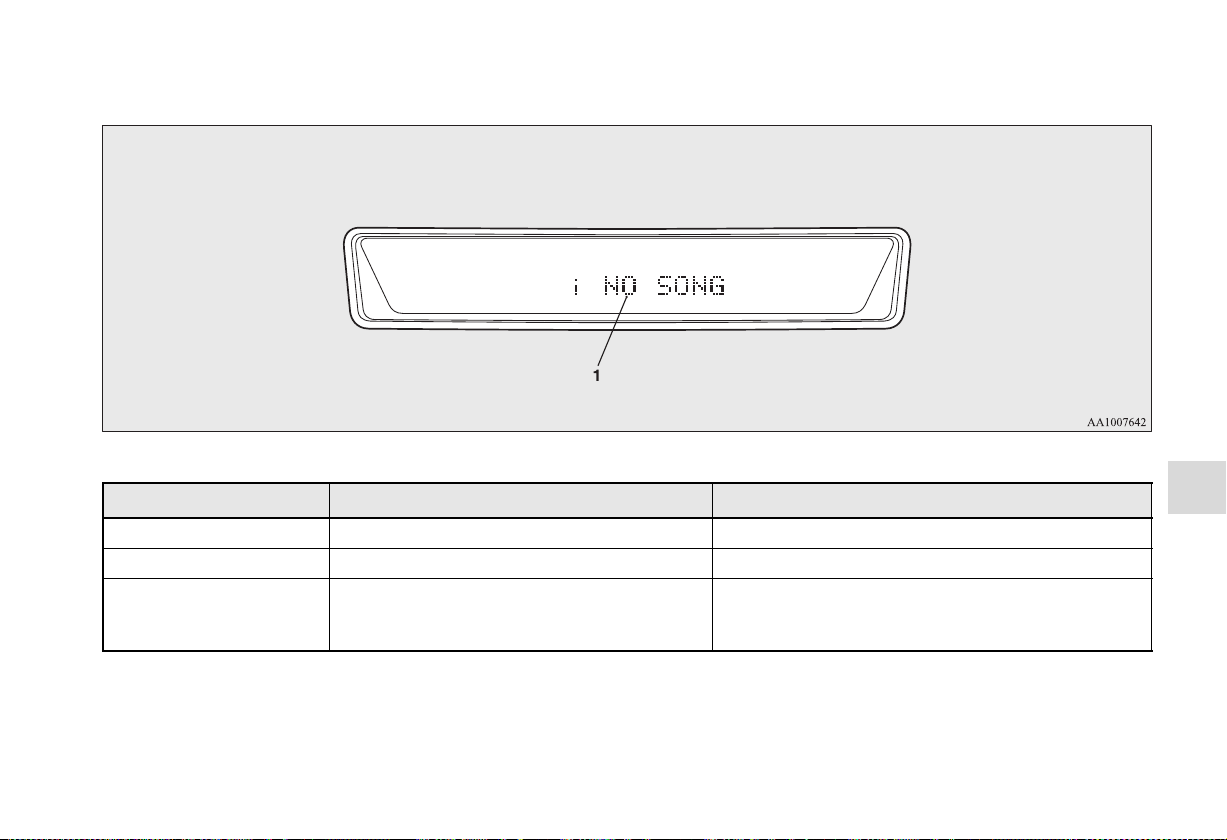
Comfort controls
5-141
5
Error codes (iPod)
N00766300013
If an error code (1) appears in the display, take action in accordance with the table below.
Error display Item Repair
NO SONG There are no playable music files. Record music files in the iPod.
VER ERROR (Blink) The iPod or its software cannot be recognized. Connect a supported iPod.
USB BUS PWR (Blink)
An overcurrent or other power-supply error has
occurred.
Remove the iPod.
Have the vehicle inspected at an authorized Mitsubishi
Motors dealer or a repair facility of your choice.
BK0138600US.book 141 ページ 2011年7月17日 日曜日 午後2時32分

5-142
Comfort controls
5
CONNECT RETRY (Blink)
If the iPod indicator illuminates, the iPod cannot
be authenticated.
Reconnect the iPod.
If the iPod indicator goes out, it shows the USB
communication error.
Reconnect the iPod correctly.
If this error is displayed again, have the vehicle
inspected at an authorized Mitsubishi Motors dealer or a
repair facility of your choice.
Error display Item Repair
BK0138600US.book 142 ページ 2011年7月17日 日曜日 午後2時32分
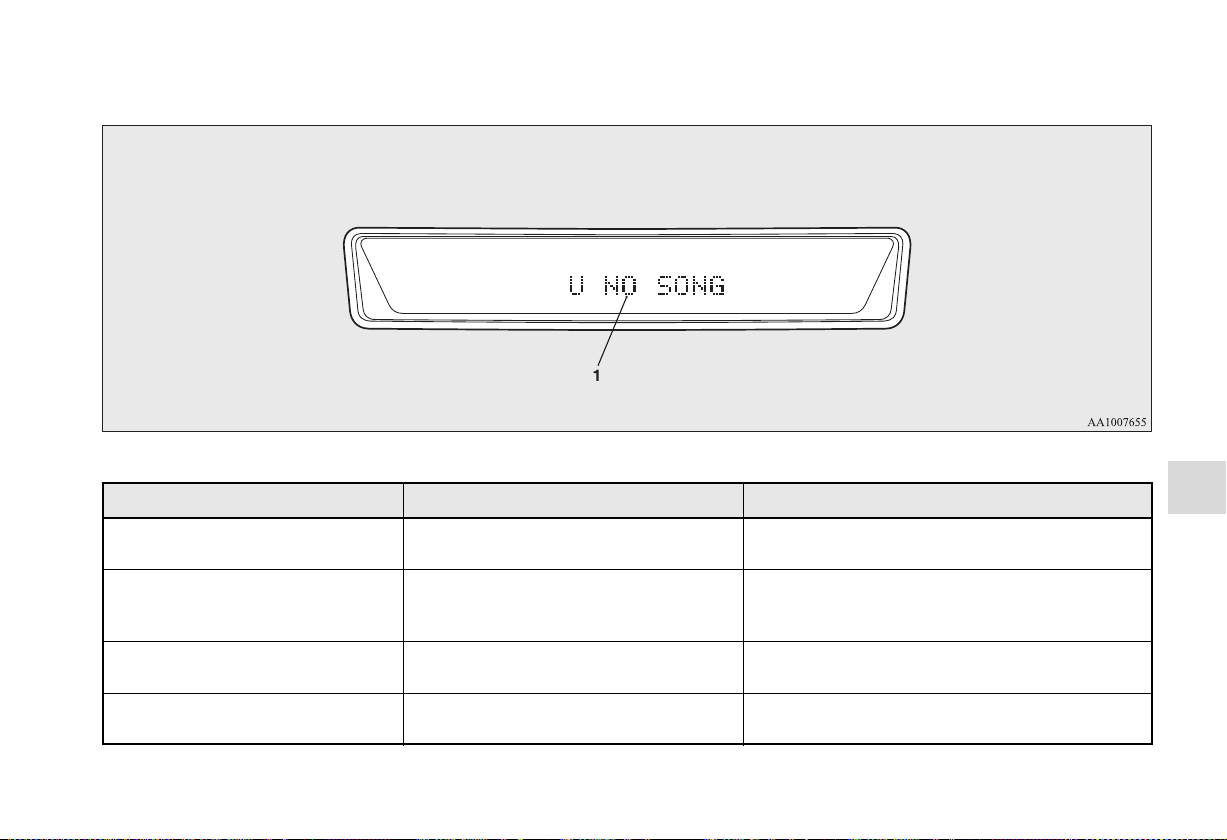
Comfort controls
5-143
5
Error codes (USB memory device)
N00766400014
If an error code (1) appears in the display, take action in accordance with the table below.
Error display Item Repair
U NO SONG There are no playable music files.
Record music files in the format supported by the
USB memory device.
U FILE ERROR (Blink) The file cannot be played.
The file is protected by copyrights, etc. An error is
displayed for several seconds, and then the next
playable file is played automatically.
UNSUPPORTED DEVICE (Blink)
The USB memory device cannot be recog-
nized.
Remove the USB memory device.
UNSUPPORTED FORMAT (Blink)
The USB memory device format cannot be
recognized.
Remove the USB memory device.
BK0138600US.book 143 ページ 2011年7月17日 日曜日 午後2時32分

5-144
Comfort controls
5
USB BUS PWR (Blink)
An overcurrent or other power-supply error
has occurred.
Remove the USB memory device.
Have the vehicle inspected at an authorized
Mitsubishi Motors dealer or a repair facility of your
choice.
U LSI ERROR (Blink) Internal device errors
Have the vehicle inspected at an authorized
Mitsubishi Motors dealer or a repair facility of your
choice.
U CONNECT RETRY (Blink) USB communication error
Reconnect the USB memory device correctly.
If this error is displayed again, have the vehicle
inspected at an authorized Mitsubishi Motors dealer
or a repair facility of your choice.
Error display Item Repair
BK0138600US.book 144 ページ 2011年7月17日 日曜日 午後2時32分
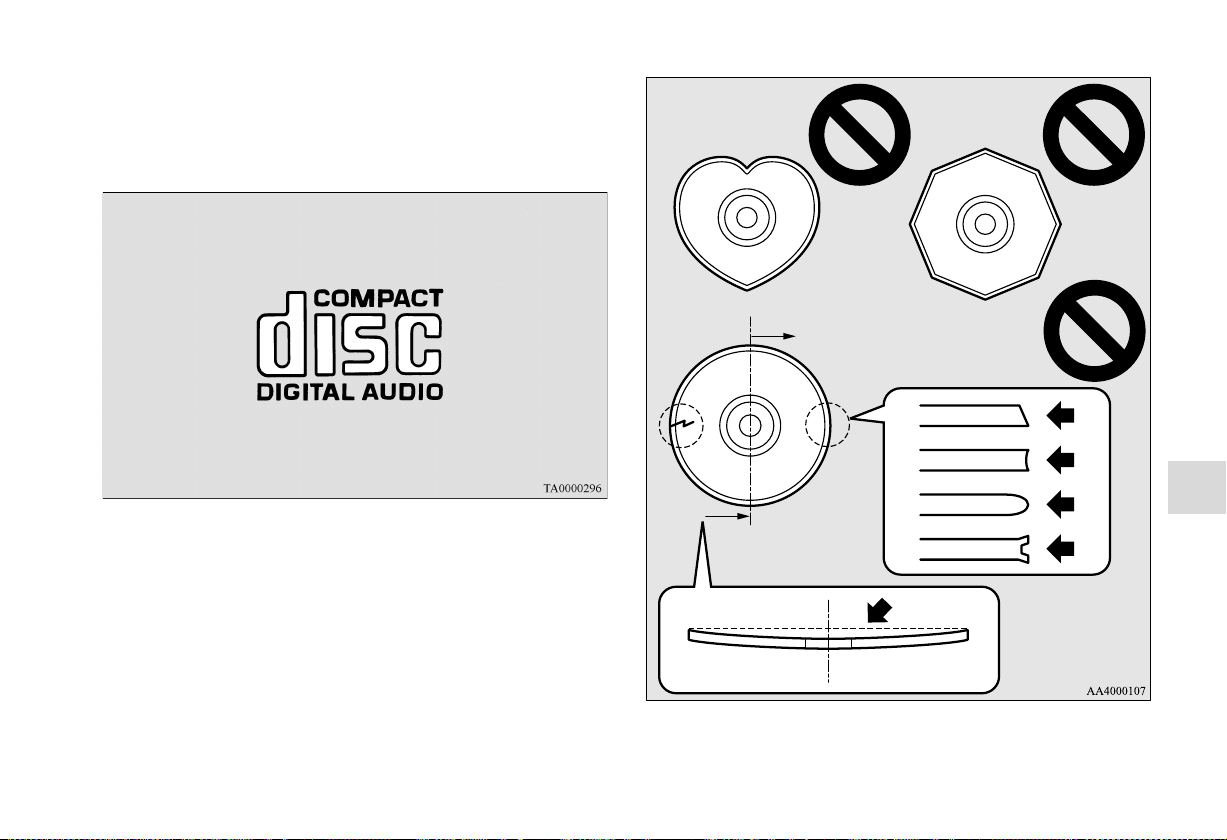
Comfort controls
5-145
5
Handling of compact discs (CD)
N00734100311
● Use only compact discs that have the following mark.
(Playback of CD-R or CD-RW discs may cause prob-
lems.)
● The use of special shaped compact discs, damaged com-
pact discs (like cracked discs) or low-quality compact
discs (like warped discs or burrs on the discs) such as
those shown will damage the CD player.
BK0138600US.book 145 ページ 2011年7月17日 日曜日 午後2時32分
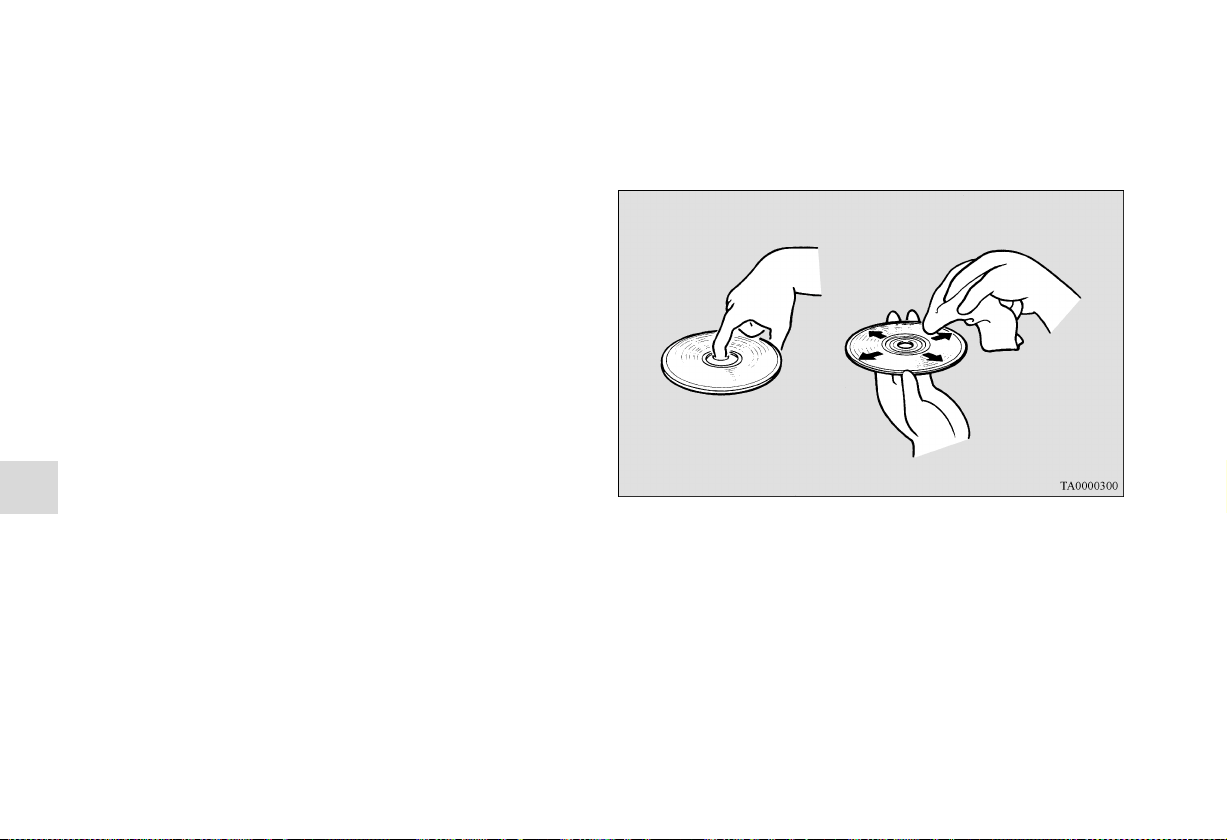
5-146
Comfort controls
5
● In the following circumstances, moisture can form on
discs and inside the audio system, preventing normal
operation.
• When there is high humidity (for example, when it is
raining).
• When the temperature suddenly rises, such as right after
the heater is turned on in cold weather.
In this case, wait until the moisture has had time to dry
out.
● When the CD player is subjected to violent vibrations,
such as during off-road driving, the tracking may not
work.
● When storing compact discs, always store them in their
separate cases. Never place compact discs in direct sun-
light, or in any place where the temperature or humidity is
high.
● Never touch the flat surface of the disc where there isn’t a
label. This will damage the disc surface and could affect
the sound quality. When handling a compact disc, always
hold it by the outer edge and the center hole.
● To clean a disc, use a soft, clean, dry cloth. Wipe directly
from the center hole toward the outer edge. Do not wipe in
a circle. Never use any chemicals such as benzine, paint
thinner, a disc spray cleaner, or an anti-static agent on the
disc.
● Do not use a ball point pen, felt pen, pencil, etc. to write
on the label surface of the disc.
BK0138600US.book 146 ページ 2011年7月17日 日曜日 午後2時32分
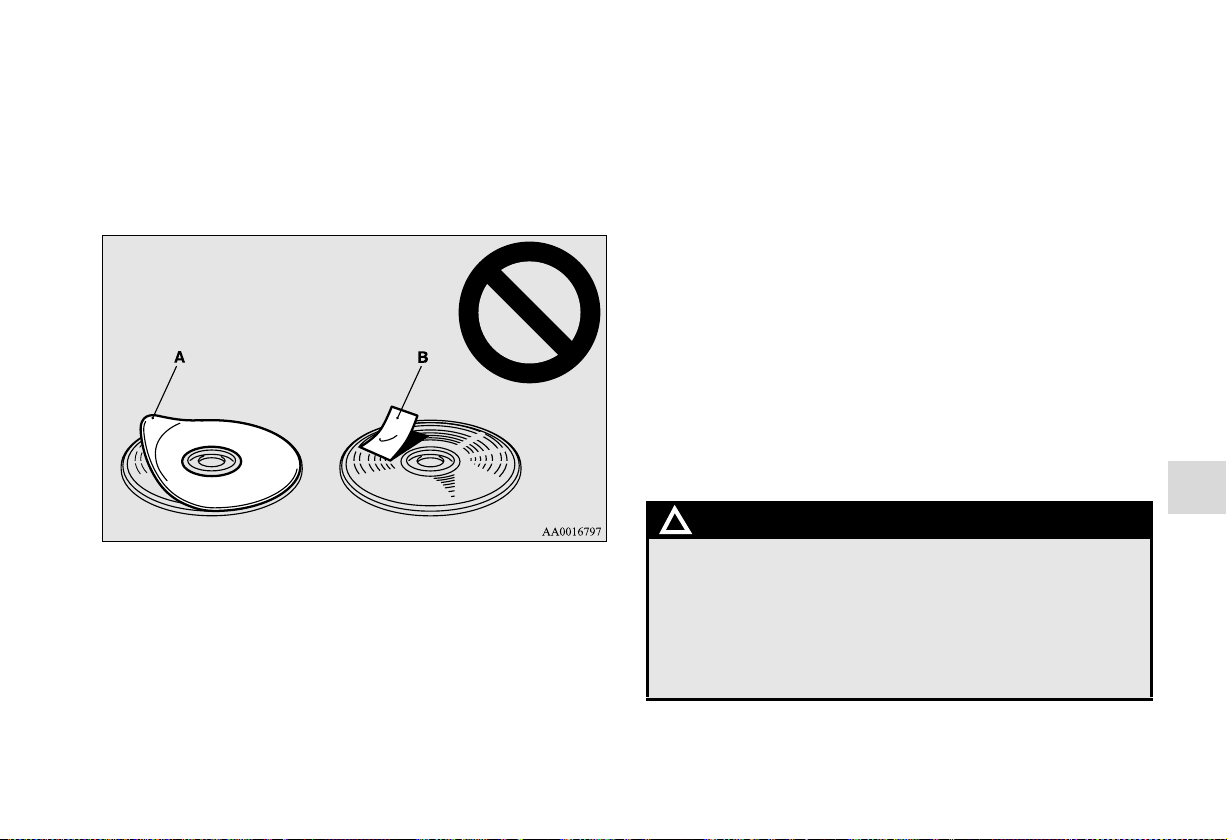
Comfort controls
5-147
5
● Do not put additional labels (A) or stickers (B) on com-
pact discs. Also, do not use any compact disc on which a
label or sticker has started to peel off or any compact disc
that has stickiness or other contamination left by a peeled-
off label or sticker. If you use such a compact disc, the CD
player may stop working properly and you may not be
able to eject the compact disc.
Notes on CD-Rs/RWs
N00751900079
● You may have trouble playing back some CD-R/RW discs
recorded on CD recorders (CD-R/RW drives), either due
to their recording characteristics or dirt, fingerprints,
scratches, etc. on the disc surface.
● CD-R/RW discs are less resistant to high temperatures and
high humidity than ordinary music CDs and can therefore
be damaged and rendered unplayable if left inside your
vehicle for a long time.
● Depending on the combination of the writing software,
the CD recorder (CD-R/RW drive), and the disc used to
create a CD-R/RW, the disc might not play successfully.
● This player cannot play the CD-R/RW discs if the session
is not closed.
● This player cannot play CD-R/RW discs which contain
data other than CD-DA or MP3 data (Video CD, etc.).
● Be sure to observe the handling instructions for the CD-
R/RW disc.
WARNING
!
● Operating the CD player in a manner other than
specifically instructed herein may result in hazard-
ous radiation exposure. Do not remove the cover
and attempt to repair the CD player by yourself.
There are no user serviceable parts inside. In case of
malfunction, contact an authorized Mitsubishi
Motors dealer or a repair facility of your choice.
BK0138600US.book 147 ページ 2011年7月17日 日曜日 午後2時32分

5-148
Comfort controls
5
Antenna
N00734200426
Roof antenna (except for vehicles with SIRIUS
satellite radio)
To r emov e
Turn the pole (A) counterclockwise.
To i nstal l
Screw the pole (A) clockwise into the base (B) until it is
securely retained.
N
OTE
● Be sure to remove the roof antenna in the following cases:
• When using an automatic car wash
• When covering your vehicle with a car cover
• When driving into a structure that has a low ceiling
Roof antenna (for vehicles with SIRIUS satellite
radio)
For securing the best satellite reception, the angle of the
antenna is fixed.
BK0138600US.book 148 ページ 2011年7月17日 日曜日 午後2時32分
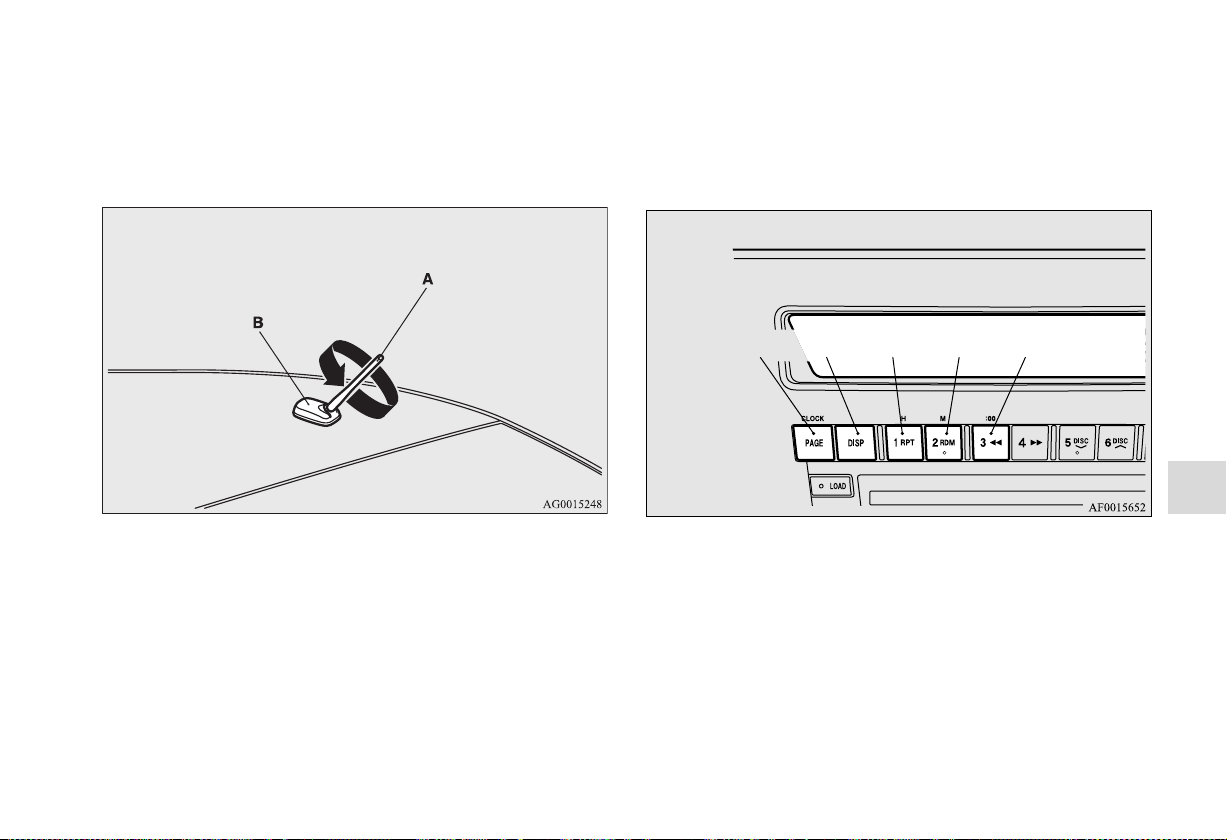
Comfort controls
5-149
5
To remove
Turn the pole (A) counterclockwise.
To install
Screw the pole (A) clockwise into the base (B) until it is
securely retained.
N
OTE
● Be sure to remove the roof antenna in the following cases:
• When entering a place with low clearance
• When using an automatic car wash
• When covering your vehicle with a car cover
Digital clock (if so equipped)
N00755000094
The time is displayed when the ignition switch is in the “ON”
or “ACC” position.
To set the time
1. Press and hold the CLOCK button and the clock display
flashes.
2. Press the various buttons to adjust.
H — “Hour” setting
Press this button to fast-forward the “hours”.
M — “Minutes” setting
Press this button to fast-forward the “minutes”.
CLOCK DISP H M :00
BK0138600US.book 149 ページ 2011年7月17日 日曜日 午後2時32分
5-150
Comfort controls
5
3. When the time is set, press the DISP button to stop the
clock display from flashing. After time signal setting,
however, the clock display automatically stops flashing.
N
OTE
● Reset the time after the battery terminals are disconnected
and reconnected.
● Seconds do not appear in the clock display, but after
adjusting the “Minutes” setting and time signal setting,
the clock begins to operate from 0 seconds.
General information about your radio
N00733900383
Your vehicle’s radio receives both AM and FM stations.
The quality of your reception is affected by distance, obstacles,
and signal interference.
This radio complies with Part 15 of Federal Communications
Commission (FCC) Rules (for vehicles sold in U.S.A.). Opera-
tion is subject to the following conditions:
● The device may not cause harmful interference.
● This device must accept any interference recieved, includ-
ing interference that may cause undesirable operation.
:00 — Time signal setting
At the same time the button is pressed, the fol-
lowing modifications are made.
10:00 - 10:29 ......Change to 10:00
10:30 - 10:59 ......Change to 11:00
CAUTION
!
● Changes or modifications not expressly approved by
the party meeting the above conditions could void
the user’s authority to operate the equipment.
BK0138600US.book 150 ページ 2011年7月17日 日曜日 午後2時32分
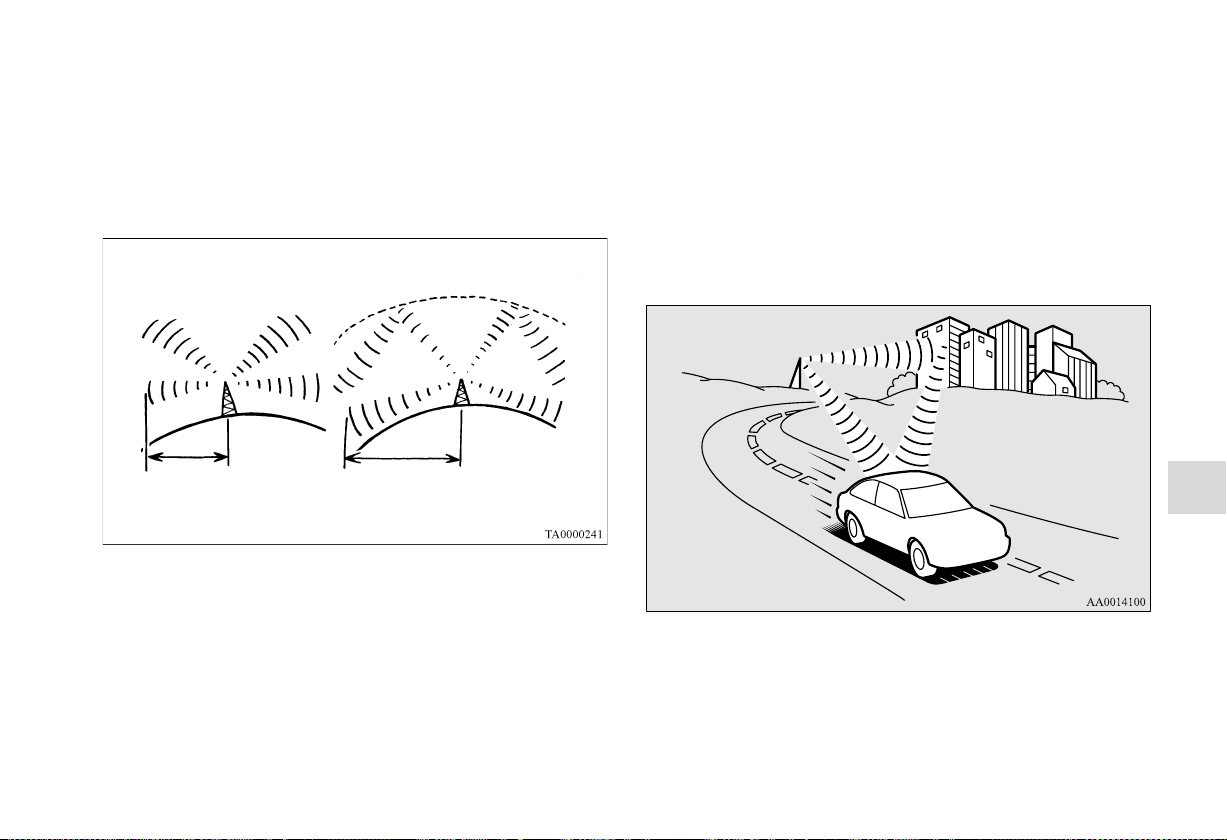
Comfort controls
5-151
5
Signal transmission
FM signals do not follow the earth surface nor are they
reflected by the upper atmosphere. For this reason, FM broad-
casts cannot be received over long distances. AM signals fol-
low the earth’s surface and are reflected by the upper
atmosphere. For this reason, AM broadcasts can be received
over longer distances.
Weak reception (fading)
Because of the limited range of FM signals and the way FM
waves transmit, you may experience weak or fading FM recep-
tion. When the broadcast is blocked by mountains or similar
obstructions, reception can be disturbed.
Reflection
The reason why one can hear FM but not AM in parking
garages, under bridges etc., is that FM signals, unlike AM sig-
nals, are reflected by solid objects such as buildings, etc.
Because FM signals are easily reflected by buildings, this can
also cause reception disturbances.
The direct signal from the broadcast station reaches the antenna
slightly before the reflected signal. This time difference may
cause some reception disturbance or flutter.
This problem occurs primarily in urban areas.
FM AM
25 to 40 mile radius
(40 to 64 km)
100 mile radius
(160 km)
BK0138600US.book 151 ページ 2011年7月17日 日曜日 午後2時32分
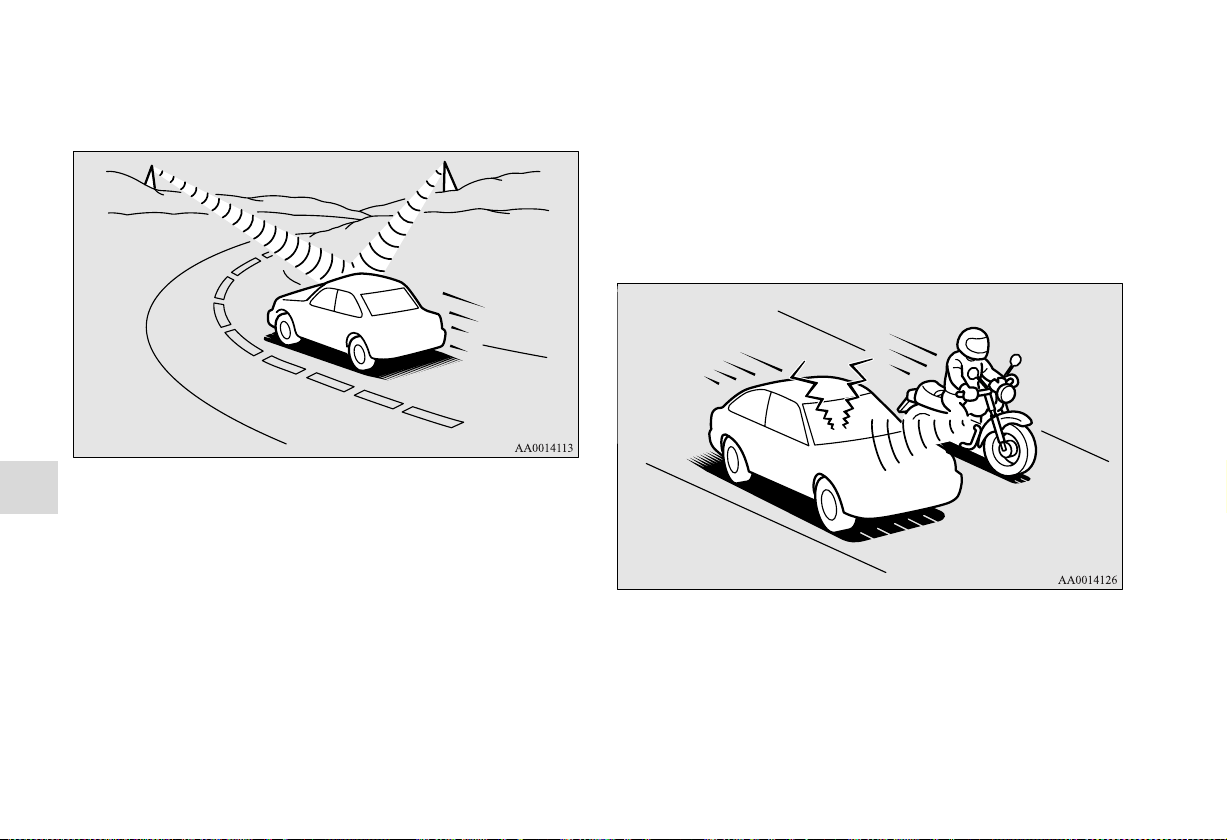
5-152
Comfort controls
5
Cross modulation
If one listens to a weak station and is in the vicinity of another
strong station, both stations might be received simultaneously.
FM stereo reception
Stereo reception requires a high quality broadcast signal. This
means that types of disturbances mentioned previously become
more marked and the reception range is somewhat diminished
during stereo reception.
Causes of disturbances
FM reception is affected by the electrical systems of vehicles in
the vicinity, especially those without an electronic noise sup-
pression device. The disturbance is even greater if the station is
weak or poorly tuned.
FM reception is not as sensitive to electrical disturbances as
AM. AM reception is sensitive to electrical disturbances such
as power lines, lightning and other types of similar electrical
phenomena.
BK0138600US.book 152 ページ 2011年7月17日 日曜日 午後2時32分

BK0138600US.book 153 ページ 2011年7月17日 日曜日 午後2時32分

BK0138600US.book 154 ページ 2011年7月17日 日曜日 午後2時32分

6
For emergencies
If the vehicle breaks down . . . . . . . . . . . . . . . . . . .6- 2
Jump-starting the engine . . . . . . . . . . . . . . . . . . . .6- 2
Engine overheating . . . . . . . . . . . . . . . . . . . . . . . .6- 5
Tools and jack . . . . . . . . . . . . . . . . . . . . . . . . . . . .6- 7
How to change a tire . . . . . . . . . . . . . . . . . . . . . . .6- 9
Towing . . . . . . . . . . . . . . . . . . . . . . . . . . . . . . . . . .6- 22
Operation under adverse driving conditions . . . . .6- 24
BK0138600US.book 1 ページ 2011年7月17日 日曜日 午後2時32分
6-2
For emergencies
6
If the vehicle breaks down
N00836300161
If your vehicle breaks down on the road, move to the shoulder
and turn on the hazard warning flashers. If there is no shoulder,
or the shoulder is not safe, drive in the right lane slowly, with
the hazard lights flashing, until you come to a safe stopping
place. Keep the flashers flashing.
If the engine stops/fails
If the engine stops, there will be no power assist to the steering
and brakes, making these difficult to use.
● The brake booster will not work, so the brakes will not
grip well. The brake pedal will be harder to press than
usual.
● Since there is no power steering assist, the steering wheel
will be hard to turn.
When the engine fails at the intersection
Get help from your passengers, bystanders, etc. to push the
vehicle and move it to a safe zone.
Jump-starting the engine
N00836400713
If the engine cannot be started because the battery is weak or
dead, you can start it with the battery from another vehicle
using jumper cables.
1. Take off any metal jewelry such as watch bands or brace-
lets that might make an accidental electrical contact.
2. Position the vehicles close enough together so that the
jumper cables can reach, but be sure the vehicles aren’t
touching each other.
WARNING
!
● When using jumper cables to start a vehicle, follow
the procedures and be very cautious.
CAUTION
!
● Do not try to start your vehicle by pushing or tow-
ing. Vehicles with continuously variable transmis-
sion (CVT) or Twin Clutch SST cannot be started
this way. Pushing or towing a vehicle that has a
manual transaxle may overheat and damage the cat-
alytic converter. Also, there is more risk of an acci-
dent when a vehicle is being pushed or towed.
CAUTION
!
● Check the other vehicle. It must have a 12-volt bat-
tery. If the other system isn’t 12-volt, both systems
can be damaged.
BK0138600US.book 2 ページ 2011年7月17日 日曜日 午後2時32分
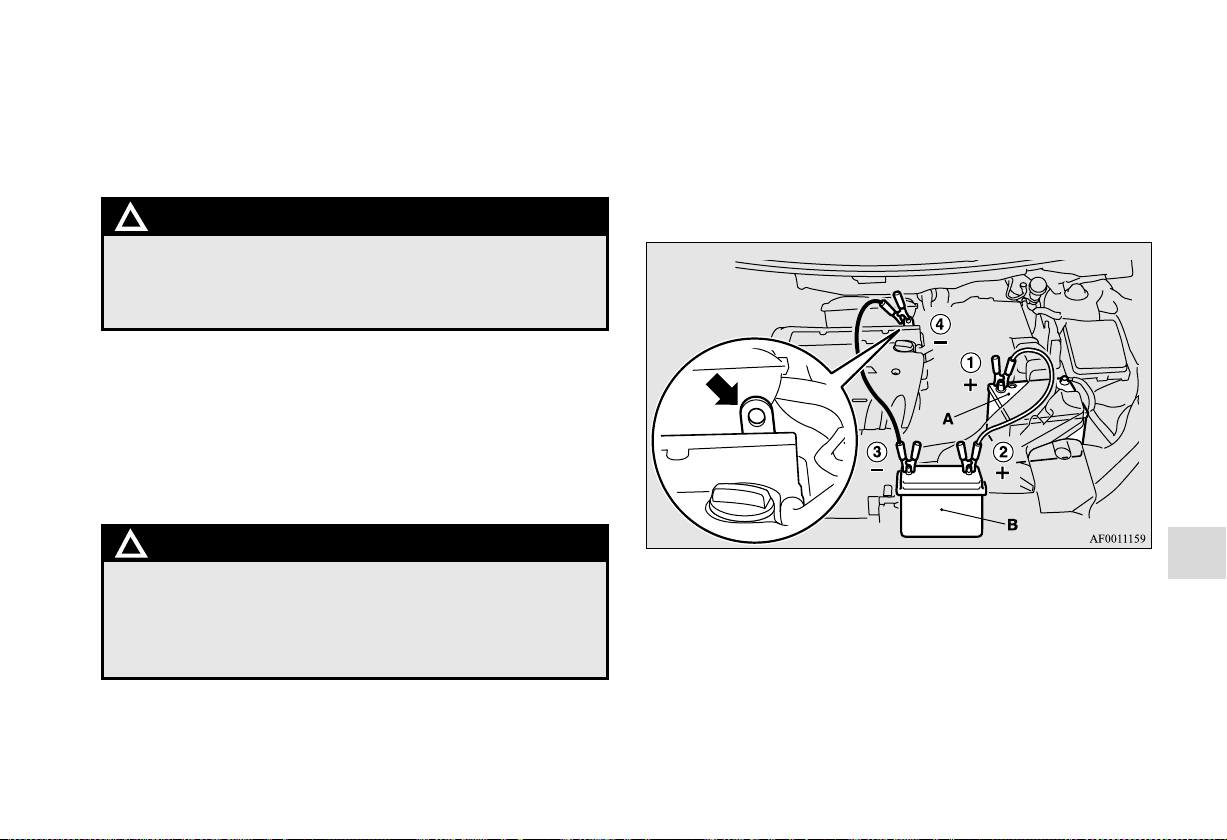
For emergencies
6-3
6
3. You could be injured if the vehicles move. Set the parking
brake firmly on each vehicle. Put an automatic transaxle,
CVT or Twin Clutch SST in “P” (PARK) or a manual
transaxle in “N” (Neutral). Turn the ignition key to the
“LOCK” position.
N
OTE
● Turn off all lights, heater, and other electrical loads. This
will avoid sparks and help save both batteries.
4. Make sure your battery electrolyte is at the proper level.
(Refer to “Checking battery electrolyte level” on page 7-
26.)
5. For vehicles equipped with turbocharger, remove the air
duct and then the battery upper cover.
(Refer to “Removing and installing the battery upper
cover” on page 7-23.)
6. Connect one end of one jumper cable to the positive (+)
terminal of the discharged battery (A), and the other end
to the positive (+) terminal of the booster battery (B).
N
OTE
● Open the terminal cover before connecting the jumper
cable to the positive terminal of the battery.
(Refer to “Disconnection and connection” on page 7-27.)
● Use the proper cables suitable for the battery size.
Otherwise heat damage to the cables could result.
● Check the jumper cables for damage and corrosion before
use.
WARNING
!
● Turn the ignition key to the “LOCK” position on
both vehicles. Make sure that the cables or your
clothes cannot be caught by the fan or drive belt.
Personal injury could result.
WARNING
!
● If the electrolyte fluid is not visible, or looks frozen,
DO NOT ATTEMPT JUMP STARTING!!
The battery might split open or explode if the tem-
perature is below the freezing point or if it is not
filled to the proper level.
BK0138600US.book 3 ページ 2011年7月17日 日曜日 午後2時32分
6-4
For emergencies
6
7. Connect one end of the other jumper cable to the negative
(-) terminal of the booster battery (B), and the other end to
the engine block of the vehicle with the low battery (A) at
the point farthest from the battery.
8. Start the engine in the vehicle providing the boost. Let the
engine idle a few minutes, then start the engine in the
vehicle with the low battery.
N
OTE
● If the engine is started with the air duct removed, the noise
produced as air is drawn into the engine will be greater
than when the duct is installed.
9. After the engine is started, disconnect the cables in the
reverse order from the way you connected them.
10. For vehicles equipped with turbocharger, install the bat-
tery upper cover and then the air duct.
(Refer to “Removing and installing the battery upper
cover” on page 7-23.)
WARNING
!
● Be sure to follow the proper order when connecting
the batteries, of: →→→.
● Make sure that the connection is made to the
engine properly. If the connection is directly made to
the negative side of the battery, the flammable gases
from inside the battery might catch fire and explode,
causing personal injury.
● When connecting the jumper cable, do not connect
the positive (+) cable to the negative (-) terminal.
Otherwise sparks can make the battery explode.
CAUTION
!
● Make sure that the jumper cable will not be caught
in the cooling fan or other moving parts in the
engine compartment.
WARNING
!
● Charging your battery while it is still in your vehicle
might cause the battery to catch fire and explode. If
you have to charge it while in the vehicle, disconnect
the negative terminal.
● Keep sparks, cigarettes and flames away from the
battery because the battery may explode.
● Keep your work area well vented when charging or
using the battery in an enclosed space.
● Remove all the caps before charging the battery.
● Electrolyte (battery acid) is corrosive diluted sul-
phuric acid. If electrolyte comes in contact with your
hands, eyes, clothes, or the painted surface of your
vehicle, thoroughly flush with water. If electrolyte
gets in your eyes, flush them immediately and thor-
oughly with water, and get prompt medical atten-
tion.
● Always wear protective clothing and goggles when
working near the battery.
● Keep the battery out of the reach of children.
BK0138600US.book 4 ページ 2011年7月17日 日曜日 午後2時32分
For emergencies
6-5
6
As your vehicle has anti-lock brakes
If you drive your vehicle with a low battery charge, after the
engine has been started by using jumper cables, the engine may
misfire. This can cause the anti-lock braking system warning
light to blink on and off. This is only due to the low battery
voltage. It is not a problem with the brake system. If this hap-
pens, fully charge the battery and ensure the charging system is
operating properly.
Engine overheating
N00836500323
When the engine has overheated, the information screen in the
multi-information display will be interrupted and the engine
coolant temperature warning display will appear. The screen
will then change to the engine coolant temperature display
screen and “ ” will flash. If this happens:
1. Stop the vehicle in a safe place. Turn on the hazard warn-
ing flashers.
2. With the engine still running, carefully raise the engine
hood to vent the engine compartment.
3. Check that the cooling fan is running. If the fan is not
turning, stop the engine immediately and contact an
authorized Mitsubishi Motors dealer or a repair facility of
your choice for assistance.
4. If you see steam or spray coming from under the hood,
turn off the engine.
WARNING
!
● To avoid personal injury, keep hands, hair, jewelry
and clothes away from the cooling fan. The cooling
fan can start at any time.
BK0138600US.book 5 ページ 2011年7月17日 日曜日 午後2時32分
6-6
For emergencies
6
5. If you do not see steam or spray coming from under the
hood, leave the engine on until the bar graph for the
engine coolant temperature warning display on the multi-
information display goes down. When it is in the middle
of the normal zone, you can start driving again. If the bar
graph stays in the red zone, turn off the engine.
6. When you do not see any more steam or spray, open the
hood. Look for obvious leaks, such as a split radiator
hose. Be careful as components will be hot. Any leak
source must be repaired.
7. If there is no obvious leak source, check the coolant level
in the reserve tank. If there is none, or if it is too low,
slowly add coolant.
8. If the reserve tank needs coolant, you will probably also
need to add coolant to the radiator. Do not loosen or
remove the radiator cap until the engine has cooled down.
9. Start the engine, and slowly add coolant, up to the bottom
of the filler neck. Use plain water if you have to (and
replace it with the right coolant as soon as possible).
10. Replace the radiator cap and tighten it fully. Check the
engine coolant temperature display on the multi-informa-
tion display. You can start driving again when the bar
graph for the engine coolant temperature display returns
to the normal zone.
11. Have your vehicle checked by your authorized Mitsubishi
Motors dealer or a repair facility of your choice.
WARNING
!
● Before raising the engine hood, check to see if there
is steam or spray coming from under the hood.
Steam or spray coming from an overheated engine
could seriously scald you.
Do not open the hood until there is no steam or
spray.
WARNING
!
● Removing the radiator cap could scald you with
escaping hot water or steam. When checking the
radiator level, cover the cap with a cloth before try-
ing to remove it. Turn it slowly counterclockwise,
without pressing down, to the first notch. The pres-
sure in the system will then be let out. When the
pressure is COMPLETELY LET OUT, press down
and keep turning the cap counterclockwise until it
will come off.
BK0138600US.book 6 ページ 2011年7月17日 日曜日 午後2時32分
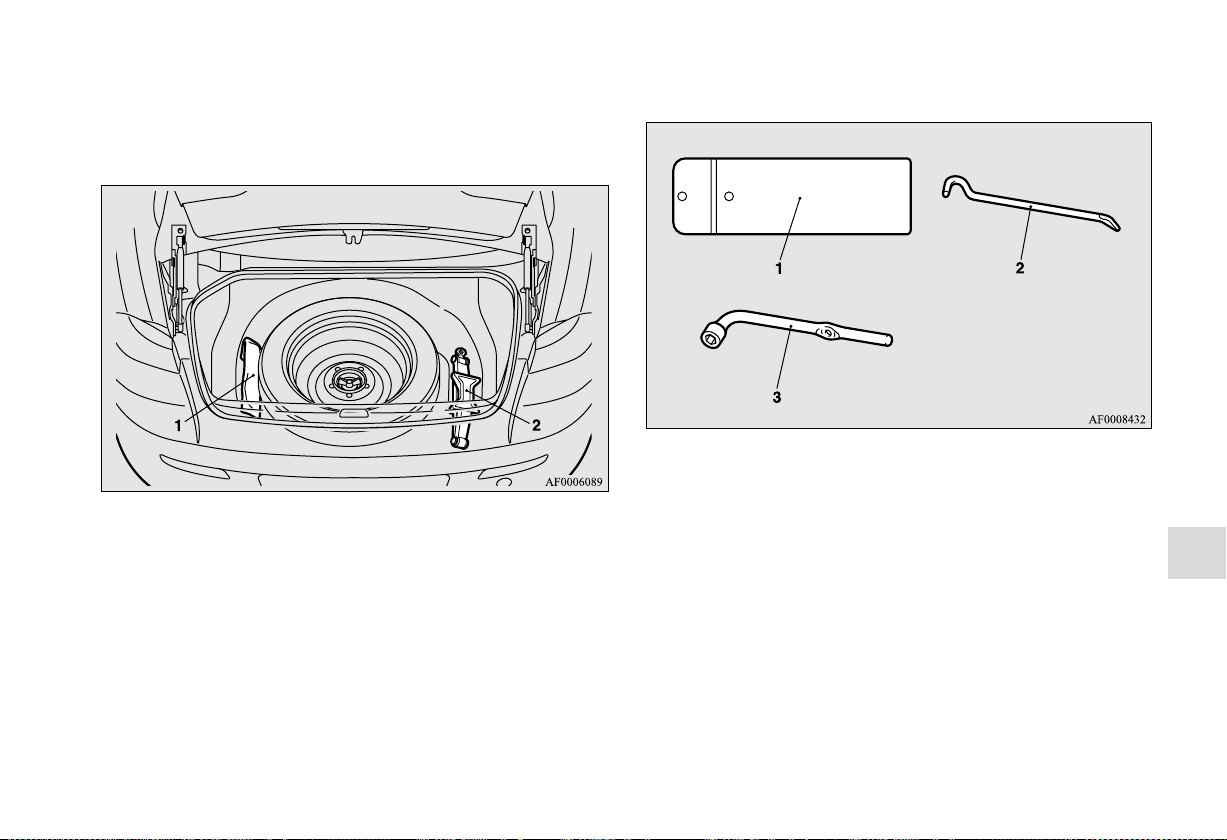
For emergencies
6-7
6
Tools and jack
N00836600265
Storage
The tools and jack are stowed in the trunk.
Tools
N00832600124
1- Tools
2- Jack
1- Tool bag
2- Bar
3- Wheel nut wrench
BK0138600US.book 7 ページ 2011年7月17日 日曜日 午後2時32分
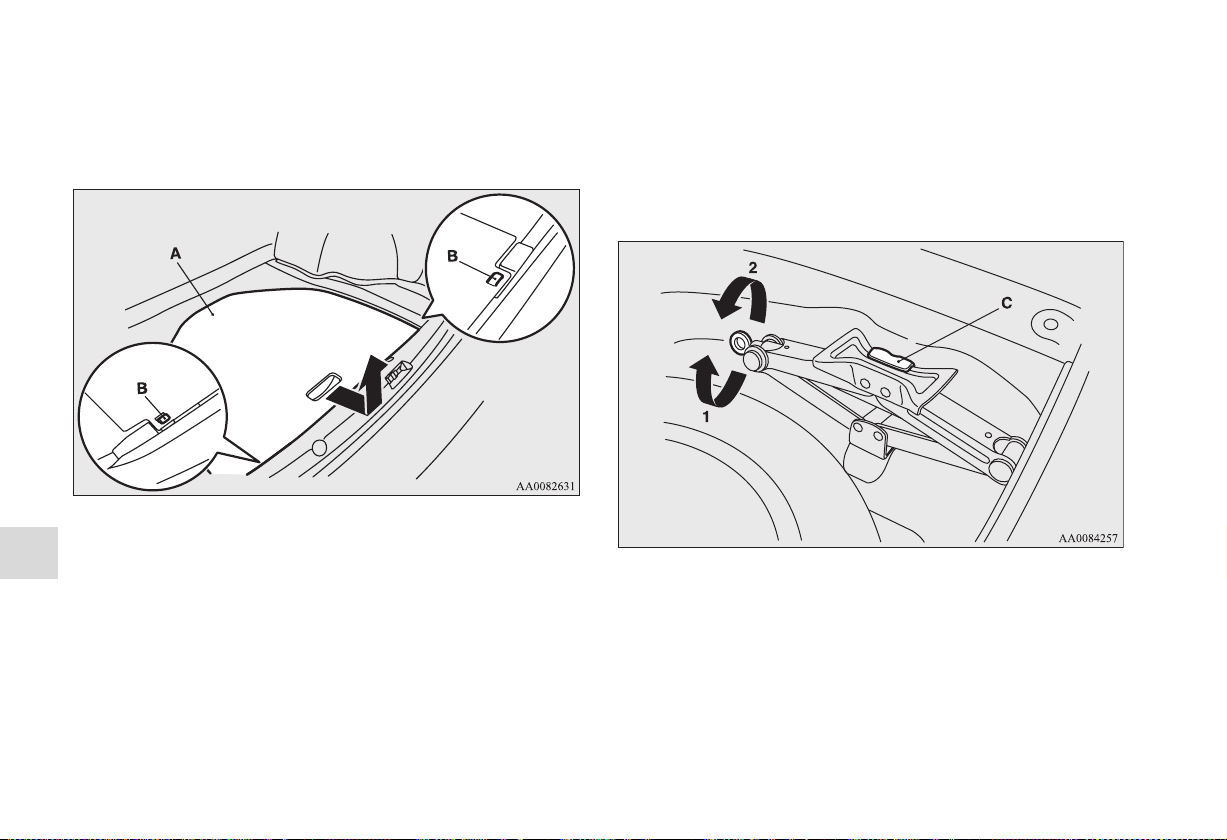
6-8
For emergencies
6
Jack
N00832700255
Before removing the jack, lift up the luggage floor board.
For front-wheel drive vehicles, pull the luggage floor board (A)
rearward to release the hooks (B), and then lift it up.
To r emov e
Turn the shaft end (1) so that the jack contracts, then remove it
from the storage bracket (C).
To s tore
Turn the shaft end (2) by hand to expand the jack until it is held
firmly in position.
BK0138600US.book 8 ページ 2011年7月17日 日曜日 午後2時32分
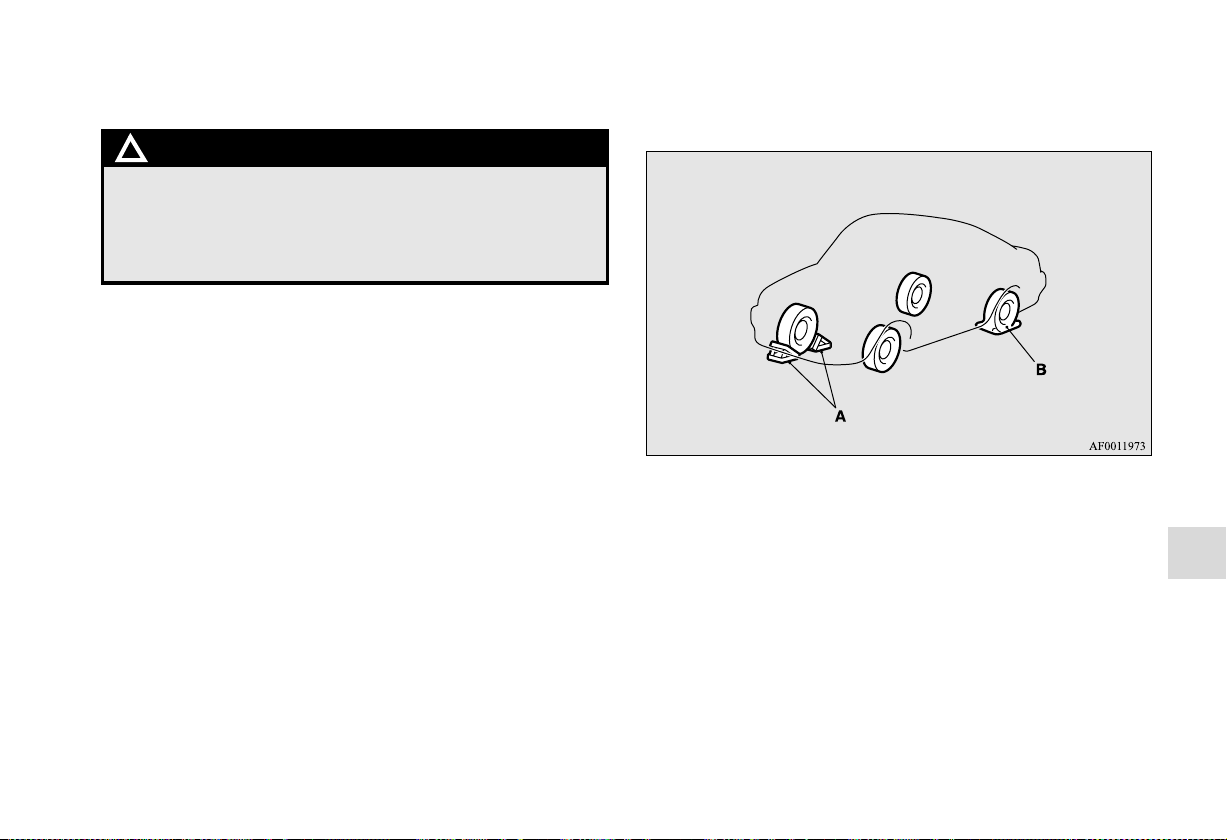
For emergencies
6-9
6
How to change a tire
N00836900734
Before changing a tire, first stop your vehicle in a safe, flat
location.
1. Park the vehicle on level and stable ground.
2. Set the parking brake firmly.
3. On vehicles with manual transaxle, turn the ignition
switch to the “LOCK” position, and move the gearshift
lever to the “R” (Reverse) position.
On vehicles with continuously variable transmission
(CVT) or Twin Clutch SST, move the selector lever
(CVT) or the gearshift lever (Twin Clutch SST) to the “P”
(PARK) position, and turn the ignition switch to the
“LOCK” position.
4. Turn on the hazard flashers and set up a warning triangle,
flashing signal light, etc., at an adequate distance from the
vehicle, and have all your passengers leave the vehicle.
5. To prevent the vehicle from rolling when it is raised on the
jack, place chocks or blocks (A) at the tire that is diago-
nally opposite from the tire (B) you are changing.
WARNING
!
● The jack should not be used for any purpose other
than to change a tire.
● Never get under the vehicle or put any portion of
your body under the vehicle while it is supported by
the jack.
BK0138600US.book 9 ページ 2011年7月17日 日曜日 午後2時32分
6-10
For emergencies
6
N
OTE
● The chocks shown in the illustration do not come with
your vehicle. It is recommended that you purchase chocks
or blocks and keep them in the vehicle for use if needed.
● If chocks or blocks are not available, use stones or any
other objects that are large enough to hold the wheel in
position.
6. Get the jack, bar and wheel nut wrench ready.
Refer to “Tools and jack” on page 6-7.
Spare tire information
N00849600298
Compact spare tire
The compact spare tire is designed to save space in the trunk.
Its lighter weight makes it easier to use if a flat tire occurs.
WARNING
!
● Be sure to apply chocks or blocks to the correct tire
when jacking up the vehicle. If the vehicle moves
while jacked up, the jack could slip out of position,
leading to an accident.
WARNING
!
● Tires, including spare tire, degrade over time with
age even when they are not being used. It is recom-
mended that tires over 6 years generally be replaced
even if damage is not obvious.
CAUTION
!
● While the compact spare tire is stowed, the inflation
pressure should be checked at least once a month to
assure that it remains at the recommended inflation
pressure. See the tire and loading information plac-
ard attached to the driver’s door sill.
Refer to “Tire and loading information placard” on
page 9-4.
● Driving with an improperly inflated tire can cause
an accident. If you have no choice but to drive with
an under-inflated tire, keep your speed down and
avoid sudden steering or braking, if possible. Inflate
the tire to the correct pressure as soon as possible.
Refer to “Tire inflation pressures” on page 7-32.
● The compact spare tire should be used only tempo-
rarily. While the compact spare tire is being used,
the tire pressure monitoring system will not function
properly. Have the tire replaced or repaired at an
authorized Mitsubishi Motors dealer or a repair
facility of your choice as soon as possible.
● If your vehicle has aluminum type wheels, you can
use the same wheel nuts on the compact spare tire
wheel.
● Do not go over 50 mph (80 km/h) when driving with
the compact spare tire.
● Avoid fast starting and braking when driving with
the compact spare tire.
BK0138600US.book 10 ページ 2011年7月17日 日曜日 午後2時32分
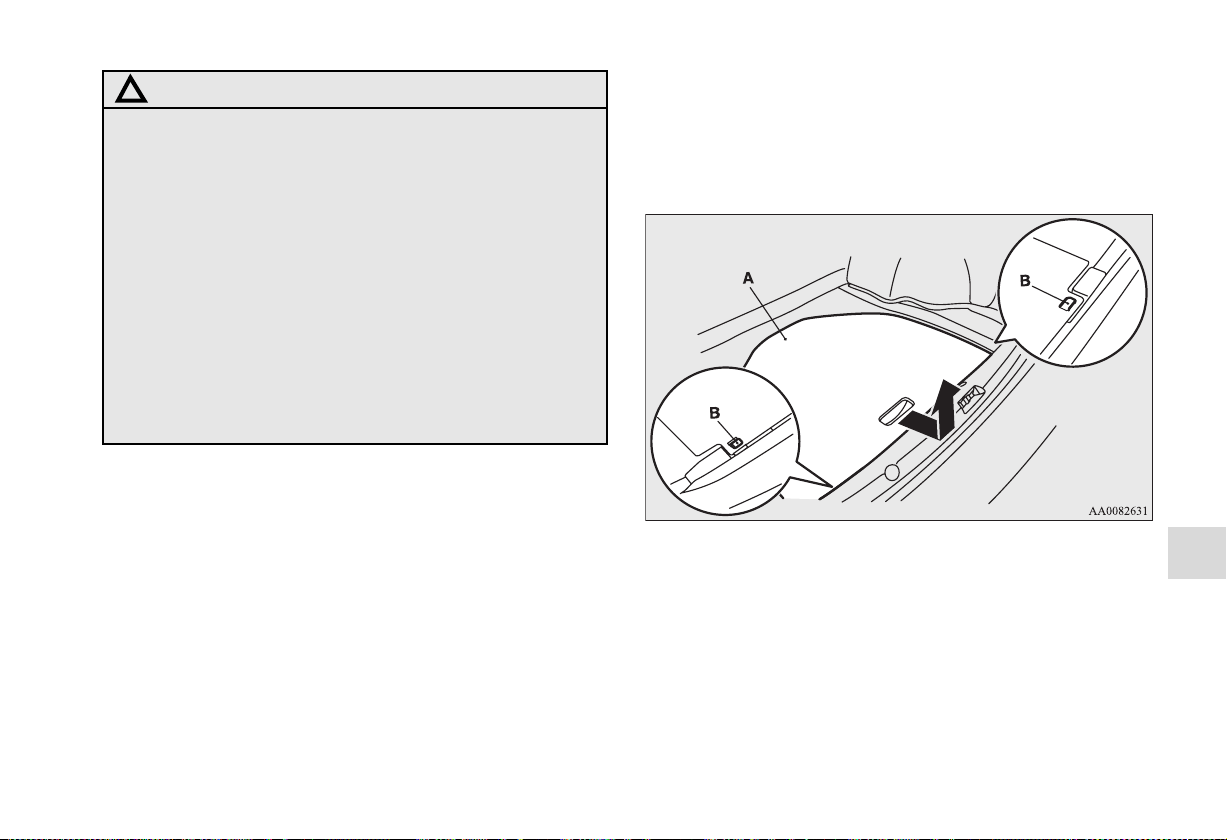
For emergencies
6-11
6
To remove the compact spare tire
N00849700228
1. Lift up the luggage floor board.
For front-wheel drive vehicles, pull the luggage floor
board (A) rearward to release the hooks (B), and then lift
it up.
● Do not drive through automatic car washes and over
obstacles that could possibly damage the underside
of your vehicle. Because the compact spare tire is
smaller than the original tire, there is less clearance
between the ground and your vehicle.
● Because the compact spare tire is designed only for
your vehicle, do not use it on any other vehicle.
● Do not put the compact spare tire on a different
wheel, and do not put standard tires, snow tires,
wheel covers or trim rings on the compact spare
wheel. Otherwise, you could damage these parts or
other parts on your vehicle.
● Do not use snow chain with your compact spare tire.
Using a chain could cause damage to your vehicle
and loss of the chains.
CAUTION
!
BK0138600US.book 11 ページ 2011年7月17日 日曜日 午後2時32分

6-12
For emergencies
6
2. To remove the spare tire, remove the installation clamp
(C) by turning it counterclockwise.
N
OTE
● The clamp cannot be used for a normal size tire. Store a
normal size tire under the luggage floor board.
N
OTE
● Put the spare tire under the vehicle body near the jack.
This makes it safer if the jack slips out of position.
BK0138600US.book 12 ページ 2011年7月17日 日曜日 午後2時32分
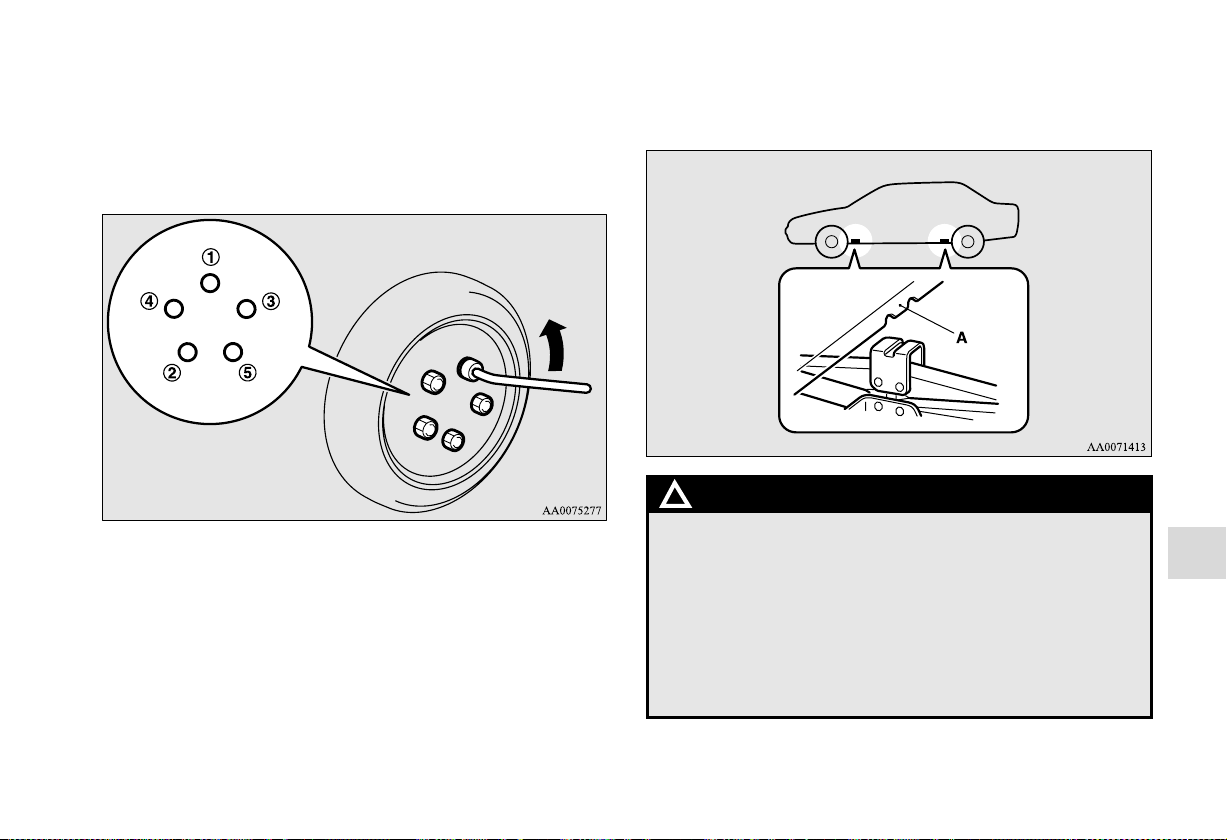
For emergencies
6-13
6
To change a tire
N00849800388
1. On vehicles with wheel covers, first remove the covers
(refer to “Wheel covers” on page 6-20). Then loosen the
wheel nuts with the wheel nut wrench. Do not remove the
wheel nuts yet.
2. Place the jack under one of the jacking points (A) shown
in the illustration. Use the jacking point closest to the tire
you wish to change.
WARNING
!
● Set the jack only at the positions shown here. If the
jack is set at a wrong position, it could dent your
vehicle or the jack might fall over and cause per-
sonal injury.
● Do not use the jack on a tilted or soft surface.
Otherwise, the jack might slip and cause personal
injury. Always use the jack on a flat, hard surface.
Before setting the jack, make sure there are no sand
or pebbles under the jack base.
BK0138600US.book 13 ページ 2011年7月17日 日曜日 午後2時32分
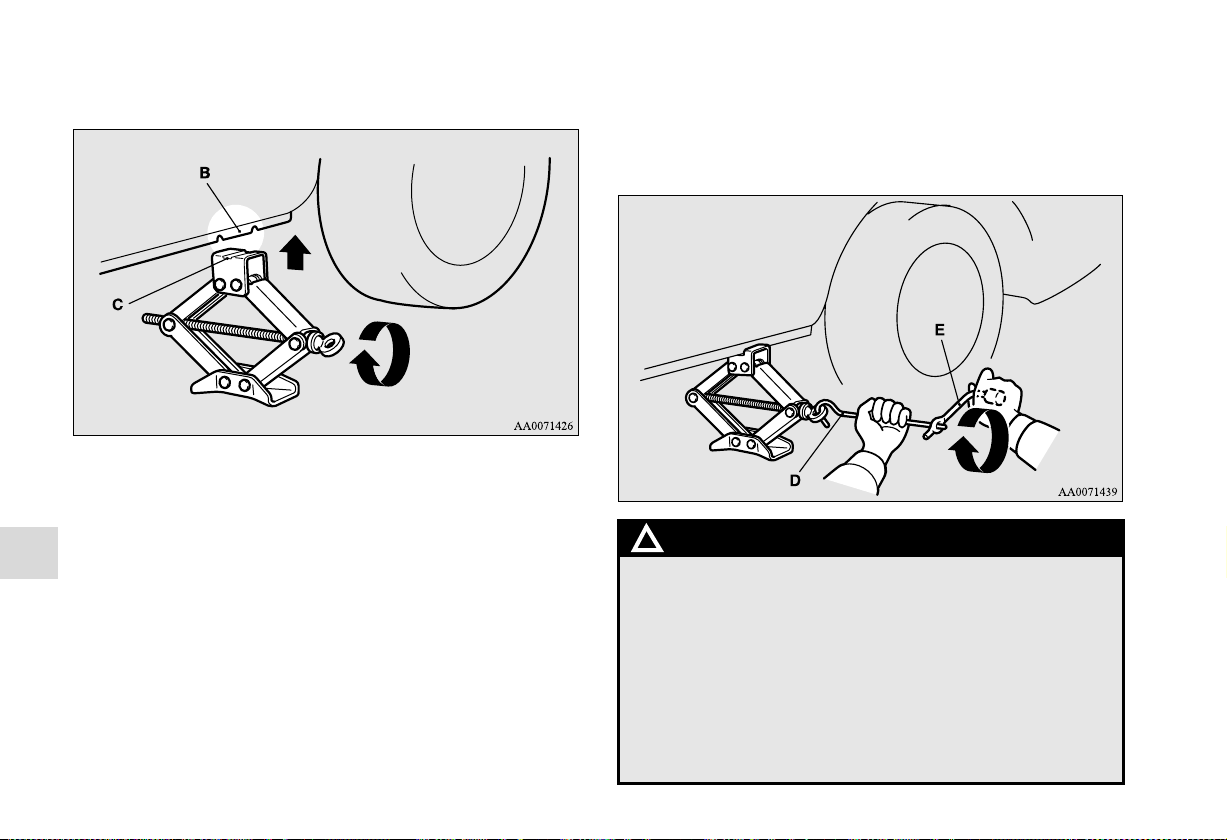
6-14
For emergencies
6
3. Rotate the jack by hand until the flange portion (B) fits in
the groove (C) at the top of the jack.
4. Insert the bar (D) into the wheel nut wrench (E). Then put
the end of the bar into the shaft’s jack end, as shown in the
illustration.
Slowly rotate the wheel nut wrench until the tire is raised
slightly off the ground surface.
WARNING
!
● Stop jacking up the vehicle as soon as the tire is
raised off the ground. It is dangerous to raise the
vehicle any higher.
● Never get under the vehicle or put any portion of
your body under the vehicle while it is supported by
the jack.
● Do not bump the raised vehicle or leave it sitting on
the jack for a long time. Both are very dangerous.
● Do not use a jack except the one that came with your
vehicle.
BK0138600US.book 14 ページ 2011年7月17日 日曜日 午後2時32分
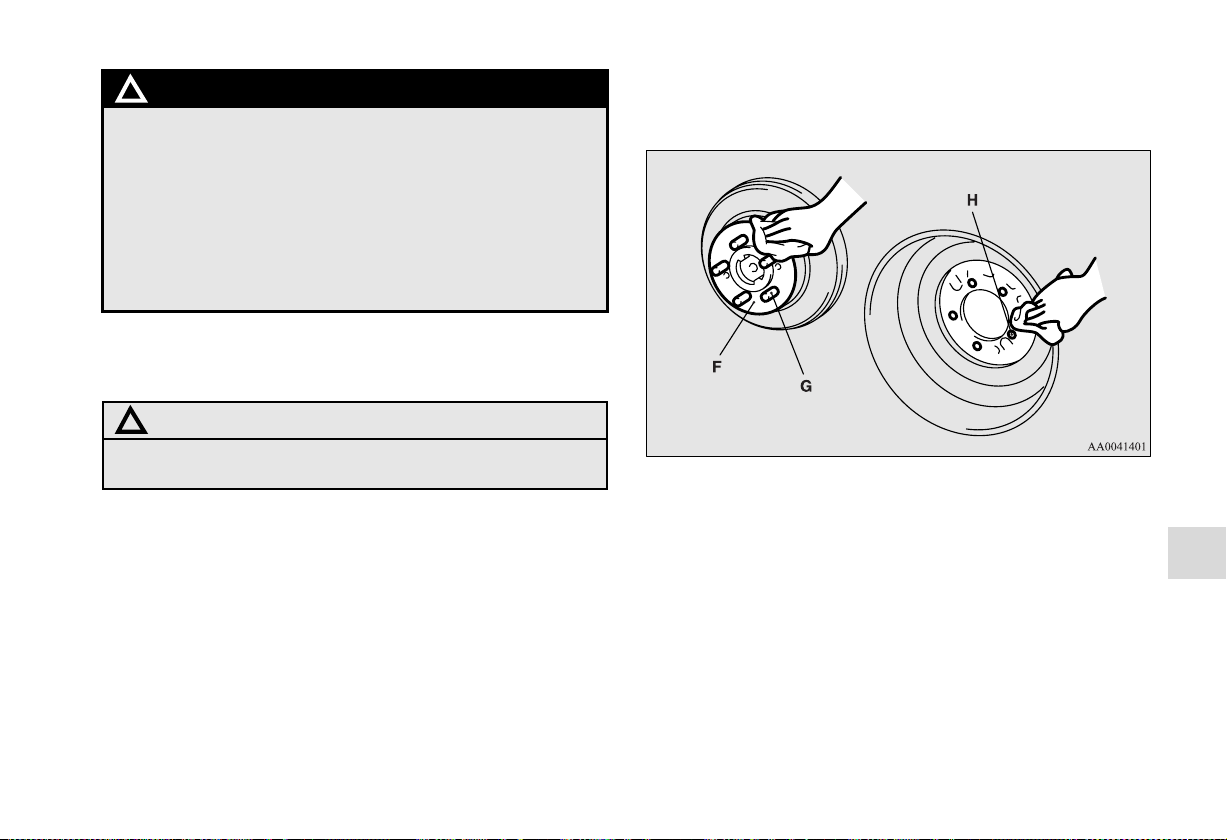
For emergencies
6-15
6
5. Remove the wheel nuts with the wheel nut wrench, then
take the wheel off.
6. Clean out any mud, etc. on the hub surface (F), hub bolts
(G) or in the installation holes (H) in the wheel, and then
mount the spare tire.
● The jack should not be used for any purpose other
than to change a tire.
● No one should be in your vehicle when using the
jack.
● Do not start or run the engine while your vehicle is
on the jack.
● Do not turn the raised wheel. The tires that are still
on the ground could turn and make your vehicle fall
off the jack.
CAUTION
!
● Handle the wheel carefully when changing the tire,
to avoid scratching the wheel surface.
WARNING
!
BK0138600US.book 15 ページ 2011年7月17日 日曜日 午後2時32分
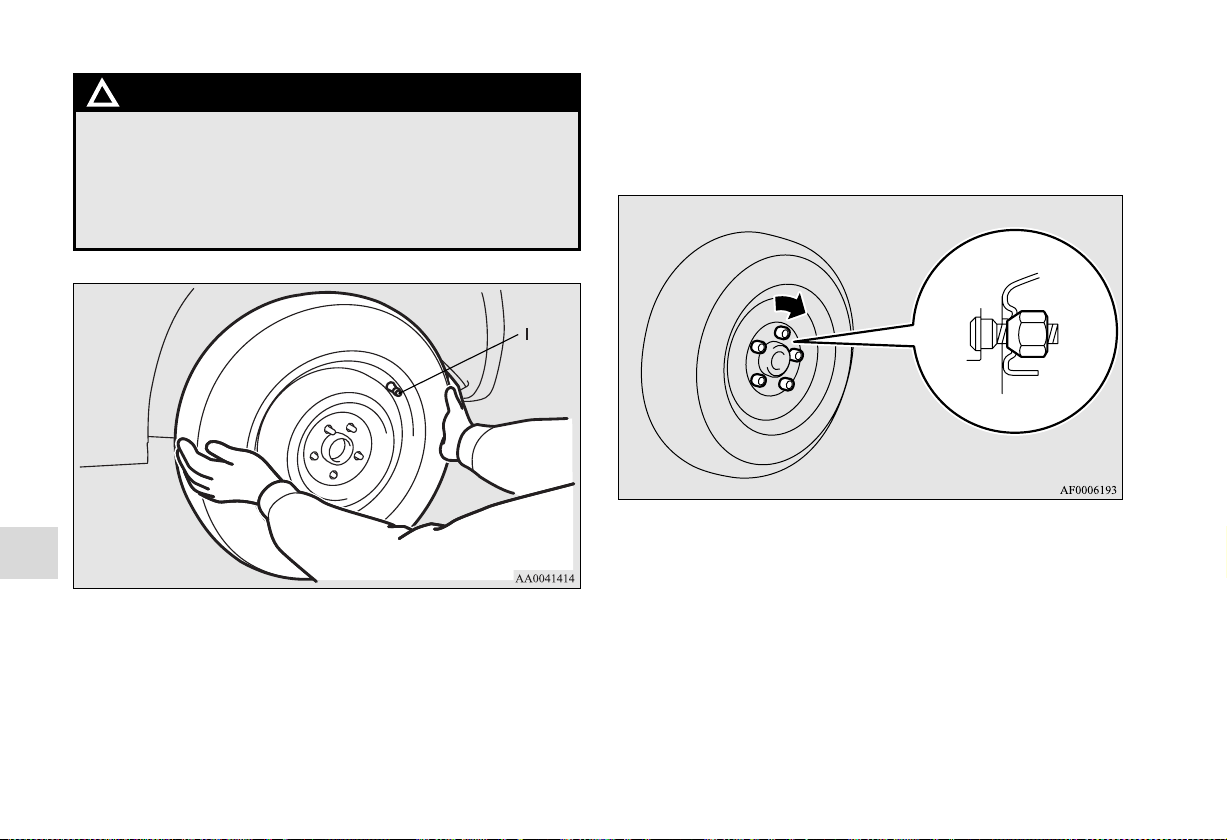
6-16
For emergencies
6
7. [Vehicle with steel wheels]
• Normal wheels and compact spare wheel
Install the wheel nuts (tapered nuts) with their tapered
ends facing inward, then tighten by hand until the wheel is
no longer loose.
WARNING
!
● Mount the spare wheel with the valve stem (I) facing
outboard. If you cannot see the valve stem (I), you
have installed the wheel backwards.
Operating the vehicle with the spare wheel installed
backwards can cause vehicle damage and result in
an accident.
BK0138600US.book 16 ページ 2011年7月17日 日曜日 午後2時32分
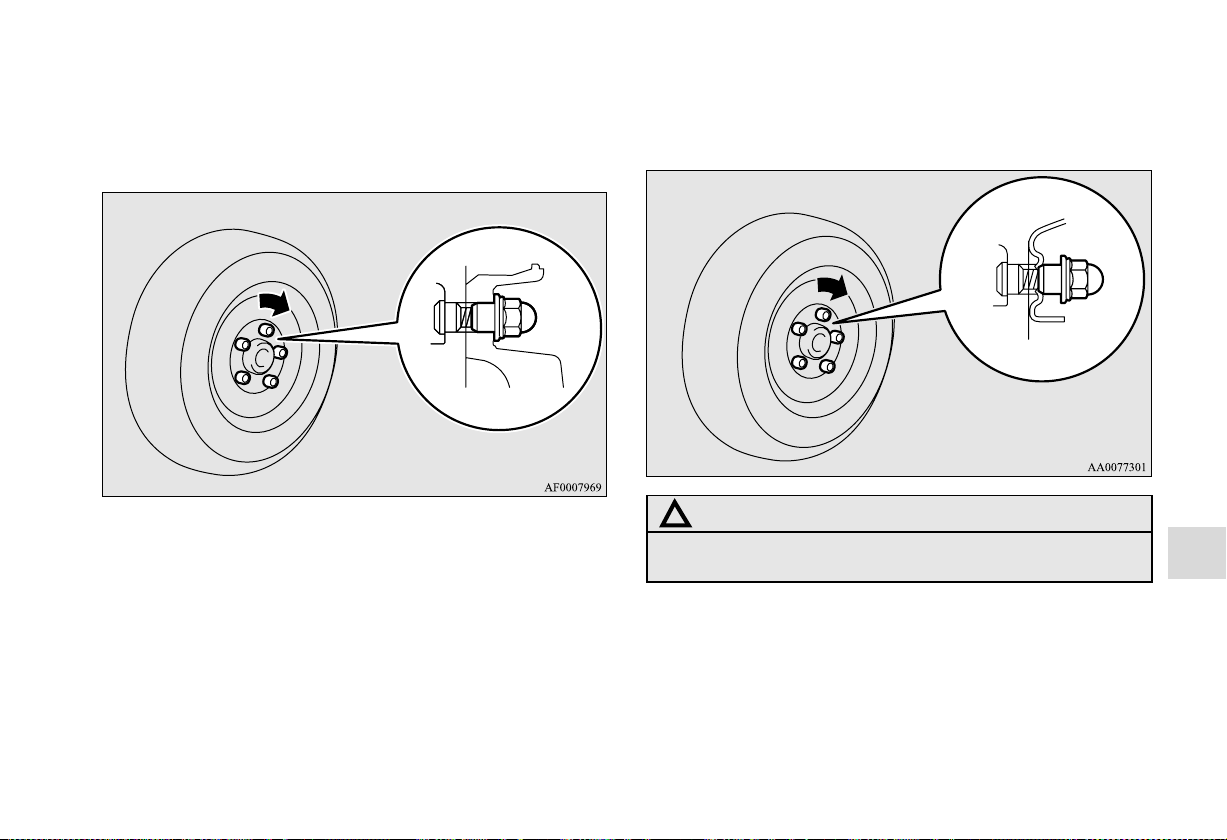
For emergencies
6-17
6
[Vehicle with aluminum wheels]
• Normal wheels
Temporarily tighten the wheel nuts (flange nuts) until
their flange section comes in contact with the wheel and it
is no longer loose.
• Compact spare wheel
Install the wheel nuts with their tapered ends facing
inward, then tighten by hand until the wheel is no longer
loose.
N
OTE
● Flange nuts can be temporarily used on the compact spare
or steel wheel, but return them to the original wheel and
tire as soon as possible.
● If all four wheels are changed to steel wheels, use tapered
nuts.
CAUTION
!
● Never apply oil to either the wheel bolts or the nuts
or they will tighten too much.
BK0138600US.book 17 ページ 2011年7月17日 日曜日 午後2時32分
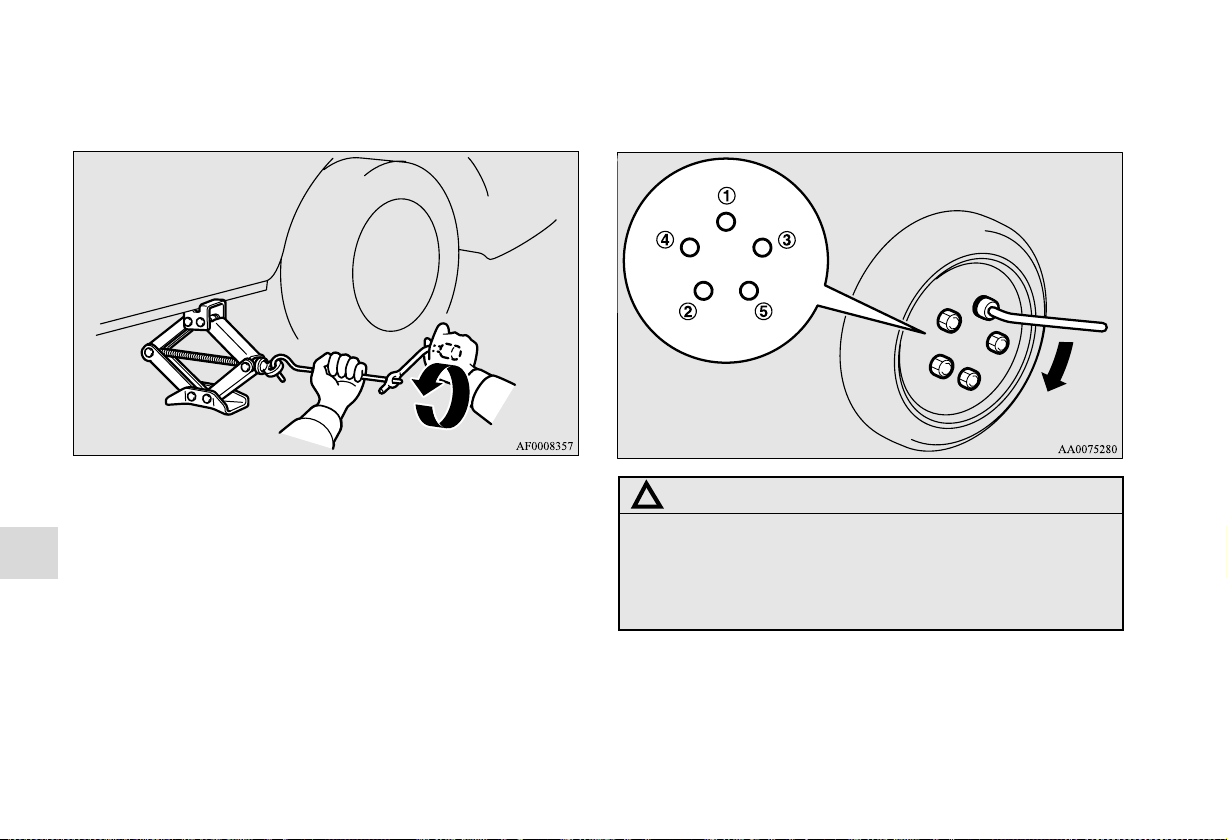
6-18
For emergencies
6
8. Lower the vehicle slowly by rotating the wheel nut
wrench counterclockwise until the tire touches the
ground.
9. Tighten the nuts in the order shown in the illustration until
each nut has been tightened to the torque listed here.
65 to 80 ft-lb (88 to 108 N•m)
10. Lower the jack all the way and remove it.
CAUTION
!
● Never use your foot or a pipe extension to apply
added force to the wheel nut wrench when tighten-
ing the wheel nuts. If you do so, you can over-tighten
the wheel nuts and damage the wheel, wheel nuts
and hub bolts.
BK0138600US.book 18 ページ 2011年7月17日 日曜日 午後2時32分
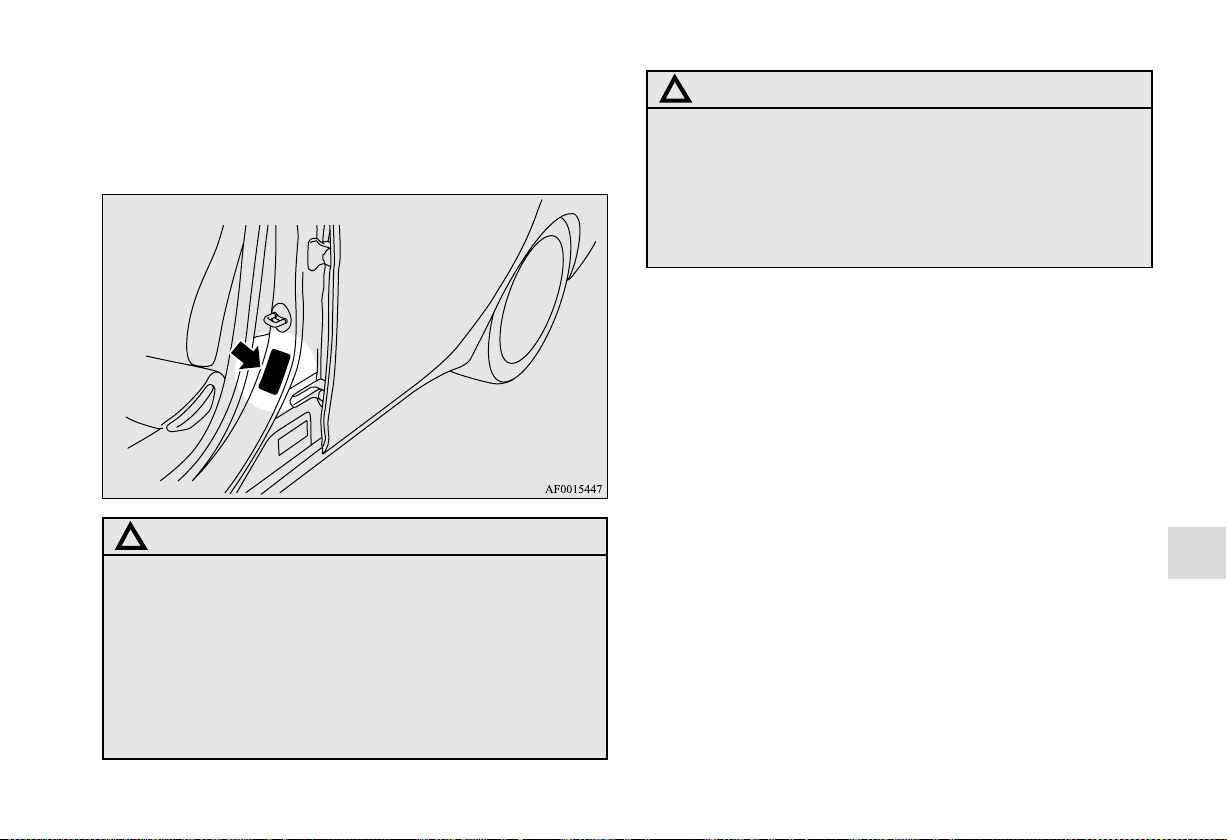
For emergencies
6-19
6
11. Check the tire inflation pressure. The recommended tire
pressure for your vehicle is listed on the tire and loading
information placard attached to the driver’s door sill as
shown in the illustration.
Refer to “Tire inflation pressures” on page 7-32.
To store the flat tire or spare tire, jack, bar and
wheel nut wrench
N00850000120
Reverse the removing procedure when storing the flat tire or
spare tire, jack, bar and wheel nut wrench.
Refer to “To remove the compact spare tire” on page 6-11 and
“Tools and jack” on page 6-7.
CAUTION
!
● Driving with an improperly inflated tire can cause
an accident. If you have no choice but to drive with
an under-inflated tire, keep your speed down and
avoid sudden steering or braking, if possible. Inflate
the tire to the correct pressure as soon as possible.
Refer to “Tire inflation pressures” on page 7-32.
● After changing the tire and driving the vehicle about
620 miles (1,000 km), retighten the wheel nuts to
make sure that they have not come loose.
● If the steering wheel vibrates when driving after
changing the tire, have the tire checked for balance
at your nearest authorized Mitsubishi Motors dealer
or a repair facility of your choice.
● Do not mix one type of tire with another or use a dif-
ferent size from the one listed. This would cause
early wear and poor handling.
CAUTION
!
BK0138600US.book 19 ページ 2011年7月17日 日曜日 午後2時32分
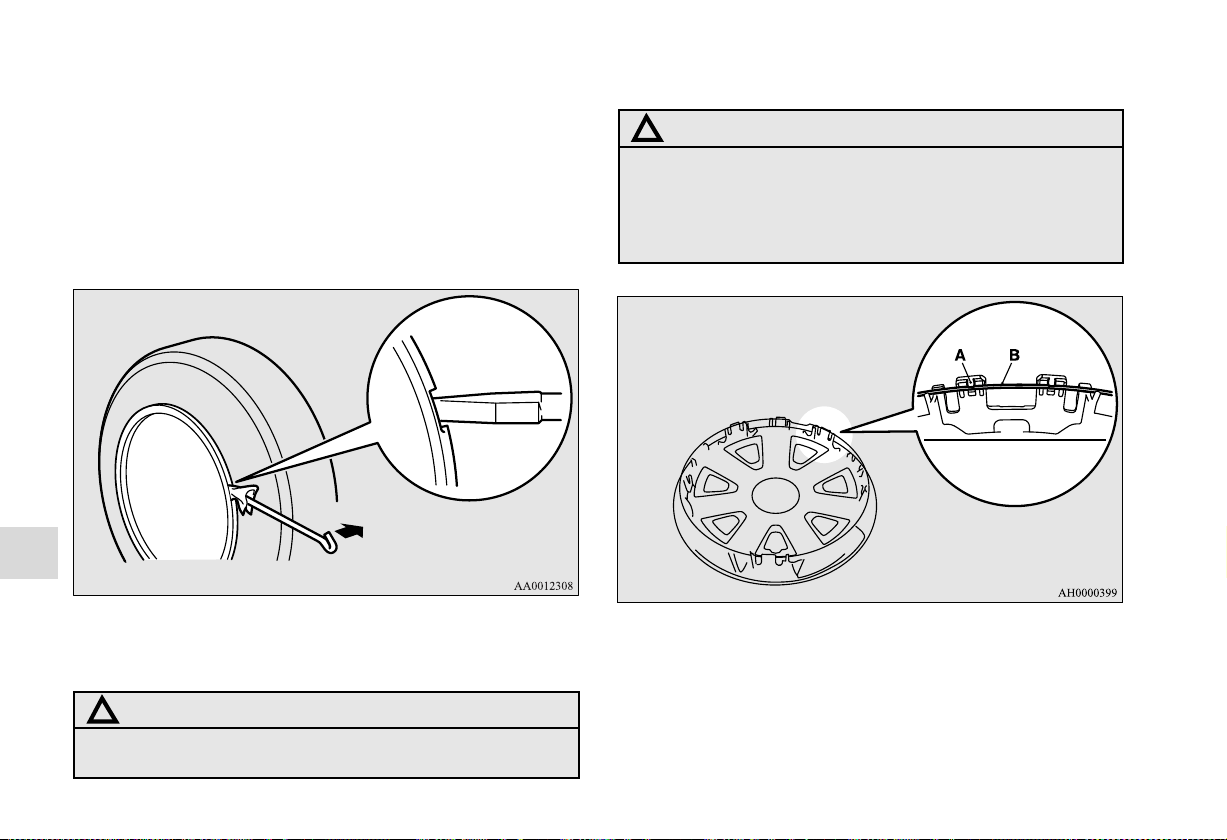
6-20
For emergencies
6
Wheel covers (if so equipped)
N00849400209
To remove
Wrap the tip of the bar with a cloth, insert it deeply into the
notch provided in the wheel cover, and pry the cover away
from the wheel.
Using the same procedure at the other wheel cover notches,
work the wheel cover away from the wheel to remove it com-
pletely.
N
OTE
● The wheel cover is made of plastic. Be careful when pry-
ing it off.
To in stall
CAUTION
!
● Trying to remove the wheel cover with only your
bare hands can seriously injure your fingers.
CAUTION
!
● Before installing the wheel cover to the wheel, make
sure that the tabs (A) on the back of the wheel cover
correctly engage the ring (B) to prevent the wheel
cover from coming off. Do not install a wheel cover
that has broken tabs.
BK0138600US.book 20 ページ 2011年7月17日 日曜日 午後2時32分

For emergencies
6-21
6
1. Align the tire air valve (C) and the wheel cover notch (D).
N
OTE
● Full wheel covers have a symbol mark (E) provided on the
reverse side to show the air valve location.
Before installing the wheel cover to the wheel, make sure
that the opening with the symbol mark is correctly aligned
with the air valve.
2. Push the bottom (F) of the wheel cover into the wheel.
3. Gently push in both sides (G) of the wheel cover and hold
them in place with both knees.
4. Gently tap the top (H) of the wheel cover. Ensure the
wheel cover is securely installed around its entire outer
circumference.
BK0138600US.book 21 ページ 2011年7月17日 日曜日 午後2時32分
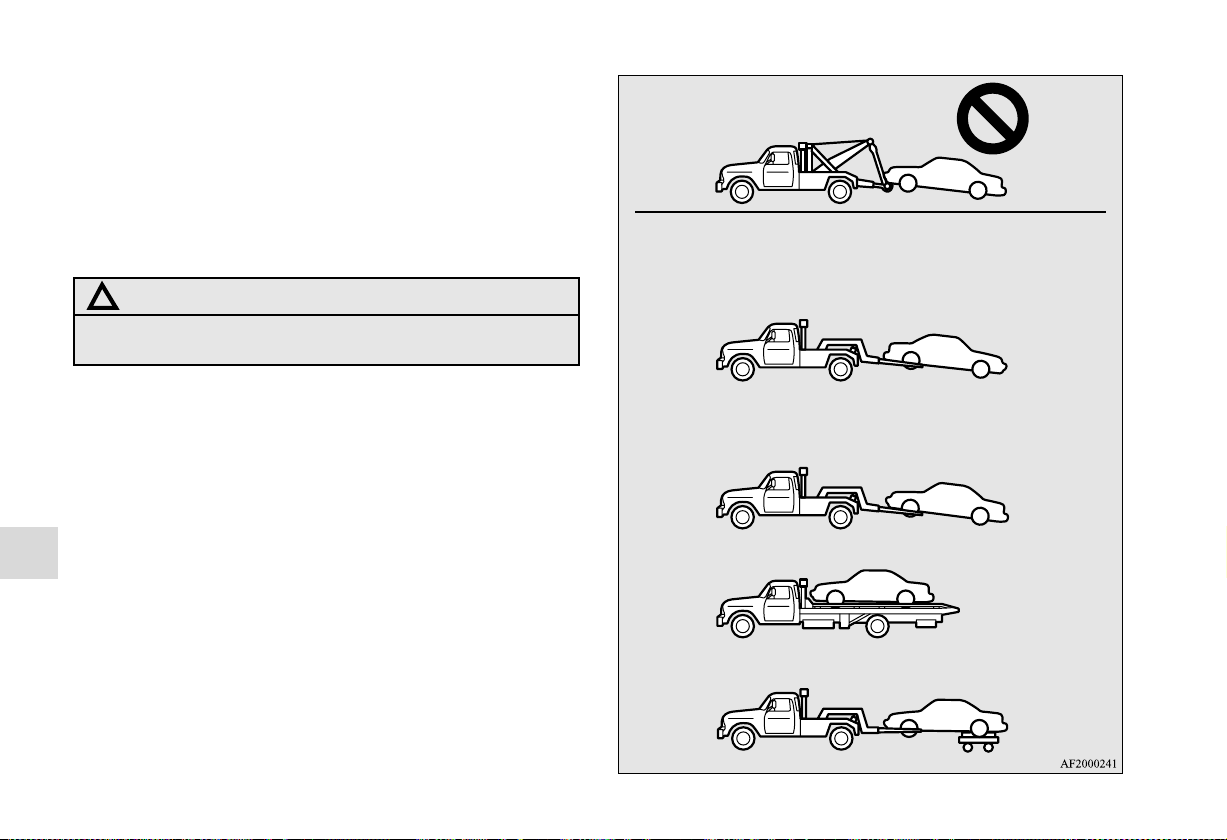
6-22
For emergencies
6
Towing
N00837000862
If your vehicle needs to be towed
If towing is necessary, we recommend you to have it done by a
commercial tow truck service.
When towing is required, transport the vehicle using a tow
truck.
Incorrect towing equipment could damage your vehicle.
N
OTE
● Your vehicle cannot tow any other vehicle.
There may be local regulations concerning towing in your area.
Obey the regulations of the area where you are driving your
vehicle.
CAUTION
!
● Do not attempt to be towed by another vehicle with
a rope.
Type A
Type B
Type C
Type D
Type E
Towing with front wheels off the ground.
Do not tow all-wheel drive vehicles with this style.
Towing manual transaxle vehicles with rear wheels
off the ground.
Do not tow continuously variable transmission
(CVT) vehicles or all-wheel drive vehicles with this
style.
BK0138600US.book 22 ページ 2011年7月17日 日曜日 午後2時32分
For emergencies
6-23
6
Towing the vehicle by a tow truck
Towing manual transaxle vehicles with rear wheels off
the ground (Type B)
Place the gearshift lever in the “Neutral” position.
Turn the ignition switch to the “ACC” position and secure the
steering wheel in a straight-ahead position with a rope or tie-
down strap. Never place the ignition switch in the “LOCK”
position when towing.
CAUTION
!
● This vehicle must not be towed by a tow truck using
sling lift type equipment (Type A) as illustrated.
Using a sling lift will damage the bumper and front
end.
● Do not tow all-wheel drive vehicles with the front or
rear wheels on the ground (Type B or Type C) as
illustrated. This could result in the driving system
damage or vehicle may jump at the carriage.
If you tow all-wheel drive vehicles, use Type D or
Type E equipment.
● Do not tow continuously variable transmission
(CVT) vehicles with the driving wheels on the
ground (Type B) as illustrated. If the vehicle is
towed like this, the continuously variable transmis-
sion (CVT) fluid may not reach all parts of the
transmission, thus damaging it.
If you tow CVT vehicles, use Type C, D or E equip-
ment.
● If the manual transaxle is malfunctioning or dam-
aged, transport the vehicle with the driving wheels
on a carriage (Type C, D or E) as illustrated.
● [For front-wheel drive vehicle equipped with the
active stability control (ASC)]
If the vehicle is towed with the ignition switch in the
“ON” position and only the front wheels or only the
rear wheels raised off the ground, the ASC may
operate, resulting in an accident. When towing the
vehicle with only the front wheels or only the rear
wheels raised, keep the ignition switch in the
“LOCK” or “ACC” position.
● [For vehicle equipped with the Electronically con-
trolled 4WD system]
Even in “2WD” mode, the vehicle cannot be towed
with the front or the rear wheels on the ground.
CAUTION
!
BK0138600US.book 23 ページ 2011年7月17日 日曜日 午後2時32分
6-24
For emergencies
6
Towing with front wheels off the ground (Type C)
Release the parking brake.
Place the gearshift lever in the “Neutral” position (manual tran-
saxle) or the selector lever in the “N” (NEUTRAL) position
(CVT).
Operation under adverse driving conditions
N00837200662
If your vehicle becomes stuck in sand, mud or
snow
If your vehicle becomes stuck in snow, sand, or mud, it can
often be moved by a rocking motion. Rock your vehicle back
and forth to free it.
Do not rev the engine or spin the wheels. Constant efforts to
free a stuck vehicle can cause overheating and transaxle fail-
ure. Let the engine idle for a few minutes to cool the transaxle
before trying again.
If your vehicle is still stuck after several rocking attempts, call
for a commercial tow truck service.
WARNING
!
● To prevent entry of exhaust gas from the towing
vehicle, set the selection switch to the recirculation
position.
WARNING
!
● When trying to rock your vehicle out of a stuck posi-
tion, make sure that there are no people nearby. The
rocking motion can make your vehicle suddenly
lurch forward or backward, and injure any
bystanders.
BK0138600US.book 24 ページ 2011年7月17日 日曜日 午後2時32分
For emergencies
6-25
6
On wet roads On snowy or icy roads
● When driving on a road covered with snow or ice, use
snow tires. Tire chains cannot be used on your vehicle.
There may be state or local regulations about using snow
tires. Always check the regulations in your local area
before using them. Refer to the section entitled “Snow
tires” on page 7-37 and “Tire chains” on page 7-37.
● Drive slowly. Do not make sudden starts or stops, sharp
turns, or slam on the brakes.
● Allow extra distance between your vehicle and the vehicle
in front of you, and avoid sudden braking.
● If a skid occurs when the accelerator pedal is depressed,
take your foot off the pedal. Steer gently in the direction
of the skid.
● Your vehicle is equipped with an anti-lock braking system
(ABS), hold the brake pedal down firmly and keep it
depressed. Do not pump the brake pedal which will result
in reduced braking performance.
● After parking on snowy or icy road, it may be difficult to
move your vehicle due to freeze-up of the brake. Depress
the accelerator pedal little by little to move the vehicle
after confirming safety of the vehicle.
CAUTION
!
● Avoid flooded roads. Water is often deeper than it
looks, and you could be seriously hurt by driving
into flood water.
● When driving in rain, on water-covered roads, or
through a car wash, water could get into the brake
discs and make them fail temporarily. In such cases,
lightly press the brake pedal to see if they are work-
ing properly. If they are not, press the pedal lightly
several times while driving to dry the brake pads or
linings, then check them again.
● When driving in rain, a layer of water may form
between the tires and the road surface (aquaplan-
ing). This loosens your tires’ grip on the road, mak-
ing it difficult to steer or brake properly. When
driving on a wet road:
• Drive your vehicle at a safe speed.
• Do not drive on worn tires.
• Always keep the tires at the correct inflation pres-
sures.
CAUTION
!
● Do not depress the accelerator pedal rapidly. The
vehicle could start moving when it breaks free from
the ice, possibly resulting in an accident.
BK0138600US.book 25 ページ 2011年7月17日 日曜日 午後2時32分
6-26
For emergencies
6
On a bumpy or rutted road
● Drive as slow as possible when driving on bumpy or rut-
ted roads or over potholes etc.
CAUTION
!
● Driving on bumpy, rutted roads or over potholes can
damage the tires and wheels.
Wheels with low-profiles tires or under-inflated tires
are especially at risk for damage.
● The vehicle’s body, bumper, muffler and other parts
may be damaged if the vehicle is:
• driven over a step (for example, at the entrance or
exit of a parking lot);
• parked too closely against a curb or parking block,
or by the side of a road with curbstones;
• driven on a steep slope;
BK0138600US.book 26 ページ 2011年7月17日 日曜日 午後2時32分

7
Vehicle care and maintenance
Service precautions . . . . . . . . . . . . . . . . . . . . . . . .7- 2
Catalytic converter. . . . . . . . . . . . . . . . . . . . . . . . .7- 3
Engine hood . . . . . . . . . . . . . . . . . . . . . . . . . . . . . .7- 4
View of the engine compartment . . . . . . . . . . . . . .7- 7
Engine oil and oil filter . . . . . . . . . . . . . . . . . . . . .7- 8
Engine coolant . . . . . . . . . . . . . . . . . . . . . . . . . . . .7- 12
Air cleaner filter. . . . . . . . . . . . . . . . . . . . . . . . . . .7- 15
Manual transaxle oil (if so equipped) . . . . . . . . . .7- 18
Continuously variable transmission (CVT) fluid
(if so equipped). . . . . . . . . . . . . . . . . . . . . . . . . .7- 18
Twin Clutch Sportronic shift transmission
(Twin Clutch SST) fluid (if so equipped). . . . . .7- 19
Transfer oil (All-wheel drive models) . . . . . . . . . .7- 19
Rear axle oil (All-wheel drive models) . . . . . . . . .7- 20
AWC control fluid (if so equipped) . . . . . . . . . . . .7- 20
Washer fluid . . . . . . . . . . . . . . . . . . . . . . . . . . . . . .7- 21
Brake fluid/Clutch fluid (if so equipped). . . . . . . .7- 21
Power steering fluid (if so equipped). . . . . . . . . . .7- 22
Battery . . . . . . . . . . . . . . . . . . . . . . . . . . . . . . . . . .7- 23
Tires . . . . . . . . . . . . . . . . . . . . . . . . . . . . . . . . . . . .7- 29
Clutch pedal free play (if so equipped) . . . . . . . . .7- 38
Brake pedal free play. . . . . . . . . . . . . . . . . . . . . . . 7- 38
Parking brake lever stroke. . . . . . . . . . . . . . . . . . . 7- 39
Parking brake break-in . . . . . . . . . . . . . . . . . . . . . 7- 39
Wiper blades . . . . . . . . . . . . . . . . . . . . . . . . . . . . . 7- 40
Emission-control system maintenance . . . . . . . . . 7- 40
General maintenance. . . . . . . . . . . . . . . . . . . . . . . 7- 43
For cold and snowy weather . . . . . . . . . . . . . . . . . 7- 45
Fusible links . . . . . . . . . . . . . . . . . . . . . . . . . . . . . 7- 45
Fuses . . . . . . . . . . . . . . . . . . . . . . . . . . . . . . . . . . . 7- 46
Replacement of light bulbs . . . . . . . . . . . . . . . . . . 7- 55
Vehicle care precautions . . . . . . . . . . . . . . . . . . . . 7- 88
Cleaning the inside of your vehicle. . . . . . . . . . . . 7- 89
Cleaning the outside of your vehicle. . . . . . . . . . . 7- 91
BK0138600US.book 1 ページ 2011年7月17日 日曜日 午後2時32分
7-2
Vehicle care and maintenance
7
Service precautions
N00937300345
Taking regular care of your vehicle will preserve its value and
appearance as long as possible.
You can do some of the maintenance work yourself, and the
rest should only be performed by an authorized Mitsubishi
Motors dealer or a repair facility of your choice.
If you discover a malfunction or other problem, have it cor-
rected by an authorized Mitsubishi Motors dealer or a repair
facility of your choice.
This section describes the maintenance inspections that you
can do yourself, if you so desire. Follow the instructions and
precautions for each procedure.
Have you purchased the Mitsubishi Motors Diamond Care Pro-
tection Plan? The Plan supplements your new vehicle warran-
ties. See your authorized Mitsubishi Motors dealer for details.
WARNING
!
● When checking or servicing the inside of the engine
compartment, be sure the engine is stopped and has
had a chance to cool down.
● If you need to work in the engine compartment with
the engine running, be especially careful that your
clothing, hair, etc. does not get caught in the fan,
drive belts, or other moving parts.
● The fan can turn on automatically even if the engine
is not running. Turn the ignition switch to the
“LOCK” position to be safe while you work in the
engine compartment.
● Do not smoke or allow open flames around fuel or
the battery. The fumes are flammable.
● Be extremely careful when working around the bat-
tery. It contains poisonous and corrosive sulfuric
acid.
● Do not get under your vehicle while it is on a jack.
Always use properly rated automotive jack stands.
● Handling your vehicle’s parts and materials in the
wrong way can injure you. Ask an authorized
Mitsubishi Motors dealer or a repair facility of your
choice if you have questions.
WARNING
!
BK0138600US.book 2 ページ 2011年7月17日 日曜日 午後2時32分
Vehicle care and maintenance
7-3
7
Catalytic converter
N00937400131
The catalytic converter requires you to use unleaded fuel only.
Leaded gasoline will destroy the emission-control effective-
ness of the converter.
Normally, the catalytic converter does not require maintenance.
However, it is important to keep the engine properly tuned for
the converter to continue to work properly.
To reduce the possibility of catalytic converter damage:
● Use UNLEADED GASOLINE ONLY of the type of rec-
ommended in “Fuel selection”.
● Do not drive with an extremely low fuel level. Running
out of gas could damage the catalytic converter.
● Do not try to start the engine by pushing or towing the
vehicle. If the battery is weak or run down, use jumper
cables to properly start the engine.
● Do not idle the engine with any spark plug wires discon-
nected or removed, such as when performing diagnostic
tests.
● Do not idle the engine for a long time if it is idling
roughly or otherwise obviously malfunctioning.
● To prevent the catalytic converter from being damaged
from unburned gas, do not race the engine when turning
off the ignition switch.
● Stop driving the vehicle if you think the performance is
less than normal, the engine is running oddly or there is
any other engine trouble, such as with the ignition, etc. If
you are not able to stop driving immediately, slow down
and drive for only a short time. Have an inspection made
by an authorized Mitsubishi Motors dealer or a repair
facility of your choice as soon as possible.
● In unusual situations involving major engine problems, a
burning odor may indicate severe and abnormal catalytic
converter overheating. If this occurs, stop in a safe place,
shut the engine off and let the vehicle cool. Once the
engine is cool, immediately take your vehicle to a dealer
or a repair facility of your choice for service.
CAUTION
!
● Damage to the catalytic converter can result if your
vehicle is not kept in proper operating condition. If
the engine malfunctions or misfires, or if your vehi-
cle performance suffers, have it serviced promptly.
Running your vehicle when it is overheated may
result in damage to the converter and vehicle.
WARNING
!
● Do not park or run your vehicle in areas where com-
bustible materials such as dry grass or leaves can
come in contact with a hot exhaust, since a fire could
occur.
● Do not put undercoat paint on the catalytic con-
verter.
BK0138600US.book 3 ページ 2011年7月17日 日曜日 午後2時32分
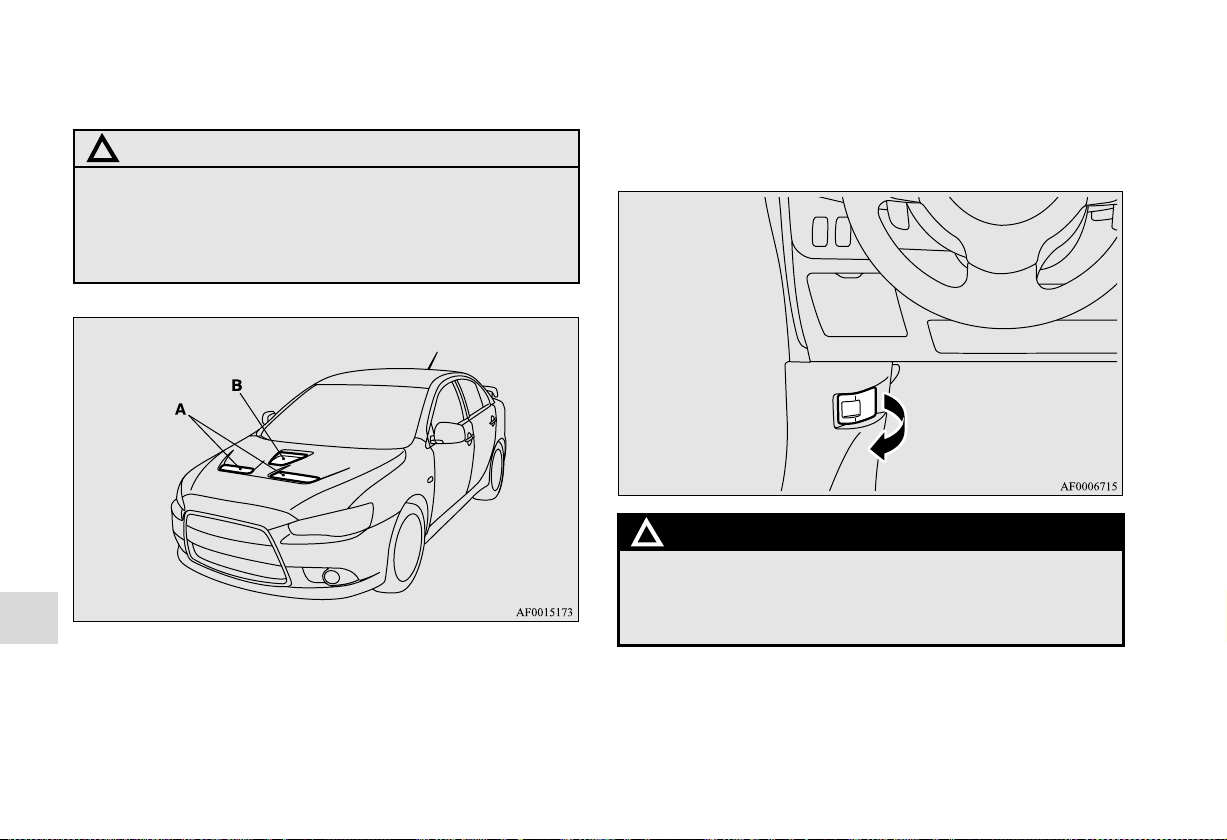
7-4
Vehicle care and maintenance
7
Engine hood
N00937500464
To open
Use the engine hood release lever (located under the instrument
panel near the driver’s door) to unlock the engine hood.
Pull the lever toward you to release the engine hood latch.
CAUTION
!
● For vehicles with turbocharger, to avoid the risk of
being burned, do not touch the air outlet (A) and air
scoop (B) on the engine hood when the engine com-
partment is hot (when the engine is running or
immediately after the vehicle has been driven).
WARNING
!
● Never use the release lever to unlatch the engine
hood while the vehicle is in motion.
● Do not drive your vehicle unless the engine hood is
locked.
BK0138600US.book 4 ページ 2011年7月17日 日曜日 午後2時32分
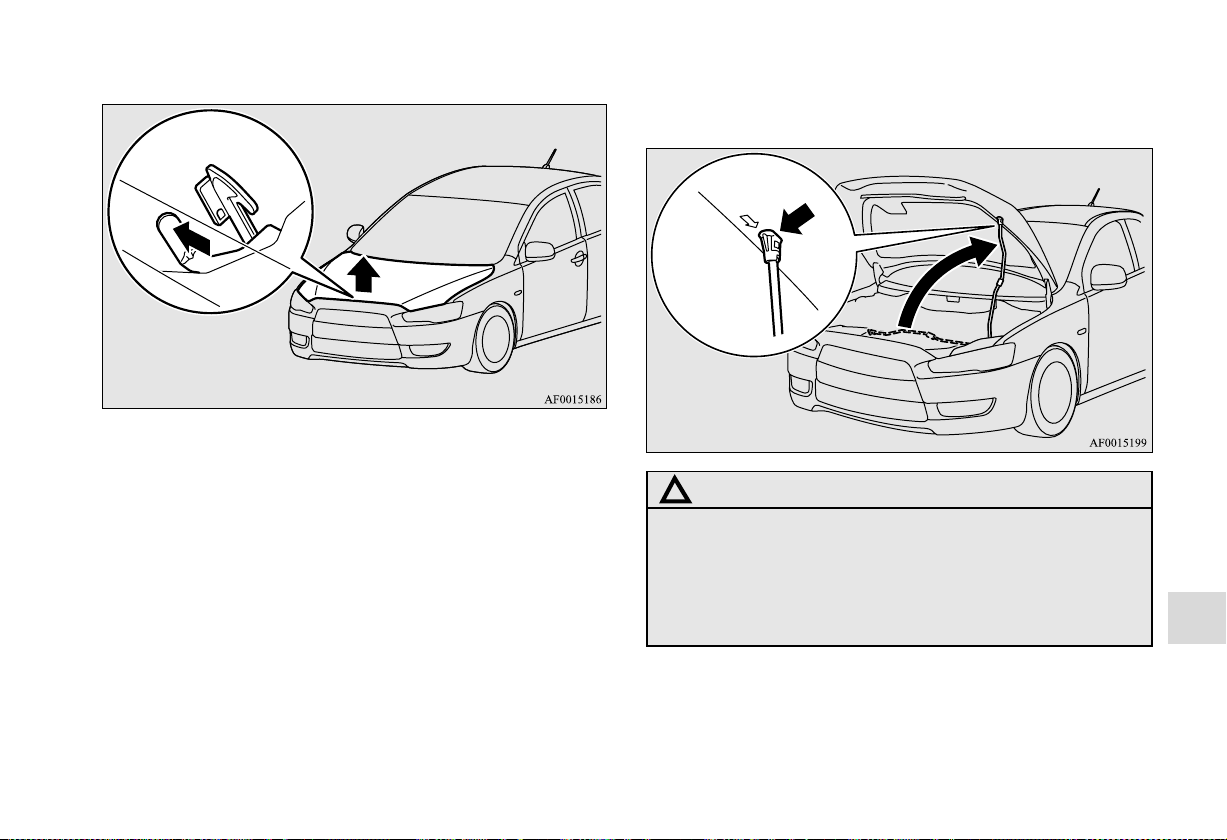
Vehicle care and maintenance
7-5
7
Release the safety lever and lift the engine hood.
N
OTE
● To prevent damage to the engine hood and wipers, make
sure the wipers are at resting position when you open the
engine hood.
Support the engine hood with the hood prop. Insert the hood
prop securely in the opening under the hood marked with an
arrow.
CAUTION
!
● Always insert the support prop into the hole spe-
cially made for it. Propping the engine hood at any
other place could cause the prop to slip out and lead
to an accident.
● The hood prop can fall out if the hood is lifted by a
strong wind.
BK0138600US.book 5 ページ 2011年7月17日 日曜日 午後2時32分
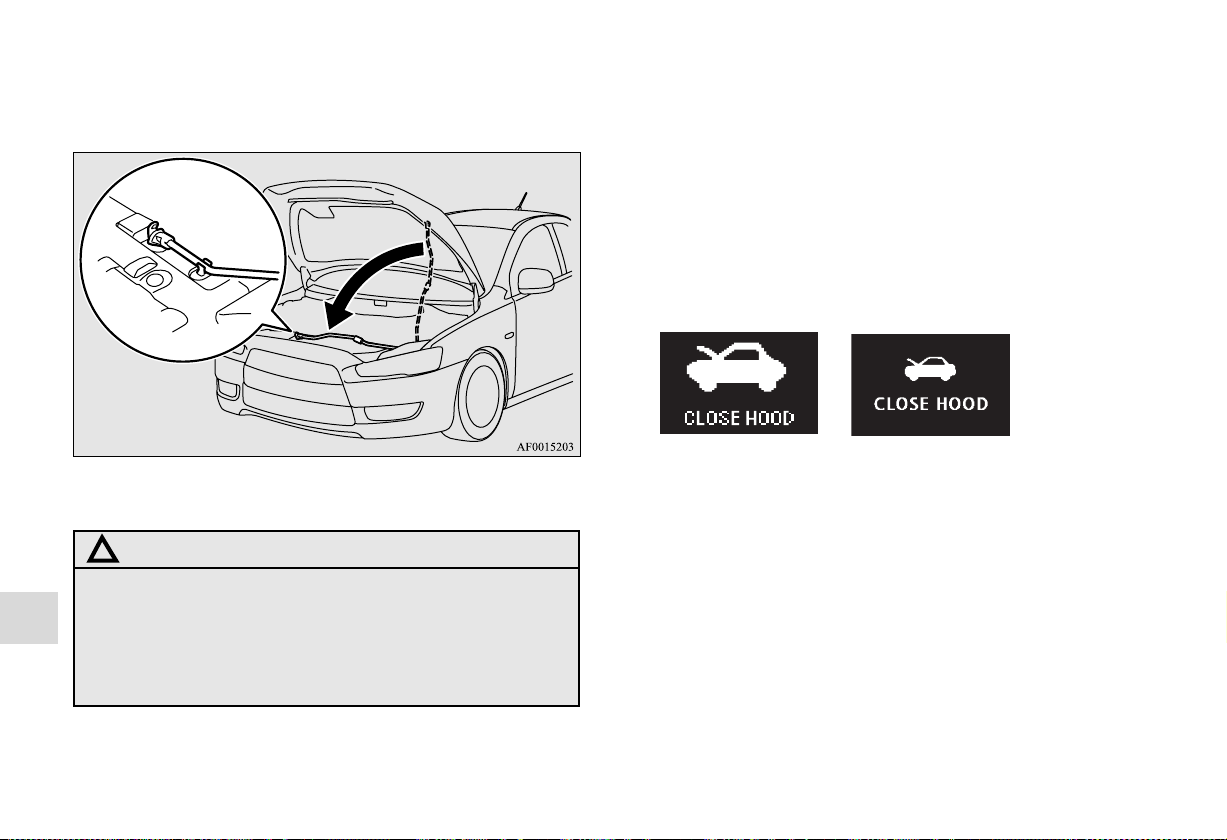
7-6
Vehicle care and maintenance
7
To close
Unlatch the prop from the engine hood and put it back in its
retainer.
Slowly lower the engine hood about 8 inches (20 cm), then let
it drop from its own weight.
N
OTE
● If this does not close the engine hood properly, drop it
again from a slightly higher position.
● Do not push down strongly on the engine hood. Depend-
ing on how strongly or where you push down, you could
create a dent in the vehicle body.
● For vehicles equipped with the theft-alarm system, if you
drive with the engine hood left open, warning display is
displayed on the information screen in the multi-informa-
tion display.
CAUTION
!
● Be careful not to trap your hands or fingers when
closing the engine hood.
● Make sure the engine hood is firmly closed before
driving.
If you drive without the engine hood completely
closed, it could open up while driving.
Type 1 Type 2
BK0138600US.book 6 ページ 2011年7月17日 日曜日 午後2時32分
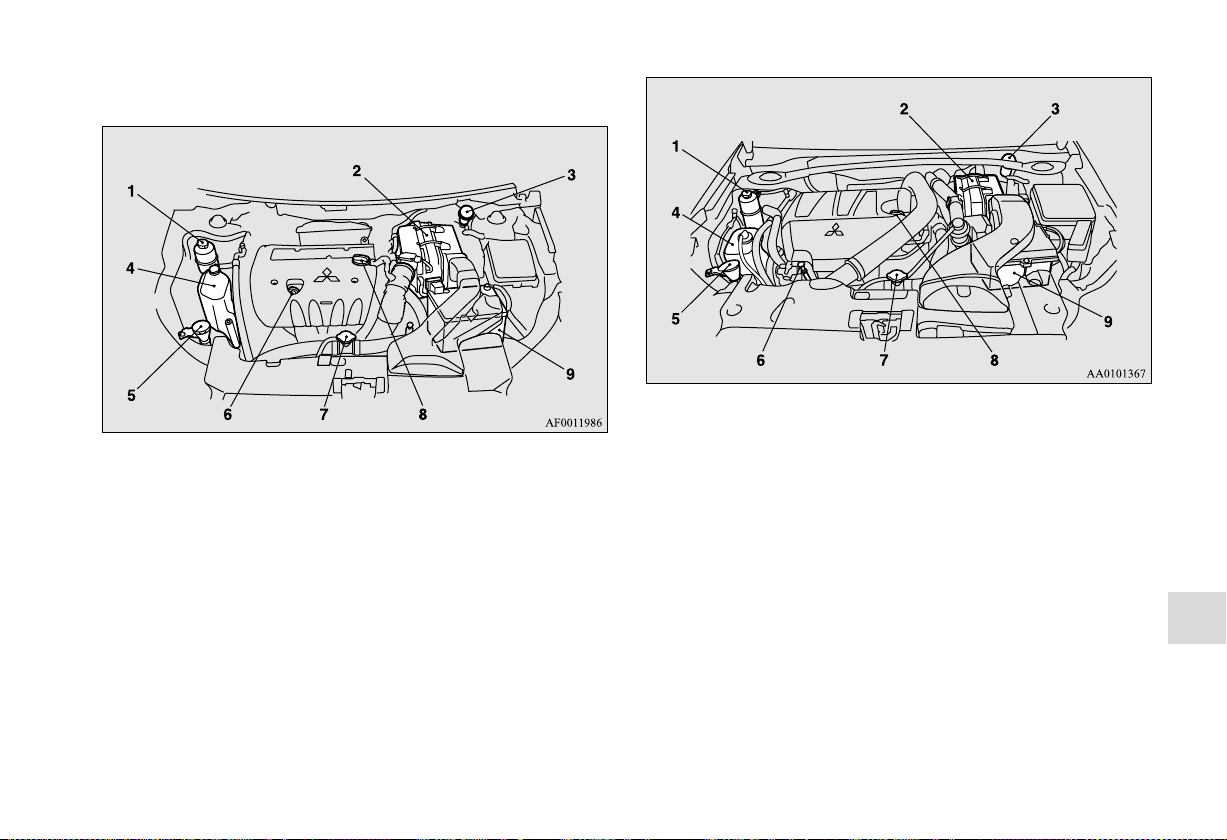
Vehicle care and maintenance
7-7
7
View of the engine compartment
N00937600667
Except for vehicles with turbocharger
1- Power steering fluid reservoir (if so equipped)
2- Air cleaner filter
3- Brake fluid/Clutch fluid reservoir (if so equipped)
4- Engine coolant reservoir
5- Windshield washer fluid reservoir
6- Engine oil level dipstick
7- Radiator cap
8- Engine oil filler cap
9- Battery
Vehicles with turbocharger
BK0138600US.book 7 ページ 2011年7月17日 日曜日 午後2時32分
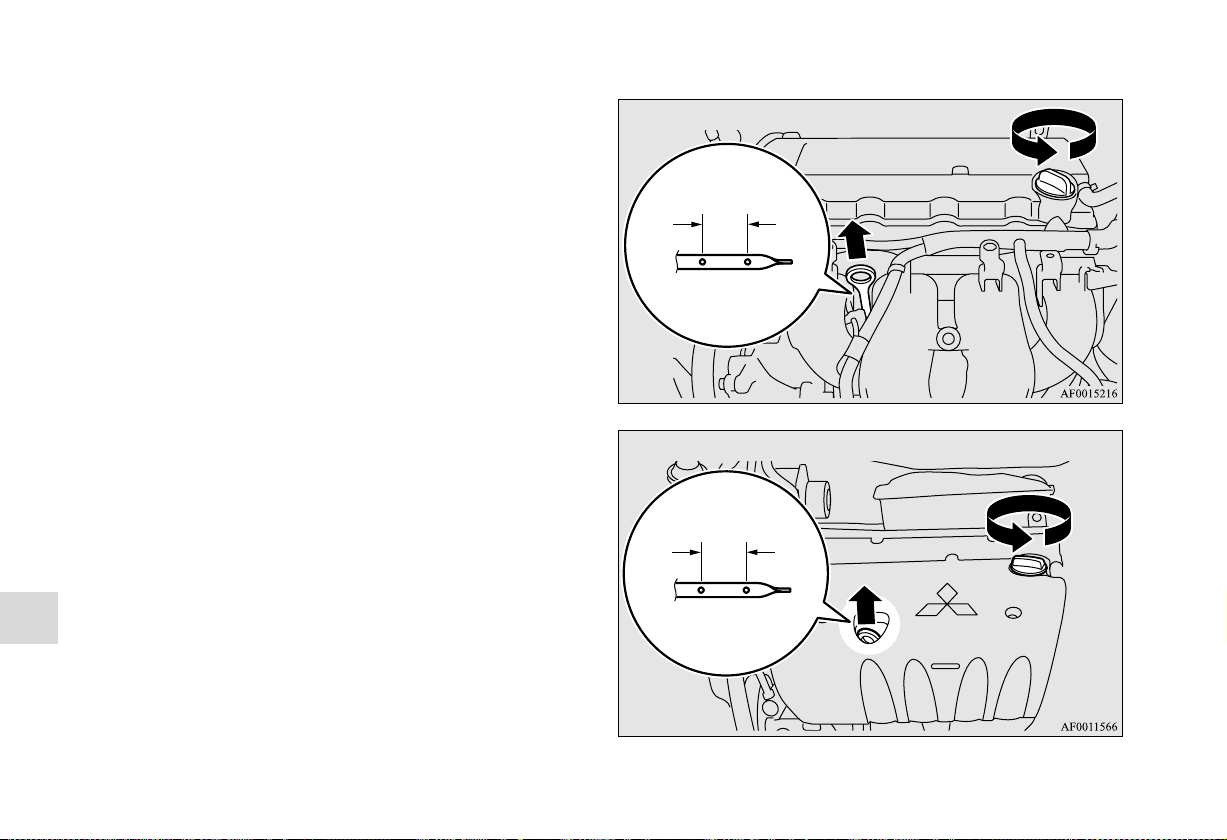
7-8
Vehicle care and maintenance
7
Engine oil and oil filter
N00937700860
To check and refill engine oil
It is normal for an engine to use oil. You may need to add oil
between the recommended oil change intervals. Before starting
the engine, check the engine oil level. Refill if necessary.
To check the oil level, remove the dipstick, wipe it off, and
gently insert it all the way into the crankcase. Slowly remove it
again. The oil level must not go above the line on the dipstick.
If the level does not reach the line, which shows the smallest
amount of oil required, remove the oil filler cap on the engine
valve cover, and fill to within the “Good” range.
Except for vehicles with turbocharger
Good
Except for vehicles with engine cover
Good
Vehicles with engine cover
BK0138600US.book 8 ページ 2011年7月17日 日曜日 午後2時32分
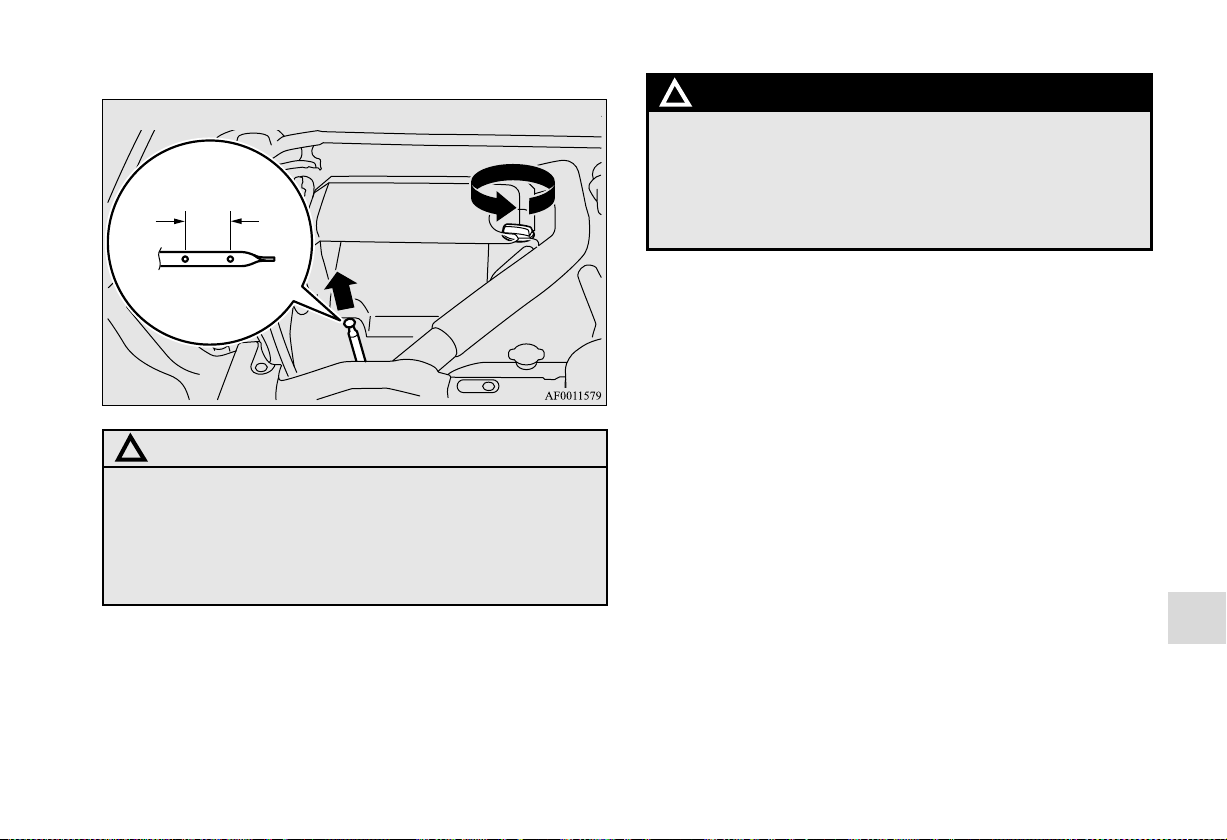
Vehicle care and maintenance
7-9
7
Vehicles with turbocharger
N
OTE
● Engine oil consumption is greatly influenced by payload,
engine speed, etc.
● The engine oil will deteriorate rapidly if the vehicle is
subjected to severe conditions (for example, repeated
operation on rough roads, in mountainous regions, on
roads with many uphill and downhill gradients, or over
short distances). Consequently, the oil will require earlier
replacement in accordance with the schedule in the
“WARRANTY AND MAINTENANCE MANUAL”.
CAUTION
!
● Overfilling the crankcase will cause oil aeration and
loss of oil pressure, which could damage the engine.
● For vehicles with turbocharger, engine oil must be
properly maintained to avoid engine and/or turbo-
charger damage. To better protect your engine and
turbocharger, use fully synthetic engine oil.
Good
WARNING
!
● Used engine oil is poisonous, and can damage your
skin. Prolonged and repeated contact may cause
serious skin disorders, including dermatitis and can-
cer. Don’t let used oil touch your skin. Wash thor-
oughly after working with it.
● Keep used oil out of the reach of children.
BK0138600US.book 9 ページ 2011年7月17日 日曜日 午後2時32分
7-10
Vehicle care and maintenance
7
Engine oil identification mark
Mitsubishi Motors recommends using only engine oils with the
ILSAC certification symbol on the front of the container.
If you cannot find oils with the ILSAC certification symbol,
use an API classification SM or higher oil with the following
label.
This mark appears on the top of the oil container and tells you
two important things about the oil.
ILSAC certification symbol
1- The top portion shows the quality of the oil.
2- The center portion shows the SAE grade of the oil viscosity.
API service symbol
BK0138600US.book 10 ページ 2011年7月17日 日曜日 午後2時32分
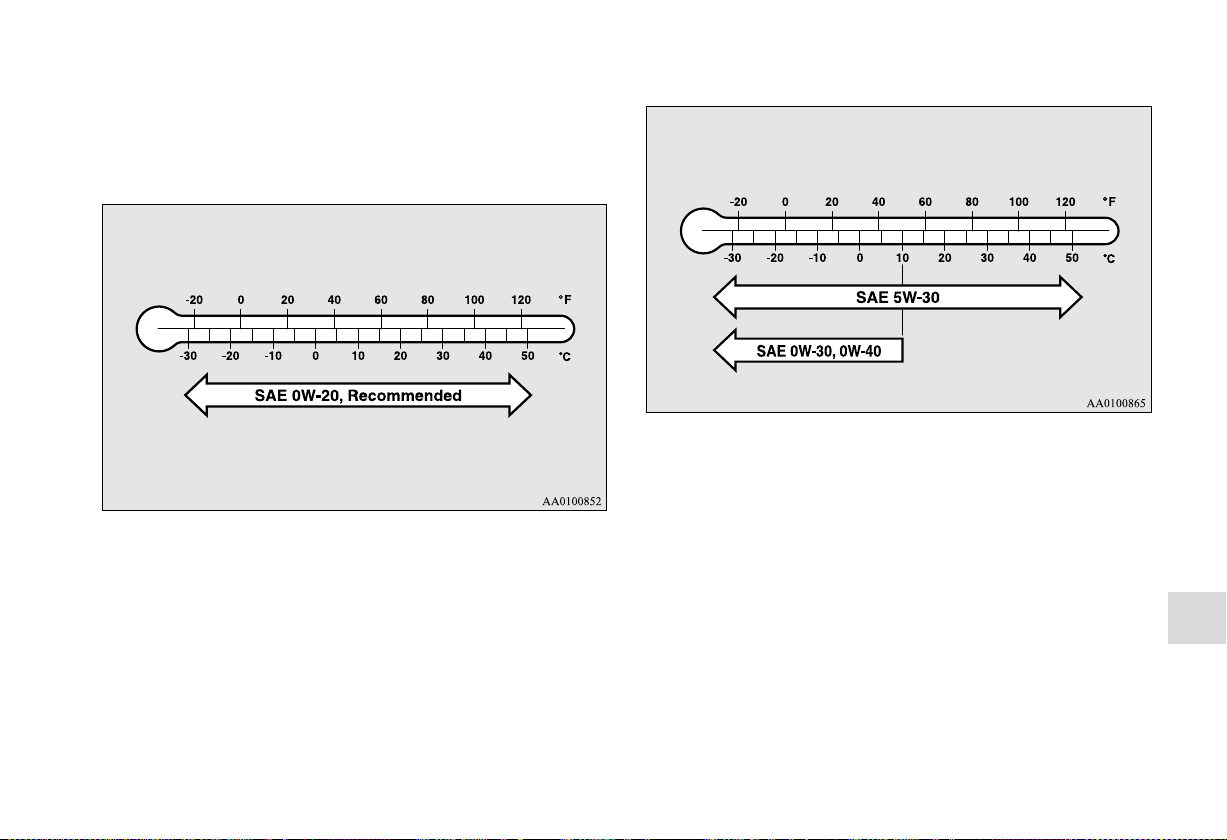
Vehicle care and maintenance
7-11
7
Recommended engine oil viscosity
N00955000070
Use engine oil with the proper thickness for the outdoor tem-
peratures where you will be driving.
Except for vehicles with turbocharger
SAE 0W-20 engine oil is strongly recommended for optimum
fuel economy and cold starting.
If SAE 0W-20 is not available the ILSAC certification oil of
other viscosity grades can be temporarily used.
Vehicles with turbocharger
N
OTE
● Select engine oil of the proper SAE viscosity number
according to the atmospheric temperature.
● SAE 0W-30 and 0W-40 engine oil are recommended to
use to improve engine startability on a very cold weather
condition.
BK0138600US.book 11 ページ 2011年7月17日 日曜日 午後2時32分

7-12
Vehicle care and maintenance
7
To replace the oil filter
N00955100042
The oil filter should be replaced at the time or mileage speci-
fied in the “WARRANTY AND MAINTENANCE MAN-
UAL”.
Only use high quality replacement filters on this vehicle. The
manufacturer’s specifications for Genuine Mitsubishi oil filters
require that the filter can withstand a pressure of 256 psi
(1.8 MPa). A Genuine Mitsubishi oil filter is the best replace-
ment filter.
Follow the installation instructions printed on the filter.
Engine coolant
N00937800483
To check the coolant level
The coolant reserve tank (A) lets you quickly see when you
need to add coolant. When the engine is cold, the level in the
reserve tank should be between the “FULL” and “LOW”
marks. The radiator usually stays full so there is no reason to
remove the radiator cap (B) except when you check the coolant
freeze point or replace the antifreeze coolant.
BK0138600US.book 12 ページ 2011年7月17日 日曜日 午後2時32分
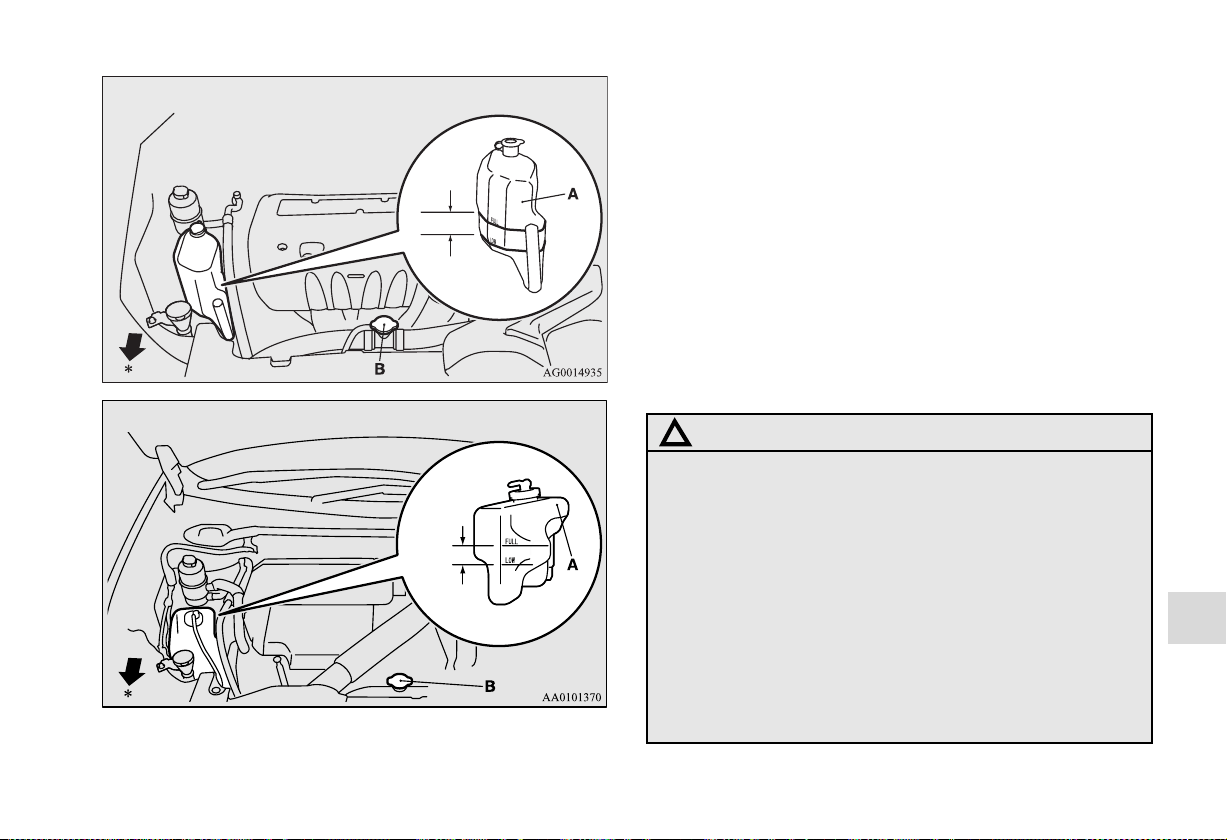
Vehicle care and maintenance
7-13
7
To add coolant
Mitsubishi Genuine Coolant provides excellent protection
against corrosion and rust formation on all metals, including
aluminum, and prevents blockages in some parts of engine.
If you need to add coolant often, or if the level in the reserve
tank does not drop when the engine cools, the cooling system
should be pressure-tested for leaks. Take your vehicle to an
authorized Mitsubishi Motors dealer or a repair facility of your
choice for testing.
*- Front of the vehicle
Except for vehicles with turbocharger
FULL
LOW
Vehicles with turbocharger
FULL
LOW
Use “Dia Queen Super Long Life Coolant Premium” or an
equivalent*.
* : similar high quality ethylene glycol based non-silicate, non-
amine, non-nitrate and non-borate coolant with long life
hybrid organic acid technology
CAUTION
!
● Do not use alcohol or methanol antifreeze or any
engine coolants that contain them. Using the wrong
antifreeze can corrode aluminum parts.
● The required concentration of anti-freeze differs
depending on the expected ambient temperature.
Above -31 °F (-35 °C) : 50 % concentration of anti-
freeze
Below -31 °F (-35 °C) : 60 % concentration of anti-
freeze
You can check the concentration level with a gauge
from an automotive supply store, or your authorized
Mitsubishi Motors dealer or service station can
check it for you.
BK0138600US.book 13 ページ 2011年7月17日 日曜日 午後2時32分
7-14
Vehicle care and maintenance
7
Radiator cap
The radiator cap must be tight sealed to prevent losing coolant
which may result in engine damage. Only use a Genuine
Mitsubishi Parts radiator cap, or an approved equivalent.
Points to remember
● Do not overfill the reserve tank.
● Your vehicle uses a special radiator cap that stays sealed
and lets the coolant flow from the reserve tank back to the
radiator when the engine cools down. If you need to
change the cap, use the exact same kind.
● Check the coolant freeze point in the radiator with the
proper gauge, and only when it is safe. If you add anti-
freeze, the contents of the reserve tank must be protected
against freezing.
● Keep the front of the radiator and condenser clean.
● If the temperature of the engine coolant does not rise after
the engine is warmed-up, take your vehicle to an autho-
rized Mitsubishi Motors dealer or a repair facility of your
choice to have the thermostat checked, and replaced if
necessary.
● Do not use water to adjust the concentration of cool-
ant.
● Do not top off the tank with plain water only. Water
by itself boils at a lower temperature and does not
stop rust or freezing. If the water freezes, it will
damage your cooling system. Do not use tapwater. It
can cause corrosion and rust.
WARNING
!
● Wait for the engine to cool down before opening the
radiator cap. Otherwise hot steam or boiling coolant
could spray up from the radiator and scald you.
CAUTION
!
BK0138600US.book 14 ページ 2011年7月17日 日曜日 午後2時32分
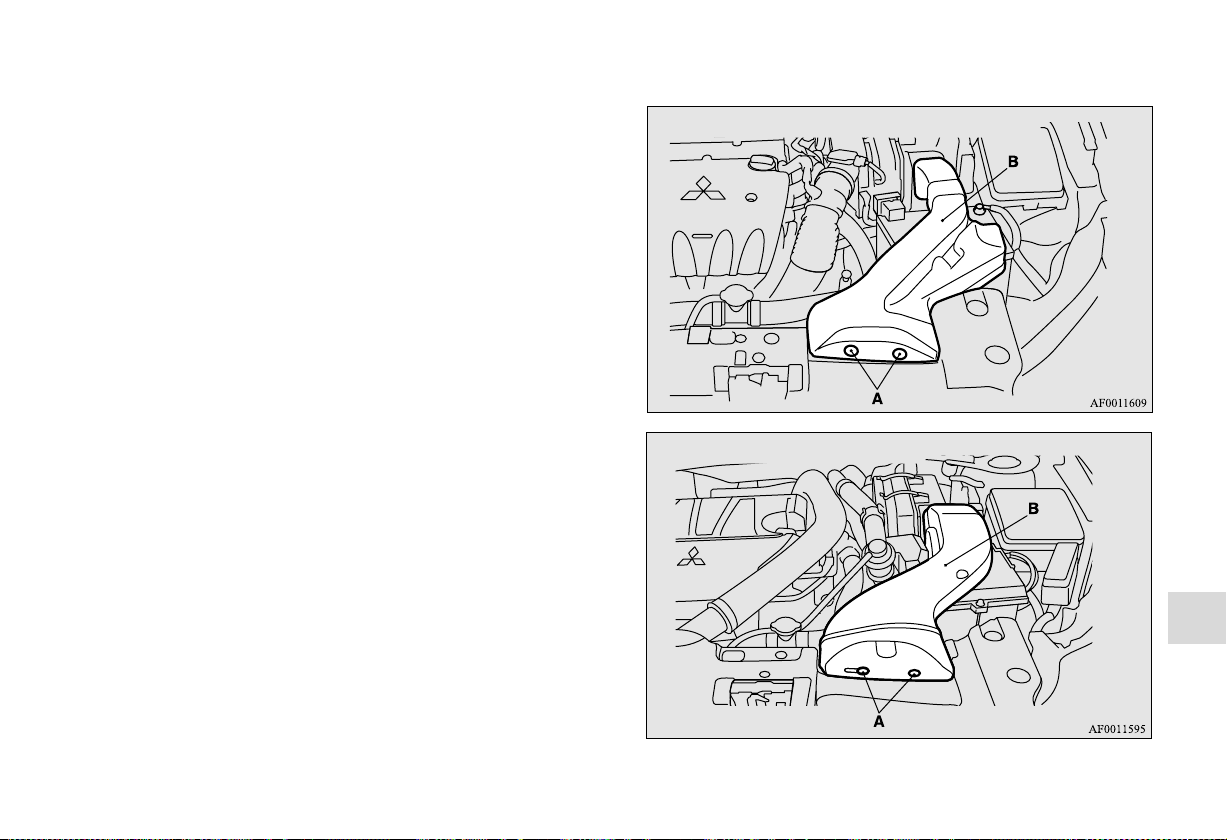
Vehicle care and maintenance
7-15
7
Air cleaner filter
N00937900396
The air cleaner filter will get dirty and dusty from use and not
filter properly. Replace it with a new filter using the schedule
in the “WARRANTY AND MAINTENANCE MANUAL”.
1. Remove the clips (A), then remove the duct (B).
Except for vehicles with turbocharger
Vehicles with turbocharger
BK0138600US.book 15 ページ 2011年7月17日 日曜日 午後2時32分
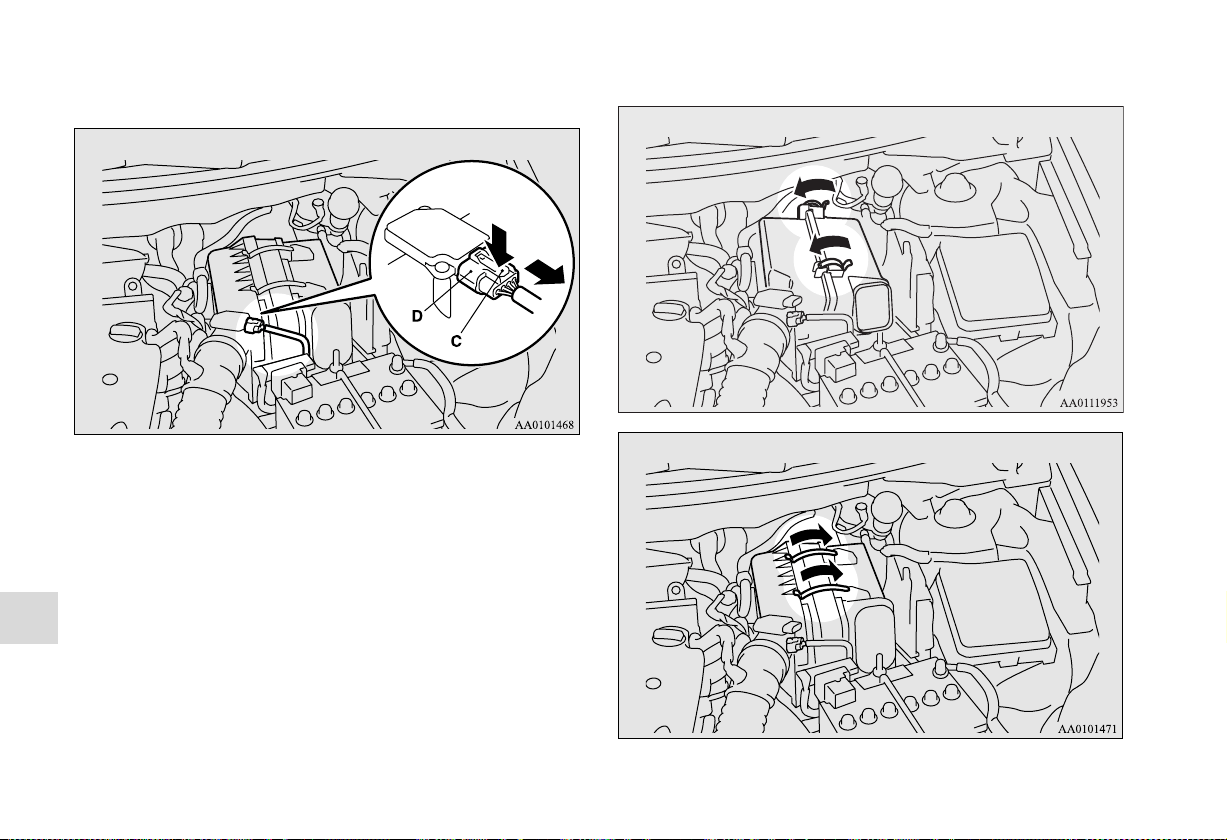
7-16
Vehicle care and maintenance
7
2. Except for vehicles with turbocharger, while holding
down the tab (C), pull out the connector (D).
3. Unclamp and take out the air cleaner filter.
Except for vehicles with turbocharger
Type 1
Type 2
GR00001001-7.tmp 16 ページ 2012年1月18日 水曜日 午前9時31分

Vehicle care and maintenance
7-17
7
4. Install the air cleaner filter and put the cover back on in its
original position.
N
OTE
● Genuine Mitsubishi Motors Parts are recommended when
replacing the air cleaner filter.
● After replacing the air cleaner filter, make sure that the
hinges at the bottom of cover are firmly set.
N
OTE
● Except for vehicles with turbocharger, make sure that the
connector is properly reconnected.
5. Put the duct back on in its original position.
Except for vehicles with turbocharger
Vehicles with turbocharger
BK0138600US.book 17 ページ 2011年7月17日 日曜日 午後2時32分
7-18
Vehicle care and maintenance
7
Manual transaxle oil
(if so equipped)
N00938200136
Whenever the manual transaxle oil level is checked, add oil to
maintain the proper level, if necessary.
Refill or change the oil according to the table.
Oil type
Continuously variable transmission (CVT)
fluid
(if so equipped)
N00938100047
The continuously variable transmission (CVT) should be main-
tained and serviced by an authorized Mitsubishi Motors dealer
or a repair facility of your choice to obtain the best perfor-
mance and longest life. It is important that the transmission
fluid is kept at the correct level.
Fluid type
Use only “DiaQueen CVTF-J4” transmission fluid to ensure
optimum transmission performance.
Special additives
Mitsubishi Motors Corporation does not recommend the addi-
tion of any fluid additives to the transmission.
Lubricant
DiaQueen NEW MULTI GEAR OIL
API Classification GL-3
Viscosity range SAE 75W-80
BK0138600US.book 18 ページ 2011年7月17日 日曜日 午後2時32分
Vehicle care and maintenance
7-19
7
Twin Clutch Sportronic shift transmission
(Twin Clutch SST) fluid
(if so equipped)
N00938000541
The Twin Clutch Sportronic shift transmission (Twin Clutch
SST) should be maintained and serviced by an authorized
Mitsubishi Motors dealer or a repair facility of your choice to
obtain the best performance and longest life. It is important that
the transmission fluid is kept at the correct level.
Fluid type
Use only Mitsubishi DiaQueen SSTF-I to ensure optimum
transmission performance.
Special additives
Mitsubishi Motors Corporation does not recommend the addi-
tion of any fluid additives to the transmission.
Transfer oil (All-wheel drive models)
N00938400154
Whenever the transfer oil level is checked, add oil as necessary
to maintain the proper level. Fill or change the oil according to
the table.
Oil type
CAUTION
!
● Using the improper transmission fluid may damage
the transaxle.
Lubricant DiaQueen LSD gear oil or equivalent
BK0138600US.book 19 ページ 2011年7月17日 日曜日 午後2時32分
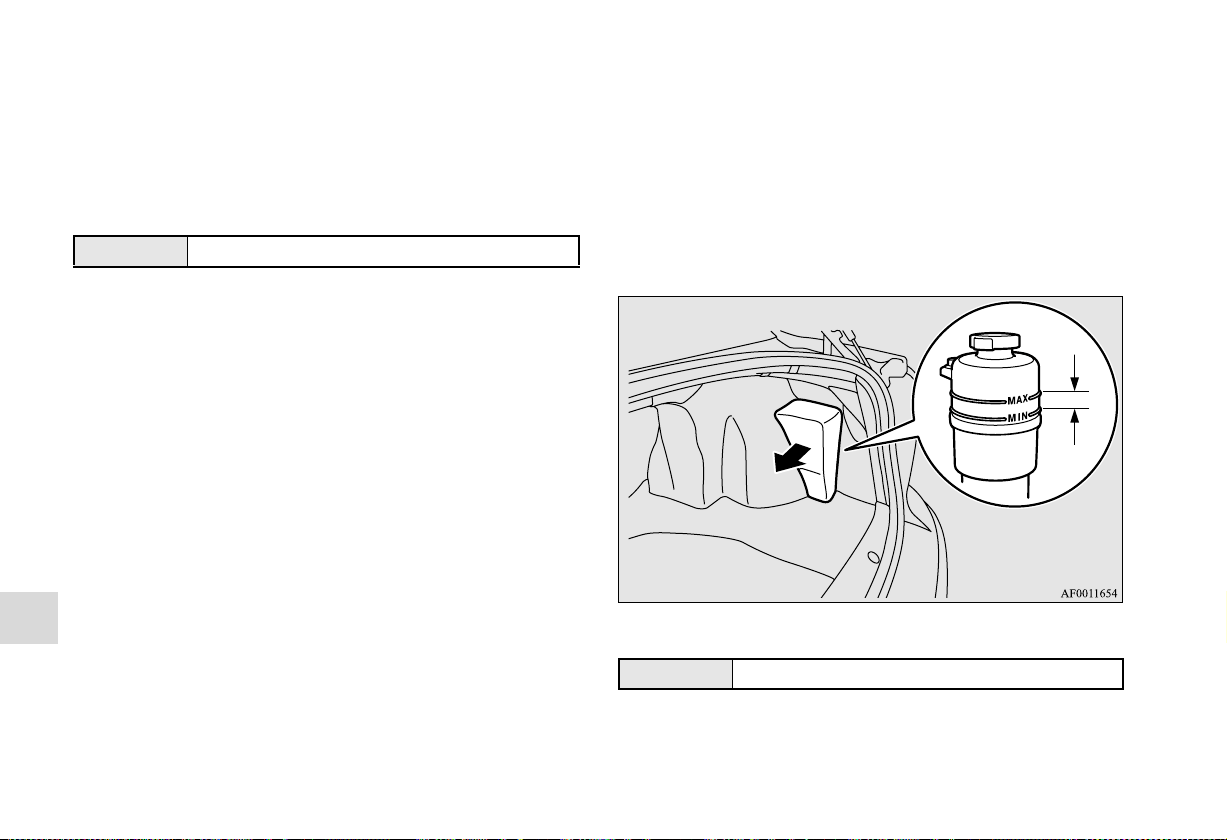
7-20
Vehicle care and maintenance
7
Rear axle oil (All-wheel drive models)
N00915200155
Whenever the oil level is checked, add oil as necessary to
maintain the proper level.
Fill or change oil according to the table.
Oil type
AWC control fluid (if so equipped)
N00915300026
To check the fluid level
Remove the lid on the trunk room right side trim.
Check the fluid level in the reservoir 90 minutes or more after
turning the ignition switch to the “LOCK” position.
Check to make certain that the AWC control fluid level is
always between the “MAX” and “MIN” level markings on the
fluid reservoir and refill the fluid, if necessary.
Fluid type
Lubricant DiaQueen LSD gear oil or equivalent
Lubricant DIAMOND ATF SP III
BK0138600US.book 20 ページ 2011年7月17日 日曜日 午後2時32分
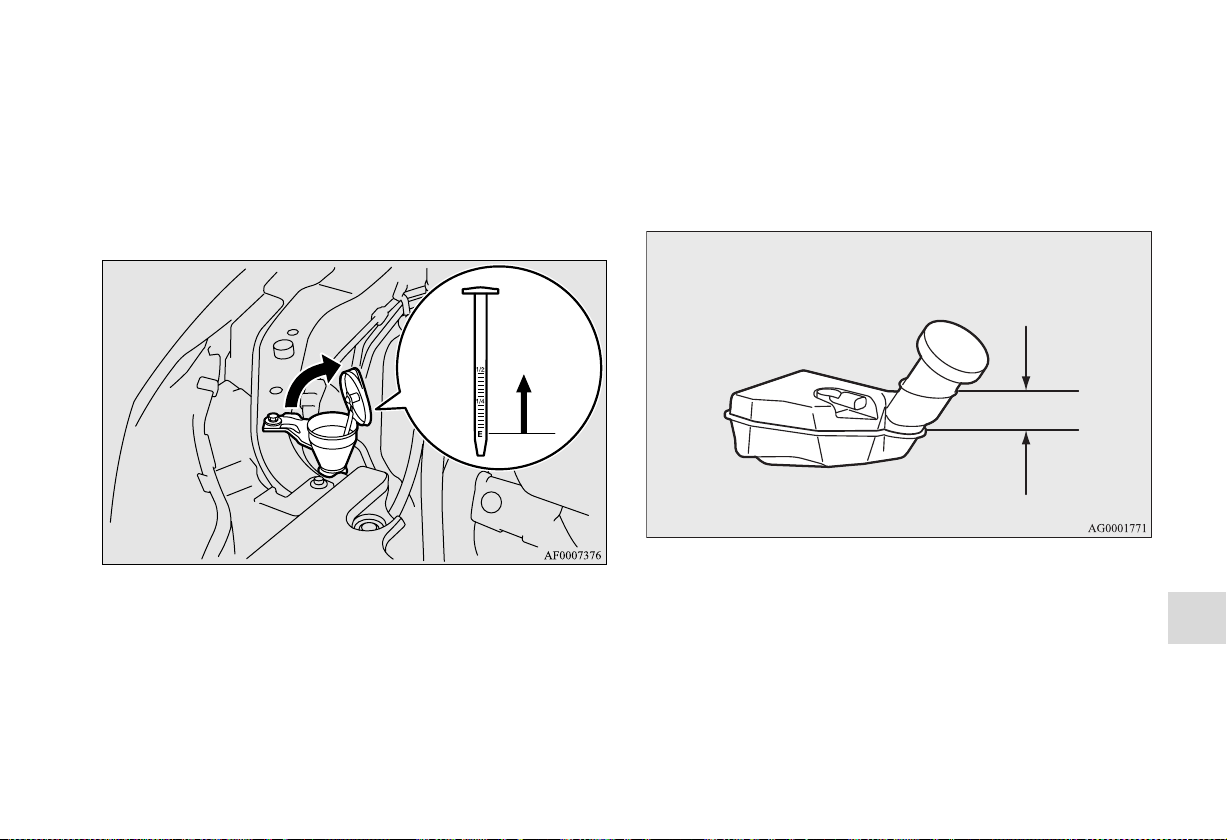
Vehicle care and maintenance
7-21
7
Washer fluid
N00938600273
The windshield washer fluid reservoir is in the engine compart-
ment.
Check the washer fluid level at regular intervals and add
washer fluid to reservoir if necessary.
Open the reservoir cap and check the fluid level with the dip-
stick.
During cold weather
When freezing weather is anticipated, flush out the water in the
reservoir by operating the pump. Fill the reservoir with wind-
shield antifreeze (not radiator antifreeze), and operate the sys-
tem for a few seconds to flush out the residual water.
Brake fluid/Clutch fluid (if so equipped)
N00938700186
The brake fluid and the clutch fluid share the reservoir tank.
To check the fluid level
The fluid level must be between the “MAX” and “MIN” marks
on the reservoir.
The fluid level falls slightly with wear of the brake pads, but
this does not indicate any abnormality.
The fluid in the master cylinder should be checked when doing
other work under the engine hood. The brake system should
also be checked for leaks at the same time.
If the fluid level falls markedly in a short length of time, it indi-
cates leaks from the brake system.
If this occurs, have the vehicle checked by an authorized
Mitsubishi Motors dealer or a repair facility of your choice.
MAX
MIN
BK0138600US.book 21 ページ 2011年7月17日 日曜日 午後2時32分
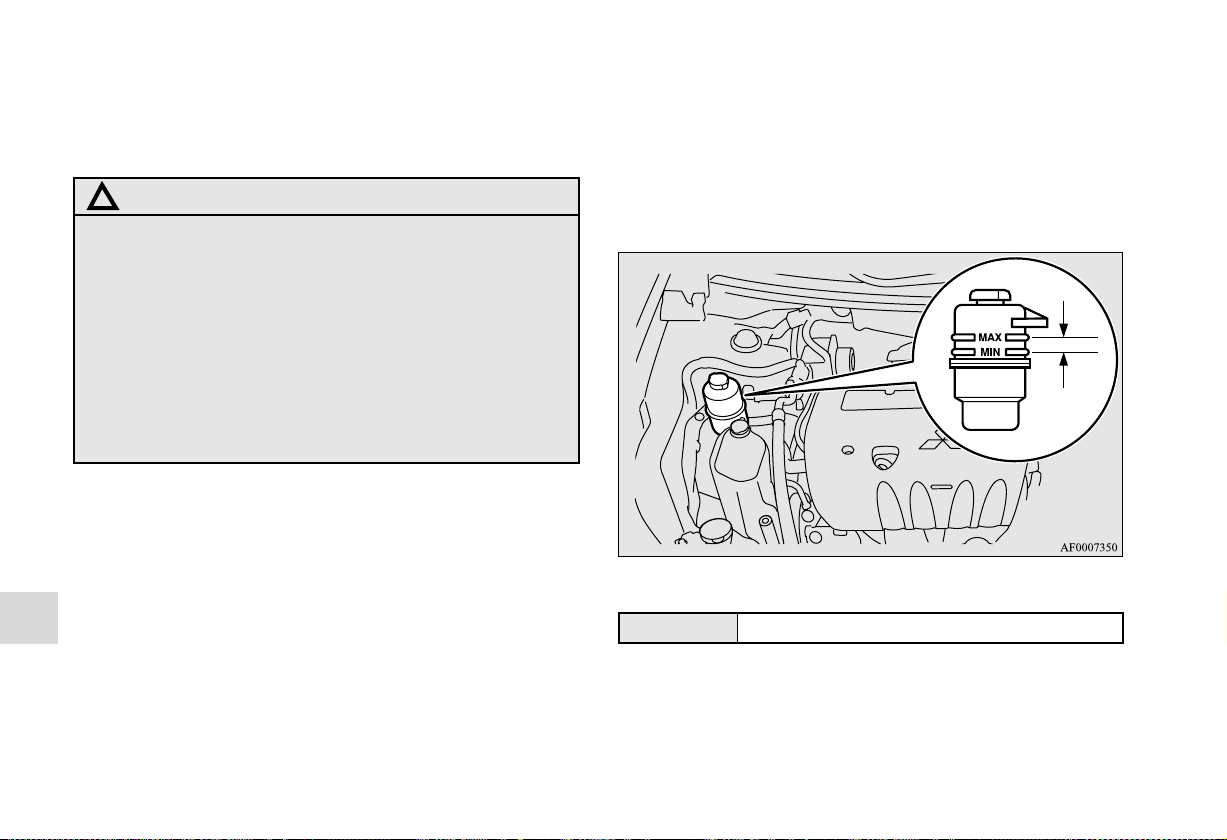
7-22
Vehicle care and maintenance
7
Fluid type
Use the recommended brake fluid conforming to DOT 3 or
DOT 4. The reservoir cap must be tightly sealed to keep dirt
and water out.
Power steering fluid (if so equipped)
N00939000375
To check the fluid level
Check the fluid level in the reservoir while the engine is idling.
Check to make certain that the power steering fluid level is
always between the “MAX” and “MIN” level markings on the
fluid reservoir and refill the fluid, if necessary.
Fluid type
CAUTION
!
● Do not let any petroleum-based fluid touch, mix
with, or get into the brake fluid. This will damage
the seals.
● Be careful when handling brake fluid. It can damage
painted surfaces.
● Use only the listed brake fluid. Different brands of
brake fluid have different additives, and these can
cause a chemical reaction. Do not mix brands of
brake fluid.
● Keep the reservoir tank cap closed to keep the brake
fluid from evaporating.
Lubricant Genuine Mitsubishi Power Steering Fluid
BK0138600US.book 22 ページ 2011年7月17日 日曜日 午後2時32分
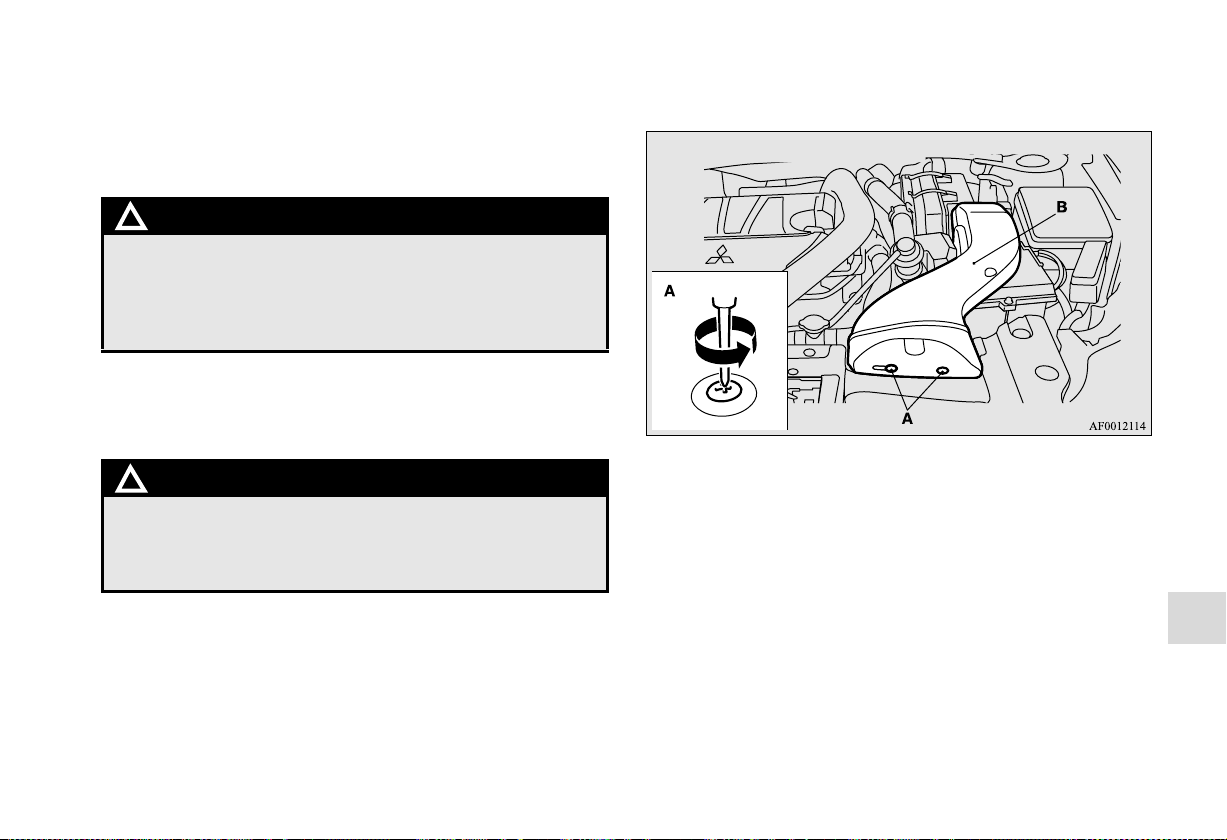
Vehicle care and maintenance
7-23
7
Battery
N00939100783
The condition of the battery is very important for quick starting
and to keep the vehicle’s electrical system working properly.
Check the battery regularly.
Removing and installing the battery upper cover
(vehicles with turbocharger)
N00901300012
To r emov e
1. Remove the clips (A), and then remove the air duct (B).
WARNING
!
● An SRS airbag sensor is located in the front of the
engine compartment near the battery.
When checking or replacing the battery, or when
working around this area, do not strike or damage
this sensor.
WARNING
!
● Turn the ignition key to the “LOCK” position on
vehicle. Make sure that your clothes cannot be
caught by the fan or drive belt. Personal injury
could result.
BK0138600US.book 23 ページ 2011年7月17日 日曜日 午後2時32分
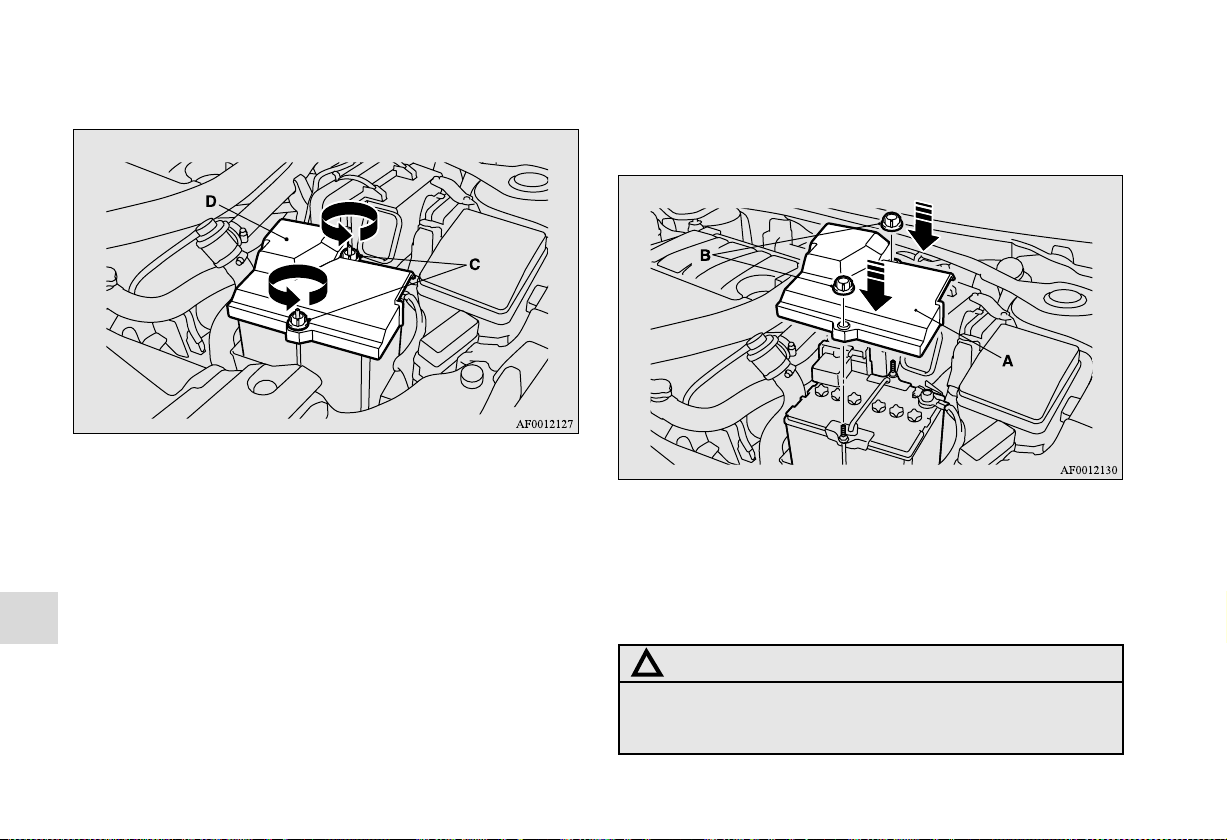
7-24
Vehicle care and maintenance
7
2. Turn the plastic nuts (C) counterclockwise, and then
remove the battery upper cover (D).
N
OTE
● Be careful not to lose the removed plastic nuts.
To in stall
1. Install the battery upper cover (A) onto the battery, and
then push the plastic nuts (B) in the direction shown by
the arrows to secure the cover.
N
OTE
● Be sure to install the plastic nuts in the correct direction.
● Make sure that the battery upper cover is installed
securely.
2. To install the air duct, perform the removal steps in
reverse.
CAUTION
!
● Be sure to install the battery upper cover. Other-
wise, the battery electrolyte may spill and cause a
malfunction.
BK0138600US.book 24 ページ 2011年7月17日 日曜日 午後2時32分
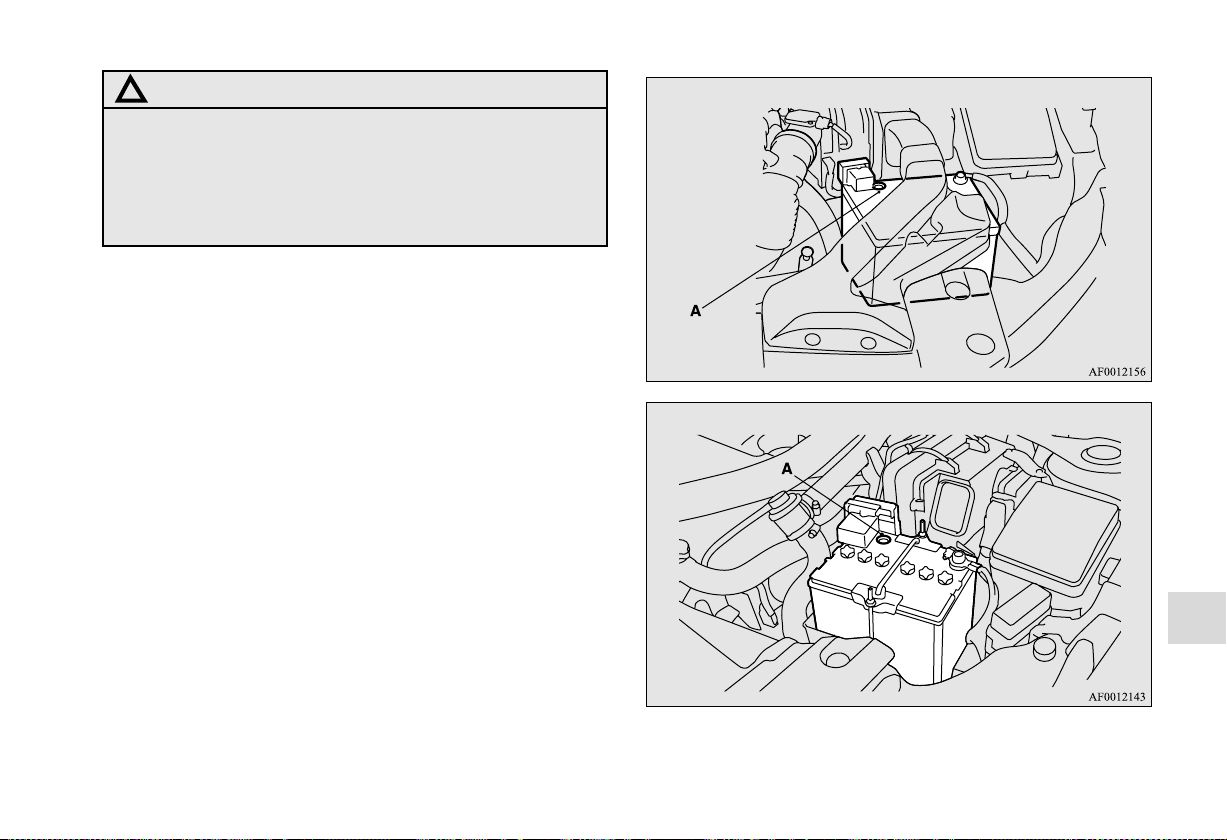
Vehicle care and maintenance
7-25
7
To check the battery indicator
N00901400068
To see the charge of only one cell, check the indicator (A) on
top of the battery. If the indicator is blue when looking from
above, that cell is okay suggesting the battery is okay. This is
not conclusive and if battery performance is suspect, have the
battery and charging system tested by an authorized Mitsubishi
Motors dealer or a repair facility of your choice. If it is white,
that cell is low on charge and the battery may only need charg-
ing.
● When installing the battery upper cover, plastic
nuts, and air duct, do not touch the cooling fan or
other moving parts in the engine compartment. Be
especially careful that the cables, your clothing or
hair, etc., do not get caught in the cooling fan or
other moving parts.
CAUTION
!
Except for vehicles with turbocharger
Vehicles with turbocharger
BK0138600US.book 25 ページ 2011年7月17日 日曜日 午後2時32分
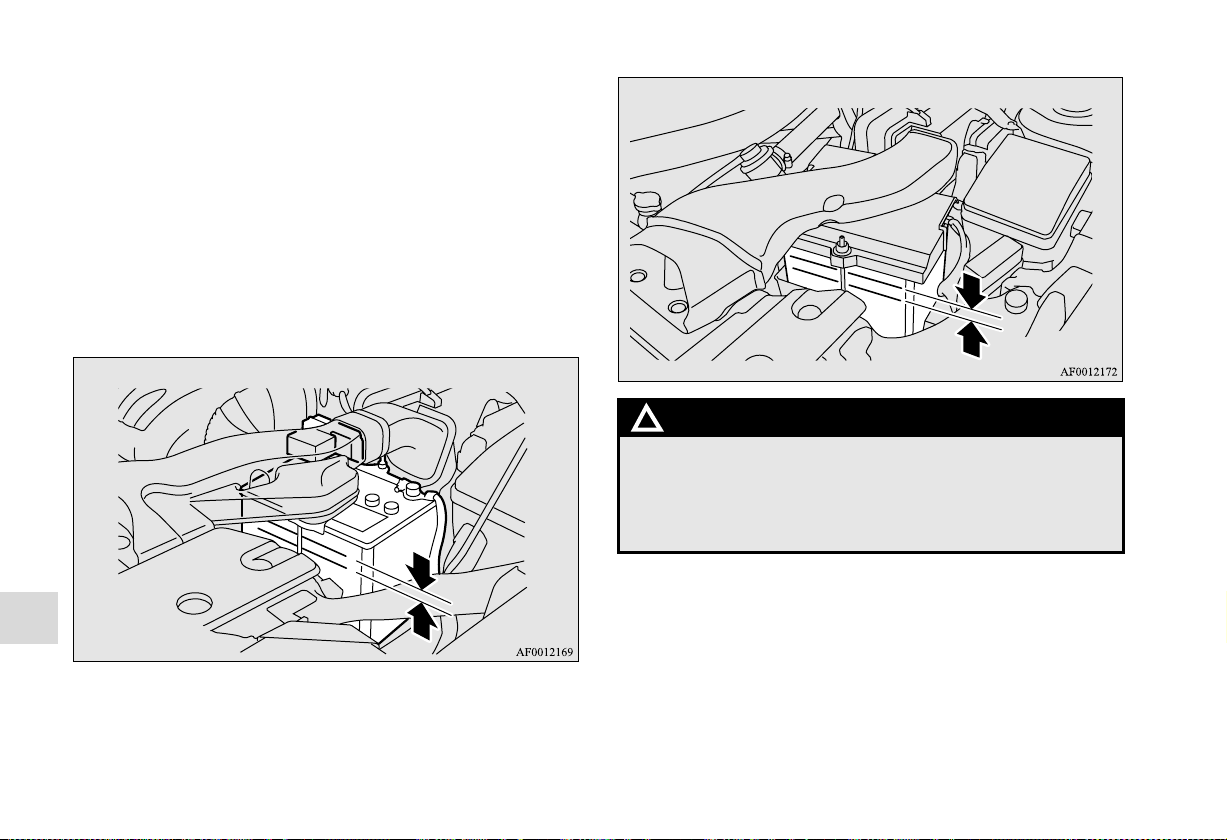
7-26
Vehicle care and maintenance
7
N
OTE
● For vehicles equipped with a turbocharger, the battery
upper cover must be removed to check the battery indica-
tor.
Checking battery electrolyte level
N00901500014
The electrolyte level must be between the limits shown on the
outside of the battery. Fill it with distilled water as needed. The
inside of the battery is divided into several compartments. Take
the cap off of each compartment and fill to the mark.
Do not fill above the top line because a spill during driving
could cause damage.
N
OTE
● For vehicles equipped with a turbocharger, the battery
upper cover does not need to be removed to check the bat-
tery electrolyte level.
During cold weather
N00901600015
The battery is weaker in cold temperatures. This has to do with
its chemical and physical properties and is why a very cold bat-
Except for vehicles with turbocharger
WARNING
!
● If the battery goes flat, be sure to check the battery
electrolyte level before connecting booster cables.
● After checking the battery electrolyte level, make
sure the caps are fitted securely.
● If any of the caps has a loose fit, replace the battery.
Vehicles with turbocharger
BK0138600US.book 26 ページ 2011年7月17日 日曜日 午後2時32分
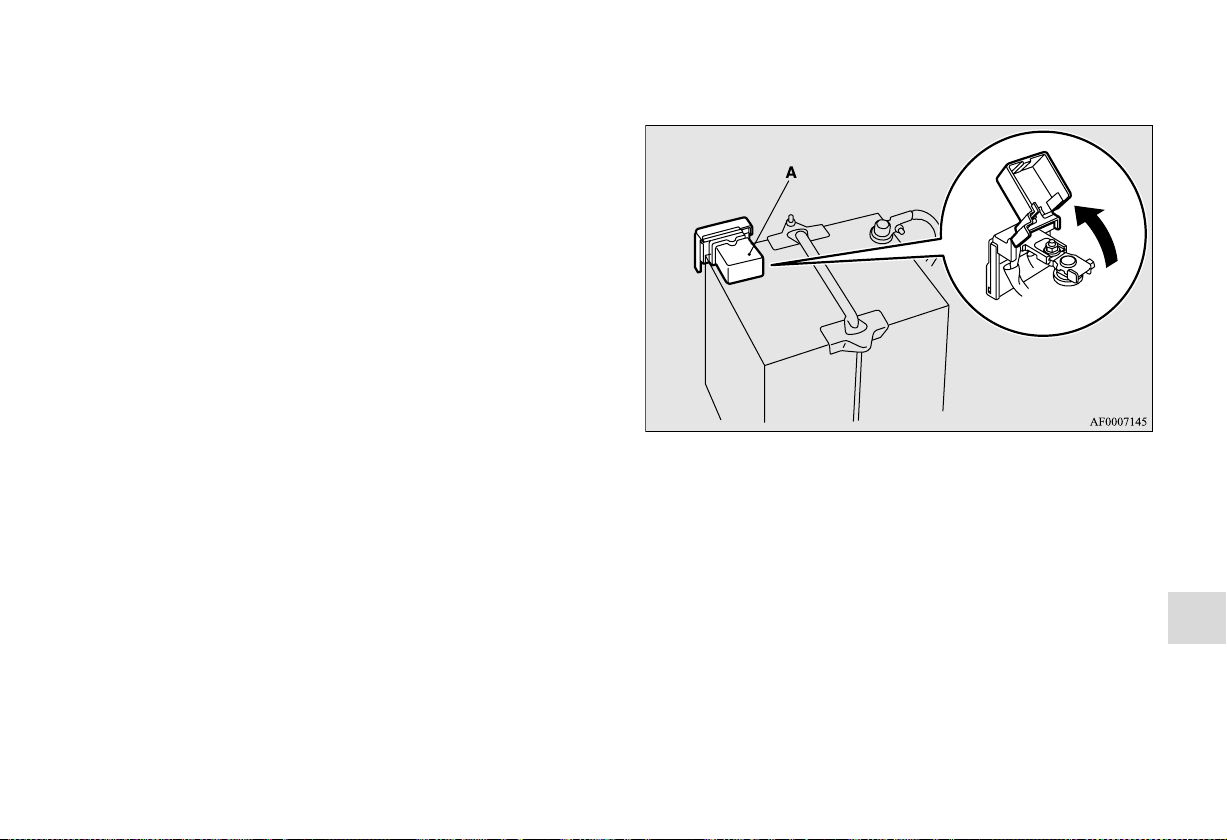
Vehicle care and maintenance
7-27
7
tery, especially one with a low charge, will have a hard time
starting your vehicle.
It is recommended that you have your battery and charging sys-
tem checked by an authorized Mitsubishi Motors dealer or a
repair facility of your choice before the start of cold weather. If
necessary, have it charged. This will guarantee more reliable
starting, and longer battery life.
Disconnection and connection
N00901700016
To disconnect the battery cable, stop the engine. Disconnect the
negative (-) terminal first, then the positive (+) terminal. To
reconnect the battery, first connect the positive (+) terminal and
then the negative (-) terminal, before starting the vehicle.
N
OTE
● For vehicles equipped with turbocharger, remove the bat-
tery upper cover before disconnecting the terminal of bat-
tery. Refer to “Removing and installing the battery upper
cover” on page 7-23.
● Open the terminal cover (A) before disconnecting or con-
necting the positive (+) terminal of the battery.
BK0138600US.book 27 ページ 2011年7月17日 日曜日 午後2時32分
7-28
Vehicle care and maintenance
7
N
OTE
● Check each battery terminal for corrosion. You can stop
more corrosion by washing with a solution of baking soda
and water. Grease the posts and clamps after cleaning or
tightening them.
● Check to see that the battery is securely installed and can-
not be moved. Also check each terminal for tightness.
● If you will not be driving your vehicle for a long period of
time, remove the battery and store it in a place where the
battery fluid will not freeze. Memory data for settings
made by the user may be erased when the battery is
removed. If this happens, reset the settings again using the
relevant procedures. The battery only should be stored
with a full charge.
● Before cleaning the battery, tighten all the filler port caps
to keep dirt and moisture out.
WARNING
!
● Never disconnect the battery while the engine is run-
ning, or you could damage the vehicle’s electrical
parts.
● Never short-circuit the battery. This could cause it
to overheat and be damaged.
● Keep sparks, cigarettes, and flames away from the
battery because the battery could explode.
● Electrolyte (battery acid) is made of corrosive
diluted sulfuric acid. If it spills on nearby parts, it
can crack, stain, or discolor them. And if gets on
your skin or in your eyes, it can cause burns or
blindness. Please observe the following handling
instructions:
• If electrolyte gets on plastic parts or other nearby
parts, wipe it off with a soft cloth or chamois
soaked in a solution of water and neutral detergent
then immediately rinse the affected parts with
plenty of water.
• If electrolyte gets on your hands or clothes, rinse
thoroughly with water. If electrolyte gets in your
eyes, flush them with water immediately and get
immediate medical attention.
● Open doors and windows in any closed space where
you may be charging or working with the battery.
● Always wear protective clothing and goggles when
working with the battery, or have a skilled automo-
bile technician do it.
● If you are quick-charging your battery, first discon-
nect the battery cables.
● In order to prevent a short circuit, be sure to discon-
nect the negative (-) terminal first, and reconnect it
last.
● If the electrolyte level is very low, have the battery
checked at an authorized Mitsubishi Motors dealer
or a repair facility of your choice.
● Battery terminals and related accessories contain
lead and lead compounds. Wash hands after han-
dling.
WARNING
!
BK0138600US.book 28 ページ 2011年7月17日 日曜日 午後2時32分
Vehicle care and maintenance
7-29
7
Tires
N00939200481
It is important to familiarize yourself with the following terms:
● Cold tire pressure:
• The measured pressure after the vehicle has been parked
for at least three hours,
or
• The measured pressure when the vehicle is driven less
than 1 mile (1.6 km) after having been parked for three
hours.
● Maximum inflation pressure: the maximum permissible
cold tire inflation pressure for this tire.
● Recommended inflation pressure: the inflation pressure
for optimum tire performance.
● Intended outboard sidewall:
• The sidewall that contains a whitewall, bears white let-
tering or bears manufacturer, brand, and/or model name
molding that is higher or deeper than the same molding
on the other sidewall of the tire,
or
• The outward facing sidewall of an asymmetrical tire that
has a particular side that must always face outward
when mounted on a vehicle.
● Passenger car tire: a tire intended for use on passenger
cars, multipurpose passenger vehicles, and trucks, that
have a gross vehicle weight rating (GVWR) of 10,000
pounds or less.
● Light truck (LT) tire: a tire designated by its manufacturer
as primarily intended for use on lightweight trucks or mul-
tipurpose passenger vehicles.
● Tread: portion of a tire that comes into contact with the
road.
● Tread rib: a tread section running circumferentially
around a tire.
● Tread separation: pulling away of the tread from the tire
carcass.
● Carcass: the tire structure, except tread and sidewall rub-
ber which, when inflated, bears the load.
● Sidewall: portion of a tire between the tread and bead.
● Section width: the linear distance between the exteriors of
the sidewalls of an inflated tire, excluding elevations due
to labeling, decoration, or protective bands.
● Bead: the part of the tire that is made of steel wires,
wrapped or reinforced by ply cords and that is shaped to
fit the rim.
● Ply: a layer of rubber-coated parallel cords.
WARNING
!
● Driving with tires that are worn, damaged or
improperly inflated is dangerous.
These type tire conditions will adversely affect vehi-
cle performance.
These type tire conditions can also cause a tread sep-
aration or blowout which may result in an accident
causing serious injury or death.
● Tires, including spare tire, degrade over time with
age even when they are not being used. It is recom-
mended that tires over 6 years generally be replaced
even if damage is not obvious.
BK0138600US.book 29 ページ 2011年7月17日 日曜日 午後2時32分
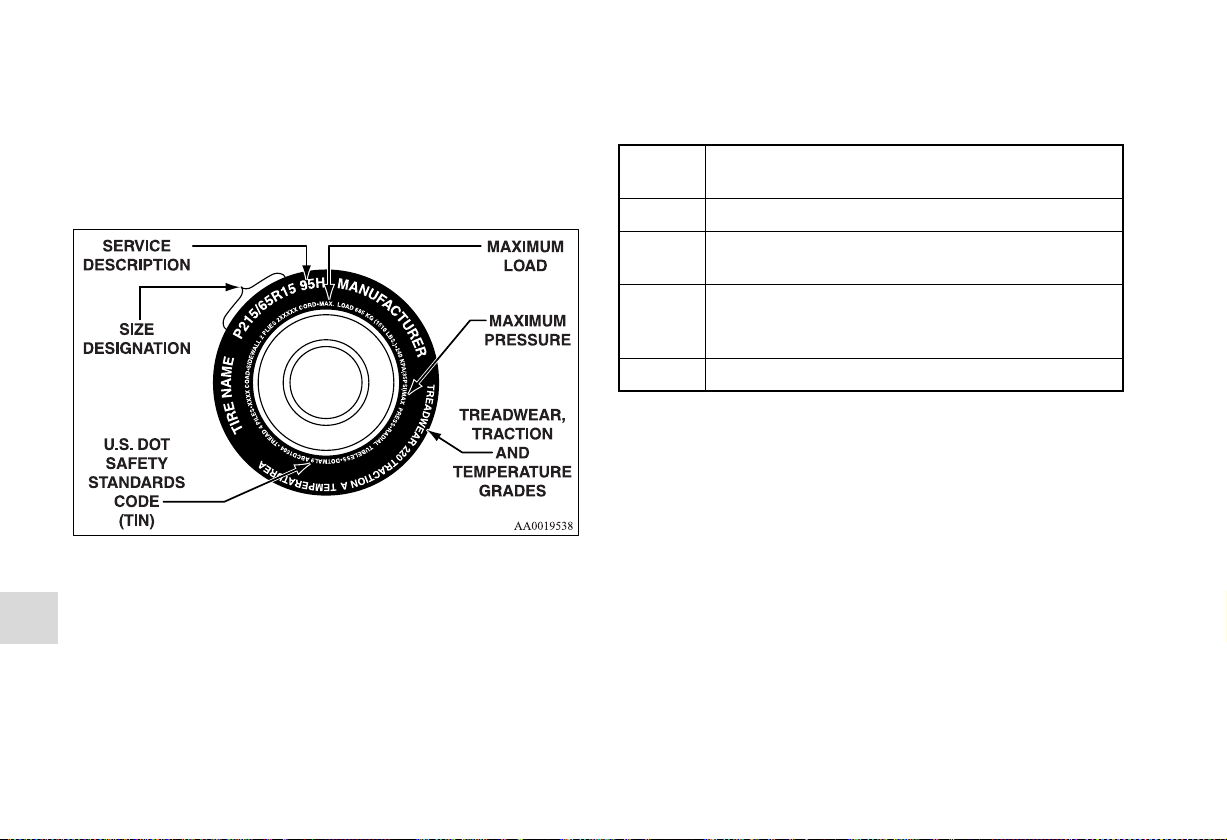
7-30
Vehicle care and maintenance
7
● Cord: the strands forming the plies in the tire.
● Rim: a metal support for a tire or a tire and tube assembly
upon which the tire beads are seated.
● Rim diameter: nominal diameter of the bead seat.
● Groove: the space between two adjacent tread ribs.
Tire Markings
Size Designation
EXAMPLE:P215/65R15
N
OTE
● European/Japanese metric tire sizing is based on Euro-
pean/Japanese design standards. Tires designed to these
standards have the tire size molded into the sidewall
beginning with the section width. The letter “P” is
absent from this tire size designation. Example:
215/65R15 96H.
● LT (Light Truck) -metric tire sizing is based on U.S.A.
design standards. The size designation for LT-metric
tires is the same as for P-metric tires except for the let-
ters “LT” that are molded into the sidewall preceding
the size designation. Example: LT235/85R16.
● Temporary spare tires are high pressure compact spares
designed for temporary emergency use only. Tires
designed to this standard have the letter “T” molded
into the sidewall preceding the size designation. Exam-
ple: T145/80D18 103M.
P
Passenger car tire size based on U.S.A. design
standards
215 Section width in millimeters (mm.)
65
Aspect ratio in percent (%)
Ratio of section height to section width of tire.
R
Construction code
• “R” means radial construction.
• “D” means diagonal or bias construction.
15 Rim diameter in inches (in)
BK0138600US.book 30 ページ 2011年7月17日 日曜日 午後2時32分
Vehicle care and maintenance
7-31
7
Service Description
EXAMPLE: 95H
Maximum Load
Maximum load indicates the maximum load this tire is
designed to carry.
Maximum Pressure
Maximum Pressure indicates the maximum permissible
cold tire inflation pressure for this tire.
Tire Identification Number (TIN)
The TIN may be found on one or both sides of the tire but
the date code may only be on one side. Look for the TIN on
the outboard side of tires as mounted on the vehicle. If the
TIN is not found on the outboard side then you will find it
on the inboard side of the tire.
EXAMPLE: DOT MA L9 ABCD 1504
95
Load index
A numerical code associated with the maximum
load a tire can carry.
H
Speed symbol
A symbol indicating the range of speeds at
which a tire can carry a load corresponding to its
load index under certain operating conditions.
The maximum speed corresponding to the speed
symbol should only be achieved under specified
operating conditions. (i.e. tire pressure, vehicle
loading, road conditions and posted speed lim-
its)
WARNING
!
● Overloading of your tire is dangerous. Overload-
ing can cause tire failure, affect vehicle handling,
and increase your stopping distance. Use tires of
the recommended load capacity for your vehicle.
Never overload them.
DOT
Department of Transportation
This symbol certifies that the tire is in compli-
ance with the U.S. Department of Transporta-
tion tire safety standards, and is approved for
highway use.
MA
Code representing the tire manufacturing loca-
tion. (2 digits)
L9
ABCD
Code representing the tire size. (2 digits)
Code used by tire manufacturer. (1 to 4 digits)
15
Number representing the week in which the tire
was manufactured. (2 digits)
04
Number representing the year in which the tire
was manufactured. (2 digits)
BK0138600US.book 31 ページ 2011年7月17日 日曜日 午後2時32分

7-32
Vehicle care and maintenance
7
Treadwear, Traction and Temperature Grades
Treadwear
The treadwear grade is a comparative rating based on the
wear rate of the tire when tested under controlled conditions
on a specified government test course. For example, a tire
graded 150 would wear one and one-half (1
1
/
2
) times as
well on the government course as a tire graded 100. The rel-
ative performance of tires depends upon the actual condi-
tions of their use, however, and may depart significantly
from the norm due to variations in driving habits, service
practices and differences in road characteristics and climate.
Traction
The traction grades, from highest to lowest, are AA, A, B
and C. Those grades represent the tire’s ability to stop on
wet pavement as measured under controlled conditions on
specified government test surfaces of asphalt and concrete.
A tire marked C may have poor traction performance.
Tempera t u re
The temperature grades are A (the highest), B and C, repre-
senting the tire’s resistance to the generation of heat and its
ability to dissipate heat when tested under controlled condi-
tions on a specified indoor laboratory test wheel. Sustained
high temperature can cause the material of the tire to degen-
erate and reduce tire life, and excessive temperature can
lead to sudden tire failure. The grade C corresponds to a
level of performance which all passenger car tires must
meet under the Federal Motor Vehicle Safety Standard No.
109. Grades B and A represent higher levels of performance
on the laboratory test wheel than the minimum required by
law.
Tire inflation pressures
N00939300844
Proper tire inflation pressure is essential for the safe and satis-
factory operation of your vehicle. The wrong tire pressure will
cause problems in three major areas:
● Safety
Too little pressure increases flexing in the tire and can
cause tire failure. Too much pressure can cause a tire to
lose its ability to cushion shock. Objects on the road and
potholes could then cause tire damage that may result in
tire failure.
● Economy
The wrong tire pressure can cause uneven wear patterns in
the tire tread. These abnormal wear patterns will reduce
the tread life, and the tire will have to be replaced sooner.
Too little pressure also makes it harder for the tire to roll,
and this uses up more fuel.
● Ride comfort and vehicle stability
The superior riding experience built into your vehicle
partly depends on the correct tire pressure. Too much
pressure gives an uncomfortable and jarring ride. Too lit-
tle pressure feels as if your vehicle is slow to respond.
Unequal tire pressures can make steering your vehicle
uneven and unpredictable.
The correct tire pressure for your vehicle is listed on the plac-
ard attached to the sill of the driver’s door.
(Refer to “Tire and loading information placard” on page 9-4.)
BK0138600US.book 32 ページ 2011年7月17日 日曜日 午後2時32分
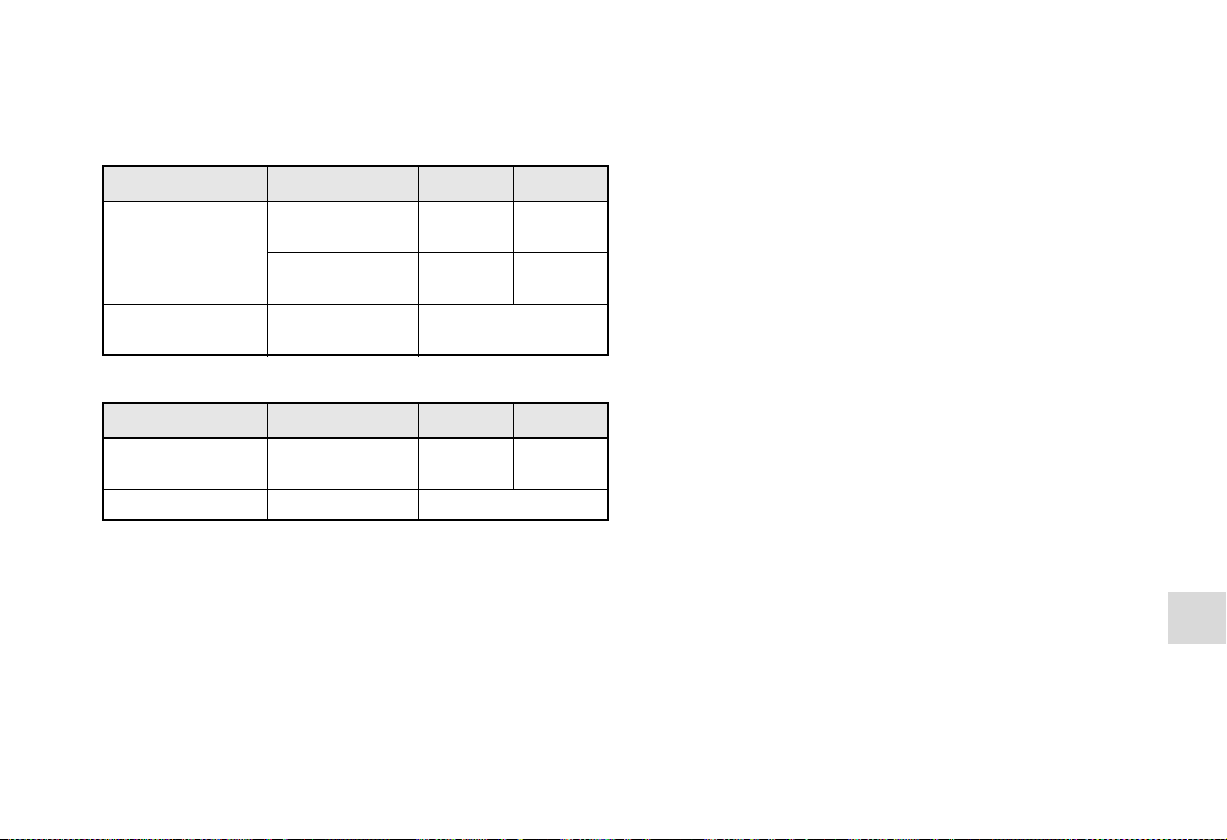
Vehicle care and maintenance
7-33
7
The recommended inflation pressures should be used for the
tires listed below.
Except for vehicles with turbocharger
Vehicles with turbocharger
Tire pressures should be checked, and adjusted if necessary, at
least once a month.
Pressures should be checked more often whenever weather
temperatures change severely, because tire pressures change
with outdoor temperatures. The pressures listed on the placard
are always “cold inflation pressure”.
Cold inflation pressure is measured after the vehicle has been
parked for at least three hours or is driven less than 1 mile
(1.6 km) after having been parked for three hours.
Cold inflation pressure must not go above the maximum values
molded into the tire sidewall. After driving several miles, your
tire inflation pressure may increase 14 to 41 KPA, 2 to 6 PSI
from the cold inflation pressure. Do not let air out of the tires to
get back to the specified cold pressure, or your tire pressure
will be too low.
Check your tires each time you refuel. If one tire looks lower
than the others, check the pressure for all of them.
You should also take the following safety precautions:
● Keep your tires inflated to the recommended pressures.
(See the tire and loading information placard attached to
the sill of the driver’s door.)
● Stay within the recommended load limits.
● Make sure that the weight of any load in your vehicle is
evenly distributed.
● Drive at safe speeds.
● After filling your tires to the correct pressure, check them
for damage and air leaks. Be sure to reinstall the caps on
the valve stems.
Item Tire size Front Rear
Normal tire
P205/60R16
250 KPA,
36 PSI
250 KPA,
36 PSI
P215/45R18
240 KPA,
35 PSI
240 KPA,
35 PSI
Compact spare tire
T125/70D16
T125/90D16
420 KPA, 60 PSI
Item Tire size Front Rear
Normal tire
P215/45R18
215/45R18
240 KPA,
35 PSI
240 KPA,
35 PSI
Compact spare tire T125/90D16 420 KPA, 60 PSI
BK0138600US.book 33 ページ 2011年7月17日 日曜日 午後2時32分
7-34
Vehicle care and maintenance
7
Replacing tires and wheels
N00939600368
Tire maintenance
N00939700154
The following maintenance steps are recommended:
● Check tire pressures regularly.
● Have regular maintenance done on the wheel balance and
front and rear suspension alignment.
● Rotate your tires regularly as described in the “Tire rota-
tion” section on page 7-35.
CAUTION
!
● Avoid using different size tires and wheels from the
ones listed, and avoid the combined use of different
types of tires and wheels. Using different size or type
tires and wheels may affect driving safety.
Refer to “Tires and wheels” on page 9-9.
● For All-wheel drive vehicles, always use tires of the
same size, same type, and same brand, and which
have no wear differences. Using tires that differ in
size, type, brand or the degree of wear, will increase
the differential oil temperature, resulting in possible
damage to the driving system. Further, the drive
train will be subjected to excessive loading, possibly
leading to oil leakage, component seizure, or other
serious problems.
● Even if a wheel has the same rim size and offset as
the specified type of wheel, its shape may prevent it
from being fitted correctly. Consult an authorized
Mitsubishi Motors dealer or a repair facility of your
choice before using wheels that you have.
● Only Mitsubishi Motors genuine wheels should be
used, because your vehicle is equipped with a tire
pressure monitoring system.
Use of another type of wheel risks air leaks and sen-
sor damage, as it will not be possible to install the
tire pressure sensor properly.
BK0138600US.book 34 ページ 2011年7月17日 日曜日 午後2時32分
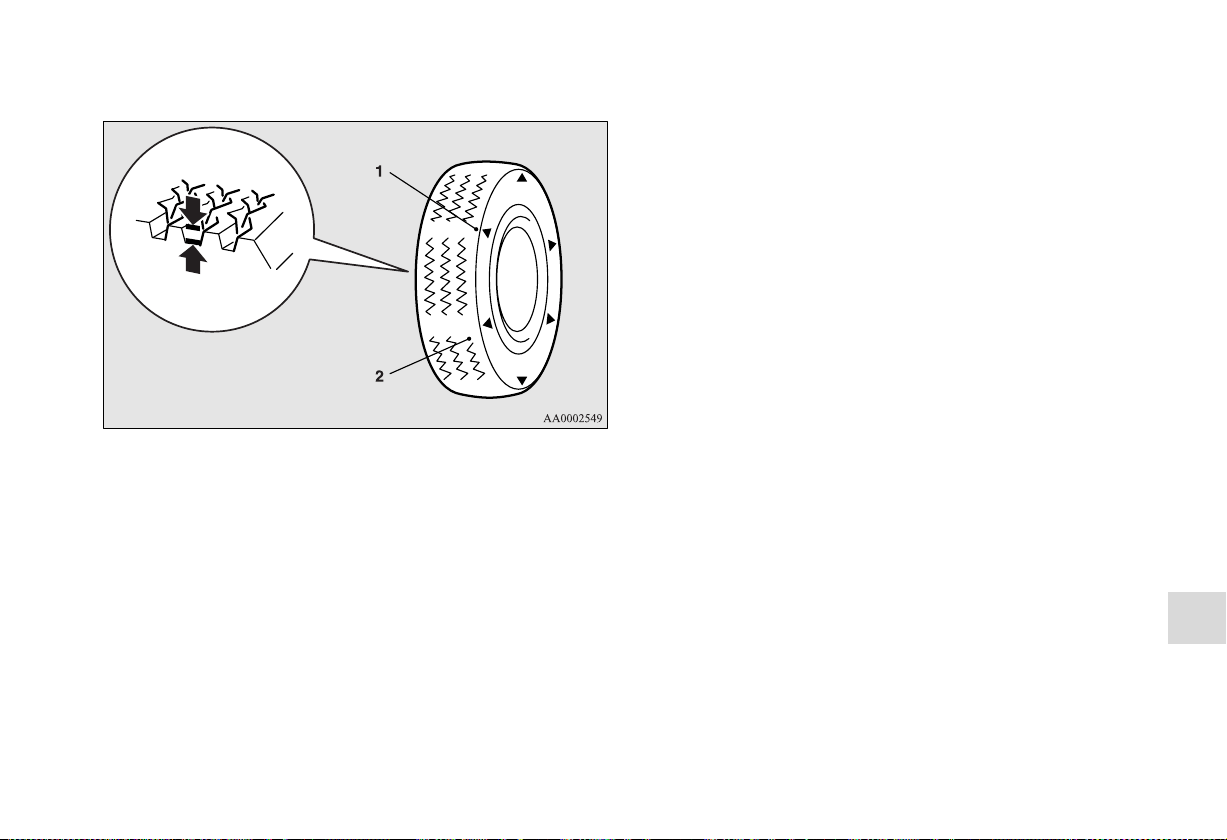
Vehicle care and maintenance
7-35
7
Tread wear indicators
N00939800214
Tread wear indicators are built into the original equipment tires
on your vehicle to help you know when your tires should be
replaced. Many states have laws requiring that you replace
your tires at this point.
These indicators are molded into the bottom of the tread
grooves and will appear when the tire tread is worn down to
1/16 inch (1.6 mm).
When the bands appear next to one another in two or more
places, replace your tires.
N
OTE
● Tire wear indicators can have different marks and loca-
tions depending on the tire manufacturer.
Tire rotation
N00939900390
To even out the wear on your tires and make them last longer,
Mitsubishi Motors Corporation recommends that you rotate
your tires at the mileage listed in the “WARRANTY AND
MAINTENANCE MANUAL”.
However, the timing for tire rotation may vary according to
your vehicle condition, road surface conditions, and your own
personal driving habits. Any time you notice unusual wear,
rotate your tires as soon as possible.
When rotating tires, check for uneven wear, damage, and wheel
alignment. Abnormal wear is usually caused by a wrong tire
pressure, wheels that are not aligned properly, wheels that are
out-of-balance, or severe braking.
Check with an authorized Mitsubishi Motors dealer or a repair
facility of your choice to find out the reason for uneven tread
wear.
The first tire rotation is the most important one. It will allow all
your tires to wear evenly.
1- Location of the tread wear indicator
2- Tread wear indicator
BK0138600US.book 35 ページ 2011年7月17日 日曜日 午後2時32分
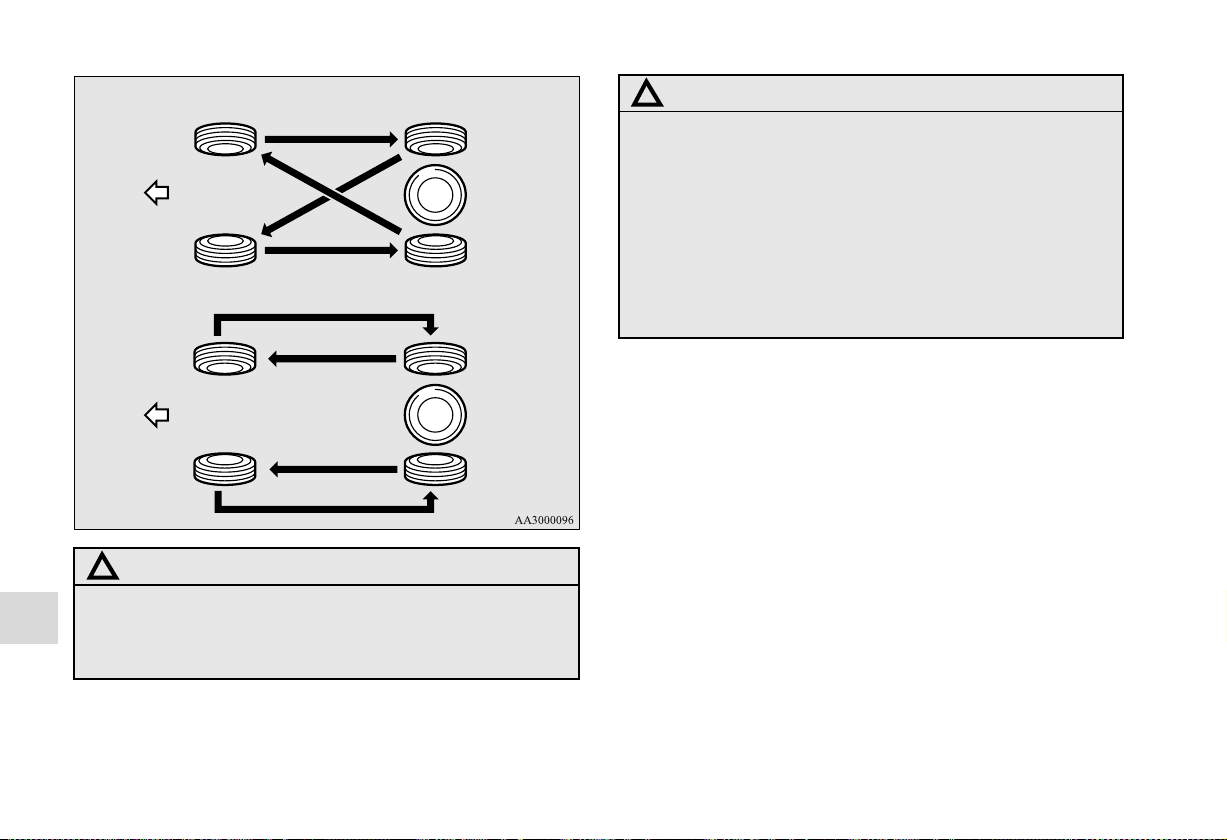
7-36
Vehicle care and maintenance
7
CAUTION
!
● A compact spare tire can be installed temporarily in
place of a tire that has been removed during the tire
rotation. However, it must not be included in the
regular tire rotation sequence.
Tires that do not have arrows showing rotation direction
Tires that have arrows showing rotation direction
Front
Front
CAUTION
!
● If the tires have arrows (A) indicating the correct
direction of rotation, swap the front and rear tires
on the left-hand side of the vehicle and the front and
rear tires on the right-hand side of the vehicle sepa-
rately. Keep each tire on its original side of the vehi-
cle. When installing the tires, make sure the arrows
point in the direction in which the wheels will turn
when the vehicle moves forward. Any tire whose
arrow points in the wrong direction will not perform
to its full potential.
BK0138600US.book 36 ページ 2011年7月17日 日曜日 午後2時32分
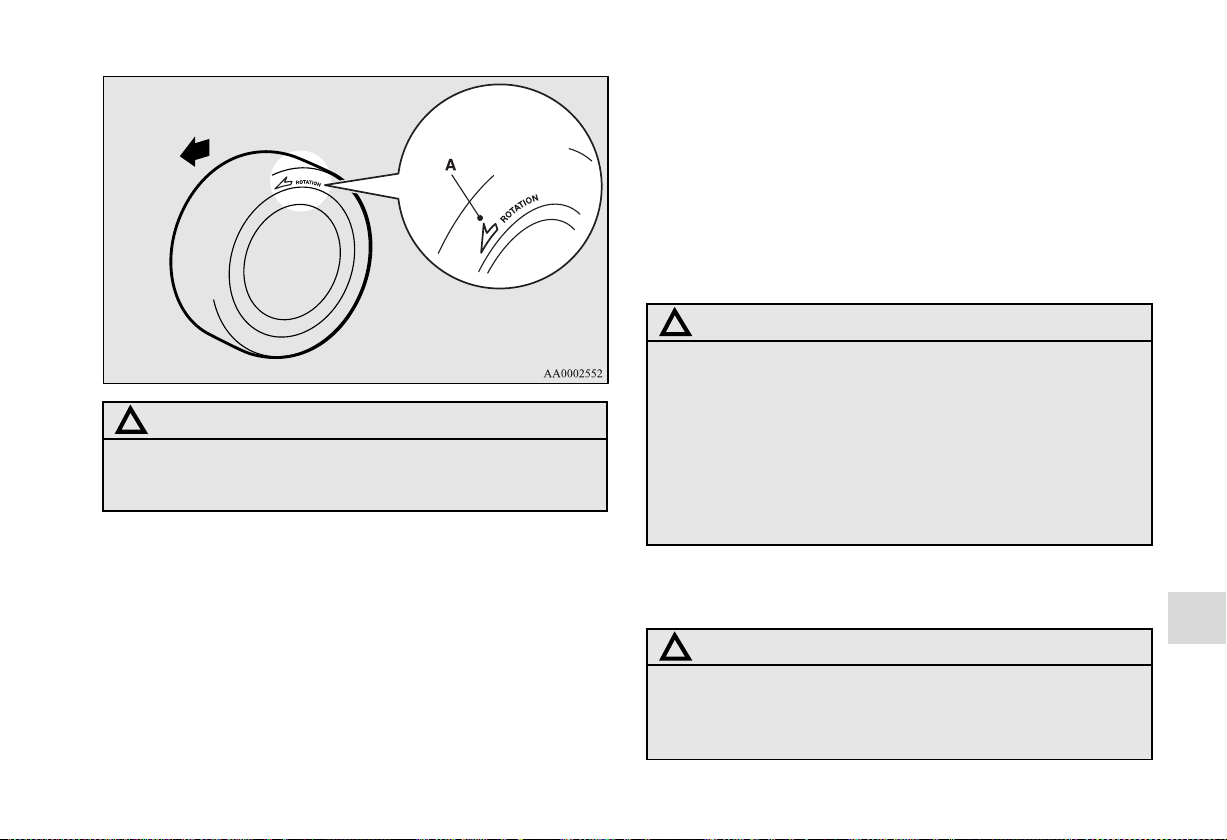
Vehicle care and maintenance
7-37
7
Snow tires
N00940000359
In some areas of the country, snow tires are required for winter
driving. If snow tires are required in your area, you must
choose snow tires of the same size and type as the original tires
provided with your vehicle. Snow tires should also be installed
on all four wheels. Otherwise your safety and vehicle handling
can be reduced.
Even where laws may permit it, snow tires should not be oper-
ated at sustained speeds over 75 mph (120 km/h).
Tire chains
N00940100129
CAUTION
!
● Avoid the combined use of different types of tires.
Using different types of tires can affect vehicle per-
formance and safety.
Front
CAUTION
!
● If flange nuts are used on your vehicle, change to
tapered nuts when using snow tires with steel
wheels.
● Only Mitsubishi Motors genuine wheels should be
used, because your vehicle is equipped with a tire
pressure monitoring system.
Use of another type of wheel risks air leaks and sen-
sor damage, as it will not be possible to install the
tire pressure sensor properly.
CAUTION
!
● Tire chains cannot be used on your vehicle. The
clearance between the chains and the body is not
sufficient to allow proper clearance, and the vehicle
body might be damaged.
BK0138600US.book 37 ページ 2011年7月17日 日曜日 午後2時32分
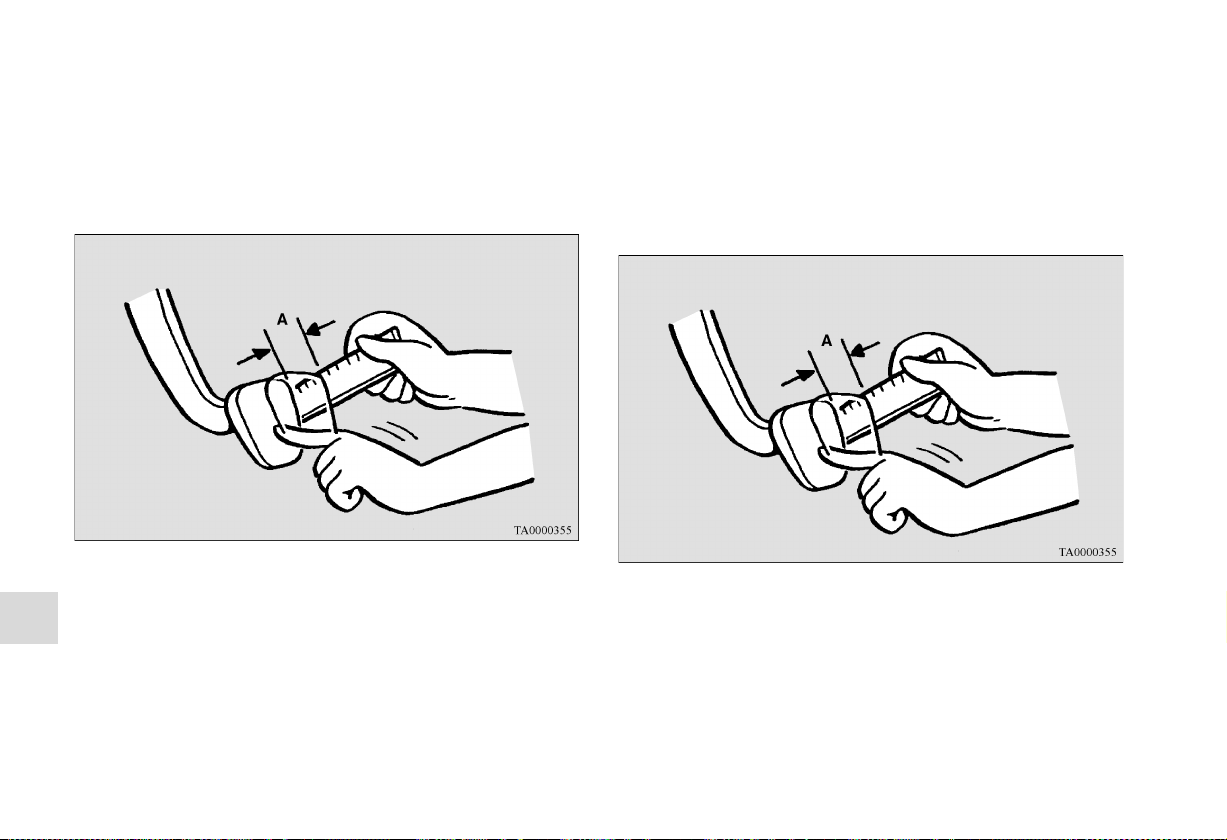
7-38
Vehicle care and maintenance
7
Clutch pedal free play
(if so equipped)
N00940200061
To check the clutch pedal free play (A), turn off the engine and
press the pedal until you feel resistance.
Clutch pedal free play:
.2 to .4 inch (4 to 9 mm)
Brake pedal free play
N00940300176
To check the brake pedal free play (A), turn off the engine and
press the brake pedal several times with your foot. Then press
the pedal down with your fingers until you first feel resistance.
Brake pedal free play:
.1 to .3 inch (3 to 8 mm)
If the free play is not within these limits, take your vehicle to
an authorized Mitsubishi Motors dealer or a repair facility of
your choice for adjustment.
BK0138600US.book 38 ページ 2011年7月17日 日曜日 午後2時32分
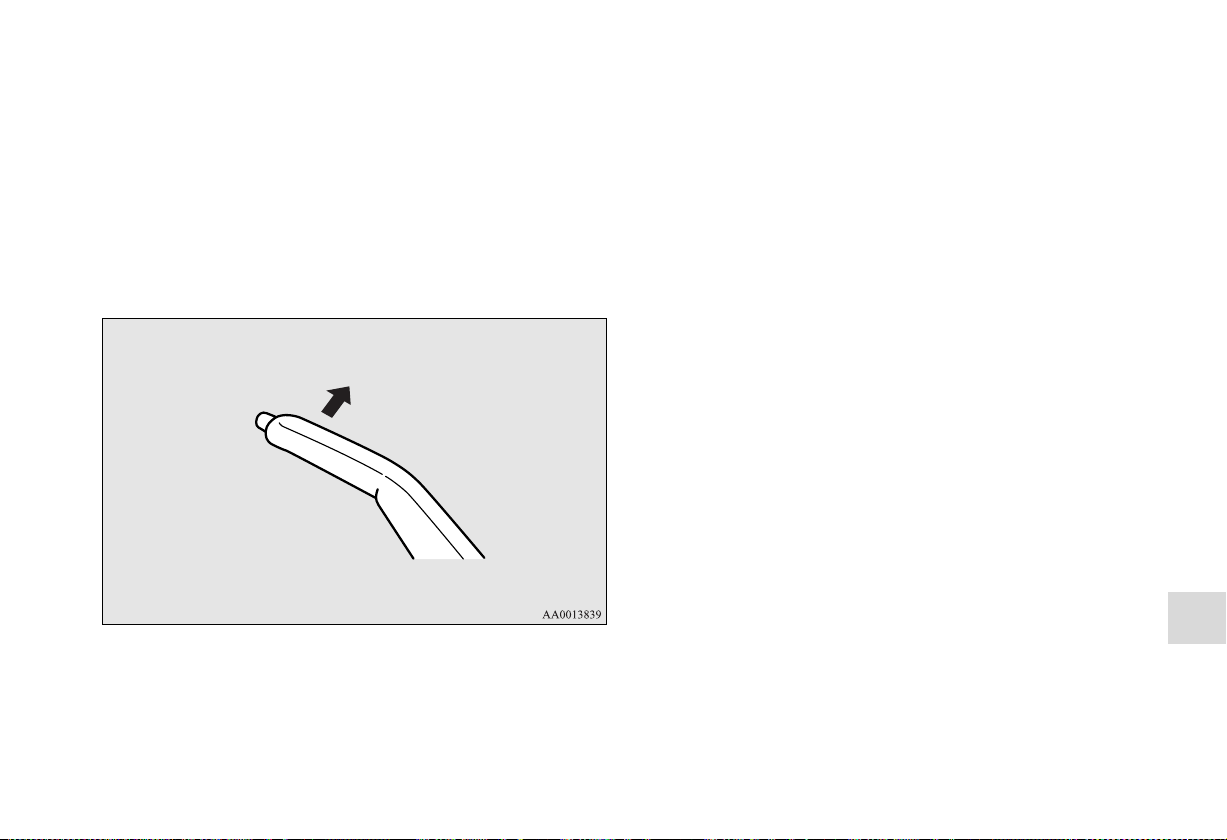
Vehicle care and maintenance
7-39
7
Parking brake lever stroke
N00940400180
Check the parking brake lever travel occasionally. To check
this, pull the lever up slowly and count the number of clicks of
the ratchet.
Parking brake lever stroke:
3 to 5 notches
Also check to see if the lever stays gripped by the ratchet after
pulling.
Parking brake break-in
N00936200031
Break-in the parking brake linings whenever the brake perfor-
mance of the parking brake is insufficient or whenever the
parking brake linings and/or discs are replaced, in order to
assure the best brake performance.
This procedure is described in the vehicle service manual and
can be carried out by an authorized Mitsubishi Motors dealer.
BK0138600US.book 39 ページ 2011年7月17日 日曜日 午後2時32分

7-40
Vehicle care and maintenance
7
Wiper blades
N00940700170
Check the wiper blades occasionally. Clean them regularly to
remove deposits of salt and road film. Use a sponge or cloth
and a mild detergent or non-abrasive cleaner to clean the blades
and glass areas.
Replace the blades if they continue to streak or smear.
N
OTE
● Do not run the wipers on dry glass for a long time. This
wears out the rubber and can scratch the glass.
During cold weather
If the blades are frozen to the windshield or rear window, do
not operate the wipers until the ice has melted and the blades
are freed, otherwise the wiper motor may be damaged.
Emission-control system maintenance
N00940800201
Your vehicle is equipped with an emission-control system that
meets all the requirements of the U.S. Environmental Protec-
tion Agency and Environment Canada. The emission-control
system is made of:
● a positive crankcase ventilation system
● an evaporative emission-control system
● an exhaust emission-control system
The maintenance services listed in the “WARRANTY AND
MAINTENANCE MANUAL” must be performed at the times
or mileages listed to keep the emission-control system working
properly. These, and all the other “general” maintenance ser-
vices listed in this manual, need to be performed to keep your
vehicle running properly and reliably.
You may need more frequent maintenance if you drive your
vehicle in harsh conditions such as dusty areas or do a lot of
start-and-stop driving.
To be sure the emission-control system works properly, have
your vehicle inspected and maintained by an authorized
Mitsubishi Motors dealer or a repair facility of your choice fol-
lowing the schedule in the “WARRANTY AND MAINTE-
NANCE MANUAL”.
You should also have an inspection and service any time you
suspect a malfunction.
BK0138600US.book 40 ページ 2011年7月17日 日曜日 午後2時32分

Vehicle care and maintenance
7-41
7
N
OTE
● To meet government regulations and promote cleaner air,
your vehicle is equipped with an onboard diagnostic sys-
tem (OBD). The engine electronic control module that
controls OBD functions stores various data (especially
about the exhaust emissions). This data will be erased if
the battery cable is disconnected, which could make a
rapid diagnosis difficult. Do not disconnect the battery
cable when the engine malfunction indicator (“SERVICE
ENGINE SOON” or “Check engine light”) is on.
Spark plugs
N00940900215
Spark plugs must fire properly for good engine performance
and emission-control.
Do not reuse them by cleaning or regapping. Change them at
the mileage listed in the “WARRANTY AND MAINTE-
NANCE MANUAL”.
N
OTE
● Use the spark plugs listed under “Engine specifications”
on page 9-8 or plugs that are exactly the same. Other
plugs could cause engine damage, performance problems
or radio noise.
BK0138600US.book 41 ページ 2011年7月17日 日曜日 午後2時32分
7-42
Vehicle care and maintenance
7
Fuel hoses
N00941000037
Check the hose surfaces for any heat and mechanical damage,
hard and brittle rubber, cracking, tears, cuts and abrasions. Pay
special attention to the hoses closest to high heat sources such
as the exhaust manifold. Check all the hose connections, such
as clamps and couplings, to make sure they are secure and that
there are no leaks. If you see any wear or damage, replace the
hoses immediately.
Intake valve clearance
N00950100050
Have the valve clearance checked at an authorized Mitsubishi
Motors dealer at the mileage specified in the “WARRANTY
AND MAINTENANCE MANUAL”.
If the engine sounds abnormally loud, have adjustments made
by an authorized Mitsubishi Motors dealer.
Fuel system (tank, pipe line and connection, and
fuel tank filler cap)
N00941300085
Check these regularly for damage or leaks in the fuel lines and
connections. Check the fuel tank filler cap for damage or loose-
ness. Pay special attention to the fuel lines closest to high heat
sources such as the exhaust manifold.
Evaporative emission control system (except
evaporative emission canister)
N00941400116
If the fuel-vapor vent line is clogged or damaged, the fuel-
vapor mixture will escape, polluting the air.
Have the system checked at an authorized Mitsubishi Motors
dealer at the mileage specified in the “WARRANTY AND
MAINTENANCE MANUAL”.
WARNING
!
● If you see a fuel leak or if you smell fuel, do not run
the engine. Any spark (including from the ignition),
flame or smoking material could cause an explosion
or fire. Call an authorized Mitsubishi Motors dealer
or a repair facility of your choice for assistance.
BK0138600US.book 42 ページ 2011年7月17日 日曜日 午後2時32分

Vehicle care and maintenance
7-43
7
General maintenance
N00941500159
The next pages list the maintenance service recommended by
Mitsubishi Motors Corporation. In addition to the general
maintenance that needs to be performed at the times listed,
there are other parts which do not usually need regular mainte-
nance.
But, if any of these parts stops working properly, your vehicle
performance could suffer. Have these items checked if you
notice a problem with them.
See your authorized Mitsubishi Motors dealer for assistance, if
you have any questions.
Disc brake pads, rear drum brake linings and
rear wheel cylinders
N00941600033
Good brakes are essential to safe driving. Check the brake pads
and brake linings for wear and check the rear wheel cylinders
for leaks. For good braking performance, replace the brake
pads with the same type pads as the originals.
Brake hoses
N00941700047
Brake hoses and tubing should be checked for:
● Severe surface cracking, scuffing or worn spots. If the
fabric casing of the hose is showing through any cracks or
worn spots in the rubber hose cover, the hose should be
replaced. The brakes can fail if the hose wears through.
● Improper installation may cause twisting, or wheel, tire or
chassis interference.
Ball joint, steering linkage seals and drive shaft
boots
N00941800077
Check the following parts for damage and grease leaks:
● Ball joint boots of the front suspension and steering link-
age
● Bellows on both ends of the drive shaft
BK0138600US.book 43 ページ 2011年7月17日 日曜日 午後2時32分
7-44
Vehicle care and maintenance
7
Exhaust system
N00942200108
The best way to keep carbon monoxide gas from entering
inside your vehicle is to have the engine exhaust system prop-
erly serviced.
Have a competent mechanic inspect the complete exhaust sys-
tem and nearby body areas for broken, damaged, deteriorated,
or mispositioned parts if you notice any of the following:
● A change in the sound of the exhaust system
● The smell of exhaust fumes inside the vehicle
● The underside or rear of the vehicle is damaged
Also check the exhaust system each time the vehicle is raised
for lubrication, oil changes, or required service. Any open
seams or loose connections could let dangerous exhaust fumes
seep into the luggage compartment and passenger compart-
ments.
Check for any of the following conditions:
● Check for holes or exhaust gas leaks caused by corrosion
or damage.
● Check the joints and connections for looseness or exhaust
gas leaks.
● Check the rubber hangers and brackets for damage.
Hood lock release mechanism and safety catch
N00942500114
The hood lock release mechanism and hood safety catch should
be checked, cleaned, and oiled when needed for easy move-
ment and to stop rust and wear. Use Multipurpose Grease
NLGI Grade 2 sparingly for all sliding parts of the hood latch
and release lever. Work the grease into the hood lock mecha-
nism until all the movable surfaces are covered.
Also, put a light coat of the same grease on the safety catch
wherever moving parts touch.
WARNING
!
● Carbon monoxide gas from your vehicle’s exhaust is
poisonous. Breathing these fumes can cause uncon-
sciousness or death.
BK0138600US.book 44 ページ 2011年7月17日 日曜日 午後2時32分

Vehicle care and maintenance
7-45
7
For cold and snowy weather
N00942600102
Ventilation slots
The ventilation slots in front of the windshield should be
brushed clear after a heavy snowfall so that the operation of the
heating and ventilation systems will not be impaired.
Weatherstripping
To prevent freezing of the weatherstripping on the doors,
engine hood, etc., they should be treated with silicone grease.
Additional equipment (For regions where snow is
encountered)
It is a good idea to carry a shovel or a short-handled spade in
the vehicle during the winter so that you can clear away snow
if you get stranded. A small hand-brush for sweeping snow off
the vehicle and a plastic scraper for the windshield, side and
rear window are also useful.
Fusible links
N00942700259
The fusible links will melt to prevent a fire if a large current
attempts to flow through certain electrical systems.
In case of a melted fusible link, see your authorized Mitsubishi
Motors dealer or a repair facility of your choice for inspection
and replacement.
For the fusible links, please refer to “Fuse load capacities” on
page 7-48.
WARNING
!
● Fusible links must not be replaced by any other
device. Failing to fit the correct fusible link may
result in fire in the vehicle, property destruction and
serious or fatal injuries at any time.
BK0138600US.book 45 ページ 2011年7月17日 日曜日 午後2時32分
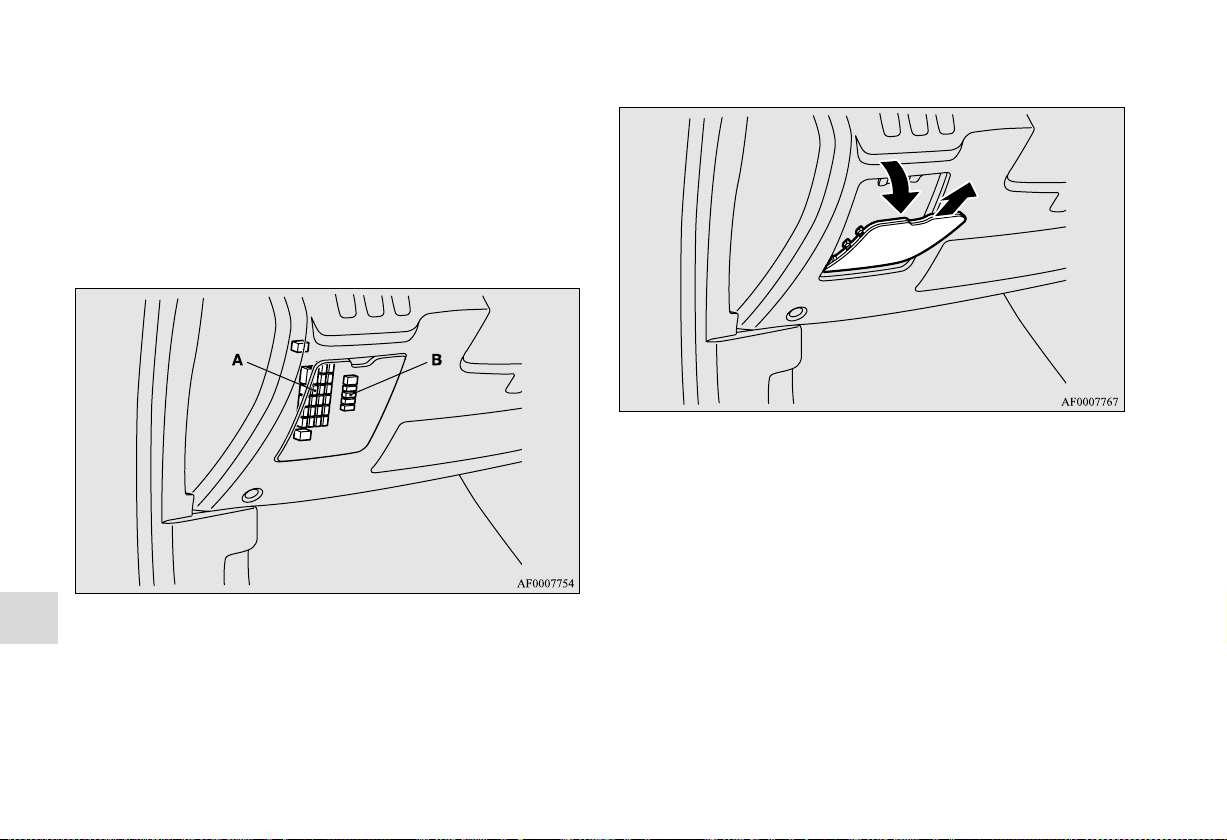
7-46
Vehicle care and maintenance
7
Fuses
N00942800801
Fuse block location
To prevent damage to the electrical system from short-circuit-
ing or overloading, each individual circuit is equipped with a
fuse. The fuse blocks are located in the passenger compartment
and in the engine compartment.
Passenger compartment
The fuse blocks in the passenger compartment are located
behind the fuse lid on the driver’s side as shown.
1. Open the fuse lid and pull to remove it.
A- Main fuse block
B- Sub fuse block
BK0138600US.book 46 ページ 2011年7月17日 日曜日 午後2時32分
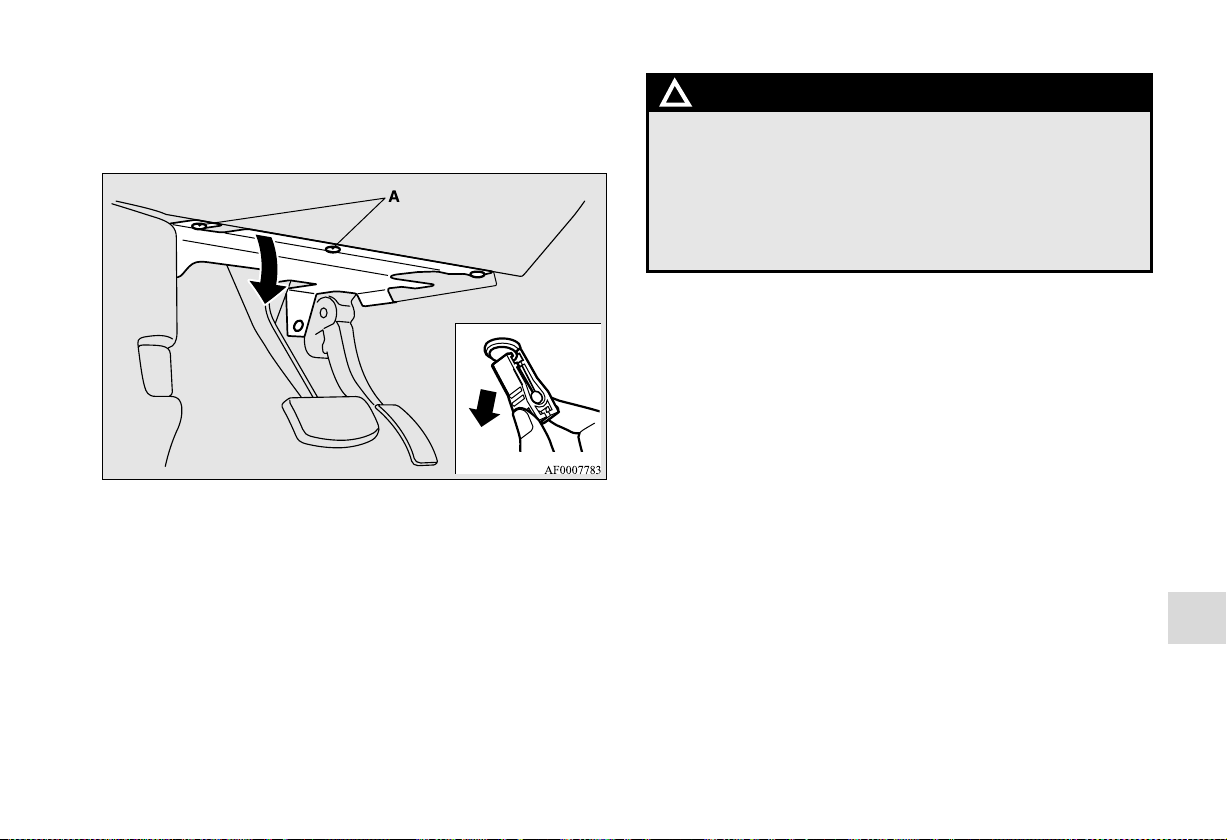
Vehicle care and maintenance
7-47
7
2. For vehicles with the bottom cover, use the puller to
loosen the 2 clips (A) and push down the bottom cover.
The puller is in the fuse block in the engine compartment.
Refer to “Fuse replacement” on page 7-53.
N
OTE
● When finished, be sure to return the puller to the fuse
block in the engine compartment.
WARNING
!
● When changing fuses, do not damage the driver’s
knee airbag harness or accidentally strike the airbag
area with hard objects. Improper work methods
could result in an accidental driver’s knee airbag
deployment or could make the driver’s knee airbag
inoperable. Either of these situations could result in
serious injury or death.
BK0138600US.book 47 ページ 2011年7月17日 日曜日 午後2時32分
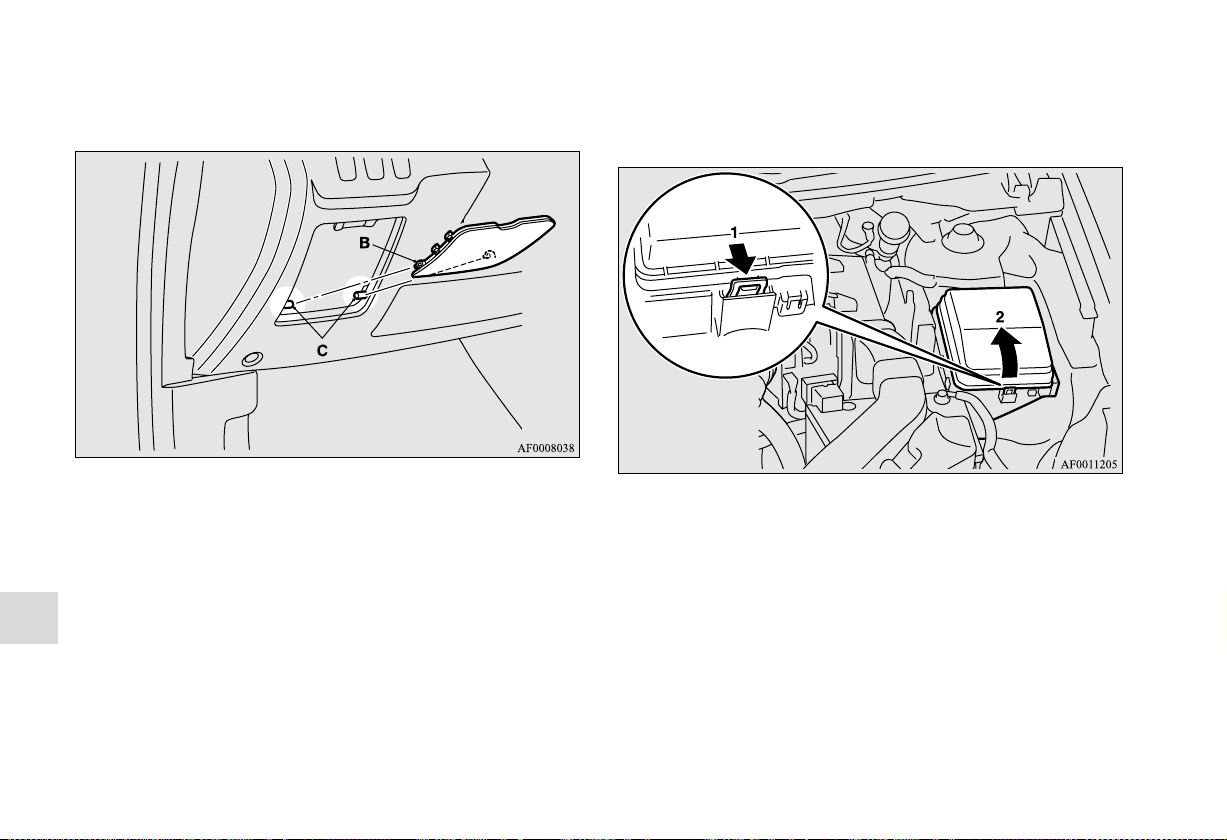
7-48
Vehicle care and maintenance
7
3. To put back the fuse lid, line up the fuse lid hook (B) with
the clamp (C) on the instrument panel and push the lid
back in.
Engine compartment
In the engine compartment, the fuse block is located as shown
in the illustration.
1. Push the lock lever.
2. Remove the fuse block cover.
Fuse load capacities
N00954800202
This fuse list shows the names of the electrical systems and
their fuse capacities.
There are spare fuses in the cover of the fuse block in the
engine compartment. Always replace a blown fuse with one of
the same capacity as the original.
BK0138600US.book 48 ページ 2011年7月17日 日曜日 午後2時32分

Vehicle care and maintenance
7-49
7
Passenger compartment fuse location table
Passenger compartment fuse location
Sub fuse block
Main fuse block
No. Symbol Electrical system Capacity
1 Heater 30 A*
2
Stop lights
(Brake lights)
15 A
3 Rear fog light 10 A
4 Windshield wiper 30 A
5 Optional 10 A
6Door locks20 A
7Radio15 A
8 Control unit relay 7.5 A
9
Interior lights
(Dome lights)
15 A
10 Hazard warning flasher 15 A
11 Rear window wiper 15 A
12 Gauges 7.5 A
13
Cigarette lighter/Accessory
socket
15 A
14 Ignition switch 10 A
15 Sunroof 20 A
16 Outside rearview mirrors 10 A
17 All-wheel drive system 10 A
18 Back-up lights 7.5 A
BK0138600US.book 49 ページ 2011年7月17日 日曜日 午後2時32分

7-50
Vehicle care and maintenance
7
*- Fusible link
● Some fuses may not be installed on your vehicle, depend-
ing on the vehicle model or specifications.
● The table above shows the main equipment corresponding
to each fuse.
Engine compartment fuse location table
19 Accessory socket 15 A
20 Power window control 30 A*
21 Defogger 30 A*
22
Heated
outside rearview mirrors
7.5 A
23 115V Power outlet 15 A
24 Power seats 25 (20) A
25 Heated seats 30 A
No. Symbol Electrical system Capacity
*- Front of the vehicle
Engine compartment fuse location
Behind the fuse block cover
*
*
BK0138600US.book 50 ページ 2011年7月17日 日曜日 午後2時32分
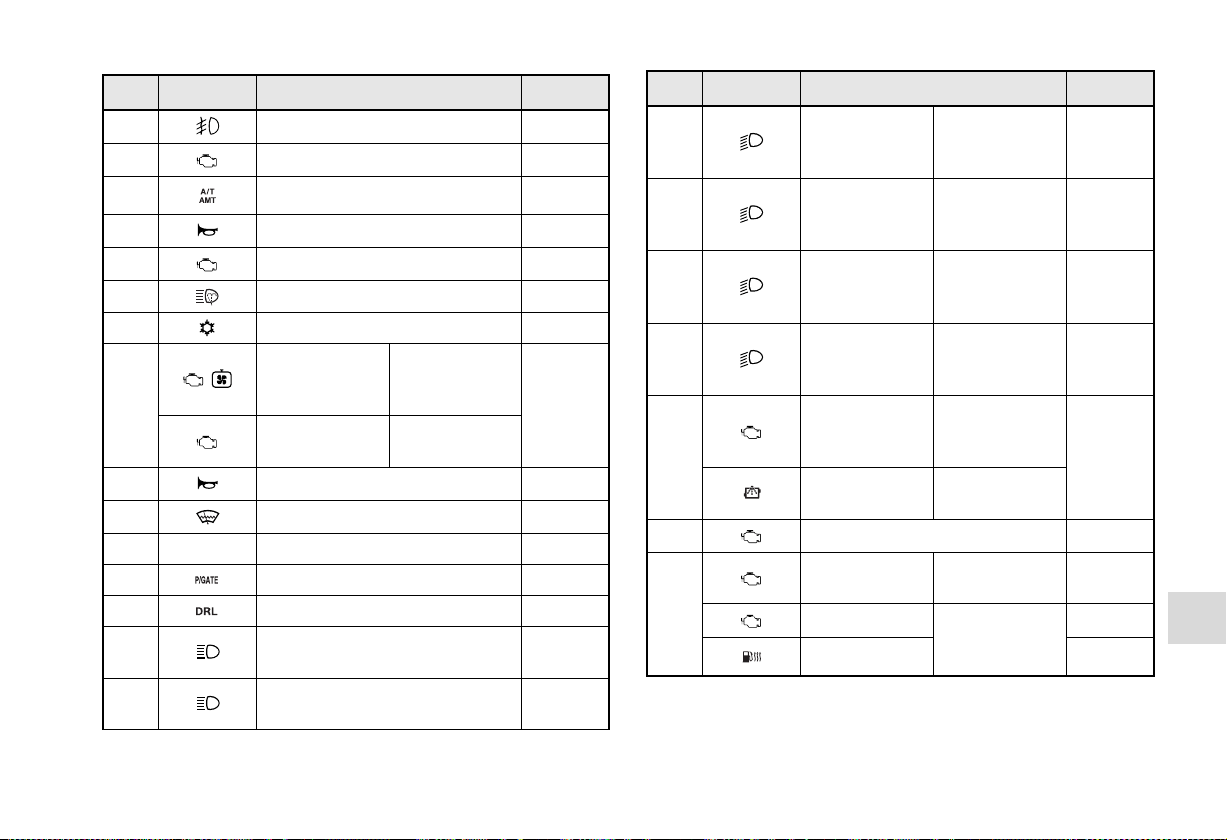
Vehicle care and maintenance
7-51
7
No. Symbol Electrical system Capacity
1 Front fog lights 15 A
2Engine7.5 A
3 Automatic transaxle 20 A
4 Horn 10 A
5 Alternator 7.5 A
6 Headlight washer 20 A
7 Air conditioning 10 A
8
/
ETV/Oil cooler
fan (Twin
Clutch SST)
Except for
vehicles with
turbocharger
15 A
ETV
Vehicles with
turbocharger
9 Security horn 20 A
10 Wiper deicer 15 A
11 — — —
12 Power gate 30 A
13 Daytime running lights 10 A
14
Headlight
(high beam) (left)
10 A
15
Headlight
(high beam) (right)
10 A
16
Headlight
(low/high
beam) (left)
Discharge 20 A
17
Headlight
(low/high
beam) (right)
Discharge 20 A
18
Headlight
(low beam)
(left)
Halogen 10 A
19
Headlight
(low beam)
(right)
Halogen 10 A
20
ENG/POWER
Except for
vehicles with
turbocharger
10 A
I/C SPRAY
Vehicles with
turbocharger
21 Ignition coil 10 A
22
ENG/POWER
Vehicles with
turbocharger
20 A
ENG/POWER
Except for
vehicles with
turbocharger
20 A
Fuel line heater 25 A
No. Symbol Electrical system Capacity
BK0138600US.book 51 ページ 2011年7月17日 日曜日 午後2時32分
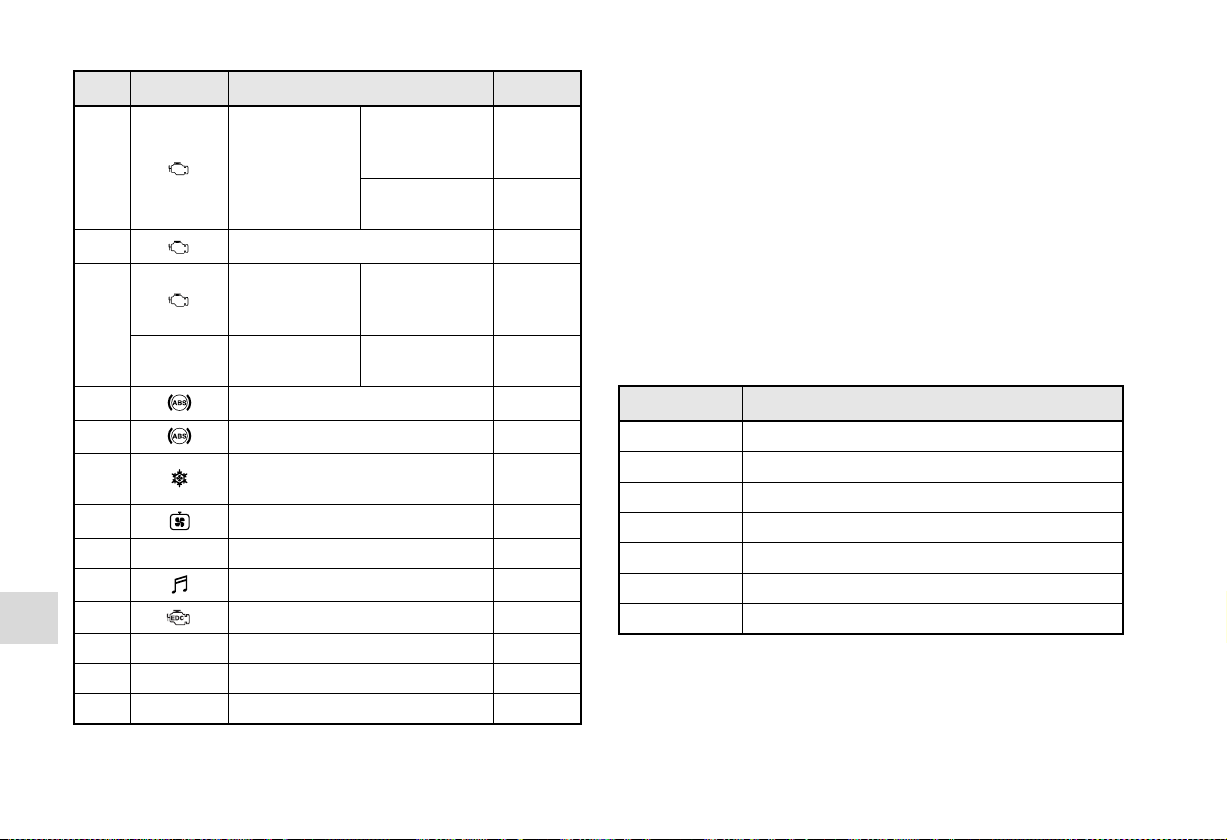
7-52
Vehicle care and maintenance
7
*- Fusible link
● Some fuses may not be installed on your vehicle, depend-
ing on the vehicle model or specifications.
● The table above shows the main equipment corresponding
to each fuse.
There are no 7.5 A, 25 A or 30 A spare fuses. If a fuse of one of
these capacities blows, replace it temporarily by borrowing one
of the fuses indicated below.
7.5 A: 10 A spare fuse
25 A: 20 A spare fuse
30 A: 30 A audio amplifier fuse
Replace the borrowed fuse with a fuse that has the correct
capacity as soon as possible.
Identification of fuse
23 Fuel pump
Except for
vehicles with
turbocharger
15 A
Vehicles with
turbocharger
20 A
24 Starter 30 A*
25
Valve lift con-
trol
Except for
vehicles with
turbocharger
40 A
——
Vehicles with
turbocharger
—
26 Anti-lock braking system 40 A*
27 Anti-lock braking system 30 A*
28
Air conditioning condenser fan
motor
30 A*
29 Radiator fan motor 40 A*
30 IOD IOD 30 A
31 Audio amplifier 30 A
32 Diesel 30 A
33 — Spare fuse 10 A
34 — Spare fuse 15 A
35 — Spare fuse 20 A
No. Symbol Electrical system Capacity
Capacity Color
7.5 A Brown
10 A Red
15 A Blue
20 A Yellow
25 A Natural (White)
30 A Green (fuse type)/Pink (fusible link type)
40 A Green
BK0138600US.book 52 ページ 2011年7月17日 日曜日 午後2時32分
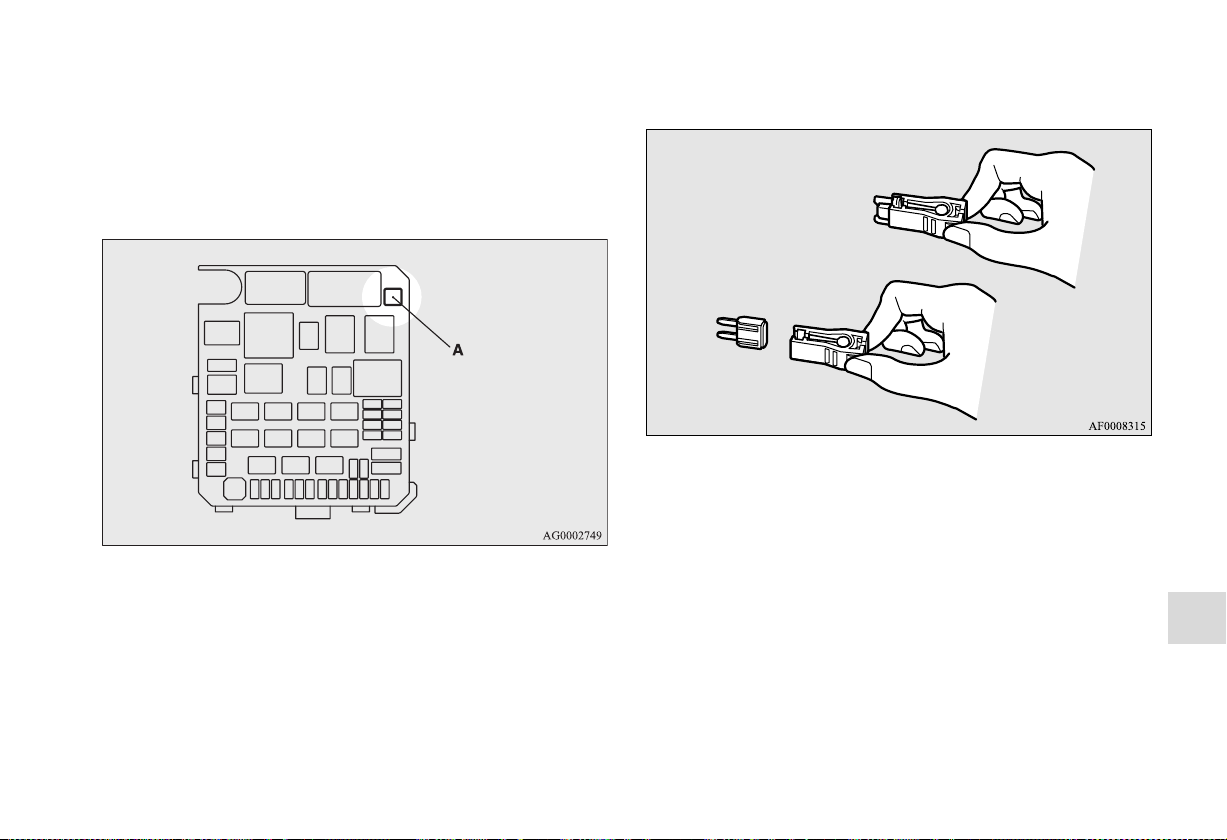
Vehicle care and maintenance
7-53
7
Fuse replacement
N00954900027
1. Before replacing a fuse, always turn off the electrical item
connected to the fuse and turn the ignition switch to the
“LOCK” position.
2. There is a fuse puller (A) in the engine compartment fuse
block.
3. Clamp it on the fuse you wish to remove, and pull the fuse
straight out from the fuse block.
BK0138600US.book 53 ページ 2011年7月17日 日曜日 午後2時32分
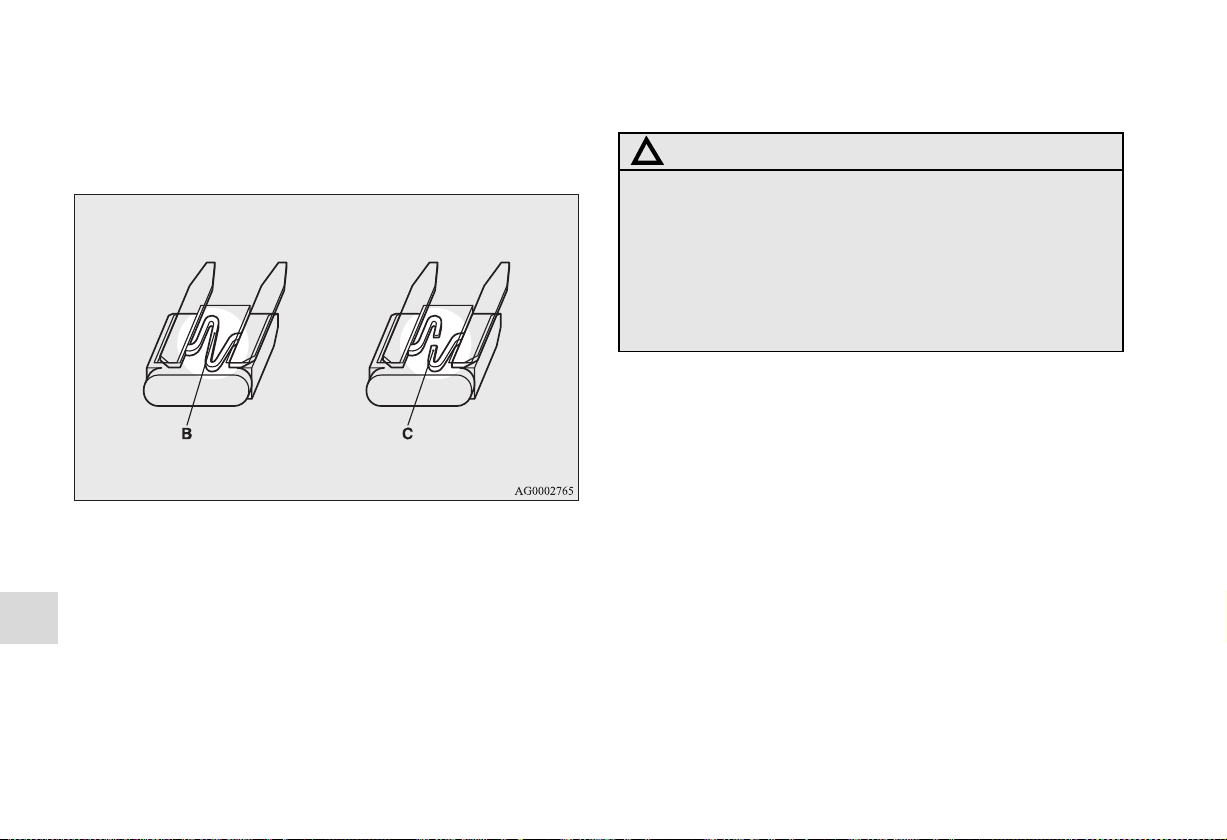
7-54
Vehicle care and maintenance
7
4. Use the fuse location diagrams and the matching tables, to
check the fuse that is related to the problem. If the fuse is
not blown, something else must be causing the problem.
Contact an authorized Mitsubishi Motors dealer or a
repair facility of your choice to have the problem checked.
5. Insert a new fuse of the same capacity securely into the
appropriate slot.
B- Fuse is OK
C- Blown fuse
CAUTION
!
● Never use a fuse with a capacity greater than the one
listed or any substitute, such as wire, foil etc. This
would cause the circuit wiring to heat up and could
cause a fire.
● If the replacement fuse blows again after a short
time, have the electrical system checked by an
authorized Mitsubishi Motors dealer or a repair
facility of your choice to find and correct the cause.
BK0138600US.book 54 ページ 2011年7月17日 日曜日 午後2時32分
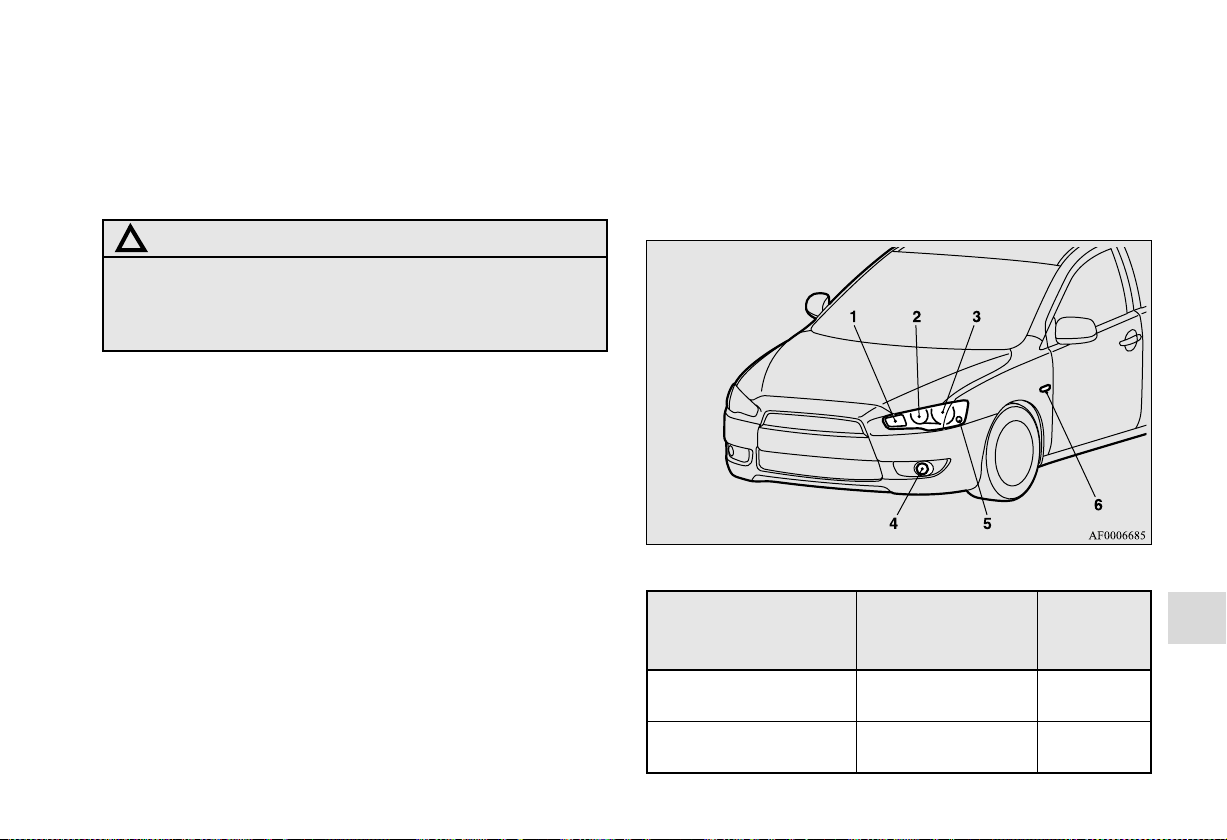
Vehicle care and maintenance
7-55
7
Replacement of light bulbs
N00942900219
Before replacing a bulb, be sure the light is off. Do not touch
the glass part of the new bulb with your bare fingers; the oil
from your skin will stay on the glass and dim or destroy the
bulb when it gets hot.
N
OTE
● If you are unsure of how to carry out the work as required,
it is recommended that these procedures be carried out by
an authorized Mitsubishi Motors dealer or a repair facility
of your choice.
● Be careful not to scratch the vehicle body when removing
a light and lens.
● When it rains, or when the vehicle has been washed, the
inside of the lens sometimes becomes temporarily foggy.
This is the same phenomenon as when window glass mists
up on a humid day, and does not indicate a functional
problem.
When the light is switched on, the heat will remove the
fog. However, if water gathers inside the light, please
have it checked by an authorized Mitsubishi Motors
dealer or a repair facility of your choice.
Bulb capacity
N00943000099
The bulb should only be replaced with a new bulb with the
same rating and type. The type and rating are listed on the base
of the bulb.
Outside
N00950300805
[Except for vehicles with high intensity discharge headlights]
CAUTION
!
● Bulbs are extremely hot immediately after being
turned off.
When replacing a bulb, wait for it to cool sufficiently
before touching it. You could otherwise be burned.
Description Wattage
ANSI Trade
No. or Bulb
type
1-
Front turn signal
light
21 W WY21W
2-
Head light, high
beam
60 W
9005
HB3
Front
BK0138600US.book 55 ページ 2011年7月17日 日曜日 午後2時32分
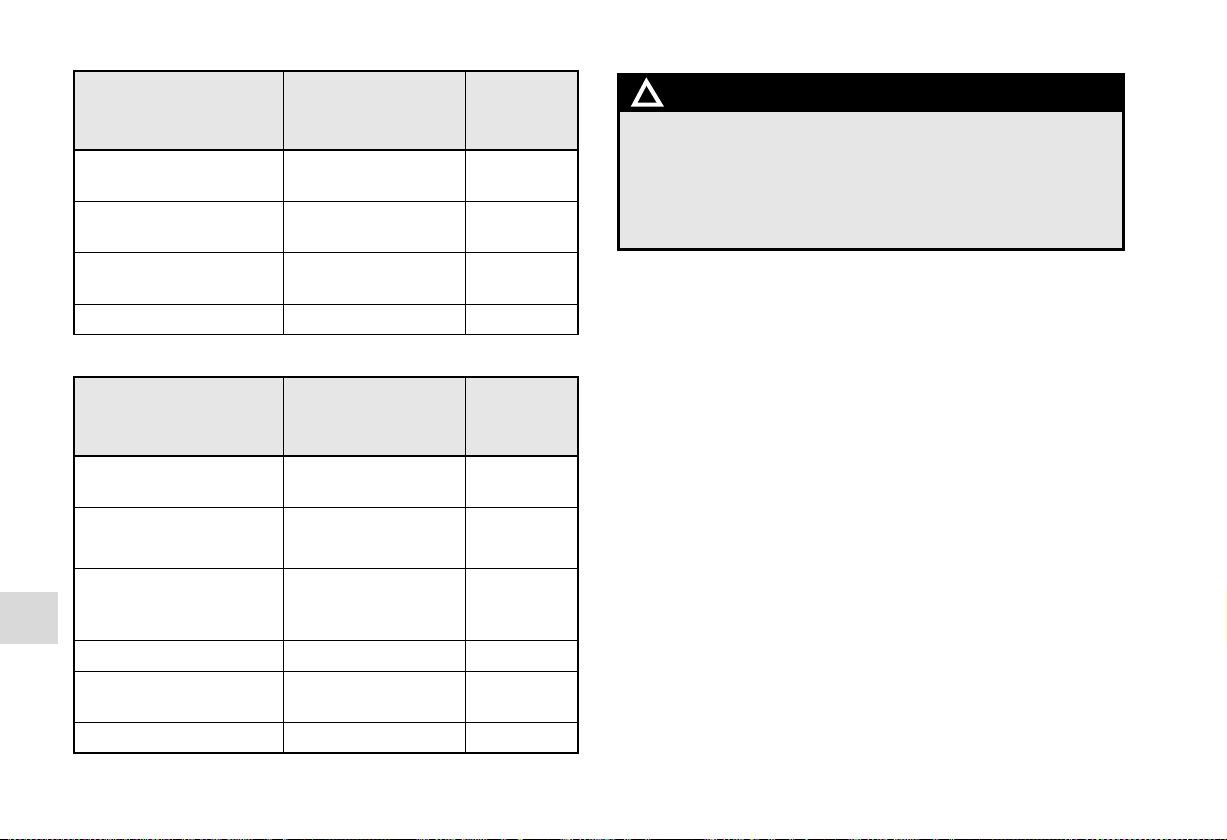
7-56
Vehicle care and maintenance
7
[For vehicles with high intensity discharge headlights]
N
OTE
● It is not possible to repair or replace only the bulb for the
side turn-signal light.
Check with an authorized Mitsubishi Motors dealer or a
repair facility of your choice when the light needs to be
repaired or replaced.
3-
Head light, low beam
(Halogen bulb)
51 W
9006
HB4
4-
Front fog light (if so
equipped)
55 W H11
5-
Front side-marker
and parking light
5 W W5W
6- Side turn signal light 5 W —
Description
Wattage or Candle
power
ANSI Trade
No. or Bulb
type
1-
Front turn signal
light
21 W WY21W
2-
Daytime running
light
27 W
1156
32 cp
3-
Head light, low/high
beam (Discharge
bulb)
35 W —
4- Front fog light 55 W H11
5-
Front side-marker
and parking light
5 W WY5W
6- Side turn signal light 5 W —
Description Wattage
ANSI Trade
No. or Bulb
type
WARNING
!
● Check with an authorized Mitsubishi Motors dealer
or a repair facility of your choice when it is neces-
sary to repair a discharge headlight or to replace the
bulb.
The power circuit, bulb and electrodes generate high
voltages that may cause a severe electrical shock.
BK0138600US.book 56 ページ 2011年7月17日 日曜日 午後2時32分

Vehicle care and maintenance
7-57
7
N
OTE
● The high-mounted stop light uses LEDs rather than bulbs.
For repair and replacement, contact an authorized
Mitsubishi Motors dealer or a repair facility of your
choice.
Description Wattage
ANSI Trade
No. or Bulb
type
7-
High-mounted stop
light
——
8- License plate light 5 W W5W
9- Back-up light 21 W 7440
10- Tail light 5 W W5W
11- Tail and stop light 21/5 W 7443
12-
Rear turn signal
light
21 W 7440
13-
Rear side-marker
light
5 W W5W
Rear
BK0138600US.book 57 ページ 2011年7月17日 日曜日 午後2時32分
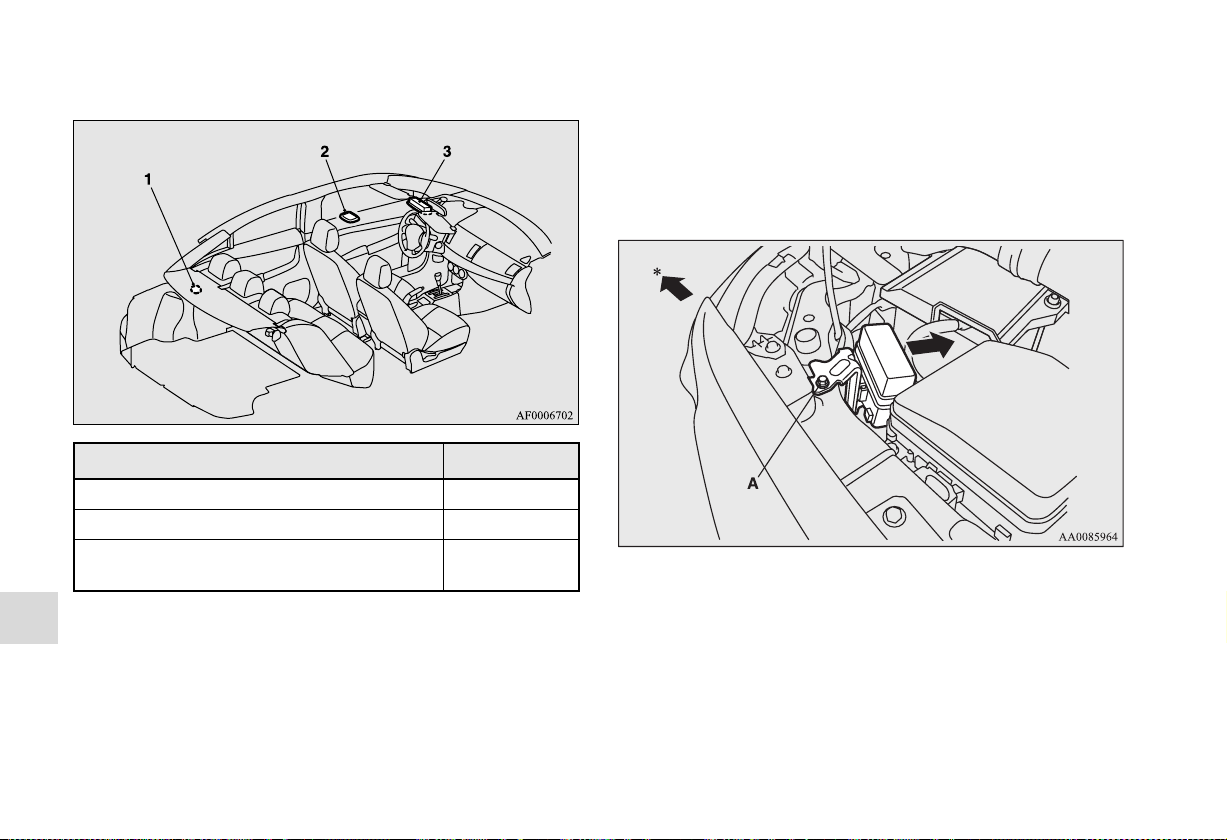
7-58
Vehicle care and maintenance
7
Inside
N00950400460
Headlights (low beam, except for vehicles with
high intensity discharge headlights)
N00943100872
1. For vehicles equipped with turbocharger, when replacing
the bulb on the driver’s side, remove the bolt (A) holding
down the relay box and move the relay box toward the
rear of the vehicle.
Description Wattage
1- Trunk area light 5 W
2- Dome light (rear) (if so equipped) 8 W
3-
Dome light (front)/
Reading light (if so equipped)
8 W
*- Front of the vehicle
BK0138600US.book 58 ページ 2011年7月17日 日曜日 午後2時32分
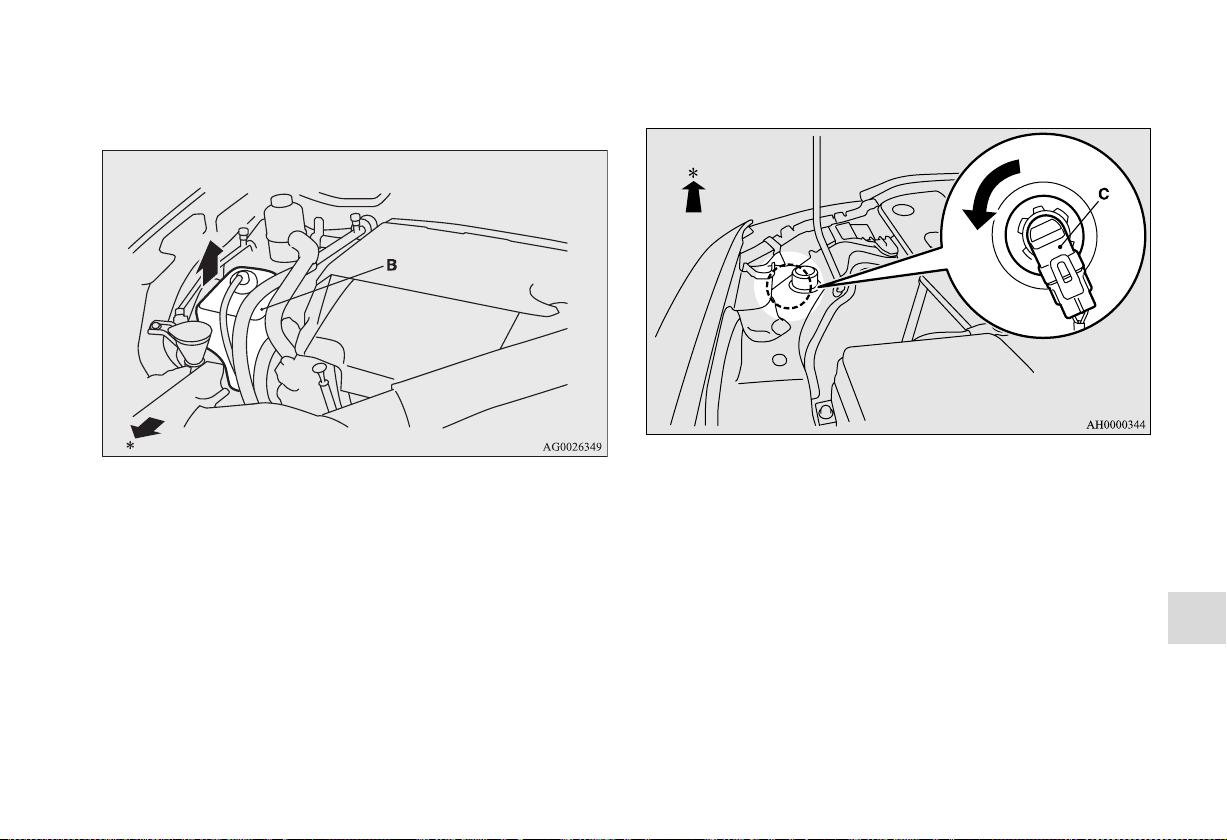
Vehicle care and maintenance
7-59
7
2. For vehicles equipped with turbocharger, when replacing
the bulb on the passenger’s side, lift up the engine coolant
reservoir (B).
3. Turn the bulb (C) counterclockwise, and then remove the
headlight bulb with holder.
*- Front of the vehicle
*- Front of the vehicle
BK0138600US.book 59 ページ 2011年7月17日 日曜日 午後2時32分
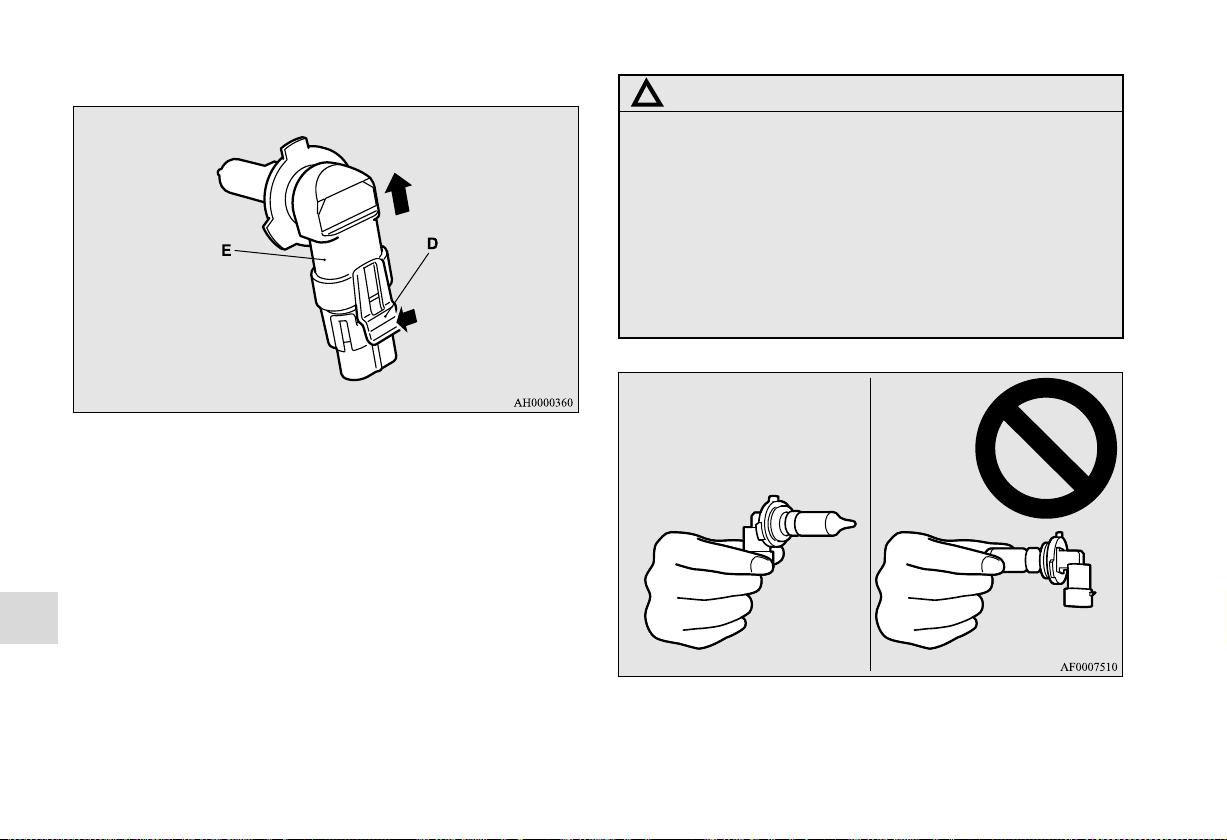
7-60
Vehicle care and maintenance
7
4. While holding down the tab (D), pull out the bulb (E).
5. To install the bulb, perform the removal steps in reverse.
CAUTION
!
● Handle halogen light bulb with care. The gas inside
a halogen light bulb is highly pressurized, so drop-
ping, knocking, or scratching a halogen light bulb
can cause it to shatter.
● Never hold the halogen light bulb with a bare hand,
dirty glove, etc. The oil from your hand could cause
the bulb to break the next time the headlights are
used.
If the glass surface is dirty, clean it with alcohol and
let it dry completely before installing the bulb.
BK0138600US.book 60 ページ 2011年7月17日 日曜日 午後2時32分
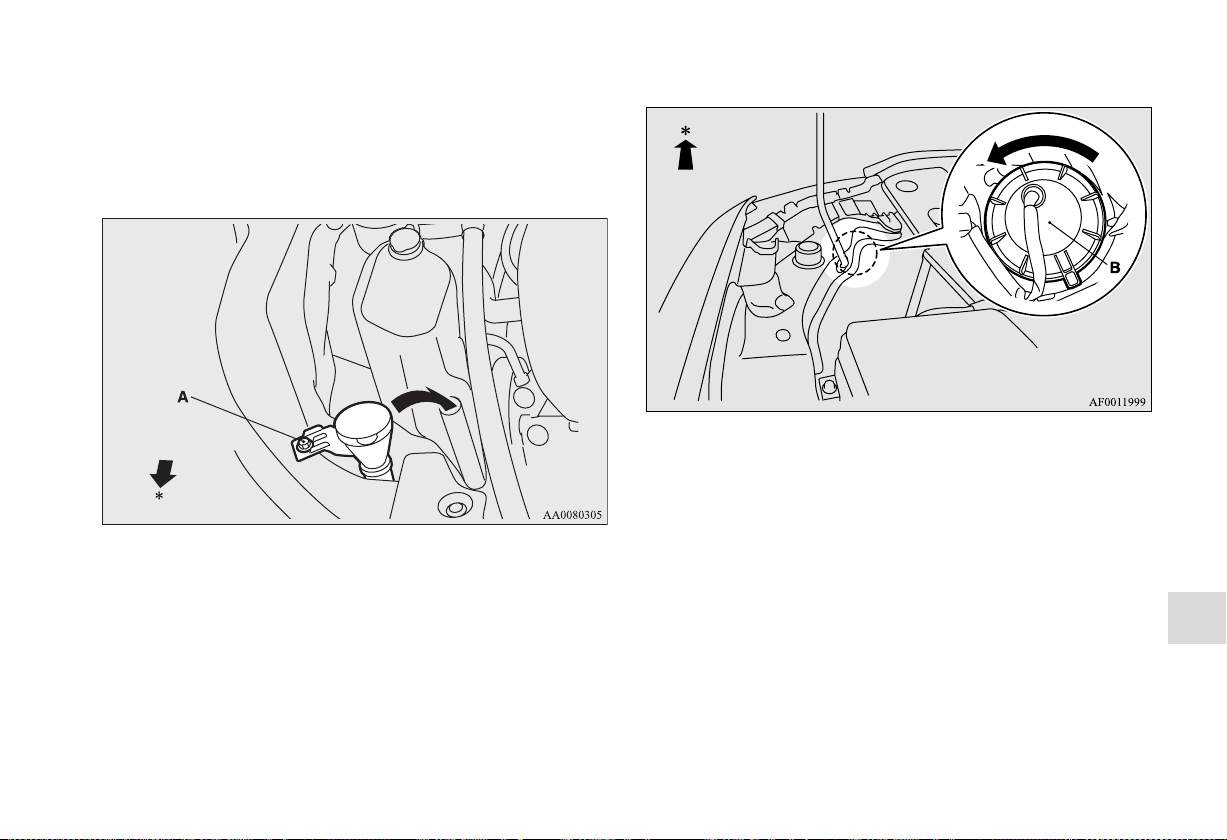
Vehicle care and maintenance
7-61
7
Headlights (high beam, except for vehicles with
high intensity discharge headlights)
N00943100885
1. When replacing the bulb on the front passenger’s side,
remove the bolt (A) holding down the washer tank spout
and move the spout toward the rear of the vehicle.
2. Turn the cap (B) counterclockwise to remove it.
*- Front of the vehicle
*- Front of the vehicle
BK0138600US.book 61 ページ 2011年7月17日 日曜日 午後2時32分
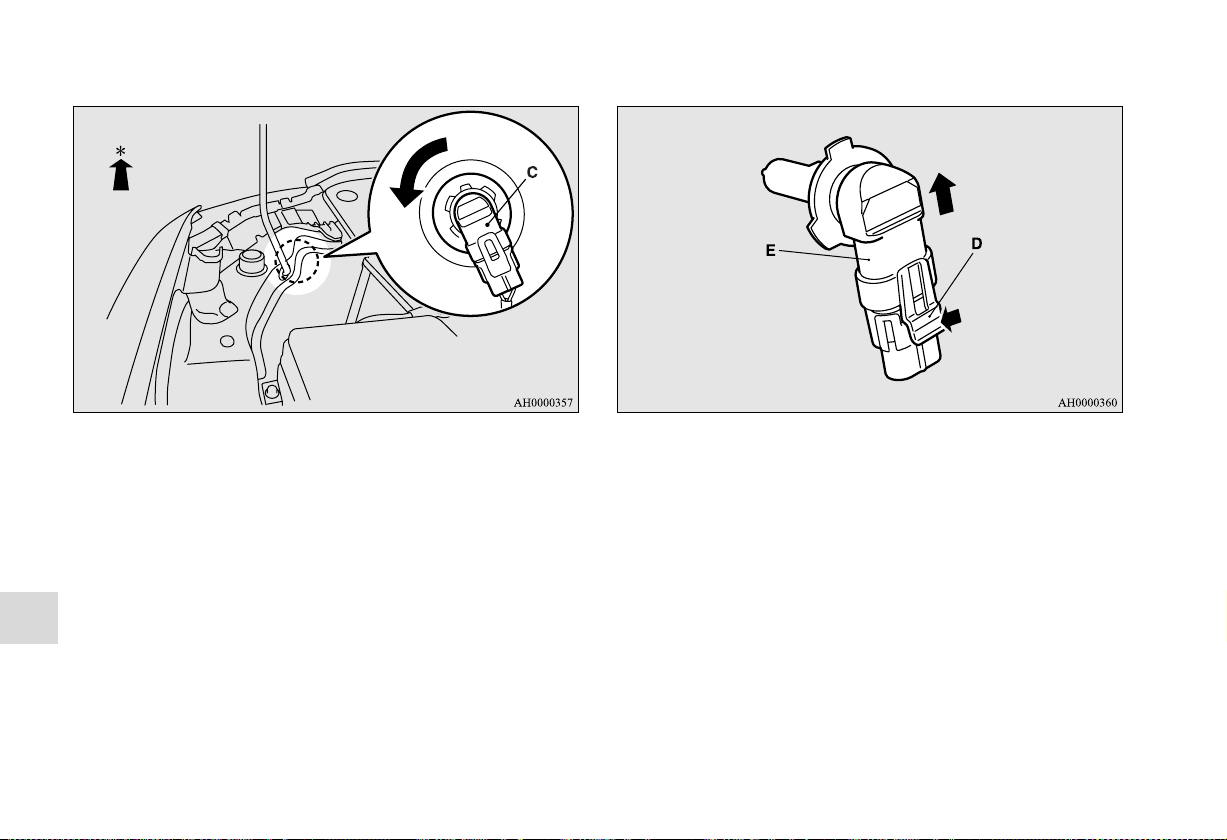
7-62
Vehicle care and maintenance
7
3. Turn the bulb (C) counterclockwise to remove it. 4. While holding down the tab (D), pull out the bulb (E).
5. To install the bulb, perform the removal steps in reverse.
*- Front of the vehicle
BK0138600US.book 62 ページ 2011年7月17日 日曜日 午後2時32分
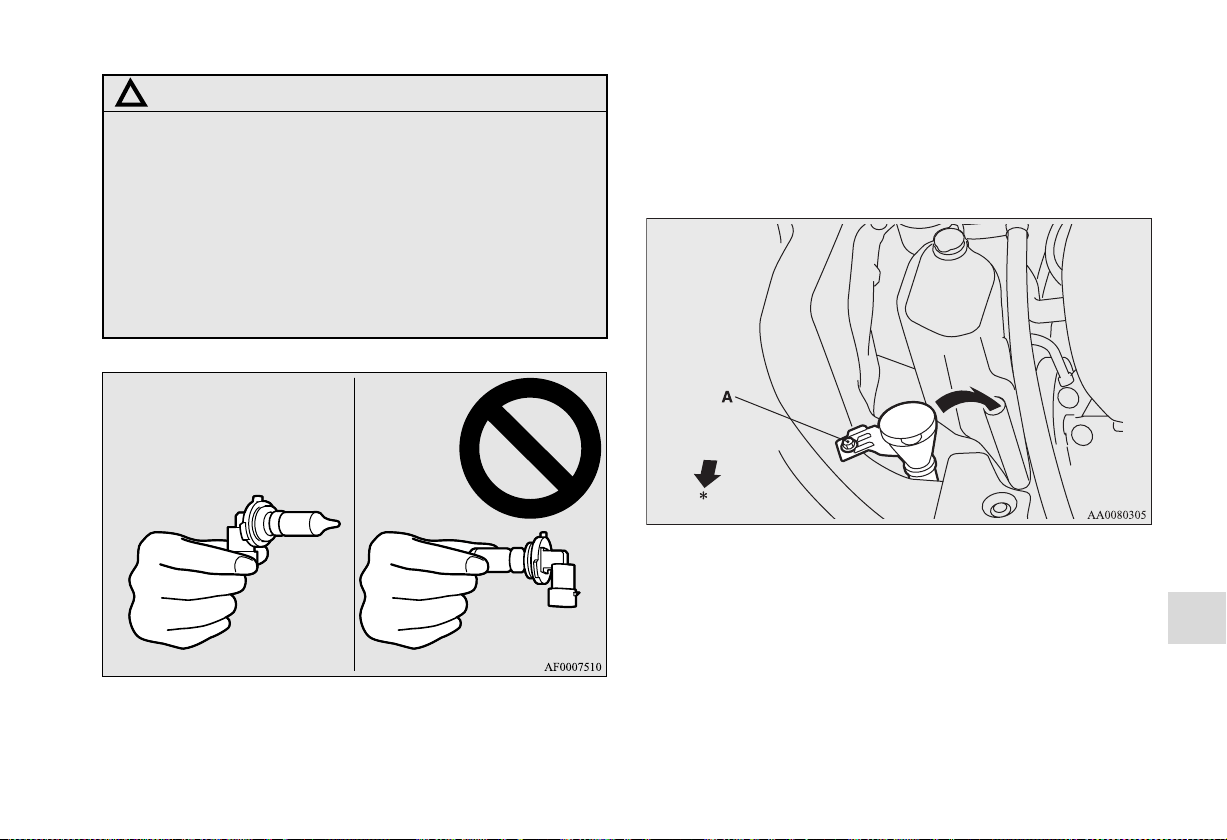
Vehicle care and maintenance
7-63
7
Daytime running lights (for vehicles with high
intensity discharge headlights)
N00900300103
1. When replacing the bulb on the front passenger’s side,
remove the bolt (A) holding down the washer tank spout
and move the spout toward the rear of the vehicle.
CAUTION
!
● Handle halogen light bulb with care. The gas inside
a halogen light bulb is highly pressurized, so drop-
ping, knocking, or scratching a halogen light bulb
can cause it to shatter.
● Never hold the halogen light bulb with a bare hand,
dirty glove, etc.
The oil from your hand could cause the bulb to
break the next time the headlights are used.
If the glass surface is dirty, clean it with alcohol and
let it dry completely before installing the bulb.
*- Front of the vehicle
BK0138600US.book 63 ページ 2011年7月17日 日曜日 午後2時32分
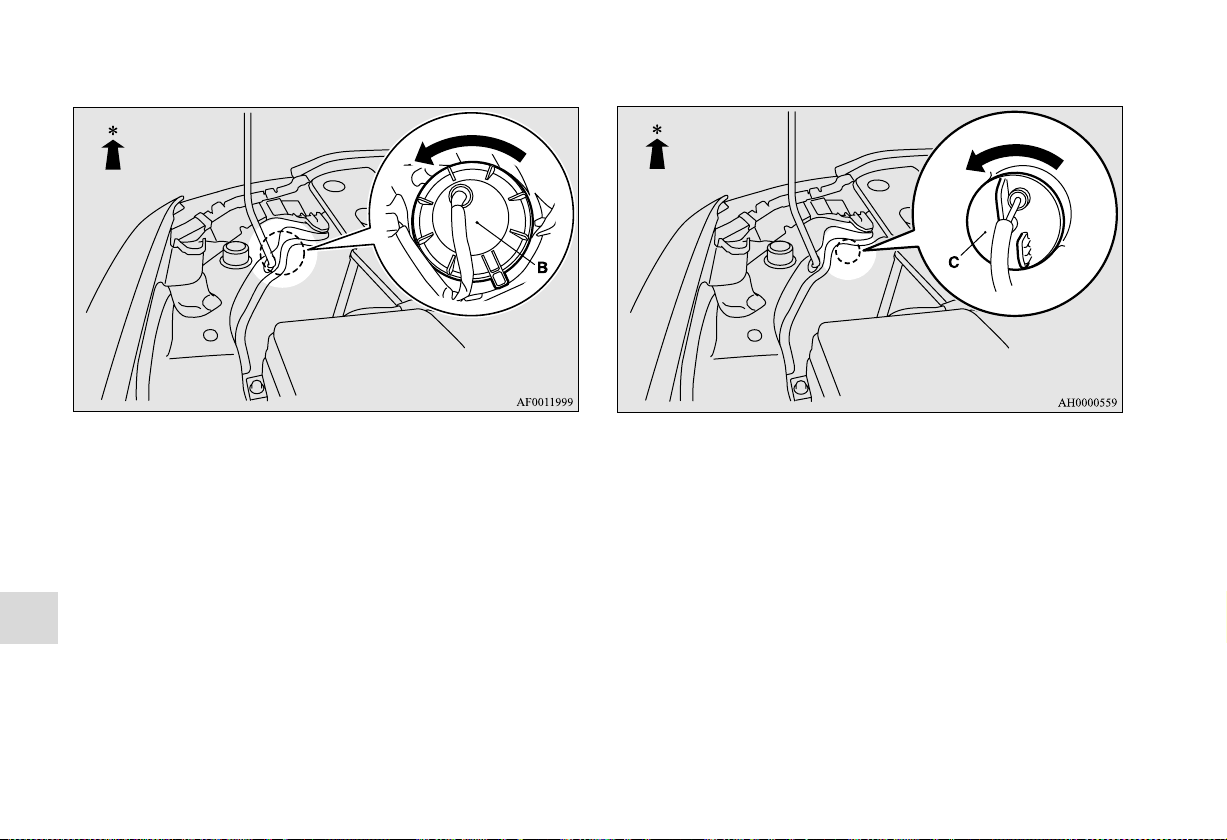
7-64
Vehicle care and maintenance
7
2. Turn the cap (B) counterclockwise to remove it. 3. Turn the socket (C) counterclockwise to remove it.
*- Front of the vehicle *- Front of the vehicle
BK0138600US.book 64 ページ 2011年7月17日 日曜日 午後2時32分
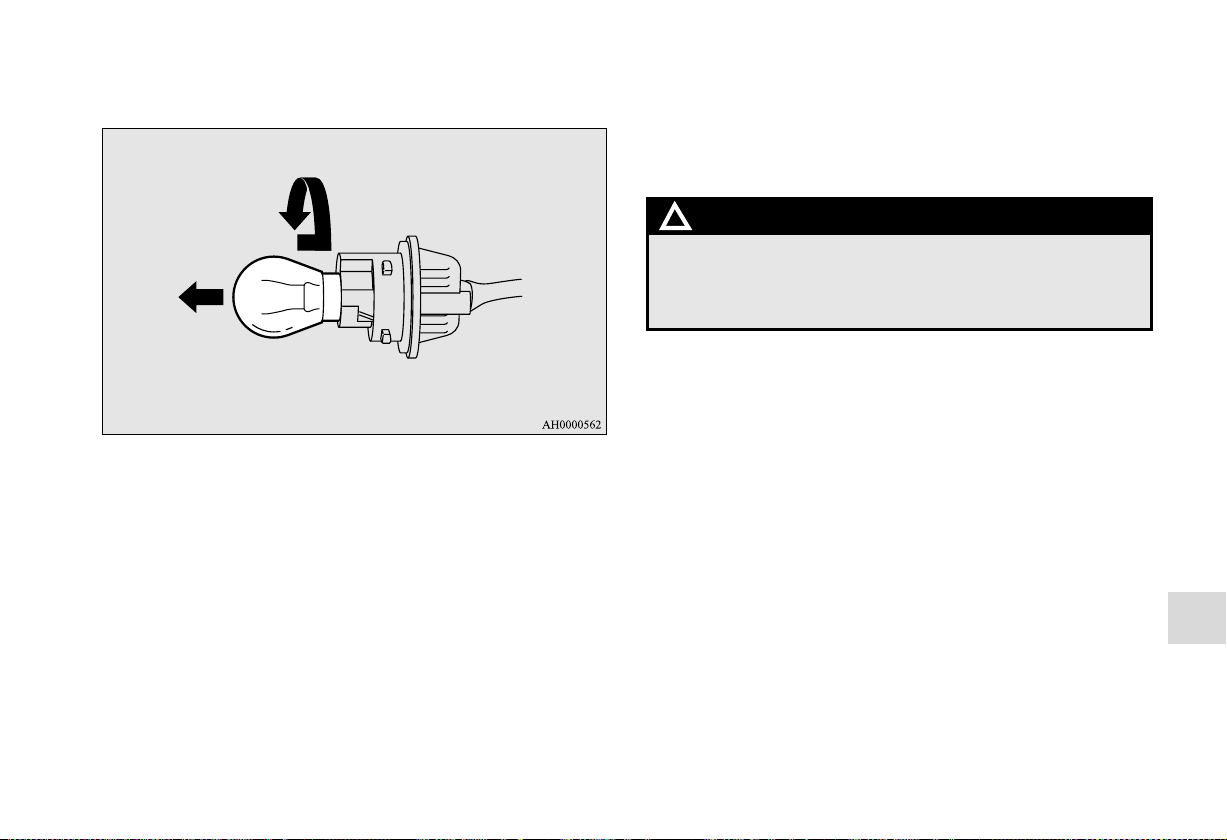
Vehicle care and maintenance
7-65
7
4. Turn the bulb counterclockwise while pressing it and pull
it out of the socket.
5. To install a bulb, perform the removal steps in reverse.
Headlights (low/high beam, for vehicles with high
intensity discharge lights)
N00943100625
Do not attempt to disassemble or repair headlights, and do not
attempt to replace their bulbs.
Adjustment of headlight aim
N00943200121
The alignment of the headlights should be checked by an
authorized Mitsubishi Motors dealer or a repair facility of your
choice.
WARNING
!
● A high voltage is present in the power circuit and in
the bulbs and bulb terminals. To avoid the risk of an
electric shock, contact an authorized Mitsubishi
dealer whenever repair or replacement is necessary.
BK0138600US.book 65 ページ 2011年7月17日 日曜日 午後2時32分
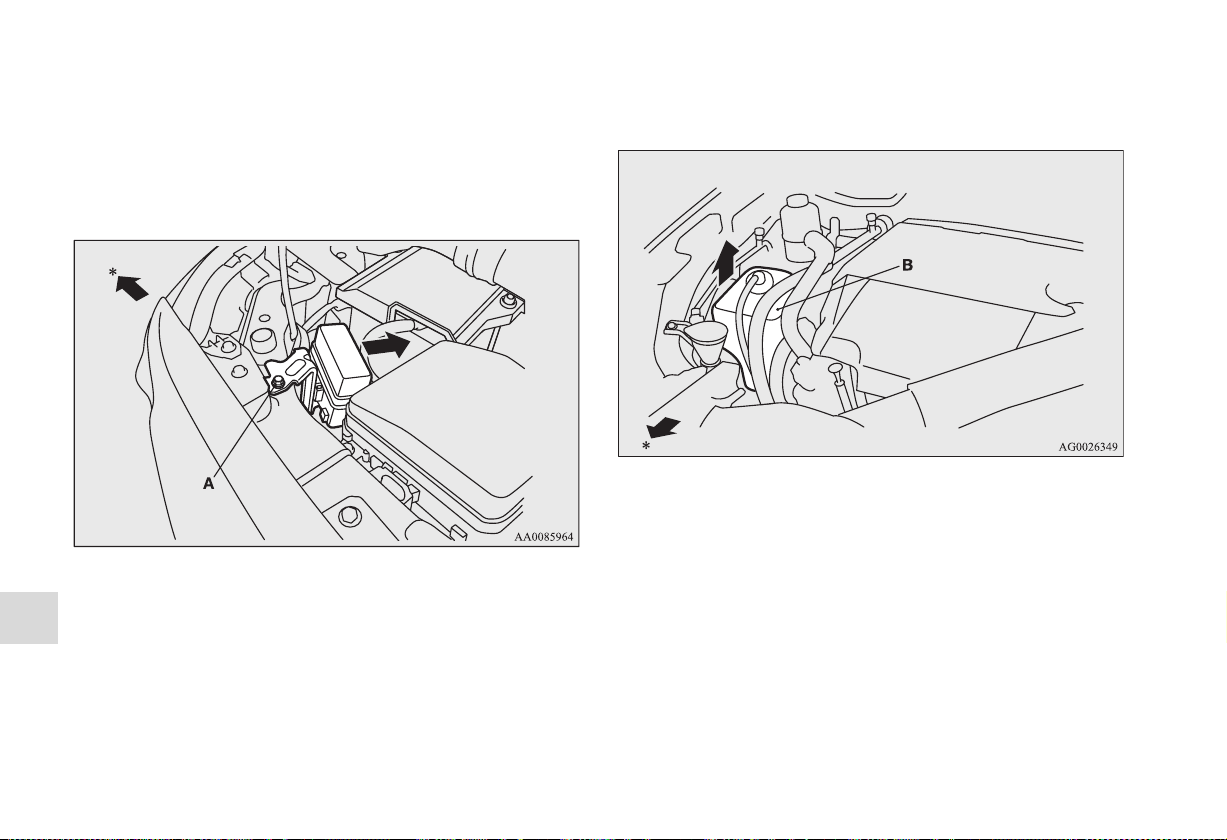
7-66
Vehicle care and maintenance
7
Parking and side-marker lights (except for vehi-
cles with high intensity discharge headlights)
N00917300512
1. For vehicles equipped with turbocharger, when replacing
the bulb on the driver’s side, remove the bolt (A) holding
down the relay box and move the relay box toward the
rear of the vehicle.
2. For vehicles equipped with turbocharger, when replacing
the bulb on the passenger’s side, lift up the engine coolant
reservoir (B).
*- Front of the vehicle
*- Front of the vehicle
BK0138600US.book 66 ページ 2011年7月17日 日曜日 午後2時32分
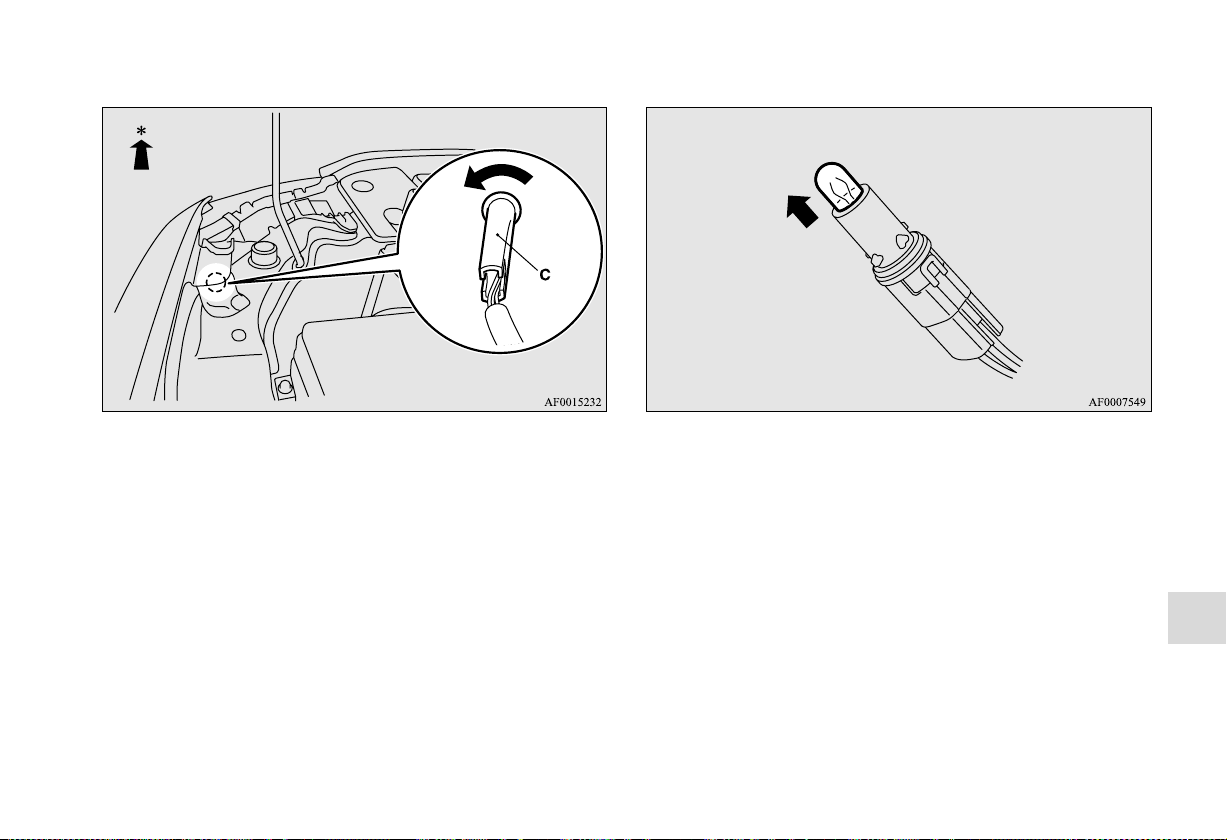
Vehicle care and maintenance
7-67
7
3. Turn the socket (C) counterclockwise to remove it. 4. Pull the bulb out of the socket.
5. To install the bulb, perform the removal steps in reverse.
*- Front of the vehicle
BK0138600US.book 67 ページ 2011年7月17日 日曜日 午後2時32分
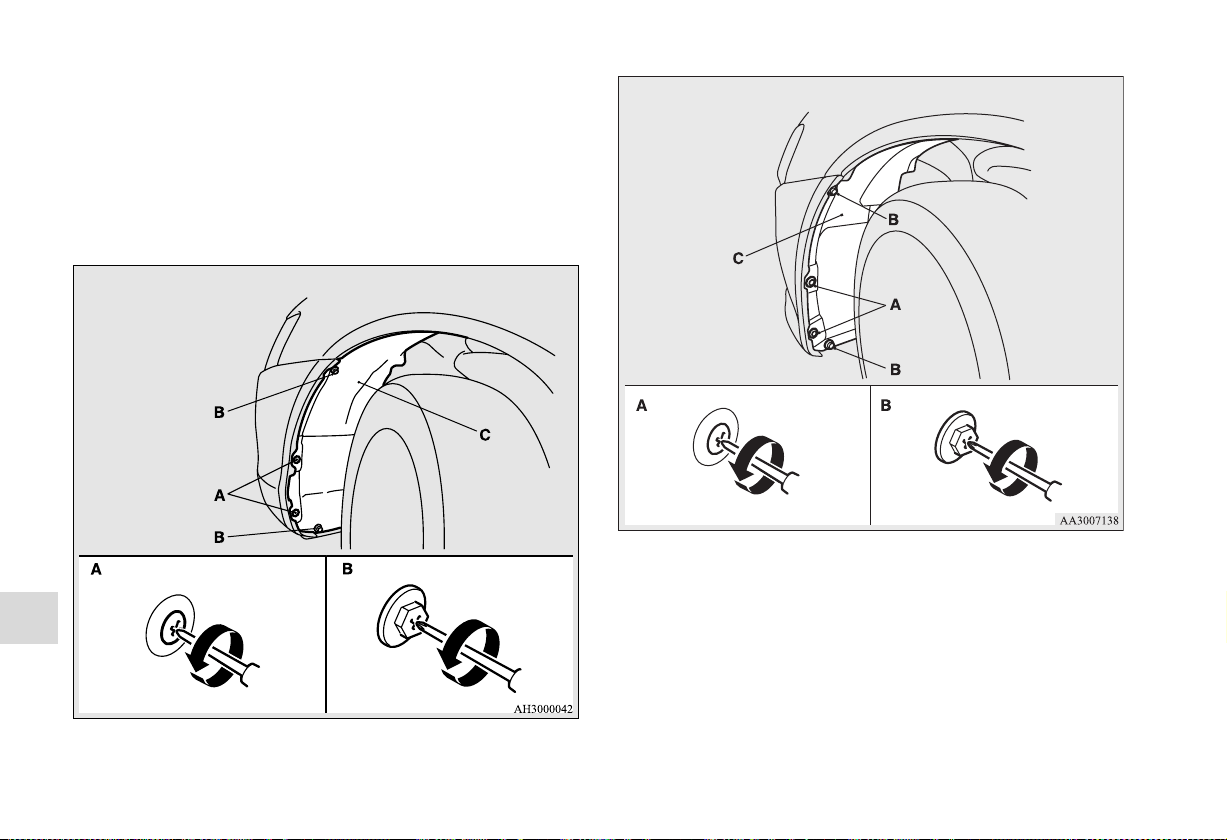
7-68
Vehicle care and maintenance
7
Parking and side-marker lights (for vehicles with
high intensity discharge headlights)
N00917300538
1. To create enough work space, turn the steering wheel all
the way in the direction opposite to the side you wish to
replace.
2. Remove the clips (A), and screws (B) or bolts (B) to turn
up the cover (C).
Type 1
Type 2
BK0138600US.book 68 ページ 2011年7月17日 日曜日 午後2時32分
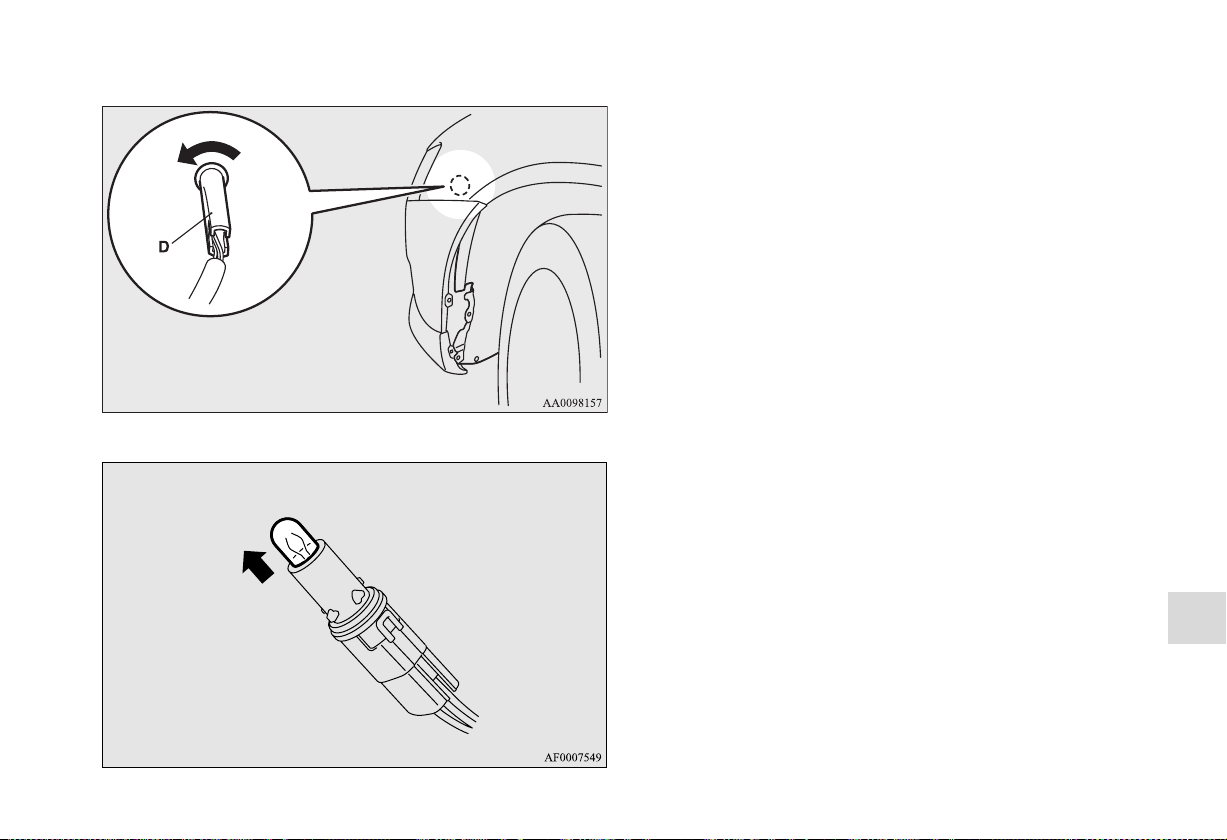
Vehicle care and maintenance
7-69
7
3. Turn the socket (D) counterclockwise to remove it.
4. Pull the bulb out of the socket.
5. To install the bulb, perform the removal steps in reverse.
BK0138600US.book 69 ページ 2011年7月17日 日曜日 午後2時32分

7-70
Vehicle care and maintenance
7
Front turn signal lights
N00943400325
1. Remove the clips (A) and clips (B), then remove the duct
(C) and the upper cover (D).
Except for vehicles with turbocharger
Vehicles with turbocharger
BK0138600US.book 70 ページ 2011年7月17日 日曜日 午後2時32分
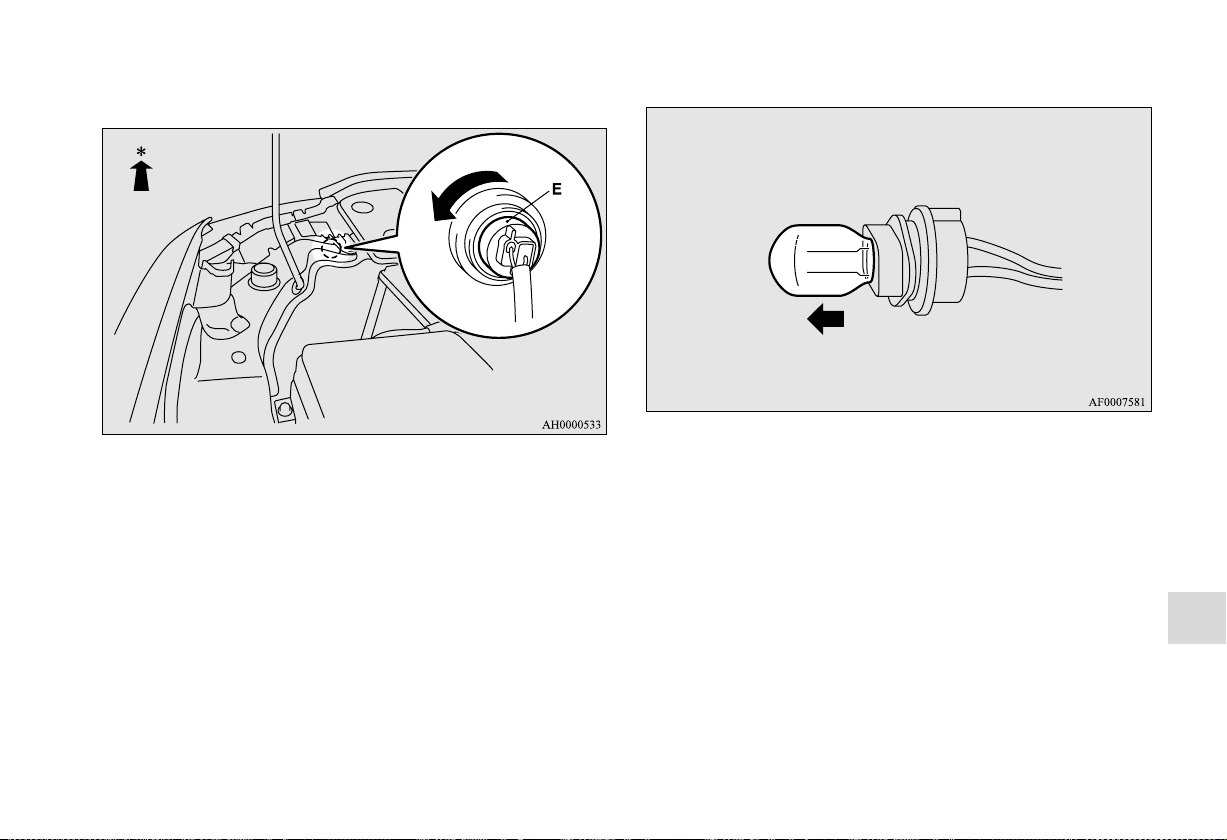
Vehicle care and maintenance
7-71
7
2. Remove the entire socket and bulb assembly (E) by turn-
ing it counterclockwise.
3. Remove the bulb by pulling it out.
4. To install the bulb, perform the removal steps in reverse.
*- Front of the vehicle
BK0138600US.book 71 ページ 2011年7月17日 日曜日 午後2時32分
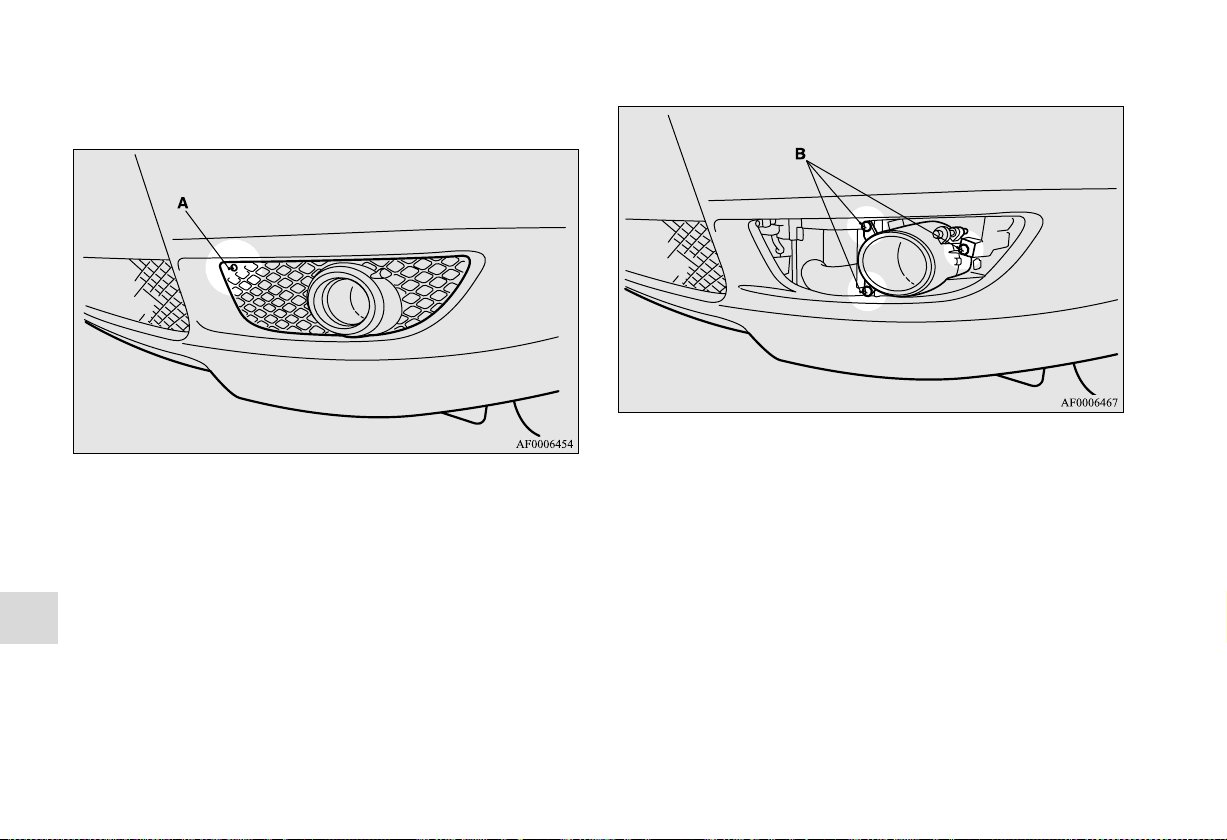
7-72
Vehicle care and maintenance
7
Front fog lights (Type 1) (if so equipped)
N00943600734
1. Remove the screw (A) and pull the cover out.
2. Remove the screws (B) and pull the entire light unit out.
BK0138600US.book 72 ページ 2011年7月17日 日曜日 午後2時32分
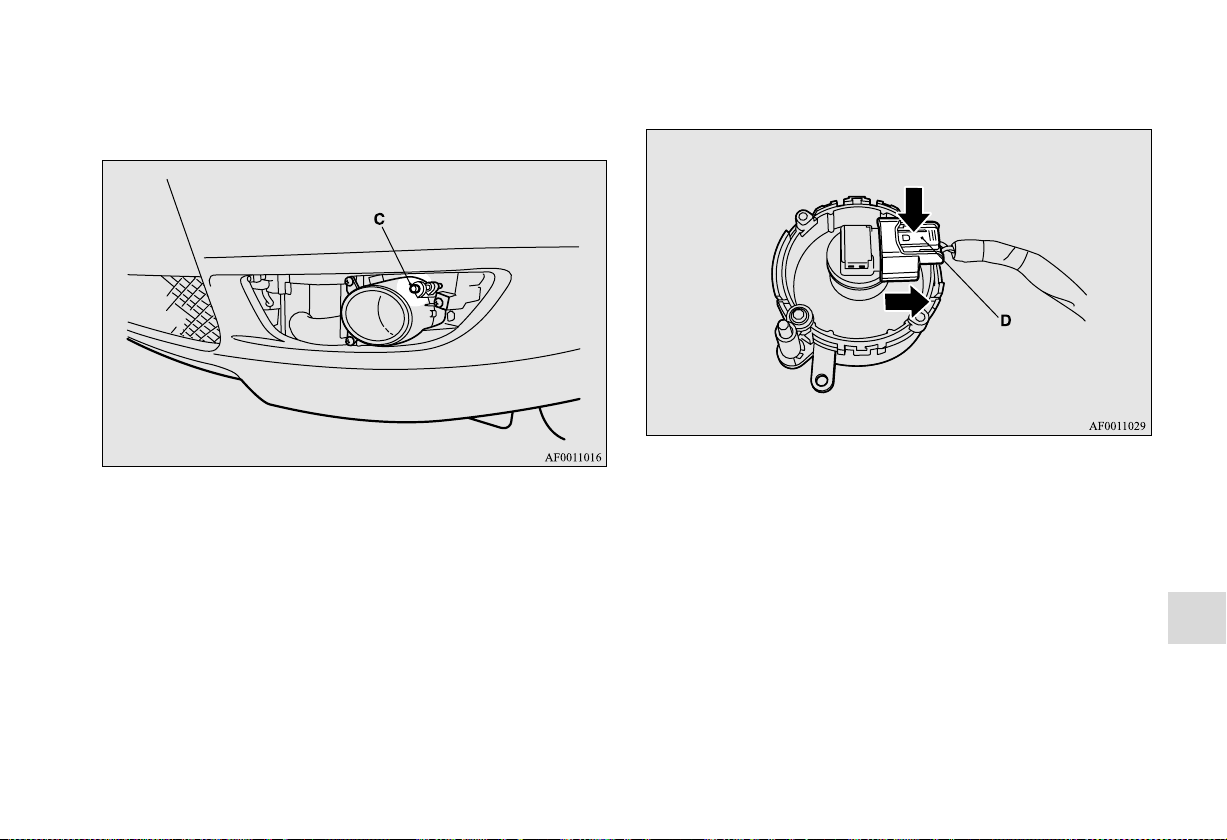
Vehicle care and maintenance
7-73
7
N
OTE
● When unfastening the screws, be careful not to mistakenly
move the beam position adjustment screw (C).
3. Push the connector (D) to disconnect and remove the fog
light.
BK0138600US.book 73 ページ 2011年7月17日 日曜日 午後2時32分
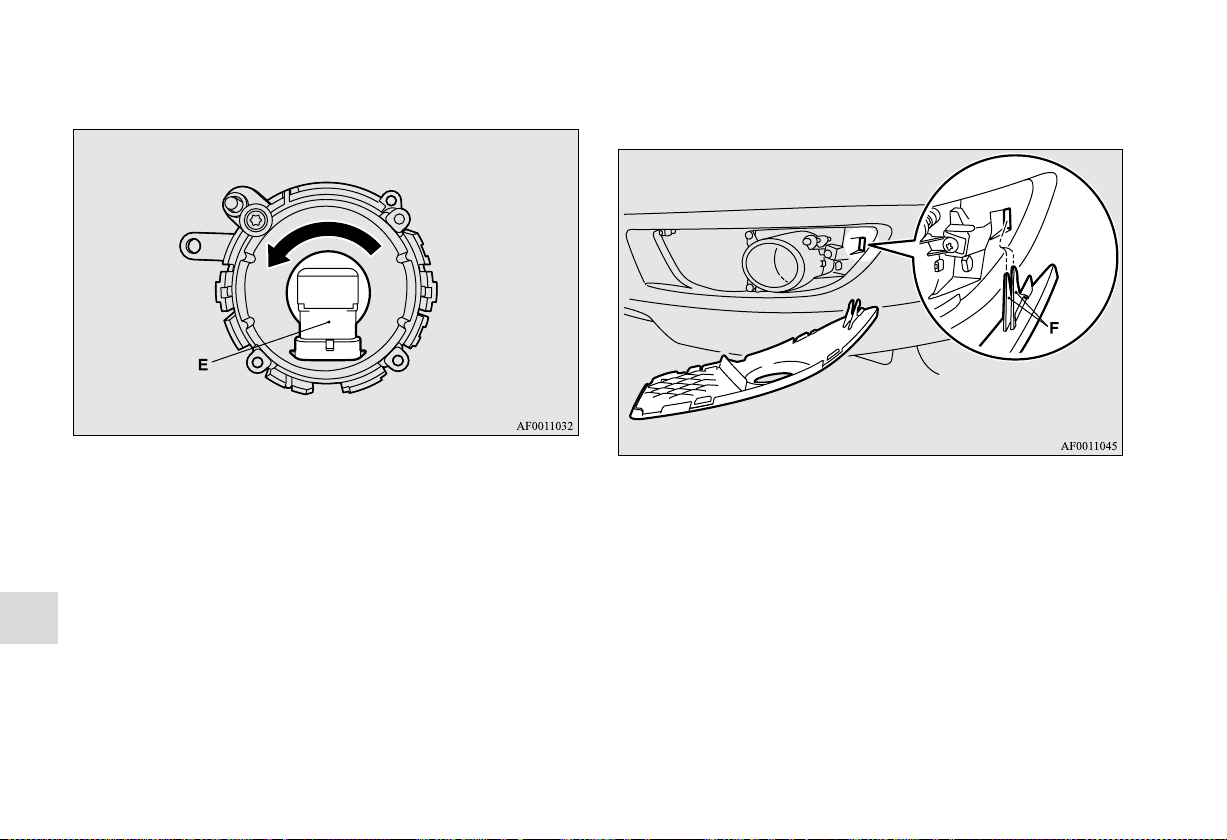
7-74
Vehicle care and maintenance
7
4. Remove the bulb assembly (E) by turning it counterclock-
wise.
5. To install the bulb, perform the removal steps in reverse.
N
OTE
● When mounting the cover, align the hooks (F) on the
cover with the hole in the body.
BK0138600US.book 74 ページ 2011年7月17日 日曜日 午後2時32分
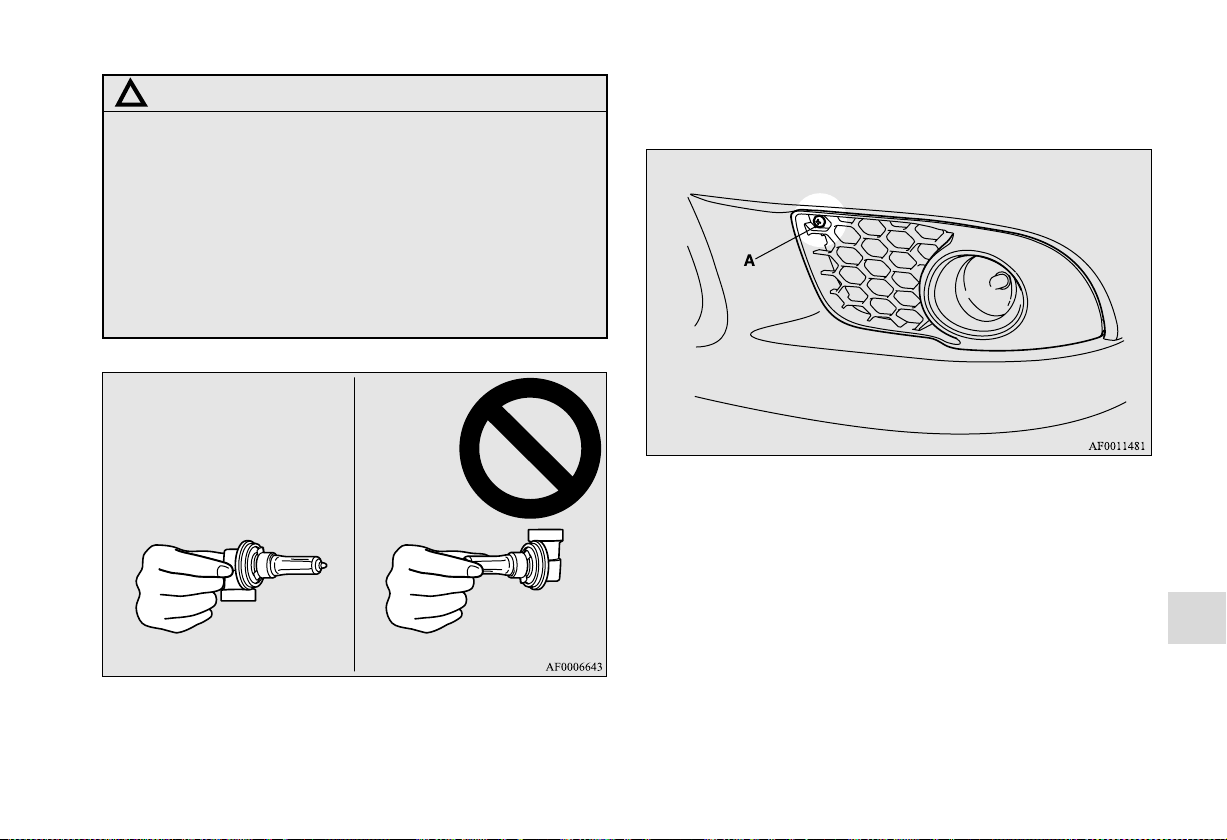
Vehicle care and maintenance
7-75
7
Front fog lights (Type 2) (if so equipped)
N00943600747
1. Remove the screw (A).
CAUTION
!
● Handle halogen light bulbs with care. The gas inside
a halogen light bulb is highly pressurized, so drop-
ping, knocking, or scratching a halogen light bulb
can cause it to shatter.
● Never hold the halogen lights bulb with a bare hand,
dirty glove, etc.
The oil from your hand could cause the bulb to
break the next time the fog lights are used.
If the glass surface is dirty, clean it with alcohol and
let it dry completely before installing the bulb.
BK0138600US.book 75 ページ 2011年7月17日 日曜日 午後2時32分
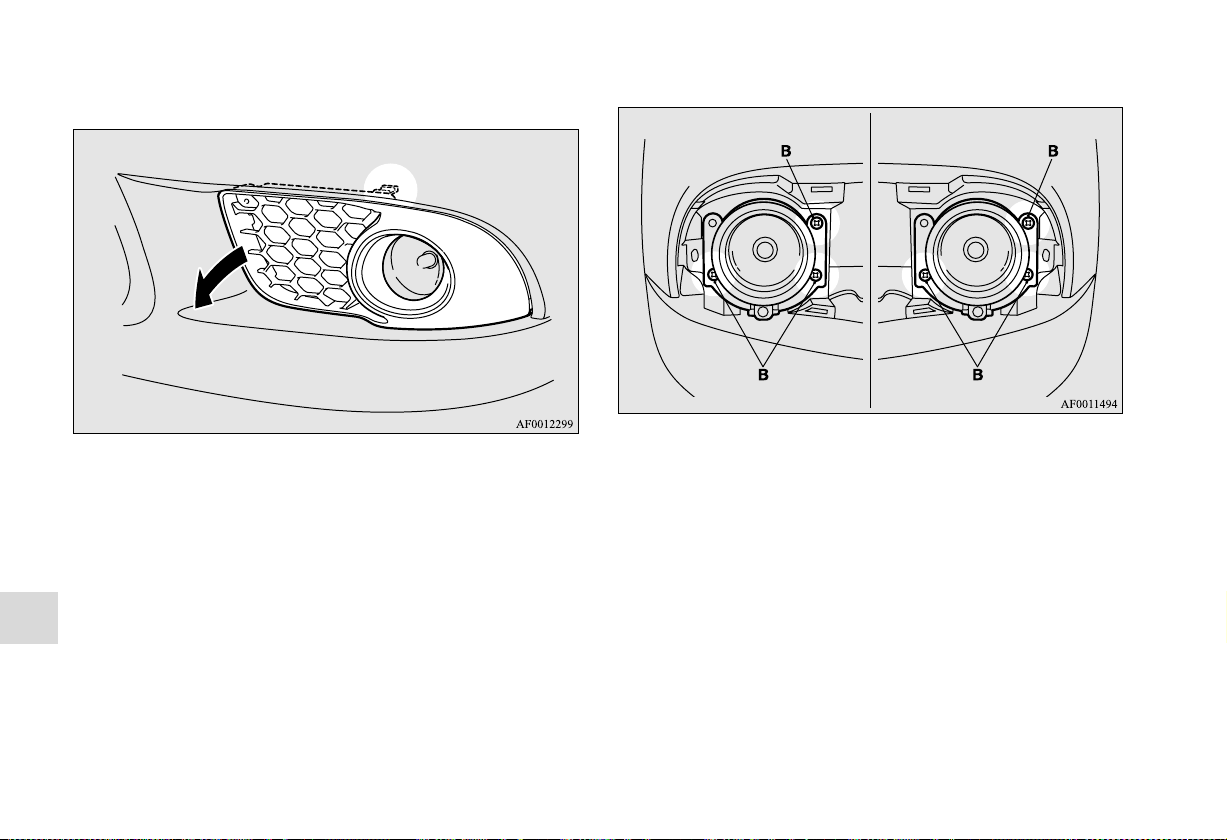
7-76
Vehicle care and maintenance
7
2. Pull the cover out in the direction of the arrow shown in
the illustration.
3. Remove the screws (B) and pull the entire light unit out.
Passenger’s side Driver’s side
BK0138600US.book 76 ページ 2011年7月17日 日曜日 午後2時32分
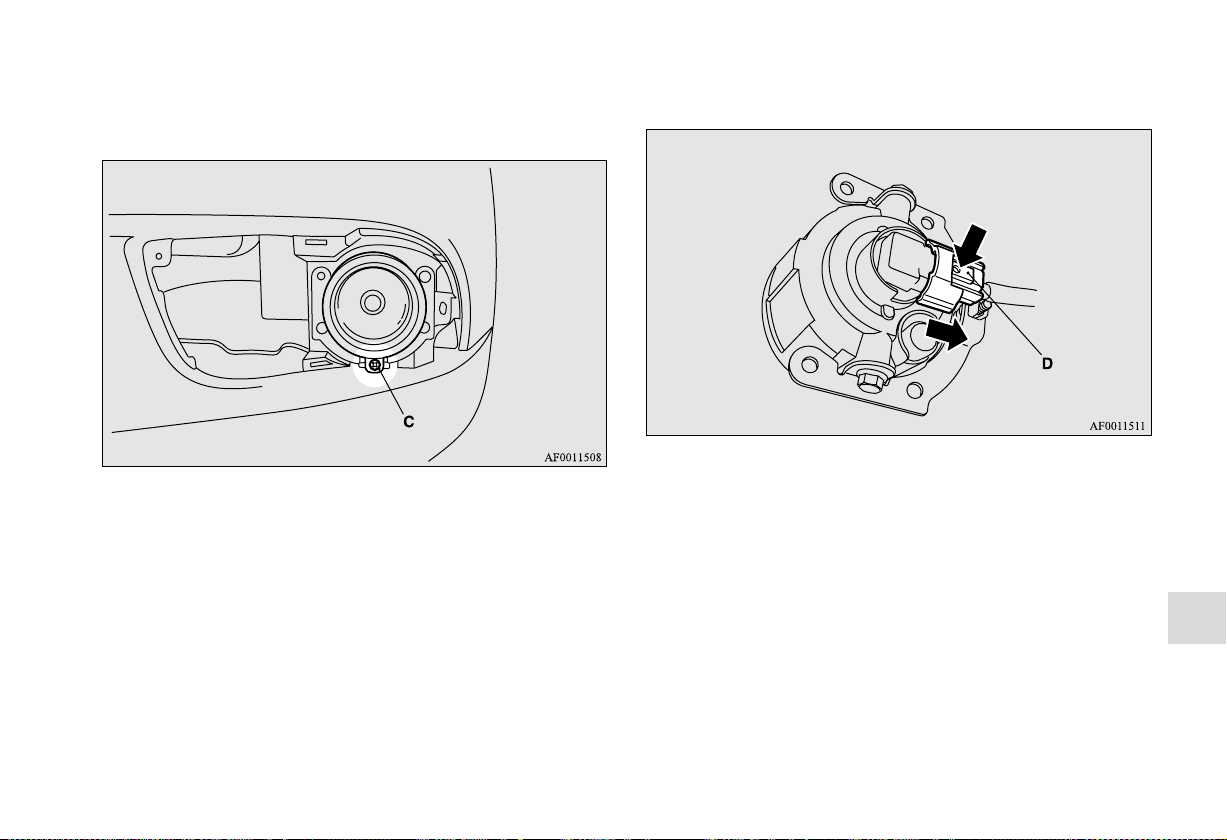
Vehicle care and maintenance
7-77
7
N
OTE
● When unfastening the screws, be careful not to mistakenly
move the beam position adjustment screw (C).
4. Push the connector (D) to disconnect and remove the fog
light.
BK0138600US.book 77 ページ 2011年7月17日 日曜日 午後2時32分
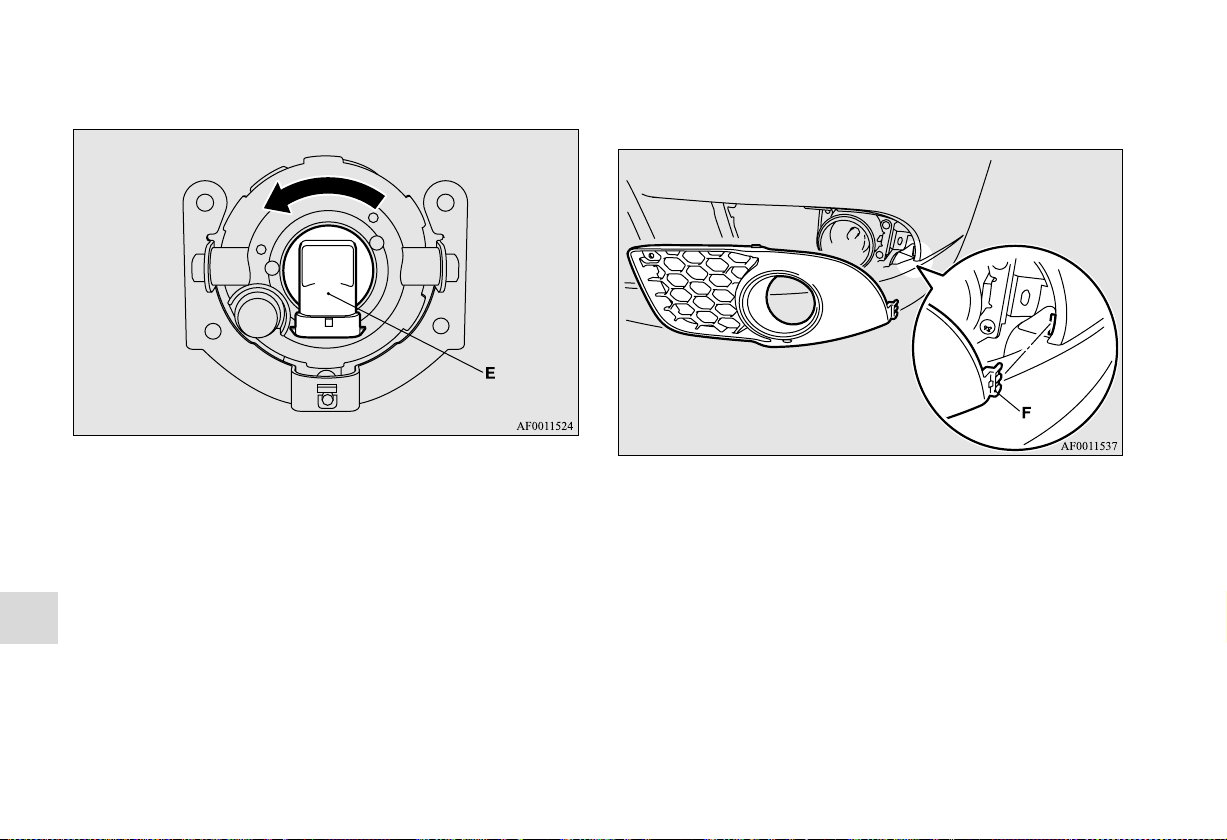
7-78
Vehicle care and maintenance
7
5. Remove the bulb assembly (E) by turning it counterclock-
wise.
6. To install the bulb, perform the removal steps in reverse.
N
OTE
● When mounting the cover, align the hook (F) on the cover
with the hole in the body.
BK0138600US.book 78 ページ 2011年7月17日 日曜日 午後2時32分
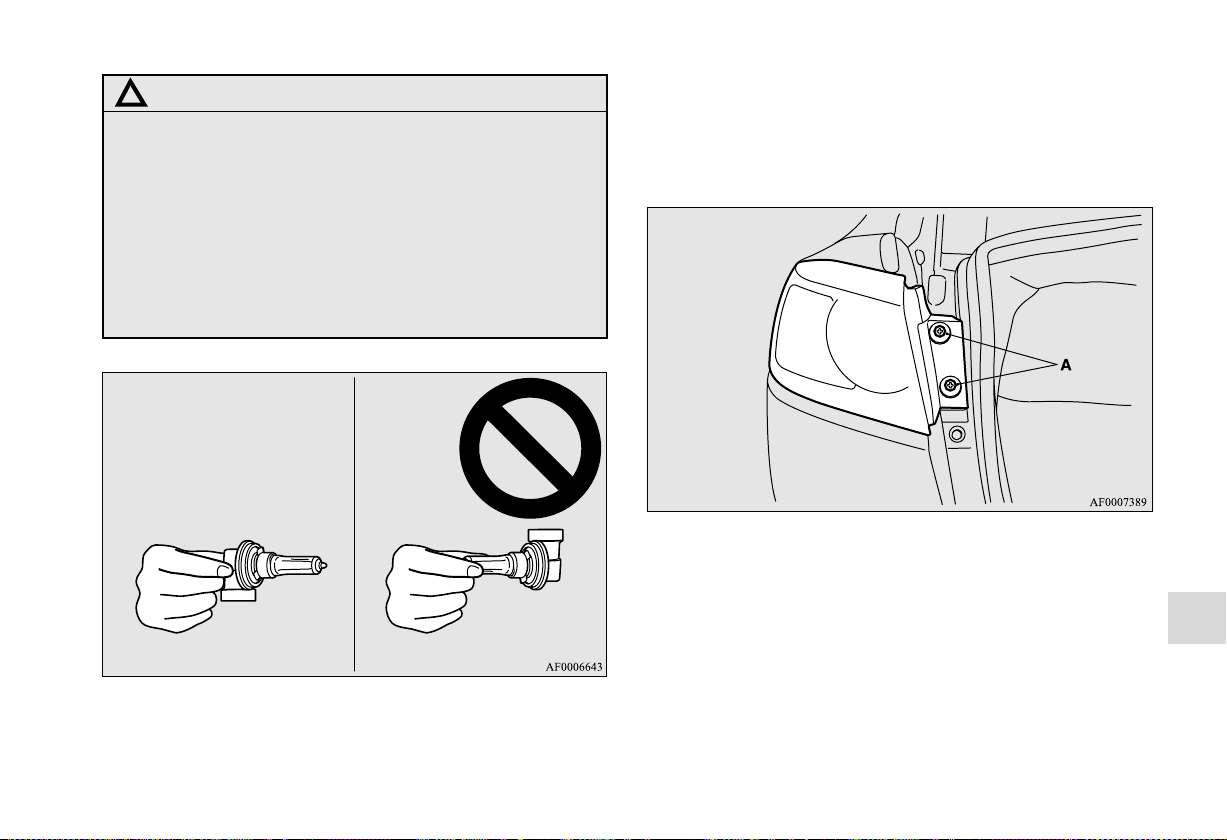
Vehicle care and maintenance
7-79
7
Rear combination lights
N00943700386
Tail and stop lights, rear turn signal lights and rear
side-marker lights
1. Remove the screws (A) from the light unit.
CAUTION
!
● Handle halogen light bulbs with care. The gas inside
a halogen light bulb is highly pressurized, so drop-
ping, knocking, or scratching a halogen light bulb
can cause it to shatter.
● Never hold the halogen lights bulb with a bare hand,
dirty glove, etc.
The oil from your hand could cause the bulb to
break the next time the fog lights are used.
If the glass surface is dirty, clean it with alcohol and
let it dry completely before installing the bulb.
BK0138600US.book 79 ページ 2011年7月17日 日曜日 午後2時32分

7-80
Vehicle care and maintenance
7
2. Remove the light unit in the rear direction. 3. Remove the socket and bulb assemblies by turning them
counterclockwise.
B- Tail and stop light
C- Rear turn signal light
D- Rear side-marker light
BK0138600US.book 80 ページ 2011年7月17日 日曜日 午後2時32分
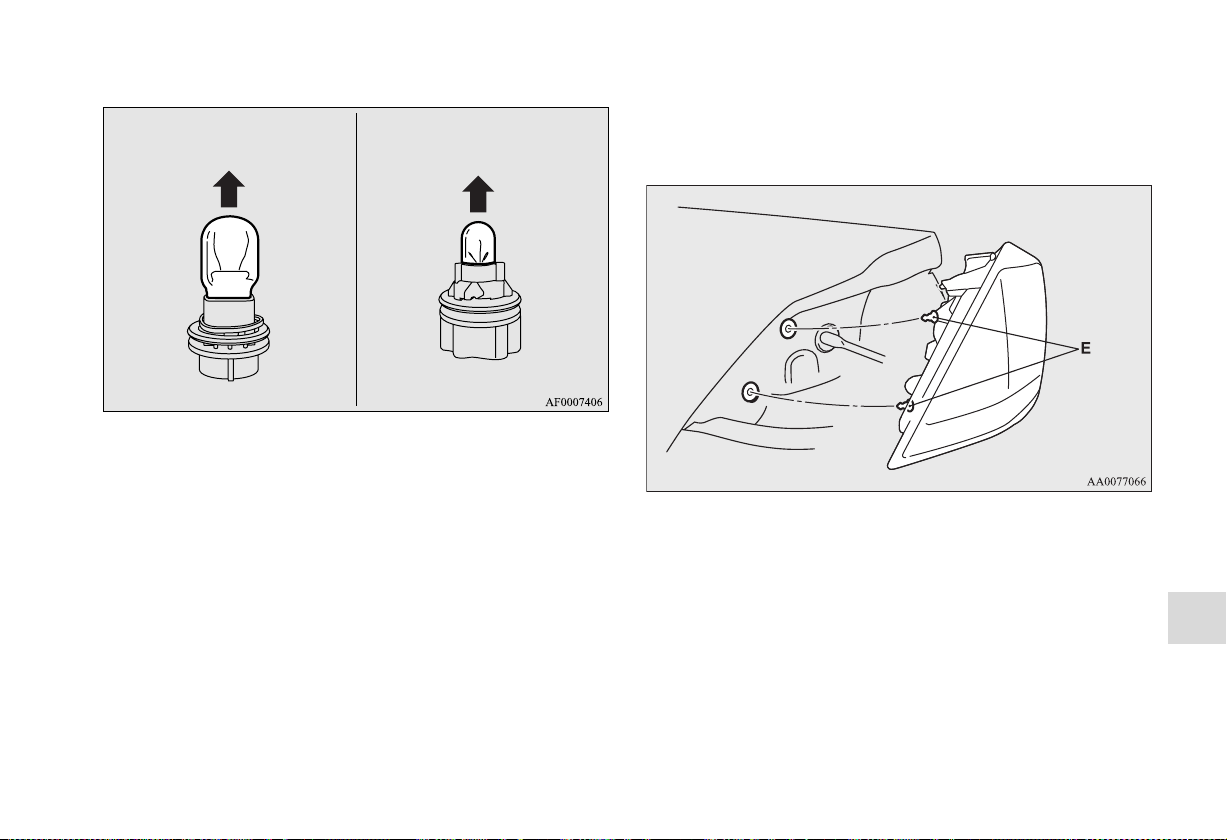
Vehicle care and maintenance
7-81
7
4. Remove the bulb by pulling it out. 5. To install the bulb, perform the removal steps in reverse.
N
OTE
● When mounting the light unit, align the pins (E) on the
light unit with the holes in the body.
Tail and stop light and
Rear turn signal light
Rear side-marker light
BK0138600US.book 81 ページ 2011年7月17日 日曜日 午後2時32分
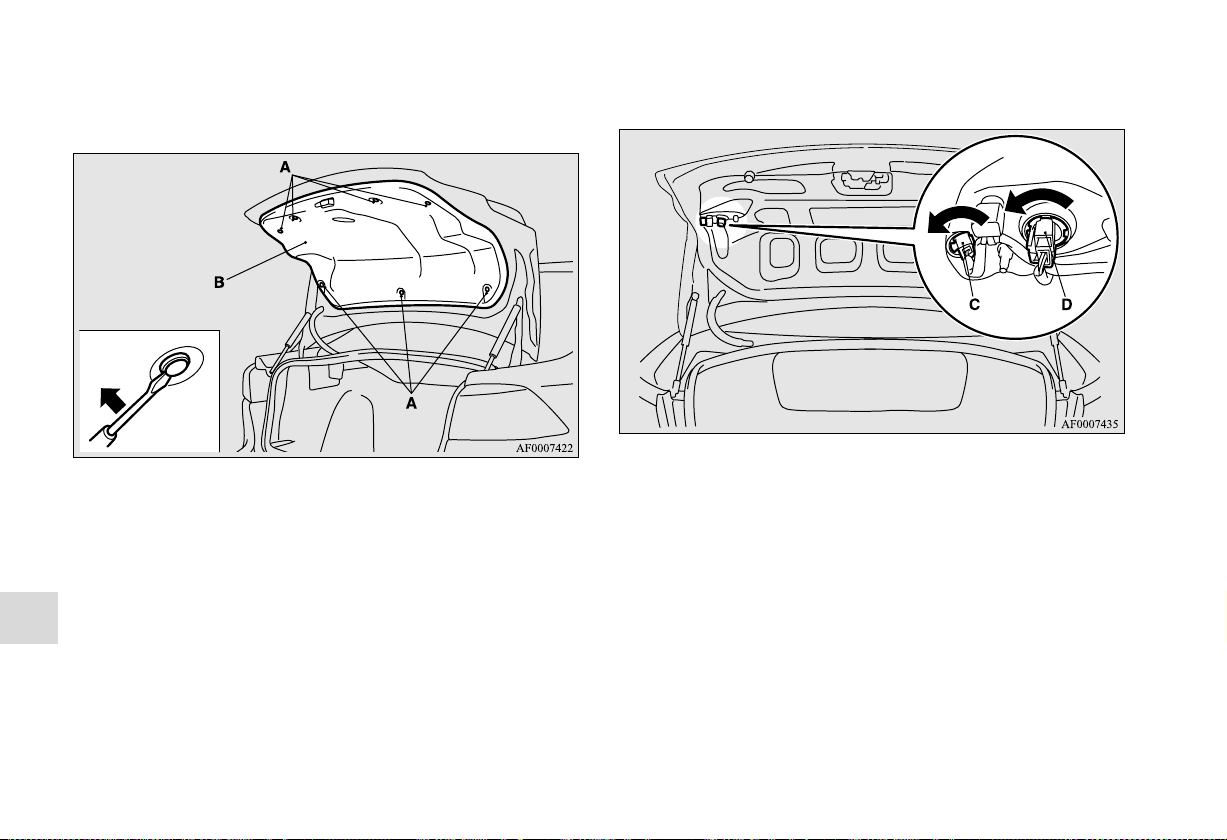
7-82
Vehicle care and maintenance
7
Tail lights and back-up lights
1. Open the trunk lid.
Remove the clips (A) and remove the cover (B).
2. Remove the socket and bulb assemblies by turning them
counterclockwise.
C- Tail light
D- Back-up light
BK0138600US.book 82 ページ 2011年7月17日 日曜日 午後2時32分
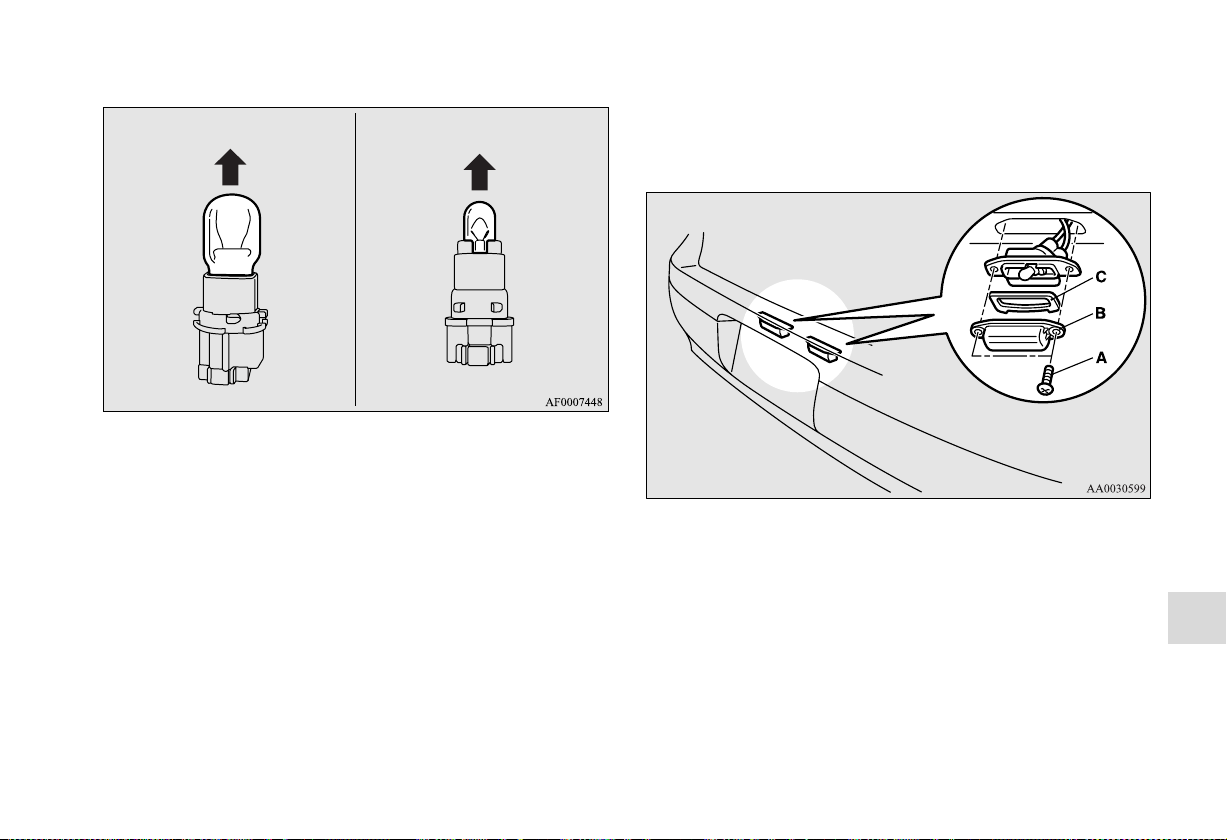
Vehicle care and maintenance
7-83
7
3. Remove the bulb by pulling it out.
4. To install the bulb, perform the removal steps in reverse.
License plate light
N00944000331
1. Remove the screws (A) from the license plate light lens
(B). Then, remove the lens and gasket (C), and withdraw
the bulb.
Back-up light
Tail light
BK0138600US.book 83 ページ 2011年7月17日 日曜日 午後2時32分
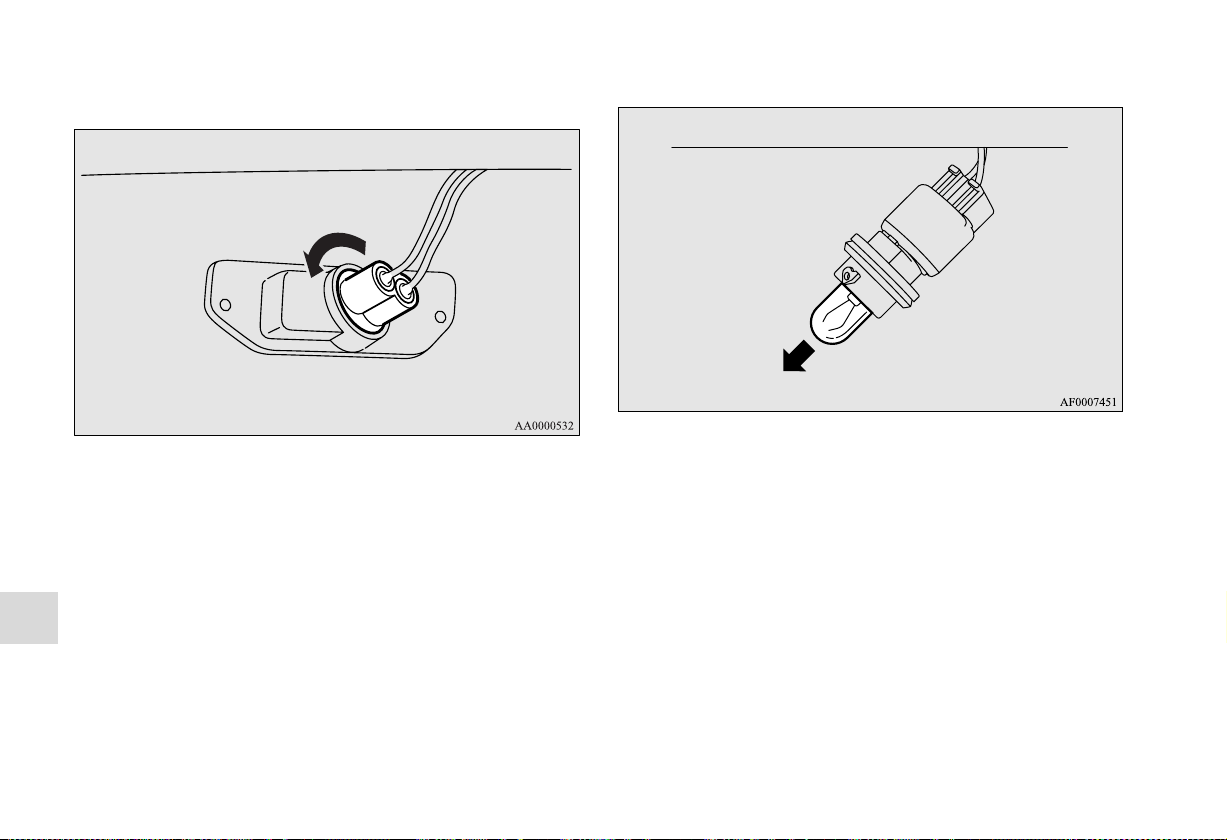
7-84
Vehicle care and maintenance
7
2. Remove the socket and bulb assembly together by turning
it counterclockwise.
3. Remove the bulb by pulling it out.
4. To install the bulb, perform the removal steps in reverse.
BK0138600US.book 84 ページ 2011年7月17日 日曜日 午後2時32分
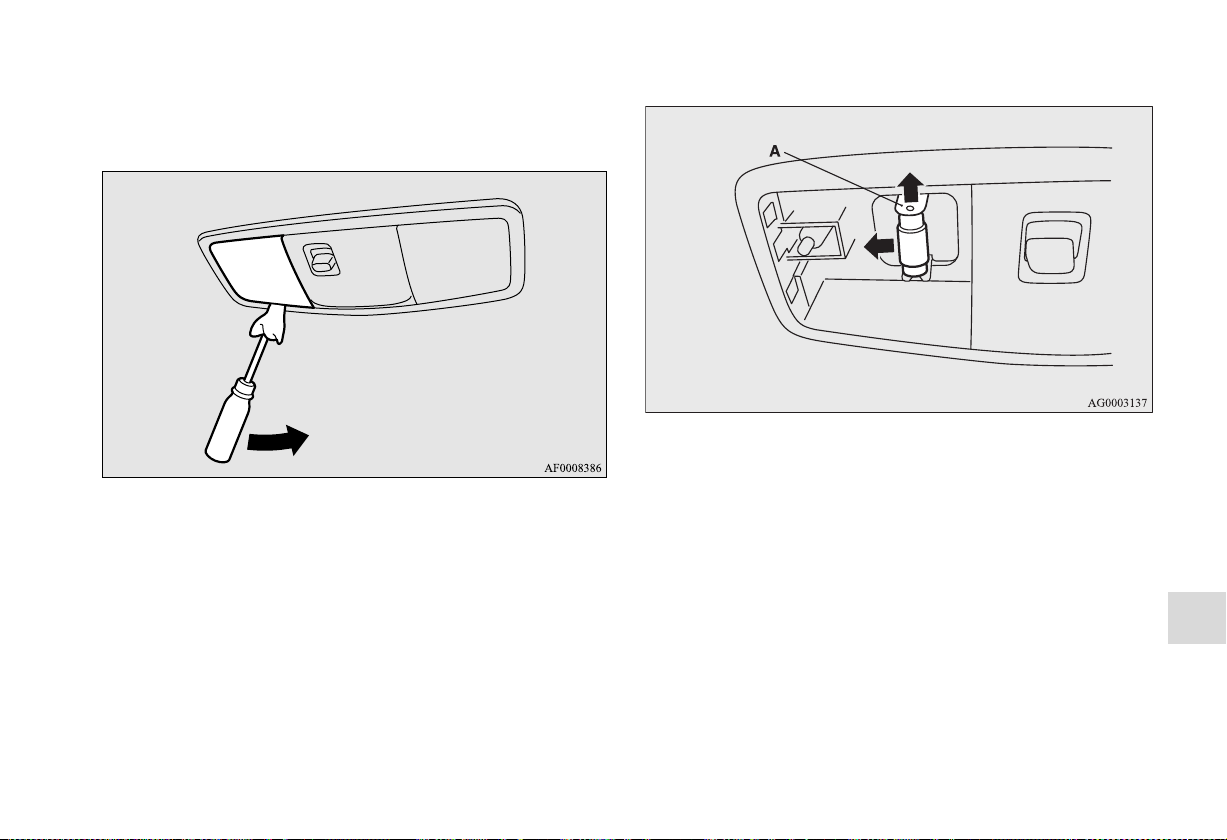
Vehicle care and maintenance
7-85
7
Dome light (front)/Reading lights (if so equipped)
N00944500206
1. Insert a screwdriver into the notch of the light assembly.
Gently pry to remove the lens.
N
OTE
● Wrap a cloth around the tip of the screwdriver to keep
from scratching the lens.
2. While holding down the tab (A), pull out the bulb.
3. To install the bulb, perform the removal steps in reverse.
BK0138600US.book 85 ページ 2011年7月17日 日曜日 午後2時32分
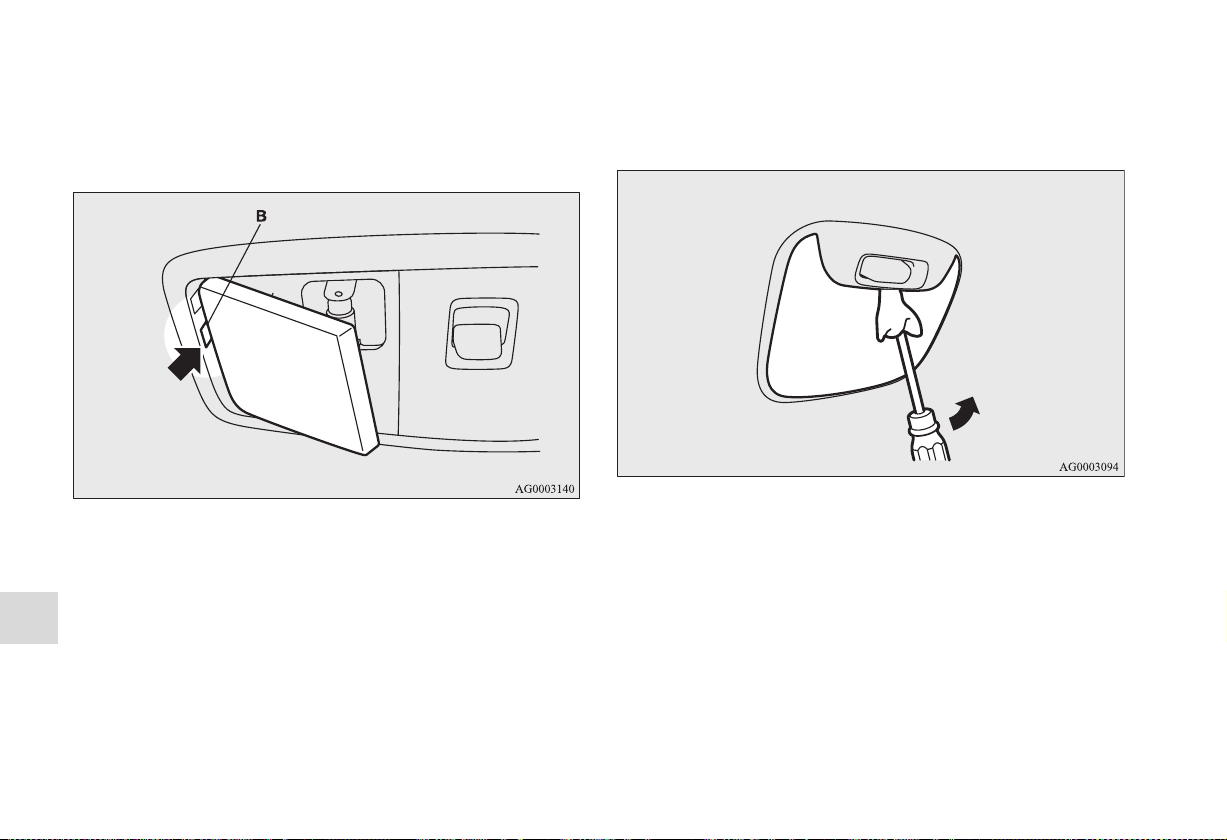
7-86
Vehicle care and maintenance
7
N
OTE
● Before replacing the bulb, put the dome light (front)/read-
ing lights switch into the “OFF” position.
● When mounting the lens, align the tab (B) with the hole
on the vehicle body.
Dome light (rear) (if so equipped)
N00944100260
1. Insert a screwdriver into the notch of the light assembly
and pry gently to remove the lens.
N
OTE
● Wrap a cloth around the tip of the screwdriver to keep
from scratching the lens.
BK0138600US.book 86 ページ 2011年7月17日 日曜日 午後2時32分
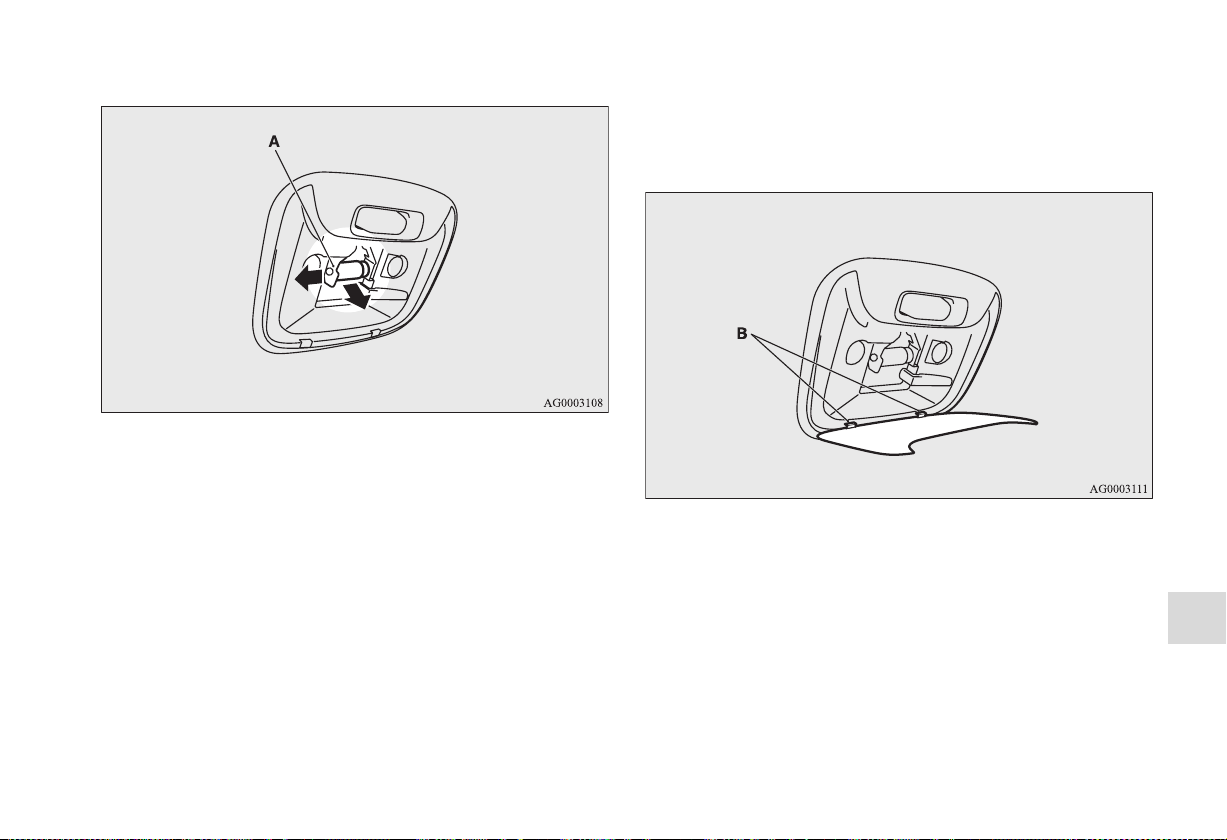
Vehicle care and maintenance
7-87
7
2. While holding down the tab (A), pull out the bulb.
3. To install the bulb, perform the removal steps in reverse.
N
OTE
● Before replacing the bulb, put the dome light (rear) switch
into the “OFF” position.
● When mounting the lens, align the tab (B) with the hole
on the vehicle body.
BK0138600US.book 87 ページ 2011年7月17日 日曜日 午後2時32分

7-88
Vehicle care and maintenance
7
Trunk area light
N00944800094
1. Pull both clips (A) away from the center as shown and
remove the light unit. Then remove the bulb by pulling
out.
2. To install the bulb, perform the removal steps in reverse.
Vehicle care precautions
N00945100153
In order to maintain the value of your vehicle, perform regular
maintenance using the proper materials and procedures. Be
sure to use only those materials and procedures that meet your
local environmental pollution control regulations. Choose the
materials you will use carefully, to be sure that they do not con-
tain corrosives. If you are not sure, contact an authorized
Mitsubishi Motors dealer for help in choosing these materials.
CAUTION
!
● Cleaning products can be dangerous. Some are poi-
sonous. Others are highly flammable. Some are dan-
gerous if you breathe their fumes in a closed space.
When you use anything in a container to clean your
vehicle, be sure to follow the instructions. Always
open your vehicle doors or windows when you’re
cleaning the inside. Never use the following chemi-
cals to clean your vehicle:
• Gasoline
• Carbon Tetrachloride
• Benzine
• Kerosene
• Naphtha
• Acetone
• Turpentine
• Paint Thinner
• Lacquer Thinner
• Nail Polish Remover
BK0138600US.book 88 ページ 2011年7月17日 日曜日 午後2時32分
Vehicle care and maintenance
7-89
7
These can all be dangerous, and they all can damage your vehi-
cle.
Cleaning the inside of your vehicle
N00945200079
After washing the inside of your vehicle with any cleaner, wipe
it dry in a shady, well ventilated area.
N
OTE
● Always read the instructions on the cleaner label.
Plastic, vinyl leather, fabric and flocked parts
N00945300171
1. Lightly wipe these off with a soft cloth soaked in a 3 %
solution of gentle soap and water.
2. Dip cloth in fresh water and wring out well. Using this
cloth, wipe off the detergent thoroughly.
CAUTION
!
● Do not use organic substances (solvents, benzine,
kerosene, alcohol, gasoline, etc.) or alkaline or acidic
solutions.
These chemicals can cause discoloring, staining or
cracking of the surface.
If you use cleaners or polishing agents, make sure
their ingredients do not include the substances men-
tioned above.
BK0138600US.book 89 ページ 2011年7月17日 日曜日 午後2時32分

7-90
Vehicle care and maintenance
7
N
OTE
● Do not use cleaners, conditioners, and protectants contain-
ing silicones or wax.
Such products, when applied to the instrument panels or
other parts, may cause reflections on the windshield and
obscure vision.
Also, if such products get on the switches of the electrical
accessories, it may lead to failure of these accessories.
Upholstery
N00945500131
1. To maintain the value of your new vehicle, maintain the
upholstery carefully and keep the interior clean.
Use a vacuum cleaner and brush to clean the seats. If
stained, vinyl and synthetic leather should be cleaned with
an appropriate cleaner. Cloth fabrics can be cleaned with
either upholstery cleaner or a 3 % solution of gentle soap
in lukewarm water.
2. Clean the carpeting with a vacuum cleaner and remove
any stains with carpet cleaner. Oil and grease can be
removed by lightly dabbing with a clean white cloth and
spot remover.
N
OTE
● If fuzzing is difficult to remove from the seat upholstery,
draw a suitable defuzzing brush over the surface in one
direction.
Genuine leather (if so equipped)
N00945600161
1. To clean, lightly wipe the leather with a soft cloth soaked
in a 5 % solution of gentle soap and water.
2. To rinse, dip the cloth in fresh water, wring it out well, and
wipe off all the soap.
3. To preserve and protect, use a leather protecting agent on
the genuine leather surface.
N
OTE
● If genuine leather is wet with water, wipe it with a dry,
soft cloth. If left damp, mildew may grow.
● The genuine leather surface can be damaged if brushed
with a nylon or synthetic fiber brush.
● Organic solvents such as benzine, kerosene, alcohol, gaso-
line, acid or alkaline solvents can discolor the genuine
leather surface and should not be used.
● Genuine leather seats can mildew if not kept clean. Clean
up any oil stains immediately.
● The genuine leather surface may harden and shrink if it is
exposed to the direct sunlight for long hours. When your
vehicle is parked, place it in the shade as much as possi-
ble.
● When the temperature of the vehicle interior rises in sum-
mer, vinyl products left on the genuine leather seat may
deteriorate and stick to the seat.
BK0138600US.book 90 ページ 2011年7月17日 日曜日 午後2時32分
Vehicle care and maintenance
7-91
7
Cleaning the outside of your vehicle
N00945700061
To protect your vehicle’s finish, wash it often and thoroughly.
If desired, you may wax your vehicle using a nonabrasive auto-
mobile wax.
Foreign material
N00945800046
Industrial pollution, road tar, bird droppings, tree sap, insect
remains, sea water and other foreign matters can damage the
finish on your vehicle.
Generally, the longer any foreign material stays on the finish,
the worse the damage. Wash your vehicle as soon as possible
whenever the finish gets soiled.
Washing
N00945900526
Chemicals contained in the dirt and dust picked up from air,
rain, snow or road surfaces can damage the paint and body of
your vehicle if left on.
Frequent washing and waxing is the best way to protect your
vehicle from this damage.
Do not wash the vehicle in direct sunlight. Park the vehicle in
the shade and spray it with water to remove dust. Next, using
plenty of clean water and a car washing mitt or sponge, wash
the vehicle from top to bottom.
Use a mild car washing soap if necessary. Rinse thoroughly
and wipe dry with a chamois or soft cloth. After washing the
vehicle, carefully clean the joints and flanges of the doors,
hood, etc., where dirt is likely to remain.
CAUTION
!
● When washing the underside of your vehicle or the
wheels, wear a pair of gloves to protect your hands.
● If your vehicle has rain sensor wipers, place the
wiper switch lever in the “OFF” position to deacti-
vate the rain sensor before washing the vehicle. Oth-
erwise, the wipers will operate in the presence of
water spray on the windshield and may get damaged
as a result.
● Never spray or splash water on the electrical parts
in the engine compartment. This may damage them.
Be careful also when washing the underbody. Do not
spray water into the engine compartment.
● Avoid automatic car washers that use rotating
brushes. These brushes may scratch the paint sur-
face and make it dull.
Scratches are more noticeable on darker colored
vehicles.
● Some hot water washing equipment uses high pres-
sure and heat to clean your vehicle. This heated
water may damage your vehicle’s resin parts. It can
flood the interior of the vehicle. Therefore, be sure
of the following:
• Keep the washing nozzle at least 20 inches (50 cm)
away from the vehicle body.
• When washing around the door glass, hold the
nozzle at a distance of more than 20 inches (50 cm)
and at right angles to the glass surface.
BK0138600US.book 91 ページ 2011年7月17日 日曜日 午後2時32分
7-92
Vehicle care and maintenance
7
During cold weather
Salt and other chemicals spread on winter roads in some geo-
graphical areas can have a detrimental effect on the vehicle
underbody. You should flush the underbody with a high pres-
sure hose every time you wash the outside of your vehicle.
Take special care to remove mud or other debris which could
trap and hold salt and moisture.
After washing your vehicle, wipe off all waterdrops from the
rubber parts around the doors to prevent the doors from freez-
ing.
N
OTE
● When the door is frozen, opening it by force may tear off
or crack the rubber gasket installed around the door. Pour
warm water to melt the ice. Be sure to thoroughly wipe off
the water after opening the door. To prevent freezing of
the weatherstripping on the doors, hood, etc., treat with
silicone lubricant.
Waxing
N00946000188
Wax your vehicle once or twice a year, or when water does not
bead up on the paint.
Use a soft cloth to put a small amount of wax on the painted
surfaces. After the wax has dried, polish with a dry soft cloth.
Do not wax your vehicle in direct sunlight.
You should wax when the painted surfaces are cool.
● When using high-pressure water to wash a vehicle
equipped with the F.A.S.T.-key system, keep the
water from spraying on the open button on the
trunk. This could cause the trunk to open and flood
the inside of the trunk.
● Make sure to do the following when using an auto-
matic car wash, with help from either this manual or
the car wash operator, to avoid damaging your vehi-
cle:
• Fold the outside mirrors.
• Put down (except for vehicles with SIRIUS satellite
radio antenna) or remove the antenna.
• If your vehicle is equipped with rear spoiler, check
with the car wash operator before using the car
wash.
• If your vehicle has rain sensor wipers, place the
wiper switch lever in the “OFF” position to deacti-
vate the rain sensor.
CAUTION
!
CAUTION
!
● Waxes containing high abrasive compounds should
not be used. These waxes remove rust and stain
effectively from the paintwork, but are harmful to
the finish on the paint and the plate, because they
also remove clearcoat.
They are also harmful to other glossy surfaces such
as the grille, trim, moldings, etc.
● Do not use gasoline, kerosene, benzine or paint thin-
ners to remove road tar or other dirt from the vehi-
cle surface.
BK0138600US.book 92 ページ 2011年7月17日 日曜日 午後2時32分
Vehicle care and maintenance
7-93
7
Polishing
N00946100059
If painted surfaces have been severely damaged and lost their
original luster and color tone, polish the surface lightly with a
fine polishing compound. Avoid limiting your polishing to the
damaged surface only; polish a somewhat wider area, moving
the polishing cloth in one direction. After polishing, flush the
compound from the surface and apply a coat of wax to regain a
beautiful luster.
Damaged paint
N00946200063
Small cracks and scratches in the paint coat should be touched
up as soon as possible with touch-up paint to prevent corrosion.
Check body areas facing the road or the tires carefully for dam-
age to the paint caused by flying stones, etc. The paint code
number for your vehicle can be found on the vehicle informa-
tion code plate in the engine compartment.
Cleaning plastic parts
N00946300178
Use a sponge or chamois to clean these parts.
If a vehicle wax sticks to a gray or black rough surface of the
bumper, molding or lights, the surface may appear white in
color. In this case, wipe it off using lukewarm water and a soft
cloth or chamois.
Chrome parts
N00946400065
To prevent spots and corrosion of chrome parts, wash with
water, dry thoroughly, and apply a nonabrasive automotive
wax. If the chrome is severely damaged or pitted, use a com-
mercially available chrome polish.
● Do not put wax on the areas having black matte
coating because it can cause uneven discoloration,
patches, blurs, etc. If these get wax on them, wipe
the wax off right away with a soft cloth and warm
water.
● On vehicles with sunroof, be careful not to apply any
wax on the weatherstrip (black rubber) when wax-
ing the area around the sunroof opening.
If stained with wax, the weatherstrip cannot main-
tain a weatherproof seal with the sunroof.
CAUTION
!
CAUTION
!
● Do not use a scrubbing brush or other rough scrub-
ber as these may damage the plastic surface.
● Do not use wax containing compounds (polishing
powder) which may damage the plastic surface.
● Do not let the plastic parts get soiled with gasoline,
oil, brake fluids, engine oils, greases, paint thinner,
and sulfuric acid (battery electrolyte). These fluids,
etc., may crack, stain or discolor the plastic parts.
If any of these get on the plastic parts, wipe them up
with a soft cloth or chamois and a mild solution of
soap and water. Then rinse them immediately with
water.
BK0138600US.book 93 ページ 2011年7月17日 日曜日 午後2時32分
7-94
Vehicle care and maintenance
7
Aluminum wheels (if so equipped)
N00946500196
1. Remove dirt using a wet sponge.
2. Use a mild detergent on any dirt that cannot be removed
easily with water.
Rinse off the detergent after washing the wheel.
3. Dry the wheel thoroughly using a chamois leather or a soft
cloth.
Window glass
N00946600067
The window glass can usually be cleaned using only a sponge
and water. Glass cleaner can be used to remove wax, oil,
grease, dead insects, etc. After washing the glass, wipe it dry
with a clean, dry, soft cloth.
Wiper blades
N00946700097
Use a soft cloth and glass cleaner to remove grease, dead
insects, etc., from the wiper blades.
Replace the wiper blades when they no longer clean the wind-
shield and rear window properly.
Cleaning the sunroof (if so equipped)
N00946800072
Clean the inside of the sunroof with a soft cloth. Hard deposits
should be wiped away with a cloth dipped in warm, neutral
detergent solution. Wipe away the solution with a sponge
dipped in fresh water.
N
OTE
● The surface treatment on the inside of the glass may be
removed if a hard cloth or organic solvent is used.
CAUTION
!
● Do not use a brush or other hard implement on the
wheels.
Doing so could scratch the wheels.
● Do not use any cleaner that contains an abrasive
substance or is acidic or alkaline. Doing so could
cause the coating on the wheels to peel or become
discolored or stained.
● Do not directly apply hot water using a steam
cleaner or by any other means.
● Contact with seawater or road salt used for de-icing
can cause corrosion. Rinse off such substances as
soon as possible.
BK0138600US.book 94 ページ 2011年7月17日 日曜日 午後2時32分

Vehicle care and maintenance
7-95
7
Engine compartment
N00947000042
Never spray or splash water on the electrical components in the
engine compartment, as this may cause damage.
Do not allow any nearby parts (such as plastic parts) come into
contact with sulphuric acid (battery electrolyte), which may
crack, stain, or discolour them.
If this occurs, wipe the parts with a soft cloth saturated with a
mild detergent and water solution.
Then immediately rinse the affected parts with plenty of water.
BK0138600US.book 95 ページ 2011年7月17日 日曜日 午後2時32分

BK0138600US.book 96 ページ 2011年7月17日 日曜日 午後2時32分

8
Customer assistance/Reporting Safety Defects
Consumer information
(For vehicles sold in U.S.A.) . . . . . . . . . . . . . . .8- 2
Reporting Safety Defects . . . . . . . . . . . . . . . . . . . .8- 3
Important facts to know in case of an accident . . .8- 5
BK0138600US.book 1 ページ 2011年7月17日 日曜日 午後2時32分
8-2
Customer assistance/Reporting Safety Defects
8
Consumer information (For vehicles sold in
U.S.A.)
N01047100100
This information is provided in compliance with the require-
ments of the National Highway Traffic Safety Administration,
Department of Transportation. It provides the purchasers
and/or prospective purchasers with information on reporting
safety defects.
Uniform tire quality grading
DOT quality grades - All passenger vehicle tires must conform
to Federal Safety Requirements in addition to these grades. The
specific grade rating in each grade category is shown on the
side wall of the tires on your vehicle.
Treadwear
The treadwear grade is a comparative rating based on the wear
rate of the tire when tested under controlled conditions on a
specified government test course. For example, a tire graded
150 would wear one and one-half (1
1
/
2
) times as well on the
government course as a tire graded 100. The relative perfor-
mance of tires depends upon the actual conditions of their use,
however, and may depart significantly from the norm due to
variations in driving habits, service practices and differences in
road characteristics and climate.
Traction AA, A, B, C
The traction grades, from highest to lowest, are AA, A, B and
C. Those grades represent the tire’s ability to stop on wet pave-
ment as measured under controlled conditions on specified
government test surfaces of asphalt and concrete. A tire
marked C may have poor traction performance.
Temperature A, B, C
The temperature grades are A (the highest), B and C, represent-
ing the tire’s resistance to the generation of heat and its ability
to dissipate heat when tested under controlled conditions on a
specified indoor laboratory test wheel. Sustained high tempera-
ture can cause the material of the tire to degenerate and reduce
tire life, and excessive temperature can lead to sudden tire fail-
ure. The grade C corresponds to a level of performance which
all passenger car tires must meet under the Federal Motor Vehi-
cle Safety Standard No. 109. Grades B and A represent higher
levels of performance on the laboratory test wheel than the
minimum required by law.
WARNING
!
● The traction grade assigned to this tire is based on
straight-ahead braking traction tests, and does not
include acceleration, cornering, hydroplaning, or
peak traction characteristics.
WARNING
!
● The temperature grade for this tire is established for
a tire that is properly inflated and not overloaded.
Excessive speed, underinflation, or excessive load-
ing, either separately or in combination, can cause
heat buildup and possible tire failure.
BK0138600US.book 2 ページ 2011年7月17日 日曜日 午後2時32分

Customer assistance/Reporting Safety Defects
8-3
8
Reporting Safety Defects
N01047200446
If you believe that your vehicle has a defect which could
cause a crash or could cause injury or death, you should
immediately inform the National Highway Traffic Safety
Administration (NHTSA) in addition to notifying
Mitsubishi Motors Corporation.
If NHTSA receives similar complaints, it may open an
investigation, and if it finds that a safety defect exists in a
group of vehicles, it may order a recall and remedy cam-
paign. However, NHTSA cannot become involved in indi-
vidual problems between you, your dealer, or Mitsubishi
Motors Corporation.
To contact NHTSA, you may call the Vehicle Safety Hotline
toll-free at 1-888-327-4236 (TTY: 1-800-424-9153); go to
http://www.safercar.gov; or write to:
You can also obtain other information about motor vehicle
safety from http://www.safercar.gov.
For vehicles sold in U.S.A.
To contact Mitsubishi Motors North America, Inc. call 1-
888-648-7820 or write to:
For vehicles sold in Canada
If you live in Canada, and you believe that your vehicle has
a safety defect, you should immediately notify Transport
Canada, in addition to notifying Mitsubishi Motor Sales of
Canada, Inc. You may write to:
To contact Mitsubishi Motor Sales of Canada, Inc. call 1-
888-576-4878 or write to:
NHTSA Headquarters
1200 New Jersey Avenue, SE
West Building
Washington, DC 20590
Mitsubishi Motors North America, Inc.
Customer Relations Department
P.O. Box 6400
Cypress, CA 90630-0064
Transport Canada
330 Sparks Street
Tower C
Ottawa, Ontario K1A 0N5
Mitsubishi Motor Sales of Canada, Inc.
Customer Relations Department
P.O. Box 41009
4141 Dixie Road
Mississauga, ON L4W 5C9
BK0138600US.book 3 ページ 2011年7月17日 日曜日 午後2時32分

8-4
Customer assistance/Reporting Safety Defects
8
For vehicles sold in Puerto Rico
To contact Mitsubishi Motor Sales of Caribbean, Inc.
call 1-787-251-8715 or write to:
For vehicles sold in Guam
To contact Triple J Enterprises Inc.
call (671)649-3673 or write to:
For vehicles sold in Saipan
To contact Triple J Motors
call (670)234-7133 or write to:
For vehicles sold in American Samoa
To contact Pacific Marketing Inc.
call 684(699)9140 or write to:
Mitsubishi Motor Sales of Caribbean, Inc.
Customer Service Department
P.O. Box 192216
SAN JUAN PR 00919-2216
Triple J Enterprises, Inc.
P.O. Box 6066
TAMUNING
GUAM 96931
Triple J Motors
P.O. Box 500487
SAIPAN, MP96950-0487
Pacific Marketing, Inc.
P.O. Box 698
PAGO PAGO,
AMERICAN SAMOA AS, 96799
BK0138600US.book 4 ページ 2011年7月17日 日曜日 午後2時32分

Customer assistance/Reporting Safety Defects
8-5
8
Important facts to know in case of an acci-
dent
N01047300229
We hope you will never be involved in an accident, but there is
always that potential danger. So, please be sure to buckle up
and drive safely.
In the event of an accident
● Remain calm.
● Check for injuries. Report all injuries to the police, and, if
necessary, call for an ambulance.
● Record all the details of the accident. This will provide
you with accurate records of the accident for discussions
with your insurance company and other persons who may
be acting on your behalf.
Key information to discuss with your insurance
company
● Understand your repair estimate before approving repairs.
● Choosing the repair shop and the brands of parts that they
use on your vehicle is your decision.
● Ask for genuine Mitsubishi Motors parts. Many times, to
save money, your insurance company will recommend
imitation parts that do not meet the original specifications
of fit, finish, corrosion resistance or workmanship.
Mitsubishi Motors built-in protection
The strength and integrity built into your Mitsubishi vehicle is
the result of a specific design referred to as “Energy Manage-
ment”. Individual body parts are designed to act as one unit in
the event of an accident. Shock waves are absorbed by protec-
tive panels or are channeled around the passenger compart-
ment. This important feature is possible because high tensile
steel is used in Mitsubishi Motors panels and structural parts,
something that cannot be guaranteed by the manufacturers of
imitation parts. All Genuine Mitsubishi Motors body panels
and support brackets are designed and constructed as important
protection features in the event of an accident. By replacing
body parts with imitations, your vehicle may no longer meet
original equipment specifications.
Consumer rights (For vehicles sold in U.S.A.)
As a consumer requesting repair on your vehicle, you have
consumer rights. Across the country, State Insurance Commis-
sioners have begun considering rules on the use of non-OEM
parts. This could mean that repair shops will have to disclose to
the consumer, when they intend to use non-OEM parts. Since
regulations are not consistent on this point, remember you have
a choice. So, if you want genuine Mitsubishi Motors parts, you
may have to specifically request them. Make certain your
insurance company understands imitations are not to be used in
the repair of your vehicle. You deserve the best genuine
Mitsubishi Motors parts.
Genuine Mitsubishi Motors parts
Genuine Mitsubishi Motors parts are built with the high quality
and durability standards you expect. Genuine Mitsubishi
Motors replacements parts are your guarantee that your vehicle
will have all the technological advantages and maintain the
style and protection of a brand new Mitsubishi Motors.
Remember to ask for genuine Mitsubishi Motors parts.
BK0138600US.book 5 ページ 2011年7月17日 日曜日 午後2時32分

BK0138600US.book 6 ページ 2011年7月17日 日曜日 午後2時32分

9
Specifications
Vehicle labeling . . . . . . . . . . . . . . . . . . . . . . . . . . .9- 2
Vehicle dimensions . . . . . . . . . . . . . . . . . . . . . . . .9- 6
Vehicle weights . . . . . . . . . . . . . . . . . . . . . . . . . . .9- 7
Engine specifications . . . . . . . . . . . . . . . . . . . . . . .9- 8
Battery . . . . . . . . . . . . . . . . . . . . . . . . . . . . . . . . . .9- 9
Tires and wheels. . . . . . . . . . . . . . . . . . . . . . . . . . .9- 9
Refill capacities . . . . . . . . . . . . . . . . . . . . . . . . . . .9- 10
BK0138600US.book 1 ページ 2011年7月17日 日曜日 午後2時32分
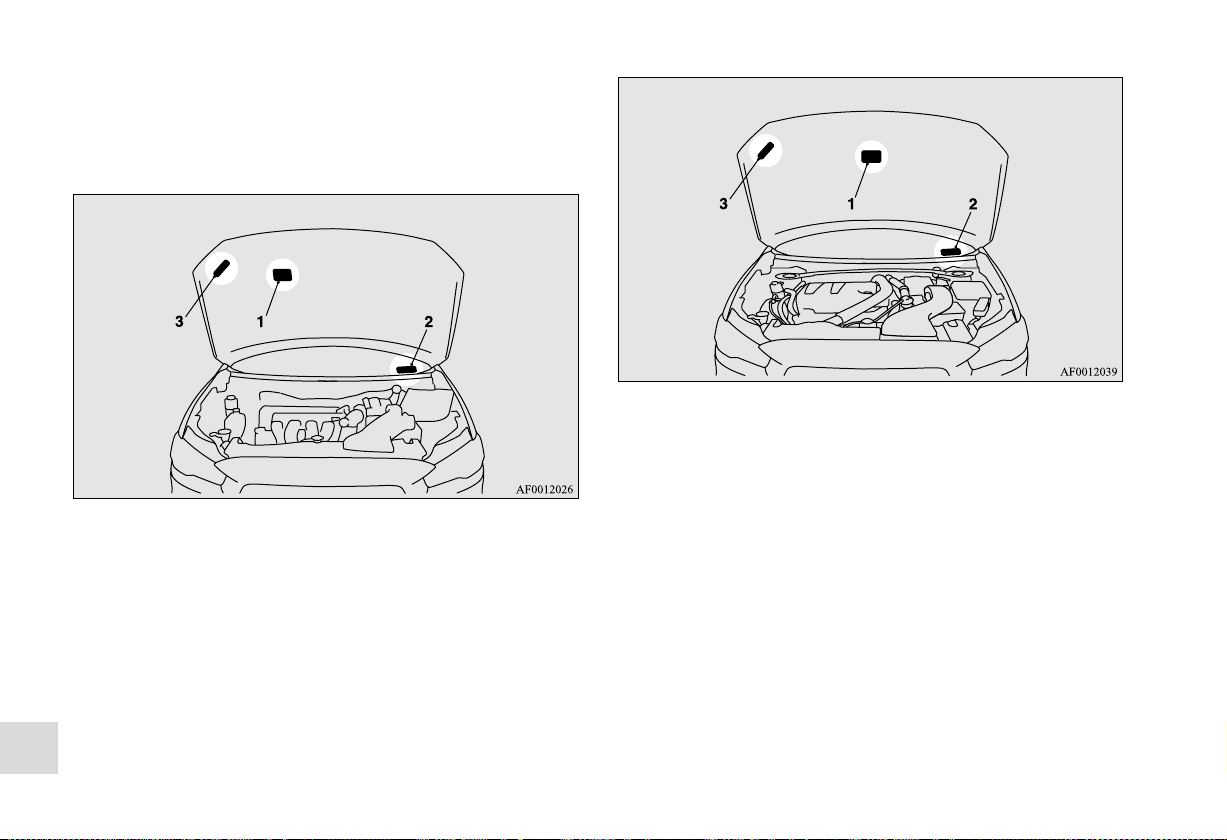
9-2
Specifications
9
Vehicle labeling
N01147400667
Keep a record of the chassis number and vehicle identification
number. Such information will assist the police if your vehicle
is stolen.
1 - Vehicle emission control information label
The vehicle emission control information label is affixed on the
inside panel of the engine hood.
2 - Vehicle identification number plate
The vehicle identification number is stamped on the plate riv-
eted to the left front corner of the dashboard. It is visible from
outside of the vehicle through the windshield.
3 - Air conditioning label
The air conditioning label is affixed on the inside panel of the
engine compartment.
Except for vehicles with turbocharger
Vehicles with turbocharger
BK0138600US.book 2 ページ 2011年7月17日 日曜日 午後2時32分
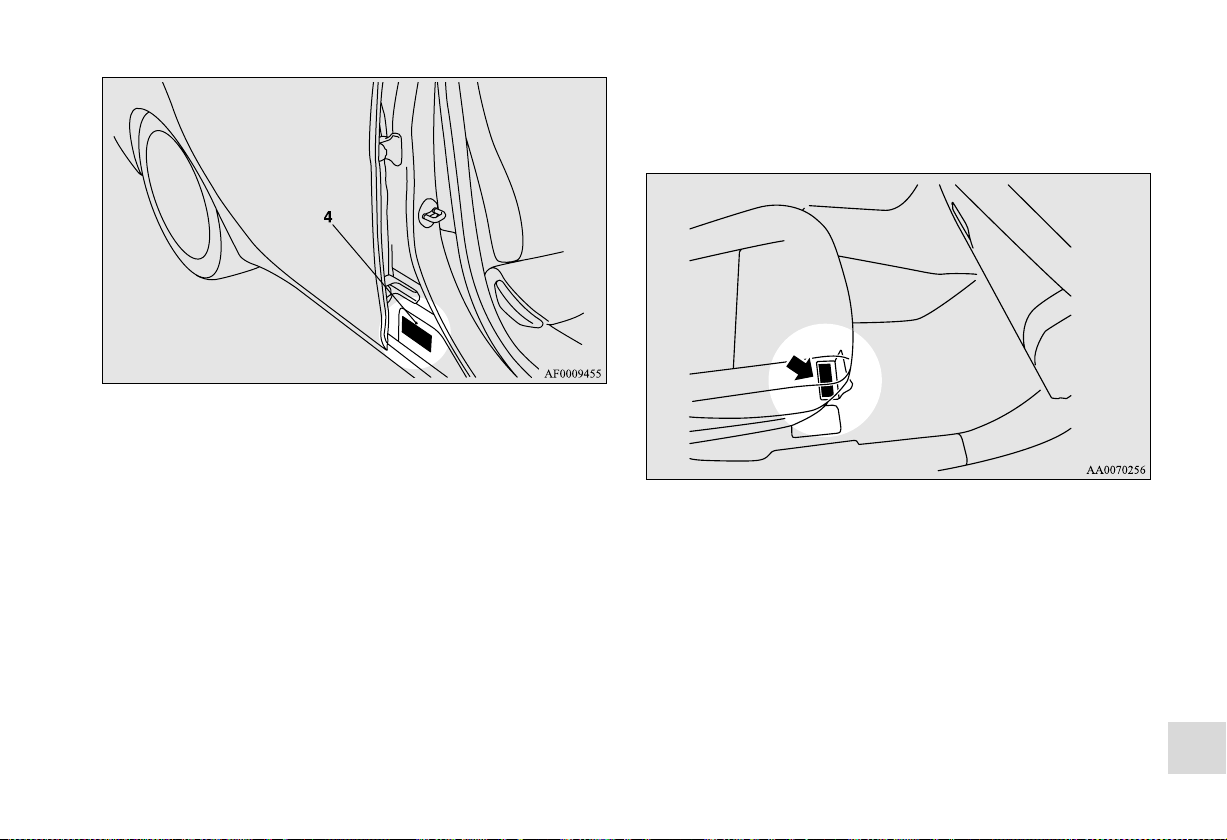
Specifications
9-3
9
4 - Vehicle information code plate
The vehicle information code plate is located on the front pas-
senger door sill.
Chassis number
The chassis number is stamped on the floor under the front pas-
senger seat. It is visible by pulling back the carpet flap as
shown in the illustration.
BK0138600US.book 3 ページ 2011年7月17日 日曜日 午後2時32分

9-4
Specifications
9
Engine serial number
The engine serial number is stamped on the cylinder block as
shown in the illustration.
Tire and loading information placard
N01148100528
The tire and loading information placard is located on the
driver’s door sill.
*- Front of the vehicle
BK0138600US.book 4 ページ 2011年7月17日 日曜日 午後2時32分
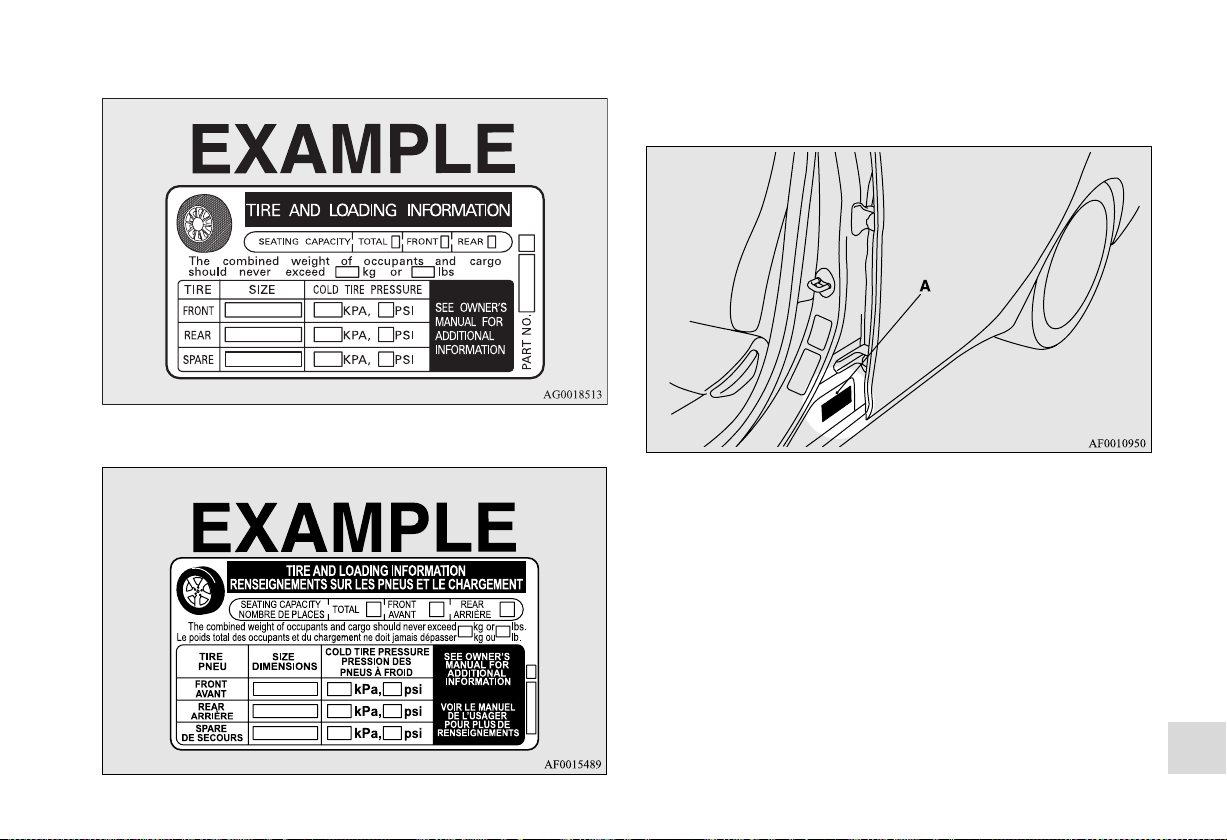
Specifications
9-5
9
Type 1
Type 2
Certification label
N01148200196
The certification label (A) is located on the driver’s door sill.
BK0138600US.book 5 ページ 2011年7月17日 日曜日 午後2時32分
9-6
Specifications
9
Vehicle dimensions
N01147500482
Item Vehicles with 16 inch tire Vehicles with 18 inch tire
Overall length 180.0 in (4,570 mm)
Overall width 69.4 in (1,760 mm)
Overall height 58.3 in (1,480 mm) 58.7 in (1,490 mm)
Wheel base 103.7 in (2,635 mm)
BK0138600US.book 6 ページ 2011年7月17日 日曜日 午後2時32分
Specifications
9-7
9
Vehicle weights
N01147600874
GVWR: maximum total weight (load) limit specified for the vehicle
GAWR: maximum weight (load) limit specified for the front or rear axle
Seating capacity: the number of maximum occupants
Item
2.0 liter 2.4 liter
Front-wheel drive
vehicles
All-wheel drive vehi-
cles
Front-wheel drive
vehicles
All-wheel drive vehi-
cles
Gross vehicle weight rating (GVWR) 3,969 lb (1,800 kg) 4,388 lb (1,990 kg) 4,079 lb (1,850 kg) 4,190 lb (1,900 kg)
Gross axle weight rating
(GAWR)
Front 2,227 lb (1,010 kg) 2,381 lb (1,080 kg) 2,227 lb (1,010 kg) 2,227 lb (1,010 kg)
Rear 2,007 lb (910 kg) 2,161 lb (980 kg) 2,007 lb (910 kg) 2,117 lb (960 kg)
Vehicle capacity weight 827 lb (375 kg)
Seating capacity 5 persons
BK0138600US.book 7 ページ 2011年7月17日 日曜日 午後2時32分

9-8
Specifications
9
Engine specifications
N01147700439
Item
2.0 liter
2.4 liter
Except for vehicles with tur-
bocharger
Vehicles with turbocharger
Engine model 4B11 4B12
Engine displacement 121.9 CID (1,998 cm³) 144.0 CID (2,360 cm³)
No. of cylinders and cylinder arrange-
ment
4 in-line
Bore 3.39 in (86.0 mm) 3.46 in (88.0 mm)
Stroke 3.39 in (86.0 mm) 3.82 in (97.0 mm)
Compression ratio 10.0 9.0 10.5
Thermostat valve opening temperature 189 °F (87 °C) 180 °F (82 °C) 189 °F (87 °C)
Spark plugs NGK DIFR6C11 DILKR7B6 DIFR5C11
Spark plug gap
.040 to .043 in
(1.0 to 1.1 mm)
.020 to .023 in
(0.5 to 0.6 mm)
.040 to .043 in
(1.0 to 1.1 mm)
Firing order 1-3-4-2
BK0138600US.book 8 ページ 2011年7月17日 日曜日 午後2時32分
Specifications
9-9
9
Battery
N01147800182
Battery is a 12 volt type.
Tires and wheels
N01147900691
PCD: Pitch Circle Diameter (installation holes)
N
OTE
● Contact an authorized Mitsubishi Motors dealer for details
on the combination used on your vehicle.
● These tires satisfy vehicle loading conditions described in
this owner’s manual.
75D23L
Tire Size P205/60R16 91H
215/45R18 89W,
P215/45R18 89V
Wheel
Size
16 x 6 1/2J,
16x61/2JJ
18 x 7J, 18 x 7JJ
PCD 4.5 in (114.3 mm)
Offset 1.81 in (46 mm)
BK0138600US.book 9 ページ 2011年7月17日 日曜日 午後2時32分
9-10
Specifications
9
Refill capacities
N01148000950
ACD: Active center differential system
Item Capacity Lubricants
Fuel (approxi-
mate)
Front-wheel drive vehicles 15.5 gal (59.0 L)
Refer to “Fuel selection” on page 1-2.
All-wheel drive vehicles 14.5 gal (55.0 L)
Engine oil
2.0 liter
Except for vehi-
cles with turbo-
charger
Oil pan 4.2 qt (4.0 L)
Engine oils displaying the ILSAC certification mark
(“starbust” symbol) on the container.
If these oils are not available, an API classification
SM or higher can be used.
Oil filter .32 qt (0.3 L)
Vehicles with
turbocharger
Oil pan 5.1 qt (4.8 L)
Oil filter .32 qt (0.3 L)
2.4 liter
Oil pan 4.5 qt (4.3 L)
Oil filter .32 qt (0.3 L)
Power steering As required Genuine Mitsubishi Power Steering Fluid
Manual transaxle 2.6 qt (2.5 L)
DiaQueen NEW MULTI GEAR OIL API classifica-
tion GL-3 SAE 75W-80
Continuously variable transmission (CVT) 7.5 qt (7.1 L) DiaQueen CVTF-J4
Twin Clutch SST
8.0 qt (7.6 L)
{includes .53 qt
(0.5 L) in oil
cooler}
DiaQueen SSTF-I
Transfer oil
Except for vehicles with ACD .52 qt (0.49 L) Hypoid gear oil API classification GL-5 SAE 80
Vehicles with ACD .85 qt (0.8 L) DiaQueen LSD gear oil
SC00001200-9.fm 10 ページ 2011年8月2日 火曜日 午後3時37分

Specifications
9-11
9
LSD: Limited slip differential
Item Capacity Lubricants
AWC control fluid
.95 qt (0.9 L)
{Includes
hydraulic piping}
DIAMOND ATF SP III
Rear differential oil
Except for vehicles with ACD .53 qt (0.5 L) Hypoid gear oil API classification GL-5 SAE 80
Vehicles with ACD .58 qt (0.55 L) DiaQueen LSD gear oil
Brake/Clutch (if so equipped) As required Conforming to Brake fluid DOT3 or DOT4
Hood lock release mechanism and safety catch As required Multipurpose type grease NLGI Grade 2
Engine coolant
{Includes .63 qt (0.65 L) in reserve tank}
Manual tran-
saxle
7.4 qt (7.0 L)
Dia Queen Super Long Life Coolant Premium or an
equivalent*
CVT 7.4 qt (7.0 L)
Twin Clutch
SST
7.9 qt (7.5 L)
Washer fluid 4.3 qt (4.0 L) —
Refrigerant (air conditioning)
Refer to the “Air
conditioning
label” on page
9-2.
HFC-134a
* : similar high quality ethylene glycol based non-silicate, non-amine, non-nitrate and non-borate coolant with long life hybrid organic
acid technology
BK0138600US.book 11 ページ 2011年7月17日 日曜日 午後2時32分

BK0138600US.book 12 ページ 2011年7月17日 日曜日 午後2時32分

Alphabetical index
1
A
Accessory (installation) 1-8
ACD (Active center differential system) 3-132
ACD control mode display 3-134
ACD control mode switch 3-133
ACD warning display 3-134
Active stability control (ASC) 3-151
ASC OFF display or ASC indicator 3-154
ASC operation display 3-154
Air cleaner filter 7-15
Air conditioning
Automatic air conditioning 5-31
, 5-41
Important air conditioning operating tips 5-51
Manual air conditioning 5-12
, 5-22
Air purifier 5-52
All-wheel driving operation 3-139
Aluminum wheels 7-94
Antenna
Roof antenna 5-148
Anti-lock braking system 3-147
Warning light / display 3-148
, 3-149
Arm rest 2-9
Assist grip 3-304
Audio
AM/FM electronically tuned radio with CD player 5-52
AM/FM electronically tuned radio with 6 CD autochanger 5-
80
Error codes 5-137
, 5-139
Handling of compact discs 5-145
Steering wheel audio remote control switch 5-134
Automatic air conditioning 5-31
, 5-41
Auxiliary audio connector (RCA) 5-132
Auxiliary video connector (RCA) 5-132
AWC control fluid 7-20
B
Back-up lights
Bulb capacity 7-55
Replacement 7-82
Ball joint, steering linkage seals and drive shaft boots 7-43
Battery 7-23
Charging system warning light 3-230
Checking battery electrolyte level 7-26
Disconnection and connection 7-27
During cold weather 7-26
Removing and installing the battery upper cover (vehicles
with turbocharger) 7-23
Specification 9-9
To check the battery indicator 7-25
Bluetooth 2.0 interface 3-256
Bottle holder 3-303
Brake
Anti-lock braking system 3-147
Braking 4-8
Fluid 7-21
, 9-10
Hose 7-43
Parking brake 3-77
BK0138600US.book 1 ページ 2011年7月17日 日曜日 午後2時32分

Alphabetical index
2
Parking brake lever stroke 7-39
Pedal 3-143
Pedal free play 7-38
Power brakes 3-144
Service brake 3-143
Break-in recommendations 3-2
Bulb capacity 7-55
C
California Perchlorate Materials Requirements 1-10
Capacities 9-10
Card holder 3-289
, 3-298
Cargo loads 4-14
Catalytic converter 7-3
Certification label 9-5
Charging system warning light 3-230
Chassis number 9-3
Child restraint 2-23
Child safety locks for rear door 3-58
Cleaning
Inside of your vehicle 7-89
Outside of your vehicle 7-91
Clutch
Fluid 7-21
, 9-10
Pedal free play 7-38
Coat hooks 3-304
Combination headlights and dimmer switch 3-234
Coming home light 3-241
Consumer information 8-2
Continuously variable transmission (CVT) 3-98
Fluid 7-18
, 9-10
Selector lever operation 3-98
Sports mode 3-106
Coolant (engine) 7-12
, 9-10
Cruise control 3-157
Indicator 3-159
Cup holder 3-302
D
Daytime running lights
Bulb capacity 7-55
Replacement 7-63
Defogger (rear window) 3-254
Defrosting or defogging (windshield, door windows) 5-20
, 5-
29
, 5-39, 5-49
Digital clock 5-149
Dimensions 9-6
Dimmer (high/low beam change) 3-239
Disc brake pads 7-43
Dome light
Bulb capacity 7-58
Replacement 7-86
Switch 3-294
Dome light/Reading lights
Bulb capacity 7-58
Replacement 7-85
Switch 3-292
Doors
BK0138600US.book 2 ページ 2011年7月17日 日曜日 午後2時32分

Alphabetical index
3
Lock 3-51
Power door locks 3-55
Drive mode indicator 3-137
Drive mode-selector 3-136
Driving during cold weather 4-6
Driving, alcohol and drugs 4-2
E
Electric rear window defogger switch 3-254
Electronic immobilizer (Anti-theft starting system) 3-5
, 3-41
Electronically controlled 4WD system 3-135
Drive mode indicator 3-137
Drive mode-selector 3-136
Emergency key 3-33
Emission-control system maintenance 7-40
Engine
Compartment 7-7
Coolant 7-12
, 9-10
Hood 7-4
Oil and oil filter 7-8
, 9-10
Overheating 6-5
Serial number 9-4
Specifications 9-8
Engine coolant temperature display 3-191
Exhaust system 7-44
External audio input connector 5-132
F
Filling the fuel tank 1-4
Floor console box 3-300
Floor mat 4-3
Fluid 9-10
AWC control fluid 7-20
Brake fluid 7-21
, 9-10
Clutch fluid 7-21
, 9-10
Continuously variable transmission (CVT) fluid 7-18
, 9-10
Engine coolant 7-12
, 9-10
Power steering fluid 7-22
, 9-10
Twin Clutch Sportronic shift transmission (Twin Clutch SST)
fluid 7-19
, 9-10
Washer fluid 9-10
Fluid capacities and lubricants 9-10
Fog lights
Bulb capacity 7-55
Indicator 3-228
Replacement 7-72
, 7-75
Switch 3-245
Free-hand advanced security transmitter (F.A.S.T.-key) 3-17
Front console boxes 3-299
Front console tray 3-299
Front seats 2-3
Front turn signal lights
Replacement 7-70
Front turn signal, parking and side-marker lights
Bulb capacity 7-55
Replacement 7-66
, 7-68
Fuel
Fuel economy 4-2
BK0138600US.book 3 ページ 2011年7月17日 日曜日 午後2時32分

Alphabetical index
4
Fuel hoses 7-42
Modification/alterations to the electrical or fuel systems 1-9
Tank capacity 1-5
, 9-10
Fuel selection 1-2
Fuses 7-46
Fusible links 7-45
G
General maintenance 7-43
General vehicle data 9-6
Genuine parts 1-9
Glove compartment 3-298
H
Handling of compact discs 5-145
Hazard warning flasher switch 3-244
Hazard warning lights 3-228
Head restraints 2-9
Headlight leveling switch 3-242
Headlights
Bulb capacity 7-55
Dimmer 3-239
Headlight flasher 3-240
Leveling switch 3-242
Replacement 7-58
Switch 3-234
Heater without air conditioning function 5-6
High beam indicator 3-228
Hill start assist (vehicles with Twin Clutch SST) 3-146
Hood lock release mechanism and safety catch 7-44
Horn switch 3-255
I
If the vehicle breaks down 6-2
Ignition switch 3-24
, 3-85
Important facts to know in case of an accident 8-5
Indicators 3-228
Information screen display 3-231
Inside day/night rearview mirror 3-80
Inside emergency trunk lid release 3-62
Interior lights 3-292
J
Jack 6-8
Storage 6-7
Jump-starting the engine 6-2
K
Key reminder buzzer 3-54
Keyless entry system 3-9
Keys 3-2
L
Labeling 9-2
License plate light
Bulb capacity 7-55
Replacement 7-83
Limited-slip differential 3-143
BK0138600US.book 4 ページ 2011年7月17日 日曜日 午後2時32分

Alphabetical index
5
Link System 3-256
Loading information 4-9
Lubricants 9-10
Luggage floor boxes 3-301
M
Malfunction indicator 3-229
Manual air conditioning 5-22
Manual transaxle 3-94
Oil 7-18
, 9-10
Shift points (recommended speed) 3-95
Mirror
Inside day/night rearview mirror 3-80
Outside rearview mirrors 3-83
Modifications to and racing of your vehicle 1-7
Multi-information display 3-181
O
Octane requirement 1-2
Oil
Engine oil 7-8
, 9-10
Manual transaxle oil 7-18
, 9-10
Rear axle oil 7-20
Transfer oil 7-19
Operation under adverse driving conditions 6-24
Outside rearview mirrors 3-83
Overheating 6-5
P
Parking 4-8
Parking brake 3-77
Parking brake lever stroke 7-39
Polishing 7-93
Power brakes 3-144
Power door locks 3-55
Power steering
Fluid 7-22
, 9-10
System 3-156
Power windows 3-69
Puncture (Tire changing) 6-9
R
Radiator cap 7-14
Radio
AM/FM electronically tuned radio with CD player 5-52
AM/FM electronically tuned radio with 6 CD autochanger 5-
80
General information about your radio 5-150
Rain sensor 3-248
Rear axle oil 7-20
Rear side-marker lights
Bulb capacity 7-55
Replacement 7-79
Rear turn signal lights
Bulb capacity 7-55
Replacement 7-79
BK0138600US.book 5 ページ 2011年7月17日 日曜日 午後2時32分

Alphabetical index
6
Rear window defogger switch 3-254
Rear-view camera 3-172
Rearview mirror
Inside 3-80
Outside 3-83
Refrigerant (air conditioning) 9-10
Replacement of light bulbs 7-55
Replacing tires and wheels 7-34
Reporting Safety Defects 8-3
Roof antenna 5-148
S
Safe driving techniques 4-6
Seat 2-2
Arm rest 2-9
Front seats 2-3
Heated seats 2-7
Rear seats 2-8
Seats and restraint systems 2-3
Seat belt 2-13
Adjustable seat belt shoulder anchor 2-19
Child restraint 2-23
Driver’s seat belt reminder/warning 2-18
Force limiter 2-23
Front passenger seat belt warning light 2-19
Maintenance and inspection 2-34
Pre-tensioner 2-21
Seat belt extender 2-20
Seat belt instructions 2-14
Seat belt use during pregnancy 2-21
Service brake 3-143
Service precautions 7-2
Snow tires 7-37
Spark plugs 7-41
Steering
Power steering fluid 7-22
, 9-10
Tilt lock lever 3-79
Wheel lock 3-30
, 3-88
Storage spaces 3-296
Sun visors 3-288
Supplemental Restraint System 2-34
How the Supplement Restraint System works 2-38
Servicing 2-57
Warning light/display 2-43
T
Tank capacity 1-5, 9-10
Theft-alarm system
System 3-63
Tire pressure monitoring system 3-166
Warning light/display 3-167
Tires 7-29
How to change a tire 6-9
Inflation pressure 7-32
Maintenance 7-34
Quality grading 8-2
Replacing tires and wheels 7-34
Rotation 7-35
BK0138600US.book 6 ページ 2011年7月17日 日曜日 午後2時32分

Alphabetical index
7
Size (tire and wheel) 9-9
Snow tires 7-37
Tire and loading information placard 4-10
, 9-4
Tire chains 7-37
Tread wear indicators 7-35
Tissue holder 3-301
Tools 6-7
Storage 6-7
Towing 6-22
Trailer towing 4-15
Transfer oil 7-19
Trunk area light
Replacement 7-88
Trunk lid 3-59
Turbocharger operation 3-93
Turn signal light
Indicators 3-228
Turn signal lights
Bulb capacity 7-55
Lever 3-243
Replacement 7-70
Twin Clutch SST (Sportronic Shift Transmission) 3-112
Fluid 7-19
, 9-10
Gearshift lever operation 3-112
Gearshift lever position display 3-114
Manual shift 3-122
Manual shift display 3-128
Twin Clutch SST control mode display 3-122
Twin Clutch SST control mode switch 3-121
Warning display 3-116
U
USB input terminal 3-283
How to connect an iPod 3-285
USB input terminal device
How to connect a USB memory 3-283
V
Vanity mirror 3-289
Vehicle care precautions 7-88
Vehicle dimensions 9-6
Vehicle labeling 9-2
Vehicle preparation before driving 4-5
Vehicle weights 9-7
Vents 5-2
W
Warning lights 3-228
Washer
Fluid 7-21
, 9-10
Switch 3-252
Windshield washer 3-252
Waxing 7-92
Weights 9-7
Welcome light 3-240
Wheel
Covers 6-20
Specification 9-9
BK0138600US.book 7 ページ 2011年7月17日 日曜日 午後2時32分

Alphabetical index
8
Wiper
Rain sensor 3-248
Windshield 3-246
Wiper blades 7-40
BK0138600US.book 8 ページ 2011年7月17日 日曜日 午後2時32分

BK0138600US.book 9 ページ 2011年7月17日 日曜日 午後2時32分
How to calculate your gasoline mileage
You can calculate your miles-per-gallon or kilometers-per-litre
by using the following process:
1. Fill your vehicle’s fuel tank and record the odometer mile-
age.
2. Drive your vehicle as you normally do.
3. Refill the fuel tank. Record the odometer mileage again,
as well as the gallons/litres of fuel used.
4. Subtract the first mileage number from the second number
to know how many miles/kilometers were driven. Divide
the number of miles/kilometers driven by the number of
gallons/litres of fuel used. This is your approximate miles-
per-gallon or kilometers-per-litre.
Gas mileage record Gas mileage record
Date Odometer
Gallons
/Litres
This Fill
Cost Per
Gallon
/Litre
Cost
This Fill
Miles Per Gallon/Kilo-
meters Per Litre
(Miles/Gals.)/(Kilome-
ters/Litres)
Date Odometer
Gallons
/Litres
This Fill
Cost Per
Gallon
/Litre
Cost
This Fill
Miles Per Gallon/Kilo-
meters Per Litre
(Miles/Gals.)/(Kilome-
ters/Litres)
10GS41(NAFTA)_BK0102103US_lastpage.fm 1 ページ 2009年9月22日 火曜日 午後2時37分
NOTE
Maintenance record
Name of Owner Date of Purchase
Address of Owner Model of Vehicle
Name and Address of Dealer Vehicle Identification Number
Service Performed Date
Kilometers
Miles
Inspection and Maintenance Item
12GS41(NAFTA)_cover3.fm 1 ページ 2011年3月11日 金曜日 午後4時11分