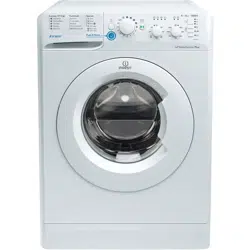
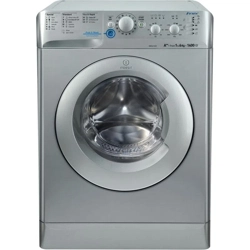
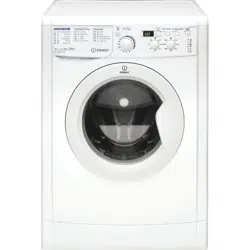
Instructions for use Washing Machine
Care and maintenance
Cutting off the water and electri- city supplies
- Turn off the water tap after every wash cycle. This will limit wear on the hydraulic system inside the washing machine and help to pre- vent leaks.
- Unplug the washing machine when cleaning it and during all maintenance work.
Cleaning the washing machine
The outer parts and rubber components of the appliance can be cleaned using a soft cloth soaked in lukewarm soapy water. Do not use solvents or abrasives.
Cleaning the detergent dispenser drawer

Remove the dispenser by raising it and pulling it out (see figure). Wash it under running water; this operation should be repeated frequently
Caring for the door and drum of your appliance
- Always leave the porthole door ajar in order to prevent unpleasant odours from forming.
Cleaning the pump
The washing machine is fitted with a self-cleaning pump which does not require any maintenance. Sometimes, small items (such as coins or buttons) may fall into the pre-chamber which protects the pump, situated in its bot- tom part.
! Make sure the wash cycle has finished and unplug the appliance.

To access the prechamber:
1. using a screwdriver, remove the cover panel on the lower front part of the washing machine (see figure);

2. unscrew the lid by rotating it anticlockwise (see figure): a little water may trickle out. This is perfectly normal;
3. clean the inside thoroughly;
4. screw the lid back on;
5. reposition the panel, making sure the hooks are securely in place before you push it onto the appliance.
Checking the water inlet hose
Check the inlet hose at least once a year. If there are any cracks, it should be replaced immediately: during the wash cycles, water pressure is very strong and a cracked hose could easily split open.
! Never use second-hand hoses.
Precautions and tips
This washing machine was designed and constructed in accordance with international safety regulations. The following information is provided for safety reasons and must therefore be read carefully
General safety
- This appliance was designed for domestic use only.
- This appliance can be used by children aged from 8 years and above and persons with re- duced physical, sensory or mental capabilities or lack of experience and knowledge if they have been given supervision or instruction concerning use of the appliance in a safe way and understand the hazards involved. Chil- dren shall not play with the appliance. Clea- ning and user maintenance shall not be made by children without supervision.
- Do not touch the machine when barefoot or with wet or damp hands or feet.
- Do not pull on the power supply cable when unplugging the appliance from the electricity socket. Hold the plug and pull.
- Do not open the detergent dispenser drawer while the machine is in operation.
- Do not touch the drained water as it may reach extremely high temperatures.
- Never force the porthole door. This could damage the safety lock mechanism designed to prevent accidental opening.
- If the appliance breaks down, do not under any circumstances access the internal mechanisms in an attempt to repair it yourself.
- Always keep children well away from the appliance while it is operating.
- The door can become quite hot during the wash cycle.
- If the appliance has to be moved, work in a group of two or three people and handle it with the utmost care. Never try to do this alone, because the appliance is very heavy.
- Before loading laundry into the washing machine, make sure the drum is empty
Disposal
- Disposing of the packaging materials: observe local regulations so that the packaging may be re-used.
- The European Directive 2012/19/EU - WEEE on Waste Electrical and Electronic Equipment, requires that old household electrical appliances must not be disposed of in the normal unsorted municipal waste stream. Old appliances must be collected separately in order to optimise the recovery and recycling of the materials they contain and reduce the impact on human health and the environment. The crossed out “wheeled bin” symbol on the product reminds you of your obligation, that when you dispose of the appliance it must be separately collected.
Description of the washing machine and starting a wash cycle
Control panel

Detergent dispenser drawer: used to dispense detergents and washing additives (see “Detergents and laundry”).
ON/OFF button: switches the washing machine on and off.
WASH CYCLE knob: used to set the desired wash cycle (see “Table of wash cycles”).
FUNCTION buttons with indicator light: used to select the available functions. The indicator light corresponding to the selected function will remain lit.
TEMPERATURE knob: sets the temperature or the cold wash cycle (see “Personalisation”).
SPIN SPEED knob: sets the spin speed or exclude the spin cycle completely (see “Personalisation”).
DISPLAY: used to view the duration of the various cycles available and the remaining time of a cycle in progress; if the DELAY TIMER option has been selected, the countdown to the start of the selected cycle will appear.
DELAY TMER button  : press to set a delayed start time for the selected wash cycle. The delay time will be shown on the display.
WASH CYCLE PROGRESS indicator lights: used to monitor the progress of the wash cycle. The illuminated indicator light shows which phase is in progress.
DOOR LOCKED indicator light: indicates whether the door may be opened or not (see next page).
START/PAUSE button with indicator light: starts or temporarily interrupts the wash cycles. N.B. To pause the wash cycle in progress, press this button; the corresponding indicator light will flash orange, while the indicator light for the current wash cycle phase will remain lit in a fixed manner. If the DOOR LOCKED indicator light is switched off, the door may be opened (wait approximately 3 minutes). To start the wash cycle from the point at which it was interrupted, press this button again.
Standby mode: This washing machine, in compliance with new energy saving regulations, is fitted with an automatic standby system which is enabled after about 30 minutes if no activity is detected. Press the ON-OFF button briefly and wait for the machine to start up again.
Indicator lights
The indicator lights provide important information. This is what they can tell you:
Wash cycle phase indicator lights - Once the desired wash cycle has been selected and has begun, the indicator lights switch on one by one to indicate which phase of the cycle is currently in progress.

Function buttons and corresponding indicator lights - When a function is selected, the corresponding indicator light will illuminate. If the selected function is not compatible with the programmed wash cycle, the corresponding indicator light will flash and the function will not be activated. If the selected function is not compatible with another function which has been selected previously, the indicator light corresponding to the first function selected will flash and only the second function will be activated; the indicator light corresponding to the enabled option will remain lit.
 Door locked indicator light - When the indicator light is on, the porthole door is locked to prevent it from being opened; make sure the indicator light is off before opening the door (wait approximately 3 minutes). To open the door during a running wash cycle, press the START/PAUSE button; the door may be opened once the DOOR LOCKED indicator light turns off.
Starting a wash cycle
- Switch the washing machine on by pressing the ON/OFF button. All indicator lights will switch on for a few seconds, then they will switch off and the START/PAUSE indicator light will pulse.
- Load the laundry and close the door
- Set the WASH CYCLE knob to the desired programme.
- Set the washing temperature (see “Personalisation”).
- Set the spin speed (see “Personalisation”).
- Measure out the detergent and washing additives (see “Detergents and laundry”).
- Select the desired functions.
- Start the wash cycle by pressing the START/PAUSE button and the corresponding indicator light will remain lit in a fixed manner, in green. To cancel the set wash cycle, pause the machine by pressing the START/PAUSE button and select a new cycle.
- At the end of the wash cycle the END indicator light will switch on. The door can be opened once the DOOR LOCK indicator light turns off (wait approximately 3 minutes). Take out your laundry and leave the appliance door ajar to make sure the drum dries completely. Switch the washing machine off by pressing the ON/OFF button.
Wash cycles
Table of wash cycles

The length of cycle shown on the display or in this booklet is an estimation only and is calculated assuming standard working conditions. The actual duration can vary according to factors such as water temperature and pressure, the amount of detergent used, the amount and type of load inserted, load balancing and any wash options selected.
- Test wash cycle in compliance with regulations 1061/2010: set wash cycle 15 with a temperature of 60°C. This cycle is designed for cotton loads with a normal soil level and is the most efficient in terms of both electricity and water consumption; it should be used for garments which can be washed at 60°C. The actual washing temperature may differ from the indicated value.
- Test wash cycle in compliance with regulations 1061/2010: set wash cycle 15 with a temperature of 40°C. This cycle is designed for cotton loads with a normal soil level and is the most efficient in terms of both electricity and water consumption; it should be used for garments which can be washed at 40°C. The actual washing temperature may differ from the indicated value.
For all Test Institutes:
2) Long wash cycle for cottons: set wash cycle 15 with a temperature of 40°C.
3) Long programme for synthetics: set programme 4, then select the “Extra Wash ” option.
Fast daily cycles
A complete set of fast programmes to wash the most commonly used fabrics - even with a full load - and to remove the most frequent daily dirt in less than 1 hour.
Mix Coloured 59’: to wash mixed and coloured items together.
Cotton 59’: cycle designed to wash cotton garments - mainly white items. It can be used with powder detergent too.
Cotton 45’: short cycle designed to wash delicate cotton items.
Synthetics 59’: specific for synthetic items. If the dirt is difficult to remove, the temperature can be increased up to 60° and powder detergent can be used too.
Mix 30’: short cycle designed to wash a mixed load of cotton and synthetic fabrics - white and coloured items together.
Express 20’: this programme refreshes your items, making them perfumed again in just 20 minutes.
Personalisation
Setting the temperature
Turn the TEMPERATURE knob to set the wash temperature (see Table of wash cycles).
The temperature may be lowered, or even set to a cold wash  .
.
The washing machine will automatically prevent you from selecting a temperature which is higher than the maximum value set for each wash cycle.
! Exception: if the 4 programme is selected, the temperature can be increased up to a value of 60°C.
Setting the spin speed
Turn the SPIN SPEED knob to set the spin speed for the selected wash cycle. The maximum spin speeds available for each wash cycle are as follows:

The spin speed may be lowered, or the spin cycle can be excluded altogether by selecting the symbol  . The washing machine will automatically prevent you from selecting a spin speed which is higher than the maximum speed set for each wash cycle.
Functions
The various wash functions available with this washing machine will help to achieve the desired results, every time. To activate the functions:
- Press the button corresponding to the desired function;
- the function is enabled when the corresponding indicator light is illuminated.
Note:
- If the selected function is not compatible with the programmed wash cycle, the corresponding indicator light will flash and the function will not be activated.
- If the selected function is not compatible with another function which has been selected previously, the indicator light corresponding to the first function selected will flash and only the second function will be activated; the indicator light corresponding to the enabled option will remain lit.
 Delay timer
To set a delayed start for the selected programme, press the corresponding button repeatedly until the required delay period has been reached. When this option is enabled, the symbol lights up on the display. To remove the delayed start option press the button until the text “OFF” appears on the display.
Extra Wash
Enable the Extra Wash option for very dirty items, where compatible. Press this option to let the cycle automatically re-adjust all wash parameters through a longer lasting cycle. The option always leaves the temperature unchanged, while the spin cycle is automatically brought back to maximum levels. The user can set the spin cycle back to the desired value at any time.
Energy Saver
The Energy Saver option washes cotton and synthetic items, saving energy and helping the environment. Energy saving is due to a cold wash cycle, while an enhanced mechanical action and optimised water use make it possible to reach the desired result. Recommended for slightly soiled garments. Use of liquid detergent recommended.
Detergents and laundry
Detergent dispenser drawer
Good washing results also depend on the correct dose of detergent: adding too much detergent will not necessarily result in a more efficient wash, and may in fact cause build up on the inside of your appliance and contribute to environmental pollution.
- Do not use hand washing detergents because these create too much foam.
- Use powder detergent for white cotton garments, for prewashing, and for washing at temperatures over 60°C.
- Follow the instructions given on the detergent packaging.
Open the detergent dispenser drawer and pour in the detergent or washing additive, as follows.

- Do not put the detergent into compartment 1.
- The detergent must be put only in the compartment 2.
compartment 2: Detergent for the wash cycle (powder or liquid) Liquid detergent should only be poured in immediately prior to the start of the wash cycle.
compartment 3: Additives (fabric softeners, etc.) The fabric softener should not overflow the grid.
Note: If a “tablet detergent” is used, always follow the manufacturer’s instructions.
Preparing the laundry
- Divide the laundry according to:
- the type of fabric/the symbol on the label
- the colours: separate coloured garments from whites.
- Empty all garment pockets and check the buttons.
- Do not exceed the values listed in the “Table of wash cycles”, which refer to the weight of the laundry when dry.
Special wash cycles
Gym Kit: cycle suitable to wash all sports items together, including gym towels, while respecting their fibres (follow the instructions in the garment labels).
Sport Shoes: is for washing sports shoes; for best results, do not wash more than 1 pairs simultaneously. We recommend fastening any strings before introducing the shoes into the drum.
Baby: cycle designed for dirt typical of children’s garments in that it effectively removes any traces of residual detergent.
Duvet: to wash single duvets (the weight of which should not exceed 1 kg), cushions or clothes padded with goose down such as puffa jackets, use the special wash cycle number 12. We recommend that duvets are placed in the drum with their edges folded inwards (see figure) and that no more than ¾ of the total volume of the drum is used. To achieve the best results, we recommend that a liquid detergent is used and placed inside the detergent dispenser drawer.

Wool: all wool garments can be washed using programme 13, even those carrying the “hand-wash only”  label. For best results, use special detergents and do not exceed 1 kg of laundry.
Silk: use special wash cycle 14 to wash all silk garments. We recommend the use of special detergent which has been designed to wash delicate clothes.
Curtains: fold curtains and place them in a pillow case or mesh bag. Use wash cycle 14.
Load balancing system
Before every spin cycle, to avoid excessive vibrations and to distribute the load in a uniform manner, the drum rotates continuously at a speed which is slightly greater than the washing rotation speed. If, after several attempts, the load is not balanced correctly, the machine spins at a reduced spin speed. If the load is excessively unbalanced, the washing machine performs the distribution process instead of spinning. To encourage improved load distribution and balance, we recommend small and large garments are mixed in the load.
Troubleshooting
| Problem: |
Possible causes / Solutions: |
| The machine does not switch on. |
- The appliance is not plugged into the socket fully, or not enough to make contact.
- There is no power to the socket, or the fuse has blown in the mains plug.
|
| The wash cycle does not start |
- The door is not closed properly.
- The ON/OFF button has not been pressed.
- The START/PAUSE button has not been pressed.
- The water tap has not been turned on to allow water to flow into the machine.
- A delayed start has been set.
|
| The machine does not fill with water or “H2O” will flash on the display |
- The water inlet hose is kinked.
- The water inlet hose is not connected to the water supply.
- The water pressure is too low.
- The water tap has not been turned on to allow water to flow into the machine.
- There is no water supply to the house.
- The inlet valve filter is blocked.
- The START/PAUSE button has not been pressed.
|
| The machine continuously fills with water and continually drains away or Water left in the drum or Stuck on wash. |
- The top of the drain hose is too low - It must be fitted at a height between 65 and 100 cm from the floor (see “Installation”).
- The drain hose is connected incorrectly to the sink trap allowing water to run into the machine, the drain hose must be positioned higher than the bottom of the sink to prevent water flowing down the drain hose.
- The end of the drain hose has been pushed too far down the standpipe, the ‘U’ bracket should be fitted 100 mm from the end of the drain hose.
|
| The machine does not drain or spin or F05 error code in the display. |
- The Pump filter is blocked.
- The drain hose is kinked (see “Installation”).
- New Installation - The blanking cap or spigot has not been removed if connected under a sink.
- The drain hose or sink trap is blocked.
- The wash cycle does not include draining, some wash cycles require the drain phase to be started manually.
- The ‘Spin Speed’ selector knob is in the “
 ” position. ” position.
|
| The machine does not heat or poor wash results. |
- The ‘Temperature’ selector knob is in the “
 ” position. ” position.
|
| The programme takes too long or The Display changes the estimated ‘Time to End’ during the programme. |
- Programme times will vary due to water pressure, the incoming water temperature and if the wash load goes out of balance. This will increase the programme times accordingly (see ‘ The machine wont spin properly’ below).
|
| The machine vibrates a lot during the spin cycle. |
- The feet have not been adjusted, enabling the machine to rock.
- New Installation - Either the Transit Bolts including the plastic spacers, or the Polystyrene Packaging have not been removed when installing the machine.
- The machine is trapped between cabinets and/or walls.
- The load is in a slight out of balance condition and machine is spinning, but at a lower speed.
|
| The machine is noisy. |
- There will always be some motor, pump and drum noise during spin
|
| The machine wont spin properly. |
- Out of Balance detected when attempting to go into a spin cycle - If this happens the machine will continue to try to repeat the distribution of the load required before the machine will go into higher spin speeds - This will increase the programme time accordingly. This is a safety feature to prevent damage. Out of Balance can be caused by washing a single heavy item (eg duvet, quilt, etc). - Try the programme again using a different load.
|
| The machine leaks from the dispenser. |
- The dispenser drawer is blocked with detergent and requires cleaning.
- The water pressure is too high and requires turning down - turn down the tap on the water supply pipe slightly and try again.
- The machine is tilting forwards - It must be level when in its final position.
|
| The machine leaks (other than dispenser). |
- The fill hose is loose, check both the cabinet and tap ends.
- The fill hose is tight but still leaks, if so replace the rubber washers, or the fill hose is missing the rubber washer.
- The drain hose is not fixed in properly
|
| The indicator lights on the console are flashing rapidly. |
- Switch off the machine and unplug it, wait for approximately 1 minute and then switch it back on again If the problem persists contact the Technical Assistance Service.
|
| The machine smells. |
- The machine requires a service wash. Run a 90 degree wash cycle with detergent and no laundry
|
| The machine door cannot be opened. |
- The door will not open until the door lock indicator light goes out shortly after the program has finished.
|
| Door Seal damaged at the bottom |
- The door seal has drainage holes at the bottom - This is normal.
|
| The water level is too low when the machine is washing. |
- The water level is correct if it can be seen at the bottom of the door.
|
| There is too much foam. |
- The detergent is not suitable for machine washing (it should display the text ‘for washing machines’ or ‘hand and machine wash’ or the like).
- Too much detergent was used - less detergent is required in soft water.
|
| After completing the programme, or before starting a programme, the machine has turned itself off (no lights). |
- To comply with new energy saving regulations the machine is fitted with an automatic standby system. Press ‘ON/OFF’ button for 3 seconds to activate the machine, it can then either be switched off or a new programme selected.
|
| General. |
- Your washing machine contains sensors that monitor progress during the wash cycle (eg: Water Levels, Temperatures, Out of Balance loads, Wash time/progress).
Normally, if your machine successfully completes the cycle, there is unlikely to be anything wrong
|
Remember, you will be charged for a service call for problems caused by incorrect installation, as indicated on pages 2 to 4. Not emptying contents from pockets may cause pump or drain blockages, or may damage the machine.
Do not wash items which do not have a wash label, or wash items that are not intended as machine washable.