
GB
1
Contents
Installation, 2-3-4-5
Unpacking and levelling
Connecting the electricity and water supplies
The first wash cycle
Technical data
Care and maintenance, 6
Cutting off the water or electricity supply
Cleaning the washing machine
Cleaning the detergent dispenser drawer
Caring for the door and drum of your appliance
Cleaning the pump
Checking the water inlet hose
Precautions and tips, 7
General safety
Disposal
Description of the washing machine
and starting a wash cycle, 8-9
Control panel
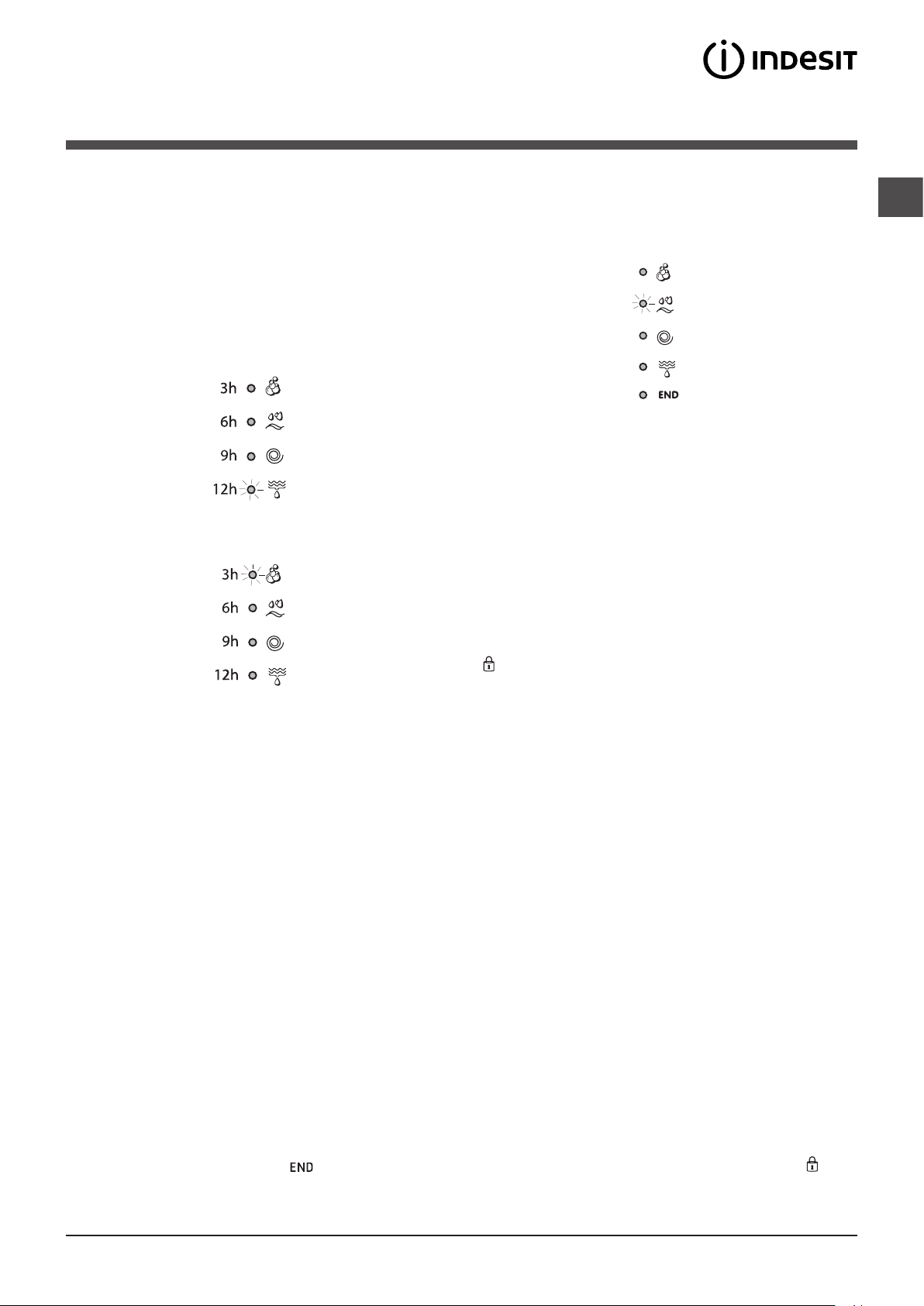
Indicator lights
Starting a wash cycle
Wash cycles, 10
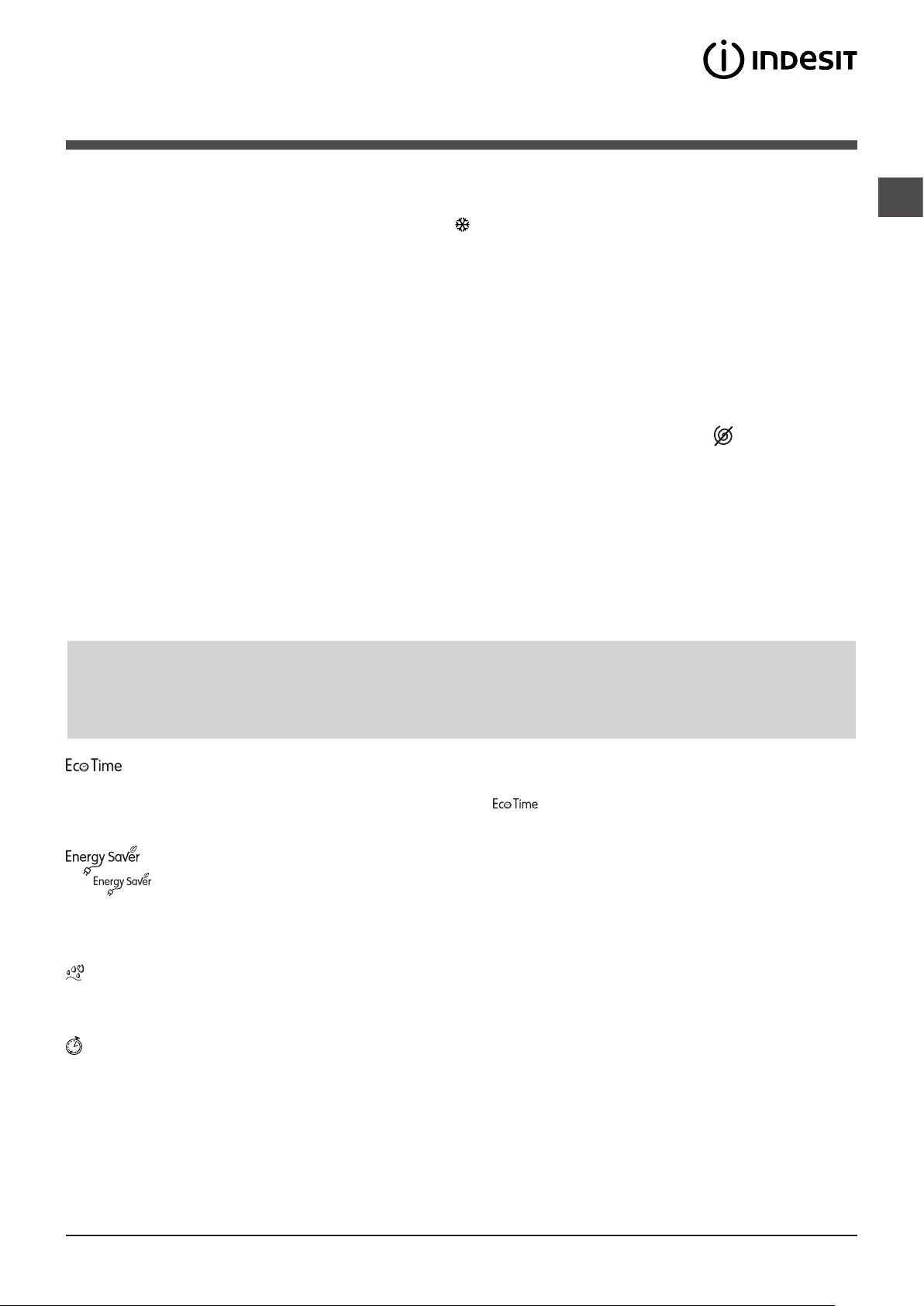
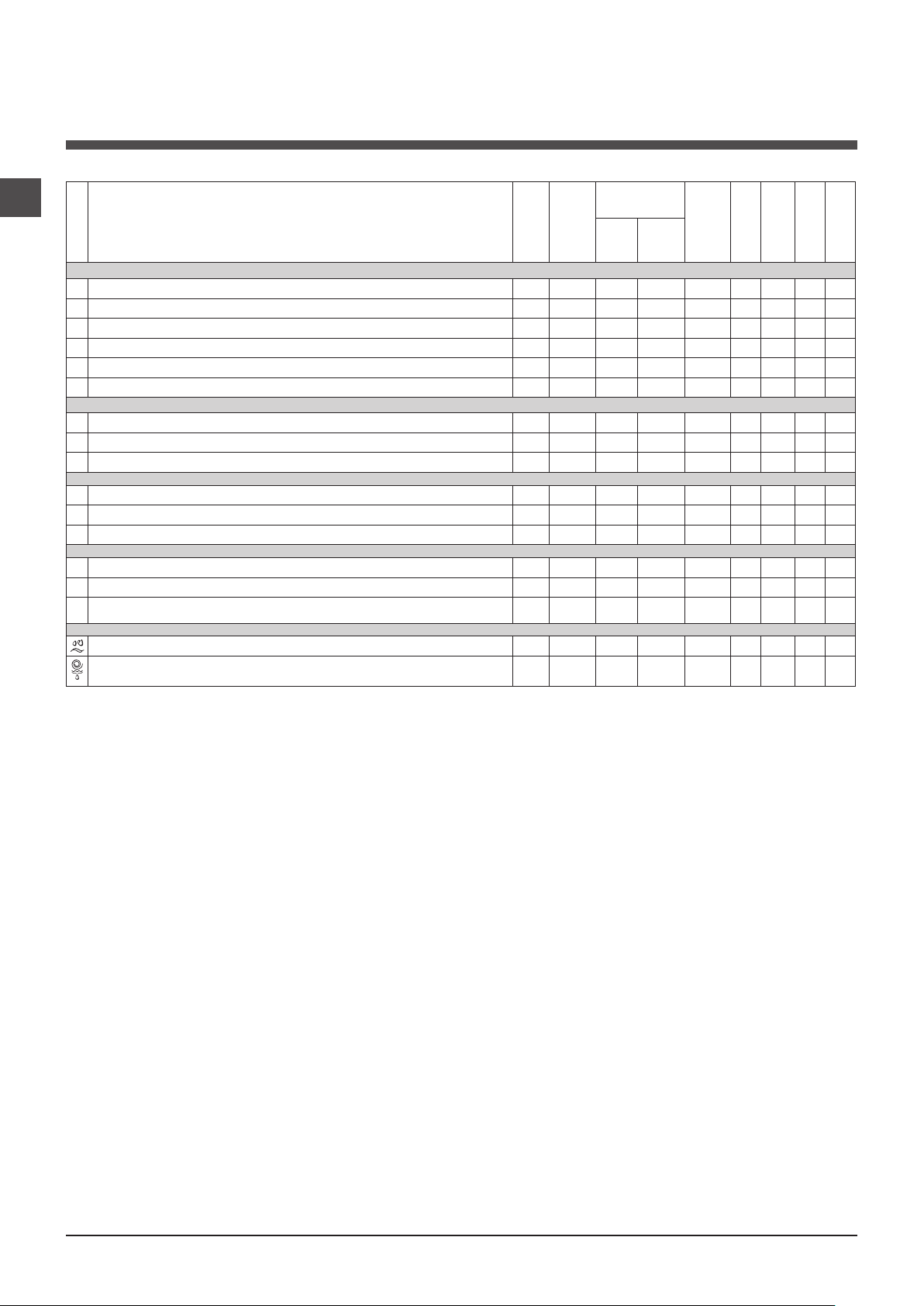
Table of wash cycles
Personalisation, 11
Setting the temperature
Setting the spin speed
Functions
Detergents and laundry, 12
Detergent dispenser drawer
Preparing the laundry
Garments requiring special care
Load balancing system
Troubleshooting, 13-14
Product Guarantee and Repair Informa-
tion, 15
IWSC 61251 S
Instructions for use
WASHING MACHINE
English,1
GB
FR
Français,17
،يبرع,31
AR
2
GB
Installation
! Keep this instruction manual in a safe place for
future reference. Should the appliance be sold, tran-
sferred or moved, make sure the instruction manual
accompanies the washing machine to inform the
new owner as to its operation and features.
! Read these instructions carefully: they contain
vital information on installation, use and safety.
Unpacking and levelling
Unpacking
1. Unpack the washing machine.
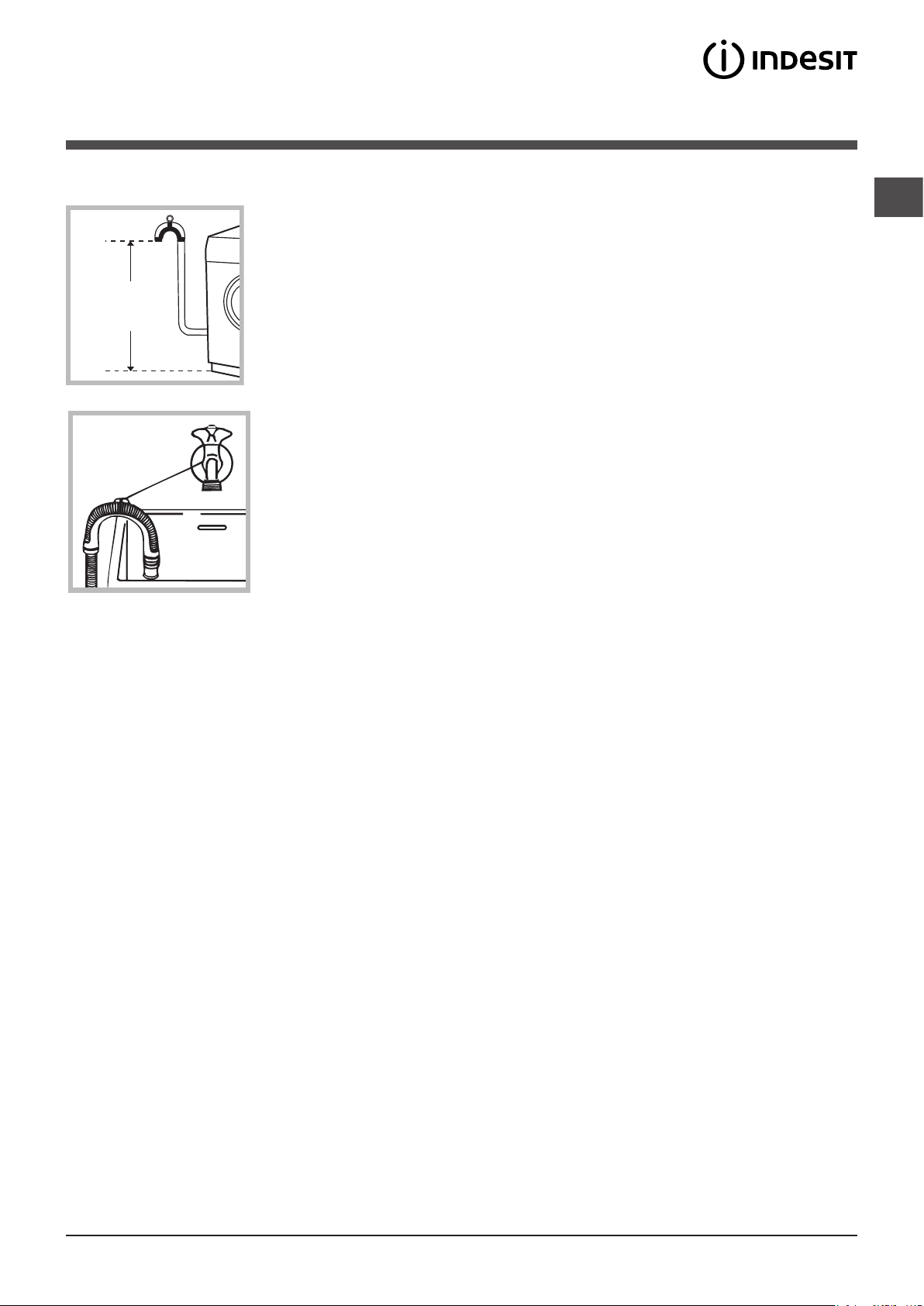
2. Check whether the washing machine has
been damaged during transport. If this is the
case, do not install it and contact your retailer.
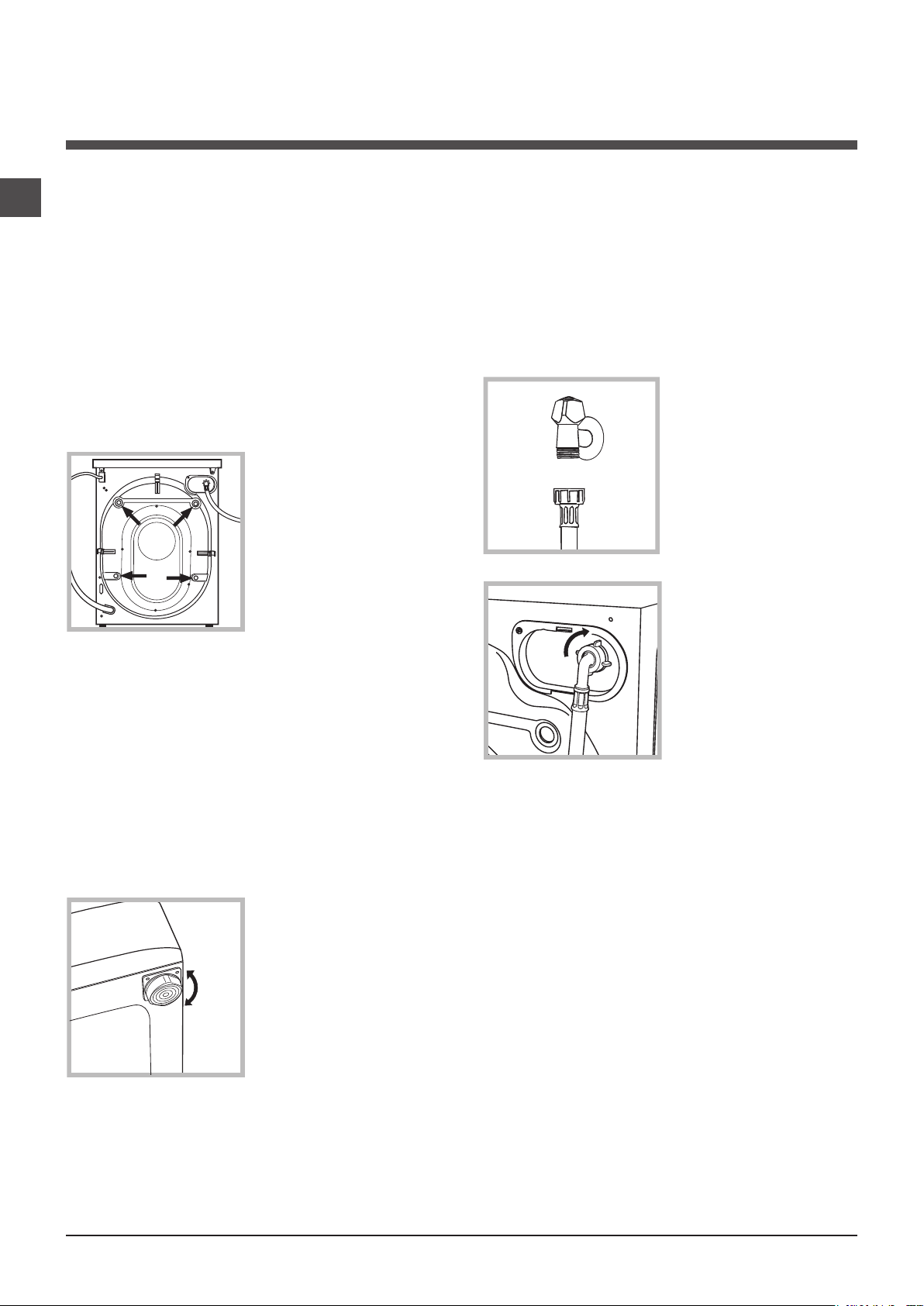
3. Remove the 4 pro-
tective screws and the
rubber bush with the
respective spacer, si-
tuated on the rear of the
appliance (see also the
installation leaflet).
4. Seal the gaps using the plastic plugs provided.
5. Keep all the parts: you will need them again
if the washing machine needs to be moved to
another location.
! Packaging materials are not children’s toys.
Levelling
Your machine may make a considerable amount
of noise if the two front feet have not been adju-
sted correctly.
1. Install the washing machine on a flat sturdy
floor, without resting it up against walls, furniture
cabinets or other.
2. If the floor is not per-
fectly level, compensate
for any unevenness by
tightening or loosening
the adjustable front feet
(see figure); the angle
of inclination, measu-
red according to the
worktop, must not ex-
ceed 2°.
Levelling your appliance correctly will provide it
with stability and avoid any vibrations, noise and
shifting during operation. If it is placed on a fitted
or loose carpet, adjust the feet in such a way as
to allow enough room for ventilation beneath the
washing machine.
Electric and water connections
Connecting the water inlet hose
1. Connect the supply
pipe by screwing it to
a cold water tap using
a 3/4 gas threaded
connection (see figure).
Before performing the
connection, allow the
water to run freely until
it is perfectly clear.
2. Connect the other
end of the water inlet
hose to the washing
machine, screwing it
onto the appliance’s
cold water inlet, situated
on the top right-hand
side on the rear of the
appliance (see figure).
3. Make sure there are no kinks or bends in the
hose.
! The water pressure at the tap must be within
the values indicated in the Technical details
table (on the page 5).
! If the water inlet hose is not long enough,
contact a specialist store or an authorised
serviceman.
! Ensure that the supply taps are allowing wa-
ter through. Old taps may seize in the closed
position and thus prevent water reaching the
machine.
GB
3
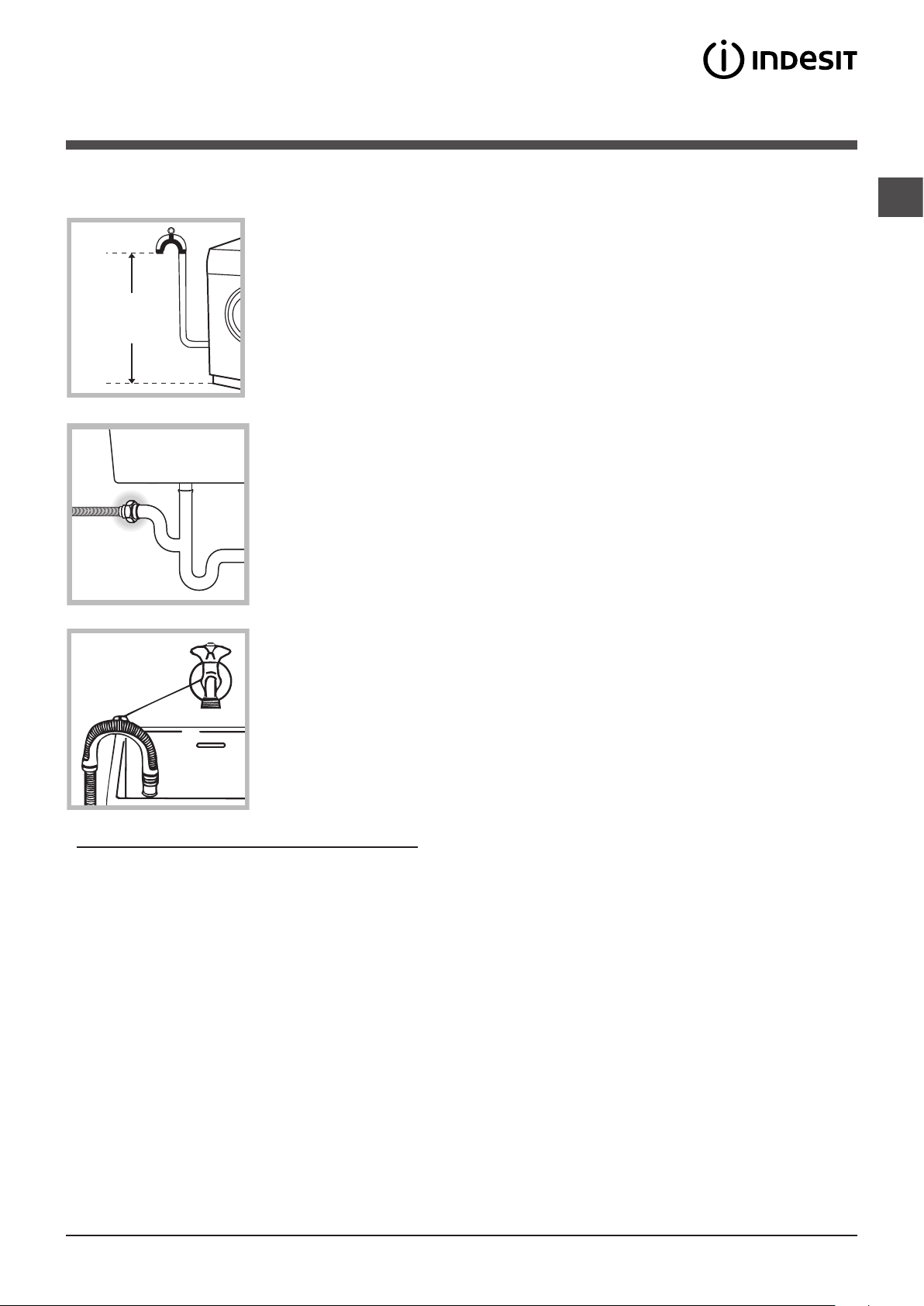
Connecting the drain hose
Connect the drain
hose, without bending
it, to a draining duct or
a wall drain situated
between 65 and 100
cm from the floor;
The drain hose may
be connected to an
under-sink trap. Be-
fore connecting the
drain hose from the
machine ensure that
any blanks or remo-
vable ends have been
taken off the spigot.
If it is placed over the
edge of a basin or sink
be sure the free end of
the hose should not
be underwater.
! We advise against the use of hose extensions; in
case of absolute need, the extension must have the
same diameter as the original hose and must not
exceed 150 cm in length. Ensure that if the drain
hose is pushed into a standpipe, that the end does
not go down more than 15cms (6 inches). If the hose
is pushed down too far, this may cause the machine
to self -syphon ie. continuously empty as it is filling.
Electric connection
Before plugging the appliance into the mains
socket, make sure that:
• the socket is earthed and in compliance with
the applicable law;
• the socket is able to sustain the appliance’s
maximum power load indicated on the Technical
Data Plate fixed on the machine;
65 - 100 cm
Where it connects to
the waste water pipe
cut end off spigot or
remove the blanking cap
• the supply voltage is included within the values
indicated on the Technical Data Plate fixed on
the machine.
• the socket is compatible with the washing
machine’s plug. If this is not the case, replace
the socket or the plug.
Your appliance is now supplied with a 13 amp fu-
sed plug it can be plugged into a 13 amp socket
for immediate use. Before using the appliance
please read the instructions below.
WARNING - THIS APPLIANCE MUST BE EARTHED.
THE FOLLOWING OPERATIONS SHOULD BE
CARRIED OUT BY A QUALIFIED ELECTRICIAN.
Replacing the fuse:
When replacing a faulty fuse, a 13 amp ASTA
approved fuse to BS 1362 should always be
used, and the fuse cover re-fitted. If the fuse
cover is lost, the plug must not be used until a
replacement is obtained.
Replacement fuse covers:
If a replacement fuse cover is fitted, it must be of
the correct colour as indicated by the coloured
marking or the colour that is embossed in words
on the base of the plug. Replacements can be
obtained directly from your nearest Service Depot.
Removing the plug:
If your appliance has a non-rewireable moulded
plug and you should wish to re-route the mains
cable through partitions, units etc., please en-
sure that either:
the plug is replaced by a fused 13 ampere rewi-
reable plug bearing the BSI mark of approval.
or:
the mains cable is wired directly into a 13 amp
cable outlet, controlled by a switch, (in complian-
ce with BS 5733) which is accessible without
moving the appliance.
Disposing of the plug:
Ensure that before disposing of the plug itself,
you make the pins unusable so that it cannot be
accidentally inserted into a socket.
Instructions for connecting cable to an alterna-
tive plug:
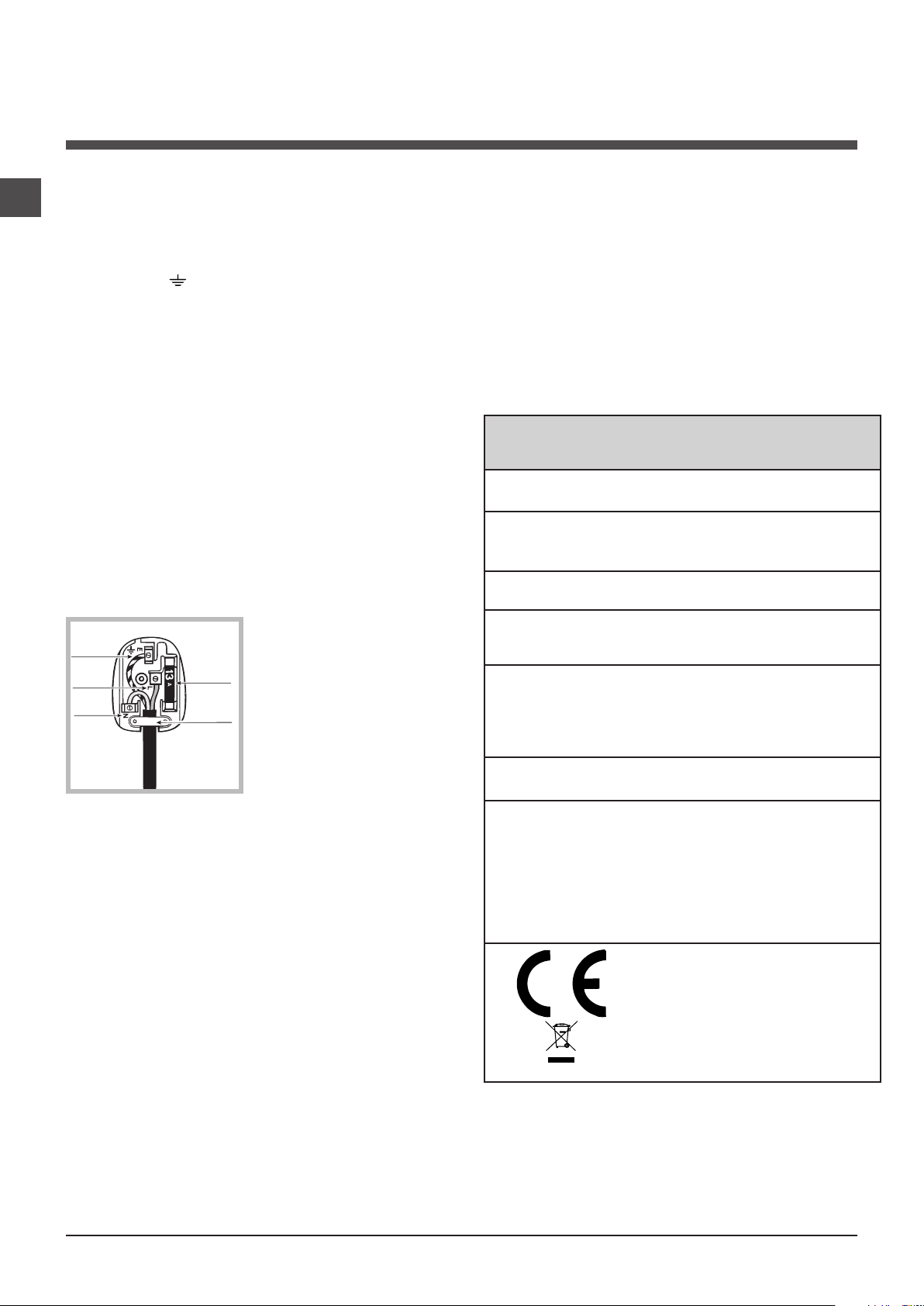
Important: the wires in the mains lead are co-
loured in accordance with the following code:
Green & Yellow Earth
Blue Neutral
Brown Live
4
GB
As the colours of the wires in the lead may not
correspond with the coloured markings iden-
tifying the terminals in your plug, proceed as
follows:
Connect Green & Yellow wire to terminal
marked E or or coloured Green or Green &
Yellow.
Connect Brown wire to terminal marked L or
coloured Red.
Connect Blue wire to terminal marked N or co-
loured Black.
If a 13 amp plug (BS 1363) is used it must be
fitted with a 13 amp fuse, either in the plug or
adaptor or at the distribution board.
If you are in any doubt regarding the electrical
supply to your machine, consult a qualified
electrician before use.
How to connect an alternative plug:
The wires in this mains lead are coloured in
accordance with the following code:
BLUE NEUTRAL (N)
BROWN LIVE (L)
GREEN & YELLOW EARTH (E)
Disposing of the appliance:
When disposing of the appliance please re-
move the plug by cutting the mains cable as
close as possible to the plug body and dispo-
se of it as described above.
! The washing machine should not be installed
in an outdoor environment, not even where
the area is sheltered, because it may be very
dangerous to leave it exposed to damp, rain
and thunderstorms.
! When the washing machine is installed, the
mains socket must be within easy reach.
! Do not use extensions or multiple sockets.
! The power supply cable must never be bent
or dangerously compressed.
! The power supply cable must only be repla-
ced by an authorised serviceman.
Warning! The company denies all liability if and
when these norms are not respected.
The first wash cycle
Once the appliance has been installed, and
before you use it for the first time, run a wash
cycle with detergent and no laundry, setting the
90°C programme.
GREEN &
YELLOW
BROWN
BLUE
13 ampere fuse
CROSS-BAR
CORD GRIP
Technical data
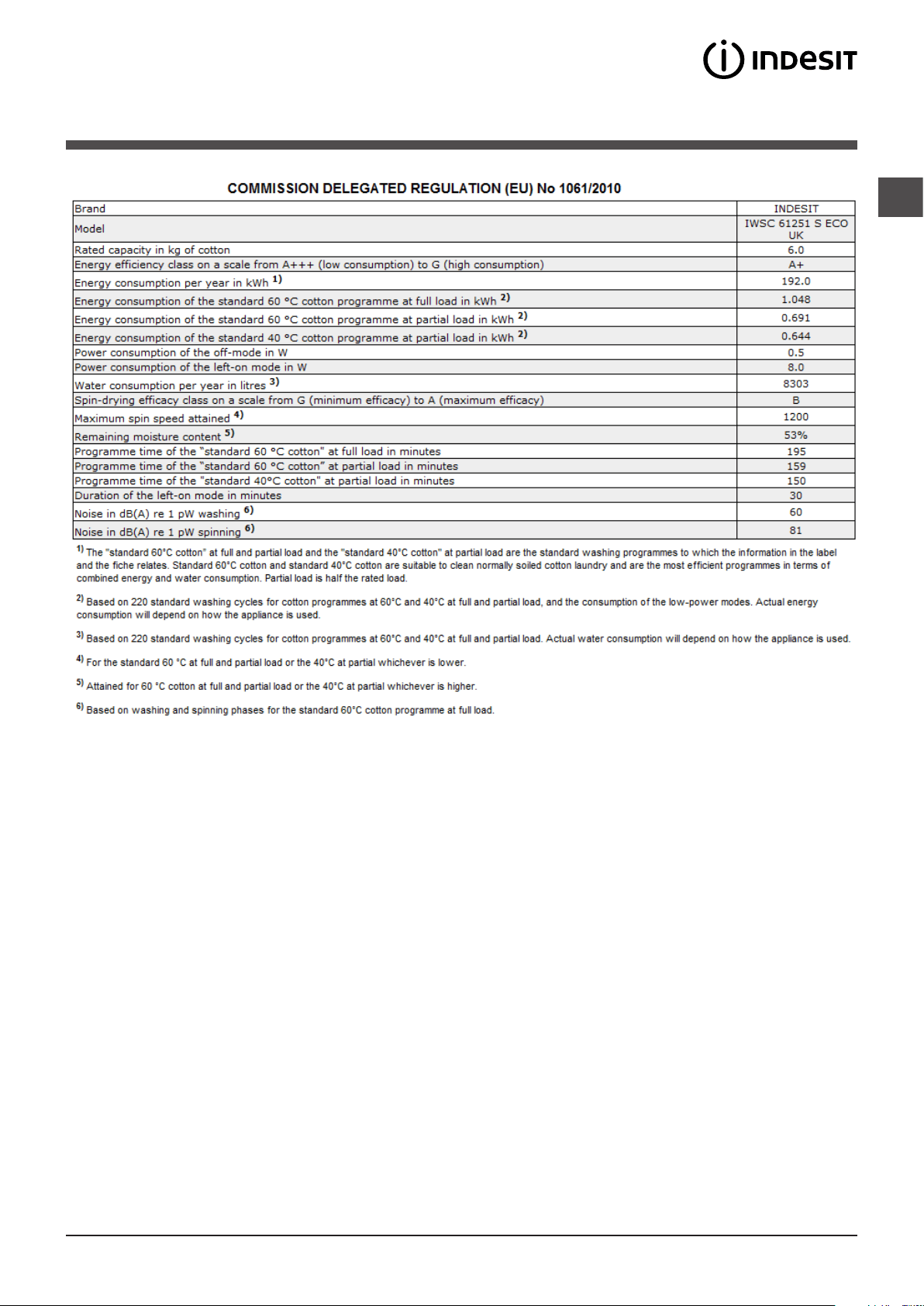
Model
IWSC 61251
Dimensions
width 59.5 cm
height 85 cm
depth 42 cm
Capacity
from 1 to 6 kg
Electrical
connections
please refer to the technical
data plate fixed to the machine
Water
connection
maximum pressure
1 MPa (10 bar)
minimum pressure
0.05 MPa (0.5 bar)
drum capacity 40 litres
Spin speed
up to 1200 rotations per
minute
Test wash
cycles in
accordan-
ce with re-
gulations
1061/2010 and
1015/2010.
Programme 2:
Cotton Standard 60°.
Programme 3:
Cotton Standard 40°.
This appliance conforms to
the following EC Directives:
- 2004/108/EC (Electroma-
gnetic
Compatibility)
- 2012/19/EU - WEEE
- 2006/95/EC Low Voltage)
GB
5
6
GB
Care and maintenance
Cutting off the water and electri-
city supplies
• Turn off the water tap after every wash cycle.
This will limit wear on the hydraulic system
inside the washing machine and help to pre-
vent leaks.
• Unplug the washing machine when cleaning
it and during all maintenance work.
Cleaning the washing machine
The outer parts and rubber components of the
appliance can be cleaned using a soft cloth
soaked in lukewarm soapy water. Do not use
solvents or abrasives.
Cleaning the detergent dispenser
drawer
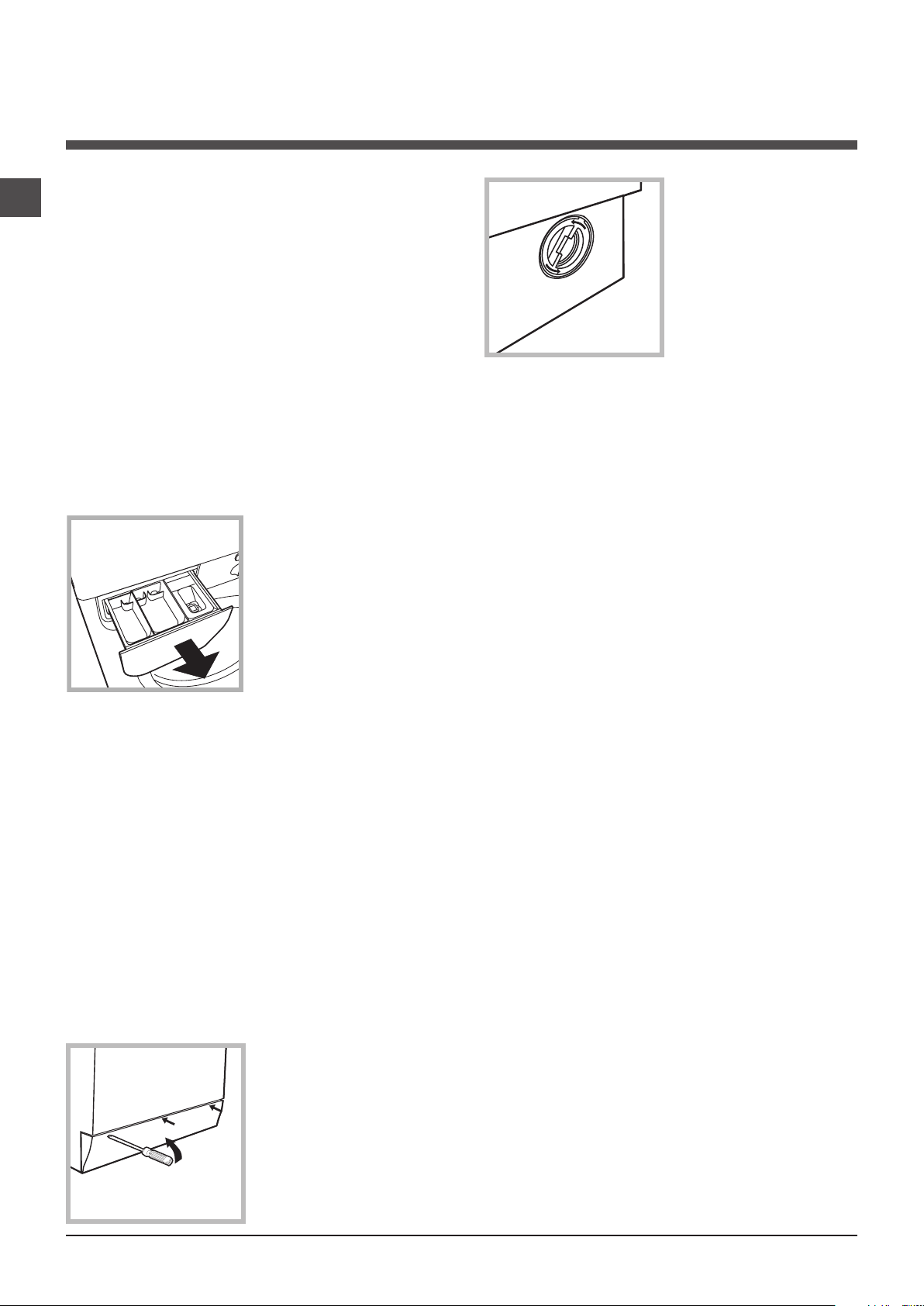
Remove the dispenser
by raising it and pul-
ling it out (see figure).
Wash it under running
water; this operation
should be repeated
frequently.
Caring for the door and drum of
your appliance
• Always leave the porthole door ajar in order
to prevent unpleasant odours from forming.
Cleaning the pump
The washing machine is fitted with a self-cle-
aning pump which does not require any main-
tenance. Sometimes, small items (such as
coins or buttons) may fall into the pre-chamber
which protects the pump, situated in its bot-
tom part.
! Make sure the wash cycle has finished and
unplug the appliance.
To access the pre-
chamber:
1. using a screwdri-
ver, remove the cover
panel on the lower
front part of the wa-
shing machine (see
figure);
2. unscrew the lid
by rotating it anti-
clockwise (see figu-
re): a little water may
trickle out. This is
perfectly normal;
3. clean the inside thoroughly;
4. screw the lid back on;
5. reposition the panel, making sure the hooks
are securely in place before you push it onto
the appliance.
Checking the water inlet hose
Check the inlet hose at least once a year. If
there are any cracks, it should be replaced
immediately: during the wash cycles, water
pressure is very strong and a cracked hose
could easily split open.
! Never use second-hand hoses.

GB
7
Precautions and tips
! This washing machine was designed and constructed in
accordance with international safety regulations. The fol-
lowing information is provided for safety reasons and must
therefore be read carefully.
General safety
• This appliance was designed for domestic use only.
• This appliance can be used by children aged
from 8 years and above and persons with re-
duced physical, sensory or mental capabilities
or lack of experience and knowledge if they
have been given supervision or instruction
concerning use of the appliance in a safe way
and understand the hazards involved. Chil-
dren shall not play with the appliance. Clea-
ning and user maintenance shall not be made
by children without supervision.
• Do not touch the machine when barefoot or with wet or
damp hands or feet.
• Do not pull on the power supply cable when unplugging
the appliance from the electricity socket. Hold the plug
and pull.
• Do not open the detergent dispenser drawer while the
machine is in operation.
• Do not touch the drained water as it may reach extreme-
ly high temperatures.
• Never force the porthole door. This could damage the
safety lock mechanism designed to prevent accidental
opening.
• If the appliance breaks down, do not under any circum-
stances access the internal mechanisms in an attempt
to repair it yourself.
• Always keep children well away from the appliance while
it is operating.
• The door can become quite hot during the wash cycle.
• If the appliance has to be moved, work in a group of two
or three people and handle it with the utmost care. Never
try to do this alone, because the appliance is very heavy.
• Before loading laundry into the washing machine, make
sure the drum is empty.
Disposal
• Disposing of the packaging materials: observe local
regulations so that the packaging may be re-used.
• The European Directive 2012/19/EU - WEEE on Waste
Electrical and Electronic Equipment, requires that old
household electrical appliances must not be disposed
of in the normal unsorted municipal waste stream. Old
appliances must be collected separately in order to
optimise the recovery and recycling of the materials they
contain and reduce the impact on human health and the
environment. The crossed out “wheeled bin” symbol on
the product reminds you of your obligation, that when
you dispose of the appliance it must be separately col-
lected.
Consumers should contact their local authority or retailer
for information concerning the correct disposal of their
old appliance.
8
GB
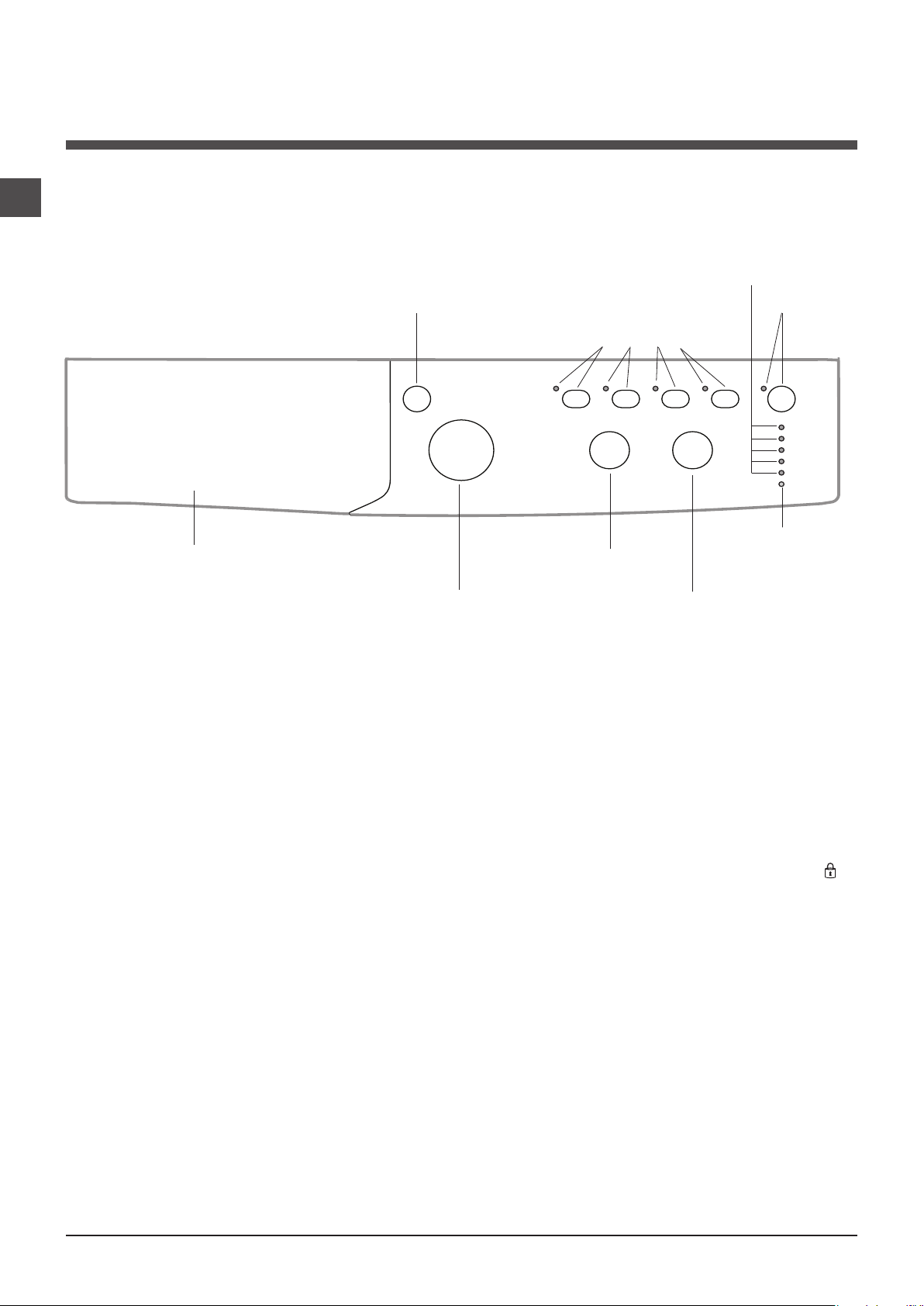
Detergent dispenser drawer: used to dispense
detergents and washing additives (see “Detergents and
laundry”).
ON/OFF button: switches the washing machine on and off.
WASH CYCLE knob: programmes the wash cycles. Du-
ring the wash cycle, the knob does not move.
FUNCTION buttons with indicator light: used to select the
available functions. The indicator light corresponding to the
selected function will remain lit.
TEMPERATURE knob: sets the temperature or the cold
wash cycle (see “Personalisation”).
SPIN SPEED knob: sets the spin speed or exclude the
spin cycle completely (see “Personalisation”).
WASH CYCLE PROGRESS/DELAY TIMER
indicator
light
s: used to monitor the progress of the wash cycle.
The illuminated indicator light shows which phase is in
progress.
If the Delay Timer function has been set, the time remai-
ning until the wash cycle starts will be indicated (see next
page).
DOOR LOCKED indicator light: indicates whether the
door may be opened or not (see next page).
START/PAUSE button with indicator light: starts or tem-
porarily interrupts the wash cycles.
N.B. To pause the wash cycle in progress, press this
button; the corresponding indicator light will flash orange,
while the indicator light for the current wash cycle phase
will remain lit in a fixed manner. If the DOOR LOCKED
indicator light is switched off, the door may be opened.
To start the wash cycle from the point at which it was inter-
rupted, press this button again.
Standby mode
This washing machine, in compliance with new energy sa-
ving regulations, is fitted with an automatic standby system
which is enabled after about 30 minutes if no activity is
detected. Press the ON-OFF button briefly and wait for the
machine to start up again.
Description of the washing
machine and starting a wash cycle
WASH CYCLE PROGRESS/
DELAY TIMER indicator lights
DOOR LOCKED
indicator light
START/PAUSE
button with
indicator light
Control panel
Detergent dispenser drawer
ON/OFF
button
WASH CYCLE
knob
TEMPERATURE
knob
FUNCTION
buttons with
indicator lights
SPIN SPEED
knob
GB
9
Indicator lights
The indicator lights provide important information.
This is what they can tell you:
Delayed start
If the DELAY TIMER function has been activated (see “Per-
sonalisation”), after the wash cycle has been started the
indicator light corresponding to the selected delay period
will begin to flash:
As time passes, the remaining delay will be displayed and
the corresponding indicator light will flash:
The set programme will start once the selected time delay
has expired.
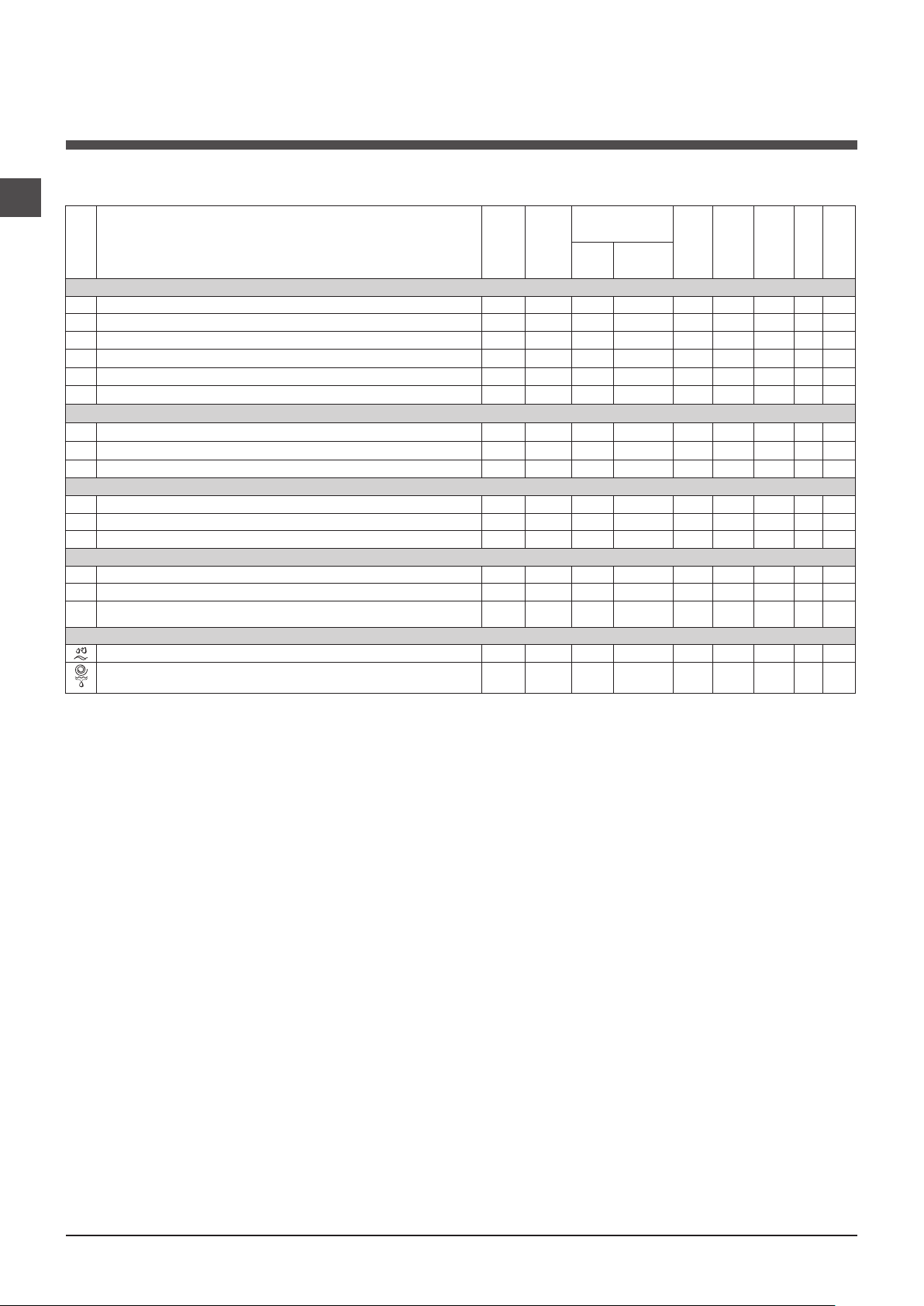
Wash cycle phase indicator lights
Once the desired wash cycle has been selected and has be-
gun, the indicator lights switch on one by one to indicate which
phase of the cycle is currently in progress.
Function buttons and corresponding indicator lights
When a function is selected, the corresponding indicator
light will illuminate.
If the selected function is not compatible with the program-
med wash cycle, the corresponding indicator light will flash
and the function will not be activated.
If the selected function is not compatible with another
function which has been selected previously, the indicator
light corresponding to the first function selected will
flash and only the second function will be activated; the
indicator light corresponding to the enabled option will
remain lit.
Door locked indicator light
When the indicator light is on, the porthole door is locked
to prevent it from being opened; make sure the indicator
light is off before opening the door (wait approximately 3
minutes). To open the door during a running wash cycle,
press the START/PAUSE button; the door may be opened
once the DOOR LOCKED indicator light turns off.
Starting a wash cycle
1. Switch the washing machine on by pressing the ON/OFF button. All indicator lights will switch on for a few seconds, then
they will switch off and the START/PAUSE indicator light will pulse.
2. Load the laundry and close the door.
3. Set the WASH CYCLE knob to the desired programme.
4. Set the washing temperature (see “Personalisation”).
5. Set the spin speed (see “Personalisation”).
6. Measure out the detergent and washing additives (see “Detergents and laundry”).
7. Select the desired functions.
8. Start the wash cycle by pressing the START/PAUSE button and the corresponding indicator light will remain lit in a fixed man-
ner, in green. To cancel the set wash cycle, pause the machine by pressing the START/PAUSE button and select a new cycle.
9. At the end of the wash cycle the indicator light will switch on. The door can be opened once the DOOR LOCK indi-
cator light turns off. Take out your laundry and leave the appliance door ajar to make sure the drum dries completely. Switch
the washing machine off by pressing the ON/OFF button.
Wash
Rinse
Spin
Drain
End of wash cycle
10
GB
Wash cycles
Table of wash cycles
The length of cycle shown on the display or in this booklet is an estimation only and is calculated assuming standard working conditions. The actual
duration can vary according to factors such as water temperature and pressure, the amount of detergent used, the amount and type of load inser-
ted, load balancing and any wash options selected.
1) Test wash cycle in compliance with regulation 1061/2010: set wash cycle 2 with a temperature of 60°C.
This cycle is designed for cotton loads with a normal soil level and is the most efficient in terms of both electricity and water consumption; it should be
used for garments which can be washed at 60°C. The actual washing temperature may differ from the indicated value.
2) Test wash cycle in compliance with regulation 1061/2010: set wash cycle 3 with a temperature of 40°C.
This cycle is designed for cotton loads with a normal soil level and is the most efficient in terms of both electricity and water consumption; it should be
used for garments which can be washed at 40°C. The actual washing temperature may differ from the indicated value.
For all Test Institutes:
3) Long wash cycle for cottons: set wash cycle 3 with a temperature of 40°C.
4) Synthetic program along: set wash cycle 4 with a temperature of 40°C.
Wash cycles
Description of the wash cycle
Max.
temp.
(°C)
Max.
speed
(rpm)
Detergents
Max.
load (kg)
Residual
dampness
%
Energy
consum-
ption kWh
Total water lt
Cycle
duration
Wash
Fabric
softener
Daily
1
White Cotton: extremely soiled whites. 90° 1200
6 53 1.80 58 140’
2
Cotton Standard (1): heavily soiled whites and resistant colours. 60° 1200
6 53 1.04 48 195’
3
Cotton Standard (2): lightly soiled whites and delicate colours. 40° 1200
6 53 1.03 65 180’
4
Synthetics: heavily soiled resistant colours. 50° 800
3 - - - 100’
4
Synthetics (3): lightly soiled resistant colours. 40° 800
3 44 0.47 38 95’
5
Mix Colored: lightly soiled whites and delicate colours. 40° 1200
6 53 0.64 50 85’
20° Zone
6
Cotton Standard: lightly soiled whites and delicate colours.
20°
1200
6 - - - 170’
7 Mix Light
20° 800
6 - - - 120’
8 20’ Refresh
20° 800
1.5 - - - 20’
Special
9 Outwear
30° 400
-
1.5 - - - 50’
10
Wool: for wool. cashmere. etc.
40° 800
1 - - - 65’
11 Jeans
40° 800
2.5 - - - 70’
Sport
12 Sport Intensive
30° 600
2.5 - - - 85’
13 Sport Light
30° 600
2.5 - - - 60’
14 Special Shoes
30° 600
Max. 2
pairs
- - - 55’
Partial wash cycles
Rinse - 1200 -
6 - - - 36’
Spin + Drain - 1200 - - 6 - - - 16’
GB
11
Setting the temperature
Turn the TEMPERATURE knob to set the wash temperature (see Table of wash cycles).
The temperature may be lowered, or even set to a cold wash .
The washing machine will automatically prevent you from selecting a temperature which is higher than the maximum value
set for each wash cycle.
Setting the spin speed
Turn the SPIN SPEED knob to set the spin speed for the selected wash cycle.
The maximum spin speeds available for each wash cycle are as follows:
Wash cycles Maximum spin speed
Cottons 1200 rpm
Synthetics 800 rpm
Wool 800 rpm
The spin speed may be lowered, or the spin cycle can be excluded altogether by selecting the symbol .
The washing machine will automatically prevent you from selecting a spin speed which is higher than the maximum speed
set for each wash cycle.
Functions
The various wash functions available with this washing machine will help to achieve the desired results, every time.
To activate the functions:
1. Press the button corresponding to the desired function;
2. the function is enabled when the corresponding indicator light is illuminated.
Note:
- If the selected function is not compatible with the programmed wash cycle, the corresponding indicator light will flash and
the function will not be activated.
- If the selected function is not compatible with another function which has been selected previously, the indicator light
corresponding to the first function selected will flash and only the second function will be activated; the indicator light cor-
responding to the enabled option will remain lit.
Selecting this option enables you to suitably adjust drum rotation, temperature and water to a reduced load of lightly soiled
cotton and synthetic fabrics (refer to the “
“Table of wash cycles”
). “ ” enables you to wash in less time thereby saving
water and electricity. We suggest using a liquid detergent suitably measured out to the load quantity.
The function saves energy by not heating the water used to wash your laundry - an advantage both to the
environment and to your energy bill. Instead, intensified wash action and water optimisation ensure great wash results in the
same average time of a standard cycle.
For the best washing results we recommend the usage of a liquid detergent.
Extra Rinse
By selecting this option, the efficiency of the rinse is increased and optimal detergent removal is guaranteed. It is particularly
useful for sensitive skin.
Delay Timer
This timer delays the start time of the wash cycle by up to 12 hours.
Press the button repeatedly until the indicator light corresponding to the desired delay time switches on. The fifth time the button
is pressed, the function will be disabled.
N.B. Once the START/PAUSE button has been pressed, the delay time can only be modified by decreasing it until launching
the set programme.
Personalisation
12
GB
Detergents and laundry
Detergent dispenser drawer
Good washing results also depend on the correct dose of
detergent: adding too much detergent will not necessa-
rily result in a more efficient wash, and may in fact cause
build up on the inside of your appliance and contribute to
environmental pollution.
! Do not use hand washing detergents because these
create too much foam.
! Use powder detergent for white cotton garments, for pre-
washing, and for washing at temperatures over 60°C.
! Follow the instructions given on the detergent packaging.
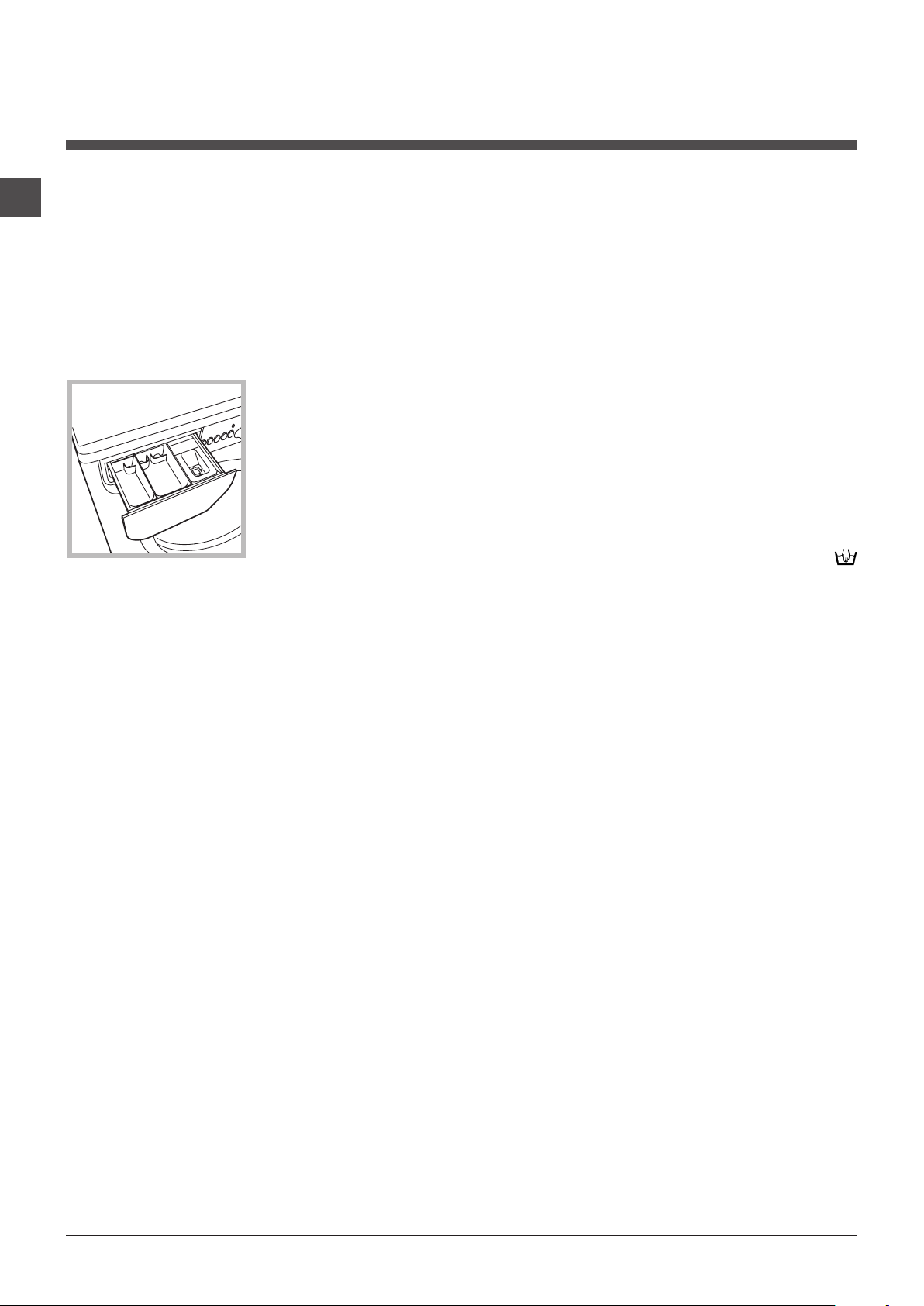
Open the detergent di-
spenser drawer and pour
in the detergent or washing
additive, as follows.
! Do not pour detergent into the compartment 1.
Detergent should only be poured into the compartment 2.
compartment 2: Detergent for the wash cycle
(powder or liquid)
Liquid detergent should only be poured in immediately
prior to the start of the wash cycle.
compartment 3: Additives (fabric softeners, etc.)
The fabric softener should not overflow the grid.
Preparing the laundry
• Divide the laundry according to:
- the type of fabric/the symbol on the label
- the colours: separate coloured garments from whites.
• Empty all garment pockets and check the buttons.
• Do not exceed the values listed in the “Table of wash
cycles”, which refer to the weight of the laundry when dry.
How much does your laundry weigh?
1 sheet 400-500 g
1 pillow case 150-200 g
1 tablecloth 400-500 g
1 bathrobe 900-1200 g
1 towel 150-250 g
Garments requiring special care
Outwear (wash cycle 9): is studied for washing water-
repellent fabrics and winter jackets (e.g. Gore-Tex, polyester,
nylon); for best results, use a liquid detergent and dosage
suitable for a half-load; pre-treat necks, cuffs and stains if
1
2
3
necessary; do not use softeners or detergents containing
softeners. Stuffed duvets cannot be washed with this pro-
gramme.
Wool: all wool garments can be washed using programme
10, even those carrying the “hand-wash only” label.
For best results, use special detergents and do not exceed
1 kg of laundry.
Jeans: Turn garments inside-out before washing and use a
liquid detergent. Use programme 11.
Sport Intensive (programma 12): is for washing heavily
soiled sports clothing fabrics (tracksuits, shorts, etc.); for
best results, we recommend not exceeding the maximum
load indicated in the “Programme table”.
Sport Light (programma 13): is for washing lightly soiled
sports clothing fabrics (tracksuits, shorts, etc.); for best
results, we recommend not exceeding the maximum load
indicated in the “Programme table”. We recommend using
a liquid detergent and dosage suitable for a half-load.
Special Shoes (programma 14): is for washing sports
shoes; for best results, do not wash more than 2 pairs si-
multaneously.
The 20° wash cycles (Zone 20°) offer effective washing
performance at low temperatures, reducing electricity
usage and expenditure while benefitting the environment.
The 20° wash cycles meet all requirements:
Cotton Standard (programme 6) ideal for heavily soiled
cotton loads. The effective performance levels achieved
at cold temperatures, which are comparable to washing
at 40°, are guaranteed by a mechanical action which
operates at varying speed, with repeated and frequent
peaks.
Mix Light (programme 7) ideal for mixed loads (cotton
and synthetics) with a normal soil level. The effective
performance levels achieved at cold temperatures are
guaranteed by a mechanical action which operates at
varying speed, across set average intervals.
20’ Refresh (programme 8) ideal for refreshing and
washing lightly soiled garments in a few minutes. It lasts
just 20 minutes and therefore saves both time and energy.
It can be used to wash different types of fabrics together
(except for wool and silk), with a maximum load of 1.5 kg.
Load balancing system
Before every spin cycle, to avoid excessive vibrations and
to distribute the load in a uniform manner, the drum rotates
continuously at a speed which is slightly greater than the
washing rotation speed. If, after several attempts, the load is
not balanced correctly, the machine spins at a reduced spin
speed. If the load is excessively unbalanced, the washing ma-
chine performs the distribution process instead of spinning.
To encourage improved load distribution and balance, we
recommend small and large garments are mixed in the load.

GB
13
Troubleshooting
Your washing machine could fail to work. Before contacting the Technical Assistance Centre (see “Assistance”), make sure
that the problem cannot be solved easily using the following list.
Problem:
The machine does not switch on.
The wash cycle does not start.
The machine does not fill with wa-
ter or the indicator light for the first
wash cycle stage flashes rapidly.
The machine continuously fills with
water and continually drains away
or Water left in the drum
or Stuck on wash.
The machine does not drain or
spin.
The machine does not heat or poor
wash results.
The programme takes too long.
The machine vibrates a lot during
the spin cycle.
Possible causes / Solutions:
• The appliance is not plugged into the socket fully, or not enough to make contact.
• There is no power to the socket, or the fuse has blown in the mains plug.
• The door is not closed properly.
• The ON/OFF button has not been pressed.
• The START/PAUSE button has not been pressed.
• The water tap has not been turned on to allow water to flow into the machine.
• A delayed start has been set.
• The water inlet hose is kinked.
• The water inlet hose is not connected to the water supply.
• The water pressure is too low.
• The water tap has not been turned on to allow water to flow into the machine.
• There is no water supply to the house.
• The inlet valve filter is blocked.
• The START/PAUSE button has not been pressed.
• The top of the drain hose is too low - It must be fitted at a height between 65
and 100 cm from the floor (see “Installation”).
• The drain hose is connected incorrectly to the sink trap allowing water to run
into the machine, the drain hose must be positioned higher than the bottom of
the sink to prevent water flowing down the drain hose.
• The end of the drain hose has been pushed too far down the standpipe, the
‘U’ bracket should be fitted 100 mm from the end of the drain hose.
• The Pump filter is blocked.
• The drain hose is kinked (see “Installation”).
• New Installation - The blanking cap or spigot has not been removed if
connected under a sink.
• The drain hose or sink trap is blocked.
• The wash cycle does not include draining, some wash cycles require the drain
phase to be started manually.
• The ‘Spin Speed’ selector knob is in the position.
• The ‘Temperature’ selector knob is in the “ ” position.
• Programme times will vary due to water pressure, the incoming water tempera-
ture and if the wash load goes out of balance. This will increase the programme
times accordingly (see ‘ The machine wont spin properly’ next page).
• The feet have not been adjusted, enabling the machine to rock.
• New Installation - Either the Transit Bolts including the plastic spacers, or the
Polystyrene Packaging have not been removed when installing the machine.
• The machine is trapped between cabinets and/or walls.
• The load is in a slight out of balance condition and machine is spinning, but at
a lower speed.

14
GB
The machine is noisy.
The machine wont spin properly.
The machine leaks from the
dispenser.
The machine leaks (other than
dispenser).
The indicator lights on the console
are flashing rapidly.
The machine smells.
The machine door cannot be
opened.
Door Seal damaged at the bottom.
The water level is too low when
the machine is washing.
There is too much foam.
After completing the programme,
or before starting a programme,
the machine has turned itself off
(no lights).
General.
• There will always be some motor, pump and drum noise during spin.
• Out of Balance detected when attempting to go into a spin cycle - If this
happens the machine will continue to try to repeat the distribution of the load
required before the machine will go into higher spin speeds - This will increase
the programme time accordingly. This is a safety feature to prevent damage.
Out of Balance can be caused by washing a single heavy item (eg duvet, quilt,
etc). - Try the programme again using a different load.
• The dispenser drawer is blocked with detergent and requires cleaning.
• The water pressure is too high and requires turning down - turn down the tap
on the water supply pipe slightly and try again.
• The machine is tilting forwards - It must be level when in its final position.
• The fill hose is loose, check both the cabinet and tap ends.
• The fill hose is tight but still leaks, if so replace the rubber washers, or the fill
hose is missing the rubber washer.
• The drain hose is not fixed in properly.
• Switch off the machine and unplug it, wait for approximately 1 minute and then
switch it back on again If the problem persists contact the Technical Assistance
Service.
• The machine requires a service wash. Run a 90 degree wash cycle with deter-
gent and no laundry.
• The door will not open until the door lock indicator light goes out shortly after
the program has finished.
• The door seal has drainage holes at the bottom - This is normal.
• The water level is correct if it can be seen at the bottom of the door.
• The detergent is not suitable for machine washing (it should display the text
‘for washing machines’ or ‘hand and machine wash’ or the like).
• Too much detergent was used - less detergent is required in soft water.
• To comply with new energy saving regulations the machine is fitted with an
automatic standby system. Press ‘ON/OFF’ button for 3 seconds to activate
the machine, it can then either be switched off or a new programme selected.
• Your washing machine contains sensors that monitor progress during the wash
cycle (eg: Water Levels, Temperatures, Out of Balance loads, Wash time/pro-
gress).
Normally, if your machine successfully completes the cycle, there is unlikely to
be anything wrong!
Remember, you will be charged for a service call for problems caused by incorrect installation, as indica-
ted on pages 2 to 4.
Not emptying contents from pockets may cause pump or drain blockages, or may damage the machine.
Do not wash items which do not have a wash label, or wash items that are not intended as machine wa-
shable.
GB
15
Product Guarantee and
Repair Information
Guarantee
12 Months Parts and Labour Guarantee
Your appliance has the benefit of our manufacturer’s
guarantee, which covers the cost of breakdown
repairs for twelve months from the date of purchase.
This gives you the reassurance that if, within that
time, your appliance is proven to be defective
because of either workmanship or materials, we will,
at our discretion, either repair or replace the appliance
at no cost to you:
This guarantee is subject to the following conditions:
- The appliance has been installed and operated
correctly and in accordance with our operating and
maintenance instructions.
- The appliance is used only on the electricity or gas
supply printed on the rating plate.
- The appliance has been used for normal domestic
purposes only.
- The appliance has not been altered, serviced,
maintained, dismantled, or otherwise interfered with
by any person not authorised by us.
- Any repair work must be undertaken by us or our
appointed agent.
- Any parts removed during repair work or any
appliance that is replaced become our property.
- The appliance is used in the United Kingdom or
Republic of Ireland.
The guarantee does not cover:
- Damage resulting from transportation, improper
use, neglect or interference or as a result of improper
installation.
- Replacement of any consumable item or accessory.
These include but are not limited to: plugs, cables,
batteries, light bulbs, fluorescent tubes and starters,
covers and filters.
- Replacement of any removable parts made of glass
or plastic.
THIS GUARANTEE WILL NOT APPLY IF THE
APPLIANCE HAS BEEN USED IN COMMERCIAL
OR NON-DOMESTIC PREMISES.
Recycling and Disposal Information
As part of Indesit’s continued commitment to
helping the environment, Indesit reserves the right
to use quality, recycled components to keep down
customer costs and minimise material wastage.
Please dispose of packaging and old appliances
carefully. To minimise the risk of injury to children,
remove the door, plug, and cut the mains cable
off flush with the appliance. Dispose of these parts
separately to ensure that the appliance can no longer
be plugged into mains socket, and the door cannot
be locked shut.
Repairs and After Sales
For product help and advice, repairs, spare parts or
accessories, we’re here to help.
For local repair engineers - 03448 111 606
ROI - 0818 313 413
UK standard local rate applies
ROI local Irish rate applies
For Parts and Accessories visit:
parts.indesit.co.uk/shop
Please remember to register your appliance at
www.indesitservice.co.uk to activate your 10 year
parts guarantee.
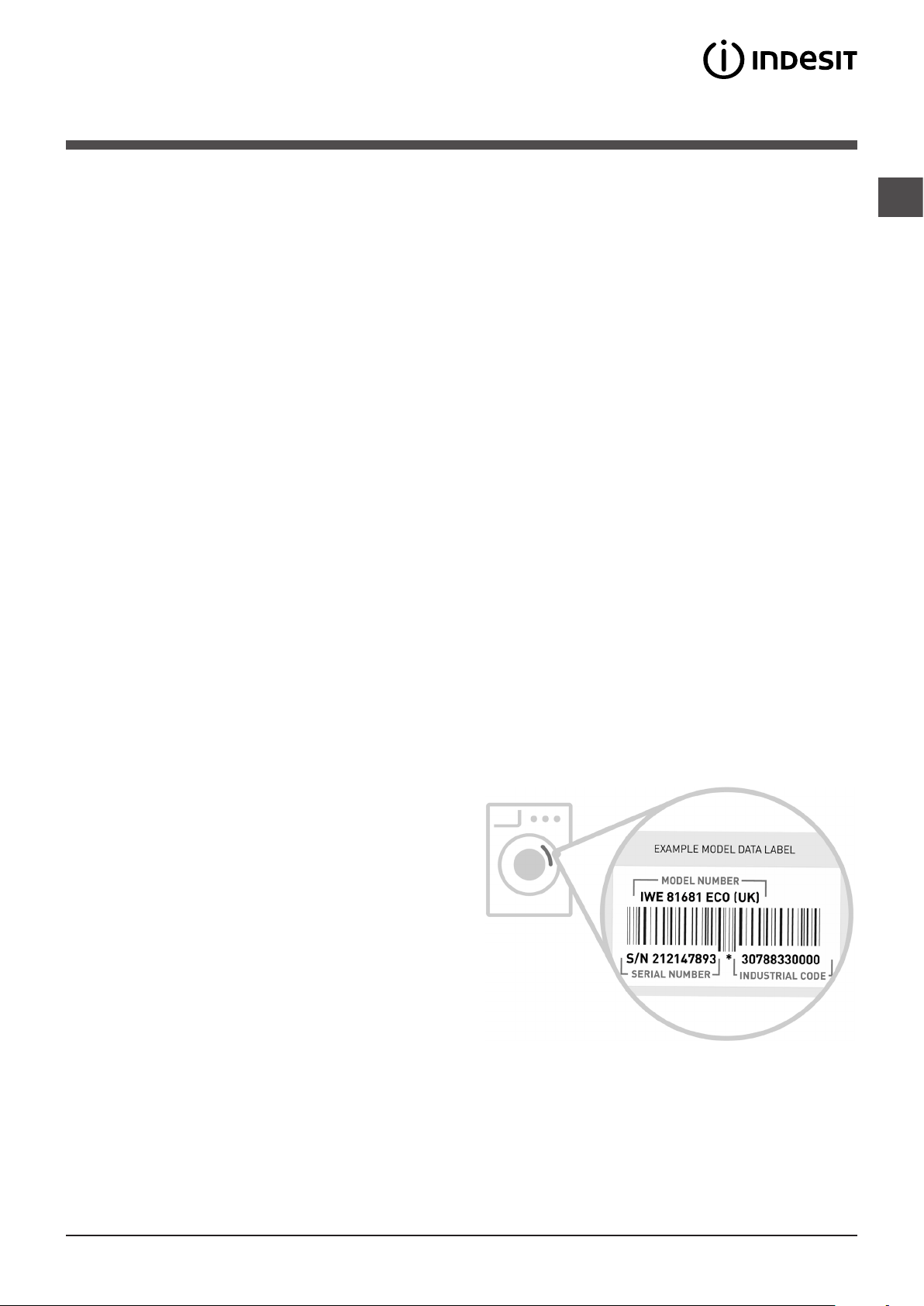
How to find your model and serial number:

16
GB

FR
17
Français
Sommaire
Installation, 18-19-20-21
Déballage et mise à niveau
Raccordements eau et électricité
Premier cycle de lavage
Caractéristiques techniques
Entretien et soin, 22
Coupure de l’arrivée d’eau et du courant
Nettoyage du lave-linge
Nettoyage du tiroir à produits lessiviels.
Entretien du hublot et du tambour
Nettoyage de la pompe
Contrôle du tuyau d’arrivée de l’eau
Précautions et conseils, 23
Sécurité générale
Mise au rebut
Description du lave-linge et démarrage
d’un programme, 24-25
Bandeau de commandes
Voyants
Démarrage d’un programme
Programmes, 26
Tableau des programmes
Personnalisations, 27
Sélection de la température
Sélection de l’essorage
Fonctions
Produits lessiviels et linge, 28
Tiroir à produits lessiviels
Triage du linge
Linge ou vêtements particuliers
Système d’équilibrage de la charge
Anomalies et remèdes, 29
Assistance, 30
FR
IWSC 61251 S
Mode d’emploi
LAVE-LINGE
18
FR
! Conserver ce mode d’emploi pour pouvoir le
consulter à tout moment. En cas de vente, de
cession ou de déménagement, veiller à ce qu’il
suive toujours le lave-linge pour que son nou-
veau propriétaire soit informé sur son mode de
fonctionnement et puisse profiter des conseils
correspondants.
! Lire attentivement les instructions: elles fournis-
sent des conseils importants sur l’installation,
l’utilisation et la sécurité de l’appareil.
Déballage et mise à niveau
Déballage
1. Déballer le lave-linge.
2. Contrôler que le lave-linge n’a pas été endom-
magé pendant le transport. S’il est abîmé, ne pas
le raccorder et contacter le vendeur.
3. Enlever les 4 vis
de protection servant
au transport, le ca-
outchouc et la cale,
placés dans la partie
arrière (voir figure).
4. Boucher les trous à l’aide des bouchons
plastique fournis.
5. Conserver toutes ces pièces: il faudra les
remonter en cas de transport du lave-linge.
! Les pièces d’emballage ne sont pas des jouets
pour enfants.
Mise à niveau
1. Installer le lave-linge sur un sol plat et rigide,
sans l’appuyer contre des murs, des meubles
ou autre.
2. Si le sol n’est pas
parfaitement horizon-
tal, visser ou dévisser
les pieds de réglage
avant (voir figure) pour
niveler l’appareil; son
angle d’inclinaison,
mesuré sur le plan
de travail, ne doit pas
dépasser 2°.
Une bonne mise à niveau garantit la stabilité
de l’appareil et évite qu’il y ait des vibrations,
du bruit et des déplacements en cours de
fonctionnement. Si la machine est posée sur
de la moquette ou un tapis, régler les pieds de
manière à ce qu’il y ait suffisamment d’espace
pour assurer une bonne ventilation.
Raccordements eau et électricité
Raccordement du tuyau d’arrivée de l’eau
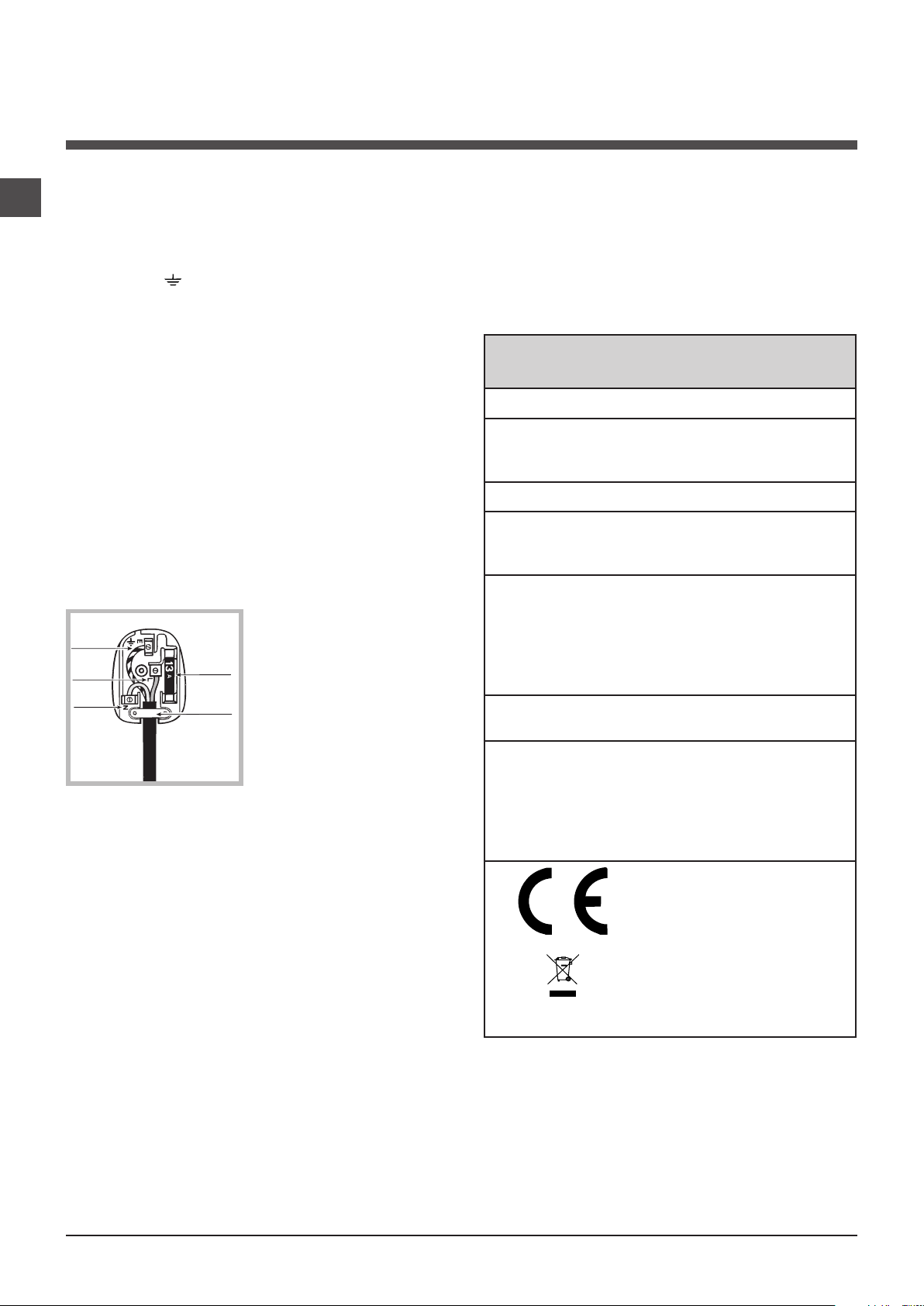
1. Reliez le tuyau d’ali-
mentation en le vissant
à un robinet d’eau froi-
de à embout fileté 3/4
gaz (voir figure).
Faire couler l’eau ju-
squ’à ce qu’elle soit
limpide et sans impure-
tés avant de raccorder.
2. Raccorder le tuyau
d’arrivée de l’eau au
lave-linge en le vissant
à la prise d’eau prévue,
dans la partie arrière
en haut à droite (voir
figure).
3. Attention à ce que le tuyau ne soit pas plié
ou écrasé.
! La pression de l’eau doit être comprise entre
les valeurs indiquées dans le tableau des Ca-
ractéristiques techniques (voir page ci-contre).
! Si la longueur du tuyau d’alimentation ne suffit
pas, s’adresser à un magasin spécialisé ou à un
technicien agréé.
! N’utiliser que des tuyaux neufs.
! Utiliser ceux qui sont fournis avec l’appareil.
Installation
FR
19
Raccordement du tuyau de vidange
Raccorder le tuyau
d’évacuation, sans
le plier, à un conduit
d’évacuation ou à une
évacuation murale
placés à une distance
du sol comprise entre
65 et 100 cm;
ou bien l’accrocher
à un évier ou à une
baignoire, dans ce
cas, fixer le support
en plastique fourni
avec l’appareil au
robinet (voir figure).
L’extrémité libre du
tuyau d’évacuation
ne doit pas être plon-
gée dans l’eau.
! L’utilisation d’un tuyau de rallonge est abso-
lument déconseillée mais si on ne peut faire
autrement, il faut absolument qu’il ait le même
diamètre que le tuyau original et sa longueur
ne doit pas dépasser 150 cm.
Branchement électrique
Avant de brancher votre électroménager à la
prise de courant, contrôlez que:
• la prise est bien avec terre et conforme aux
réglementations applicables en la matière;
• la prise électrique est bien apte à supporter
la puissance maximum de l’électroménager
figurant sur la plaquette des caractéristiques;
• la tension d’alimentation est bien comprise
entre les valeurs figurant sur la plaquette des
caractéristiques;
• la prise est bien compatible avec la fiche du
lave-linge. Autrement, remplacez la prise ou
la fiche.
Votre électroménager dispose à présent d’une
fiche moulée 13 ampères qui peut être bran-
chée dans une prise compatible pour utilisa-
tion immédiate. Veuillez lire les instructions
suivantes avant d’utiliser votre électroménager.
65 - 100 cm
ATTENTION - L’ELECTROMENAGER DOIT
ETRE RACCORDE A LA MASSE. LES OPE-
RATIONS DECRITES CI-APRES DOIVENT
ETRE EFFECTUEES PAR UN ELECTRICIEN
QUALIFIE.
Remplacement du fusible:
En cas de remplacement d’un fusible défec-
tueux, utilisez toujours des fusibles de 13 am-
pères ASTA conformes au standard BS1362
et remontez le couvercle du fusible. Si vous
avez perdu le couvercle du fusible, n’utilisez
pas la fiche tant que la pièce manquante n’au-
ra pas été remplacée.
Couvercles des fusibles:
Si vous remplacez le couvercle du fusible,
veillez à ce que sa couleur soit bien celle qui
est indiquée par le code ou l’indication colorée
à la base de la fiche. Pour toute pièce déta-
chée, adressez-vous directement au centre
d’assistance technique le plus proche de chez
vous.
Démontage de la fiche:
Si l’électroménager est équipé d’une fiche in-
corporée qui ne peut pas être câblée à nouve-
au et s’il faut faire passer le câble à travers des
divisions, des unités, etc. contrôlez que:
la fiche est bien remplacée par une autre
câblable à nouveau de 13 ampères portant la
marque BSI
ou bien:
que le câble est bien raccordé directement à
la prise de 13 ampères, contrôlée par un inter-
rupteur (conforme BS 5733) accessible sans
qu’il faille déplacer l’électroménager.
Elimination de la fiche:
Avant d’éliminer la fiche, rendez les broches
inutilisables de manière à ce que la fiche ne
puisse pas être branchée accidentellement
dans une prise.
Instructions pour le raccordement du câble à
une fiche alternative:
Important: les couleurs des fils du câble de ré-
seau correspondent à la codification suivante:
Jaune/Vert Terre
Bleu Neutre
Marron Alimenté
20
FR
Caractéristiques techniques
Modèle
IWSC 61251
Dimensions
largeur 59,5 cm
hauteur 85 cm
profondeur 42 cm
Capacité
de 1 à 6 kg
Raccordements
électriques
Voir la plaque signaléti-
que appliquée sur la ma-
chine
Raccorde-
ments hydrau-
liques
pression maximale
1 MPa (10 bar)
pression minimale
0,05 MPa (0,5 bar)
capacité du tambour 40
litres
Vitesse
d'essorage
jusqu'à 1200 tours minu-
te
Programmes
de contrô-
le selon les
règlements
1061/2010 et
1015/2010
programme 2; program-
me coton standard à
60°C.
programme 3; program-
me coton standard à
40°C.
Cet appareil est confor-
me aux Directives Com-
munautaires suivantes:
- 2004/108/CE (Com-
patibilité électromagnéti-
que)
- 2012/19/EU - WEEE
- 2006/95/CE (Basse
Tension)
Les couleurs des fils du câble pourraient ne
pas correspondre aux indications de couleur
qui identifient les broches de la fiche, procédez
comme suit:
raccordez le fil jaune/vert à la borne repérée par
la lettre E ou ou de couleur verte ou jaune/vert
raccordez le fil marron à la borne repérée par la
lettre L ou de couleur rouge
raccordez le fil bleu à la borne repérée par la
lettre N ou de couleur noire.
En cas d’utilisation d’une fiche de 13 ampères
(BS 1363), installez un fusible de 13 ampères
dans la fiche ou sur l’adaptateur ou sur la carte
de distribution.
En cas de doute sur l’alimentation électrique de
votre électroménager, faites appel à un électri-
cien qualifié avant de le mettre en service.
Raccordement d’une fiche alternative:
les couleurs des fils du câble de réseau corre-
spondent à la codification suivante:
BLEU NEUTRE (N)
MARRON ALIMENTE (L)
JAUNE/VERT TERRE (E)
Elimination de l’électroménager:
Lors de la mise au rebus de l’électroménager,
débarrassez-le de sa fiche en coupant le câble
d’alimentation le plus près possible de cette der-
nière et éliminez comme décrit précédemment.
! Votre lave-linge ne doit pas être installé dehors,
même à l’abri, car il est très dangereux de le
laisser exposé à la pluie et aux orages.
! Après installation du lave-linge, la prise de
courant doit être facilement accessible.
! N’utilisez ni rallonges ni prises multiples.
! Le câble ne doit être ni plié ni écrasé.
! Le câble d’alimentation ne doit être remplacé
que par des techniciens agréés.
Attention! Nous déclinons toute responsabilité
en cas de non respect des normes énumérées
ci-dessus.
GREEN &
YELLOW
BROWN
BLUE
13 ampere fuse
CROSS-BAR
CORD GRIP
Premier cycle de lavage
Avant la première mise en service de l’ap-
pareil, effectuer un cycle de lavage avec un
produit lessiviel mais sans linge et sélectionner
le programme 1.
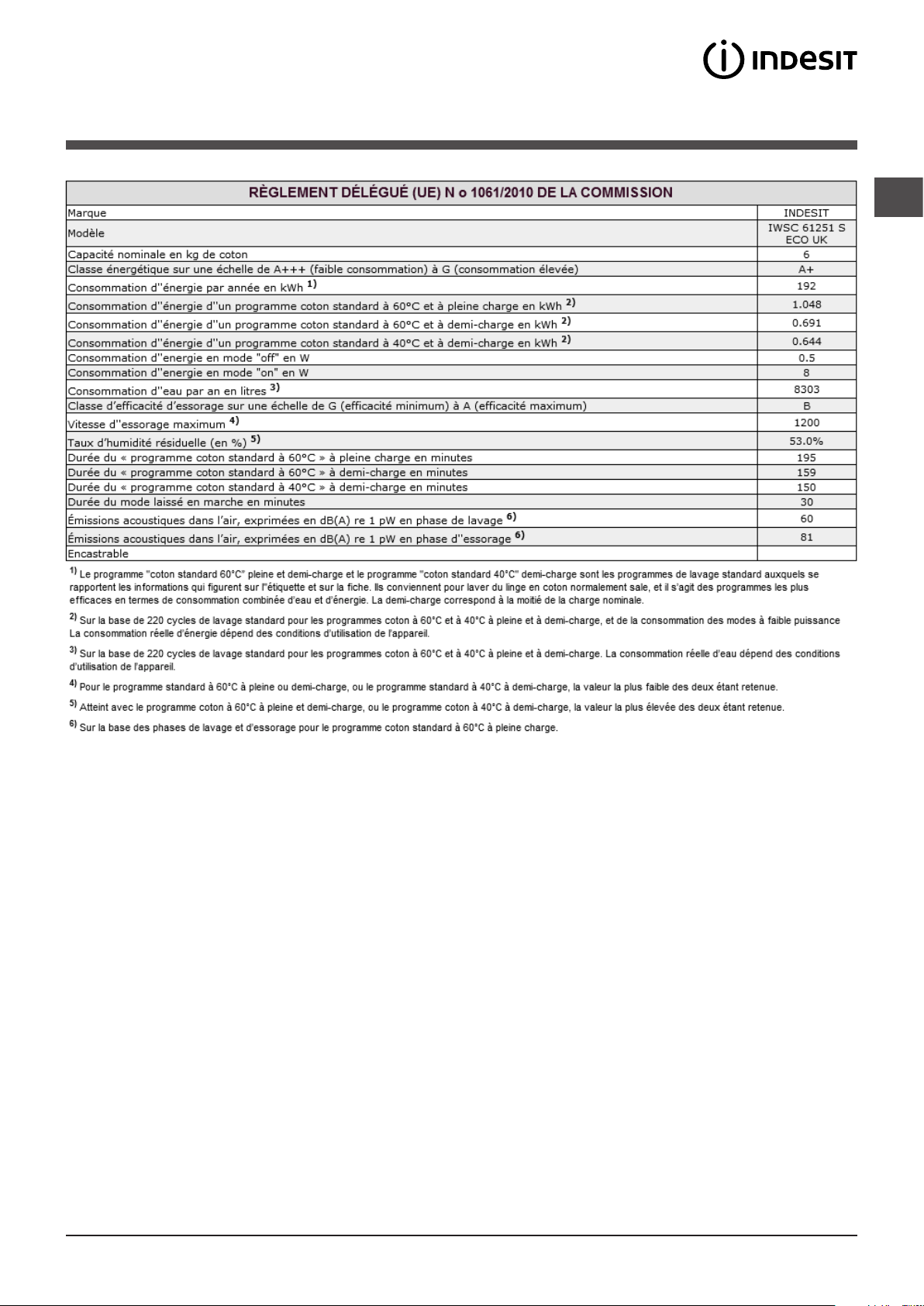
FR
21
22
FR
Entretien et soin
Coupure de l’arrivée d’eau et du
courant
• Fermer le robinet de l’eau après chaque lavage.
Cela réduit l’usure de l’installation hydraulique
du lave-linge et évite tout danger de fuites.
• Débrancher la fiche de la prise de courant lors
de tout nettoyage du lave-linge et pendant tous
les travaux d’entretien.
Nettoyage du lave-linge
Pour nettoyer l’extérieur et les parties en caou-
tchouc, utiliser un chiffon imbibé d’eau tiède et
de savon. N’utiliser ni solvants ni abrasifs.
Nettoyage du tiroir à produits les-
siviels.
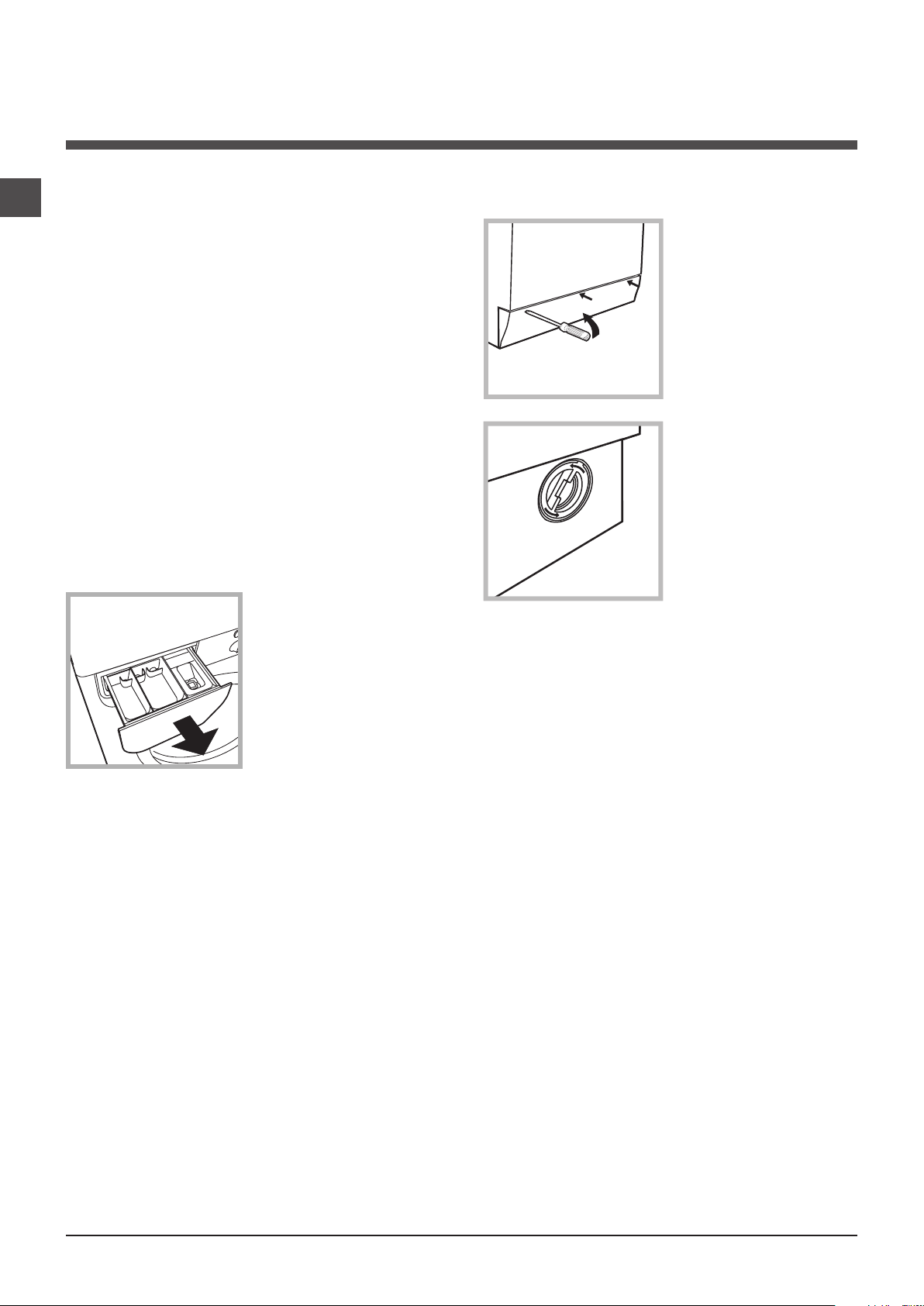
Soulever le tiroir et le
tirer vers soi pour le
sortir de son logement
(voir figure).
Le laver à l’eau cou-
rante; effectuer cette
opération assez sou-
vent.
Entretien du hublot et du tambour
• Il faut toujours laisser le hublot entrouvert pour
éviter la formation de mauvaise odeurs.
Nettoyage de la pompe
Le lave-linge est équipé d’une pompe autonetto-
yante qui n’exige aucune opération d’entretien.
Il peut toutefois arriver que de menus objets
(pièces de monnaie, boutons) tombent dans la
préchambre qui protège la pompe, placée en
bas de cette dernière.
! S’assurer que le cycle de lavage est bien ter-
miné et débrancher la fiche.
Pour accéder à cette préchambre:
1. démonter le panne-
au situé à l’avant du
lave-linge à l’aide d’un
tournevis (voir figure);
2. dévisser le couver-
cle en le tournant dans
le sens inverse des
aiguilles d’une montre
(voir figure): il est nor-
mal qu’un peu d’eau
s’écoule;
3. nettoyer soigneusement l’intérieur;
4. revisser le couvercle;
5. remonter le panneau en veillant à bien enfiler
les crochets dans les fentes prévues avant de
le pousser contre l’appareil.
Contrôle du tuyau d’arrivée de l’eau
Contrôler le tuyau d’alimentation au moins une
fois par an. Procéder à son remplacement en cas
de craquèlements et de fissures: car les fortes
pressions subies pendant le lavage pourraient
provoquer des cassures.
! N’utiliser que des tuyaux neufs.

FR
23
Précautions et conseils
! Ce lave-linge a été conçu et fabriqué conformément aux nor-
mes internationales de sécurité. Ces consignes sont fournies
pour des raisons de sécurité, il faut les lire attentivement.
Sécurité générale
• Cet appareil est conçu pour un usage domestique.
• Cet appareil peut être utilisé par les enfants à
partir de 8 ans et par les personnes dont les
capacités physiques, sensorielles ou mentales
sont réduites ou qui ne disposent pas des con-
naissances suffisantes, à condition qu’ils soient
encadrés ou aient été formés de façon appro-
priée pour l’utilisation de l’appareil de façon sûre
et en comprenant les dangers qui y sont liés.
Les enfants ne doivent pas jouer avec l’appareil.
L’entretien et le nettoyage ne doivent pas être
effectués par les enfants sans surveillance.
• Ne jamais toucher l’appareil si l’on est pieds nus et si les
mains sont mouillées ou humides.
• Ne jamais tirer sur le câble pour débrancher la fiche de la
prise de courant.
• Ne pas ouvrir le tiroir à produits lessiviels si la machine est
branchée.
• Ne pas toucher à l’eau de vidange, elle peut atteindre des
températures très élevées.
• Ne pas forcer pour ouvrir le hublot: le verrouillage de sécu-
rité qui protège contre les ouvertures accidentelles pourrait
s’endommager.
• En cas de panne, éviter à tout prix d’accéder aux méca-
nismes internes pour tenter une réparation.
• Veiller à ce que les enfants ne s’approchent pas de l’ap-
pareil pendant son fonctionnement.
• Pendant le lavage, le hublot a tendance à se réchauffer.
• Deux ou trois personnes sont nécessaires pour déplacer
l’appareil avec toutes les précautions nécessaires. Ne
jamais le déplacer tout seul car il est très lourd.
• Avant d’introduire le linge, s’assurer que le tambour est
bien vide.
Mise au rebut
• Mise au rebut du matériel d’emballage: se conformer aux
réglementations locales de manière à ce que les emballa-
ges puissent être recyclés.
• La Directive Européenne 2012/19/EU - WEEE sur les Dé-
chets des Equipements Electriques et Electroniques, exige
que les appareils ménagers usagés ne soient pas jetés
dans le flux normal des déchets municipaux. Les appareils
usagés doivent être collectés séparément afin d’optimiser
le taux de récupération et le recyclage des matériaux qui
les composent et réduire l’impact sur la santé humaine et
l’environnement. Le symbole de la ‘’poubelle barrée’’ est
apposée sur tous les produits pour rappeler les obligations
de collecte séparée. Les consommateurs devront contac-
ter les autorités locales ou leur revendeur concernant la
démarche à suivre pour l’enlèvement de leur vieil appareil.
24
FR
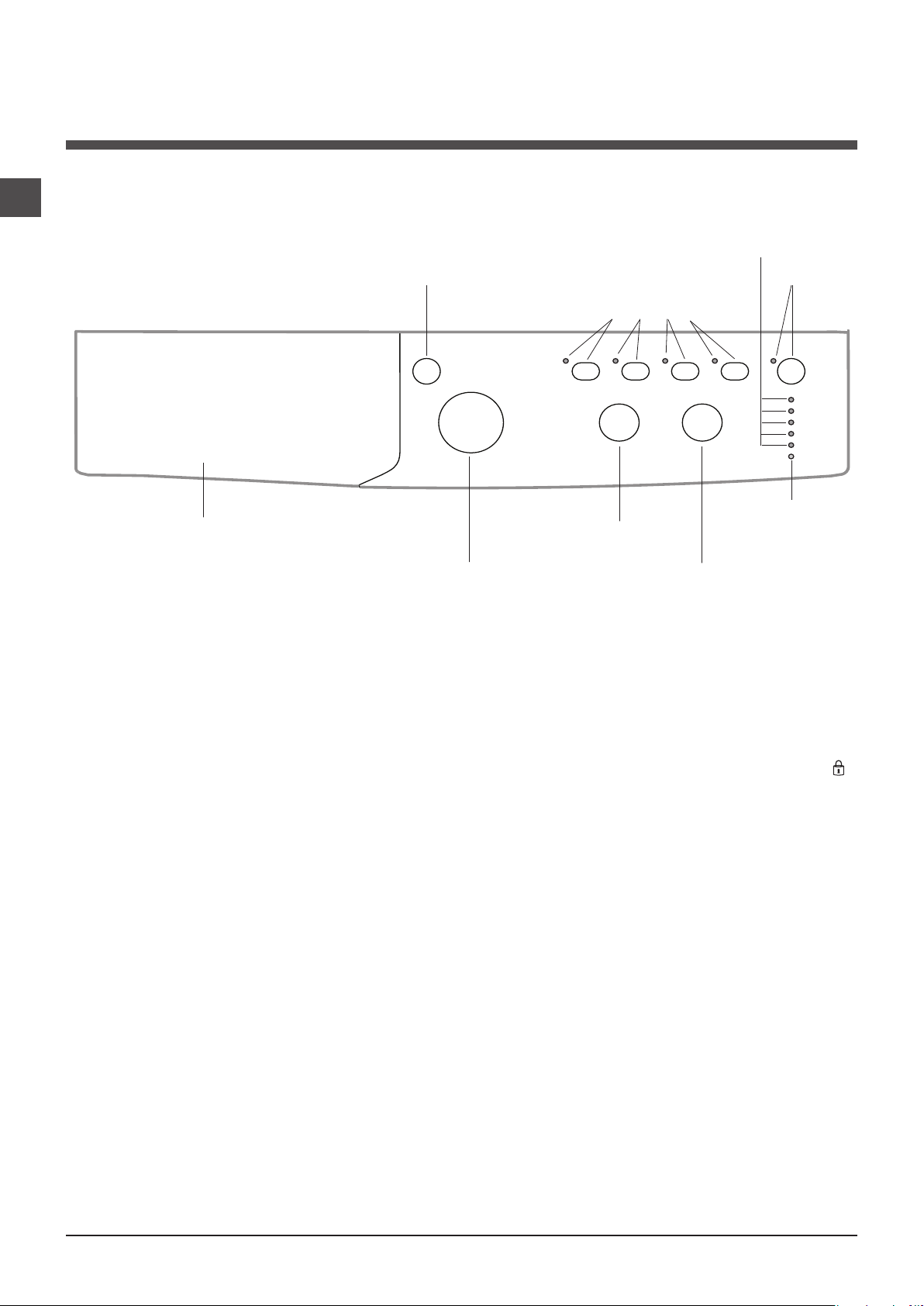
Tiroir à produits lessiviels: pour charger les produits
lessiviels et les additifs (voir “Produits lessiviels et linge”).
Touche ON/OFF: pour allumer ou éteindre le lave-linge.
Bouton PROGRAMMES: pour sélectionner les program-
mes. Pendant le programme, le bouton ne tournera pas.
Touches avec voyants FONCTION: pour sélectionner
les fonctions disponibles. Le voyant correspondant à la
fonction sélectionnée restera allumé.
Bouton TEMPÉRATURE: pour sélectionner la températu-
re ou un lavage à froid (voir “Personnalisations”).
Bouton ESSORAGE: pour sélectionner l’essorage ou le
supprimer (voir “Personnalisations”).
Voyants DÉROULEMENT CYCLE/DÉPART DIFFÉRÉ:
pour suivre le stade d’avancement du programme de
lavage.
Le voyant allumé indique la phase de lavage en cours.
Si la fonction “Départ différé” (départ différé) a été sélec-
tionnée, ils indiquent le temps restant jusqu’au démarrage
du programme (voir page ci-contre).
Voyant HUBLOT VERROUILLÉ: indique si la porte est
verrouillée (voir page ci-contre).
Touche avec voyant START/PAUSE: pour démarrer les
programmes ou les interrompre momentanément.
N.B.: pour effectuer une pause du lavage en cours, appu-
yer sur cette touche, le voyant correspondant se mettra à
clignoter en orange tandis que celui de la phase en cours
restera allumé fixe. Si le voyant HUBLOT VERROUILLÉ
est éteint, on peut ouvrir la porte.
Pour faire redémarrer le lavage exactement de l’endroit où
il a été interrompu, appuyer une nouvelle fois sur la touche.
Stand-by
Ce lave-linge, conformément aux nouvelles normes en
vigueur dans le domaine de l’économie d’énergie, est équi-
pée d’un système d’extinction automatique (veille) activé
après 30 minutes environ d’inutilisation. Appuyez briève-
ment sur la touche
ON/OFF
et attendre que la machine
soit réactivée.
Description du lave-linge et
démarrage d’un programme
Voyants DÉROULEMENT
CYCLE/DÉPART DIFFÉRÉ
Voyant
HUBLOT
VERROUILLÉ
Touche avec
oyant
START/
PAUSE
Bandeau de commandes
Tiroir à produits lessiviels
Bouton
TEMPÉRATURE
Touches avec voyants
FONCTION
Touche ON/OFF
Bouton
ESSORAGE
Bouton
PROGRAMMES
FR
25
Voyants
Les voyants fournissent des informations importantes.
Voilà ce qu’ils signalent:
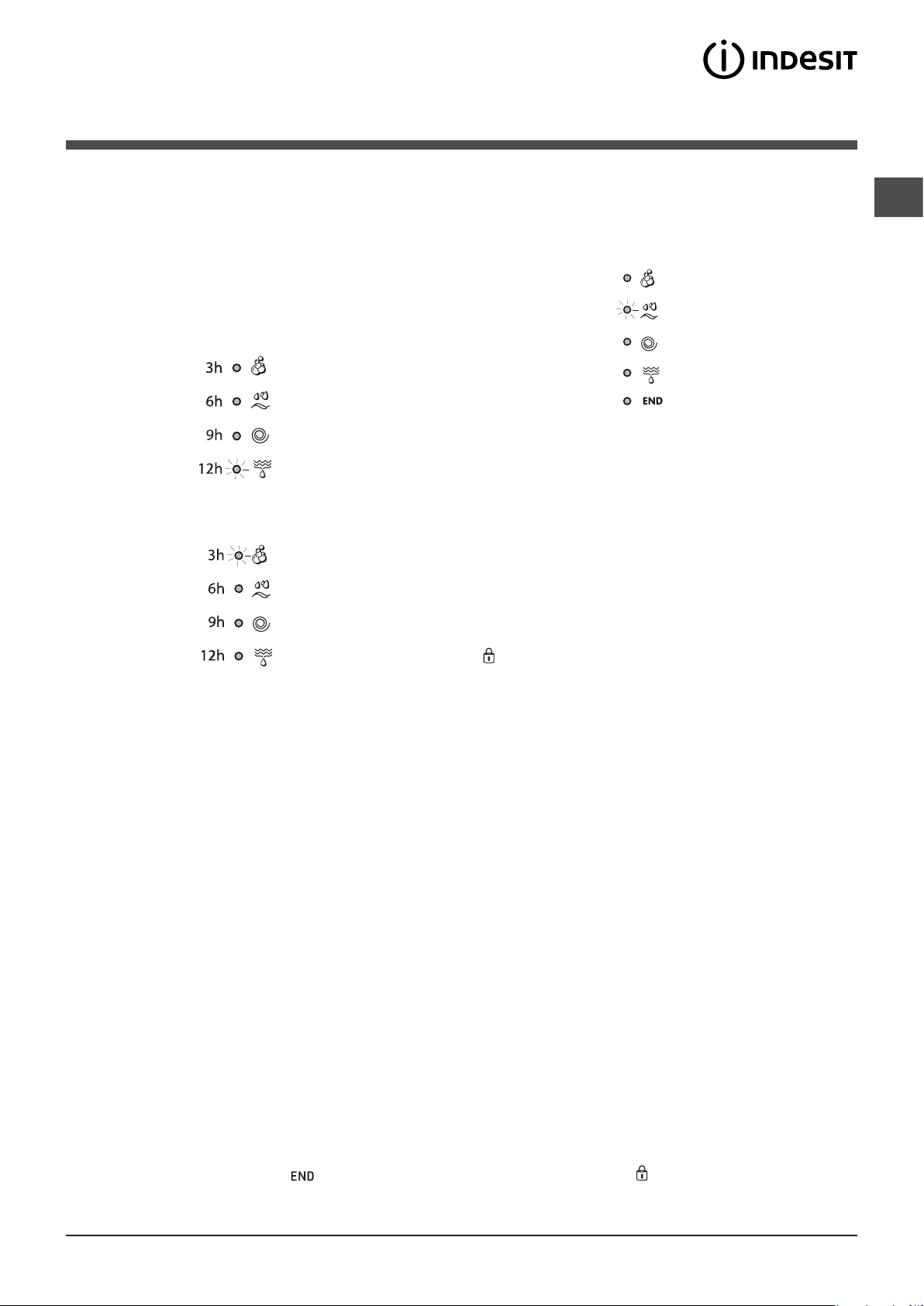
Départ différé
Si la fonction “Départ différé” a été activée (voir “Personnali-
sations”), le voyant correspondant au temps sélectionné se
mettra à clignoter, après avoir lancé le programme:
Au fur et à mesure que le temps passe, le temps restant
est affiché avec clignotement du voyant correspondant.
Quand le retard sélectionné touche à sa fin le programme
sélectionné démarre.
Voyants phase en cours
Une fois que le cycle de lavage sélectionné a démarré,
les voyants s’allument progressivement pour indiquer son
stade d’avancement:
Touches fonction et voyants correspondants
La sélection d’une fonction entraîne l’allumage du voyant
correspondant.
Si la fonction sélectionnée est incompatible avec le pro-
gramme sélectionné, le voyant correspondant se met à
clignoter et la fonction n’est pas activée.
Si l’fonction sélectionnée est incompatible avec une autre
fonction précédemment sélectionnée, le voyant corre-
spondant à la première fonction se met à clignoter et seule
la deuxième fonction est activée, le voyant de la touche
s’allume au fixe.
Voyant hublot verrouillé
Le voyant allumé indique que le hublot est verrouillé pour
en empêcher l’ouverture. Attendre que le voyant cesse de
clignoter avant d’ouvrir la porte. Pour ouvrir le hublot tandis
qu’un cycle est en cours, appuyer sur la touche START/
PAUSE; si le voyant HUBLOT VERROUILLÉ est éteint, on
peut ouvrir le hublot.
Démarrage d’un programme
1. Allumer le lave-linge en appuyant sur la touche ON/OFF. Tous les voyants s’allument pendant quelques secondes puis
s’éteignent, seul le voyant START/PAUSE flashe.
2. Charger le linge et fermer le hublot.
3. Sélectionner à l’aide du bouton PROGRAMMES le programme désiré.
4. Sélectionner la température de lavage (voir “Personnalisations”).
5. Sélectionner la vitesse d’essorage (voir “Personnalisations”).
6. Verser les produits lessiviels et les additifs (voir “Produits lessiviels et linge”).
7. Sélectionner les fonctions désirées.
8. Appuyer sur la touche START/PAUSE pour démarrer le programme, le voyant correspondant vert restera allumé en fixe.
Pour annuler le cycle sélectionné, appuyer sur la touche START/PAUSE pour placer l’appareil en pause et choisir un nouve-
au cycle.
9. A la fin du programme, le voyant s’allume. Quand le voyant HUBLOT VERROUILLÉ s’éteint, on peut ouvrir le hu-
blot. Sortir le linge et laisser le hublot entrouvert pour faire sécher le tambour.
Eteindre le lave-linge en appuyant sur la touche ON/OFF.
Lavage
Rinçage
Essorage
Vidange
Fin de Lavage
26
FR
Programmes
Tableau des programmes
La durée du cycle indiquée sur l’écran ou dans la notice représente une estimation calculée dans des conditions standard. Le temps effectif peut varier en fonction de nombreux facteurs tels que :
température et pression de l’eau en entrée, température ambiante, quantité de lessive, quantité et type de charge, équilibrage de la charge, options supplémentaires sélectionnées.
1) Programme de contrôle selon la règlements 1061/2010: sélectionner le programme 2 et une température de 60°C.
Ce cycle convient au lavage d’une charge de coton normalement sale et c’est le plus performant en termes de consommation d’eau et d’énergie, l’utiliser pour du linge
lavable à 60°C. La température effective de lavage peut différer de la température indiquée.
2) Programme de contrôle selon la règlements 1061/2010: sélectionner le programme 3 et une température de 40°C.
Ce cycle convient au lavage d’une charge de coton normalement sale et c’est le plus performant en termes de consommation d’eau et d’énergie, l’utiliser pour du linge
lavable à 40°C. La température effective de lavage peut différer de la température indiquée.
Pour tous les instituts qui effectuent ces tests :
2) Programme coton long: sélectionner le programme 3 et une température de 40°C.
3) Programme Synthétique ainsi que: sélectionner le programme 4 et une température de 40°C.
Programmes
Description du Programme
Temp.
maxi.
(°C)
Vitesse
maxi
(tours
minute)
Lessive
Charge maxi
(Kg)
Humidité
résiduelle %
Consommation
d’énergie kWh
Eau totale lt
Durée cycle
Lavage
Assou-
plissant
Programmes Quotidiens (Daily)
1
Coton: blancs extrêmement sales.
90° 1200
6 53 1,80 58 140’
2
Coton standard 60° (1): blancs et couleurs résistantes très sales.
60° 1200
6 53 1,04 48 195’
3
Coton standard 40° (2): blancs et couleurs délicates peu sales.
40° 1200
6 53 1,03 65 180’
4
Synthétiques: couleurs résistantes très sales.
50° 800
3 - - - 100’
4
Synthétiques (3): couleurs résistantes peu sales.
40° 800
3 44 0,47 38 95’
5
Mix couleurs: blancs peu sales et couleurs délicates.
40° 1200
6 53 0,64 50 85’
20° Zone
6
Coton standard 20°: blancs et couleurs délicates peu sales.
20°
1200
6 - - - 170’
7 Mix quotidien
20° 800
6 - - - 120’
8 20’ fraîcheur
20° 800
1,5 - - - 20’
Spéciaux (Special)
9 Outwear
30° 400
-
1,5 - - - 50’
10
Laine: pour laine, cachemire, etc.
40° 800
1 - - - 65’
11 Jeans
40° 800
2,5 - - - 70’
Sport
12 Sport Intensif
30° 600
2,5 - - - 85’
13 Sport Léger
30° 600
2,5 - - - 60’
14 Baskets
30° 600
Max.
2 paires
- - - 55’
Programmes partiaux
Rinçage
- 1200 -
6 - - - 36’
Essorage + Vidange
- 1200 - - 6 - - - 16’
FR
27
Sélection de la température
Tourner le bouton TEMPÉRATURE pour sélectionner la température de lavage (voir Tableau des programmes).
La température peut être abaissée jusqu’au lavage à froid ( ).
La machine interdira automatiquement toute sélection d’une température supérieure à la température maximale prévue pour
chaque programme.
Sélection de l’essorage
Tourner le bouton ESSORAGE pour sélectionner la vitesse d’essorage du programme sélectionné.
Les vitesses maximales prévues pour les programmes sont:
Programmes Vitesse maximale
Coton 1200 tours/minute
Synthétiques 800 tours/minute
Laine 800 tours/minute
La vitesse d’essorage peut être réduite ou l’essorage supprimé en sélectionnant le symbole .
La machine interdira automatiquement tout essorage à une vitesse supérieure à la vitesse maximale prévue pour chaque
programme.
Fonctions
Les différentes fonctions de lavage prévues par le lave-linge permettent d’obtenir la propreté et le blanc souhaités.
Pour activer les fonctions:
1. appuyer sur la touche correspondant à la fonction désirée;
2. l’allumage du voyant correspondant signale que la fonction est activée.
Remarque:
- Si la fonction sélectionnée est incompatible avec le programme sélectionné, le voyant correspondant se met à clignoter
et la fonction n’est pas activée.
- Si l’fonction sélectionnée est incompatible avec une autre fonction précédemment sélectionnée, le voyant correspondant
à la première fonction se met à clignoter et seule la deuxième fonction est activée, le voyant de la touche s’allume au fixe.
La sélection de cette option permet d’optimiser les mouvements mécaniques, la température et l’eau en fonction d’une
charge réduite de coton et synthétiques peu sales (voir “Tableau des programmes”). “ ” permet de laver en faisant des
économies considérables de temps et de consommations d’eau et d’énergie. Il est conseillé d’utiliser une dose de lessive
liquide adaptée à la charge.
La fonction h permet d’économiser l’énergie puisque l’eau utilisée pour la lessive n’est pas réchauffée : un plus
pour l’environnement et pour votre facture d’électricité. L’action renforcée et l’optimisation de la consommation de l’eau
garantissent d’excellents résultats pour une durée moyenne identique à celle d’un cycle standard. Pour de meilleurs résultats
en matière de lavage, utilisez une lessive liquide.
Super Rinçage
La sélection de cette option permet d’augmenter l’efficacité du rinçage et d’éliminer totalement toute trace de lessive. Elle est
très utile pour les peaux particulièrement sensibles.
Départ différé
Pour différer la mise en marche de la machine jusqu’à 12 heures.
Appuyer plusieurs fois de suite sur la touche jusqu’à ce que le voyant correspondant au retard souhaité s’allume. A la cinquième
pression sur la touche, la fonction se désactive.
N.B: Après avoir appuyé sur la touche START/PAUSE, le retard programmé ne peut être modifié que pour le diminuer jusqu’à
lancer le programme sélectionné.
Personnalisations
28
FR
Produits lessiviels et linge
Tiroir à produits lessiviels
Un bon résultat de lavage dépend aussi d’un bon dosage
de produit lessiviel: un excès de lessive ne lave pas mieux,
il incruste l’intérieur du lave-linge et pollue l’environnement.
! Ne pas utiliser de lessives pour lavage à la main, elles
moussent trop.
! Utiliser des lessives en poudre pour du linge en coton blanc
et en cas de prélavage et de lavages à une température
supérieure à 60°C.
! Respecter les indications figurant sur le paquet de lessive.
Sortir le tiroir à produits les-
siviels et verser la lessive ou
l’additif comme suit.
bac 1: Ne mettez pas de détergent dans ce com-
partiment
bac 2: Lessive lavage (en poudre ou liquide)
Verser la lessive liquide juste avant la mise en marche.
bac 3: Additifs (assouplissant, etc.)
L’assouplissant ne doit pas déborder de la grille.
Triage du linge
• Trier correctement le linge d’après:
- le type de textile / le symbole sur l’étiquette.
- les couleurs: séparer le linge coloré du blanc.
• Vider les poches et contrôler les boutons.
• Ne pas dépasser les valeurs indiquées dans le “Tableau
des programmes” correspondant au poids de linge sec.
Combien pèse le linge ?
1 drap 400-500 g
1 taie d’oreiller 150-200 g
1 nappe 400-500 g
1 peignoir 900-1200 g
1 serviette éponge 150-250 g
Linge ou vêtements particuliers
Les programmes 20° (Zone 20°) offrent de bonnes
performances de lavage aux basses températures avec
une consommation d’électricité réduite qui permet de faire
des économies tout en respectant l’environnement. Les
programmes 20° satisfont toutes les exigences:
Coton standard 20° (programme 6) idéal pour des
charges de linge sale en coton. Les bonnes performances,
même à froid, comparables à celles d’un lavage à 40°,
sont assurées grâce à une action mécanique qui brasse en
variant la vitesse et avec des pics répétés et rapprochés.
1
2
3
Mix quotidien (programme 7) idéal pour des charges
mixtes (coton et synthétiques) moyennement sales. Les
bonnes performances de lavage, même à froid, sont
assurées grâce à une action mécanique qui brasse en
variant la vitesse à des intervalles moyens et déterminés.
20’ fraîcheur (programme 8) cycle idéal pour ra-
fraîchir du linge peu sale en quelques minutes.
Il ne dure que 20 minutes et permet ainsi de faire des éco-
nomies de temps et d’énergie. Il permet de laver ensemble
des textiles différents (sauf laine et soie) avec une charge
maximum de 1,5 kg.
Outwear (programme 9): est spécialement conçu pour laver
des tissus hydrofuges et des anoraks (par ex.: goretex, pol-
yester, nylon); pour obtenir d’excellents résultats, utilisez une
lessive liquide avec une dose pour la demi-charge; prétraitez
poignets, cols et taches; n’utilisez ni assouplissants ni d’au-
tres produits avec assouplissant. Avec ce programme vous
ne pouvez pas laver les duvets.
Laine: grâce au programme 10 vous pouvez laver à la
machine tous vos vêtements en laine, y compris ceux qui
portent l’étiquette “ lavage à la main uniquement “
. Pour obtenir d’excellents résultats utilisez un produit
lessiviel spécial et ne dépassez pas une charge de 1 kg.
Jeans: mettez les jeans à l’envers avant de les laver et utilisez
une lessive liquide. Sélectionnez le programme 11.
Sport Intensive (programme 12): est spécialement conçu
pour laver des textiles vêtements de sport (survêtements,
shorts, etc.) très sales; pour obtenir d’excellents résultats
nous recommandons de ne pas dépasser la charge maximale
indiquée dans le “Tableau des programmes”.
Sport Light (programme 13): est spécialement conçu
pour laver des textiles vêtements de sport (survêtements,
shorts, etc.) peu sales; pour obtenir d’excellents résultats
nous recommandons de ne pas dépasser la charge
maximale indiquée dans le “Tableau des programmes”. Nous
recommandons d’utiliser de la lessive liquide, avec une dose
pour la demi-charge.
Sport Shoes (programme 14): est spécialement conçu pour
laver des chaussures de sport; pour obtenir d’excellents
résultats nous recommandons de ne pas en laver plus de 2
paires à la fois.
Système d’équilibrage de la charge
Avant tout essorage, pour éviter toute vibration excessive et
répartir le linge de façon uniforme, le lave-linge fait tourner
le tambour à une vitesse légèrement supérieure à la vitesse
de lavage. Si au bout de plusieurs tentatives, la charge n’est
toujours pas correctement équilibrée, l’appareil procède à un
essorage à une vitesse inférieure à la vitesse normalement
prévue. En cas de déséquilibre excessif, le lave-linge préfère
procéder à la répartition du linge plutôt qu’à son essorage.
Pour une meilleure répartition de la charge et un bon équili-
brage, nous conseillons de mélanger de grandes et petites
pièces de linge.

FR
29
Anomalies et remèdes
Il peut arriver que le lave-linge ne fonctionne pas bien. Avant d’appeler le Service de dépannage (voir “Assistance”), contrôler
s’il ne s’agit pas par hasard d’un problème facile à résoudre à l’aide de la liste suivante.
Anomalies:
Le lave-linge ne s’allume pas.
Le cycle de lavage ne démarre pas.
Il n’y a pas d’arrivée d’eau (le
voyant de la première phase de
lavage clignote rapidement).
Le lave-linge prend l’eau et vidange
continuellement.
Le lave-linge ne vidange pas et
n’essore pas.
Le lave-linge vibre beaucoup pen-
dant l’essorage.
Le lave-linge a des fuites.
Les voyants des “Fonctions” et le
voyant START/PAUSE clignotent.
Le voyant du phase de lavage et le
voyant hublot bloqué restent fixes.
Il y a un excès de mousse.
Causes / Solutions possibles:
• La fiche n’est pas branchée dans la prise de courant ou mal branchée.
• Il y a une panne de courant.
• Le hublot n’est pas bien fermé.
• La touche ON/OFF n’a pas été enfoncée.
• La touche START/PAUSE n’a pas été enfoncée.
• Le robinet de l’eau n’est pas ouvert.
• Un départ différé a été sélectionné (voir “Personnalisations”).
• Le tuyau d’arrivée de l’eau n’est pas raccordé au robinet.
• Le tuyau est plié.
• Le robinet de l’eau n’est pas ouvert.
• Il y a une coupure d’eau.
• La pression n’est pas suffisante.
• La touche START/PAUSE n’a pas été enfoncée.
• Le tuyau de vidange n’est pas installé à une distance du sol comprise entre 65
et 100 cm (voir “Installation”).
• L’extrémité du tuyau de vidange est plongée dans l’eau (voir “Installation”).
• L’évacuation murale n’a pas d’évent.
Si après ces vérifications, le problème persiste, fermer le robinet de l’eau,
éteindre la machine et appeler le service Assistance. Si l’appartement est situé
en étage dans un immeuble, il peut y avoir des phénomènes de siphonnage qui
font que le lave-linge prend et évacue l’eau continuellement. Pour supprimer
cet inconvénient, on trouve dans le commerce des soupapes spéciales anti-
siphonnage.
• Le programme ne prévoit pas de vidange: pour certains programmes, il faut la
faire partir manuellement.
• Le tuyau de vidange est plié (voir “Installation ”).
• La conduite d’évacuation est bouchée.
• Le tambour n’a pas été débloqué comme il faut lors de l’installation du lave-
linge (voir “Installation”).
• Le lave-linge n’est pas posé à plat (voir “Installation”).
• Le lave-linge est coincé entre des meubles et le mur (voir “Installation”).
• Le tuyau d’arrivée de l’eau n’est pas bien vissé (voir “Installation”).
• Le tiroir à produits lessiviels est bouché (pour le nettoyer voir “Entretien et soin”).
• Le tuyau de vidange n’est pas bien fixé (voir “Installation”).
• Eteindre l’appareil et débrancher la fiche de la prise de courant, attendre 1
minute environ avant de rallumer.
Si l’anomalie persiste, appeler le service d’assistance.
• Le produit de lavage utilisé n’est pas une lessive spéciale machine (il faut qu’il
y ait l’inscription “pour lave-linge”, “main et machine”, ou autre semblable).
• La quantité utilisée est excessive.

30
FR
Assistance
Avant d’appeler le service après-vente:
• Vérifier si on ne peut pas résoudre l’anomalie par ses propres moyens (voir “Anomalies et Remèdes”);
• Remettre le programme en marche pour contrôler si l’inconvénient a disparu;
• Autrement, contacter le Centre d’Assistance technique agréé au numéro de téléphone indiqué sur le certificat de garantie.
! Ne jamais s’adresser à des techniciens non agréés.
Communiquer:
• le type de panne;
• le modèle de l’appareil (Mod.);
• son numéro de série (S/N).
Ces informations se trouvent sur la plaque signalétique apposée à l’arrière du lave-linge et à l’avant quand on ouvre la porte
hublot.

AR
30-31-32-33
40
7105
AR
IWSC 61251 S
34-33-32-31
41
34-33-32
36-35
37
38
39
40
41
42
43
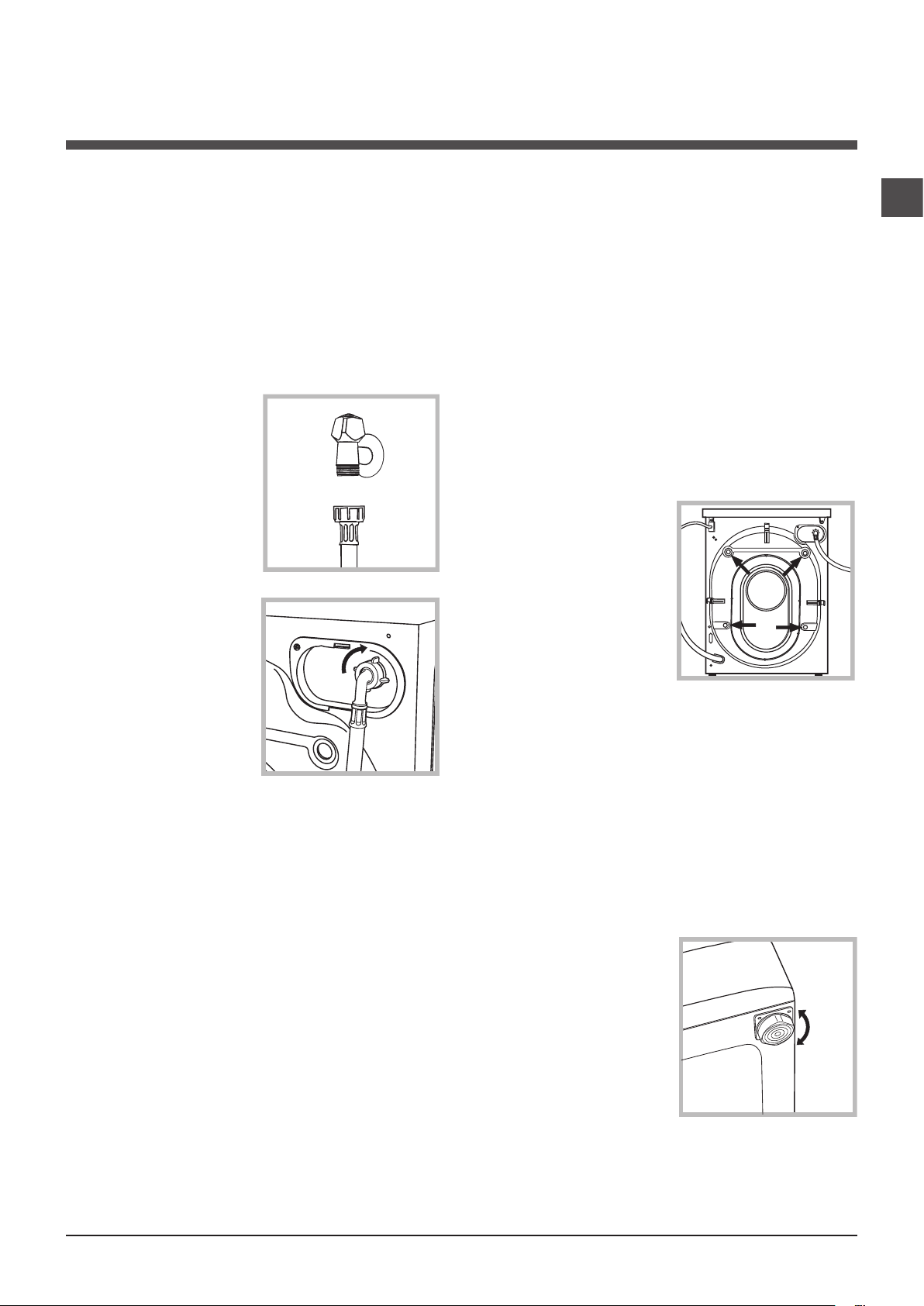
30
AR
!
!
1
2
43
4
5
!
1
2
1
2
3
!
!
!
!
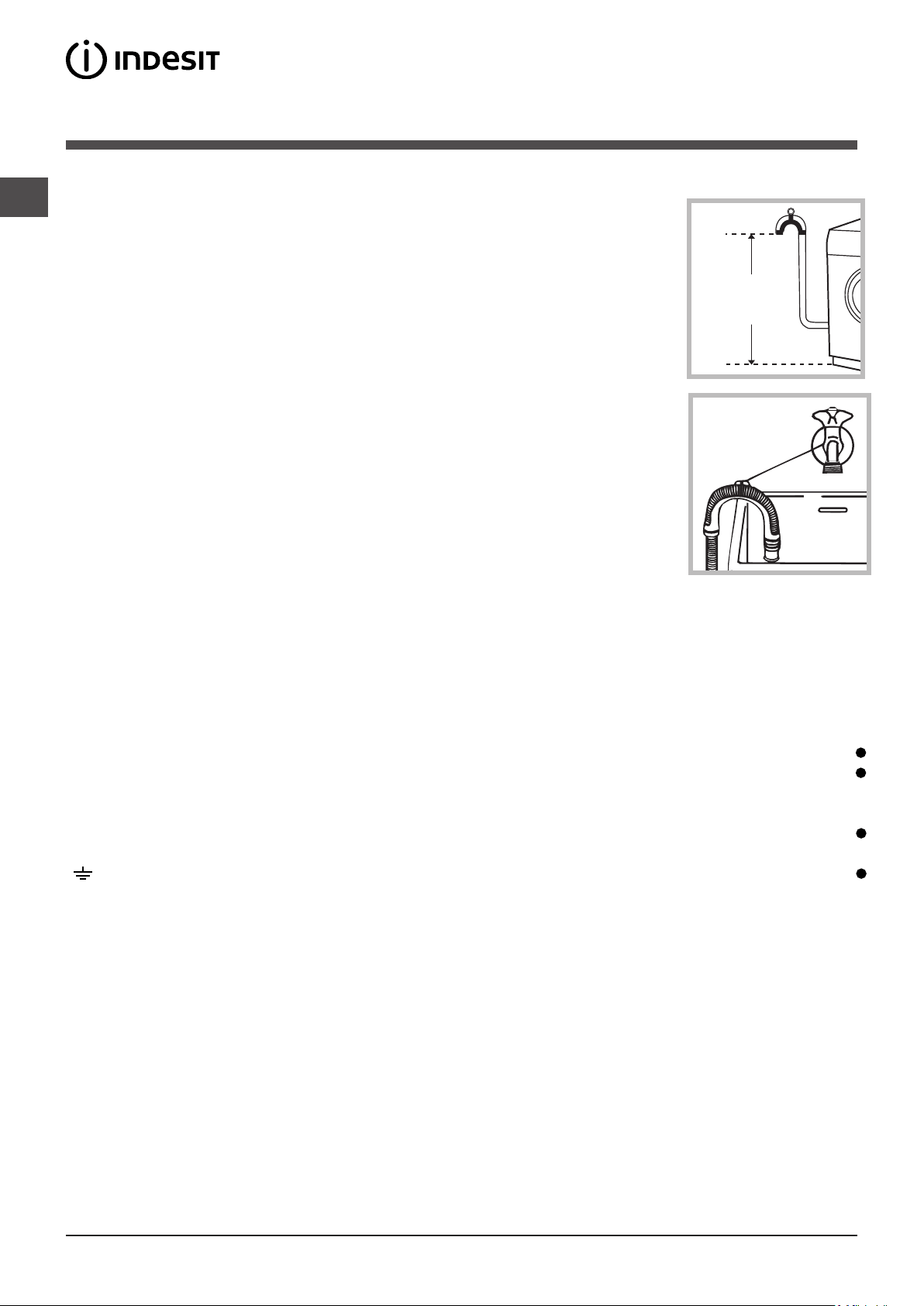
AR
31
71
اوﺻﻠﻮا ﺧﺮﻃﻮم ﺗﻔﺮﻳﻎ اﻟﻤﺎء ﻣﻦ ﺣﻮض
ﻏ
ـ
ﺴ
ـ
ﻴ
ـ
ﻞ اﻟ
ـ
ﻐ
ـ
ﺴ
ـ
ﺎﻟ
ـ
ﺔ ﺑ
ـ
ﺪون ﻃ
ـ
ﻮﻳ
ـ
ﻪ، ﺑ
ـ
ﻤ
ـ
ﺎﺳ
ـ
ﻮرة
ﺻ
ـ
ﺮف ﻟ
ـ
ﻠ
ـ
ﻤ
ـ
ﺎء، أو ﺑ
ـ
ﻤ
ـ
ﺼ
ـ
ﺮف ﻣ
ـ
ﻮﺟ
ـ
ﻮد ﻓ
ـ
ﻲ
اﻟﺤﺎﺋﻂ ﻋﻠﻰ أن ﻳﻜﻮن ارﺗﻔﺎﻋﻪ ﻣﺎ ﺑﻴﻦ 56
و 001 ﺳﻨﺘﻤﺘﺮ ﻋﻦ ﺳﻄﺢ اﻷ رض
أو ﻗ
ـ
ﻮﻣ
ـ
ﻮا ﺑ
ـ
ﻮﺿ
ـ
ﻌ
ـ
ﻪ ﻋ
ـ
ﻠ
ـ
ﻰ ﺣ
ـ
ﺎﻓ
ـ
ﺔ ﻣ
ـ
ﻐ
ـ
ﺴ
ـ
ﻠ
ـ
ﺔ
أو ﺣ
ـ
ﻮض ﺣ
ـ
ﻤ
ـ
ﺎم، ارﺑ
ـ
ﻄ
ـ
ﻮا اﻟ
ـ
ﺨ
ـ
ﺮﻃ
ـ
ﻮم
ﺑ
ـ
ﺤ
ـ
ﺎﻣ
ـ
ﻞ اﻟ
ـ
ﺨ
ـ
ﺮﻃ
ـ
ﻮم اﻟ
ـ
ﺬي ﻳ
ـ
ﻜ
ـ
ﻮن ﻣ
ـ
ﺰود ﻣ
ـ
ﻊ
اﻟﺠﻬﺎزﺑﻤﺤﺒﺲ اﻟﻤﺎء )اﻧﻈﺮ اﻟﻰ اﻟﺸﻜﻞ(
اﻟﻄﺮف اﻟﺤﺮ ﻣﻦ اﻟﺨﺮﻃﻮم ﻳﺠﺐ أن ﻻ
ﻳﻜﻮن ﻣﻐﻤﻮر ﻓﻲ اﻟﻤﺎء.
ﻏﻴﺮ ﻣﻨﺼﻮح اﺳﺘﺨﺪام ﺧﺮاﻃﻴﻢ ﺗﻄﻮﻳﻞ ، اذا آﺎن ﻣﻦ اﻟﻀﺮوري اﺳﺘﺨﺪام ﺧﺮاﻃﻴﻢ
اﻟ
ـ
ﺘ
ـ
ﻄ
ـ
ﻮﻳ
ـ
ﻞ ﻳ
ـ
ﺠ
ـ
ﺐ أن ﻳ
ـ
ﻜ
ـ
ﻮن ﻗ
ـ
ﻄ
ـ
ﺮ ه
ـ
ﺬا اﻟ
ـ
ﺨ
ـ
ﺮﻃ
ـ
ﻮم ﻧ
ـ
ﻔ
ـ
ﺲ ﻗ
ـ
ﻄ
ـ
ﺮ اﻟ
ـ
ﺨ
ـ
ﺮﻃ
ـ
ﻮم اﻟ
ـ
ﺮﺋ
ـ
ﻴ
ـ
ﺴ
ـ
ﻲ وﻳ
ـ
ﺠ
ـ
ﺐ
أن ﻻ ﻳﺰﻳﺪ ﻃﻮﻟﻪ ﻋﻦ 051 ﺳﻨﺘﻤﺘﺮ.
اﻟﺘﻮﺻﻴﻞ ﺑﺸﺒﻜﺔ اﻟﺘﻴﺎر اﻟﻜﻬﺮﺑﺎﺋﻲ
ﻗﺒﻞ ادﺧﺎل ﻗﺎﺑﺲ اﻟﺘﻴﺎر اﻟﻜﻬﺮﺑﺎﺋﻲ )اﻟﺬآﺮ( ﺑﻤﻘﺒﺲ اﻟﺘﻴﺎر اﻟﻜﻬﺮﺑﺎﺋﻲ )اﻷ ﻧﺜﻰ( ﺗﺄآﺪوا
ﻣﻦ أن:
ﻣﻘﺒﺲ اﻟﺘﻴﺎر اﻟﻜﻬﺮﺑﺎﺋﻲ )اﻷ ﻧﺜﻰ( ﻟﻬﺎ ﺧﻂ أرض ﻓﻌﺎل وﺧﺎﺿﻊ اﻟﻰ اﻟﻘﻮاﻧﻴﻦ
ﻣ
ـ
ﻘ
ـ
ﺒ
ـ
ﺲ اﻟ
ـ
ﺘ
ـ
ﻴ
ـ
ﺎر اﻟ
ـ
ﻜ
ـ
ﻬ
ـ
ﺮﺑ
ـ
ﺎﺋ
ـ
ﻲ )اﻷ ﻧ
ـ
ﺜ
ـ
ﻰ( ﻗ
ـ
ﺎدر ﻋ
ـ
ﻠ
ـ
ﻰ ﺗ
ـ
ﺤ
ـ
ﻤ
ـ
ﻞ اﻟ
ـ
ﻘ
ـ
ﺪرة اﻟ
ـ
ﻜ
ـ
ﻬ
ـ
ﺮﺑ
ـ
ﺎﺋ
ـ
ﻴ
ـ
ﺔ اﻟ
ـ
ﻘ
ـ
ﺼ
ـ
ﻮى
اﻟ
ـ
ﻤ
ـ
ﻤ
ـ
ﺘ
ـ
ﺼ
ـ
ﺔ ﻣ
ـ
ﻦ ﻗ
ـ
ﺒ
ـ
ﻞ اﻟ
ـ
ﺠ
ـ
ﻬ
ـ
ﺎزوﻳ
ـ
ﻜ
ـ
ﻮن ﻣ
ـ
ﺸ
ـ
ﺎر ﻟ
ـ
ﻬ
ـ
ﺎ ﻓ
ـ
ﻲ ﻻ ﺋ
ـ
ﺤ
ـ
ﺔ اﻟ
ـ
ﺨ
ـ
ﺼ
ـ
ﺎﺋ
ـ
ﺺ اﻟ
ـ
ﻔ
ـ
ﻨ
ـ
ﻴ
ـ
ﺔ ﻟ
ـ
ﻠ
ـ
ﺠ
ـ
ﻬ
ـ
ﺎز
)اﻧﻈﺮﺻﻔﺤﺔ 91(.
ﻓﺮق ﺟﻬﺪ ﺷﺒﻜﺔ اﻟﻜﻬﺮﺑﺎء ﻳﺠﺐ أن ﺗﻜﻮن ﻓﻲ اﻟﻘﻴﻢ اﻟﺘﻲ ﺗﻜﻮن ﻣﻮﺟﻮدة واﻟﻤﺸﺎر ﻟﻬﺎ
ﻓﻲ ﻻ ﺋﺤﺔ اﻟﺨﺼﺎﺋﺺ اﻟﻔﻨﻴﺔ ﻟﻠﺠﻬﺎز)اﻧﻈﺮﺻﻔﺤﺔ 91(.
ﻣﻘﺒﺲ اﻟﺘﻴﺎر اﻟﻜﻬﺮﺑﺎﺋﻲ )اﻷ ﻧﺜﻰ( ﻣﻼ ﺋﻢ ﻟﻘﺎﺑﺲ اﻟﺘﻴﺎر اﻟﻜﻬﺮﺑﺎﺋﻲ )اﻟﺬآﺮ( اﻟﻤﺰود ﻣﻊ
اﻟﻐﺴﺎﻟﺔ ﻓﻲ ﺣﺎﻟﺔ ﻋﺪم ﺗﻮاﻓﻘﻬﻢ ﻗﻮﻣﻮا ﺑﻌﻤﻠﻴﺔ ﺗﻐﻴﻴﺮ اﺣﺪاهﻤﺎ.
ﺟ
ـ
ﻬ
ـ
ﺎزآ
ـ
ﻢ اﻟ
ـ
ﻜ
ـ
ﻬ
ـ
ﺮﺑ
ـ
ﺎﺋ
ـ
ﻲ ﻣ
ـ
ﺰود ﺑ
ـ
ﻘ
ـ
ﺎﺑ
ـ
ﺲ )اﻟ
ـ
ﺬآ
ـ
ﺮ( ﻣ
ـ
ﺼ
ـ
ﻬ
ـ
ﻮر وﻗ
ـ
ﺎدرﻋ
ـ
ﻠ
ـ
ﻰ ﺗ
ـ
ﺤ
ـ
ﻤ
ـ
ﻞ ﺗ
ـ
ﻴ
ـ
ﺎر آ
ـ
ﻬ
ـ
ﺮﺑ
ـ
ﺎﺋ
ـ
ﻲ
31 أﻣﺒﻴﺮ وﻳﻤﻜﻨﻜﻢ ادﺧﺎل هﺬا اﻟﻘﺎﺑﺲ ﺑﻤﻘﺒﺲ )اﻻ ﻧﺜﻰ( ﻳﺘﻮاﻓﻖ ﻣﻌﺔ ﻟﻼ ﺳﺘﺨﺪام اﻟﻤﺒﺎﺷﺮ،
اﻗﺮؤوا اﻟﺘﻌﻠﻴﻤﺎت اﻟﺘﺎﻟﻴﺔ ﻗﺒﻞ اﺳﺘﺨﺪام اﻟﺠﻬﺎز اﻟﻜﻬﺮﺑﺎﺋﻲ.
اﻧ
ـ
ﺘ
ـ
ﺒ
ـ
ﺎه: اﻟ
ـ
ﺠ
ـ
ﻬ
ـ
ﺎز اﻟ
ـ
ﻜ
ـ
ﻬ
ـ
ﺮﺑ
ـ
ﺎﺋ
ـ
ﻲ ﻳ
ـ
ﺠ
ـ
ﺐ أن ﻳ
ـ
ﻜ
ـ
ﻮن ﻣ
ـ
ﻮﺻ
ـ
ﻮل ﺑ
ـ
ﺨ
ـ
ﻂ أرض ﻓ
ـ
ﻌ
ـ
ﺎل، اﻟ
ـ
ﻌ
ـ
ﻤ
ـ
ﻠ
ـ
ﻴ
ـ
ﺎت
اﻟﻤﺸﺮوﺣﺔ أدﻧﺎه هﻲ ﺗﻌﻠﻴﻤﺎت ﻣﻮﺟﻪ اﻟﻰ ﻓﻨﻲ آﻬﺮﺑﺎﺋﻲ ﻣﺨﺘﺺ.
ﺗﻐﻴﻴﺮ اﻟﻤﻨﺼﻬﺮة )اﻟﻔﻴﻮز(
ﻋ
ـ
ﻨ
ـ
ﺪ ﺗ
ـ
ﻐ
ـ
ﻴ
ـ
ﻴ
ـ
ﺮ اﻟ
ـ
ﻤ
ـ
ﻨ
ـ
ﺼ
ـ
ﻬ
ـ
ﺮة )اﻟ
ـ
ﻔ
ـ
ﻴ
ـ
ﻮز( اﻟ
ـ
ﻤ
ـ
ﻌ
ـ
ﻄ
ـ
ﻮب، اﺳ
ـ
ﺘ
ـ
ﺨ
ـ
ﺪﻣ
ـ
ﻮا داﺋ
ـ
ﻤ
ـ
ﺎ ﻣ
ـ
ﻨ
ـ
ﺼ
ـ
ﻬ
ـ
ﺮة 31 اﻣ
ـ
ﺒ
ـ
ﻴ
ـ
ﺮ
ATSA ﺧﺎﺿﻌﺔ ﻟﻠﻤﻘﻴﺎس 2631 SB وأﻋﻴﺪوا ﻏﻄﺎء اﻟﻤﻨﺼﻬﺮة اﻟﻰ ﻣﻜﺎﻧﻪ اﻟﺬي
آ
ـ
ﺎن ﻓ
ـ
ﻴ
ـ
ﻪ، ﻓ
ـ
ﻲ ﺣ
ـ
ﺎﻟ
ـ
ﺔ ﻓ
ـ
ﻘ
ـ
ﺪان ه
ـ
ﺬا اﻟ
ـ
ﻐ
ـ
ﻄ
ـ
ﺎء ﻻ ﺗ
ـ
ﺴ
ـ
ﺘ
ـ
ﺨ
ـ
ﺪﻣ
ـ
ﻮا اﻟ
ـ
ﻘ
ـ
ﺎﺑ
ـ
ﺲ ﺣ
ـ
ﺘ
ـ
ﻰ اﻟ
ـ
ﺤ
ـ
ﺼ
ـ
ﻮل ﻋ
ـ
ﻠ
ـ
ﻰ
هﺬا اﻟﻐﻄﺎء وﺗﺮآﻴﺒﻪ ﻓﻲ ﻣﻜﺎﻧﻪ.
ﺗﻐﻴﻴﺮ ﻏﻄﺎء اﻟﻤﻨﺼﻬﺮات )اﻟﻔﻴﻮزات(:
اذا ﺗﻢ ﺗﻐﻴﻴﺮ ﻏﻄﺎء اﻟﻔﻴﻮزات ﺗﺎآﺪوا ﻣﻦ أن ﻟﻮﻧﻪ هﻮ اﻟﻠﻮن اﻟﺼﺤﻴﺢ واﻟﻤﺸﺎر ﻟﻪ
ﺑﻮاﺳﻄﺔ اﻟﺮﻗﻢ أو اﻟﻜﺘﺎﺑﺔ اﻟﻤﻠﻮﻧﺔ اﻟﻤﻮﺟﻮدة ﻋﻠﻰ ﻗﺎﻋﺪة اﻟﻘﺎﺑﺲ، ﻟﻘﻄﻊ اﻟﻐﻴﺎر، اﺳﺘﻌﻴﻨﻮا
ﻣﺒﺎﺷﺮة ﺑﻘﺴﻢ اﻟﺼﻴﺎﻧﺔ اﻟﻔﻨﻴﺔ اﻟﻘﺮﻳﺐ ﻋﻠﻴﻜﻢ.
ﻓﻚ اﻟﻘﺎﺑﺲ )اﻟﺬآﺮ(:
ﻓﻲ ﺣﺎﻟﺔ أن ﻳﻜﻮن اﻟﺠﻬﺎز ﻣﺰود ﺑﻘﺎﺑﺲ )اﻟﺬآﺮ( ﻻ ﻳﻤﻜﻦ ﻓﻜﻪ ﻷ ﻧﻪ ﻣﺼﻬﻮر وﺗﺮﻳﺪون
ﺗﻤﺮﻳﺮ ﺳﻠﻚ اﻟﺘﻐﺬﻳﺔ اﻟﻜﻬﺮﺑﺎﺋﻴﺔ ﻣﻦ ﺧﻼ ل ﺛﻘﻮب أو ﻓﺘﺤﺎت ﺻﻐﻴﺮة ﻻ ﻳﻤﺮ ﻣﻦ ﺧﻼ ﻟﻬﺎ
اﻟﻘﺎﺑﺲ ﻗﻮﻣﻮا ﺑﺘﻐﻴﻴﺮ اﻟﻘﺎﺑﺲ اﻟﻤﺼﻬﻮر ﺑﻘﺎﺑﺲ ﻳﻤﻜﻦ ﻓﻜﻪ وﺗﺮآﻴﺒﻪ وﻗﺎدر ﻋﻠﻰ ﺗﺤﻤﻞ
31 أﻣﺒﻴﺮ وﻳﺤﻤﻞ اﻟﺸﻌﺎر ISB.
أو
وﺻ
ـ
ﻞ ﺳ
ـ
ﻠ
ـ
ﻚ اﻟ
ـ
ﺘ
ـ
ﻐ
ـ
ﺬﻳ
ـ
ﺔ اﻟ
ـ
ﻜ
ـ
ﻬ
ـ
ﺮﺑ
ـ
ﺎﺋ
ـ
ﻴ
ـ
ﺔ ﺑ
ـ
ﻤ
ـ
ﻨ
ـ
ﺒ
ـ
ﻊ اﻟ
ـ
ﺘ
ـ
ﻴ
ـ
ﺎر اﻟ
ـ
ﻜ
ـ
ﻬ
ـ
ﺮﺑ
ـ
ﺎﺋ
ـ
ﻲ ﺑ
ـ
ﻮاﺳ
ـ
ﻄ
ـ
ﺔ ﻣ
ـ
ﻔ
ـ
ﺘ
ـ
ﺎح ﻗ
ـ
ﺎدر ﻋ
ـ
ﻠ
ـ
ﻰ
ﺗ
ـ
ﺤ
ـ
ﻤ
ـ
ﻞ 31 أﻣ
ـ
ﺒ
ـ
ﻴ
ـ
ﺮ )وﺧ
ـ
ﺎﺿ
ـ
ﻊ ﻟ
ـ
ﻠ
ـ
ﻤ
ـ
ﻘ
ـ
ﻴ
ـ
ﺎس 3375 SB ( ﻳ
ـ
ﻤ
ـ
ﻜ
ـ
ﻦ اﻟ
ـ
ﻮﺻ
ـ
ﻮل اﻟ
ـ
ﻴ
ـ
ﻪ ﺑ
ـ
ﺪون
ﺗﺤﺮﻳﻚ اﻟﺠﻬﺎز ﻣﻦ ﻣﻜﺎﻧﻪ.
ازاﻟﺔ اﻟﻘﺎﺑﺲ )اﻟﺬآﺮ(:
ﻗﺒﻞ رﻣﻲ اﻟﻘﺎﺑﺲ اﺟﻌﻠﻮة ﻏﻴﺮ ﻗﺎﺑﻞ ﻟﻼ ﺳﺘﻌﻤﺎل وذﻟﻚ ﺑﻜﺴﺮ رؤوﺳﻪ ﺑﺤﻴﺚ ﻻ ﻳﻤﻜﻦ
ادﺧﺎﻟﻪ داﺧﻞ ﺛﻘﻮب ﻣﻘﺒﺲ )اﻻ ﻧﺜﻰ( ﺑﺸﻜﻞ ﻋﻔﻮي.
ﺗﻌﻠﻴﻤﺎت ﻣﻦ أﺟﻞ ﺗﻮﺻﻴﻞ ﺳﻠﻚ اﻟﺘﻐﺬﻳﺔ اﻟﻜﻬﺮﺑﺎﺋﻴﺔ ﺑﻘﺎﺑﺲ )اﻟﺬآﺮ(:
ﻣﻬﻢ: أﻟﻮان اﻷ ﺳﻼ ك اﻟﺘﻐﺬﻳﻪ اﻟﻜﻬﺮﺑﺎﺋﻴﺔ ﺗﺸﻴﺮ اﻟﻰ اﻟﺘﺎﻟﻲ:
أﺻﻔﺮ/أﺧﻀﺮ ﺧﻂ أرض
ازرق ﻣﺤﺎﻳﺪ )ﻧﻴﻮﺗﺮل(
ﺑﻨﻲ ﺗﻐﺬﻳﺔ
وﻷ ن أﻟ
ـ
ﻮان ﺳ
ـ
ﻠ
ـ
ﻚ اﻟ
ـ
ﺘ
ـ
ﻐ
ـ
ﺬﻳ
ـ
ﺔ اﻟ
ـ
ﻜ
ـ
ﻬ
ـ
ﺮﺑ
ـ
ﺎﺋ
ـ
ﻴ
ـ
ﺔ ﻳ
ـ
ﻤ
ـ
ﻜ
ـ
ﻦ أن ﻻ ﻳ
ـ
ﻄ
ـ
ﺎﺑ
ـ
ﻘ
ـ
ﻮا اﻻ ﺷ
ـ
ﺎرات اﻟ
ـ
ﻤ
ـ
ﻠ
ـ
ﻮﻧ
ـ
ﺔ اﻟ
ـ
ﺘ
ـ
ﻲ
ﺗﻌﺮف ﻣﺮاﺑﻂ اﻟﻘﺎﺑﺲ، اﺗﺒﻌﻮا اﻟﺨﻄﻮات اﻟﺘﺎﻟﻴﺔ:
أوﺻﻠﻮا اﻟﺴﻠﻚ اﻷ ﺻﻔﺮ/اﻷ ﺧﻀﺮ ﺑﺎﻟﻤﺮﺑﻂ اﻟﻤﺸﺎر ﻟﻪ ﺑﺎﻟﺤﺮف E أو ﺑﺎﻟﺸﻌﺎر أو
اﻟﻠﻮن اﻷ ﺧﻀﺮ أو اﻷ ﺻﻔﺮ/اﻷ ﺧﻀﺮ
أوﺻﻠﻮا اﻟﺴﻠﻚ اﻟﺒﻨﻲ ﺑﺎﻟﻤﺮﺑﻂ اﻟﻤﺸﺎر ﻟﻪ ﺑﺎﻟﺤﺮف L أو ﺑﺎﻟﻠﻮن اﻷ ﺣﻤﺮ.
أوﺻﻠﻮا اﻟﺴﻠﻚ اﻷ زرق ﺑﺎﻟﻤﺮﺑﻂ اﻟﻤﺸﺎر ﻟﻪ ﺑﺎﻟﺤﺮف N أو ﺑﺎﻟﻠﻮن اﻷ ﺳﻮد.
اذا اﺳﺘﺨﺪﻣﺘﻢ ﻗﺎﺑﺲ )اﻟﺬآﺮ( 31 أﻣﺒﻴﺮ )3631 SB( رآﺒﻮا ﻣﻨﺼﻬﺮة )ﻓﻴﻮز( 31
أﻣﺒﻴﺮ ﻓﻲ اﻟﻤﻘﺒﺲ أو ﻓﻲ اﻟﻤﻬﺎي
ْ
أو ﻋﻠﻰ ﻟﻮﺣﺔ اﻟﺘﻮزﻳﻊ.
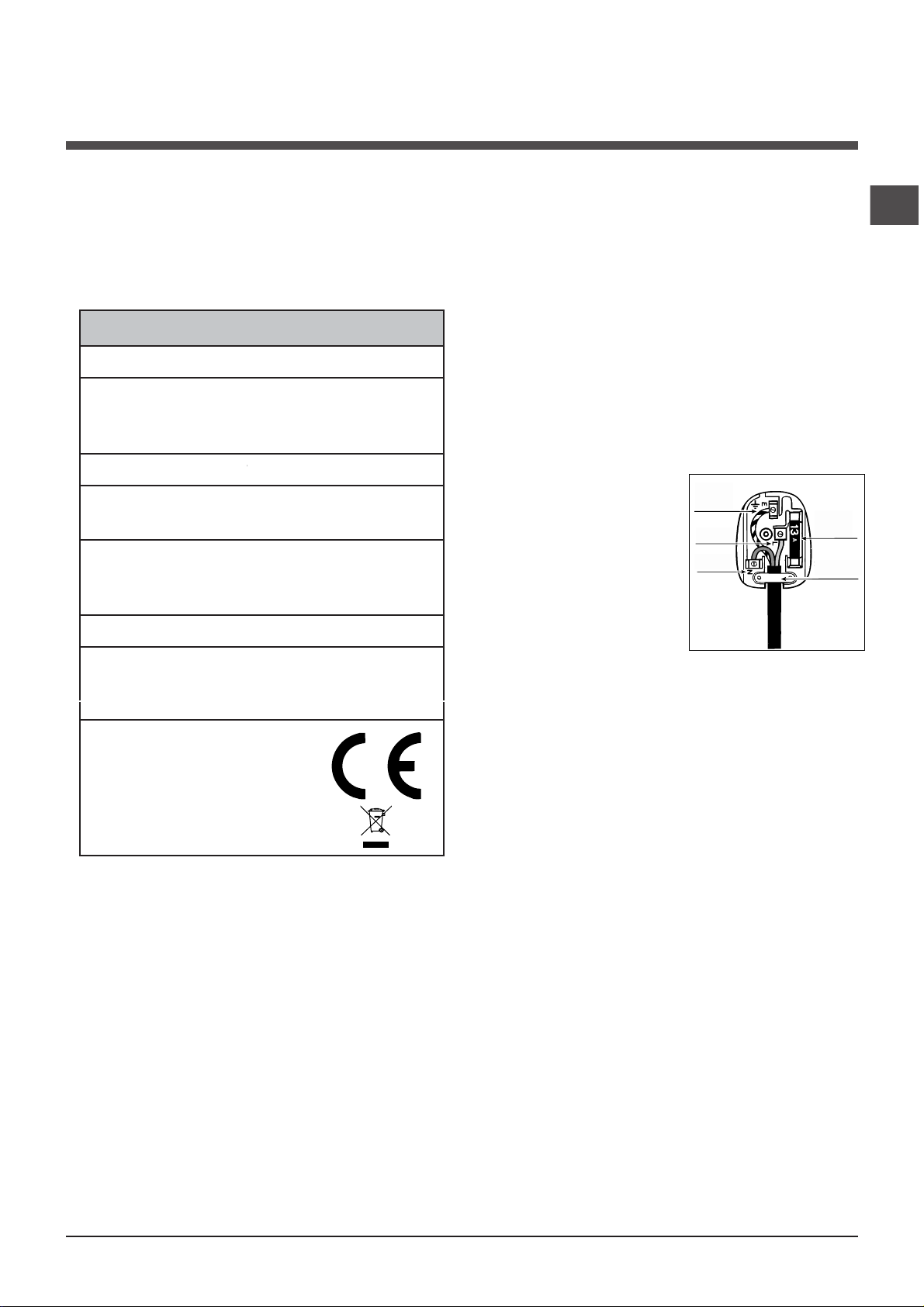
3
ﻓ
ـ
ﻲ ﺣ
ـ
ﺎﻟ
ـ
ﺔ اﻟ
ـ
ﺸ
ـ
ﻚ ﺑ
ـ
ﺎﻟ
ـ
ﺘ
ـ
ﻐ
ـ
ﺬﻳ
ـ
ﺔ اﻟ
ـ
ﻜ
ـ
ﻬ
ـ
ﺮﺑ
ـ
ﺎﺋ
ـ
ﻴ
ـ
ﺔ ﻟ
ـ
ﺠ
ـ
ﻬ
ـ
ﺎزآ
ـ
ﻢ اﺳ
ـ
ﺘ
ـ
ﺪﻋ
ـ
ﻮا ﻓ
ـ
ﻨ
ـ
ﻲ آ
ـ
ﻬ
ـ
ﺮﺑ
ـ
ﺎﺋ
ـ
ﻲ ﻣ
ـ
ﺨ
ـ
ﺘ
ـ
ﺺ ﻗ
ـ
ﺒ
ـ
ﻞ
وﺻﻞ اﻟﺠﻬﺎز ﺑﻤﻨﺒﻊ اﻟﺘﻴﺎر اﻟﻜﻬﺮﺑﺎﺋﻲ.
وﺻﻞ ﻗﺎﺑﺲ )اﻟﺬآﺮ( ﺑﺪﻳﻞ:
أﻟﻮان اﻷ ﺳﻼ ك اﻟﺘﻐﺬﻳﻪ اﻟﻜﻬﺮﺑﺎﺋﻴﺔ ﺗﺸﻴﺮ اﻟﻰ اﻟﺘﺎﻟﻲ:
ازرق ﻣﺤﺎﻳﺪ )ﻧﻴﻮﺗﺮل( )N(
ﺑﻨﻲ ﺗﻐﺬﻳﺔ )L(
أﺻﻔﺮ/أﺧﻀﺮ ﺧﻂ أرض )E(
ازاﻟﺔ اﻟﺠﻬﺎز اﻟﻜﻬﺮﺑﺎﺋﻲ اﻟﺒﻴﺘﻲ:
ﻋﻨﺪ رﻣﻲ ﺟﻬﺎز آﻬﺮﺑﺎﺋﻲ ﺑﻴﺘﻲ، ﻳﺠﺐ ازاﻟﺔ ﻗﺎﺑﺲ اﻟﺘﻴﺎر اﻟﻜﻬﺮﺑﺎﺋﻲ )اﻟﺬآﺮ( وذﻟﻚ
ﺑ
ـ
ﻘ
ـ
ﺺ ﺳ
ـ
ﻠ
ـ
ﻚ اﻟ
ـ
ﺘ
ـ
ﻐ
ـ
ﺬﻳ
ـ
ﺔ اﻟ
ـ
ﻜ
ـ
ﻬ
ـ
ﺮﺑ
ـ
ﺎﺋ
ـ
ﻴ
ـ
ﺔ ﺑ
ـ
ﺄﻗ
ـ
ﺮب ﻧ
ـ
ﻘ
ـ
ﻄ
ـ
ﺔ ﻣ
ـ
ﻤ
ـ
ﻜ
ـ
ﻨ
ـ
ﺔ ﻣ
ـ
ﻦ اﻟ
ـ
ﻘ
ـ
ﺎﺑ
ـ
ﺲ وﻗ
ـ
ﻮﻣ
ـ
ﻮا ﺑ
ـ
ﺘ
ـ
ﺤ
ـ
ﻄ
ـ
ﻴ
ـ
ﻢ
رؤوس اﻟﻘﺎﺑﺲ آﻤﺎ ذآﺮ ﺳﺎﺑﻘﺎ.
VERDE &
GIALLO
MARRONE
BLU
fusibile
13 ampere
SERRAFILO
CROSSBAR
ﻣ
ـ
ﻨ
ـ
ﺼ
ـ
ﻬ
ـ
ﺮة 31
أﻣﺒﻴﺮ
ﻣﺮﺑﻂ ﺳﻠﻚ
أﺧﻀﺮ
أﺻﻔﺮ
ﺑﻨﻲ
أزرق
!اﻟﻐﺴﺎﻟﺔ ﻻ ﺗﻮﺿﻊ ﻓﻲ اﻟﺨﺎرج ﺣﺘﻰ ﻟﻮ آﺎن اﻟﻤﻜﺎن ﻣﻐﻄﻰ وذﻟﻚ ﻷ ﻧﻪ ﻣﻦ اﻟﺨﻄﺮ ﺗﺮك
اﻟﺠﻬﺎز ﺗﺤﺖ ﻋﻮاﻣﻞ اﻟﻄﻘﺺ ﻣﺜﻞ اﻟﻤﻄﺮ ﺑﺮق رﻋﺪ اﻟﻰ اﺧﺮه.
! ﺑ
ـ
ﻌ
ـ
ﺪ اﻻ ﻧ
ـ
ﻬ
ـ
ﺎء ﻣ
ـ
ﻦ ﺗ
ـ
ﺮآ
ـ
ﻴ
ـ
ﺐ اﻟ
ـ
ﺠ
ـ
ﻬ
ـ
ﺎز ﻳ
ـ
ﺠ
ـ
ﺐ أن ﻳ
ـ
ﻜ
ـ
ﻮن ﻣ
ـ
ﻦ اﻟ
ـ
ﺴ
ـ
ﻬ
ـ
ﻞ اﻟ
ـ
ﻮﺻ
ـ
ﻮل اﻟ
ـ
ﻰ ﻣ
ـ
ﻘ
ـ
ﺒ
ـ
ﺲ
اﻟﺘﻴﺎر اﻟﻜﻬﺮﺑﺎﺋﻲ )اﻷ ﻧﺜﻰ(.
! ﻻ ﺗﺴﺘﺨﺪﻣﻮا ﻣﻬﺎﻳﺌﺎت او ﻣﻘﺒﺲ ﻣﺘﻌﺪد اﻟﺜﻘﻮب أو اﺳﻼ ك ﺗﻄﻮﻳﻞ.
! ﺳﻠﻚ اﻟﺘﻐﺬﻳﺔ اﻟﻜﻬﺮﺑﺎﺋﻴﺔ ﻳﺠﺐ أن ﻻ ﻳﻜﻮن ﻣﻄﻮي أو ﻣﺤﺸﻮر ﺑﻴﻦ اﻷ ﺛﺎث.
!ﺳ
ـ
ﻠ
ـ
ﻚ اﻟ
ـ
ﺘ
ـ
ﻐ
ـ
ﺬﻳ
ـ
ﺔ اﻟ
ـ
ﻜ
ـ
ﻬ
ـ
ﺮﺑ
ـ
ﺎﺋ
ـ
ﻴ
ـ
ﺔ ﻳ
ـ
ﺠ
ـ
ﺐ أن ﻳ
ـ
ﺘ
ـ
ﻢ ﺗ
ـ
ﺒ
ـ
ﺪﻳ
ـ
ﻠ
ـ
ﻪ وﻗ
ـ
ﺖ اﻟ
ـ
ﺤ
ـ
ﺎﺟ
ـ
ﺔ ﻓ
ـ
ﻘ
ـ
ﻂ ﻣ
ـ
ﻦ ﻗ
ـ
ﺒ
ـ
ﻞ ﻓ
ـ
ﻨ
ـ
ﻲ ﻣ
ـ
ﺨ
ـ
ﺘ
ـ
ﺺ
وﻣﺆهﻞ ﻟﻠﻘﻴﺎم ﺑﻬﺬا.
اﻧﺘﺒﺎه: اﻟﺸﺮآﺔ اﻟﺼﺎﻧﻌﺔ ﺗﺴﻘﻂ ﻋﻦ ﻧﻔﺴﻬﺎ أي ﻣﺴﺆوﻟﻴﺔ ﻋﻦ أﺿﺮار ﻗﺪ ﺗﺤﺼﻞ ﻣﻦ
ﻋﺪم اﺗﺒﺎع واﺣﺘﺮام هﺬه ﻗﻮاﻋﺪ اﻷ ﻣﻦ.
81
AR
1
D
IWD 71251 S
61051
85
3
6
7
1
MPa1
MPa
52
10
1200
EC
2004/108/CE
(
119U
3
4
.
1061/2010
1015/2010ϭ
IWSC 61251
42
6
40
1200
2
3
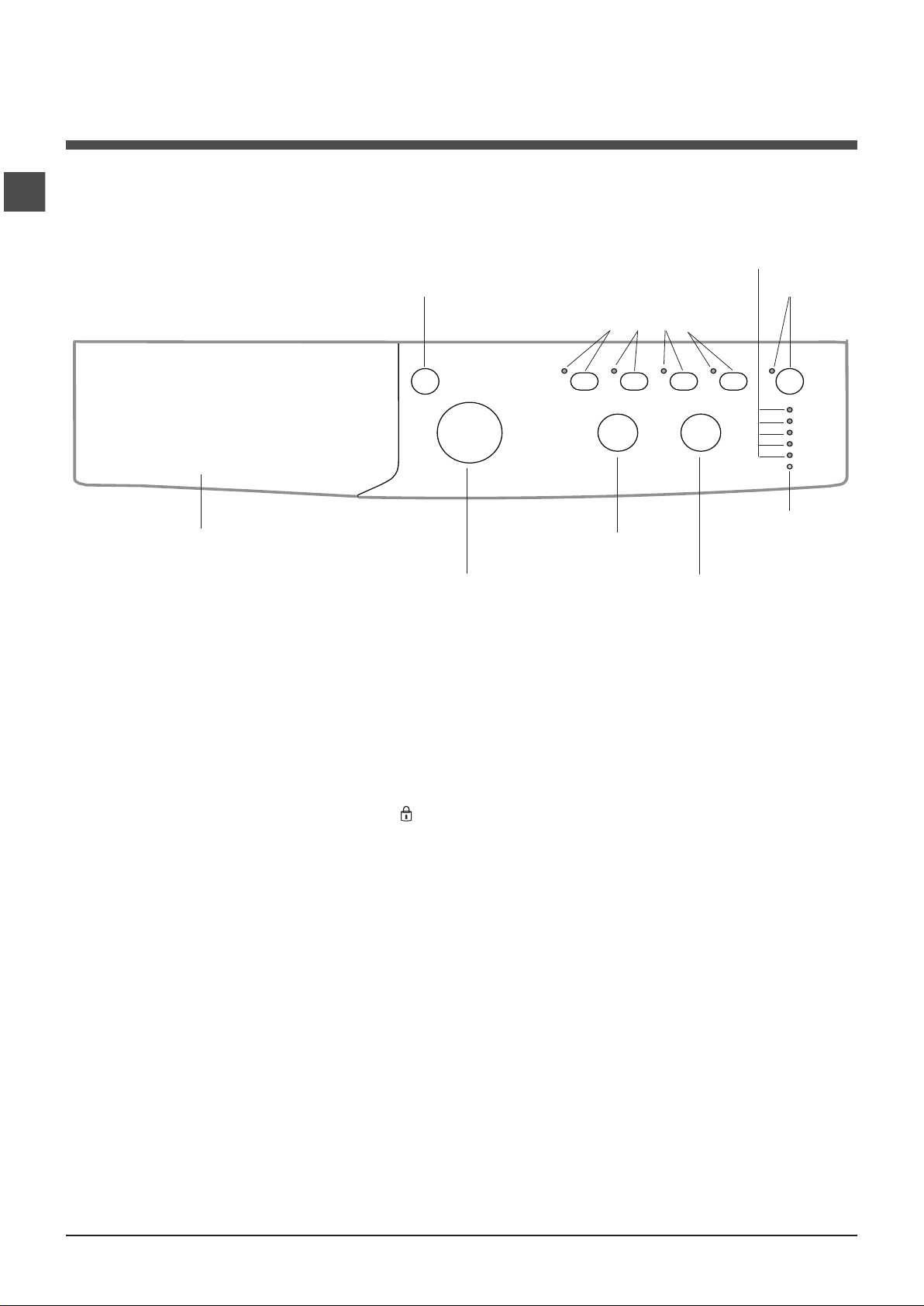
34
AR
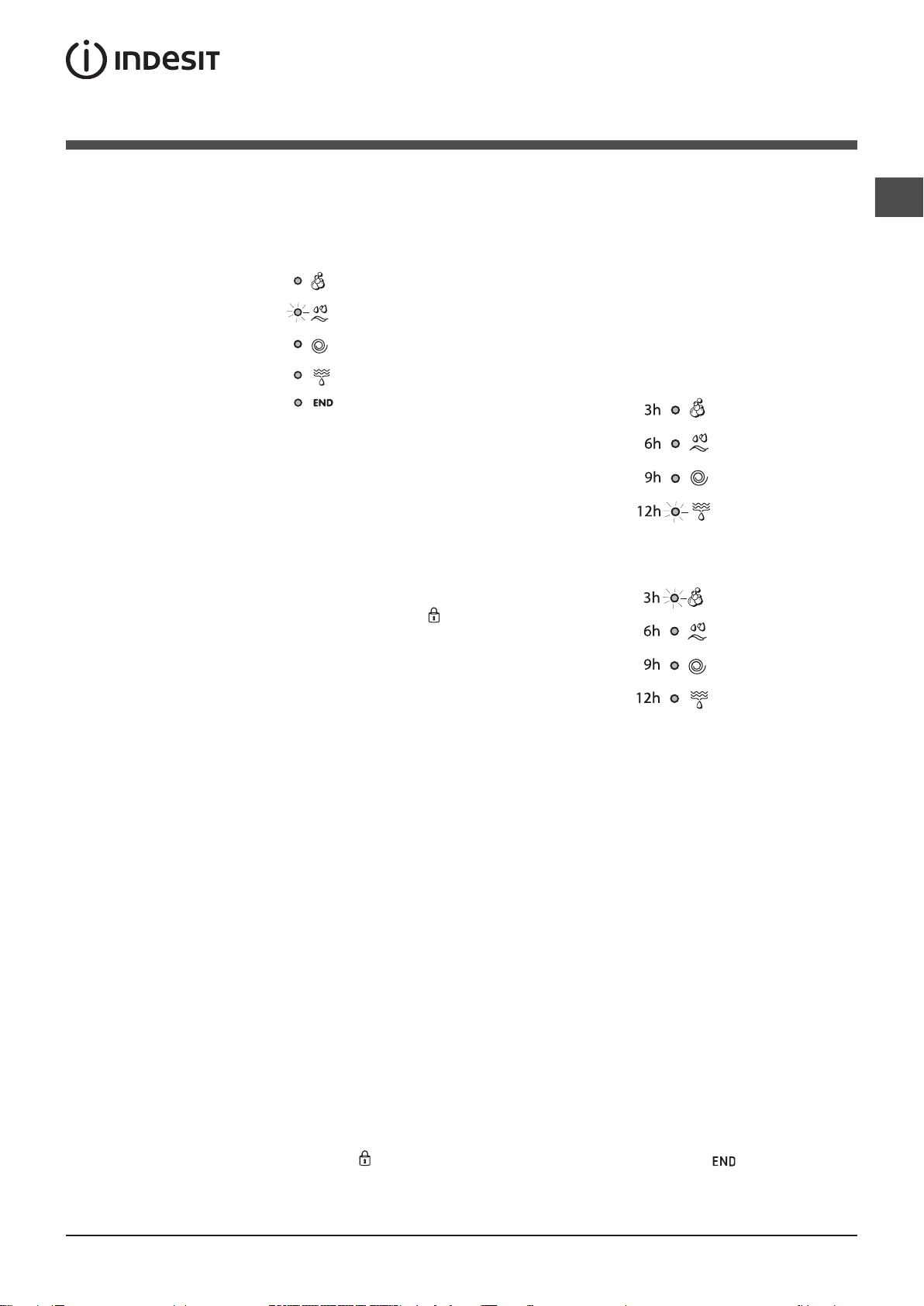
AR
35
3
1
.2
.3
.4
.5
.6
.7
.8
.9
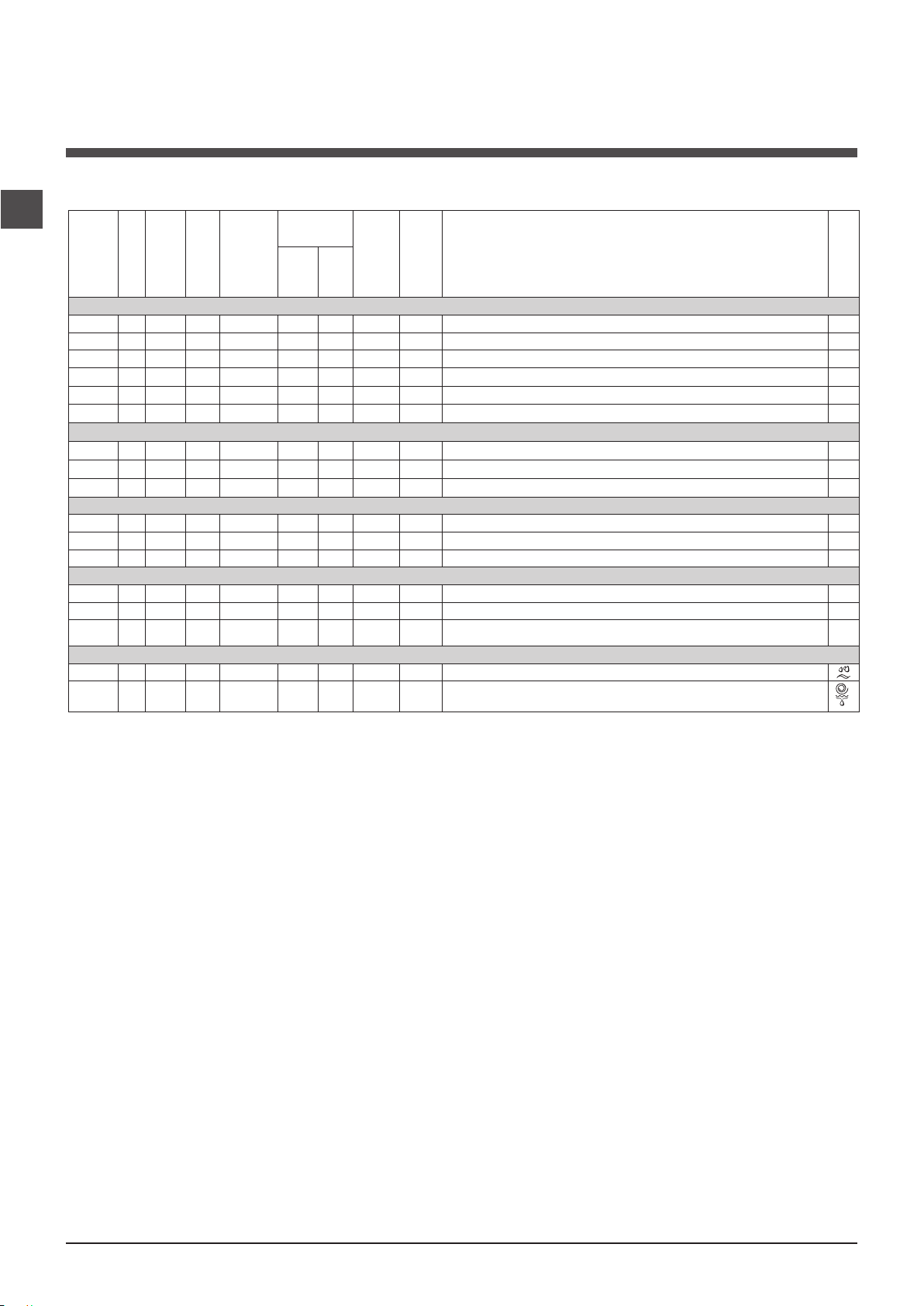
ّ
ّ
ّ
AR
6022010/1061
1
60
4032010/1061
2
40
403 3
4044
l l
90 11200
3
1 2601200
ll
3-2 3401200
ll
4800
ll
3---
l l
40 4 4800344
90 066 7
l l
1200 40
20
170 - - - 7
l l
1200
20
120 - - - 7
l l
800 20
6
7
20 8
20800
ll
1
---20
30400
l
-
---
9
10
40800
ll
---
11
40800
ll
---70
30600
ll
2--- 12
1330600
ll
2---60
1430600
ll
---60
-1200-
l
---36
-1200--
---16
37
AR
.
1
800
800
.
1
2
“ .)
،ﺎَﻀﻳأ ﻞﺑ .ﺔﻗﺎﻄﻟا كﻼﻬﺘﺳا ةرﻮﺗﺎﻔﻟ ءاﻮﺳ ﺔﺌﻴﺒﻠﻟ ءاﻮﺳ ةﺰﻴﻣ ﻲهو – ﺲﺑﻼﻤﻟا ﻞﺴﻐﻟ مﺪﺨﺘﺴﻤﻟا ءﺎﻤﻟا ﻦﻴﺨﺴﺗ مﺪﻌﺑ ﻚﻟذو ﺔﻗﺎﻄﻟا ﺮﻴﻓﻮﺗ ﻰﻠﻋ ﻞﻤﻌﺗ ﺔﻔﻴﻇو نإ
.ةدﺎﺘﻌﻤﻟا ﻞﻴﺴﻐﻟا ةرود ﻦﻣز ﻂﺳﻮﺘﻣ ﺲﻔﻧ ﻲﻓ ةزﺎﺘﻤﻣ ﻞﻴﺴﻏ ﺞﺋﺎﺘﻧ ﻦﻤﻀﻳ ﺎﻤﻣ ءﺎﻤﻟا ماﺪﺨﺘﺳا ﻦﻴﺴﺤﺗو ﻞﻴﺴﻐﻟا ةرود ﺔﻴﻟﺎﻌﻓ ﻢﻋد ﻰﻠﻋ ﻞﻤﻌﺗ
.ﺔﻠﺋﺎﺴﻟا ﺲﺑﻼﻤﻟا ﻒﻴﻈﻨﺗ تاﺮﻀﺤﺘﺴﻣ ماﺪﺨﺘﺳﺎﺑ ﻲﺻﻮﻧ ﻞﻀﻓأ ﺲﺑﻼﻣ ﻞﻴﺴﻏ ﺞﺋﺎﺘﻨﻟ
1200
ﺾﻣﻮﯿﺳ ،ﺔﺠﻣﺮﺒﻤﻟا ﻞﯿﺴﻐﻟا ةرود ﻊﻣ ﻖﻓاﻮﺘﺗ ةرﺎﺘﺨﻤﻟا ﺔﻔﯿﻇﻮﻟا ﻦﻜﺗ ﻢﻟ اذإ
.ﺔﻔﯿﻇﻮﻟا ﻞﯿﻐﺸﺗ ﻢﺘﯾ ﻦﻟو ﻢﺋﻼﻤﻟا ﺮﺷﺆﻤﻟا حﺎﺒﺼﻤﻟا
ﺾﻣﻮﯿﺳ ،ﺎﻘﺑﺎﺳ ﺎھرﺎﯿﺘﺧا ﻢﺗ ىﺮﺧأ ﺔﻔﯿﻇو ﻊﻣ ﺔﻘﻓاﻮﺘﻣ ةرﺎﺘﺨﻤﻟا ﺔﻔﯿﻇﻮﻟا ﻦﻜﺗ ﻢﻟ اذإ
؛ﻂﻘﻓ ﺔﯿﻧﺎﺜﻟا ﺔﻔﯿﻇﻮﻟا ﻂﯿﺸﻨﺗ ﻢﺘﯿﺳو ﻰﻟوﻻأ ﺔﻔﯿﻇﻮﻠﻟ ﻢﺋﻼﻤﻟا ﺮﺷﺆﻤﻟا حﺎﺒﺼﻤﻟا
.ﺖﺑﺎﺛ ﻞﻜﺸﺑ ﻂﺸﻨﻟا رﺎﯿﺨﻠﻟ ﻢﺋﻼﻤﻟا ﺮﺷﺆﻤﻟا حﺎﺒﺼﻤﻟا ءﻲﻀﯿﺳ
12
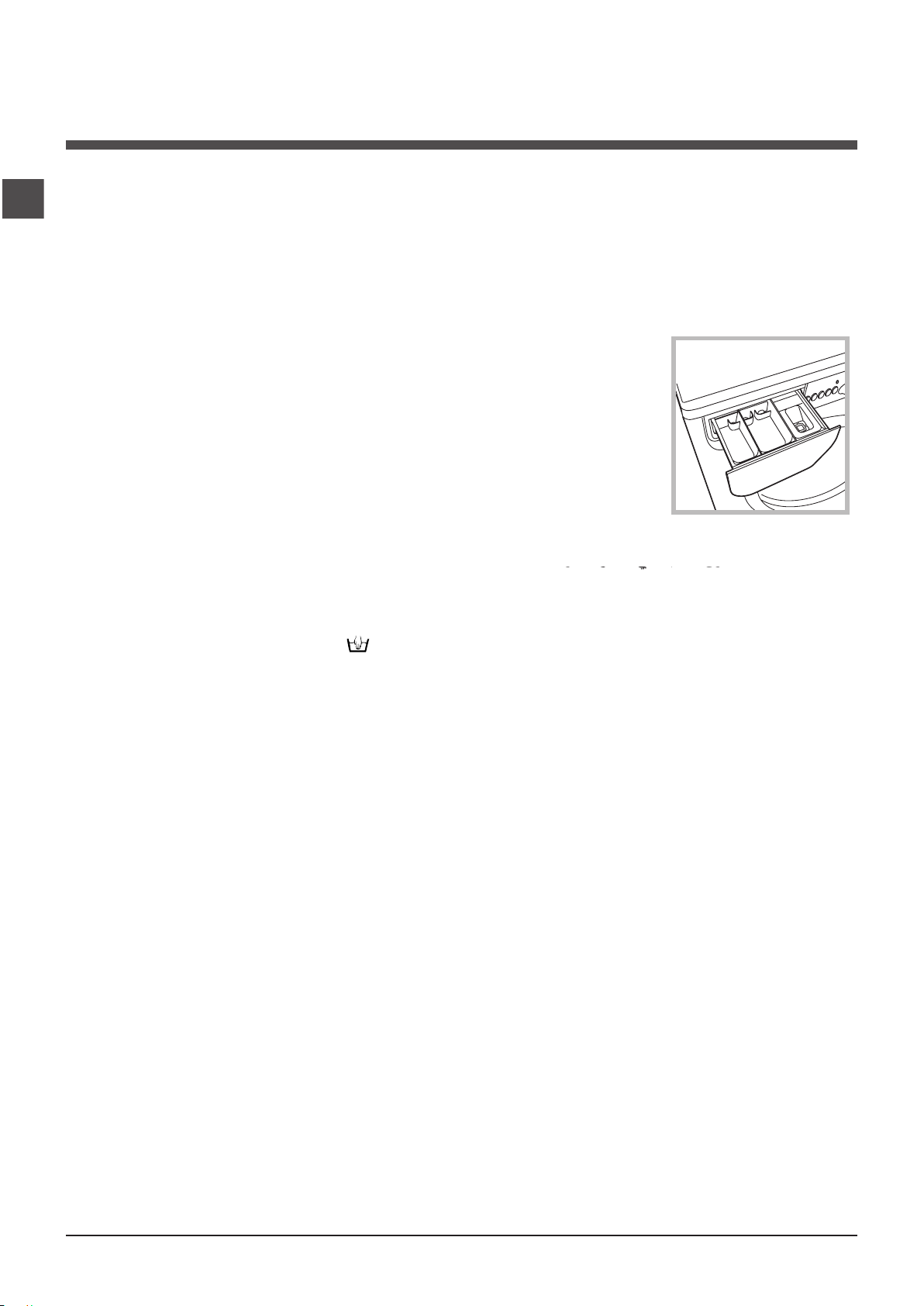
38
AR
!
1
2
3
1
1
1
2
3
.
2020
20
6
40
7
8 20
20
9
Gore-Tex
10
.
11
12
13
14
.1

AR
39
!
2012/19/EU
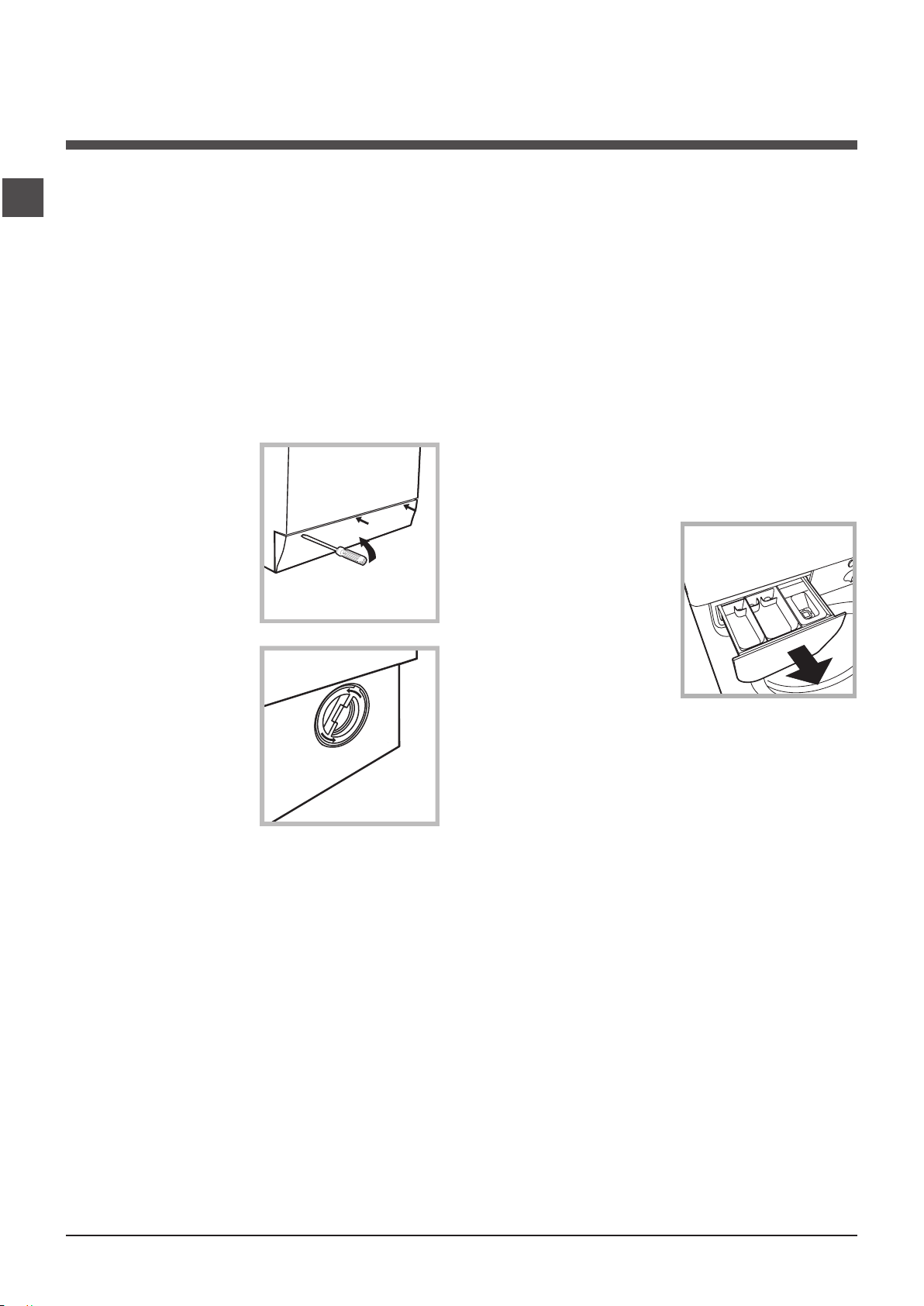
AR
!
1
2
3
4
5
!

65
AR

AR
!
Mod

AR
195111339.02
03/2016
Indesit Company Spa
Viale Aristide Merloni, 47
60044 Fabriano (AN)
Italy
www.indesit.com