INSPIRING THE WORLD’S KITCHEN
Cosmo is constantly making efforts to improve the quality and
performance of our products, so we may make changes to our
appliances without updating this manual.
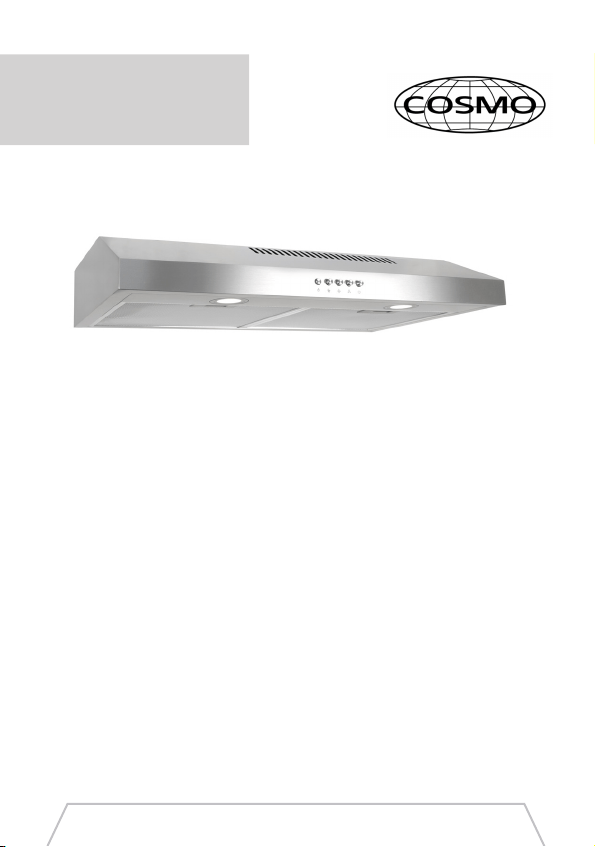
UNDER CABINET
RANGE HOOD
COS-5U
SERIES
Install, Use,
& Care Guide
Download or view an electric version of our product
manual by visiting: www.cosmoappliances.com

Thank You!
Serial Number Location
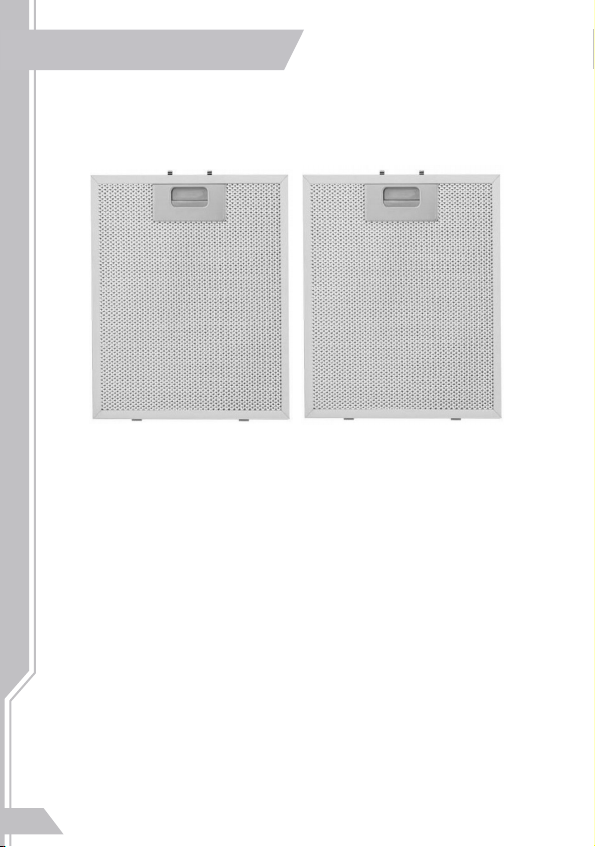
Remove the aluminum filters. The serial
number is printed on a label inside of the
range hood.
Thank you for your purchase. We
know that you have many brands
and products to choose from and
we are honored to know that you
have decided to take one of our
products into your home and hope
that you enjoy it.
Our appliances are designed
according to the strictest safety
and performance stan-dard for
the North American market. We
follow the most advanced
manufacturing philosophy. Each
appliance leaves the factory after
thorough quality inspection and
testing. Our distributors and our
service partners are ready to
answer any questions you may
have regarding how to install, use
and care for your range hood.
We hope that this manual will
help you learn to use the product
in the safest and most effective
manner and care
for it so that it may give you the
highest satisfaction in cooking for
years to come. If you have any
questions or concerns, please
contact the dealer from whom
you purchased it, or contact our
Customer Support at:
1-888-784-3108.
The manual also includes
directions for the professional
installer that will install the
product in your home. We
recommend using trained
personnel for professional
installation.
Please keep this manual for future use.
1
Read all instructions before using this appliance.
Save these instructions for future references.
Approved for residential appliances.
For residential use only.
FOR GENERAL VENTILATING USE ONLY. DO NOT USE
TO EXHAUST HAZARDOUS OR EXPLOSIVE MATERIALS
OR VAPORS.
IMPORTANT SAFETY INSTRUCTIONS
CAUTION
CAUTION
WARNING
WARNING
WARNING
WARNING
WARNING
WARNING
WARNING
To reduce risk of fire and to properly exhaust ai ,
do not vent exhaust air into spaces within walls,
ceilings, attics, crawl spaces, or garages.
TO REDUCE THE RISK OF FIRE, USE ONLY METAL
DUCT WORK. Install this hood in accordance with all
requirements specified
TO REDUCE THE RISK OF FIRE, ELECTRIC SHOCK,
OR INJURY TO PERSONS, OBSERVE THE FOLLOWING:
1. Use this unit only in the manner intended by the manu-
facturer. If you have questions, contact the manufacturer.
2. Before servicing or cleaning the unit, switch power off
at service panel and lock service panel disconnecting
means to prevent power from being switched on acci-
dentally. When the service disconnecting means cannot
be locked, securely fasten a prominent warning device,
such as a tag, to the service panel.
3. Installation Work and Electrical Wiring Must Be Done
By Qualied Person(s) In Accordance With all Aplicable
Codes & Standards, Including Fire-rated Construction.
4. Sufcient air is needed for proper combustion and
exhausting of gases through the flue (Chimney) of fuel
burning equipment to prevent back- drafting. Follolow the
heating equipment manufacturers guideline and safety
standards such as those published by the National Fire
Protection Association (NFPA), the American Society for
Heating, Refrigeration and Air Conditioning Engineers
(ASHRAE), and the local code authorities.
5. When cutting or drilling into wall or ceiling, do not
damage electrical wiring and other hidden utilities.
6. Ducted systems must always be vented to the outdoors.
To Reduce The Risk Of Fire Or Electric Shock, Do Not
Use This Hood With Any External Solid State Speed
Control Device.
Unplug or disconnect the appliance from the power
supply before servicing.
GROUNDING INSTRUCTIONS
This appliance must be grounded. In the event of an elec-
trical short circuit, grounding reduces the risk of electric
shock by providing an escape wire for the electric current.
This appliance is equipped with a cord having a grounding
wire with a grounding plug. The plug must be plugged into
an outlet that is properly installed and grounded.
WARNING - IMPROPER GROUNDING CAN
RESULT IN A RISK OF ELECTRIC SHOCK.
Consult a qualified electrician if the grounding instructions
are not completely understood, or if doubt exists as to
whether the appliance is properly grounded.
Do not use an extension cord. If the power supply cord is
too short, have a qualified electrician install an outlet near
the appliance.
TO REDUCE THE RISK OF INJURY TO PERSONS, IN THE
EVENT OF A RANGE TOP GREASE FIRE, OBSERVE THE
FOLLOWING:
• SMOTHER FLAMES with a close-fitting lid, cookie sheet,
or metal tray, then turn off the burner. BE CAREFUL TO
PREVENT BURNS. If the flames do not go out immediate-
ly, EVACUATE AND CALL THE FIRE DEPARTMENT.
• NEVER PICK UP A FLAMING PAN – You may be burned.
• DO NOT USE WATER, including wet dishcloths or towels –
a violent steam ex-plosion will result.
• Use an extinguisher ONLY if:
1. You know you have a Class ABC extinguisher, and you
already know how to operate it.
2. The fire is small and contained in the area where it started.
3. The fire department is being called.
4. You can fight the fire with your back to an exi
Always leave safety grills and lters in place.Without these
components, operating blowers could catch onto hair, ngers
and loose clothing.
The manufacturer declines all responsibility in the event
of failure to observe the instructions given here for
installation,maintenance and suitable use of the product.
The manufacturer further declines all responsability for injury
due to negligence and the warranty of the unit automatically
expires due to improper maintenance.
WARNING – TO REDUCE THE RISK OF A RANGE TOP
GREASE FIRE:
A. Never leave surface units unattended at high settings.
Boilovers cause smoking and greasy spillovers that may
ignite. Heat oils slowly on low or medium settings.
B. Always turn hood ON when cooking at high heat or
when flaming food (i.e. Crepes Suzette, Cherries Jubilee
Peppercorn Beef Flambe).
C. Clean ventilating fans frequently. Grease should not be
allowed to accumulate on fan or filte .
D. Use proper pan size. Always use cookware appropriate
for the size of the surface element.
ALUMINUM FILTERS
3
ALUMINUM FILTERS
About Your New Filters
Aluminum Filters are recommened to be replaced every 4-6 months depending
on usage.
Cleaning my Aluminum Filters
Your filters can be hand washed and cleaned to increase time between
replacements. Aluminum Filters should not be placed in the dishwasher.
Additional Aluminum or Charcoal Filters can be purchased from
www.cosmoappliances.com
3
ALUMINUM FILTERS
About Your New Filters
Aluminum Filters are recommened to be replaced every 4-6 months depending
on usage.
Cleaning my Aluminum Filters
Your filters can be hand washed and cleaned to increase time between
replacements. Aluminum Filters should not be placed in the dishwasher.
Additional Aluminum or Charcoal Filters can be purchased from
www.cosmoappliances.com
About Your New Filters
Aluminum filters are recommened to be replaced every 4-6
months depending on usage.
Cleaning my Aluminum Filters
Your filters can be hand washed and cleaned to increase time
between replacements. Aluminum filters should not be placed
in the dishwasher.
Additional Aluminum or Charcoal Filters can be purchased from:
www.cosmoappliances.com
2

TABLE OF CONTENTS
PARTS DIAGRAM................................................................04
INSTALLATION REQUIREMENTS......................................06
INSTALLATION PROCEDURES...........................................10
INSTALLING CHARCOAL FILTERS.....................................13
MAINTENANCE...................................................................15
TROUBLESHOOTING..........................................................16
WARRANTY AND SERVICE.................................................17
3
EXTERNAL DIAGRAM/ DIMENSIONS..............................05
OPERATING INSTRUCTIONS.............................................14
PARTS INCLUDED
4
Motor
Metal Cover
Press on the center and
twist to lock into place.
Carbon Filter
Twist to Unlock
PRODUCT PARTS
COS-5U30
Press on the center and
twist to lock into place.
Carbon Filter
Twist to Unlock
PRODUCT PARTS
COS-5U30
Press on the center and
twist to lock into place.
Carbon Filter
Twist to Unlock
PRODUCT PARTS
COS-5U30
Press on the center and
twist to lock into place.
Carbon Filter
Twist to Unlock
PRODUCT PARTS
COS-5U30
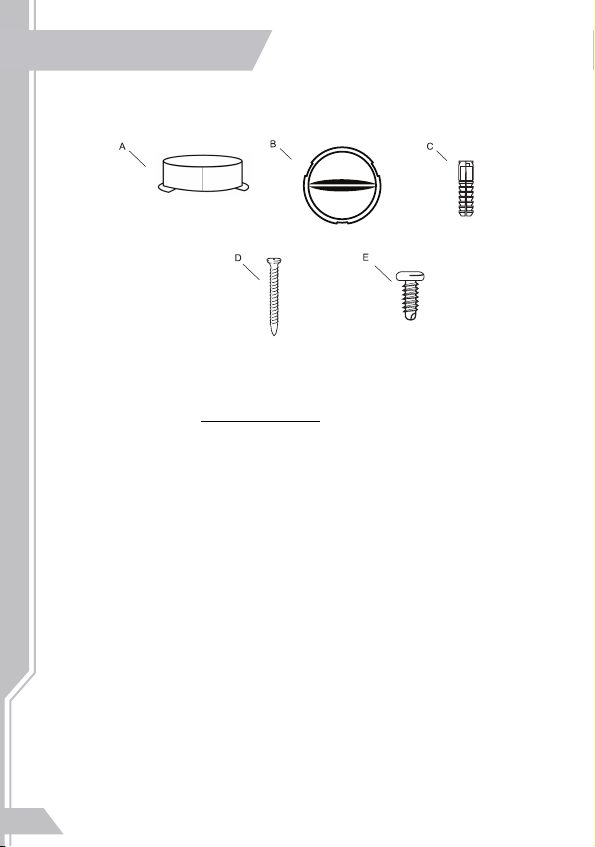
A) Damper
B) Vent cover
C) Plastic Anchors - 2 pcs
D) ST4*40 mm wood screws - 9 pcs
E) ST4*16 mm wood screws - 2 pcs
PARTS LIST
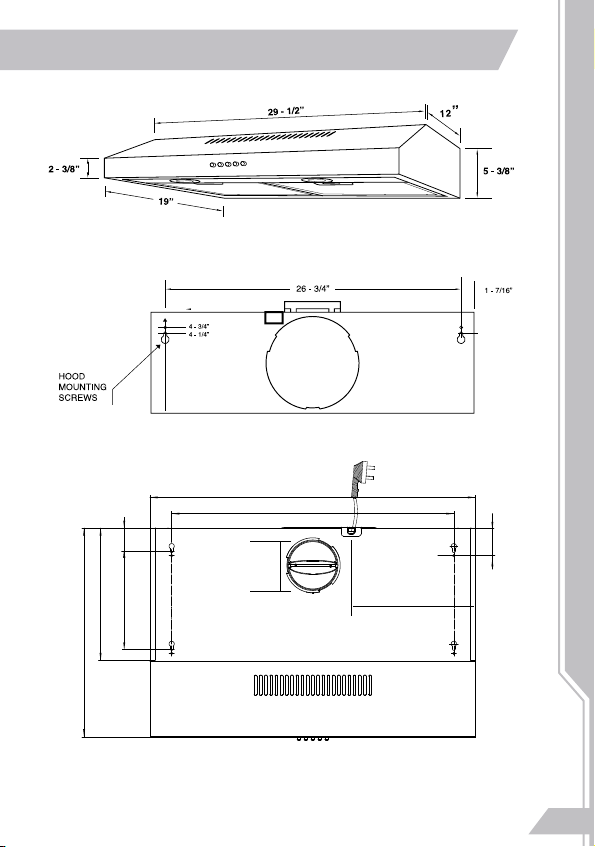
EXTERNAL DIAGRAM OF RANGEHOOD
5
TOP
29.5"
25.6"
12"
18.9"
2.25"
8.85"
REAR
FRONT
2.5"
4.69"
11.25"

INSTALLATION REQUIREMENTS
6
INSTALLATION REQUIREMENTS
1. Please read the following instructions carefully.
This Range Hood can be vented through the top or back. Remove the
Air Outlet Cap according to the venting option chosen (Fig.2). For
ductless installation, install an Air Outlet Cap on both the rear and top
vent holes.
2.
For optimal performance the Range Hood must be installed 24" - 30" in
height from the cooktop. (Fig. 1)
3.
WARNING
Sufficient air is needed for proper combustion and exhausting of gases through the chimney of fuel burning equipment
to prevent back- drafting. Follow the cooking equipment manufacturers guideline and safety standards such as those
published by the National Fire Protection Association (NFPA), the American Society for Heating, Refrigeration and Air
Conditioning Engineers (ASHRAE), and local code. When cutting or drilling into wall or ceiling, do not damage
electrical wiring and other hidden utilities. Ducted systems must always be vented outdoors.
Electrical Requirements: Rated Voltage and Frequency:) 110-120V~
60Hz. Motor Input Power: 79W
4.
7
B
A
Fig. 2
Min.
Max.
30"/ 36"
Fig. 1
30"
24"
INSTALLATION REQUIREMENTS
1. Please read the following instructions carefully.
This Range Hood can be vented through the top or back. Remove the
Air Outlet Cap according to the venting option chosen (Fig.2). For
ductless installation, install an Air Outlet Cap on both the rear and top
vent holes.
2.
For optimal performance the Range Hood must be installed 24" - 30" in
height from the cooktop. (Fig. 1)
3.
WARNING
Sufficient air is needed for proper combustion and exhausting of gases through the chimney of fuel burning equipment
to prevent back- drafting. Follow the cooking equipment manufacturers guideline and safety standards such as those
published by the National Fire Protection Association (NFPA), the American Society for Heating, Refrigeration and Air
Conditioning Engineers (ASHRAE), and local code. When cutting or drilling into wall or ceiling, do not damage
electrical wiring and other hidden utilities. Ducted systems must always be vented outdoors.
Electrical Requirements: Rated Voltage and Frequency:) 110-120V~
60Hz. Motor Input Power: 79W
4.
7
B
A
Fig. 2
Min.
Max.
30"/ 36"
Fig. 1
30"
24"
INS
TALLATIO
N REQU
IR
EMENTS
1.
Please read the following instructions carefully.
This Range Hood can be vented through the top or back. Remove the
Air Outlet Cap according to the venting option chosen (Fig.2). For
ductless installation, install an Air Outlet Cap on both the rear and top
vent holes.
2.
For optimal performance the Range Hood must be installed 24" - 30" in
height from the cooktop. (Fig. 1)
3.
WARNING
Sufficient air is needed for proper combustion and exhausting of gases through the chimney of fuel burning equipment
to prevent back- drafting. Follow the cooking equipment manufacturers guideline and safety standards such as those
published by the National Fire Protection Association (NFPA), the American Society for Heating, Refrigeration and Air
Conditioning Engineers (ASHRAE), and local code. When cutting or drilling into wall or ceiling, do not damage
electrical wiring and other hidden utilities. Ducted systems must always be vented outdoors.
Electrical Requirements: Rated Voltage and Frequency:) 110-120V~
60Hz. Motor Input Power: 79W
4.
7
B
A
Fig. 2
Min.
Max.
30"/ 36"
Fig. 1
30"
24"
WARNING
Sufcient air is needed for proper combustion and exhausting of gases
through the chimney of fuel burning equipment to prevent back- drafting.
Follow the cooking equipment manufacturers guideline and safety standards
such as those published by the National Fire Protection Association (NFPA),
the American Society for Heating, Refrigeration and Air Conditioning Engi-
neers (ASHRAE), and local code. When cutting or drilling into wall or ceiling,
do not damage electrical wiring and other hidden utilities. Ducted systems
must always be vented outdoors.
PLEASE READ THE FOLLOWING INSTRUCTIONS CAREFULLY:
1. This Range Hood can be vented through the top or back.
For ductless installation, install an Air Outlet Cap on the rear vent
hole. If air will be vented, install the damper attachment on the side
that the air will vent through (top or rear, shown in Fig. 2)
2. For optimal performance the Range Hood must be installed 24” - 30”
in height from the cooktop. (Fig. 1)
3. Electrical Requirements: Rated Voltage and Frequency:) 110-120V~
60Hz. Motor Input Power: 90W
PRE-INSTALLATION PROCEDURES
7
U
PRE INSTALLATION PROCEDURES
• Please read the instructions carefully. Unpack the Range Hood and check that all
functions are working before installing.
• Ensure that the voltage (V) and the frequency (Hz) indicated on the sticker match the
voltage and frequency at the installation site.
• Check that the area behind the installation surface to be drilled is clear of any electrical
cables or pipes, etc.
• The stainless steel surfaces of the Range Hood are very easily damaged during
installation if scratched or bumped by tools. Please take care to protect the surfaces
during installation.
• Protect the cooktop surface below with cardboard, or the like, to prevent damage
occurring during installation.
•
The manufacturer shall not be held liable for consumer’s failure to observe and follow
all pre-installation procedures and safety regulations.
• Determine if your installation will be top venting or back venting, and ensure that the
openings in the cabinet or wall are in the appropriate locations and appropriate size,
as per Fig. 1 for top vent installation or Fig. 2 for back vent installation.
• If this is a new installation, choose the venting method that suits your needs. Cut out
openings for the damper and for power access in the cabinet bottom or exterior wall,
depending on the direction of venting chosen.
Fig. 1
• The vertical distance from the cooking surface to the bottom of the range hood should
be atleast 24 in. to 36 in. for best performance.
8
Ducted Mode Mode
Ducted Mode: the
the
•
Please read the instructions carefully. Unpack the Range Hood and check that all
functions are working before installing.
• Ensure that the voltage (V) and the frequency (Hz) indicated on the sticker match the
voltage and frequency at the installation site.
• Check that the area behind the installation surface to be drilled is clear of any electrical
cables or pipes, etc.
• The stainless steel surfaces of the Range Hood are very easily damaged during
installation if scratched or bumped by tools. Please take care to protect the surfaces
during installation.
• Protect the cooktop surface below with plywood, or the like, to prevent damage
occurring during installation.
• The manufacturer shall not be held liable for failure to observe all safety regulations.
IMPORTANT! READ BEFORE INSTALLATION !
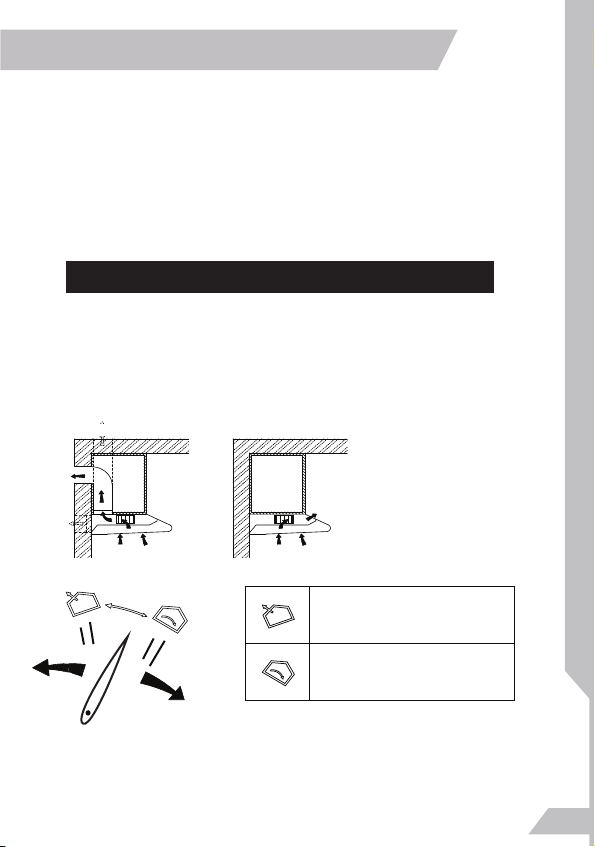
You will need to set the Range Hood mode to either Ducted or Recirculating.
1. Remove Aluminum Filters
2.
Locate Knob Settings located under the Motor (Fig. 3)
3.
Rotate the lever to either Ducted or Recirculating mode.
4.
If recirculating mode is chosen, install the vent cover on the rear vent hole.
If ducted mode is chosen, install the damper on the vent hole where the air will vent
through (top or rear), and install the vent cover on the other vent hole (shown on Fig.2
of the previous page).
Fig.3 Venting mode
8
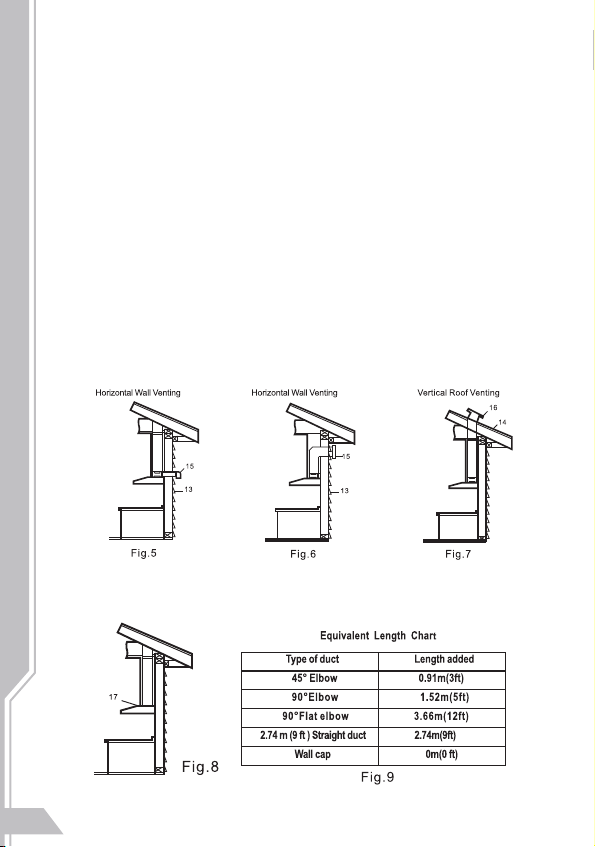
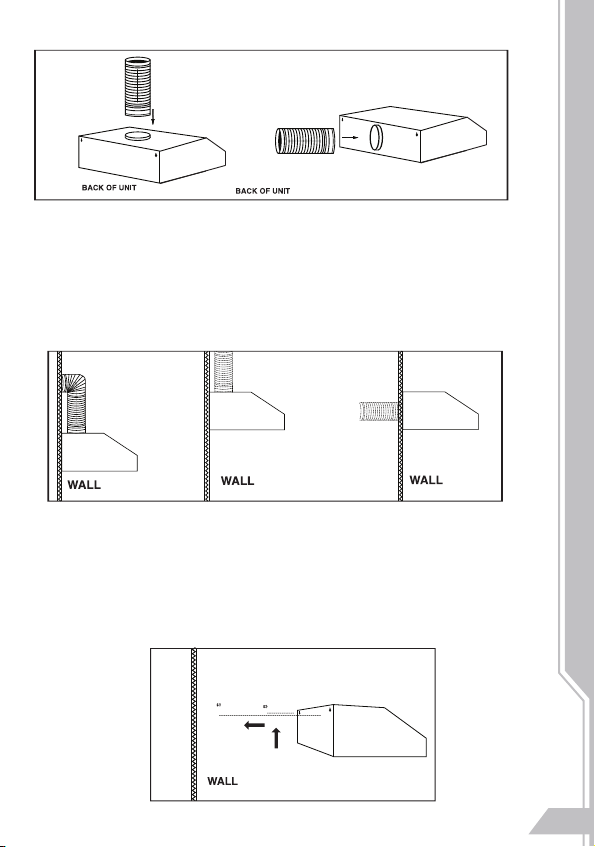
• Your venting system must vent to the outdoors either horizontally through the back
wall(13) or vertically through the roof(14).
(refer to Fig. 5/Fig. 6/Fig. 7).
• Use 6 in. round metal ductwork for this Range Hood.
• The total duct length should not be more than 35 ft. Calculate the total effective length
of the ductwork by using the table below. For each fitting use the table to see its straight
duct equivalent.
• Fasten all ductwork with sheet metal screws and tape all joints with certified duct tape.
• If you must turn the path of the ductwork using elbows, keep the number of elbows to a
minimum for best performance. Use no more than three 90 degree elbows. Ensure that
there is a minimum of 25.6 in. of straight vent between each elbow. Use elbows as far
away from the range hoods exhaust opening as possible.
• Cap the exterior of the duct with a wall cap (15) or roof cap (16). Never use (4 in.)
laundry-type wall caps. Use caulking to seal exterior wall or roof opening around the cap.
• The venting system must have a damper. If the roof or wall cap has a damper, do not
use the damper supplied with the range hood.
9
• Your venting system must vent to the outdoors either horizontally through the back
wall(13) or vertically through the roof(14).
(refer to Fig. 5/Fig. 6/Fig. 7).
• Use 6 in. round metal ductwork for this Range Hood.
• The total duct length should not be more than 35 ft. Calculate the total effective length
of the ductwork by using the table below. For each fitting use the table to see its straight
duct equivalent.
• Fasten all ductwork with sheet metal screws and tape all joints with certified duct tape.
• If you must turn the path of the ductwork using elbows, keep the number of elbows to a
minimum for best performance. Use no more than three 90 degree elbows. Ensure that
there is a minimum of 25.6 in. of straight vent between each elbow. Use elbows as far
away from the range hoods exhaust opening as possible.
• Cap the exterior of the duct with a wall cap (15) or roof cap (16). Never use (4 in.)
laundry-type wall caps. Use caulking to seal exterior wall or roof opening around the cap.
• The venting system must have a damper. If the roof or wall cap has a damper, do not
use the damper supplied with the range hood.
9
• Your venting system must vent to the outdoors either horizontally through the back
wall(13) or vertically through the roof(14).
(refer to Fig. 5/Fig. 6/Fig. 7).
• Use 6 in. round metal ductwork for this Range Hood.
• The total duct length should not be more than 35 ft. Calculate the total effective length
of the ductwork by using the table below. For each fitting use the table to see its straight
duct equivalent.
• Fasten all ductwork with sheet metal screws and tape all joints with certified duct tape.
• If you must turn the path of the ductwork using elbows, keep the number of elbows to a
minimum for best performance. Use no more than three 90 degree elbows. Ensure that
there is a minimum of 25.6 in. of straight vent between each elbow. Use elbows as far
away from the range hoods exhaust opening as possible.
• Cap the exterior of the duct with a wall cap (15) or roof cap (16). Never use (4 in.)
laundry-type wall caps. Use caulking to seal exterior wall or roof opening around the cap.
• The venting system must have a damper. If the roof or wall cap has a damper, do not
use the damper supplied with the range hood.
9
• Your venting system must vent to the outdoors either horizontally through the back
wall(13) or vertically through the roof(14).
(refer to Fig. 5/Fig. 6/Fig. 7).
• Use 6 in. round metal ductwork for this Range Hood.
• The total duct length should not be more than 35 ft. Calculate the total effective length
of the ductwork by using the table below. For each fitting use the table to see its straight
duct equivalent.
• Fasten all ductwork with sheet metal screws and tape all joints with certified duct tape.
• If you must turn the path of the ductwork using elbows, keep the number of elbows to a
minimum for best performance. Use no more than three 90 degree elbows. Ensure that
there is a minimum of 25.6 in. of straight vent between each elbow. Use elbows as far
away from the range hoods exhaust opening as possible.
• Cap the exterior of the duct with a wall cap (15) or roof cap (16). Never use (4 in.)
laundry-type wall caps. Use caulking to seal exterior wall or roof opening around the cap.
• The venting system must have a damper. If the roof or wall cap has a damper, do not
use the damper supplied with the range hood.
9
• Your venting system must vent to the outdoors either horizontally through the back
wall(13) or vertically through the roof(14).
(refer to Fig. 5/Fig. 6/Fig. 7).
• Use 6 in. round metal ductwork for this Range Hood.
• The total duct length should not be more than 35 ft. Calculate the total effective length
of the ductwork by using the table below. For each fitting use the table to see its straight
duct equivalent.
• Fasten all ductwork with sheet metal screws and tape all joints with certified duct tape.
• If you must turn the path of the ductwork using elbows, keep the number of elbows to a
minimum for best performance. Use no more than three 90 degree elbows. Ensure that
there is a minimum of 25.6 in. of straight vent between each elbow. Use elbows as far
away from the range hoods exhaust opening as possible.
• Cap the exterior of the duct with a wall cap (15) or roof cap (16). Never use (4 in.)
laundry-type wall caps. Use caulking to seal exterior wall or roof opening around the cap.
• The venting system must have a damper. If the roof or wall cap has a damper, do not
use the damper supplied with the range hood.
9
• Your venting system must vent to the outdoors either horizontally through the back
wall (13) or vertically through the roof (14). (refer to Fig. 5/Fig. 6/Fig. 7).
•
Use 5 in. round metal ductwork for this Range Hood. Connect to damper using HVAC
aluminum tape.
• The total duct length should not be more than 35 ft. Calculate the total effective
length of the ductwork by using the table below. For each fitting use the table to
see its straight duct equivalent.
• Fasten all ductwork with sheet metal screws and tape all joints with certified HVAC tape.
• If you must turn the path of the ductwork using elbows, keep the number of elbows
to a minimum for best performance. Use no more than three 90 degree elbows. En-
sure that there is a minimum of 25.6 in. of straight vent between each elbow. Use
elbows as far away from the range hoods exhaust opening as possible.
• Cap the exterior of the duct with a wall cap (15) or roof cap (16). Never use (4 in.)
laundry-type wall caps. Use caulking to seal exterior wall or roof opening around
the cap.
• The venting system must have a damper. If the roof or wall cap has a damper, do
not use the damper supplied with the range hood.
If using recirculating mode, ignore this section.
For recirculating mode, air will vent out of the front vent
holes. (17 in Fig. 8)
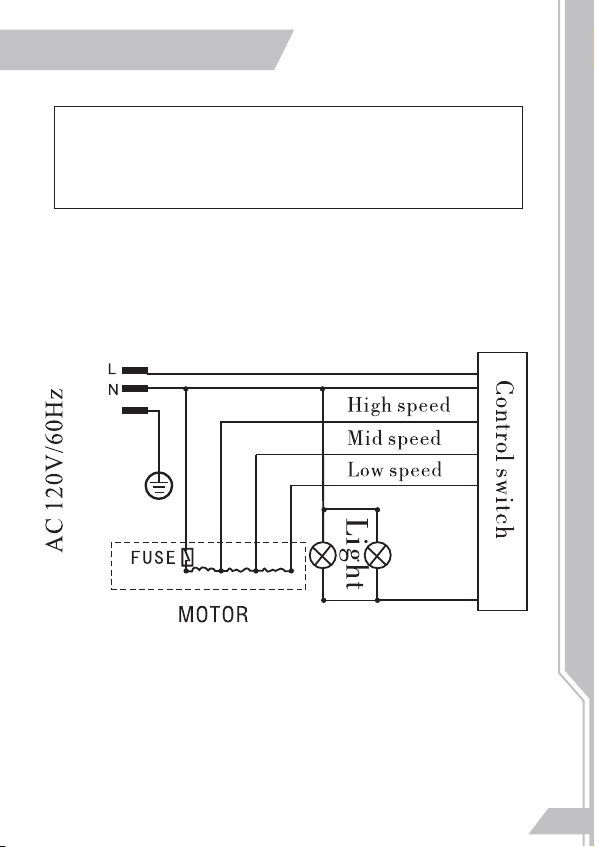
WIRING DIAGRAM
9
CAUTION: SHUT-OFF POWER SUPPLY BEFORE INSTALLING. IN-
STALLATION WORK AND ELECTRICAL WIRING MUST BE DONE BY
QUALIFIED PERSON(S) IN ACCORDANCE WITH ALL APPLICABLE
CODES & STANDARDS, INCLUDING FIRE-RATED CONSTRUCTION.
E
INSTALLATION PROCEDURES
10
11
CAUTION: HOOD MAY HAVE VERY SHARP EDGES; PLEASE WEAR
PROTECTIVE GLOVES WHENEVER IT IS NECESSARY TO REMOVE ANY
PARTS FOR INSTALLING, CLEANING OR SERVICING.
INSTALLATIO N PROCEDURES
Cabinet Installation Method
1.
2.
Use the 4 screws to mount the Range Hood to the
cabinet. Check that your mounting screws are in
the correct place by temporarily fitting the Range
in place. If correct, lock into position by pushing in
For Ducted installation drill a 130mm diameter hole
into the cabinet and four 3.5mm diameter holes as
pictured below picture.
For Ductless installation do not drill the 5"
diameter hole in the cabinet. Drill only the four
3.5mm diamater holes as pictured below.
36" Model
A= 27.5"
B= 7.125"
30" Model
A= 25.0"
B= 7.0"
CAUTION: HOOD MAY HAVE VERY SHARP EDGES; PLEASE WEAR
PROTECTIVE GLOVES WHENEVER IT IS NECESSARY TO REMOVE
ANY PARTS FOR INSTALLING, CLEANING OR SERVICING.
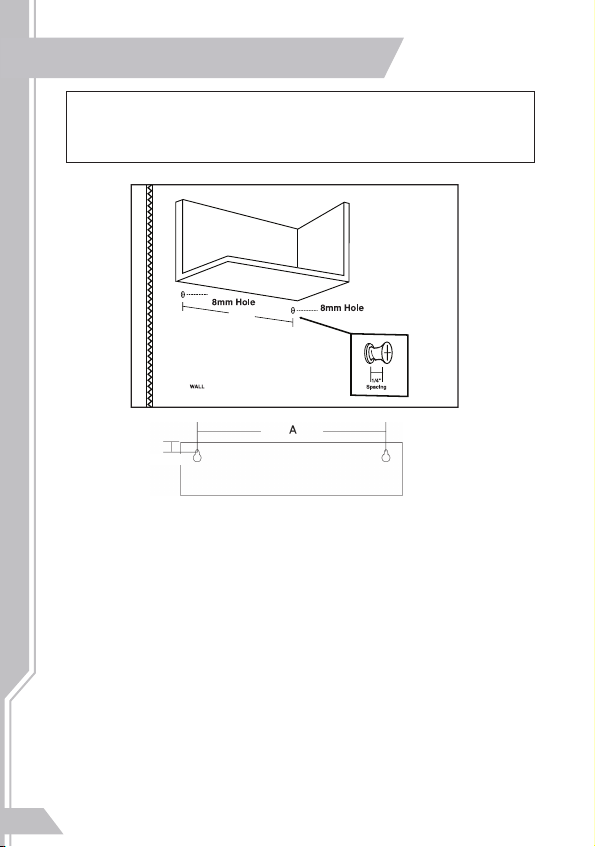
1. Drill two 8mm holes in position for plastic wall anchor (Part B) placement.
(See above for placement location).
2.
Tap plastic wall anchors securely into each of the drilled holes.
3.
After Wall anchors have been tapped in place, Insert ST4*40 wood screws (part D), but
leave 1/4” of the screw sticking out of the wall. (This will give your Range Hood
something to hang onto).
B
30” Model:
A= 25.6”
B = 1 - 1/8"
A
CABINET
If using recirculating mode: skip steps 4, 5a,
5c, 6a, 6c.
If cabinet bottom is recessed, we recommend installing wooden shims on cabinet bottom to make
cabinet mounting area flush.
11
CAUTION: HOOD MAY HAVE VERY SHARP EDGES; PLEASE WEAR
PROTECTIVE GLOVES WHENEVER IT IS NECESSARY TO REMOVE ANY
PARTS FOR INSTALLING, CLEANING OR SERVICING.
INSTALLATION PROCEDURES
Wall Mount Installation Method
12
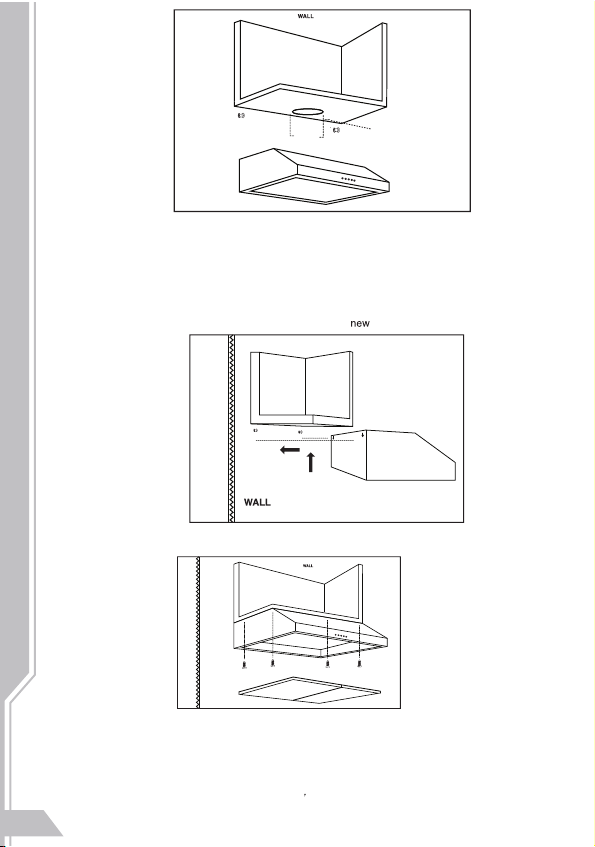
1.
A. Find the 4 mounting holes in the back of the
range hood. Mark their locations at the installation
location with a pencil or marker.
B. Drill 5/16 (8mm) hole at each of the marked
locations.
C. Insert anchors along with screws into each drilled
hole. Firmly tighten the screw into place.
D. Hang your Range Hood into place by aligning the
screws with the 4 mounting holes in the back of the
range hood. Lock into place by sliding down the
36" Model
A= 27.375"
30" Model
A= 26.5"
CAUTION: HOOD MAY HAVE VERY SHARP EDGES; PLEASE WEAR
PROTECTIVE GLOVES WHENEVER IT IS NECESSARY TO REMOVE ANY
PARTS FOR INSTALLING, CLEANING OR SERVICING.
INSTALLATION PROCEDURES
Wall Mount Installation Method
12
1.
A. Find the 4 mounting holes in the back of the
range hood. Mark their locations at the installation
location with a pencil or marker.
B. Drill 5/16 (8mm) hole at each of the marked
locations.
C. Insert anchors along with screws into each drilled
hole. Firmly tighten the screw into place.
D. Hang your Range Hood into place by aligning the
screws with the 4 mounting holes in the back of the
range hood. Lock into place by sliding down the
range hood.
36" Model
A= 27.375"
30" Model
A= 26.5"
4. Take the hood unit along with the 5” Round Aluminum duct. Secure the round aluminum
duct to the damper at the top or rear of the hood unit using HVAC Aluminum foil tape.
(Skip this step for recirculating mode)
5.
5a. If mounting to the wall only, drill a 5.25” round hole on the back wall above the hood, OR
into the ceiling directly above the hood, or on the back wall centered with the rear vent hole of the
hood. (Skip this step for recirculating mode)
5b. Lift the hood and hang the hood unit on the back wall using the screws drilled in Step 3.
Once the hood is securely hung on the wall, tighten the screws from the interior of the hood
after removing the aluminum filters.
5c. Pull round aluminum duct through the newly drilled hole in the wall. Plug unit into power
outlet. (Skip this step for recirculating mode)
Step 4
Step 5
OR
OR
OR
Step 5b.
If mounting to a cabinet, skip step 5.
12
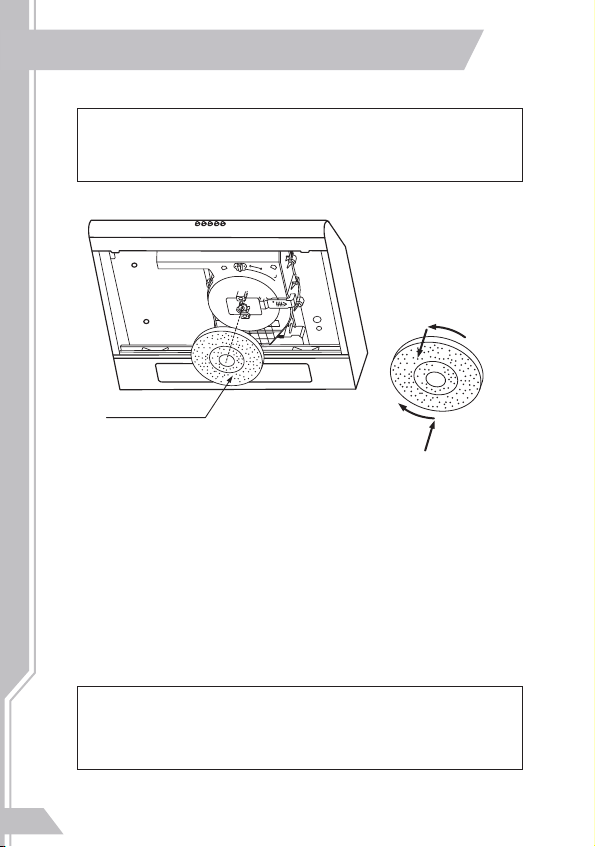
6.
6a. Drill a 5 - 1/4” Round Hole into the bottom of the cabinet. (skip this step for
recirculating mode)
6b. Drill a 1 - 1/2” hole into the bottom of the cabinet for the Electrical Access hole
according to the location of electrical plug shown on page 5 of this manual.
6c. Pull the round duct through the bottom of the new cabinet holes (skip this step for
recirculating mode).
7. Lift the hood and hang the hood unit on the back wall using the screws drilled in Step 3.
8.
Once the hood is securely hung to the back wall, remove the aluminum filters from underneath the
hood.
9.
Drill four pieces of ST4*16 wood screws (Part E) into the bottom of the cabinet using the
four screw holes at the top of the hood.
Once the hood is secured into the cabinet tighten the wood screws located in the back
of the hood. Re-install the filters. Plug power plug into the wall outlet.
Step 7
Step 8-9
Step 6
ELECTRICAL
ACCESS HOLE
5.25"
6d. Pull the electrical cord through the bottom of the
cabinet holes.
RECIRCULATING CARBON FILTERS
13
ess on the center and
o lock into place.
Carbon Filter
Twist to Unlock
PRODUCT PARTS
COS-5U30
Press on the center
and twist to lock
into place
Carbon Filter
PRODUCT PARTS
COS-5U30
SKIP THIS PAGE IF YOU ARE INSTALLING A DUCTED RANGE
HOOD. CARBON FILTERS ARE ONLY INCLUDED WITH
DUCTLESS MODELS.
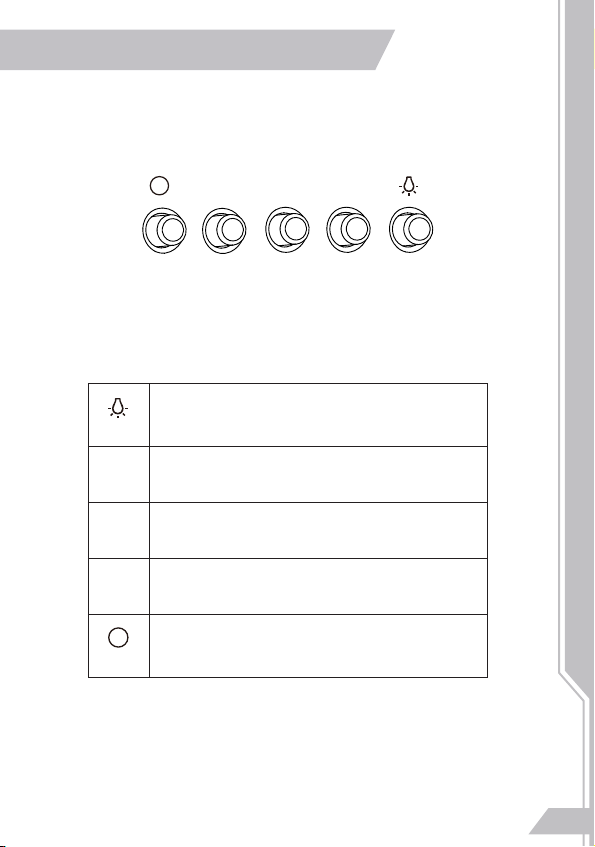
Installing Recirculating Filters (For Ductless installation Only)
1. Remove the Aluminum Filters.
2. The charcoal lter is installed to the motor housing as
shown. Line up the key hole on the filter with the key
on the center of the motor housing. Press the center
of charcoal filter against the motor housing and rotate
until it's locked in place.
3. To replace the carbon filter reverse the process and repeat.
THE CARBON FILTER MUST BE REPLACED EVERY 4-6 MONTHS
DEPENDING ON USE. ADDITIONAL ALUMINUM OR CHARCOAL
FILTERS CAN BE PURCHASED FROM: WWW.COSMOAPPLIANCES.COM
Charcoal Filter Part # - CFK3-DM
Twist to
Unlock
OPERATING INSTRUCTIONS
14
Light Button. Press on this button to turn on the lights, and
press again to turn them off.
Motor Off Switch: Press this button to stop the motor while it
is running on any given speed.
Low Speed Button: Press this button to run the motor at low
speed.
Medium Speed Button: Press this button to run the motor at
medium speed.
High Speed Button: Press this button to run the motor at high
speed.
OPERATING INSTRUCTIONS
14
Light Low
Speed
Medium
Speed
High
Speed
Motor Off
Switch
OPERATING INSTRUCTIONS
14
Light Button. Press on this button to turn on the lights, and
press again to turn them off.
Motor Off Switch: Press this button to stop the motor while it
is running on any given speed.
Low Speed Button: Press this button to run the motor at low
speed.
Medium Speed Button: Press this button to run the motor at
medium speed.
High Speed Button: Press this button to run the motor at high
speed.
OPERATING INSTRUCTIONS
14
Light Button. Press on this button to turn on the lights, and
press again to turn them off.
Motor Off Switch: Press this button to stop the motor while it
is running on any given speed.
Low Speed Button: Press this button to run the motor at low
speed.
Medium Speed Button: Press this button to run the motor at
medium speed.
High Speed Button: Press this button to run the motor at high
speed.
OPERATING INSTRUCTIONS
14
Light Button. Press on this button to turn on the lights, and
press again to turn them off.
Motor Off Switch: Press this button to stop the motor while it
is running on any given speed.
Low Speed Button: Press this button to run the motor at low
speed.
Medium Speed Button: Press this button to run the motor at
medium speed.
High Speed Button: Press this button to run the motor at high
speed.
OPERATING INSTRUCTIONS
14
Light Button. Press on this button to turn on the lights, and
press again to turn them off.
Motor Off Switch: Press this button to stop the motor while it
is running on any given speed.
Low Speed Button: Press this button to run the motor at low
speed.
Medium Speed Button: Press this button to run the motor at
medium speed.
High Speed Button: Press this button to run the motor at high
speed.
OPERATING INSTRUCTIONS
14
Light Button. Press on this button to turn on the lights, and
press again to turn them off.
Motor Off Switch: Press this button to stop the motor while it
is running on any given speed.
Low Speed Button: Press this button to run the motor at low
speed.
Medium Speed Button: Press this button to run the motor at
medium speed.
High Speed Button: Press this button to run the motor at high
speed.
Press this button to turn on the lights, and press
again to turn them off.
Press this button to run the motor at low speed.
Press this button to run the motor at medium speed.
Press this button to run the motor at high speed.
Press this button to stop the motor while it is running
on any given speed.
Light
Low
Speed
Medium
Speed
High
Speed
Motor Off
Switch
1
2
3
1
2
3
MAINTENANCE
CAUTION: NEVER PUT YOUR HAND INSIDE OF THE UNIT WHILE
ITS OPERATING. FOR THE BEST PERFORMANCE CLEAN YOUR
RANGE HOOD REGULARLY.
CLEANING
1. Use only mild soap or cleaning solutions to clean the hoods’ outer surface.
Dry surfaces using a soft cloth.
2. Stainless Steel cleaner may be used on the external surface.
3.
Clean the Range Hood motor assembly every 1 to 3 months depending on use.
4. DO NOT clean the motor or electrical components with water or any
other liquid.
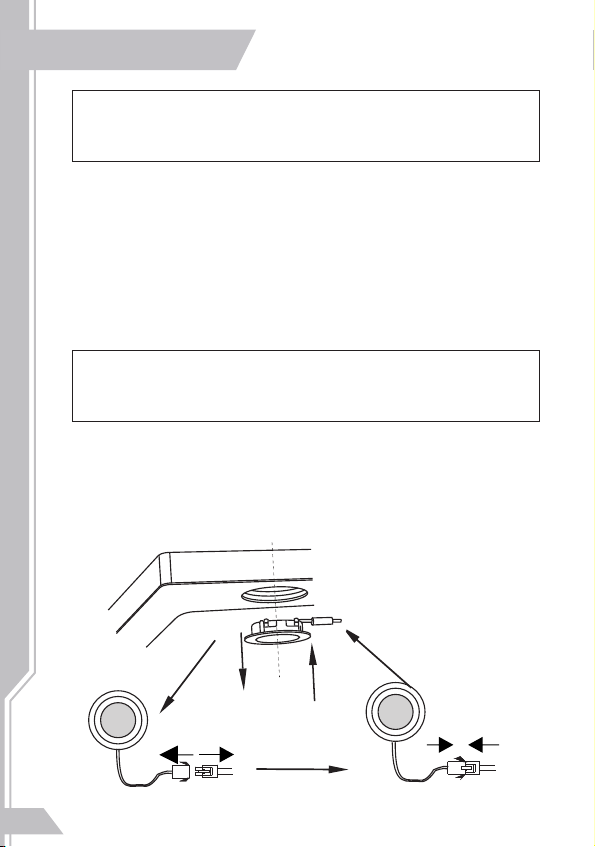
REPLACING LIGHT BULBS
CAUTION: LAMP UNIT MAY BE HOT! WAIT UNTIL THE UNIT IS COOL.
BEFORE ATTEMPTING TO REPLACE THE LED LAMPS MAKE SURE
THE UNIT IS POWERED OFF AND UNPLUGGED.
1. Remove the aluminum filters
2. Disconnect the wire for the LED light being replaced.
3. Reach your hand into the unit and push the LED light housing out of
the hole to remove it. Replace the LED light and connect the wire.
4. Reinstall the aluminum filters
15
MAINTENANCE
CAUTION: NEVER PUT YOUR HAND INSIDE OF THE UNIT WHILE ITS OPERATING. FOR
THE BEST PERFORMANCE CLEAN YOUR
RANGE HOOD REGULARLY
.
CLEANING
1.
Use only mild soap or cleaning solutions to clean the hoods'
outer surface. Dry surfaces using a soft cloth.
2. Stainless Steel cleaner may be used on the external surface.
3. Clean the Range Hood assembly 1 to 3 months depending on use.
4.
DO NOT clean the motor or electrical components with water or
any other liquid.
REPLACING LIGHT BULBS
CAUTION: LAMP UNIT MAY BE HOT! WAIT UNTIL THE UNIT IS COOL. BEFORE
ATTEMPTING TO REPLACE THE LED LAMPS MAKE SURE THE UNIT IS POWERED OFF AND
UNPLUGGED
.
1.
Remove the aluminum filters
2.
Disconnect the wire for the LED light being replaced.
3. Reach your hand into the unit and push the LED light housing out of the
hole to remove it. Replace the LED light and connect the wire.
4. Reinstall the aluminum filters.
15
Press on the center and
twist to lock into place.
Carbon Filter
Twist to Unlock
PRODUCT PARTS
COS-5U30
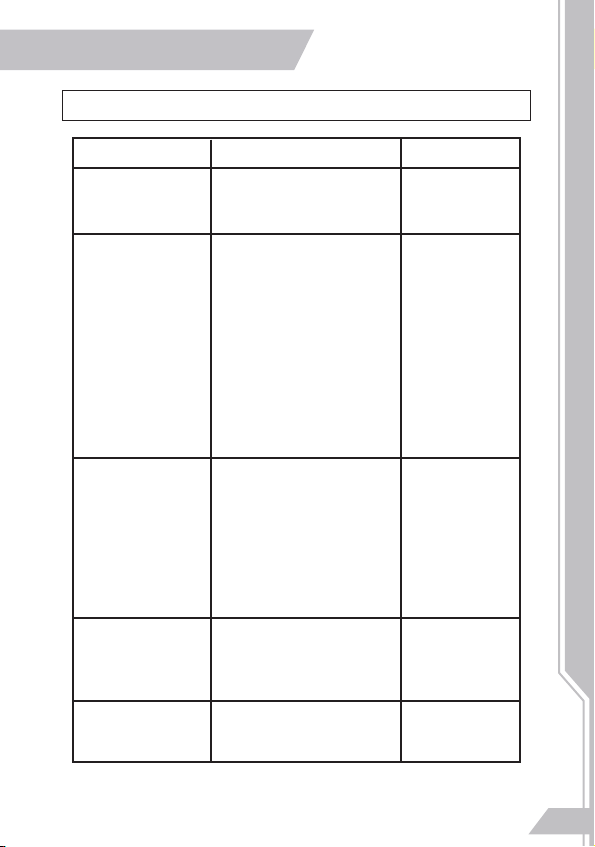
TROUBLESHOOTING
CAUTION: ALWAYS UNPLUG UNIT FROM POWER BEFORE SERVICING
PROBLEM SOLUTION TOOLS
My range hood is noisy. Phillips Screwdriver
Hand Gloves
Phillips Screwdriver
Hand Gloves
Phillips Screwdriver
Hand Gloves
Phillips Screwdriver
Nose Pliers
Hand Gloves
Hand Gloves
My range hood has
poor performance.
My range hood shakes.
The motor no longer
runs.
Light bulb went out.
A. Check inside the range hood
for any loose debris and remove.
A. The range hood and cooktop
are too far away from each
other. Optimal distance is 24”
to 30”.
B. There are too many open
windows or doors in the area.
Close some doors or windows.
C. The motor performance has
decreased due to wear. Replace
motor.
D. Check and make sure the
tape holding down the damper
flaps at the vent hole are
removed before use.
A. The installation is not secure.
Check again and make sure the
installation hardware is securely
mounted.
B. The fan is broken or not bal-
anced. Realign or replace fan.
C. The motor is loose. Check
and make sure the motor is
solidly mounted to the unit.
A. Replace control panel or
circuit board.
B. Replace with new motor
assembly.
A. Replace with a new LED light
2 watt max.
1
6

WARRANTY AND SERVICE
TO RECEIVE WARRANTY SERVICE, YOUR PRODUCT MUST
BE REGISTERED. TO REGISTER, VISIT:
WWW.COSMOAPPLIANCES.COM/WARRANTY
FOR FULL WARRANTY DETAILS ON THIS PRODUCT PLEASE VISIT :
HTTP://WWW.COSMOAPPLIANCES.COM/WARRANTY
WWW.COSMOAPPLIANCES.COM