Video Projector
Operating Instructions
Before operating the unit, please read this manual, supplied Quick Reference Manual,
and Safety Regulations thoroughly and retain it for future reference.
VPL-VZ1000
4-693-530-11 (1)
© 2017 Sony Corporation
2
Table of Contents
Location of Controls
Main Unit .................................................................... 3
Control Panel/Connecters/Projection Window ........... 4
Remote Control ........................................................... 5
Connections and Preparations
Installing the Unit ....................................................... 6
Adjusting the Projection Image .................................. 6
Connecting to Video Equipment or a Computer ......... 9
Attaching the Top Cover ........................................... 10
Using the top cover .............................................. 10
Attaching the Side Covers ......................................... 10
Attaching the side covers when installing the unit on
a ceiling ............................................................. 10
Projecting the Picture and Adjusting
the Screen
Projecting the Picture ................................................ 12
Turning Off the Power ......................................... 12
Watching 3D Video Images ...................................... 12
Using the 3D Glasses ........................................... 13
Selecting the Aspect Ratio ........................................ 13
Selecting the Picture Viewing Mode ......................... 14
Using the Menus
Operation through the Menus ................................... 15
Picture Menu ............................................................. 17
Advanced Picture Menu ............................................ 21
Screen Menu ............................................................. 22
Setup Menu ............................................................... 23
Function Menu .......................................................... 24
Items Locked by Settings Lock ........................... 25
Installation Menu ...................................................... 26
Information Menu ..................................................... 28
About the Preset Memory .................................... 28
Network Features
Displaying the Control Window of the Unit with a Web
Browser .................................................................. 29
Operating the Control Window ................................. 30
Switching the Page ............................................... 30
Setting the Access Limitation .............................. 30
Confirming the Information Regarding the
Unit ................................................................... 30
Error Handling
About Indicators ........................................................ 31
Message Lists ............................................................ 32
Troubleshooting ........................................................ 33
Maintenance
Cleaning the Air Filter .............................................. 35
Cleaning .................................................................... 35
Others
Updating the Software .............................................. 36
About HDR (high dynamic range) ............................ 36
NOTICES AND LICENSES FOR SOFTWARE USED
IN THIS PRODUCT .............................................. 36
Specifications ............................................................ 37
Preset Signals ....................................................... 38
Input Signals and Adjustment/Setting Items ....... 39
Compatible 3D Signals ........................................ 40
3D Signals and Adjustment/Setting Items ........... 41
Aspect Mode ........................................................ 42
Storage Conditions of Adjustment/
Setting Items ..................................................... 42
Installation Distance and Projection Image Size ...... 44
Dimensions ............................................................... 46
3
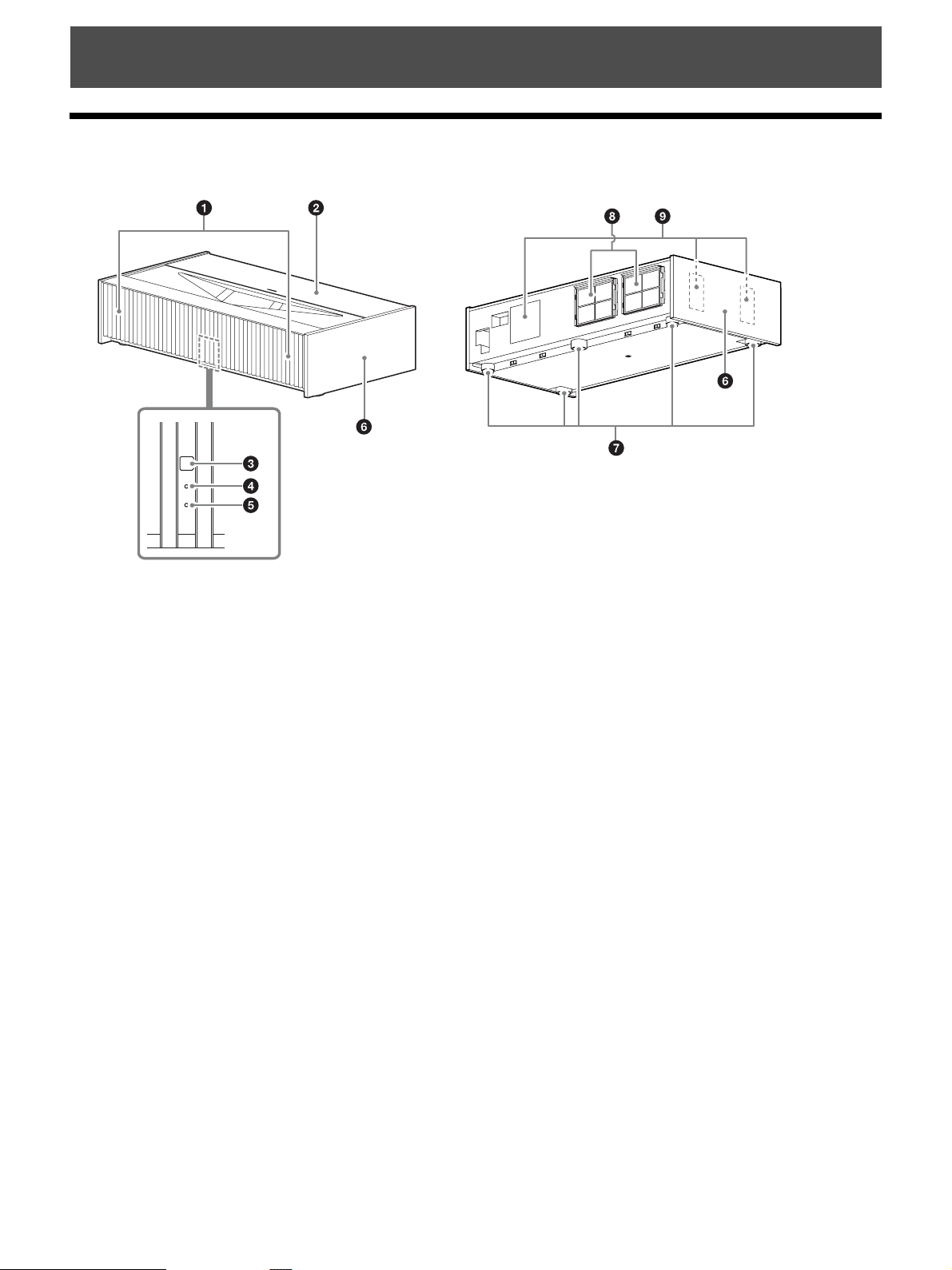
Main Unit
a Ventilation holes (exhaust)
b Top cover (page 10)
c Remote control detector (page 6)
d LED indicator (page 6) / WARNING1 indicator
(page 31)
e WARNING2 indicator (page 31)
f Side covers (page 10)
g Feet (adjustable) (page 8)
h Air filter (Ventilation holes (intake)) (page 35)
i Ventilation holes (intake)
Location of Controls
4
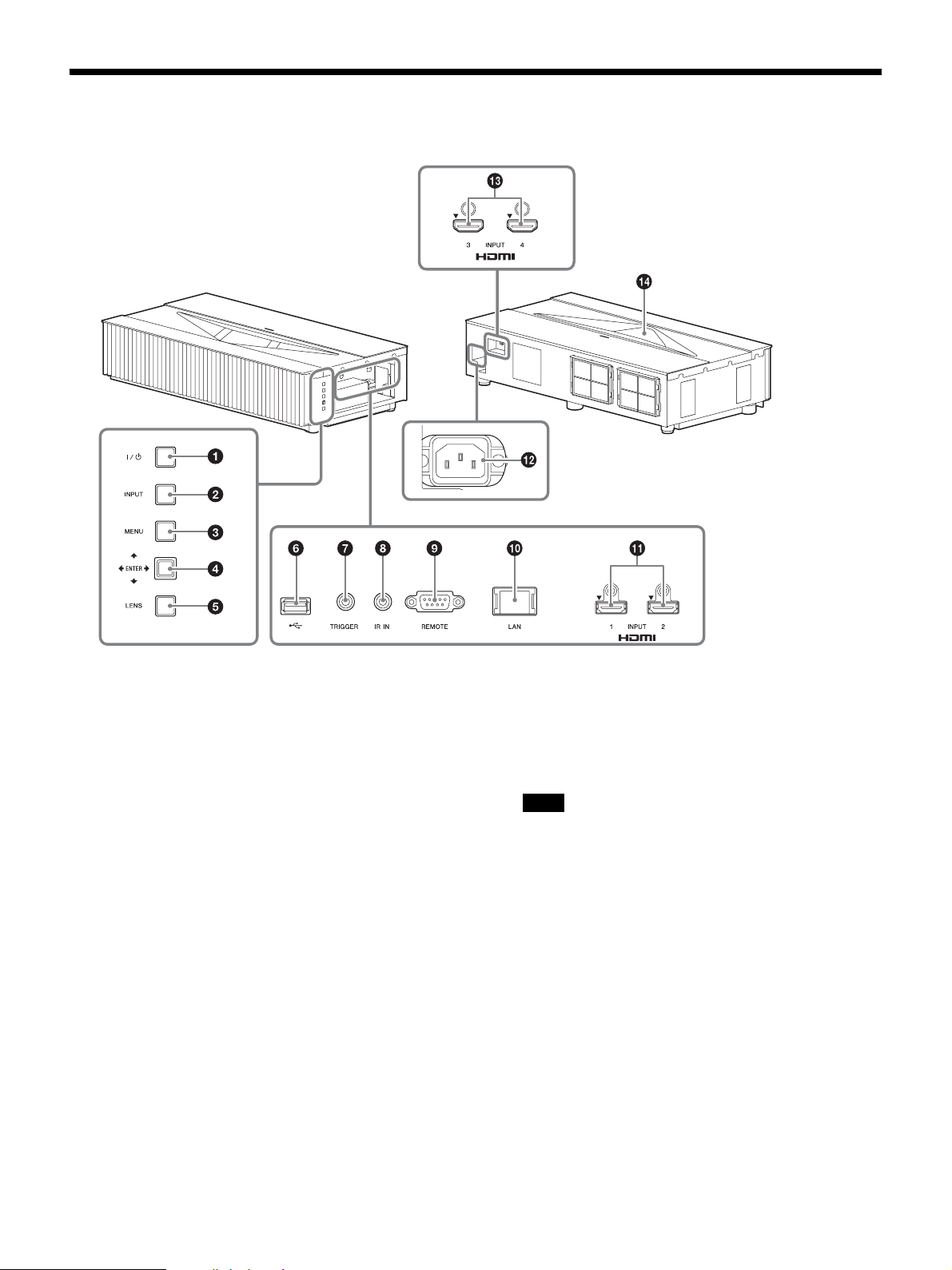
Control Panel/Connecters/Projection Window
a ?/1 (On/Standby) button (page 6)
b INPUT button (page 12)
c MENU button (page 15)
d M/m/</,/ ENTER button (page 15)
e LENS button (page 6)
Tip
The ?/1, INPUT, MENU, and M/m/</,/ENTER buttons
on the side panel of the unit function in the same way as those
on the remote control. The LENS button functions in the same
way as the PATTERN button of the remote control.
f USB connector (page 36)
g TRIGGER connector (page 26)
h IR IN connector
Inputs signals to control the unit.
i REMOTE connector
Connects to a system for controlling the unit, etc.
j LAN connector (page 29)
k HDMI 1/HDMI 2 connectors (page 9)
l AC IN socket
m HDMI 3/HDMI 4 connectors (page 9)
n Projection window (lens)
Projects a video from this window.
If you look through the projection window (lens) while the unit
is projecting, the light may damage your eyes. Take special
caution when using the unit around children.
Note
5
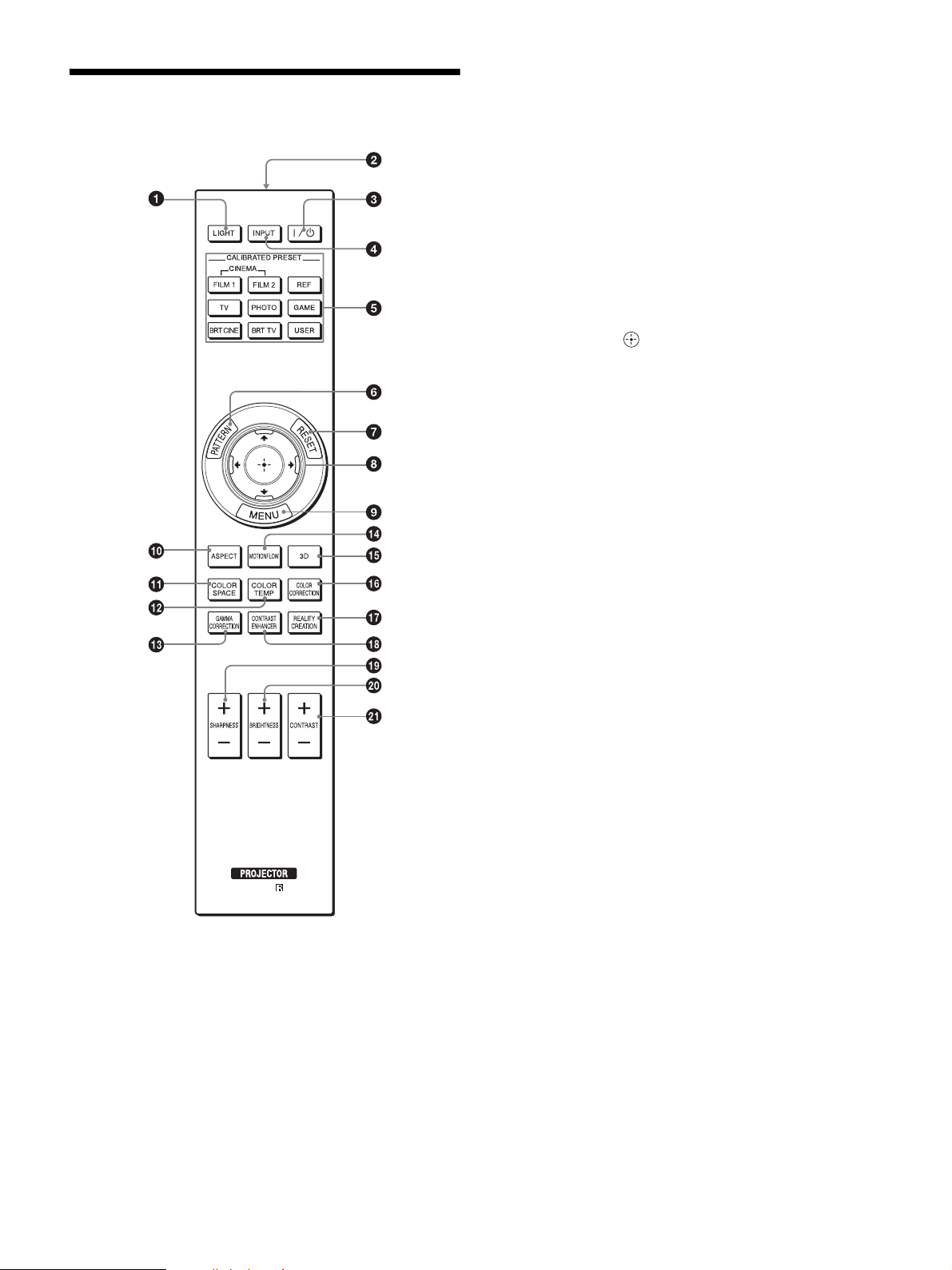
Remote Control
a LIGHT button
Illuminates the buttons on the remote control.
b Infrared transmitter
c ?/1 (On/Standby) button (page 6)
d INPUT button (page 12)
e CALIBRATED PRESET buttons (page 14)
f PATTERN button (page 6)
g RESET button (page 16)
h M/m/</, / (enter) buttons (page 15)
i MENU button (page 15)
j ASPECT button (page 13)
k COLOR SPACE button (page 20)
l COLOR TEMP button (page 18)
m GAMMA CORRECTION button (page 19)
n MOTIONFLOW button (page 18)
o 3D button (page 12)
p COLOR CORRECTION button (page 19)
q REALITY CREATION button (page 17)
r CONTRAST ENHANCER button (page 17)
s SHARPNESS button (page 18)
t BRIGHTNESS button (page 18)
u CONTRAST button (page 18)

6
Installing the Unit
The installation distance between the unit and a projection
surface varies depending on the projection size. Install this
unit so that it fits the desired projection size. For details on
the distance between the unit and the projection surface
(the projection distance) and the size of projected video,
see “Installation Distance and Projection Image Size”
(page 44).
1 Position the unit so that the unit is parallel to the
projection surface.
Top view
2 After connecting the AC power cord to the unit, plug
the AC power cord into a wall outlet.
The unit goes into standby mode.
Tip
After connecting the AC power cord to the unit, the LED
indicator may blink.
You may not be able to control the unit while the indicator is
blinking, but this is not a malfunction. Wait until it stops
blinking.
Adjusting the Projection
Image
Tip
When adjusting the lens, each time you press the PATTERN button
of the remote control or the LENS button on the unit, the lens
adjustment function switches as follows.
• Depending on the installation location of the unit, you may not be
able to control it with the remote control. In this case, point the
remote control at the remote control detector of the unit.
• When using a screen with an uneven surface, stripes pattern may
rarely appear on the screen depending on the distance between the
screen and the unit or the zooming magnifications. This is not a
malfunction of the unit.
• Flange Back Correction is the function to adjust the focus of the
picture. As it has been optimized at the factory default, normally
adjustment is not required (page 27).
1 Press the ?/1 (On/Standby) button to turn on the unit.
The LED indicator lights in white.
Tip
The LED indicator does not light when “Illumination” is set to
“Off” on the Installation menu.
2 Press the PATTERN button to display the Lens Focus
adjustment window, and adjust the focus of the picture
by pressing the M/m/</, buttons.
Tips
• The factory default for focus has been adjusted to the 100-
inch screen. Make fine adjustments according to the screen
size and installing position.
• Adjust by checking the entire test pattern. The amplitude of
the pattern focus on the top of the picture becomes large with
the ultra short focus projector.
• If you press the RESET button on the remote control while
the Lens Focus adjustment window is displayed, the focus
setting returns to the factory default.
• When “Lens Control” is set to “Off” on the Installation
menu, you cannot adjust the lens (page 26).
• When “Test Pattern” is set to “Off” on the Function
menu, the test pattern is not displayed (page 25).
• Whenever you press the button, the test pattern
disappears.
Connections and Preparations
Projection surface
Notes
7
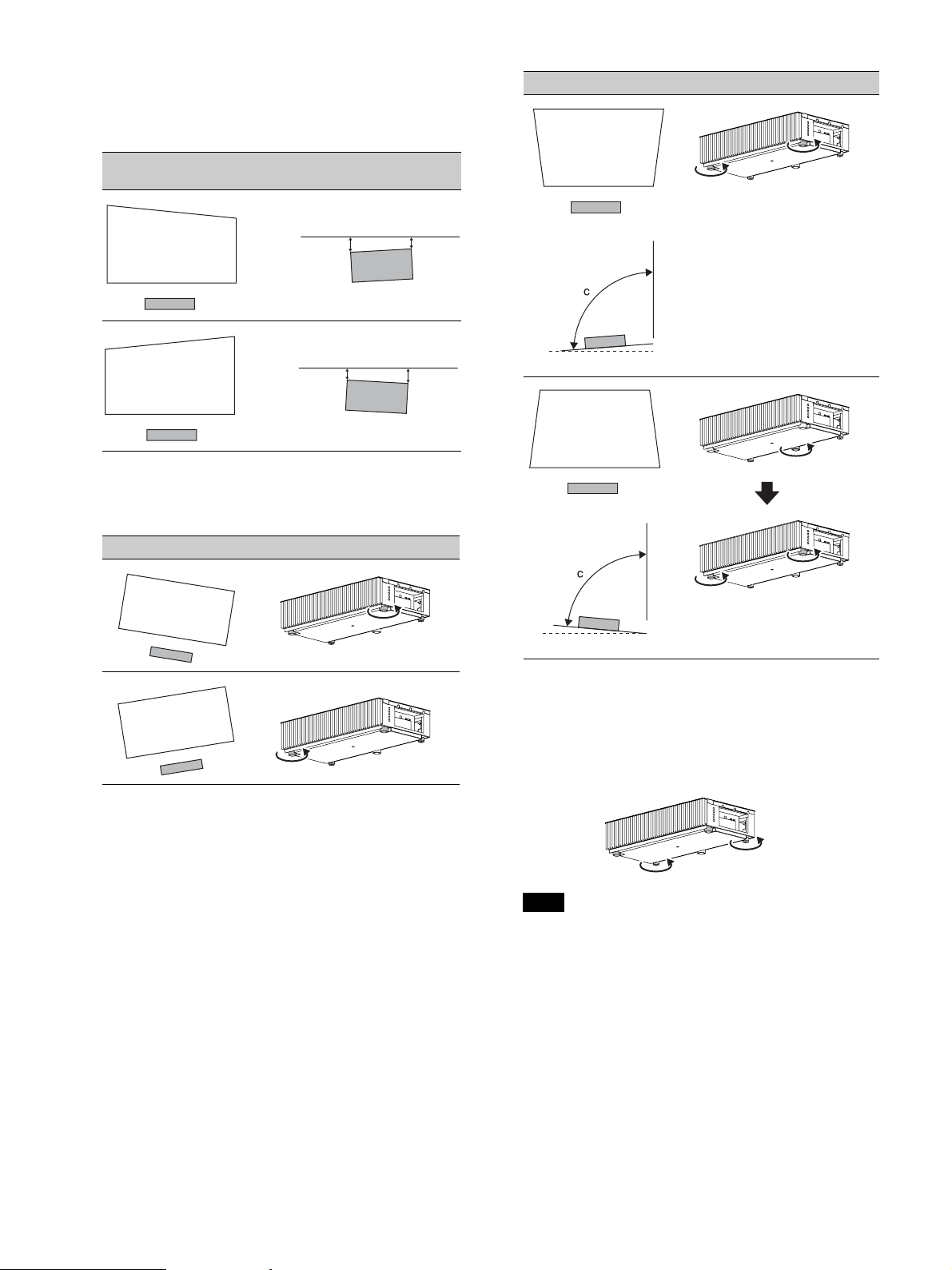
3 Check if the upper side and lower side of the picture
are parallel.
If not, install the unit in a position parallel to the
projection surface (a=b).
4 Check if the lower side of the picture is horizontal.
If not, use the left/right feet (adjustable) to keep the
unit level. For details on adjusting the feet, see page 8.
5 Check if the left side and right side of the picture are
vertical.
If not, use the feet (adjustable) to keep the unit vertical
to the projection surface. For details on adjusting the
feet, see page 8.
If the frame of the projection surface is rectangle and
parallel to the floor, adjustment is completed.
Tip
If the picture remains distorted, repeat step 3 and 4.
6 Adjust the feet for preventing backlash to the floor.
The picture may be distorted if you turn the feet for preventing
backlash too much.
7 Press the PATTERN button to display the Lens Shift
adjustment window, and adjust the picture position by
pressing the M/m/</, buttons.
Tip
If you press the RESET button on the remote control while the
Lens Shift adjustment window is displayed, the picture
position returns to the center of the lens (factory default
position).
Image distortion Installation state to the projection surface
(Top view)
Image distortion Feet adjustment
a
b
a > b
a
b
a < b
Image distortion Feet adjustment
Note
c > 90°
Side view
c < 90°
Side view
Adjust the foot
near the rear
side so that it is
longer.
Adjust the
height with the
feet near the
front side.
8
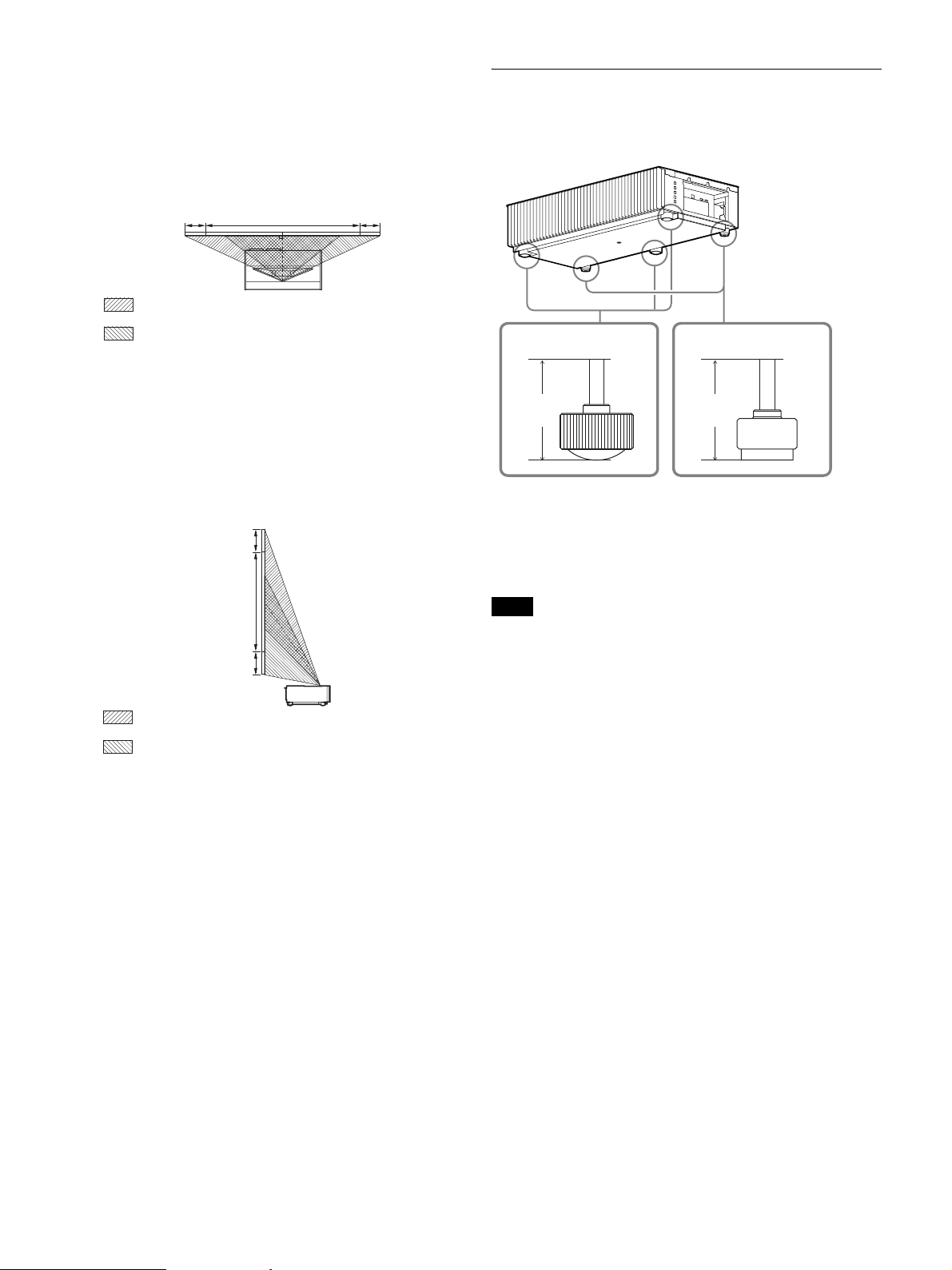
To adjust the horizontal position
When pressing the </, button, the picture
projected on the screen moves right or left by a
maximum of 3% of the screen width from the center
of the lens.
Top view
* For 17:9 display, the range of movement will be +/
_
2.8%.
To adjust the vertical position
When pressing the M/m button, the picture projected
on the screen moves up or down by a maximum of 6%
of the screen height from the center of the lens.
Side view
8 Press the PATTERN button again to display the Lens
Zoom adjustment window. Then adjust the size of the
picture by pressing the M/m/</, buttons.
To make the picture larger, press M/,.
To make the picture smaller, press m/<.
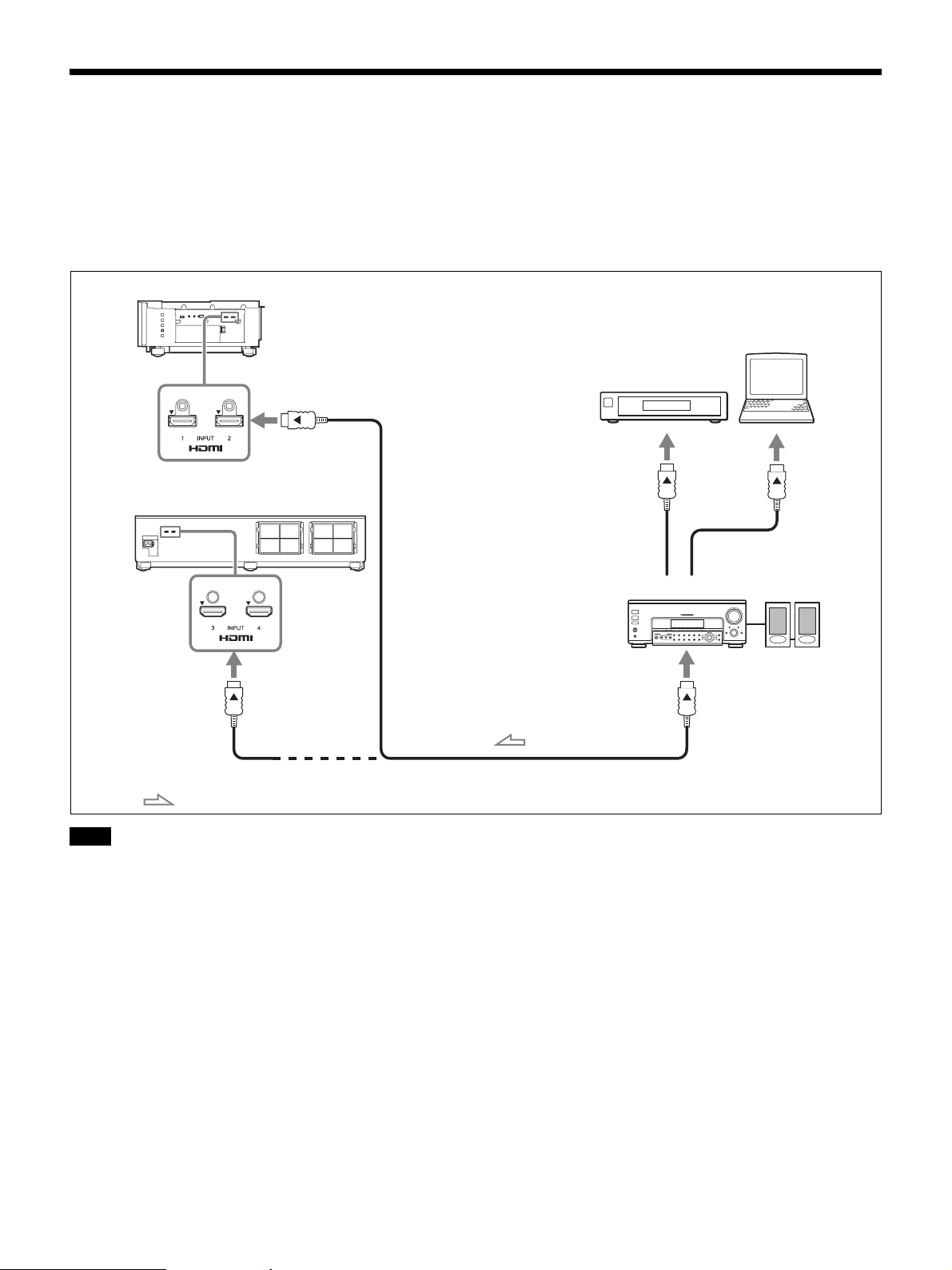
Adjusting the height of the feet
You can adjust the height and tilt of the unit using the three
feet at the bottom of the unit, and prevent backlash of the
unit using the two feet.
Tips
• The feet for adjusting the tilt can be adjusted by 1.5 mm with every
full turn.
• The left and right feet near the rear side can be used to prevent the
backlash. You can adjust these feet to the same height as the feet
for adjusting the tilt.
• Be careful not to get your finger caught when turning the feet for
adjusting the tilt or feet for preventing backlash.
• You can adjust the foot height up to 20 mm. If the foot height is
more than 30 mm, the foot may come off and the unit may drop
causing an injury.
3%* 3%*1 screen width
: Picture position when moving the picture to the left at
maximum
: Picture position when moving the picture to the right at
maximum
6%
6%
1 screen
height
: Picture position when moving the picture upward at
maximum
: Picture position when moving the picture downward at
maximum
Notes
Foot
height
Foot
height
Foot for adjusting
the tilt
Foot for preventing
backlash
9
Connecting to Video Equipment or a Computer
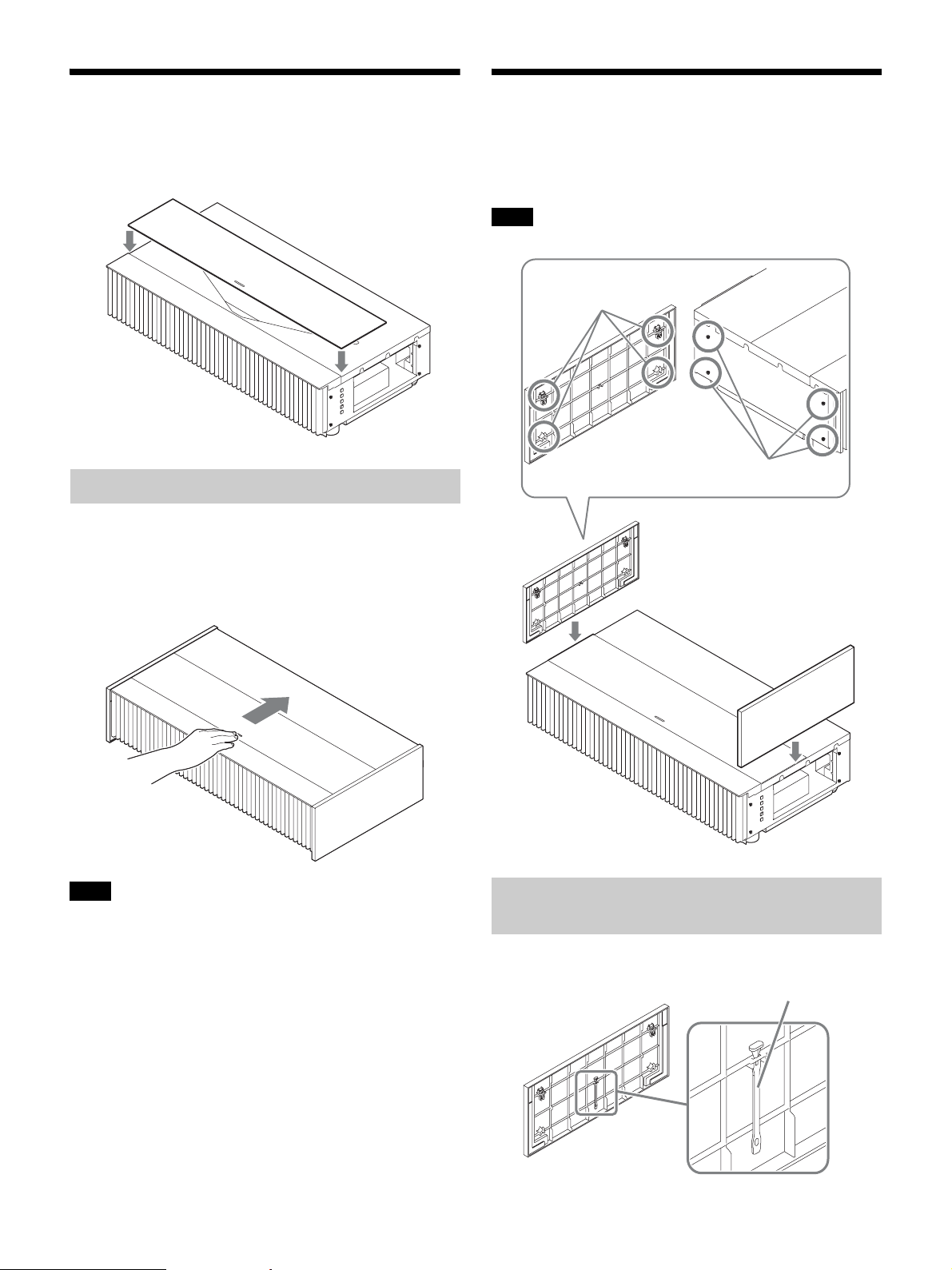
When making connections, be sure to do the following:
• Turn off all equipment before making any connections.
• Use the proper cables for each connection.
• Insert the cable plugs properly; poor connection at the plugs may cause a malfunction or poor picture quality. When
pulling out a cable, be sure to pull it out from the plug, not the cable itself.
• Refer to the operating instructions of the connected equipment.
• Use a High Speed or Premium High Speed HDMI cable on which the cable type logo is specified. With a standard HDMI cable, images of
1080p, DeepColor, 3D video and 4K video may not be displayed properly.
• When you want to display a picture in a more detailed HDMI format, use the “Premium High Speed” type.
• When connecting an HDMI cable to the unit, make sure the V mark on the upper part of the HDMI input of the unit and the v mark on the
connector of the cable are faced at each other.
• If the picture from equipment connected to the unit with an HDMI cable is not correct, check the settings of the connected equipment.
• If you use a notebook computer and set the computer to output the signal to both the computer’s display and an external monitor, the picture
may not appear on the unit properly. Set your computer to output the signal to only the external monitor. For settings of the computer, consult
with the manufacturer of the computer.
Notes
Right side of the unit
Equipment with HDMI
output connectors
to HDMI
output
HDMI cable (not supplied)
Computer
Rear side of the unit
: Video signal flow
AV amplifier Speakers
to HDMI input
to HDMI input
10
Attaching the Top Cover
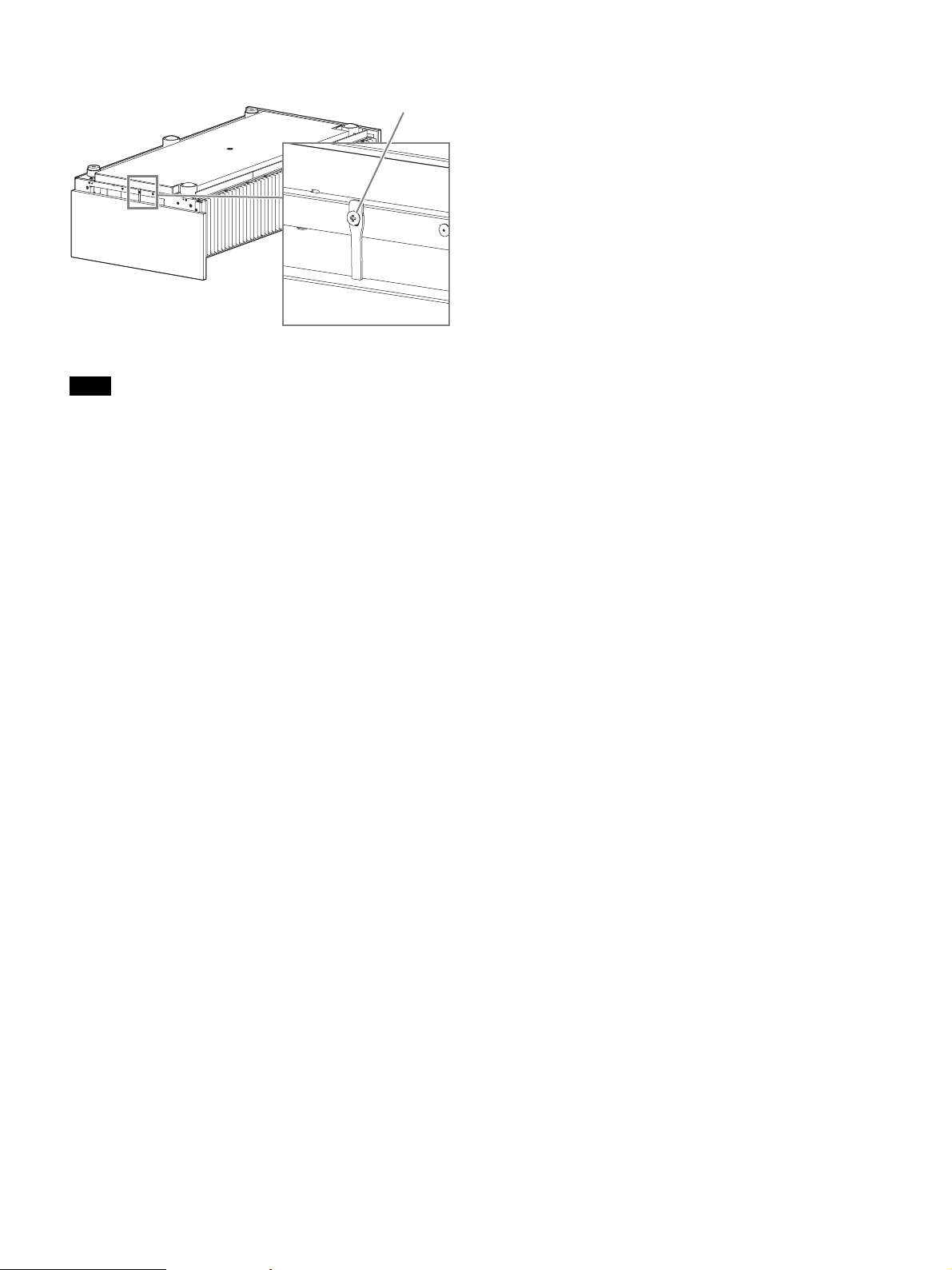
Place the top cover on the top of the unit, and align the left
and right position.
Slide the top cover by the pull on the center of the top
cover.
You can prevent the accumulation of dust on the projection
window by closing the top cover when the unit is not in
use.
• Do not close the top cover when turning the power on.
• Use the top cover together with the side covers.
• If dust is in the sliding surface, it may scratch the unit.
• When removing the top cover, do not set the top cover upright.
Attaching the Side Covers
After attaching the top cover, place the side covers by
hooking the holes of the side covers to the tabs on the side
of the unit.
Make sure that all 4 holes are hooked to the tabs.
1 Attach the strap to the side covers.
Using the top cover
Notes
Note
Attaching the side covers when
installing the unit on a ceiling
Hole
Tab
Strap (supplied)
11
2 Attach a safety rivet to the unit.
3 Attach the side covers.
When installing the unit on a ceiling, do not attach the top cover.
Note
Rivet (supplied)
12
.
Projecting the Picture
1 Turn on both the unit and the equipment connected to
the unit.
2 Press INPUT to display the input palette on the
projection surface.
3 Select the equipment from which you want to display
images.
Press INPUT repeatedly or press M/m/ to select the
equipment.
Projects the picture from the selected equipment.
Tips
• When “Status” is set to “Off” on the Setup menu, the input
palette does not appear. Press the INPUT button to switch between
input connectors sequentially.
• You can change the language for the menu and on-screen displays
in “Language” on the Setup menu (page 23).
1 Press the ?/1 (On/Standby) button.
The message “POWER OFF?” appears.
2 Press the ?/1 button again before the message
disappears.
The LED indicator turns off.
You can disconnect the AC power cord after the LED
indicator turns off.
Never disconnect the AC power cord while the unit is turned on.
Tips
• You can turn off the unit by holding the ?/1 button for about 1
second, instead of performing the above steps.
• The LED indicator does not change when “Illumination” is set to
“Off” on the Installation menu.
Watching 3D Video
Images
You can enjoy powerful 3D video images, such as from 3D
games and 3D Blu-ray Discs, using the optional Active 3D
Glasses (TDG-BT500A).
1 Turn on the HDMI equipment for 3D compatibility
connected to the unit, then play the 3D content.
For details on how to play 3D content, refer to the
operating instructions for the connected equipment.
2 Turn on the unit and project the 3D video image.
For details on how to project the image, see
“Projecting the Picture” (page 12).
3 Turn on the 3D glasses, and then put them on so that
they fit comfortably.
For details on how to use the 3D glasses, see “Using
the 3D Glasses” (page 13).
Tips
• The factory default setting for “2D-3D Display Sel.” is “Auto” to
allow projecting 3D video images automatically when the unit
detects 3D signals.
• To convert 3D video images to 2D video images, set “2D-3D
Display Sel.” to “2D” (page 24).
• It may not be possible to display 3D video image automatically,
depending on the type of signal. Set the “2D-3D Display Sel.” to
“3D,” and “3D Format” to “Side-by-Side” or “Over-Under” to suit
the format of the 3D content you want to watch (page 24).
• Use the 3D glasses within the communication range (page 13).
• There are differences in perception of 3D video images among
individuals.
• When the temperature of the usage environment is low, the 3D
effect may be diminished.
Adjusting/Setting the 3D functions
You can adjust/set the 3D functions by pressing the 3D
button on the remote control or with the “3D Settings” of
the Function menu. For details, see “3D Settings”
(page 24).
Projecting the Picture and Adjusting the
Screen
Turning Off the Power
Note
Notes
13
1 Turn on the 3D glasses, and register them on the unit.
For details on how to register the 3D glasses, refer to
the operating instructions supplied with the 3D
glasses.
2 Put on the 3D glasses.
Precautions for use
Misoperation may occur if:
• The viewing position is too far from the projector.
• There are other communication devices, such as a
wireless LAN (IEEE802.11 b/g/n) device or a
microwave oven with a bandwidth of 2.4 GHz, near the
unit.
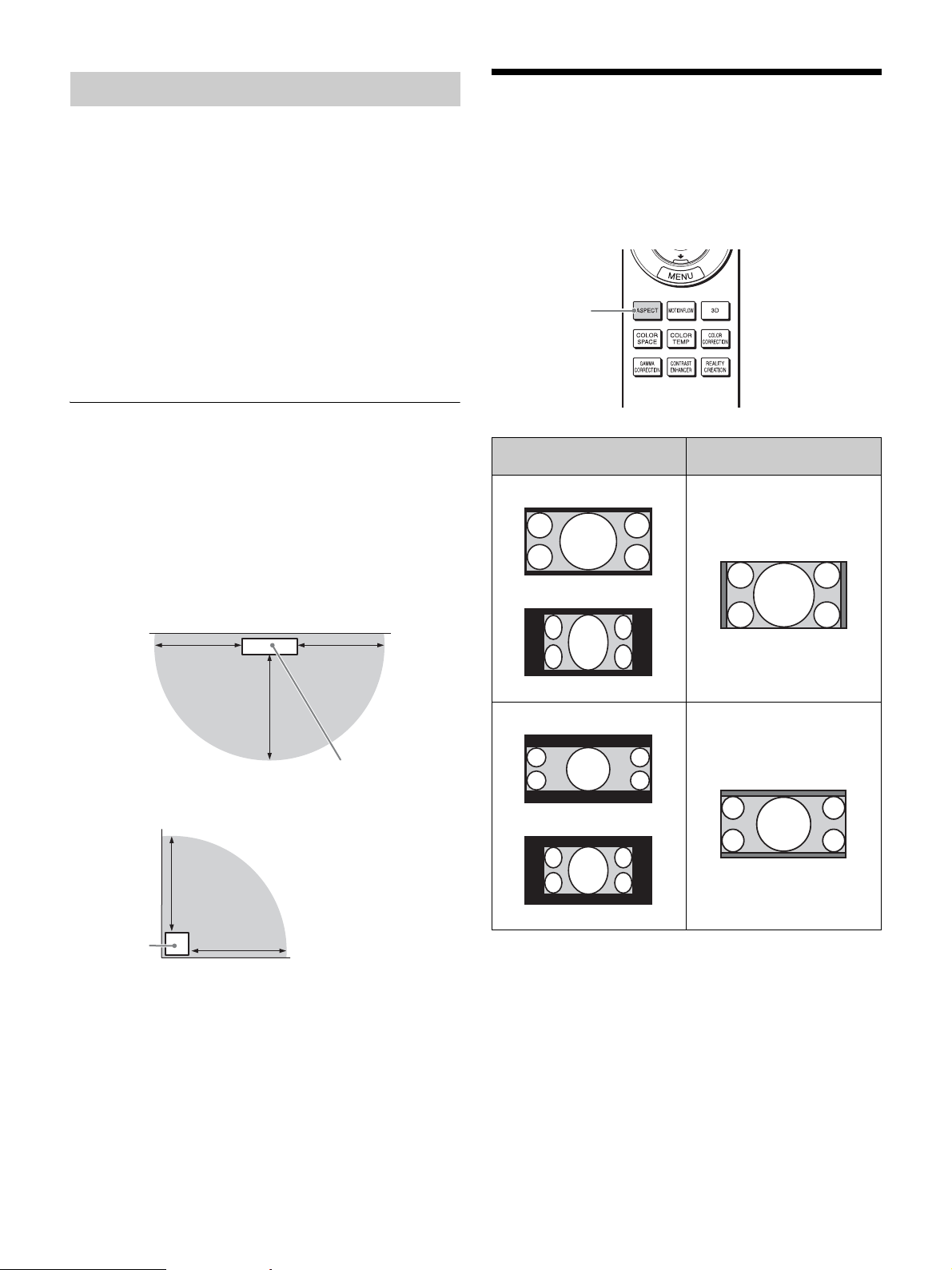
3D glasses communication range
The following figures indicate the communication range of
the 3D glasses. If you try to watch 3D video images from
a distance greater than the communication range or install
the unit outside the communication range, the 3D glasses
may not be able to display the images properly. Also, the
distance varies depending on the environment of the room
and installation environment of the unit.
Top view
Side view
Selecting the Aspect
Ratio
Each time you press the ASPECT button, the “Aspect”
setting switches.You can also select it using the menu
(page 22).
Using the 3D Glasses
Projection surface
10 m
(33 ft)
Projector
10 m
(33 ft)
10 m
(33 ft)
10 m
(33 ft)
10 m
(33 ft)
Projector
Projection
surface
Original image (for 16:9
display)
Recommended setting and
resultant images
ASPECT
button
1.85:1
Squeezed 1.85:1
1.85:1 Zoom
2.35:1
Squeezed 2.35:1
2.35:1 Zoom
14
• Selectable aspect modes vary depending on the input signal
(page 42).
• The aspect cannot be selected when a computer signal is input, a
signal with a resolution of 4096 × 2160 is input (page 38).
Notes on switching the “Aspect” setting
• Select the aspect mode taking into account that changing
the aspect ratio of the original picture will provide a
different look from that of the original image.
• Note that if the unit is used for profit or for public
viewing, modifying the original picture by switching the
aspect may constitute an infringement of the rights of
authors or producers, which are legally protected.
Selecting the Picture
Viewing Mode
With the CALIBRATED PRESET buttons, you can select
the picture viewing mode that best suits the type of video
source or room conditions.
You can save and use different preset modes for 2D/3D
respectively.
Notes
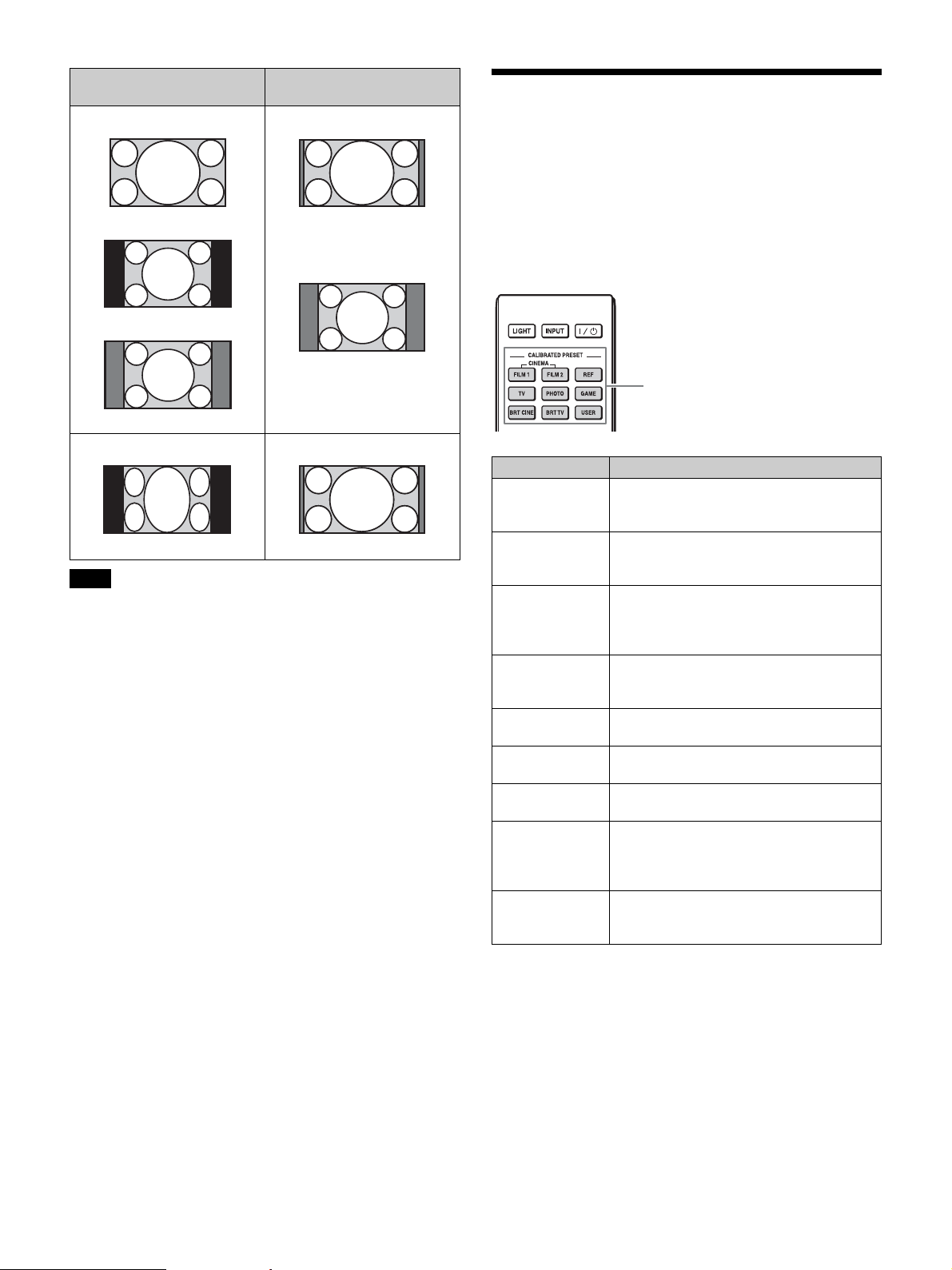
Original image (for 16:9
display)
Recommended setting and
resultant images
1.78:1 (16:9)
1.33:1 (4:3)
1.33:1 (4:3) with side panels
Normal
Squeezed
Stretch
Setting items Description
CINEMA FILM 1 Picture quality suited to reproducing the
highly dynamic and clear images typical of
master positive film.
CINEMA FILM 2 Picture quality suited to reproducing the rich
tone and color typical of a movie theater,
based on the CINEMA FILM 1.
REF A picture quality setup suitable for when you
want to reproduce faithfully the original
image quality, or for enjoying image quality,
without any adjustment.
TV Picture quality suited for watching TV
programs, sports, concerts, and other video
images.
PHOTO Ideal for projecting still images taken with a
digital camera.
GAME Picture quality suited to gaming, with well-
modulated colors and fast response.
BRT CINE Picture quality suited for watching movies in
a bright environment, such as a living room.
BRT TV Picture quality suited for watching TV
programs, sports, concerts, and other video
images in a bright environment, such as a
living room.
USER Adjusts the picture quality to suit your taste
then saves the setting. The factory default
setting is the same as REF.
CALIBRATED PRESET buttons
15
The menu displays used for the explanation may be different from the actual menu display.
Operation through the
Menus
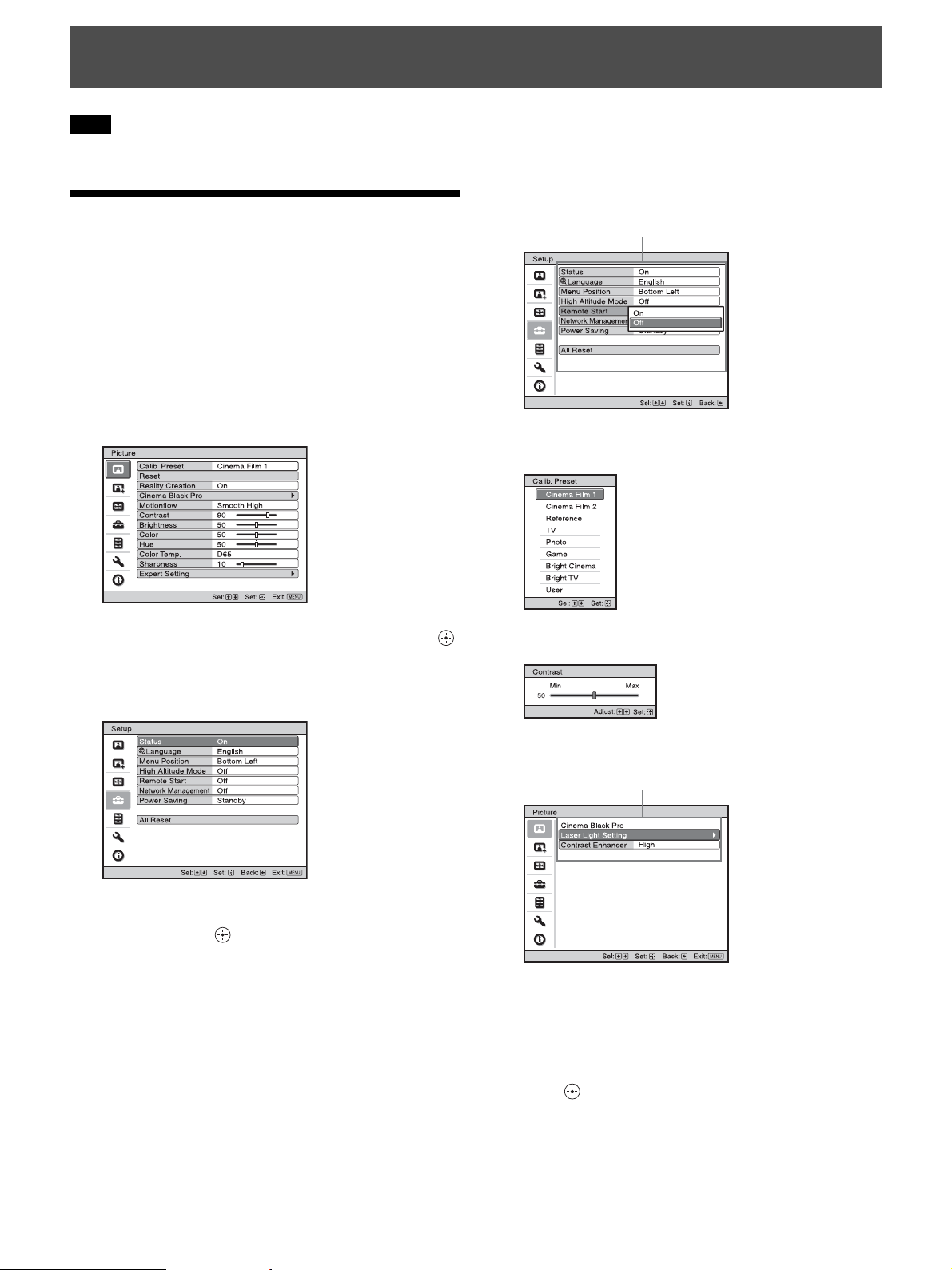
The unit is equipped with an on-screen menu for making
various adjustments and settings. If you select an item
name followed by an arrow (B), the next menu window
with setting items appears.
1 Press MENU.
The menu window appears.
2 Press M/m to select a menu item, and press , or .
The items that can be set or adjusted with the selected
menu appear. The item presently selected is shown in
white.
3 Press M/m to select an item you want to set or adjust
and press , or .
The setting items are displayed in a pop-up menu, in
a setting menu, in an adjustment menu or in the next
menu window.
Pop-up menu
Setting menu
Adjustment menu
Next menu window
4 Make the setting or adjustment of the item.
When changing the adjustment level
To increase the value, press M/,.
To decrease the value, press m/<.
Press to store the setting and return to the original
menu screen.
Using the Menus
Note
Setting items
Setting items
16
When changing the setting
Press M/m to change the setting.
Press to return to the original screen.
You can return to the original screen using <
depending on the selected item.
To clear the menu
Press MENU.
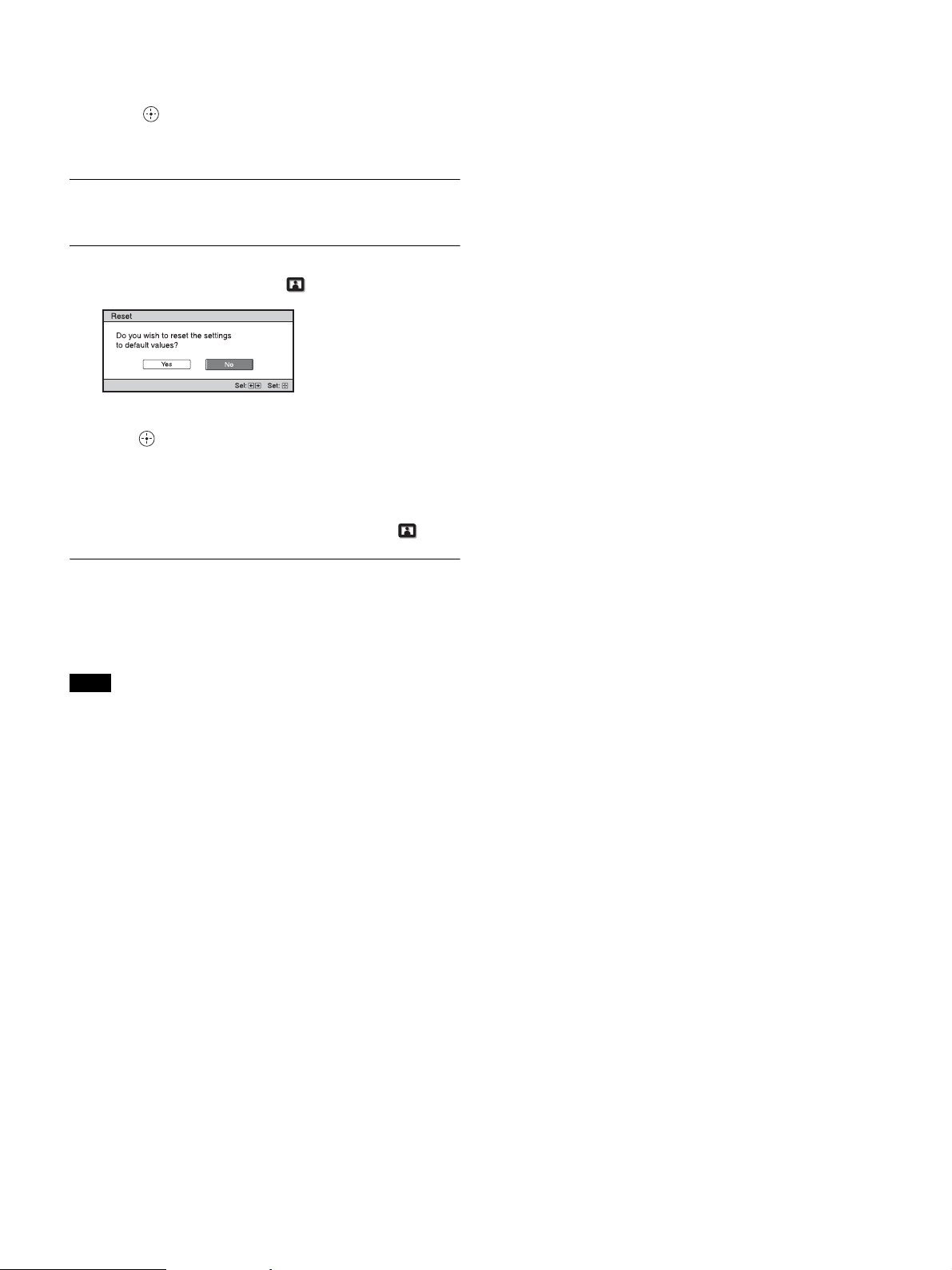
To reset the picture that has been adjusted
Select “Reset” from the Picture menu.
When the screen display appears, select “Yes” using <
and press .
All of the following settings are reset to their factory preset
values:
“Reality Creation,” “Cinema Black Pro,” “Motionflow,”
“Contrast,” “Brightness,” “Color,” “Hue,” “Color Temp.,”
“Sharpness,” and “Expert Setting” on the Picture menu
To reset the items that have been adjusted
Select an item on the menu screen, and display the pop-up
menu, the setting menu, or the adjustment menu.
Press RESET on the remote control to reset only the
selected settings to its factory preset value.
The RESET button on the remote control is available only when the
adjustment menu or the setting menu is selected.
Note
17
Picture Menu
The Picture menu is used for adjusting the picture.
Item names in brackets represent those printed on the remote control.
Setting items Description
Calib. Preset
[CALIBRATED PRESET]
You can select the picture viewing mode that best suits the type of video source or the environment.
You can save and use different preset modes for 2D/3D respectively.
Cinema Film 1: Picture quality suited to reproducing the highly dynamic and clear images typical of
master positive film.
Cinema Film 2: Picture quality suited to reproducing the rich tone and color typical of a movie theater,
based on the Cinema Film 1.
Reference: A picture quality setup suitable for when you want to reproduce faithfully the original image
quality, or for enjoying image quality, without any adjustment.
TV: Picture quality suited for watching TV programs, sports, concerts, and other video images.
Photo: Ideal for projecting still images taken with a digital camera.
Game: Picture quality suited to gaming, with well-modulated colors and fast response.
Bright Cinema: Picture quality suited for watching movies in a bright environment, such as a living
room.
Bright TV: Picture quality suited for watching TV programs, sports, concerts, and other video images in
a bright environment, such as a living room.
User: You can adjust the picture quality to suit your taste, and save the setting. The factory default
setting is the same as “Reference.”
Tip
Any adjustments to picture quality settings are saved for each input.
Reset Resets all currently selected Calib. Preset mode settings to their default values (page 16).
Tip
Reset does not affect settings saved for the Custom 1 to 5 items of “Color Temp.”
Reality Creation
[REALITY CREATION]
Adjusts the resolution and noise filtering of images. (Super-resolution function)
On: Adjusts the settings of “Reality Creation.”
Database: Select “Normal” or “Mastered in 4K.”
“Mastered in 4K” provides image quality suitable for Blu-ray Disc™ “Mastered in 4K” releasing
from Sony Pictures Home Entertainment.
Resolution: When you increase the setting value, the texture and detail of the picture become sharper.
Noise Filtering: When you increase the setting value, the noise (picture roughness) becomes less
prominent.
Test: On/Off: Changes “On” and “Off” at a certain frequency to check the effect of “Reality
Creation.”
Tip
The display position of status during the test works together with the “Menu Position” setting
(page 23).
Off: The “Reality Creation” function is not applied.
Cinema Black Pro
Laser Light Setting Dynamic Control: Adjusts the range of movement of the laser light control.
Full: Automatically optimizes the laser light control and signal processing according to the brightness
level of the input source. This results in a bright and high contrast image.
Limited: Suppresses the movement and brightness of the laser light control, making the picture
quality suitable for viewing in a dark room.
Off: The “Dynamic Control” function is not applied.
Output: The higher the setting, the brighter the picture. The lower the setting, the darker the picture.
Tip
After adjusting “Output” according to the brightness of the room and picture, set “Dynamic Control”
according to your preference.
Contrast Enhancer
[CONTRAST ENHANCER]
Corrects the level of bright and dark parts automatically to optimize contrast according to a scene.
Increases image sharpness and makes image dynamic.
High/Middle/Low: You can adjust the contrast enhancer.
Off: The contrast enhancer function is not applied.
18
Motionflow [MOTIONFLOW] Smooth High: Provides smoother picture movement; especially effective for film-based content.
Smooth Low: Provides smoother picture movement for standard use.
True Cinema: Images, such as a movie created in 24 frames per second, are reproduced at the original
framerate.
Off: The “Motionflow” function is not applied.
Tips
• Select “Off” if the selected “Smooth High,” “Smooth Low,” or “True Cinema” results in a distorted
picture.
• Depending on the picture content, you may not see the effect visually even if you have changed the
settings.
• Only “Off” is available when a signal with a resolution of 4096 × 2160 is input.
Contrast
[CONTRAST]
Adjusts the contrast.
Higher values increase the sharpness in images, while lower values decrease the sharpness.
When the HDR signal is input with “HDR10,” “HLG,” or “Auto” set for “HDR,” “Contrast(HDR)”
appears instead of “Contrast.”
Brightness
[BRIGHTNESS]
Adjusts the brightness of the picture.
The higher the setting, the brighter the picture. The lower the setting, the darker the picture.
Color Adjusts the color density.
The higher the setting, the greater the intensity. The lower the setting, the lower the intensity.
Hue Adjusts the color tone.
The higher the setting, the more greenish the picture becomes. The lower the setting, the more reddish
the picture becomes.
Color Temp.
[COLOR TEMP]
Adjusts the color temperature.
D93: Equivalent to 9,300 K color temperature normally used in TVs. Gives white colors a blue tint.
D75: Equivalent to 7,500 K color temperature used as an ancillary standard illuminant. Gives a neutral
tint between “D93” and “D65.”
D65: Equivalent to 6,500 K color temperature used as a standard illuminant. Gives white colors a red
tint.
D55: Equivalent to 5,500 K color temperature used as an ancillary standard illuminant. Gives white
colors an even redder tint.
Custom 1 to 5: Enables you to adjust, set, and store your favorite color temperature.
The factory default settings are as follows.
Custom 1: Same as the “D93” color temperature setting.
Custom 2: Same as the “D75” color temperature setting.
Custom 3: Same as the “D65” color temperature setting.
Custom 4: Same as the “D55” color temperature setting.
Custom 5: Setting that prioritizes brightness.
Tip
You can adjust each item to a color temperature according to your preference.
Sharpness
[SHARPNESS]
Sharpens the outline of the picture, or reduces the noise.
The higher the setting, the sharper the picture. The lower the setting, the softer the picture, thus reducing
the noise.
Expert Setting
NR (Noise Reduction) Reduces the roughness or noise of the picture.
Auto: Detects the noise level to reduce the roughness or noise of the picture automatically.
High/Middle/Low: Select a setting according to the roughness or noise of the input signal source.
Off: The NR (noise reduction) function is not applied.
Tip
The noise level may not be detected accurately with “Auto” depending on the input signal source. If the
picture is unacceptable with “Auto,” select a setting from among “High,” “Middle,” “Low” or “Off.”
MPEG NR (MPEG Noise
Reduction)
Reduces block noise and mosquito noise, particularly in digital signals.
Auto: Detects the noise level to reduce the block noise and mosquito noise of the picture automatically.
High/Middle/Low: Select a setting according to the block noise and mosquito noise of the input signal
source.
Off: The MPEG NR (MPEG noise reduction) function is not applied.
Tip
The noise level may not be detected accurately with “Auto” depending on the input signal source. If the
picture is unacceptable with “Auto,” select a setting from among “High,” “Middle,” “Low” or “Off.”
Setting items Description
19
Smooth Gradation Smooths the gradation of the flat parts of images.
High/Middle/Low: You can adjust the smooth gradation effect.
Off: The smooth gradation function is not applied.
Film Mode According to the film source you have selected, make a setting for playback.
Auto: Suitable for reproducing the original picture movement. Normally, set this to “Auto.”
Off: Plays back the picture in progressive format without detecting video signals automatically.
Tip
This item is compatible with a 1080i signal only.
Gamma Correction
[GAMMA CORRECTION]
Adjusts the response characteristics of the tone of the picture.
Select a favorite tone from 10 options.
1.8: Bright Produces a brighter picture overall.
2.0
2.1
2.2
2.4
2.6: Dark Produces a darker picture overall.
Gamma 7: Produces a sharper picture by emphasizing darker parts.
Gamma 8: Produces a brighter picture than Gamma 7. Select this when you watch in a bright
environment, such as a living room.
Gamma 9: Produces a brighter picture than Gamma 8.
Gamma 10: Increases the sharpness in images. Select this when you watch TV programs, etc., in a
bright environment, such as a living room.
Off: The “Gamma Correction” function is not applied.
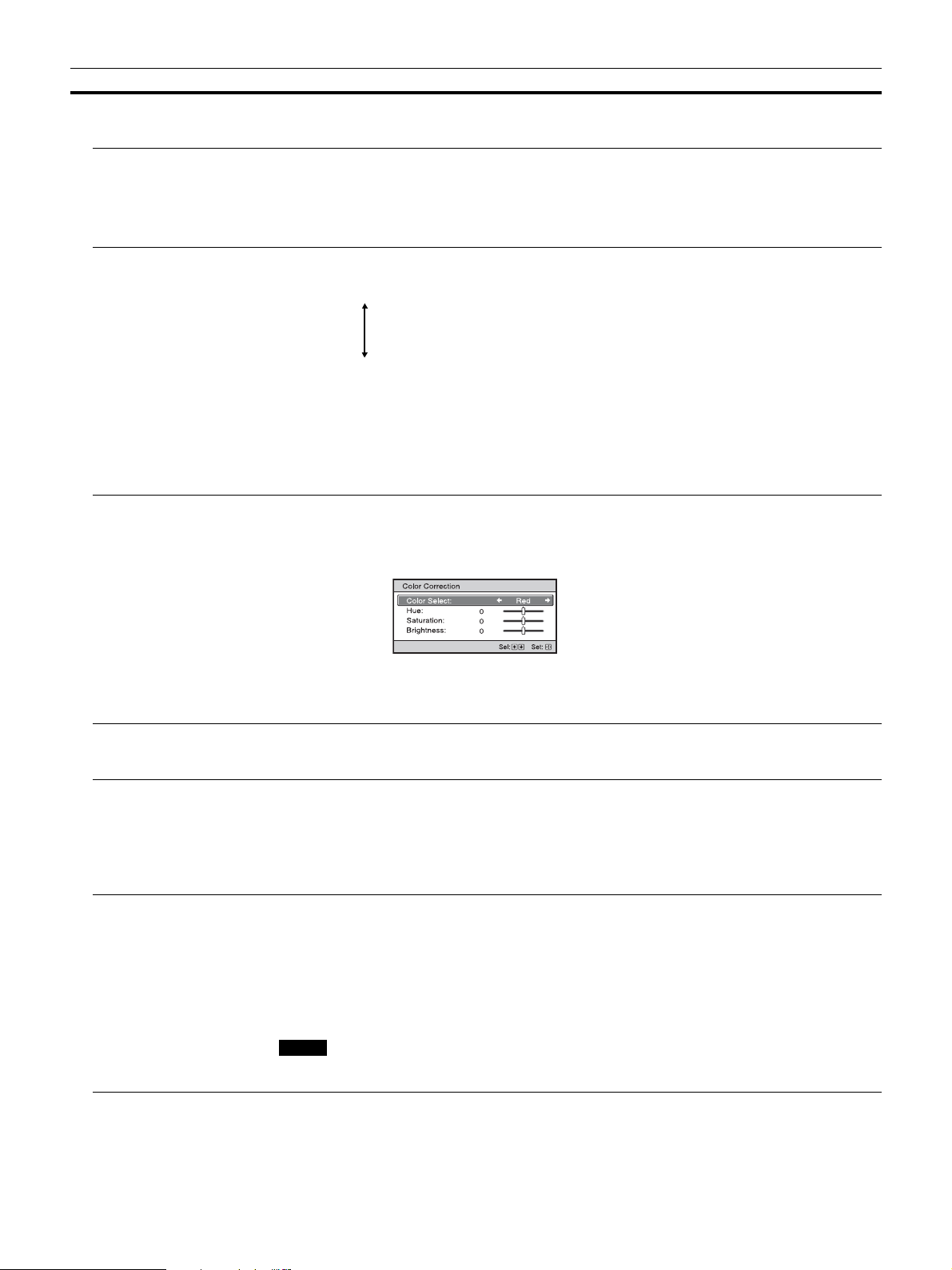
Color Correction
[COLOR CORRECTION]
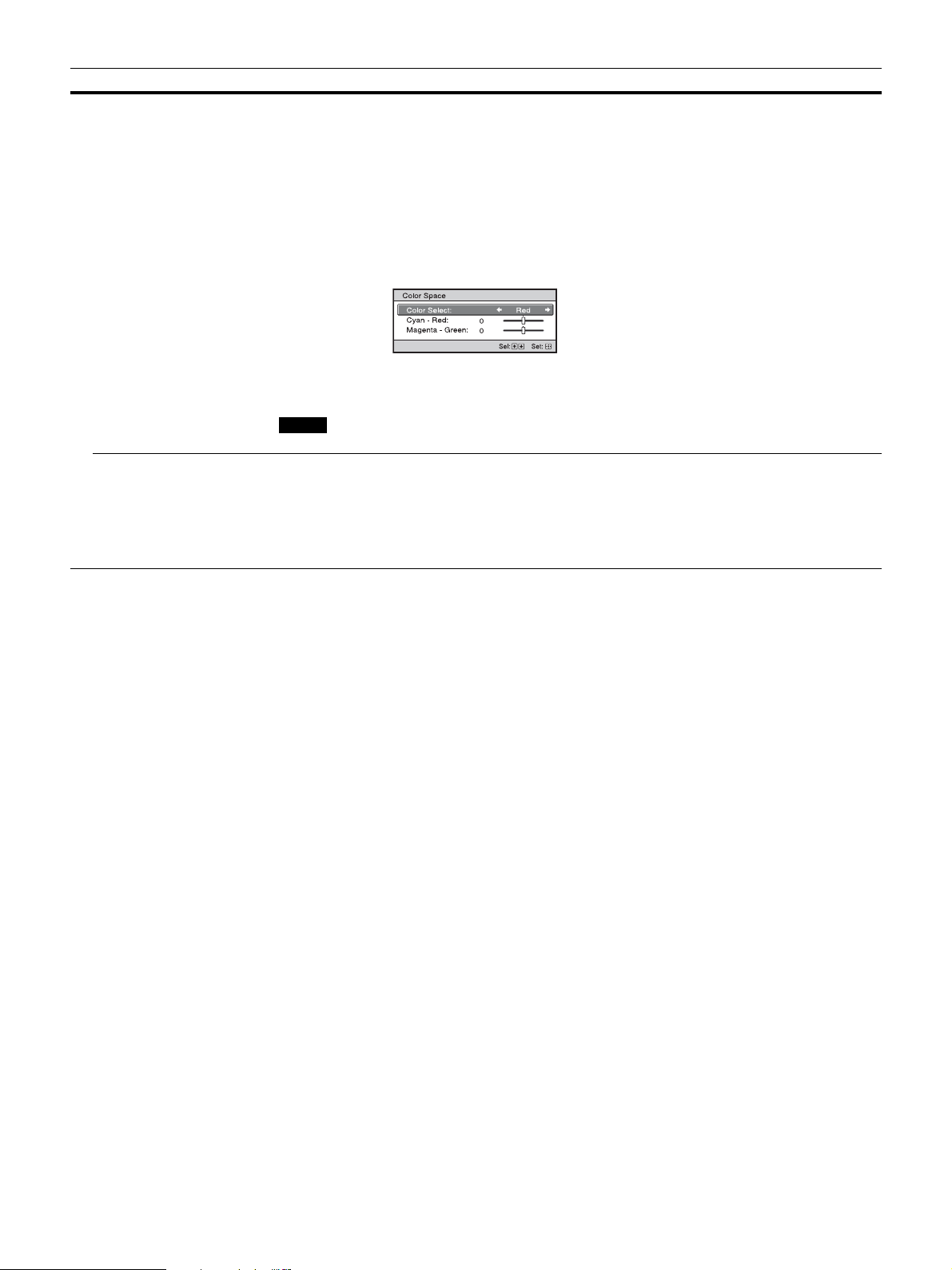
On: Adjusts Hue, Saturation and Brightness of the selected colors.
Repeat steps 1 and 2 described below to specify the target color.
1 Press M/m to select “Color Select,” then press </, to select the color you want to adjust among
“Red,” “Yellow,” “Green,” “Cyan,” “Blue,” and “Magenta.”
2 Press M/m to select “Hue,” “Saturation” or “Brightness,” then adjust them to suit your taste using </
, while watching the projected picture.
Off: The “Color Correction” effect is not applied.
Clear White Emphasizes vivid whites.
High/Low: You can adjust the “Clear White” effect.
Off: The “Clear White” effect is not applied.
x.v.Color Set this item when connecting the unit with equipment that supports x.v.Color and playing back an
x.v.Color video signal.
On: You can play back an x.v.Color video signal.
Off: The “x.v.Color” function is not applied.
Tip
Setting x.v.Color to “On” disables gamma adjustment.
HDR Sets how to play back HDR content.
Auto: Distinguishes HDR content automatically and applies the optimal picture quality. When an input
signal supports BT.2020, the “Color Space” is set to “BT.2020” automatically. When a signal other than
BT.2020 is input, the mode set in “Color Space” is applied. (“BT.2020” is not available in this case.)
HDR10: Set when playing back HDR10-compatible content.
HLG: Set when playing back HLG-compatible content.
Off: Set when playing back content other than HDR content.
All of the modes of “Color Space” are selectable when “HDR10,” “HLG,” or “Off” is selected.
If the setting is not correct for the input content, the bright and dark areas of the video may appear too
bright or too dark.
Setting items Description
Note
20
Color Space
[COLOR SPACE]
Converts the color space.
BT.709: An ITU-R BT.709 color space, which is used for high-definition television broadcast or Blu-ray
Disc. The color space is equivalent to sRGB.
BT.2020: The color space suited for watching images with BT.2020, such as HDR content.
Color Space 1: The color space suited for watching TV programs and video images, such as sport,
concerts, etc.
Color Space 2: The color space suited for watching TV programs, sport, concerts, and other video
images in a bright environment, such as a living room.
Color Space 3: The color space suited for watching movies in a bright environment, such as a living
room.
Custom: You can adjust the color space setting.
Tip
You can adjust each item to a color space according to your preference.
When “HDR” is set to “Auto,” the selectable modes change according to the signal type (page 19).
Input Lag Reduction Reduces the delay of the display for a video.
On: Shortens the time to display the input video image; effective for increasing the performance of the
display reaction speed when using an external controller, etc.
Off: Turns the Input Lag Reduction function off.
Tip
When “Input Lag Reduction” is set to “On,” Motionflow, NR, and MPEG NR cannot be set.
Setting items Description
Note
21
Advanced Picture Menu
You can adjust the gaps in color that have occurred after a long period of use.
• Auto Calibration results in relatively coarse calibration. The color settings are not guaranteed to be the same as the factory default values.
• The colors are projected automatically while performing “Pre Check” or “Adjust.”
• Do not turn off the power or operate the remote control or control panel during “Pre Check” or “Adjust,” as the process may be canceled.
Tips
• dE is an indicator of changing color. The smaller the value of dE, the fewer the changes caused by the color.
• Perform the calibration after the power has been on for more than 30 minutes.
• It takes a few minutes for “Pre Check” or “Adjust” to complete.
• When “Pre Check” or “Adjust” starts, the screen position may shift as the lens returns to its factory default position. After completion, the
screen returns to its previous position automatically.
• If the environment, such as the brightness of the room, changes while performing “Pre Check” or “Adjust”, measurement may be affected.
• If the “Pre Check” or “Adjust” function fails, try it again.
• This function adjusts only the white balance.
Setting items Description
Auto Calibration Pre Check: Checks the color difference against the factory default settings, before calibration starts.
Adjust: Performs Auto Calibration.
Before/After: Toggles the factory default settings and the setting after the calibration at a certain
frequency. You can check the effect of the calibration by monitoring the actual image.
Reset: Resets the calibration results, and returns to the factory default settings.
Notes
22
Screen Menu
You can set the picture size, aspect mode, etc.
These items may not be available, depending on the type of input signal. For details, see “Input Signals and Adjustment/Setting Items”
(page 39).
Item names in brackets represent those printed on the remote control.
Note
Setting items Description
Aspect
[ASPECT]
You can set the aspect ratio of the picture to be displayed for the current input signal (page 13).
1.85:1 Zoom: A 1.85:1 aspect ratio picture is displayed in its original aspect ratio, enlarged so that black
bands do not appear at the top and bottom of the projection surface.
2.35:1 Zoom: A 2.35:1 aspect ratio picture is displayed in its original aspect ratio, enlarged so that black
bands at the top and bottom of the projection surface are as small as possible.
Normal: Input video is displayed in its original aspect ratio, enlarged to fill the projection surface. This
mode is suitable for viewing 1.78:1 (16:9) and 1.33:1 (4:3) video.
Stretch: Displays video that has been squeezed to 1.33:1 (4:3) as 1.78:1 (16:9) aspect ratio.
Tips
• Selectable aspect modes vary depending on the input signal (page 42).
• The aspect cannot be selected for an input signal from a computer or an input signal with a resolution
of 4096 × 2160. (page 38 to 39, 42)
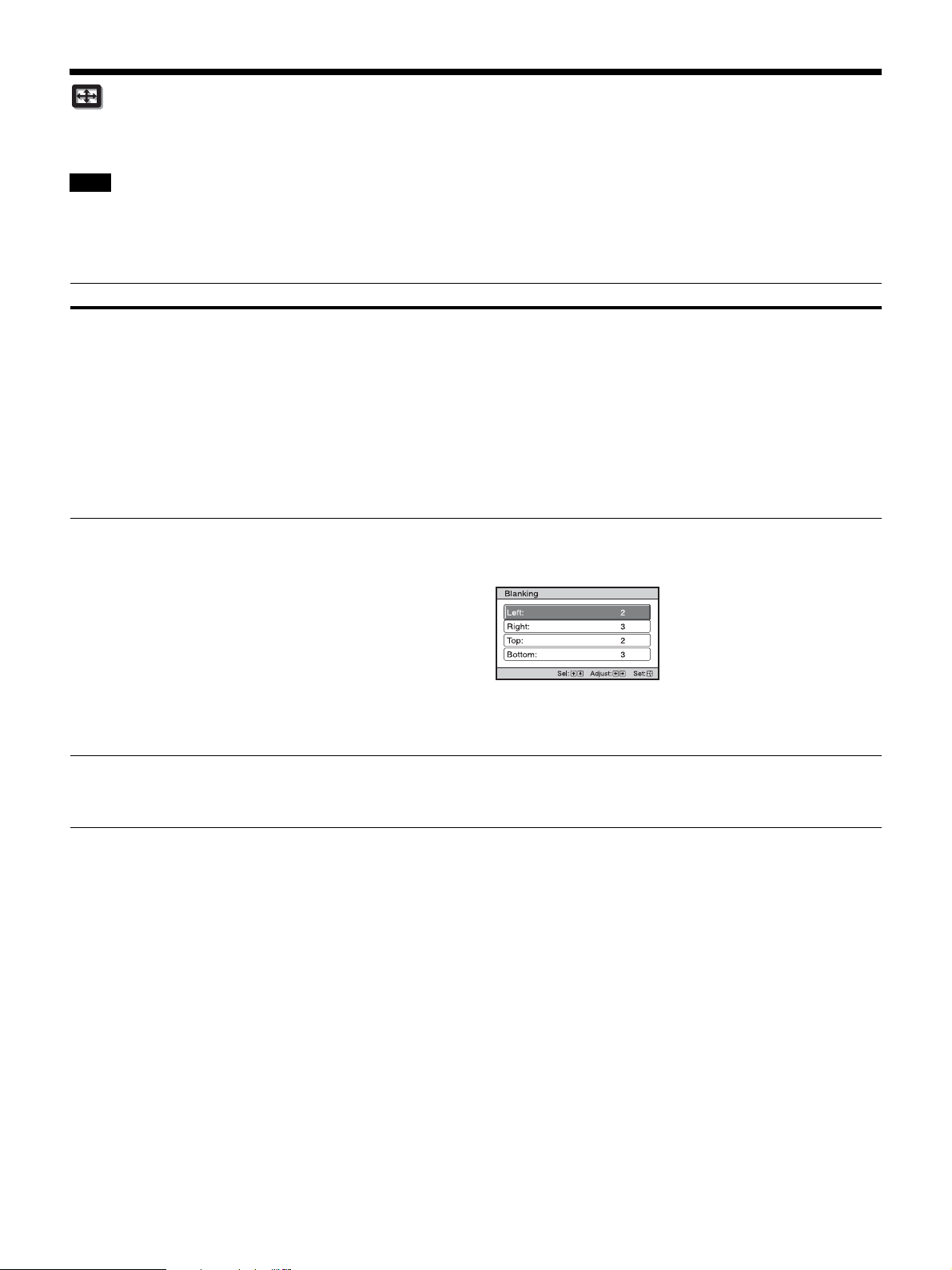
Blanking This feature allows you to adjust the displayable region within the four directions of the screen.
On: Select the edge to adjust by highlighting Left, Right, Top, or Bottom using the M/m buttons.
Adjust the amount of blanking using the </, buttons.
Off: Turns off the Blanking function.
Tip
Depending on the aspect ratio setting, right/left blanking may not be available.
Image Shift On: You can adjust the image position.
H: The image moves to the right as the value increases, and moves to the left as decreases.
V: The image moves up as the value increases, and moves down as decreases.
Off: You can turn off the image shift function.
23
Setup Menu
The Setup menu is used to change the factory preset settings, etc.
Setting items Description
Status Sets whether or not on-screen messages or menus, etc. are displayed.
On: Displays on-screen messages and menus.
Off: Turns off the on-screen displays, other than certain menus, a message when turning off the power,
and warning messages.
All Off: Turns off the on-screen displays, other than certain menus, and a message when turning off the
power.
• When “All Off” is selected, warning message for high temperature is not displayed.
• Note that Sony is not liable for failure of the unit or any accident caused by selecting “All Off.”
Language Selects the language used in the menu and on-screen displays.
Menu Position You can change the position to display the menu on the projection surface.
Bottom Left: Displays the menu on the bottom left area of the projection surface.
Center: Displays the menu on the center of the projection surface.
High Altitude Mode Sets the unit to operate at the prevailing atmospheric pressure.
On: Use this setting when using the unit at an altitude of 1,500 m (approx. 4,900 ft) or higher.
Off: Use this setting when using the unit at normal altitudes.
Tip
When this item is set to “On,” the fan noise becomes slightly louder since the fan speed increases.
Remote Start Sets the Remote Start settings.
On: You can turn on the power from a PC or a terminal which is connected to a network.
Off: Turns off the Remote Start function.
Tips
• To use the function, the unit should be connected to the network in advance (page 27).
• To turn on the power with the Remote Start function, a special command should be sent from a PC or
a terminal. For details, consult with qualified Sony personnel.
When the Remote Start is set to “On,” the standby power requirement will increase. When Network
Management is set to “On,” Remote Start is fixed at “On” and is not displayed in the menu.
Network Management On: Set when connected to the network and continuously communicating with the projector control
equipment.
Off: Turns off the Network Management function.
When Network Management is set to “On,” the network function is continuously enabled. Set Network
Management to “Off” for normal use. If you set to “On,” the power consumption increases.
Power Saving Sets the Power Saving mode.
Standby: If no signal is input for 10 minutes, power is turned off automatically and the projector goes
into standby mode.
Off: Disables the Power Saving function.
All Reset All settings by the main unit and adjusted data by the connected devices are initialized to their factory
preset values.
Notes
Note
Note
24
Function Menu
The Function menu is used for changing the settings of the various functions of the unit.
Setting items Description
3D Settings You can change the settings of the 3D function.
2D-3D Display Sel. For Switching the video images to “2D” or “3D.”
Auto: Displays 3D video images when HDMI signals with 3D information* are input. Displays 2D
video images when other signals are input.
3D: Displays 3D video images according to the 3D system selected in “3D Format.” However, when
HDMI signals with 3D information are input to the unit, displays 3D video images according to the 3D
system of those HDMI signals.
3D Format: Set the 3D system when the input HDMI signals do not include 3D information.
Simulated 3D: Converts 2D video images to 3D video images. The setting can be made only for input
the HD signals.
The simulated 3D feature may have limited effect, depending on the video source.
There are differences in perception of 3D video images among individuals.
Side-by-Side: Select this to display 3D images as two similar images, side-by-side.
Over-Under: Select this to display 3D images as two similar images, one above the other.
2D: Displays 2D video images.
* The 3D information is additional information to differentiate 3D. Some HDMI signals have additional
information to differentiate 3D and some HDMI signals have none.
Tips
• “2D-3D Display Sel.” cannot be set to “3D” for some video sources. For available 3D signals, see
“Compatible 3D Signals” (page 40).
• The simulated 3D feature may have limited effect, depending on the projection image size (100 to 120
inches recommended) and the video source.
• The menu display has a ghost while a 3D video image is displayed and is best viewed with the 3D
glasses.
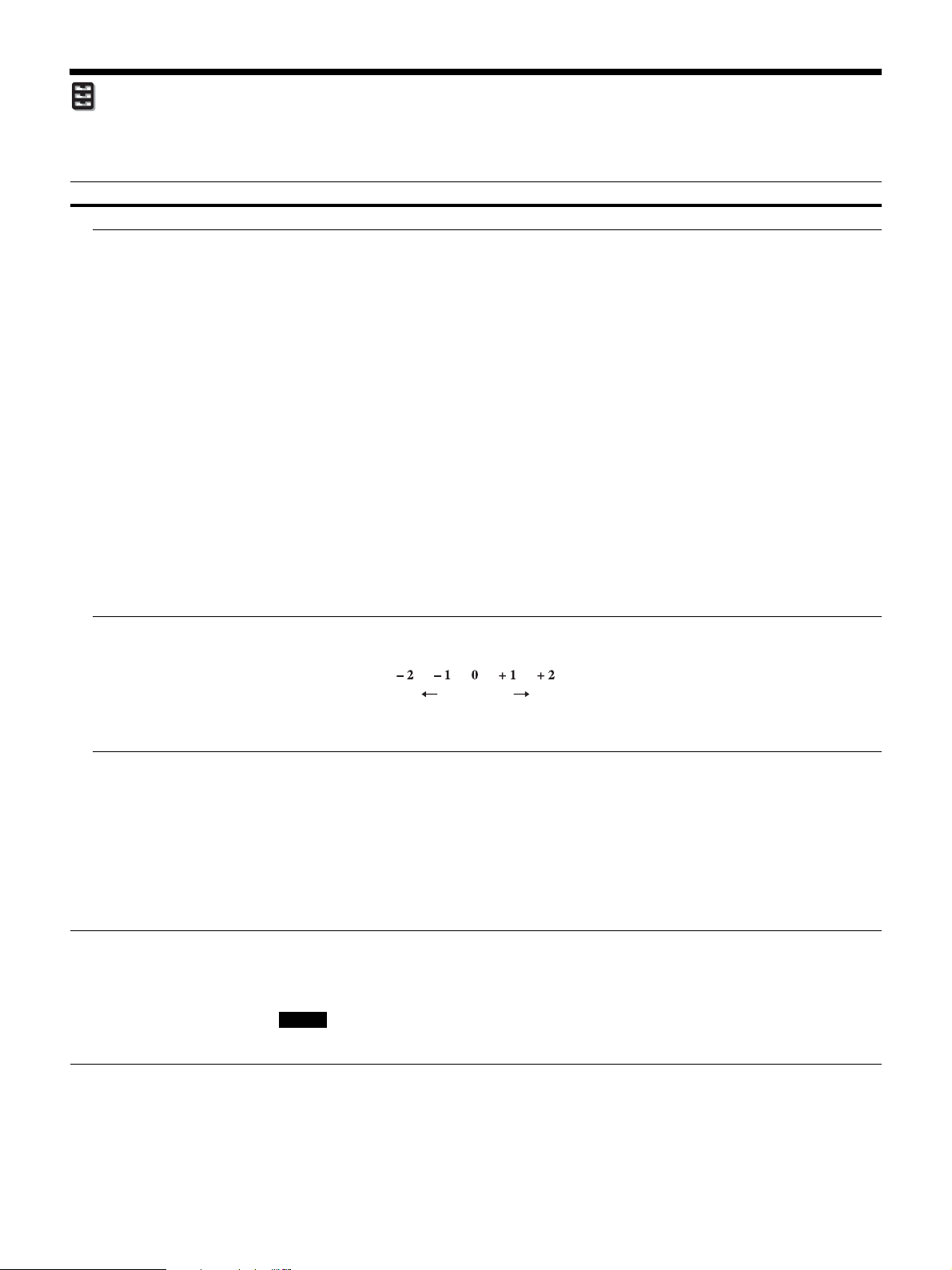
3D Depth Adjust For adjusting the depth of the 3D video images on the projection surface. The setting can be made only
when a 3D Format other than “Simulated 3D” is selected.
We recommend that “3D Depth Adjust” be set to “0.” The 3D video images may be difficult to perceive,
depending on the setting of “3D Depth Adjust.”
Simulated 3D Effect For adjusting the 3D effect when 2D content is converted to 3D video images. You can select the effect
from among “High,” “Middle,” and “Low.”
Tips
• There are differences in perception of 3D video images converted by the simulated 3D function
among individuals.
• Use the simulated 3D function taking into account that the picture will provide a different look from
the original images, because this function converts the video images.
• Note that if the unit is used for profit or for public viewing, displaying 2D video images as 3D video
images by converting to the simulated 3D may constitute an infringement of the rights of authors or
producers, which are legally protected.
Dynamic Range Sets the video input level for HDMI 1, HDMI 2, HDMI 3 and HDMI 4 connectors.
Auto: Sets the video input level automatically.
Limited: The video input level is set for signals that are equivalent to 16-235.
Full: The video input level is set for signals that are equivalent to 0-255.
If the video output setting of the connected HDMI device is not set correctly, light and dark parts of the
video may appear too light or too dark.
Depth
NormalFront Depth
Note
25
Group 1 Group 2
HDMI Signal Format Switches the video signal formats for 4K.
Standard Format: Displays a picture in the standard HDMI format. Normally use this setting.
Enhanced Format: Use this setting when the HDMI format with a wider band frequency is used.
Tips
• A picture or sound may not be output normally when “Enhanced Format” is selected. In this case, set
to “Standard Format.”
• Set “Enhanced Format” only when the corresponding devices are used.
• It may take time to display a picture after switching the video signal formats.
Test Pattern Displays a test pattern according to the setting.
On:
A test pattern appears on the screen to be used when adjusting the lens with “Lens Focus,” “Lens Zoom,”
and “Lens Shift.”
Off: A test pattern does not appear.
Tip
While the test pattern is displayed, it is only displayed in green to allow you to adjust the focus easily.
Settings Lock Locks menu item settings to prevent operational error (page 25).
Off: Cancels the Settings Lock.
Level A: Group 1 items (below) are not displayed on the menu, and are not available.
Level B: Group 1 and Group 2 items (below) are not displayed on the menus, and are not available.
Items Locked by Settings Lock
Setting items Description
Picture menu
Reset
Reality Creation
Laser Light Setting
Contrast Enhancer
Motionflow
Contrast
Brightness
Color
Hue
Color Temp.
Sharpness
NR
MPEG NR
Smooth Gradation
Film Mode
Gamma Correction
Color Correction
Clear White
x.v.Color
HDR
Color Space
Input Lag Reduction
Advanced Picture menu
Auto Calibration
Setup menu
Status
Language
Menu Position
High Altitude Mode
Remote Start
Network Management
Power Saving
Function menu
Dynamic Range
Test Pattern
Installation menu
Image Flip
Lens Control
Trigger Select
Panel Alignment
Network Setting
26
Installation Menu
The Installation menu is used for changing the installation settings.
Setting items Description
Image Flip Flips the picture on the screen horizontally and/or vertically.
Use this item for installation for the rear projection or ceiling installation.
HV: Flips the picture horizontally and vertically.
H: Flips the picture horizontally.
V: Flips the picture vertically.
Off: The picture does not flip.
Lens Control Avoids any operation of the lens such as “Lens Focus,” “Lens Zoom,” and “Lens Shift,” by mistake.
On: Enables adjustment of the lens.
Off: Prevents any adjustment of the lens.
Trigger Select Switches the output function of the TRIGGER connector.
Off: Turns off the TRIGGER connector function.
Power: Outputs 12 V signals from the TRIGGER connector when the unit is on. The TRIGGER
connector does not output any signals when the unit is in standby.
Illumination Changes the lighting setting of the LED indicator in use.
On: The LED indicator lights.
Off: The LED indicator does not light.
Panel Alignment This feature allows you to adjust the gaps in the color of characters or the picture on the projection surface.
Adjust: Adjusts the gaps in the colors selecting “Adjust Item” or “Adjust Color.”
Adjust Item: Selects how to make adjustments from below.
Shift: Shifts the whole picture and makes adjustments.
Zone: Selects the desired range and makes adjustments.
Adjust Color: Assigns the desired color to adjust the gaps in color. Select “R” (Red) or “B” (Blue) to
make adjustments based on “G” (Green).
Pattern Color: Select “R/G” (Red and Green) or “R/G/B” (White, all colors) when “Adjust Color” is
“R” (Red). Select “B/G” (Blue and Green) or “R/G/B” (White, all colors) when the “Adjust Color” is
“B” (Blue).
Adjust: The shift adjustment and zone adjustment of the color selected in “Adjust Color” can be made
with the </,, M/m buttons.
When “Shift” is selected: Assign the settings of the horizontal direction (H) with the </, buttons
and the vertical direction (V) with the M/m buttons on the shift adjustment screen.
When “Zone” is selected: Select the position to adjust with the </, buttons for the horizontal
position (H Position) and the M/m buttons for the vertical position (V Position), then press .
Set the amount to adjust with the </, buttons for the horizontal direction (H) and with the M/m
buttons for the vertical direction (V). You can select the position to adjust again by pressing .
27
Reset: Returns to the factory settings.
Preset: The optimized data has been preset.
Depending on the adjustments made above, colors may become uneven or the resolution may change.
Flange Back Correction Adjust the focus by pressing the M/,/ m/< buttons.
Tips
• This function is different from the lens focus.
• Normally, there is no need to adjust according to the installation environment. Use this item for
installation in a special environment.
Network Setting Perform Internet protocol settings.
IPv4 Setting IP Address Setup: Selects the IP address setting method.
Auto(DHCP): The IP address is assigned automatically from the DHCP server such as a router.
Manual: Specifies the IP address manually.
When “Manual” is selected for “IP Address Setup,” input “IP Address,” “Subnet Mask,” and “Default
Gateway.” Select each item with the
M/m buttons, then press the button. Select the frame to input with
the
</, buttons and input the value with the M/m buttons. When all items are entered, select “Apply,”
and then press the button. The entered settings will be registered.
IP Address: Sets the unit’s IP address.
Subnet Mask: Sets the unit’s subnet mask.
Default Gateway: Sets the unit’s default gateway.
MAC Address: Displays the unit’s MAC address. This cannot be changed.
Apply: Enables the IP address that is set manually.
IPv6 Information Displays the IPv6 information.
When you set the IPv6 IP address, set it on a Web browser (page 29).
Setting items Description
Note
28
Information Menu
The Information menu displays the model name, serial number, input signal type, and software version.
You cannot adjust or change the items listed above.
This unit has default image data to adjust preset data for input signals appropriately according to the signals shown in
“Preset Signals” (page 38) (the preset memory). When the preset signal is input, the unit automatically detects the signal
type and recalls the data for the signal from the preset memory to adjust it to an optimum picture. The signal type is
displayed in the Information menu.
Depending on the computer input signal, parts of projection image may be hidden or displayed incorrectly.
Items Description
Model Name Displays the model name
Serial No. Displays the serial number.
Signal type Displays the resolution of the video which you are watching. When input signals with 3D information
are input, the type of input signals and the 3D format are displayed.
Software Version Displays the software version.
Light Timer Displays how long the light has been turned on (total usage).
Note
About the Preset Memory
Note
29
Connecting to the network allows you to operate the
following features:
• Checking the current status of the unit via a Web
browser.
• Making the network settings for the unit.
• Network monitoring and controlling with control
protocol (SDAP [Advertisement], SDCP [PJ Talk],
DDDP [AMX], Crestron RoomView, Control4, ADCP
(Sony Advanced Display Control Protocol)).
• When connecting the unit to the network, consult with the network
administrator. The network must be secured.
• When using the unit connected with the network, access the
Control window via a Web browser and change the access
limitation of the factory preset values (page 30). It is
recommended to change the password regularly.
• When the setting on the Web browser is completed, close the Web
browser to log out.
• The menu displays used for the explanation below may be
different depending on the model you are using.
• Supported Web browsers are Internet Explorer 8/9/10/11.
• The menu displays only in English.
• If the browser of your computer is set to [Use a proxy server] when
you have access to the unit from your computer, click the check
mark to set accessing without using a proxy server.
• AMX DDDP is not compatible with IPv6.
• These network functions are available when the unit is turned on.
Displaying the Control
Window of the Unit with a
Web Browser
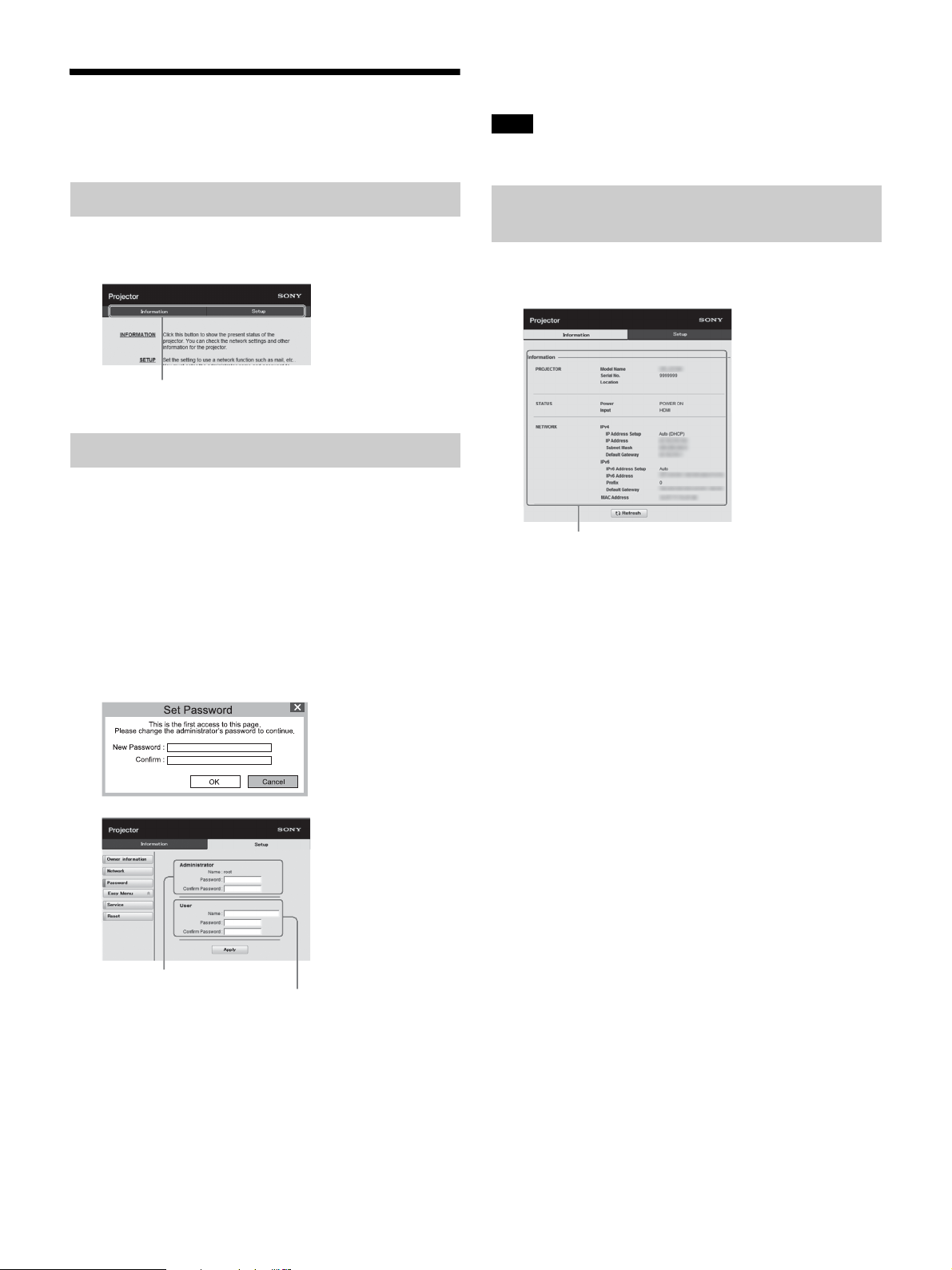
1 Connect the LAN cable.
2 Set the network settings for the unit using “Network
Setting” on the Installation menu (page 27).
Once you make the network settings, you can open the
Control window only by performing step 3 of this
procedure.
3 Start a Web browser on the computer, enter the
following in the address field, then press the Enter key
on your computer.
http://xxx.xxx.xxx.xxx
(xxx.xxx.xxx.xxx: IP address for the unit)
When connecting by the IPv6 address
http://[xxxx:xxxx:- xxxx]
You can confirm the IP address of the unit under
“Network Setting” on the Installation menu.
The following window appears in the Web browser:
Network Features
Notes
LAN
Connector
LAN cable
(straight type)
(not supplied)
Hub, router, etc.
30
Operating the Control
Window
Click one of the Page Switching buttons to display the
desired setting page.
You can limit a user’s access to any particular page.
Administrator: Allowed access to all pages
User: Allowed access to all pages except the Setup
page
When you access the Setup page for the first time, input
“root” as the user name and “Projector” as the password in
the authentication dialog.
When you log in for the first time, the window that prompts
you to change the password is displayed. Follow the
instructions on the screen to change the password.
The name of the administrator is preset to “root.”
The password can be changed in the Password page in the
Setup page.
When you change the password, input a new password
after deleting the password (*****) that was set.
The passwords of the administrator and user should be 8 to
16 characters that include both alphabet and numeric
characters. Alphabet is case-sensitive.
The default password “Projector” cannot be set as a new
password.
If you forget your password, consult with qualified Sony personnel.
You can confirm the current settings for the unit on the
Information page.
Switching the Page
Setting the Access Limitation
Page Switching buttons
Entry area for [Administrator]
Entry area for [User]
Note
Confirming the Information
Regarding the Unit
Information area

31
About Indicators
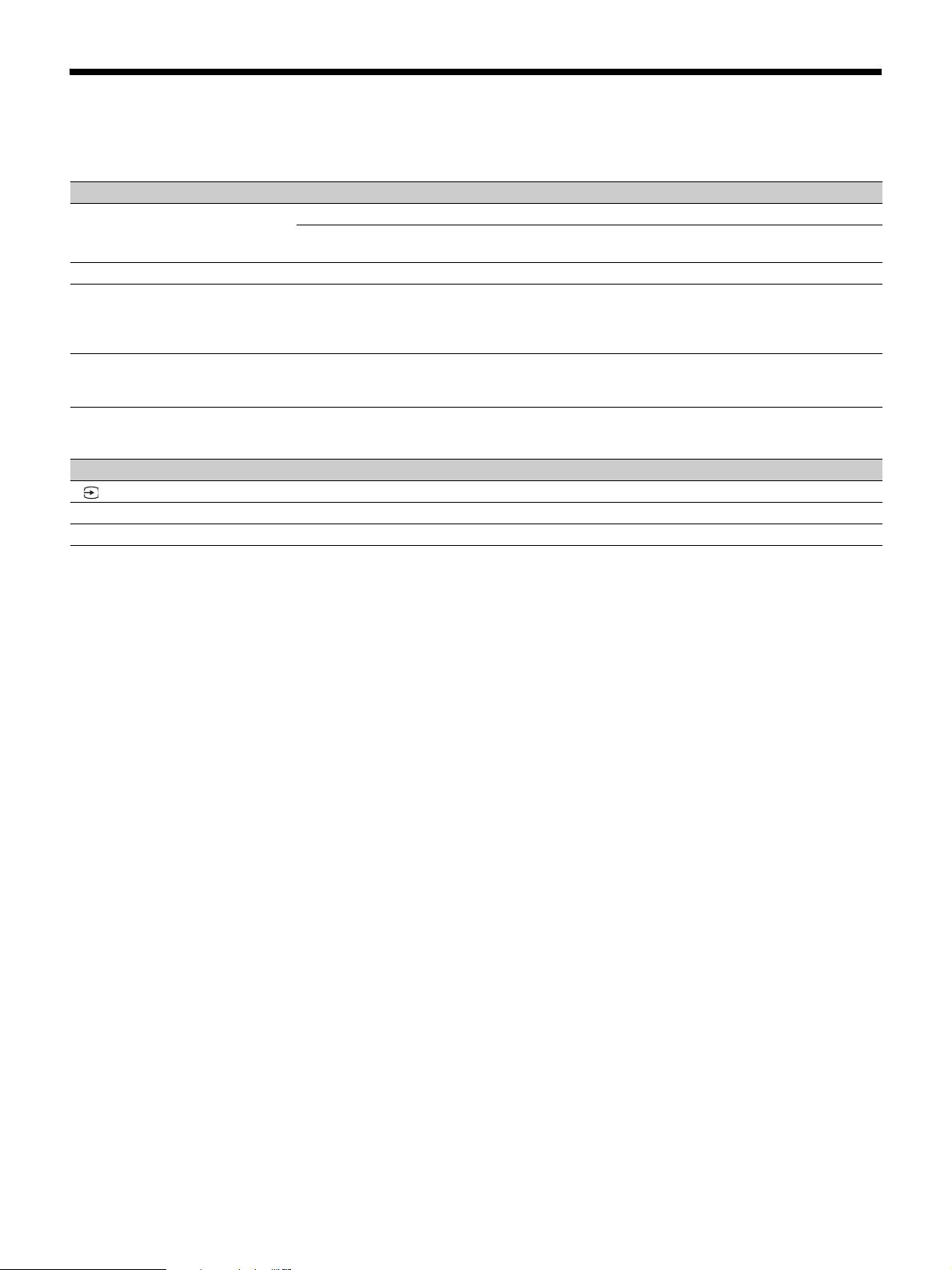
The WARNING1 or WARNING2 indicator lights up or flashes if there is any trouble with your projector.
If the indicator starts flashing in a way of other than the above, or the symptom persists even after carrying out the above methods, consult with
qualified Sony personnel.
Error Handling
Flashing/Lighting indicators The number of
flashes
Cause and Remedy
Three times The light source does not light properly due to an abnormality of the light source or
light source power. Turn off, then turn on the power after a while.
If the symptom persists, consult qualified Sony personnel.
Six times The unit detects a drop impact.
If there is abnormality on the unit, consult with qualified Sony personnel.
If there are no abnormalities on the unit, disconnect the AC power cord and check
that the LED indicator turns off, then connect the AC power cord and turn the unit
on.
Twice The internal temperature is unusually high. Check to ensure that nothing is blocking
the ventilation holes, the air filter is not clogged, and the unit is not being used at
high altitudes.
Three times The fan is broken. Consult with qualified Sony personnel.
Note
WARNING2
WARNING1
(Flashes in red)
(Flashes in red)
(Flashes in red)
Both indicators flash
32
Message Lists
Warning messages
Caution messages
Symptom Cause and Remedy
High temp.! Light off in 1 min. Turn off the power.
Check to ensure that nothing is blocking the ventilation holes and the air filter is not clogged.
(page 3, 35)
Frequency is out of range! Input a signal that is within the acceptable frequency range of the unit. (page 38)
Projector temperature is high. High
Altitude Mode should be “On” if
Projector is being used at high
altitude.
Check to ensure that nothing is blocking the ventilation holes and the air filter is not clogged.
(page 3, 35)
When temperature inside the unit remains high, “High Altitude Mode” is switched to “On” in 1
minute, then the fan speed increases.
Power Saving Mode is set. Projector
will automatically enter Standby
Mode in 1 minute.
“Power Saving” is set to “Standby.” (page 23)
If no signal is input, the power turns off after 1 minute, and the projector goes into standby mode.
Symptom Cause and Remedy
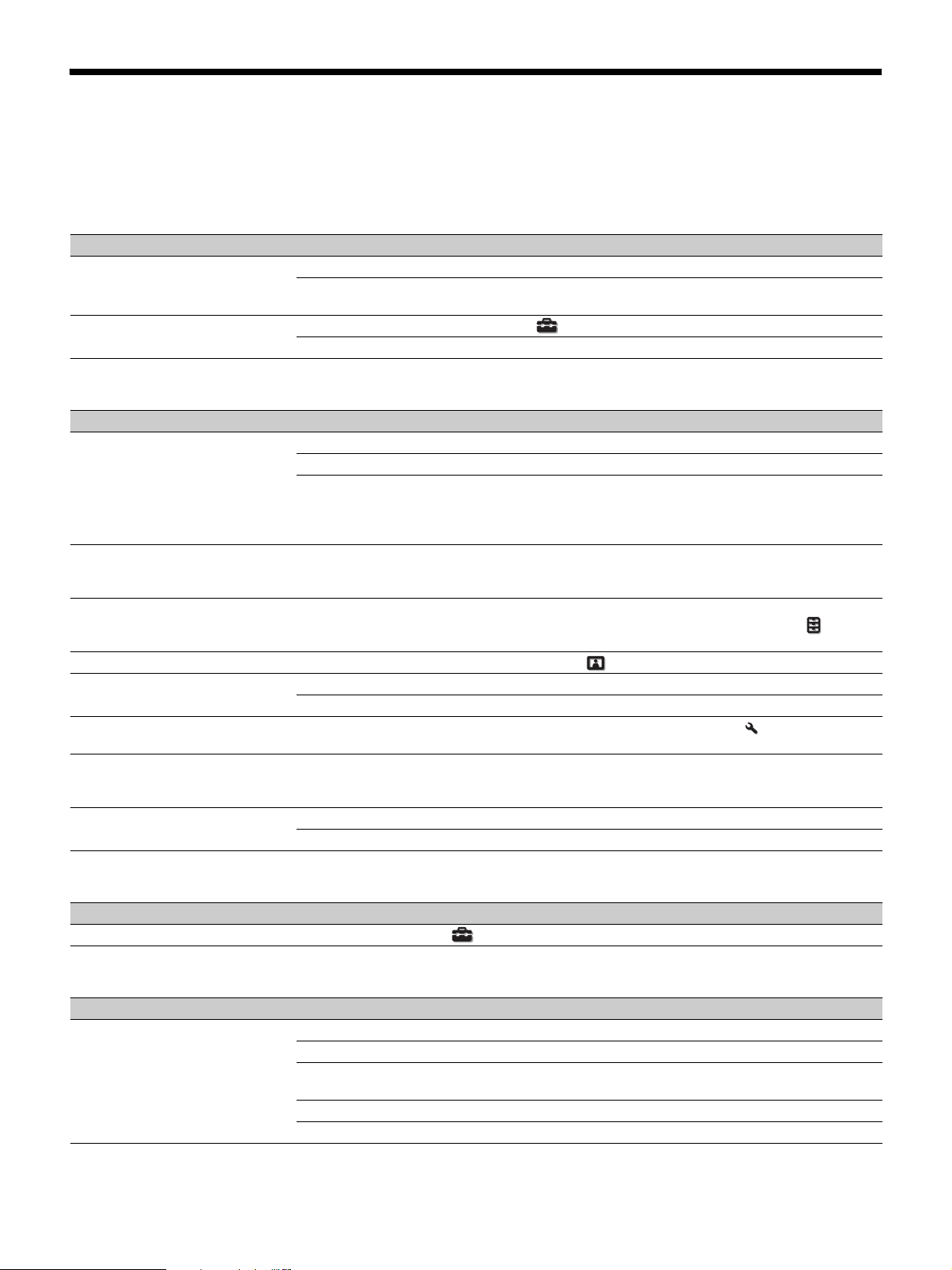
No signal is input in the selected input. Check connections. (page 9)
Not applicable! Press the appropriate button.
Settings Lock enabled. “Settings Lock” is set to “Level A” or “Level B.” (page 25)
x
33
Troubleshooting
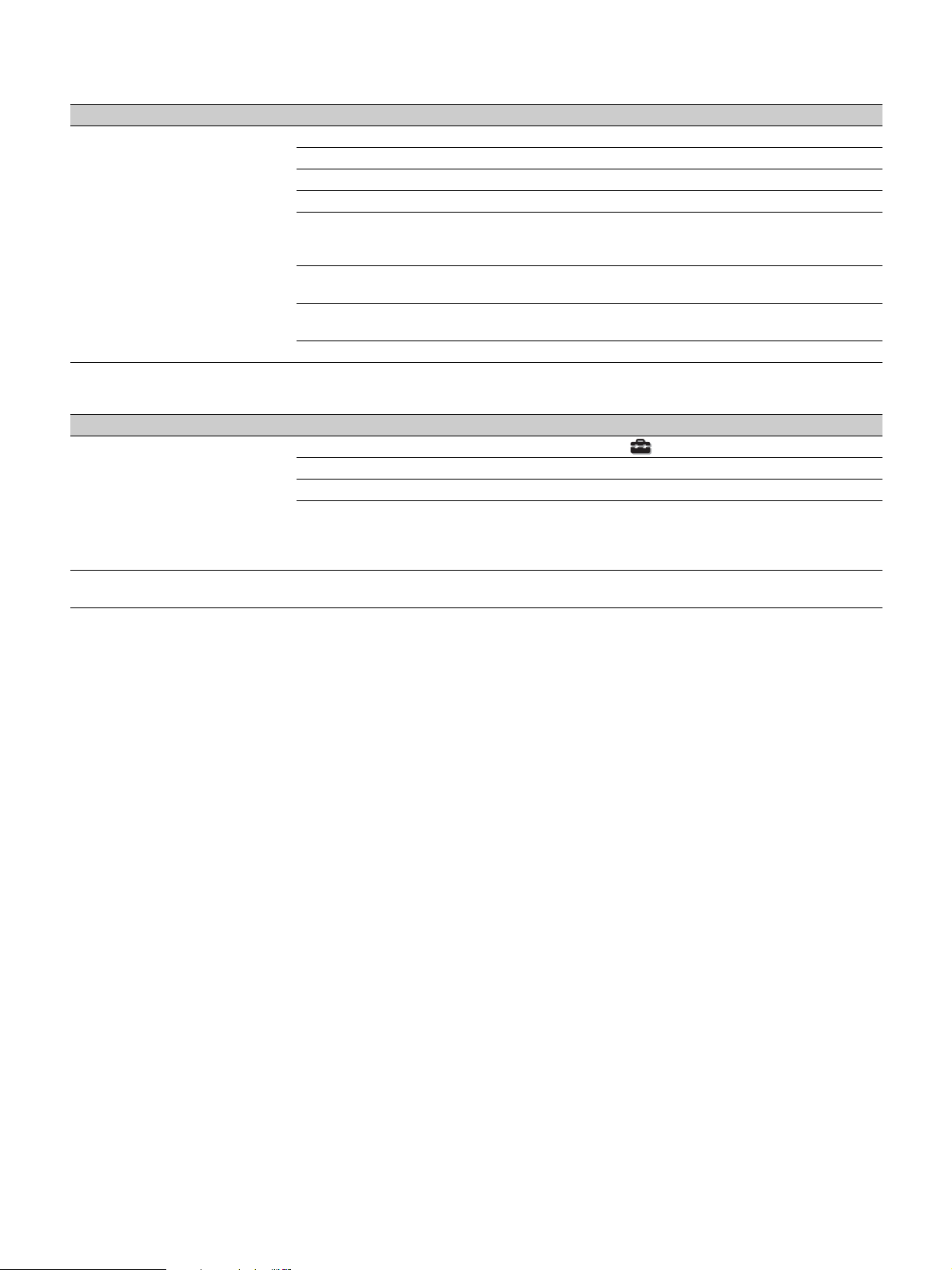
If the unit appears to be operating erratically, try to diagnose and correct the problem using the following instructions. If
the problem persists, consult with qualified Sony personnel.
Power
Picture
On-screen display
Remote control
Symptom Cause and Remedy
The power is not turned on. Check the indicators. (page 31)
After the AC power cord is connected, it may take about 10 seconds until the unit is ready to be
turned on. Wait a while then turn on the unit.
The power is suddenly turned off. Check that “Power Saving” in the Setup menu is set to “Standby.” (page 23)
Set “Power Saving” to “Off.” (page 23)
Symptom Cause and Remedy
No picture. Check that the connecting cable is connected to the external equipment properly. (page 9)
Select the input source correctly using the INPUT button. (page 12)
Check that the computer signal is set to output to an external monitor.
If a notebook computer and the signal is output to its display and an external monitor, the external
monitor’s image may not be displayed correctly. Set your computer to output the signal to only an
external monitor.
The picture has ghosts. Video images are displayed in 3D. Watch the 3D video images using the 3D glasses, or set “2D-3D
Display Sel.” to “3D.” (page 13, 24)
To convert 3D video images to 2D video images, set “2D-3D Display Sel.” to “2D.”
Bright or dark area of the video
appears too bright or too dark.
This symptom may occur when a signal level other than those of HDMI standard is input. Switch the
output level of the connected equipment, or switch the Dynamic Range on the Function menu of
the unit. (page 24)
The picture is too dark. Adjust “Contrast” or “Brightness” on the Picture menu properly. (page 18)
The picture is not clear. Adjust the focus. (page 6)
Condensation has accumulated on the lens. Leave the unit for about two hours with the power on.
The color of characters or the picture
is not appropriate.
Select the desired color registration in “Panel Alignment” on the Installation menu. (page 26)
Image is left on the projection image.
(Image retention)
When high contrast still images are displayed for a long period of time, there may be some image
retention on the projection image. This is only a temporary condition. Turning off the power will
eliminate the retained image after a while.
The picture is distorted. Check if the installing projection surface is not distorted. (page 6)
Install the unit horizontally. (page 6)
Symptom Cause and Remedy
On-screen display does not appear. Set “Status” on the Setup menu to “On.” (page 23)
Symptom Cause and Remedy
The remote control does not work. Batteries could be weak. Replace them with new batteries.
Insert the batteries with the correct polarities.
If there is a light source near the remote control detector, the unit may work improperly or
inadvertently.
Confirm the position of the remote control detector on the unit. (page 3)
Make sure that the cable is not connected to the IR IN connector. (page 4)
34
3D video images
Others
Symptom Cause and Remedy
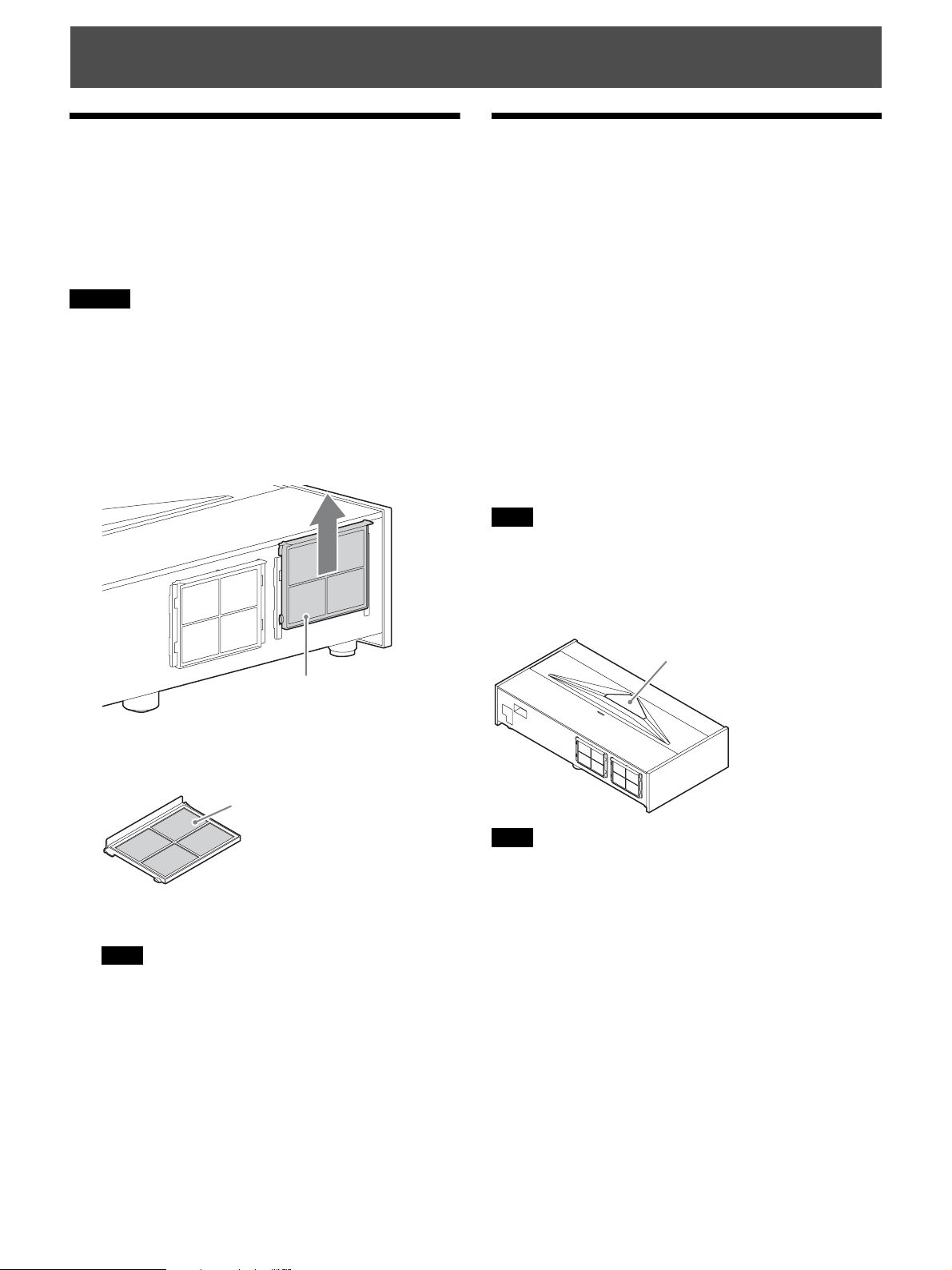
The video image does not seem like
3D video images.
Check if the 3D glasses are turned on. (page 13)
Make sure that the battery in the 3D glasses is sufficiently charged.
Set “2D-3D Display Sel.” to “Auto” or “3D.” (page 24)
Check if the input signals are compatible 3D signals. (page 40)
The 3D signals may not be input depending on the specifications of the connected AV selector/AV
amplifier/external equipment. If the 3D signal is not input, confirm the specifications and/or settings
of the AV selector/AV amplifier/external equipment.
When the viewing position is too far from the unit, the 3D glasses may not be able to display the
images properly. (page 13)
The projection image size is not appropriate. Set the zooming magnification to low or watch the
image from farther away from the projection surface. (page 44)
For details, see “Precautions for use” of “Using the 3D Glasses.” (page 13)
Symptom Cause and Remedy
The fan is noisy. Check the setting of “High Altitude Mode” on the Setup menu. (page 23)
Make sure that the room temperature is not too high.
Check to see if the air filter is not clogged. (page 35)
Check the installation requirements of the unit.
Fan speed increases to maintain the product reliability of the projector’s components in a room
where the temperature is higher than normal. The fan noise becomes slightly louder in these rooms.
The approximate normal temperature for the unit is 25°C (77°F).
The lens shift cannot be adjusted. The lens shift cannot be adjusted over the range of movement. Adjust the lens shift within the range
of movement. (page 8, 44)
35
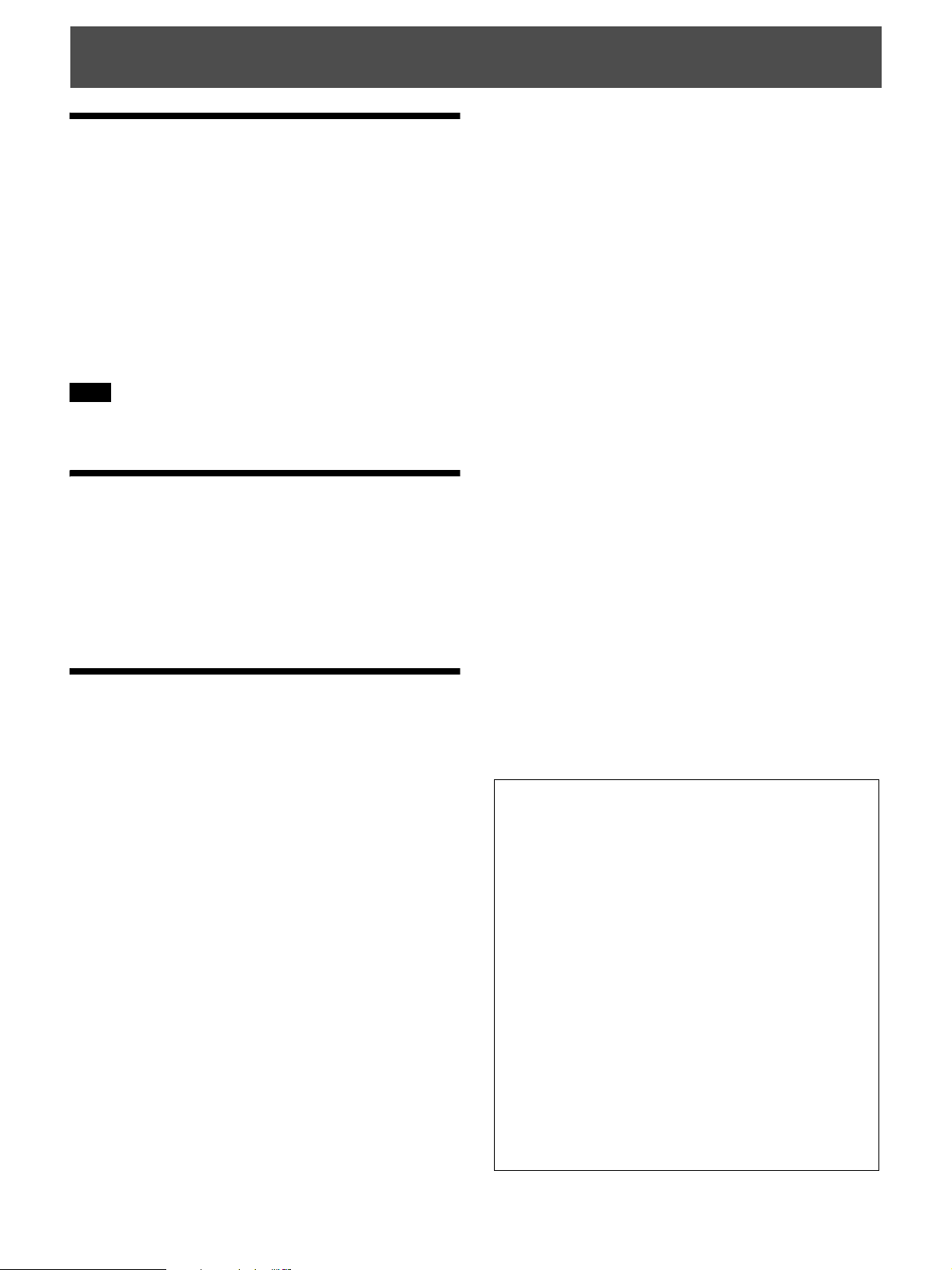
Cleaning the Air Filter
Clean the air filter regularly, preferably once a year.
If the dust cannot be removed from the air filter even after
cleaning, replace the air filter with a new one.
For details on a new air filter, consult with qualified Sony
personnel.
If you continue to use the air filter, dust may
accumulate, clogging it. As a result, the temperature
may rise inside the unit, leading to a possible
malfunction or fire.
1 Turn off the projector, and disconnect the AC power
cord from the AC outlet.
2 Pull out the air filter unit from the projector.
3 Clean the air filter with a vacuum cleaner.
Clean the front and back of the filter.
4 Attach the air filter unit.
• Securely attach the air filter unit. If not attached to the
specified position, the air filter may fall out.
• When washing with water, let the air filter dry completely.
Cleaning
Cleaning the cabinet
• To remove dust from the cabinet, wipe gently with the
supplied cleaning cloth or a dry soft cloth. If dust is
persistent, wipe with a soft cloth slightly moistened with
a diluted mild detergent solution, and then wipe with a
dry cloth.
• Never use any type of abrasive pad, alkaline/acid
cleaner, scouring powder, or volatile solvent, such as
alcohol, benzene, thinner or insecticide.
• Wiping with a dirty cloth may scratch the unit.
• Using a volatile substance such as insecticide or
maintaining prolonged contact with rubber or vinyl
materials may result in damage to the cabinet material.
Cleaning the side covers
When removing dust from the side covers, wipe gently
with the supplied cleaning cloth.
If you wipe the side covers forcibly, it may scratch them.
Cleaning the projection window
When removing dust from the projection window, wipe
gently with the supplied cleaning cloth.
The projection window is made of glass. If you forcibly push or hit
it, it may break and cause an injury.
Maintenance
Caution
Notes
Air filter unit
Air filter
Note
Note
Projection window
36
Updating the Software
You can download files to update the software of the unit.
Copy the downloaded files to your USB memory, insert the
USB memory to the USB terminal of the unit, then
perform the update.
To update the software of the unit, your PC must be able to
connect to the Internet.
Download the update files from the following Sony
website:
http://www.pro.sony.eu/
The website also explains how to install the update.
Some USB memories may not be supported for use. For details, refer
to the website above.
About HDR (high dynamic
range)
HDR is a video expression which improves the ability to
express dark places and bright places compared to
previous video expressions.
NOTICES AND LICENSES
FOR SOFTWARE USED IN
THIS PRODUCT
Refer to “Software License Information” supplied
separately.
Others
Note
Trademark Information
• “PlayStation” is a registered trademark of Sony
Computer Entertainment Inc.
• This unit incorporates High-Definition Multimedia
Interface (HDMI
®
) technology.
The terms HDMI and HDMI High-Definition
Multimedia Interface, and the HDMI Logo are
trademarks or registered trademarks of HDMI
Licensing LLC in the United States and other
countries.
• “Blu-ray” and “Blu-ray Disc” are trademarks of
Blu-ray Disc Association.
• “x.v.Color (x.v.Colour)” and “x.v.Color
(x.v.Colour)” logo are trademarks of Sony
Corporation.
.....................................................................................
This projector supports DeepColor, x.v.Color,
LipSync, computer input signal, 3D signal, 4K signal
(60P 4:4:4) and HDR of HDMI standards. It also
supports HDCP.
37
Specifications
Design and specifications of this unit and its optional accessories are subject to change without notice.
• The values for mass and dimensions are approximate.
• Not all optional accessories are available in all countries and area. Please check with your local Sony Authorized Dealer.
• Information on accessories in this manual is current as of January 2017.
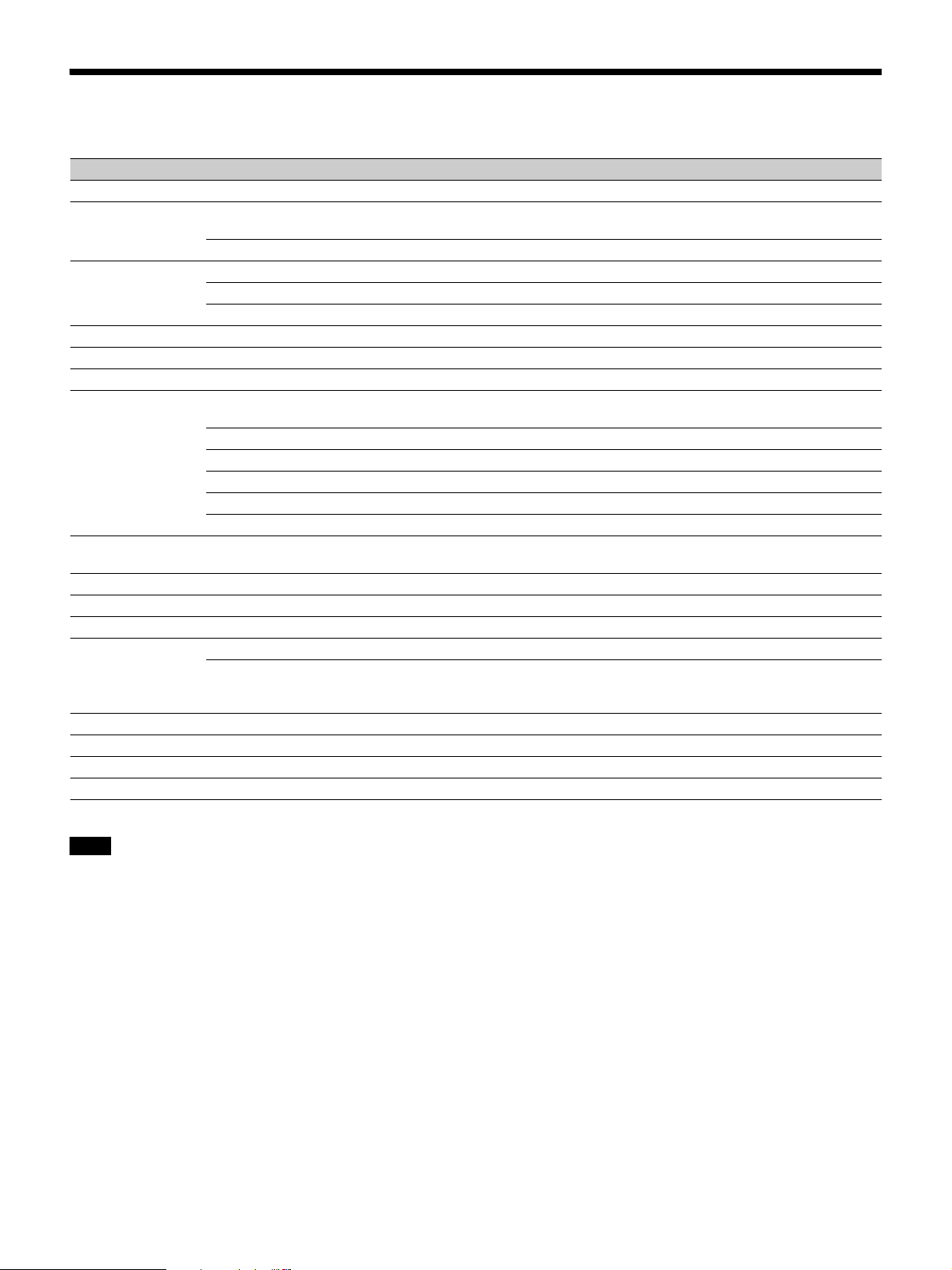
Item Description
Display System Projection system
Display device Size of effective display
area
SXRD 0.74-inch (18.8 mm) × 3
Number of pixels 4096 × 2160 × 3 pixels
Projection lens Zoom Powered
Focus Powered
Shift Powered
Projection image size 80-inch to 120-inch (2,030 mm to 3,050 mm)
Light source Laser diode
Accepted digital signals See “Preset Signals” (page 38).
Inputs/Outputs HDMI connectors
(HDCP 2.2)
× 4
REMOTE connector RS-232C, D-sub 9-pin
LAN connector RJ45, 10BASE-T/100BASE-TX
USB connector Type A, DC 5 V, Max. 500 mA
IR IN connector mini jack
TRIGGER connector mini jack, DC 12 V, Max. 100 mA
Outside dimensions (w/h/d) 925 mm × 218.5 mm × 493.8 mm (36
13
/
32
inches × 8
19
/
32
inches × 19
7
/
16
inches)
(with side covers)
Mass Approx. 35 kg (77 lb) (without side and top covers)
Power requirements AC 100 V to 240 V, 4.4 A to 1.9 A, 50/60 Hz
Power consumption 435 W
Standby mode power
consumption
(Standby) 0.5 W (when “Remote Start” is set to “Off”)
(Networked Standby) 0.6 W (LAN) (when “Remote Start” is set to “On”)
When a LAN connector is not connected, the power consumption changes to low power
consumption mode (0.5 W).
Operating temperature (Operating humidity) 5°C to 35°C (41°F to 95°F) (20% to 80% (no condensation))
Storage temperature (Storage humidity) –10°C to +60°C (14°F to 140°F) (20% to 80% (no condensation))
Supplied accessories See “Checking the Supplied Accessories” on the Quick Reference Manual.
Optional accessories Active 3D Glasses: TDG-BT500A
Notes
38
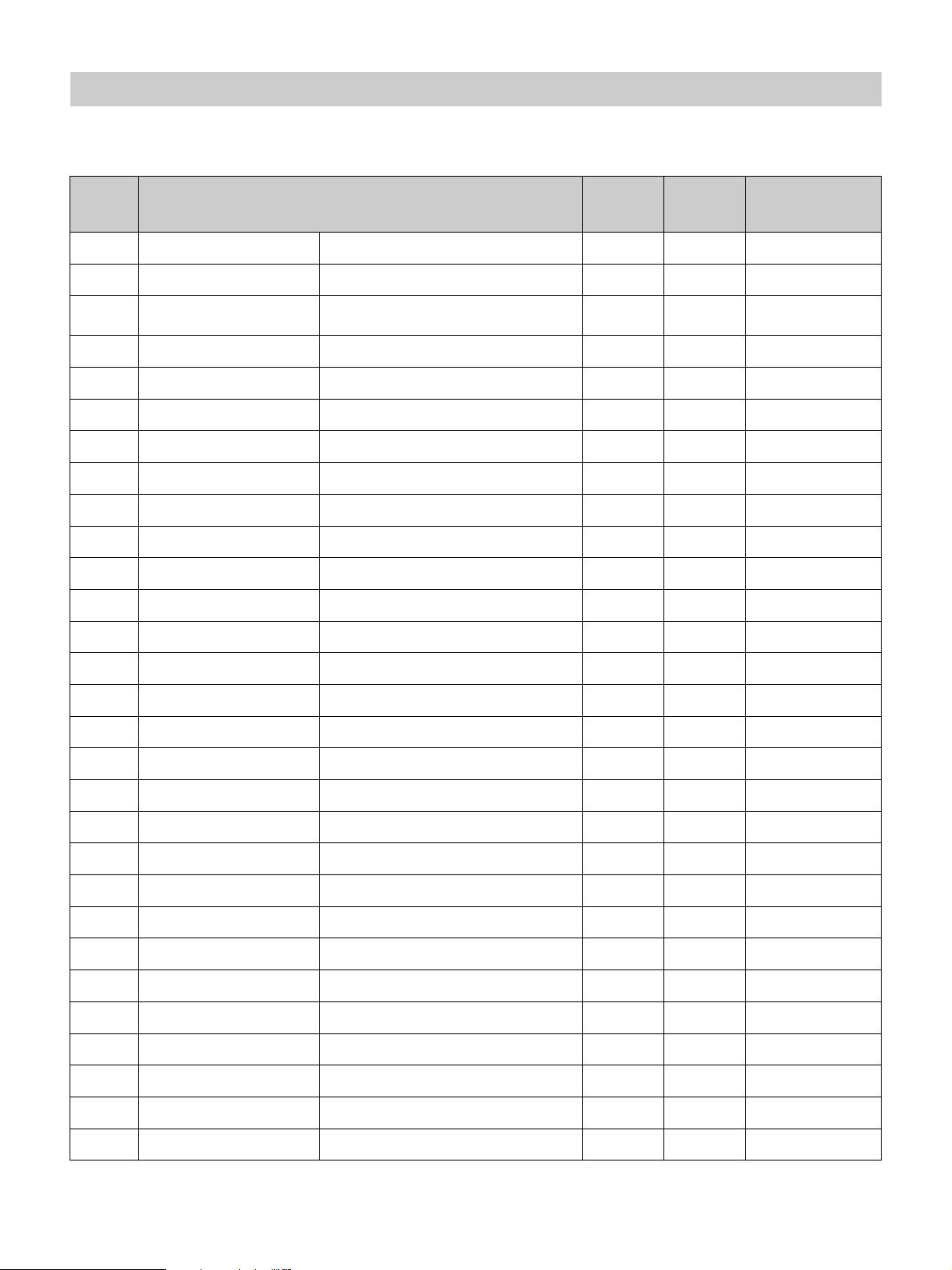
The following table shows the signals and video formats which you can project using this unit.
When a signal other than the preset signals shown below is input, the picture may not be displayed properly.
Preset Signals
Preset
memory
no.
Preset signal (resolution) fH (kHz) fV (Hz) Sync
5 480/60p 480/60p (Progressive NTSC) (720 × 480p) 31.470 60.000 –
6 576/50p 576/50p (Progressive PAL) (720 × 576p) 31.250 50.000 –
7 1080/60i 1035/60i (1920 × 1035i)
1080/60i (1920 × 1080i)
33.750 60.000 –
8 1080/50i 1080/50i (1920 × 1080i) 28.130 50.000 –
10 720/60p 720/60p (1280 × 720p) 45.000 60.000 –
11 720/50p 720/50p (1280 × 720p) 37.500 50.000 –
12 1080/60p 1080/60p (1920 × 1080p) 67.500 60.000 –
13 1080/50p 1080/50p (1920 × 1080p) 56.260 50.000 –
14 1080/24p 1080/24p (1920 × 1080p) 26.973 23.976 –
18 720/60p (Frame packing) 720/60p (1280 × 720/60p) 90.000 60.000 –
19 720/50p (Frame packing) 720/50p (1280 × 720/50p) 75.000 50.000 –
20 1080/24p (Frame packing) 1080/24p (1920 × 1080/24p) 53.946 23.976 –
26 640 × 480 VGA 31.469 59.940 H-Neg, V-Neg
32 800 × 600 SVGA 37.879 60.317 H-Pos, V-Pos
37 1024 × 768 XGA 48.363 60.004 H-Neg, V-Neg
45 1280 × 960 QVGA 60.000 60.000 H-Pos, V-Pos
47 1280 × 1024 SXGA 63.974 60.013 H-Pos, V-Pos
50 1400 × 1050 SXGA+ 65.317 59.978 H-Neg, V-Pos
55 1280 × 768 WXGA 47.776 59.870 H-Neg, V-Pos
71 1080/60i (Frame packing) 1080/60i (1920 × 1080/60i) 67.500 60.000 –
72 1080/50i (Frame packing) 1080/50i (1920 × 1080/50i) 56.250 50.000 –
74 3840 × 2160/60p 3840 × 2160/60p (3840 × 2160) 133.293 59.988 –
75 3840 × 2160/50p 3840 × 2160/50p (3840 × 2160) 112.500 50.000 –
76 4096 × 2160/60p 4096 × 2160/60p (4096 × 2160) 133.264 59.975 –
77 4096 × 2160/50p 4096 × 2160/50p (4096 × 2160) 112.500 50.000 –
78 4096 × 2160/30p 4096 × 2160/30p (4096 × 2160) 67.500 30.000 –
79 4096 × 2160/25p 4096 × 2160/25p (4096 × 2160) 56.250 25.000 –
93 3840 × 2160/24p 3840 × 2160/24p (3840 × 2160) 53.946 23.976 –
94 3840 × 2160/25p 3840 × 2160/25p (3840 × 2160) 56.250 25.000 –
39
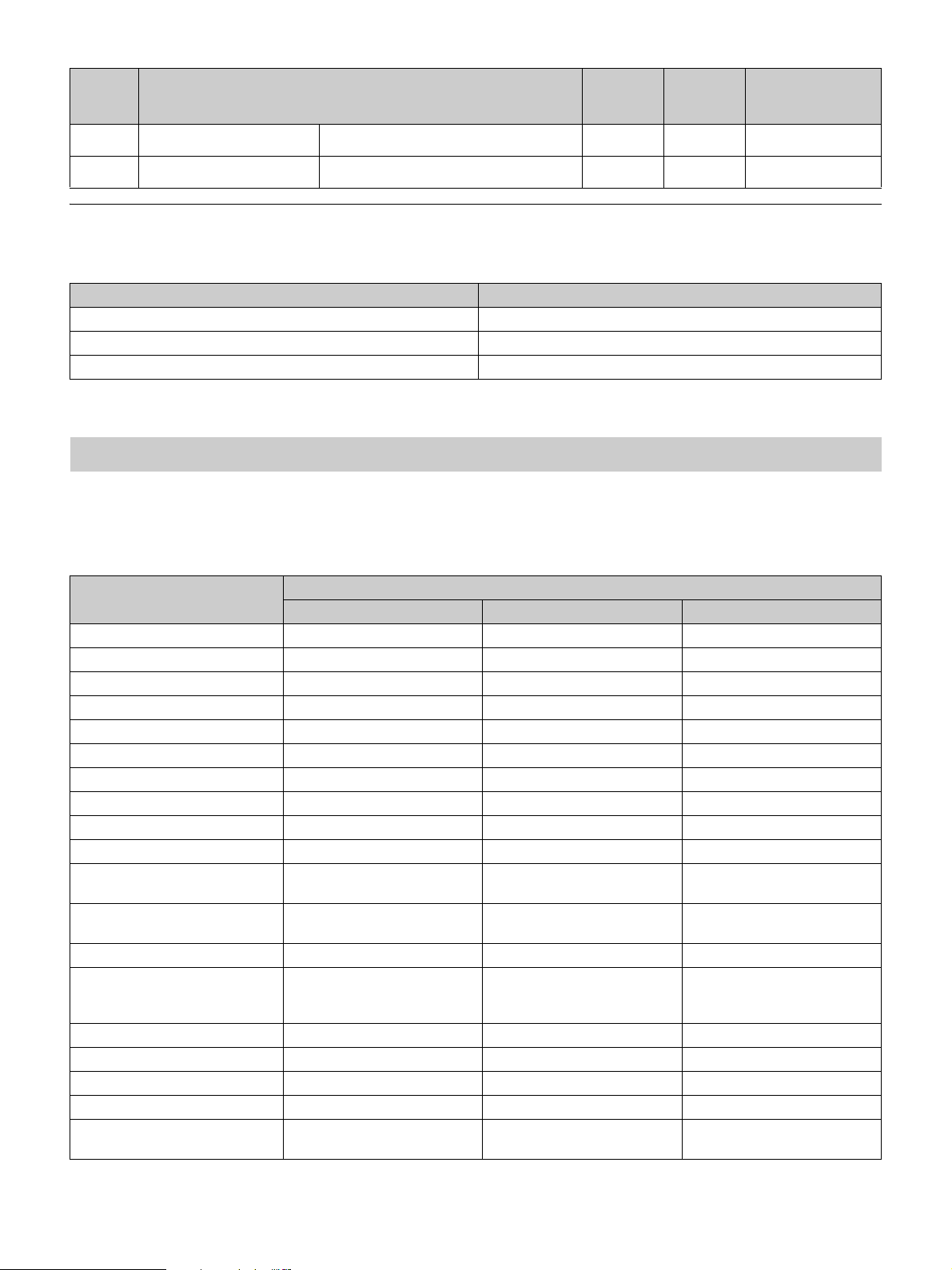
Preset memory numbers for each input signal
Digital signal
* Some digital signals input from computers may be displayed as the preset memory number of Component or Video GBR signal.
The items in the menus available to adjust differ depending on the input signal. The following tables indicate them. The
items that cannot be adjusted/set are not displayed in the menu.
Picture menu
95 3840 × 2160/30p 3840 × 2160/30p (3840 × 2160) 67.433 29.970 –
96 4096 × 2160/24p 4096 × 2160/24p (4096 × 2160) 54.000 24.000 –
Signal Preset memory number
Component signal 5 to 8, 10 to 14, 18 to 20, 71, 72, 74 to 79, 93 to 96
Video GBR signal 5 to 8, 10 to 14, 18 to 20, 71, 72, 74 to 79, 93 to 96
Computer signal 10*, 12*, 26, 32, 37, 45, 47, 50, 55
Input Signals and Adjustment/Setting Items
Item
Input signal
Component signal Video GBR signal Computer signal
Reality Creation
zz
–
Laser Light Setting
zzz
Contrast Enhancer
zz
–
Motionflow
zz
–
Contrast
zzz
Brightness
zzz
Color
zz
–
Hue
zz
–
Color Temp.
zzz
Sharpness
zz
–
NR
z (excluding preset memory
numbers 18 to 20, 71, and 72)
z (excluding preset memory
numbers 18 to 20, 71, and 72)
–
MPEG NR
z (excluding preset memory
numbers 18 to 20, 71, and 72)
z (excluding preset memory
numbers 18 to 20, 71, and 72)
–
Smooth Gradation
zz–
Film Mode
z (excluding preset memory
numbers 5, 6, 10 to 14, 18 to 20,
74 to 79, and 93 to 96)
z (excluding preset memory
numbers 5, 6, 10 to 14, 18 to 20,
74 to 79, and 93 to 96)
–
Gamma Correction
zzz
Color Correction
zzz
Clear White
zzz
x.v.Color
z
––
HDR
z (preset memory numbers 74 to
79 and 93 to 96 only)
z (preset memory numbers 74 to
79 and 93 to 96 only)
–
Preset
memory
no.
Preset signal (resolution) fH (kHz) fV (Hz) Sync
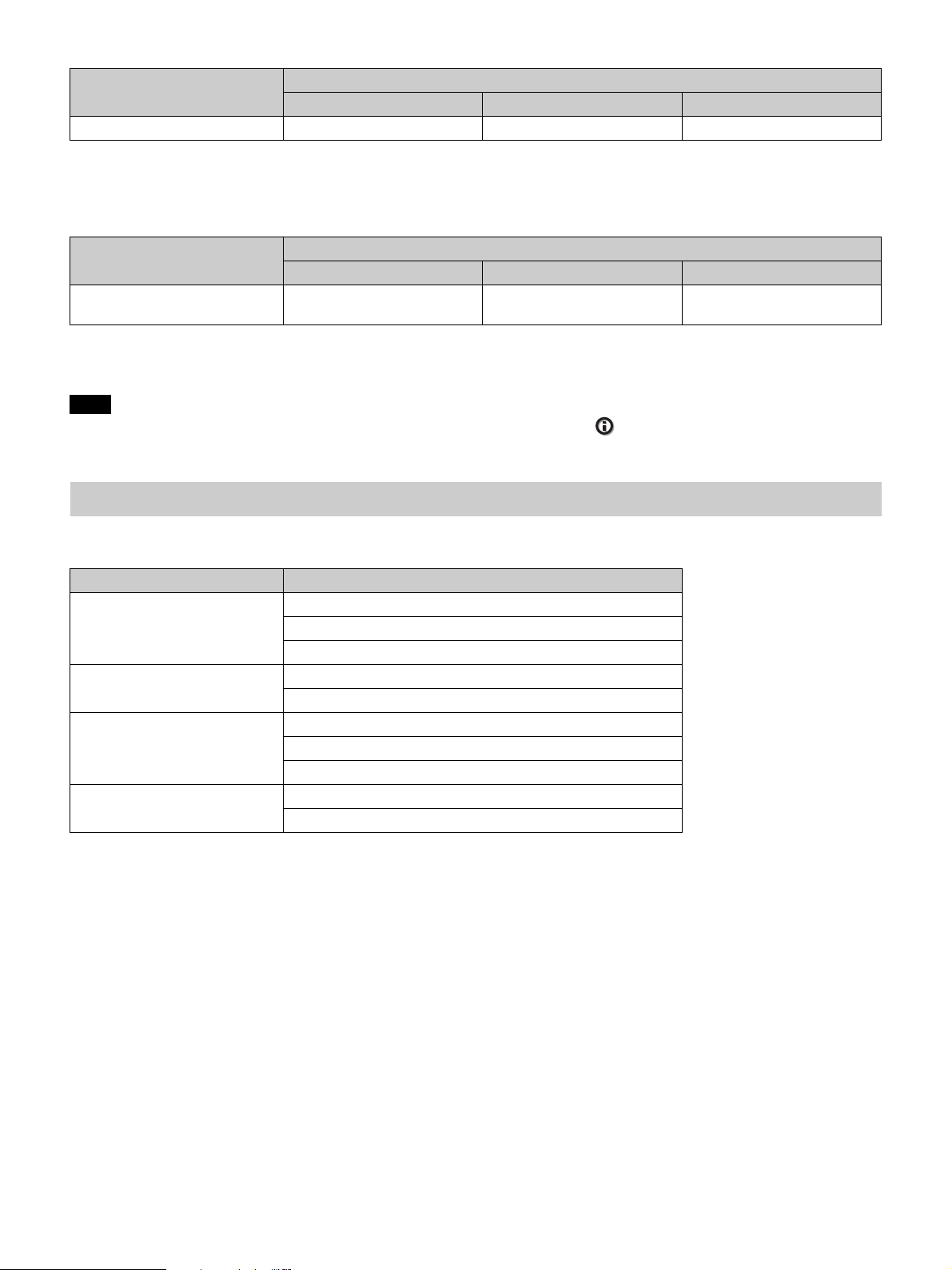
40
z: Can be adjusted/set
–: Cannot be adjusted/set
Screen menu
z: Can be adjusted/set
–: Cannot be adjusted/set
*1: For further details, refer to the tables in “Aspect Mode” (page 42).
When connecting a cable such as an HDMI cable, check the type of signal in the Information menu (page 28) and “Preset memory numbers
for each input signal” (page 39), and check items that can be adjusted/set.
This unit accepts the following types of 3D signals.
*: Mandatory 3D format of the HDMI standards.
Color Space
zzz
Item
Input signal
Component signal Video GBR signal Computer signal
Aspect*
1
z (excluding preset memory
numbers 76 to 79 and 96)
z (excluding preset memory
numbers 78, 79 and 96)
–
Note
Compatible 3D Signals
Resolution 3D signal format
720/60p, 720/50p Side-by-Side format
Over-Under format*
Frame packing*
1080/60i, 1080/50i Side-by-Side format*
Frame packing
1080/24P Side-by-Side format
Over-Under format*
Frame packing*
1080/60p, 1080/50p Side-by-Side format
Over-Under format
Item
Input signal
Component signal Video GBR signal Computer signal
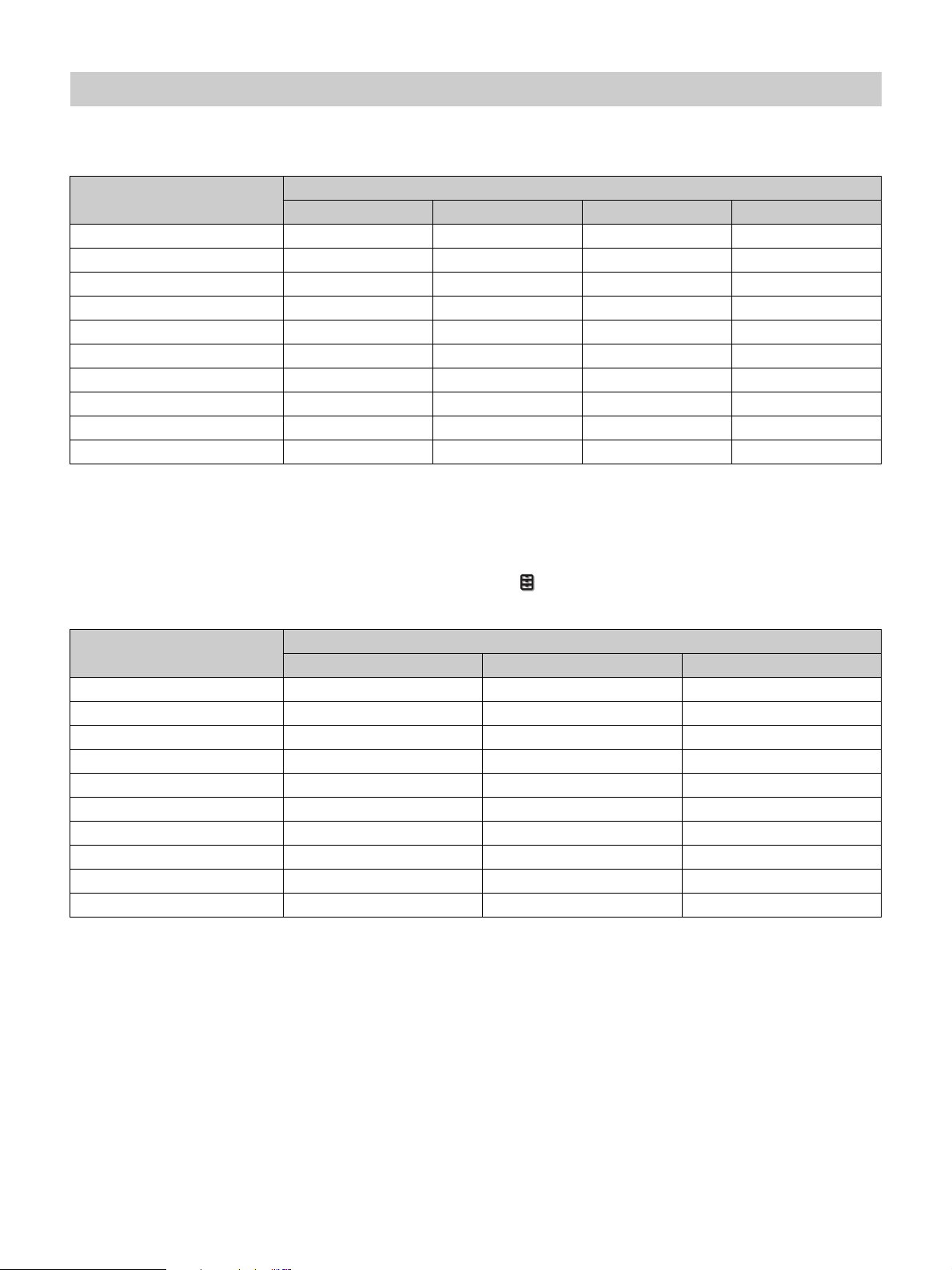
41
Some items on the menus may not be available to adjust/set, depending on the 3D signals.
The items that cannot be adjusted are not displayed on the menu. The following tables indicate those items.
z: Can be adjusted/set
–: Cannot be adjusted/set
*1: “Dynamic Control” cannot be selected.
*2: For further details, refer to the tables in “Aspect Mode” (page 42).
When the unit is set to convert 2D video images to 3D video images, some items on the menus may be not available to
adjust/set, depending on the “3D Format” settings on the Function menu. The items that cannot be adjusted are not
displayed on the menu. The following tables indicate these items.
z: Can be adjusted/set
–: Cannot be adjusted/set
*1: “Dynamic Control” cannot be selected.
*2: The item is not available for Over-Under/Side-by-Side on 720/60p, or Side-by-Side on 1080/60p.
*3: The item is available only for 1080/60i or 1080/50i.
*4: For further details, refer to the tables in “Aspect Mode” (page 42).
3D Signals and Adjustment/Setting Items
Item
3D signals
720/60p, 720/50p 1080/60i, 1080/50i 1080/24p 1080/60p, 1080/50p
Reality Creation
zzzz
Laser Light Setting*
1
zzzz
Motionflow
zzzz
NR ––––
MPEG NR ––––
Smooth Gradation – – – –
Film Mode –
z
––
x.v.Color
zzzz
HDR ––––
Aspect*
2
zzzz
Item
3D signals
Over-Under Side-by-Side Simulated 3D
Reality Creation
zzz
Laser Light Setting*
1
zzz
Motionflow*
2
zzz
NR – –
z
MPEG NR – –
z
Smooth Gradation – –
z
Film Mode*
3
–
zz
x.v.Color
zzz
HDR – – –
Aspect*
4
zzz
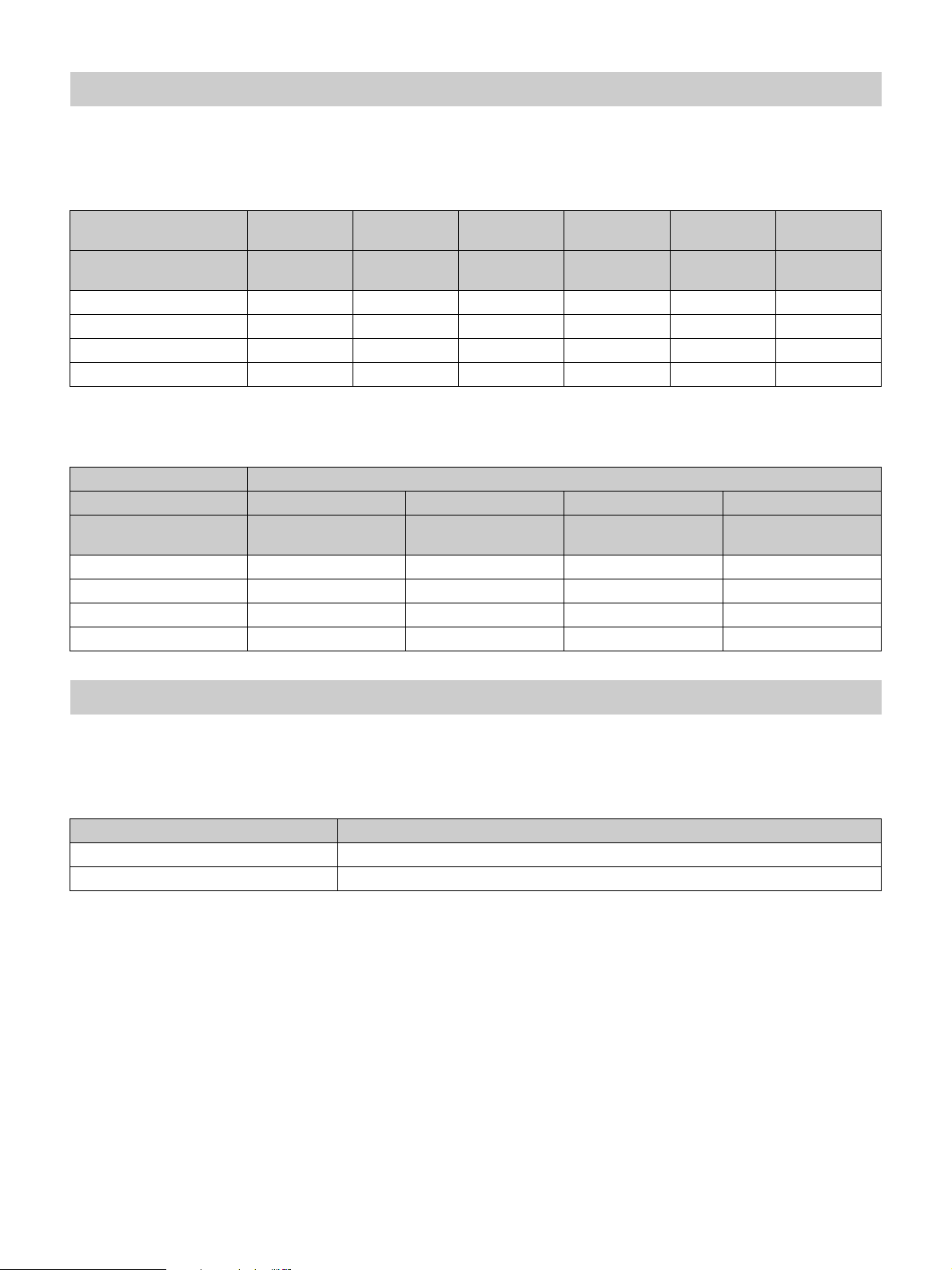
42
Selectable items vary depending on the type of input signal or 3D format.
For details, see the tables below. Items that cannot be selected are not displayed in the menu.
2D
*: Not displayed in the menu as fixed at Normal.
3D
Each adjustable/setting item is individually stored according to the storage conditions in the following table. For further
details, see the tables below.
Preset memory numbers for each input signal
Aspect Mode
Acceptable signals
4096 × 2160 3840 × 2160 1920 × 1080 1280 × 720
720 × 480
720 × 576
Others
Preset memory number
(page 38)
76 to 79, 96 74, 75, 93 to 95 7, 8, 12 to 14 10, 11 5, 6
26, 32, 37, 45,
47, 50, 55
1.85:1 Zoom –
zzzz
–
2.35:1 Zoom –
zzzz
–
Normal
z
zzzz
z*
Stretch – – – –
z
–
Acceptable signals 1920 × 1080, 1280 × 720
3D format Side-by-Side Over-Under Frame packing Simulated 3D
Preset memory number
(page 38)
7, 8, 10 to 14 10 to 14 18 to 20, 71, 72 7, 8, 10 to 14
1.85:1 Zoom
zzzz
2.35:1 Zoom
zzzz
Normal
zzzz
Stretch
––––
Storage Conditions of Adjustment/Setting Items
Input Preset memory numbers
HDMI 1 - HDMI 4 (2D) 5 to 8, 10 to 14, 26, 32, 37, 45, 47, 50, 55, 74 to 79, 93 to 96
HDMI 1 - HDMI 4 (3D) 7, 8, 10 to 14, 18 to 20, 71, 72
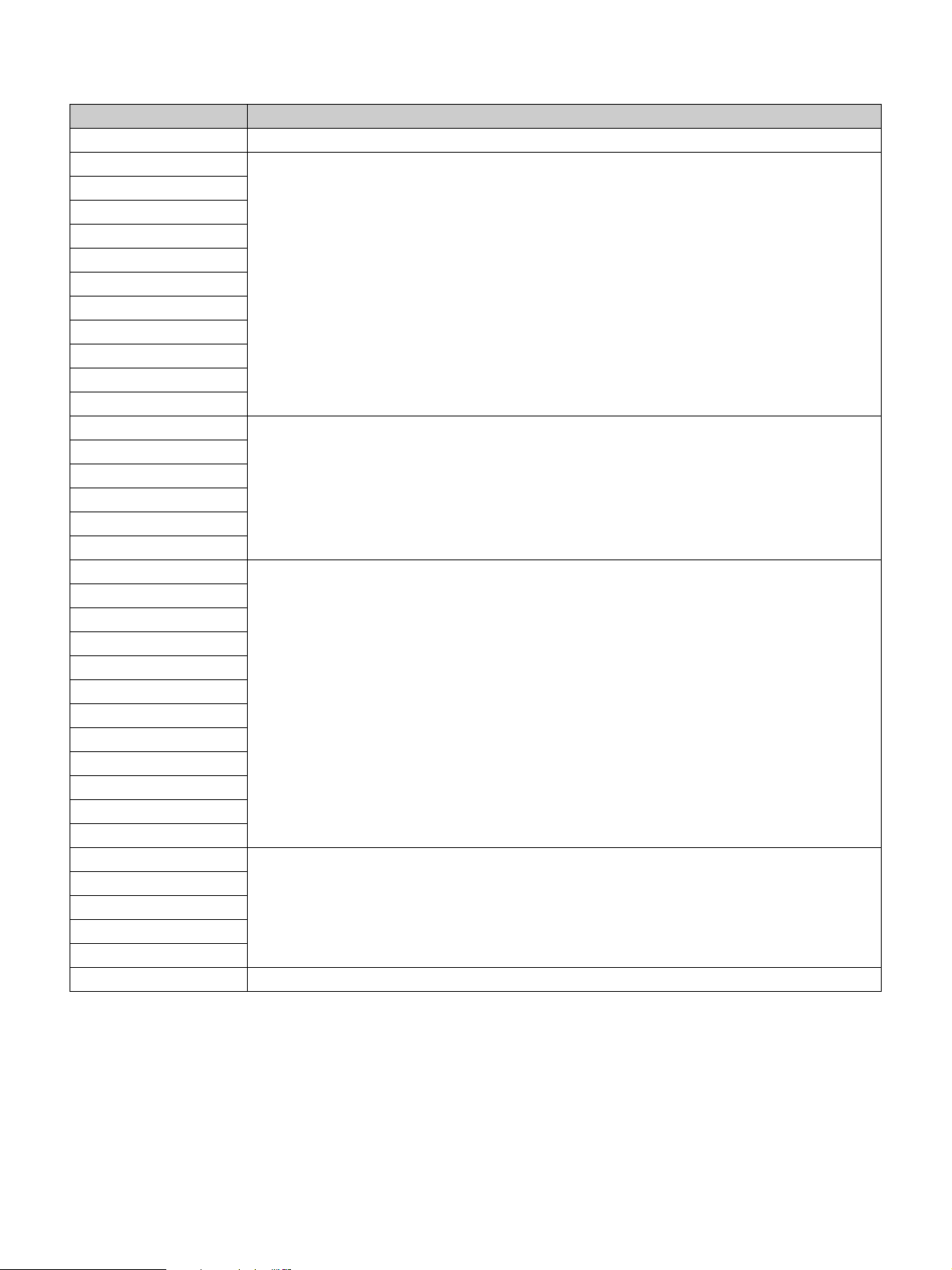
43
Picture menu
Item Storage conditions
Calib. Preset For each input connector and preset signal
Reset For each input connector and Calib. Preset
Reality Creation
Laser Light Setting
Contrast Enhancer
Motionflow
Contrast
Brightness
Color
Hue
Color Temp.
D93 - D55, Custom
Gain R For each Color Temp.
Gain G
Gain B
Bias R
Bias G
Bias B
Sharpness For each input connector and Calib. Preset
NR
MPEG NR
Smooth Gradation
Film Mode
Gamma Correction
Color Correction
Clear White
x.v.Color
HDR
Color Space
BT.709 - Custom
Red For each Color Space
Green
Blue
Cyan - Red
Magenta - Green
Input Lag Reduction For each input connector and Calib. Preset
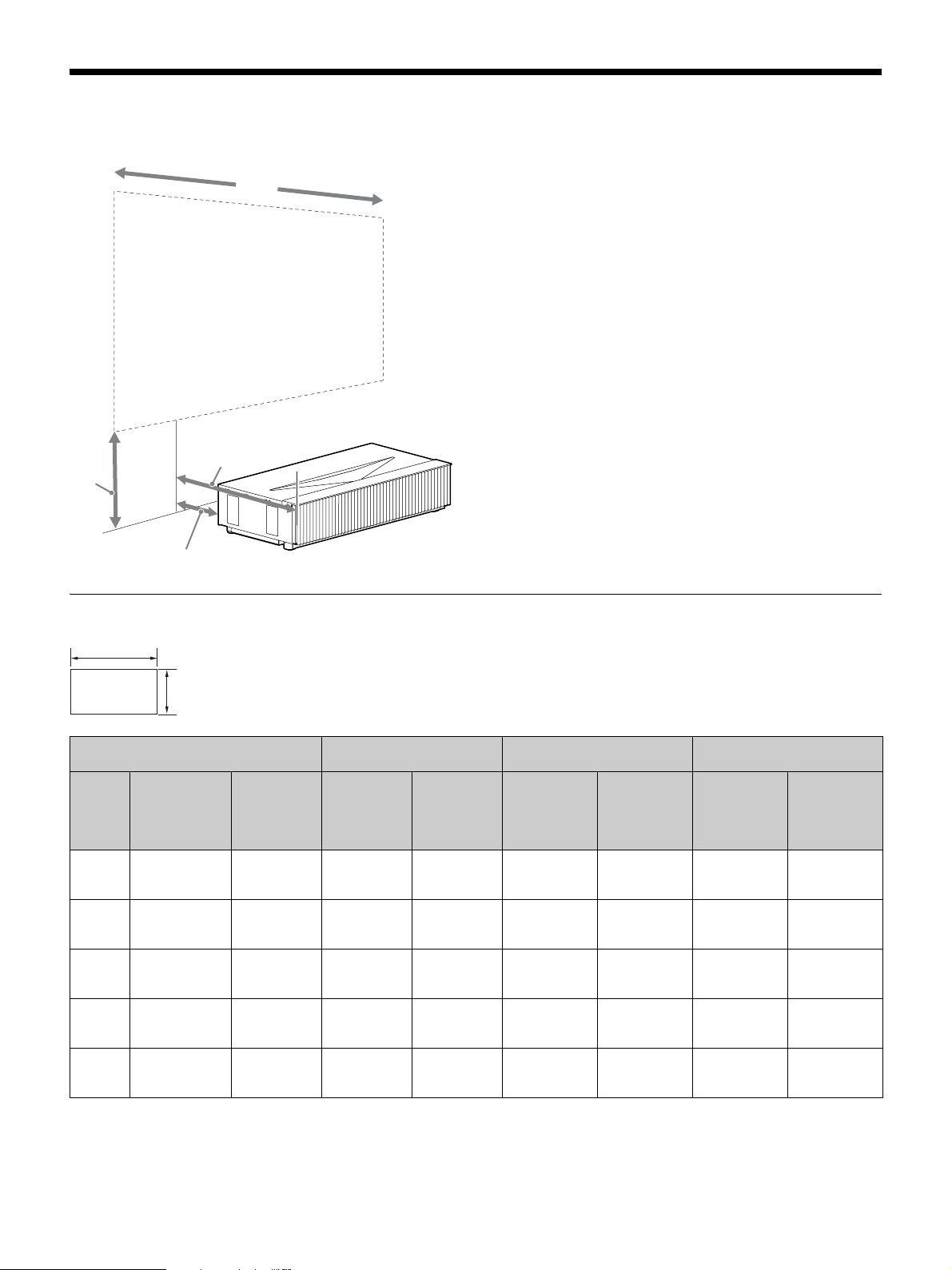
44
Installation Distance and Projection Image Size
L1: Distance from a projection surface to the rear of the
unit
L2: Distance from a projection surface to the front of the
unit
H: Distance from the installation surface to the bottom of
the screen
W: Horizontal width of the screen
When projecting in 1.90:1 (Native Full Display 17:9) format
L2
L1
W
H
Projection image size Installation distance
Adjustment amount of picture
shift
Adjustment amount of picture
size
Diagonal
(D)
Width × Height
Bottom
height (H)
From a
projection
surface to the
rear of the unit
(L1)
From a
projection
surface to the
front of the
unit (L2)
Horizontal
direction
Vertical
direction
Horizontal
direction
Vertical
direction
84-inch
(2.14 m)
1.89 m × 1.00 m
(74 inches × 39
inches)
39.0 cm
(15.3 inches)
5.0 cm
(2.0 inches)
52.0 cm
(20.5 inches)
+/
_
5.3 cm
(+/
_
2.1 inches)
+/
_
6.0 cm
(+/
_
2.4 inches)
+/
_
1.9 cm
(+/
_
0.7 inches)
+/
_
1.0 cm
(+/
_
0.4 inches)
95-inch
(2.40 m)
2.13 m × 1.12 m
(84 inches × 44
inches)
41.8 cm
(16.5 inches)
10.2 cm
(4.0 inches)
57.2 cm
(22.5 inches)
+/
_
6.0 cm
(+/
_
2.4 inches)
+/
_
6.7 cm
(+/
_
2.6 inches)
+/
_
2.1 cm
(+/
_
0.8 inches)
+/
_
1.1 cm
(+/
_
0.4 inches)
105-inch
(2.67 m)
2.36 m × 1.24 m
(93 inches × 49
inches)
44.7 cm
(17.6 inches)
15.5 cm
(6.1 inches)
62.5 cm
(24.6 inches)
+/
_
6.6 cm
(+/
_
2.6 inches)
+/
_
7.5 cm
(+/
_
2.9 inches)
+/
_
2.4 cm
(+/
_
0.9 inches)
+/
_
1.2 cm
(+/
_
0.5 inches)
116-inch
(2.94 m)
2.60 m × 1.37 m
(102 inches × 54
inches)
47.6 cm
(18.7 inches)
20.7 cm
(8.2 inches)
67.7 cm
(26.7 inches)
+/
_
7.3 cm
(+/
_
2.9 inches)
+/
_
8.2 cm
(+/
_
3.2 inches)
+/
_
2.6 cm
(+/
_
0.9 inches)
+/
_
1.4 cm
(+/
_
0.6 inches)
126-inch
(3.21 m)
2.84 m × 1.49 m
(112 inches × 59
inches)
50.4 cm
(19.9 inches)
26.0 cm
(10.2 inches)
73.0 cm
(28.7 inches)
+/
_
8.0 cm
(+/
_
3.1 inches)
+/
_
9.0 cm
(+/
_
3.5 inches)
+/
_
2.8 cm
(+/
_
1.1 inches)
+/
_
1.5 cm
(+/
_
0.6 inches)
1.90
1
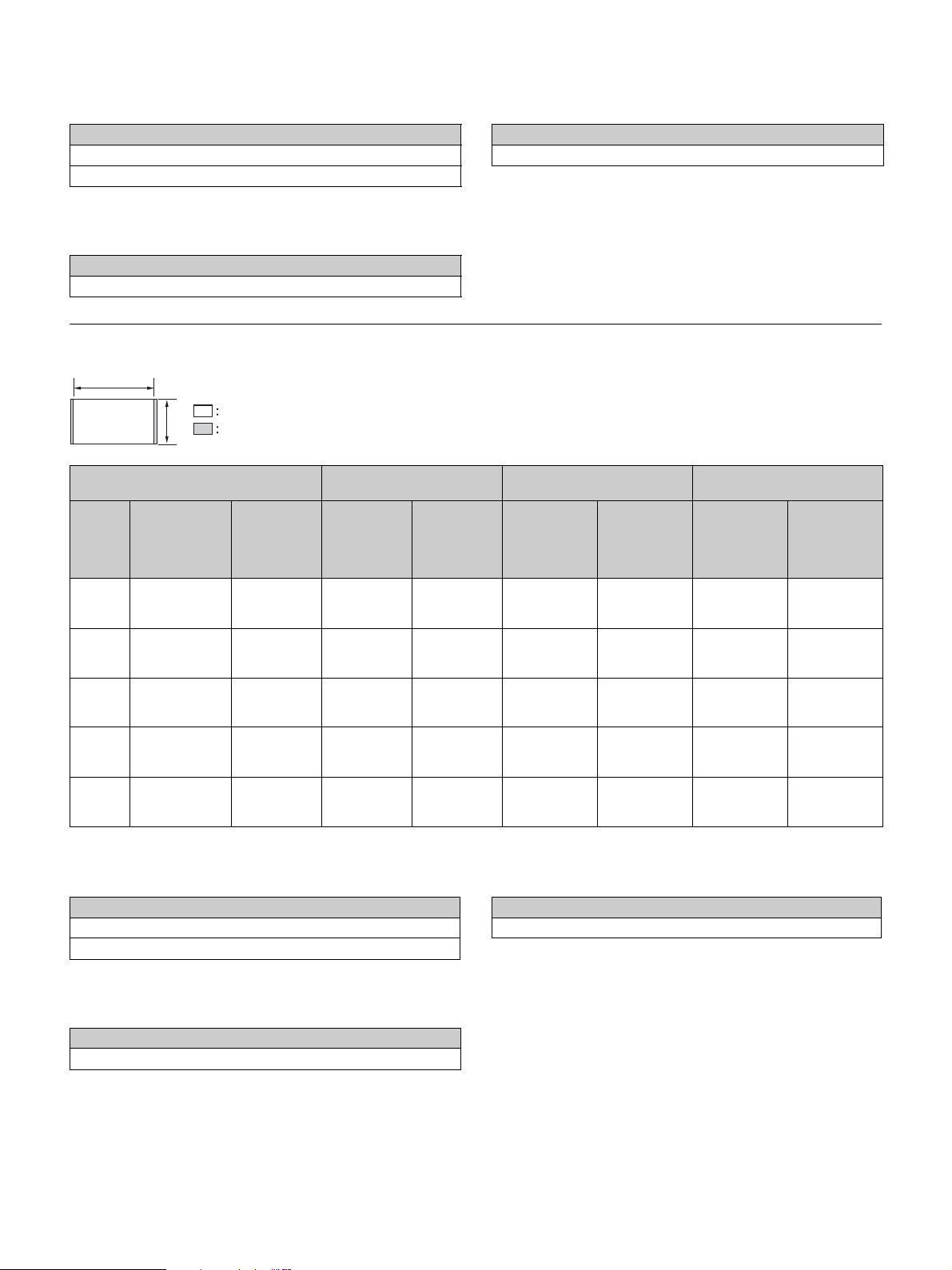
45
Formula 1 (calculates an installation distance from a
projection image size)
Unit: cm (inches)
Formula 2 (calculates a projection image size from an
installation distance)
Unit: cm (inches)
Formula 3 (calculates a distance from the installation
surface to the bottom of a projection image)
Unit: cm (inches)
When projecting in 1.78:1 (16:9) format
Formula 1 (calculates an installation distance from a
projection image size)
Unit: cm (inches)
Formula 2 (calculates a projection image size from an
installation distance)
Unit: cm (inches)
Formula 3 (calculates a distance from the installation
surface to the bottom of a projection image)
Unit: cm (inches)
Projection image size
L1 = 0.2219 × W - 36.9398 (L1 = 0.2219 × W - 14.5432)
L2 = 0.2219 × W + 10.0602 (L2 = 0.2219 × W + 3.9607)
From a projection surface to the rear of the unit
W = 4.5069 × L1 + 166.4916 (W = 4.5069 × L1 + 65.5479)
Projection image size
H = 0.1213 × W + 16.0372 (H = 0.1213 × W + 6.3139)
Projection image size Installation distance
Adjustment amount of picture
shift
Adjustment amount of picture
size
Diagonal
(D)
Width × Height
Bottom
height (H)
From a
projection
surface to the
rear of the unit
(L1)
From a
projection
surface to the
front of the
unit (L2)
Horizontal
direction
Vertical
direction
Horizontal
direction
Vertical
direction
80-inch
(2.03 m)
1.77 m × 1.00 m
(70 inches × 39
inches)
39.0 cm
(15.3 inches)
5.0 cm
(2.0 inches)
52.0 cm
(20.5 inches)
+/
_
5.3 cm
(+/
_
2.1 inches)
+/
_
6.0 cm
(+/
_
2.4 inches)
+/
_
1.8 cm
(+/
_
0.7 inches)
+/
_
1.0 cm
(+/
_
0.4 inches)
90-inch
(2.29 m)
1.99 m × 1.12 m
(78 inches × 44
inches)
41.8 cm
(16.5 inches)
10.2 cm
(4.0 inches)
57.2 cm
(22.5 inches)
+/
_
6.0 cm
(+/
_
2.4 inches)
+/
_
6.7 cm
(+/
_
2.6 inches)
+/
_
2.0 cm
(+/
_
0.8 inches)
+/
_
1.1 cm
(+/
_
0.4 inches)
100-inch
(2.54 m)
2.22 m × 1.24 m
(87 inches × 49
inches)
44.7 cm
(17.6 inches)
15.5 cm
(6.1 inches)
62.5 cm
(24.6 inches)
+/
_
6.6 cm
(+/
_
2.6 inches)
+/
_
7.5 cm
(+/
_
2.9 inches)
+/
_
2.2 cm
(+/
_
0.9 inches)
+/
_
1.2 cm
(+/
_
0.5 inches)
110-inch
(2.79 m)
2.44 m × 1.37 m
(96 inches × 54
inches)
47.6 cm
(18.7 inches)
20.7 cm
(8.2 inches)
67.7 cm
(26.7 inches)
+/
_
7.3 cm
(+/
_
2.9 inches)
+/
_
8.2 cm
(+/
_
3.2 inches)
+/
_
2.4 cm
(+/
_
0.9 inches)
+/
_
1.4 cm
(+/
_
0.6 inches)
120-inch
(3.05 m)
2.66 m × 1.49 m
(105 inches × 59
inches)
50.4 cm
(19.9 inches)
26.0 cm
(10.2 inches)
73.0 cm
(28.7 inches)
+/
_
8.0 cm
(+/
_
3.1 inches)
+/
_
9.0 cm
(+/
_
3.5 inches)
+/
_
2.7 cm
(+/
_
1.1 inches)
+/
_
1.5 cm
(+/
_
0.6 inches)
1.78
1
Video display area
Projection area
Projection image size
L1 = 0.2368 × W - 36.9638 (L1 = 0.2368 × W - 14.5527)
L2 = 0.2368 × W + 10.0362 (L2 = 0.2368 × W + 3.9512)
From a projection surface to the rear of the unit
W = 4.2226 × L1 + 156.0908 (W = 4.2226 × L1 + 61.4531)
Projection image size
H = 0.1295 × W + 16.0240 (H = 0.1295 × W + 6.3087)
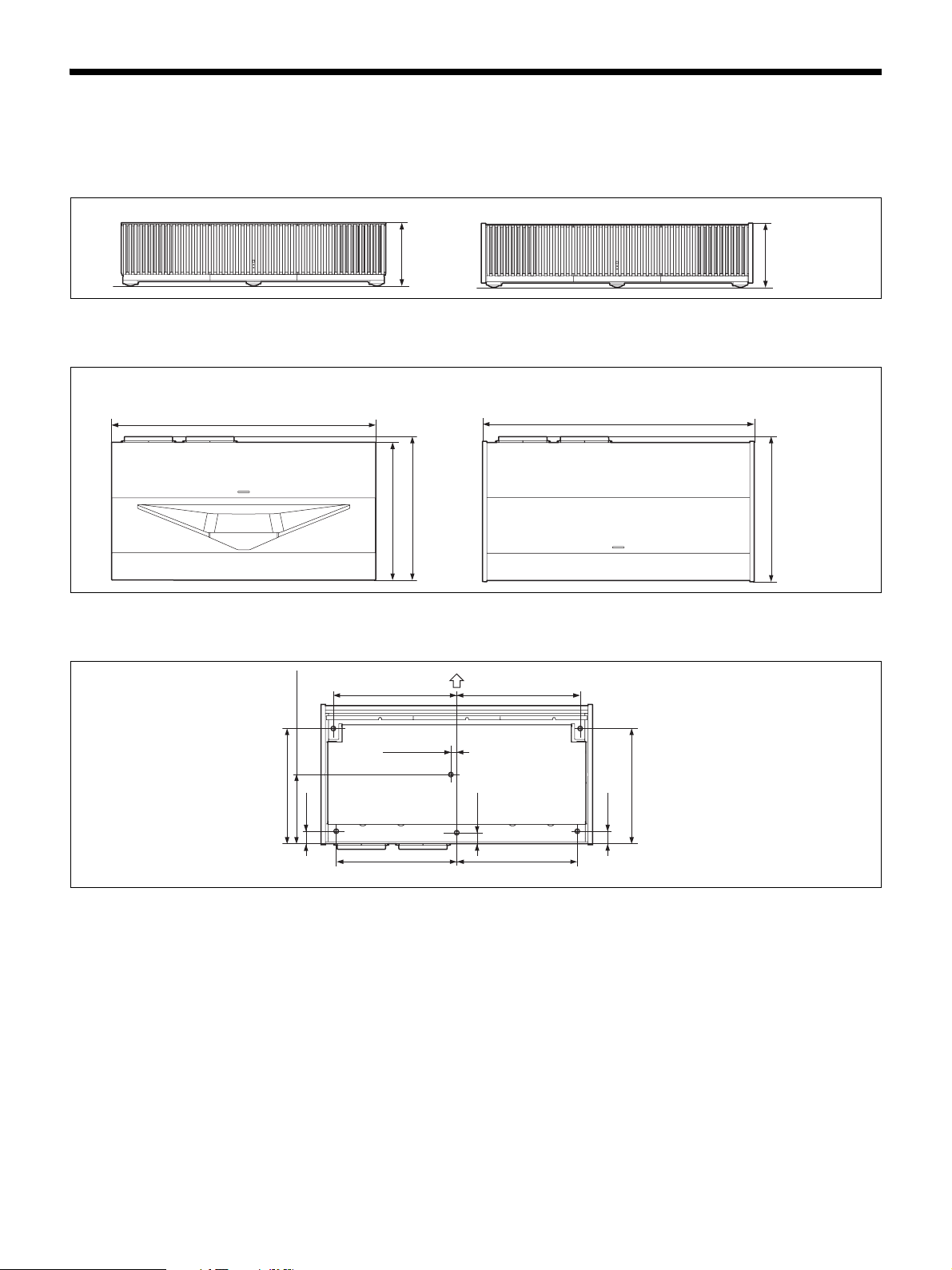
46
Dimensions
Front
Unit: mm (inches)
Top
Unit: mm (inches)
Bottom
Unit: mm (inches)
215.1
(8
15
/
32
)
218.5
(8
19
/
32
)
With side covers
901.6 (35
1
/
2
)
470 (18
1
/
2
)
489.8 (19
9
/
32
)
925 (36
13
/
32
)
493.8 (19
7
/
16
)
With top cover and side covers
420.5 (165
5
/
8
) 420.5 (165
5
/
8
)
410.5 (161
5
/
8
) 410.5 (161
5
/
8
)
41.8 (16
1
/
2
)41.8 (16
1
/
2
)
391.8 (154
3
/
8
)
391.8 (154
3
/
8
)
41.8 (16
1
/
2
)
234.8
(9
1
/
4
)
20 (
25
/
32
)

Sony Corporation