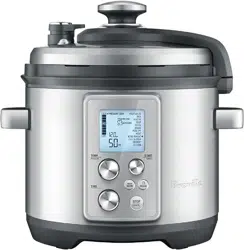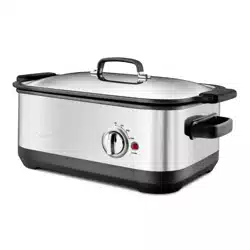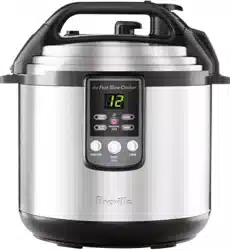

the Fast Slow Cooker
™
Instruction Book - BPR650

2
BREVILLE
RECOMMENDS
SAFETY FIRST
At Breville we are very safety
conscious. We design and
manufacture consumer
products with the safety of you,
our valued customer, foremost
in mind. In addition we ask
that you exercise a degree of
care when using any electrical
appliance and adhere to the
following precautions.
IMPORTANT
SAFEGUARDS
READ ALL
INSTRUCTIONS BEFORE
USE AND SAVE FOR
FUTURE REFERENCE
• Remove and safely
discard any packaging
material and promotional
labels before using the
Breville Fast Slow Cooker
for the first time.
• To eliminate a choking
hazard for young children,
remove and safely discard
the protective cover fitted
to the power plug of
this appliance.
• Do not immerse appliance
base, power cord or
plug in water or any
other liquid.
2 Breville Recommends Safety First
10 Components
16 Quick Start Guide
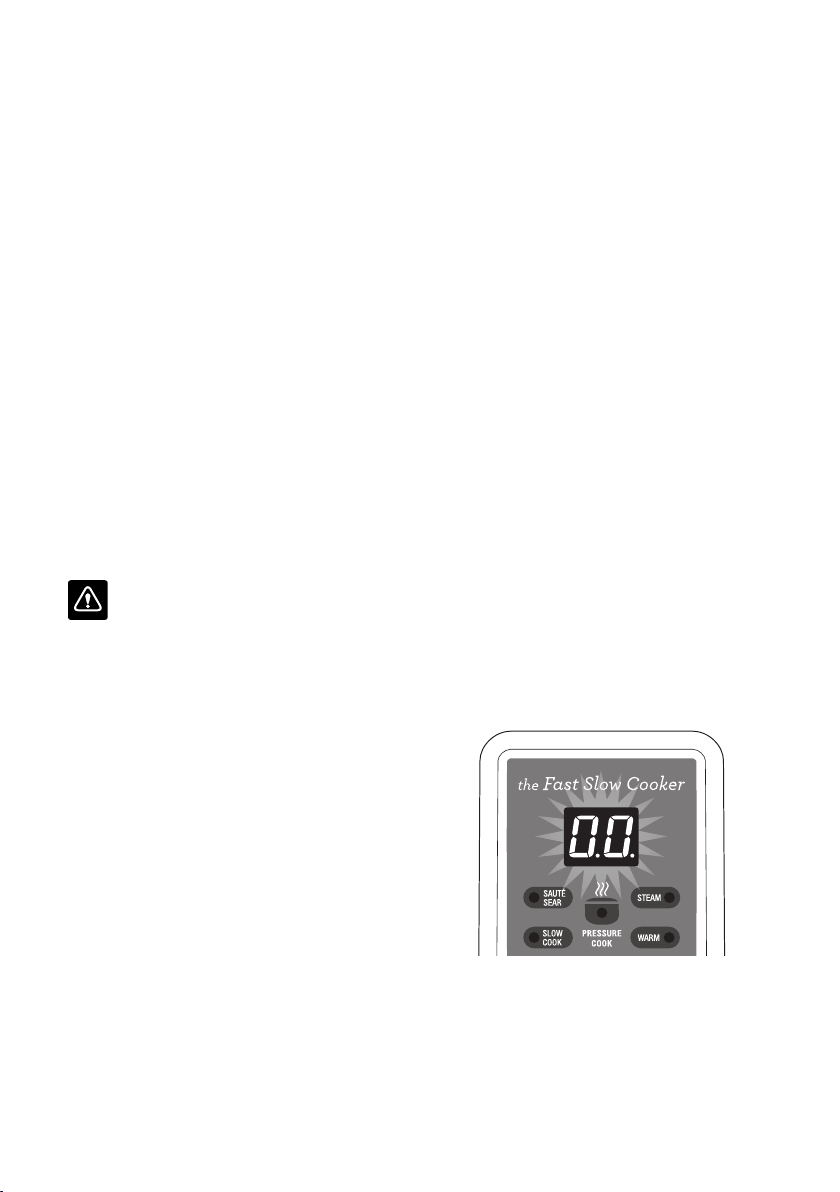
18 Functions
37 Care & Cleaning
40 Troubleshooting
Contents

3
• Always insert the
connector end of the
power cord into appliance
inlet inserting power plug
into power outlet and
switching on appliance.
Ensure the appliance inlet
is completely dry before
inserting the connector
end of the power cord.
• This appliance cooks
under pressure. Improper
use may result in injury.
When using this appliance
for any function other
than sauté, ensure the lid
is properly assembled
and locked into position
before use.
• Do not place Breville Fast
Slow Cooker near the edge
of a bench or table during
operation. Ensure that the
surface is level, clean and
free of water and other
substances.
• Do not operate Breville
Fast Slow Cooker on a
sink drain board.
• We recommend the slow
cooker is not placed on
a stone bench top when
it's cooking. This is due
to bench tops being
sensitive to uneven heat
and may crack if heated
locally. If you would like to
cook with the slow cooker
on the bench top, place a
chopping board or heat
proof mat underneath the
slow cooker.
• Never move the Pressure
Cooker when in use
or whilst the cooker
is still under pressure.
Movement may result in
inadvertent movement of
the pressure release valve/
release valve resulting in
unexpected steam or hot
liquid being released from
the pressure release valve
or the side of the lid which
may cause scalding.

8
IMPORTANT
SAFEGUARDS
FOR ALL
ELECTRICAL
APPLIANCES
• Fully unwind the power
cord before use.
• Do not let the power cord
hang over the edge of
a bench or table, touch
hot surfaces or become
knotted.
• To protect against electric
shock do not immerse the
power cord, power plug or
appliance in water or any
other liquid.
• The appliance is not
intended for use by
persons (including
children) with reduced
physical, sensory or
mental capabilities,
or lack of experience
and knowledge, unless
they have been given
supervision or instruction
concerning use of
the appliance by a
person responsible for
their safety.
• Children should be
supervised to ensure that
they do not play with
the appliance.

9
• It is recommended to
regularly inspect the
appliance. To avoid a
hazard do not use the
appliance if power cord,
power plug or appliance
becomes damaged in
any way. Return the
entire appliance to
the nearest authorised
Breville Service Centre
for examination and/or
repair.
• Any maintenance other
than cleaning should
be performed at an
authorised Breville
Service Centre.
• This appliance is for
household use only.
Do not use this appliance
for anything other than
its intended use. Do not
use in moving vehicles
or boats. Do not use
outdoors. Misuse may
cause injury.
• The installation of
a residual current
device (safety switch)
is recommended to
provide additional safety
protection when using
electrical appliances.
It is advisable that a
safety switch with a rated
residual operating current
not exceeding 30mA be
installed in the electrical
circuit supplying the
appliance. See your
electrician for professional
advice.
FOR HOUSEHOLD USE ONLY
SAVE THESE INSTRUCTIONS

14
Side view
OPEN
Top view
IMPORTANT
Steam Release Button
will be hot if pressed for
prolonged period.
Slow Release
If the Steam release
button is not depressed
when cooking is finished,
the cooker will slowly
de-pressurize when the
temperature drops towards
room temperature. This
method is recommended
for recipes containing
larger quantities of
liquid such as soups and
casseroles to prevent liquid
being forced out with the
steam. The Slow release
method is also used to
finish off recipes such as
risottos and puddings.
When slow release method
is used, it is necessary to
push the steam release
button to ensure there is
no more steam coming
out and turn the pressure
release valve to the
"steam release position"
where arrows are aligned
to OPEN arrow before
attempting to open the lid.

15
The pressure release
valve can get extremely
hot after cooking.
Extreme caution must be
used when moving the
pressure release valve. It
is recommended to use a
tool as an aid to move the
pressure release valve.
NEVER FORCE THE
LID OPEN
• After all internal pressure
is released, the lid should
be effortless to open.
It should only require
the use of one hand in a
smooth action.
• If the lid will not unlock
or you encounter
resistance, it may indicate
the appliance is still
under pressure. Never
force the lid open as any
remaining pressure can
be hazardous.
• Press the steam release
button until all internal
pressure is released and
the cooker can be opened.
• If there is no more steam
coming from the valve,
the safety locking pin
may still be in the locked
position. Gently tap on
the handle to unlock the
pin and open the lid.
• If resistance is still
encountered, disconnect
from the power supply
and allow the pressure
cooker to cool down to
room temperature.
Never force the lid open.

16
Quick Start Guide
This Quick Start Guide is designed for first time use.
For safety and more information, refer to your Instruction Booklet.
2
Wash silicone rubber gasket.
6
Refer to the Instruction Book
or Contact Customer Service.
HELP!
Australia
1300 139 798
New Zealand
0800 273 845
3
Select Pressure setting using
Pressure Control Dial on lid handle
(Low, Medium, High).
3
Select FUNCTION button until
STEAM function indicator
light flashes.
3
Press START/CANCEL button to
start cooking – indicator light will
stop flashing.
1
Press FUNCTION button until
SAUTÉ/SEAR function indicator
light flashes.
2
Press TIMER Button – select from
02 to 99 minutes.
4
Press TIMER Button – select from
02 to 99 minutes.
Before
First Use
Preparing the
Fast Slow Cooker
for use
A
How to
Pressure
Cook
B
How
to Sear
C
How to
Slow
Cook
D
How
to Steam
E
2
Press FUNCTION button until
SLOW COOK indicator light flashes.
3
Press TIMER button and select
either 6 or 8 hours.
4
Press START/CANCEL button to
start SLOW COOKING – indicator
light will stop flashing.
5
Press START/CANCEL button to
start STEAMING – indicator light
will stop flashing.
3
Return dry clean silicone rubber gasket
securely back to gasket.
2
Close and lock lid in a clockwise
direction by aligning arrows.
2
1
2
1
6
Press TIMER Button – select from
02 to 99 minutes.
7
Press START/CANCEL button to
start Pressure Cooking – indicator
light will stop flashing.
4
Ensure Pressure Release Valve is
turned to Pressure position.
5
Press FUNCTION button until
the Pressure Cook indicator
light flashes.
1
Place food to be cooked into
removable cooking bowl with
1L minimum liquid.
1
Close and lock lid in a clockwise
direction by aligning arrows.
1
Place steaming basket on to trivet
and position inside cooking bowl.
Repeat steps (1) to (3) in How To
Pressure Cook. Place food into
steaming basket.
2
1
Remove Lid. Wash non-stick
cooking bowl.
1Litre
MINIMUM
Pressure
Release
Valve
Pressure
Safety
Valve

18
Functions
PREPARING THE FAST SLOW
COOKER FOR USE
1. Before first use, remove all promotional
labels and packing materials and discard in
a safe place to avoid a choking hazard.
2. Remove the lid by taking hold of the handle,
turning it counter clockwise and lifting the
lid up and off the appliance.
1
2
3. Wash the removable cooking bowl, stainless
steel lid and silicone rubber gasket in hot,
soapy water, rinse and dry thoroughly.
Wipe the inside and the outside of the
stainless steel base with a soft, damp cloth,
then dry thoroughly.
4. Attach the clean silicone rubber gasket
securely back into the gasket holder
as illustrated. Ensure that the gasket is
installed correctly and the wire ring is fully
sitting inside the groove of the silicone seal.
IMPORTANT
If the silicone rubber gasket is not fitted
correctly into the holder, the lid will not seal
properly. This may cause the appliance to
malfunction and leak steam or hot liquid which
can cause burn or scalding.
5. Clean and dry the bottom of the
removable cooking bowl as well as
the temperature sensor, making sure there
are no unwanted materials on the surface.
The removable cooking bowl must sit
flat on the temperature sensor to ensure
proper contact.
19
DO’S
Always thaw frozen meat and poultry
before cooking.
Use dry oven mitts when lifting the
removable bowl after cooking.
Always store Breville Fast Slow Cooker
in a cool, dry place.
DONT’S
Do not operate any of settings without
removable cooking bowl in position.
Do not cook with frozen meats or poultry.
Do not remove stainless steel lid when
using the Slow Cook setting unnecessarily
as this will result in major heat loss.
NEVER
Place water or other liquids into the
stainless steel base of Breville Fast
Slow Cooker.
Immerse base, cord, or plug of Breville Fast
Slow Cooker in water or any other liquid.
Touch hot surfaces with bare hands.
Deep fry in Breville Fast Slow Cooker.
To prevent aromas, moulds and odours,
never store YOUR BREVILLE PRODUCT
closed with lid locked in place. Follow the
care and cleaning guidelines on page 37.
Pack and store with lid resting upside
down on removable cooking bowl in a well
ventilated area.
PREPARING MEAT AND POULTRY
Select cuts of meat suitable for pressure
cooking by choosing cuts from the table below.
Pressure cooking allows less tender cuts of
meat to be cooked quickly and achieve a
tender juicy result.
Using meat cuts with bones produces a more
flavorsome and enriched result.
For best results, always trim away excess visible
fat, grizzle and skin. These will
form extra liquid as it melts and cooks.
For casserole type recipes, cut meat into even
cubes approximately 3–5cm.
Suitable meat cuts for pressure cooking and
slow cooking
MEAT CUTS
Beef &
Veal
Chuck, skirt, round steak, boneless
shin(Gravy) beef, bone-in-shin and
cheeks(Osso Bucco), Diced leg, shoulder/
forequarter chops and steaks, neck chops,
knuckle (Osso Bucco).
Lamb
Shanks, drumsticks (frenched shanks), neck
chops, boned out forequarter or shoulder.
Pork
Diced leg, shoulder/ forequarter chops and
steaks, neck chops, knuckle (Osso Bucco).
Chicken
Chicken drumsticks and thighs both bone
in and fillet.
PREPARING VEGETABLES
Vegetables should be cut into even-sized
pieces to ensure more even cooking.
When preparing vegetables for pressure
cooking, always use fresh and not frozen.
If only frozen vegetables are available, thaw out
before pressure cooking. Use LOW pressure
setting for minimum time.
For better results only peel vegetables when
appropriate. Hard vegetables such as beetroot
and potatoes hold their shape better when
left intact.
20
PREPARING DRIED PULSES
(BEANS AND PEAS)
Legumes and pulses can be cooked without
prior soaking.
To fasten the pressure cooking time, soak dried
pulses in boiling water for 3 hours or overnight.
Always wash and drain pulses before cooking.
Remove any discoloured pulses.
For best cooking results, place pulses into
Breville Fast Slow Cooker and cover with water
or stock at least 5cm above the level of pulses.
Onions, bay leaves and garlic can be added to
flavour the pulses.
Avoid adding salt prior to cooking, as this will
toughen the skins of the beans and peas and
prevent proper cooking.
Once pulses have cooked, drain away excess
liquid, rinse lightly and use in recipes.
Softer Pulses such as mung beans, lima beans
and butter beans are best to be cooked using
LOW or MEDIUM pressure.
IMPORTANT
• Softer Pulses such as; mung beans, lima
beans and butter beans are best cooked using
LOW AND MEDIUM pressure.
• When PRESSURE COOKING AND
SLOW COOKING the resulting juices and
liquids created by cooking may need to be
evaporated and concentrated. We suggest
that the SAUTE/SEAR function should be
used for approx 5–10 minutes depending on
amount of liquids required to be reduced.
SAUTÉING AND SEARING
BEFORE PRESSURE COOKING
& SLOW COOKING
Sautéing and Searing in Breville Fast Slow
Cooker may take a little extra time and whilst
not strictly necessary, the rewards are evident
in the end result.
Saute and Sear setting keeps the heat stable,
browning meat and caramelising vegetables.
This seals in the moisture, tenderises and
intensifies the flavour.
Hint and Tips
• Trim excess fat from meat or poultry.
• If a recipe calls for browning meat, it may be
browned using SAUTÉ/SEAR setting.
• If after cooking the liquid quantity is
excessive, remove the lid and operate Breville
Fast Slow Cooker on SAUTÉ/SEAR setting
for approximately 10–15 minutes or until the
liquid reduces by the desired amount.
How to Sauté and Sear
1. Remove power cord, connect it to pressure
cooker base and insert power cord to
230/240 volt power outlet. A single beep
will sound and 0:0 will be displayed on
LED display.

23
4. Close and lock lid by using the handle.
Close lid in a clockwise direction by
aligning ALIGN arrows. The Lid arrow
should align with stainless steel base
arrow until it locks into place and is in the
CLOSE position.
NOTE
This should be effortless!
2
1
5. Select one of the following settings using
the Pressure Control dial located on the
handle:
– Low (Low Pressure).
– Medium (Moderate Pressure).
– High (High Pressure).
NOTE
Refer to Pressure Cooking guide and basic
recipes on page 22–31.
6. Ensure pressure release valve is turned to
PRESSURE position. For correct PRESSURE
position, align the pressure release valve
with the dash graphic that goes across the
pressure safety valve. See diagram below.
Pressure
Release
Valve
Pressure
Safety
Valve
PRESSURE
POSITION
C
A
U
T
I
O
N
:
H
O
T
S
T
E
A
M
V
E
N
T
A
L
I
G
N
A
R
R
O
W
S
B
E
F
O
R
E
P
O
W
E
R
O
N
The illustration above shows the correct
Pressure Release Valve position.
NOTE
The arrowheads should be aligned.
You may need to adjust the Pressure Release
Valve until it is in the correct position.
7. Press FUNCTION button until PRESSURE
COOK indicator light flashes red.
8. To set TIMER; press TIMER button
to increase cooking time. This will be
illuminated on LED display from
02 minutes to maximum 99 minutes.
To fast advance time, press and hold down
TIMER button. When desired cooking time
is displayed, press START/CANCEL button.
The function indicator light will stop
flashing and will illuminate a solid red.
Preheating will begin, control panel will
continue to display selected cooking time.
As selected pressure setting is achieved,
there will be a slight hissing of steam from
pressure release valve. After approximately
10 minutes, or more depending on the
amount of liquid added to cooking bowl,
selected cooking time will begin to count
down in minutes and this is shown on
LED display.

25
• The minimum amount of combined food
and liquid to be added to removable cooking
bowl for Pressure Cook recipes cooking in
under 10 minutes is 250ml (1 cup). Anything
less might boil dry and pressure cook will not
function. Additional liquid may need to be
added during cooking.
• Never operate appliance when it is empty.
Do not cook with less than 1 litre of combined
food and liquid.
• Never use oil or milk as a cooking liquid such
as deep frying or making custards. Only use
hot/warm liquids particularly after sautéing
to avoid any damage to the removable
cooking bowl. Adding hot liquids also
hastens the time to reach pressure.
• Keep hands and face clear of Pressure
Release Valve when appliance is in Pressure
Cooking operation. Hot steam and water may
be emitted during use.
• When cooking under pressure, lid of the
Breville Fast Slow Cooker can not be opened.
Do not try to force the lid open.
• After making soups and stocks, allow several
minutes before releasing pressure and
removing lid to make sure that hot liquid
inside will not boil over.
PRESSURE COOK SETTING &
CONVERTING CONVENTIONAL
RECIPES
Your favourite traditional recipes can be
easily adapted to PRESSURE COOK setting.
The following charts are a guide to Pressure
Cooking times as compared to conventional
cooking times.
If trying conventional recipes that are not
included in our recipe section, we recommend
you calculate that it will cook 70% faster than
conventional cooking time.
NOTE
Time will vary with individual recipes and
according to nature of certain foods and
quantities. If results are under cooked, close
and lock lid, press FUNCTION button until
PRESSURE COOK indicator light flashes red.
Set the timer accordingly and press START/
CANCEL button to rebuild pressure and cook
for required time.
MEAT, POULTRY &
SEAFOOD
PRESSURE
SETTING
PRESSURE
COOK TIME
CONVENTIONAL
COOKING TIME
Lamb
Lamb Shanks 4 x 12–13cm long
Lamb, 2cm diced (1kg)
HIGH
HIGH
30–35 minutes
10–12 minutes
2 hours
1½–2 hours
Beef/Game
Rolled beef rib roast (1.2kg)
Rabbit, pieces (1kg)
HIGH/then LOW
HIGH
13–15 minutes
25–30 minutes
2 hours
1 ½ hours
Pork
Spare Ribs (1.2kg)
HIGH 15 minutes 45 minutes
Poultry
Chicken breast fillets (4 halves)
Chicken drumsticks (8)
Whole chicken (1.2kg)
MEDIUM
MEDIUM
MEDIUM
2–4 minutes
10–15 minutes
15–20 minutes
15–20 minutes
30–35 minutes
1 hour
NOTE
These cooking times are approximates only and times will vary according to
nature of certain foods and quantities.

30
HOW TO ROAST
Roasting meats using either PRESSURE
COOK or SLOW COOK settings, creates
tender, flavoursome results. Both cooking
processes break down and soften the
connective and muscle tissue within the meat,
making it easier to slice.
Meat will not be browned during PRESSURE
COOK or SLOW COOK settings, so for seared
results use the SAUTÉ/SEAR setting first.
Using SLOW COOK or
PRESSURE COOK Setting
Elevate the meat to be cooked on provided
stainless steel trivet. Add a minimum of
250ml (1 cup) hot liquid (water or stock).
1 cup
MINIMUM
This will assist in keeping the surface of
the meat dry and free from any fat released
throughout the cooking process. The stainless
steel trivet rack will keep the meat, raised
above the boiling liquid.
NOTE
• Do not use oil or milk as a liquid.
• The SLOW COOK or PRESSURE COOK
functions will stop operating or timer
function stops counting down if insufficient
liquid. Add more liquid, make sure at all
times a minimum 1 litre (4 cups) liquid is in
cooking bowl during cooking.
Suitable meat cuts for roasting
MEAT CUTS
Beef
Blade, Rump, Rib Roast, Fresh
Silverside, Topside.
Lamb
Leg, Mid Loin, Rack, Crown Roast,
Shank, Shoulder, Mini Roasts.
Veal
Leg, Loin, Rack, Shoulder/Forequarter.
Pork
Loin, Neck, Leg, Racks (remove skin & fat).
BASIC ROAST
Ingredients
1–1.2 kg beef, veal, lamb or pork roast or
whole 1.2kg chicken
250ml (1 cup) beef or chicken stock
Method
Sauté Setting
1. Press FUNCTION button then select
SAUTE, indicator light will illuminate.
2. Enter 10 minutes TIME, time is displayed
on LED.
3. Press START/CANCEL button and wait
3 minutes while bowl is heating before
cooking. Add meat and brown well on all
sides. Remove meat and set aside. Add beef
stock or chicken stock and mix with spatula.
Carefully place trivet into the bowl. Place
meat onto trivet.

36
BASIC STEAMING CHART
FOOD TIME
Beetroot
Brussels sprouts
Parsnips
Pumpkin 2cm pieces
20–25 minutes
8–10 minutes
5–6 minutes
10–12 minutes
Basic Steamed Vegetables
Select vegetable from basic steaming chart.
1 litre water or stock.
Place trivet into removable cooking bowl of
Breville Fast Slow Cooker and pour in
1 litre water or stock. Place steaming basket of
vegetables onto trivet. Secure lid on.
STEAM in Breville Fast Slow Cooker
1. Press FUNCTION button then select
STEAM, indicator light will illuminate.
2. Enter recommended TIME for selected
vegetable, time will be displayed on LED.
3. Pressure Release Valve is turned to
PRESSURE position and Pressure Control
Dial turned to LOW position.
4. Press START/CANCEL button.
Once timer is 0 and 5 beeps
sound, release PRESSURE.
5. Open lid.
To avoid overcooking foods when using the
STEAM function, it is generally a good idea to
release steam and remove lid to stop cooking
immediately. Remove the steaming basket by
the handles.

37
Care & Cleaning
1. Before cleaning Breville Fast Slow Cooker,
switch off at power outlet, unplug from
power outlet and remove the connector end
of power cord from appliance inlet.
2. Wash removable cooking bowl with warm
soapy water and a clean soft cloth or
sponge. Rinse with clean water and
dry thoroughly.
NOTE
Removable cooking bowl can be washed
in dishwasher. However, to maintain non
stick coating, it is recommended to wash
cooking bowl in hot, soapy water using a mild
household detergent. Rinse and
dry thoroughly.
WARNING
Do not use abrasive cleaners, steel wool
or scouring pads as these can damage the
surfaces and non-stick coating.
3. Stainless steel base can be wiped
over with a soft, damp cloth and
then dried thoroughly.
4. Remove condensation collector by gently
pulling downwards and clean it thoroughly
under water. Place it back in its
original position.
5. Disassemble lid.
a) Gently pull the silicone rubber gasket
out from under the gasket holder.
Check periodically that it is clean,
flexible and not cracked or torn.
If damaged do not use the appliance.
39
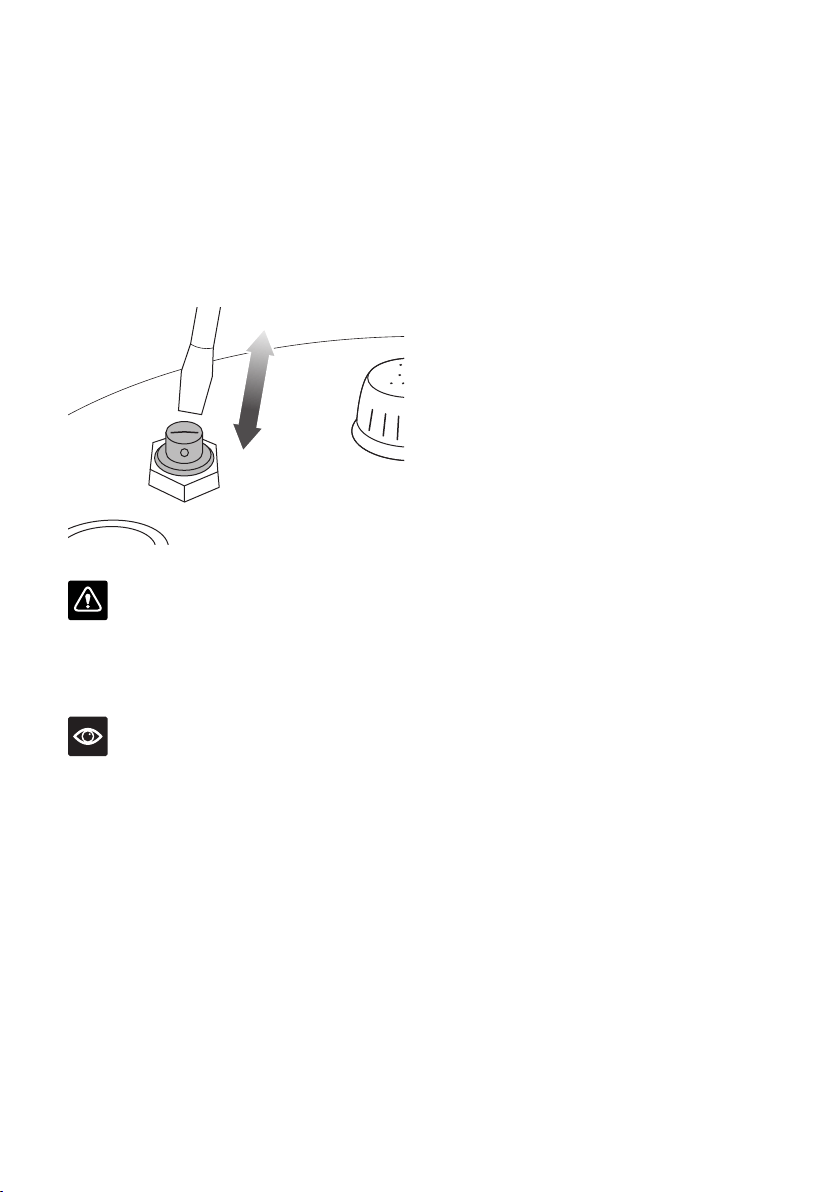
d) Pressure Safety Valve will need to be
regularly checked and cleaned
in order to avoid any clogging which
could result in blocking the safety valve.
To clean the Pressure Safety Valve, push
valve from inside the lid in and out
with a long thin object (e.g. chopstick,
screwdriver). Wash and clean any oil or
food residue. Ensure the valve moves in
and out smoothly after cleaning.
IMPORTANT
All lid parts must be reassembled correctly to
ensure safety as well as optimal performance of
your Fast Slow Cooker.
NOTE
A mixture of 1 tablespoon vanilla,
½ cup lemon juice, 1 tablespoon lemon rind
plus 500ml hot water, cook at HIGH pressure
for 5 minutes. Leave to slow release pressure,
then disassemble and wash as directed,
can help eliminate food odours.
40
Troubleshooting
POSSIBLE EASY SOLUTION
EO is displayed on
LED Screen
•
Check that lid is closed properly.
•
Check that the Pressure Release Valve is in the
correct position.
•
Make sure the silicone rubber gasket is in good condition and
attached properly to the gasket holder.
E1 is displayed on
LED Screen
•
Unplug unit and allow to sit for 20 minutes. If no change,
Please call Breville Consumer Service.
E2 is displayed on
LED Screen
•
Ensure the cooking bowl is properly positioned inside base.
The cooking bowl must be in direct contact with the heating plate.
Make sure there are no unwanted materials on the heating plate.
E3 is displayed on
LED Screen, Beeping
•
SAUTE/SEAR setting will not work if the lid is on or locked in
position. Ensure the lid is off or placed on top of the appliance in an
offset position.
The appliance automatically
switches to Keep Warm without
going through a complete
cooking cycle
•
Add more water to cooking bowl and restart the cooking cycle.
Air is escaping from the rim of
the lid
•
Make sure the silicone rubber sealing gasket is in good condition
and attached properly to the gasket holder.
•
Check that lid is closed properly.
Steam is released from
the safety locking pin during
cooking
•
Inspect the safety locking pin (see page 11, letter "U"). The pin
should move up and down freely, and have a silicone seal on one
end. Clean the pin and replace the seal if necessary.
•
Make sure the silicone rubber sealing gasket is in good condition
and attached properly to the gasket holder.
The safety locking pin does not
rise in PRESSURE COOK setting
•
Place Pressure release valve in the correct position.
•
Place more food and water in the cooking bowl.
•
Call Breville Customer Service.

42
Notes

43
Notes