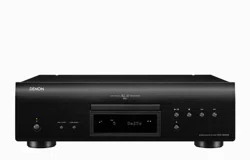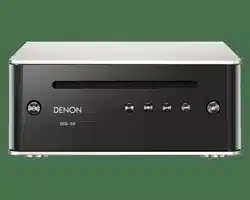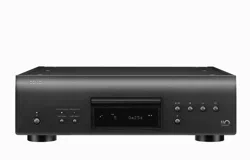
Accessories
4
Inserting the batteries
5
Operating range of the remote control unit
5
Features
6
High quality sound
6
High performance
6
Part names and functions
7
Front panel
7
Display
9
Rear panel
10
Remote control unit
11
Connections
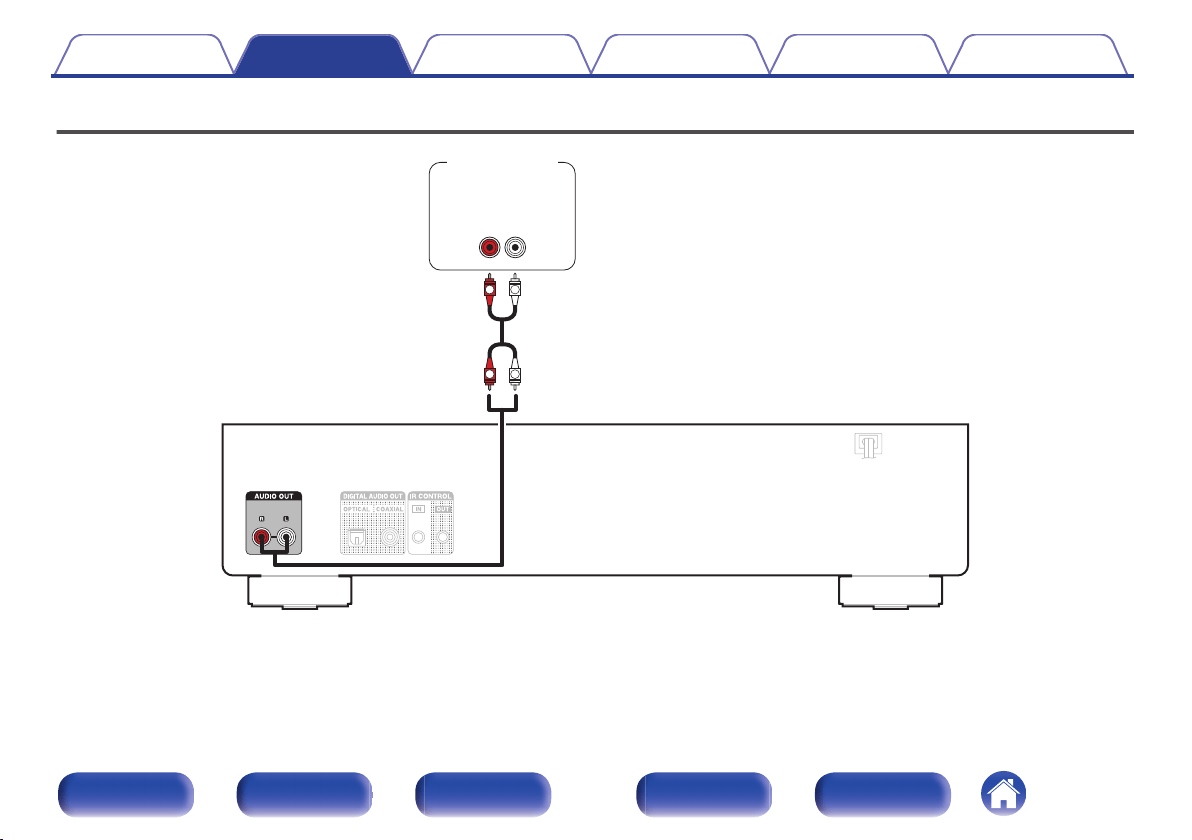
Connecting an amplifier
18
Connecting to a device with digital audio input connectors
19
Connecting a USB memory device to the USB port
20
Connecting the timer device
21
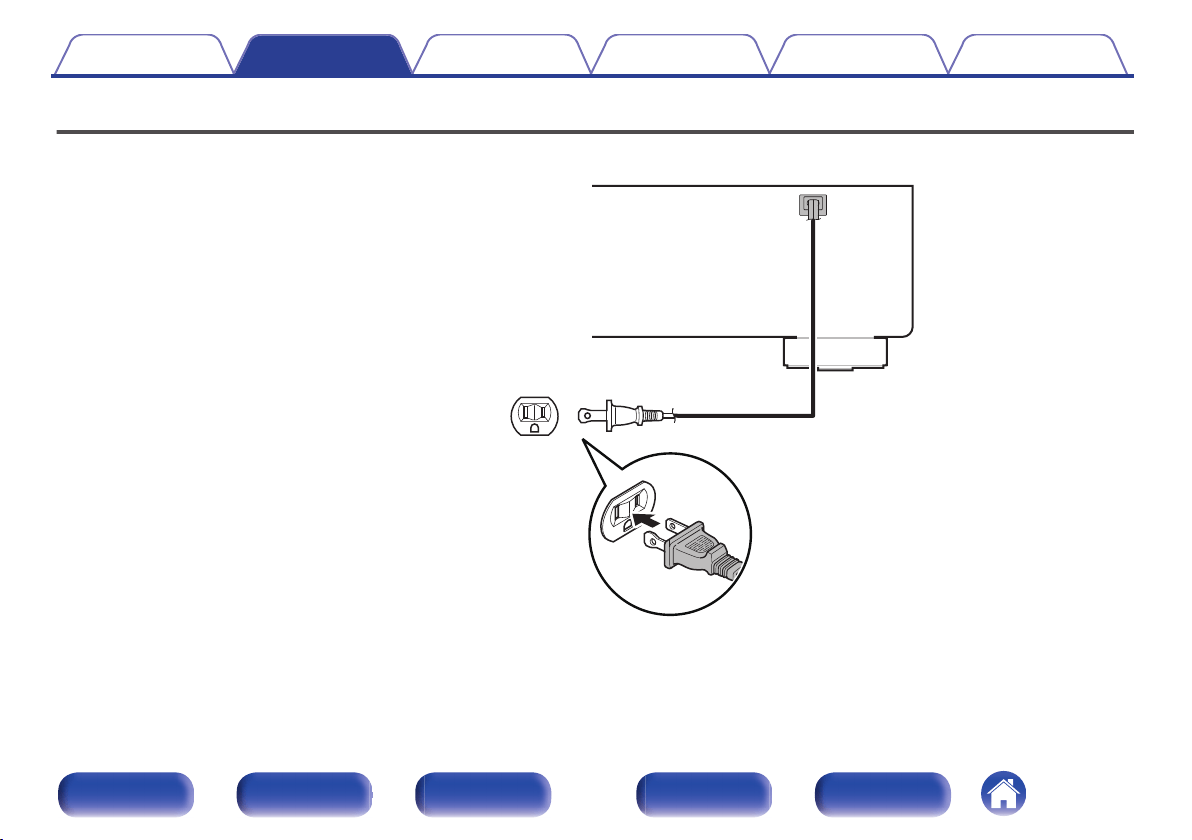
Connecting the power cord
22
Playback
Basic operation
24
Turning the power on
24
Switching the power to standby
24
Selecting the media mode
25
Switching the display’s brightness
25
Switching the Pure Direct mode
26
Playing CDs
27
Playing CDs
27
Playing tracks in a specific order (Program playback)
29
Playing DATA CDs
30
Playing files
31
Playing a USB memory device
33
Playing files stored on USB memory devices
34
Using the timer play function
36
Contents Connections Playback Settings Tips Appendix
2
Front panel Display Rear panel Remote Index
Settings
Setting the Auto Standby mode
37
Turning Auto Standby mode on
37
Turning Auto Standby mode off
37
Tips
Tips
39
Troubleshooting
40
Power does not turn on / Power is turned off
41
Operations cannot be performed through the remote control unit
42
Display on this unit shows nothing
42
No sound comes out
43
Sound is interrupted or noise occurs
43
Cannot playback Discs
44
Appendix
Playing back Discs
45
Files
45
Playing back a USB memory devices
47
Playback order of files
49
About folders and files
49
Cautions on using media
50
Loading discs
50
How to handle media
51
Cleaning discs
51
Explanation of terms
52
Trademark information
54
Specifications
55
Index
58
Contents Connections Playback Settings Tips Appendix
3
Front panel Display Rear panel Remote Index
Thank you for purchasing this Denon product. To ensure proper operation, please read this owner’s manual carefully before using the product.
After reading this manual, be sure to keep it for future reference.
Accessories
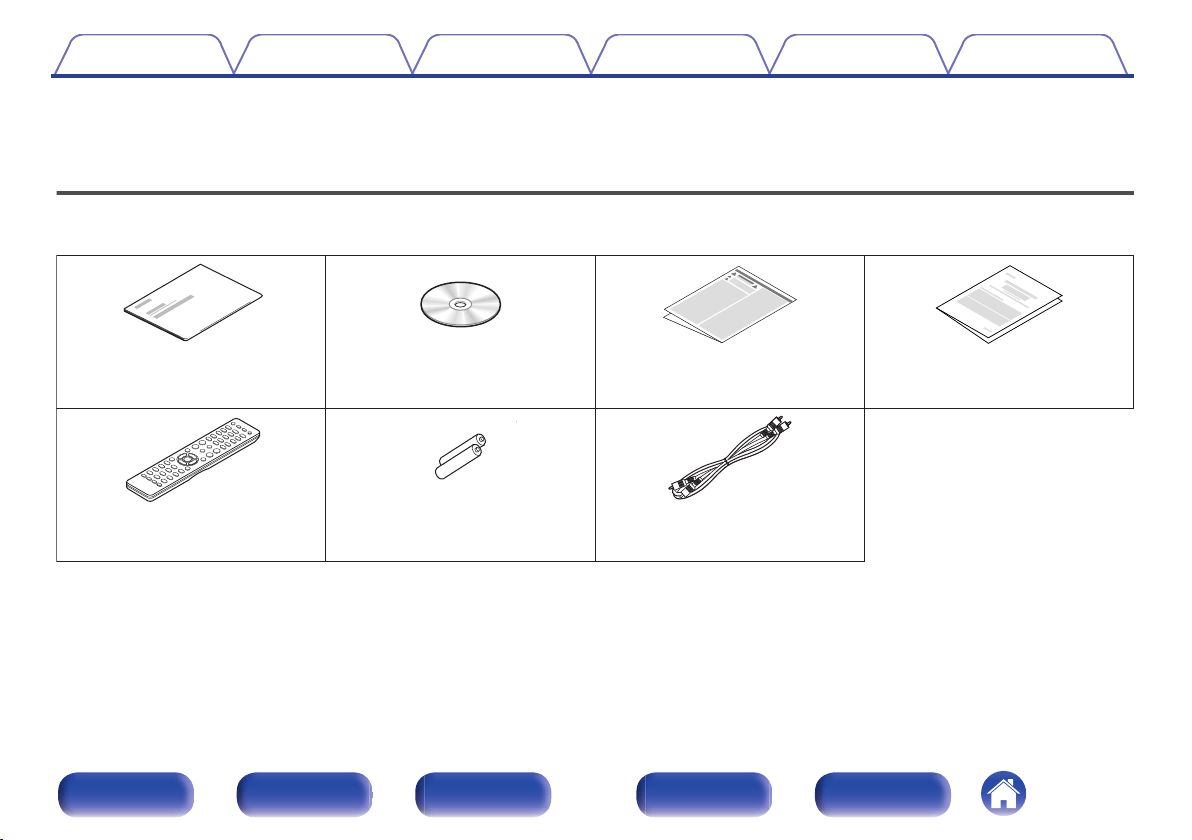
Check that the following parts are supplied with the product.
.
Audio cable
Quick Start Guide
CD-ROM
(Owner’s Manual)
Safety Instructions
R03/AAA batteries
Remote control unit
(RC-1223)
Warranty
(for North America model only)
Contents Connections Playback Settings Tips Appendix
4
Front panel Display Rear panel Remote Index
Inserting the batteries
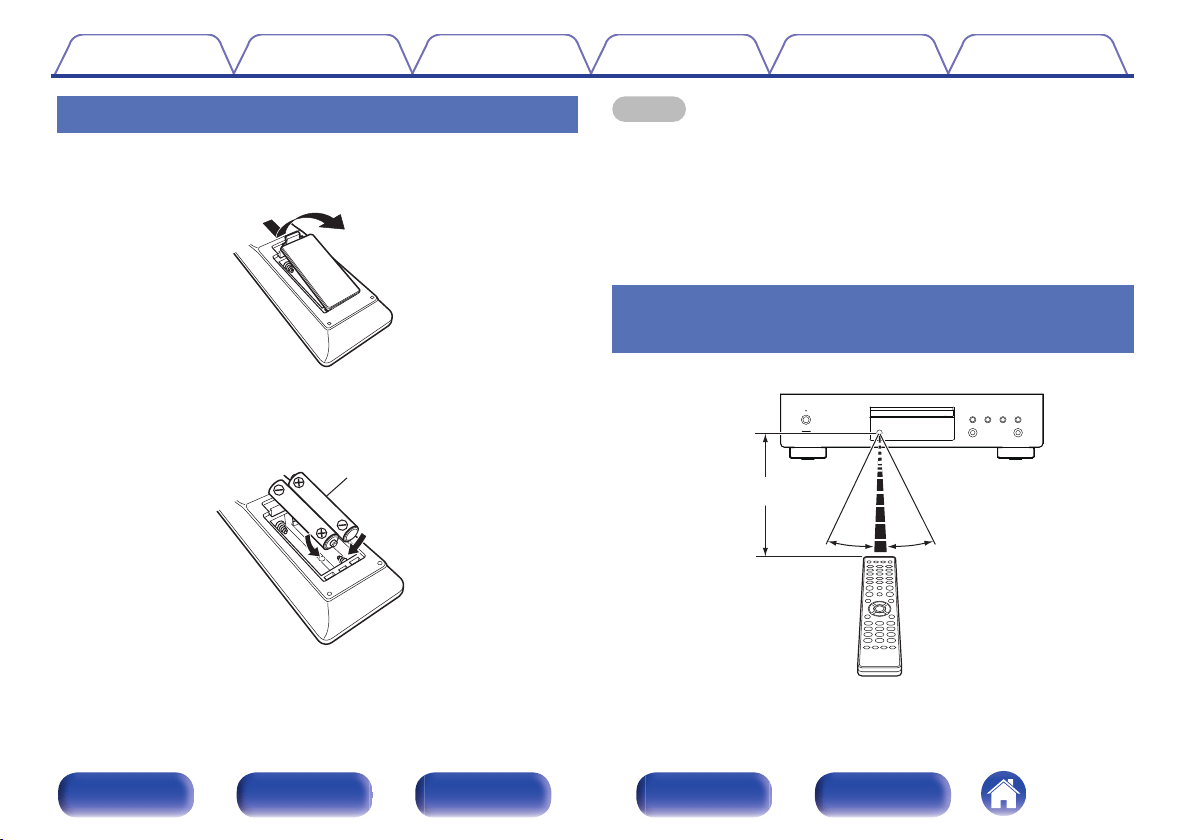
1
Remove the rear lid in the direction of the arrow and
remove it.
.
2
Insert two batteries correctly into the battery
compartment as indicated.
.
Batteries
3
Put the rear cover back on.
NOTE
0
To prevent damage or leakage of battery fluid:
0
Do not use a new battery together with an old one.
0
Do not use two different types of batteries.
0
Remove the batteries from the remote control unit if it will not be in use for long
periods.
0
If the battery fluid should leak, carefully wipe the fluid off the inside of the battery
compartment and insert new batteries.
Operating range of the remote control
unit
Point the remote control unit at the remote sensor when operating it.
.
Approx. 23 ft/7 m
30°30°
Contents
Connections Playback Settings Tips Appendix
5
Front panel Display Rear panel Remote Index
Features
High quality sound
0
High Bitrate and High Sampling with Advanced AL32 Processing
Plus
A high bitrate and high sampling has been achieved with Denon’s
unique data interpolation algorithm. 16 bit audio signals are converted
to a high bitrate of 32 bit and 44.1 kHz sampling signals are up-sampled
by 16x to achieve smoother recreation of sound waves. Data
interpolation is also used, predicting interpolation points from a large
number of surrounding points to provide audio as close as possible to
the original sound. This elaborate restoration of data lost during digital
recording achieves fine, distortion-free rendering, accurate sound
localizing, rich bass and recreation that is faithful to the original sound.
0
DAC Master Clock Design for the Ideal Clock
To make full use of the properties of this unit’s semiconductor, it was
important to use a highly accurate clock signal for the semiconductor’s
operations. This model contains 2 oscillators, one for each frequency.
These oscillators are developed to dramatically decrease phase noise
caused by frequency displacement, achieving a more stable and more
accurate clock than ever before. The master clock is near the D/A
converter, reducing jittering to achieve faithful playback.
High performance
0
Supports MP3 and WMA file playback (v p. 30)
MP3 and WMA files that have been recorded onto CD-R or CD-RW
discs can be played back on this CD player.
0
Plays USB memory devices (MP3/WMA/AAC/WAV/FLAC/Apple
Lossless/AIFF/DSD).
You can play back audio files stored on a USB memory device by
connecting the USB memory device to the USB port.
0
Reduced power consumption during standby
The power consumption in standby mode has been reduced to below
0.2 W in consideration of the environment.
Contents Connections Playback Settings Tips Appendix
6
Front panel Display Rear panel Remote Index
Part names and functions
Front panel
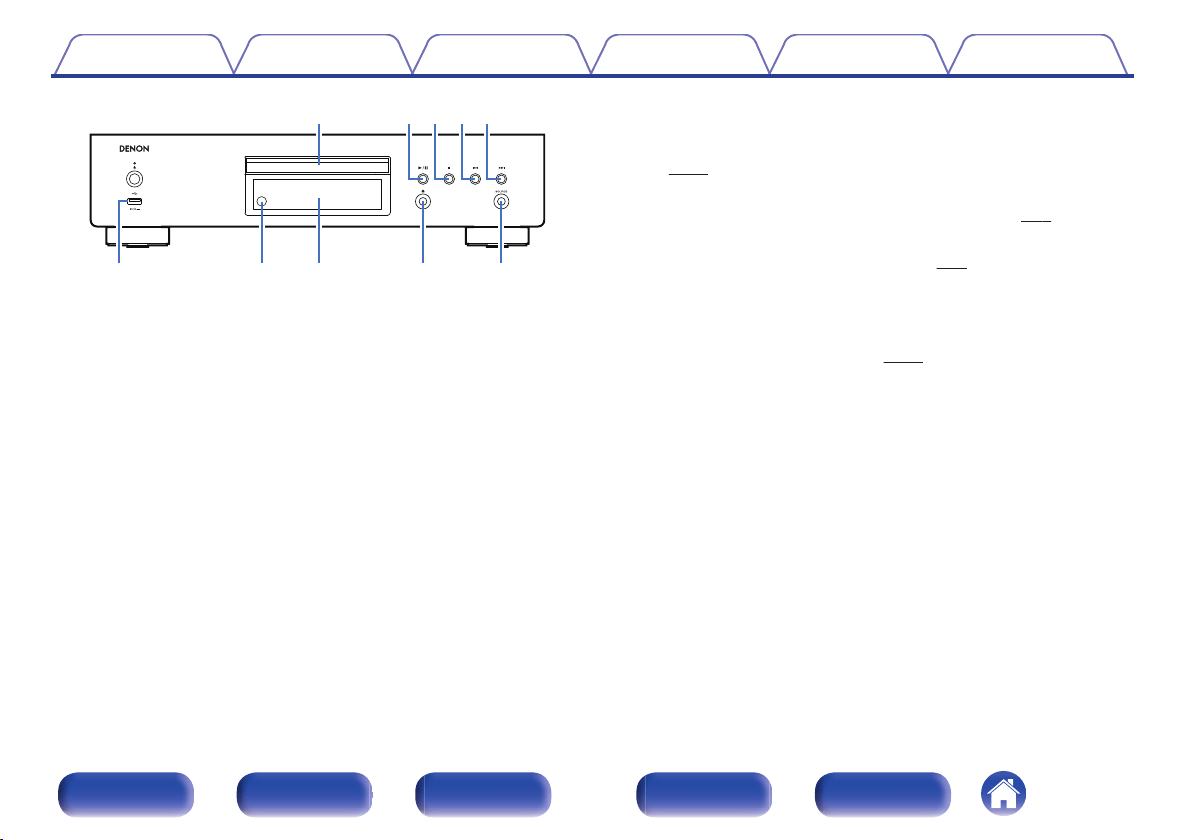
.
r t y uwq e
Q
0
Q
1
Q
2
oi
A
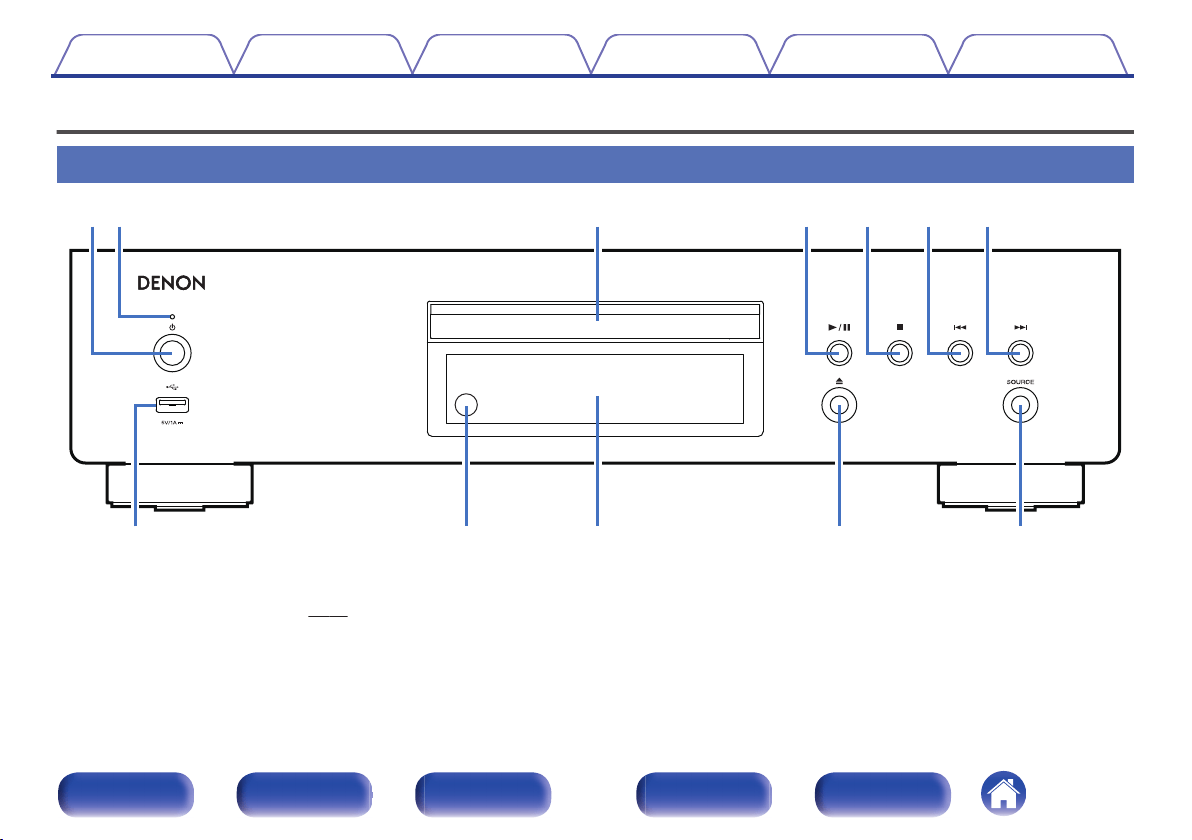
Power operation button (X)
This turns the power on/off. (v p. 24)
B
Power indicator
This is lit as follows according to the power status:
0
Power on : Green
0
Standby : Off
0
Power off : Off
Contents Connections Playback Settings Tips Appendix
7
Front panel Display Rear panel Remote Index
.
r t y ue
Q
0
Q
1
Q
2
oi
C
Disc tray
Used to insert a disc.
D
Play/pause button (1/3)
Plays the track/Pauses the track.
E
Stop button (2)
Stops playback.
F
Reverse-skip button (8)
Returns to the start of the currently playing track.
G
Forward-skip button (9)
Plays the next track.
H
USB port (T)
This is used to connect USB storages (such as USB memory devices).
(v
p. 20)
I
Remote control sensor
This receives signals from the remote control unit. (v
p. 5)
J
Display
Various information is displayed here. (v p. 9)
K
Disc tray open/close button (5)
Used to open/close the disc tray.
L
SOURCE button
Select the media to play back. (v
p. 25)
Contents Connections Playback Settings Tips Appendix
8
Front panel Display Rear panel Remote Index
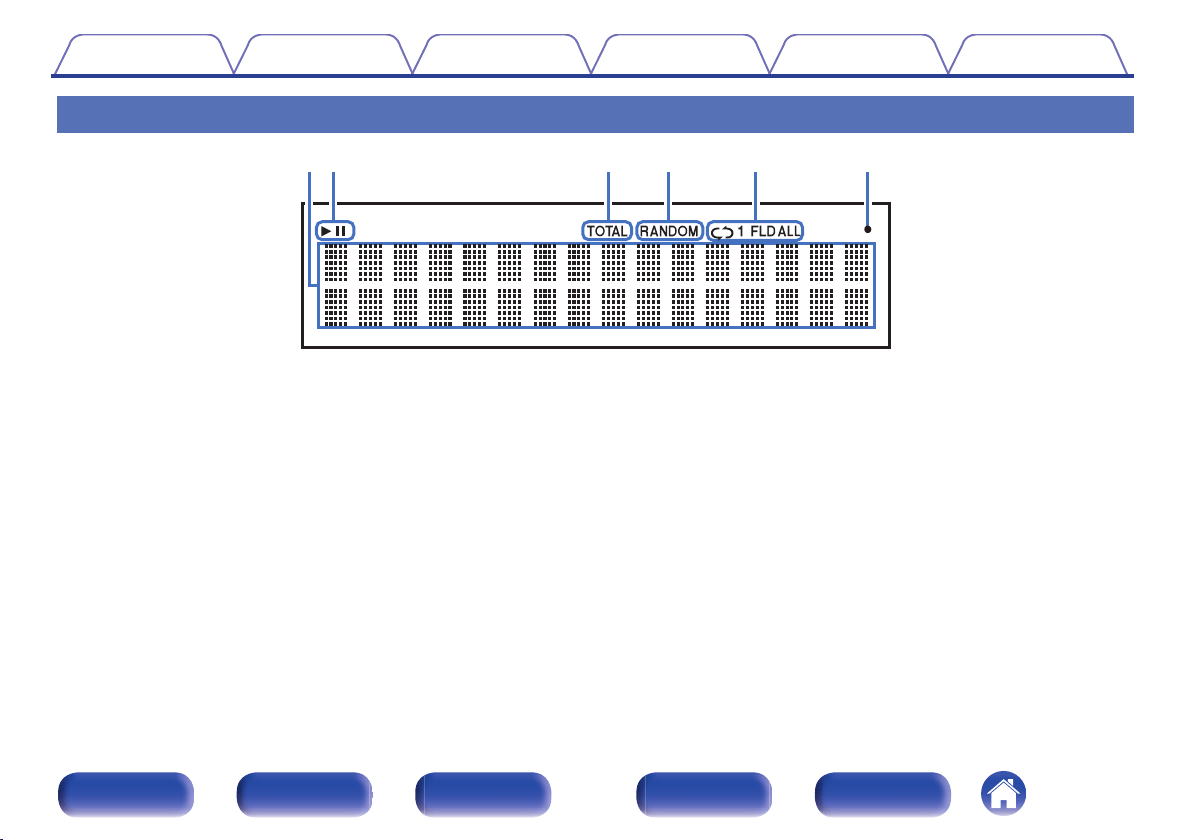
Display
.
wq
t
y
er
A
Information display
Displays various information or playback elapsed time and so on of the
disc.
B
Playback mode indicators
1 : Lights up during playback.
3 : Lights up during pause.
C
TOTAL indicator
Lights when the total number of tracks and total time of the CD are
displayed.
D
RANDOM indicator
Lights during random playback.
E
Repeat mode indicators
Lights to match the repeat mode settings.
F
Remote control signal reception indicator
Lights when a signal is received from the remote control.
Contents Connections Playback Settings Tips Appendix
9
Front panel Display Rear panel Remote Index
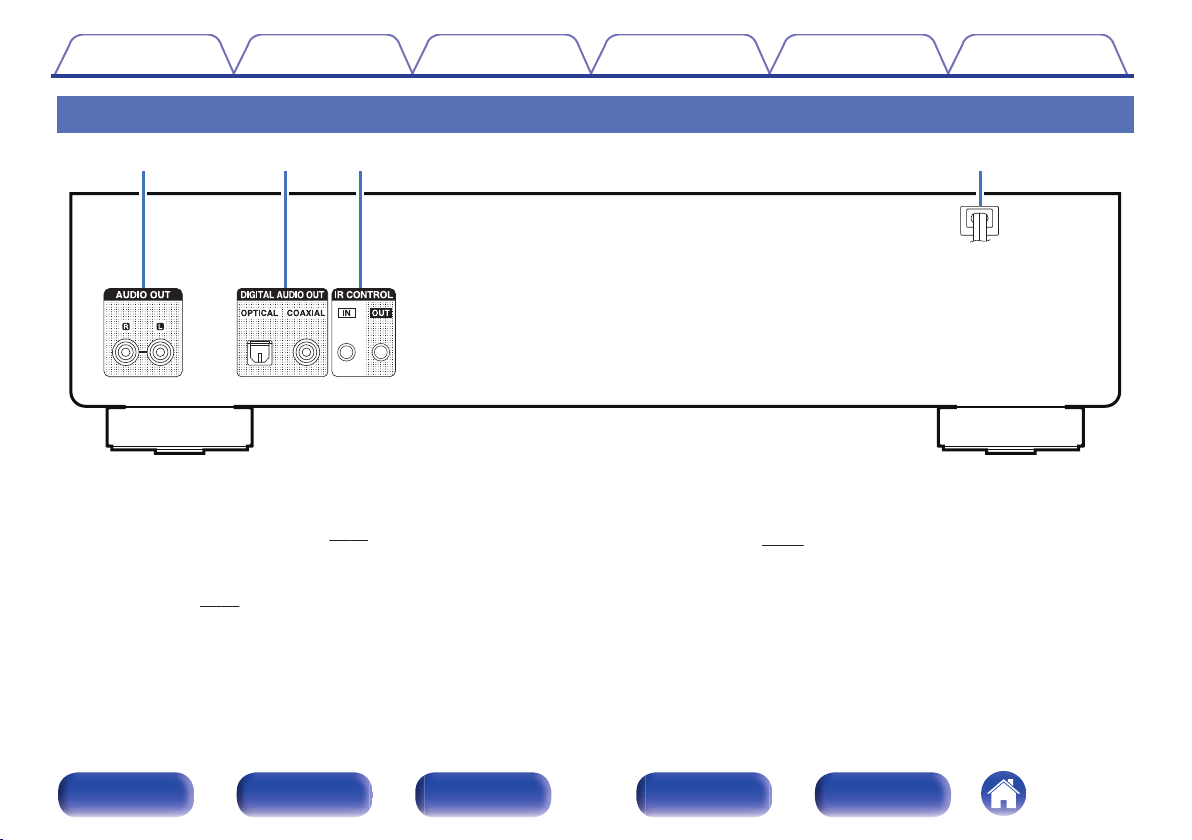
Rear panel
.
rq w e
A
AUDIO OUT connectors
Used to connect devices equipped with analog audio inputs connectors
or an external power amplifier. (v p. 18)
B
DIGITAL AUDIO OUT connectors
Used to connect an AV receiver or D/A converter that has a digital input
connectors. (v p. 19)
C
IR CONTROL connectors
Used to connect Denon network audio players with an IR controller.
D
Power cord (v p. 22)
Contents Connections Playback Settings Tips Appendix
10
Front panel Display Rear panel Remote Index
Remote control unit
e
r
w
q
t
y
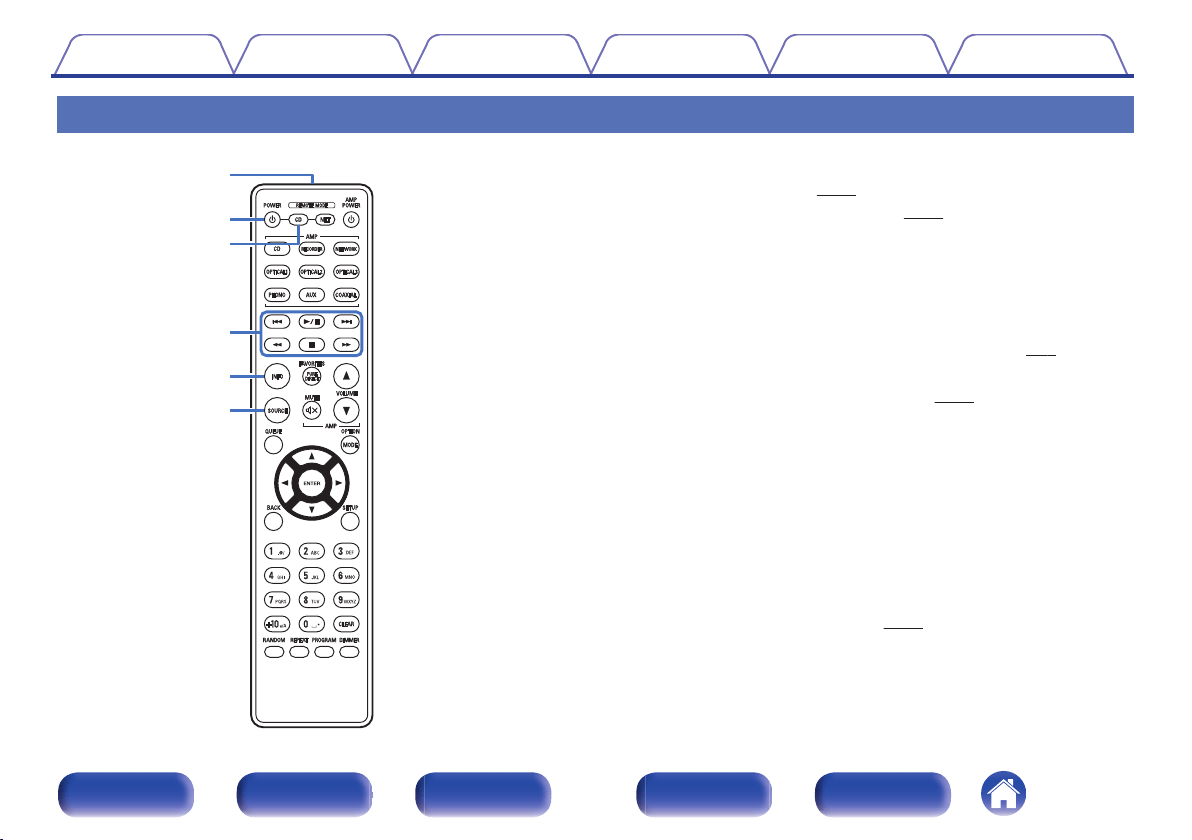
The included remote control can be used to operate not only this unit but
other Denon amplifiers and network audio players too.
0
“Amplifier operations” (v p. 14)
0
“Network audio player operations” (v
p. 15)
o
Operating this unit
To operate CD player, press REMOTE MODE CD button to switch the
remote control to the CD player operation mode.
A
Remote control signal transmitter
This transmits signals from the remote control unit. (v
p. 5)
B
Power operation button (POWER X)
This turns the power on/off (standby). (v p. 24)
C
Remote mode select button
(REMOTE MODE CD)
This switches the remote control to the CD player operation mode.
D
System buttons
These perform playback related operations.
E
Information button (INFO)
This switches the track information shown in the display during
playback.
F
SOURCE button
Select the media to play back. (v
p. 25)
Contents
Connections Playback Settings Tips Appendix
11
Front panel Display Rear panel Remote Index
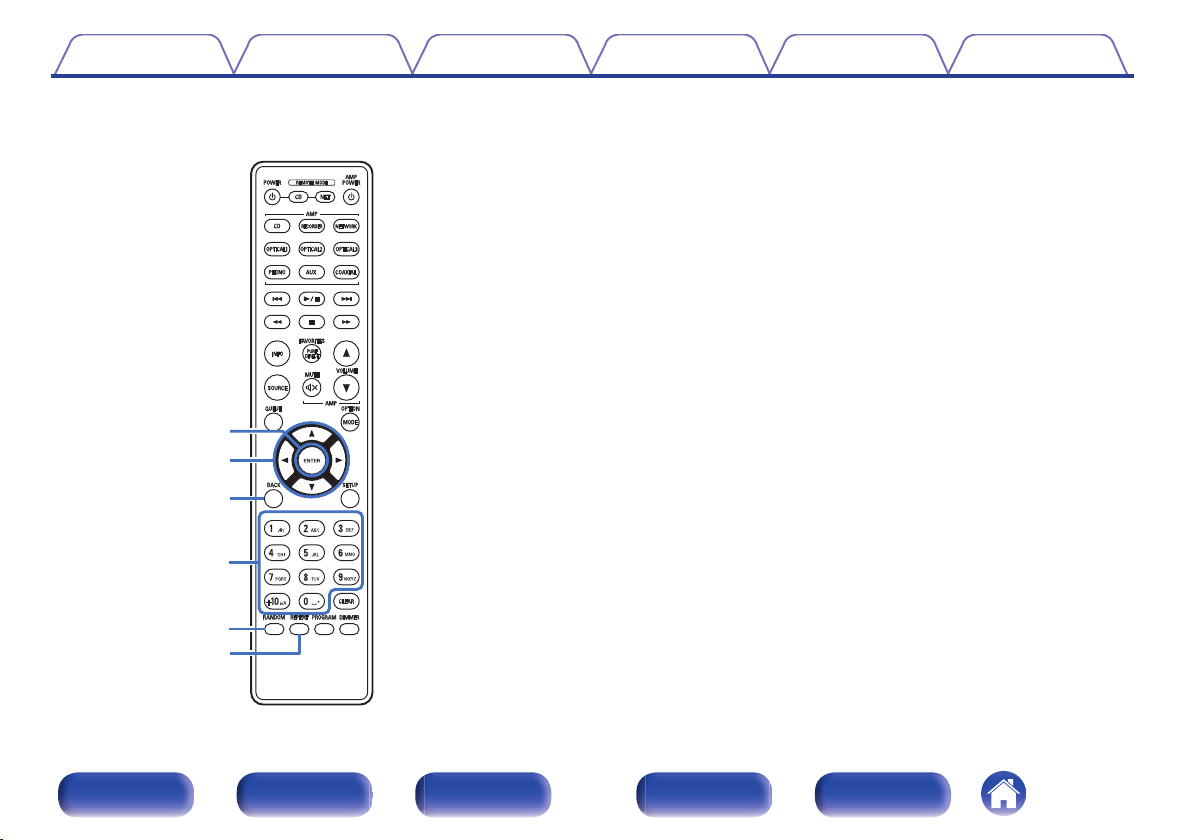
Q0
Q1
Q2
i
u
o
G
ENTER button
This determines the selection.
H
Cursor buttons (uio p)
These select items.
I
BACK button
Returns to the previous item.
J
Number/letter buttons (0 – 9, +10)
These enter letters or numbers into the unit.
K
RANDOM button
Switches the random playback.
L
REPEAT button
Switches to the repeat playback.
Contents Connections Playback Settings Tips Appendix
12
Front panel Display Rear panel Remote Index
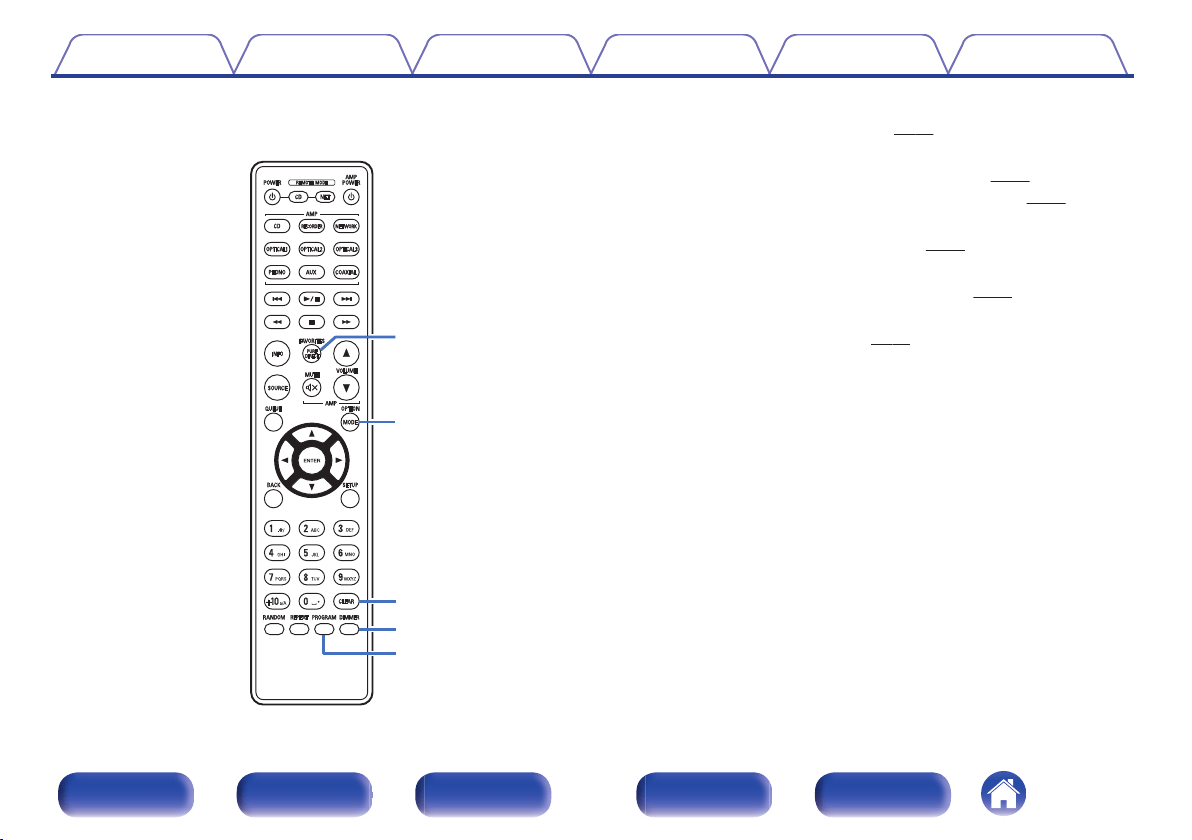
Q4
Q6
Q7
Q3
Q5
M
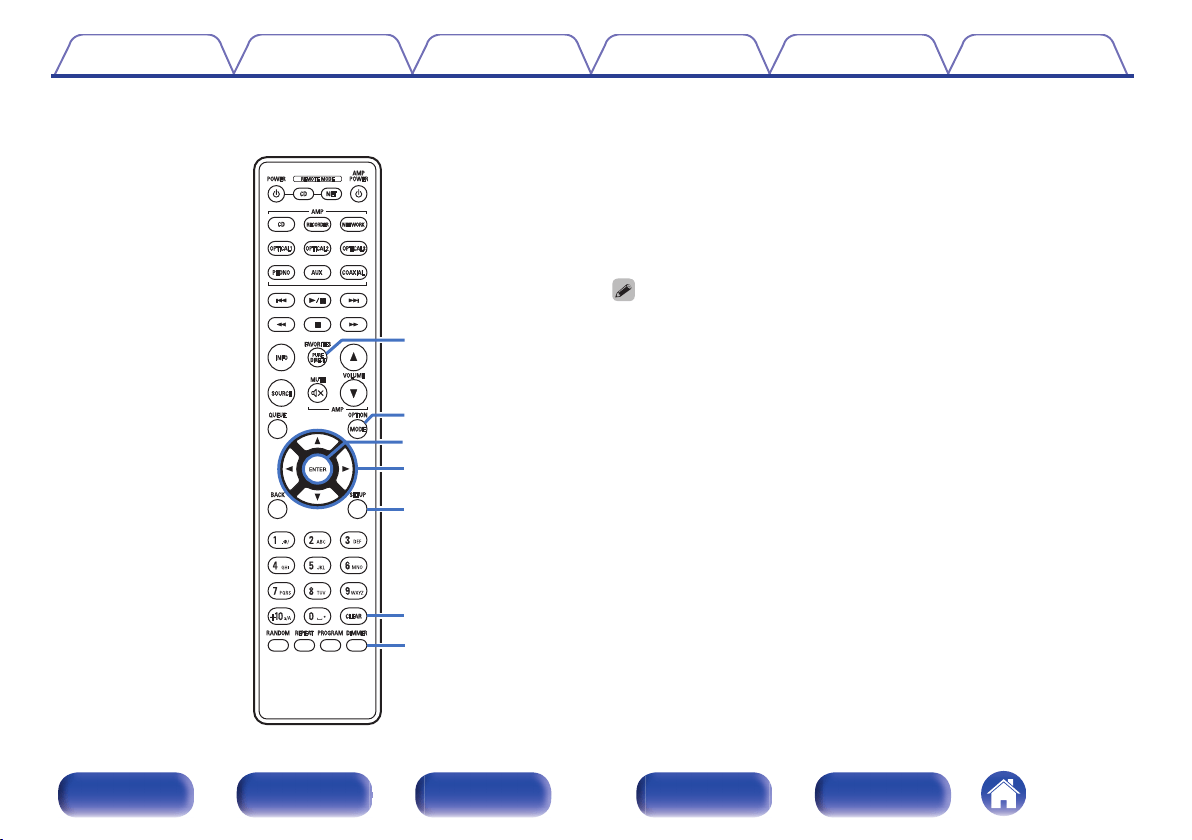
PURE DIRECT button
Switches the Pure Direct mode. (v
p. 26)
N
MODE button
0
Selects the playback range of the data CD. (v
p. 32)
0
Selects the playback range of the USB memory. (v p. 35)
O
CLEAR button
This clears the program registration. (v
p. 29)
P
DIMMER button
This switches the brightness of the display. (v p. 25)
Q
PROGRAM button
This sets program playback. (v
p. 29)
Contents Connections Playback Settings Tips Appendix
13
Front panel Display Rear panel Remote Index
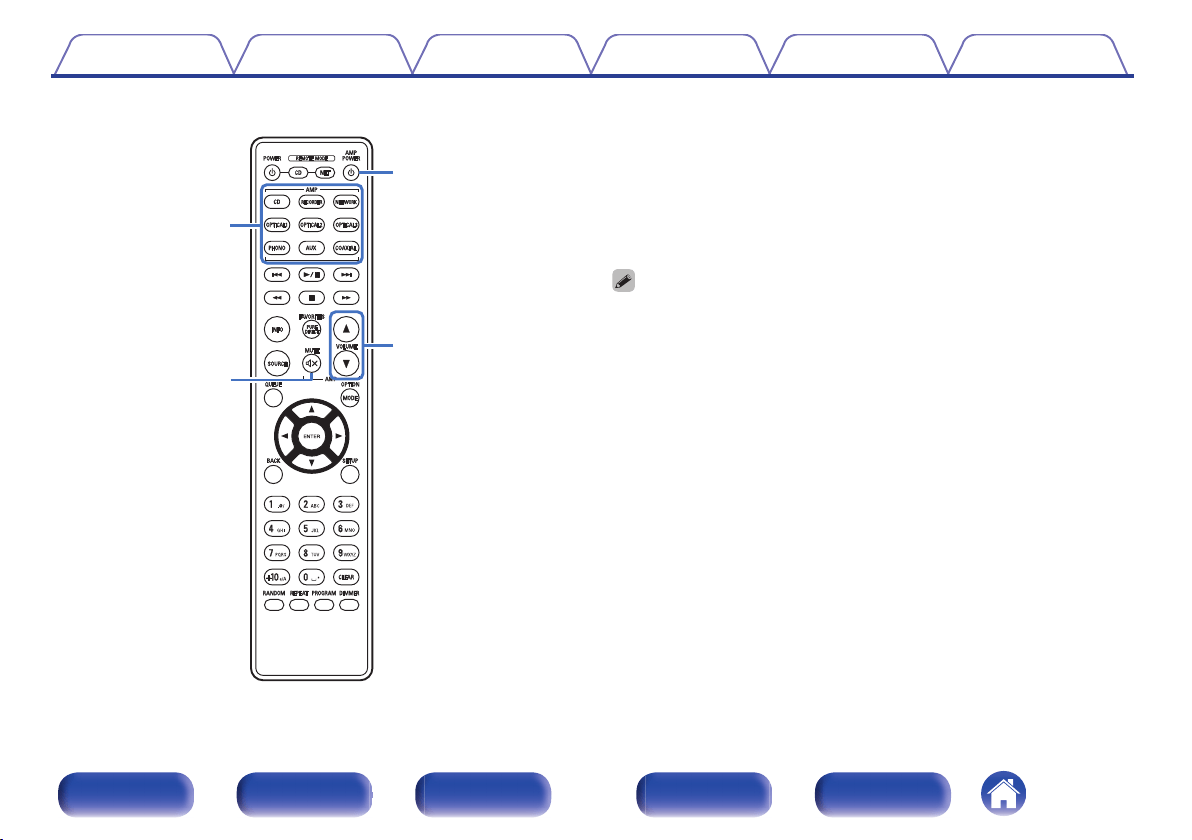
q
w
e
r
o
Amplifier operations
A Denon amplifier can be operated.
A
Input source select buttons
B
MUTE button (:)
C
Power operation button (AMP POWER X)
D
VOLUME buttons (df)
0
The remote control may not operate some products.
Contents Connections Playback Settings Tips Appendix
14
Front panel Display Rear panel Remote Index
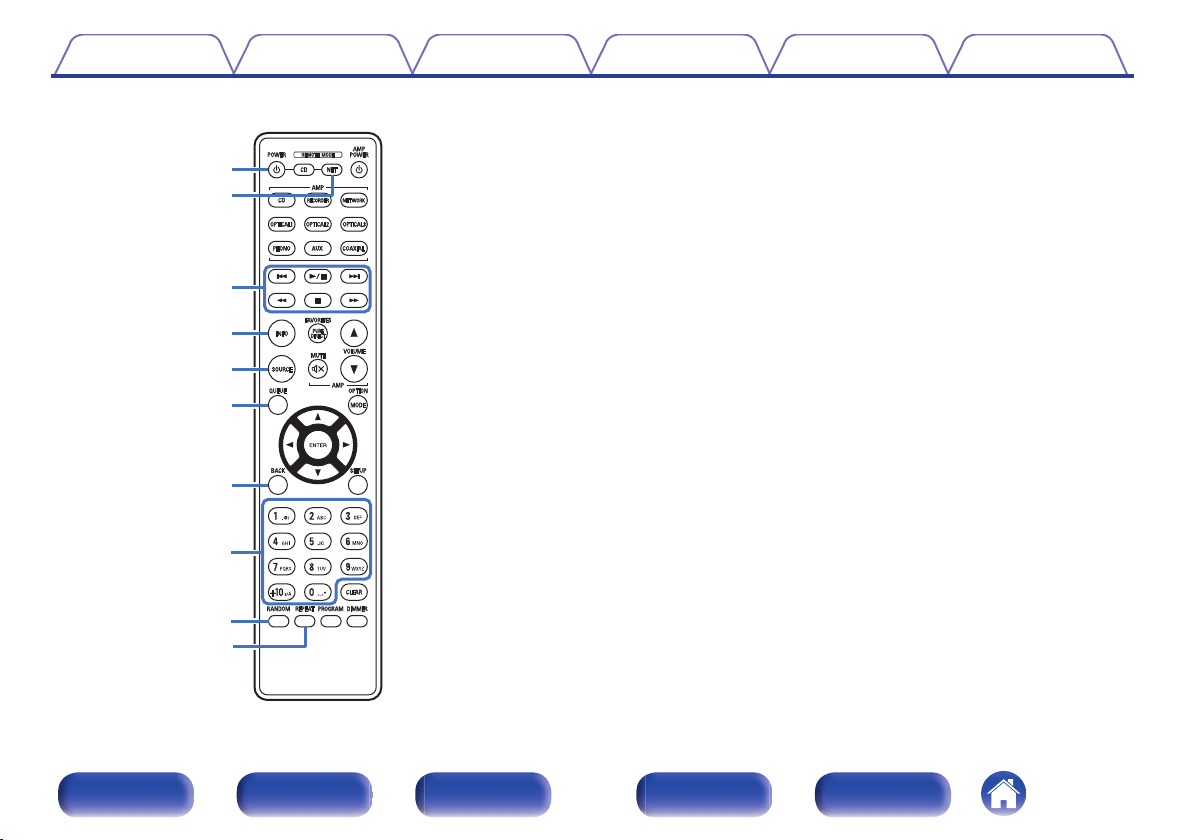
o
Q0
w
e
q
t
y
r
u
i
o
Network audio player operations
You can operate a Denon network audio player.
To operate a Denon network audio player, press the REMOTE MODE
NET button to switch the remote control to the network audio player
operation mode.
A
Power operation button (POWER X)
B
Remote mode select button
(REMOTE MODE NET)
C
System buttons
D
Information button (INFO)
E
SOURCE button
F
QUEUE button
G
BACK button
H
Number/letter buttons (0 – 9, +10)
I
RANDOM button
J
REPEAT button
Contents Connections Playback Settings Tips Appendix
15
Front panel Display Rear panel Remote Index
o
Contents
Connecting an amplifier
18
Connecting to a device with digital audio input connectors
19
Connecting a USB memory device to the USB port
20
Connecting the timer device
21
Connecting the power cord
22
NOTE
0
Do not plug in the power cord until all connections have been completed.
0
Do not bundle power cords together with connection cables. Doing so can result in
humming or noise.
o
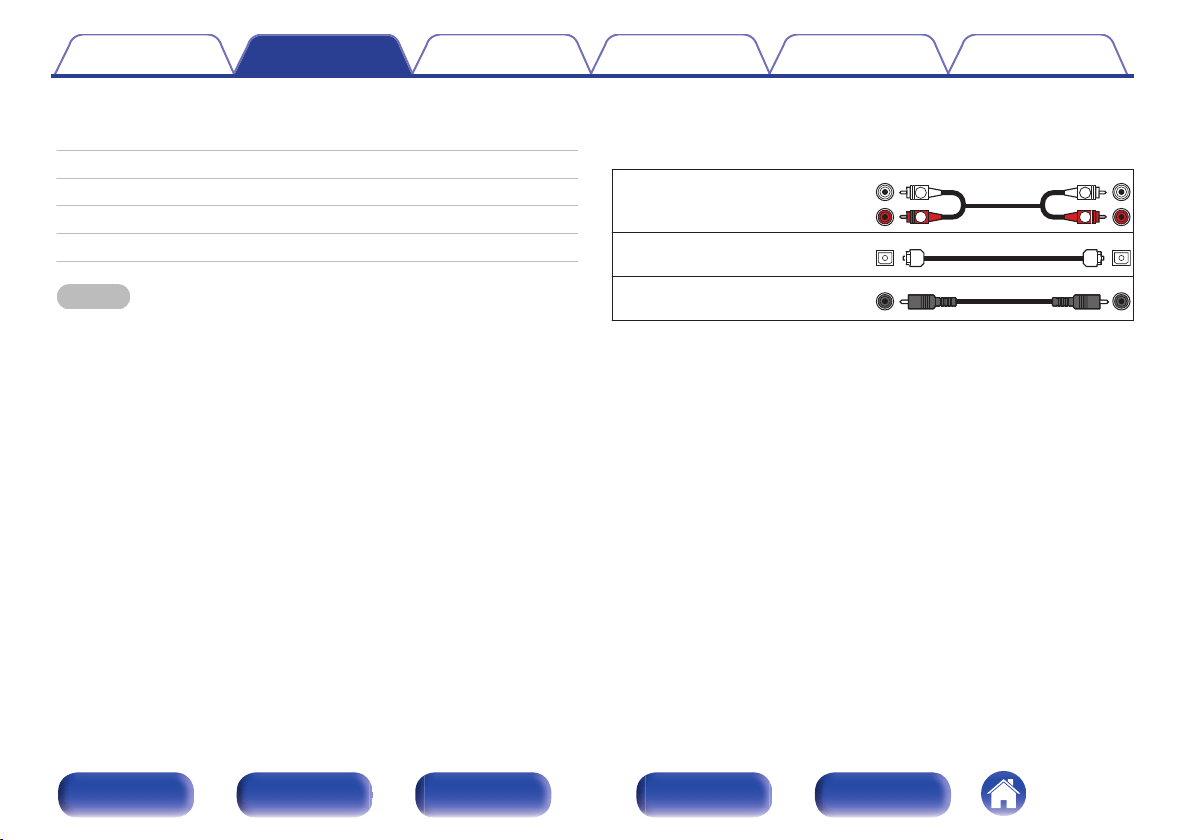
Cables used for connections
Provide necessary cables according to the devices you want to
connect.
Audio cable
(supplied)
.
R
L
R
L
Optical cable
(Sold separately)
.
Coaxial digital cable
(Sold separately)
.
Contents Connections Playback Settings Tips Appendix
17
Front panel Display Rear panel Remote Index
Connecting to a device with digital audio input connectors
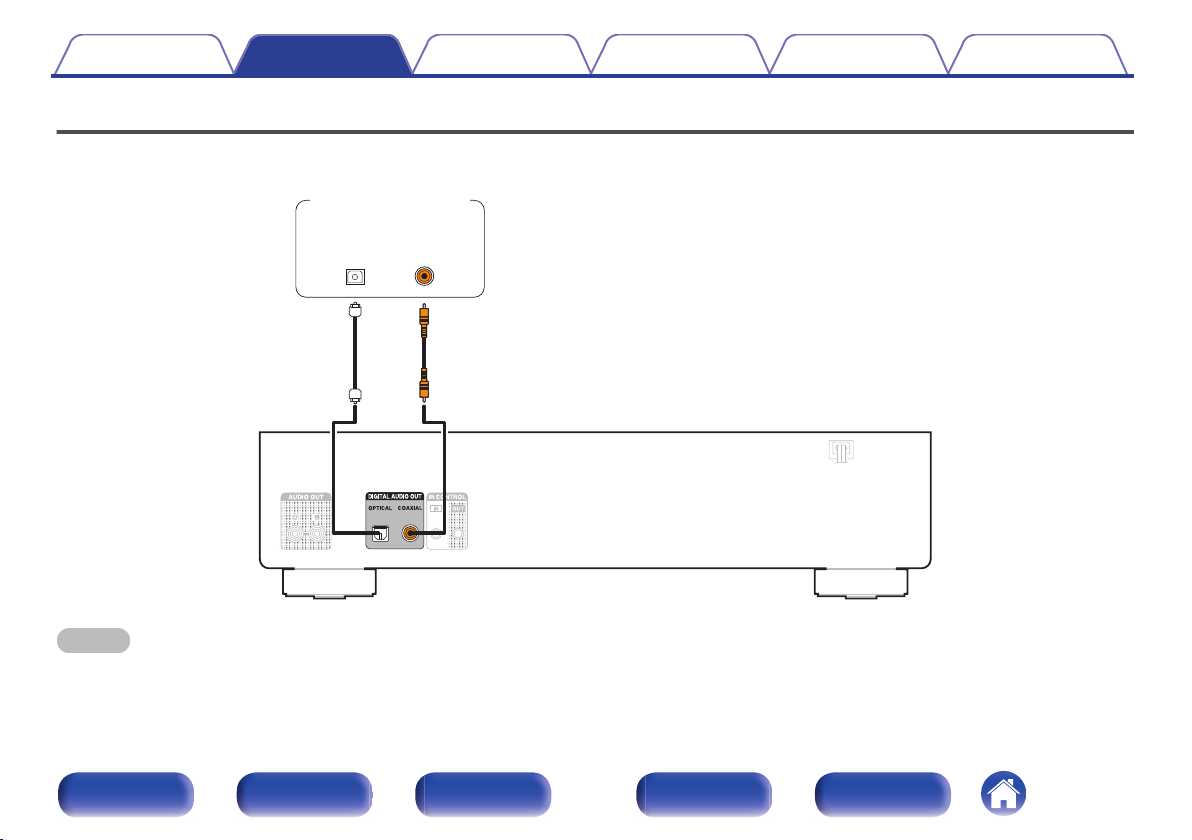
You can enjoy digital audio playback by connecting an AV receiver or D/A converter that has a digital audio terminal to this unit.
.
COAXIAL
IN
OPTICAL
IN
AV receiver /
D/A converter
NOTE
0
Digital audio output stops during playback of the DSD files.
Contents Connections Playback Settings Tips Appendix
19
Front panel Display Rear panel Remote Index
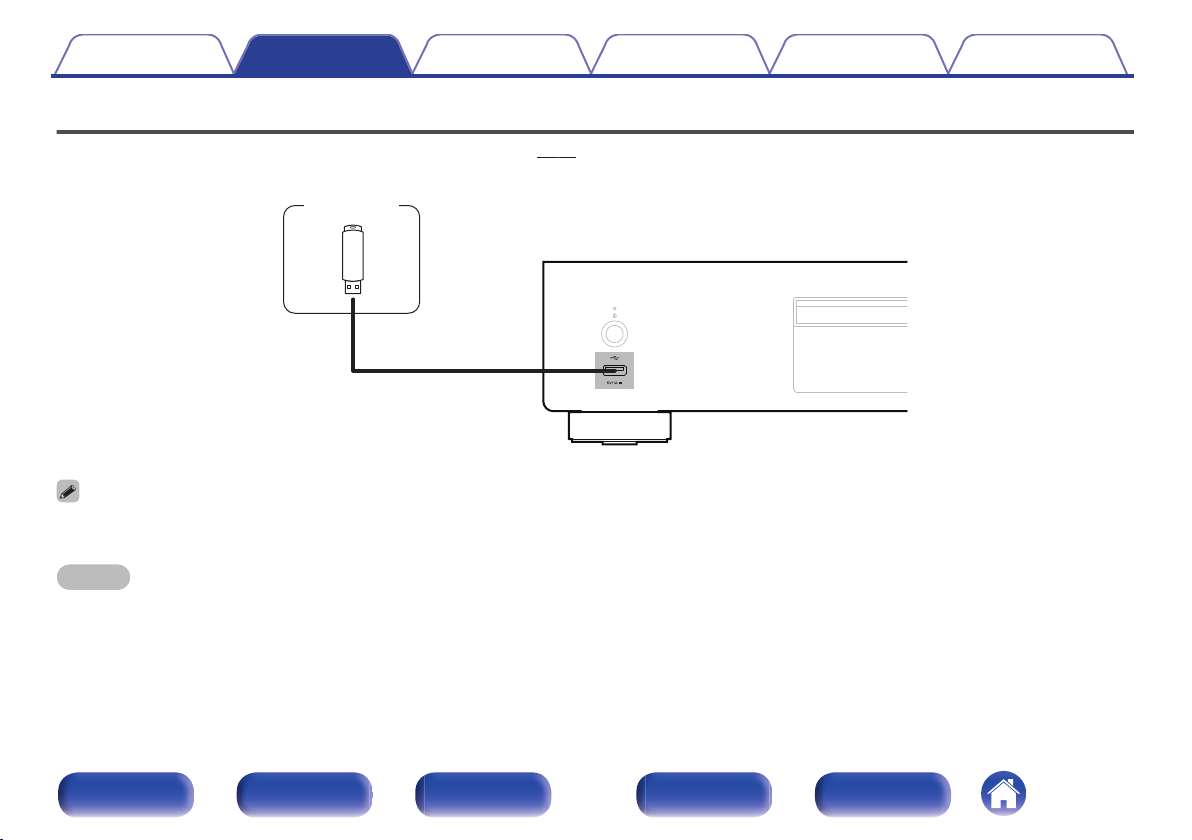
Connecting a USB memory device to the USB port
For operating instructions see “Playing a USB memory device”. (v p. 33)
.
USB memory
device
0
Denon does not guarantee that all USB memory devices will operate or receive power. When using a portable USB hard disk drive (HDD) which came with an AC adapter,
use that device’s supplied AC adapter.
NOTE
0
USB memory devices will not work via a USB hub.
0
It is not possible to use this unit by connecting the unit’s USB port to a PC via a USB cable.
0
Do not use an extension cable when connecting a USB memory device. This may cause radio interference with other devices.
Contents Connections Playback Settings Tips Appendix
20
Front panel Display Rear panel Remote Index
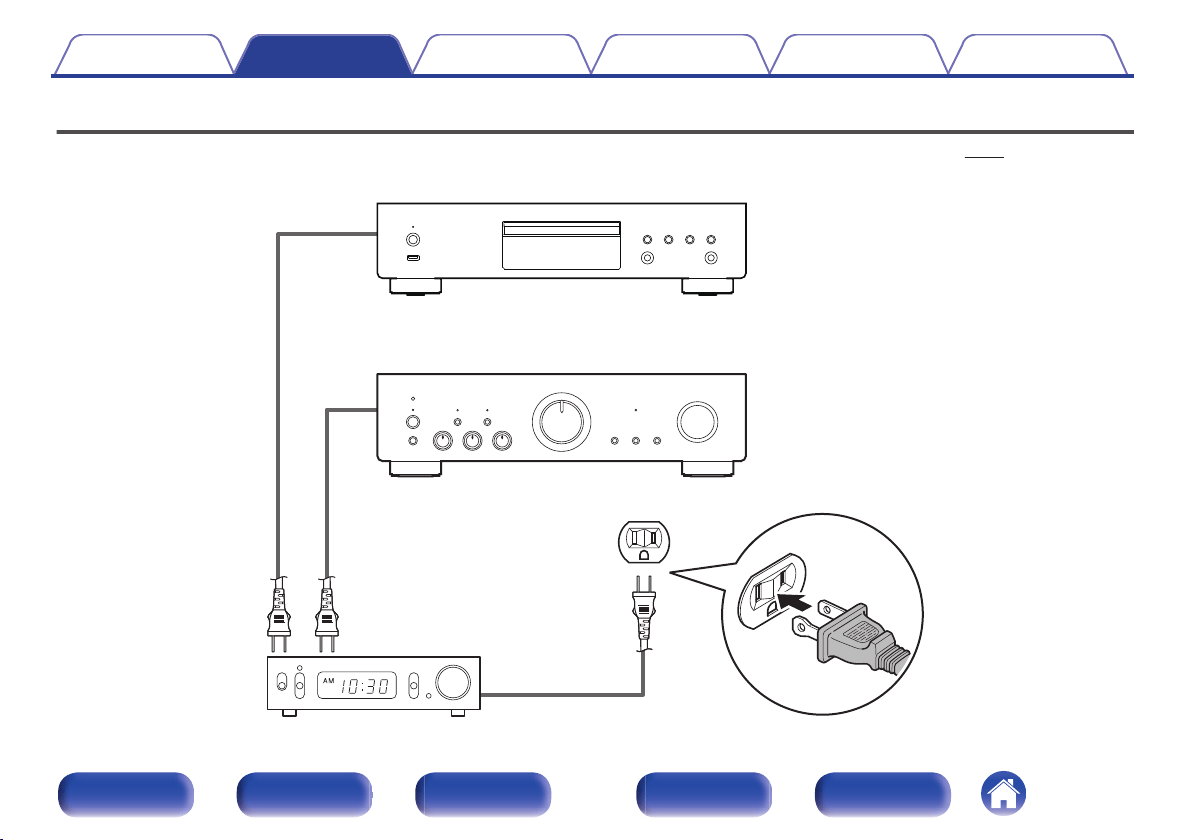
Connecting the timer device
This unit can perform timer play when an amplifier and timer device are connected to this unit. (“Using the timer play function” (v p. 36))
.
This unit
Amplifier
To household power outlet
(AC 120 V, 60 Hz)
Timer device
Contents
Connections Playback Settings Tips Appendix
21
Front panel Display Rear panel Remote Index
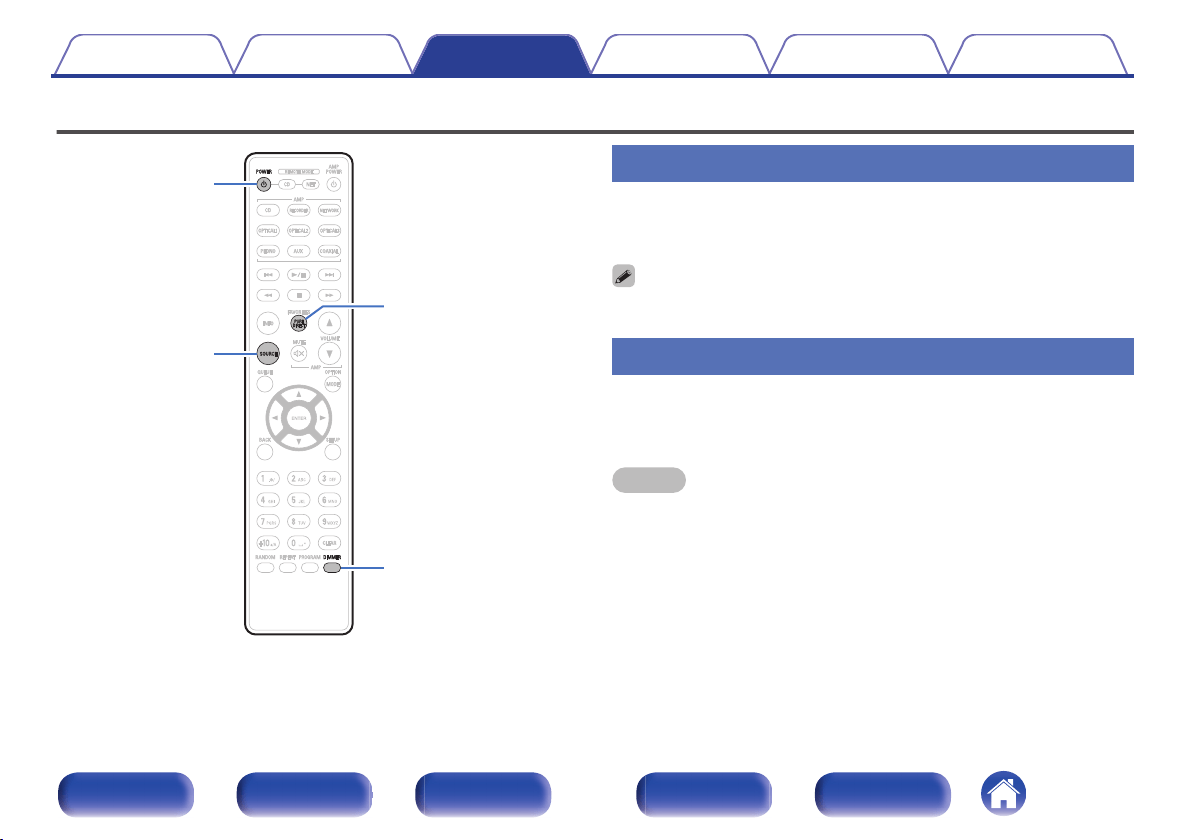
Basic operation
.
PURE DIRECT
DIMMER
POWER
X
SOURCE
Turning the power on
1
Press X on the main unit to turn the power on.
The power indicator lights green.
0
Press POWER X on the remote control unit to turn on power from standby mode.
Switching the power to standby
1
Press POWER X.
The unit switches to standby mode.
NOTE
0
Power continues to be supplied to some of the circuitry even when the power is in
the standby mode. When leaving home for long periods of time or when going on
vacation, either press X on the main unit to turn off the power, or unplug the power
cord from the power outlet.
Contents Connections Playback Settings Tips Appendix
24
Front panel Display Rear panel Remote Index
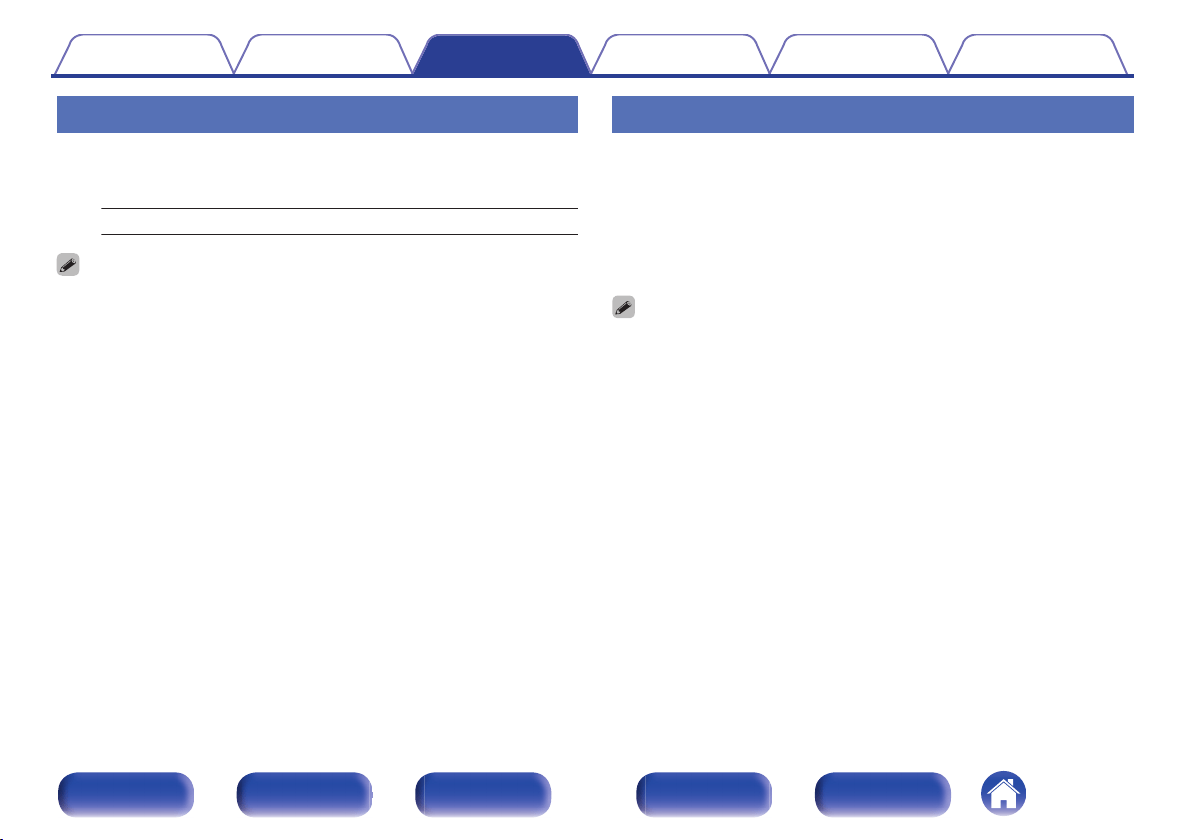
Selecting the media mode
1
Press SOURCE to select the media mode to play back.
The selected media mode is shown in the display.
DISC / USB(Default: DISC)
0
You can also select the playback media mode by pressing SOURCE on the unit.
Switching the display’s brightness
The display brightness can be adjusted between four levels. Switching the
display off reduces a source of noise that affects sound quality, enabling
higher sound quality playback.
1
Press DIMMER.
0
The brightness of the display switches each time the button is
pressed.
0
The display brightness is set to most brightly by default.
0
Press and hold DIMMER for more than 2 seconds to return the display brightness
to the default setting.
Contents Connections Playback Settings Tips Appendix
25
Front panel Display Rear panel Remote Index
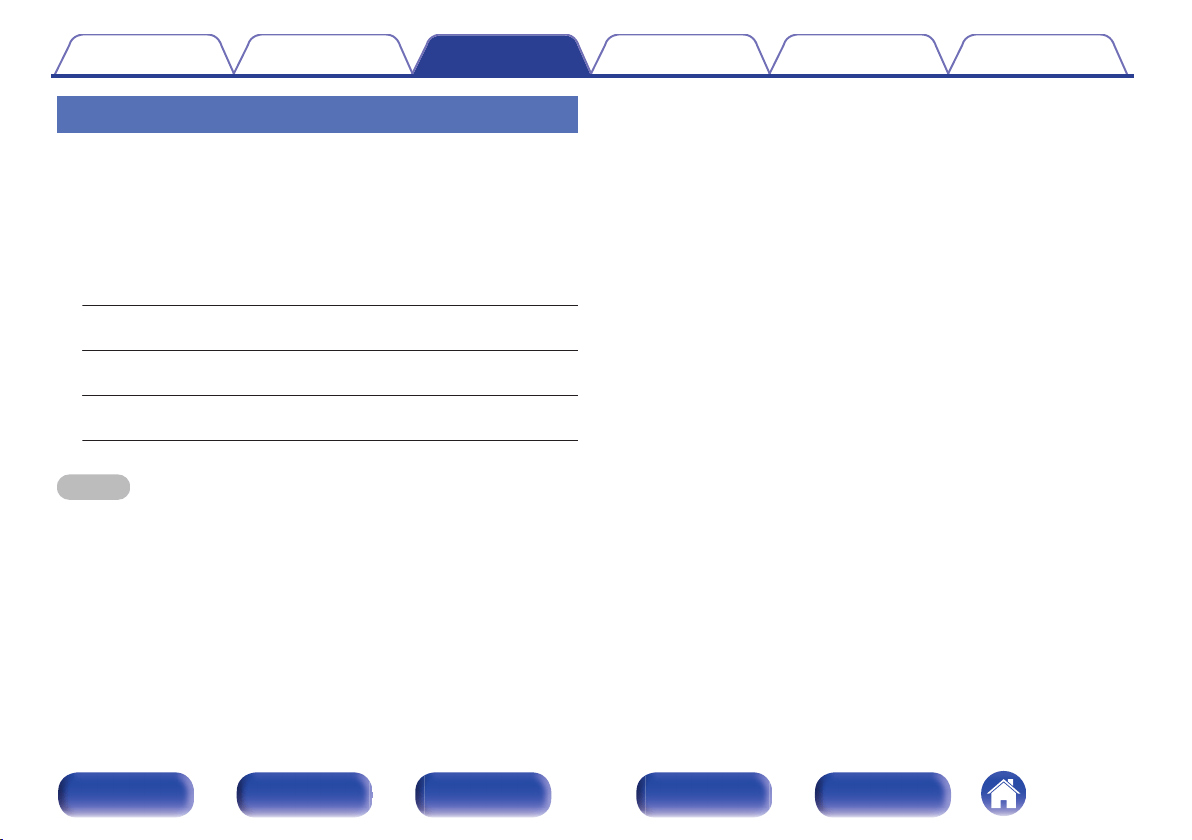
Switching the Pure Direct mode
In Pure Direct mode, the display turns off and digital audio output stops.
This reduces the source of noise that can adversely affect sound quality,
enabling high quality playback.
1
Press PURE DIRECT.
The display turned off, and Pure Direct playback begins.
0
Switches the Pure Direct mode each time the button is pressed.
PURE DIRECT ON
MODE1:
Turns off the display and outputs digital
audio.
PURE DIRECT ON
MODE2:
Turns off the display and stops output of
digital audio.
PURE DIRECT OFF
(Default):
Disables Pure Direct mode.
NOTE
0
The display brightness cannot be changed in Pure Direct mode.
0
The display is only turned off during playback.
Contents Connections Playback Settings Tips Appendix
26
Front panel Display Rear panel Remote Index
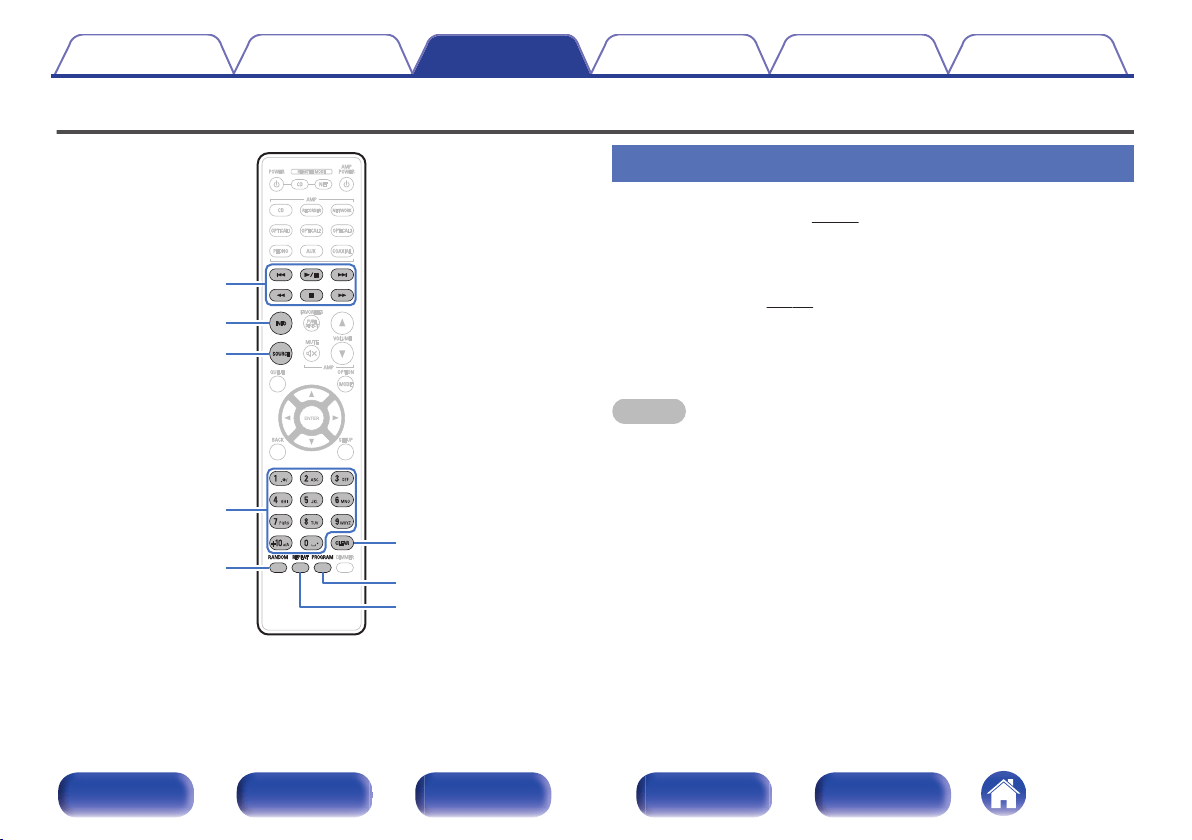
Playing CDs
.
0 – 9, +10
RANDOM
REPEAT
PROGRAM
CLEAR
INFO
1
/
3
2
8 9
6 7
SOURCE
Playing CDs
1
Insert a disc. (v p. 50)
0
Press 5 on the unit to open/close the disc tray.
2
Press SOURCE to change the playback media mode to
“DISC”. (v p. 25)
3
Press 1/3.
The 1 indicator lights on the display. Playback starts.
NOTE
0
Do not place any foreign objects in the disc tray. Doing so could damage the unit.
0
Do not push the disc tray in by hand when the power is turned off. Doing so could
damage the unit.
Contents
Connections Playback Settings Tips Appendix
27
Front panel Display Rear panel Remote Index
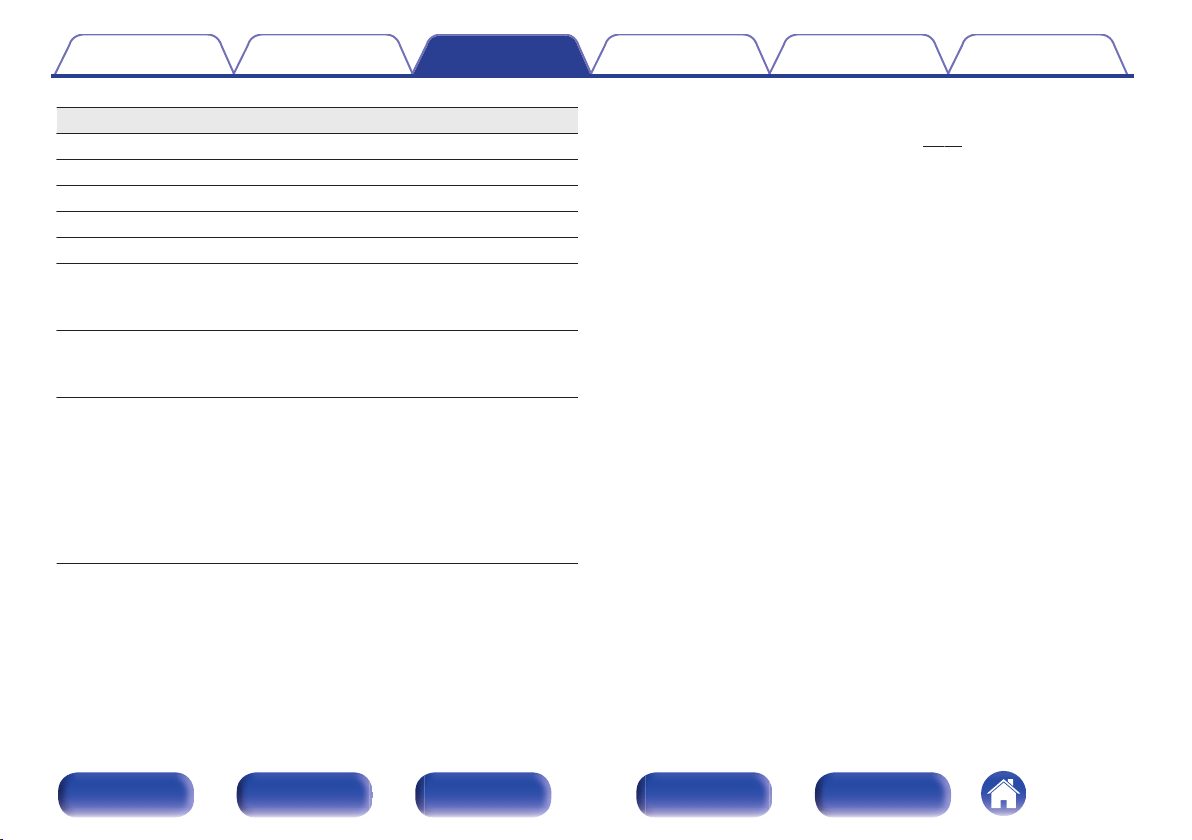
Operation buttons
Function
1/3
Playback / Pause
2
Stop
8 9
Skip to previous track / Skip to next track
6 7
Fast-reverse / Fast-forward
0 - 9, +10 Select the track
RANDOM
Random playback
0
The random playback function only
works in stop mode.
REPEAT
Repeat playback
0
Switching between All-track repeat and
Single-track repeat.
INFO
Time display switching
0
Switching between elapsed time of the
current track, remaining time of the
current track and remaining time of all
tracks.
0
The time displayed on this unit may differ
from this actual time, as it is calculated
by truncating to the nearest 1 second.
o
Discs that can be played back
0
See “About Playing Back Discs”. (v p. 45)
o
Playing a specific track (Direct searching)
1
Use 0 – 9, +10 to select the tracks.
GExampleH
Track 4 :
Press number 4 to select track 4.
Track 12 :
Press numbers +10 and 2 consecutively.
Contents Connections Playback Settings Tips Appendix
28
Front panel Display Rear panel Remote Index
Playing tracks in a specific order
(Program playback)
Up to 25 tracks can be programmed.
1
In the stop mode, press PROGRAM.
“PGM” appears on the display.
2
Use 0 – 9 and +10 to select the tracks.
GExampleH
To program tracks 3 and 12 to be played in that order, press 3, +10
and 2 one after the other.
3
Press 1/3.
Playback starts in the programmed order.
0
When REPEAT is pressed during program playback, the tracks are played
repeatedly in the programmed order.
o
Checking the order of the programmed tracks
In the stop mode, press 9.
The track numbers are displayed in the programmed order each time
the button is pressed.
o
To clear the last track programmed
In the stop mode, press CLEAR.
The last track programmed is cleared each time the button is pressed.
o
Clearing the all programmed track
In the stop mode, press PROGRAM.
Contents Connections Playback Settings Tips Appendix
29
Front panel Display Rear panel Remote Index
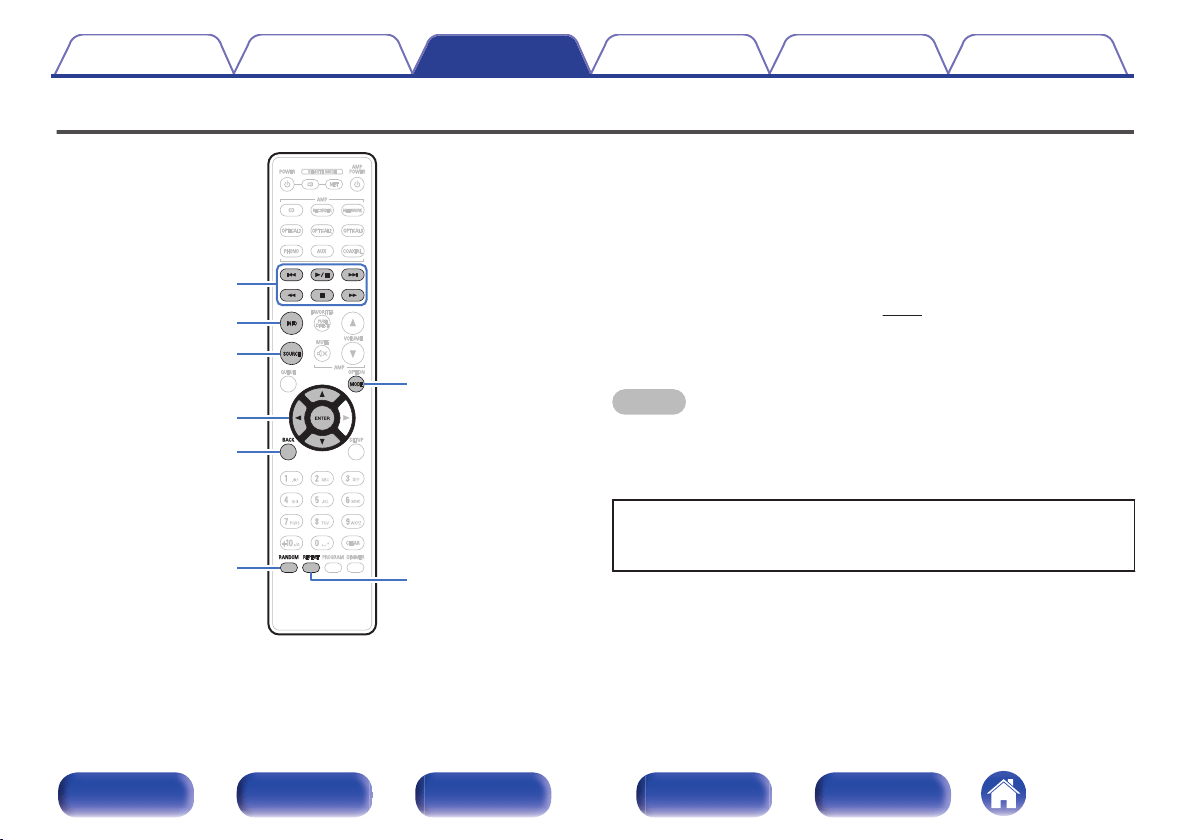
Playing DATA CDs
.
RANDOM
REPEAT
uio
ENTER
INFO
1
/
3
2
8 9
6 7
MODE
BACK
SOURCE
0
This section explains how to playback music files that are recorded onto
a CD-R or CD-RW.
0
There are many music distribution sites on the Internet allowing you to
download music files in MP3 or WMA (Windows Media
®
Audio) format.
The music (files) downloaded from such sites can be stored on CD-R/-
RW discs and played on this unit.
0
The audio format types and specifications supported by this unit for
playback are as follows.
See “Playable files” for details. (v p. 45)
0
MP3
0
WMA
NOTE
0
Copyright-protected files cannot be played.
Note that depending on the software used for burning and other conditions, some
files may not play or display correctly.
“Windows Media” and “Windows” are the trademarks or
registered trademarks of Microsoft Corporation in the United
States and other countries.
Contents
Connections Playback Settings Tips Appendix
30
Front panel Display Rear panel Remote Index
Playing files
1
Load a CD-R/-RW disc containing music files into the
disc tray. (v p. 50)
0
Press 5 on the unit to open/close the disc tray.
2
Press SOURCE to change the playback media mode to
“DISC”. (v p. 25)
3
Use ui to select the folder to be played, then press
ENTER.
4
Use ui to select the file to be played, then press
ENTER.
Playback starts.
Operation buttons
Function
1/3
Playback / Pause
2
Stop
8 9
Skip to previous track / Skip to next track
6 7
Fast-reverse / Fast-forward
BACK Moving up a level in the folder tree
u i
Select the item
ENTER Enter the selected item / Playback
MODE Select the playback range
RANDOM
Random playback
0
The random playback function only
works in stop mode.
REPEAT
Repeat playback
0
Switching between All-track repeat and
Single-track repeat.
INFO
Switches the display between Title name /
Artist name, Title name / Album name and
File name.
0
To start playing another file during playback of a CD-R/CD-RW, first press o to
display the file tree. Next, use ui to select the file to be played and press ENTER.
Contents Connections Playback Settings Tips Appendix
31
Front panel Display Rear panel Remote Index
o
Switching the display
During playback, press INFO.
0
Switches the display between Title name / Artist name, Title name /
Album name and File name.
0
If a file does not support text information or no track information is
recorded, the file name is displayed.
0
The player can display the following characters:
ABCDEFGHIJKLMNOPQRSTUVWXYZ
abcdefghijklmnopqrstuvwxyz
0123456789
! ” # $ % & : ; < > ? @ \ [ ] _ ` l { } ~ ^ ’( ) * + , - . / = space
0
The folder and file numbers are set automatically when the disc is
loaded.
o
Switching the playback range
In the stop mode, press MODE.
0
The playback range of a track can be set.
Folder mode:
All the files in the selected folder are
played.
All mode: All the files in the disc are played.
Contents Connections Playback Settings Tips Appendix
32
Front panel Display Rear panel Remote Index
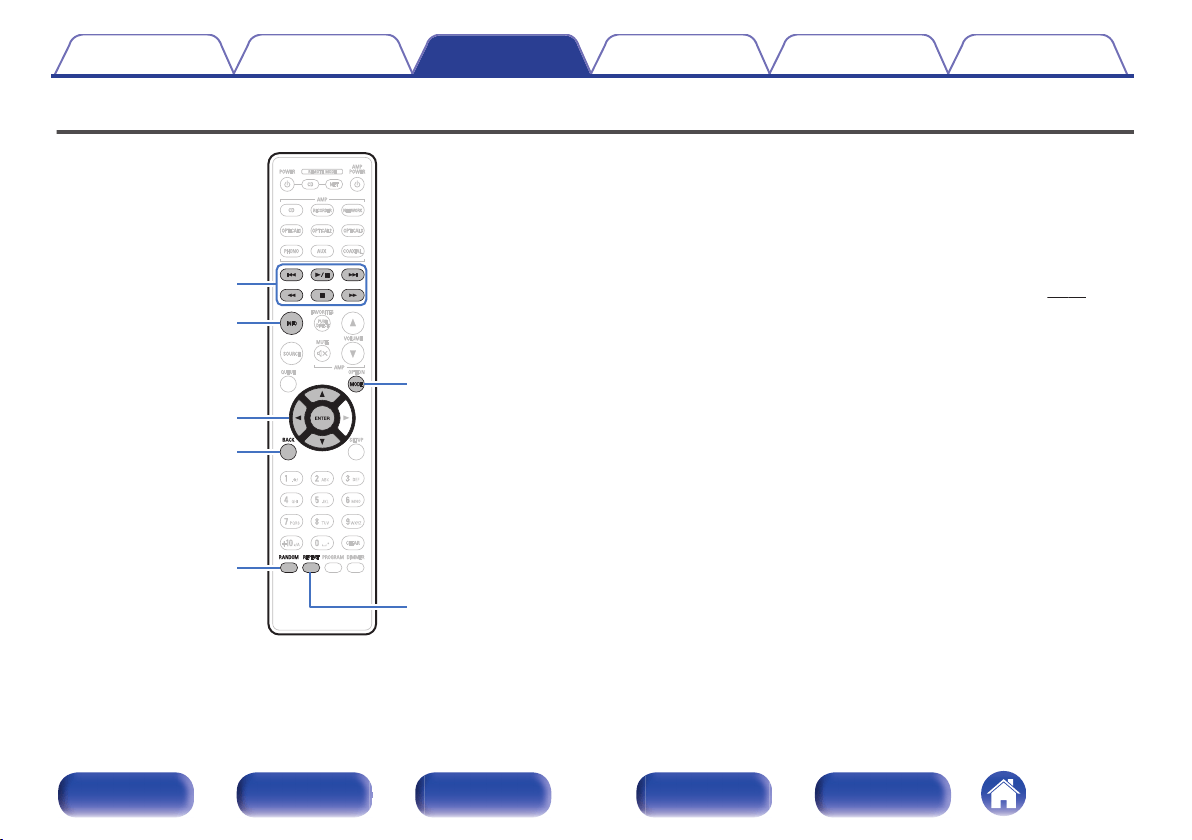
Playing a USB memory device
.
RANDOM
REPEAT
INFO
1
/
3
2
8 9
6 7
uio
ENTER
BACK
MODE
0
Playing back music files stored on a USB memory device.
0
Only USB memory devices conforming to mass storage class and MTP
(Media Transfer Protocol) standards can be played on this unit.
0
This unit is compatible with USB memory devices in “FAT16” or
“FAT32” format.
0
The audio format types and specifications supported by this unit for
playback are as follows.
For details, see “Playing back a USB memory devices” (v
p. 47).
0
WMA
0
MP3
0
WAV
0
MPEG-4 AAC
0
FLAC
0
Apple Lossless
0
AIFF
0
DSD
Contents
Connections Playback Settings Tips Appendix
33
Front panel Display Rear panel Remote Index
Playing files stored on USB memory
devices
1
Insert the USB memory device into the USB port.
When you insert a USB memory device into the USB port, the media
mode automatically switches to “USB”.
2
Use ui to select the folder to be played, then press
ENTER.
3
Use ui to select the file to be played, then press
ENTER.
Playback starts.
Operation buttons
Function
1/3
Playback / Pause
2
Stop
8 9
Skip to previous track / Skip to next track
6 7
Fast-reverse / Fast-forward
BACK Moving up a level in the folder tree
u i
Select the item
ENTER Enter the selected item / Playback
MODE Select the playback range
RANDOM
Random playback
0
The random playback function only
works in stop mode.
REPEAT
Repeat playback
0
Switching between All-track repeat and
Single-track repeat.
INFO
Switches the display between Title name /
Artist name, Title name / Album name and
File name.
0
To start playing another file during playback of a USB memory device, first press o
to display the file tree. Next, use ui to select the file to be played and press
ENTER.
Contents Connections Playback Settings Tips Appendix
34
Front panel Display Rear panel Remote Index
NOTE
0
Note that Denon will accept no responsibility whatsoever for any problems arising
with the data on a USB memory device when using this unit in conjunction with the
USB memory device.
0
All of the files can be read from a USB memory device by connecting the device to
this unit. It may take time to read all of the files if there are a large number of files or
folders on the USB memory device.
o
Switching the playback range
In the stop mode, press MODE.
0
The playback range of a track can be set.
Folder mode:
All the files in the selected folder are
played.
All mode:
All the files in the USB memory are
played.
Contents Connections Playback Settings Tips Appendix
35
Front panel Display Rear panel Remote Index
Using the timer play function
1
Turn on the power of the connected components.
(v p. 21)
2
Switch the amplifier’s function to input from the
connected unit.
3
Insert a disc in the unit or insert a USB memory device
into the USB port.
4
Switch the media mode of this unit to the media to be
played using the timer.
5
Set the audio timer for the desired times.
0
Refer also to the owner’s manual of the audio timer.
6
Turn the timer “On”.
0
The power of the components connected to the timer turns off.
0
When the set time is reached, the power of the different
components automatically turns on and playback starts from the
first track.
NOTE
0
The timer play does not support the random playback or program playback.
Contents Connections Playback Settings Tips Appendix
36
Front panel Display Rear panel Remote Index
Setting the Auto Standby mode
When Auto Standby mode is set to On, if the unit remains in the stopped
state and no operations are performed for approximately 30 minutes, the
unit automatically switches to standby mode.
Auto Standby mode is set to off by default.
.
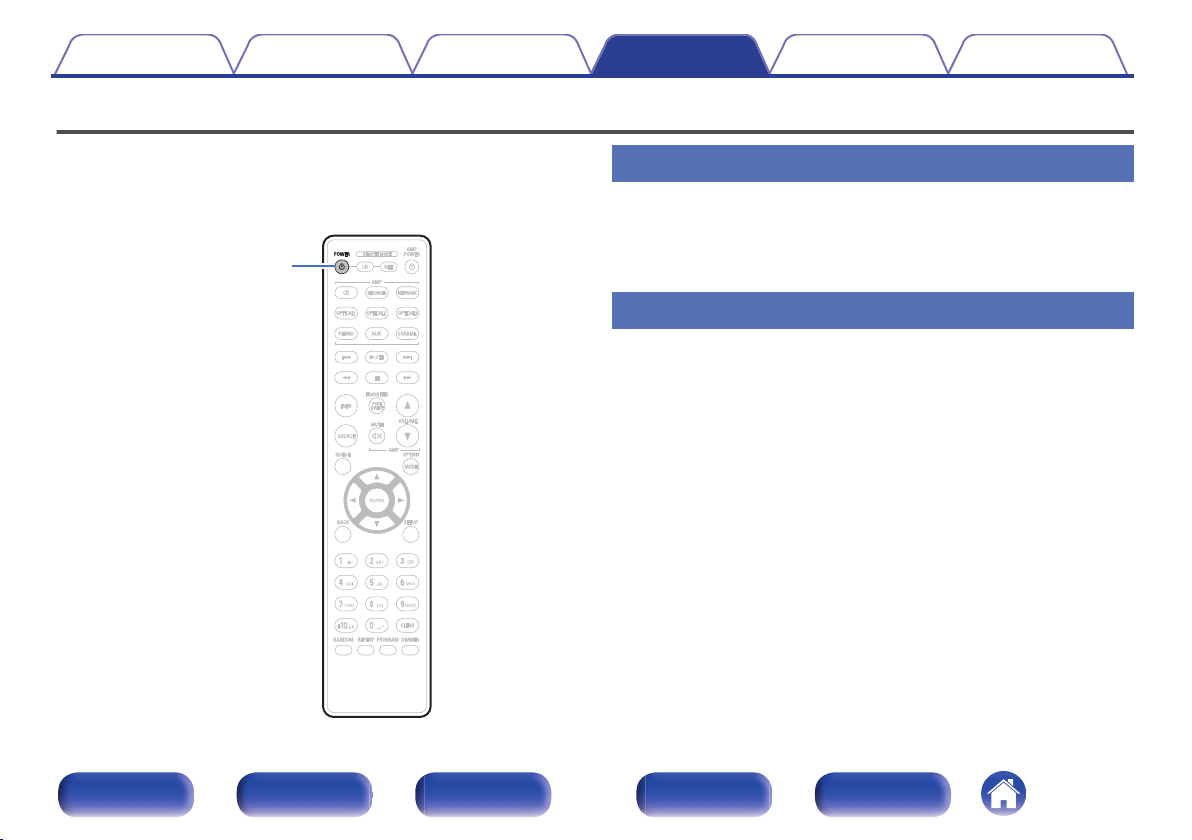
POWER
X
Turning Auto Standby mode on
1
Press and hold POWER X for more than 5 seconds to
turn the Auto Standby mode on.
“AUTO STANDBY ON” appears on the display.
Turning Auto Standby mode off
1
Press and hold POWER X for more than 5 seconds to
turn the Auto Standby mode off.
“AUTO STANDBY OFF” appears on the display.
Contents Connections Playback Settings Tips Appendix
37
Front panel Display Rear panel Remote Index
o
Contents
Tips
I want to enjoy analog output audio at higher quality 39
I want to playback just the specified folder 39
I want to randomly play back all tracks on a CD-R/CD-RW or USB
memory device 39
Troubleshooting
Power does not turn on / Power is turned off 41
Operations cannot be performed through the remote control unit 42
Display on this unit shows nothing 42
No sound comes out 43
Sound is interrupted or noise occurs 43
Cannot playback Discs 44
Contents Connections Playback Settings Tips Appendix
38
Front panel Display Rear panel Remote Index
Tips
I want to enjoy analog output audio at higher quality
0
Switch pure direct mode to “PURE DIRECT ON MODE2”. (v p. 26)
I want to playback just the specified folder
0
Press the MODE button to set the playback mode to folder playback mode. (v p. 32), (v p. 35)
I want to randomly play back all tracks on a CD-R/CD-RW or USB memory device
0
Random playback can be set by pressing the MODE button and setting all tracks playback mode as the playback mode before playback. (v p. 32),
(v p. 35)
Contents Connections Playback Settings Tips Appendix
39
Front panel Display Rear panel Remote Index
Troubleshooting
If a problem should arise, first check the following:
1. Are the connections correct?
2. Is the set being operated as described in the owner’s manual?
3. Are the other devices operating properly?
If this unit does not operate properly, check the corresponding symptoms in this section.
If the symptoms do not match any of those described here, consult your dealer as it could be due to a fault in this unit. In this case, disconnect the power
immediately and contact the store where you purchased this unit.
Contents Connections Playback Settings Tips Appendix
40
Front panel Display Rear panel Remote Index
Power does not turn on / Power is turned off
Power is not turned on.
0
Check whether the power plug is correctly inserted into the power outlet. (v
p. 22)
0
This unit is in standby mode. Press the POWER X button on the remote control. (v p. 24)
Power automatically turns off.
0
The auto standby mode setting is on. The auto standby mode automatically switches the unit to standby if there are no operations for more than 30
minutes. To disable the Auto Standby mode, press and hold the POWER X button on the remote control for more than 5 seconds when the Auto
Standby mode is enabled. (v p. 37)
Contents Connections Playback Settings Tips Appendix
41
Front panel Display Rear panel Remote Index
Operations cannot be performed through the remote control unit
Operations cannot be performed through the remote control unit.
0
Batteries are worn out. Replace with new batteries. (v
p. 5)
0
Operate the remote control unit within a distance of about 23 ft/7 m from this unit and at an angle of within 30°. (v p. 5)
0
Remove any obstacle between this unit and the remote control unit.
0
Insert the batteries in the proper direction, checking the q and w marks. (v p. 5)
0
The unit’s remote control sensor is exposed to strong light (direct sunlight, inverter type fluorescent bulb light, etc.). Move the set to a place in which the
remote control sensor will not be exposed to strong light.
0
When using a 3D video device, the remote control unit of this unit may not function due to effects of infrared communications between units (such as TV
and glasses for 3D viewing). In this case, adjust the direction of units with the 3D communications function and their distance to ensure they do not
affect operations from the remote control unit of this unit.
Display on this unit shows nothing
Display is off.
0
Press the DIMMER button, and change the setting to anything other than off. (v
p. 25)
0
When Pure Direct mode is set to “PURE DIRECT ON MODE1” or “PURE DIRECT ON MODE2”, the display turns off. Press the PURE DIRECT button
on the remote control to set “PURE DIRECT OFF”. (v p. 26)
Contents
Connections Playback Settings Tips Appendix
42
Front panel Display Rear panel Remote Index
No sound comes out
No sound is produced. Or sound is distorted.
0
Check the connections for all devices. (v
p. 17)
0
Insert connection cables all the way in.
0
Check that input connectors and output connectors are not reversely connected.
0
Check cables for damage.
0
Check the amplifier’s functions and controls and adjust as necessary.
0
Digital audio output stops during playback of the DSD files.
0
Set the Pure Direct mode to “PURE DIRECT ON MODE2” to stop digital audio output. To output digital audio, turn off Pure Direct or set the Pure Direct
mode to “PURE DIRECT ON MODE1”. (v
p. 26)
Sound is interrupted or noise occurs
During playback from the CD-R/CD-RW, sound is occasionally interrupted.
0
This may be caused by poor recording conditions, or the disc itself may be of poor quality. Use a correctly recorded disc.
Sound is occasionally interrupted during playback from the USB memory device.
0
When the transfer speed of the USB memory device is slow, sound may occasionally be interrupted.
Contents
Connections Playback Settings Tips Appendix
43
Front panel Display Rear panel Remote Index
Cannot playback Discs
Cannot playback when the play button is pressed, or cannot correctly play back a specific part of the disc.
0
The disc is dirty or scratched. Either clean the disc, or insert a different disc. (v
p. 51)
Cannot playback CD-R/CD-RW.
0
Discs cannot be played back unless they have been finalized. Use a finalized disc. (v p. 45)
0
This may be caused by poor recording conditions, or the disc itself may be of poor quality. Use a correctly recorded disc.
0
Files are created in a format that is not supported by this unit. Check the formats supported by this unit. (v
p. 45)
“NO DISC” is displayed.
0
“NO DISC” is displayed if the disc is loaded upside-down or if no disc is loaded. (v p. 50)
“UNSUPPORTED” is displayed.
0
“UNSUPPORTED” is displayed if a disc that cannot be played is loaded. (v p. 50)
Contents
Connections Playback Settings Tips Appendix
44
Front panel Display Rear panel Remote Index
Playing back Discs
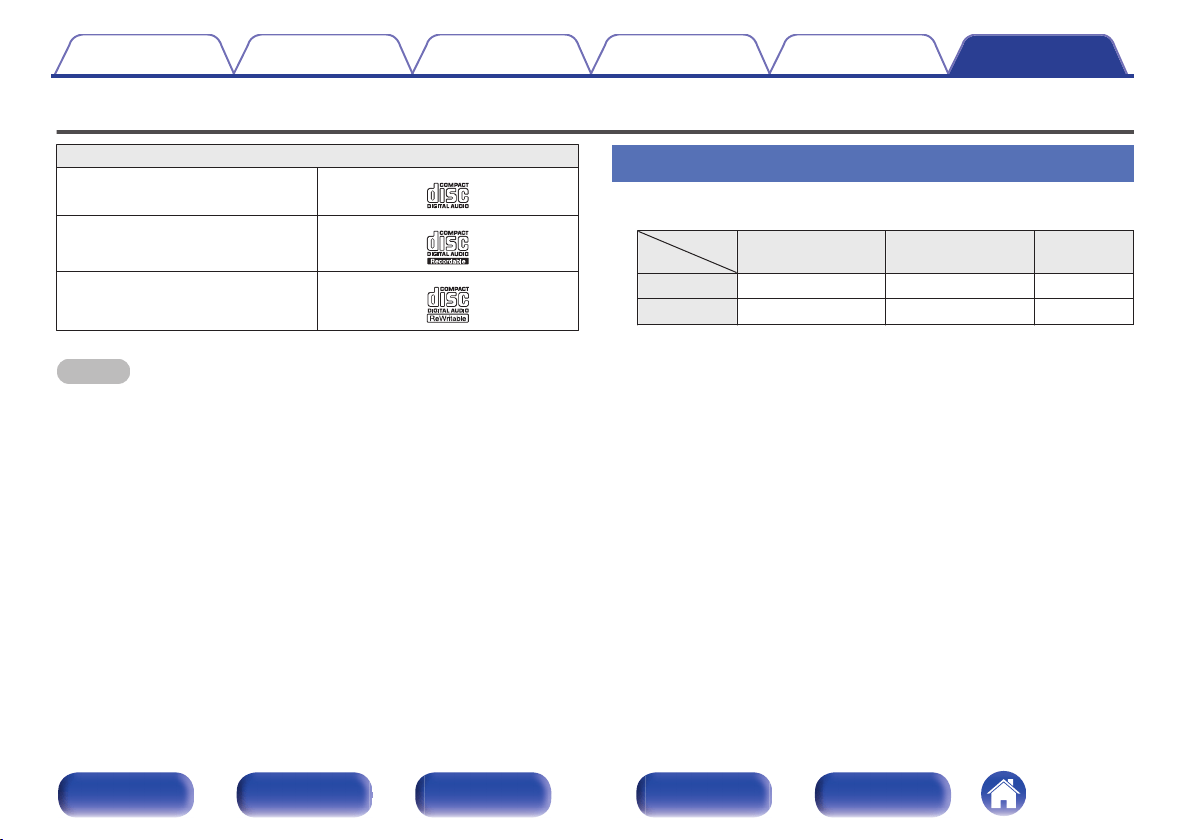
Playable media
CD
.
CD-R
.
CD-RW
.
NOTE
0
Some discs and some recording formats cannot be played.
0
Non-finalized discs cannot be played.
Files
o
Specifications of supported files
Sampling
frequency
Bit rate Extension
MP3 32/44.1/48 kHz 48 – 320 kbps .mp3
WMA 32/44.1/48 kHz 48 – 320 kbps .wma
o
Maximum number of playable files and folders
Maximum number of folders : 256
Total number of folders and files : 512
Contents
Connections Playback Settings Tips Appendix
45
Front panel Display Rear panel Remote Index
NOTE
0
Be sure to give files the extension. Files with any other extensions or files with no
extensions cannot be played.
0
Recordings you have made should only be used for your personal enjoyment, and
as per copyright laws may not be used in other ways without permission of the
copyright holder.
0
Only music files that are not copyright-protected can be played on this unit.
0
Content downloaded from pay sites on the Internet are copyright protected.
Also, files encoded in WMA format when ripped from a CD, etc. on a computer
may be copyright protected, depending on the computer’s settings.
0
The maximum number of files and folders that can be played differs depending on
conditions such as the length of the file name or folder name or the number of
levels in the folder hierarchy.
Contents Connections Playback Settings Tips Appendix
46
Front panel Display Rear panel Remote Index
Playing back a USB memory devices
0
This unit is compatible with MP3 ID3-Tag (Ver. 2) standard.
0
This unit is compatible with WMA META tags.
0
If the image size (pixels) of an album artwork exceeds 500 × 500 (WMA/MP3/Apple Lossless/DSD) or 349 × 349 (MPEG-4 AAC), then music may not
be played back properly.
o
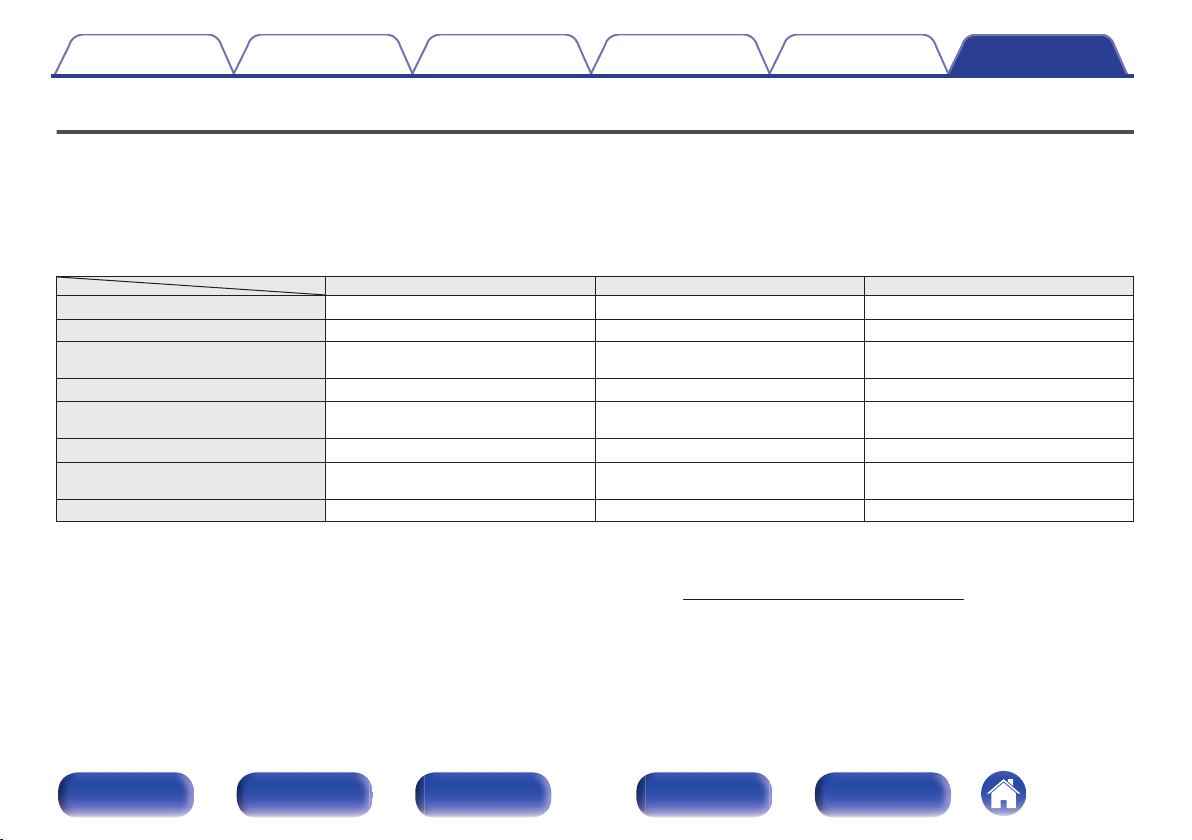
Specifications of supported files
Sampling frequency Bit rate Extension
WMA
z
1
32/44.1/48 kHz 48 – 320 kbps .wma
MP3 32/44.1/48 kHz 48 – 320 kbps .mp3
WAV
32/44.1/48/88.2/
96/176.4/192 kHz
– .wav
MPEG-4 AAC
z
1
32/44.1/48 kHz 48 – 320 kbps .aac/.m4a/.mp4
FLAC
32/44.1/48/88.2/
96/176.4/192 kHz
– .flac
Apple Lossless
z
2
32/44.1/48/88.2/96 kHz – .m4a
AIFF
32/44.1/48/88.2/
96/176.4/192 kHz
– .aif/.aiff
DSD 2.8/5.6 MHz – .dsf/.dff
z1
Only files that are not protected by copyright can be played on this unit.
Content downloaded from pay sites on the Internet are copyright protected. Also, files encoded in WMA format when ripped from a CD, etc. on a computer may be
copyright protected, depending on the computer’s settings.
z2
The Apple Lossless Audio Codec (ALAC) is distributed under the Apache License, Version 2.0 (
http://www.apache.org/licenses/LICENSE-2.0).
Contents
Connections Playback Settings Tips Appendix
47
Front panel Display Rear panel Remote Index
o
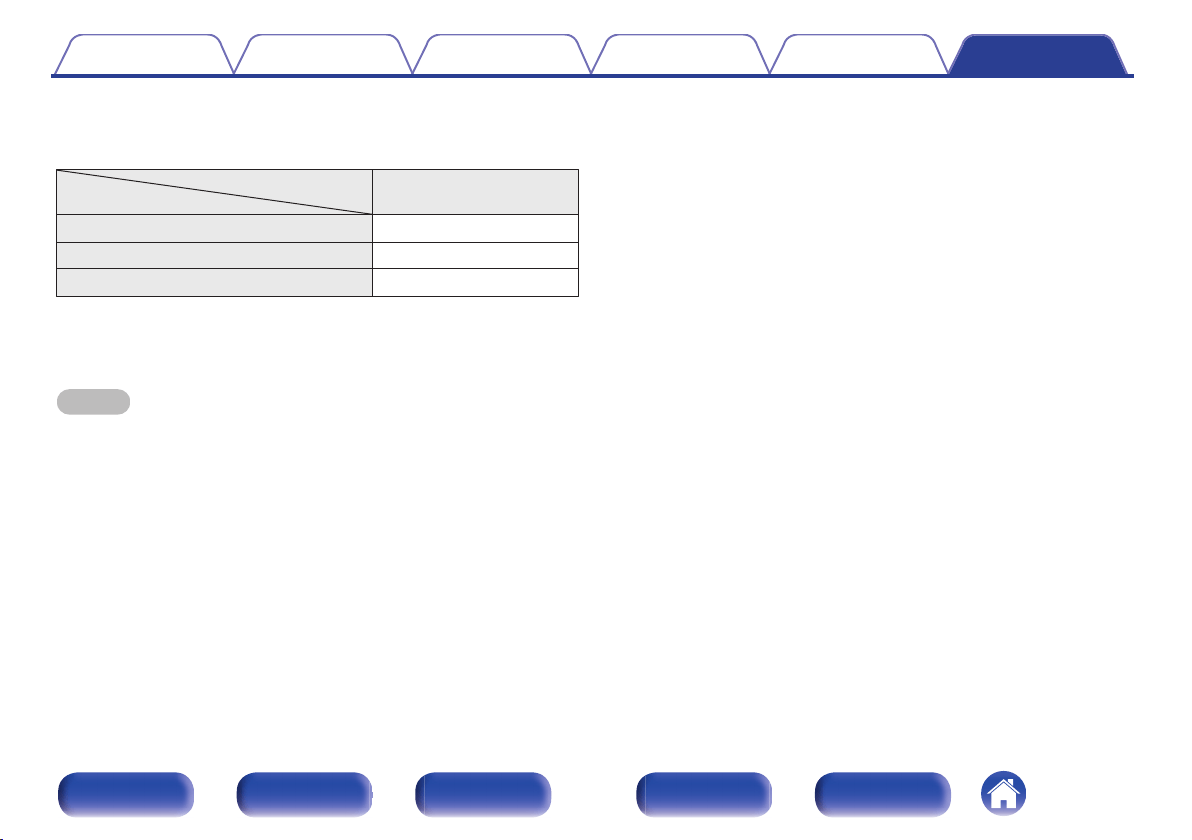
Maximum number of playable files and folder
The limits on the number of folders and files that can be displayed by
this unit are as follows.
Media
Item
USB memory device
Number of folder directory levels
z
1
8 levels
Number of folders 255
Number of files
z
2
65025
z1
The limited number includes the root folder.
z2
The allowable number of files may differ according to the USB memory device
capacity and the file size.
NOTE
0
Digital audio output stops during playback of the DSD files.
Contents Connections Playback Settings Tips Appendix
48
Front panel Display Rear panel Remote Index
Playback order of files
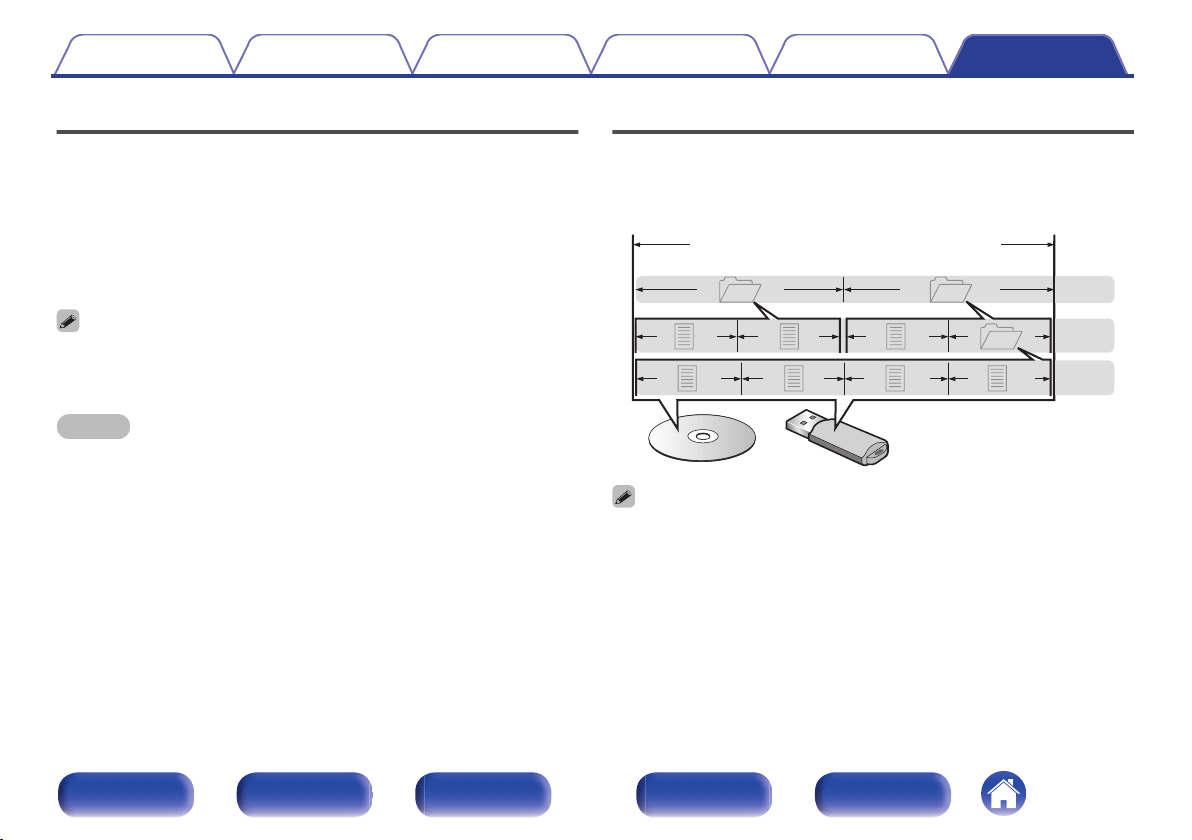
When there are multiple folders containing music files, the playback order
of folders is automatically set when this unit reads the media. The files in
each folder are played in alphabetical order.
CD-R/CD-RW and USB memory device
For playback of files on CD-R, CD-RW or USB memory device, files in all
folders on the first layer are played first, next on the second layer, then
next on the third layer, and so on in this order.
0
The playback order displayed on a PC may differ from the actual playback order.
0
The playback order with a CD-R/CD-RW may differ, depending on the writing
software.
NOTE
0
The playback order may differ from the order in which the folders or files were
recorded if you delete or add a folder or file on USB. This occurs because of data
recording specifications and is not a malfunction.
About folders and files
Music files recorded on CD-R/-RW and USB memory device are divided
into large segments (folders) and small segments (files).
Files are stored in folders, and folders can be placed for storage in a
hierarchy. The unit can recognize up to 8 levels of folders.
.
CD-R/CD-RW and USB memory device
Folder 1 Folder 2
1st level
2nd level
3rd level
File 1 File 2 File 3 Folder 3
File 4 File 5 File 6 File 7
0
When writing music files on a CD-R/-RW disc, set the writing software’s format to
“ISO9660”. The files may not play properly if they are recorded in other formats.
For details, refer to the instructions of your writing software.
Contents Connections Playback Settings Tips Appendix
49
Front panel Display Rear panel Remote Index
Cautions on using media
Loading discs
0
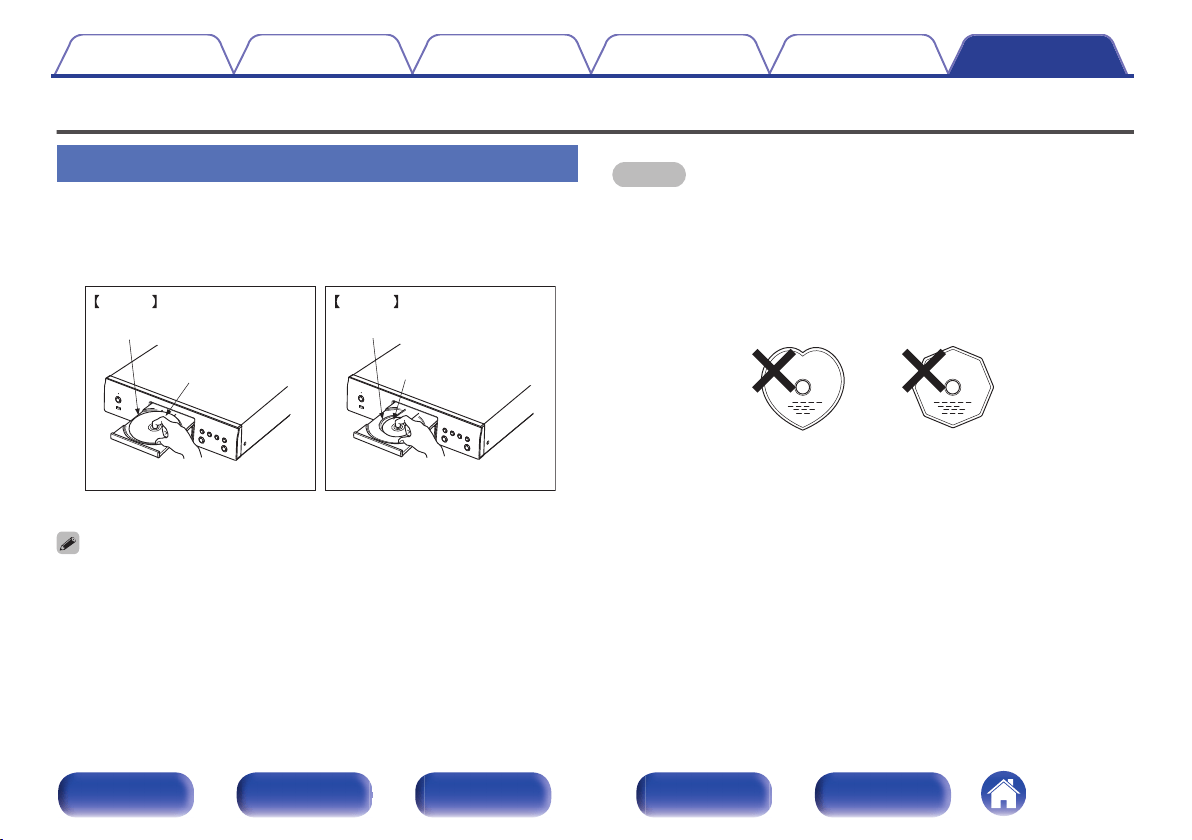
Set the disc in the tray label side up.
0
Make sure the disc tray is fully open when inserting the disc.
0
Place the discs flatly, 5 inch/12 cm discs in the outer tray guide (Figure
1), 3 inch/8 cm discs in the inner tray guide (Figure 2).
.
Outer tray guide Inner tray guide
5 inch/12 cm disc
3 inch/8 cm disc
Figure 2Figure 1
0
Place 3 inch/8 cm discs in the inner tray guide without using an adapter.
0
“UNSUPPORTED” is displayed if a disc that cannot be played is loaded.
0
“NO DISC” is displayed if the disc is loaded upside-down or if no disc is loaded.
NOTE
0
Only load one disc at a time. Loading two or more discs can damage the unit or
scratch the discs.
0
Do not use cracked or warped discs or discs that have been repaired with
adhesive, etc.
0
Do not use discs on which the sticky part of cellophane tape or labels is exposed
or on which there are traces of where labels have been removed. Such discs can
get caught inside the player and damage it.
0
Do not use discs in special shapes, as they may damage the unit.
.
0
Do not push the disc tray in by hand when the power is off. Doing so could
damage the unit.
0
If the unit is left in a room full of smoke from cigarettes, etc., for long periods of
time, the surface of the optical pickup may get dirty, preventing it from receiving
signals properly.
Contents
Connections Playback Settings Tips Appendix
50
Front panel Display Rear panel Remote Index
How to handle media
0
Do not get fingerprints, oil or dirt on discs.
0
Take special care not to scratch discs when removing them from their
cases.
0
Do not bend or heat discs.
0
Do not enlarge the hole in the center.
0
Do not write on the labeled (printed) surface with ball-point pens,
pencils, etc., or stick new labels on discs.
0
Condensation may form on discs if they are moved suddenly from a
cold place (outdoors for example) to a warm place, but do not try to dry
discs with a hairdryer, etc.
0
Do not eject a USB memory device or turn off the unit while a USB
memory device is being played. This may result in malfunction or loss of
the USB memory device’s data.
0
Do not attempt to open or modify a USB memory device.
0
USB memory device and files can be damaged by static electricity. Do
not touch the metal contacts of a USB memory device with your fingers.
0
Do not use warped USB memory device.
0
After use, be sure to remove any disc or USB memory device, and store
it in its proper case, to avoid dust, scratches and deformation.
0
Do not store discs in the following places:
1. Places exposed to direct sunlight for long periods of time
2. Dusty or humid places
3. Places exposed to heat from heaters, etc.
Cleaning discs
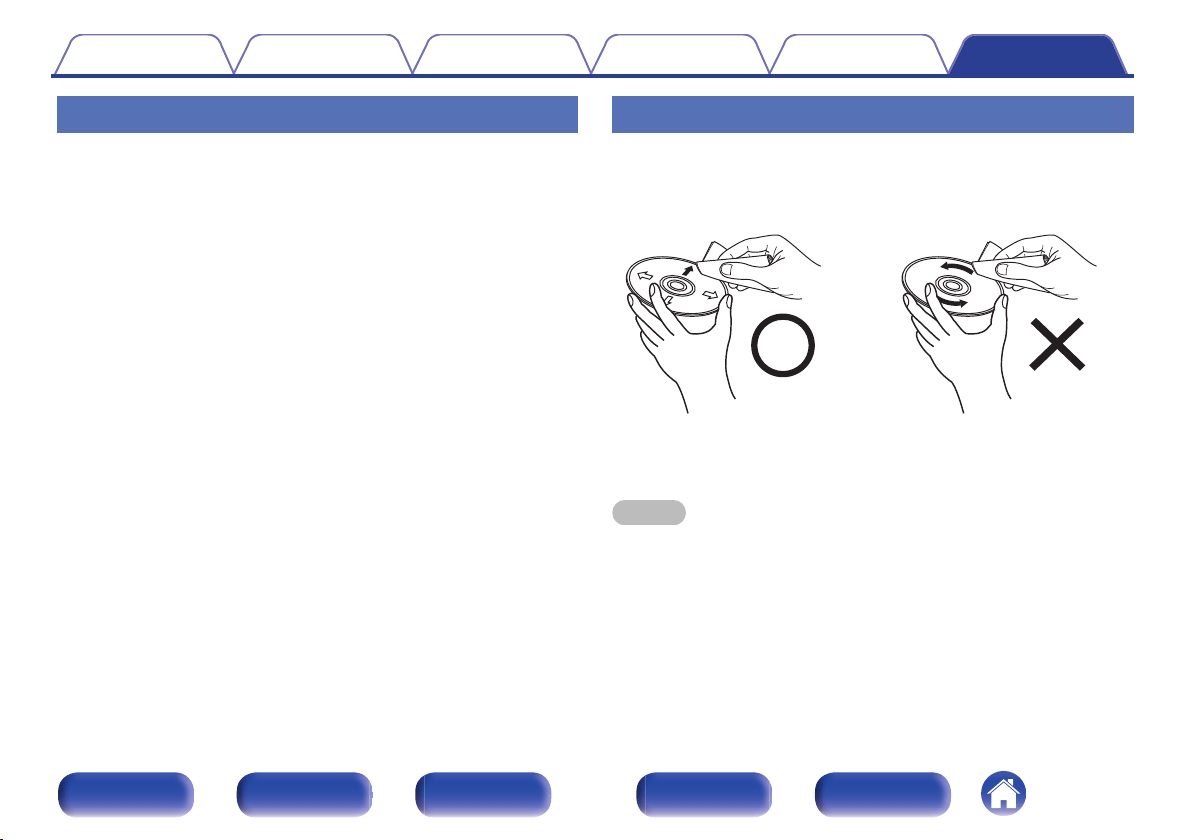
0
If there are fingerprints or dirt on a disc, wipe them off before using the
disc.
0
Use a commercially available disc cleaning set or a soft cloth to clean
discs.
.
Gently wipe the disc from the
inside towards the outside.
Do not wipe with a circular
motion.
NOTE
0
Do not use record spray, antistatic agents, benzene, thinner or other solvents.
Contents Connections Playback Settings Tips Appendix
51
Front panel Display Rear panel Remote Index
Explanation of terms
Advanced AL32 Processing Plus
Equipped with Advanced AL32 Processing Plus, Denon’s own analog
waveform reproduction technology.
The reproducibility of weak signals is enhanced by expanding 16 bit digital
data to 32 bit.
AIFF (Audio Interchange File Format)
This is an uncompressed and lossless format for digital audio. Use AIFF
files to burn high-quality audio CDs from imported songs. AIFF files use
approximately 10 MB of disk space per minute.
ALAC (Apple Lossless Audio Codec)
This is a codec for lossless audio compression method developed by
Apple Inc. This codec can be played back on iTunes, iPod or iPhone. Data
compressed to approximately 60 – 70 % can be decompressed to exactly
the same original data.
DSD (Direct-Stream Digital)
One of the audio data recording methods, it is the signal aspect used to
store audio signals on a super audio CD, and is Δ-Σ modulated digital
audio.
FLAC
FLAC stands for Free lossless Audio Codec, and is a lossless free audio
file format. Lossless means that the audio is compressed without any loss
in quality.
The FLAC license is as shown below.
Copyright (C) 2000, 2001, 2002, 2003, 2004, 2005, 2006, 2007, 2008,
2009 Josh Coalson
Redistribution and use in source and binary forms, with or without
modification, are permitted provided that the following conditions are met:
0
Redistributions of source code must retain the above copyright notice,
this list of conditions and the following disclaimer.
0
Redistributions in binary form must reproduce the above copyright
notice, this list of conditions and the following disclaimer in the
documentation and/or other materials provided with the distribution.
0
Neither the name of the Xiph.org Foundation nor the names of its
contributors may be used to endorse or promote products derived from
this software without specific prior written permission.
Contents
Connections Playback Settings Tips Appendix
52
Front panel Display Rear panel Remote Index
THIS SOFTWARE IS PROVIDED BY THE COPYRIGHT HOLDERS AND
CONTRIBUTORS "AS IS" AND ANY EXPRESS OR IMPLIED
WARRANTIES, INCLUDING, BUT NOT LIMITED TO, THE IMPLIED
WARRANTIES OF MERCHANTABILITY AND FITNESS FOR A
PARTICULAR PURPOSE ARE DISCLAIMED. IN NO EVENT SHALL THE
FOUNDATION OR CONTRIBUTORS BE LIABLE FOR ANY DIRECT,
INDIRECT, INCIDENTAL, SPECIAL, EXEMPLARY, OR
CONSEQUENTIAL DAMAGES (INCLUDING, BUT NOT LIMITED TO,
PROCUREMENT OF SUBSTITUTE GOODS OR SERVICES; LOSS OF
USE, DATA, OR PROFITS; OR BUSINESS INTERRUPTION) HOWEVER
CAUSED AND ON ANY THEORY OF LIABILITY, WHETHER IN
CONTRACT, STRICT LIABILITY, OR TORT (INCLUDING NEGLIGENCE
OR OTHERWISE) ARISING IN ANY WAY OUT OF THE USE OF THIS
SOFTWARE, EVEN IF ADVISED OF THE POSSIBILITY OF SUCH
DAMAGE.
MP3 (MPEG Audio Layer-3)
This is an internationally standardized audio data compression scheme,
using the “MPEG-1” video compression standard. It compresses the data
volume to about one eleventh its original size while maintaining sound
quality equivalent to a music CD.
WMA (Windows Media Audio)
This is audio compression technology developed by Microsoft
Corporation.
WMA data can be encoded using Windows Media
®
Player.
To encode WMA files, only use applications authorized by Microsoft
Corporation. If you use an unauthorized application, the file may not work
properly.
Sampling frequency
Sampling involves taking a reading of a sound wave (analog signal) at
regular intervals and expressing the height of the wave at each reading in
digitized format (producing a digital signal).
The number of readings taken in one second is called the “sampling
frequency”. The larger the value, the closer the reproduced sound is to the
original.
Dynamic range
The difference between the maximum undistorted sound level and the
minimum discernible level above the noise emitted by the device.
Contents
Connections Playback Settings Tips Appendix
53
Front panel Display Rear panel Remote Index
Bit rate
This is the amount of audio data recorded on a disc that is read in one
second.
Finalizing
This process enables DVD/CD recorded with a recorder to be played by
other players.
Linear PCM
This is an uncompressed PCM (Pulse Code Modulation) signal. Unlike
lossy compression audio sources such as MP3, no audio quality or
dynamic range deteriorates.
Trademark information
.
Adobe, the Adobe logo and Reader are either registered trademarks or
trademarks of Adobe Systems Incorporated in the United States and/or
other countries.
Contents Connections Playback Settings Tips Appendix
54
Front panel Display Rear panel Remote Index
Specifications
o
Audio section
0
Analog output [DSD] [PCM]
Channels: 2-channel 2-channel
Playable frequency range: 2 Hz – 100 kHz 2 Hz – 96 kHz (sampling frequency: 192 kHz)
2 Hz – 20 kHz (sampling frequency: 44.1 kHz)
Playable frequency response: 2 Hz – 50 kHz (-3 dB) 2 Hz – 50 kHz (-3 dB)
(sampling frequency: 192 kHz)
2 Hz – 20 kHz (sampling frequency: 44.1 kHz)
S/N: 115 dB (Audible range) 115 dB
Dynamic range: 108 dB (Audible range) 108 dB (24 bits)
101 dB (16 bits)
Harmonic distortion: 0.0015 % (Audible range) 0.0020 % (24 bits)
0.0025 % (16 bits)
Output level: 2.2 V RMS 2.2 V RMS
Contents Connections Playback Settings Tips Appendix
55
Front panel Display Rear panel Remote Index
0
Optical readout system
Laser: AlGaAs
Wave length: 780 nm
Signal type: 16-bit linear PCM
Sampling frequency: 44.1 kHz
0
Digital output
Coaxial: 0.5 Vp-p / 75 Ω/ohms
Optical : -15 – -21 dBm
0
Digital input
USB: USB Type A (USB 2.0 High speed)
o
General
Power supply: AC120 V, 60 Hz
Power consumption: 28 W
Power consumption in standby mode: 0.2 W
For the purpose of improvement, the specifications and design are subject to change without notice.
Contents
Connections Playback Settings Tips Appendix
56
Front panel Display Rear panel Remote Index
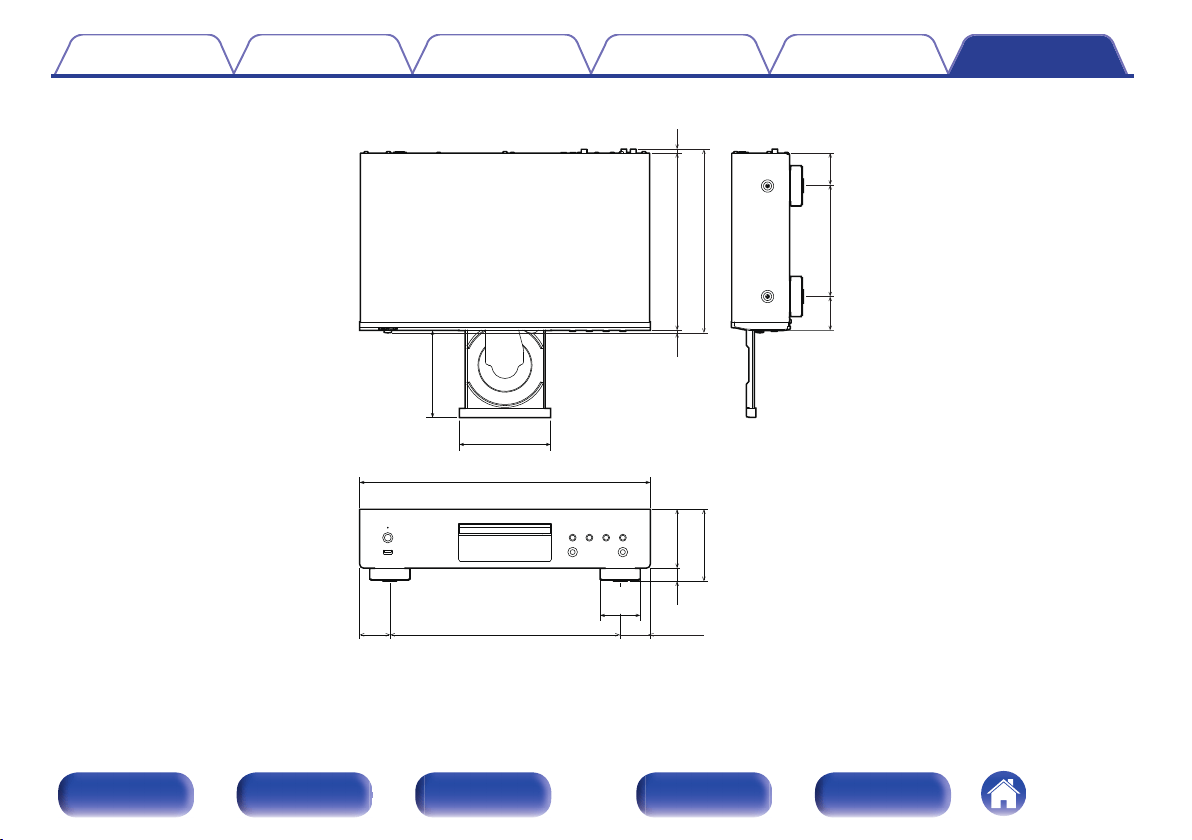
o
Dimensions (Unit : in. (mm))
.
1 7/8
(45)
13 5/8 (344)
17 1/8 (434)
5 3/8 (136)
3 1/2 (88)
4 1/4 (107)
5 1/8 (130)
10 1/2 (265)
6 5/8 (166)
2 (49)
2 (50)
1/4
(6)
10 7/8 (275)
3/4
(19)
1/4
(4)
1 7/8 (45)
2 3/8
(60)
o
Weight : 9 lbs 15 oz (4.5 kg)
Contents Connections Playback Settings Tips Appendix
57
Front panel Display Rear panel Remote Index
Index
v A
Amplifier ......................................................... 18
Auto Standby ................................................. 37
AV receiver ..................................................... 19
v C
CD .................................................................. 27
v D
D/A converter ................................................. 19
DATA CD ....................................................... 30
Display ............................................................. 9
Display’s brightness ....................................... 25
v F
Front panel ....................................................... 7
v P
Program playback .......................................... 29
v R
Rear panel ...................................................... 10
Remote control unit ........................................ 11
v T
Timer device ............................................. 21, 36
Tips ................................................................ 39
Troubleshooting ............................................. 40
v U
USB memory device ................................ 20, 33
Contents Connections Playback Settings Tips Appendix
58
Front panel Display Rear panel Remote Index
.
3520 10630 00AD
Copyright © 2018 D&M Holdings Inc. All Rights Reserved.
59