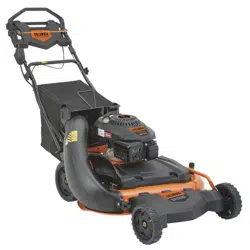
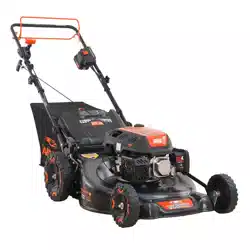
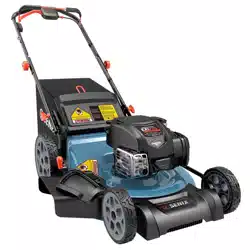
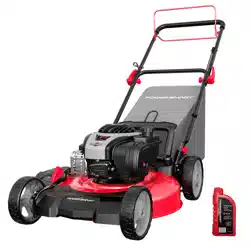
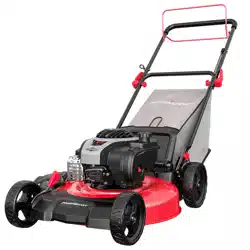
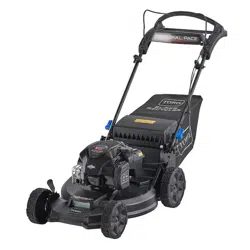
NOTE: This Operator’s Manual covers several models. Features may vary by model. Not all features in this manual are applicable to all models and the model depicted may differ from yours.
Assembly
NOTE: This unit is shipped without gasoline or oil in the engine. Fill up with gasoline and oil as instructed in the accompanying engine manual BEFORE operating your mower.
Handle
Remove any packing material which may be between the handle and the mower.
1. Tighten star knobs securing lower and upper handles together.
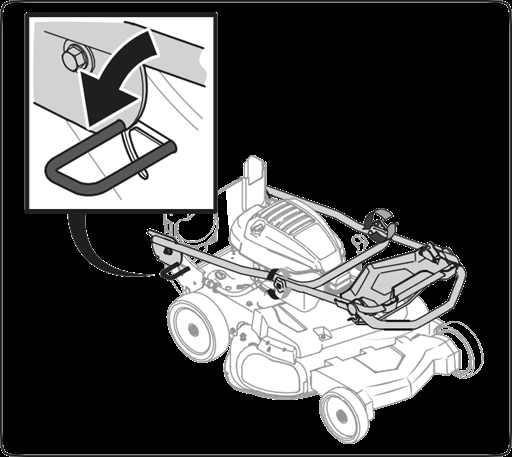
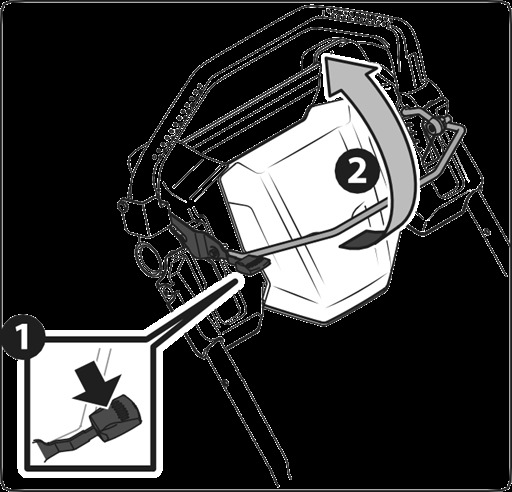
2. Push down on the handle adjustment lever with your foot. See Figure 3-1.
Figure 3-1
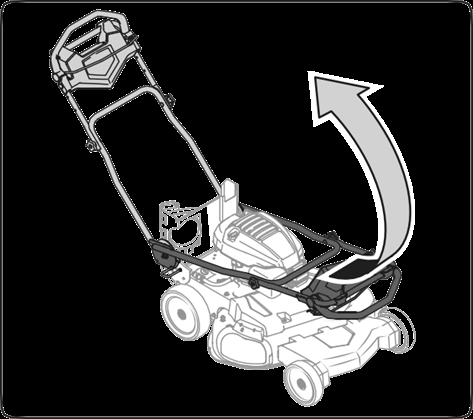
3. Pivot the handle into operating position. Be careful not to crimp cables. See Figure 3-2.
Figure 3-2
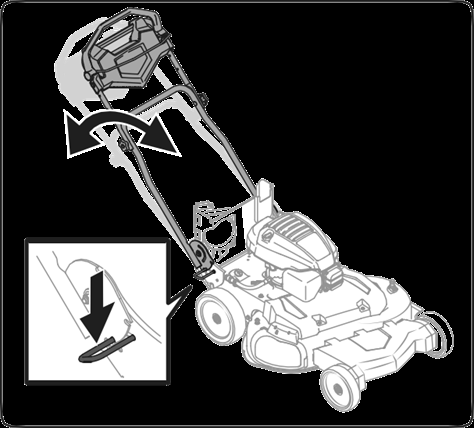
4. The handle height can be adjusted to one of two positions. Push down on the handle adjustment lever with your foot and place the handle into the most comfortable operating position. See Figure 3-3.
Figure 3-3
Attaching the Grass Catcher (If Equipped)
1. Follow steps below to assemble the grass catcher. Make certain bag is turned right side out before assembling (warning label will be on the outside).
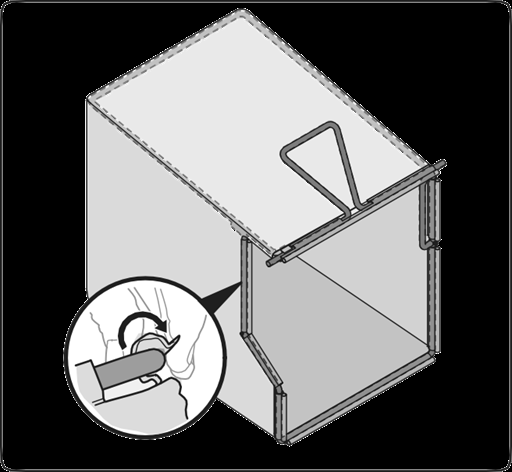
a.Place bag over frame so that its black plastic side is at the bottom.
b.Slip plastic channel of grass bag over hooks on the frame. See Figure 3-4.
Figure 3-4
2.Follow steps below to attach grass catcher:
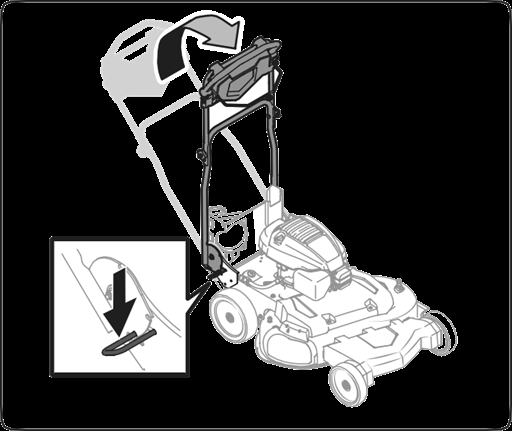
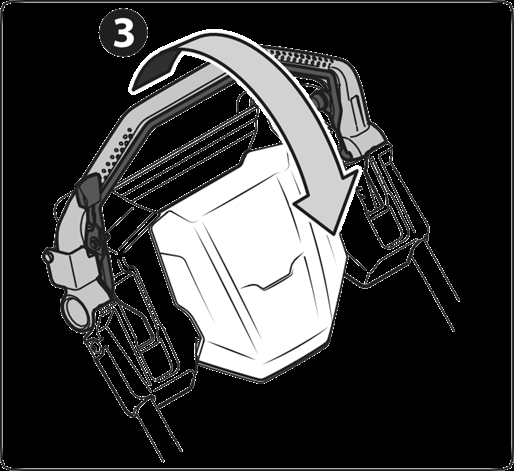
a.Push down on the handle adjustment lever and pivot handle into storage position. See Figure 3-5.
Figure 3-5
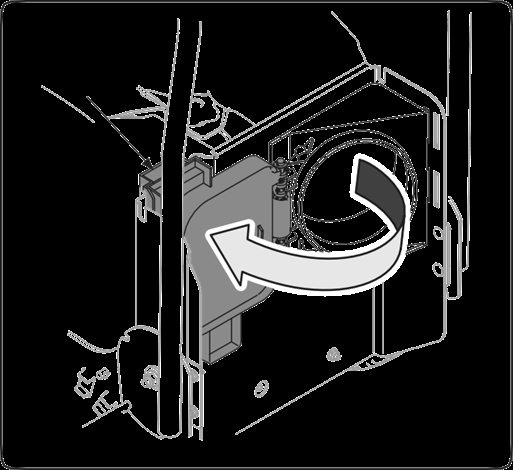
b. Open the rear discharge door using the door handle. See Figure 3-6.
Figure 3-6
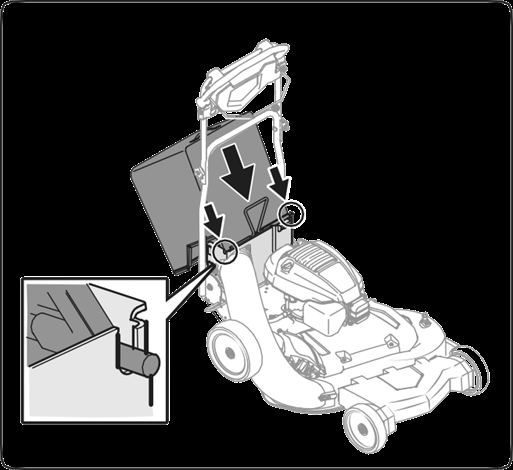
c. Place the grass catcher into the slots on the rear discharge support bracket. See Figure 3-7 inset.
Figure 3-7
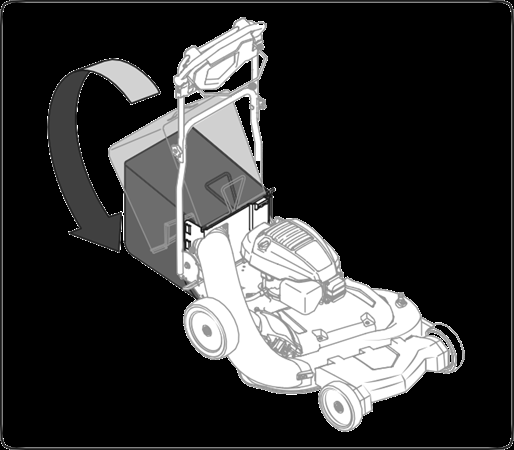
d. Pivot the grass catcher down so that it rests over the rear opening of the mower. See Figure 3-8. Let go of discharge door so that it rests against the grass catcher.
To remove grass catcher, hold open rear discharge door on the mower. Lift grass catcher up and off of the slots in the handle brackets. Release rear discharge door to allow it to close rear opening of mower.
Figure 3-8
Attaching Grass Catcher Chute
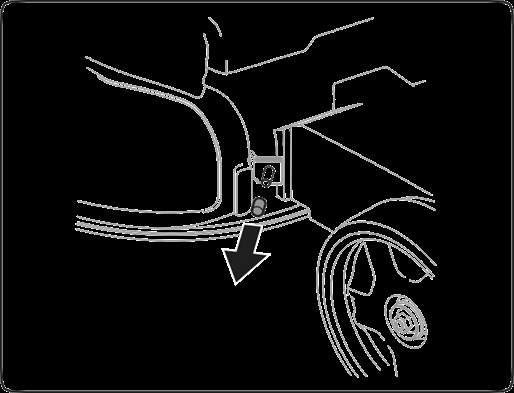
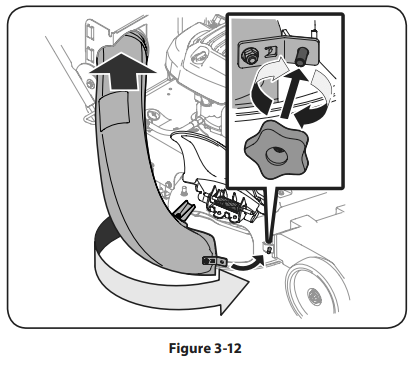
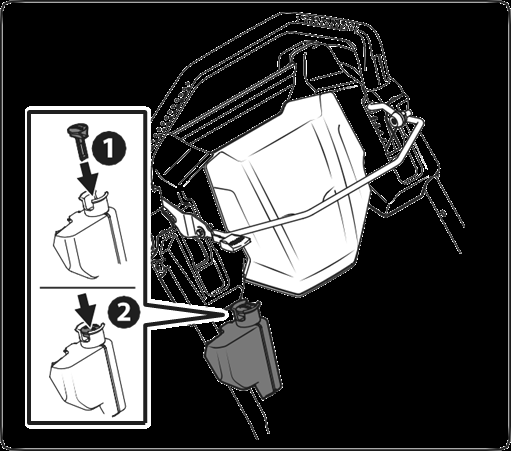
Remove the vinyl cap on the deck stud in front of the discharge opening. See Figure 3-9.
Figure 3-9
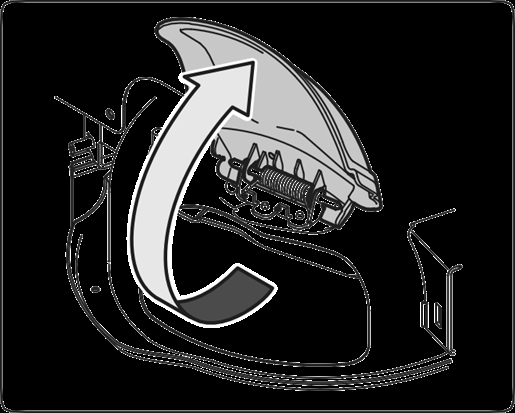
2.On the side of the mowing deck, lift the mulch plug. See Figure 3-10.
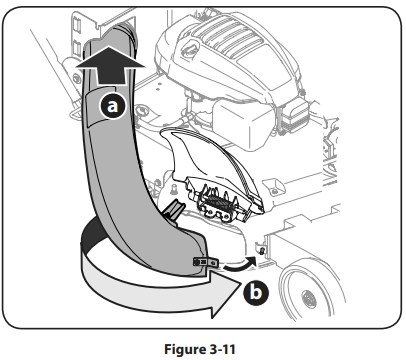
3.Insert the top of the chute into the opening of the grass catcher support bracket. See Figure 3-11a.
4.Pivot the chute towards the mowing deck and over the opening in the side of the mowing deck. See Figure 3-11b.
5.Secure the chute to the mowing deck using the wing knob included in the manual bag. Thread the wing knob onto the deck stud. Hand tighten to secure the discharge chute. See Figure 3-12.
Figure 3-10
Attaching Side Discharge Chute
Your mower is shipped as a mulcher. To convert to side discharge, make sure grass catcher is off the unit and mower rear discharge door is closed.
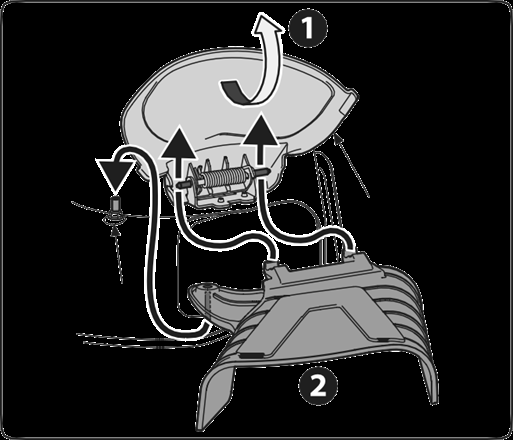
1, On the side of the mower deck, lift the mulch plug. See Figure 3-13.
Figure 3-13
2.Slide two hooks of side discharge chute under hinge pin on mulch plug assembly and position hole in the chute over and on to the deck stud located behind the discharge opening. See Figure 3-13. Lower mulch plug.
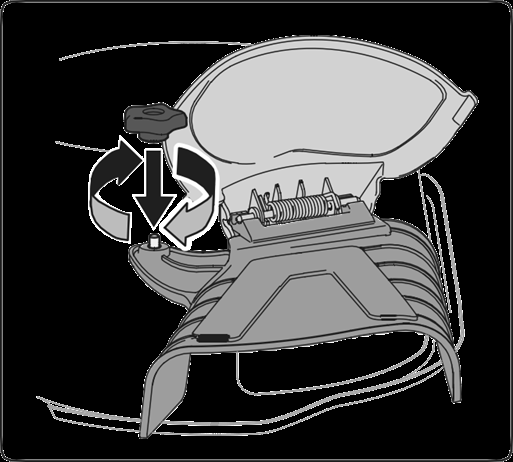
3.Secure the chute to the mowing deck using the wing knob included in the manual bag. Hand tighten the wing knob onto the deck stud. See Figure 3-14.
Figure 3-14
NOTE: Do not remove side mulch plug at any time.
Adjustments
Cutting Height (Standard Wheel)
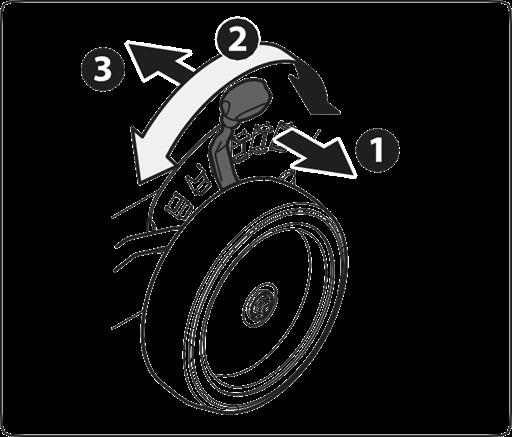
There is a cutting height adjustment lever located above the rear left wheel. See Figure 2-15.
Figure 3-15
1.Pull lever out and away from mower.
2.Move lever forward or back for desired cutting height.
3.Release lever towards mower deck.
NOTE: On the standard wheel units, this lever adjusts the rear and front wheel height simultaneously. On caster wheel models, it adjusts the rear wheel height only.
Cutting Height (Caster Wheel)
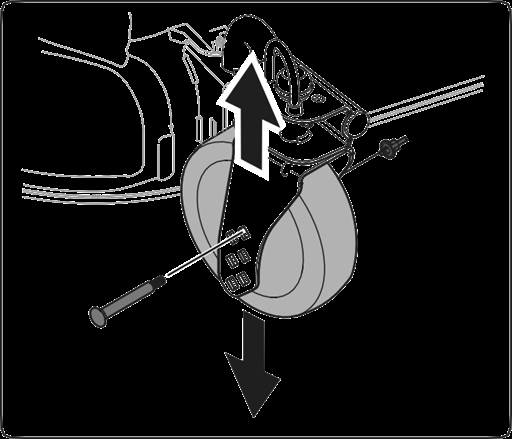
If equipped, the caster wheels cutting height are determined by selecting one of six positions on each caster assembly. Refer to Figure 3-16.
4.Remove wing nut (a) from axle bolt (b). Slide axle bolt from the assembly and select a cutting height.
5.Reinsert axle bolt in the square hole desired through wheel assembly and secure with wing nut removed in Step 1.
IMPORTANT: All wheels must be placed in the same relative position. For rough or uneven lawns, move the height adjustment lever to a higher position. This will stop scalping of grass.
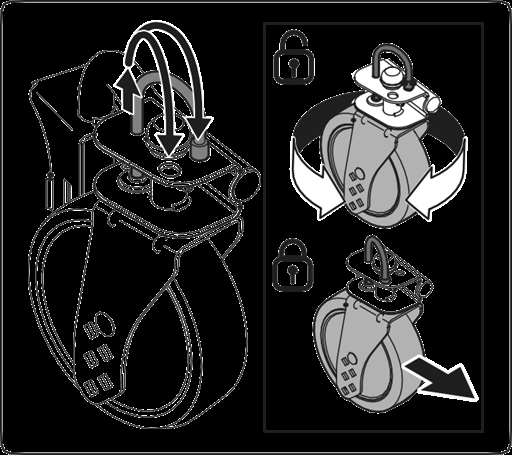
The casters can be locked in a straight ahead position or positioned to swivel freely. See Figure 3-17.
Figure 3-17
1.Lift lock pins.
2.Place in larger holes to lock wheels. Place pins in smaller holes to allow casters to rotate freely for turning.
Set-Up
Gas and Oil Fill-Up
Refer to the separate engine owner’s manual for additional engine information.
1. Add oil provided before starting unit for the first time out of the box.
2.Service the engine with gasoline as instructed in the separate engine owner’s manual.
WARNING: Use extreme care when handling gasoline. Gasoline is extremely flammable and the vapors are explosive. Never fuel the machine indoors or while the engine is hot or running.
Extinguish cigarettes, cigars, pipes and other sources of ignition.
3.Charge battery as instructed in the Service section of this manual (Electric Start Models Only).
Controls and Features
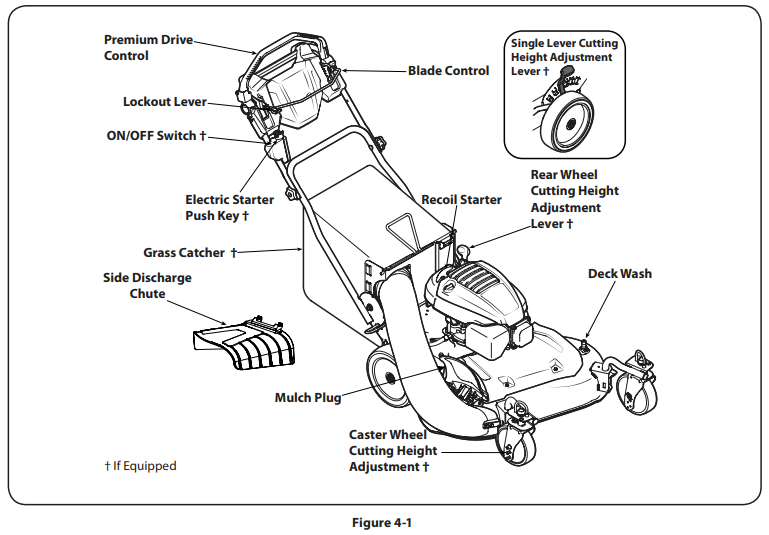
Lockout Lever
The lockout lever is attached to the blade control on the upper handle of the mower. Press down on it prior to engaging the blade control.
Blade Control
The blade control is attached to the upper handle of the mower. After pressing down on the lockout lever, depress and squeeze it against the upper handle to engage the blade. Release it to stop the blade.
WARNING: The blade control is a safety device. Never attempt to bypass its operations.
Premium Drive Control
The premium drive control is located on the upper handle and is used to engage the drive. Pushing the control forward will engage the drive. The farther the control is pushed forward, the faster the mower will propel. Once pressure is released from the control it will return to the neutral position and the drive will be disengaged.
Cutting Height Adjustment Lever
There are two cutting height adjustment configurations.
Single Lever (If Equipped)
The cutting height adjustment lever is located above the rear left wheel. To adjust the cutting height, refer to Cutting Height Adjustment in Assembly and Set-Up.
Rear Wheel/ Caster Wheels (If Equipped)
The rear wheel cutting height adjustment lever is located above the rear left wheel. The caster wheels adjust by moving the wheel bolts to the desired position. To adjust the cutting height, refer to Cutting Height Adjustment on page 12.
Mulch Plug
The mulch plug is used for mulching purposes. Instead of collecting the grass clippings in a grass catcher or using the side discharge chute, some mower models have the option of recirculating the clippings back to the lawn. This is called mulching.
Side Discharge Chute
Your mower is shipped as a mulcher. To discharge the grass clippings to the side, follow the instructions on page 12 in the Assembly & Set-Up section to attach the side discharge chute.
WARNING: Keep hands and feet away from the chute area on cutting deck. Refer to warning label on the unit.
Deck Wash
Your mower’s deck is equipped with a fast attach deck wash nozzle on its surface as part of its deck wash system. Use the deck wash to rinse grass clippings from the deck’s underside.
Electric Starter Push Key (If Equipped)
The electric starter push key is located on the right side of the upper handle. It is both a removable key and push button and is only provided on electric start models.
NOTE: Removing the Electric Starter Push Key will not turn the engine off. It will only disable the “start” function of the unit.
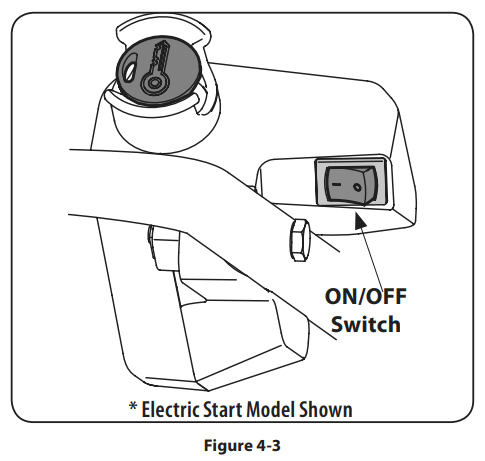
ON/OFF Switch
The ON/OFF Switch is located on the electric starter housing and when pressed and held, will turn the engine OFF.
Recoil Starter
The recoil starter is located on the engine. Pull the recoil starter rope to start the unit.
Starting Engine
WARNING: Be sure no one other than the operator is standing near the lawn mower while starting engine or operating mower. Never run engine indoors or in enclosed, poorly ventilated areas.
Engine exhaust contains carbon monoxide, an odorless and deadly gas. Keep hands, feet, hair and loose clothing away from any moving parts on engine and lawn mower.
Refer to engine manual for help with the engine.
Electric Start
1. Insert plastic electric start push key into starter housing located on the right side of upper handle until it snaps in place. See Figure 4-2.
Figure 4-2
2. Push the electric starter push key to start the engine.
NOTE: Electric starter is equipped with an internal circuit breaker. If unit fails to start when starter button is depressed, wait one minute for breaker to reset, then attempt to start again.
Recoil Start
3. Pull the recoil starter lightly until resistance is felt, then pull rapidly to overcome compression, prevent kickback, and start the engine. Repeat if necessary.
IMPORTANT: Do not allow the recoil starter to snap back against the rope guide. Return it gently to prevent damage to the starter.
Stopping Engine
1. Push and hold the ON/OFF switch until the mower engine stops. See Figure 4-3.
2. Remove electric start push key if mower is to be left unattended, stored, or serviced (Electric Start units only). To remove key, grasp the top of the key and pull it straight up and out. Keep key in a safe place out of the reach of children.
WARNING: Wait for the blade to stop completely before performing any work on the mower or to remove the grass catcher.
Using Your Lawn Mower
Be sure lawn is clear of stones, sticks, wire, or other objects which could damage lawn mower or engine. Such objects could be accidently thrown by the mower in any direction and cause serious injury to the operator, others, or the equipment.
1. Once the engine is running, press down on the lockout lever. See Figure 4-4.
Figure 4-4
2. Pull the blade control back against the drive control. See Figure 4-4
3. While continuing to hold the blade and drive controls together, push the drive control forward to propel mower. See Figure 4-5. The farther the control is pushed forward, the faster the mower will propel.
Figure 4-5
4. Once pressure is released from the control it will return to the neutral position and the drive will be disengaged.
NOTE: For ease of use, while gripping the controls, simply lock your wrist and elbows and walk - the unit will automatically adjust to your speed.
WARNING: The operation of any lawn mower can result in foreign objects being thrown into the eyes, which can damage your eyes severely. Always wear safety glasses while operating the mower, or while performing any adjustments or repairs on it.
The following information will be helpful when operating your mower.
WARNING! Plan your mowing pattern to avoid discharge of materials toward roads, sidewalks, bystanders and the like. Also, avoid discharging material against a wall or obstruction which may cause discharged material to ricochet back toward the operator.
Do not mow at fast ground speeds, especially if mulching or a grass collector is installed.
Do not cut the grass too short. Short grass is prone to weed growth and yellows quickly in dry weather.
For best results, it is recommended that the first two laps be cut with the discharge thrown towards the center.
After the first two laps, reverse the direction to throw the discharge to the outside for the balance of cutting. This will give a better appearance to the lawn.
Do NOT attempt to mow heavy brush and weeds or extremely tall grass. Your mower is designed to mow lawns, NOT clear brush.
Keep the blades sharp and replace the blades when worn.
WARNING! After striking a foreign object, stop the engine, disconnect the spark plug wire and ground against the engine. Thoroughly inspect the mower for any damage. Repair the damage before starting and operating the mower.
Using as Mulcher
For mulching grass, remove the side discharge chute or the grass catcher and allow the rear discharge door to close the rear opening of mower. Refer to the Assembly & Set-Up section. For effective mulching, do not cut wet grass. If the grass has been allowed to grow in excess of four inches, mulching is not recommended. Use the grass catcher to bag clippings instead.
Using Grass Catcher
Use the grass catcher to collect clippings while you are operating the mower.
IMPORTANT: To effectively bag the grass, you will need to install the high lift blades that were packed separately in the box. See Blade Care on page 20 of the Service section and follow the procedure for removing and reinstalling the blades.
1. Attach grass catcher following instructions in the Assembly & Setup section on page 10. Grass clippings will automatically collect in bag as you run mower. Operate mower until grass bag is full.
2.Stop engine completely by releasing the blade control. Make sure that the unit has come to a complete stop.
3.Lift discharge door and pull grass bag up and away from the mower to remove the bag. Dispose of the grass clippings and reinstall the bag when complete.
WARNING: If you strike a foreign object, stop the engine. Remove wire from the spark plug, thoroughly inspect mower for any damage, and repair damage before restarting and operating.
Extensive vibration of mower during operation is an indication of damage. The unit should be promptly inspected and repaired.
Operating on Slopes
Refer to the Slope Gauge on page 8 to help determine slopes where you may operate the mower safely.
WARNING! Do not mow on inclines with a slope in excess of 15 degrees (a rise of approximately 2-1/2 feet every 10 feet). The mower could overturn and cause serious injury.
Mow across the face of slopes; never up and down.
Exercise extreme caution when changing direction on slopes.
Watch for holes, ruts, rocks, hidden objects, or bumps which can cause you to slip or trip. Tall grass can hide obstacles.
Always be sure of your footing. A slip and fall can cause serious personal injury. If you feel you are losing your balance, release the blade control handle immediately and the blade will stop rotating within three seconds.
Do not mow near drop-offs, ditches or embankments, you could lose your footing or balance.
Do not mow slopes greater than 15 degrees as shown on the slope gauge.
Do not mow on wet grass. Unstable footing could cause slipping.
Troubleshooting
Problem
Cause
Remedy
Engine Fails to start
1.Spark plug boot disconnected.
2.Fuel tank empty or stale fuel.
3.Engine not primed (if equipped with primer).
4.Faulty spark plug.
5.Blocked fuel line.
6.Engine flooded.
1.Connect wire to spark boot.
2.Fill tank with clean, fresh gasoline.
3.Prime engine as instructed in the Operation section.
4.Clean, adjust gap, or replace.
5.Clean fuel line.
6.Wait a few minutes to restart, but do not prime.
Engine fails to start with electric starter
(Electric Start Units Only)
1.Electric starter push key not fully inserted.
2.Battery not charged.
3.Circuit breaker tripped.
1.Insert electric starter push key into starter housing until it snaps into place.
2.Charge battery.
3.Debris may be blocking blade operation. Stop engine, remove electric starter push key, and disconnect spark plug boot. Verify grass or other debris are not obstructing the blade. Carefully clean out debris if necessary. Reattach spark plug boot and reinsert electric starter push key. Wait one minute after tripping for circuit breaker to automatically self-reset then reattempt start.
Engine runs erratic
1.Spark plug boot loose.
2.Blocked fuel line or stale fuel.
3.Vent in gas cap plugged.
4.Water or dirt in fuel system.
5.Dirty air cleaner.
1.Connect and tighten spark plug boot.
2.Clean fuel line; fill tank with clean, fresh gasoline.
3.Clear vent.
4.Drain fuel tank. Refill with fresh fuel.
5.Refer to engine manual.
Engine overheats
1.Engine oil level low.
2.Air flow restricted.
1.Fill crankcase with proper oil.
2.Clean area around and on top of engine.
Occasional skips (hesitates) at high speed
1. Spark plug gap too close.
1. Adjust gap to .030”.
Idles poorly
1.Spark plug fouled, faulty, or gap too wide.
2.Dirty air cleaner.
1.Reset gap to .030” or replace spark plug.
2.Refer to engine manual.
Excessive Vibration
1.Cutting blade loose or unbalanced.
2.Bent cutting blade.
1.Tighten blade and adapter. Balance blade.
2.See an authorized service dealer.
Mower will not mulch grass
1.Wet grass.
2.Excessively high grass.
3.Dull blade.
1.Do not mow when grass is wet; wait until later to cut.
2.Mow once at a high cutting height, then mow again at desired height or make a narrower cutting path.
3.Sharpen or replace blade.
Uneven cut
1. Dull blade.
1. Sharpen or replace blade.
Mower will not self propel
1.Belt not installed properly.
2.Debris clogging drive operation.
3.Damaged or worn belt.
4.Drive control out of adjustment.
1.Check belt for proper pulley installation and movement.
2.Stop engine, disconnect spark plug boot, and clean out debris.
3.Inspect and replace belt.
4.Adjust drive control. (See Assembly & Set-up section).
5.Push unit forward a few inches before pulling back. (See Operation section).
High pullback effort
1. Pulling mower backwards before transmission disengages.
1. Allow the unit to roll forward slightly without the drive lever(s) engaged before pulling backwards.