
6
1. IMPORTANT SAFEGUARDS
When using electrical appliances, basic safety precautions should always be followed, including the following:
• Read all instructions.
• Do not touch hot surfaces. Use handles and knobs.
• To protect against re, electrical shock and personal injury, do not immerse cord, plug or appliance in water or other
liquid.
• Never allow the appliance to be used by children.
• Unplug from the outlet when not in use and before cleaning. Allow to cool before tting or taking o parts, and
before cleaning the appliance.
• Do not operate with a damaged cord or plug, or after the appliance malfunctions, or has been damaged in any
manner. Return the appliance to the nearest authorized service facility for examination, repair or adjustment.
• The use of accessory attachments or spare parts not recommended by the appliance manufacturer may result in
re, electrical shock or personal injury.
• Do not use outdoors.
• Do not let the cord hang over the edge of the table or counter, or touch hot surfaces.
• Do not place on or near a hot gas or electrical burner, or in a heated oven.
• Plug cord into the wall outlet. To disconnect, turn any control to “o”, then remove plug from wall outlet.
• Do not use the appliance for other than the intended use. This appliance is to be utilized for domestic use only. Any
other use is to be considered improper and, therefore, dangerous.
• For machines with glass carafe:
A. The carafe is an accessory to be used exclusively with this appliance. Never use it on a cooking surface.
B. Do not set the hot container on a damp or cold surface.
C. Do not use the carafe if it is cracked or the handle is not completely sturdy.
D. Do not use abrasive detergents or sponges to clean.
WARNING: To reduce the risk of re or electric shock, do not remove the cover. Don’t attempt to repair
or modify the machine, doing so will void the warranty. Repair should be done by authorized service
personnel only!
1.1 California Proposition 65
This product contains chemicals known to the State of California to cause cancer, birth defects or other reproductive
harm.
SAVE THESE INSTRUCTIONS
THIS PRODUCT IS FOR HOUSEHOLD USE ONLY
2. SHORT CORD INSTRUCTIONS
- A short power cord is provided to reduce risks resulting from becoming entangled in or tripping over a longer
cord.
- Longer, detachable power supply cords or extension cords are available and may be used if care is exercised in
their use.
- If an extension cord is used, the marked electrical rating should be at least as great as the electrical rating of the
appliance. If the appliance is provided with 3- wire, grounding type cord, the extension should be a GROUNDING

7
TYPE 3 - WIRE CORD. The longer cord should be arranged so that it will not drape over the counter-top or table top
where it can be pulled on by children or tripped over.
- Your product is equipped with a polarized alternating current line plug (a plug having one blade wider than the
other). This plug will t into the power outlet only one way. This is a safety feature. If you are unable to insert the
plug fully into the outlet, try reversing the plug. If the plug should still fail to t, contact your electrician to replace
your obsolete outlet. Do not defeat the safety purpose of the polarized plug.
A6. Water ll compartment
A7. Drip coee warming plate
A8. Espresso cup tray
A9. Drip tray
A10. Cappuccino maker
A11. Steam dial for cappuccino
A12. Espresso coee ON/OFF switch
4.2 Description of control panel
B1. Espresso coee/hot water button with integrated pilot
lamp
B2. Steam button with integrated pilot lamp
B3. Espresso power light
B4 Display
B5 ON/OFF button for drip coee with power light
B6 AUTO button (automatic switch-on) for drip coee with
AUTO ON light
B7 HOUR button
B8 MIN button
B9 “1-4” cups button with light
4.3 Description of the accessories
C1. Espresso coee lter holder
C2. One-cup or one-pod espresso coee lter
C3. Two-cup espresso coee lter
C4. Coee measure with presser
C5. Permanent gold tone lter
C6. Jug for drip coee
C7. Water softener lter for espresso coee water tank
(*optional)
C8. Antichlorine lter
4.4 Installation
• Place the appliance on a work surface away from water
faucets and sinks.
• Check that the voltage of the outlet corresponds to the
value indicated on the appliance rating plate. Connect the
appliance to an eciently grounded electrical socket with
a minimum rating of 10A only. The manufacturer declines
all liability for any accidents caused by the absence of an
ecient ground system.
• If the plug tted to the appliance does not match the elec-
Read this instruction booklet carefully before installing
and using the appliance. This is the only way to ensure
the best results and maximum safety for the user.
3. SAFETY WARNINGS
• This appliance is designed to “make coee” and “hot
drinks”. Use with care to avoid scalds from the water and
steam jets or through incorrect use.
• Never touch hot parts.
• After removing the packaging, make sure the product is
complete. If in doubt, do not use the appliance and contact
a De’Longhi customer service representative.
• The packing elements (plastic bags, polystyrene foam,
etc.) should be kept out of reach of children as they are a
safety hazard.
• This appliance is intended for domestic use only. Any other
use is considered improper and thus dangerous.
• The manufacturer cannot be held responsible for any dam-
age caused through incorrect, wrong or unreasonable use.
• Never touch the appliance with wet or damp hands.
• Never let children use the appliance without supervision.
• Never allow children to play with the appliance.
• Should the appliance break or not function correctly, turn
it o and do not tamper with it. For all repairs, contact au-
thorized service centers only and insist on the use of origi-
nal spare parts.
Failure to respect the above could reduce the safety of the
appliance.
• The power cord for this appliance must not be replaced by
the user as this operation requires the use of special tools.
In the event of damage, contact an authorized service
center only to avoid all risks.
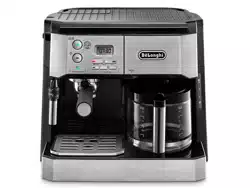
4. DESCRIPTION (pag. 3)
The terminology below will be used on subsequent pages.
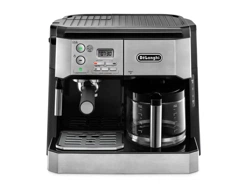
4.1 Description of the appliance
A1. Espresso water tank lid
A2. Espresso water tank
A3. Antichlorine lter extraction handle
A4. Antichlorine lter support
A5. Filter-holder for drip coee

8
trical socket, have the outlet replaced with a suitable type
by a qualied electrician.
• Never install the appliance in environments where the
temperature may reach 0°C (32°F) or lower (the appliance
may be damaged if the water freezes).
5. ANTICHLORINE FILTER
The lter eliminates the taste of chlorine in the water. To install
the lter, proceed as follows:
• Release the lter support from its slot by pulling it upwards
(g. 1).
• Remove the Antichlorine lter from the plastic sachet and
rinse it under a running tap (g. 2).
• Open the lter support and carefully put the lter in place
as shown in g. 2.
• Close the lter container carefully (g. 2), and reposition it
in its slot, pushing it rmly downwards.
•
The Antichlorine lter should be replaced after 80 cycles, and
at least after every 6 months of operation.
6. FIRST USE
When using the appliance for the rst time, all the accessories
and the internal circuits must be washed as follows:
• DRIP COFFEE MAKER: Make at least two carafes of coee
without using ground coee.
• ESPRESSO MAKER: Make at least four cappuccinos without
using ground coee and using water instead of milk.
7. PREPARATION OF DRIP COFFEE
7.1 Setting the clock
When the coee machine is connected to the outlet for the rst
time, the numbers 0:00 will ash on the display.
To set the time, proceed as follows:
1. Press the “hour” button (Fig. 3) for about 2 seconds until
the number of hours on the display begins to increase.
2. Before the display stops ashing (about 5 seconds), set the
hour by pressing the “hour” button repeatedly.
3. Set the minutes by pressing the “min” button (Fig. 3) re-
peatedly. (To speed up the operation, hold the button
down.)
4. After setting the time, wait 5 seconds. When the display
stops ashing, the time set is stored.
To reset the time, press the HOUR button for about 2 sec-
onds, and then follow the procedure as described starting
from point 2.
Please note: In the event of a temporary power failure, the
time set does not remain stored in the memory.
7.2 Programming the automatic start (AUTO
BUTTON)
The appliance can be programmed to make drip coee automat-
ically. First, make sure that the time is set correctly.
To set the delayed start (i.e. the time you want the coee to be
made), proceed as follows:
1. Press the AUTO button (Fig. 4) for about 2 seconds until
0:00 ashes on the display.
2. Before the display stops ashing (about 5 seconds), set the
desired hour by pressing the “hour” button repeatedly.
3. Set the minutes by pressing the “min” button repeatedly.
4. After 5 seconds, the display will stop ashing and the pro-
grammed time will be stored.
5. After you have programmed the machine as described
above, just press the AUTO button to have coee made at
the time set (the AUTO indicator light will illuminate).
Please note:
• If you want to change the start time after it has been set,
press the AUTO button for about 2 seconds and then set a
new time as described starting from point 2.
• Keep in mind that at the time set, the appliance will start
to make drip coee only. The espresso maker does not
come on.
7.3 Length of warming time (Automatic shut-
o time)
The appliance is factory-set to keep the coee warm for two
hours after startup.
However, this setting can be changed as follows:
1. Press the ON/OFF button (Fig. 5) for about 2 seconds until
0:00 ashes on the display.
2. Modify the time by repeatedly pressing the HOUR button
(and also the MIN button if required).
3. After setting the time, wait 5 seconds. When the display
stops ashing, the time will be stored.
Please note: If 0:00 is set, the appliance switches o. (You can
set a time within 1 minute and 11hours and 59 minutes).
7.4 “1-4” cups button
You can enhance the avor of your coee by pressing the “1-
4” button after the “ON/OFF” button. This feature activates a
unique brewing process, slowly releasing water into the lter
basket; saturating coee grounds a little at a time extracting
the best avor and aroma from your coee.
To activate, press the “1-4” button (g. 6); the light on the but-
ton will illuminate.
Press the button again to turn the selection o.
D o not use this button if brewing an entire carafe of coee.
You can select this function even when using the auto function.
9
7.5 Making drip coee
• Open the lter-holder door, rotating it towards the right
(g. 7).
• Fill the carafe to the level indicator relative to number
of cups of coee you wish to prepare, taking care not to
exceed the MAX level (g. 8), otherwise, in order to not
overll the machine, the excess water will spill out from
the back of the unit.
• Then
pour the water into the water-ll compartment of the
appliance (g. 9).
• Position the gold tone lter into the lter-holder (g. 10).
• Put the ground coee in the lter using the measuring
spoon supplied and level it o evenly (g. 11). As a gener-
al rule, use a level measure of coee (approx 7 grams) for
every cup of coee required (for example, 10 measures to
obtain 10 cups).
• Close the lter-holder door and place the carafe, with cover
in place, onto the warming plate.
• Press the ON/OFF button. The light on the button indicates
that the drip coee-maker is in operation.
• The coee will begin to dispense after a short time.
It is perfectly normal for the appliance to emit steam while the
coee is percolating.
To keep the coee hot after the percolation process has nished,
place the carafe on the hot plate and leave the machine turned
on (with the drip coee light on): the coee in the carafe will be
kept at the right temperature.
• To turn o the machine press the ON/OFF switch.
8. ESPRESSO COFFEE
The rst time you use the appliance, wash all accessories and
rinse the internal circuits by proceeding as though you were
making coee until you have used at least two tanks of water.
You can then proceed to make coee.
8.1 Preheating the coee unit
To make espresso coee at the right temperature, the coee
maker should be preheated as follows:
1. Press the ON/OFF switch (g. 12) to turn the appliance on.
The power light (B3) comes on.
2. Insert the lter to the lter holder (g. 13). Make sure the
projection is correctly inserted in the slot. Attach the lter
holder with lter to the appliance (g. 14) without adding
pre-ground coee. Use the smaller lter to make one cof-
fee or the larger lter to make two coees.
2. Place a cup under the lter holder. Use the same cup as will
be used to prepare the coee in order to preheat it.
3. Wait until the light comes on and immediately af-
terwards press the button (g. 15). Continue deliver-
ing water until the light goes o, then interrupt delivery by
pressing the same button and empty the cup.
(It is normal for a small and harmless pu of steam to be given
o when removing the lter holder).
8.2 How to make espresso coee using pre-
ground coee
1. After preheating the appliance and lter holder as de-
scribed in the previous paragraph, use the smaller lter to
make one coee or the larger lter to make two coees.
2. To make just one coee, place one level measure of pre-
ground coee (about 7 g) in the lter (g. 16). To prepare
two coees, place two loosely lled measures (about 6+6
g) of pre-ground coee in the lter. Fill the lter a little at a
time to prevent the pre-ground coee from overowing.
Important:
For correct operation, before lling with pre-ground coee,
make sure there are no coee residues left in the lter from the
last time you made coee.
3. Distribute the pre-ground coee evenly and press lightly
with the presser (g. 17).
Correct pressing of the pre-ground coee is essential to ob-
tain a good espresso. If pressing is excessive, coee delivery
will be slow and the froth will be dark. If pressing is too
light, coee delivery will be too rapid and the froth will be
skimpy and light coloured.
4. Remove any excess coee from the rim of the lter holder
and attach to the appliance. Turn the handle rmly towards
the right (g. 14) to avoid water leaking out.
5. Place the cup or cups under the lter holder spouts (g.
18). You are recommended to warm the cups before mak-
ing coee by rinsing them with a little hot water.
6. Make sure the light is on (if o, wait until it comes
on), then press the button (g. 15). When the de-
sired amount of coee has been delivered, press the same
button to interrupt the ow.
7. To remove the lter holder, turn the handle from right to
left.
Danger of burns!
To avoid splashes, never remove the lter holder while the ap-
pliance is delivering coee.
8. To dispose of the used coee, block the lter in place us-
ing the lever incorporated in the handle, then empty the
grounds by turning the lter holder upside down and tap-
ping it rmly (g. 19).
9. To turn the appliance o, press the ON/OFF button on the
left side of the machine.
10
How to prepare espresso coee using pods
1. Preheat the appliance as described in the section “PRE-
HEATING THE COFFEE UNIT”, making sure the lter holder
is attached. This obtains a hotter coee.
Please note:
Use pods conforming to the ESE standard, indicated on the pack
by the following symbol.
The ESE standard is a system accepted by leading
pod producers and enables espresso coee to be
prepared simply and cleanly.
2. Place the small lter in the lter holder, making sure the
projection is correctly inserted in the slot as shown in g.
13.
3. Insert the pod, centring it as far as possible on the lter
(g. 20). Always follow the instructions on the pod pack to
position the pod on the lter correctly.
4. Attach the lter holder to the appliance. Always turn as far
as it will go (g. 14).
5. Proceed as in points 5, 6 and 7 in the previous section.
9. HOW TO MAKE CAPPUCCINO
1. Prepare the espresso coees as described in the previous
sections, using suciently large cups.
2. Press the button. The corresponding light comes on
(g. 21).
3. In the meantime, ll a recipient with about 3.5 oz/100
grams of milk for each cappuccino to be prepared. In
choosing the size of the recipient, bear in mind that the
milk doubles or triples in volume.
Please note:
You are recommended to use skimmed or semi-skimmed milk at
refrigerator temperature (about 5°C).
4. Place the recipient containing the milk under the cappucci-
no maker.
5. Wait until the light comes on (g. 21). The light comes
on to indicate that the boiler has reached the ideal tem-
perature for steam production. As the boiler heats up, it is
normal for a little water and steam to be given o into the
drip tray.
6. Remove the cappuccino maker by rotating to the left (g.
22). During this operation, avoid touching the boiler outlet
as it is hot. Then place the recipient containing the milk
under the cappuccino maker.
7. Dip the cappuccino maker in the milk for a few millimetres
(g. 23). Turn the steam dial to the ON position (g.
24). Steam is delivered from the cappuccino maker, giving
the milk a creamy frothy appearance. For a creamier froth,
immerse the cappuccino maker in the milk and move the
container with slow upward movements.
8. When the milk has doubled in volume, immerse the cap-
puccino maker deeply and continue heating the milk.
When the required temperature (the ideal is 60°C) and
froth density is reached, interrupt steam delivery by turn-
ing the steam dial to the OFF position and press the
button.
9. Pour the frothed milk into the cups containing the espresso
coee prepared previously. The cappuccino is ready. Sweet-
en to taste and if desired, sprinkle the froth with a little
cocoa powder.
Please note:
• To prepare more than one cappuccino, rst make all the
coees then at the end prepare the frothed milk for all the
cappuccinos.
• To make coee again after the milk has been frothed,
cool down the boiler rst or the coee will be burnt.
To cool the boiler, place a container under the boiler outlet,
press the button (g. 15) and deliver water until the
OK light goes o. Press the button again and prepare the
coee as described in the previous paragraphs.
You are recommended to deliver steam for a
maximum of 60 seconds and never to froth
milk more than three times consecutively.
Important:
For hygiene reasons, the cappuccino maker should always be
cleaned after use.
Proceed as follows:
1. Deliver a little steam for a few seconds (points 2 and 5 of
the previous section) by turning the steam dial (g. 24).
This causes the cappuccino maker to discharge any milk
left inside. Turn the appliance on again by pressing the ON/
OFF button.
2. With one hand, hold the cappuccino maker spout rmly,
with the other, release the cappuccino maker by turning it
anticlockwise, then pull o downwards (g. 25).
3. Remove the steam connection nozzle from the spout by
pulling it downwards.
4. Wash the cappuccino maker and steam connection nozzle
thoroughly with warm water.
5. Make sure the two holes shown by the arrows in g. 26 are
not blocked. If necessary, clean with a pin.
6. Put the steam connection nozzle back, pressing forcefully
upwards to insert it onto the steam tube.
7. Replace the cappuccino maker by pushing upwards and
turning clockwise.
11
10. HOT WATER
1. Press the ON/OFF switch (g. 12) to turn the appliance on.
The power light comes on.
1. Wait until the light comes on.
2. Place a recipient under the cappuccino maker.
3. When the light comes on, press the button
(g. 15) and at the same time turn the steam dial to
ON (g. 24). Water comes out of the cappuccino maker.
4. To interrupt hot water delivery, press the button
again and turn the steam dial to OFF.
You should not deliver hot water for more
than 60 seconds.
11. CLEANING
Danger!
• While cleaning, never immerse the coee maker in water.
It is an electrical appliance.
• Before cleaning the outside of the appliance, turn it o,
unplug from the mains socket and allow to cool.
11.1 Espresso coee lter cleaning and
maintenance
About every 300 coees or when the coee is delivered from the
lter holder a drop at a time or not at all, clean the pre-ground
coee lters and lter holder as follows:
• Remove the lter from the lter holder.
• Remove the lter cap (g. 27) by unscrewing in the direc-
tion indicated by the arrow on the cap.
• Remove the frother from the container by pushing it from
the cap end.
• Remove the gasket.
• Rinse all components and clean the metal lter thoroughly
in hot water using a brush (g. 28). Make sure the holes in
the metal lter are not blocked. If necessary, clean with a
pin (see g. 29).
• Replace the lter and gasket on the plastic disk as shown in
g. 30. Make sure to insert the pin on the plastic disk into
the hole in the gasket indicated by the arrow in g. 30.
• Replace the assembly in the steel lter container (g. 31),
making sure the pin is inserted in the hole in the support
(see arrow in g. 31).
• Finally, screw on the cap.
Failure to clean as described above invalidates the guarantee.
11.2 Cleaning the boiler outlet
About every 300 coees, the espresso boiler outlet must be
cleaned as follows:
• Make sure the appliance is not hot and that it is unplugged
from the mains;
• Use a screwdriver to release the screw xing the espresso
boiler outlet (g. 32);
• Remove the boiler outlet;
• Clean the boiler with a damp cloth (g. 32);
• Clean the outlet thoroughly with hot water using a brush.
Make sure the holes are not blocked. If necessary, clean
with a pin (g. 29).
• Rinse under running water, brushing all the time.
• Replace the boiler outlet, making sure it is correctly posi-
tioned on its gasket.
Failure to clean as described above invalidates the guarantee.
11.3 Other cleaning operations
1. Do not use solvents or abrasive detergents to clean the cof-
fee maker. Use a soft damp cloth only.
2. Clean the lter holder, lters, drip tray and water tank reg-
ularly.
To empty the drip tray, extract the cup tray grille, remove
the water and clean the tray with a cloth: then reassemble
the drip tray.
Danger!
While cleaning, never immerse the coee maker in water. It is
an electrical appliance.
12. DESCALING
12.1 Descaling the espresso coee unit
We recommend descaling the coee maker about every 200
coees. We recommend using commercially available De’Longhi
descaler.
Proceed as follows:
1. Remove the water softner lter and ll the tank with the
descaler solution, obtained by diluting the descaler with
water following the instructions on the pack.
2. Press the ON/OFF switch (g. 12) to turn the appliance on.
The power light comes on.
3. Make sure the lter holder is not attached and position a
recipient under the boiler outlet.
4. Press the button and deliver about 1/4 of the solu-
tion in the tank, turning the steam dial at intervals to allow
a little solution to ow out through the cappuccino maker
spout. Then stop the ow by pressing the button
again and leave the solution to act for about ve minutes.
5. Repeat point 4 a further 3 times until the tank is complete-
ly empty.
6. To eliminate residues of solution and scale, rinse the tank
well, ll with clean water (without descaler).

12
7. Press the button (g. 15) and deliver water until the
tank is completely empty.
8. Repeat operations 6 and 7 again.
Repair of damage to the coee maker caused by scale is not cov-
ered by the guarantee unless descaling is performed regularly
as described above.
12.2 Descaling the drip coee unit
Over time, calcium in the water may cause obstructions, reduc-
ing the eciency of the coee maker. You are recommended to
descale the coee maker about every 40 coees.
To descale, always use special commercially available descaling
products for drip coee makers.
1. Dilute the product in the jug, following the instructions on
the descaler pack;
2. Remove the antichlorine lter and pour the descaler solu-
tion into the tank;
3. Place the jug on the warming plate;
4. Press the switch, percolate the equivalent of one cup
and then switch o the appliance;
5. Leave the solution to work for 15 minutes, then repeat op-
erations 4 and 5.
6. Turn the appliance on and deliver the water until the tank
is completely empty.
7. Rinse by operating the appliance with water only at least 3
times (3 complete tanks of water).
13. TECHNICAL CHARACTERISTICS
Voltage: 115V˜60Hz
Voltage: 1500 W
Size LxDxH: 370 x 305 (or 400) x 325 mm
Pressure: 15 bar
“Espresso” boiler: Stainless steel
“Espresso” water tank capacity: 1,2 L
“Drip coee” water tank capacity: 1,4 L
Cable lenght: 1200 mm
Weight: 13,89Lb/6,3 kg
13
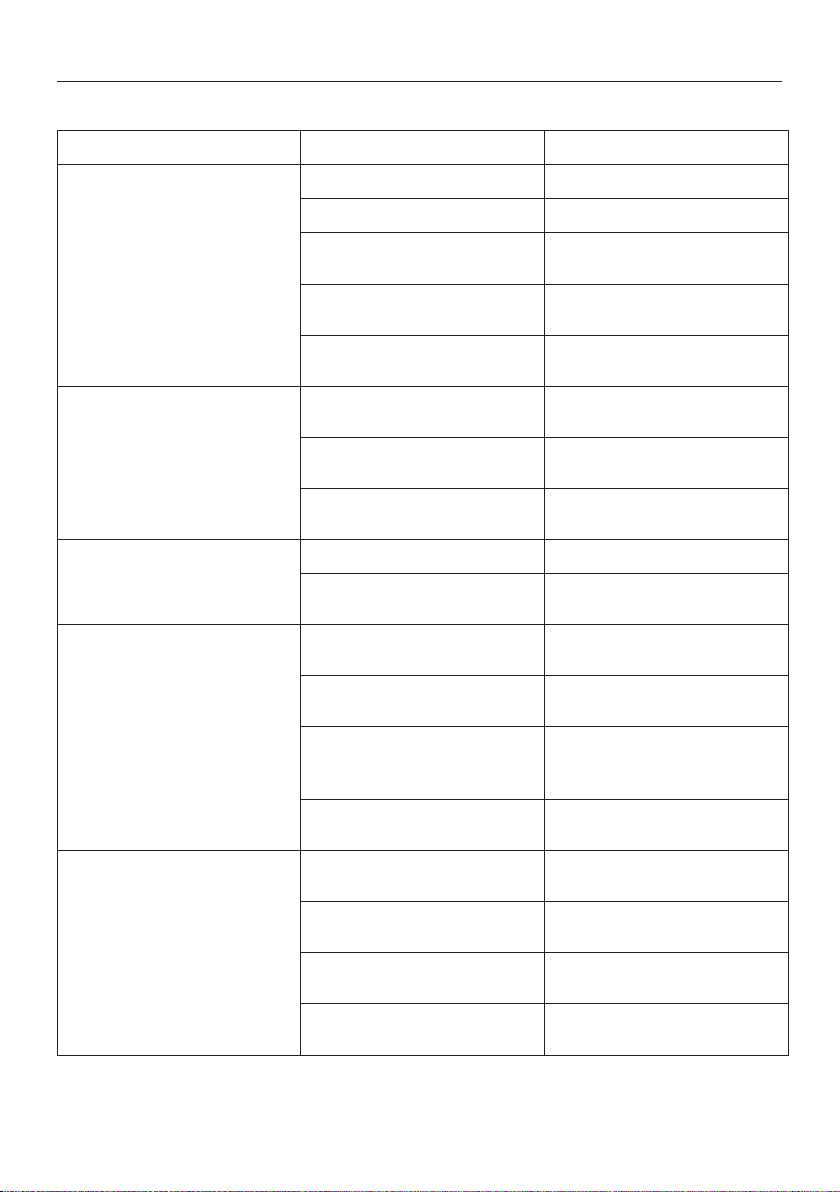
PROBLEM POSSIBLE CAUSE SOLUTION
No espresso coee is delivered No water in the tank Fill the tank with water
The holes in the lter holder are blocked Clean the lter holder spout holes
The espresso boiler outlet is blocked Clean as described in the section “11.2
Cleaning the boiler outlet”
Scale in the water circuit Perform the descaling procedure as de-
scribed in the section “8. espresso coee”
The tank is not correctly in place and the
valve on the bottom is not open
Press the tank down lightly to open the
valve on the bottom
The espresso coee drips from the edges
of the lter holder rather than the holes
The lter holder is inserted incorrectly Attach the lter holder correctly and rota-
te rmly as far as it will go
The espresso boiler gasket has lost ela-
sticity
Have the espresso boiler gasket replaced
by Customer Services
The holes in the lter holder spouts are
blocked
Clean the spout holes.
The pump is excessively noisy The water tank is empty Fill the tank
The tank is not correctly in place and the
valve on the bottom is not open
Press the tank down lightly to open the
valve on the bottom
The espresso coee is cold The espresso coee OK light was not on
when the coee switch was pressed
Wait until the OK light comes on
No preheating was done Preheat as described in the section “8.1
Preheating the coee unit”
The cups were not preheated Heat the cups by rinsing them in hot wa-
ter or standing them on the cup warmer
tray for at least 20 minutes
Scale in the water circuit Perform the descaling procedure as de-
scribed in the section “8. espresso coee”
The coee froth is too light (delivered
from the spout too fast)
The pre-ground coee is not pressed
down rmly enough
Press the pre-ground coee down more
rmly (g. 18)
There is not enough pre-ground coee Increase the quantity of pre-ground cof-
fee
The pre-ground coee is too coarse Use only pre-ground coee for espresso
coee makers
The wrong type of pre-ground coee is
being used
Change the type of pre-ground coee
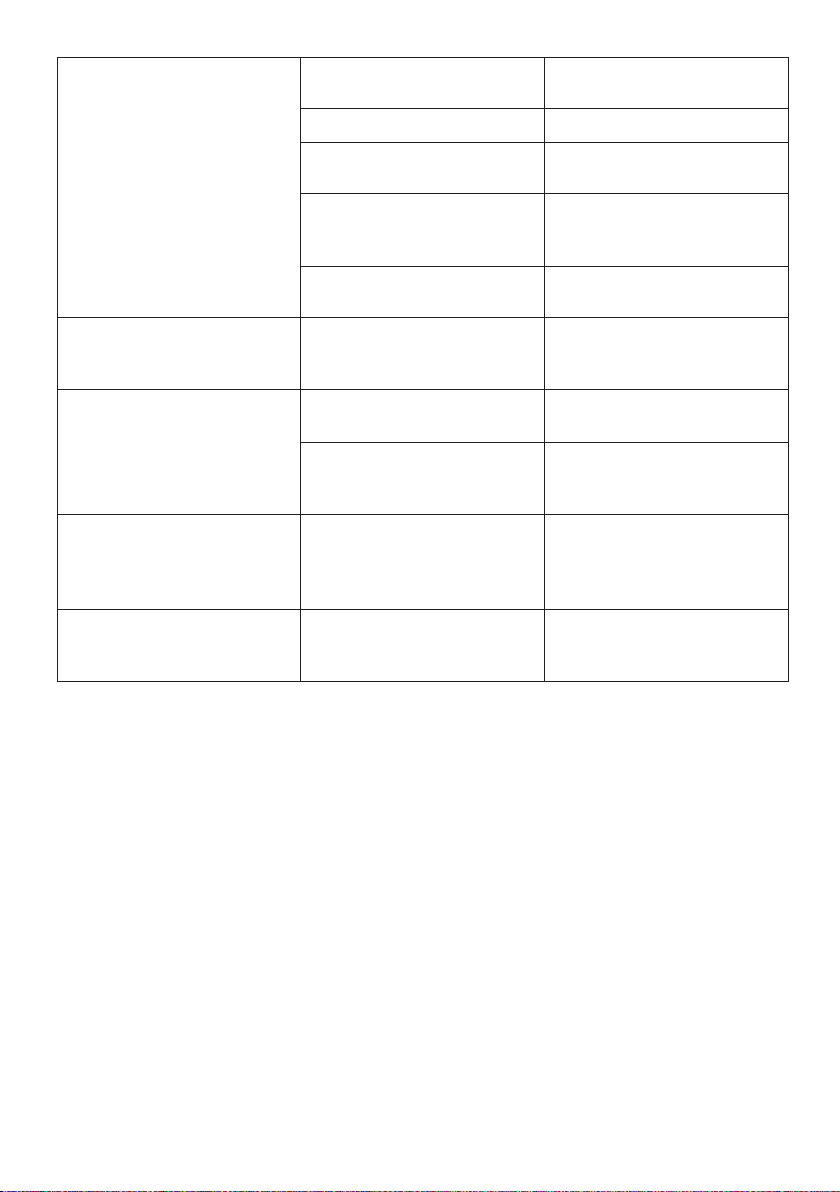
14. TROUBLESHOOTING
Below is a list of some of the possible malfunctions.
If the problem cannot be resolved as described, contact Customer Services.
14
The coee froth is too dark (delivered
from the spout too slowly)
The pre-ground coee is pressed down
too rmly
Press the coee down less rmly (g. 17)
There is too much pre-ground coee Reduce the quantity of pre-ground coee
The espresso boiler outlet is blocked Clean as described in the section “11.2
Cleaning the boiler outlet”.
The pre-ground coee is too ne or damp Use pre-ground coee for espresso coee
makers only and make sure it is not too
damp
The wrong type of pre-ground coee is
being used
Use a dierent type of pre-ground coee
The lter holder cannot be attached to
the appliance
Too much coee has been placed in the
lter
Use the measure supplied and make sure
you are using the correct lter for the type
of preparation
No milk froth is formed when making
cappuccino
Milk not cold enough Always use semi-skimmed milk at refri-
gerator temperature
Cappuccino maker dirty Thoroughly clean the holes in the cappuc-
cino maker, in particular those indicated
in g. 26
The drip or espresso coee has an acid
avour
Inadequate rinsing after descaling Rinse the appliance as described in the
section ““12.1 Descaling the espresso
coee unit” or “12.2 Descaling the drip
coee unit”
The drip coee takes longer to percolate The drip coee maker needs to be desca-
led
Perform the descaling procedure as de-
scribed in the section “12.2 Descaling the
drip coee unit”