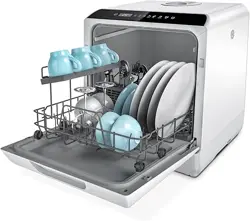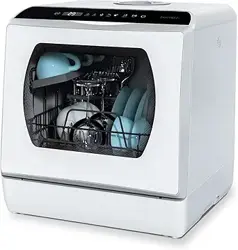
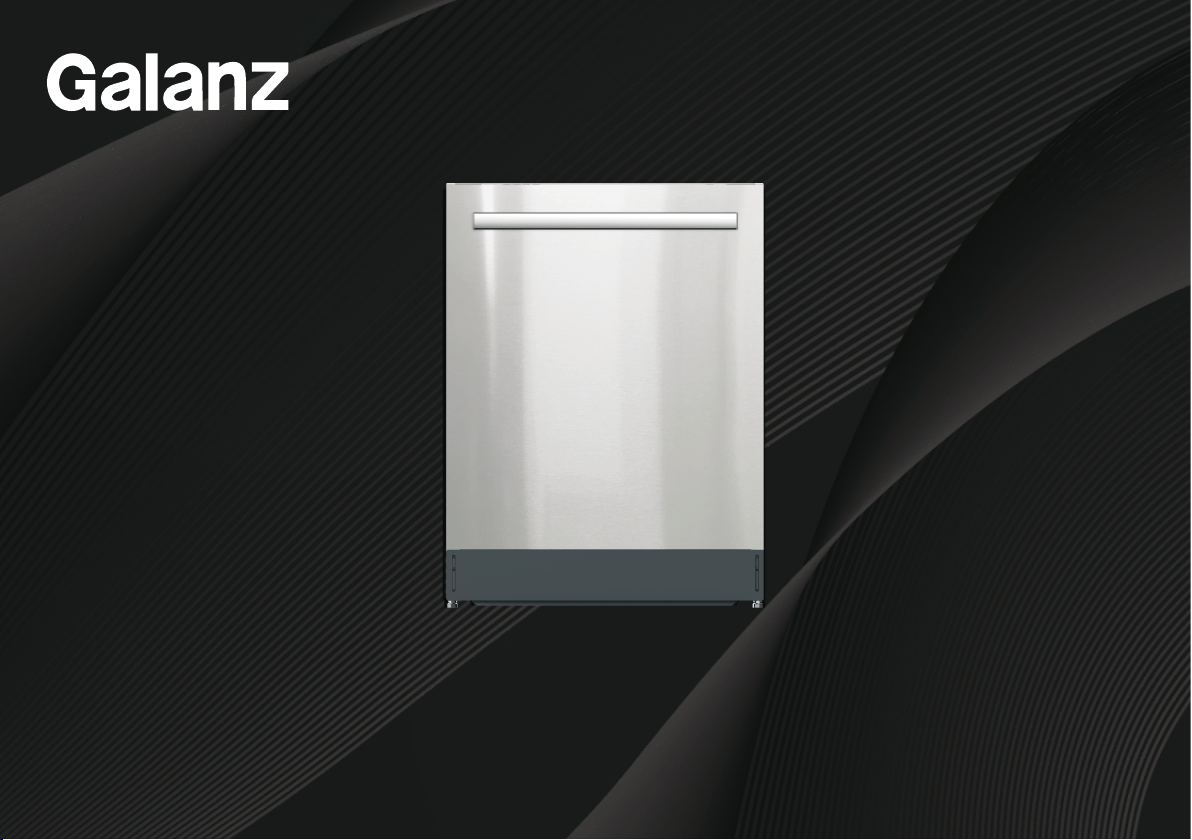
Model# GLDW12TS2A5A
Dishwaher User Manual
Thank you for purchasing a Galanz product. Please read this manual carefully for correct usage and safety,
and keep for future reference. For service, support and warranty information, call 800-562-0738.
@2019 Galanz Americas Limited Company.

@2019 Galanz Americas Limited Company.
CONTENT
CONTENT
Important Safety instructions
Dishwasher Components
4
2
6
Dishwasher Setup
Dishware Materials
12
Loading the Dishwasher
13
Dishwasher Cycles and Options
17
Wash Cycle information
18
Operating the Dishwasher
19
Maintenance and cleaning
21
Troubleshooting Tips
23
Product Diagram
5
1

2
@2019 Galanz Americas Limited Company.
WARNING
IMPORTANT SAFETY INSTRUCTIONS
IMPORTANT SAFETY INSTRUCTIONS
Misuse of the dishwasher can result in serious injury or death.
Do not use the dishwasher in any way not covered in this manual
or for any purpose other than those explained in the following
pages.
Severe product damgae and/or injury could result from the use of
unqualified service technicians or non-original replacement parts.
All repairs must be performed by a qualified service techician using
only original equipment factory replacement parts.
Electrical shock or fire could result if the electrical supply for the
dishwasher covered in this manual is incorrectly installed or if the
dishwasher has been improperly grounded. Do not use the
dishwasher covered in this manual unless you are certain the
electrical supply has been correctly installed and the dishwasher
has been properly grounded.
Never use harsh chemicals to clean your dishwasher. Some
chloride-containing products can damage your dishwasher and
may present health hazards!
NOTICE
Never use steam cleaning products to clean your dishwasher.
The manufacturer will not be responsible for the possible
damages or consequences.
To avoid possible dishwasher damage,do not use harsh
chemicals,abrasive cleaners, scouring pads(metal or
plastic),or abrasive cloths/paper towels to clean your
dishwaher’s exterior door panel. Your dishwasher’s exterior
door panel can be damaged by doing so.
NSF/ANSI 184 Certified residential dishwashers are not
intended for licensed food establishments
WARNING: To reduce the risk of fire,electrical
shock,or serious injury,observe the following
This dishwasher is provided with Installation Instructions and this
Use and Care Manual. Read and and understand all instructions
before using the dishwasher.
When using your dishwasher, follow basic precautions, including
the following:
--Read all instructions before using the dishwasher.
--Use the dishwasher only for its intended function.
--Use only detergents or rinse aids recommended for use in a
dishwasher
and keep them out of the reach of children.
--When loading items to be washed:
1) Locate sharp items so that they are not likely to damage the
door seal; and
2) Load sharp knives with the handles up to reduce the risk of
cut-type injuries.
--Do not wash plastic items unless they are marked ″dishwasher
safe″ or the equivalent. For plastic items not so marked, check the
manufacturer’s recommendations.
SAVE THESE INSTRUCTIONS

3
@2019 Galanz Americas Limited Company.
WARNING
IMPORTANT SAFETY INSTRUCTIONS
IMPORTANT SAFETY INSTRUCTIONS
--Do not touch the heating element during or immediately after
use.
--Do not operate your dishwasher unless all enclosure panels are
properly in place.
-- Do not tamper with controls.
--Do not abuse, sit on, or stand on the door or dish rack of the
dishwasher.
--To reduce the risk of injury, do not allow children to play in or on
a dishwasher.
--Under certain conditions, hydrogen gas may be produced in a
hot-water system that has not been used for two weeks or more.
HYDROGEN GAS IS EXPLOSIVE. If the hot-water system has not
been used for such a period, before using the dishwasher turn on
all hot-water faucets and let the water flow from each for several
minutes. This will release any accumulated hydrogen gas. As the
gas is flammable, do not smoke or use an open flame during this
time.
--Remove the door to the washing compartment when removing
an old dishwasher from service or discarding it.
To avoid floor damage and possible mold growth, do not allow wet
areas to remain around or under the dishwasher.
Protect your dishwasher from the elements. Protect against
freezing to avoid possible damage to the fill valve.
Damage caused by freezing is not covered by the warranty.
WARNING: To reduce the risk of electric shock, fire, or injury to
persons, the installer must ensure that the dishwasher is
completely enclosed at the time of installation.
A hose that attaches to a sink spray can burst if it is installed on
the same water line as the dishwasher. If your sink has one, it is
recommended that the hose be disconnected and the hole
plugged.
This appliance must be grounded. In the event of a malfunction or
breakdown, grounding will reduce the risk of electric shock by
providing a path of least resistance for electric current. This
appliance is equipped with a cord having an equipment-grounding
conductor and a grounding plug. The plug must be plugged into
an appropriate outlet that is installed and grounded in accordance
with all local codes and ordinances.
WARNING – Improper connection of the equipment-grounding
conductor can result in a risk of electric shock. Check with a
qualified electrician or service representative if you are in doubt
whether the appliance is properly grounded. Do not modify the
plug provided with the appliance, if it will not fit the outlet, have a
proper outlet installed by a qualified electrician.
State of California Proposition 65 Warnings:
WARNING: This product contains one or more chemicals known
to the State of California to cause cancer, birth defects, or other
reproductive harm.
SAVE THESE INSTRUCTIONS

4
DISHWASHER COMPONENTS
N/A
Heavy
Delicate
Light
Express
RinseNormal
Wash Cycles Wash Cycle Options
Model
Sanitize
Top
Rack
Bottom
Rack
Half
load
GLDW12TS2A5A
N/A
Additional Features
Description
Time Remaining Indicator
49dBA Sound Level
Delay Start
Rinse Cycle
Plastic Item Clips
Low Salt NotificationLight
Low Rinse Aid Notification Light
Sanitized Notification Light
Energy Efficient 270kWh
Indicates the cycle time remaining.
Quiet washing.
Start of a cycle can be delayed in 1-hour increments up to 24 hours.
Securely holds light-weight plastic accessories(cups,lids,etc.).
Illuminates to indicate Salt is low.
Illuminates to indicate Rinse Aid is low.
Illuminates to indicate sanitation requirements are met.
ENERGY STAR qualified.
If you need to pre-rinse dishes to avoid odors, let the dishwasher do the work for you.
Place unrinsed dishes inside dishwasher and select the “Rinse” cycle. Uses less water
than hand rinsing and very low energy. Note: Do not use detergent in this cycle.
DISHWASHER COMPONENTS

1
2
3
4
5
6
7
8
9
Lower rack
7
Detergent dispenser
8
Rinse Aid Dispenser
9
5
PRODUCT DIAGRAM
PRODUCT DIAGRAM
Top rack Spray Arms
Cup Shelf
1
2
Upper rack
3
Water Softener
4
Filters
5
6
Cutlery Basket

Clark
Water hardness
Range
Mmol/l
Set value on
the machine
0-8
9-10
11-12
13-15
16-20
21-26
27-38
39-62
soft
soft
medium
medium
medium
hard
hard
hard
0-1.1
1.2-1.4
1.5-1.8
1.9-2.1
2.2-2.9
3.0-3.7
3.8-5.4
5.5-8.9
H0
H1
H2
H3
H4
H5
H6
H7
Water hardness table
6
The water softener is designed to remove minerals from the water,
which would have a detrimental or adverse effect on the operation of
the appliance. The higher the content of these minerals and salts, the
harder the water is. The softener should be adjusted according to the
hardness of the water in your area. Your local Water Authority can
advise you on the hardness of the water in your area.
Before using your dishwasher for the first time:
A. Set the water softener
B. Pour 500ml of water inside the salt container and then fill with
dishwasher salt
C. Fill the rinse aid dispenser
DISHWASHER SETUP
DISHWASHER SETUP
A. Water softener
Setting
The amount of salt dispensed can be set from H0 to H7.
Salt is not required at the set value H0.
1. Find out about the hardness value of your tap water. Your water
utility company will help you with this.
2. Set value can be found in the water hardness table.
3. Close the door.
4. Switch on"Power"switch.
5. Hold down "Delay" button and then press "Program" button for
5 seconds.The buzzer rings
one time and H.. flashes on the digital display.(factory setting
is H0)
To change the setting:
1. Press " Delay " button.
Each time the button is pressed, the set value increases by one level;
when the value of H7 has been reached, the display jumps back to
H0(off).
2. Press " Program " button. The chosen setting has now been
stored. Contact your local water board for information on the
hardness of your water supply.

7
Always use salt intended for use with dishwasher.
WATER SOFTENER
The hardness of the water varies from place to place. If hard water is
used in the dishwasher, deposits will form on the dishes and utensils.
The appliance is equipped with a special softener that uses salts
specifically designed to eliminate lime and minerals from the water.
DISHWASHER SETUP
DISHWASHER SETUP
The salt container is located beneath the lower basket and should be
filled as follows:
Attention!
Only use salt specifically designed for use in dishwashers! All other
types of salt not specifically designed for use in a dishwasher,
especially table salt, will damage the water softener. In case of
damages caused by the use of unsuitable salt the manufacturer does
not give any warranty nor is liable for any caused damages.
Only fill with salt just before starting one of the complete washing
programmes. This will prevent any grains of salt or salty water, which
may have been split, remaining on the bottom of the machine for any
period of time, which may cause corrosion.
After the first wash cycle the control panel light expires.
Remove the lower basket and then unscrew and remove the cap
from the salt container.
If you are filling the container for the first time, fill 2/3 of its volume
with water (around 500ml).
Place the end of the funnel (supplied) into the hole and introduce
about 3.3lb (1.5kg) of salt. It is normal for a small amount of water
to come out of the salt container.
Carefully screw the cap back on.
Usually, the salt warning light will be off in 2-6 days after the salt
container is filled with salt.
B. Loading the Salt into the Softener
1
2
11
A.
B.
C.
D.
E.

8
DISHWASHER SETUP
DISHWASHER SETUP
Function of Rinse Aid
Rinse aid is automatically added during the last rinse, ensuring
thorough rinsing, spot and streak free drying.
Attention!
Only use branded rinse aid for dishwasher. Never fill the rinse aid
dispenser with any other substances (e.g. dishwasher cleaning agent,
liquid detergent). This would damage the appliance.
When to Refill the Rinse Aid Dispenser
If there is no rinse-aid warning light on the control panel, you can
judge the amount of rinse-aid by the color of the optical level indicator
"D" located next to the cap. When the rinse-aid container is full, the
whole indicator will be dark .As the rinse aid diminishes, the size of
the dark dot decreases. You should never let the rinse aid get below 1
/ 4 full.
C. Fill the Rinse Aid Dispenser
RINSE-AID DISPENSER
NOTE: 1. The salt container must be refilled when the salt warning
light in the control panel comes on. Though the salt container is filled
enough, the indicator light may not black out before the salt fully
dissolve. If there is no salt warning light in the control panel (for some
models), you can judge when to load the salt into the softener by the
cycles that the dishwasher had run (see the following schema).
2. If there are spills of the salt, a Rinse program could be run to wipe
them out.
As the rinse aid diminishes, the size of the black dot
on the rinse aid level indicator changes, as illustrated below.
Full
3 / 4 full
1 / 2 full
1 / 4 full - Should refill to eliminate spotting
Empty

9
DISHWASHER SETUP
DISHWASHER SETUP
The rinse aid is released during the final rinse to prevent water from
forming droplets on your dishes that can leave spots and streaks. It
also improves drying by allowing water to sheet off the dishes.
Your dishwashers are designed to use liquid rinse aids. The rinse aid
dispenser is located inside
the door next to the detergent dispenser. To fill the dispenser, open
the cap and pour the rinse aid
into the dispenser until the level indicator turns completely black.
Don't forget to replace the cap before you close dishwasher door.
Attention!
Clean up any rinse aid split during filling with an absorbent cloth to
avoid excess foaming during the next wash.
Adjusting Rinse Aid Dispenser
The rinse aid dispenser has four or six settings. Always start with
the dispenser set on "4" If spots and poor drying are problems,
increase the amount of rinse aid dispensed by removing the
dispenser lid and rotating the dial to "5". If the dishes still are not
drying properly or are spotted, adjust the dial to the next higher
number until your dishes are spot-free. The dose is factory set in
the position 5.
To open the dispenser, turn the cap to the "open" (left) arrow and
lift it out.
Pour the rinse aid into the dispenser, be careful not to overfill.
The volume of the rinse aid container is about 4.5oz. Be careful
not to overfill the dispenser, because this could cause over
sudsing. Wipe away any spills with a damp cloth.
Replace the cap by inserting it aligned with "open" arrow and
turning it to the "closed" (right) arrow.
C. Function of Detergent
Detergents with its chemical ingredients are necessary to remove dirt,
crush dirt and transport it out of the dishwasher. Most of commercial
quality detergents are suitable for this purpose.
Based on their chemical composition, dishwasher can be split in two
basic types:
■conventional, alkaline detergents with caustic components
■low alkaline concentrated detergents with natural enzymes
The use of "Normal" washing program in conjunction with
concentrated detergents reduces pollution and is good for your
dishes; these washing programs are specially matched to the
dirt-dissolving properties of the enzymes of the concentrated
detergent. For this reason"Normal" washing program in which
concentrated detergents are used can achieve the same results
that can otherwise only be achieved using"intensive" program.
1
2
3
Adjust lever
(Rinse)

10
DISHWASHER SETUP
DISHWASHER SETUP
D. Function of detergent
NOTE:
If the lid is closed: press release button. The lid springs open.
Always add the detergent just before starting each wash cycle.
Only use branded detergent for dishwasher.
Cannot dissolve and develop their full cleaning power during short
programs. Therefore please use long programs when using detergent
tablets, to ensure the complete removal of detergent residuals.
Detergent Dispenser
The dispenser must be refilled before the start of each washing cycle
following the instructions provided in the Wash Cycle Table. Your
dishwashers use less detergent and rinse aid than conventional
dishwashers. Generally, only one tablespoon of detergent is needed
for a normal wash load. Also, more heavily soiled items need more
detergent. Always add the detergent just before starting dishwasher,
otherwise it could get damp and will not dissolve properly. Amount of
Detergent to Use
WARNING!
Dishwasher detergent is corrosive! Take care to keep it out of reach of
children.
Use only detergent specifically made for use in dishwashers. Keep
your detergent fresh and dry.
Don't put powder detergent into the dispenser until you're ready to
wash dishes.
Based on their chemical composition, dishwasher can be split in two
basic types:
■conventional, alkaline detergents with caustic components
■low alkaline concentrated detergents with natural enzymes
1
2
2
1
Please observe the manufacturer's dosing and storage
recommendations as stated on the detergent packaging.
Close the lid and press until it locks in place.
If the dishes are heavily soiled, place an additional detergent dose in
the pre-wash detergent chamber. This detergent will take effect
during the pre-wash phase.
2
1
Fill in the detergent
Fill the detergent dispenser with detergent.
The marking indicates the dosing levels , as illustrated on the right:
The place of main wash cycle detergent
placed, MIN means approximately
of detergent.
The place of pre-wash cycle detergent
placed, approximately 0.011lb of
detergent.
" "
0.044lb
1
2
3
4
5
6
MAX
2
1

11
DISHWASHER SETUP
DISHWASHER SETUP
NOTE:
You find information about the amount of detergent for the single
program on the last page.
Please be aware that according to the soiling level and the specific
hardness of water, differences are possible.
Please observe the manufacturer's recommendations on the
detergent packaging.
Detergents
There are 3 sorts of detergents
1.With phosphate and with chlorine
2.With phosphate and without chlorine
3.Without phosphate and without chloride
Normally new pulverized detergent is without phosphate. The water
softener function of phosphate is not given. In this case we
recommend to fill salt in the salt container even when the hardness of
water is only 6 dH. If detergents without phosphate were used in case
of hard water often white spots appear at dishes and glasses. In this
case please add more detergent to reach better results.
Detergents without chlorine do only bleach a little. Strong and
coloured spots will not removed completely. In this case please
choose a programme with higher temperature.

12
Note: Before using your dishwasher for the first time,check the
information in this section.
Some items are not dishwasher safe and should be hand washed;
others require special loading.
Recommended
Aluminum: Colored anodized aluminum may fade over time. Minerals
in your water may cause the aluminum to darken or spot. This can
usually be removed with a soap-filled steel wool pad.
China, Crystal, Stoneware: Some hand-painted utensils may
discolor, fade or spot. Hand wash these utensils. Position fragile
glassware so that it will not fall over or come in contact with other
utensils during the wash cycle.
Glass: Milk glasses may discolor or become yellow.
Non-stick Coatings: Apply a light coating of vegetable oil to non-
stick surfaces after drying.
Plastics: Make sure the plasticware is dishwasher safe.
Stainless Steel, Sterling Silver and Silver Plates: Load these so
they do not come in contact with other metals.
Not Recommended
Acrylic: Crazing, small cracks throughout the acrylic,may occur.
Adhesive-Joined Pieces: Adhesives that join materials such as
plastic, wood, bone, steel, copper, tin, etc. may loosen.
Bone-Handled Utensils: Handles may separate.
Iron: Iron will rust. Hand wash and dry immediately.
Non-Dishware items: Your dishwasher is intended for use in
cleaning ONLY standard house-hold dishware and kitchenware.
Pewter, Brass, Bronze: These items will tarnish. Hand wash and dry
immediately.
Tin: Tin will stain. Hand wash and dry immediately.
Wood: Wooden bowls, wooden utensils and utensils with wooden
handles can crack, warp and lose their finish.
DISHWARE MATERIALS
DISHWARE MATERIALS

13
For best performance of the dishwasher, follow these loading
guidelines. Features and appearance of baskets and silverware
baskets may vary from your model.
Attention before or after Loading the Dishwasher Baskets
Scrape off any large amounts of leftover food. It is not necessary to
rinse the dishes under running water.
Place objects in the dishwasher in the following way:
1.Items such as cups, glasses, pots/pans, etc. are stood upside
down.
2.Curve items, or those with recesses, should be at a slant so that
water can run off.
3.They are stacked securely and can not tip over.
4.They do not prevent the spray arms from rotating while washing
takes place.
Very small items should not be washed in the dishwasher as they
could easily fall out of the baskets.
Removing the Dishes
To prevent water dripping from the upper basket into the lower
basket, we recommend that you
empty the lower basket first and then the upper basket.
The sharp points and edges of knives and other sharp utensils can
cause serious injuries. Load knives and other sharp utensils with
edges down. Do not allow children to handle or play near knives and
sharp utensils.
Warning
To aviod dishwasher damage, do not load the dishwasher with paper
products, plastic bags,packing materrials or anything other than
normal,diswasher safe dishware and kitchenware.
Loading the Upper Basket
The upper basket is designed to hold more delicate and lighter
dishware such as glasses, coffee and tea cup and saucers, as well as
plates, small bowls and shallow pans (as long as they are not too
dirty). Position the dishes and cookware so that they do not get
moved by the spray of water.
Notice
Upper basket
Type
Item
Coffee Cup
Glass
Saucer
A
B
C
Upper Basket
IN
A1
A6
A7
A12
B1
B6
B7
B12
C1
C12
LOADING THE DISHWASHER
LOADING THE DISHWASHER

14
Loading the Lower Basket
We recommend that you place large items which are most difficult to
clean in to the lower basket: pots, pans, lids, serving dishes and
bowls, as shown in the figure below.
It is preferable to place serving dishes and lids on the side of the
baskets in order to avoid blocking the rotation of the top spray arm.
Pots, serving bowls, etc. must always be placed top down.
Deep pots should be slanted to allow water to flow out.
The bottom basket features fold down tine rows so that larger or
more pots and pans can be loaded.
LOADING THE DISHWASHER
LOADING THE DISHWASHER
Adjusting the Upper Basket
If required, the height of the upper basket can be adjusted in order to
create more space for large utensils either in the upper basket or
lower basket. The upper basket can be adjusted for height by
putting wheels of different height into the rails. Long items, serving
cutlery, salad servers or knives should be placed on the shelf so that
they do not obstruct the rotation of the spray arms. The shelf
can be folded back or removed when not be required for use.
Upper Basket Height Adjustment
Basket height adjustment mechanism
on the upper basket of your machine
is designed to let you adjust the
height of your upper basket upwards
or downwards, without removing it
from your machine when it is full, and
create large spaces at the top or
bottom area of your machine as
needed. Basket of your machine is set to lower position in factory
settings. In order to raise your basket, hold it from both sides and
pull it upwards. In order to lower it,hold it from both sides again, and
leave it.
In loaded basket adjustment mechanism, make sure that both sides
are in the same position(up or down).
Upper position Lower position
Lower Basket
F1
F9
D1
D2
I1
G5
H1
F8
F12
H12
Lower basket
Type
Item
Serving Oval
platter
G
H
I
Dinner plate
Bread plate
Fruit bowl
Serving bowl
F
D

15
For washing in the dishwasher the following cutlery/dishes
Are not suitable Cutlery with wooden, horn china or mother-of-pearl
handles Plastic items that are not heat resistant Older cutlery with
glued parts that is not temperature resistant Bonded cutlery items or
dishes Pewter or cooper itemsLead crystal glass Steel items subject
to rusting Wooden platters Items made from synthetic fibre.
LOADING THE DISHWASHER
LOADING THE DISHWASHER
Upper/Lower basket Folding racks
Folding racks consisting of three/two parts in the upper/lower basket
of your machine are designed in order to let you place big items
easier such as pots, pans, etc. If desired, each part can be folded
separately, or all of them can be folded and a larger area can be
obtained. You can use folding racks by raising them upwards, or by
Cutlery Basket and Fork shelf
Cutlery should be placed in the cutlery basket with handles at the
bottom: If the basket has side baskets, the spoon should be loaded
individually into the appropriate slots, especially long utensils should
be placed in the horizontal position at the front of the upper basket.
For optional
2
1
Lower Basket
2
1
Upper Basket
Door side
Fork shelf
Cutlery basket
1
4
Cutlery basket
Type
Item
Teaspoon
Dinner Fork
Serving Spoon
Knife
1
4
2
5
3
6
Salad Fork
Serving Fork

16
Attention!
Long bladed knives stored in an upright position are a potential
hazard!
Long and/or sharp items of cutlery such as carving knives must be
positioned horizontally in the upper basket.
Damage to Glassware and other Dishes
Possible causes:
■Type of glass or manufacturing process. Chemical composition of
detergent.
■Water temperature and duration of dishwasher program.
Suggested remedy:
■Use glassware or porcelain dishes that have been marked
dishwasher-safe by the manufacturer.
■Use a mild detergent that is described as kind of dishes. If
necessary, seek further information from detergent manufacturers.
■Select a program with a low temperature.
■To prevent damage, take glass and cutlery out of the dishwasher as
soon as possible after the programme has ended.
At the End of the Wash
When the working cycle has finished, the buzzer of dishwasher will
ring 6 times, then stop.
Turn off the appliance using the "Power" button, and open the door of
the dishwasher. Wait a few minutes before unloading the dishwasher
to avoid handling the dishes and utensils while they are still hot and
more susceptible to breakage. They will also dry better.
■The upper basket is designed to hold more delicate and lighter
dishware such as glasses, coffee and tea cups.
LOADING THE DISHWASHER
LOADING THE DISHWASHER
WARNING!
Do not let any item extend through bottom. Are of limited suitability.
Some types of glasses can become dull after a large number of
washes. Silver and aluminium parts have a tendency to discolour
during washing. Glazed patterns may fade if machine washed
frequently.
NOTE: Do not put in items that are dirty of cigarette ash, candle wax,
lacquer or paint. If you buy new dishes please make sure that they are
suitable for dishwashers.
NOTE: Please do not overload your dishwasher. There is only space
for 12 standard place settings.
Do not use a dish that is not suitable for dishwashers. This is
important for good results and for reasonable energy consumption.
Loading Cutlery and Dishes
Before loading the dishes, you should:
Remove large left-over foods.
Soften remnants of burnt food in pans by souring or scrubbing.
When Loading the Dishes and Cutlery, Please Note:
Dishes and cutlery must not impede the rotation of the spray arms.
Load hollow items such as cups, glasses, pans etc. with the opening
downwards so that water cannot collect in the container or a deep
base.
Dishes and items of cutlery must not lie inside one another, or cover
each other
■To avoid damage to glasses, they must not touch
■Load large items which are most difficult to clean into the lower
basket

17
Delay Start: Allows you to delay the start time of your dishwasher in
one hour increments up to 24 hours.
Sanitize: The Sanitize feature is available with any cycel except
Rinse. Select one of these cycles, press the“Sanitize” button and then
press Start to activate the Sanitation features. The sanitize LED will
light when sanitation requirements are met. The technical sanitation
measures may also improve the drying results.
Half Load: The Half Load option may be used with the
Pot&Pans,Normal cycles to reduce the energy and water
comsumption when washing small, lightly soiled loads that fill
approximately half of the dishwasher’s capactiy. To activate, select
the“Half Load” button in addition to any of the two cycles listed
above.
Wash Cycles Options
Wash Cycles
Heavy: Best for cleaning items with baked-on food or grease. These
dishes would normally require soaking.
Normal: This cycle is recommended to completely wash and dry a
full load of normally soiled dishes. The energy usage label is based on
this cycle and option combination.
Delicate: Provides a light wash and gentle dry for delicate items such
as china and crystal.
Light: To save water and energy, high efficiency dishwashers use
advanced filtration which may result in longer cycle times(in some
cases, over 2 hours).When you need fast results, the Express Wash
cycle will clean your dishes using slightly more water and energy.
Then, towel dry dishes for immediate use. Select Sanitize if you want
to add a drying option.
Express: Cleans lightly soiled dishes and reduces overall wash time.
Use this cycle to clean galsses and dessert dishware that may need
to be reused at the event.
Rinse: Allows you to rinse food soil off of a partial load and hold the
dishes in the dishwasher until you are ready to run a full load.
DISHWASHER CYCLES AND OPTIONS
DISHWASHER CYCLES AND OPTIONS

18
The cycle times in this Use and Care Manual are based on normal soil loads and 120°F incoming water and will vary based on your actual
coditions.
WASH CYCLE INFORMATION
WASH CYCLE INFORMATION
Table1-Wash Cycle Information
Express
Rinse
50min
9.1L
2.4gal
40℃
104℉
60℃
℉140
12min
3.9L
1.0gal
Water inlet
temperature
60min
n/a
n/an/an/an/a
Water inlet
temperature
Heavy
Normal
Delicate
Light
cycle time
water consumption
water temperature
rinse temperature
Sanitize
cycle time
water consumption
water temperature
rinse temperature
Half Load
cycle time
water consumption
water temperature
rinse temperature
175min
144min
96min
70min
9.1L
2.4gal
22.2L
5.9gal
50-65℃
℉122-149
12.3L
3.2gal
50-53℃
℉122-127
11.9L
3.1gal
50℃
℉122
50-55℃
℉122-131
180min 154min
106min
80min
60℃
℉140
60℃
℉140
60℃
℉140
60℃
℉140
n/a
n/an/an/an/a
n/a
n/an/an/an/a
n/a
n/an/an/an/a
9.1L
2.4gal
9.1L
2.4gal
22.2L
5.9gal
12.3L
3.2gal
11.9L
3.1gal
40℃
104℉
50-55℃
℉122-131
50℃
℉122
50-53℃
℉122-127
50-65℃
℉122-149
70℃
℉158
70℃
℉158
70℃
℉158
70℃
℉158
70℃
℉158
139min
16.4L
4.3gal
50-55℃
℉122-131
127min
11.4L
3.0gal
48-50℃
℉118-122
65℃
149℉
60℃
℉140

19
9.Delay button: The START DELAY will allow you to delay the start
time of any cycle automatically up to 24hours.
10、Digital display: To display the running time remain, malfunction
codes and delay time.
WARNING
To avoid risk of injury, always use caution when opening the door
during or following a wash cycle as hot water or steam may escape.
Do not fully open the door until water noises have stopped and steam
has subsided.
Turning on the Appliance
Starting a wash cycle...
Draw out the lower and upper basket, load the dishes and
1. push them back. It is recommended to load the lower basket first,
then the upper one (see the section entitled "Loading the
Dishwasher"). Pour in the detergent (see the section entitled "Salt,
Detergent and Rinse Aid").
You must have:120-volt,60Hz,AC-only,10-or 12-amp,fused electrical
supply.
Make sure that the water supply is turned on to full pressure. Open
the door, press the "Power“ button, Press the "Program" button to
select a desired "Wash cycle". (See the section entitled "Wash Cycle
Table" ) .Press the Start/Pause button and close the door within 4
seconds and the dishwasher will be activated. If the door is not
closed within 4 seconds after pressing the Start/Pause button, the
power is off. In this state, the door is closed and the dishwasher will
not start. Press the Start/Pause button again, the Digital Display
indicator lights up, and the door is closed within 4 seconds. The
dishwasher will be activated.
1.ON/OFF Button: To turn on/off the power supply.
2.Program select button: Press the button to select the washing
program.
3.Program indicator light: when you select a washing program, the
corresponding light will display.
.Salt and rinse aid indicator light: To come on when the softener or
dispenser needs to be refilled.
5.Drying light: To come on when the dishwasher is drying.
6.
7.Sanitize indicator: An increased temperature during the final rinse
stage will improve the drying process; The indicator will be available
when the Sanitize button is selected.
8.Half load button: The Half Load option can only be used with
Pot&Pans\Normal.
NOTE: Buttons are sensitive and should be touched gently. Avoid any
grease or food particles resting on the buttons as they could activate
the dishwasher. Wiping and cleaning can also activate the
dishwasher. For best results, use bare, clean hands when touching
the buttons.
4
Start/pause button: The appliance will start or pause the expected
washing cycle.
1
23
4
6
7
8
9
10
5
OPERATING THE DISHWASHER
Normal
Rinse
Rinse
Aid
Salt
Express
min
On
Off
Program
Start/Pause
Half Loa d
Delay
Sanitize
Dry Heavy
Delicat e
Light
OPERATING THE DISHWASHER

20
It is dangerous to open the door when washing, because the hot
water may scald you.
Switch Off the Dishwasher
The digital display appears "---" and the buzzer rings 6 times, only in
this case the programme has ended.
1.Switch off the dishwasher by pressing the"Power" button.
2. Open the door carefully. Hot steam may escape when the door is
opened!
■Hot dishes are sensitive to knocks. The dishes should therefore be
allowed to cool down around 15 minutes before removing from the
appliance.
■Open the dishwasher's door, leave it ajar and wait a few minutes
before removing
the dishes. In this way they will be cooler and the drying will be
improved.
Unloading the dishwasher
It is normal that the dishwasher is wet inside.
Empty the lower basket first and then the upper one. This will avoid
water dripping from the upper basket onto the dishes in the lower
one.
Forget to Add Dish
A forgotten dish can be added any time before the detergent
dispenser opens.
1 Open the door a little to stop the washing.
2 After the spray arms stop working, you can open the door
completely.
3 Add forgotten dishes.
4 You need press the Start/Pause button and close the door within 4
seconds and the dishwasher will work after ten seconds.
WARNING!
OPERATING THE DISHWASHER
OPERATING THE DISHWASHER
NOTE: A click should be heard when the door is closed perfectly.
When the washing is over, you can shut off the switch by
pressing"Power" button.
Change the Program
The ongoing cycle can only be modified if the dispenser cover is not
open (the door can be opened for viewing).
Otherwise, the detergent may have already been released, and the
appliance may have already
drained the wash water. If this is the case, the detergent dispenser
must be refilled (see the section entitled " Fill in the Detergent " ).
Press"Power" button to cancel the programme, and turn on it again,
then you can change the programme to the desired cycle setting (see
the section entitled "Starting a wash cycle. . . " ).
NOTE: If you open the door when washing, the machine pauses and
warning alarm rings, the display appears E1. You need to press the
Start/Pause button and close the door within 4 seconds and the
dishwasher will continue working. If the door is not closed within 4
seconds after pressing the Start/Pause button, the Digital Display is
off. In this state, the door is closed and the dishwasher will not start.
Press the Start/Pause button again, the Digital Display indicator lights
up, and the door is closed within 4 seconds. The dishwasher will be
continue working.
The 6 program lights show the state of the dishwasher:
a) One of the program lights on--> cycle running
b) One of the program lights blinking -->pause
NOTE: If all the lights begin to glimmer, that indicates the machine is
out of order, please turn off the main power and water supply before
calling a service.

21
NOTE: If operate from step 1 to step 2, the filter system will be
removed; while operate from
step 2 to step 1, the filter system will be installed.
Filter assembly
For best performance and results, the filter assembly must be
cleaned. The filter efficiently removes food particles from the wash
water, allowing it to be recirculated during the cycle. For this reason,
it is a good idea to remove the larger food particles trapped in the
filter after each wash cycle by rinsing the semicircular filter and cup
under running water. To remove the filter assembly, pull on the cup
handle in the upward direction. The entire filter assembly should be
cleaned once a week. To clean the coarse filter and the micro filter,
use a cleaning brush. Then, reassemble the filter parts as shown in
the figures above and reinsert the entire assembly in the dishwasher,
positioning in its seat and pressing downward. The dishwasher must
never be used without the filters. Improper replacement of the filter
may reduce the performance level of the appliance and damage
dishes and utensils.
Filtering System
The filter is used to avoid the big remnants and other food particles
getting inside the pump. The residue can obstruct the filter.
The filter system consists of a coarse filter, a flat (Main filter) and a
micro filter (fine filter).
1 Flat filter: Food and debris will be trapped by a special jet on the
lower spray arm.
2 Coarse filter: Big debris, such as bone and glass that could clog
the drain will be trapped in the coarse filter.
To remove an item caught in this filter, gently squeeze the taps on the
top of this filter and lift it out.
3 Micro filter: This filter holds soil and food residue in the sump area
and prevents it from being redeposit on the dishes during a cycle.
2
MAINTENANCE AND CLEANING
MAINTENANCE AND CLEANING
2
1
3
- Inspect the filters for
obstructions every time the
dishwasher has been used.
- By unscrewing the coarse filter,
you can remove the filter system.
Remove any food remnants and
clean the filters under running
water.
Step 1:Contrarotate the
coarse filter ,and then lift it up;
Step 2:lift the Flat filter up
1

22
Protect Against Freezing
If your dishwasher is left in an unheated place during the winter, ask a
service technical to:
1.Cut off electrical power to the dishwasher.
2.Turn off the water supply and disconnect the water inlet pipe from
the water valve.
3.Drain water from the inlet pipe and water valve. (Use a pan to catch
the water)
4.Reconnect the water inlet pipe to the water valve.
5.Remove the filter in the tub and the bottom and use a sponge to
use up water in sump
Cleaning the Door
To clean the edge around the door, you should use only a soft warm,
damp rag. To prevent
penetration of water into the door lock and electrical components, do
not use a spray cleaner
of any kind.
Also, never use abrasive cleaners or scouring pads on the outer
surfaces because they will
scratch the finish. Some papers towels can also scratch or leave
marks on the surface.
WARNING!
Never use a spray cleaner to clean the door panel for it could damage
the door lock and electrical components. It is not allowed to use the
abrasive agent or some paper towel because of the risk of scratching
or leaving spots on the stainless steel surface.
WARNING!
Never run the dishwasher without the filters in place. When cleaning
the filters, don't knock on them.
MAINTENANCE AND CLEANING
MAINTENANCE AND CLEANING
Cleaning the Spray Arms
It is necessary to clean the spray arms
regularly or hard water chemicals will clog
the spray arm jets and bearings.
To remove the spray arms, screw off the
nut clockwise to take out the washer on
top of the spray arm and remove the
arm. Wash the arms in soapy and warm
water and use a soft brush to clean the
jets. Replace them after rinsing thoroughly.
Caring for the Dishwasher
To clean the control panel, use a lightly dampened cloth then dry
thoroughly.
To clean the exterior, use a good appliance cleaner.
Never use sharp objects, scouring pads or harsh cleaners on any part
of the dishwasher.

23
WARNING!
If overflow occurs, turn off the main water supply before calling a
service. If there is water
in the base pan because of an overfill or small leak, the water should
be removed before
restarting the dishwasher.
TROUBLESHOOTING TIPS
When some malfunctions happen, the appliance will display error
codes to warn you.
Codes
Meanings
Possible Causes
Water drainage malfunction
E1
E2
E3
E4
E5
E6
E7
Door open
Water inlet
Water drainage
Temperature sensor
Overflow/leakage
Water leakage
Heating element
The door is opened when the
dishwasher is operating
Water inlet malfunction
Temperature sensor malfunction
Overflow occurs/Water leakage occurs
Water leakage occurs
Abnormal heating
Before Calling for Service
Reviewing the charts on the following pages may make you be free of calling for service.
Problem
Dishwasher
doesn't run
Drain pump
doesn't stop
Possible Causes
What To Do
Fuse blown, or the
circuit breaker acted
Power supply is
not turned on
Water pressure is low
Overflow
The system is designed to detect an overflow. When it does, it shuts off the circulation
pump and turns on the drain pump.
Check that the water supply is connected properly and the water is turned on.
Make sure the dishwasher is turned on and the door is closed securely. Make sure the
power cord is properly plugged into the wall socket.
Replace fuse or reset circuit breaker. Remove any other appliances sharing the same
circuit with the dishwasher.
TROUBLESHOOTING TIPS
Error codes

24
TROUBLESHOOTING TIPS
TROUBLESHOOTING TIPS
Use only the special dishwasher detergent to avoid suds. If this occurs, open the
dishwasher and let suds evaporate. Add 1 gallon of cold water to the tub. Close
and latch the dishwasher, then start the "pre-rinse" wash cycle to drain out the water...
Repeat if necessary.
Noise
Suds in
the tub
Spilled rinse agent
Always wipe up rinse agent spills immediately.
Some audible
sounds are normal
Utensils are not
secure in the
baskets or
something small
has dropped into
the basket
Motor hums
Improper detergent
Dishwasher has not been used regularly. If you do not use it often, remember to set it to fill
and pump out every week, which will help keep the seal moist.
To ensure everything is secured in the dishwasher.
Sound from detergent cup opening.
Problem
Possible Causes
What To Do
Stained tub
interior
Detergent with
colorant was used
Make sure that the detergent is the one without colorant.
Dishes and
flatware
not clean
Make sure that the action of the detergent dispenser
and spray arms are not blocked by large dishware.
Improper program
Improper basket
loading
Select a stronger program.

25
TROUBLESHOOTING TIPS
TROUBLESHOOTING TIPS
Spots and
filming on
glasses and
flatware
1 Extremely hard water
2 Low inlet temperature
3 Overloading the
dishwasher
4 Improper loading
5 Old or damp
powder detergent
6 Empty rinse agent
dispenser
7 Incorrect dosage
of detergent
To remove spots from glassware:
1 Take out all metal utensils out of the dishwasher.
2 Do not add detergent.
3 Choose the longest cycle.
4 Start the dishwasher and allow it to run for about18 to 22 minutes, then it will
be in the main wash.
5 Open the door to pour 2 cups of white vinegar into the bottom of the
dishwasher.
6 Close the door and let the dishwasher complete the cycle. If the vinegar does
not work: Repeat as above, except use 1/4 cup (60 ml)of citric acid crystals
instead of vinegar.
Cloudiness
on glassware
Combination of soft
water and too much
detergent
Use less detergent if you have soft water and select a shortest cycle to wash
the glassware and to get them clean.
Yellow or
brown film
on inside
surfaces
White film on
inside surface
Iron deposits in
water can cause
an overall film
To clean the interior, use a damp sponge with dishwasher detergent and wear
rubber gloves. Never use any other cleaner than dishwasher detergent for the
risk of foaming or suds.
Hard water minerals
Tea or coffee stains
You have to call a water softener company for a special filter.
Problem
Possible Causes
What To Do
Using a solution of 1/2 cup of bleach and 3 cups of warm water to remove the
stains by hand.
WARNING
You have to wait for 20 minutes after a cycle to let the heating elements cool
down before cleaning interior; otherwise, burns will happen.

26
TROUBLESHOOTING TIPS
TROUBLESHOOTING TIPS
Problem
Possible Causes
What To Do
The Detergent
dispenser lid
cannot be
closed properly
Detergent left
in dispenser
cups
Steam
Black or
gray marks
on dishes
Water standing
on the bottom
of the tub
Dishes block
detergent Cups
Clogged detergent re
-sidue is blocking the
catch
Use a mild abrasive cleaner to eliminate those marks.
There is some steam coming through the vent by the door latch during drying
and water draining.
Re-loading the dishes properly.
Clean the detergent from the catch.
Aluminum utensils
have rubbed
against dishes
Normal phenomenon
A small amount of clean water around the outlet on the tub bottom keeps
the water seal lubricated.
This is normal
Be careful not to overfill the rinse aid dispenser.
Spilled rinse aid could cause oversudsing and lead to overflowing.
Wipe away any spills with a damp cloth.
Dishwasher
leaks
Dishwasher
isn't level
Make sure the dishwasher is level.
Overfill dispenser or
rinse aid spills

27
Il est vivement recommandé à l'utilisateur final de se familiariser avec
les procédures de fer-meture de l'alimentation d'eau entrante et de
coupure de l'alimentation électrique entrante. Reportez-vous aux
instructions d'installation ou communiquez avec votre installateur pour
de plus amples renseignements.
Des dommages au produit et/ou blessures graves peuvent survenir
par suite de l'emploi de techniciens en entretien et en réparation non
qualifiés ou de pièces de rechanges qui ne sont pas d'origine. Toutes
les réparations doivent être effectuées par un technicien en entretien et
en réparation qualifié qui utilise des pièces de rechange du fabricant de
l'équipement d'origine.
Consignes de sécurité importantes
Consignes de sécurité importantes
Veuillez lire et conserver ces informations
AVERTISSEMENT
Consignes de sécurité importantes:
Une mauvaise utilisation du lave-vaisselle peut entraîner des
blessures graves ou la mort. Ne pas utiliser le lave-vaisselle d'une
manière qui n'est pas traitée dans le présent guide ou à des fins autres
que celles qui sont expliquées dans les pages qui suivent.
Un choc électrique ou un incendie peut résulter de l'installation
inexacte de l'alimentation électrique du lave-vaisselle traité dans le pré
sent guide ou d'une mauvaise mise à la terre du lave-vaisselle. Ne pas
utiliser le lave-vaisselle traité dans le présent guide à moins d'être cer-
tain que l'alimentation électrique a été correctement installée ou que le
lave-vaisselle a été correctement mis à la terre.
Ne jamais nettoyer votre lave-vaisselle avec des produits chimiques
puissants. Certains produ-its contenant des chlorures peuvent
endommager votre lave-vaisselle et poser des risques pour la santé !
AVIS
Ne jamais nettoyer votre lave-vaisselle avec des produits de
nettoyage à la vapeur. Le fabricant n'assume aucune responsabilité
pour d'éventuels dommages ou conséquences.
Pour éviter d'endommager les lavevaisselle, ne pas utiliser de
produits chimiques, de produits nettoyants abrasifs, de tampons à ré
curer (métal ou plastique), ou abrasifs serviettes tis-sus / papier pour
nettoyer le panneau de porte extérieur de votre lavevaisselle. Panneau
de porte extérieur de votre lave-vaisselle peut être endommagé en le
faisant.
NSF / ANSI 184 lave-vaisselle résidentiels certifiés ne sont pas
destinés aux établissements alimentaires autorisés.
AVERTISSEMENT : Pour réduire le risque d'incendie, de
choc électrique ou de blessure grave, respectez les con-
signes suivantes :
1. Ce lave-vaisselle est fourni avec les instructions d'installation et le
présent guide d'utilisation et d'entretien. Lire et comprendre toutes les
instructions avant de faire fonctionner le lave-vaisselle.

28
3. Afin d'éviter d'endommager le plancher et la formation éventuelle de
moisissures, ne laissez aucune trace d'eau sur le sol adjacent au lave-
vaisselle ou sous ce dernie.
4. Protégez votre lave-vaisselle des éléments. Protégez-le contre le gel
afin d'éviter les dommages éventuels au robinet de remplissage. Les
dommages causés par le gel ne sont pas couverts par la garant.
5.AVERTISSEMENT. Pour réduire le risque de choc électrique,
d’incendie ou de blessure, l’installateur doit s’assurer que l’enceinte est
complète au moment de l’installation.
6. Cet appareil doit être mis à la terre. En cas de mauvais
fonctionnement ou de bris de l’appareil, la mise à la terre réduira les
risques de choc électrique en offrant un parcours de moindre résistance
au courant électrique. Cet appareil est pourvu d’un cordon à conducteur
de terre et d’une fiche de miseà la terre. Brancher la fiche dans une
prise installée adéquatement et mise à terre conformément à tous les
codes et règlements locaux.
AVERTISSEMENT. Une mauvaise connexion du conducteur de terre
peut présenter des risques de choc électrique. Consulter un électricien
ou un technicien qualifié si vous n’êtes pas certain que l’appareil est mis
à terre adéquatement. Ne pas modifier la fiche de l’appareil. Si elle ne
pénètre pas bien dans la prise, faire installer une prise adéquate pat un
électricien qualifié.
Consignes de sécurité importantes
Consignes de sécurité importantes
2. AVERTISSEMENT. Lorsque vous utilisez votre lave-vaisselle, prenez
des mesures de précautions élémentaires, y compris les suivantes :
a) Lisez toutes les instructions avant d’utiliser le lave-vaisselle.
b) N’utilisez le lave-vaisselle que pour laver la vaisselle.
c) Utilisez les détersifs recommandés pour lave-vaisselle et gardez-les
hors de la portée des enfants.
d) Lorsque vous chargez le lave-vaisselle:
1) Placez les objets coupants de façon qu’ils ne puissent
endommager le sceau de la porte.
2) Placez les couteaux avec le manche vers le haut de façon à ne
pas vous couper.
e) Ne pas laver d’articles en plastique à moins qu’ils ne soient marqués
«Peut aller au lavevaisselle » ou l’équivalent. Si l’article ne porte
aucune indication, vérifiez auprès du fabricant.
f) Ne touchez pas l’élément chauffant pendant le fonctionnement de
l’appareil ou immédiatement après.
g) Ne faites pas fonctionner le lave-vaisselle si tous le panneaux du bâti
ne sont pas en place.
h) Ne jouez pas avec les commandes.
i) Évitez de vous asseoir ou de monter sur la porte du lave-vaisselle.
j) Pour éviter tout risque d’accident, ne laissez pas les enfants jouer
dans ou sur le lavevaisselle.
k) Dans certaines conditions, de l’hydrogène peut se former dans un
réseau d’eau chaude inutilisé depuis deux semaines ou plus.
L’HYDROGÈNE EST UN GAZ EXPLOSIF. Si le système d’eau chaude
n’a pas été utilisé depuis un certain temps, laissez couler l’eau chaude
des robinets pendant quelques minutes avant de faire fonctionner le
lave-vaisselle. Cette mesure permettraà l’hydrogène de s’évaporer. Ce
gaz étant inflammable; attention de ne pas fumer ni utiliser de flamme
nue pendant cette période.
l) Enlevez la porte du lave-vaisselle lorsque vous le remplacez ou le
mettez au rebut.
AVERTISSEMENTS DE LA PROPOSITION 65 DE L'ÉTAT DE LA
CALIFORNIE :
AVERTISSEMENT : Cet appareil contient un ou plusieurs produits
chimiques qui, selon l'État de la Californie, peuvent causer le cancer,
des malformations ou d'autres problèmes congénitaux.

IN-HOME SERVICE FULL ONE YEAR WARRANTY
29

@2019 Galanz Americas Limited Company.