JENN-AIR
Use & Care Manual
WOK Accessory
Model AG340-For Gas Grill-Range Cooktops
Printed in U.S.A Cat. No. CRA340UB
© 1992Jenn-Air Company Part No. 205970A 4/92
SAFETY
PRECAUTIONS
Read before operating your WOK
All appliances--regardlessofthe manufacturer--havethepotential
through improper or careless use to create safety problems.
Therefore the following safety precautions should be observed:
1. Be certain your appliance is properly installed and grounded
by a qualified technician.
2. Never use your appliance for warming or heating the room.
3. Children shouldnot be left alone or unattended inareawhere
any appliance is in use. They should never be allowed to sit
or stand on any part of the appliance.
4. Wear properapparel.Loose-fitting or hanging garments
shouldneverbe wornwhileusingthe appliance.
5. Do not repair or replace any part of the appliance unless
specifically recommended in this manual. All other servicing
should be referred to an authorized Jenn-Air Service Con-
tractor.
6. Do not store combustible materials, gasoline or other flam-
mable vapors and liquid near cooktop.
7. Do not use water on grease fires. Smother fire or flame by
covering wok with wok lid, turn control off and ventilation
system on. Note: A dry chemical or foam type extinguisher
may also be used to put out a grease fire.
8. Use only dry potholders. Moist or damp potholders on hot
surfaces may result in burns from steam. Do not use a towel
or other bulky cloth.
9. Exercise care while stir-frying since the necessary high heat
will cause a lot of popping and steaming when food is added
to the wok.
10. CAUTION: Overheating any oil may cause a fire. If oil
smokes, reduce heat.
11. Remember, the outside of your wok will be HOT, too! Don't
wipe it or otherwise touch it with your unprotected hand while
it is hot.
12. Be extremely cautious if you must move the wok while it
contains hot liquid.
13. CAUTION: To avoid risk of fire and injury, do not use for deep
fat frying.
NOTE: For additional safety precautions, please refer to the gas
grill-range or grill-range cooktop use and care manual.
About the
Jenn-Air WOK
The Jenn-Air wok combines the benefits of a centuries old cooking vessel with
modern day technology.
The wordwokmeans "cookingvessel".Originallycreated bytheChineseto save
on fuel (its unique shape heats fast and less energy is needed to maintain a high
temperature), the wok has long served as a multi-purpose cooking utensil. The
wok canbe usedinstead of many other pans inyour kitchen,such asa saucepan
or saute pan. The wok can also be usedfor preparing foods inways other than
just stir-frying for which it is noted. It can be used for poaching, steaming,
braising, stewing, simmering, parboiling, even popping corn.
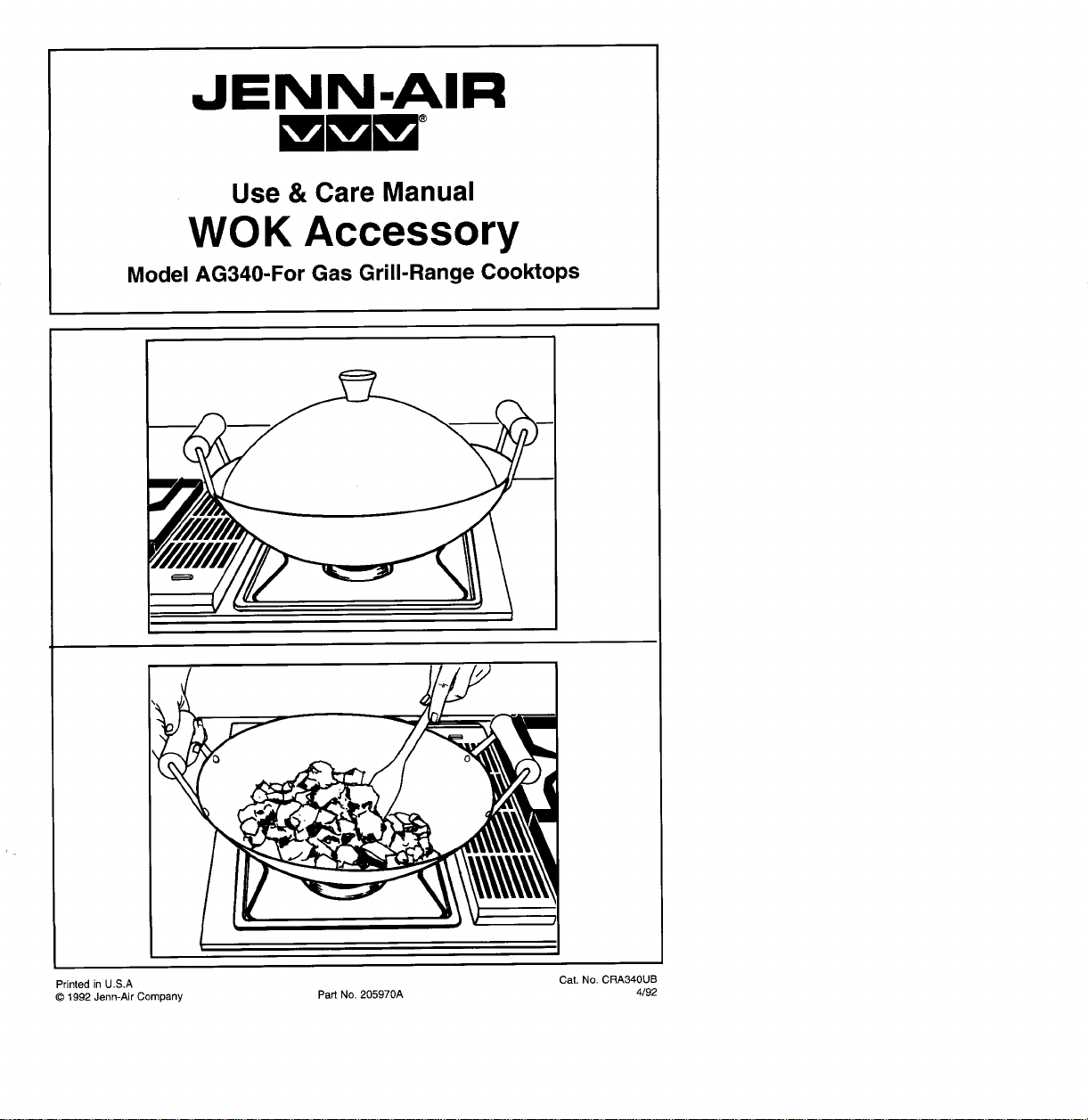
The Jenn-Air wok was designed with ease of cleaning, fast heating and
versatility in mind. By removing the surface burner grate, the wok accessory is
easily and quickly assembled for use. The wok cradle holds the wok to keep it
from rolling or tipping when in use.
The wok is made from cold rolJedcarbon steel which is best for providing even,
steady, and intense heat.The constant even heatmakes possiblethe very short
cooking times so important inOriental cooking. Inthe wok, both theflaring sides
and the rounded bottom heat up so the entire surface can be used for cooking.
The wok iscovered with a hard non-stickfinish. The finish eliminates the amount
of care requiredof an unfinishedcarbonsteel wok,such as seasoning. The non-
stick finish is easy to clean andwill not rust. Foodswill heat very quickly from the
first day you cook in the wok, and it is not necessary to age the wok. Unlike
conventional woks, the wok is cleaned with hot, soapy water.
The wooden handles ofthe wokeliminate the needfor using pothoJdersaswhen
grasping a hot metal wok handle.
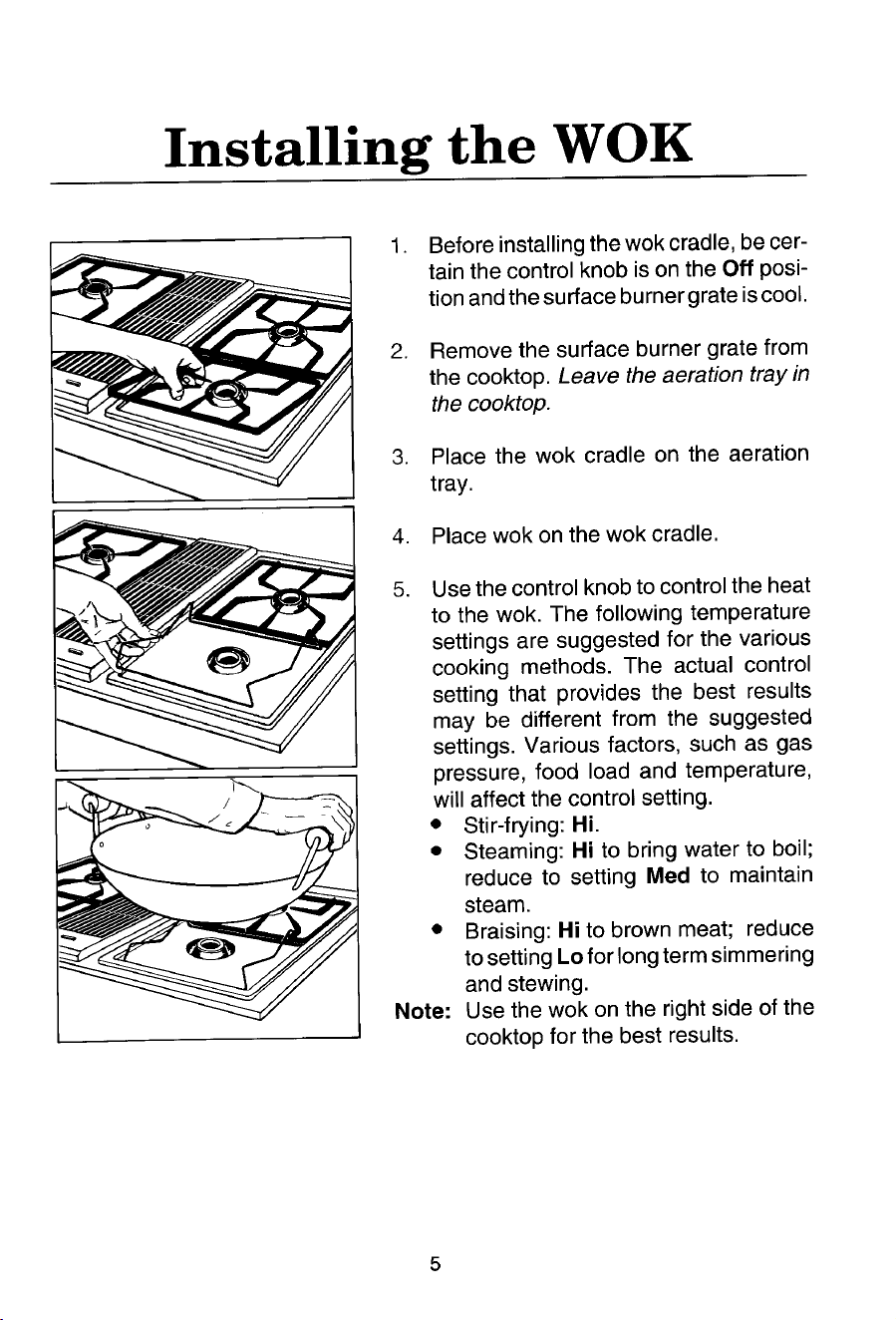
Installing the WOK
1. Before installing the wok cradle, be cer-
tain the control knob is on the Off posi-
tion and the surface burnergrate iscool.
2. Remove the surface burner grate from
the cooktop. Leave the aeration tray in
the cooktop.
3. Place the wok cradle on the aeration
tray.
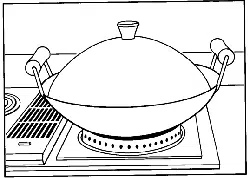
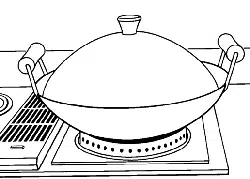
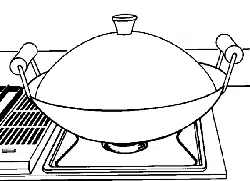
4. Place wok on the wok cradle.
5. Usethe control knob to control the heat
to the wok. The following temperature
settings are suggested for the various
cooking methods. The actual control
setting that provides the best results
may be different from the suggested
settings. Various factors, such as gas
.._ /_...... pressure, food load and temperature,
will affect the control setting.
/_ • Stir-frying: Hi.
• Steaming: Hi to bring water to boil;
reduce to setting Meal to maintain
steam.
_, • Braising: Hi to brown meat; reduce
to settingLo for longterm simmering
and stewing.
Note: Use the wok on the right side of the
cooktop for the best results.
Caring for the WOK
The nonstickfinish, which does not need seasoning, eliminates the special care
necessarywith traditional woks. There are afew tips that should be followed in
order to preserve the beauty of the finish.
• Before using the wok the first time, wash the wok in hot, soapy water.
Rinse and dry thoroughly.
• Donotseason the wok according to procedures given for unfinishedsteel
woks. Doing so may reducethe wok's cleanability and non-stick charac-
teristics.
• To clean the wok after use, wash with hot, soapy water or let soak until
food particles can be easily removed with a sponge or cloth. A plastic
scrubber, BonAmi orother nonabrasive cleaners can be usedfor difficult
to remove residue. Be sure wok is clean; tiny food particles may adhere
to the finish.
• Evaporation ofwaterduring steaming leaves mineraldeposit inwokwhich
can be removed with hot soapy water and plastic scrubber. If the wok's
finish is discolored by mineral deposits, the appearance can be restored
by applying a thin coating of vegetable oil to the wok.
• Do not use abrasive cleaners or scrubbers not recommended for use on
nonstick finishes, such as Scotch Brite, since these may damage the
finish.
• Forbuilt-upresidueortackysurface, scrubverylightly withsoapyS.O.S.
pad.Thiswill not only removethe residue,but mayalso remove or damage
the finish.
• Do not soak wood handles in water.
• Rinse and dry the wok thoroughly.
• The wok craddlecan be removedforstorage onceit hascooled. To clean,
wash with hot soapy water. Rinse and dry thoroughly.
• To clean the lid, wash in hot, soapy water. Dry thoroughly. Do not allow
the wooden knob of the lid to soak in water.
• Do not wash the lid or the wok in dishwasher since drying heat can ruin
the wood handles and knob and adversely affect the wok finish.
• To preserve the interior wok finish, use only the bamboo rice paddles
packaged with the wok or other non-metallic cooking utensils when stir-
frying. Do not use metallic spatulas,etc.,for they will chip,scratch and
eventually remove the wok finish. Although this will not interfere with the
performance of the wok, it will affect its appearance. The wok also may
rustwhere the finish is removed exposingthe bare steel. Ifrusting occurs,
oil lightly with vegetable oil.
• When storing the wok, be certain all parts are completely dry.
Effciency of the WOK
Due to the design of the Jenn-Air wok andwok cradle, the wok heats very fast,
more so than with other utensils used. For this reason, never leave the wok
unattended while using it (the only possible exception is when food is being
steamed andwater issimmering, butbesure to periodicallycheck thewater level
in the wok).
Once oil is added to the wok for stir-frying or browning, do not heat the wok for
more than two minutes before adding food to the wok.Overheating any oil can
cause a fire. If the oil begins to smoke, immediately reduce the heat control
setting.
In the event a fire should occur, smother the flames with the wok lid, turn the
heating control off, then turn the ventilation system on. Let the wok cool down
before removing the cover.
CAUTION: DO NOT HEAT AN EMPTY WOK. If you do, the finish can be
permanently damaged. Deterioration of finish begins after the empty wok has
been heated on Hi after abouttwo minutes. Finishdeteriorationwill notaffectthe
wok's performance, just its appearance.
Using the WOK
The wok can be usedfor many different cooking methods, these being limited
only by your imagination.
Basic suggestions and tips for stir-frying,steaming and braising (orstewing) are
given inthis manual.
The recipes provided are just to whet your appetite. There are numerous
excellent cookbooks on wok and Oriental cooking which can add to your
enjoyment of this accessory.
7
Stir-Frying
This method of cooking was developed bythe Chinese as apractical solutionto
the scarcity of fuel. Stir-frying is quick cooking, stirring and tossing of foods in
a small amount of oil over very high heat. Foods are not fried but are actually
flash-cooked or toss-cooked. The quick searing maintains the crispness and
texture of vegetables and sears inthejuices of meat.The use of little oil is good
for dieters. Although the cooking method is uniquely Chinese, it is easily
adaptable to many different foods.
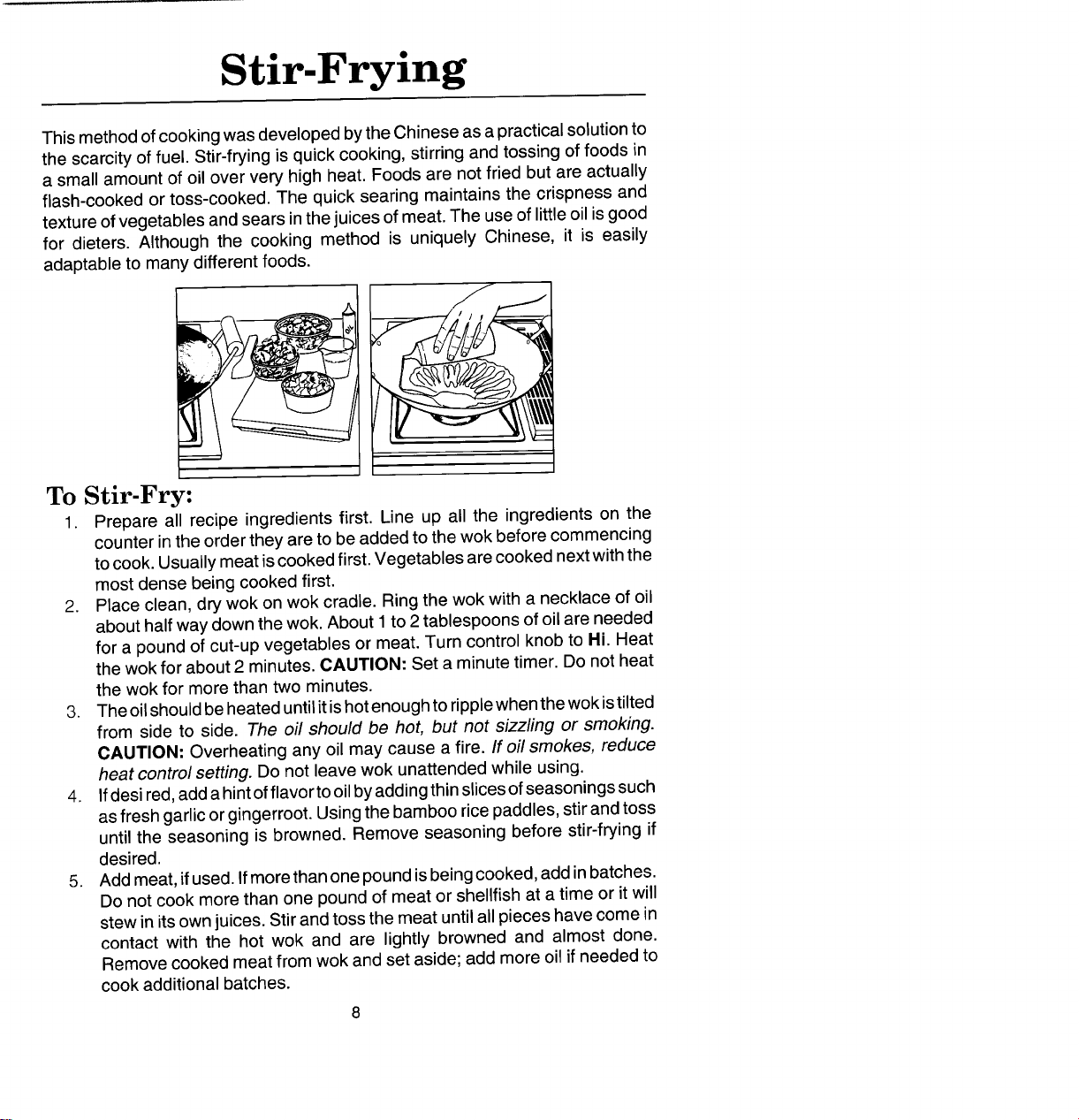
To Stir-Fry:
1. Prepare all recipe ingredients first. Line up all the ingredients on the
counter in the order they are to be added to the wok before commencing
to cook. Usually meat is cooked first. Vegetables are cooked nextwith the
most dense being cooked first.
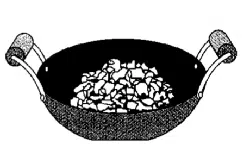
2. Place clean, dry wok on wok cradle. Ringthe wok with a necklace of oil
about half way down the wok. About 1to 2tablespoons of oil are needed
for a pound of cut-up vegetables or meat. Turn control knob to Hi. Heat
the wok for about 2 minutes. CAUTION: Set a minute timer. Do not heat
the wok for more than two minutes.
3. The oilshouldbe heateduntilit ishotenough to ripple whenthe wokistilted
from side to side. The oil should be hot, but not sizzling or smoking.
CAUTION: Overheating any oil may cause a fire. If oil smokes, reduce
heat control setting. Do not leave wok unattended while using.
4. Ifdesi red,add a hint offlavor to oil by addingthin slicesof seasonings such
asfresh garlicor gingerroot. Using the bamboo rice paddles, stir and toss
until the seasoning is browned. Remove seasoning before stir-frying if
desired.
5. Add meat,ifused. Ifmorethan one poundis being cooked, addinbatches.
Do not cook more than one pound of meat or shellfish at a time or it will
stew in its own juices. Stir and toss the meat until all pieces havecome in
contact with the hot wok and are lightly browned and almost done.
Remove cooked meat from wok and set aside; add more oil if needed to
cook additional batches.
8
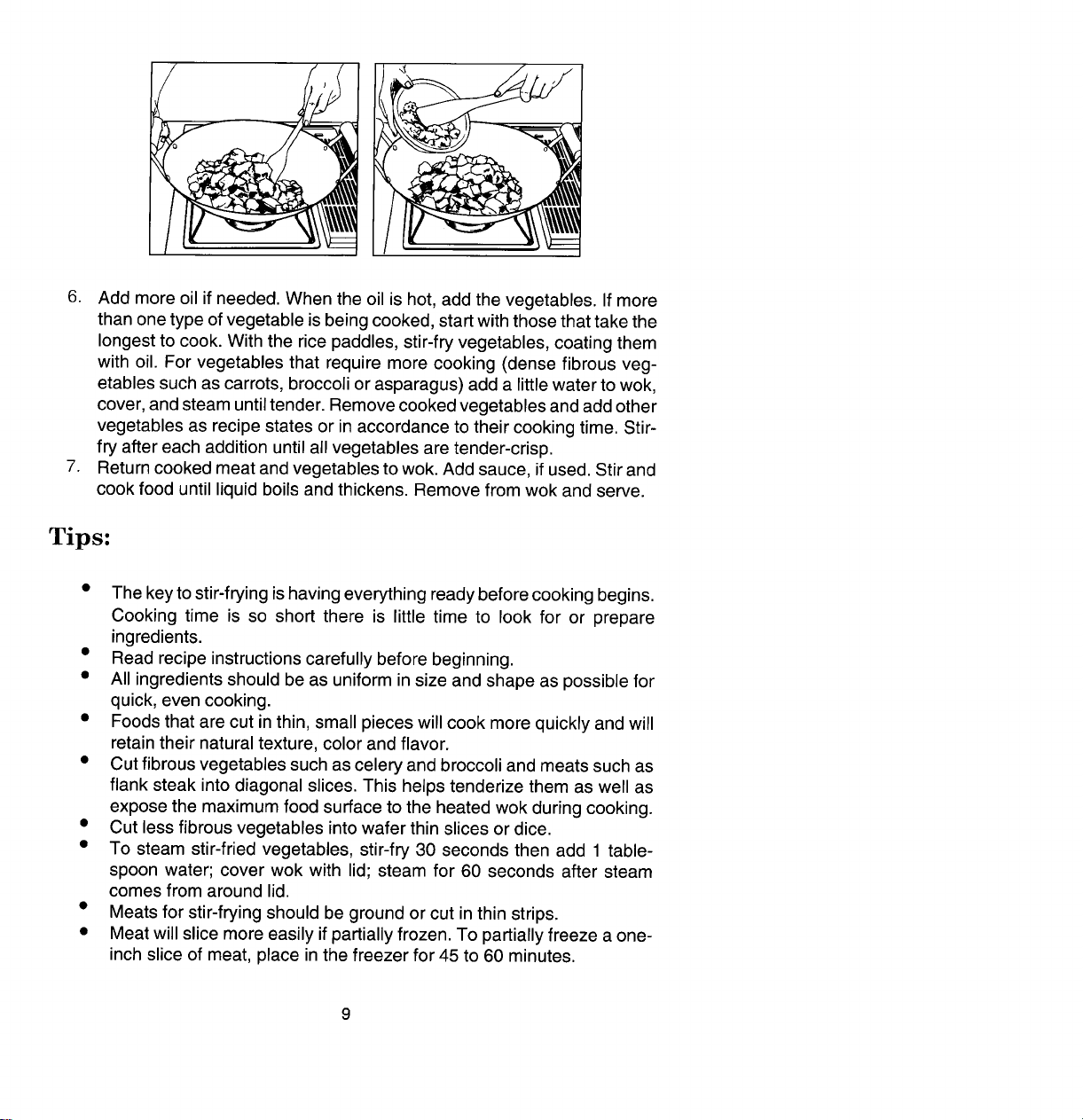
6. Add more oil if needed. When the oil is hot, add the vegetables. If more
than one type of vegetable is being cooked, start with those that take the
longest to cook. With the rice paddles, stir-fry vegetables, coating them
with oil. For vegetables that require more cooking (dense fibrous veg-
etables such as carrots, broccoli or asparagus) add a little water to wok,
cover, andsteam until tender. Removecooked vegetables andadd other
vegetables as recipe states or in accordance to their cooking time. Stir-
fry after each addition until all vegetables are tender-crisp.
7. Return cooked meat and vegetables to wok. Add sauce, if used. Stir and
cook food until liquid boils and thickens. Remove from wok and serve.
Tips:
• The key to stir-frying is having everything readybefore cooking begins.
Cooking time is so short there is little time to look for or prepare
ingredients.
• Read recipe instructions carefully before beginning.
• All ingredients should be as uniform in size and shape as possible for
quick, even cooking.
• Foodsthat are cut in thin, small pieces will cook more quickly and will
retain their natural texture, color and flavor.
• Cut fibrous vegetables such as celery and broccoli and meats such as
flank steak into diagonal slices. This helps tenderize them as well as
expose the maximum food surface to the heated wok during cooking.
• Cut less fibrous vegetables into wafer thin slices or dice.
• To steam stir-fried vegetables, stir-fry 30 seconds then add 1 table-
spoon water; cover wok with lid; steam for 60 seconds after steam
comes from around lid.
• Meats for stir-frying should be ground or cut in thin strips.
• Meat will slice more easily if partially frozen. To partially freeze a one-
inch slice of meat, place in the freezer for 45 to 60 minutes.
• Peanut oil is the best for stir-frying since it can be heated to a high
temperature without smoking. Its bland taste does not overpower the
flavor of the food.
• Do not substitute solid shortening, butter or margarine for oil.
• Ifitis necessary to addmore oilto thewok (ifmeat sticks tothe panwhile
cooking it) let oil flowdown the sideof the wokso that fresh oil iswarmed
by the time it hits the meat.
• Aplastic condiment bottle with aspout makesiteasy to ringthe wokwith
oil.
• Use the two bamboo rice paddles (a right and left-hand version)
included with the wok accessory, together for ease in tossing and
stirringfoods. Lift food from the surface of thewok and drop back inwith
a tossing movement.
• If food is added in stages and additional oil is added, be sure oil is hot
before adding the next ingredient.
• Stir and toss the food rapidly and constantly and it will be practically
impossible to burnthe food. All stir-frying should be done at the highest
heat possible. There should be loud cracking, hissing and popping as
food is added. Exercise carewhen addingfoods, particularlyfrozen stir-
fry vegetables.
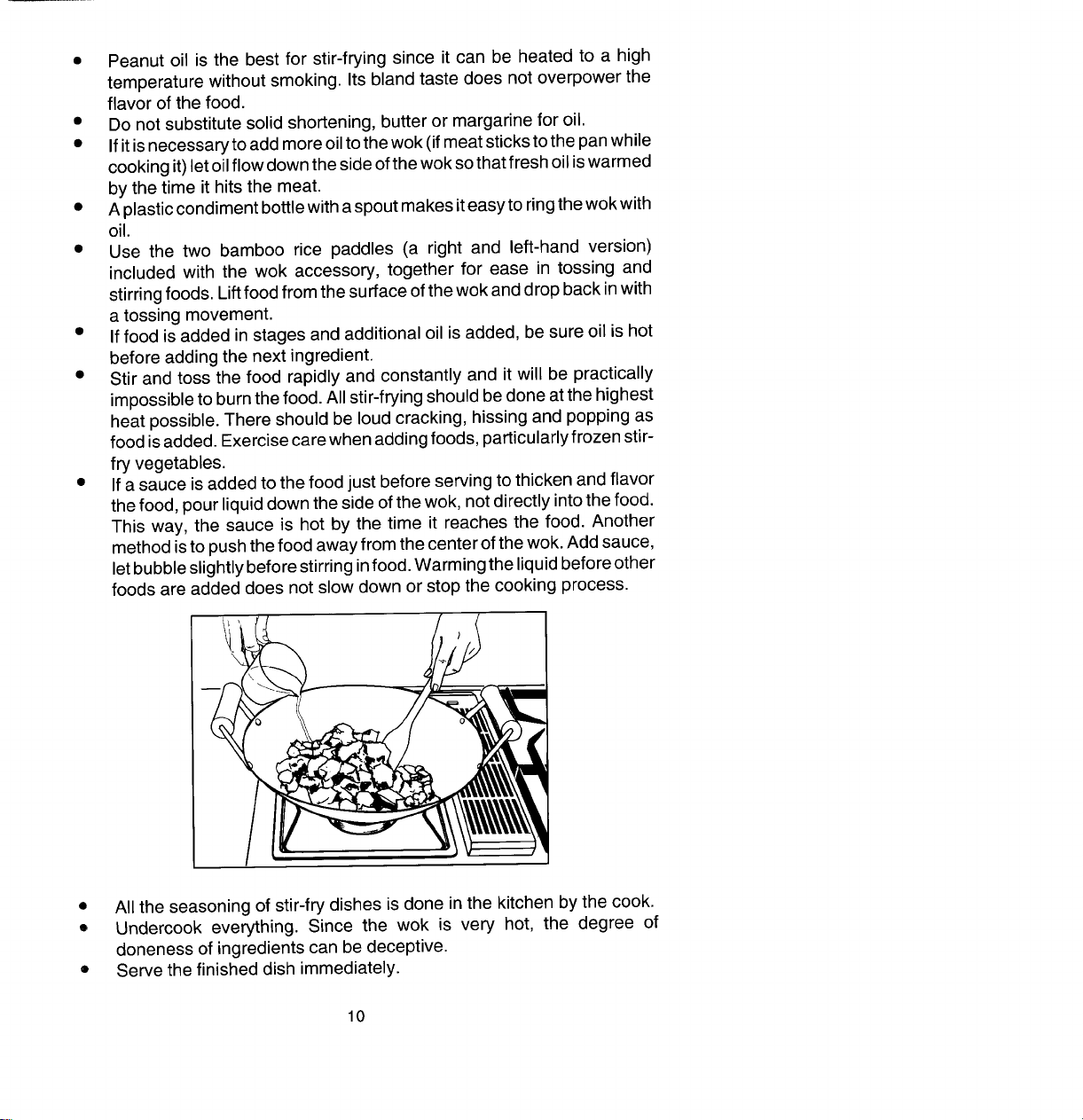
• Ifa sauce is added to the food just before serving to thicken and flavor
thefood, pour liquid down the side of the wok, not directly intothe food.
This way, the sauce is hot by the time it reaches the food. Another
method is to push thefood away from the center of the wok. Add sauce,
letbubbleslightly before stirring infood. Warming the liquid before other
foods are added does not slow down or stop the cooking process.
• Allthe seasoning of stir-fry dishes is done in the kitchen by the cook.
• Undercook everything. Since the wok is very hot, the degree of
doneness of ingredients can be deceptive.
® Serve the finished dish immediately.
10
Steaming
The wok's unique ability to retainhigh heat makes ituseful as asteamer. Foods
do not dry out when steamed and they retain their color, flavor, and arejuicy.
Flavors of food mingle more completely, For diet conscious cooks, little fat, if
any, is used and vitamin and mineral loss is minimal. A wide variety of foods
including seafood, poultry, vegetables, desserts, and breads can be steamed.
Evenleftoverscan be reheated. Foodswill cook insteam as fast as insimmering
water and with less flavor loss.
To Steam:
1. Add from 2 to 2 1/2 cups of hot water to wok.
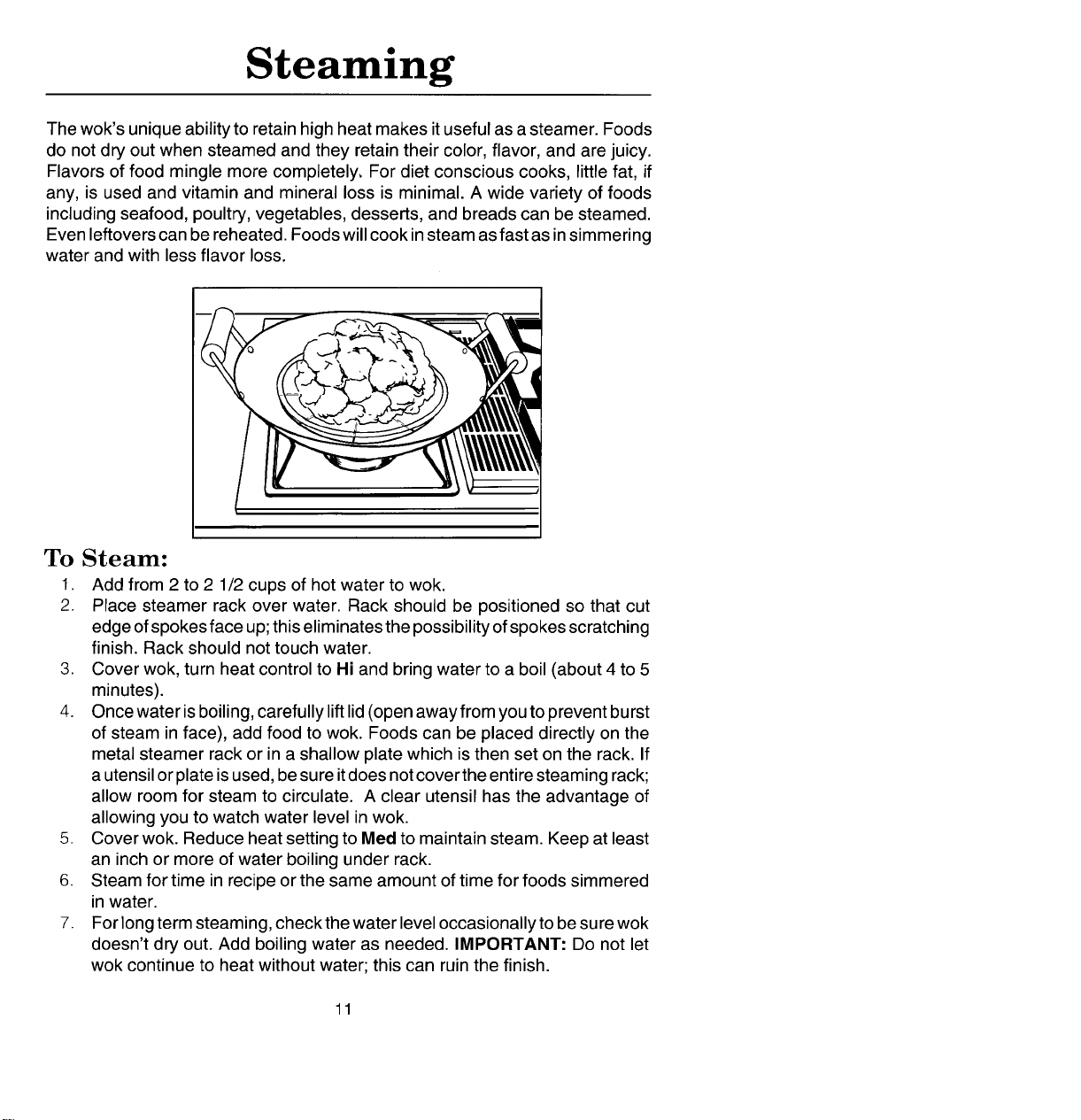
2. Place steamer rack over water. Rack should be positioned so that cut
edgeof spokesface up;thiseliminatesthe possibility of spokesscratching
finish. Rack should not touch water.
3. Cover wok, turn heat control to Hi and bring water to a boil (about 4 to 5
minutes).
4. Once water is boiling,carefully liftlid (openawayfrom you to prevent burst
of steam in face), add food to wok. Foods can be placed directly on the
metal steamer rack or in a shallow plate which is then set on the rack. If
a utensilorplateis used, besure itdoes notcoverthe entire steaming rack;
allow room for steam to circulate. A clear utensil has the advantage of
allowing you to watch water level in wok.
5. Cover wok. Reduce heatsetting to Mealto maintainsteam. Keep at least
an inch or more of water boiling under rack.
6. Steam for time in recipe or the same amount of time for foods simmered
in water.
7. Forlongterm steaming, check the water leveloccasionallyto be sure wok
doesn't dry out. Add boiling water as needed. IMPORTANT: Do not let
wok continue to heat without water; this can ruin the finish.
11
Tips:
• Toflavorfood, sprinkle withherbs
and spices or surround food with
slices of onion or lemon. _"
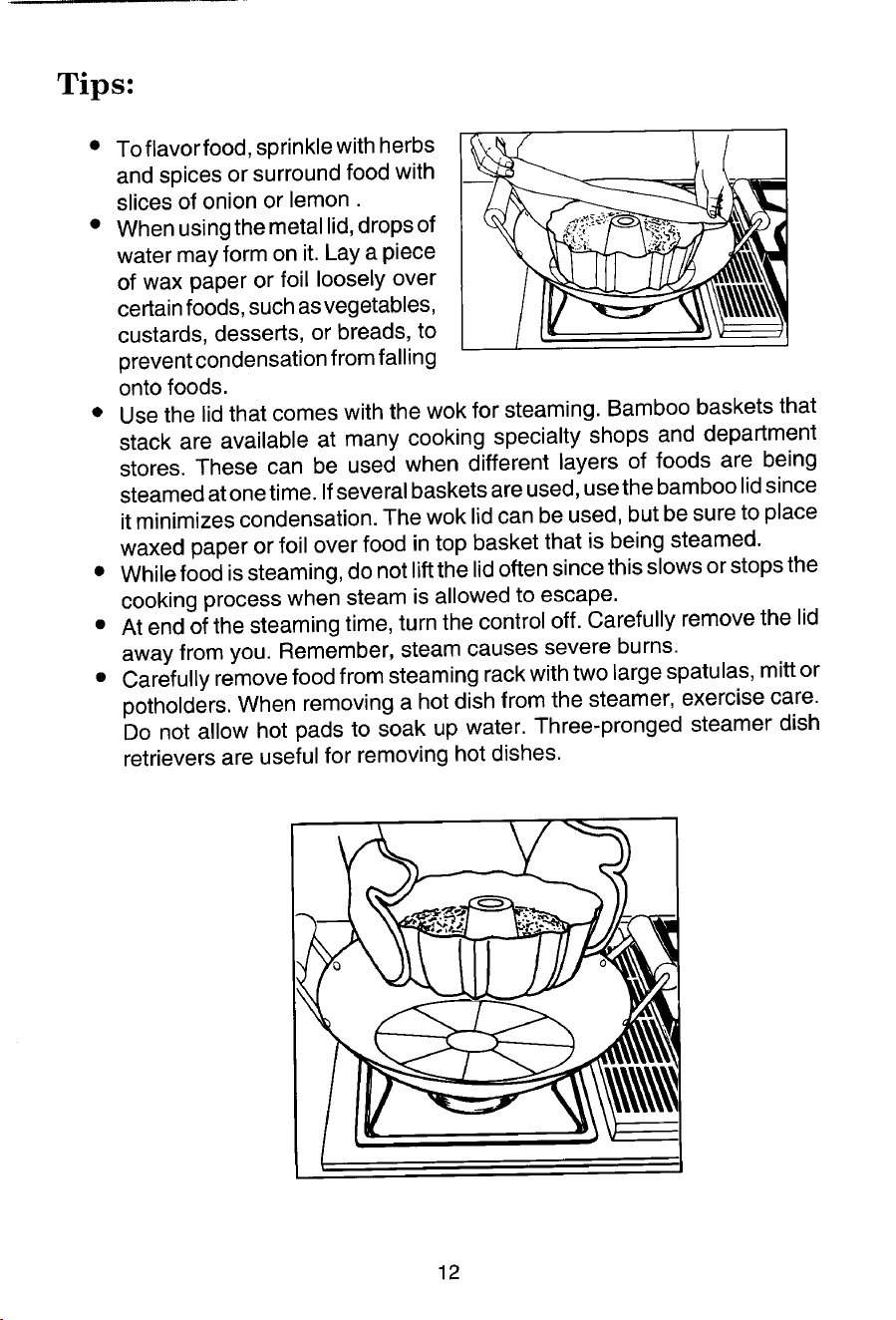
• When usingthe metallid,drops of
water may form on it. Lay a piece
of wax paper or foil loosely over
certainfoods,such asvegetables,
custards, desserts, or breads, to
prevent condensationfrom falling
onto foods.
• Use the lid that comes with the wok for steaming. Bamboo baskets that
stack are available at many cooking specialty shops and department
stores. These can be used when different layers of foods are being
steamed at onetime.Ifseveral baskets are used,usethe bamboolid since
it minimizes condensation. The wok lid can be used, but be sure to place
waxed paper or foil over food in top basket that is being steamed.
• While food issteaming, do not liftthe lid often since this slows orstops the
cooking process when steam is allowed to escape.
• At end of the steaming time, turn the control off. Carefully remove the lid
away from you. Remember, steam causes severe burns.
• Carefully removefoodfrom steaming rackwith two large spatulas, mitt or
potholders. When removing a hot dish from the steamer, exercise care.
Do not allow hot pads to soak up water. Three-pronged steamer dish
retrievers are useful for removing hot dishes.
12