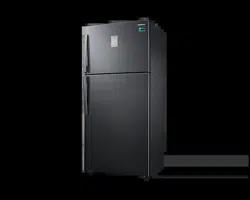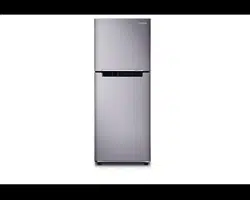
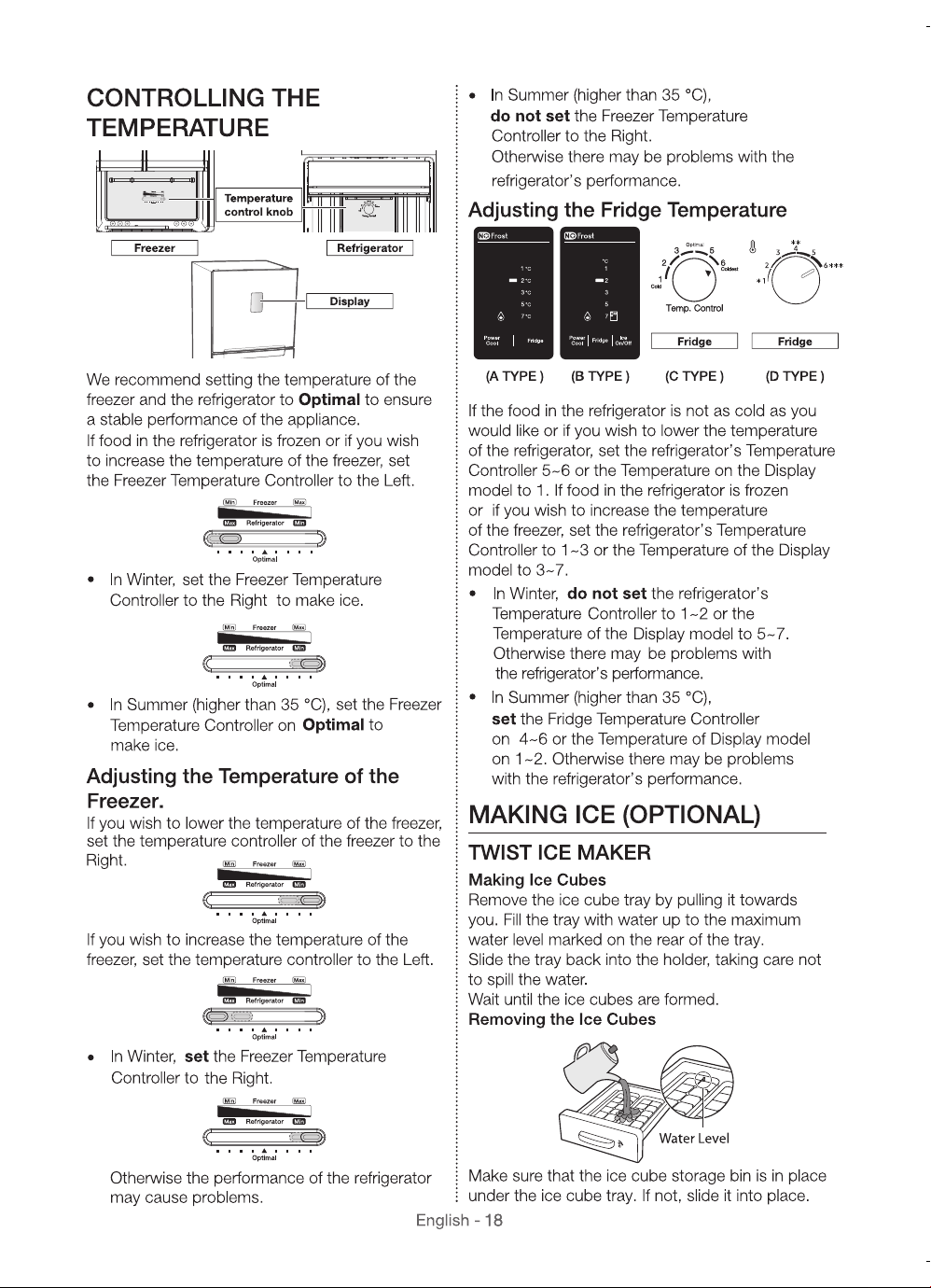
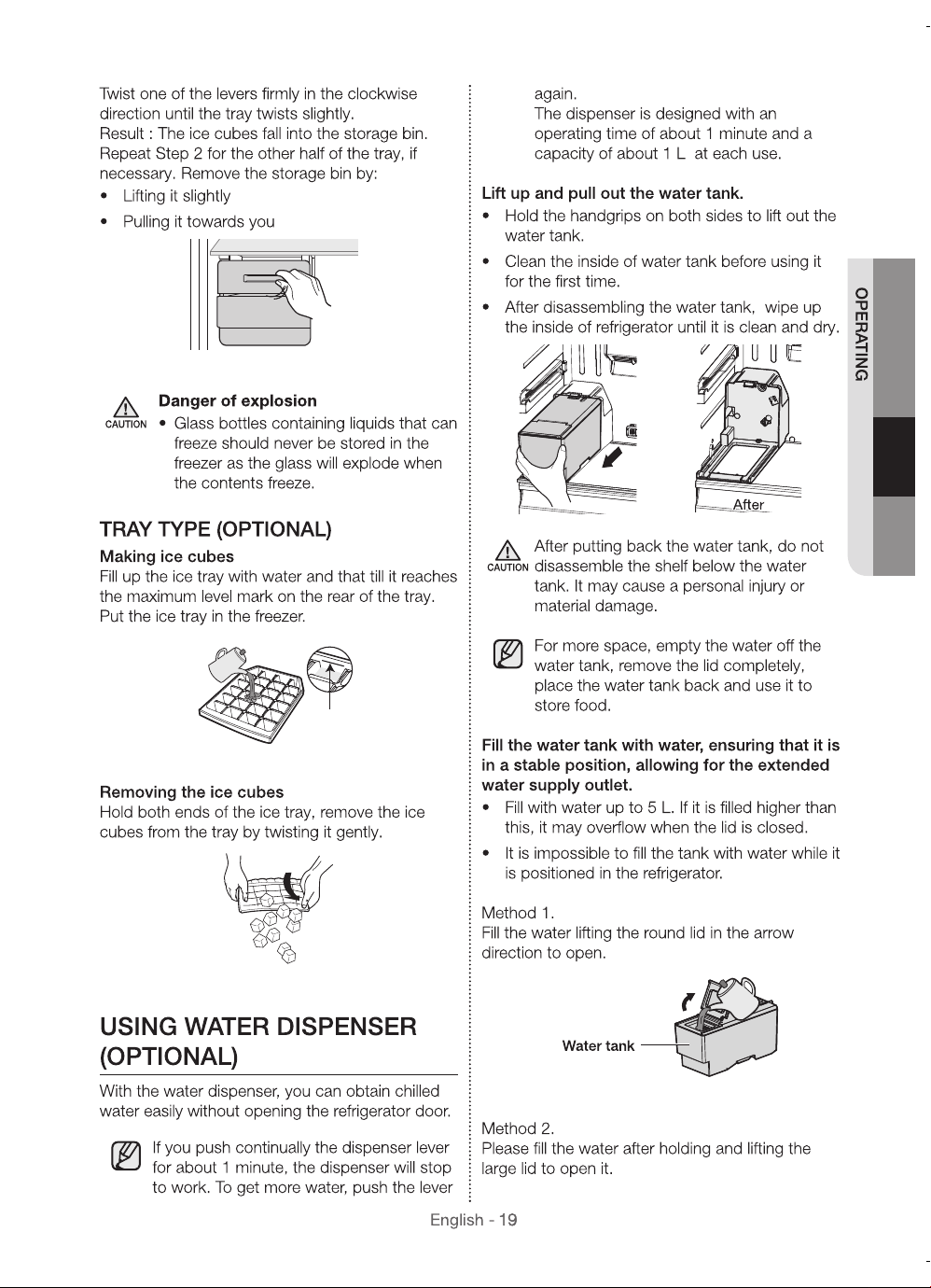
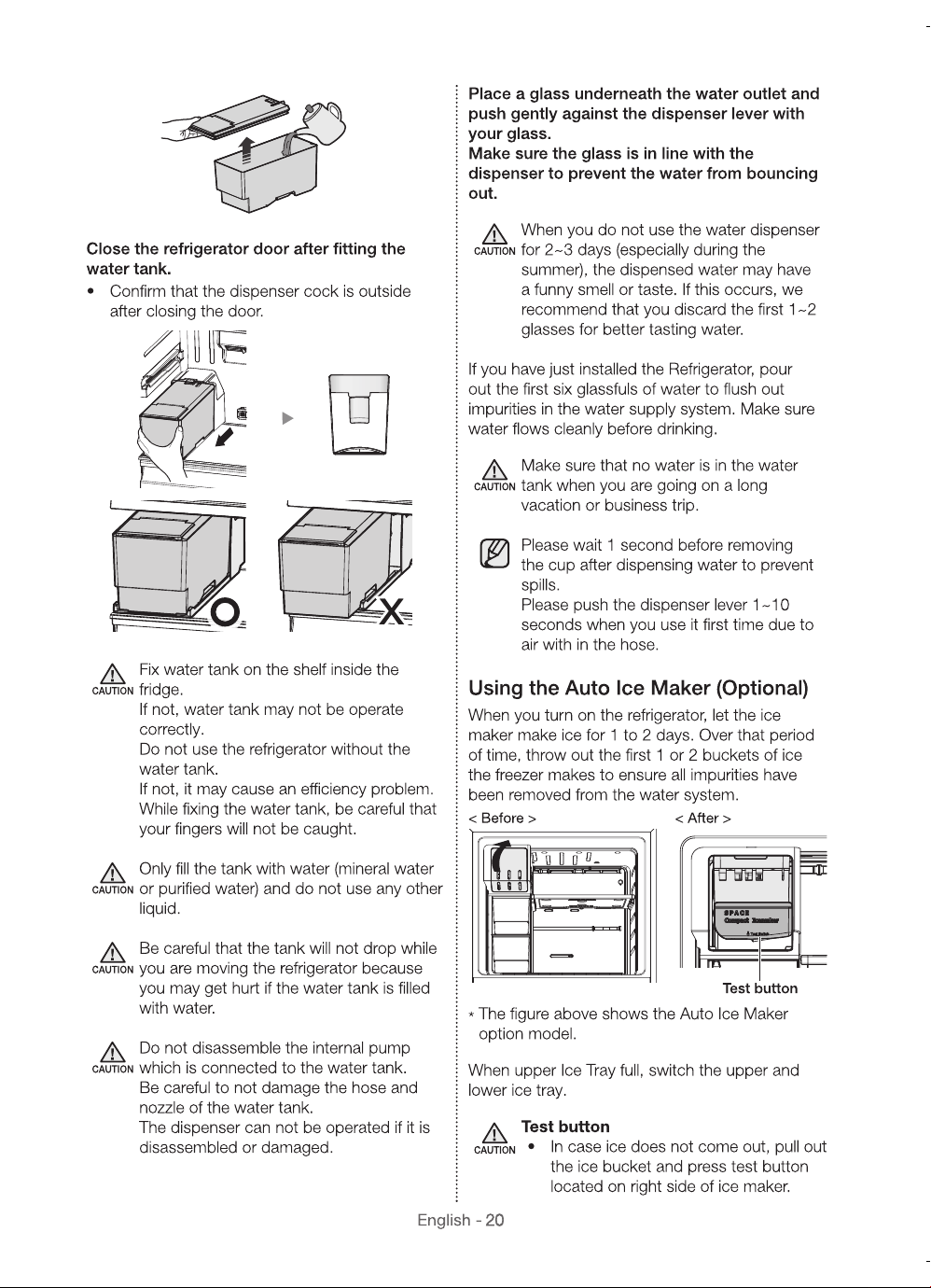
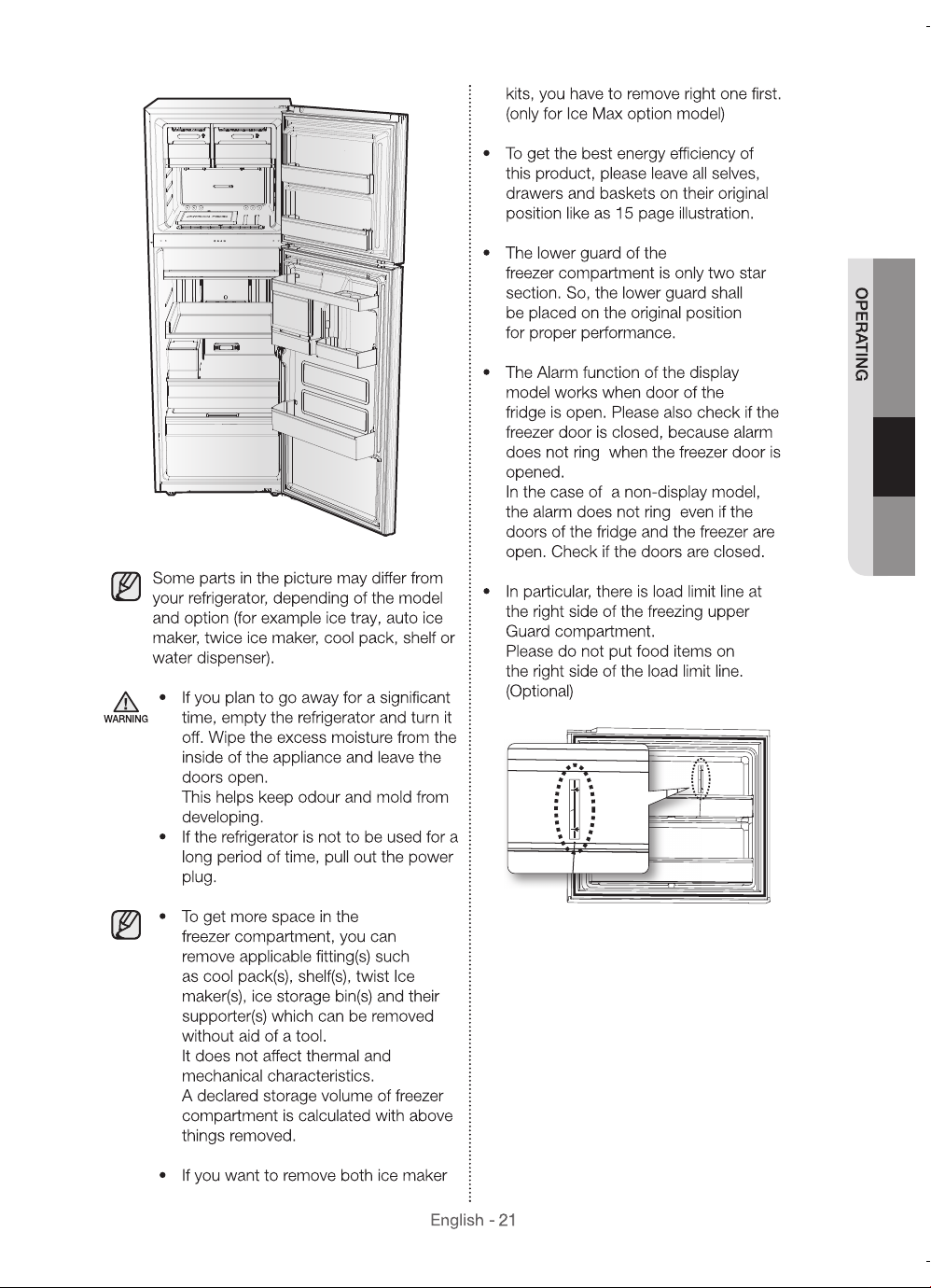
Samsung RT20FARVDSA/TC 7.4 Cu Ft. Top Mount No Frost

Product's Documents

Below are documents related to this product, you can read online or download:

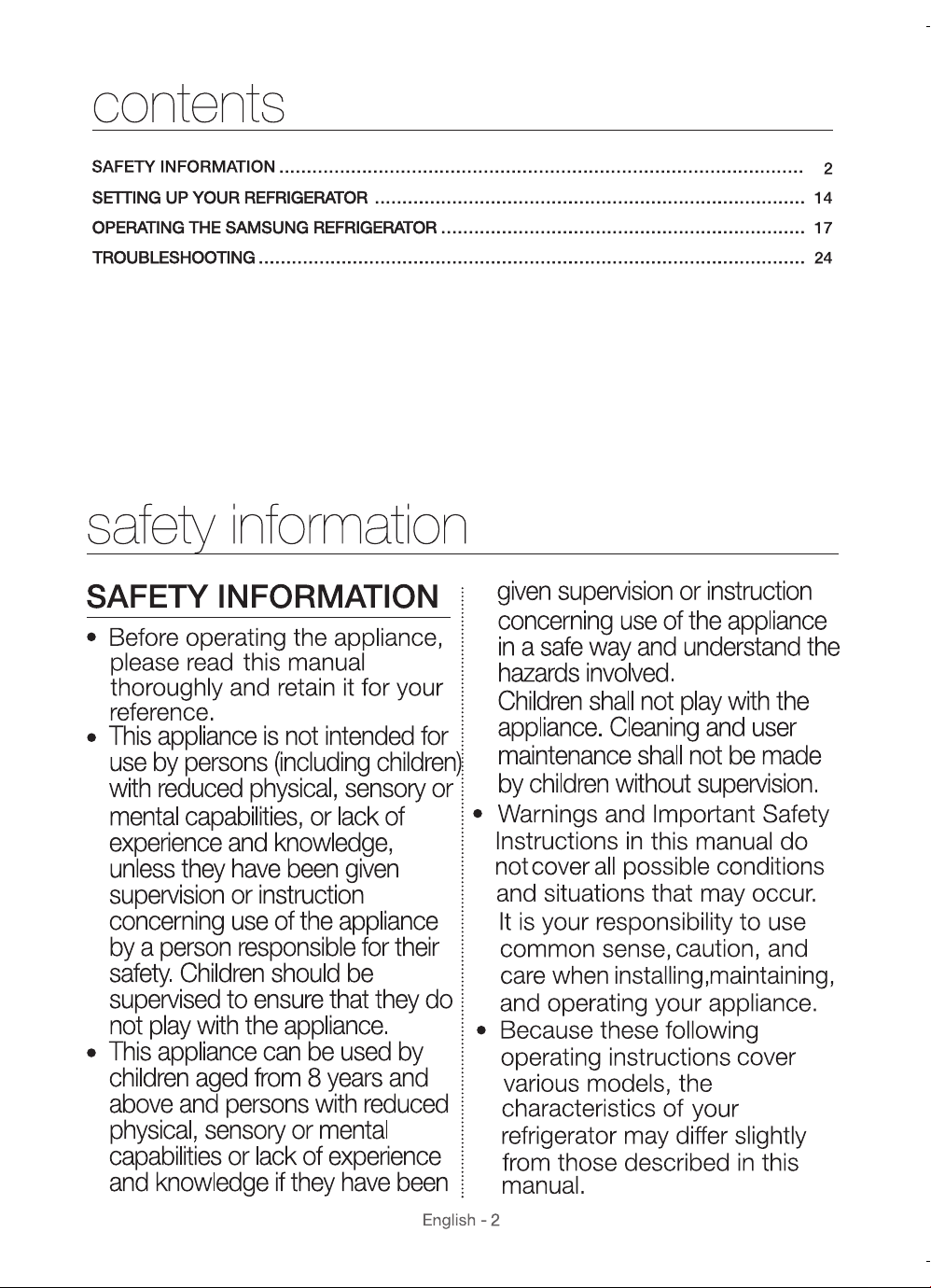
User Manual

This is the main product document for model RT20FARVDSA/TC. Additionally, the document applies to other Samsung models: RT20FARVDSA

The file format is pdf, 28 pages, you can download this manual here .

background
background
background
background
background
background
background
background
background
background
background
background
background
background
background
background
background
background
background
background
background
background
background
background
background
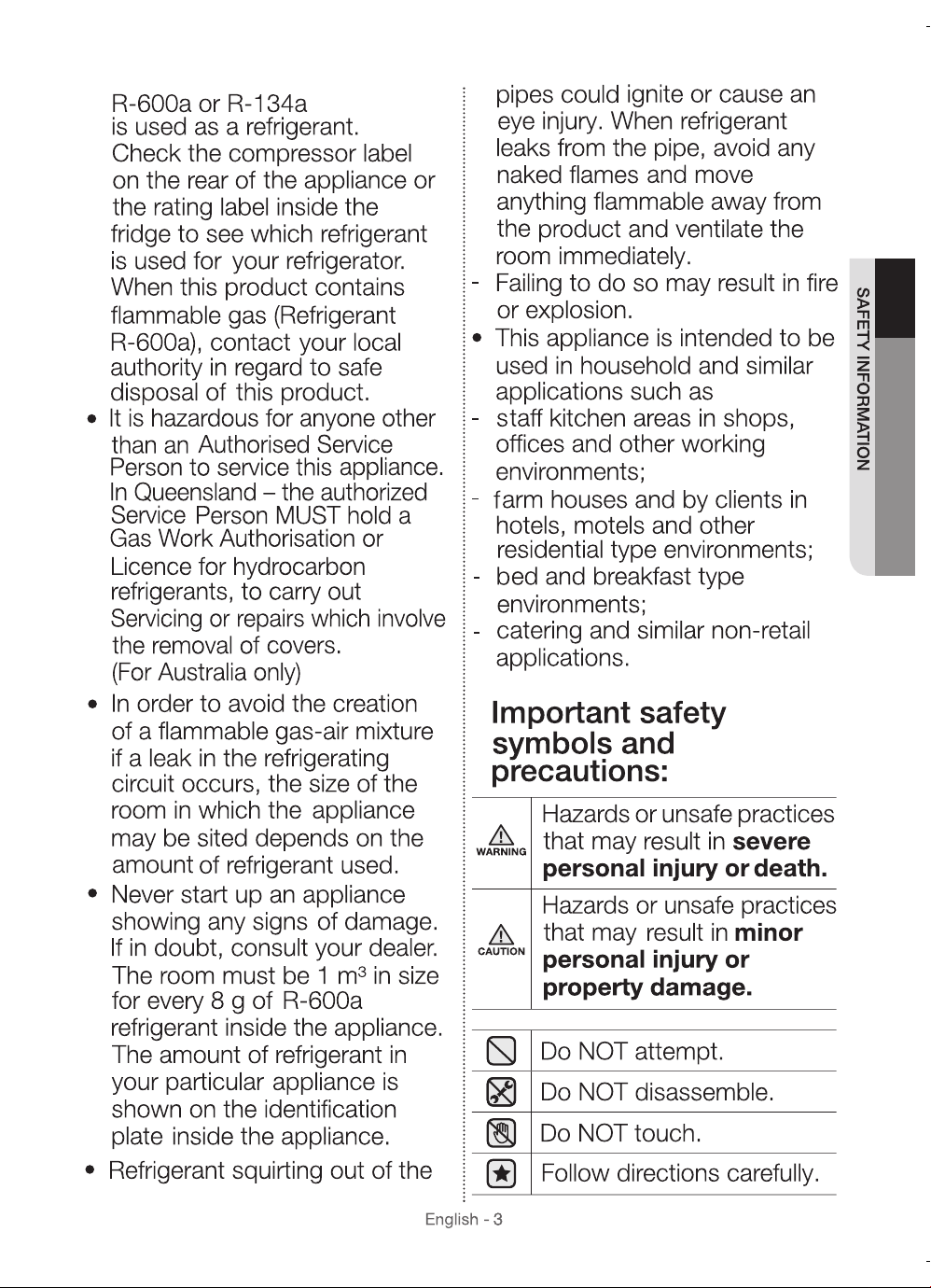
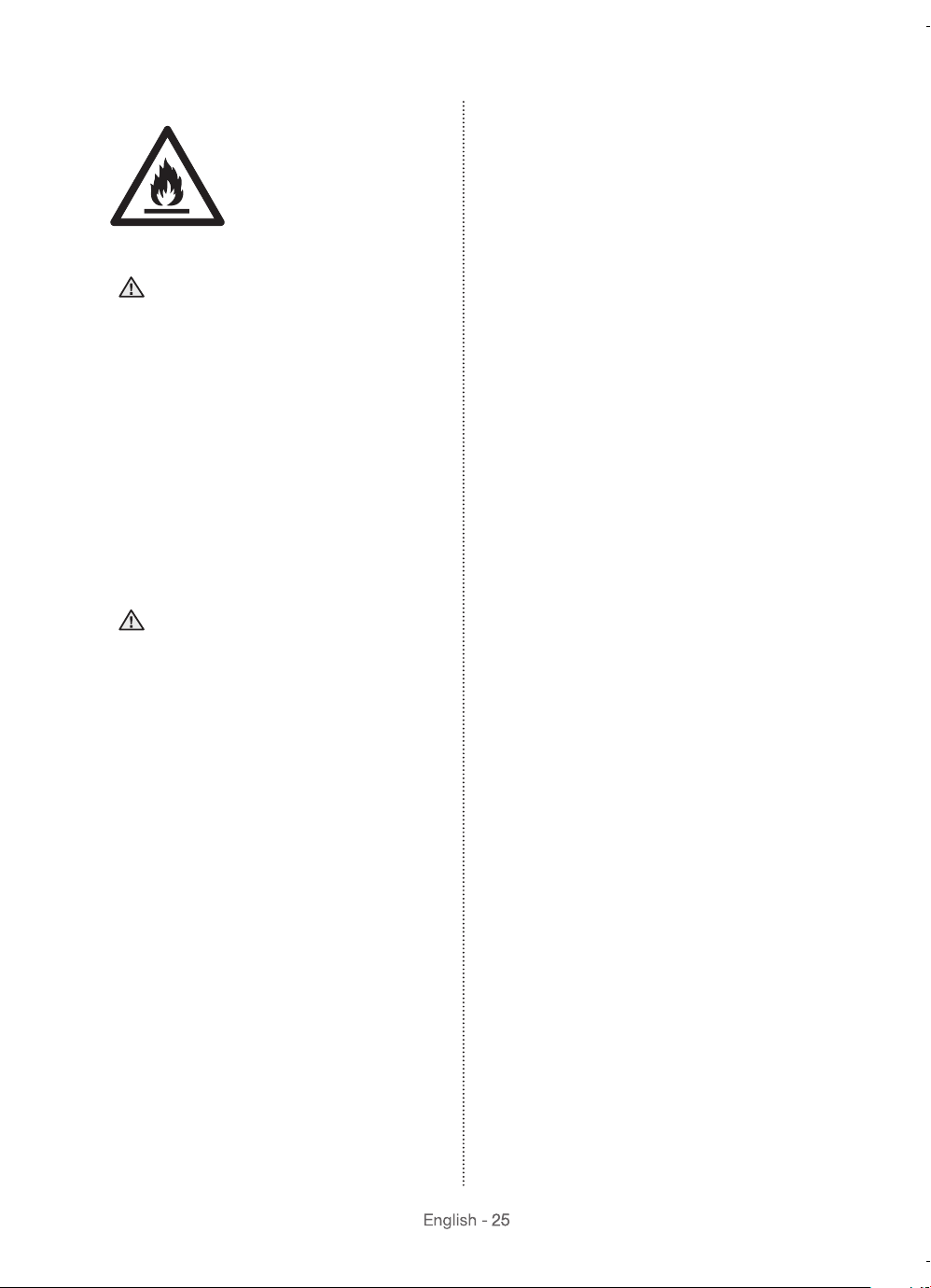
Warning :
Risk of fire
/ flammable
materials
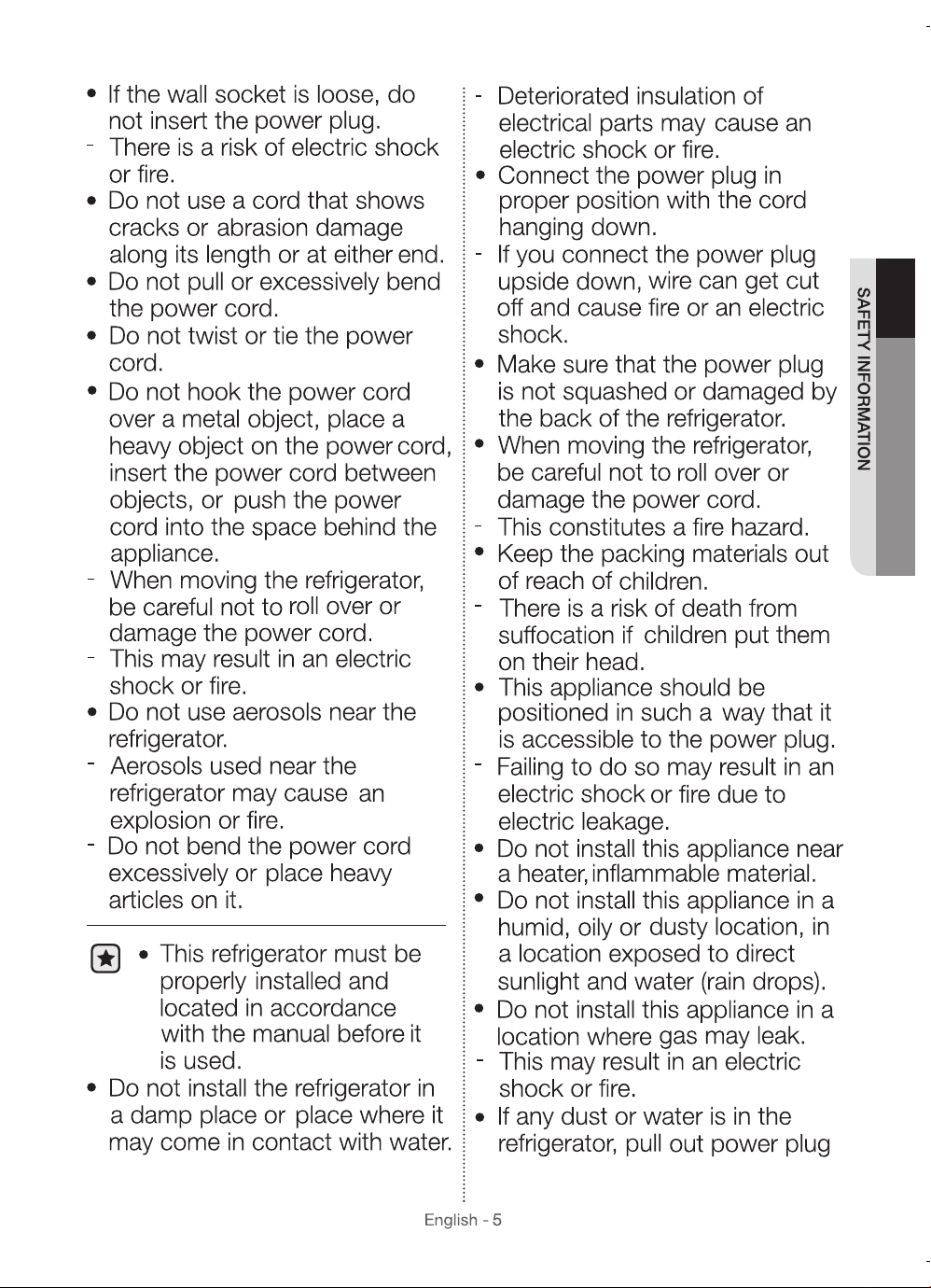
WARNING
When positioning the
appliance, ensure the supply
cord is not trapped or
damaged.
Do not locate multiple
portable socket-outlets or
portable power supplies at
the rear of the appliance.
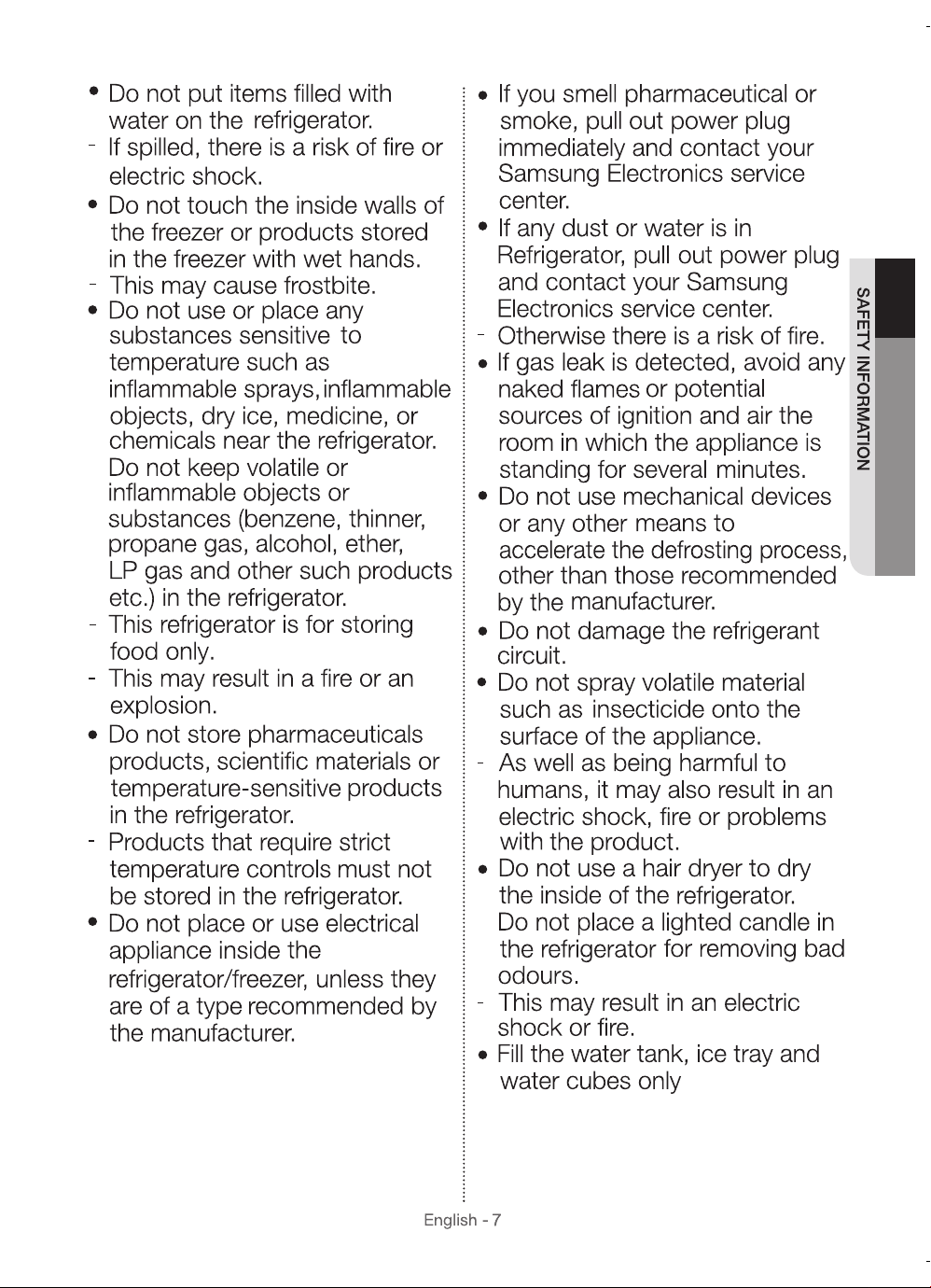
CAUTION
Do not keep vegetable oil in
your refrigerator’s door bins.
The oil can solidify, making
it foul-tasting and difficult to
use. In addition, the open
container can leak and the
leaked oil can cause the door
bin to crack. After opening
an oil container, it is best to
keep the container in a cool
and shaded place such as a
cupboard or pantry.
- Examples of vegetable oil:
olive oil, corn oil, grape-seed
oil, etc.
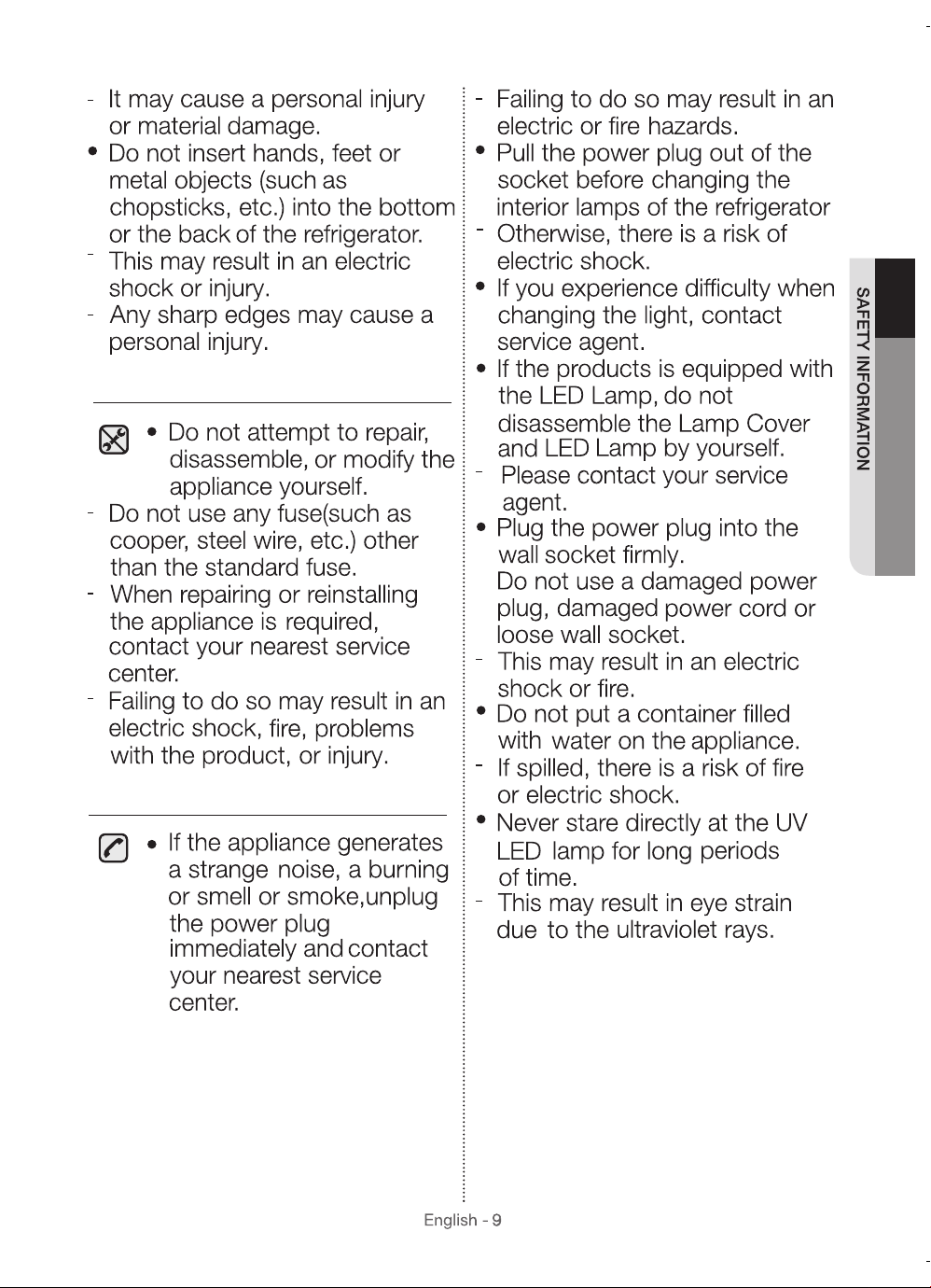
Use a clean sponge or soft
cloth and a mild detergent
in warm water to clean the
refrigerator.
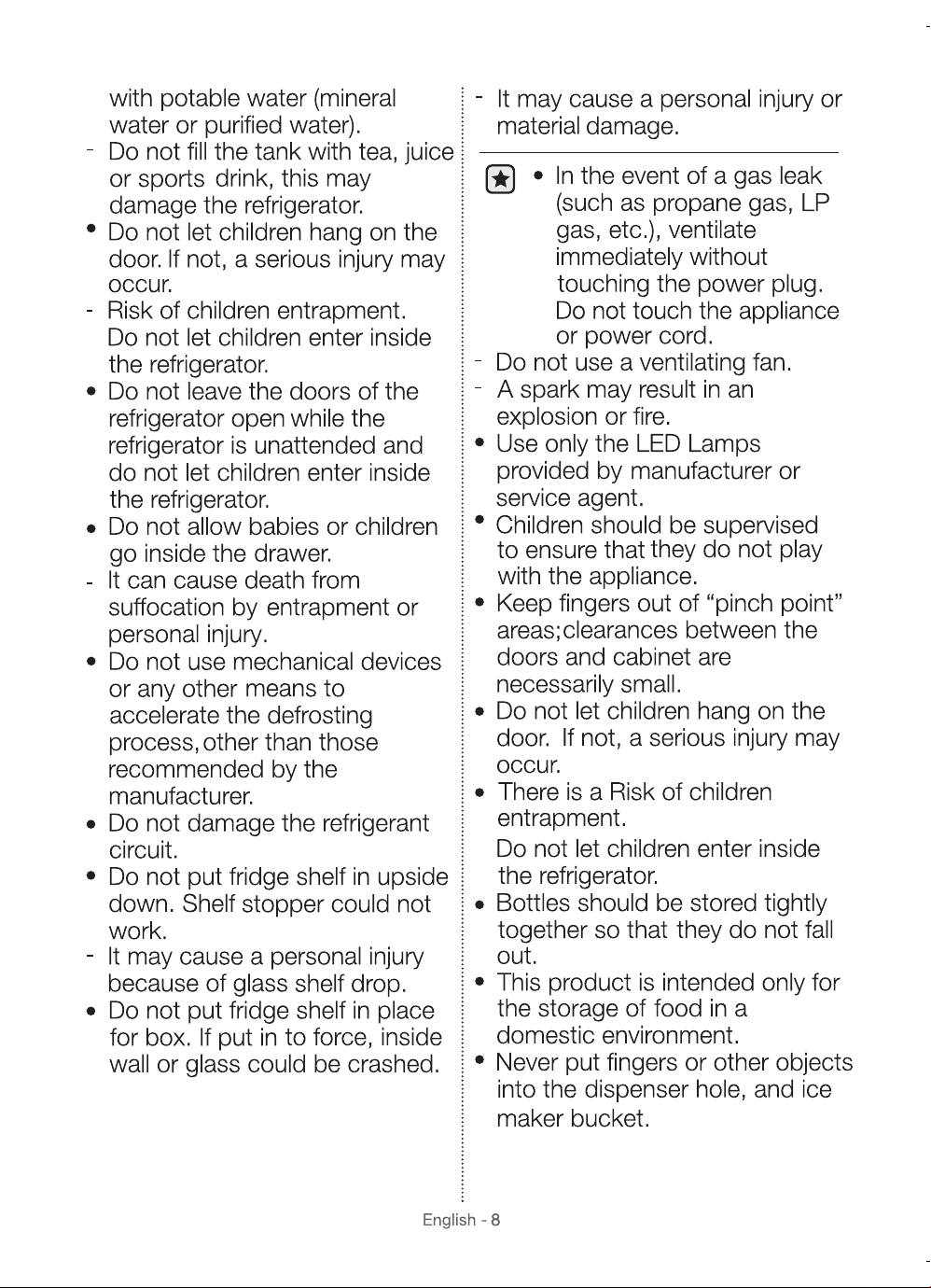
Do not use abrasive or harsh
cleansers such as window
sprays, scouring cleansers,
flammable fluids, muriatic
acid, cleaning waxes,
concentrated detergents,
bleaches, or cleansers
containing petroleum
products on exterior surfaces
(doors and cabinet), plastic
parts, door and interior liners,
and gaskets.
- These can scratch or dam-
age the material.
Do not clean glass shelves
or covers with warm water
when they are cold. Glass
shelves and covers may
break if exposed to sudden
temperature changes or
impacts such as bumping or
dropping.
background
background
background
DA68-02832A-12
COUNTRY CALL Web site
AUSTRALIA
1300 362 603 www.samsung.com/au/support
IRELAND (EIRE) 0818 717100 www.samsung.com/ie/support
MALAYSIA
1800-88-9999
+603-7713 7420 (Overseas contact)
www.samsung.com/my/support
NEW ZEALAND
0800 726 786
0800 6 726 786 (Support for Smart Mobile Devices)
www.samsung.com/nz/support
PANAMA 800-0101
www.samsung.com/latin/support (Spanish)
www.samsung.com/latin_en/support (English)
PHILIPPINES
1-800-10-726-7864 [ PLDT Toll Free ]
1-800-8-726-7864 [ Globe Landline and Mobile ]
02-422-2111 [ Standard Landline ]
www.samsung.com/ph/support
SINGAPORE 1800-SAMSUNG(726-7864) www.samsung.com/sg/support
SOUTH AFRICA 0860 SAMSUNG (726 7864) www.samsung.com/support
UK 0330 SAMSUNG (7267864) www.samsung.com/uk/support

Specifications

Samsung RT20FARVDSA/TC Questions and Answers


#1 How to fix a Samsung refrigerator door that will not close properly?

If the refrigerator or freezer doors will not close, it will impact cooling performance and eventually create frost. If you are experiencing issue to either to close your refrigerator door properly, follow the troubleshooting guide below to rectify the problem:

Common reasons the door won't stay closed
ㆍThere's too much weight in the door.

ㆍThe fridge isn't level. If the front of the refrigerator is tilted forward, the doors won't stay closed.

ㆍThe refrigerator door hinge is loose and therefore causing the door to not close or shut properly.

ㆍCheck whether the door seal is blocked by debris which prevent the door from closing. To clean the door seal, use a soft cloth with warm water.

ㆍEnsure that all shelves and drawers are properly pushed inside

ㆍCheck to make sure the door seal is in good condition with no tears or missing/brittle sections
Refrigerator
Here's what to do when your refrigerator's doors won't close.

1 Inspect the door seal.
Inspect the rubber seal around the door. Make sure it is not warped or damaged, preventing the door from closing. If the seal is damaged, visit the Support Center to Request Service.
2 Make sure the door is not blocked.
One of the simplest things to check is to make sure something (like food) isn't stopping the door from closing.
3 Check the alignment of the shelves and drawers
.Shelves and drawers that are not correctly installed can prevent the door from closing completely. For instructions specific to your model, refer to your user manual.

#2 What is the ideal temperature setting on my refrigerator?

The ideal temperature settings for the freezer and refrigerator compartments are -19°C and 3°C (-2°F and 38°F). If the temperature in the freezer and refrigerator compartment is too high or too low, manual temperature adjustment is necessary.

Freezer
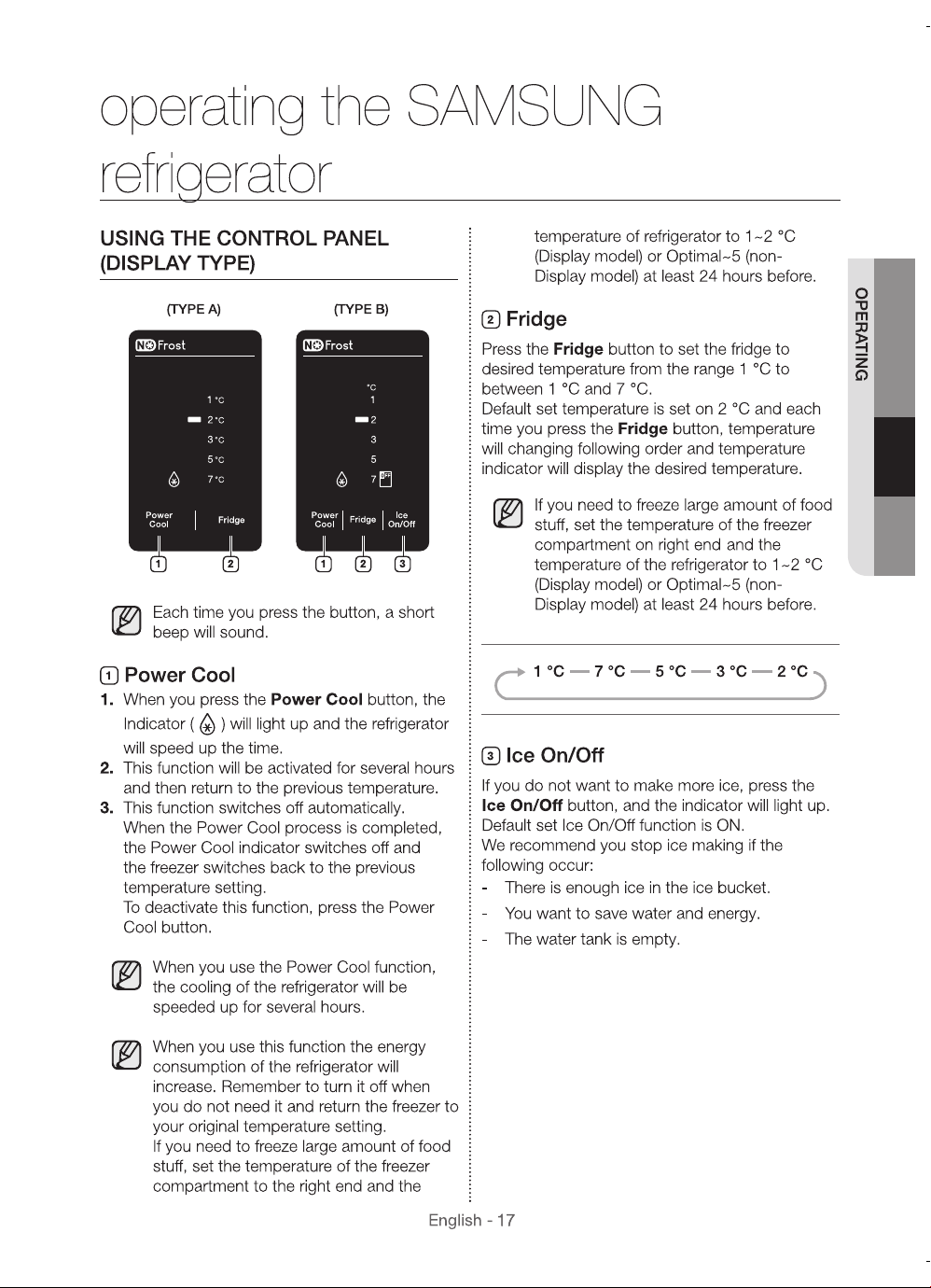
- Set the desired temperature between -15 °C and -23 °C by pressing the -Freezer button.

- The default setting is -19 °C, and each time you press the freezer button, the temperature changes and appears on the display.

freezer button
Fridge
- Set the desired temperature between 1°C and 7°C by pressing the Fridge button

- The default setting is 3 °C and the temperature changes and appears on the display each time the Fridge button is pressed.

fridge button
Note:

The temperature controls on some models are labeled "Freezer Temp." and "Refrigerator Temp.". However, they control the temperature the same way as the buttons described above.
When the temperature setting that you want is displayed, do not touch the Fridge button again.

#3 How can I clean the shelves and bins in my refrigerator?

Available detergent and cautionsClick to Collapse
When food is spilled, wiping it off immediately is the best way to prevent odors and bacteria.
It is very important to choose a suitable detergent for this purpose. We recommend using a mild detergent in warm water or a glass cleaner to clean the shelves and bins. In addition, use a clean sponge or soft cloth to avoid scratches.
It is recommended to wipe and dry it with a microfiber cloth after cleaning.

Cautions

Do not use benzene, thinner, or bleach for cleaning. They may damage the surface of the appliance and may cause a fire.
Do not use abrasive or harsh cleansers such as window sprays, scouring cleansers, flammable fluids, muriatic acid, cleaning waxes, concentrated detergents, bleaches, or cleansers containing petroleum products on the exterior surfaces (doors and cabinet), plastic parts, door, and interior liners, and gaskets. These can scratch or damage the material.
Note:

Do not spray water directly on the inside or outside the refrigerator. There is a risk of fire or electric shock.
Do not use a hairdryer to dry the inside of the refrigerator.
Do not use a wet or damp cloth when cleaning the plug. Otherwise, there is a risk of fire or electric shock.
Do not clean the appliance by spraying water directly onto it.
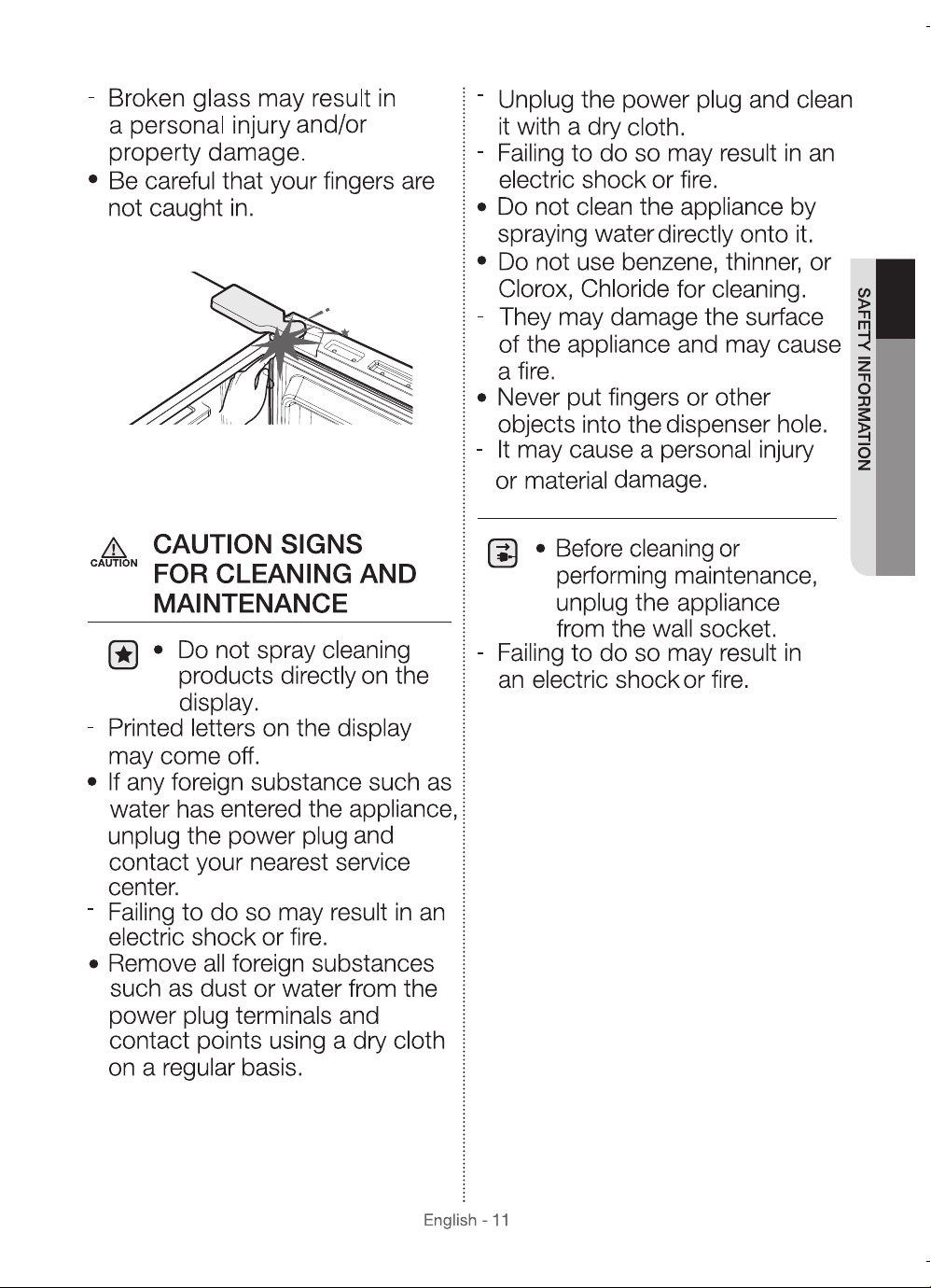
Never put fingers or other objects into the dispenser hole. It may cause a personal injury or material damage.
Before cleaning or performing maintenance, unplug the appliance from the wall socket.
Do not clean glass shelves or covers with warm water when they are cold.
Glass shelves and covers may break if exposed to sudden temperature changes or impacts such as bumping or dropping.
Questions and Answers

Related Products