®
• Installation
• Startup
• Maintenance
• Parts
Boiler Manual
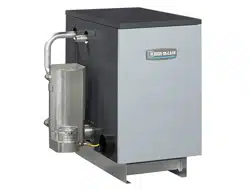
Gas-Fired Water Boilers
This manual must only be used by a qualified heating installer/service technician. BEFORE installing, read
all instructions in this manual and all other information shipped with the boiler. Perform steps in the order
given. Failure to comply could result in severe personal injury, death or substantial property damage.
Part number 550-142-054/1211

Part number 550-142-054/1211
GV90+ gas-fired water boiler — Boiler Manual
2
1 Integrated boiler control
The integrated boiler control (IBC) responds to signals from the room thermostat, air
pressure switch, inlet water sensor and boiler limit circuit to operate the circulators,
gas valve, igniter and blower. When a room thermostat calls for heat, the IBC starts the
system circulator and blower.
The IBC runs the blower to purge the boiler flue passages, then turns on the igniter and
lets it warm up.
After igniter warm-up, the IBC opens the gas valve, turns the igniter off, and checks for
flame. The flame must come on within 4 seconds or the IBC will shut down and try the
full cycle again.
When the room thermostat is satisfied, the IBC turns off the boiler components and
waits for the next heat call.
The IBC indicator lights show normal sequence when the lights are on steady. When a
problem occurs, the IBC flashes combinations of lights which indicate the most likely
reason for the problem.
2 Transformer
The control transformer reduces line voltage to 24 volts for the gas valve and limit
circuit.
3 Blower
The blower pulls in air and mixes it with gas from the gas valve. The blower forces this
mixture into the burner for combustion inside the boiler chamber.
4 Recuperator
The recuperator is a stainless steel heat exchanger that increases boiler efficiency by ex-
tracting additional heat from the flue gases. Return water passes through the recuperator
before entering the boiler.
5 Water temperature limit switch
The water temperature limit switch turns off the gas valve if the temperature in the
boiler goes above its setting. (The circulators will continue to run as long as there is a
call for heat.)
6 System circulator
The system circulator circulates water through the external (system) piping. The flow
rate of the circulator is controlled by the IBC, depending on the temperature of the water
entering the boiler sections. Pump must remain on boiler — do not remove.
7 Bypass circulator
The IBC operates the bypass circulator to mix hot water from the boiler outlet with
colder return water from the system as needed to prevent condensation of flue gases in
the cast iron heat exchanger.
When the water returning to the boiler is below 140°F, the IBC regulates the bypass cir-
culator and system circulator flow rates to raise the return water temperature up to 140°F
before it enters the cast iron sections. By balancing these flow rates, the IBC can protect
against condensation in the cast iron heat exchanger even if return water is as low as 60°F.
Pump must remain on boiler — do not remove.
8 Air pressure switch
The air pressure switch signals the IBC, telling the control whether air is moving through
the blower.
9 Water temperature sensor
The water temperature sensor monitors the temperature of the water entering the boiler
sections. The sensor sends this information to the IBC. The IBC determines how much
to adjust the circulator flow rates to provide at least 140°F water to the cast iron heat
exchanger.
How it works . . .
LEGEND
a Supply to system, 1” NPT
b Return from system, 1” NPT
c Combustion air inlet fitting —
3” PVC connection
d Flue outlet — 3” PVC connec-
tion
e Gas valve — negative pressure
regulated gas control
f Pressure/temperature gauge
g Flueway inspection port cover
h Sensor hose trap
i Manual air vent
j Relief valve
k Thermal fuse — a one-time fuse
device that shuts boiler off if flue
temperature exceeds its setpoint
m Condensate trap line — shipped
loose with boiler, field installed
n Condensate drain connection —
½” PVC female
This boiler uses a negative-pressure-
regulated gas valve, set for an outlet
pressure approximately –0.20” water
column.
DO NOT set the outlet pressure higher
than factory setting.

Part number 550-142-054/1211
3
GV90+ gas-fired water boiler — Boiler Manual
GV90+ Water Boiler

Part number 550-142-054/1211
GV90+ gas-fired water boiler — Boiler Manual
4
How it works . . . . . . . . . . . . . . 2
GV90+ Water Boiler . . . . . . . . . 3
Please read before proceeding . . . 5
Prepare boiler location . . . . . . .6
Installations must follow these codes: . . . 6
High altitude installations. . . . . . . . . . 6
Residential garage installation . . . . . . . 7
Check orifice plate — replace if necessary . 8
Install condensate trap. . . . . . . . . . . . 9
Install high altitude air pressure switch when
required (only above 5,550 feet) . . . . . . 9
Rotate the boiler into position . . . . . . 10
Perform hydrostatic pressure test. . . . . 11
Install water piping . . . . . . . . 12
General piping information. . . . . . . . 12
Install relief valve . . . . . . . . . . . . . 12
Expansion tank. . . . . . . . . . . . . . . 13
System water piping methods. . . . . . . 15
Circulators . . . . . . . . . . . . . . . . . 15
Simplified pipe/circulator selection . . . 15
Baseboard system piping — CIRCULATOR
zoning (primary/secondary) . . . . . . . 16
Baseboard system piping — ZONE VALVE
zoning (direct connection) . . . . . . . . 16
Radiator system piping . . . . . . . . . . 18
Single-zone radiant heating or heat pump 19
Adjust balancing valves . . . . . . . . . . 19
Multi-zone radiant heating system . . . . 20
Piping snow melt systems or combination
snow melt/space heating systems . . . . . 21
Water chiller systems . . . . . . . . . . . 22
Multiple boiler installations . . . . 23
Placing multiple boilers . . . . . . . . . . 23
Controlling multiple GV90+ boilers . . . 23
Piping multiple GV90+ boilers . . . . . . 23
Multiple boiler water piping. . . . 24
Easy-Fit® piping installation . . . . . . . 24
Venting & air — general . . . . . . 29
When removing a boiler from an existing
common vent system . . . . . . . . . . . 29
Existing vent test procedure. . . . . . . . 29
Provide combustion air: . . . . . . . . . . 30
Vent and air termination options. . . . . 30
DIRECT VENT installations . . . . . . . 30
DIRECT EXHAUST installations. . . . . 30
Combustion air contamination: . . . . . 30
Manifolded combustion air option for
DIRECT VENT multiple boiler installations
31
Air manifold sizing . . . . . . . . . . . . 31
Commonwealth of Massachusetts
installations . . . . . . . . . . . . 34
Vent termination requirements . . 35
DIRECT VENT — Boiler room air
openings . . . . . . . . . . . . . . 36
DIRECT VENT — Sidewall with W-M
vent/air plate . . . . . . . . . . . . 37
DIRECT VENT — Sidewall with sepa-
rate pipes. . . . . . . . . . . . . . 39
DIRECT VENT — Sidewall with 3”
concentric . . . . . . . . . . . . . 41
DIRECT VENT — Vertical with sepa-
rate pipes. . . . . . . . . . . . . . 43
DIRECT VENT — Vertical with 3”
concentric . . . . . . . . . . . . . 45
Concentric termination assembly
(sidewall or vertical). . . . . . . . 47
Vent and air piping and boiler con-
nections . . . . . . . . . . . . . . 48
DIRECT EXHAUST & DIRECT VENT . 48
Follow termination instructions . . . . . 48
Installing vent and air piping . . . . . . . 48
DIRECT EXHAUST ONLY . . . . . . . . 48
DIRECT EXHAUST — Boiler room air
openings . . . . . . . . . . . . . . 49
Combustion air provision. . . . . . . . . 49
Sizing combustion air openings . . . . . 49
Special considerations . . . . . . . . . . . 49
GV90+ boiler WITHOUT other appliances
in room . . . . . . . . . . . . . . . . . . . 50
Air openings . . . . . . . . . . . . . . . . 50
GV90+ boiler WITH other appliances in
room . . . . . . . . . . . . . . . . . . . . 50
DIRECT EXHAUST — Sidewall . . 51
DIRECT EXHAUST — Vertical . . . 53
Gas piping . . . . . . . . . . . . . 54
Connecting gas supply piping. . . . . . . 54
Natural Gas. . . . . . . . . . . . . . . . . 55
Propane Gas . . . . . . . . . . . . . . . . 55
Wiring . . . . . . . . . . . . . . . 56
Field wiring. . . . . . . . . . . . . . . . . 56
Start-up. . . . . . . . . . . . . . . 59
Freeze protection (when used) . . . . . . 59
Clean system to remove sediment . . . . 59
Water chemistry . . . . . . . . . . . . . . 59
Antifreeze. . . . . . . . . . . . . . . . . . 59
Check for gas leaks. . . . . . . . . . . . . 60
Fill and test water system . . . . . . . . . 60
Verify gas/air orifice plate . . . . . . . . . 61
Check thermostat circuit(s) . . . . . . . . 61
Inspect/fill condensate system . . . . . . 61
Final checks before starting boiler . . . . 62
To start the boiler . . . . . . . . . . . . . 62
If boiler does not start correctly . . . . . 62
Check system and boiler after start-up. . 62
Gas valve adjustment — altitude over 5,500
feet ONLY . . . . . . . . . . . . . . . . . 62
Final checklist . . . . . . . . . . . . . . . 64
Annual start-up and general mainte-
nance schedule . . . . . . . . . . 67
Annual start-up . . . . . . . . . . 68
Address reported problems . . . . . . . . 68
Inspect boiler area . . . . . . . . . . . . . 68
Inspect boiler interior . . . . . . . . . . . 68
Inspect condensate drain system . . . . . 68
Inspect all piping for leaks . . . . . . . . 68
Inspect gas piping . . . . . . . . . . . . . 68
Inspect the water system. . . . . . . . . . 68
Inspect expansion tank . . . . . . . . . . 68
Inspect air openings . . . . . . . . . . . . 69
Inspect vent system and air piping . . . . 69
Inspect boiler heating surfaces . . . . . . 69
Inspect recuperator . . . . . . . . . . . . 69
Inspect igniter . . . . . . . . . . . . . . . 69
Inspect temperature mixing system . . . 70
Inspect limit controls and cutoffs. . . . . 70
Inspect gauges . . . . . . . . . . . . . . . 70
Inspect blower motor . . . . . . . . . . . 70
Inspect oiled-bearing circulators . . . . . 70
Inspect boiler relief valve . . . . . . . . . 71
To complete Annual Start-up, perform
startup and checks: . . . . . . . . . . . . 71
Review with owner. . . . . . . . . . . . . 71
Service & maintenance . . . . . . 72
Cleaning boiler heating surfaces . . . . . 72
Inspecting and cleaning the recuperator . 73
Troubleshooting . . . . . . . . . . 75
VERIFY PROPER OPERATION AFTER
SERVICING. . . . . . . . . . . . . . . . . 75
Before troubleshooting . . . . . . . . . . 75
Check the following . . . . . . . . . . . . 75
Checking the air pressure switch . . . . . 75
Igniter. . . . . . . . . . . . . . . . . . . . 76
Gas Valve . . . . . . . . . . . . . . . . . . 76
Blower Housing . . . . . . . . . . . . . . 76
Thermal fuse . . . . . . . . . . . . . . . . 76
Return temperature sensor . . . . . . . . 76
IBC (integrated boiler control)
. . . . . . 77
IBC indicator lights — lockout modes . . 77
IBC indicator lights — non-lockout modes
77
Replacement parts . . . . . . . . 89
Dimensions and ratings. . . . . 100
NOTES . . . . . . . . . . . . . . 104
NOTES . . . . . . . . . . . . . . 106
Handling ceramic ber and ber-
glass materials. . . . . . . . . . 107
Installation and service
certicate . . . . . . . . . . . . 108
Contents
Part number 550-142-054/1211
5
GV90+ gas-fired water boiler — Boiler Manual
Failure to adhere to the guidelines on this
page can result in severe personal injury,
death or substantial property damage.
When servicing boiler —
• To avoid electric shock, disconnect electrical supply
before performing maintenance.
• To avoid severe burns, allow boiler to cool before
performing maintenance.
• This boiler contains ceramic fiber and fiberglass
materials. Refer to the WARNING and instructions
on page 107.
Boiler operation —
• Do not block flow of combustion or ventilation air
to boiler.
•
Should overheating occur or gas supply fail to
shut off, DO NOT turn off or disconnect electrical
supply to circulator. Instead, shut off the gas supply
at a location external to the appliance.
•
Do not use this boiler if any part has been under
water. Immediately call a qualified service techni-
cian to inspect the boiler and to replace any part of
the control system and any gas control that has been
under water.
Combustion air —
• DO NOT install combustion air intake where there
is a risk of combustion air contamination.
Carbon monoxide detector —
• For Direct Exhaust units, a carbon monoxide detec-
tor is required in the boiler room. The carbon mon-
oxide detector must be wired on the same electrical
circuit as the boiler.
• For
Direct Vent units, a carbon monoxide detector
that is wired on the same electrical circuit as the boiler
is strongly recommended.
Boiler water —
• Thoroughly flush the system (without boiler con-
nected) to remove sediment. The high-efficiency heat
exchanger can be damaged by build-up or corrosion
due to sediment.
• Do not use petroleum-based cleaning or sealing
compounds in boiler system. Gaskets and seals in the
system may be damaged. This can result in substantial
property damage.
•
Leaks in boiler or piping must be repaired at once
to prevent make-up water. Use this boiler ONLY
in a closed-loop system. Continual fresh make-up
water will reduce boiler life. Mineral buildup in heat
exchangers reduces heat transfer, overheats the mate-
rials, and causes failure. Addition of oxygen carried in
by make-up water can cause internal corrosion.
•
Do not add cold water to hot boiler. Thermal shock
can cause heat exchanger to crack.
Freeze protection uids —
• NEVER use automotive or standard glycol antifreeze.
Use only freeze-protection fluids made for hydronic
systems. Follow all guidelines given by the antifreeze
manufacturer. Thoroughly clean and flush any re-
placement boiler system that has used glycol before
installing the new boiler.
Please read before proceeding
Installer— Read all instructions, including this
manual and all other information shipped with the
boiler, before installing. Perform steps in the order
given.
User — This manual is for use only by a qualified
heating installer/service technician. Refer to User’s
Information Manual for your reference.
User — Have this boiler serviced/inspected by a
qualified service technician, at least annually.
Failure to comply with the above could result in
severe personal injury, death or substantial property
damage.
Write in the CP number in the space provided on
the Installation certificate on page 108 if not already
shown.
When calling or writing about the boiler— Please
have the boiler model number from the boiler rating
label and the CP number from the boiler jacket.
Consider piping and installation when determining
boiler location.
Any claims for damage or shortage in shipment
must be filed immediately against the transportation
company by the consignee.
Commonwealth of Massachusetts
When the boiler is installed within the Commonwealth of Mas-
sachusetts, comply with the following.
• This product must be installed by a licensed plumber or gas
fitter.
• If antifreeze is used, a reduced pressure back-flow preventer
device shall be used.
• If sidewall vent or vent/air is installed, see instructions on
page 34.
Hazard denitions
The following defined terms are used throughout this manual to
bring attention to the presence of hazards of various risk levels or
to important information concerning the life of the product.
Indicates presence of hazards that will cause severe
personal injury, death or substantial property dam-
age.
Indicates presence of hazards that can cause severe
personal injury, death or substantial property dam-
age.
Indicates presence of hazards that will or can cause
minor personal injury or property damage.
Indicates special instructions on installation, op-
eration or maintenance that are important but not
related to personal injury or property damage.
Part number 550-142-054/1211
GV90+ gas-fired water boiler — Boiler Manual
6
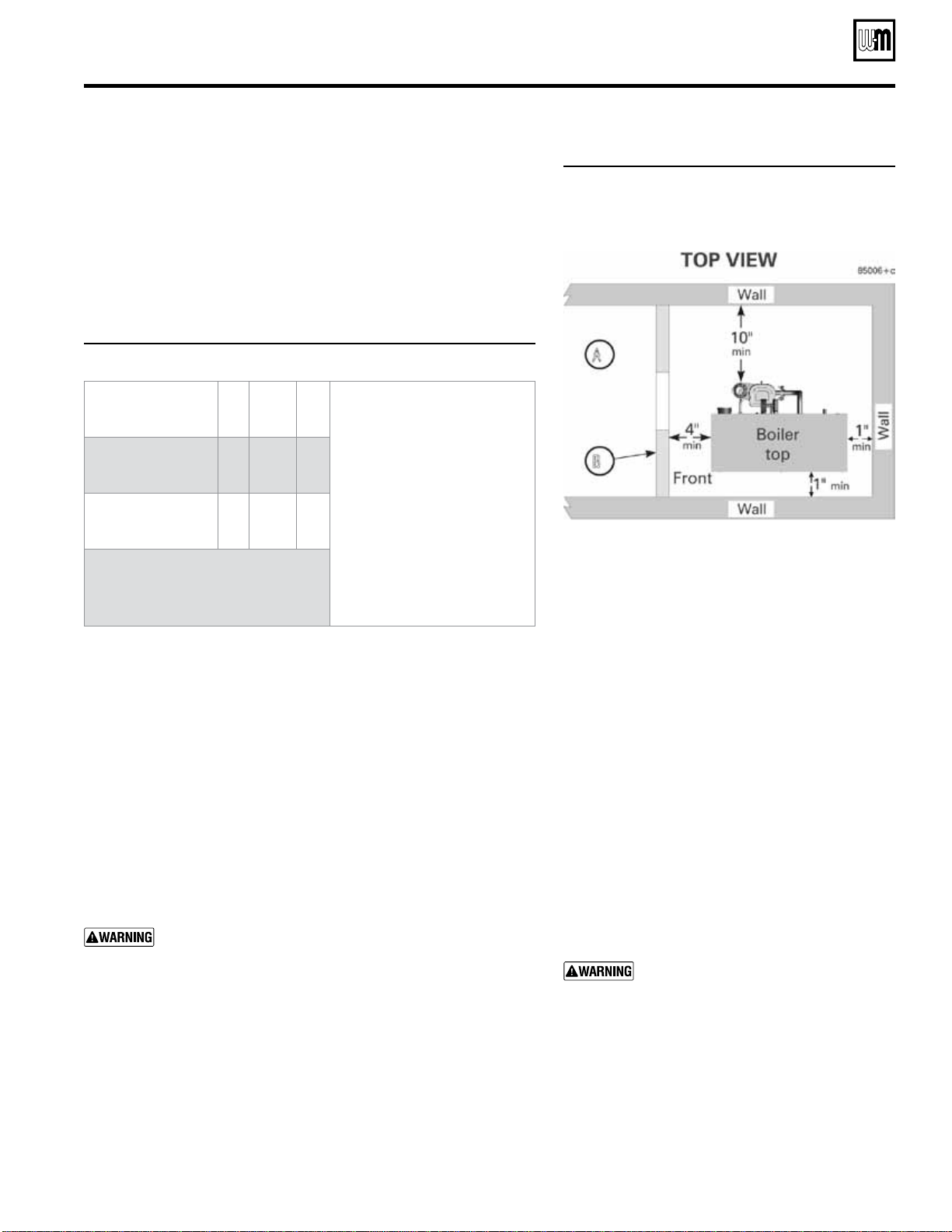
Figure 1 Estimated GV90+ input at altitude
Altitude
(feet)
% Sea level input
1,000 97
2,000 93
3,000 90
4,000 87
5,000 83
5,500 82
6,000 80
7,000 77
8,000 74
9,000 72
10,000 69
Figure 2 Service clearances (recommended)
Prepare boiler location
Installations must follow these codes:
• Local, state, provincial, national codes, laws, regulations and ordinances.
• NationalFuelGasCode,ANSIZ223.1-latestedition.
• StandardforControlsandSafetyDevicesforAutomaticallyFiredBoil-
ers, ANSI/ASME CSD-1, when required.
• NationalElectricalCode.
• ForCanadaonly:B149.1orB149.2InstallationCodeandCSAC22.1
Canadian Electrical Code Part 1 and any local codes.
The GV90+ boiler gas manifold and controls met safe lighting and other
performance criteria when boiler underwent tests specified in ANSI Z21.13
— latest edition.
For the Commonwealth of Massachusetts, read and follow
the special instructions located on page 34 of this manual.
Install the boiler so control system components are protected
from dripping or spraying water or rain
during operation.
Allowing these components to become wet could cause a
boiler failure, resulting in severe personal injury, death or
substantial property damage.
High altitude installations
GV90+ boiler controls automatically reduce input with increasing altitude.
See Figure 1 for estimated input at altitude as a percentage of sea level
input. Multiply the boiler sea level input by this percentage to obtain the
estimated high altitude input. Note that the length of the venting system
will also have a minor impact on input. Refer to the vent supplement for
further information.
No modifications to the boiler should be necessary for installations up to
5,500 feet above sea level. For higher elevations, the air pressure switch
must be changed to a special high altitude switch. Refer to the high altitude
kit instructions, page 10. Note that the gas valve outlet pressure must be
checked (and adjusted if necessary) following instructions on page 62.
DO NOT sidewall vent DIRECT EXHAUST APPLICATIONS
at altitudes above 5,500 feet. Sidewall venting is only allowed
for DIRECT VENT applications (ducted combustion air) at
altitudes above 5,500 feet.
Vent length also affects boiler input — the boiler automati-
cally derates to compensate for pressure loss through the vent.
See the derate values given in Figure 109, page 101. For high
altitude installations, multiply the % in Figure 1 times the
value shown in Figure 109 to determine input vs sea level.
Service clearances
When possible, install GV90+ boilers with clearances at least as large as
shown in Figure 2 for best service access.
Flooring
The GV90+ boiler is approved for installation on combustible flooring,
but must never be installed on carpeting.
Do not install boiler on carpeting even if foundation is used.
Fire can result, causing severe personal injury, death or sub-
stantial property damage.
Part number 550-142-054/1211
7
GV90+ gas-fired water boiler — Boiler Manual
Foundation
Provide a solid brick or concrete foundation pad if any of the following
is possible:
• When the floor can become flooded.
• When the boiler mounting area is not level.
• When a high-profile condensate pump is used, provide a foundation
high enough that the GV90+ condensate connection is at least as high
as the condensate pump inlet connection.
Figure 3
Minimum foundation dimensions (inches)
Boiler model W L H *
GV90+3 / GV90+4 16 30¾ 2
GV90+5 / GV90+6 16 37¾ 2
* Increase height if needed to ensure
condensate trap outlet tee is above inlet
of condensate pump, when used.
Residential garage installation
Precautions
Take the following special precautions when installing the boiler in a
residential garage. If the boiler is located in a residential garage, per ANSI
Z223.1, paragraph 5.1.9:
• Mount the boiler a minimum of 18 inches above the oor of the
garage to assure the burner and ignition devices will be no less than
18 inches above the floor.
• Locate or protect the boiler so it cannot be damaged by a moving
vehicle.
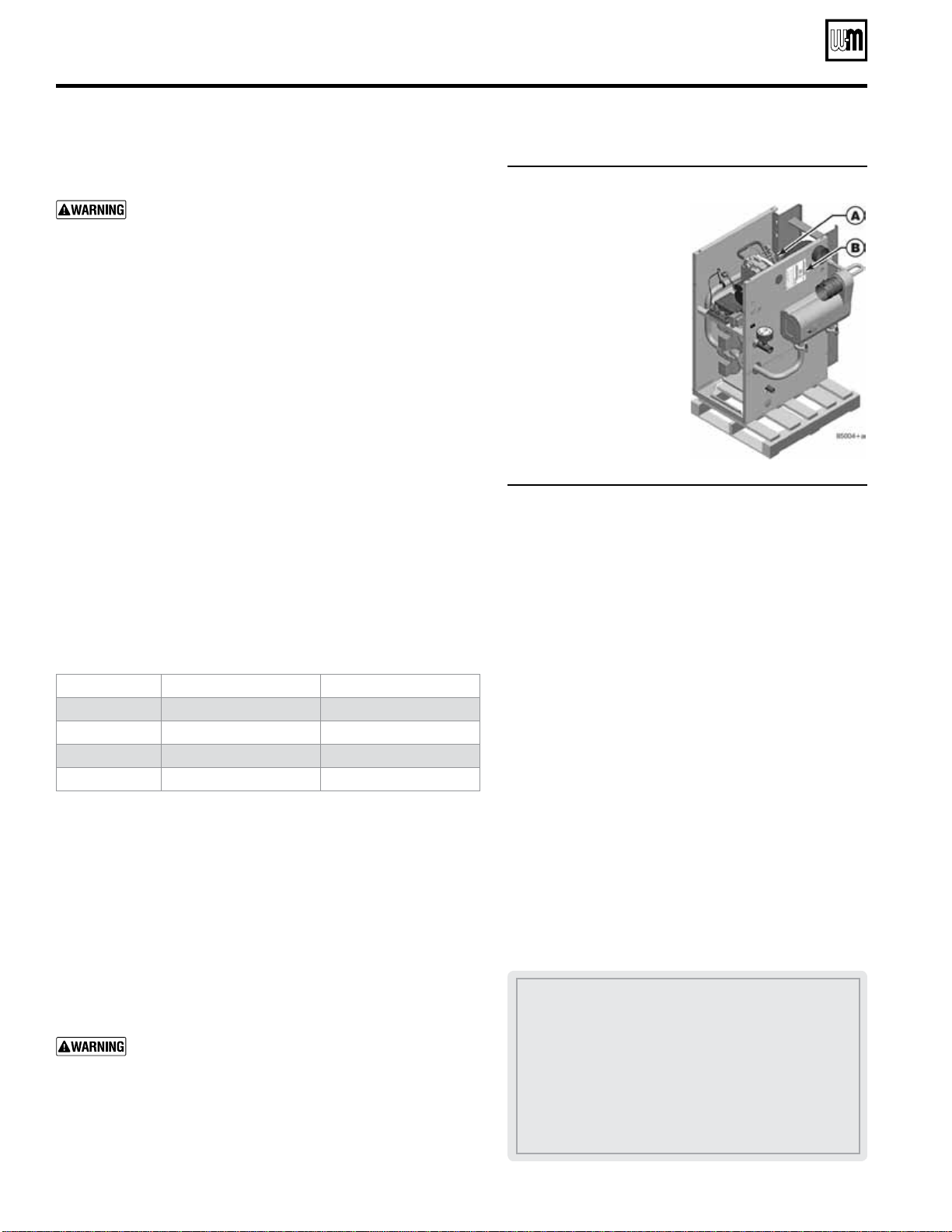
Minimum clearances
You can install GV90+ boilers in spaces smaller than Fig-
ure 2, page 6 recommended service clearances, but never
smaller than shown in Figure 4.
Installations with clearances less than shown in Fig-
ure 2, page 6 must have air openings sized and located as
shown in Figure 4.
• Always provide at least screwdriver clearance to jacket front panel screws
for removal of front panel for inspection and minor service.
• If the boiler cannot be serviced in place, pipe the boiler with unions
and isolation valves so it can be slid out of the space and serviced in
an adjacent area.
• The space has to be equipped with a door so boiler can be accessed,
unpiped and removed.
Prepare boiler location (continued)
Figure 4 Minimum clearances — when
clearances are less than recom-
mended service clearances of Fig-
ure 2, page 6, install as shown below:
A Area adjacent to access door must be accessible
and must allow for removal of the GV90+boiler
for service.
No other appliance or air mover (exhaust fan,
etc.) may be mounted in the same space.
B Access DOOR with fresh air openings
C Provide (2) Fresh air openings — Each with at
least 1 sq. inch per 1,000 Btuh of boiler input
NOTICE SPECIAL REQUIREMENTS
FOR AIR OPENINGS
: For installations
with clearances less than recommended
service clearances (Figure 2, page 6), but
no less than shown in Figure 4 — An
access door must be provided, fitted with
two air openings as shown in Figure 4.
Each opening must have a free area no
less than 1 square inch per 1000 Btuh
input of the GV90+ boiler in the space.
DO NOT apply the air opening sizes
given in Figure 42, page 36 or Fig-
ure 60, page 50
.
Part number 550-142-054/1211
GV90+ gas-fired water boiler — Boiler Manual
8
Prepare the boiler (continued)
Check orifice plate — replace if necessary
The correct orice plate must be used. Failure to do so
will result in severe personal injury, death or substantial
property damage. The boiler is shipped with a natural
gas orice plate. It MUST BE CONVERTED to use
propane.
Natural gas:
For natural gas installations, inspect the silver gas/air orice plate
marking
. It must be the same as the boiler size. If the orifice plate is
stamped with another size, obtain the correct plate from your whole-
saler. The boiler size is stamped where the “X” is shown in the plate
stamping, Figure 6.
Propane:
For propane installations, replace the silver gas/air orice plate
with the red/white plate
, per following instructions. Ensure the red/
white plate boiler size is correct for the GV90+ boiler being installed.
The boiler size is stamped where the “X” is shown in the plate stamp-
ing, Figure 6.
Also fill out the propane label in the conversion kit and attach to the
left side of the jacket, above the gas inlet opening, as shown in Figure 5.
Orice plate installation, when required
Access the bottom of the blower housing as shown in Figure 5.
To inspect the plate only,
read the marking on the plate edge. It
must read the same as the boiler size and fuel, as follows:
Boiler model Natural gas marking Propane marking
GV90+3 NG 3 SEC LP 3 SEC
GV90+4 NG 4 SEC LP 4 SEC
GV90+5 NG 5 SEC LP 5 SEC
GV90+6 NG 6 SEC LP 6 SEC
To replace the plate, using a manual screwdriver or nut driver, see
Figure 6:
1. Loosen screws
1 and 2 two full turns.
2. Remove screws
3 and 4.
3. Pull the gas/air orifice plate forward to remove it.
4. Slide in the new plate as shown in Figure 6. The
red side of a
propane plate must go next to the blower housing
.
5. Replace screws
3 and 4. Tighten all four screws securely and uni-
formly. DO NOT overtighten. DO NOT exceed 40 inch-pounds
torque.
6. Bend down plate label tab at score mark as shown in lower right
corner of Figure 6, item 10.
DO NOT use electric or pneumatic screwdrivers to re-
move or tighten the gas/air boss screws. Hand-tighten
only, using manual screwdriver. Should the torque exceed
40 inch-pounds, the threaded holes could strip out,
causing an inadequate seal of the orifice plate. Failure to
properly seal the plate to the housing could result in a gas
leak, causing severe personal injury, death or substantial
property damage.
Figure 5 Check for correct gas orifice plate
A Remove jacket front
panel to access the bot-
tom side of the blower
housing.
B Complete the propane
conversion label includ-
ed with the conversion
kit. Install label on jacket
left side, as shown.
Leave the boiler on its back,
on the skid as shown, until
you have checked the gas/air
orifice plate and replace it if
necessary.
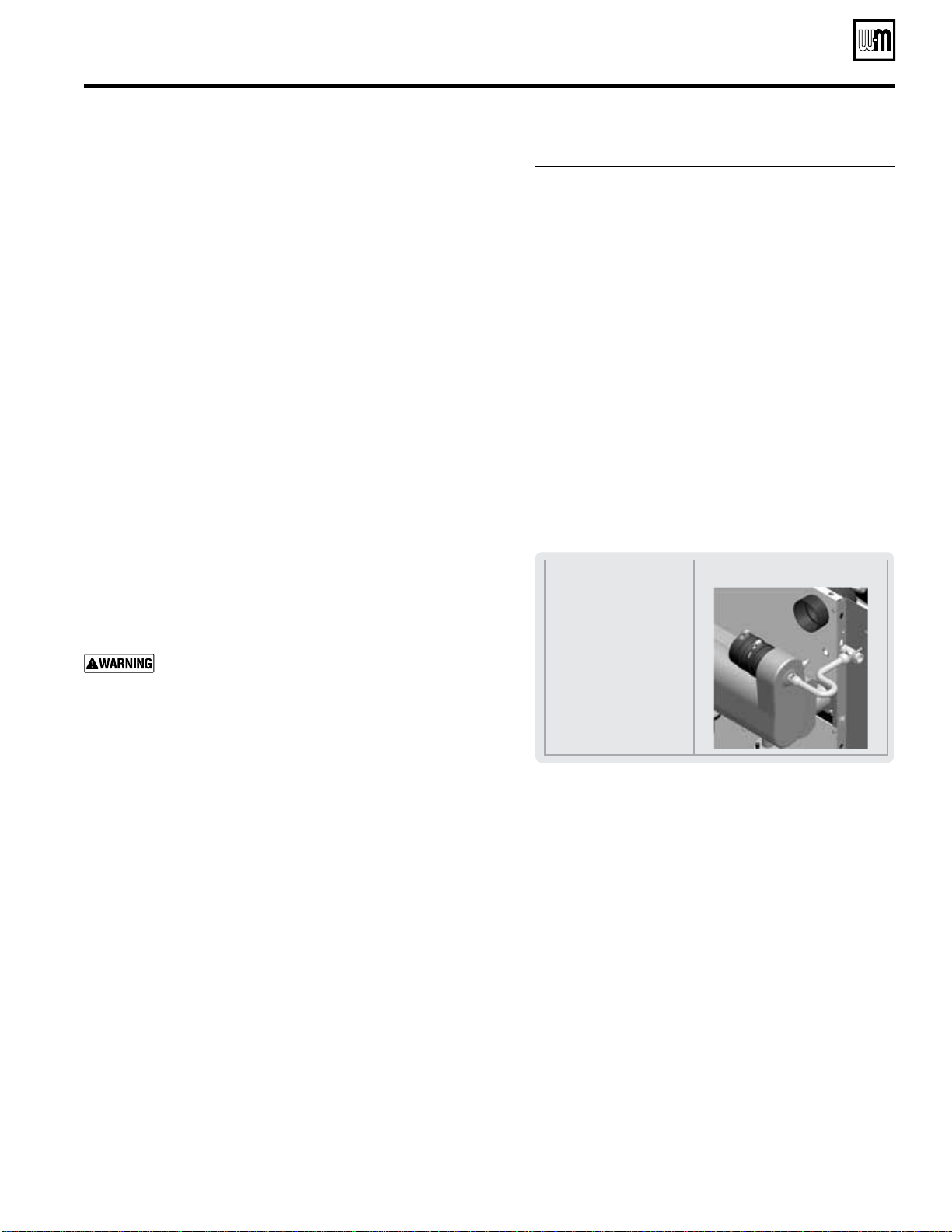
Figure 6 Follow instructions to check or replace
gas orifice plate ("X" = boiler size)
1–4 Screws — follow instructions for loosening and tightening
5 Gas/air manifold
6 Front section, bottom view, component details omitted
7 Side shown must point toward air inlet hose — WARNING
label side for natural gas; WHITE side for propane gas
8 Propane orifice plate, RED one side and WHITE on the
other (red side must face the blower housing
9 Natural gas orifice plate, SILVER
10 Orifice plate after bending along score mark — label is
visible when installed
Part number 550-142-054/1211
9
GV90+ gas-fired water boiler — Boiler Manual
Prepare the boiler (continued)
Figure 7 Install condensate trap
A In-line flue drain
B Flue drain nipple
C Flue drain hose
D Flue connection
E Condensate trap tee
F U-clamp and nuts (not
shown)
G Condensate drain
nipple
H Condensate trap hose
J Hose clamps
Finished assembly
Install condensate trap
1. Before placing the boiler in position, install the condensate trap
line, shown in Figure 7. Items shown are provided with the boiler.
Step 1 Attach the flue drain hose (C) to the in-line flue drain
nipple (B).
Step 2 Slide a screw driver or pencil through the condensate
drain nipple (G).
Slide the end of the screwdriver or pencil into the open
end of the flue drain hose (C).
Feed the in-line flue drain (A) assembly into the flue con-
nection (D), guiding the flue drain hose through the con-
densate drain nipple (G) with the screwdriver or pencil.
Step 3 Press the in-line flue drain (A) into the flue connection
(D) and through the seal ring until it reaches the stop.
Then tighten the flue connection hose clamp to secure.
The flue drain hose (C) should now extend down past the
end of the condensate drain nipple (G).
Step 4 Slide the U-clamp (F) over the condensate trap tee (E)
and into the two holes in the rail. Attach the two nuts pro-
vided to the U-clamp and tighten to secure the condensate
trap tee to the rail.
Step 5 Slide the ends of the condensate trap hose (H) onto the
condensate drain nipple (G) and the condensate trap tee
(E). Secure the condensate trap hose at each end with the
hose clamps (J).
Check the height of the condensate trap tee outlet.
Before rotating the boiler into position, measure the
distance from the condensate tee outlet to the bottom
of the boiler mounting rails. When the boiler is place in
position, the condensate tee outlet must be higher than
the condensate pump inlet connection (when a con-
densate pump is used). Increase the foundation height
if necessary.

Part number 550-142-054/1211
GV90+ gas-fired water boiler — Boiler Manual
10
Figure 8 Air pressure switch mounting
1 Interior panel top
2 Jacket left side panel
3 Air pressure switch
4 WHITE hose
5 RED hose
6 Mounting screws
Figure 9 Follow instructions to perform the steps
shown below
Prepare the boiler (continued)
Install high altitude air pressure switch
when required (only above 5,500 feet)
1. For installations at altitude more than 5,500 feet above sea level:
a. A special high altitude air pressure switch is required.
b. The gas valve outlet pressure setting must be checked, and
adjusted if necessary, per the instructions on page 62.
Failure to check gas valve outlet pressure and adjust, if
necessary, could result in severe personal injury, death
or substantial property damage. Carefully follow the
guidelines given in this manual.
2. Obtain the GV90+ high altitude kit from your local Weil-McLain
distributor. The high altitude kit contains the high altitude air
pressure switch.
3. See Figure 8 (switch shown with wires removed).
a. Remove the two (RED) control wires from the air pressure
switch spade terminals.
b. Remove the factory-installed air pressure switch (loosen top
screw and remove bottom screw holding switch to jacket in-
terior panel).
c. Install the high altitude air pressure switch in the same loca-
tion.
d. Carefully replace the hoses on the new switch, with the red hose
on the hose barb closest to the electrical spade connectors, as
shown in Figure 8. The white hose goes on the other hose barb.
e. Replace the two (RED) control wires on the new pressure
switch spade terminals.
Rotate the boiler into position
Boiler is shipped on back side. It must be taken off skid
and rotated into correct position.
After installing condensate line, inspecting (replacing if necessary) the
gas/air orifice and installing the high altitude kit (if required), move
the boiler near its position.
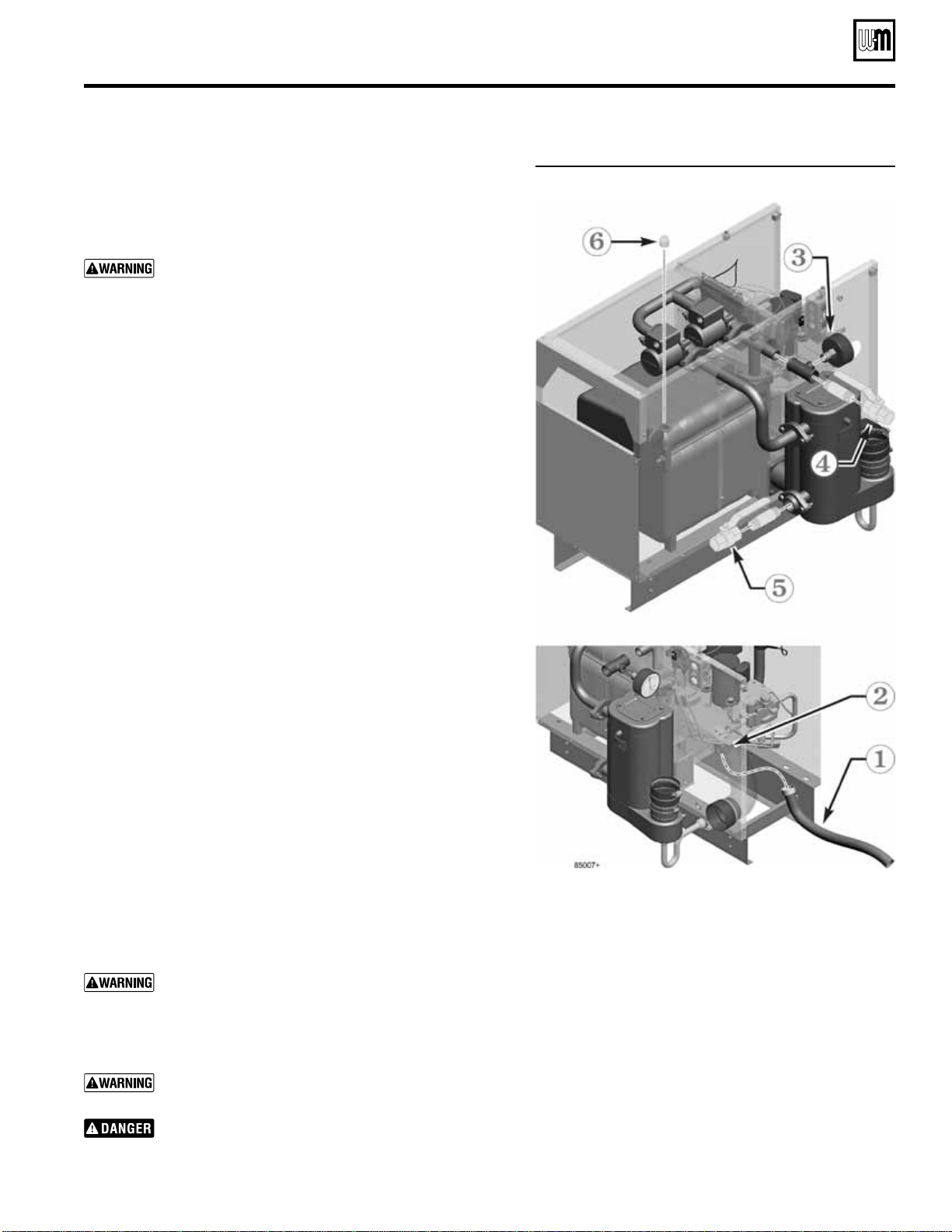
Figure 9 shows the boiler with the front and top panels replaced.
These panels may be left off if desired until the installation has been
completed.
Boiler is heavy and contains some sheet metal parts which
may have sharp edges. Wear gloves when handling and
take proper precautions when moving. Failure to do so
will result in severe personal injury, death or substantial
property damage.
Refer to Figure 9 for placement sequence as follows:
1 Wear heavy gloves — carefully rotate the boiler over onto its
base rail legs.
2 Clip the shipping strap securing the skid to the boiler block as-
sembly. Remove the skid and strap.
3 Attach the jacket rear panel as shown using (4) #10 x ½” screws
provided in the accessory bag.
Part number 550-142-054/1211
11
GV90+ gas-fired water boiler — Boiler Manual
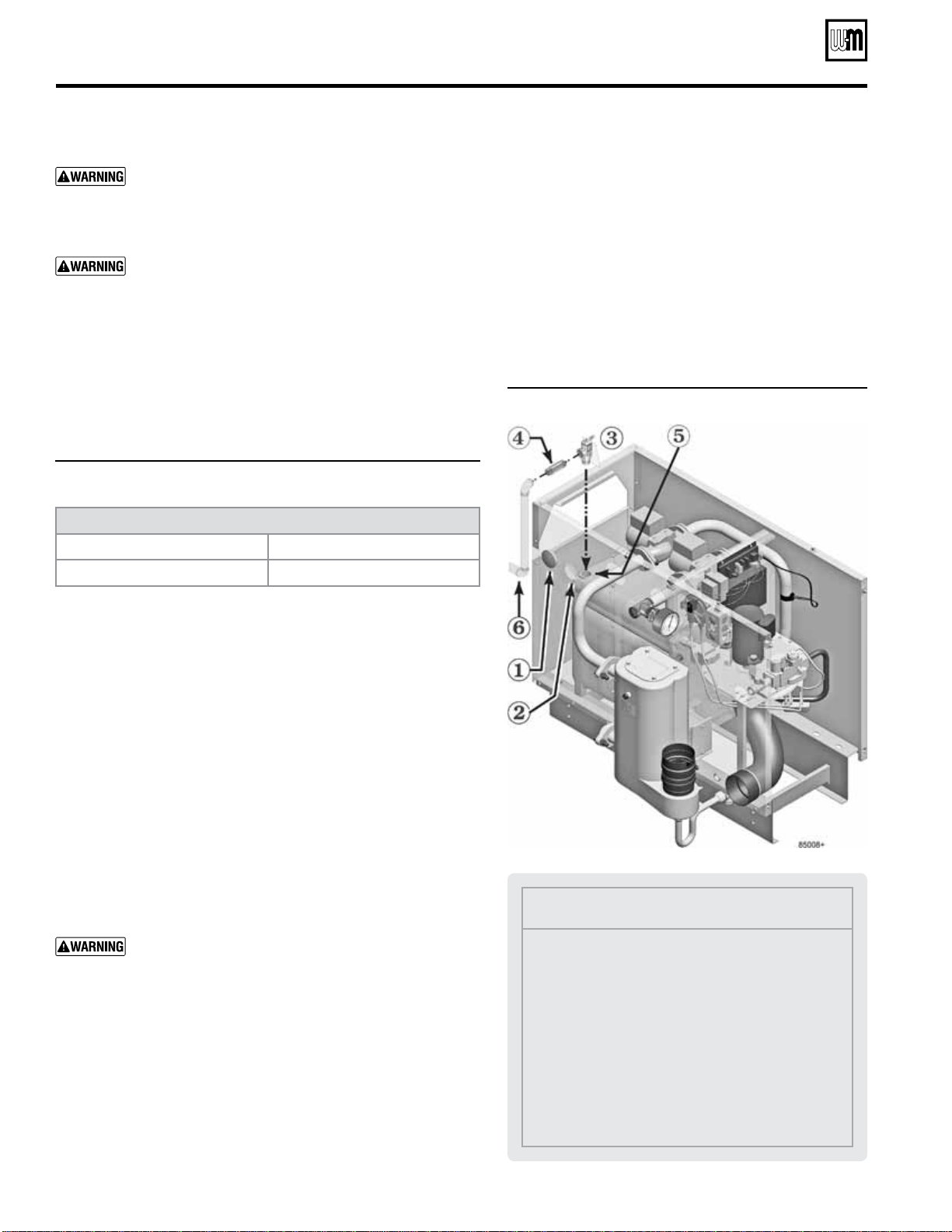
Figure 10 Piping connections for hydrostatic test
Perform hydrostatic pressure test
Pressure test boiler before attaching water or gas piping (except as
noted below) or electrical supply. Remove jacket top panel before
proceeding.
Use two wrenches when tightening water piping at
boiler
, using one of the wrenches to prevent the boiler
interior piping from turning. Failure to support the boiler
piping connections to prevent them from turning could
cause damage to boiler components.
Prepare boiler for test — see Figure 10
Step 1 Connect a hose from water supply to fill and drain boiler
for hydrostatic test. Hose is not included with boiler.
Step 2 Connect hose to boiler drain valve. Make sure hose can
also be used to drain boiler after test.
Step 3 Remove 1" nipple, 1" tee, bushing and pressure/tempera-
ture gauge from accessory bag. Pipe to boiler supply con-
nection as shown. Use pipe dope sparingly.
Step 4 Connect a nipple and shutoff valve to system supply
connection on the 1" tee. This valve will be used to bleed
air during the fill. Valve and nipple are not included with
boiler.
Step 5 Connect a nipple and shutoff valve to system return
connection at circulator flange. This valve will be used to
bleed air during the fill. Valve and nipple are not included
with boiler.
Step 6 Install a ¾" pipe plug in the relief valve opening, top of
the rear boiler section, as shown. Plug is not included with
boiler.
Fill and pressure test
1. Connect fill water supply through drain valve, item 2.
2. Fill boiler with water (be sure bleed valves at 4 and 5 are open).
3. When water flows from bleed valves, shut off water at drain
valve.
4. Close bleed valves.
5. Slowly reopen drain valve (item 2) until test pressure of 45 PSIG
(or 1.5 times boiler relief valve setting — NEVER MORE than
75 PSIG) is reached on the pressure gauge.
6. Test at this pressure for no more than 10 minutes.
Do not leave boiler unattended. A cold water fill could
expand and cause excessive pressure, resulting in severe
personal injury, death or substantial property damage.
7. Make sure constant gauge pressure has been maintained through-
out test. Check for leaks. Repair if found.
Leaks must be repaired at once. Failure to do so can dam-
age boiler, resulting in substantial property damage.
Do not use petroleum-based cleaning or sealing com-
pounds in boiler system. Severe damage to boiler will
occur, resulting in substantial property damage.
Drain and remove ttings
1. Disconnect fill water hose from water source.
2. Drain boiler at drain valve or out hose, whichever pro-
vides best access to drain. Close drain valve and remove
hose after draining.
3. Remove nipples and valves at 4 and 5 unless they will
remain for use in the system piping.
4. Remove plug (item 6) from relief valve tapping.
Prepare the boiler (continued)
Part number 550-142-054/1211
GV90+ gas-fired water boiler — Boiler Manual
12
Install water piping
Air separator
Install an air separator in the piping as shown in this
manual. For single-zone systems, install the air separator
in the return piping as shown in Figure 14, page 14. This
allows mounting the automatic air vent and expansion tank
off of the separator.
Install relief valve
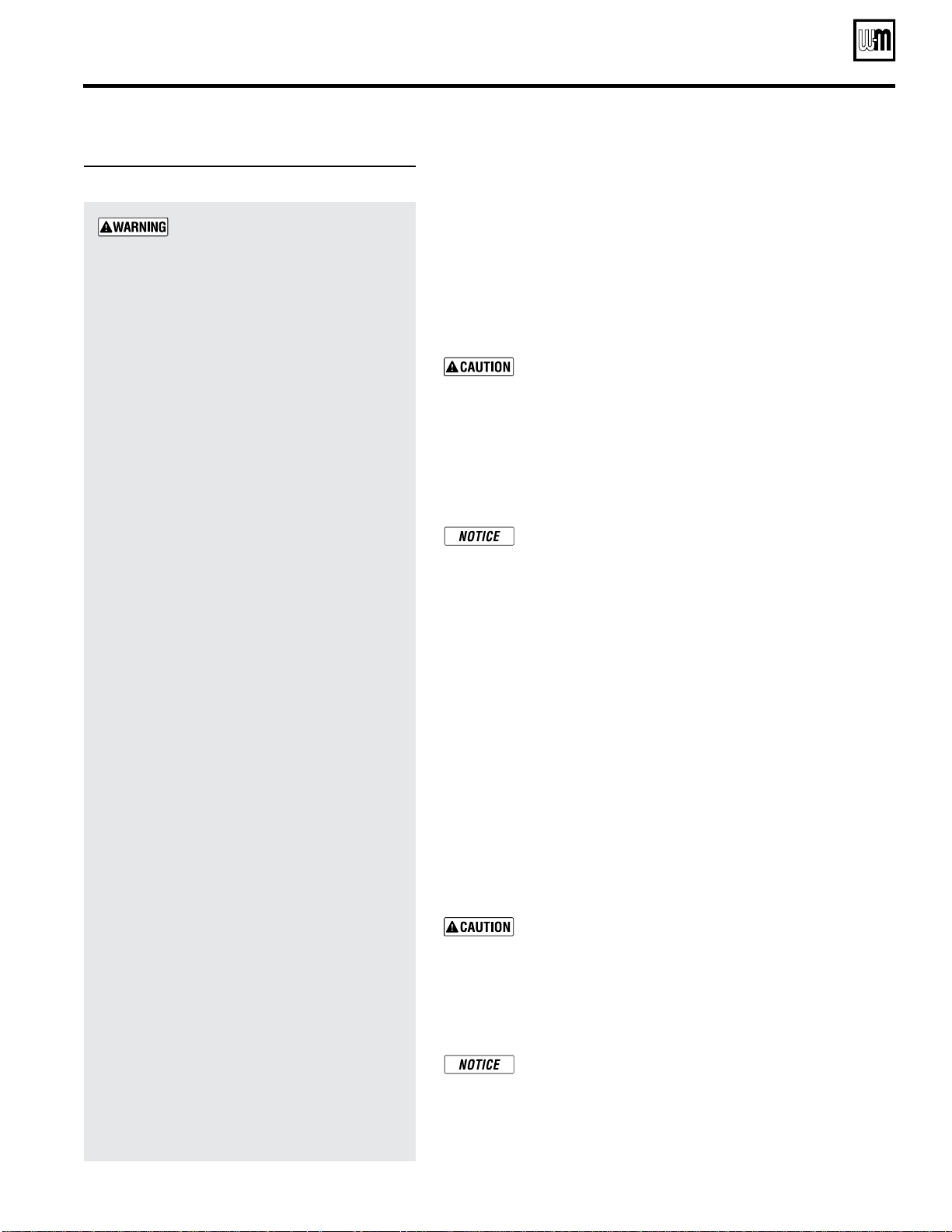
1. Install relief valve ONLY as shown in Figure 12.
2. Connect discharge piping to safe disposal location, fol-
lowing guidelines in Figure 13, page 13.
Figure 12
Install and pipe relief valve
Legend
1 Jacket plug for unused relief valve jacket open-
ing.
2 Jackets are provided with two relief valve open-
ings because each jacket size is used for two boiler
sizes. Cover the unused opening with the plug
provided.
3 Boiler relief valve (from accessory bag)
4 ¾” x 3” nipple, provided in accessory bag
5 ¾” relief valve tapping in back section
6 Connect minimum ¾” discharge piping to relief
valve.
See Figure 13, page 13.
Use two wrenches when tightening water piping at
boiler
, using one of the wrenches to prevent the boiler
interior piping from turning. Failure to support the boiler
piping connections to prevent them from turning could
cause damage to boiler components.
The cast iron heat exchanger return temperature must
be kept at or above 140°F during all times of operation
to prevent possibility of corrosion due to condensation.
This is done automatically, using the boiler's internal
circulators. DO NOT remove or tamper with these cir-
culators. Failure to comply could result in severe personal
injury, death or substantial property damage.
General piping information
Minimum pipe size for boiler loop piping
Figure 11 Provide boiler loop piping no smaller than listed
below (based on 20°F temperature rise)
Boiler loop pipe size, Minimum
GV90+3 or 4 1”
GV90+5 or 6 1¼”
Additional limit controls
Following standard industry practices, if installation is to comply with
ASME or Canadian requirements, an additional high temperature
limit
may be needed. Consult local requirements for other codes/
standards to determine if needed. Wire as shown in Figure 67, page 56.
• Install a manual reset high temperature limit between the boiler
and the isolation valve.
• Wire the manual reset limit in series with the boiler limit con-
trol.
• Set the manual reset limit control at least 20°F above the boiler
limit control setting (maximum setting 220°F).
Low water cut-off, when required
A low water cutoff device is required when boiler is installed above
radiation level or by certain state or local codes or insurance companies.
Use low water cutoff designed for water installations. Electrode probe-
type is recommended. Purchase and install in tee in supply piping above
boiler. Wire contact as shown in Figure 67, page 56.
If boiler is connected to heating coils located in air han-
dling units where they can be exposed to refrigerated
air, use flow control valves or other automatic means to
prevent gravity circulation during cooling cycle. Circu-
lation of cold water through the boiler could result in
damage to the heat exchanger, causing possible severe
personal injury, death or substantial property damage.
Backow preventer
Where required by codes, install a backow preventer in the cold
water fill line, as shown in suggested piping diagrams on following
pages. Install a check valve if a backflow preventer is not installed.
Part number 550-142-054/1211
13
GV90+ gas-fired water boiler — Boiler Manual
Install water piping (continued)
Figure 13 Relief valve installation guidelines
To avoid water damage or scalding
due to relief valve operation, as
per local or state codes
:
Discharge line must be connected
to relief valve outlet and run to a
safe place of disposal. Terminate the
discharge line in a manner that will
prevent possibility of severe burns
or property damage should the valve
discharge.
Discharge line must be as short as
possible and be the same size as the
valve discharge connection through-
out its entire length.
Discharge line must pitch downward
from the valve and terminate at least
6” above the floor drain where any
discharge will be clearly visible.
The discharge line shall terminate
plain, not threaded, with a mate-
rial serviceable for temperatures of
375°F or greater.
Do not pipe the discharge to any
place where freezing could occur.
No shutoff valve shall be installed
between the relief valve and boiler,
or in the discharge line. Do not
plug or place any obstruction in the
discharge line.
Test the operation of the valve after
filling and pressurizing system by
lifting the lever. Make sure the valve
discharges freely. If the valve fails to
operate correctly, replace it with a
new relief valve.
Failure to comply with the above
guidelines could result in failure of
the relief valve to operate, resulting
in possibility of severe personal in-
jury, death or substantial property
damage.
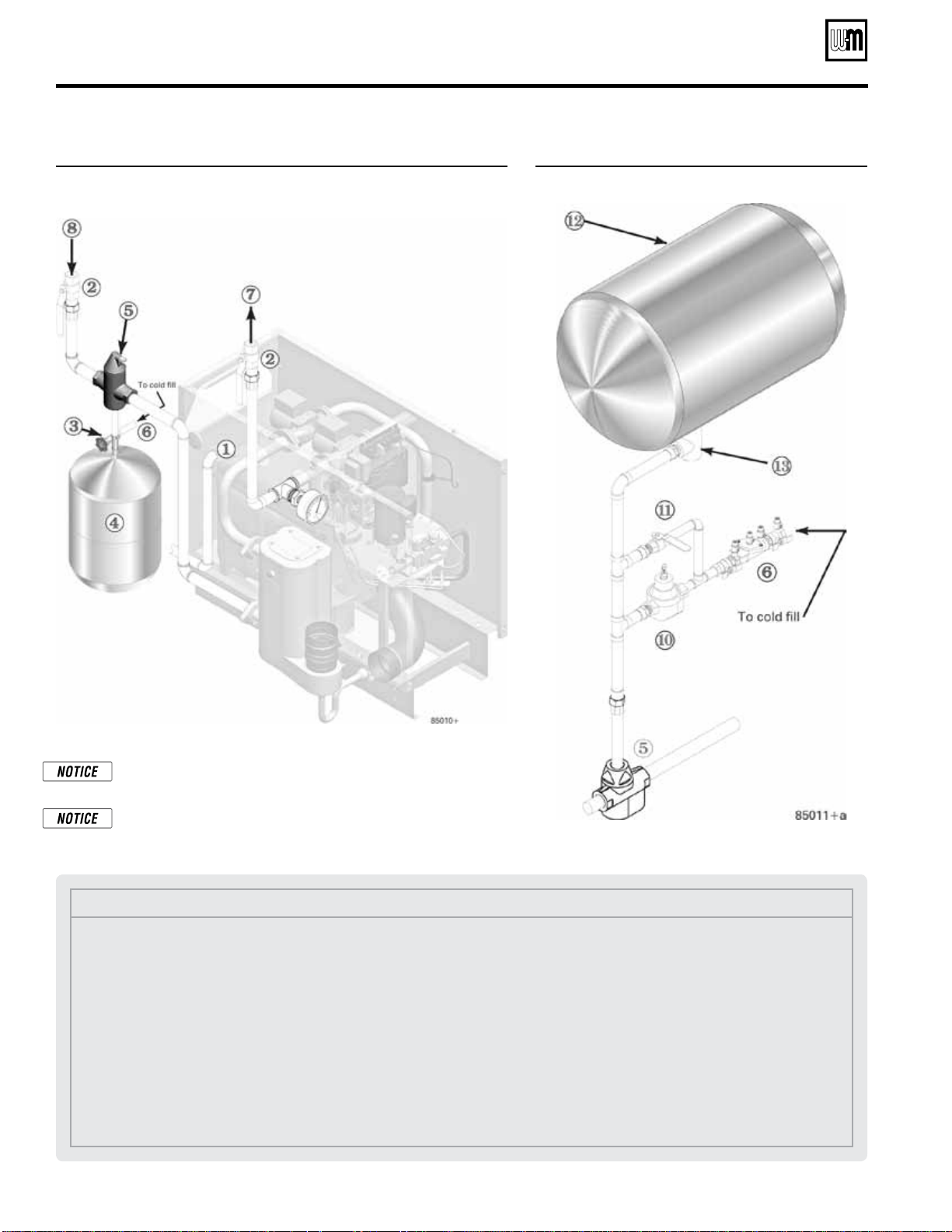
Expansion tank
Figure 14, page 14 and Figure 15, page 14 show typical installation of the
expansion tank. Always locate the air separator and expansion tank as
shown in the suggested piping drawings, beginning with Figure 17, page 16.
Ensure that the expansion tank size will handle boiler and system water
volume and temperature. See tank manufacturer’s instructions and rat-
ings for details. Additional tanks may be added to the system if needed to
handle the expansion. These tanks may be installed by connecting to tees
in the system piping.
Undersized expansion tanks cause system water to be lost
from the relief valve and makeup water to be added through
the fill valve. Eventual section failure can result. Always locate
the cold water ll connection at the expansion tank. Never
locate this elsewhere in the system.
Diaphragm- or bladder-type tank:
Refer to Figure 14, page 14 for suggested piping when using a diaphragm-
or bladder-type expansion tank.
Diaphragm- or bladder-type expansion tank — Control
ll pressure with the tank air charge pressure. Always check
pressure and charge tank with tank removed from system
to be sure reading is accurate. Boiler relief valve is set for 30
PSIG. Operating pressure of system, after temperature expan-
sion above cold fill pressure, should not exceed 24 PSIG to
avoid weeping of relief valve.
Install an
automatic air vent on top of the air separator, per separator
manufacturer’s instructions.
Closed-type expansion tank:
Figure 15, page 14 shows suggested piping when using a closed-type expan-
sion tank, in which the air is directly in contact with tank water.
Connect piping (½” or ¾”) from the air separator top outlet to the tank
fitting. Slope any horizontal piping a minimum of 1 inch per 5 feet of
horizontal pipe.
Always use a
tank tting, such as the B&G Tanktrol or Taco Taco-Trol
(shown). The fitting reduces gravity flow of water in the piping to the
tank, avoids air bubbling through the tank water, and provides the proper
fill height in the tank.
Correct all leaks in the system or tank piping. Leaks allow
air to escape from the system and will cause water-logging
of the tank. This will result in water loss through the boiler
relief valve due to over-pressurization.
NEVER use an automatic air vent in a system equipped with a
closed-type expansion tank. The air removed from the system
will cause water-logging of the expansion tank.
Closed-type expansion tank — Follow tank manufacturer’s
instructions for lling the tank. Typical tank sizing provides
for approximately 12 PSIG when the tank is filled to the
normal level and system water is cold. Note that boiler relief
valve is set for 30 PSIG. Operating pressure of system, after
temperature expansion above cold fill pressure, should not
exceed 24 PSIG to avoid weeping of relief valve.
Part number 550-142-054/1211
GV90+ gas-fired water boiler — Boiler Manual
14
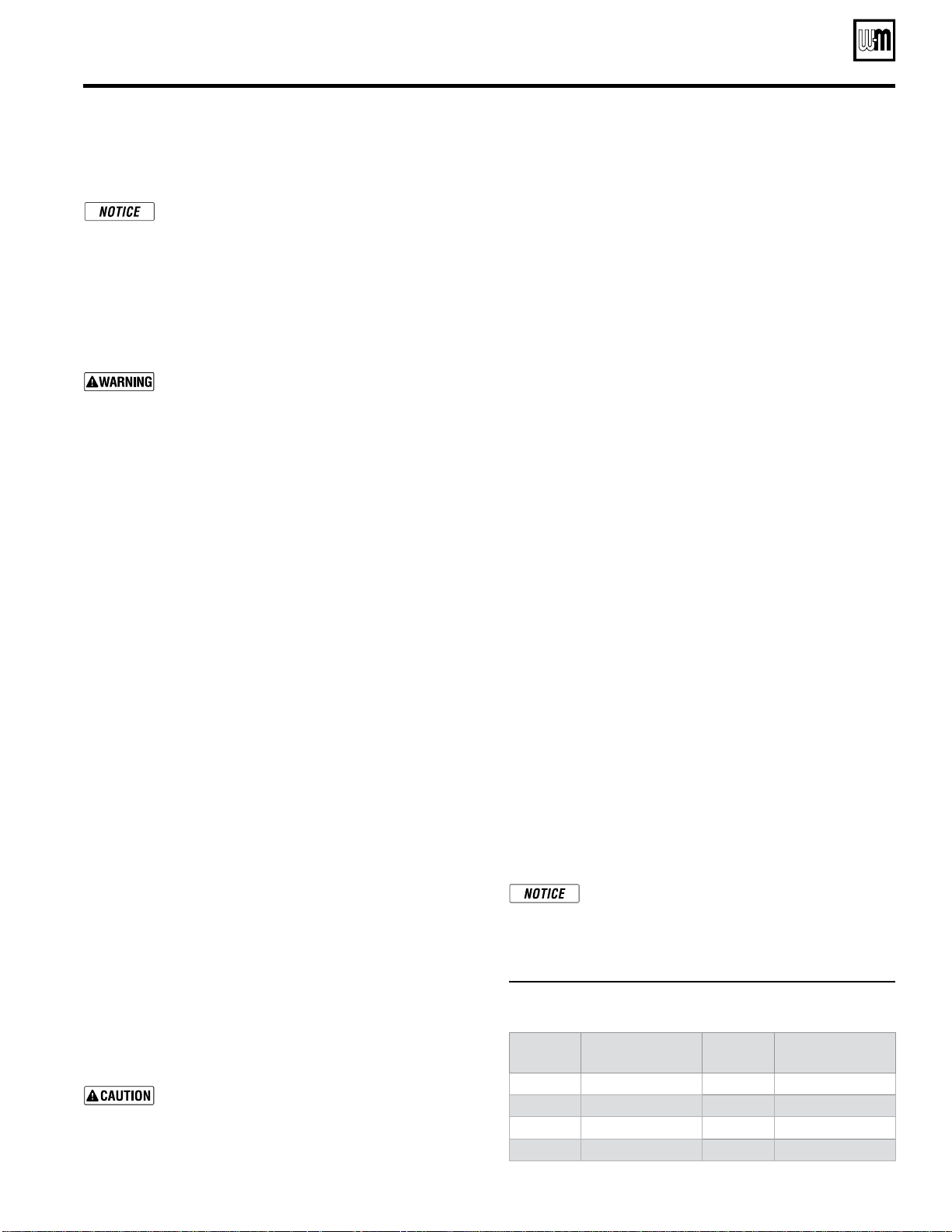
Figure 14 Piping to single-zone system using diaphragm- or
bladder-type expansion tank. Boiler connections are
1” NPT (supply from 1” tee, return to 1” recuperator
flange).
Figure 15 Piping closed-type expansion tank
Pipe diaphragm- or bladder-type expansion tanks to the bot-
tom of the separator.
Pipe closed-type (air in contact with water) tanks to the top of
the air separator. Always connect the fill line to the expansion
tank location, as shown above and in the suggested piping.
Install water piping (continued)
Legend
1 Relief valve discharge piping — see page 12
2 Isolation valves
3 Fill valve
4 Diaphragm-type expansion tank — always locate as
shown in the suggested piping drawings in this manual
5 Air separator
• provide with automatic air vent ONLY when used
with diaphragm-type expansion tanks
• pipe air outlet to expansion tank when used with
close-type tanks
6 Cold fill line, with backflow preventer or check valve
when required by codes (see Figure 15 for typical com-
ponents)
7 System supply piping
8 System return piping
10 Pressure reducing valve, when used
11 Quick-fill bypass valve, when used
12 Closed-type expansion tank — always locate as shown
in the suggested piping drawings in this manual
13 Tank fitting
Part number 550-142-054/1211
15
GV90+ gas-fired water boiler — Boiler Manual
Install water piping (continued)
System water piping methods
Most piping methods shown in this manual use
primary/secondary connection to the boiler loop.
These designs ensure proper flow through the
GV90+ boiler, for the most efficient and reliable
operation of the boiler and the heating system.
For other piping methods, consult your local Weil-
McLain representative.
Circulators
Do not remove either of the GV90+ internal pumps
for use elsewhere in the system. Both pumps are
required for proper operation. Removing a pump
will cause the boiler to malfunction. Substantial
property damage could result.
Never install another pump in series with the
GV90+ boiler
. Forced flow can cause improper op-
eration of the boiler controls. Substantial property
damage could result.
Failure to comply could result in unreliable perfor-
mance and nuisance shutdowns from insufficient
flow.
Circulator ow rate
Size system circulators based on the flow rate required to achieve
the temperature change needed. You can closely estimate tem-
perature rise (or drop) through a circuit by using the following
formula, where TD is temperature rise (or drop), FLOW is flow
rate (in gpm), and BTUH is the heat load for the circuit:
FLOW =
BTUH
—–—–—–—–
TD x 500
Examples:
Consider a system loop for a system with total heating load equal
to 210,000 Btuh. The desired temperature drop through the system
piping is 20°F. Then the required flow rate is:
FLOW =
210,000
—–—–—–—–
20 x 500
= 21 gpm
SIMPLIFIED: For 20° temperature drop, FLOW = MBH / 10.
Circulator head requirement
The circulator must be capable of delivering the required flow
against the head loss that will occur in the piping. Determine
the pipe size needed and the resultant head loss using accepted
engineering methods. The simplified pipe sizing here is limited
to residential systems, and does not include systems with fan coil
units or radiant tubing.
The following simplified method for pipe and cir-
culator sizing must be limited to residential applica-
tions using baseboard (finned or cast iron), cast iron
radiators or convectors. DO NOT apply for radiant
heating, fan coil units or commercial installations.
Simplified pipe/circulator selection
1. Install the boiler and piping using the recommended piping
layouts in this manual.
2. Size the piping and components for each circuit in the space
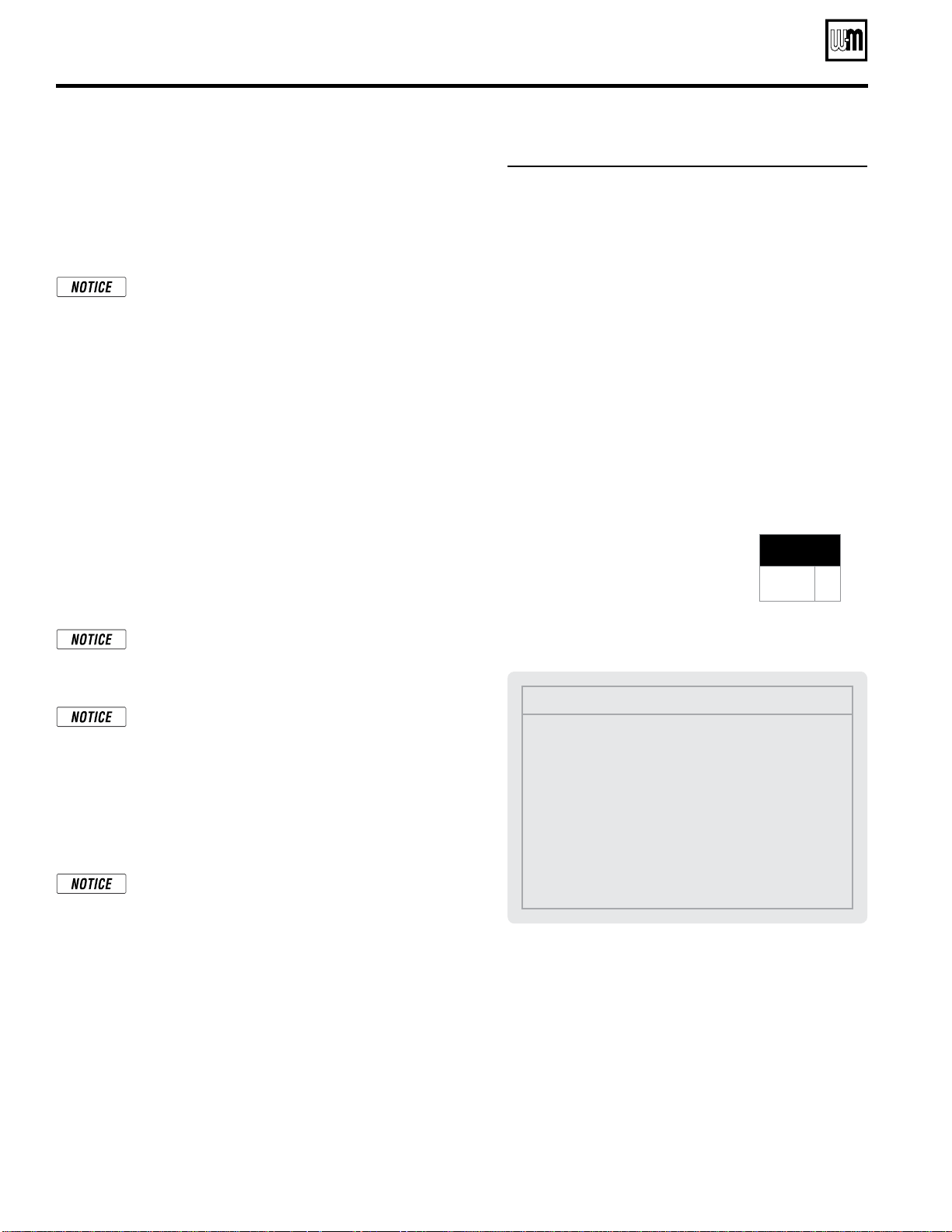
heating system using Figure 16.
At the ow rates listed, the
head loss in all piping will be 0.04 feet per foot of pipe.
a. Determine the heating load (Btuh) for each circuit.
b. Calculate the flow rate for each circuit using its load.
To use a 20°F temperature drop, just divide the
MBH (1,000’s of Btuh) by 10.
Example — Flow for 20°F temp drop with 35,000
Btuh:
FLOW = 35 MBH / 10 = 3.5 gpm
c. Find the pipe size in Figure 16 that has a max flow rate
just larger than that required for the circuit.
d. Find the total equivalent length (TEL) of the circuit.
TEL accounts for losses through fittings and valves by
using the equivalent length of pipe that would cause
the same head loss. Add these numbers to the measured
length of the circuit to find TEL in feet.
TEL is usually close to 1.5 times the length of the
circuit for residential baseboard, radiator or convec-
tor applications.
e. Measure the length of each circuit from the circulator
outlet back to its inlet. Then multiply this length times
1.5 to get the approximate TEL of the circuit.
f. Find the head loss for each circuit:
TEL = 1.5 X Circuit Length (feet)
HEAD = TEL X 0.04 (feet water column)
g. NOTE: Size system header piping for the total flow of
all connected zones.
3. Example:
a. For a circuit with heating load = 45,000 Btuh (= 45
MBH). Measured length of circuit is 88 feet.
b. Flow = 45 MBH / 10 = 4.5 gpm.
c. TEL = 1.5 x 88 feet = 132 feet.
d. From Figure 16, select 1" pipe (max flow = 8 gpm).
e. Head loss = TEL x 0.04 = 132 x 0.04 = 5.28 feet.
f. Select a circulator that can deliver at least 4.5 gpm at a
head of 5.28 feet. (Read the NOTICE below.)
To use this method, limit the flow through ¾"
finned-tube baseboard to 3.9 gpm, or use 1" base-
board and limit flow to 7.1 gpm. If the total load
of the circuit requires more flow, split the circuit
into two or more.
Figure 16
Flow rates for 0.04 feet head loss per foot of
copper pipe
(based on water at140°F)
Pipe size
(inches)
MAX Flow rate (GPM)
@ 0.04 feet per foot
Pipe size
(inches)
MAX Flow rate (GPM)
@ 0.04 feet per foot
¾
4
2
45
1
8
2½
75
1¼
14
3
140
1½
22
4
290
Part number 550-142-054/1211
GV90+ gas-fired water boiler — Boiler Manual
16
Figure 17 Baseboard system — circulator zoning
Baseboard system piping —
CIRCULATOR zoning (primary/secondary)
Apply Figure 17 for circulator zoning on systems using baseboard
heaters. The heaters can be any baseboard style, including finned tube
or cast iron.
Zoning with circulators — The GV90+ internal system
circulator cannot be removed from the boiler for use as
one of the zone circulators. It must remain as shipped
from the factory to allow proper flow control inside the
boiler. You will need a circulator for each zone. Provide
circulator relays or circulator zone controller.
Baseboard system piping —
ZONE VALVE zoning (direct connection)
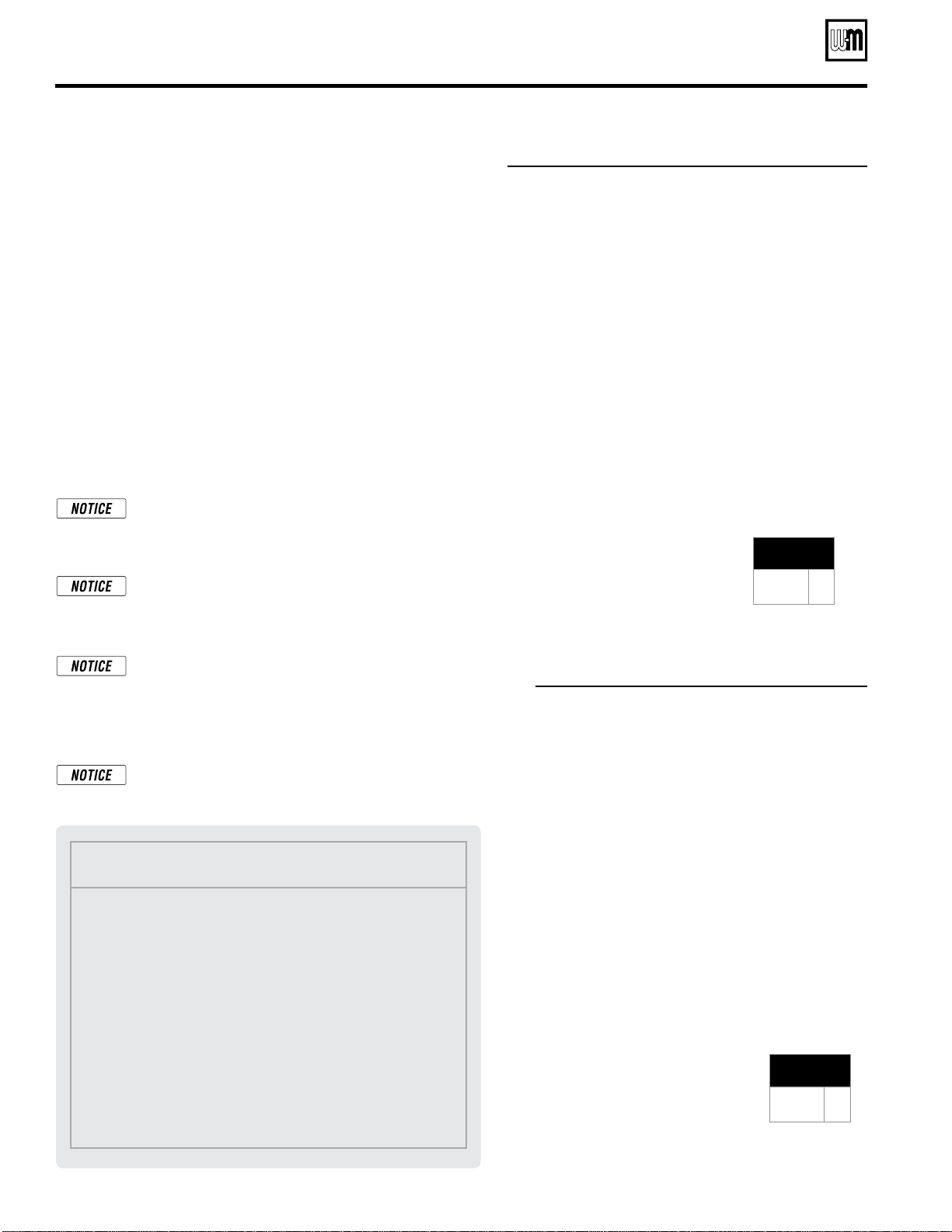
The boiler internal circulator can be used to circulate many zone-valve
zoned systems as shown in Figure 18, page 17 for application on systems
using baseboard (finned tube or cast iron).
• DO NOT apply this piping when using a GV90+6 — the internal
circulator cannot supply enough ow to the system
.
• When applying Figure 18, page 17, DO NOT exceed the limits
shown in Figure 19, page 17
.
• For systems requiring higher ow or head loss, apply the
suggested piping of Figure 20, page 18, NOT that of Fig-
ure 18, page 17.
Balancing, when required
—
Substitute a memory-stop
valve for one of the isolation valves in each zone to use
the memory-stop valve for balancing flow as well as
isolation.
Zoning with zone valves —
Provide a separate 24-volt
transformer to power the zone valves. Size the trans-
former to handle the total rated load of all connected zone
valves. Alternatively, use a zone valve zone controller.
Applying Figure 18, page 17
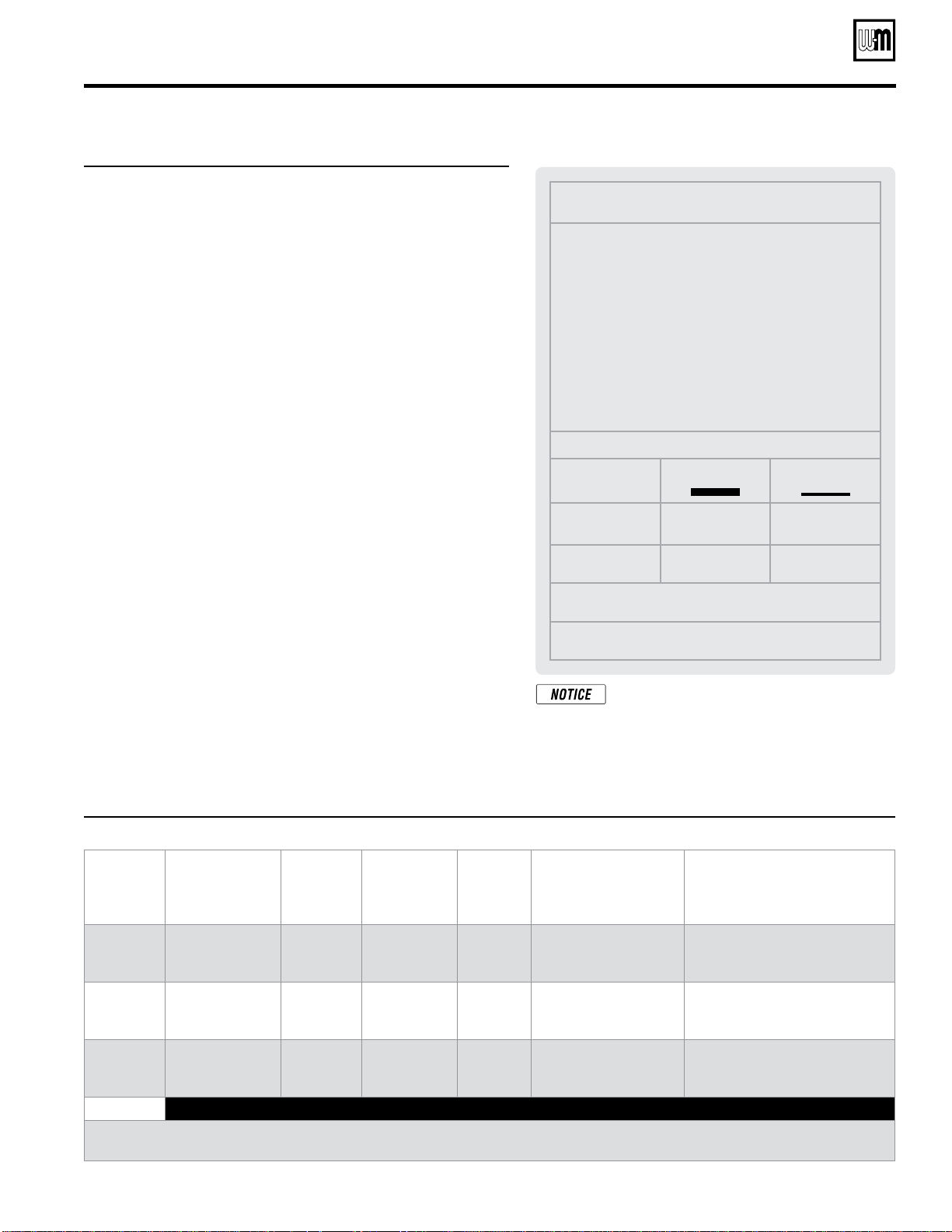
1. Figure 18, page 17 and Figure 19, page 17 provide guidelines for
checking whether the GV90+ internal circulator can provide suffi-
cient flow when directly connected to a two-pipe baseboard system.
The outputs of GV90+ boilers are all too high for con-
nection to a single-loop series-loop system. To apply to
an existing series loop system, the system must be fitted
with trunk lines to convert to a split-loop system. Pro-
vide either one or two trunk lines to meet the minimum
number of circuites and maximum loading per circuit
given in Figure 19, page 17.
2. The system pipe sizing must be no smaller than shown in the
Legend for Figure 18, page 17.
3. Values shown for maximum circuit lengths, maximum load per
circuit and the maximum feet baseboard per circuit are limits that
ensure the internal circulator will have sufficient head to provide
the flow needed for each circuit.
MINIMUM
Boiler loop pipe size
GV90+3/4
GV90+5/6
1”
1¼”
Legend
1 Isolation valves
2 Automatic air vent (with
diaphragm-type expan-
sion tank), or connect to
tank fitting (closed-type
expansion tank).
3 Diaphragm- or bladder-
type expansion tank, if
used. (For closed-type
expansion tank, pipe
from top of air separa-
tor to tank fitting as in
Figure 15, page 14.)
5 Zone circulator
6 Flow/check valve
7 Hose bibb purge valve
8 Boiler pressure/tempera-
ture gauge
16 Cold water fill line — see
Figure 15, page 14 for
typical components
Install water piping (continued)
Part number 550-142-054/1211
17
GV90+ gas-fired water boiler — Boiler Manual
Legend
1 Isolation valves
2 Automatic air vent (with
diaphragm-type expan-
sion tank), or connect to
tank fitting (closed-type
expansion tank).
3 Diaphragm- or bladder-
type expansion tank, if
used. (For closed-type
expansion tank, pipe from
top of air separator to
tank fitting as in Fig-
ure 15, page 14.)
4 Zone valve
7 Hose bibb purge valve
8 Boiler pressure/tempera-
ture gauge
10 Differential pressure by-
pass valve
16 Cold water fill line — see
Figure 15, page 14 for
typical components
Pipe sizes (NPT), minimum
Boiler model
Mains
Circuits
GV90+3
GV90+4
1" ¾"
GV90+5 1¼" ¾"
Circuit requirements
See Figure 19
Install water piping (continued)
Figure 18 Zone valve zoning — GV90+3, GV90+4 or GV90+5
(DO NOT apply to GV90+6)
Figure 19 The system must meet the following requirements when applying Figure 18
Boiler
model
Circulator HEAD
available to the
system
Maximum
circuit
length
L
Minimum
number
of circuits
Max load
of any
circuit
Max feet baseboard
of any circuit
(@ 600 Btuh/foot)
Summary
GV90+3
6.4 feet w.c.
@ 6.5 GPM
103 feet 2 40 MBH 67 feet
6.5 GPM total
(max 4GPM any cricuit)
20°F temperature drop
GV90+4
4.1 feet w.c.
@ 9.7 GPM
92 feet 3 33 MBH 55 feet
9.7 GPM total
(max 3.3 GPM any circuit)
20°F temperature drop
GV90+5
*
5.5 feet w.c.
@8.7 GPM
112 feet 3 53 MBH 88 feet
8.7 GPM
(max 3.5 GPM any circuit)
30°F temperature drop
GV90+6 DO NOT apply to GV90+6 — Use primary/secondary piping ONLY, as in Figure 20, page 18.
* This application may be marginal. It could cause temperature distribution problems, because the temperature drop is 30°F,
NOT 20°F. The best method is to use primary/secondary piping for the GV90+5 as in Figure 20, page 18.
One-pipe diverter tees systems
— The ap-
plication information on this page is based
on two-pipe baseboard systems.
To check
whether the internal circulator can provide
sufficient flow to a one-pipe diverter tee
system, use the available head value given in
Figure 19, page 17.
Part number 550-142-054/1211
GV90+ gas-fired water boiler — Boiler Manual
18
Figure 20 Radiator system — zone-valve zoning
Figure 21 Radiator system — circulator zoning
Radiator system piping
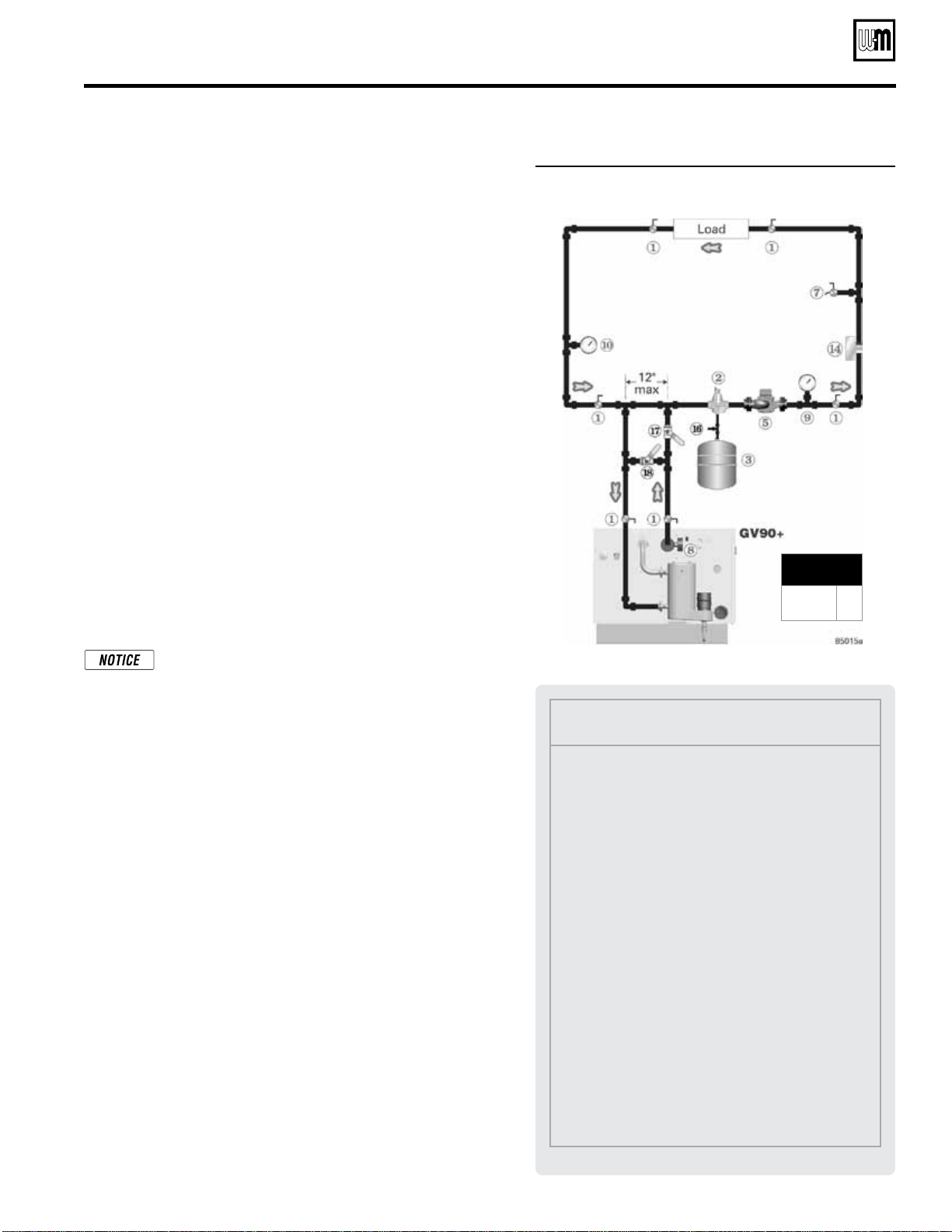
Apply Figure 20 (zone-valve zoning) or Figure 21 (circulator zoning)
to systems using standing cast iron radiators. This applies to gravity
water systems and converted steam systems using columnar, tubular
or recessed cast iron radiators.
The suggested piping for zone-valve zoning radiator systems differs
from baseboard systems because of the high water content of cast iron
radiators. The GV90+ internal circulators automatically regulate supply
and internal bypass flow based on the temperature of the water return-
ing to the boiler. At the start of many heating cycles in a radiator system,
the water in the radiators is cool. So the boiler would slow down system
flow rate while sending out relatively hot water. This could cause heat
distribution problems. Install a separate system circulator as shown
in Figure 20 when zoning with zone valves. The separate circulator
assures a relatively constant temperature drop through the system.
The boiler internal circulators must be left in the boiler. They cannot
be removed for use a zoning circulator. Provide a circulator for each
zone when circulator zoning, and pipe the system as in Figure 21.
Balancing, when required
—
Substitute a memory-stop
valve for one of the isolation valves in each zone to use
the memory-stop valve for balancing flow as well as
isolation.
Zoning with zone valves —
Provide a separate 24-volt
transformer to power the zone valves. Size the trans-
former to handle the total rated load of all connected zone
valves. Alternatively, use a zone valve zone controller.
Zoning with circulators — The GV90+ internal system
circulator cannot be removed from the boiler for use as
one of the zone circulators. It must remain as shipped
from the factory to allow proper flow control inside the
boiler. You will need a circulator for each zone. Provide
circulator relays or circulator zone controller.
The system circulator must be supplied by the in-
staller.
MINIMUM
Boiler loop pipe size
GV90+3/4
GV90+5/6
1”
1¼”
MINIMUM
Boiler loop pipe size
GV90+3/4
GV90+5/6
1”
1¼”
Legend
1 Isolation valves
2 Automatic air vent (with diaphragm-type expansion tank), or
connect to tank fitting (closed-type expansion tank).
3 Diaphragm- or bladder-type expansion tank, if used. (For closed-
type expansion tank, pipe from top of air separator to tank fitting
as in Figure 15, page 14.)
4 Zone valve
5 System or zone circulator
6 Flow/check valve
7 Hose bibb purge valve
8 Boiler pressure/temperature gauge
9 System supply temperature gauge
10 Differential pressure by-pass valve
16 Cold water fill line — see Figure 15, page 14 for typical components
Install water piping (continued)
(0ptional)
Part number 550-142-054/1211
19
GV90+ gas-fired water boiler — Boiler Manual
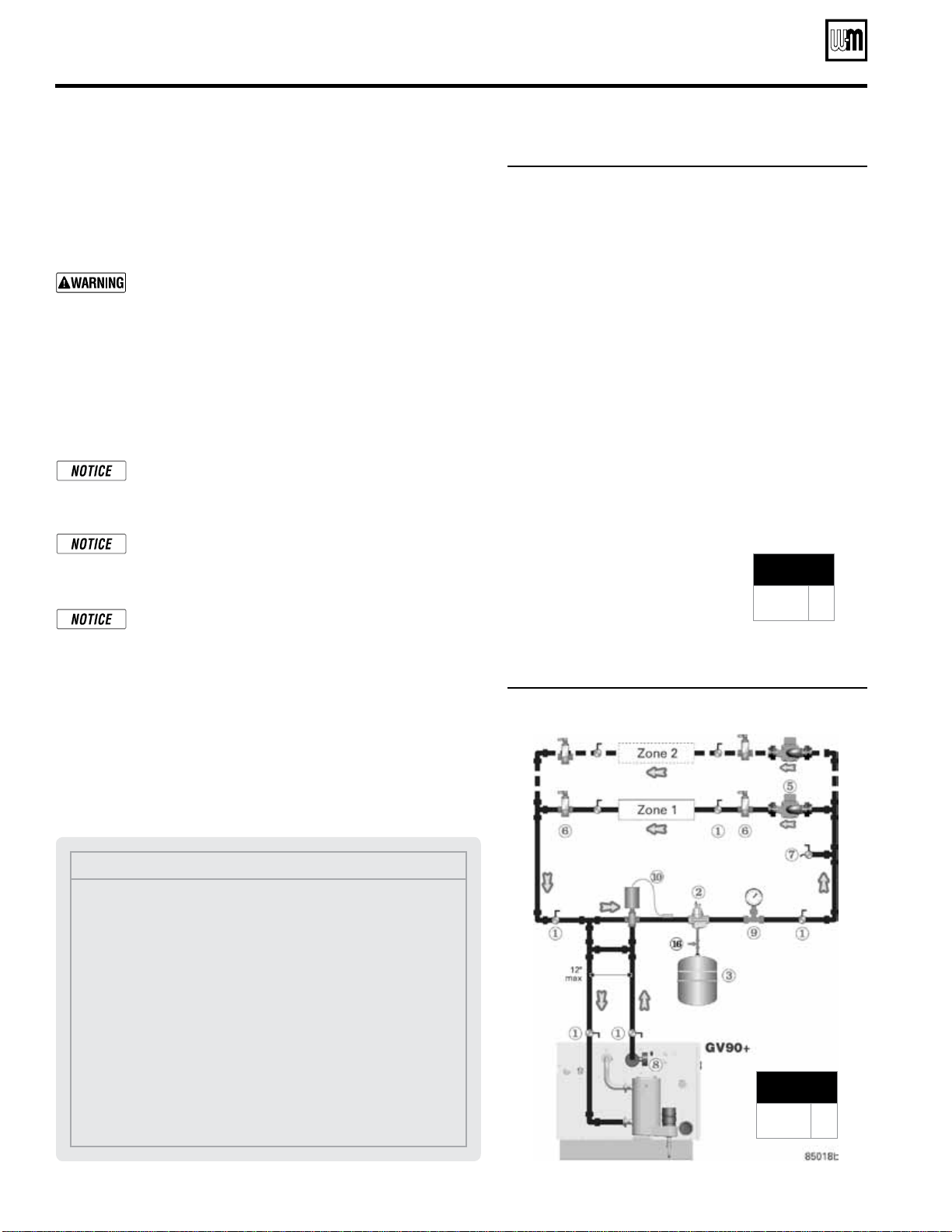
Figure 22 Single-zone radiant heating or
heat pump system
Single-zone radiant heating or heat pump
Radiant heating systems and heat pump systems usually require
system supply water temperatures below 140°F. But the boiler outlet
water temperature will be at least 150°F to 160°F during most operat-
ing conditions. So the piping must include a method of reducing the
supply water temperature to the system.
Figure 22 uses two balancing valves to manually adjust the supply water
temperature. Follow the instructions below to adjust these valves. Install
the supply temperature limit control (item 14) as shown to protect the
system from over-temperature conditions. Note also that this piping
requires a separate system circulator, as shown, because of the higher
flow rates of radiant and heat pump systems.
Manual adjustment of the supply temperature is limited to single-
zone systems because multi-zone systems will cause varying loads,
making it unlikely an acceptable valve setting could be found. See
Figure 23, page 20 or Figure 24, page 20 for multi-zone systems.
You may also apply the suggested piping of either Figure 23, page 20 or
Figure 24, page 20 if you want automatic supply temperature regulation
or outdoor reset temperature control.
For additional information and alternatives in piping for radiant heat-
ing systems, contact Weil-McLain.
The system circulator must be supplied by the in-
staller.
Adjust balancing valves
Use valves 17 and 18 to mix boiler supply water with system return
water, reducing supply water temperature to the system.
1. Subtract the design system supply temperature from 150°F. Call
this number the
temperature difference.
2. Open valve 17 and close valve 18.
3. Start the boiler and system.
4. Let the system warm up for about 15 minutes.
5. Note the temperature at gauge 9 (system supply) and gauge 8
(boiler supply).
6. Slowly close valve 17 while opening valve 18 until gauge 9 reads
lower than gauge 8 by at least the temperature difference found
in step 1.
7. Example: For a design supply temperature of 100°F, the
tempera-
ture difference
would be 150°F minus 100°F, or 50°F. Set the valves
until gauge 9 reads at least 50°F lower than gauge 8.
MINIMUM
Boiler loop pipe size
GV90+3/4
GV90+5/6
1”
1¼”
Legend
1 Isolation valves
2 Automatic air vent (with diaphragm-type expansion
tank), or connect to tank fitting (closed-type expan-
sion tank).
3 Diaphragm- or bladder-type expansion tank, if used
(For closed-type expansion tank, pipe from top of air
separator to tank fitting as in Figure 15, page 14.)
5 System circulator
7 Hose bibb purge valve
8 Boiler pressure/temperature gauge
9 System supply temperature gauge
10 Return temperature gauge
14 Supply temperature limit control — Set at a tempera-
ture below the maximum allowed for the system or as
directed by the system designer.
16 Cold water fill line — see Figure 15, page 14 for typical
components
17 Balancing valve
18 Balancing valve
Install water piping (continued)
Part number 550-142-054/1211
GV90+ gas-fired water boiler — Boiler Manual
20
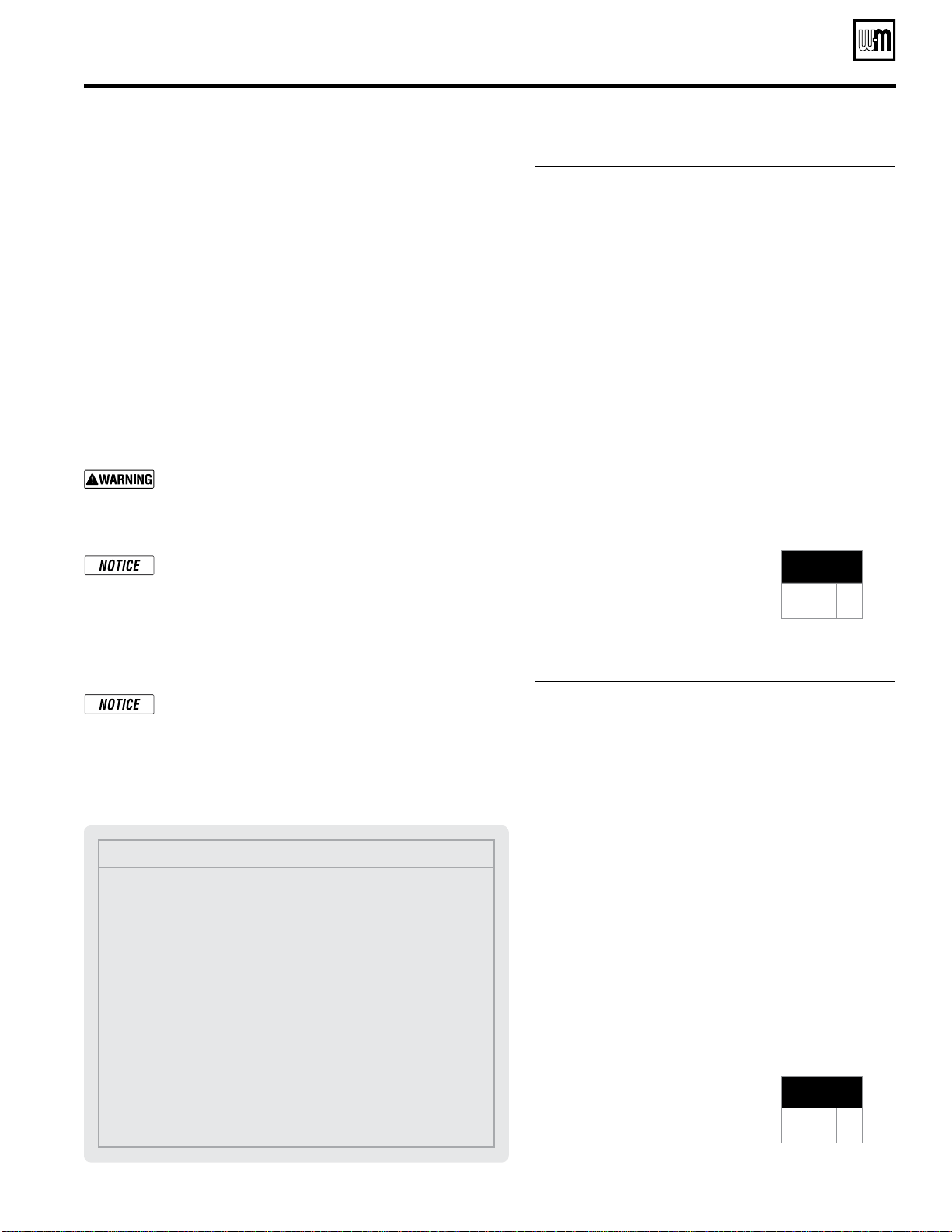
Figure 23 Auto system supply temp regulation —
zone valve zoning
Figure 24 Auto system supply temp regulation —
circulator zoning
Multi-zone radiant heating system
Multi-zone systems require automatic regulation of the system sup-
ply temperature because of widely varying load conditions. Figure 23
(zone-valve zoning) and Figure 24 (circulator zoning) show suggested
piping for these systems.
Provide an automatic temperature control valve or
motor-operated valve which can be adjusted for the
desired supply water temperature. This is required to
protect the radiant system from excessive temperature.
Zone-valve zoning — The suggested piping uses a separate circulator
for system circulation to provide the higher flow typical of radiant
heating systems and to assure good temperature distribution in the
system when the return water temperature is low.
Circulator zoning — The GV90+ internal circulators must not be
removed. Provide a separate circulator for each zone.
Balancing, when required
—
Substitute a memory-stop
valve for one of the isolation valves in each zone to use
the memory-stop valve for balancing flow as well as
isolation.
Zoning with zone valves —
Provide a separate 24-volt
transformer to power the zone valves. Size the trans-
former to handle the total rated load of all connected zone
valves. Alternatively, use a zone valve zone controller.
Zoning with circulators — The GV90+ internal system
circulator cannot be removed from the boiler for use as
one of the zone circulators. It must remain as shipped
from the factory to allow proper flow control inside the
boiler. You will need a circulator for each zone. Provide
circulator relays or circulator zone controller. The sys-
tem circulator must be supplied by the installer.
Outdoor reset
Apply Figure 23 or Figure 24 for any system intended for outdoor reset
of the supply water temperature. Use a motor-operated three-way valve
and an outdoor reset temperature control system.
MINIMUM
Boiler loop pipe size
GV90+3/4
GV90+5/6
1”
1¼”
MINIMUM
Boiler loop pipe size
GV90+3/4
GV90+5/6
1”
1¼”
Legend
1 Isolation valves
2 Automatic air vent (with diaphragm-type expansion tank), or
connect to tank fitting (closed-type expansion tank).
3 Diaphragm- or bladder-type expansion tank, if used (For closed-
type expansion tank, pipe from top of air separator to tank fitting
as in Figure 15, page 14.)
4 Zone valve
5 System or zone circulator
6 Flow/check valve
7 Hose bibb purge valve
8 Boiler pressure/temperature gauge
9 System supply temperature gauge
10 Supply temperature automatic mixing valve
11 Differential pressure by-pass valve
16 Cold water fill line — see Figure 15, page 14 for typical components
Install water piping (continued)
Part number 550-142-054/1211
21
GV90+ gas-fired water boiler — Boiler Manual
Figure 25 Auto return temp regulation — circulator
zoning
Piping snow melt systems or combination
snow melt/space heating systems
Combination snow melt/space heating systems can have return water
temperature below 60°F, and the return temperature will fluctuate. So
these systems require automatic return water temperature as shown in
Figure 25 (zone-valve zoning) or Figure 26 (circulator zoning).
Select an automatic temperature control valve or motor-operated valve
which can be adjusted to provide a return water temperature of at least
60°F. Any setting higher than 60°F will also be acceptable.
Zone-valve zoning — The suggested piping uses a separate circulator
for system circulation to assure good temperature distribution in the
system when the return water temperature is low.
Circulator zoning — The GV90+ internal circulators must not be
removed. Provide a separate circulator for each zone.
The return water temperature to the boiler must be
at least 60°F. Provide and apply means to regulate the
return temperature. Failure to do so can result in boiler
control operation problems, causing possible significant
property damage.
Zoning with zone valves
— Each zone in the piping
diagrams in this section is shown with an isolation valve
on each side. Substitute a memory-stop valve for one of
these in each zone in order to use the memory-stop valve
for balancing flow as well as isolation.
Pr
ovide a separate 24-volt transformer to power the zone
valves. Size the transformer to handle the total rated load
of all connected zone valves.
Zoning with circulators — The GV90+ internal system
circulator cannot be removed from the boiler for use as
one of the zone circulators. It must remain as shipped
from the factory to allow proper flow control inside the
boiler. You will need a circulator for each zone. Provide
circulator relays or circulator zone controller.
The sys-
tem circulator must be supplied by the installer.
MINIMUM
Boiler loop pipe size
GV90+3/4
GV90+5/6
1”
1¼”
MINIMUM
Boiler loop pipe size
GV90+3/4
GV90+5/6
1”
1¼”
Legend
1 Isolation valves
2 Automatic air vent (with diaphragm-type expansion tank), or
connect to tank fitting (closed-type expansion tank).
3 Diaphragm- or bladder-type expansion tank, if used (For closed-
type expansion tank, pipe from top of air separator to tank fitting
as in Figure 15, page 14.)
4 Zone valve
5 System or zone circulator
6 Flow/check valve
7 Hose bibb purge valve
8 Boiler pressure/temperature gauge
9 System supply temperature gauge
10 Return temperature automatic mixing valve
11 Differential pressure by-pass valve
16 Cold water fill line — see Figure 15, page 14 for typical components
Figure 26 Auto return temp regulation — zone valve
zoning
Install water piping (continued)
Part number 550-142-054/1211
GV90+ gas-fired water boiler — Boiler Manual
22
Figure 27 Installing GV90+ boiler in system with
water chiller
Water chiller systems
Pipe the boiler and water chiller as shown in Figure 27.
Install boiler, as shown, so chilled medium is piped in parallel with
heating boiler.
Use appropriate valves to prevent chilled medium from entering boiler.
See Figure 27 for typical installation of balancing valve and check valve.
Install the flow/check valve in the boiler supply piping, as shown in
Figure 27, to prevent gravity circulation during the cooling cycle.
If boiler is connected to heating coils located in air handling units where
they can be exposed to refrigerated air, use flow control valves or other
automatic means to prevent gravity circulation during cooling cycle.
Balancing, when required
—
Substitute a memory-stop
valve for one of the isolation valves in each zone to use
the memory-stop valve for balancing flow as well as
isolation.
Zoning with zone valves —
Provide a separate 24-volt
transformer to power the zone valves. Size the trans-
former to handle the total rated load of all connected zone
valves. Alternatively, use a zone valve zone controller.
Zoning with circulators — The GV90+ internal system
circulator cannot be removed from the boiler for use as
one of the zone circulators. It must remain as shipped
from the factory to allow proper flow control inside the
boiler. You will need a circulator for each zone. Provide
circulator relays or circulator zone controller.
Chilled water systems often use closed-type expansion
tanks, as shown in Figure 27. DO NOT install automatic
air vents on these systems.
MINIMUM
Boiler loop pipe size
GV90+3/4
GV90+5/6
1”
1¼”
Install water piping (continued)
Legend
1 Isolation valves
2 Air separator
3 Expansion tank with tank fitting (piping shown for
application of a closed-type expansion tank)
5 System circulator
6 Flow/check valve
8 Boiler pressure/temperature gauge
16 Cold water fill line — see Figure 15, page 14 for typical
components
17 Balancing valve
19 Chiller
20 Strainer
21 Check valve
22 System supply
23 System return
Part number 550-142-054/1211
23
GV90+ gas-fired water boiler — Boiler Manual
Multiple boiler installations
Placing multiple boilers
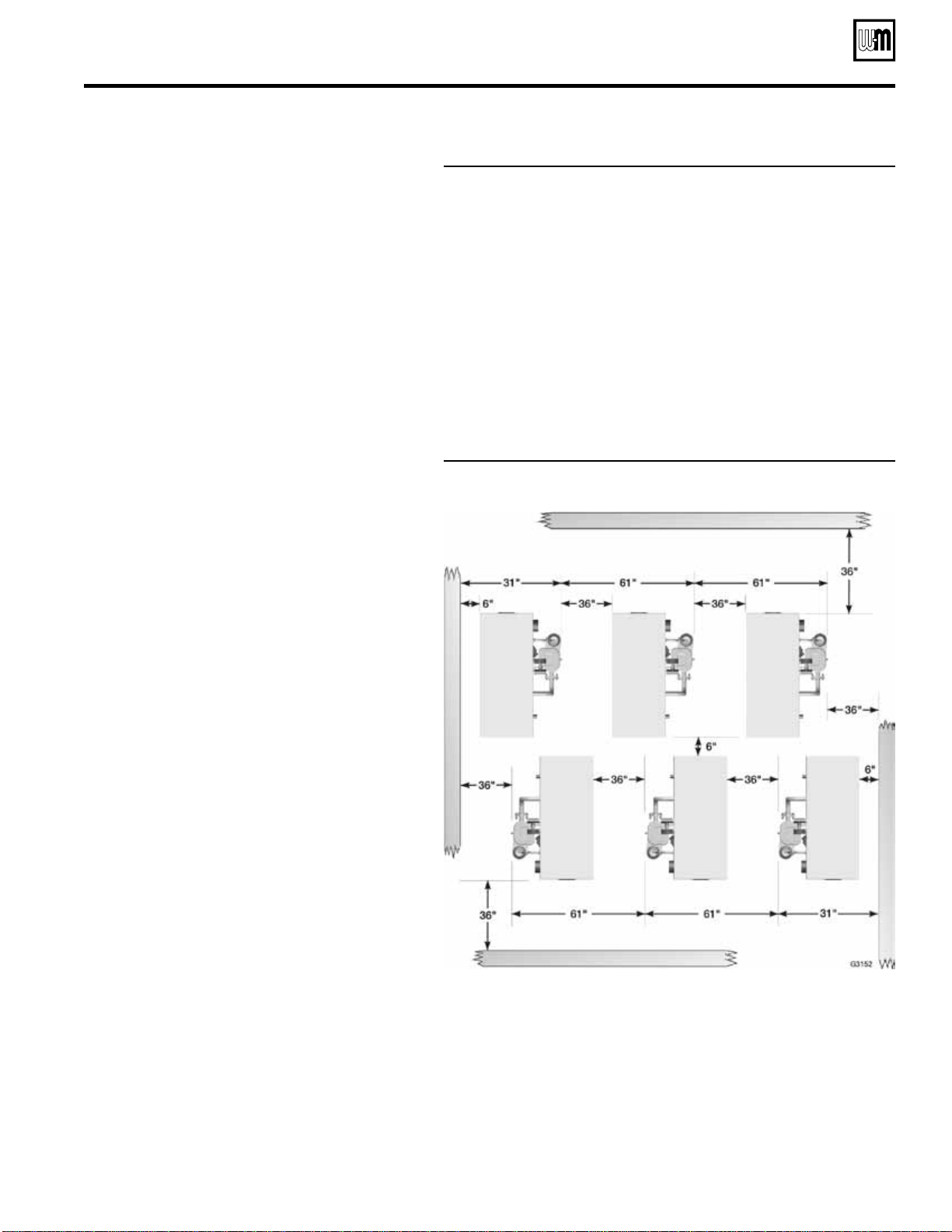
1. Locate multiple boilers in boiler room according
to:
a. Figure 28 (side-to-side), or
b. Figure 29 (back-to-back).
2. Provide the clearances indicated in the illustrations
listed above to provide for access and servicing. If
these recommended dimensions are not possible,
provide at least the recommended service clearances
given on page 6. Also follow local codes.
3. Construct boiler foundation if boiler room floor
is uneven or if there is a danger of flooding. Size
foundation to allow for clearance and spacing di-
mensions shown in the illustrations at right.
4. Chalkline boiler locations on foundation or boiler
room floor.
5. Uncrate, assemble and mount boilers according to
instructions in this manual.
6. Provide clearance for installation of venting, air
piping, gas piping, expansion tank, primary circula-
tor and other accessories.
Controlling multiple GV90+
boilers
1. Multiple GV90+ boilers can be controlled using any
boiler control/sequencing system that provides an
isolated contact for call for heat (connected to the
boiler's T-T terminals).
Piping multiple GV90+ boilers
1. See suggested piping diagrams in this manual.
Contact Weil-McLain for assistance for systems
not covered.
2. Always pipe the boilers on a secondary loop in a
primary/secondary circuit as shown in the examples
in this manual.
Figure 28 Side-to-side mounting of multiple GV90+ boilers,
showing RECOMMENDED clearances
Figure 29 Back-to-back installation of multiple GV90+ boilers,
showing RECOMMENDED clearances
Part number 550-142-054/1211
GV90+ gas-fired water boiler — Boiler Manual
24
Multiple boiler water piping
Easy-Fit® piping installation
1. Main header and Easy-Fit
®
Manifold pipe sizing.
a. New system — See page 15.
b. Replacing boilers in an existing system — Without reducing
size, connect system supply and return lines. Install tees or
crosses for Easy-Fit
®
manifolds as shown in Figure 30 or Fig-
ure 31. Size manifolds to handle total connected boiler output
as shown.
2. Provide connections in main header for Easy-Fit® manifolds as
close as possible to the midpoint of multiple boilers.
a. Use tees for four or less boilers, as in Figure 30.
b. Use either tees (Figure 30) or crosses (Figure 31) for five or
more boilers.
3. Manifold placement:
a. To alternate spacing for supply and return lines to boilers,
reverse the short-end and long-end of the manifolds as shown
in Figure 30 and Figure 31.
b. Return manifold must be on the return side of the main and
supply manifold must be on the supply side of the main. Draw-
ings in this manual show flow in system main from right to
left. For system flowing left to right, reverse the locations of
the manifolds accordingly.
4. Connect from Easy-Fit® manifold branches to boiler supply and
return connections using copper or steel pipe, sized for the required
flow rate.
5. Provide a flow/check valve in the supply piping of each boiler as
shown in piping diagrams in this manual. Install an isolation valve
on the supply and return of each boiler as shown. Some local codes
may require the use of individual water level controls and limits
on each boiler when isolation valves are installed.
6. Install main system air eliminator and primary circulator in sup-
ply piping as shown in piping diagrams. Place expansion tank on
suction side of system circulator as shown.
7. Install system accessories as shown in drawings.
8. Piping recommendation drawings:
a. Figure 30 and Figure 31 show details of Easy-Fit
®
manifolds.
b. Figure 32, page 25 is a schematic piping drawing showing the
locations of typical boiler piping and system piping, including
limits and other devices often required by local codes.
c. Figure 33, page 26 and Figure 34, page 27 are three-dimensional
piping drawings of typical multiple boiler installation.
d. Figure 35, page 28 shows recommended piping when an isolat-
ing heat exchanger is needed.
9. If desired, other primary/secondary piping arrangements can be
used.
When using isolation valves on each boiler, some codes
may require providing a low water control and additional
limit for each boiler. Consult local codes to determine
if omission of the individual boiler isolation valves may
allow the use of a single water level control and additional
limit for the entire multiple boiler system.
Maximum connected load per manifold:
2-inch manifold — 450 MBH
3-inch manifold — 1400 MBH
4-inch manifold — 2900 MBH
Figure 30
Single-sided EZ-Fit Header connection
Figure 31 Double-sided EZ-Fit Header connection

Part number 550-142-054/1211
25
GV90+ gas-fired water boiler — Boiler Manual
Multiple boiler water piping (continued)
Legend — Figure 32
1 Flow/check valve (each boiler)
2 Isolation valves (when used)
3 Cap
4 Easy-Fit® Manifold (supply) — layout and size per
page 24
5 Easy-Fit® Manifold (return) — layout and size per
page 24
6 Primary circulator
7 Expansion tank (diaphragm type)
8 System air eliminator
9 System automatic air vent
10 Pressure reducing valve
11 Check valve or backflow preventer, as required by applicable
codes
12 Isolation valve
13 Water flow switch (when used)
14 Supply water temperature control (when used)
15 Low water cutoff (when used) (place above primary header)
16 Cold water fill line — see Figure 15, page 14 for typical
components
18 System supply
19 System return
20 (Not shown) Boiler relief valve and discharge piping, installed
per GV90+ Boiler Manual
30 Long end of manifold
Figure 32 Piping schematic — typical for multiple GV90+ boilers, using Weil-McLain Easy-Fit manifolds
Part number 550-142-054/1211
GV90+ gas-fired water boiler — Boiler Manual
26
Multiple boiler water piping (continued)
Legend — Figure 33
1 Flow/check valve (each boiler)
2 Isolation valves (when used)
3 Caps
4 Easy-Fit® Manifold (supply) — layout and size per page 24
5 Easy-Fit® Manifold (return) — layout and size per page 24
6 Primary circulator
7 Expansion tank (diaphragm type)
8 System air eliminator
9 System automatic air vent
16 Cold water fill line — see Figure 32, page 25 for typical com-
ponents
17 3-way diverting valve (operated by DHW aquastat — valve end
switch connects across boiler thermostat terminals)
18 System supply
19 System return
20 Boiler relief valve and discharge piping, installed per GV90+
Boiler Manual
21 Indirect-fired storage water heaters — Example is shown connect-
ed to one boiler of the system. The indirect water heater could
also be connected with a secondary connection off the main
header, as in Figure 34, page 27.
Figure 33 Piping layout — typical for multiple GV90+ boilers, using Weil-McLain Easy-Fit manifolds (2-boiler system)
Part number 550-142-054/1211
27
GV90+ gas-fired water boiler — Boiler Manual
Figure 34 Piping layout — typical for multiple GV90+ boilers, with DHW storage heaters (4-boiler system)
Suggested DHW
boiler-side pipe
sizing
(for max 0.04
feet head loss per foot of
total equivalent length,
TEL)
Flow rate Size Flow rate Size
1 – 4 gpm ¾” 22 – 45 gpm 2”
4 – 8 gpm 1” 45 – 75 gpm 2½”
8 – 14 gpm 1¼” 75 - 140 gpm 3”
14 – 22 gpm 1½” 140 – 290 gpm 4”
Legend — Figure 34
1 Flow/check valve (each boiler)
2 Isolation valves (when used)
3 Caps
4 Easy-Fit® Manifold (supply) — layout and
size per page 24
5 Easy-Fit® Manifold (return) — layout and size
per page 24
6 Primary circulator
7 Expansion tank (diaphragm type)
8 System air eliminator
9 System automatic air vent
16 Cold water fill line — see Figure 32, page 25
for typical components
18 System supply
19 System return
20 Boiler relief valve and discharge piping,
installed per GV90+ Boiler Manual
21 Indirect-fired storage water heaters — Example is shown with a boiler
water circulator on each water heater. Alternatively, the water heaters could
be connected with reverse return piping, using a common circulator.
22 Boiler water inlet
23 Boiler water outlet
24 DHW boiler-side circulators
25 DHW boiler-side return Easy-Fit® Manifold
26 DHW boiler-side supply Easy-Fit® Manifold
27 Flow/check valves (to prevent induced or gravity flow in heating system or
DHW piping)
28 Check valve to prevent heat migration in heating system
29 Drain valves
30 Sensor for BCP (boiler control panel), when used
Note: See water heater manual for DHW piping — The DHW piping must also
be manifolded together since the boiler-side piping is manifolded. If DHW
heaters supply separate DHW circuits, provide an individual circulator for
each water heater, and control each circulator by its water heater’s aquastat.
This piping is sug-
gested on ly. The
layout above should be controlled
with a boiler sequencing panel that
provides DHW operation as well.
Wire the heating system circulator
to operate only on call for heat. Al-
ternatively, use the boiler sequencing
panel to provide domestic priority
by disabling the heating system cir-
culator any time there is a DHW call
for heat. The boiler internal circula-
tors operate on any call for heat,
whether heating system or DHW.
Offset the DHW boiler-side supply
and return manifolds as shown so
the total run of pipe and fittings to
each of the water heaters is approxi-
mately equal.
Multiple boiler water piping (continued)
Part number 550-142-054/1211
GV90+ gas-fired water boiler — Boiler Manual
28
Multiple boiler water piping (continued)
Figure 35 Piping layout — typical for multiple GV90+ boilers, using isolation exchanger
Legend — Figure 35
1 Flow/check valve (each boiler)
2 Isolation valves (when used)
3 Cap
4 Easy-Fit® Manifold (supply) —
layout and size per page 24
5 Easy-Fit® Manifold (return) — lay-
out and size per page 24
6a Heating system circulator (exchang-
er tube-side)
6b Heat exchanger shell-side circulator
7 Expansion tanks (diaphragm type)
8 System air eliminator
9 System automatic air vent
13 Cold water supply connections
16 Cold water fill line — see Fig-
ure 32, page 25 for typical compo-
nents
18 Heating system supply
19 Heating system return
20 Boiler relief valve and discharge
piping, installed per GV90+ Boiler
Manual
30 Sensor for BCP (boiler control
panel), when used
Notes:
1. Contact heat exchanger manufacturer for heat ex-
changer shell-side and tube-side piping and circulator
requirements. Tube-side flow and temperatures must
meet heating system requirements.
2. Contact heat exchanger manufacturer for sizing heat
exchanger.
3. Heat exchanger shell-side circuit requires its own
expansion tank as shown.
4. Heating system circuit requires its own expansion tank,
as shown, plus its own relief valve set to protect heating
system and heat exchanger piping and components.
5. When individual isolation valves are used, individual
boiler and level controls may be required.
Use isolation heat
exchanger for:
1. Large volume systems with high
mineral content in water.
2. Systems exposed to untreated
quantities of makeup water.
3. Old systems severely contami-
nated with scale and rust buildup
inside piping and heat distribu-
tion units.
4. Process applications.
5. Commercial service water ap-
plications.
6. High water pressure applications,
requiring pressure relief setting
in heating system more than 50
PSIG (tall buildings). See notes
below.
Part number 550-142-054/1211
29
GV90+ gas-fired water boiler — Boiler Manual
Venting & air — general
GV90+ boilers must be vented and
supplied with combustion and venti-
lation air using piping and methods
described in this manual
.
Every boiler must have its own vent.
DO NOT common vent with any other
appliance.
Inspect finished vent and air piping
thoroughly to ensure all are airtight
and comply with the instructions
provided and with all requirements of
applicable codes.
Failure to provide a properly-installed
vent and air system will cause severe
personal injury or death.
If the vent/air piping configurations
covered in the GV90+ boiler manual
cannot be applied for a particular
installation, contact Weil-McLain for
assistance. Other configurations may
be available.
Where vent piping is routed through
an unheated space
, apply minimum
1 inch of foil-faced fiberglass insulation
on the length of the vent pipe in the
unheated space.
Installations must comply with local
requirements and with the National
Fuel Gas Code, ANSI Z223.1 for U.S.
installations or CSA B149.1 or B149.2
for Canadian installations.
Use only the materials listed in this
manual for vent and air pipe and fit-
tings. See Figure 40, page 33.
If used, a masonry chimney can
ONLY be used as a PIPE CHASE for
vent and air pipes
— The vent and air
piping must be installed as instructed
in this manual and all joints must be
sealed. The chimney must be used
only for GV90+ boilers. NO OTHER
appliance or fireplace can be connected
to the chimney. The chimney must be
straight, with no offsets, and the vent
and air piping materials must comply
with this instruction manual. The
chimney must be fitted with a sealed
access opening, through which the in-
terior of the chimney can be inspected.
The chimney (and liner, if installed)
must be inspected at least once annu-
ally to verify condition.
Failure to comply could result in severe
personal injury, death or substantial
property damage.
When removing a boiler from an existing
common vent system
The GV90+ boiler cannot be common vented with any other
appliance.
When an existing boiler is replaced with a GV90+ boiler,
the GV90+ boiler CANNOT use the existing common vent. The GV90+
boiler requires its own vent and air piping, as specified in this manual. This
may cause a problem for the appliances that remain on the old common
vent, because the vent may be too large. The following test, required by
ANSI Z21.13, is intended to check for proper operation of the appliances
remaining on the old common vent system.
Vent system verication
At the time of removal of an existing boiler, the following steps shall be
followed with each appliance remaining connected to the common venting
system placed in operation, while the other appliances remaining connected
to the common venting system are not in operation. Seal any unused open-
ings in the common venting system.
Existing vent test procedure
(The following is intended to test whether the appliances
remaining on an existing vent system will operate
satisfactorily.)
1. Visually inspect the venting system for proper size and horizontal pitch
and determine there is no blockage or restriction, leakage, corrosion or
other deficiencies which could cause an unsafe condition.
2. Test vent system — Insofar as is practical, close all building doors and
windows and all doors between the space in which the appliances
remaining connected to the common venting system are located and
other spaces of the building. Turn on clothes dryers and any appliance
not connected to the common venting system. Turn on any exhaust
fans, such as range hoods and bathroom exhausts, so they will oper-
ate at maximum speed. Do not operate a summer exhaust fan. Close
fireplace dampers.
3. Place in operation the appliance being inspected. Follow the lighting in-
structions. Adjust thermostat so appliance will operate continuously.
4. Test for spillage at draft hood relief opening after 5 minutes of main
burner operation. Use the flame of a match or candle, or smoke from
a cigarette, cigar, or pipe.
5. After it has been determined that each appliance remaining connected
to the common venting system properly vents when tested as outlined
herein, return doors, windows, exhaust fans, fireplace dampers, and any
other gas-burning appliance to their previous conditions of use.
Any improper operation of common venting system should be corrected
so the installation conforms with the National Fuel Gas Code, ANSI Z223.1
— latest edition. Correct by re-sizing to approach the minimum size as
determined using the appropriate tables in Part 11 of that code. Canadian
installations must comply with B149.1 or B149.2 Installation Code.
Part number 550-142-054/1211
GV90+ gas-fired water boiler — Boiler Manual
30
Venting & air — general (continued)
Provide combustion air:
DIRECT VENT — The installation must provide com-
bustion air piping. In addition, ventilation openings
may be required.
DIRECT EXHAUST — The installation must provide
combustion air openings to the boiler space.
ALL APPLICATIONS — The installation must provide
combustion air openings as needed for other appli-
ances in the space.
Vent and air termination options
1. Vent and air piping must terminate out the sidewall or through the
roof of the building, using only one of the methods described in this
manual. See Figure 39, page 32 and Figure 40, page 33 for allowable
configurations and piping materials.
DIRECT VENT installations
1. For direct venting, combustion air must be piped from outside to the
boiler, following the instructions in this manual, and compliant with
all applicable codes.
2. Ventilation openings are required for some spaces. See Fig-
ure 42, page 36.
3. If other appliances are located in the same space with the GV90+ boiler,
provide openings shown in Figure 42, page 36.
If combustion and ventilation air openings are not provided
as directed above and the room does not have adequate
ventilation, the higher temperature in the space may result
in reduced component life.
DIRECT EXHAUST installations
1. Combustion and ventilation air must be provided in the boiler room
on direct exhaust installations. Follow all instructions in this manual
(see page 49 for air opening instructions) and all applicable codes to
provide required air openings.
DO NOT sidewall vent DIRECT EXHAUST APPLICATIONS
at altitudes above 5,500 feet. Sidewall venting is only allowed
for DIRECT VENT applications (ducted combustion air) at
altitudes above 5,500 feet.
Combustion air contamination:
Ensure that the combustion air will
not contain any of the contaminants
in Figure 36
.
DO NOT place combustion air supply
openings or intake terminations near
a swimming pool, for example.
Avoid areas subject to exhaust fumes
from laundry facilities. These areas will
always contain contaminants.
Figure 36
Corrosive contaminants and sources
Products to avoid
Spray cans containing chloro/fluorocarbons
Permanent wave solutions
Chlorinated waxes/cleaners
Chlorine-based swimming pool chemicals
Calcium chloride used for thawing
Sodium chloride used for water softening
Refrigerant leaks
Paint or varnish removers
Hydrochloric acid/muriatic acid
Cements and glues
Antistatic fabric softeners used in clothes dryers
Chlorine-type bleaches, detergents, and cleaning
solvents found in household laundry rooms
Adhesives used to fasten building products and
other similar products
Excessive dust and dirt
Areas likely to have contaminants
Dry cleaning/laundry areas and establishments
Swimming pools
Metal fabrication plants
Beauty shops
Refrigeration repair shops
Photo processing plants
Auto body shops
Plastic manufacturing plants
Furniture refinishing areas and establishments
New building construction

Part number 550-142-054/1211
31
GV90+ gas-fired water boiler — Boiler Manual
Venting & air — general (continued)
Figure 37
Combustion air manifold option (combined air inlet, but
individual vents) — must comply with Figure 41, page 35
Figure 38 Maintain clearances and placement between the air
manifold inlet and any appliance vent as shown below
Manifolded combustion air
option for DIRECT VENT
multiple boiler installations
1. Multiple GV90+ boilers can use a common com-
bustion air manifold.
a. The combustion air inlet must be located in a
sidewall (and the
vents must terminate on the
same side of the building
).
b. See below for minimum cross sectional area of
combined air ducts.
c. Provide minimum clearance to adjacent vents
and grade/snow line as shown in Figure 37.
d. Provide minimum free area in duct (adjusted
for louver restriction) of
1 square inch per
2,000 Btuh
total boiler input.
e. If combustion air damper is used, wire to boil-
ers to prevent operation except after damper
has opened.
ONLY air piping can be combined. DO
NOT use combined vent piping. All
vent pipes must be routed and ter-
minated individually as described in
this manual. Flue gas leakage and boiler
component damage can occur. Failure to
comply could result in severe personal
injury, death or substantial property
damage.
Air manifold sizing
1. See Figure 110, page 102 for minimum cross sec-
tional area of combined air ducts.
OR
2. CALCULATE required cross section (for area in
square inches):
a.
MIN. AREA = TOTAL MBH INPUT DIVIDED
BY 2
3. Example:
a. A multiple boiler system with (4)
GV90+5
boilers has a total input of 4 x 140 = 560 MBH
(560,000 Btuh).
b. The required duct cross sectional area is:
c.
MIN. AREA = 560 DIVIDED BY 2
= 280 sq. inches
The air manifold inlet of GV90+ boilers is part of direct vent connections. It is not classified as a forced air intake
with regard to spacing from adjacent boiler vents. To avoid recirculation, however, you must install the vent ter-
minations and air inlets with the clearances specified in Figure 38, page 31. The vent must be located following the
restrictions shown in Figure 41, page 35. The vent termination configuration can be any of the sidewall methods
(NOT VERTICAL) shown in this manual for direct vent or direct exhaust sidewall termination installations.
THE
VENTS MUST BE TERMINATED THROUGH THE SAME SIDE WALL AS THE AIR MANIFOLD INLET
.
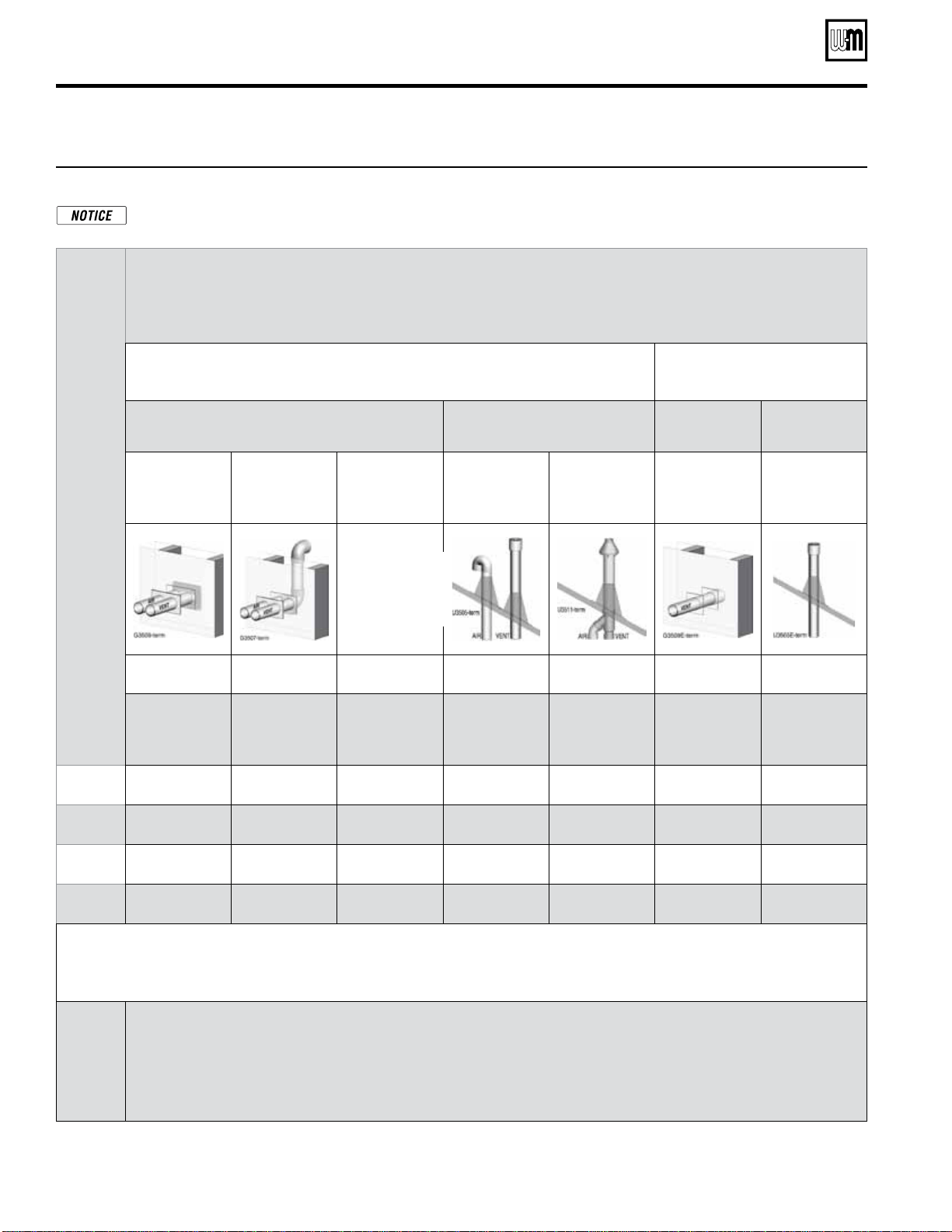
Part number 550-142-054/1211
GV90+ gas-fired water boiler — Boiler Manual
32
Venting & air — general (cont.)
Figure 39 GV90+ venting and air piping — OPTIONS and PIPING LIMITS
Vent length affects boiler input — the boiler automatically derates to compensate for pressure loss through the vent.
See the derate values given in Figure 109, page 101. The longer the vent, the more the input is reduced.
GV90+ Model
Maximum vent and air pipe lengths
(Minimum length for all applications is 2 feet)
(All applications include allowance for the termination fittings)
DIRECT VENT
(combustion air piped to boiler from outside)
DIRECT EXHAUST
(combustion air from inside)
SIDEWALL
termination
VERTICAL
termination
SIDEWALL
termination
VERTICAL
termination
Weil-McLain
vent/air cap
3” PVC
Separate pipes
3” PVC
Concentric
[Note 1]
3” PVC
Separate pipes
3” PVC
Concentric
[Note 1]
3” PVC
Coupling or
W-M Cap
3” PVC
Coupling
See page 37 See page 39 See page 41 See page 43 See page 45 See page 51 See page 53
Max.
Length
(feet)
Max.
Length
(feet)
Max.
Length
(feet)
Max.
Length
(feet)
Max.
Length
(feet)
Max.
Length
(feet)
Max.
Length
(feet)
-3
100 100 100 100 100 100 100
-4
100 100 100 100 100 100 100
-5
100 100 100 100 100 100 100
-6
100 100 100 100 100 100 100
Equivalent feet for elbows — deduct from maximum equivalent length of piping (does not apply to termination fittings)
• 7 feet per for each 3-inch 90° long-radius or 45° elbow
• 16 feet for each 3-inch short-radius elbow
Note 1:
Use only PVC pipe DO NOT use CPVC or ABS with concentric termination kits.
IPEX 3” PVC concentric vent kits can be used with standard PVC pipe, ttings and cement (ANSI/ASTM D1785) except where ULC
S636 compliance is required. For ULC S636 compliance, all pipe, ttings and cement must be IPEX System 636. When using IPEX
kits, use only IPEX product code 196006 for 3” venting.
Contact Weil-McLain for ordering information and availability of Weil-McLain venting kits.

Part number 550-142-054/1211
33
GV90+ gas-fired water boiler — Boiler Manual
Venting & air — general (cont.)
Figure 40 Vent and air piping materials — Use only the materials listed below, ensuring that all materials meet
local codes
Item Material
Standards for installations in:
United States Canada
Plastic piping materials
Vent or air pipe
&
ttings
PVC schedule 40 ANSI/ASTM D1785
Plastic vent pipe must be certified to
ULC S636 when required. (Note 2)
Air pipe can be any of those listed at
left if acceptable for local codes.
PVC-DWV (Note 1) ANSI/ASTM D2665
CPVC schedule 40 (Note 1) ANSI/ASTM F441
ABS-DWV schedule 40 (Note 1) ANSI/ASTM D2661
PVC & ABS pipe
cement & primer
PVC ANSI/ASTM D2564 & F656
CPVC (Note 1) ANSI/ASTM F493
ABS (Note 1) ANSI/ASTM D2235
AL29-4C piping materials
Vent pipe
AL29-4C
stainless
steel
Heat Fab, Inc. — Saf-T-Vent
®
Z-Flex, Inc. — Z-Vent II
Dura-Vent — FasNSeal™
Metal-Fab, Inc. — CORR/GUARD
Certified for Category IV and direct vent
appliance venting
—
Weil-McLain bird screens (purchase separately)
Weil-McLain
bird screens
3” vent screen:
W-M part number 383-500-105
Note 1: DO NOT use DWV, CPVC or ABS when using concentric vent termination. Use ONLY PVC schedule 40.
Note 2: IPEX PVC concentric terminations utilize PVC pipe/fittings certified to ULC S636. Where ULC S636 compliance is required, use
only IPEX System 636 pipe, fittings and cement.
AL29-4C vent piping — Install a PVC-to-stainless adapter supplied by the vent pipe manufacturer at the boiler vent connection
and at the termination (when using Weil-McLain plate or concentric PVC termination). DO NOT mix piping from different vent
pipe manufacturers unless using adapters specifically designed for the purpose by the manufacturer.
Plastic piping — Do not attempt to connect different types of plastic piping together.
DO NOT use cellular core pipe.
ALL vent and air pipes require a BIRD SCREEN at each termination. Most kits do not
include the bird screens. Purchase bird screens separately from Weil-McLain or vent kit
supplier if not included. [Note — bird screening is integral to the Weil-McLain sidewall vent
cap, supplied standard with all GV90+ boilers. No additional screening is required.]

Part number 550-142-054/1211
GV90+ gas-fired water boiler — Boiler Manual
34
(a) For all sidewall horizontally-vented gas-fueled equipment
installed in every dwelling, building or structure used in
whole or in part for residential purposes, including those
owned or operated by the Commonwealth and where the
side wall exhaust vent termination is less than seven (7) feet
above finished grade in the area of the venting, including but
not limited to decks and porches, the following requirements
shall be satisfied:
1.
INSTALLATION OF CARBON MONOXIDE DETEC-
TORS
. At the time of installation of the side wall horizon-
tal vented gas fueled equipment, the installing plumber
or gas fitter shall observe that a hard wired carbon
monoxide detector with an alarm and battery back-up
is installed on the floor level where the gas equipment is
to be installed. In addition, the installing plumber or gas
fitter shall observe that a battery operated or hard wired
carbon monoxide detector with an alarm is installed on
each additional level of the dwelling, building or struc-
ture served by the side wall horizontal vented gas fueled
equipment. It shall be the responsibility of the property
owner to secure the services of qualified licensed profes-
sionals for the installation of hard wired carbon monoxide
detectors
a. In the event that the side wall horizontally vented gas
fueled equipment is installed in a crawl space or an
attic, the hard wired carbon monoxide detector with
alarm and battery back-up may be installed on the
next adjacent floor level.
b. In the event that the requirements of this subdivision
can not be met at the time of completion of installa-
tion, the owner shall have a period of thirty (30) days
to comply with the above requirements; provided,
however, that during said thirty (30) day period, a
battery operated carbon monoxide detector with an
alarm shall be installed.
2.
APPROVED CARBON MONOXIDE DETECTORS. Each
carbon monoxide detector as required in accordance with
the above provisions shall comply with NFPA 720 and be
ANSI/UL 2034 listed and IAS certified.
3.
SIGNAGE. A metal or plastic identification plate shall
be permanently mounted to the exterior of the build-
ing at a minimum height of eight (8) feet above grade
directly in line with the exhaust vent terminal for the
horizontally vented gas fueled heating appliance or
equipment. The sign shall read, in print size no less than
one-half (1/2) inch in size, “GAS VENT DIRECTLY BE-
LOW. KEEP CLEAR OF ALL OBSTRUCTIONS.”
4.
INSPECTION. The state or local gas inspector of the
side wall horizontally vented gas fueled equipment shall
not approve the installation unless, upon inspection,
the inspector observes carbon monoxide detectors and
signage installed in accordance with the provisions of
248 CMR 5.08(2)(a) 1 through 4.
(b)
EXEMPTIONS: The following equipment is exempt from
248 CMR 5.08(2)(a)1 through 4:
1. The equipment listed in Chapter 10 entitled “Equipment
Not Required To Be Vented” in the most current edition
of NFPA 54 as adopted by the Board; and
2. Product Approved side wall horizontally vented gas fueled
equipment installed in a room or structure separate from
the dwelling, building or structure used in whole or in
part for residential purposes.
(c)
MANUFACTURER REQUIREMENTS — GAS EQUIPMENT
VENTING SYSTEM PROVIDED
. When the manufacturer of
Product Approved side wall horizontally vented gas equip-
ment provides a venting system design or venting system
components with the equipment, the instructions provided
by the manufacturer for installation of the equipment and
the venting system shall include:
1. Detailed instructions for the installation of the venting
system design or the venting system components; and
2. A complete parts list for the venting system design or
venting system.
(d)
MANUFACTURER REQUIREMENTS — GAS EQUIPMENT
VENTING SYSTEM NOT PROVIDED
. When the manufac-
turer of a Product Approved side wall horizontally vented gas
fueled equipment does not provide the parts for venting the
flue gases, but identifies “special venting systems”, the follow-
ing requirements shall be satisfied by the manufacturer:
1. The referenced “special venting system” instructions shall
be included with the appliance or equipment installation
instructions; and
2. The “special venting systems” shall be Product Approved
by the Board, and the instructions for that system shall in-
clude a parts list and detailed installation instructions.
(e) A copy of all installation instructions for all Product Approved
side wall horizontally vented gas fueled equipment, all venting
instructions, all parts lists for venting instructions, and/or all
venting design instructions shall remain with the appliance
or equipment at the completion of the installation.
Commonwealth of Massachusetts installations
Commonwealth of Massachusetts — When the boiler is installed within the Commonwealth of Massachusetts,
the boiler must be installed by a licensed plumber or gas tter. Read and comply with the instructions below.
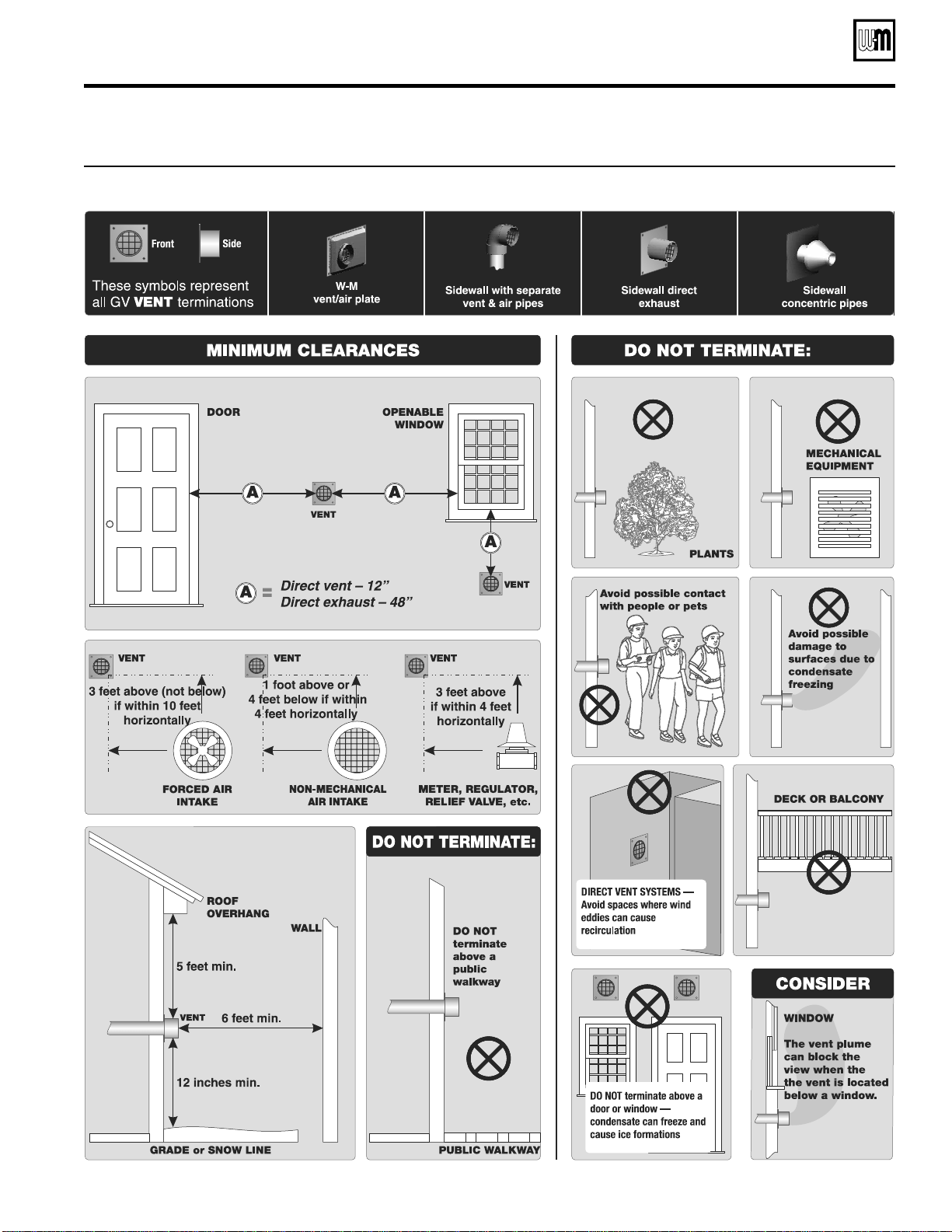
Part number 550-142-054/1211
35
GV90+ gas-fired water boiler — Boiler Manual
Vent termination requirements
Figure 41 The vent termination must be located to meet all requirements below (also applies to vertical vent terminations).
For Canadian installations, defer to the requirements of CSA B149.1 or B149.2 Installation Code.

Part number 550-142-054/1211
GV90+ gas-fired water boiler — Boiler Manual
36
Figure 42 Combustion and ventilation air openings for GV90+ Direct Vent installations
The GV90+ boiler CANNOT be in the same space with other appliances if clearances around the GV90+ are less than
the recommended service clearances shown in Figure 2, page 6.
Air openings
The required air opening sizes below are FREE AREA,
after reduction for louver obstruction. Note the ex-
ception below for large spaces.
GV90+ boiler
WITH other
appliances in room
GV90+ boiler
WITHOUT other
appliances in room
TWO openings, each at least:
1 square inch per 1,000 Btuh
of all other appliances in the room
NO openings are required if the
boiler installation provides at least the
recommended service clearances
shown in Figure 2, page 6.
If the space is smaller than Fig-
ure 2, page 6, provide openings
ONLY as shown on page 7 and
Figure 4, page 7.
TWO openings, each at least:
1 square inch per 4,000 Btuh
of all other appliances in the room
— OR —
ONE opening **, each at least:
1 square inch per 3,000 Btuh
of all other appliances in the room
TWO openings, each at least:
1 square inch per 2,000 Btuh
of all other appliances in the room
— OR —
ONE opening **, each at least:
1 square inch per 3,000 Btuh
of all other appliances in the room
TWO openings, each at least:
1 square inch per 4,000 Btuh
of all other appliances in the room
— OR —
ONE opening **, each at least:
1 square inch per 3,000 Btuh
of all other appliances in the room
** NOTICE:
Requirements for using the SINGLE air opening
option.
A single combustion air opening can be used for cases b, c or d above (GV90+ with
other appliances in room only), sized as listed, provided that:
• The single opening must communicate directly to the outdoors or to a space that
communicates directly with outdoors (NOT to an interior space).
• The top of the opening must be within 12 inches of the ceiling.
• The free area of the opening must be at least equal to the sum of the areas of all
equipment vent connectors in the space.
SPECIAL EXCEPTION FOR LARGE SPACES
(GV90+ WITH other appliances in room only):
NO combustion air openings are needed when the boiler (and other appliances) are
installed in a space with a volume NO LESS than 50 cubic feet per 1,000 Btuh of all ap-
pliances in the space. That is, total the input of all appliances in MBH (1,000’s of Btuh),
then multiply this total times 50. The building MUST NOT be of tight construction.
Example: For a total input of 500 MBH (500,000 Btuh), the minimum volume would be
50 x 500 = 25,000 cubic feet (3,125 square feet if ceiling height is 8 feet).
DIRECT VENT — Boiler room air openings
Part number 550-142-054/1211
37
GV90+ gas-fired water boiler — Boiler Manual
DIRECT VENT — Sidewall with W-M vent/air plate
Allowable vent/air pipe materials &
lengths
Use only the vent materials and kits listed
in Figure 40, page 33. Provide pipe adapt-
ers if specified.
1. Locate the termination such that the total air piping
and vent piping from the boiler to the termina-
tion will not exceed the maximum length given in
Figure 39, page 32.
Determine termination location
1. The vent/air cap must be installed as shown in
Figure 46, page 38.
2. The termination must comply with clearances and
limitations shown in Figure 41, page 35.
3. Locate the termination so it is not likely to be dam-
aged by foreign objects, such as stones or balls, or
subject to buildup of leaves or sediment.
Multiple vent/air terminations
1. When terminating multiple GV90+ boilers, ter-
minate each vent/air connection as described in
this manual.
All vent pipes and air inlets must ter-
minate at the same height to avoid pos-
sibility of severe personal injury, death or
substantial property damage.
2. Place wall penetrations to obtain minimum clear-
ance as shown in Figure 44 for U. S. installations.
For Canadian installations, provide clearances re-
quired by CSA B149.1 or B149.2 Installation Code.
3. The air inlet of a GV90+ boiler is part of a direct
vent connection. It is not classified as a forced air
intake with regard to spacing from adjacent boiler
vents.
4. Combustion air (NOT vent piping) can be mani-
folded as shown in Figure 37, page 31.
Figure 43 INSTALLATION — W-M sidewall vent/air plate
Step 1 Read and follow all instructions in this manual. DO NOT
proceed with vent/air installation until you have read
page 29 through page 35.
Step 2
Install the boiler in a location that allows proper routing of
all vent and air piping to the selected sidewall location.
Step 3 Make sure the selected sidewall termination location com-
plies with Figure 41, page 35. (Multiple boiler sidewall plates
must also comply with Figure 44, page 38.)
Step 4 Use only the vent materials listed in Figure 40, page 33.
Provide pipe adapters where required.
Step 5 Vent piping and air piping lengths must not exceed the
values shown in Figure 39, page 32.
Step 6 Prepare the sidewall penetrations and secure the sidewall
plates as instructed in this section. See “Install Weil-McLain
vent/air cap” on page 38.
Step 7 The Weil-McLain plate termination must be installed before
piping from the boiler to the termination.
Step 8 Install vent and air piping between the boiler and the vent/
air termination plate. Slope horizontal piping downward
toward the boiler at least 1/4 inch per foot. See page 48 for
general guidelines.
Step 9 Install pipe supports every 5 feet on both the horizontal and
vertical runs.
Step 10 Install a hanger support within 6 inches of any upturn in
the piping.
The Weil-McLain vent/air termination
cap can be used to terminate the vent
pipe for multiple boiler applications
using the manifolded combustion
air option. The vents must be lo-
cated following the restrictions in Fig-
ure 41, page 35 and Figure 38, page 31.
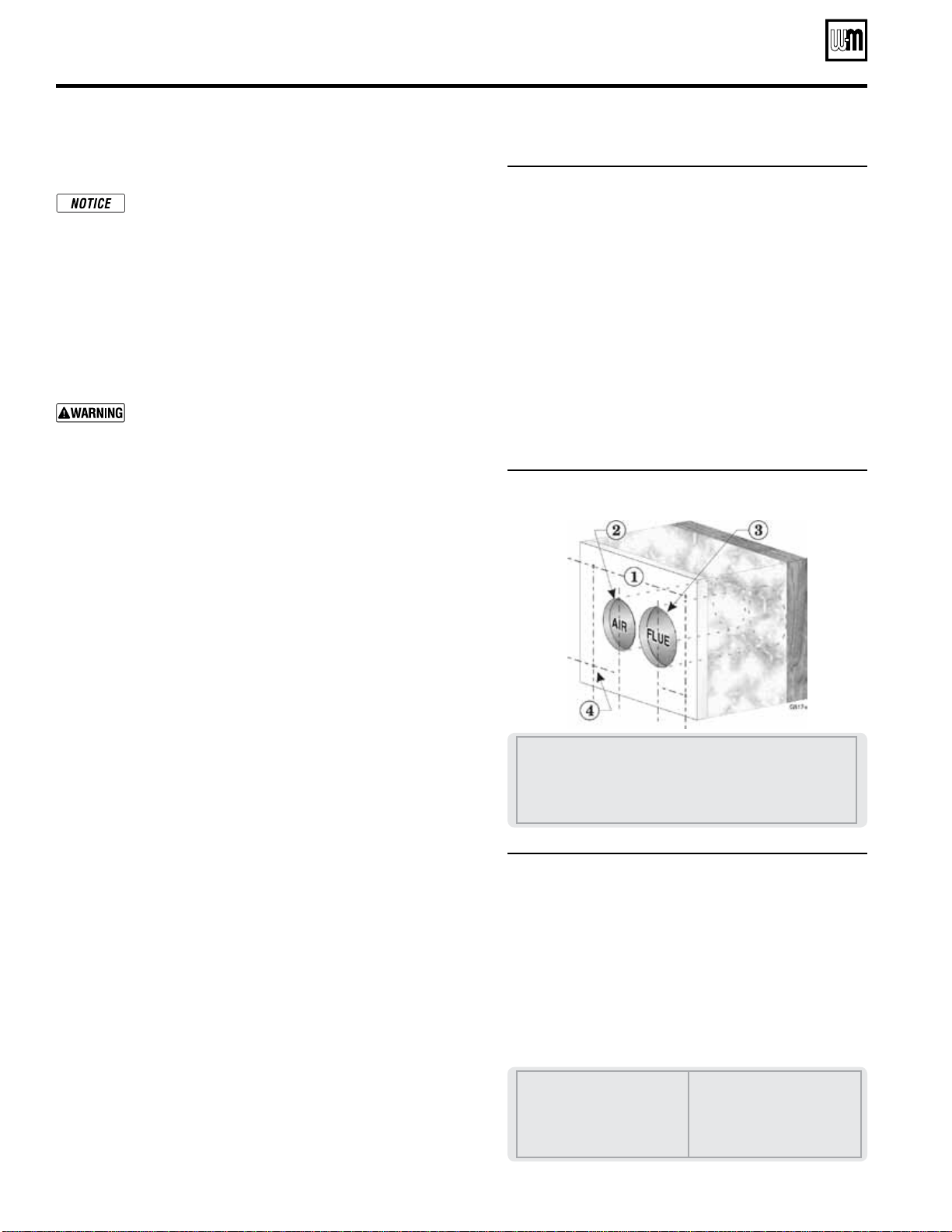
Part number 550-142-054/1211
GV90+ gas-fired water boiler — Boiler Manual
38
Figure 44 Multiple terminations — Weil-McLain vent/
air plate — clearance from vent of one to
air intake of the next
DIRECT VENT — Sidewall with W-M vent/air plate (continued)
Figure 45 Hole preparation in wall — Weil-McLain
vent/air plate (use template provided)
1 Inside wall
2 Drill: 3½" diameter for 3" air pipe; locate using template provided
3 For combustible materials, drill: 4" diameter for 3" vent pipe
For noncombustible materials, drill 3½" diameter for 3" vent pipe
Locate opening using template provided
4 Drill mounting screw holes using template provided
Figure 46 Termination assembly — Weil-McLain
vent/air plate
1 Vent termination (3”)
2 Lock washer, #10 (4)
3 Sheet metal screw, #10 x ½” (4)
4 Plastic wall anchor (8)
5 Sheet metal screw, #10 x 1¼” (8)
6 Outer mounting plate
7 Inner mounting plate
8 Vent pipe (butt to screen in termina-
tion)
9 Air pipe (butt to stops in termina-
tion)
Install Weil-McLain vent/air cap
The inside and outside cover plates are stamped to iden-
tify the exhaust (vent) and intake (air) openings. Make
sure to orient the plates correctly.
1. Locate termination opening and avoid obstructions:
a. Use the template supplied with the termination kit.
b. Locate the template on the outside building surface where the
penetration is to be made.
c. Make sure there will be no obstructions that might prevent
proper placement of the termination.
d. Use the template to mark the locations for the four mounting
holes, flue pipe and air pipe. Level the template with a spirit
level.
For the Weil-McLain plate, the template must be level to
ensure the flue and air pipe will be side-to-side, as shown
in Figure 45. Failure to comply could result in severe
personal injury, death or substantial property damage.
e. Cut holes in the wall as shown in Figure 46, using the location
marks made with the template. For best results, use a small-
diameter, long drill bit to drill centering holes for the flue and
air pipe openings. Then drill the large openings from both the
inside and outside.
f. The flue pipe and air pipe may be run through a rectangular
cutout (as marked on the template) in lieu of two separate
holes if desired.
2. Drill holes for the screws or plastic anchors to secure the outside
plate. Install the outside plate and mount the termination on the
plate (temporarily).
a. Cut the flue pipe so the extension through the wall will cause
the vent pipe to fully extend into the termination socket.
b. Cut the air pipe so the extension through the wall will butt the
air pipe against the stops inside the termination.
c. Temporarily slide the flue and air pipes through the opening(s).
Slide the inside wall plate over the two pipes and into position
on the inside wall.
d. Position the inside plate so the flue pipe and air pipe slope
downward slightly toward the boiler (1/4” per foot).
e. Mark the four (4) mounting holes for the plate.
f. Remove the vent and air pipe, drill the four mounting holes,
and mount the inside plate.
3. Test fit the vent/air termination on the vent pipe. Make sure the
vent pipe fully penetrates the termination socket and the air pipe
butts against the interior stops.
4. Apply silicon RTV sealant to the interior of the vent termination
and slide onto vent pipe. Rotate slightly to spread the silicon to
ensure a tight seal around the vent pipe.
5. Secure the termination in place using the four #10 x ½” sheet metal
screws and lock washers (see Figure 46).
Part number 550-142-054/1211
39
GV90+ gas-fired water boiler — Boiler Manual
DIRECT VENT — Sidewall with separate pipes
Allowable vent/air pipe materials &
lengths
Use only the vent materials and kits
listed in Figure 40, page 33. Provide
pipe adapters if specified.
1. Locate the termination such that the total air
piping and vent piping from the boiler to the
termination will not exceed the maximum
length given in Figure 39, page 32.
Determine termination location
1. The air and vent terminations must be in-
stalled as shown in Figure 47, page 39 and
Figure 49, page 40.
2. The terminations must comply with clearances
and limitations shown in Figure 41, page 35.
3. Locate the terminations so they are not likely
to be damaged by foreign objects, such as
stones or balls, or subject to buildup of leaves
or sediment.
Do not exceed the maximum lengths
of the outside vent piping shown in
Figure 47, page 39. Excessive length
exposed to the outside could cause
freezing of condensate in the vent
pipe, resulting in potential boiler
shutdown. In extremely cold cli-
mates, install an insulated chase
around the vent piping, particu-
larly when using longer lengths. The
chase must allow for inspection of
the vent pipe, and insulation must
be protected from water.
Multiple vent/air terminations
1. When terminating multiple GV90+ boilers,
terminate each vent/air connection as de-
scribed in this manual.
All vent pipes and air inlets must
terminate at the same height to
avoid possibility of severe personal
injury, death or substantial property
damage.
2. Place wall penetrations to obtain minimum
clearances shown in Figure 48, page 40 for
U. S. installations. For Canadian installations,
provide clearances required by CSA B149.1 or
B149.2 Installation Code.
3. The air inlet of a GV90+ boiler is part of a
direct vent connection. It is not classified as a
forced air intake with regard to spacing from
adjacent boiler vents.
4. Combustion air (NOT vent piping) can be
manifolded as shown in Figure 37, page 31.
Figure 47 INSTALLATION SEQUENCE — Separate pipes sidewall
Step 1 Read and follow all instructions in this manual. DO NOT proceed with
vent/air installation until you have read page 29 through page 35.
Step 2 Install the boiler in a location that allows proper routing of all vent and air
piping to the selected sidewall location.
Step 3 Make sure the selected sidewall termination location complies with Fig-
ure 41, page 35. (Multiple boiler sidewall plates must also comply with
Figure 48, page 40.)
Step 4 Use only the vent materials listed in Figure 40, page 33. Provide pipe adapt-
ers where required. Vent piping and air piping lengths must not exceed the
values shown in Figure 39, page 32.
Step 5 Prepare the sidewall penetrations and secure the sidewall plates as instructed
in this section. See “Prepare wall penetrations” on page 40.
Step 6 The air piping must terminate in a down-turned elbow as shown above.
The vent piping must terminate in an elbow pointed outward or away
from the air inlet as shown above. See illustration above.
Step 7 Install vent and air piping between the boiler and the sidewall openings.
Slope horizontal piping downward toward the boiler at least 1/4 inch per
foot. See page 48 for general guidelines.
Step 8 Install pipe supports every 5 feet on both the horizontal and vertical runs.
Install a hanger support within 6 inches of any upturn in the piping.
Step 9 Attach the vent termination exterior piping: Use either of the configurations
shown above, as needed to ensure clearance above grade or snow line.
Step 10 The vent and air pipes may run up as high as 4 feet with no enclosure. The
vent and air pipes must be secured with braces, and all clearances and lengths
must be maintained. Space braces no further than 24 inches apart.
Step 11 External venting greater than 4 feet requires an insulated enclosure around
the vent and air pipes. The vent and air terminations must exit through
the enclosure as shown in the illustration above, maintaining all required
clearances.
Part number 550-142-054/1211
GV90+ gas-fired water boiler — Boiler Manual
40
DIRECT VENT — Sidewall with separate pipes (continued)
For multiple boiler applications using the manifolded
combustion air option, the vent can be terminated in
an elbow as in Figure 47, page 39, or in a coupling or
sidewall termination plate. The vents must be located
following the restrictions in Figure 41, page 35 and
Figure 38, page 31.
Prepare wall penetrations
1. Air pipe penetration:
a. Cut a hole for the air pipe. Size the air pipe hole as close as
desired to the air pipe outside diameter.
2. Vent pipe penetration:
a. Cut a hole for the vent pipe. For either combustible or non-
combustible construction, size the vent pipe hole at least 0.4”
larger than the vent pipe diameter:
• 4” hole for 3” PVC
b. Insert a galvanized metal thimble in the vent pipe hole as
shown in Figure 49.
3. Use a sidewall termination plate as a template for correct location
of hole centers. Sidewall termination plates are included with the
Weil-McLain sidewall vent/air plate kit, shipped with each boiler.
4. Follow all local codes for isolation of vent pipe when passing
through floors or walls.
5. Seal exterior openings thoroughly with exterior caulk.
Termination and ttings
1. Prepare the vent termination elbow and the air termination elbow
by inserting bird screens. (See Figure 47, page 39.) Bird screens
must be purchased separately. See the parts list at the end of this
manual for part numbers.
2. When completed, the air termination coupling must be oriented
at least 12 inches below the vent termination and at least 12 inches
above grade or snow line as shown in Figure 47, page 39.
3. You can orient the vent termination elbow either directly out-
ward or 90 degrees away from the air inlet elbow as shown in
Figure 47, page 39.
4. Maintain the required dimensions of the finished termination
piping as shown in Figure 47, page 39.
5. For multiple boiler terminations, see Figure 48, page 40.
6. Do not extend exposed vent pipe outside of building more than
shown in this document. Condensate could freeze and block vent
pipe.
If extending the vent and air pipes out from the wall,
install a coupling on each pipe. Mount the piping with
the coupling flush with the outer plate.
Figure 48
Multiple separate pipes sidewall terminations
Figure 49 Sidewall termination assembly — using
separate pipes
1 Vent piping
2 Air piping
3 Sidewall termination plates, supplied with
boiler in W-M vent/air plate kit
4 Galvanized thimbles, by installer
5 Bird screen, by installer
6 Air inlet elbow
7 Elbow
8 Nipple
9 Elbow (vent termination)
Part number 550-142-054/1211
41
GV90+ gas-fired water boiler — Boiler Manual
DIRECT VENT — Sidewall with 3” concentric
Allowable vent/air pipe materials &
lengths
1. The 3” concentric termination kit must be pur-
chased separately.
Use only the vent materials and kits listed
in Figure 40, page 33. Provide pipe adapt-
ers if specified.
2. Locate the termination such that the total air piping
and vent piping from the boiler to the termina-
tion will not exceed the maximum length given in
Figure 39, page 32.
3. This termination requires a 45-degree elbow that
is not supplied with the termination kit. The
maximum vent/air pipe lengths include allowance
for this elbow.
Determine termination location
1. The concentric termination kit must be installed
as shown in Figure 50, page 41.
2. The termination must comply with clearances and
limitations shown in Figure 41, page 35.
3. Locate the termination so it is not likely to be dam-
aged by foreign objects, such as stones or balls, or
subject to buildup of leaves or sediment.
Multiple vent/air terminations
1. When terminating multiple GV90+ boilers, install
each concentric termination as described in this
manual.
All vent pipes and air inlets must ter-
minate at the same height to avoid pos-
sibility of severe personal injury, death or
substantial property damage.
2. Place wall penetrations to obtain minimum
clearance as shown in Figure 51, page 42 for U. S.
installations. For Canadian installations, provide
clearances required by CSA B149.1 or B149.2 In-
stallation Code.
3. The air inlet of a GV90+ boiler is part of a direct
vent connection. It is not classified as a forced air
intake with regard to spacing from adjacent boiler
vents.
Figure 50 INSTALLATION SEQUENCE — Concentric horizontal
Step 1 Read and follow all instructions in this manual. DO NOT
proceed with vent/air installation until you have read
page 29 through page 35.
Step 2
Install the boiler in a location that allows proper routing of
all vent and air piping to the selected sidewall location.
Step 3 Make sure the selected sidewall termination location com-
plies with Figure 41, page 35. (Multiple boiler concentric
terminations must also comply with Figure 51, page 42.)
Step 4 Use only the vent materials listed in Figure 40, page 33.
Provide pipe adapters where required.
Step 5 Vent piping and air piping lengths must not exceed the
values shown in Figure 39, page 32.
Step 6 The concentric termination must be assembled and installed
before piping from the boiler to the termination.
Step 7 Prepare the sidewall penetration — assemble the concentric
termination kit and secure the cover plates as instructed in
this section. Provide the supports indicated and mount the
termination assembly. See “Install termination — concentric
pipes” on page 42.
Step 8 Install vent and air piping between the boiler and the
concentric vent/air termination. Slope horizontal piping
downward toward the boiler at least 1/4 inch per foot. See
page 48 for general guidelines.
Step 9 Install pipe supports every 5 feet on both the horizontal and
vertical runs.
Step 10 Install a hanger support within 6 inches of any upturn in
the piping.
Part number 550-142-054/1211
GV90+ gas-fired water boiler — Boiler Manual
42
DIRECT VENT — Sidewall with 3” concentric (continued)
Figure 51 Termination location — concentric
termination — multiple boilers —
clearance from vent of one to air intake of
the next
Figure 52 Installing and supporting the concentric
sidewall vent assembly
Ensure that the wall material is strong
enough to prevent the rain cap from being
pushed inward if struck or pushed from the
outside.
Install termination — concentric pipes
1. Assemble the vent termination as described for concentric termi-
nations, on page 47.
If necessary, you can shorten the lengths of the inner and
outer pipes for a shorter finished assembly. But you must
ensure the pipes butt correctly at both ends. Failure to
properly assemble the concentric termination can result
in flue gas recirculation, causing possible severe personal
injury or death.
2. Wall penetration:
a. Preferably, use a thimble with a 4½-inch hole. If not using a
thimble, carefully use a hole saw to cut a hole not larger than
4¾ inches in diameter through the wall. The finished hole
must provide a solid stop for the rain cap ribs, as shown in the
inset to Figure 52.
3. Secure the termination in place so the rain cap will butt against the
outside wall or outer thimble plate as shown in Figure 52, page 42.
4. Before beginning vent and air piping from the boiler to the con-
centric termination, mount and secure the concentric termination
as shown in Figure 52, page 42.
The vent and air piping must be securely supported, and
must not rest its weight on the boiler fittings. Failure to
properly support the vent and air piping could result in
vent piping damage, resulting in possible severe personal
injury, death or substantial property damage.
The supports/bracing used must support the termination
assembly to prevent slippage or movement.
The clamps used on the outside of the termination pipe
must not cut into the pipe or contain sharp edges that
could cause a crack to form.
When inserting the partially-assembled termination
kit through the wall penetration, wrap plastic or other
protection over the end of the exposed assembly to pre-
vent debris from entering the pipes. If the air passages
become blocked, the boiler will not operate. Once the
rain cap has been cemented to the assembly, there is no
way to correct the problem. The assembly would have
to be replaced if it were cut to be removed and cleaned.
Altering the assembly in any way could result in severe
personal injury or death due to toxic flue product emis-
sions.
When using AL294C stainless vent pipe, use the vent
pipe manufacturer’s PVC adapter when connecting to
the concentric vent attachment.
5. After the assembly has been positioned in the opening and all sup-
ports have been attached, install a bird screen (purchased separately
if not included with the kit) and rain cap as follows:
a. Place the bird screen on the end of the inner pipe as in Fig-
ure 58, page 47.
b. Cement the rain cap in place as shown.
Part number 550-142-054/1211
43
GV90+ gas-fired water boiler — Boiler Manual
DIRECT VENT — Vertical with separate pipes
Allowable vent/air pipe materials &
lengths
Use only the vent materials and kits listed
in Figure 40, page 33. Provide pipe adapt-
ers if specified.
1. Locate the terminations such that the total air pip-
ing and vent piping from the boiler to the termina-
tion will not exceed the maximum length given in
Figure 39, page 32.
Determine termination location
1. The air and vent terminations must be installed as
shown in Figure 53, page 43.
2. The terminations must comply with clearances and
limitations shown in Figure 41, page 35.
3. Locate the terminations so they are not likely to be
damaged by foreign objects, such as stones or balls,
or subject to buildup of leaves or sediment.
Multiple vent/air terminations (Figure 54)
1. When terminating multiple GV90+ boilers, ter-
minate each vent/air connection as described in
this section.
Terminate all vent pipes at the same
height and all air pipes at the same height
to avoid possibility of severe personal
injury, death or substantial property
damage.
2. Place roof penetrations to obtain minimum clear-
ance of 12 inches between edge of air intake elbow
and adjacent vent pipe of another boiler for U. S.
installations (see Figure 54, page 44). For Canadian
installations, provide clearances required by CSA
B149.1 or B149.2 Installation Code.
3. The air inlet of a GV90+ boiler is part of a direct
vent connection. It is not classified as a forced air
intake with regard to spacing from adjacent boiler
vents.
Prepare roof penetrations
1. Air pipe penetration:
a. Cut a hole for the air pipe. Size the air pipe
hole as close as desired to the air pipe outside
diameter.
2. Vent pipe penetration:
a. Cut a hole for the vent pipe. For either combus-
tible or noncombustible construction, size the
vent pipe hole at least 0.4” larger than the vent
pipe diameter (4” hole for 3” PVC).
b. Insert a galvanized metal thimble in the vent
pipe hole.
Figure 53 Separate pipes vertical termination
Step 1 Read and follow all instructions in this manual. DO NOT proceed
with vent/air installation until you have read page 29
through page 35.
Step 2 Install the boiler in a location that allows proper routing of all vent
and air piping to the selected sidewall location.
Step 3 Make sure the selected vertical termination location complies with
Figure 41, page 35. (Multiple boiler terminations must also comply
with Figure 54, page 44.)
Step 4 Use only the vent materials listed in Figure 40, page 33. Provide pipe
adapters where required. Vent piping and air piping lengths must not
exceed the values shown in Figure 39, page 32.
Step 5 Prepare the vertical penetrations and secure penetration components
as instructed in this section. See “Prepare roof penetrations” on page 43
and “Termination and fittings” on page 44.
Step 6 The air piping must terminate in a 180-degree return bend or down-
turned elbow as shown above. The vent piping must terminate in a
coupling pointed upward as shown above.
Step 7 Install vent and air piping between the boiler and the vertical termina-
tions. Slope horizontal piping downward toward the boiler at least 1/4
inch per foot. Install pipe supports every 5 feet on both the horizontal
and vertical runs. Install a hanger support within 6 inches of any upturn
in the piping. See page 48 for general guidelines.
Step 8 Insert the vent and air piping through the vertical penetrations and
secure the termination fittings.
Step 9 Maintain clearances shown above. Vent and air terminations must be
fitted with a bird screen as shown.
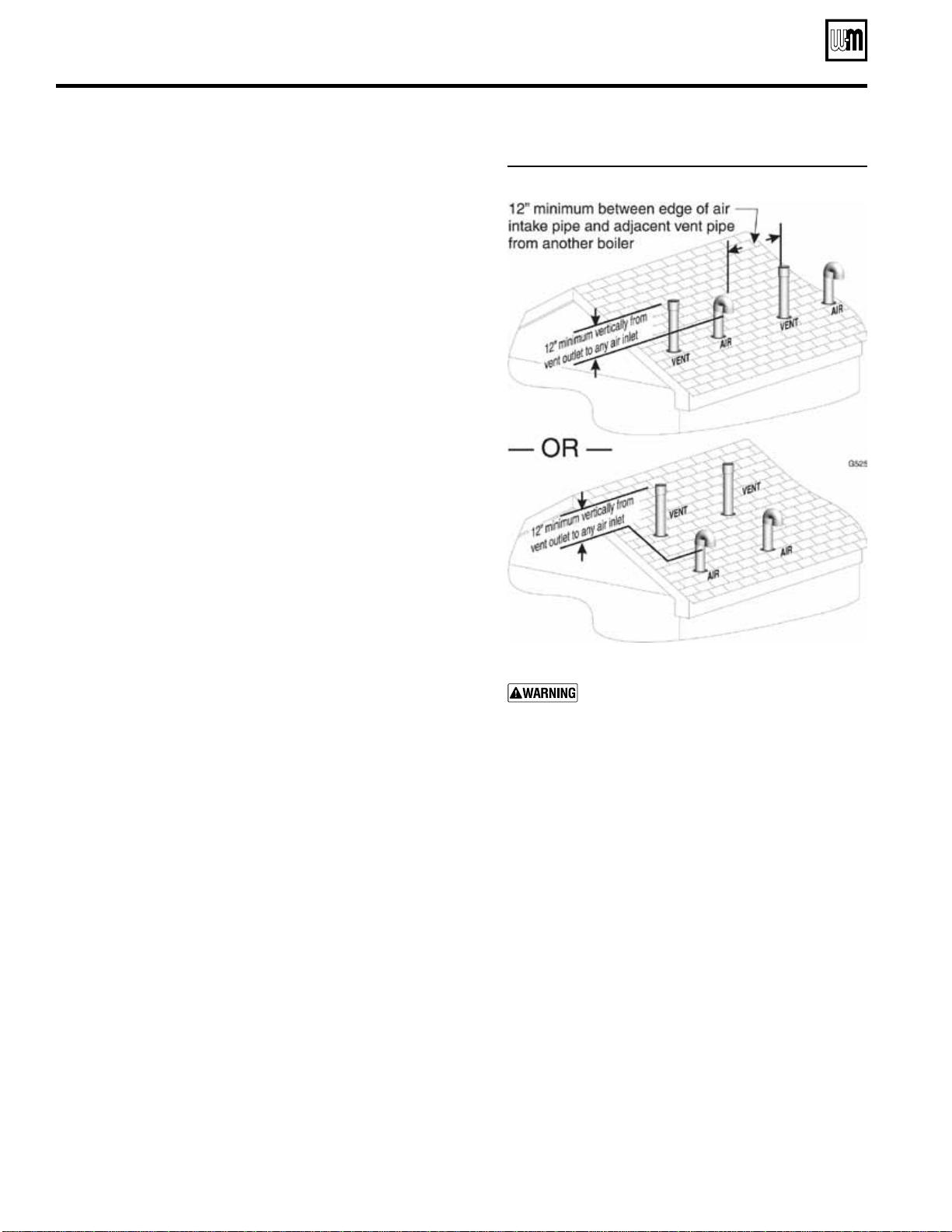
Part number 550-142-054/1211
GV90+ gas-fired water boiler — Boiler Manual
44
Figure 54 Terminations for multiple boilers
Also maintain maximum center-to-center
distances between the vent and air pipes for
each boiler as shown in Figure 53, page 43.
DIRECT VENT — Vertical with separate pipes (continued)
3. Space the air and vent holes to provide the minimum spacings
shown in Figure 53, page 43.
4. Follow all local codes for isolation of vent pipe when passing
through floors, ceilings and roofs.
5. Provide flashing and sealing boots sized for the vent pipe and air
pipe.
Termination and ttings
1. Prepare the vent termination elbow and the air termination elbow
(Figure 53, page 43) by inserting bird screens. Bird screens must be
purchased separately. See the parts list at the end of this manual
for part numbers.
2. The air piping must terminate in a down-turned 180-degree re-
turn bend as shown in Figure 53, page 43. Locate the air inlet pipe
no further than 12 inches from the center of the vent pipe. This
placement avoids recirculation of flue products into the combus-
tion air stream.
3. The vent piping must terminate in an up-turned coupling as shown
in Figure 53, page 43. The top of the coupling must be at least 1
foot above the air intake. The air inlet pipe and vent pipe can be
located in any desired position on the roof, but must always be no
further than 12 inches apart and with the vent termination at least
1 foot above the air intake.
4. Maintain the required dimensions of the finished termination
piping as shown in Figure 53, page 43.
5. Do not extend exposed vent pipe outside of building more than
shown in this document. Condensate could freeze and block vent
pipe.

Part number 550-142-054/1211
45
GV90+ gas-fired water boiler — Boiler Manual
DIRECT VENT — Vertical with 3” concentric
Allowable vent/air pipe materials &
lengths
1. The 3” concentric termination kit must be pur-
chased separately.
Use only the vent materials and kits listed
in Figure 40, page 33. Provide pipe adapt-
ers if specified.
2. Locate the termination such that the total air piping
and vent piping from the boiler to the termina-
tion will not exceed the maximum length given in
Figure 39, page 32.
3. This termination requires a 45-degree elbow that
is not supplied with the termination kit. The
maximum vent/air pipe lengths include allowance
for this elbow.
Determine termination location
Locate the concentric vent/air termination using the
following guidelines:
1. The concentric vent/air assembly must terminate
as shown in Figure 56, page 46.
2. The termination must comply with the clearances
and limitations shown in Figure 41, page 35.
3. Locate the termination so it is not likely to be dam-
aged by foreign objects, such as stones or balls, or
subject to buildup of leaves or sediment.
4. For Canadian installations, follow requirements of
CSA B149.1 or B149.2 Installation Code.
Multiple vent/air terminations
1. When terminating multiple GV90+ boilers, install
the concentric vent/air termination assemblies as
described in this manual.
All vent outlets must terminate at the
same height to avoid possibility of severe
personal injury, death or substantial
property damage.
2. Place roof penetrations to obtain minimum of
12 inches between centers of adjacent vent pipe
of another boiler for U. S. installations (see Fig-
ure 56, page 46).
3. The air inlet of a GV90+ boiler is part of a direct
vent connection. It is not classified as a forced air
intake with regard to spacing from adjacent boiler
vents.
Prepare roof penetrations
1. Roof penetration hole:
a. Cut a 5-inch diameter hole to clear the 4½-inch
termination outside diameter.
b. Insert a galvanized metal thimble in the vent
pipe hole.
2. Follow all local codes for isolation of vent pipe when
passing through floors, ceilings and roofs.
3. Provide flashing and sealing boots sized for the
concentric termination outside diameter.
Figure 55 INSTALLATION SEQUENCE — Concentric vertical
Step 1 Read and follow all instructions in this manual. DO NOT
proceed with vent/air installation until you have read
page 29 through page 35.
Step 2
Install the boiler in a location that allows proper routing of
all vent and air piping to the selected sidewall location.
Step 3 Make sure the selected vertical termination location com-
plies with Figure 41, page 35. (Multiple boiler concentric
terminations must also comply with Figure 56, page 46.)
Step 4 Use only the vent materials listed in Figure 40, page 33.
Provide pipe adapters where required.
Step 5 Vent piping and air piping lengths must not exceed the
values shown in Figure 39, page 32.
Step 6 The concentric termination must be assembled and installed
before piping from the boiler to the termination.
Step 7 Prepare the vertical penetration(s) — assemble the concen-
tric termination kit and secure the penetration components
as instructed in this section. Provide the supports indicated
and mount the termination assembly. See “Prepare roof
penetrations” on page 45 and “Mount concentric termina-
tion” on page 46.
Step 8 Install vent and air piping between the boiler and the
concentric vent/air termination. Slope horizontal piping
downward toward the boiler at least 1/4 inch per foot. See
page 48 for general guidelines.
Step 9 Install pipe supports every 5 feet on both the horizontal and
vertical runs.
Step 10 Install a hanger support within 6 inches of any upturn in
the piping.
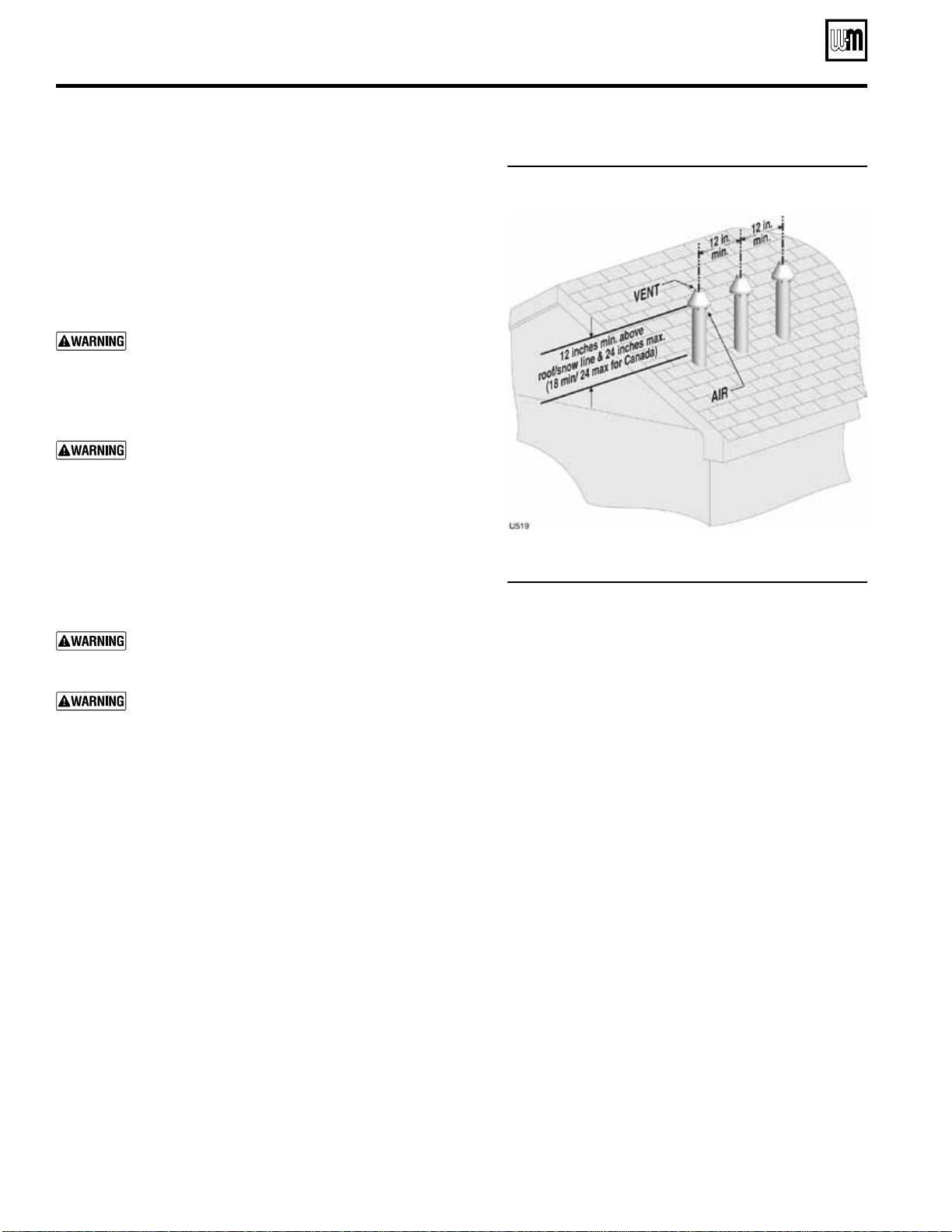
Part number 550-142-054/1211
GV90+ gas-fired water boiler — Boiler Manual
46
DIRECT VENT — Vertical with 3” concentric (continued)
Mount concentric termination
1. Mount the termination as shown in Figure 57, page 46.
2. Support the concentric vent/air termination at the roof penetration
as shown in Figure 57.
• The supports/bracing used must support the termination as-
sembly to prevent vertical slippage or sideways movement.
• The clamps used on the outside of the termination pipe must
not cut into the pipe or contain sharp edges that could cause
a crack to form.
The vent and air piping must be securely supported,
and must not rest its weight on the boiler fittings. DO
NOT drill or screw into either the vent pipe or air pipe.
Failure to properly support the vent and air piping could
result in vent piping damage, resulting in possible severe
personal injury, death or substantial property damage.
When inserting the partially-assembled termination
kit through the roof penetration, wrap plastic or other
protection over the end of the exposed assembly to pre-
vent debris from entering the pipes. If the air passages
become blocked, the boiler will not operate. Once the
rain cap has been cemented to the assembly, there is no
way to correct the problem. The assembly would have
to be replaced if it were cut to be removed and cleaned.
Altering the assembly in any way could result in severe
personal injury or death due to toxic flue product emis-
sions.
When using AL294C stainless vent pipe, use the vent
pipe manufacturer’s PVC adapter when connecting to
the concentric vent attachment.
Do not connect any other appliance to the vent pipe or
multiple boilers to a common vent pipe.
3. After the assembly has been positioned in the roof opening and
all supports have been attached, install a bird screen (purchased
separately if not included with the kit) and rain cap as follows:
a. Place the bird screen on the end of the inner pipe as in Fig-
ure 58, page 47.
b. Cement the rain cap in place.
Figure 56 Vertical termination — 3” PVC concentric
— single or multiple boilers
Figure 57 3” PVC concentric termination supports
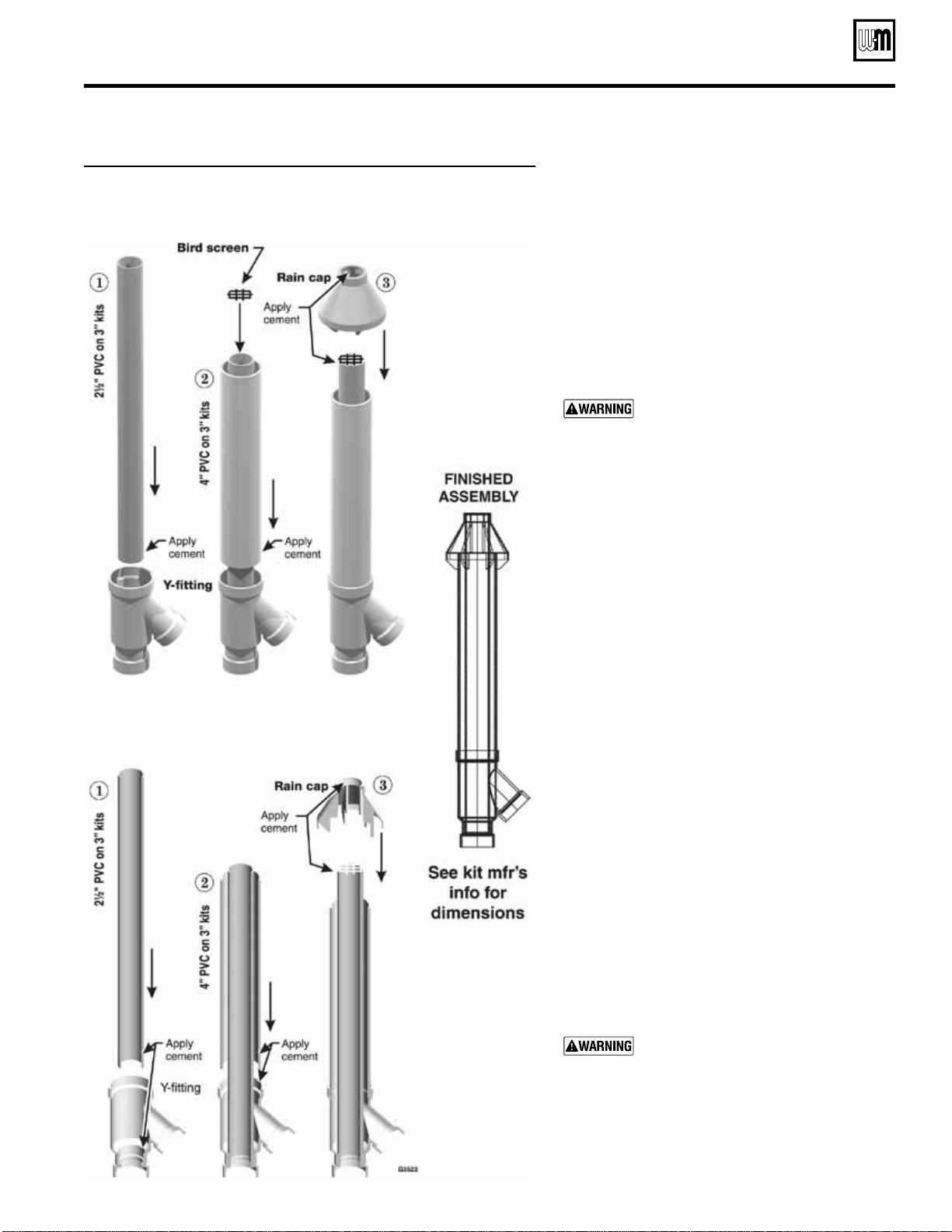
Part number 550-142-054/1211
47
GV90+ gas-fired water boiler — Boiler Manual
Concentric termination assembly (sidewall or vertical)
Figure 58 3” PVC concentric termination assembly — DO NOT
attach the rain cap until the termination has been
inserted through the roof or wall and all supports have
been installed.
Assembling concentric termination
1. See Figure 58, page 47 for the details of the termi-
nation assembly.
2. Prepare the bird screen (purchased separately if
not included with the kit). Cut the bird screen to
size if required. If the bird screen must be trimmed,
cut the bird screen to fit the outside diameter of
the PVC inner pipe supplied with the termination
kit.
3. Partially assemble the vent termination kit in the
sequence shown in Figure 58, page 47.
DO NOT install the rain cap and bird
screen until the assembly has been in-
serted through the roof (or sidewall)
and all supports have been installed.
Follow instructions to cover the end of
the assembly with plastic before inserting
through the roof penetration to prevent
debris from blocking the air passages.
4. Use the following procedures to prepare termina-
tion components and cement together.
5. Deburr inside and outside of pipe ends.
6. Chamfer outside of each pipe end to ensure even
cement distribution when joining.
7. Clean all pipe ends and fittings.
8. Dry thoroughly.
9. Dry assemble entire vent or air piping to ensure
proper fit before assembling any joint.
10. For each joint:
a. Handle fittings and pipes carefully to prevent
contamination of surfaces.
b. Apply primer liberally to both joint surfaces —
pipe end and fitting socket.
c. While primer is still damp, lightly apply ap-
proved cement to both surfaces in a uniform
coating.
d. Apply a second coat to both surfaces. Avoid
using too much cement on sockets to prevent
cement buildup inside.
e. With cement still wet, insert pipe into fit-
ting, twisting ¼ turn. Make sure pipe is fully
inserted.
If necessary, you can shorten the lengths
of the inner and outer pipes for a shorter
finished assembly. But you must ensure
the pipes butt correctly at both ends. Fail-
ure to properly assemble the concentric
termination can result in flue gas recir-
culation, causing possible severe personal
injury or death.
Part number 550-142-054/1211
GV90+ gas-fired water boiler — Boiler Manual
48
Vent and air piping and boiler connections
DIRECT EXHAUST & DIRECT VENT
Follow termination instructions
1. Read and follow all instructions for the termination
type used before proceeding with this page.
Installing vent and air piping
1. Work from the boiler to vent or air termination. Do
not exceed the lengths given in the previous pages
for either the air or vent piping.
a. Provide stainless pipe to PVC adapters obtained
from the stainless pipe manufacturer for con-
nections at the boiler and at terminations, when
required.
2. See Figure 59 for attaching vent (and air) pipes at
the boiler.
3. Cut pipe to required lengths.
4. Deburr inside and outside of pipe ends.
5. Chamfer outside of each pipe end to ensure even
cement distribution when joining.
6. Clean all pipe ends and fittings. Dry thoroughly.
7. Dry assemble entire vent or air piping to ensure
proper fit before assembling any joint.
8. For each joint:
a. Handle fittings and pipes carefully to prevent
contamination of surfaces.
b. Apply primer liberally to both joint surfaces —
pipe end and fitting socket.
c. While primer is still damp, lightly apply ap-
proved cement to both surfaces in a uniform
coating.
d. Apply a second coat to both surfaces. Avoid
using too much cement on sockets to prevent
cement buildup inside.
e. With cement still wet, insert pipe into fit-
ting, twisting ¼ turn. Make sure pipe is fully
inserted.
f. Wipe excess cement from joint. Check joint to
be sure a smooth bead of cement shows around
the entire joint.
9. Maintain minimum clearance of C\zn inch between
vent pipe and any combustible wall or material.
10. Seal wall or floor penetration openings following
local code requirements.
DIRECT EXHAUST ONLY
DIRECT EXHAUST installations — air
inlet opening protection
: Obtain a bird
screen (sized for air inlet fitting) from
Weil-McLain. Insert the bird screen into
the air inlet fitting to prevent foreign
objects from entering the opening.
Figure 59 Boiler vent and air connections
AL294C vent pipe — If using AL294C stainless vent pipe,
you must install an AL29-4C stainless vent starter at the
boiler vent connection (and at the termination if using
the Weil-McLain plate or the concentric termination).
Use only the starter made by the vent pipe manufacturer.
See Replacement parts section for available AL29-4C
stainless vent starters.
1. PVC/ABS pipe — Clean and deburr inside and outside of other
both ends of air and vent pipes. Chamfer boiler end of vent pipe
for ease of insertion.
The vent pipe end must be smooth and chamfered to
prevent possible damage to sealing gasket in vent pipe
adapter.
2. Inspect vent adapter and air inlet fitting (above) — verify no ob-
structions or foreign objects inside.
3. Vent pipe
• Loosen vent adapter clamp screw.
• Measure 3½ inches from boiler end of vent pipe and make a
mark with felt-tip pen.
• Apply small amount of silicon grease to boiler end of vent pipe
to ease insertion.
• Insert vent pipe into adapter to depth of felt tip pen mark.
• Secure vent pipe by tightening the adapter clamp securely. Do
not overtighten. The seal is accomplished with the internal
gasket. The clamp is only to hold the pipe in place.
Do not apply excessive force or bend the vent adapter
or vent pipe when inserting. The adapter or seal could
be damaged.
4. Air pipe
• Clean the outer surface of the boiler end of the air pipe.
• Apply silicon sealant (Dow Corning 732
TM
or equivalent) to
the outside end of the air pipe and to the inside of the air inlet
fitting.
• Insert the air pipe into the air inlet fitting and give a 1/4 turn
to ensure coverage. Support until the sealant has dried.

Part number 550-142-054/1211
49
GV90+ gas-fired water boiler — Boiler Manual
DIRECT EXHAUST — Boiler room air openings
Special considerations
Tight construction
ANSI Z223.1 defines unusually tight construction
where:
1. Walls and ceilings exposed to the outside atmo-
sphere have a continuous water vapor retarder with
a rating of 1 perm or less with openings gasketed,
and . . .
2. Weather-stripping has been added on openable
windows and doors, and . . .
3. Caulking or sealants are applied to areas such as
joints around windows and door frames, between
sole plates and floors, between wall-ceiling joints,
between wall panels, at penetrations for plumbing,
electrical, and gas lines, and in other openings.
For buildings with such construction, provide air
openings into the building from outside, sized per the
appropriate case in Figure 60, page 50 if appliances are
to use inside air for combustion and ventilation.
Exhaust fans and air movers
The appliance space must never be under a negative
pressure unless all appliances are installed as direct
vent. Always provide air openings sized not only to
the dimensions required for the firing rate of all appli-
ances, but also to handle the air movement rate of the
exhaust fans or air movers using air from the building
or space.
Motorized air dampers
If the air openings are fitted with motorized dampers,
electrically interlock the damper to:
• Prevent the boiler from firing if the damper is not
fully open.
• Shut the boiler down should the damper close dur-
ing boiler operation.
To accomplish this interlock, wire an
isolated contact
(proving the damper open) in series with the thermo-
stat input to the boiler. The boiler will not start if this
contact is open, and will shut down should it open
during operation.
Combustion air provision
The GV90+ boiler can use inside air if no contaminants are present in the
boiler space. (If contaminants are likely to be present, install the boiler
as a direct vent appliance, using the appropriate vent instructions in this
manual.)
The boiler room must be fitted with combustion air openings large enough
to provide air for all appliances in the room. Use the following information
to size the openings. Ensure the installation complies with all applicable
codes and standards.
Where the GV90+ boiler shares a space with other appliances, the combus-
tion air openings must be sized to handle the combined requirements of
all appliances in the space.
Sizing combustion air openings
Air openings provide for ventilation (as well as combustion air) to prevent
overheating of the boiler controls and boiler space. Air is also needed for
other appliances located in the same space.
Use Figure 60, page 50, selecting the appropriate installation conditions.
Air openings must be sized to handle all appliances and air
movers (exhaust fans, etc.) using the air supply.
The sizing given in Figure 60, page 50 is based on the National Fuel Gas
Code, ANSI Z223.1, allowing adequate air openings for gravity-vented gas
appliances (Category I) in addition to that needed for the GV90+ boiler.
The air openings recommended in Figure 60, page 50 will allow adequate
ventilation and combustion air provided the boiler room is not subjected
to negative pressure due to exhaust fans or other mechanical ventilation
devices.
Refer to the National Fuel Gas Code for dealing with other conditions.
Free area — louver allowance
The free area of openings means the area after reduction for any installed
louvers or grilles
. Be sure to consider this reduction when sizing the air
openings.
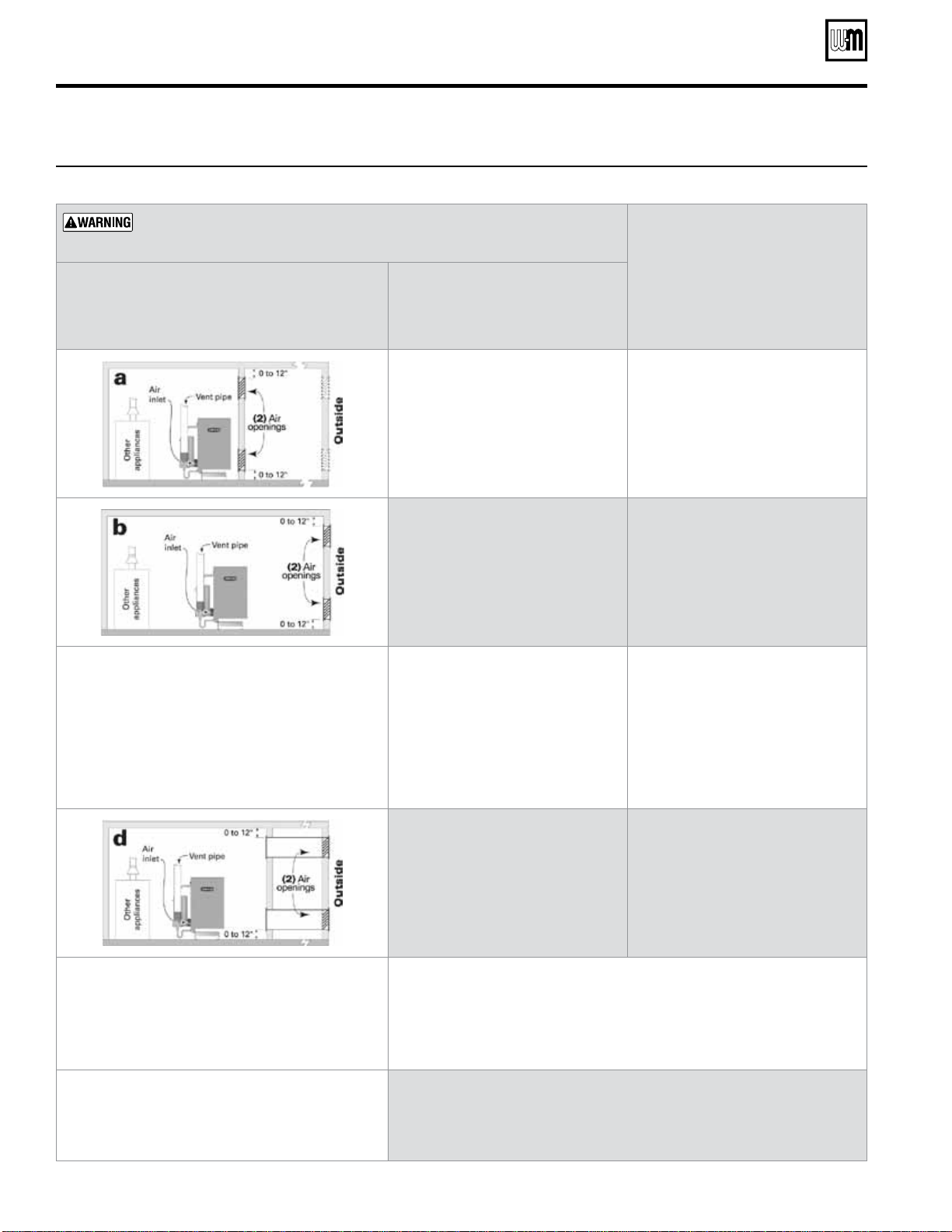
Part number 550-142-054/1211
GV90+ gas-fired water boiler — Boiler Manual
50
DIRECT EXHAUST —
Boiler room air openings
(cont.)
Figure 60 MINIMUM combustion air openings for direct exhaust applications — ALL OPENING SIZES ARE FREE AREA
The GV90+ boiler CANNOT be in the same space with other appliances if
clearances around the GV90+ are less than the recommended service clearances
shown in Figure 2, page 6.
If the space is smaller than
Figure 2, page 6, provide
openings ONLY as shown on
page 7 and Figure 4, page 7.
GV90+ boiler
WITHOUT other
appliances in room
Air openings
The required air opening sizes below are FREE AREA,
after reduction for louver obstruction. Note the ex-
ception below for large spaces.
GV90+ boiler
WITH other
appliances in room
TWO openings, each at least:
1 square inch per 1,000 Btuh
of all appliances in the room
TWO openings, each at least:
1 square inch per 4,000 Btuh
of all appliances in the room
TWO openings, each at least:
1 square inch per 4,000 Btuh
of all appliances in the room
— OR —
ONE opening **, each at least:
1 square inch per 3,000 Btuh
of all appliances in the room
TWO openings, each at least:
1 square inch per 4,000 Btuh
of all appliances in the room
— OR —
ONE opening **, each at least:
1 square inch per 3,000 Btuh
of all appliances in the room
TWO openings, each at least:
1 square inch per 2,000 Btuh
of all appliances in the room
— OR —
ONE opening **, each at least:
1 square inch per 3,000 Btuh
of all appliances in the room
TWO openings, each at least:
1 square inch per 4,000 Btuh
of all appliances in the room
— OR —
ONE opening **, each at least:
1 square inch per 3,000 Btuh
of all appliances in the room
TWO openings, each at least:
1 square inch per 4,000 Btuh
of all appliances in the room
— OR —
ONE opening **, each at least:
1 square inch per 3,000 Btuh
of all appliances in the room
TWO openings, each at least:
1 square inch per 4,000 Btuh
of all appliances in the room
— OR —
ONE opening **, each at least:
1 square inch per 3,000 Btuh
of all appliances in the room
** NOTICE:
Requirements for using the SINGLE air opening
option.
A single combustion air opening can be used for cases b, c or d above, sized as
listed, provided that:
• The single opening must communicate directly to the outdoors or to a space that
communicates directly with outdoors (NOT to an interior space).
• The top of the opening must be within 12 inches of the ceiling.
• The free area of the opening must be at least equal to the sum of the areas of all
equipment vent connectors in the space.
SPECIAL EXCEPTION FOR LARGE SPACES:
NO combustion air openings are needed when the boiler (and other appliances) are
installed in a space with a volume NO LESS than 50 cubic feet per 1,000 Btuh of all ap-
pliances in the space. That is, total the input of all appliances in MBH (1,000’s of Btuh),
then multiply this total times 50. The building MUST NOT be of tight construction.
Example: For a total input of 500 MBH (500,000 Btuh), the minimum volume would be
50 x 500 = 25,000 cubic feet (3,125 square feet if ceiling height is 8 feet).
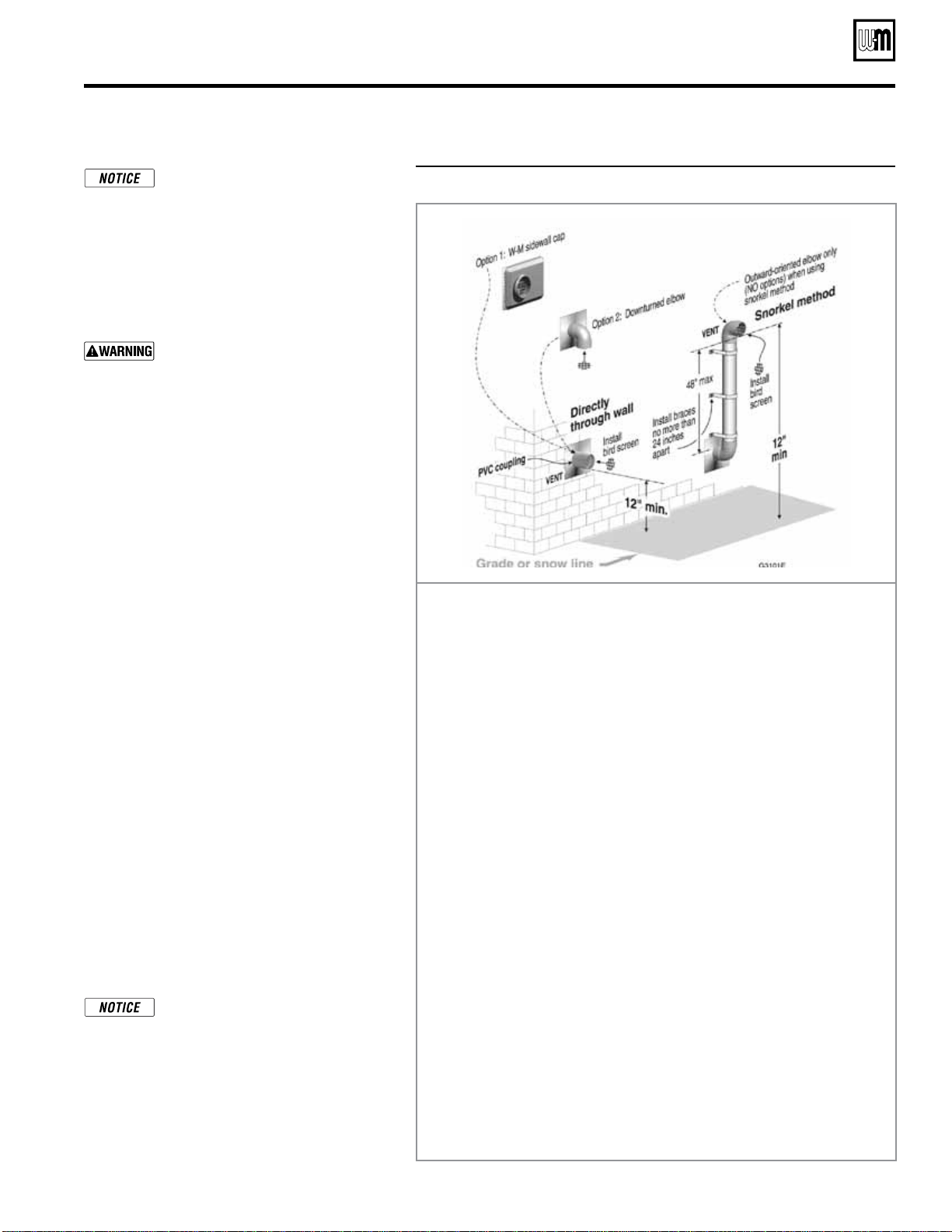
Part number 550-142-054/1211
51
GV90+ gas-fired water boiler — Boiler Manual
DIRECT EXHAUST — Sidewall
DO NOT sidewall vent DIRECT EX-
HAUST APPLICATIONS
at altitudes
above 5,500 feet. Sidewall venting is
only allowed for
DIRECT VENT ap-
plications (ducted combustion air)
at altitudes above 5,500 feet.
Allowable vent/air pipe materials &
lengths
Use only the vent materials and kits
listed in Figure 40, page 33. Provide
pipe adapters if specified.
1. Locate the termination such that the total air
piping and vent piping from the boiler to the
termination will not exceed the maximum
length given in Figure 39, page 32.
Determine termination location
1. The air and vent terminations must be
installed as shown in Figure 61 and in Fig-
ure 62, page 52.
2. The terminations must comply with clearances
and limitations shown in Figure 41, page 35.
3. Locate the termination so it is not likely to be
damaged by foreign objects, such as stones
or balls, or subject to buildup of leaves or
sediment.
Multiple vent/air terminations
1. Terminate each vent of multiple direct exhaust
GV90+ boilers as described in this manual for
individual vents.
2. Space terminations as required for best instal-
lation practices and required maintenance.
a. External venting greater than 4 feet
requires an enclosure around the vent
pipe. The vent termination must exit
through the enclosure as shown in Fig-
ure 61, page 51, maintaining all required
clearances.
Prepare wall penetration
Where the vent penetrates an outside
wall, the annular space around the
penetration must be permanently
sealed using approved materials to
prevent entry of combustion prod-
ucts into the building.
1. Wall penetration:
a. Cut a rough opening large enough to clear
the diameter of the metal thimble used.
Figure 61 INSTALLATION SEQUENCE — Direct exhaust sidewall
Step 1 Read and follow all instructions in this manual. DO NOT proceed with
vent installation until you have read page 29 through page 35,
page 49 and page 50.
Step 2 Install the boiler in a location that allows proper routing of vent piping to
the selected sidewall location.
Step 3 Make sure the selected sidewall termination location complies with Fig-
ure 41, page 35.
Step 4 Use only the vent materials listed in Figure 40, page 33. Provide pipe adapt-
ers where required. Vent piping length must not exceed the value shown in
Figure 39, page 32.
Step 5 Prepare the sidewall penetration and secure the sidewall plate as instructed
in this section. See “Prepare wall penetration” on page 51 and “Termination
and fittings” on page 52.
Step 6 The vent piping can terminate using the Weil-McLain vent/air plate (without
air piping connected). It can also terminate using a coupling or down-turned
elbow, or snorkeled and terminated with an elbow. See illustration above.
The coupling or elbow must butt against the outside plate.
Step 7 Install vent piping between the boiler and the sidewall opening. Slope
horizontal piping downward toward the boiler at least 1/4 inch per foot.
See page 48 for general guidelines.
Step 8 Install pipe supports every 5 feet on both the horizontal and vertical runs.
Install a hanger support within 6 inches of any upturn in the piping.
Step 9 Attach the vent termination exterior piping, if used: Use any of the con-
figurations shown above, as needed to ensure clearance above grade or
snow line.
Step 10 The vent pipe may run up as high as 4 feet with no enclosure. The vent
pipe must be secured with braces, and all clearances and lengths must be
maintained. Space braces no further than 24 inches apart.
Step 11 External venting greater than 4 feet requires an insulated enclosure around
the vent and air pipes. The vent and air terminations must exit through
the enclosure as shown in the illustration above, maintaining all required
clearances.
Part number 550-142-054/1211
GV90+ gas-fired water boiler — Boiler Manual
52
DIRECT EXHAUST — Sidewall (continued)
Figure 62 DIRECT EXHAUST — Sidewall — termination assembly
and termination options — all parts by installer except
where shown otherwise
b. Provide metal cover plates (item 2, Figure 62).
The outer plate MUST provide a stop to prevent
the vent elbow from being pushed inward. (See
NOTICE at right.) Hole diameters in the metal
plates must be 3
5
⁄8” for PVC pipe. For AL29-
4C vent pipe and coupling (or elbow) — size
hole large enough to clear vent pipe, but small
enough to prevent the coupling (or elbow) from
being pushed through.
The Weil-McLain sidewall termination kit
supplied with each boiler includes metal
plates with two openings. These plates can
be trimmed and used for direct exhaust
vent termination cover plates when the
vent diameter used matches the hole size
in the plates provided with the boiler.
c. Insert the galvanized metal thimble (by install-
er) in the vent pipe hole as shown in Figure 62.
2. Follow all local codes for isolation of vent pipe when
passing through floors or walls.
Termination and ttings
1. If using a coupling or elbow for the termina-
tion, prepare the vent termination fitting (Fig-
ure 62, page 52) by inserting a bird screen. Bird
screens are not supplied with the GV90+ boiler.
Purchase separately from Weil-McLain.
2. You can install the vent termination using either
of the configurations shown in Figure 61, page 51.
3. Maintain the required dimensions of the finished
termination piping as shown in Figure 61, page 51.
4. Do not extend exposed vent pipe outside of the
building more than shown in this document. Con-
densate could freeze and block vent pipe.
LEGEND for Figure 62
1 Vent piping
2 Cover plates
3 Galvanized thimble
4 Vent termination elbow
5 Bird screen
6 Extend vent pipe through outside plate enough to attach
termination coupling (or elbow when snorkeled).
7 Snorkel option (to elevate vent termination) — requires bird
screen
8 Coupling option — requires bird screen
9 Weil-McLain termination plate option (plate is supplied with
boiler) — bird screen not required
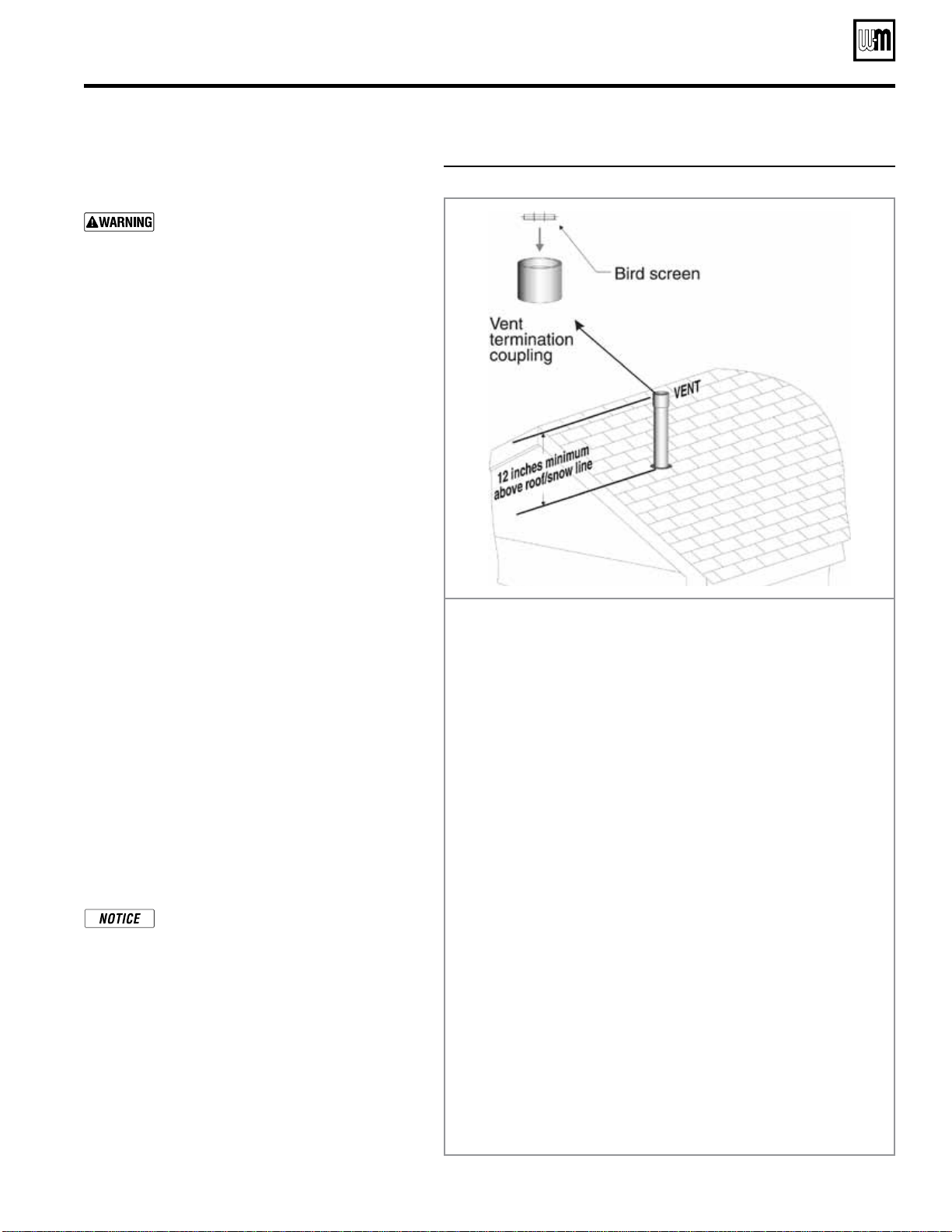
Part number 550-142-054/1211
53
GV90+ gas-fired water boiler — Boiler Manual
DIRECT EXHAUST — Vertical
Allowable vent/air pipe materials &
lengths
Use only the vent materials and kits listed
in Figure 40, page 33. Provide pipe adapt-
ers if specified.
1. Locate the termination such that the total air piping
and vent piping from the boiler to the termina-
tion will not exceed the maximum length given in
Figure 39, page 32.
Determine termination location
1. The vent terminations must be installed as shown
in Figure 63, page 53.
2. The terminations must comply with clearances and
limitations shown in Figure 41, page 35.
3. Locate the termination so it is not likely to be dam-
aged by foreign objects, such as stones or balls, or
subject to buildup of leaves or sediment.
Multiple vent/air terminations
1. Terminate each vent of multiple direct exhaust
GV90+ boilers as described in this manual for
individual vents.
2. Space terminations as required for best installation
practices and required maintenance.
Prepare roof penetration
1. Vent pipe penetration:
a. Cut a hole for the vent pipe. For either com-
bustible or noncombustible construction, size
the vent pipe hole at least 0.5” larger than the
vent pipe diameter.
b. Hole diameter in the metal plates must be at
least 4” for PVC pipe. For AL29-4C vent pipe
and coupling (or elbow) — size hole 0.5” larger
than vent pipe outside diameter.
c. Insert a galvanized metal thimble in the vent
pipe hole.
2. Follow all local codes for isolation of vent pipe when
passing through floors, ceilings and roofs.
3. Provide flashing and sealing boots sized for the vent
pipe and air pipe.
Where the vent penetrates the roof, the an-
nular space around the penetration must
be permanently sealed using approved
materials to prevent entry of combustion
products into the building.
Figure 63 INSTALLATION SEQUENCE — Direct exhaust vertical
Step 1 Read and follow all instructions in this manual. DO NOT
proceed with vent/air installation until you have read
page 29 through page 35, page 49 and page 50.
Step 2
Install the boiler in a location that allows proper routing of
all vent and air piping to the selected sidewall location.
Step 3 Make sure the selected vertical termination location com-
plies with Figure 41, page 35.
Step 4 Use only the vent materials listed in Figure 40, page 33.
Provide pipe adapters where required. Vent piping and air
piping lengths must not exceed the values shown in Fig-
ure 39, page 32.
Step 5 Prepare the vertical penetration and secure penetration
components as instructed in this section. See “Prepare roof
penetrations” on page 43 and “Termination and fittings” on
page 44.
Step 6 The vent piping must terminate in a coupling pointed
upward
as shown above.
Step 7 Install vent and air piping between the boiler and the verti-
cal termination. Slope horizontal piping downward toward
the boiler at least 1/4 inch per foot. Install pipe supports
every 5 feet on both the horizontal and vertical runs. Install
a hanger support within 6 inches of any upturn in the pip-
ing. See page 48 for general guidelines.
Step 8 Maintain minimum clearance of C\zn inch between vent pipe
and any combustible wall or material.
Step 9 Insert the vent piping through the vertical penetration and
secure the termination coupling.
Step 10 Maintain clearances shown above. Vent terminations must
be fitted with a bird screen as shown.
Part number 550-142-054/1211
GV90+ gas-fired water boiler — Boiler Manual
54
Gas piping
Connecting gas supply piping
Do not connect gas supply to boiler or at-
tempt to operate boiler unless the correct
orifice plate has been verified or installed
in accordance with page 8.
Except where otherwise instructed in
this manual, do not attempt to measure
or adjust the outlet pressure setting of
the gas valve.
The gas valve is factory
set to a slight negative pressure, and is
operated as a negative-pressure regulated
valve.
Failure to comply will result in malfunc-
tion of the boiler, causing severe personal
injury, death or substantial property
damage.
1. Refer to Figure 64 to connect gas supply to ½” NPT
boiler gas connection. Use wrench to hold factory-
installed gas cock.
2. Support piping with hangers, not by boiler or its
accessories.
3. Purge all air from gas supply piping.
4. Before placing boiler in operation, check boiler and
test all gas connections for leaks.
Do not check for gas leaks with an
open ame
— use bubble test. Failure
to use bubble test or check for gas leaks
can cause severe personal injury, death or
substantial property damage.
Close manual main shutoff valve dur-
ing any pressure testing at less than
14” w.c.
Disconnect boiler and gas valve from
gas supply piping during any pressure
testing greater than 14” w.c.
5. Use pipe dope compatible with propane gases.
Apply sparingly only to male threads of pipe joints
so that pipe dope does not block gas flow.
Failure to apply pipe dope as detailed
above can result in severe personal injury,
death or substantial property damage.
Figure 64 Gas supply connection to GV90+ boiler gas manifold
Honeywell VK8115V-1176 gas valve
• The Honeywell VK8115V-1176 gas valve operates with DC
voltage.
• The black power plug that connects to the gas valve contains
a DC rectifier.
• When the gas valve is energized, approximately 19 to 21 volts
DC voltage should be measured across the two outer pins of the
gas valve connector plug.
• There are 4 pins on the gas valve and 3 pin receptacles in the plug.
Only the two outer pins are used for powering the valve.
• To measure voltage, remove the screw and slightly lift the plug
until meter leads can touch end pins.
• Run boiler and test for proper voltage.
• Remember to re-install plug and tighten screw after testing.
Continuity cannot be checked in the gas valve con-
nector plug wiring due to the rectifier.
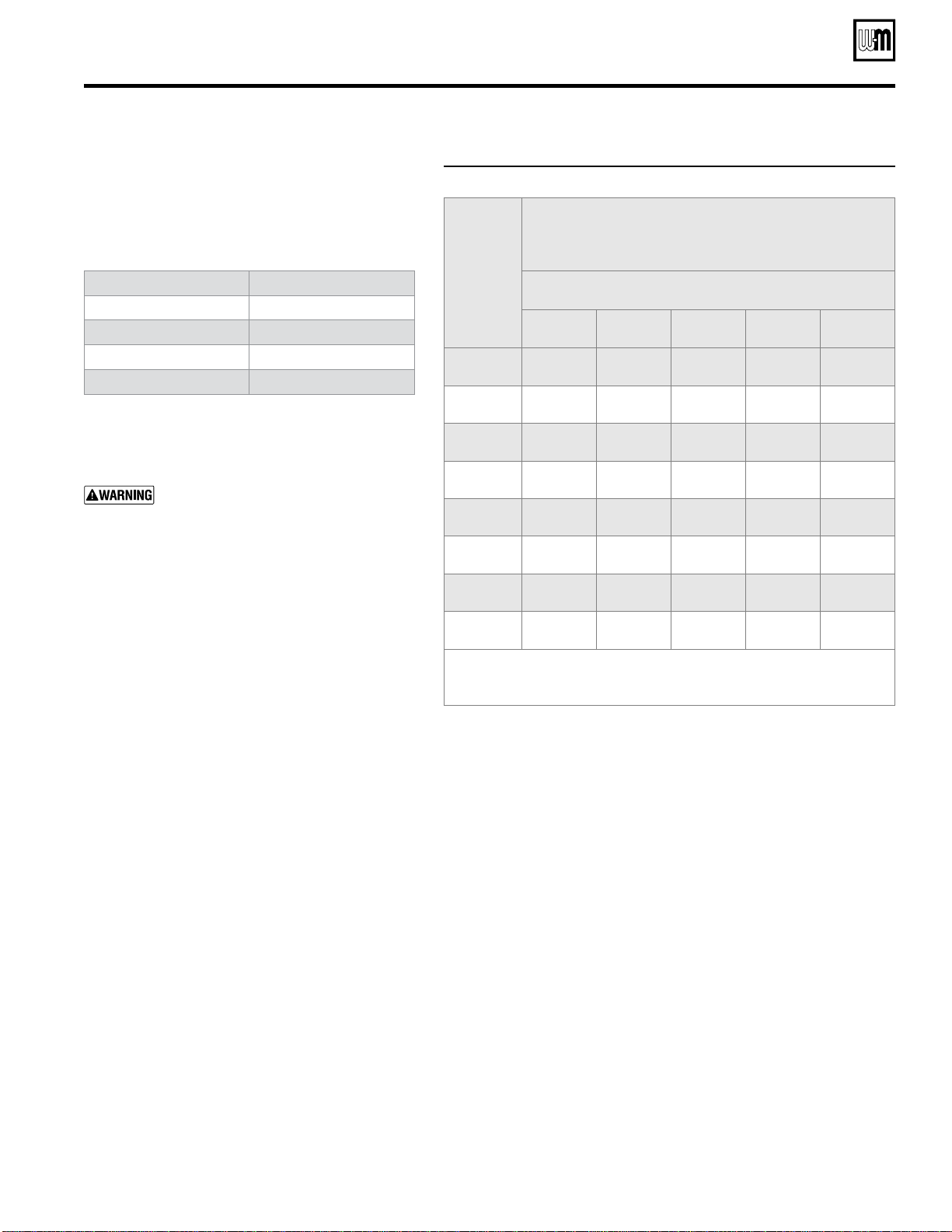
Part number 550-142-054/1211
55
GV90+ gas-fired water boiler — Boiler Manual
Figure 65 Pipe capacity for 0.60 specific gravity natural gas
Gas pipe
length
(feet)
Capacity in cubic feet of gas per hour
Natural gas only, with specic gravity of 0.60
Based on pressure drop of 0.3” w.c.
Gas pipe diameter —
½” ¾” 1” 1¼” 1½”
10
132 278 520 1050 1600
20
92 190 350 730 1100
30
73 152 285 590 860
40
63 130 245 500 760
50
56 115 215 440 670
75
45 93 175 360 545
100
38 79 150 305 460
150
31 64 120 250 380
For additional gas pipe sizing information, refer to ANSI Z223.1 (or
B149.1 orB149.2 for Canadian installations).
Gas piping (continued)
Natural Gas
1. Refer to Figure 65 for pipe length and diameter.
Size gas supply piping for total flow to all connected
appliances. For each GV90+ boiler, provide for the
following gas flow (cfh = cubic feet per hour):
Boiler model CFH natural gas
GV90+3 70
GV90+4 140
GV90+5 105
GV90+6 175
2. Inlet pressure required at gas valve inlet:
• maximum 14” w.c.
• minimum 3.5” w.c.
Install 100% lockup gas pressure regula-
tor in supply line if inlet pressure exceeds
14” water column. Adjust for 14” w.c.
maximum.
Propane Gas
1. Contact gas supplier to size pipes, tanks and 100%
lockup gas pressure regulator.
2. Adjust propane supply regulator provided by gas
supplier for 14” w.c. maximum pressure.
3. Inlet pressure required at gas valve inlet:
• maximum 14” w.c.
• minimum 3.5” w.c.
Part number 550-142-054/1211
GV90+ gas-fired water boiler — Boiler Manual
56
Wiring
For your safety, turn off electrical power supply at service
entrance panel before making any electrical connections
to avoid possible electric shock hazard. Failure to do so
can cause severe personal injury or death.
Installation must comply with:
National Electrical Code and any other national, state, provincial or
local codes or regulations. In Canada, CSA C22.1 Canadian Electrical
Code Part 1, and any local codes. Boiler must be electrically grounded as
required by National Electrical Code ANSI/NFPA 70-latest edition.
Wiring must be N.E.C. Class 1. Boiler must be electrically
grounded as required by National Electrical Code ANSI/
NFPA 70-latest edition.
To replace wiring, order complete harness assemblies
from Weil-McLain. If any original wiring as supplied with
boiler must be replaced, and a harness is not immediately
available, use only type 105°C wire or equivalent. Use this
wiring only as a temporary repair. Obtain a complete
harness from Weil-McLain.
Wiring connections
Power wiring
Connect 120 VAC power wiring as shown in Figure 66. The junction
box is located on the inside left jacket panel.
Watch the polarity of the circuit when connecting the
120 VAC power wiring. If the polarity is switched, the
integrated boiler control will lockout. The IBC will
flash the POWER light to indicate this problem. See the
troubleshooting information beginning on page 75.
Additional limit controls
Wire additional limit controls (if used) as shown in Figure 67.
Thermostat(s)
Install thermostats on inside walls, away from influences of drafts,
hot or cold water pipes, lighting fixtures, television, sun rays, or fire-
places.
Follow instructions with thermostat. If it has a heat anticipator, set heat
anticipator in thermostat to match power requirements of equipment
connected to it (ignition control and gas valve, zone valve contacts,
etc.). Wiring diagram on boiler gives setting for standard equipment
(ignition control and gas valve).
Thermostat wires are labeled “T-T” on boiler. Remove label before
connecting as shown in Figure 66. Route this wiring through the hole
in the upper left side jacket.
For zoned systems, substitute the zone valve end switches or circulator
relay contacts for the thermostat contact shown in Figure 66.
Figure 66 Field wiring connections — service switch
and thermostat (or end switch) provided
by installer
When using three-wire zone valves, take care
to avoid mis-wiring. This can impose an ad-
ditional 24 volts across the boiler control circuitry. The IBC
will sense this problem and lockout. It will flash the POW-
ER and TSTAT CIRC lights to indicate the problem. See
label on IBC for explanation of lockout conditions. To
verify before connecting to boiler, disconnect field thermo-
stat wires at boiler. Place a voltmeter across the leads. Then
watch the voltmeter as each zone is activated (by activating
zone thermostat). There should never be a voltage reading
across the two leads coming to the boiler. If you see a volt-
age reading, one or more zone valves is mis-wired.
Carbon monoxide detector
For Direct Exhaust units, a carbon monoxide
detector is required in the boiler room. The
carbon monoxide detector must be wired on
the same electrical circuit as the boiler. For
Direct Vent units, a carbon monoxide detector
that is wired on the same electrical circuit as
the boiler is strongly recommended.
Figure 67 Wiring location for additional limit controls

Part number 550-142-054/1211
57
GV90+ gas-fired water boiler — Boiler Manual
Figure 68 Ladder wiring diagram
Wiring (continued)

Part number 550-142-054/1211
GV90+ gas-fired water boiler — Boiler Manual
58
Figure 69 Schematic wiring diagram
Wiring (continued)

Part number 550-142-054/1211
59
GV90+ gas-fired water boiler — Boiler Manual
Start-up
Eliminate all system leaks. Continual fresh makeup water
will reduce boiler life. Minerals can build up in sections,
reducing heat transfer, overheating cast iron, and causing
section failure.
Clean system to remove sediment
1. You must thoroughly flush the system (without boiler connected)
to remove sediment. Sediment can affect chemical treatment of the
system and can damage system components.
2. For zoned systems, flush each zone separately through a purge
valve. (If purge valves and isolation valves are not already installed,
install them to properly clean the system.)
3. Flush system until water runs clean and you are sure piping is free
of sediment.
Water chemistry
Using softened water — Softened water can be corro-
sive. Pay special attention to the inhibitor level, follow-
ing the instructions in this manual and those supplied
with the inhibitor.
Water chemistry must be within the limits listed in
the following
. If the water differs in any way, consult
a water treatment company to set up a treatment pro-
gram to control the system water within these limits at
the time of initial fill and throughout system operating
life.
Failure to maintain water chemistry as specified can
result in damage to the boiler and system components,
resulting in potential for severe personal injury, death
or substantial property damage.
Water pH: Minimum = 7.0 | Maximum = 8.5
1. Maintain boiler water pH between 7.0 and 8.5. Check with litmus
paper or have chemically analyzed by water treatment company.
Hardness: Maximum = 6.0 grains per gallon
1. The water hardness must comply with the maximum value above.
High hardness will cause scale accumulation.
Chlorine: Maximum 200 ppm
1. Filling with chlorinated fresh water should be acceptable since
drinking water chlorine levels are typically less than 5 ppm.
2. Do not use the boiler to directly heat swimming pool or spa
water.
3. Do not fill boiler or operate with water containing chlorine in
excess of 200 ppm.
Antifreeze
1. Use only antifreeze listed by Weil-McLain as suitable for use with
GV90+ boilers. A list of approved antifreeze products is available
at www.Weil-McLain.com.
Freeze protection (when used)
Follow these guidelines to prevent possibility
of severe personal injury, death or substantial
property damage:
NEVER use automotive or standard glycol
antifreeze
, even glycol made for hydronic
systems
. Use only freeze-prevention fluids
recommended by Weil-McLain for applica-
tion in GV90+ Boiler systems.
Thoroughly ush any system that has
used glycol
before installing the new GV90+
boiler.
Review the material safety data sheet
(MSDS)
for the fluid used with the boiler
owner and leave a copy for reference. The
MSDS contains information on potential
hazards and first aid procedures for exposure
or ingestion.
Check antifreeze inhibitor level at least
annually
. Glycol concentration and inhibitor
levels may change over time. Add antifreeze
to increase concentration if necessary. Add
inhibitor as needed to bring to acceptable
level, using inhibitor test kit to verify.
When using freeze protection fluid with au-
tomatic fill,
install a water meter to monitor
water make-up
. Freeze protection fluid may
leak before the water begins to leak, causing
concentration to drop, reducing the freeze
protection level.
DO NOT exceed 50% antifreeze by volume.
Antifreeze moves more sluggishly than wa-
ter and can interfere with heat transfer. At
antifreeze concentrations higher than 50%,
sludge can develop in the boiler, potentially
causing damage to the heat exchanger.
Clean the system before lling. Always
drain and flush the system thoroughly before
filling with antifreeze. Sludge, iron oxide
deposits and other sediment in the system
inhibit flow and can cause rapid breakdown
of inhibitors.
Figure 71 Freeze protection guidelines

Part number 550-142-054/1211
GV90+ gas-fired water boiler — Boiler Manual
60
2. See Replacement parts at the end of this manual for Weil-McLain
part numbers to obtain antifreeze through a Weil-McLain dis-
tributor.
Use the correct amount of antifreeze
1. Determine the freezing temperature needed (to protect against
lowest likely temperature the system water will encounter).
2. Find the antifreeze concentration by volume needed for this tem-
perature from the antifreeze manufacturer’s data on the antifreeze
container.
3. Add up the volume (gallons) of all system piping and components,
including the expansion tank and boiler.
a. Boiler water content is listed in Figure 109, page 101.
b. Remember to include expansion tank water content.
4. Multiply this volume by the (percent) antifreeze needed to find the
number of gallons of antifreeze to add.
Fill and test water system
1. Fill system only after ensuring the water meets the requirements
of this manual.
Purge air from water system
1. Connect a hose to the purge valve (see purge/drain valves in piping
diagrams beginning with Figure 17, page 16. Route hose to an area
where water can drain and be seen.
Start-up (continued)
Check for gas leaks
Before starting the boiler, and during initial opera-
tion, use a leak detector or smell near the floor and
around the boiler for gas odorant or any unusual
odor. Remove boiler front door and smell interior
of boiler enclosure. Do not proceed with startup
if there is any indication of a gas leak. Repair any
leak at once.
DO NOT adjust or attempt to measure gas valve
outlet pressure except where instructed specifi-
cally in this manual. This setting is suitable for
natural gas and propane, requiring no field ad-
justment. Attempting to alter or measure the gas
valve outlet pressure without following the correct
procedures could result in damage to the valve,
causing potential severe personal injury, death or
substantial property damage.
Propane boilers only — Your propane supplier
mixes an odorant with the propane to make its
presence detectable. In some instances, the odor-
ant can fade, and the gas may no longer have an
odor. Before startup (and periodically thereafter),
have the propane supplier verify the correct odor-
ant level in the gas.
2. Close the boiler or system isolation valve between the
purge valve and fill connection to the system.
3. Close zone isolation valves.
4. Open quick-fill valve on cold water make-up line.
5. Open purge valve.
6. One zone at a time, open the isolation valves. Allow
water to run through the zone, pushing out the air. Run
until no noticeable air flow is present. Close the zone
isolation valves and proceed with the next zone. Follow
this procedure until all zones are purged.
7. Close the quick-fill water valve and purge valve and
remove the hose. Open all isolation valves. Watch that
system pressure rises to correct cold-fill pressure.
8. After the system has operated for a while, eliminate
any residual air by using the manual air vents located
throughout the system.
9. If purge valves are not installed in system, open manual
air vents in system one at a time, beginning with lowest
floor. Close vent when water squirts out. Repeat with
remaining vents.
10. Open automatic air vent (diaphragm-type or bladder-
type expansion tank systems only) one turn.
11. Starting on the lowest floor, open air vents one at a time
until water squirts out.
12. Repeat with remaining vents.
Pressurize system
1. Close manual and automatic air vents and boiler drain
valve.
2. Fill system to correct system pressure. Correct pressure
will vary with each application.
a. Typical cold water fill pressure for a residential
system is 12 psi (when using a 30 PSIG boiler relief
valve).
b. Pressure will rise when boiler is turned on and sys-
tem water temperature increases. Operating pressure
must never exceed 5 PSIG less than the boiler relief
valve setting.
3. At initial fill and during boiler startup and testing, check
system thoroughly for any leaks. Repair all leaks before
proceeding further.
Eliminate all system leaks. Continual fresh
make-up water will reduce boiler life. Minerals
can build up in sections, reducing heat trans-
fer, overheating heat exchanger, and causing
heat exchanger failure.
Use inhibitor supplied with boiler
1. The GV90+ boiler is shipped with Sentinel X100 inhibi-
tor and Sentinel inhibitor test kit. See Replacement parts
at the end of this manual for re-ordering information.
2. After filling the system as directed in these instructions,
use a caulking gun to inject the X100 inhibitor into the
system, following the instructions on the tube.
Part number 550-142-054/1211
61
GV90+ gas-fired water boiler — Boiler Manual
Start-up (continued)
3. Inject all of the inhibitor supplied with the boiler. Allow time for
the water to circulate and mix. Then check the inhibitor level. Add
additional inhibitor if necessary.
Check/verify water chemistry
1. The system may have residual substances that could affect water
chemistry.
2. After the system has been filled and leak tested, verify water pH
and chlorine concentrations are acceptable.
3. Verify antifreeze concentration, when used.
4. Follow the instructions on the Sentinel test kit to sample the system
water and verify inhibitor concentration.
Check inhibitor concentration annually
1. Test the pH of a sample of system water at least annually. The pH
of the water mixture must be between 7.0 and 8.5. (Or use the
Sentinel inhibitor test kit to check concentration.)
2. If pH is outside this range (or inhibitor test kit indicates low level),
the inhibitor level may not be sufficient to prevent corrosion.
3. Test antifreeze concentration.
Test antifreeze concentration at least annually. If concen-
tration is low, add antifreeze or drain system and refill
with correct mixture.
4. Follow instructions on antifreeze container to determine the
amount of antifreeze needed.
DO NOT exceed 50% by volume
concentration of antifreeze.
5. Check inhibitor level after adjustments are made.
Verify gas/air orifice plate
The proper orice plate must be used. Failure to do
so will cause severe personal injury, death or substantial
property damage.
1. Remove the jacket front panel.
2. Read the boiler size written on the gas/air orifice label tab, verifying
the correct size. See Figure 5, page 8 for details.
3. The orifice plate must be plain aluminum for natural gas. For
propane gas, the exposed tab of the plate should be red.
4. Replace the orifice plate if necessary, following the guidelines on
page 8.
Check thermostat circuit(s)
1. Disconnect the two external wires connected to the boiler thermo-
stat terminals (see Field wiring, beginning on page 56 for terminal
locations).
2. Connect a voltmeter across these two incoming wires. Close each
thermostat, zone valve and relay in the external circuit one at a
time and check the voltmeter reading across the incoming wires.
3. There should NEVER be a voltage reading.
4. If a voltage does occur under any condition, check and correct the
external wiring. (This is a common problem when using 3-wire
zone valves.)
5. Once the external thermostat circuit wiring is checked
and corrected if necessary, reconnect the external ther-
mostat circuit wires. Allow the boiler to cycle.
Inspect/fill condensate system
Inspect/check condensate lines and ttings
1. Inspect the condensate drain line, condensate PVC fit-
tings and condensate trap.
Fill condensate trap with water
1. Loosen the hose clamp (Figure 70, item 2) that secures
the condensate trap (Figure 70, item 1) to the bottom
of the recuperator (Figure 70, item 3).
2. Pull the condensate trap tube off of the recuperator
condensate drain nipple.
3. Use a funnel to feed water into the top of the conden-
sate tube.
4. Continue filling until water begins to flow out through
the condensate line (Figure 70, item 4).
5. Re-attach the condensate trap to the bottom of the
recuperator. Secure with the hose clamp.
6. Check for any leaks in the condensate drain line or fit-
tings. Repair any leaks.
7. Remove the temporary clamp (see step 2, above) from
the condensate drain tube.
The condensate trap must be filled with water
during all times of boiler operation to avoid
flue gas emission from the condensate drain
line. Prime the condensate trap by pouring
water into the outlet tee while restricting flow
in drain tube if boiler has been out of service
for an extended period. Failure to fill the trap
could result in severe personal injury or death.
Figure 70 Condensate trap assembly

Part number 550-142-054/1211
GV90+ gas-fired water boiler — Boiler Manual
62
Start-up (continued)
Figure 72 Check for igniter glow by looking into
observation port on front of blower
housing
Final checks before starting boiler
Review the boiler sequence of operation in Figure 75, page 65.
Verify that the boiler and system are full of water and all system
components are correctly set for operation.
High altitude locations (over 5,500 feet) — verify that the high
altitude pressure switch is installed per page 10.
Verify that condensate trap has been filled with water.
Verify electrical connections are correct and securely attached.
Inspect vent piping and air piping for signs of deterioration from
corrosion, physical damage or sagging. Verify air piping and vent
piping are intact and correctly installed per this manual.
To start the boiler
1. Turn OFF the boiler ON/OFF switch.
2. Read and follow the Operating Instructions, Figure 76, page 66.
If boiler does not start correctly
1. Check for loose connections, blown fuse or service switch off?
2. Is external limit control (if used) open? Is boiler water temperature
above boiler limit setting?
3. Is thermostat set below room temperature?
4. Is gas turned on at meter or boiler?
5. Is incoming gas pressure less than 4” w.c.?
6. If none of the above corrects the problem, refer to Troubleshooting,
beginning on page 75.
Check system and boiler after start-up
Check water piping
1. Check system piping for leaks. If found, shut down boiler and
repair immediately. (See WARNING on page 60 regarding failure
to repair leaks.)
2. Vent any remaining air from system using manual vents. Air in the
system will interfere with circulation and cause heat distribution
problems and noise.
Check vent piping and air piping
1. Check for gas-tight seal at every connection and seam of air piping
and vent piping.
Venting system must be sealed gas-tight to prevent flue
gas spillage and carbon monoxide emissions which will
result in severe personal injury or death.
Check gas piping
1. Check around the boiler for gas odor following the procedure of
page 54 of this manual.
If you discover evidence of any gas leak, shut
down the boiler at once. Find the leak source
with bubble test and repair immediately. Do
not start boiler again until corrected. Failure
to comply could result in severe personal
injury, death or substantial property damage.
Check the igniter
1. Inspect the igniter to verify operation as shown in Fig-
ure 72. The igniter glow may be difficult to see clearly,
depending on room lighting.
Gas valve adjustment — altitude
over 5,500 feet ONLY
Apply the following only when:
• Altitude is over 5,500 feet above sea level.
• You have obtained a high altitude kit (with tools needed)
and installed high altitude air pressure switch per the
instructions on page 10.
• Boiler has started correctly, following procedures on
previous pages.
You will need the tools shown in Figure 73. Adjust the gas
valve outlet pressure only if required as described in the
following instructions.
Connect and adjust manometer
1. Remove boiler jacket top and front panels.
2. Close manual gas supply valve and turn off electrical
power to boiler.
3. Using common bit screwdriver, remove outlet pressure
tap plug from gas valve and save plug (Figure 74).
4. Place the negative side of the manometer hose over end
of outlet pressure tap barrel.
Part number 550-142-054/1211
63
GV90+ gas-fired water boiler — Boiler Manual
Figure 73 Tools required for gas valve outlet
pressure measurement
1 U-tube manometer with tubing -
Manometer provides a fine scale by
slanting the manometer (Dwyer Model
1227 recommended).
2 Tee hose fitting (provided in high
altitude kit).
3
1
/16" flat head screw-
driver.
4 T-40 star drive for
gas valve pressure
regulator cover
screw.
Figure 74 Carefully connect manometer to gas valve
as shown, following instructions on this
page (see legend at left)
5. Position and zero manometer per manufacturer’s instructions. The
manometer must have at least 6” of tubing above the fluid level or
fluid may be drawn into the gas valve.
If manometer fluid is drawn into gas valve body, gas valve
must be replaced. Fluid in valve will cause it to malfunc-
tion, possibly resulting in severe personal injury, death
or substantial property damage.
6. Disconnect tube from hose barb on gas valve vent tap. Connect
tube end to tee hose fitting as shown in Figure 74. Then add length
of hose from tee hose fitting to gas valve vent tap.
7. Connect positive side manometer hose to top of the tee hose fit-
ting (Figure 74).
8. Connect negative side manometer hose to the barrel of the gas
valve outlet pressure tap (Figure 74).
Check gas valve setpoint
1. Open manual gas valve and turn on electrical power to boiler.
2. Start boiler and allow boiler to run for 5 minutes.
3. Read manometer. This is the gas valve outlet pressure set point. If
set point is between – 0.1” w.c. and – 0.3” w.c. go to step 7.
4. If gas valve setpoint is not between – 0.1” w.c. and – 0.3” w.c., use
T-40 driver to remove cap on gas valve pressure regulator.
5. Turn gas valve pressure regulator screw counter clockwise
to
lower gas valve set point to – 0.2” w.c.
6. Reinstall cap on gas valve pressure regulator using T-40 driver.
7. Cycle boiler off and on several times to verify gas valve set point.
If set point does not remain between - 0.1” w.c. and – 0.3” w.c.,
readjust as necessary.
8. Close manual gas supply valve and turn off electrical power to
boiler.
9. Remove manometer hose from gas valve outlet pressure tap barrel
and replace sealing screw.
10. Remove tee hose fitting and added tube.
11. Reinstall hose on gas valve vent tap hose barb.
12. Open manual gas supply valve and turn on electrical power to
boiler.
Legend for Figure 74
1 Gas control outlet pressure tap — located on back side of gas control. Use tap
closest to gas control gas outlet —Remove screw from gas control outlet pressure
tap and slide hose over tap
2 Add tee hose fitting as shown
3 Existing hose to gas control vent tap hose barb — Remove from gas control vent
tap and connect to end of tee as shown
4 Gas control pressure regulator cap
5 Honeywell Type VK8115V gas valve
6 Gas outlet vent tap
7 Gas outlet piping
8 Add hose from gas control vent tap to tee hose fitting
Start-up (continued)

Part number 550-142-054/1211
GV90+ gas-fired water boiler — Boiler Manual
64
Start-up (continued)
Final checklist
Use the checklist following to ensure boiler is
operating correctly.
Have the following been completed?
Is proper orifice plate installed? Refer to page 8 to check size and
fuel type.
Proper orifice plate must be used. Failure to do so will
cause severe personal injury, death or substantial prop-
erty damage.
Thermostat heat anticipator (if available) set properly? Refer to
Field wiring, page 56.
Read and followed all procedures and checks specified in the Start-
up section, beginning with page 59?
Perform the following
Inspect vent system for leaks. Verify vent (and air) piping are
functional and unobstructed.
Measure natural gas input:
a. Operate boiler 10 minutes.
b. Turn off other appliances.
c. At natural gas meter, measure time (in seconds) required to
use one cubic foot of gas.
d. Calculate gas input:
3600 x 1000
number of seconds from step c
= Btuh
e. Btuh calculated should approximate input rating on boiler
rating label.
Test limit control — While burner is operating, move indicator
on limit control below actual boiler water temperature. Blower
and burner should go off while circulator continues to operate.
Raise setting on limit control above boiler water temperature and
burner should reignite.
Test additional field-installed controls — If boiler has a
low water cutoff, additional high limit or other controls,
test for operation as outlined by manufacturer. Burner
should be operating and should go off when controls
are tested. When controls are restored, boiler should
restart.
Test ignition system (integrated boiler control):
f. Connect voltmeter to gas valve terminals.
g. Turn off manual gas valve.
h. Set thermostat to call for heat.
i. IBC will begin purge cycle, then activate igniter.
Igniter will glow for approximately 20 seconds.
Near end of 20 seconds, 24 VDC will show at gas
valve for approximately 6 seconds and then return
to 0 VDC. Control will attempt ignition two more
times, increasing igniter time to 30 seconds for these
attempts. The control will then lockout, flashing the
POWER and FLAME lights.
j. To restart system, follow Operating instructions on
boiler (also Figure 76, page 66). (Control will reset
after power has been off for at least 45 seconds.)
Set limit control(s) to system temperature requirements.
Adjust balancing valves and controls to provide design
temperature to system.
For multiple zones, adjust flow so it is about the same
in each zone or as required.
Cycle boiler with thermostat — Raise to highest setting
and verify boiler goes through normal start-up cycle.
Lower to lowest setting and verify boiler goes off.
Observe several operating cycles for proper operation.
Set room thermostat to desired room temperature.
Fill in Installation and service certificate (see back cover
of manual).
Review all instructions shipped with this boiler with
owner or maintenance person. Return instructions to
envelope and give to owner or place in pocket inside
front panel in boiler.
Part number 550-142-054/1211
65
GV90+ gas-fired water boiler — Boiler Manual
Figure 75 Integrated boiler control (IBC) sequence of operation — status light indications
STEPS
(After Step 8, the cycle goes back to Step 1)
Call for
Heat?
POWER TSTAT
CIRC
LIMIT PRESS
SWITCH
FLAME
Timing
1. Standby
• Waiting for call for heat
NO
—
2. Call for heat
• Circulator on
YES —
3. Limit circuit
• Limit controls closed
• Block switch contacts closed
• Blower on
YES —
4. Pressure circuit
• Pressure switch contacts closed
• Ignitor glows
YES
30 sec
5. Flame proven
• Gas valve open
• Ignitor remains on
YES
6 sec
6. Limit cycle
• Limit circuit open
• Gas valve closed
• Blower off after postpurge
YES
30 sec
7. Flame outage *
• Flame out
YES —
8. Thermostat satised
• Circulator off
• Blower postpurge
• Return to Step 1
NO 30 sec
= ON
= OFF
* If flame is not proven in 4 seconds, boiler recycles 2 times to retry for ignition before going into lockout. Recycle igniter timing
is 30 seconds. Postpurge and prepurge are performed on every cycle. In event of lockout, ignition control will automatically
restore sequence of operation after either:
•1hourwaitingperiod.
•Openingandclosingofthermostatcircuit.
•Removalof120VACpowerforatleast45seconds
Start-up (continued)
Part number 550-142-054/1211
GV90+ gas-fired water boiler — Boiler Manual
66
Figure 76 Operating instructions
Start-up (continued)
Part number 550-142-054/1211
67
GV90+ gas-fired water boiler — Boiler Manual
Figure 77 Service and maintenance schedules
Service technician
(see following pages for instructions)
Owner maintenance
(see following pages for instructions)
Annnual start-up
General:
• Addressreportedproblems,page68.
• Inspectboilerarea,page68.
• Inspectboilerinterior,page68.
• Inspectcondensatedrainsystem,page68.
• Inspectallpipingforleaks,page68.
• Inspectgaspiping,page68.
• Inspectthewatersystem,page68.
• Checkwatersystemchemistry,page68
• Inspectexpansiontank,page69.
• Inspectairopenings,page69.
• Inspectventsystemandairpiping,
page69.
• Inspectboilerheatingsurfaces,page69.
• Inspectigniter,page69.
• Inspectrecuperator,page70.
• Inspecttemperaturemixingsystem,
page70.
• Inspectlimitcontrolsandcutoffs,page70.
• Inspectgauges,page70.
• Inspectblowermotor,page70.
• Inspectoiled-bearingcirculators,page70.
• Inspectboilerreliefvalve,page71.
Additional if combustion or
performance indicates the need:
• FollowproceduresunderCleaningboiler
heatingsurfaces,page72toaccessboiler
componentslistedbelow.
• Cleanheatexchanger.
• Removeandcleanburnerusing
compressedaironly.
• Vacuumtheblower.
Review:
• Reviewwithowner.
Daily
• Checkboilerarea
• Checkairopenings
• Checkpressuregauge
Monthly
• Checkboilerinteriorpiping
• Checkventingsystem
• Checkairvents
• Checkcondensatedrainsystem
• Checkreliefvalve
Periodically
• Testlowwatercutoff(ifused)
• Cleanventtermination/airintake
screens
Every 6 months
• Oilblowermotor
• Operatereliefvalve
End of season
• Shutdownprocedure
Annual start-up and general maintenance schedule
Follow the Service and maintenance procedures given throughout
this manual and in component literature shipped with the boiler.
Failure to perform the service and maintenance could result in
damage to the boiler or system. Failure to follow the directions
in this manual and component literature could result in severe
personal injury, death or substantial property damage.
The boiler contains ceramic fiber
and fiberglass materials. Use care
when handling these materials per
instructions on page 107 of this
manual. Failure to comply could
result in severe personal injury.

Part number 550-142-054/1211
GV90+ gas-fired water boiler — Boiler Manual
68
Annual start-up
Address reported problems
1. Inspect any problems reported by owner and correct before pro-
ceeding.
Inspect boiler area
1. Verify that boiler area is free of any combustible materials, gasoline
and other flammable vapors and liquids.
2. Verify that air intake area is free of any of the contaminants listed
in Figure 36, page 30. If any of these are present in the boiler intake
air vicinity, they must be removed. If they cannot be removed,
reinstall the air and vent lines per this manual.
Inspect boiler interior
1. Remove jacket top and front door to inspect interior of boiler.
2. Vacuum any sediment and components.
Do not use solvents to clean any of the boiler compo-
nents. The components could be damaged, resulting in
unreliable or unsafe operation.
Inspect condensate drain system
1. Inspect the condensate trap hose for deterioration.
2. Check for any obstructions in the trap hose by squeezing the
tubing.
3. If there is any doubt the condensate drain system is flowing freely,
remove the clamp and hose from the bottom of the recuperator.
Slide a funnel outlet into the trap hose and pour water through. It
should exit at the termination of the condensate drain line.
Inspect all piping for leaks
Eliminate all system or boiler leaks. Continual
fresh make-up water will reduce boiler life.
Minerals can build up in sections, reducing
heat transfer, overheating heat exchanger, and
causing heat exchanger failure. Leaking water
may also cause severe property damage.
1. Inspect all water and gas piping and verify to be leak
free.
2. Look for signs of leaking lines and correct any problems
found.
3. Check gas line using procedure on page 54.
Inspect gas piping
1. Sniff near floor and around boiler area for any indica-
tion of a gas leak.
2. Test gas piping using bubble test, per page 54, if
there is any indication of a leak.
Inspect the water system
1. Verify all system components are correctly installed and
operational.
2. Check the cold fill pressure for the system. Verify it is
correct (usually around 12 PSIG).
3. Watch the system pressure as the boiler heats up (dur-
ing testing) to ensure pressure doesn’t rise too high.
Excessive pressure rise indicates expansion tank sizing
or performance problem.
4. Inspect automatic air vents and air separators. Remove
air vent caps and briefly press push valve to flush vent.
Reinstall caps. Make sure vents do not leak. Replace any
leaking vents.
Check water system chemistry
1. Check system water chemistry (pH and hardness). See
instructions beginning on page 59.
2. Check glycol and glycol inhibitor levels if using glycol/
water mixture. See instructions beginning on page 59.
3. Check Sentinel X100 inhibitor level in the water using
the Sentinel X100 Inhibitor Test Kit. Follow instructions
supplied with the kit. Add X100 inhibitor if needed to
bring to the correct level. (See Figure 96, page 89 for
part numbers.)
Do not use petroleum-based cleaning or
sealing compounds in boiler system
. Se-
vere damage to boiler will occur, resulting in
substantial property damage.
Annual start-up only by qualified
service technician
The boiler should be inspected and started annu-
ally, at the beginning of the heating season, only
by a qualified service technician. In addition, the
maintenance and care of the boiler designated in
Figure 77, page 67 and explained on the follow-
ing pages must be performed to assure maximum
boiler efficiency and reliability. Failure to service
and maintain the boiler and system could result
in equipment failure.
Electrical shock hazard — Turn off power to
the boiler before any service operation on the
boiler except as noted otherwise in this instruction
manual. Failure to turn off electrical power could
result in electrical shock, causing severe personal
injury or death.

Part number 550-142-054/1211
69
GV90+ gas-fired water boiler — Boiler Manual
Inspect expansion tank
1. Expansion tanks provide space for water to move in and out as the
heating system water expands due to temperature increase or contracts
as the water cools. Tanks may be open, closed or diaphragm or bladder
type. See page 13 of this manual for suggested location of expansion
tanks and air eliminators.
• Open-type — located above highest radiator or baseboard unit,
usually in the attic or closet. Has a gauge glass and overflow pipe
to a drain.
• Closed-type — welded gas tight and located above boiler. Tank is
partially filled with water, leaving an air cushion for expansion.
• Make sure this type of tank is fitted with a tank fitting, such
as the B & G Tank-Trol or Taco Taco-Trol. This fitting reduces
gravity circulation of air-saturated tank water back to the system
and prevents the air from bubbling up through the water as it
returns from the system.
• Do not use automatic air vents in systems with closed-type
tanks. The air will escape from the system instead of returning to
the tank. Eventually, the tank will waterlog and no longer control
pressurization. The boiler relief valve will weep frequently.
•
Diaphragm- or bladder-type — welded gas tight with a rubber
membrane to separate the tank pressurizing air and the water. May
be located at any point in the system, but most often found near
the boiler.
• Systems with this type of expansion tank require at least one
automatic air vent, preferably located on top of an air elimina-
tor, as shown in examples in this manual.
2. If relief valve has tended to weep frequently, the expansion tank may
be waterlogged or undersized.
• Closed-type tank — tank is most likely waterlogged. Install a
tank fitting if not already installed. Then check fill level per fitting
manufacturer’s instructions. If fill level is correct, check tank size
against manufacturer’s instructions. Replace with a larger tank if
necessary.
• Diaphragm- or bladder-type — first, check tank size to be sure it
is large enough for the system. If size is too small, add additional
tank (or tanks) as necessary to provide sufficient expansion. If tank
size is large enough, remove tank from system and check charge
pressure (usually 12 PSIG for residential applications). If tank won’t
hold pressure, membrane has been damaged. Replace tank.
Inspect air openings
1. Verify that combustion and ventilation air openings to the boiler room
and/or building are open and unobstructed. Check operation and wir-
ing of automatic combustion air dampers, if used.
2. Verify that boiler vent discharge and air intake are clean and free of
obstructions.
Inspect vent system and air piping
1. Visually inspect entire flue gas venting system and combustion air pip-
ing for blockage, deterioration or leakage. Repair any joints that show
signs of leakage in accordance with vent manufacturer’s instructions.
When air is ducted to boiler, verify that air inlet hose is connected and
properly sealed.
Failure to inspect for the above conditions and have them
repaired can result in severe personal injury or death.
Inspect boiler heating surfaces
The boiler contains ceramic fiber and
fiberglass materials. Use care when han-
dling these materials per instructions
on page 107 of this manual. Failure to
comply could result in severe personal
injury.
Electrical shock hazard — Turn off
power to the boiler before any service
operation
on the boiler except as noted
otherwise in this instruction manual.
Failure to turn off electrical power could
result in electrical shock, causing severe
personal injury or death.
1. Remove the jacket top panel and jacket front panel
after turning off power to the boiler.
2. Remove the two nuts retaining the
ueway in-
spection port cover
(page 3, item g). Remove the
ueway inspection port cover.
3. Inspect the boiler vent outlet area and heating
surfaces by looking through the opening.
4. If the boiler flueways show accumulation of soot,
follow
Cleaning boiler heating surfaces on
page 72 to remove the blower housing and clean
the boiler. If there is evidence of a large accumula-
tion of rusty scale deposits, check the temperature
mixing system.
5. Replace the
ueway inspection port cover.
Inspect igniter
1. Verify igniter operation — Look through blower
observation port (see Figure 78). Access the blower
by removing the boiler jacket front panel if not
already removed.
Annual start-up (continued)
Figure 78 Igniter observation port in blower

Part number 550-142-054/1211
GV90+ gas-fired water boiler — Boiler Manual
70
Inspect recuperator
1. Follow the procedure on page 73 to inspect the recuperator and
clean if necessary.
Inspect temperature mixing system
1. Carefully check the temperature of the system return piping as
it passes through the boiler jacket and on the return pipe inside
the boiler jacket
just before it enters the boiler sections. You may
do this with a surface pyrometer or by lightly touching the piping
with your fingers.
To avoid potential of severe burn — Do not rest hands
on or grasp pipes
. Use a light touch only. Return piping
may heat up quickly.
2. The temperature of the water entering the system should quickly
heat up to about
140°F, being considerably hotter than the return
water from the system.
3. This is accomplished with the
two internal boiler circulators.
The Bypass circulator (page 2, item 7) takes hot water from the
boiler supply outlet and blends it with return water. The System
circulator (page 2, item 6) slows down to aid in raising the return
temperature entering the sections.
4. If the
temperature mixing system does not work correctly, check
the two circulators to be sure they are flowing water. If the circula-
tors are operating normally but the temperature mixing system
does not maintain water at the enterance to the boiler sections at
140°F, you may need to replace the boiler IBC or water temperature
sensor (page 2, items 1 and 8).
Inspect limit controls and cutoffs
1. Inspect and test the boiler limit control. Verify operation by turning
control set point below boiler temperature. Boiler should cycle off.
Return dial to original setting.
2. Inspect and test additional limit controls or low water cutoffs
installed on system. Follow the device manufacturer's instructions.
Inspect gauges
1. Boiler pressure/temperature gauge — Inspect gauge and check
whether readings are reasonable. Replace if any signs of leakage from
case or improper readings.
2. System gauges (if installed) — Inspect and check readings of other
gauges in system.
Annual start-up (continued)
Figure 79 Blower motor
Inspect blower motor
1. See Figure 79. With boiler power Off, place a few drops
of Anderol 465 in each of the two oil cups.
Use only Anderol 465 to lubricate the blower
motor. Do not use universal household oils.
Motor could be damaged, resulting in possible
severe property damage.
Inspect oiled-bearing circulators
1. Both of the circulators installed in the boiler are water-
lubricated. No oiling is required.
2. Check other circulators in the system. Oil any circula-
tors requiring oil, following circulator manufacturer’s
instructions. Over-oiling will damage the circulator.

Part number 550-142-054/1211
71
GV90+ gas-fired water boiler — Boiler Manual
Annual start-up (continued)
Inspect boiler relief valve
1. Inspect the relief valve (Figure 80) and lift the lever to verify
flow as in the following warnings, excerpted from a relief valve
manufacturer’s warning label. Before operating any relief valve,
ensure that it is piped with its discharge in a safe area to avoid
severe scald potential. Read page 12 before proceeding further.
Safety relief valves should be reinspected AT LEAST
ONCE EVERY THREE YEARS, by a licensed plumb-
ing contractor or authorized inspection agency, to
ensure that the product has not been affected by cor-
rosive water conditions and to ensure that the valve
and discharge line have not been altered or tampered
with illegally. Certain naturally occurring conditions
may corrode the valve or its components over time,
rendering the valve inoperative. Such conditions are
not detectable unless the valve and its components
are physically removed and inspected. This inspec-
tion must only be conducted by a plumbing con-
tractor or authorized inspection agency — not by
the owner. Failure to reinspect the boiler relief valve
as directed could result in unsafe pressure buildup,
which can result in severe personal injury, death or
substantial property damage.
Following installation, the valve lever must be
operated AT LEAST ONCE A YEAR to ensure that
waterways are clear. Certain naturally occurring
mineral deposits may adhere to the valve, rendering
it inoperative. When manually operating the lever,
water will discharge and precautions must be taken
to avoid contact with hot water and to avoid water
damage. Before operating lever, check to see that a
discharge line is connected to this valve directing
the flow of hot water from the valve to a proper
place of disposal. Otherwise severe personal injury
may result. If no water flows, valve is inoperative.
Shut down boiler until a new relief valve has been
installed.
2. After following the above warning directions, if the relief
valve weeps or will not seat properly, replace the relief valve.
Ensure that the reason for relief valve weeping is the valve and
not over-pressurization of the system due to expansion tank
waterlogging or under-sizing.
To complete Annual Start-up,
perform startup and checks:
1. COMPLETE the annual start-up procedures
beginning on page 68.
2. Start boiler and perform checks and tests speci-
fied in this manual.
3. Verify cold fill pressure is correct and that operat-
ing pressure does not go too high.
4. Complete the check-out procedure on page 64.
Review with owner
1. Review the User’s Information Manual with the
owner.
2. Emphasize the need to perform the maintenance
schedule specified in the User’s Information
Manual (and in this manual as well).
3. Remind the owner of the need to call a licensed
contractor should the boiler or system exhibit
any unusual behavior.
4. Remind the owner to follow the proper shutdown
procedure and to schedule an annual startup at
the beginning of the next heating season.
Figure 80 Relief valve
Part number 550-142-054/1211
GV90+ gas-fired water boiler — Boiler Manual
72
Service & maintenance
Figure 81 Blower housing removal procedure
1 Blower assembly
2 Blower support bracket
3 Blower motor wiring harness
4 Air pressure switch
5 Blower flange gasket (
replace this)
6 Burner cone and ring assembly
7 Igniter gasket (
replace this)
8 Gas/air orifice plate
9 Red pressure switch hose
10 White pressure switch hose
11 Inlet air hose and clamps
12 Gas tubing
13 Igniter
14 Gas valve and bracket
Cleaning boiler heating surfaces
The service procedures in this manual
must only be performed by a qualified
boiler service technician. Failure to com-
ply could result in severe personal injury,
death or substantial property damage.
The boiler contains ceramic fiber and
fiberglass materials. Use care when han-
dling these materials per instructions
on page 107 of this manual. Failure to
comply could result in severe personal
injury.
1. If inspection of the boiler flueways indicates the presence
of soot, cl
ean the boiler heating surfaces using the
following procedure. The process requires remov-
ing the blower housing to allow spraying water
through the boiler combustion chamber.
2. Before proceeding, obtain a GV90+ gasket replace-
ment kit, consisting of igniter, recuperator, flueway
inspection port and blower flange gaskets.
To remove the blower assembly
1. Turn off boiler by turning down the thermostat.
Then turn off power at the boiler service switch.
Close manual gas valve on incoming gas line to
boiler.
Turn off power and gas to the boiler.
Failure to do so can cause severe personal
injury, death or substantial property
damage.
Wait several minutes after boiler has
stopped to allow the igniter to cool to
avoid severe personal injury or death.
2. See Figure 81.
3. Disconnect:
a. Remove union outside of boiler
b. Gas tubing from gas valve outlet by removing
the 4 screws securing the outlet fitting to the
valve. (Save the o-ring in the fitting.)
c. Remove gas valve and bracket
d. Hose from gas valve to gas/air manifold
e. Pressure switch hoses
f. Air inlet hose
g. Blower motor wiring harness from IBC
h. Igniter harness connected to igniter plug
i. Blower support bracket (remove screw secur-
ing blower housing to bracket — on left side of
blower housing)
j. Ground wire.
4. Remove the two igniter screws and washers. Care-
fully remove the igniter. Use care when handling —
igniter is very brittle. DO NOT touch igniter surface
with hands or expose to any greasy substances.
5. Remove nuts from studs securing blower housing
to front section.
6. Grasp blower housing and pull free from studs. Turn clockwise slightly,
until blower assembly can be removed safely from inside of boiler jacket.
7. Remove burner cone and gasket for inspection.
To clean heating surfaces
1. Remove the flueway inspection port cover (page 3, item g), if not al-
ready off of the boiler.
2. Place a catch pan under the inspection port to catch the cleaning
water.
3. Spray water into the boiler combustion chamber opening.
4. Catch the runoff water in the pan below the inspection port.
5. Continue process until flueways are clean.
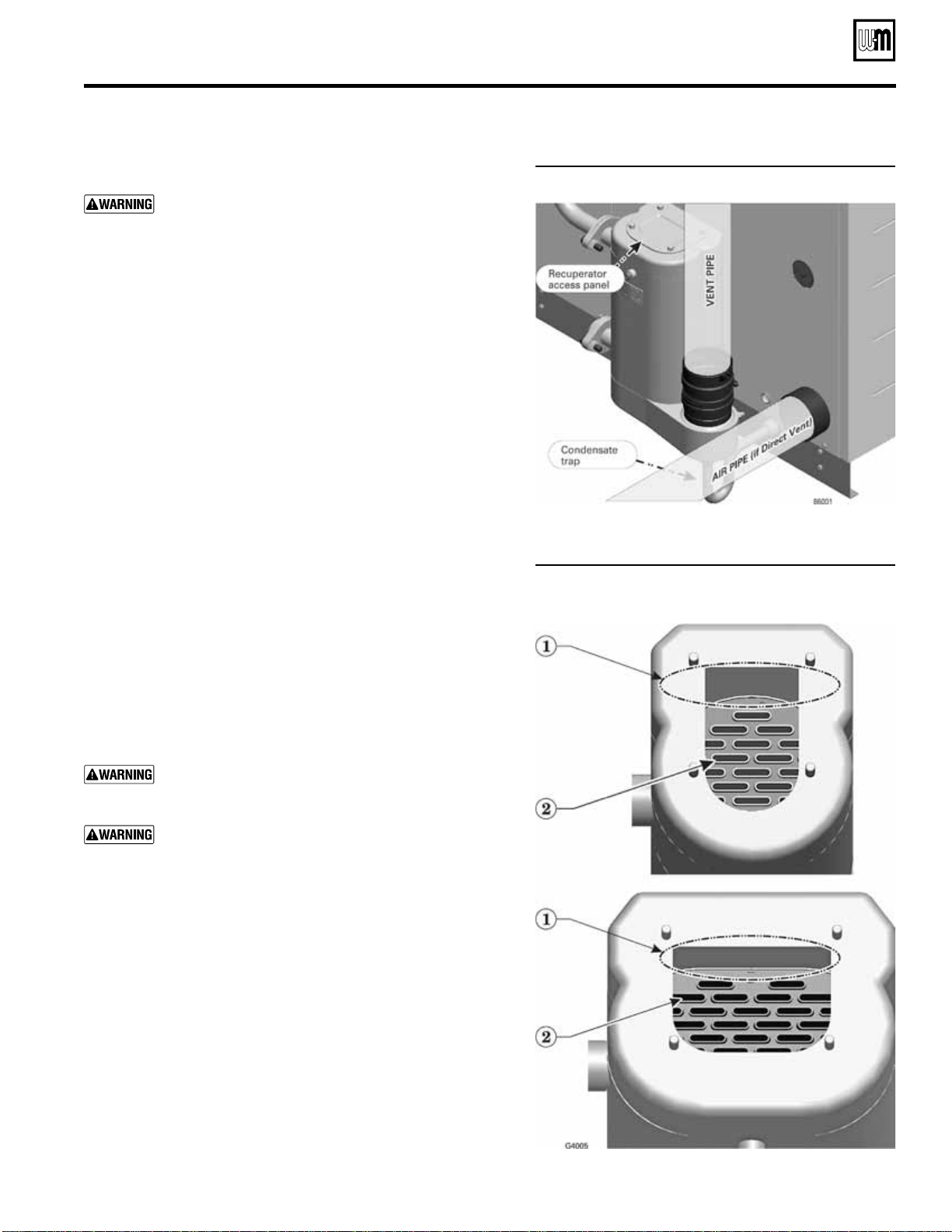
Part number 550-142-054/1211
73
GV90+ gas-fired water boiler — Boiler Manual
Service & maintenance (continued)
To clean the burner
The burner may contain ceramic fiber particles. Use
care when handling these materials per instructions on
page 107 of this manual. Failure to comply could result
in severe personal injury.
1. Clean the burner ports with a soft brush.
2. Use compressed air to blow out any particulate if necessary. Use
caution to avoid particulate being blown into the building.
To replace blower assembly
1. Place a new blower flange gasket over the studs at combustion
chamber opening.
2. Reinstall burner cone into chamber opening.
3. Position blower assembly over studs. Install nuts and tighten.
4. Install igniter and new igniter gasket. Fasten with screws and wash-
ers. Tighten only with hand-held screwdriver. DO NOT use electric
or pneumatic driver. Excessive torque will damage igniter. Do not
exceed 20 inch-pounds torque.
5. Connect:
a. Gas valve and piping (4 screws)
b. Gas tubing to gas valve outlet
c. Pressure switch hoses
d. Hose from gas valve to gas/air manifold
e. Air inlet hose
f. Blower motor wiring harness to IBC
g. Igniter harness to igniter plug
h. Blower support bracket (with screw)
i. Ground wire.
6. Be sure all wiring and hose connections are correct per Fig-
ure 81, page 72and are secure on the hose barb fittings.
Inspecting and cleaning the recuperator
Turn off power and gas to the boiler. Failure to do so
can cause severe personal injury, death or substantial
property damage.
Wait several minutes after boiler has stopped to allow
the boiler components to cool to avoid severe personal
injury or death.
1. Remove the recuperator access panel and gasket (see Figure 82)
and inspect the interior with a flashlight.
2. If there are indications of debris or corrosion, disconnect the
condensate trap from the bottom of the recuperator and place a
catch pan underneath.
3. Flush the flueway (Figure 83, item 1) and tubes (Figure 83, item 2)
thoroughly with fresh water, allowing the water to drain out
through the recuperator condensate opening.
4. If all of the water doesn't drain from the flueway (Figure 83,
item 1), the drain holes (see Figure 84) may be plugged. Remove
the recuperator using the procedure under Removing/cleaning/
re-installing the recuperator, page 74.
Figure 82 Recuperator access and cleaning
Figure 83 Recuperator with access panel removed
(GV90+3/4 top, GV90+5/6 bottom)
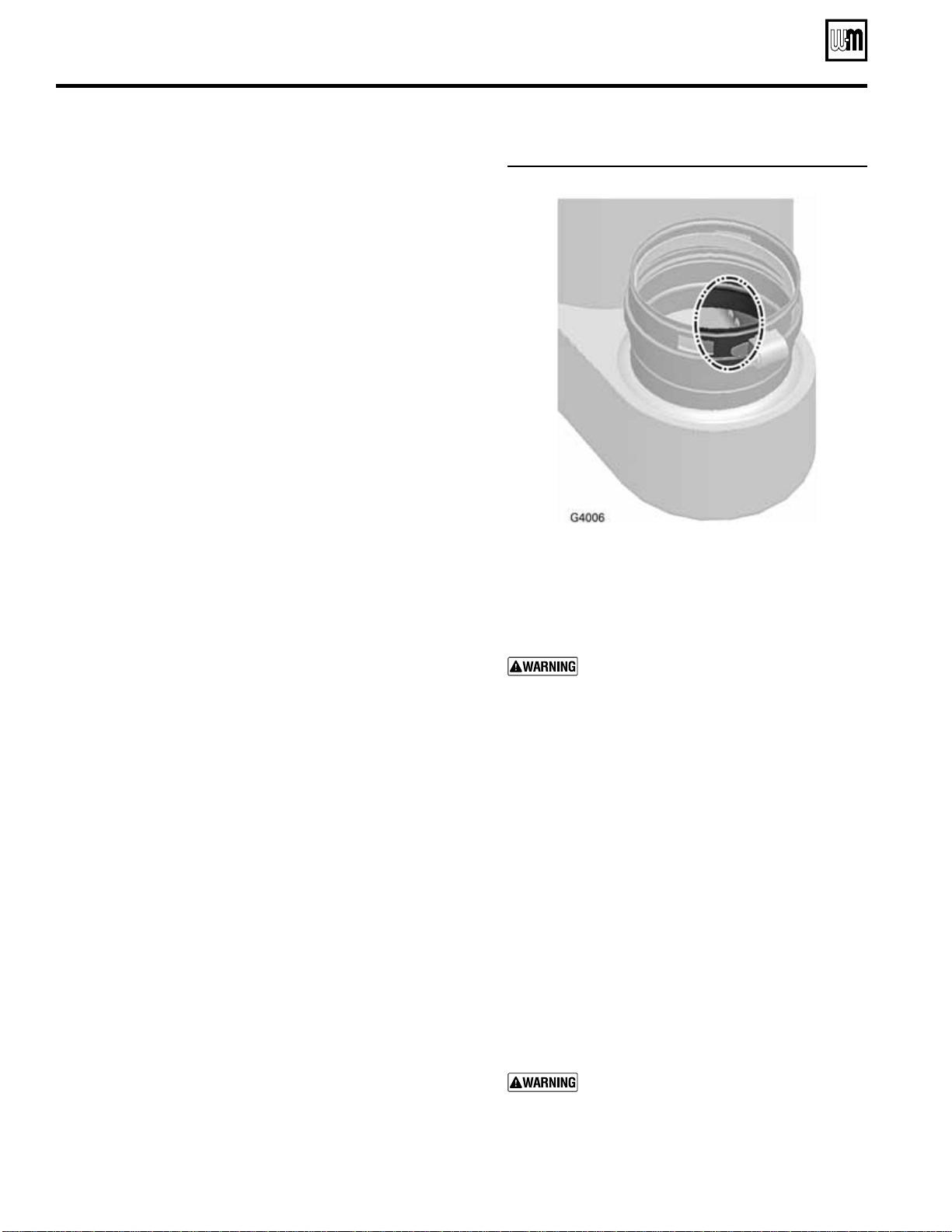
Part number 550-142-054/1211
GV90+ gas-fired water boiler — Boiler Manual
74
Removing/cleaning/re-installing the recuperator
Disconnect the vent pipe from the recuperator
1. The vent pipe must be disconnected (at the in-line flue drain, item
A in Figure 7, page 9).
2. If the vent piping can be moved enough, loosen the flue pipe clamp
on the in-line flue drain. Then lift the flue pipe up and move aside
slightly.
3. If the vent piping cannot be moved, then cut the flue pipe carefully
so a coupling can be inserted later, or remove a section of vent pipe
if using stainless vent pipe.
Isolate boiler and drain partially
1. Remove the jacket top panel and front panel.
2. Allow time for the boiler to cool down if it has been operating.
3. Close the isolation valves on the boiler supply and return con-
nections.
4. The boiler will have to be partially drained.
a. Place a large pan under the boiler drain valve.
b. Slowly open the drain valve and allow about a gallon of water
to drain out.
c. Place the pan under the water connection flanges on the re-
cuperator.
d. Loosen the upper recuperator flange and allow any water in
the line to run out.
e. Loosen the lower recuperator flange (return connection) and
allow the water in the line and recuperator to drain out.
5. After the recuperator and water lines have been drained, disconnect
both recuperator flanges.
Remove the recuperator
1. See Figure 102, page 95. Loosen the (4) nuts that secure the recu-
perator to the boiler.
2. Carefully slide the recuperator off of the (4) studs.
3. Disconnect the plug-in connector on the thermal fuse (Fig-
ure 102, page 95, item 27).
4. Loosen the flue adapter clamp and remove the in-line drain fitting
from the flue adapter.
5. Dump any remaining water from the recuperator.
6. Look through the flue adapter and locate the flueway drain holes
as shown in Figure 84.
7. Use a brush or other means to remove blockage from these
holes.
8. Rinse the recuperator thoroughly.
Re-install the recuperator
1. Inspect the recuperator gaskets to make sure all are in good condi-
tion. Replace if there is any sign of damage.
2. Attach the recuperator at the boiler connection.
3. Secure with the four nuts.
4. Re-connect the water connections to the upper and lower recu-
perator flanges.
5. Re-insert the in-line drain fitting into the recuperator vent adapter.
Tighten the clamp to secure in place.
6. Re-connect the plug-in connector on the thermal fuse (Fig-
ure 102, page 95, item 27).
Figure 84 Recuperator flueway drain holes
Service & maintenance (continued)
Re-install the condensate trap and recuperator ac-
cess cover
1. Replace the condensate trap and recuperator access
cover — tighten bolts securely (do not exceed 18 inch-
pounds, 2 N-m, torque).
If the recuperator shows signs of significant
corrosion or deterioration, contact Weil-
McLain for recommendations on investigat-
ing the cause and replacing the recuperator if
necessary.
Make sure the recuperator access cover gasket
is in good condition. Replace if necessary.
Make sure the recuperator access cover and
the condensate trap are re-installed securely.
Failure to comply with the above could result
in severe personal injury, death or substantial
property damage.
Re-connect the vent pipe
1. If the vent pipe was lifted out, re-insert the vent pipe
into.
2. If the vent pipe was cut, install a coupling in the vent
line to allow re-connection.
3. If a section was removed (stainless vent pipe), replace
the section.
4. Re-connect the vent pipe to the in-line drain fitting and
tighten the clamp.
When replacing the vent pipe, follow all in-
structions in this manual to ensure the vent
is properly completed. Failure to properly the
vent pipe could result in severe personal in-
jury, death or substantial property damage.
Part number 550-142-054/1211
75
GV90+ gas-fired water boiler — Boiler Manual
Troubleshooting
VERIFY PROPER OPERATION AFTER
SERVICING.
Label all wires prior to disconnection when servicing
controls. Wiring errors can cause improper and danger-
ous operation.
Never jumper (bypass) any device except for momentary
testing as outlined in Troubleshooting charts. Severe
personal injury, death or substantial property damage
can result.
The IBC and boiler controls can malfunction if they get
wet. Never try to use a control that has been flooded or
wet. Replace it. Failure to comply can result in severe
personal injury, death or substantial property damage.
The boiler contains ceramic fiber and fiberglass materials.
Use care when handling these materials per instructions
on page 107 of this manual. Failure to comply could
result in severe personal injury.
Before troubleshooting
1. Have a voltmeter that can check 120 VAC, 24 VAC, 24 VDC and
a continuity checker.
2. Check for 120 VAC (min. 102-max.132) to boiler.
3. Make sure thermostat is calling for heat and contacts (including
appropriate zone controls) are closed. Check for 24 VAC between
thermostat wire nuts and ground.
4. Have an inclined manometer with 0 – 2” w.c. range.
Check the following
1. Wire connectors to IBC are securely plugged in at IBC and origi-
nating control.
2. Hoses are properly and securely plugged in and are not dam-
aged.
Checking the air pressure switch
Do not use manometer as shown in Figure 85 to test gas
valve outlet pressure. Where instructed in this manual
to check gas valve outlet pressure, follow instructions
carefully, particularly regarding connection of manom-
eter. Manometer fluid will cause permanent damage to
gas valve. Severe personal injury, death or substantial
property damage can result.
Check switch pressure setting
1. See Figure 85.
2. Remove both air pressure switch hoses from air pressure switch.
3. Install tees and tubing as shown in Figure 85 to inclined manometer.
4. Turn off gas valve and set thermostat to call for heat. Blower will
run but burner will not ignite.
5. Check for 24 VAC between both air pressure switch terminals and
ground.
Figure 85 Connecting a manometer to check
air pressure switch. DO NOT use this
arrangement to check gas valve
6. If manometer reading is at least 1.0” w.c., but there is
not 24 VAC between both air pressure switch terminals
and ground, replace air pressure switch.
Troubleshooting air pressure reading
1. If manometer reading is lower than 1.4” w.c. check for
possible causes:
• Blockage in hoses.
• Loose blower wheel on motor shaft.
• Blower motor not at proper rpm.
• Blockage in air inlet or hose.
• Blockage in flue pipe or termination.
• Condensate trap filled w/condensate.
Return to normal operation
1. When pressure reading is proper and air pressure switch
is operating properly, remove tees and reinstall hoses to
air pressure switch.
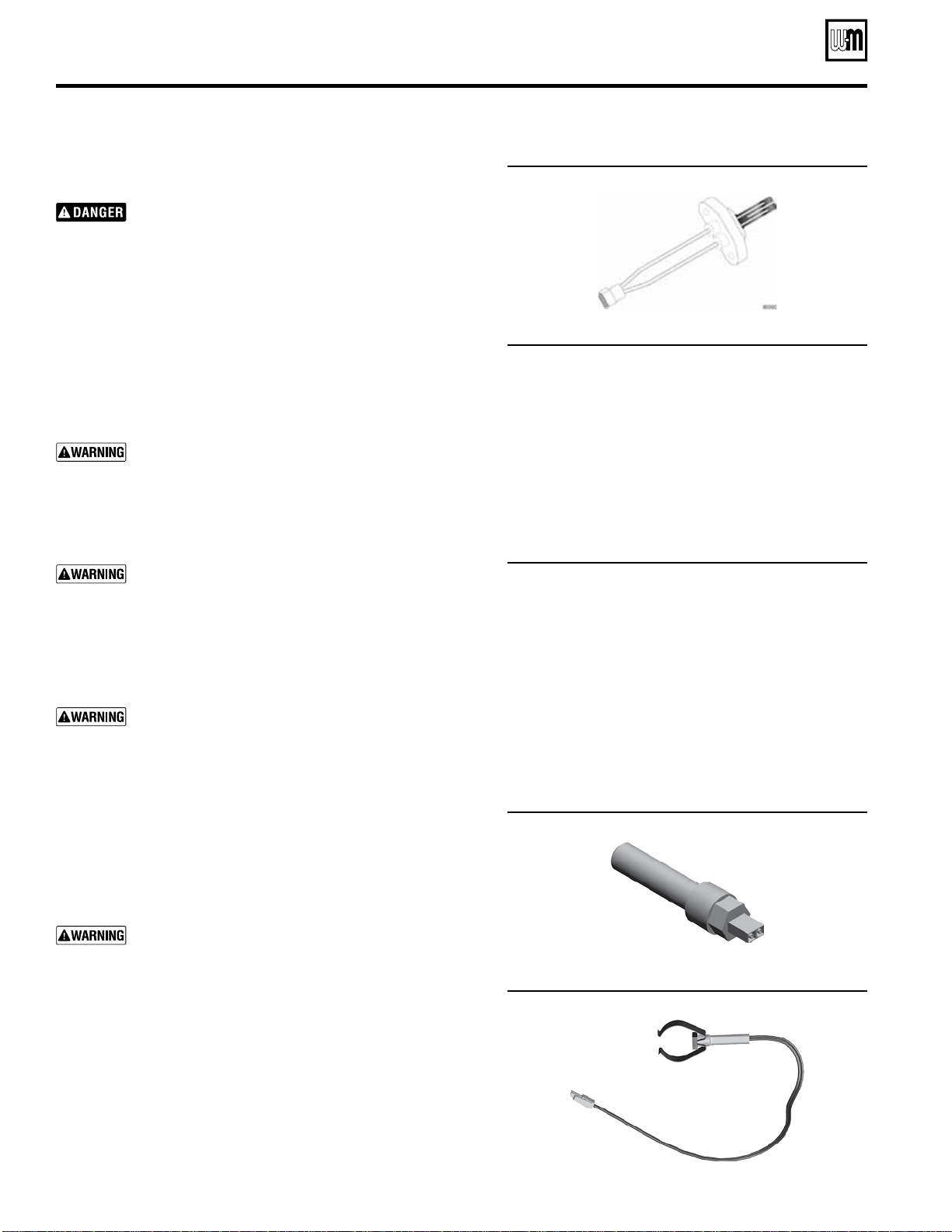
Part number 550-142-054/1211
GV90+ gas-fired water boiler — Boiler Manual
76
Troubleshooting (continued)
Figure 86 Igniter
Figure 87 Gas valve
Figure 88 Blower housing
Figure 89 Thermal fuse
Figure 90 Return temperature sensor
Igniter
Wait several minutes until igniter cools down before at-
tempting replacement. Failure to do so will cause severe
personal injury.
1. Disconnect igniter (Figure 86) from igniter wiring harness and
remove igniter before removing from blower assembly.
2. Replace igniter gasket if original gasket is frayed or damaged OR
if room-temperature resistance across igniter is not between 40
and 95 ohms.
3. Igniter is fragile — handle with care. Do not touch igniter surface
with bare hands. Body oils can cause failure of the carbide.
Gas Valve
The gas valve (Figure 87) operates with a negative pres-
sure at the outlet — approximately –0.2” w.c. — DO
NOT set gas pressure higher than this.
Follow instructions in this manual carefully if testing
gas valve outlet pressure. Failure to comply can result in
severe personal injury or death.
The gas valve outlet is bolted to the gas line adapter and
sealed with an o-ring. When replacing valve, replace only
with valve listed in this manual for use with the GV90+
boiler. Failure to comply could result in severe personal
injury, death or substantial property damage.
Blower Housing
Do not disassemble blower housing (Figure 88). A
fire or explosion causing severe personal injury, death or
substantial property damage can result. If you suspect a
problem, replace blower housing. Follow instructions on
page 72 for blower housing removal and replacement.
Thermal fuse
1. The thermal fuse (Figure 89) protects vent pipe from excess flue
temperatures.
2. If the thermal fuse opens, it must be replaced. See page 94 for
replacement information.
If the thermal fuse opens, investigate the cause before
replacing switch and starting the boiler. DO NOT attempt
to jumper the switch. Failure to comply could result in
severe personal injury, death or substantial property
damage.
Return temperature sensor
1. See Figure 90.
2. Resistance check method:
a. With the boiler operating, use a contact thermometer to
measure the temperature of the return pipe next to the return
temperature sensor. Make a note of the temperature.
b. Turn the boiler ON/OFF switch off.
Part number 550-142-054/1211
77
GV90+ gas-fired water boiler — Boiler Manual
c. Immediately disconnect the return temperature sensor plug from
the IBC.
d. Measure the resistance of the sensor. Write down the result.
e. Let the sensor cool to room temperature and measure the resistance
again. Write down the result.
f. Compare the sensor resistances at both temperatures to the closest
temperatures in Figure 91.
g. If the measured values are within 10% of the values listed, the sen-
sor is good. If not, replace the sensor. See Replacement parts for
the part number.
3. Fixed resistor method
a. With the boiler power OFF, disconnect the return temperature
sensor plug at the IBC.
b. Insert a 2500-ohm resistor into the IBC sensor plug.
c. Restart the boiler.
d. If the boiler operates with the resistor, but not with the sensor, try
replacing the sensor. See Replacement parts for the part number.
IBC (integrated boiler control)
Make sure ground wiring is installed per wiring diagram. Good grounding
is extremely important for proper operation.
Solder or water splatter between plugs and circuit board
can cause improper operation of IBC. Place a shield over the
boiler internal controls and components during installation.
Failure to comply could result in severe personal injury, death
or substantial property damage.
IBC indicator lights — lockout modes
• See Charts 1 through 8 in this section for detailed trouble-shooting
procedures.
• To reset control after a lockout, turn off power at the 120 VAC service
switch or turn down all thermostats. Wait 45 seconds. Then restore
power and call for heat.
• After an over-temperature lockout (POWER and LIMIT lights flash-
ing), the control will only reset after interruption of 120 VAC for 45
seconds. (And temperature at return water temperature sensor must
be below 240°F.)
POWER light ashing alone
• Usually indicates reversed polarity of 120 VAC power wires.
POWER and TSTAT CIRC lights ashing
• Usually indicates stray voltage on external thermostat circuit wires
or return water temperature entering boiler sections has not reached
140°F within 20 minutes.
POWER and LIMIT light ashing alternately
• Usually indicates that limit circuit failed to cut off boiler at high tem-
perature — return water temperature sensor has sensed water over
235°F.
POWER and PRESS SWITCH lights ashing
• Usually indicates pressure switch is closed when it should not be, or
pressure switch failed to close within 5 minutes of blower starting.
Troubleshooting (continued)
Figure 91 Return temperature sensor resistance
Temperature
°F
Resistance
Ohms
Temperature
°F
Resistance
Ohms
60 15300 140 2480
70 11900 160 1680
80 9310 180 1160
100 5840 200 810
120 3760 212 674
Figure 92 GV90+ Integrated Boiler Control (IBC)
POWER and FLAME lights ashing
• Usually indicates control has had three unsuccessful
ignition attempts or sensed flame when it shouldn’t
be there. Boiler may not be properly grounded.
IBC indicator lights —
non-lockout modes
TSTAT CIRC light ashing alone
• Usually indicates return water temperature sensor
detects water at boiler return pipe less than 40°F.
Both internal circulators will run continuously,
even with no call for heat, until temperature rises.
LIMIT light ashing alone
• Usually indicates an open or shorted return water
temperature sensor.
Troubleshooting the IBC
• See Figure 93, page 78 for location of harness plug
receptacles and plugs on the IBC.

Part number 550-142-054/1211
GV90+ gas-fired water boiler — Boiler Manual
78
Figure 93 IBC harness plug receptacle and indicator light locations
Troubleshooting (continued)
Part number 550-142-054/1211
79
GV90+ gas-fired water boiler — Boiler Manual
Troubleshooting (continued)
Figure 94 Common causes and possible corrections, part 1
Symptom Common Causes Possible Corrections
Rapid cycling — boiler
turns on and off frequently
Thermostat installed where drafts
or heat affect reading
Locate thermostat on inner wall away from
heat sources or cool drafts.
Heat anticipator in thermostat
adjusted incorrectly
Adjust thermostat per manufacturer’s
instructions.
Incorrect limit setting Set limit according to system needs.
Maximum setting is 200°F. Increase limit
setting to decrease cycling.
Insufficient water flow through
boiler
Check all valves to and from boiler. Return
to proper setting.
Confirm circulator size.
Frequent release of water
through relief valve
Expansion tank sized too small Call qualified service technician to check
expansion tank operation and size.
Flooded expansion tank Call qualified service technician to check
expansion tank operation.
Inoperative limit control Call qualified service technician to replace
limit control.
Need to frequently add
makeup water
Leaks in boiler or piping Have qualified service technician repair
leaks at once to avoid constant use of
makeup water. Makeup water can cause
mineral deposits which, in turn, can cause
boiler section failure. Do not use petroleum-
base stop-leak compounds.
Black water condition
Oxygen corrosion due to leaks in
boiler and piping
Have qualified service technician repair at
once. Keep pH of water between 7.0 to 8.5.
Part number 550-142-054/1211
GV90+ gas-fired water boiler — Boiler Manual
80
Troubleshooting (continued)
Figure 95 Common causes and possible corrections, part 2
Symptom Common Causes Possible Corrections
Popping or percolating
noise heard in boiler
Mineral deposits in sections due
to constant use of makeup water
Call qualified service technician to de-
lime boiler, if necessary. In some cases,
deposits will be too heavy to remove with
de-liming procedures.
Have qualified service technician repair
leaks to eliminate need for constant
makeup water.
Incorrect pH of boiler water Call qualified service technician to check
pH level and correct. pH should be
maintained between 7.0 to 8.5.
Insufficient water flow through
boiler
Check all valves to and from boiler. Return
to proper setting.
Confirm circulator size.
Metal flakes found in vent
outlet or recuperator —
flueway corrosion
Contaminated combustion air
supply — See manual page 13.
Remove any contaminating products, see
manual page 13.
Provide outside air for combustion. Have
qualified service technician pipe-up kit.
Condensation of combustion
gases in boiler sections
Have qualified service technician check
operation of mixing system. Repair/replace
if necessary.
Some radiators or
baseboard units do not
heat or are noisy
Air in system Bleed air from system through air vents in
radiators or baseboard units.
Low system pressure Fill to correct pressure.
Check for leaks in boiler or piping. Have
qualified service technician repair at once.
High limit set too low Adjust high limit to higher setting.
Part number 550-142-054/1211
81
GV90+ gas-fired water boiler — Boiler Manual
Troubleshooting (continued)
Boiler should now operate
normally.
Problem is with incoming
electricity. Have licensed
electrician repair circuit.
Have system checked by a
licensed electrician.
If problem persists, call your
local Weil-McLain sales repre-
sentative.
CHART 1
Troubleshooting POWER light status
Electrical shock hazard — Wherever you see TURN OFF POWER, follow the instructions. Failure to follow
instructions could result in severe personal injury, death or substantial property damage.
TSTAT CIRC
light flashing
CHART 2,
page 82
LIMIT
light flashing
CHART 3,
page 83
PRESS SWITCH
light flashing
CHART 4,
page 84
CHART 6,
page 86
FLAME
light flashing
CHART 5,
page 85
CHART 7,
page 87
NO LIGHT IS
FLASHING,
but there is
insufficient heat
CHART 8,
page 88
Is POWER light off?
No Yes
• Make sure service switch or circuit breaker is on or fuses
are good.
• Remove 120 VAC IN plug (Figure 93, page 78, Item 1) on
IBC.
• Using voltmeter, check across top and bottom pins
of 120 VAC IN receptacle.
Does voltmeter indicate 120 VAC?
No Yes
• Reconnect 120 VAC IN plug.
• Remove 120 VAC transformer PRIMARY plug
(Figure 93, page 78, Item 2) on IBC.
• Using voltmeter, check across top and bottom pins of PRI-
MARY receptacle.
Does voltmeter indicate 120 VAC?
No Yes
• Reinstall 120 VAC transformer PRIMARY plug.
• Remove 24 VAC transformer plug (Figure 93, page 78,
Item 7) on IBC.
• Using voltmeter, check across pins of receptacle.
Does voltmeter indicate 24 VAC?
No Yes
Replace transformer.
Retest.
Replace IBC.
Retest.
Replace IBC.
Retest
Is POWER light . . .
Flashing
alone?
Flashing with
another light?
On steady
(NOT flashing)?
• Usually indicates polarity on incoming 120 VAC power
line is wrong.
• TURN OFF POWER at service switch or breaker, then
reverse the HOT and NEUTRAL wires entering the boiler
in the J-box.
• Restore POWER at service switch or breaker.
Is POWER light flashing now?
No Yes
Part number 550-142-054/1211
GV90+ gas-fired water boiler — Boiler Manual
82
Troubleshooting (continued)
CHART 2
TSTAT CIRC & POWER lights flashing
Electrical shock hazard — Wherever you see TURN OFF POWER, follow the instructions. Failure to follow
instructions could result in severe personal injury, death or substantial property damage.
Is return water temperature sensor clamped
securely to the return pipe in the boiler?
Yes No
• Remove CIRCULATORS plug (Figure 93, page 78, Item 4)
from plug receptacle of IBC.
• Place voltmeter leads across the right-side 120 VAC N and
120 VAC H pins of the CIRCULATORS receptacle.
Does the voltmeter indicate 120 VAC?
No Yes
Is boiler internal Bypass circulator operating?
No Yes
• Test wire continuity of
circulator wire harness.
Is harness ok?
No Yes
• Check the boiler internal return pipe where it enters the
boiler sections. The TSTAT CIRC and POWER lights
will flash as long as the return water temperature is less
than 130 °F.
• Wait up to 20 minutes to give the boiler and system a
chance to respond.
Does problem persist?
No Yes
• Attach sensor to pipe with clamp provided.
• Follow return temperature sensor checking procedure
on page 76. Replace sensor if necessary.
• Retest.
• Check for stray voltage on the incoming thermostat wires.
Disconnect the two external wires connected to the boiler
thermostat wires.
• Connect a voltmeter across the two incoming wires. Close each
thermostat, zone valve and relay in the external circuit one at a
time and check the voltmeter reading across the wires. There
should NEVER be a voltage reading. If a voltage does occur
under any condition, check and correct the external wiring. (This
is a common problem when using 3-wire zone valves.)
• Once the external thermostat circuit wiring is checked and
corrected if necessary, reconnect the external thermostat
circuit wires to the boiler thermostat wires and allow the boiler
to cycle.
Did you find and correct a voltage across the two external thermostat circuit wires?
Yes No
• Boiler should now operate per the normal sequence of op-
eration (Figure 75, page 65) if wiring was corrected.
• Replace IBC (IBC).
• Retest.
• Boiler may now be operating normal-
ly. Verify against normal sequence of
operation (Figure 75, page 65).
• If boiler appears not to be heating, troubleshoot boiler
per CHART 8, page 88. If problem cannot be resolved,
replace water temperature sensor and retest. Then re-
place IBC (IBC) if sensor does not correct the problem.
• If boiler is heating, but the temperature at the return
pipe does not increase above 130 °F, there may be an
incorrectly-piped external circulator forcing water through
the boiler. Check external piping and correct.
• Reconnect circulator harness to IBC.
• Attempt to get the circulator started by giving it a sharp rap
on the end of the circulator motor (to release a possibly
locked impeller).
• If the circulator begins to operate, allow it to operate for a
few minutes to see if the problem clears.
• If problem persists, replace the Bypass circulator.
• Retest.
• Replace circulator harness.
• Retest.
Part number 550-142-054/1211
83
GV90+ gas-fired water boiler — Boiler Manual
Troubleshooting (continued)
CHART 3
LIMIT & POWER lights flashing
Electrical shock hazard — Wherever you see TURN OFF POWER, follow the instructions. Failure to follow
instructions could result in severe personal injury, death or substantial property damage.
• This is a LOCKOUT condition. The return water temperature
sensor has signaled a temperature higher than 240 °F, but the
boiler limit circuit is closed (indicating that the limit control circuit
did not catch the over-temperature condition). This is probably
an indication of a failure of the boiler limit control and possibly
the block temperature switch as well.
• TURN OFF POWER to boiler at 120 VAC service switch.
• Remove CONTROL CIRCUIT plug from IBC receptacle (Fig-
ure 93, page 78, Item 5).
• Remove a wire from one of the limit control spade connec-
tors.
• Connect an ohmmeter across the left and right pins on the
center row of the limit circuit harness.
Does the ohmmeter indicate a shorted wire harness (zero ohms)?
Yes No
• Replace control wiring harness.
• Retest.
• Replace water temp sensor.
• Retest.
• Close the external manual gas valve.
• Remove one wire from the limit control space
connector.
• Set a thermostat to call for heat. Then turn on
power to the boiler at the 120 VAC service switch.
• The boiler system circulator should come on and
the IBC should try to cycle the boiler.
• Allow the boiler circulator to run to cool off boiler
and system water.
• After the boiler and system water have cooled,
turn off power at the 120 VAC service switch and
open the external manual gas valve.
• Replace IBC.
• Retest.
• Replace limit control and
block temperature switch.
• Retest.
• Reconnect CONTROL CIRCUIT plug to IBC.
• Remove WATER TEMP SENSOR plug from IBC receptacle
(Figure 93, page 78, Item 6).
• Connect an ohmmeter across the plug pins to check the sen-
sor resistance.
Does the ohmmeter indicate a shorted sensor (zero ohms)?
Yes No
• Set limit control knob to its minimum setting. Replace wire to
limit control spade connector.
• Set a thermostat to call for heat.
• Turn on power at 120 VAC service switch.
• IBC should cycle boiler on and begin heating.
• The limit control should shut off the gas valve when the
temperature at the boiler pressure/temperature gauge has
reached no more than about 20 °F higher than the limit
switch setting.
Does limit control shut off gas correctly?
Yes No
Is boiler hot?
Yes No
Part number 550-142-054/1211
GV90+ gas-fired water boiler — Boiler Manual
84
Troubleshooting (continued)
CHART 4
PRESS SWITCH & POWER lights flashing
Electrical shock hazard — Wherever you see TURN OFF POWER, follow the instructions. Failure to follow
instructions could result in severe personal injury, death or substantial property damage.
• Reset boiler control by turning off power at service switch or
turning down thermostat for at least 45 seconds.
• Thermostat should call for heat and appropriate zone valves
open.
Does blower motor operate?
No Yes
• Replace IBC.
• Retest.
• Check air pressure switch per page 75.
• Replace if necessary.
• Retest.
• Clear passages and recycle boiler.
• Recheck boiler operation.
• Properly position blower
wheel on blower motor shaft
and tighten set screw. (Or
replace blower housing
assembly.)
• Retest.
• TURN OFF POWER at
service switch.
• Properly position blower
wheel on blower motor
shaft and tighten set screw.
(Or replace blower housing
assembly.)
• Retest.
• Boiler should be in normal operating se-
quence (Figure 75, page 65).
• Observe operation until thermostat is satis-
fied and blower has completed its post-
purge cycle.
• Replace blower motor.
(Also check blower
housing assembly.
Replace if necessary.)
• Retest.
• Drain condensate.
• Retest.
• TURN OFF POWER at service switch.
Does blower wheel turn freely by hand?
No Yes
• Remove BLOWER plug (Figure 93, page 78, Item 3) from
plug receptacle of IBC.
• Place voltmeter leads across the 120 VAC N and 120 VAC H
pins of the BLOWER receptacle.
Does the voltmeter indicate 120 VAC?
No Yes
• Remove one of the red wires connected to the pressure
switch.
• Check continuity across the switch terminals.
Does the ohmmeter indicate the switch is closed?
No Yes
Is blower wheel turning at speed of blower motor?
No Yes
Is blower wheel turning at speed of blower motor?
No Yes
• Check condensate trap.
Is there condensate present?
No Yes
Are vent or combustion air
passages blocked?
No Yes
• Wait 5 minutes.
Is purge light flashing?
No Yes
Part number 550-142-054/1211
85
GV90+ gas-fired water boiler — Boiler Manual
Troubleshooting (continued)
CHART 5
FLAME & POWER lights flashing
Electrical shock hazard — Wherever you see TURN OFF POWER, follow the instructions. Failure to follow
instructions could result in severe personal injury, death or substantial property damage.
• Open manual gas valve.`
• Restart boiler, following Operating instructions on boiler
(see Figure 76, page 66).
• Check for proper operation (per normal sequence of
operation).
• Boiler should now operate normally.
• Original flashing FLAME light caused by igniter not
operating properly.
• See normal sequence of operation (Figure 75, page 65).
• Boiler should now operate normally.
• Original flashing FLAME light caused by gas valve not
operating properly.
• See normal sequence of operation (Figure 75, page 65).
• Replace IBC.
• Retest.
• Call your local Weil-McLain
sales representative.
Are manual main shutoff valve and gas valve turned on?
No Yes
• Check gas valve harness wires and check for tight wiring connec-
tions on gas valve and IBC. Repair/replace as necessary.
• Recycle boiler by thermostat or service switch (holding power off for
at least 45 seconds).
• Thermostat should call for heat and appropriate zone valves close.
During step 5 of normal sequence of operation (Figure 75, page 65),
is there 24 VAC across gas valve terminals?
No Yes
• Check and/or replace igniter.
• Recycle boiler by thermostat or service switch. Thermostat should
call for heat and appropriate zone valves close.
• Wait 5 minutes.
Are FLAME & POWER lights flashing?
No Yes
• Check and/or replace gas valve.
• Recycle boiler by thermostat or service switch. Thermostat should
call for heat and appropriate zone valves close.
• Wait 5 minutes.
Are FLAME & POWER lights flashing?
No Yes
Part number 550-142-054/1211
GV90+ gas-fired water boiler — Boiler Manual
86
Troubleshooting (continued)
CHART 6
TSTAT CIRC light flashing and POWER light on steady
Electrical shock hazard — Wherever you see TURN OFF POWER, follow the instructions. Failure to follow
instructions could result in severe personal injury, death or substantial property damage.
• Attach sensor to pipe with clamp
provided.
• If problem persists, replace return
water temperature sensor.
• Retest.
• This is normal operation for
water less than 40 °F at boiler
internal return pipe.
• Condition should change after
a call for heat, when the boiler
will heat up the water.
• Reconnect circulator harness to the IBC.
• Attempt to get the circulator started by giving it a sharp rap on the
end of the circulator motor (to release a possibly locked impeller).
• If the circulator begins to operate, allow it to operate for a few
minutes to see if the problem clears.
• If problem persists, replace the bypass circulator.
• Retest.
• Replace the IBC (IBC).
• Retest.
• Replace circulator harness.
• Retest.
• Boiler is not heating.
• Troubleshoot boiler using
CHART 8, page 88.
• Boiler should now operate normally.
• Verify correct sequence of operation (Figure 75, page 65).
Is return water temperature sensor clamped securely to the return pipe in the boiler?
No Yes
• Remove CIRCULATORS plug (Figure 93, page 78, Item 4)
from plug receptacle of IBC.
• Place voltmeter leads across the 120 VAC N
and 120 VAC H pins of the CIRCULATORS receptacle on
the side corresponding to the circulator not operating.
Does the voltmeter indicate 120 VAC?
No Yes
Are both boiler internal circulators operating?
No Yes
Is there a call for heat?
• Verify by removing thermostat wirings at boiler and check-
ing continuity across external wires.
No Yes
• Test wire continuity of
circulator wire harness.
Is harness ok?
No Yes
• Wait 10 minutes to allow
heat from the boiler to
raise the water tempera-
ture.
Does LIMIT light quit flashing
(and pipes begin to heat up)?
No Yes
• This is NOT a lockout mode.
• The IBC is signaling that the return water temperature sen-
sor is detecting a temperature less than 40 °F.
• While the temperature at the boiler return water temperature
sensor is less than 40 °F, both of the internal boiler circula-
tors will run continuously, even if there is no call for heat
(though the boiler will not fire until the thermostat calls for
heat). This operation is intended to reduce chances of freez-
ing during system down times by keeping water flowing.
Part number 550-142-054/1211
87
GV90+ gas-fired water boiler — Boiler Manual
Troubleshooting (continued)
CHART 7
LIMIT light flashing and POWER light on steady
Electrical shock hazard — Wherever you see TURN OFF POWER, follow the instructions. Failure to follow
instructions could result in severe personal injury, death or substantial property damage.
• Remove SENSOR plug from receptacle on IBC (Figure 93, page 78, Item 6).
• Then re-insert.
Does LIMIT light still flash?
No Yes
• Replace sensor and harness.
Does LIMIT light still flash?
No Yes
• Boiler may now be operating correctly. Verify per normal
sequence of operation (Figure 75, page 65).
• Replace IBC (IBC).
• Retest.
• This is NOT a lockout mode. The IBC should only be signal-
ing that the water temperature sensor is either shorted or
there is an open circuit across the sensor terminals.
• This situation is usually corrected by replacing the sensor,
as described below.
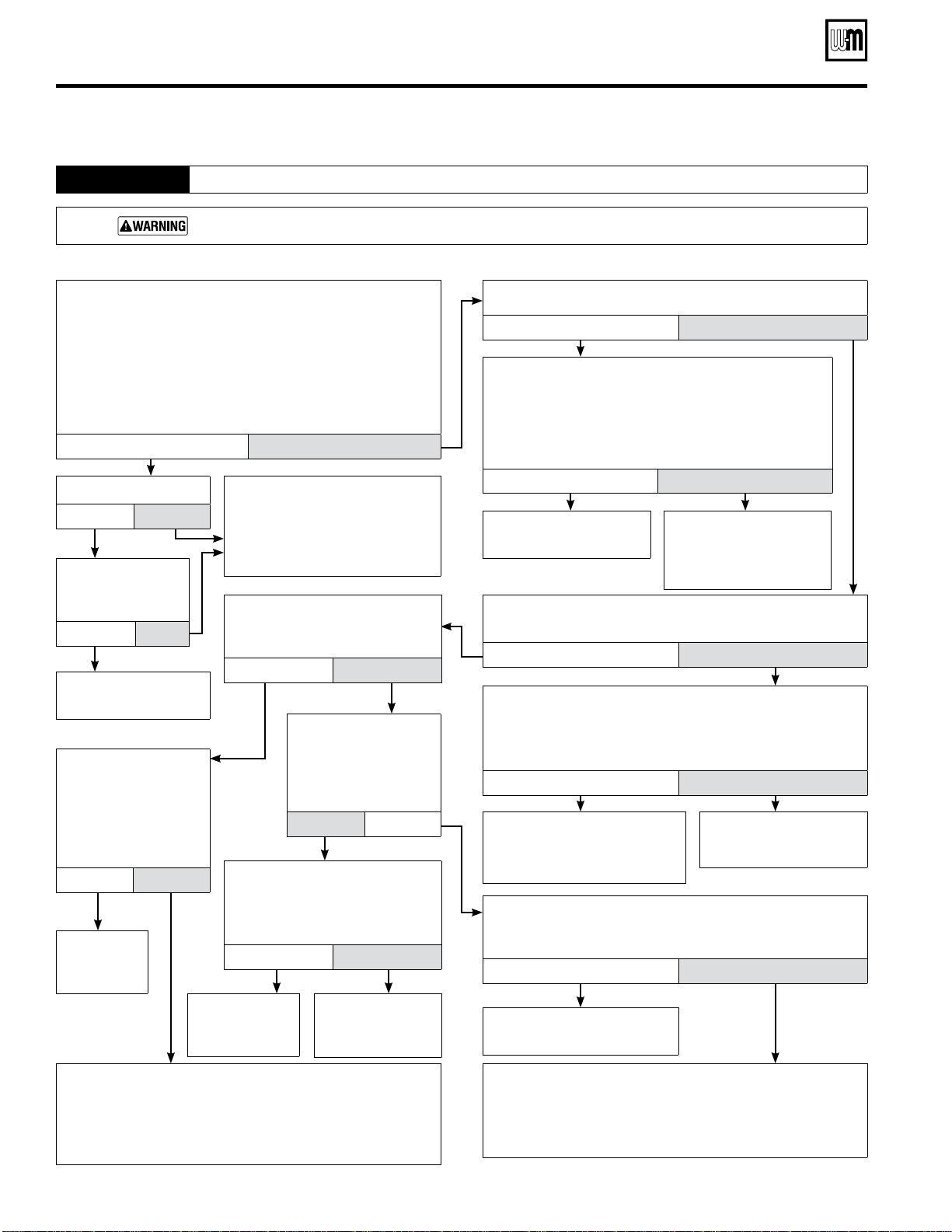
Part number 550-142-054/1211
GV90+ gas-fired water boiler — Boiler Manual
88
CHART 8
Insufficient heat or no heat to system (POWER light on steady)
Electrical shock hazard — Wherever you see TURN OFF POWER, follow the instructions. Failure to follow
instructions could result in severe personal injury, death or substantial property damage.
Troubleshooting (continued)
• Has it been at least 5 minutes since setting thermostat to
call for heat? If not, wait 5 minutes. Is system heating?
• Is thermostat set to call for heat? Remove thermostat
wires at boiler and check continuity across the two wires. If
circuit isn't closed, check external thermostat (zone valve,
relay, etc.) wiring. Correct problems and retry.
• Reconnect external thermostat wiring at boiler.
Is thermostat circuit closed (continuity across wires)?
No Yes
Is boiler System circulator operating?
No Yes
• Wait 5 minutes.
Is FLAME light on?
No Yes
• If you have sufficient heat — boiler should follow normal
operating sequence (Figure 75, page 65).
• If you have less than sufficient heat —
Is vent or combustion air piping free of blockage?
No Yes
• Wait for boiler water to cool to temperature 20 to 30 °F
lower than temperature set on limit switch.
Are limit switch contacts closed?
No Yes
Are all red lights off?
No Yes
• Wait 30 seconds.
Are all red lights
off?
No Yes
• Wait for cast iron
block to cool to room
temperature.
Are block switch
contacts closed?
No Yes
• Check across thermal fuse
leads with continuity checker.
Is circuit closed?
No Yes
• Check across limit
switch contacts with
continuity checker.
Are contacts closed?
Yes No
• Replace IBC.
• Retest.
• Replace IBC.
• Retest.
• Correct conditions and
recheck operation. See
sequence of operation, Fig-
ure 75, page 65.
• Repair/replace circula-
tor. Retest.
• Repair/replace wiring.
Retest.
• Contact your Weil-
McLain sales represen-
tative.
• Replace
switch.
• Retest.
• Replace
thermal fuse.
• Retest.
• Replace IBC.
• Retest.
• Replace limit switch.
• Retest.
• Excessive block temperature has been reduced to safe op-
erating level. Check for low water level or mineral deposits
in sections. Correct before proceeding.
• Restart boiler and check sequence of operation (Fig-
ure 75, page 65).
• Boiler water temperature exceeded setting on limit switch
with thermostat calling for heat. Boiler is OK. (See se-
quence of operation, Figure 75, page 65)
• Also check operation of setting on limit switch (should be
above 140°F.).
• Check block switch on top of
boiler with continuity checker.
Are contacts closed?
No Yes
• Boiler is in standby.
• Set thermostat to call for heat
and recheck operation.
• Verify sequence of operation,
Figure 75, page 65.
• Remove system circulator harness plug from CIR-
CULATORS plug receptacle (long harness) (see
Figure 93, page 78, Item 4). Check with voltmeter
across left-side 120 VAC N and 120 VAC H pins of
receptacle.
Does voltmeter show 120 VAC across pins?
No Yes
Part number 550-142-054/1211
89
GV90+ gas-fired water boiler — Boiler Manual
Replacement parts
Figure 96 Miscellaneous parts
Description Model Weil-McLain
part number
Vent Termination Kit for 3" PVC
All 383-500-397
Vent Termination Kit for 3" Stainless Steel All 382-200-430
Vent Termination Bird Screen 3" PVC (1 pc) All 383-500-105
3" PVC Concentric Vent Kit All 383-500-350
Adapter 3-inch AL29-4C Vent Starter, FasNSeal All 560-907-717
Adapter 3-inch AL29-4C Vent Starter, Z-Vent All 560-907-723
Adapter 3-inch AL29-4C Vent Starter, Saf-T-Vent All 560-907-724
Adapter 3-inch AL29-4C Vent Starter, CORR/GUARD All Contact Weil-McLain
Chemicals:
Antifreeze, aluminum-safe, Sentinel X500 . . . . . . . . . . . . . . . . . . . . . . .
Corrosion inhibitor, Sentinel X100 . . . . . . . . . . . . . . . . . . . . . . . . . . .
(one tube is shipped with boiler)
Sentinel X100 Inhibitor Test Kit. . . . . . . . . . . . . . . . . . . . . . . . . . . . .
(one kit is shipped with boiler)
Cleaner, Sentinel X400. . . . . . . . . . . . . . . . . . . . . . . . . . . .
All
592-900-004
592-900-002
592-900-005
592-900-003
Condensate neutralizer kit All 383-500-631
Oil Lubricant 3 Oz Andersol 465 All 592-900-015
Part number 550-142-054/1211
GV90+ gas-fired water boiler — Boiler Manual
90
Replacement parts (continued)
Figure 97 Section assembly
Item
number
Description Model Weil-McLain
part number
1 Block assembly, includes:
Front section, intermediate section, back section, square cut seals —
2”, silicone sealant, tie rods, tie rod nuts, tie rod washers, blower flange
gasket, igniter, igniter gasket, screws, lock washers, studs, nuts
3
4
5
6
322-200-304
322-200-305
322-200-306
322-200-307
2 Front section replacement kit, includes front section, square cut seals
(4), silicone sealant, blower flange gasket, igniter gasket, studs (13),
nuts (13)
All 382-200-713
3 Intermediate section (also required Section replacement kit) All 312-200-110
4 Back section (also required Section replacement kit) All 312-200-130
Not
shown
Section replacement kit All 382-200-305
5 Tie rods 3
4
5
6
560-234-499
560-234-525
560-234-503
560-234-504
6 Base rail legs — (2) per boiler 3 & 4
5 & 6
452-100-173
452-100-174
7 Base rail brace — (2) per boiler All 452-100-080
8 Blower housing support All 452-100-111
9 Block temperature limit switch All 382-200-375
10 Inspection port cover All In Insp. port kit
11 Inspection port gasket All 590-317-628
— Inspection port kit (includes cover and gasket) All 542-200-181
12 Recuperator connection gasket All 590-317-629
13
Stud, B\zn” – 18 x 1¼”
All 560-340-581
14
Hex nuts (4 each), B\zn” / lock washers (4 each), B\zn”
All Obtain locally

Part number 550-142-054/1211
91
GV90+ gas-fired water boiler — Boiler Manual
Figure 98 Section assembly
Replacement parts (continued)
Part number 550-142-054/1211
GV90+ gas-fired water boiler — Boiler Manual
92
Figure 99 Jacket assembly
Item
number
Description Model Weil-McLain
part number
1 Jacket panel, top 3 & 4
5 & 6
382-200-700
382-200-701
2 Jacket panel, front All 382-200-702
3 Jacket panel, left side, front 3 & 4
5 & 6
382-200-703
382-200-704
4 Jacket panel, left side, rear 3 & 4
5 & 6
382-200-705
382-200-706
5 Jacket panel, right side 3 & 4
5 & 6
382-200-724
382-200-725
6 Jacket panel, rear All 382-200-726
7 Jacket brace All 422-200-178
8 Jacket panel, interior All 382-200-727
9 Base rail assembly All see Figure 97, page 90
items 6 and 7
10 Screw, sheet metal type AB, serrated hex washer head Phillips
#10 x C\,” steel black phosphate
All —
Replacement parts (continued)

Part number 550-142-054/1211
93
GV90+ gas-fired water boiler — Boiler Manual
Figure 100 Jacket assembly
Replacement parts (continued)

Part number 550-142-054/1211
GV90+ gas-fired water boiler — Boiler Manual
94
Figure 101 Blower assembly
Item
number
Description Model Weil-McLain
part number
1 Burner replacement kit, includes burner, blower flange gasket, igniter, igniter
screws, igniter washers, igniter gasket
3
4
5
6
382-200-320
382-200-325
382-200-330
382-200-335
2 Blower flange gasket All 590-317-610
3 Air pressure switch (0 to 5,500 feet elevation) All 382-200-723
— Air pressure switch (5,500 to 10,000 feet elevation) All Consult W-M factory
4 Blower motor replacement kit, includes blower motor, motor mounting
grommets, screws, lock nuts and 9" Allen wrench
All 382-200-345
5 Blower housing assembly replacement kit, includes: blower housing, obsv.
port, blower housing cover plate, blower motor mounting brackets, washer hold
down bracket, lock nuts, motor mount grommets, blower motor, blower wheel,
magnetic washer, silicone sealant, screws, blower flange gasket, igniter, igniter
washers, igniter screws, igniter gasket
All 382-200-340
6 Conversion kit, natural to propane, includes . . . . . . . . . . . . . . . . . . . . . .
Propane orifice plate, label
3
4
5
6
510-811-926
510-811-927
510-811-928
510-811-929
Orifice plate, natural gas . . . . . . . . . . . . . . . . . . . . . . 3
4
5
6
510-811-934
510-811-935
510-811-936
510-811-937
7 Gas/air manifold assembly, includes gas/air manifold, gas tubing, washers,
screws, gas valve o-ring
All 382-200-362
8 Sense line condensate trap, includes sense line condensate trap and hoses All 382-200-409
10 Gas valve kit, complete, includes
gas valve, gas cock, 1/2" nipple, bracket, o-ring,
screws
All 382-200-411
12 Igniter replacement kit, includes igniter and gasket All 511-330-148
13 Igniter gasket All 590-317-599
14 Inlet air tube w/grill All 382-200-310
15 Hose clamp, 3” All 591-850-068
16 Inlet air hose, 3" by 19" long All 562-302-573
17 & 18 Inspection port cover and Inspection port gasket All see Figure
97, page 90
items 10 and 11
19
Recuperator connection gasket All see item 24
20 Condensate drain hose clamp All —
21 Condensate trap All 560-907-716
22 ½” PVC condensate tee All —
23 Condensate tee U-clamp All —
24 Recuperator kit, includes recuperator, recuperator connection gasket, diamond
flange gasket (2), connection hardware (4-nuts), flue gas thermal fuse
3 and 4
5 and 6
382-200-714
382-200-715
25 Diamond flange, 1” npt All see item 24
26 Diamond flange gasket All 590-317-535
27 Flue gas thermal fuse All 511-724-295
28 In-line flue adapter with drain kit, includes in-line flue adapter with drain and
drain hose (6 inches)
All 382-200-716
29 Flue drain hose kit, 6 inches All 382-200-717
30 Recuperator cover plate 3 and 4
5 and 6
593-000-002
593-000-003
31 Recuperator cover plate gasket 3 and 4
5 and 6
593-000-004
593-000-005
32 Recuperator vent pipe seal All 593-000-006
Replacement parts (continued)

Part number 550-142-054/1211
95
GV90+ gas-fired water boiler — Boiler Manual
Figure 102 Blower assembly
Replacement parts (continued)
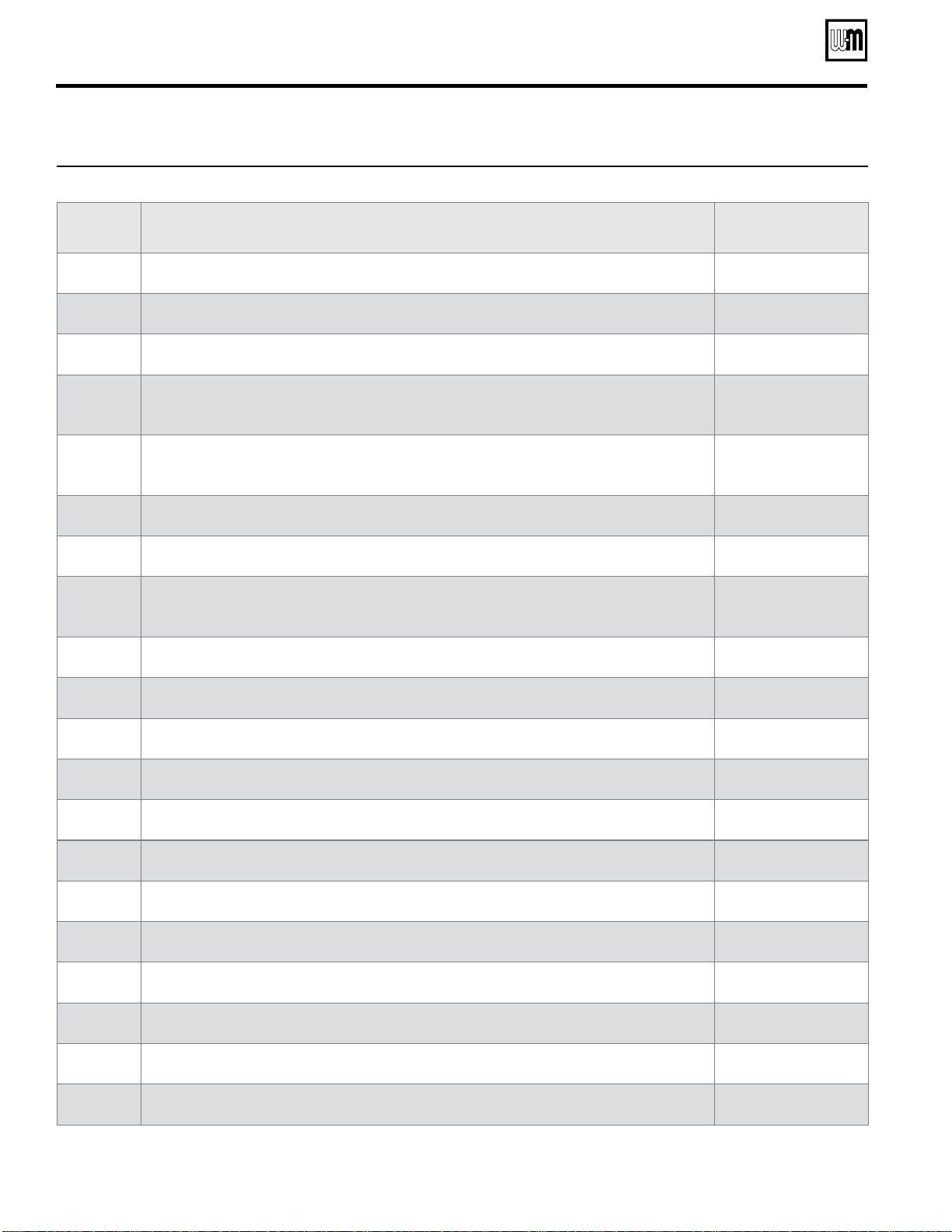
Part number 550-142-054/1211
GV90+ gas-fired water boiler — Boiler Manual
96
Figure 103 Trim assembly
Item
number
Description Weil-McLain
part number
1 System circulator, Taco 007 511-405-113
2 Bypass circulator, Taco 007 511-405-113
3 Circulator gasket, Taco 110-339 590-317-543
4
Manifold, casting/circulator kit, includes water manifold, circulator gasket (Taco
110-339) (2), square cut seal (manifold to casting)
382-200-720
5
Return manifold, recuperator/circulator kit, includes water manifold, circulator
gasket (Taco 110-339) (1), diamond gasket
382-200-721
6 Square cut seal gaskets, casting, 2.31" 572-800-011
7 Diamond flange gasket 590-317-535
8
Supply manifold kit, includes water manifold, circulator gasket (Taco 110-339) (1),
square cut seal (manifold to casting)
382-200-722
9 Coin-operated air vent, 1/8” NPT 570-148-565
10 Wiring harness, circulators to IBC 591-391-824
11 Return water temperature sensor and clip 511-330-089
12 Tee, 1” x 1” x ¾” Obtain locally
13 Bushing ¾” x ¼” Obtain locally
14 Temperature and Pressure Gauge, 1/4" NPT 380-000-000
15 30 PSIG Relief Valve 511-546-920
16 Nipple, NPT — ¾” x 3” Obtain locally
17 Block temperature limit switch 382-200-375
18 Limit control without well, 200 °F maximum setpoint 382-200-719
19 Limit control well, ½” NPT 592-300-017
20 Drain valve, ¾” NPT 511-546-392
Replacement parts (continued)

Part number 550-142-054/1211
97
GV90+ gas-fired water boiler — Boiler Manual
Figure 104 Trim assembly
Replacement parts (continued)

Part number 550-142-054/1211
GV90+ gas-fired water boiler — Boiler Manual
98
Figure 105 Interior panel
Item
number
Description Weil-McLain
part number
1 Interior panel see Figure 99, page 92,
item 8
2 Integrated boiler control assembly, includes IBC and screws 382-200-448
3 Transformer 511-842-370
4 Air pressure switch see Figure 101, page 94
item 3
5 Wiring harness, IBC to junction box (not shown) 591-391-963
6 Wiring harness, IBC to hot surface ignitor (not shown) 591-391-819
7 Wiring harness, IBC to system and bypass circulators (not shown) 591-391-824
8 Wiring harness, IBC to controls (not shown) 591-391-964
Replacement parts (continued)

Part number 550-142-054/1211
99
GV90+ gas-fired water boiler — Boiler Manual
Figure 106 Interior panel
Replacement parts (continued)
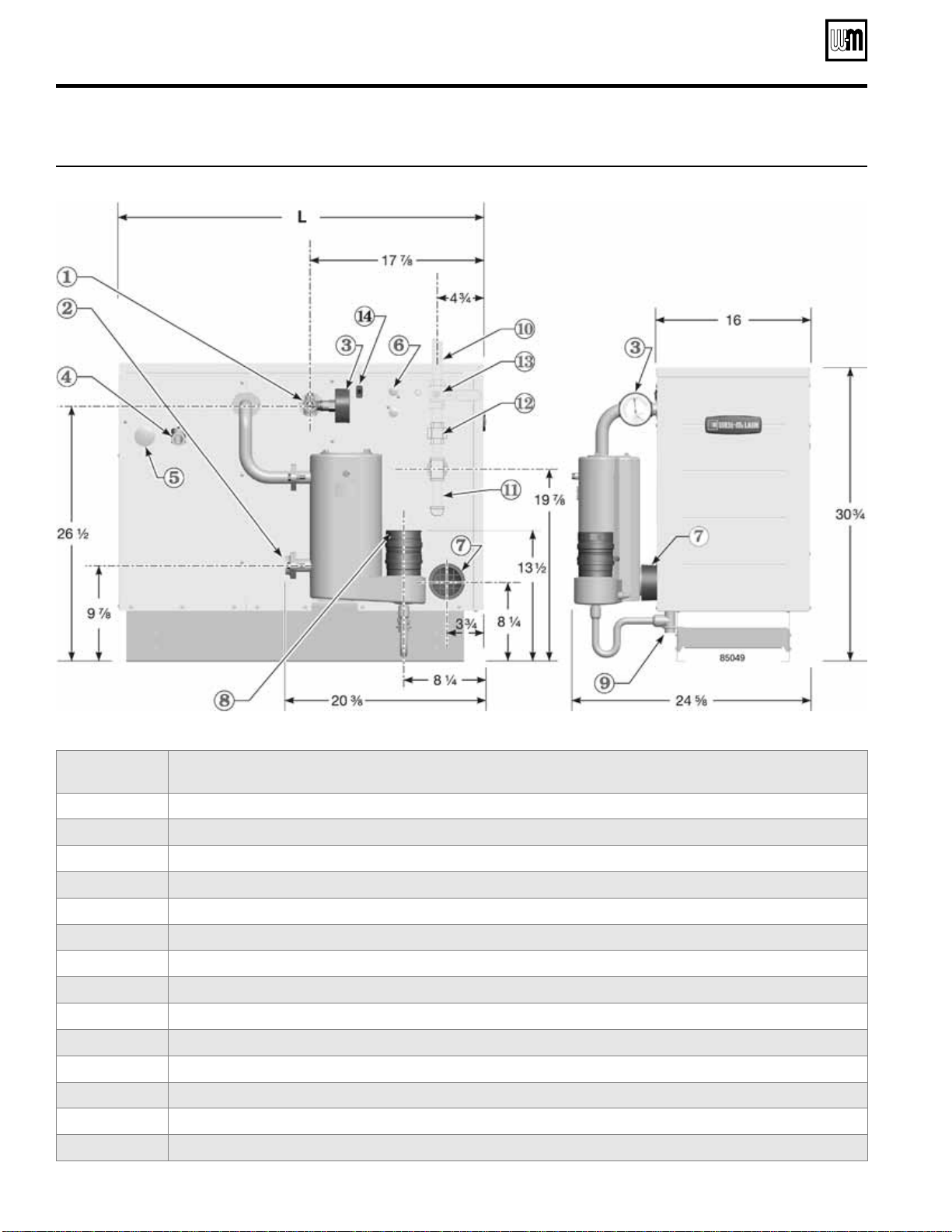
Part number 550-142-054/1211
GV90+ gas-fired water boiler — Boiler Manual
100
Dimensions and ratings
Figure 107 Dimension drawing (see Figure 108, page 101 for dimensional table)
Item
number
Description
1 1” NPT Supply
2 1” NPT Return
3 Combination pressure-temperature gauge, 2 ½” short shank
4 ¾” NPT Relief valve outlet
5 Plug dome, 2” black
6 Junction box
7 Inlet air fitting, 3" PVC
8 Flue outlet, 3" PVC
9 ½” Condensate drain
10 ½” NPT Gas supply connection (provided by others)
11 Drip leg (provided by others)
12 Union (provided by others)
13 Manual main shutoff gas valve (provided by others)
14 ON/OFF switch
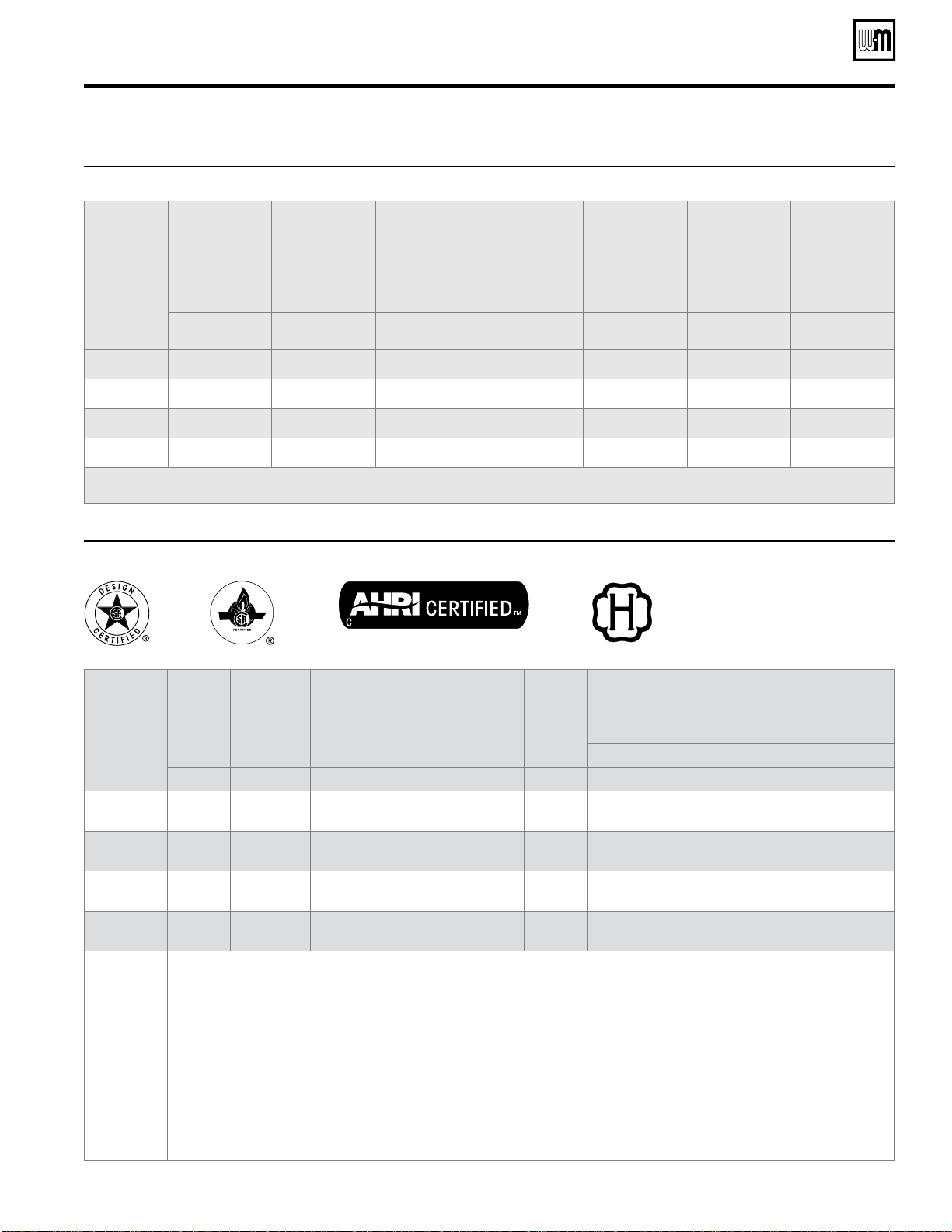
Part number 550-142-054/1211
101
GV90+ gas-fired water boiler — Boiler Manual
Figure 108 Boiler dimensional and physical data (see Figure 107, page 100)
Boiler
model
Supply
Return
Length
L
Gas
connection
size
(Note 1)
Electrical
service
required
(includes
the internal
circulators)
Boiler
water
content
Approx.
shipping
weight
(inches NPT
male)
(inches NPT
female)
(inches) (inches NPT
female)
(amperes) (gallons) (pounds)
GV90+3
1 1 30¾ ½ 15 3.8 313
GV90+4
1 1 30¾ ½ 15 4.7 353
GV90+5
1 1 37¾ ½ 15 6.0 423
GV90+6
1 1 37¾ ½ 15 6.9 464
Note 1: Gas piping from meter to boiler to be sized per local utility requirements.
Figure 109 Boiler ratings
DOE
Boiler
model
CSA
Input
DOE
Heating
capacity
(Note 1)
Net I=B=R
water
rating
(Note 2)
AFUE
(Note 1)
Vent/
combustion
air diameter
Boiler
water
content
% Input derate vs vent length
(Values shown are at maximum vent/air pipe length)
(Note 3)
Direct Exhaust Venting Direct Vent Venting
MBH MBH MBH % Inches Gallons Natural gas Propane Natural gas Propane
GV90+3
70 65 56 91.9
3" PVC 3.8
up to 0.7% up to 1.4% up to 1.5% up to 2.8%
GV90+4
105 97 84 91.2
3" PVC 4.7
up to 1.0% up to 2.2% up to 4.0% up to 5.4%
GV90+5
140 130 113 91.4
3" PVC 6.0
up to 4.0% up to 4.0% up to 7.0% up to 8.0%
GV90+6
175 161 140 91.0
3" PVC 6.9
up to 4.0% up to 4.5% up to 7.0% up to 10.0%
Notes:
1. Based on standard test procedures prescribed by the United States Department of Energy. Ratings also
referred to as CSA Output. NOTE that only DOE Heating Capacity and AFUE are certified by AHRI. AFUE is
also know as Annual Fuel Utilization Efficiency or Seasonal Efficiency.
2. Net I=B=R ratings are based on net installed radiation of sufficient quantity for the requirements of the building
and nothing need be added for normal piping and pickup. Ratings are based on a piping and pickup allowance
of 1.15 and are determined under the provisions governing forced draft boiler-burner units. An additional
allowance should be made for unusual piping and pickup loads.
3. All of the boilers will automatically de-rate as vent length increases, due to the pressure loss through the vent.
For vent/air pipe lengths less than the maximum, the derate equals the value above times vent length ÷ 100.
4. Boilers are tested for 50 PSIG working pressure.
5. GV90+ boilers are not available for millivolt systems.
Dimensions and ratings (continued)
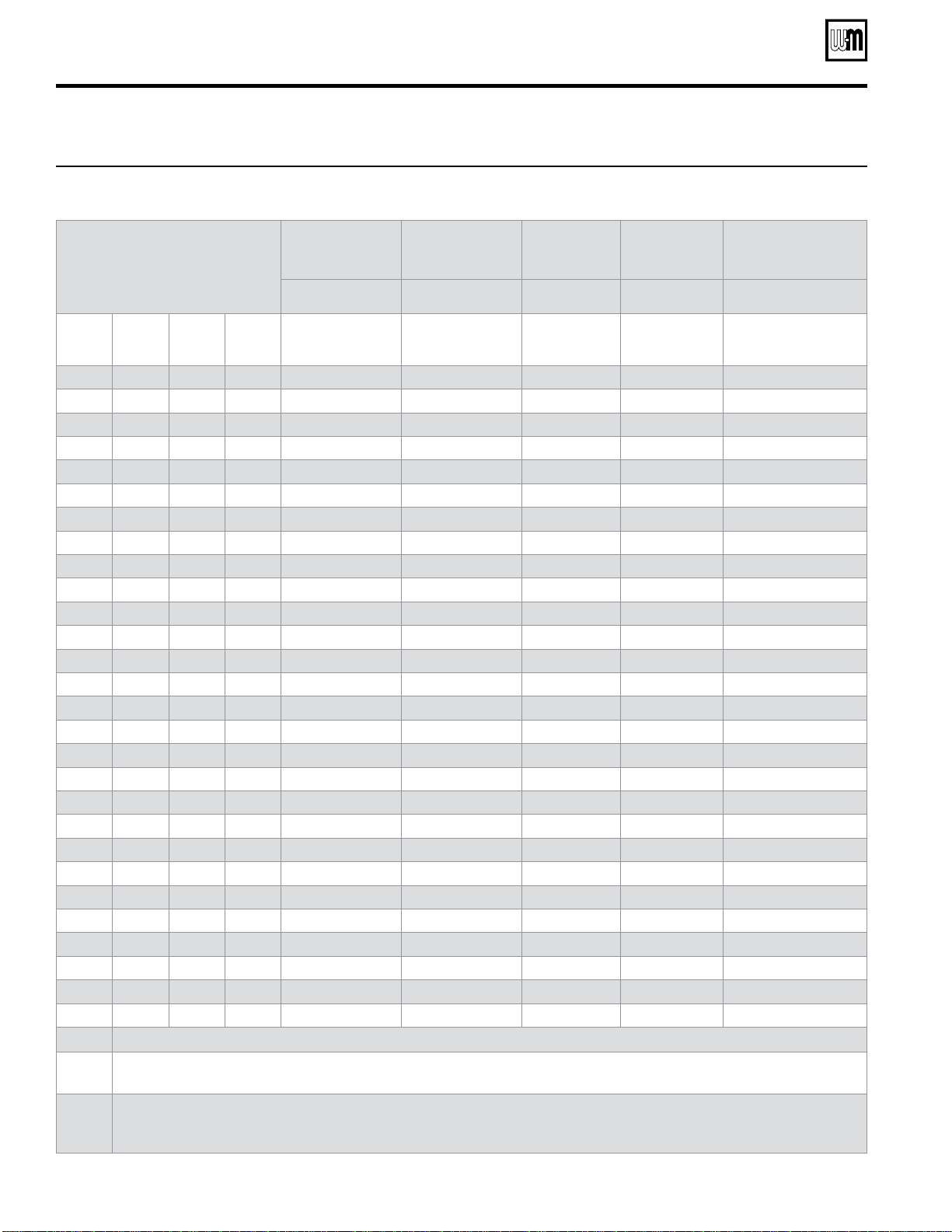
Part number 550-142-054/1211
GV90+ gas-fired water boiler — Boiler Manual
102
Dimensions and ratings (continued)
Figure 110 Multiple GV90+ boilers — ratings and engineering data — maintain the clearances shown on pages 6
and 7 — see Figure 28, page 23 and Figure 29, page 23 for layout options
Boilers in system
Model GV90+
Total
CSA
input
DOE Heating
capacity
Boiler
H.P.
Net water
ratings
Manifolded
combustion air
duct size
Input,
MBH
Output,
MBH
- MBH
Square
inches
3 4 5 6
- Note 1 - Note 2
Note 3
Figure 37, page 31
2 140 130 3.9 112 70
2 210 194 5.8 168 105
2 280 260 7.8 226 140
2 350 322 9.6 280 175
3 210 195 5.8 168 105
3 315 291 8.7 252 158
3 420 390 11.7 339 210
3 525 483 14.4 420 263
4 280 260 7.8 224 140
4 420 388 11.6 336 210
4 560 520 15.5 452 280
4 700 644 19.2 560 350
5 350 325 9.7 280 175
5 525 485 14.5 420 263
5 700 650 19.4 565 350
5 875 805 24 700 438
6 420 390 11.7 336 210
6 630 582 17.4 504 315
6 840 780 23.3 678 420
6 1050 966 28.9 840 525
7 490 455 13.6 392 245
7 735 679 20.3 588 368
7 980 910 27.2 791 490
7 1225 1127 33.7 980 613
8 560 520 15.5 448 280
8 840 776 23.2 672 420
8 1120 1040 31.1 904 560
8 1400 1288 38.5 1120 700
Note 1
Based on standard test procedures outlined by DOE for individual boilers.
Note 2
Net I=B=R ratings are based on piping and pickup allowance of 1.15.
Consult Weil-McLain Technical Services for other allowances.
Note 3
All GV90+ installations require a separate vent pipe and termination for each boiler. Vent piping cannot be manifolded. Install and
terminate vents as described in vent/air installation instructions in this manual.
Combustion air piping can be individually piped or manifolded. See Figure 37, page 31, for manifolded air piping.
Part number 550-142-054/1211
103
GV90+ gas-fired water boiler — Boiler Manual
Figure 111 Engineering data — see page 101 for additional technical information
Boiler
Model
Water ow rate per boiler
Vent/air pipe size —
Provide a separate vent
for each boiler
Note 1
GPM @ 20°F rise GPM @ 40°F rise
GV90+3
6.5 3.3 3”
GV90+4
9.7 4.9 3”
GV90+5
13.0 6.5 3”
GV90+6
16.1 8.1 3”
Note 1
All GV90+ installations require a separate vent pipe and termination for each boiler. Vent piping cannot be manifolded.
Install and terminate vents as described in vent/air installation instructions in this manual.
Combustion air piping can be individually piped or manifolded. See Figure 37, page 31, for manifolded air piping.
Dimensions and ratings (continued)
Part number 550-142-054/1211
GV90+ gas-fired water boiler — Boiler Manual
104
NOTES
Part number 550-142-054/1211
105
GV90+ gas-fired water boiler — Boiler Manual
NOTES (continued)
Part number 550-142-054/1211
GV90+ gas-fired water boiler — Boiler Manual
106
NOTES

Part number 550-142-054/1211
107
GV90+ gas-fired water boiler — Boiler Manual
Handling ceramic fiber and fiberglass materials
HANDLING CERAMIC FIBER
MATERIALS
Ceramic fibers can be converted to cristobalite
in very high temperature applications. The
International Agency for Research on Cancer
(IARC) has concluded, “Crystalline silica
inhaled in the form of quartz or cristobalite
from occupational sources is carcinogenic to
humans (Group 1).”:
Avoid breathing dust and contact with skin and eyes.
• Use NIOSH certified dust respirator (N95). This type
of respirator is based on the OSHA requirements for
cristobalite at the time this document was written.
Other types of respirators may be needed depending
on the job site conditions. Current NIOSH recom-
mendations can be found on the NIOSH web site at
http://www.cdc.gov/niosh/homepage.html. NIOSH
approved respirators, manufacturers, and phone
numbers are also listed on this web site.
• Wear long-sleeved, loose fitting clothing, gloves, and
eye protection.
Apply enough water to the combustion chamber lining
or base insulation to prevent airborne dust.
Remove combustion chamber lining or base insula-
tion from the boiler and place it in a plastic bag for
disposal.
Wash potentially contaminated clothes separately from
other clothing. Rinse clothes washer thoroughly.
NIOSH stated First Aid
Eye: Irrigate immediately
Breathing: Fresh air
REMOVAL OR INSTALLATION
OF FIBERGLASS WOOL
This product contains fiberglass jacket insula-
tion and ceramic fiber materials in combus-
tion chamber lining or base panels in gas fired
products. Airborne fibers from these materials
have been listed by the State of California as a
possible cause of cancer through inhalation.
Avoid breathing dust and contact with skin and eyes.
• Use NIOSH certified dust respirator (N95). This type
of respirator is based on the OSHA requirements for
fiberglass wool at the time this document was written.
Other types of respirators may be needed depending
on the job site conditions. Current NIOSH recom-
mendations can be found on the NIOSH web site at
http://www.cdc.gov/niosh/homepage.html. NIOSH
approved respirators, manufacturers, and phone
numbers are also listed on this web site.
• Wear long-sleeved, loose fitting clothing, gloves, and
eye protection.
Operations such as sawing, blowing, tear out, and spray-
ing may generate airborne fiber concentration requiring
additional protection.
Wash potentially contaminated clothes separately from
other clothing. Rinse clothes washer thoroughly.
NIOSH stated First Aid
Eye: Irrigate immediately
Breathing: Fresh air

GV90+ gas-fired water boiler — Boiler Manual
Installation and service certificate
Boiler model __________________ Series __________ CP number ___________ Date installed _______________
Measured Btuh input ____________
Installer ________________________ ________________________________ ______________________________
(company) (address) (phone)
_______________________________
(installer’s signature)
Installation instructions have been followed.
Check-out sequence has been performed.
Above information is certified to be correct.
Information received and left with owner/maintenance person.